Identifies mental health crises and suicide warning signs while developing personal safety plans and grounding techniques. Equips users with peer gatekeeper skills and direct pathways to professional crisis resources and hotlines.
A comprehensive sequence for undergraduate students focusing on executive function and proactive support-seeking. Students move from data-driven self-analysis of energy rhythms to the creation of a long-term 'Semester Sustainability Plan' that treats mental health and support as logistical necessities.
A graduate-level exploration of the ethical and legal complexities surrounding the use of crisis hotlines in clinical practice, focusing on HIPAA, state-specific mandates, and the balance between client autonomy and the duty to protect.
This graduate-level sequence prepares clinical students to effectively triage crises and manage hotline referrals. It covers lethality assessment, the technical mechanics of warm handoffs, involuntary intervention protocols, risk management documentation, and post-crisis therapeutic repair.
A comprehensive training sequence for undergraduate students to become effective mental health gatekeepers, focusing on identifying crisis signs, direct intervention, and referral pathways.
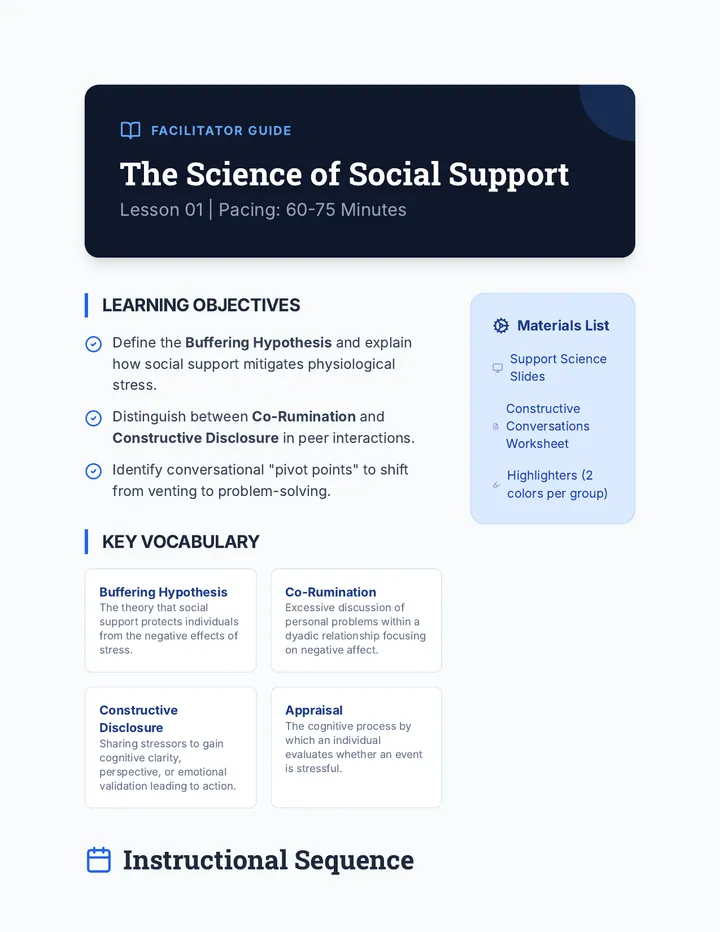
A graduate-level training sequence on facilitating peer support systems to mitigate stress and anxiety. Students learn the science of social support, micro-skills for active listening, boundary setting to prevent burnout, and group facilitation techniques to create sustainable communities of care.
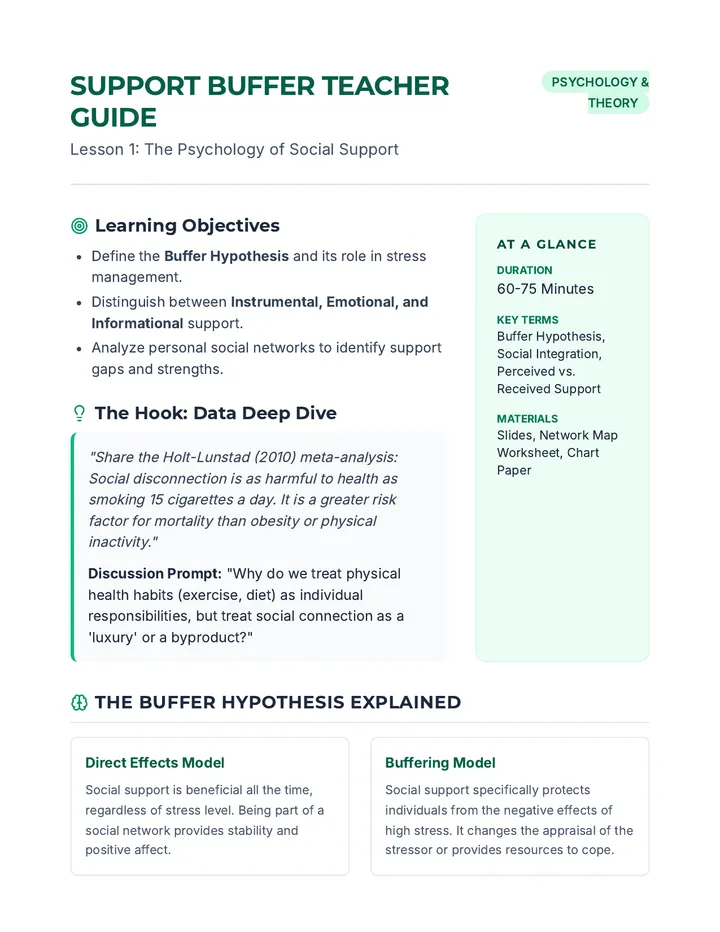
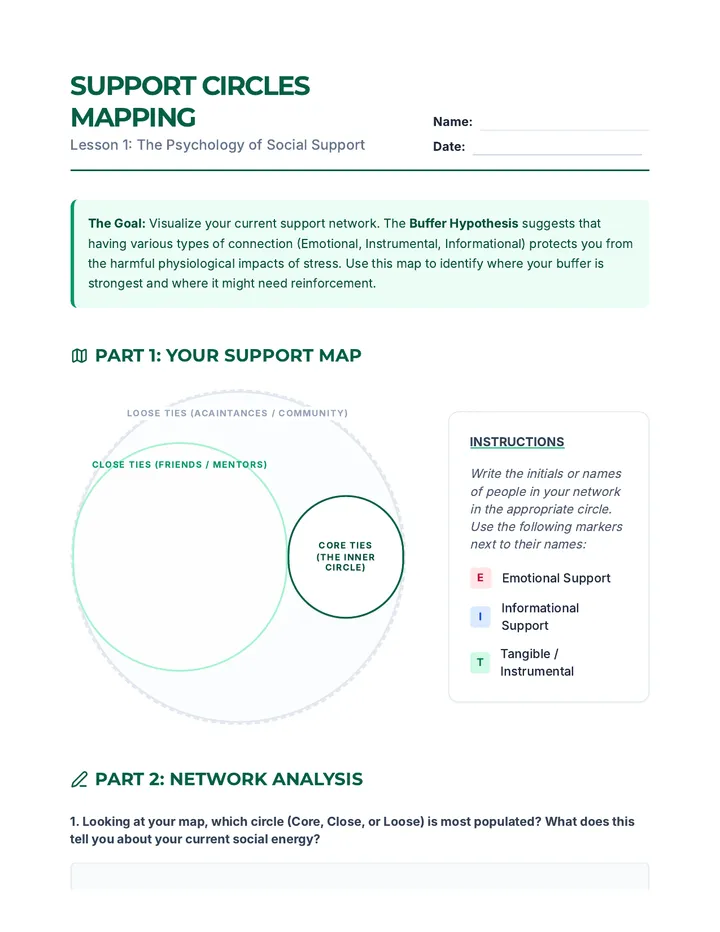
A comprehensive sequence for undergraduate students exploring the social psychology of stress and the practical skills needed to build resilient peer support networks. Students move from theoretical understanding to practical facilitation and community planning.
This sequence explores the psychology of group dynamics and community care. Students learn to recognize burnout, offer effective support, and advocate for cultures where requesting breaks is normalized and valued.
A graduate-level clinical workshop sequence focused on mastering Dialectical Behavior Therapy (DBT) distress tolerance skills. Students move from theory to practical application, learning to coach clients through crisis survival using TIPP, ACCEPTS, IMPROVE, and Self-Soothing techniques.
A comprehensive graduate-level training sequence exploring how cultural identity, systemic barriers, and implicit bias influence crisis presentation and peer support. Students move from understanding diverse cultural idioms of distress to developing culturally responsive safety plans that challenge traditional Western medical models.
A comprehensive training for graduate student leaders on the legal, ethical, and systemic dimensions of peer gatekeeping in university settings. This sequence bridges the gap between supportive listening and institutional crisis intervention.
A graduate-level professional development sequence focused on the legal, ethical, and logistical complexities of trafficking intervention, mandatory reporting, and multi-disciplinary team collaboration.
A comprehensive unit for undergraduate students focusing on the aftermath of human trafficking. Students explore trauma-informed care, legal advocacy for survivors, ethical storytelling, the neurological impacts of trauma, and community-based action planning to support recovery and reintegration.
A practicum-style sequence for graduate students focusing on SBIRT techniques, institutional risk assessment, and emergency overdose protocols. Students move from environmental auditing to high-intensity crisis simulation and post-crisis management.
An advanced clinical sequence for graduate students focusing on the assessment of romantic relationship dynamics through attachment theory, neurobiology, and evidence-based frameworks. It bridges theory with clinical application, focusing on adult attachment, power dynamics, and conflict styles.
A comprehensive training sequence for undergraduate students in helping professions, focusing on the clinical facilitation and implementation of DBT TIPP skills for crisis management. Students move from theoretical understanding of the Window of Tolerance to practical coaching, adaptation for diverse needs, and resource creation for clients.
This sequence for graduate-level counseling students explores the advanced application, ethical adaptation, and facilitation of TIPP crisis survival skills across diverse clinical populations and restrictive environments. Students will move from basic skill mechanics to sophisticated risk assessment, environmental design, and professional advocacy for crisis intervention protocols.
This sequence provides undergraduate students with the foundational knowledge and clinical skills necessary to prepare clients for trauma narrative work. It covers the neurobiology of traumatic memory, client stabilization techniques, and the ethical/practical assessment of client readiness.
A comprehensive graduate-level sequence focused on the neurobiological and clinical foundations of trauma narrative work, moving from theory to practical assessment and preparation techniques.
A comprehensive sequence for undergraduate students on managing the ethical complexities of peer support, focusing on professional boundaries, disclosure limits, and crisis management.
This graduate-level sequence focuses on evidence-based therapeutic interventions for anxiety and mood disorders. Students progress from pharmacological literacy to advanced treatment planning, mastering CBT protocols, third-wave therapies, and crisis management.
This clinical sequence for graduate students focuses on the unique presentation, assessment, and treatment of mental health disorders in older adults. It emphasizes differential diagnosis, pharmacological considerations, and the adaptation of evidence-based interventions like CBT for the geriatric population.
This sequence examines the intersection of narrative psychology and creative writing as tools for mourning. Students investigate how trauma fragments linear memory and how structured writing interventions can restore narrative coherence. Through varied writing modalities—from structured journaling to poetry—students learn to reshape the story of loss, moving from a narrative of victimization to one of survival and meaning-making.
This sequence equips undergraduate students with strategies for self-advocacy within medical, academic, and professional environments, analyzing structural barriers and practicing assertive communication.
A 4-session relapse prevention group for adults in SUD recovery, focusing on understanding relapse, identifying triggers, building coping strategies, and creating long-term support plans. This program helps participants develop skills to maintain sobriety through interactive readings, discussions, activities, and games.
This sequence equips undergraduate counseling students with the interpersonal and procedural skills necessary for suicide intervention, covering direct communication, de-escalation, safety planning, lethal means counseling, and legal/ethical mandates.
A comprehensive inquiry-based sequence for graduate students navigating complex FAFSA scenarios, including income changes, marital status impacts, and professional judgment appeals. Students learn to advocate for their financial reality when standard forms fall short.
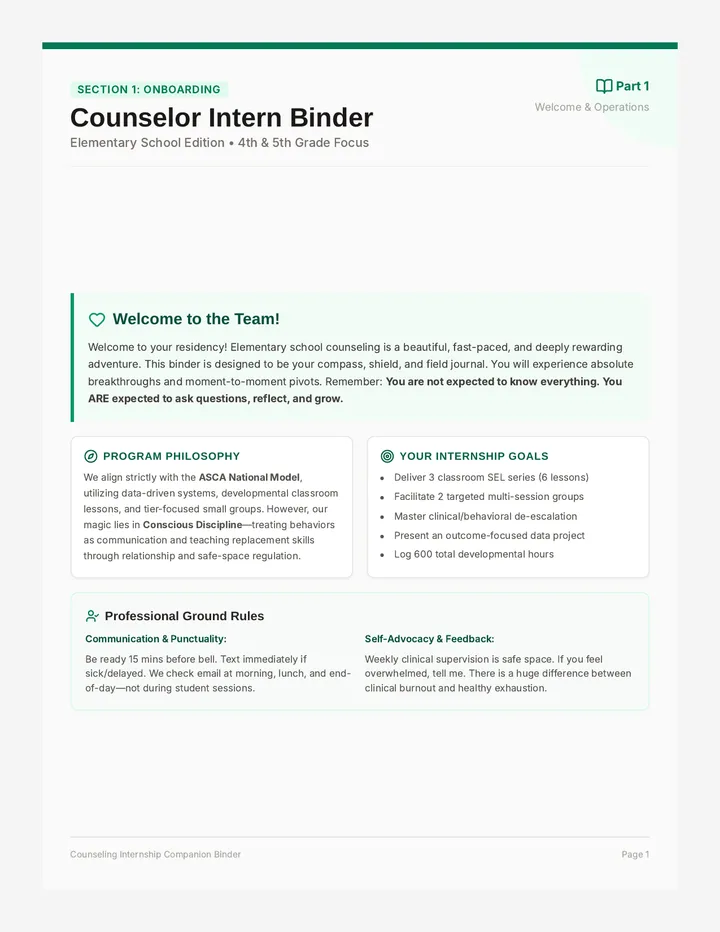
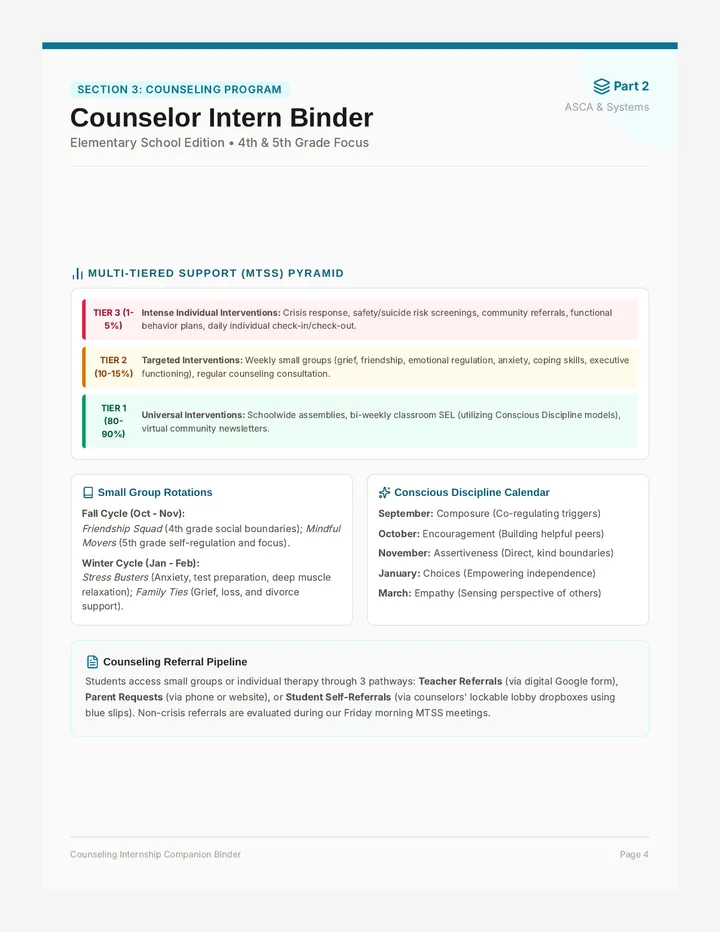
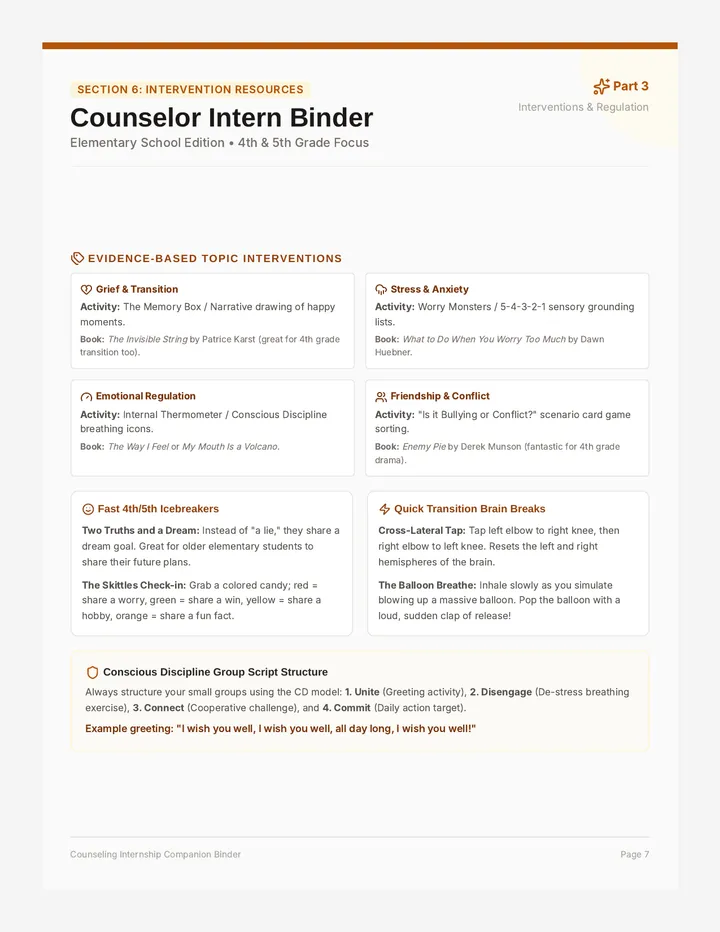
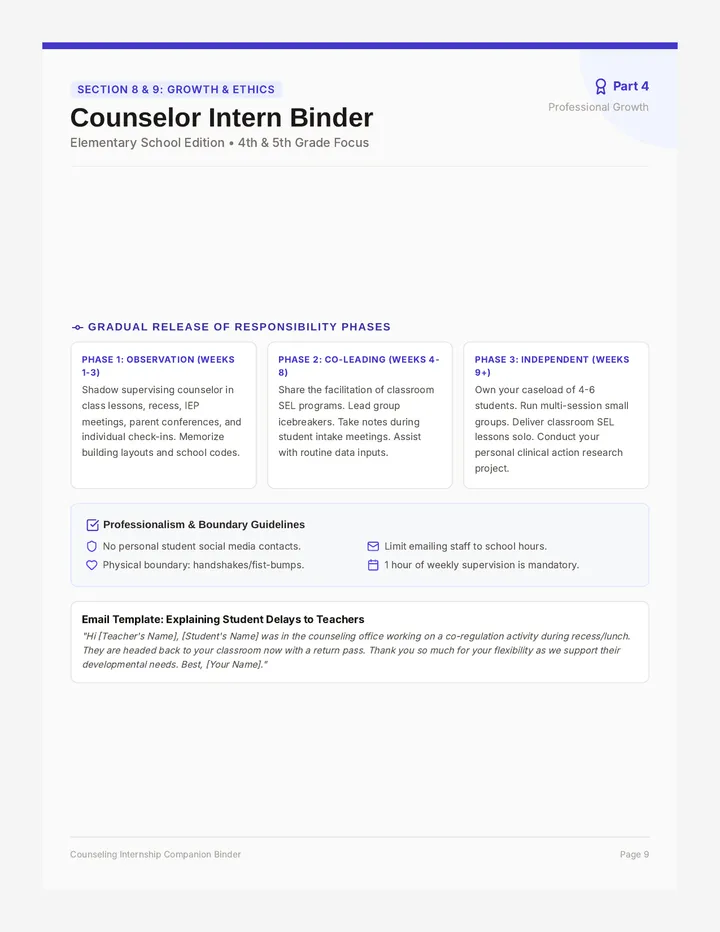
A comprehensive, professional, and warm internship binder split into modular parts to guide an elementary school counseling intern through their residency with practical tips, checklists, and procedures.
A comprehensive suite of professional resources for social work students and practitioners, covering ethical decision-making, crisis management, grant acquisition, trauma-informed practices, and community evaluation.
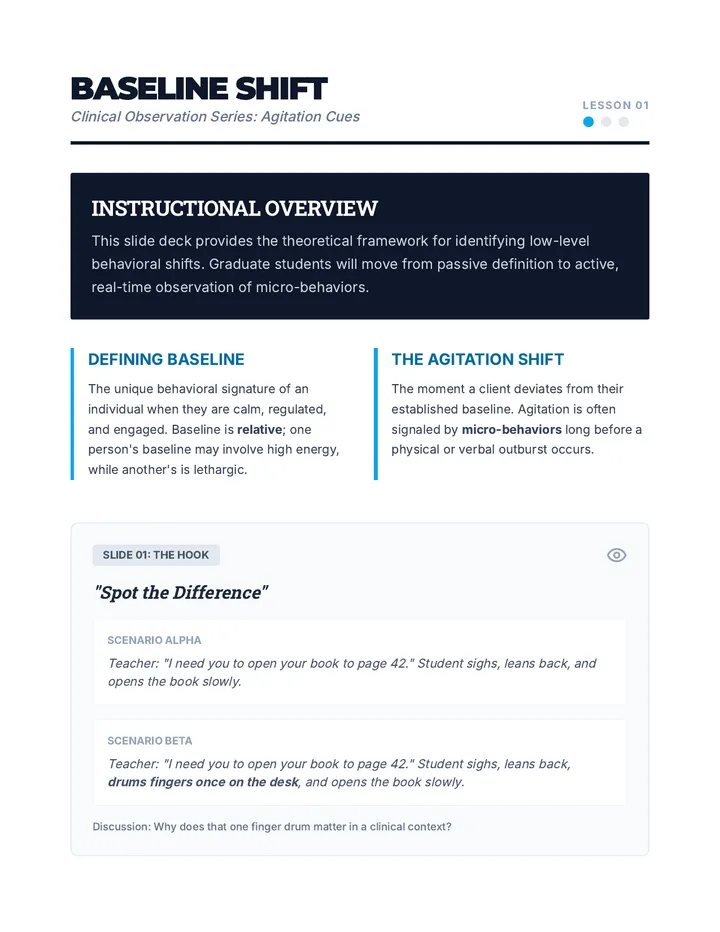
This sequence trains undergraduate students in behavioral health and education to identify the early warning signs of crisis. Students move from establishing behavioral baselines to analyzing motor, verbal, and passive indicators of escalation through case studies and clinical observation.
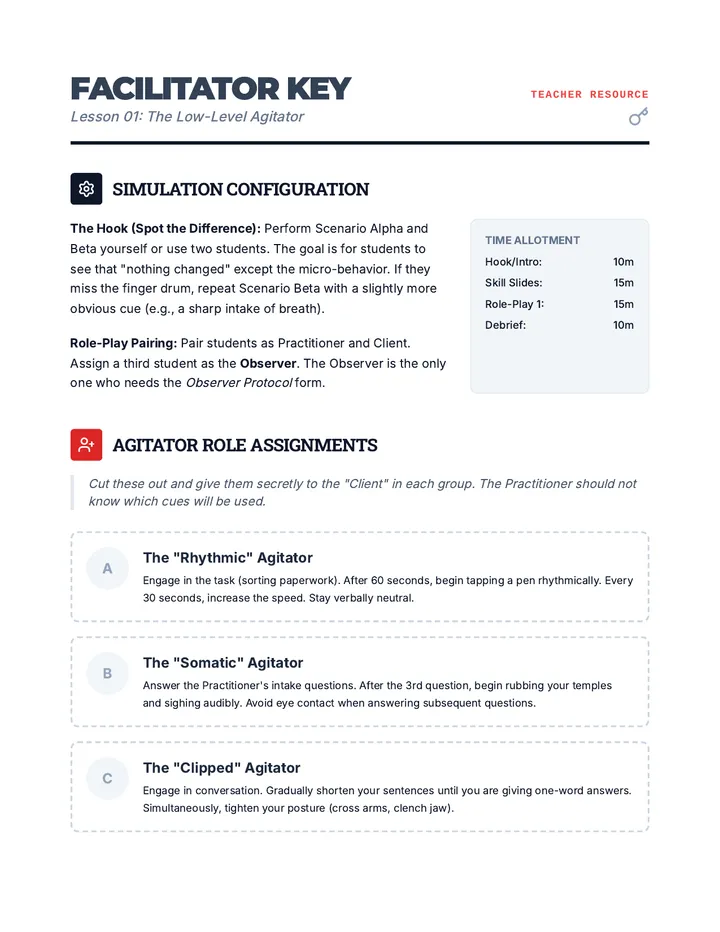
A high-intensity, simulation-based training sequence for graduate students to master real-time identification of behavioral escalation cues. Students move from identifying subtle micro-behaviors to managing their own physiological responses during high-fidelity crisis simulations.
A comprehensive graduate-level sequence exploring conflict resolution, challenging member behaviors, and crisis management within group therapy. Students move from theoretical 'Storming' stage frameworks to hands-on simulation of de-escalation and restorative dialogue.
A comprehensive graduate-level course exploring the intersection of ethical codes, legal requirements, and cultural competence in clinical psychology, featuring case-based learning and critical decision-making models.
This graduate-level sequence explores the assessment and treatment of complex personality pathology. Students move beyond basic diagnostic criteria to master dimensional assessment (AMPD), Dialectical Behavior Therapy (DBT) skills, management of narcissistic dynamics, and high-risk crisis intervention.
A comprehensive graduate-level sequence focused on the technical and relational skills of clinical interviewing, mental status examinations, and risk assessment protocols within psychological practice.
An advanced clinical sequence for graduate students exploring the neurobiology, trauma-informed facilitation, and therapeutic adaptation of body scan meditation in clinical settings.
This graduate-level sequence focuses on the ethical and practical frameworks required to maintain psychological safety in group counseling. Students progress from initial contracting to managing complex dynamics like over-disclosure, trauma-informed gatekeeping, and conflict resolution, concluding with professional closure protocols.
A comprehensive therapeutic sequence designed to guide clinicians and clients through the complexities of grief, focusing on assessment, psychoeducation, and age-appropriate coping strategies.
An advanced clinical sequence for graduate-level counseling students focused on the nuanced application of grounding and self-soothing techniques for clients with complex PTSD and dissociative disorders. The curriculum emphasizes the Window of Tolerance, differentiating dissociation from mindfulness, and navigating sensory triggers to prevent retraumatization.
This graduate-level sequence bridges the gap between neurobiological theory and clinical practice. Students will explore the physiological underpinnings of emotional dysregulation, analyze Polyvagal Theory, and develop the skills to implement and explain sensory-based grounding techniques through an evidence-based lens.
A comprehensive graduate-level sequence exploring the intersection of neurobiology and Cognitive Behavioral Therapy (CBT) to restructure self-concept. Students will analyze the Default Mode Network, identify high-achiever cognitive distortions, and develop evidence-based maintenance protocols for professional resilience.
This sequence explores the physiological and neurological underpinnings of grounding techniques within the context of trauma and anxiety regulation. Students will examine the Polyvagal Theory and the 'Window of Tolerance' to understand how sensory and cognitive interventions interact with the autonomic nervous system to reduce hyperarousal.
A comprehensive graduate-level course on facilitating Progressive Muscle Relaxation (PMR). Students progress from mastering the paralinguistic elements of delivery to adapting protocols for diverse clinical populations, including those with trauma, physical limitations, and developmental variations.
An experiential workshop sequence for undergraduate students to master TIPP skills for crisis survival. This sequence moves from safety assessment to practical execution of temperature, exercise, breathing, and muscle relaxation techniques.
This sequence investigates the physiological underpinnings of the TIPP skills found in Dialectical Behavior Therapy (DBT). Students examine the neuroscience behind the mammalian dive reflex, the autonomic nervous system's response to intense anaerobic activity, and the role of vagal tone in breathing exercises.
An advanced clinical sequence for graduate-level counseling students, focusing on the neurobiological mechanisms and practical application of TIPP skills (Temperature, Intense exercise, Paced breathing, Paired muscle relaxation) for crisis intervention.
This sequence trains undergraduate counseling students in active intervention skills to manage client dysregulation and facilitate stabilization. Moving from immediate sensory grounding to somatic interventions and cognitive containment, students build the 'in-the-room' muscle memory required to restore a client's window of tolerance.
An advanced clinical sequence focused on adapting narrative trauma interventions for complex populations, including refugees with multiple traumas, dissociative clients, youth, and diverse cultural contexts. It culminates in a focus on clinician self-care and vicarious resilience.