A hands-on chemistry lesson where students use acids to remove copper oxide from dull pennies, exploring how chemical reactions change the properties of matter.
A quick 30-minute introduction to the skeletal system, focusing on its main functions and the names of key bones in the human body. Students will explore how their 'internal frame' helps them move and stay protected.
A lesson exploring the diverse animals that call trees their home, focusing on identification and the specific parts of the tree they inhabit.
Students explore the ecosystem beneath the forest floor, focusing on animals that create tunnels and live among tree roots.
A 30-minute independent writing lesson for 2nd graders to explore the role of pollinators in our ecosystem, featuring a word bank and descriptive writing prompts.
Students will learn about the vital role of pollinators in our ecosystem through a short reading passage and independent comprehension activities.
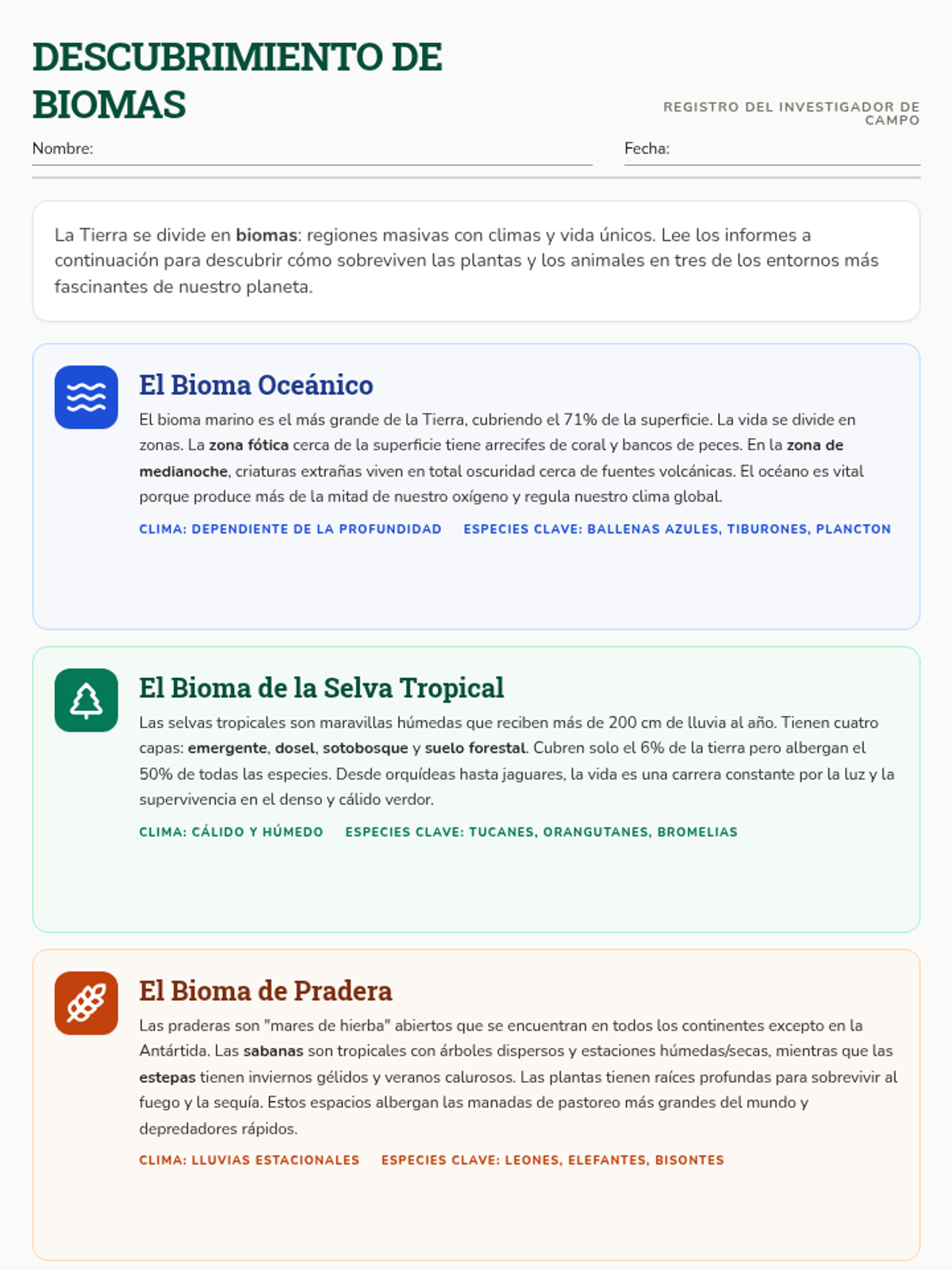
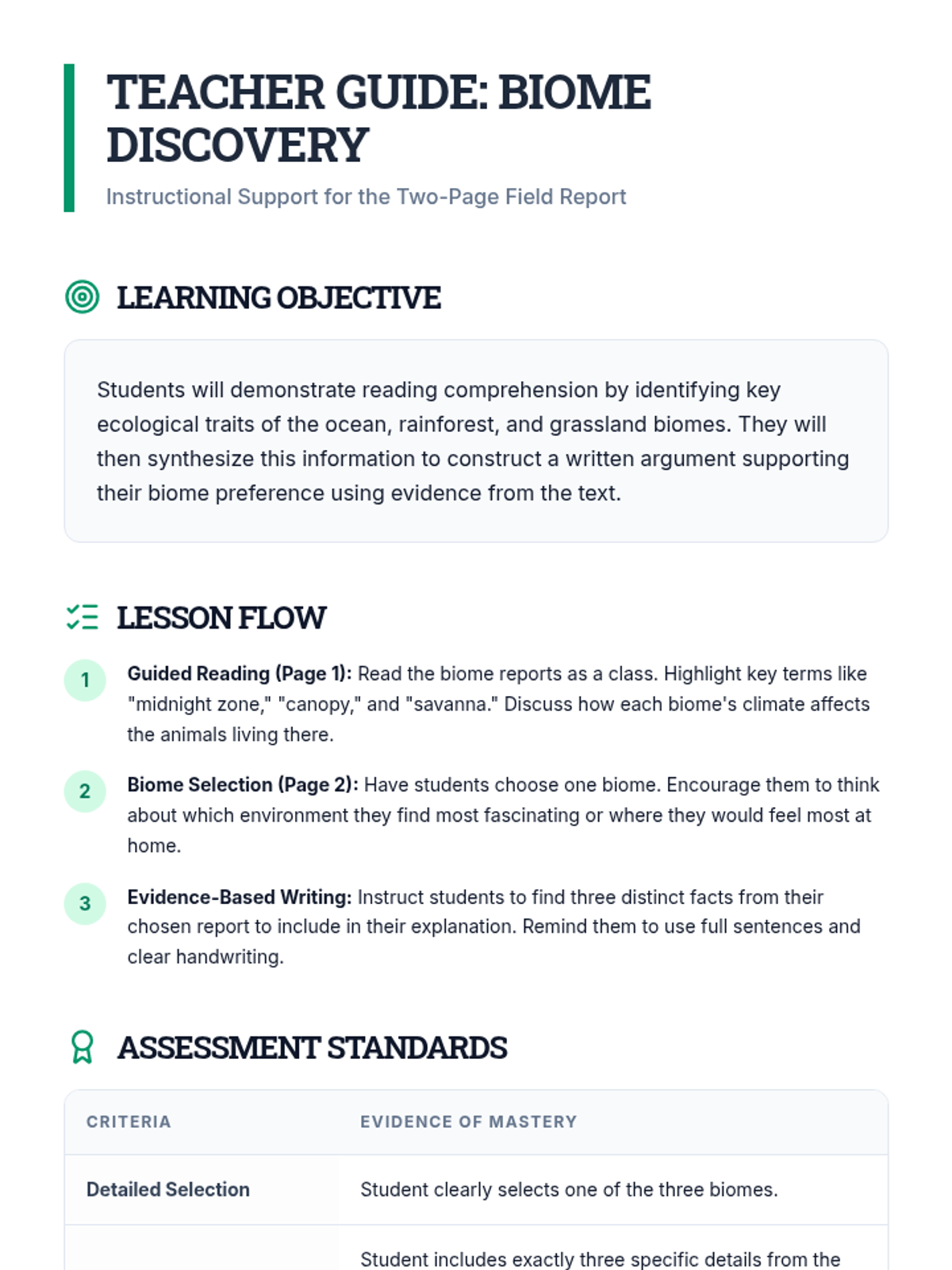
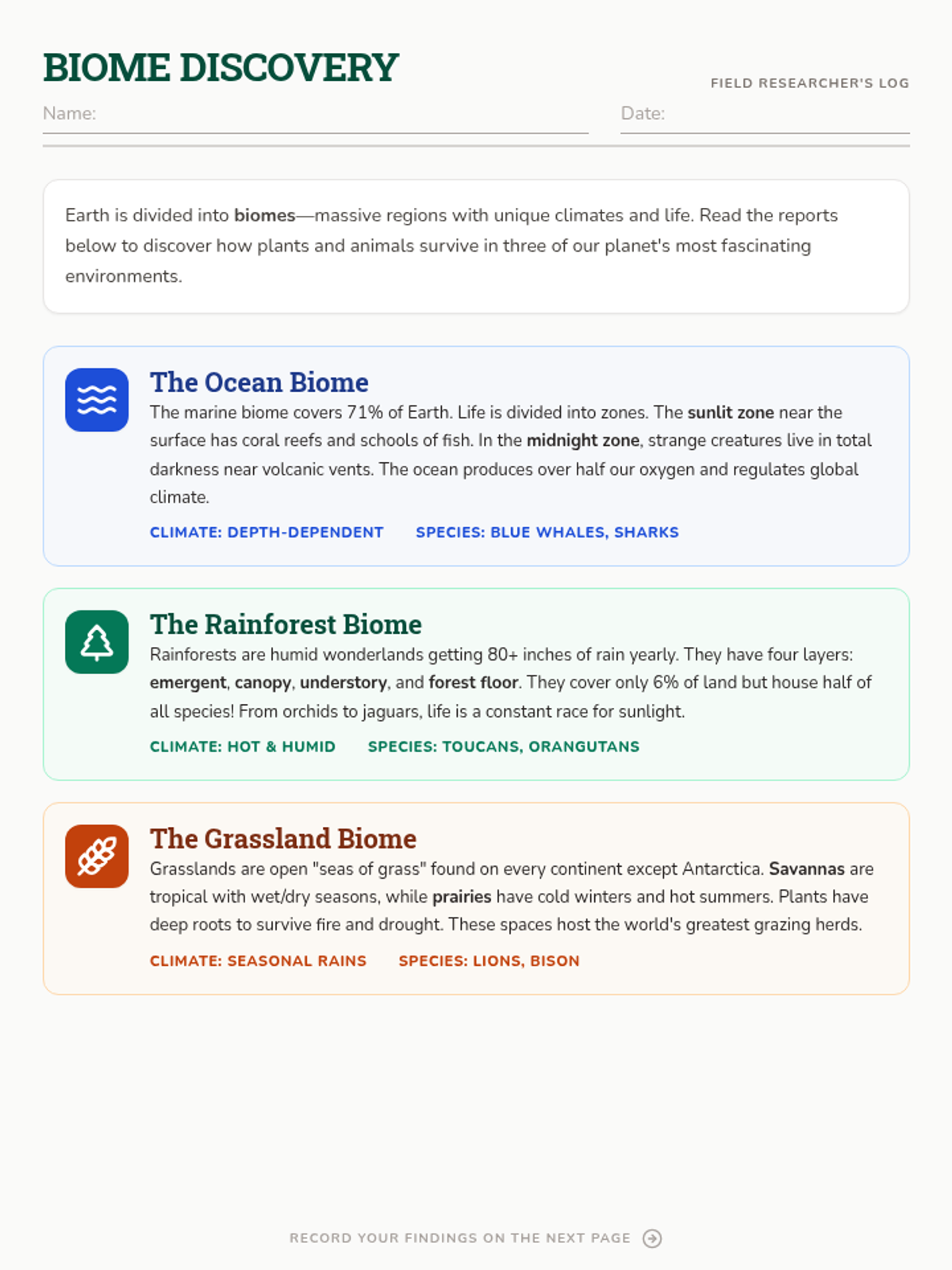
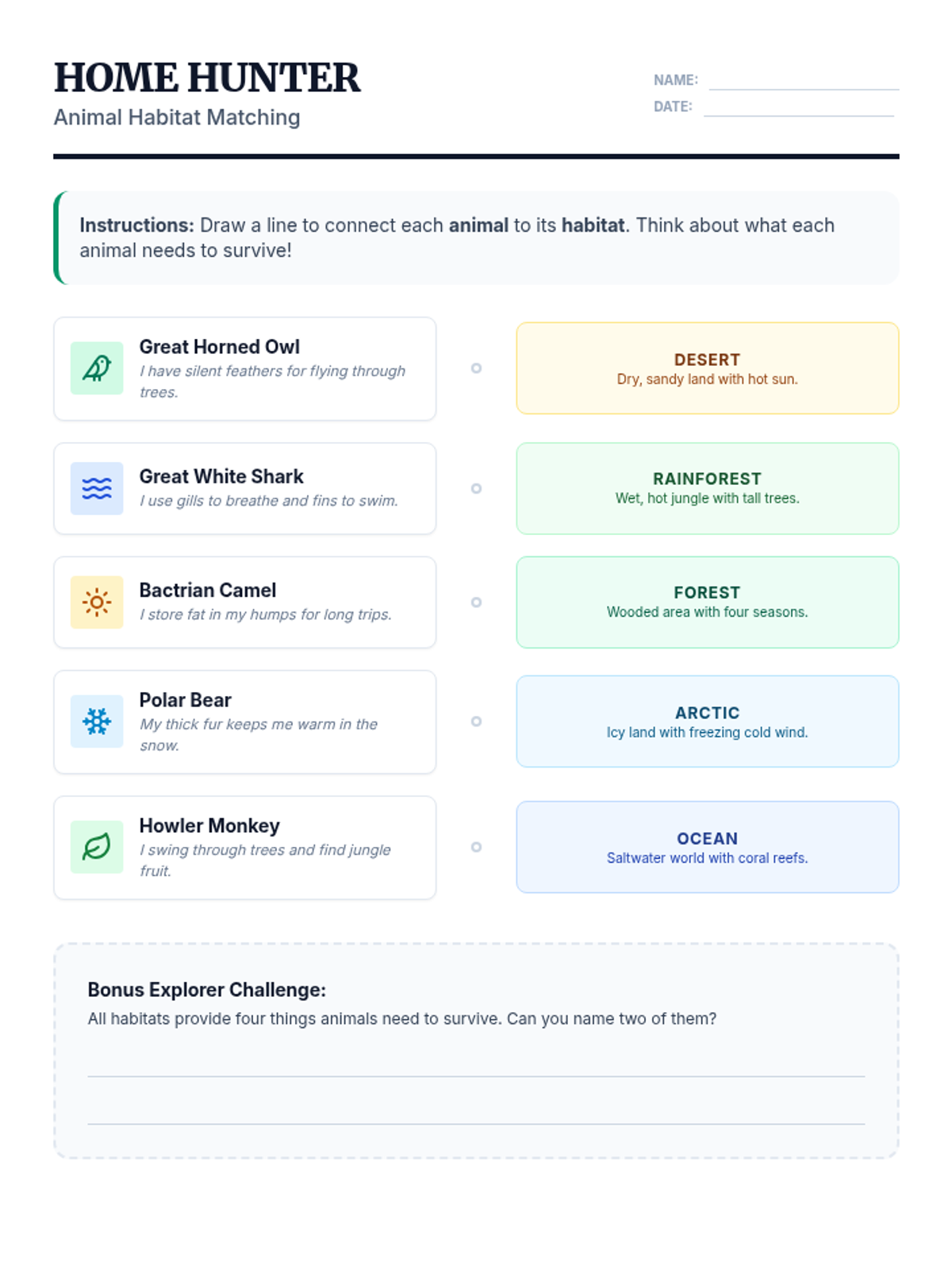
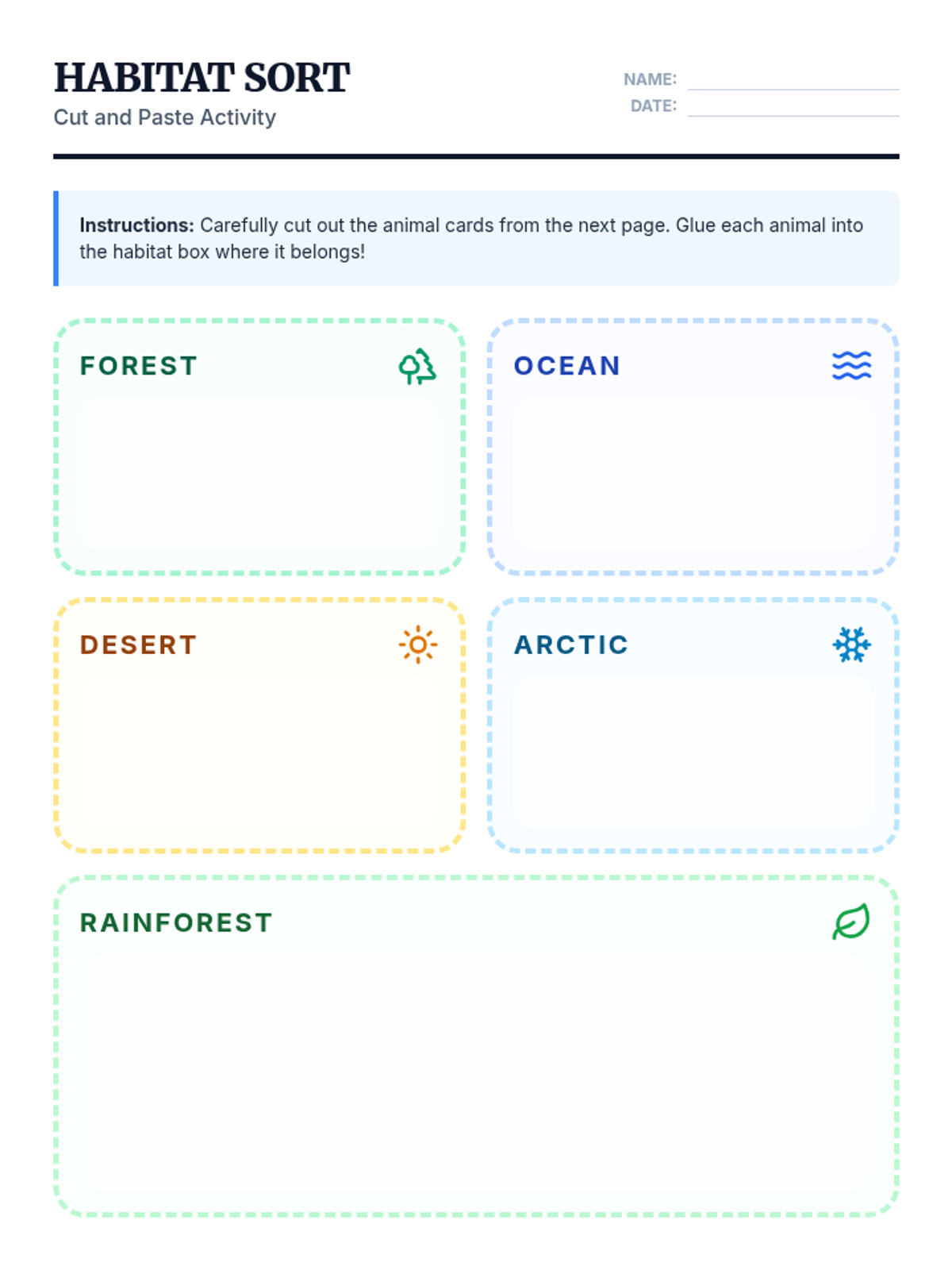
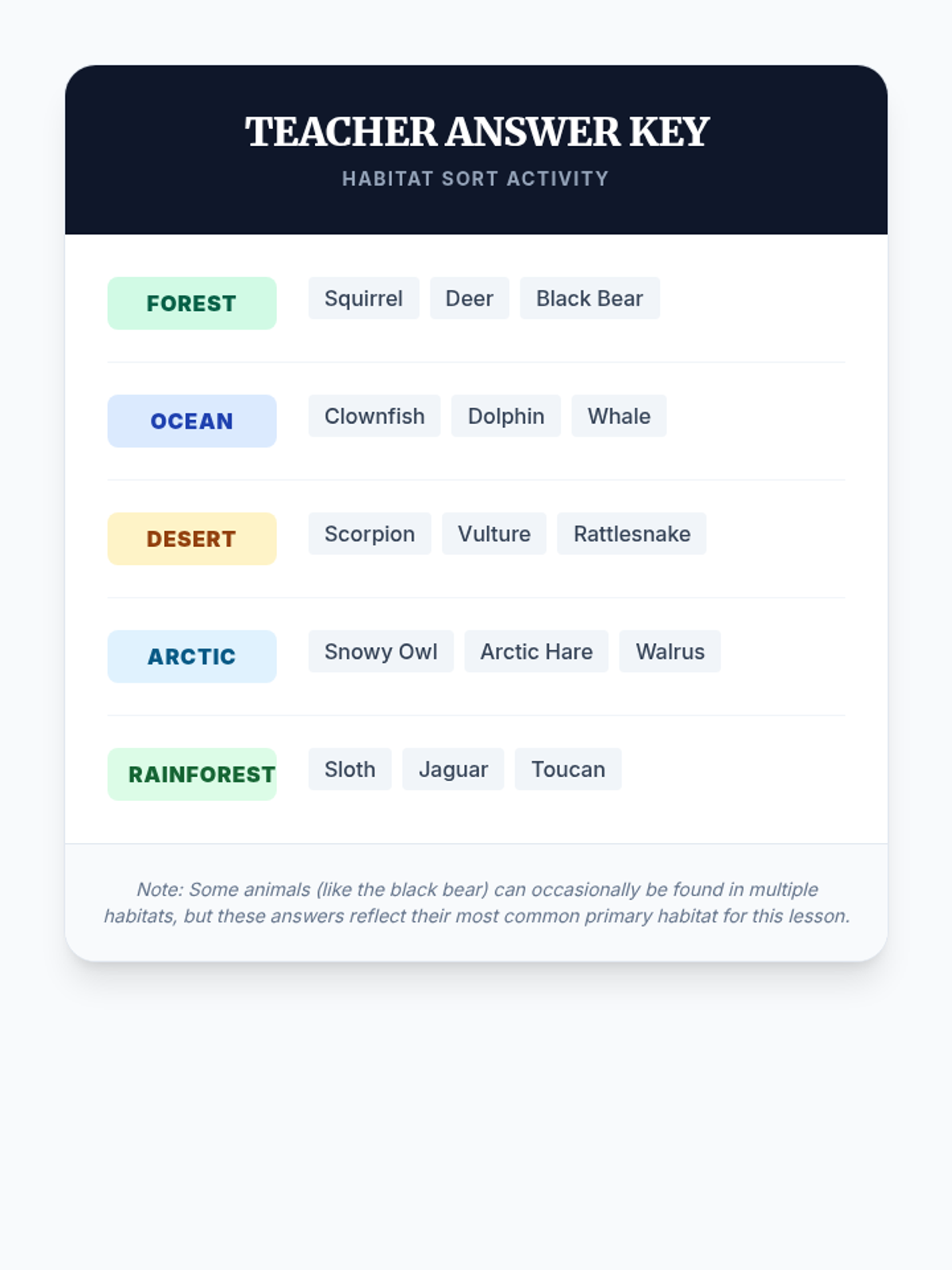
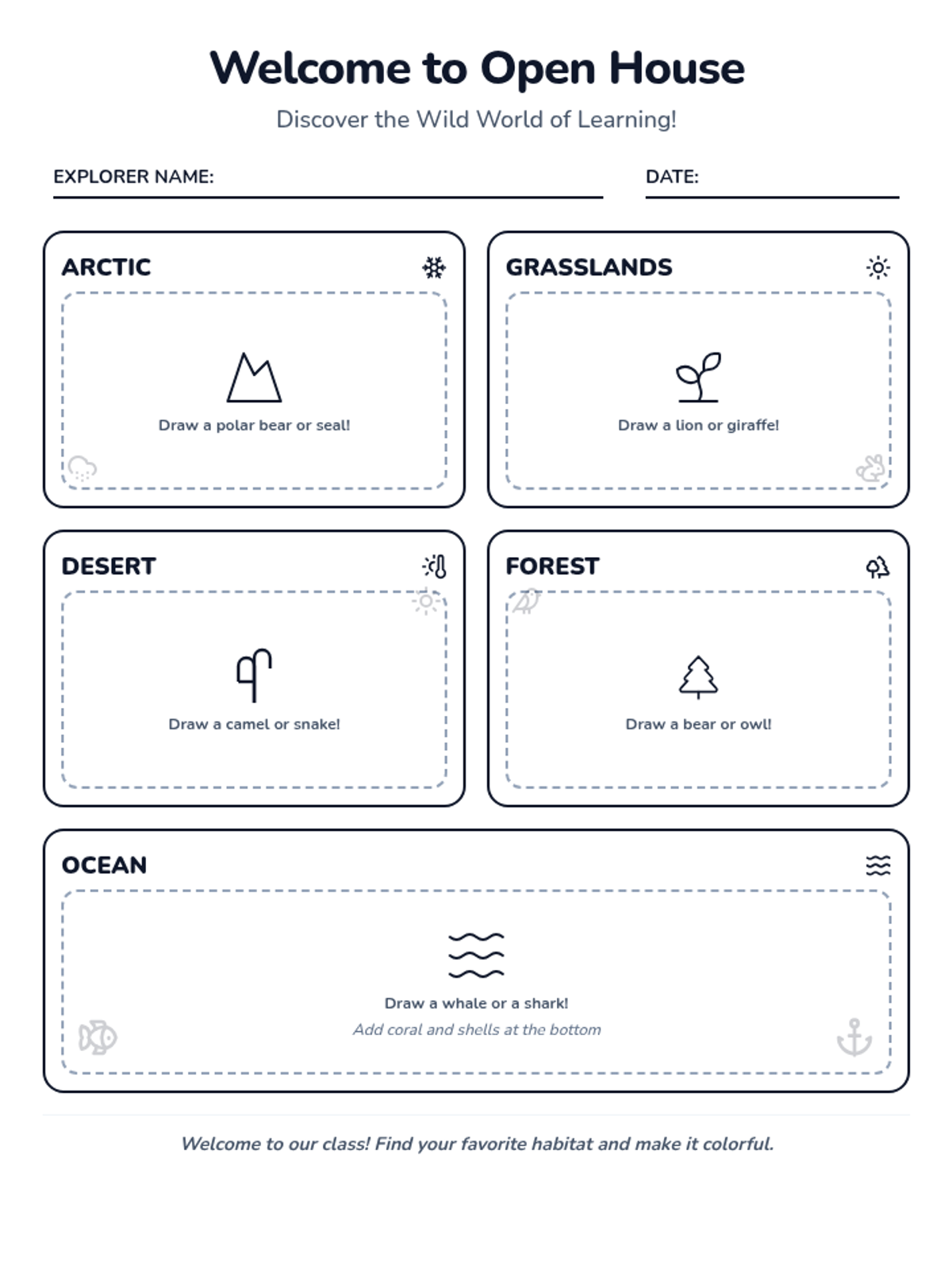
A lesson introducing students to various ecosystems through vocabulary and visual identification. Students will learn the key characteristics of different biomes including forests, deserts, and oceans.
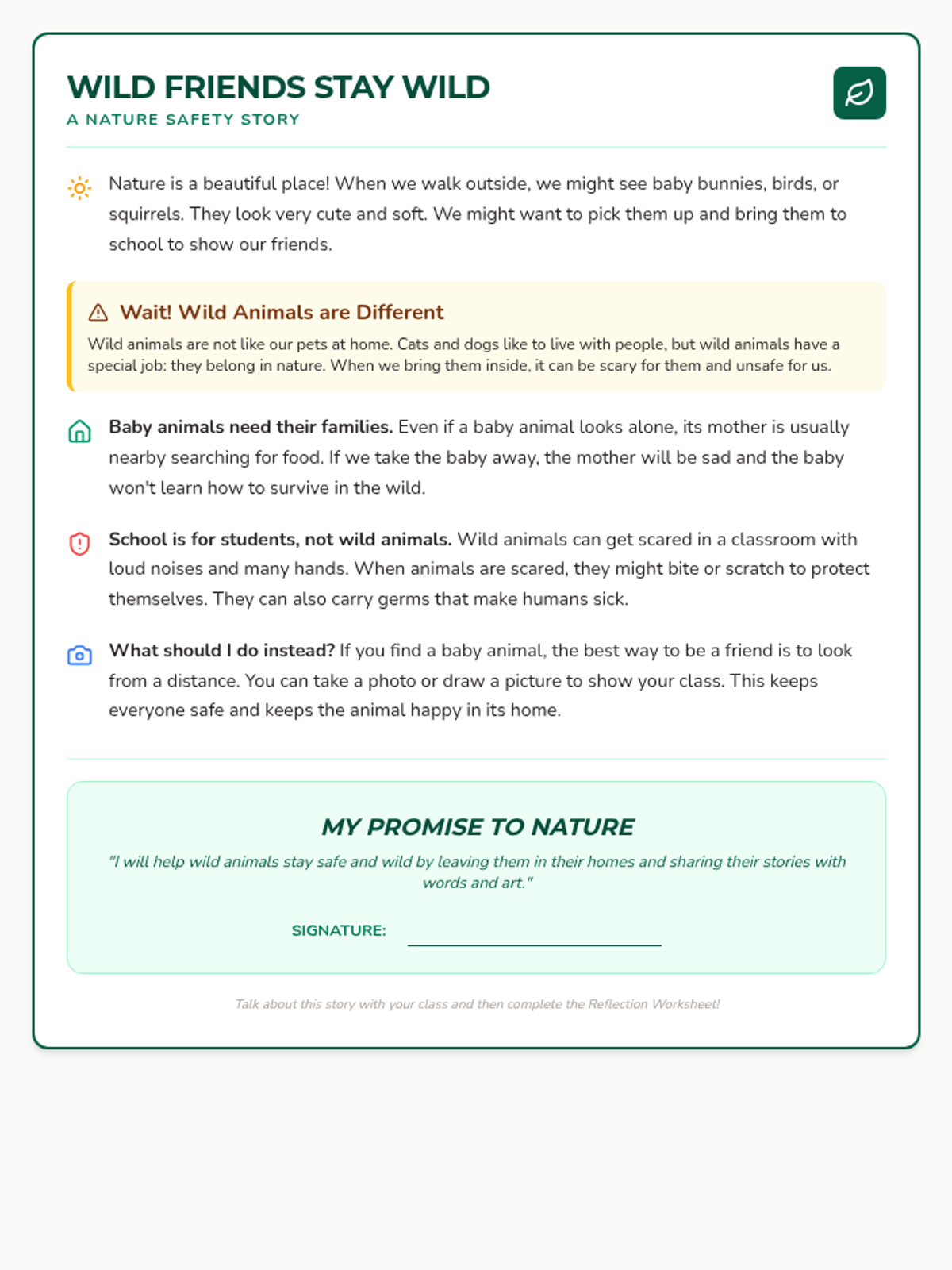
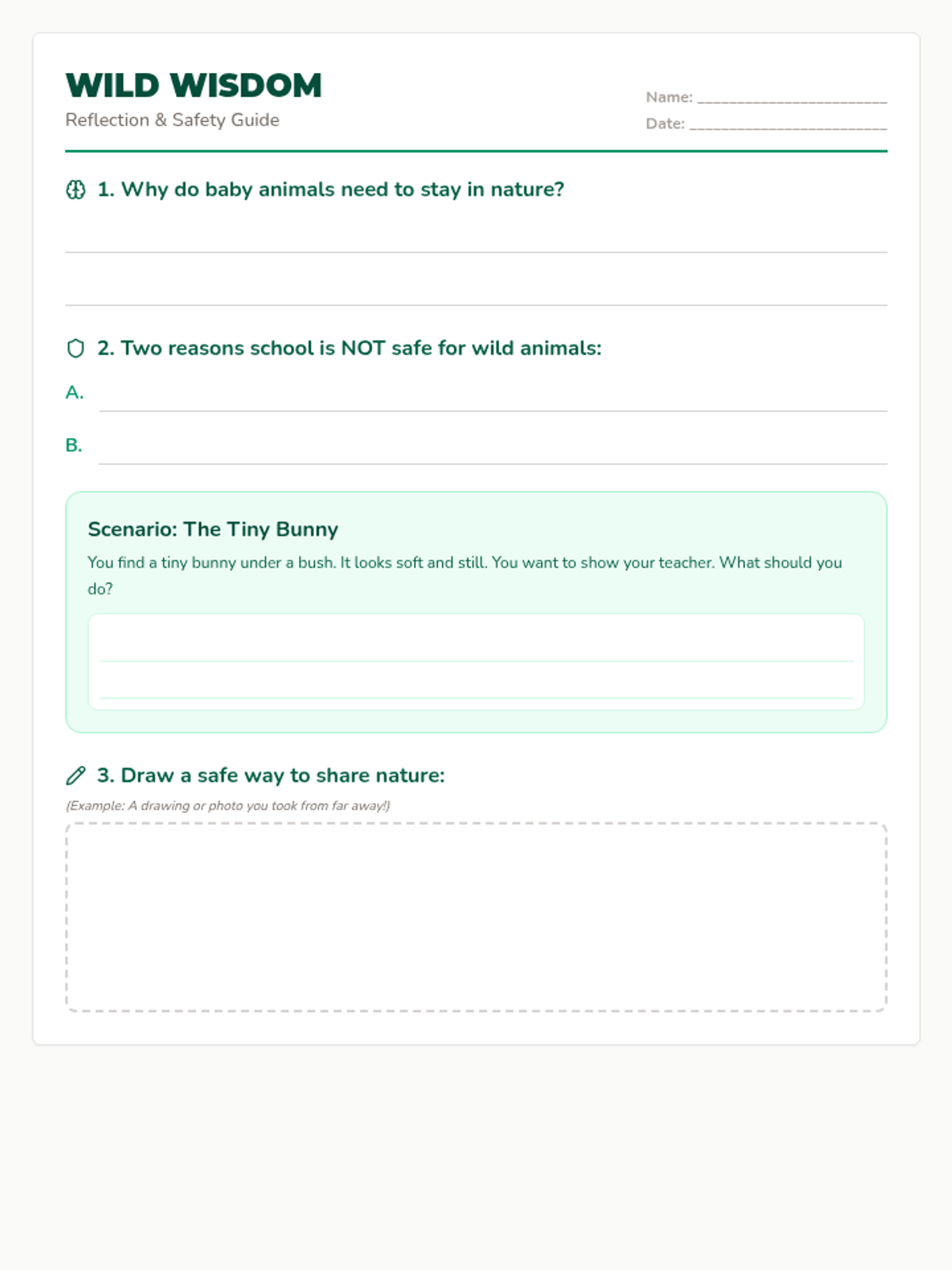
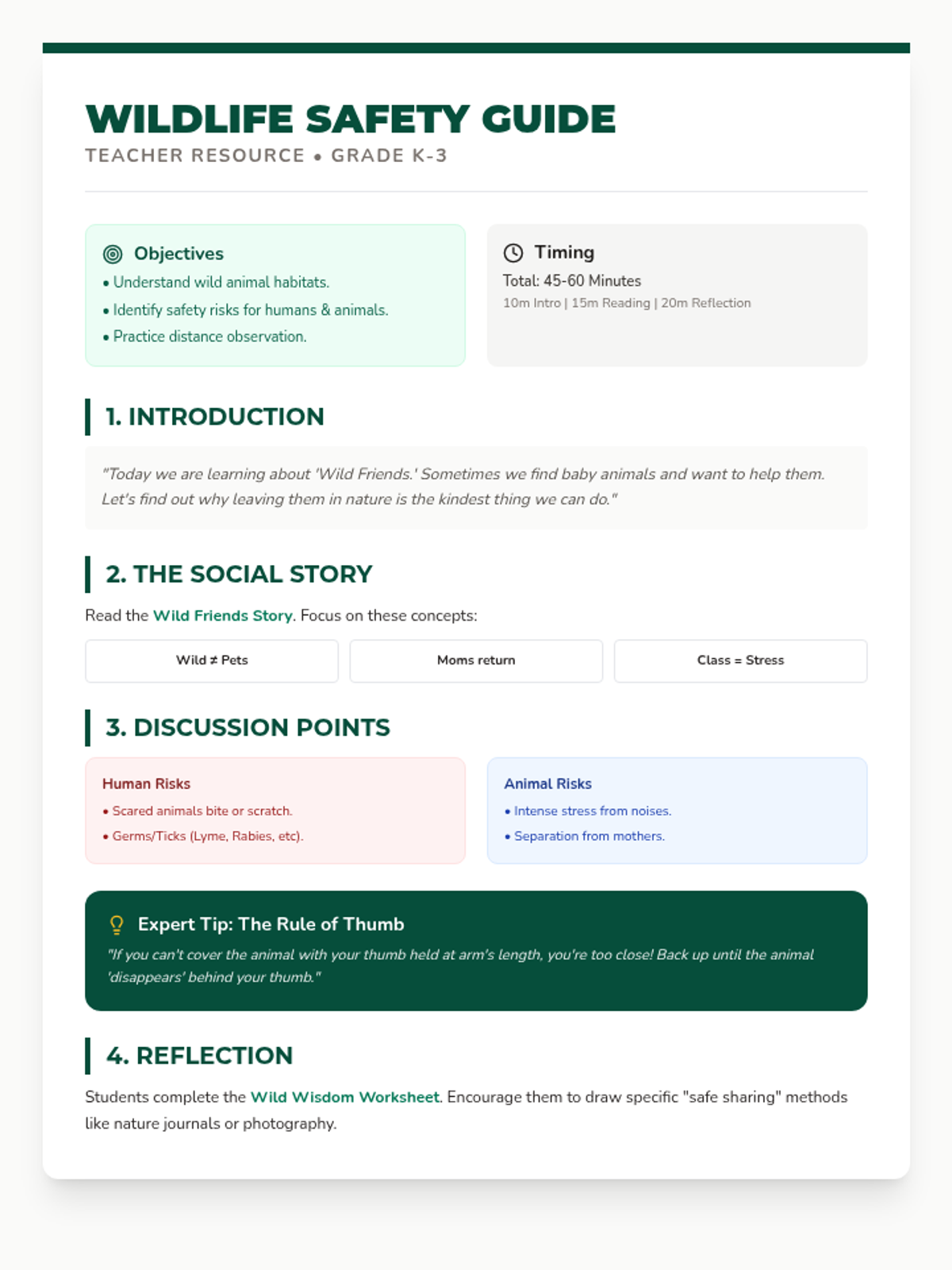
An outdoor exploration where students become 'Baby Detectives' to find and observe different types of babies in nature, including human, animal, and plant life. Students will learn that all living things start small and require care and specific environments to grow.
Students will identify the five sense organs and explain how they help humans perceive and interact with the world around them through reading and assessment.
An introductory lesson for K-2 students focusing on the major bones of the human body and their primary functions through movement and visual labeling.
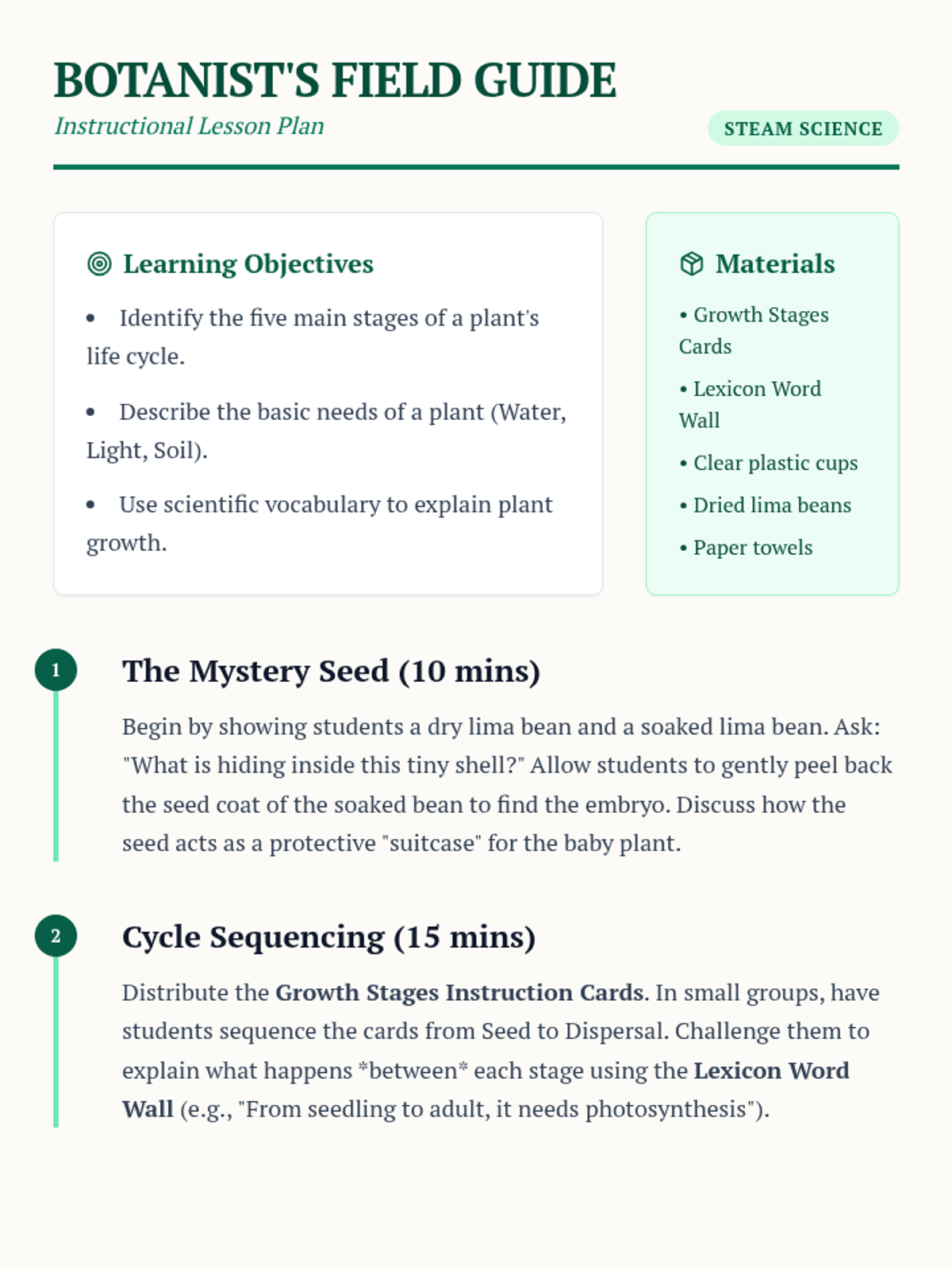
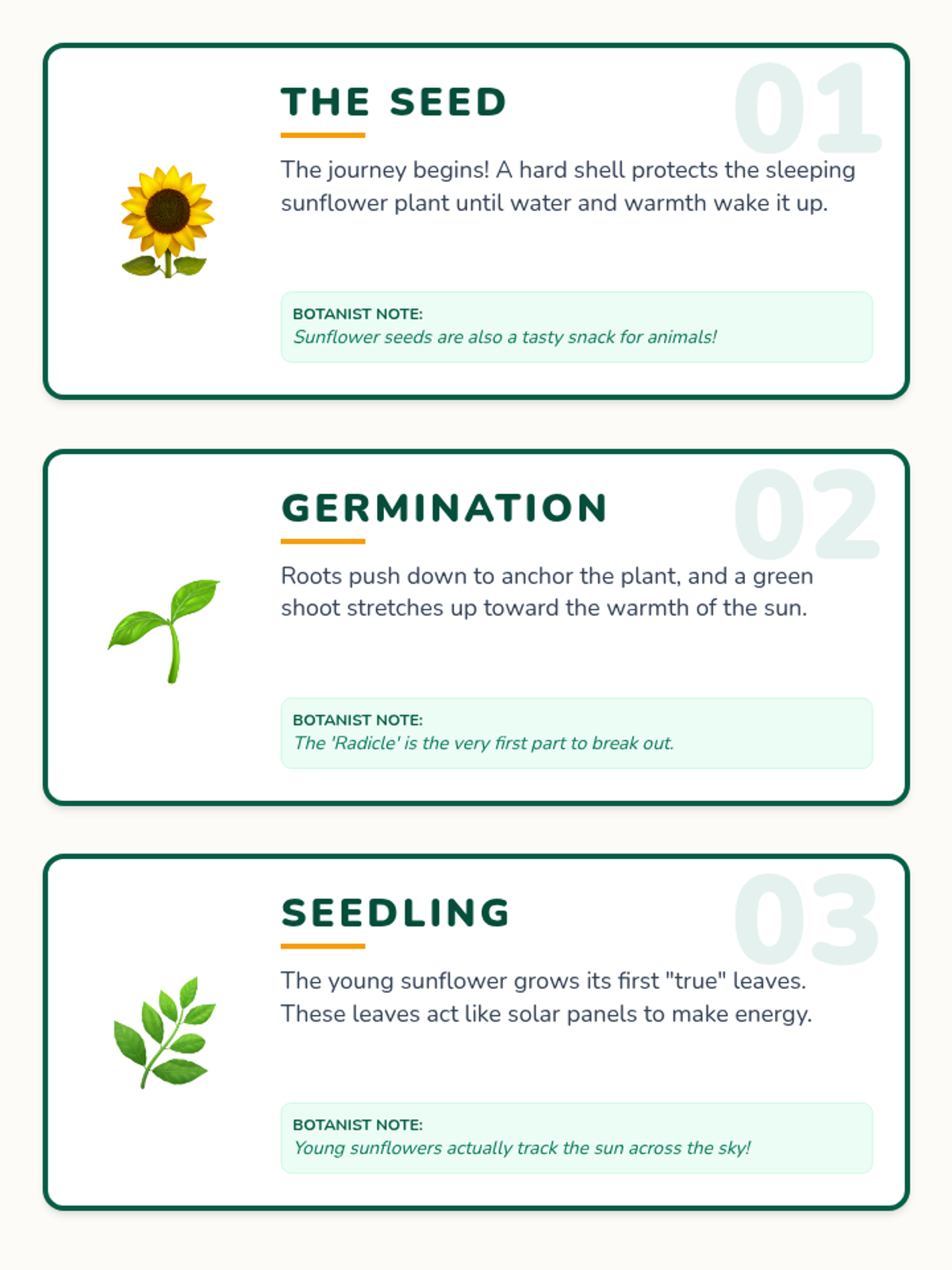
A comprehensive set of materials designed for MCAS-Alt portfolios, focusing on the plant life cycle (birth, growth, reproduction, and death) through sequencing and model-building.
A comprehensive resource set for teaching and assessing the flow of matter in ecosystems, specifically designed for MCAS-Alt data collection. Students will identify roles (producer, consumer, decomposer) and build models of energy flow using food chains.
Explore the fascinating world of birds that have traded flight for other incredible skills in this engaging introductory lesson.
A hands-on project where students explore their own traits and talents. Students will document their unique 'code' and present their findings through a structured project guide.
Focuses on summarizing Kamal's story and digging deeper into character feelings. Students will compare literal text with implied meaning and practice identifying the main idea and key supporting details.
Students will define and distinguish between inherited traits (hair color, eye color) and talents (singing, sports) using Kamal's story as a guide. They will use a graphic organizer to categorize these features and complete a varied question worksheet.
A visual, snowman-themed lesson designed for autistic elementary students to explore the three states of matter (solid, liquid, gas) through hands-on experimentation and clear visual aids.
A high-interest, low-complexity lesson designed for LIFE students focused on identifying basic insect anatomy and creating a unique bug through a project-based drawing and writing activity.
A comprehensive lesson focusing on identifying and summarizing the physical properties of rocks, minerals, soil, and water through hands-on exploration.
An interactive sorting activity where students categorize various objects into solids, liquids, and gases. This hands-on game uses visual cues to reinforce the fundamental properties of the states of matter.
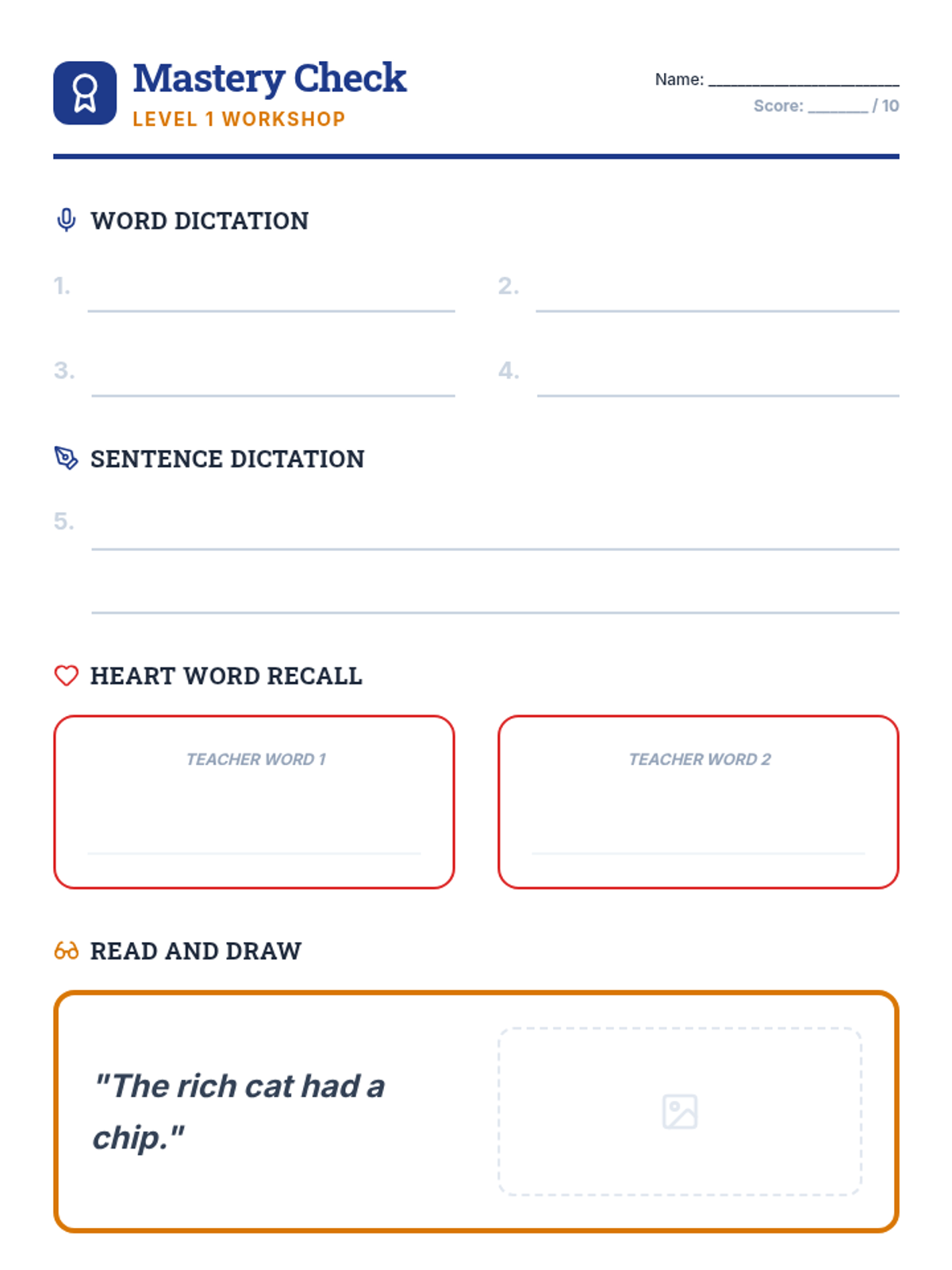
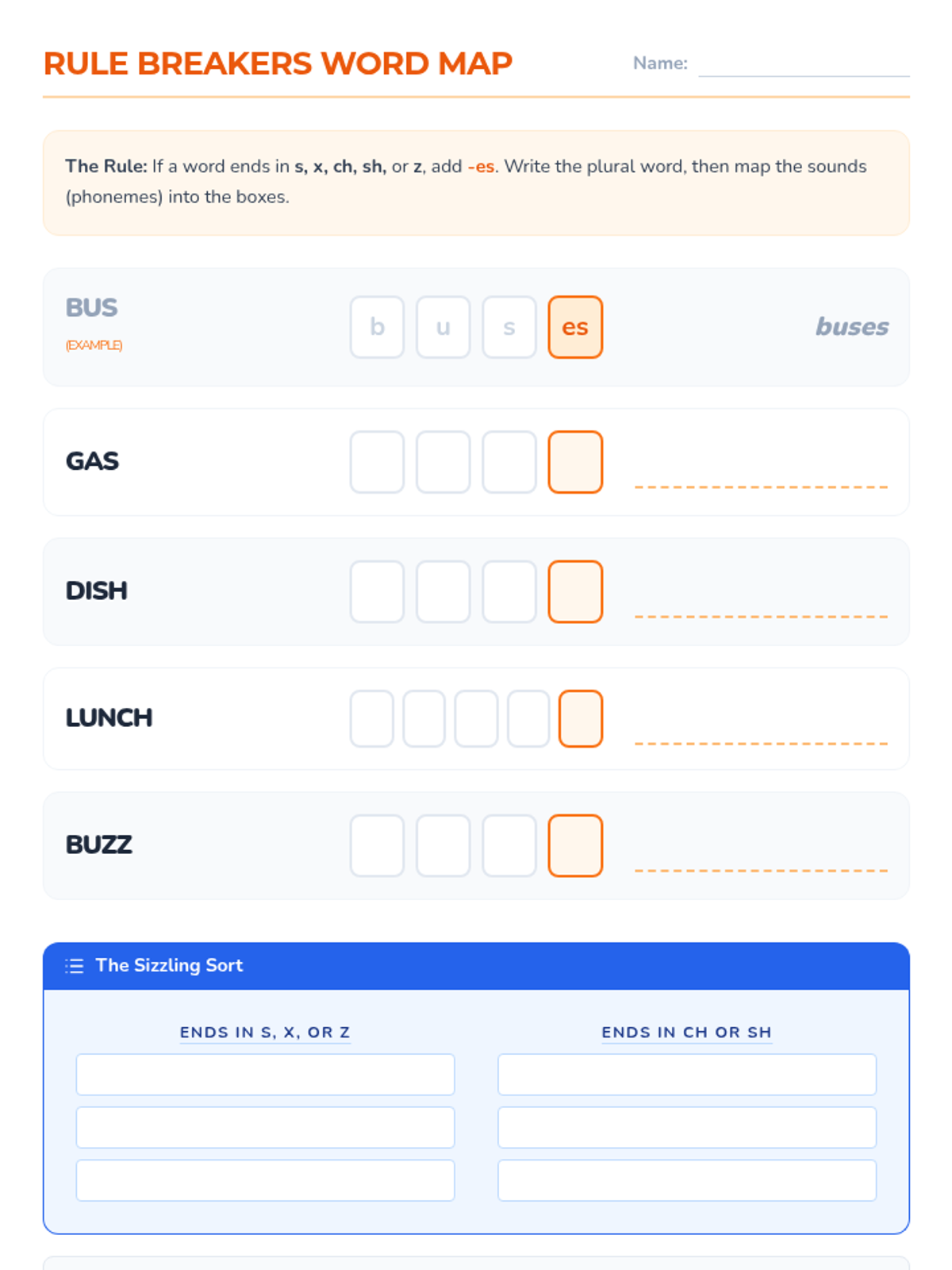
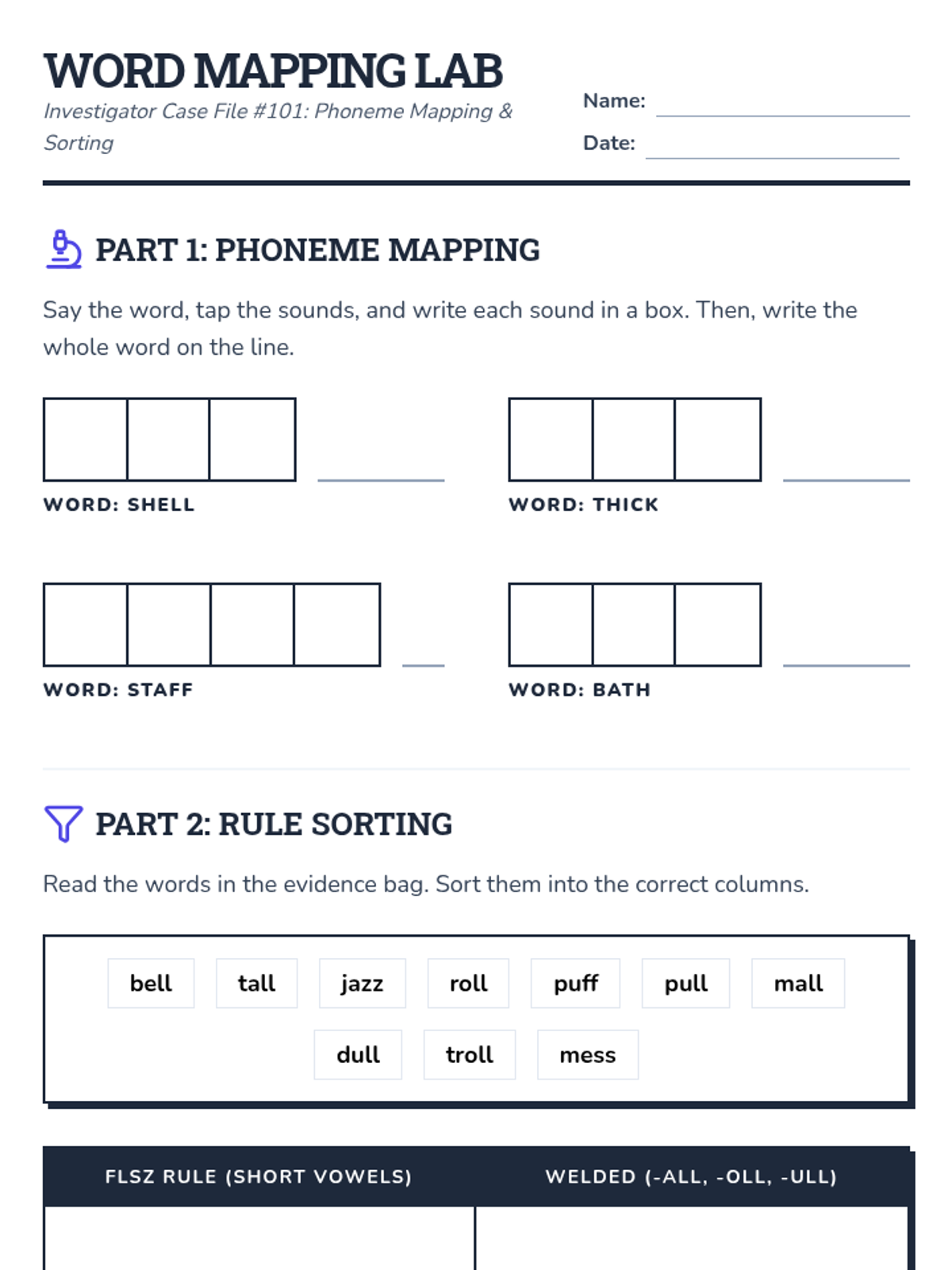
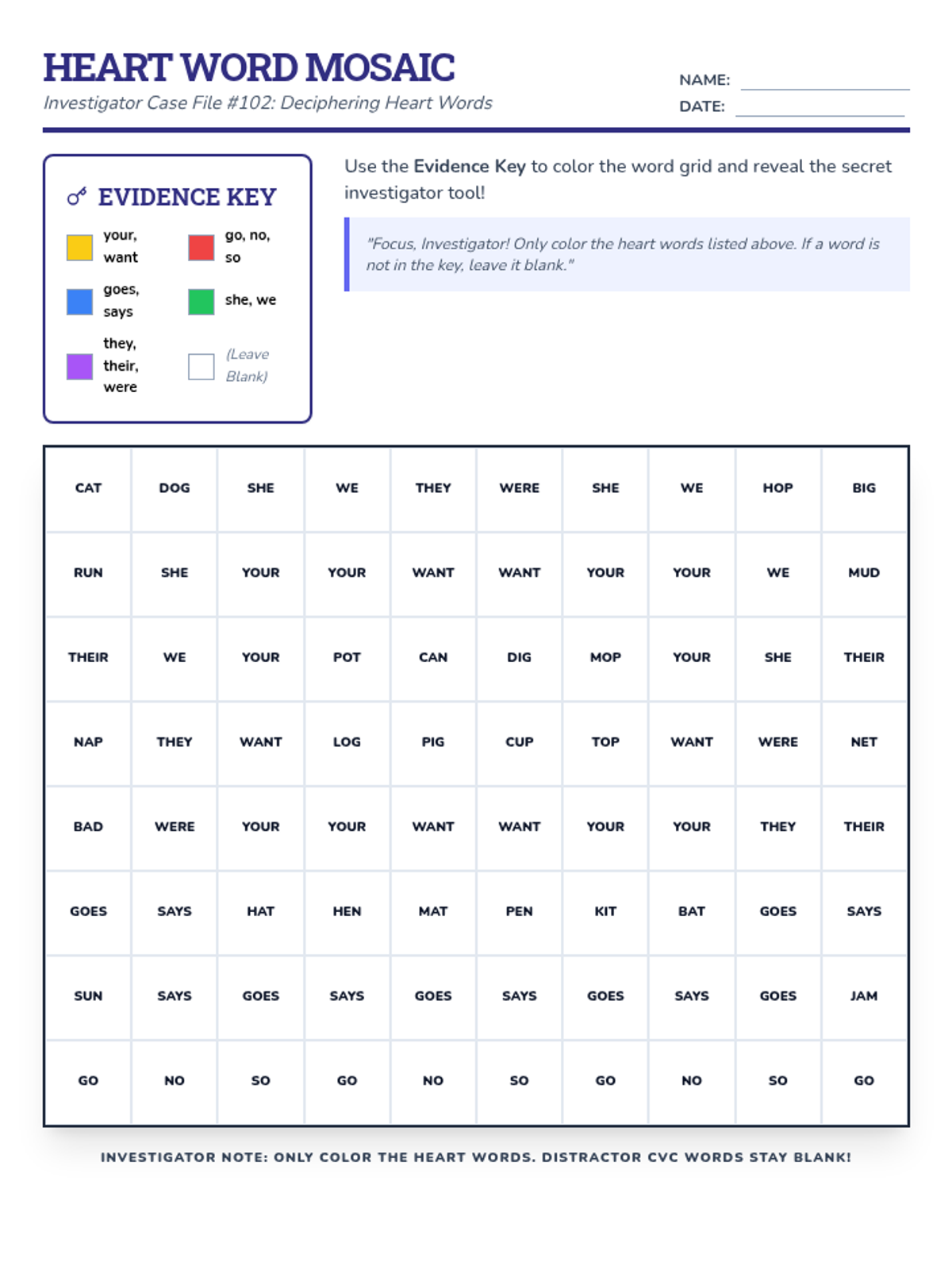
A set of engaging memory cards and supporting materials designed to help students master two-syllable words where both syllables are open. Students will match syllable pairs to form complete words, reinforcing phonics and decoding skills.
A comprehensive 1st-3rd grade lesson exploring the Bald Eagle as a national symbol, its habitat across North America, and its impressive physical characteristics through video, mapping, and measurement.
A high-energy lesson where students develop listening and identification skills by exploring the sounds and functions of various transportation modes, from bicycles to rockets.
A 2nd-grade science lesson exploring shivering as an involuntary reflex that generates heat to keep the body at a constant temperature. Includes a movement-based hook, video analysis, a 'Muscle Heat Lab,' and a creative drawing exit ticket.
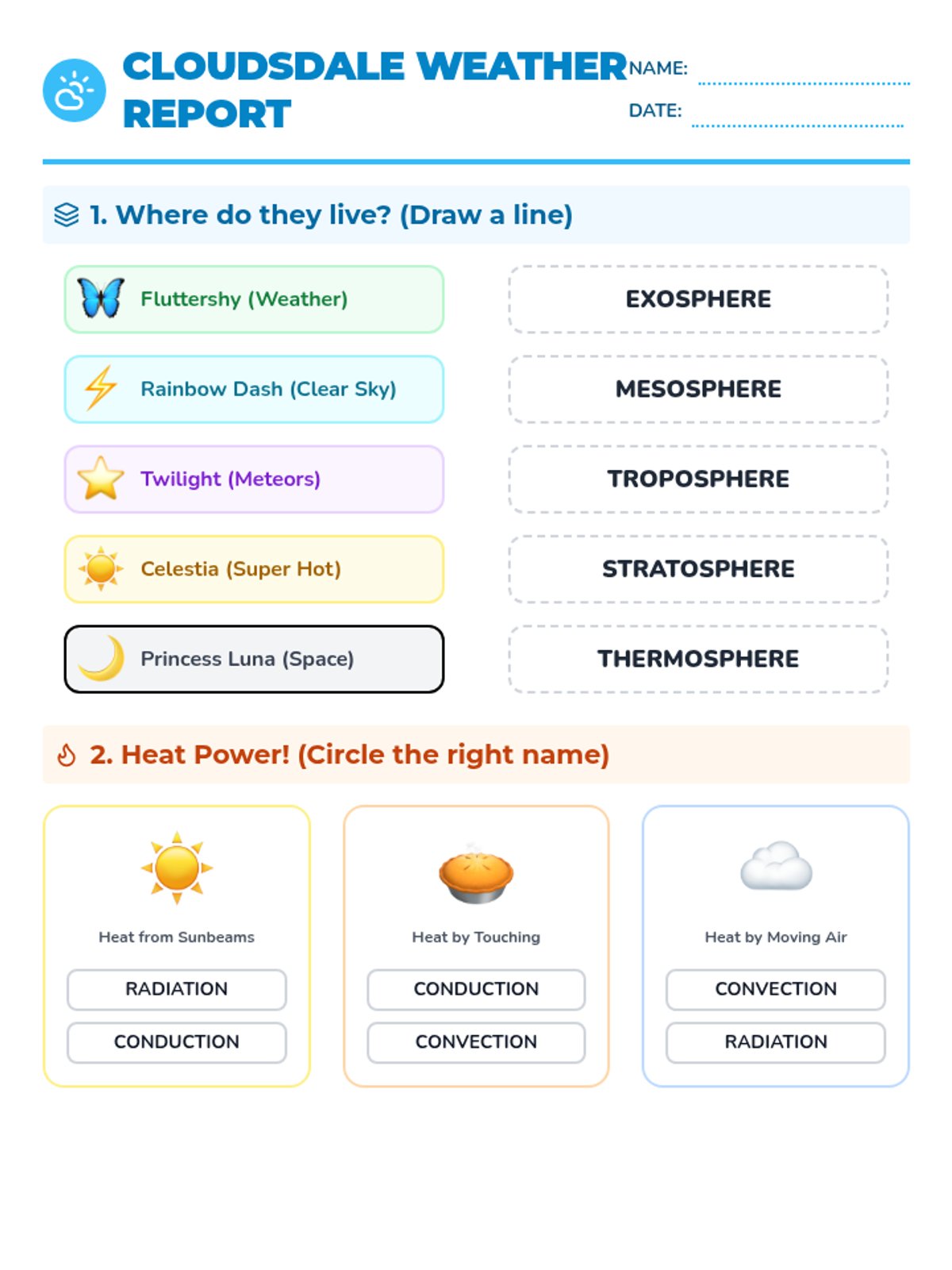
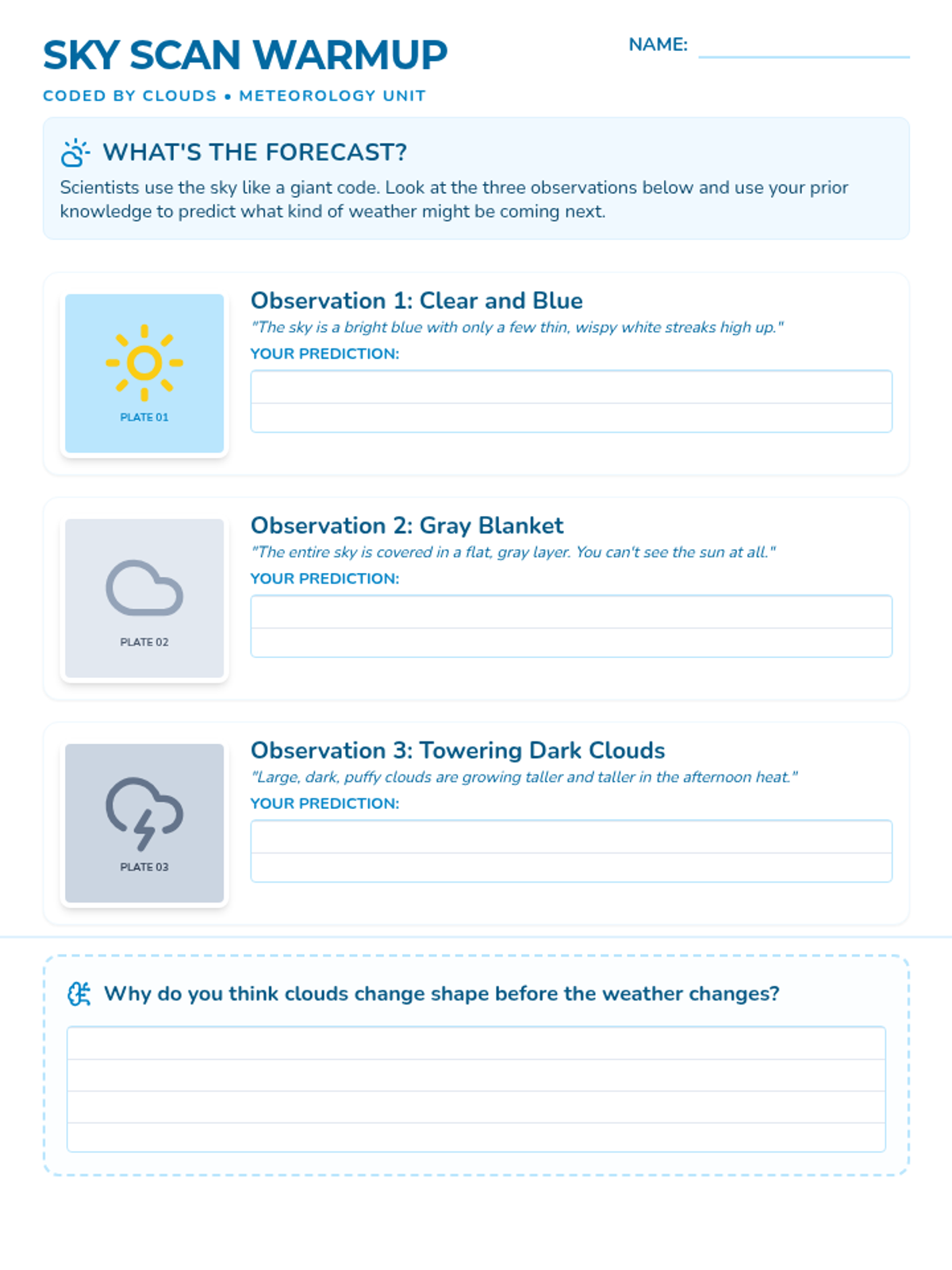
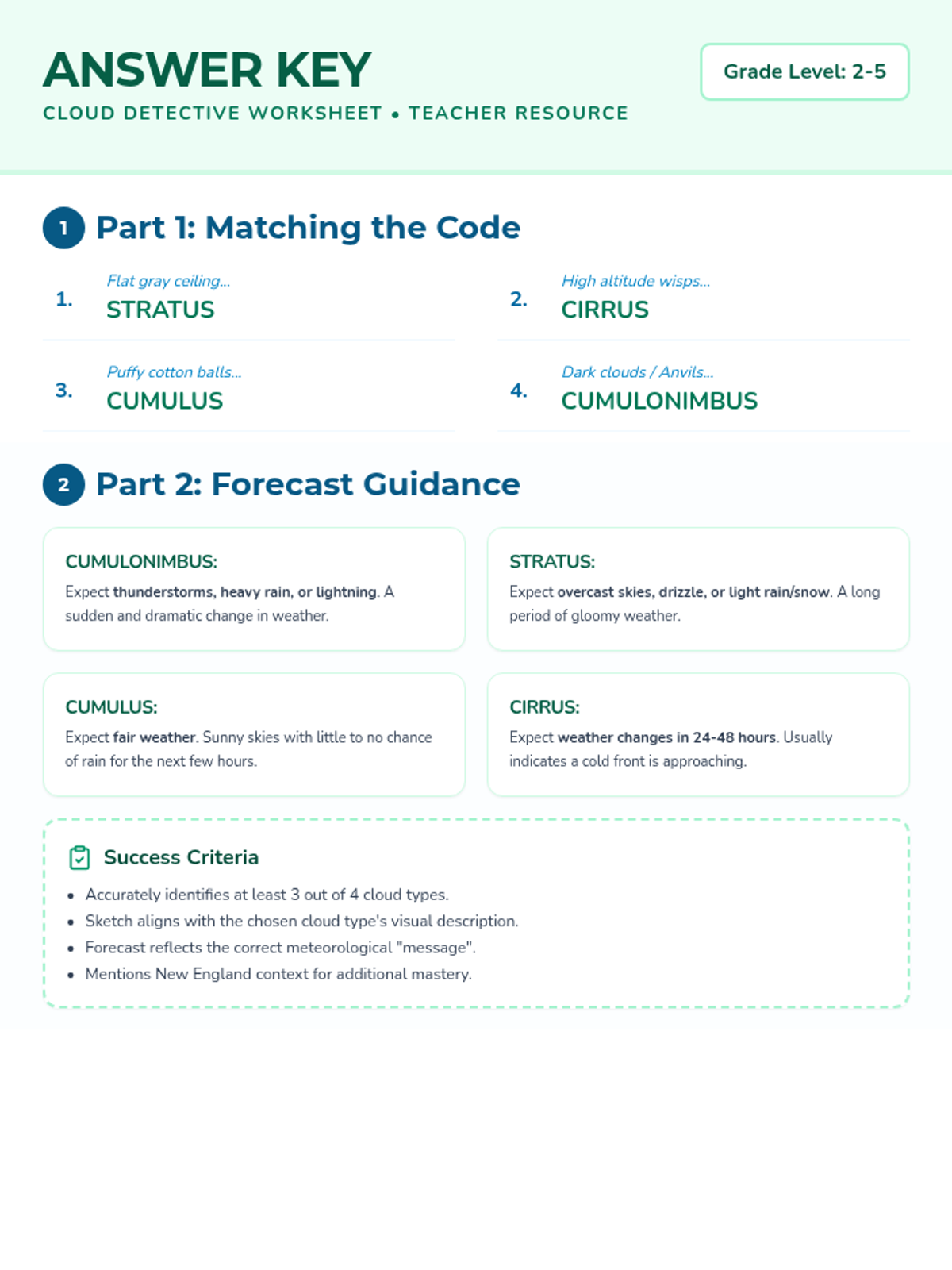
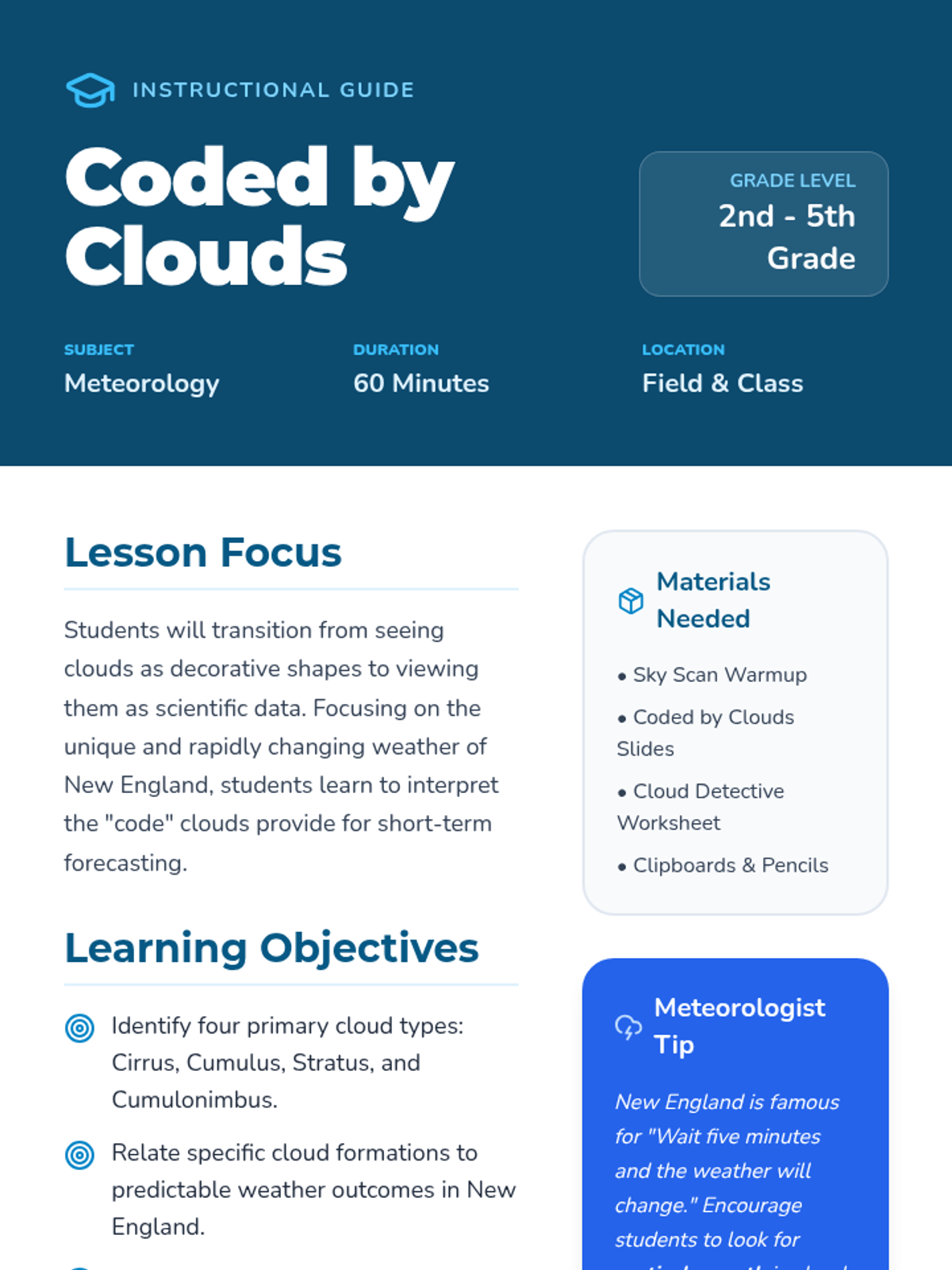
Students explore extreme weather through the lens of 'Hurricane Hunters,' learning how pilots and scientists collect data from within storms. They identify cloud types and create a storm safety plan for hurricanes and nimbus clouds.
A hands-on science lesson where 1st and 2nd graders identify four types of clouds (Cumulus, Nimbus, Stratus, Cirrus) through a video study and a tactile 'Cloud Cotton Collage' activity.
A fun, science-meets-humor lesson where students learn about cloud types through puns, jokes, and creating their own weather-themed comic strips.
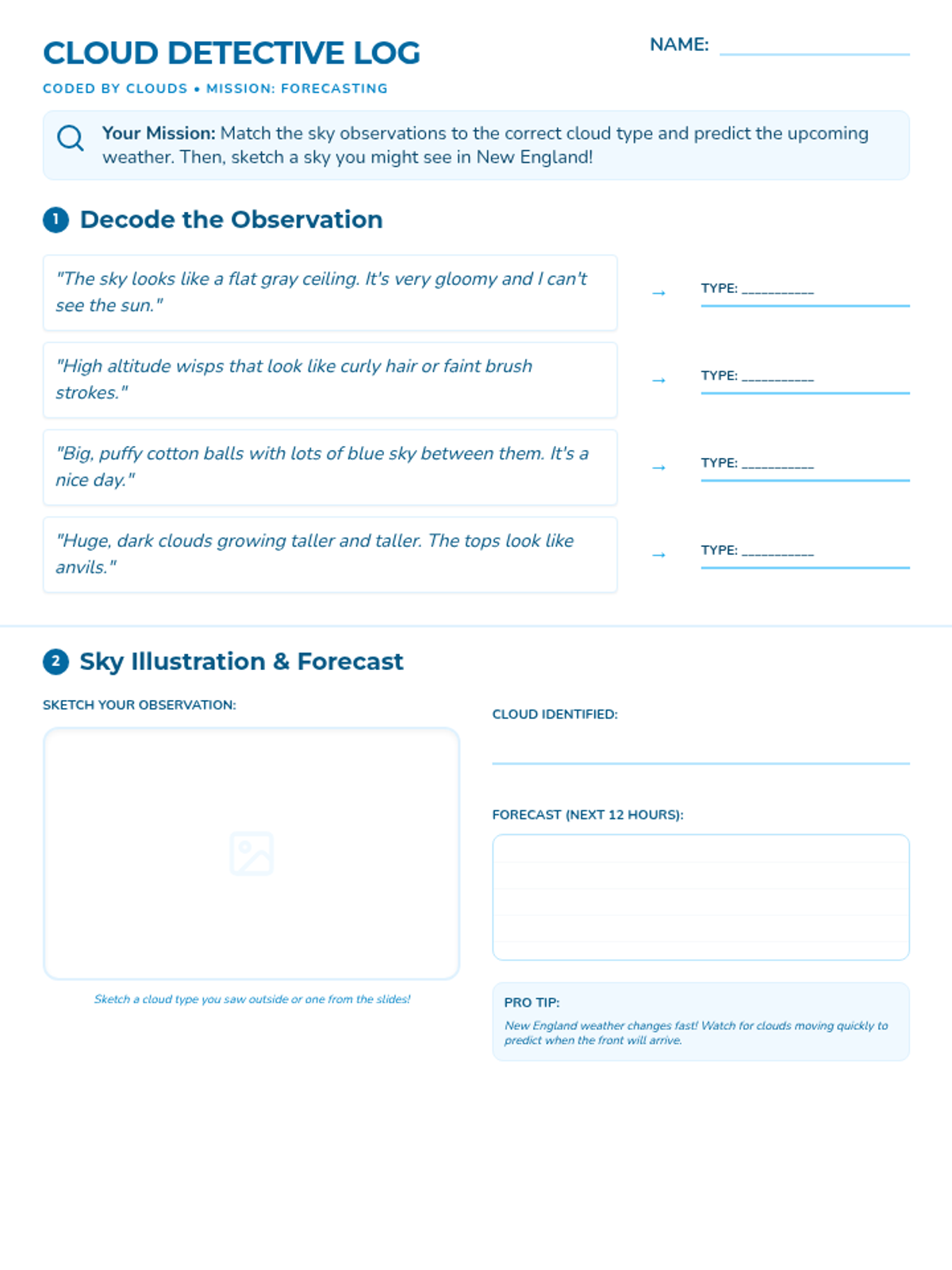
A comprehensive lesson for 2nd-3rd graders exploring cloud types, formation, and weather prediction through hands-on experiments, video analysis, and field journaling.
Students explore the biological reason for sunburns, focusing on how the body sends extra blood to damaged skin cells to begin the healing process. This lesson uses a SciShow Kids video and a hands-on drawing activity to make complex biological responses accessible to young learners.
A hands-on science and art lesson where students create a three-layer density column and test how various objects interact with the layers. This lesson uses a 'Science Artist' theme to engage elementary students in the concepts of matter, volume, and density.
A fun, hands-on science lesson where 2nd-3rd grade students explore how mucus and nose hairs act as a 'trap' for dust and germs. Using a 'Snot Squad' theme, students create anatomical models and observe how these defenses protect the body.
A fun, interactive lesson where students learn the biological sequence of a sneeze, from initial irritation to the final 'Achoo!', including a deep dive into reflexes and hygiene.
A 2nd-grade science lesson focused on nocturnal and diurnal rainforest animals, featuring a video-based viewing activity, a sorting task, and a creative reflection on night vision.
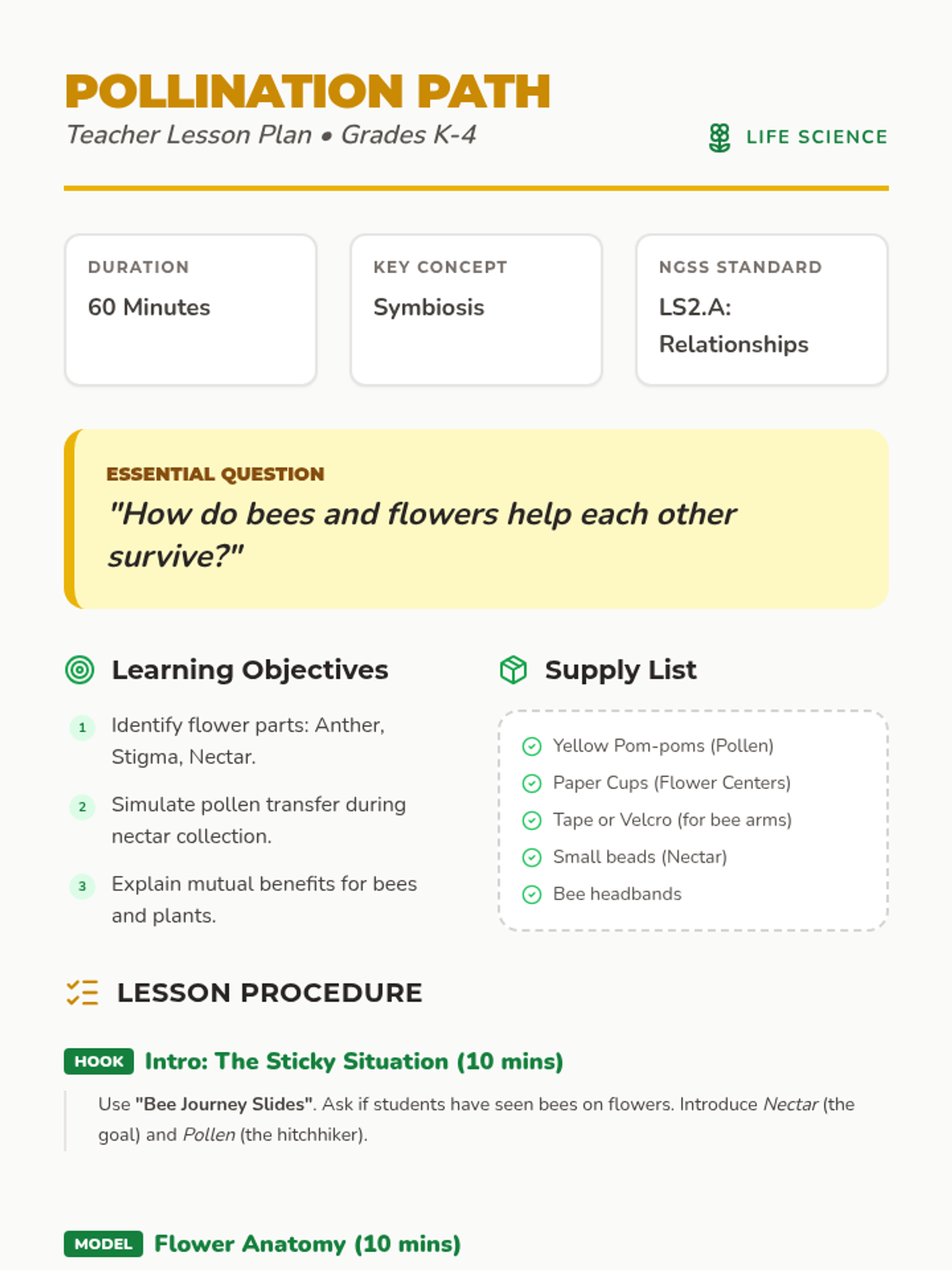
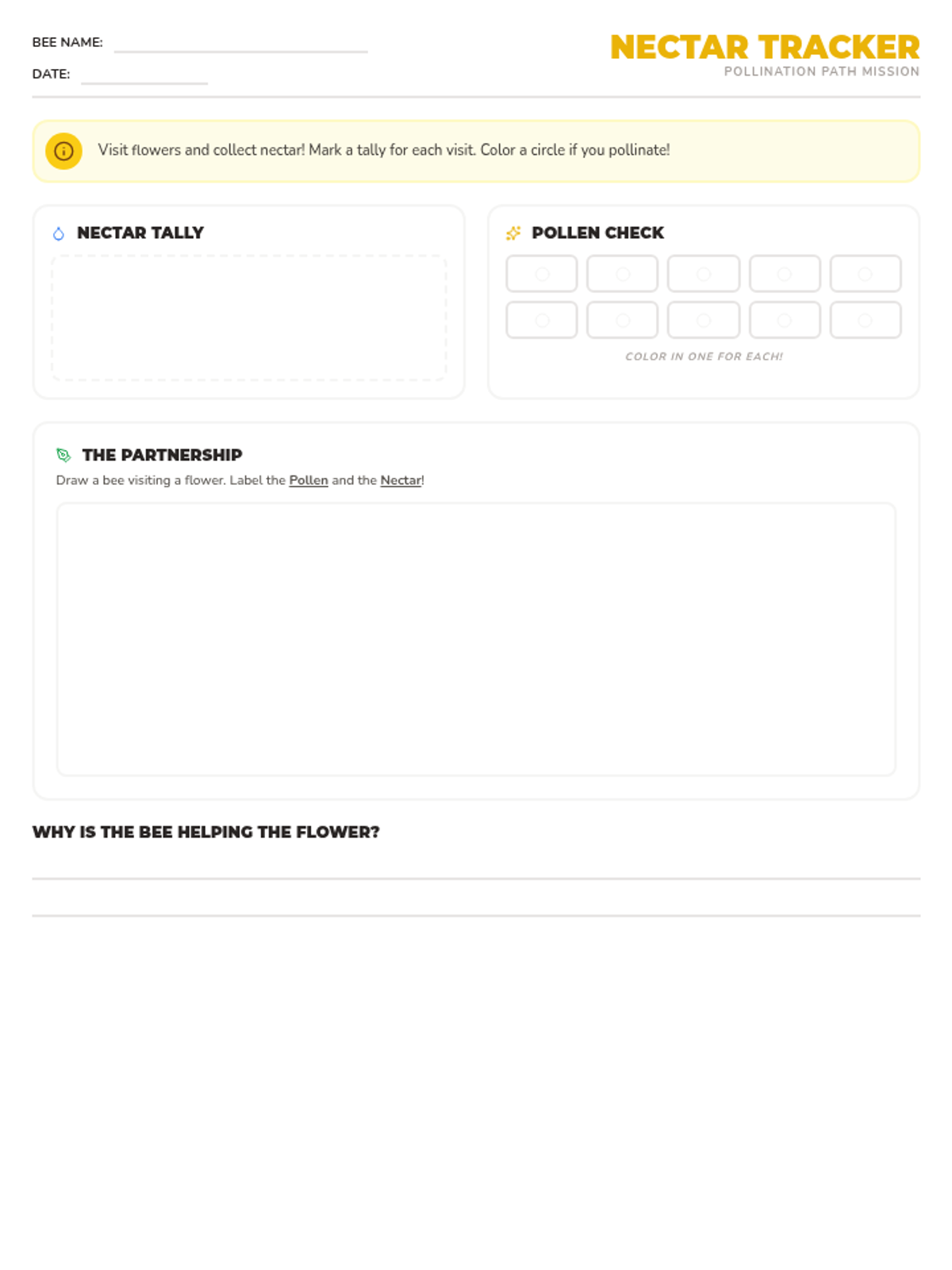
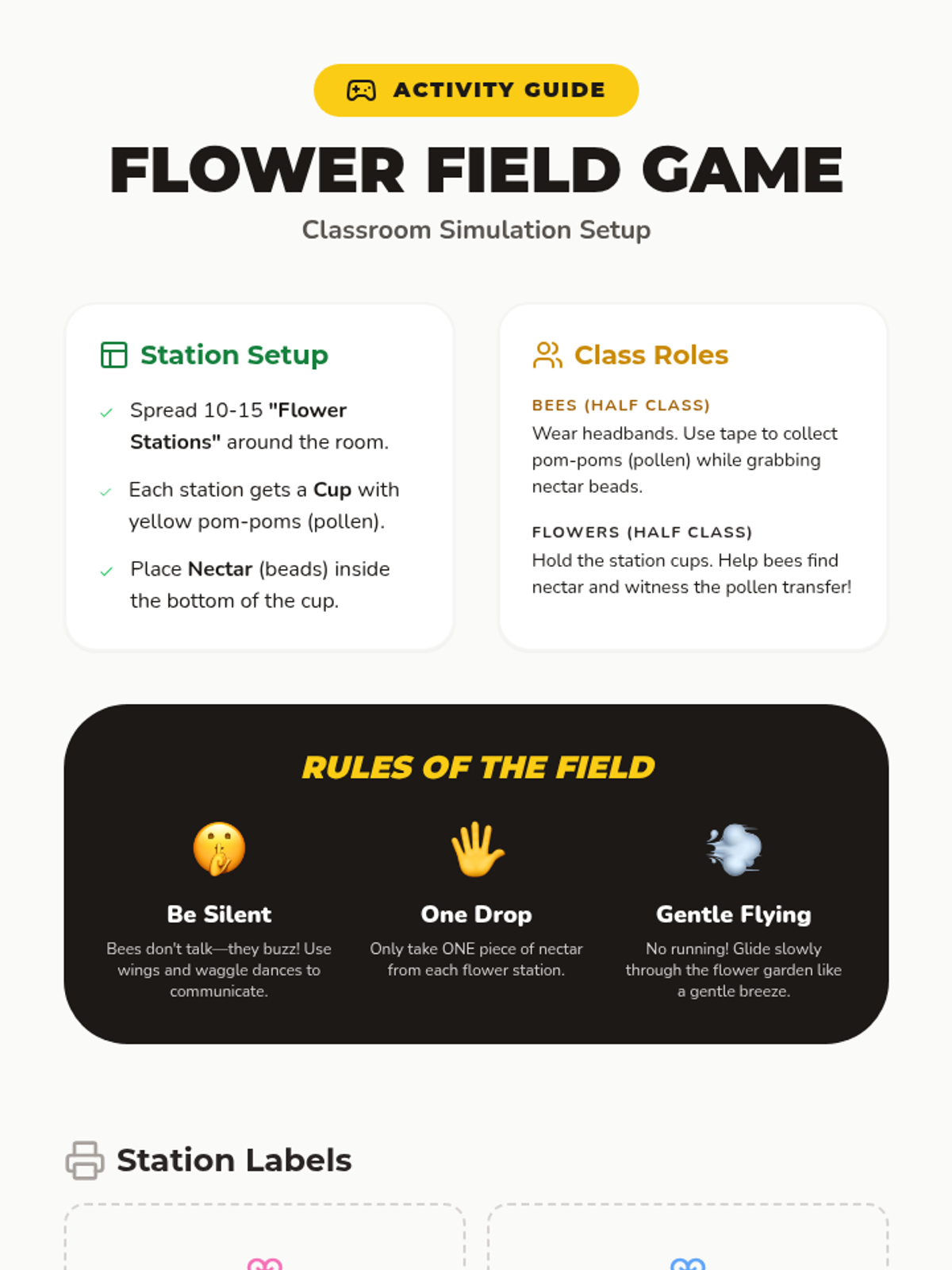
Students will learn about the intricate relationship between bees and flowers by watching a detailed video on pollination. They will then apply their scientific knowledge by writing a creative first-person narrative from a bee's perspective, using specific anatomical and botanical vocabulary.
An high-energy assembly lesson for grades K-4 introducing the Engineering Design Process through a hands-on problem-solving video and physical movement. Students learn to 'Ask, Imagine, Create, Test, and Improve' as they help solve a real-world (and itchy) problem.
Students follow the Engineering Design Process to build a tool that retrieves an out-of-reach object, inspired by a SciShow Kids video about problem-solving through iteration.
Students explore material properties by testing different adhesives to solve an engineering problem, inspired by Jessi and Squeaks' quest to build a better back-scratcher.
A hands-on science lesson for 2nd graders to explore physical changes by manipulating playdough and paper, demonstrating that changing an object's shape does not change its material composition.
A lesson where 2nd-grade students learn about Dr. Charles Henry Turner, explore the field of entomology, and practice scientific observation through a backyard field journal activity.
Students explore the varying sizes of stars by comparing our Sun to a Red Dwarf (Proxima Centauri) and a Blue Supergiant (Rigel) using physical models and a video comparison.
A 1st-4th grade science lesson where students explore the diversity of stars and practice scientific communication by writing their own questions to the SciShow Kids team.
Students will compare and contrast how snakes and fish manage their scales, specifically looking at shedding vs. growing.
Students explore animal coverings by watching a video and rotating through tactile stations to match textures (velvet, sandpaper, sequins, plastic) with specific animals. they will use descriptive adjectives like soft, rough, smooth, and hard to record their findings.
Students explore the concept of exoskeletons by comparing them to their own internal skeletons and designing protective 'armor' for a soft object in an engineering challenge.