Students will identify the five sense organs and explain how they help humans perceive and interact with the world around them through reading and assessment.
A fun, introductory lesson on the human skeletal system focusing on four major structures: the skull, rib cage, spine, and femur. Students will learn the functions of these bones through a museum-themed presentation and a labeling activity.
A quick 30-minute introduction to the skeletal system, focusing on its main functions and the names of key bones in the human body. Students will explore how their 'internal frame' helps them move and stay protected.
A foundational science lesson for Kindergarteners exploring the life cycle of a plant from seed to flower and the basic needs required for growth. Students will observe visual stages of growth and identify what plants need to survive.
A lesson exploring the diverse animals that call trees their home, focusing on identification and the specific parts of the tree they inhabit.
Students explore the ecosystem beneath the forest floor, focusing on animals that create tunnels and live among tree roots.
A lesson exploring the characteristics, classification, and social behavior of prehistoric Sabertooth cats.
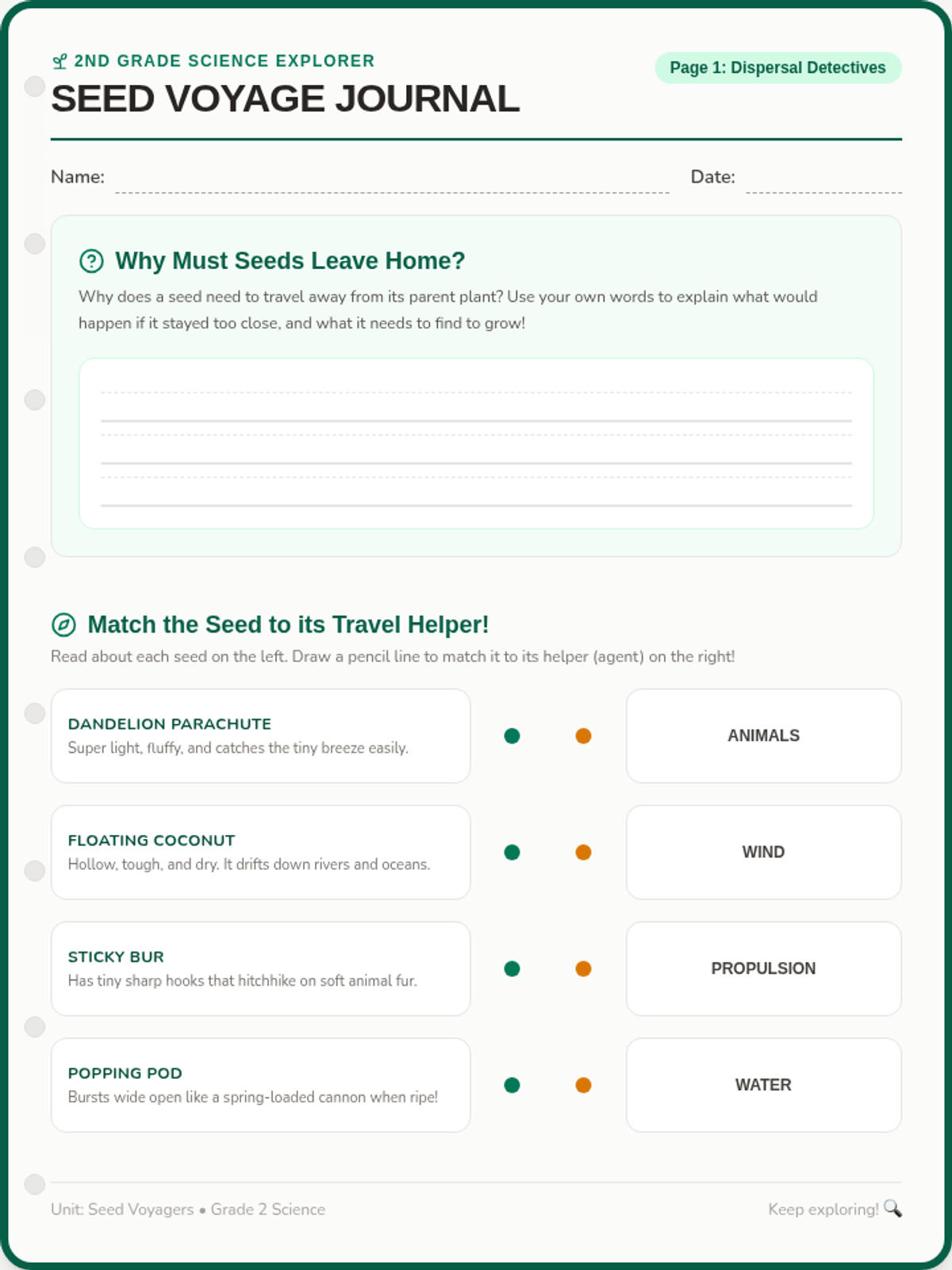
A 30-minute independent writing lesson for 2nd graders to explore the role of pollinators in our ecosystem, featuring a word bank and descriptive writing prompts.
Students will learn about the vital role of pollinators in our ecosystem through a short reading passage and independent comprehension activities.
A foundational MLL lesson for 1st grade students focused on oral language and visual recognition of animals and their habitats (Forest, Ocean, Desert). The lesson emphasizes Total Physical Response (TPR), visual matching, and basic phonics connections.
A lesson focused on the formation of sedimentary rocks and how their layers serve as a timeline for life on Earth, specifically focusing on the sequence of formation and fossil aging.
A lesson exploring the unique life cycle of periodical cicadas and how their emergence patterns help them survive and reproduce.
Students explore the fascinating life cycle of periodical cicadas, focusing on their unique 13 and 17-year schedules and how this behavior helps them survive against predators.
A hands-on science lab using crackers, water, and plastic bags to simulate the digestive process, with differentiated materials for various learner needs.
A lesson introducing students to various ecosystems through vocabulary and visual identification. Students will learn the key characteristics of different biomes including forests, deserts, and oceans.