A comprehensive lesson focusing on identifying and summarizing the physical properties of rocks, minerals, soil, and water through hands-on exploration.
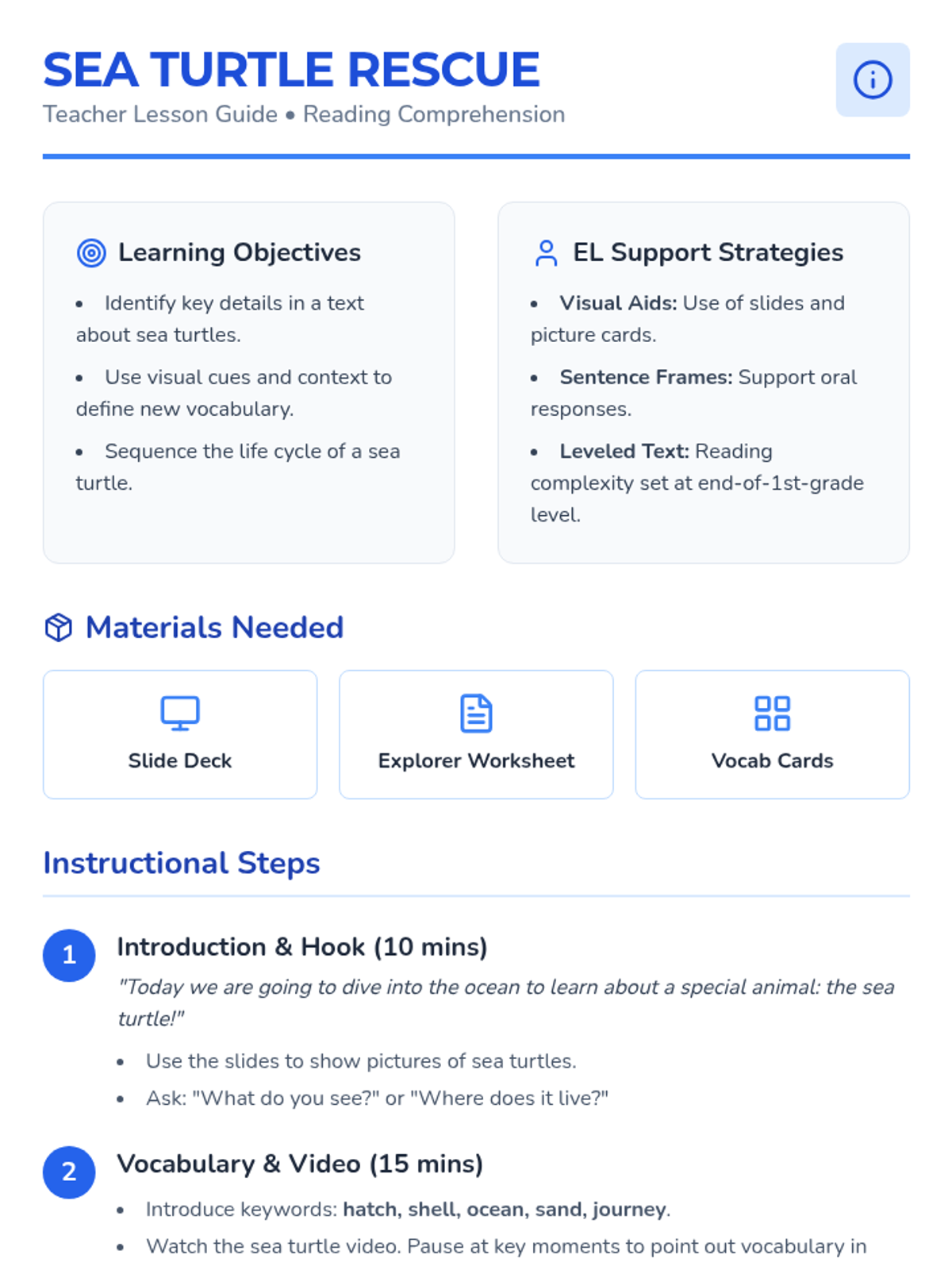
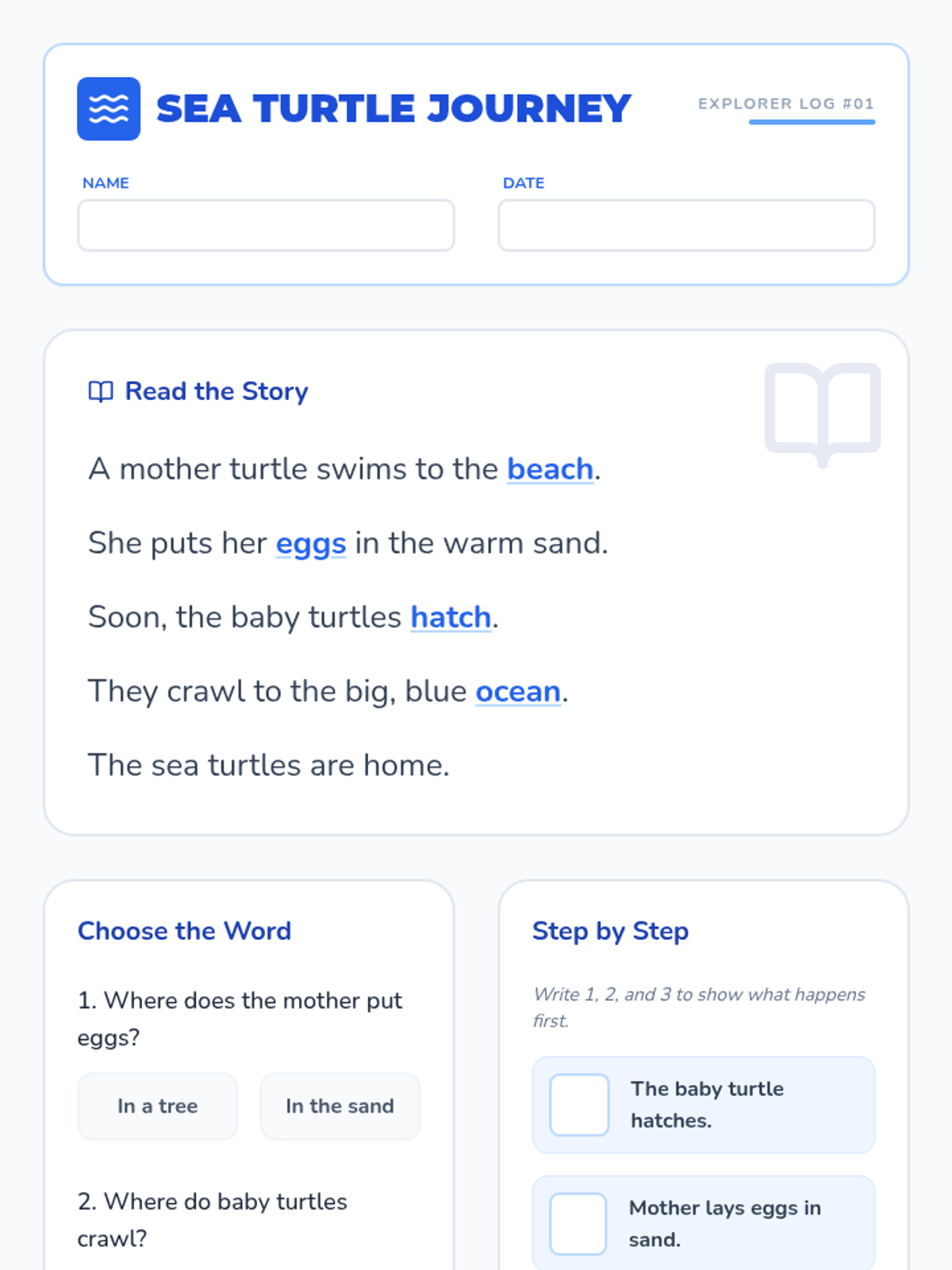
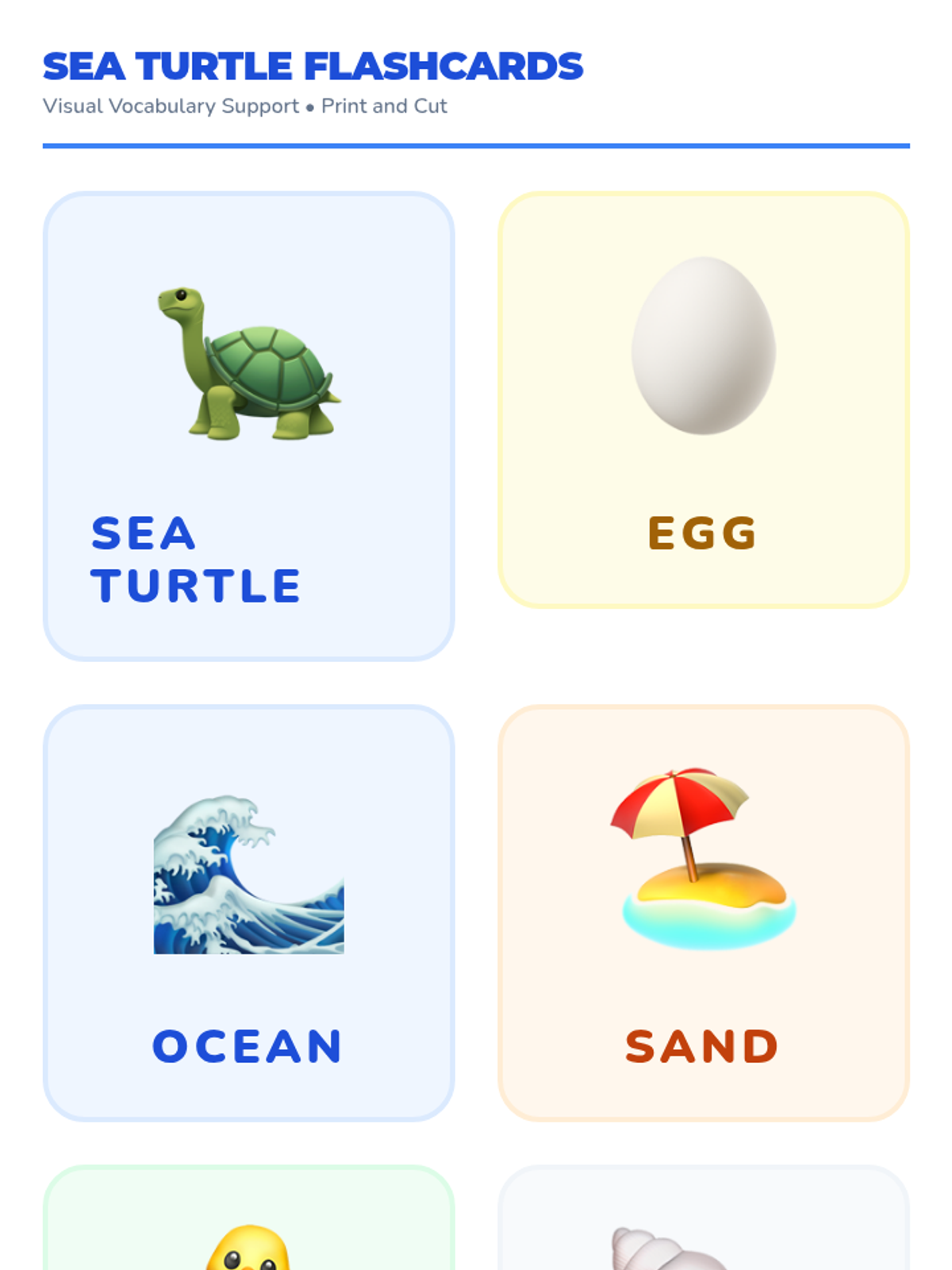
A reading comprehension lesson for 4th-grade EL students focusing on sea turtles, using visual supports and leveled text to build vocabulary and understanding of life cycles.
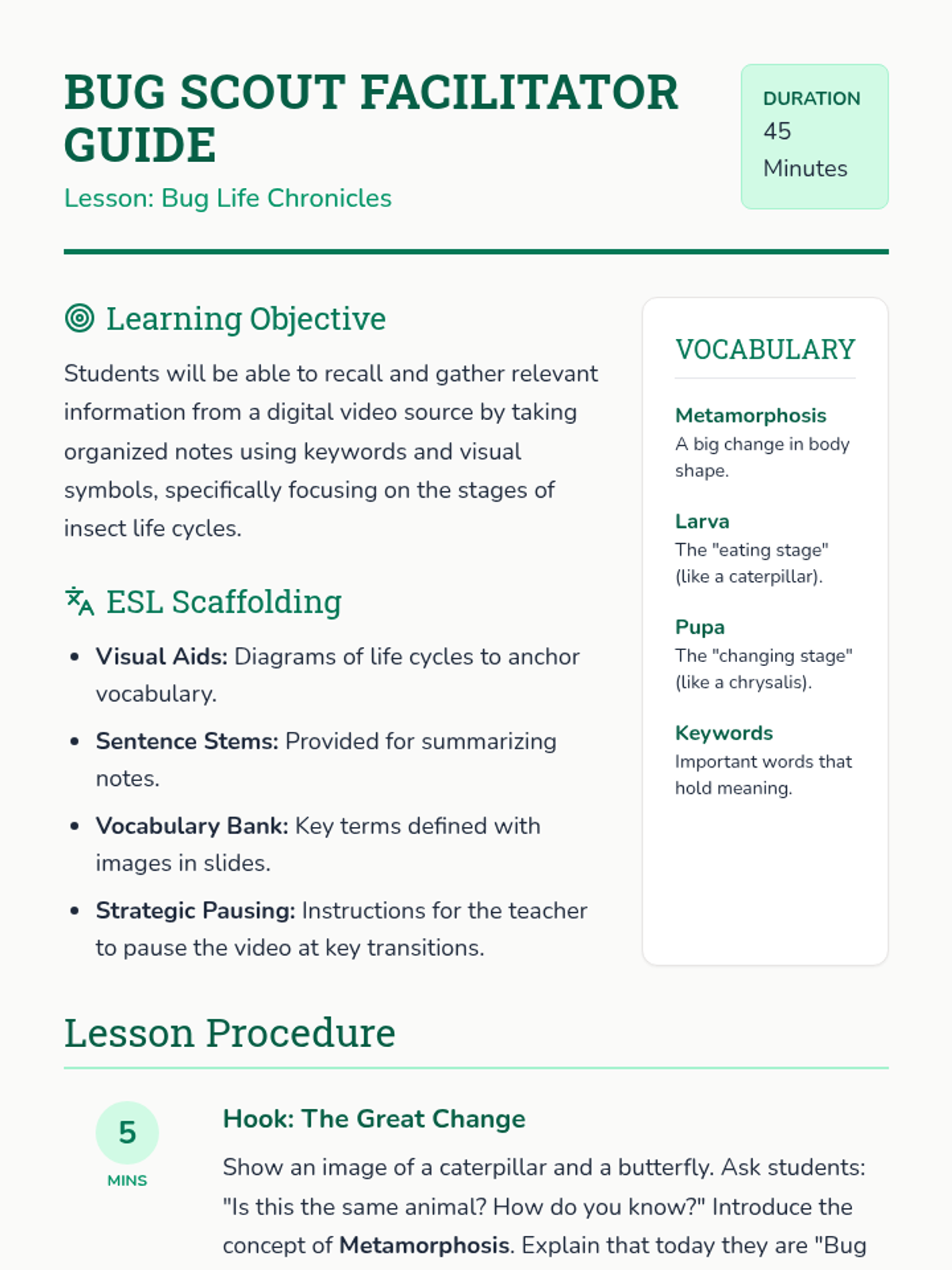
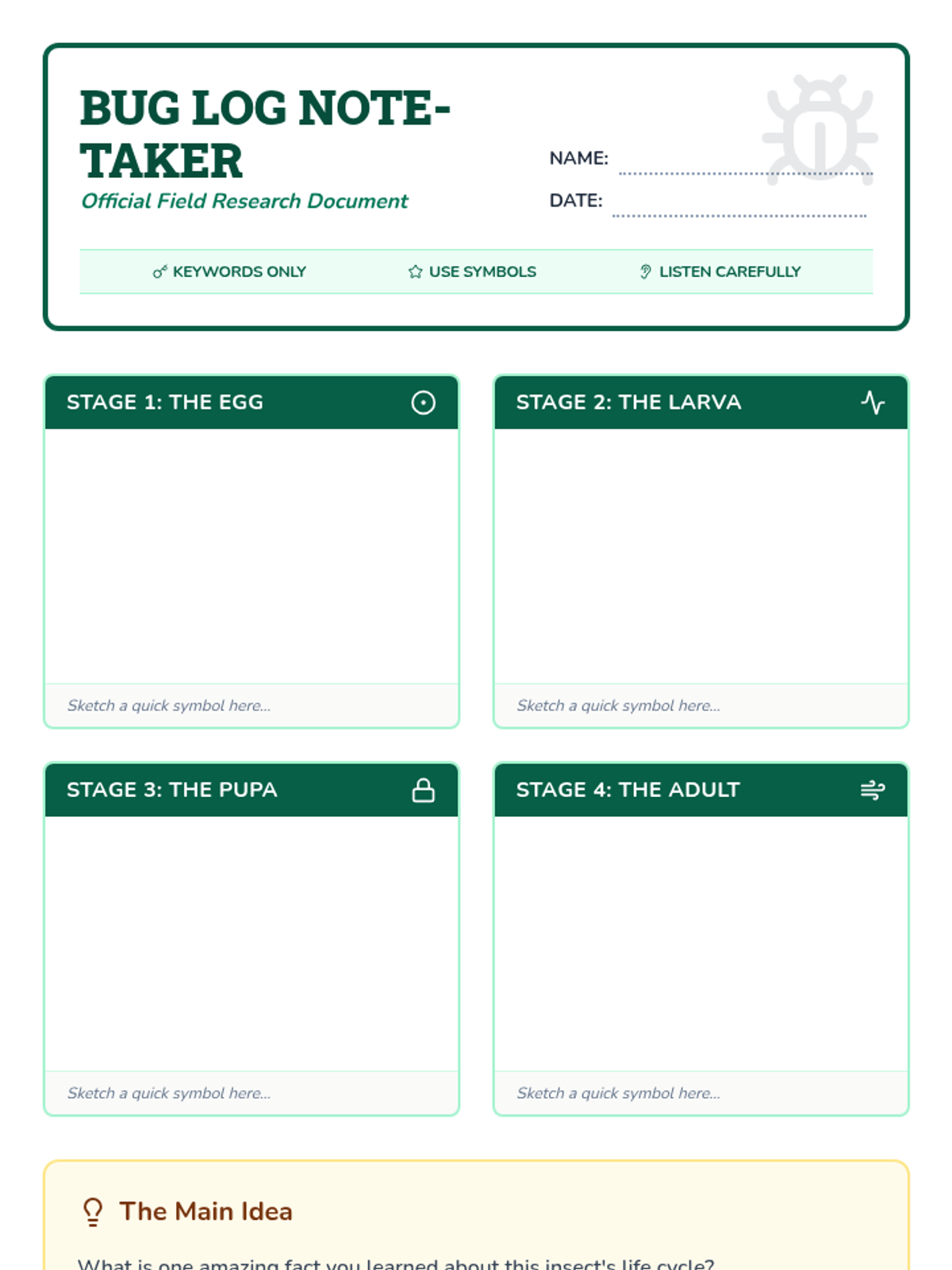
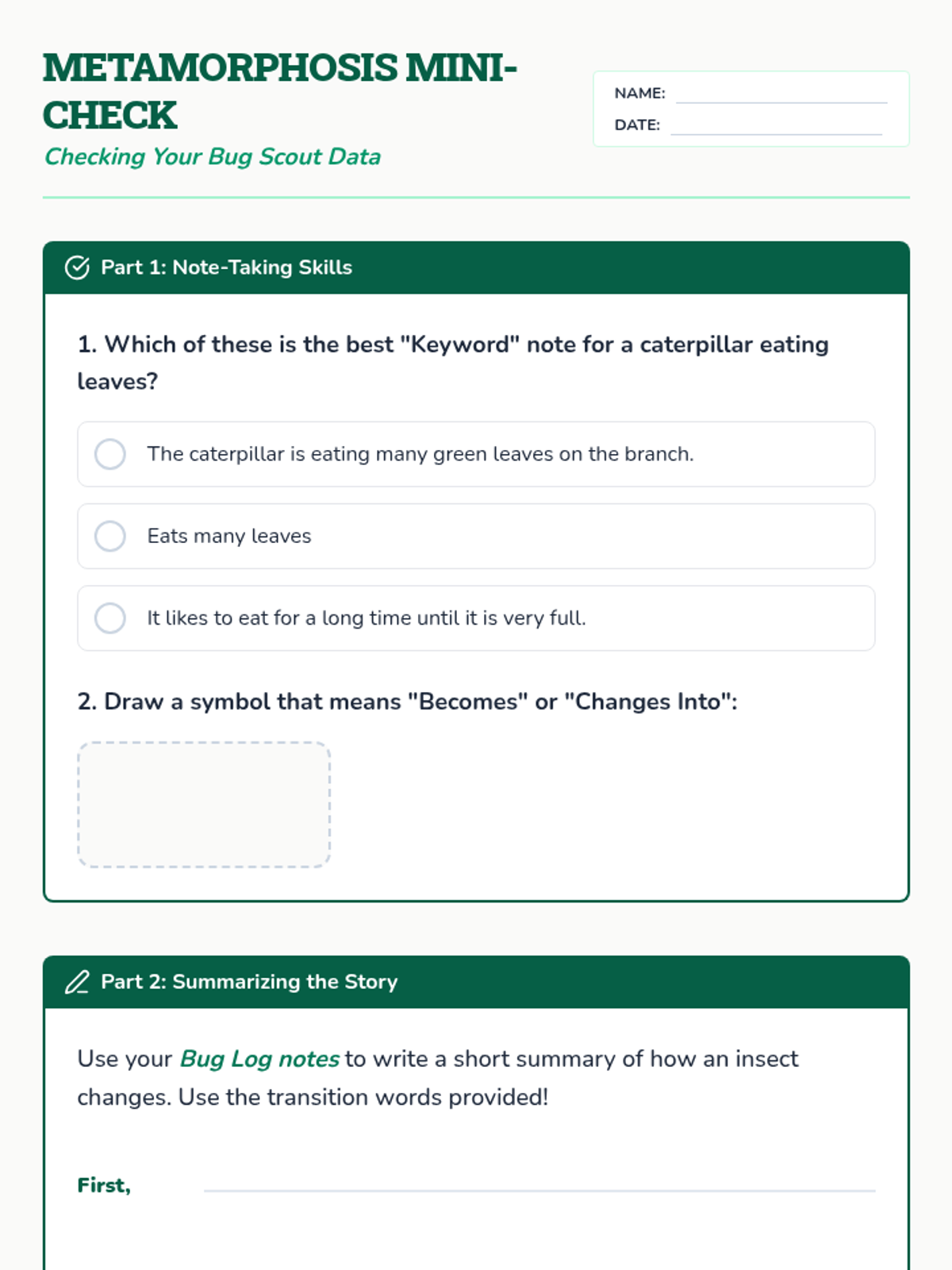
In this 45-minute lesson, Grade 5 ESL students learn to gather information from a digital source by taking organized notes on insect life cycles. Students practice identifying keywords, using visual symbols, and summarizing stages of metamorphosis.
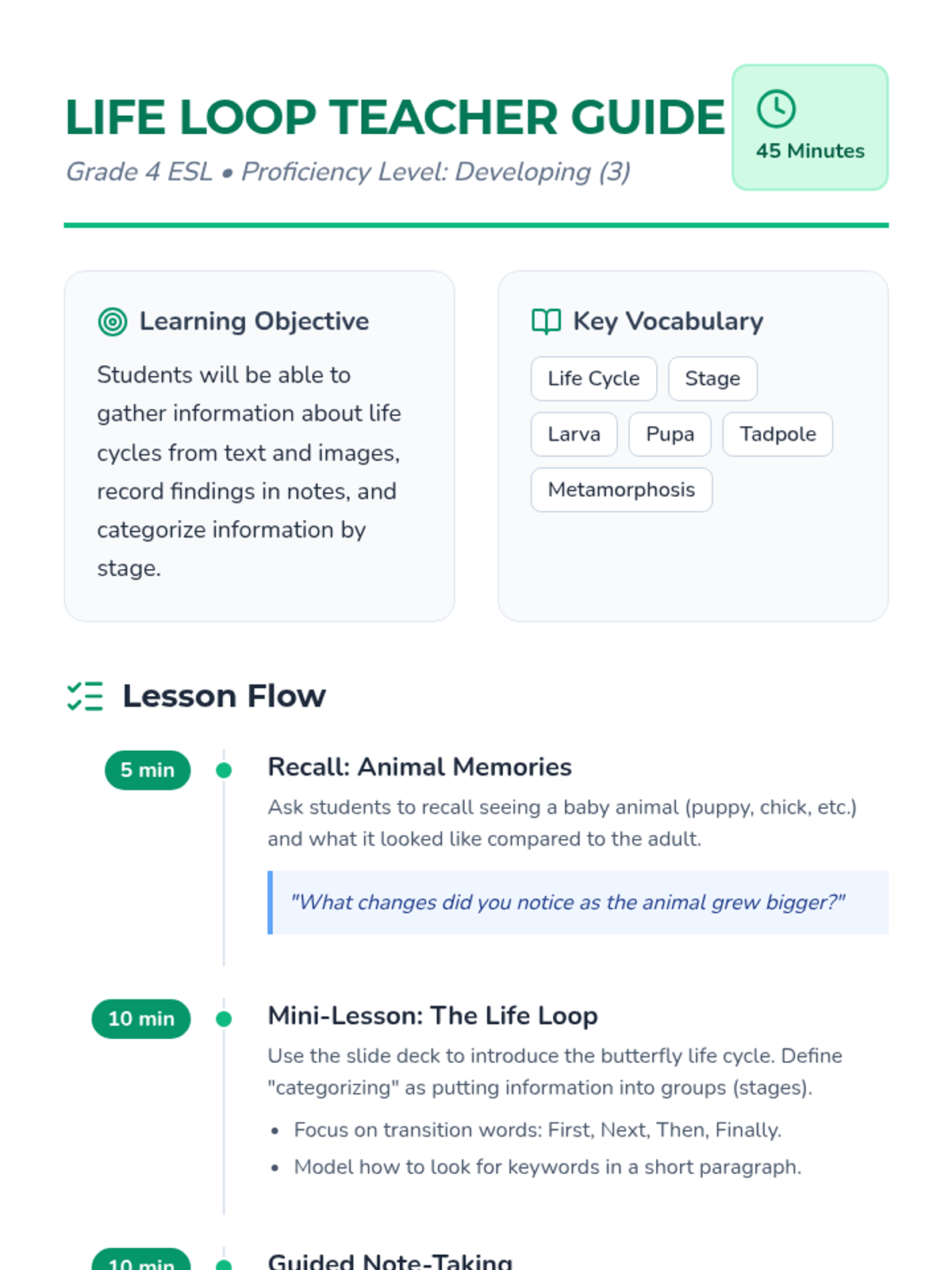
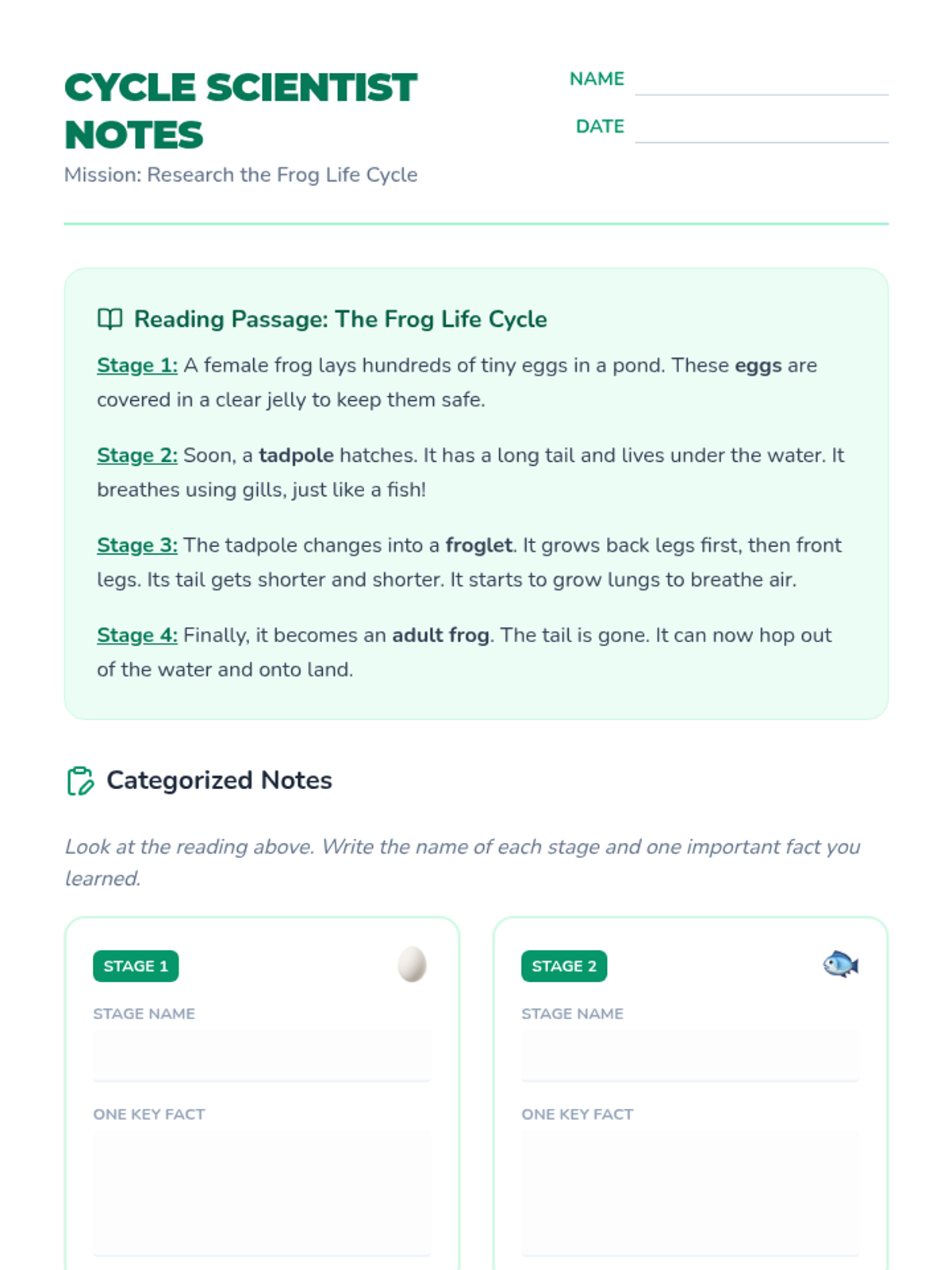
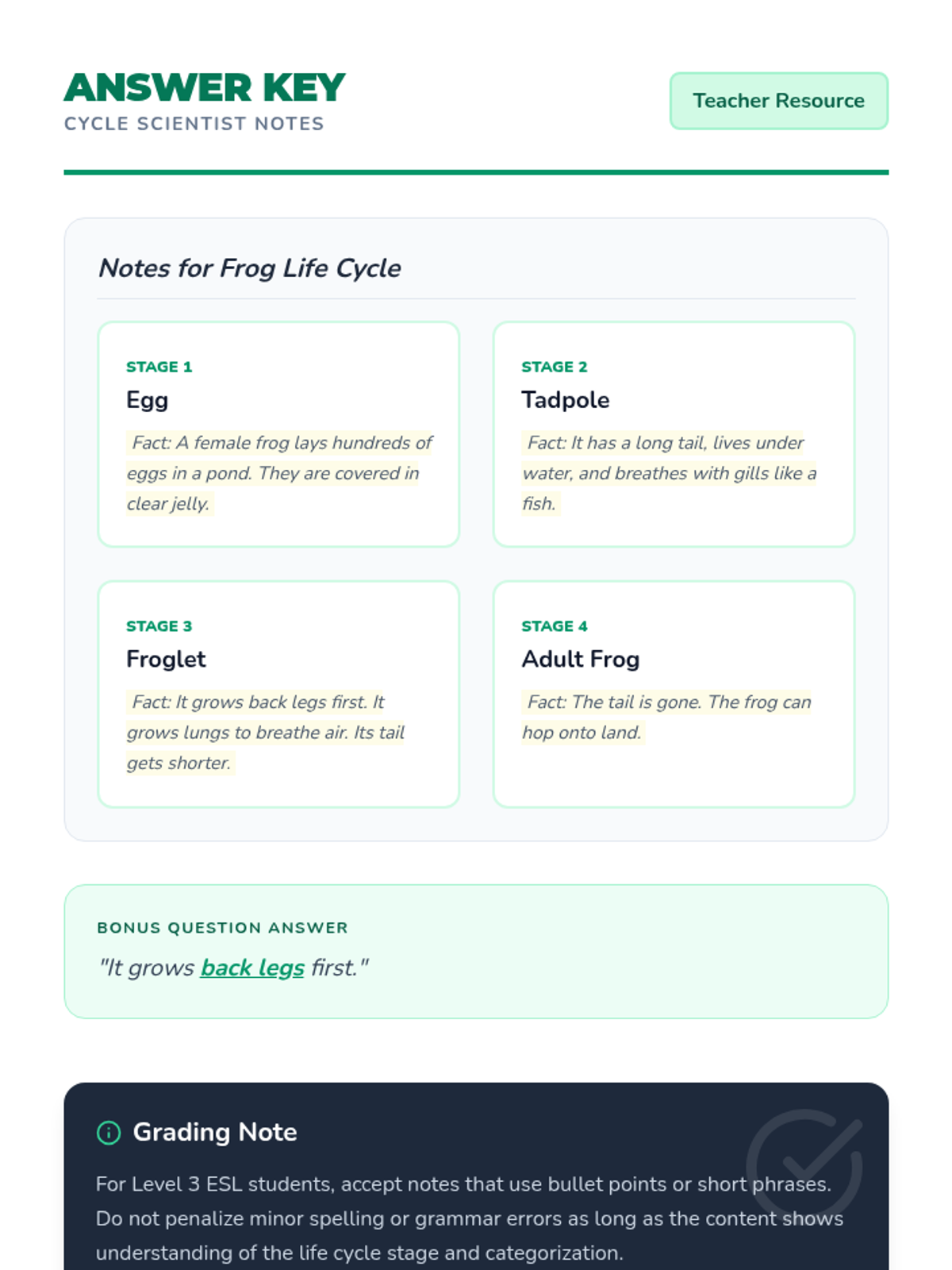
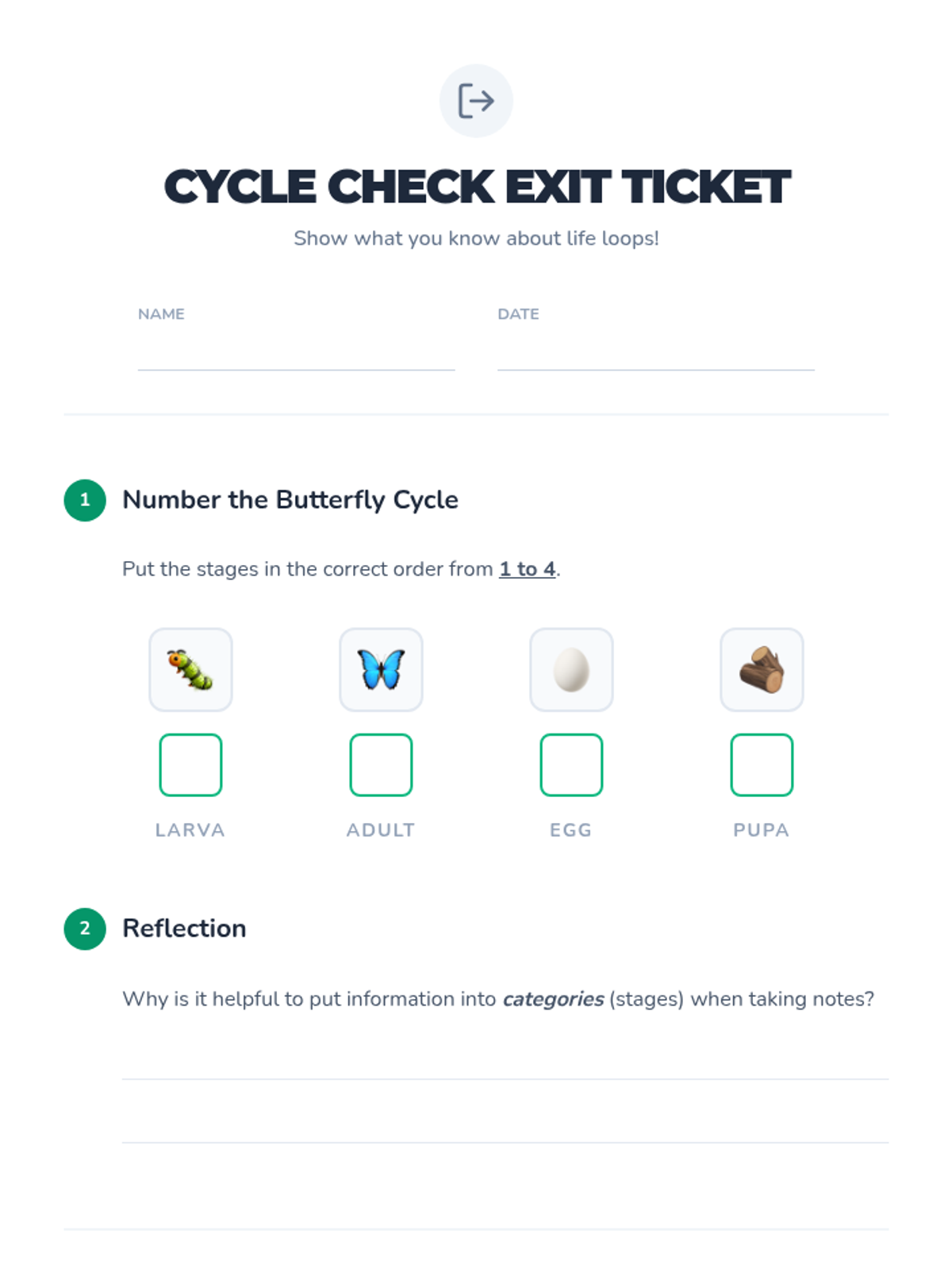
A 45-minute ESL lesson for grade 4 students at the Developing (Level 3) proficiency level. Students will explore life cycles, practice gathering information from texts, and learn to take notes and categorize data using graphic organizers.
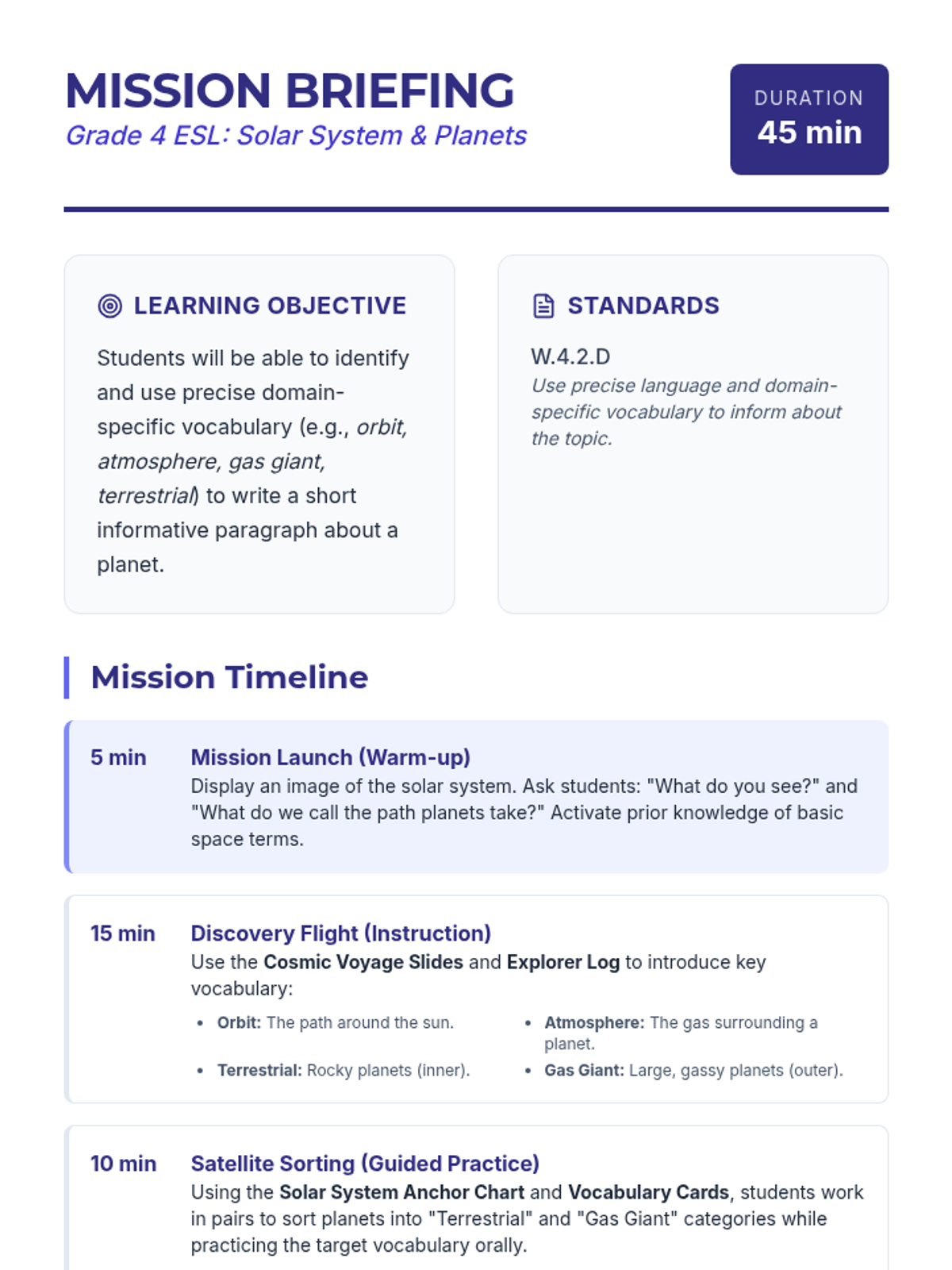
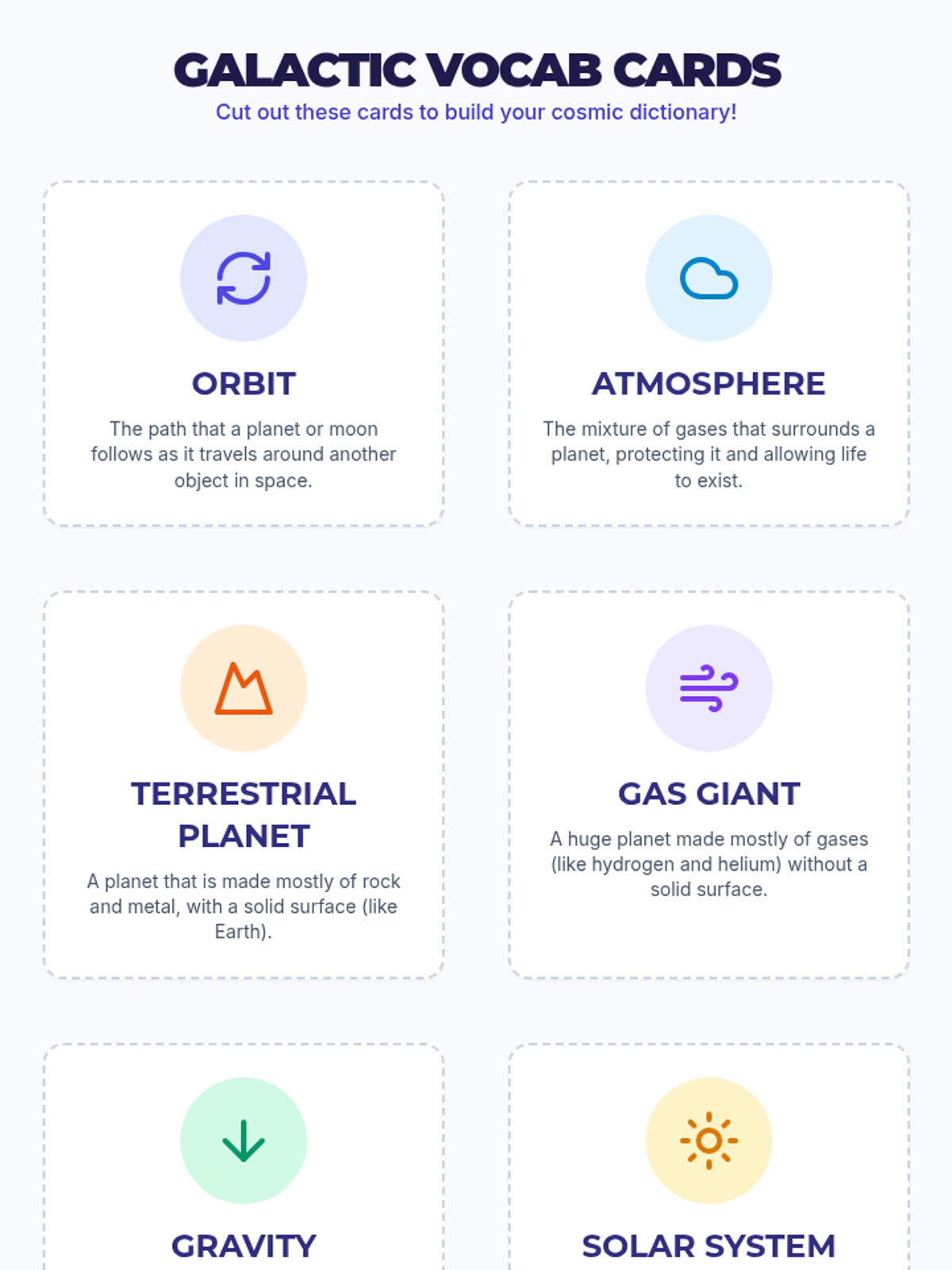
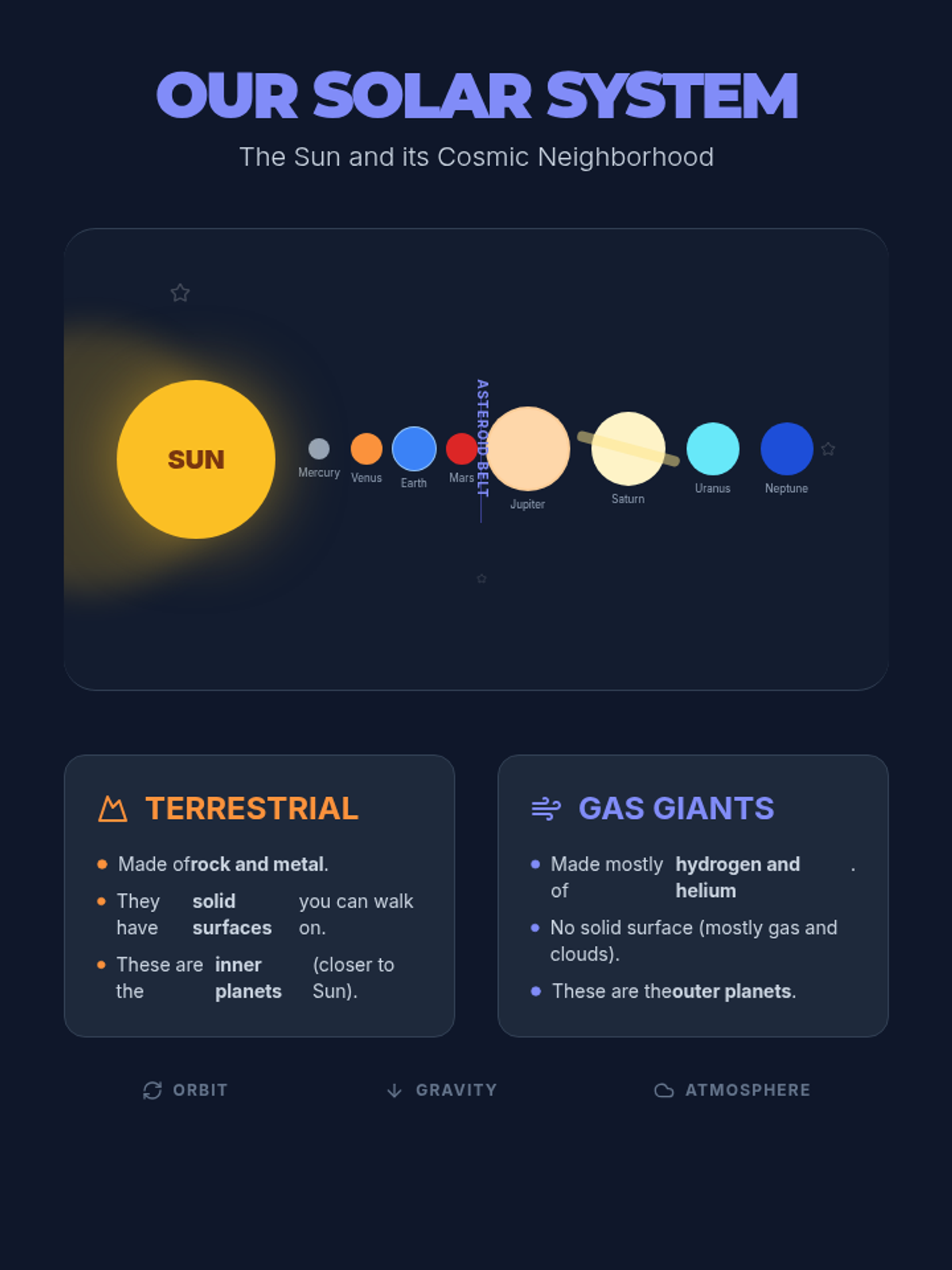
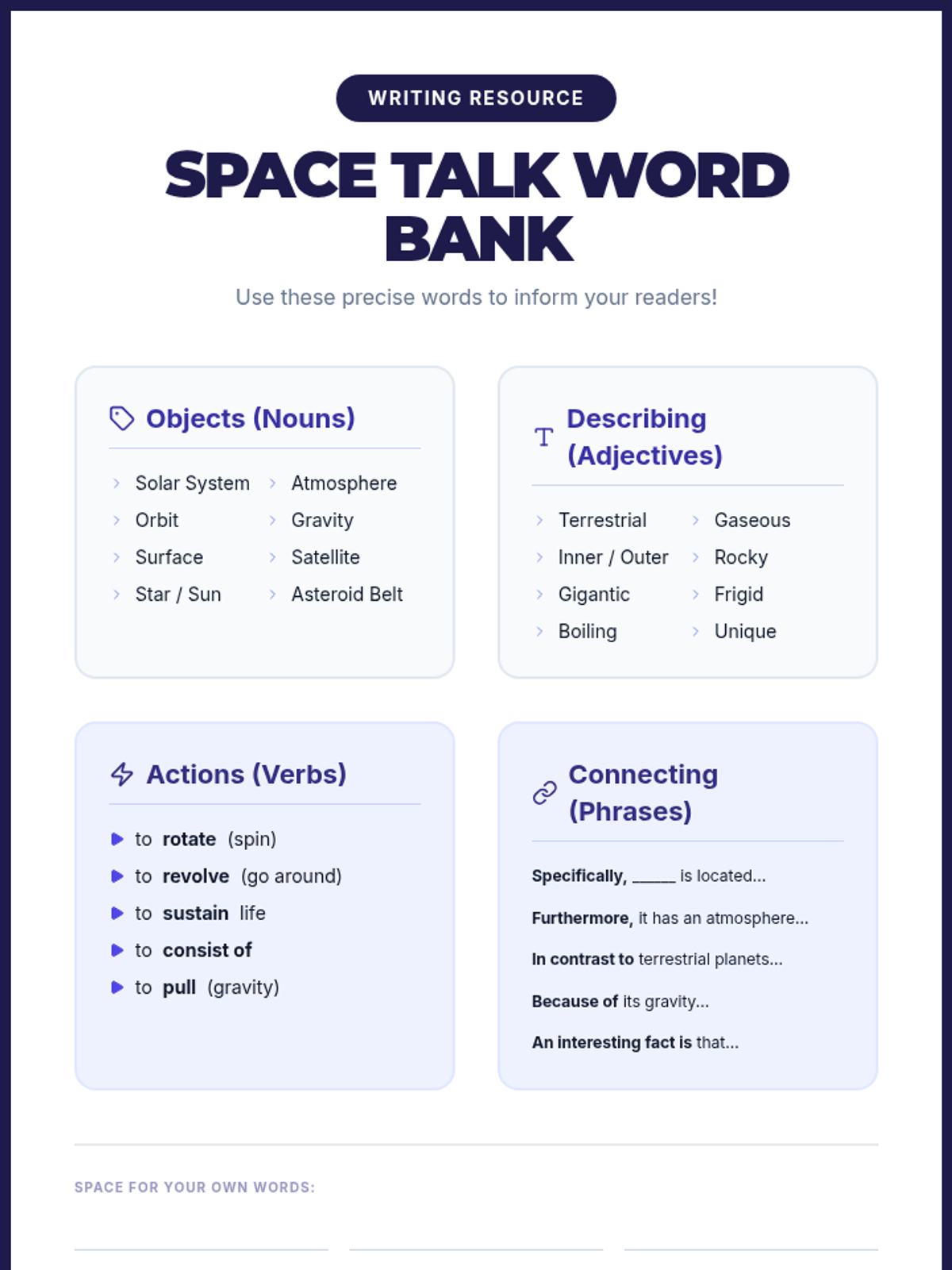
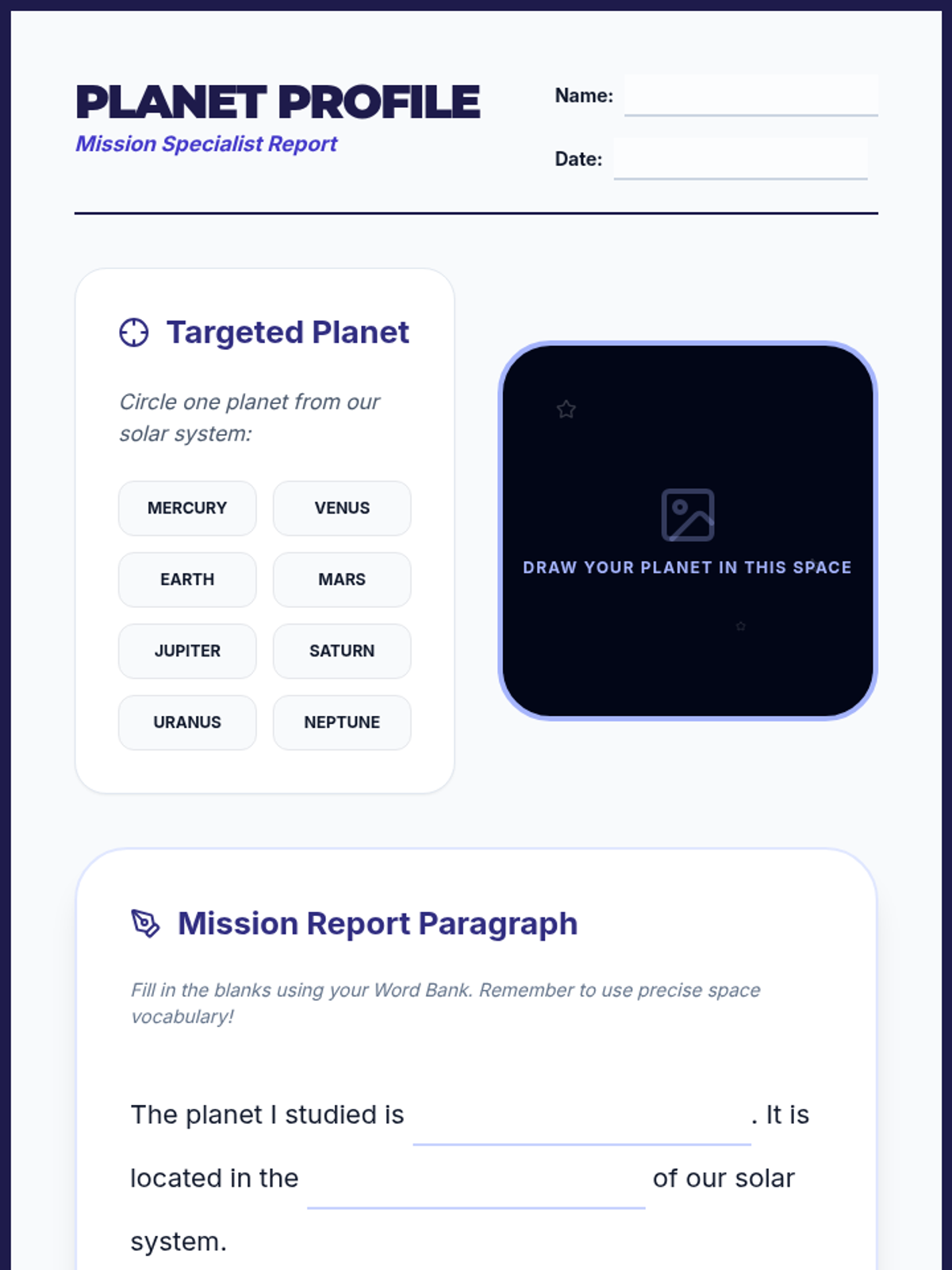
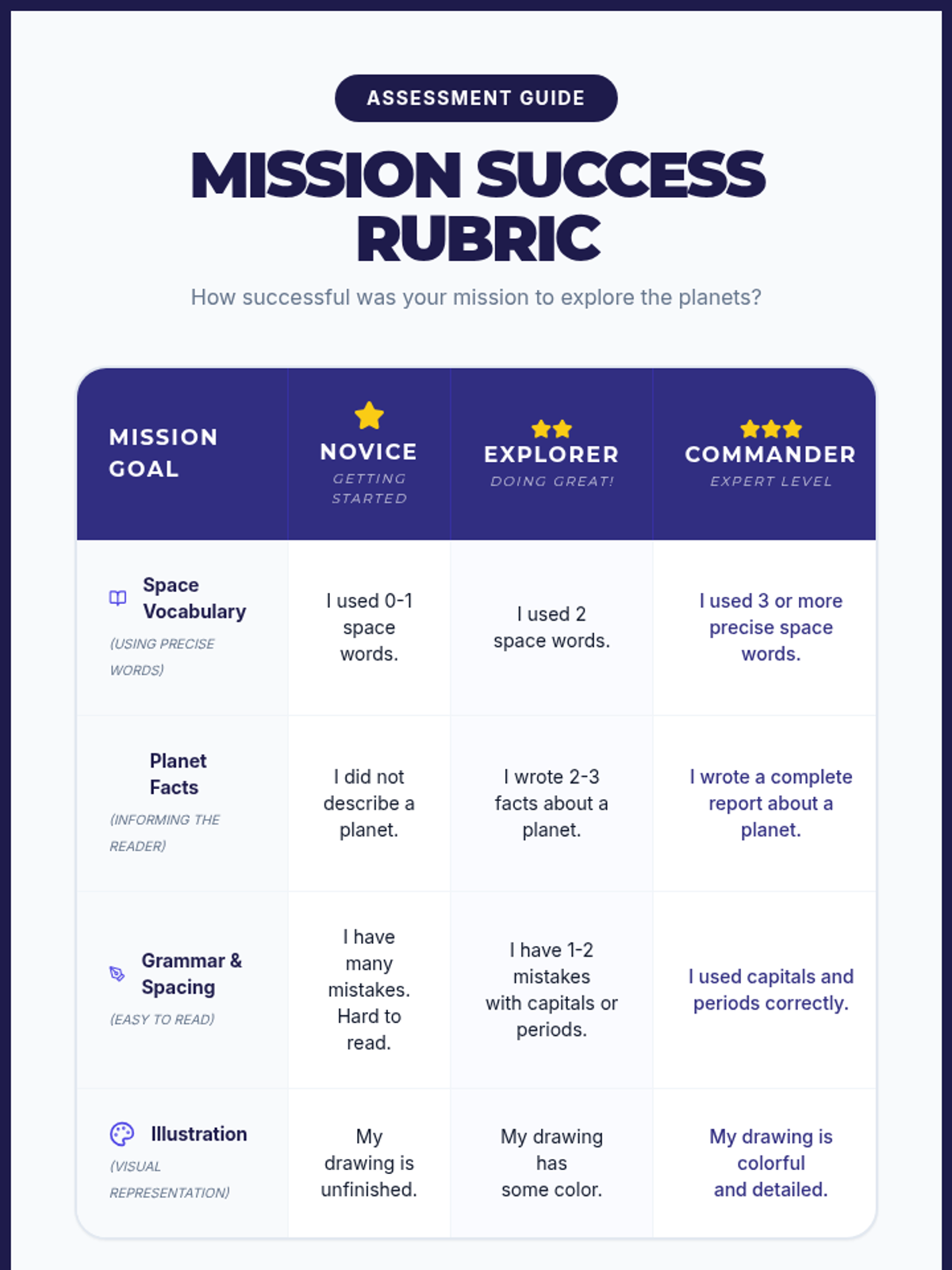
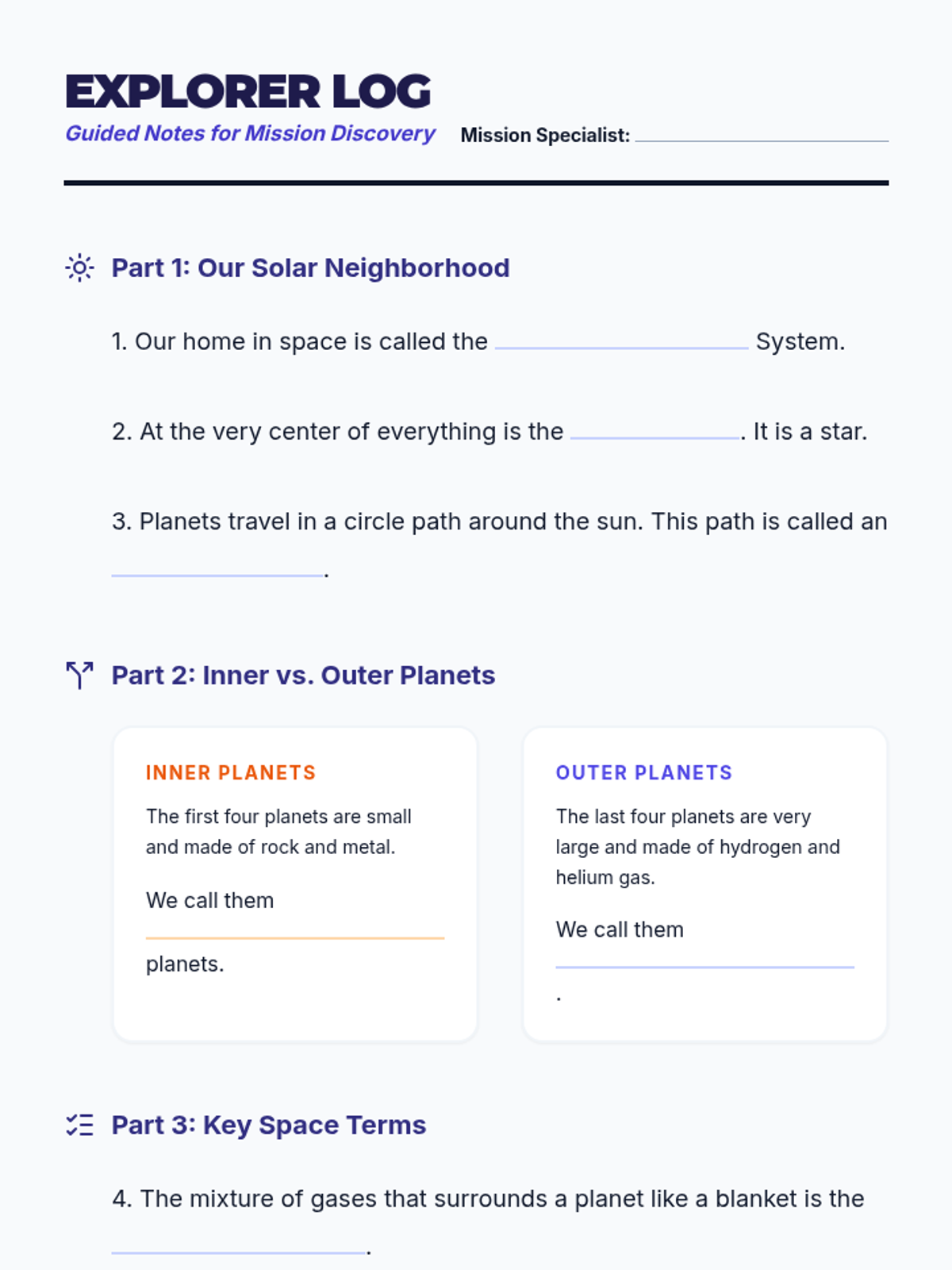
A 45-minute ESL lesson focused on identifying and using precise domain-specific vocabulary to describe the solar system and its planets, culminating in a scaffolded writing task.
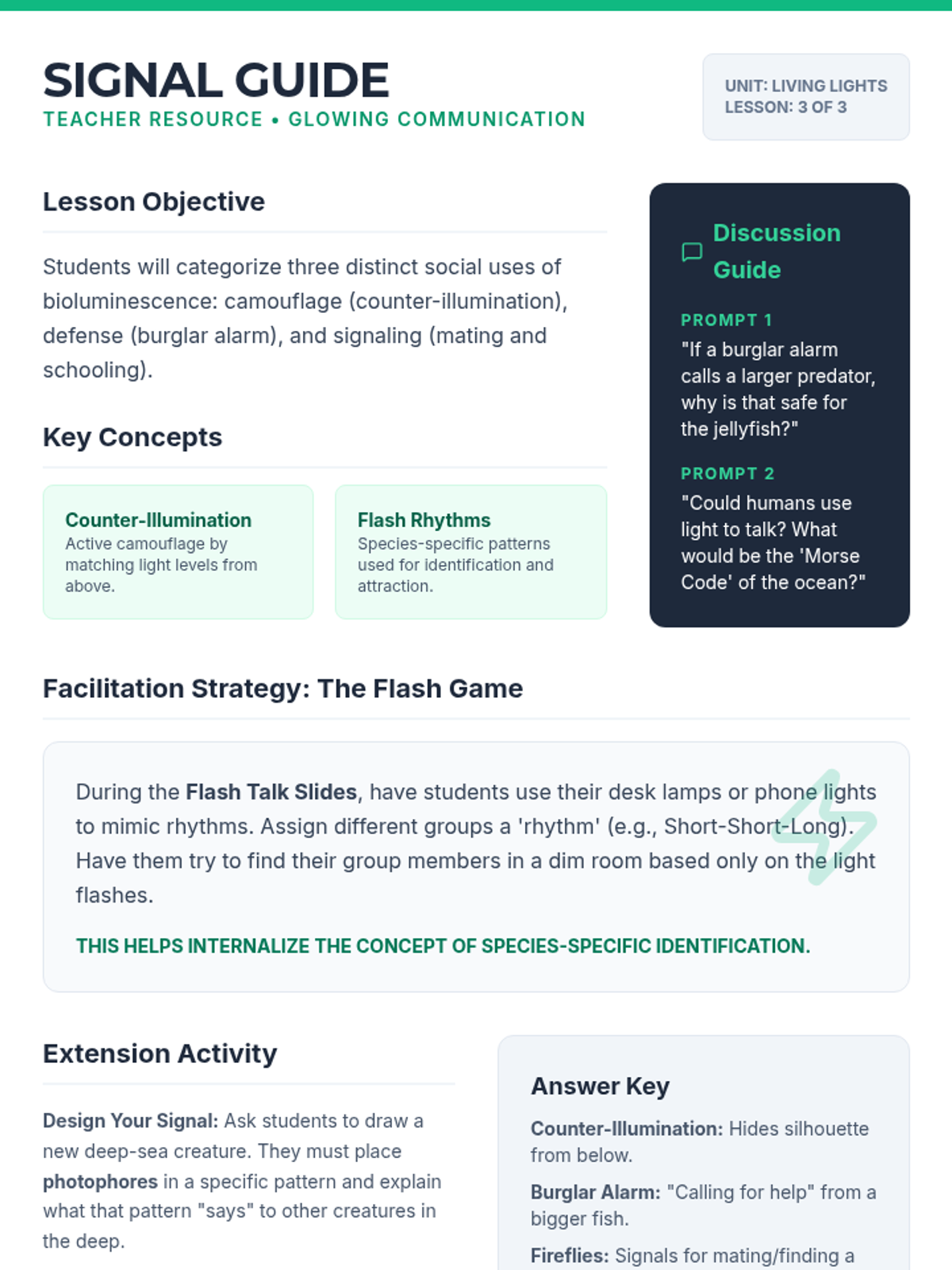
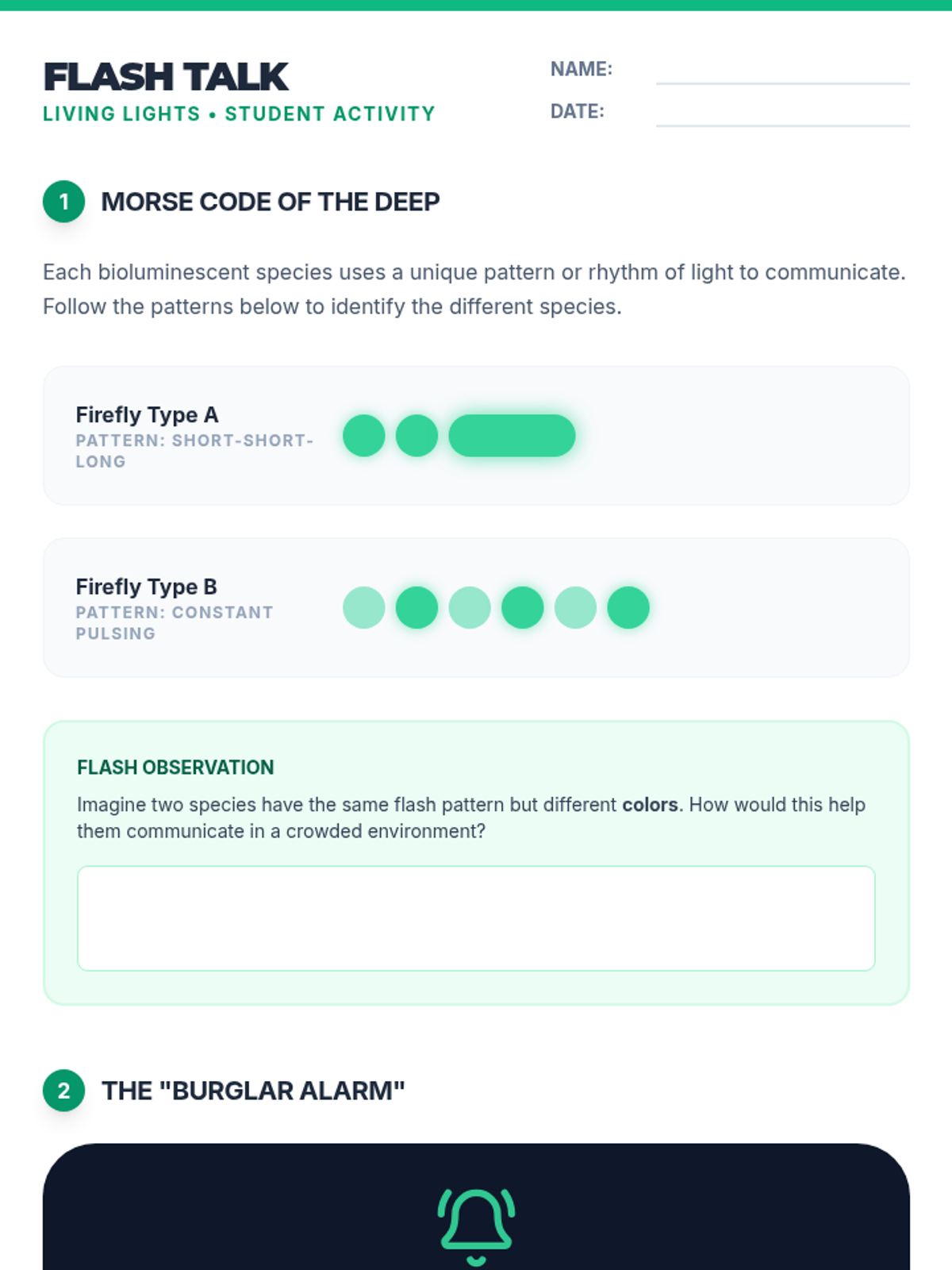
How and why organisms use light for social interactions, communication, and complex behaviors. Students explore strategies like counter-illumination and burglar alarms.
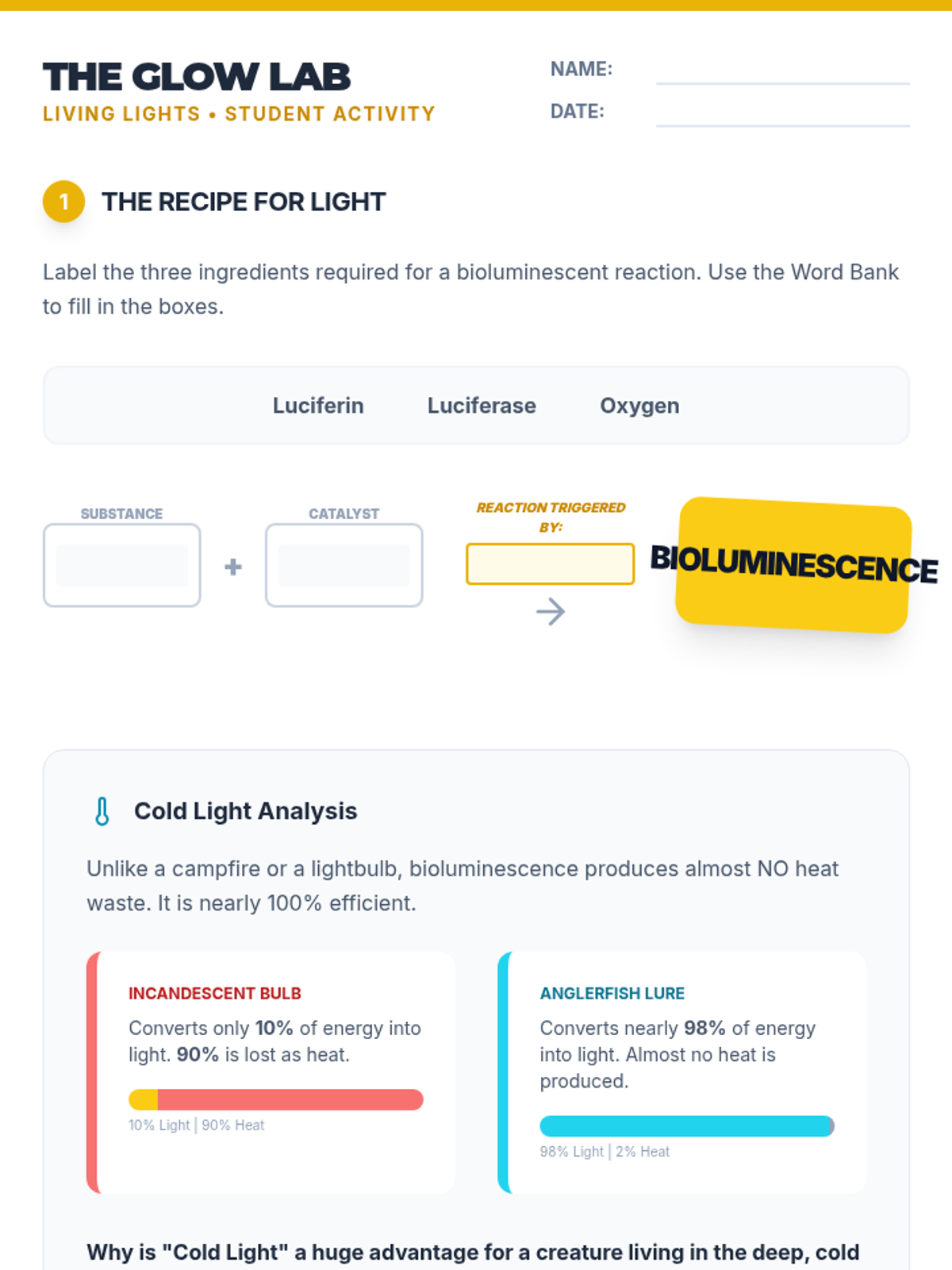
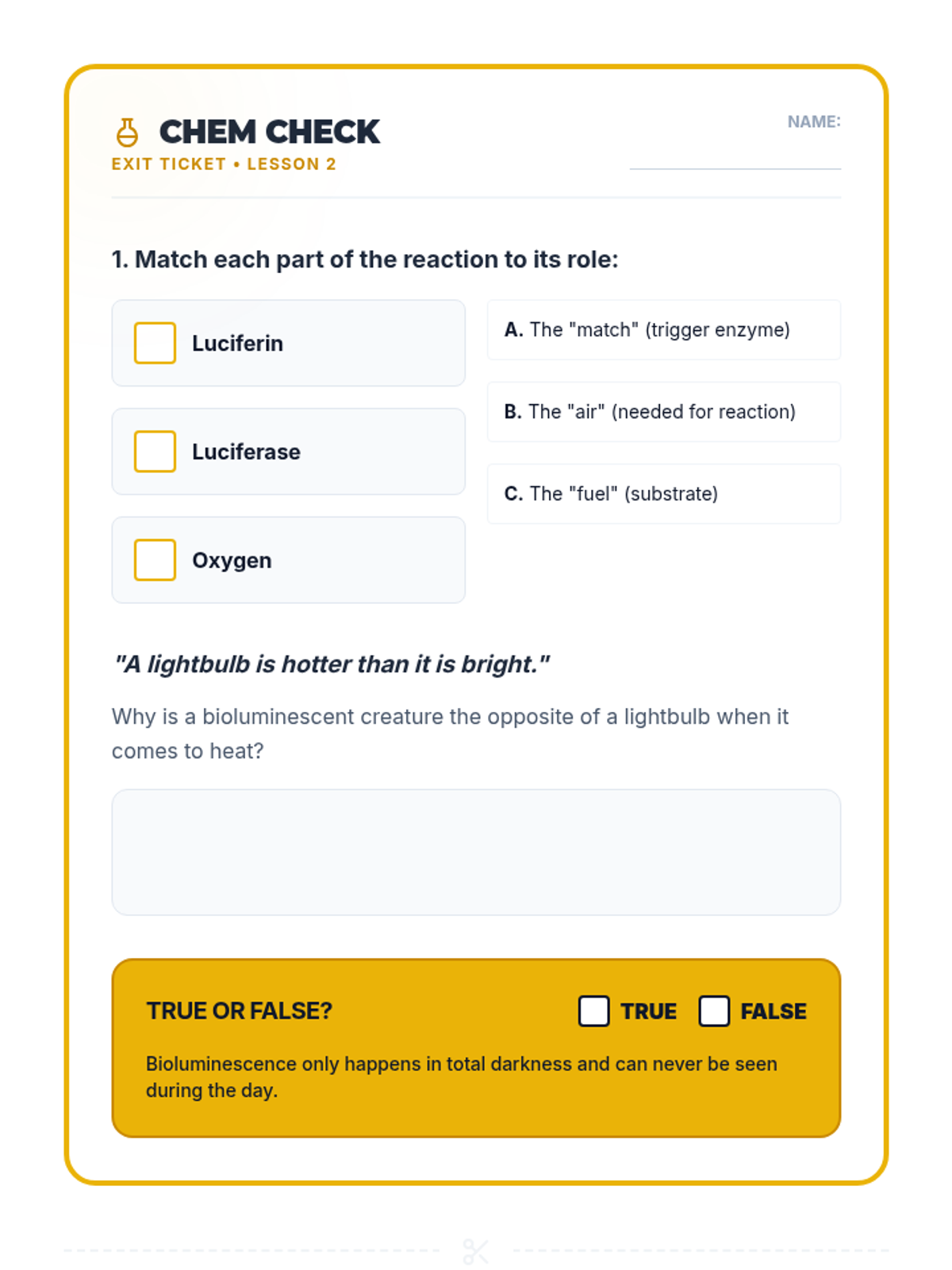
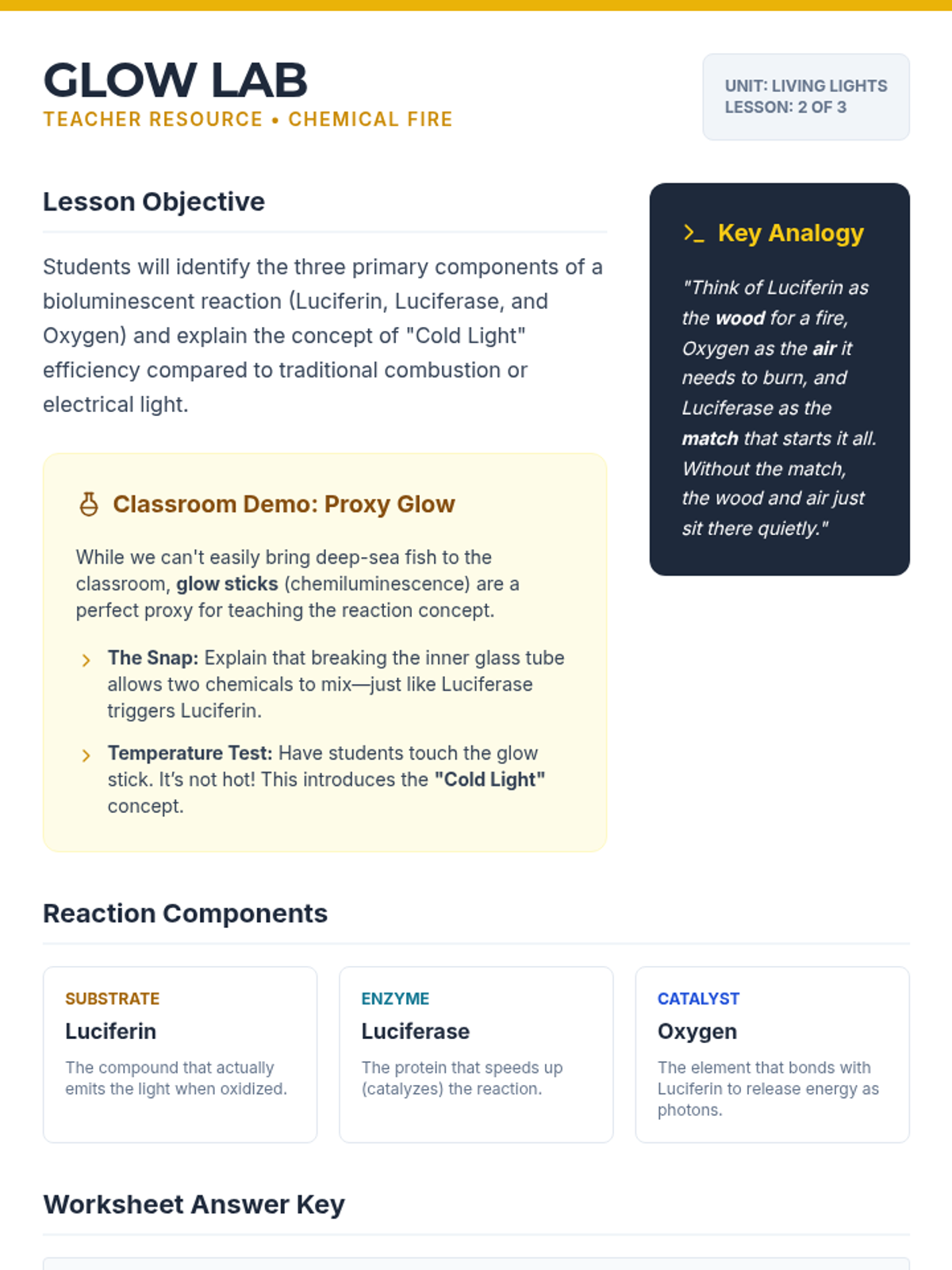
How is light made? Students break down the chemical reaction of bioluminescence, exploring the interaction between luciferin, luciferase, and oxygen.
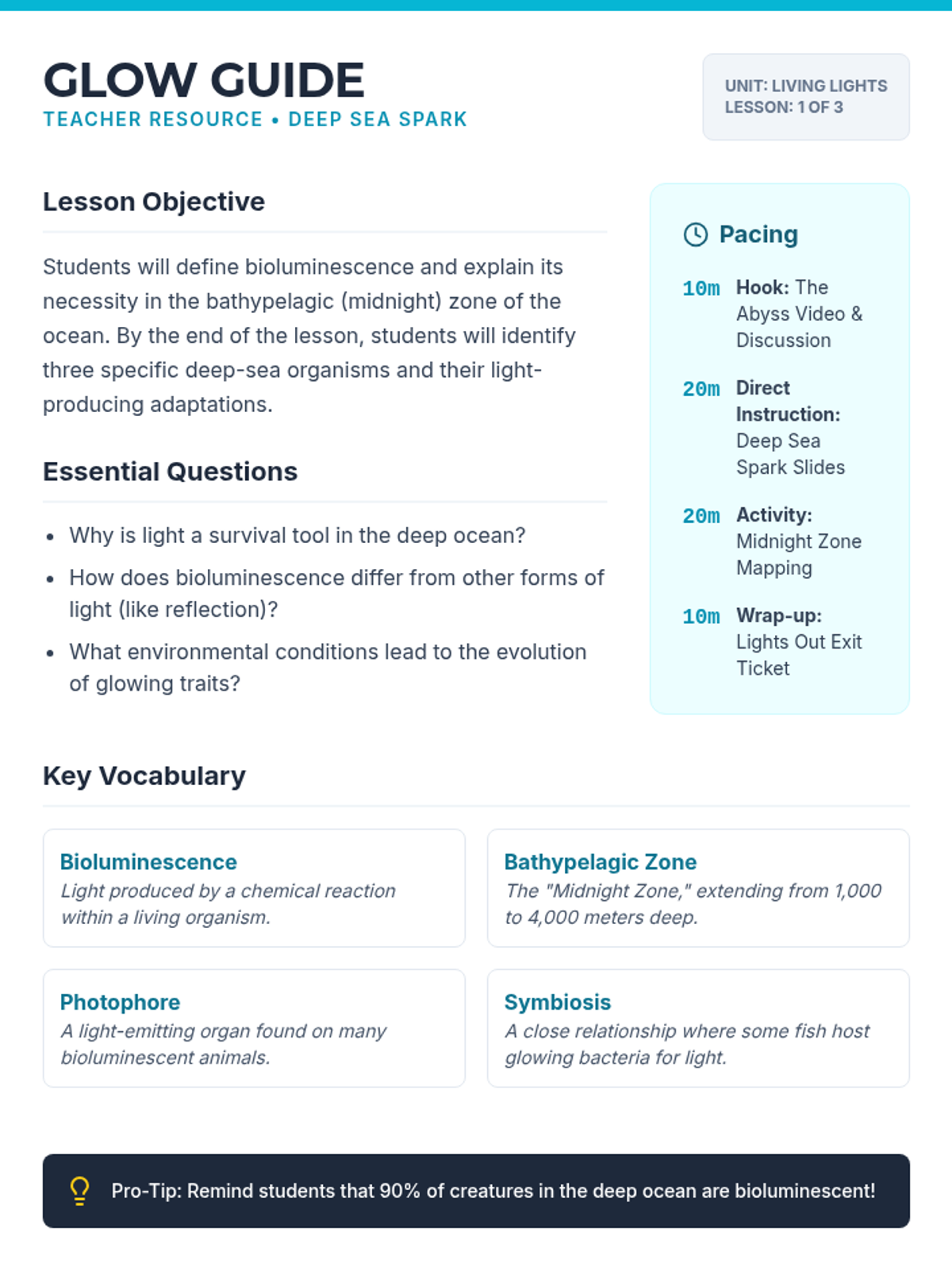
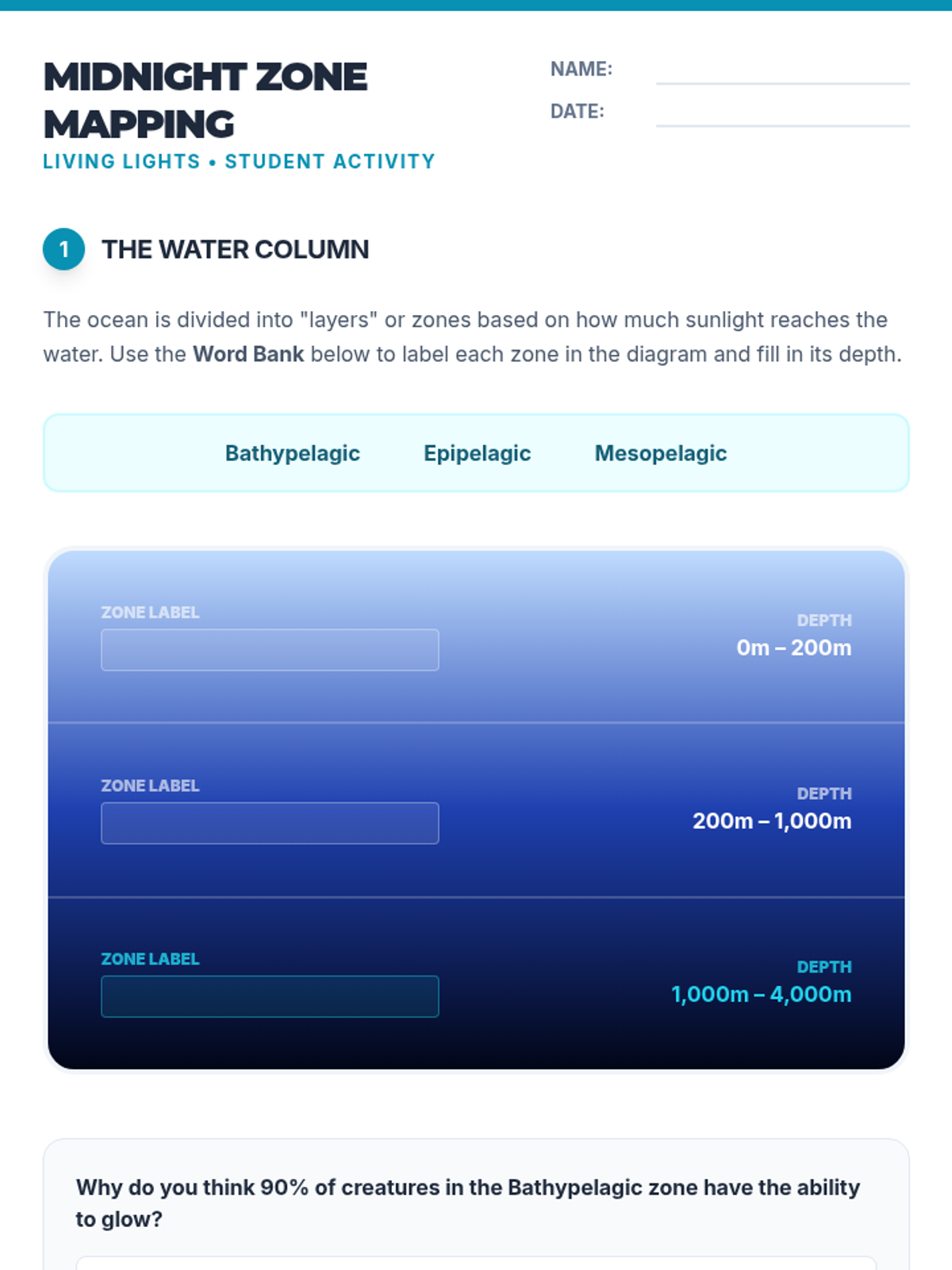
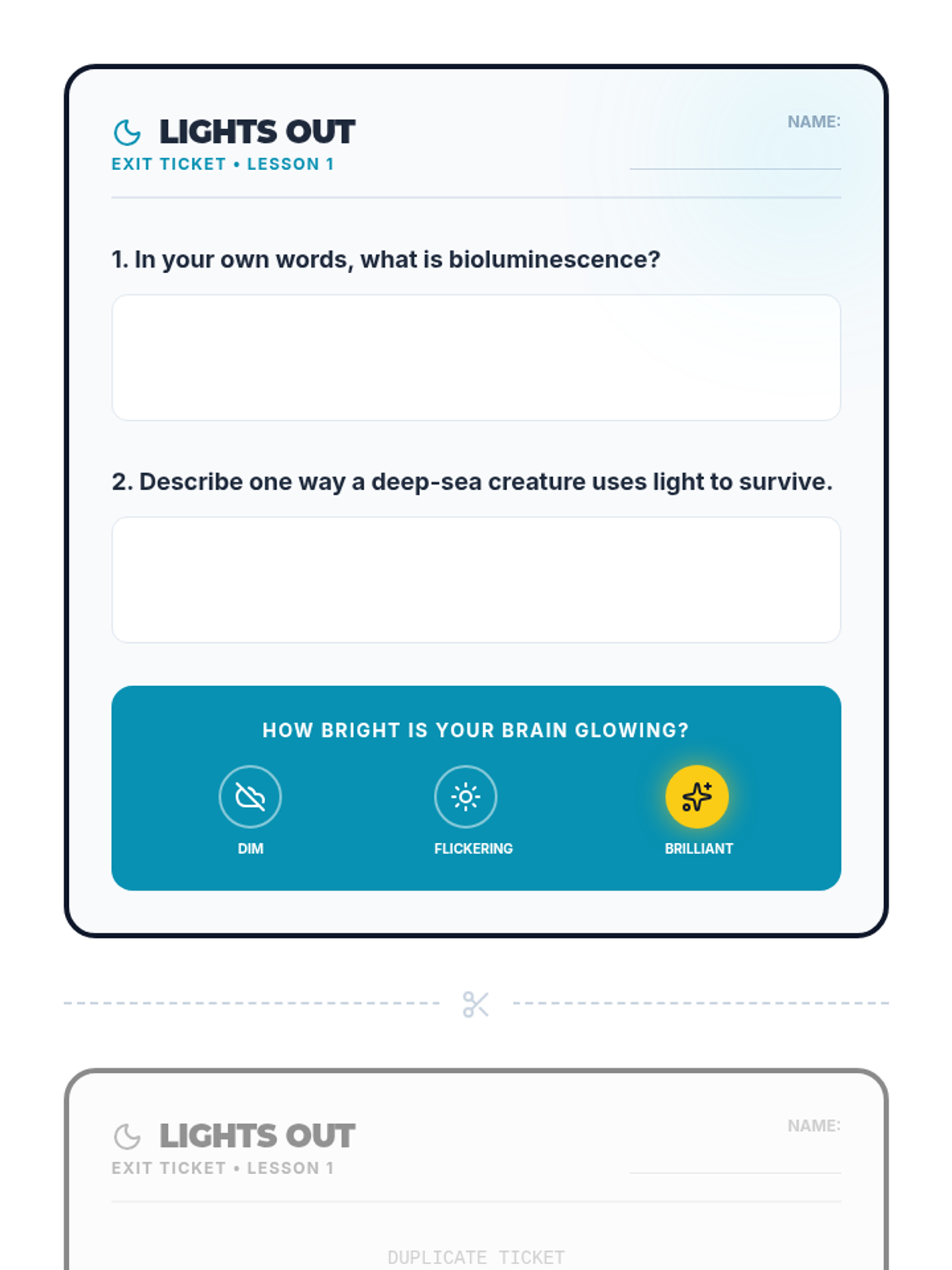
Discover the mysterious world of the deep ocean's midnight zone. Students explore how creatures create light in total darkness and identify the physical adaptations of bioluminescent marine life.
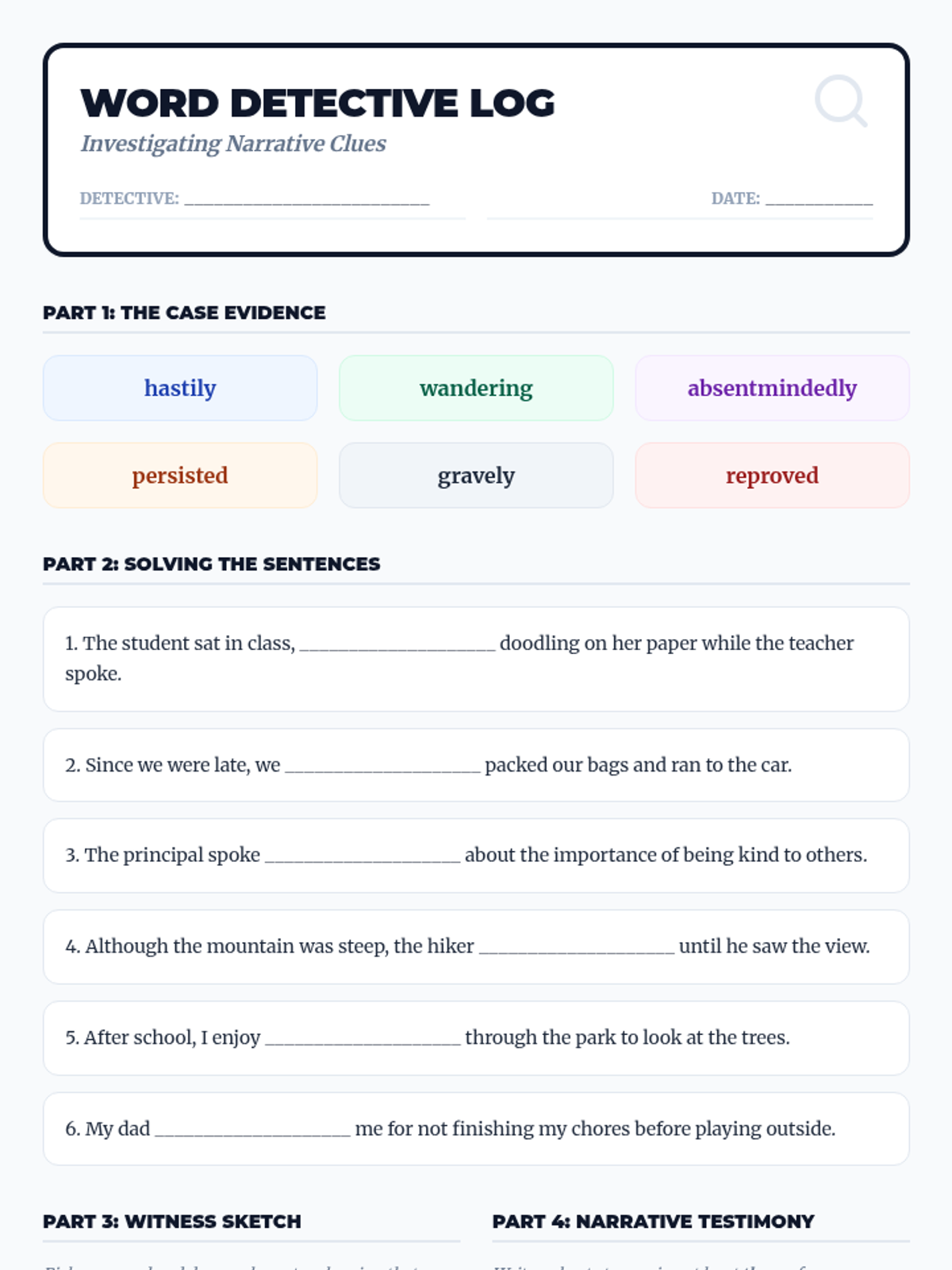
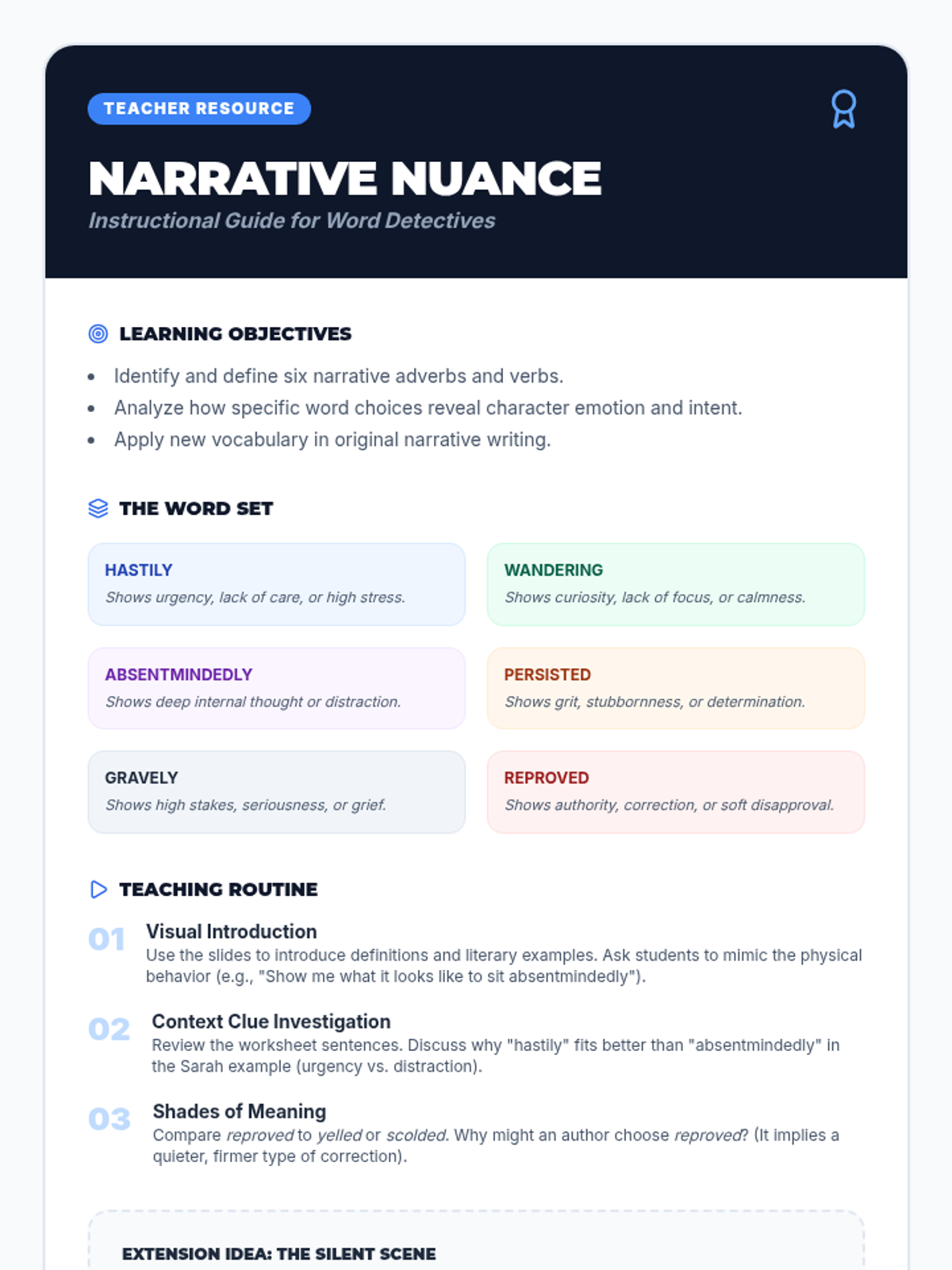
A vocabulary-focused lesson exploring 6 narrative words (hastily, wandering, absentmindedly, persisted, gravely, reproved) to understand character behavior and emotion for 4th graders.
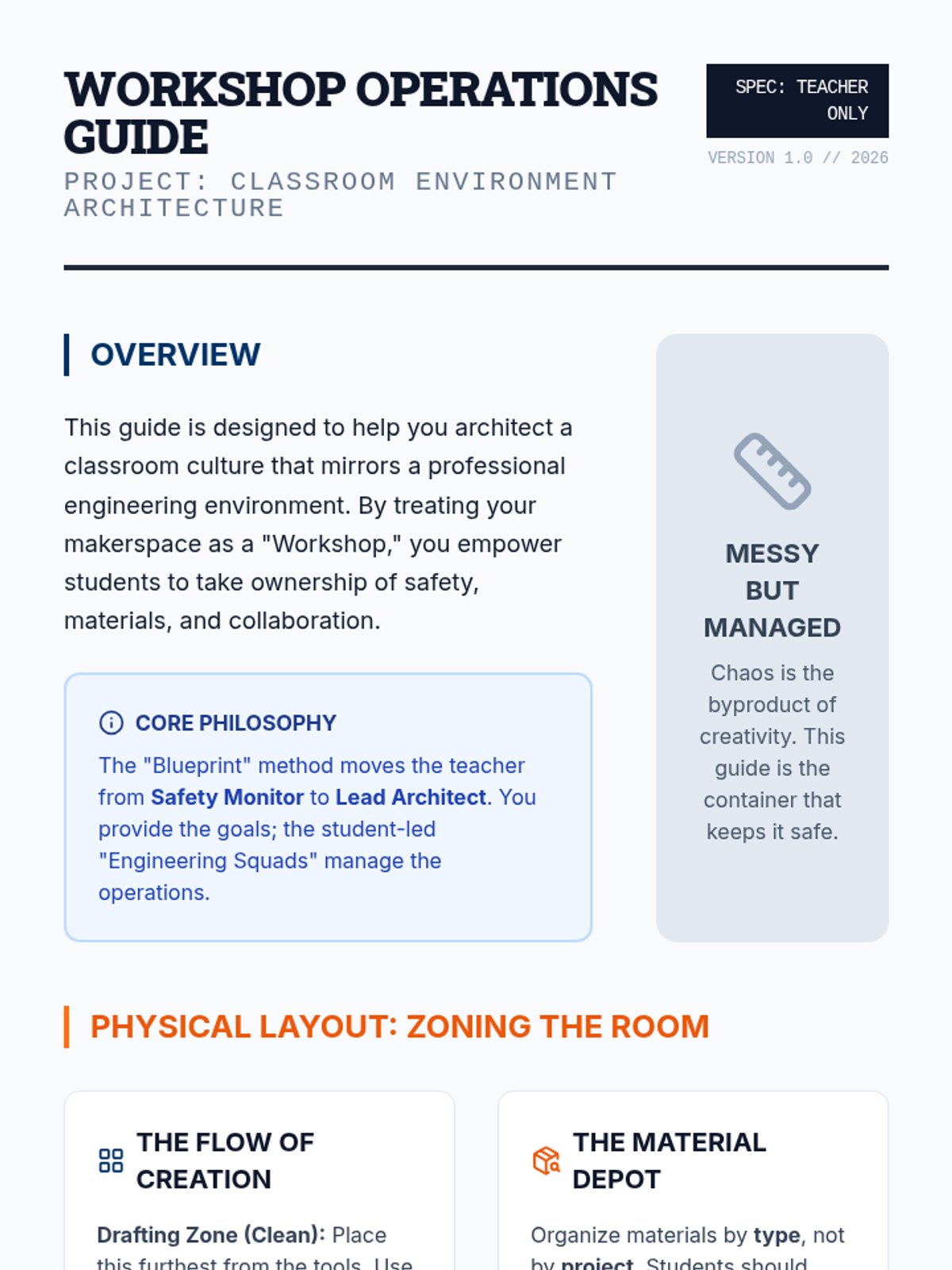
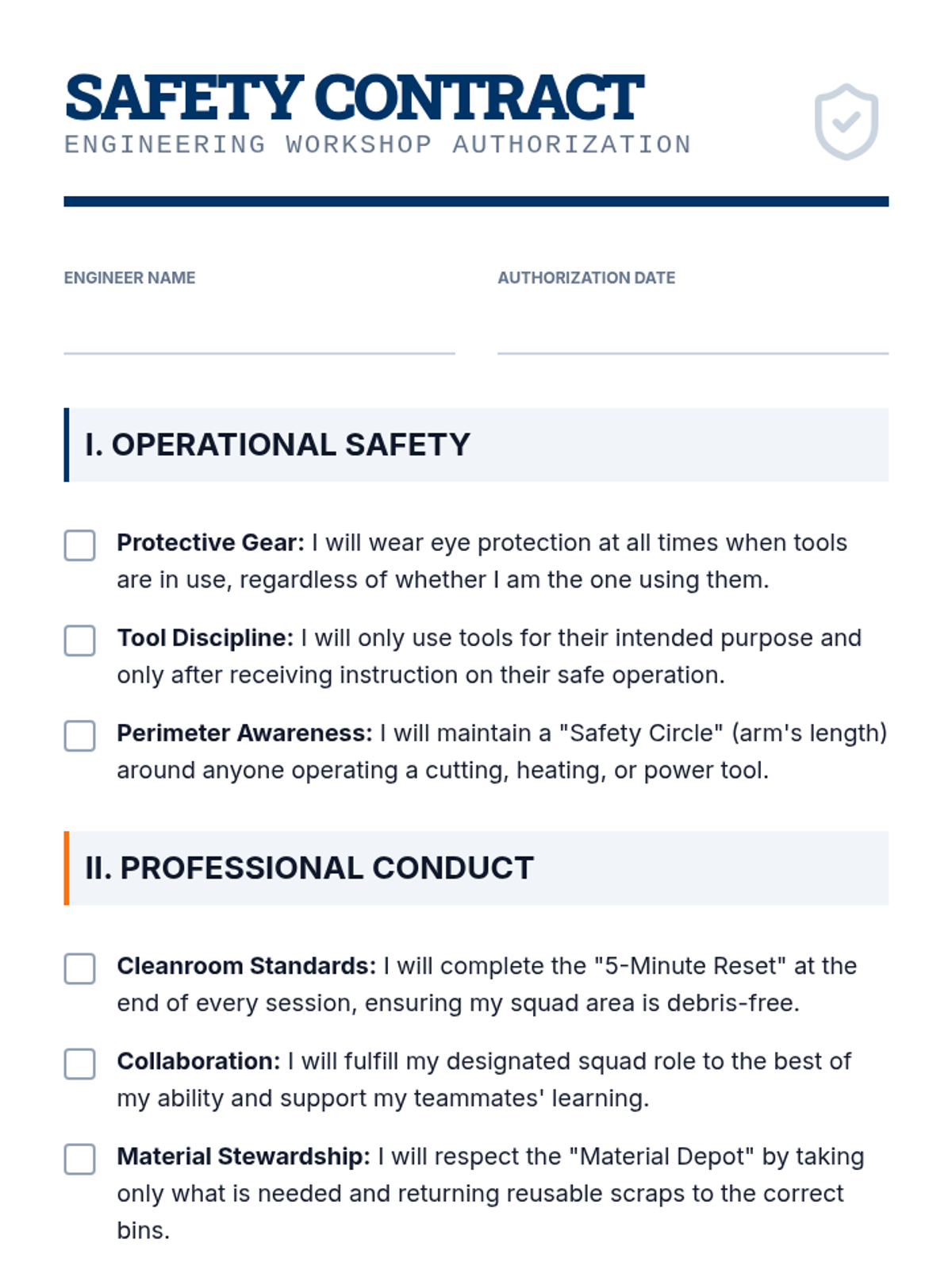
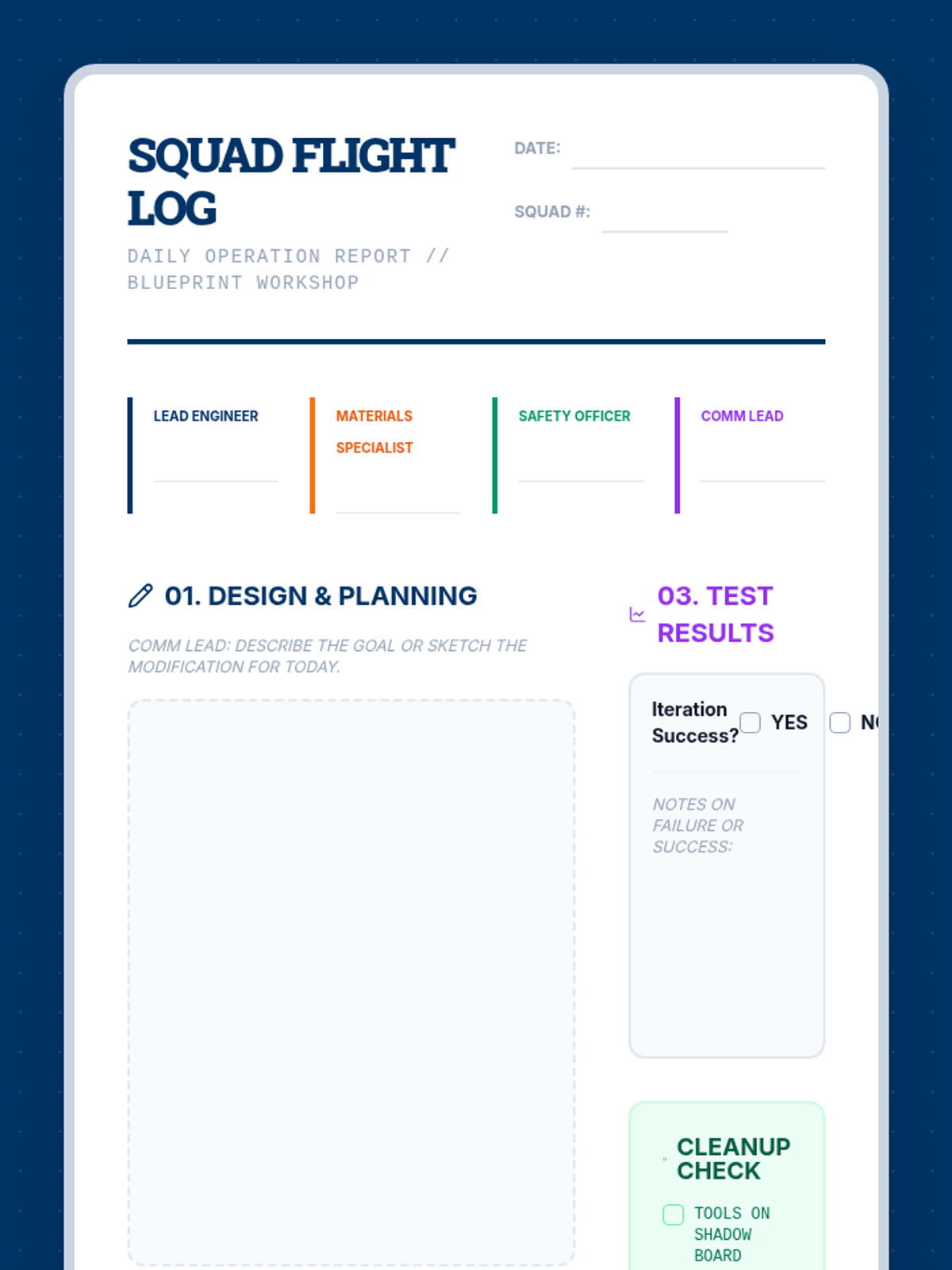
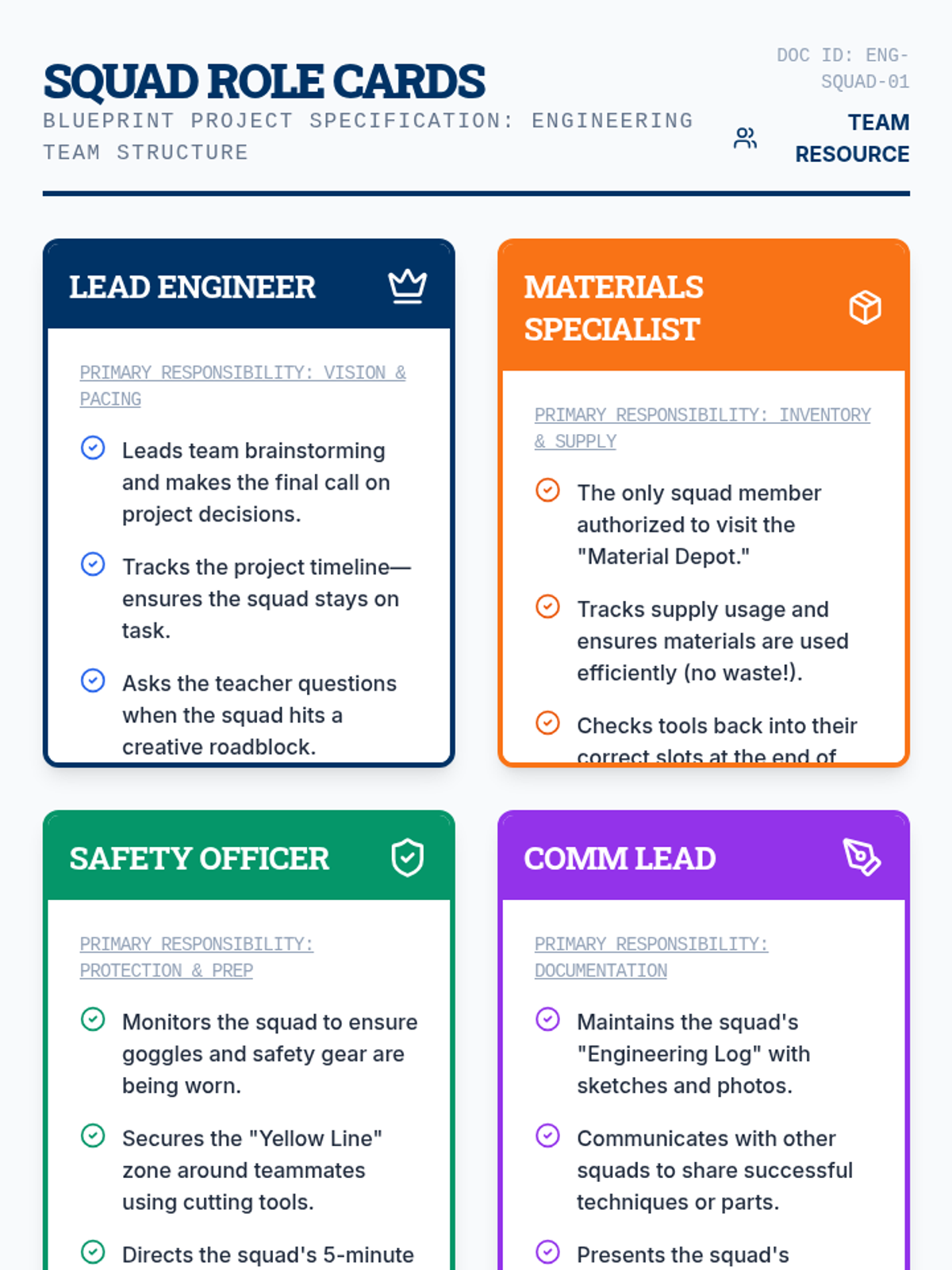
A foundational toolkit for setting up a physical engineering and maker space, covering physical layout, collaborative roles, and essential classroom routines.
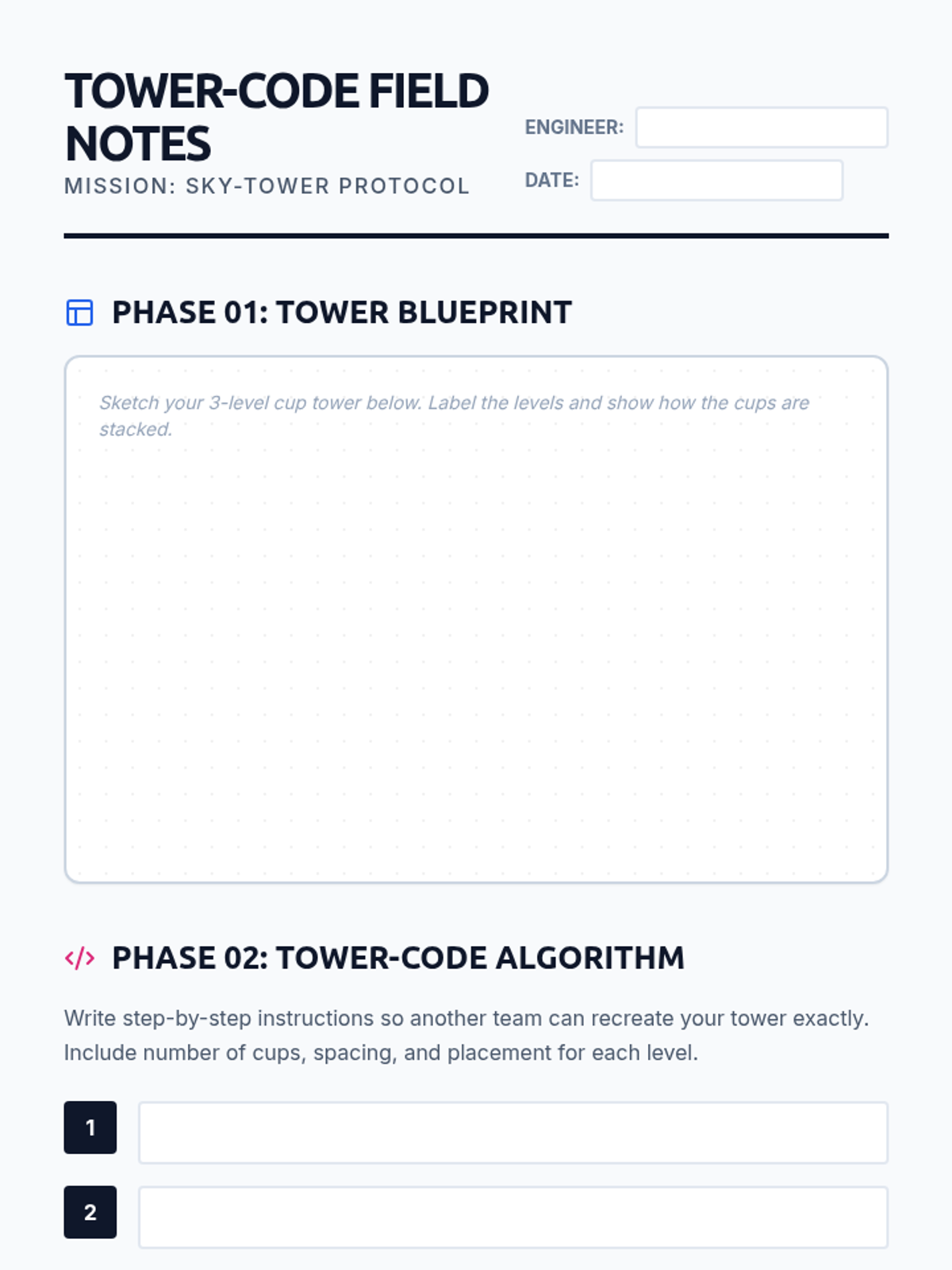
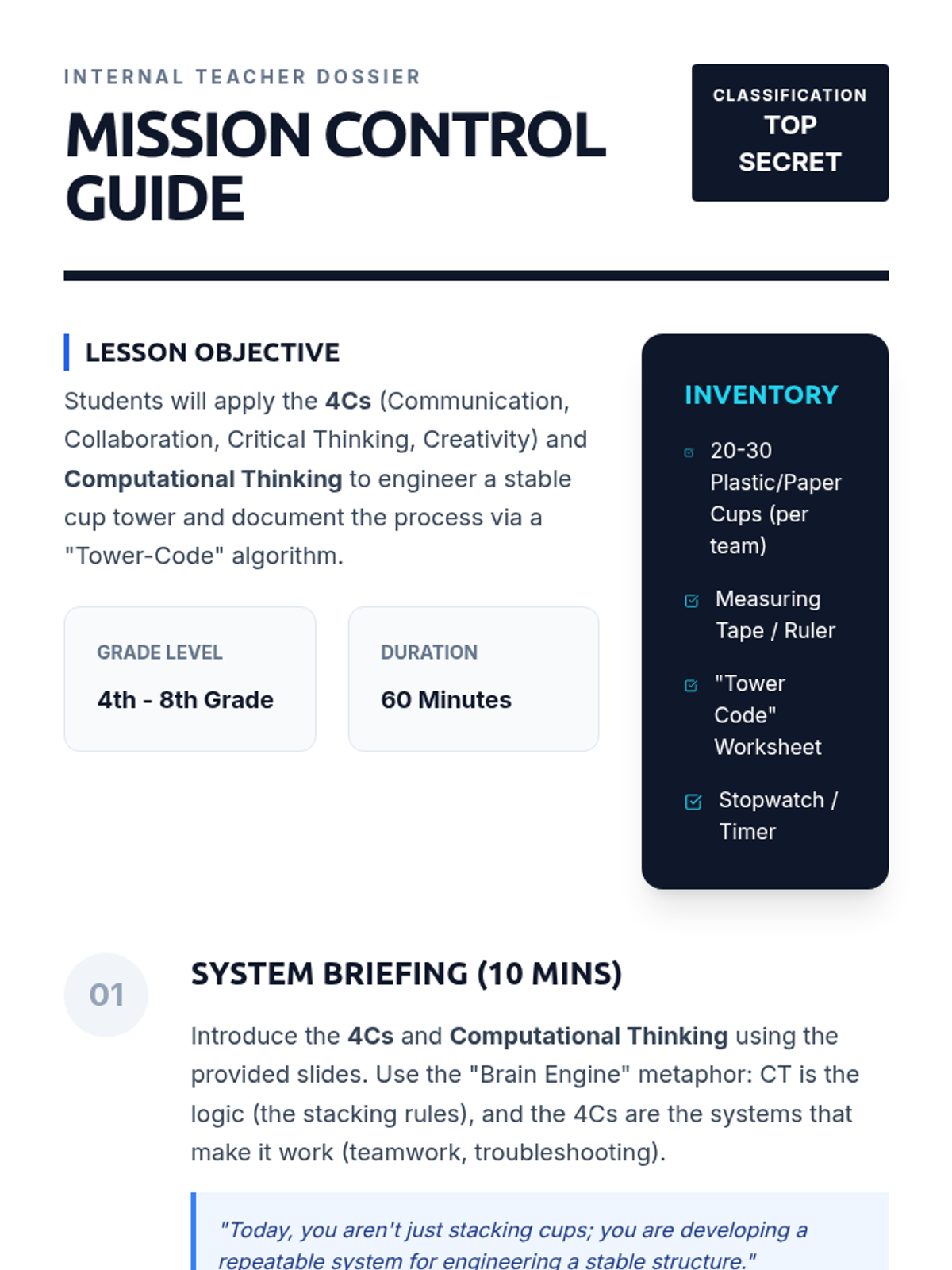
A high-stakes engineering challenge where students use the 4Cs and Computational Thinking to design, build, and document the ultimate cup tower structure.
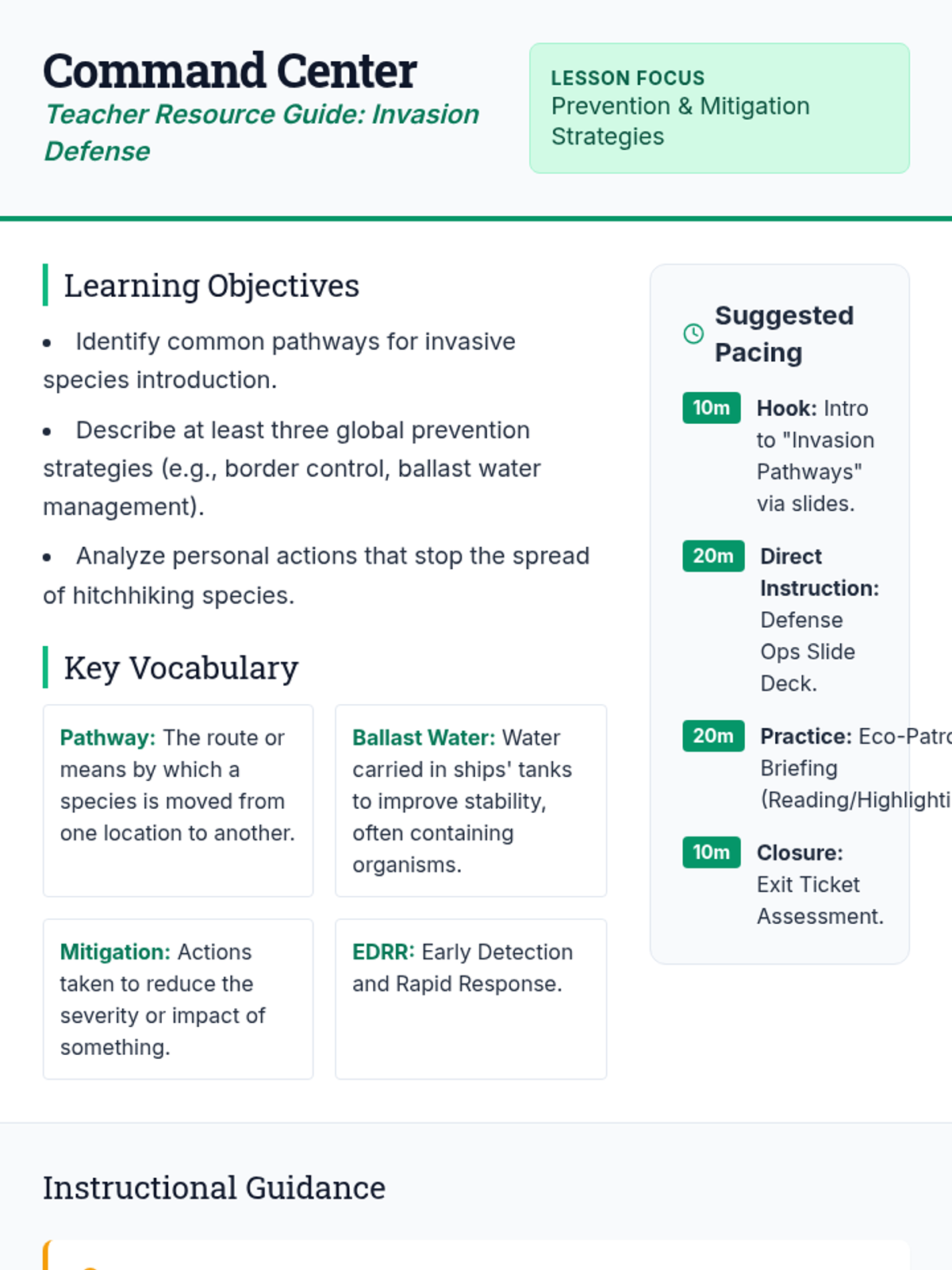
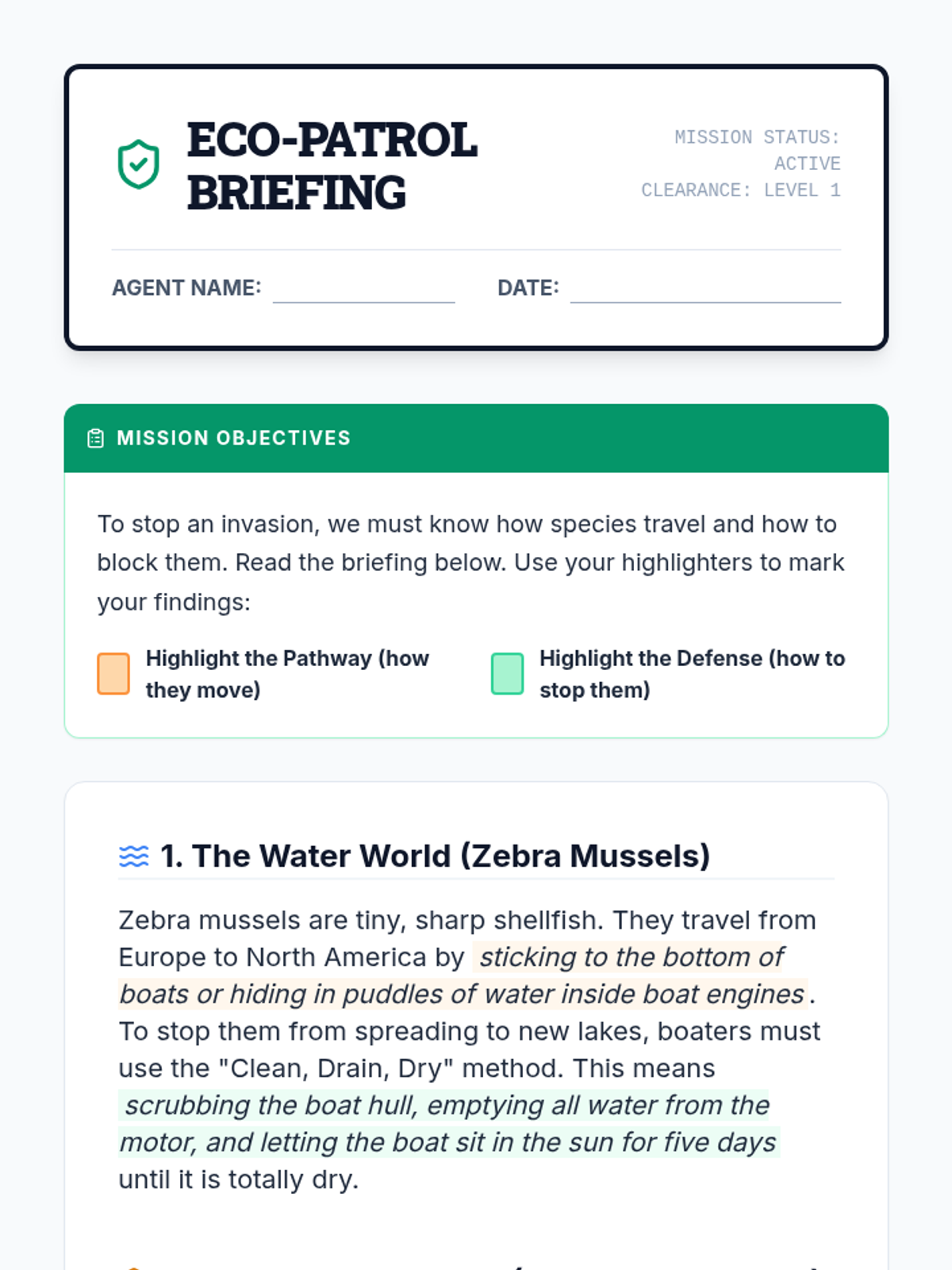
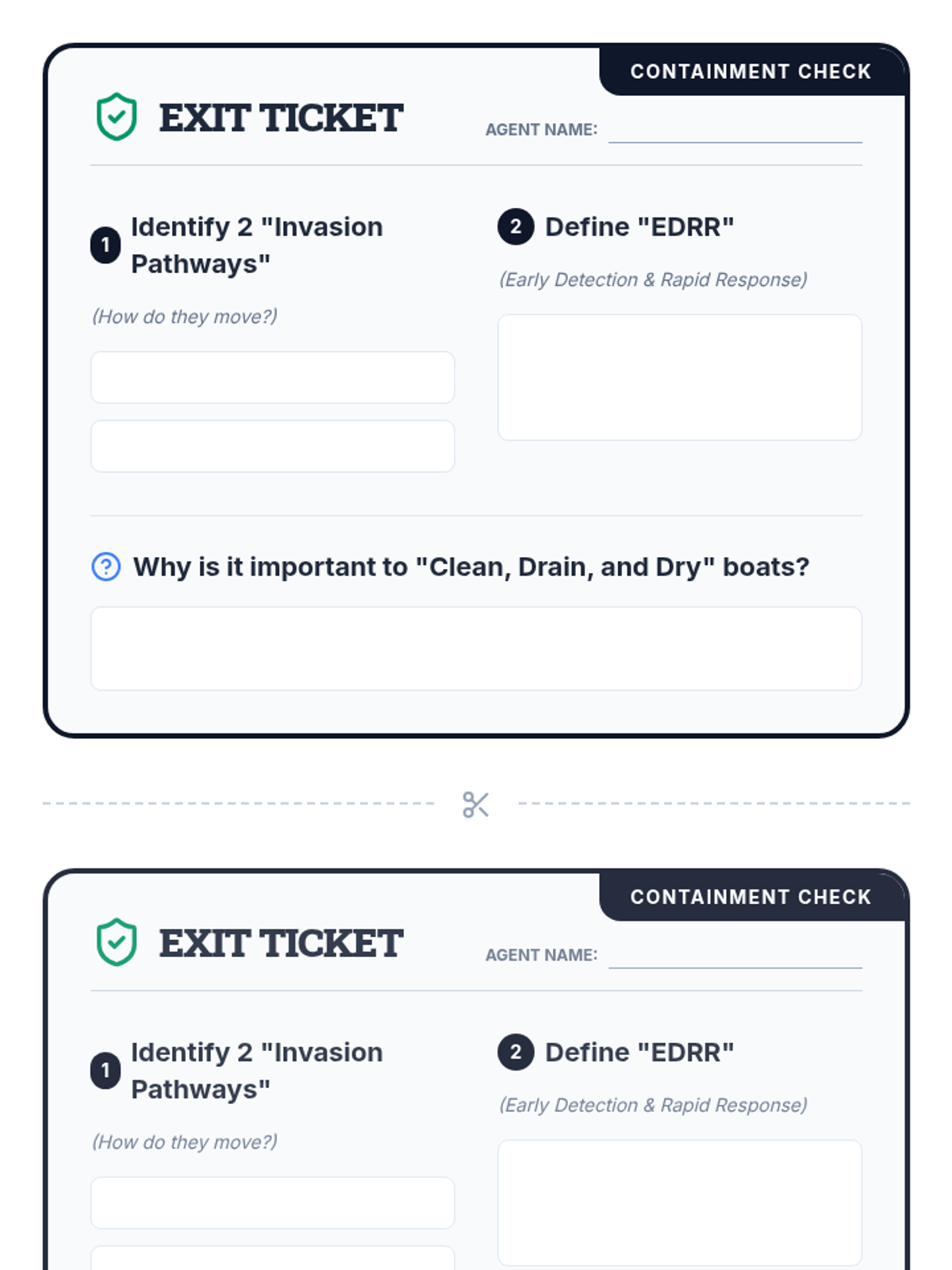
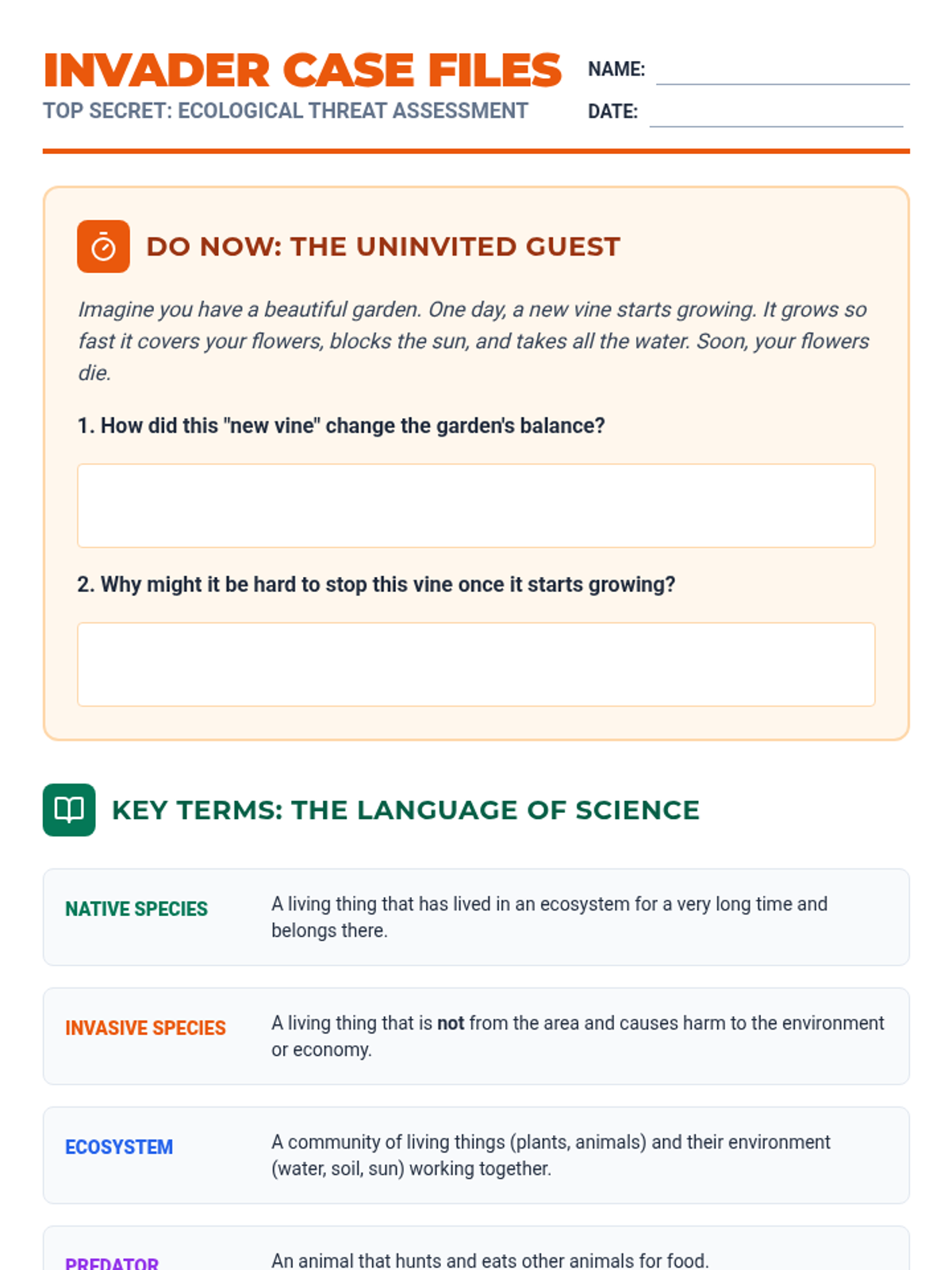
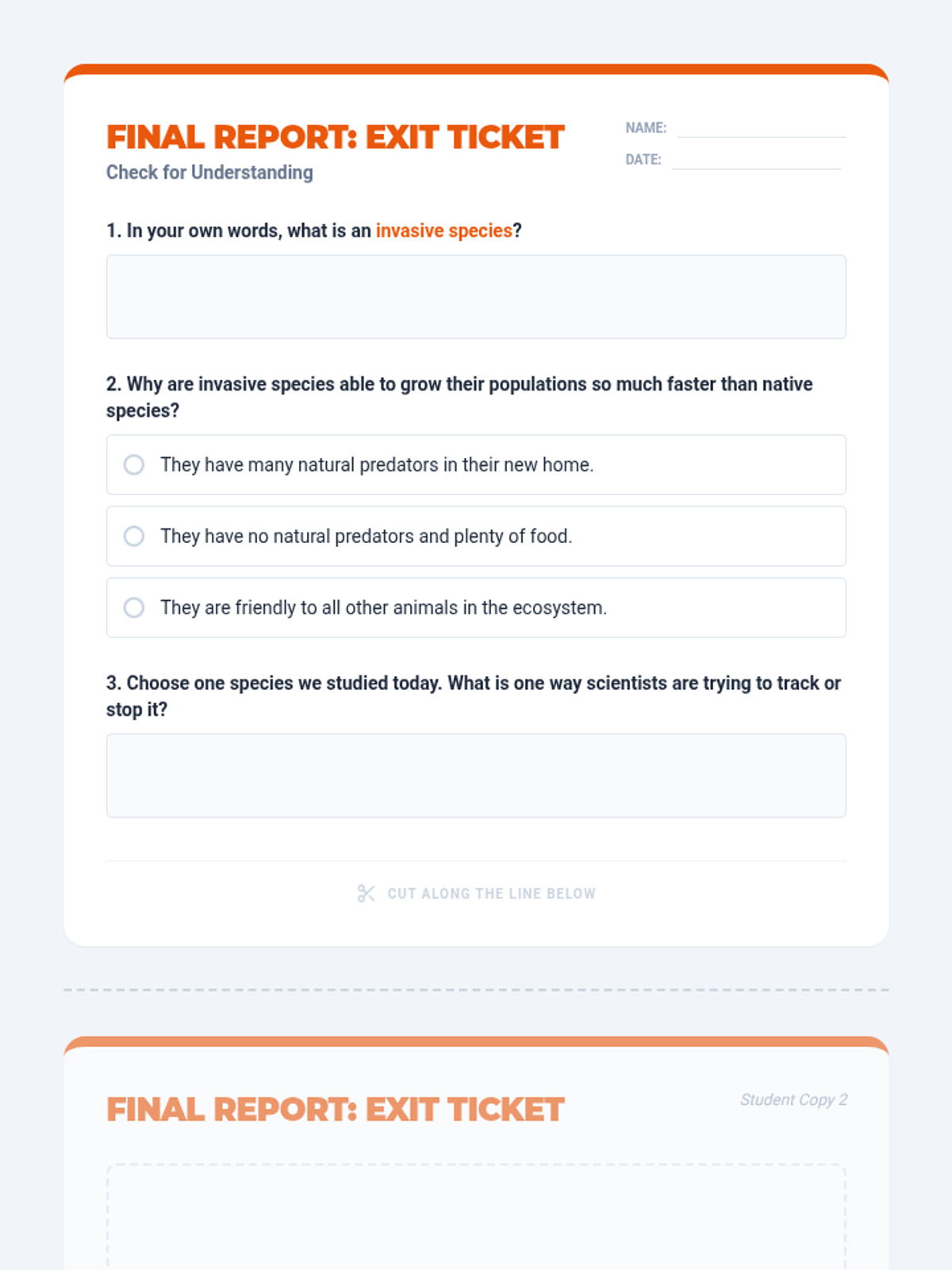
A comprehensive lesson on invasive species prevention, featuring visual slides, a modified reading task for accessibility, and assessment tools. Students learn to identify pathways and implement global prevention strategies.
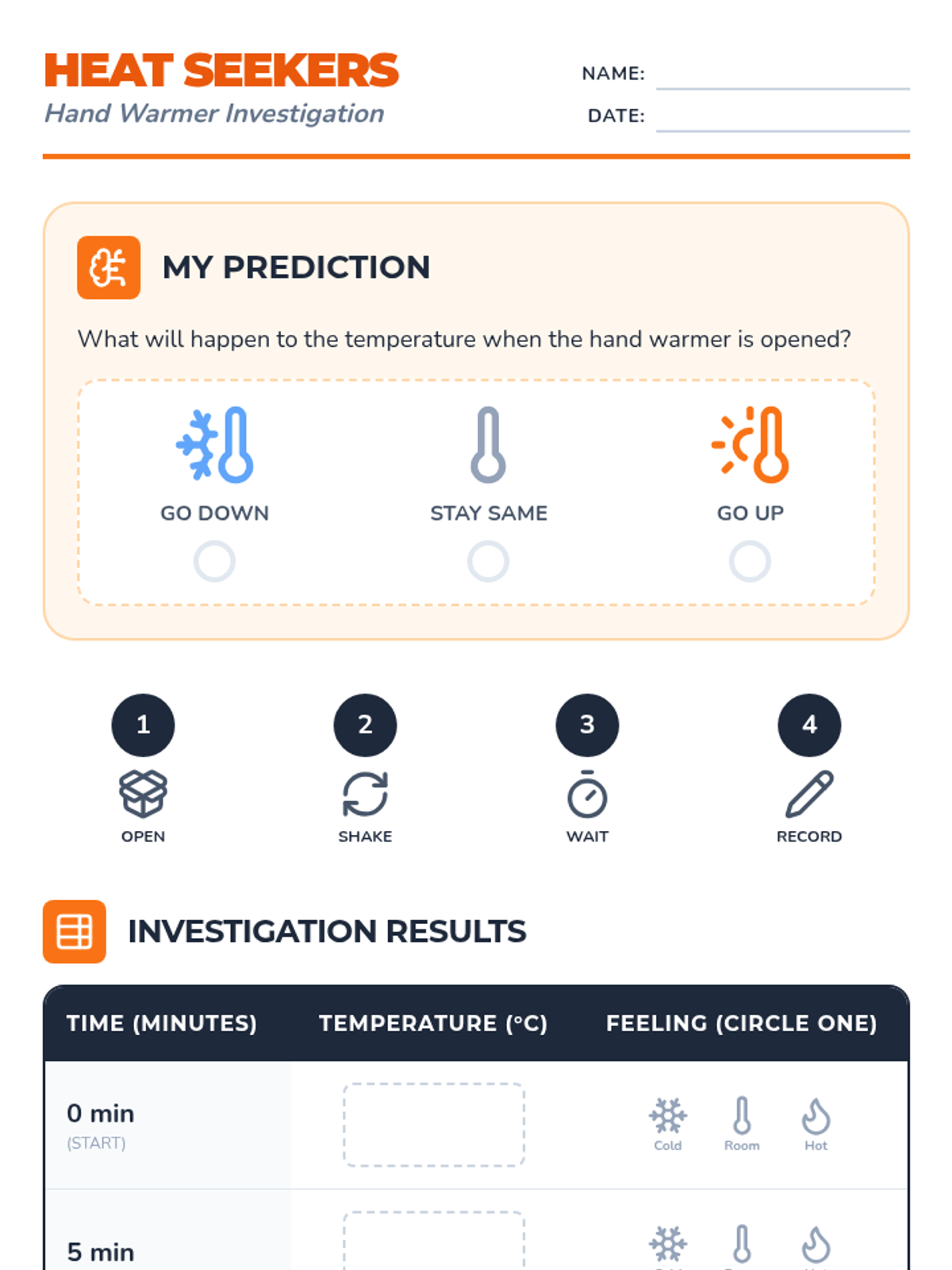
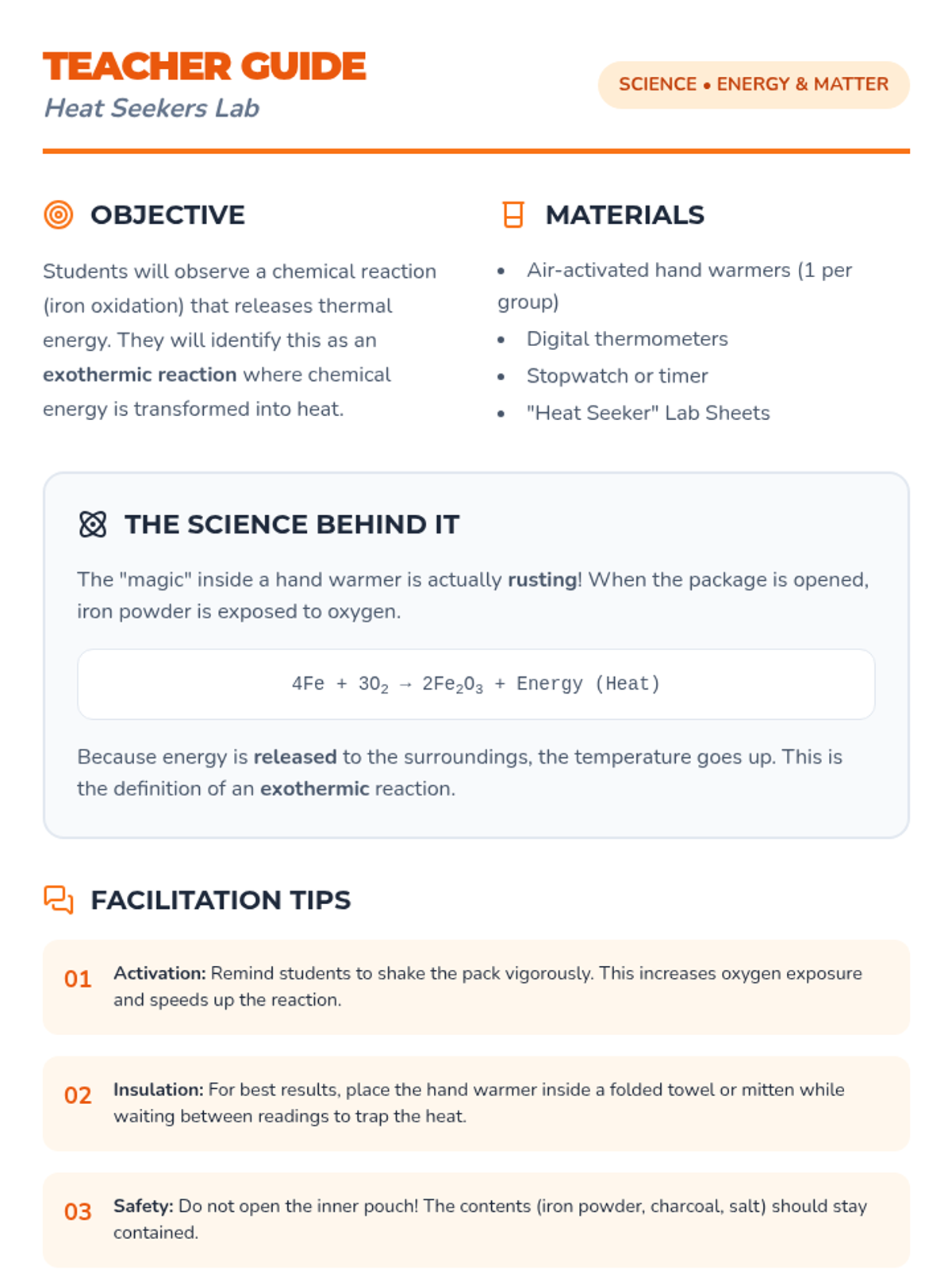
An investigation into exothermic reactions using hand warmers. Students observe and record temperature changes to understand how chemical energy transforms into heat energy.
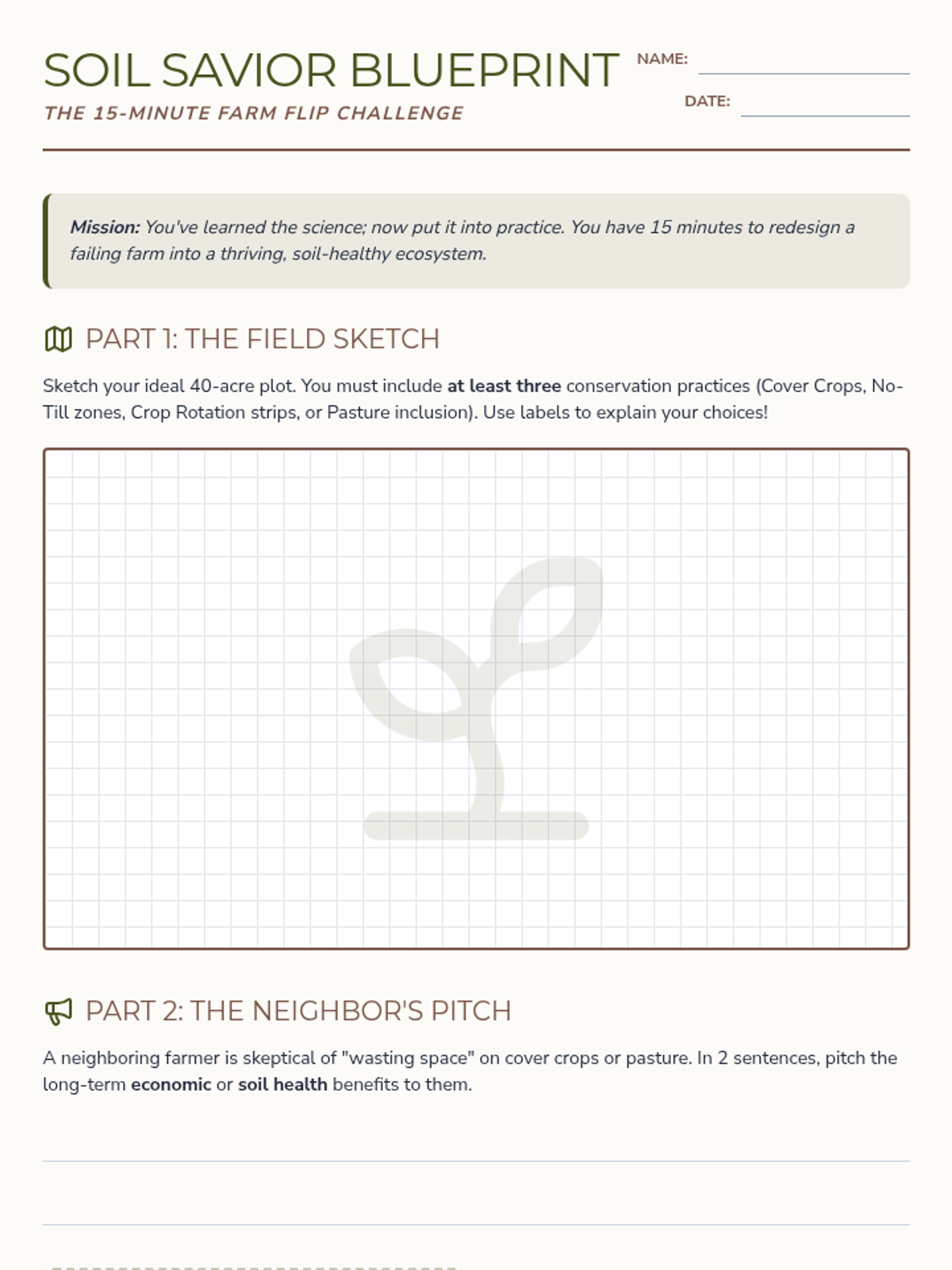
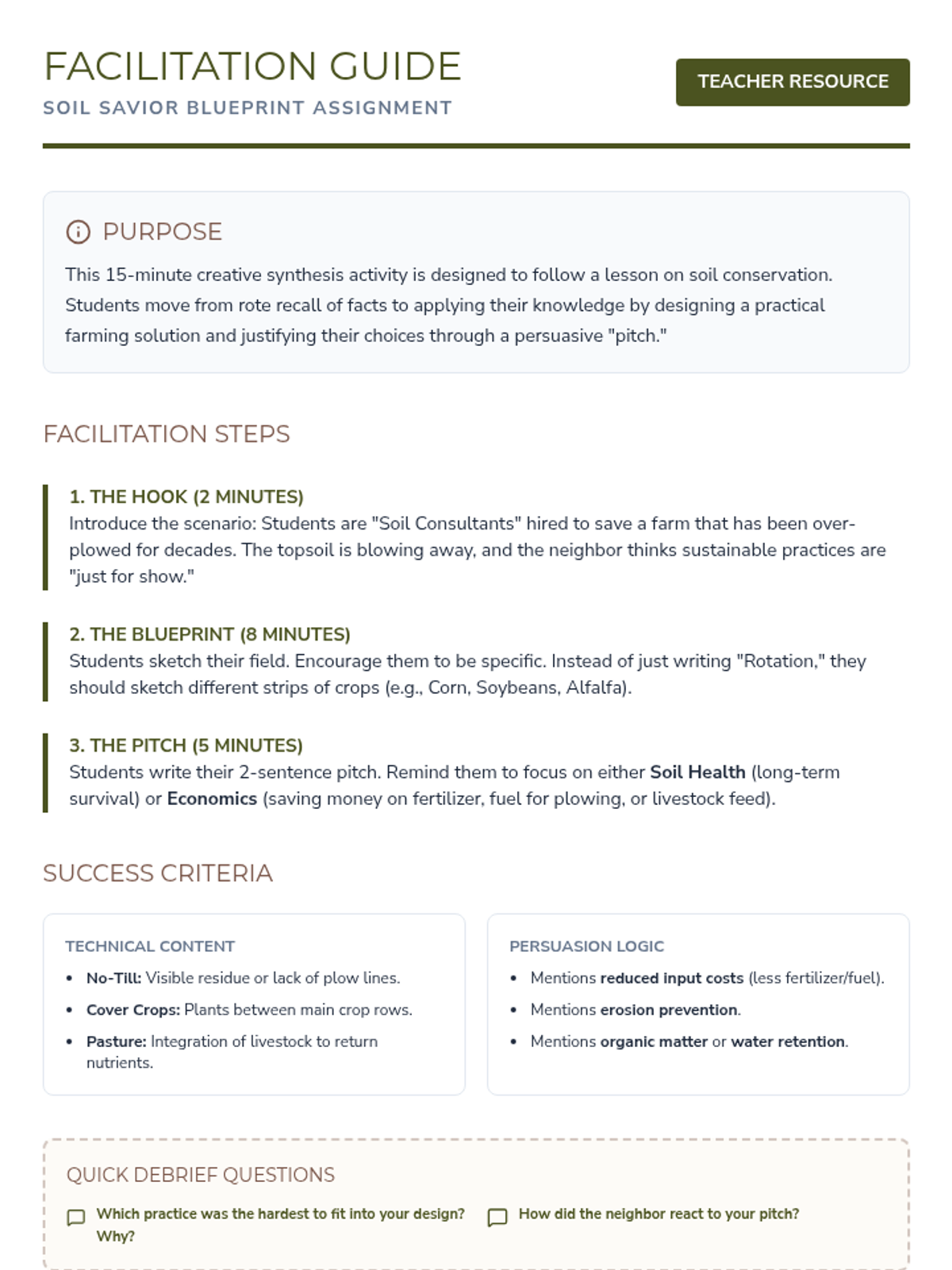
A quick, creative wrap-up lesson where students apply their knowledge of soil conservation practices to design a sustainable farm plot and craft a persuasive pitch.
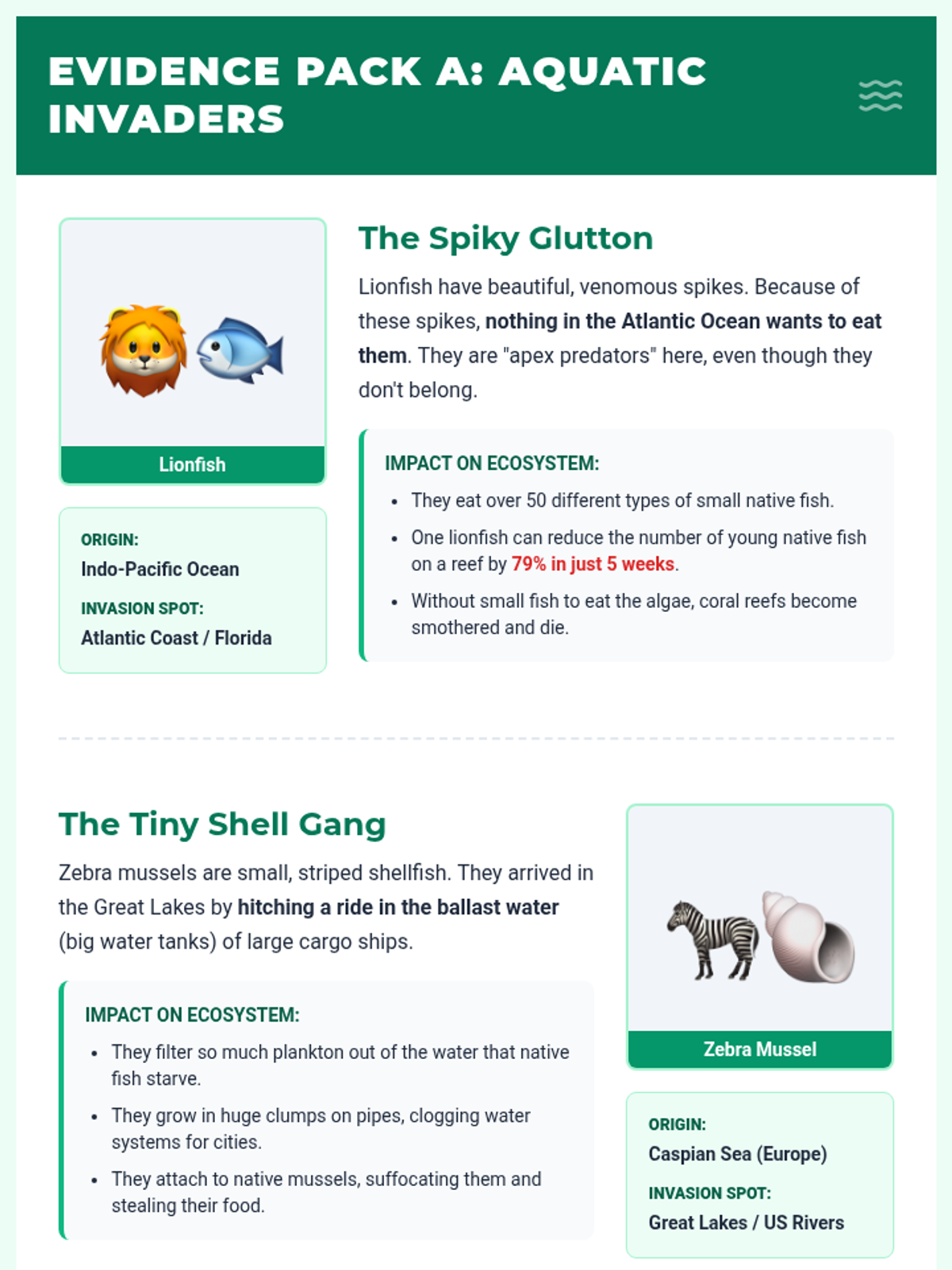
A comprehensive lesson on invasive species featuring case studies of Lionfish, Spotted Lanternflies, Zebra Mussels, and Burmese Pythons. Students explore the scientific process and ecological impacts through simplified text and visual supports.
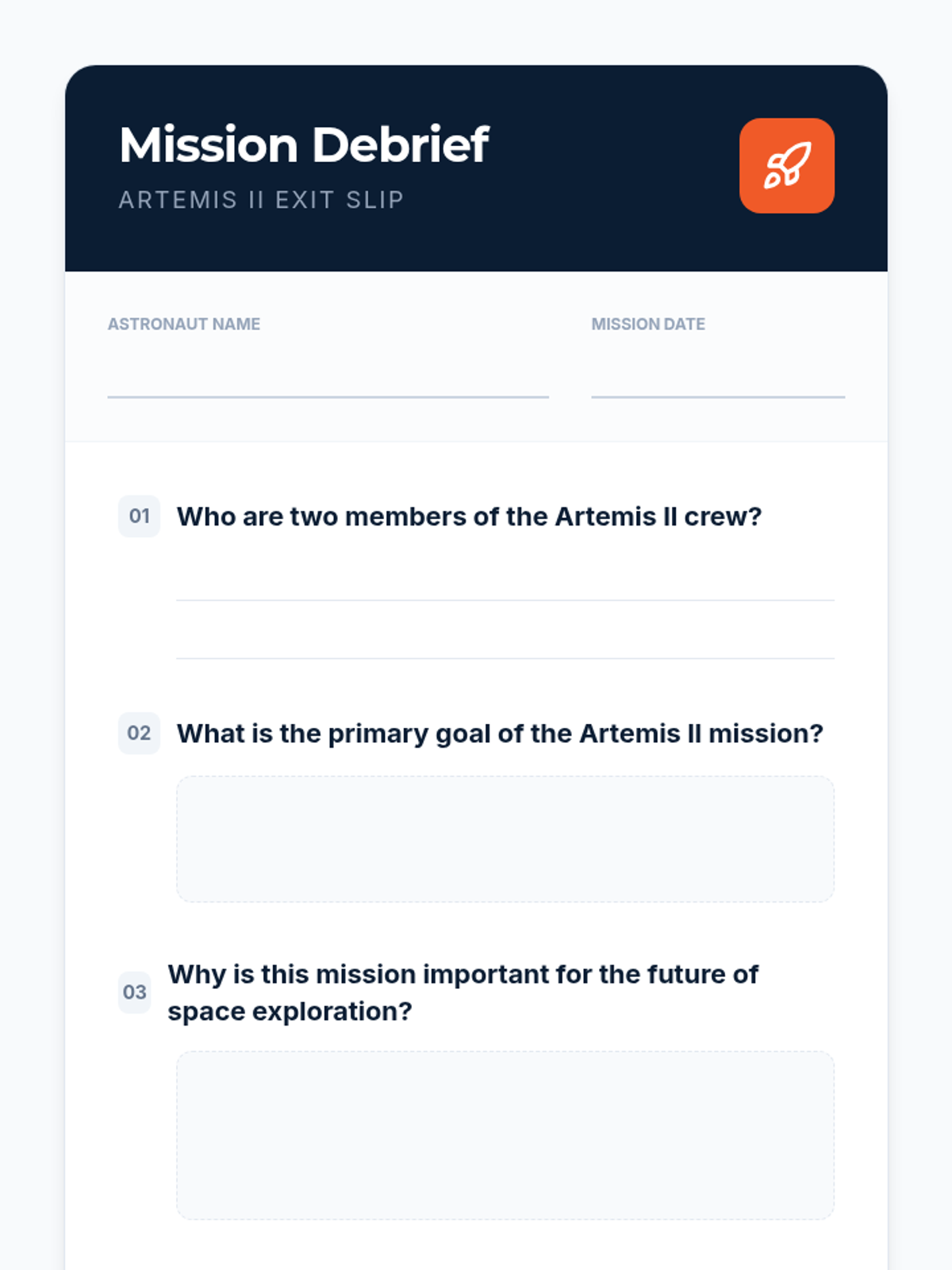
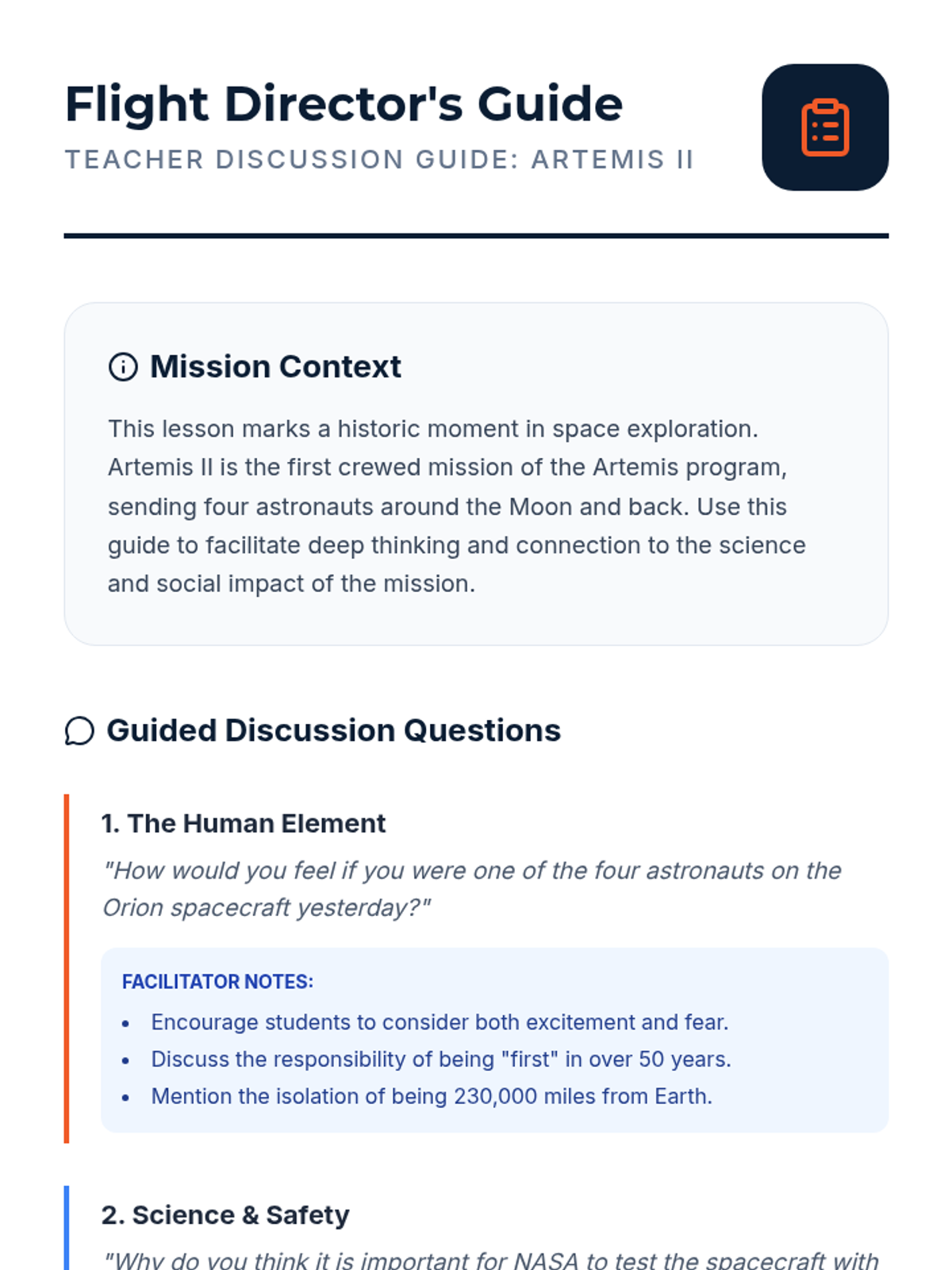
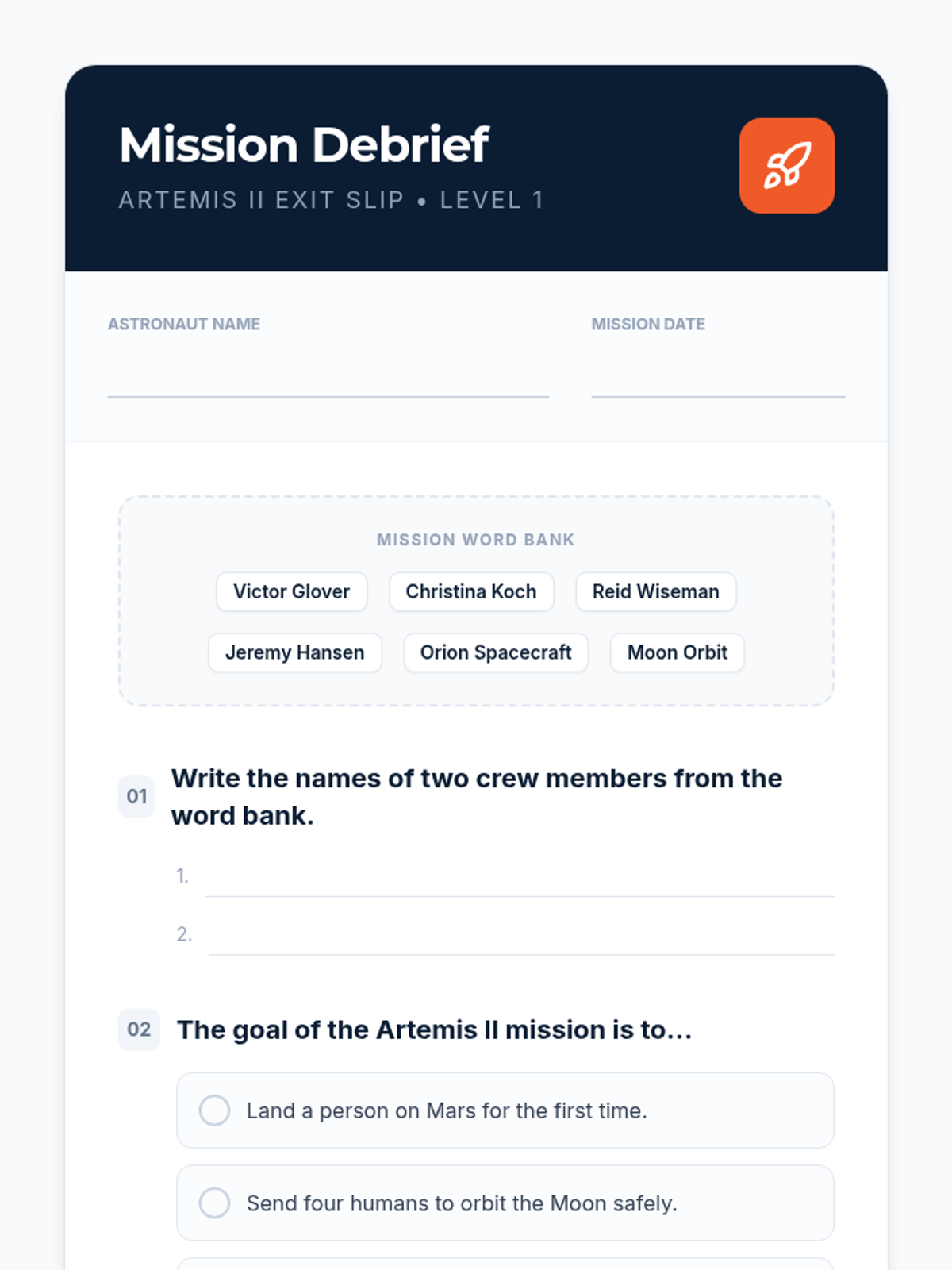
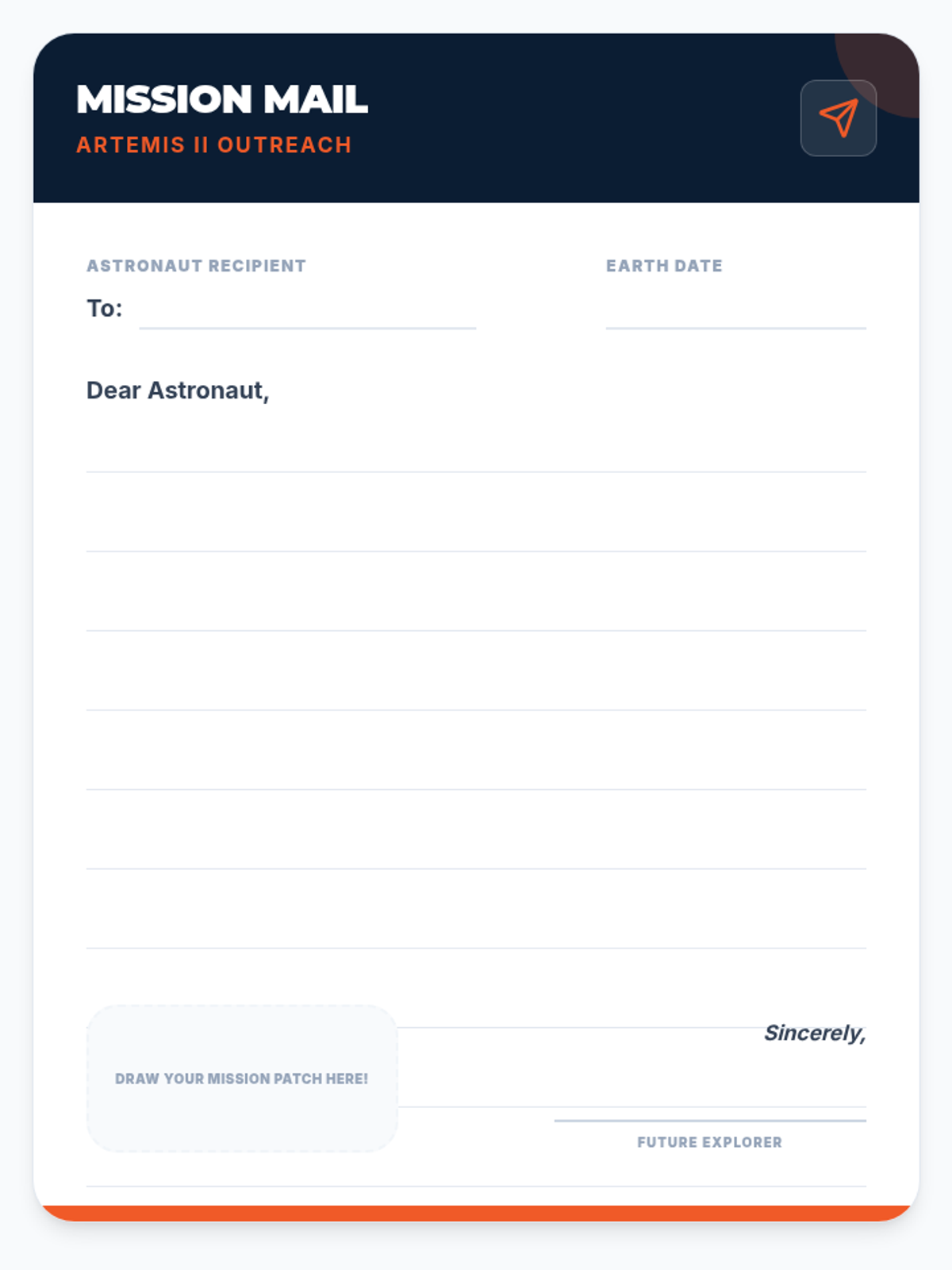
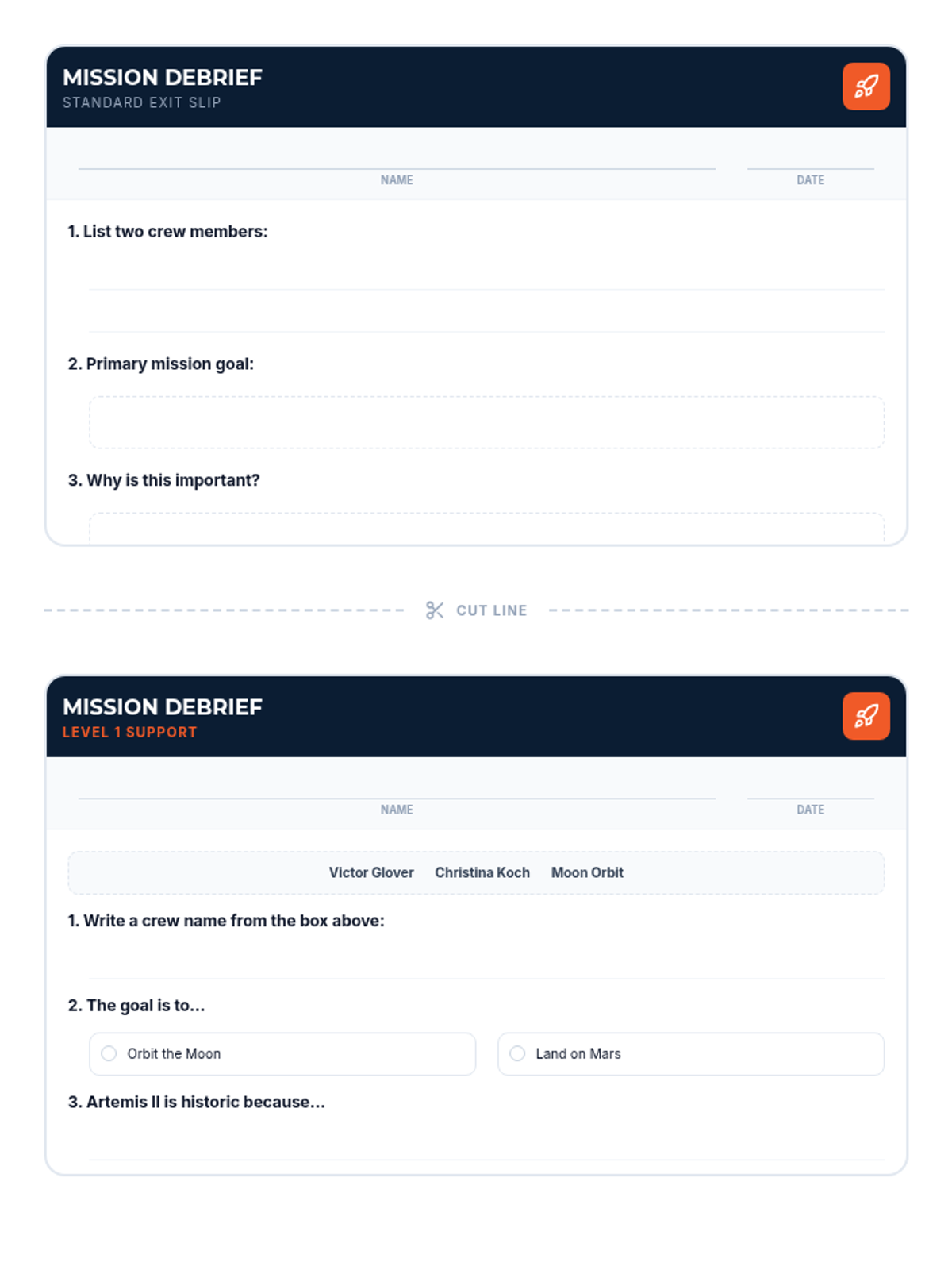
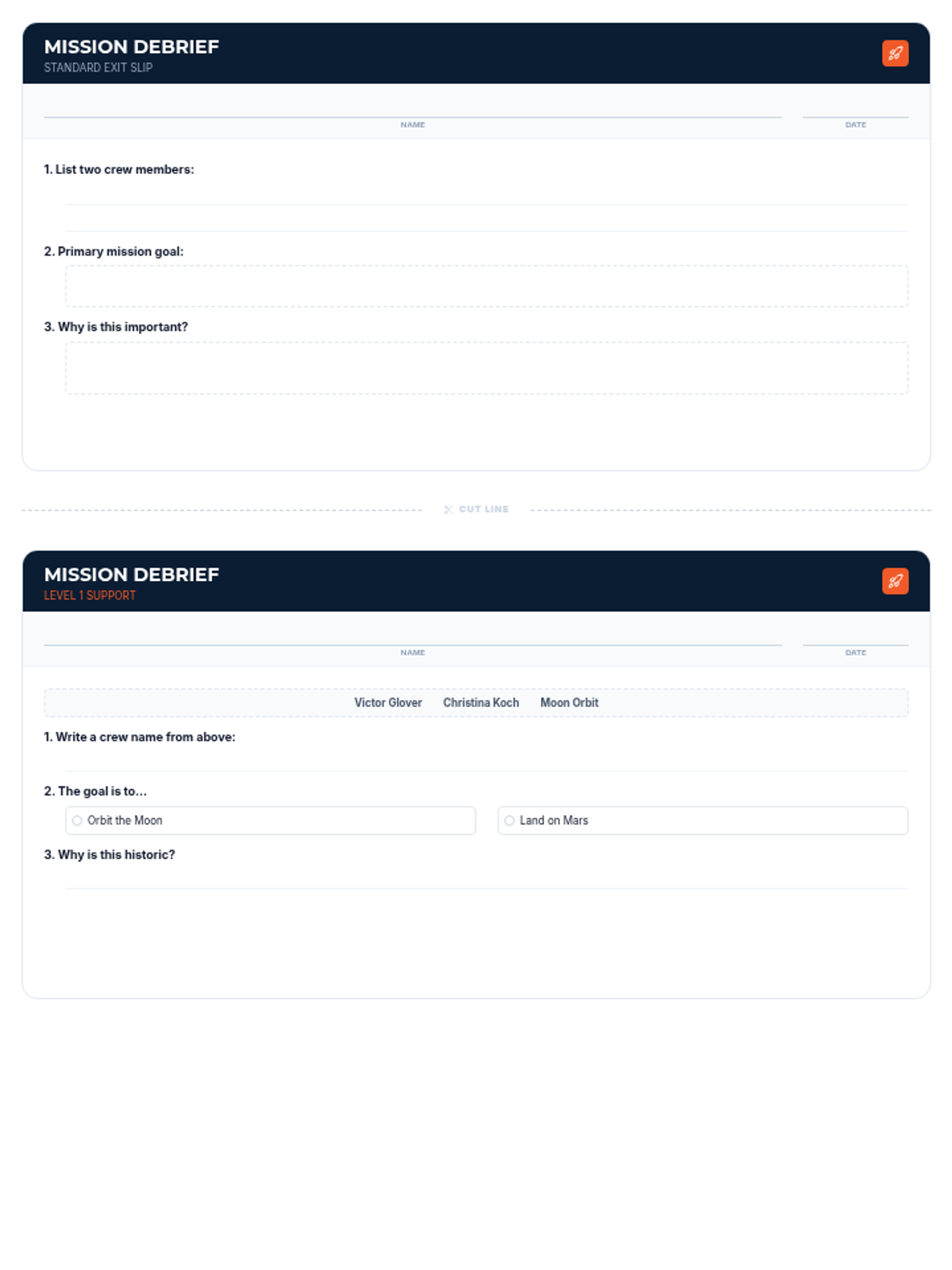
A comprehensive lesson for 5th graders covering the Artemis II mission, including crew details, mission goals, preparation, and its historical significance for future lunar exploration.
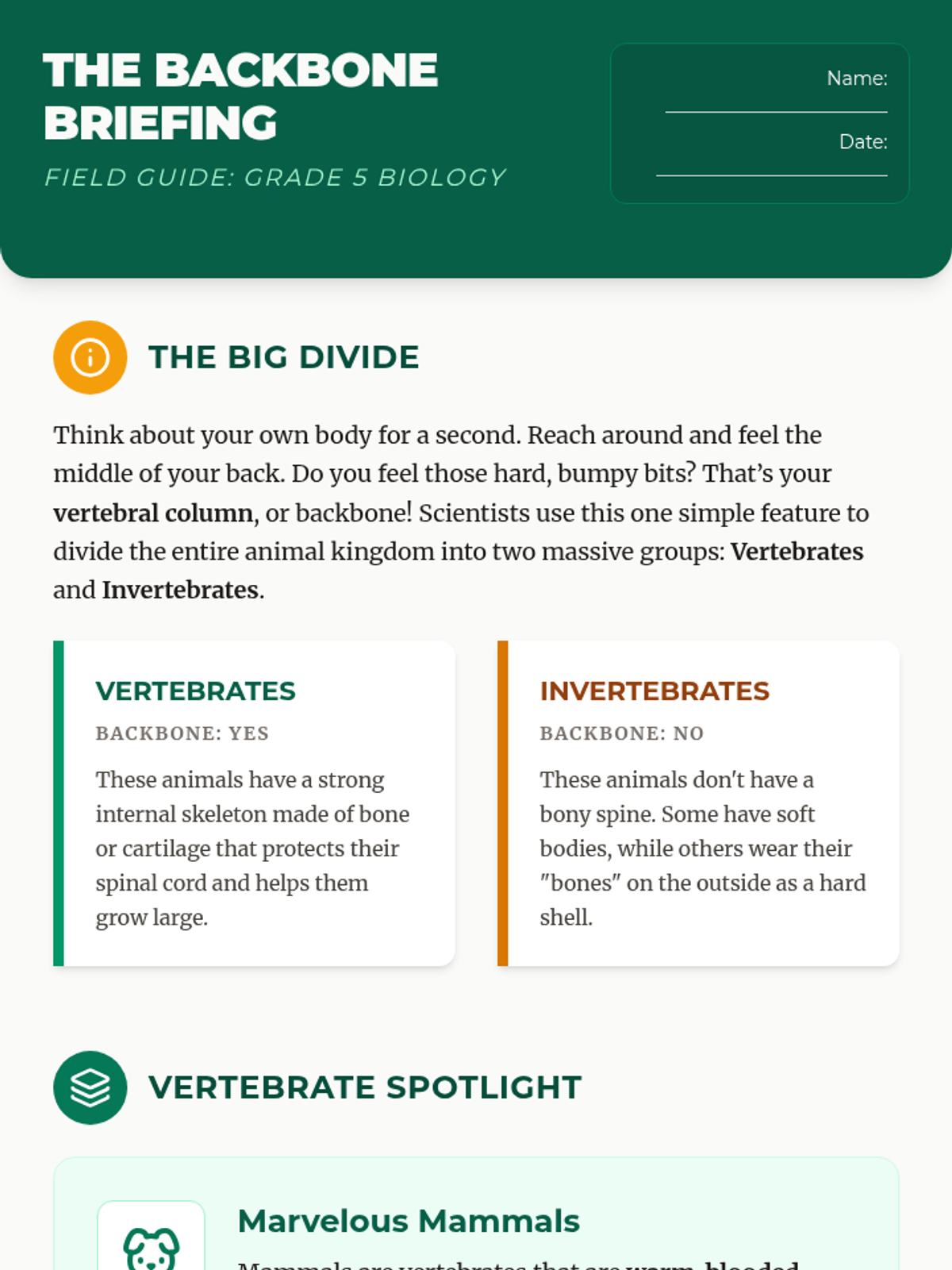
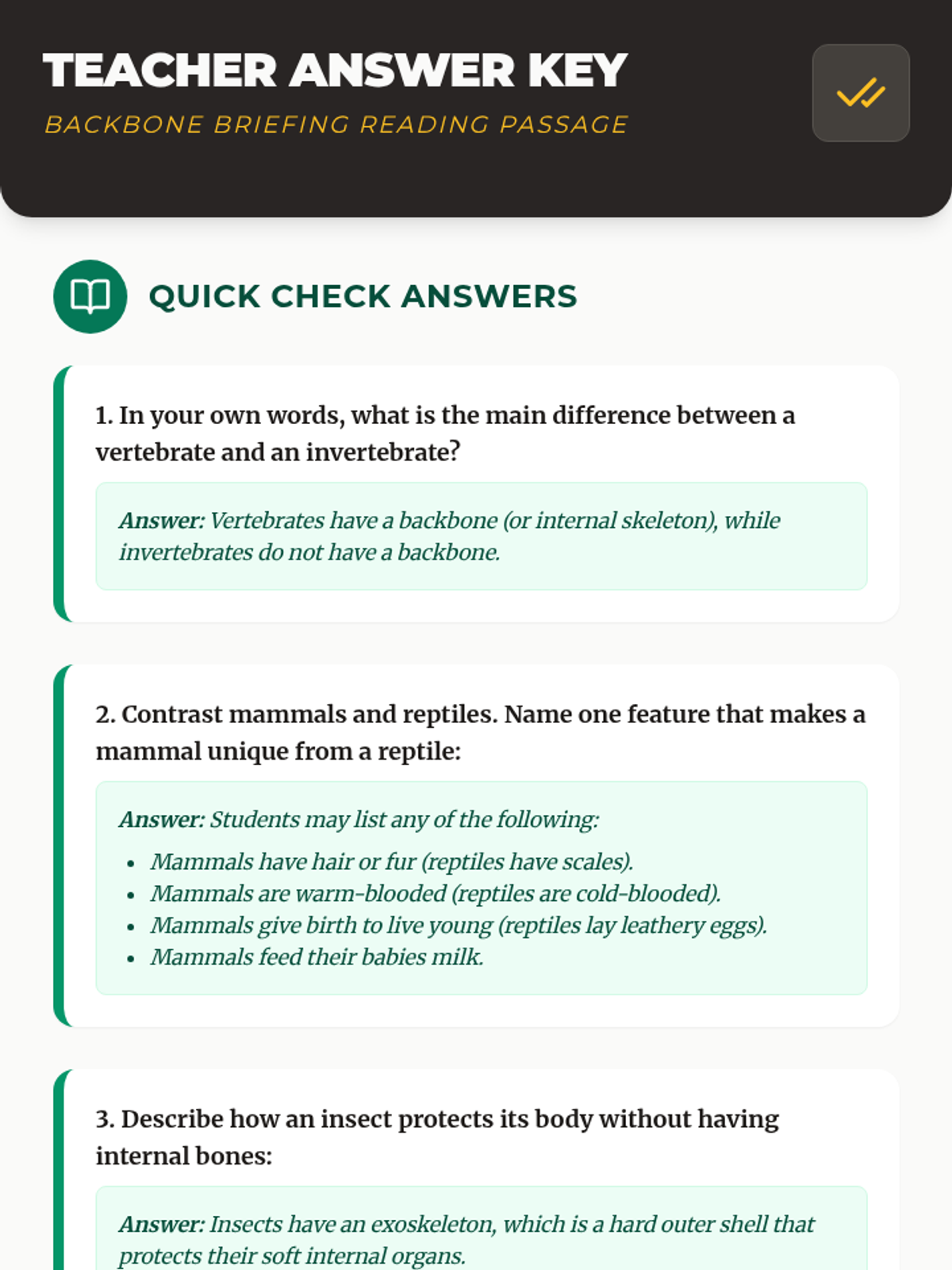
A lesson exploring the differences between vertebrates and invertebrates, focusing on mammals, reptiles, and insects through informational reading and classification activities.
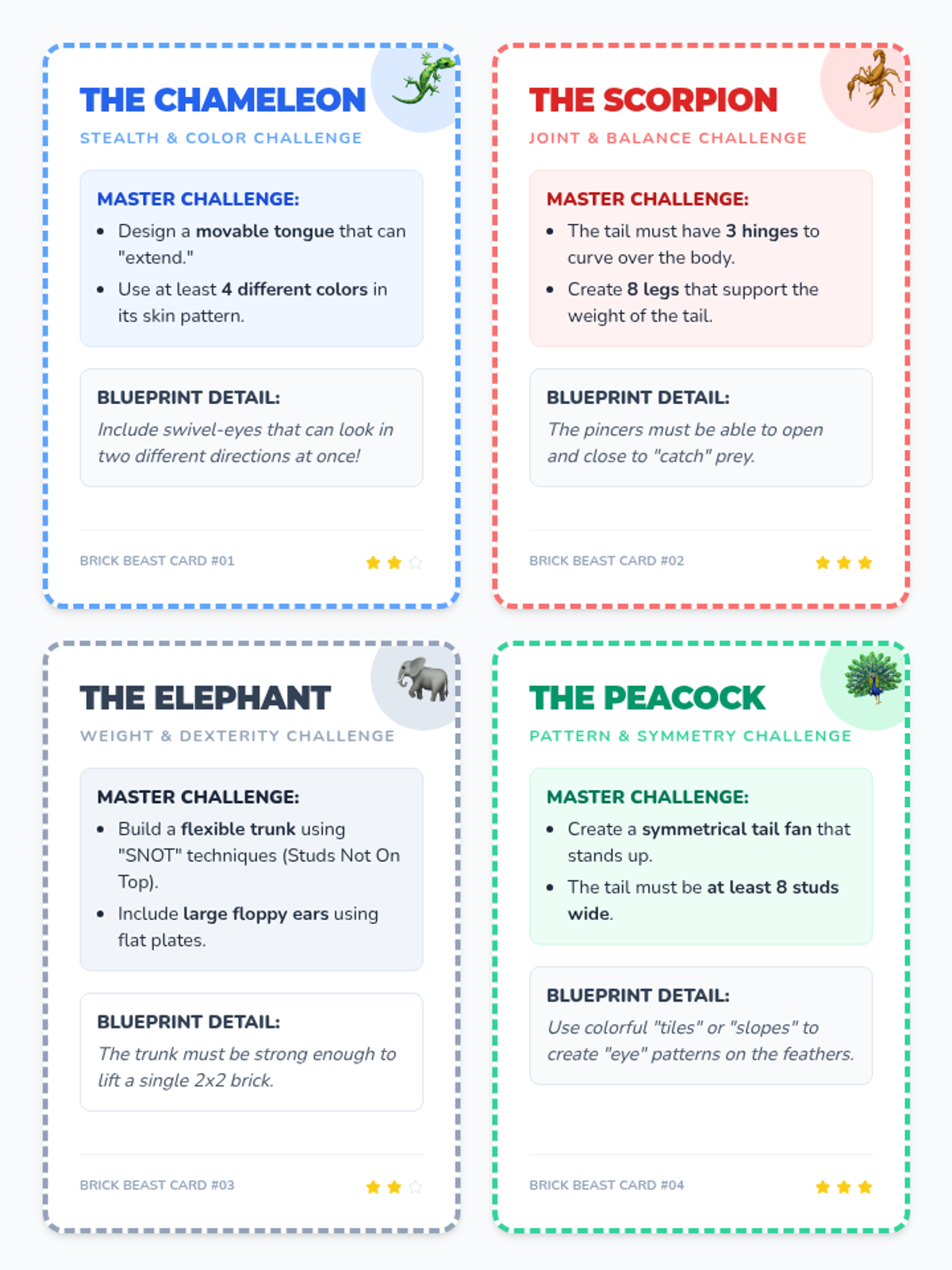
A creative engineering lesson where students use LEGO bricks to design and build detailed animal models based on specific prompt constraints. Focuses on spatial reasoning, creative problem-solving, and descriptive writing.
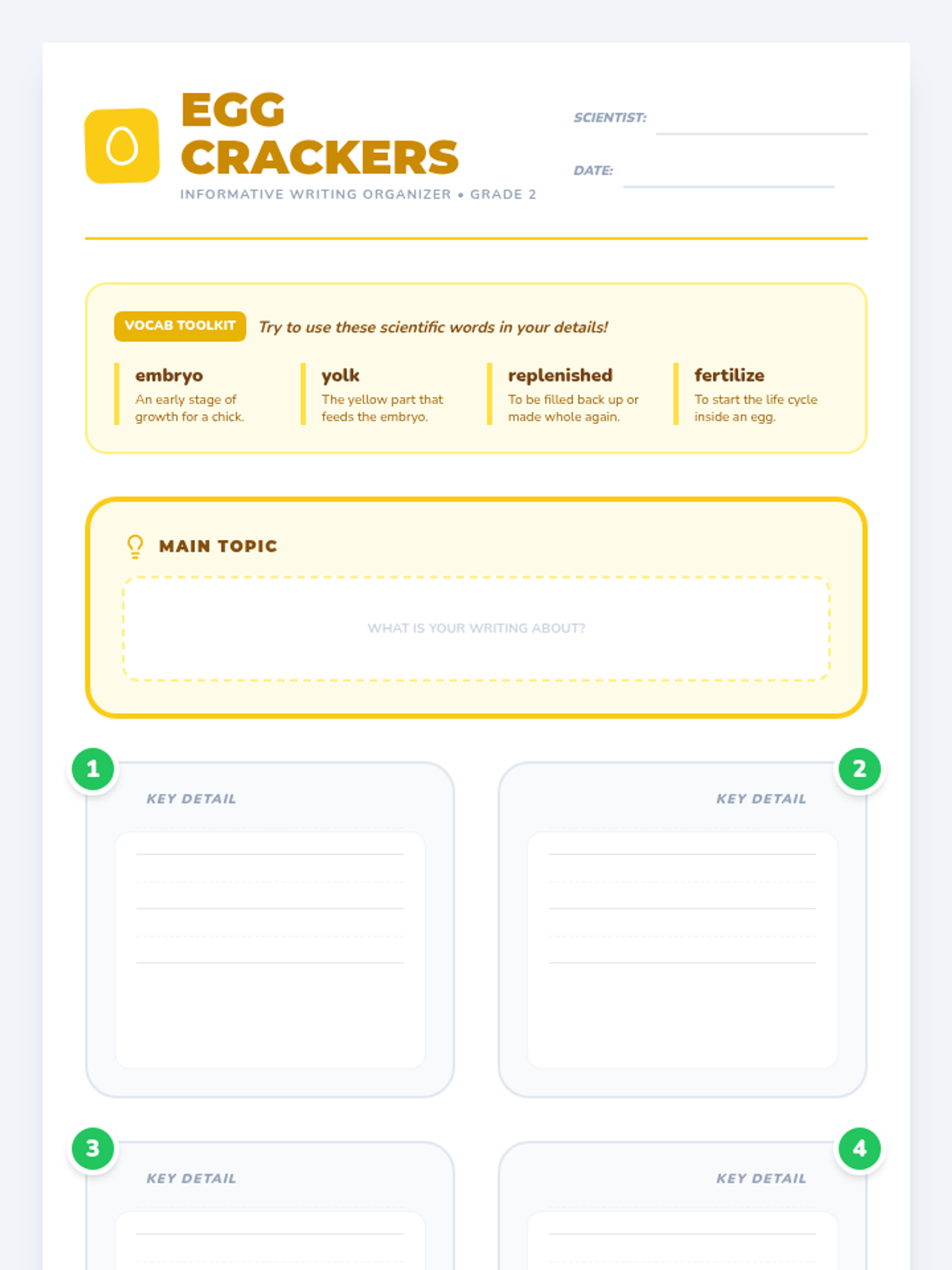
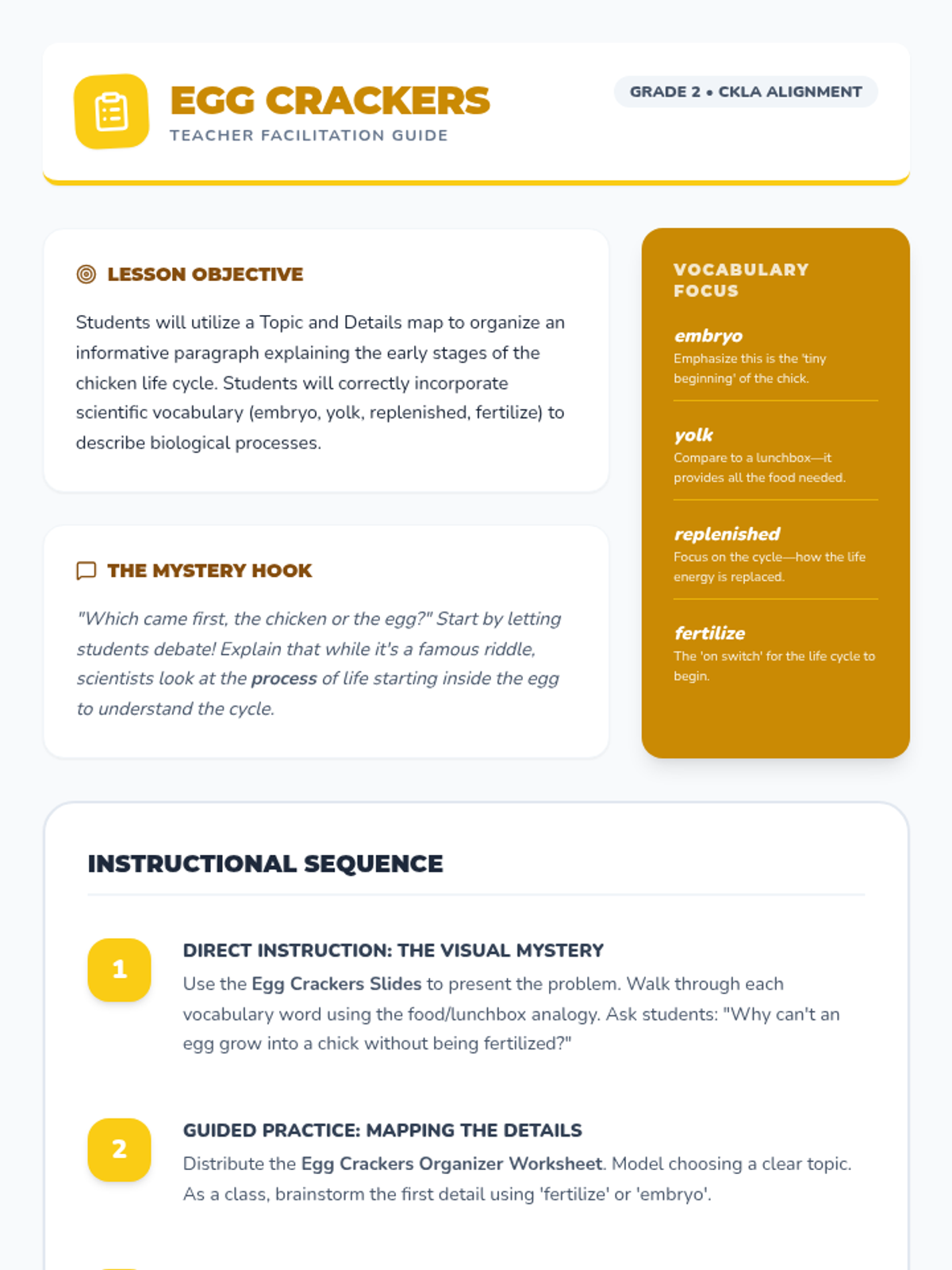
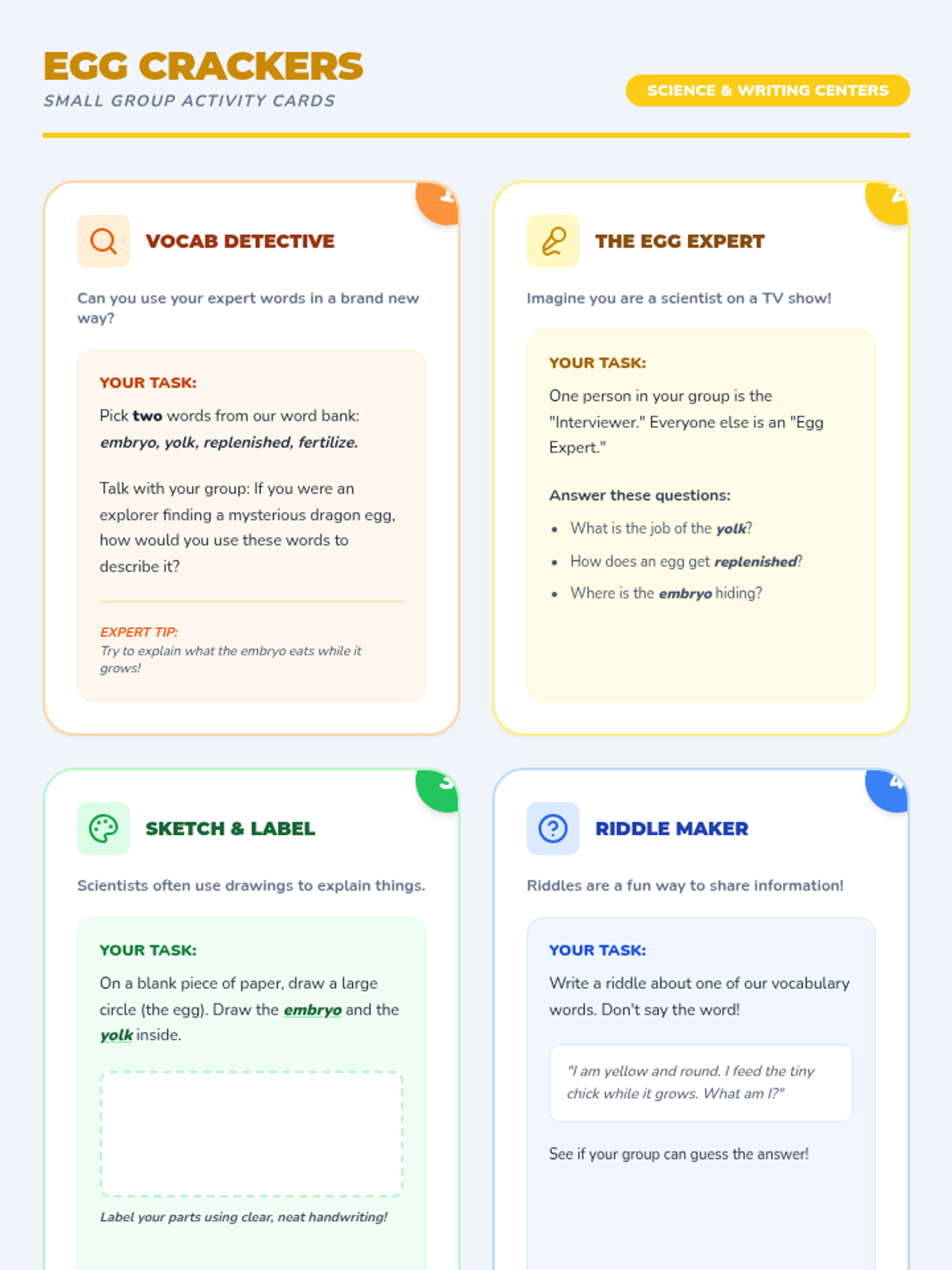
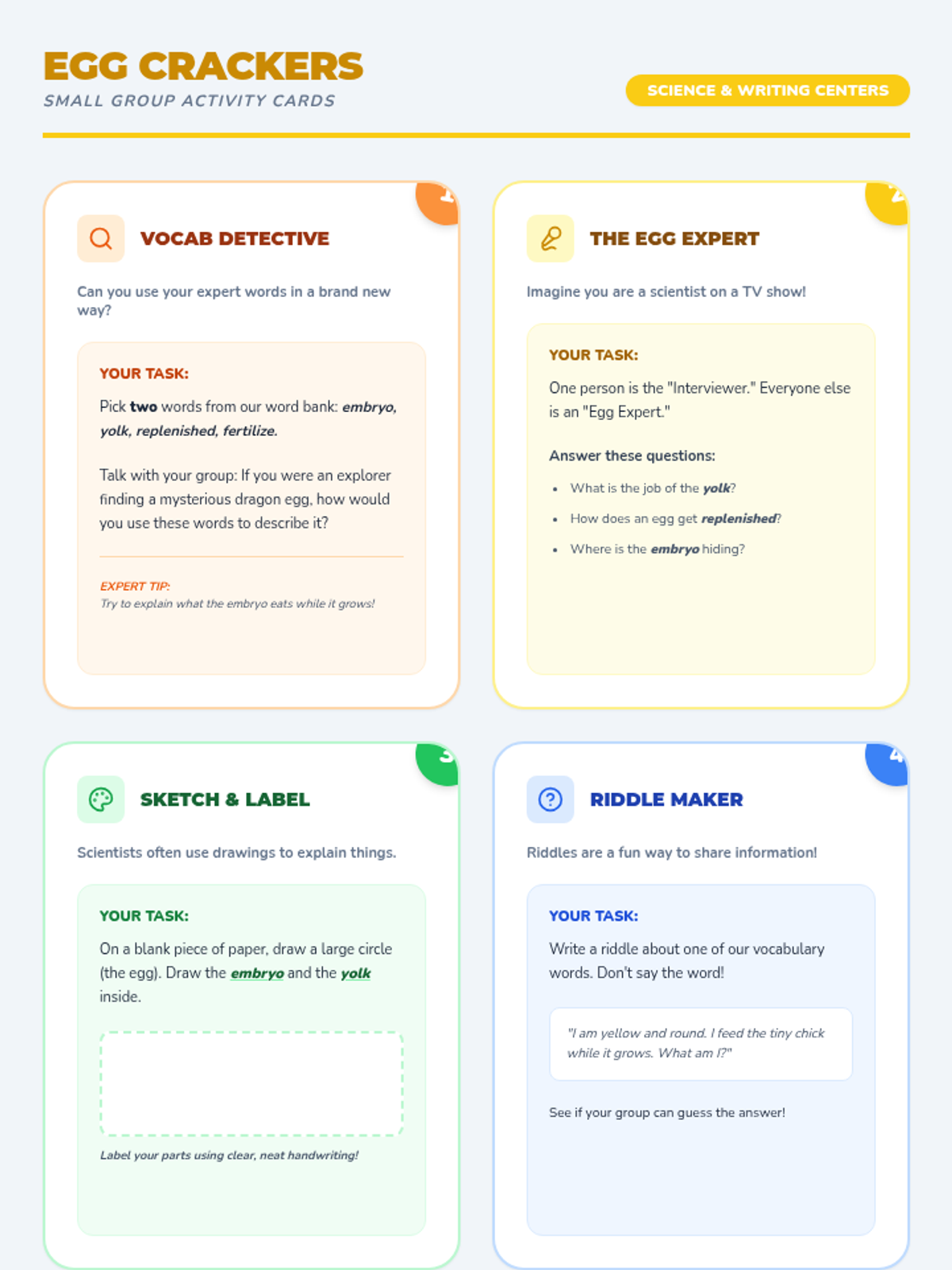
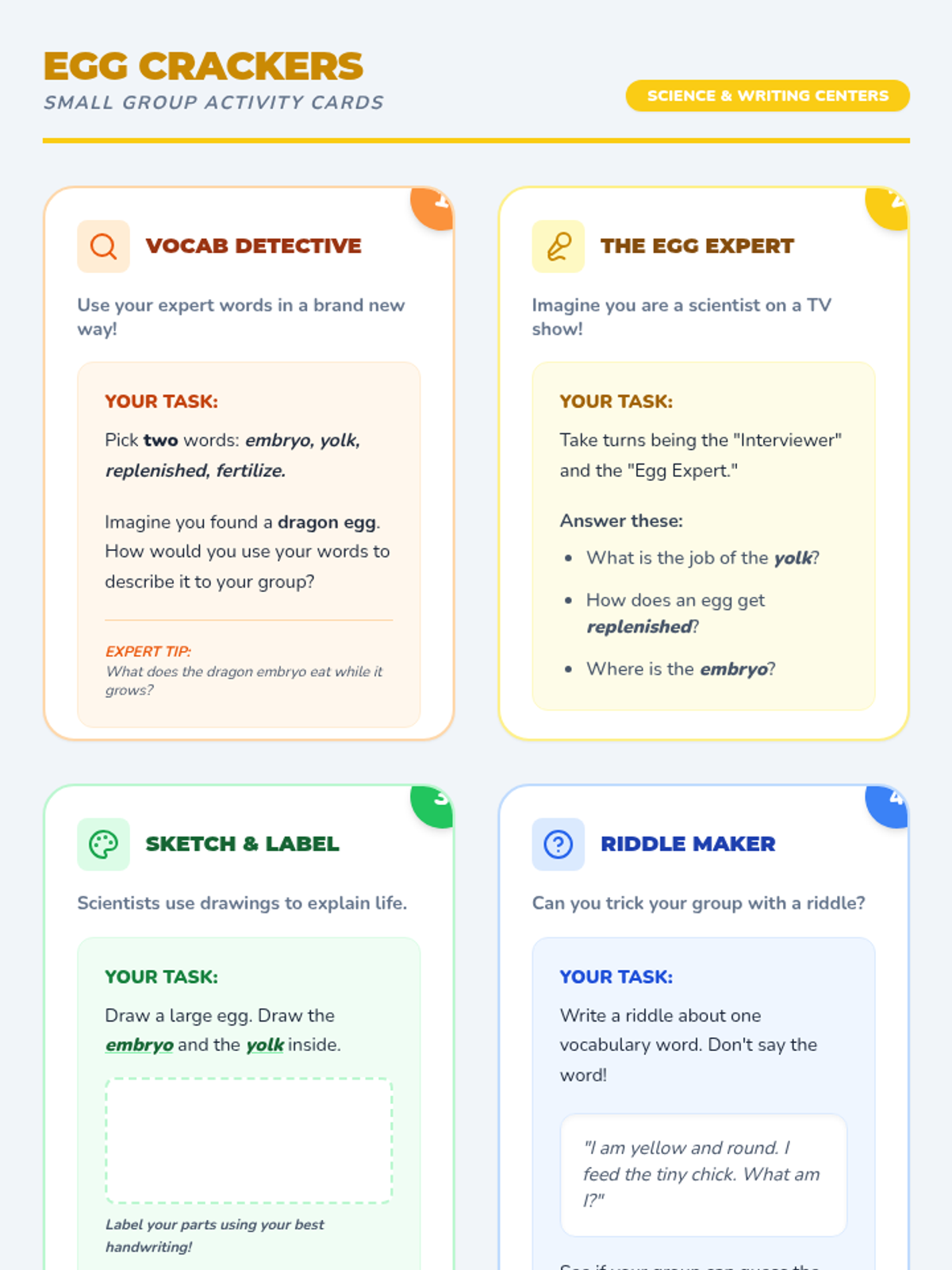
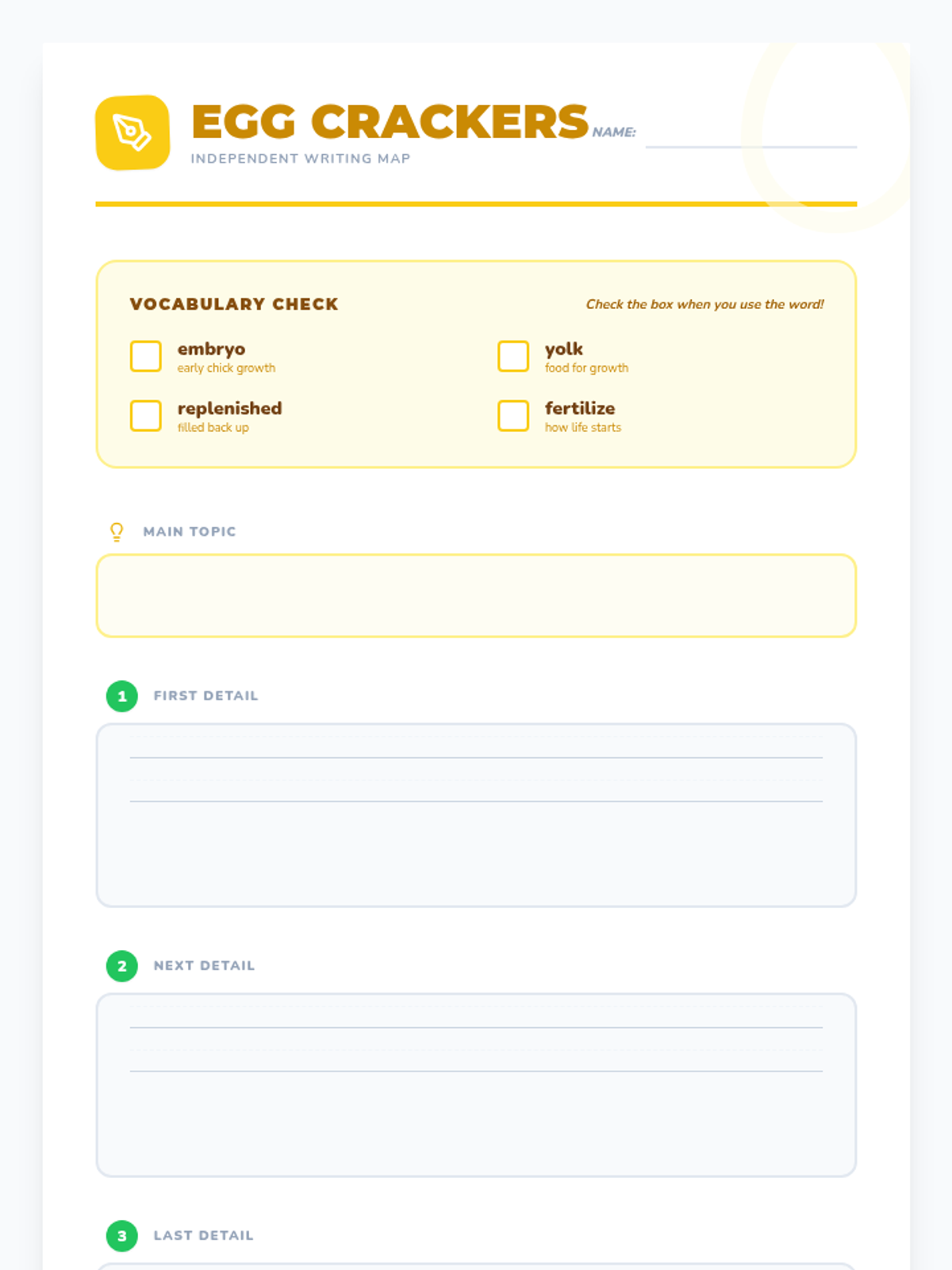
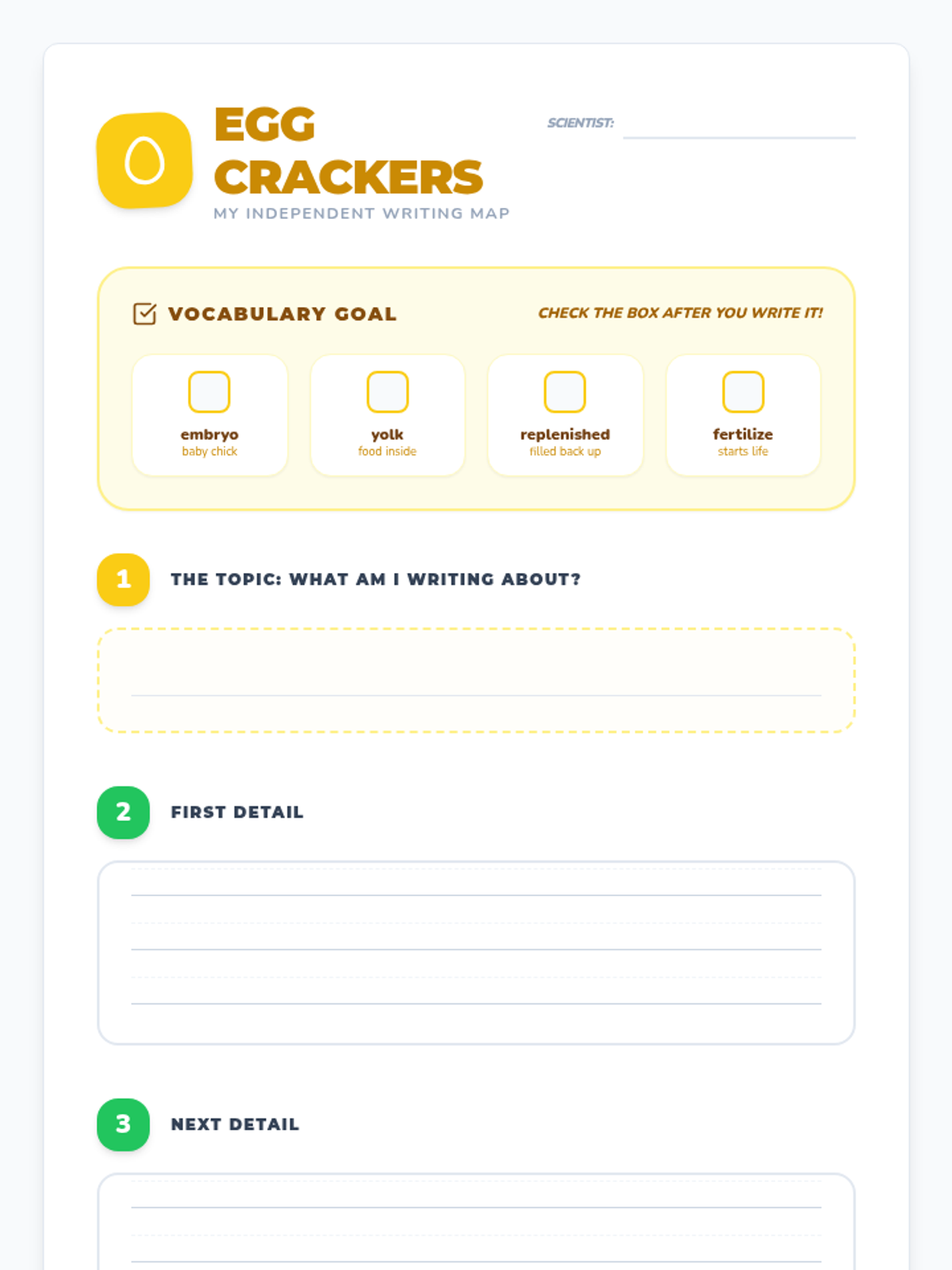
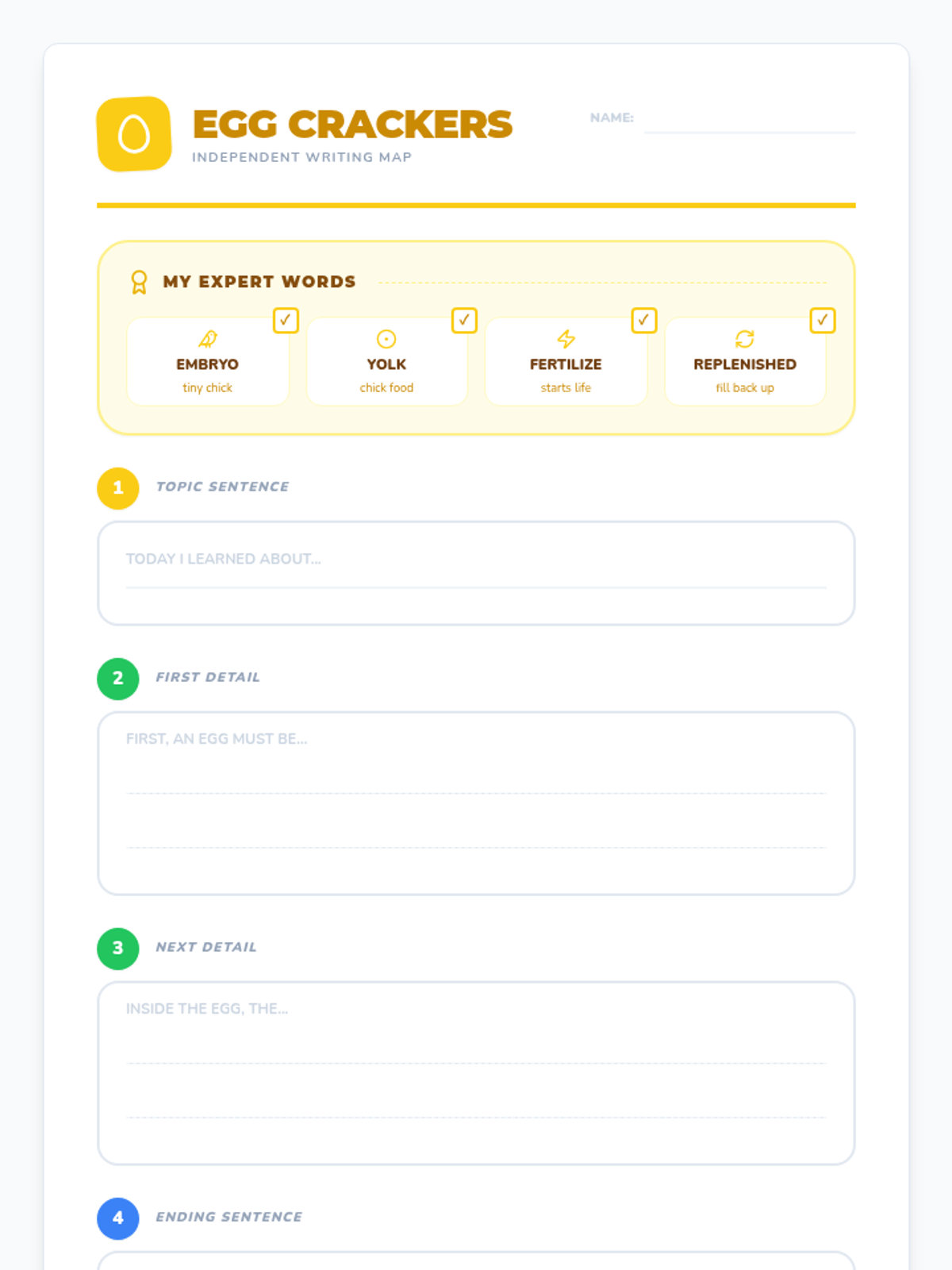
In this lesson, students explore the life cycle of a chicken and the mystery of the chicken or the egg. They use a topic and details map to organize their informative writing while mastering key vocabulary like embryo, yolk, and fertilize.
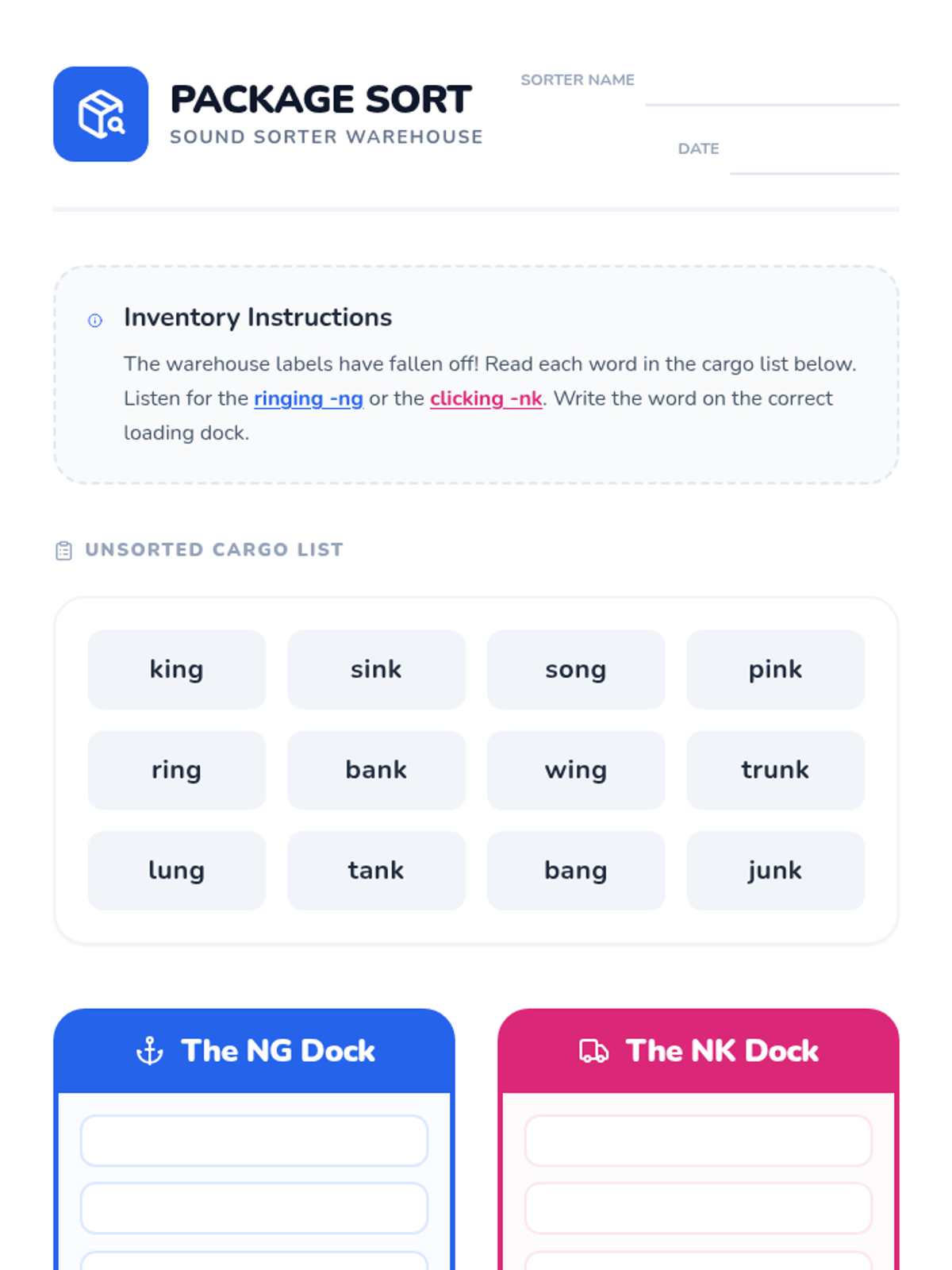
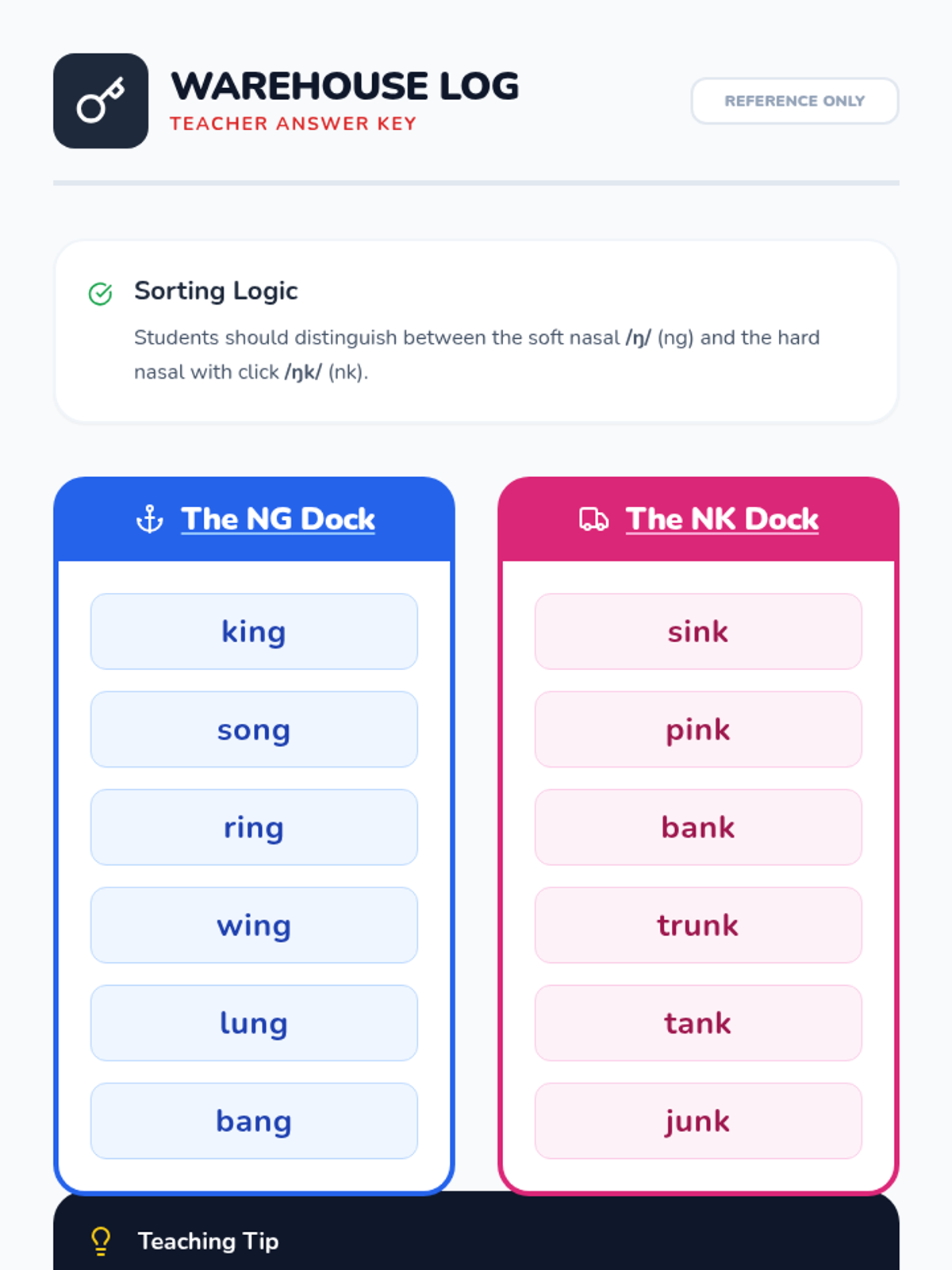
A phonics lesson focused on distinguishing between the nasal endings 'ng' and 'nk' through interactive sorting and visual aids. Students learn to hear the subtle 'k' click in 'nk' versus the continuous nasal 'ng'.
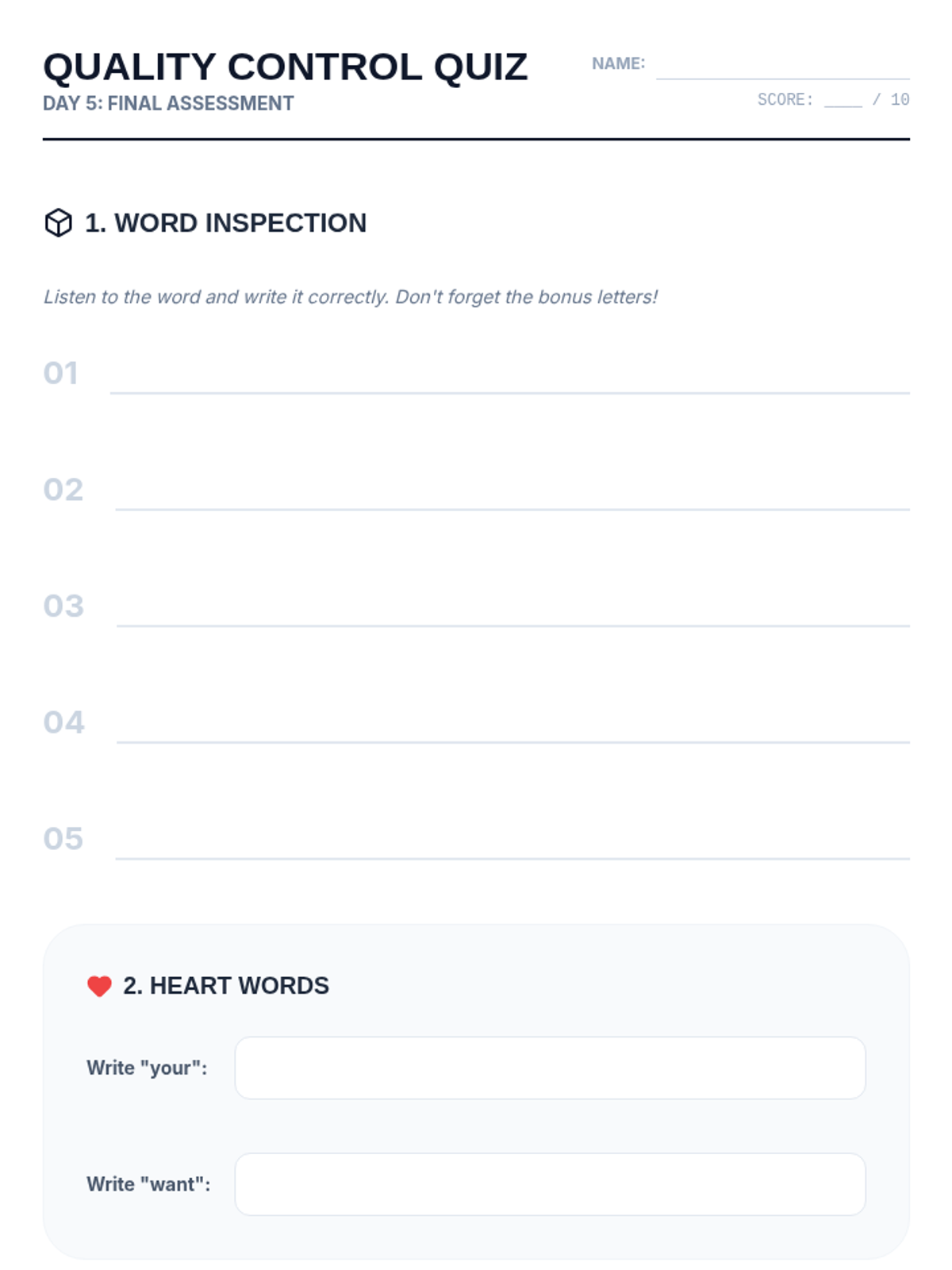
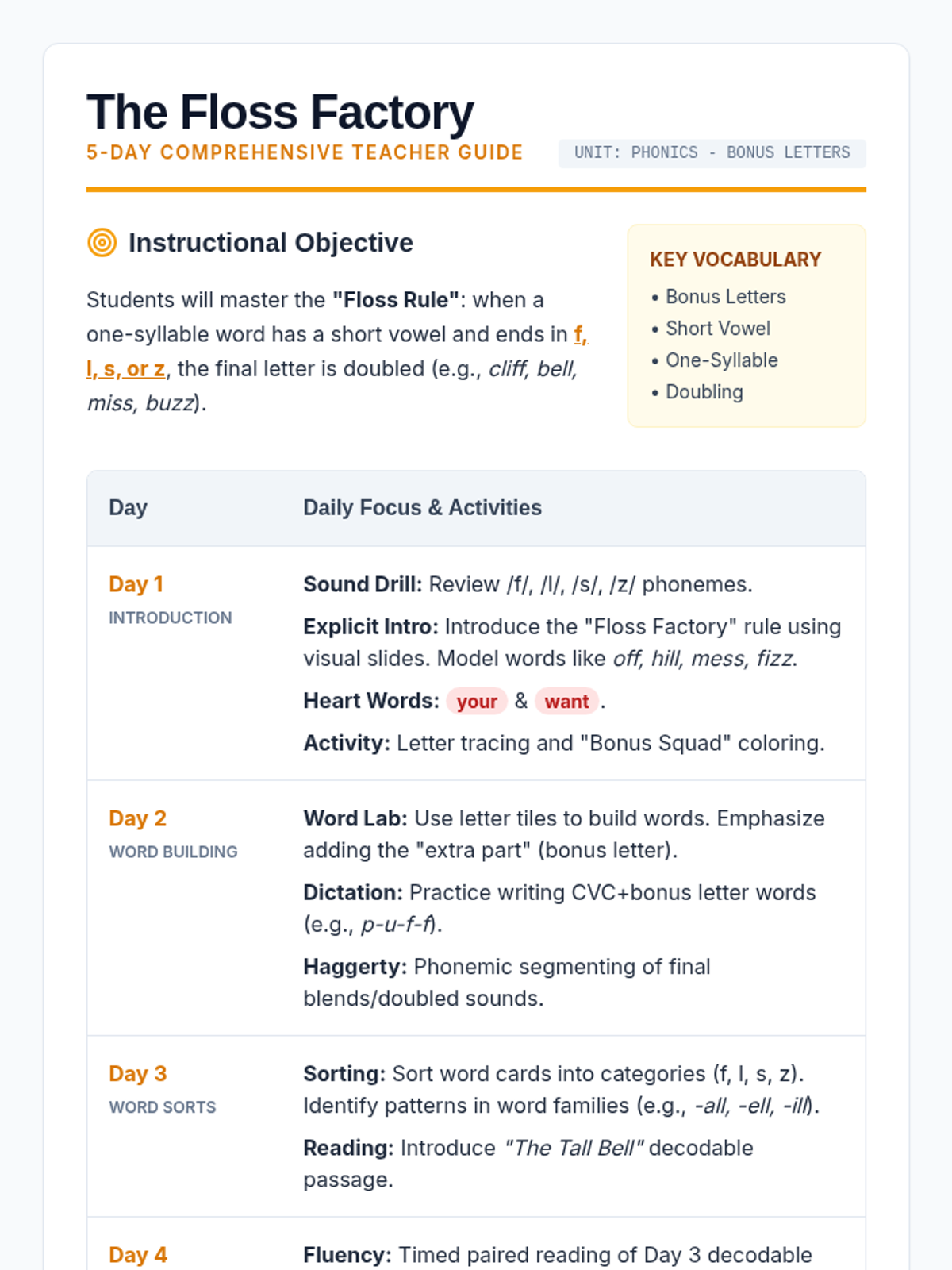
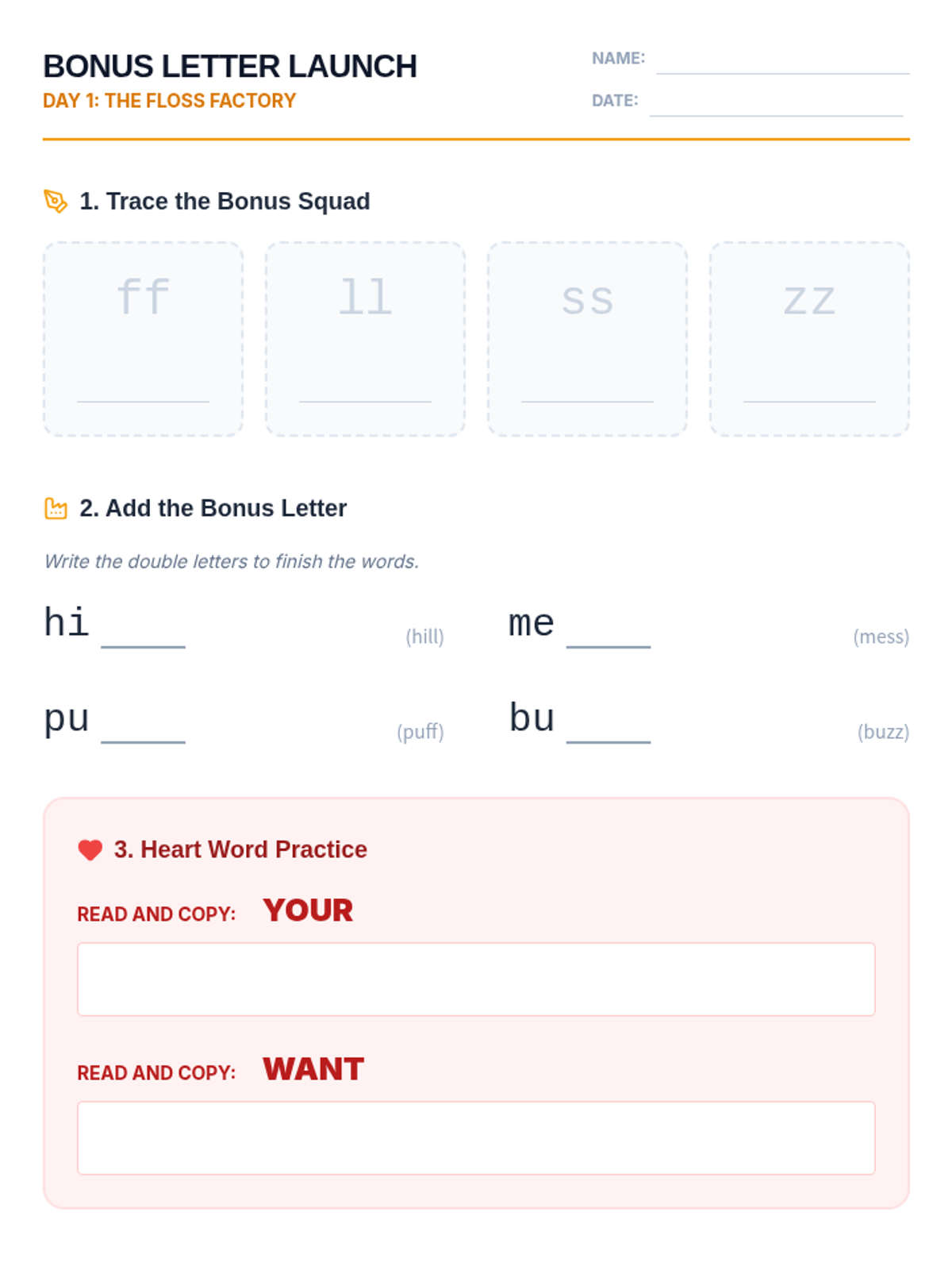
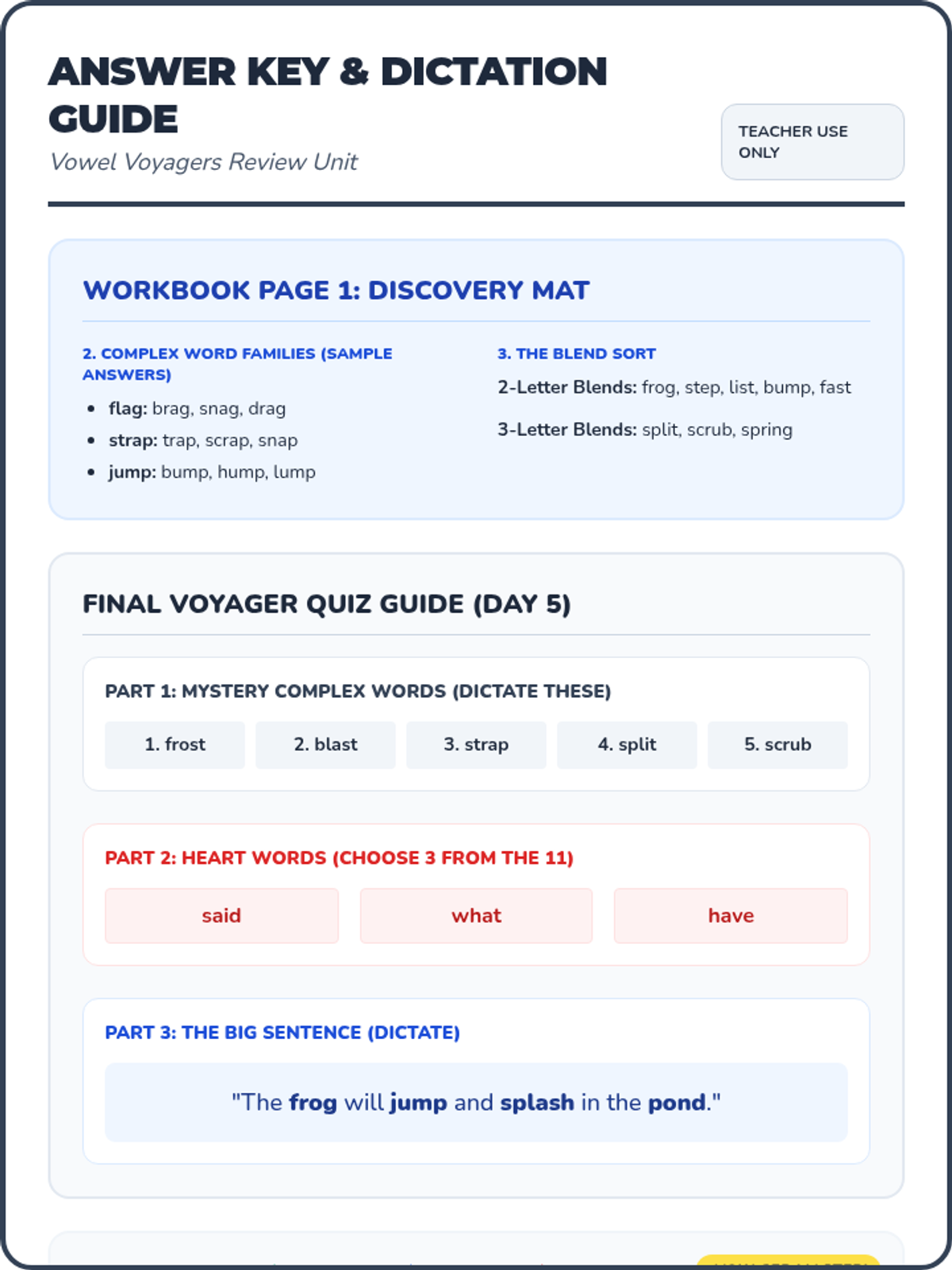
Final assessment of the Floss rule and heart words. Includes dictation and a creative word family exercise.
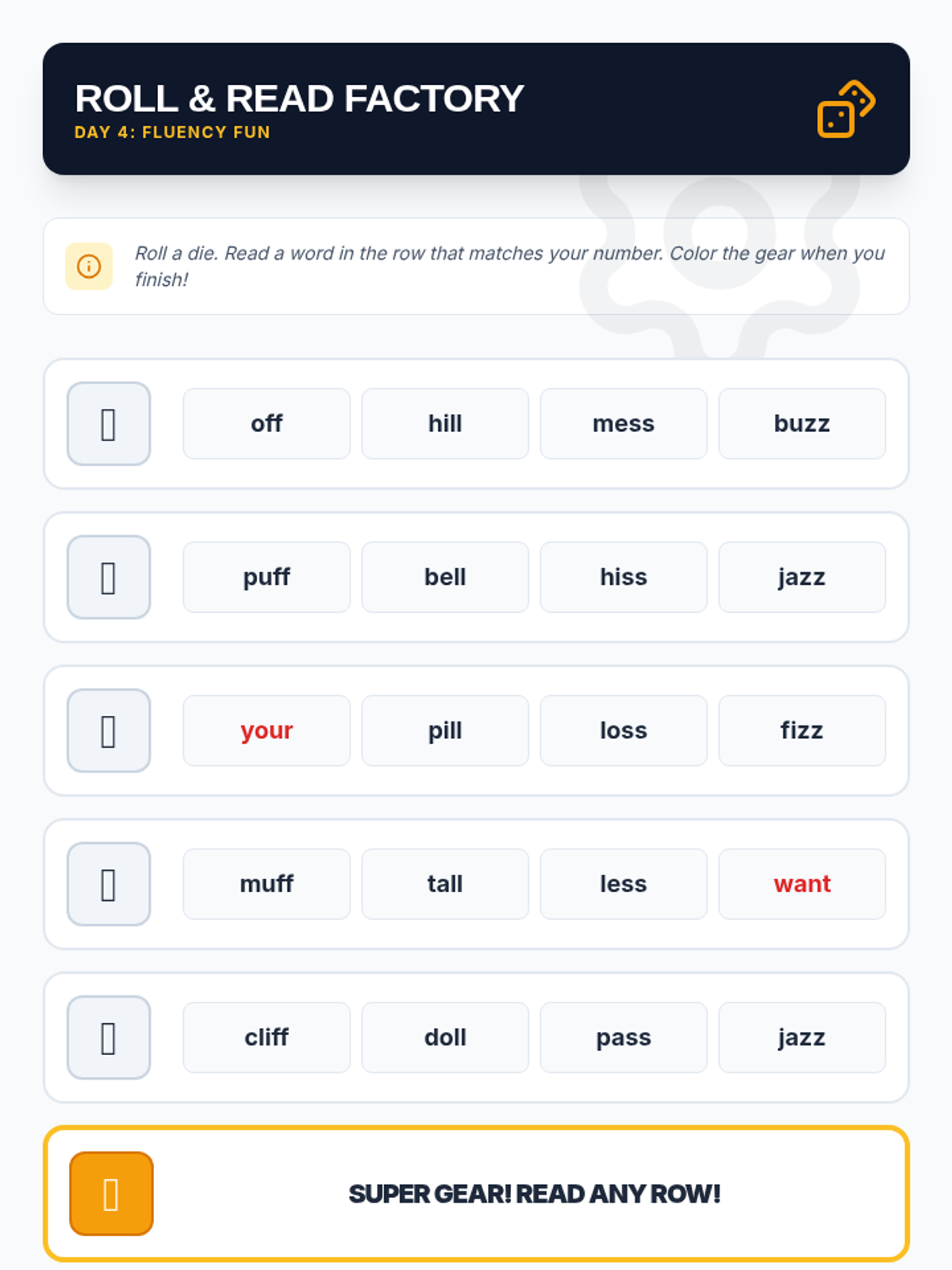
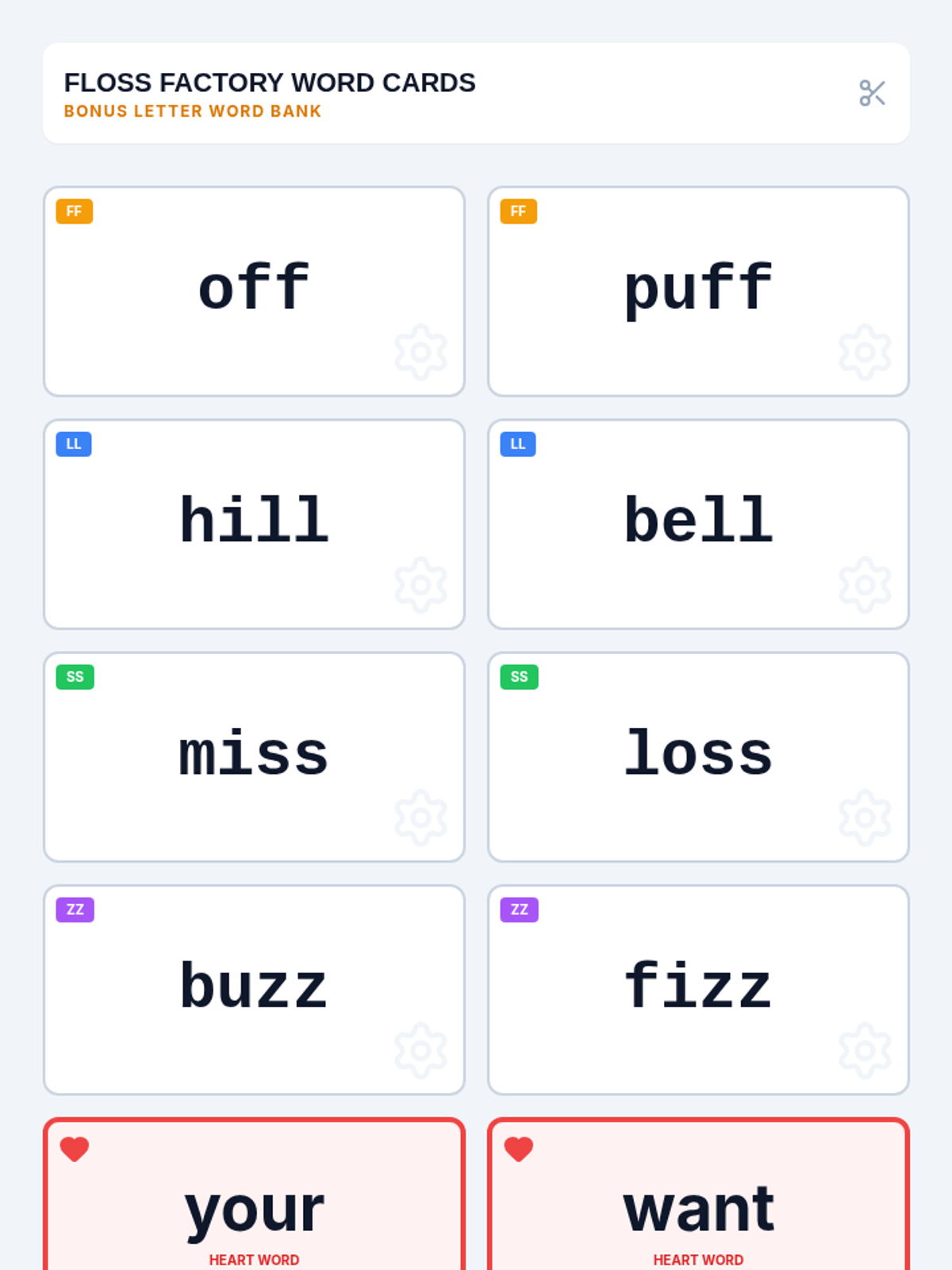
Fluency building and phonics games. Students practice rapid reading of bonus letter words and construct sentences.
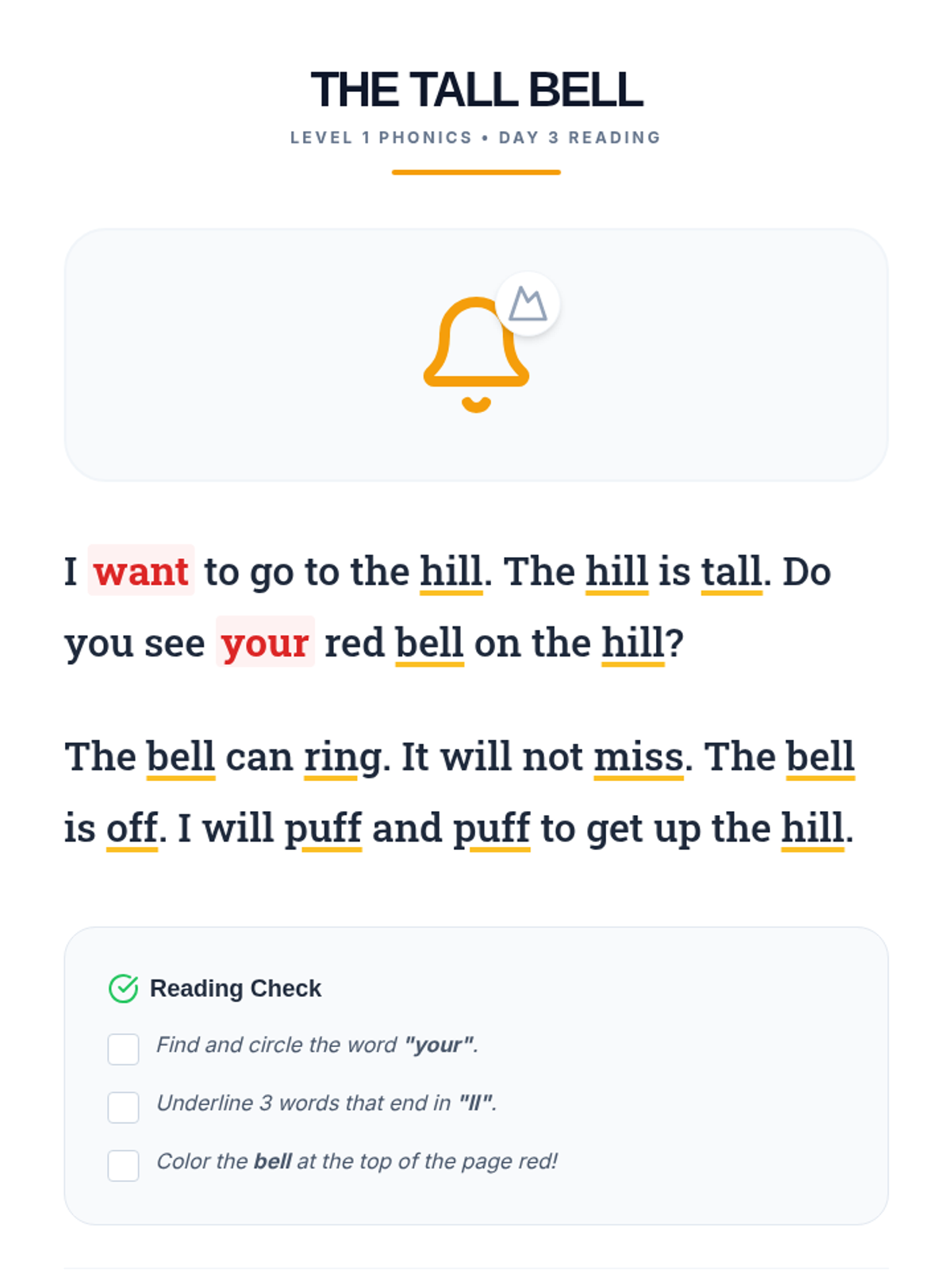
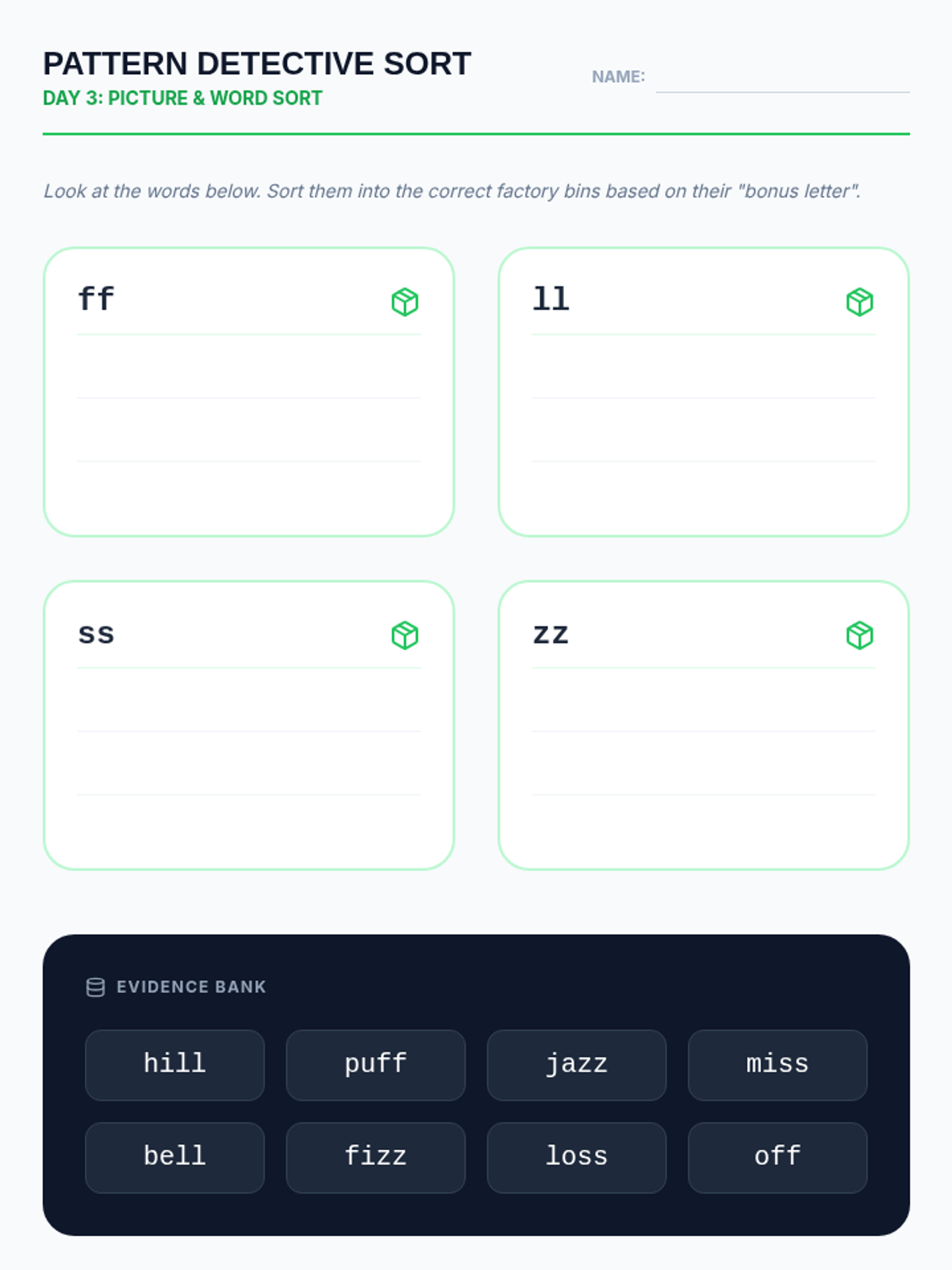
Application through word sorting and decodable reading. Students identify word families and read words in context.
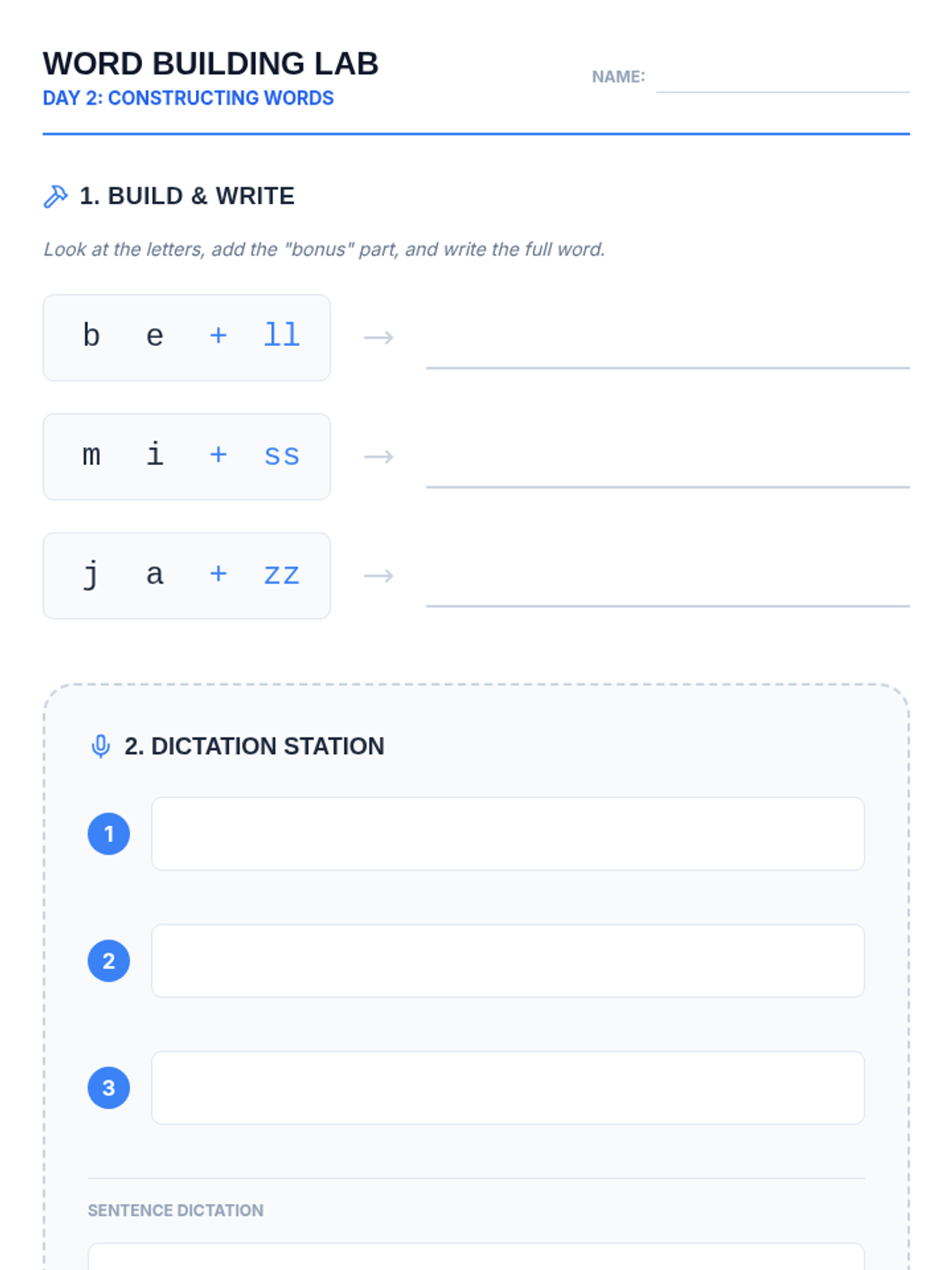
Focus on word building and dictation. Students use letter tiles to practice doubling final consonants and apply heart word knowledge in writing.
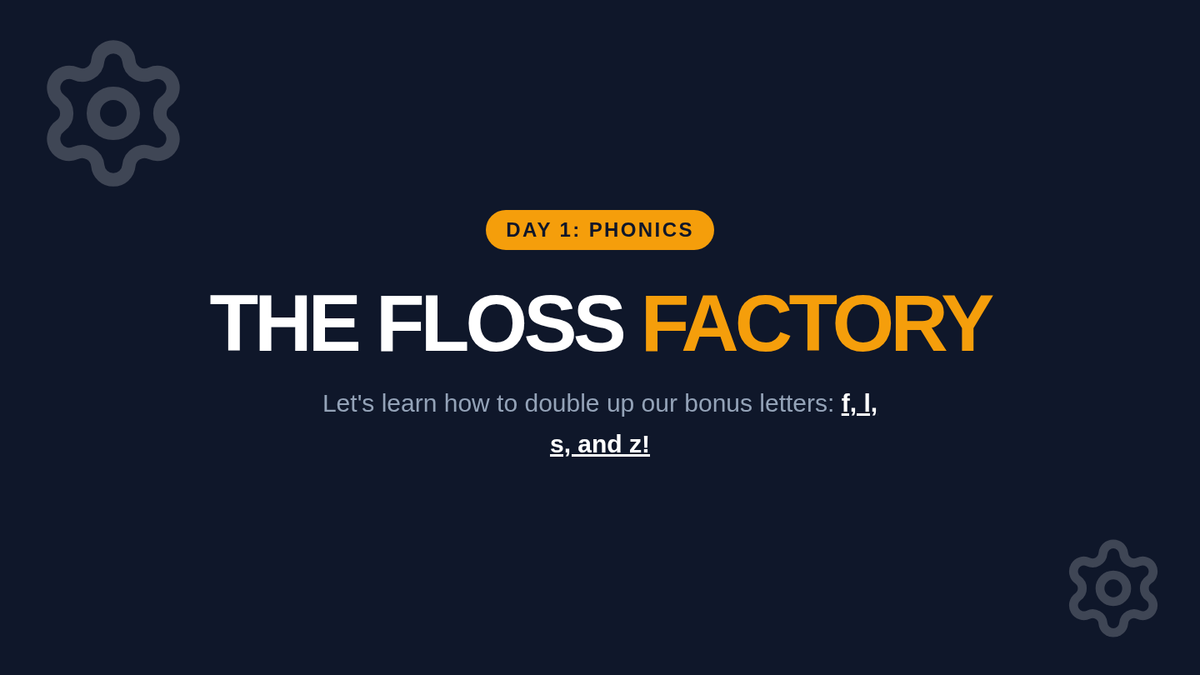
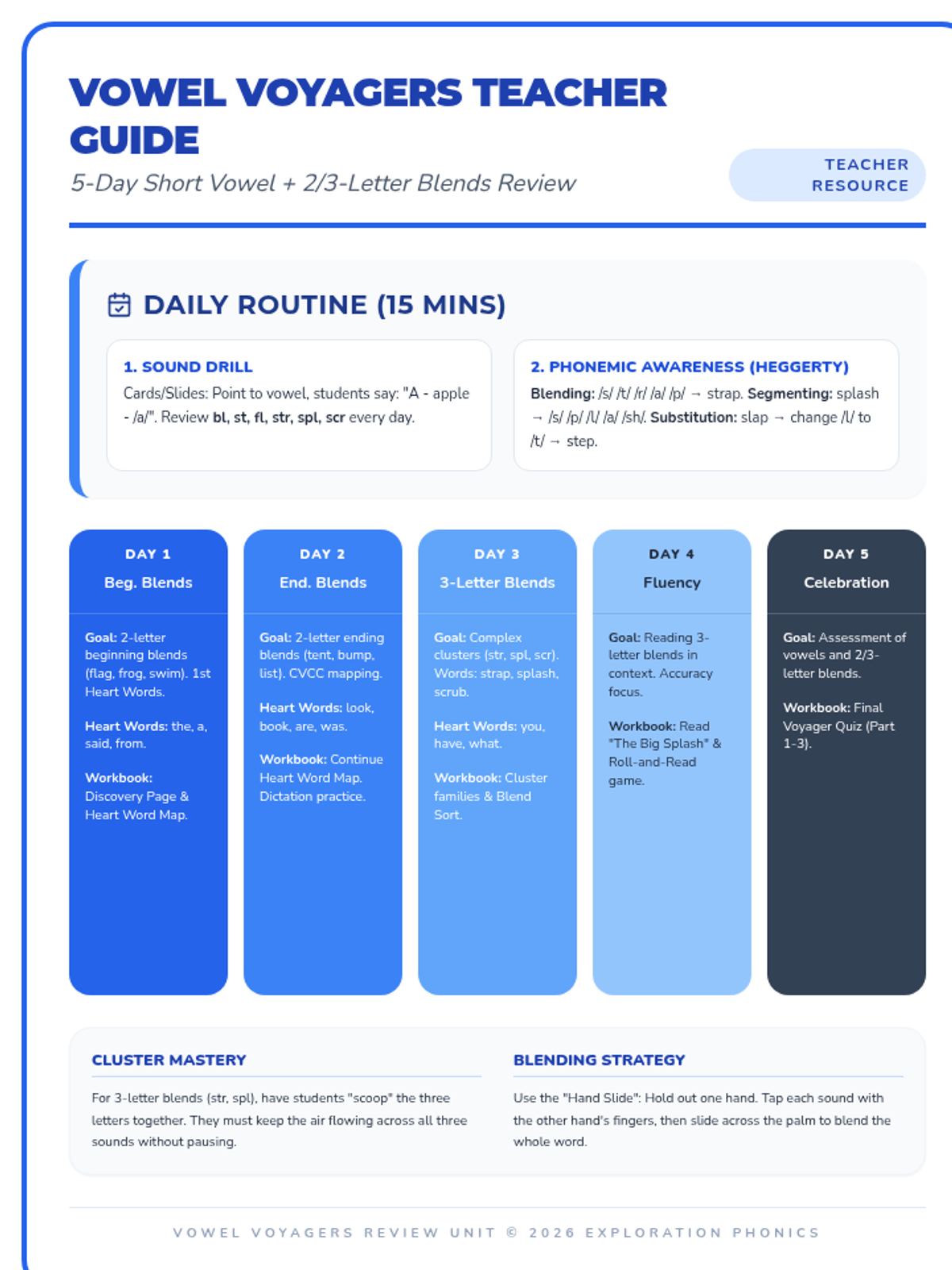
Introduction to the bonus letters f, l, s, and z. Students learn the rule that when a one-syllable word ends in f, l, s, or z after a short vowel, the letter is doubled. Includes the teacher guide for the full week.
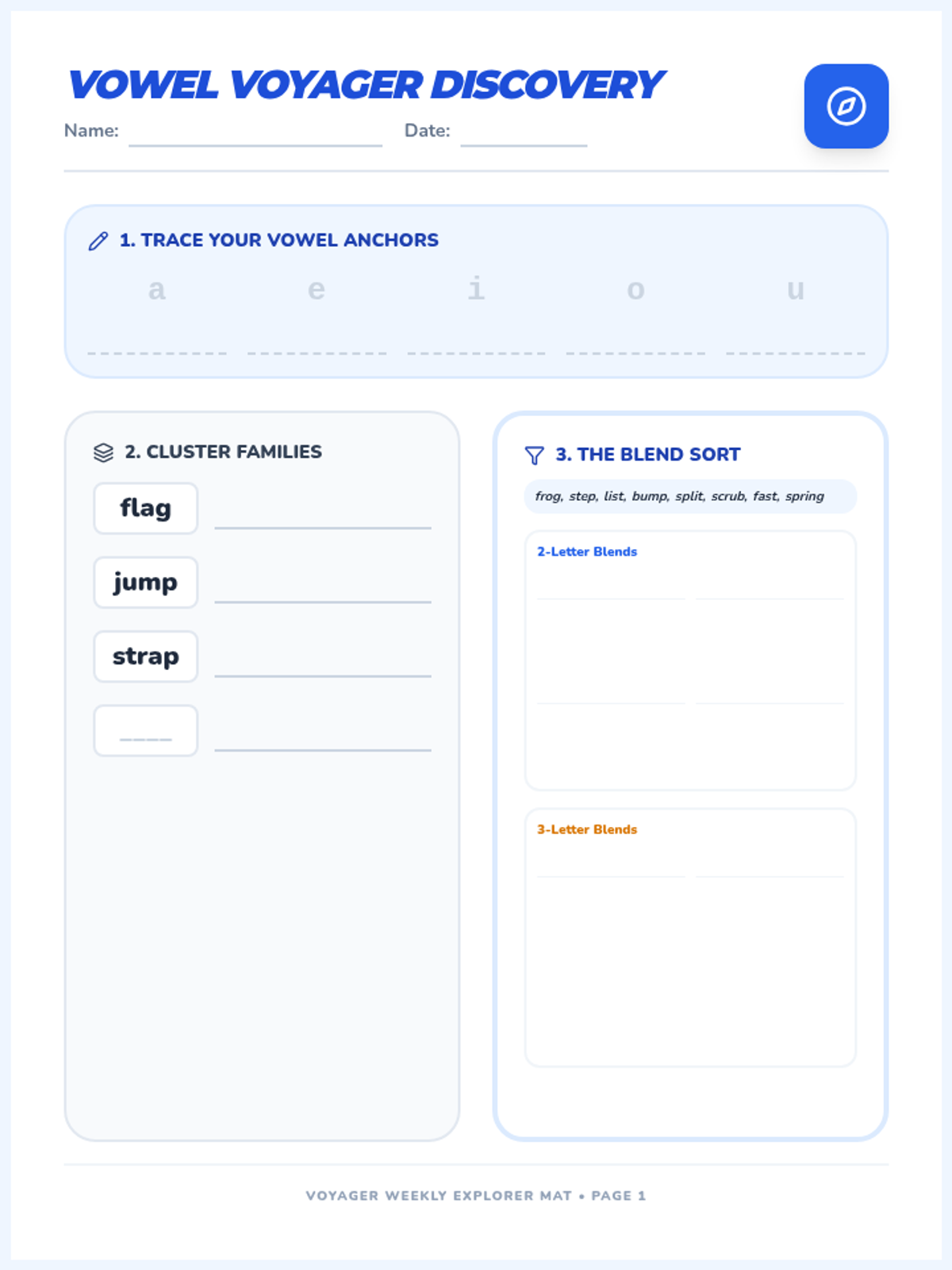
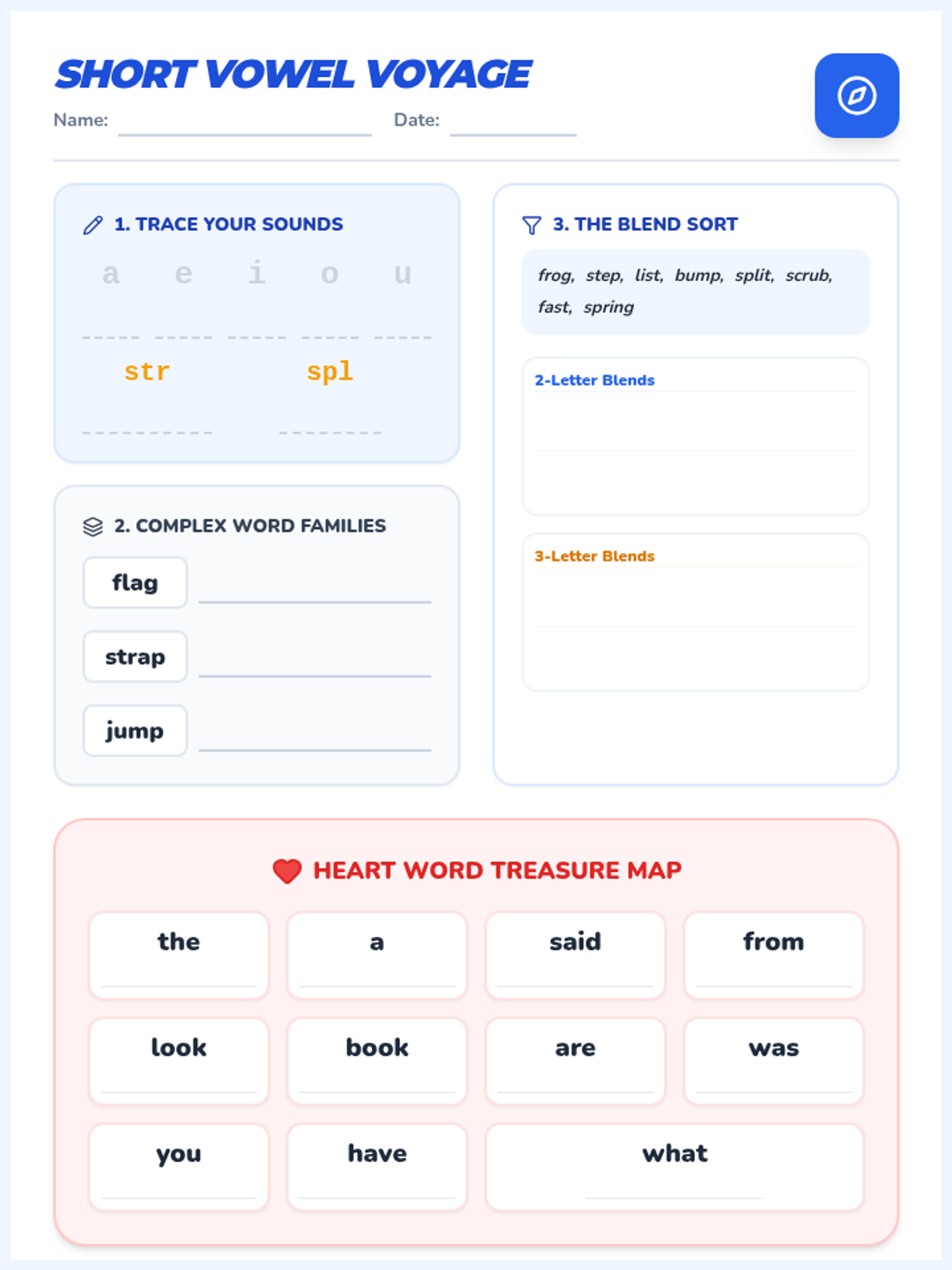
A comprehensive week-long unit reviewing short vowels through explicit instruction, multisensory practice, and decodable text application.
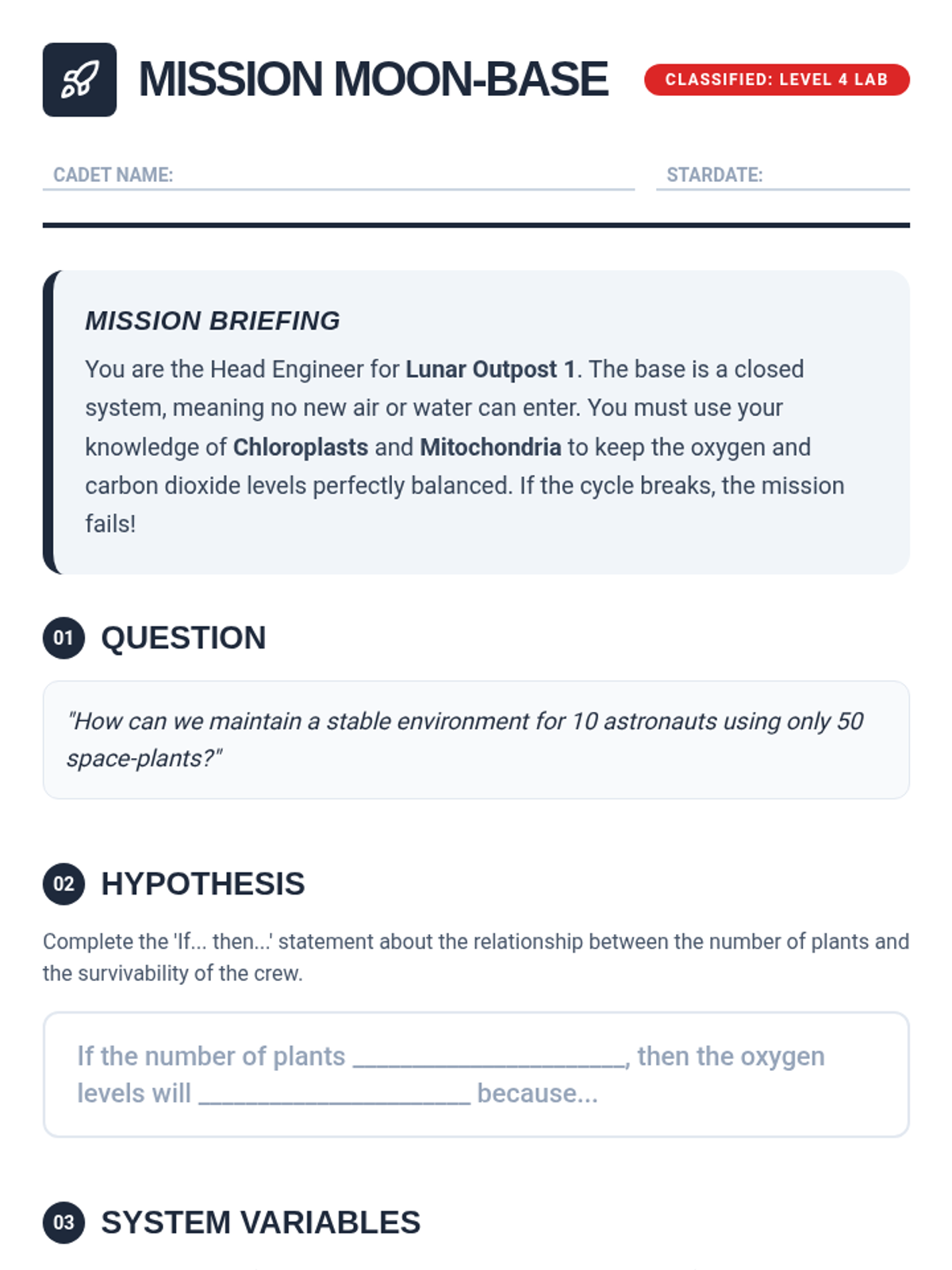
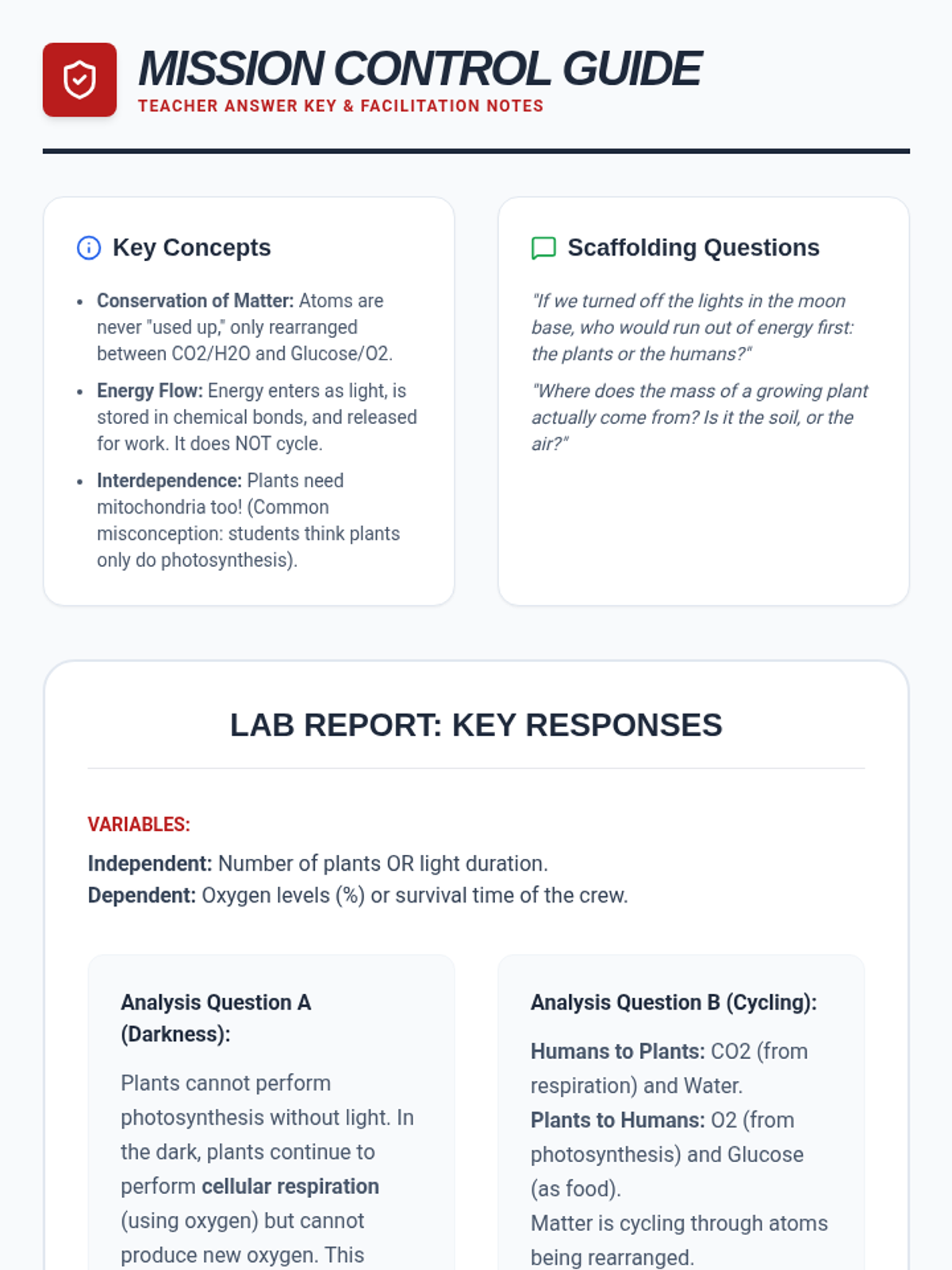
The culminating lesson where students synthesize their knowledge of chloroplasts and mitochondria. They will conduct a 'Mission Moon-Base' hypothetical lab using the scientific method to balance a closed-loop life support system.
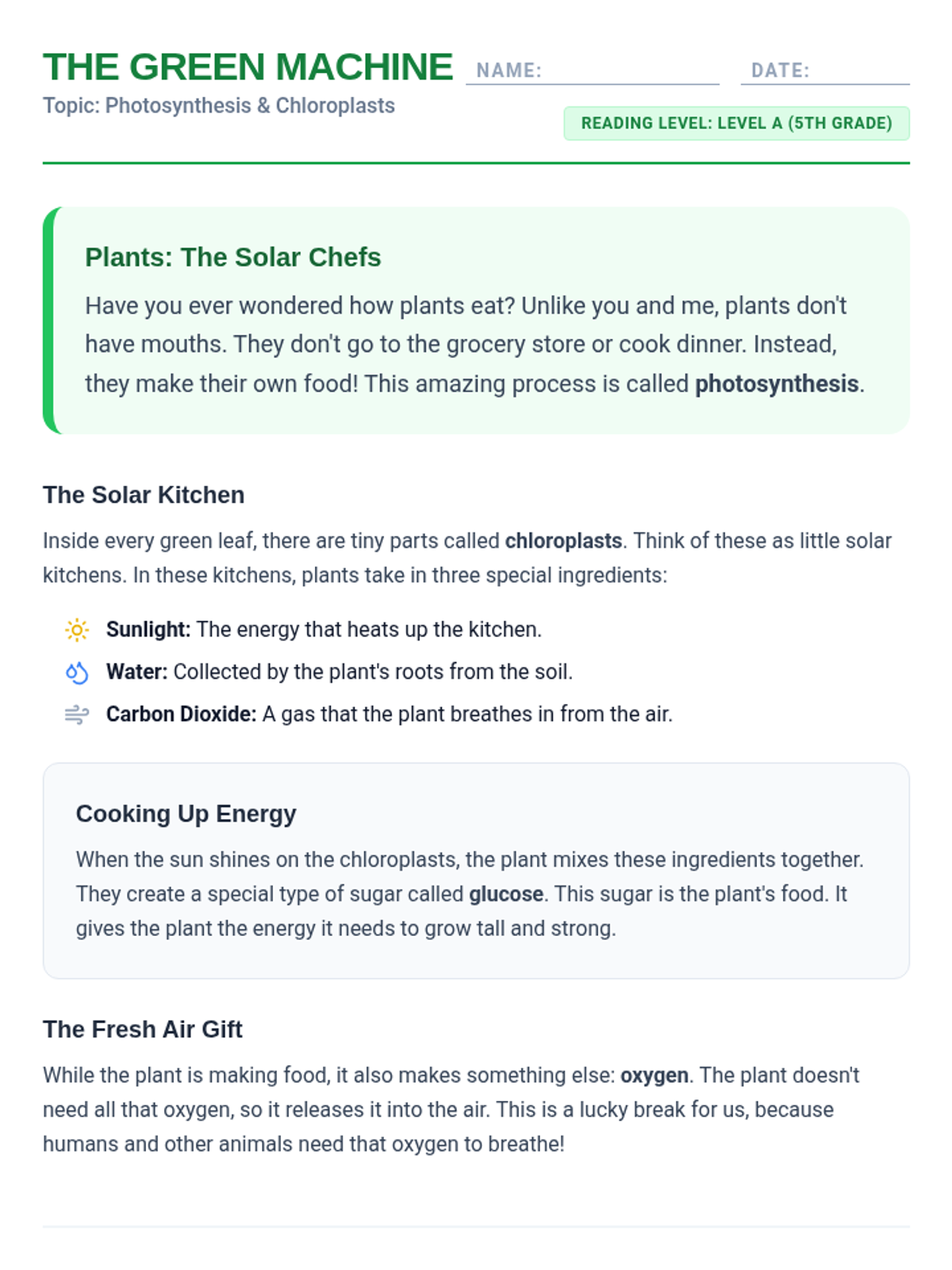
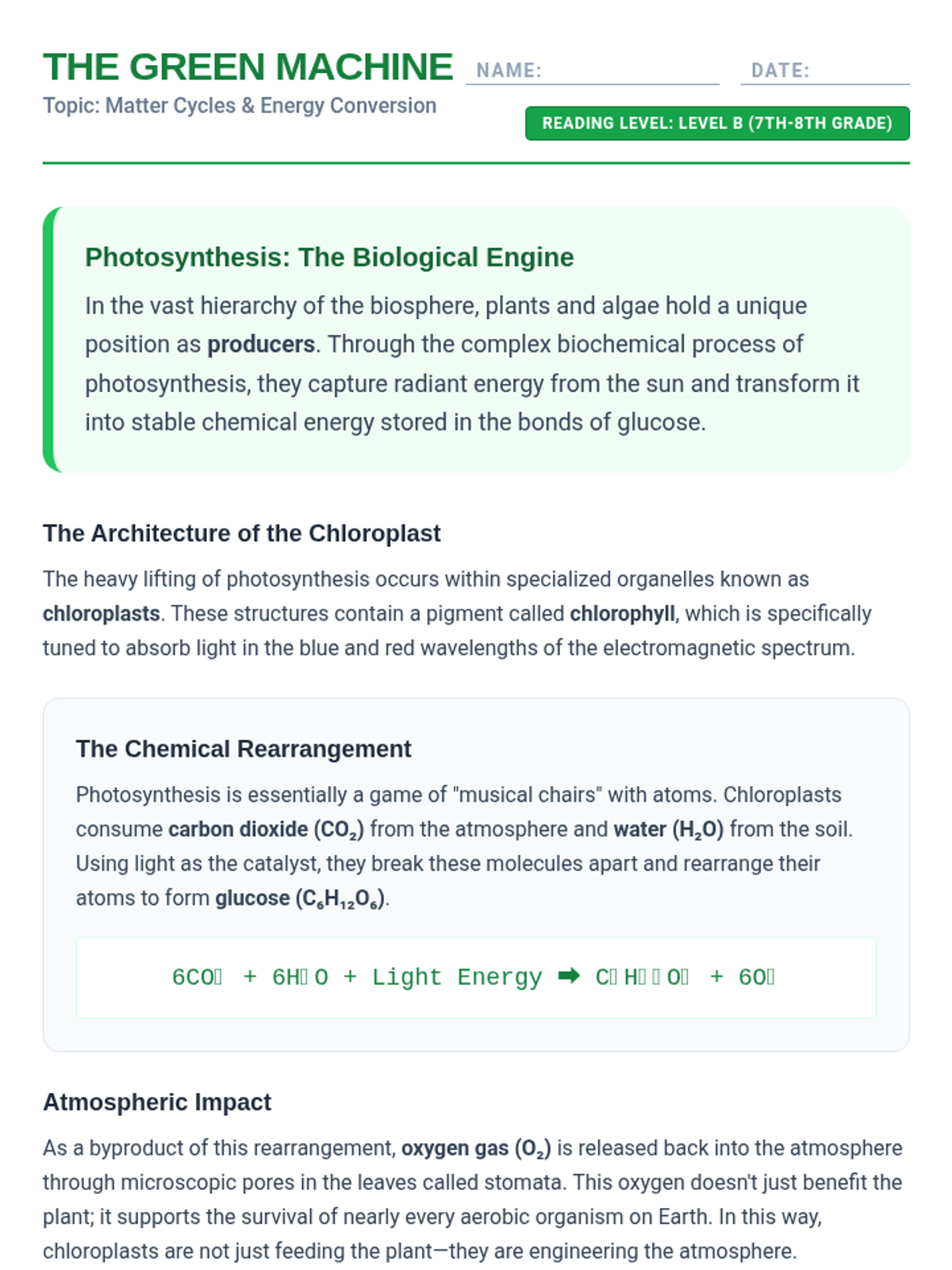
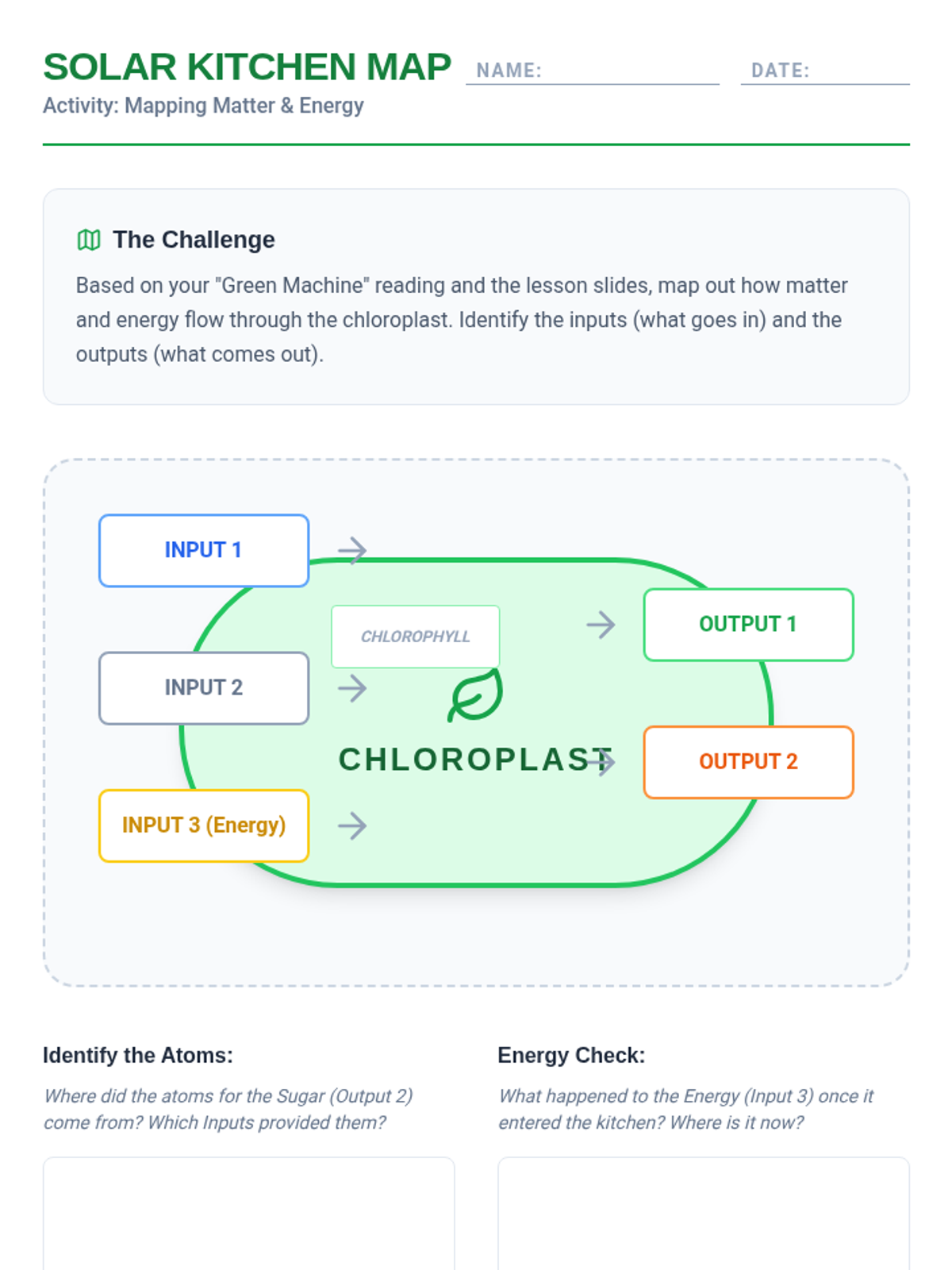
An introductory exploration of photosynthesis and the structure of chloroplasts, framing them as the 'solar kitchens' of the cell. Students will read differentiated texts and map out the inputs and outputs of the process.
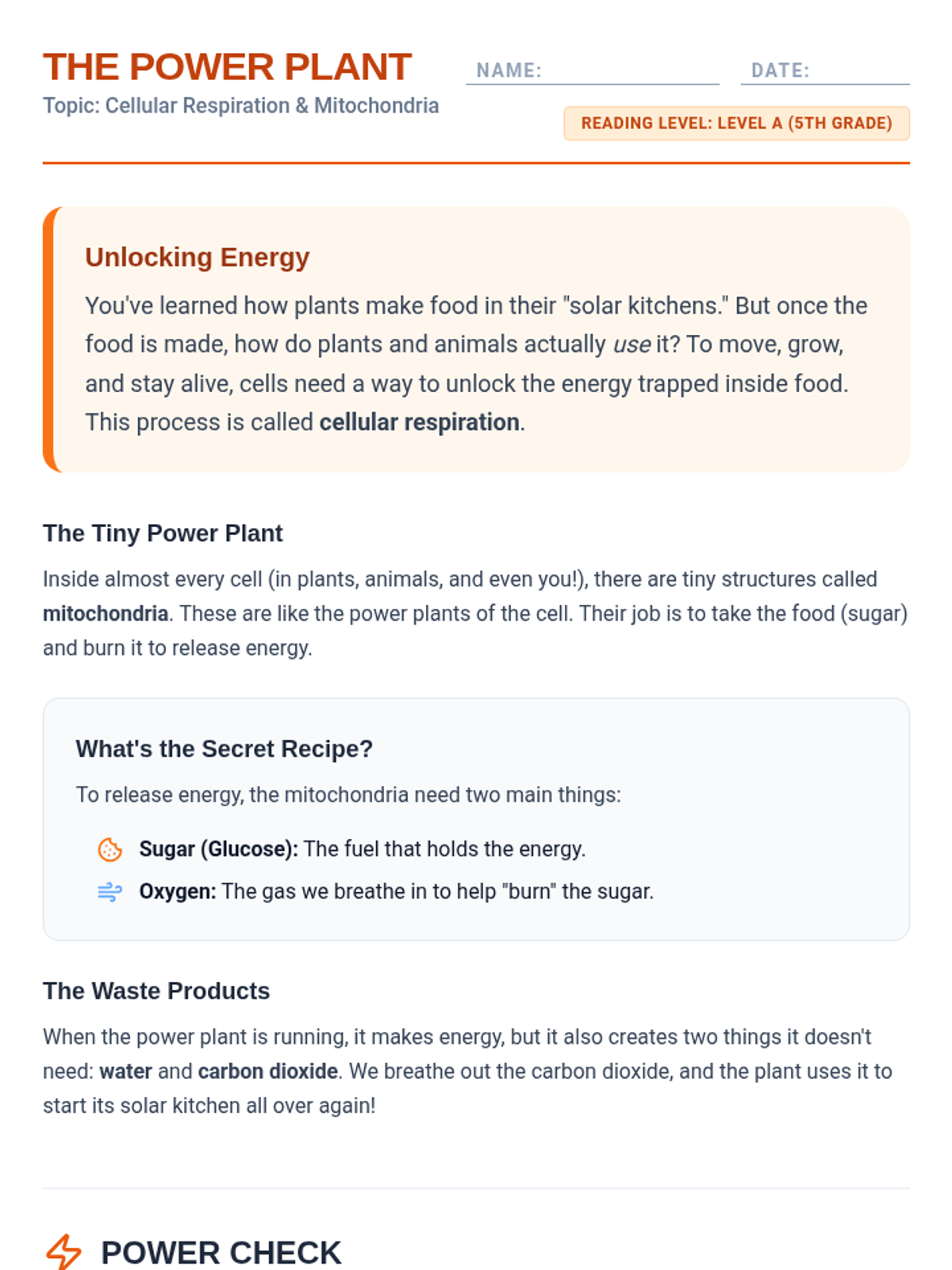
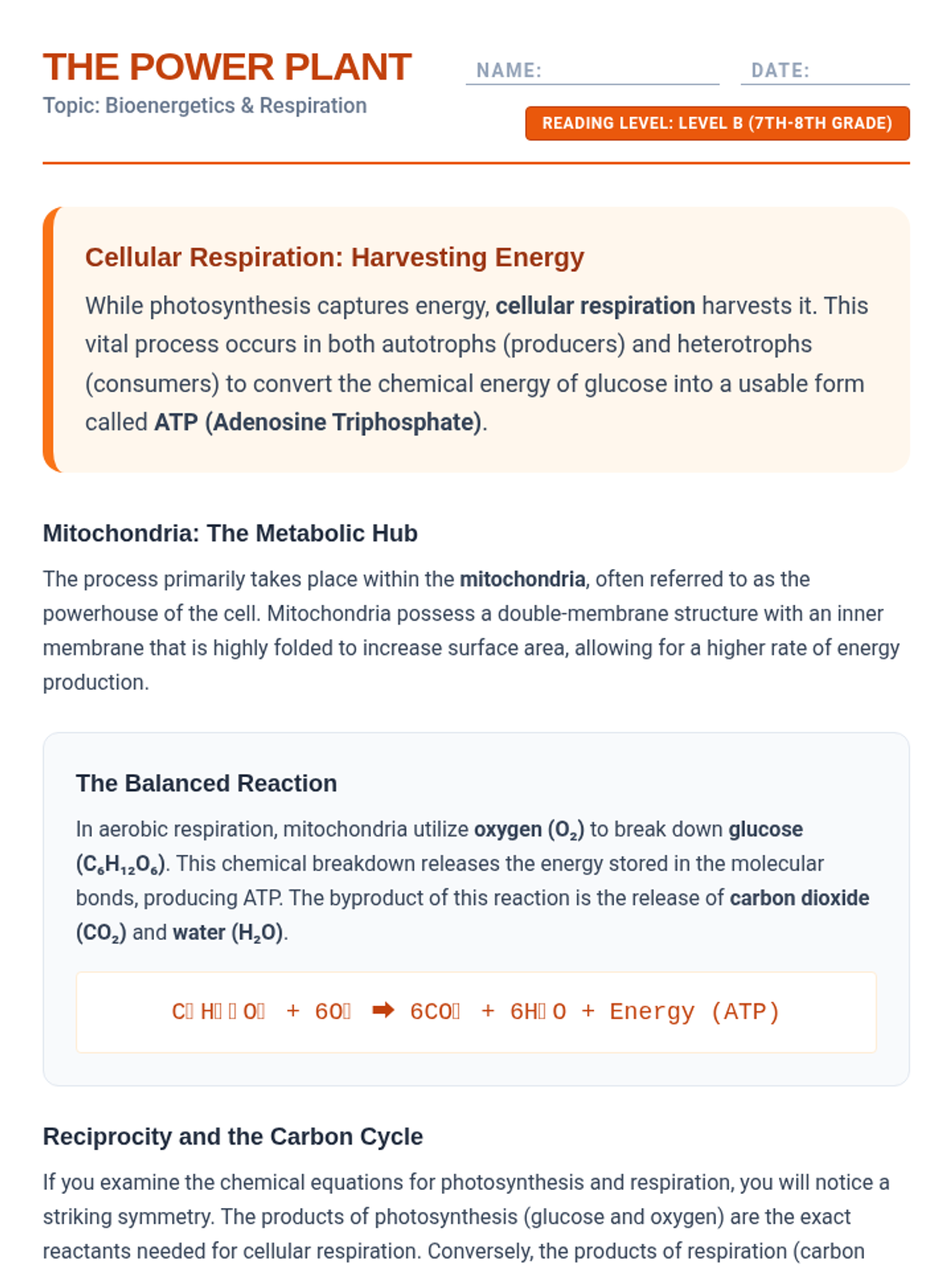
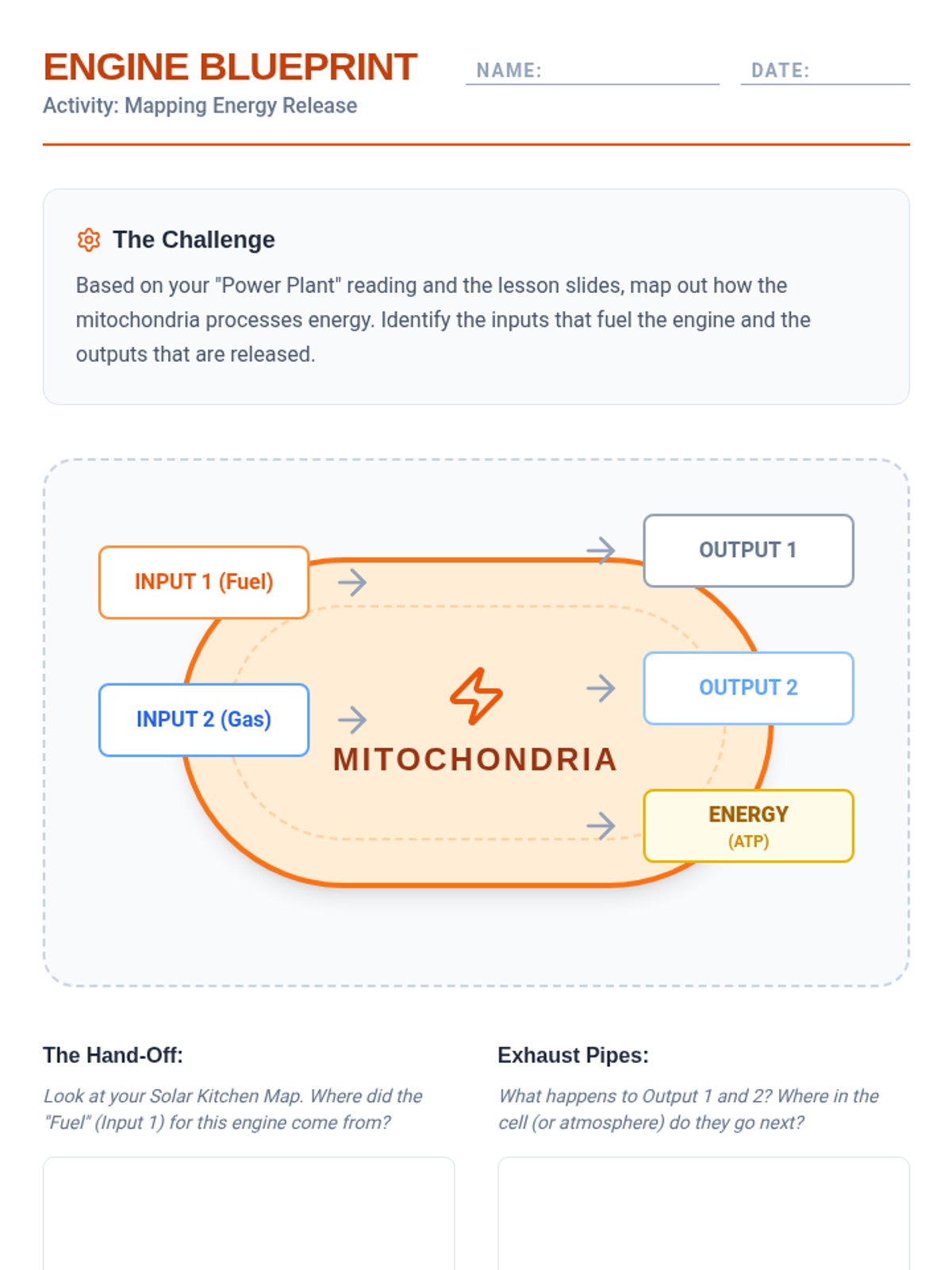
An exploration of cellular respiration and mitochondria, framing them as the 'energy engines' that power life. Students will compare and contrast this process with photosynthesis to prepare for the final lab.
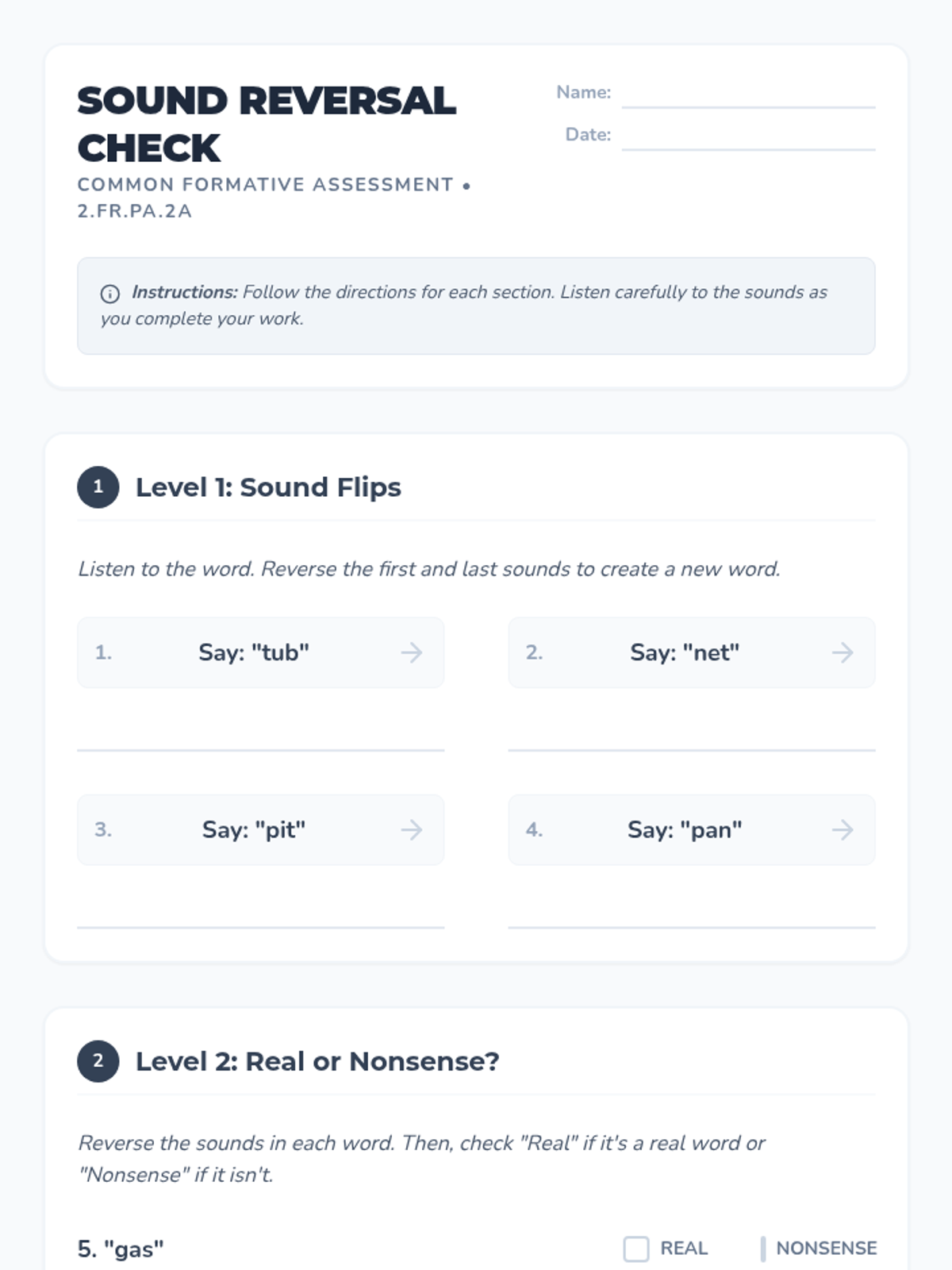
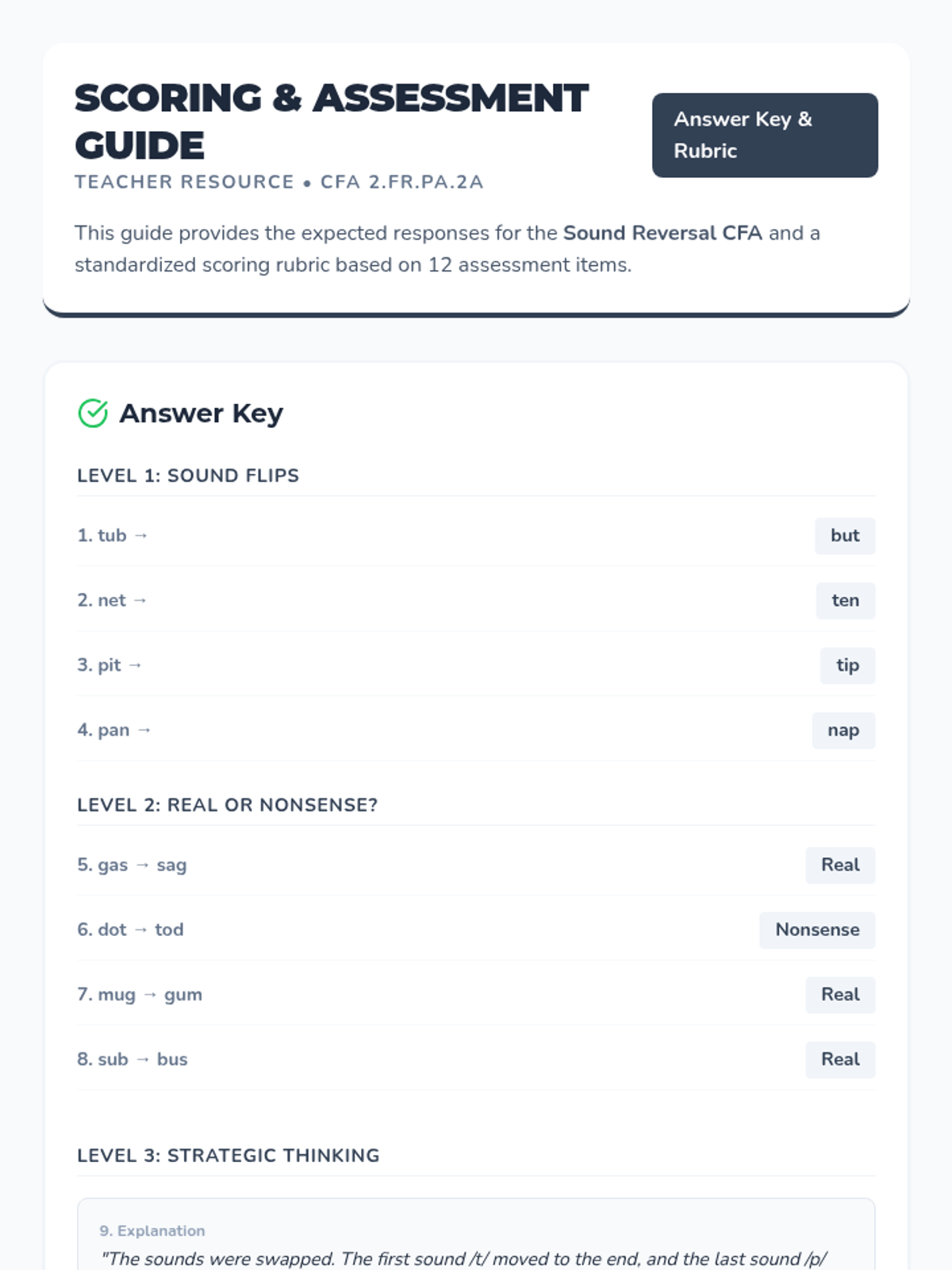
This lesson focuses on phonemic awareness through the manipulation of sounds, specifically reversing phonemes in one-syllable words to build foundational reading and spelling skills.
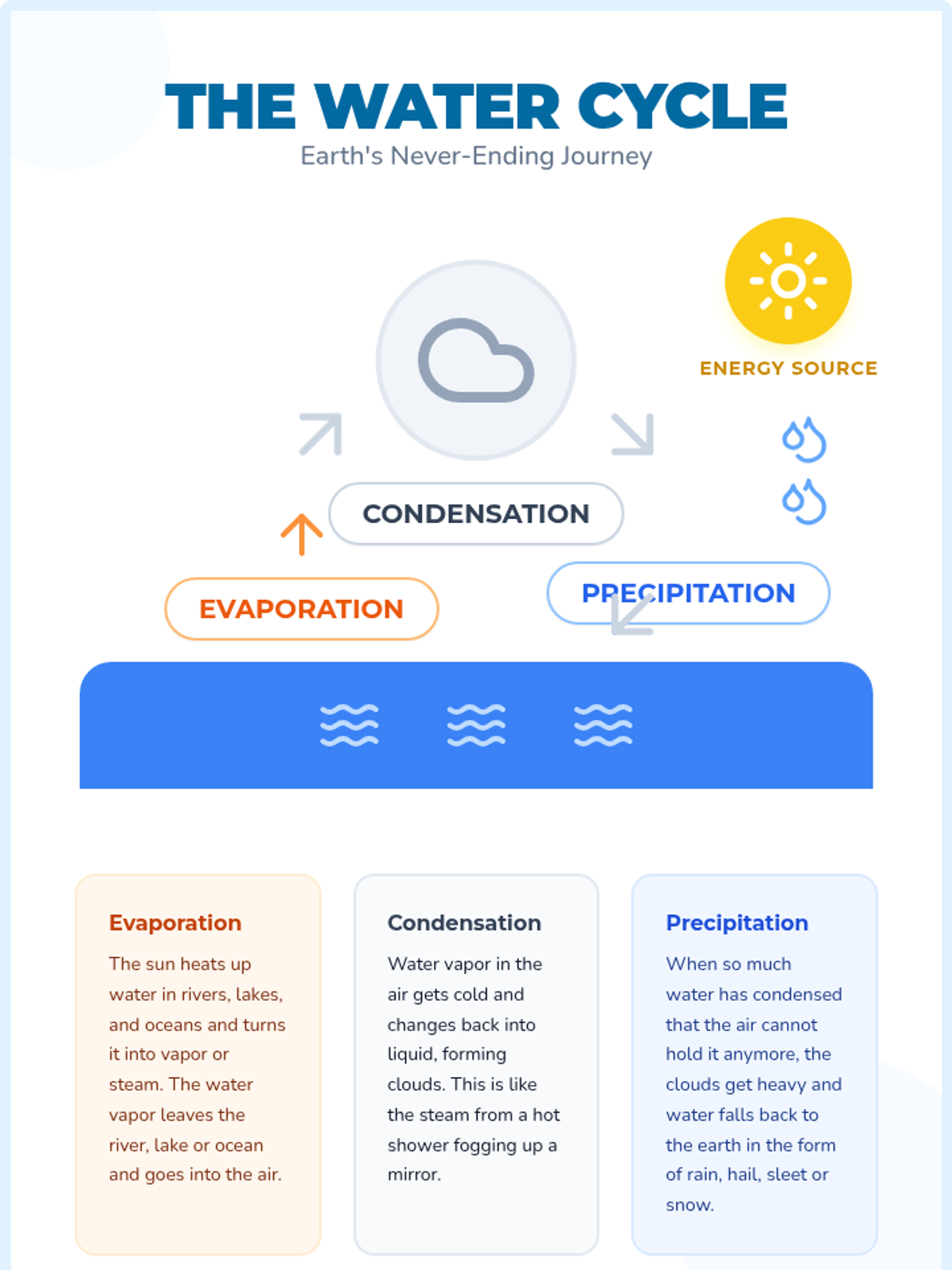
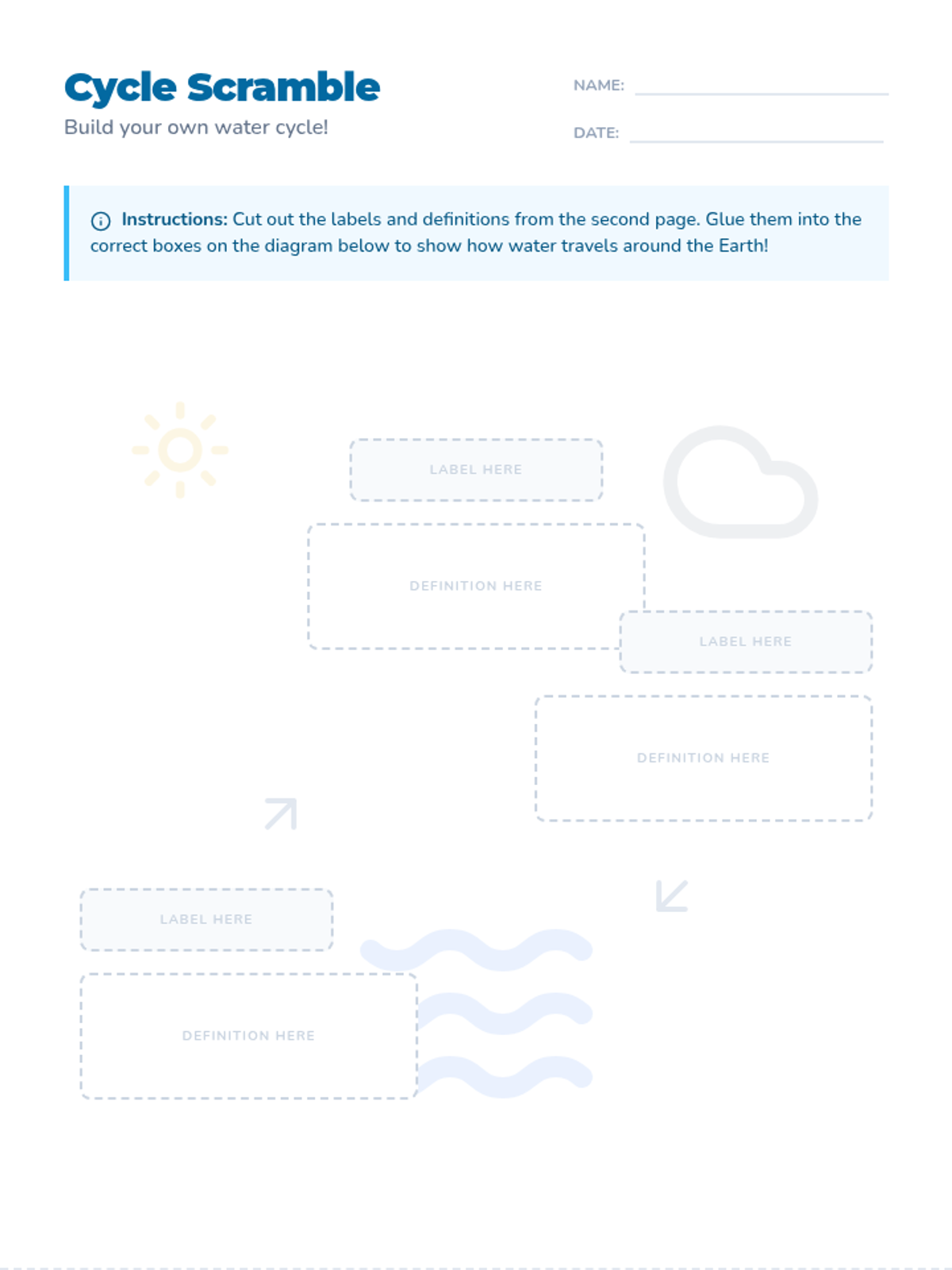
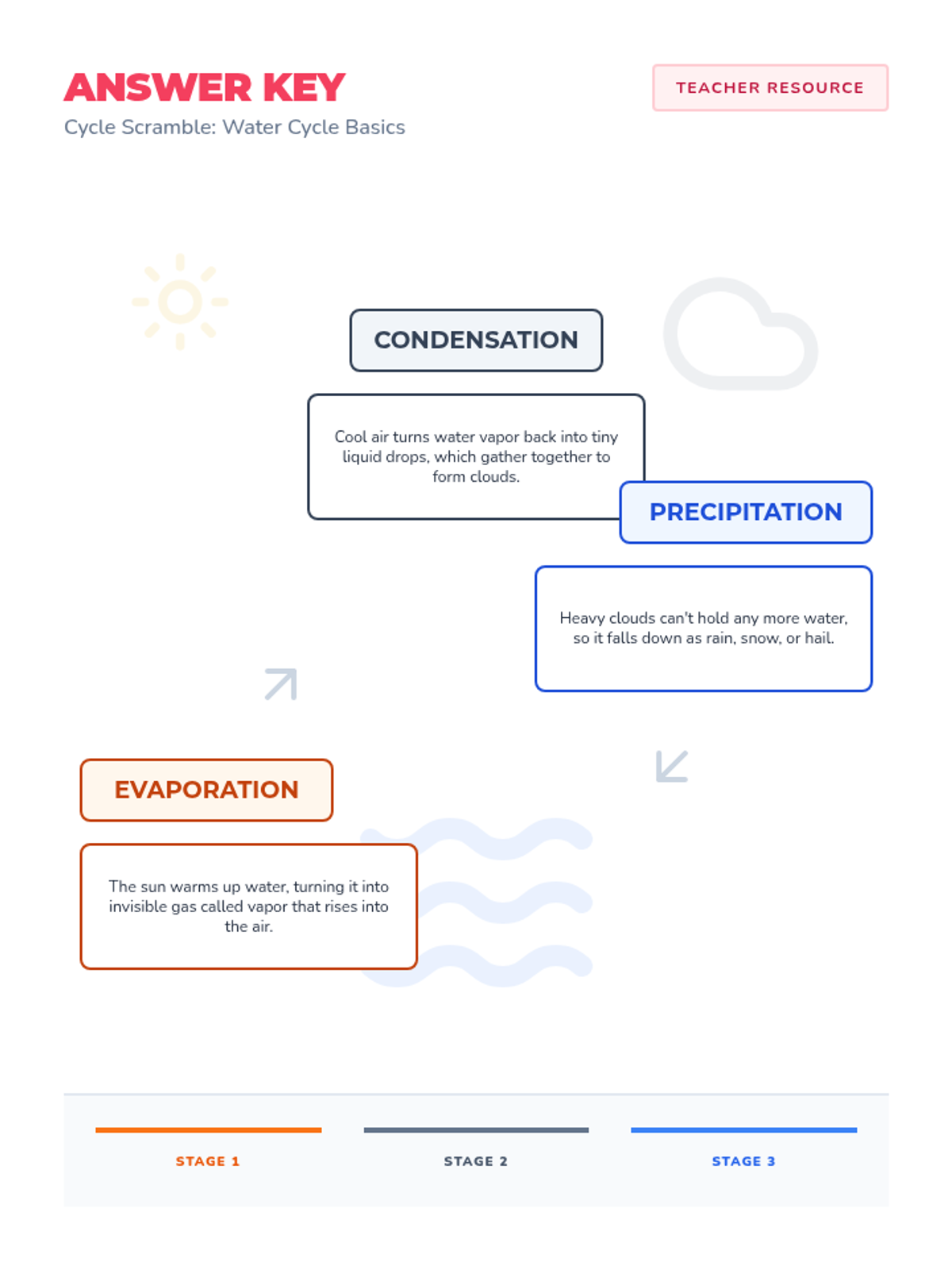
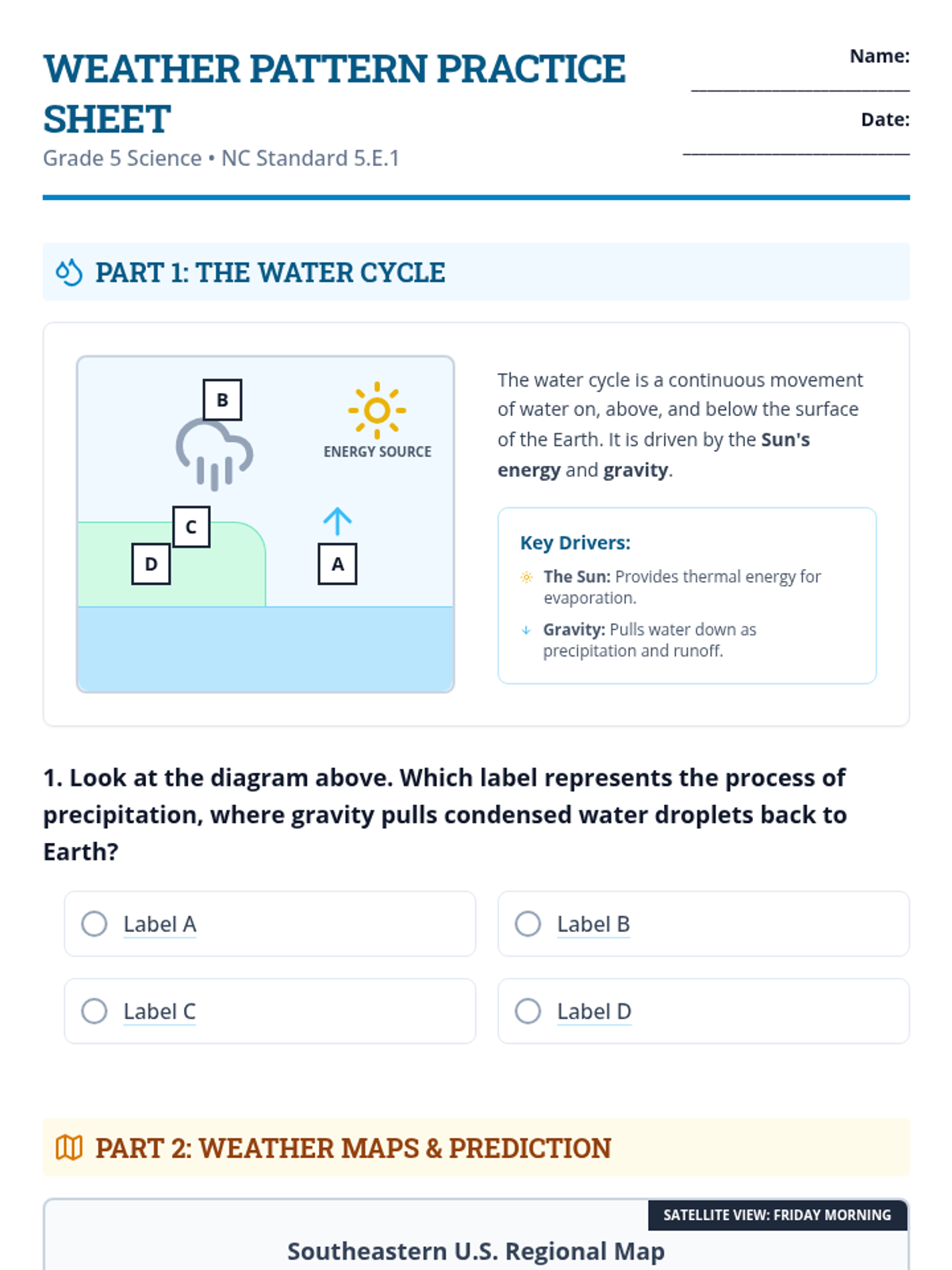
A foundational lesson on the three main stages of the water cycle: evaporation, condensation, and precipitation. Includes a visual anchor chart and a hands-on labeling activity.
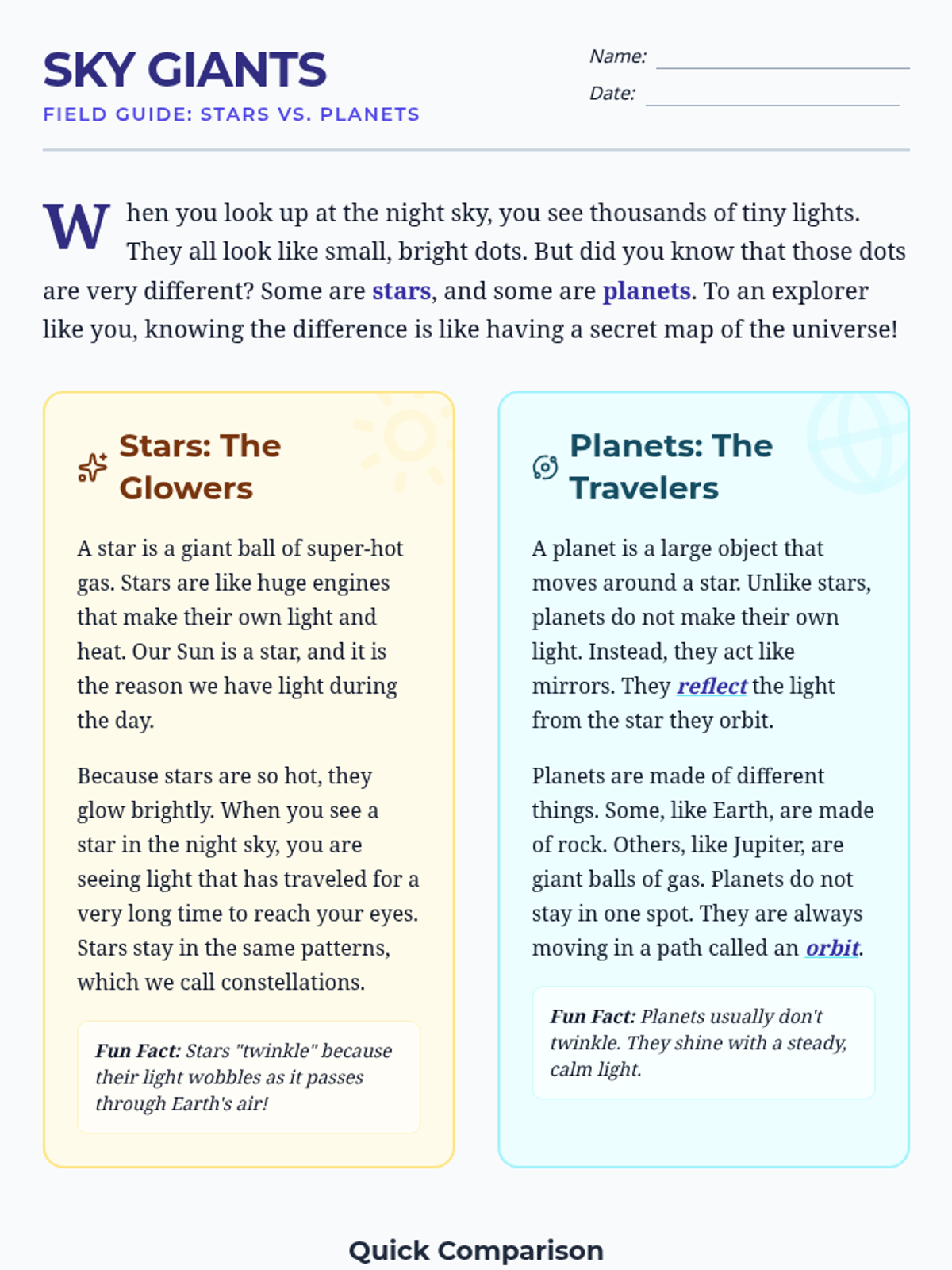
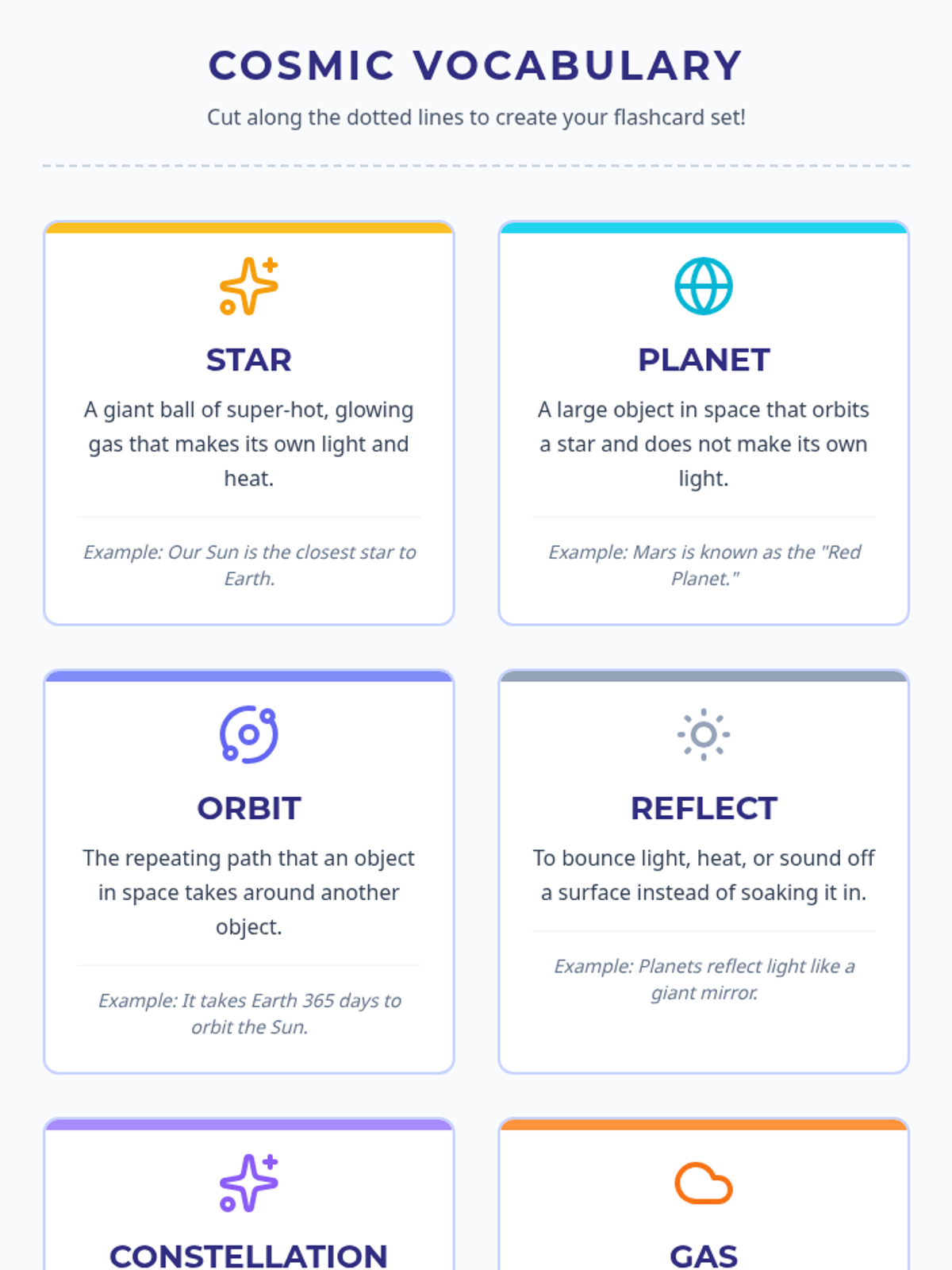
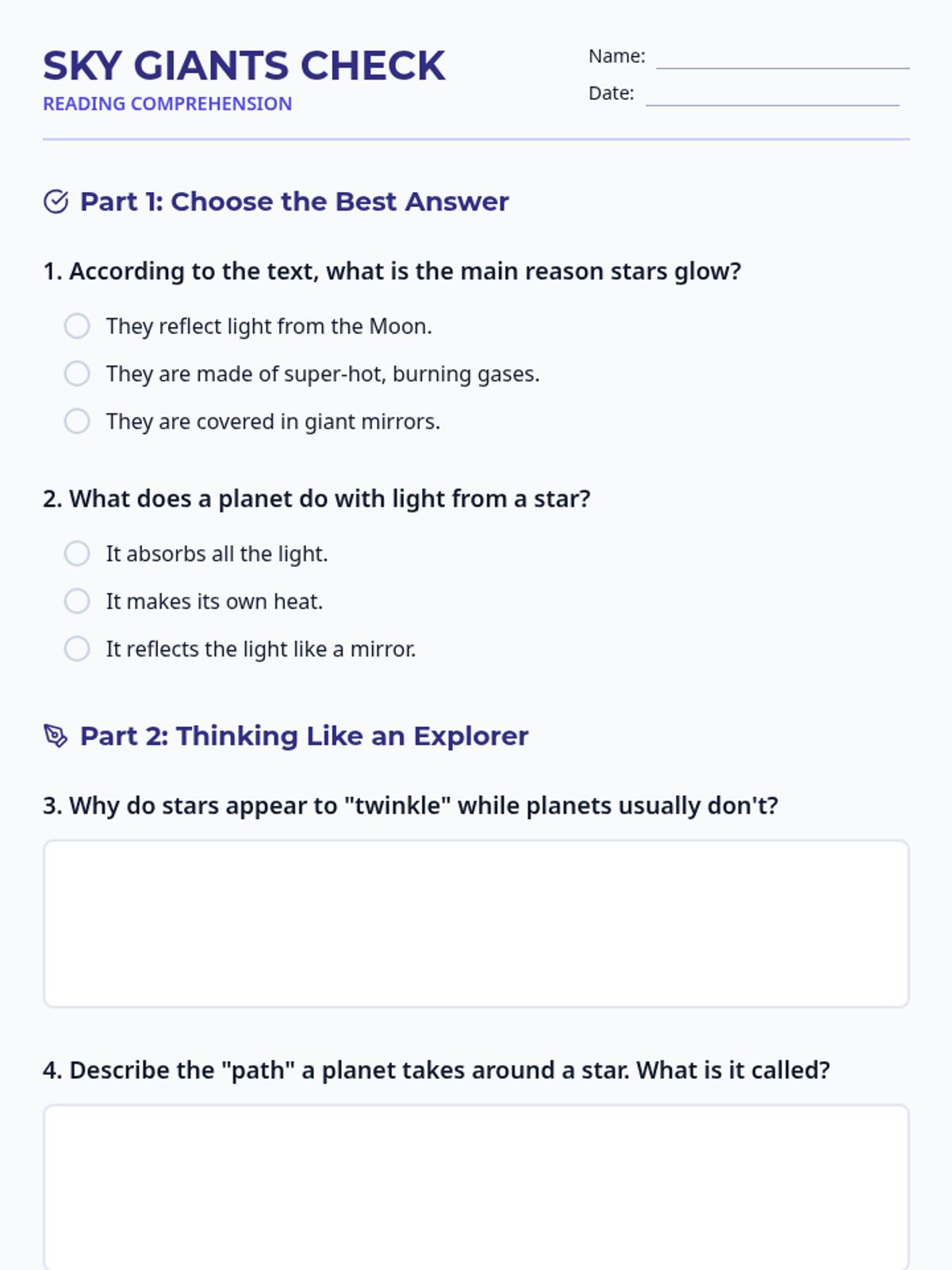
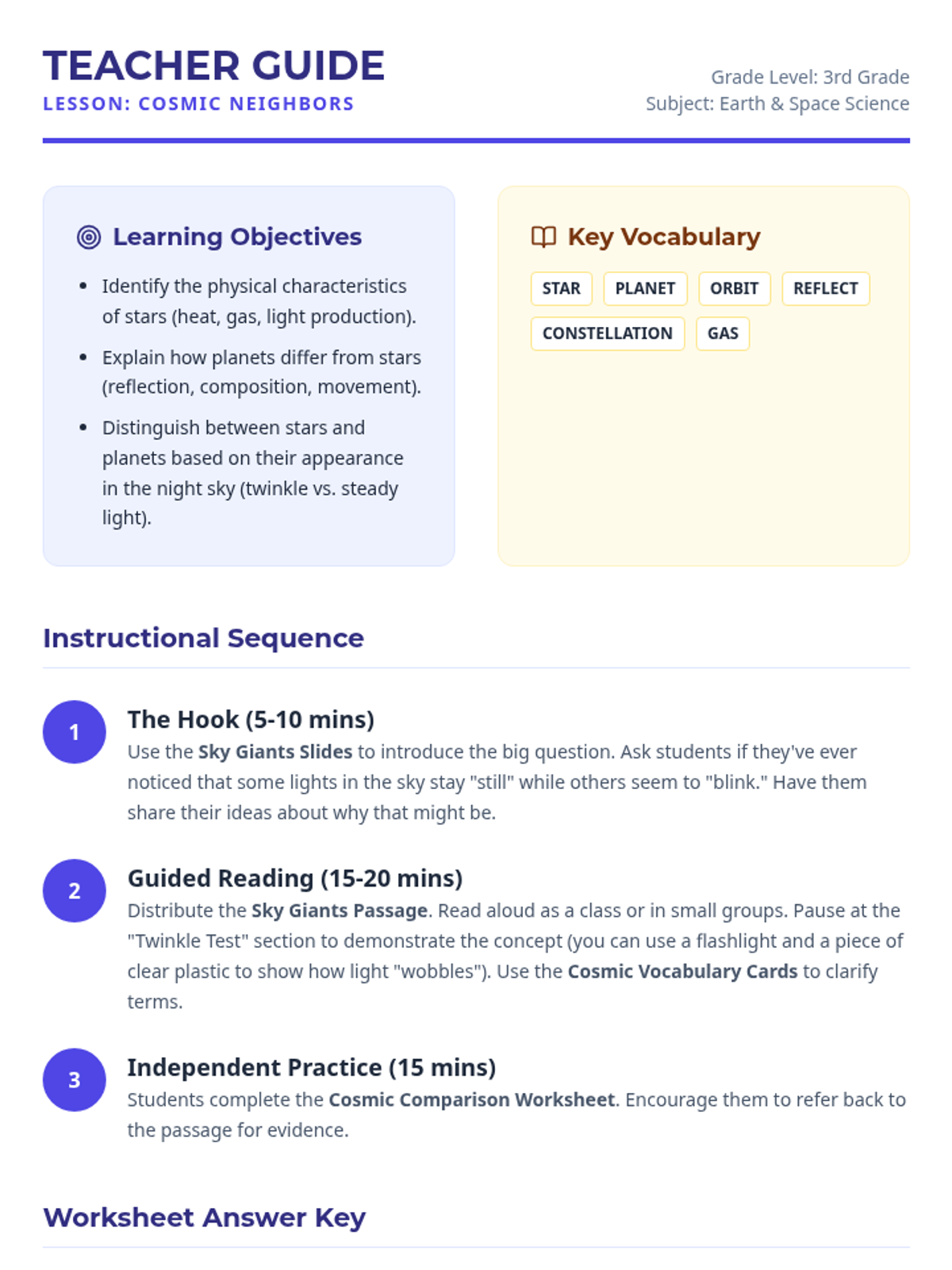
A guided reading lesson for 3rd graders exploring the fundamental differences between stars and planets, focusing on light production, composition, and movement.
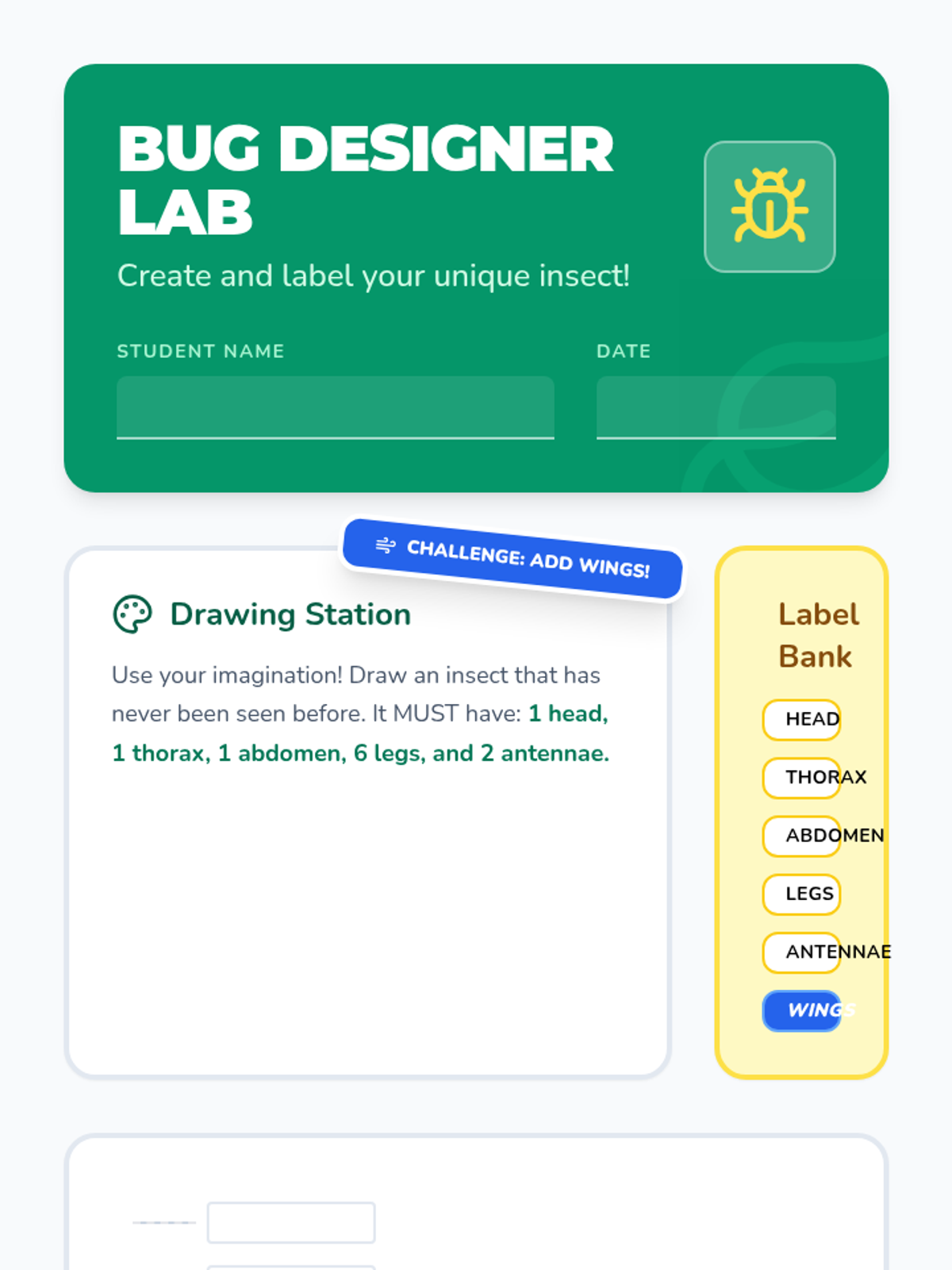
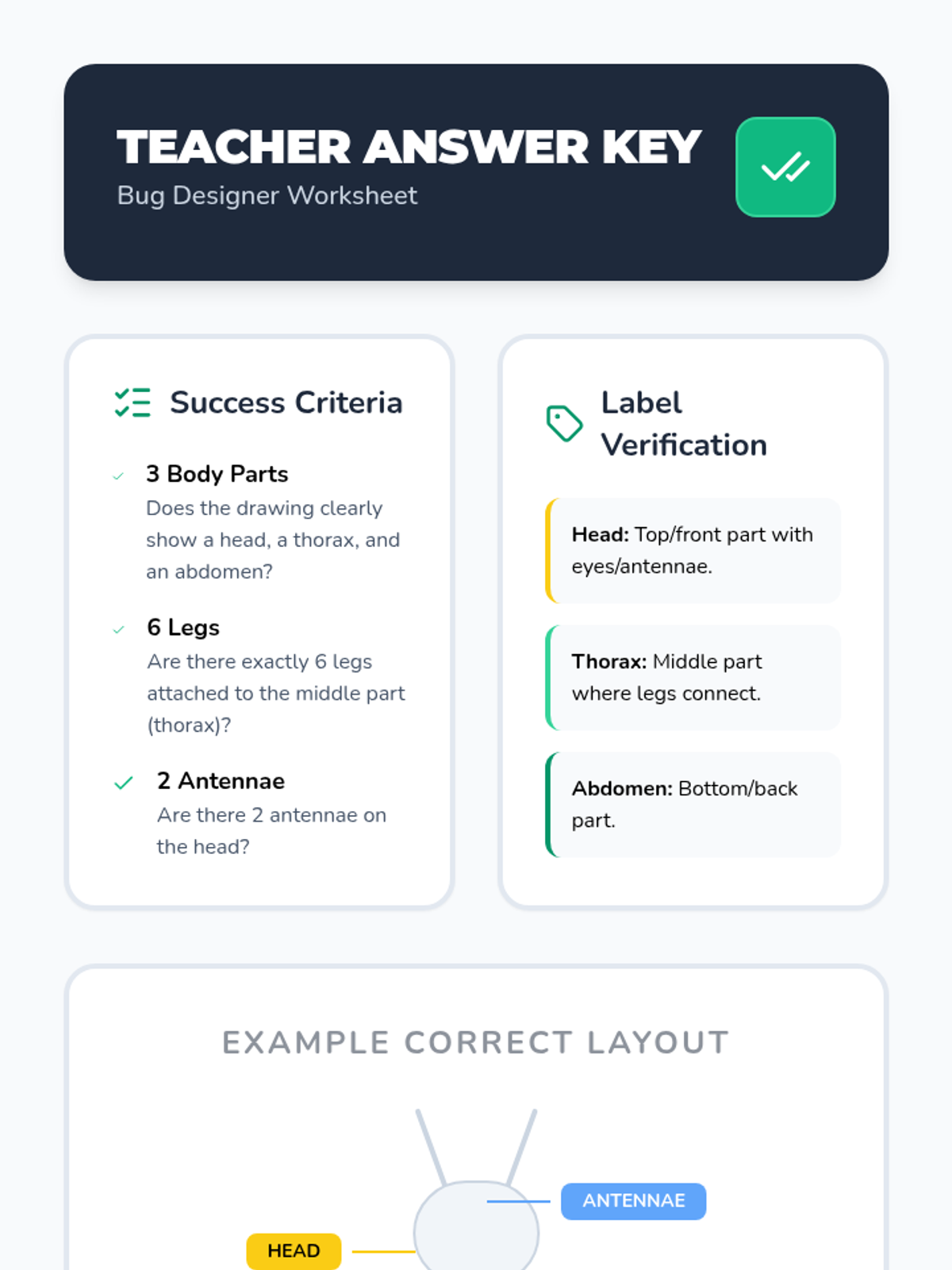
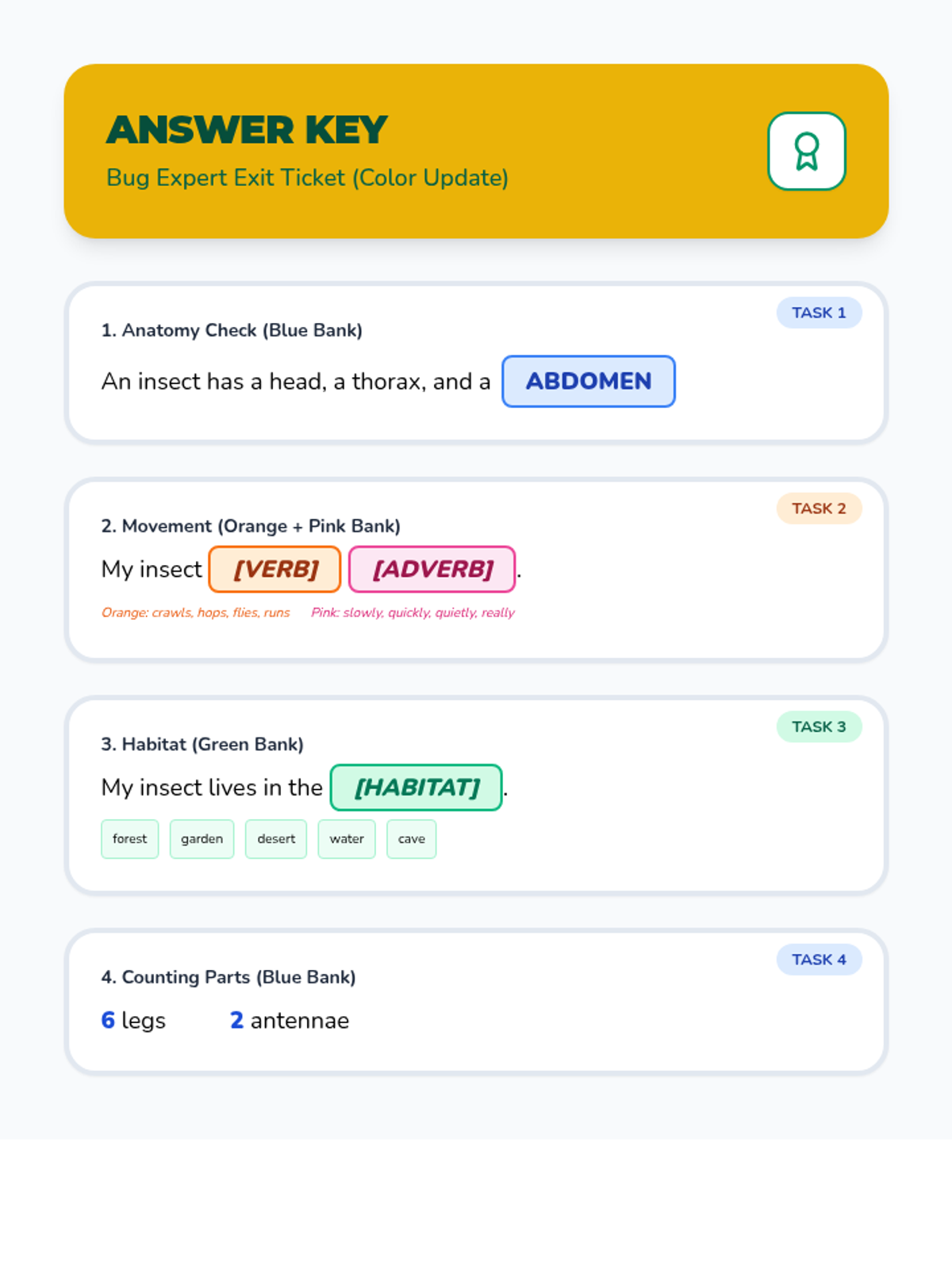
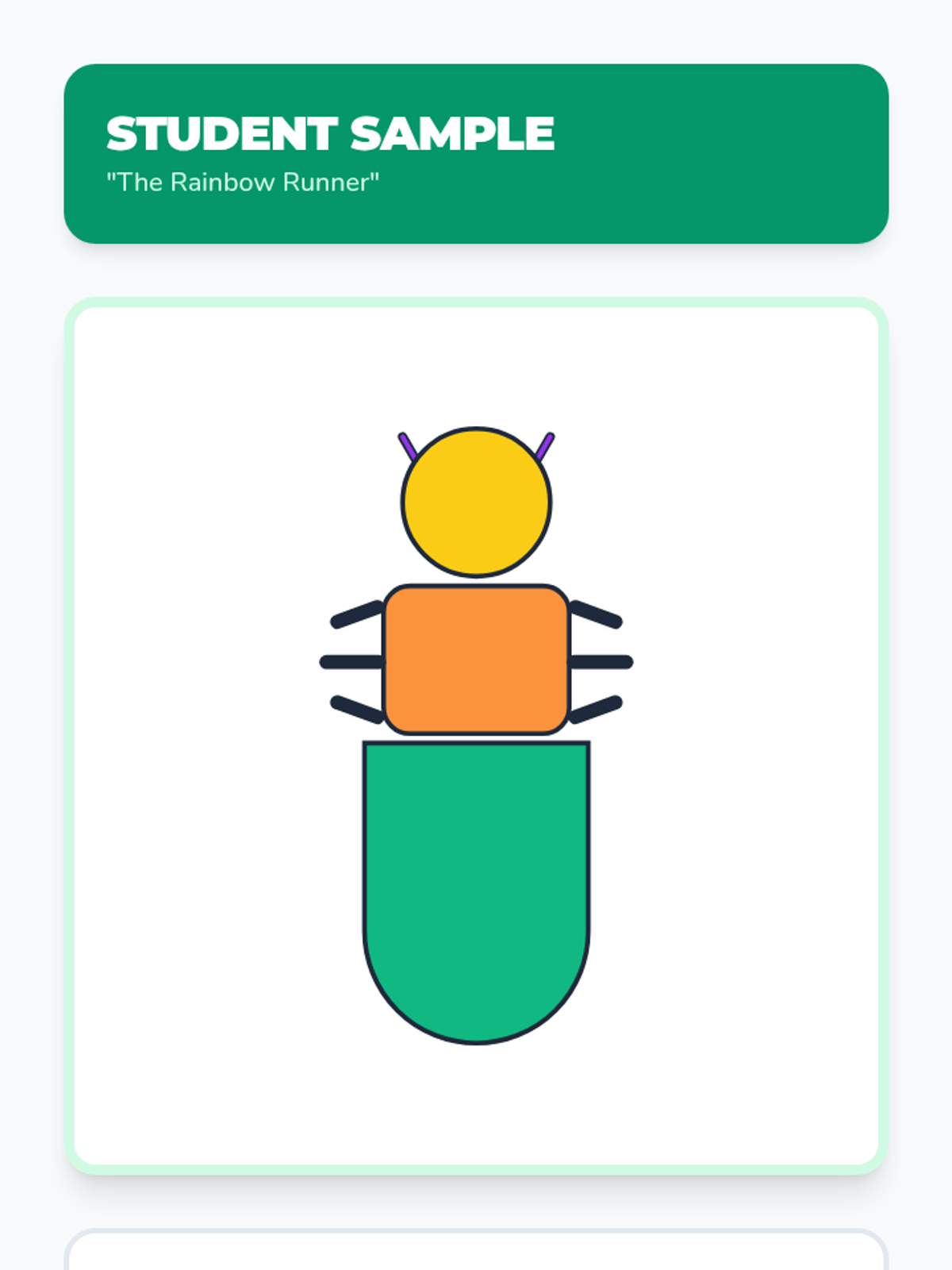
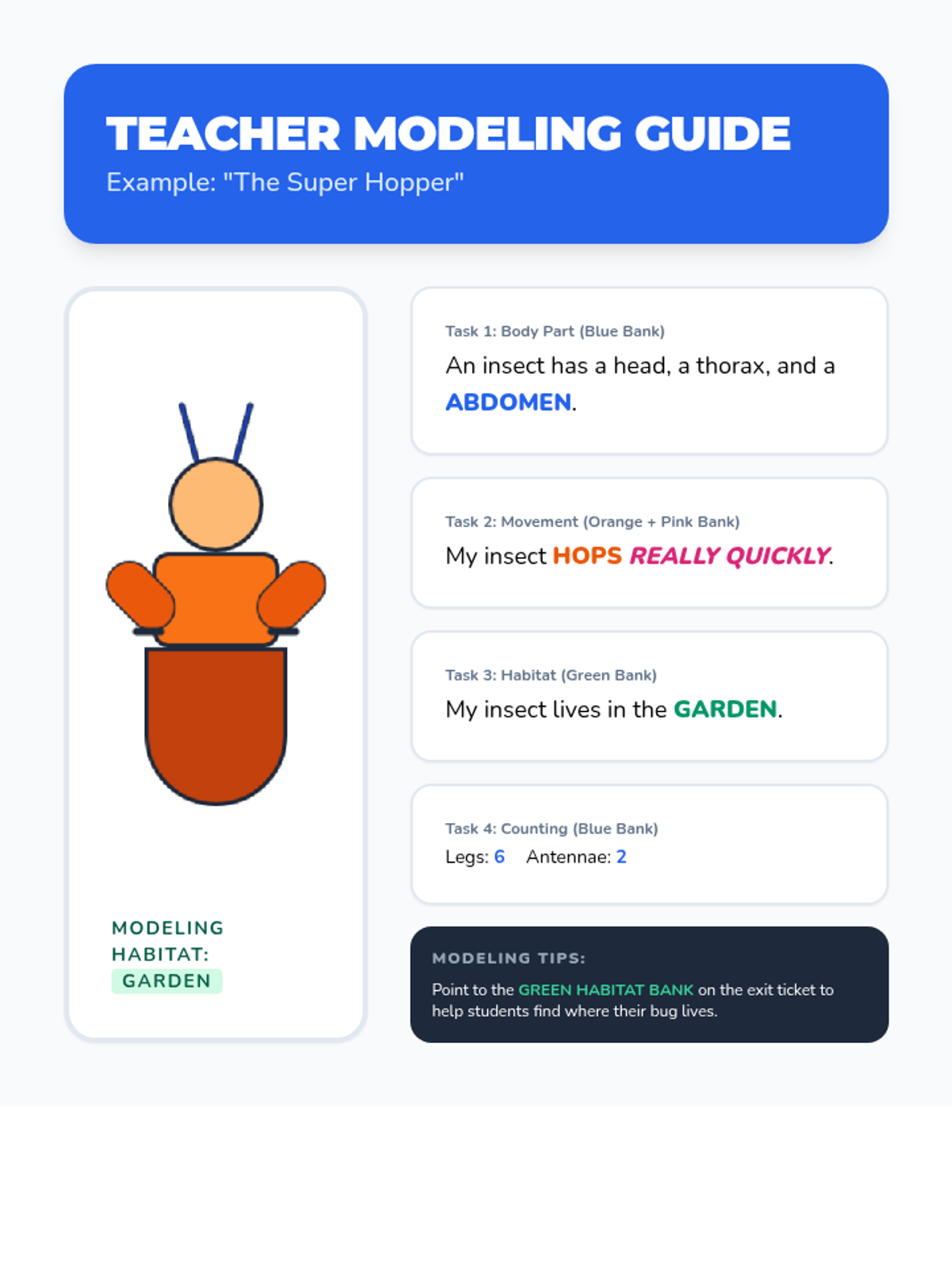
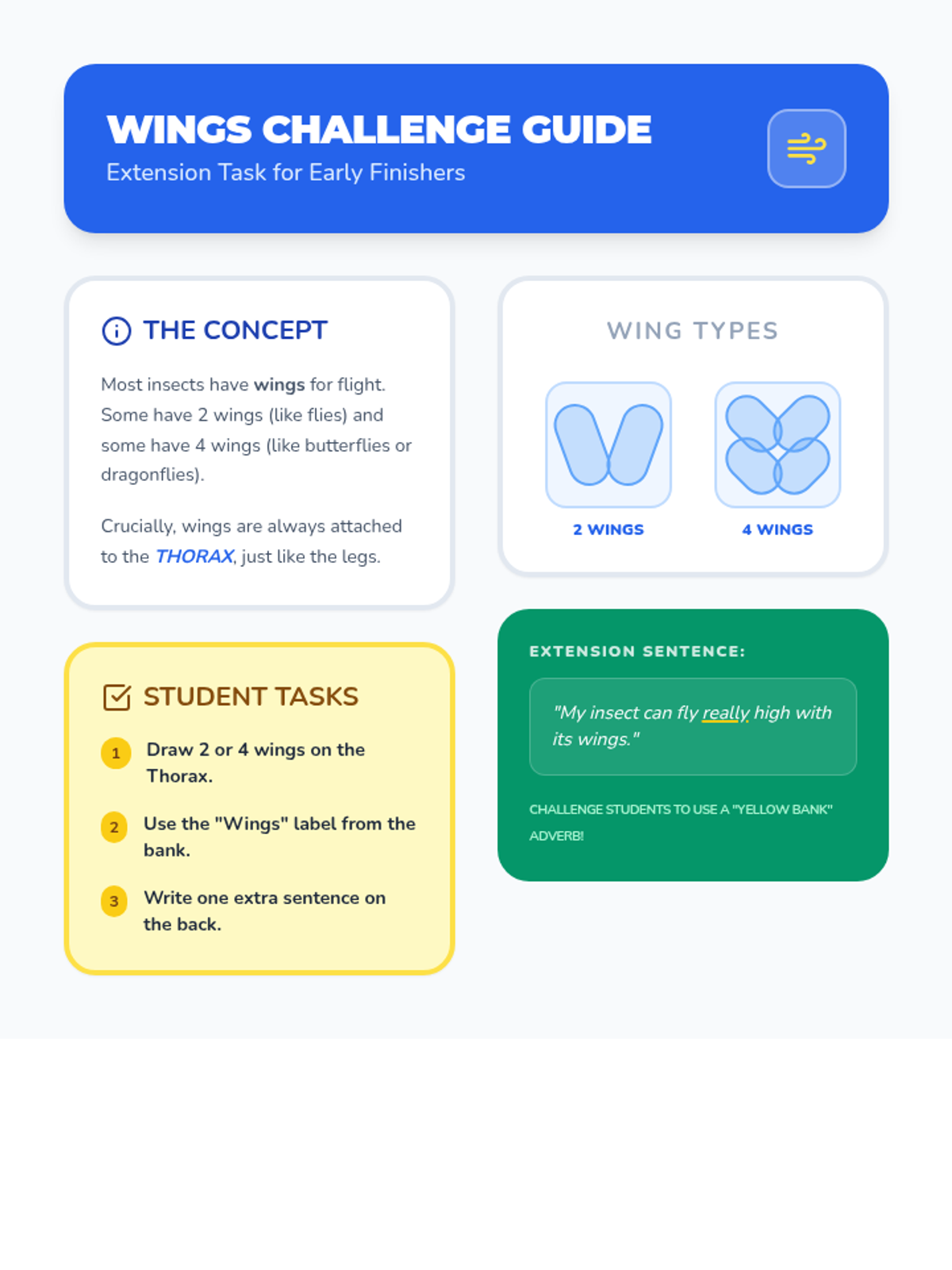
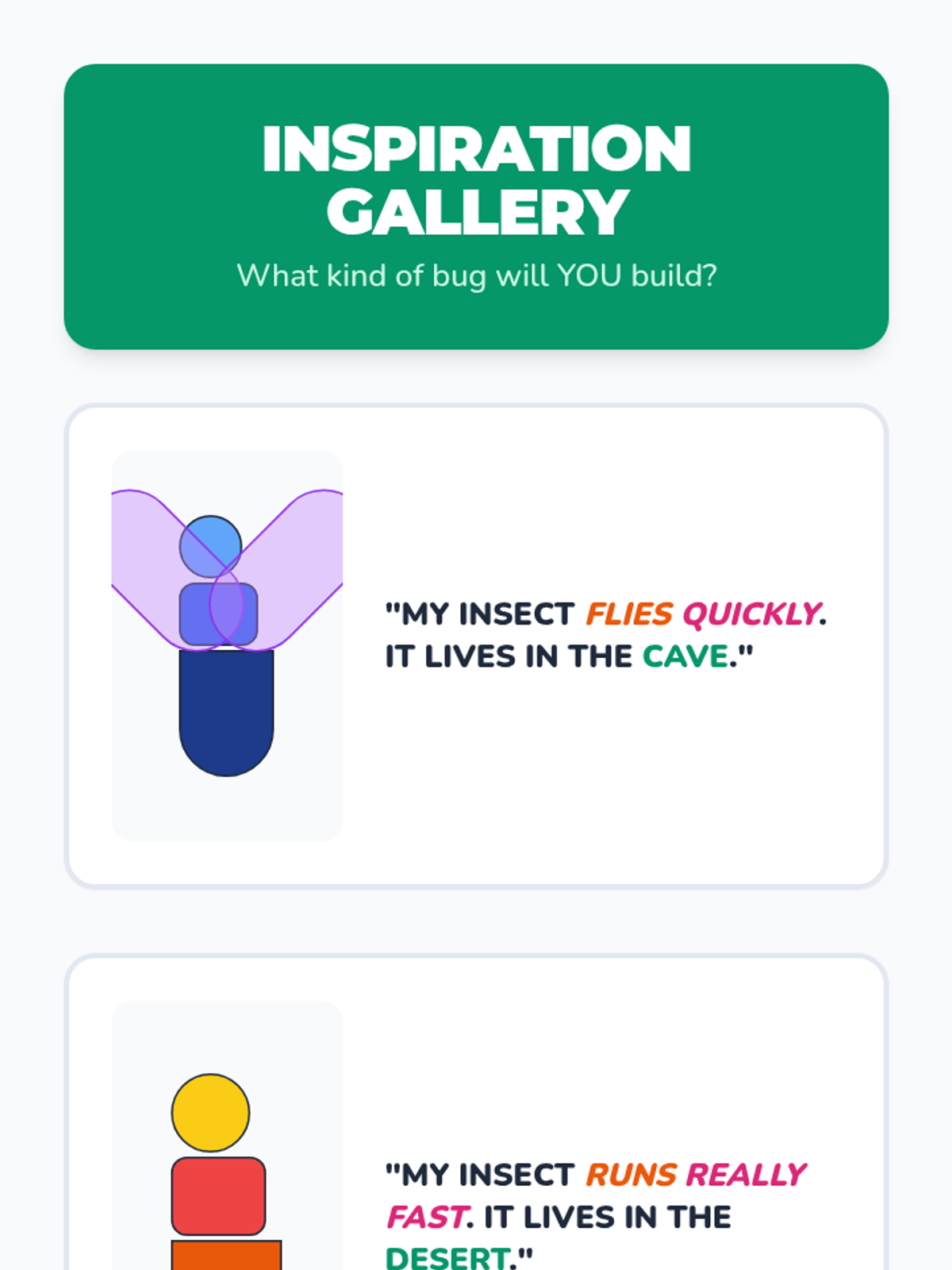
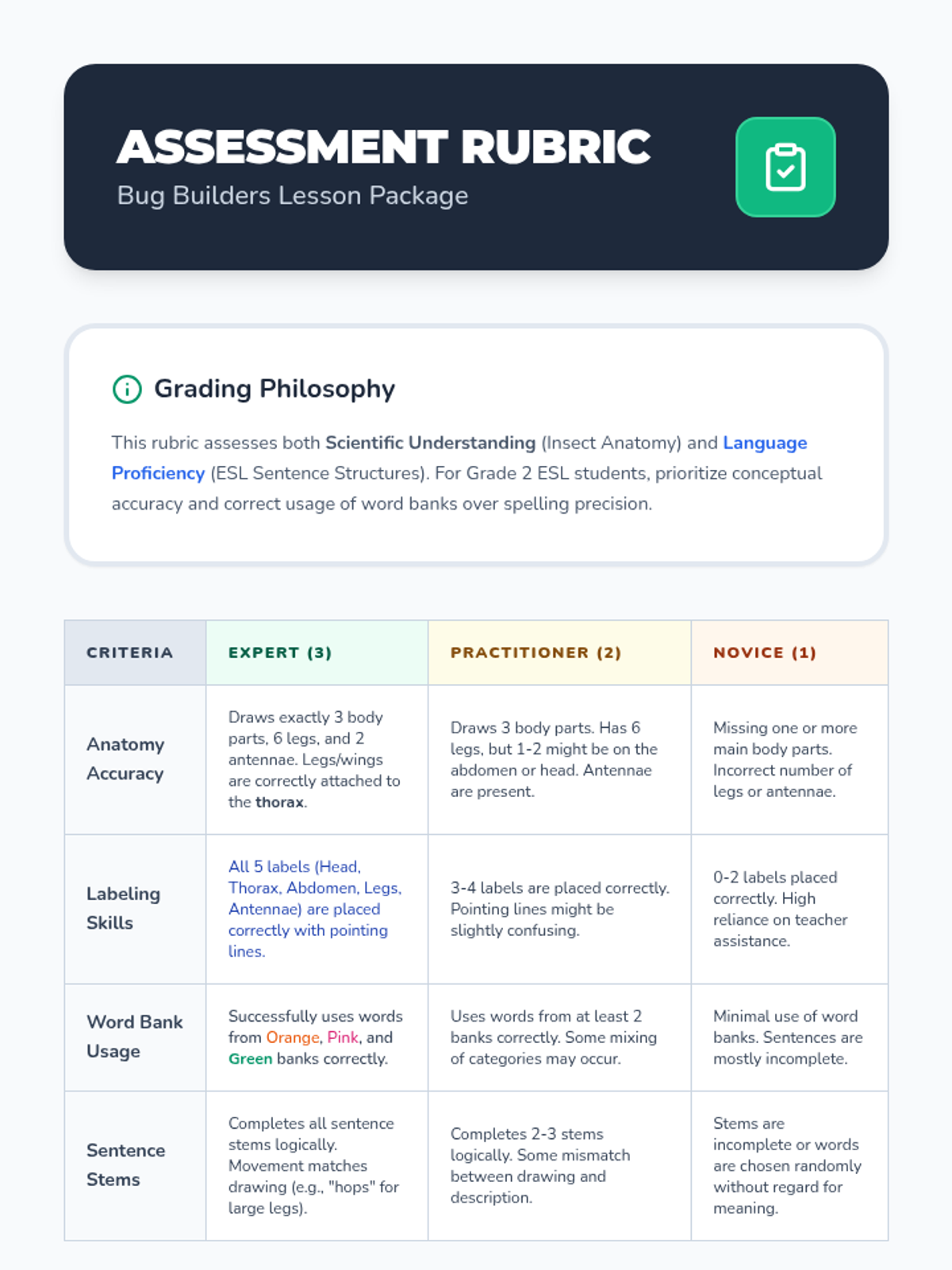
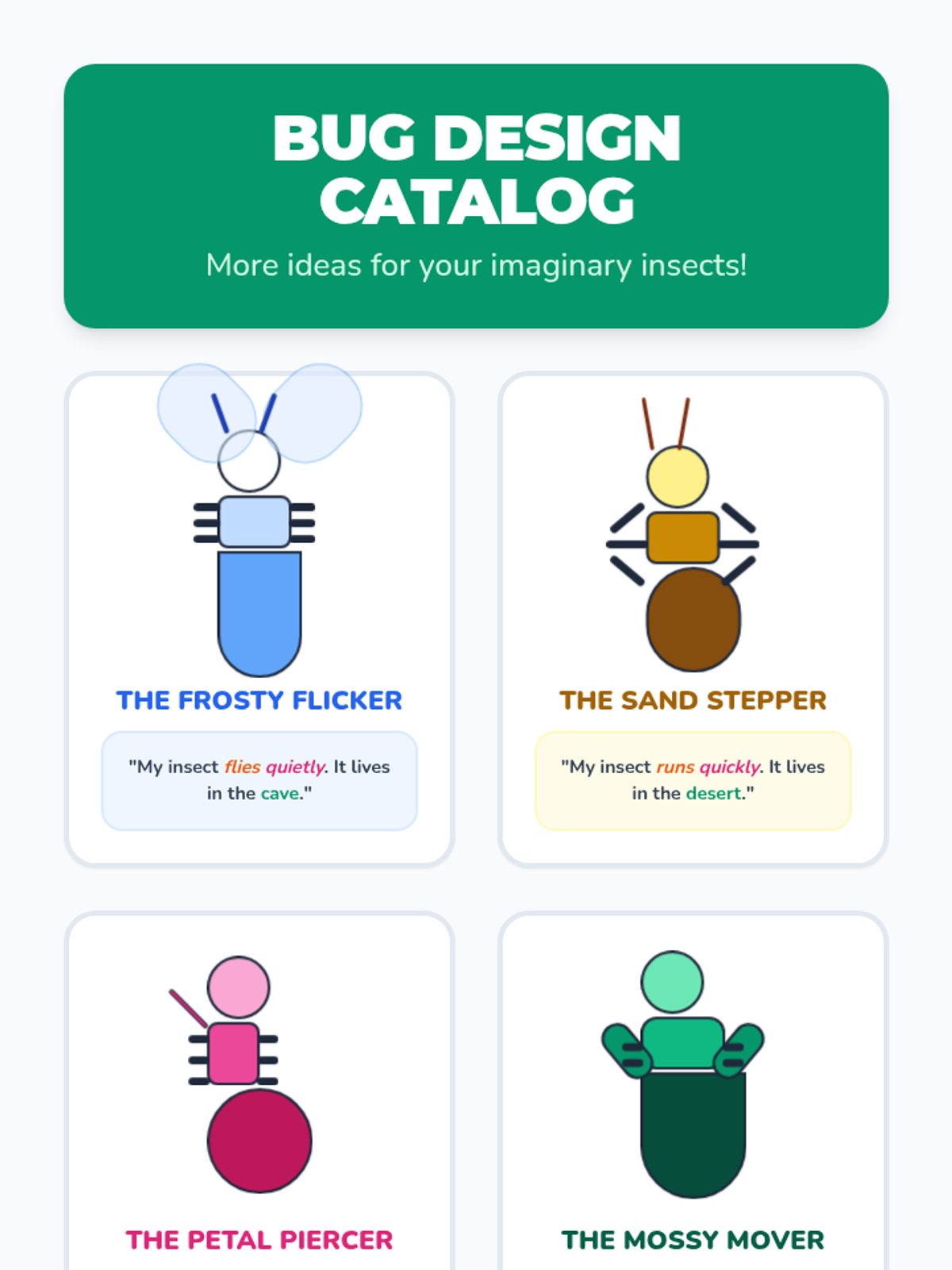
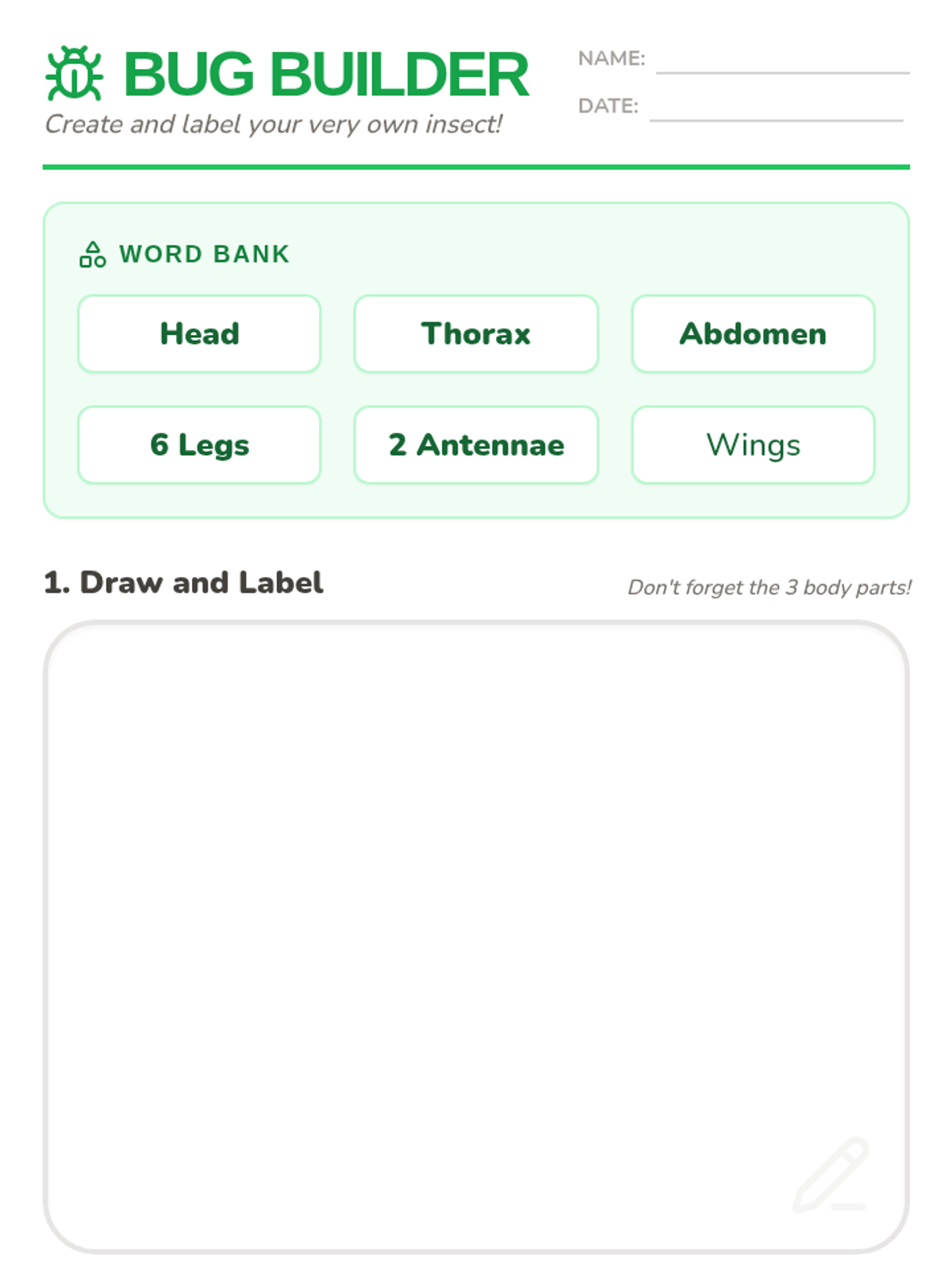
Students learn the anatomy of an insect (head, thorax, abdomen, 6 legs, 2 antennae) and apply this knowledge by designing, labeling, and describing their own colorful insect.
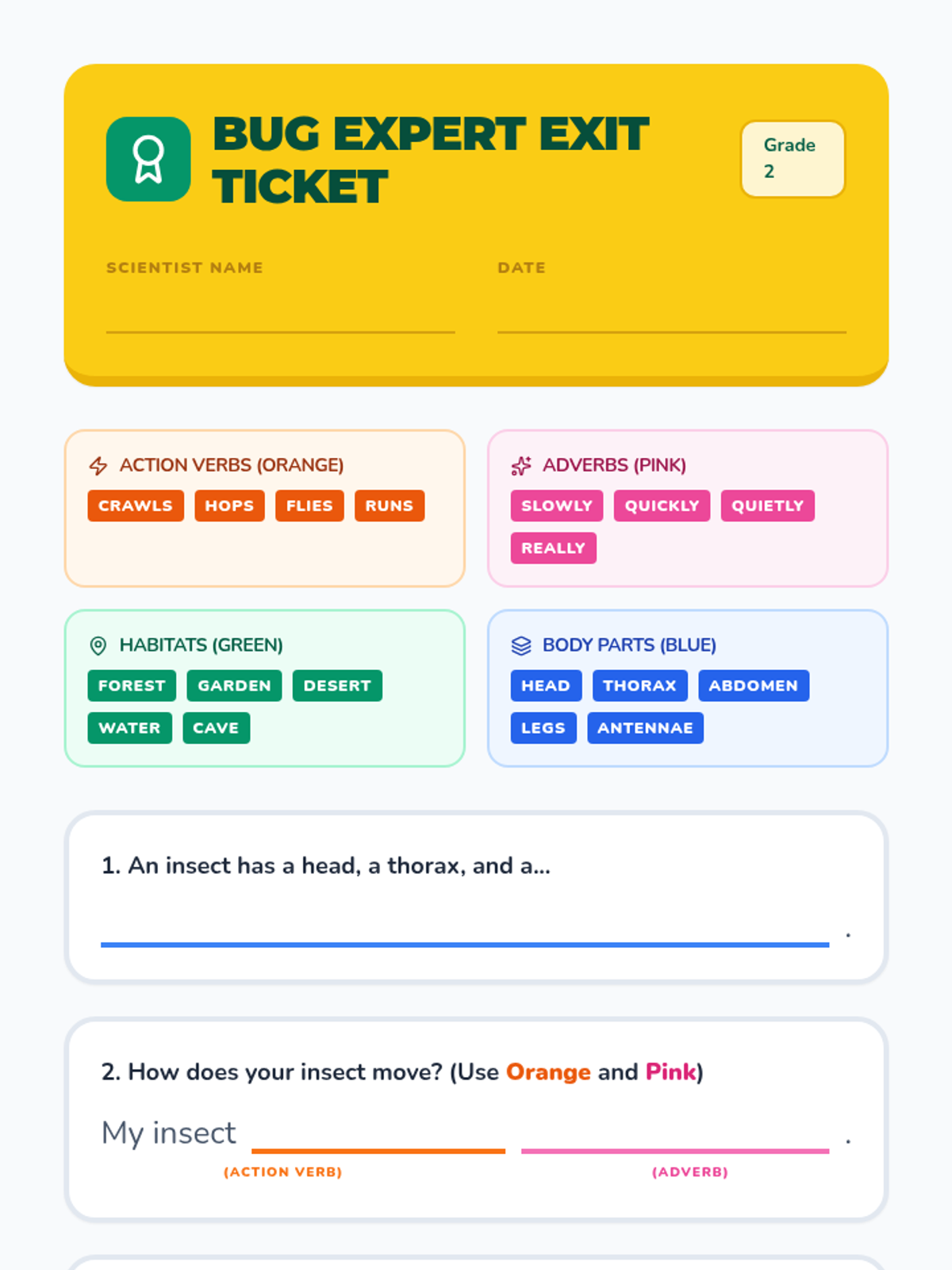
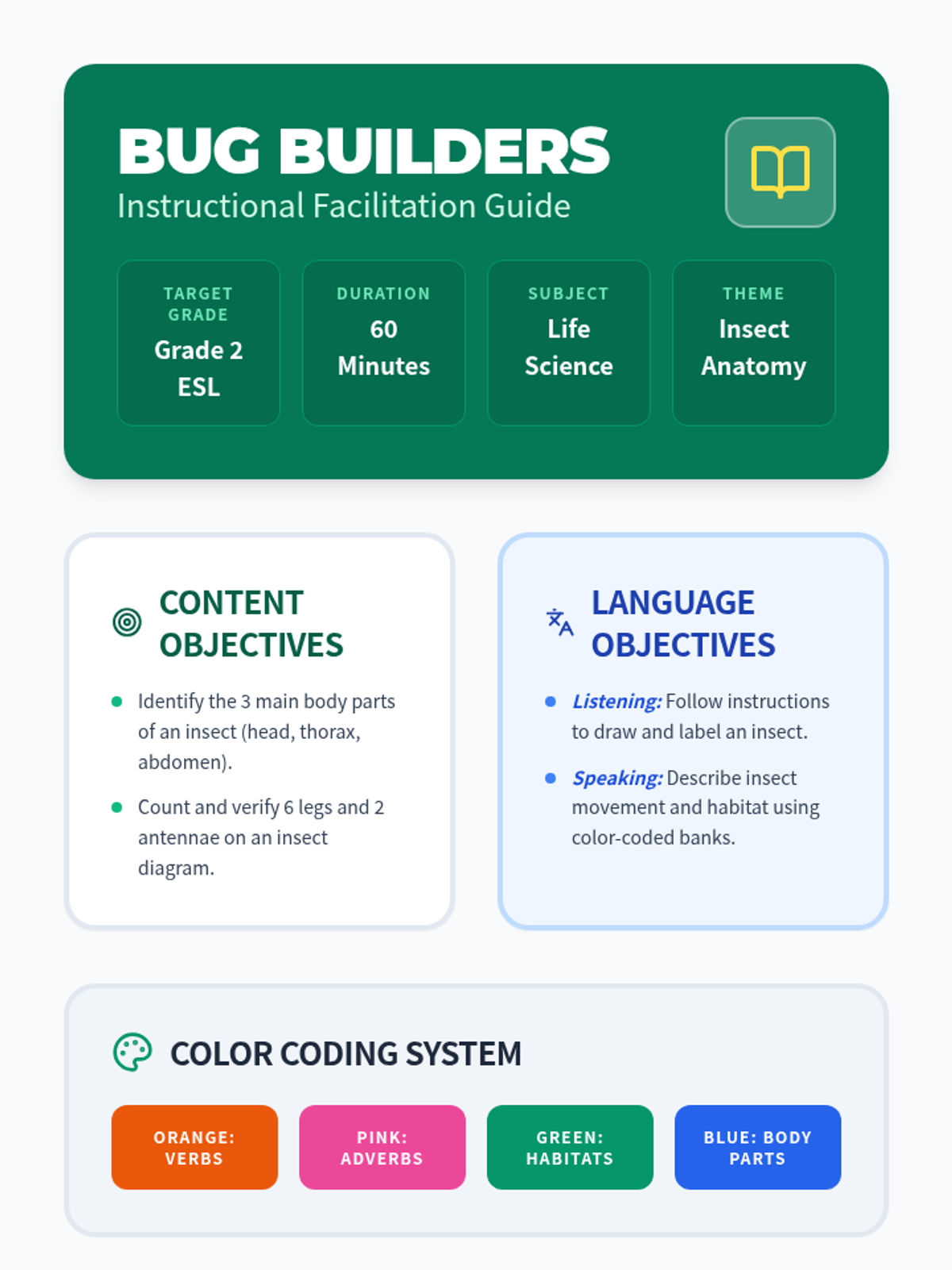
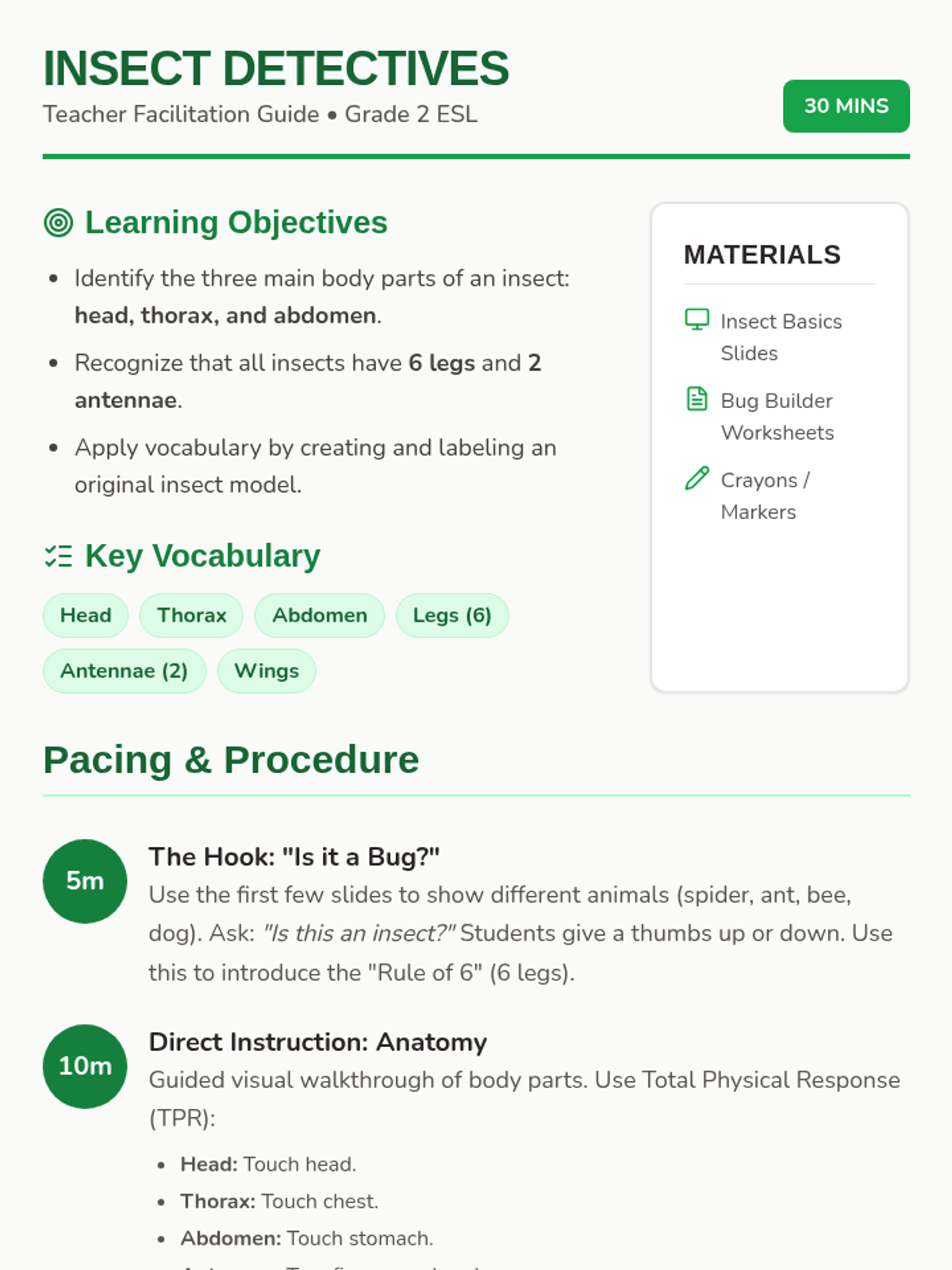
A fast-paced 30-minute lesson for Grade 2 ESL students to identify core insect characteristics through visual aids and a creative hands-on activity.
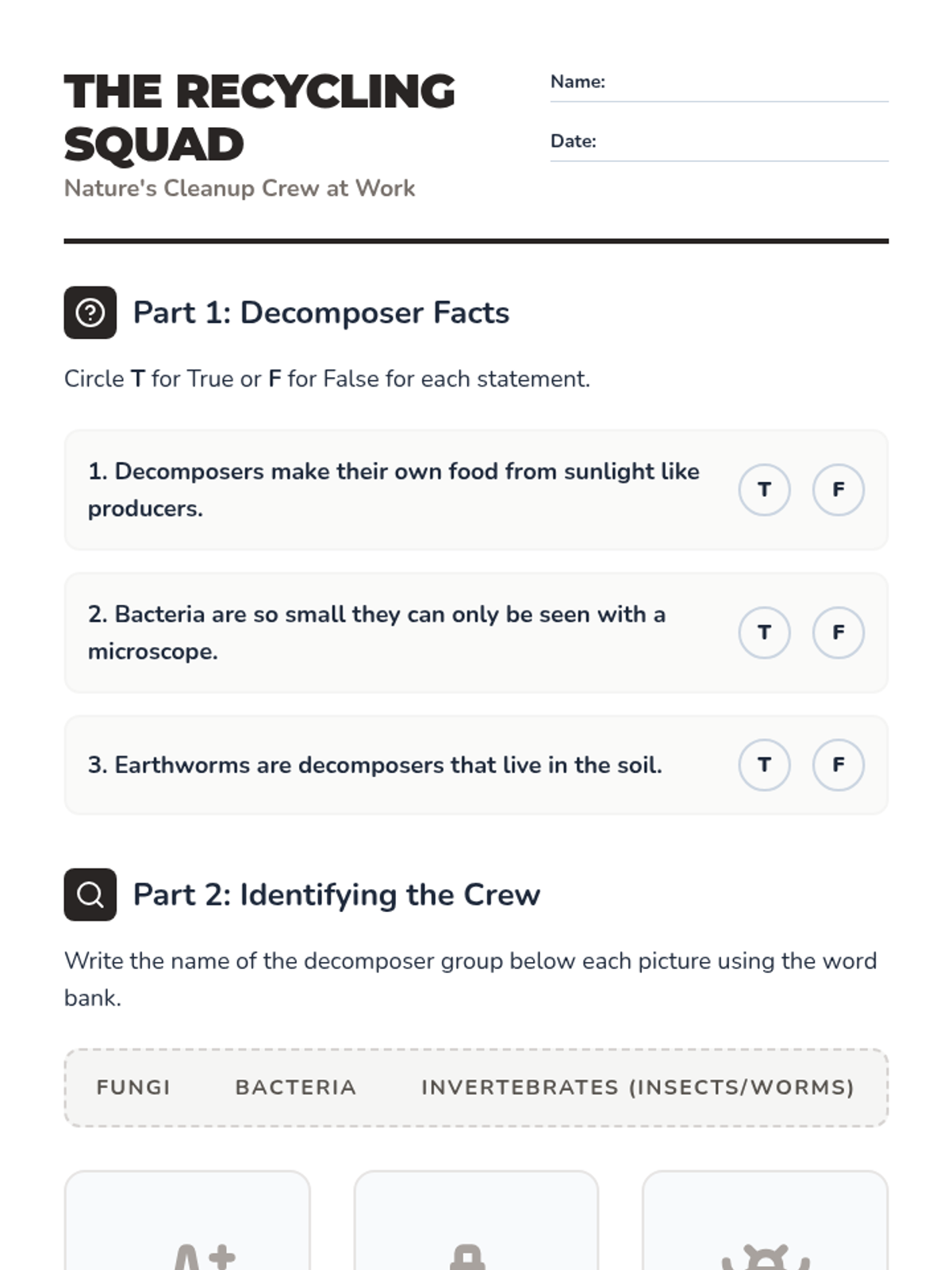
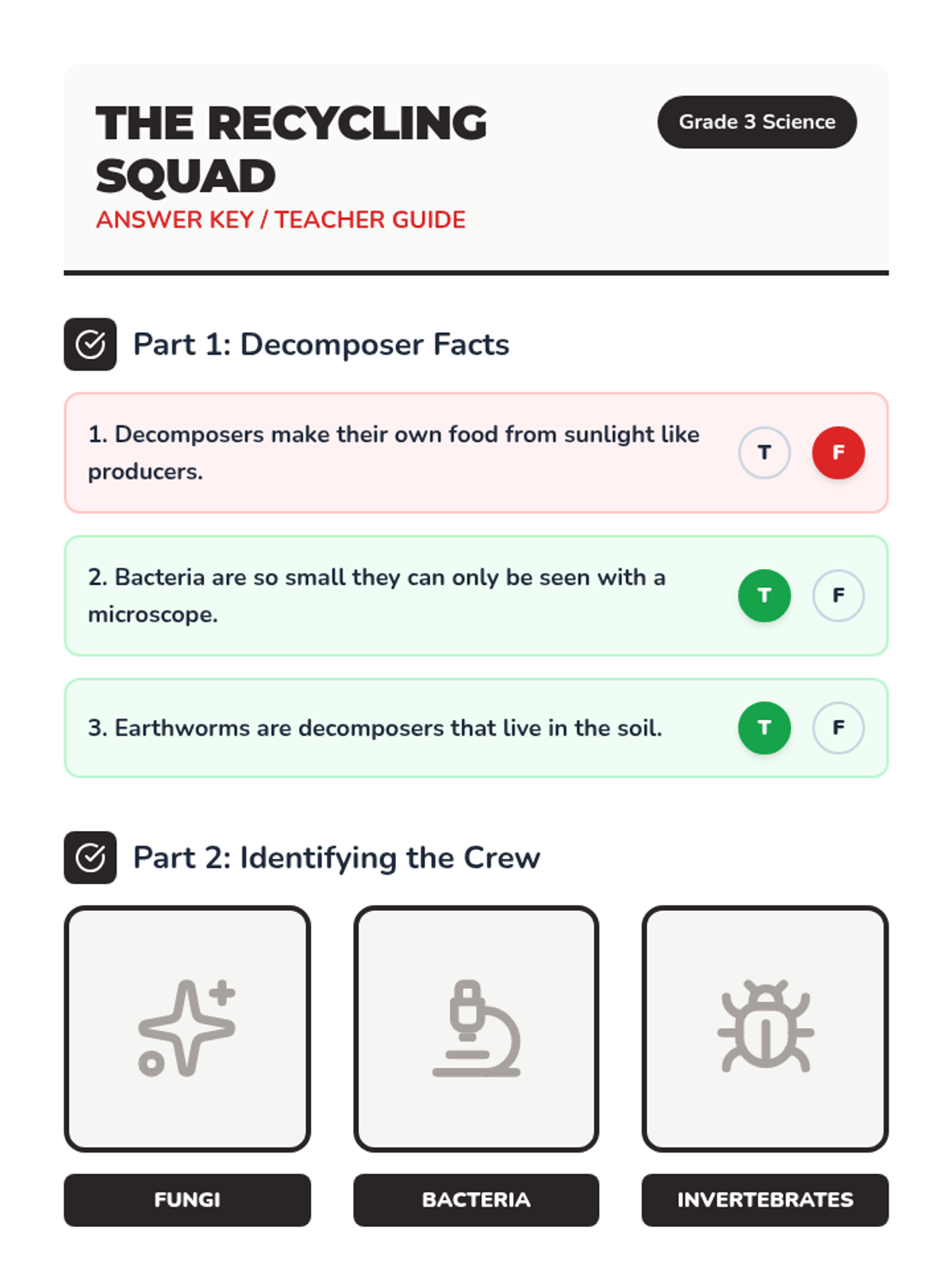
A fascinating look at decomposers for 3rd graders, explaining how fungi, bacteria, and worms break down dead matter to recycle nutrients back into the food chain.
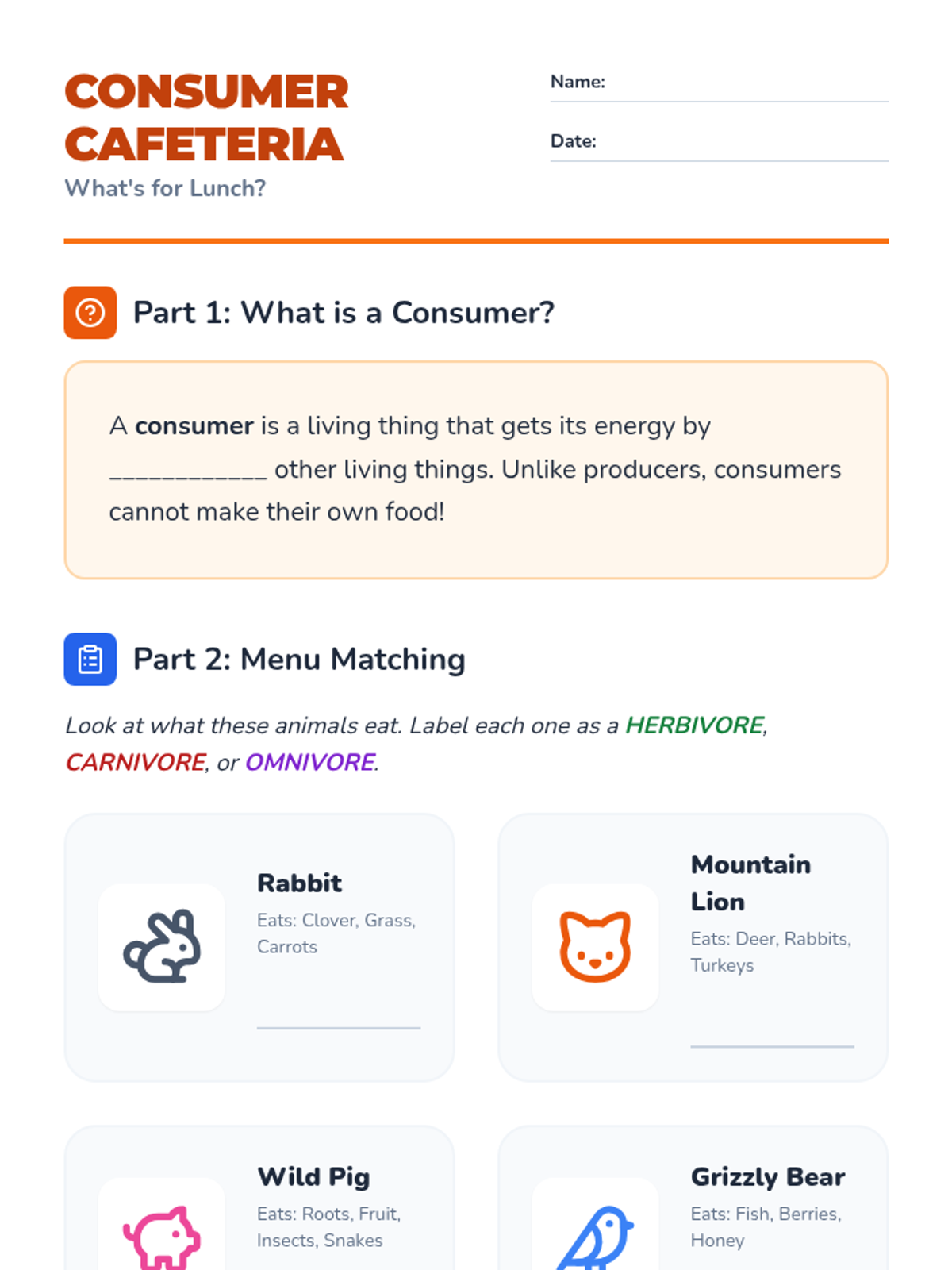
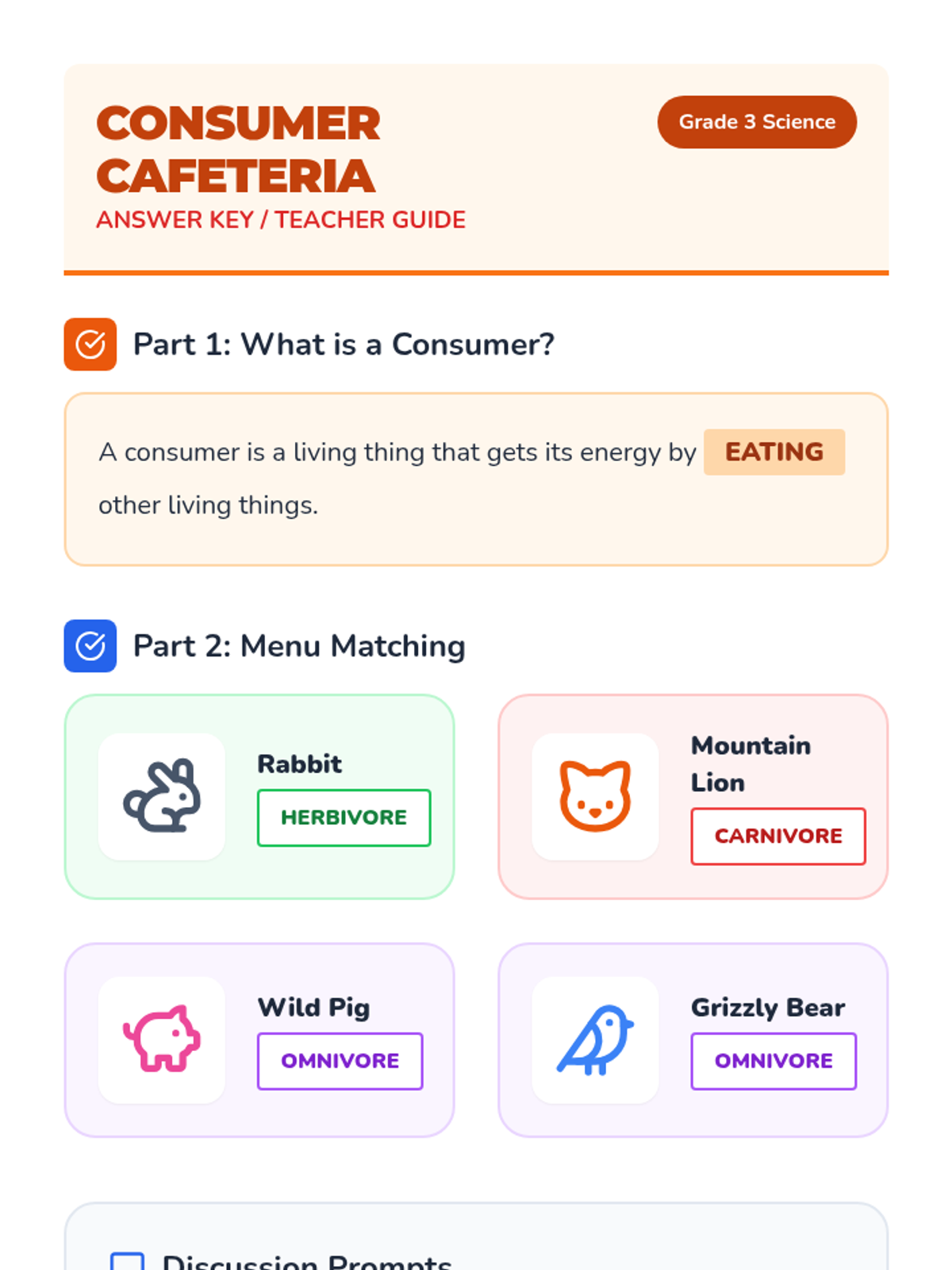
An engaging lesson for 3rd graders on consumers in a food chain, exploring herbivores, carnivores, and omnivores, and how they get their energy from eating other living things.
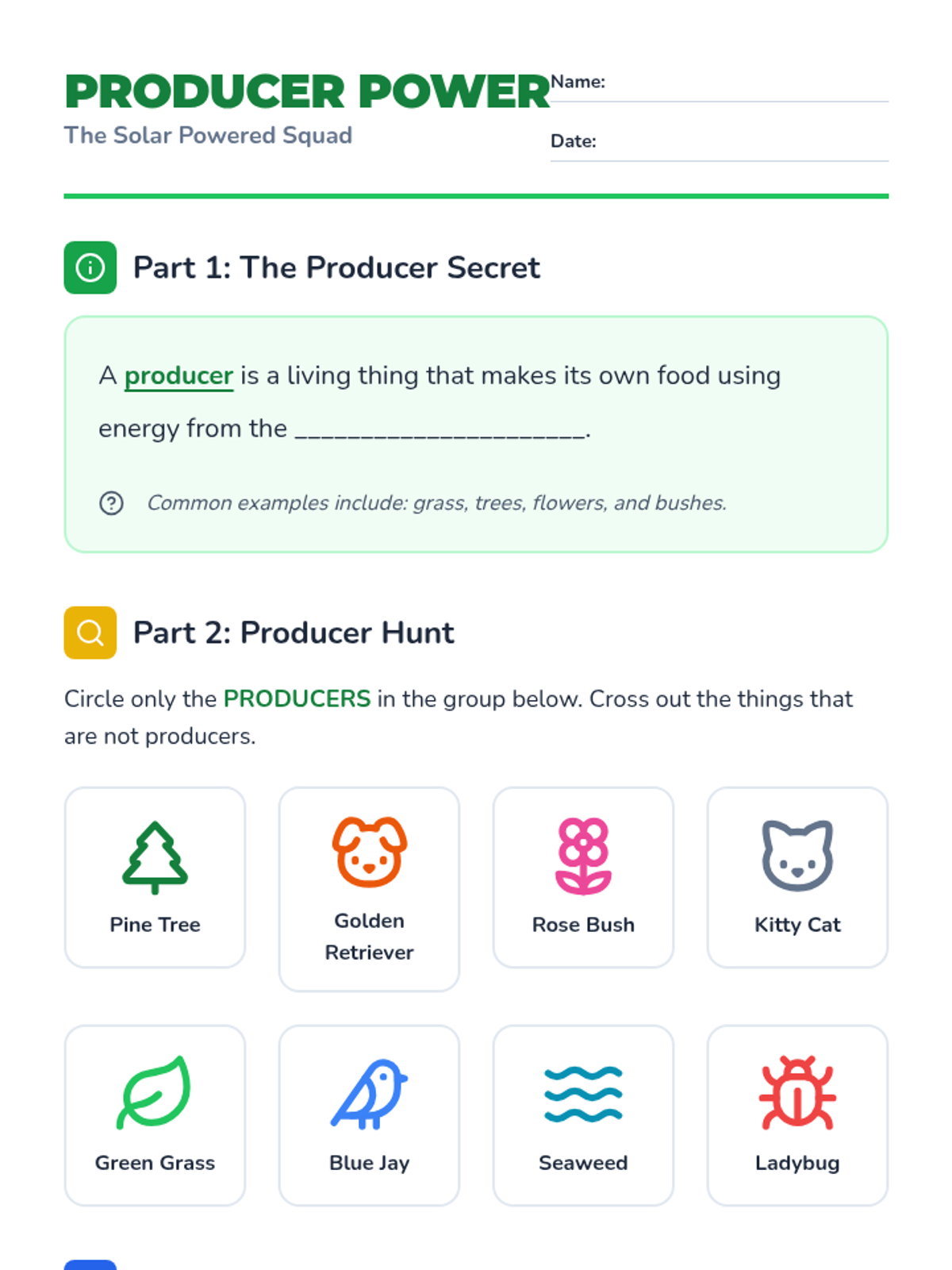
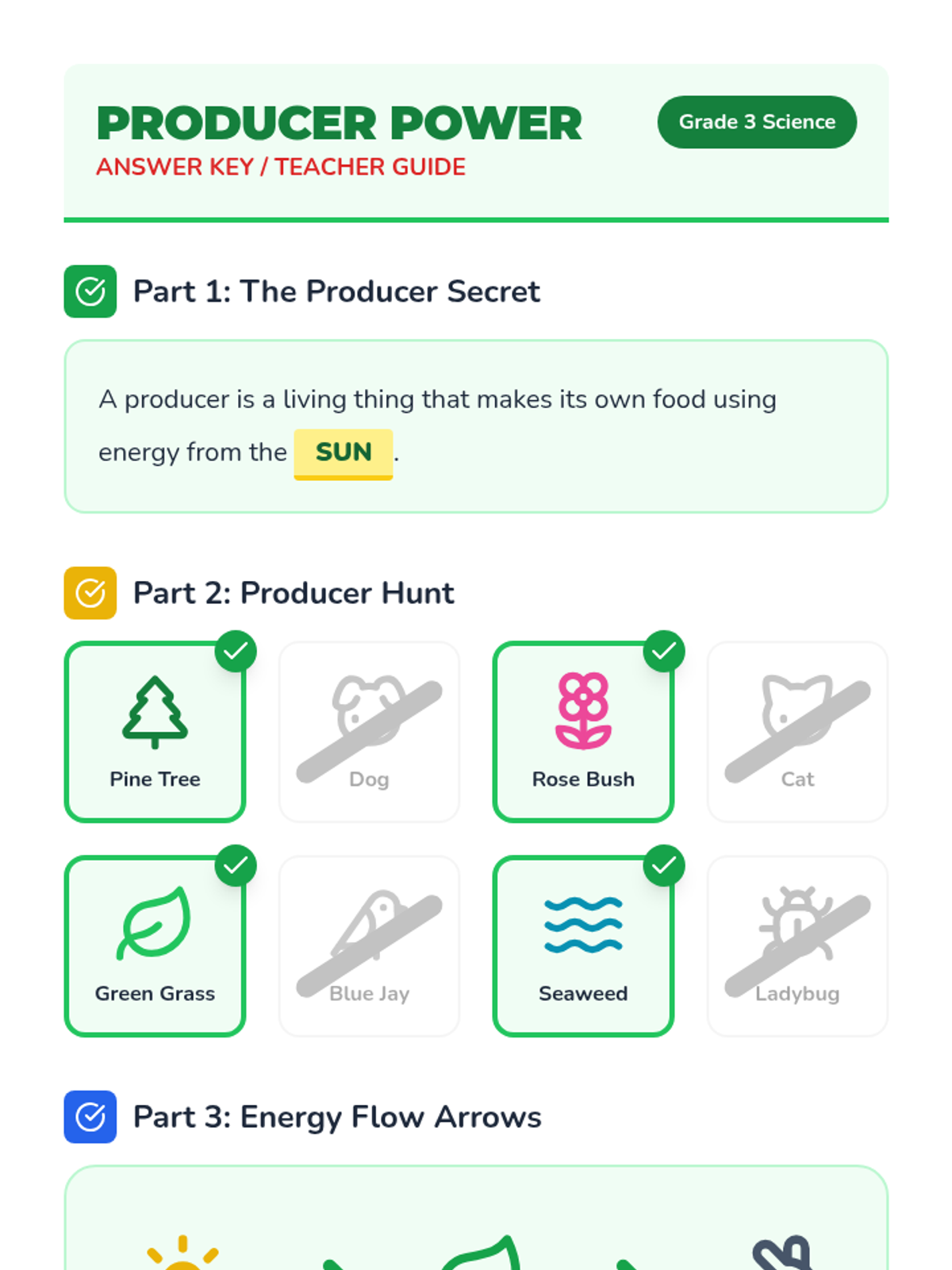
A foundational lesson on food chains for 3rd graders, focusing on producers as the start of energy flow and the correct use of arrows to represent that energy movement.
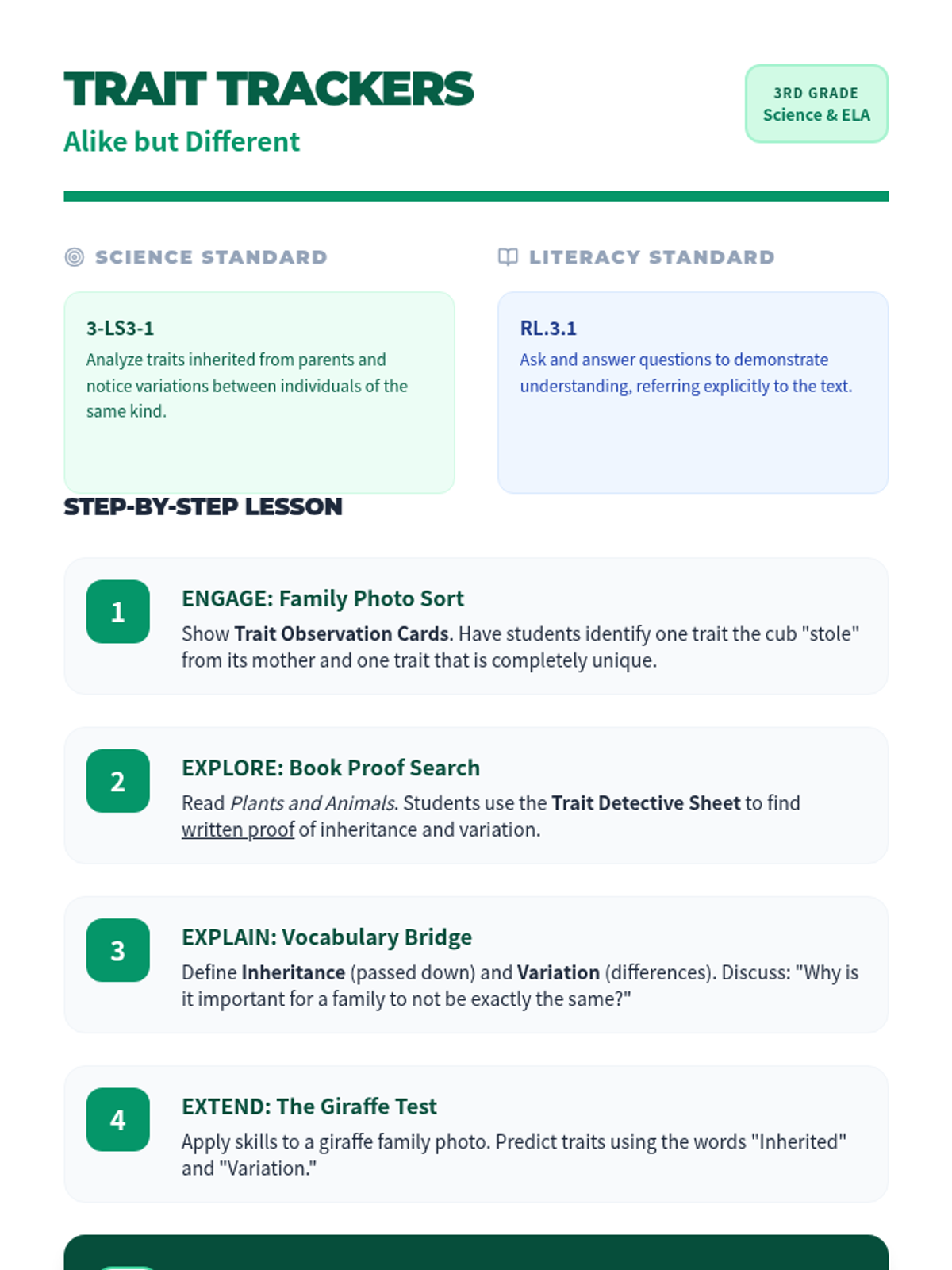
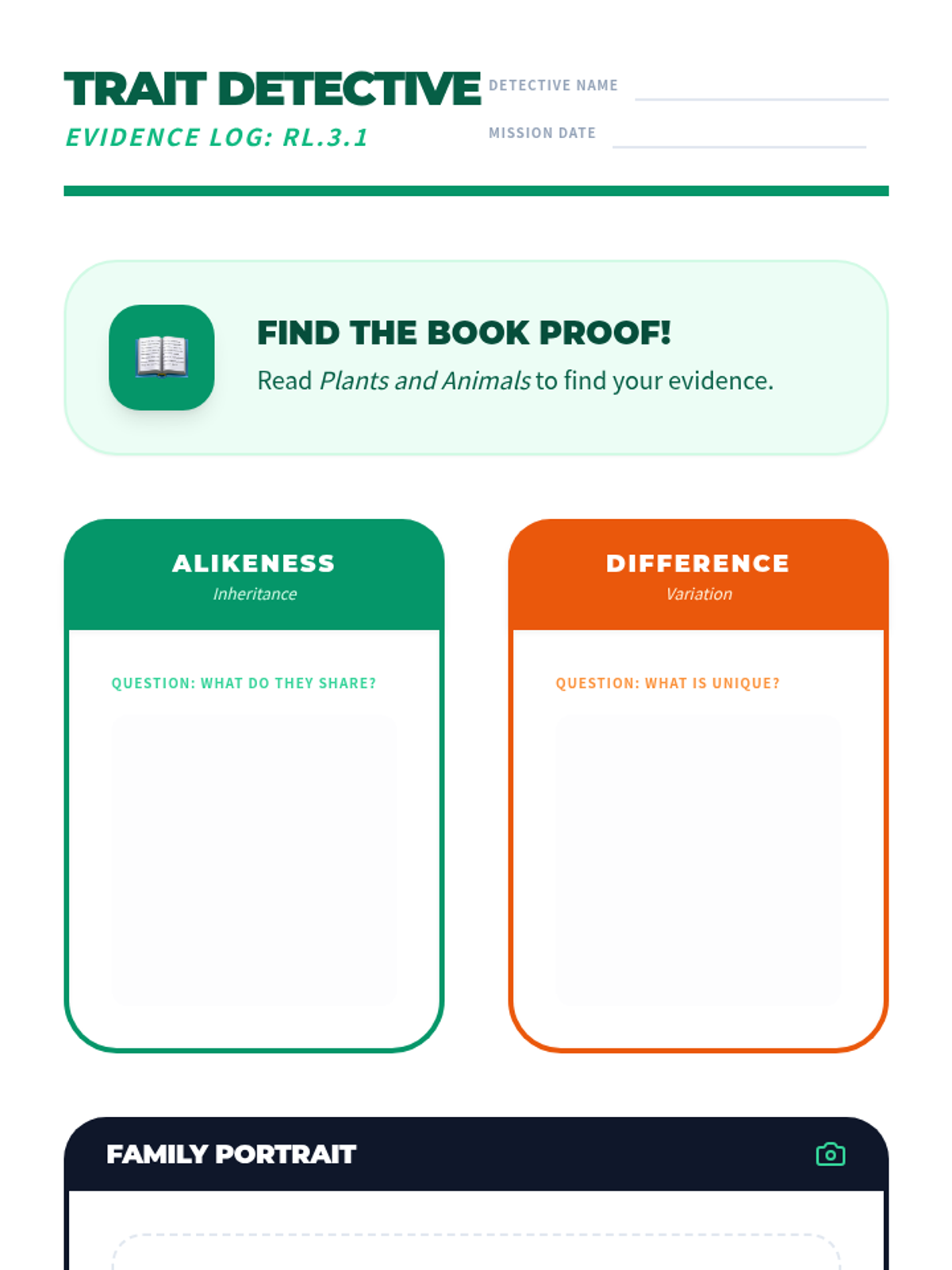
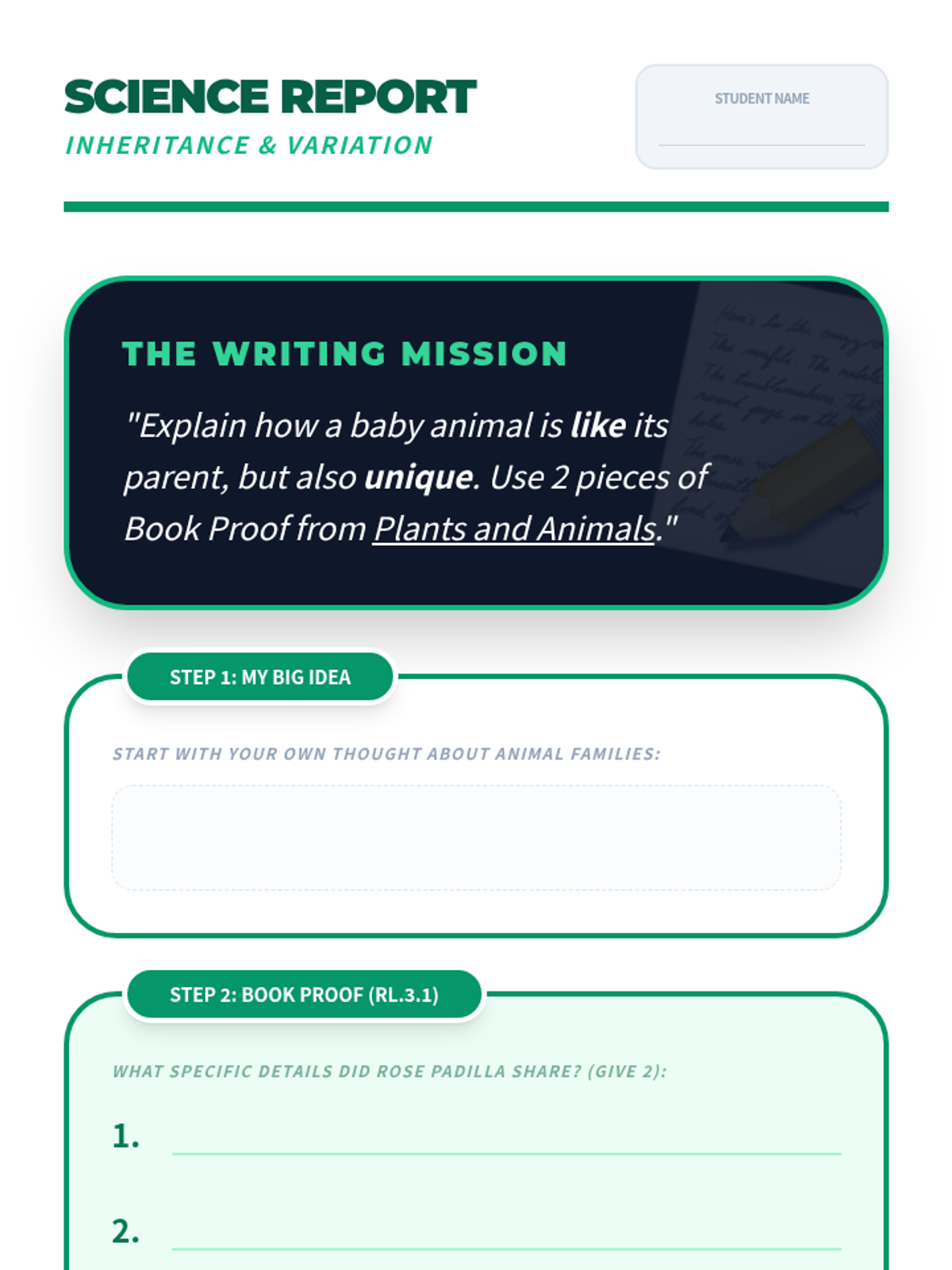
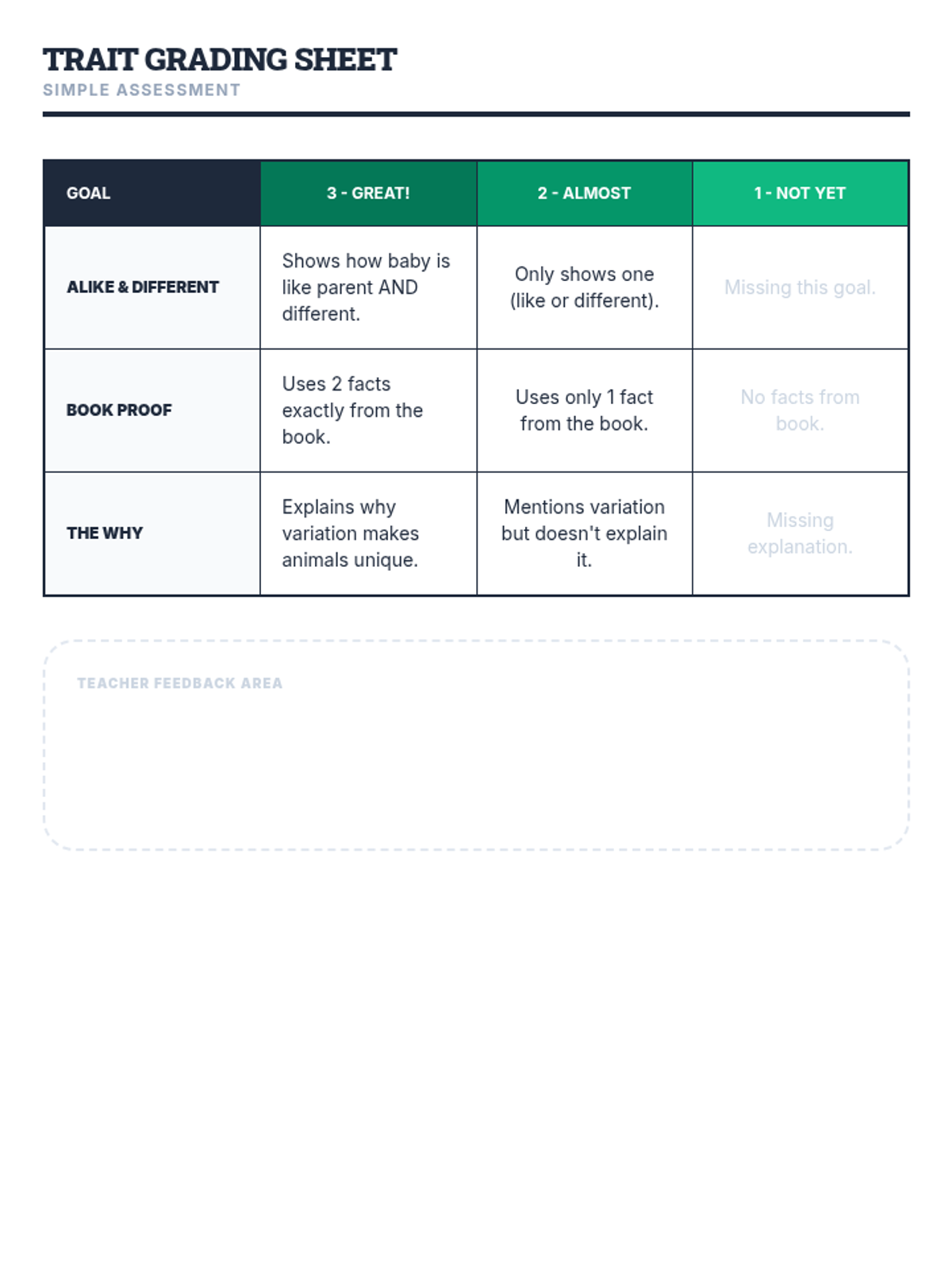
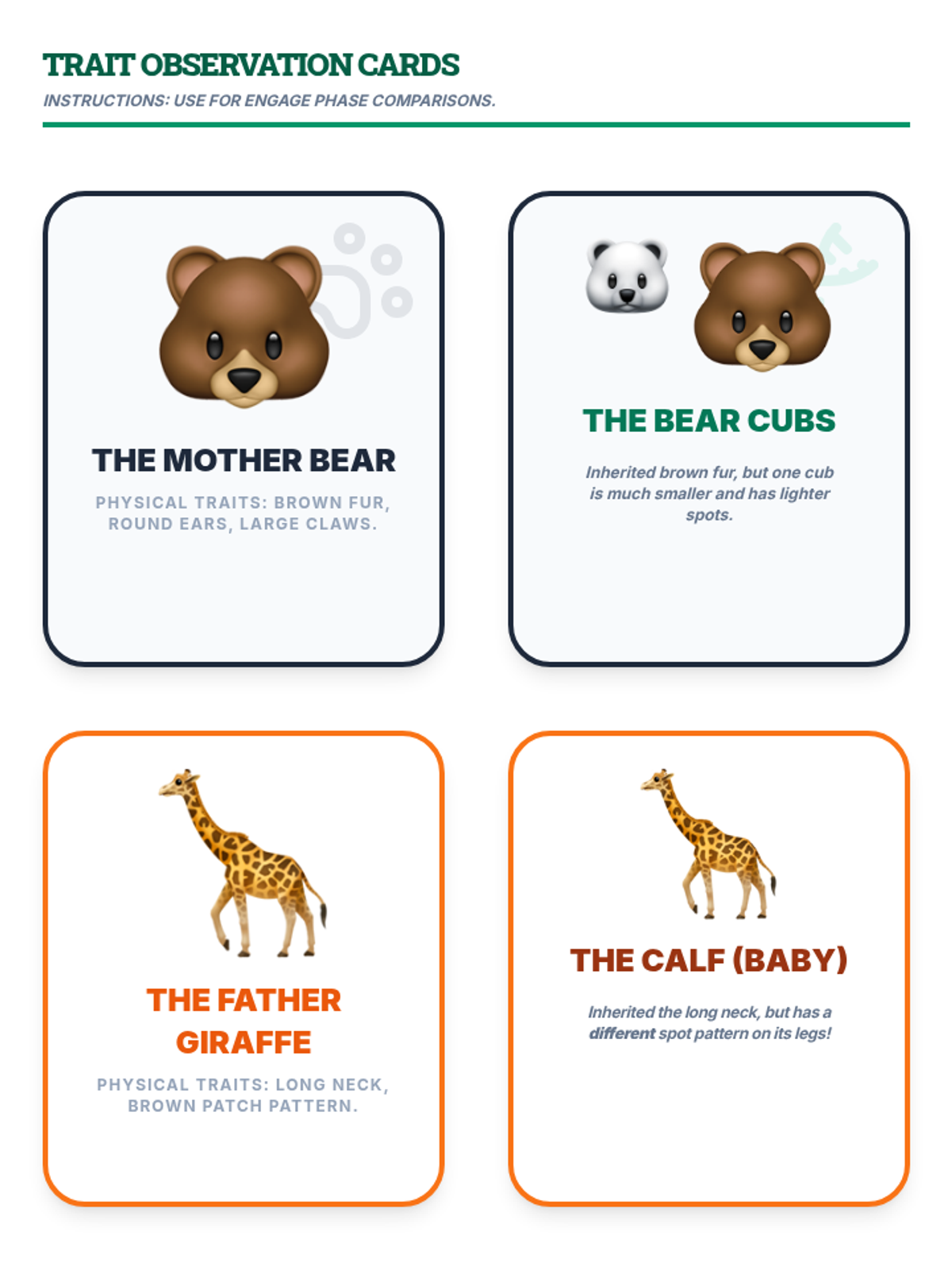
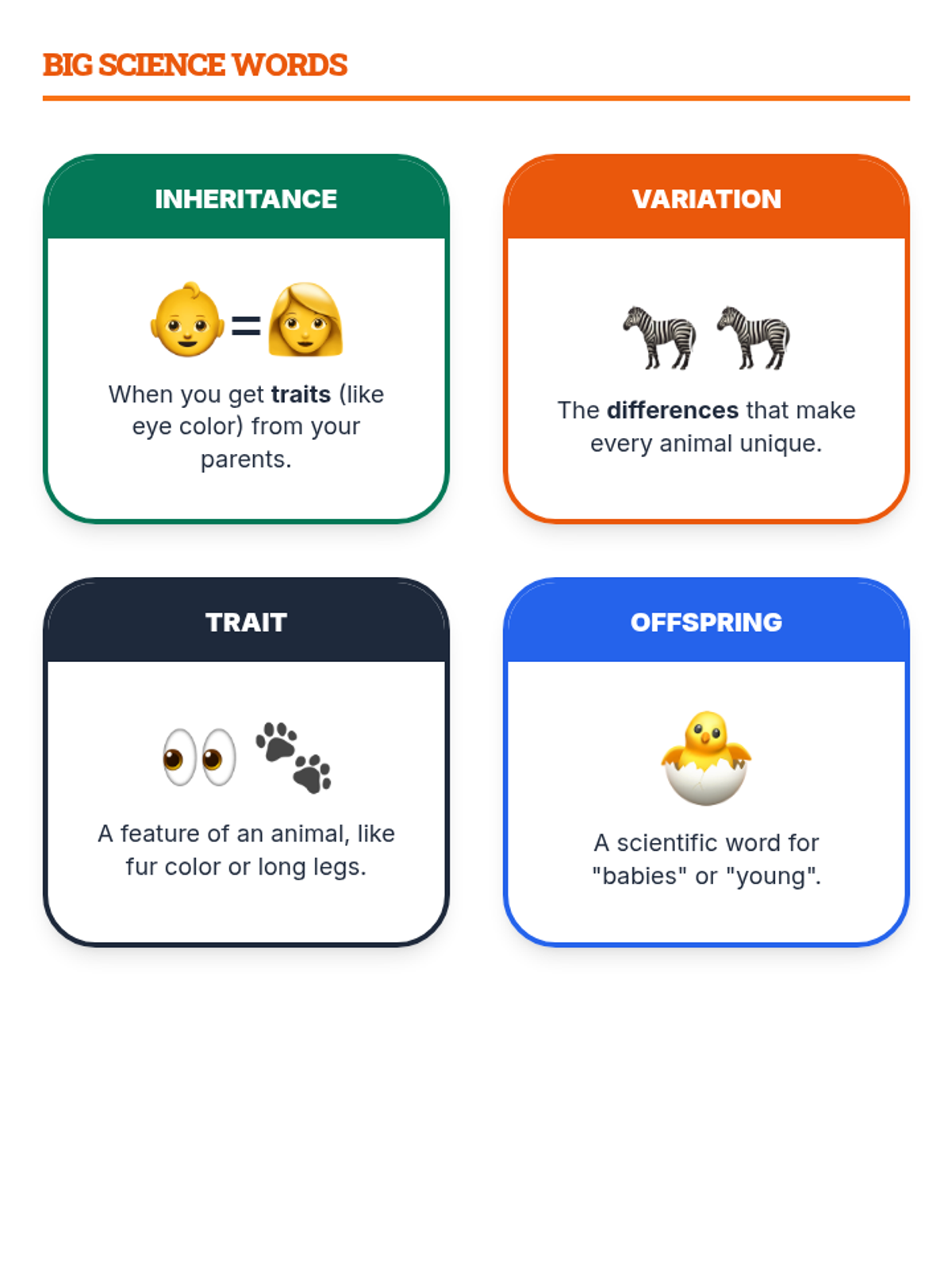
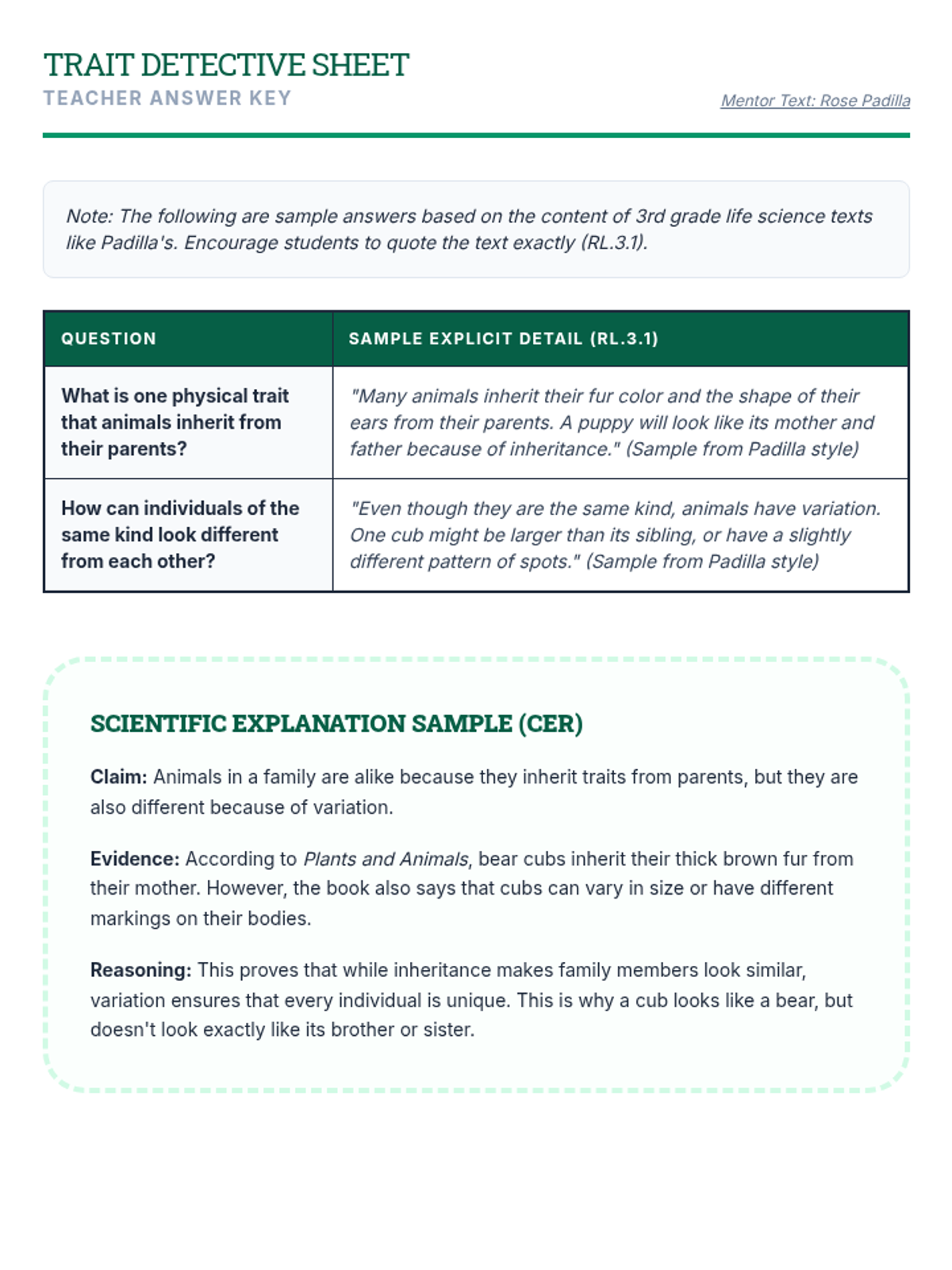
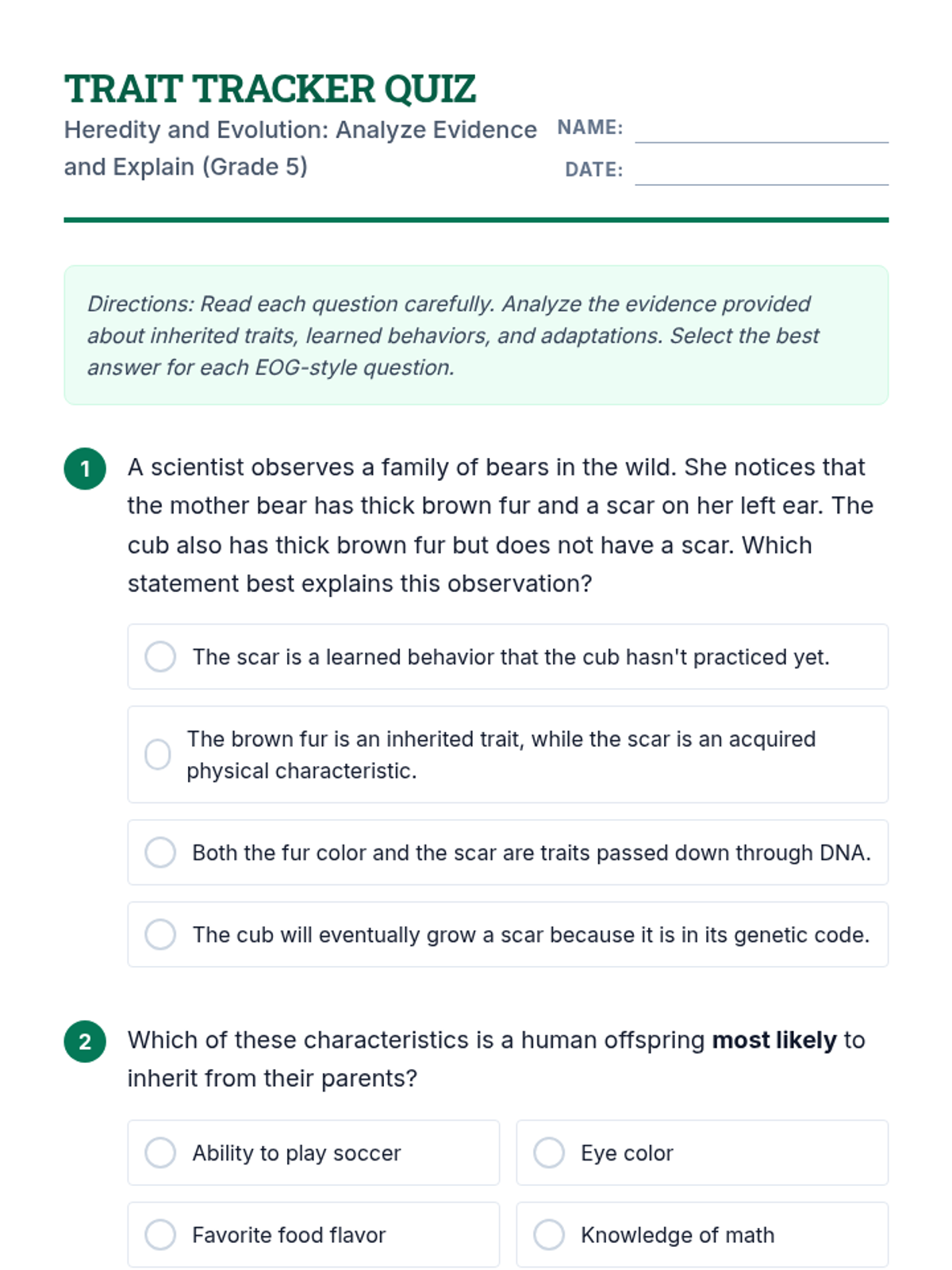
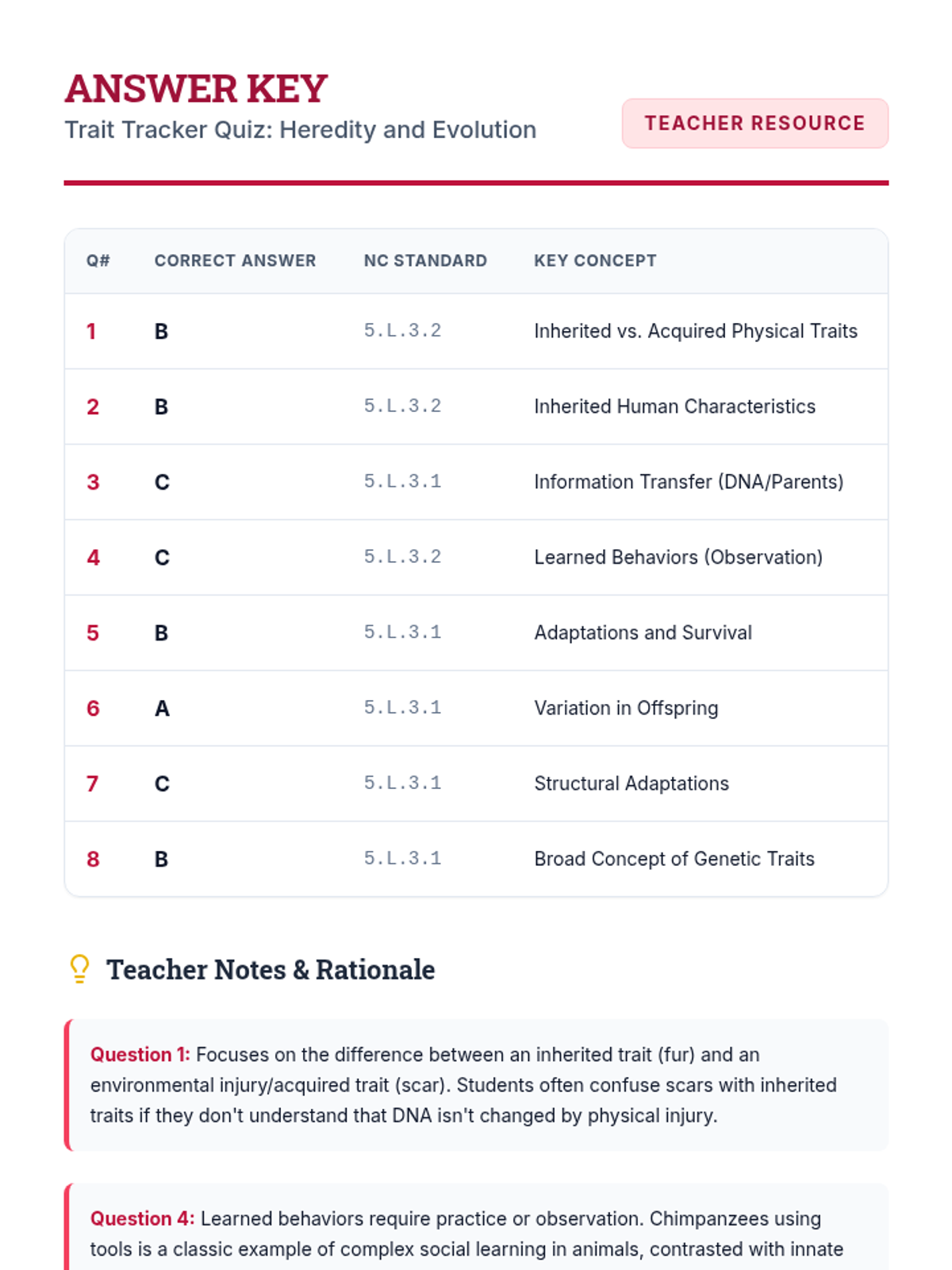
A 3rd-grade integrated science and literacy lesson exploring inheritance and variation in traits. Using 'Plants and Animals' by Rose Padilla, students analyze how animals are like their parents yet different from each other, gathering explicit text evidence to support scientific explanations.
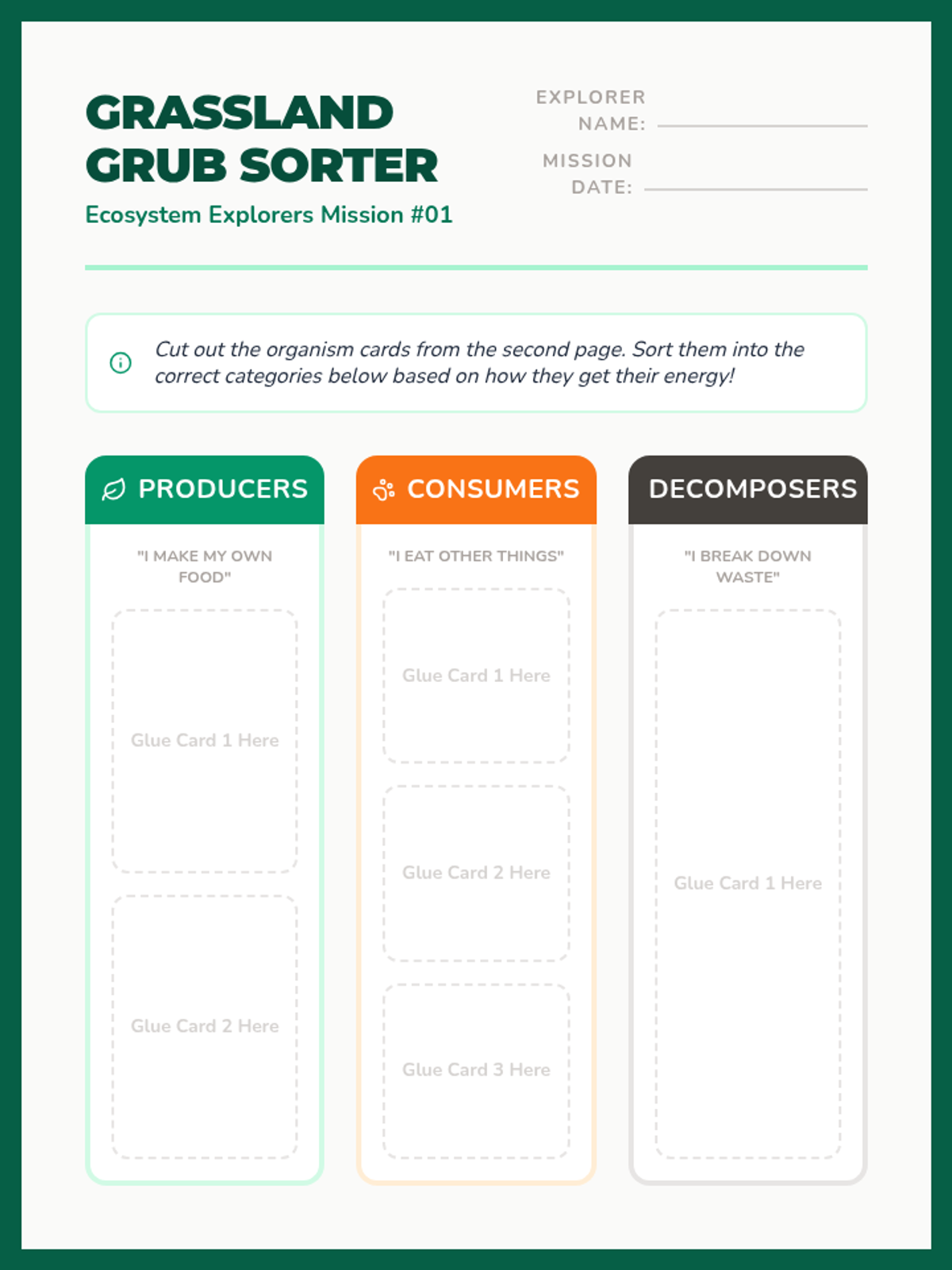
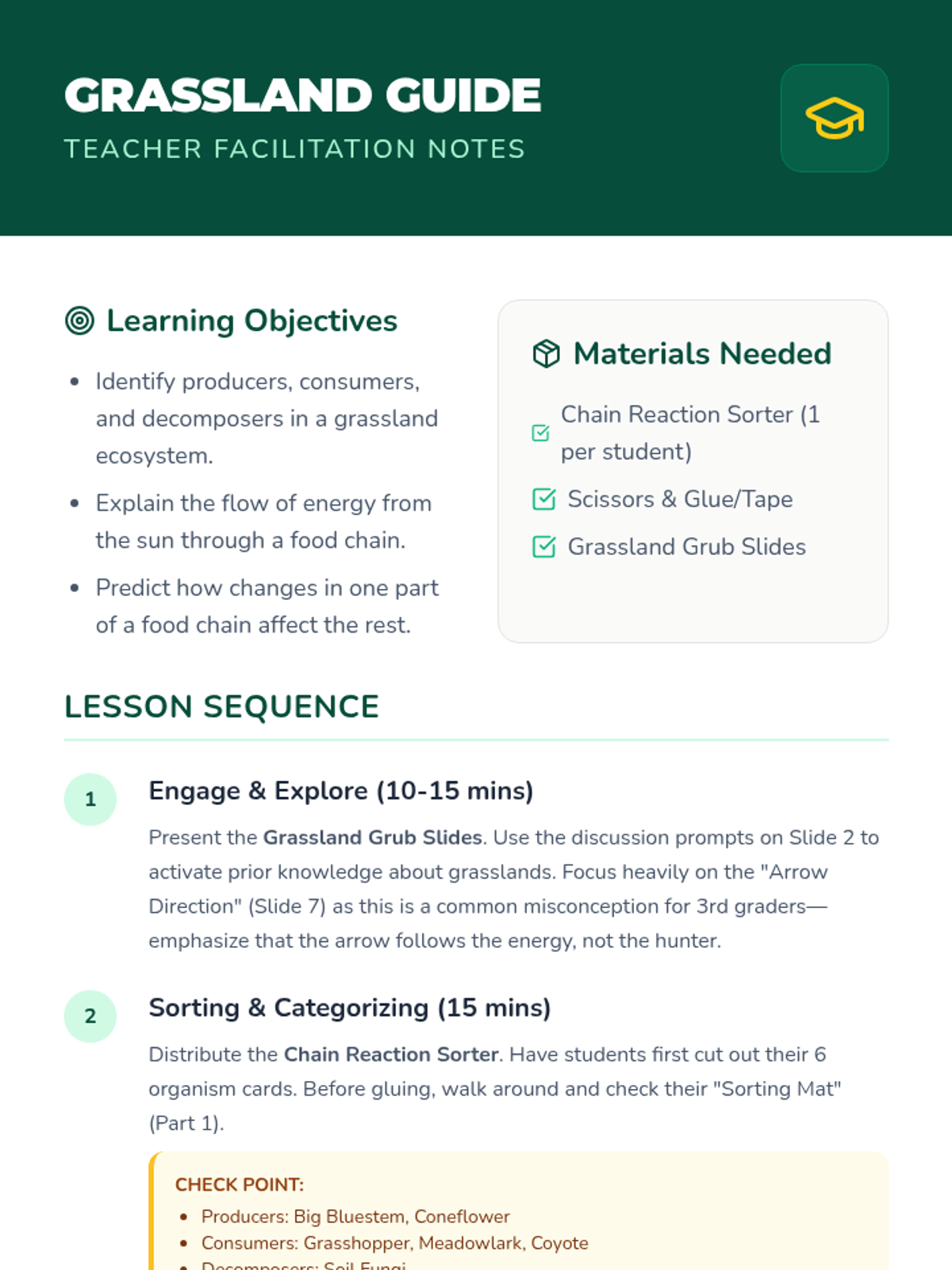
Students explore the flow of energy in a grassland ecosystem by identifying producers, consumers, and decomposers. They will construct their own food chains through a hands-on sorting and linking activity.
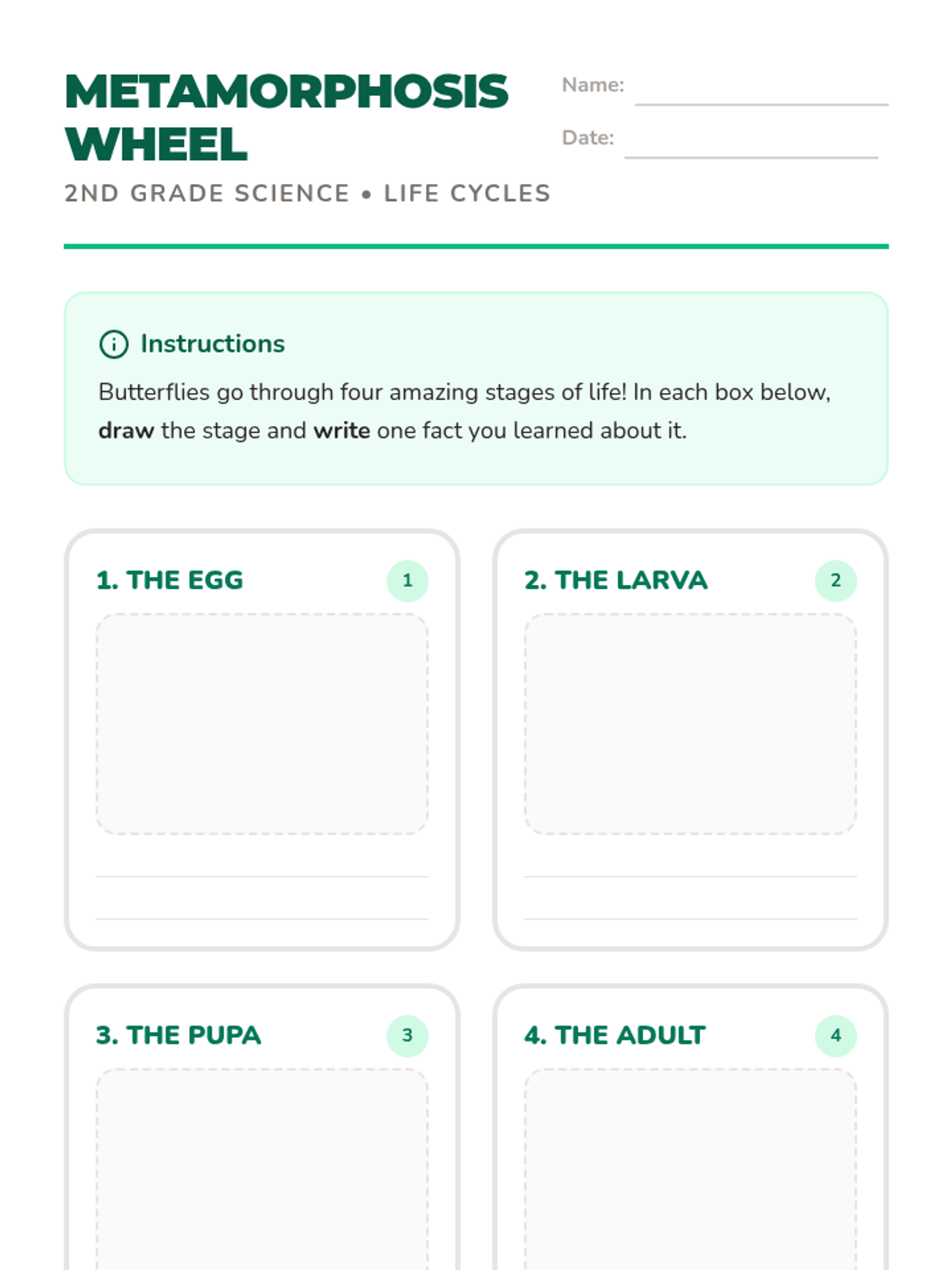
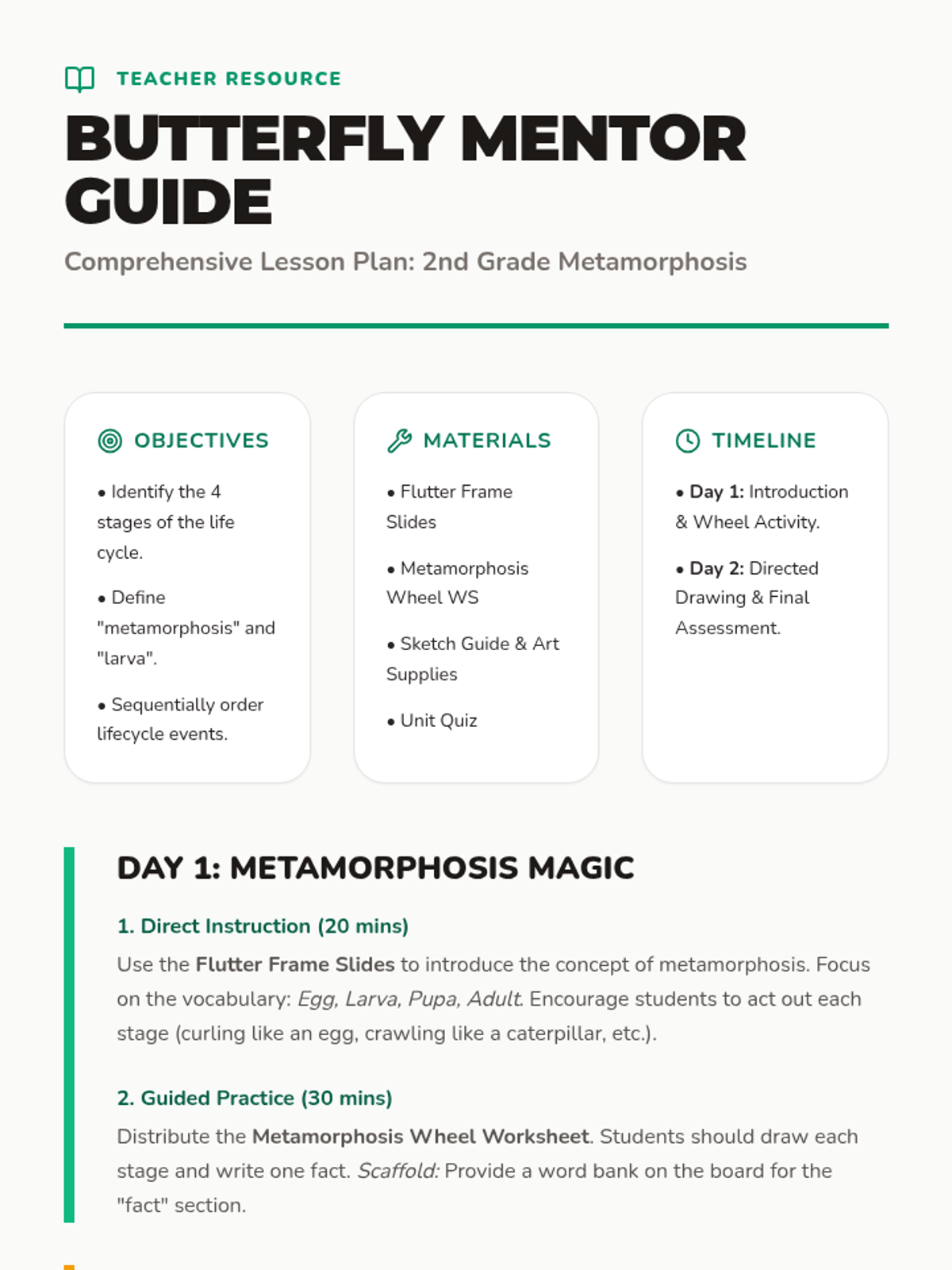
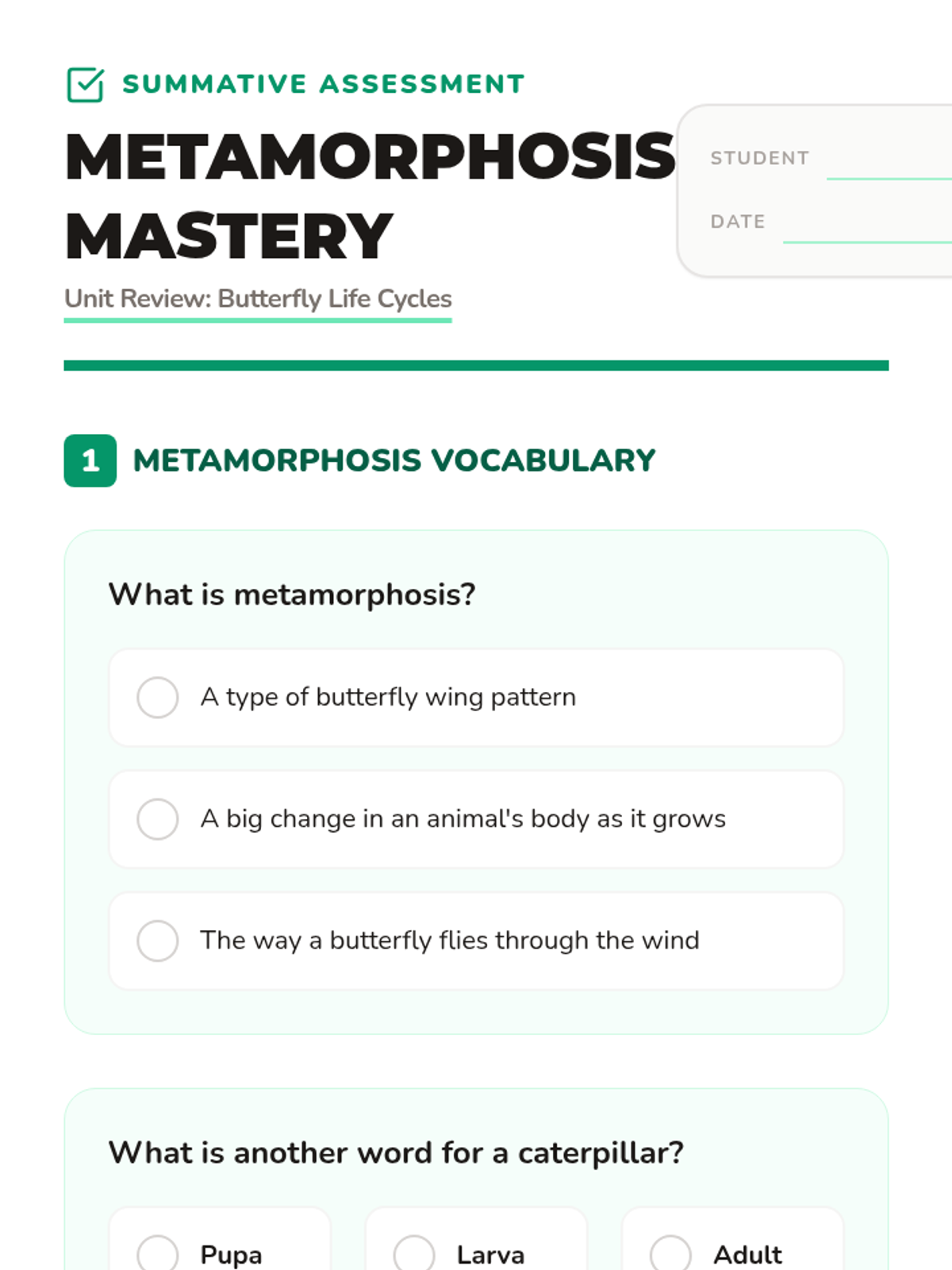
A deep dive into the four stages of a butterfly's life cycle: egg, larva, pupa, and adult. Students will learn the vocabulary and science behind metamorphosis.
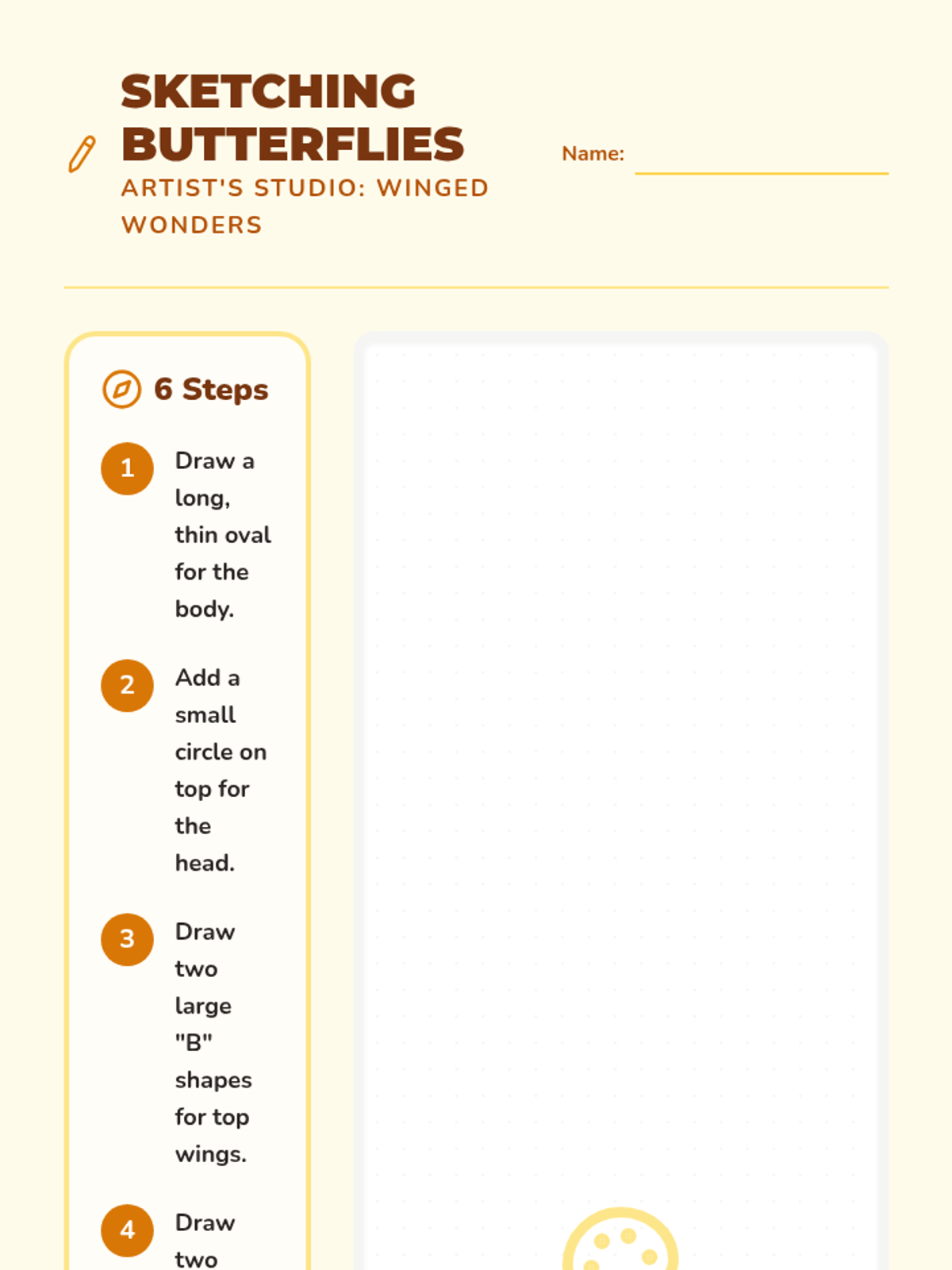
Students apply their knowledge through a directed drawing of a butterfly and complete a summative assessment on the life cycle stages and vocabulary.
A lesson exploring how physical characteristics are passed from parents to offspring, differentiating between inherited traits, learned behaviors, and adaptations.
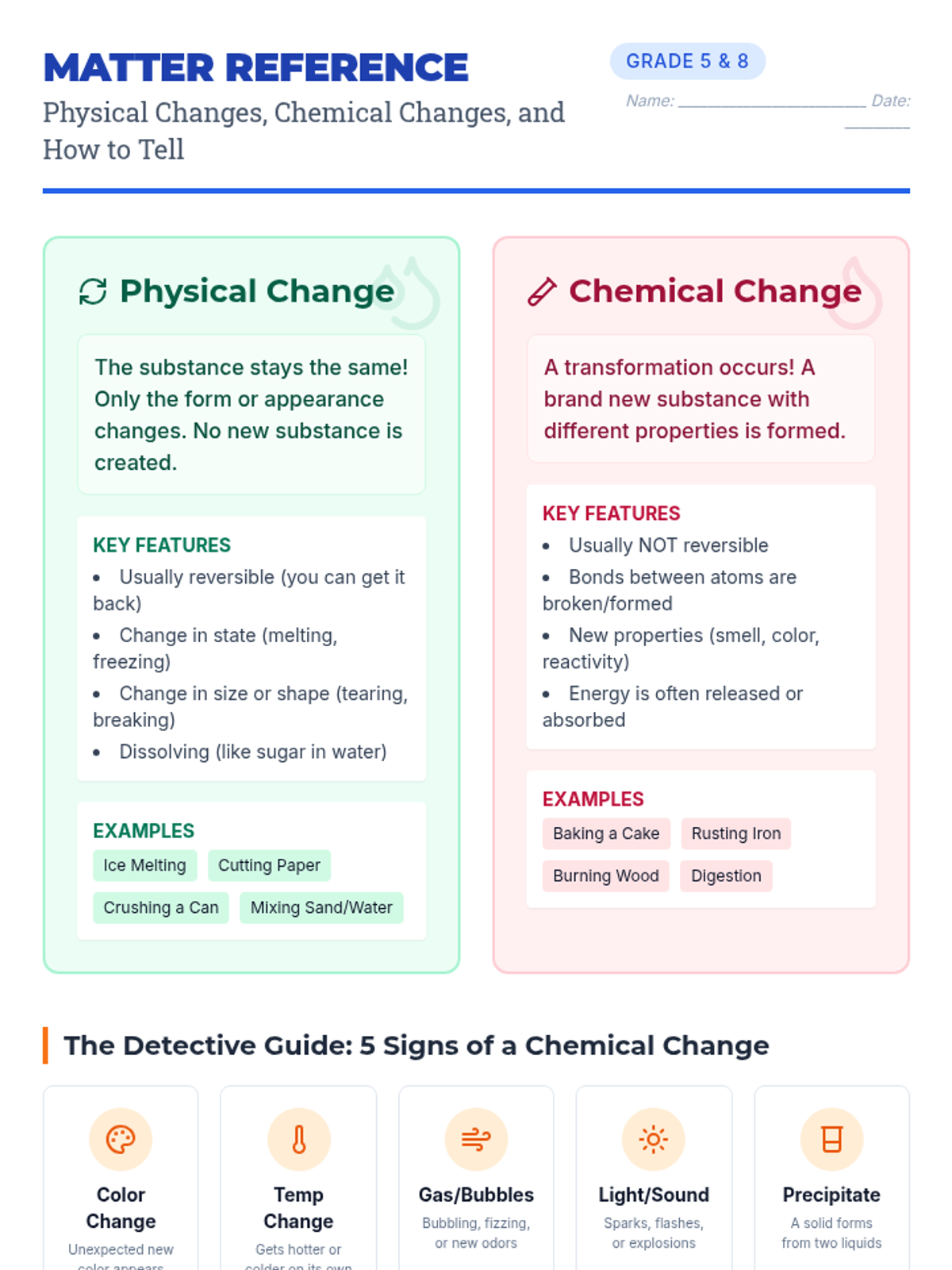
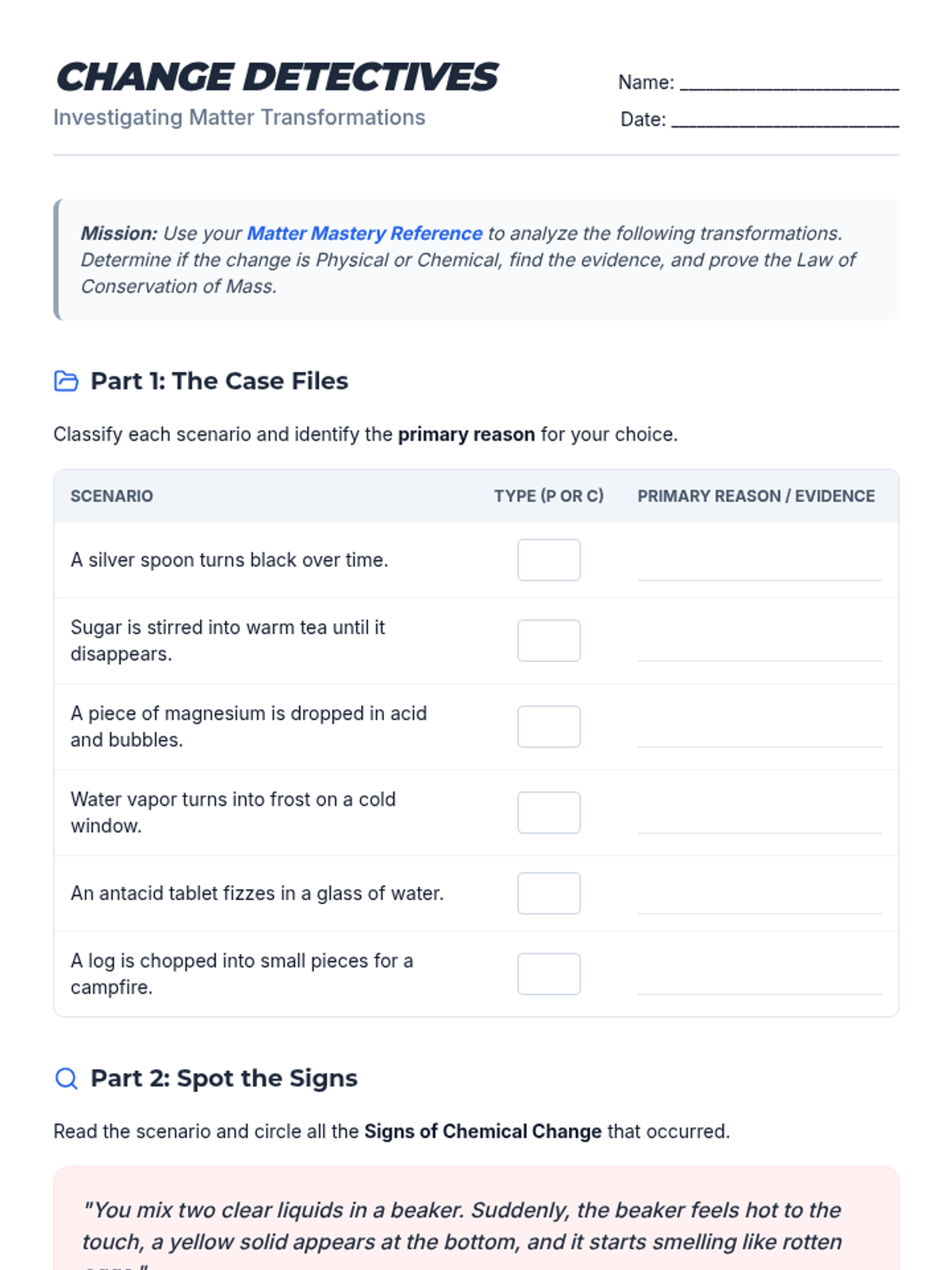
A comprehensive exploration of physical and chemical changes in matter, designed for Grade 5 and Grade 8 science standards. This lesson provides clear visual references for distinguishing between types of changes and understanding the conservation of mass.
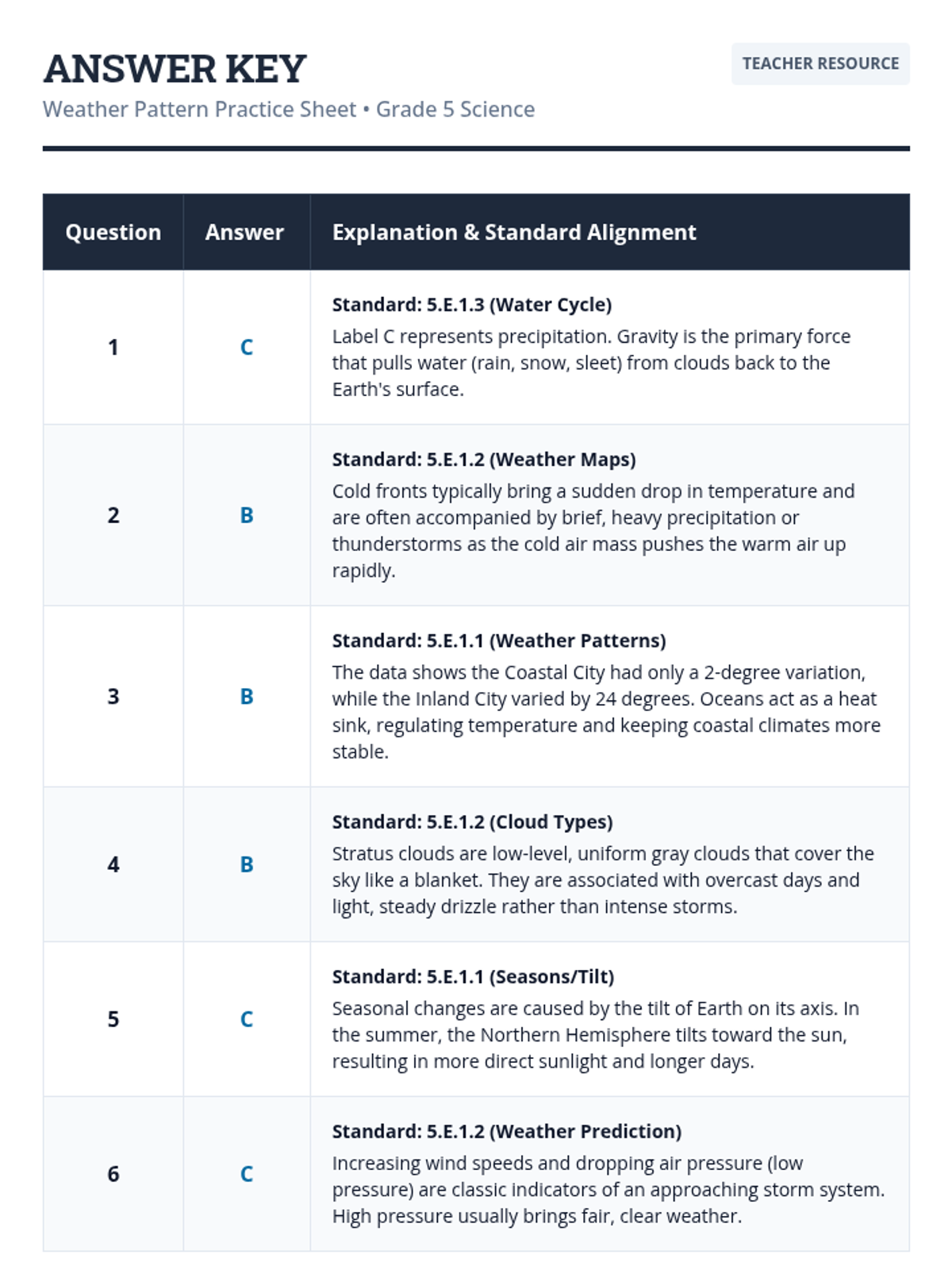
A comprehensive Grade 5 Earth Science practice set focusing on NC Essential Standard 5.E.1. Students analyze weather maps, data tables, and water cycle diagrams to master weather prediction and cyclical patterns.