A fun, interactive lesson where students learn the biological sequence of a sneeze, from initial irritation to the final 'Achoo!', including a deep dive into reflexes and hygiene.
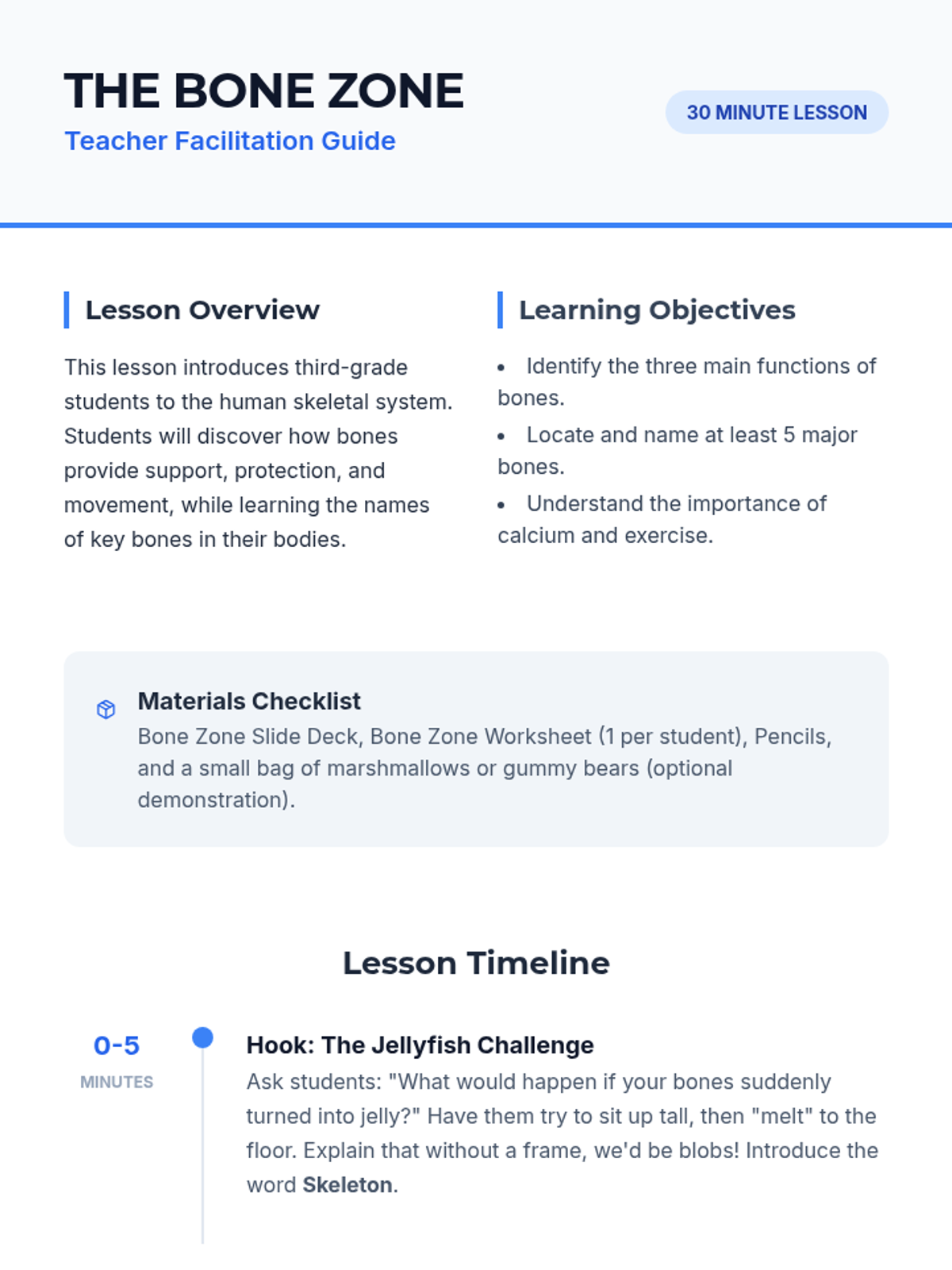
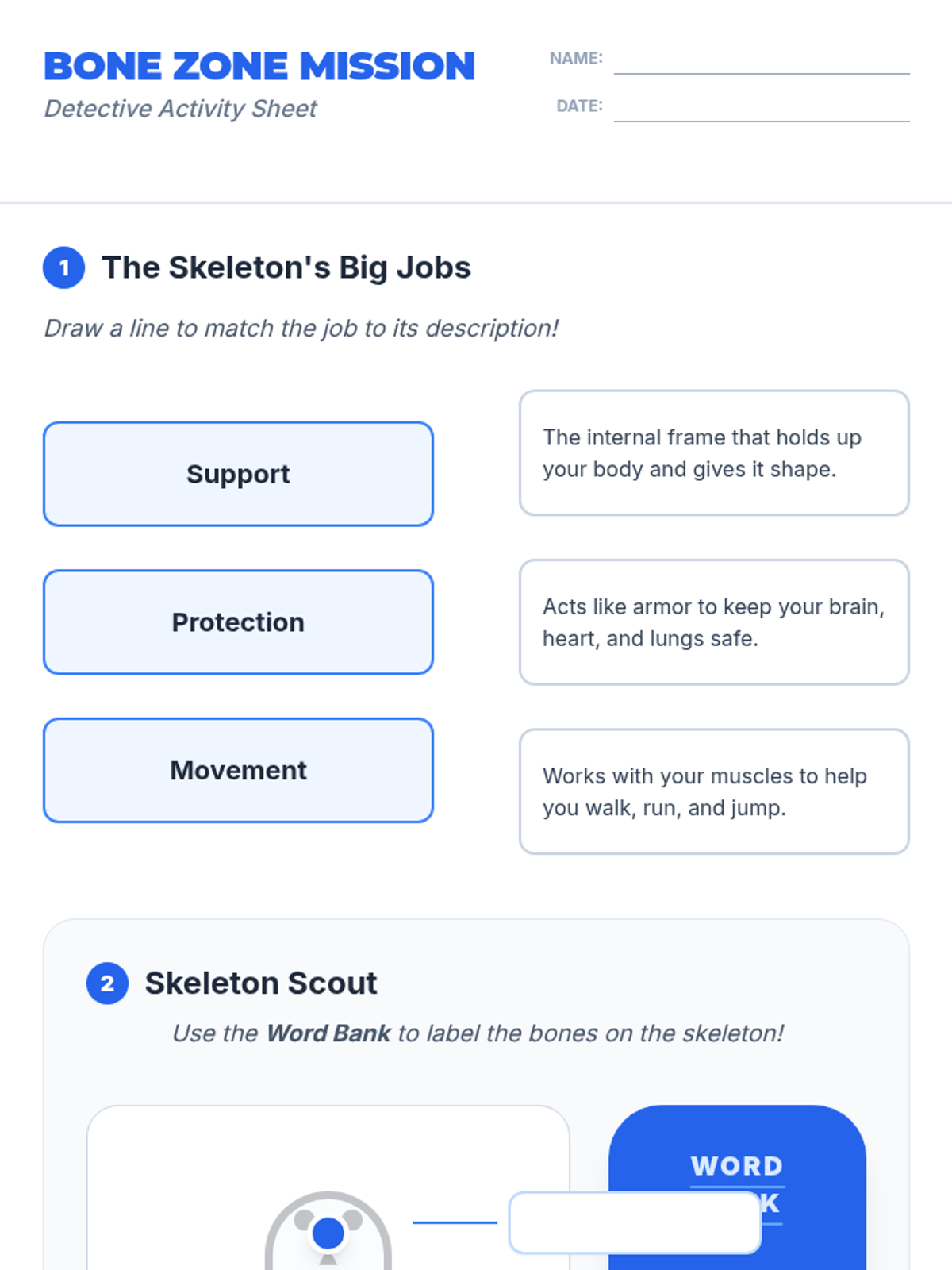
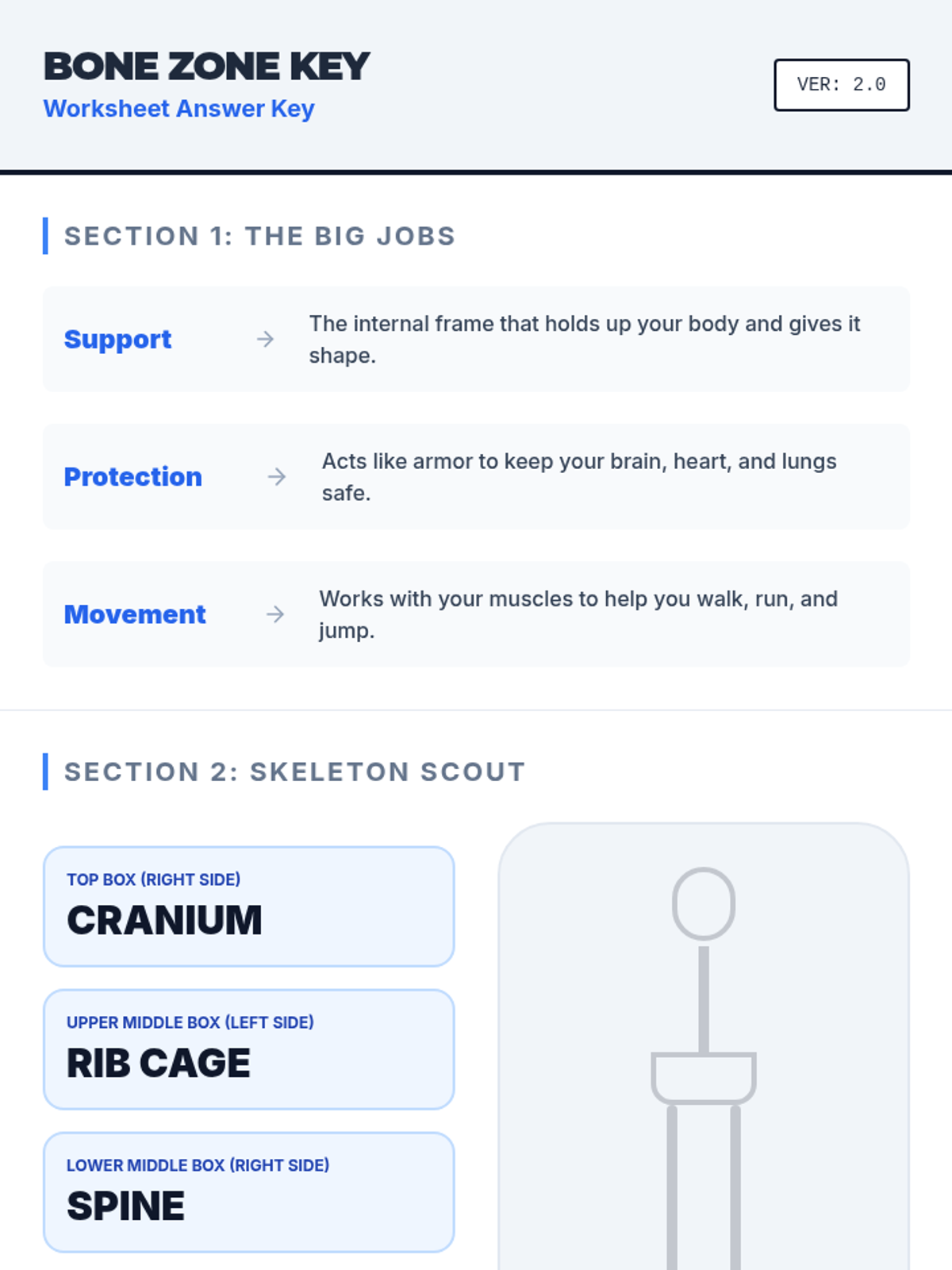
A quick 30-minute introduction to the skeletal system, focusing on its main functions and the names of key bones in the human body. Students will explore how their 'internal frame' helps them move and stay protected.
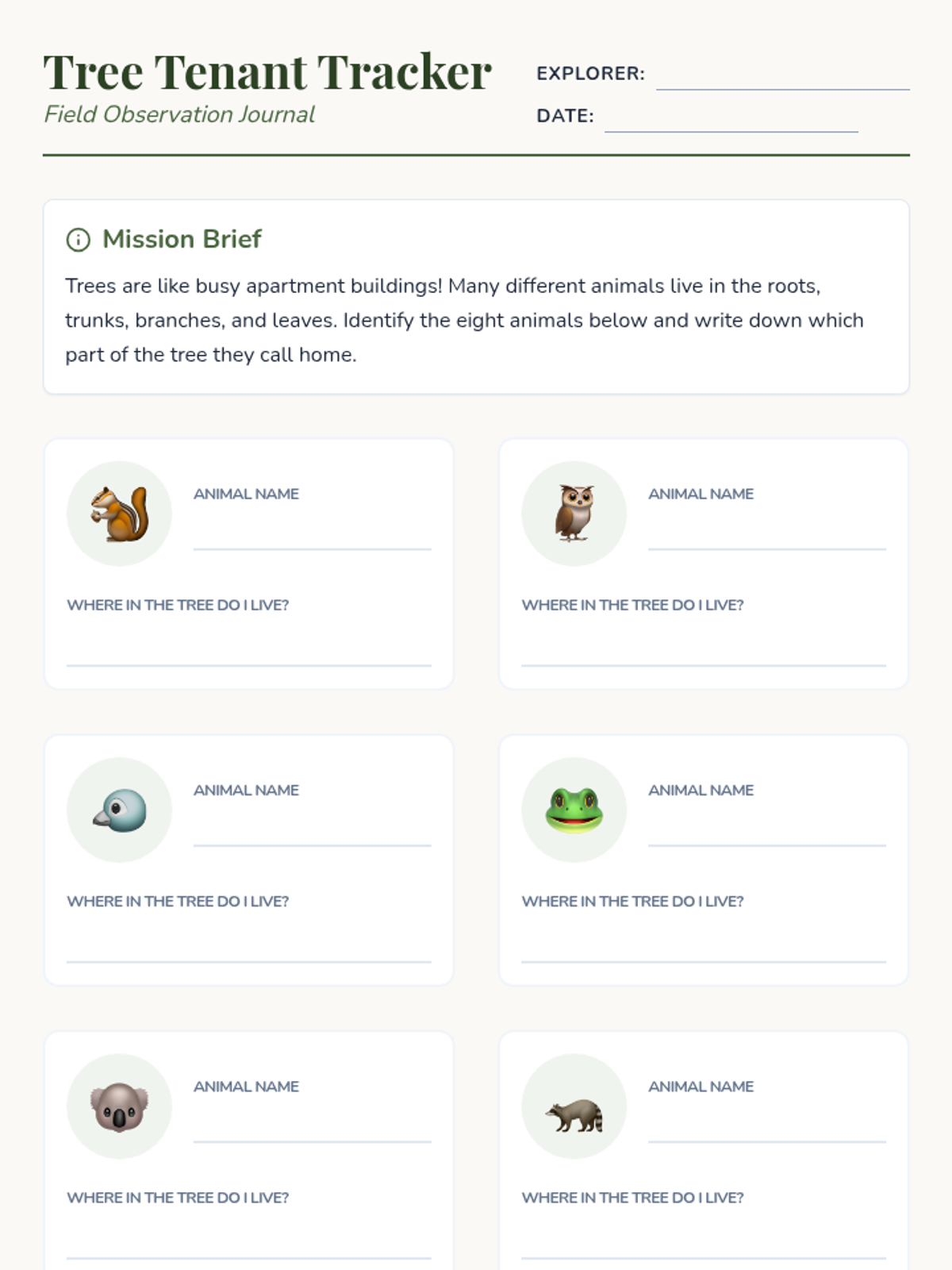
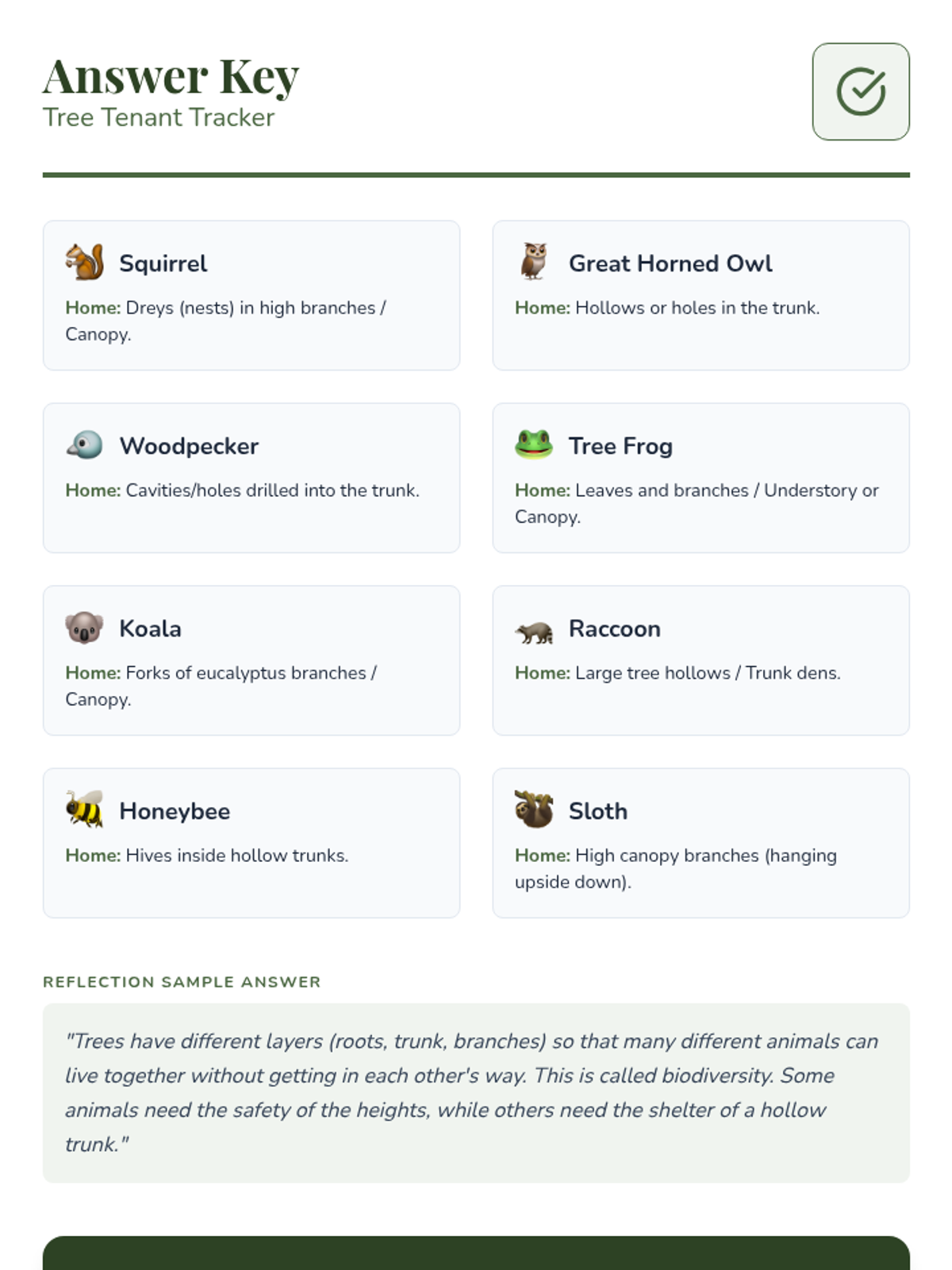
A lesson exploring the diverse animals that call trees their home, focusing on identification and the specific parts of the tree they inhabit.
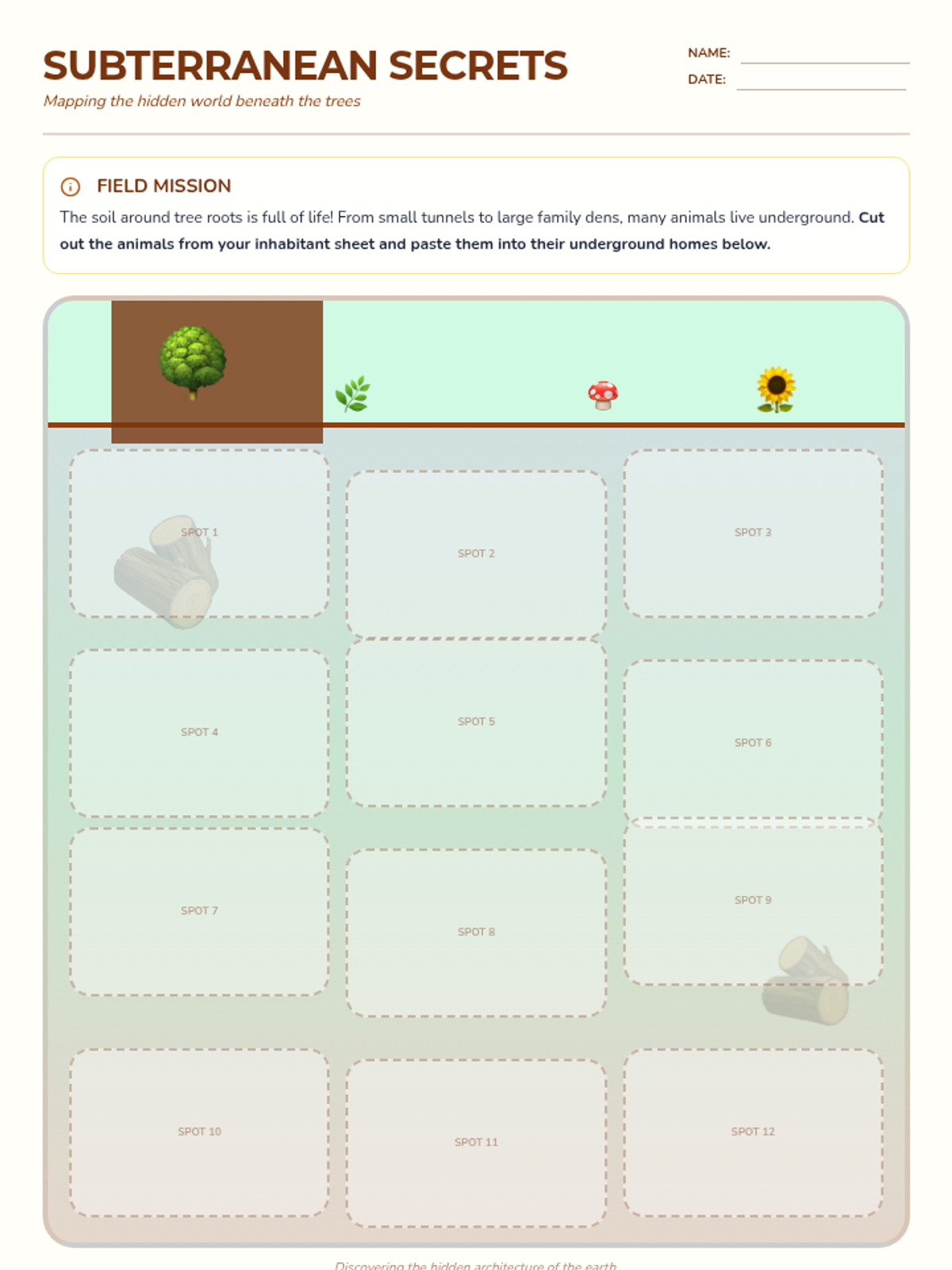
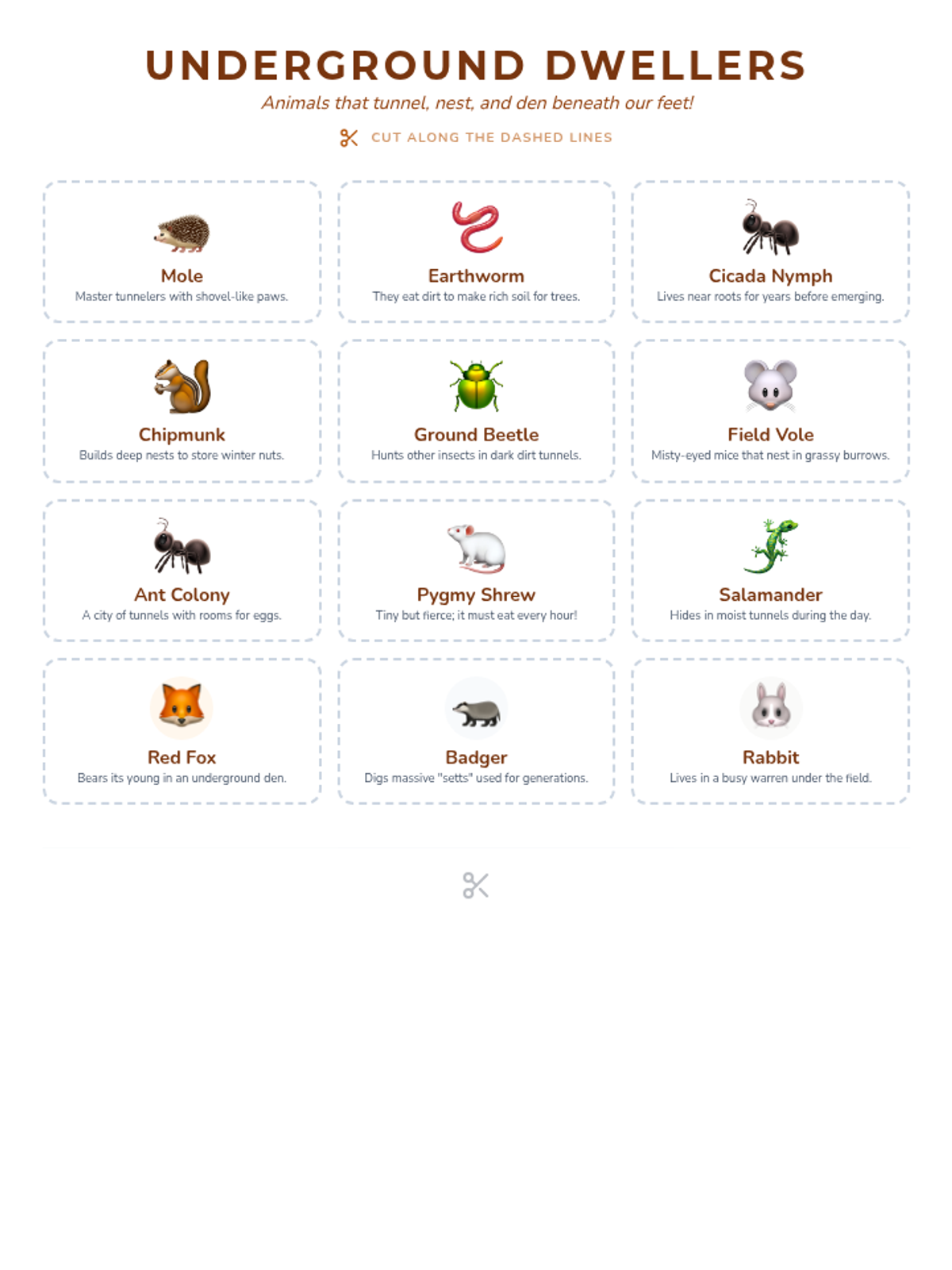
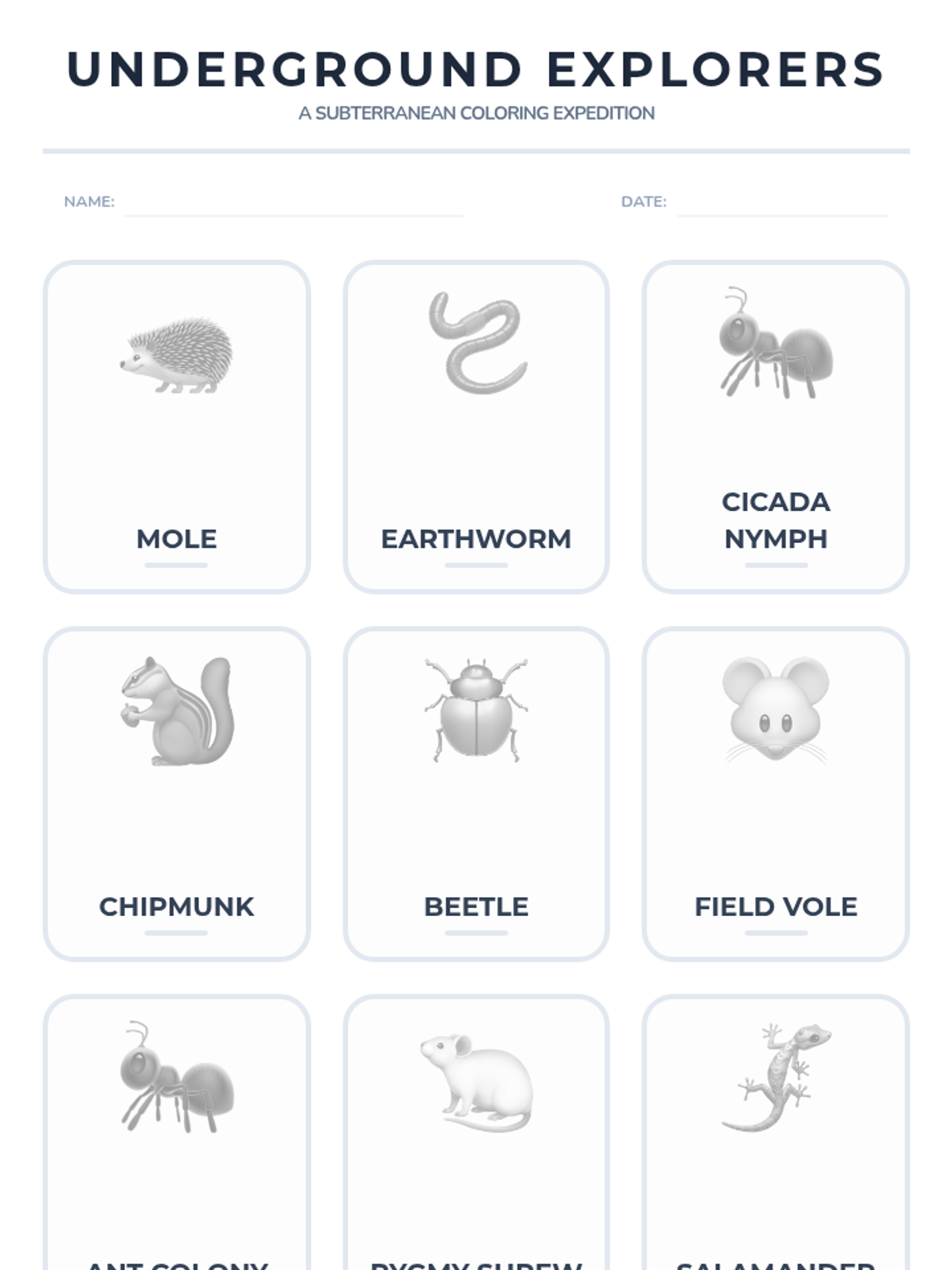
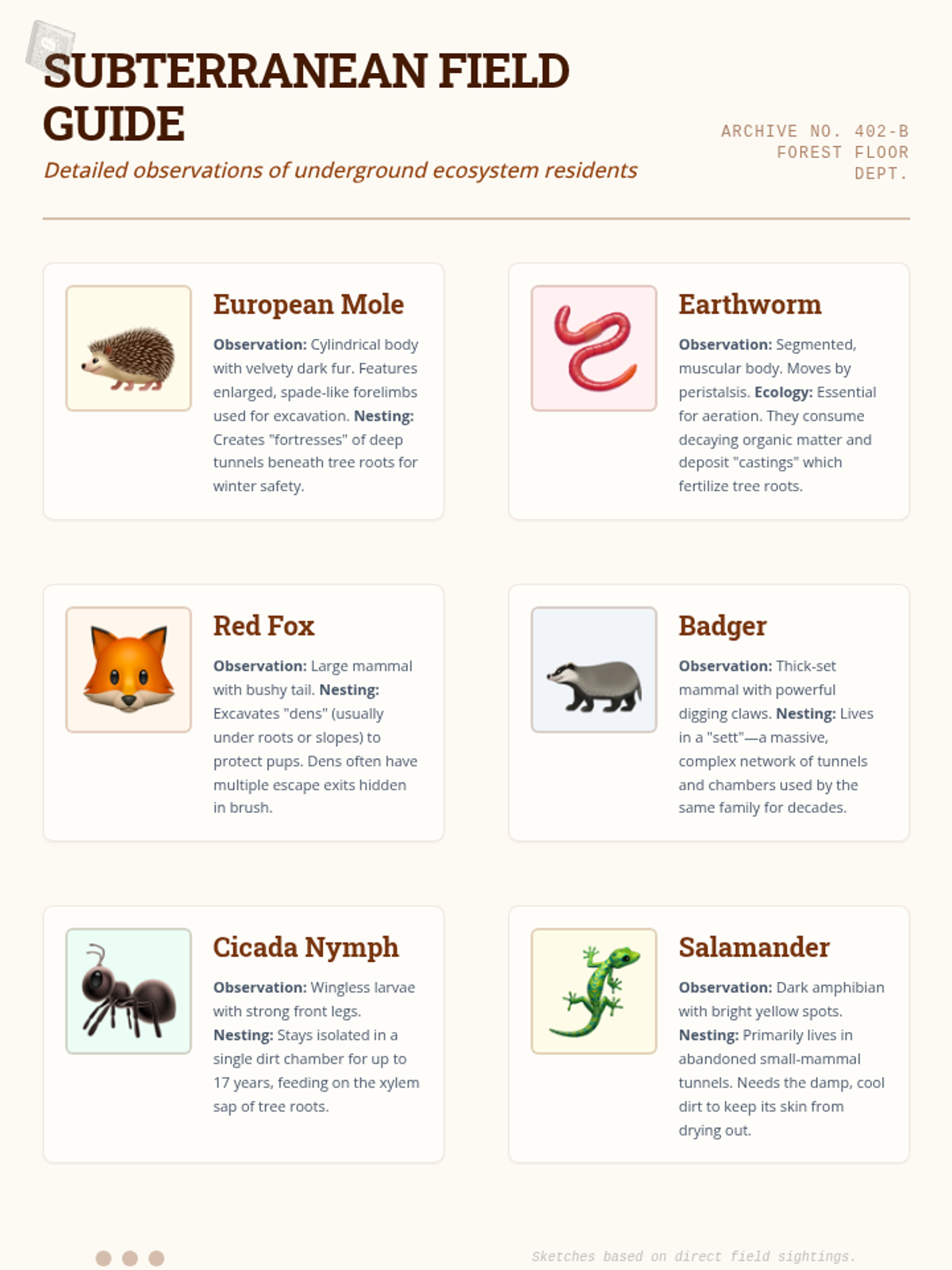
Students explore the ecosystem beneath the forest floor, focusing on animals that create tunnels and live among tree roots.
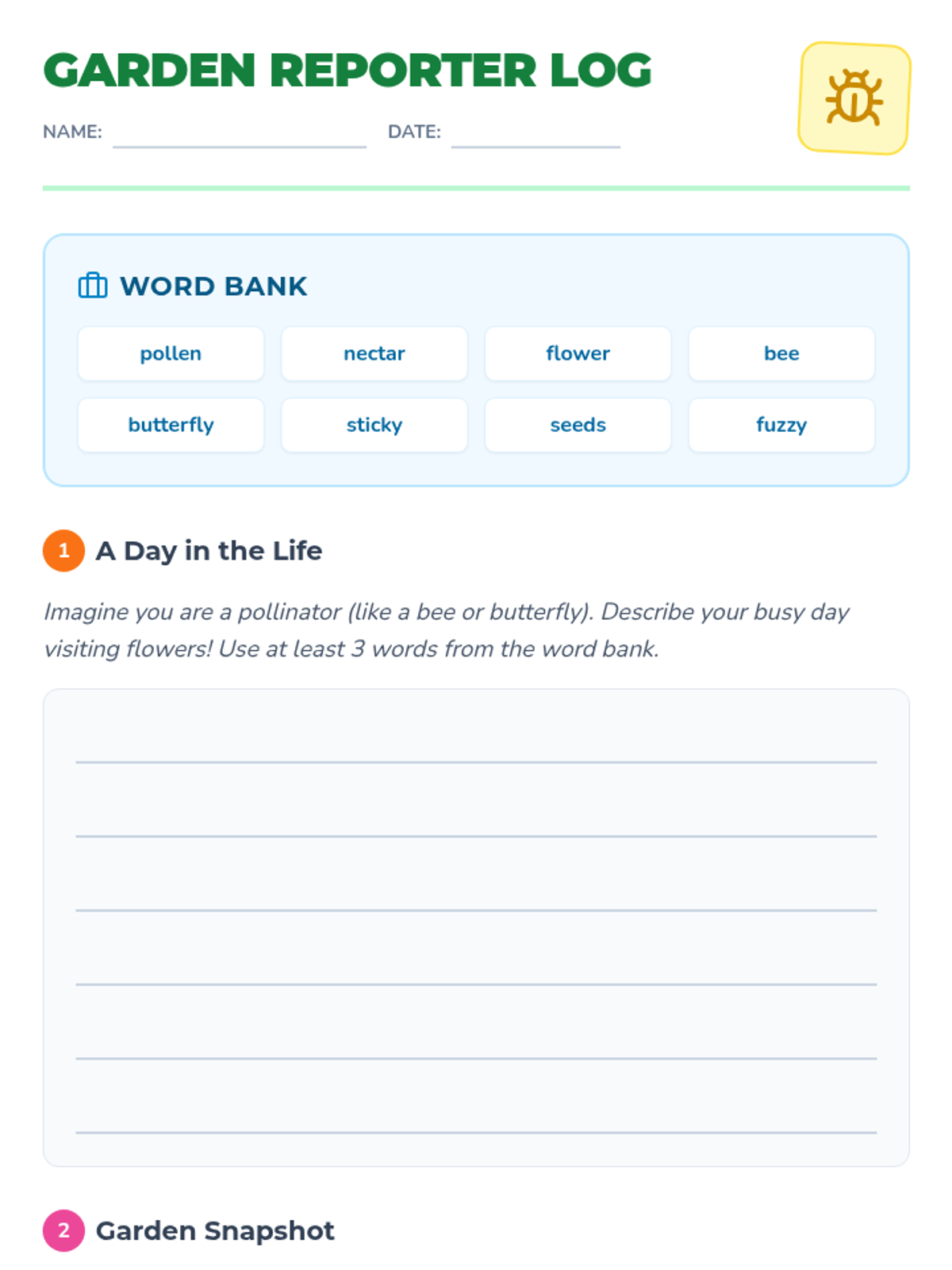
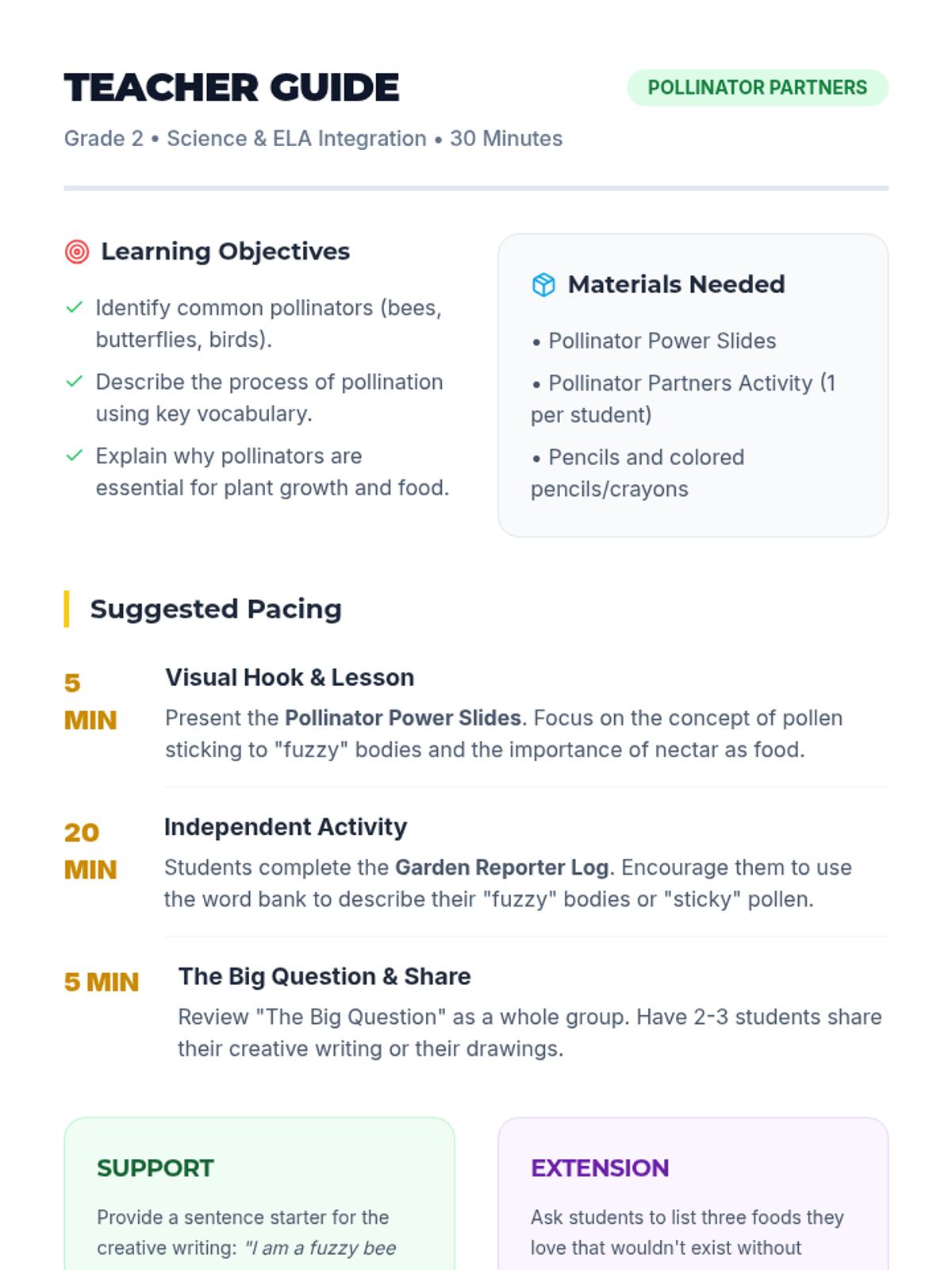
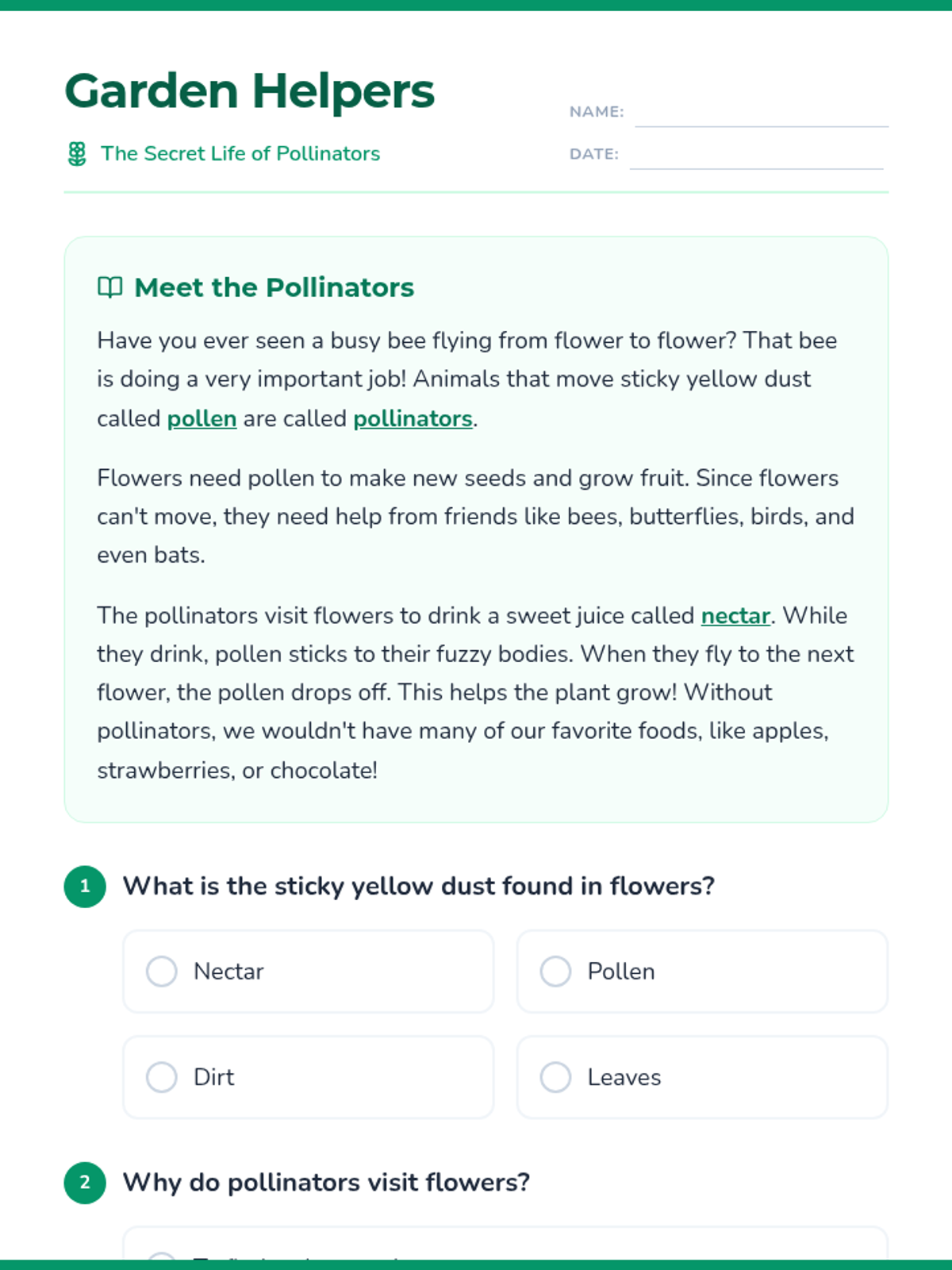
A 30-minute independent writing lesson for 2nd graders to explore the role of pollinators in our ecosystem, featuring a word bank and descriptive writing prompts.
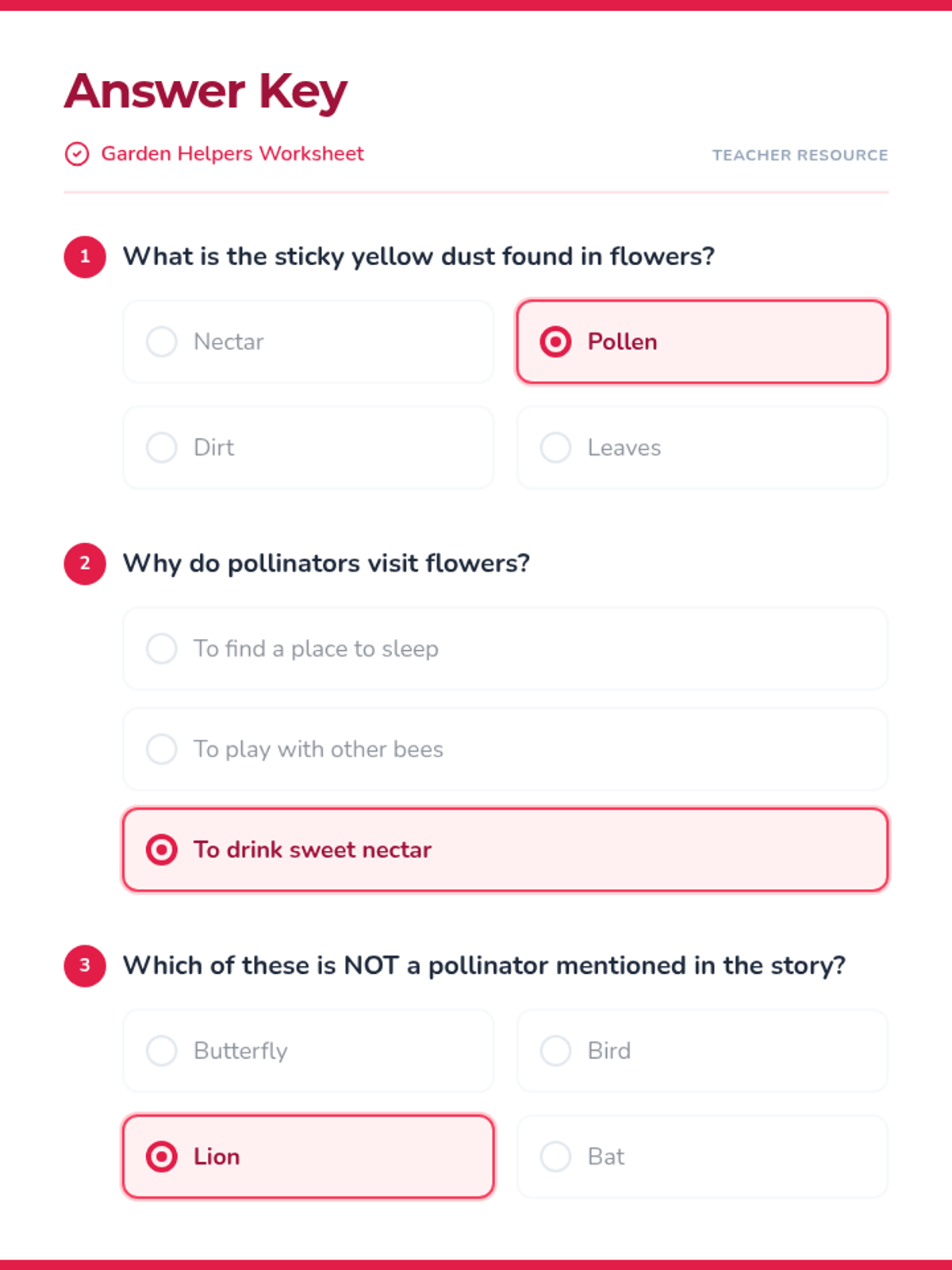
Students will learn about the vital role of pollinators in our ecosystem through a short reading passage and independent comprehension activities.
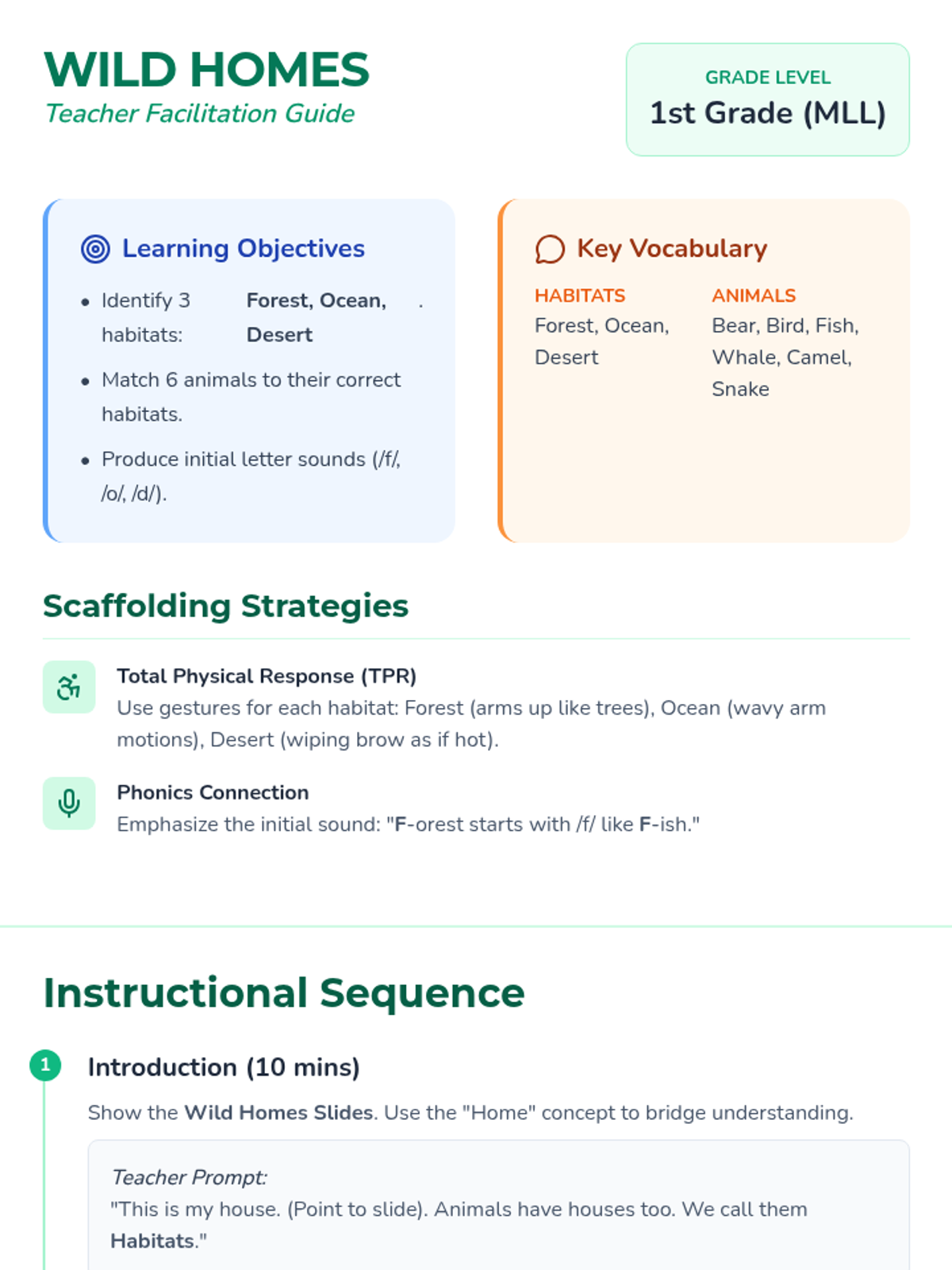
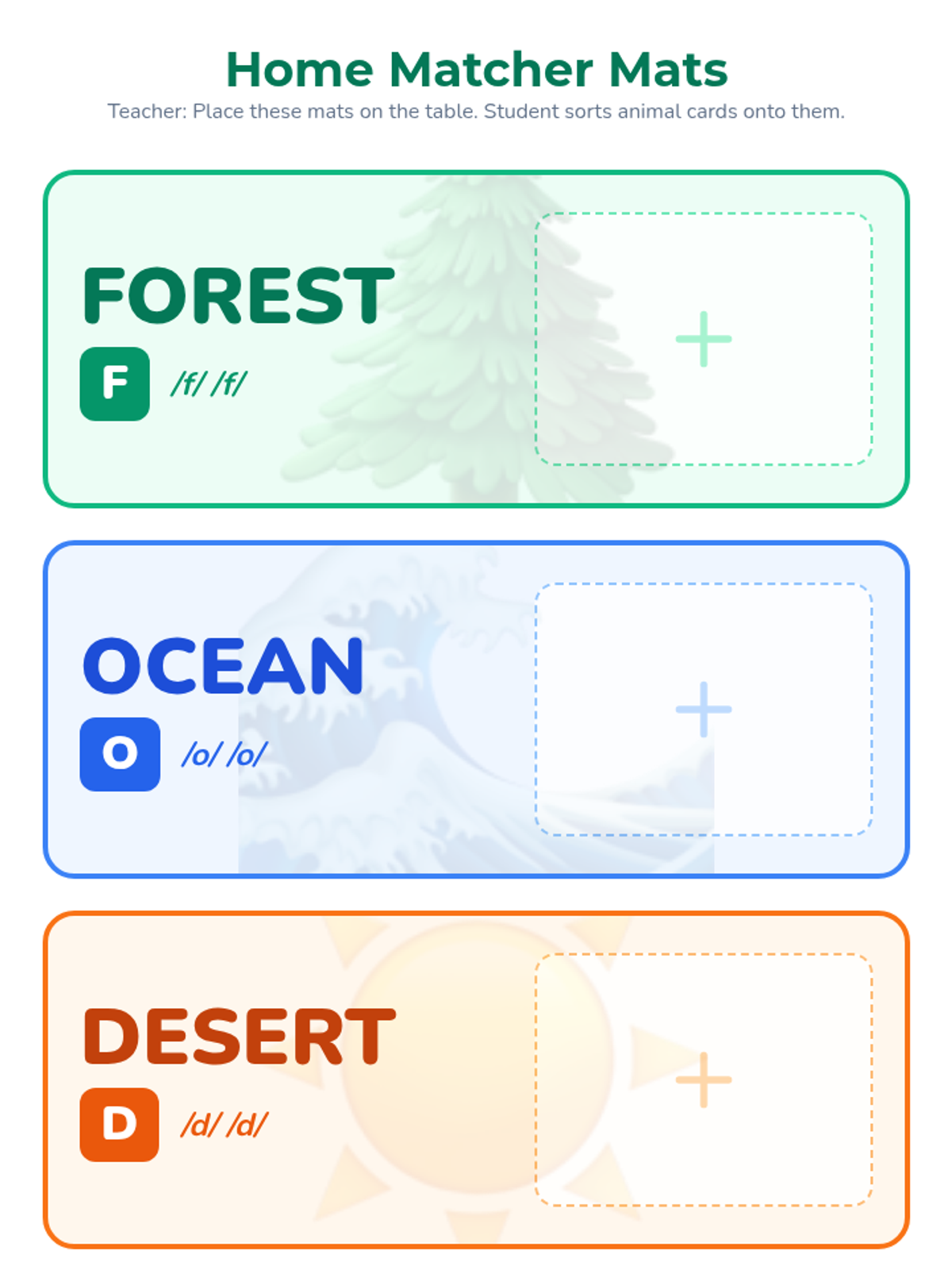
A foundational MLL lesson for 1st grade students focused on oral language and visual recognition of animals and their habitats (Forest, Ocean, Desert). The lesson emphasizes Total Physical Response (TPR), visual matching, and basic phonics connections.
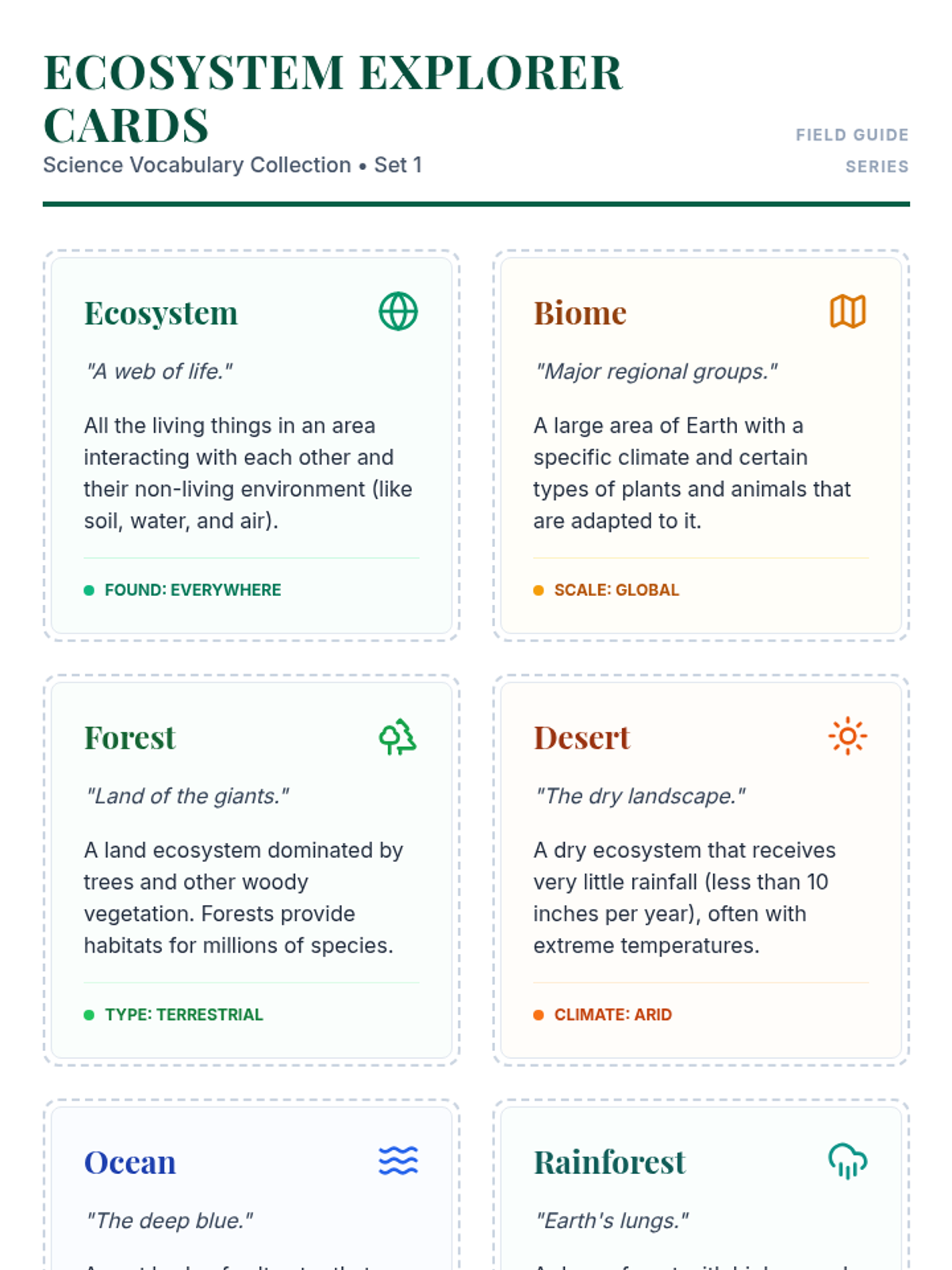
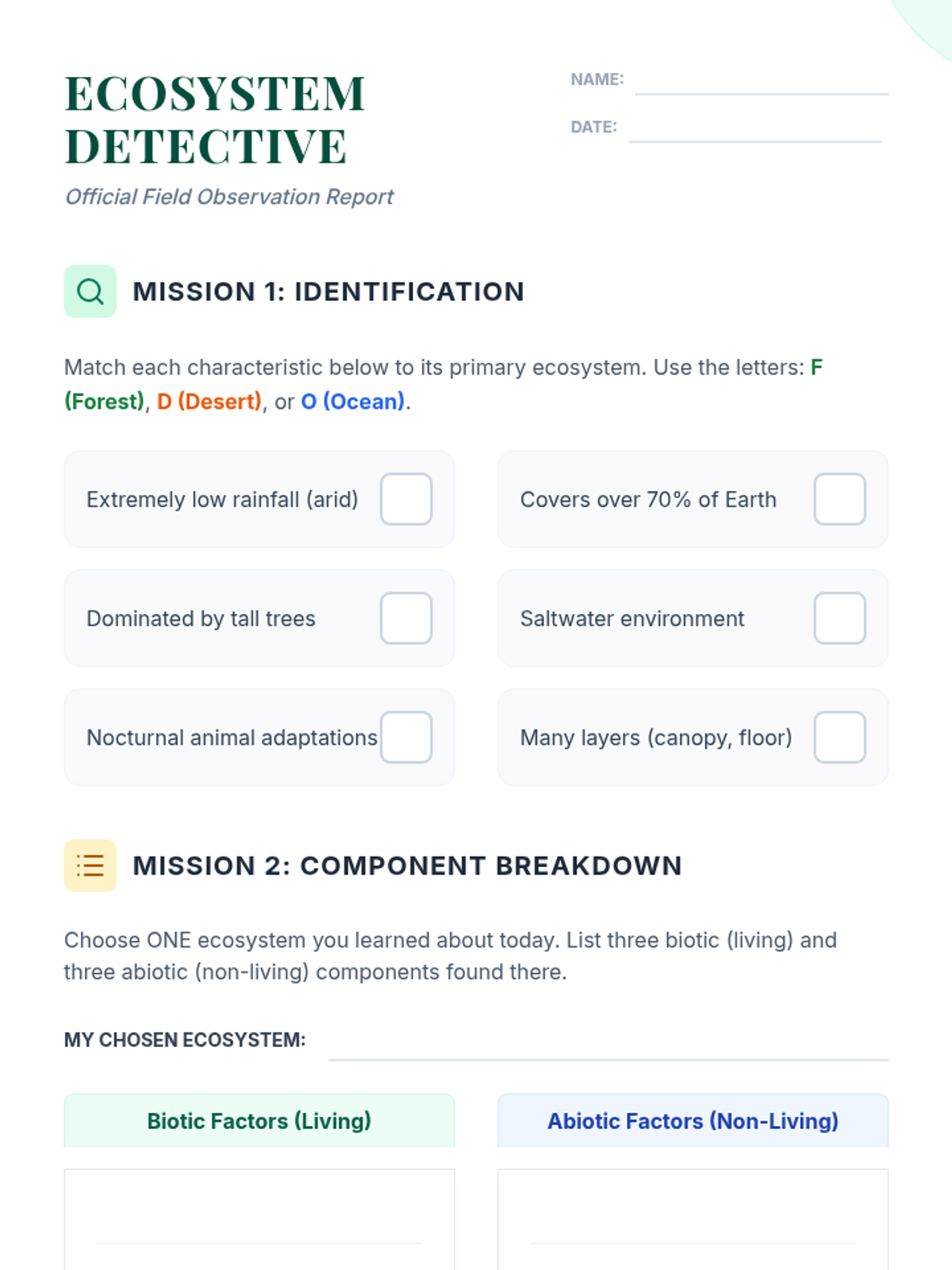
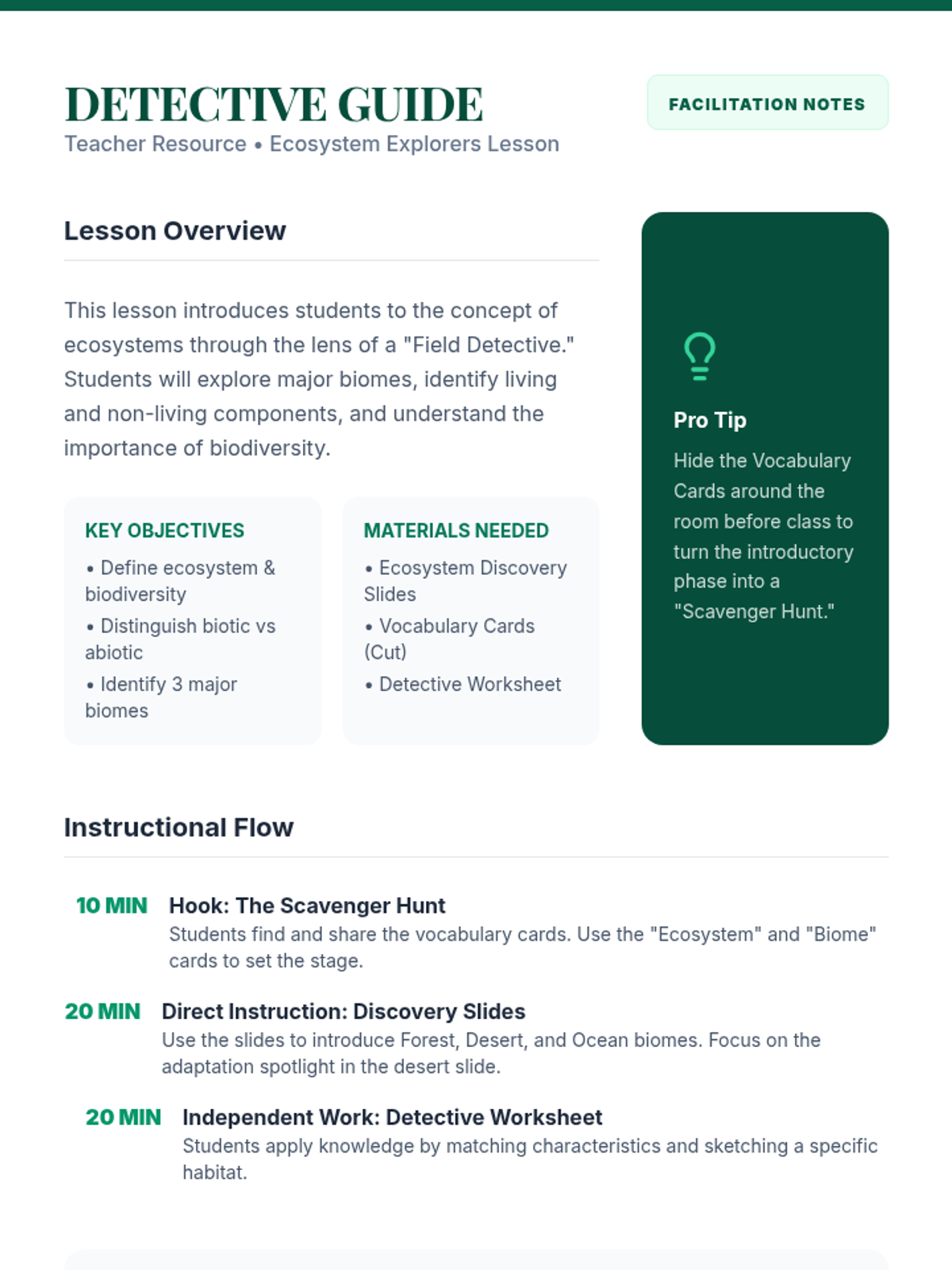
A lesson introducing students to various ecosystems through vocabulary and visual identification. Students will learn the key characteristics of different biomes including forests, deserts, and oceans.
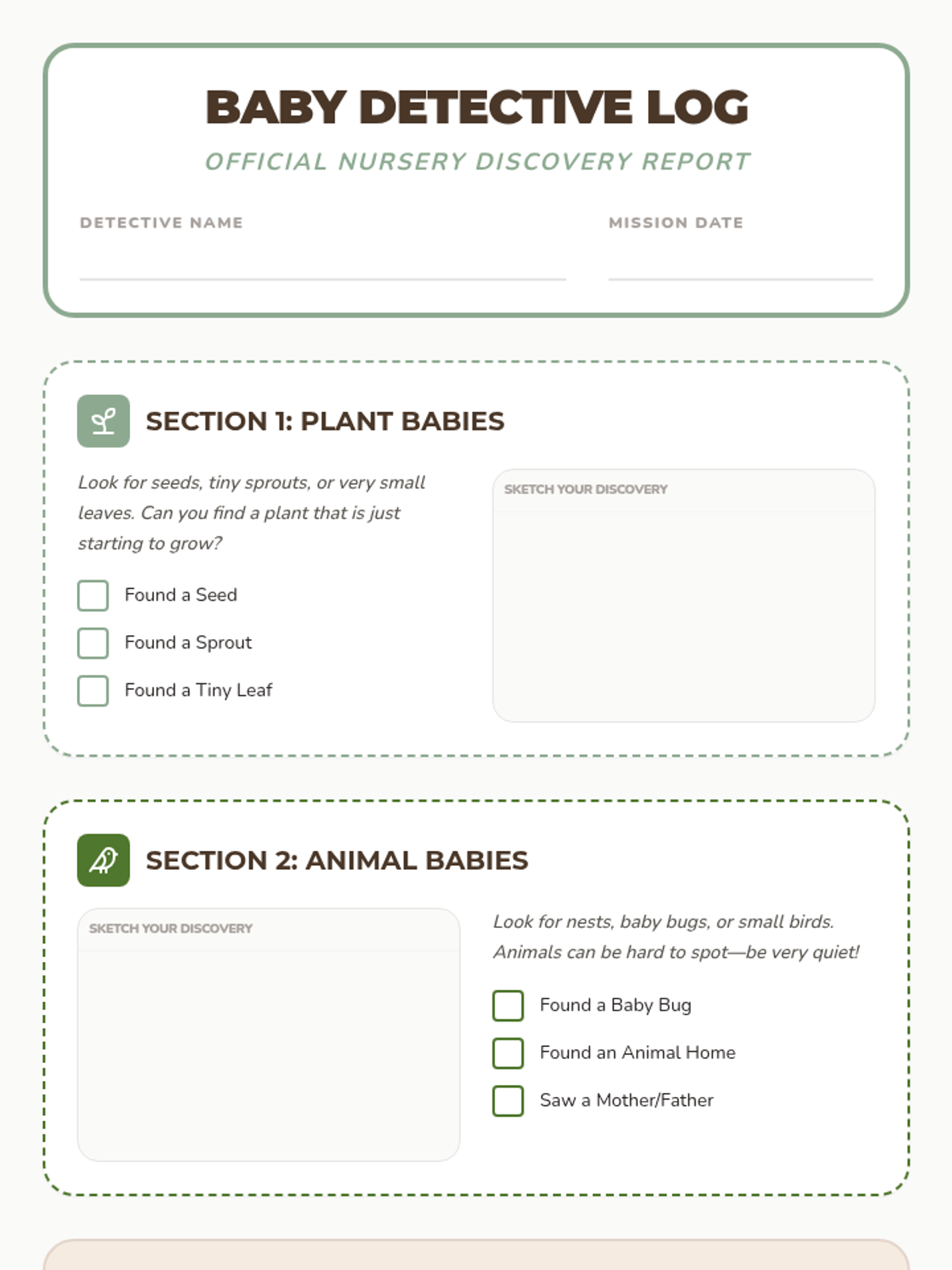
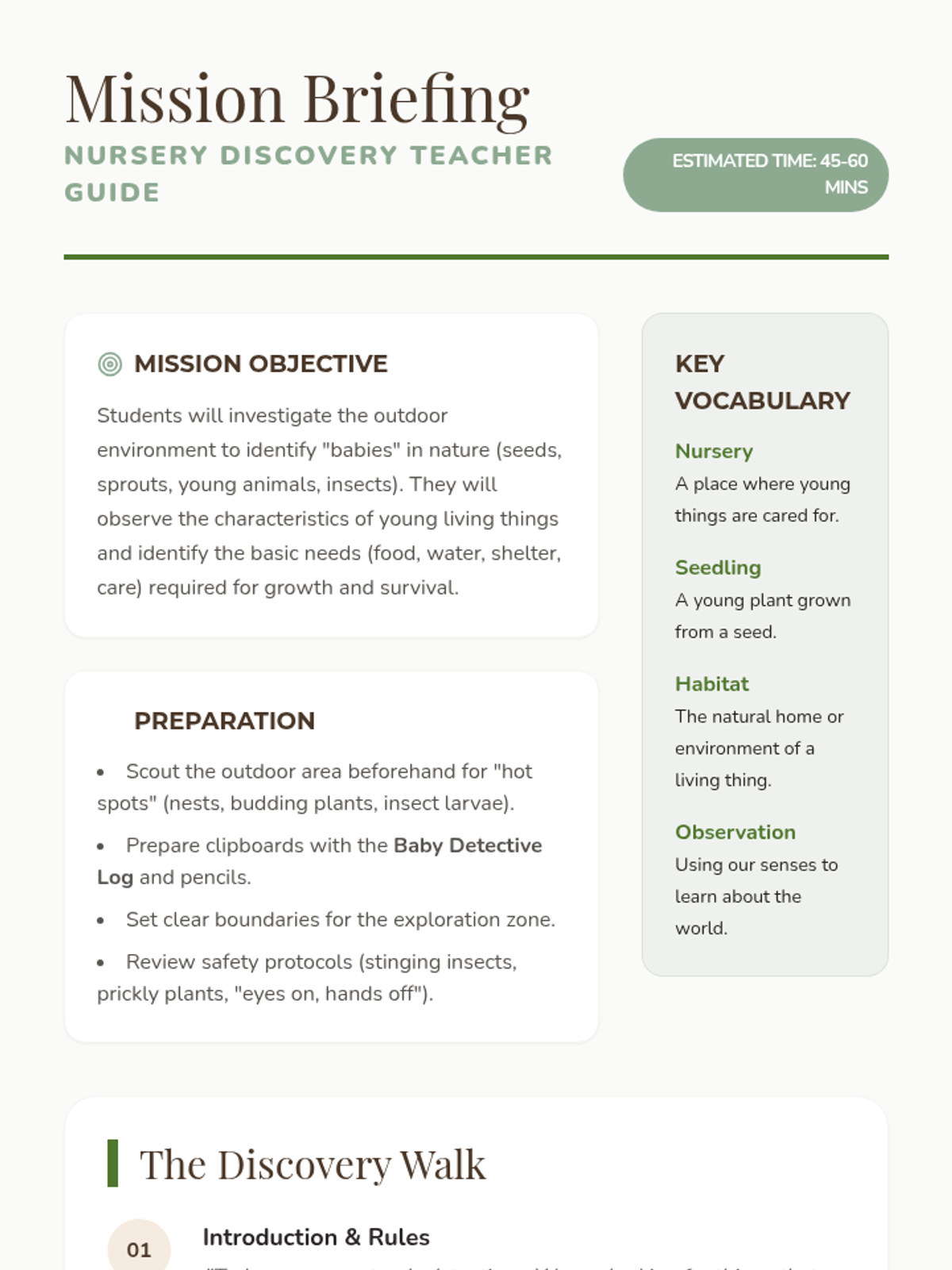
An outdoor exploration where students become 'Baby Detectives' to find and observe different types of babies in nature, including human, animal, and plant life. Students will learn that all living things start small and require care and specific environments to grow.
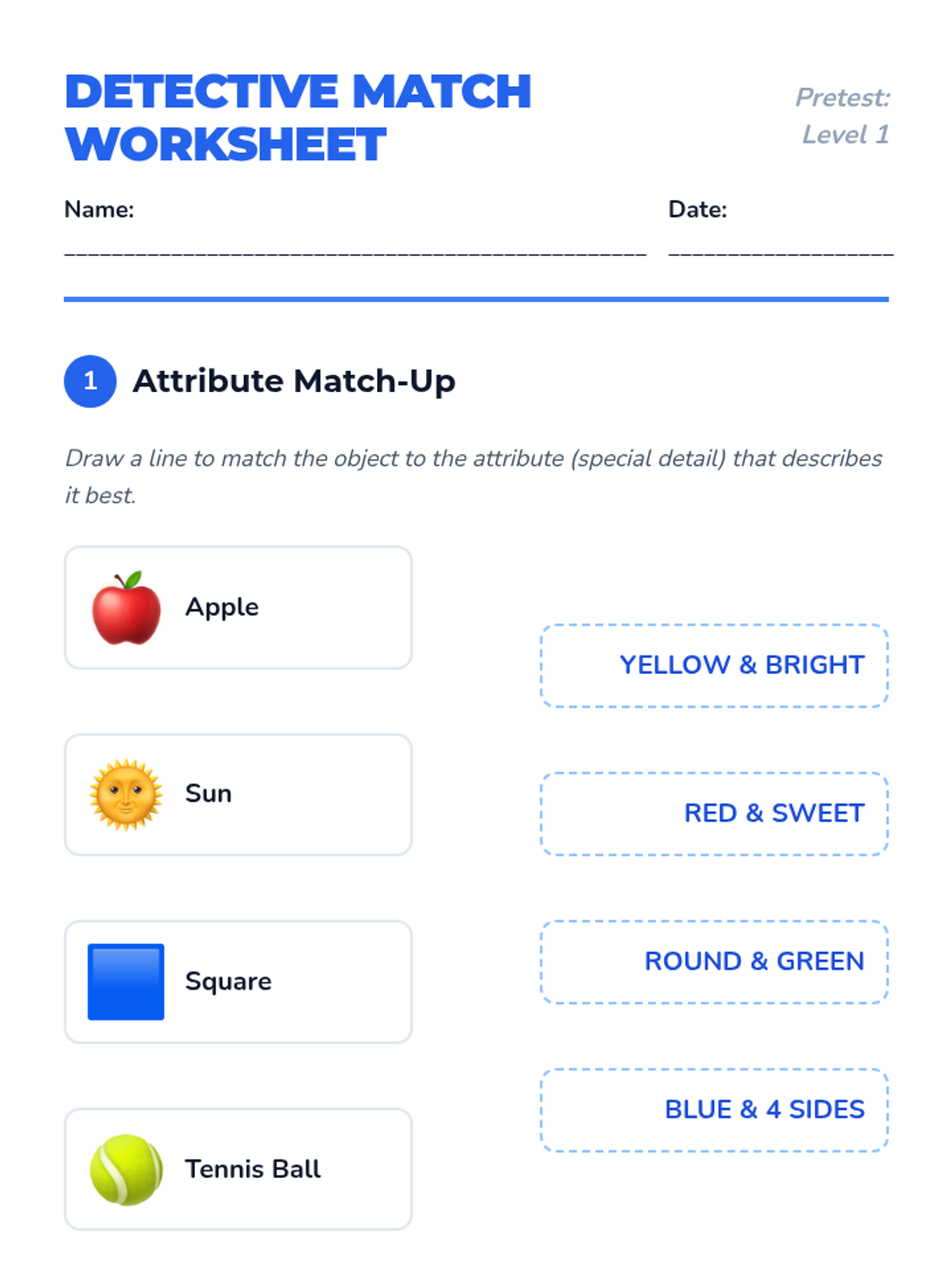
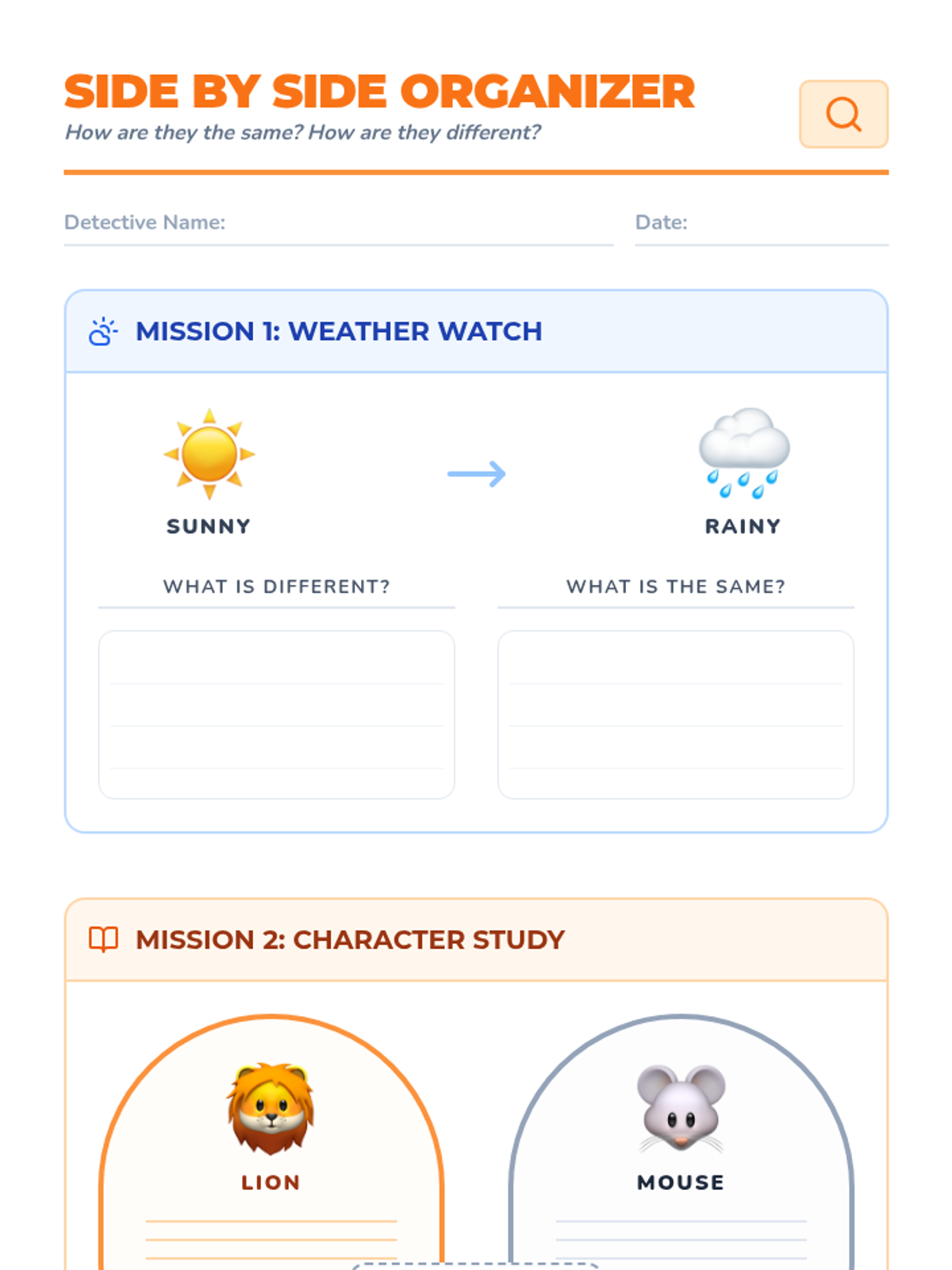
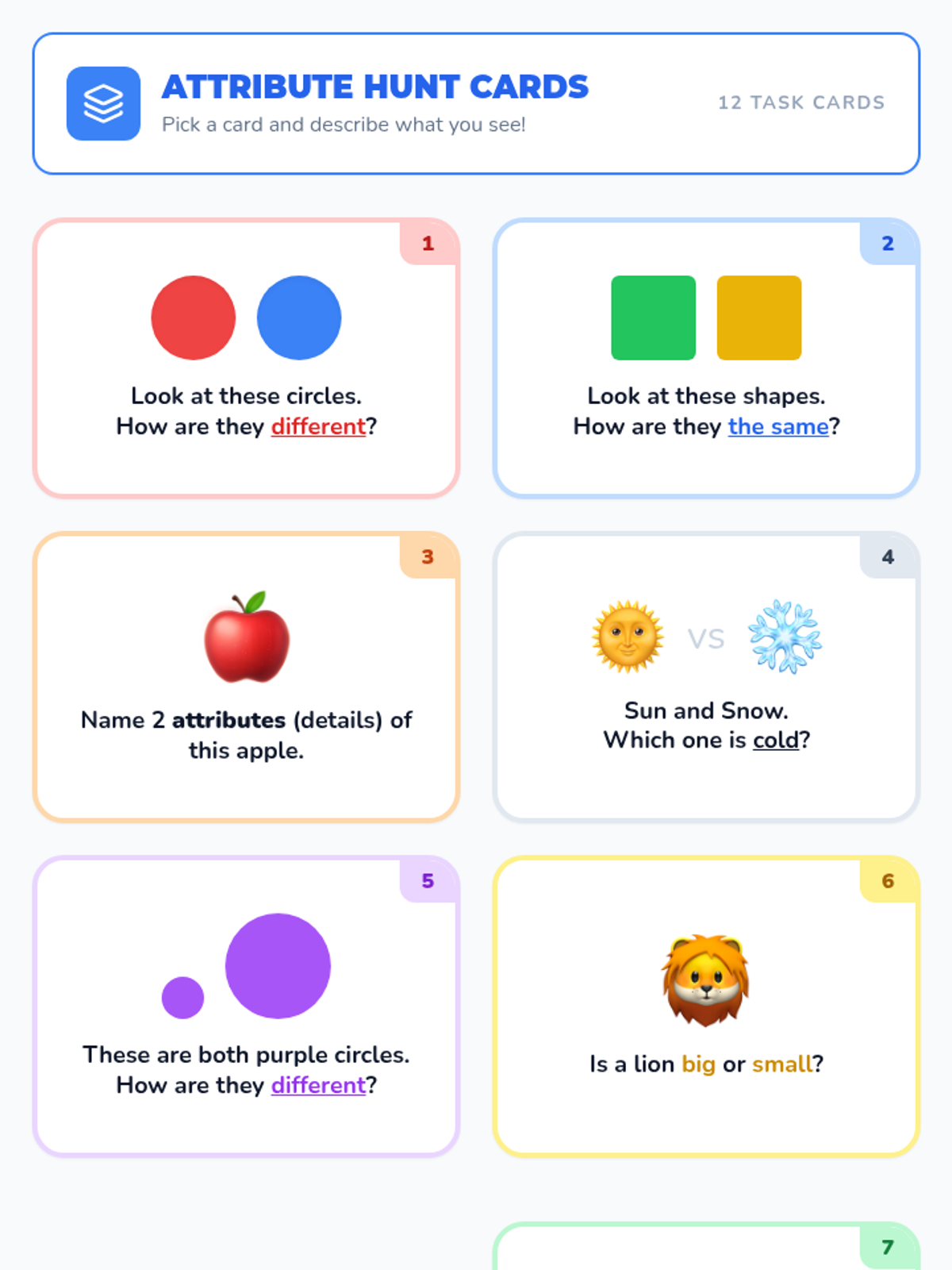
A first-grade lesson focused on identifying attributes and comparing/contrasting everyday objects, weather, and characters to build foundational logic and observation skills.
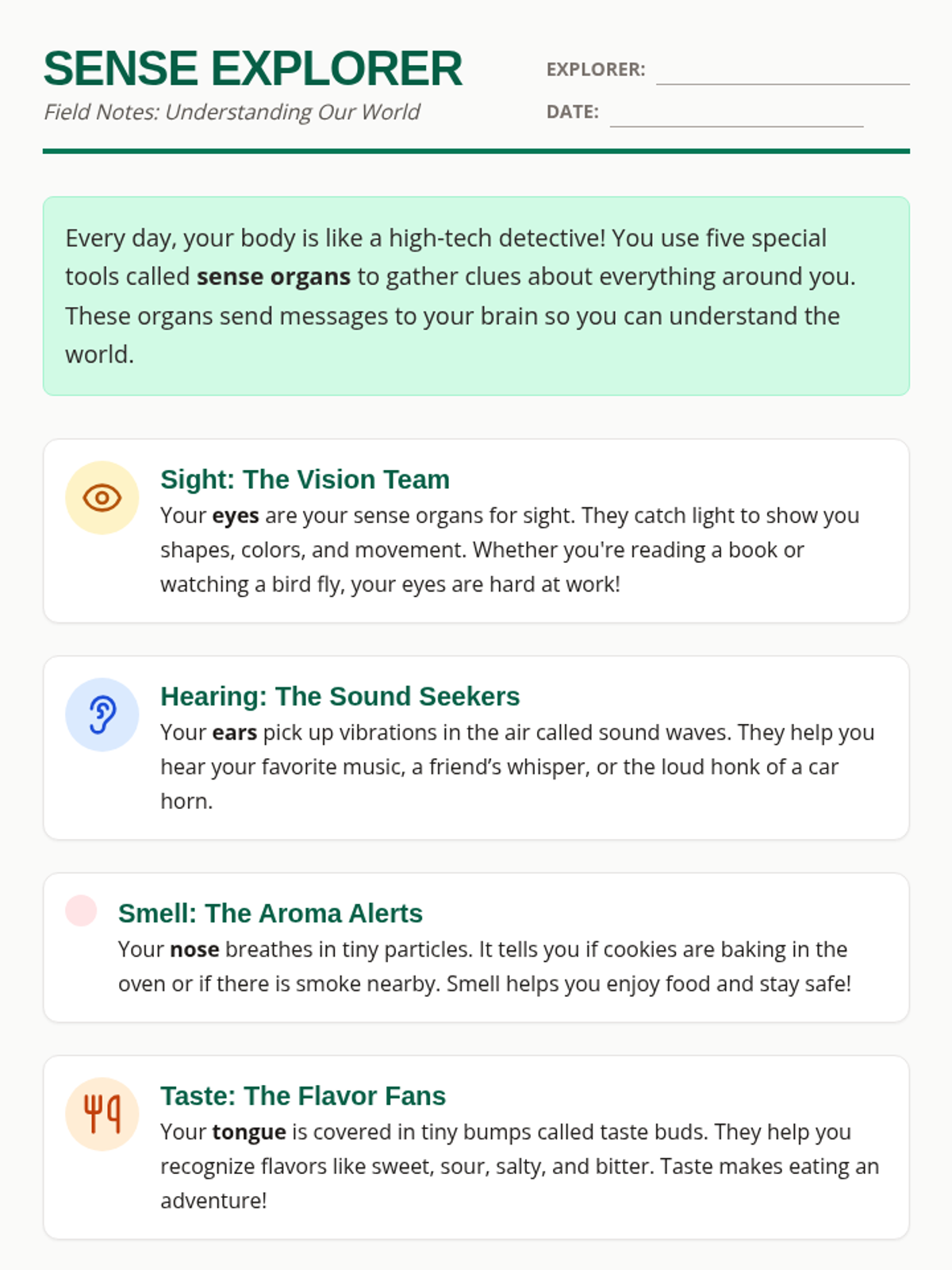
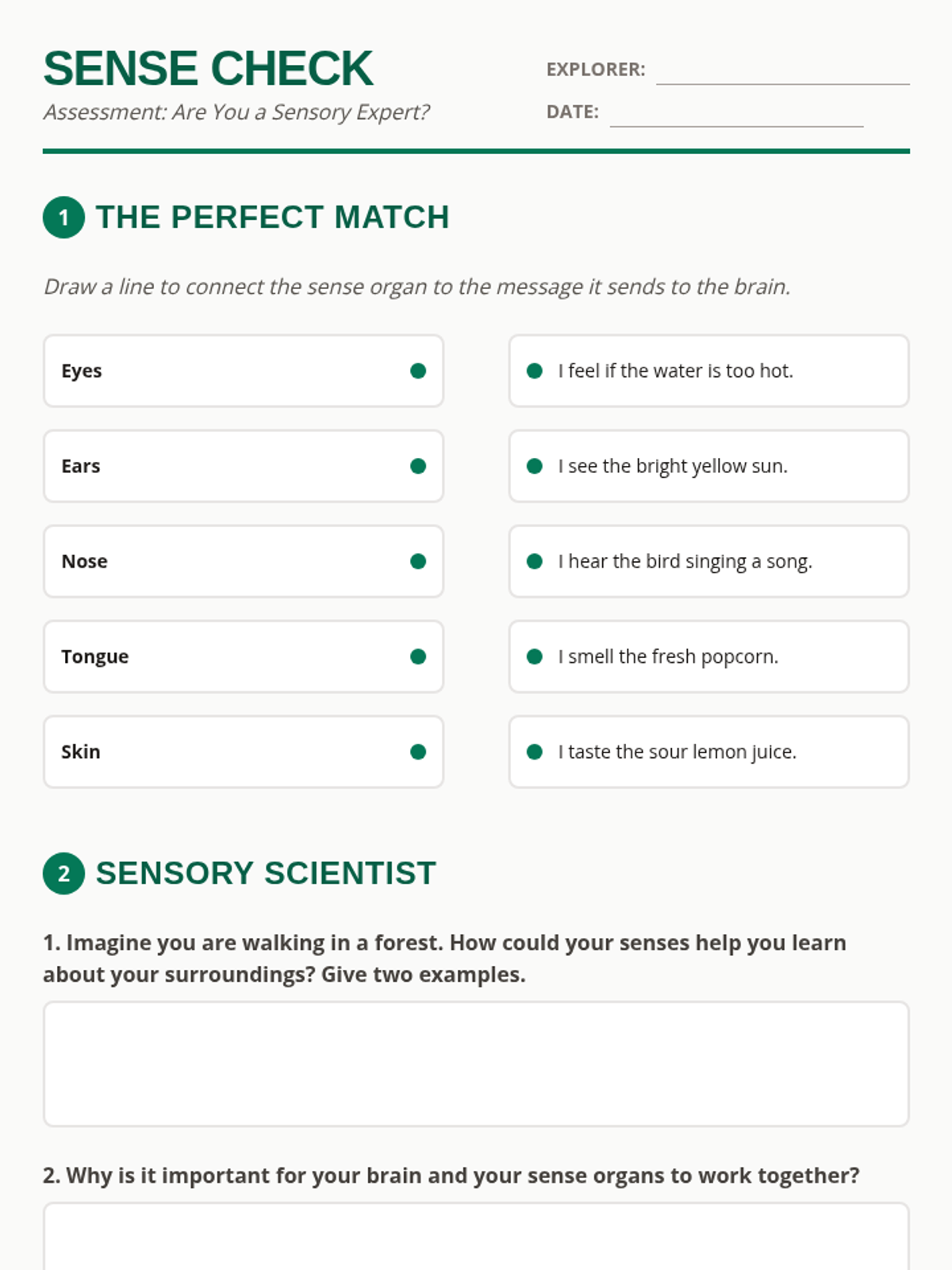
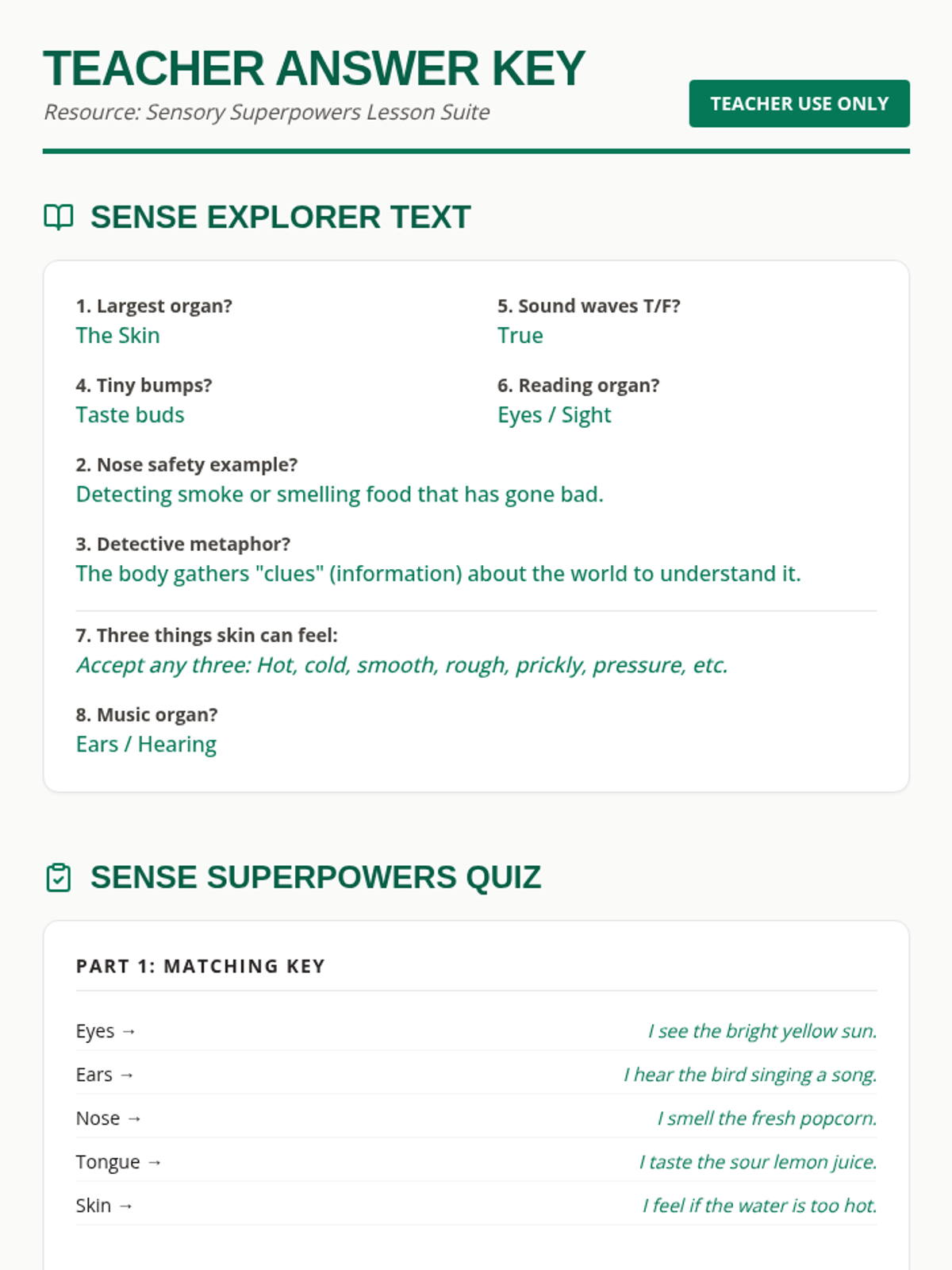
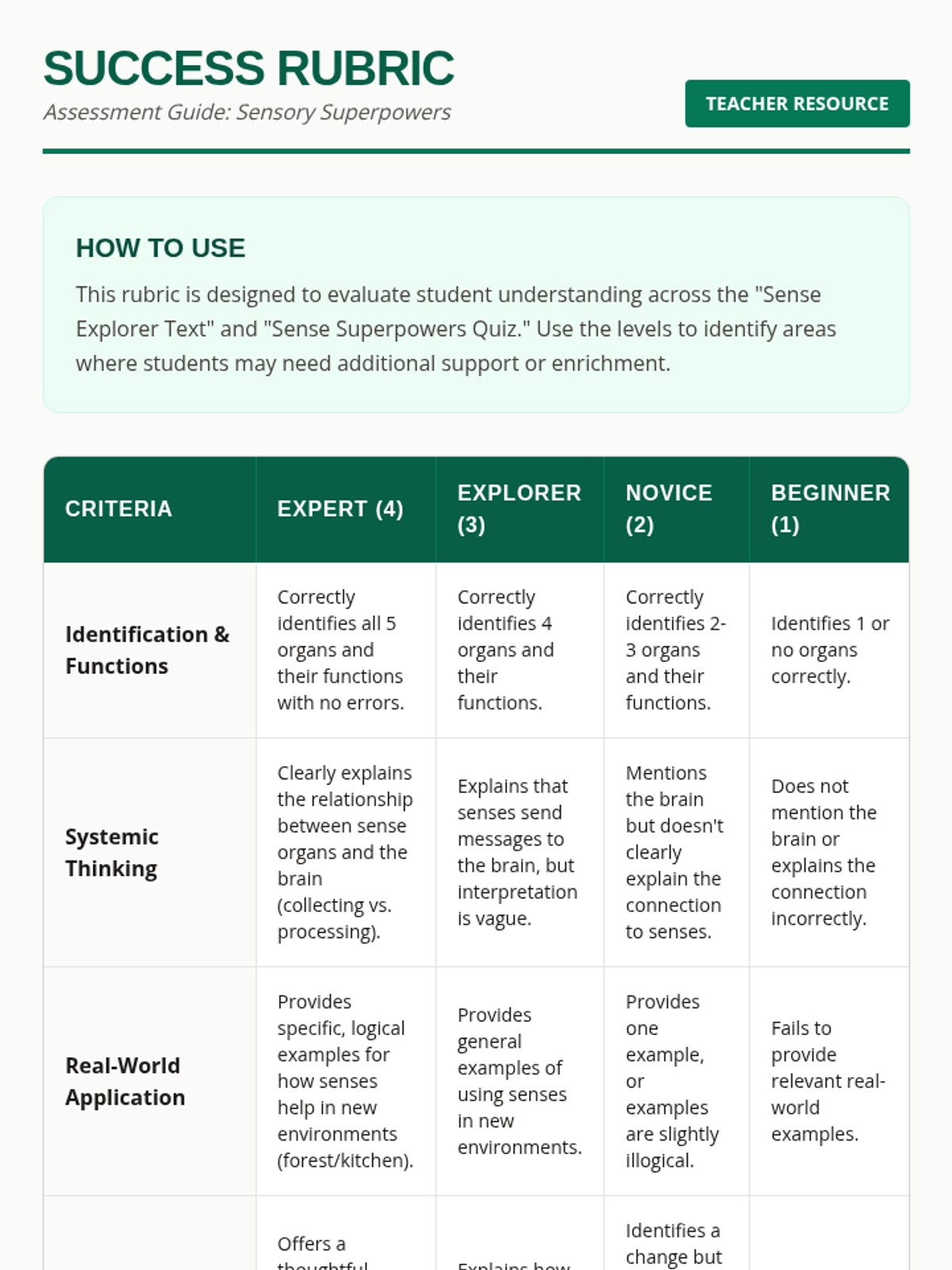
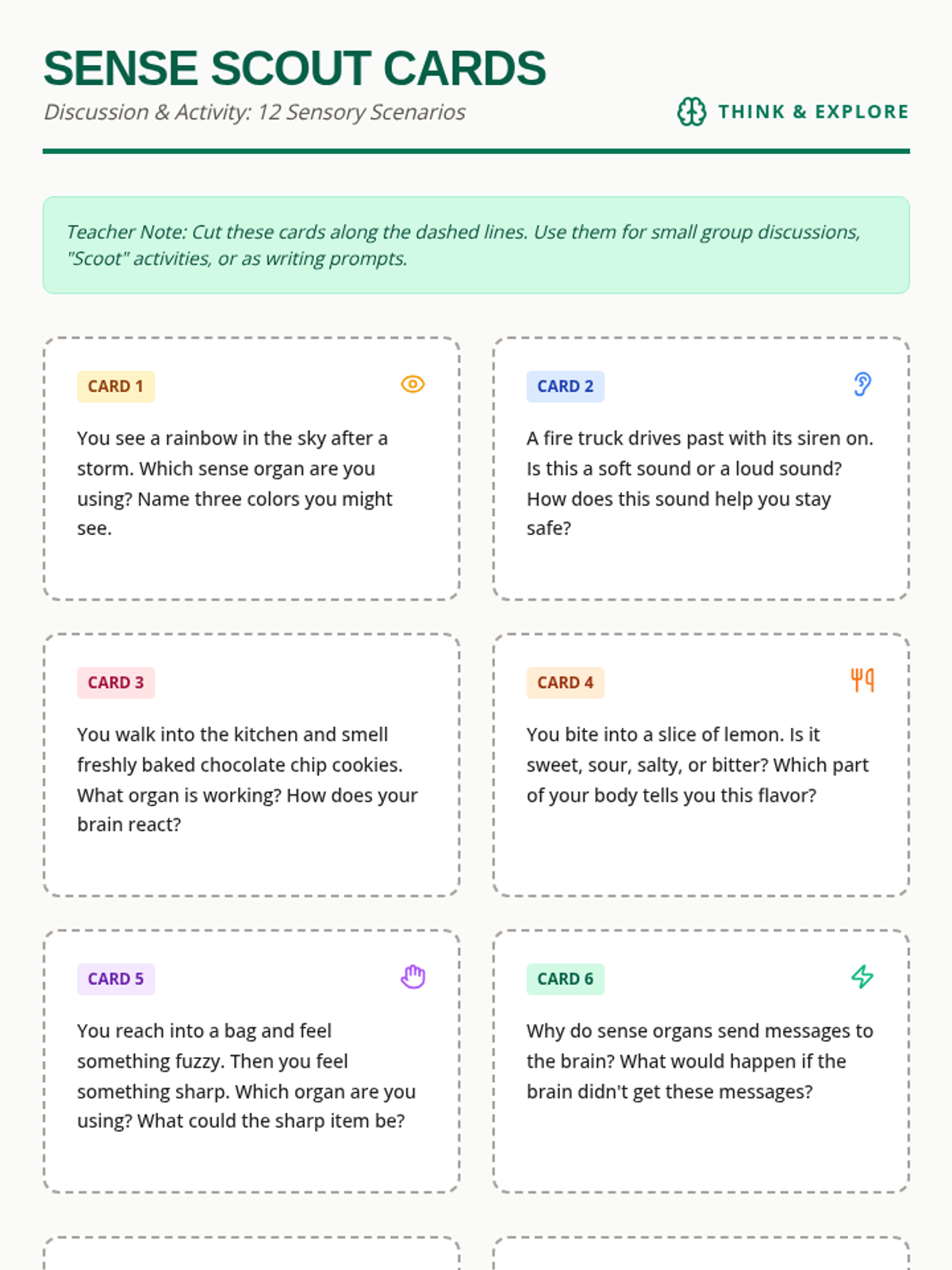
Students will identify the five sense organs and explain how they help humans perceive and interact with the world around them through reading and assessment.
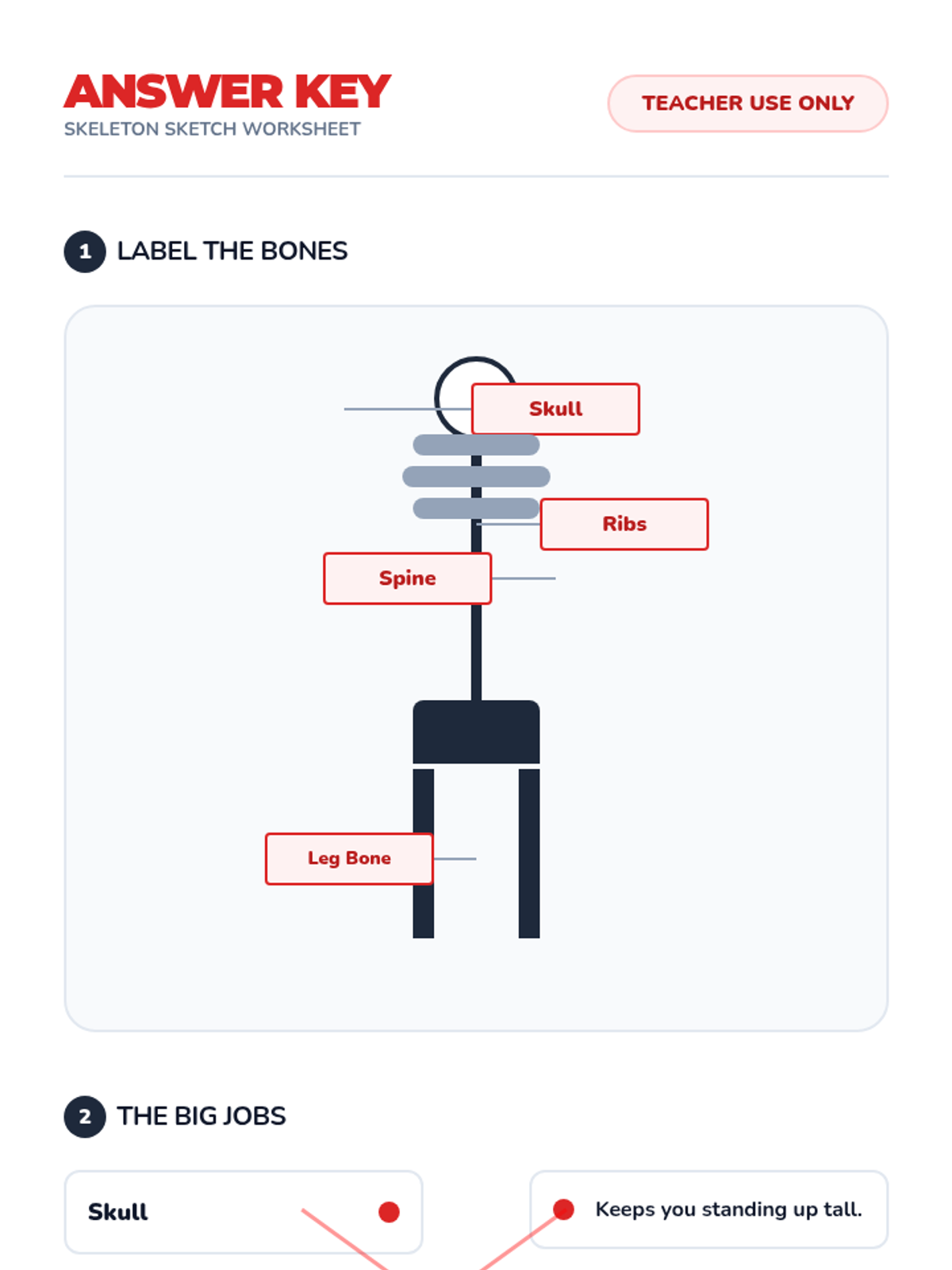
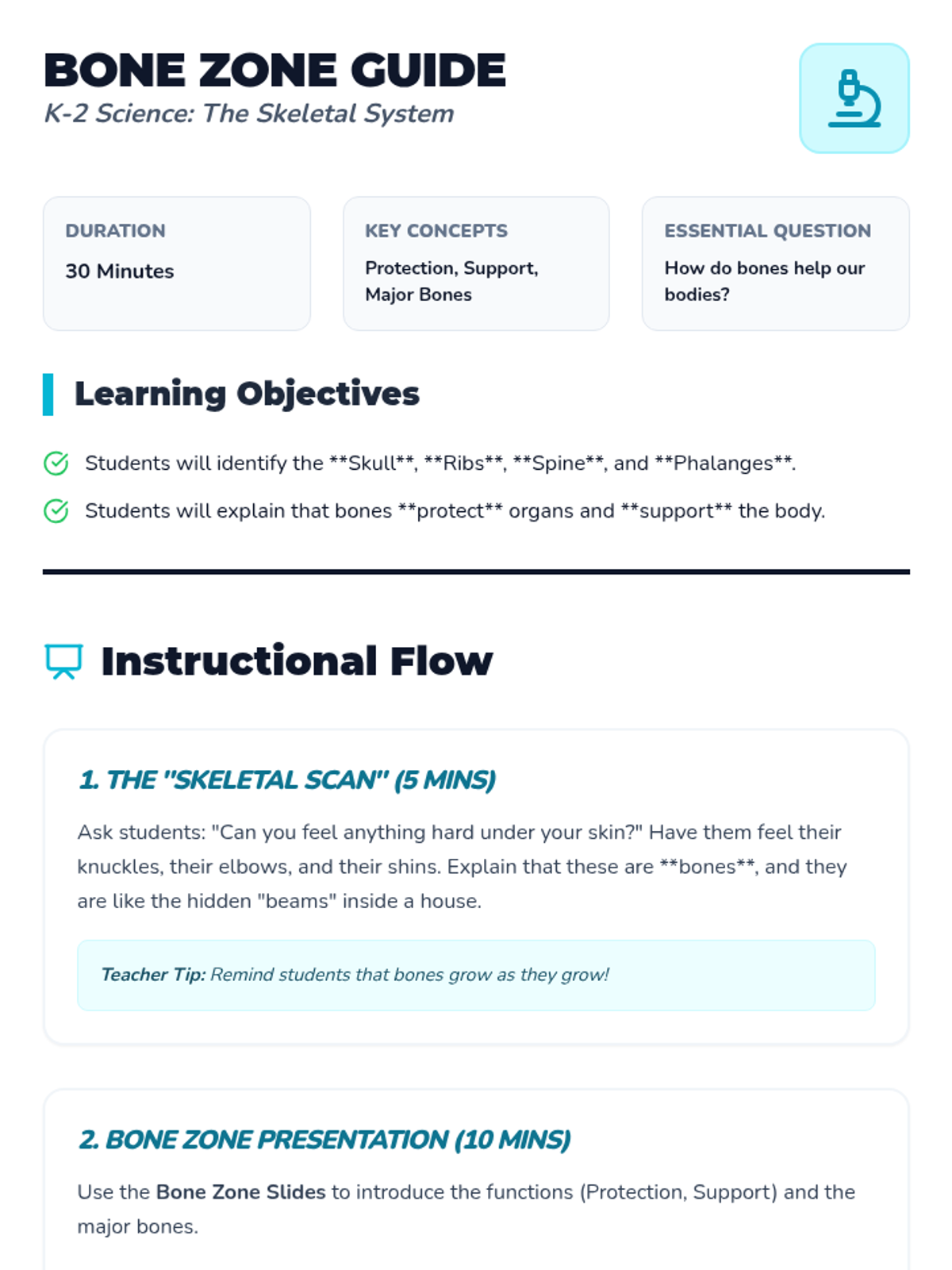
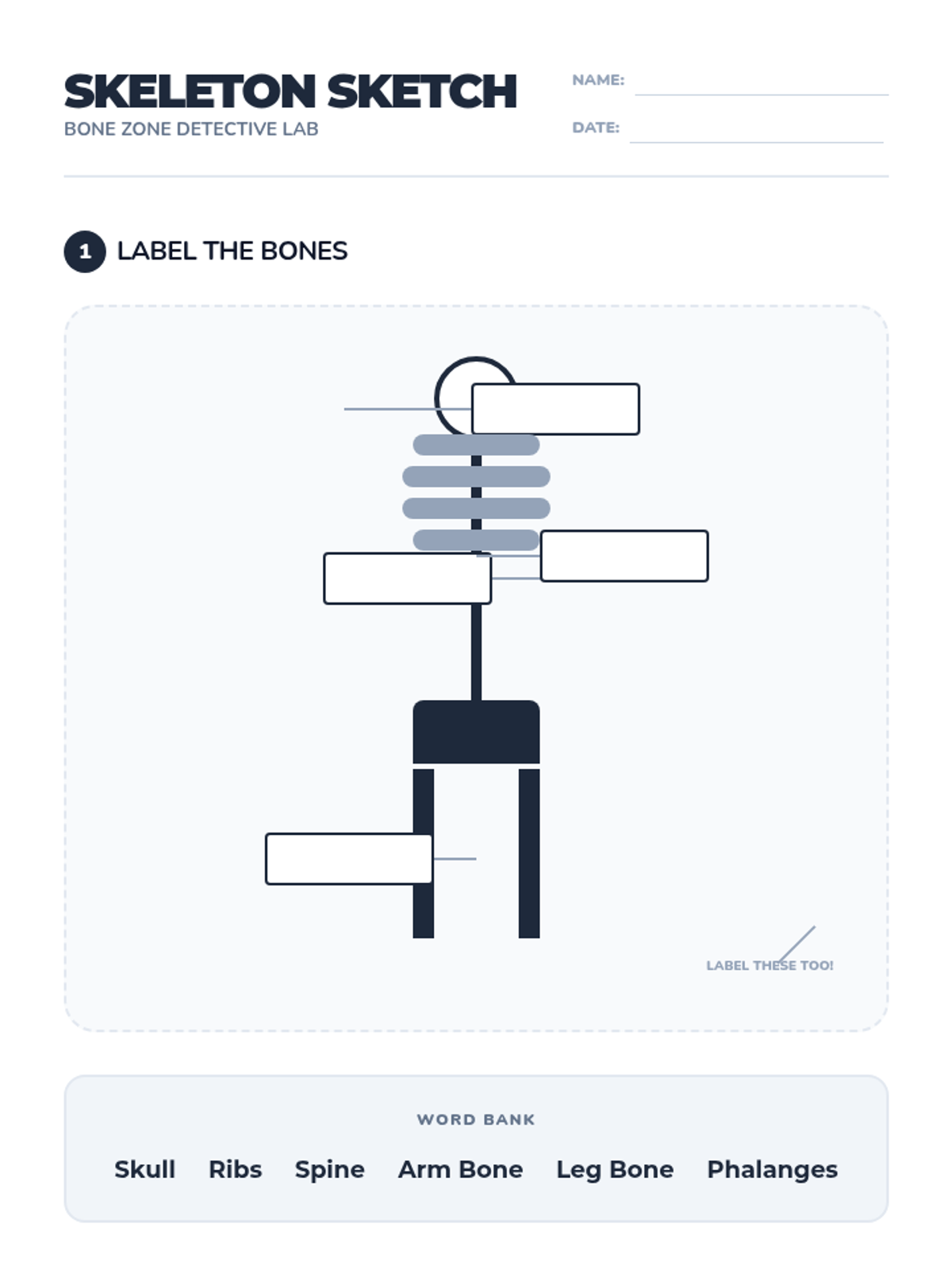
An introductory lesson for K-2 students focusing on the major bones of the human body and their primary functions through movement and visual labeling.
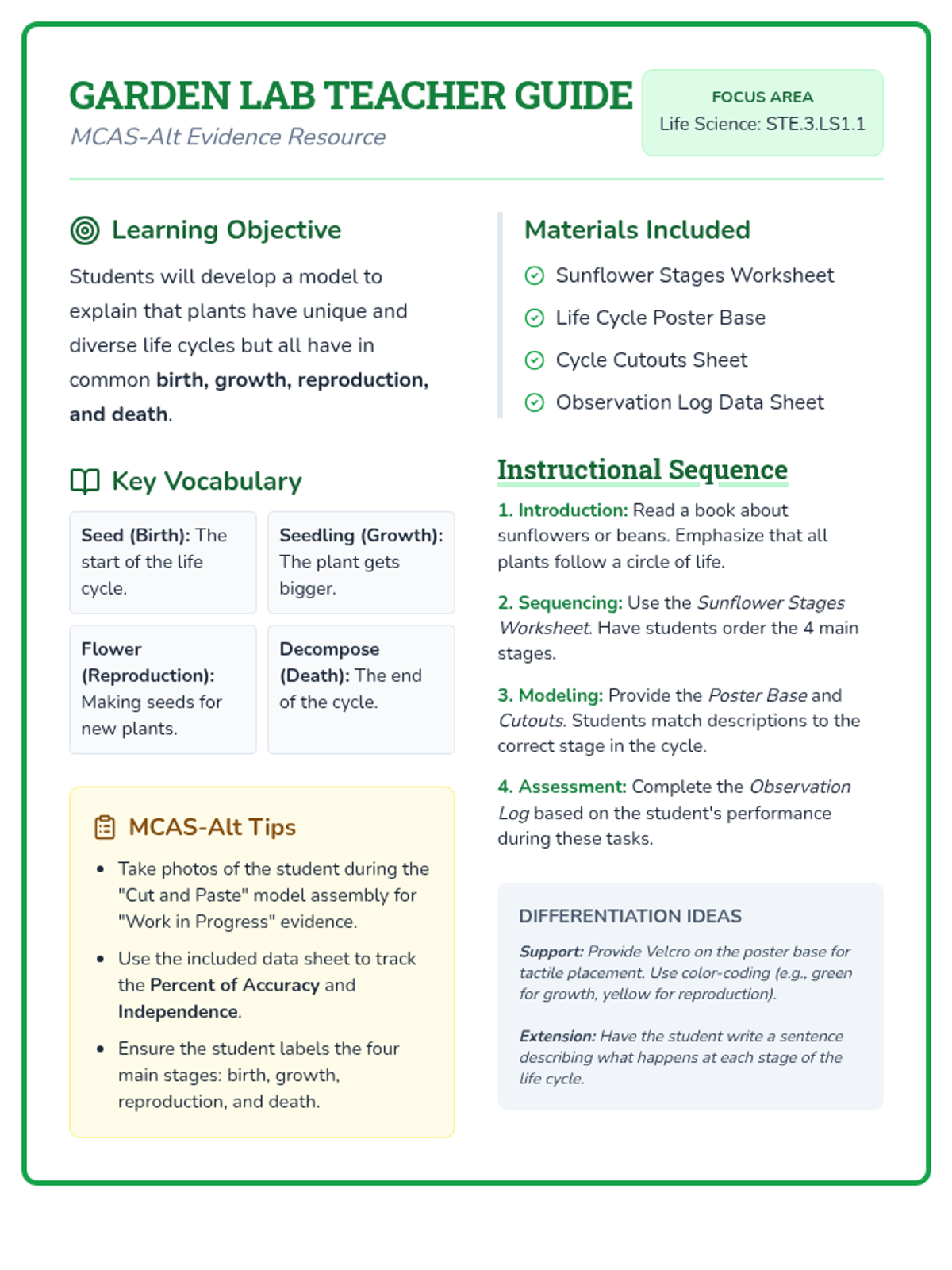
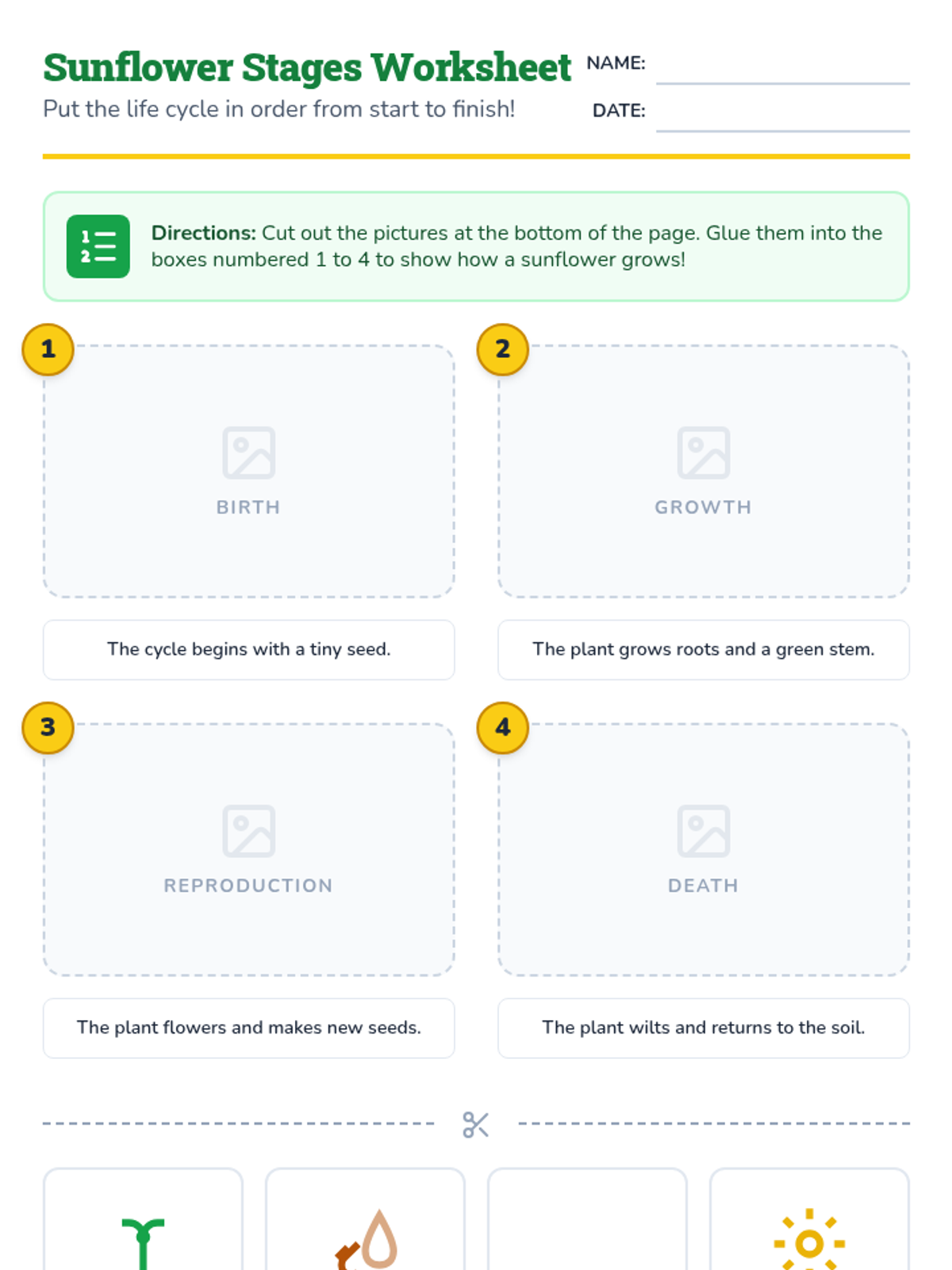
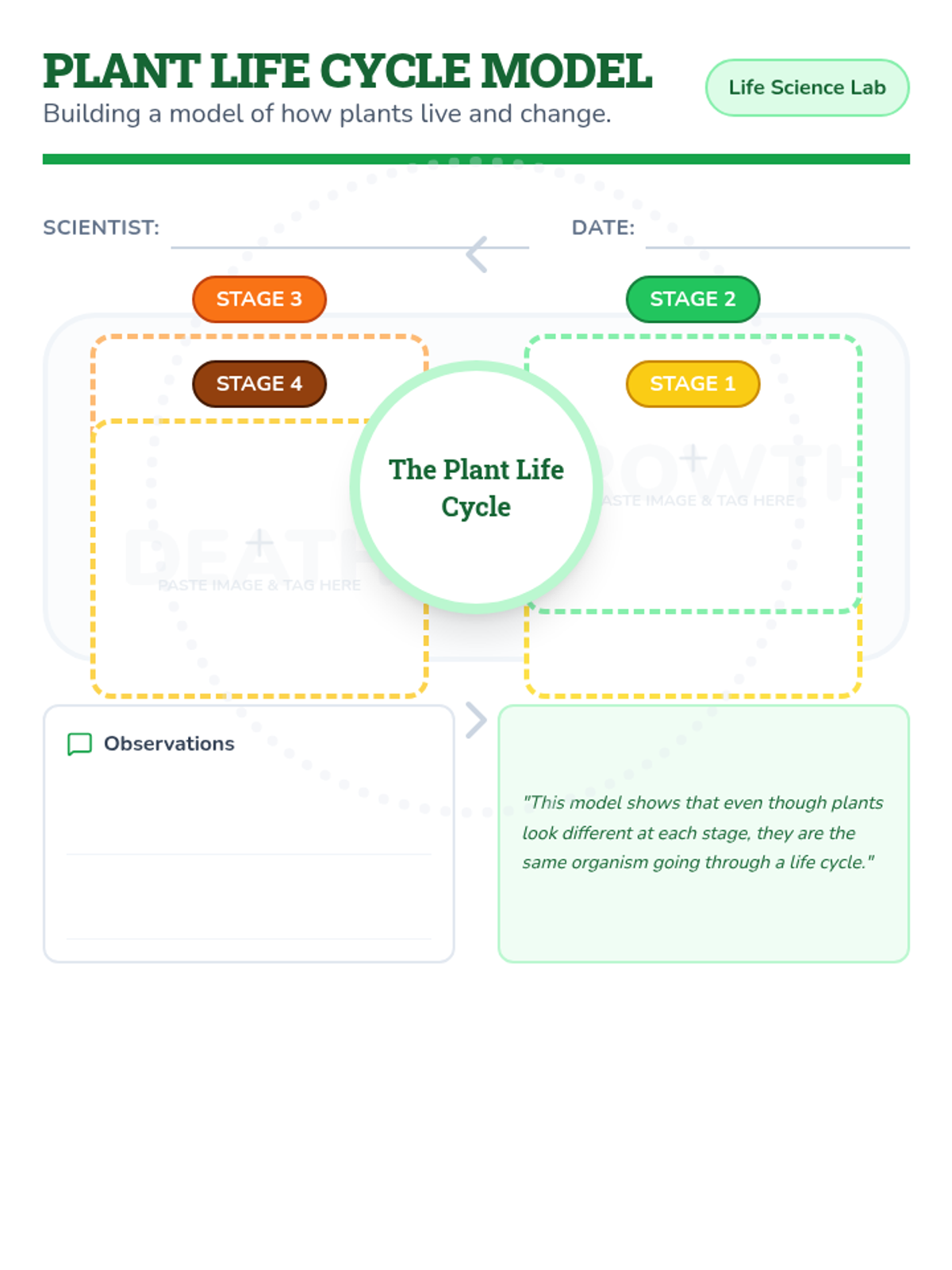
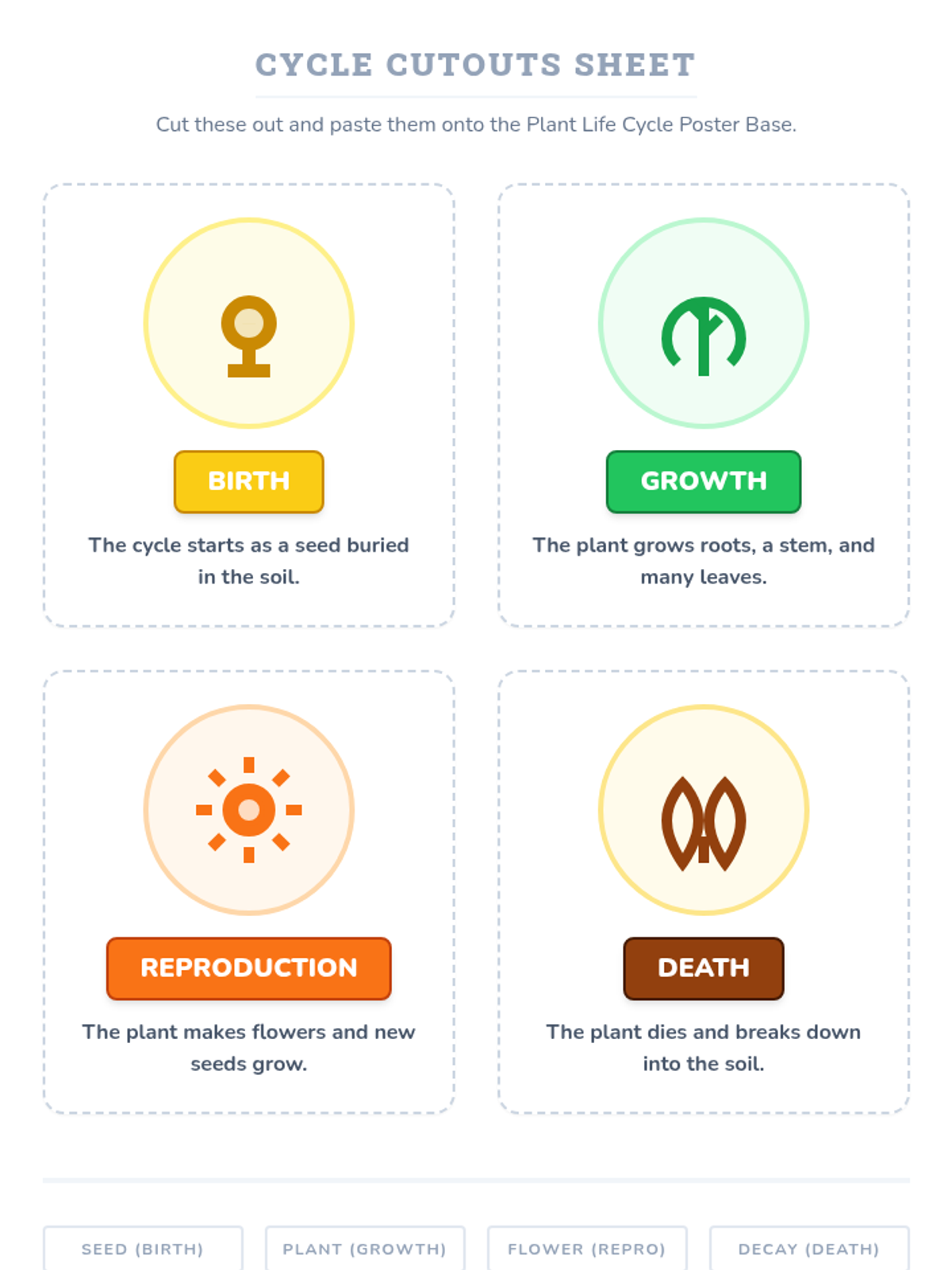
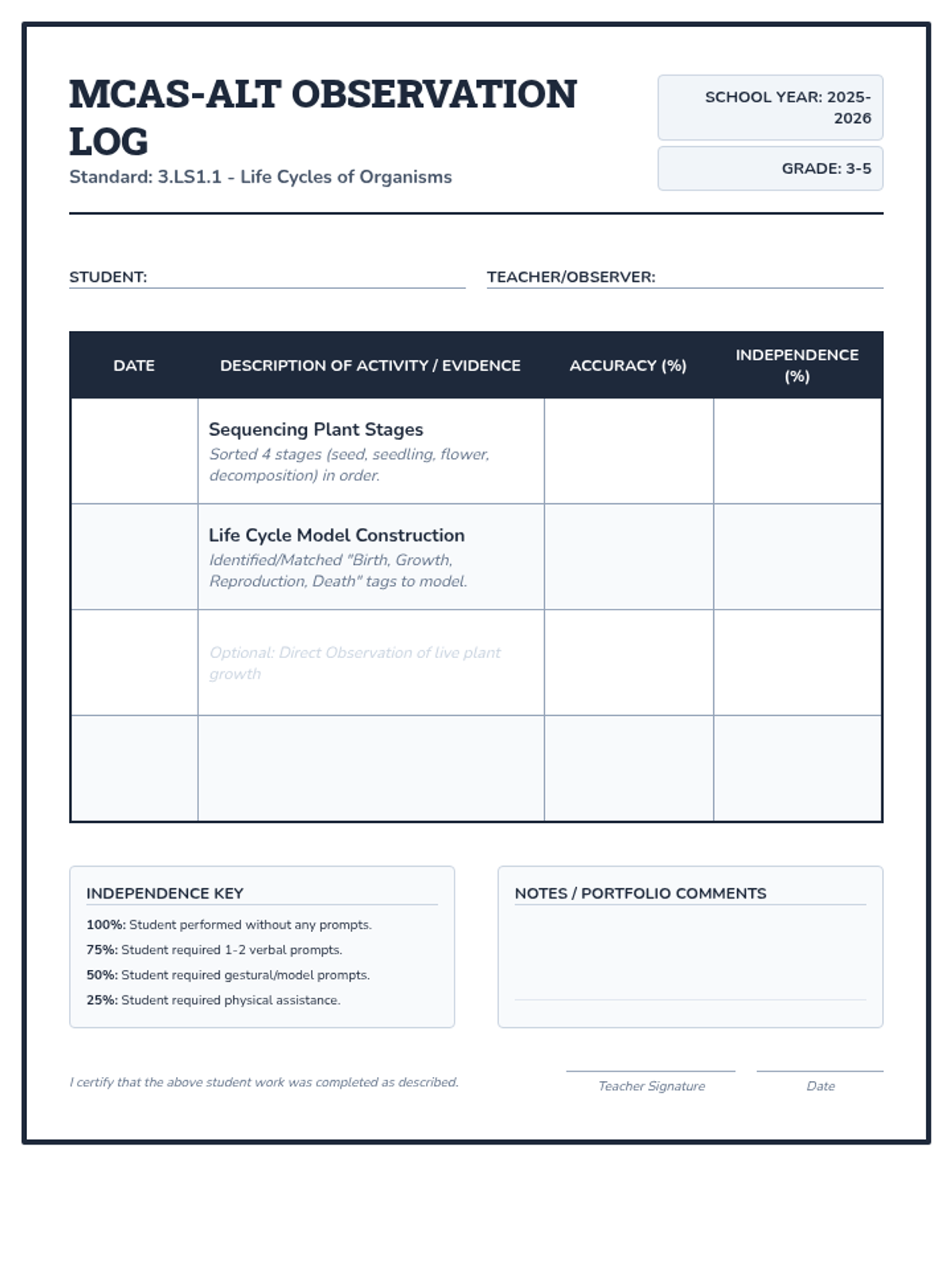
A comprehensive set of materials designed for MCAS-Alt portfolios, focusing on the plant life cycle (birth, growth, reproduction, and death) through sequencing and model-building.
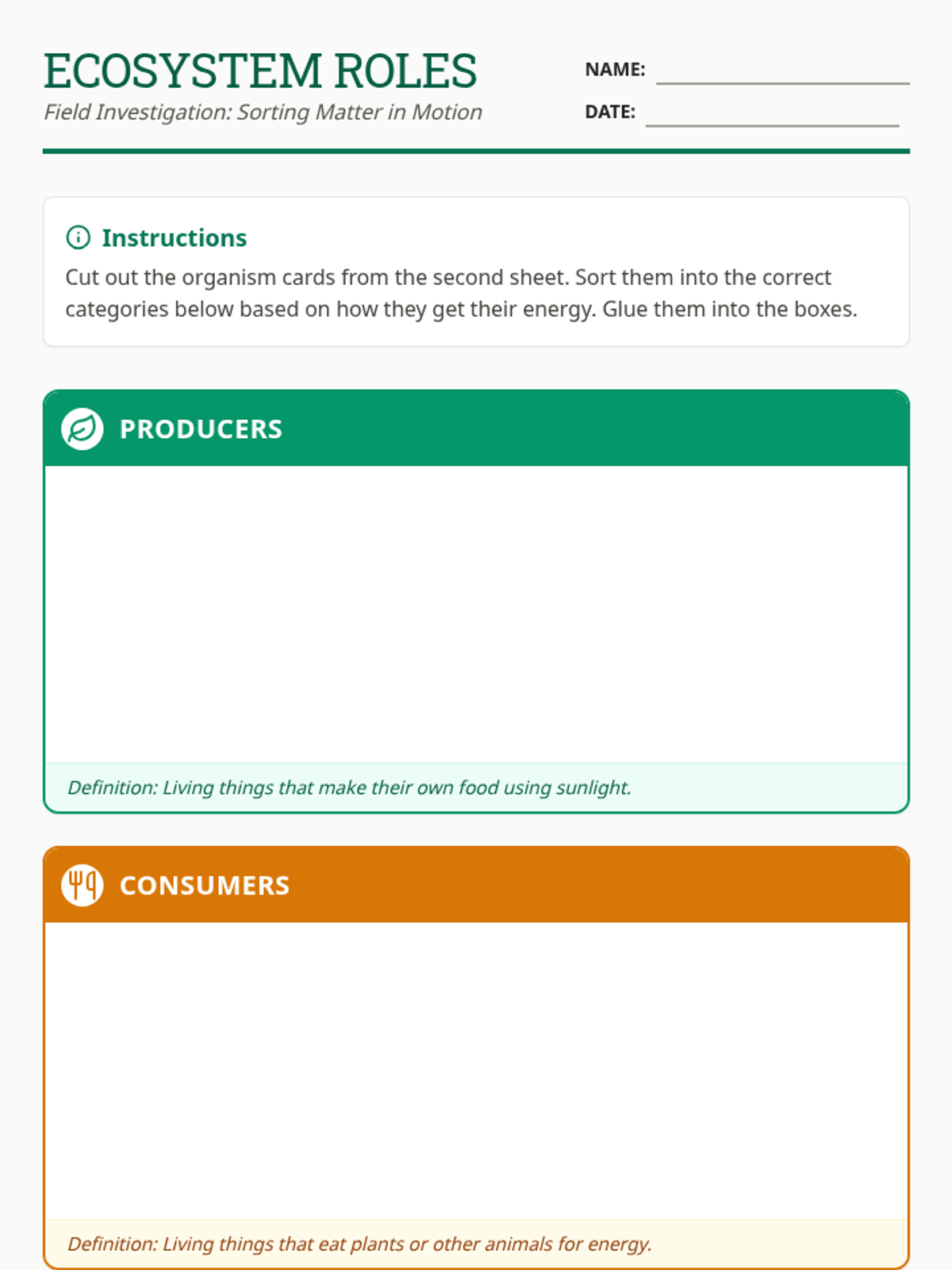
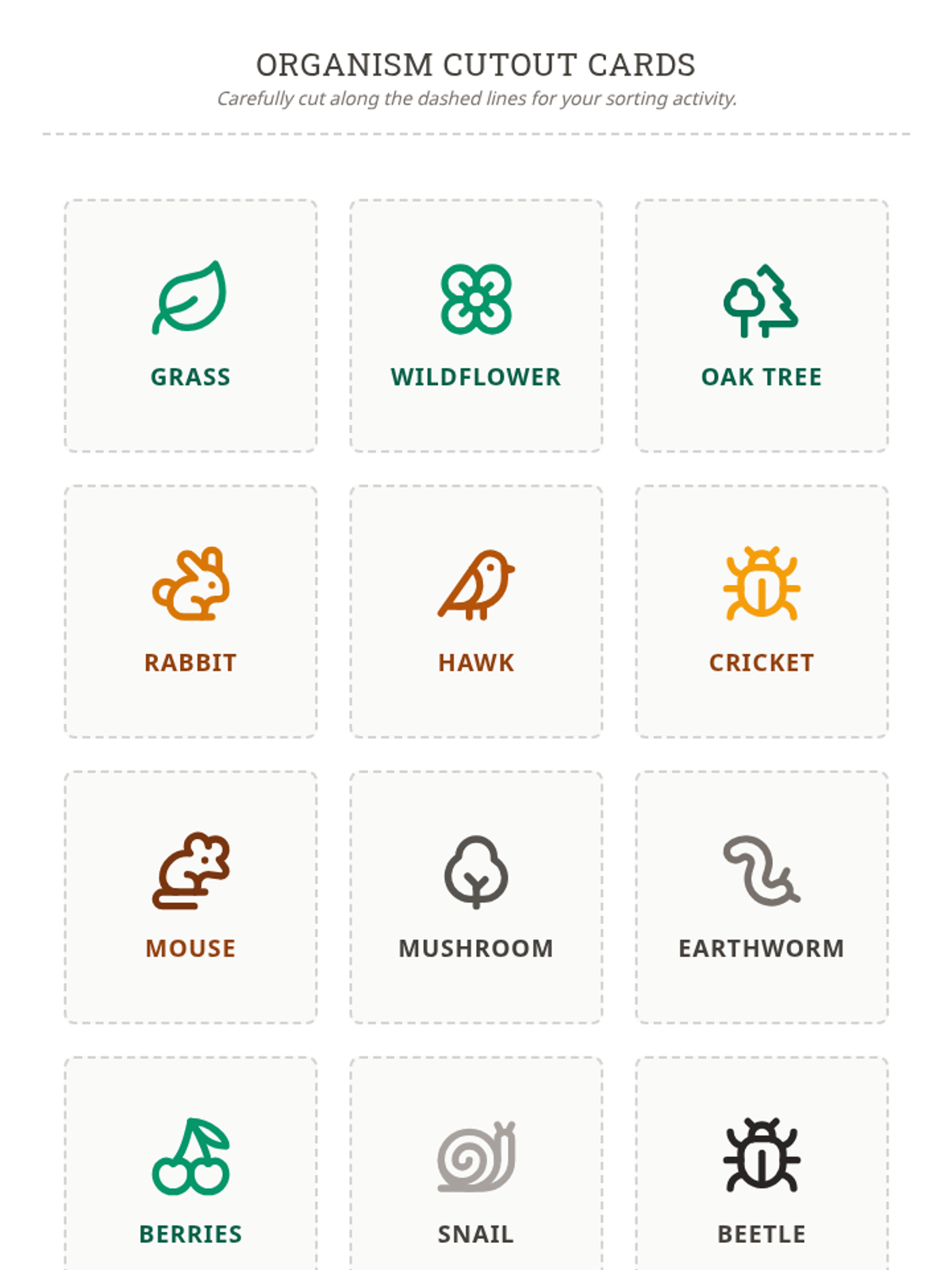
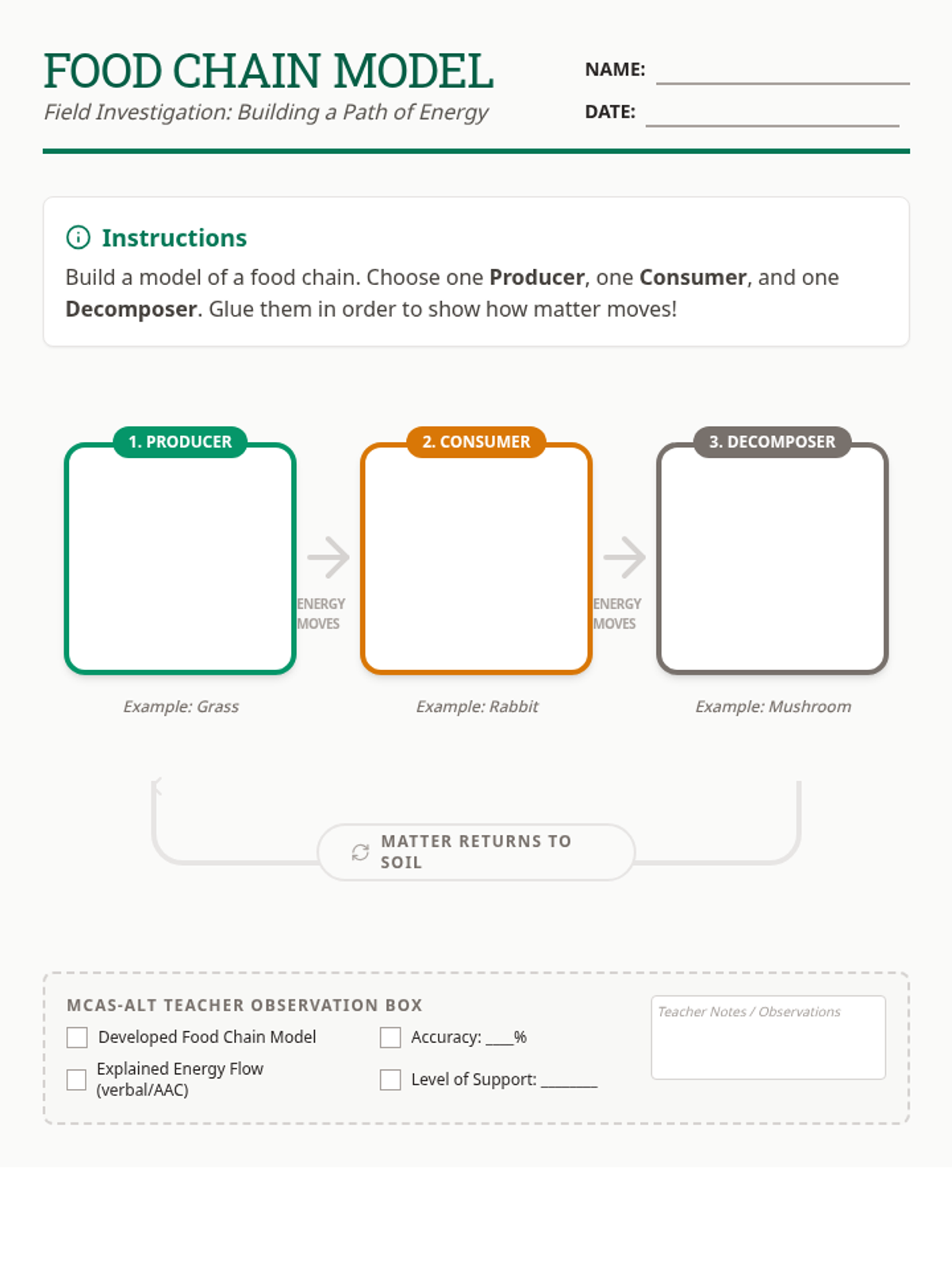
A comprehensive resource set for teaching and assessing the flow of matter in ecosystems, specifically designed for MCAS-Alt data collection. Students will identify roles (producer, consumer, decomposer) and build models of energy flow using food chains.