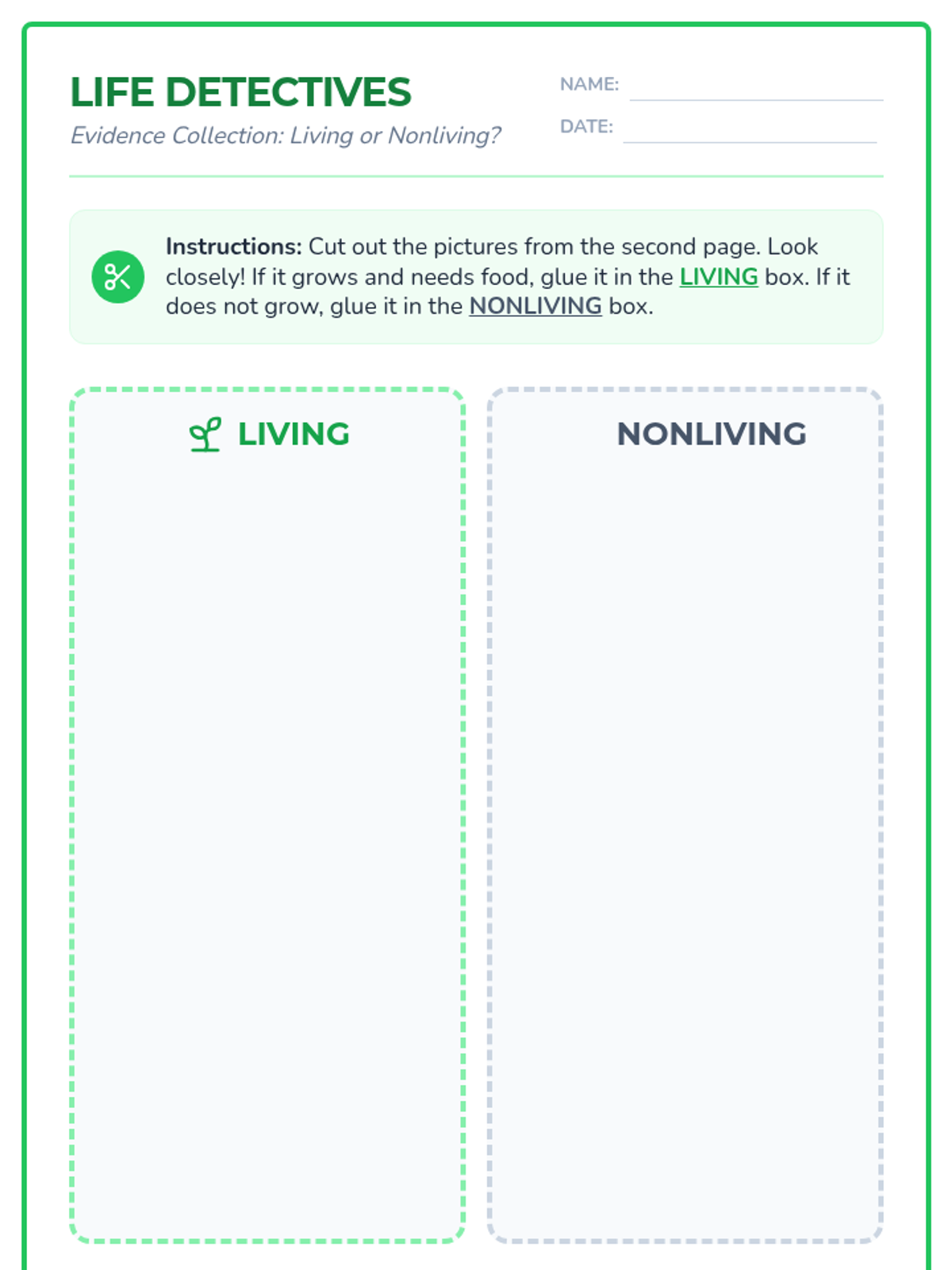
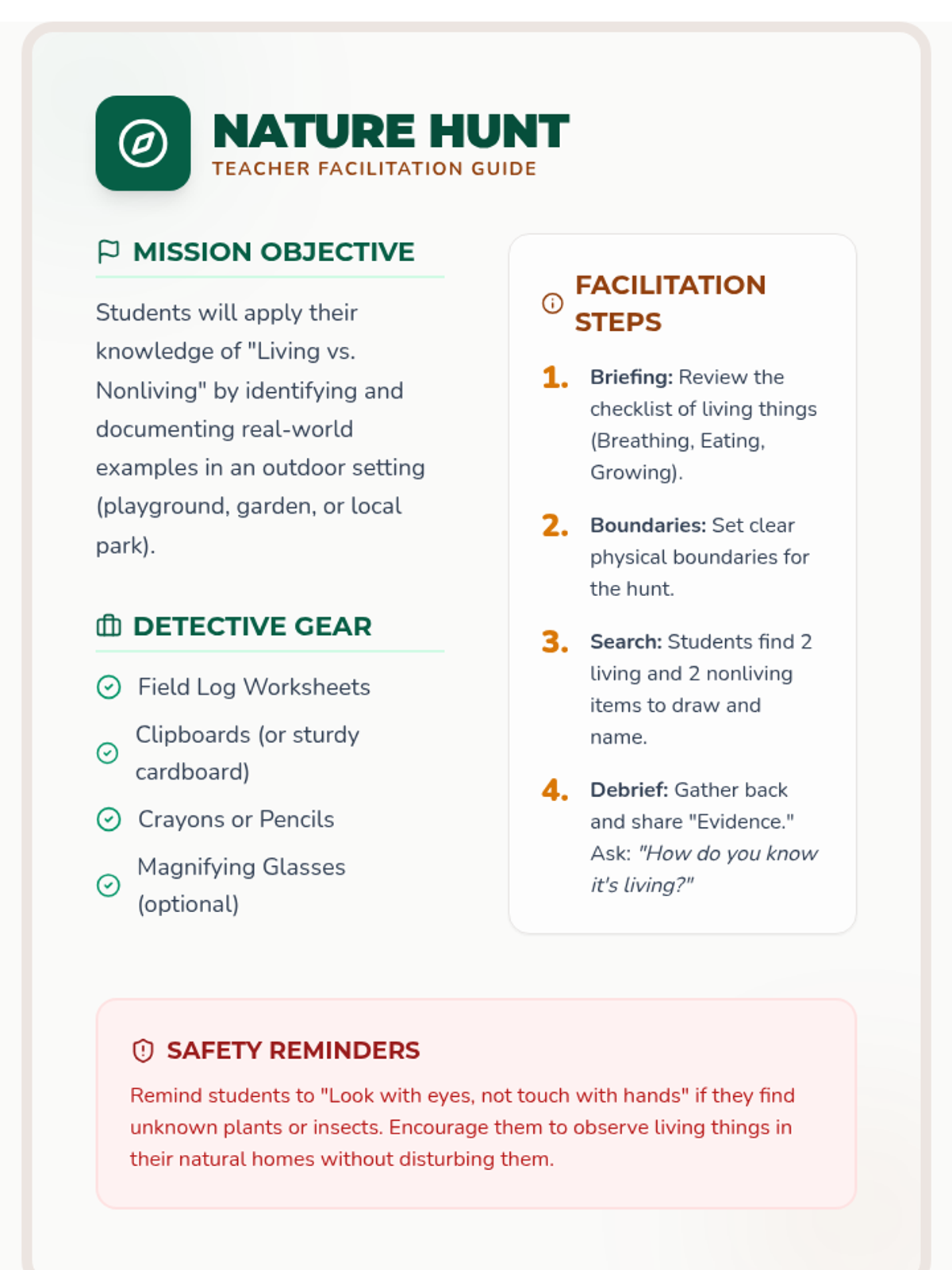
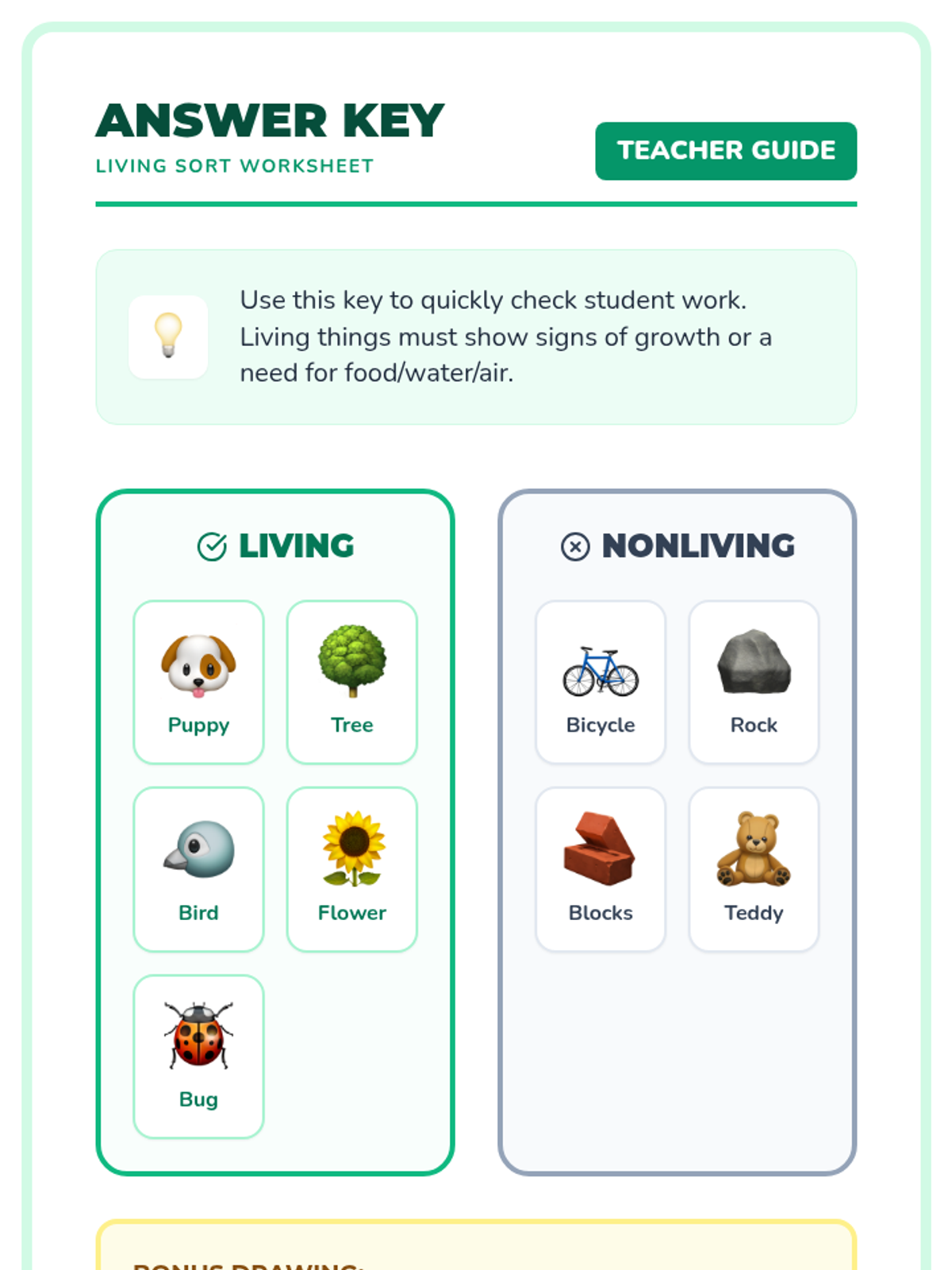
A hands-on introductory lesson for Pre-K students to distinguish between living and non-living things using movement, video observation, and a sorting activity.
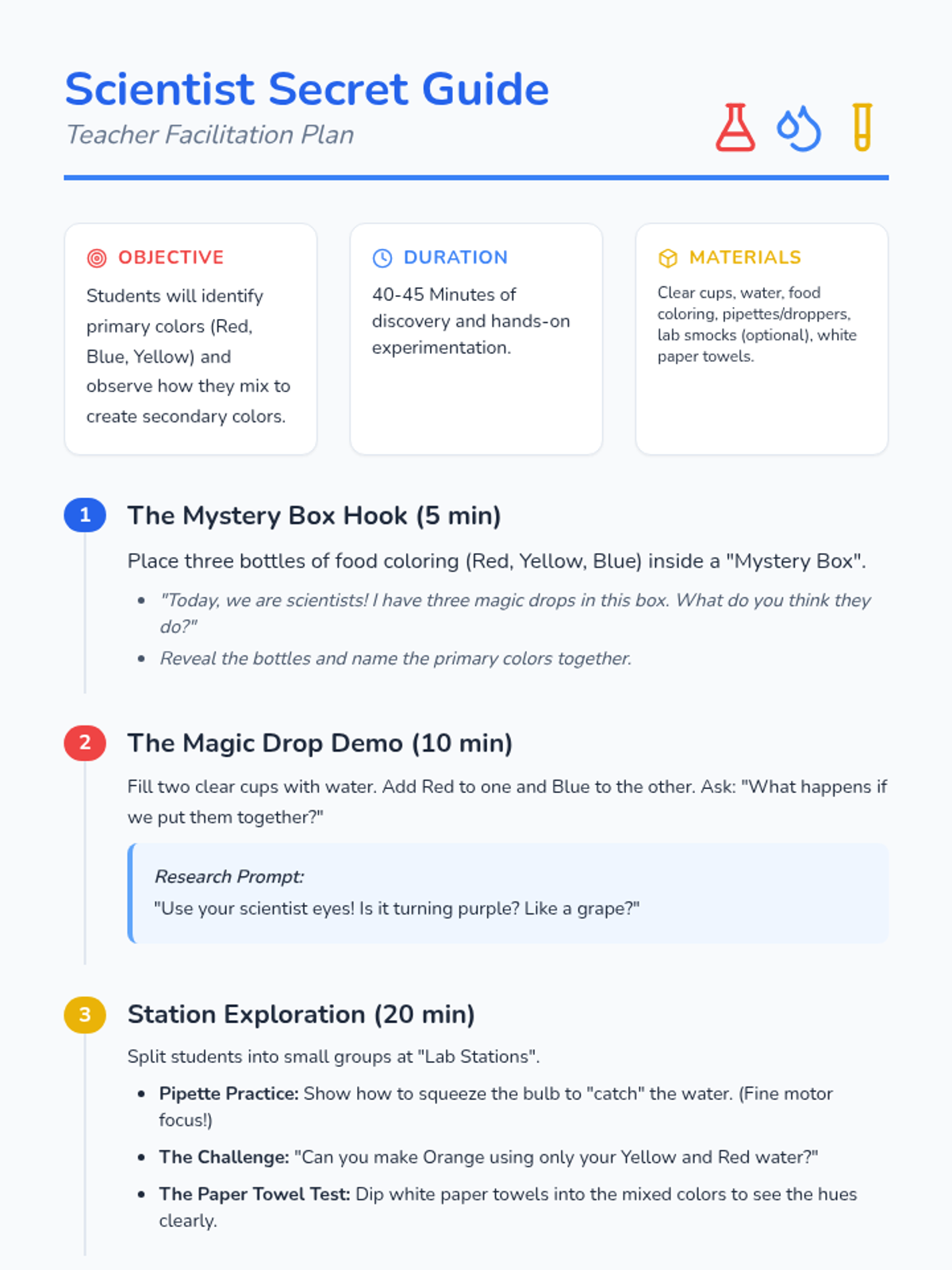
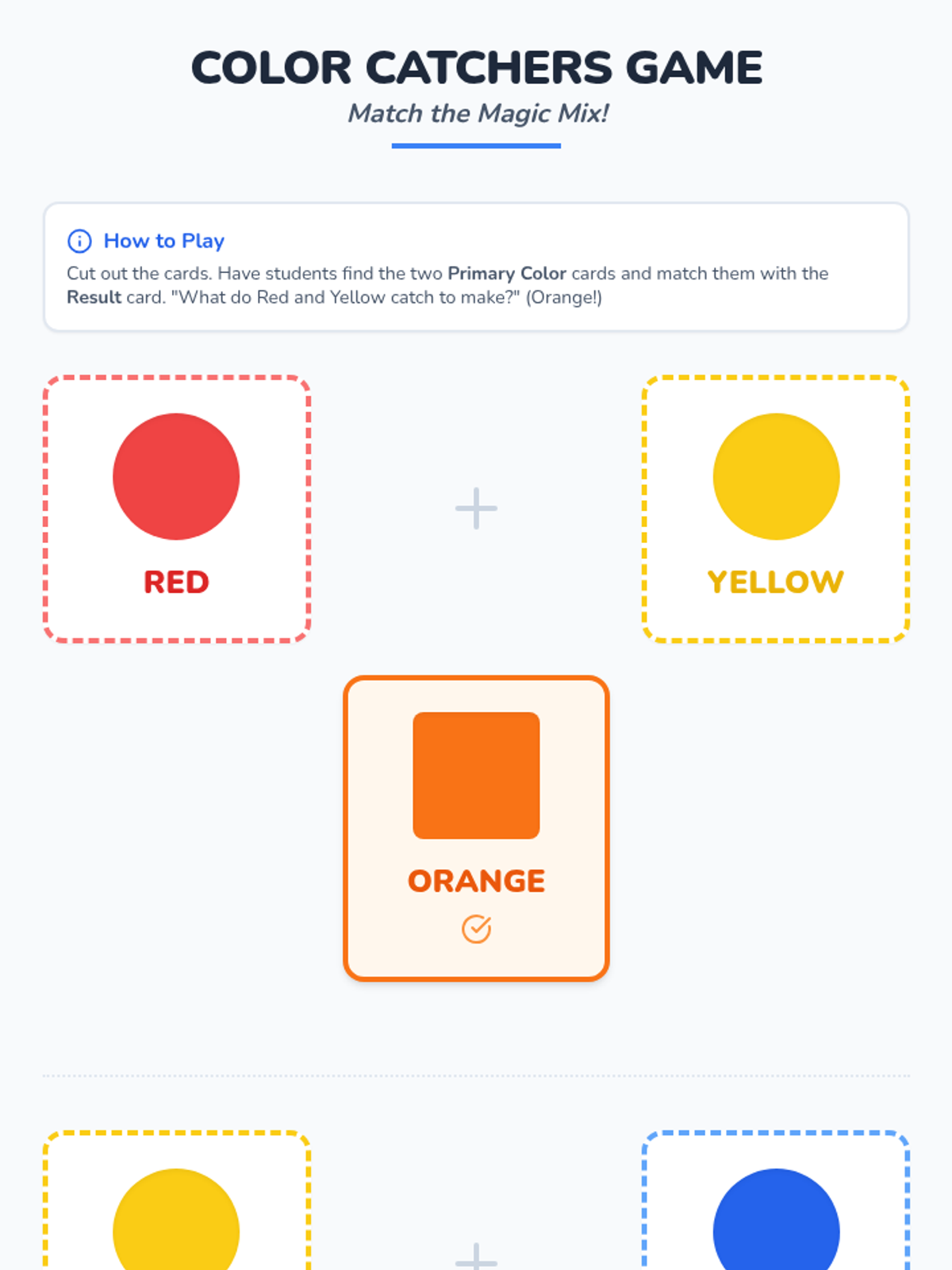
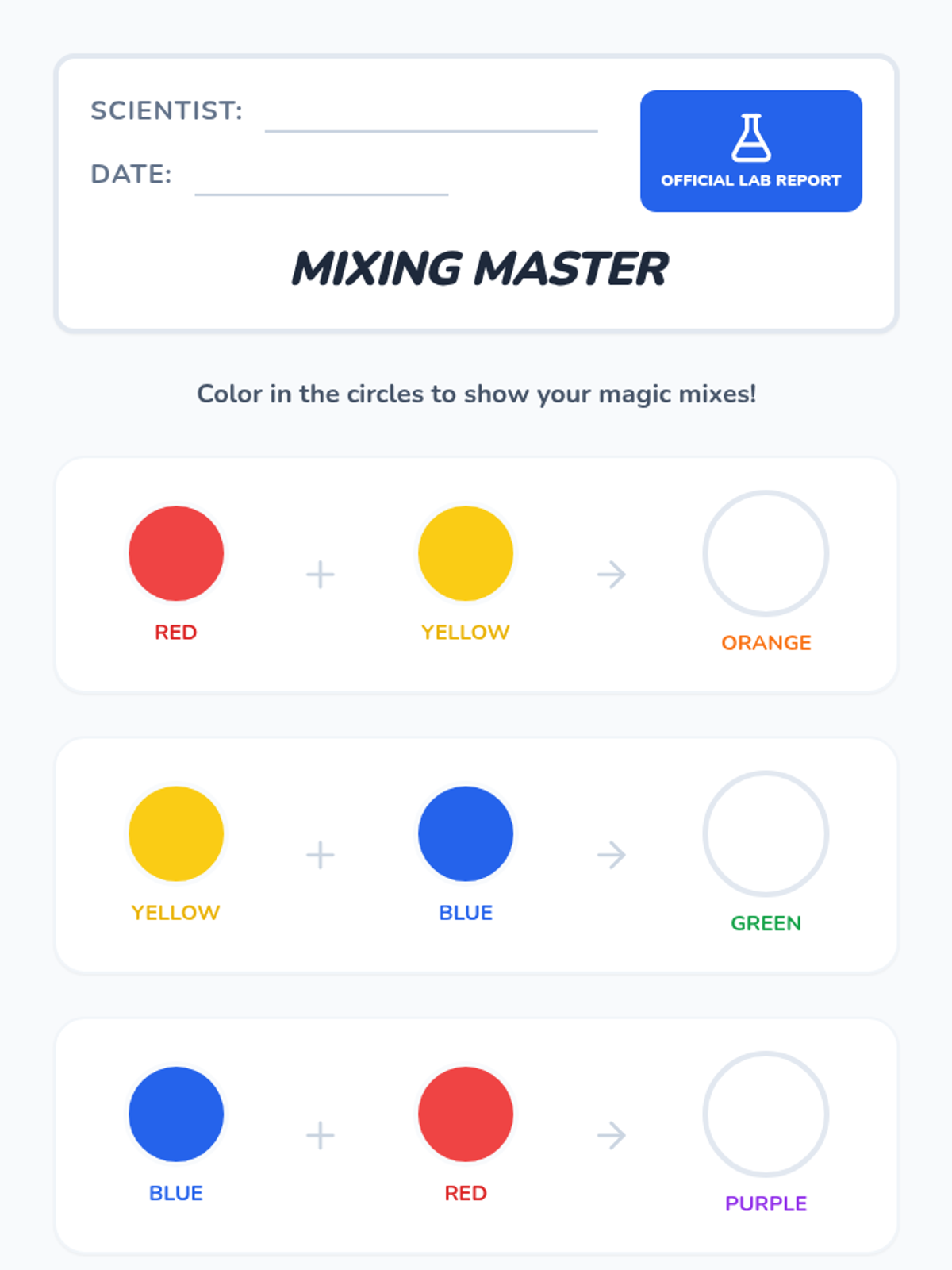
Pre-K students become little scientists to explore primary colors and the magic of mixing them using water and food coloring. This lesson builds fine motor skills and introduces the concept of cause and effect through hands-on play.
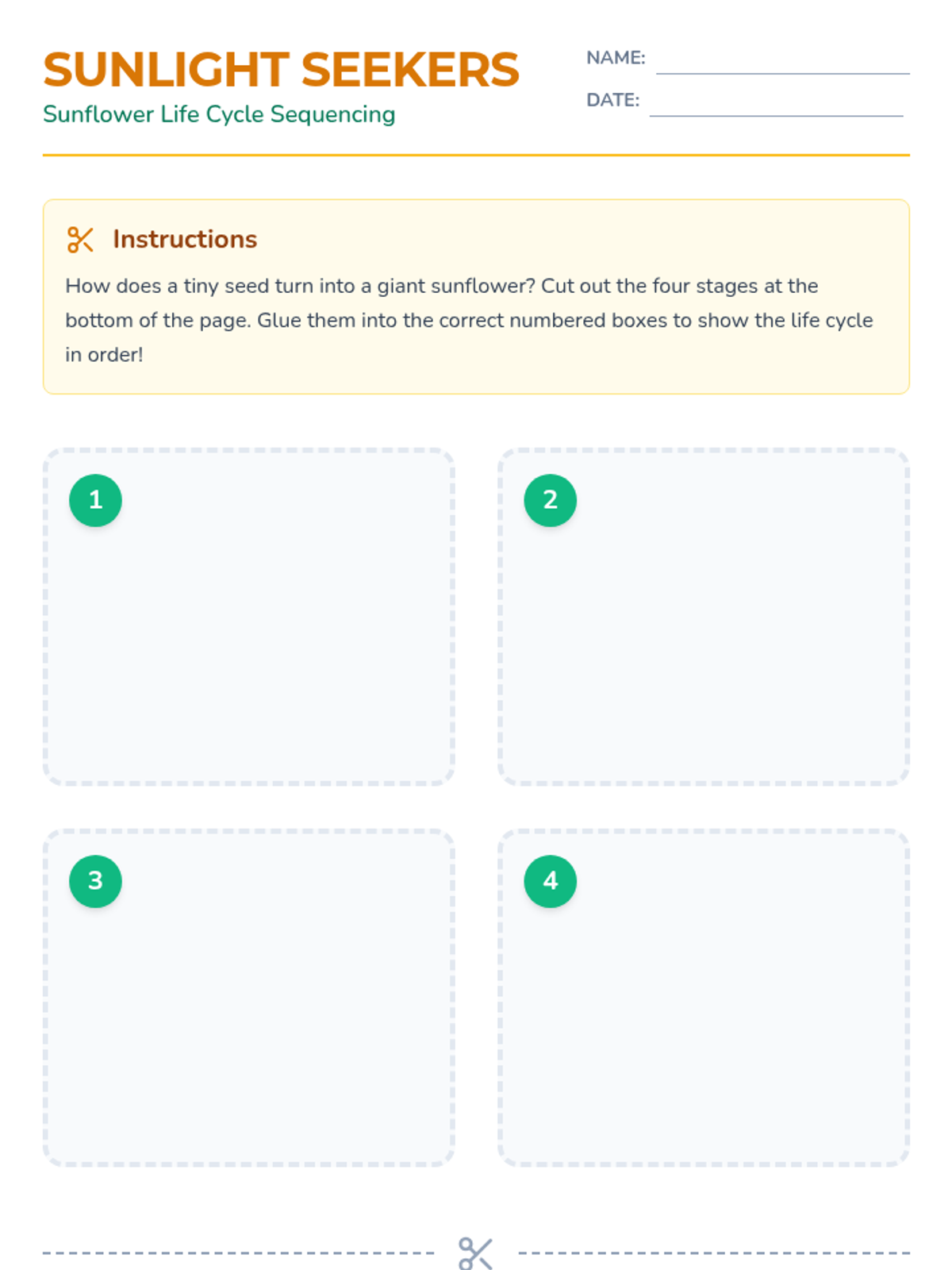
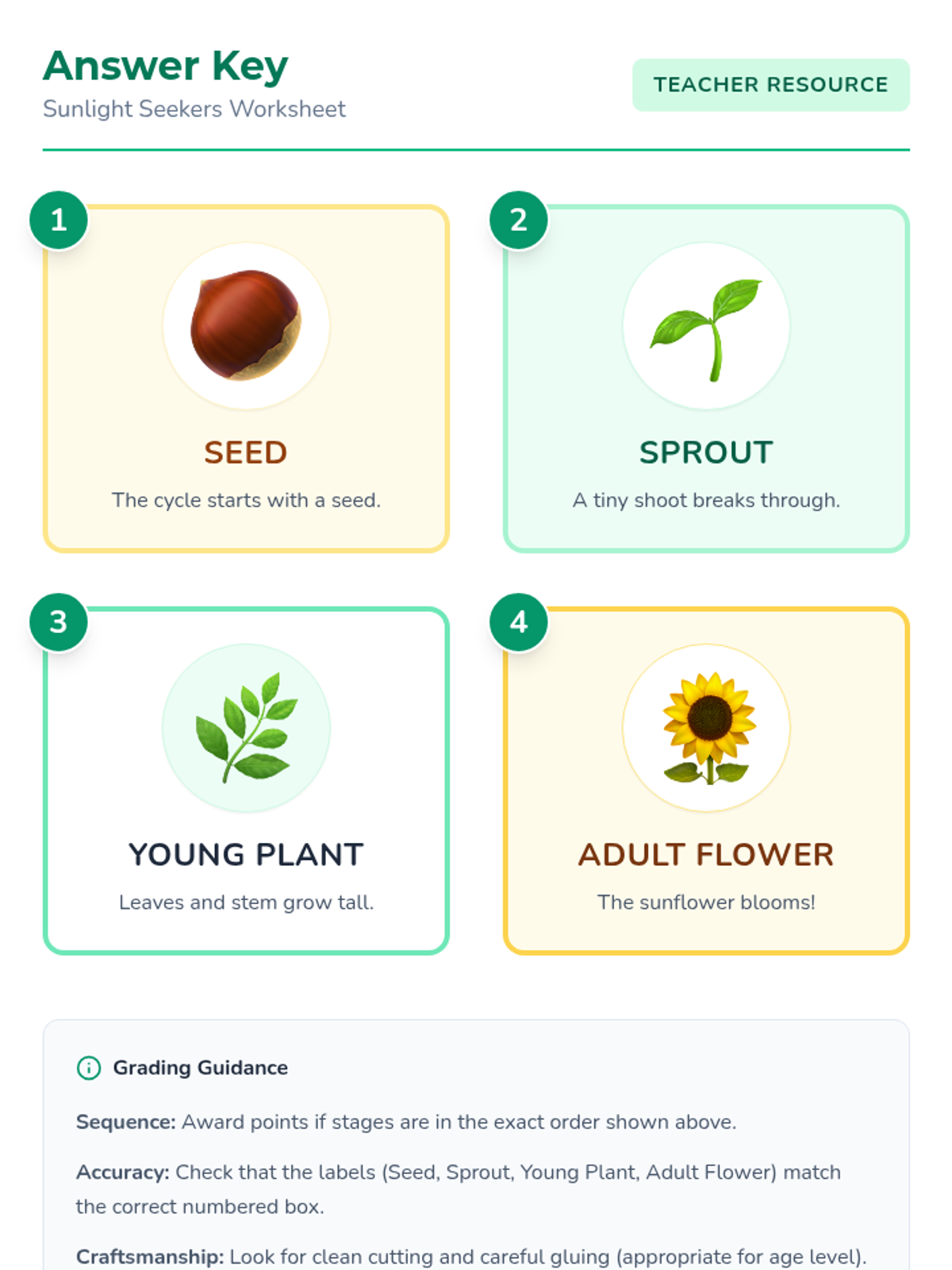
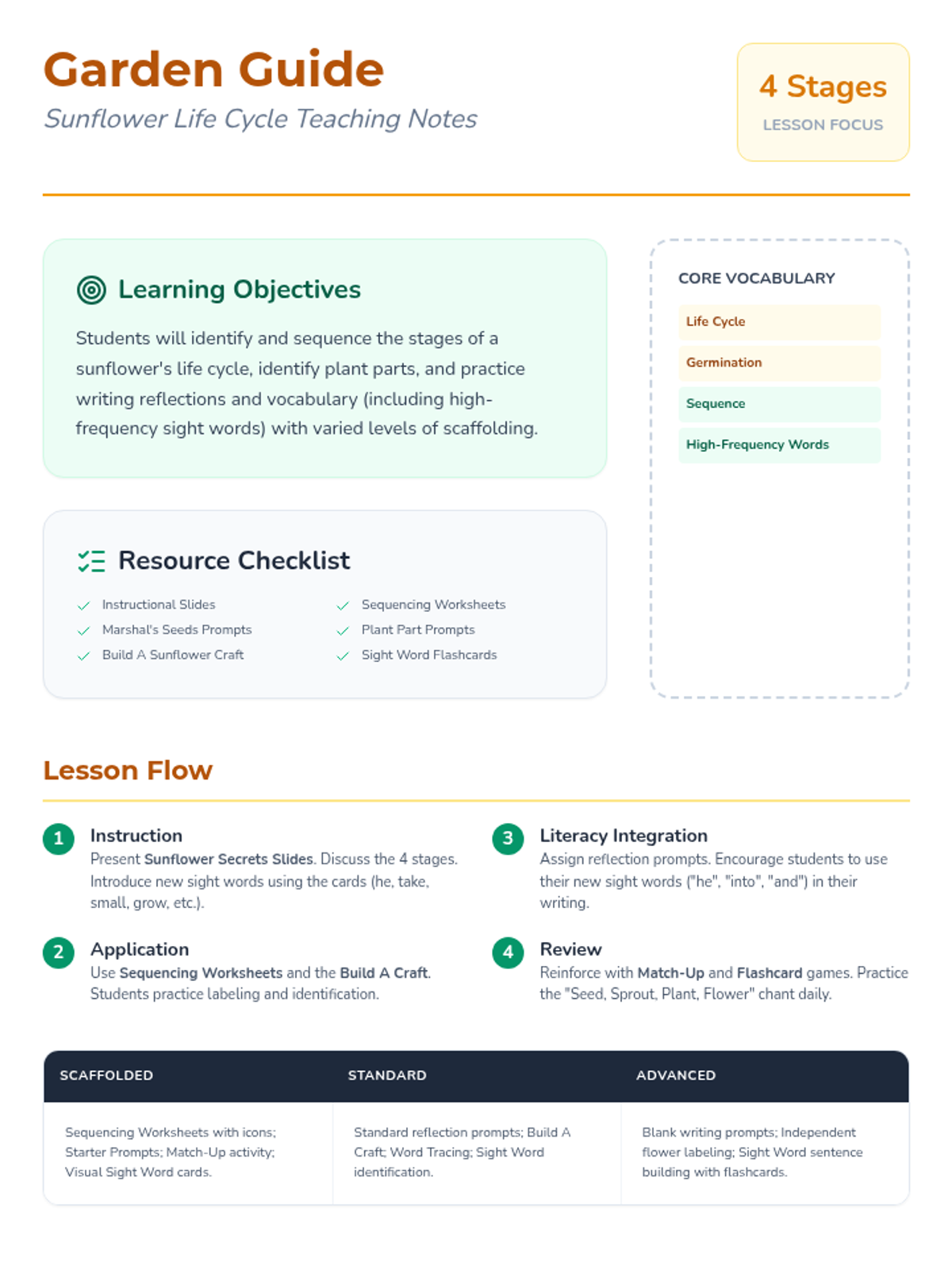
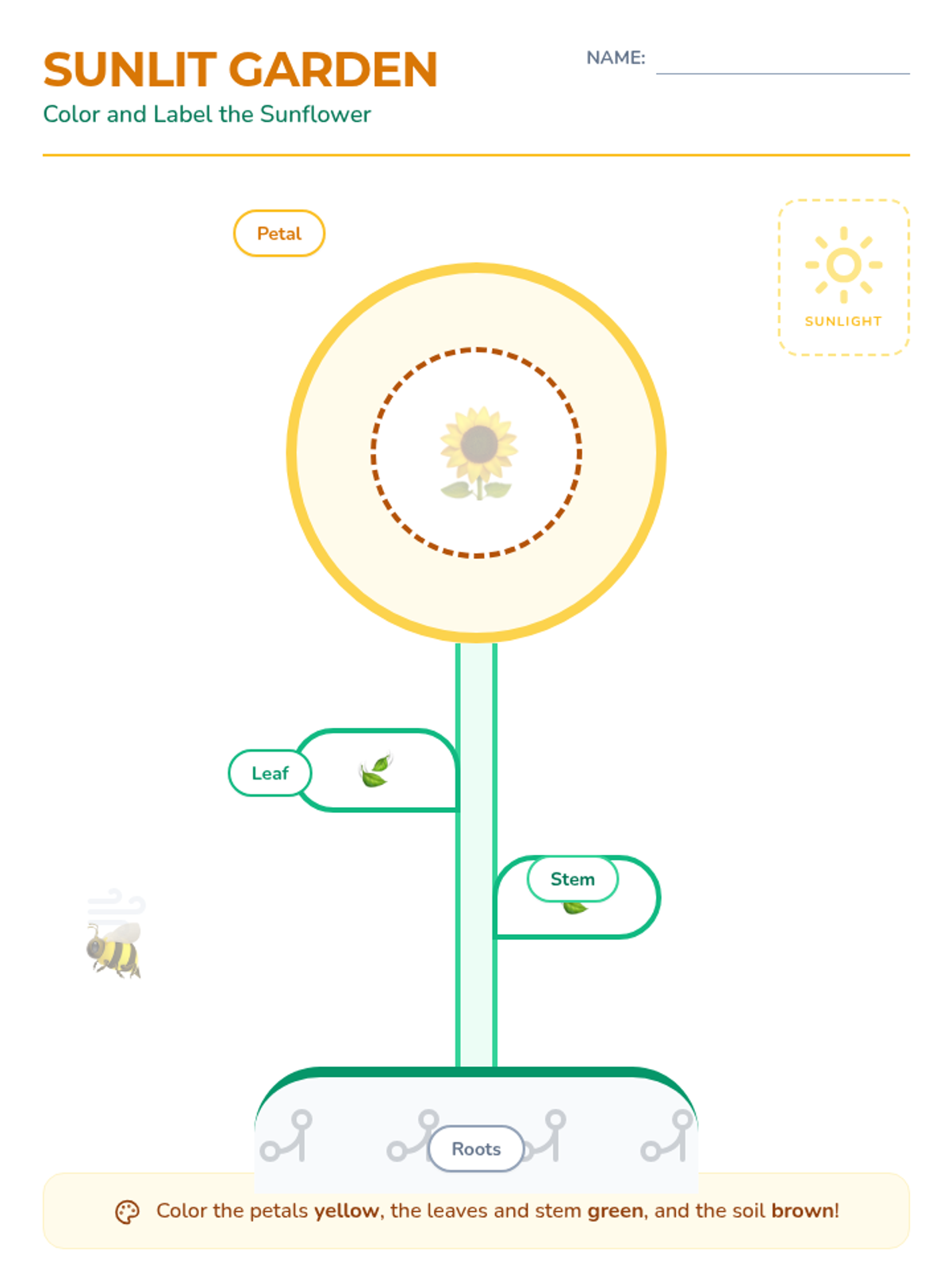
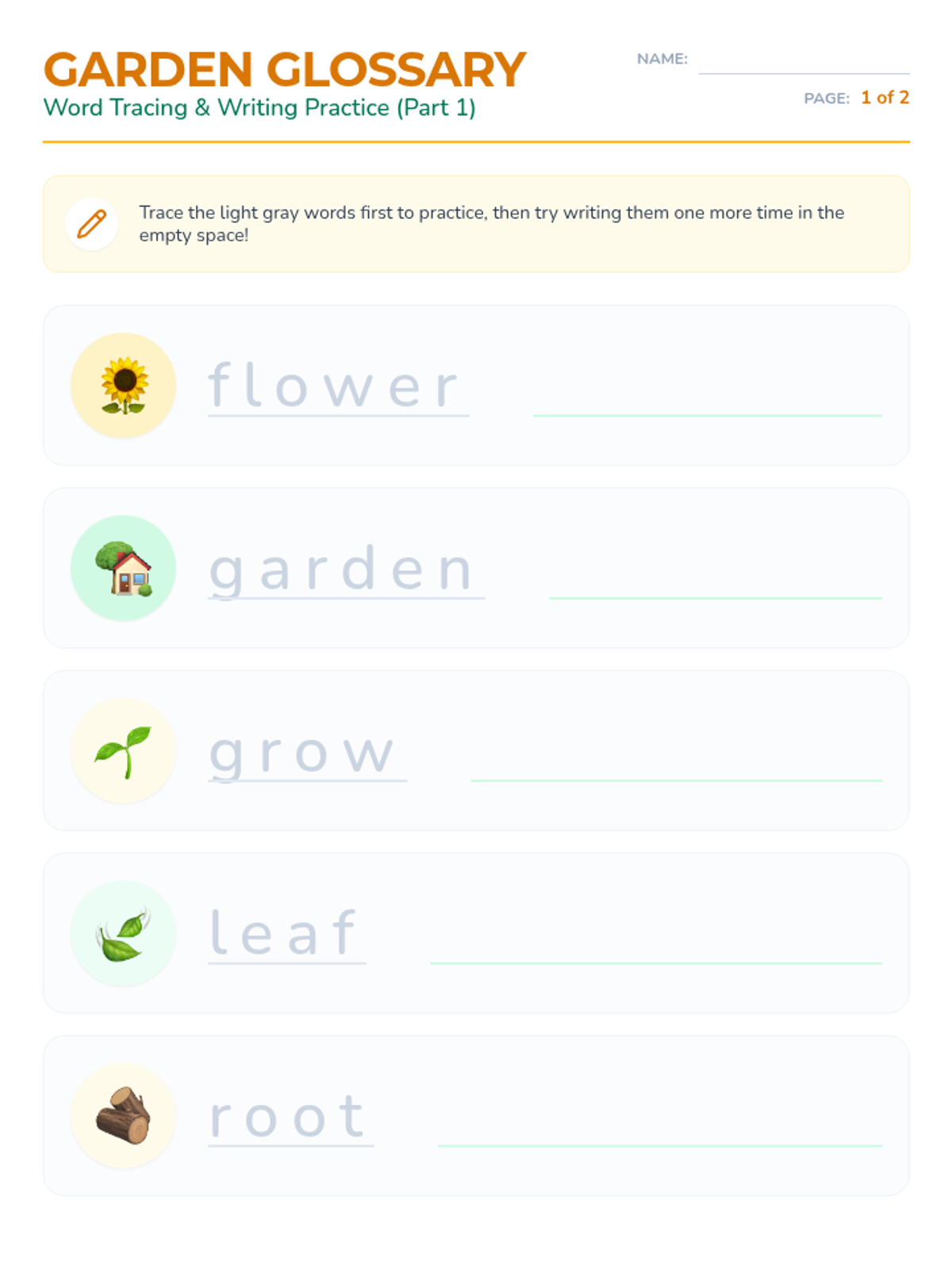
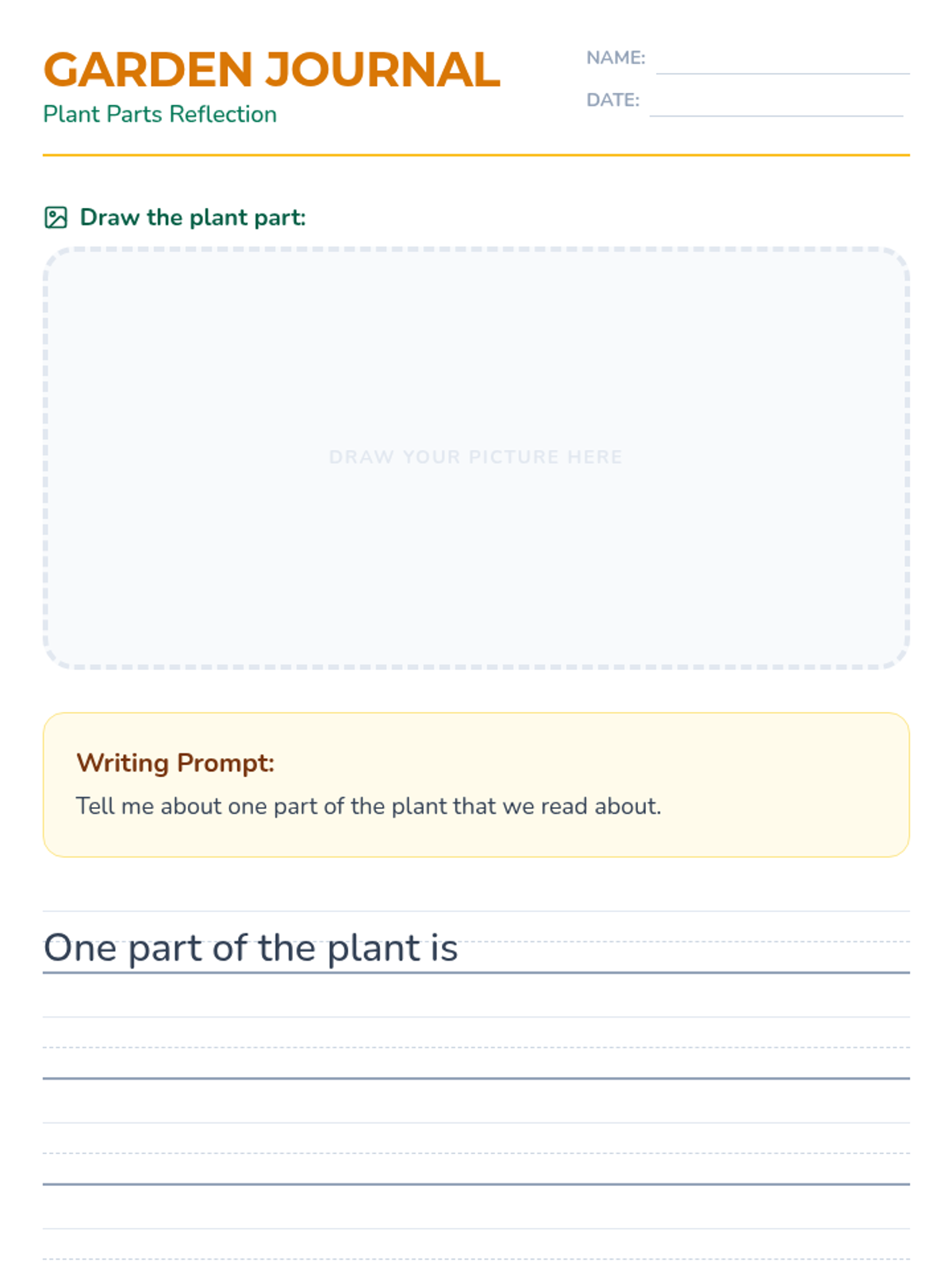
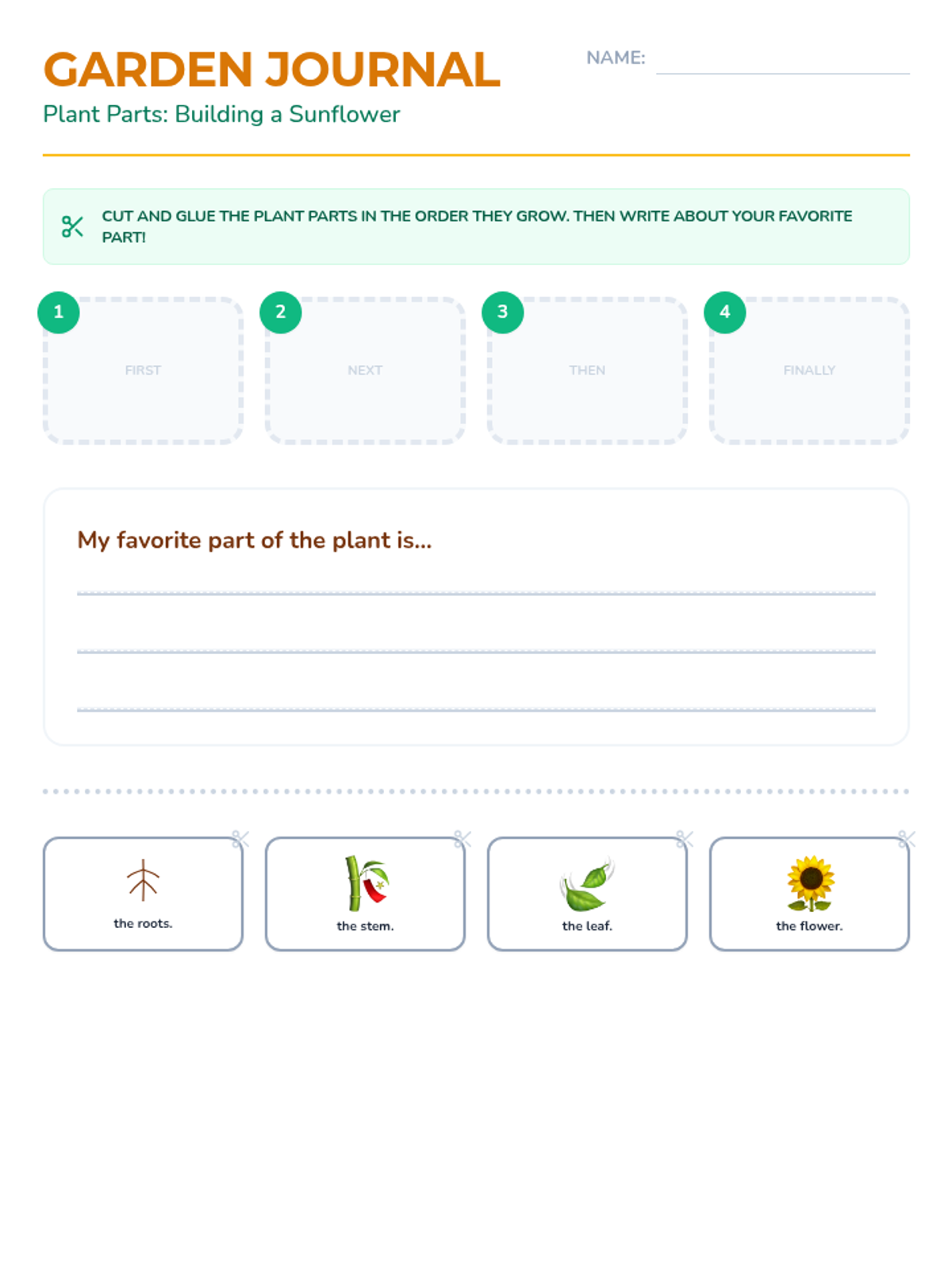
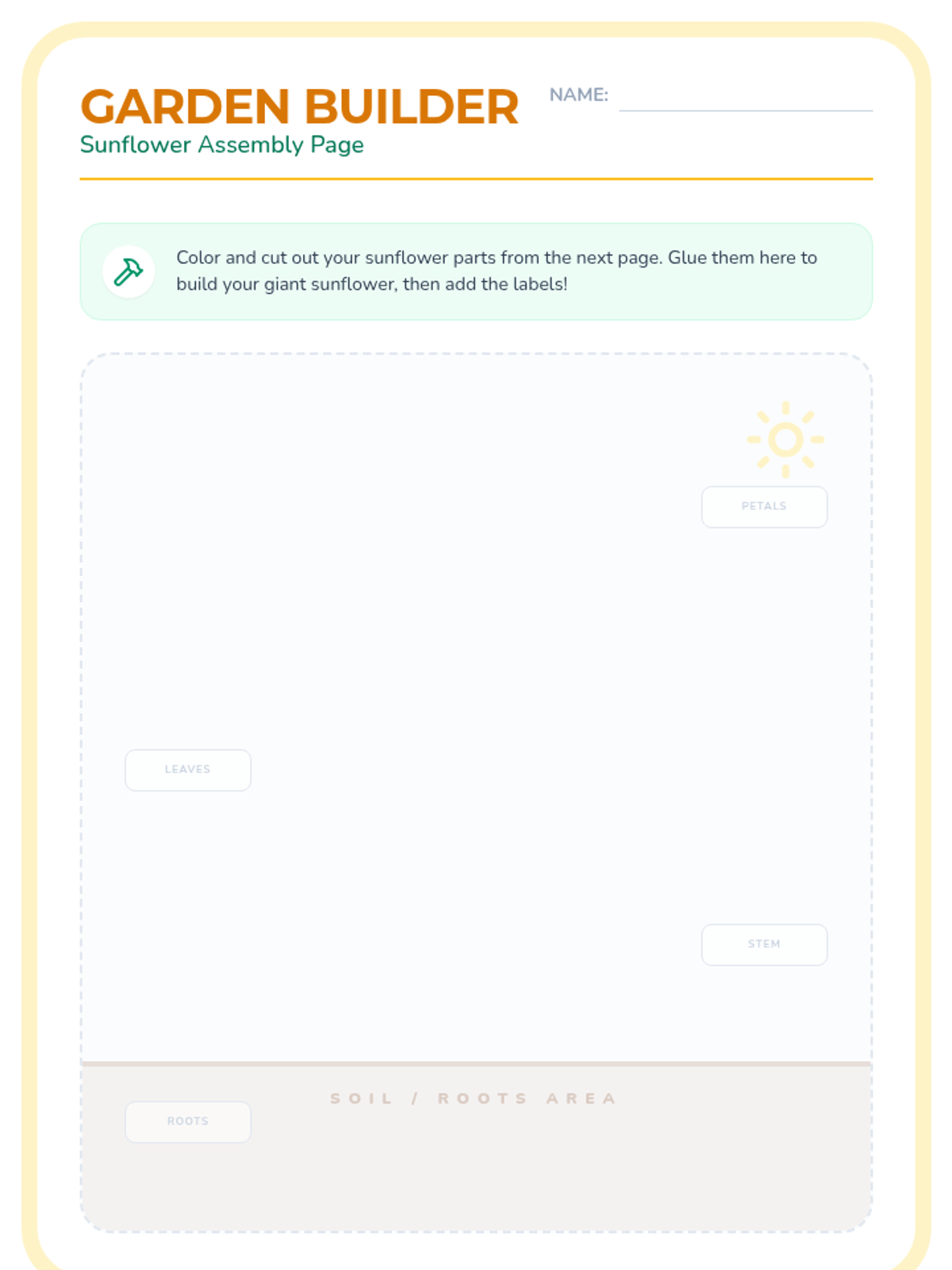
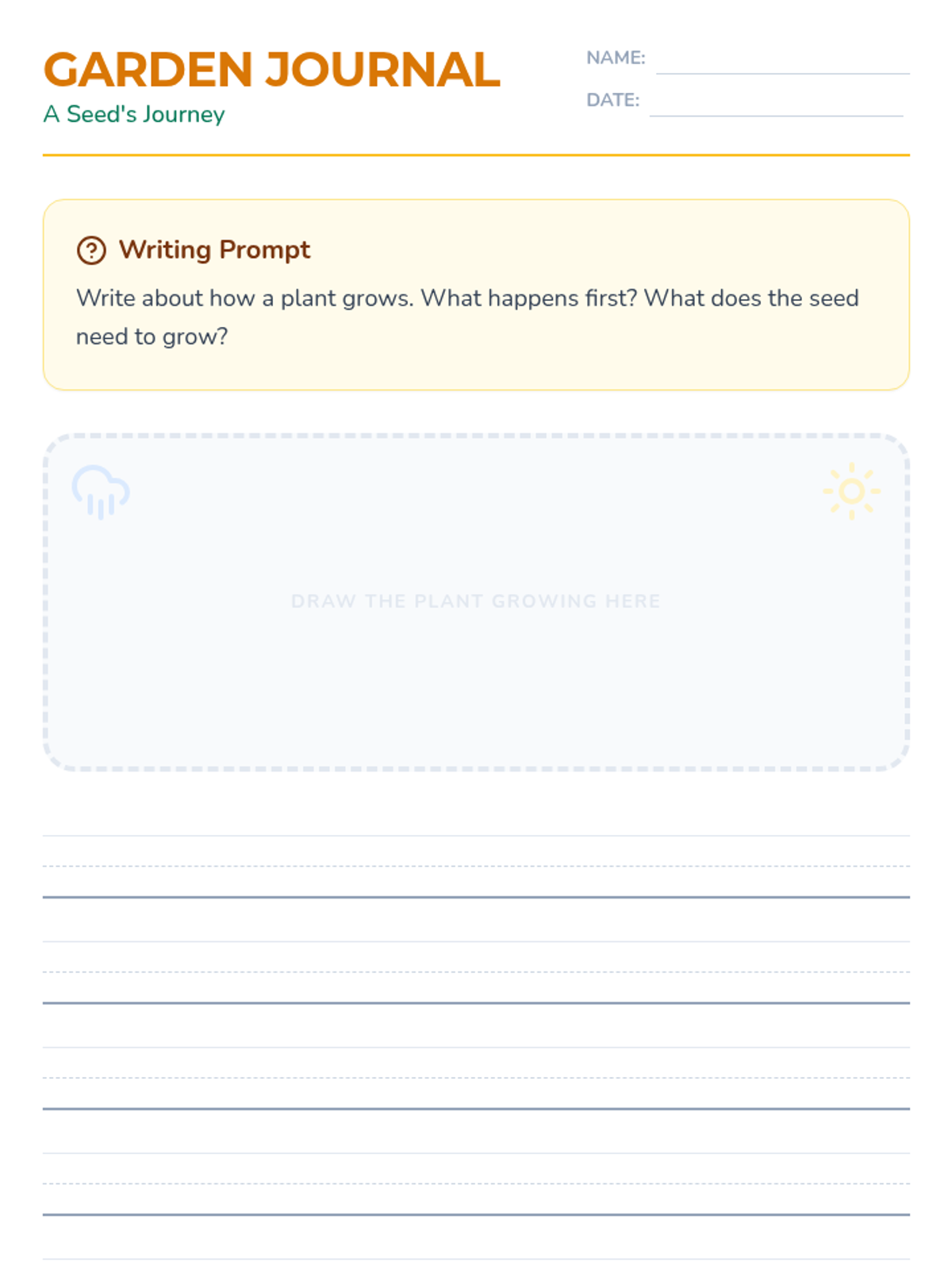
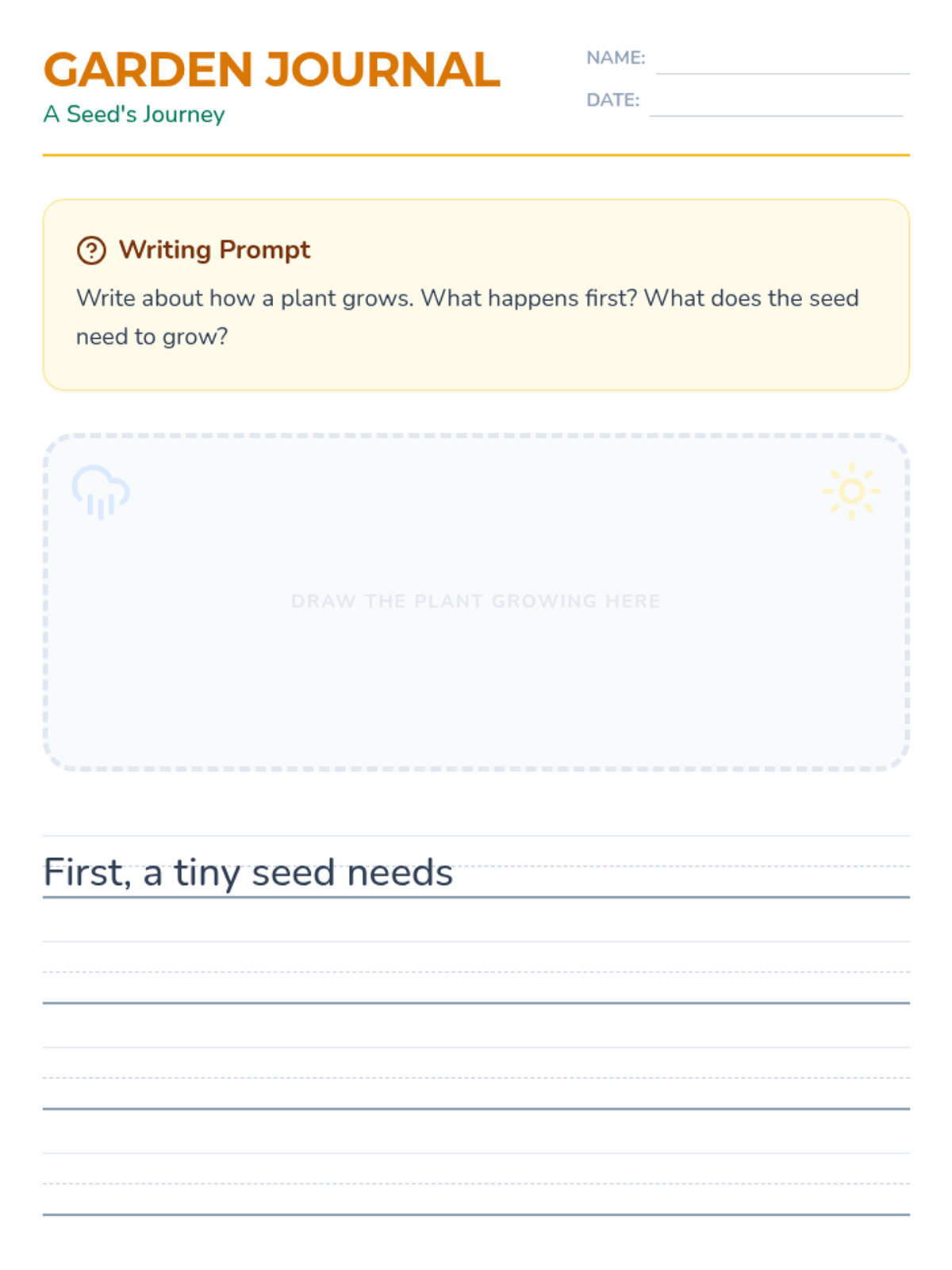
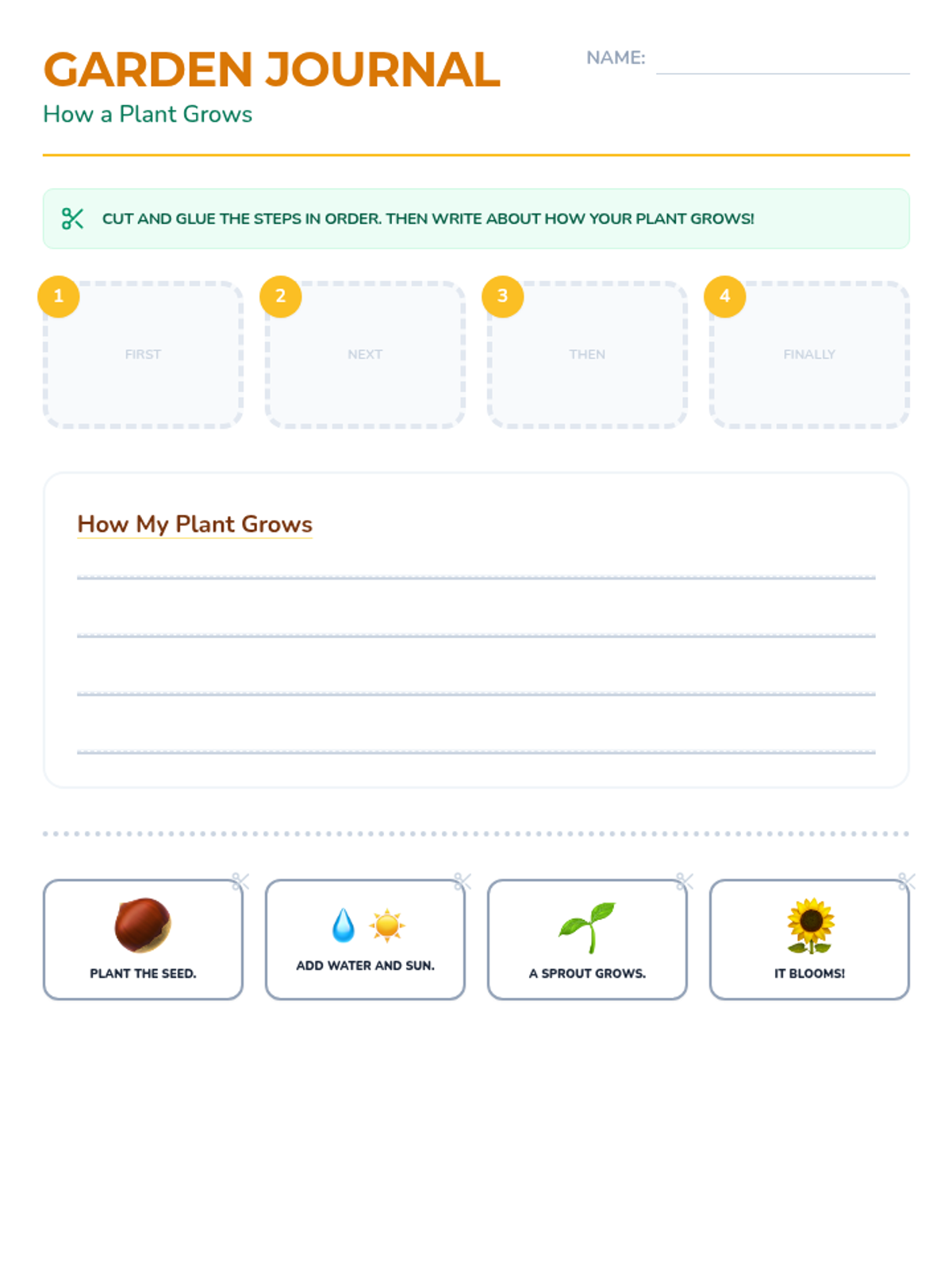
A hands-on lesson exploring the four primary stages of a sunflower's life cycle through visual instruction and a cut-and-paste sequencing activity.
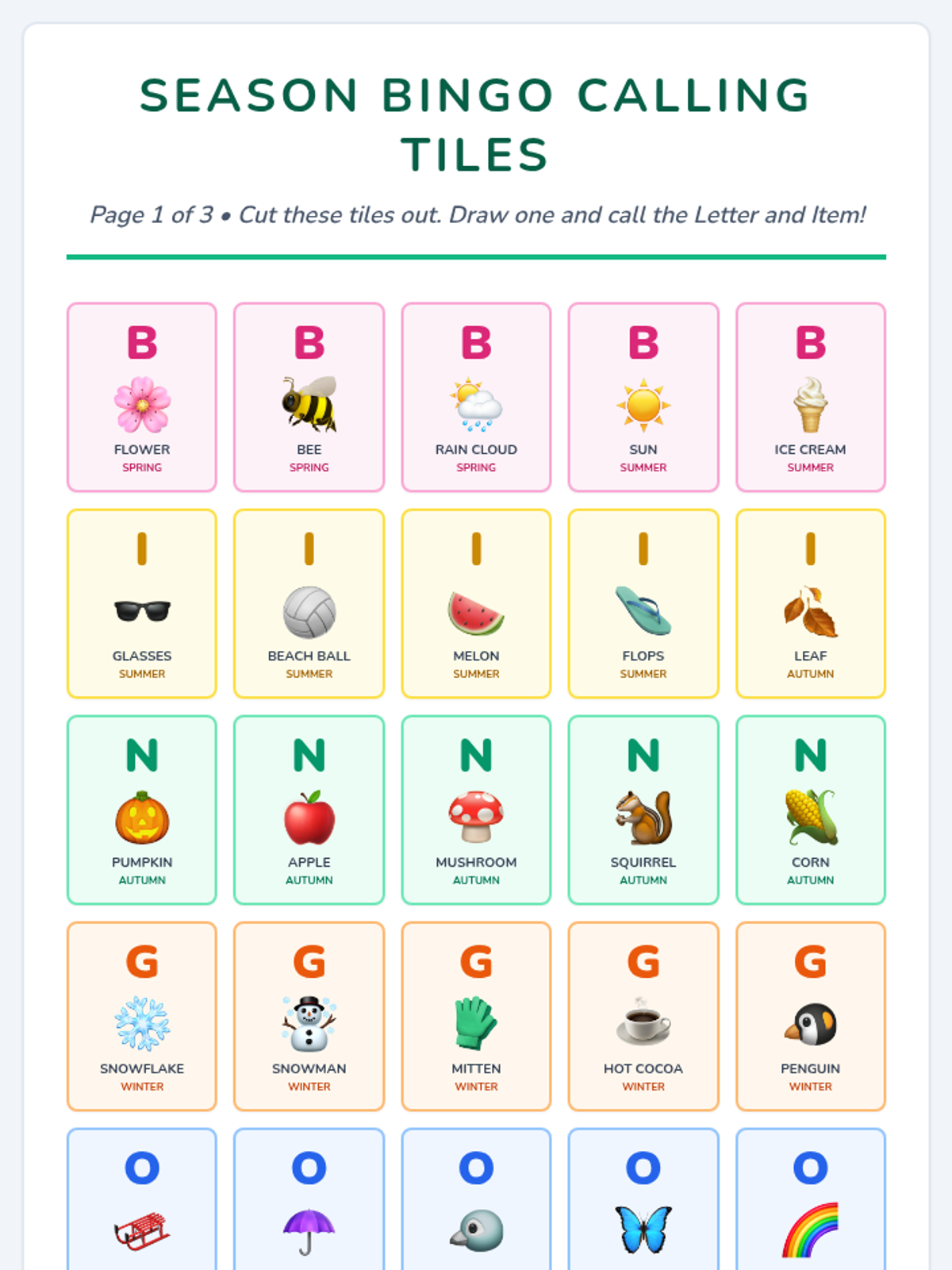
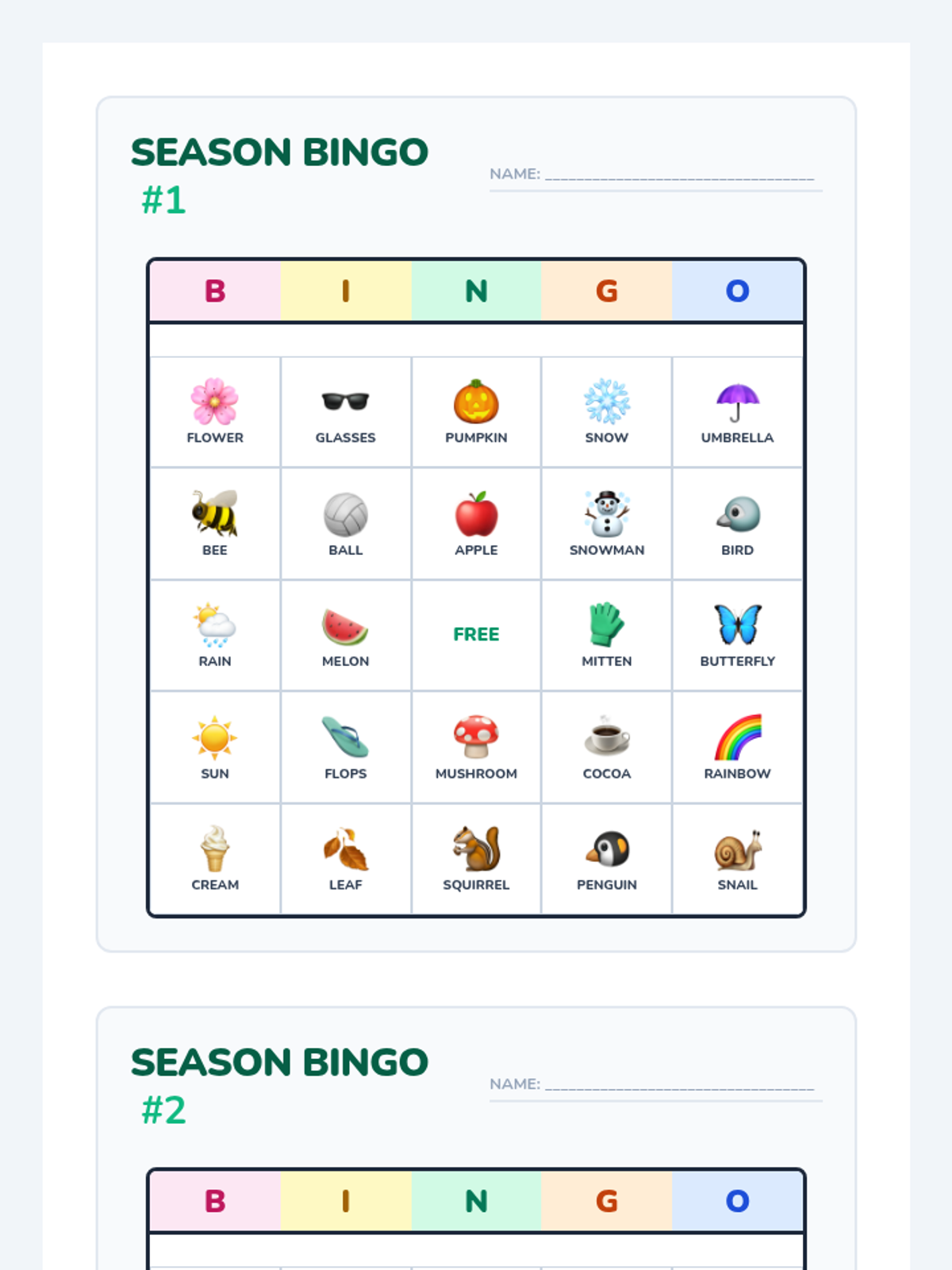
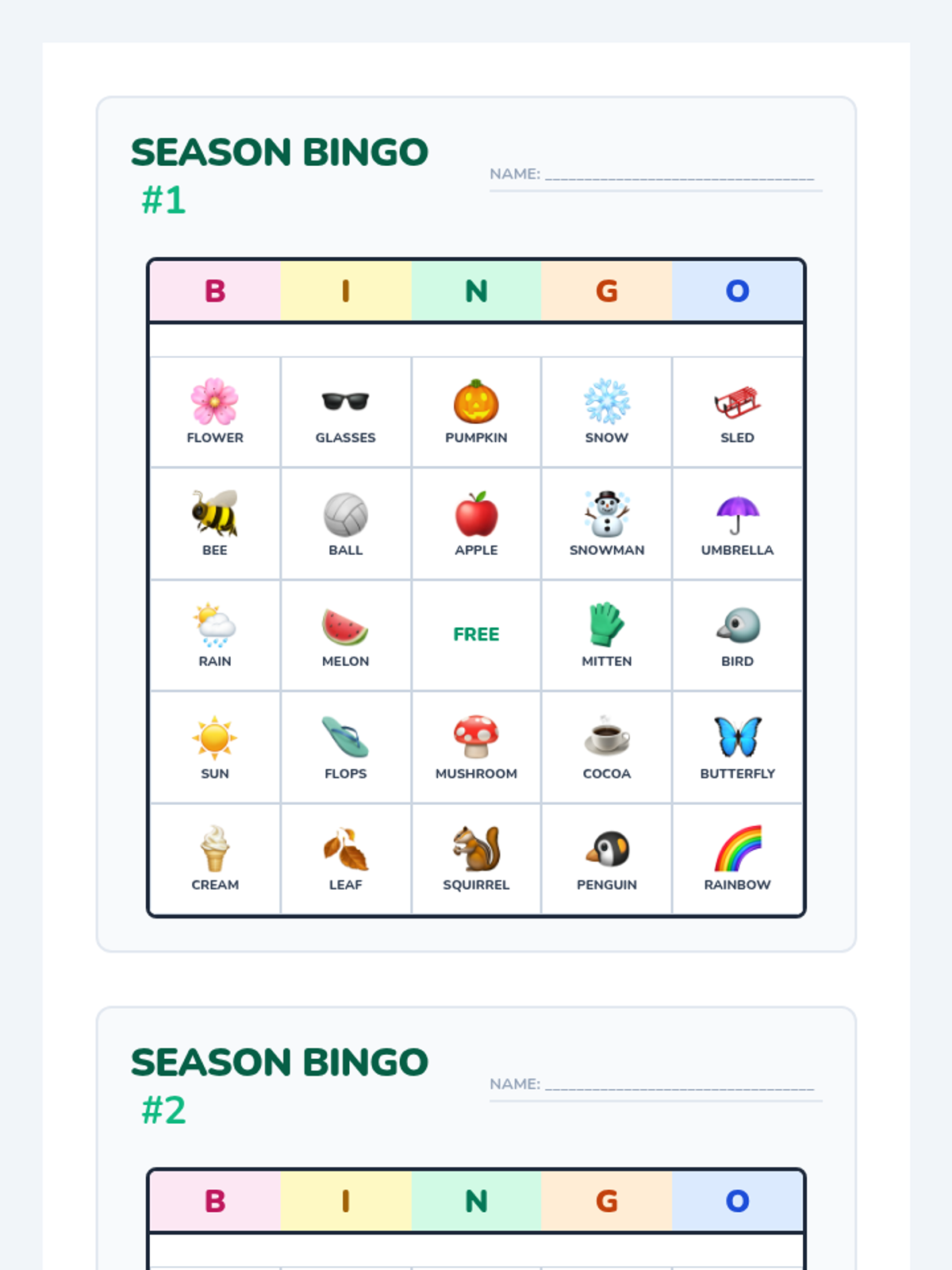
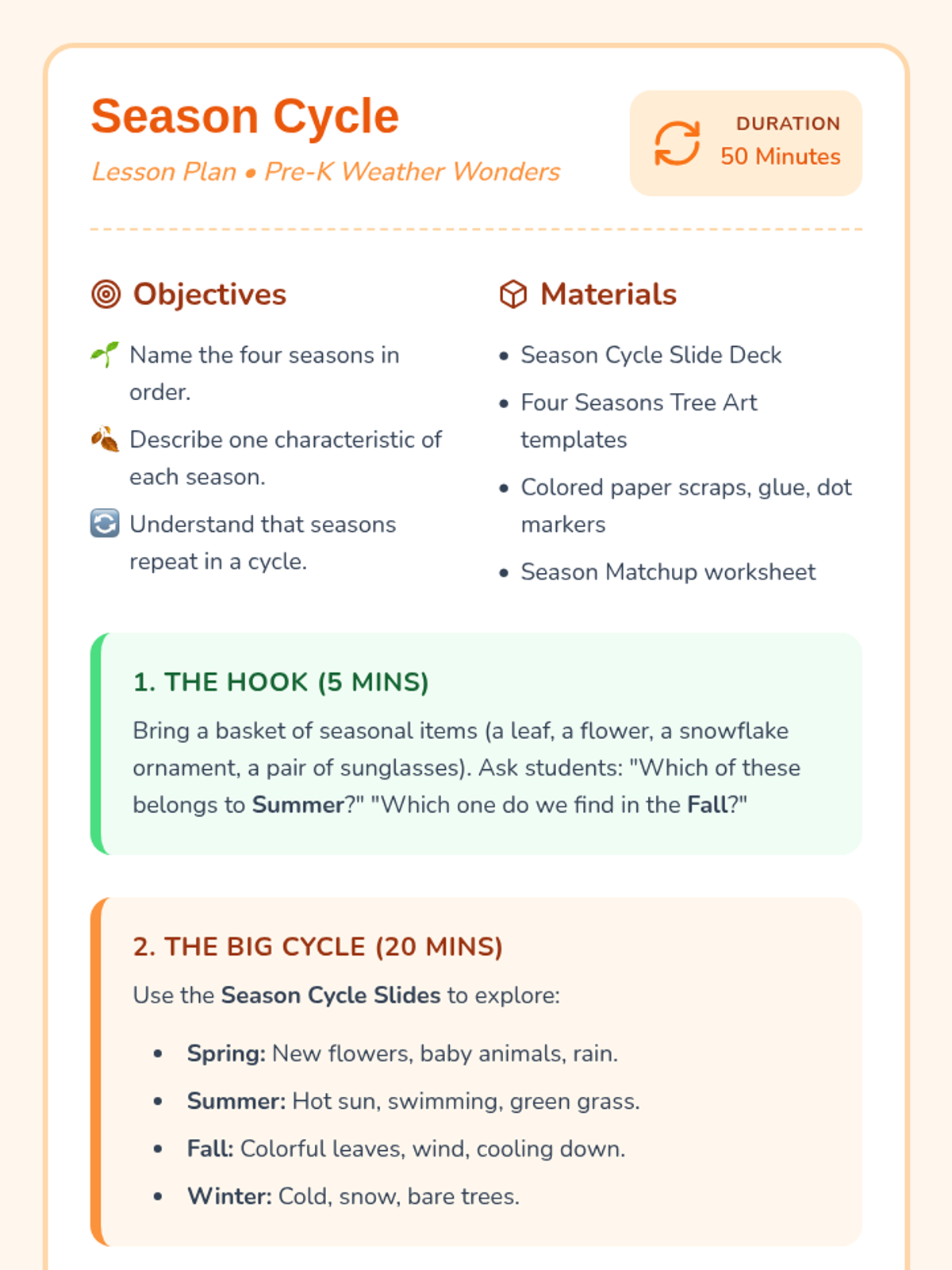
A fun, interactive lesson introducing elementary students to the four seasons through observation and play. Students will identify key characteristics of spring, summer, autumn, and winter using visual cues and interactive bingo.
Students will learn to distinguish between living and nonliving things by identifying key characteristics like growth and basic needs. The lesson includes a visual presentation, a hands-on sorting worksheet, and an outdoor exploration guide.
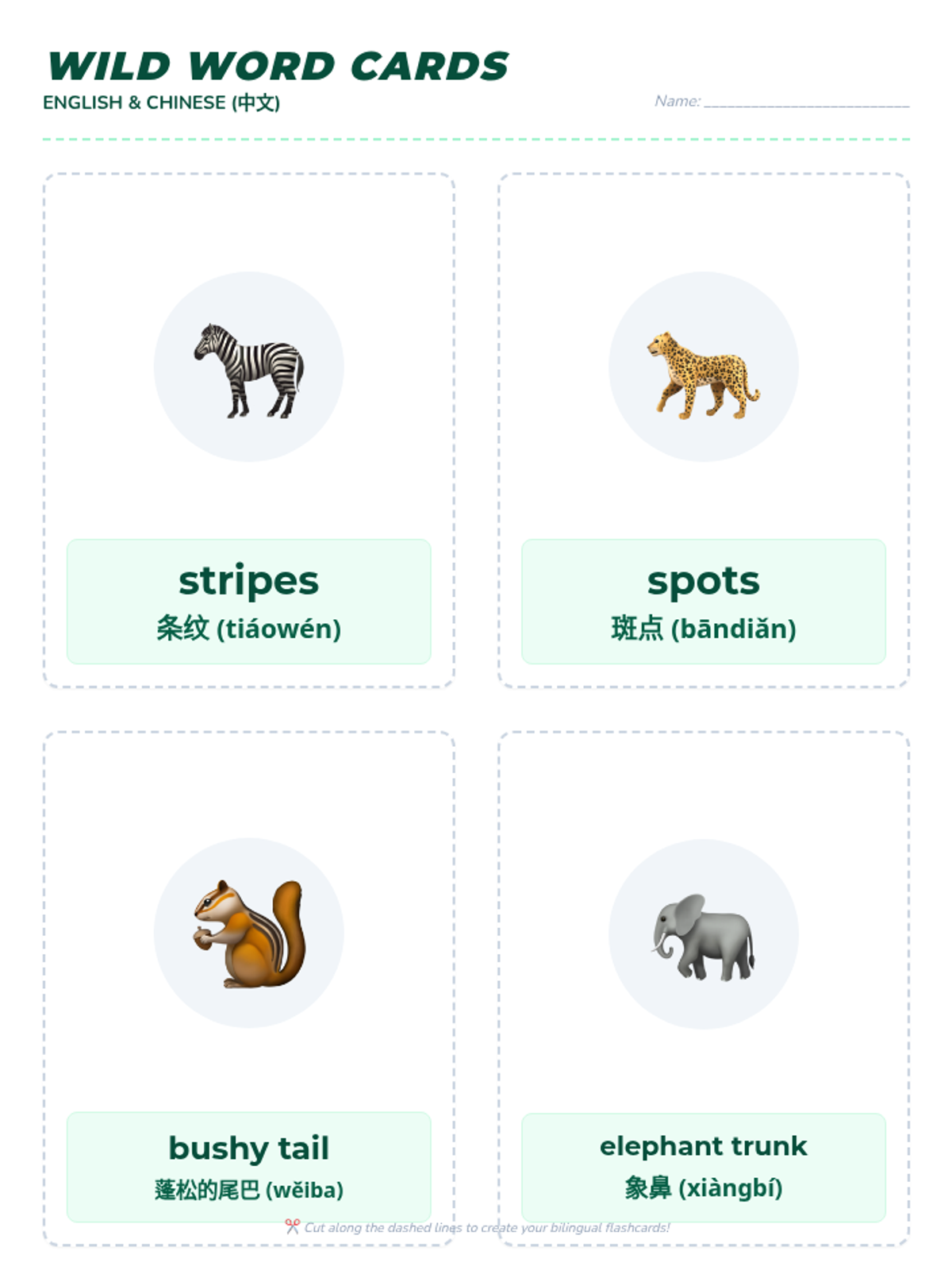
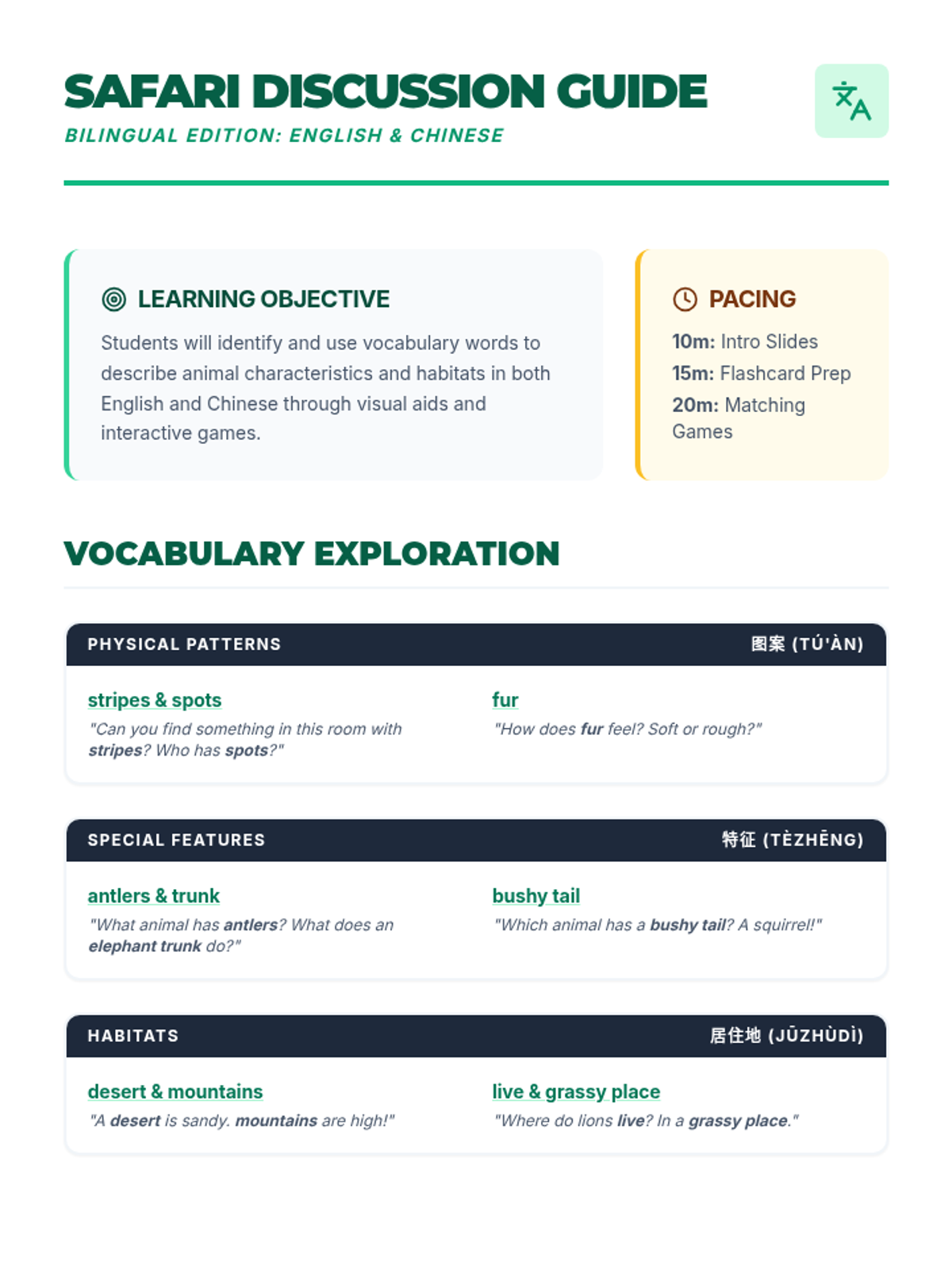
A lesson focused on animal characteristics and habitats, helping students build descriptive vocabulary.
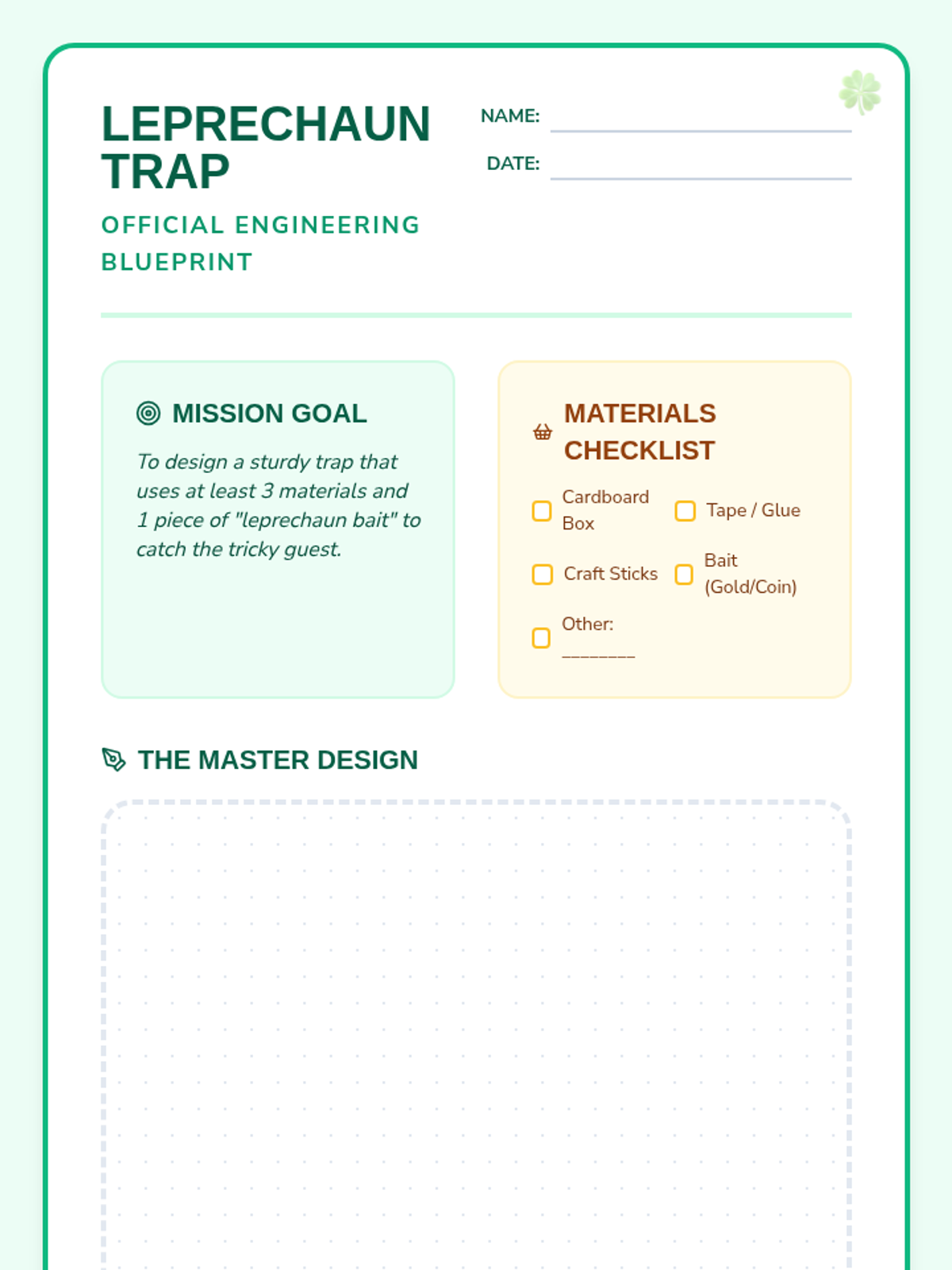
Students design and build a STEM leprechaun trap inspired by 'How to Catch a Leprechaun', focusing on multi-step directions and problem-solving through the engineering design process.
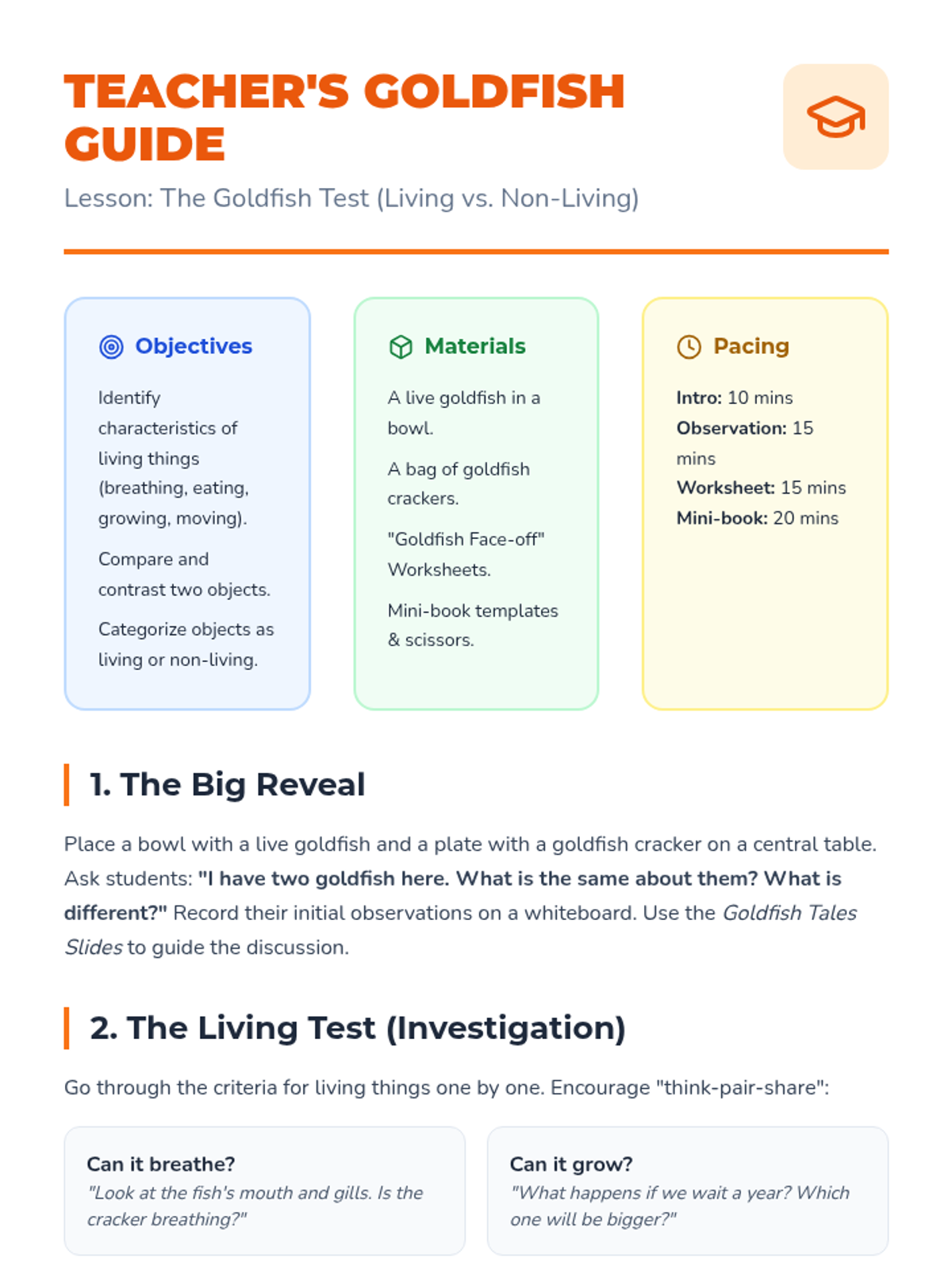
An introductory science lesson comparing a live goldfish to a goldfish cracker to help students identify the characteristics of living and non-living things.
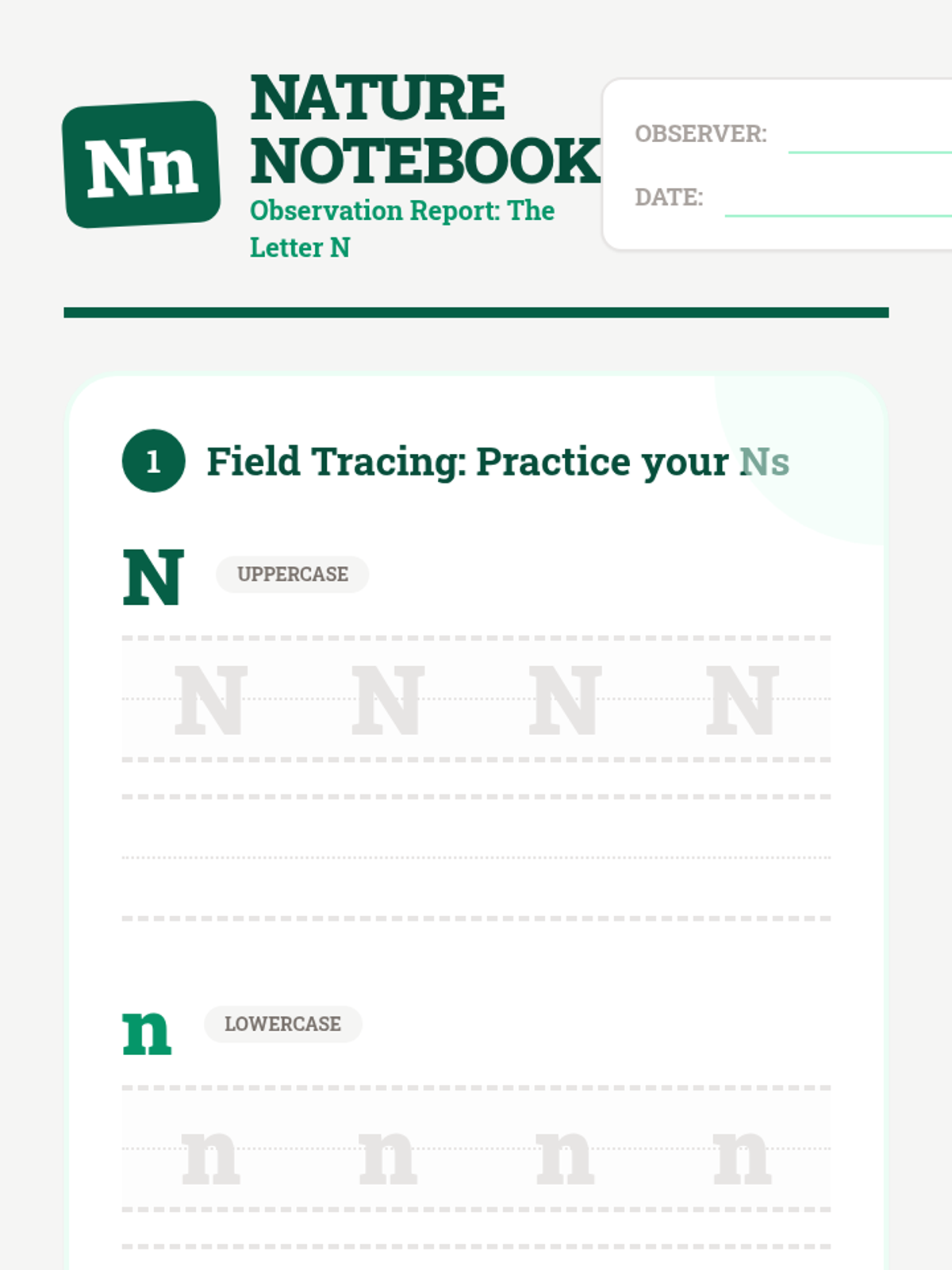
A nature-themed exploration of the letter N, focusing on lowercase and uppercase identification, the /n/ sound, and nature-based vocabulary like nests, nuts, and newts.
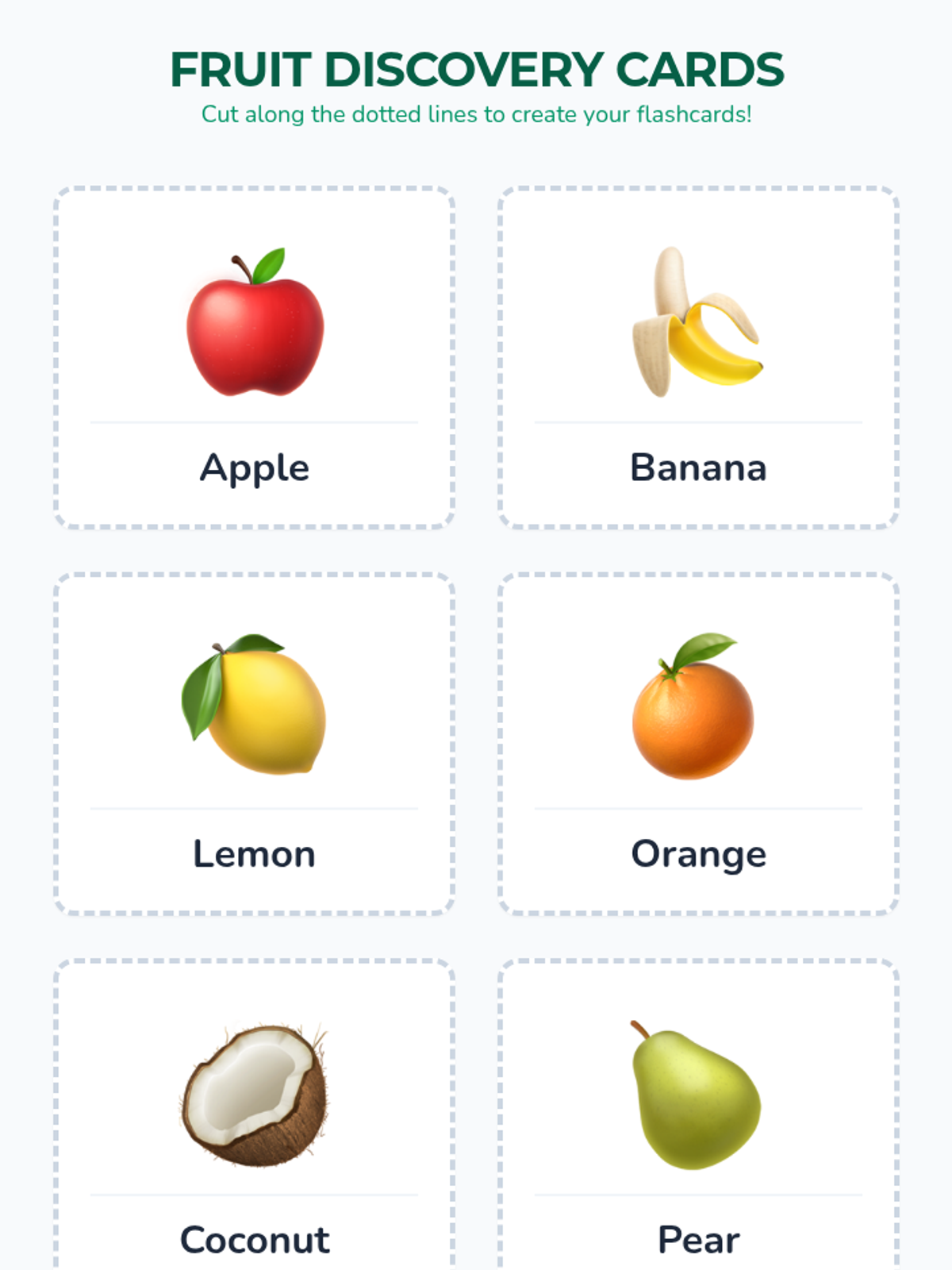
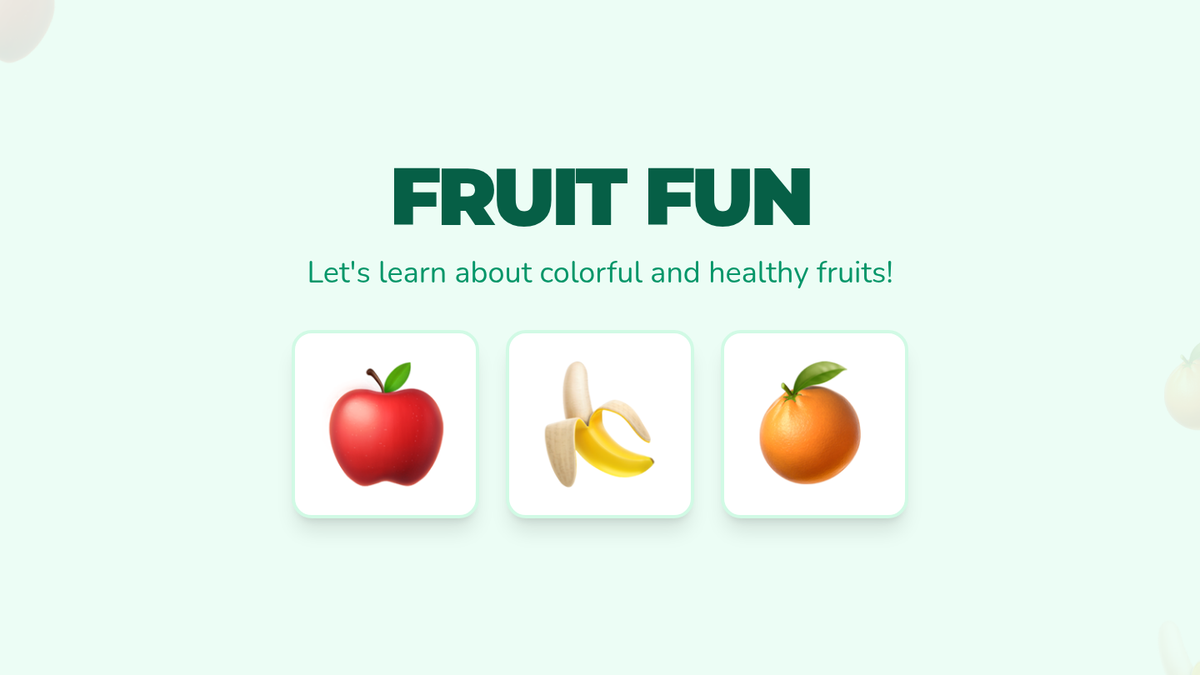
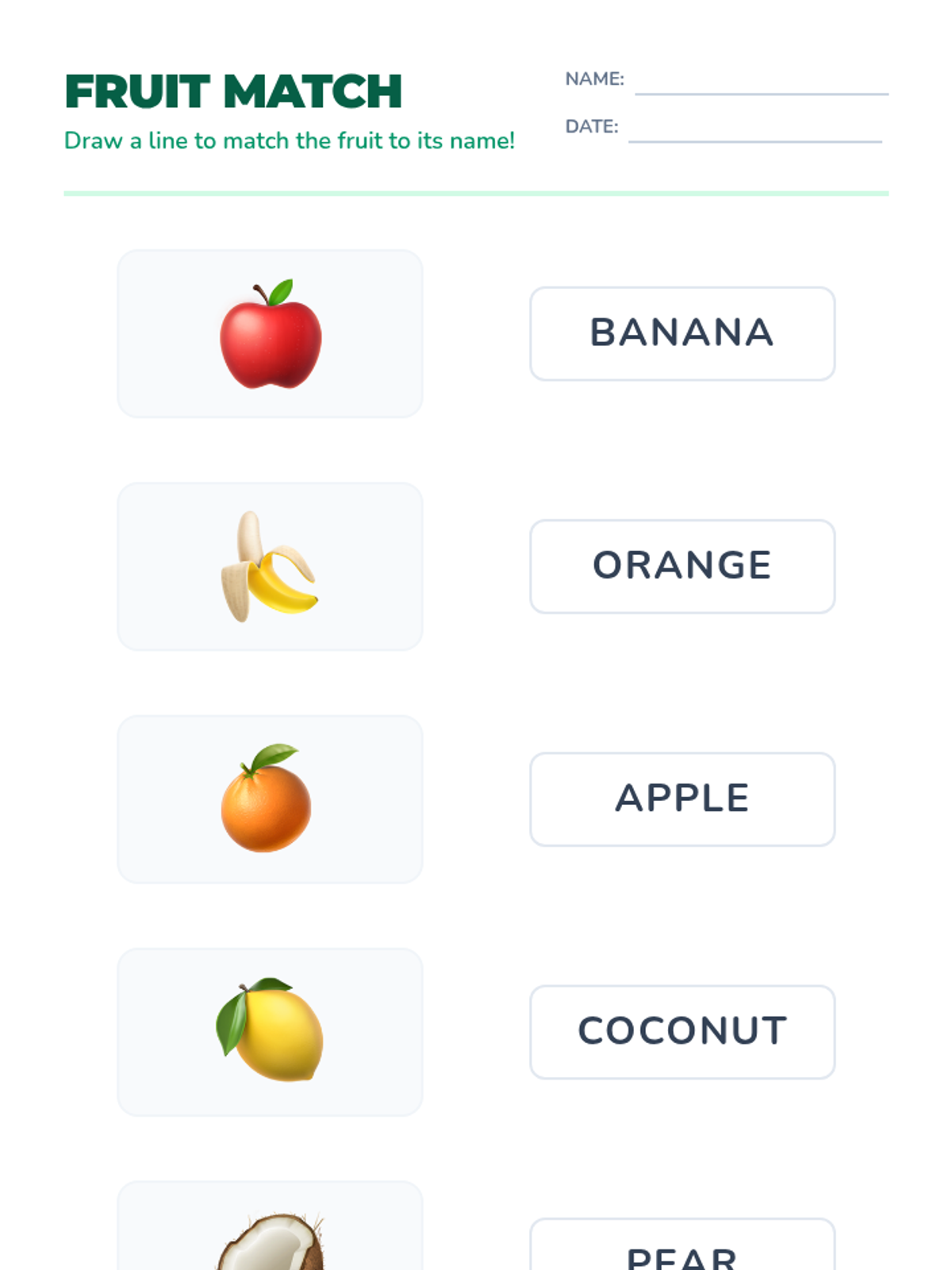
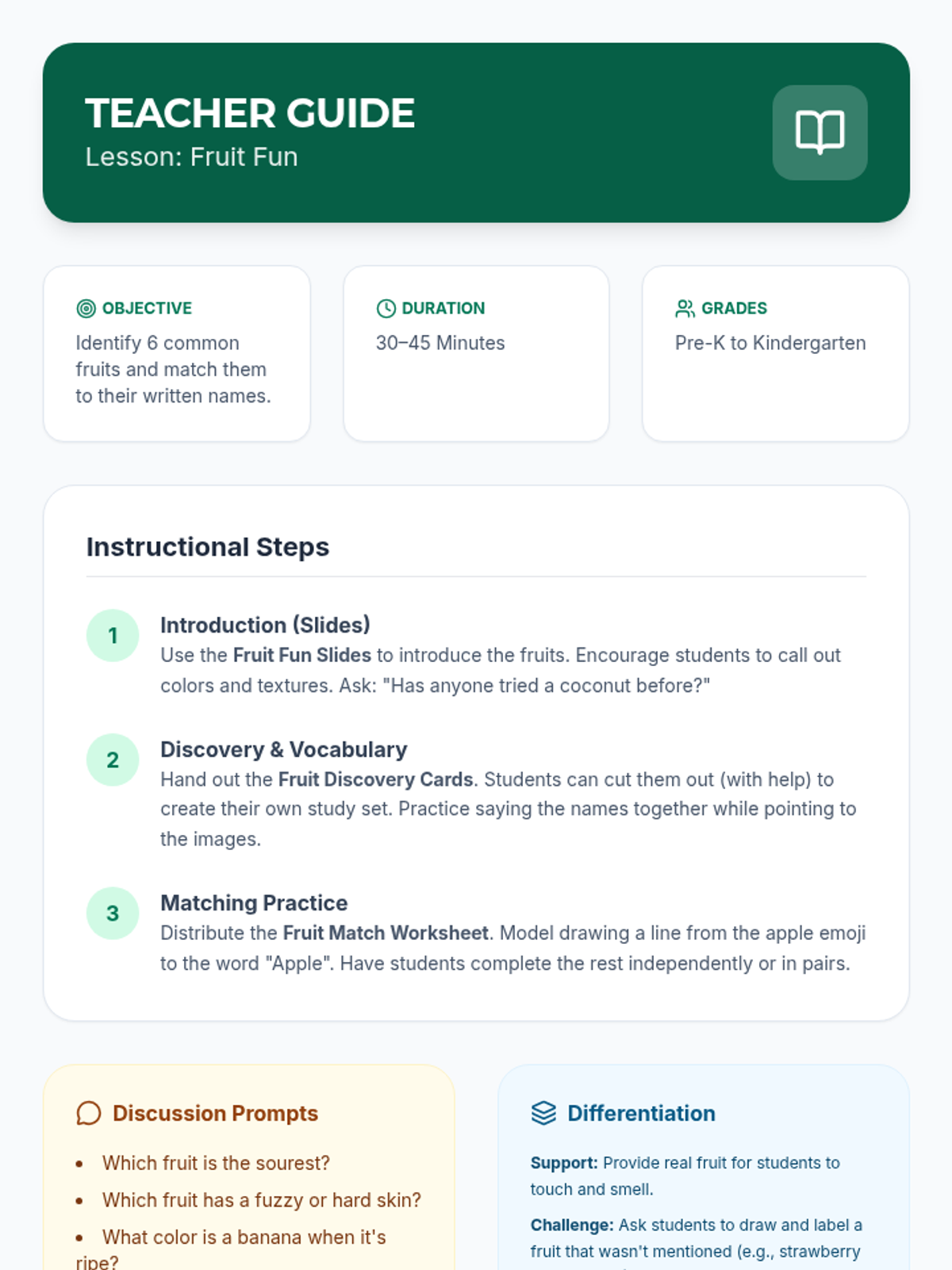
A foundational lesson for early learners to identify and name common fruits using visual aids and matching activities.
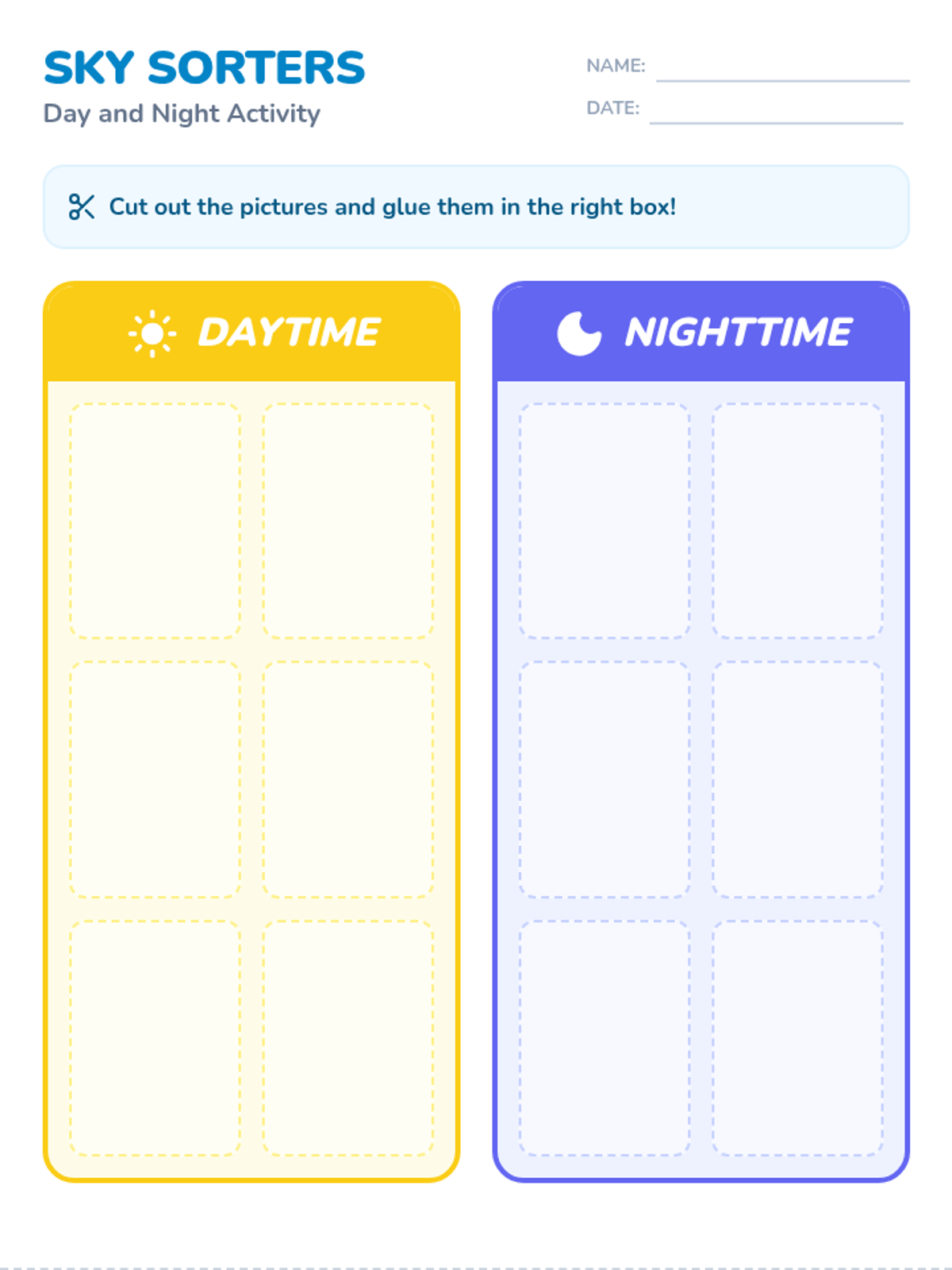
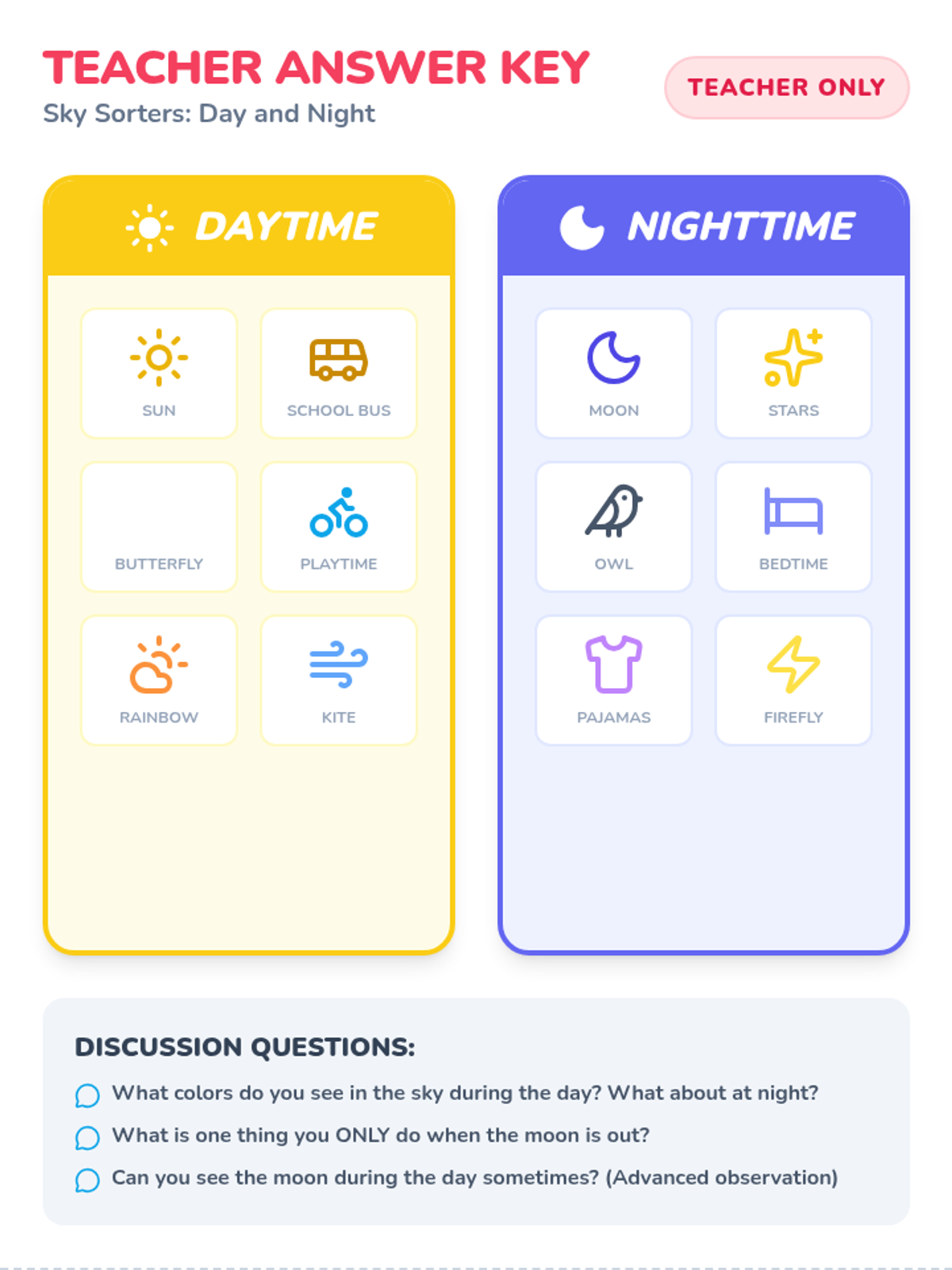
A Pre-K lesson focused on identifying and categorizing objects and activities associated with daytime and nighttime. Students will develop fine motor skills through cutting and pasting while building early science and observation skills.
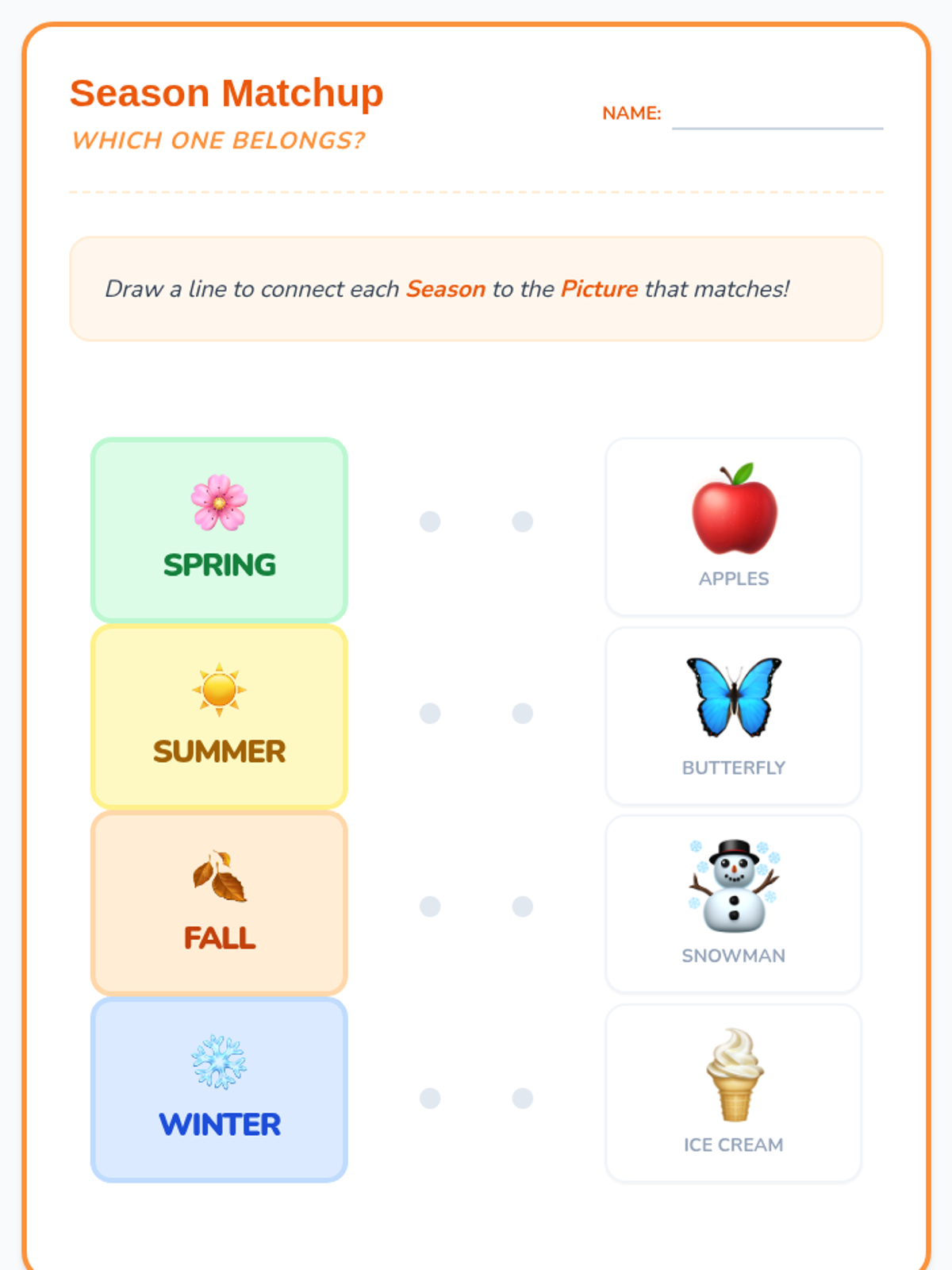
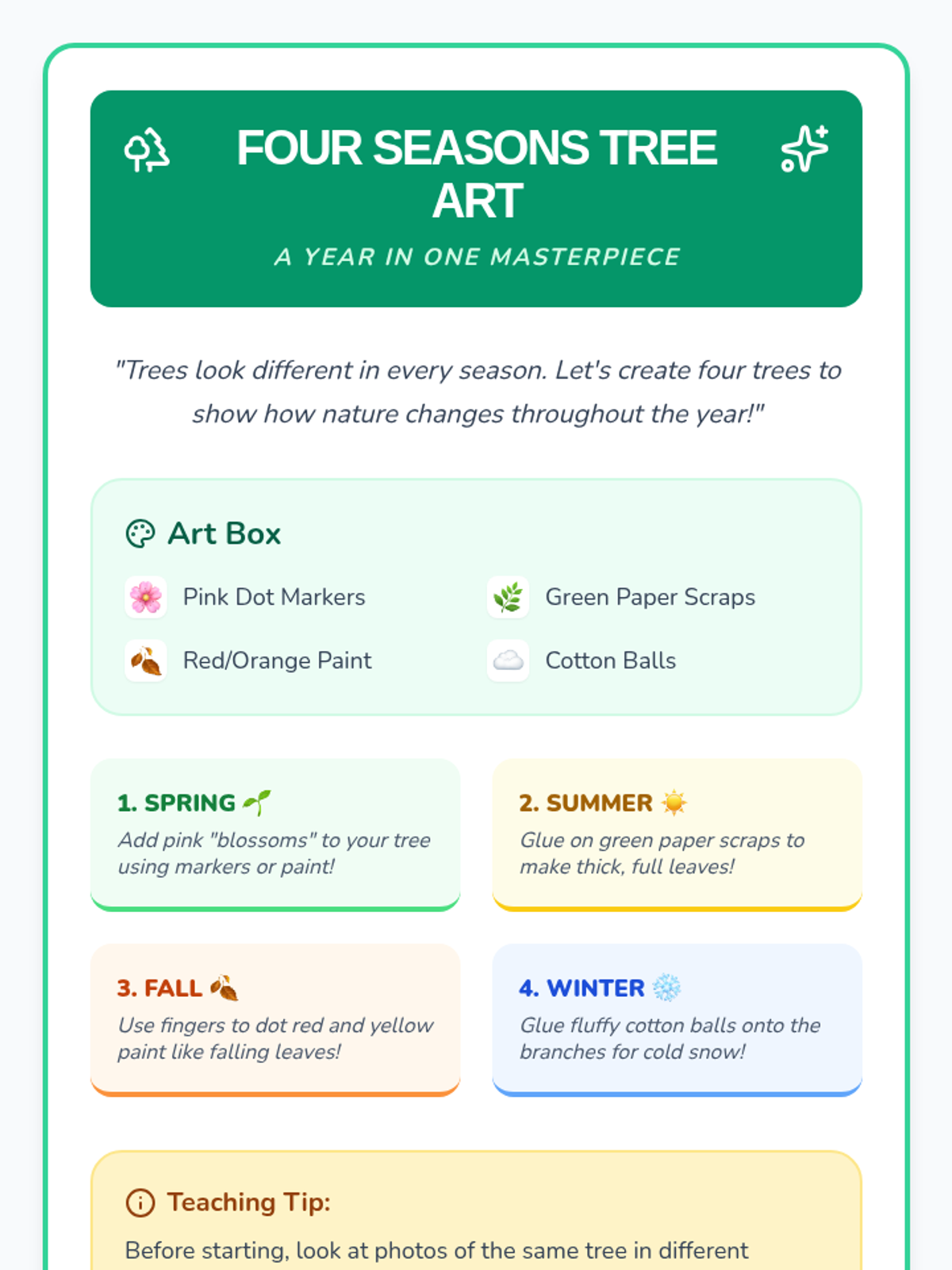
Synthesizes weather patterns into the cycle of the four seasons. Students will learn to distinguish Summer, Fall, Winter, and Spring through visual changes in nature and a sorting activity.
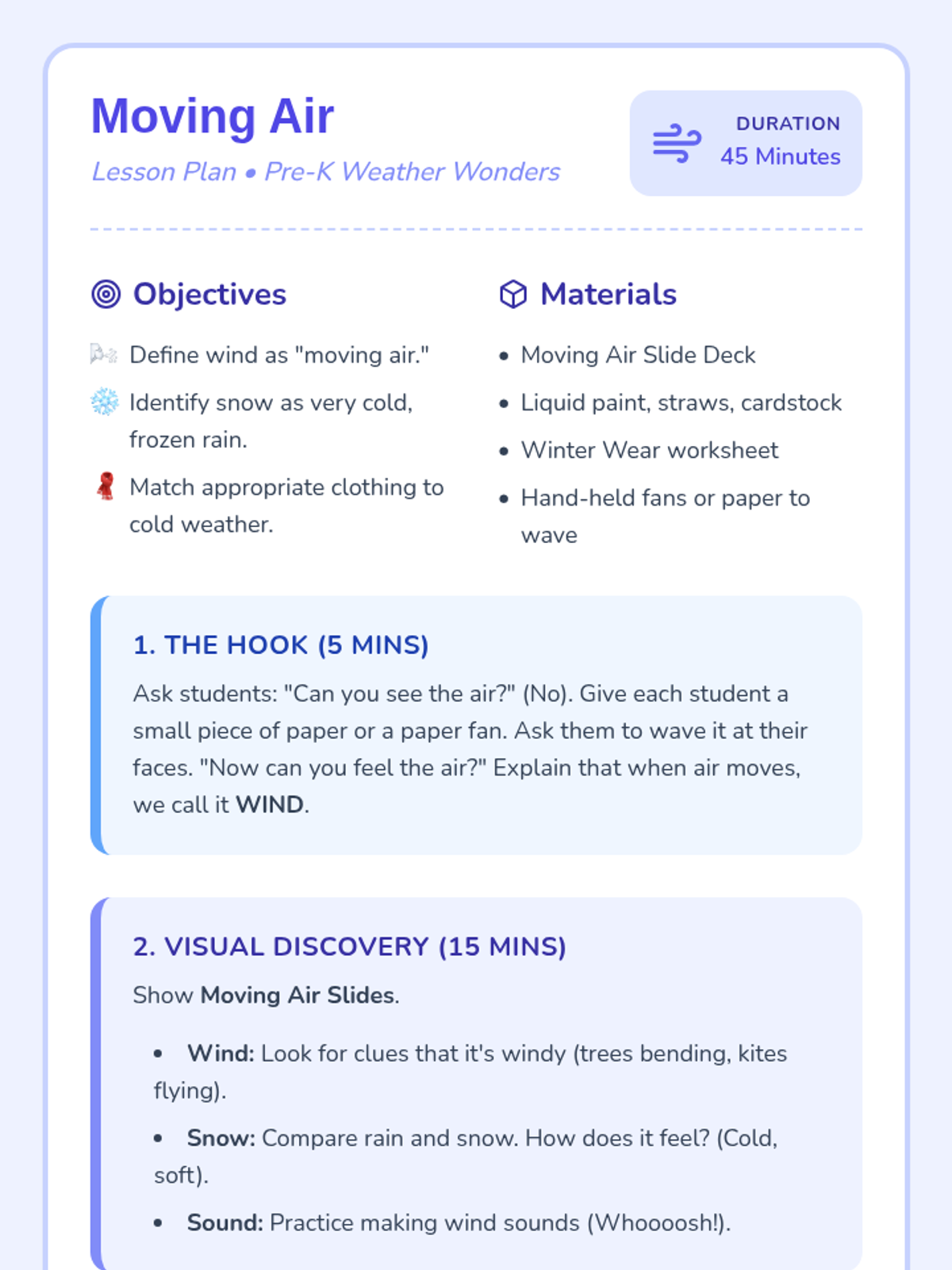
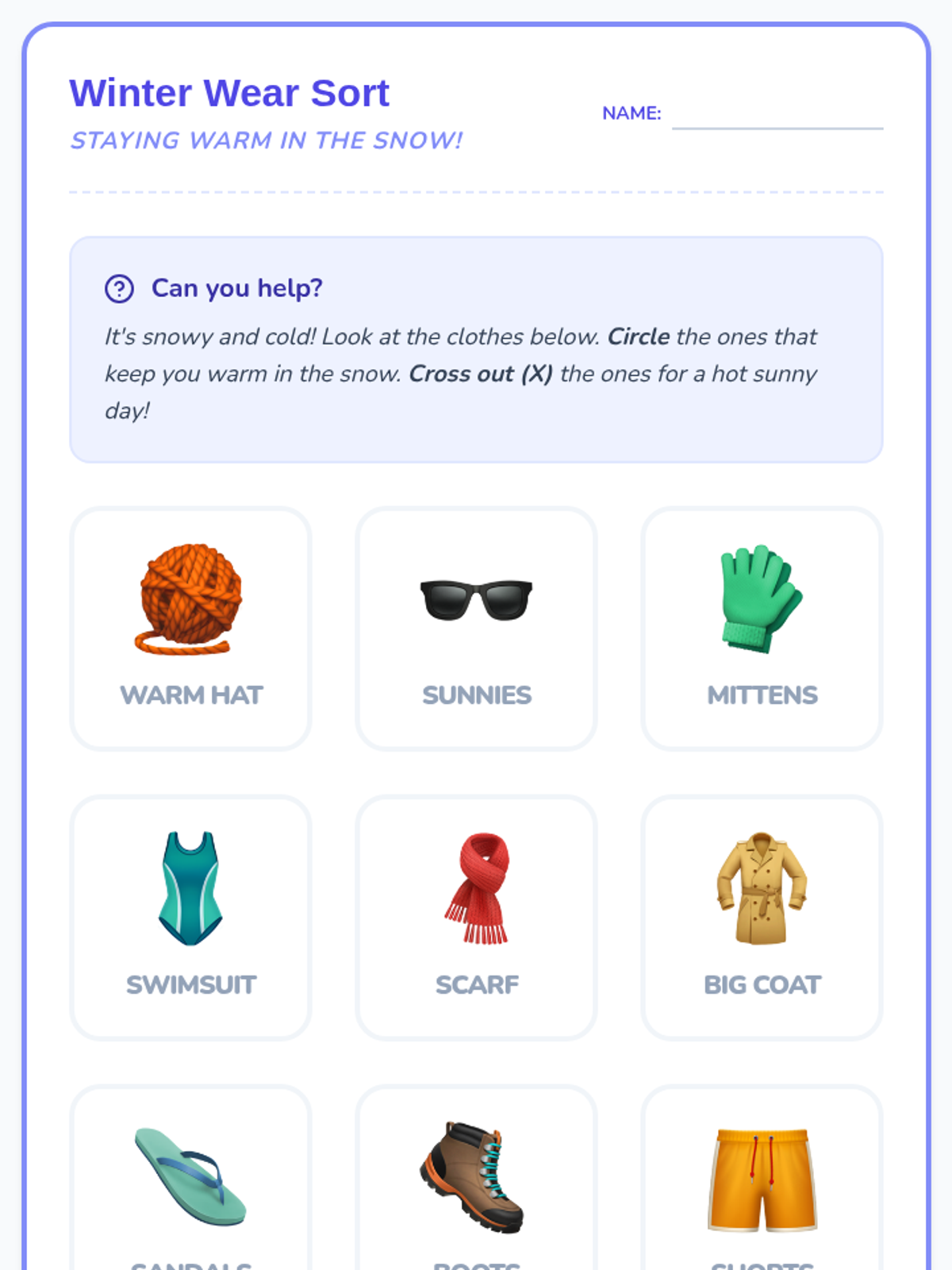
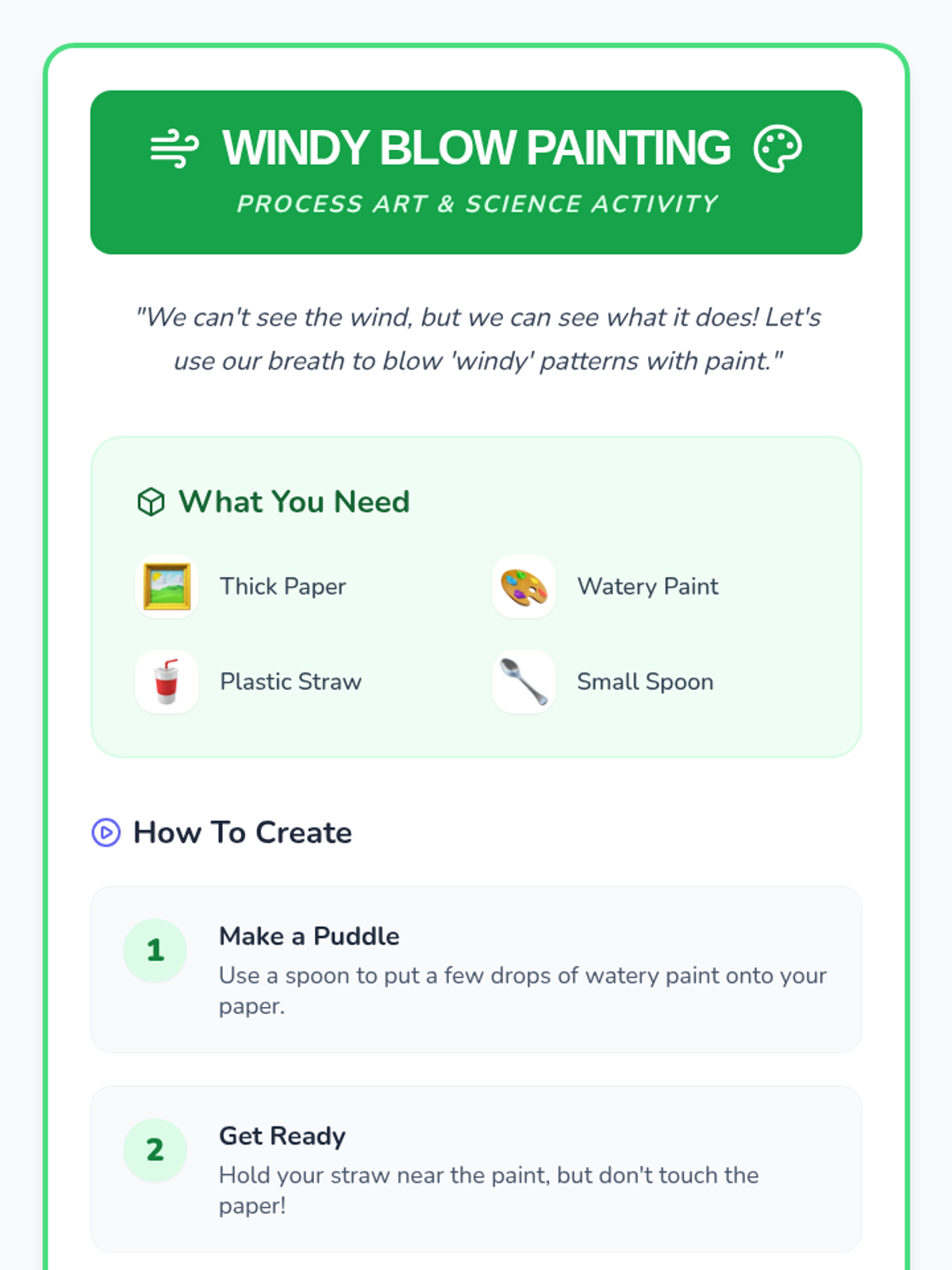
Explores how air moves (wind) and introduces cold weather patterns (snow) through creative 'blow painting' and seasonal clothing sorting.
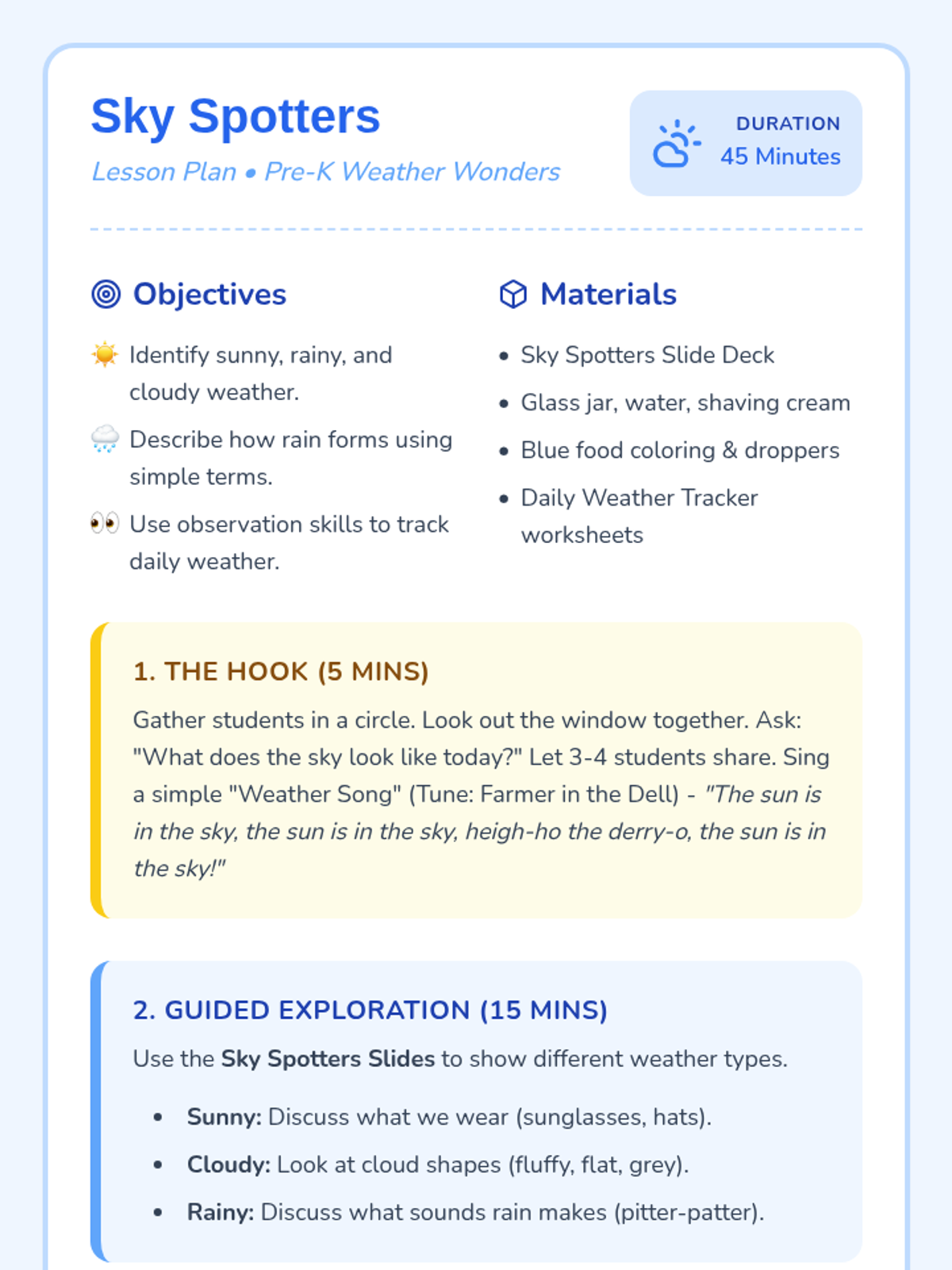
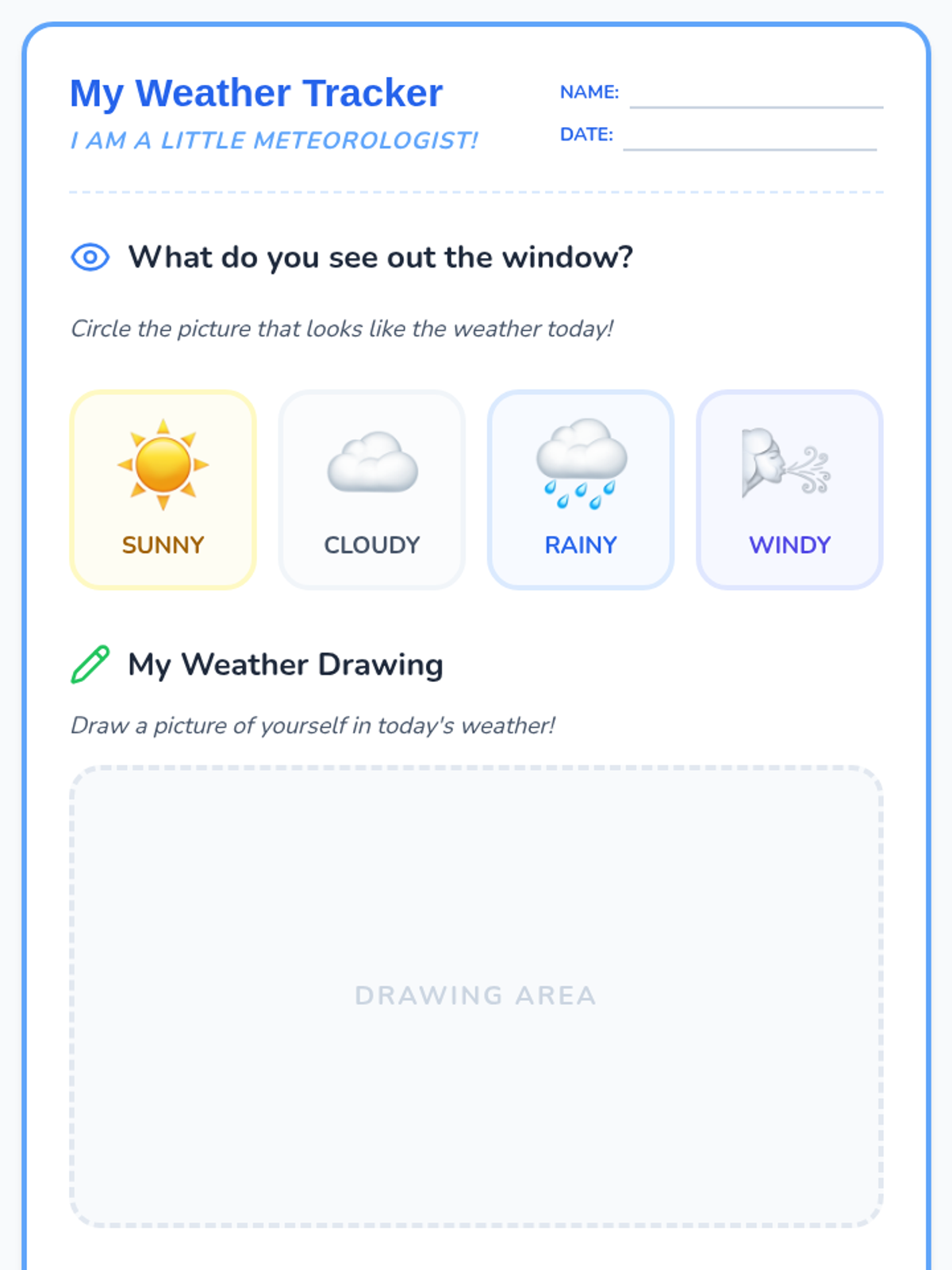
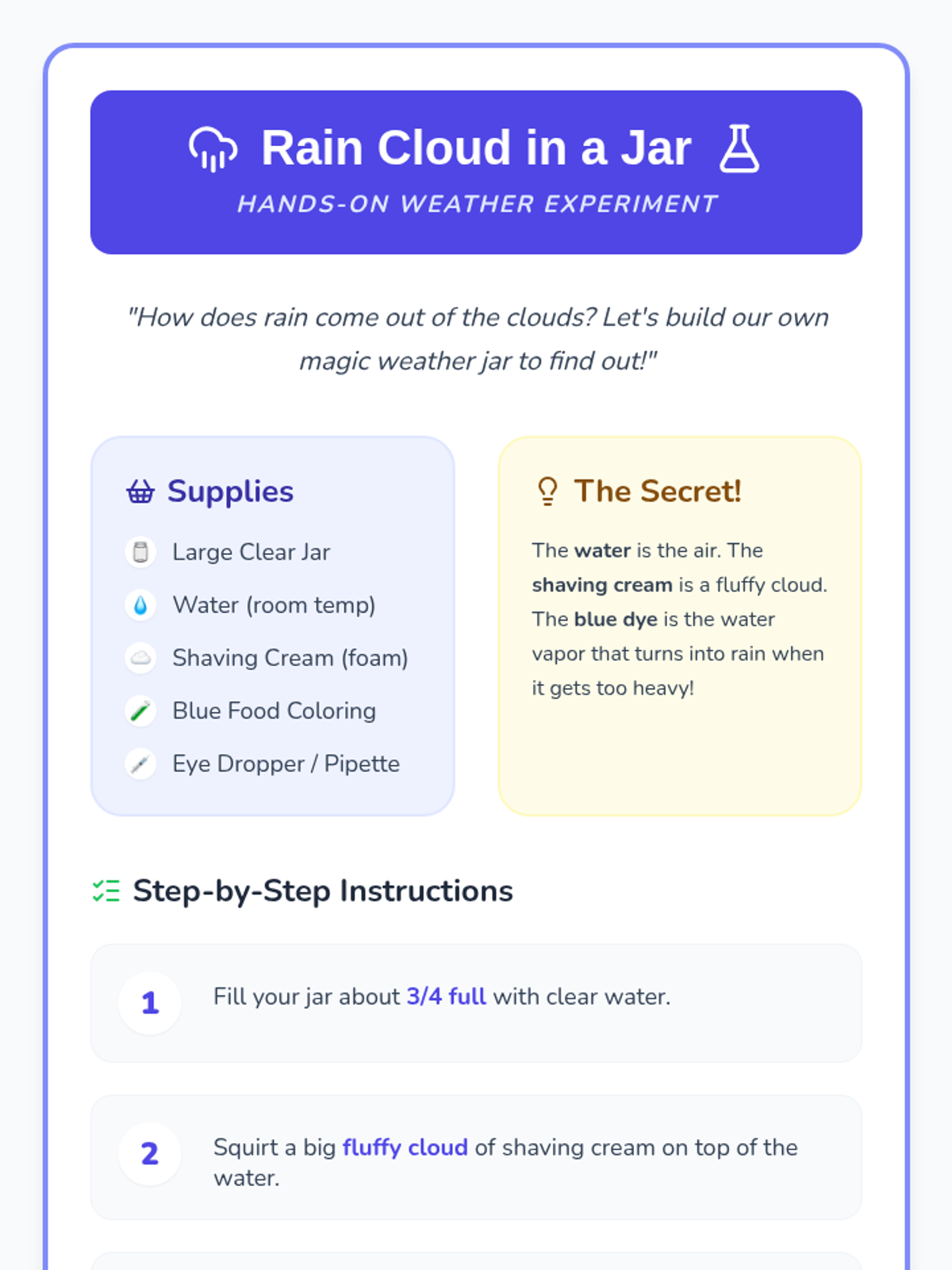
Introduces students to basic weather types (sunny, rainy, cloudy) through visual observation and a hands-on 'rain cloud in a jar' experiment.
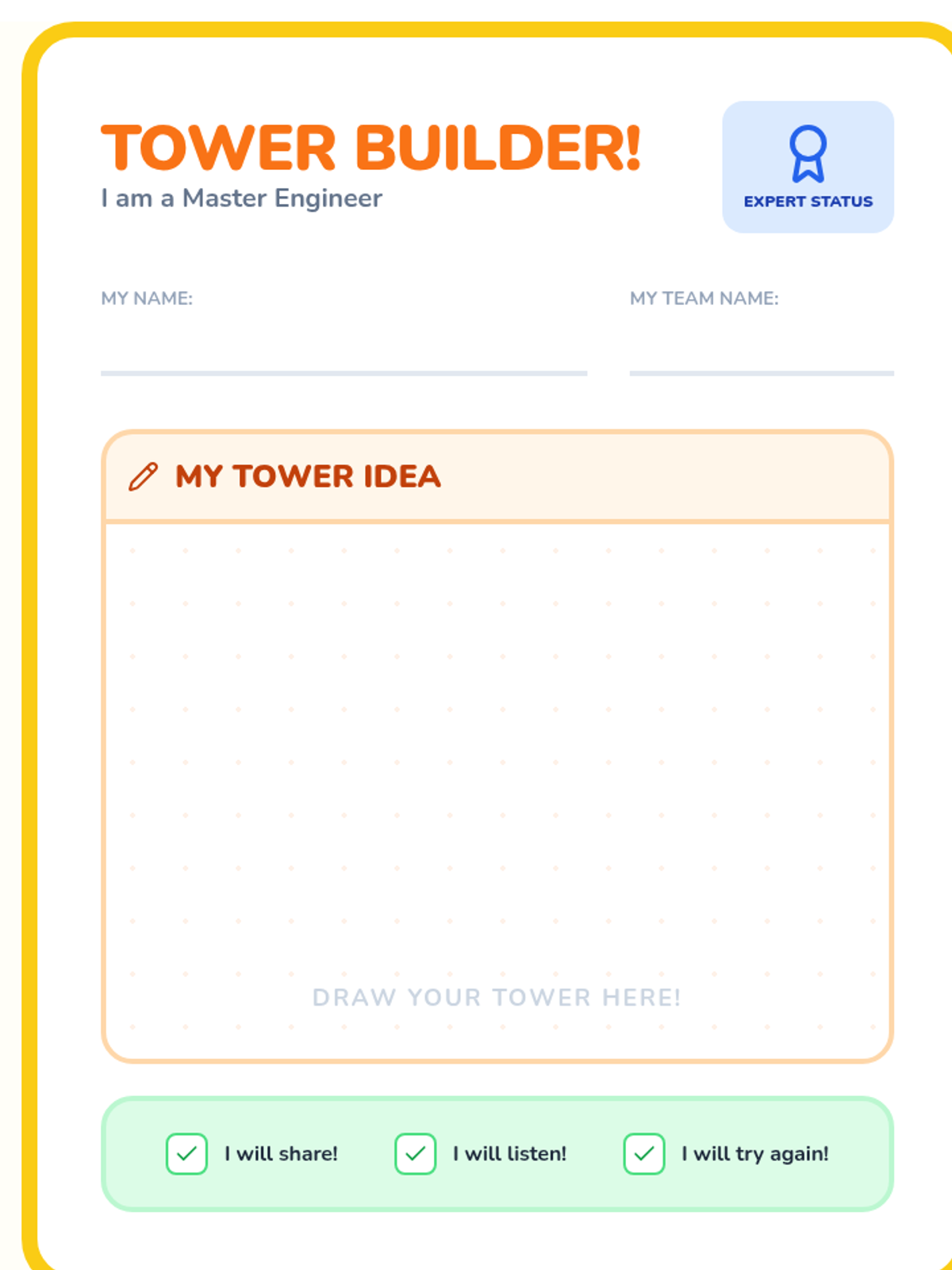
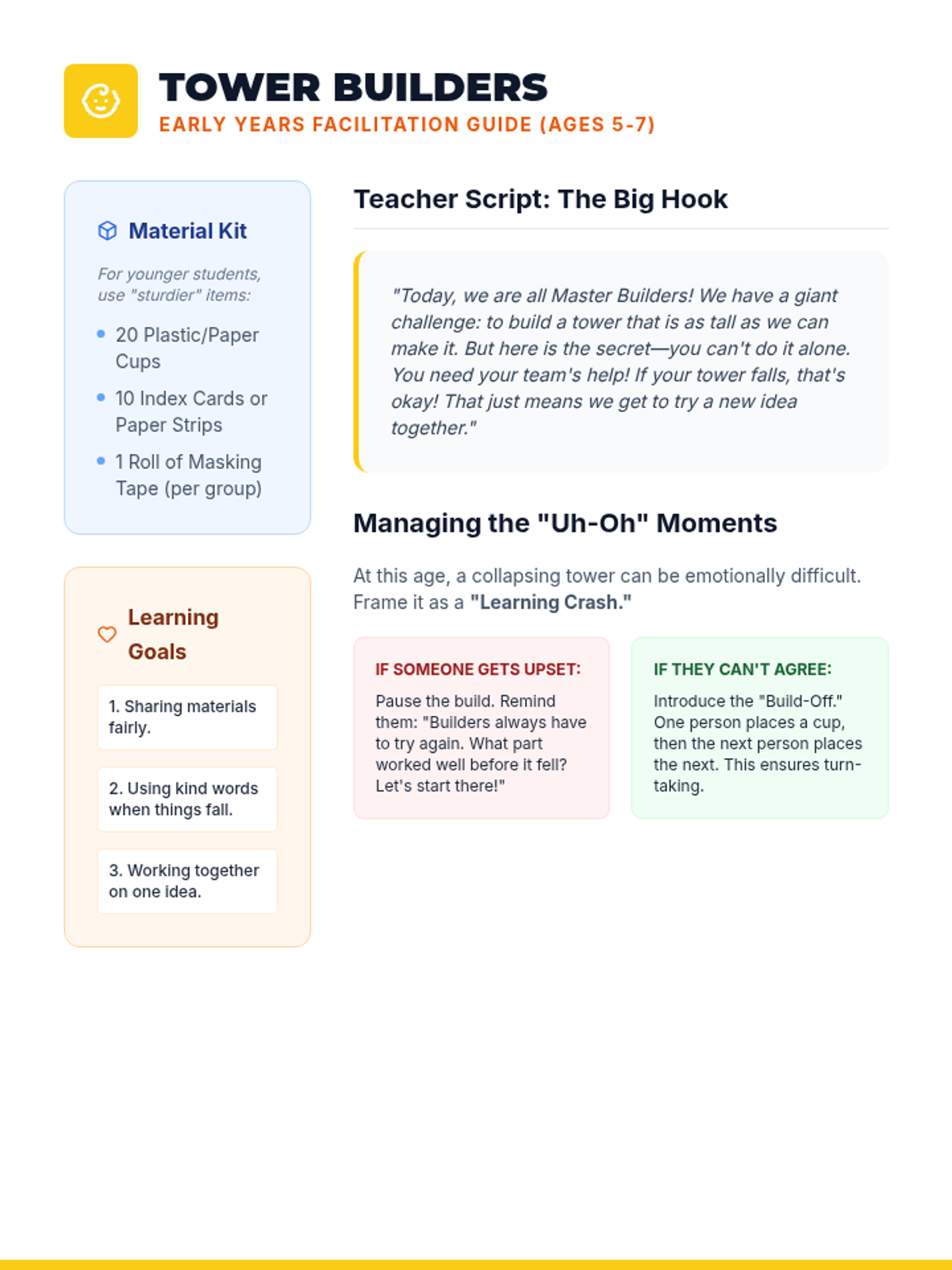
A fun, playful building challenge for early learners. Small teams work together to build the tallest tower they can using simple materials, focusing on sharing, taking turns, and trying again.
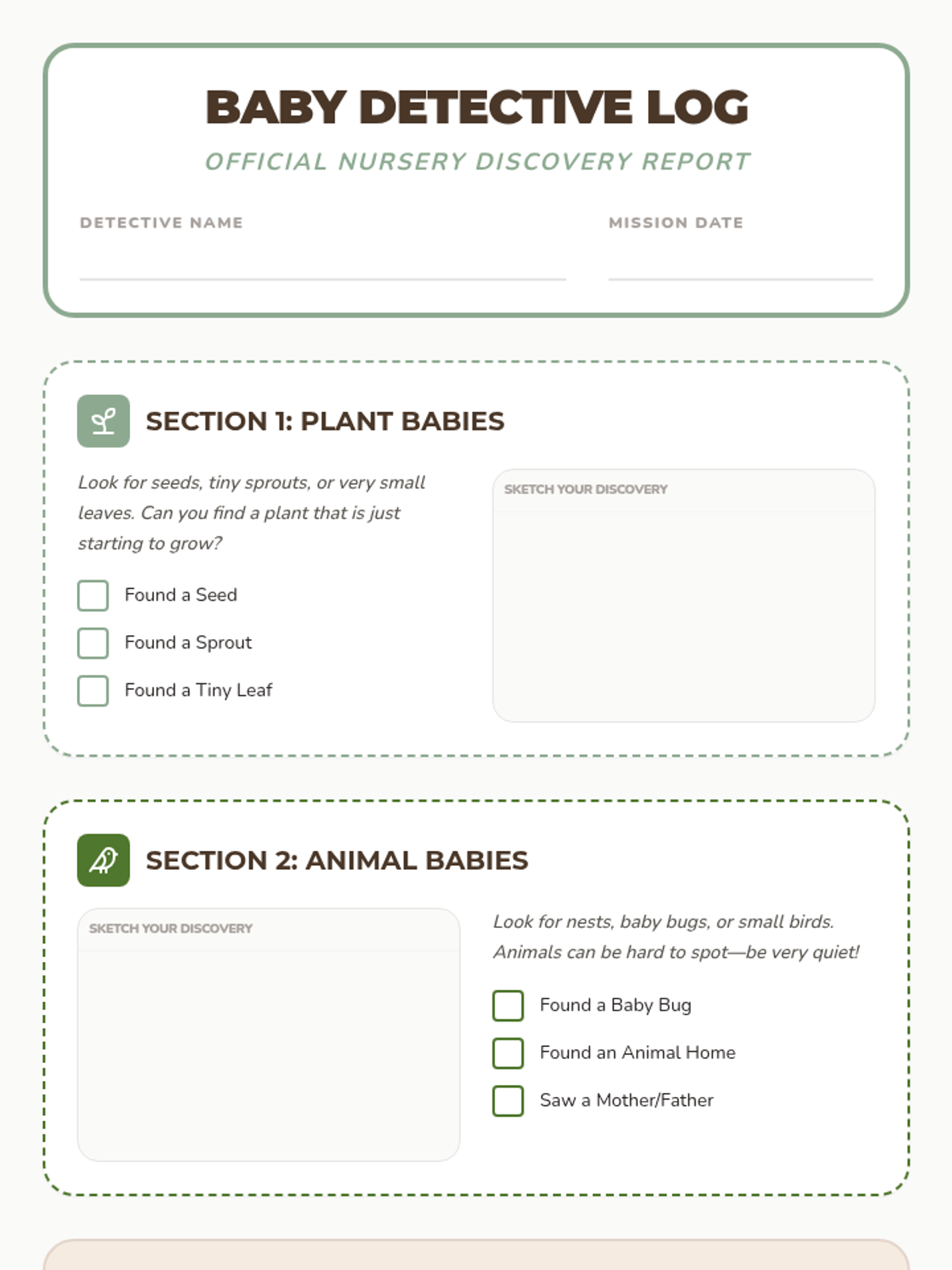
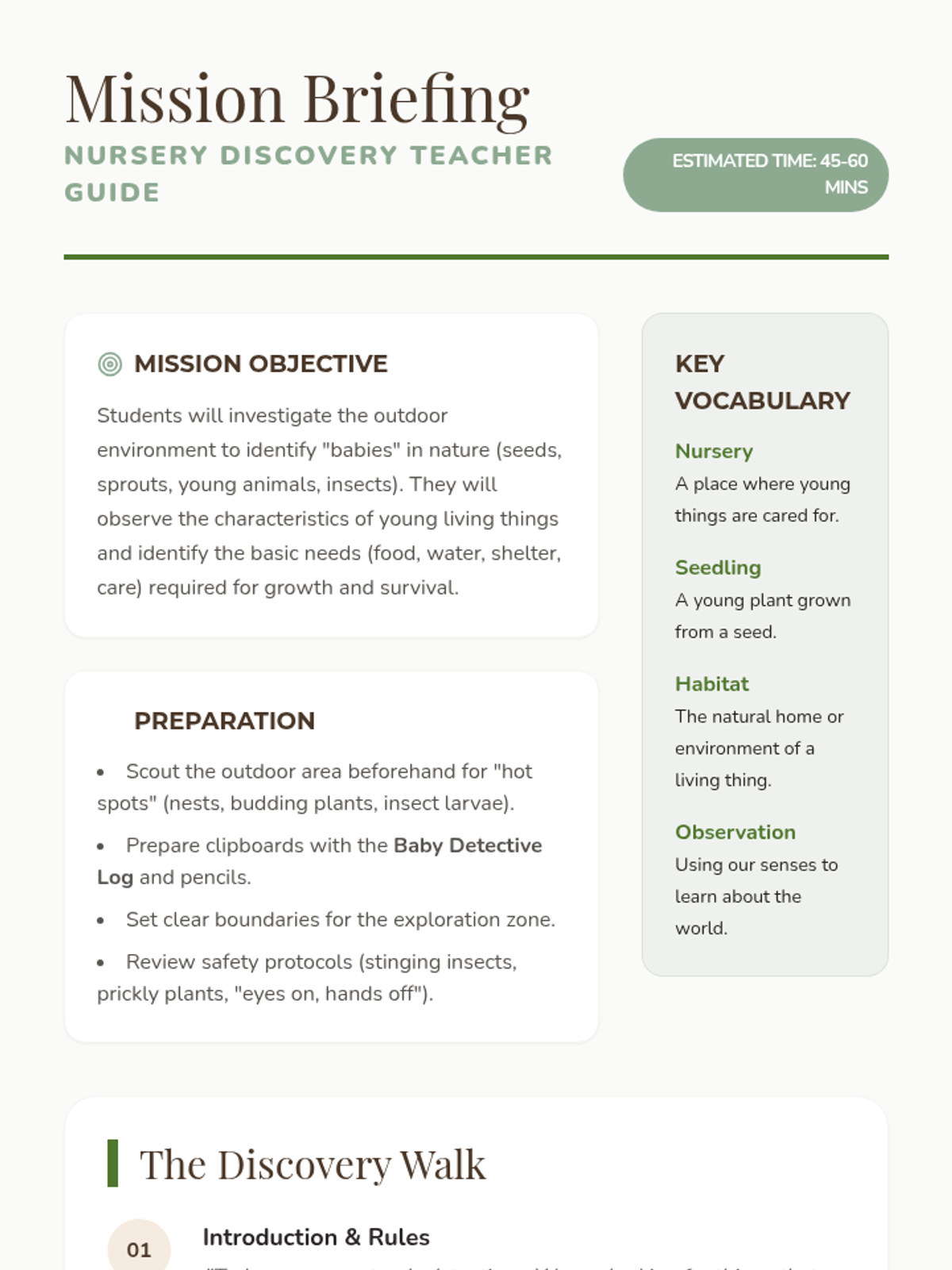
An outdoor exploration where students become 'Baby Detectives' to find and observe different types of babies in nature, including human, animal, and plant life. Students will learn that all living things start small and require care and specific environments to grow.
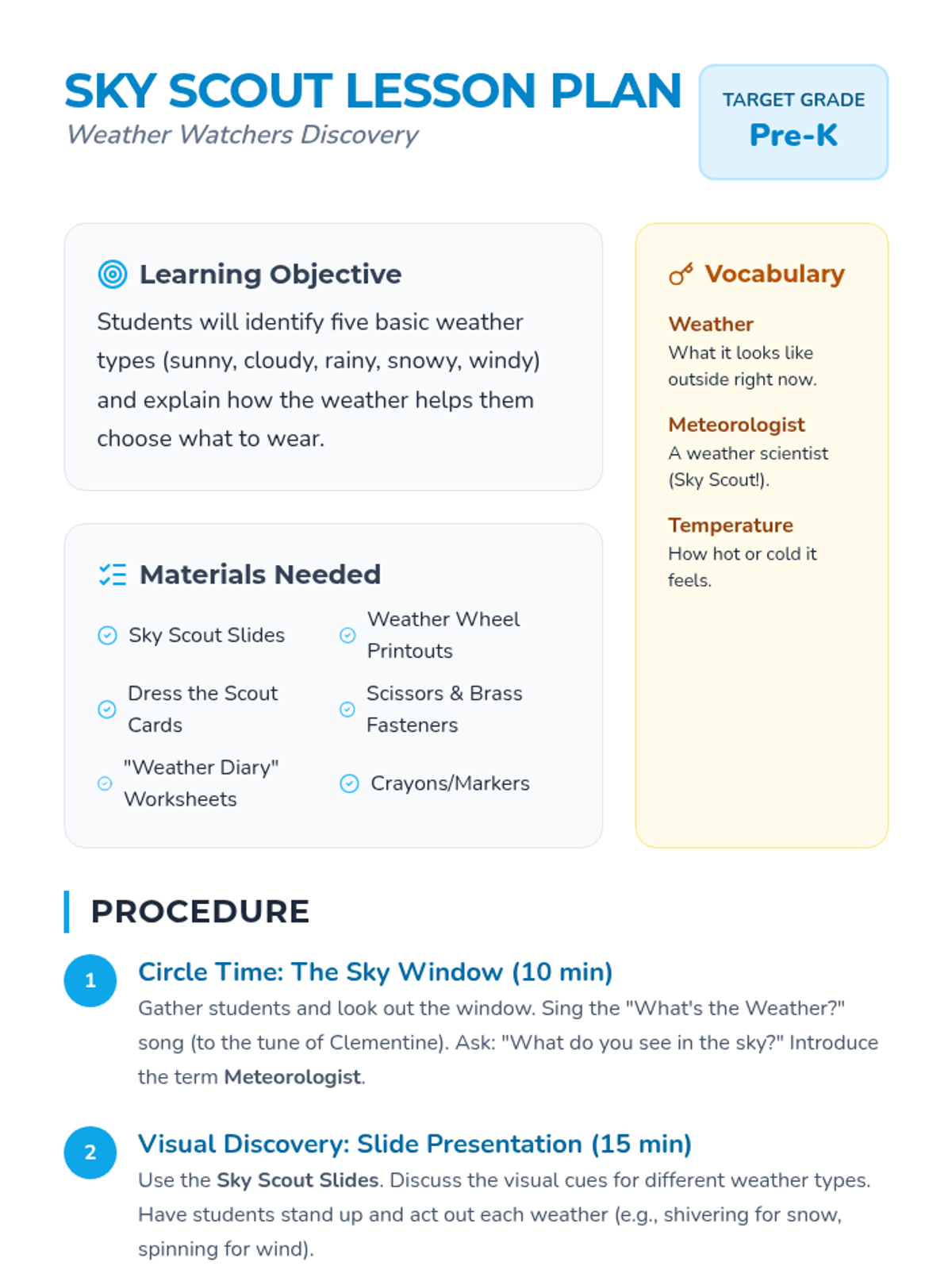
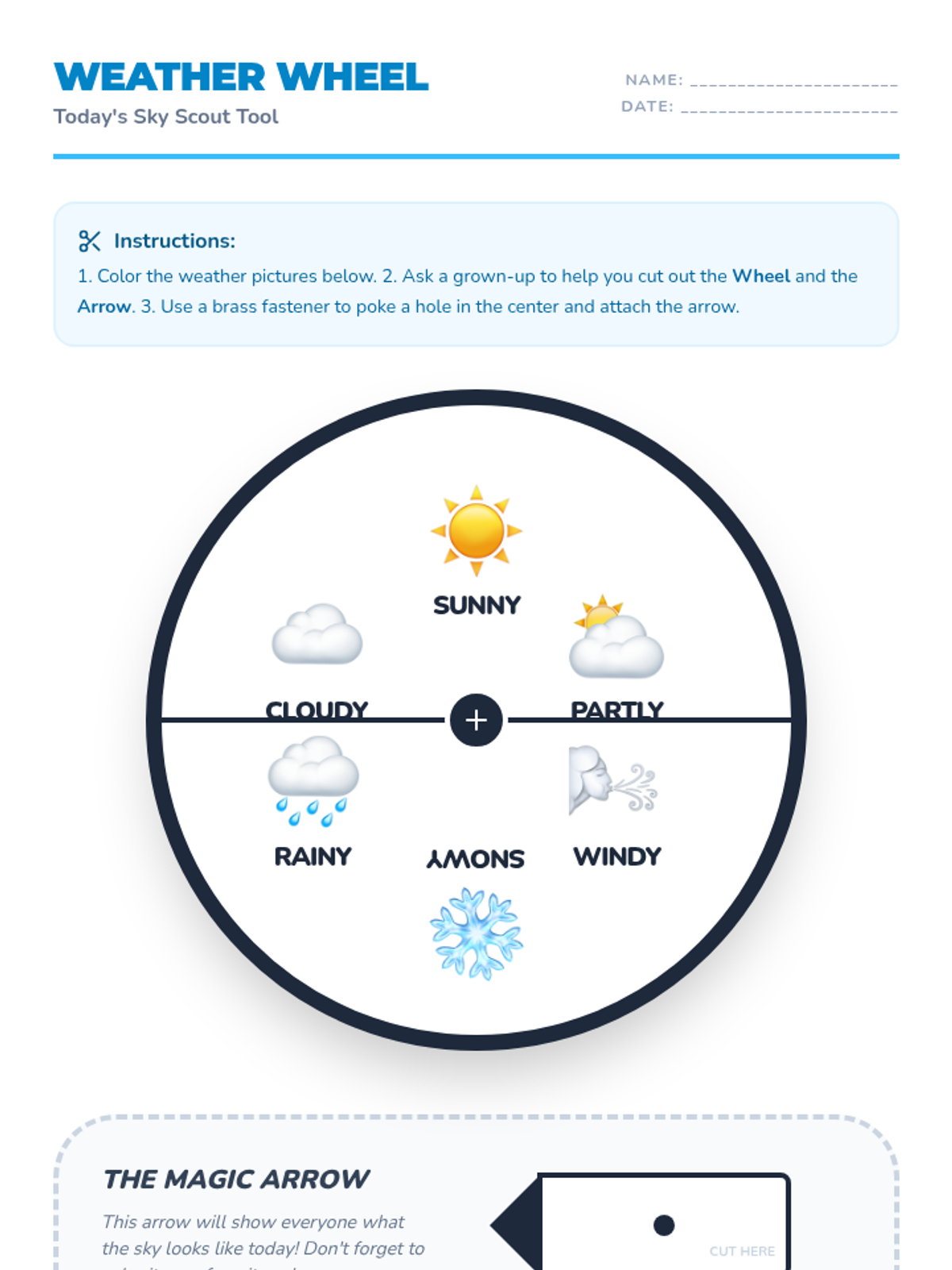
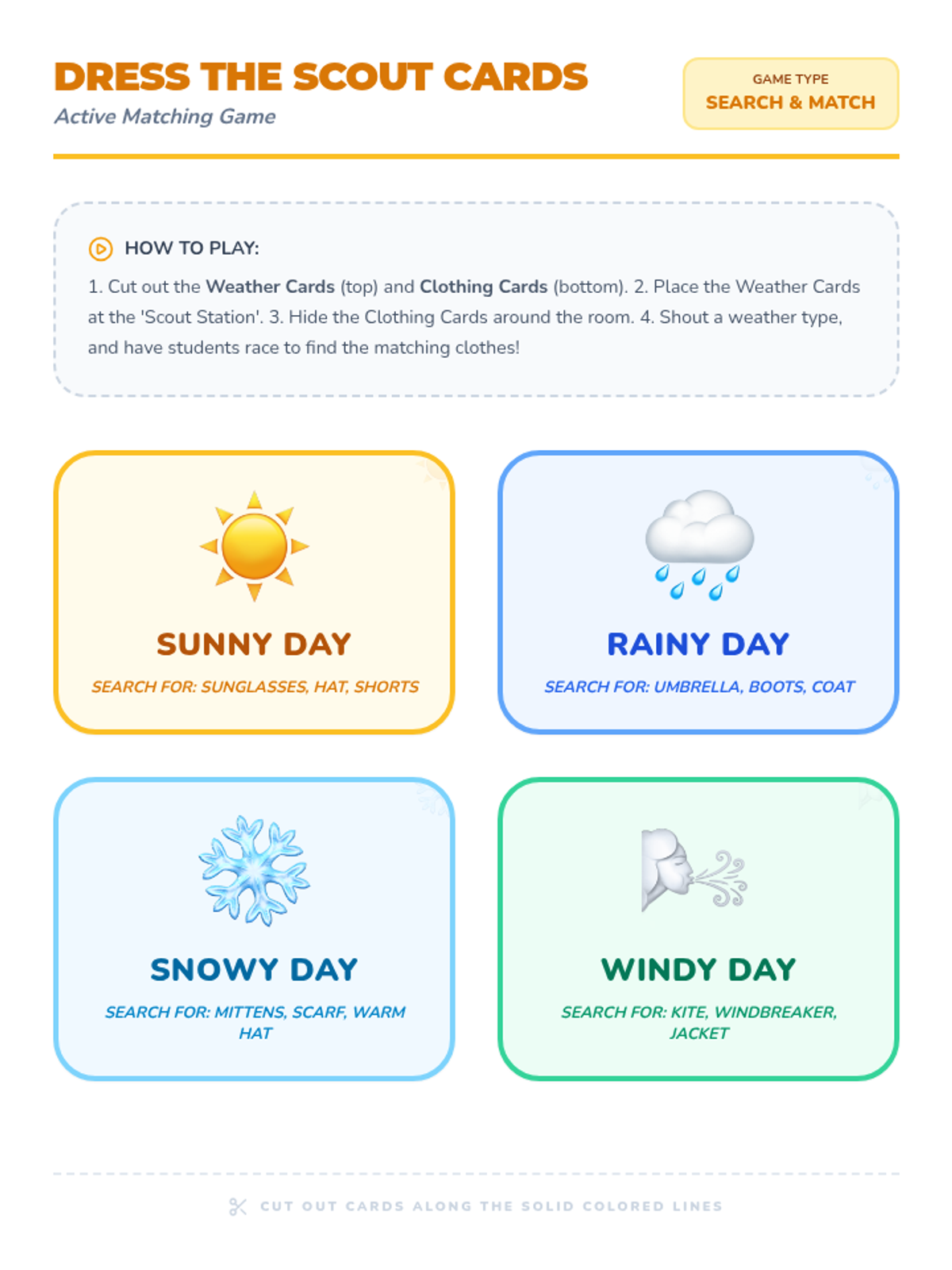
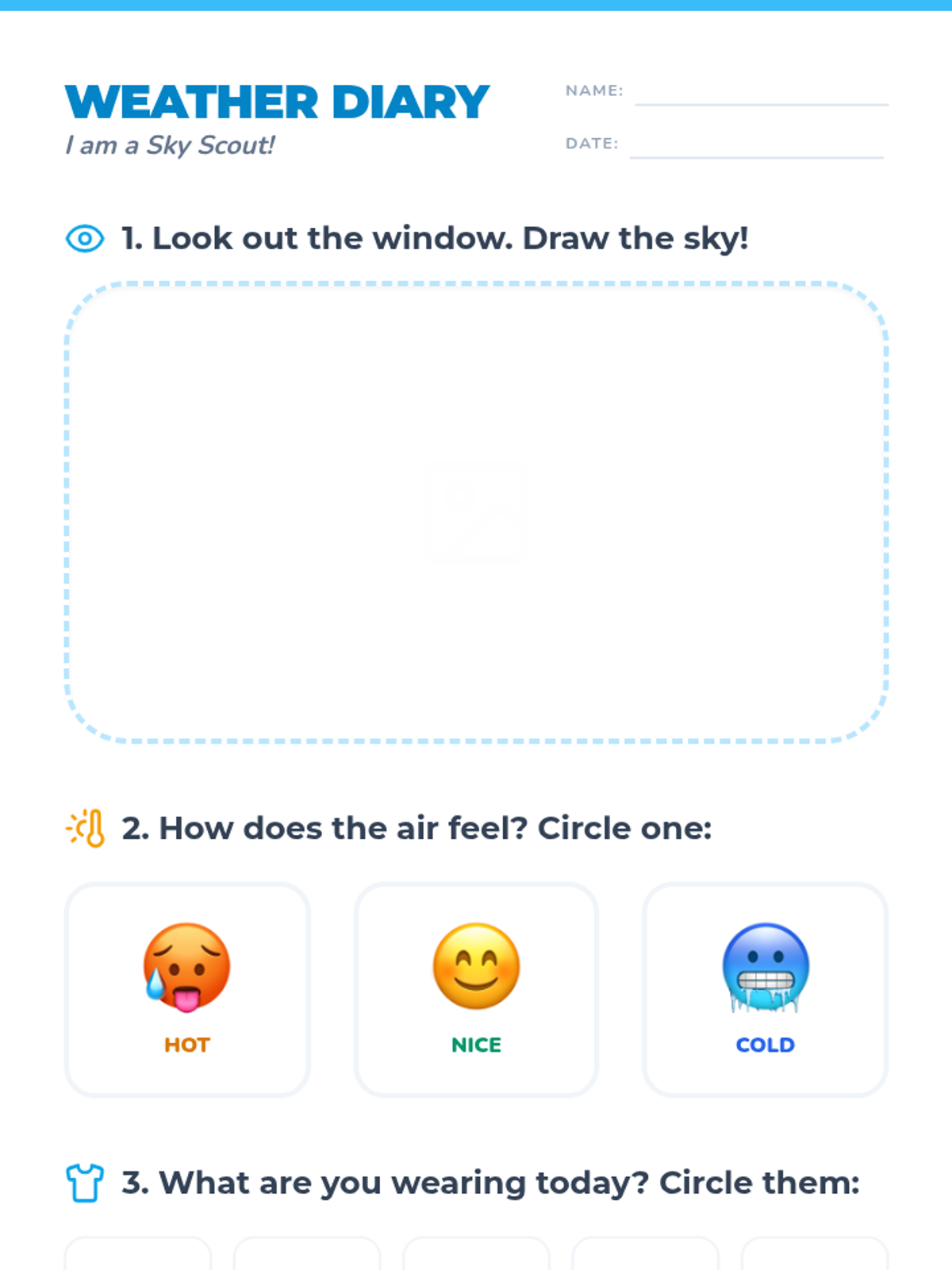
An introductory lesson for Pre-K students to observe, identify, and describe daily weather patterns and how they affect our lives.