An introductory science lesson comparing a live goldfish to a goldfish cracker to help students identify the characteristics of living and non-living things.
Students design and build a STEM leprechaun trap inspired by 'How to Catch a Leprechaun', focusing on multi-step directions and problem-solving through the engineering design process.
A vocabulary-focused lesson for 2nd graders to review key Earth science terms like volcano, erosion, flooding, and wetlands, using simple analogies and visual aids.
Students learn to distinguish between light sources and reflections and understand the basic path light takes from a source to the eye.
A hands-on exploration of cloud types and weather patterns for 2nd grade scientists. Students identify clouds through visual aids, create physical models, and track the sky in a daily weather journal.
A follow-up lesson focused on building fluency with mixed digraphs, providing cumulative review and a final progress assessment for sh, ch, th, wh, and ck.
A foundational lesson introducing and practicing common digraphs (sh, ch, th, wh, ck) through multi-sensory activities and differentiated reading tasks using a building-block theme.
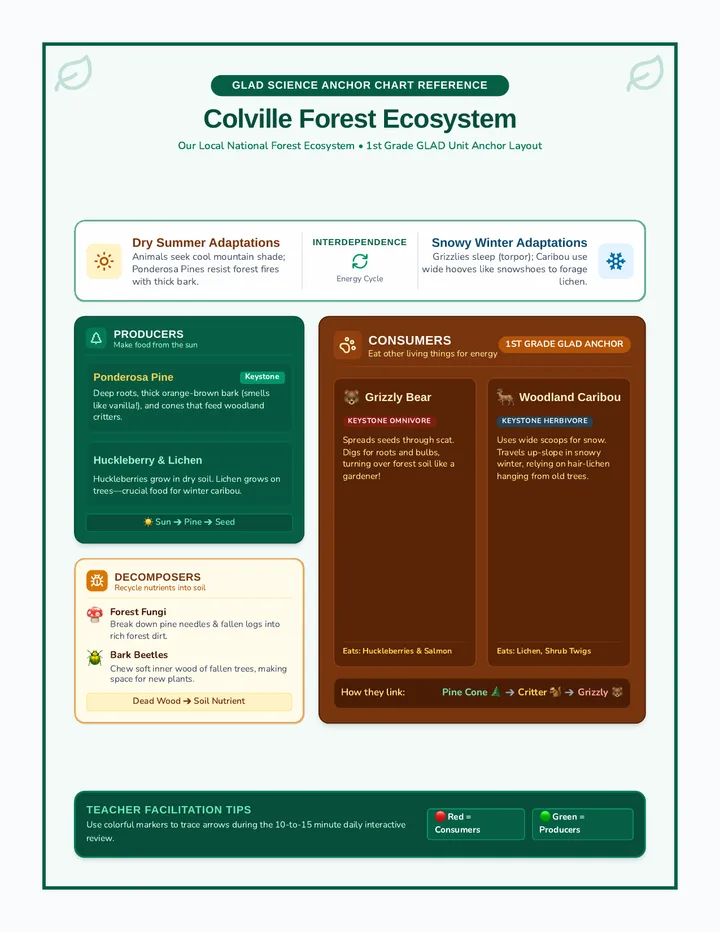
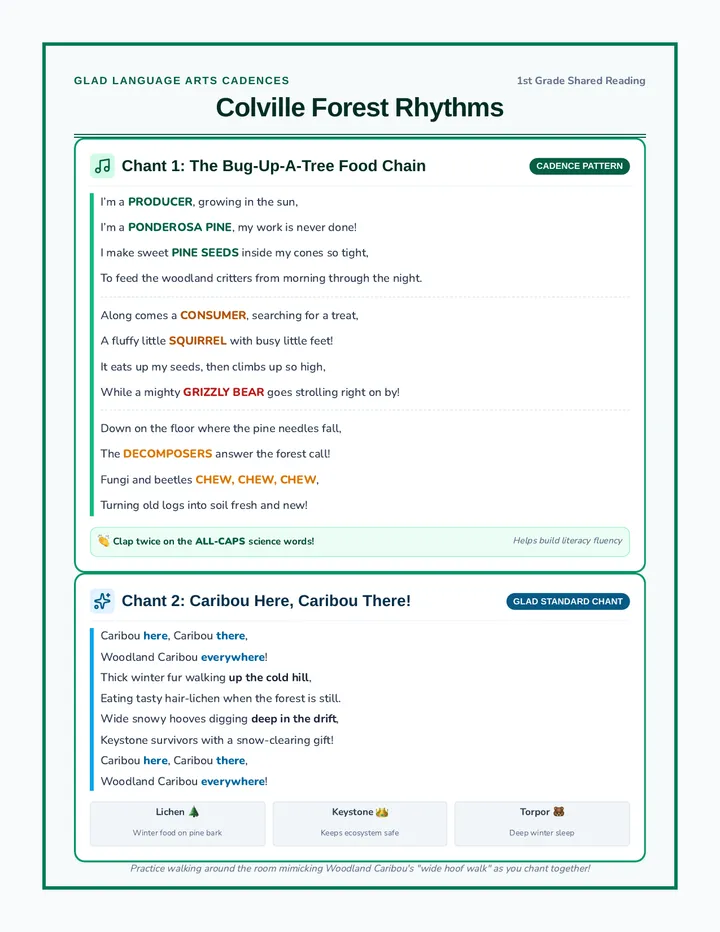
A lesson focused on identifying the roles of producers, consumers, and decomposers within an ecosystem through visual aids and hands-on sorting, designed for MCAS Alt portfolio evidence.
A foundational lesson on cybersecurity for elementary students, focusing on identifying personal information and learning the 'Ask First' rule for online sharing.
An introductory 30-minute lesson on the respiratory system for 3rd graders, focusing on the path of air and the mechanics of breathing using a hands-on lung model.
A gentle introduction to the respiratory system for young learners, focusing on the path air takes through our bodies using the metaphor of 'Air Explorers'. Students will learn about the nose, mouth, windpipe, and lungs through simple diagrams and interactive activities.
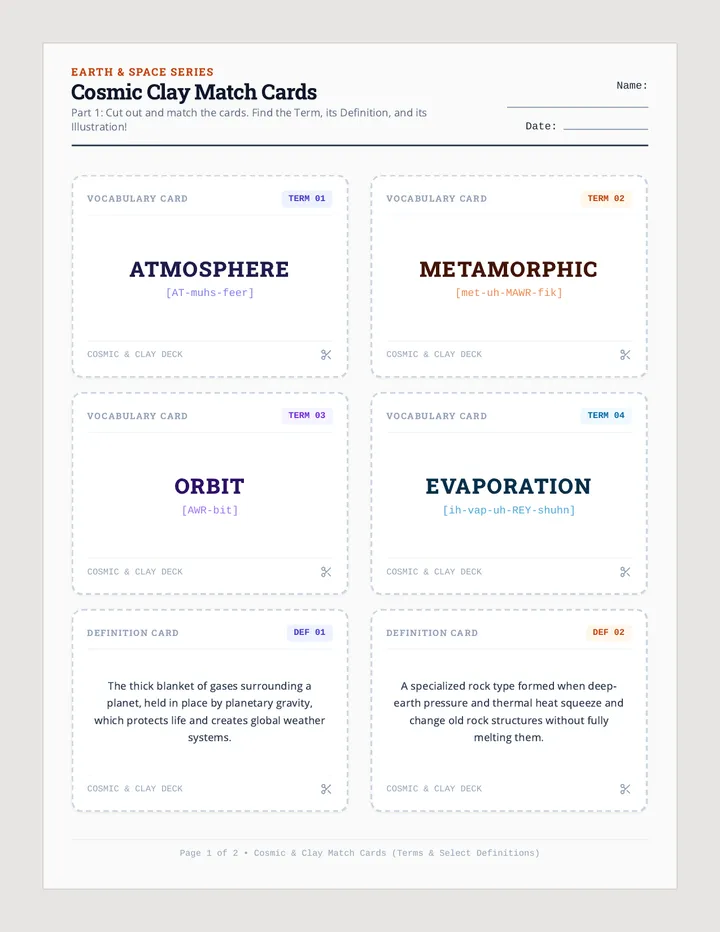
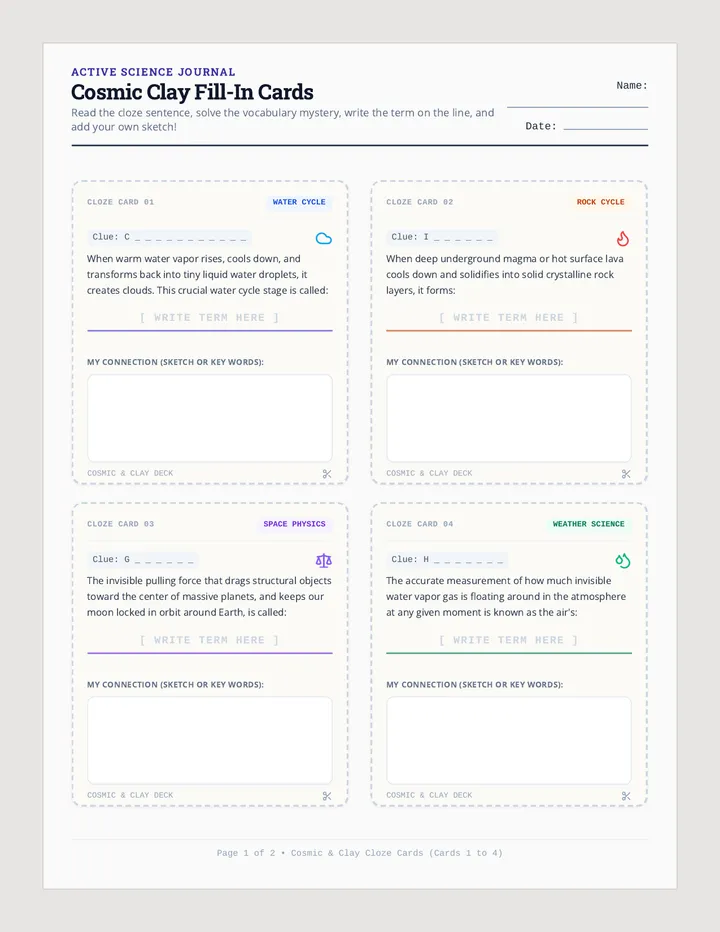
A comprehensive lesson on the water cycle, covering evaporation, condensation, precipitation, runoff, and absorption through visual aids and tiered practice.
A foundational phonics lesson focused on identifying and reading words with three-letter blends like scr, spl, str, shr, and thr. Students practice decoding these complex sounds through visual matching and sentence context.
An introductory lesson exploring the origins of rocks and the processes that form them, setting the stage for understanding erosion and Earth's changing landscape.
A nature-themed exploration of the letter N, focusing on lowercase and uppercase identification, the /n/ sound, and nature-based vocabulary like nests, nuts, and newts.
An interactive science lesson for K-3 students exploring the symbiotic relationship between bees and flowering plants through a hands-on pollination simulation.
A hands-on botany lesson where 1st graders explore the plant life cycle through scientific observation, seed comparison, and a classroom greenhouse experiment. Students act as 'Junior Botanists' to track growth from seed to sprout.
A whimsical introduction to computer science loops through the magic of storytelling and nursery rhymes. Kindergarten and 1st-grade students learn to spot repeating patterns in their favorite songs and 'code' them using loop symbols, bridging the gap between literacy and computational thinking.
A hands-on exploration for 2nd and 3rd graders where they identify computer components by comparing them to human body parts. Students learn how hardware supports software through a 'computer dissection' metaphor.
A comprehensive set of writing resources for 2nd grade EL Education Module 3, focusing on the fascinating world of pollinators and their role in nature. Includes teacher guides, student writing templates, and instructional slides.
A science and language arts integration lesson where 2nd grade ESL students learn the water cycle stages while practicing complex sentence structures using 'because' and 'when'.
Students learn how to care for a corn plant and finish the unit by planting their own seeds to take home.
An exploration of how heat transforms corn into popcorn, followed by a classroom popping session.