A Spiderman-themed lesson focusing on personal safety, teaching kids to identify 'tricky people' and find 'safe adults' in their community.
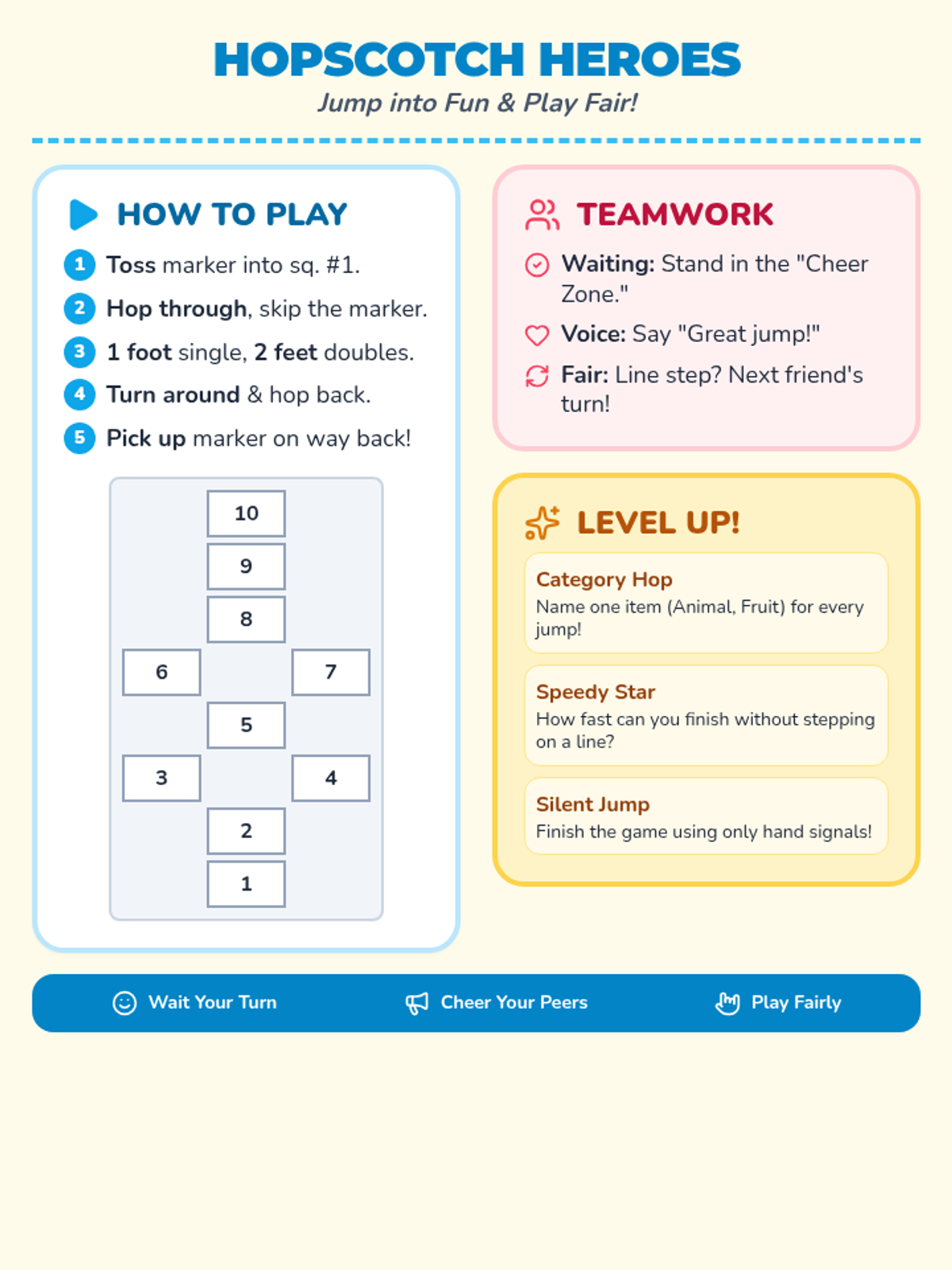
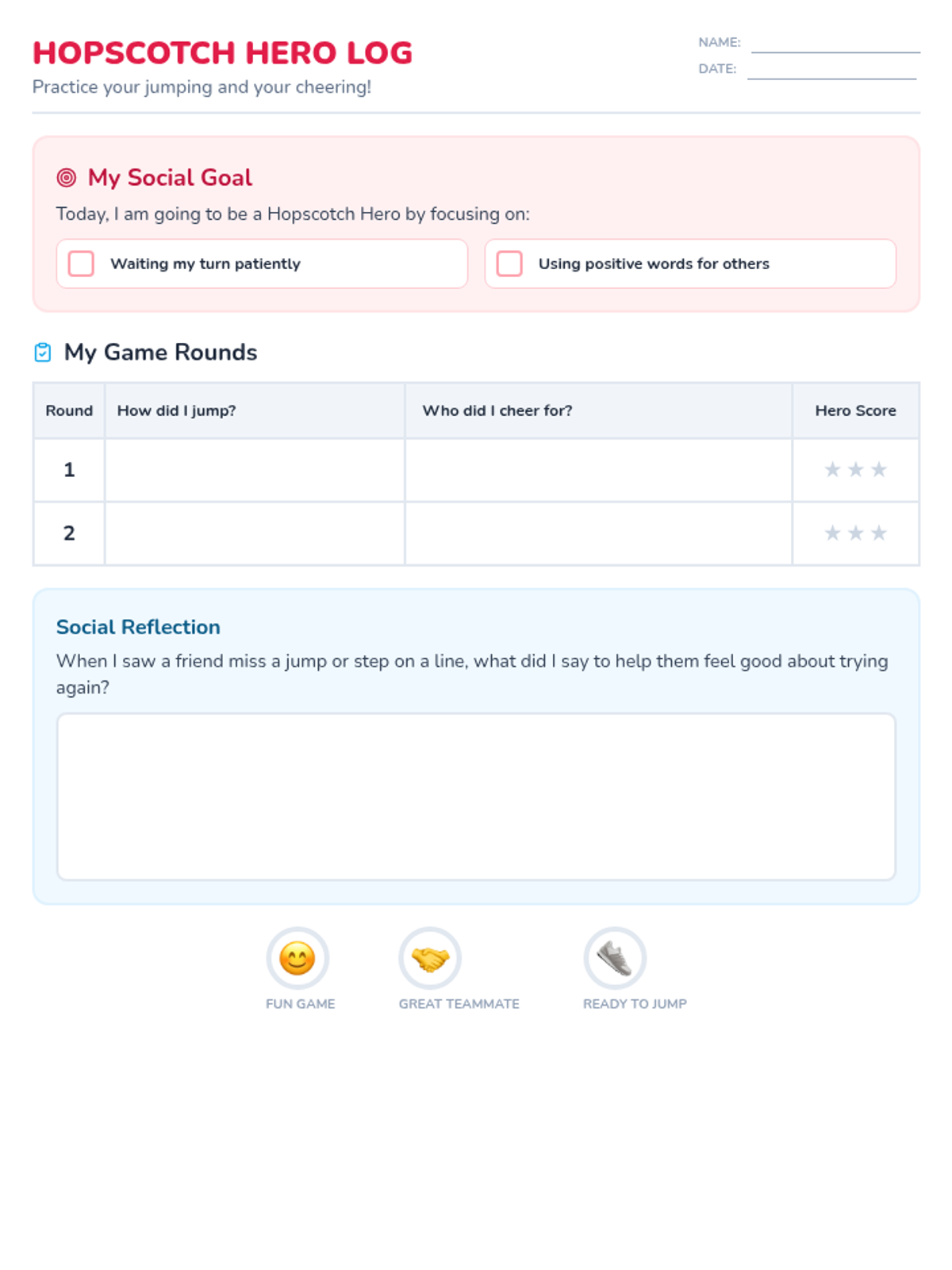
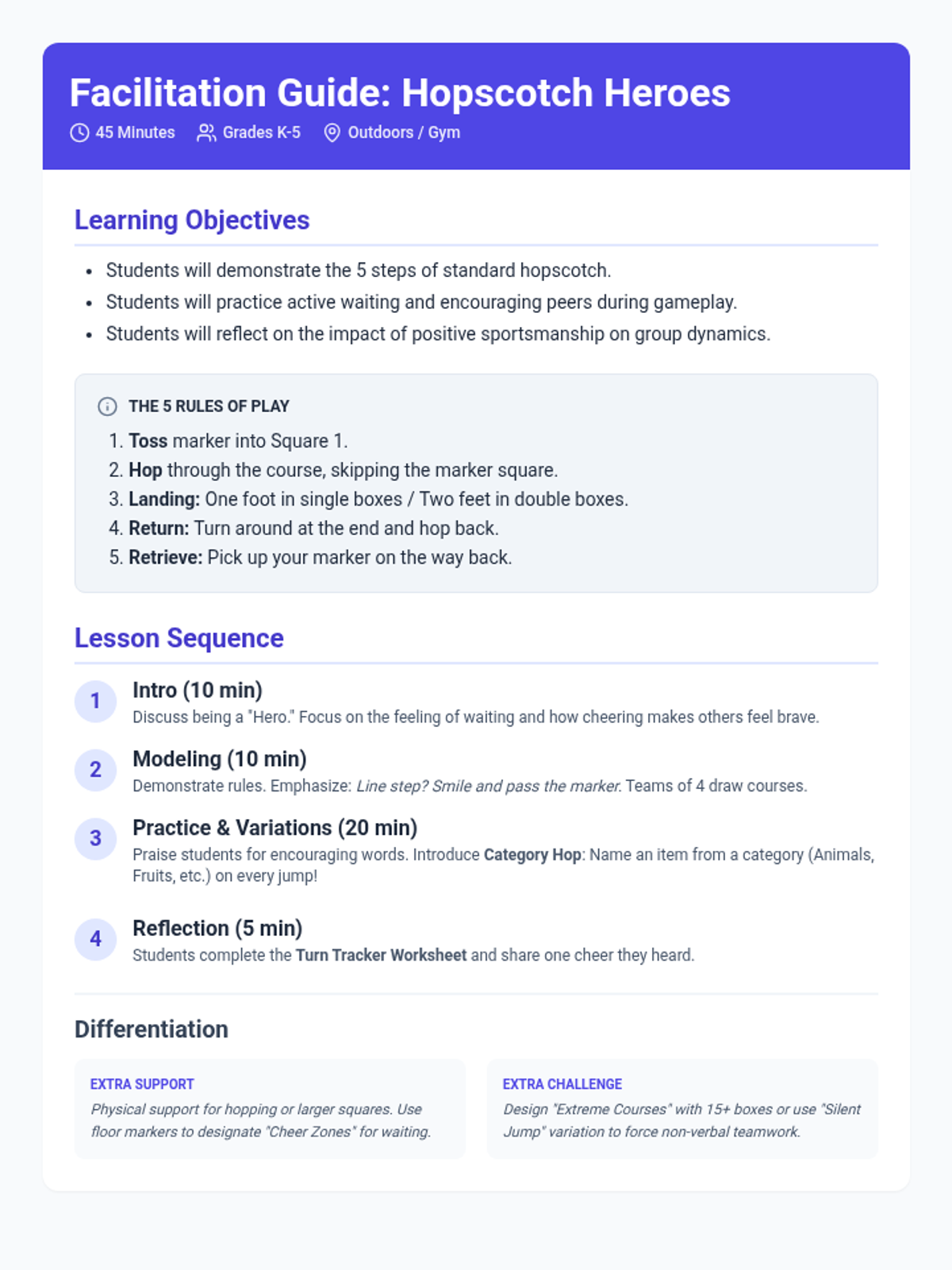
A lesson focused on teaching students how to play hopscotch while practicing essential social turn-taking skills, patience, and positive encouragement.
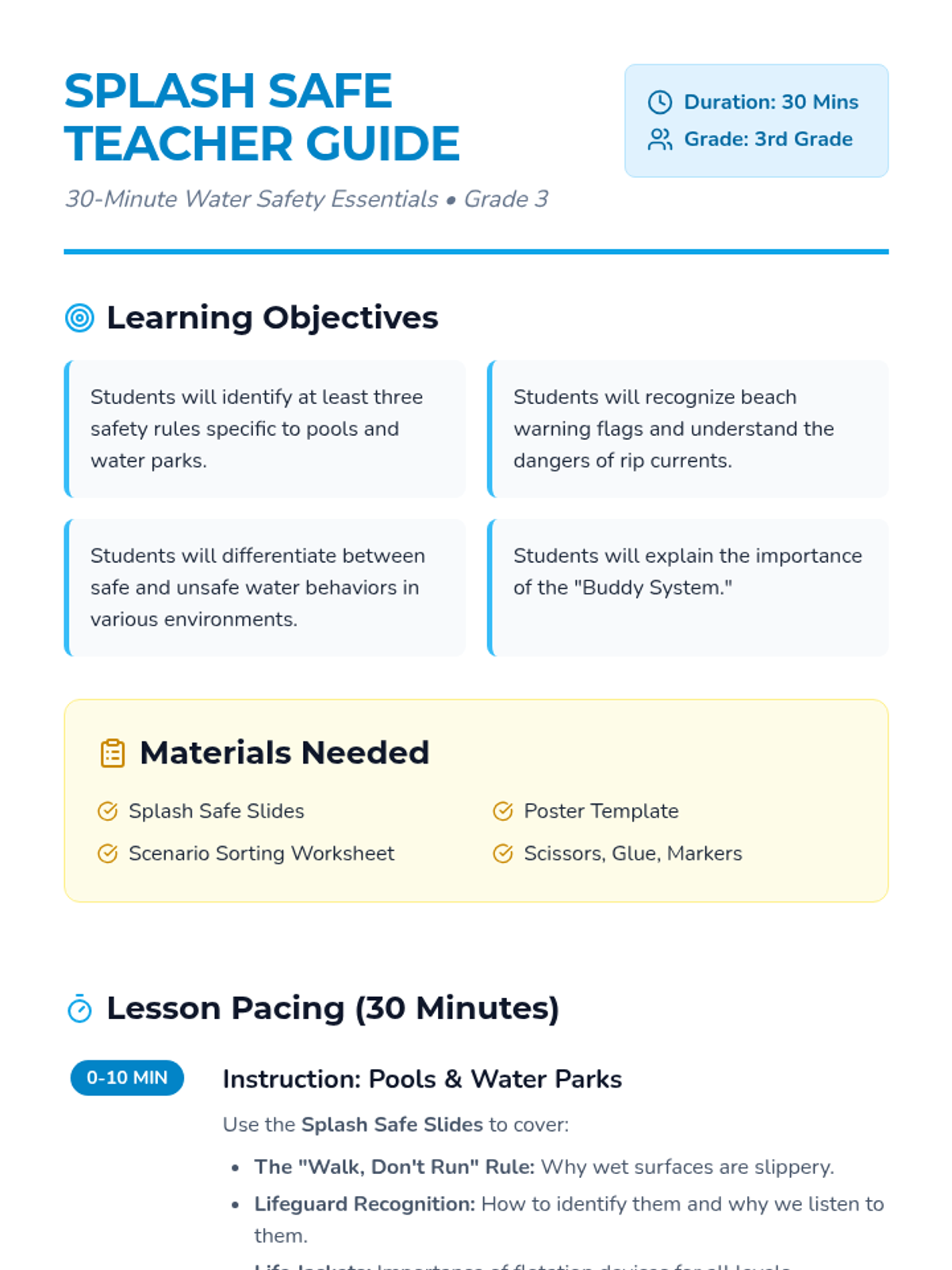
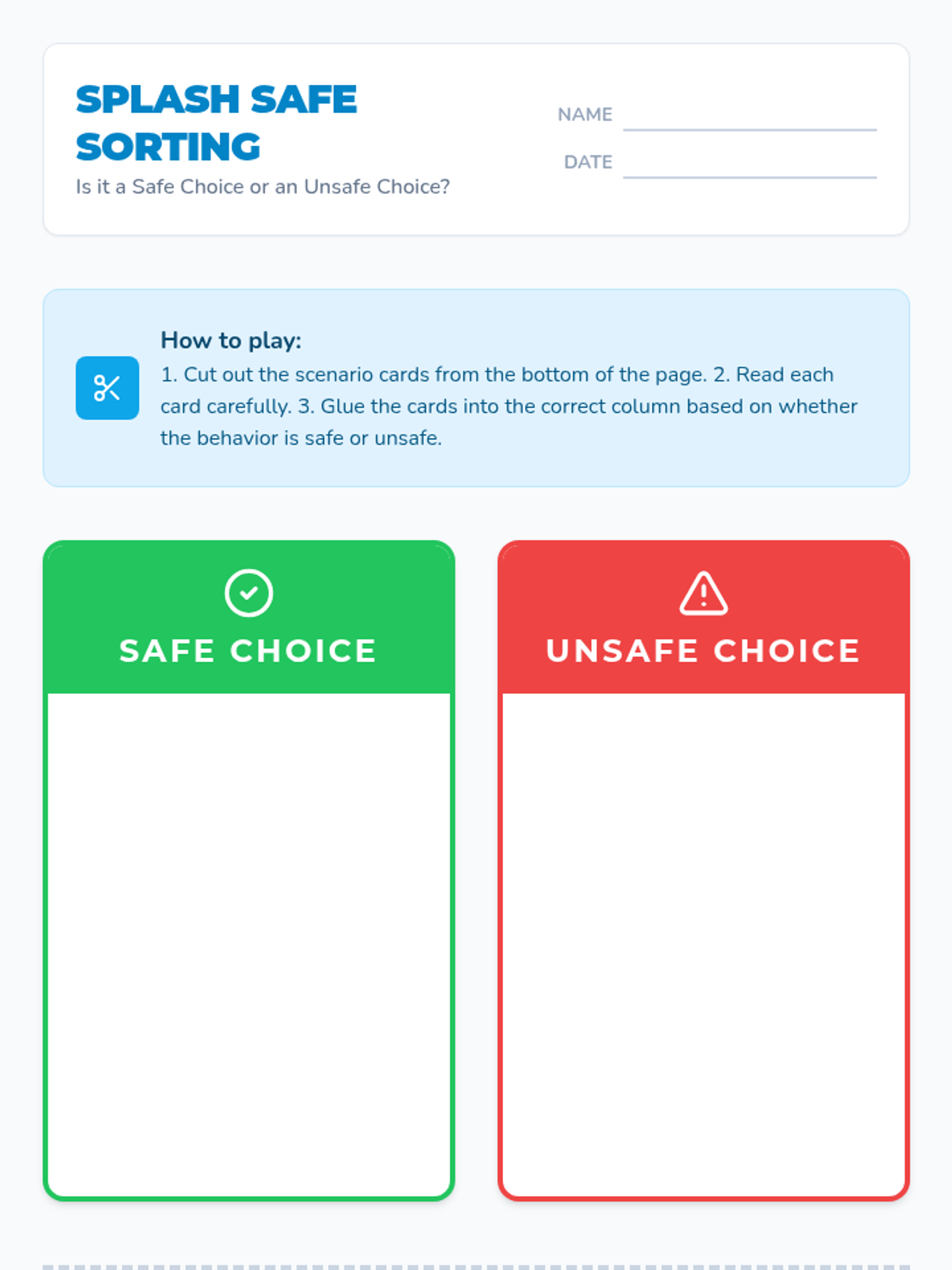
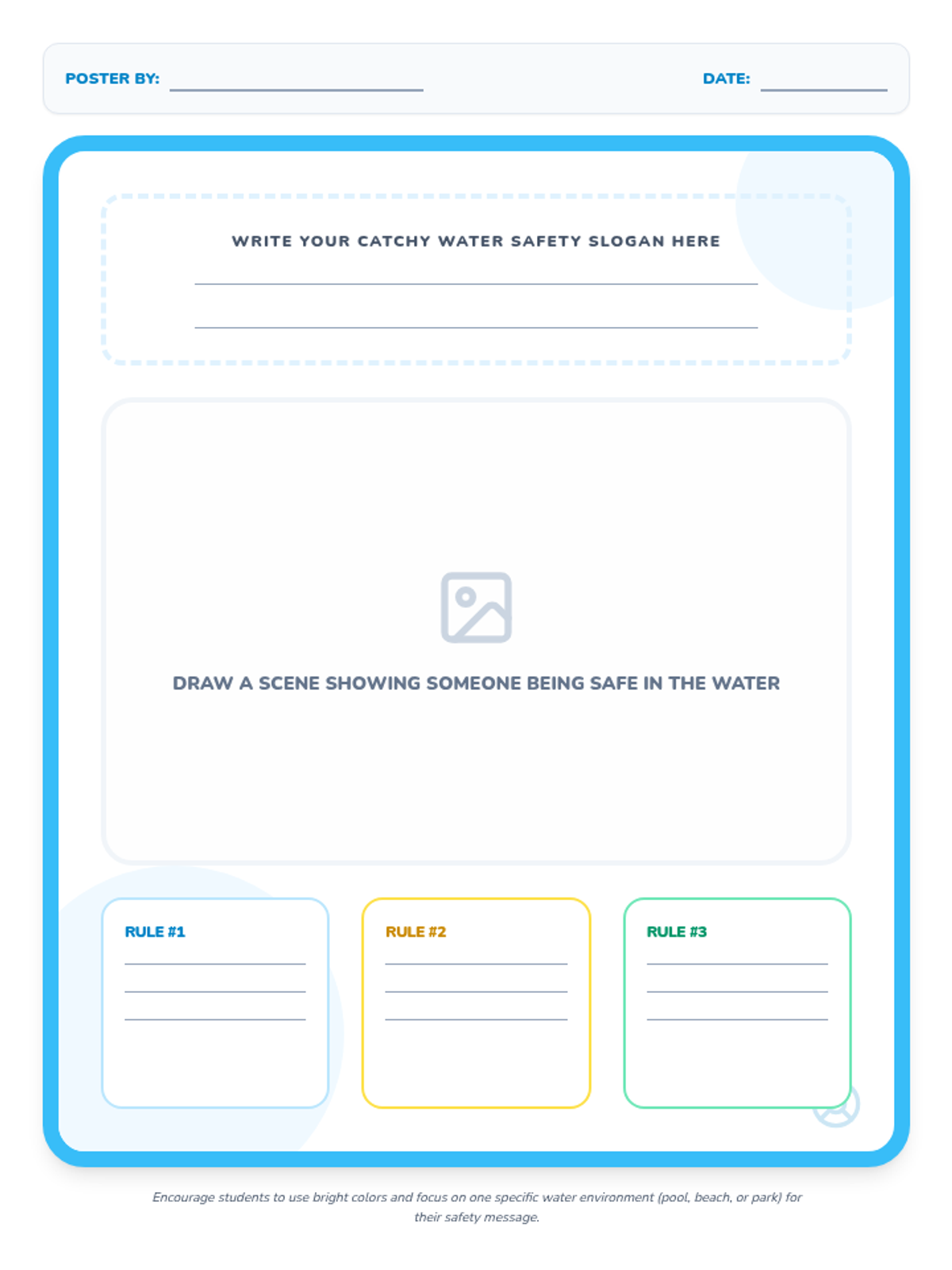
A 30-minute interactive lesson for 3rd graders focusing on essential water safety rules for pools, water parks, and beaches. Students learn to identify safe behaviors through slides, a scenario sorting activity, and a creative poster project.
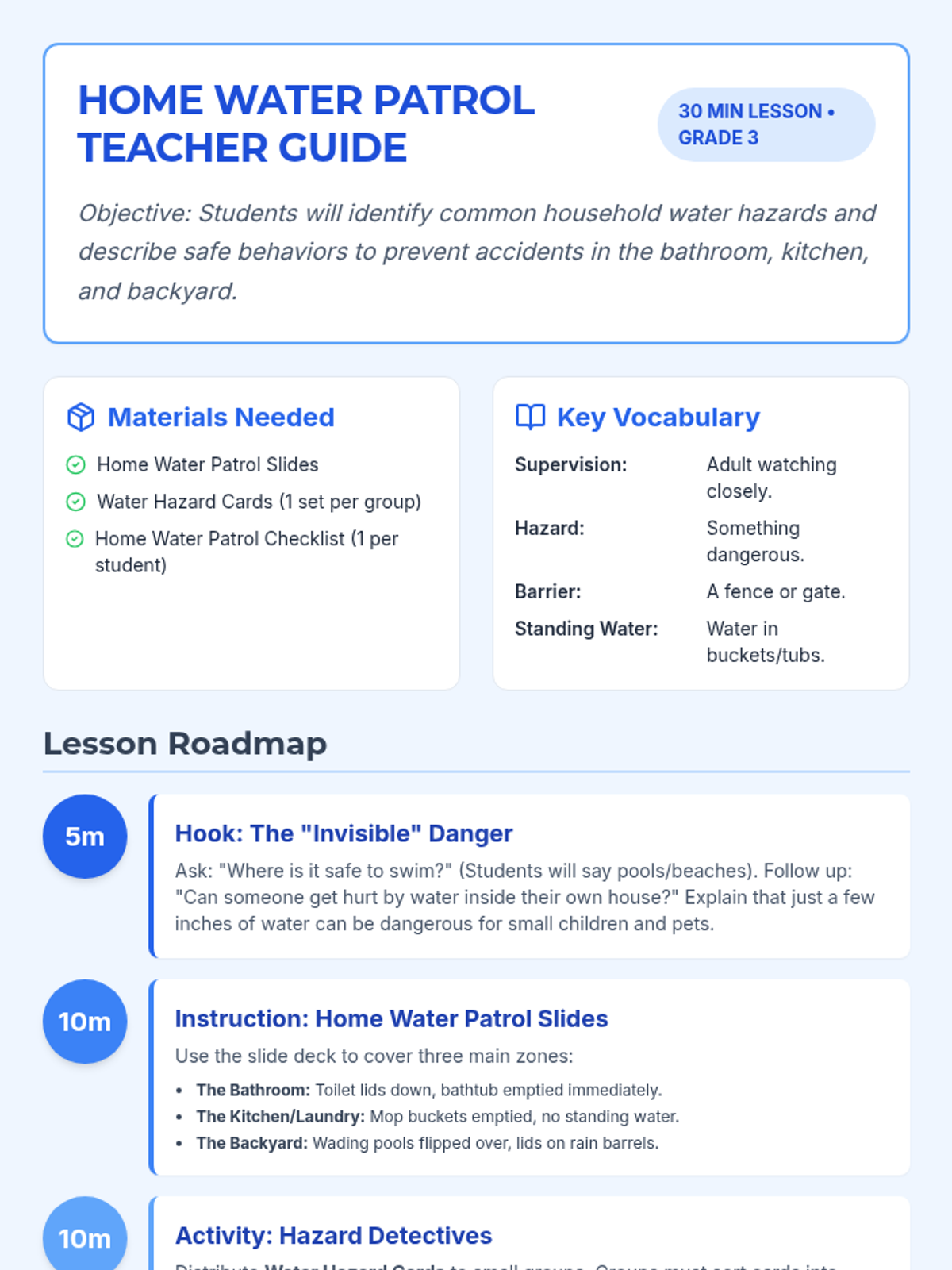
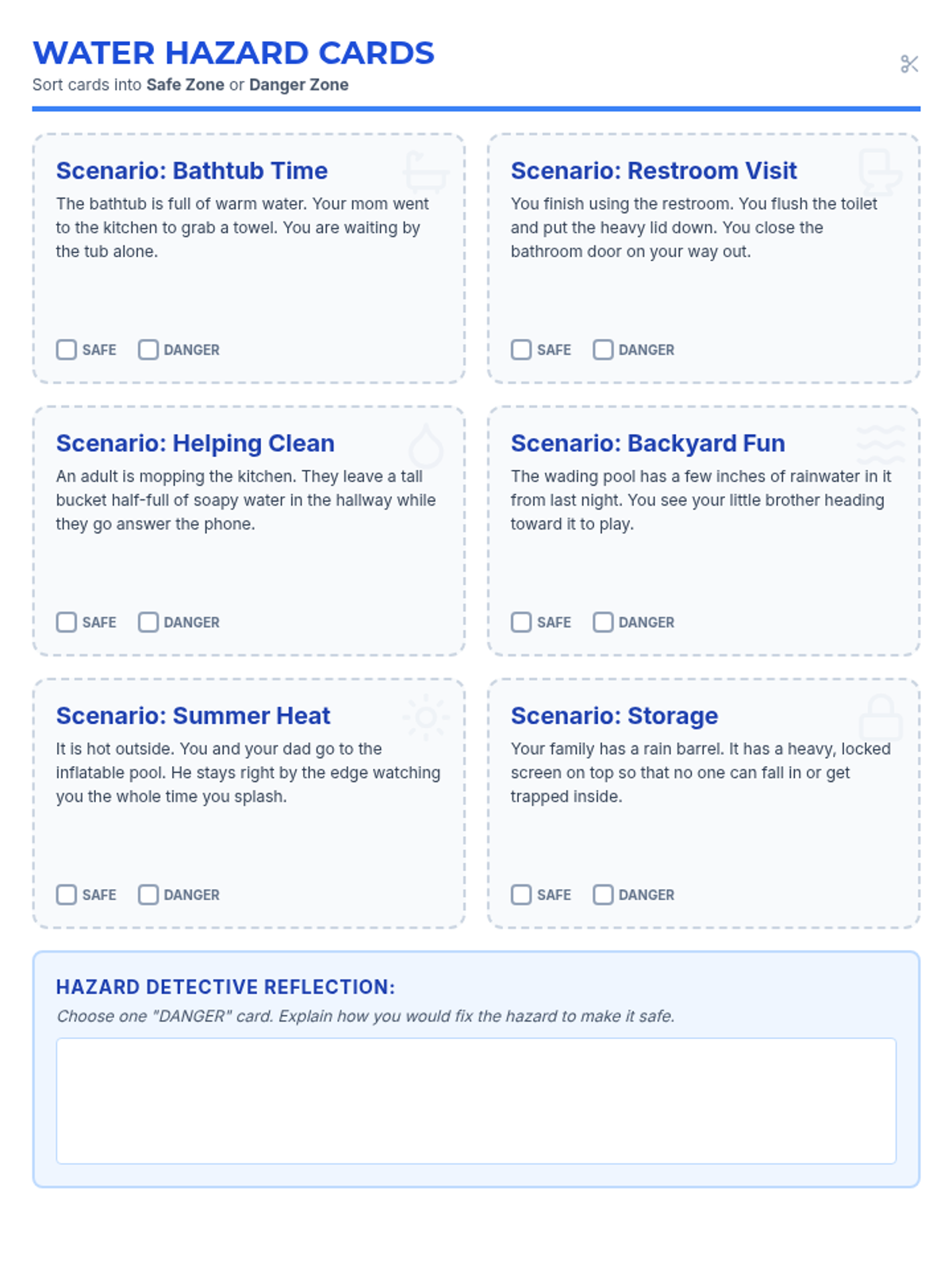
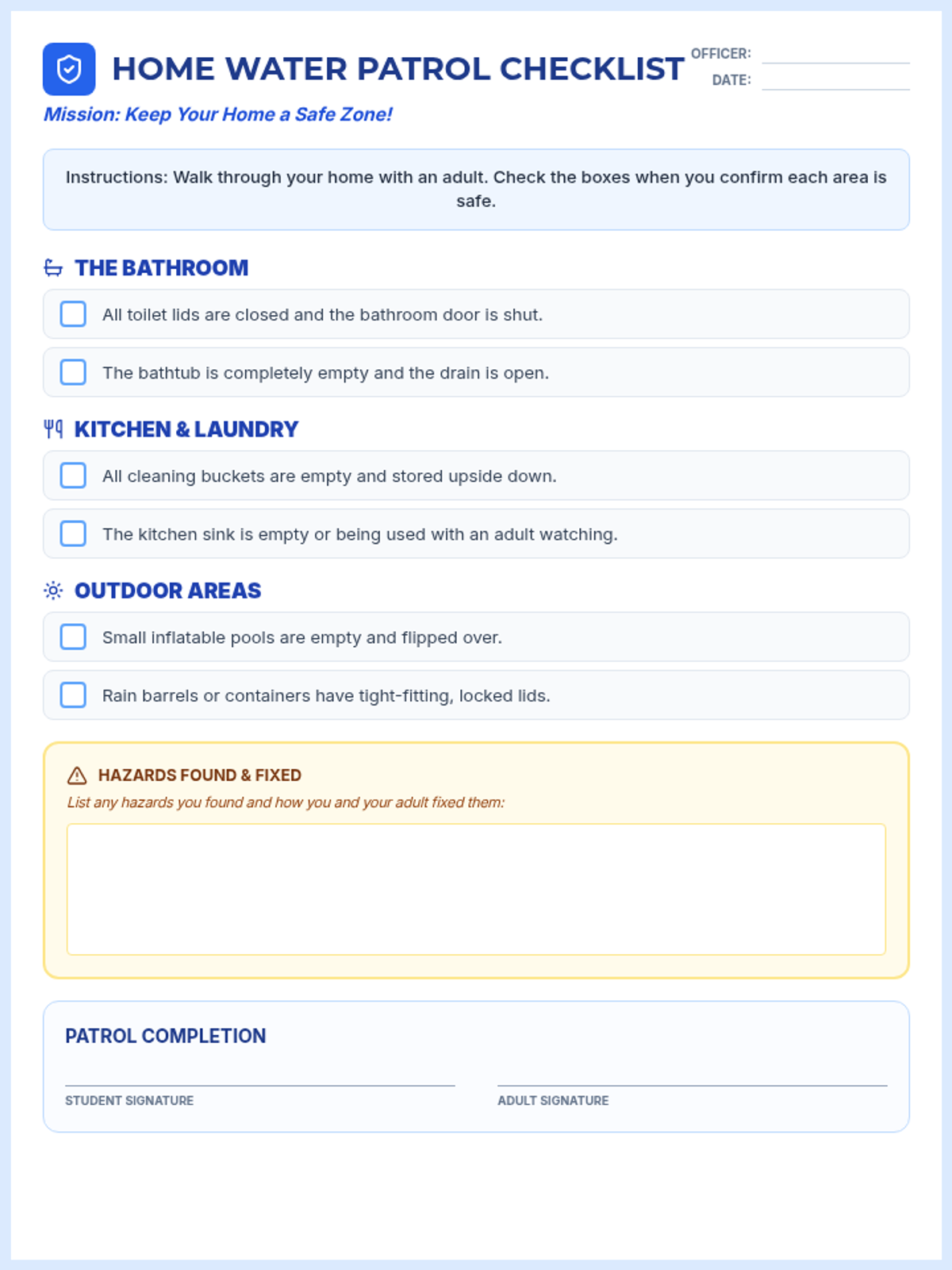
A 30-minute introductory lesson for third graders focused on identifying and preventing water hazards within the home environment. Students learn that water safety applies to more than just pools, covering bathrooms, kitchens, and backyards.
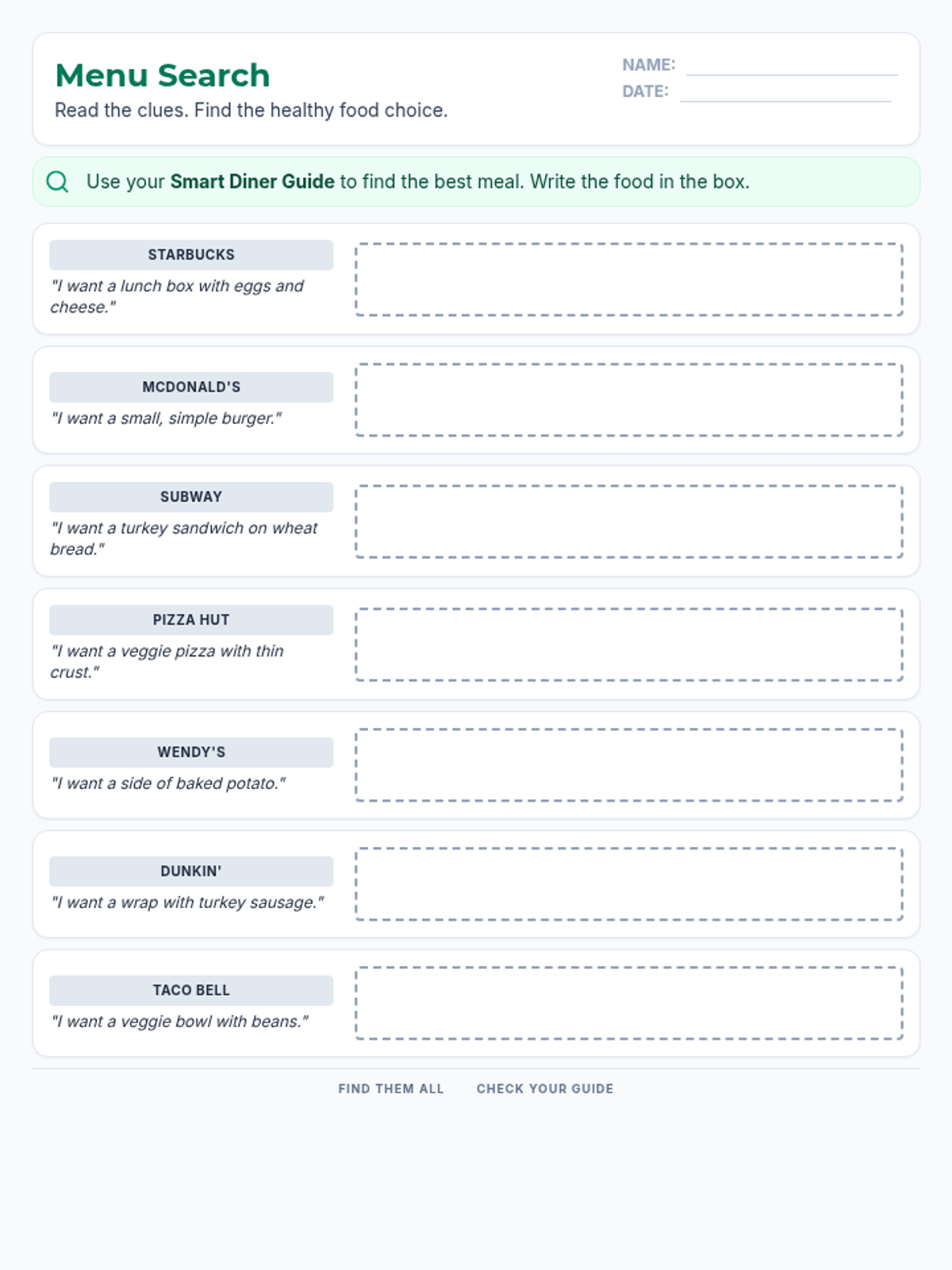
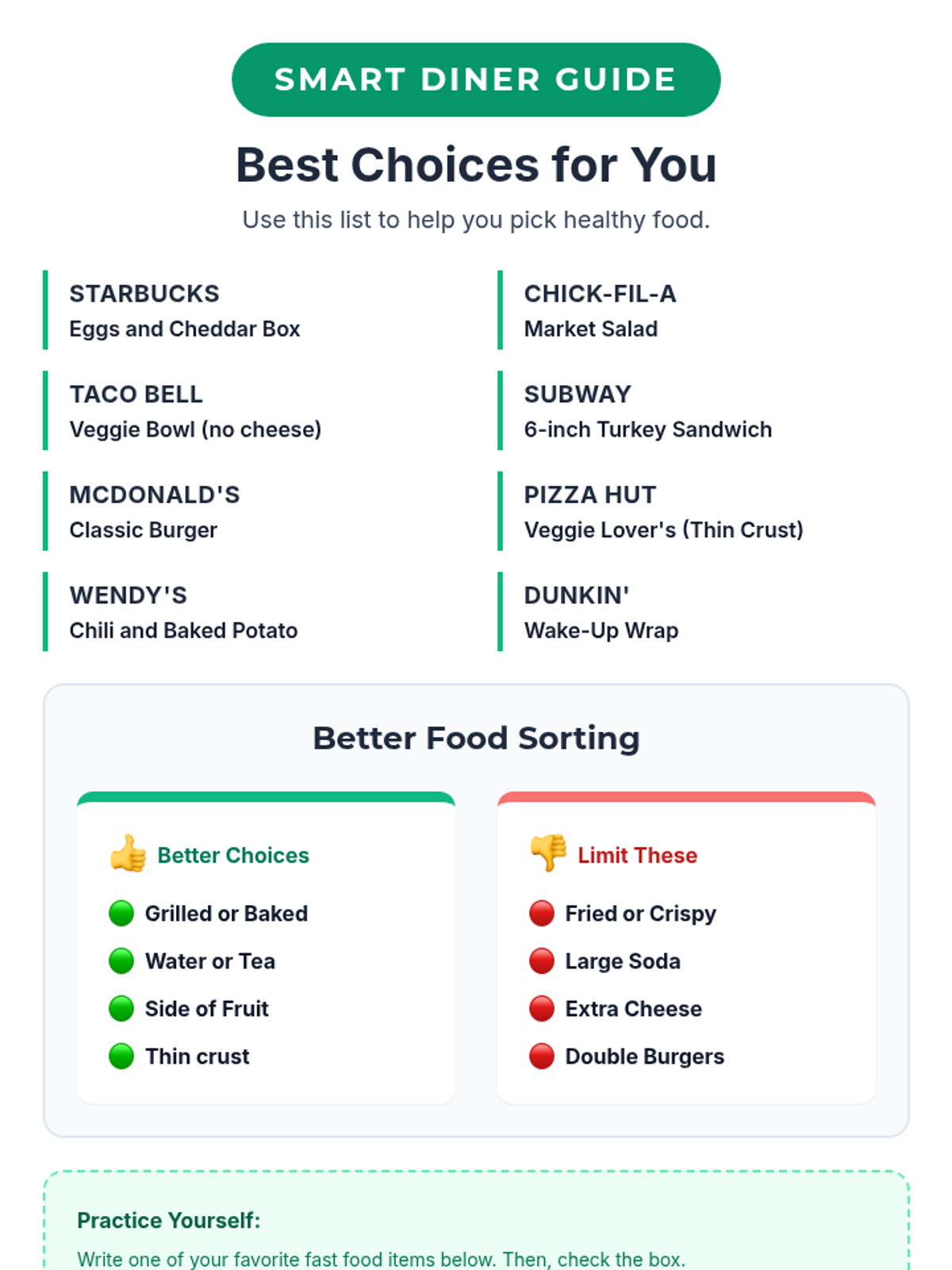
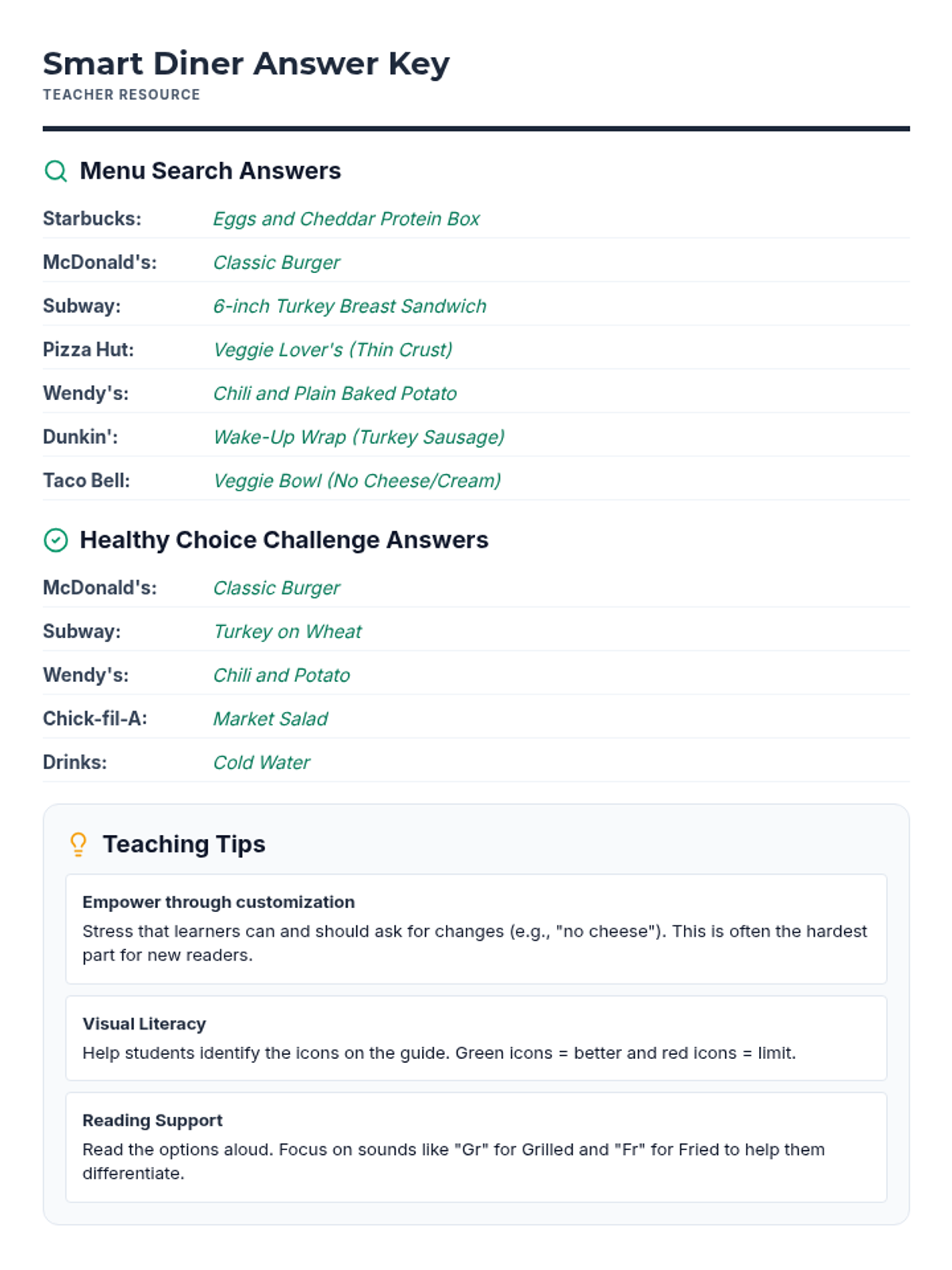
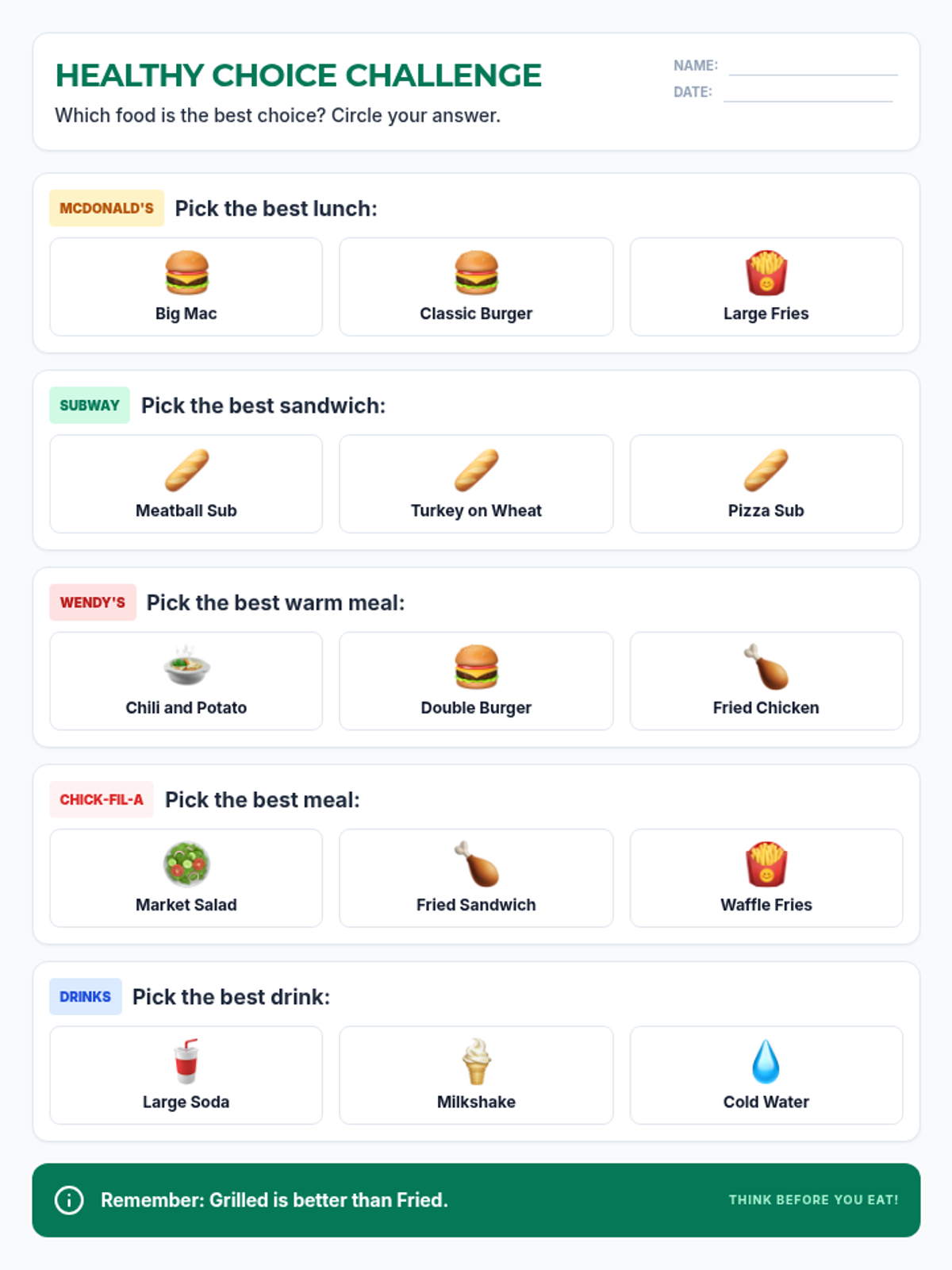
A practical guide for adults with low literacy to navigate fast food menus and make healthier choices by identifying grilled options, fiber-rich sides, and simple swaps.
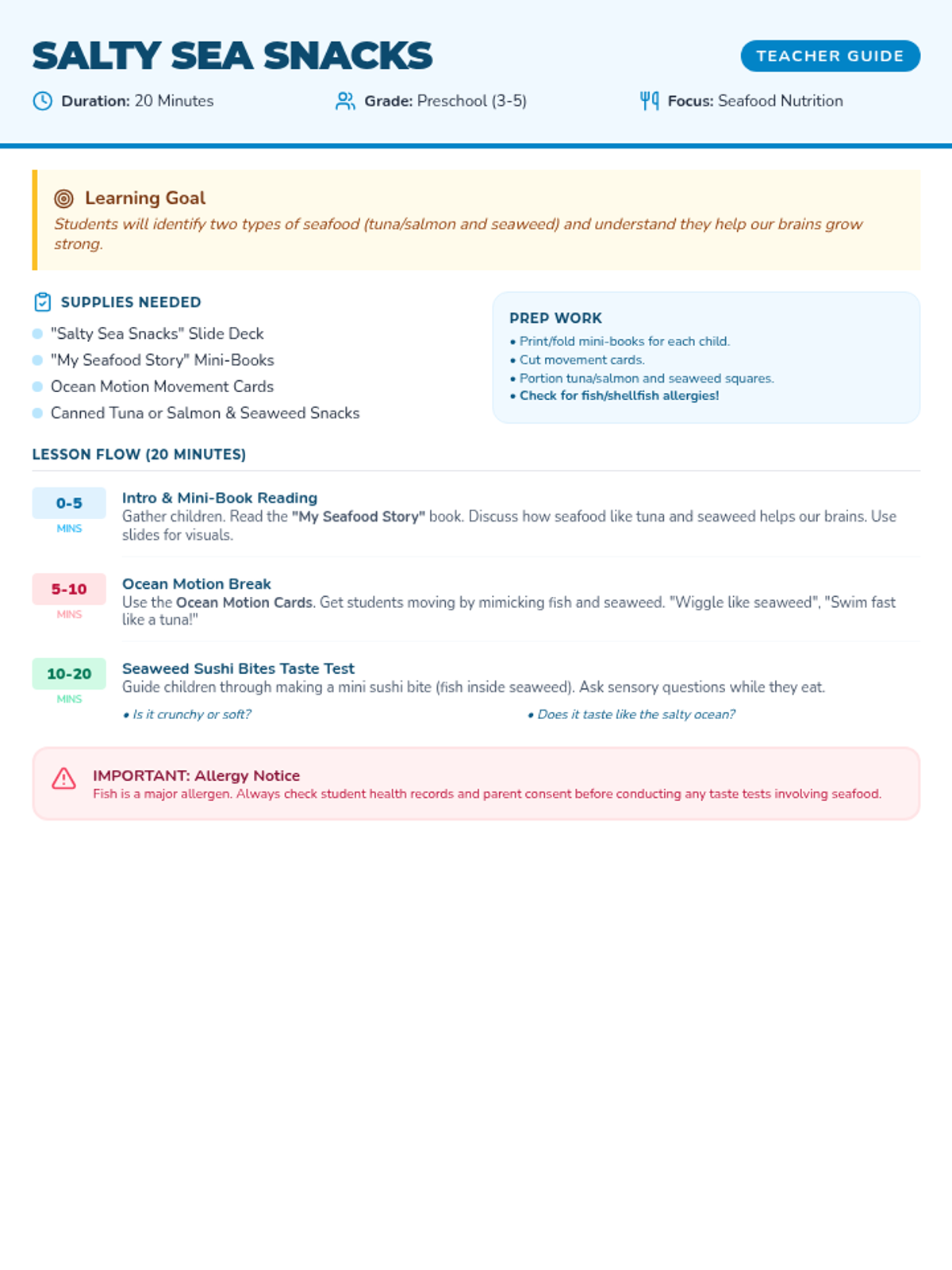
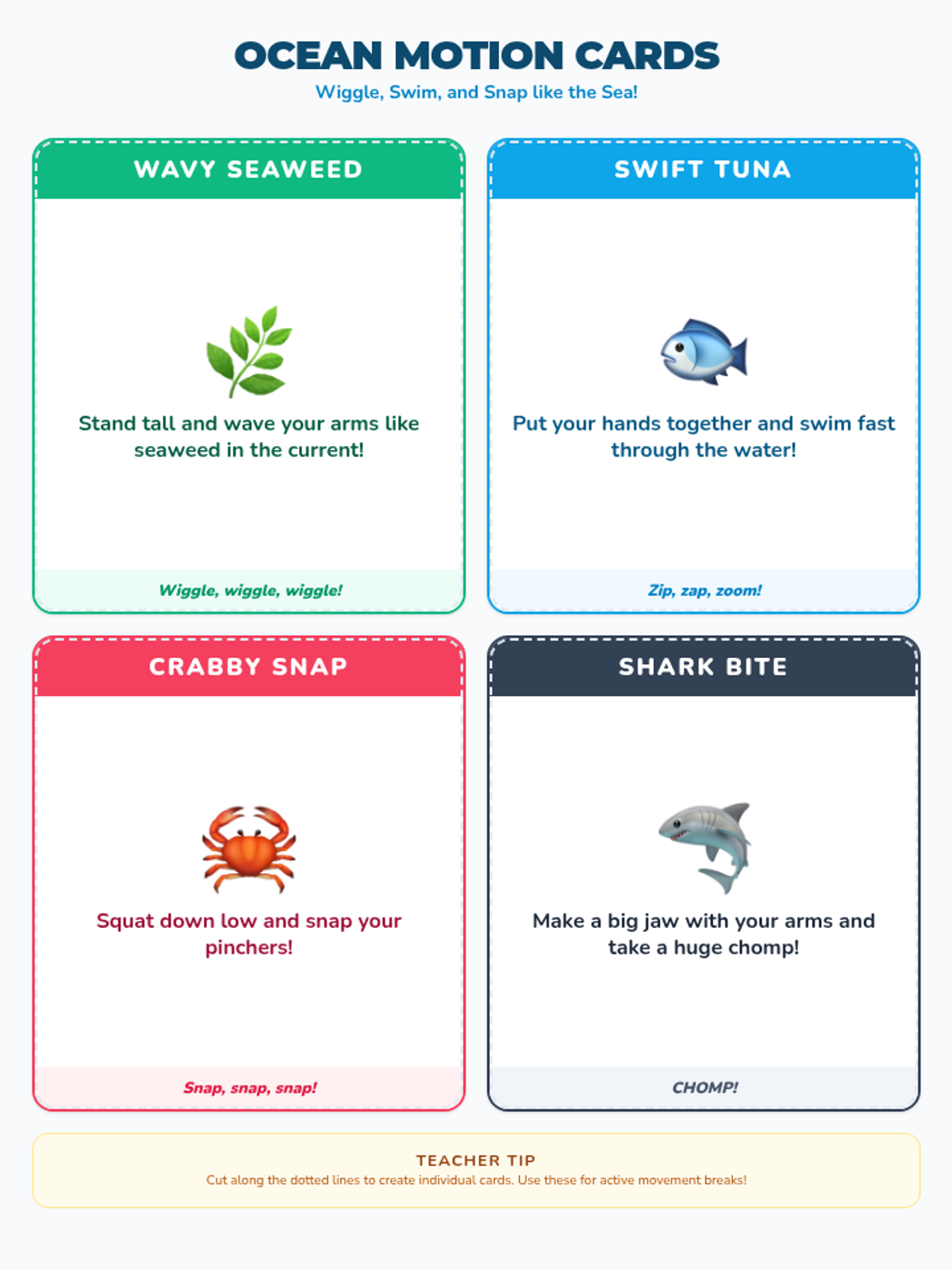
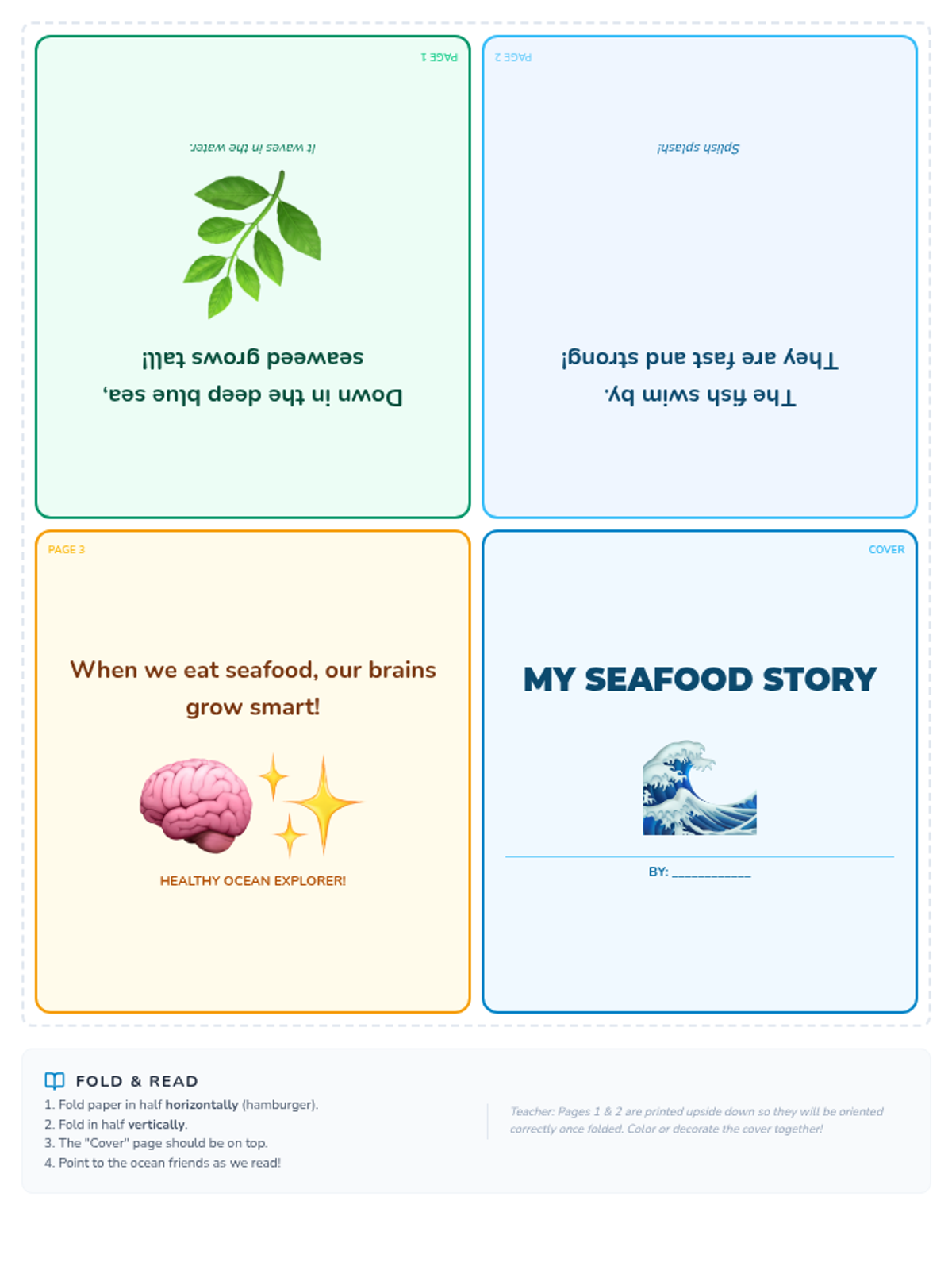
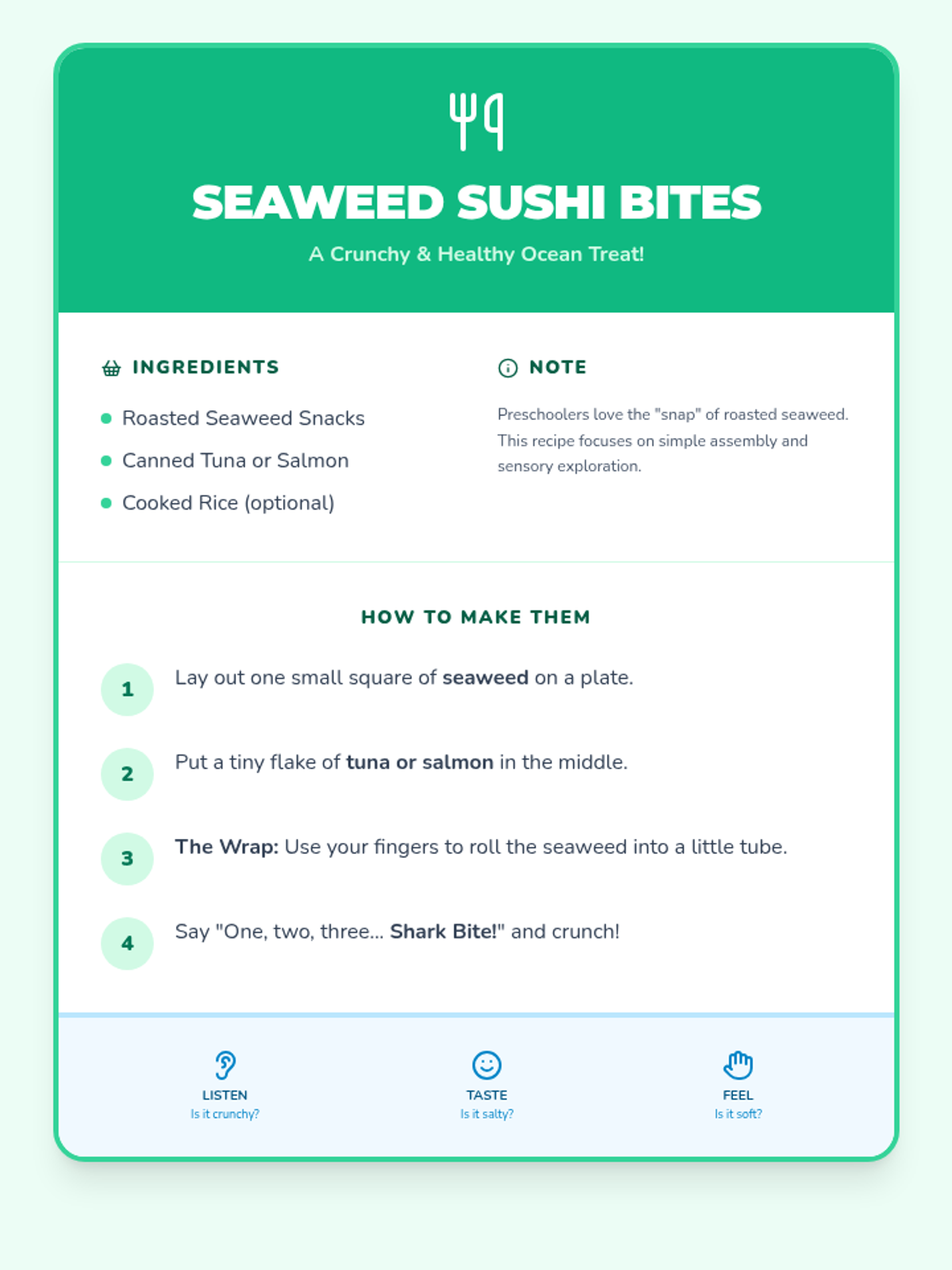
A 20-minute interactive nutrition lesson for preschoolers focusing on seafood through a printable mini-book, movement activities, and a seaweed sushi taste test.
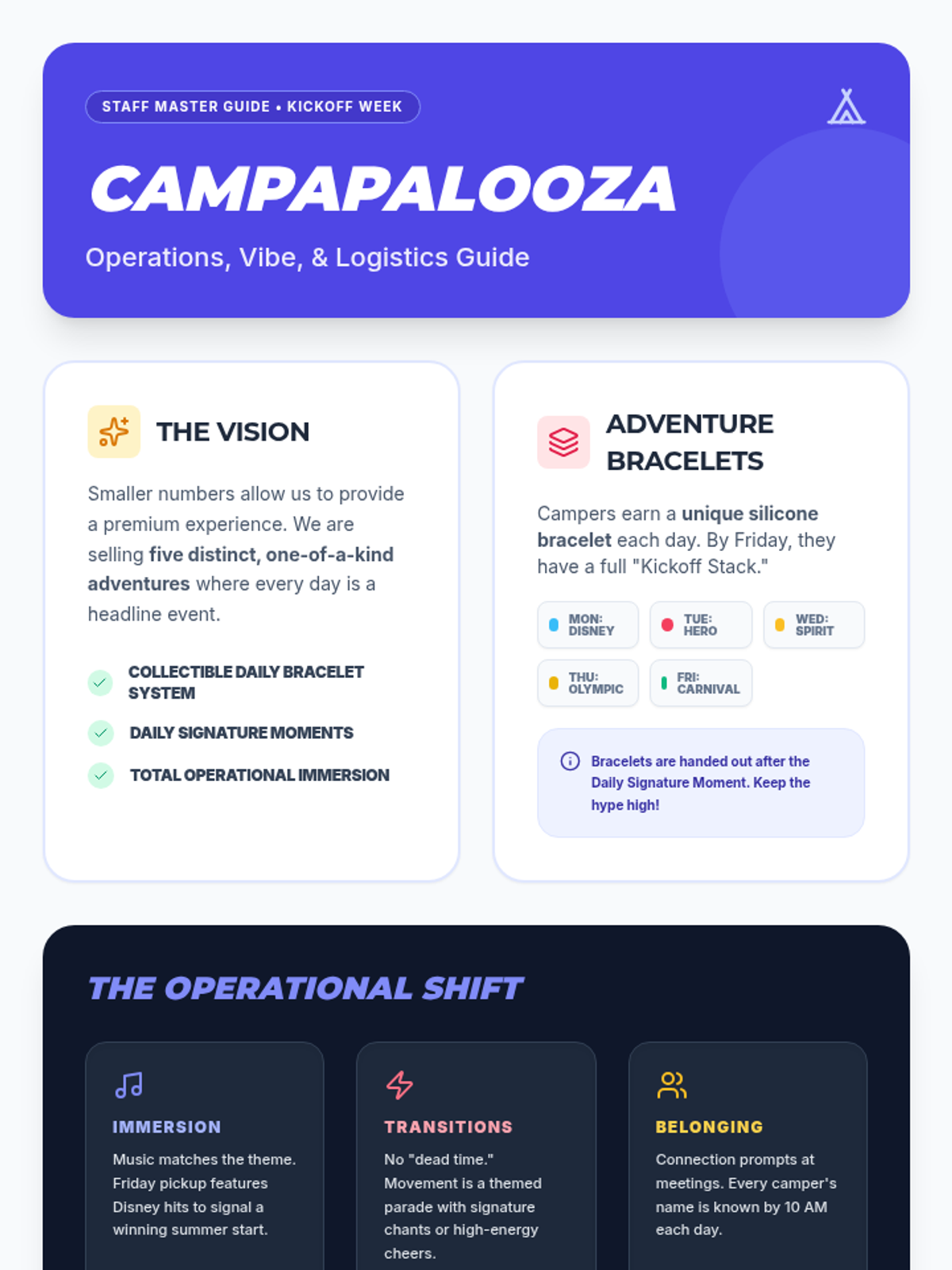
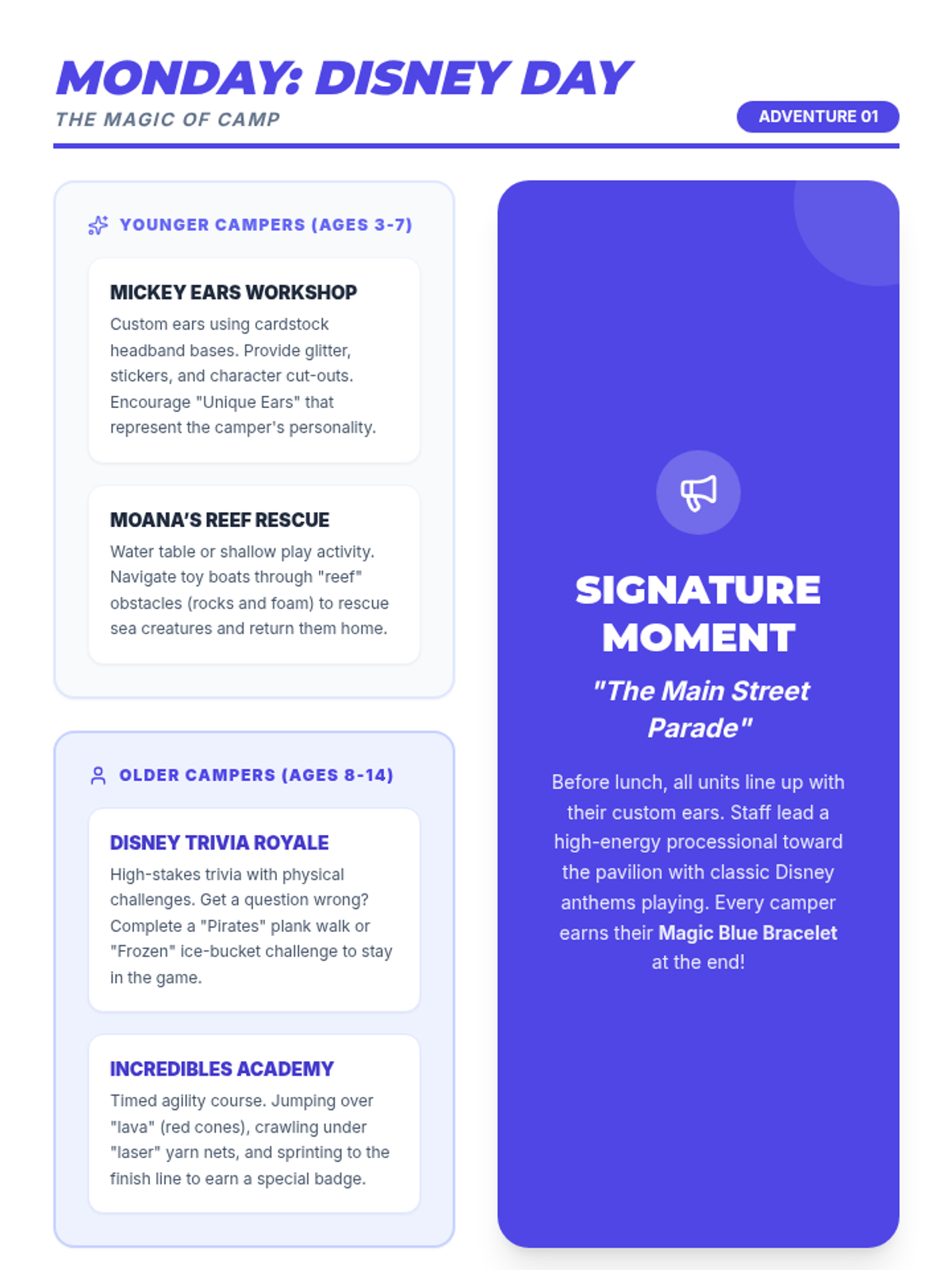
A high-energy kickoff week guide for camp staff, featuring a 'one-of-a-kind adventure' theme with daily themed activities and operational strategies to maximize camper engagement and belonging.
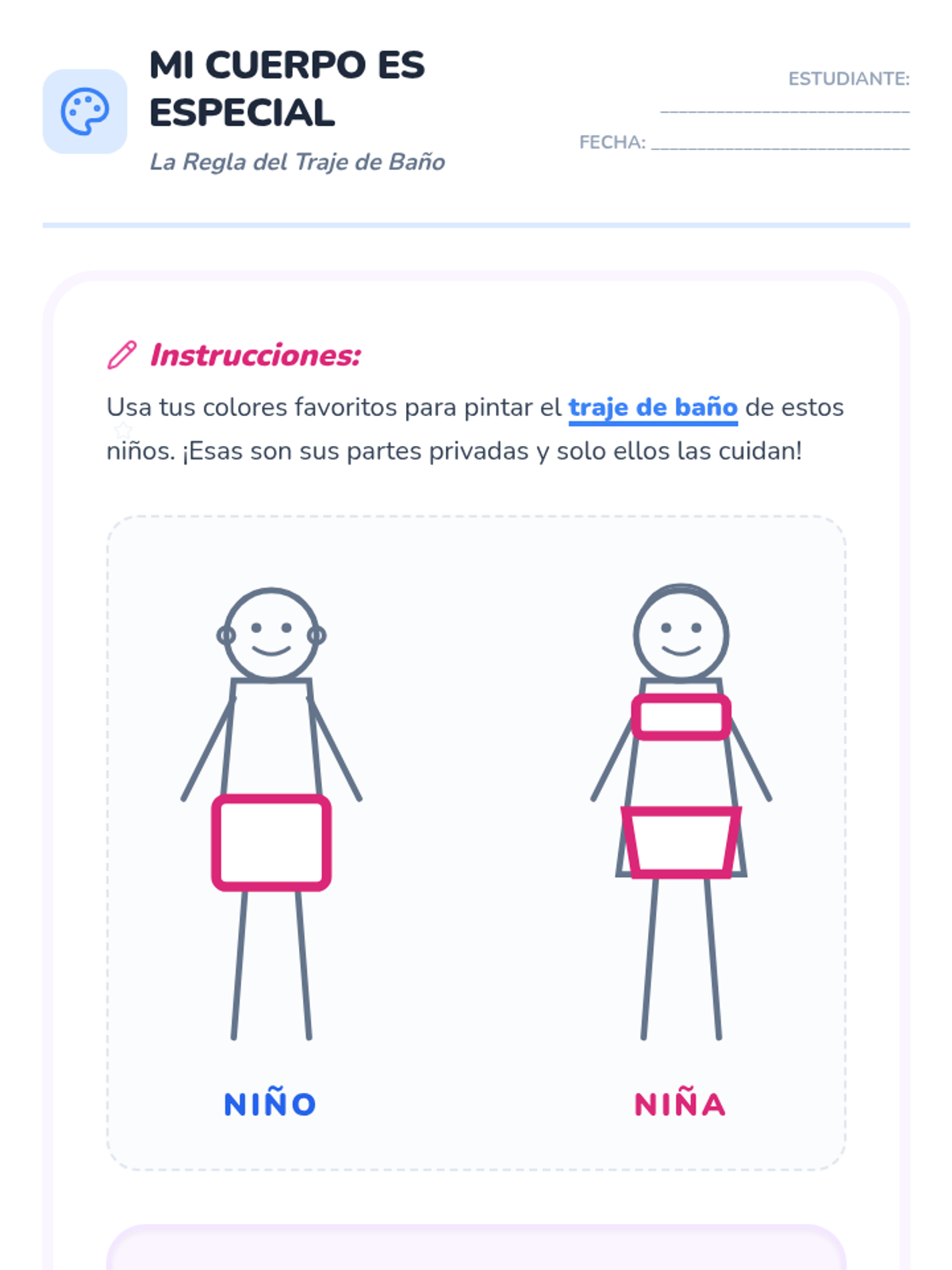
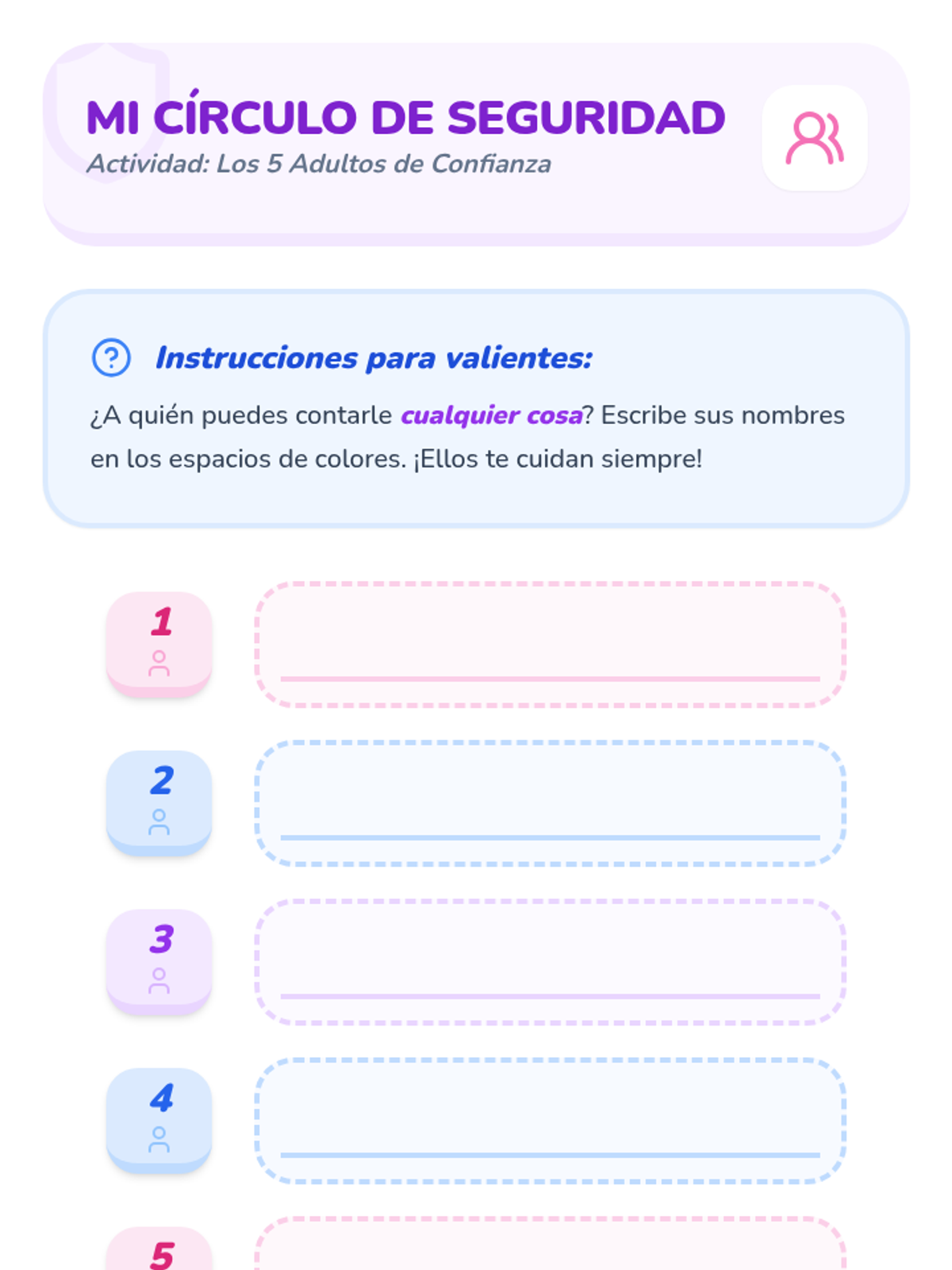
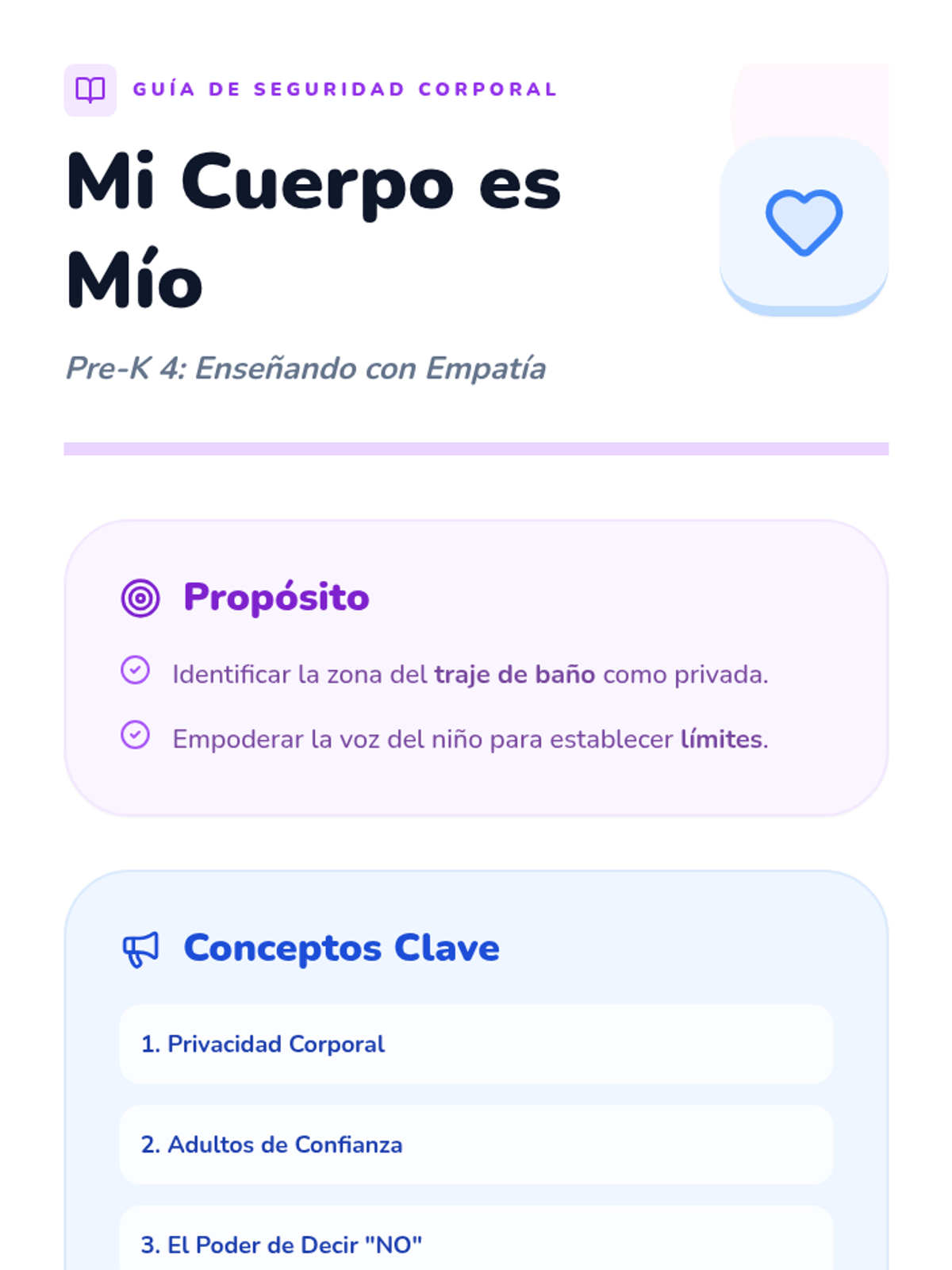
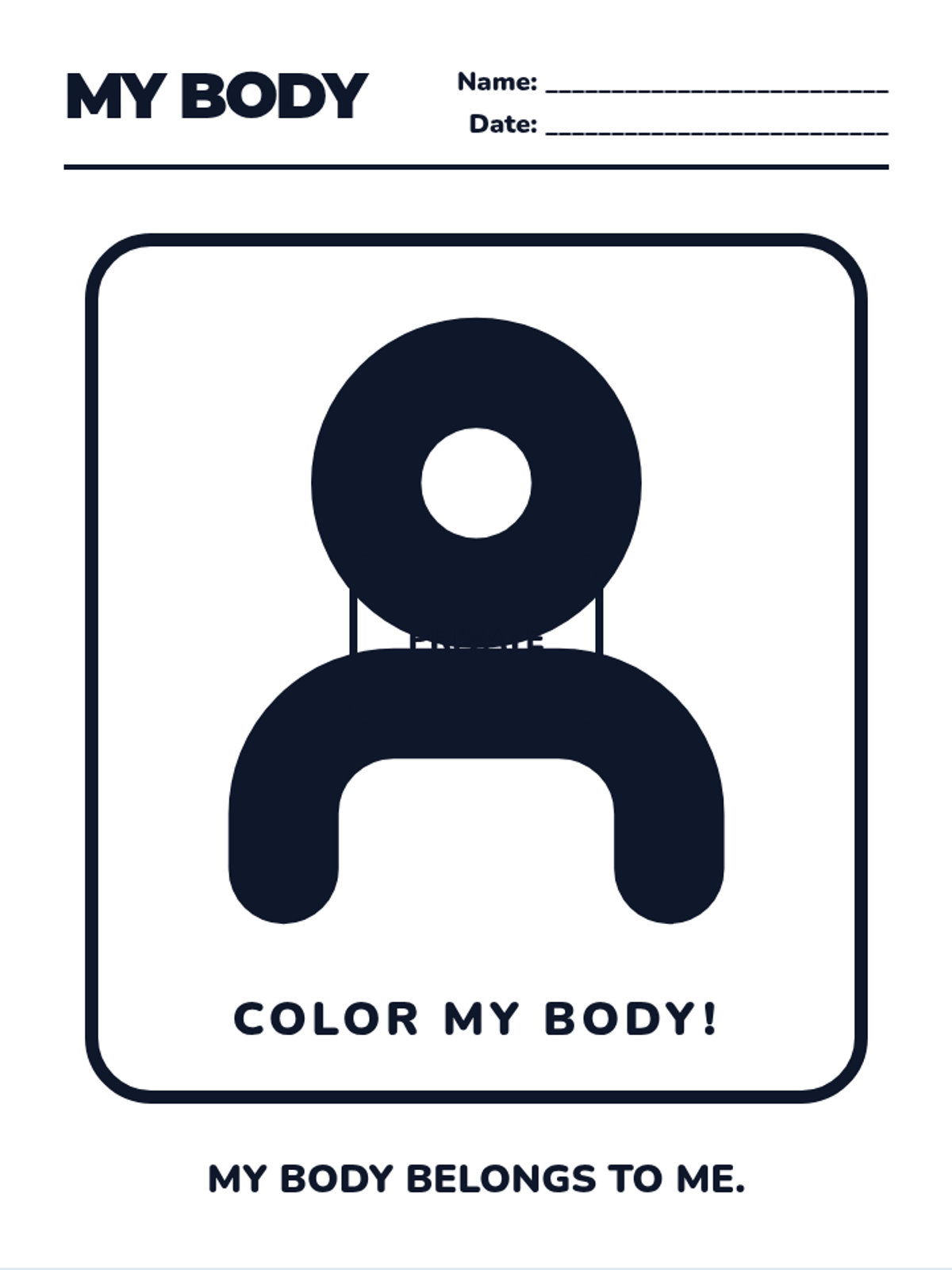
Una lección esencial sobre seguridad corporal y límites personales para niños de Pre-K, centrada en la regla del traje de baño.
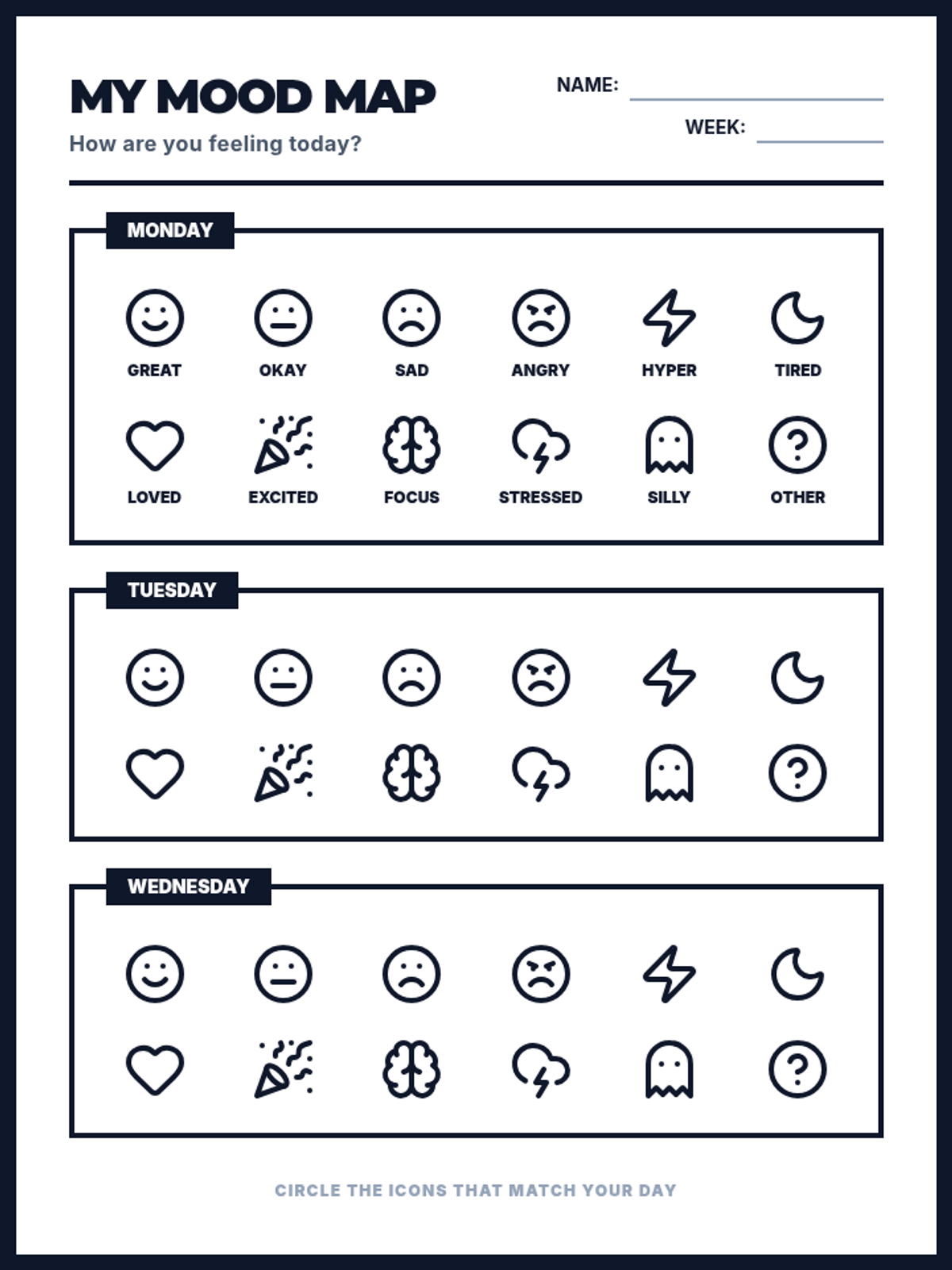
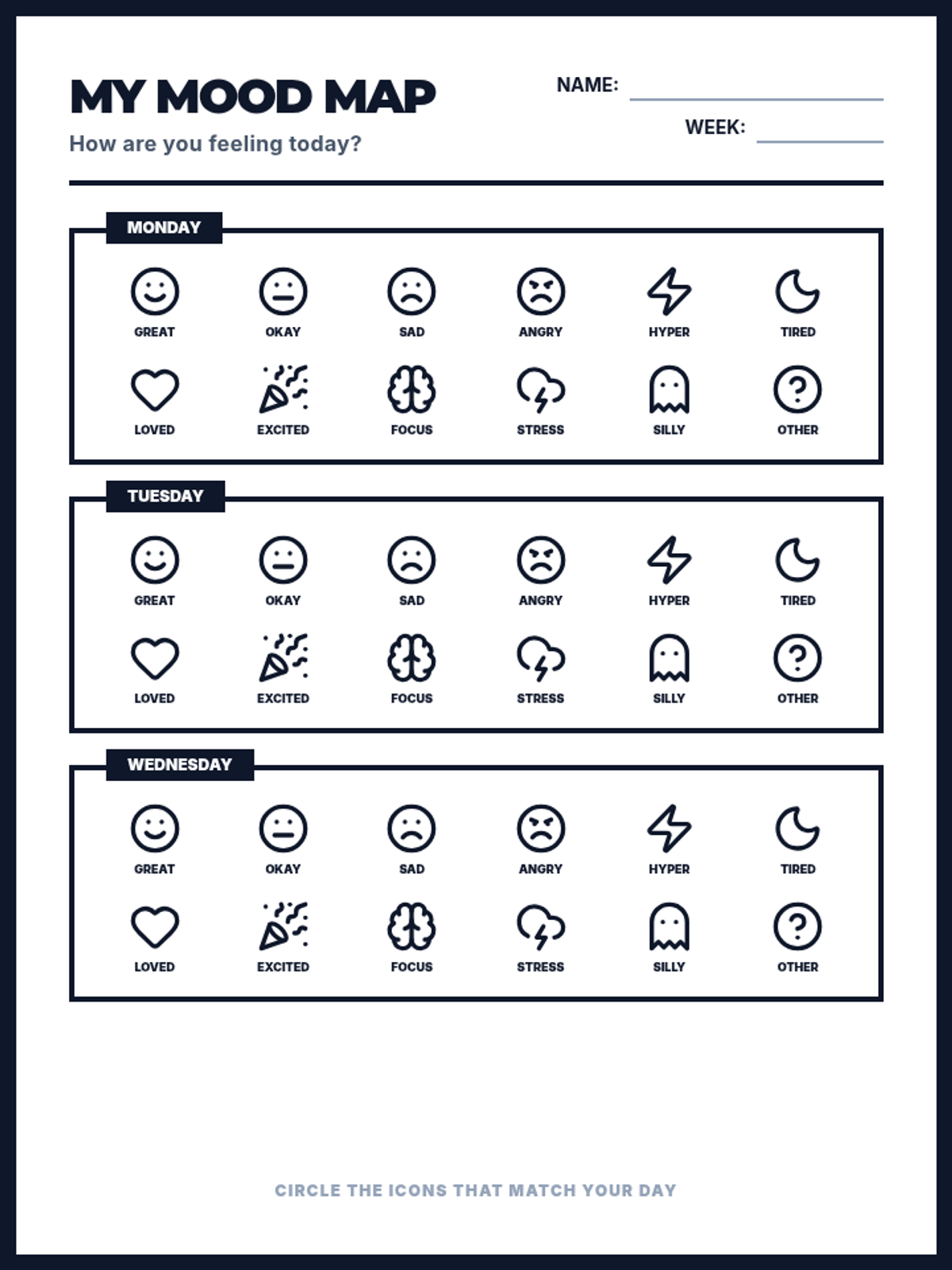
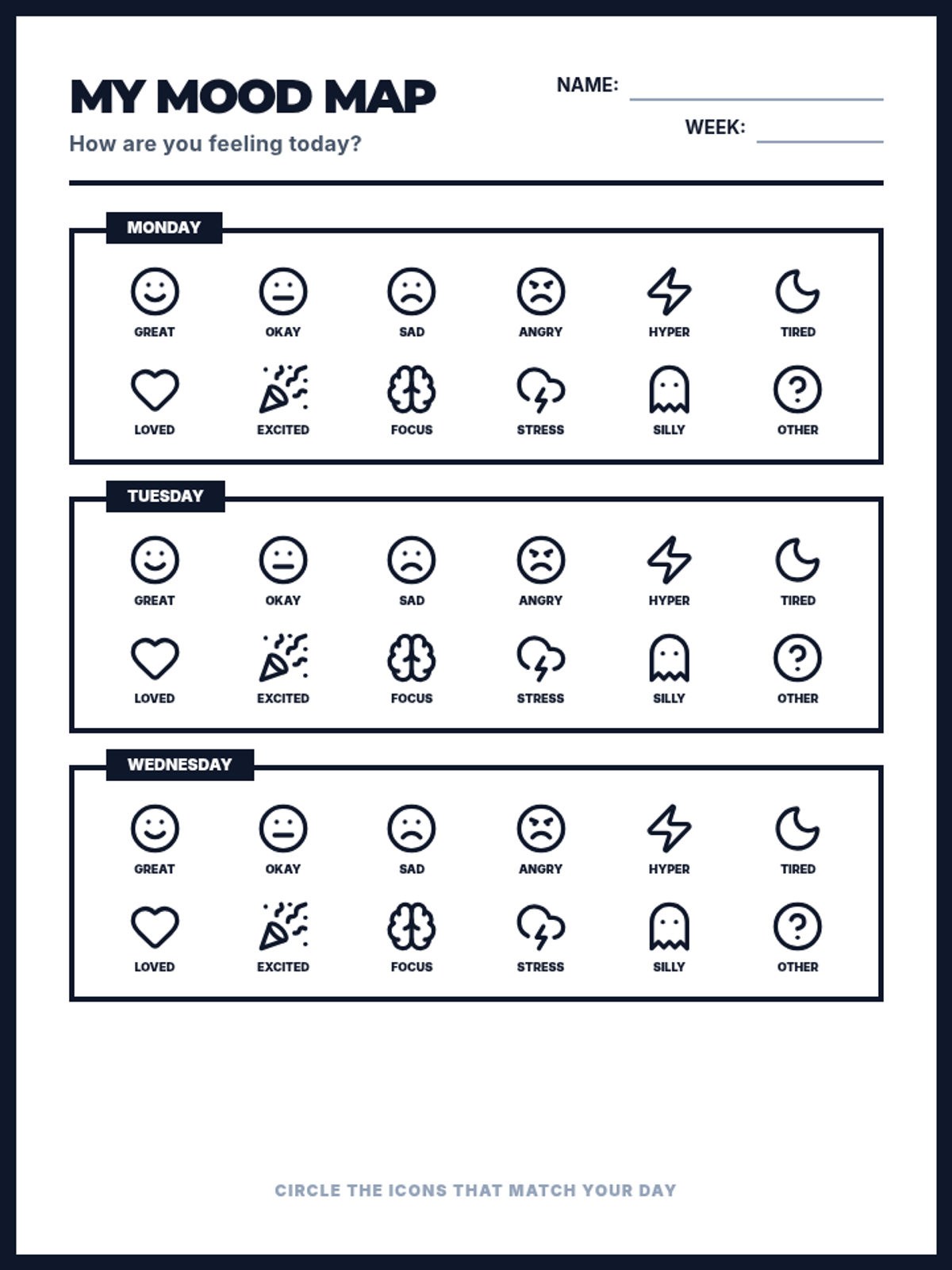
A comprehensive 7-page weekly health and wellness tracking packet designed to help students monitor their mood, nutrition, sleep, and personal hygiene habits.
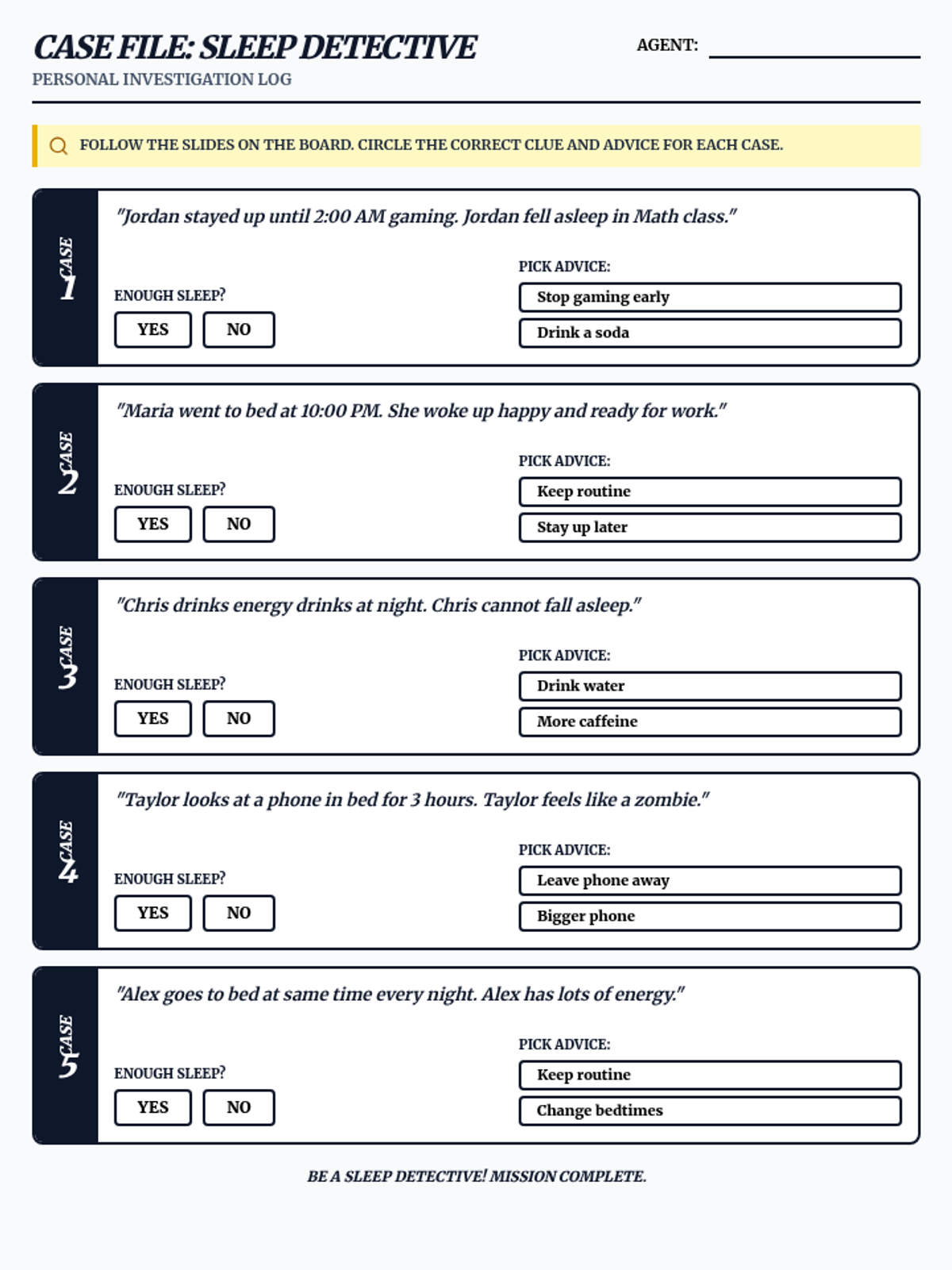
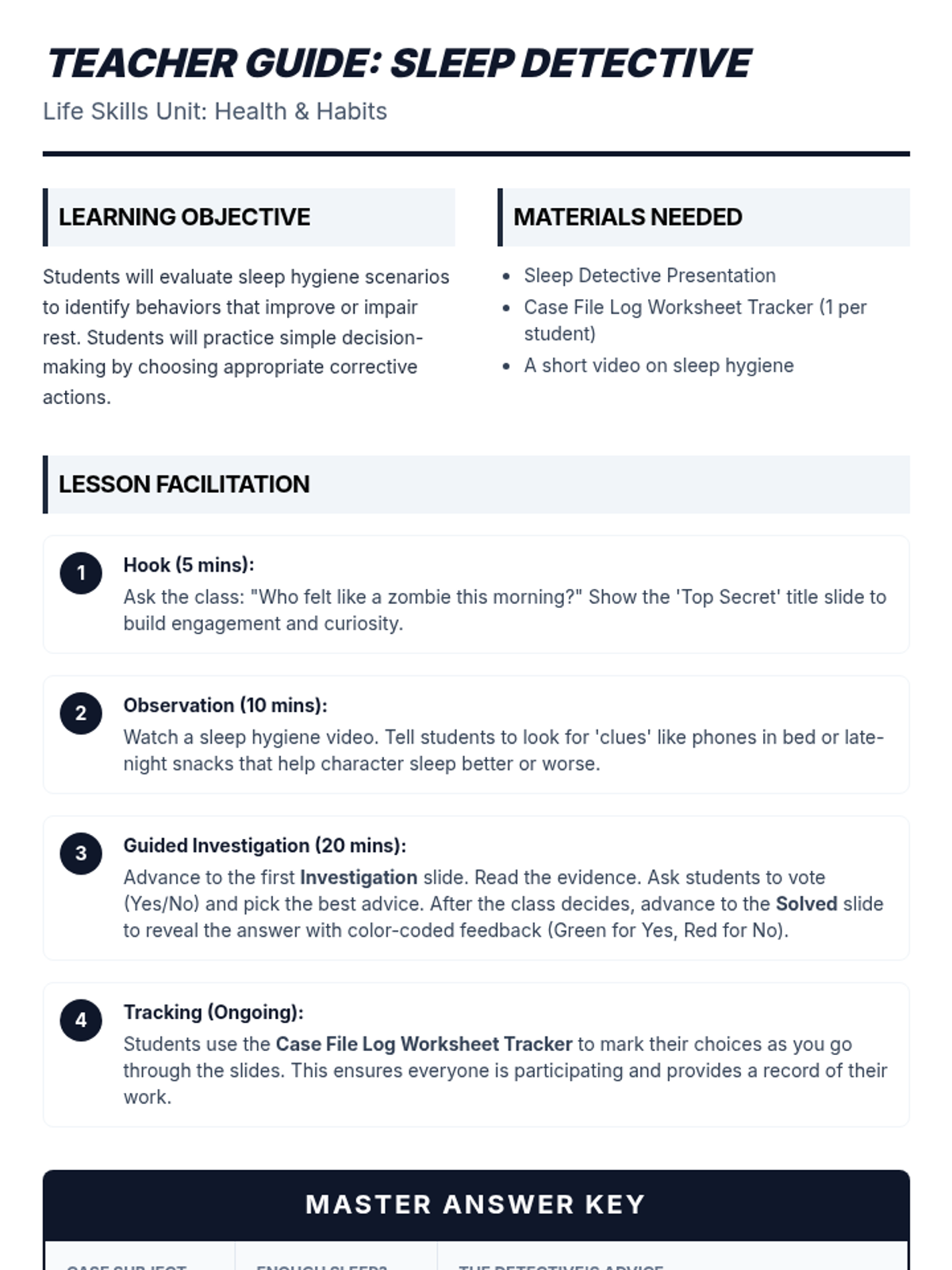
A life skills lesson where students become 'Sleep Detectives' to analyze habits and identify healthy sleep patterns using visual scenarios and simple decision-making.
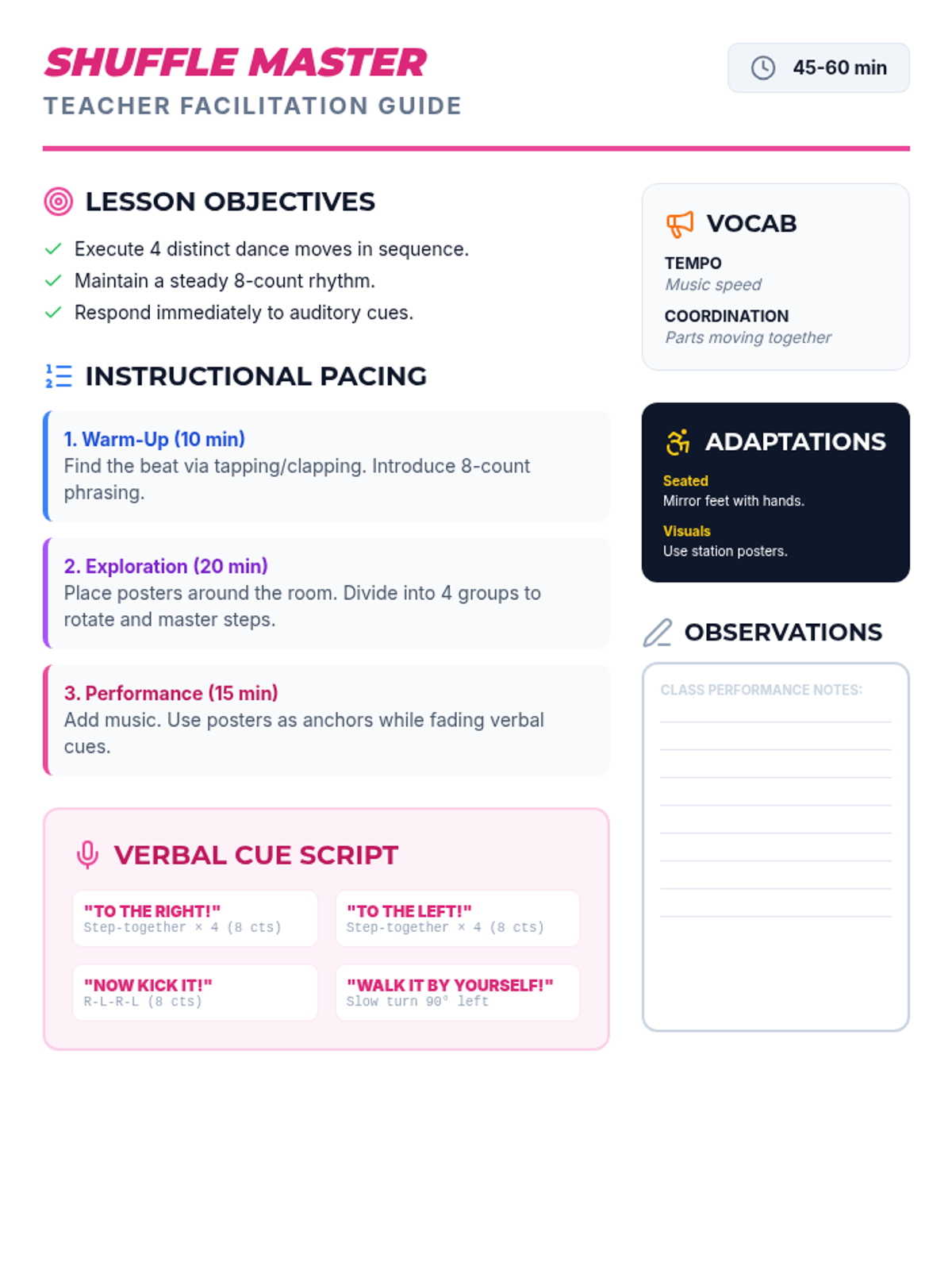
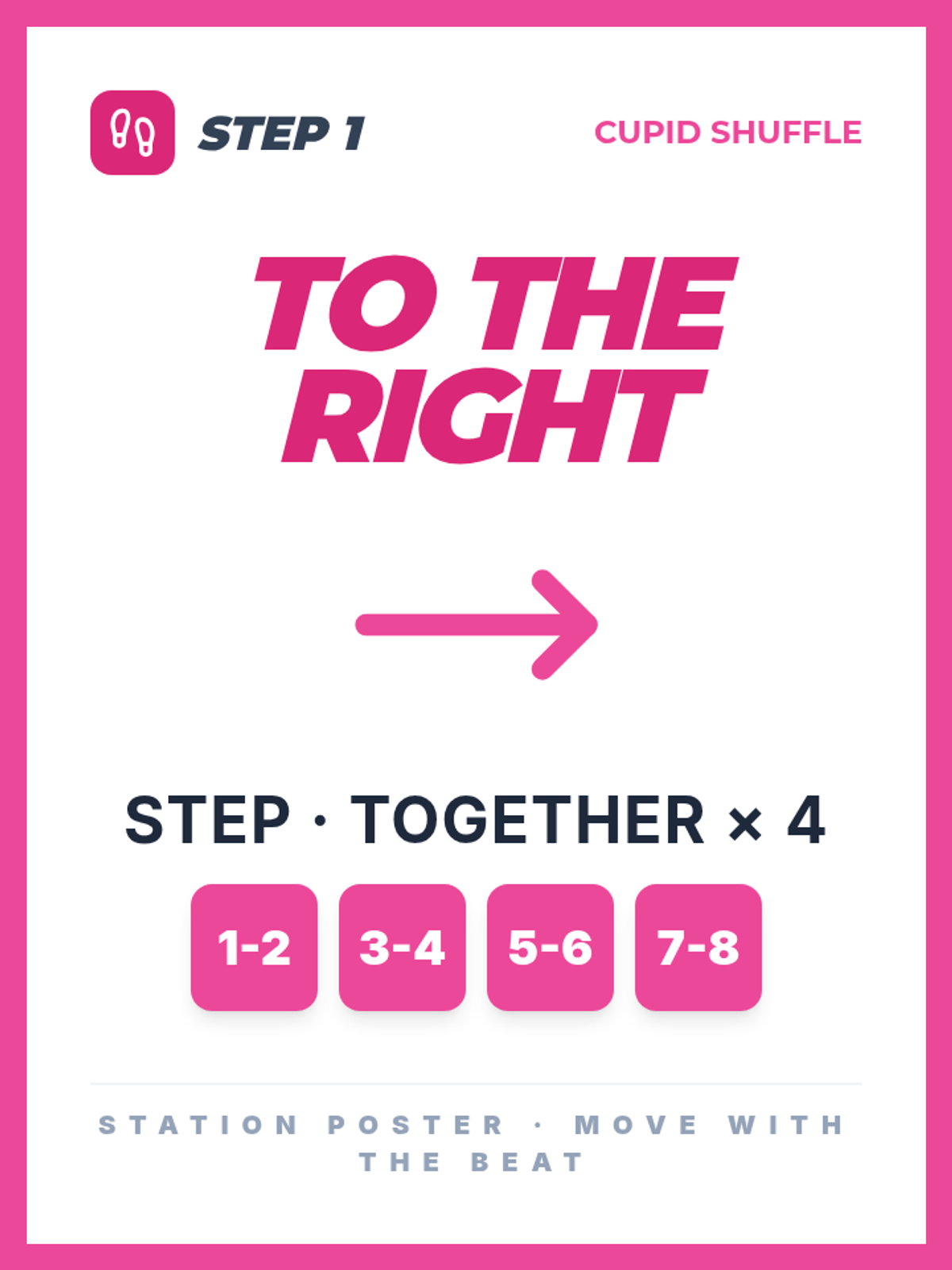
A high-energy lesson focused on mastering the Cupid Shuffle while developing rhythm recognition, coordination, and the ability to follow multi-step auditory instructions.
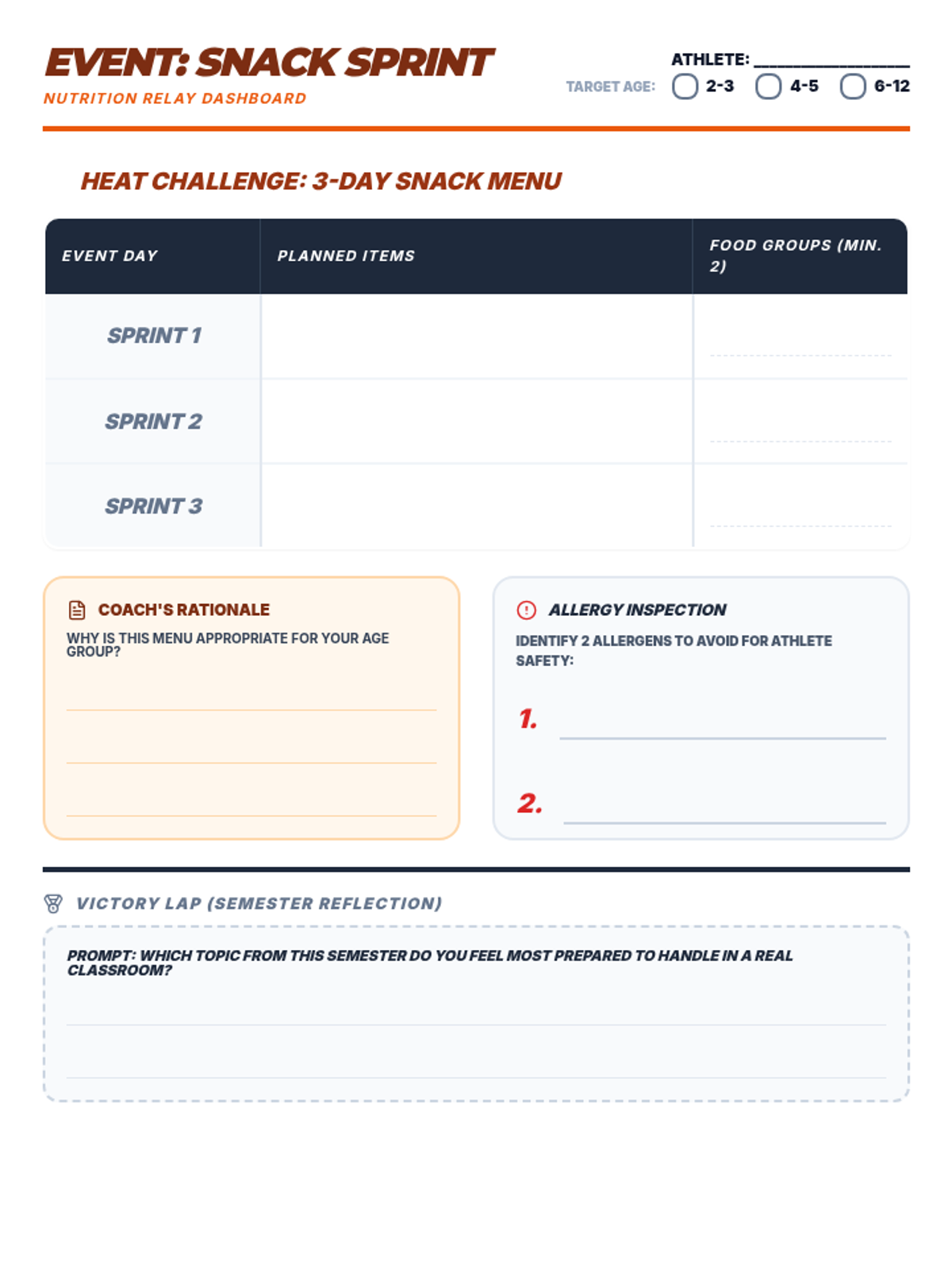
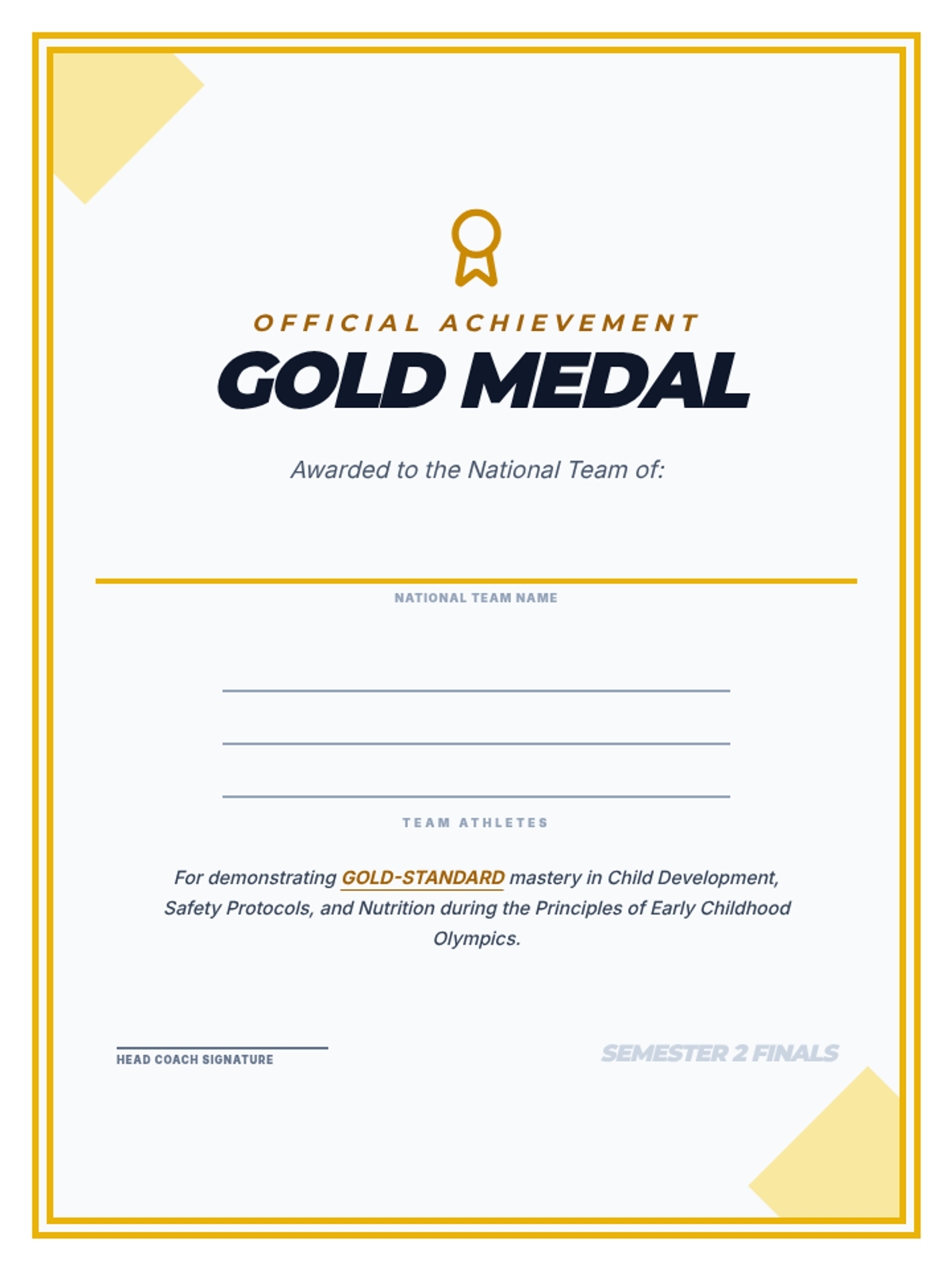
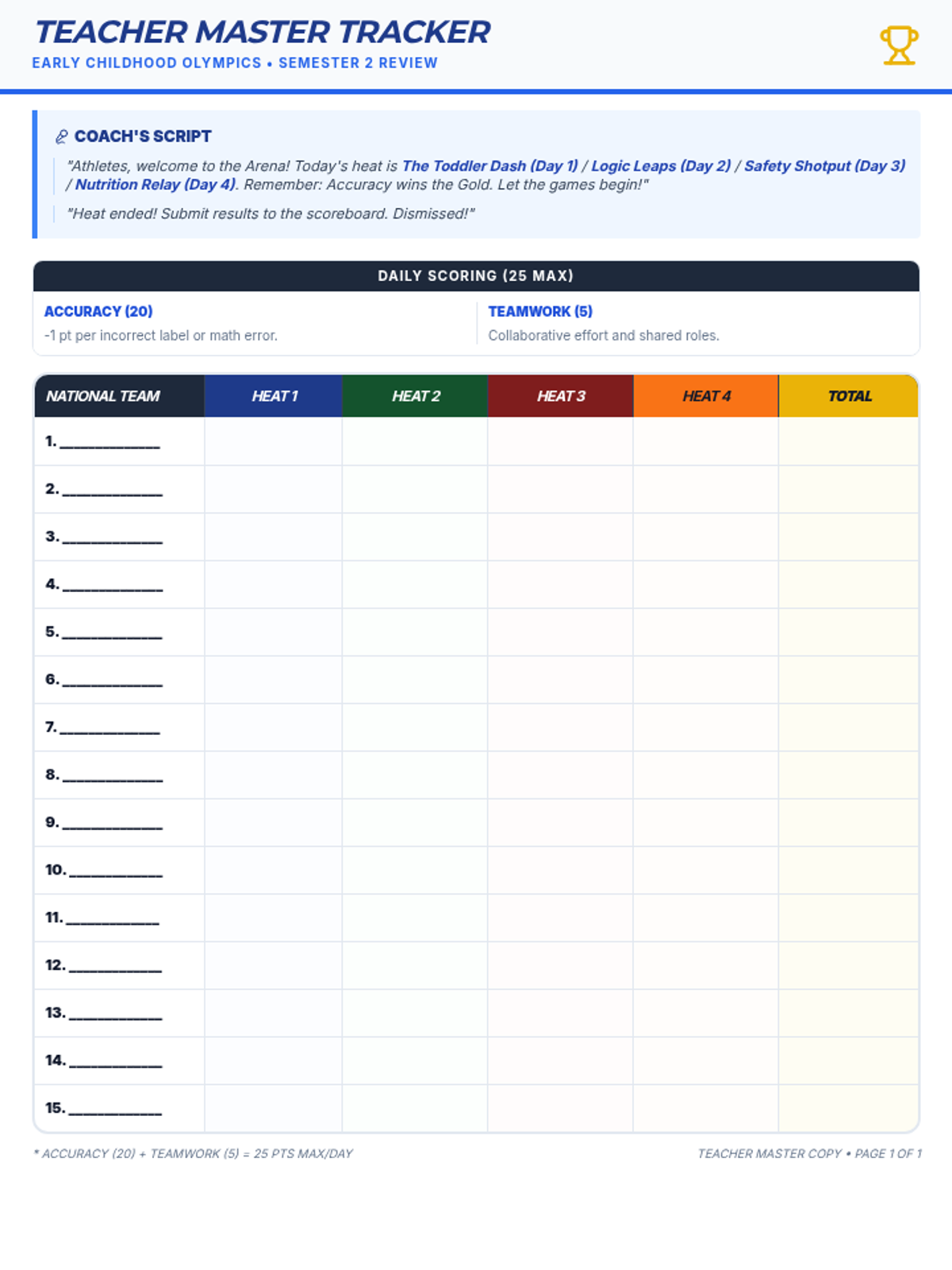
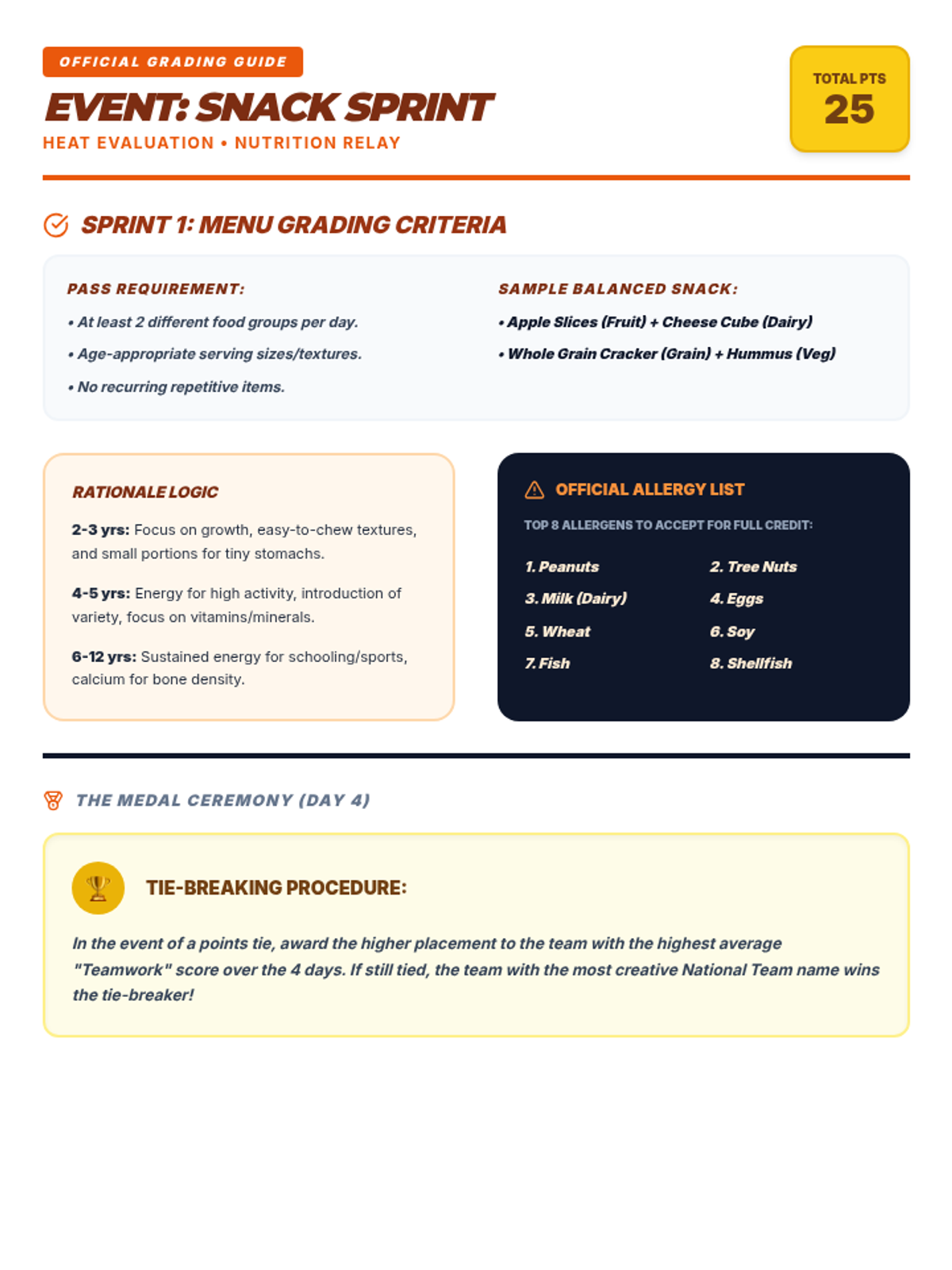
The final day covers nutrition and meal planning, followed by the grand tallying of points and the medal ceremony to conclude the semester.
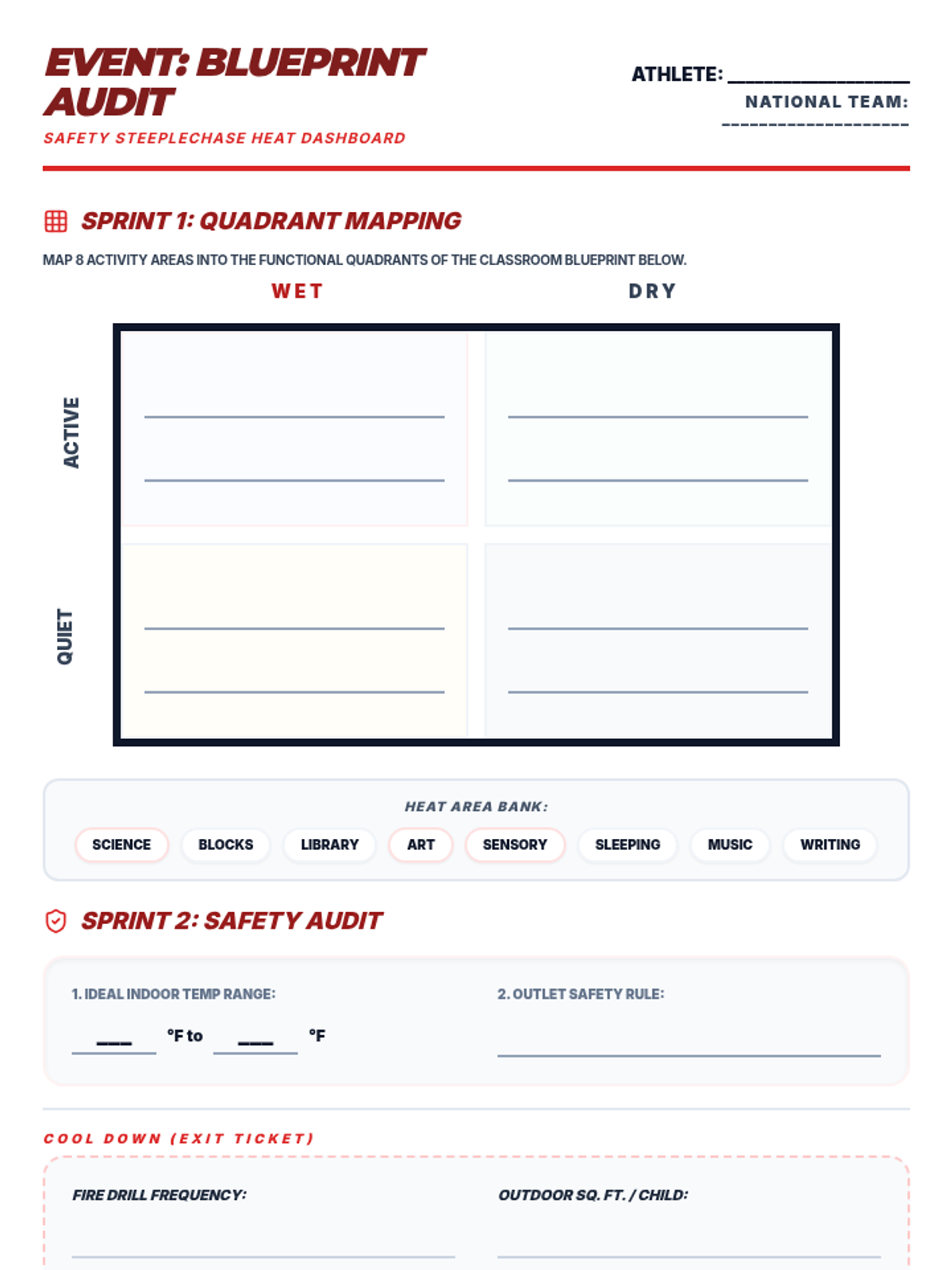
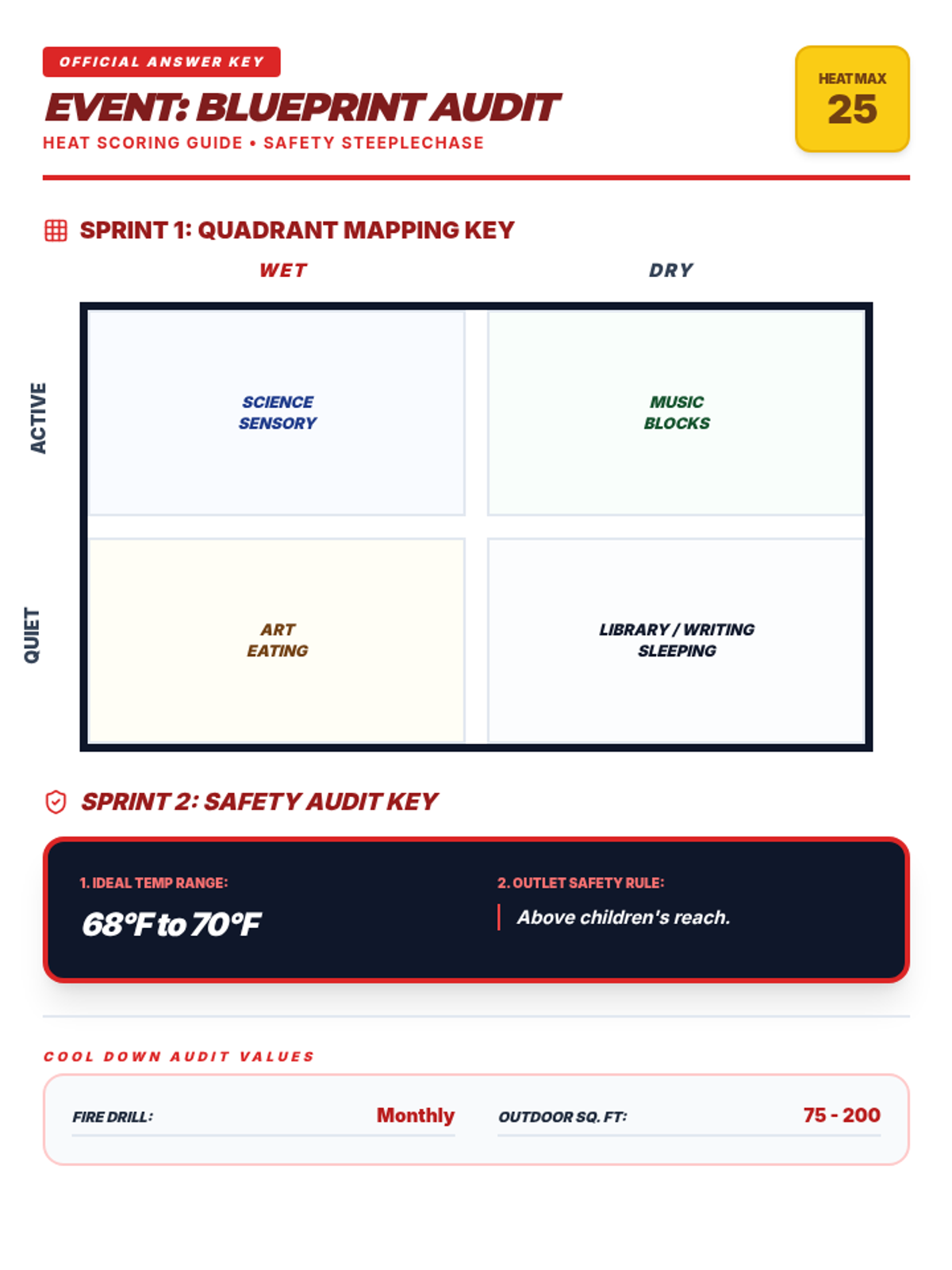
Day 3 focuses on environmental preparation and safety promotion, requiring students to apply knowledge of classroom layout and safety regulations to score points.
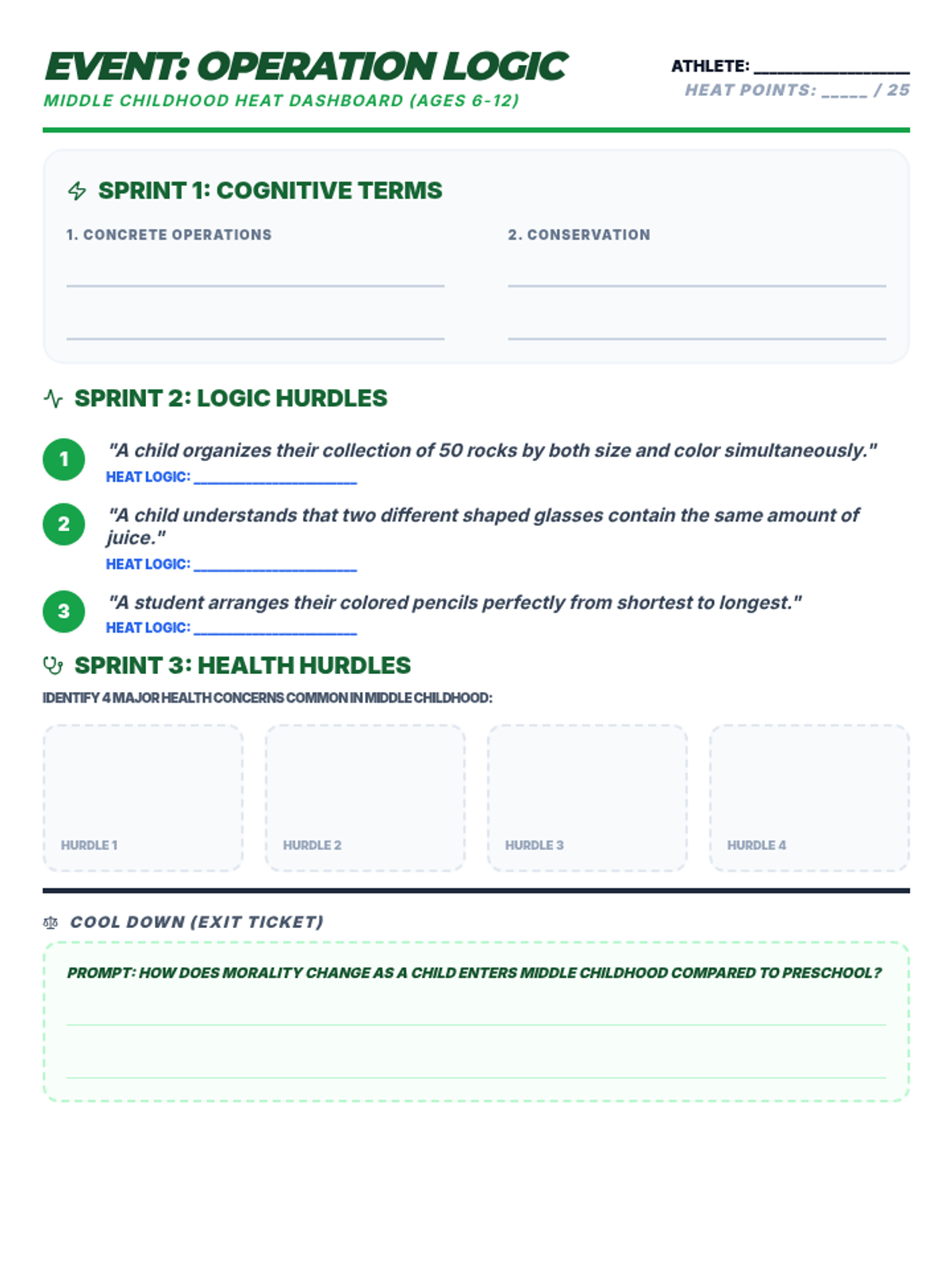
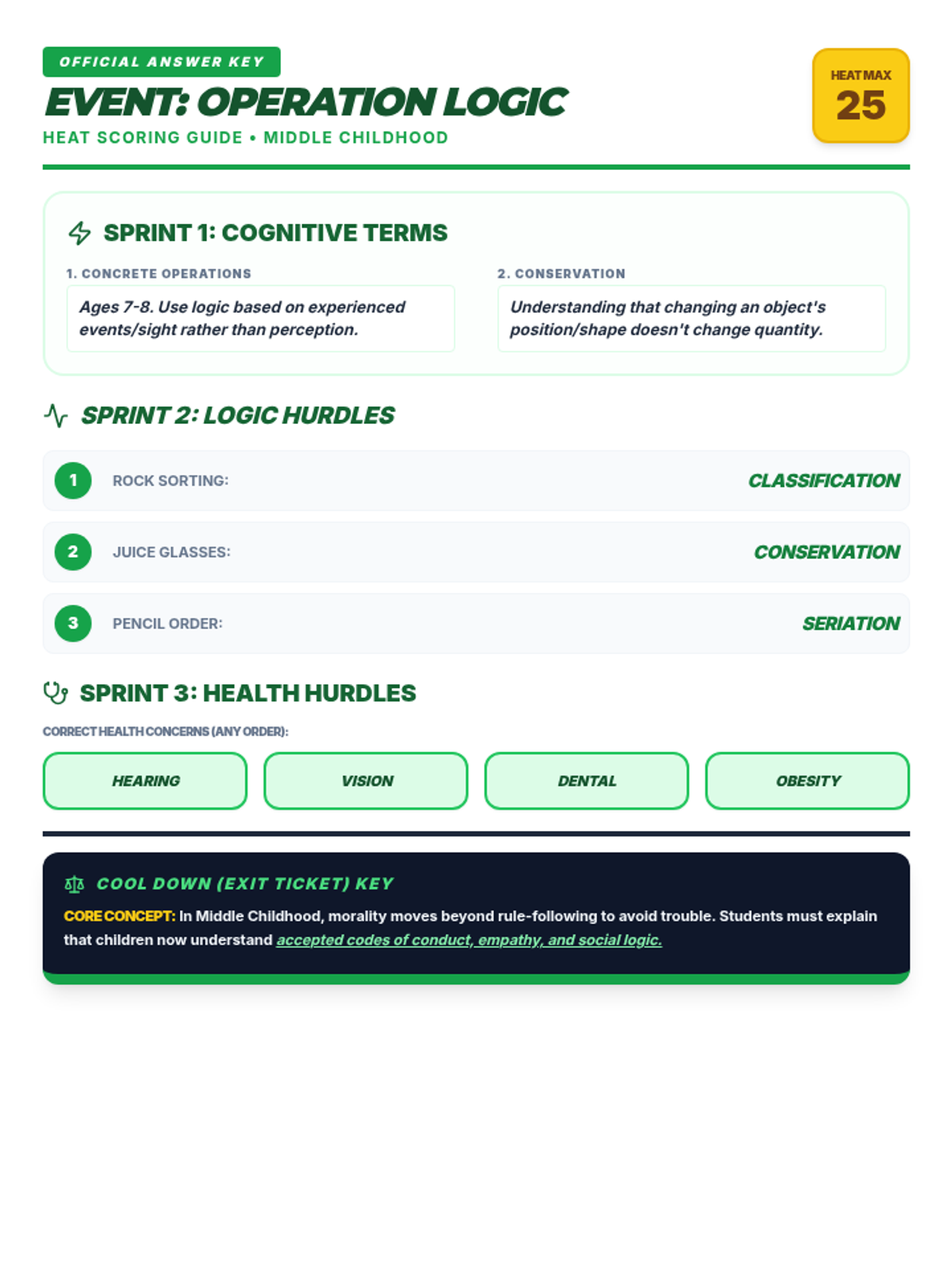
Day 2 explores middle childhood (ages 6-12), focusing on logical thinking, moral development, and the complexities of school-age social relationships.
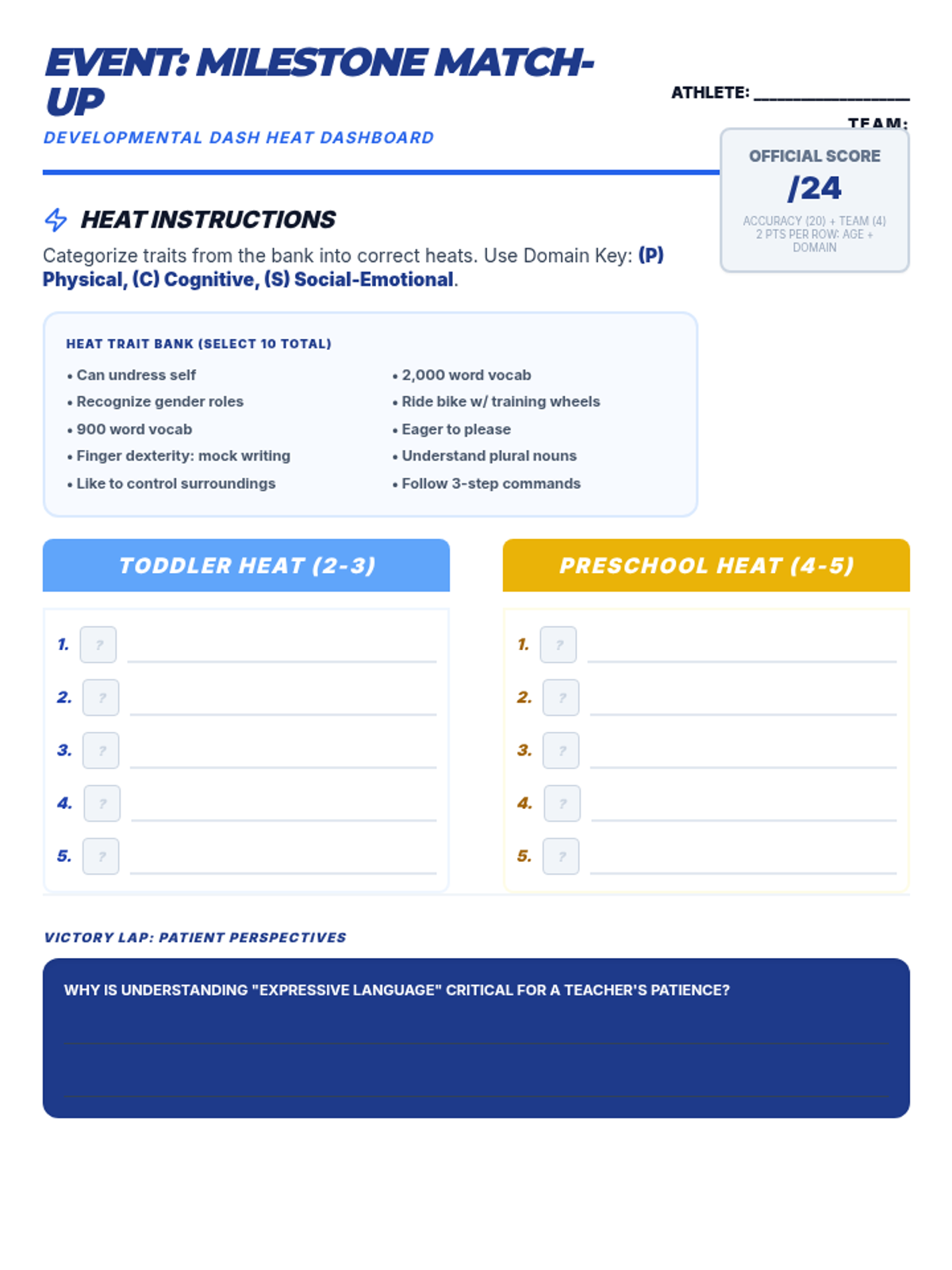
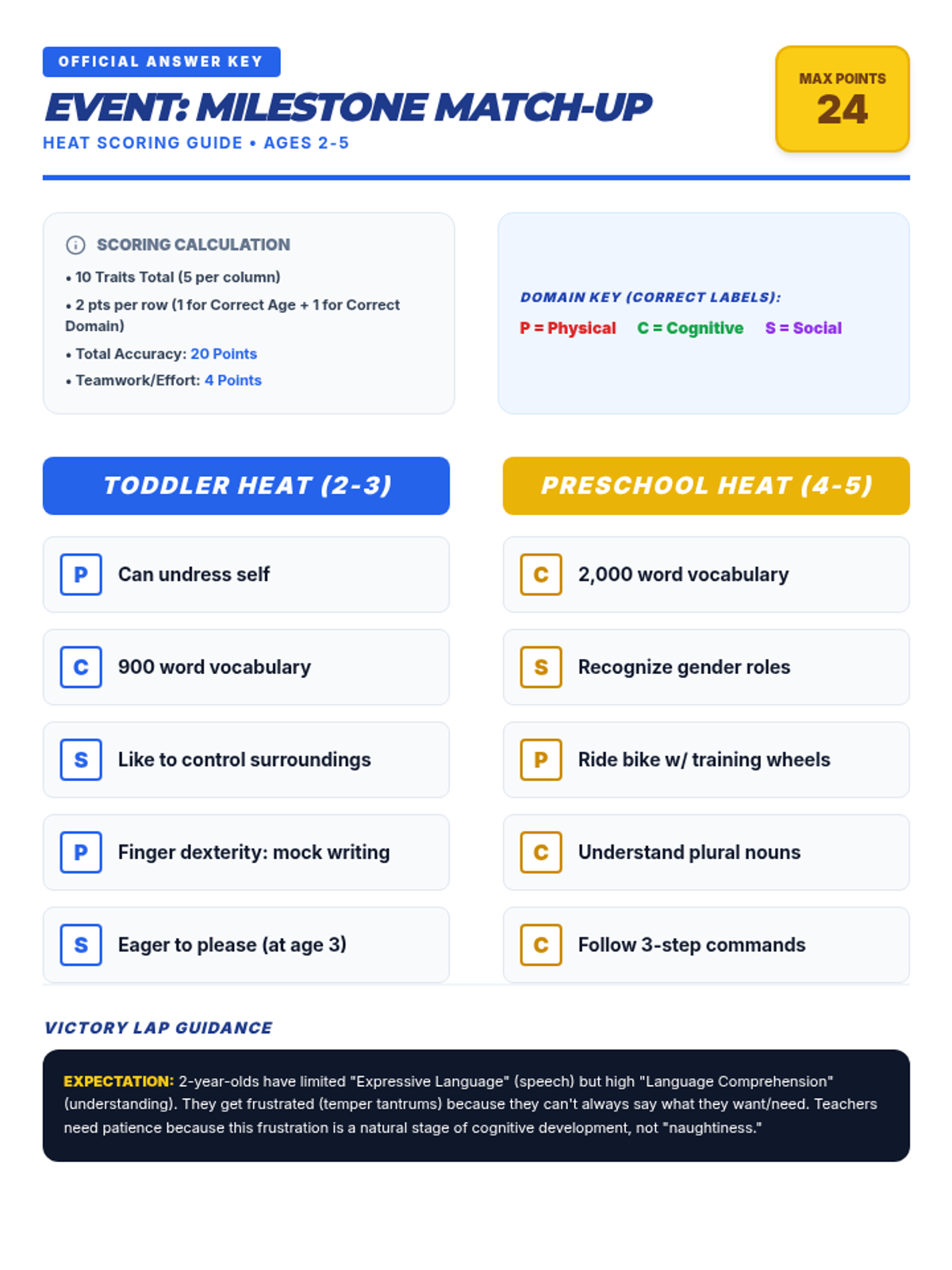
Day 1 of the Olympics focuses on the rapid development of children aged two through five, challenging students to accurately categorize physical, cognitive, and social milestones.
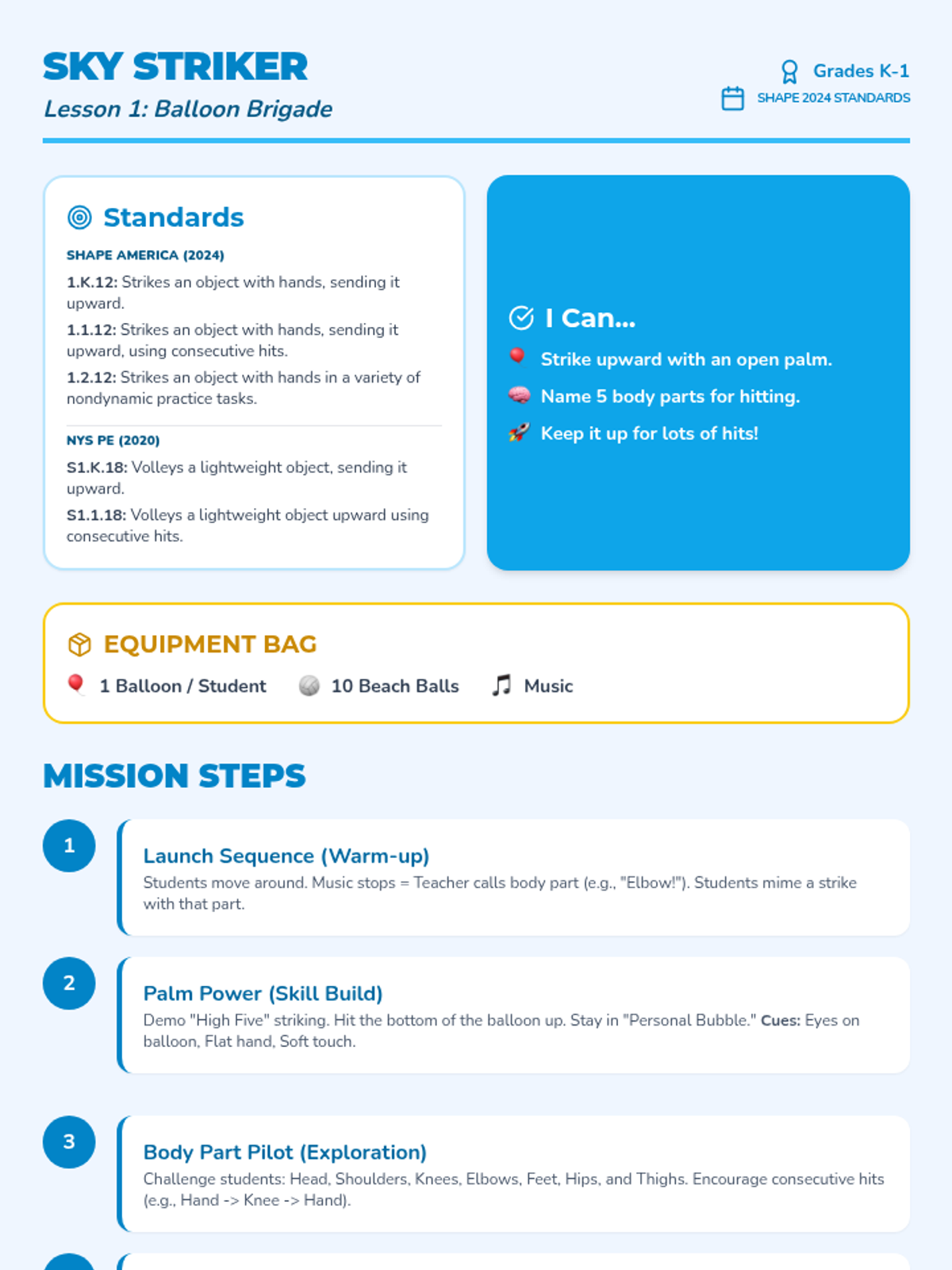
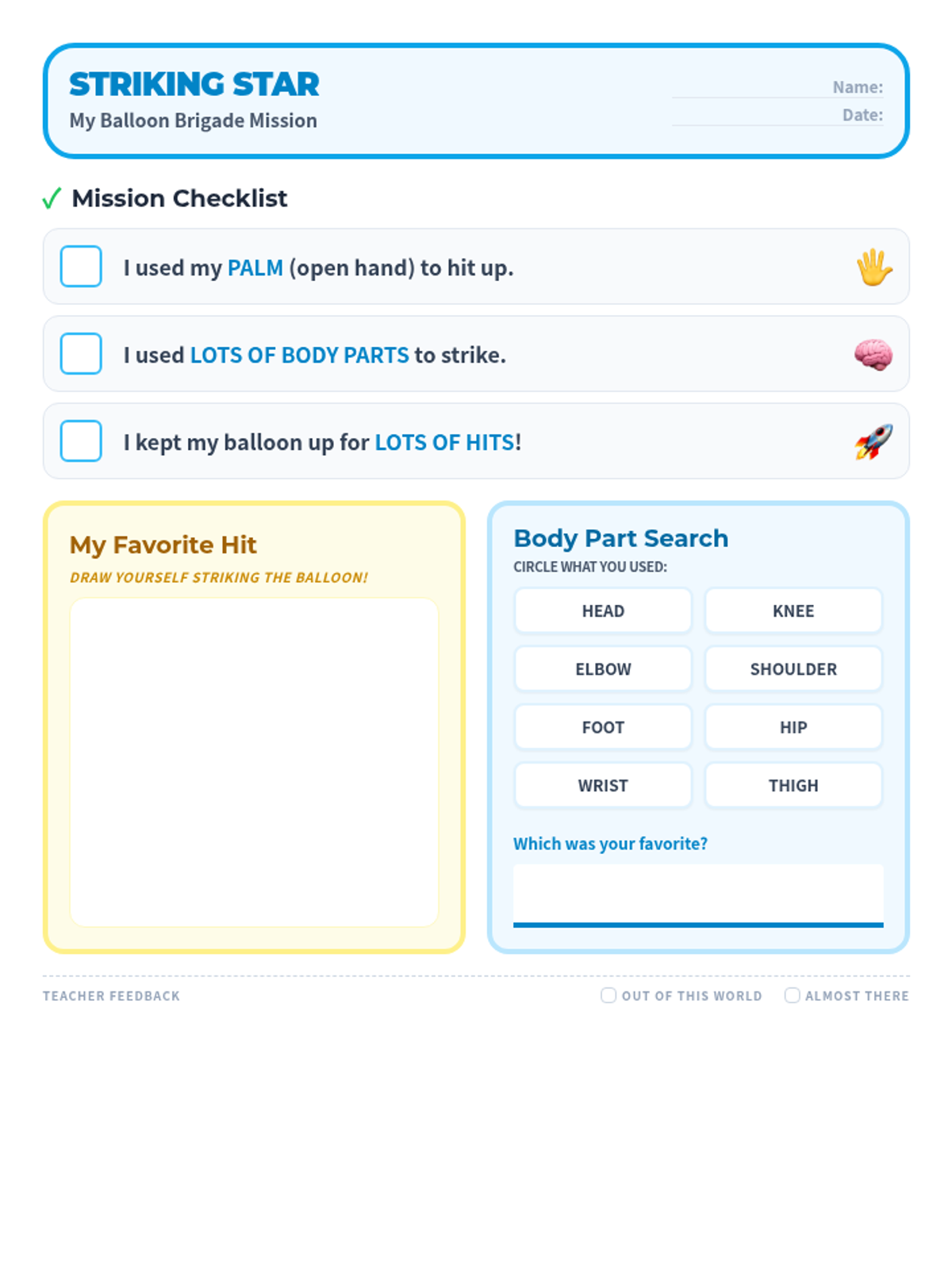
An introductory lesson where students explore striking balloons and beach balls with open palms and different body parts to develop hand-eye coordination and spatial awareness.
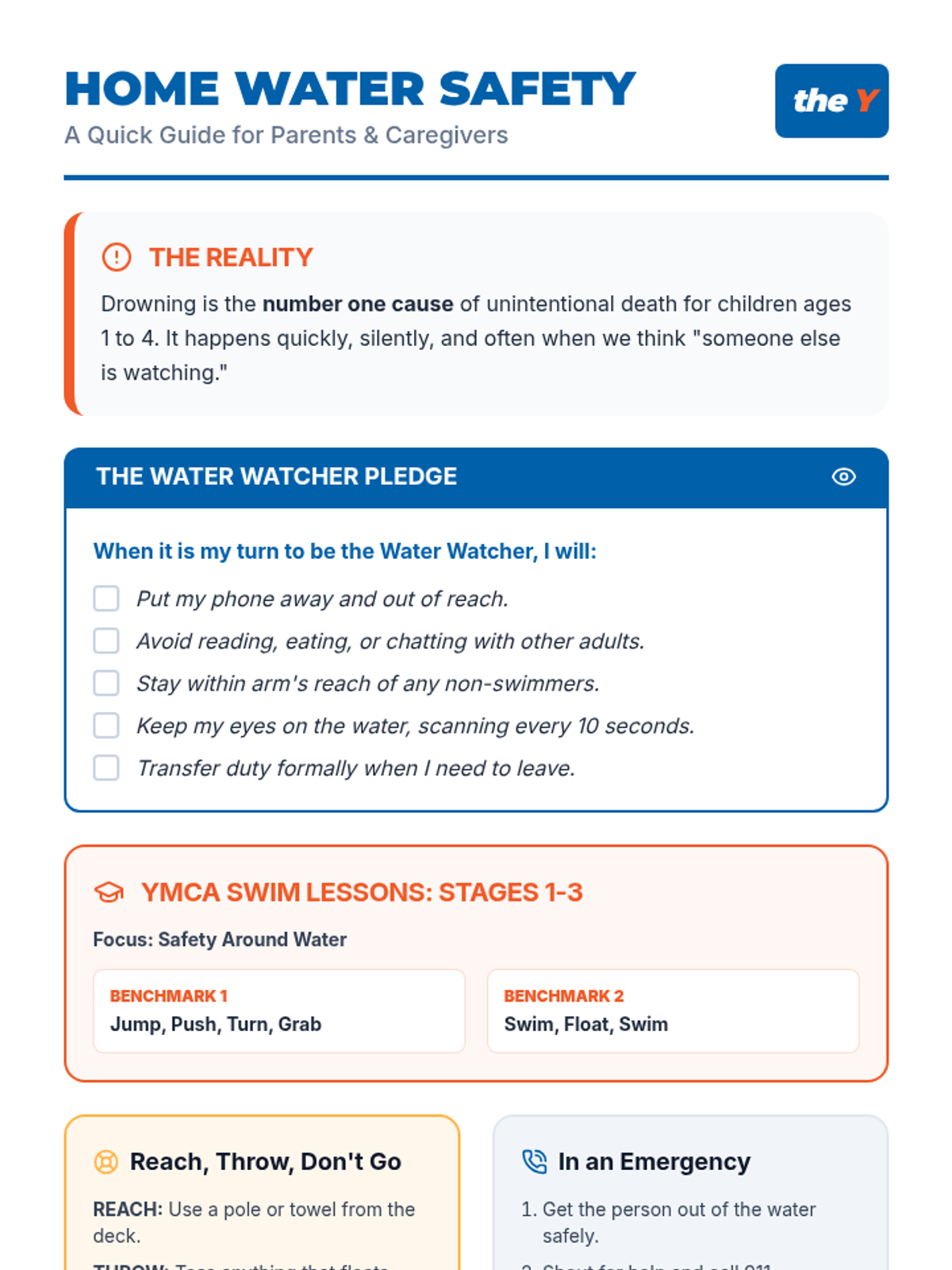
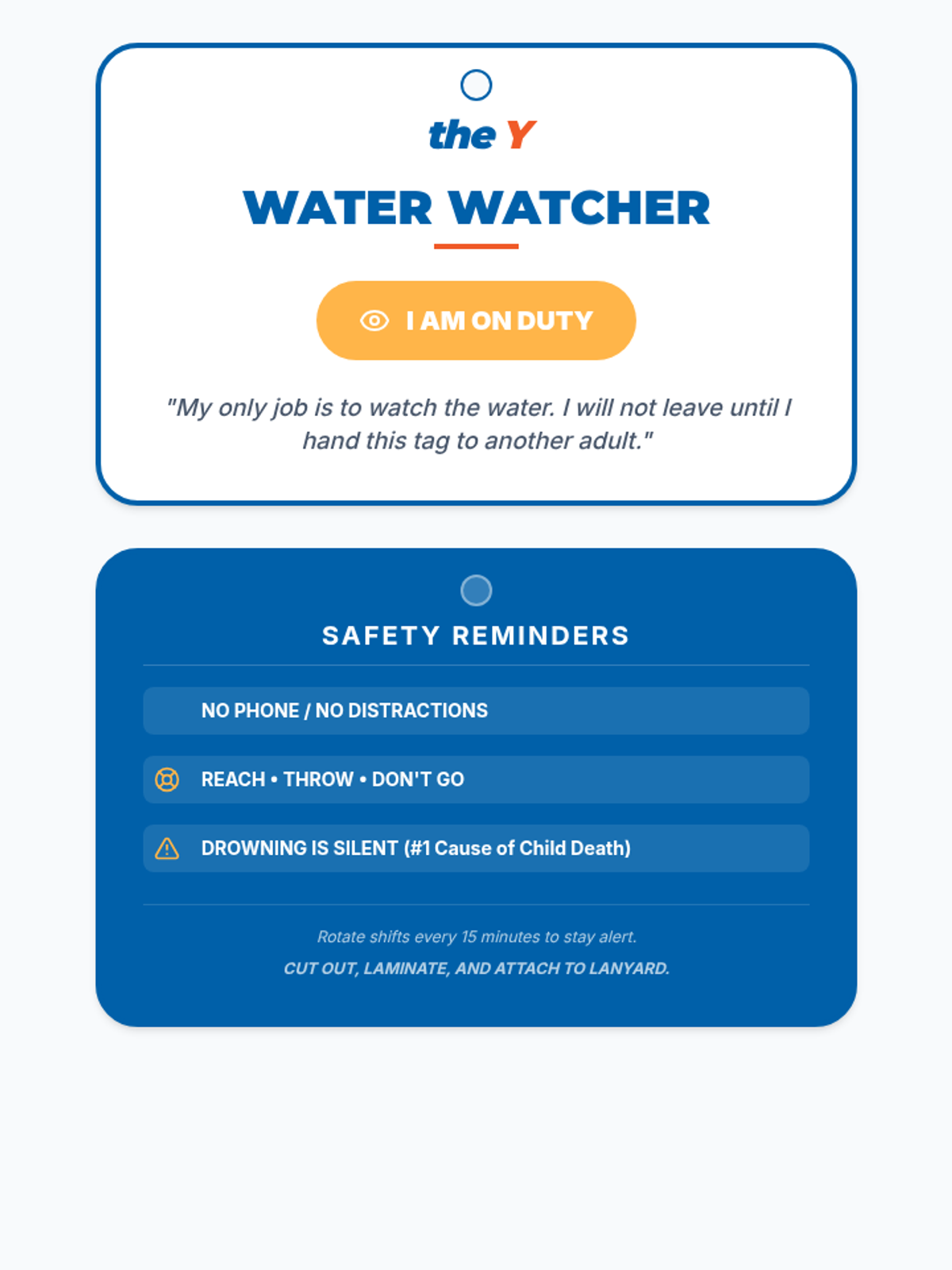
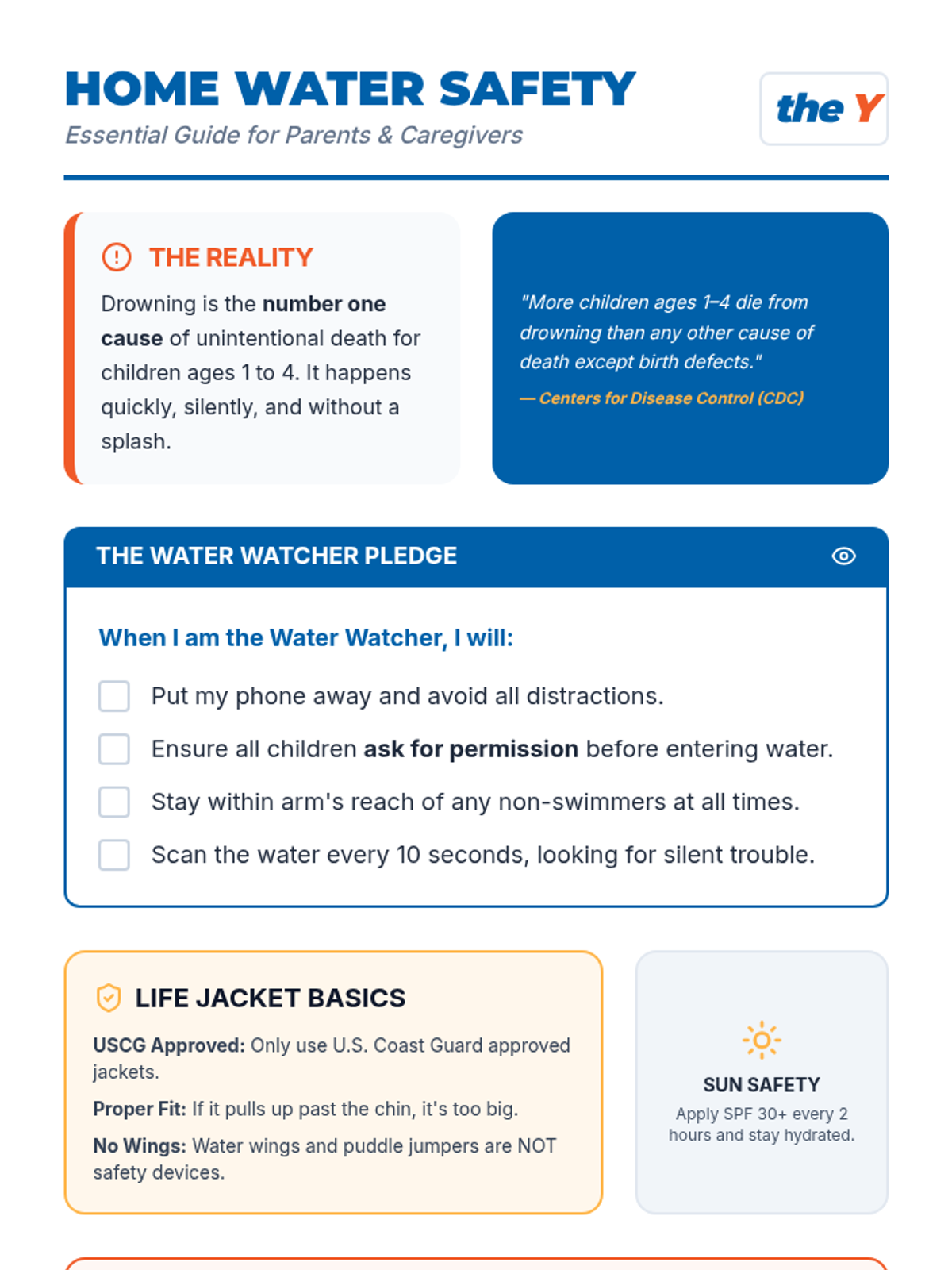
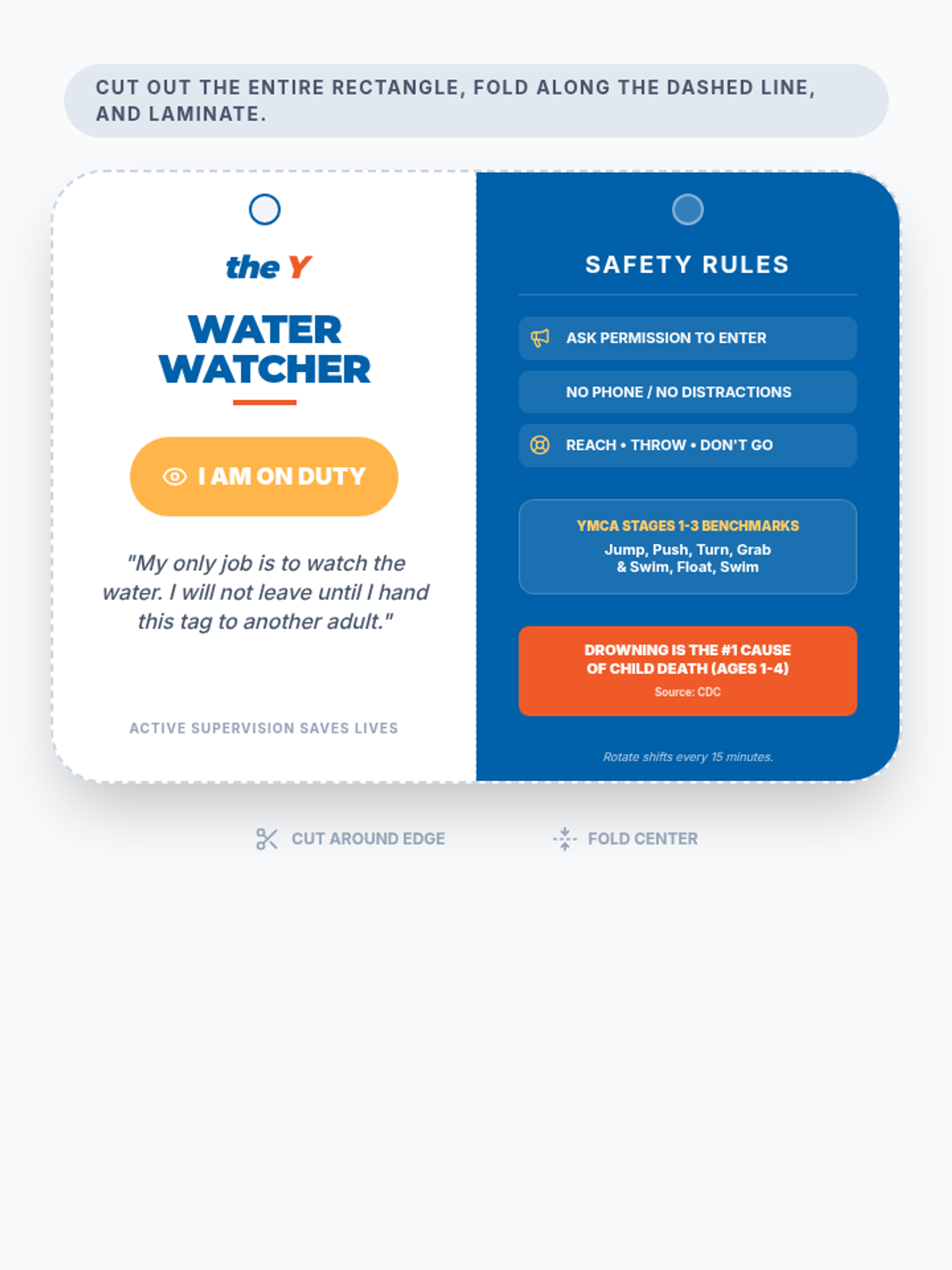
An essential water safety training for parents, covering drowning prevention statistics, active supervision strategies, and emergency response basics using YMCA safety standards.
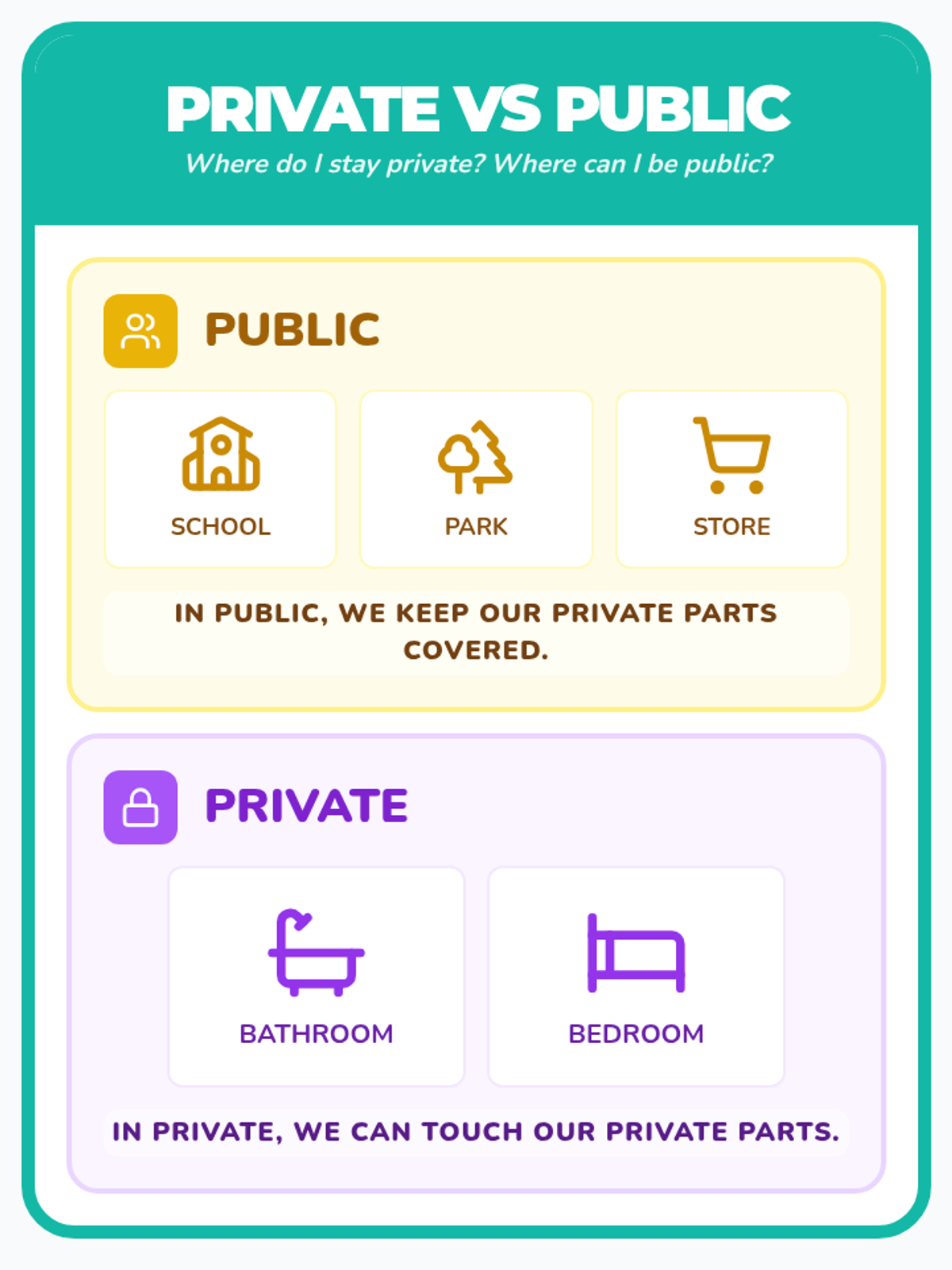
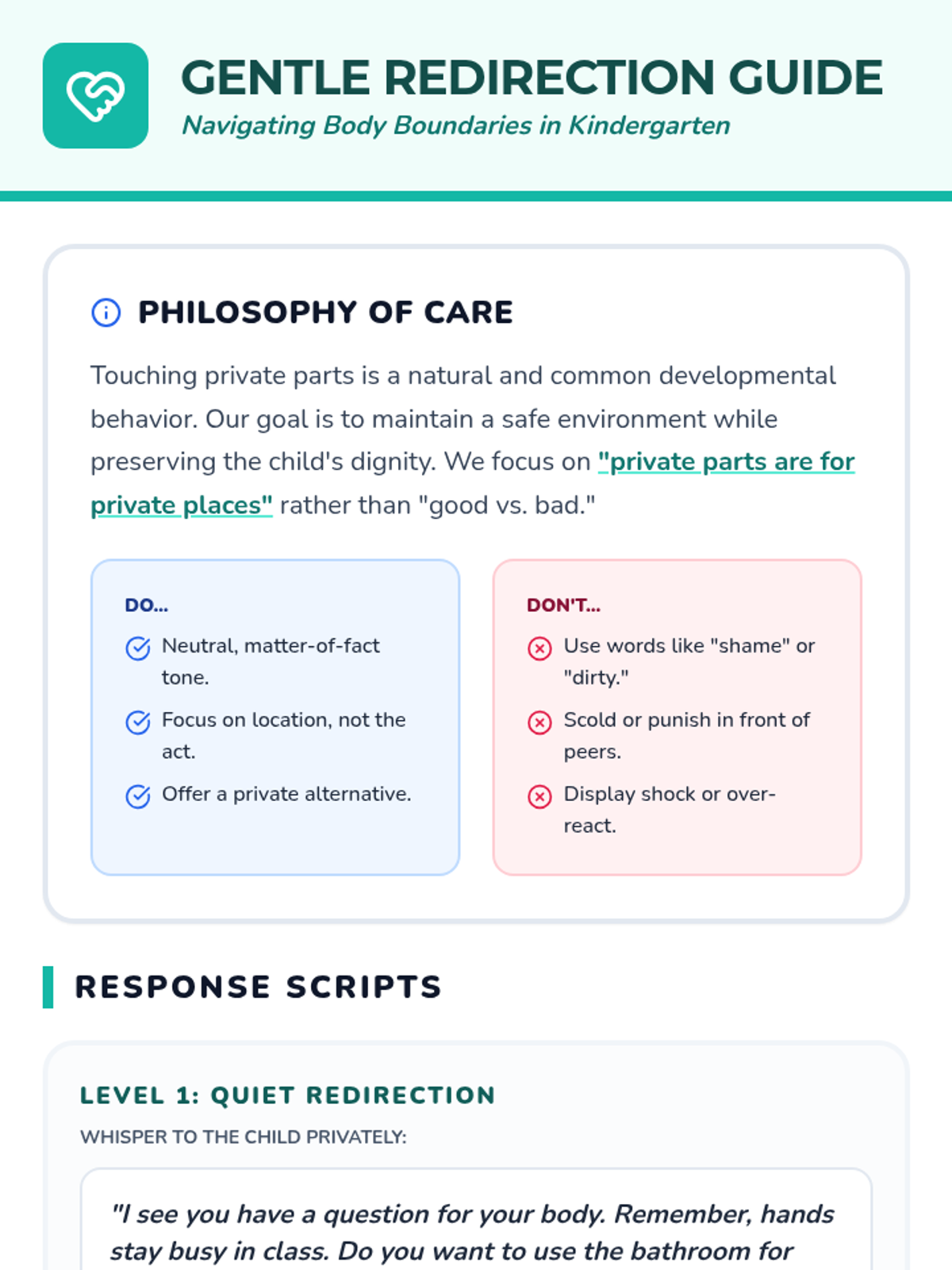
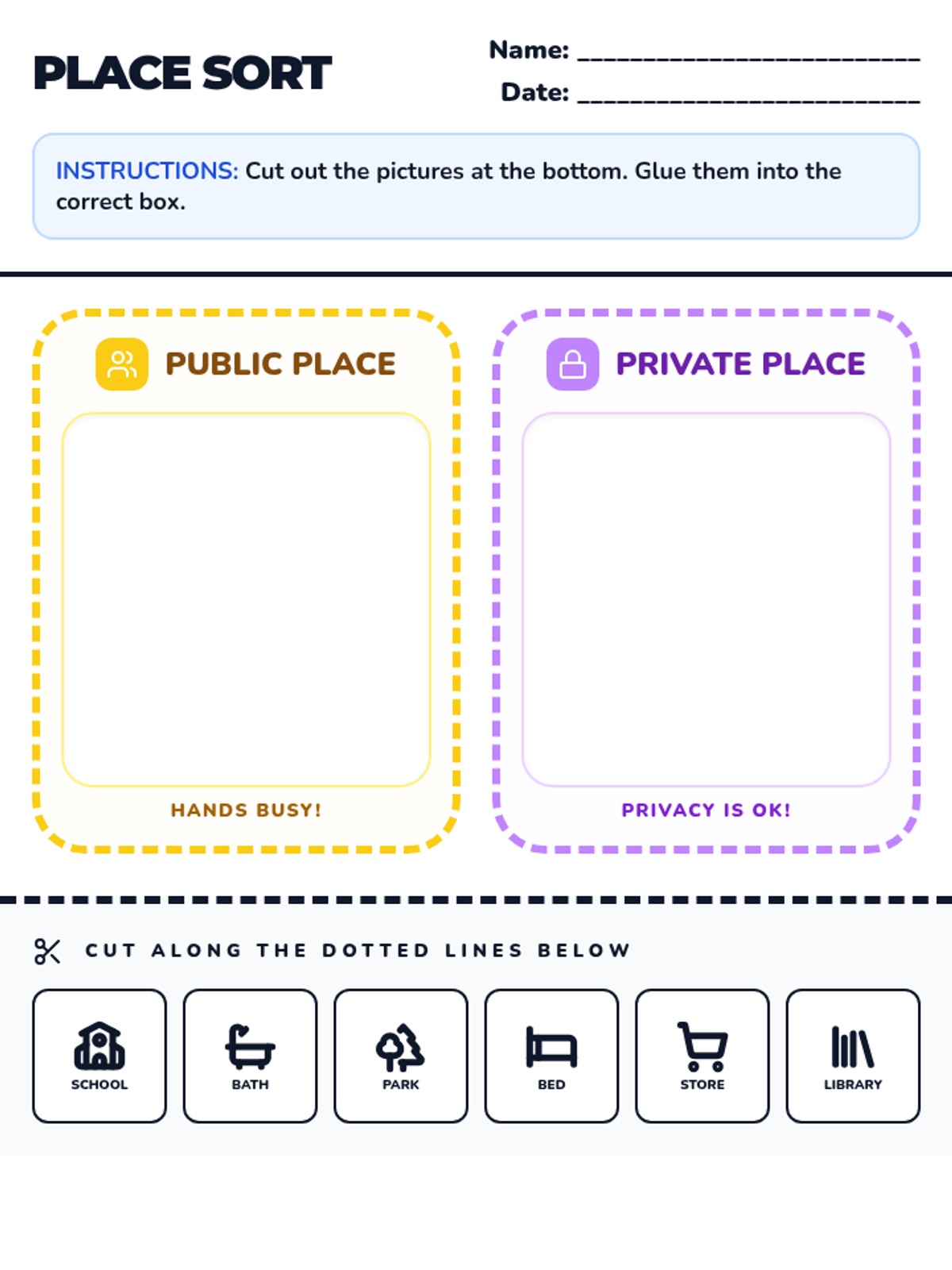
This lesson introduces the concept of private parts and private places through a social story and interactive sorting activity.