A challenging vocabulary activity focused on the Boston Bruins hockey team, including current roster players and essential hockey terminology. Students will identify key figures and concepts while navigating a complex grid.
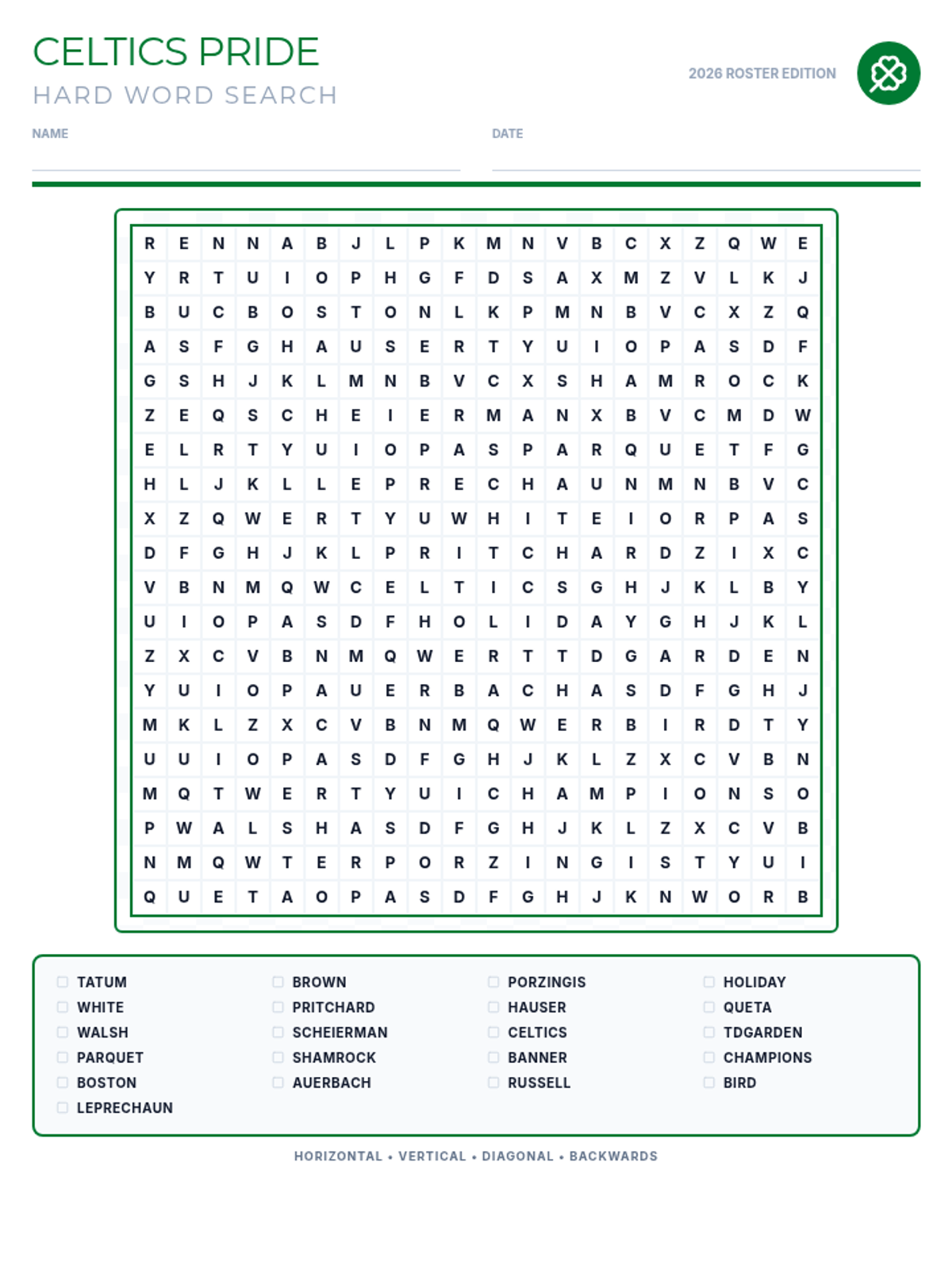
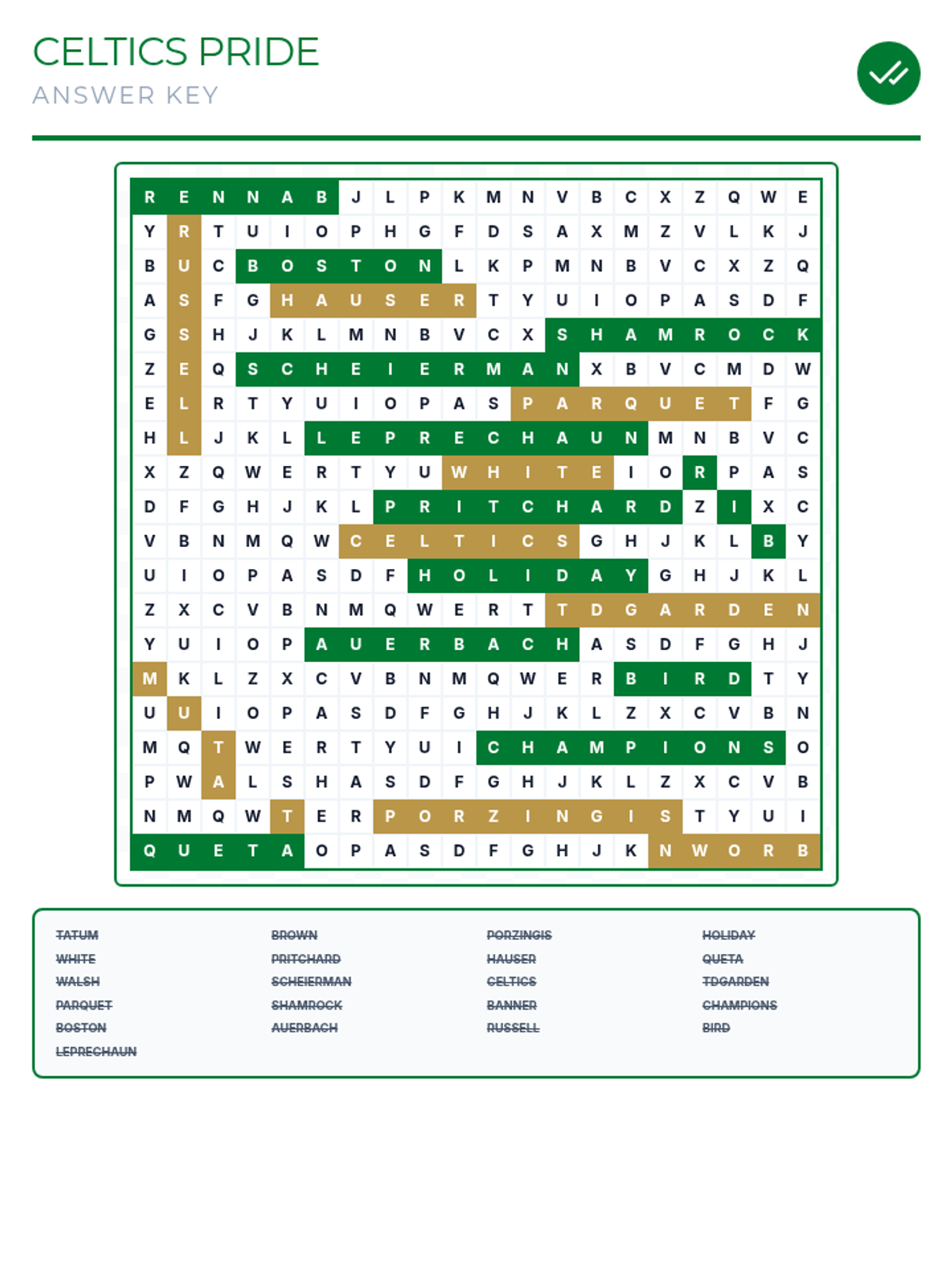
A challenging word search activity focused on the Boston Celtics, featuring 2026 roster players and franchise terminology.
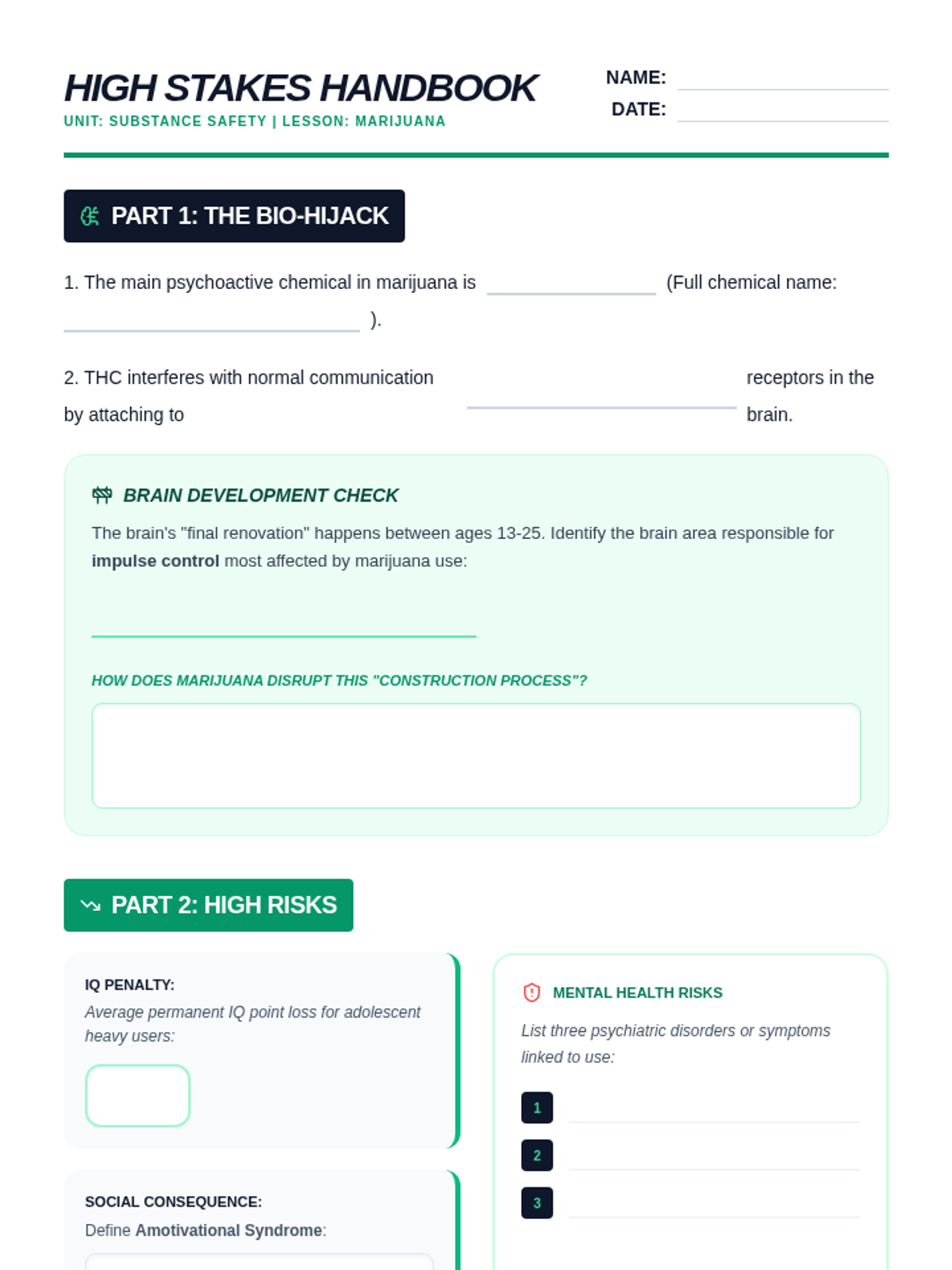
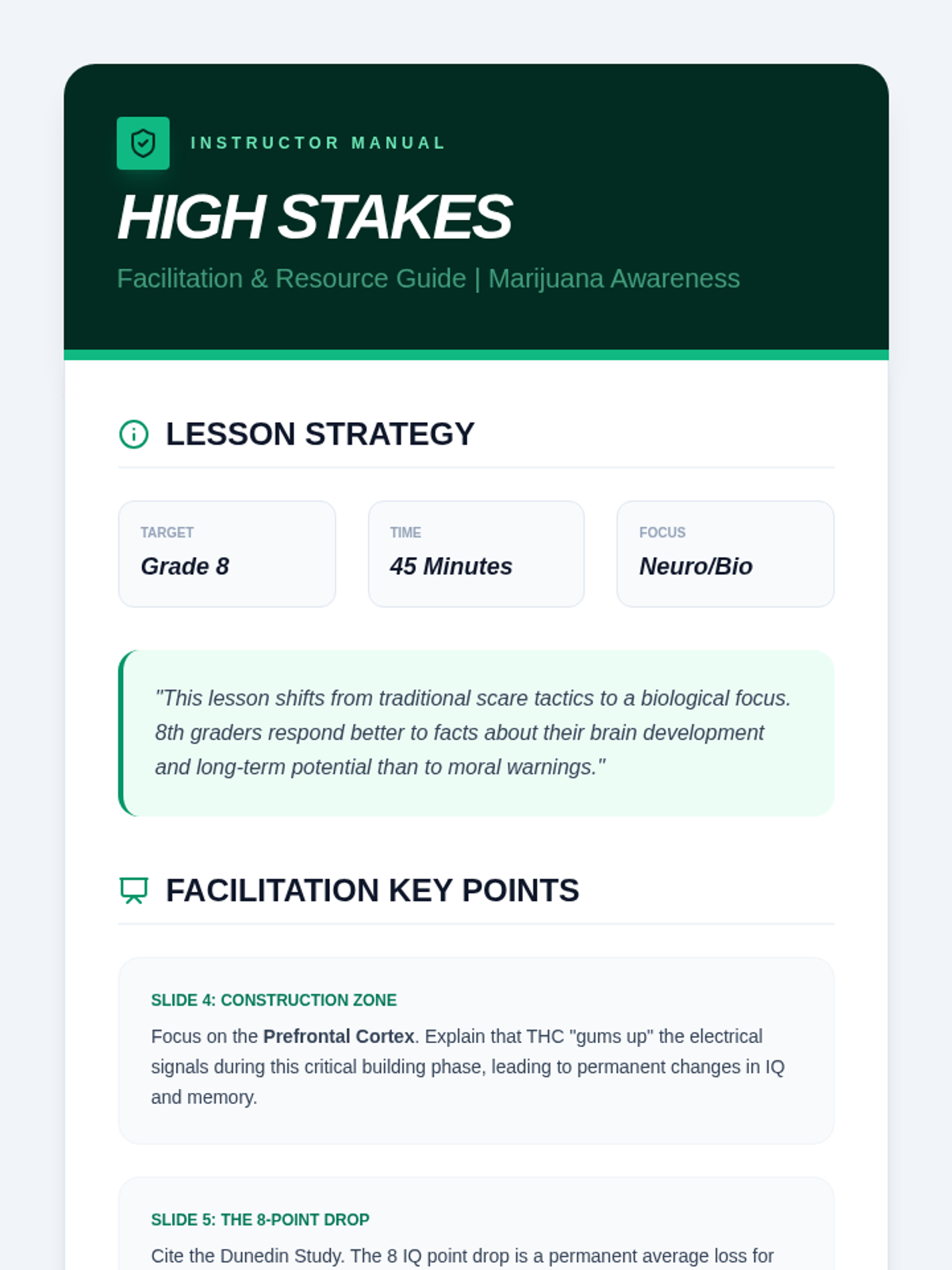
An in-depth exploration of marijuana for 8th graders, focusing on THC's impact on the developing brain, academic performance, and mental health risks.
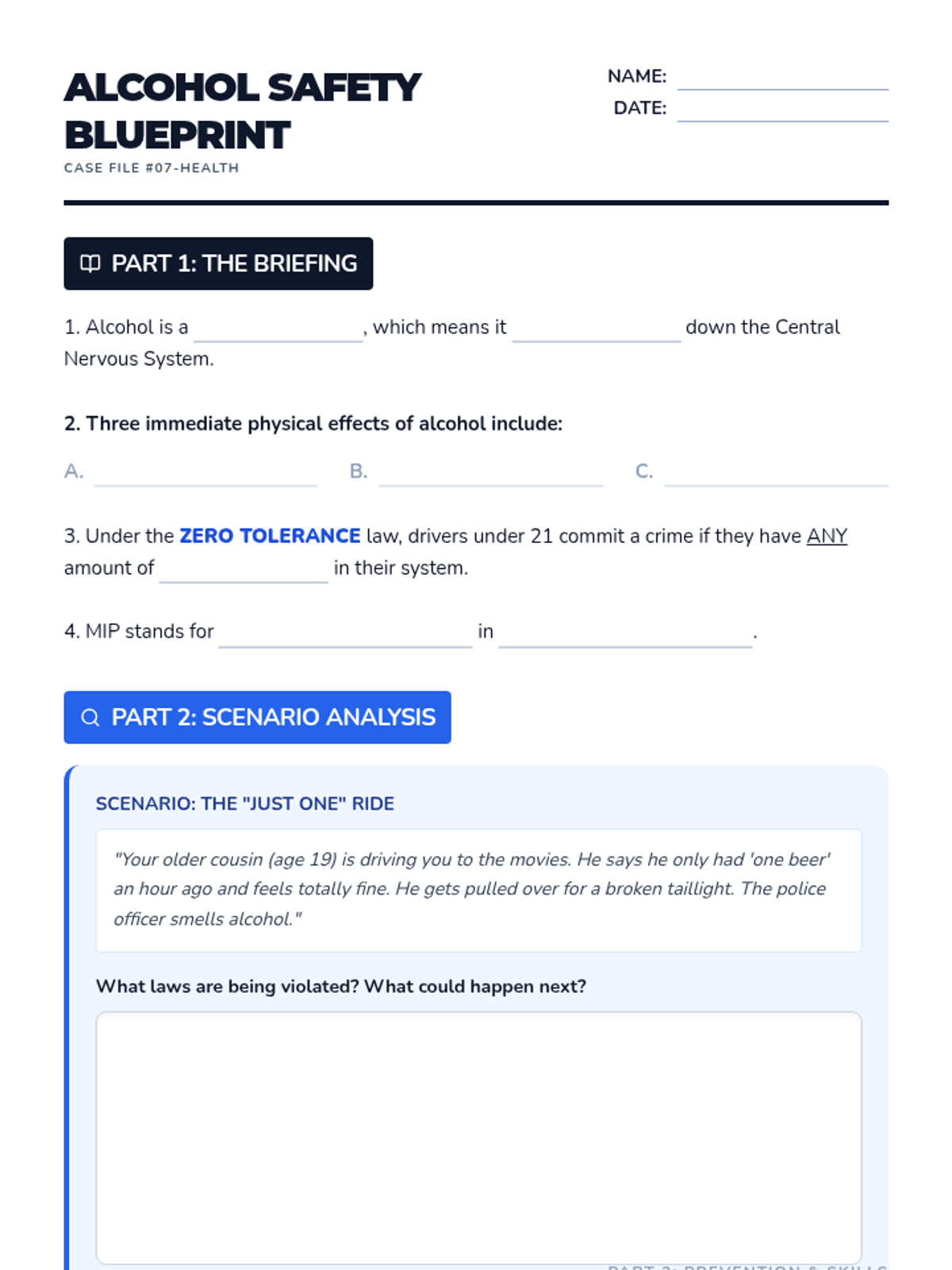
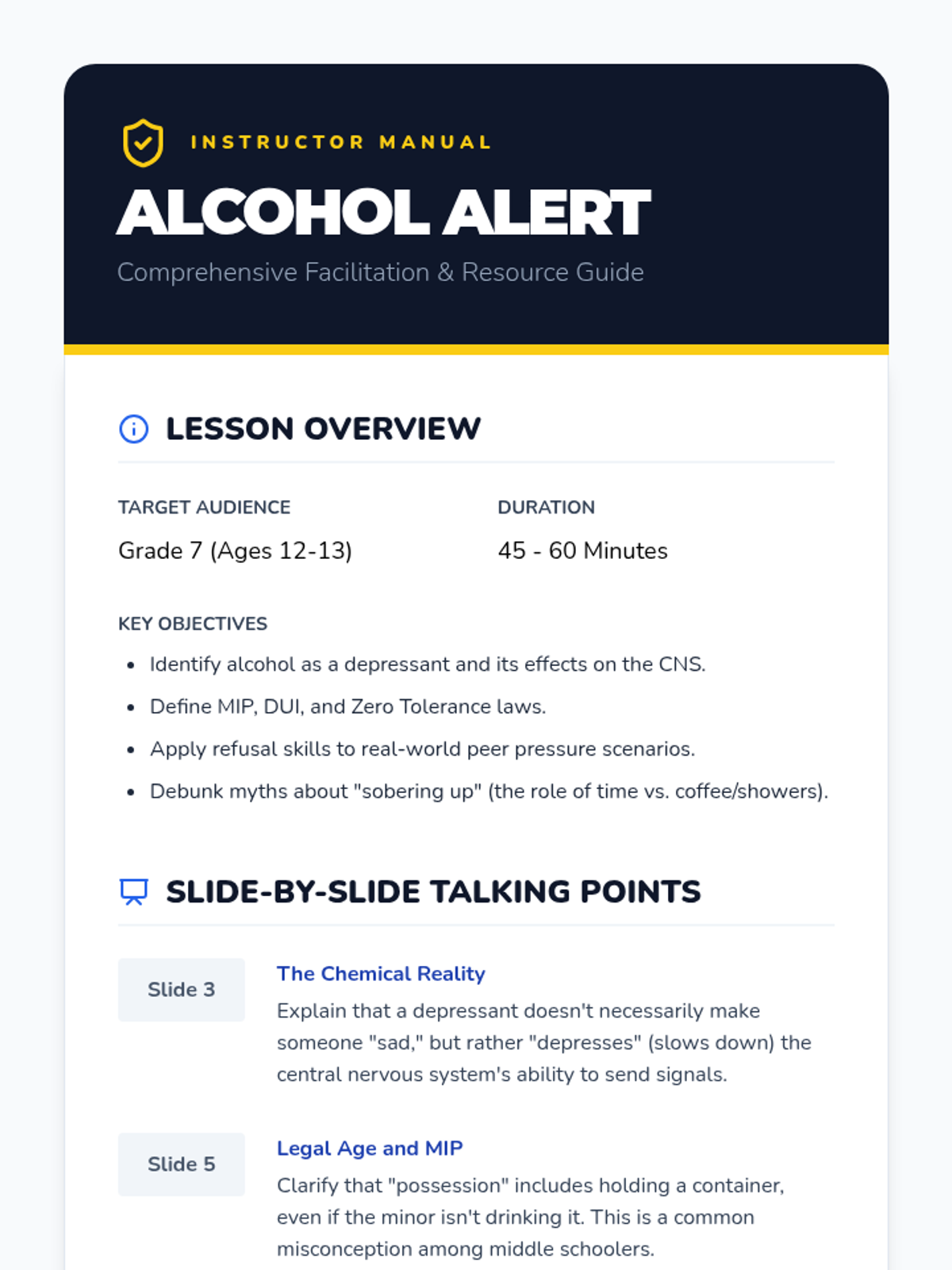
A comprehensive introduction to alcohol safety and laws for 7th graders, focusing on physical effects, legal consequences, and refusal skills.
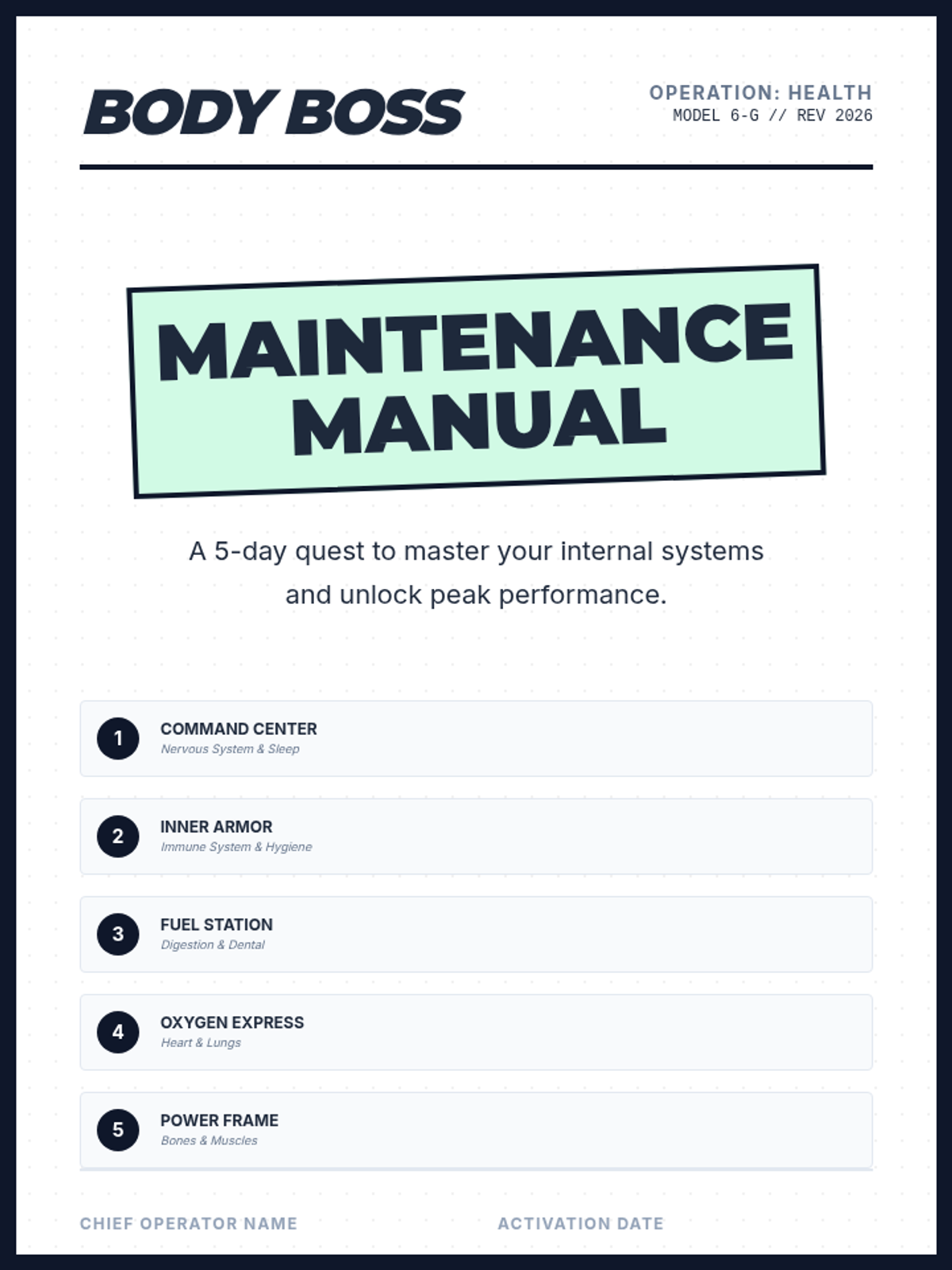
Learning about the skeletal and muscular systems, focusing on posture, growth, and proper care of the body's frame.
Understanding the circulatory and respiratory systems and how physical activity and clean air keep the transport team running smoothly.
Exploring the digestive system and the importance of dental hygiene as the starting point for fueling the body.
Focusing on the immune system and the vital role of hygiene in maintaining the body's natural defenses against germs.
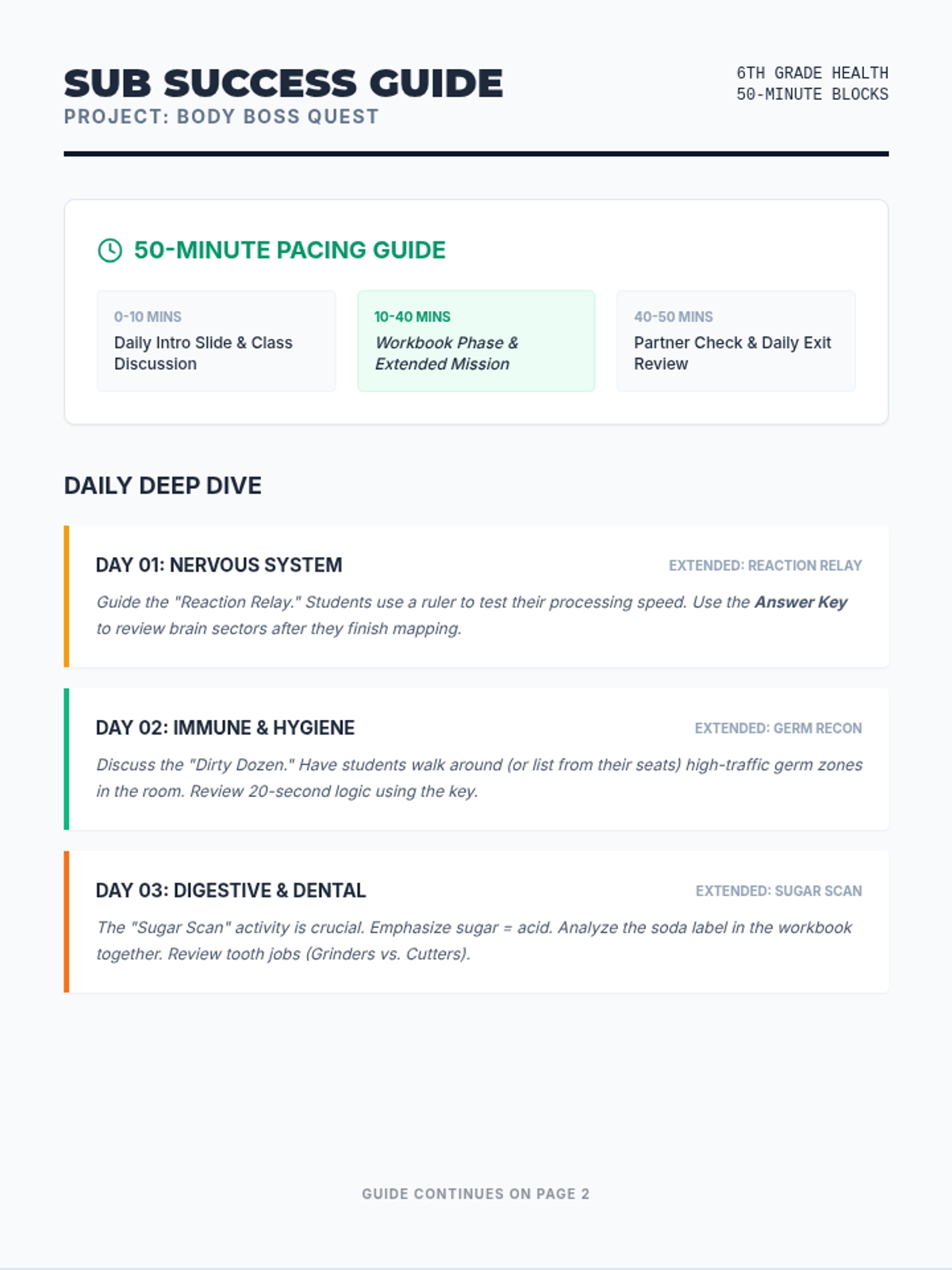
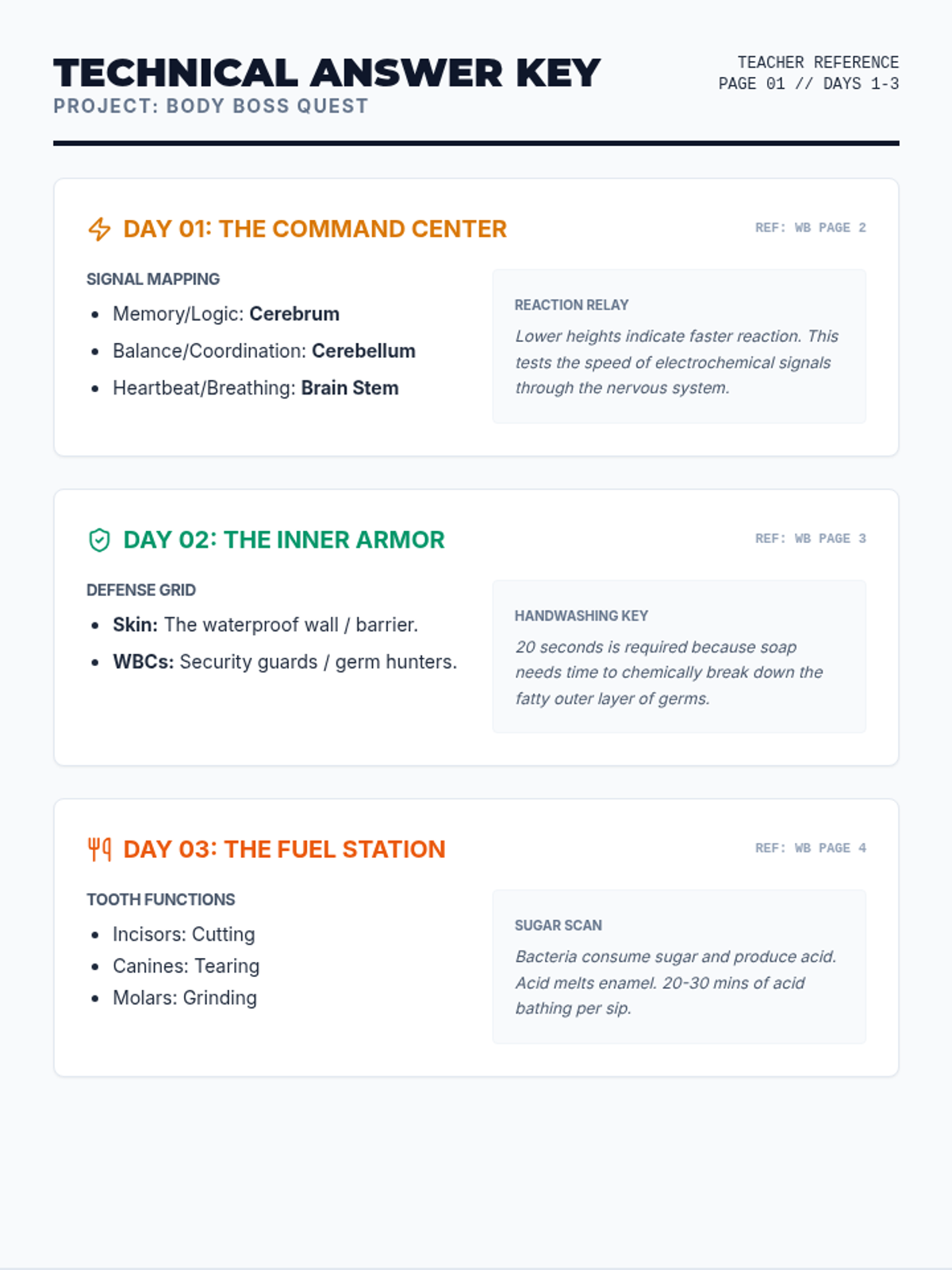
An introduction to the brain and nervous system, focusing on how sleep and rest act as 'system reboots' for the body's command center.
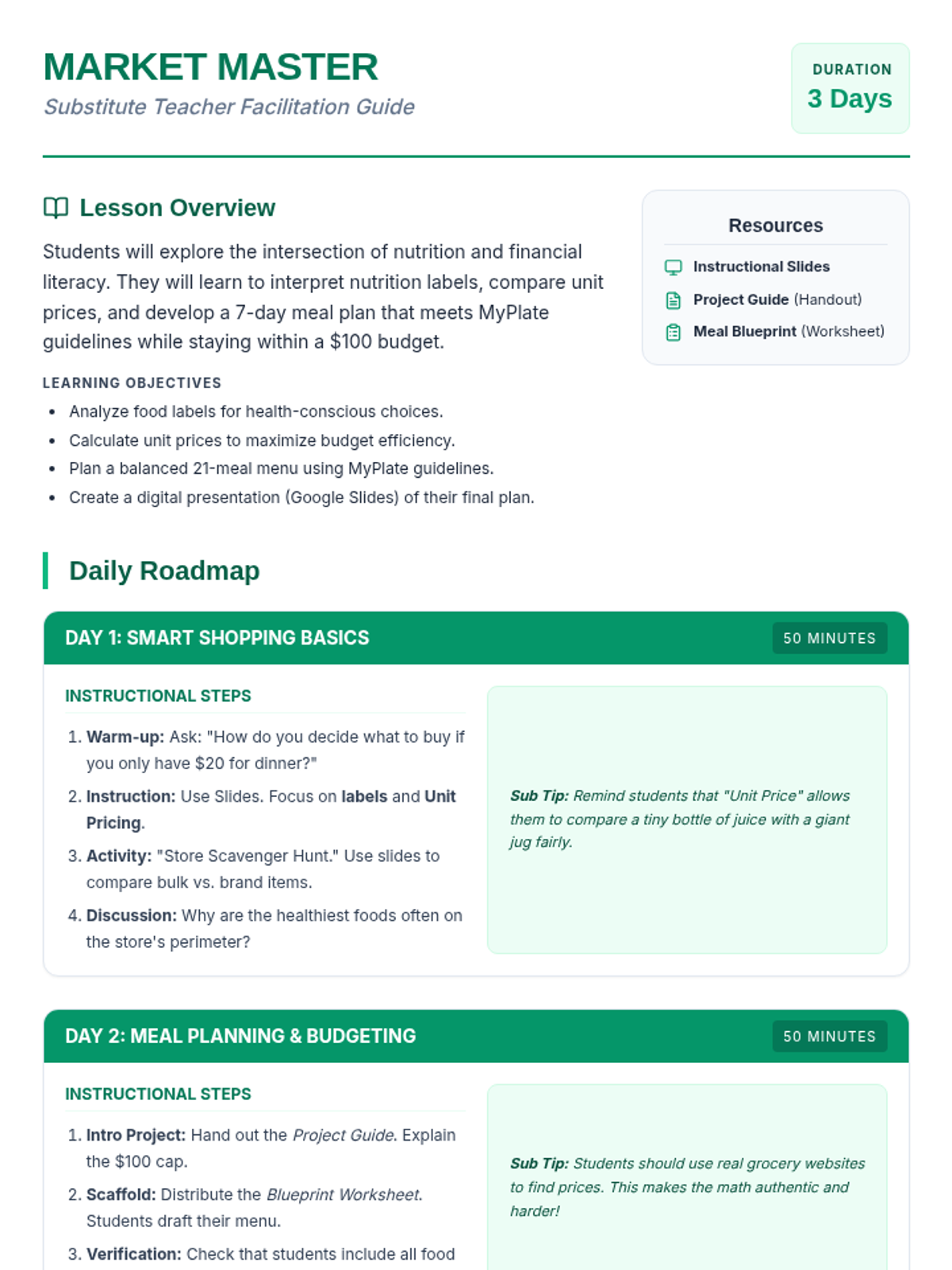
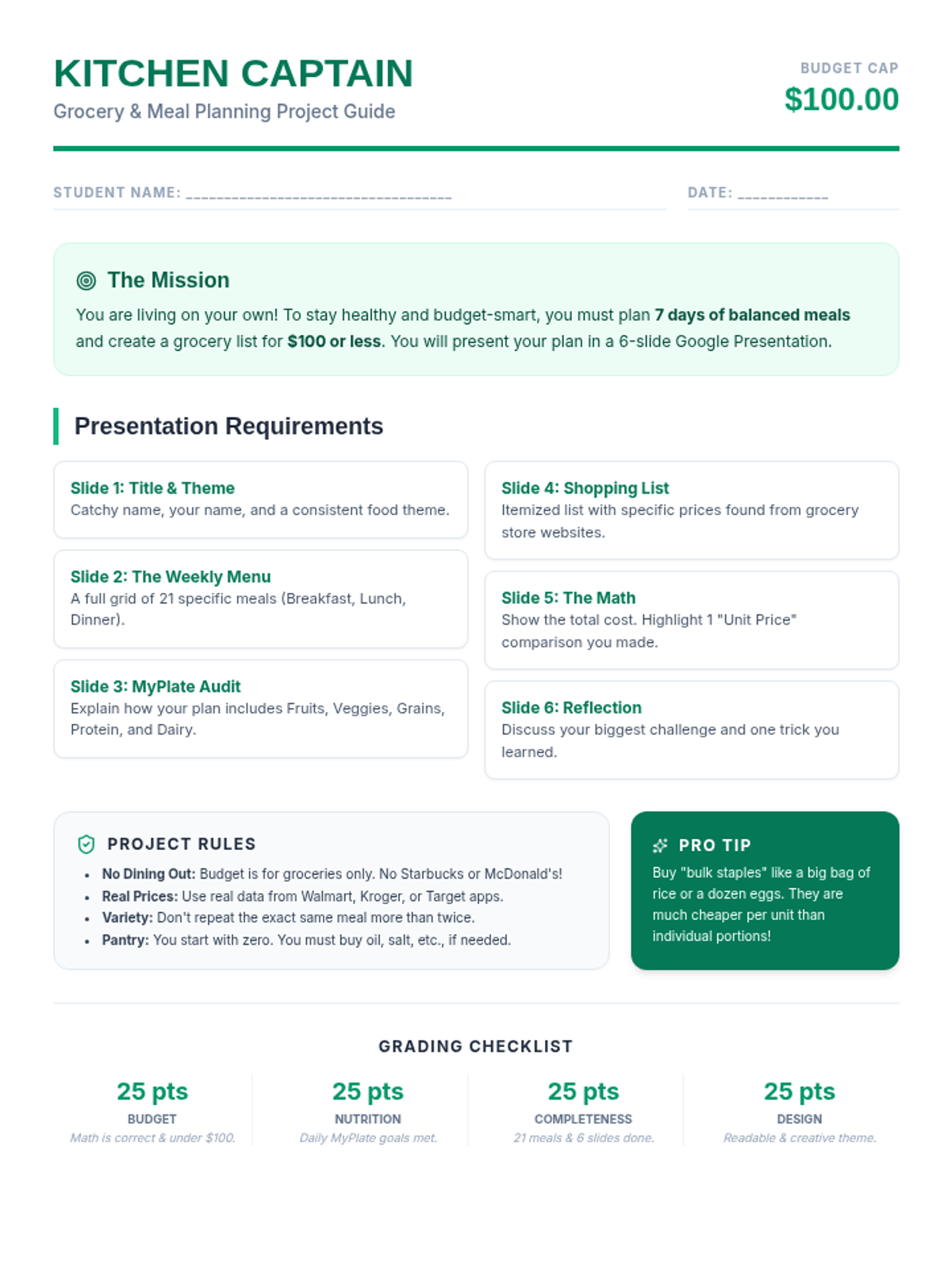
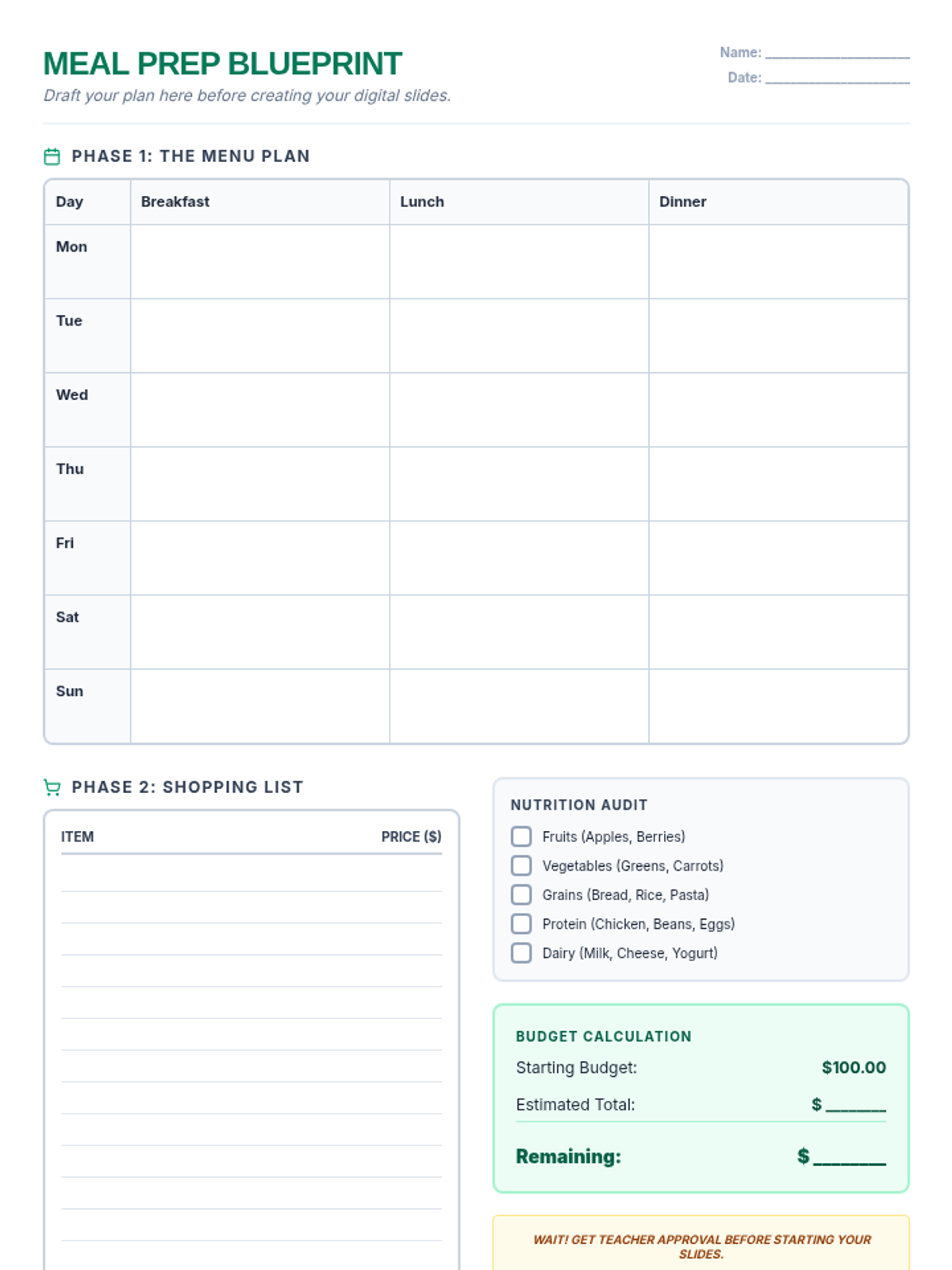
A comprehensive 3-day health lesson teaching students how to balance nutritional needs with a budget through meal planning and smart grocery shopping.
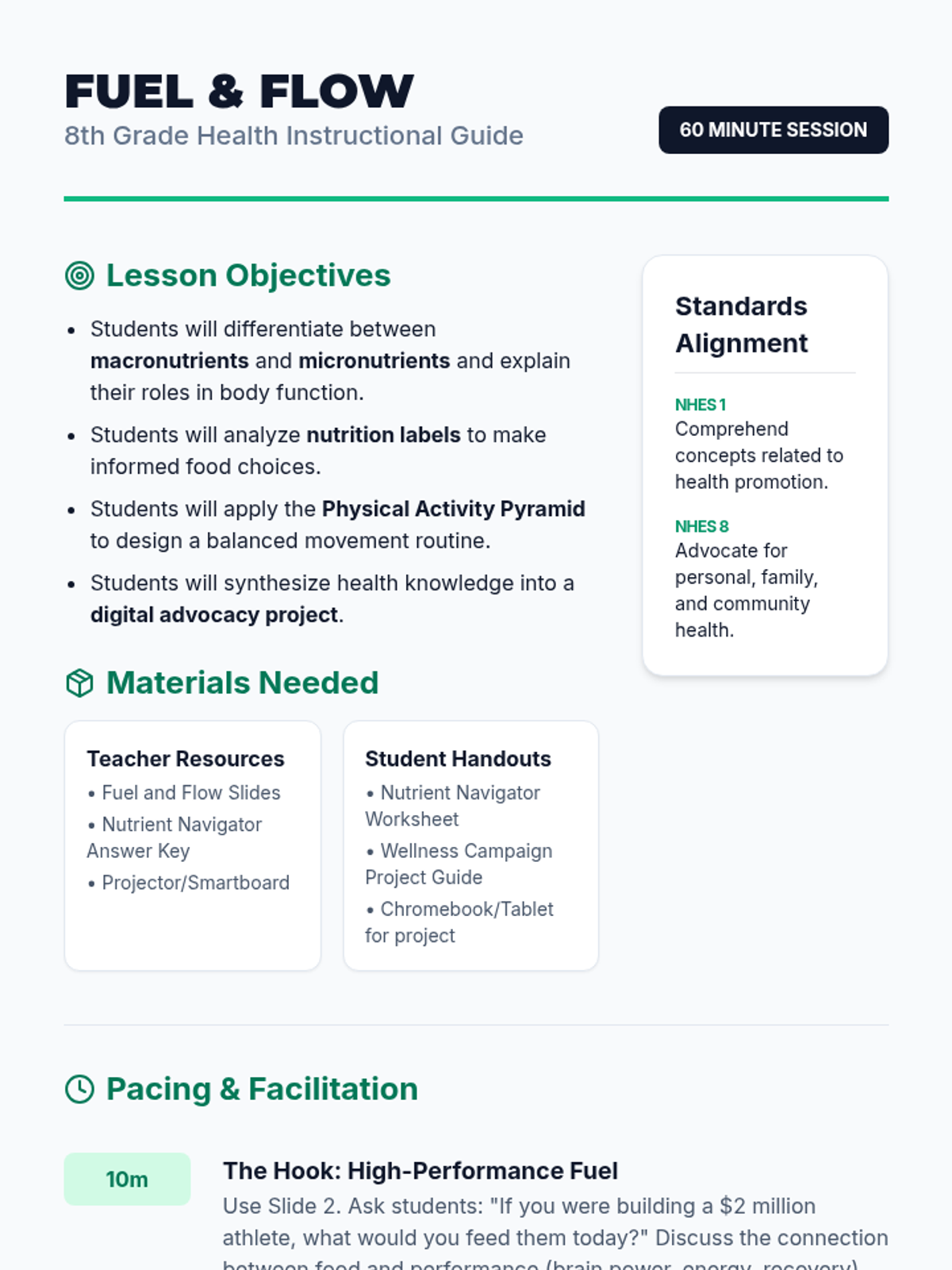
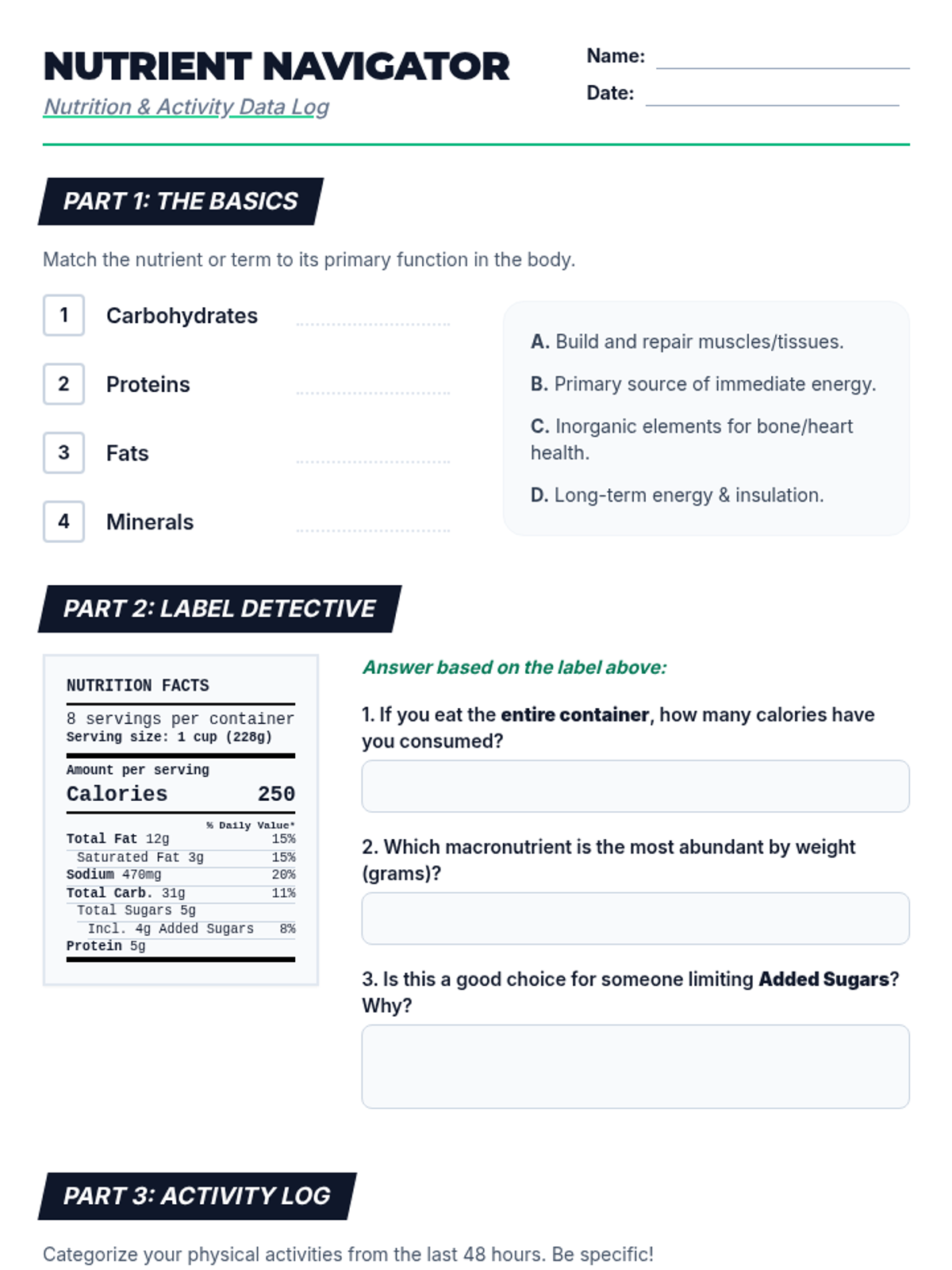
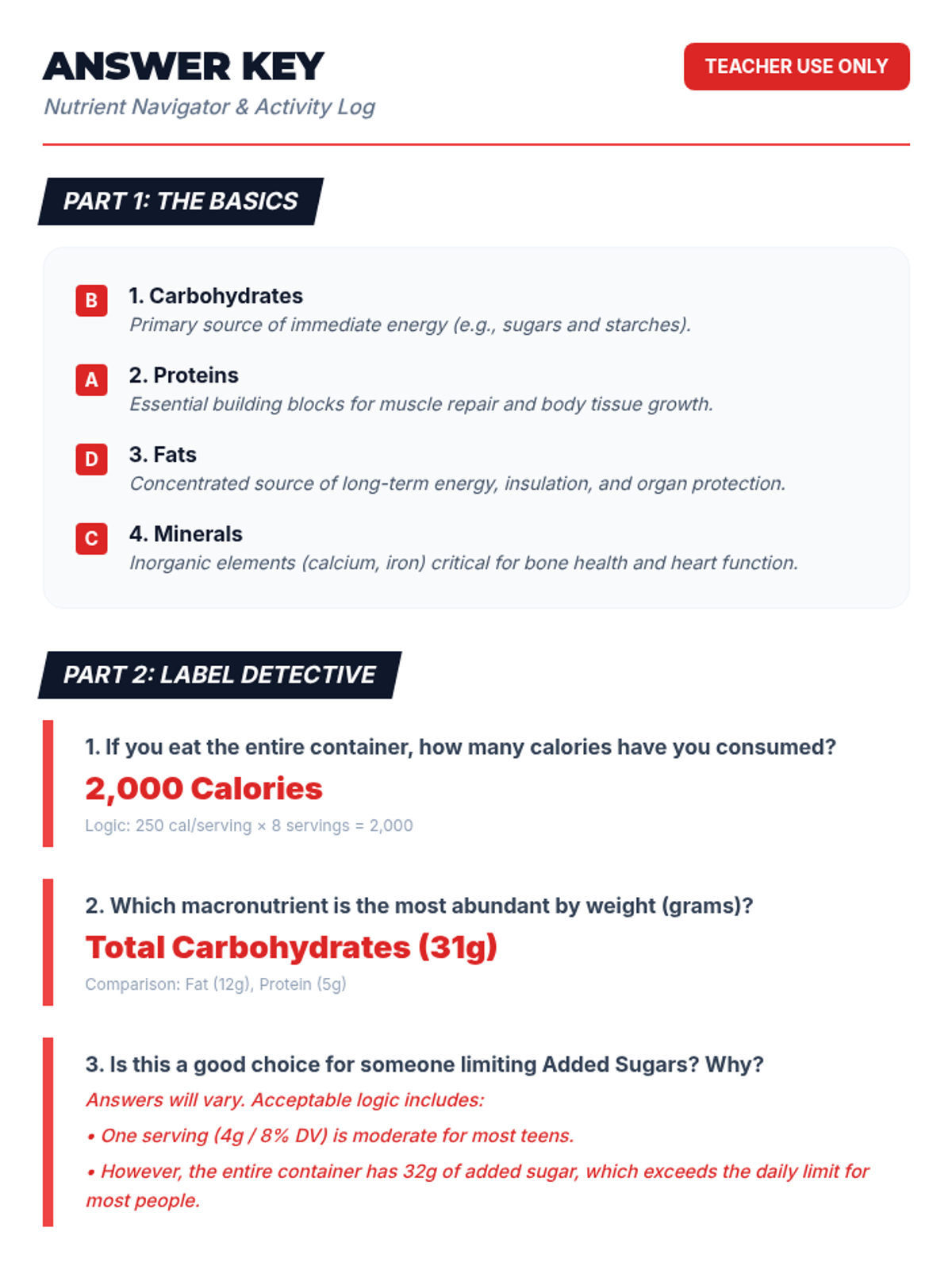
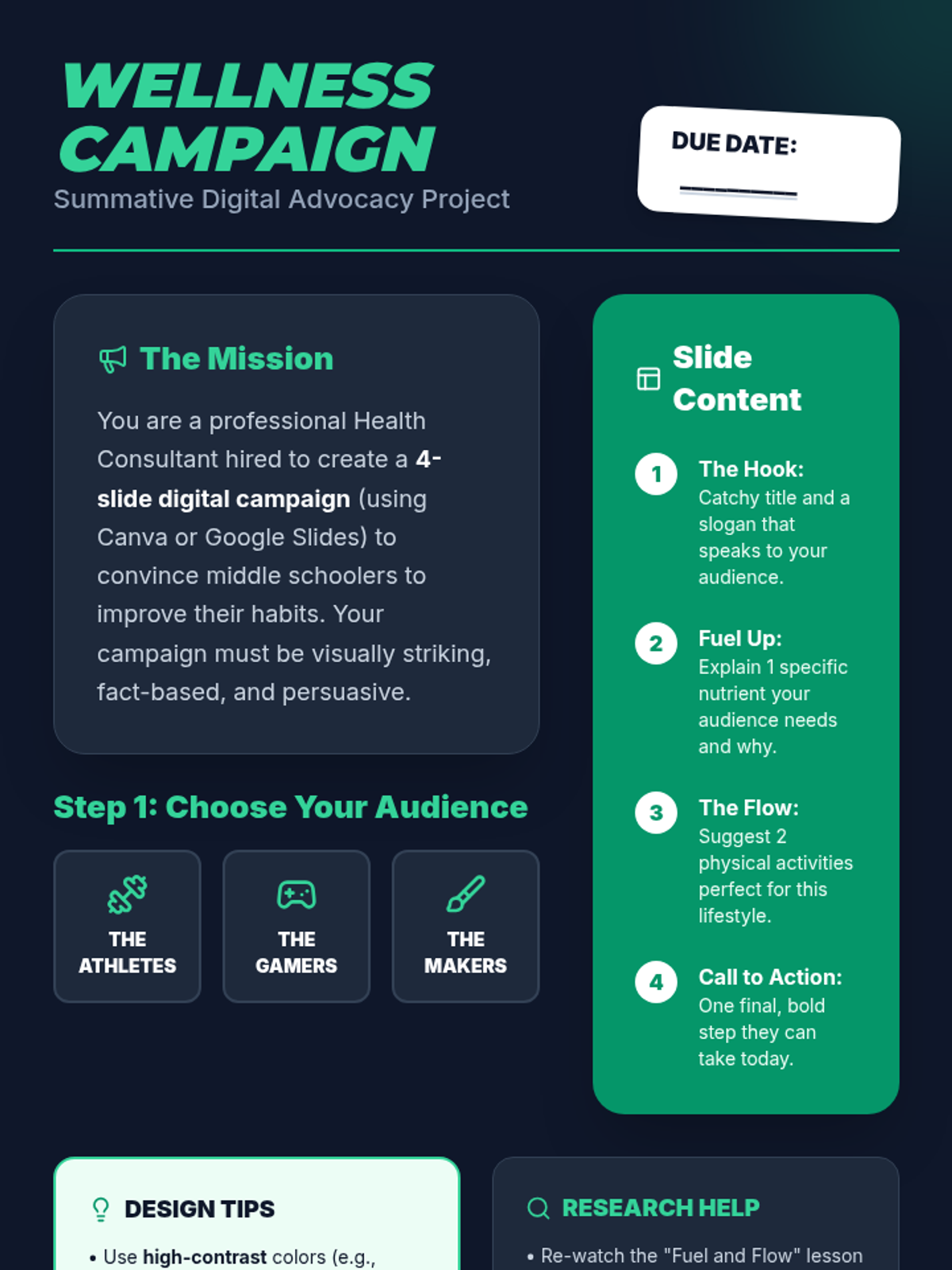
An 8th-grade health lesson exploring the synergy between macronutrients, micronutrients, and physical activity levels, culminating in a digital wellness campaign project.
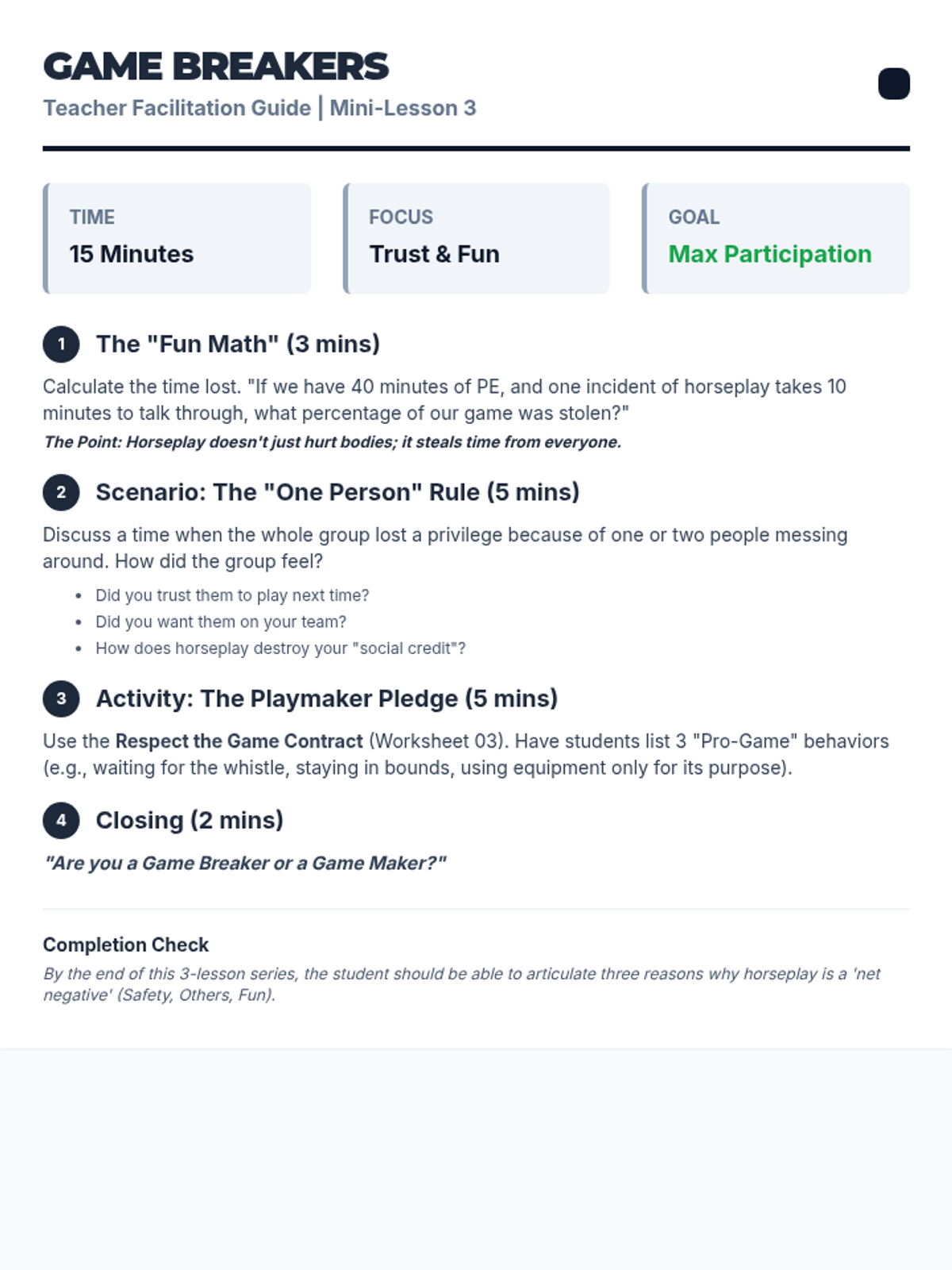
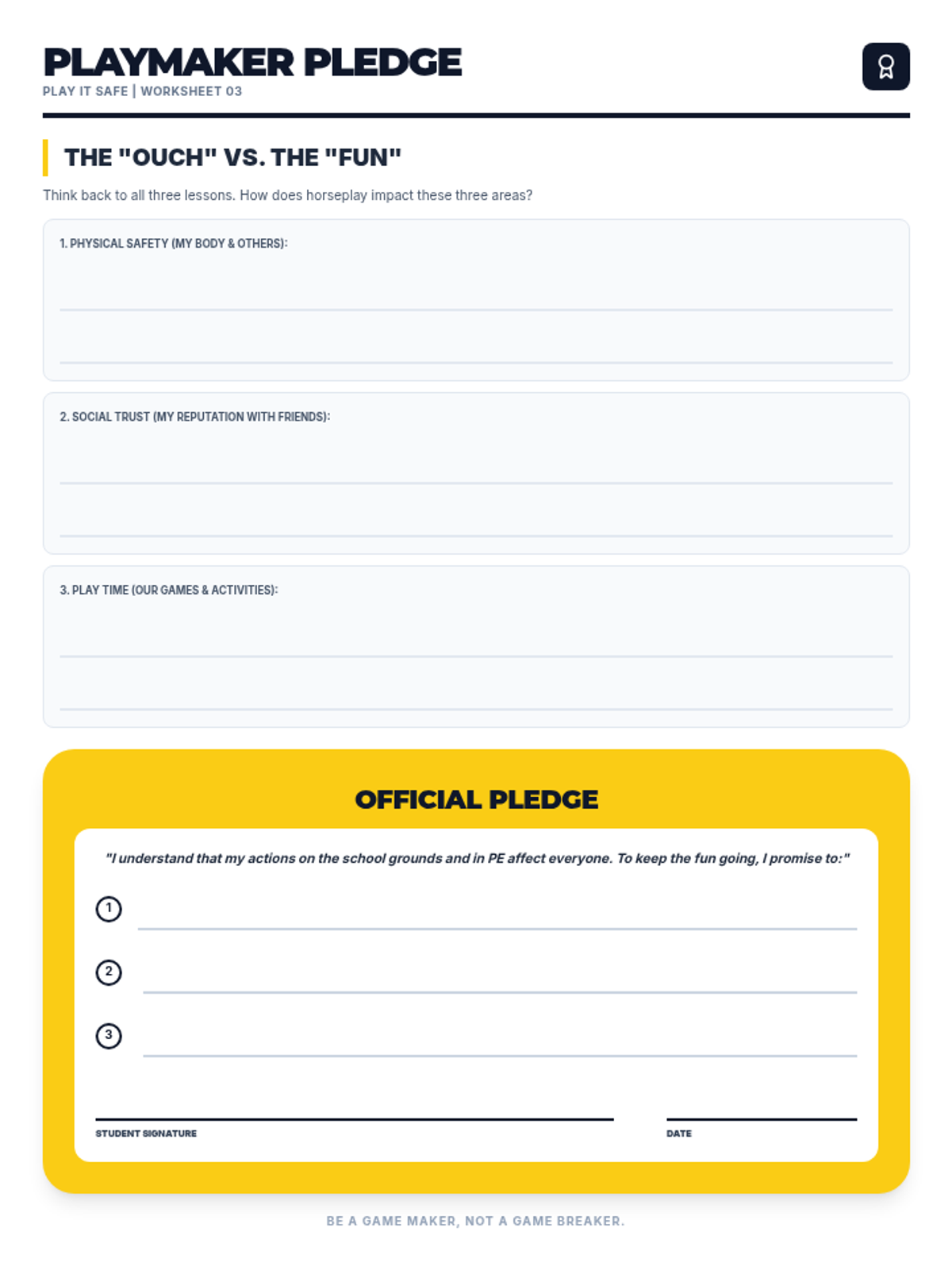
Examines how horseplay disrupts the flow of games and learning, leading to lost privileges and broken trust within a group.
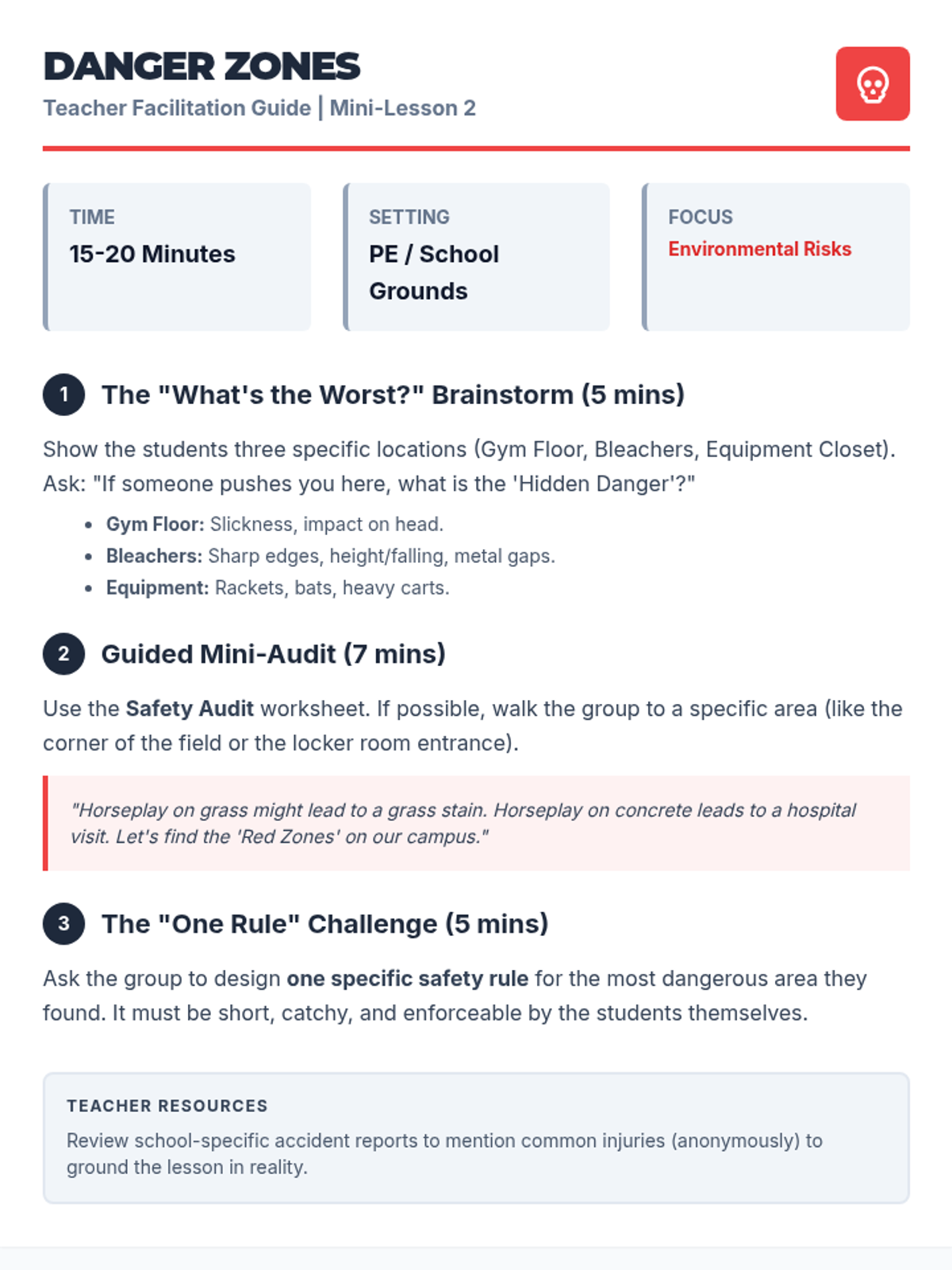
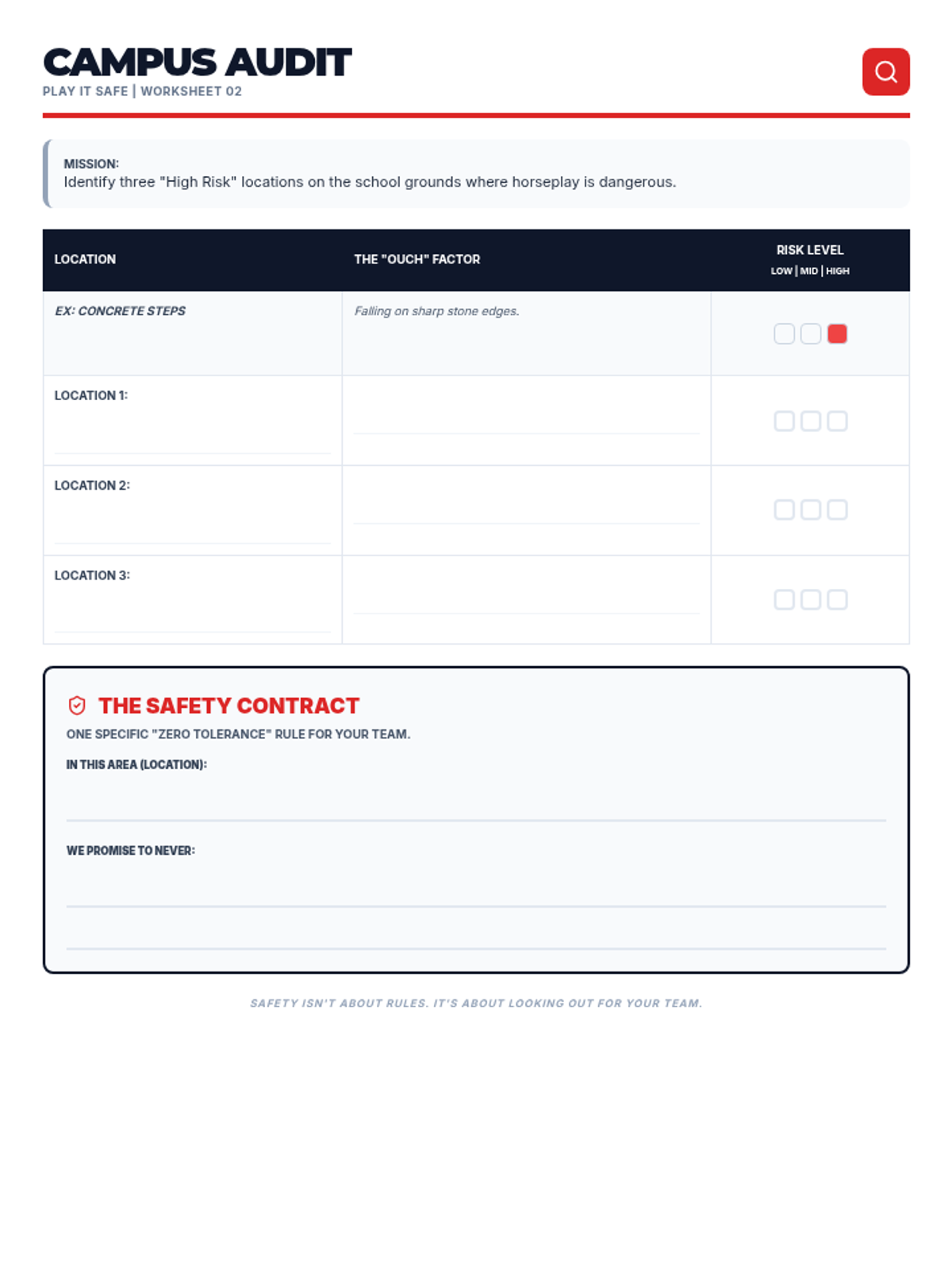
Identifies high-risk areas in PE and school grounds where hard surfaces and equipment turn horseplay into serious danger.
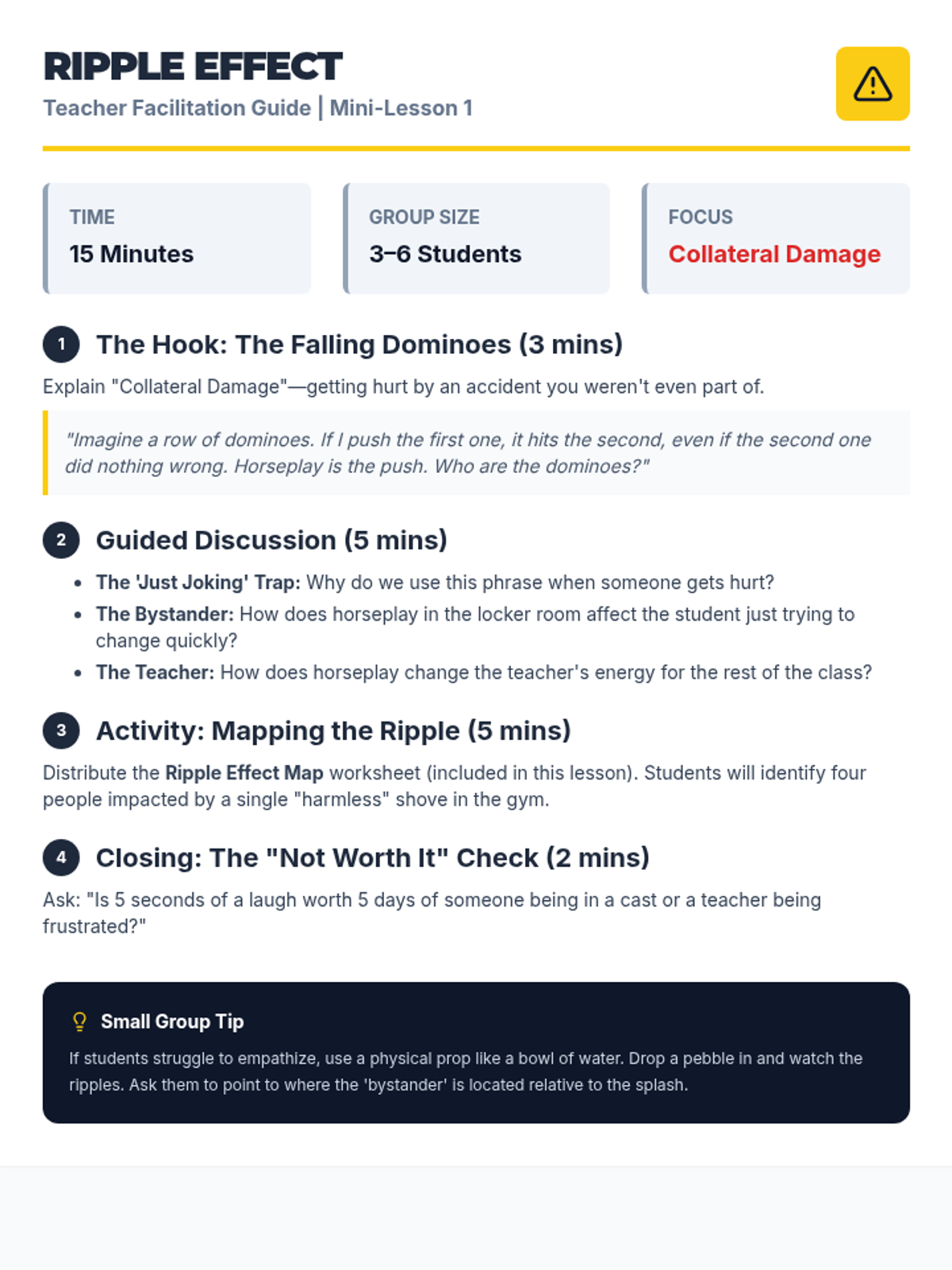
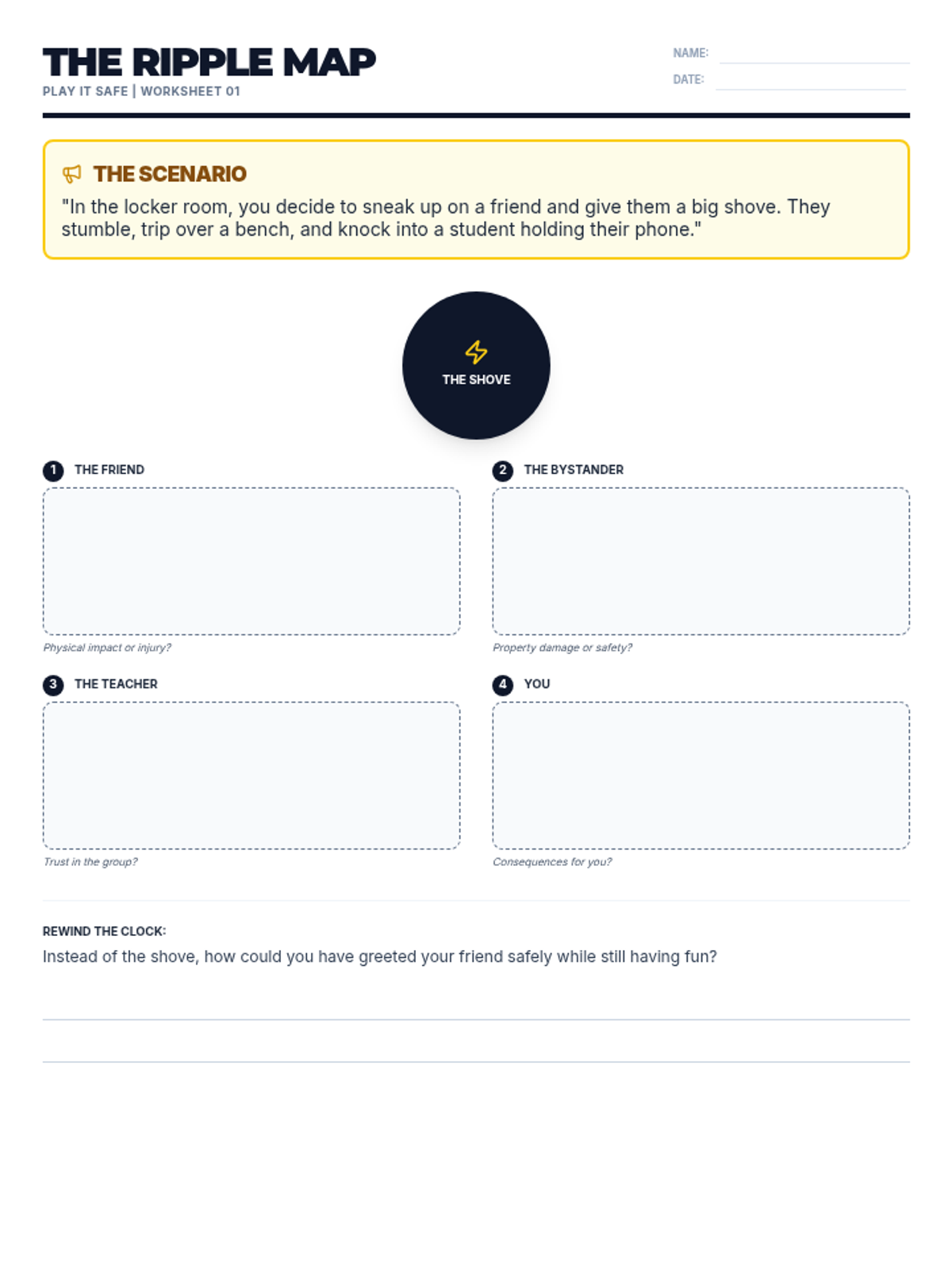
Explores the indirect consequences of horseplay, focusing on how 'harmless' actions can lead to unexpected injuries for bystanders and friends.
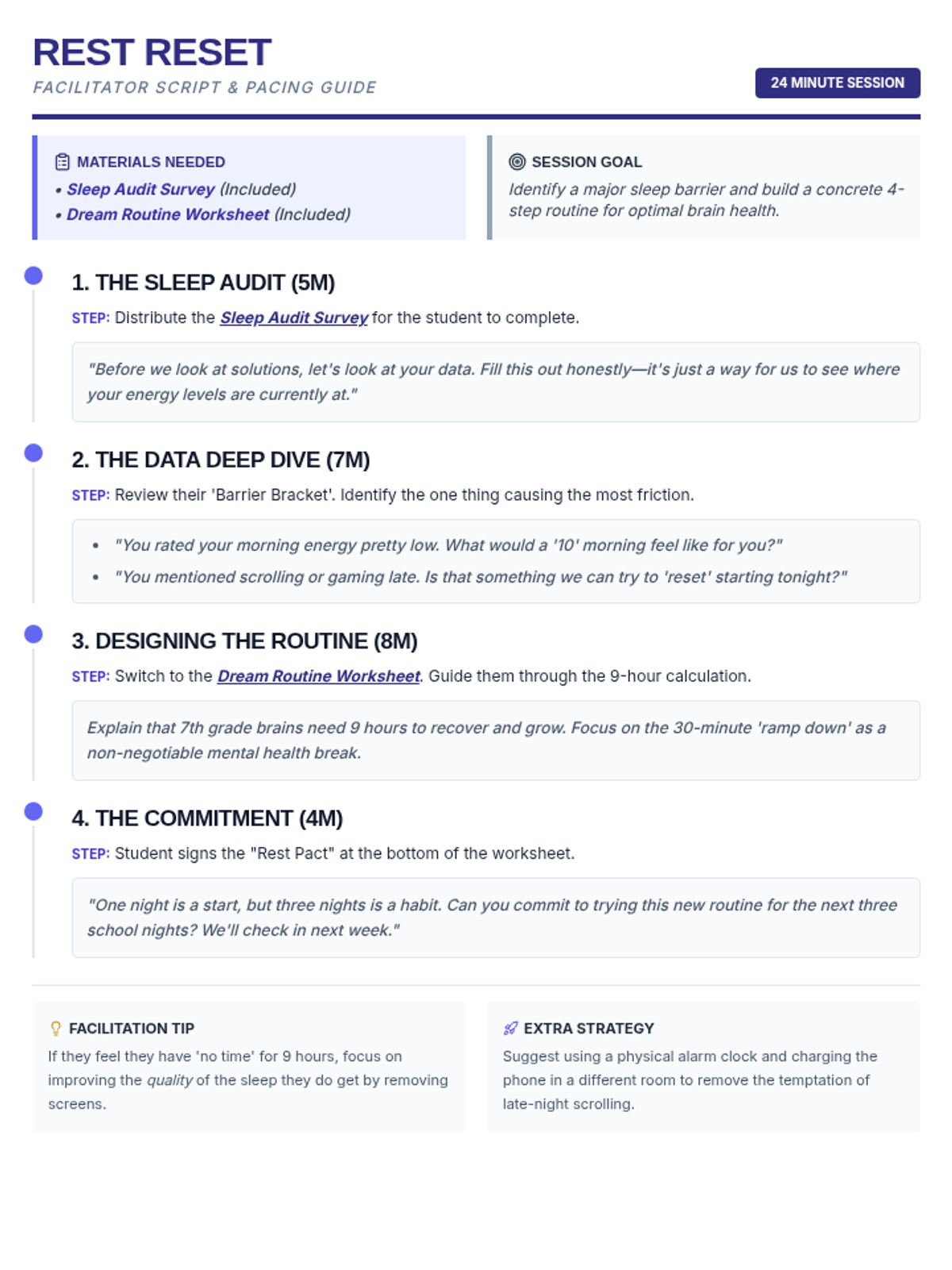
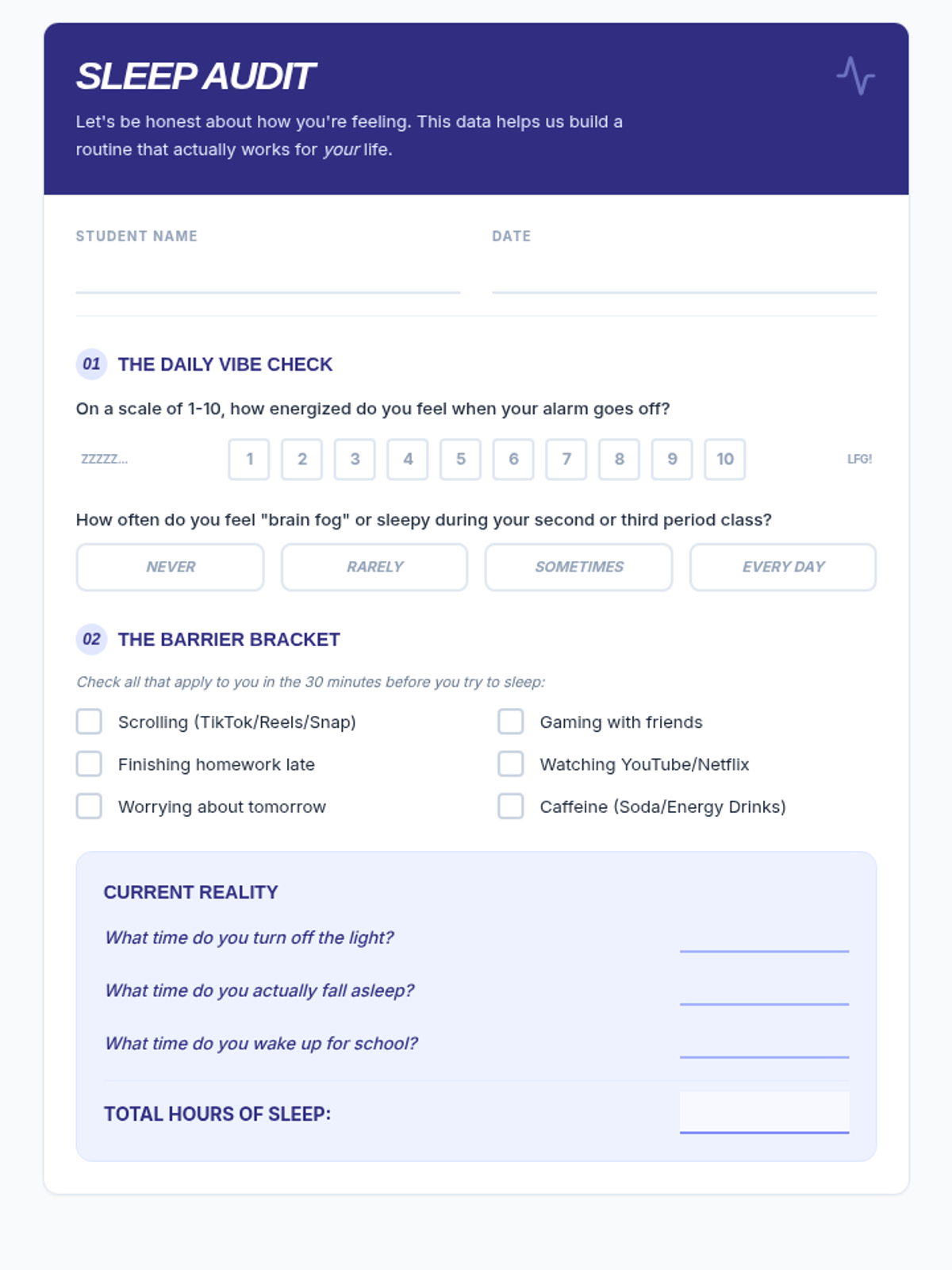
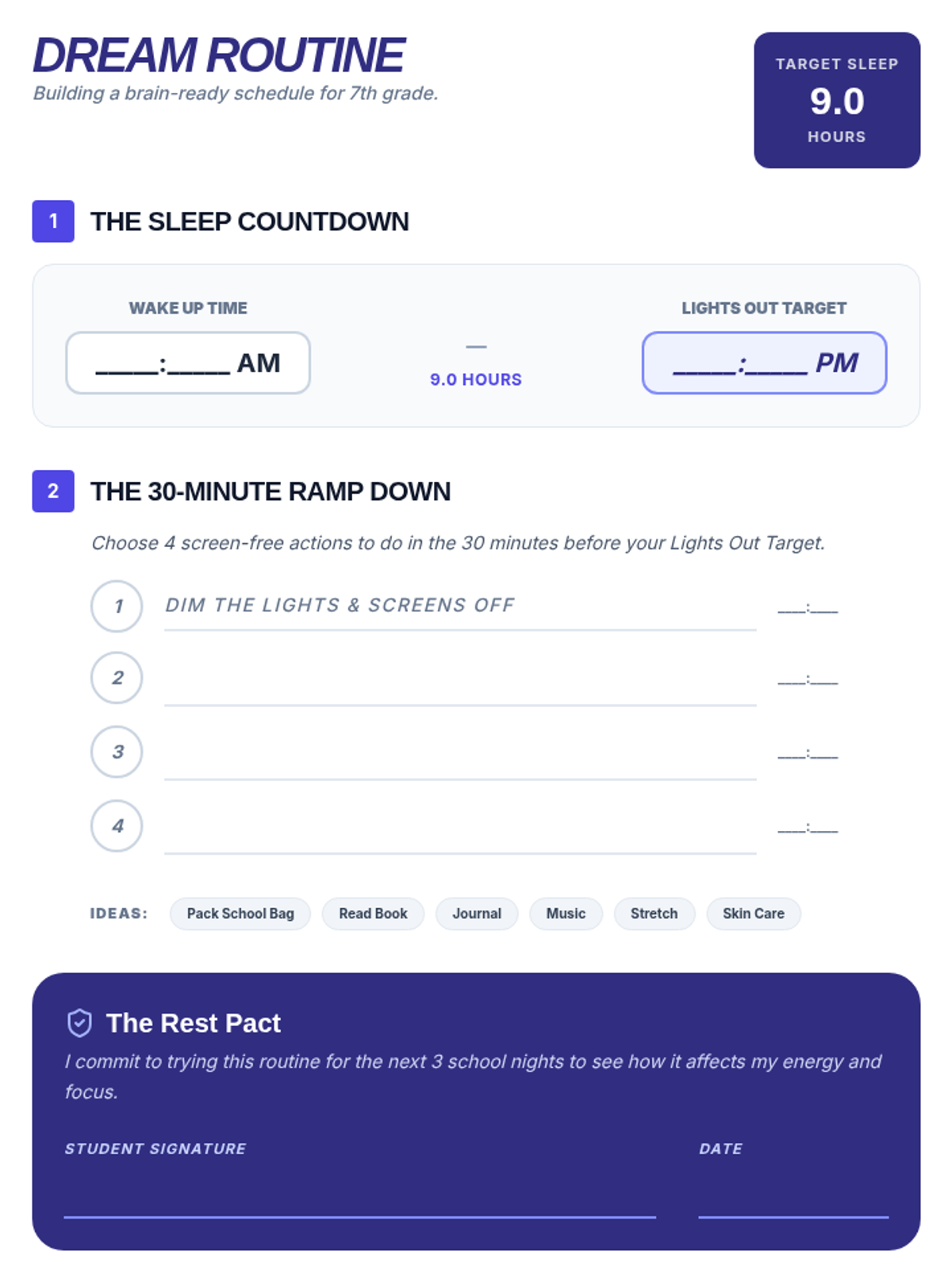
A focused 24-minute session designed to help middle schoolers audit their current sleep habits and design a sustainable bedtime routine for optimal brain health.
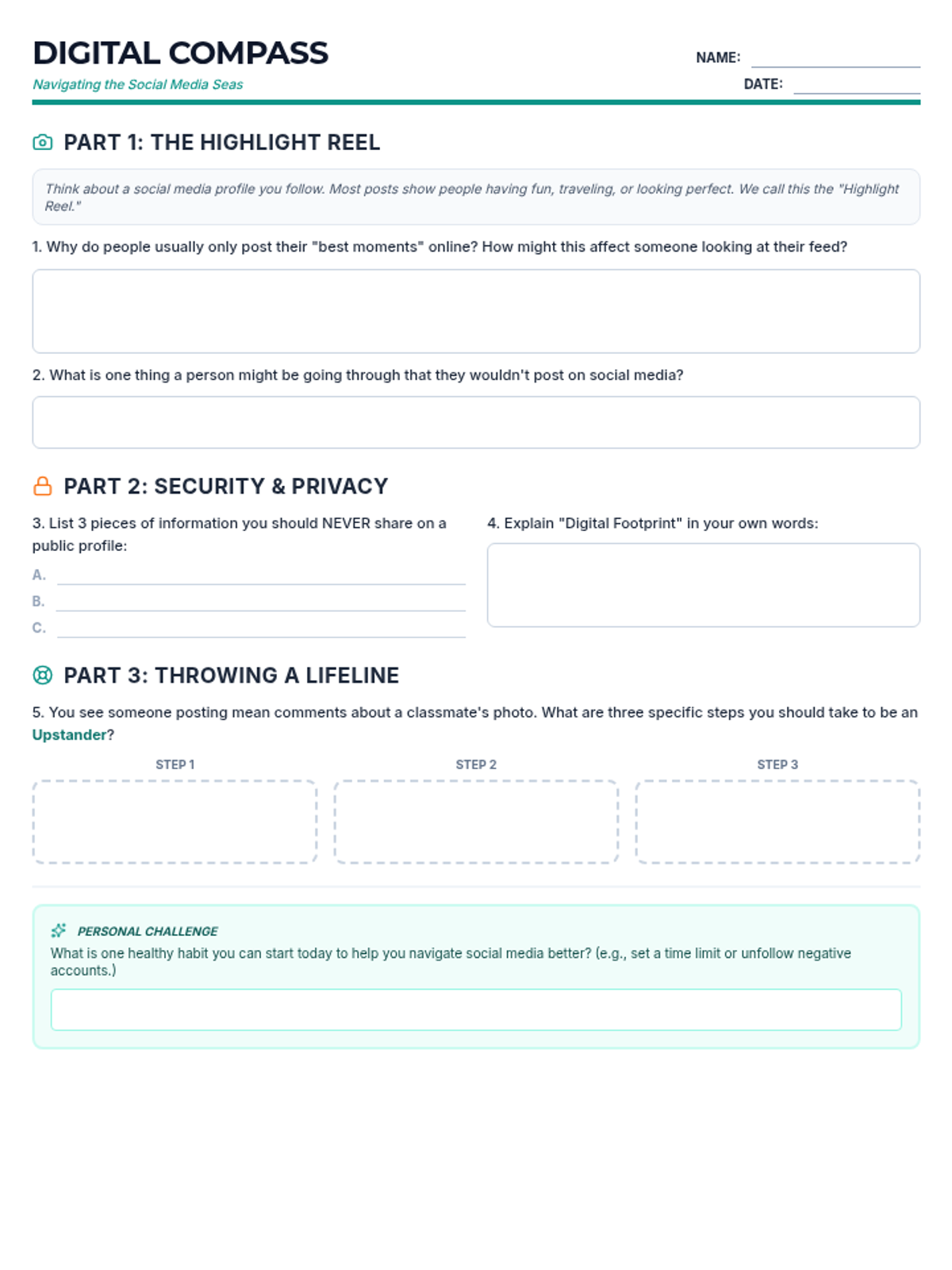
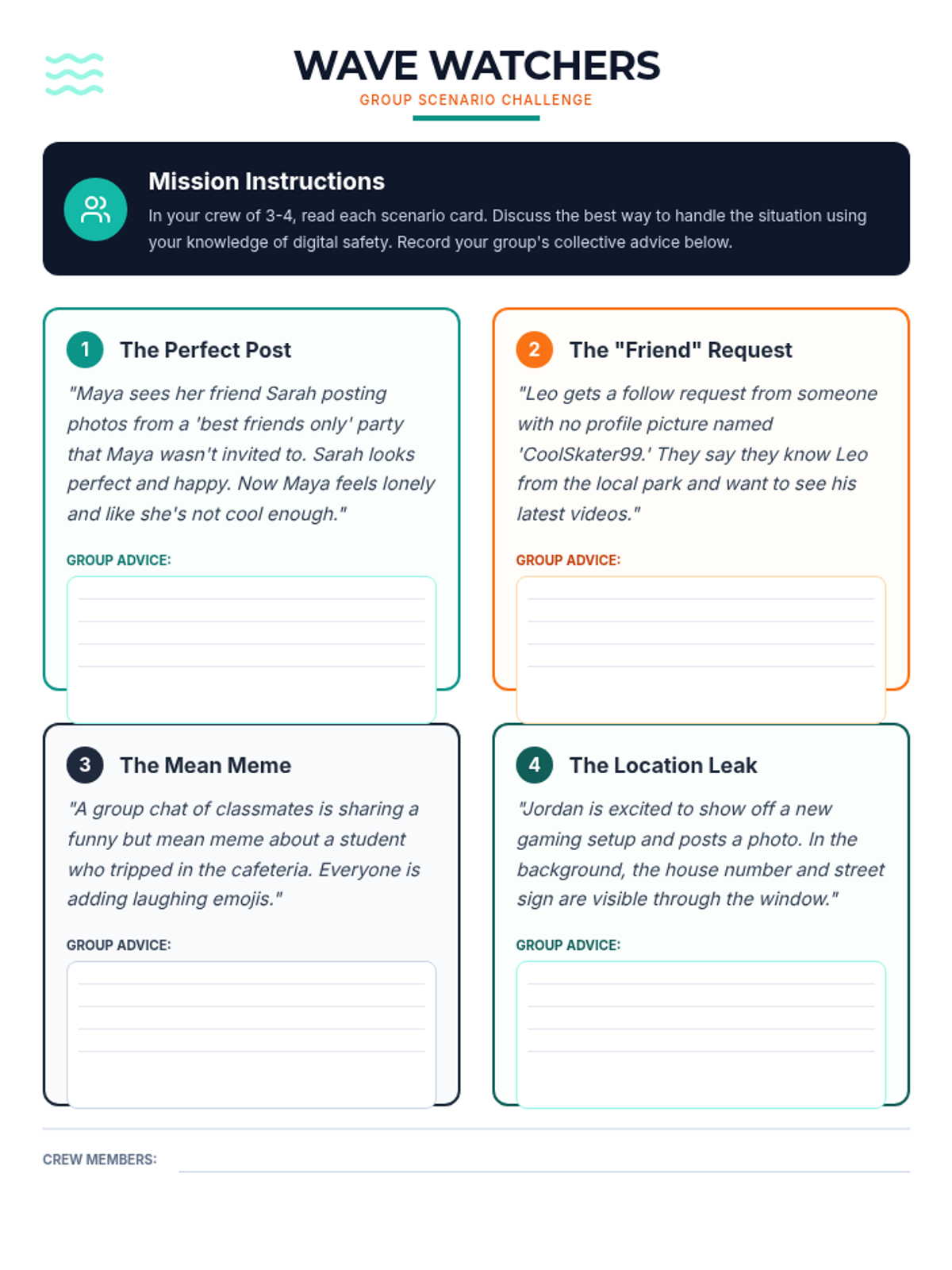
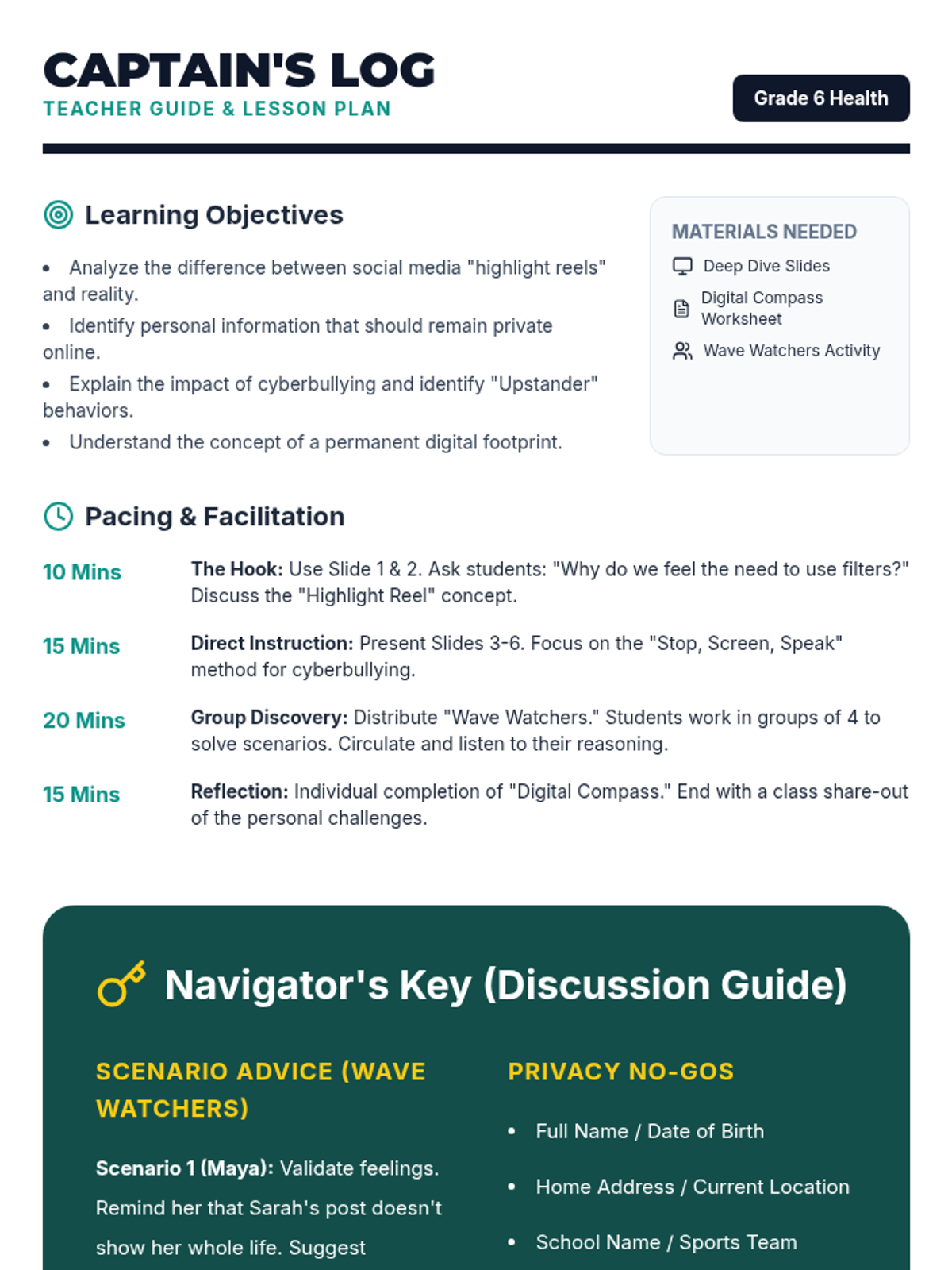
A 6th-grade health lesson exploring the impact of social media on self-esteem, privacy, and cyberbullying through an oceanic exploration theme. Students will learn to navigate the 'digital depths' safely and confidently.
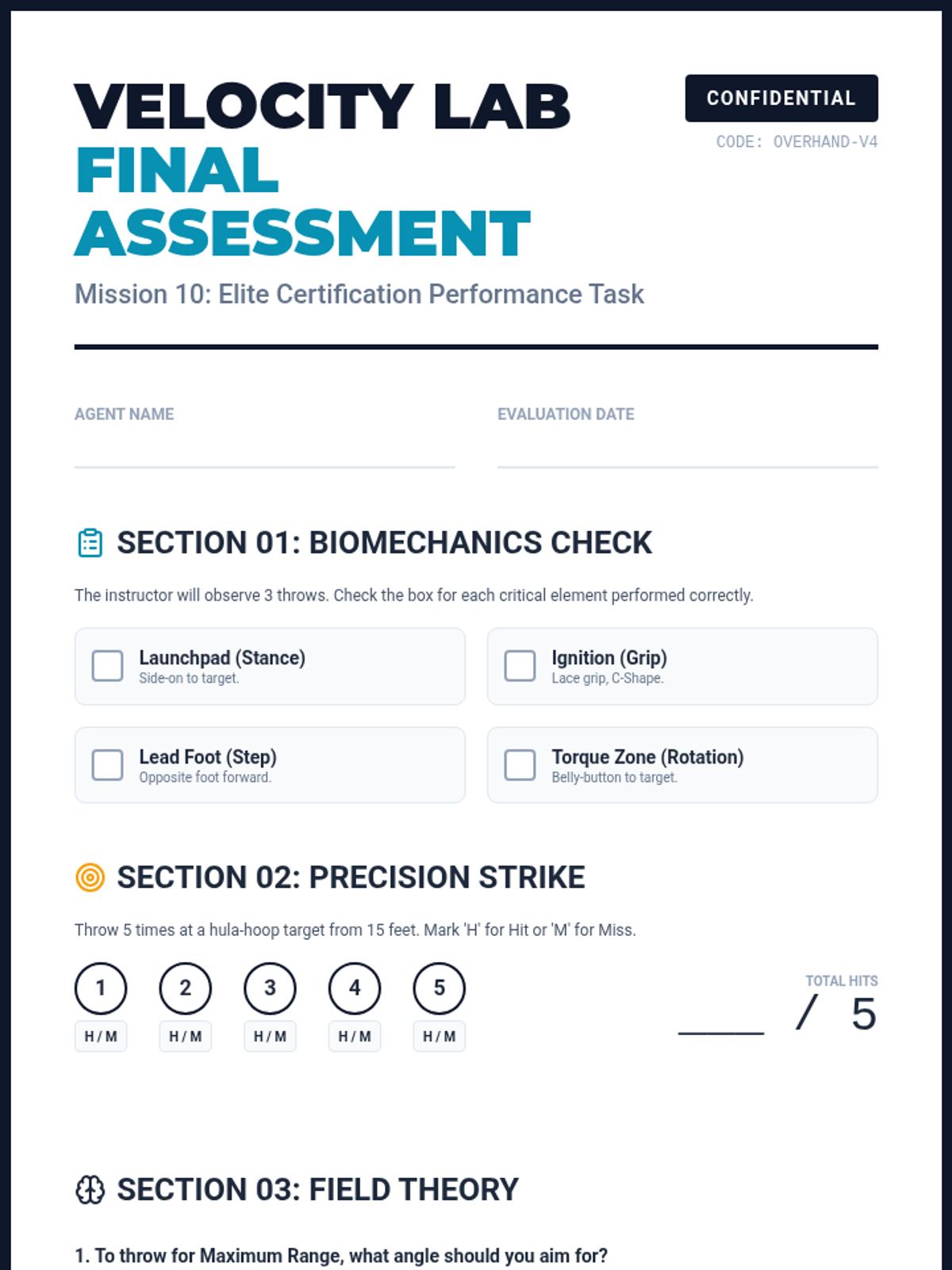
Introducing the "opposite foot step" to generate momentum and transfer weight from the back to the front during the throwing motion.
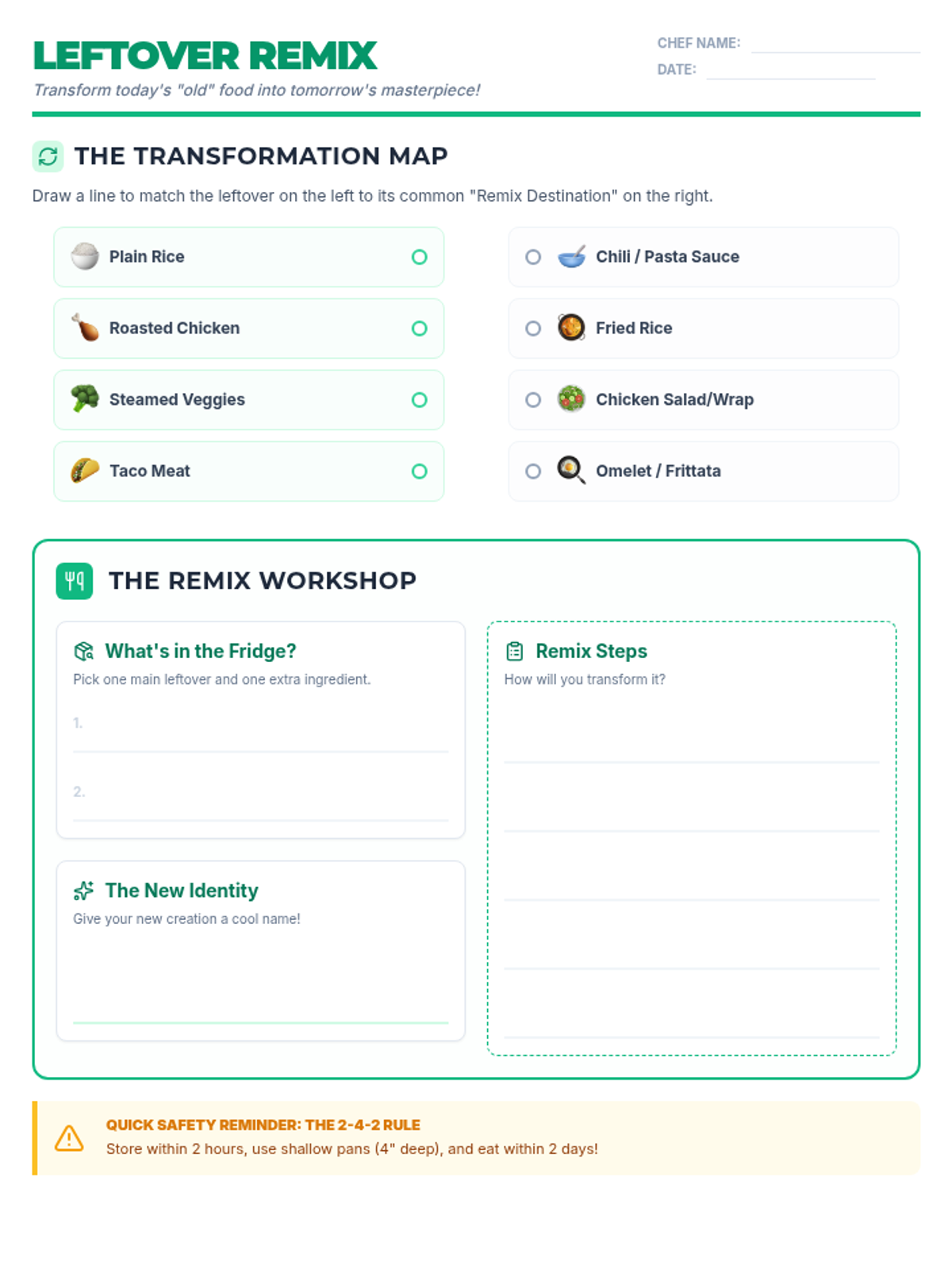
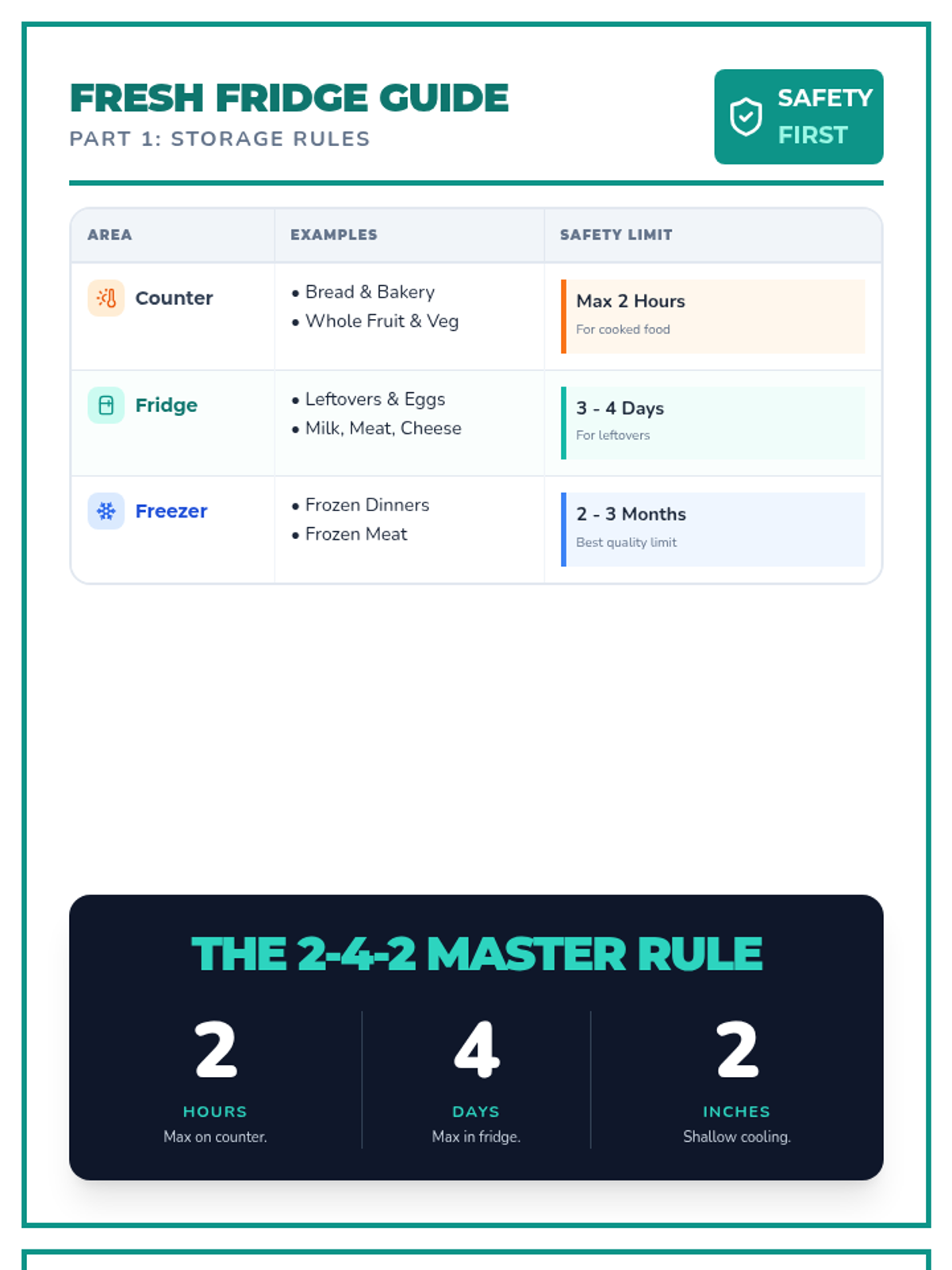
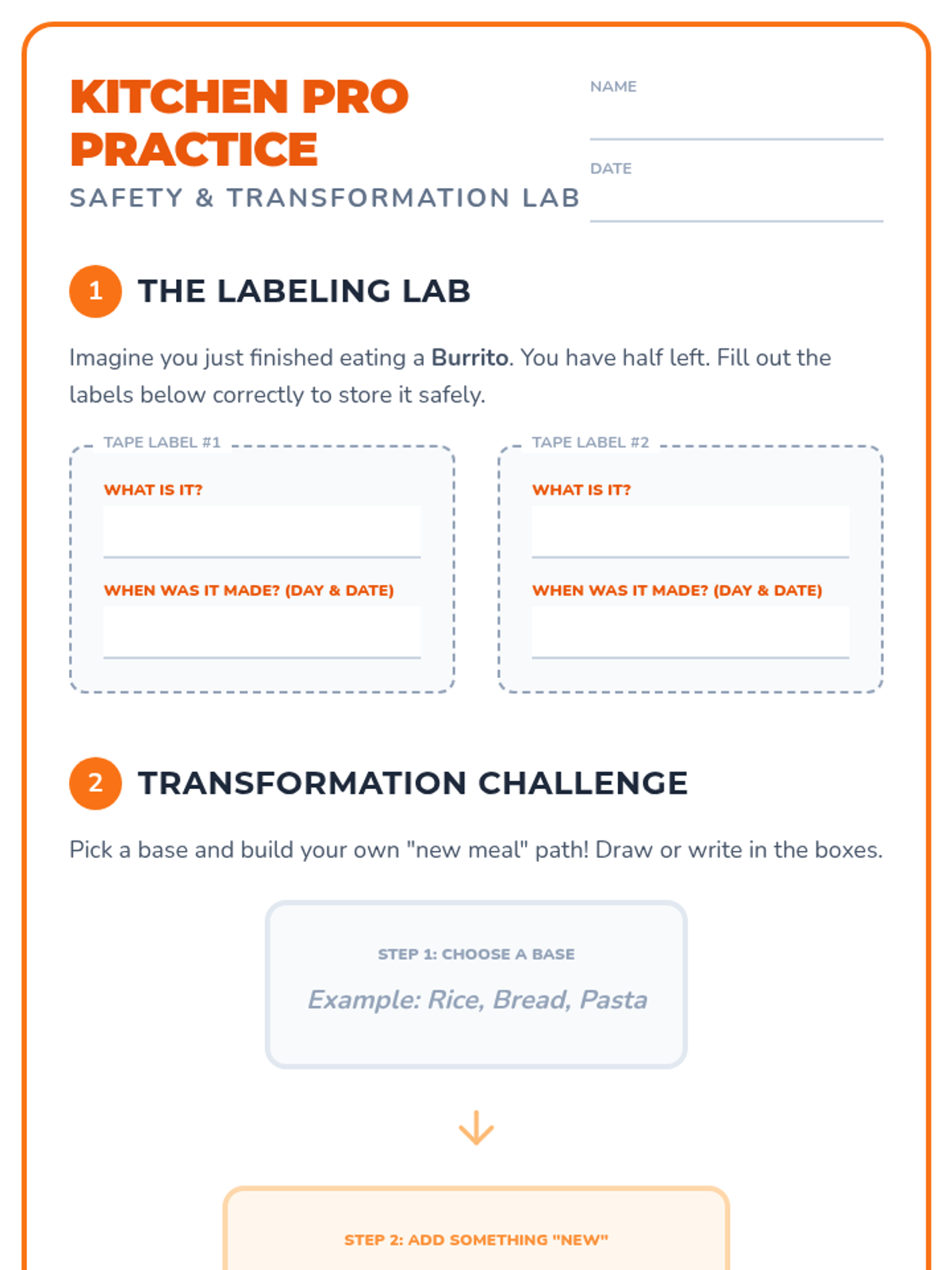
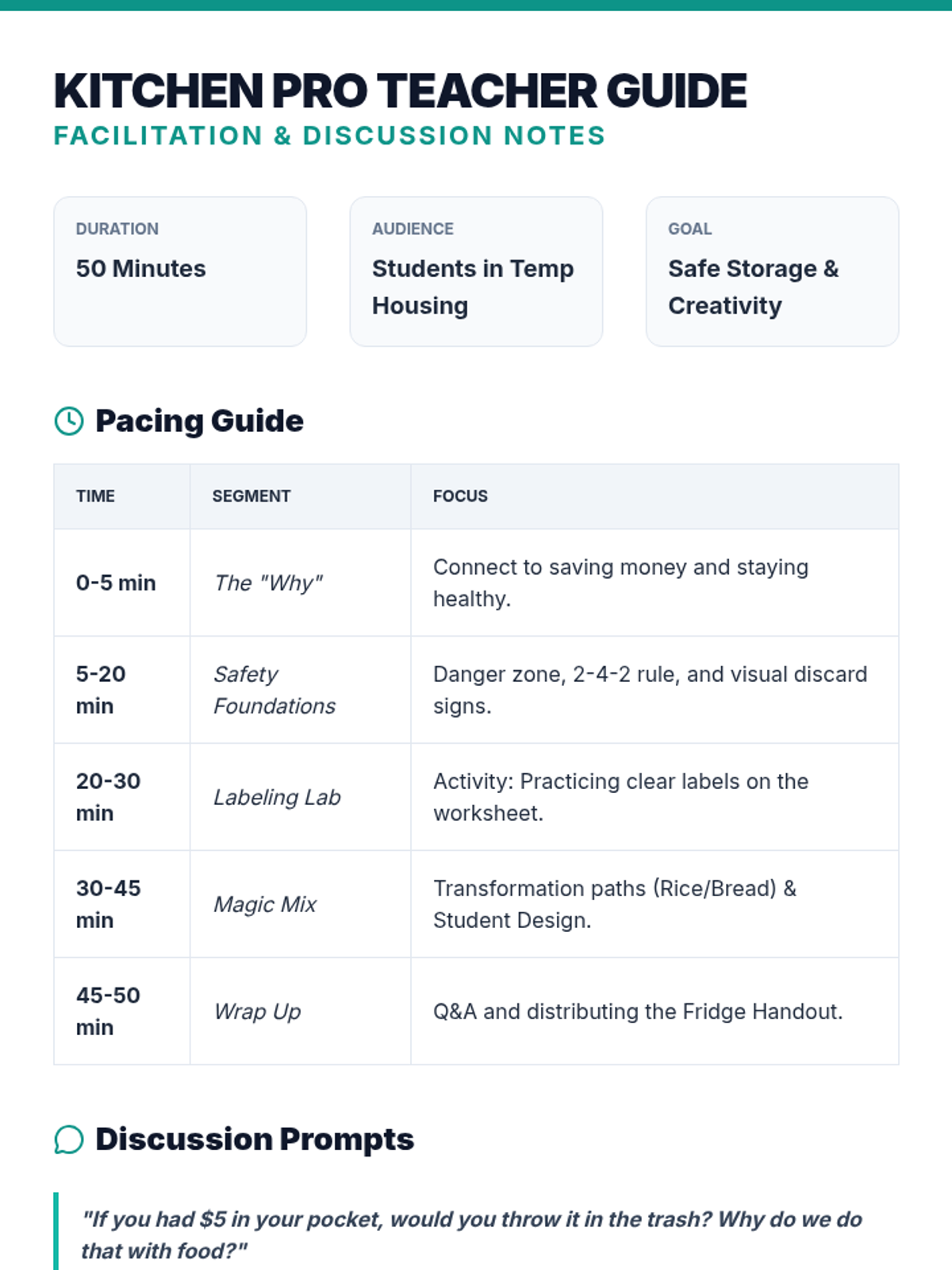
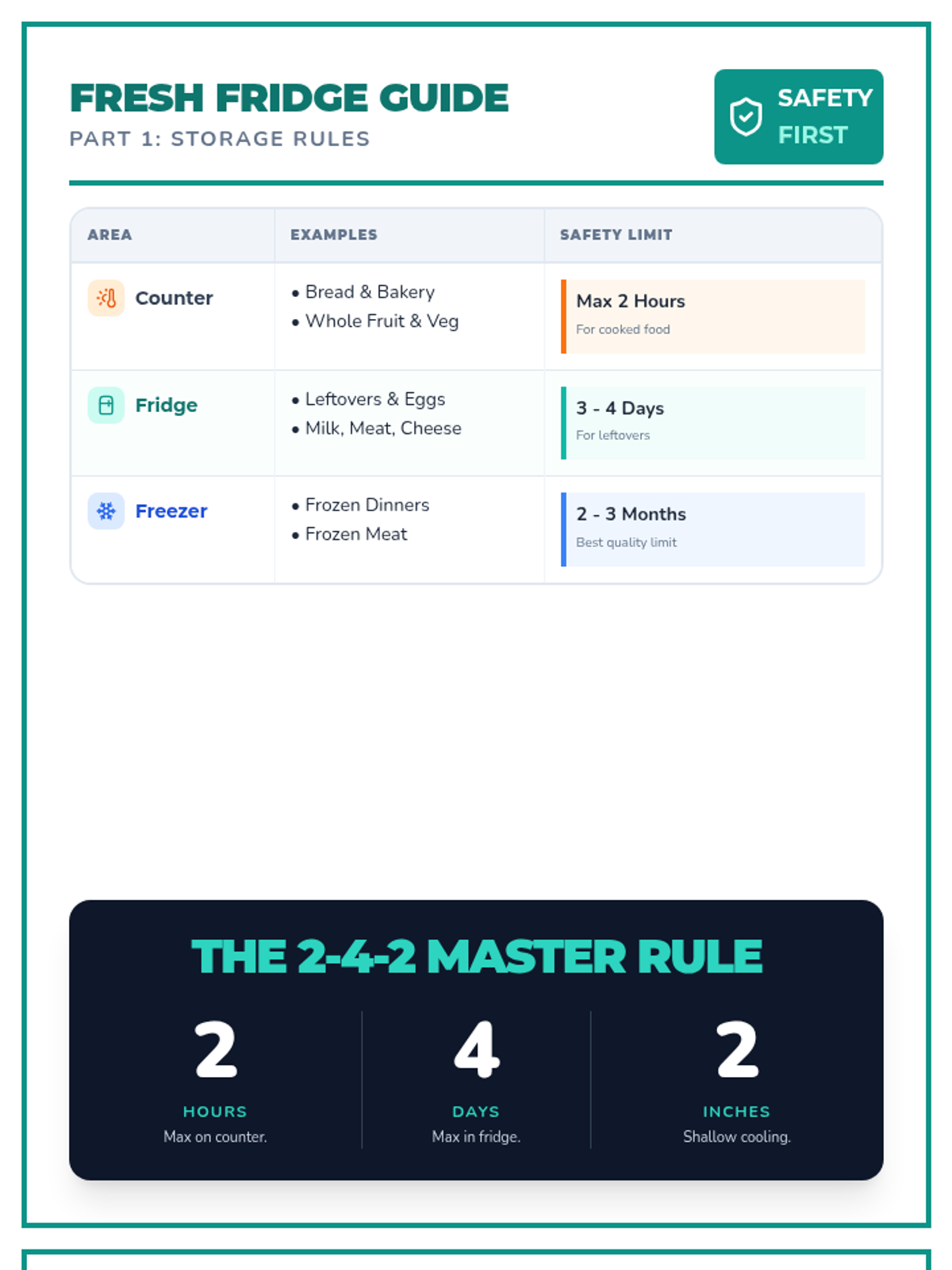
A 50-minute instructional session for students in temporary housing, focusing on safe food storage and creative leftover use through visual guides and sequence flowcharts.
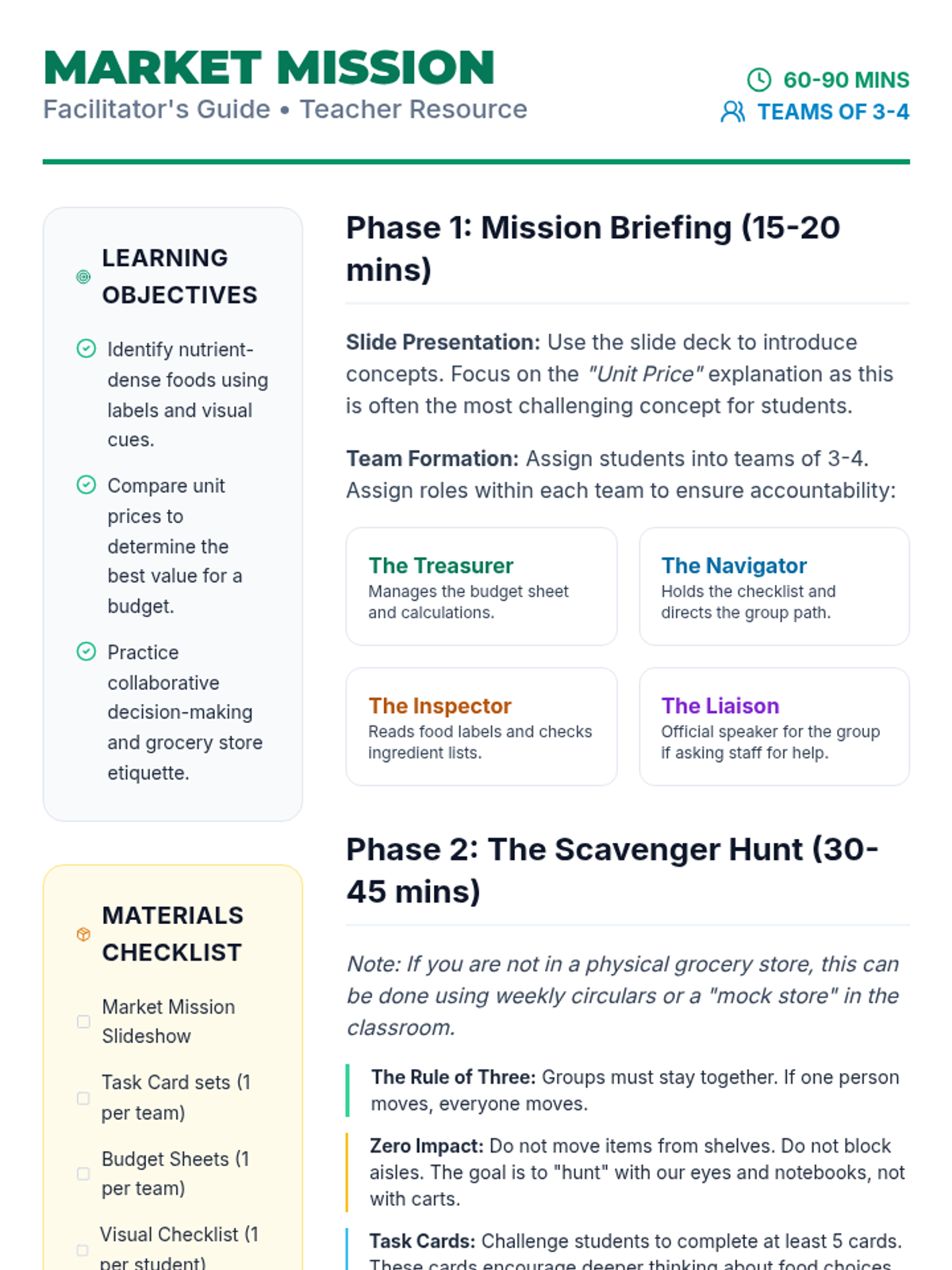
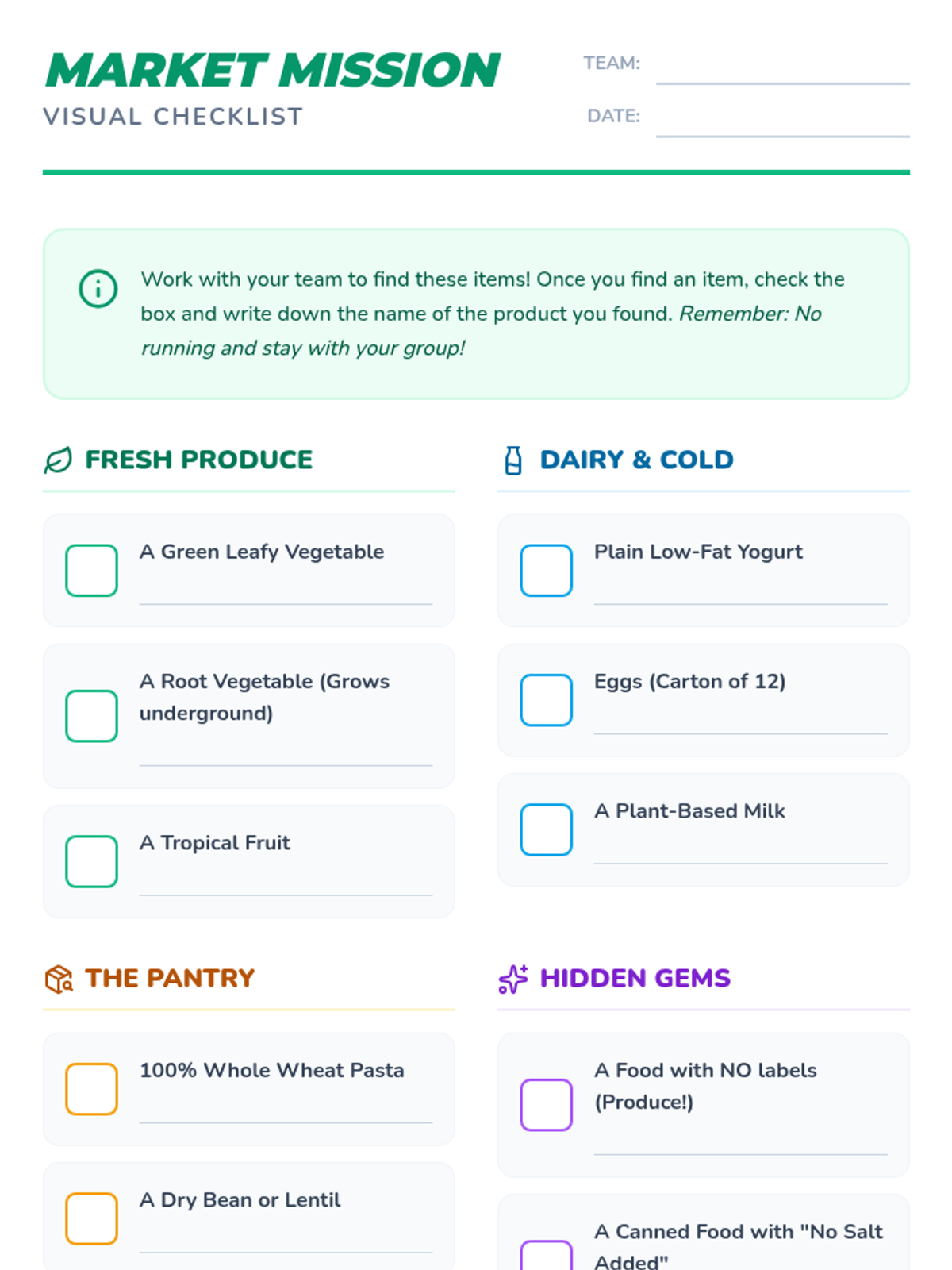
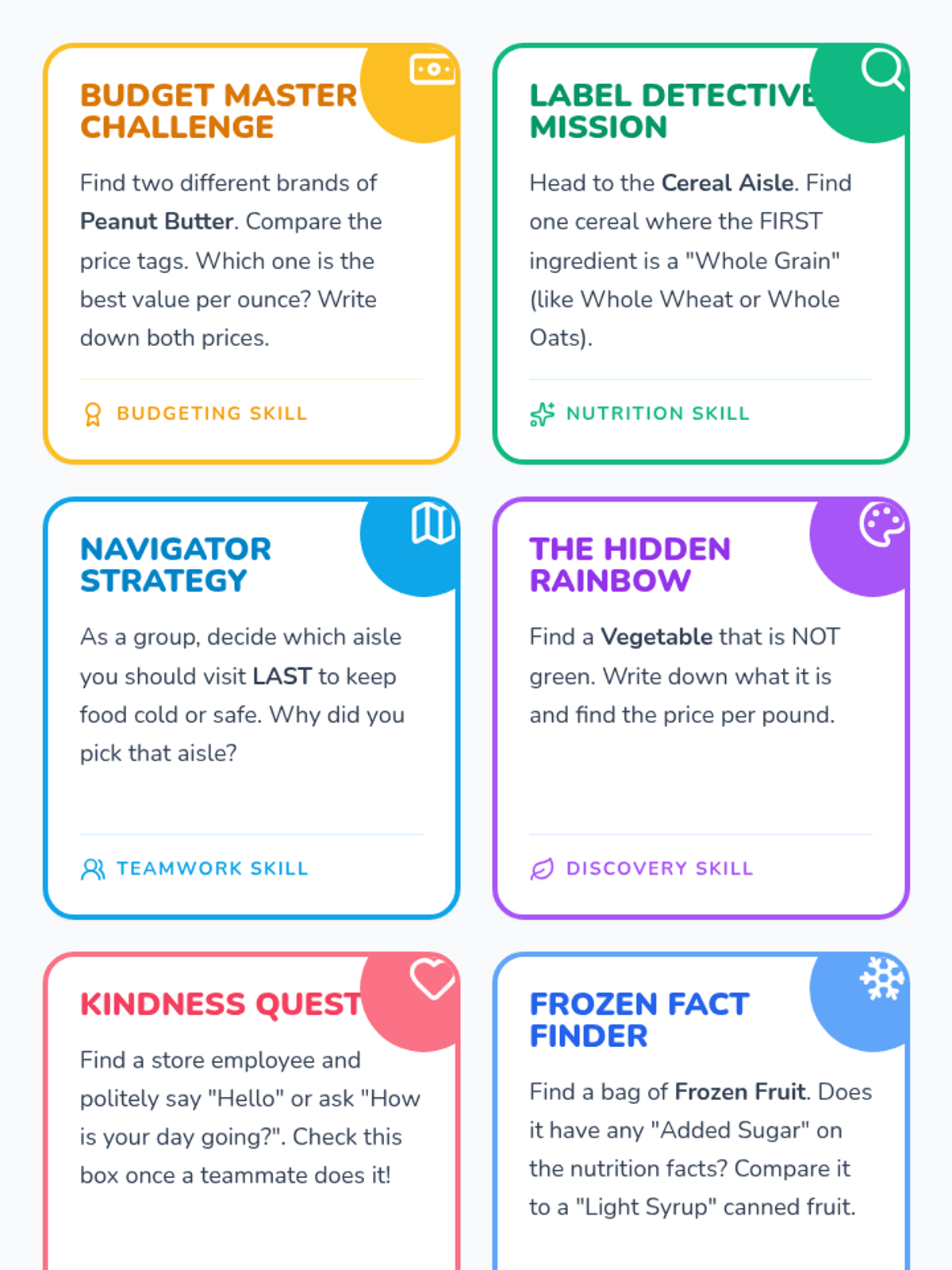
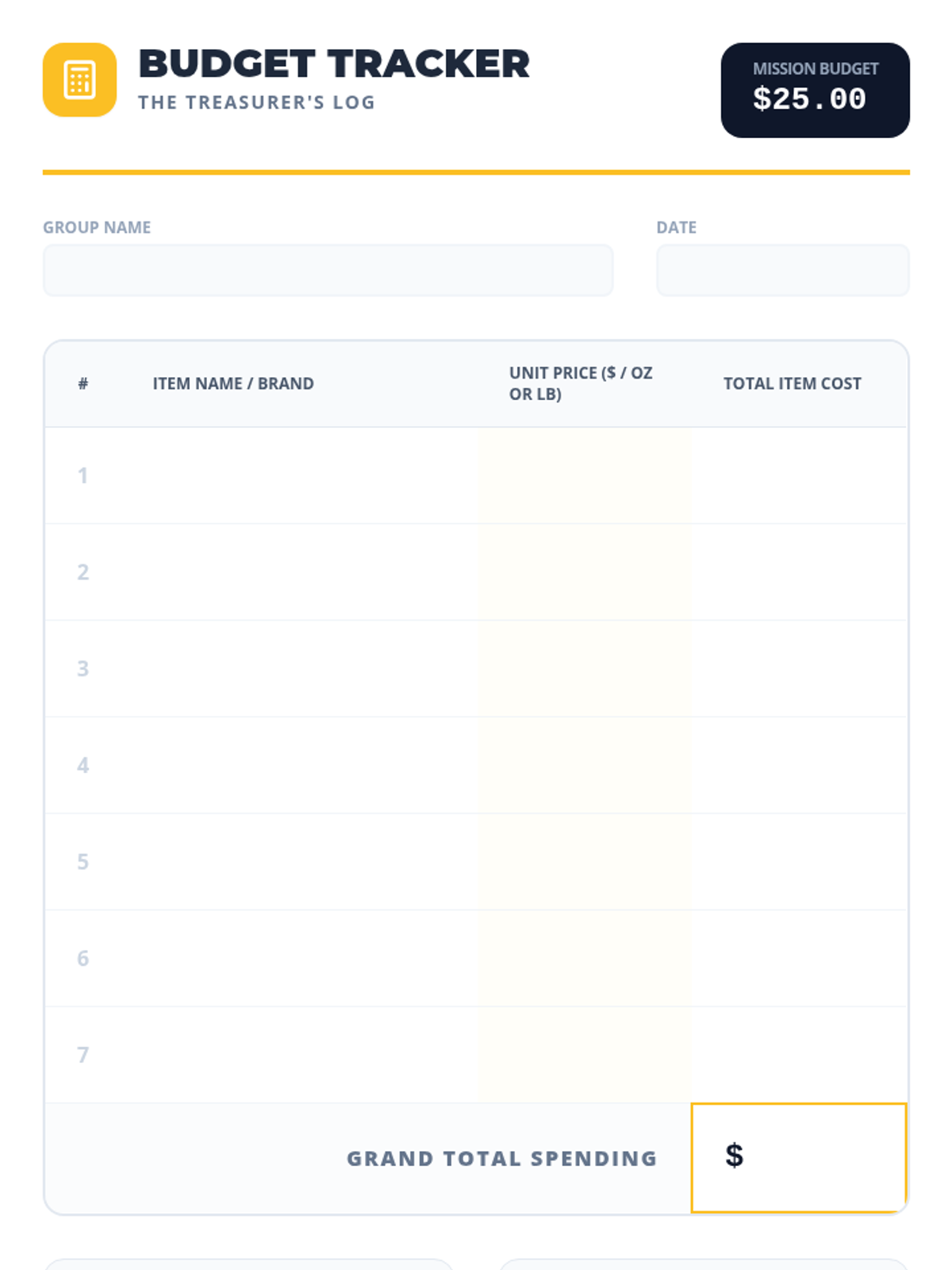
A group-building scavenger hunt where students work in teams to identify healthy foods, manage a budget, and practice social skills in a real-world grocery setting.
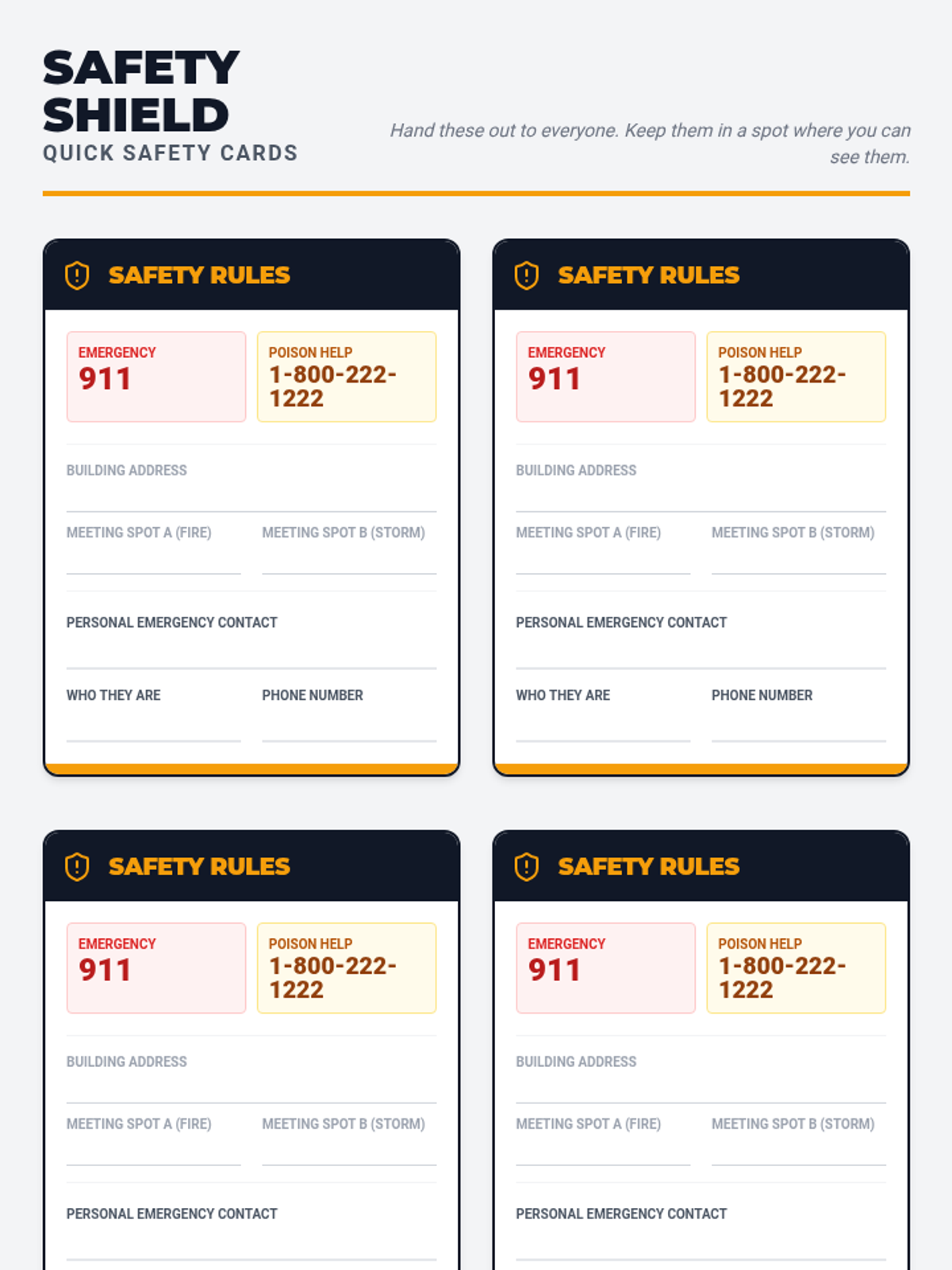
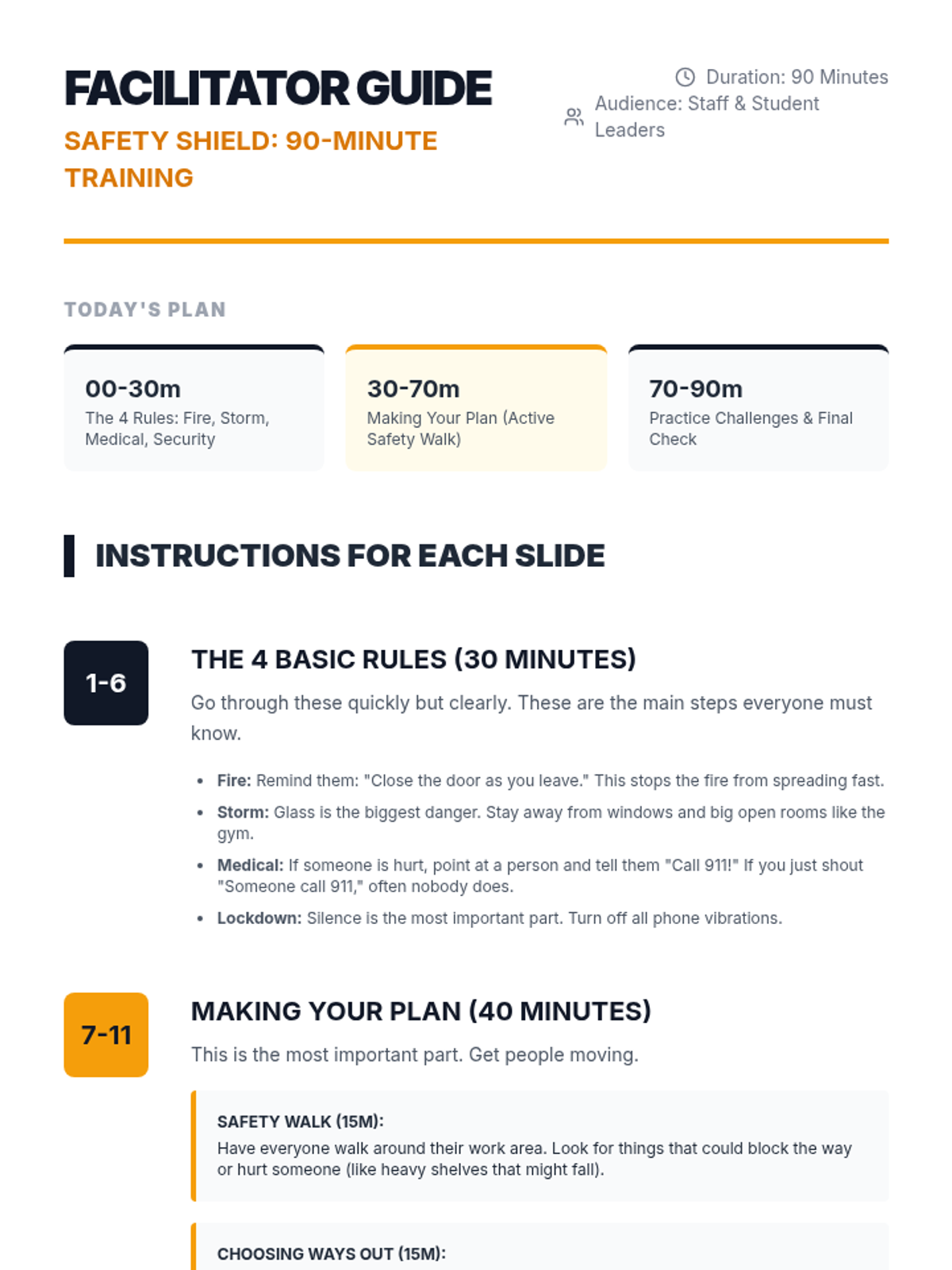
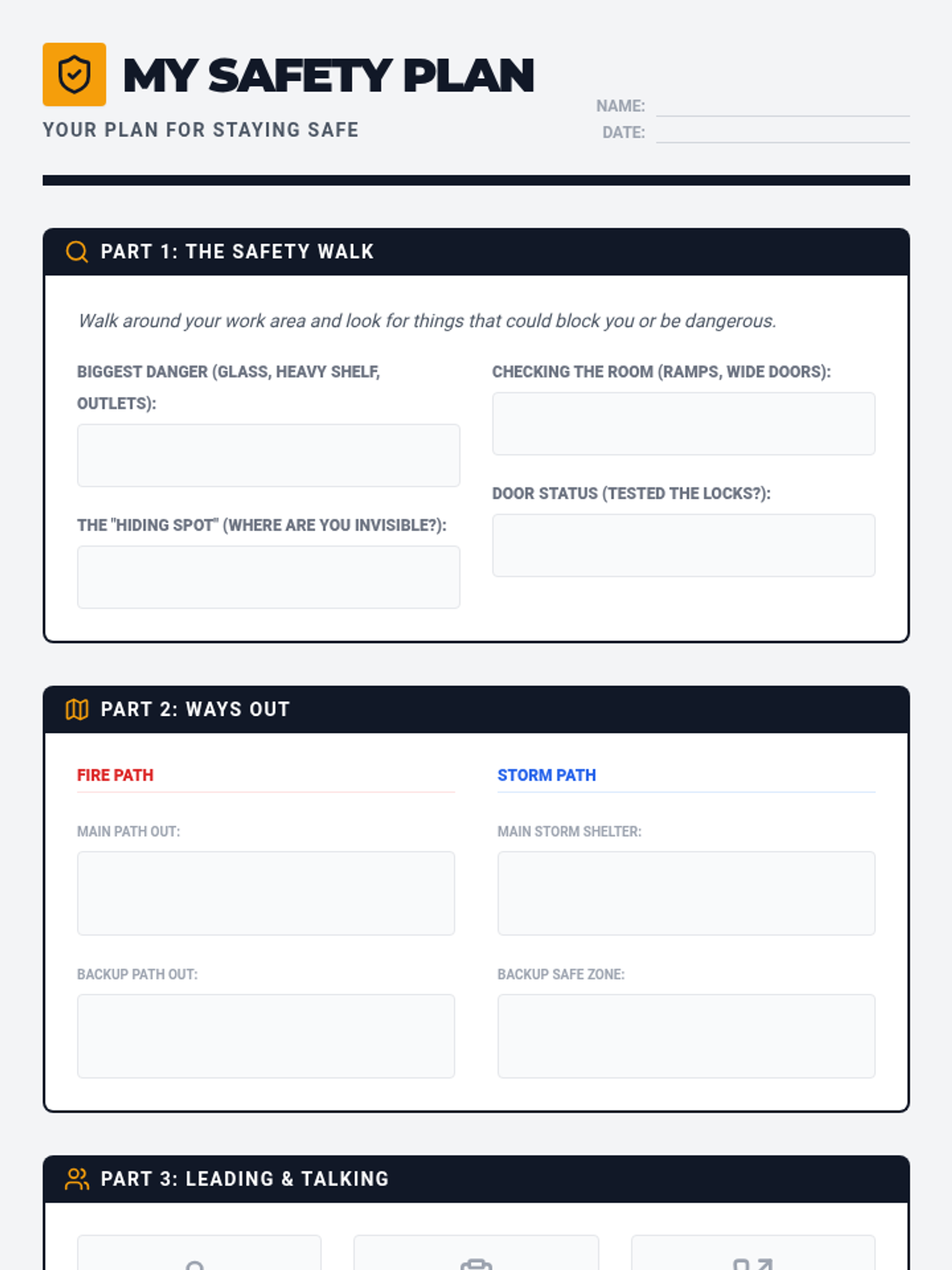
A comprehensive safety training module covering fire, weather, medical, and lockdown procedures to ensure preparedness in any emergency situation.
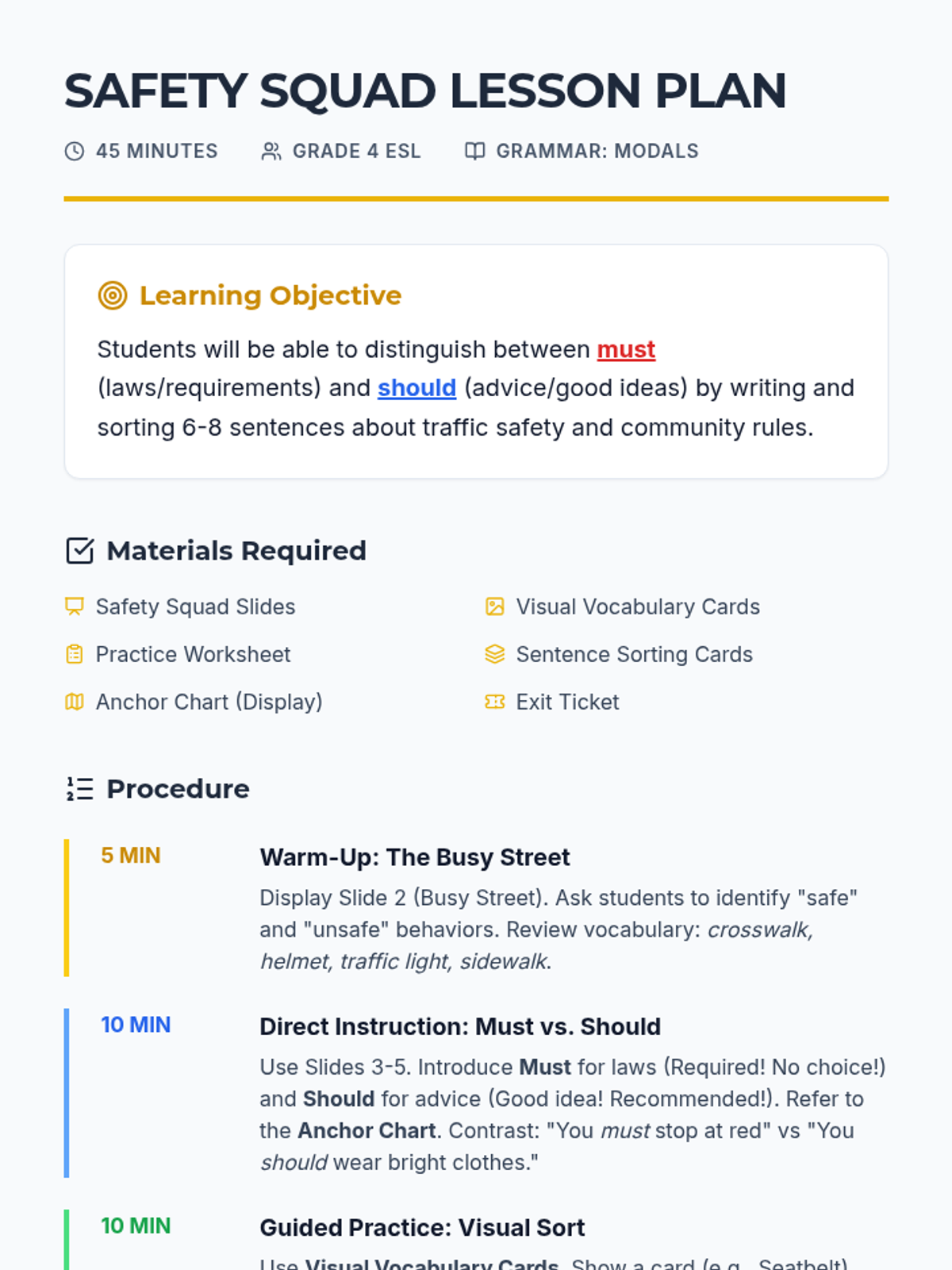
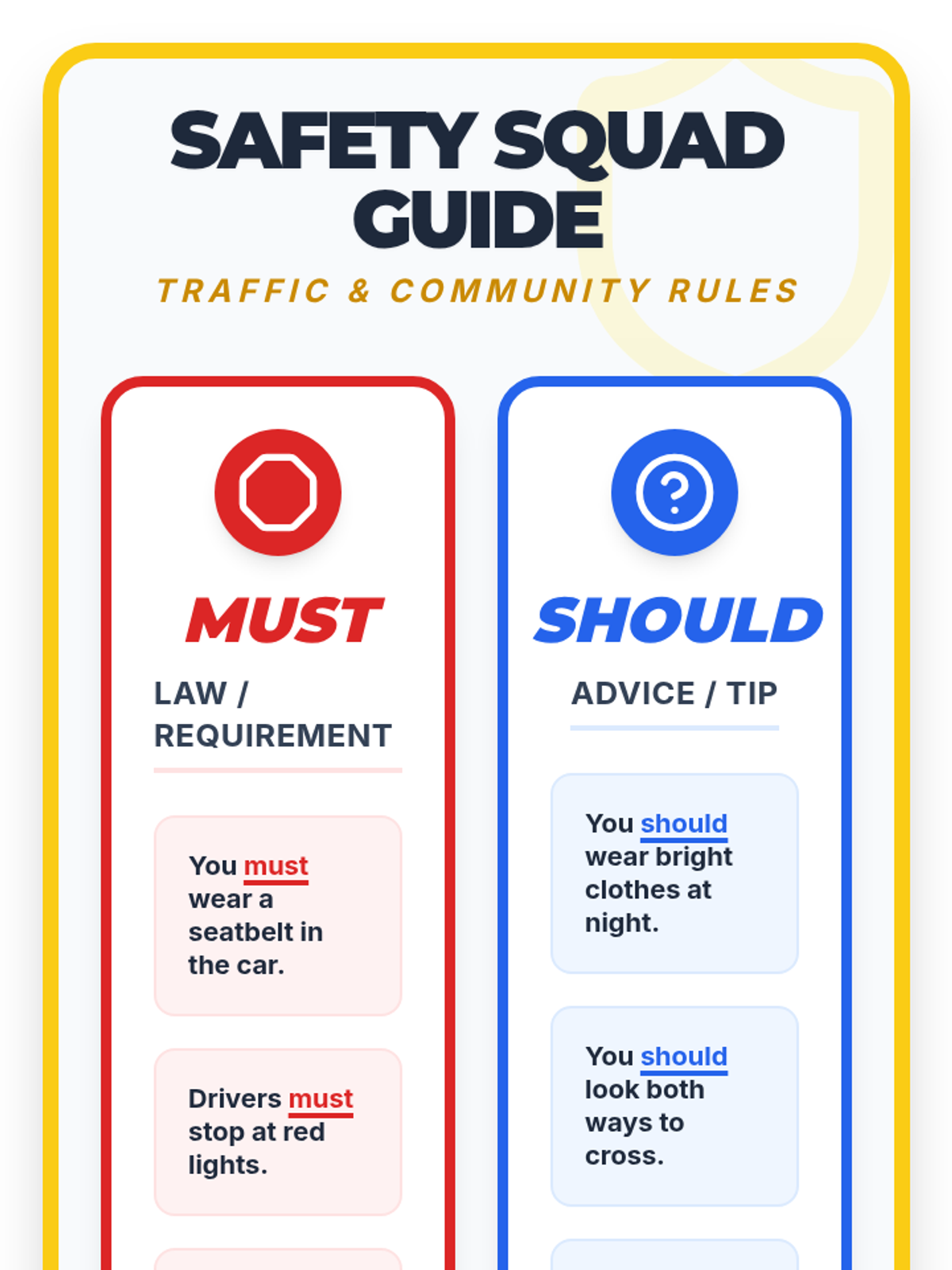
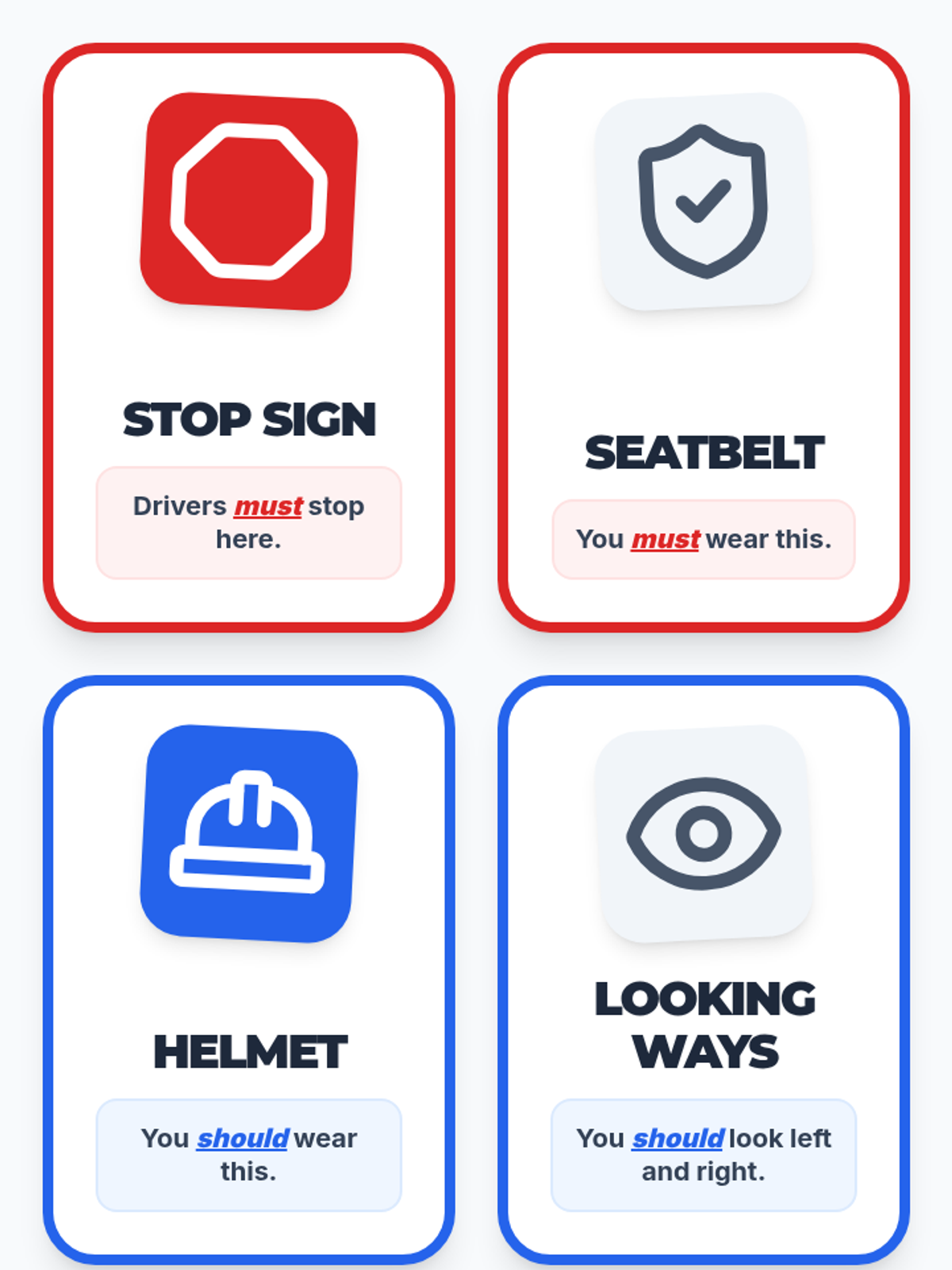
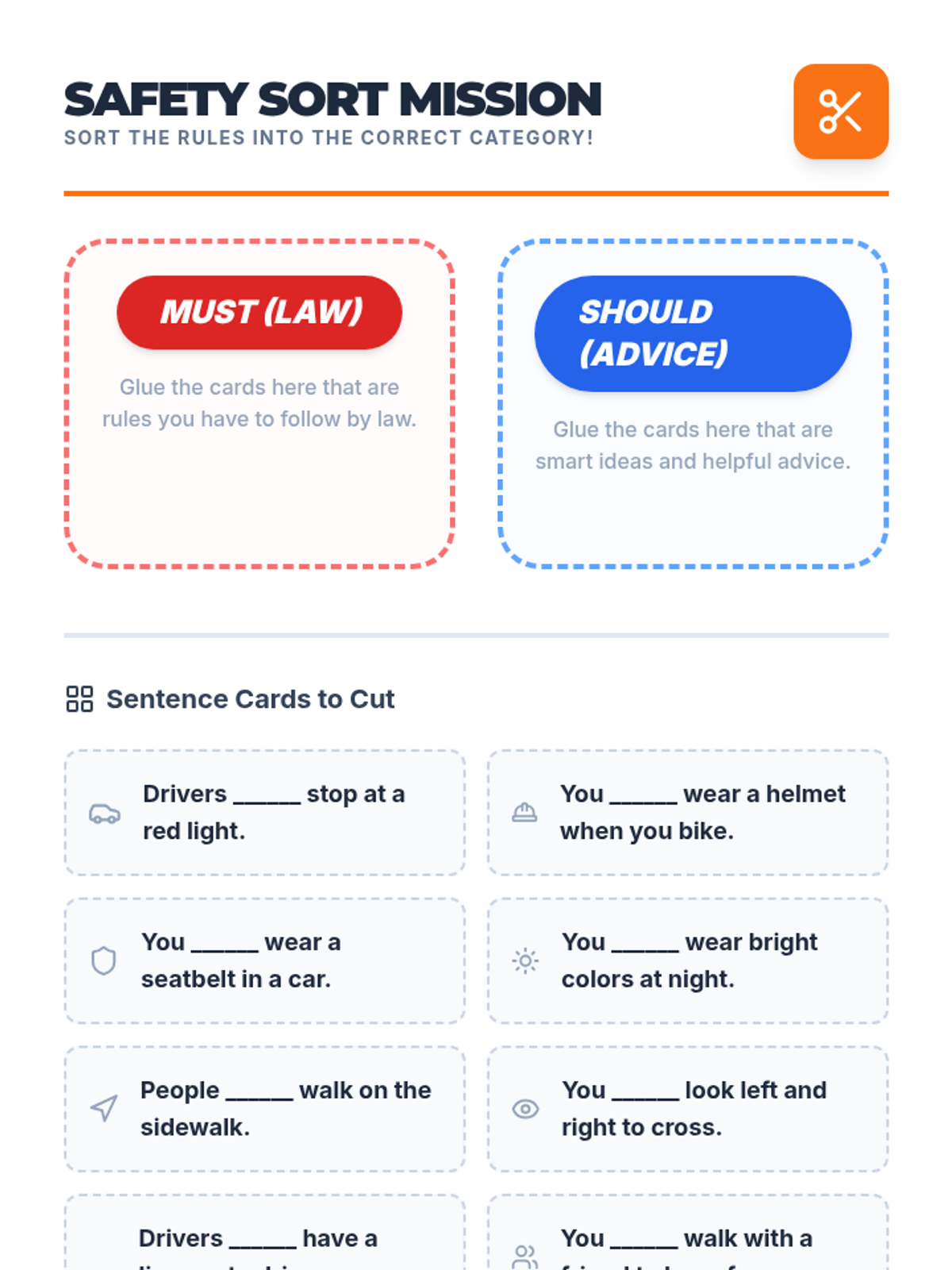
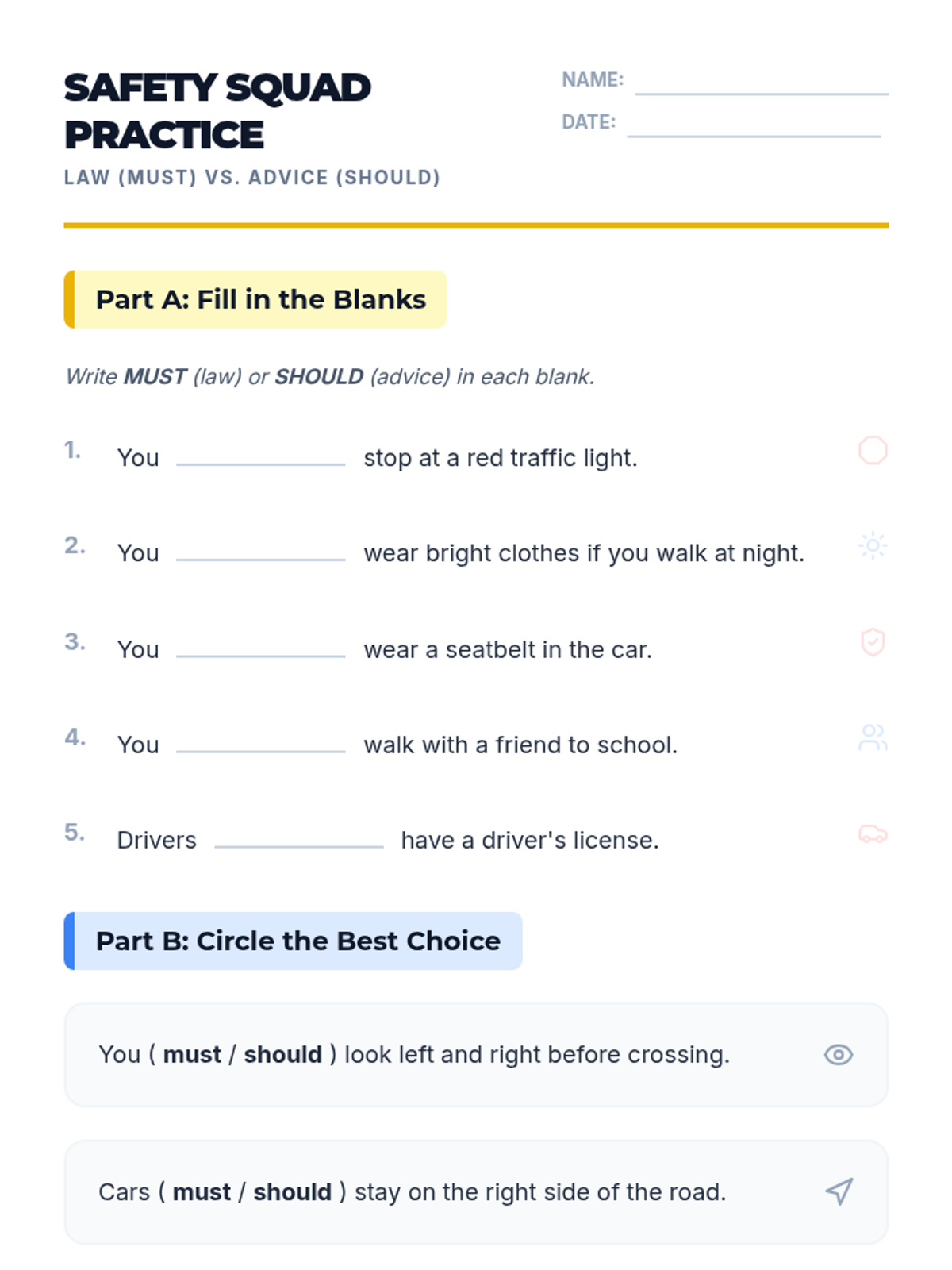
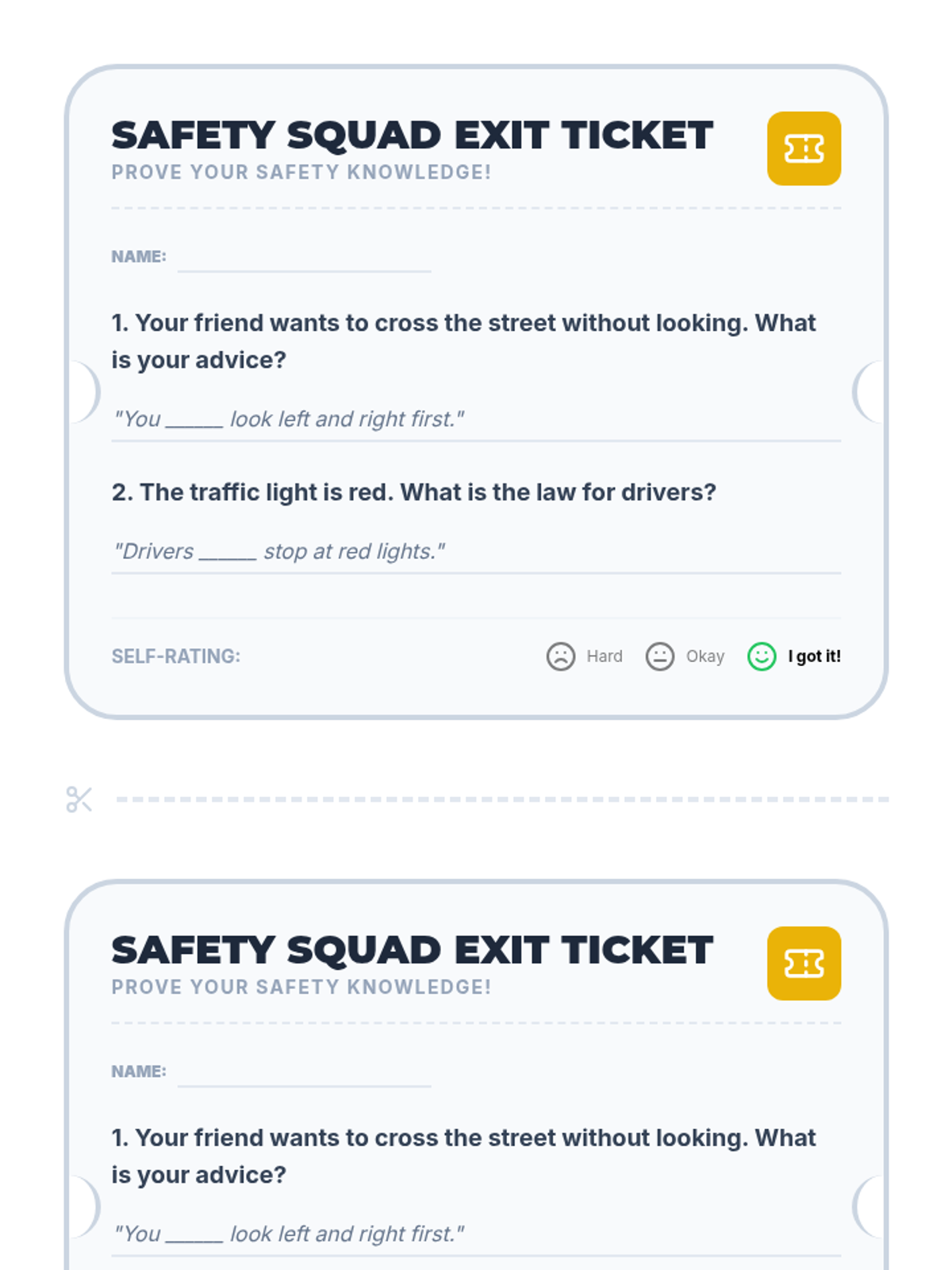
A comprehensive 45-minute ESL lesson for grade 4 focused on distinguishing between 'should' (advice) and 'must' (requirements) within the context of traffic safety and community rules.
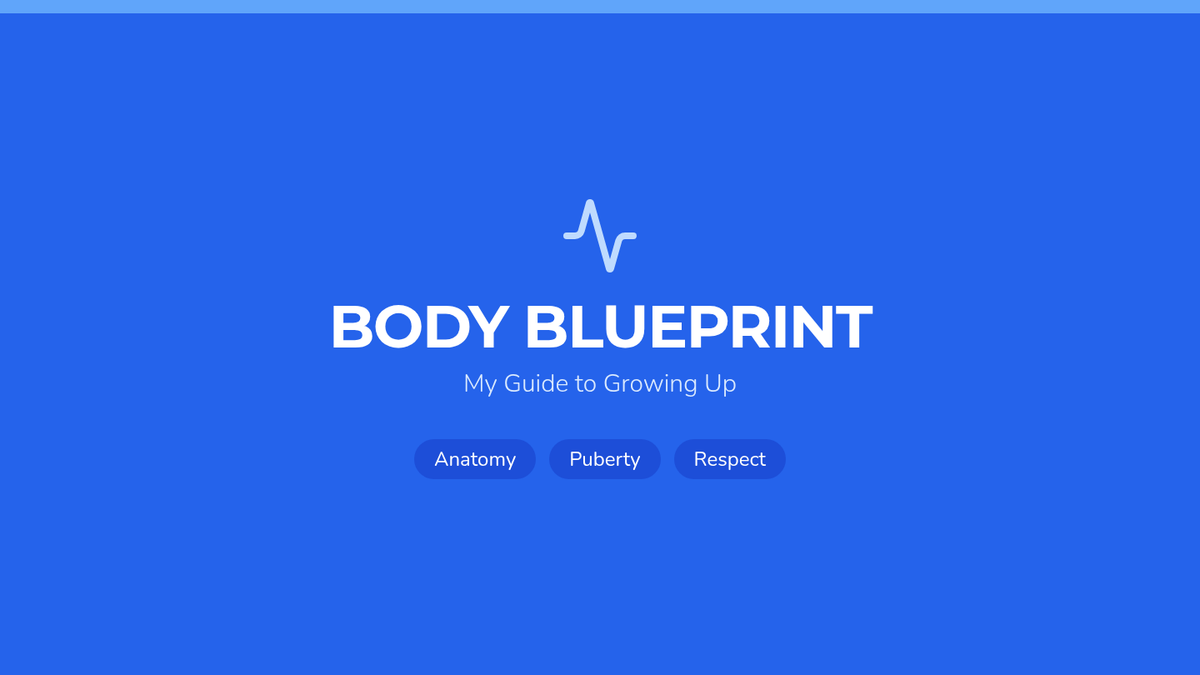
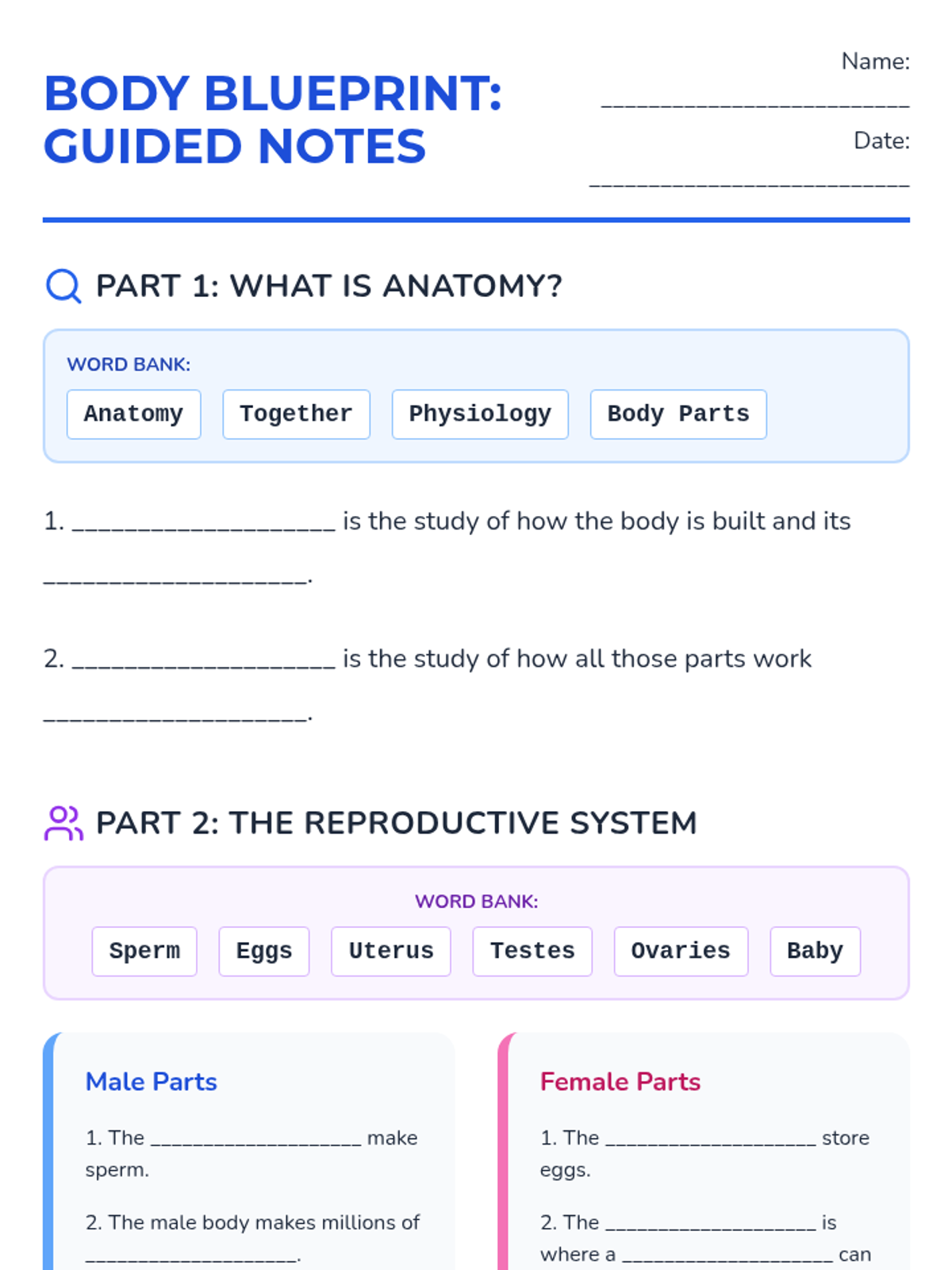
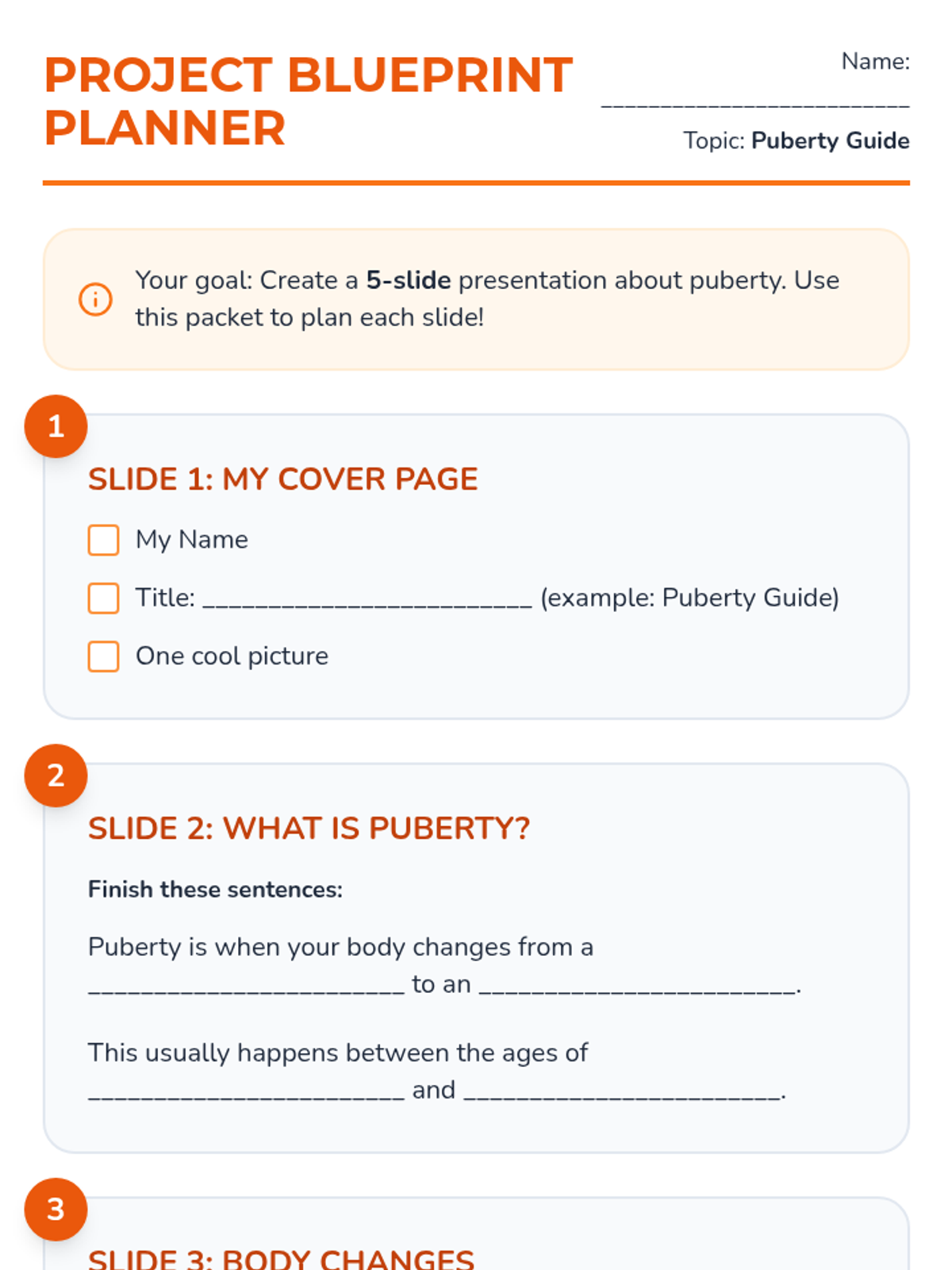
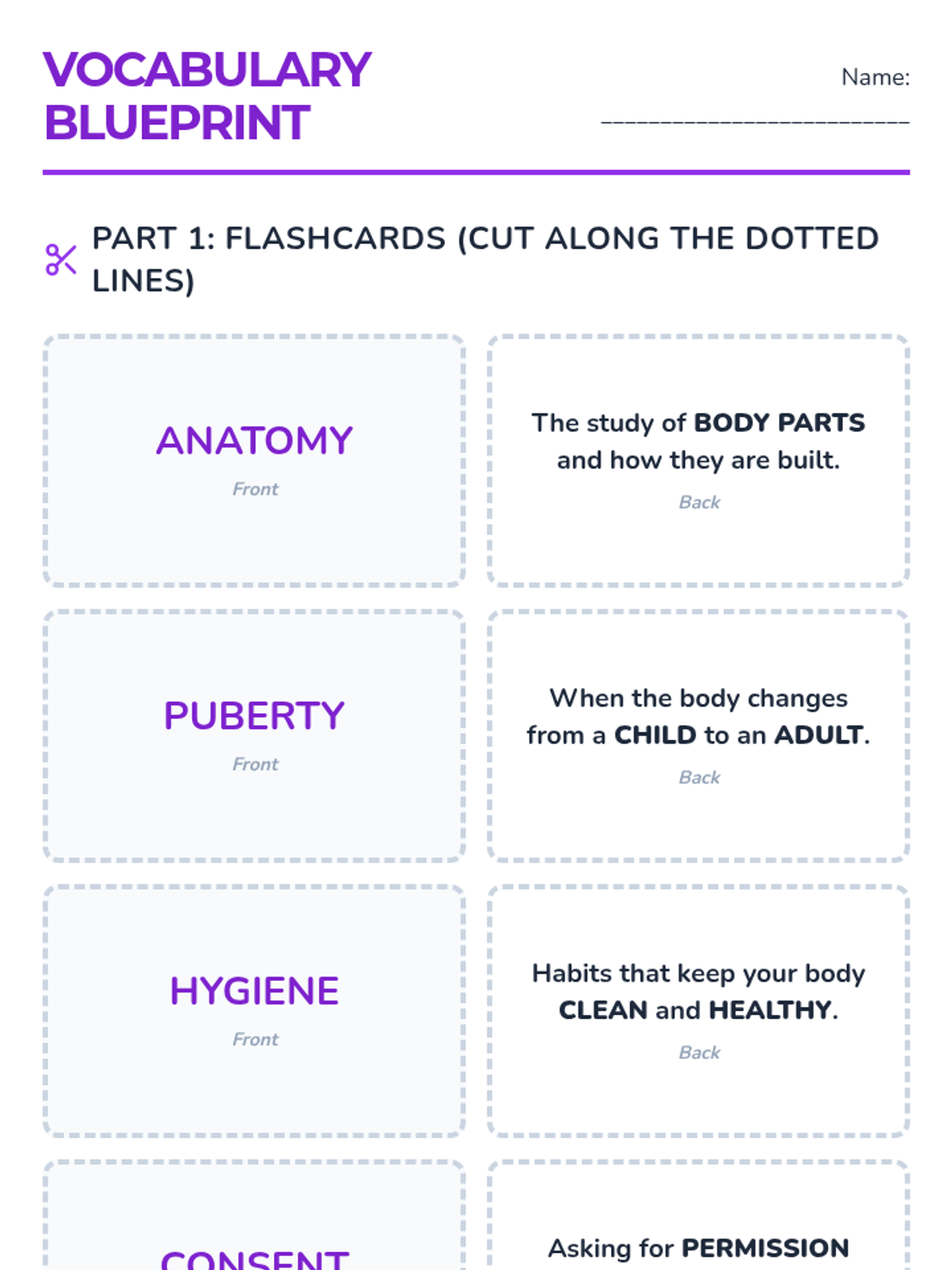
A simplified, visually-heavy curriculum on sexual health adapted for 6th-grade resource room students. Covers anatomy, puberty, relationships, and state laws using guided notes, scaffolded projects, and visual supports.
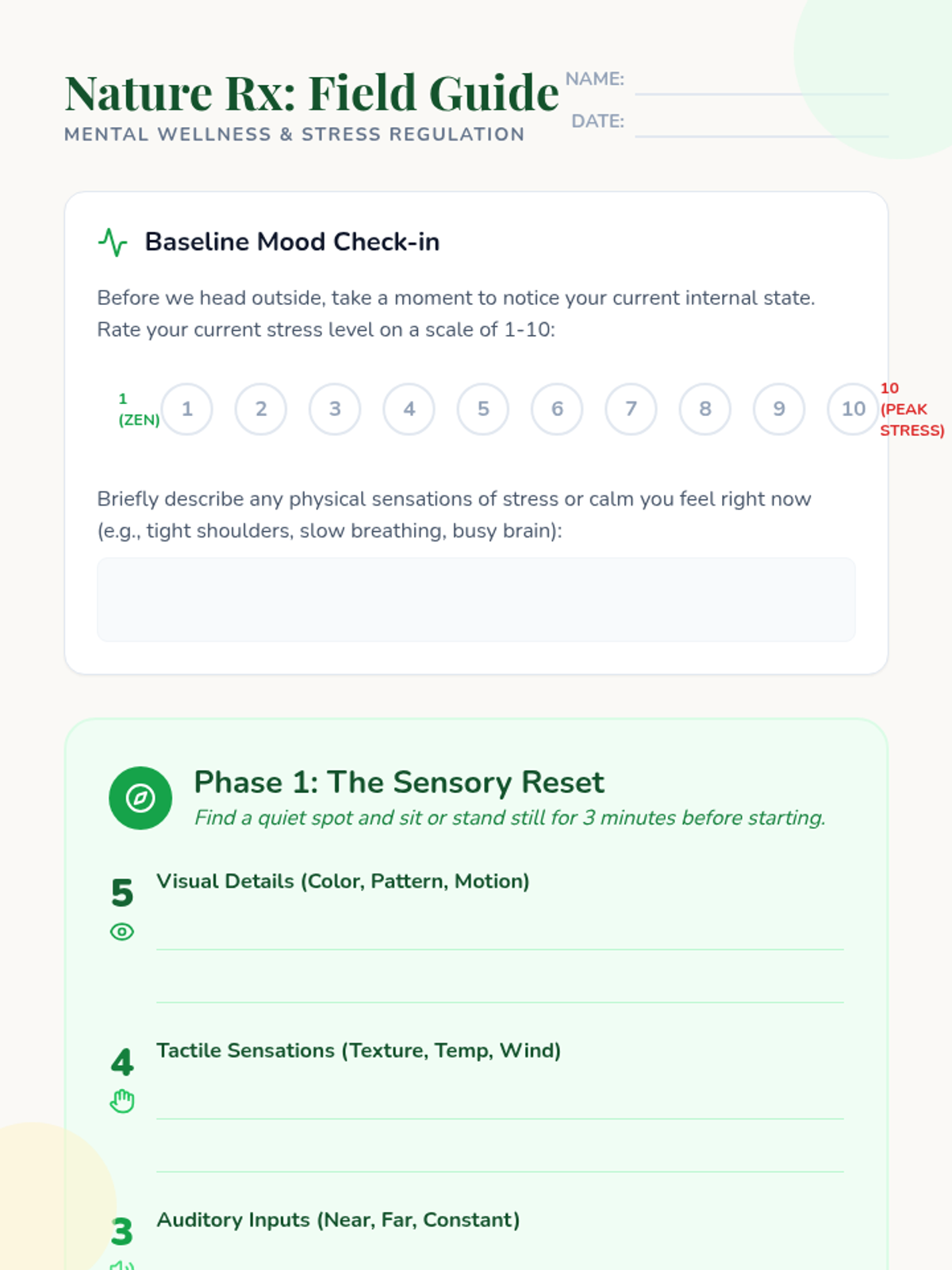
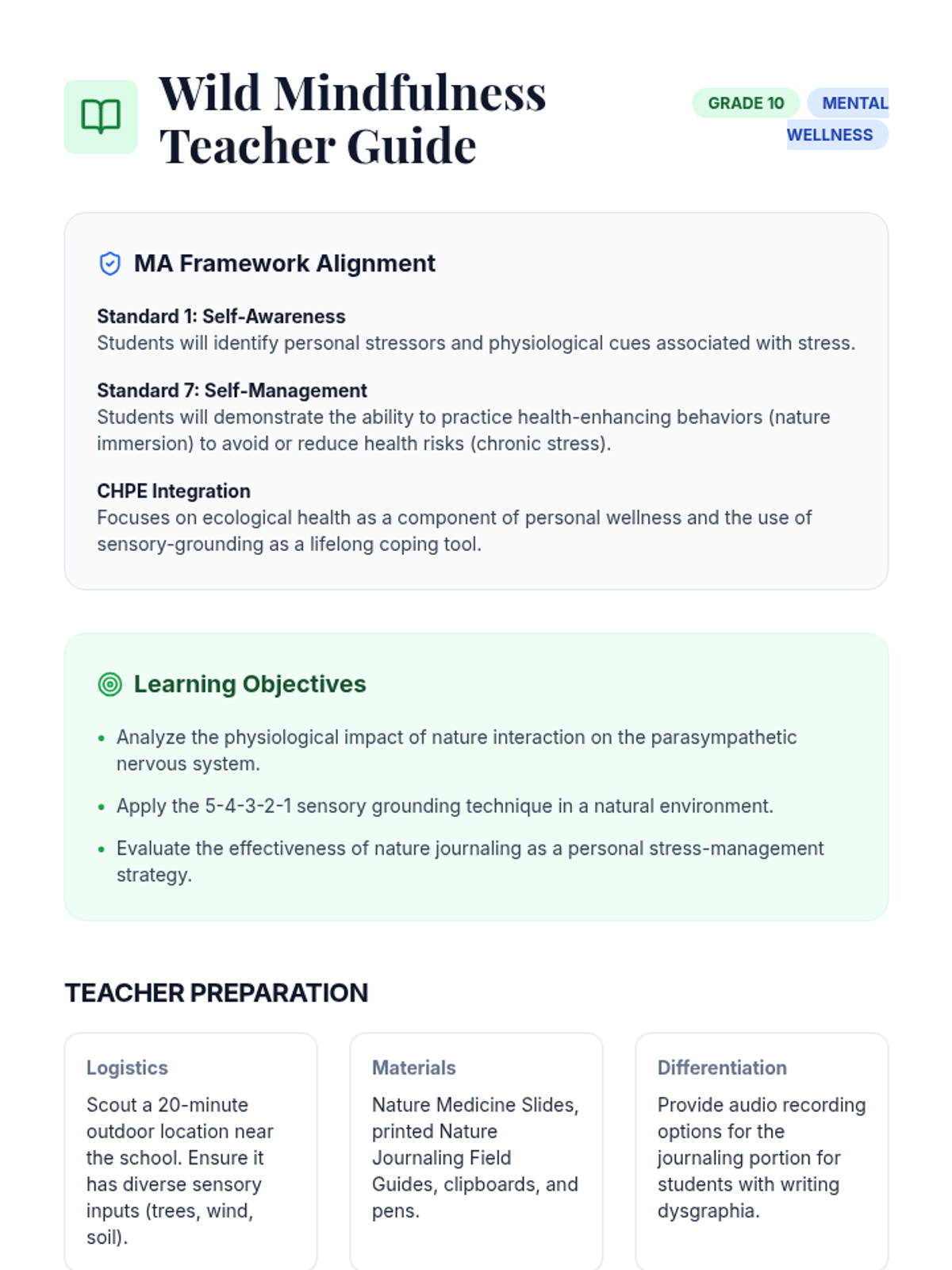
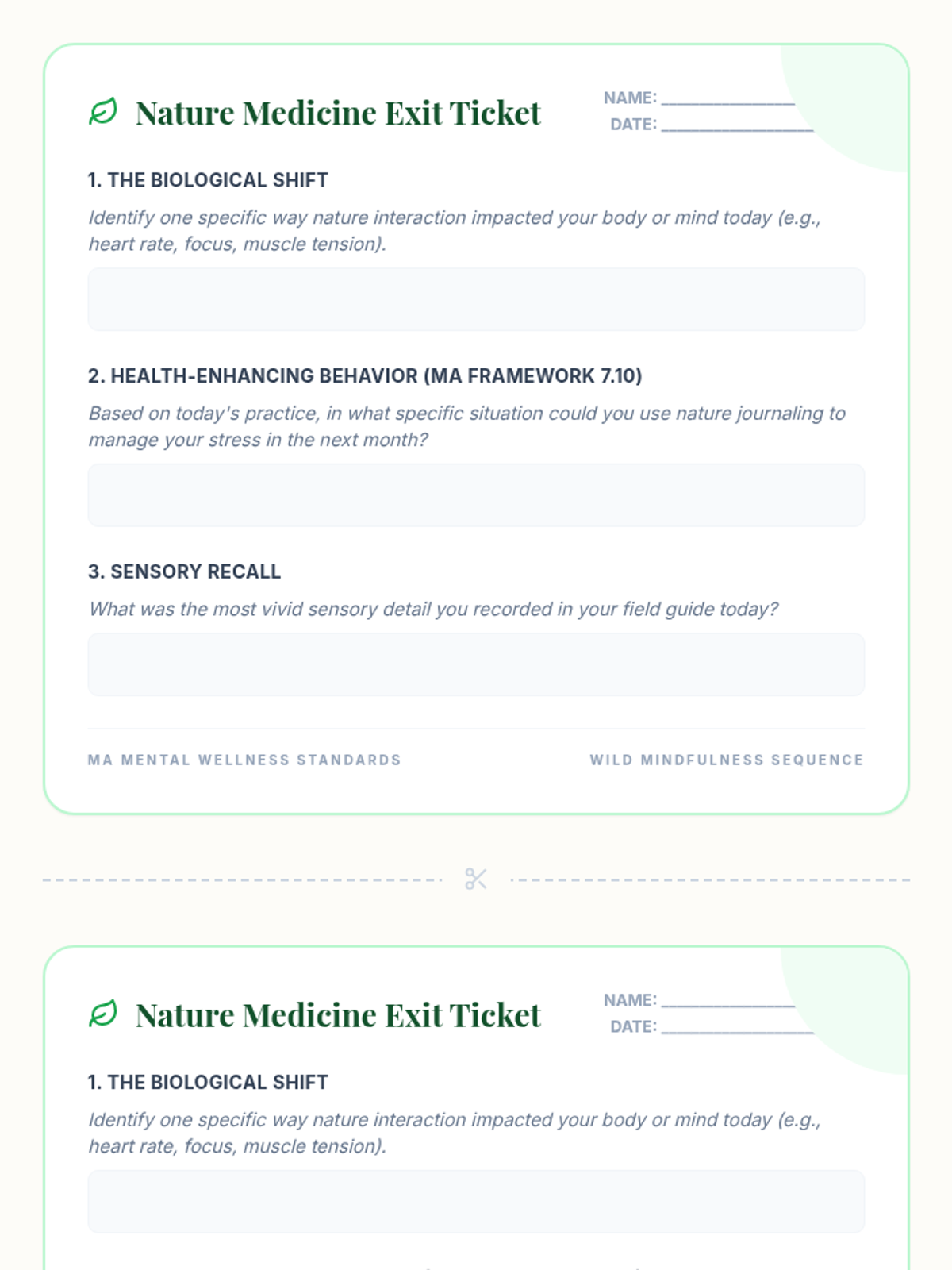
A lesson exploring the mental health benefits of nature journaling, focusing on stress reduction and self-awareness as part of the Massachusetts Grade 10 Mental Wellness standards. Students will practice sensory-based journaling and analyze its physiological and psychological effects.
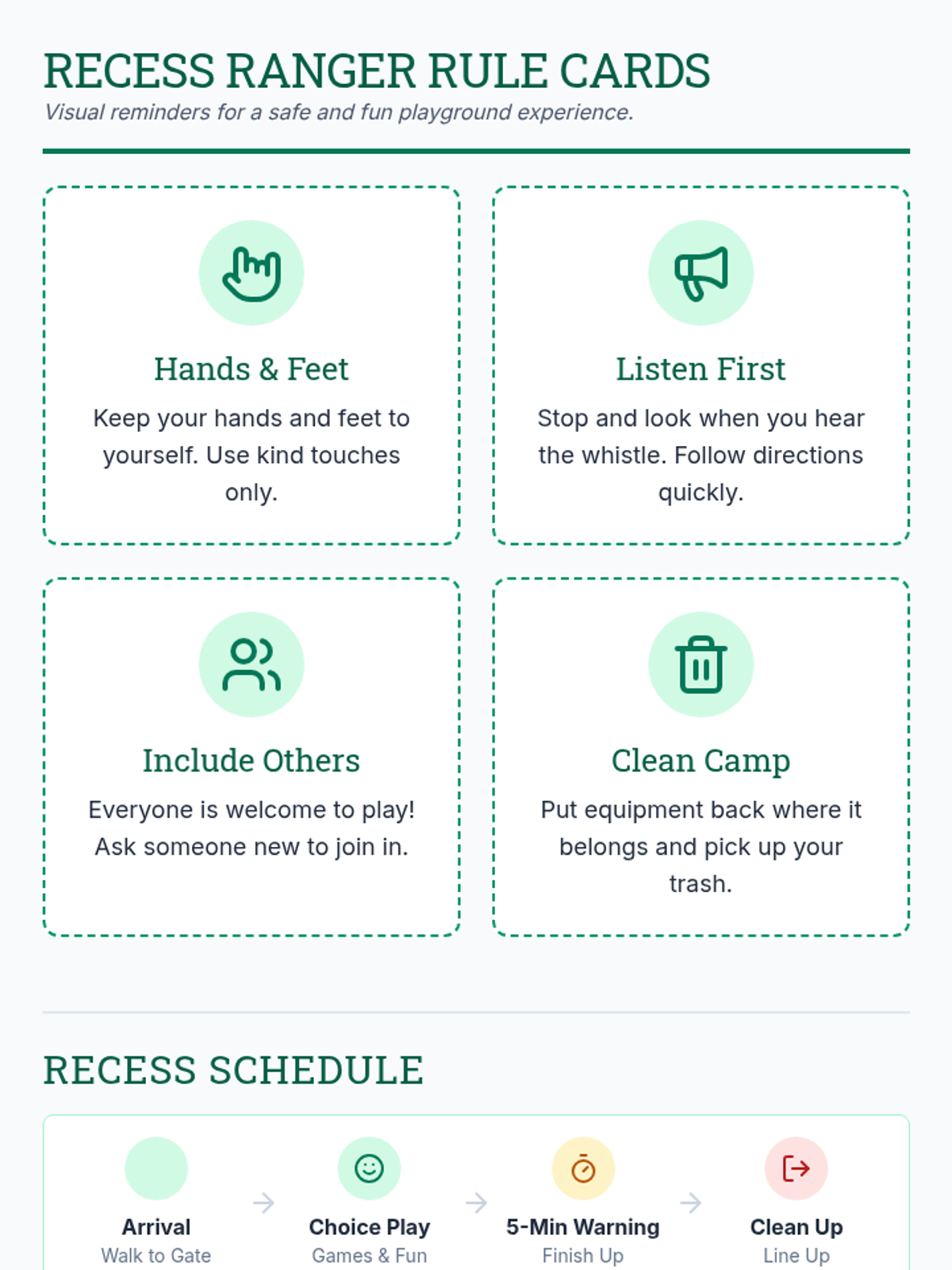
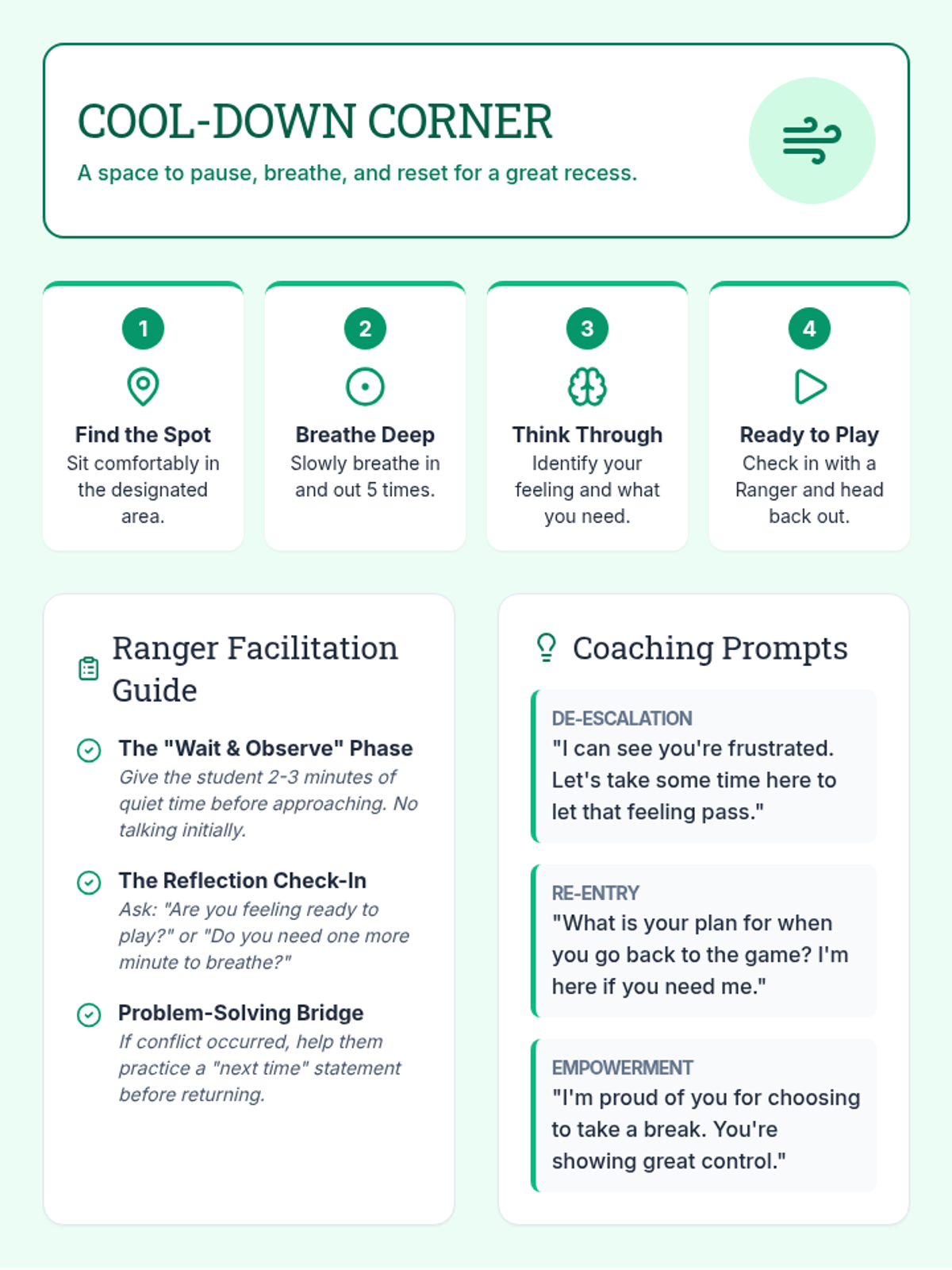
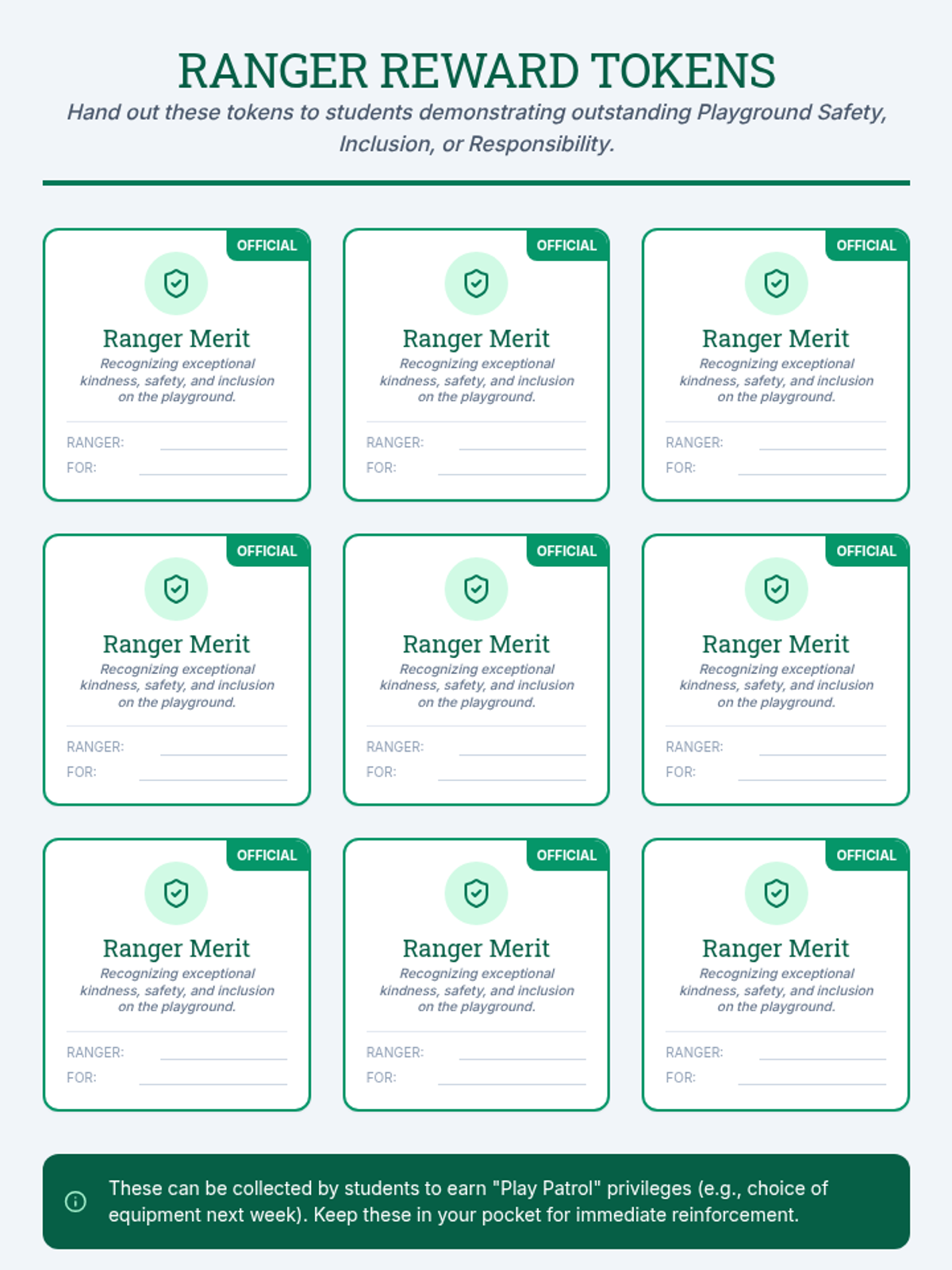
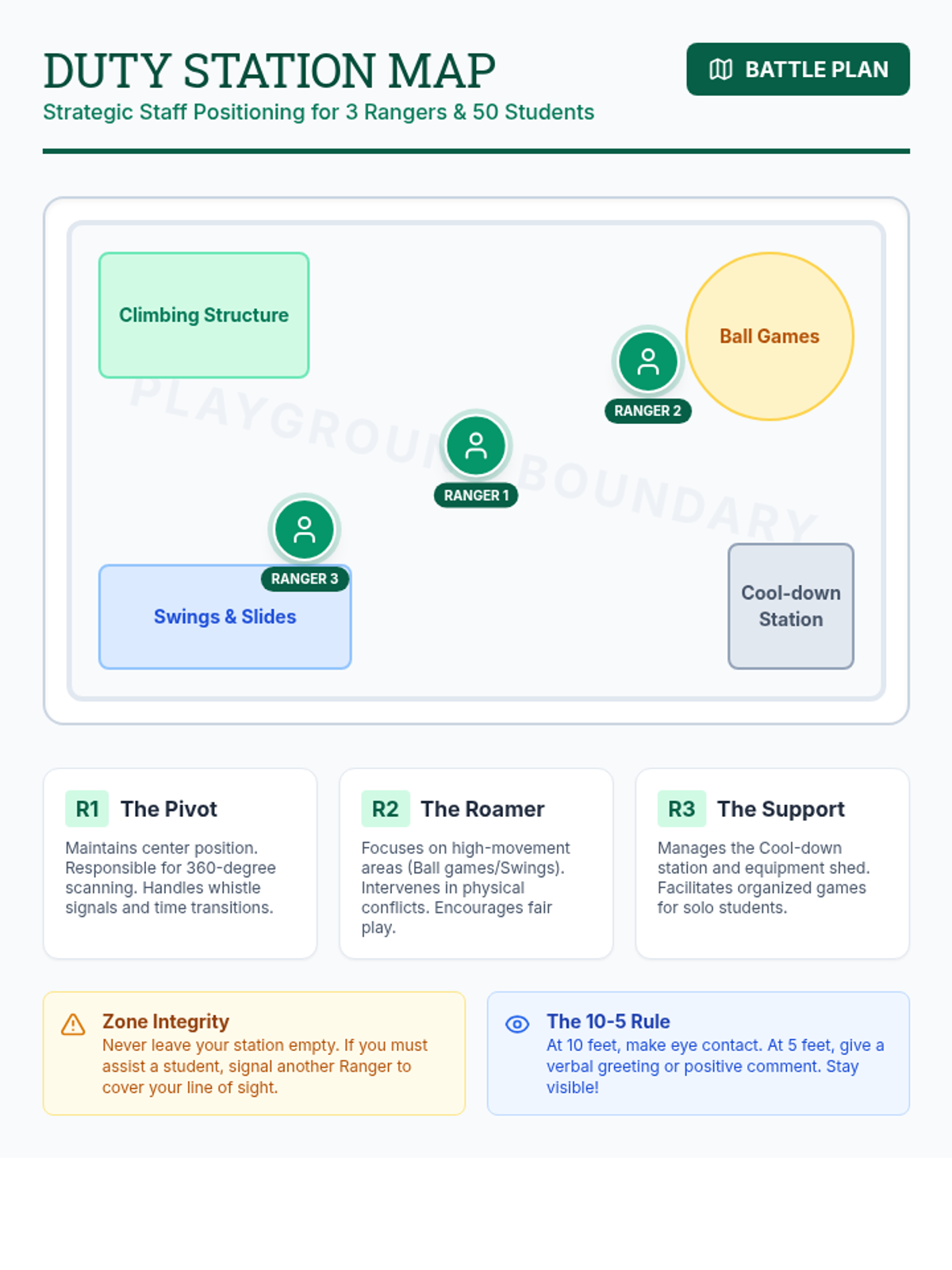
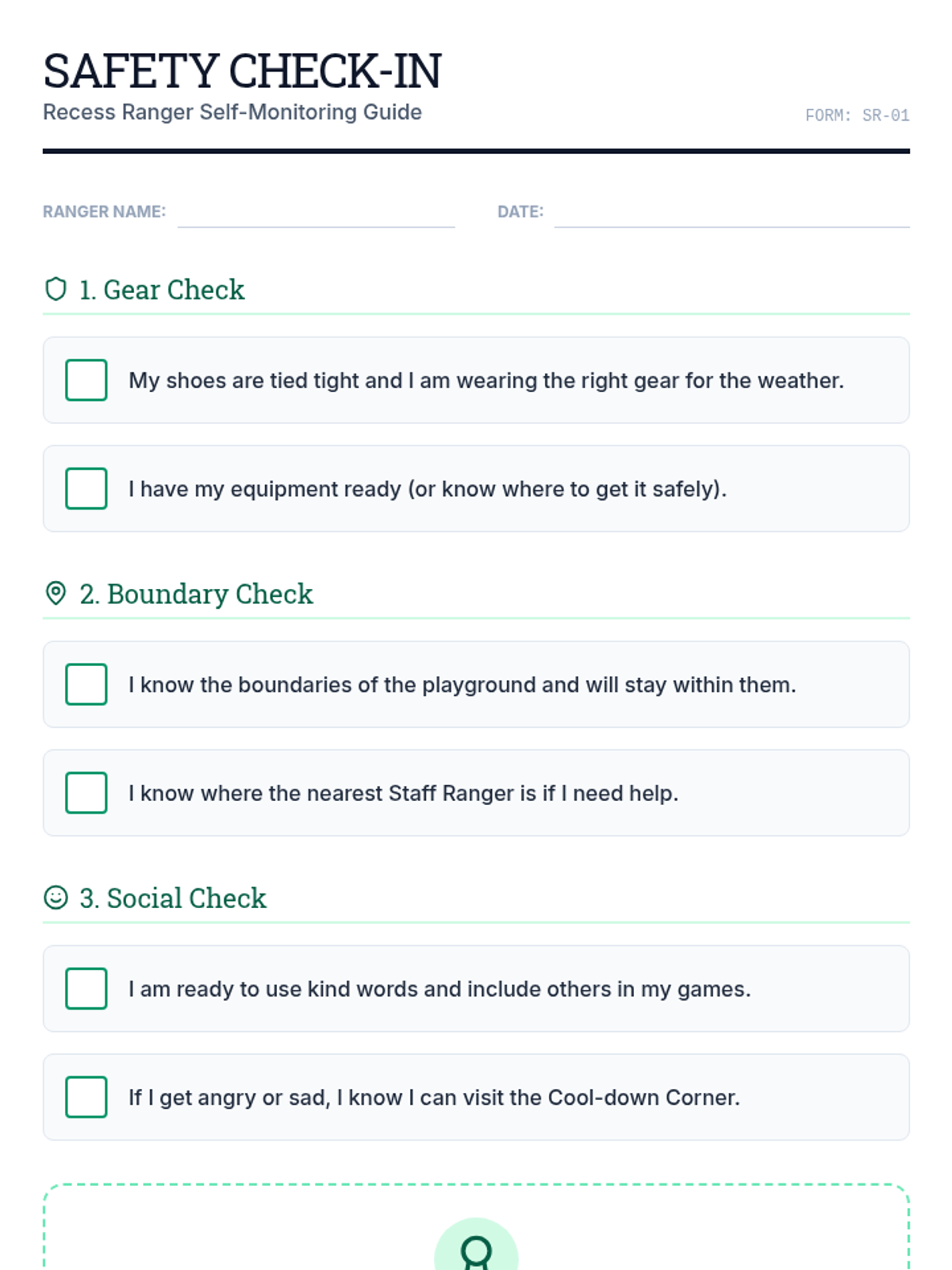
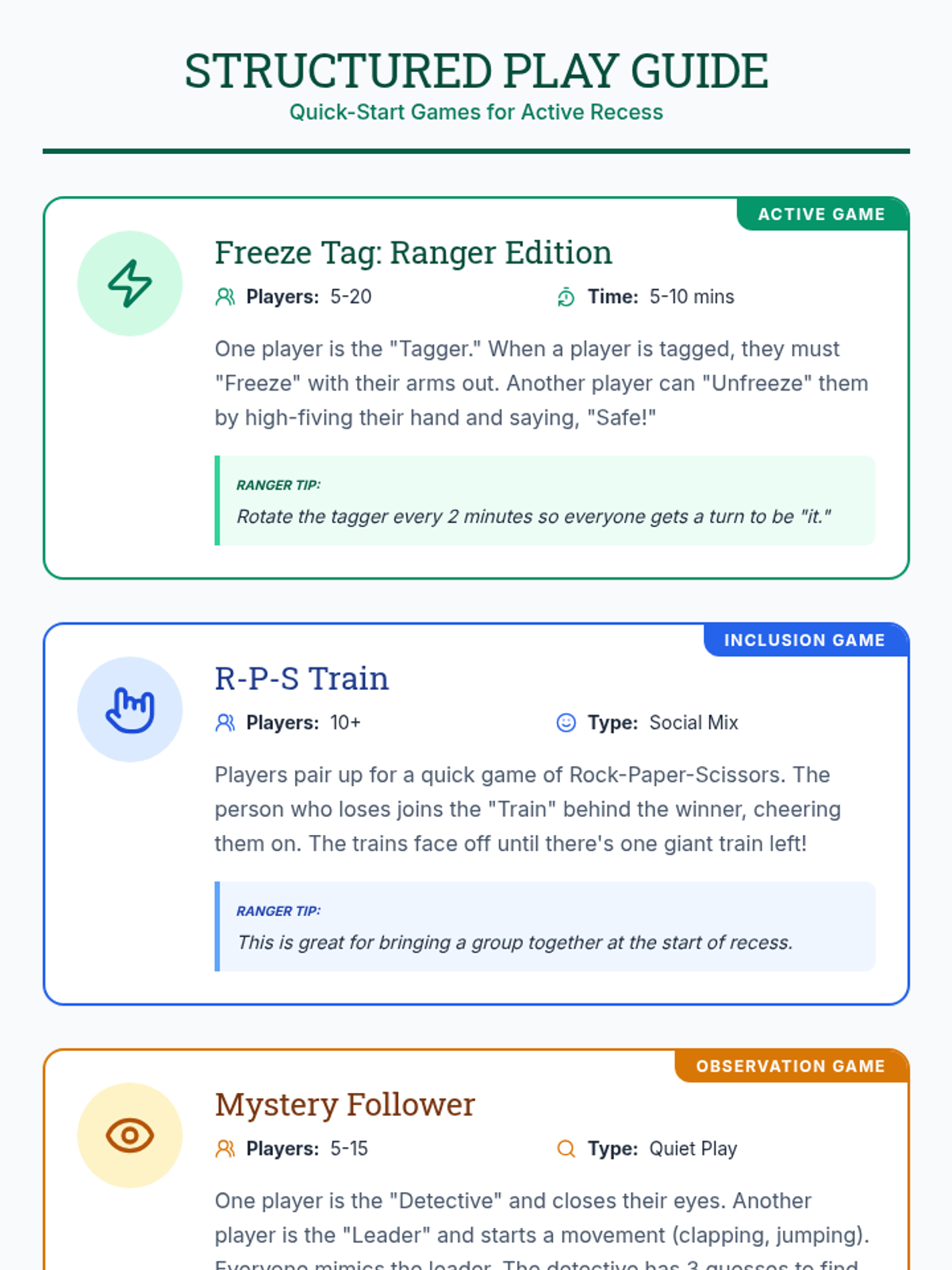
A comprehensive management system for outdoor recess, designed for 3 staff members overseeing 50 students. Includes visual supports, safety protocols, and structured play guides.
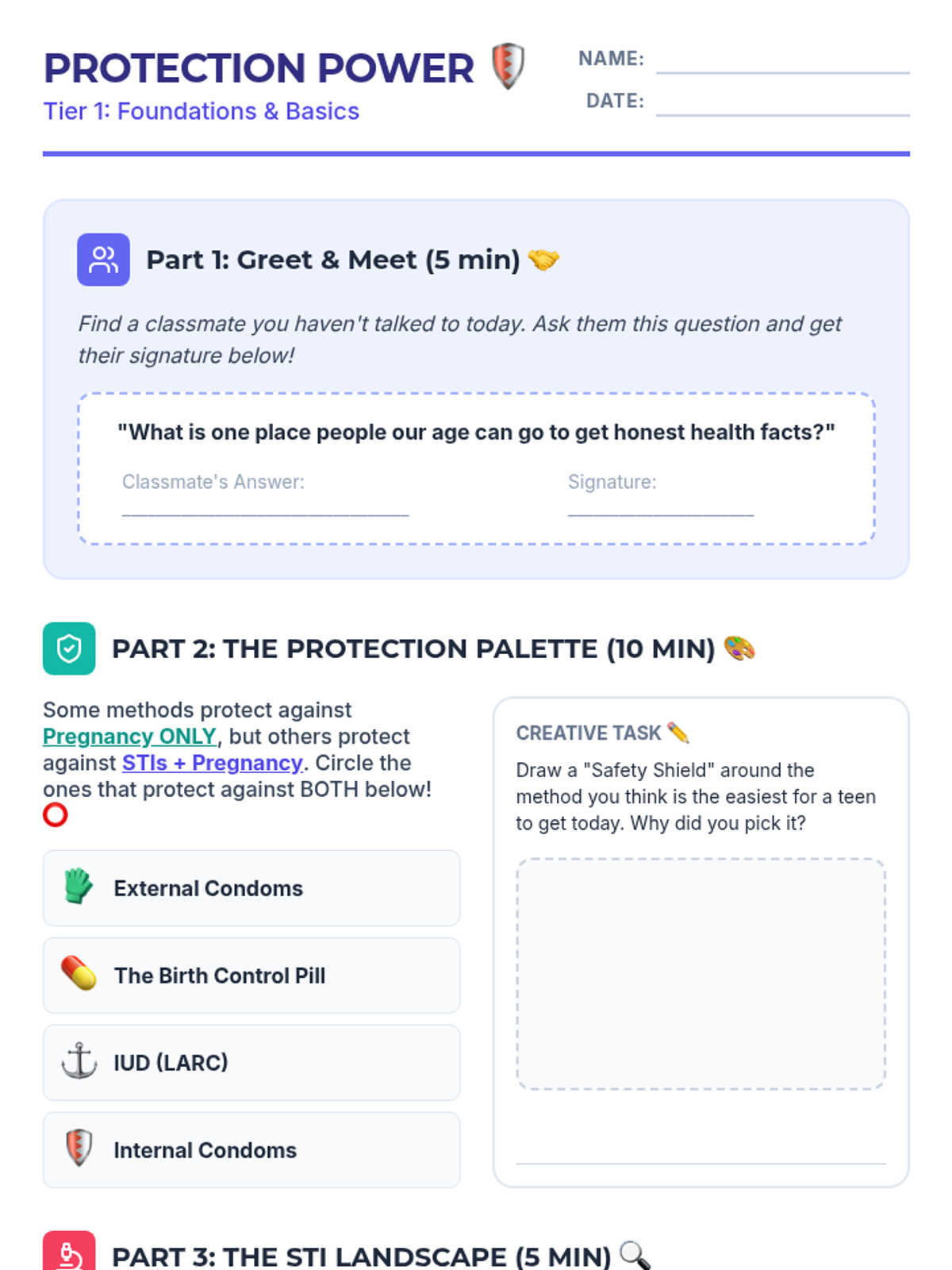
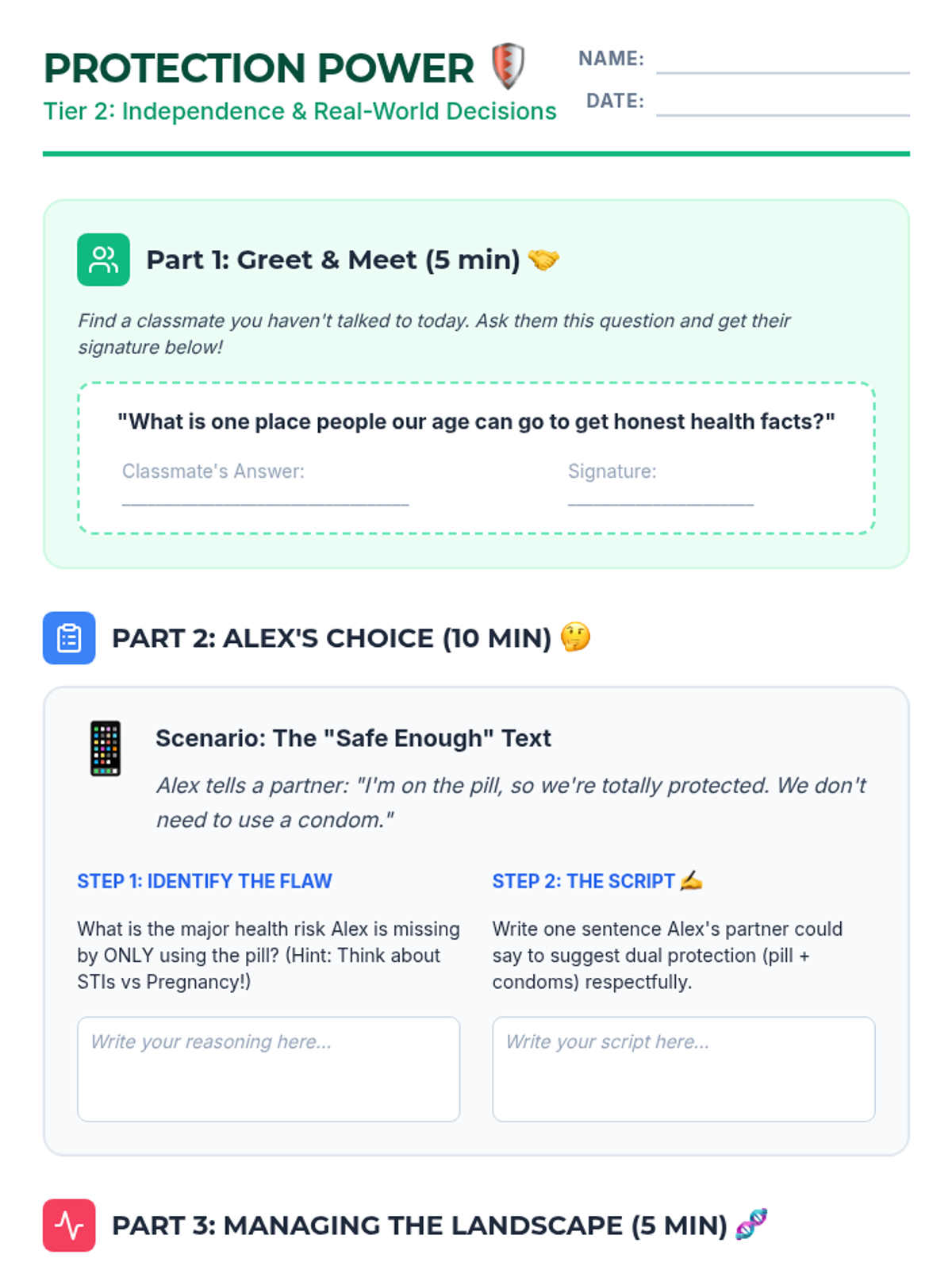
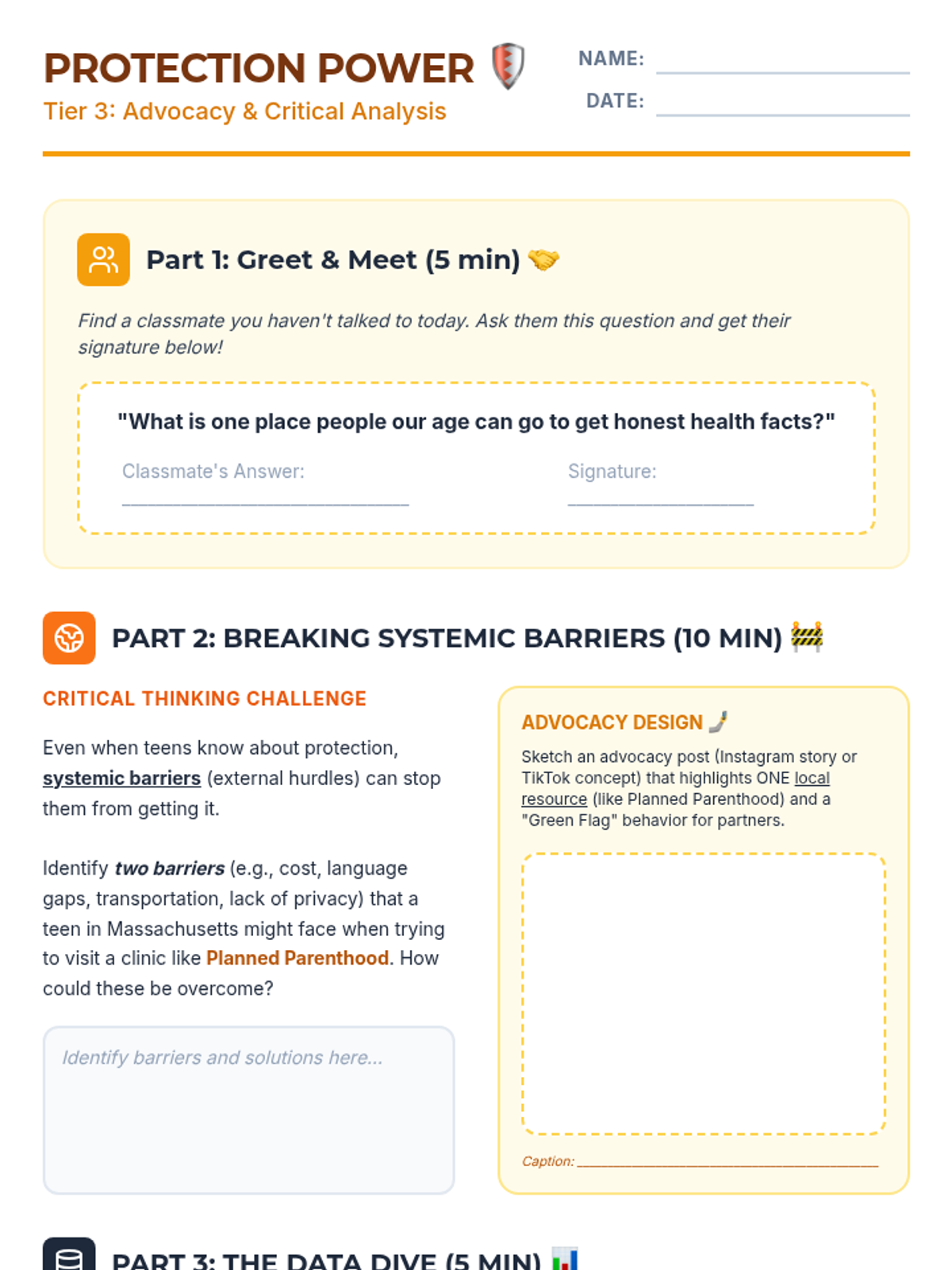
A three-tiered lesson on contraception and sexual health focused on decision-making, STI prevention, and communication skills, aligned with Massachusetts health standards.
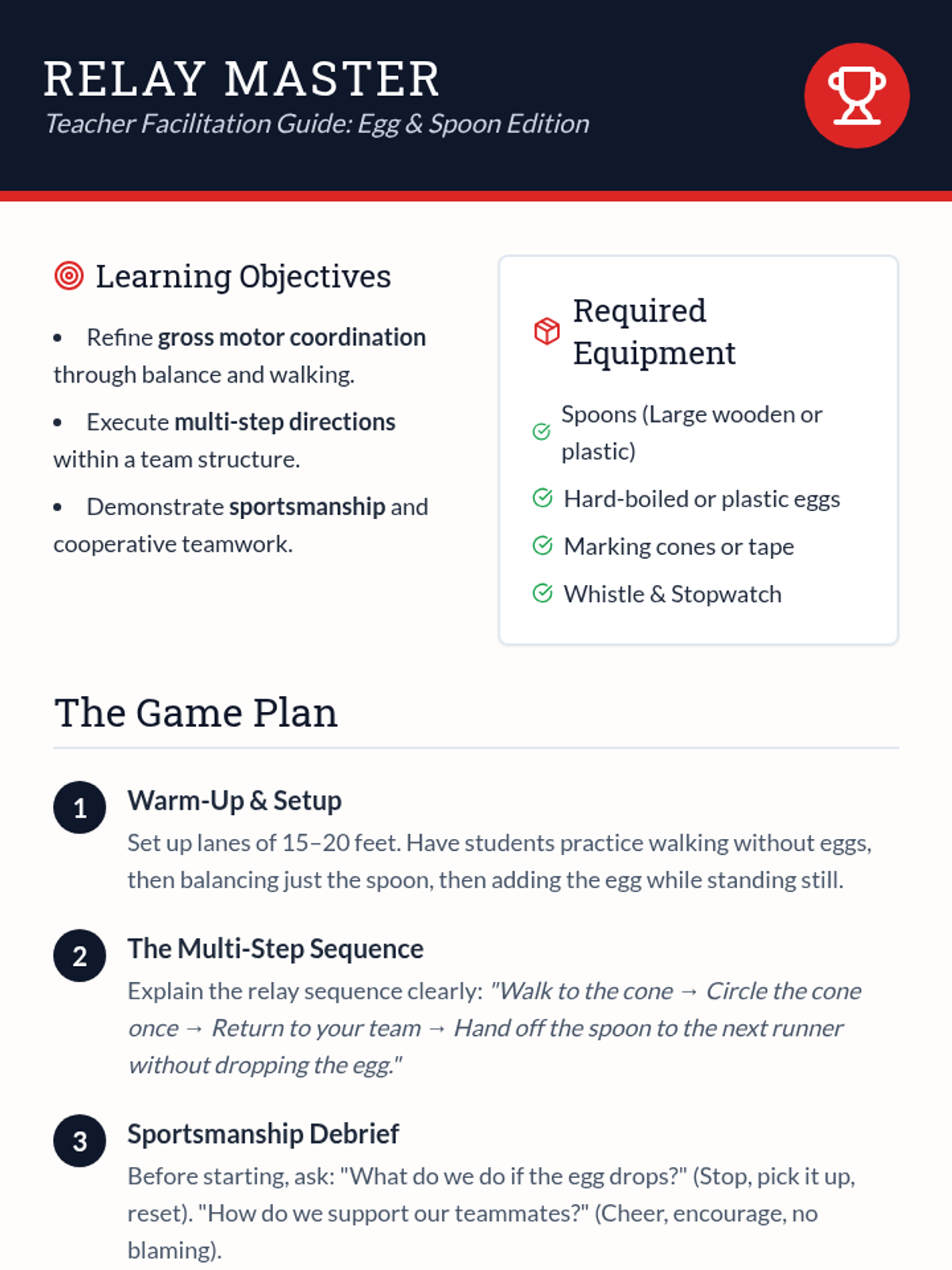
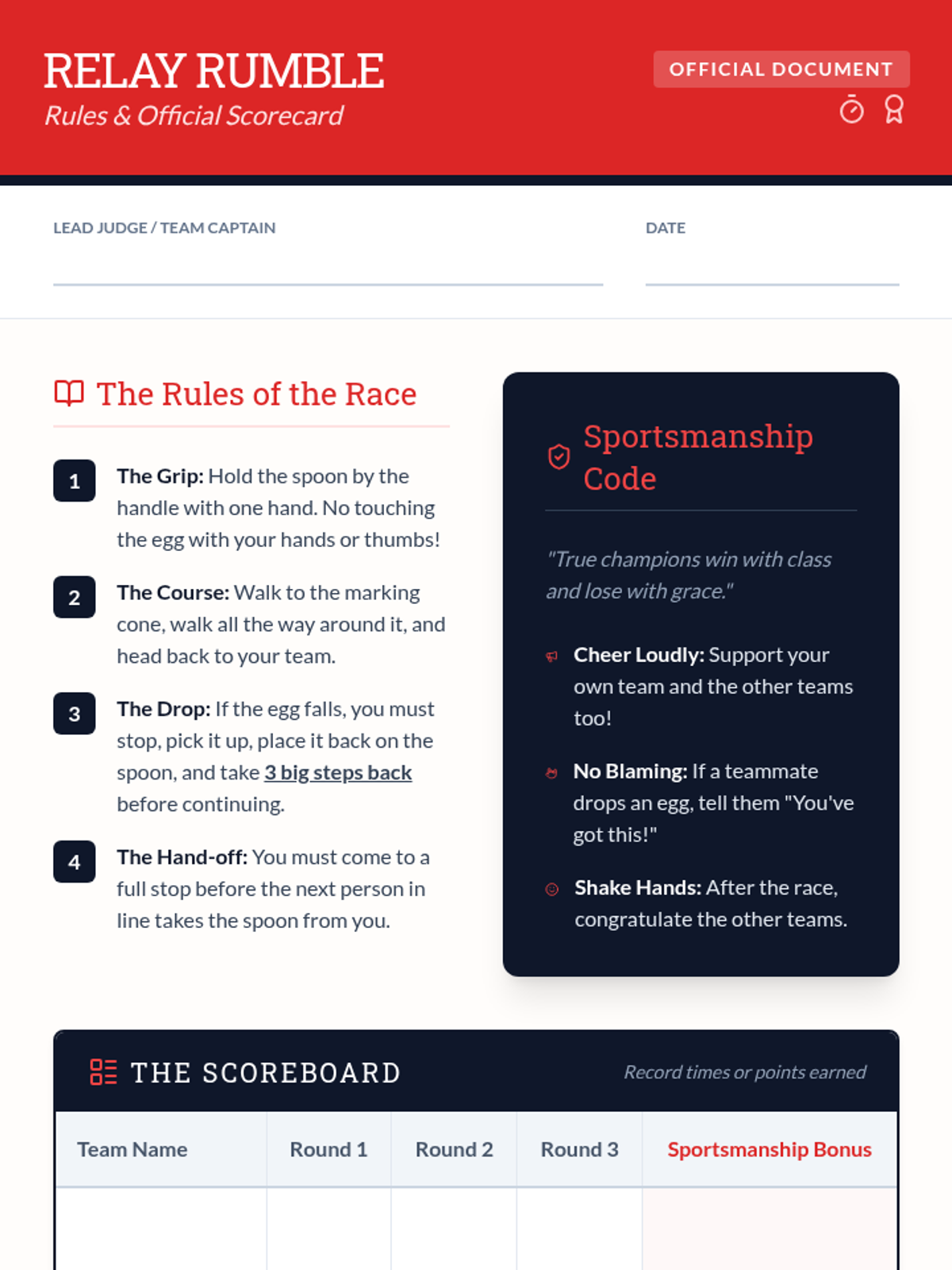
A high-energy lesson focused on gross motor skills, following complex directions, and practicing good sportsmanship through an egg and spoon relay race.
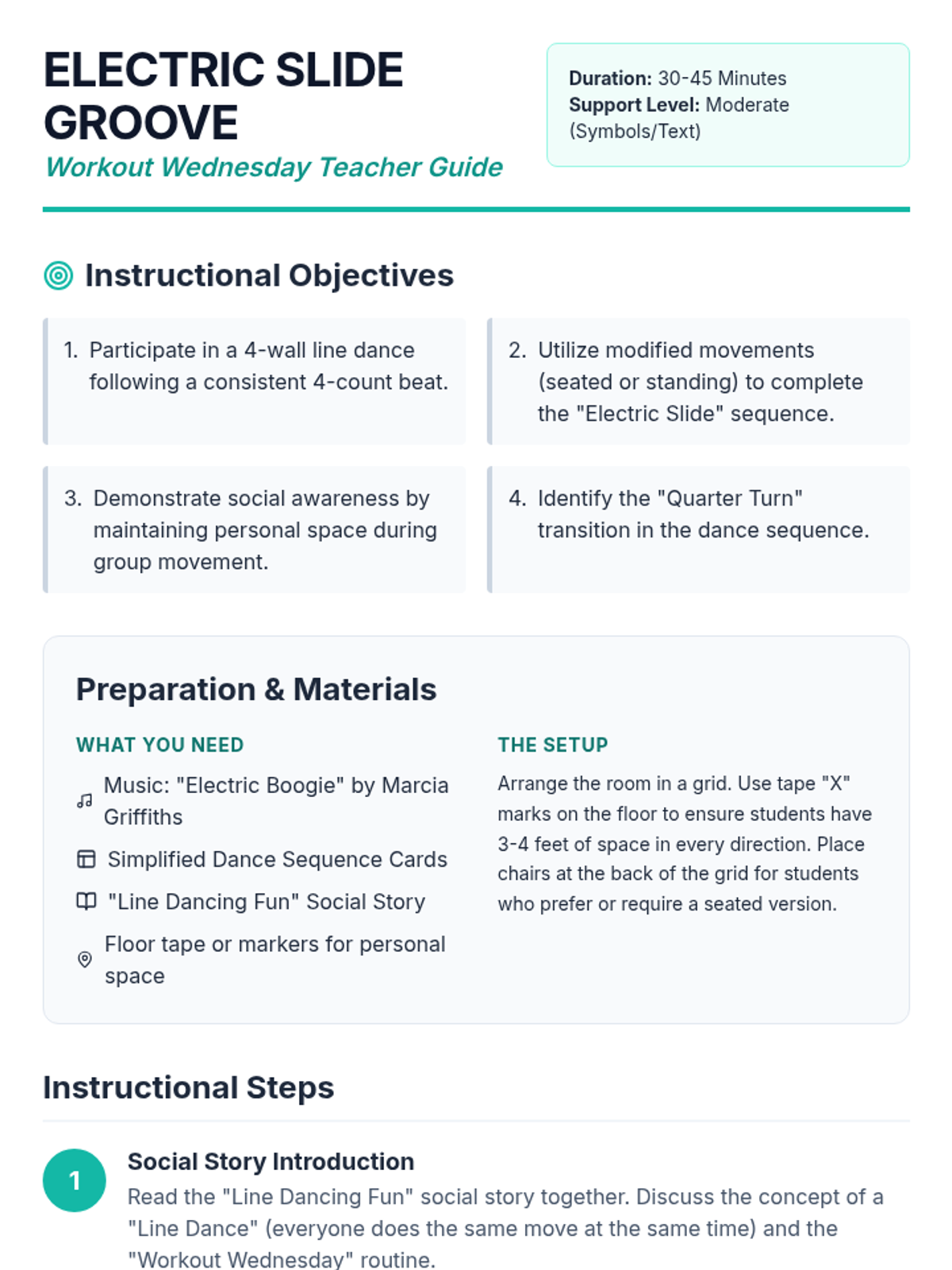
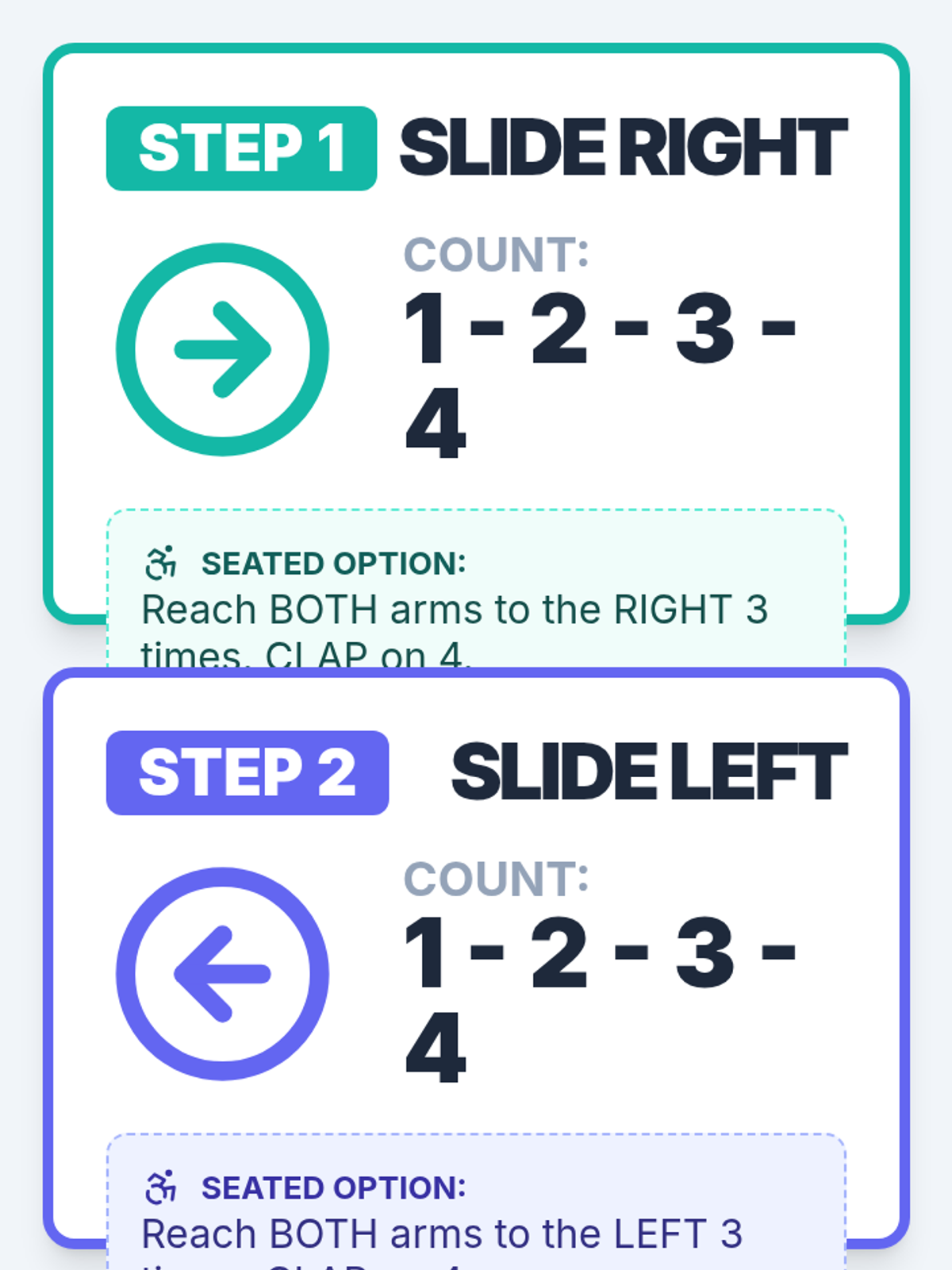
A guided introduction to the Electric Slide, featuring simplified steps and modifications for students with limited mobility or wheelchair users.
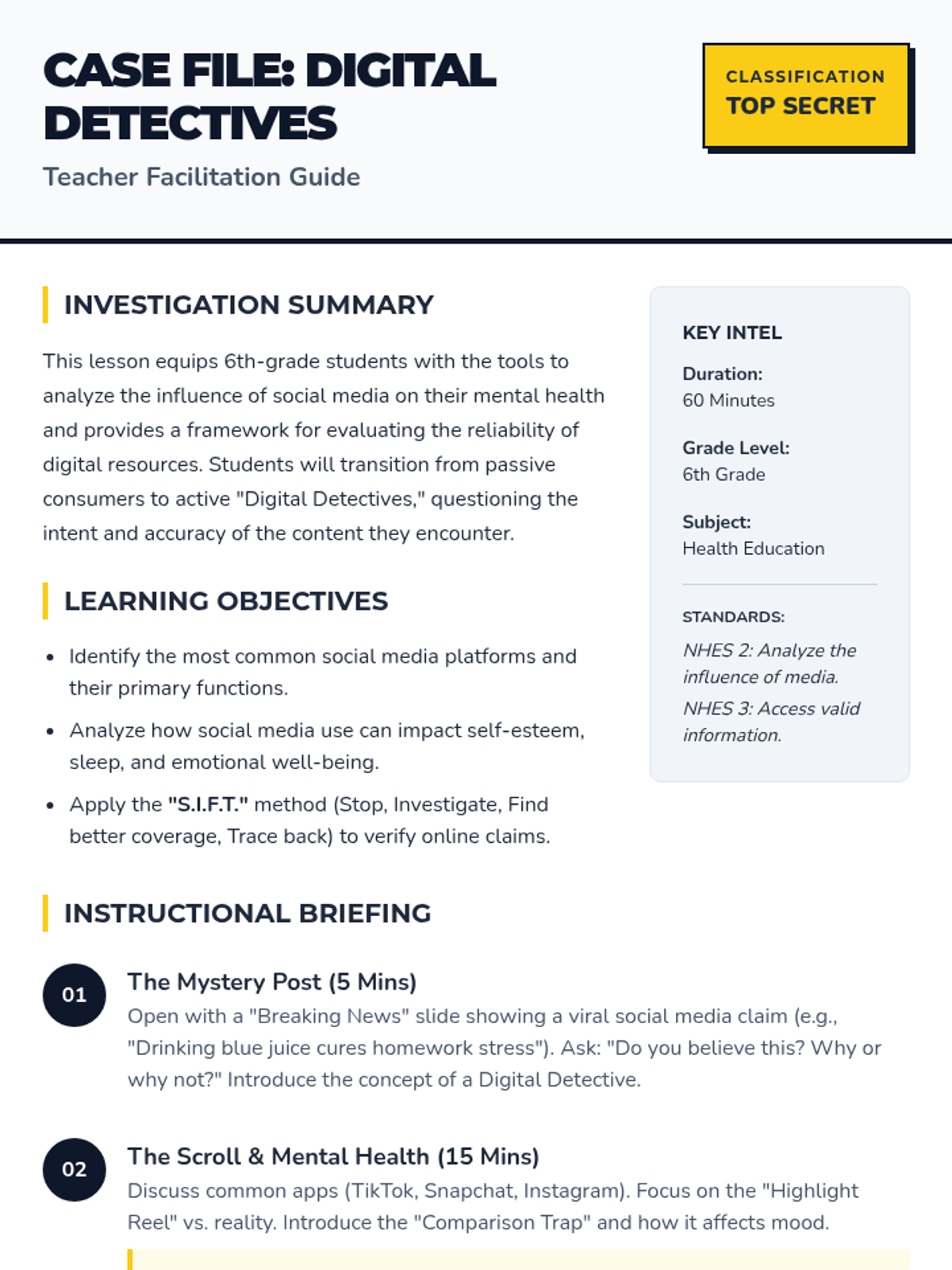
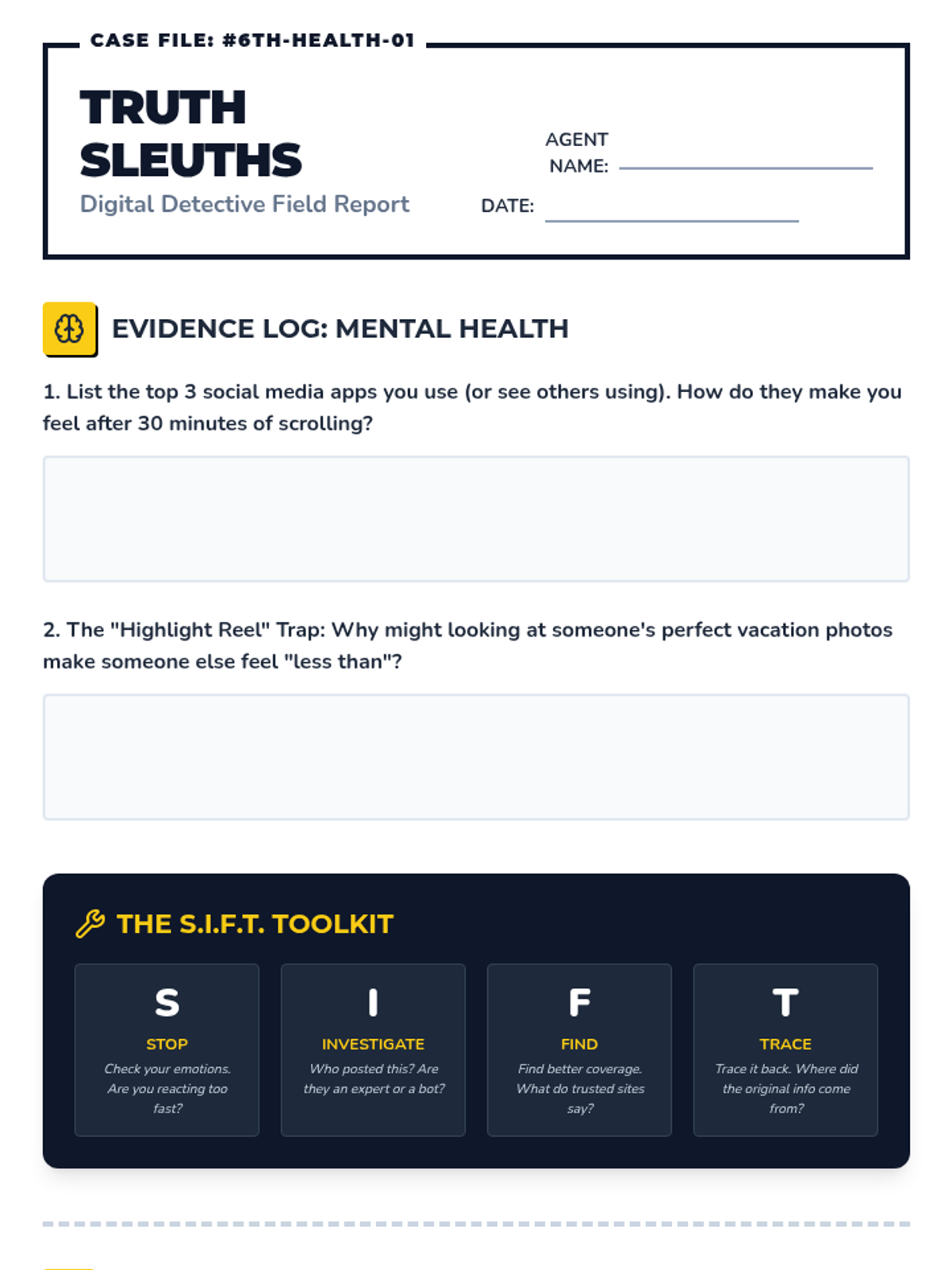
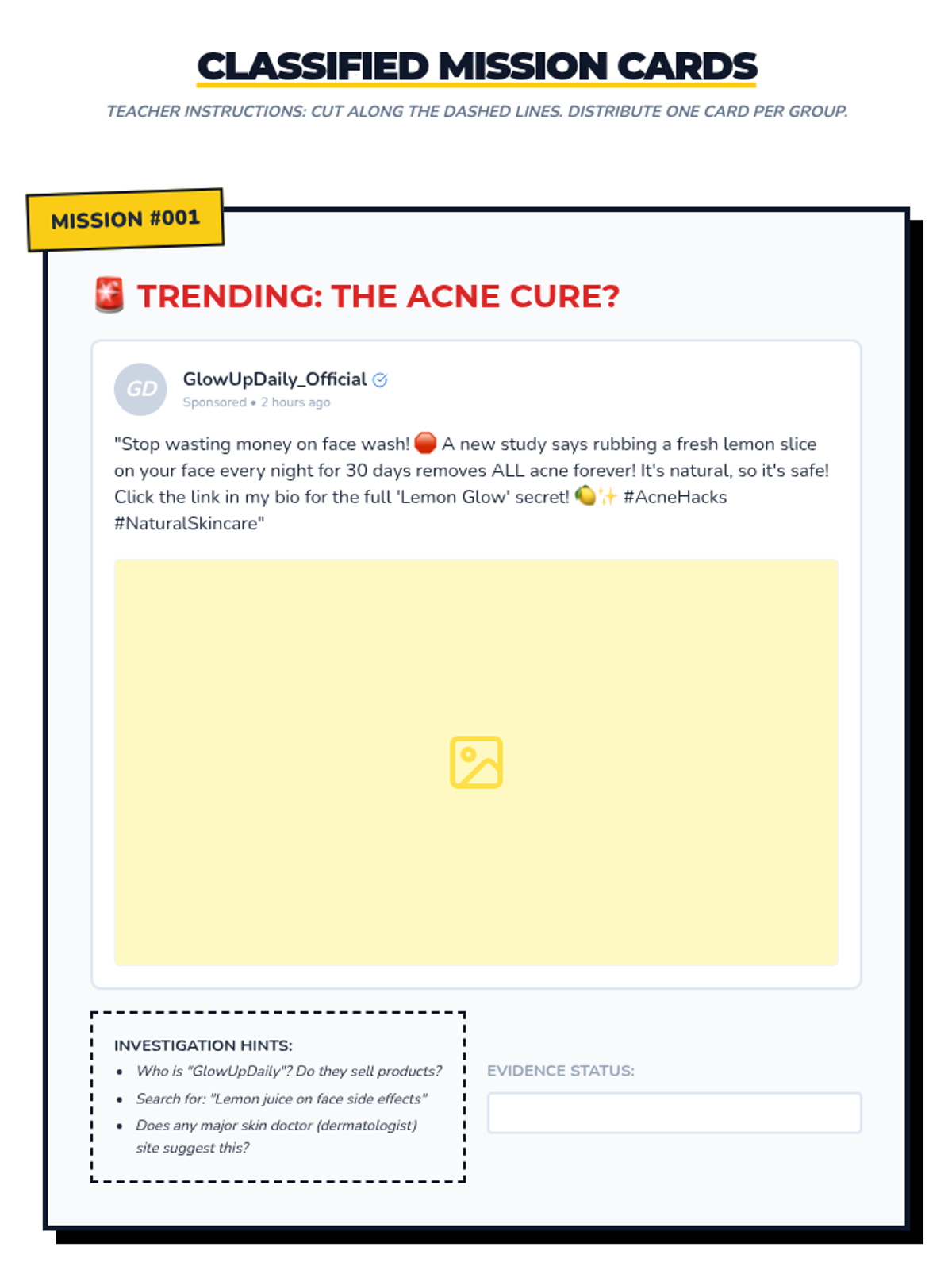
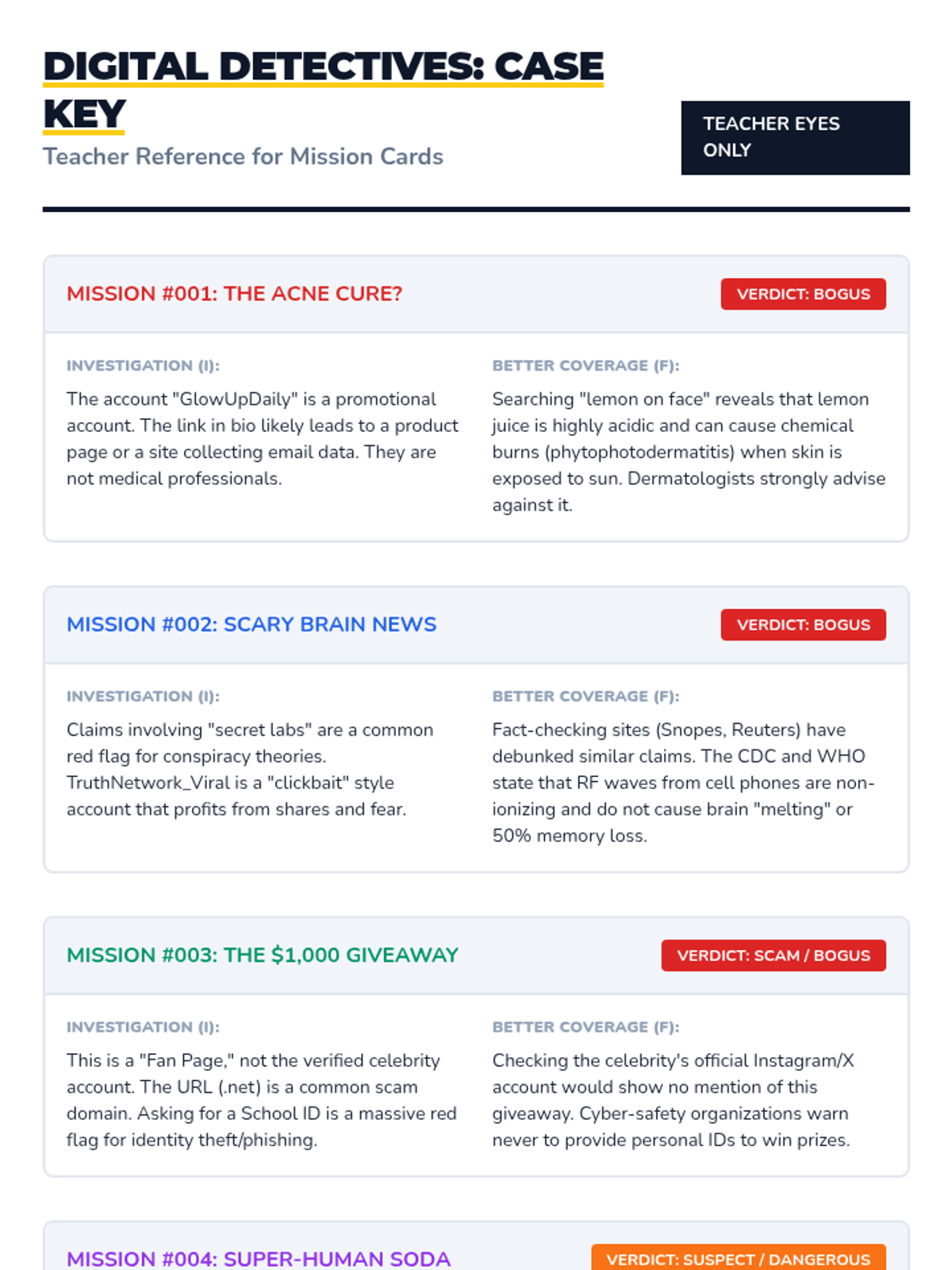
A 6th-grade health lesson that empowers students to navigate social media safely by analyzing mental health impacts and developing skills to verify online information. Students act as 'Digital Detectives' to uncover the truth behind the scroll.
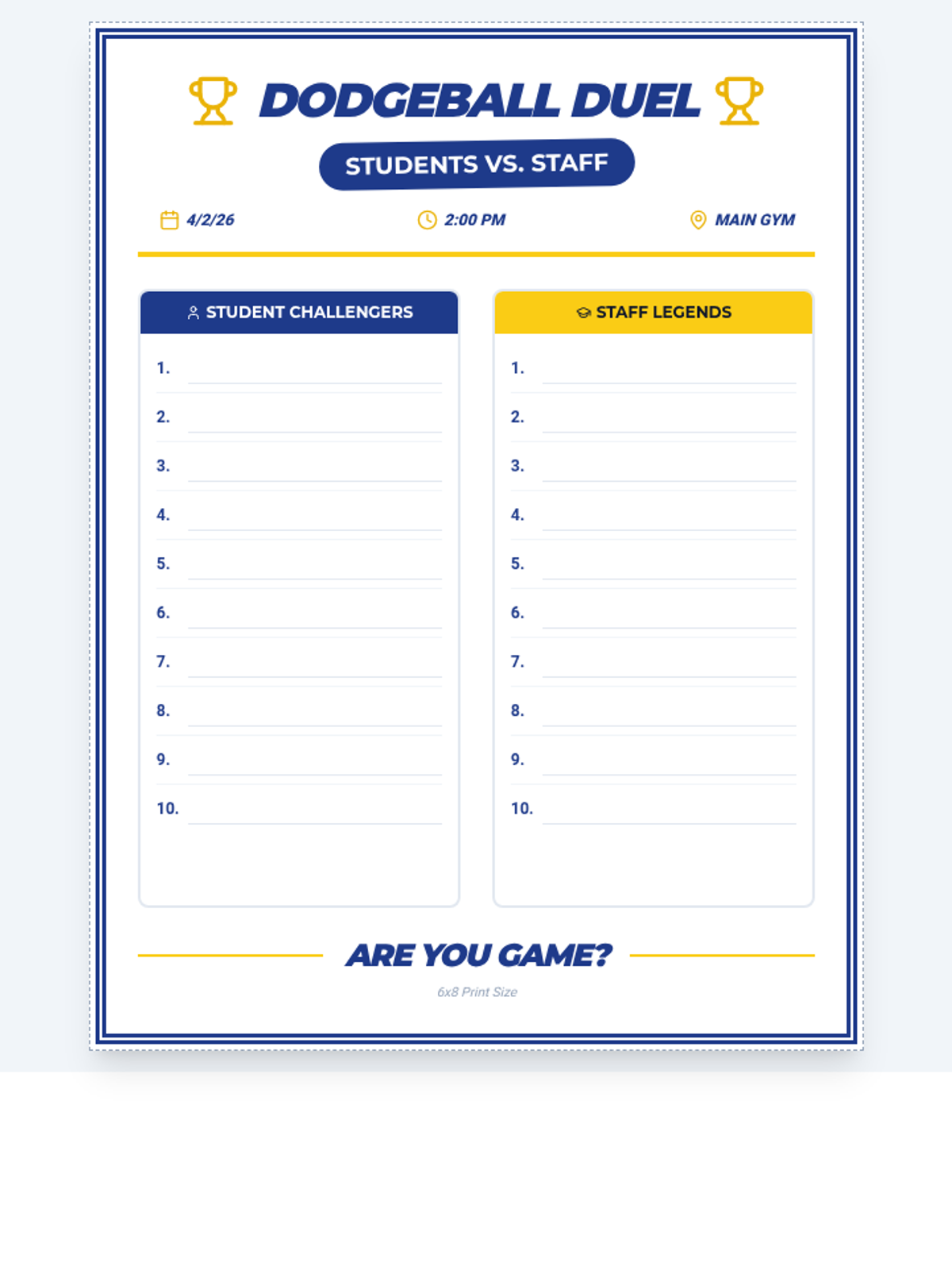
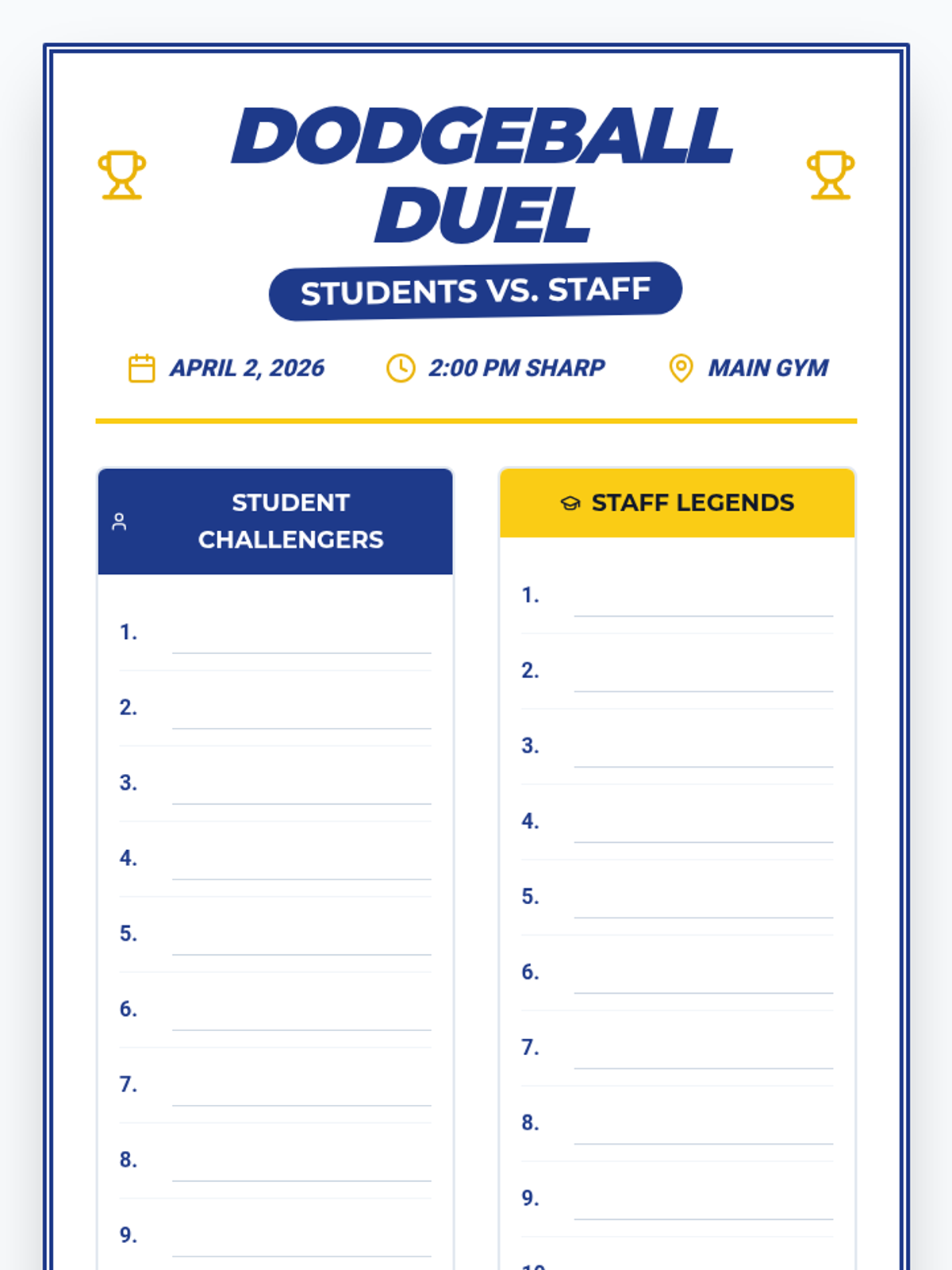
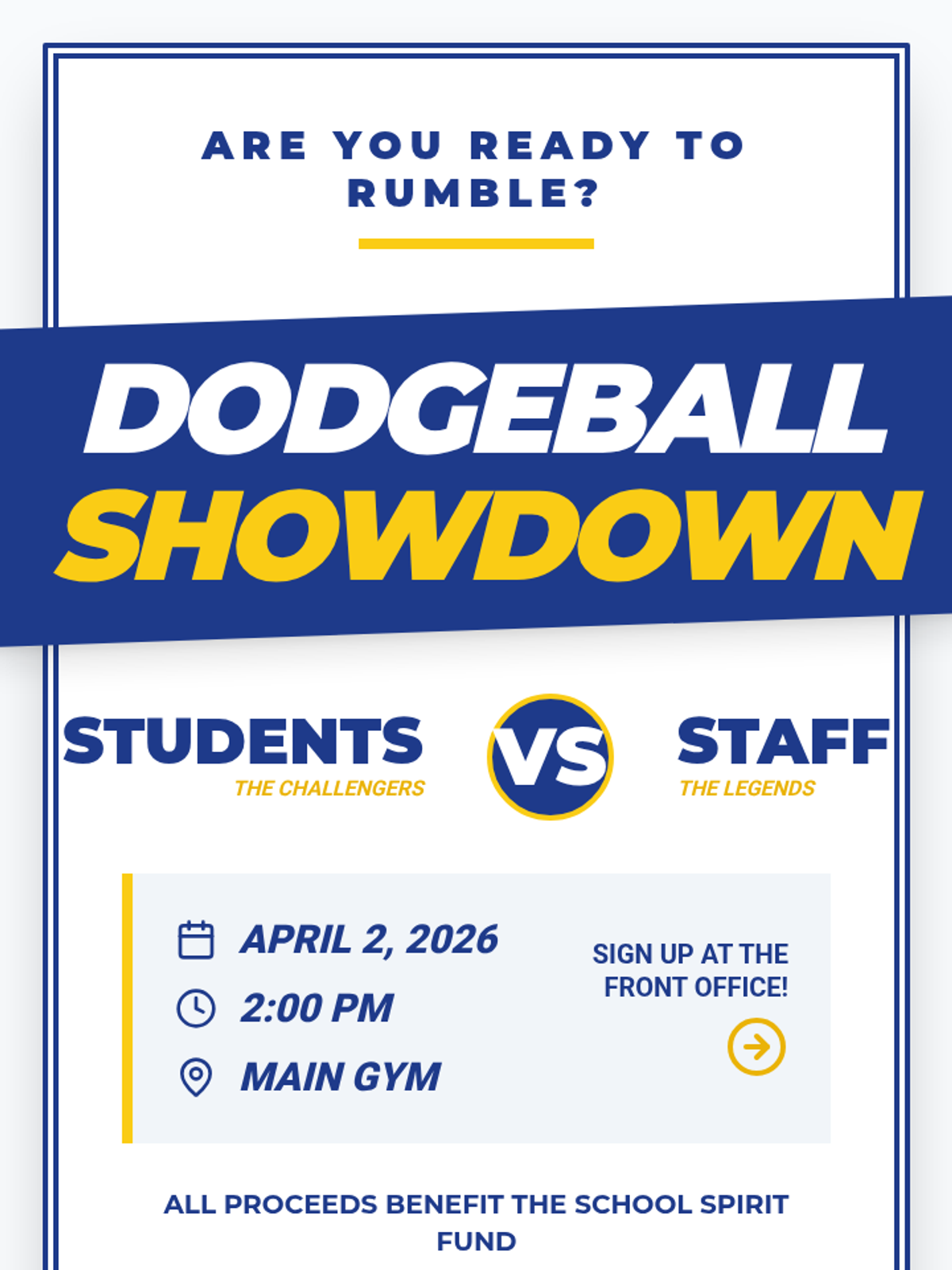
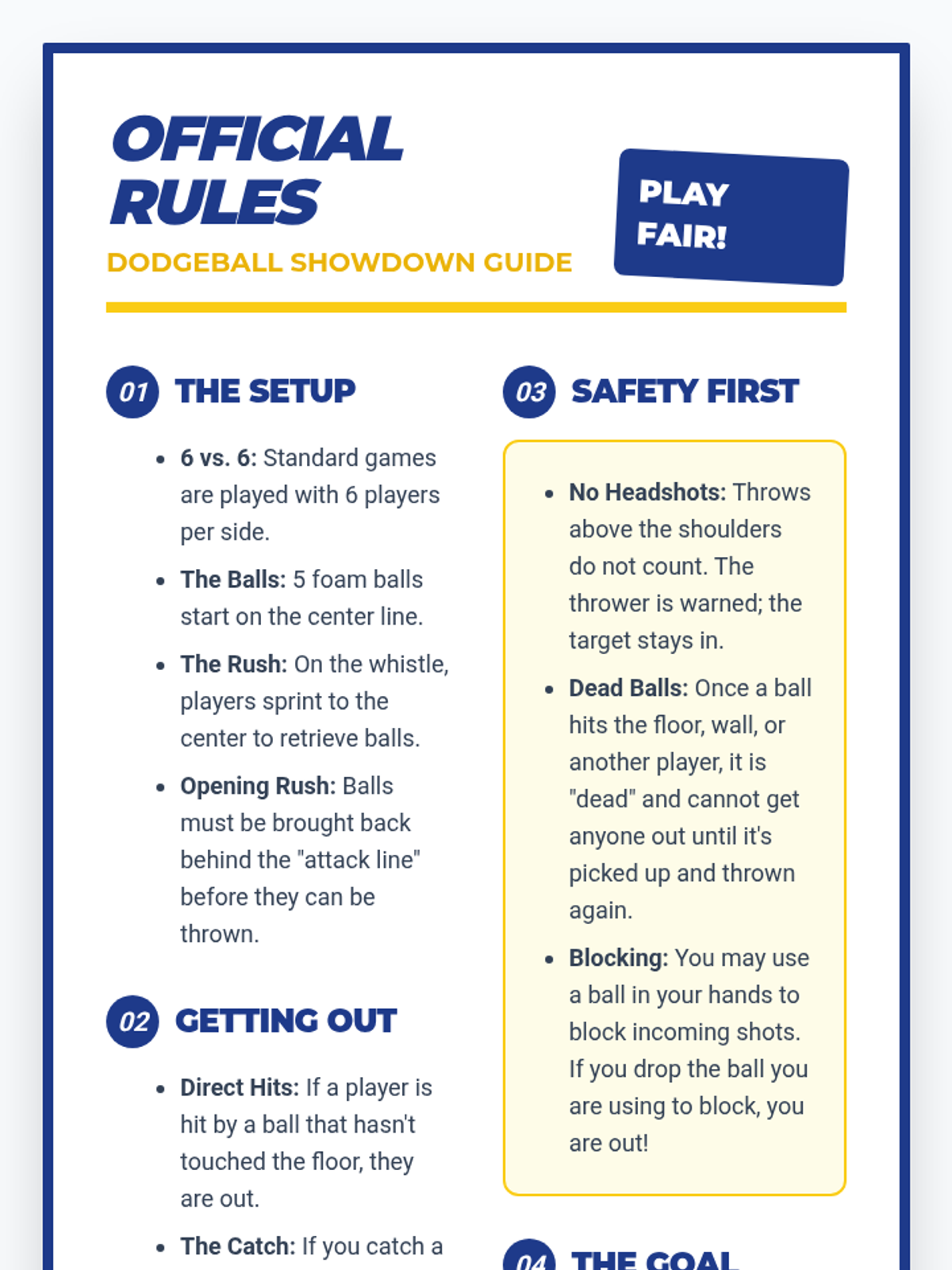
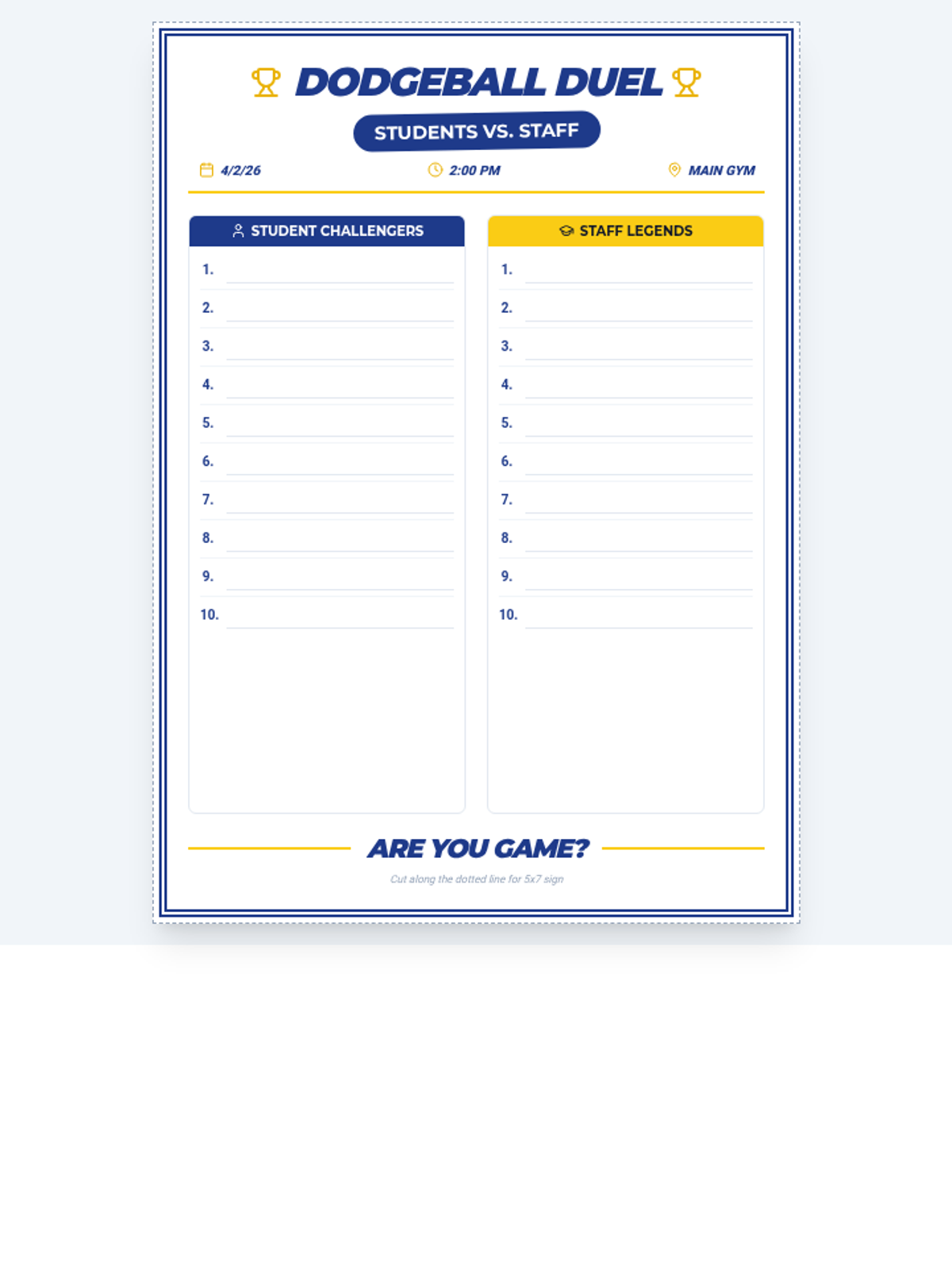
A collection of resources for organizing and promoting the annual Students vs. Staff dodgeball event, fostering school spirit and healthy competition.
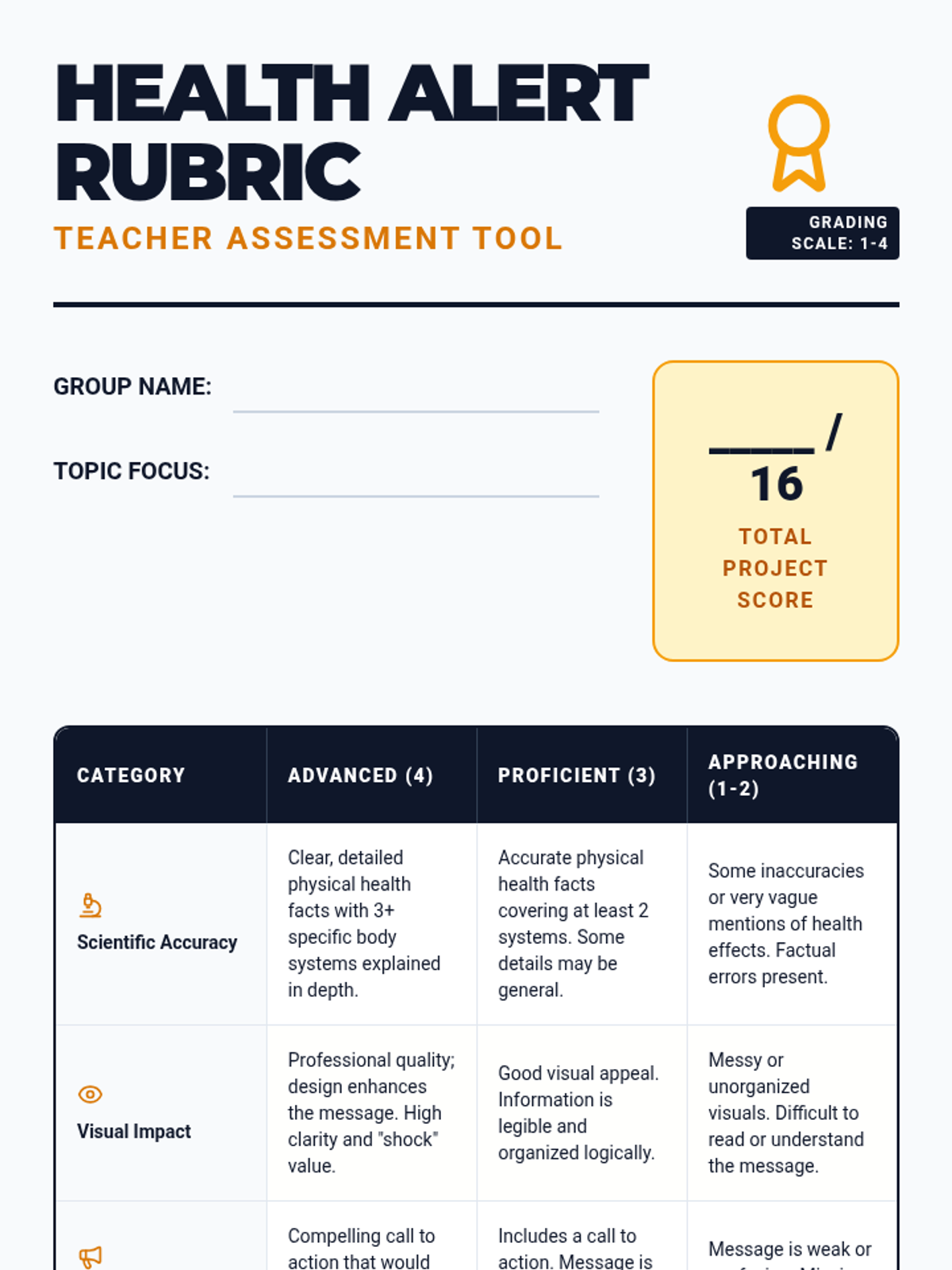
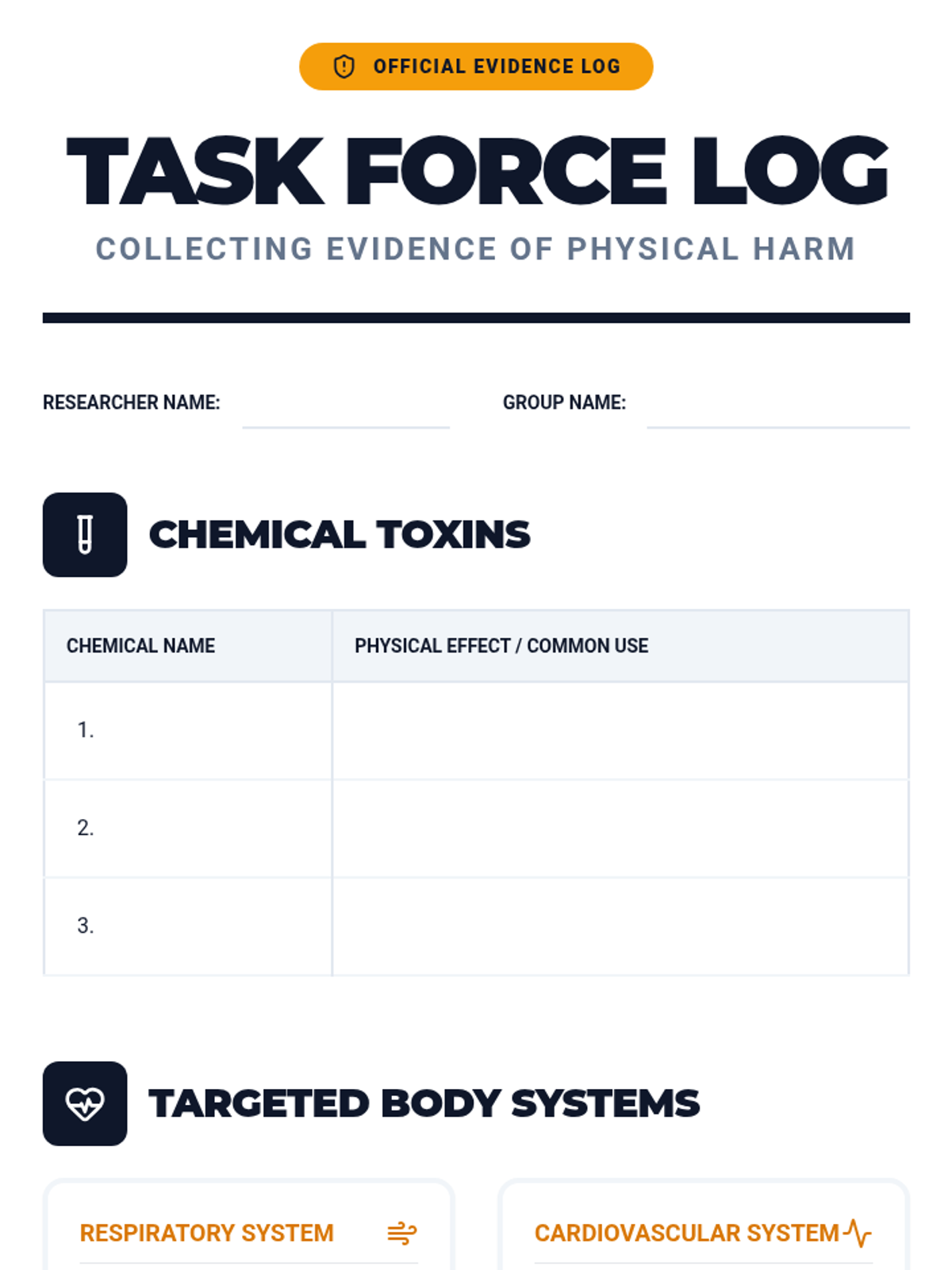
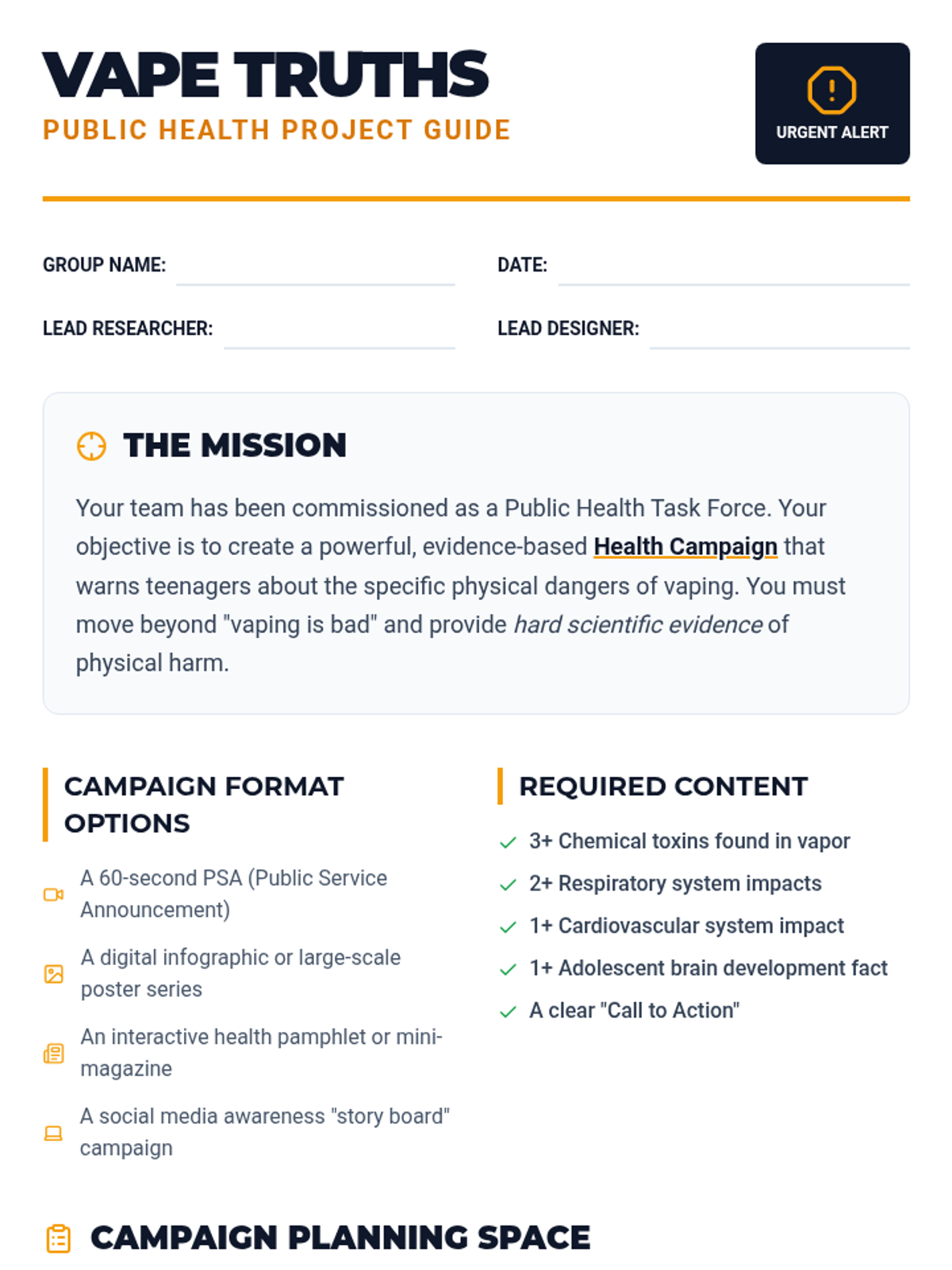
This lesson investigates the specific physical health consequences of vaping on the human body. Students collaborate to research respiratory, cardiovascular, and neurological impacts, culminating in a group-led public health awareness campaign.
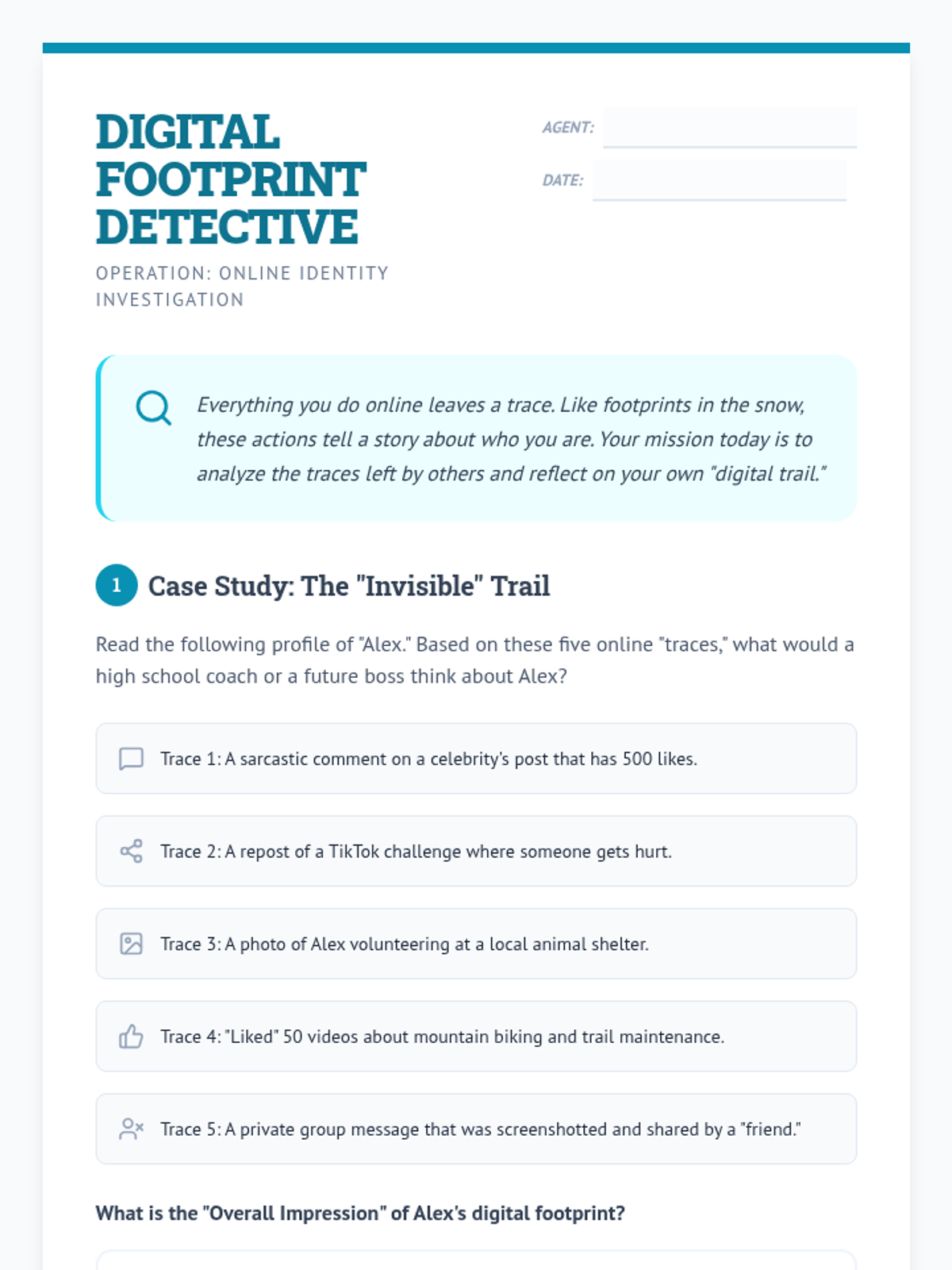
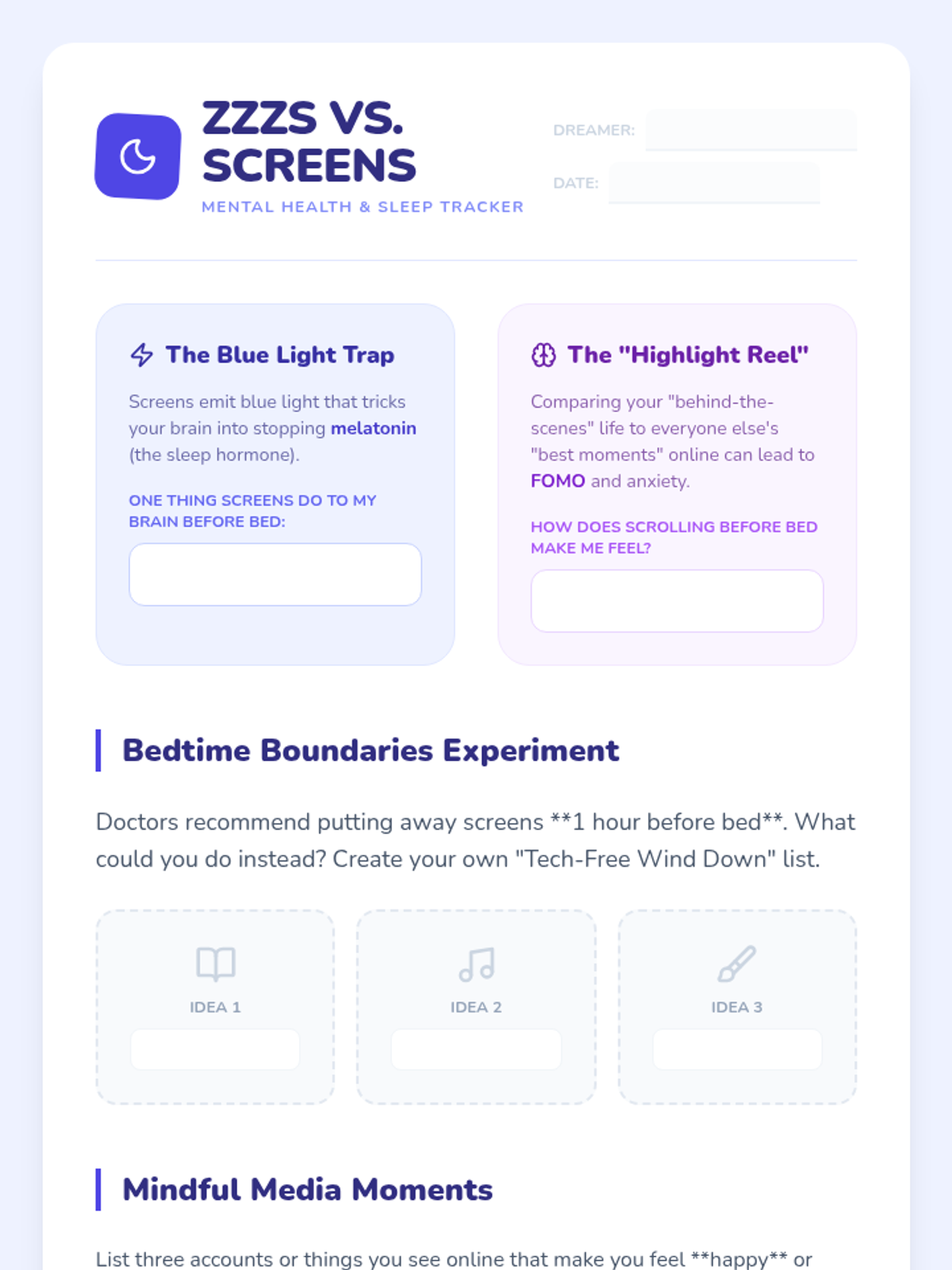
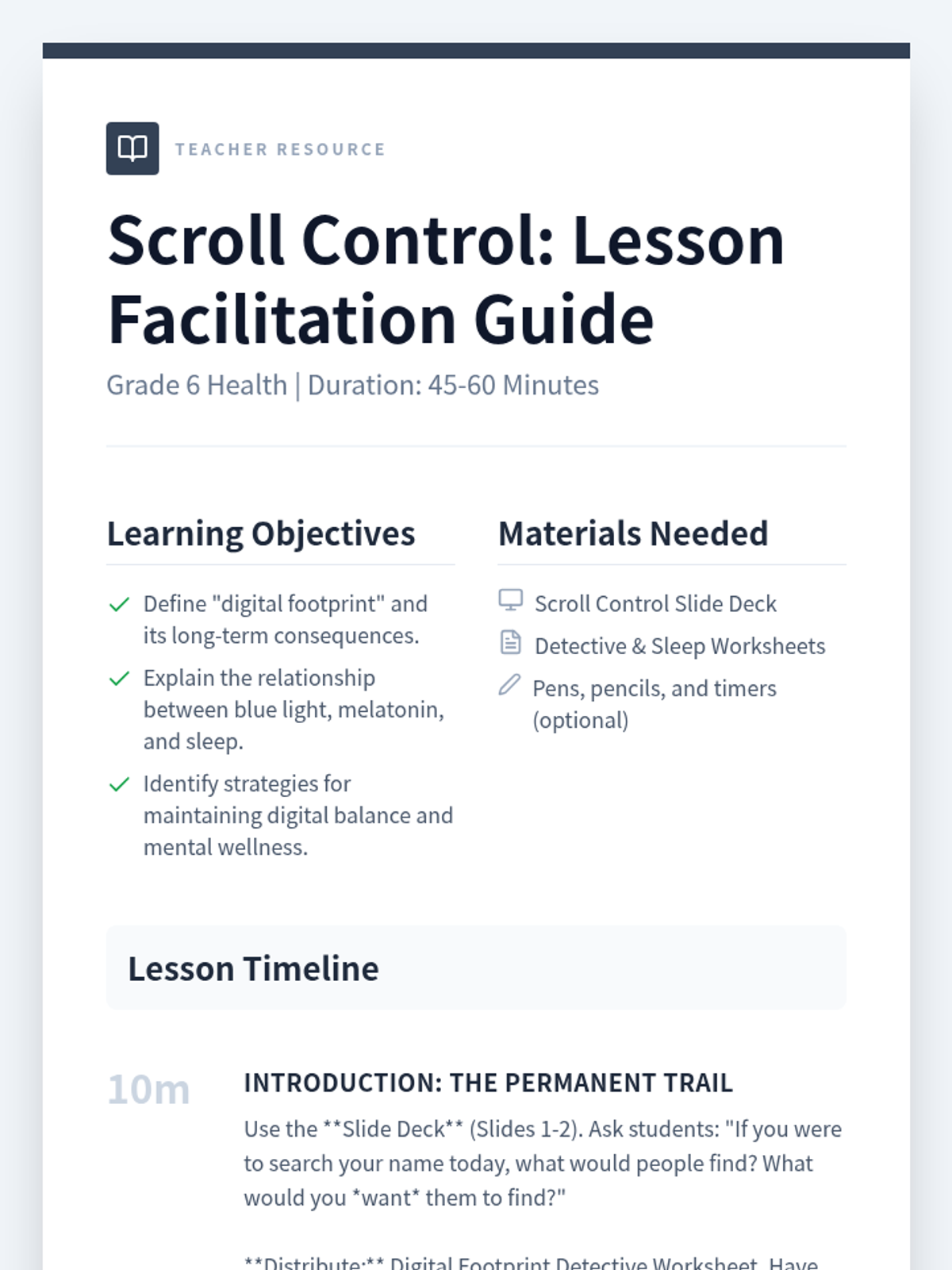
A comprehensive lesson for 6th graders exploring the intersection of social media usage, digital footprints, and their impact on mental health and sleep quality. Students will learn to navigate the digital world with intentionality and awareness.
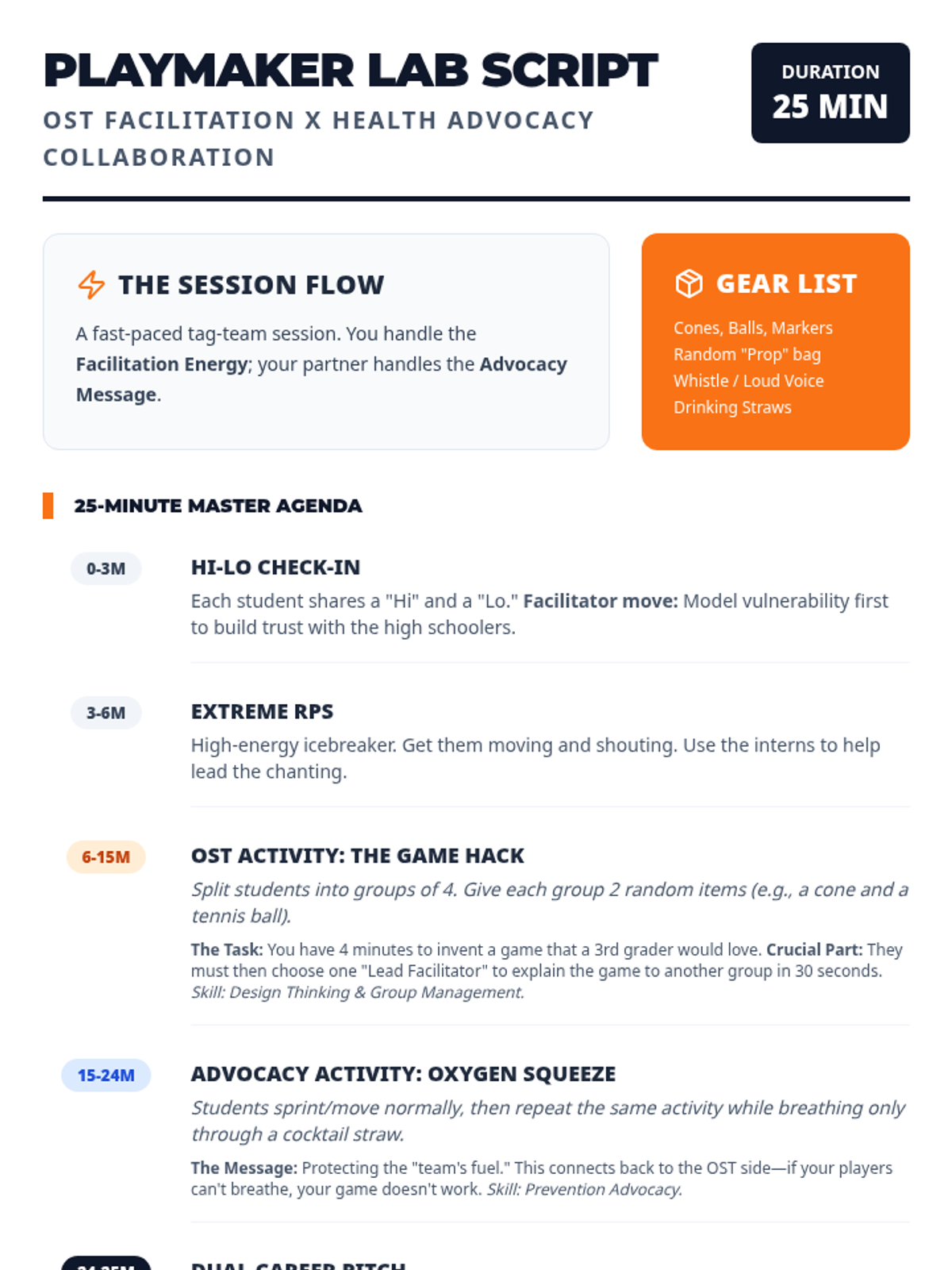
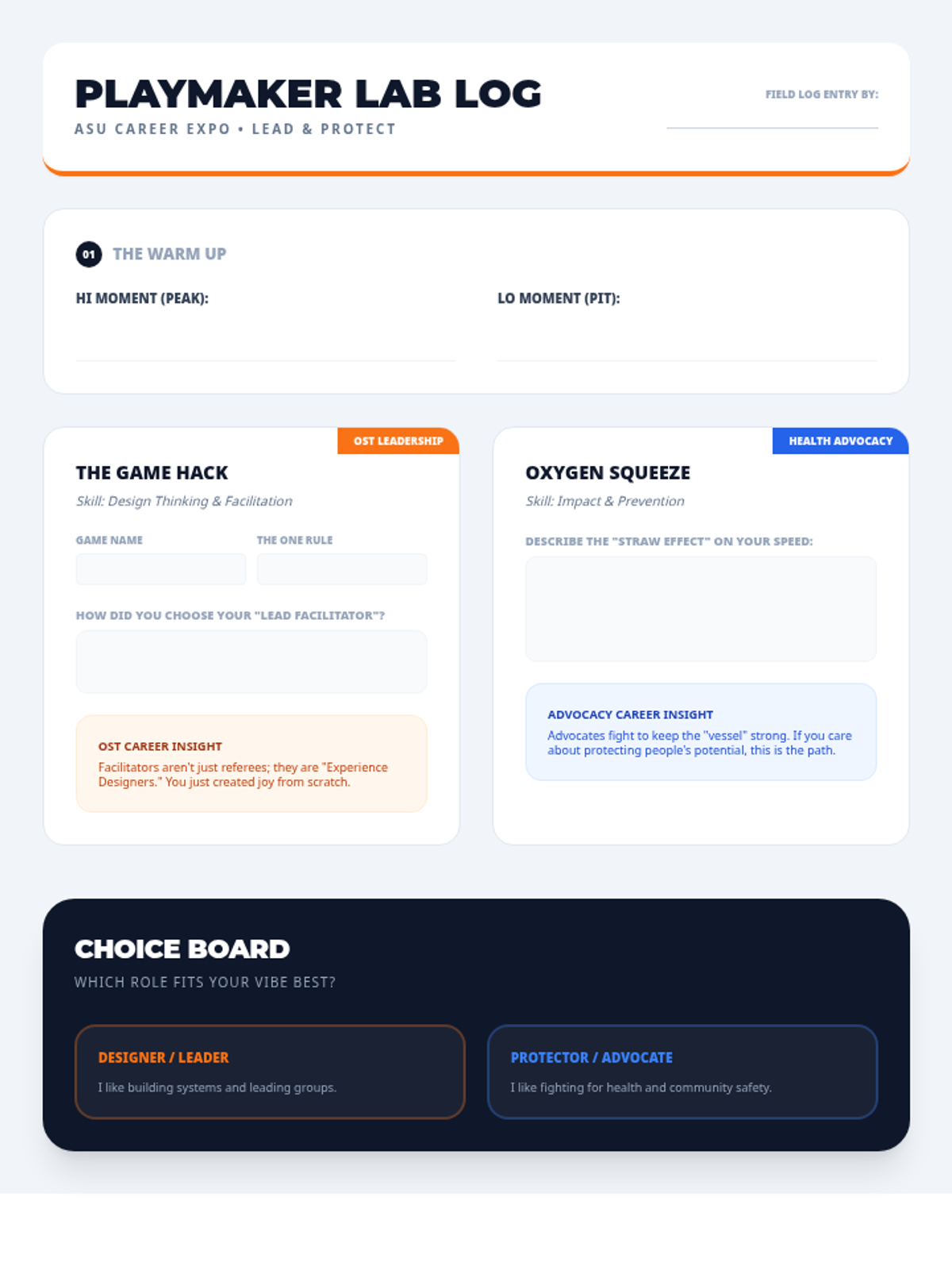
A fast-paced, 25-minute experiential session where students explore careers in out-of-school-time (OST) and health advocacy. In collaboration with an anti-vaping professional, students learn how to use play and game design to promote healthy choices and lead community-wide change.
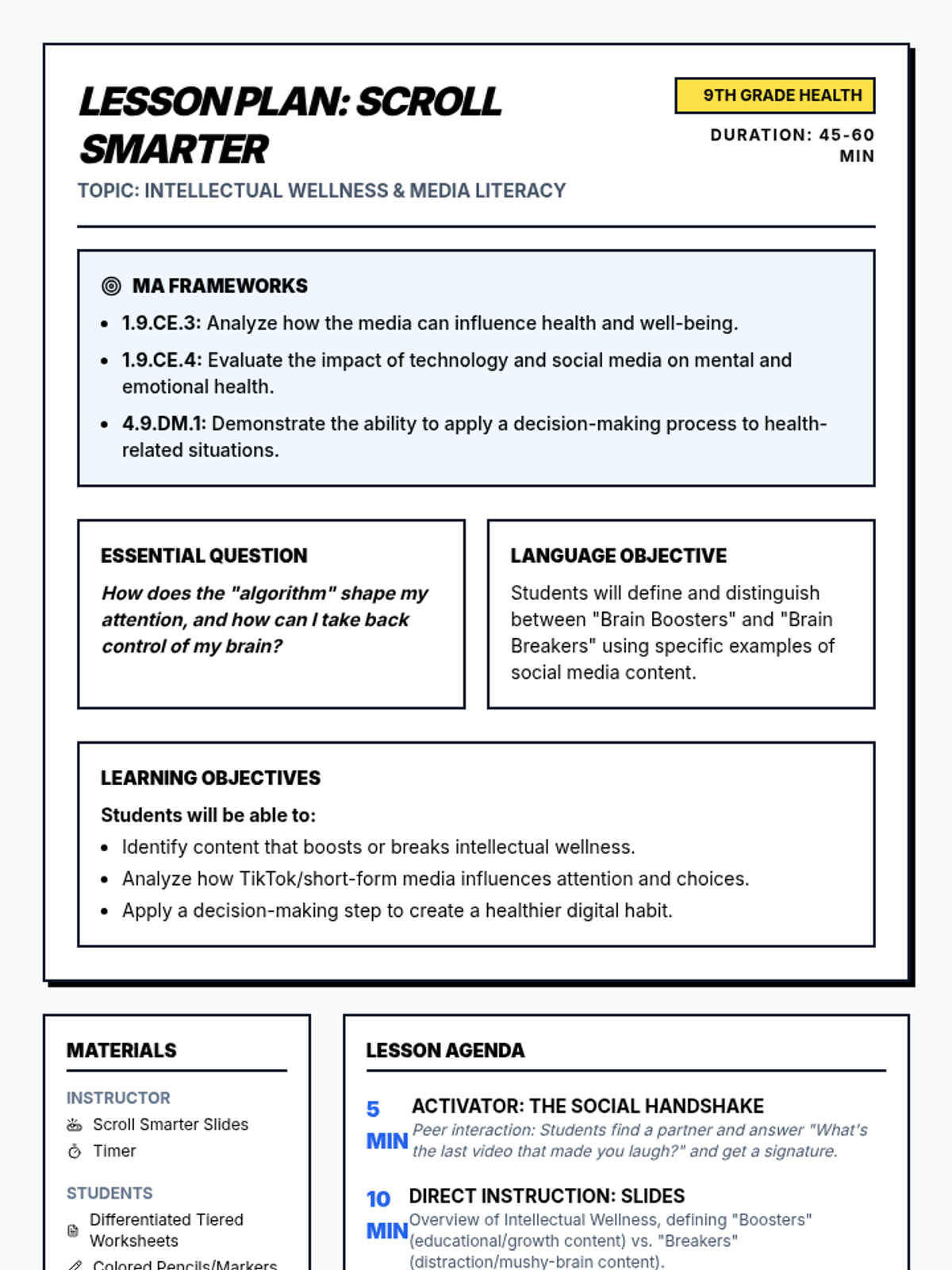
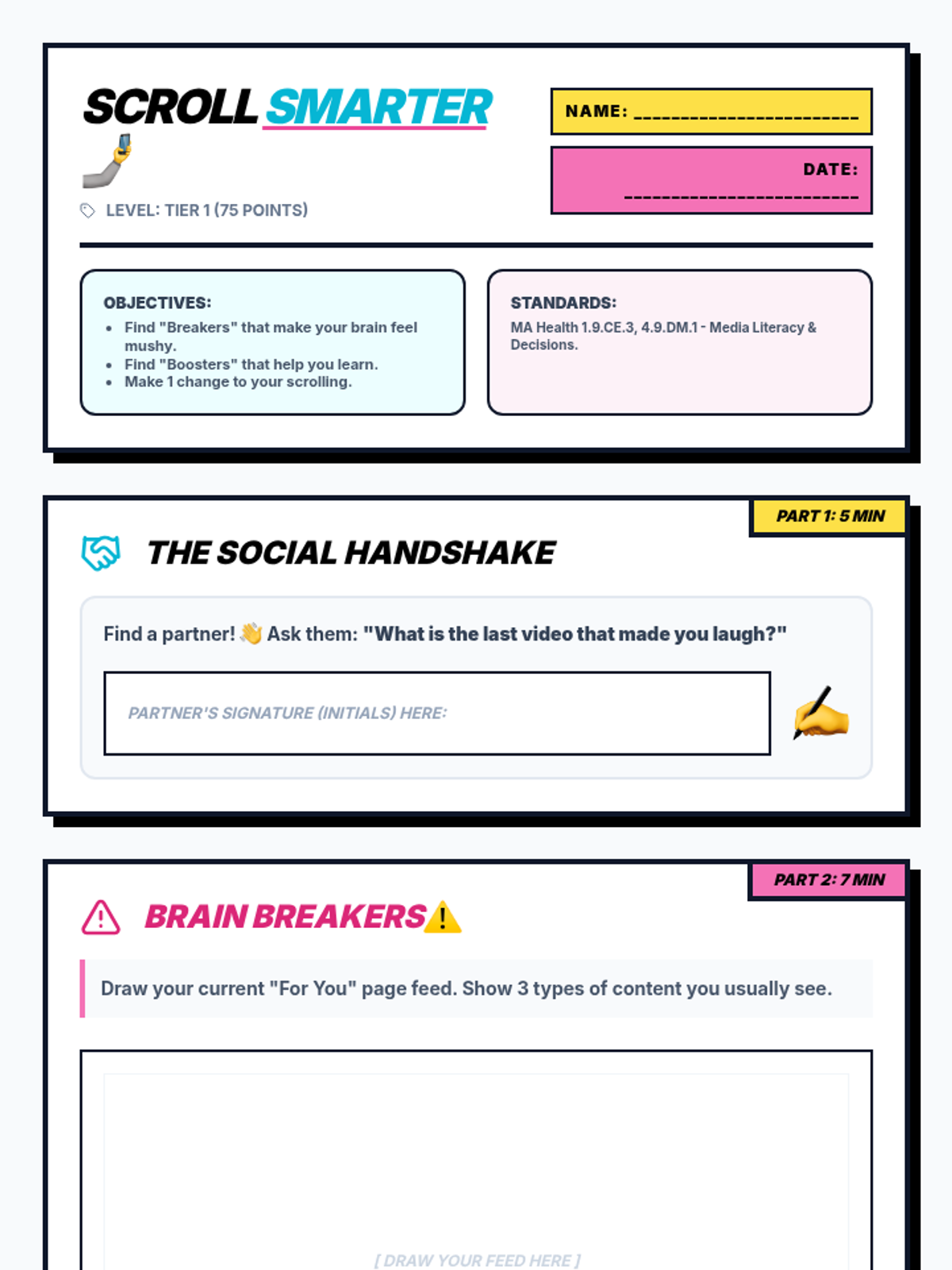
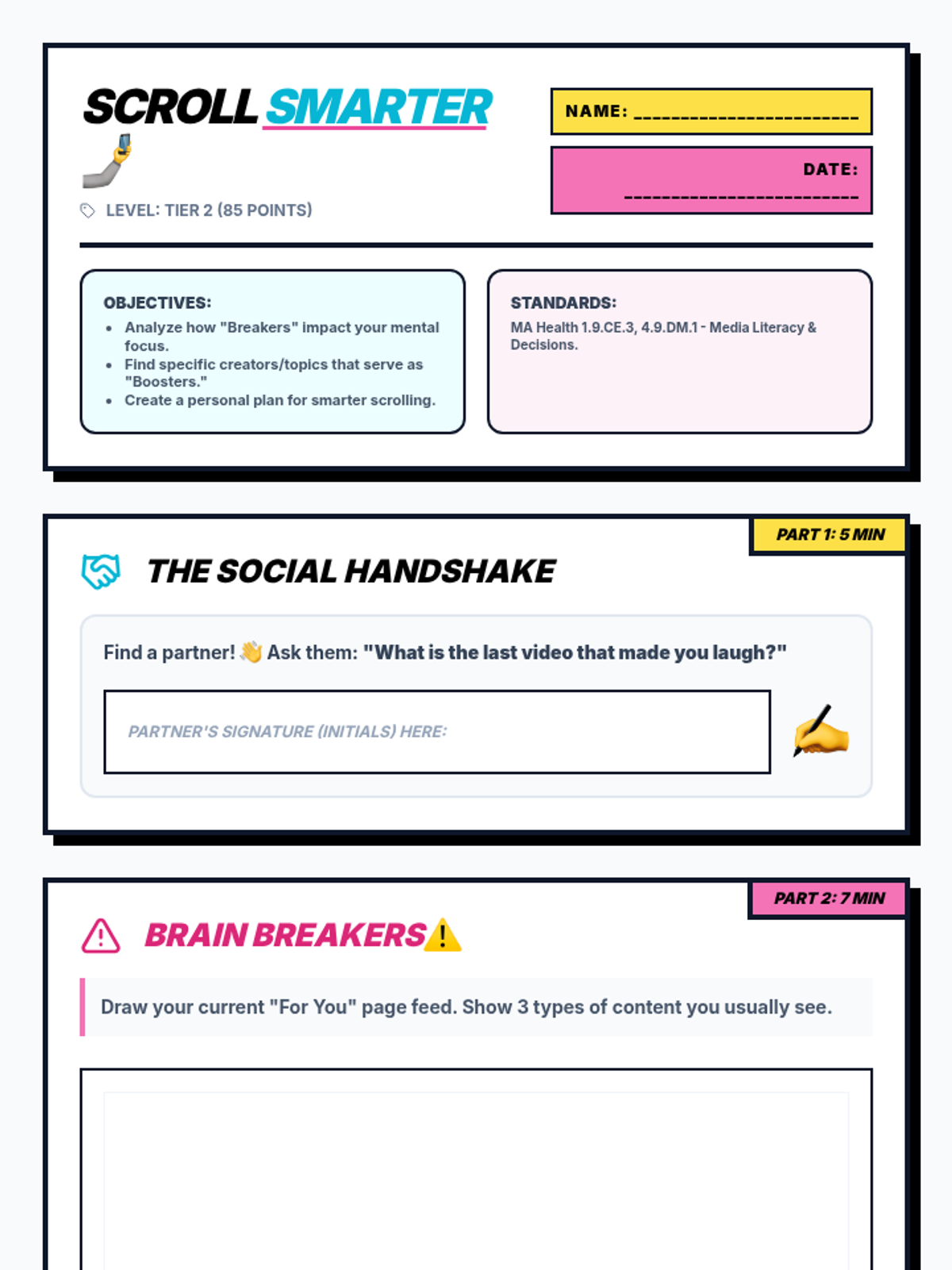
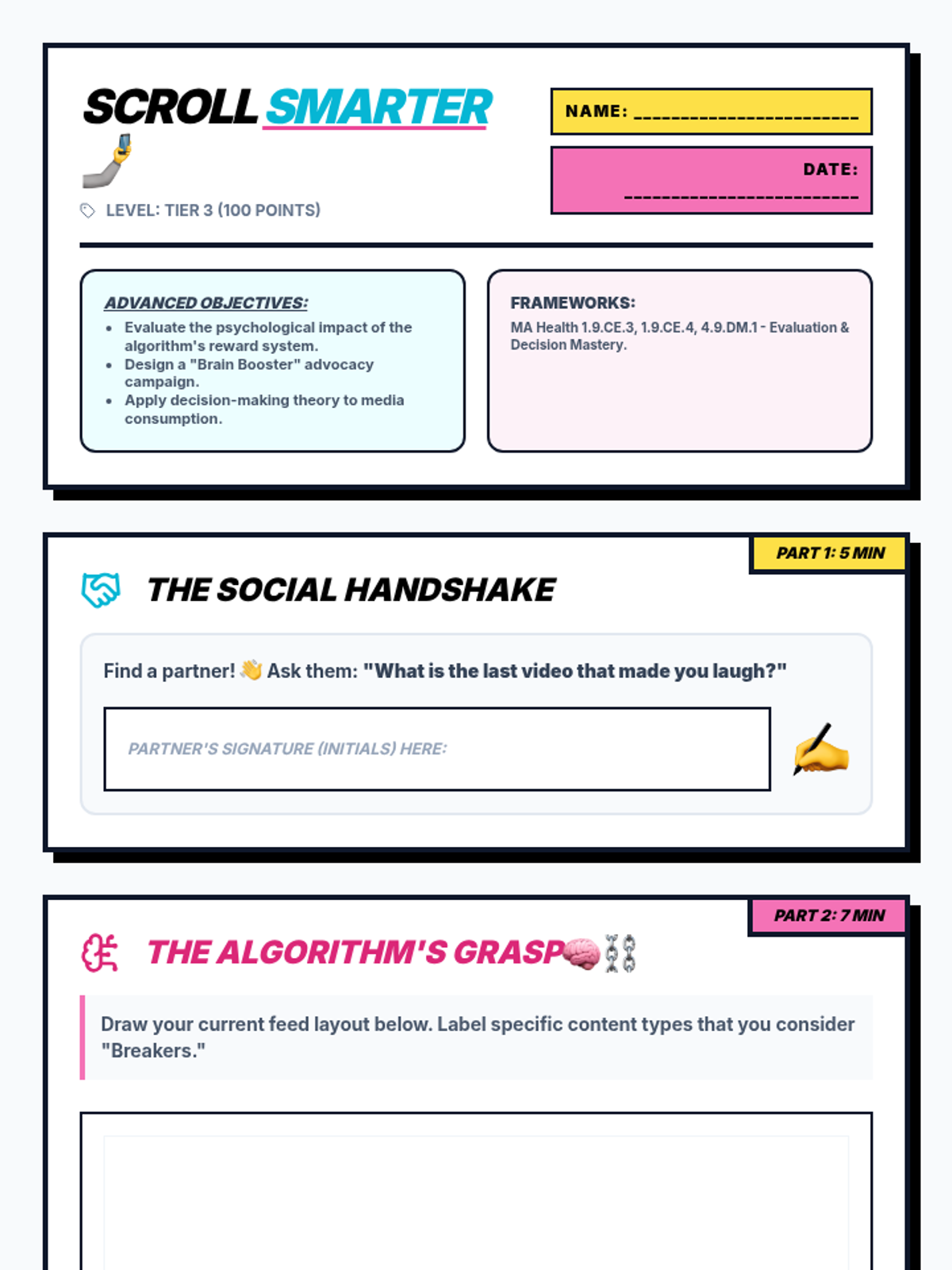
A 9th-grade health lesson focused on media literacy and intellectual wellness, specifically looking at how TikTok and short-form video content can 'boost' or 'break' brain health. Students will analyze their own scrolling habits, interact with peers to share strategies, and commit to one healthy media change.
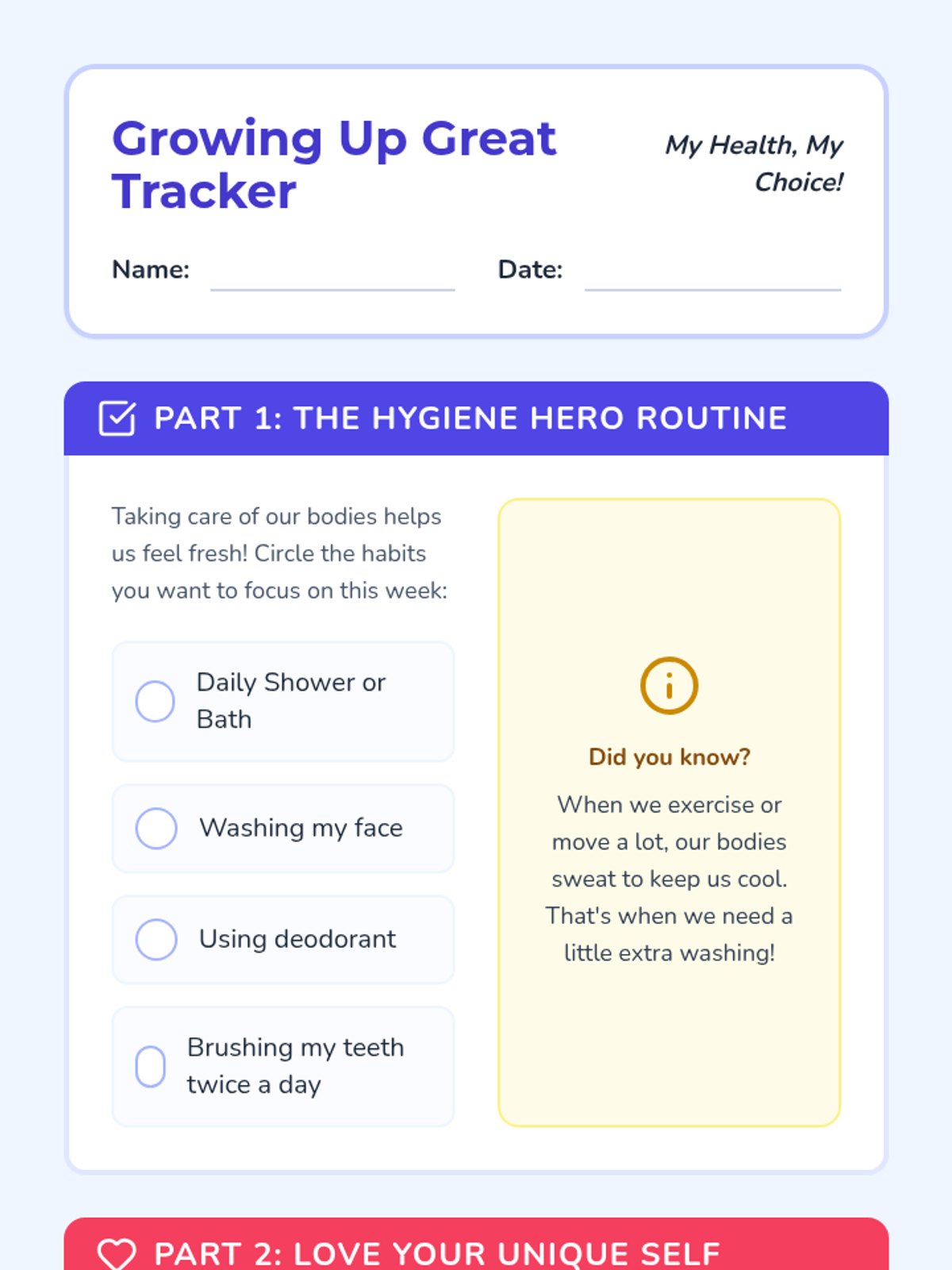
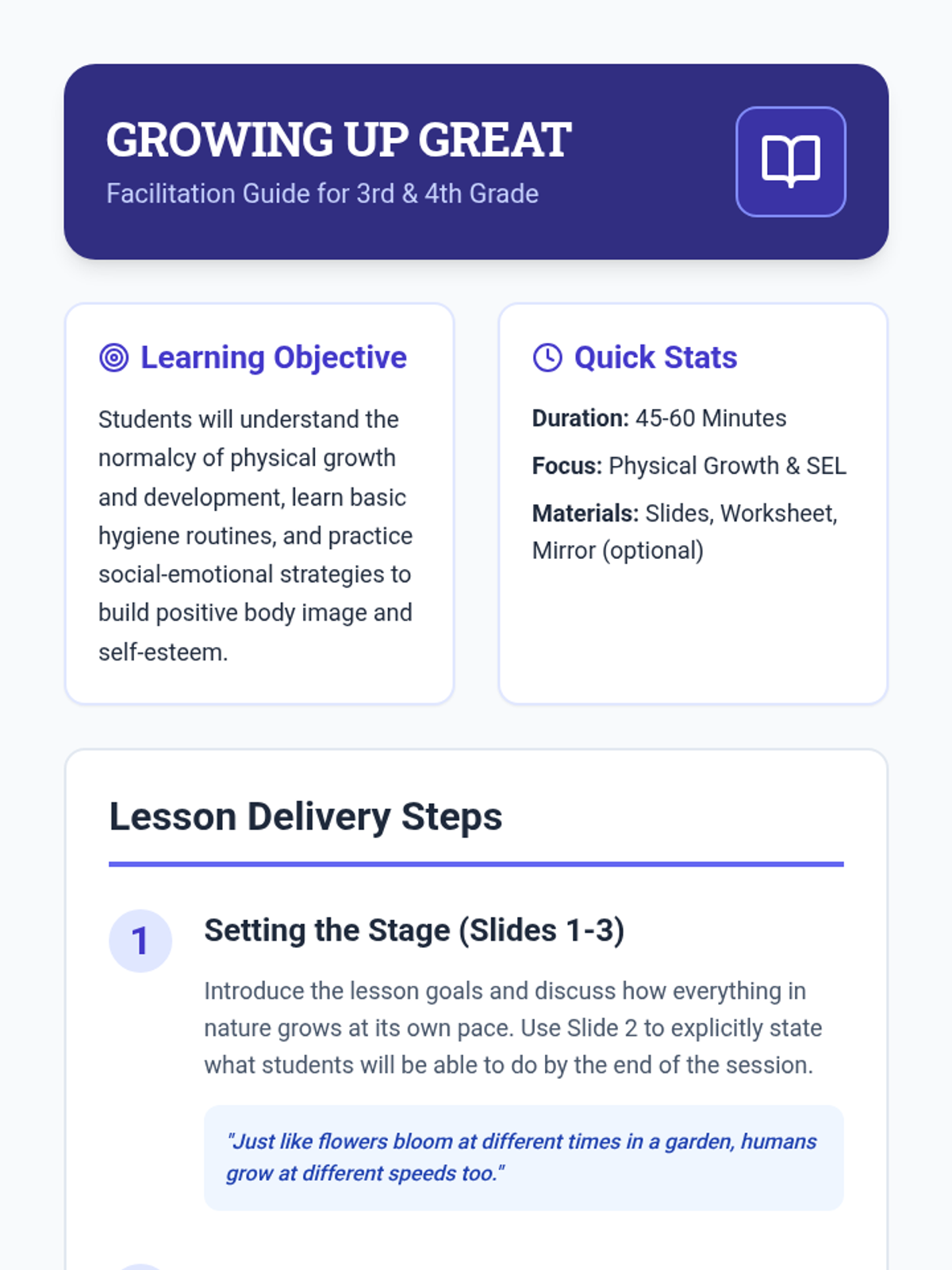
This lesson introduces 3rd and 4th-grade students to the concept of physical growth and hygiene, while fostering a positive body image through social-emotional learning and self-esteem building.
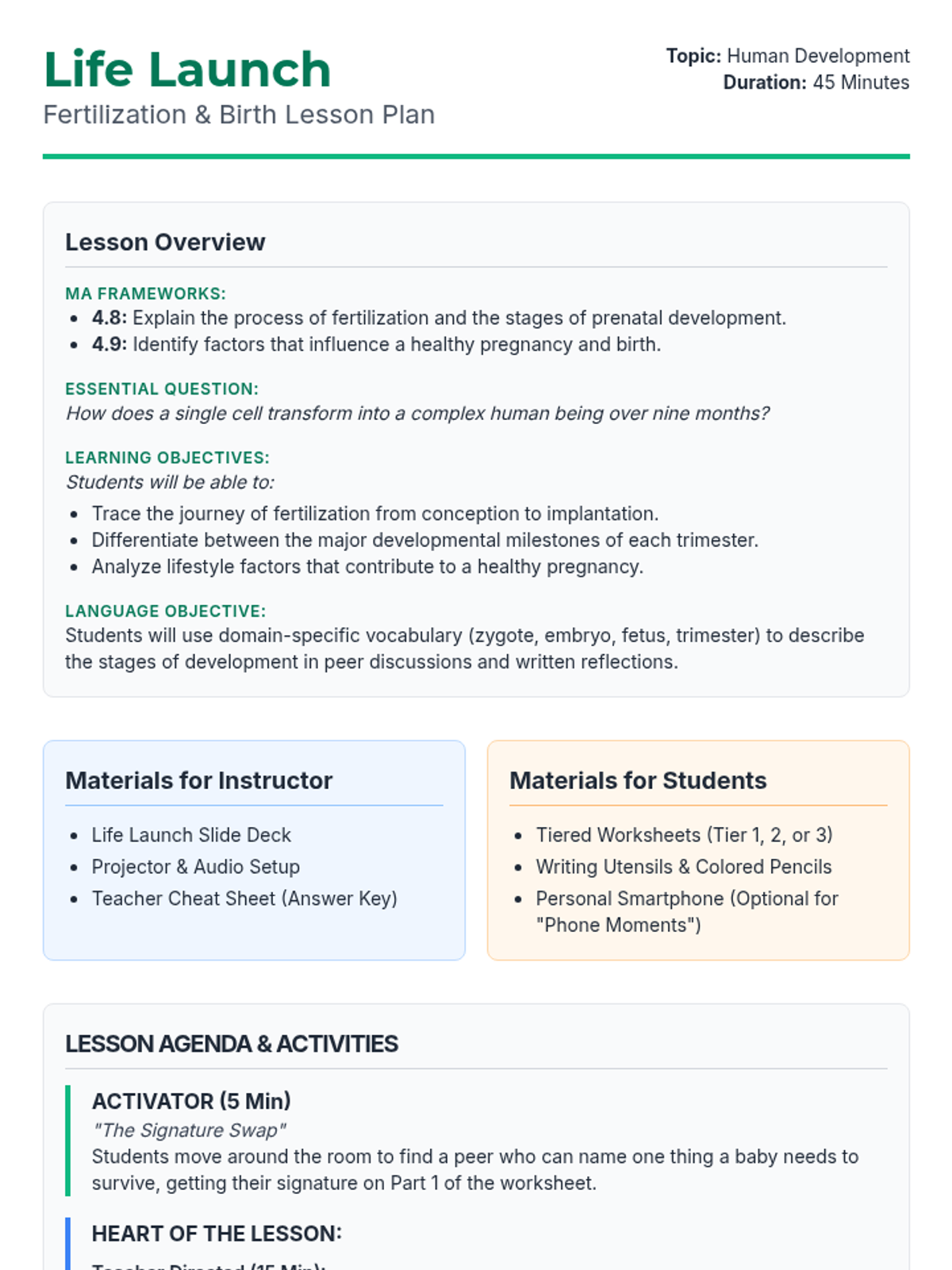
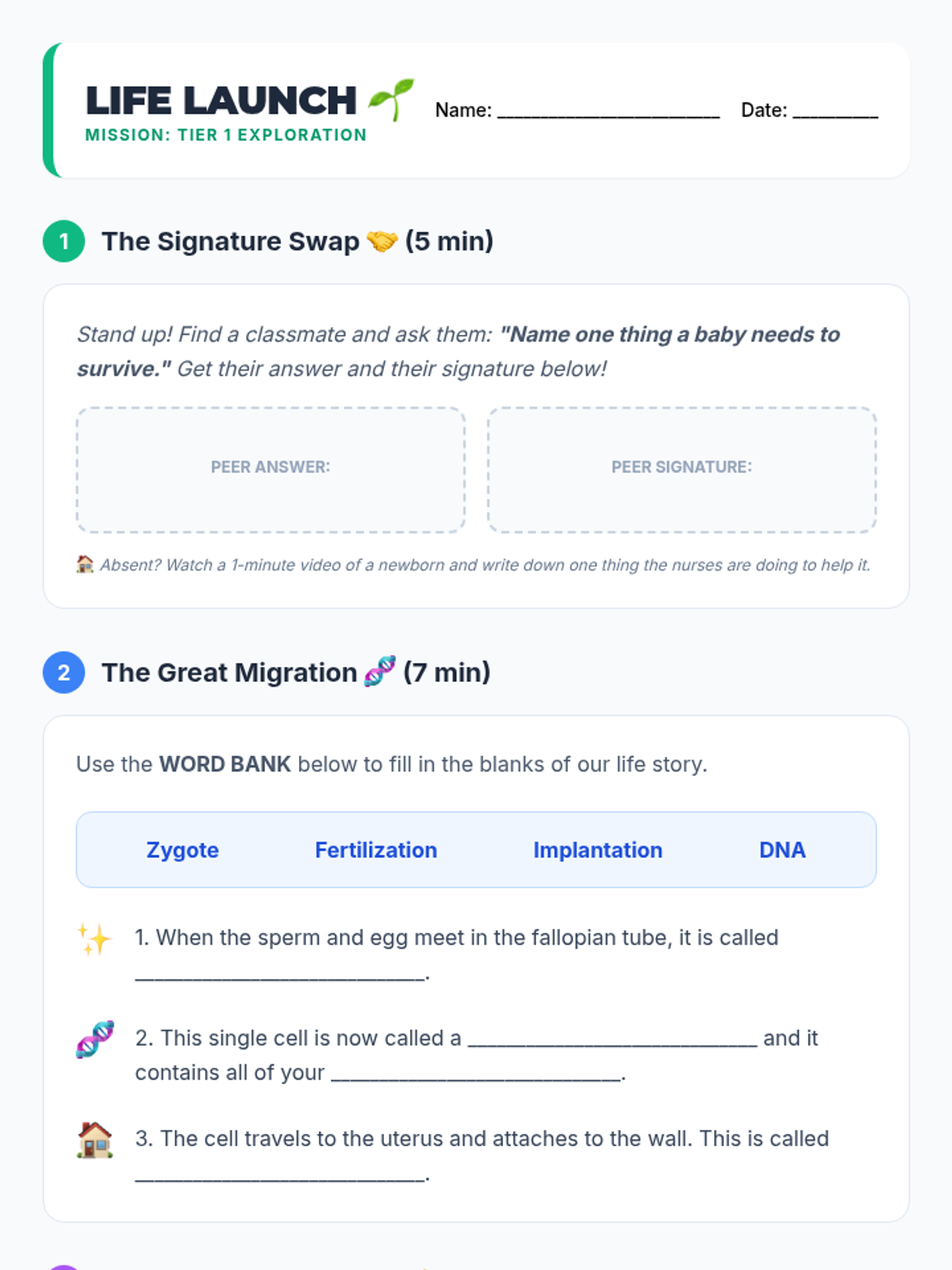
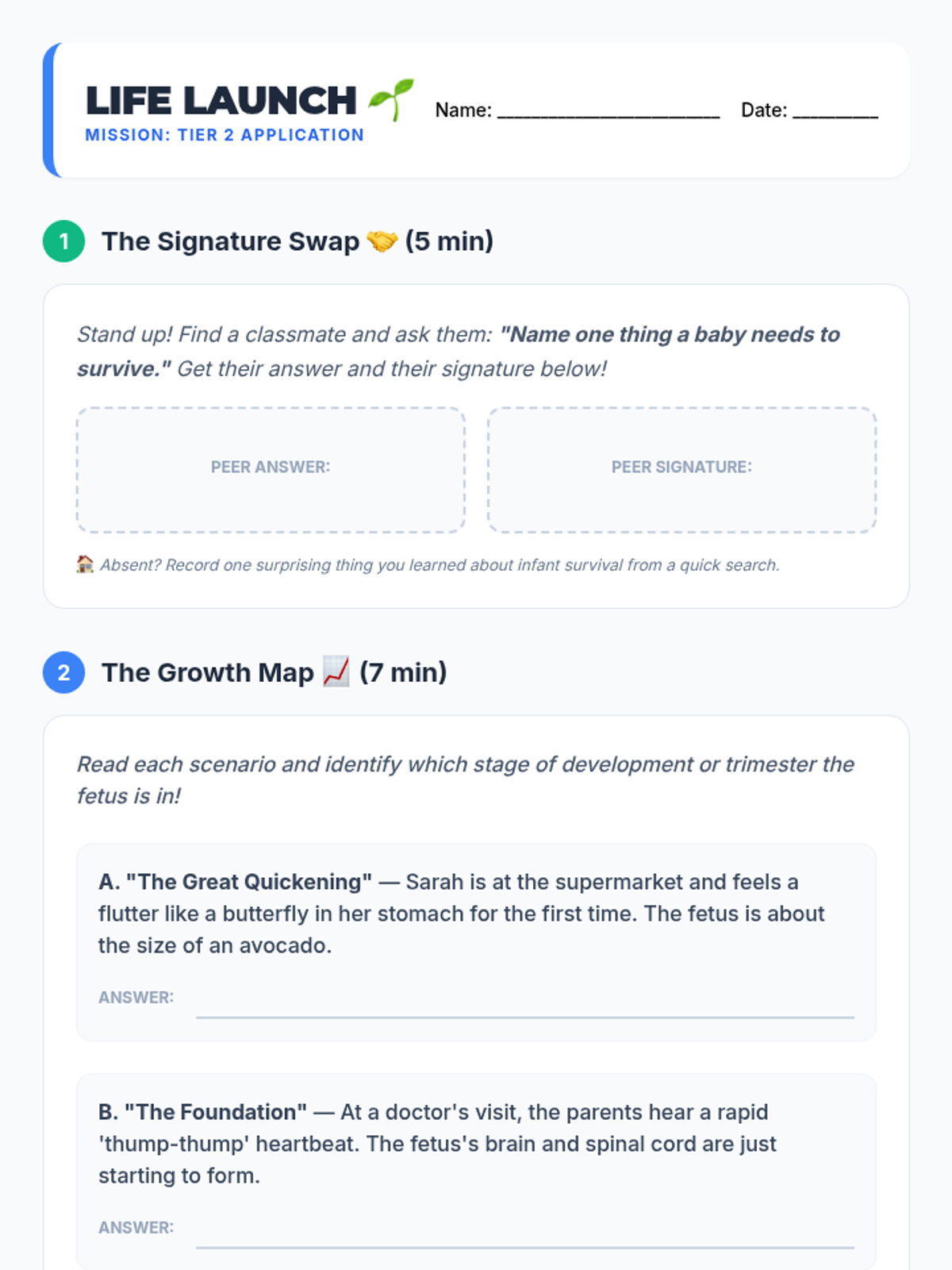
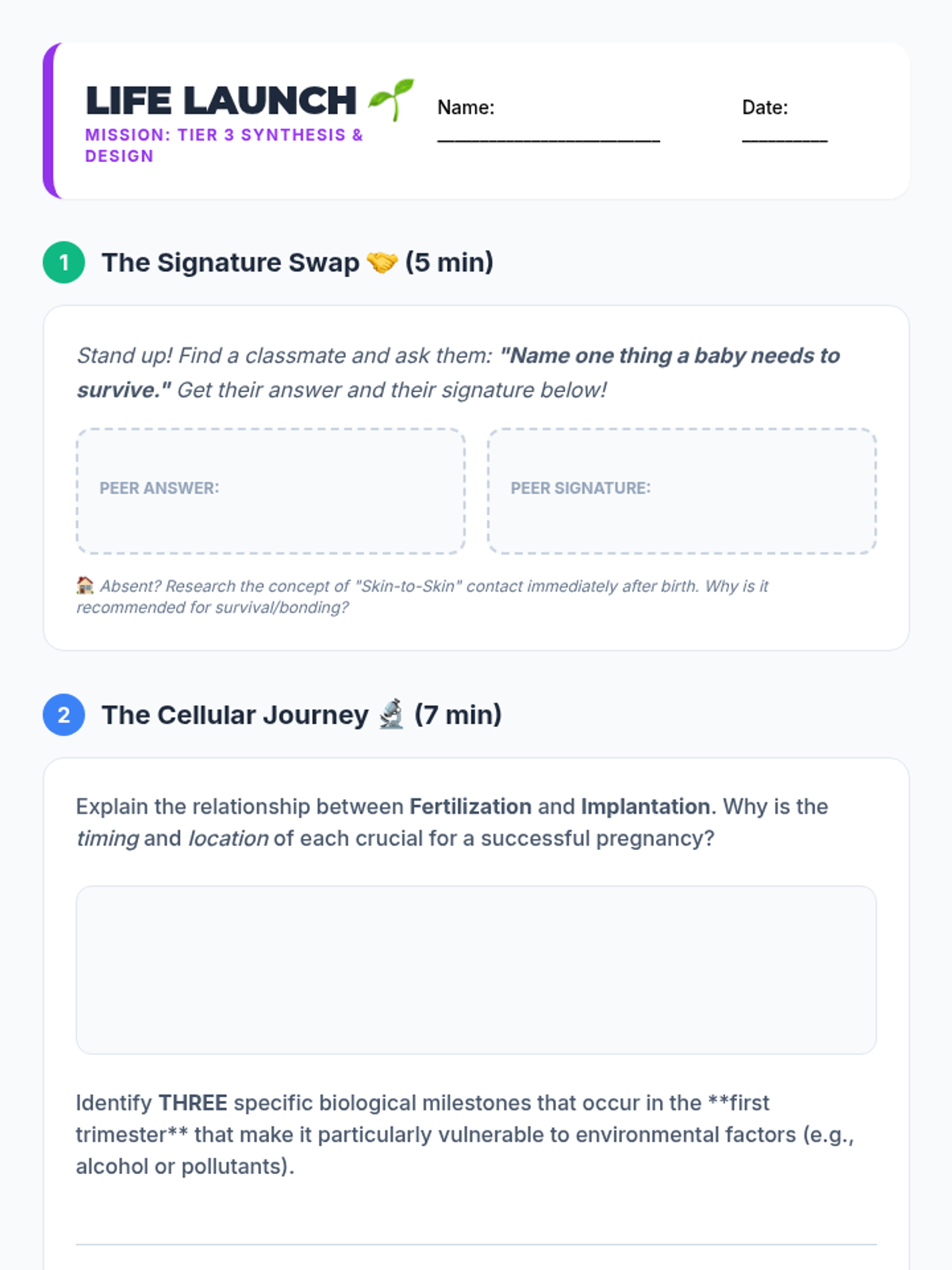
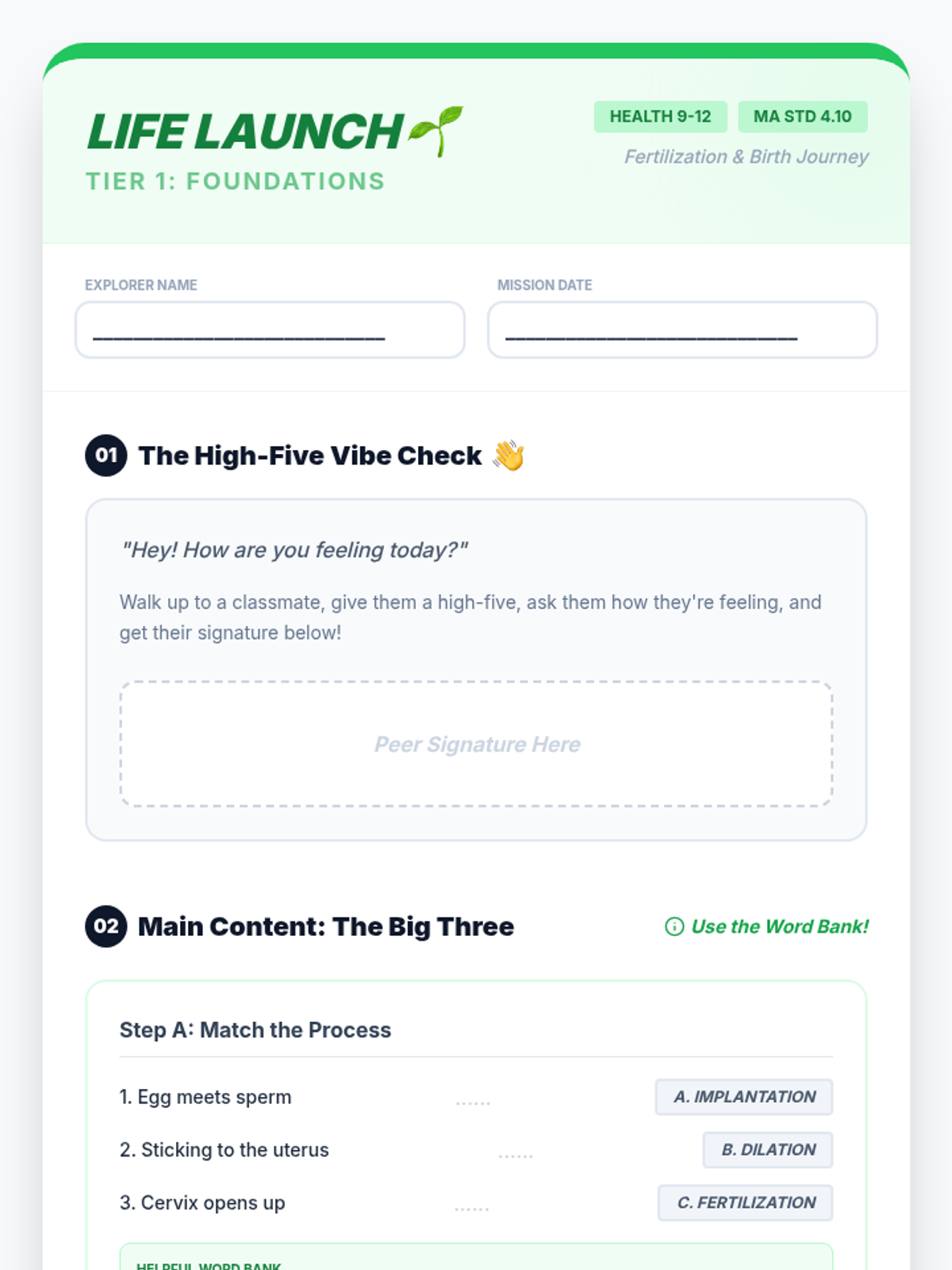
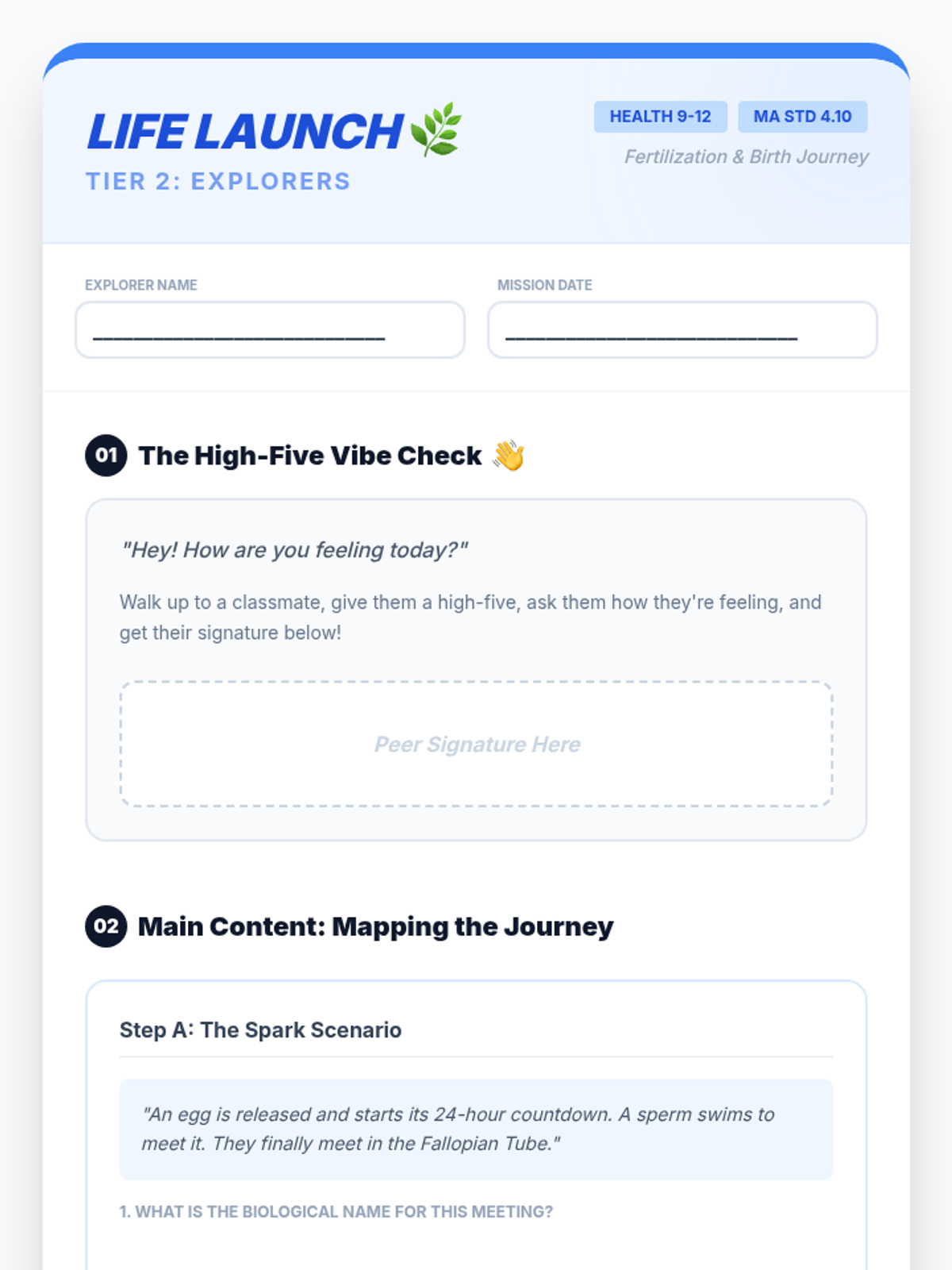
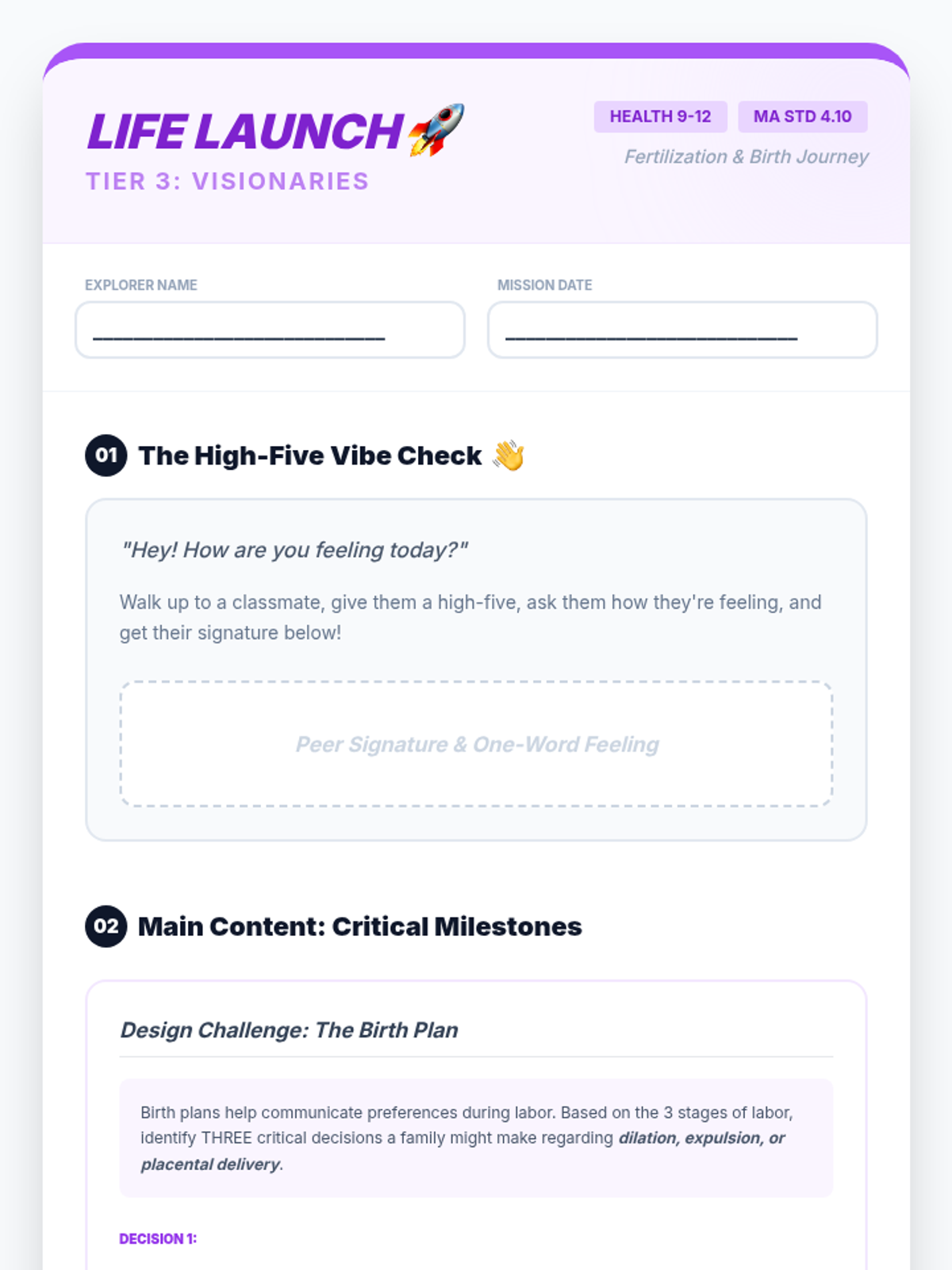
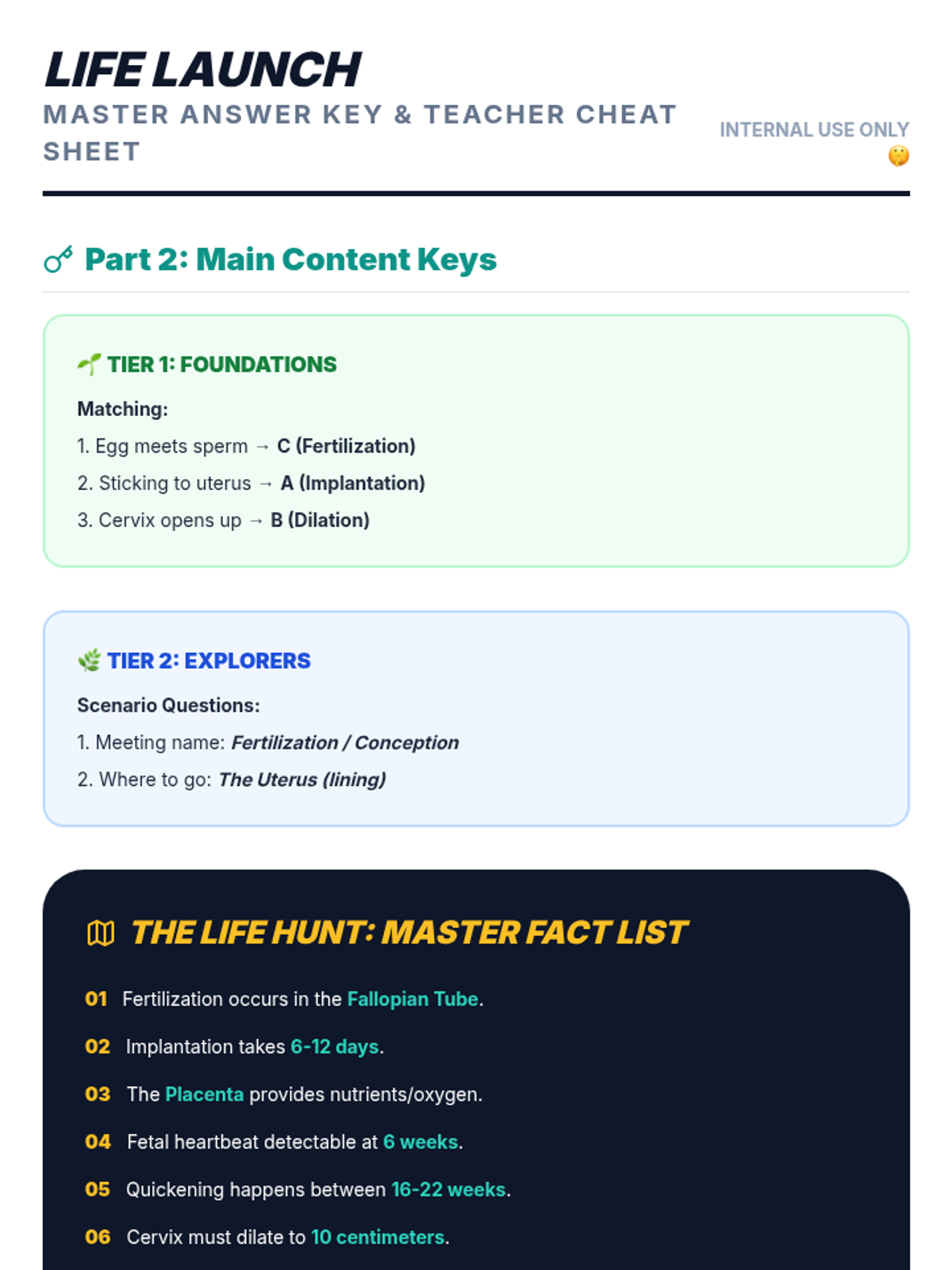
A comprehensive health education lesson covering fertilization, prenatal development stages, and the birth process for high school students. Includes tiered activities to support diverse learners while maintaining high engagement and AI-resistance.
Examines gender identity, sexual orientation, and their relationship to health equity and personal wellness.
Explores the physical, neurological, and emotional transitions of late adolescence, focusing on risk reduction and health promotion.
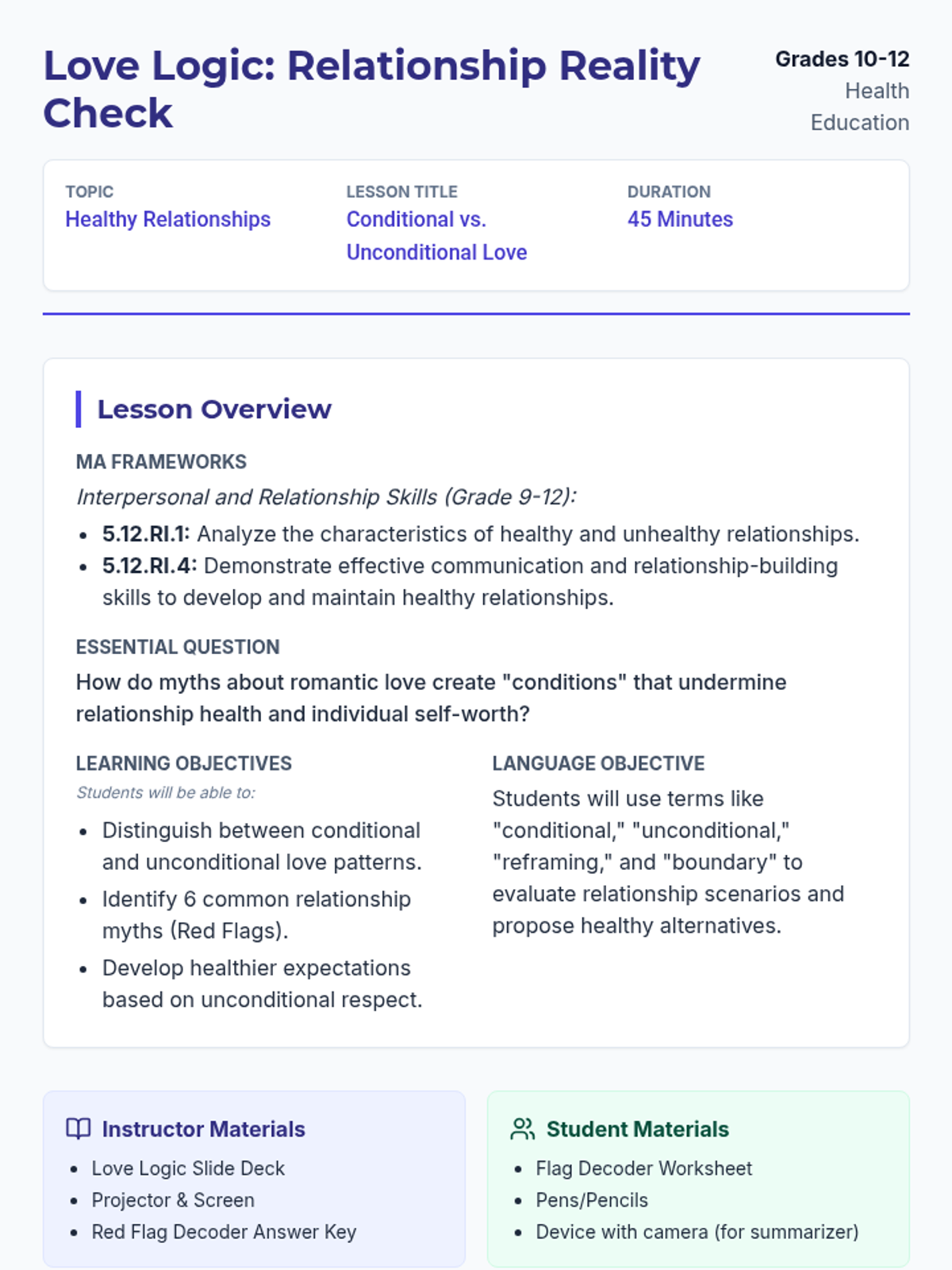
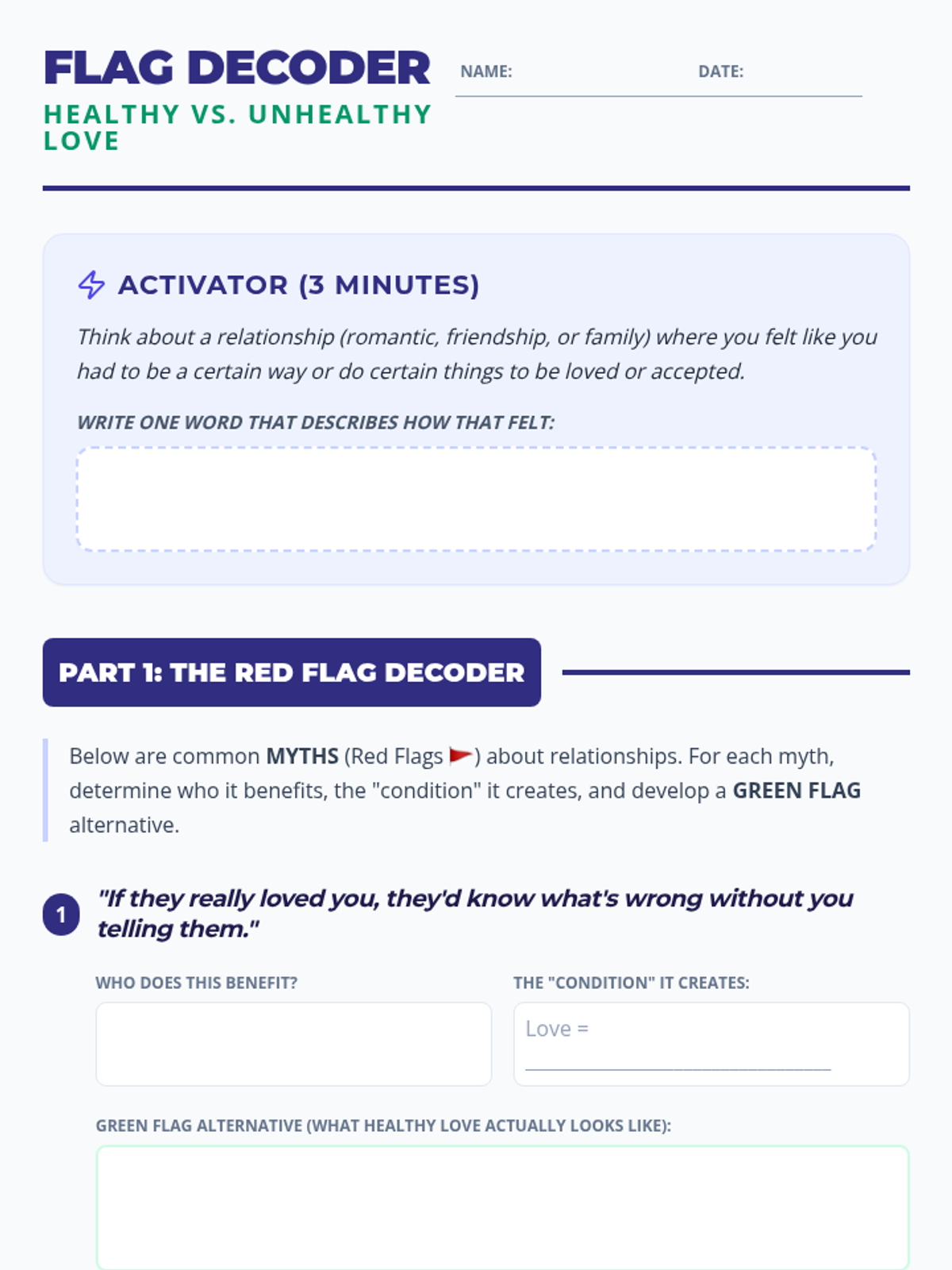
A 45-minute high school health lesson exploring the differences between conditional and unconditional love, identifying relationship myths, and practicing reframing unhealthy thoughts into healthy expectations.
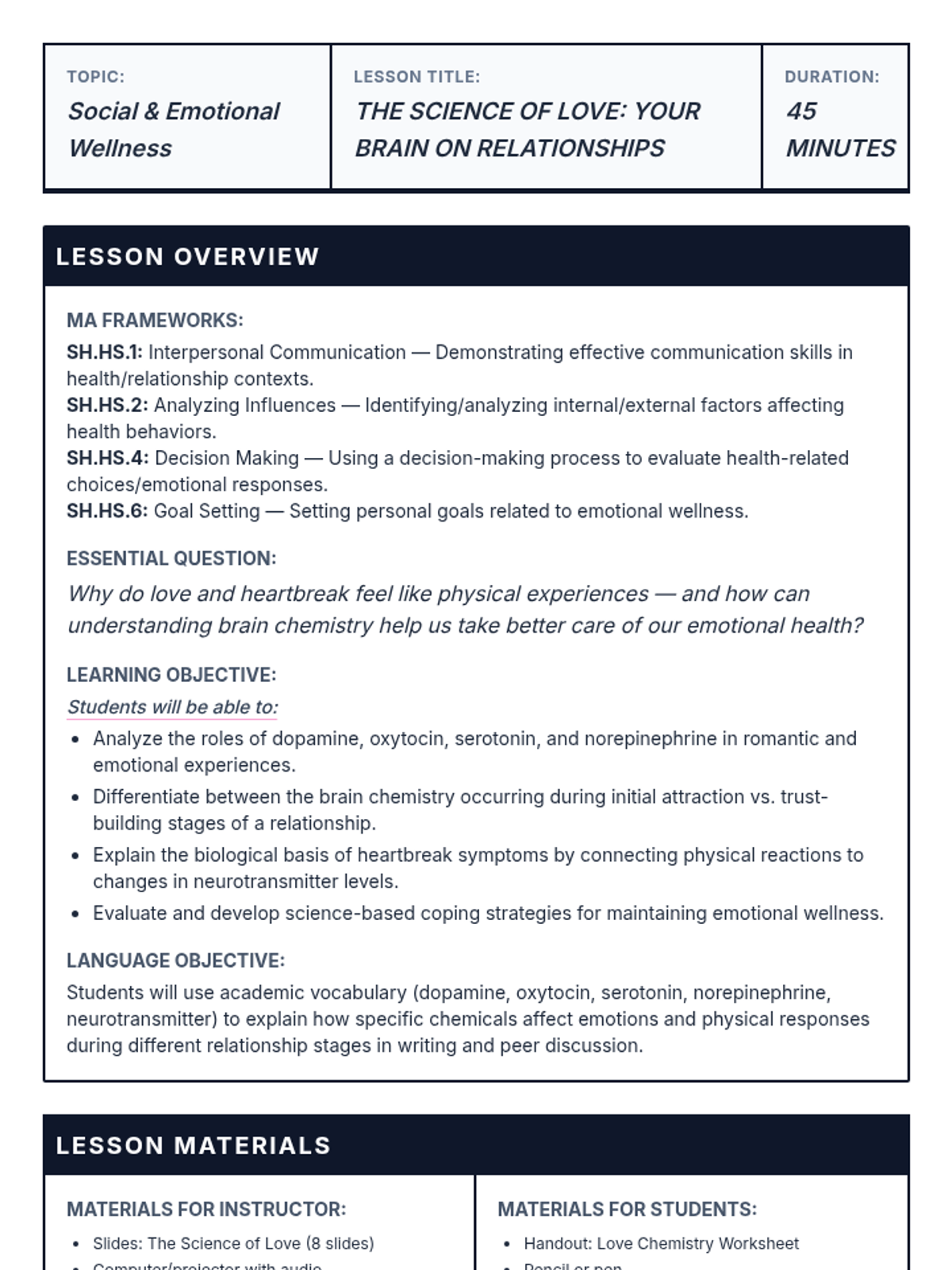
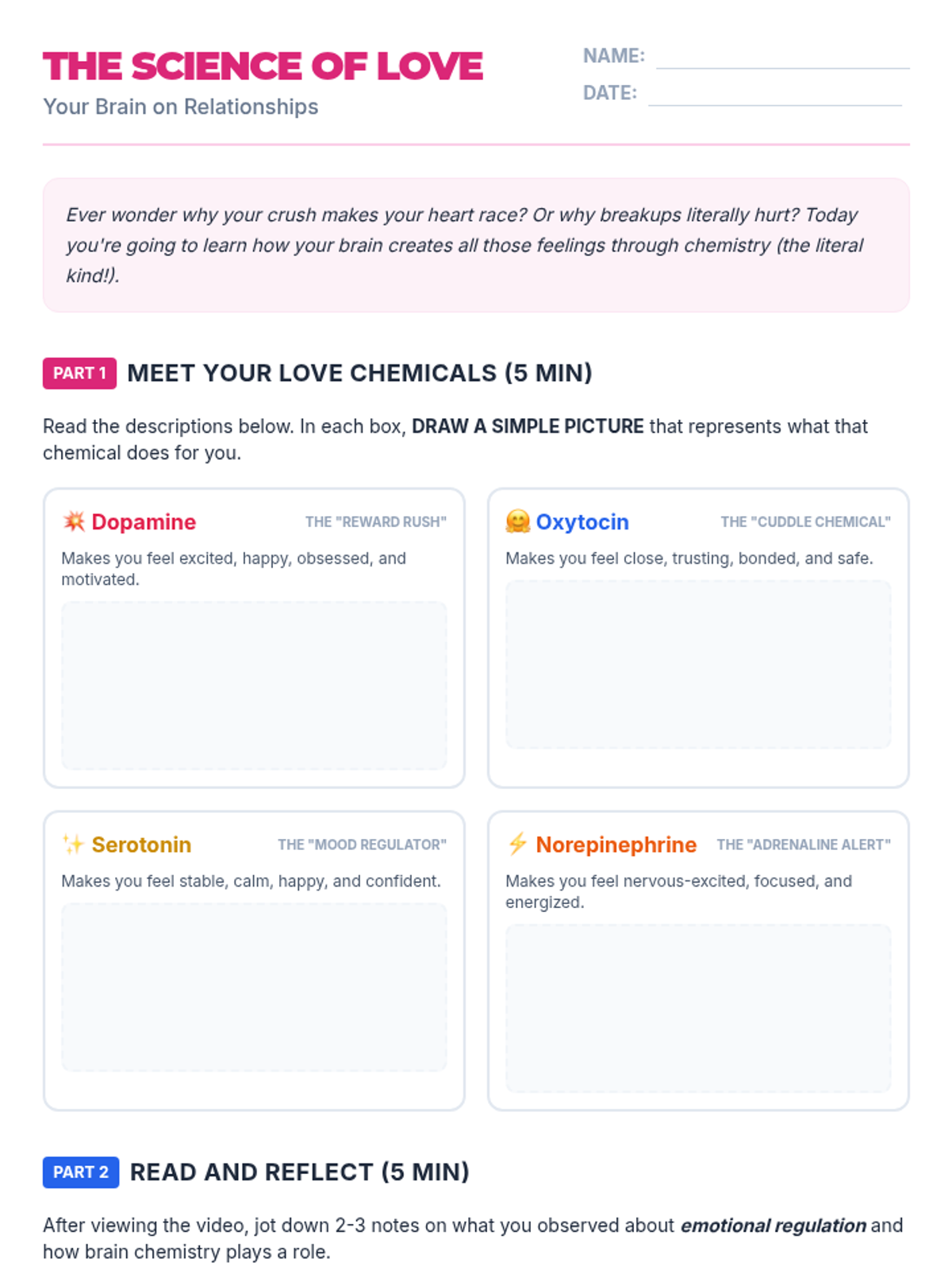
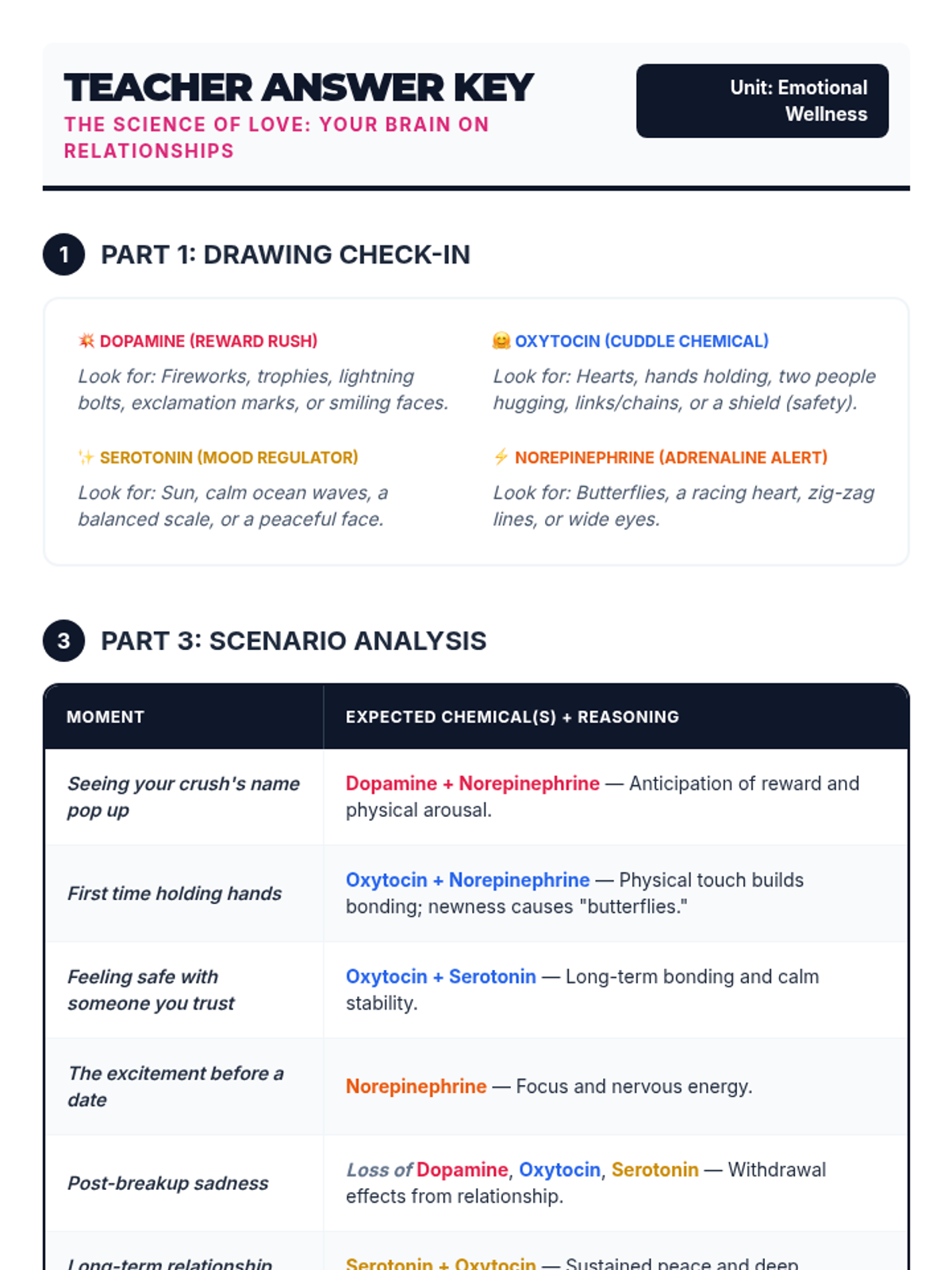
A 45-minute health and science lesson exploring the neurochemistry of romantic attraction, long-term bonding, and heartbreak. Students learn about dopamine, oxytocin, serotonin, and norepinephrine and apply this knowledge to create science-based coping strategies for emotional wellness.
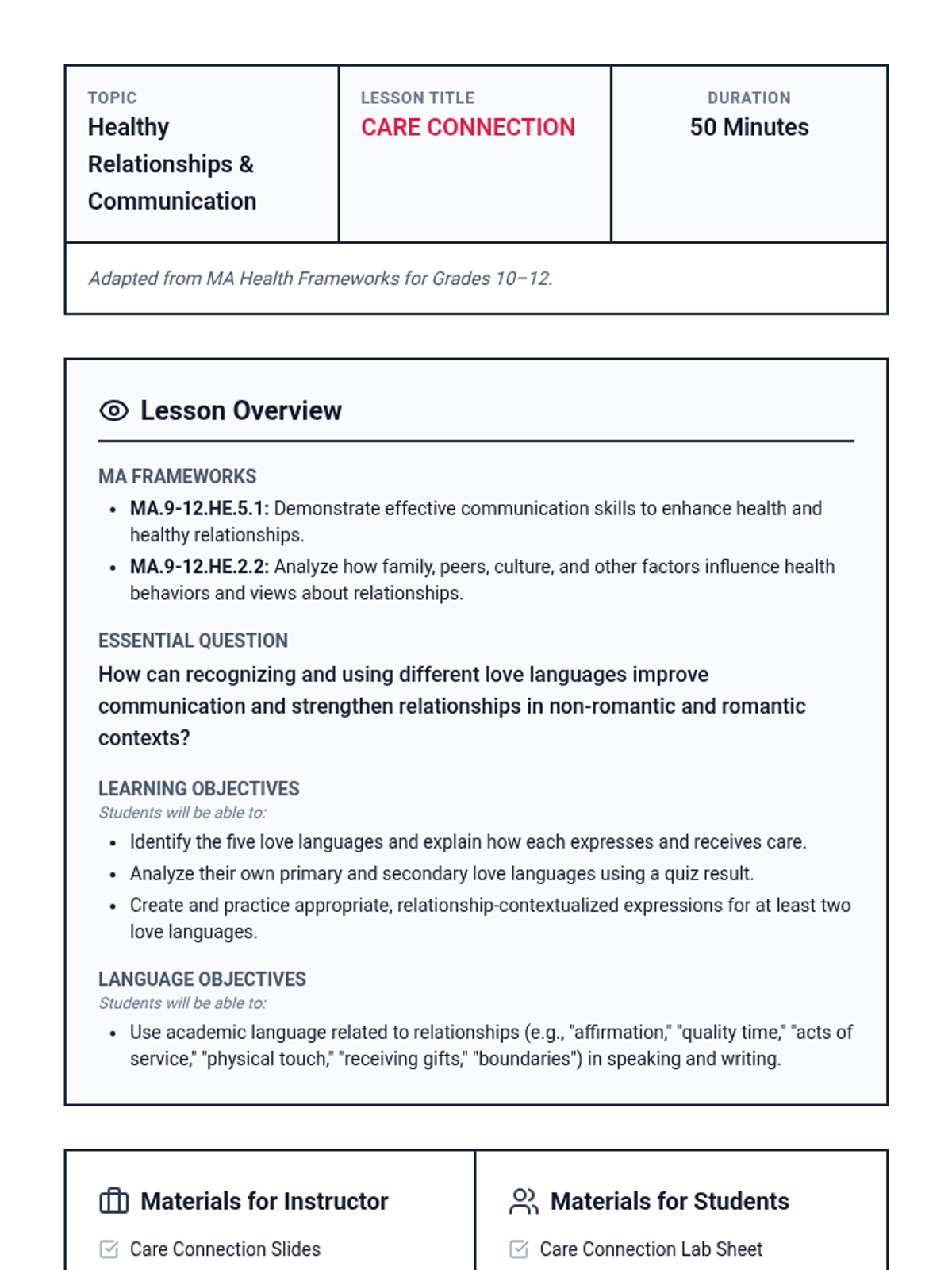
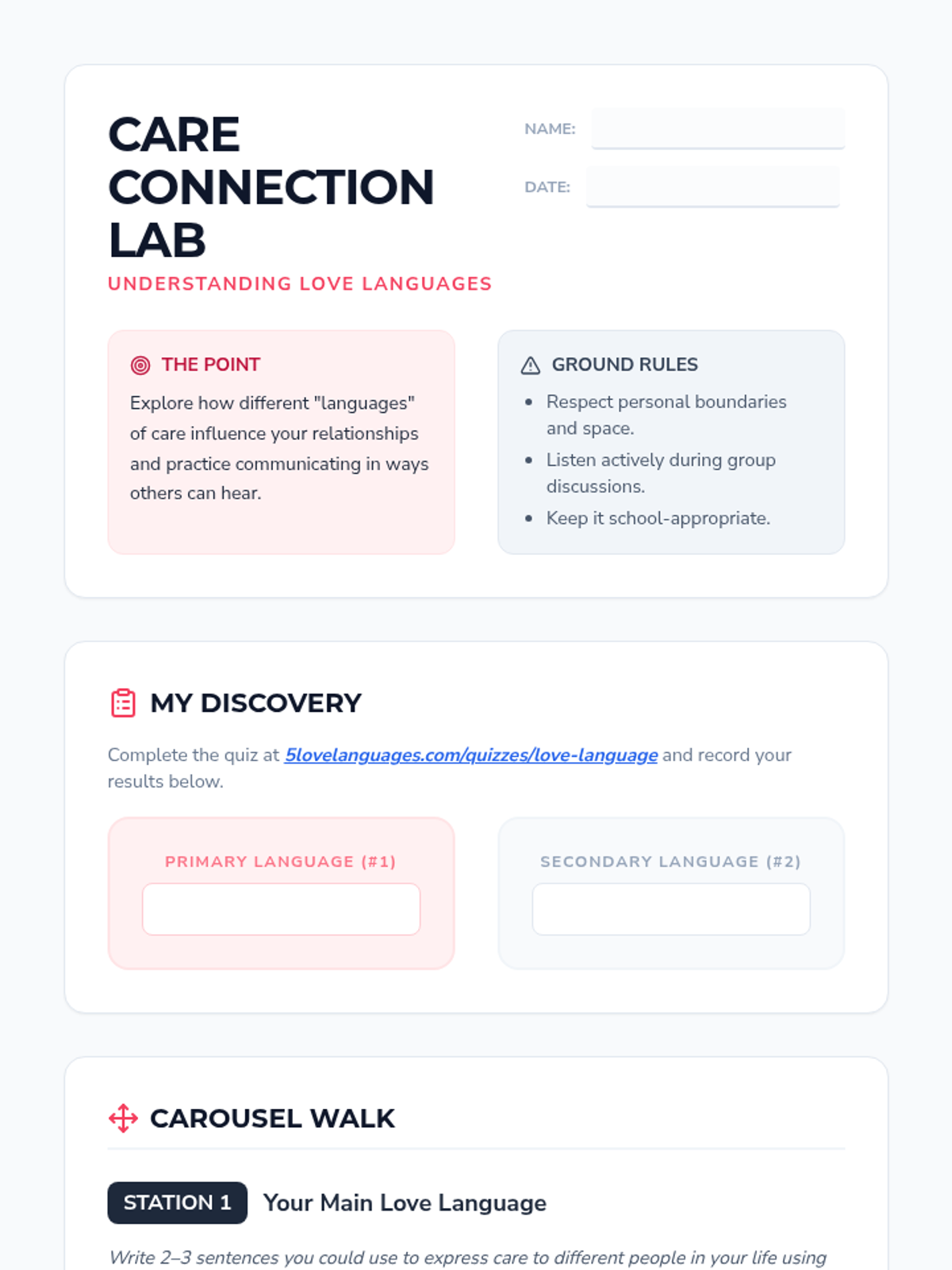
A lesson exploring the five love languages to improve communication and strengthen relationships across various contexts (friends, family, and romantic). Students will identify their own languages, practice context-appropriate expressions, and discuss strategies for navigating differing communication styles.
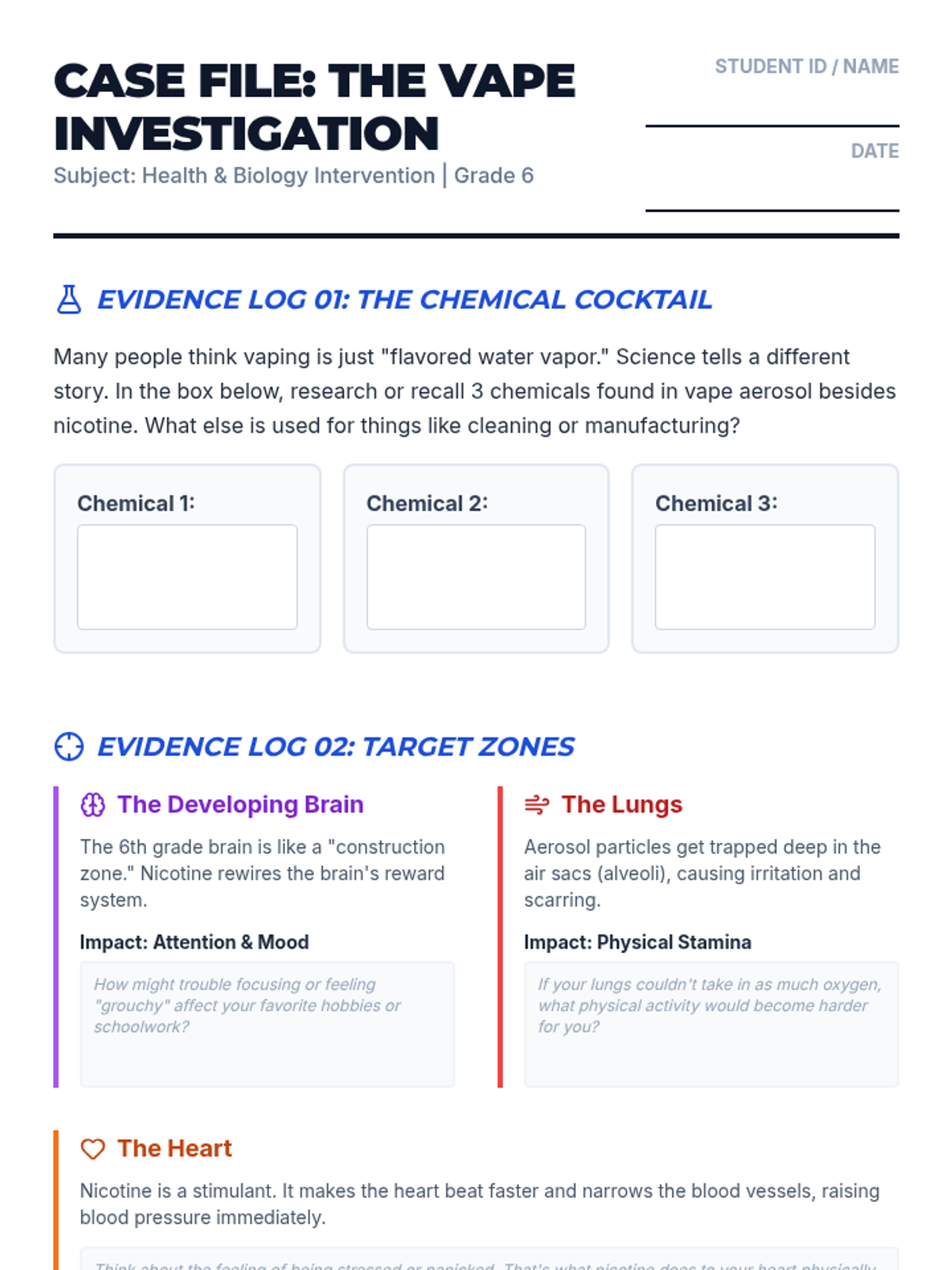
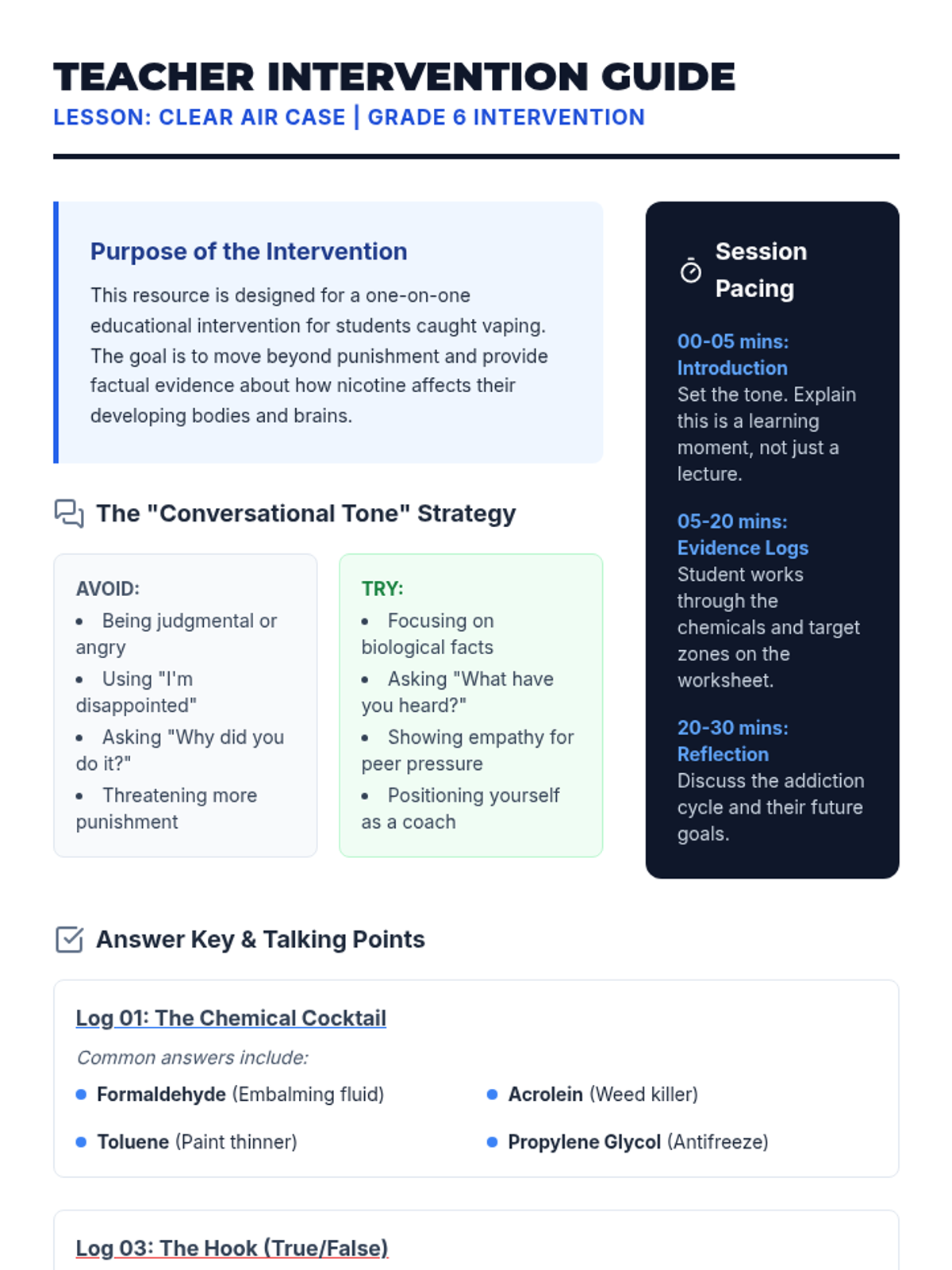
A focused intervention lesson for 6th-grade students to explore the specific health risks of nicotine vaping, featuring a self-led investigation into how vaping affects the brain, lungs, and heart.
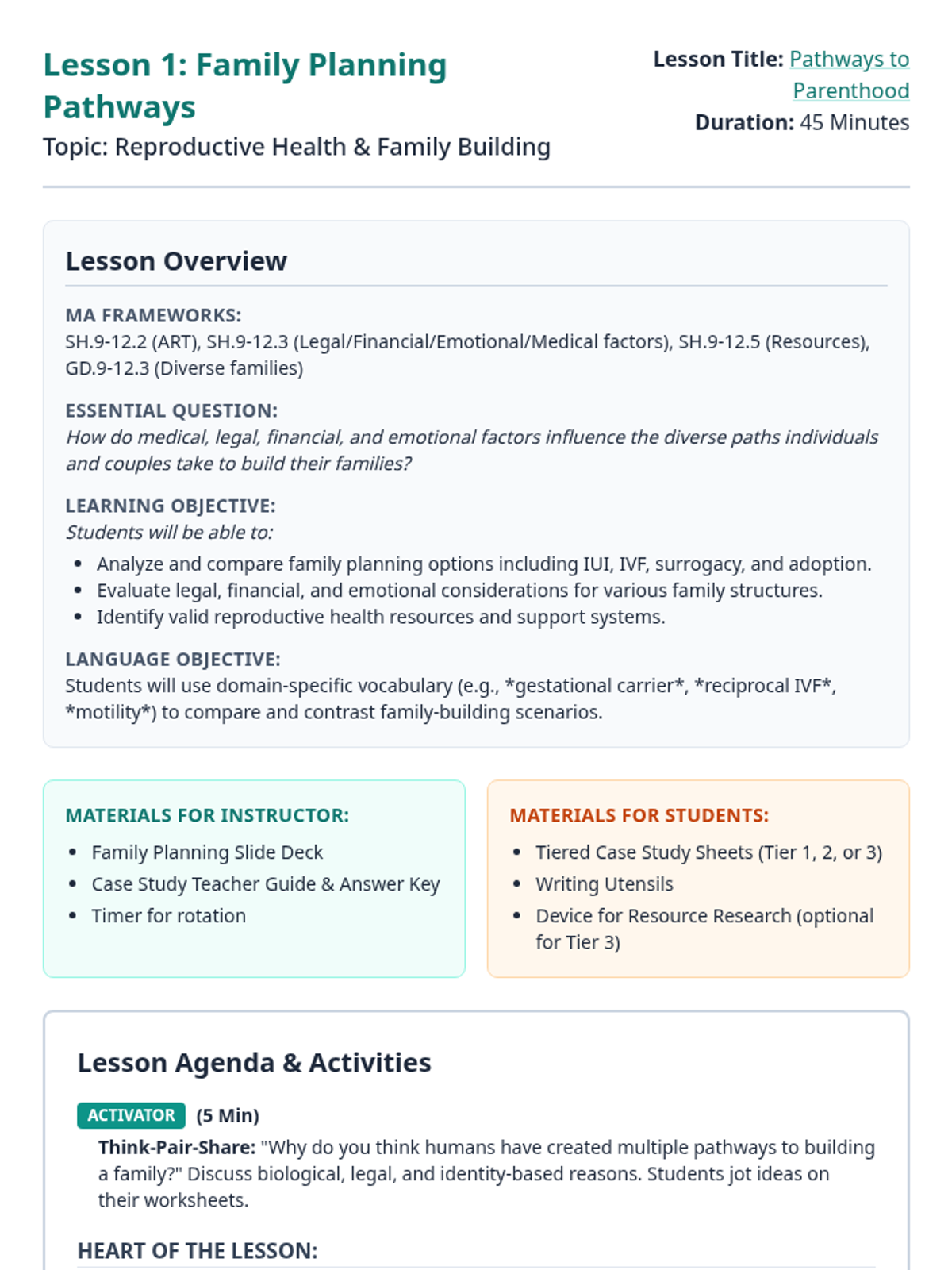
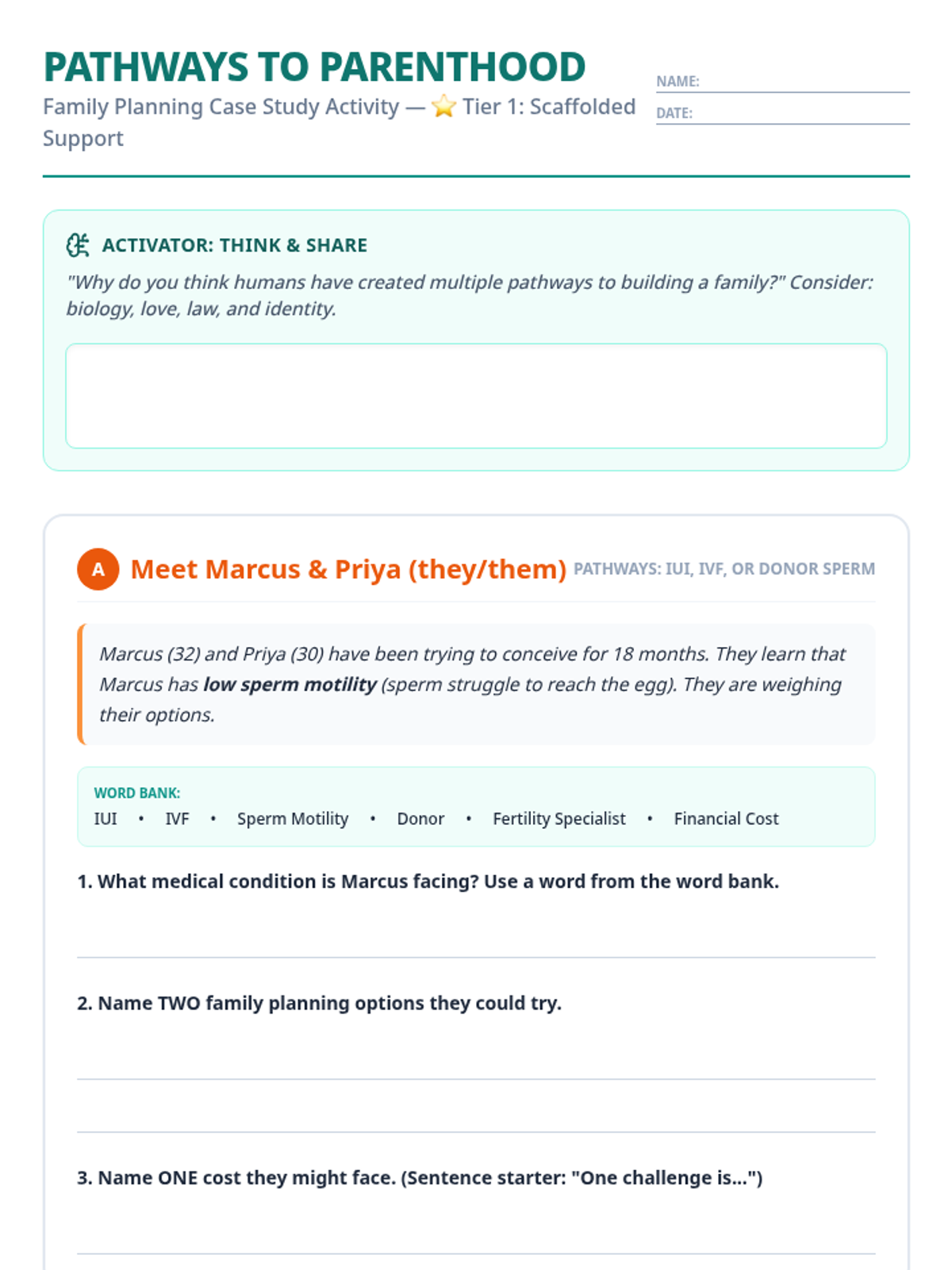
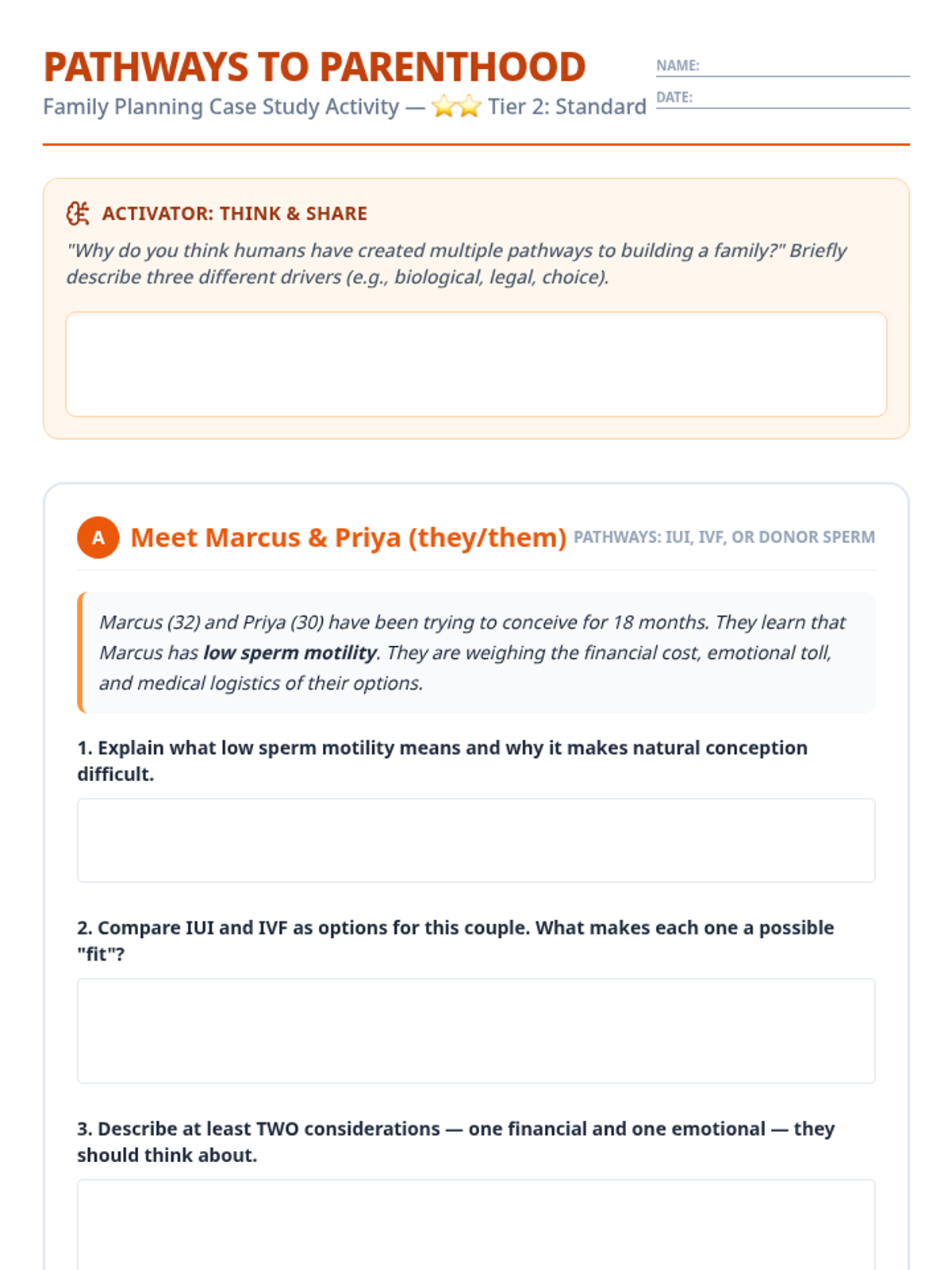
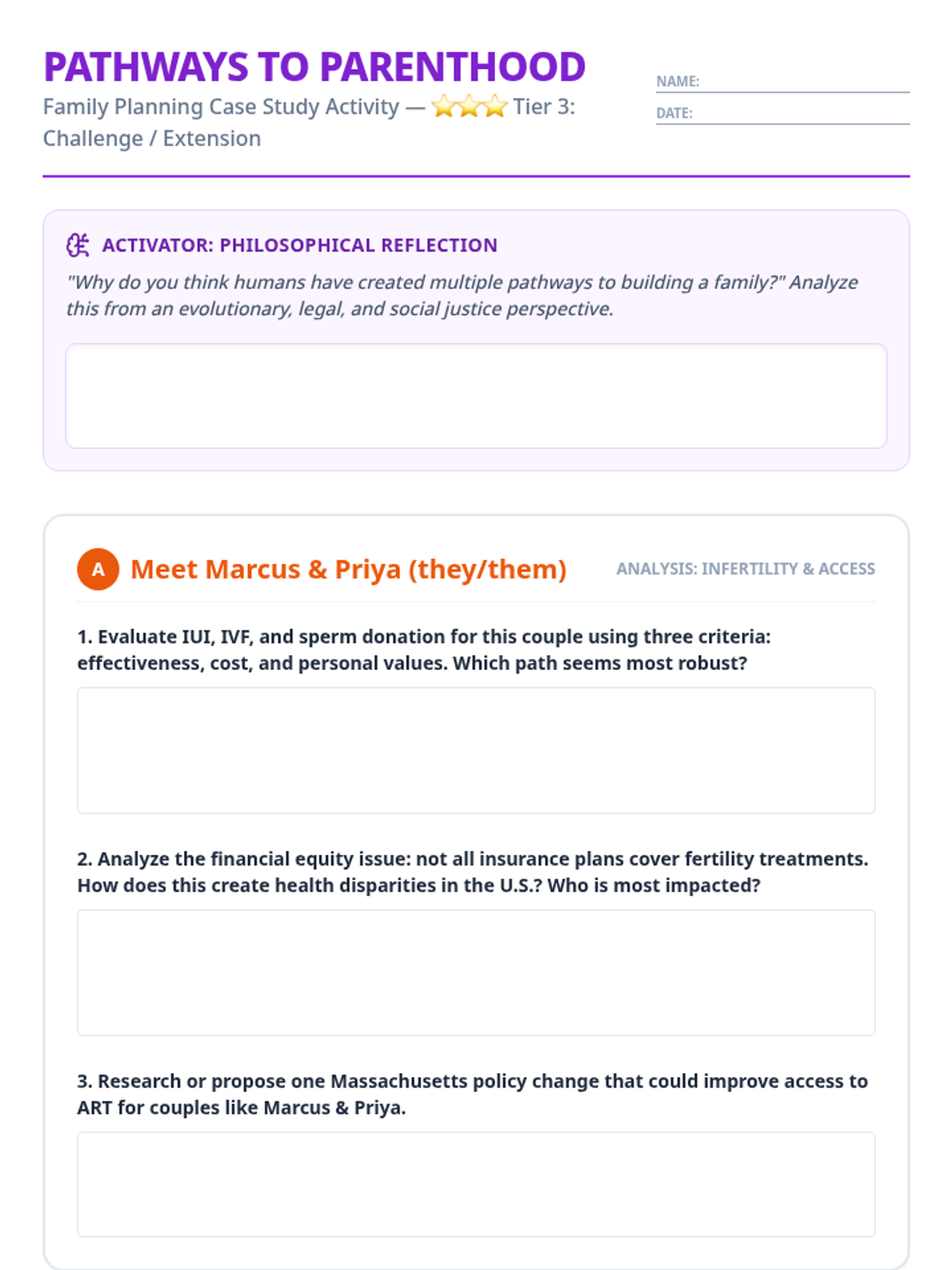
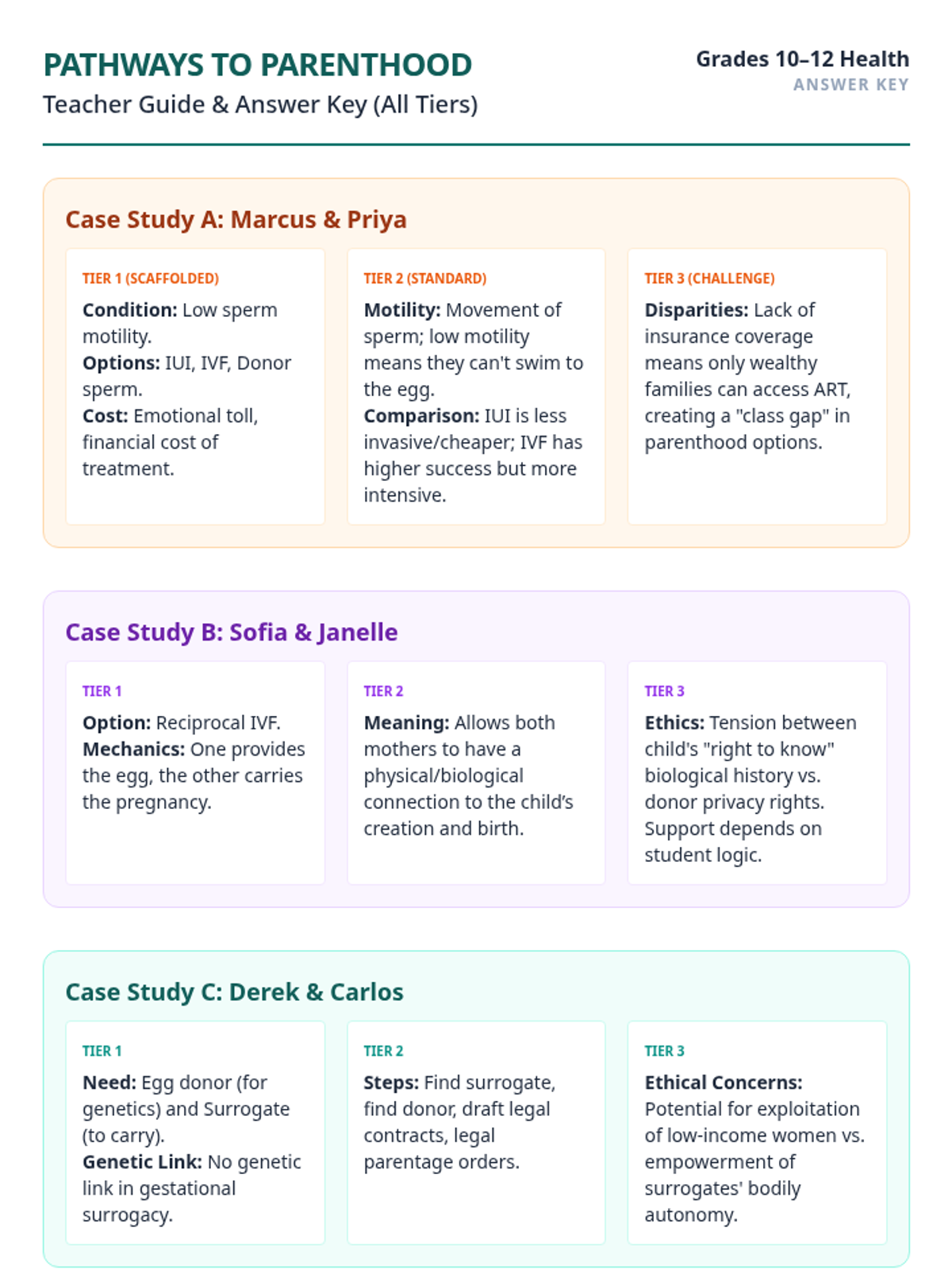
A 45-minute health education lesson for grades 10-12 focused on the legal, financial, medical, and emotional aspects of family planning and assisted reproductive technologies. Students explore diverse paths to parenthood through tiered case studies and collaborative discussion.
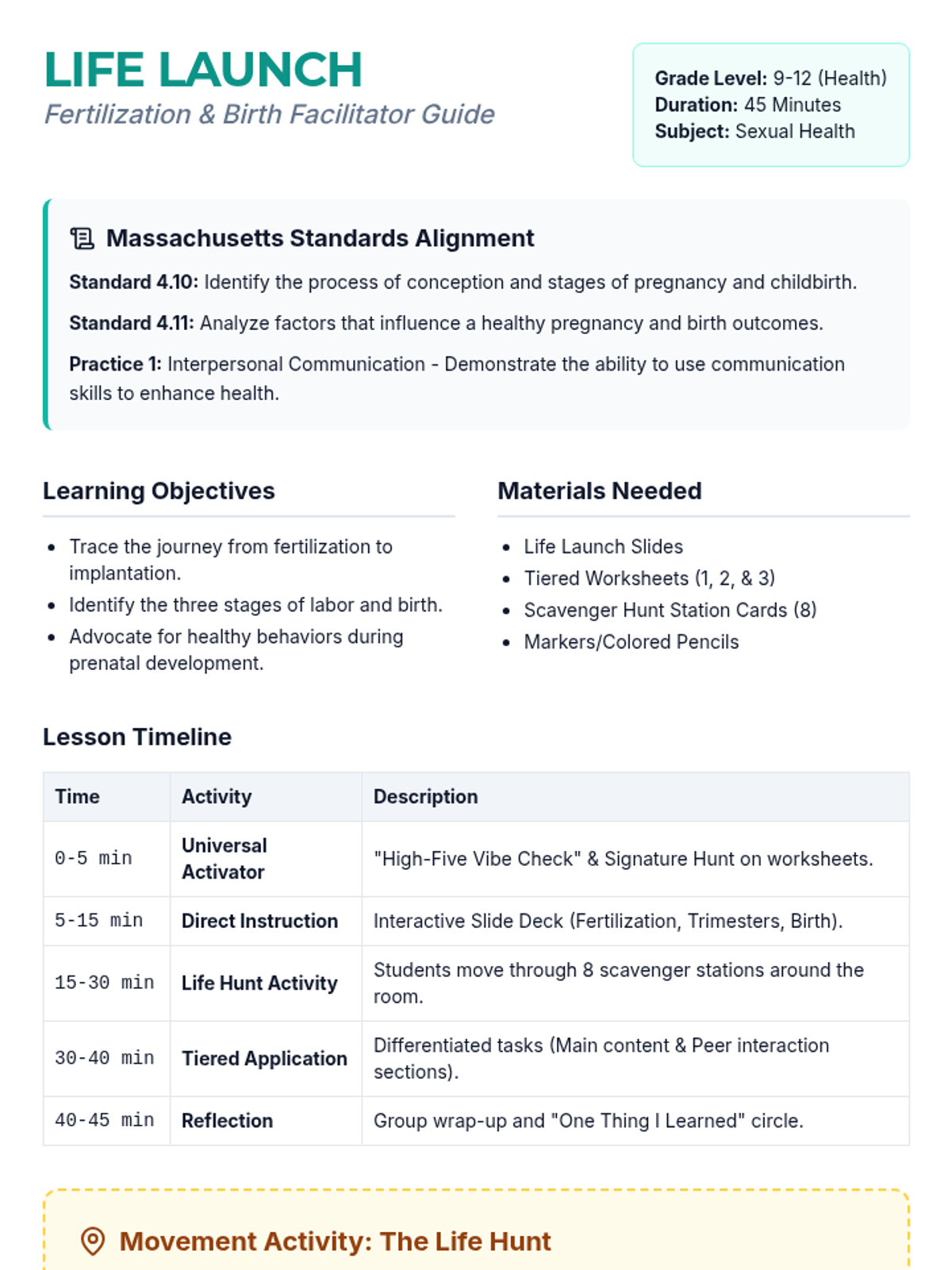
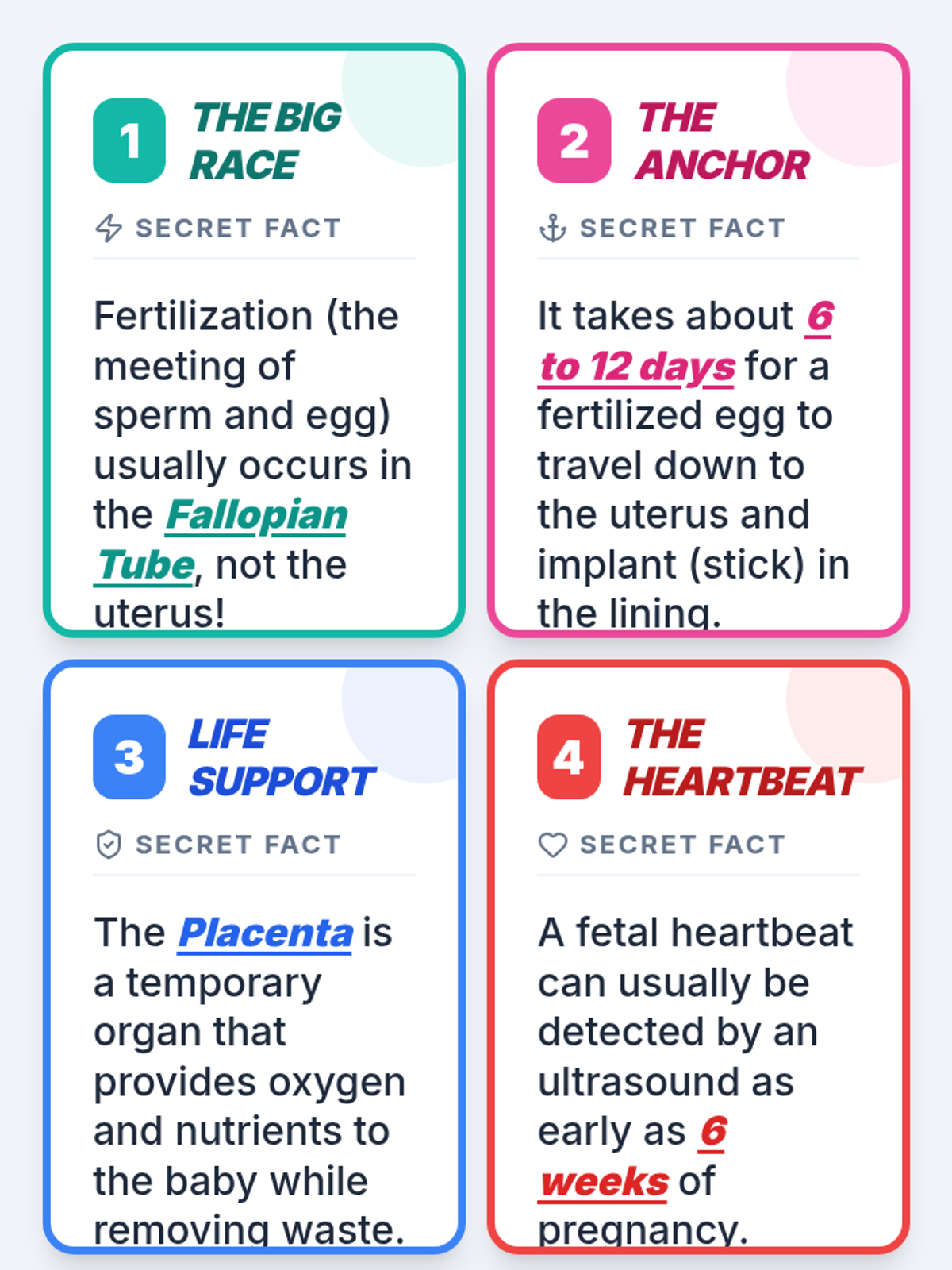
A comprehensive 45-minute lesson on fertilization and birth designed for 9th-grade students, featuring a movement-based scavenger hunt and tiered instructional materials aligned with Massachusetts Health Education standards.
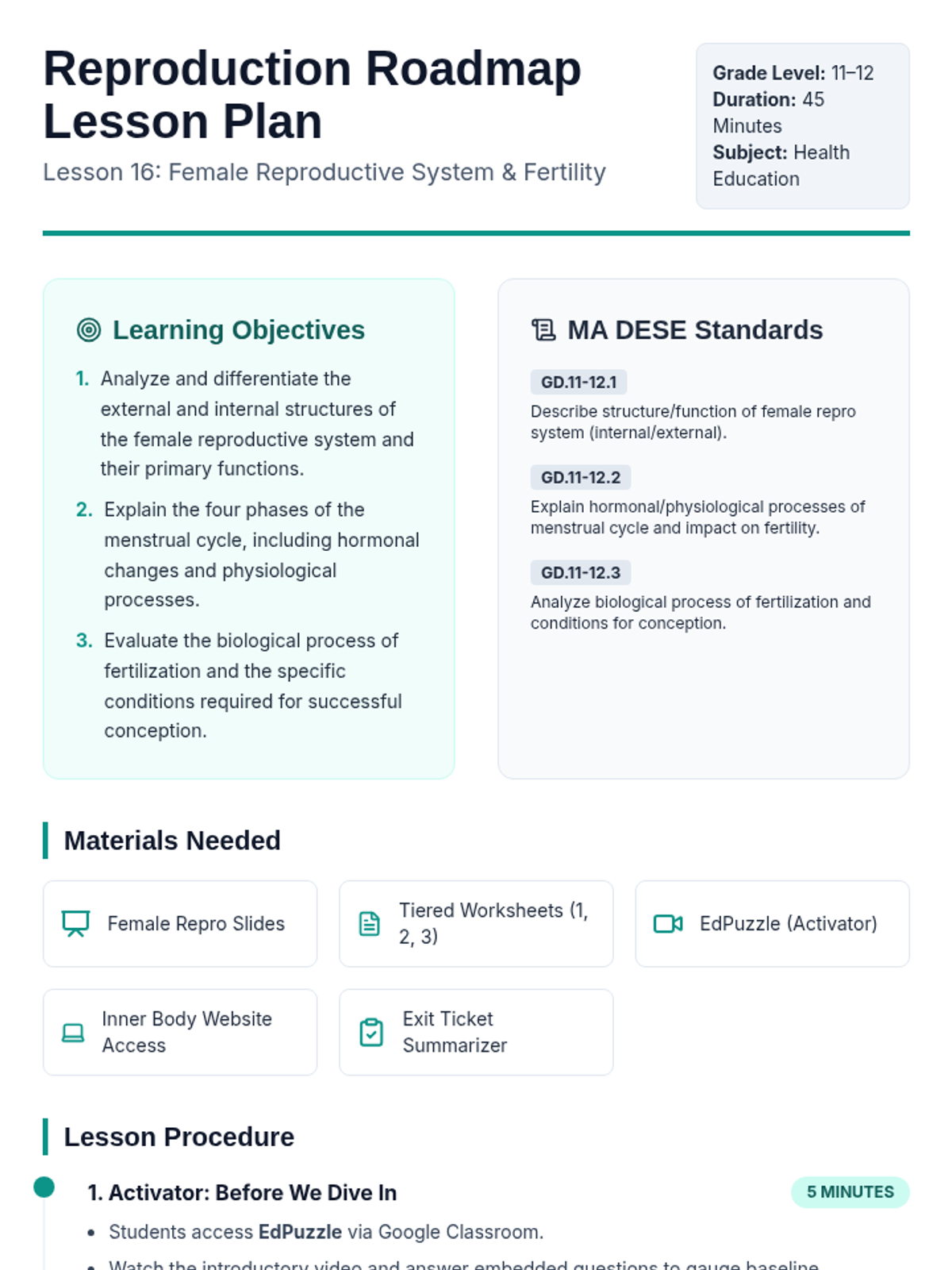
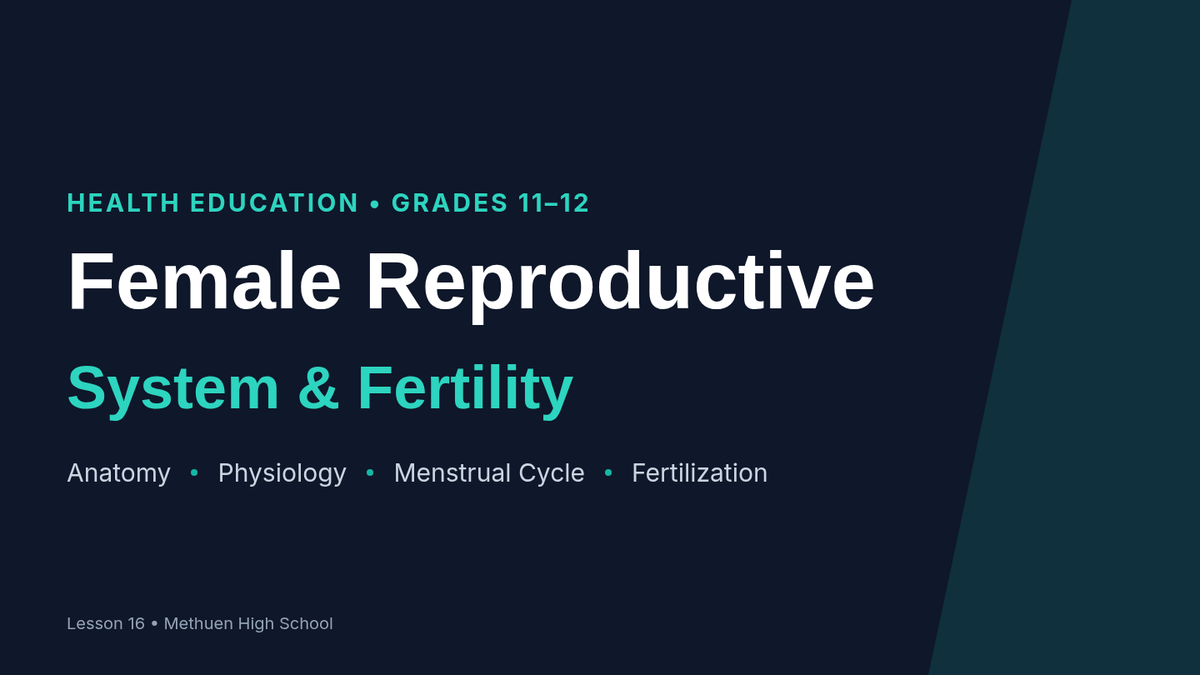
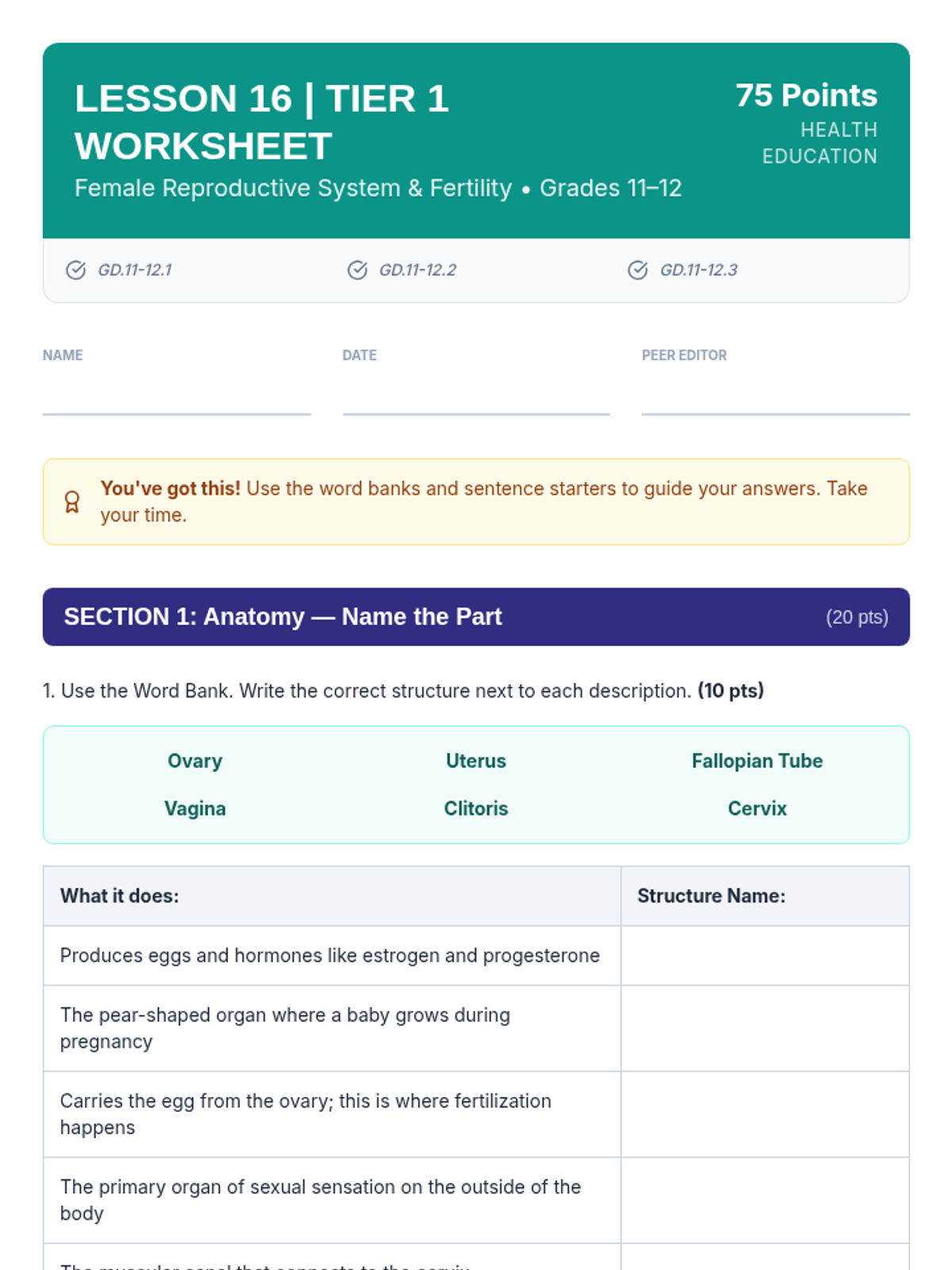
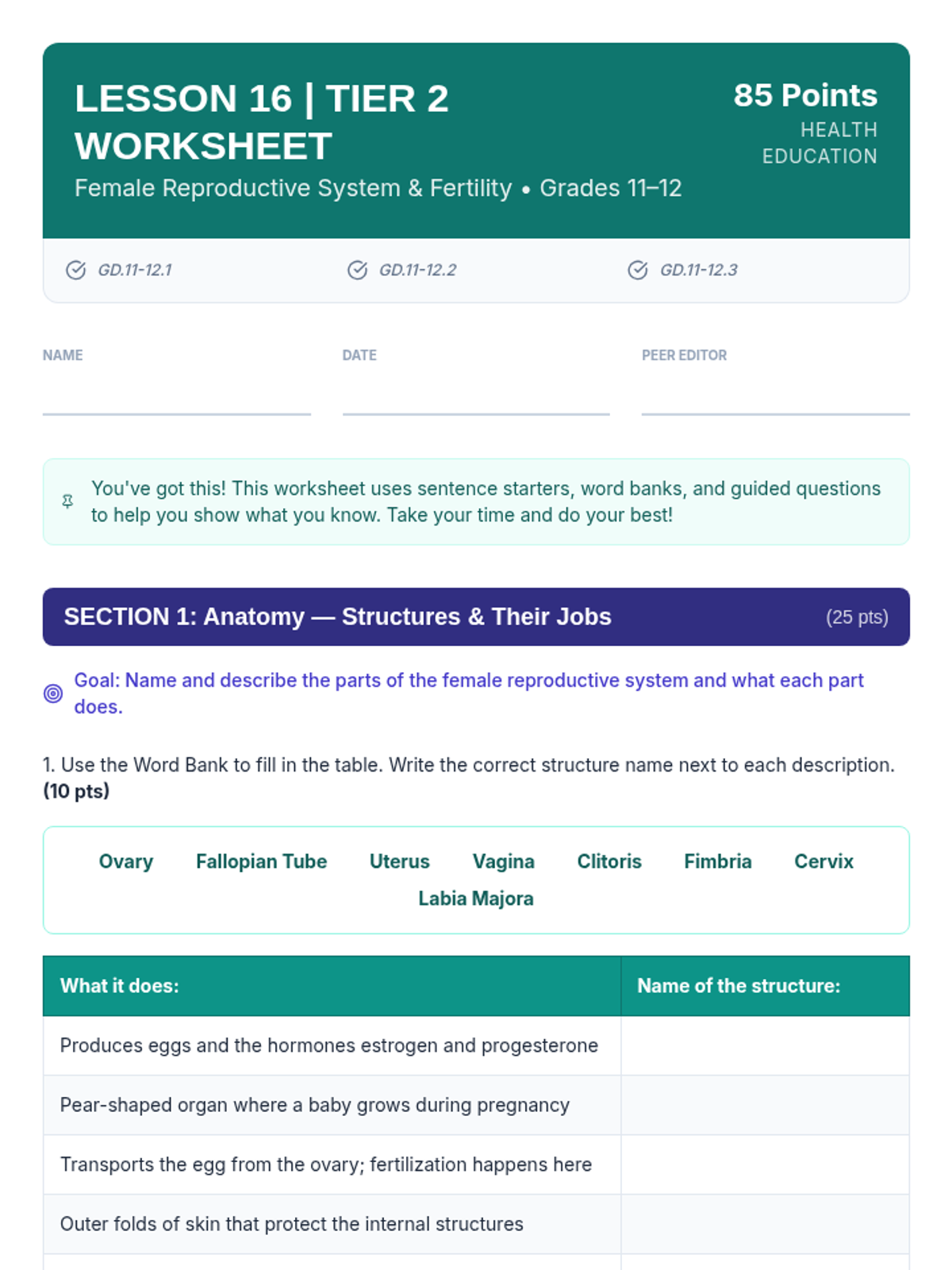
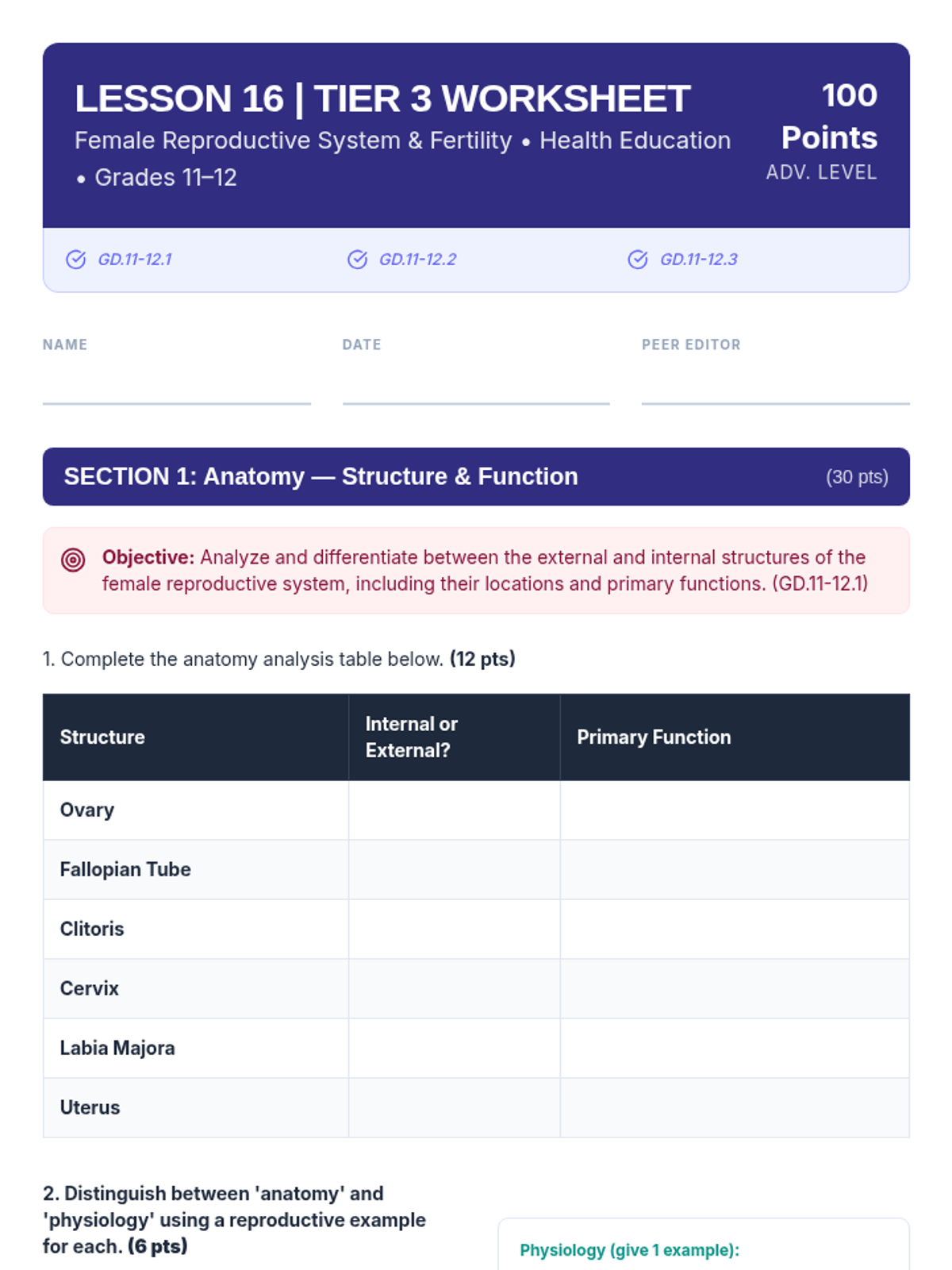
A comprehensive lesson on the female reproductive system, covering anatomy, the menstrual cycle, and the process of fertilization for grades 9-12. Students will identify structures, explain hormonal changes, and analyze the conditions necessary for conception.
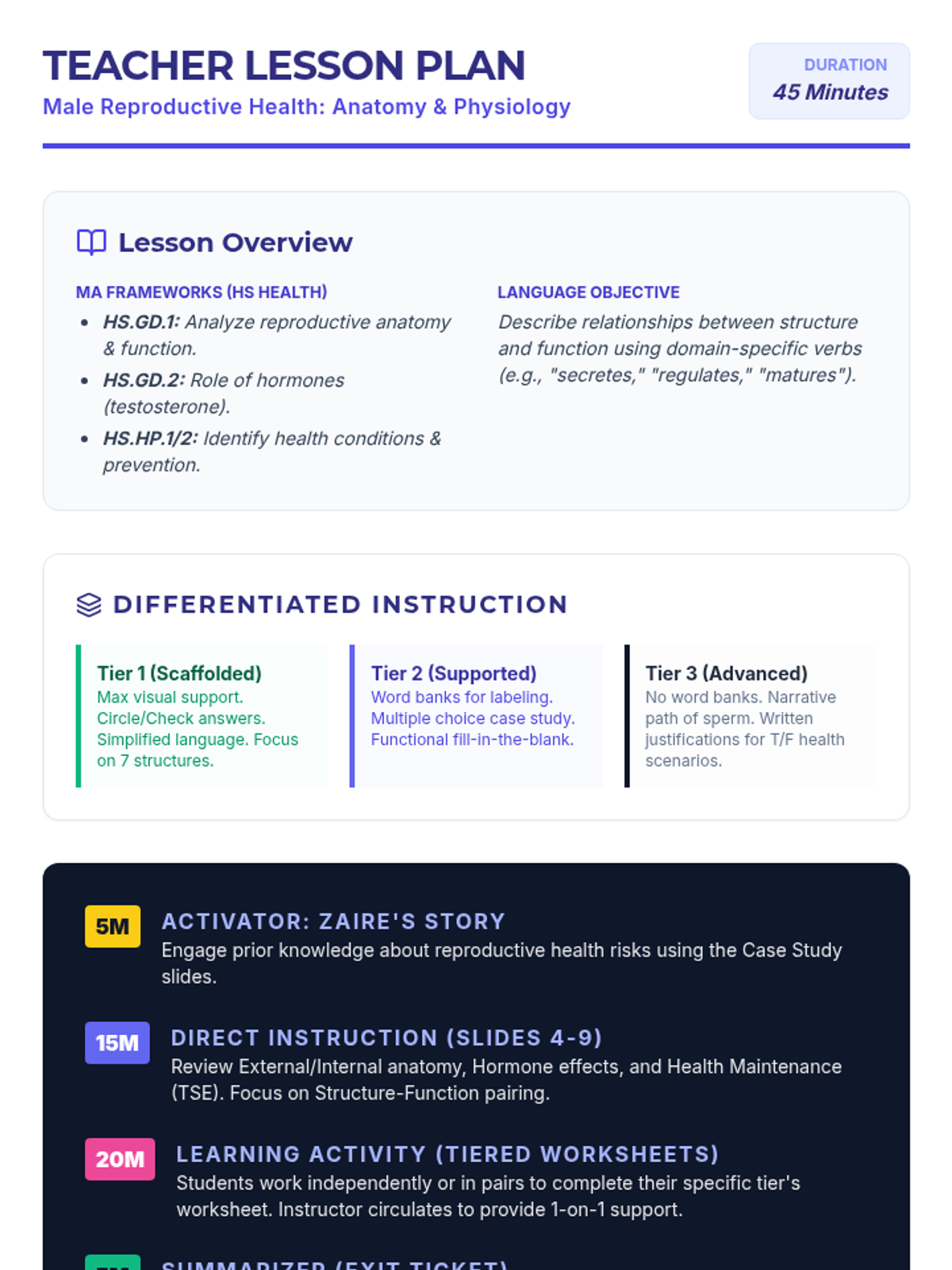
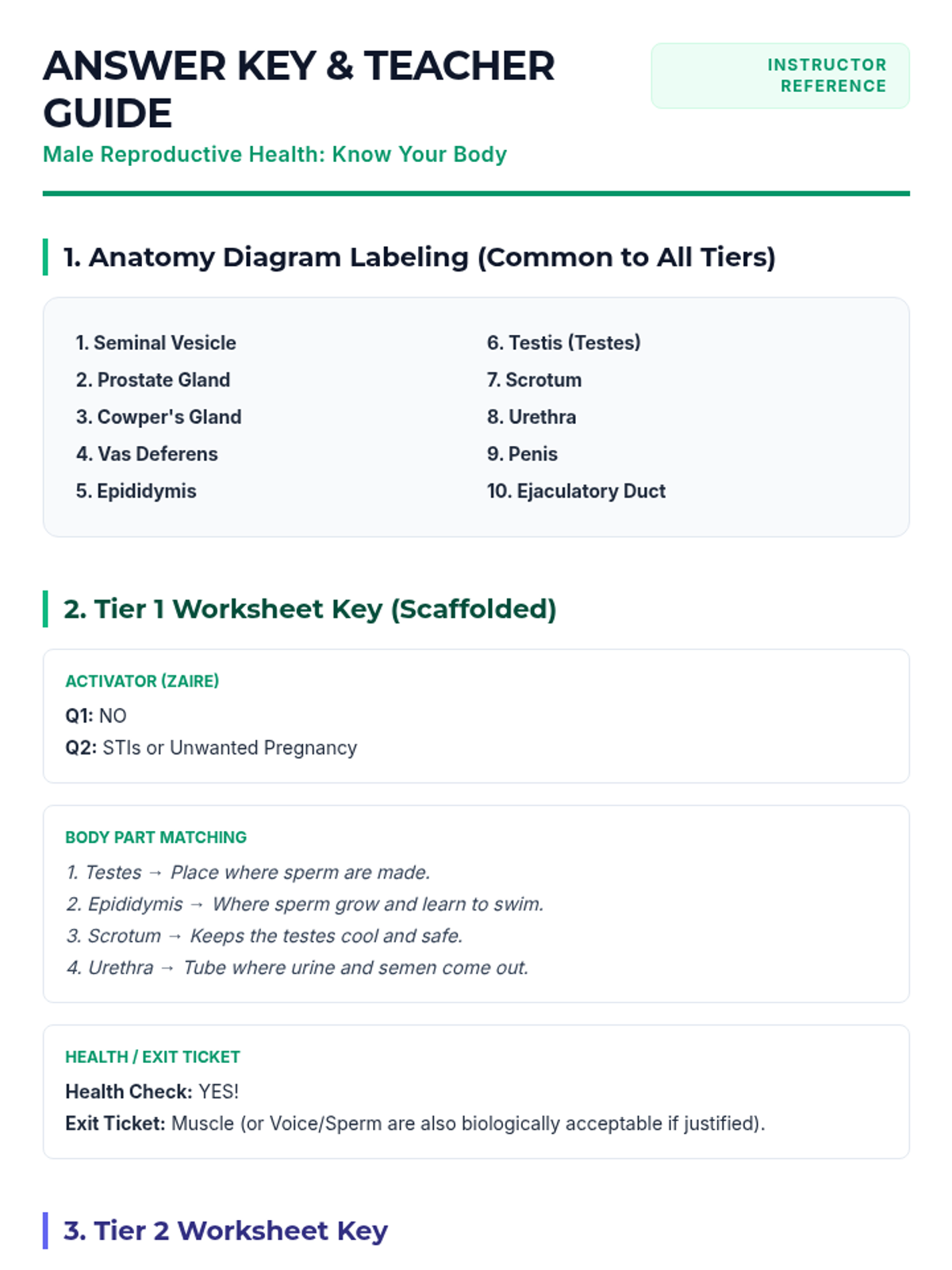
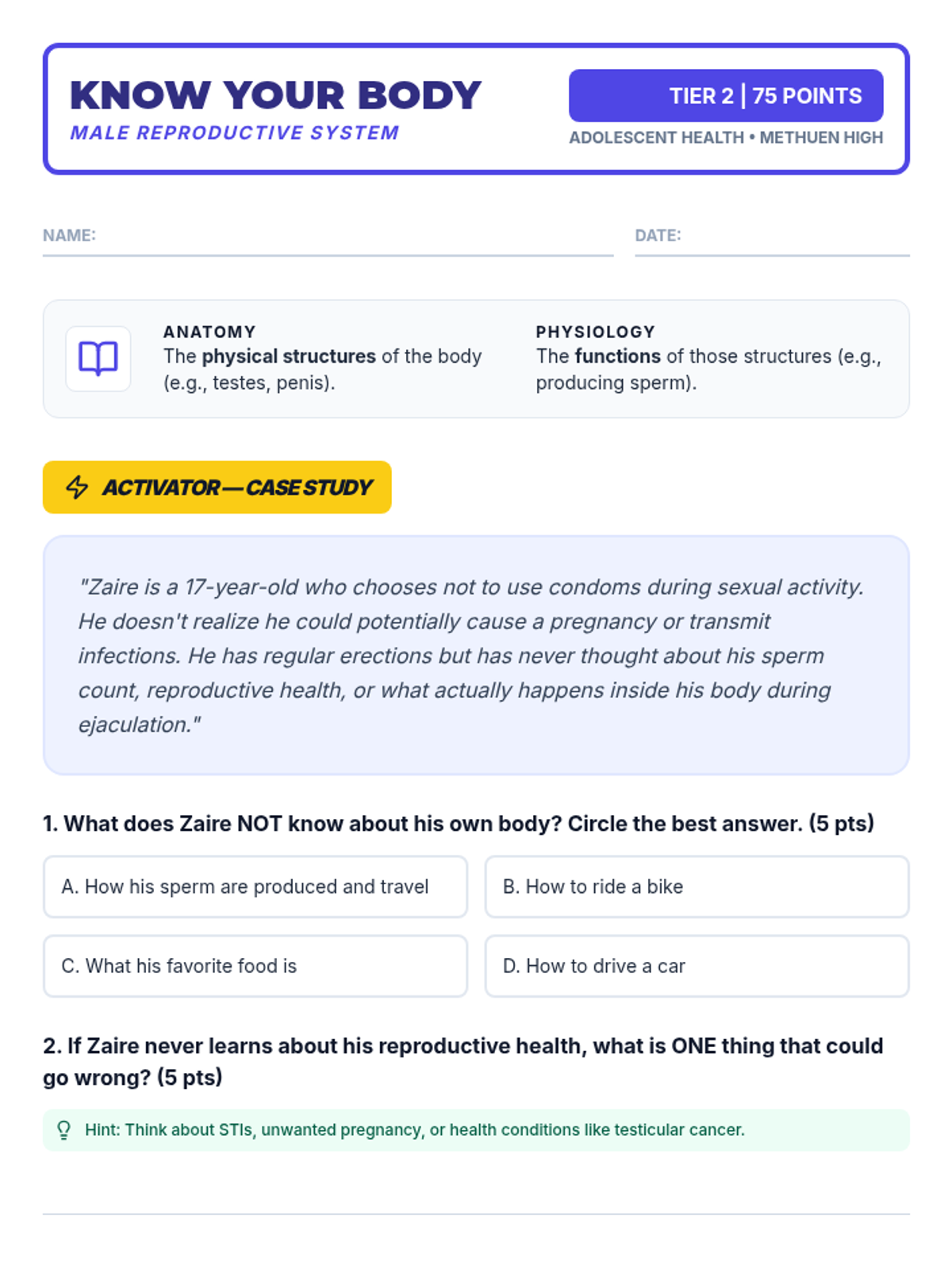
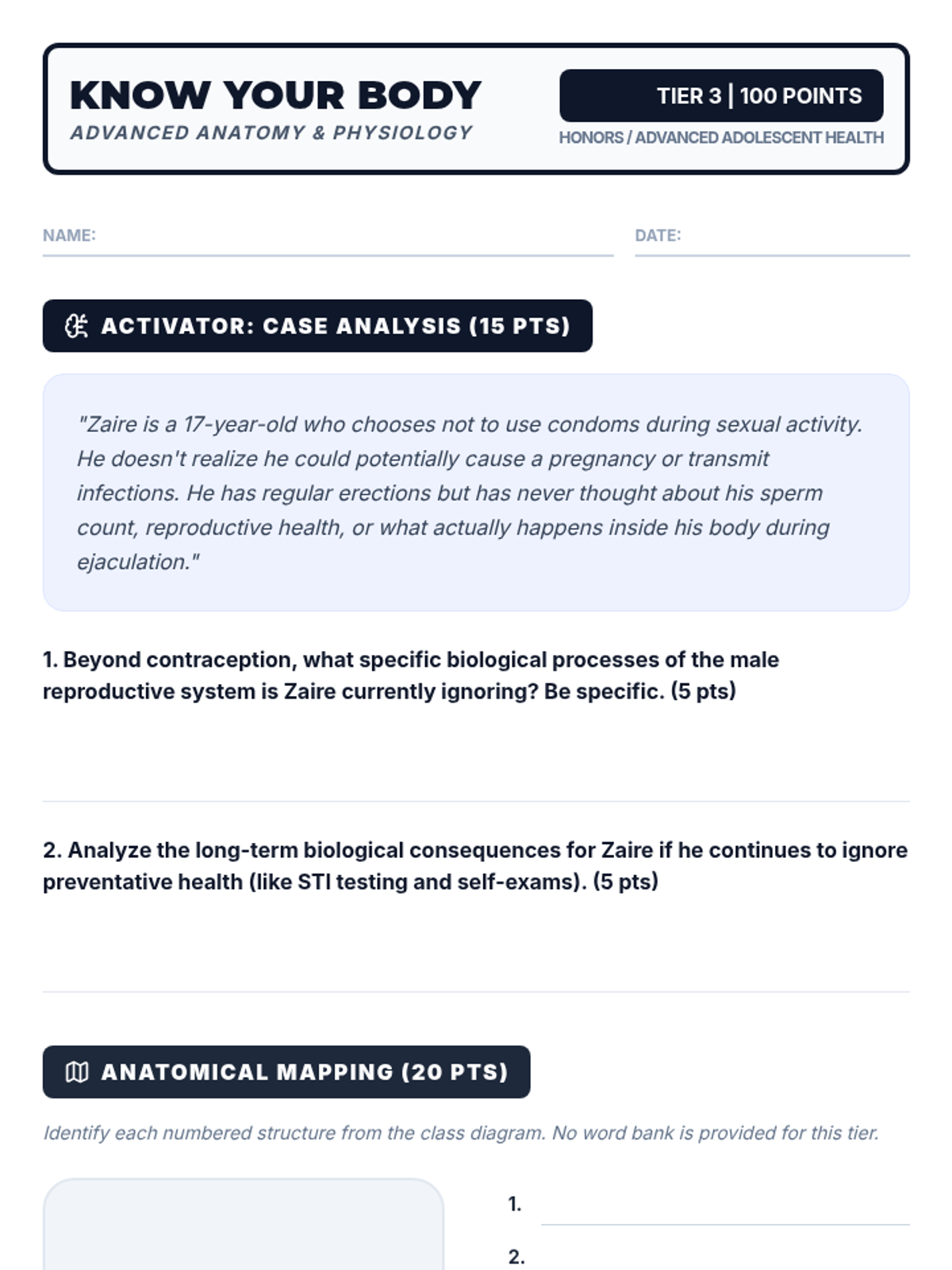
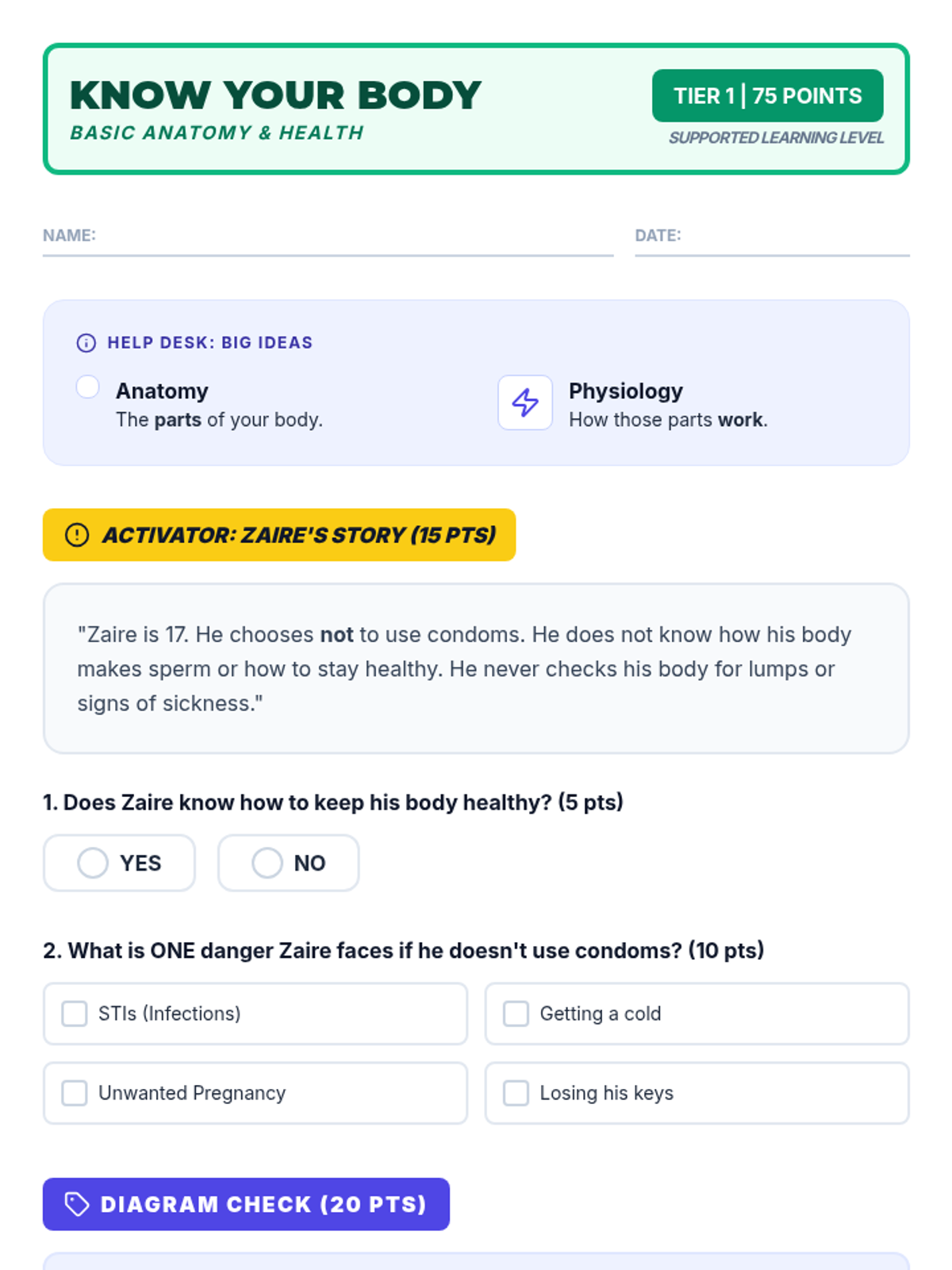
A comprehensive lesson on the male reproductive system focusing on anatomy, physiology, and health maintenance for high school students, featuring tiered instruction and clear learning objectives aligned with Massachusetts standards.