An advanced graduate-level sequence exploring the neurophysiological mechanisms, biomechanical principles, and evidence-based programming for flexibility and mobility in elite and clinical populations.
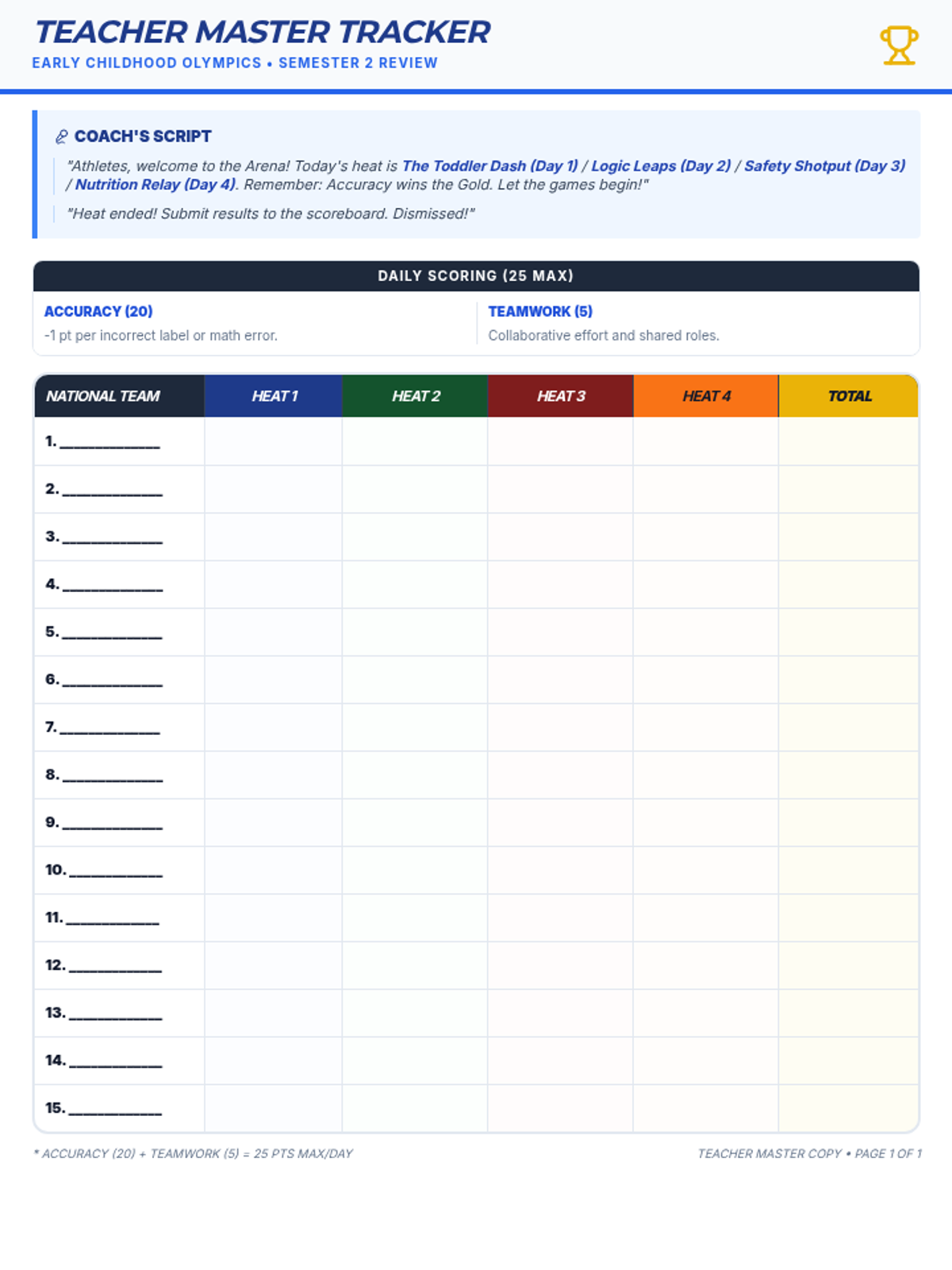
A comprehensive 16-week weight training curriculum divided into two parts: 'Part 1: The Human Engine' (Weeks 1-8) focusing on movement patterns, bodyweight mastery, and anatomy; and 'Part 2: The Iron Forge' (Weeks 9-16) focusing on advanced compound lifts, training science, and independent program design. Includes nutrition for performance and comprehensive classroom activities.
Um programa completo de 30 dias focado em perda de gordura, com orientações de planejamento, receitas nutritivas e ferramentas de acompanhamento de progresso.
A professional 6-week certification-style journey into Ayurveda. Each week features a comprehensive 2-hour 'Deep Dive Module' combining academic reading, interactive reflections, and knowledge checks, supported by practical 'Applied Healing' assignments (1-2 hours) for real-world integration.
A series of workshops and resources for elementary school parents focusing on common school-related health concerns, starting with head lice management.
This undergraduate sequence explores the neuroscience and physiology of stress and anxiety, grounding emotional experiences in biological reality. Students will study the HPA axis, evolutionary mismatches, somatic markers, and physiological regulation techniques to move from reactivity to mastery.
This sequence demystifies the process of accessing crisis support by breaking down the mechanics of hotlines and text lines. Students learn to distinguish between emergency services (911) and crisis hotlines (988), understand the experience of reaching out, and create personal resource tools for future use.
An intensive exploration of the physics and biomechanics behind field events, focusing on shot put, discus, long jump, and triple jump. Students apply scientific principles to athletic performance through peer coaching, video analysis, and technical drills.
An advanced undergraduate track and field sequence focusing on the biomechanics of field events and the professional standards of meet officiating and management.
This sequence approaches gymnastics through the lens of athletic conditioning and applied anatomy. Students investigate specific strength and flexibility requirements needed to perform skills safely while acting as strength and conditioning coaches.
This sequence integrates physics concepts with fundamental floor skills to help students understand the mechanics of tumbling. Students explore center of mass, rotational mechanics, leverage, and force absorption through hands-on practice and video analysis.
This sequence explores the physics of gymnastics, focusing on biomechanical principles like center of gravity, rotational inertia, and momentum transfer to improve tumbling performance. Students transition from static balance to dynamic rotation, culminating in a frame-by-frame video analysis of their own movement.