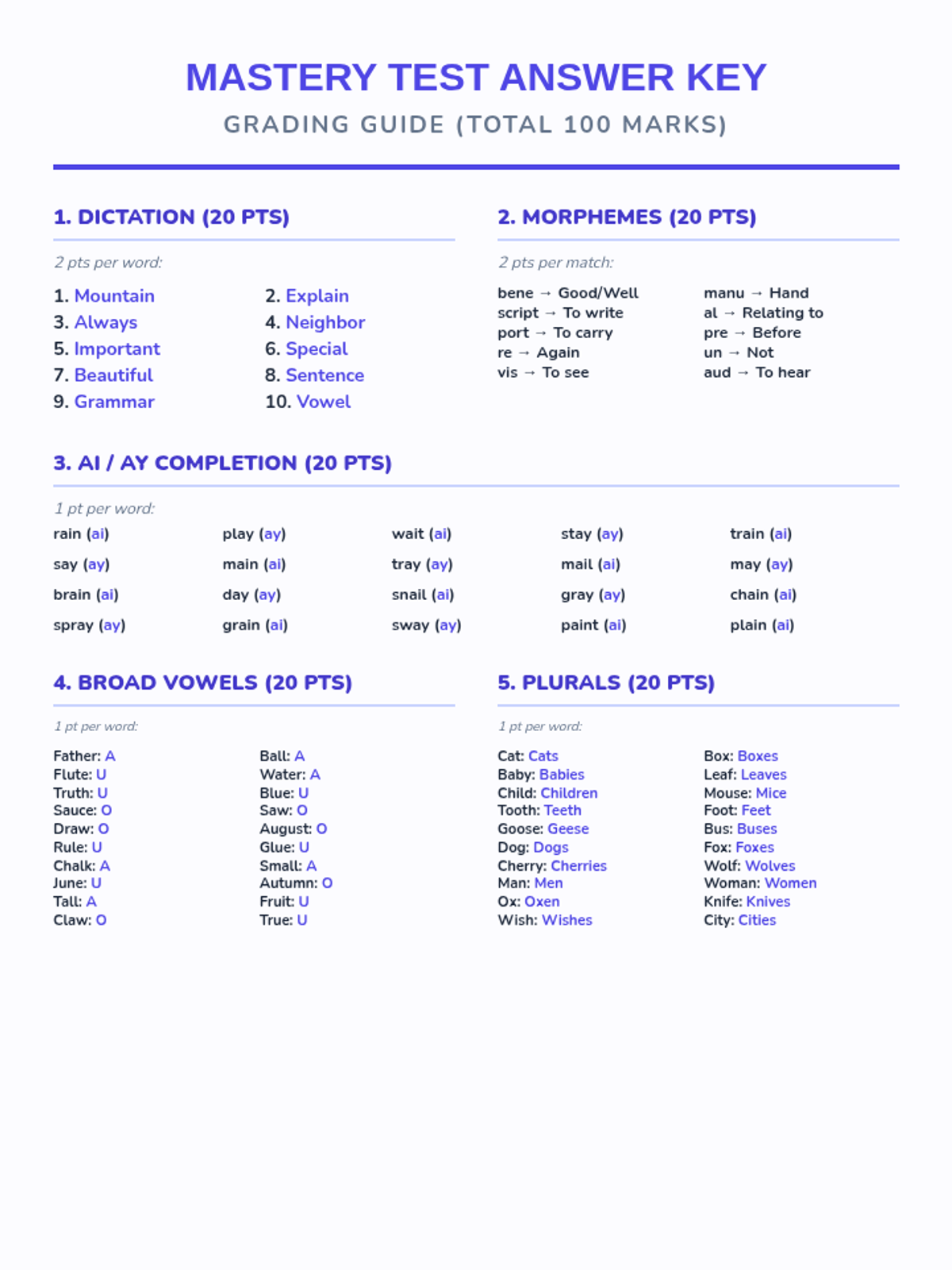
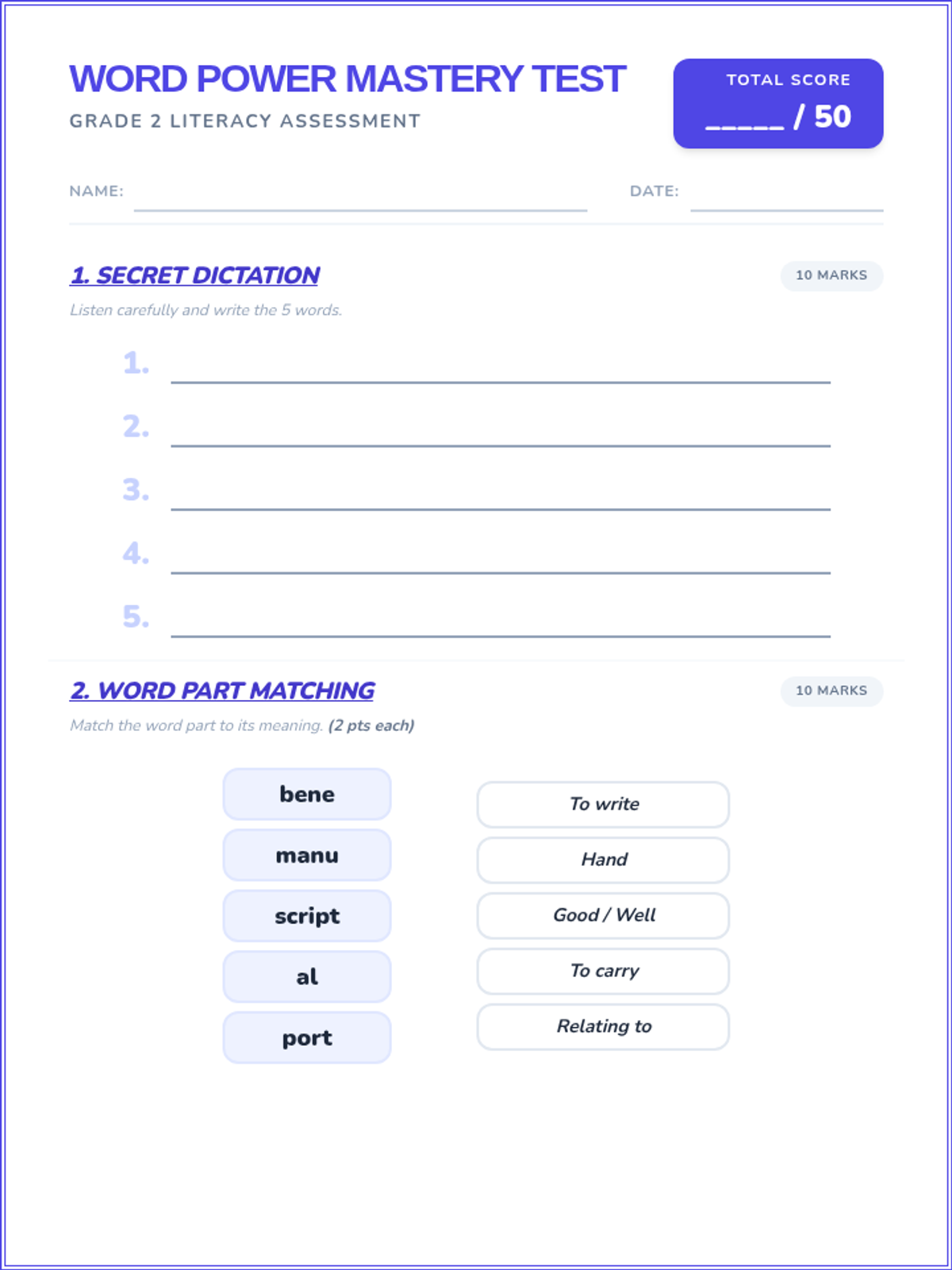
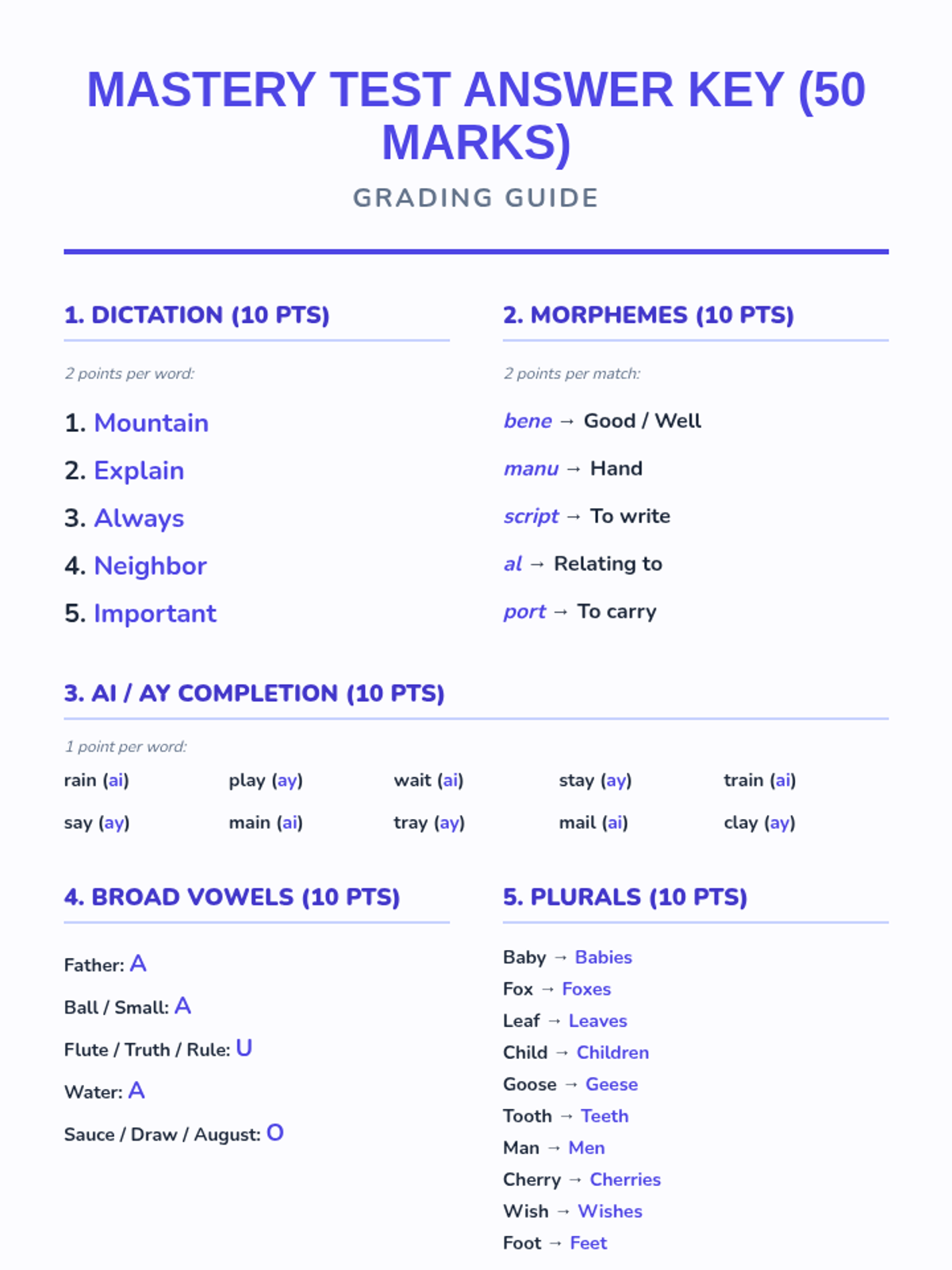
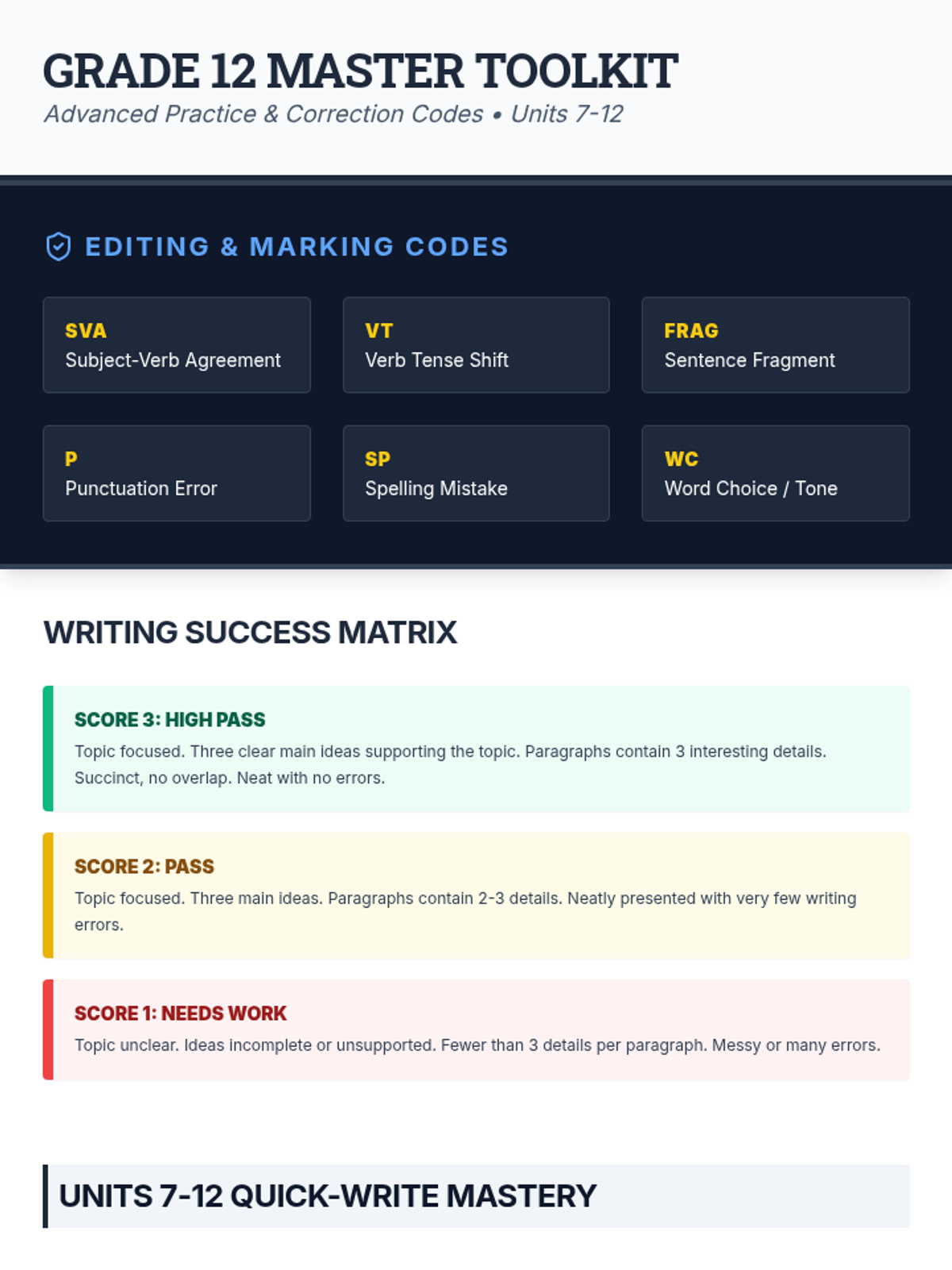
Sentence structure fundamentals, subject-verb agreement, and precise usage of parts of speech including pronouns, conjunctions, and adjectives. Targets technical accuracy through mastery of capitalization, punctuation, spelling, and verb mood.
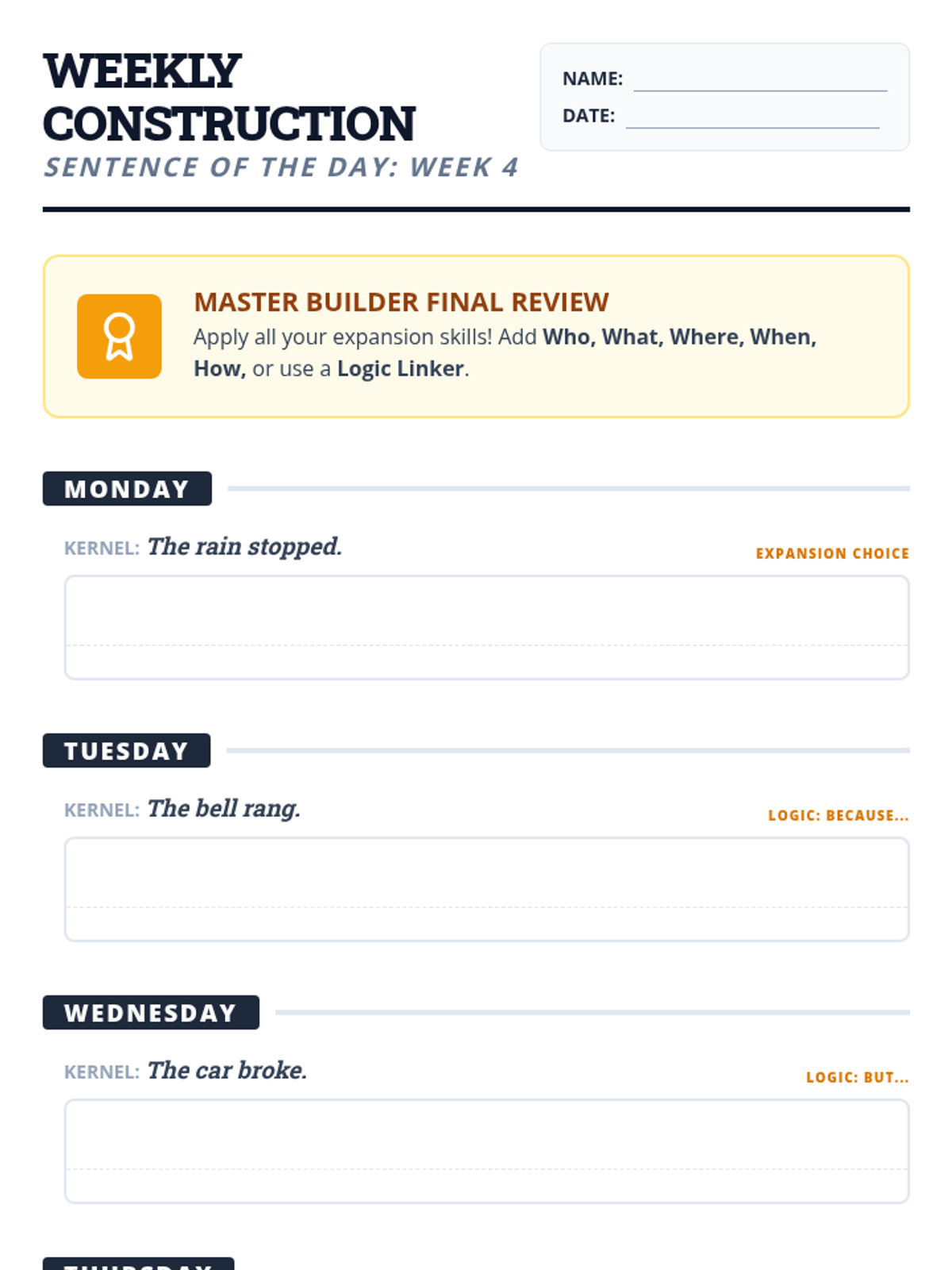
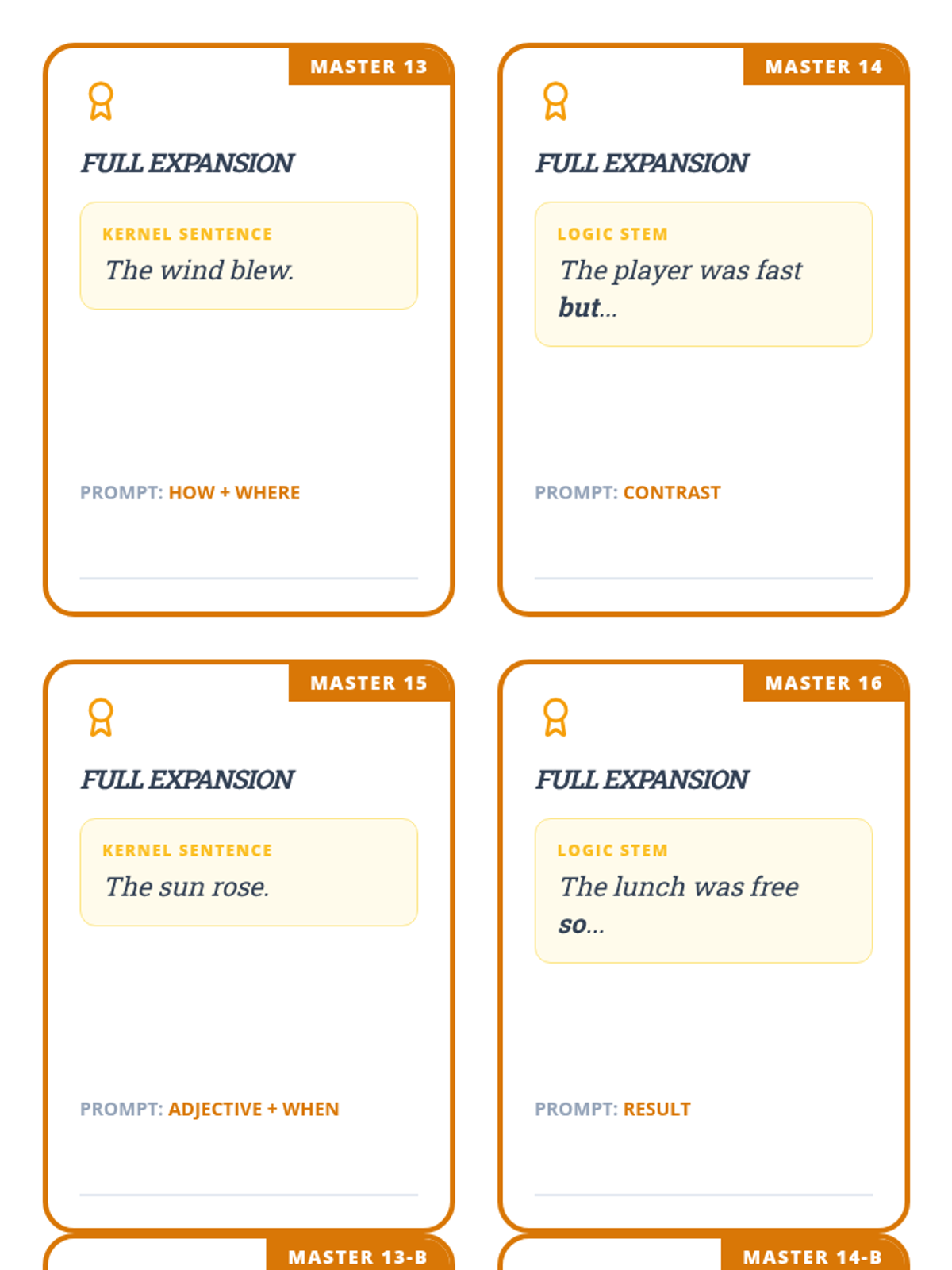
The final review lesson where students apply all previous strategies (adjectives, situational details, and logical conjunctions) to create complex and polished sentences.
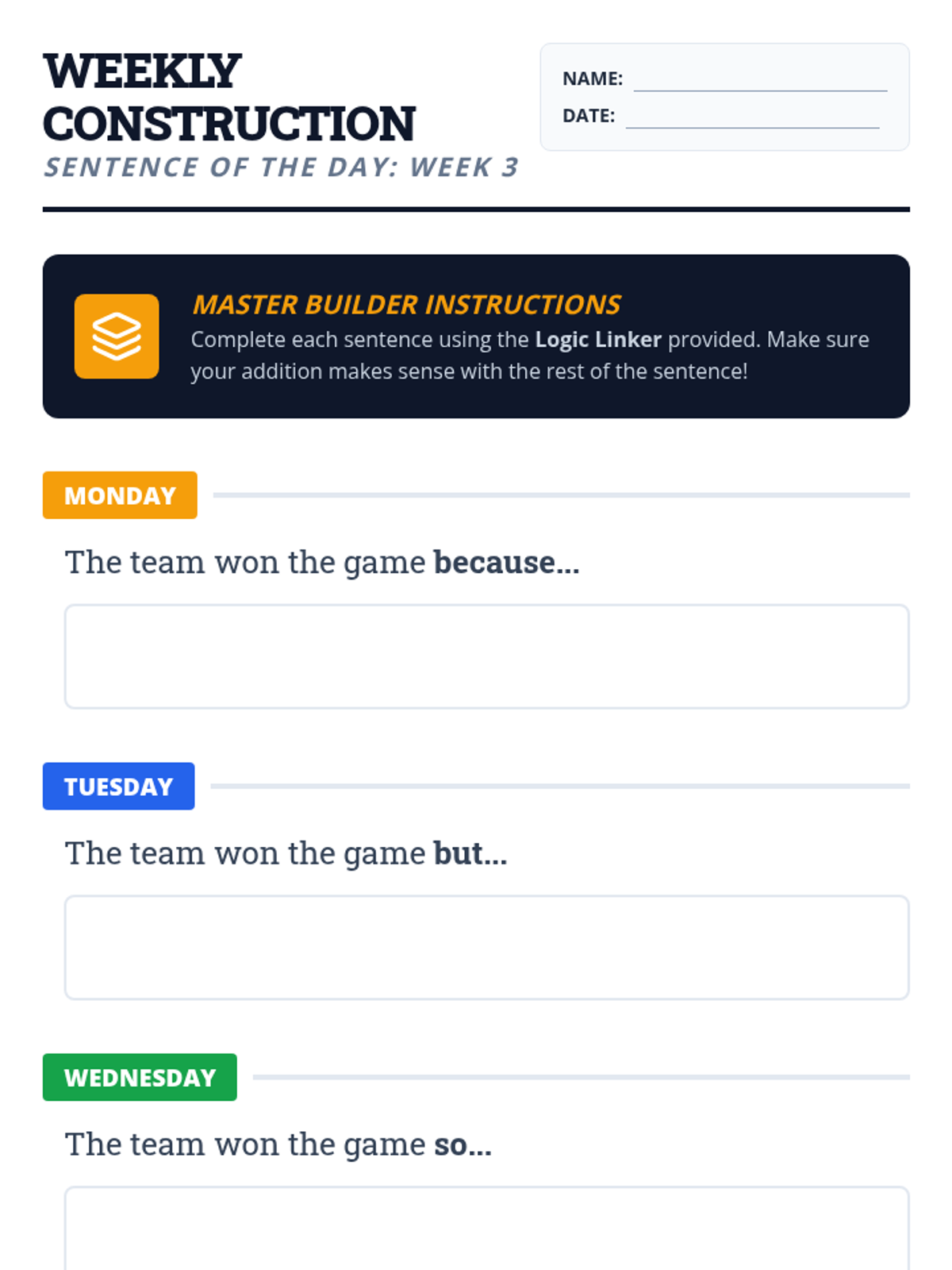
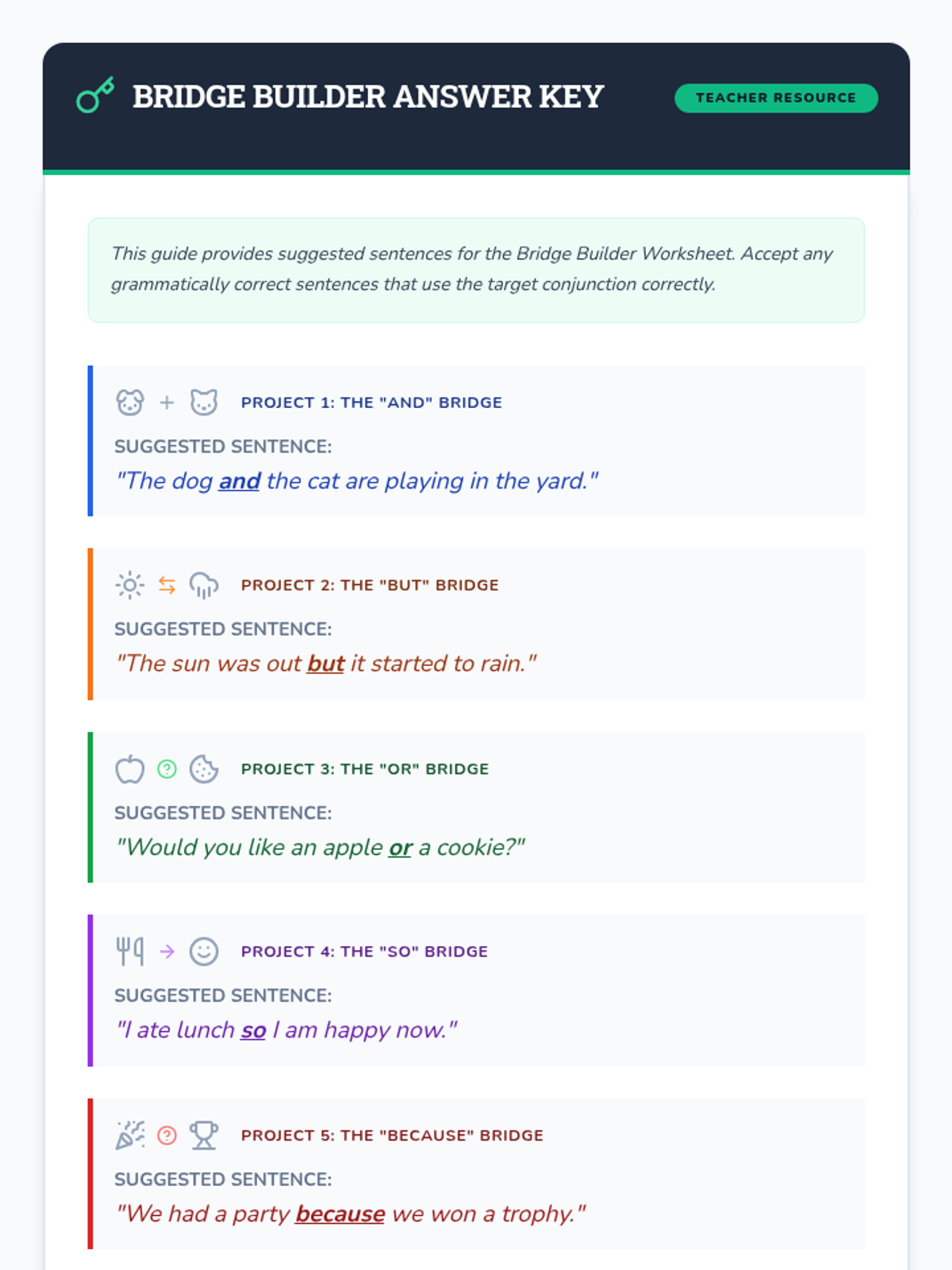
The final lesson focuses on using 'Because, But, So' to expand sentences logically and demonstrate deeper reasoning and detail.
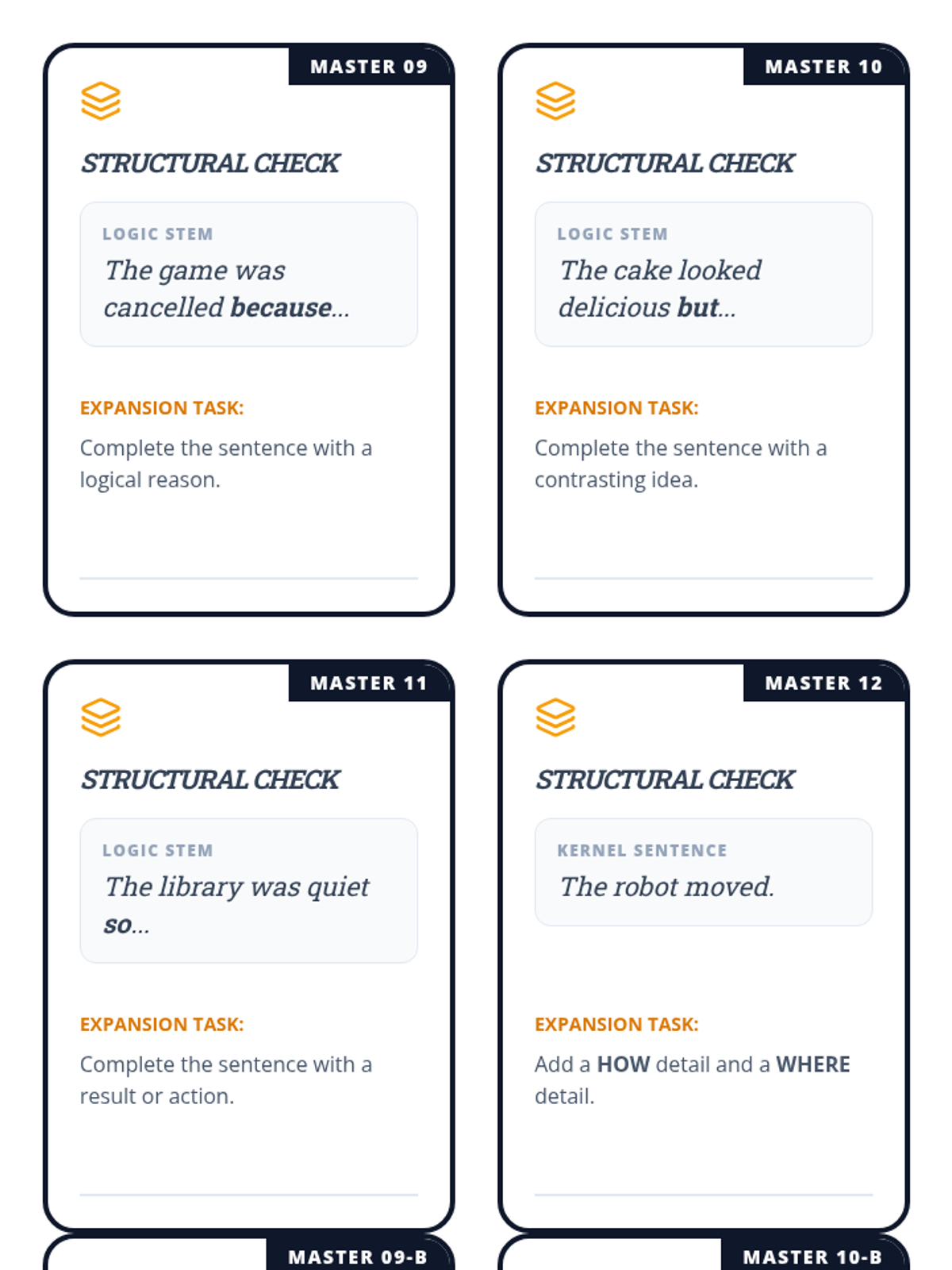
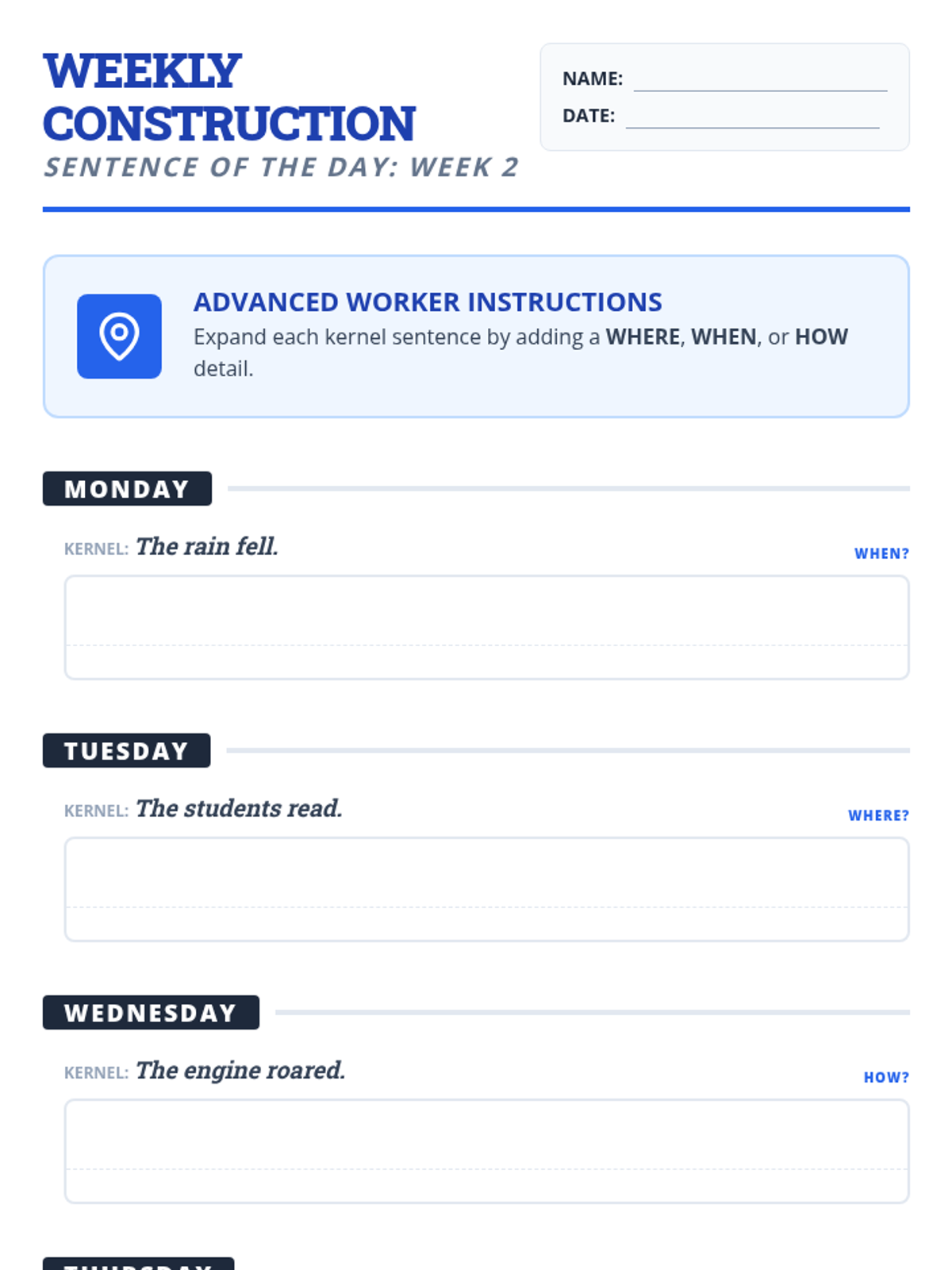
In this lesson, students learn to add situational details to their sentences using 'Where', 'When', and 'How' question words.
This lesson introduces the concept of a complete sentence versus a fragment and begins basic sentence expansion using 'Who' and 'What' details.
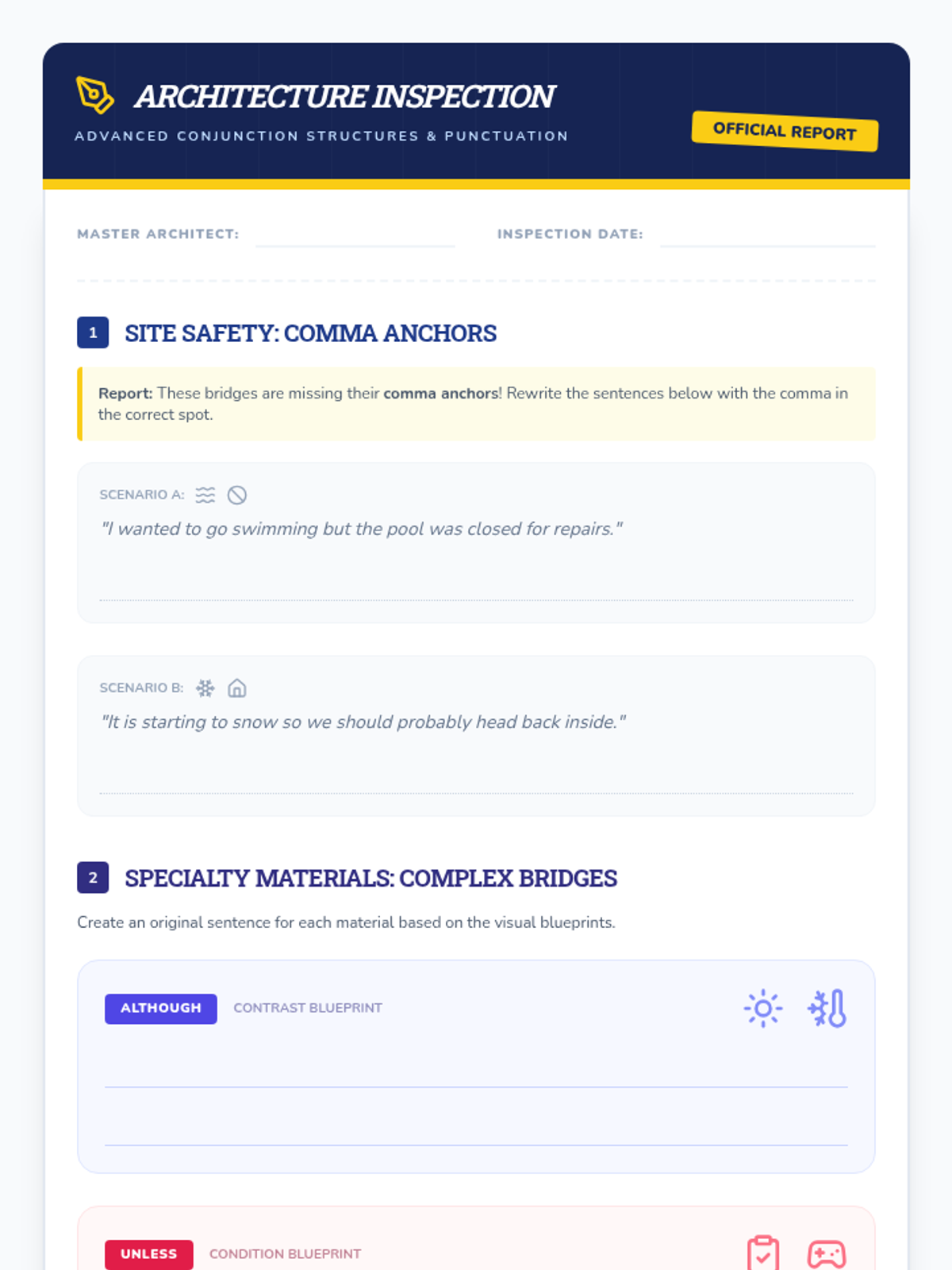
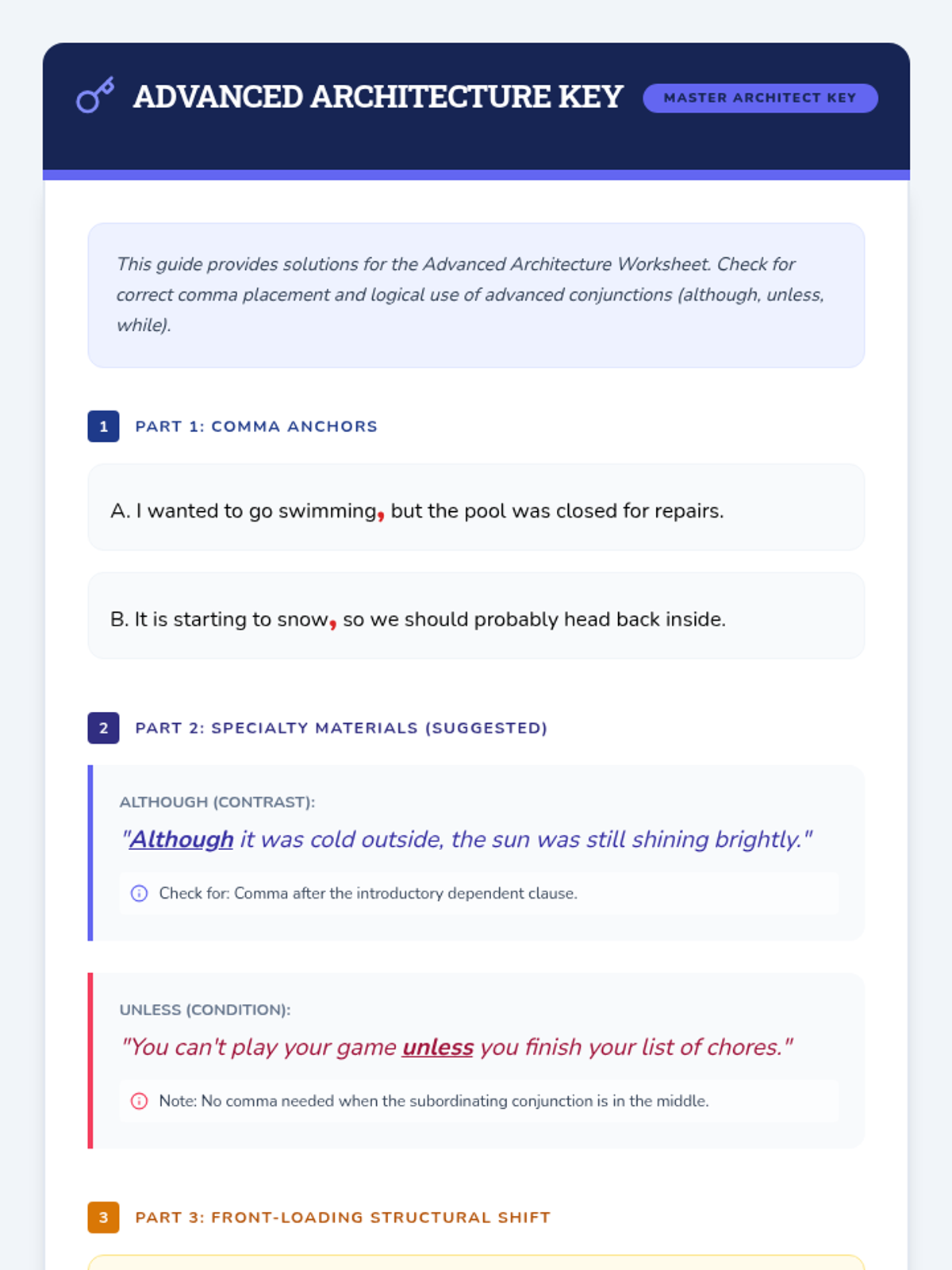
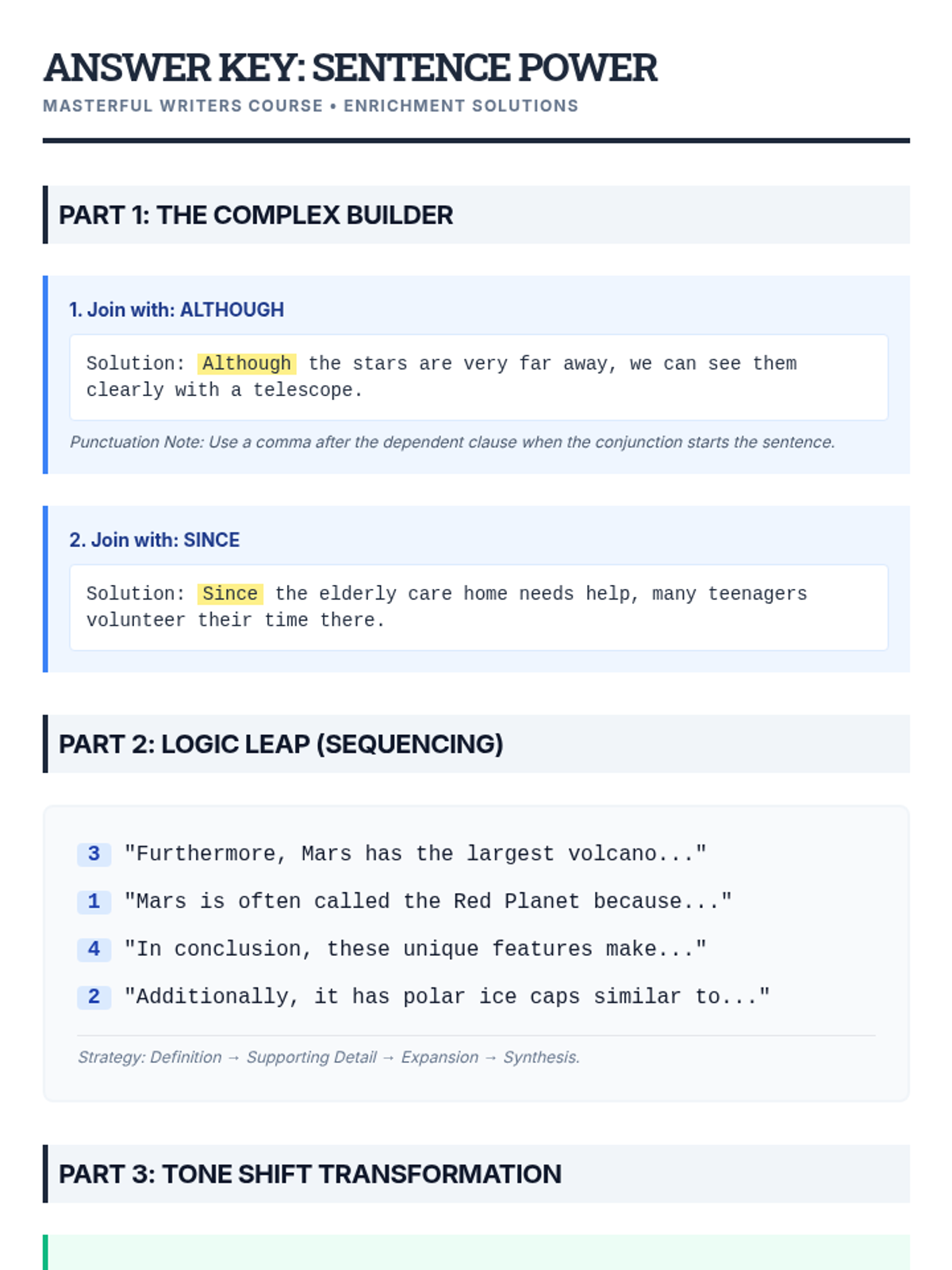
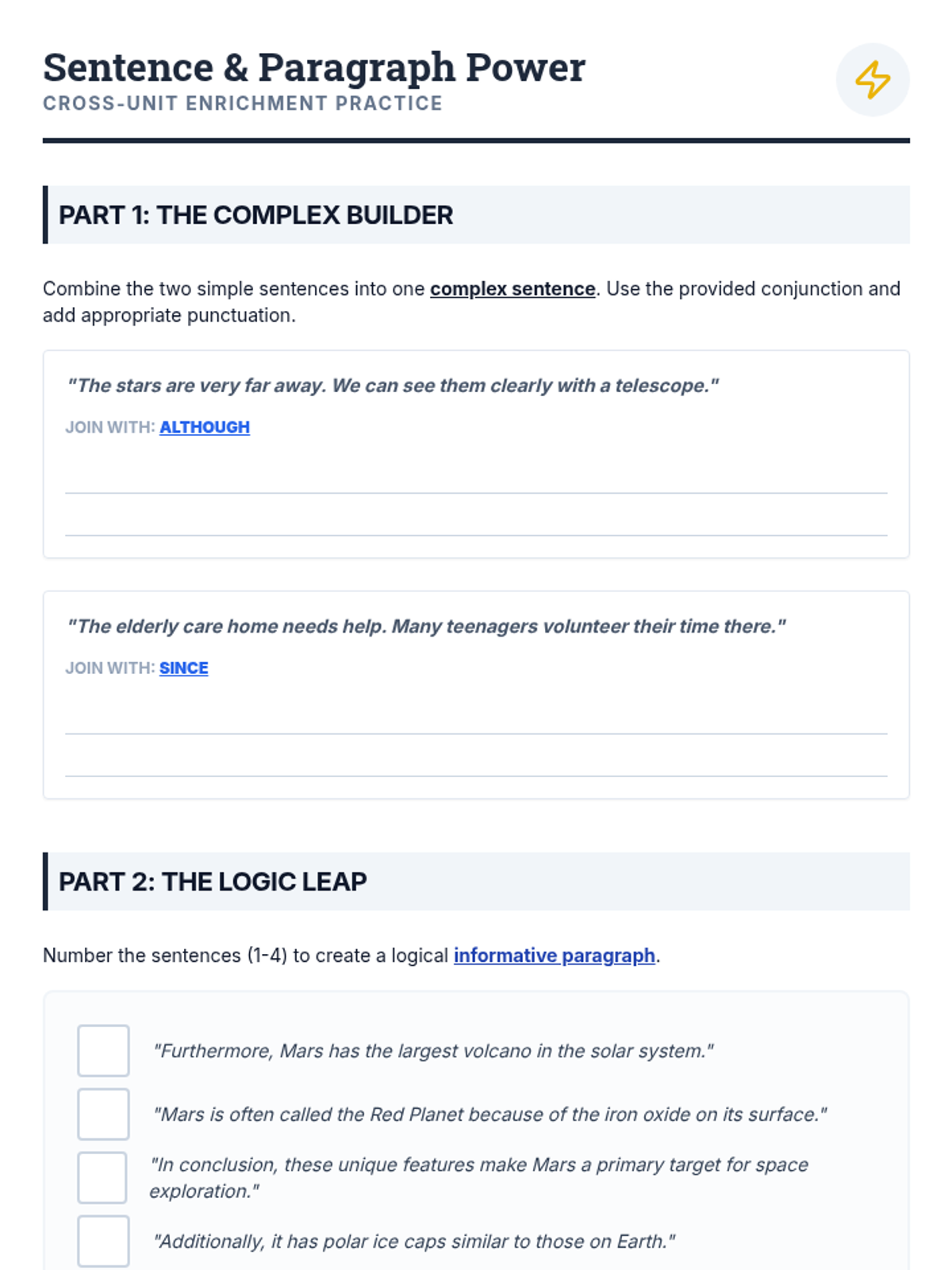
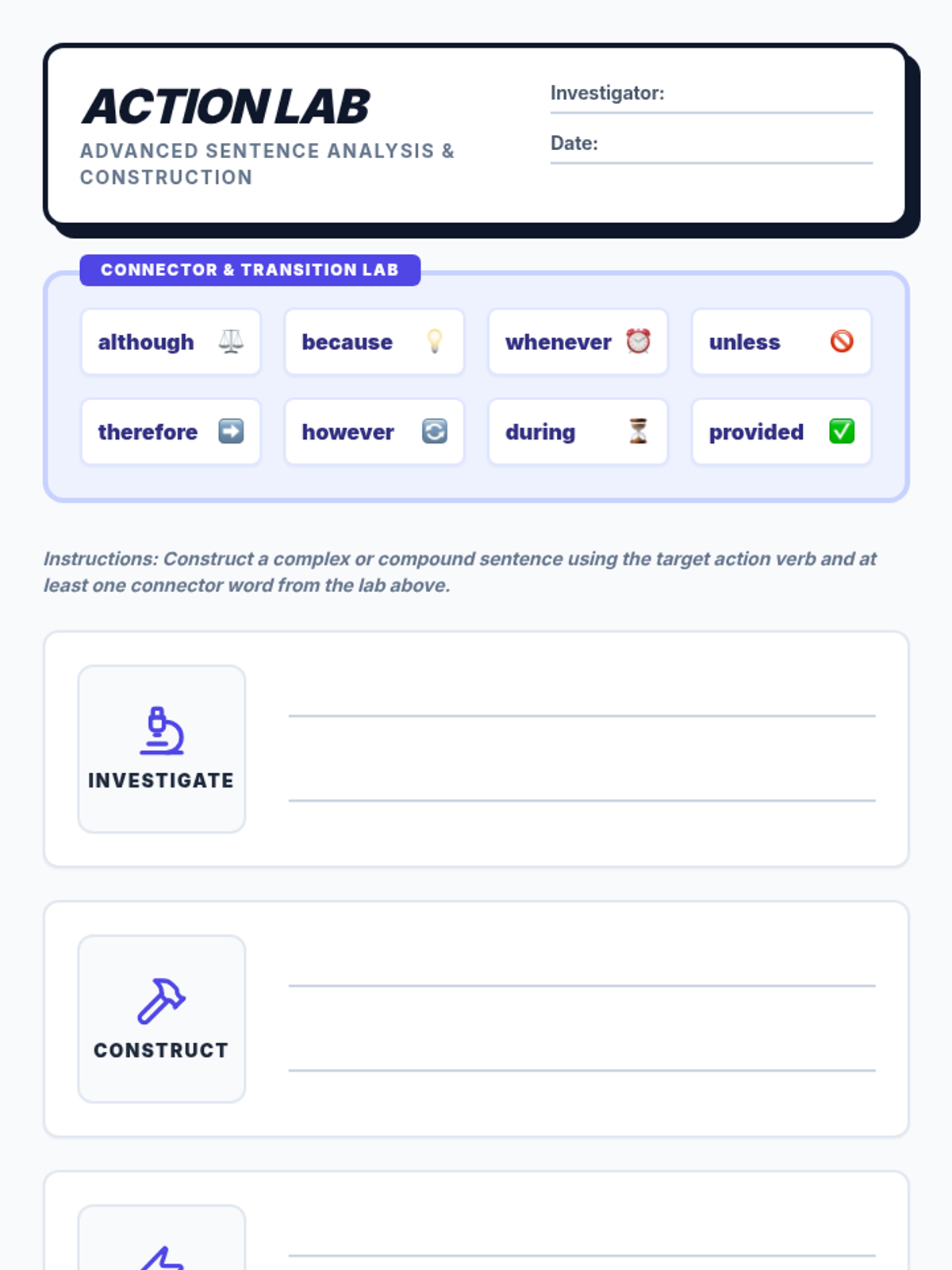
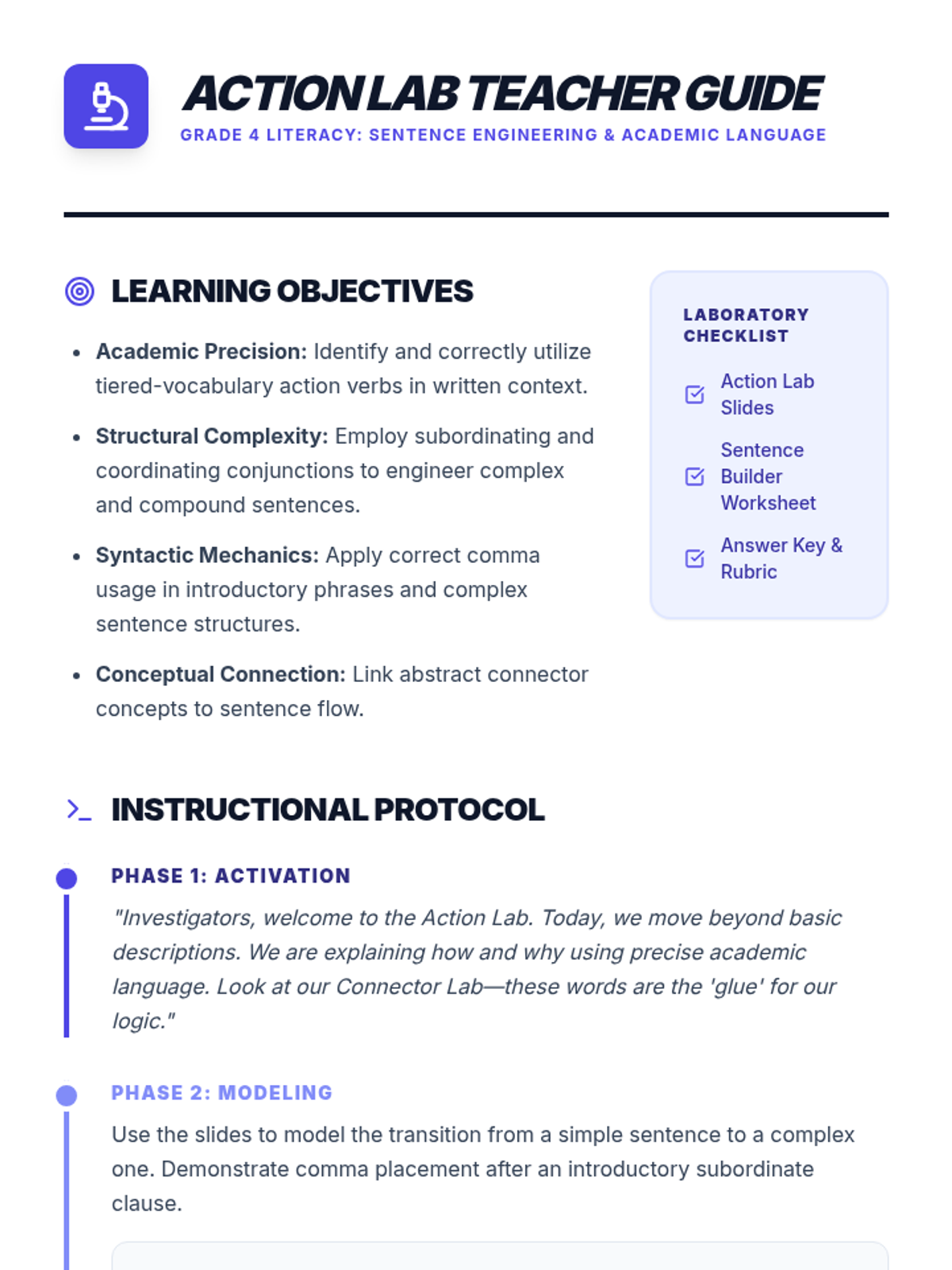
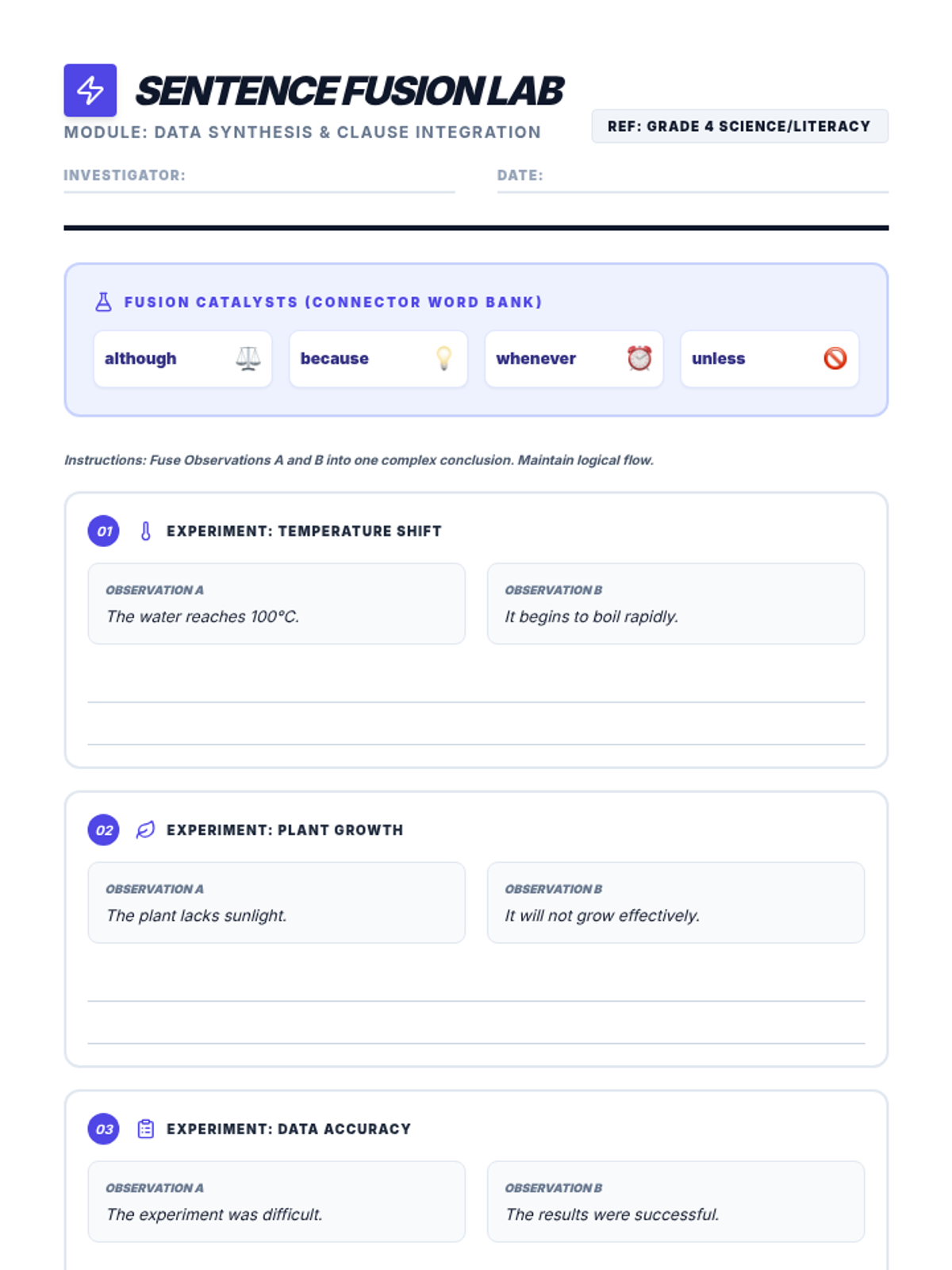
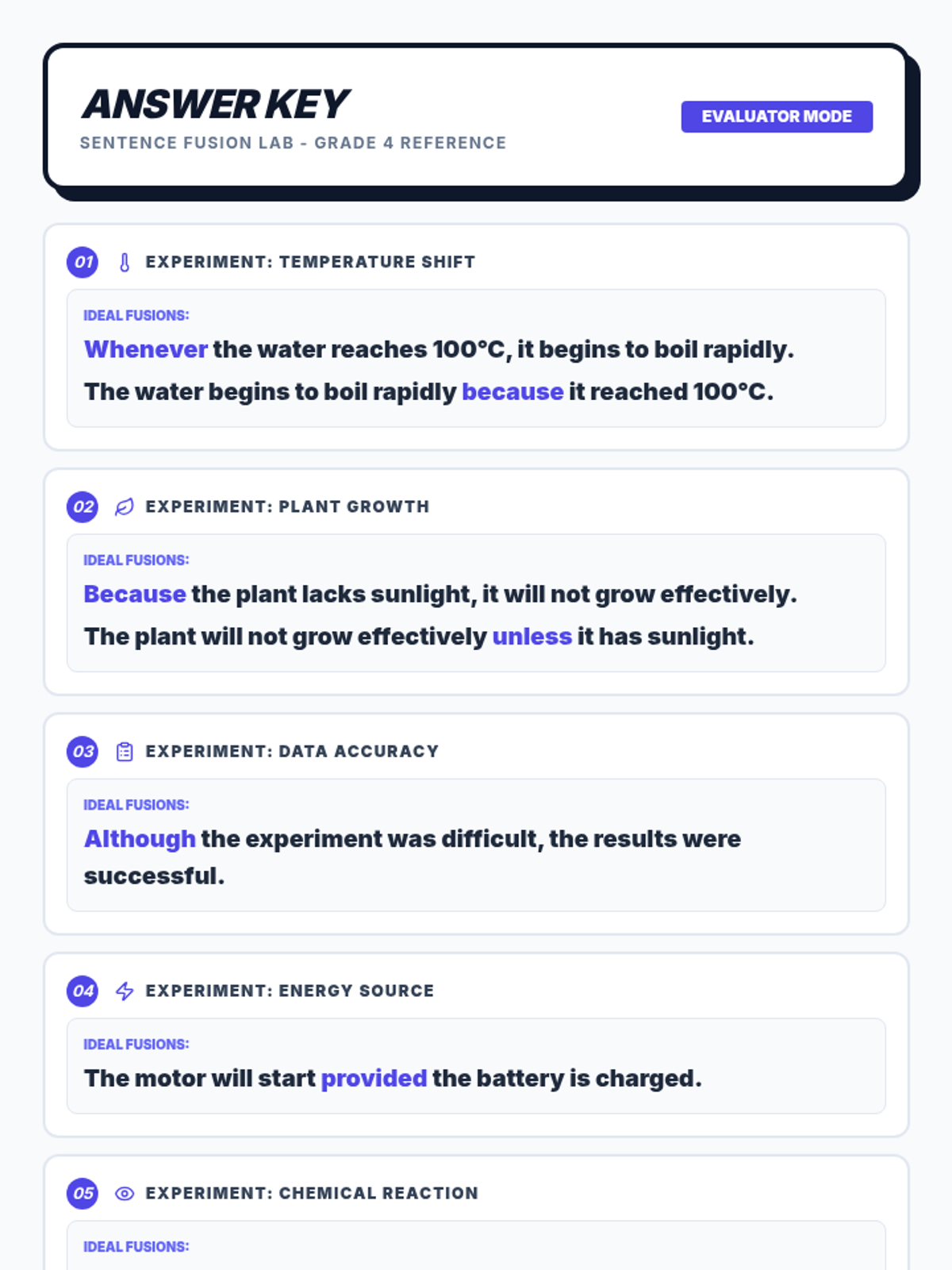
A follow-up lesson focusing on complex sentence structures, including comma placement in compound sentences and starting sentences with subordinating conjunctions. Introduces advanced conjunctions like 'although', 'while', and 'unless'.
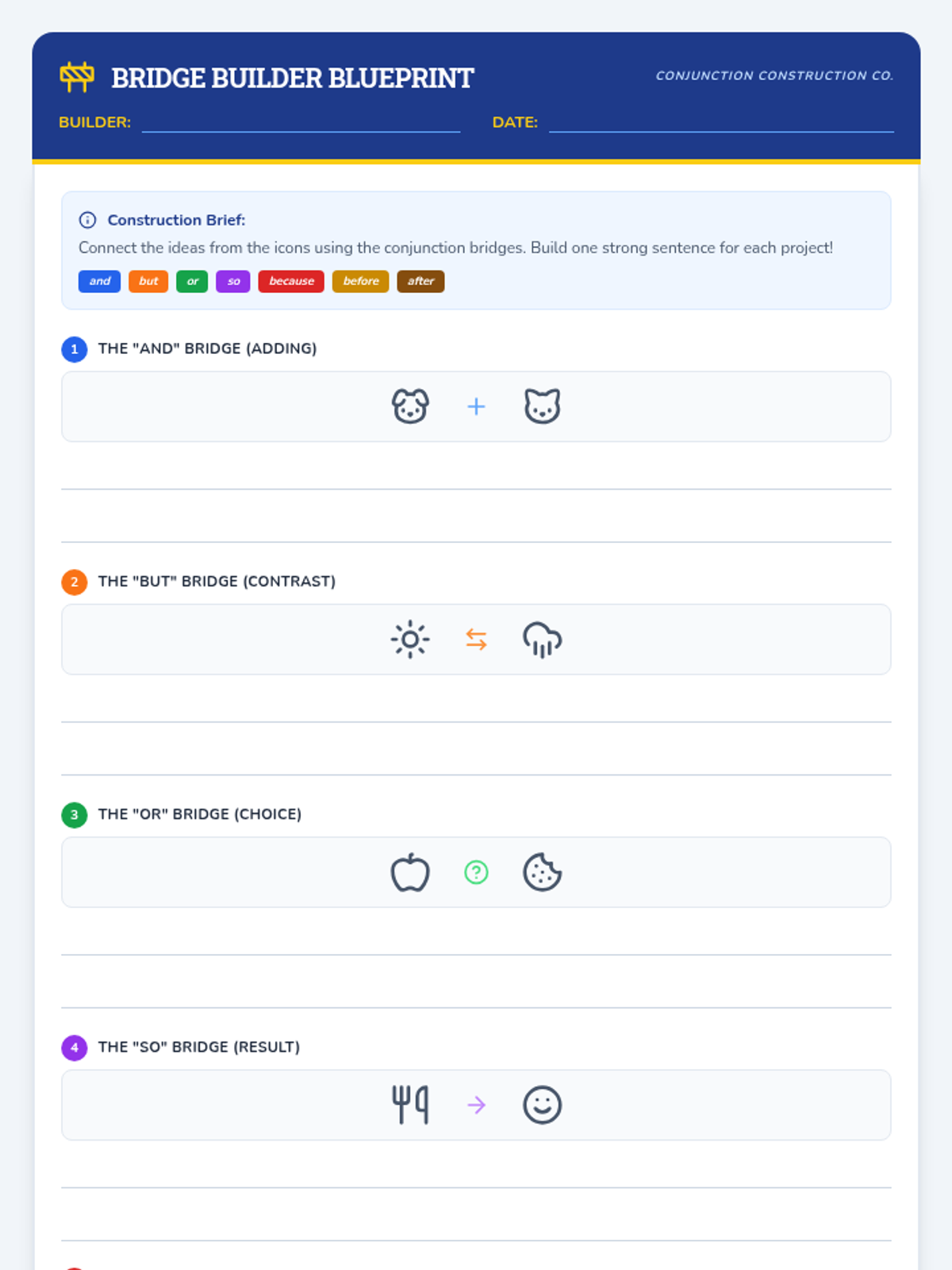
A lesson on using coordinating and subordinating conjunctions to build complex sentences. Students learn to use conjunctions as 'bridges' to connect their ideas together clearly.
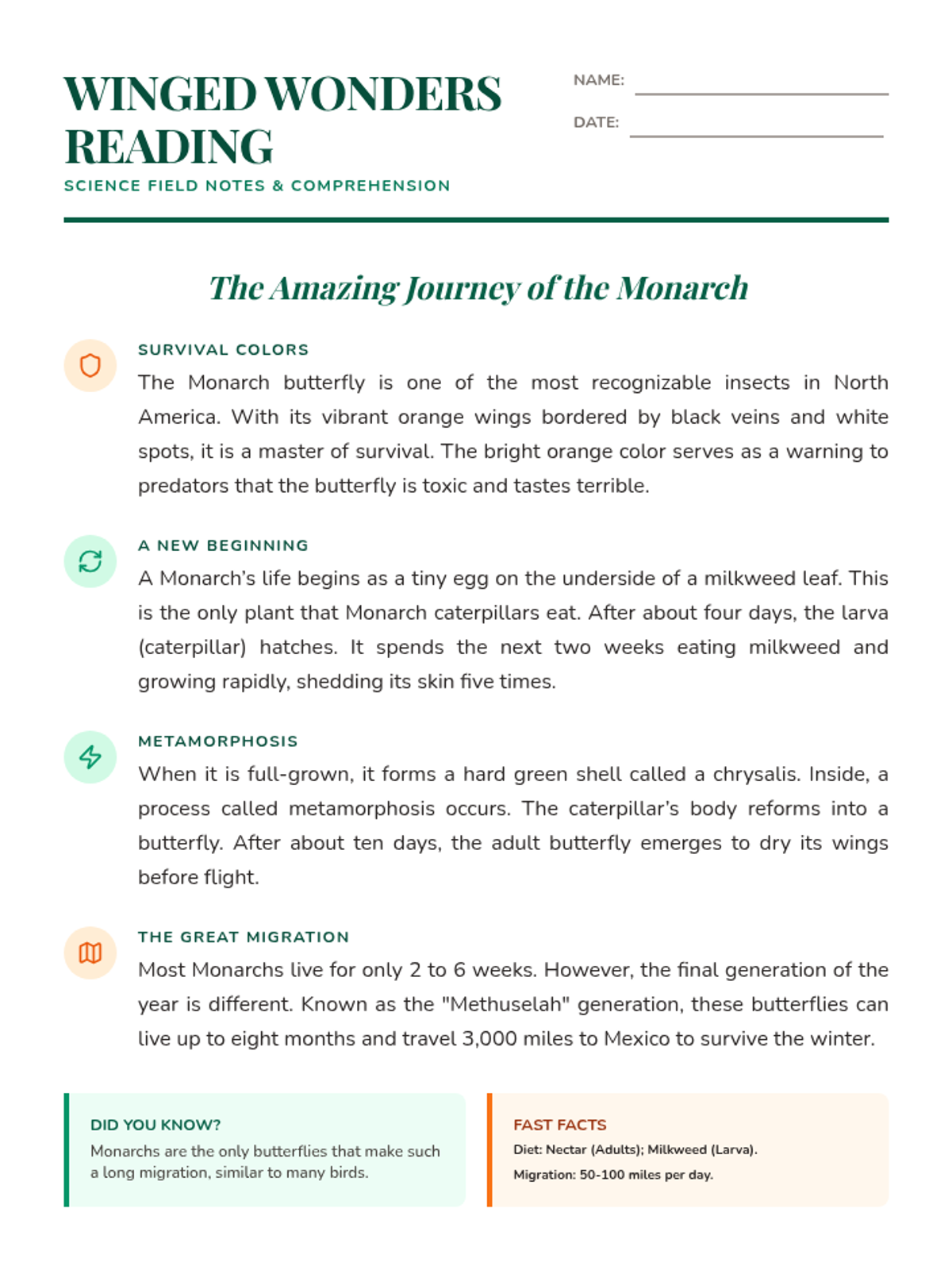
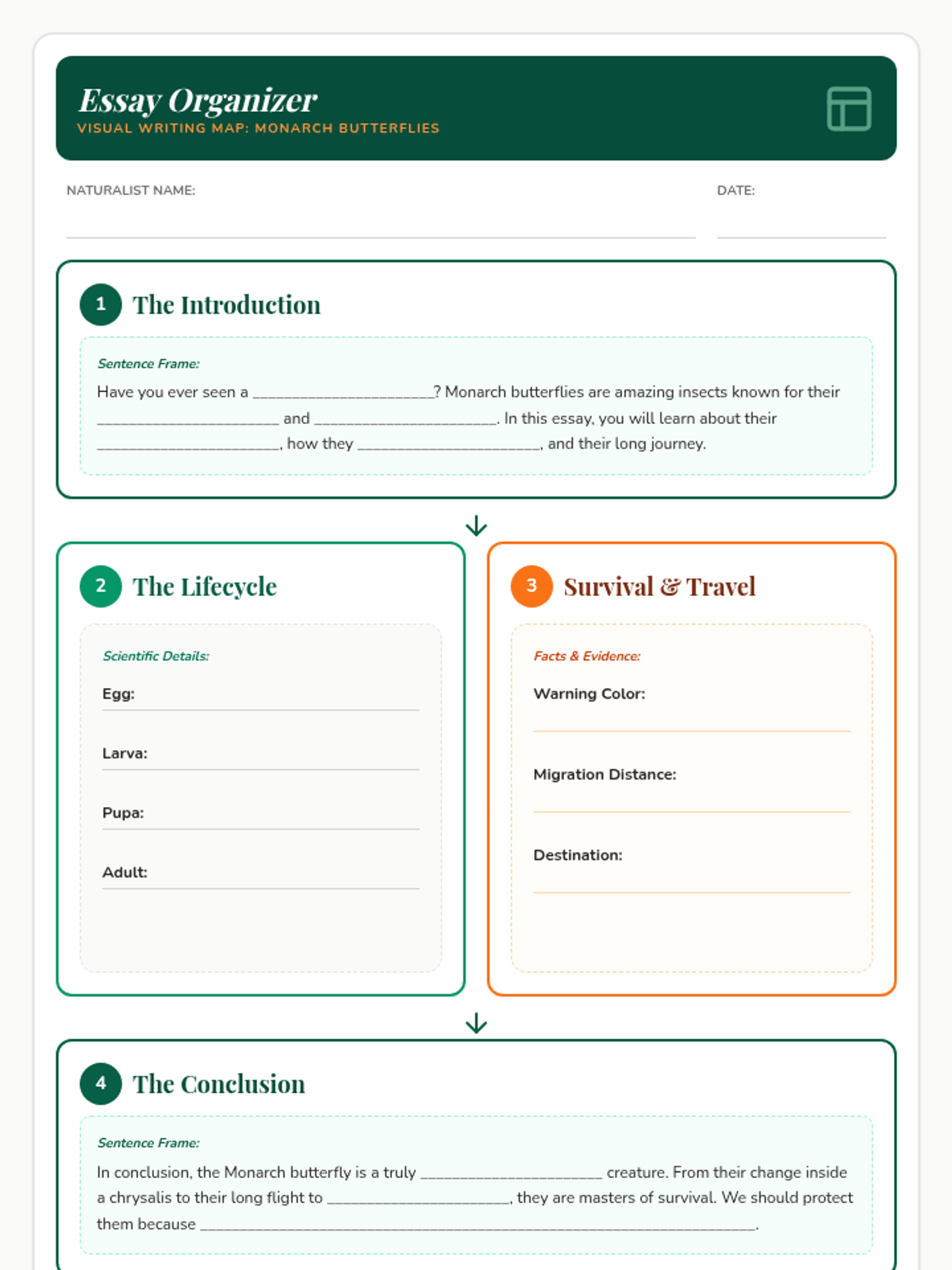
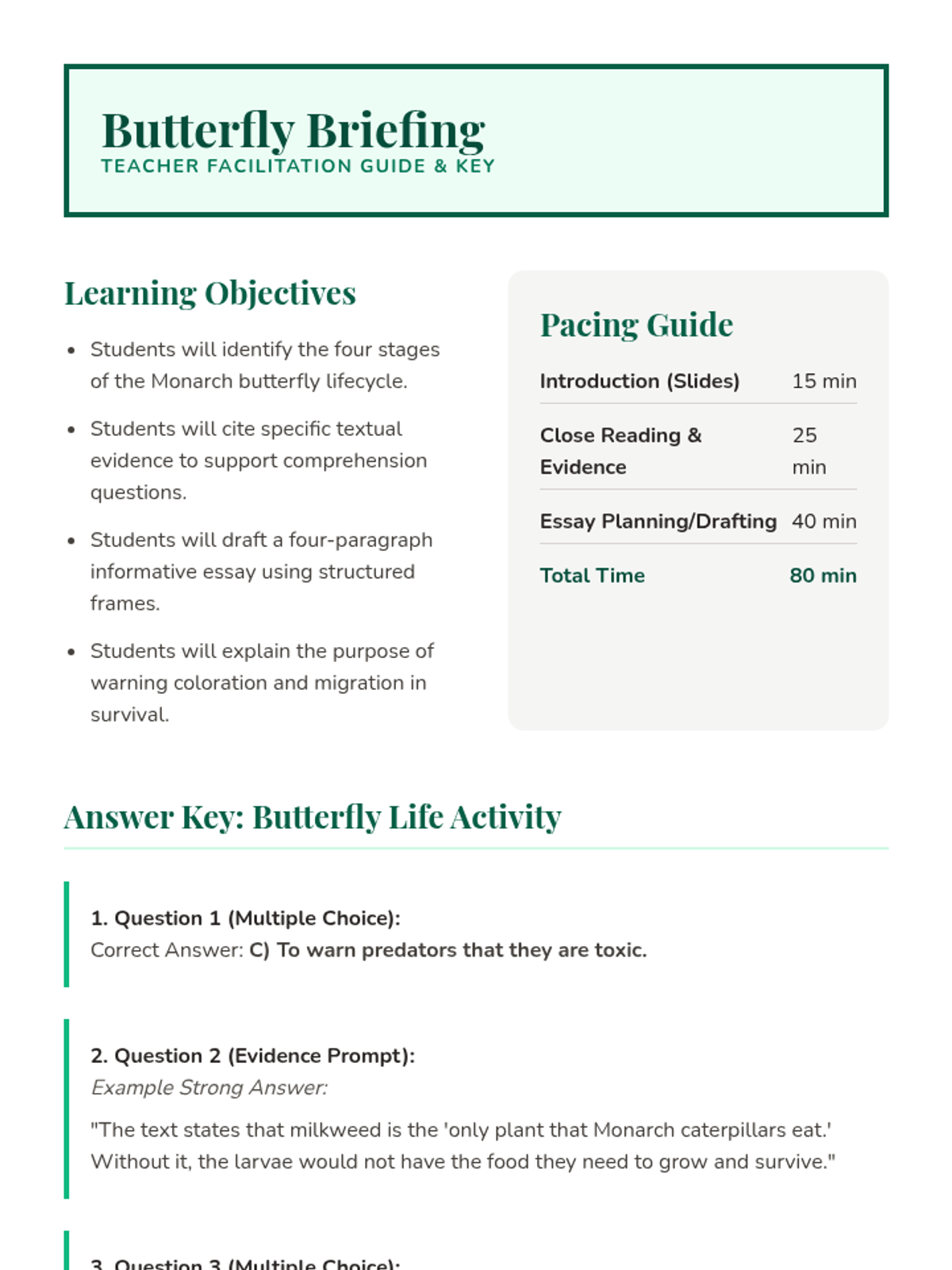
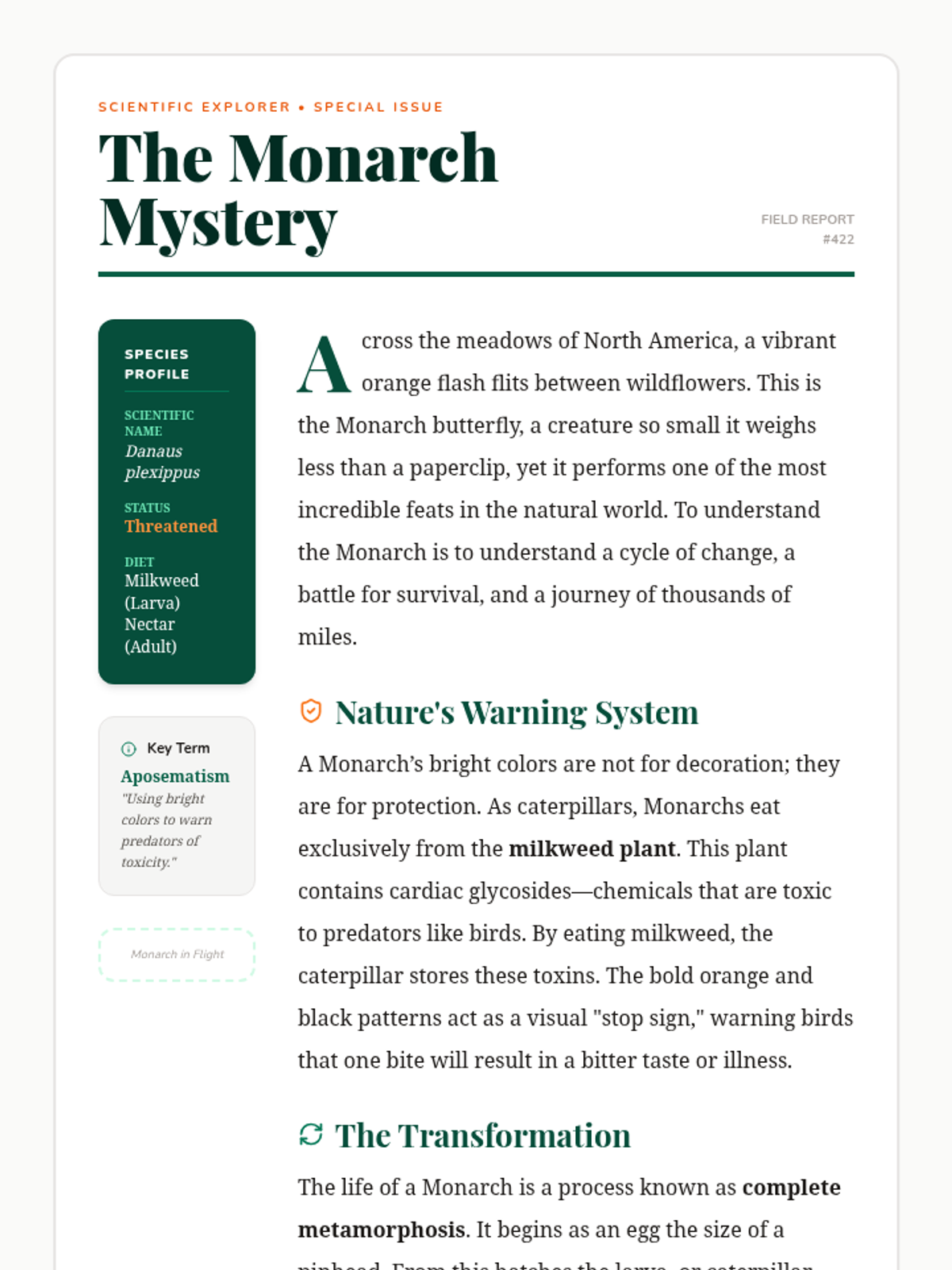
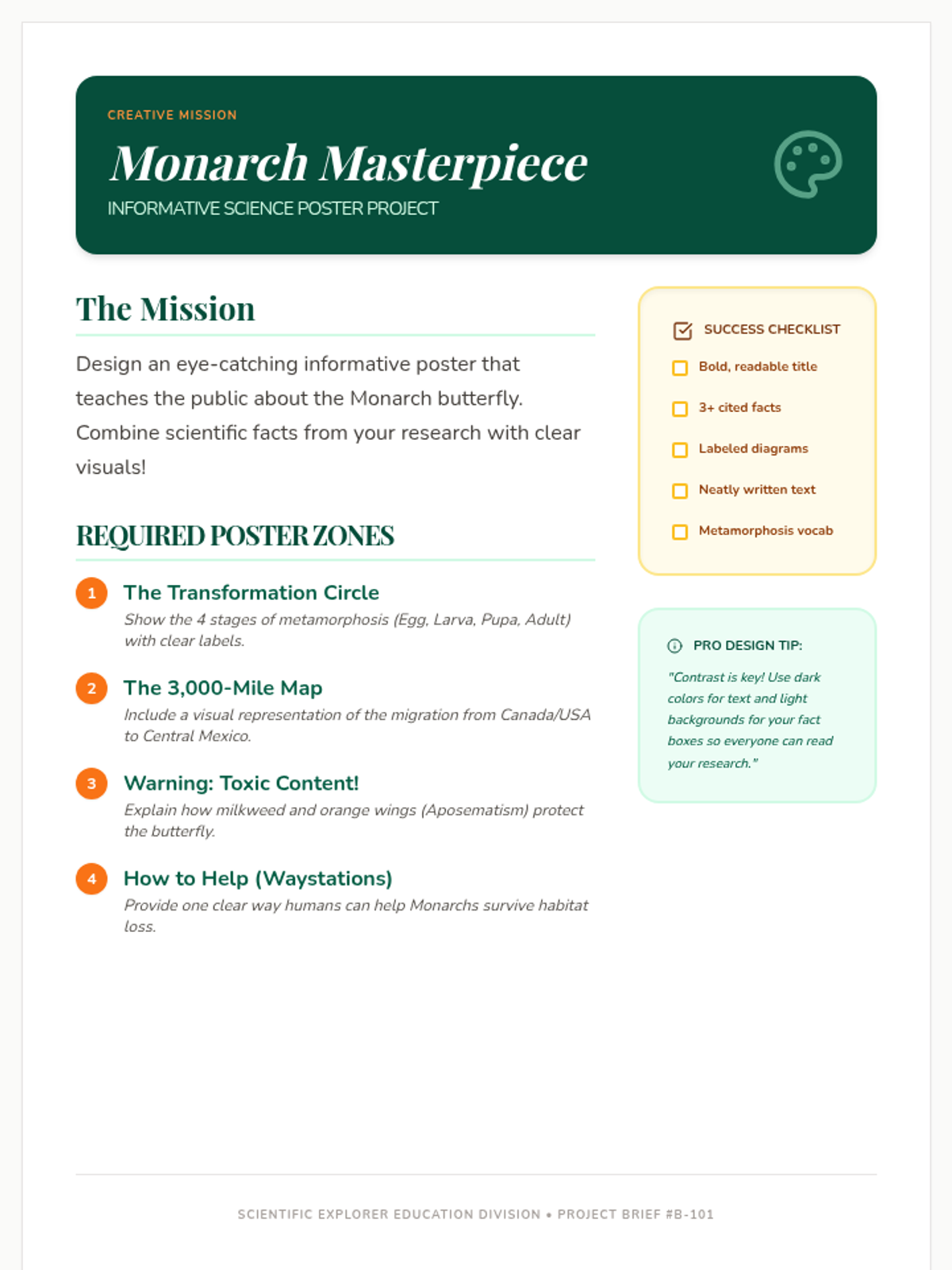
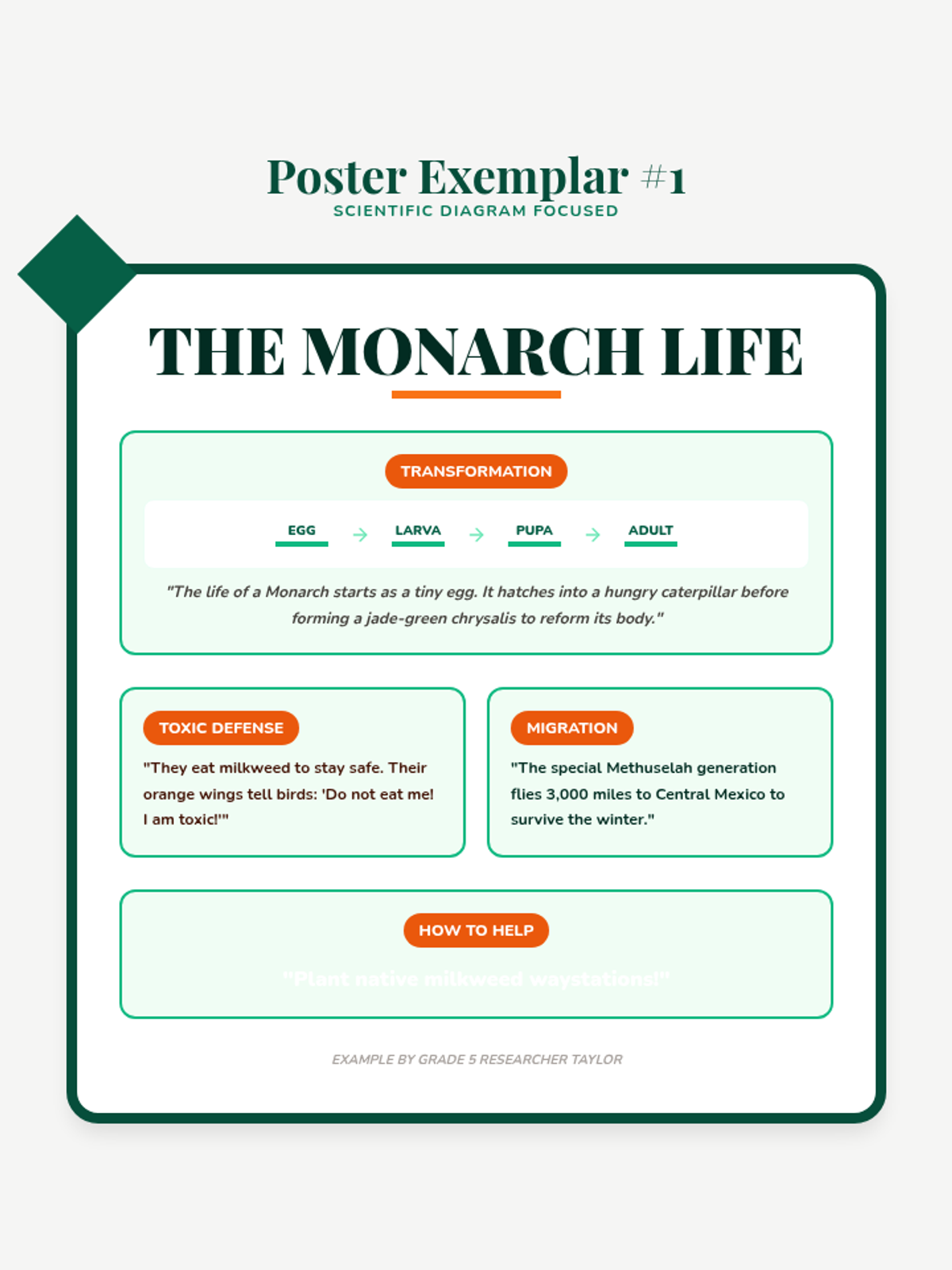
A comprehensive lesson on butterfly biology and conservation, focusing on citing textual evidence and structured informative writing for 4th-5th grade students.
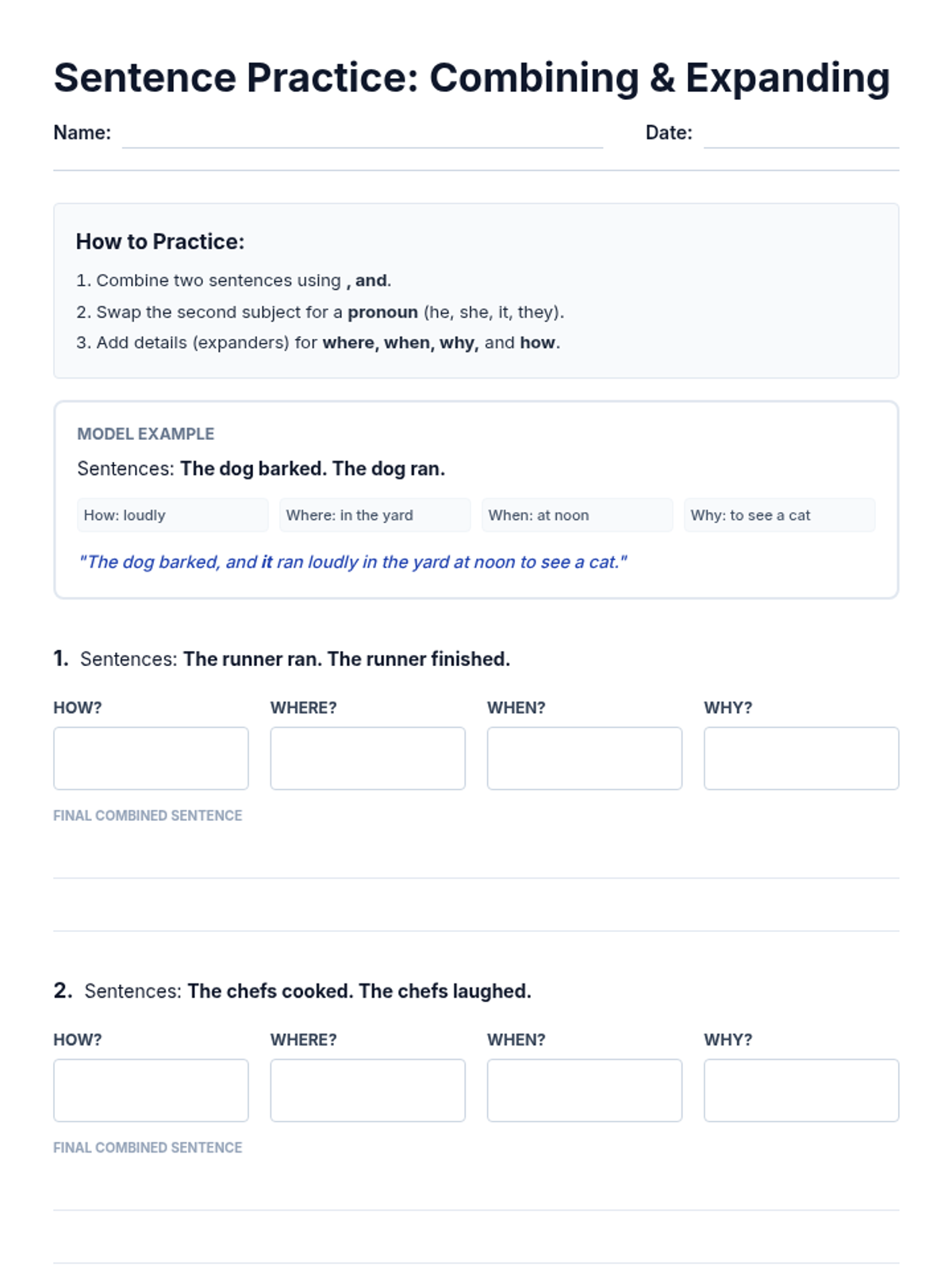
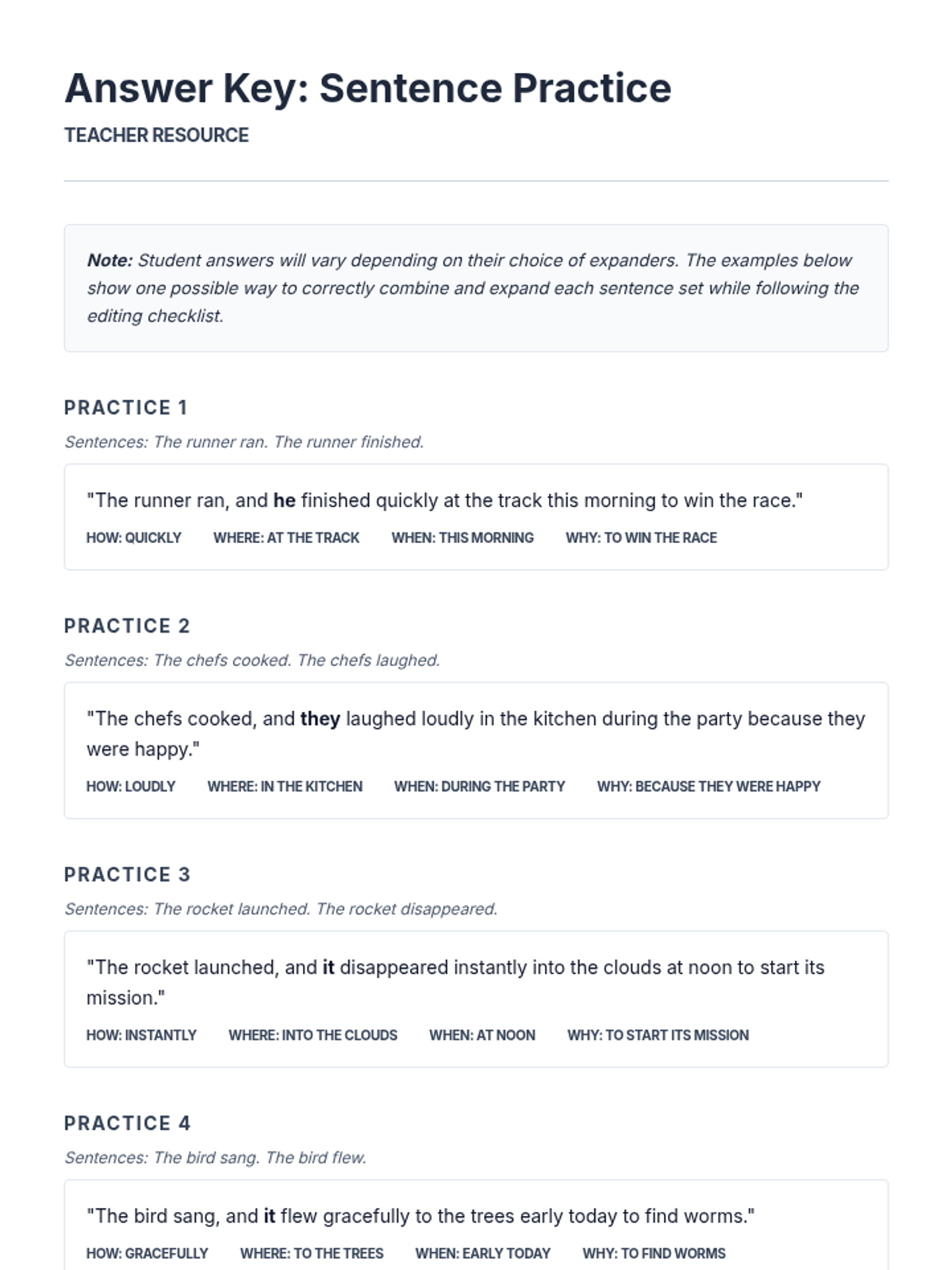
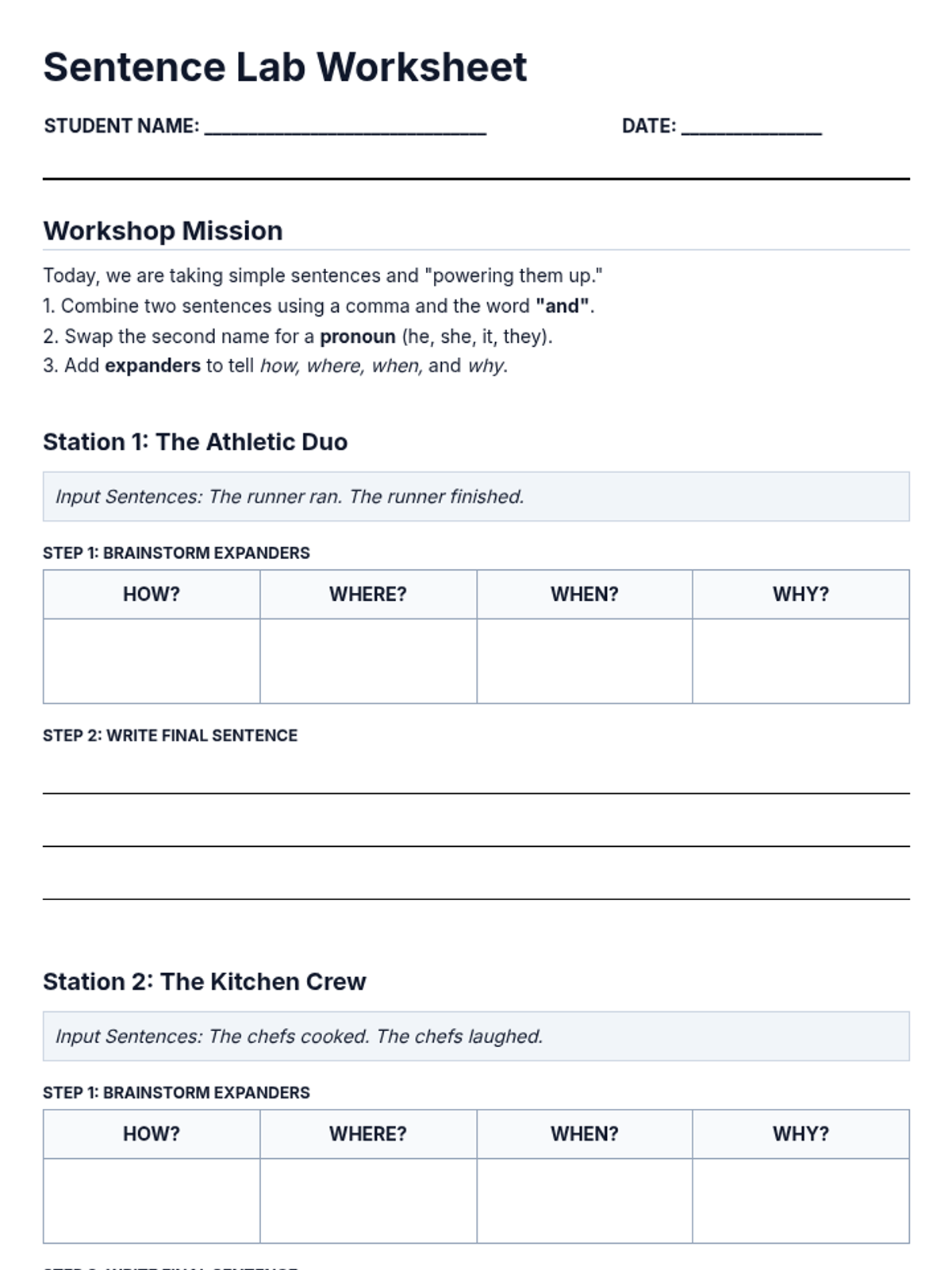
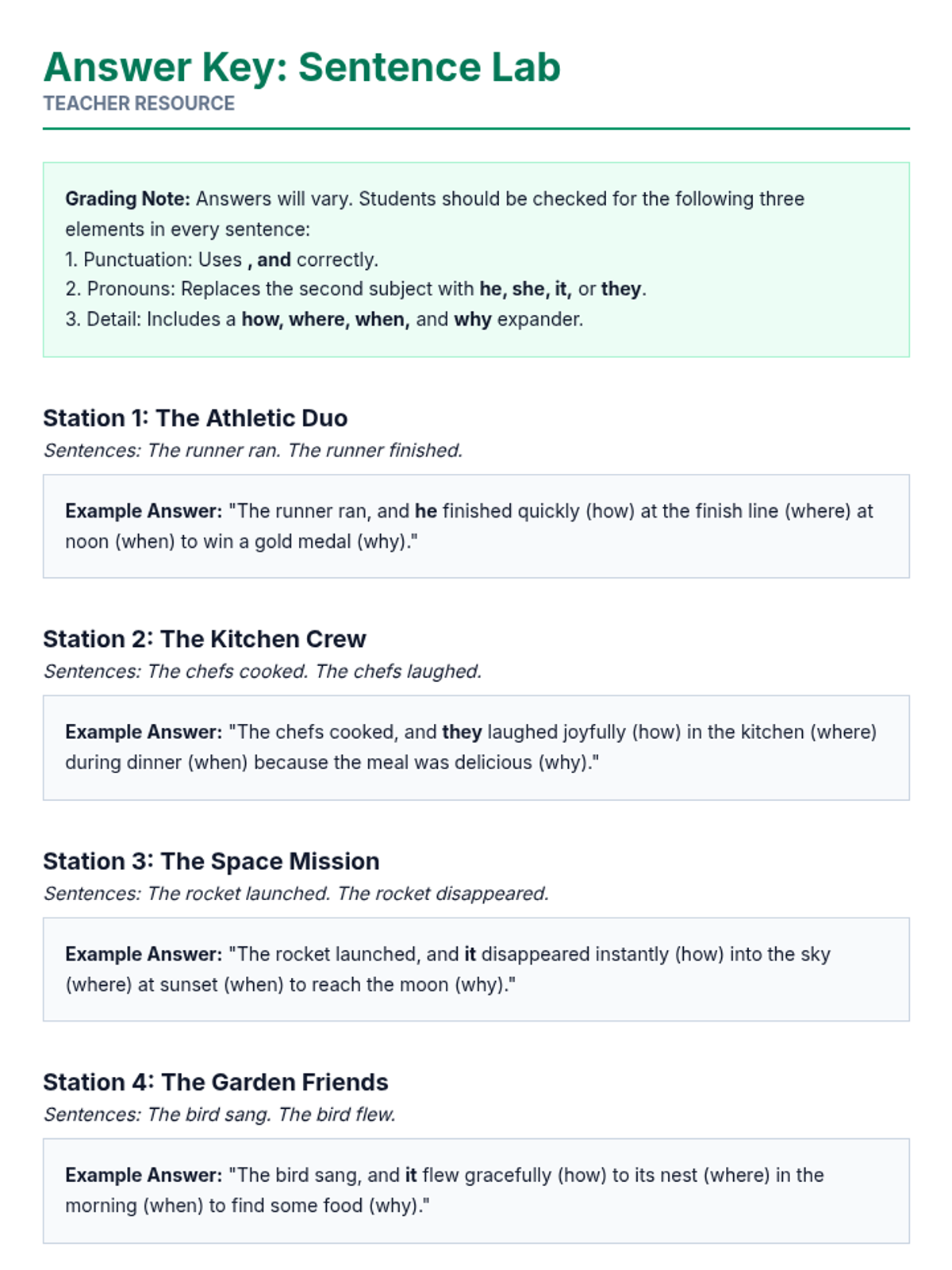
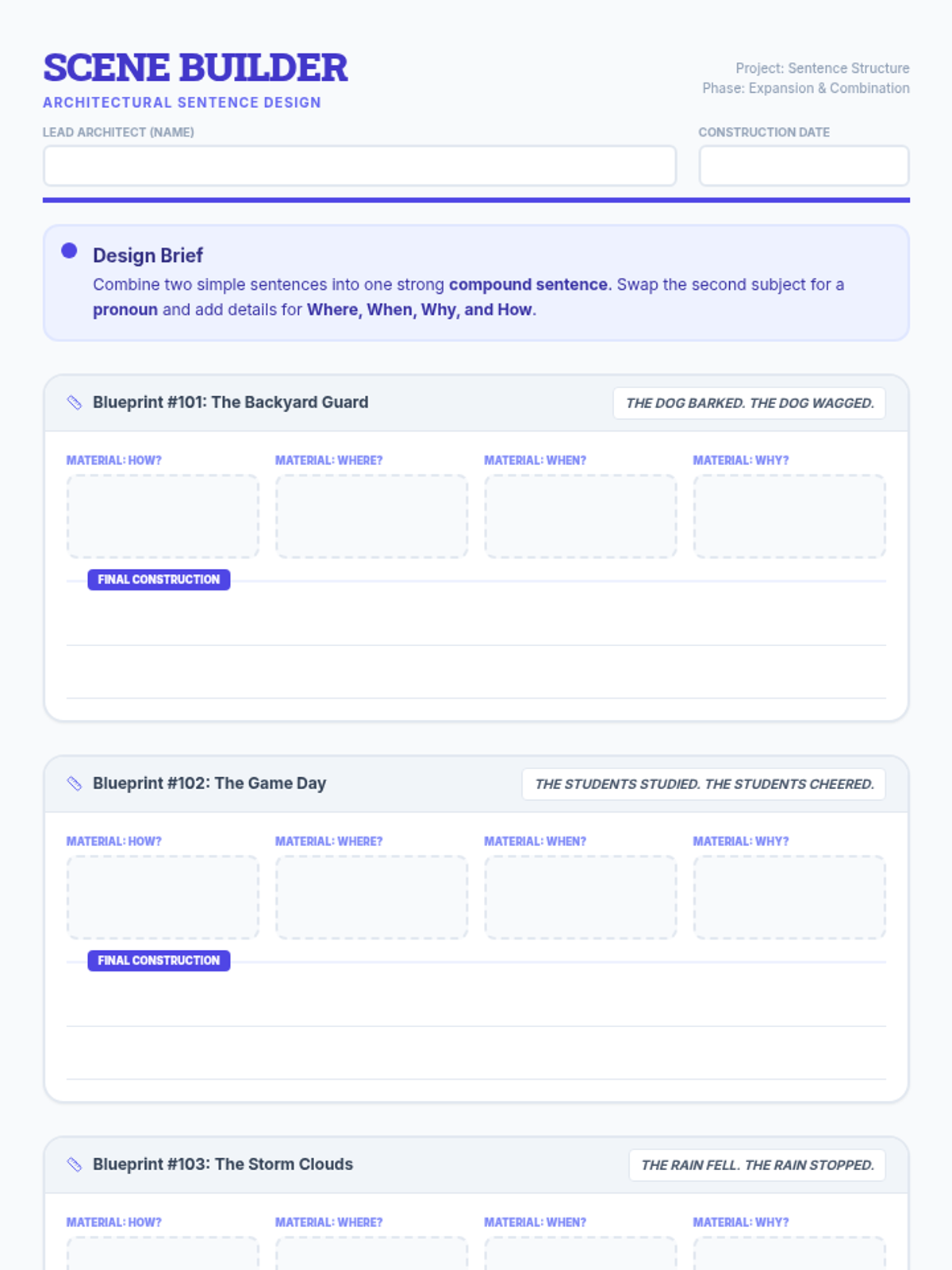
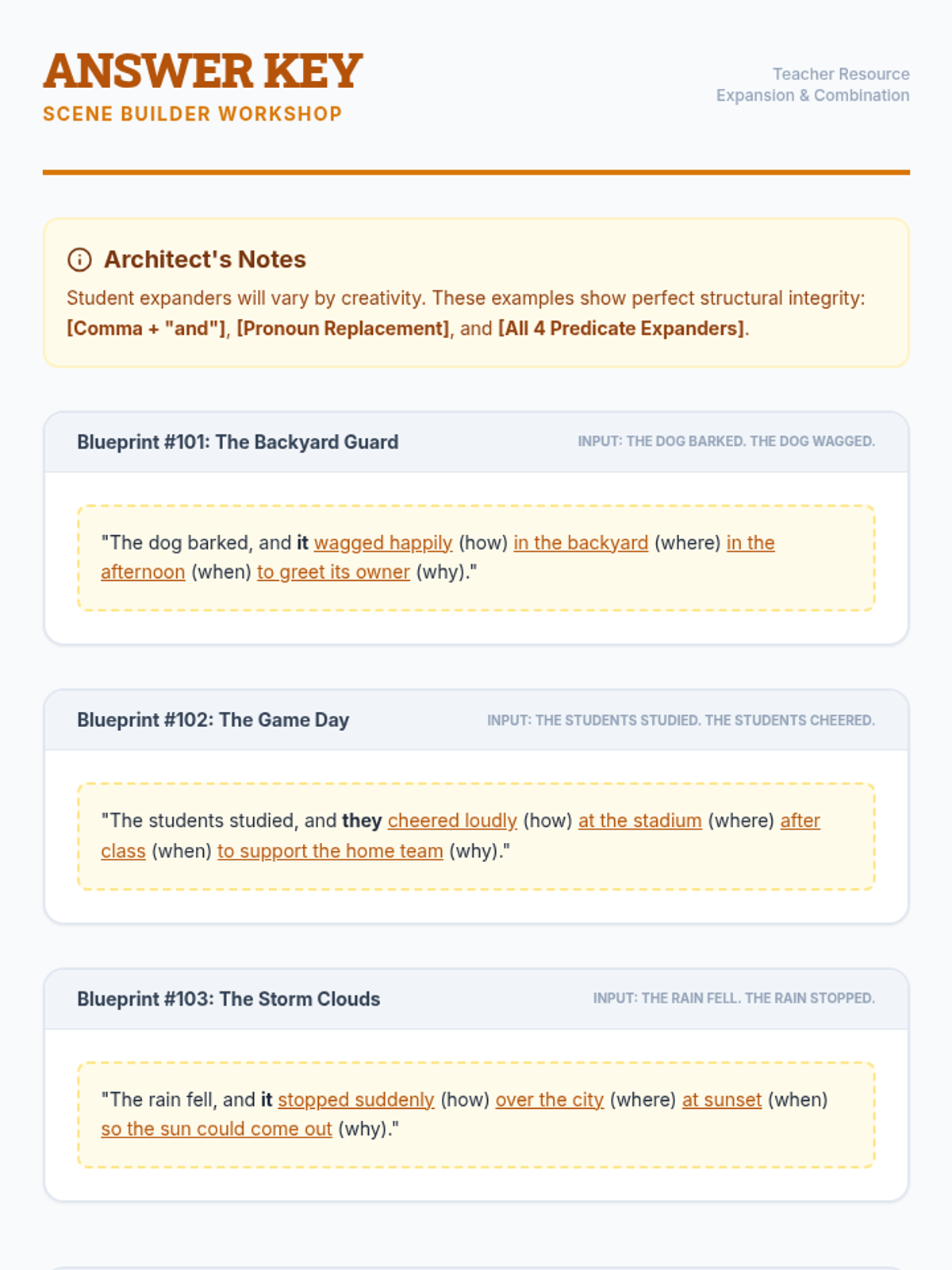
Students practice combining simple sentences with the same subjects into compound sentences using pronouns and adding descriptive predicate expanders (where, when, why, and how).
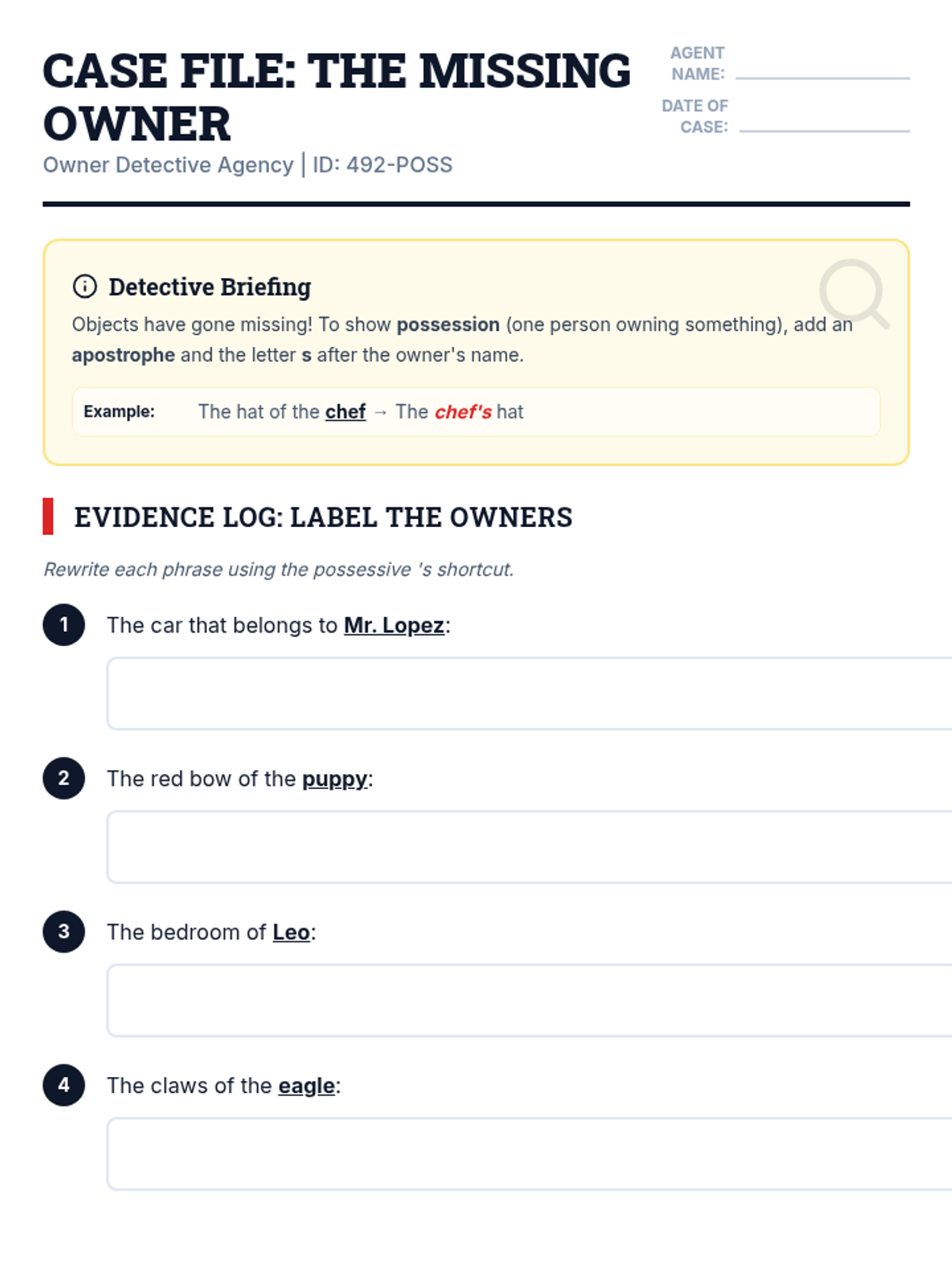
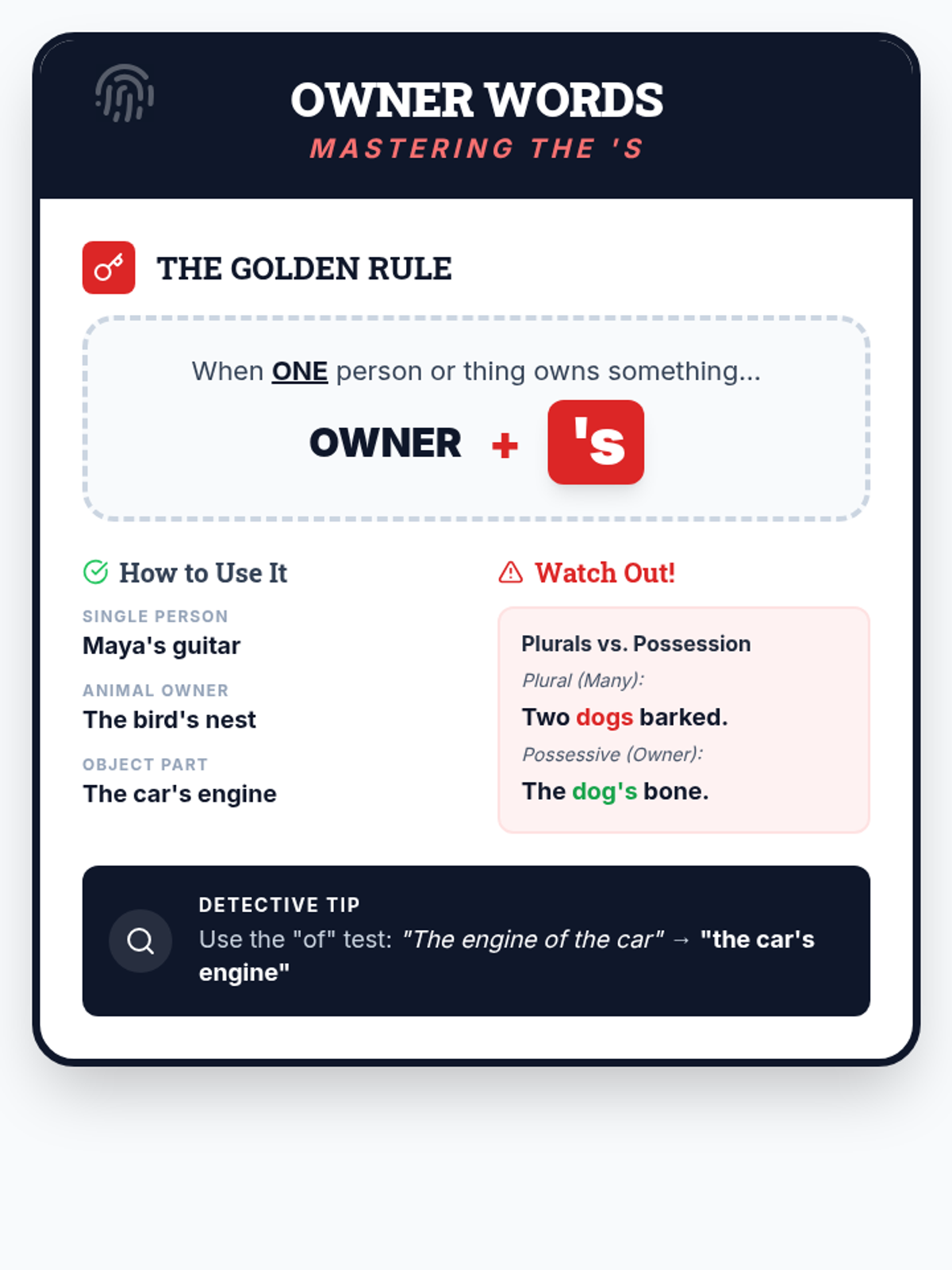
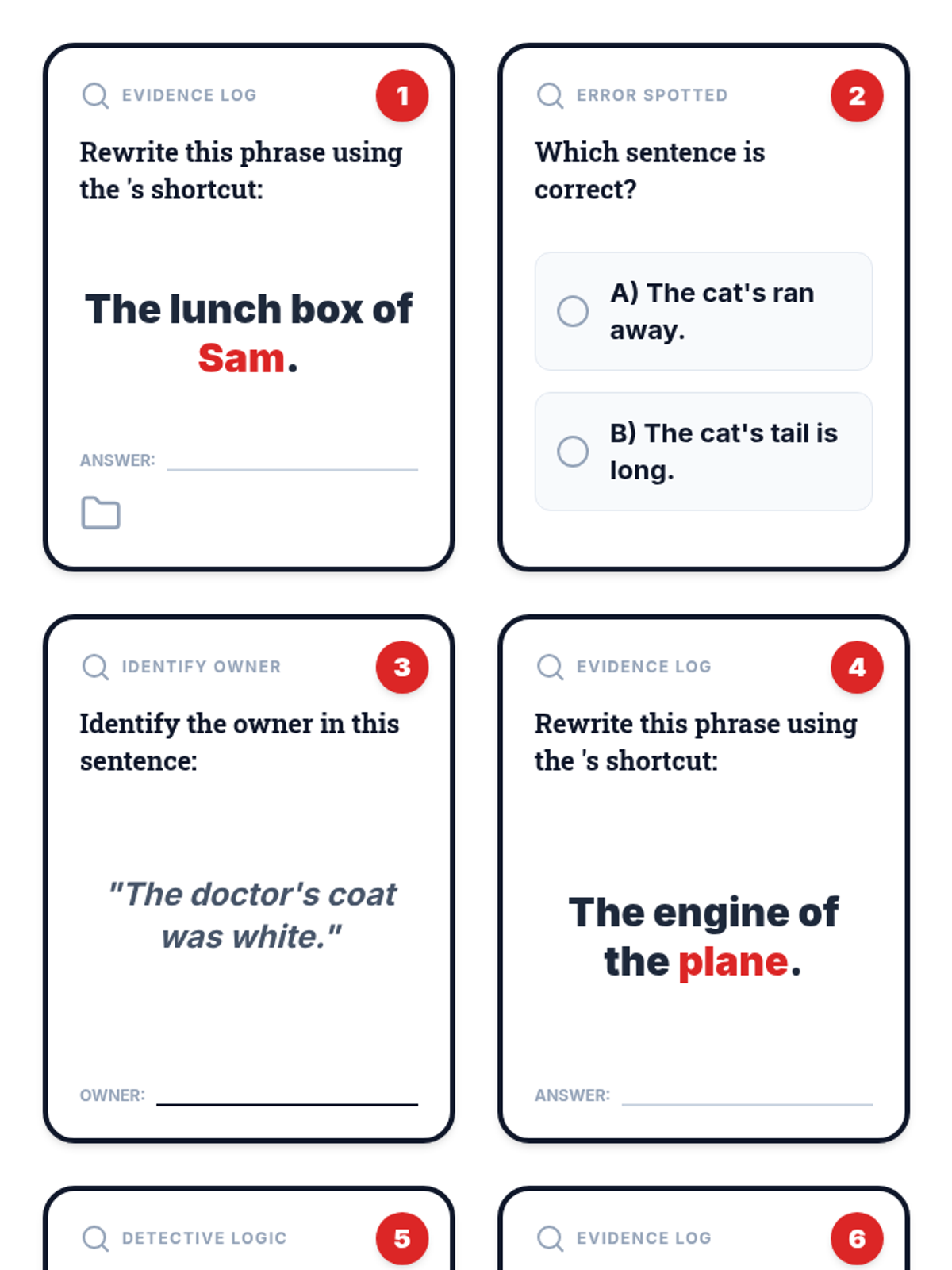
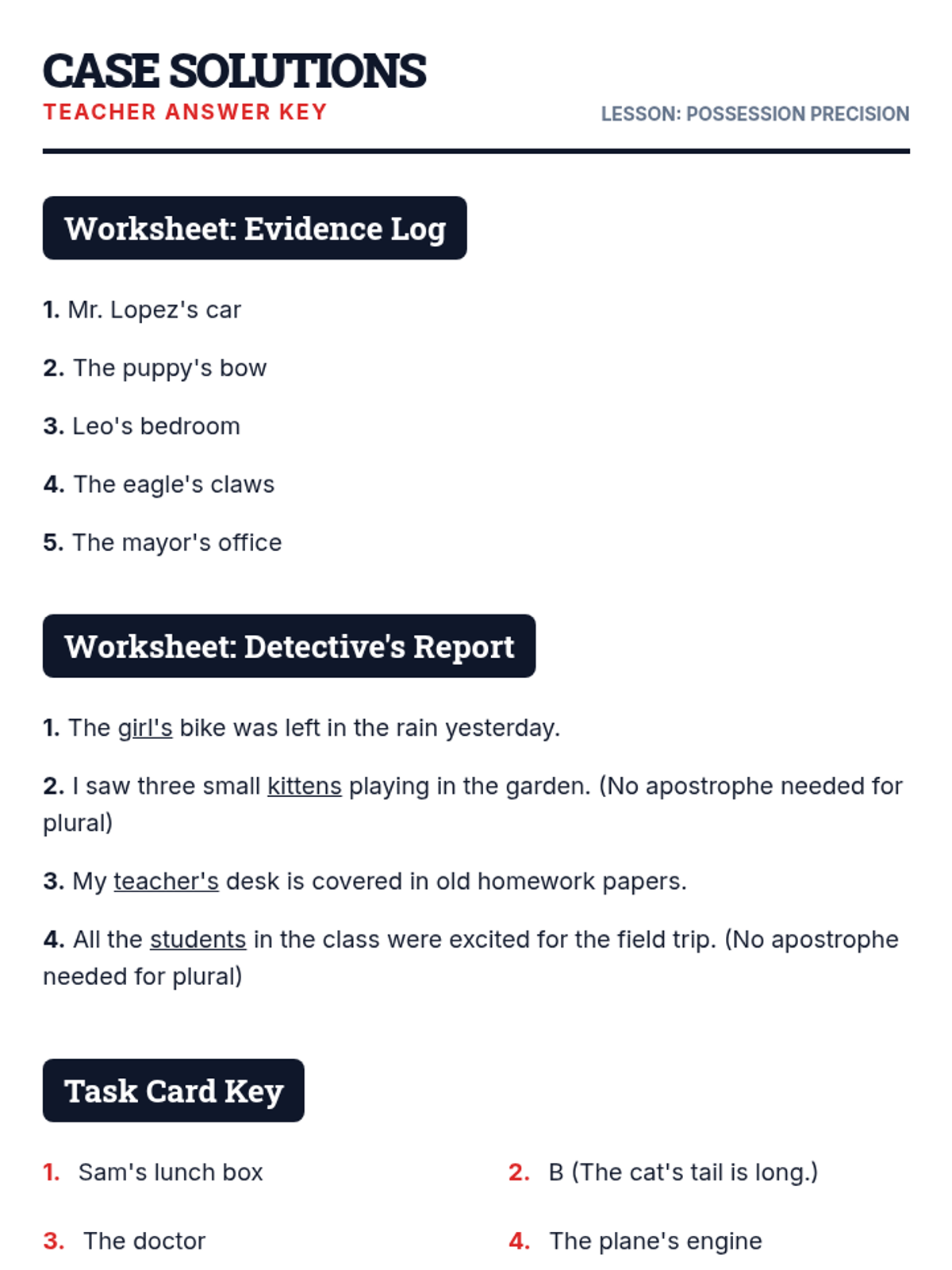
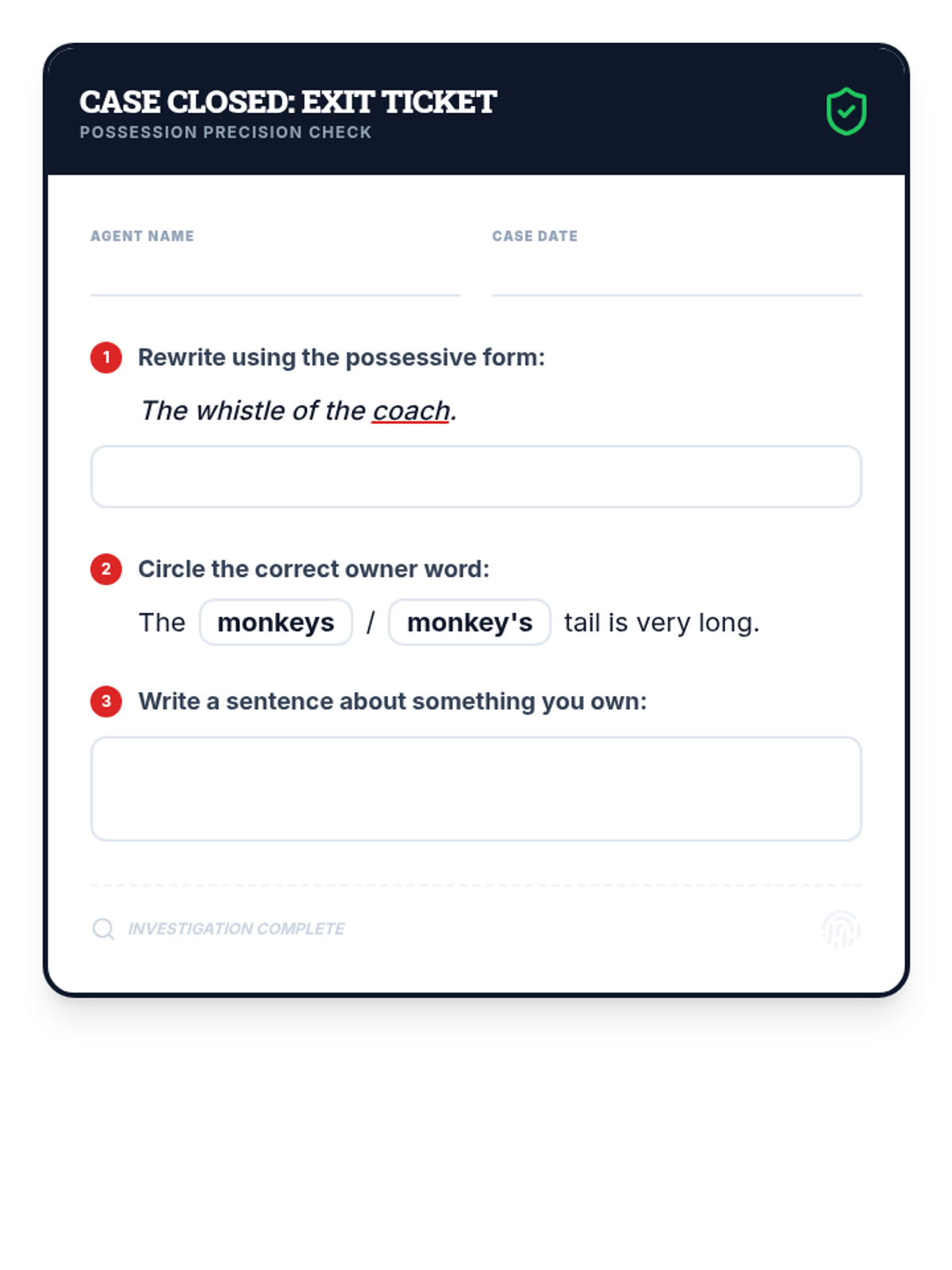
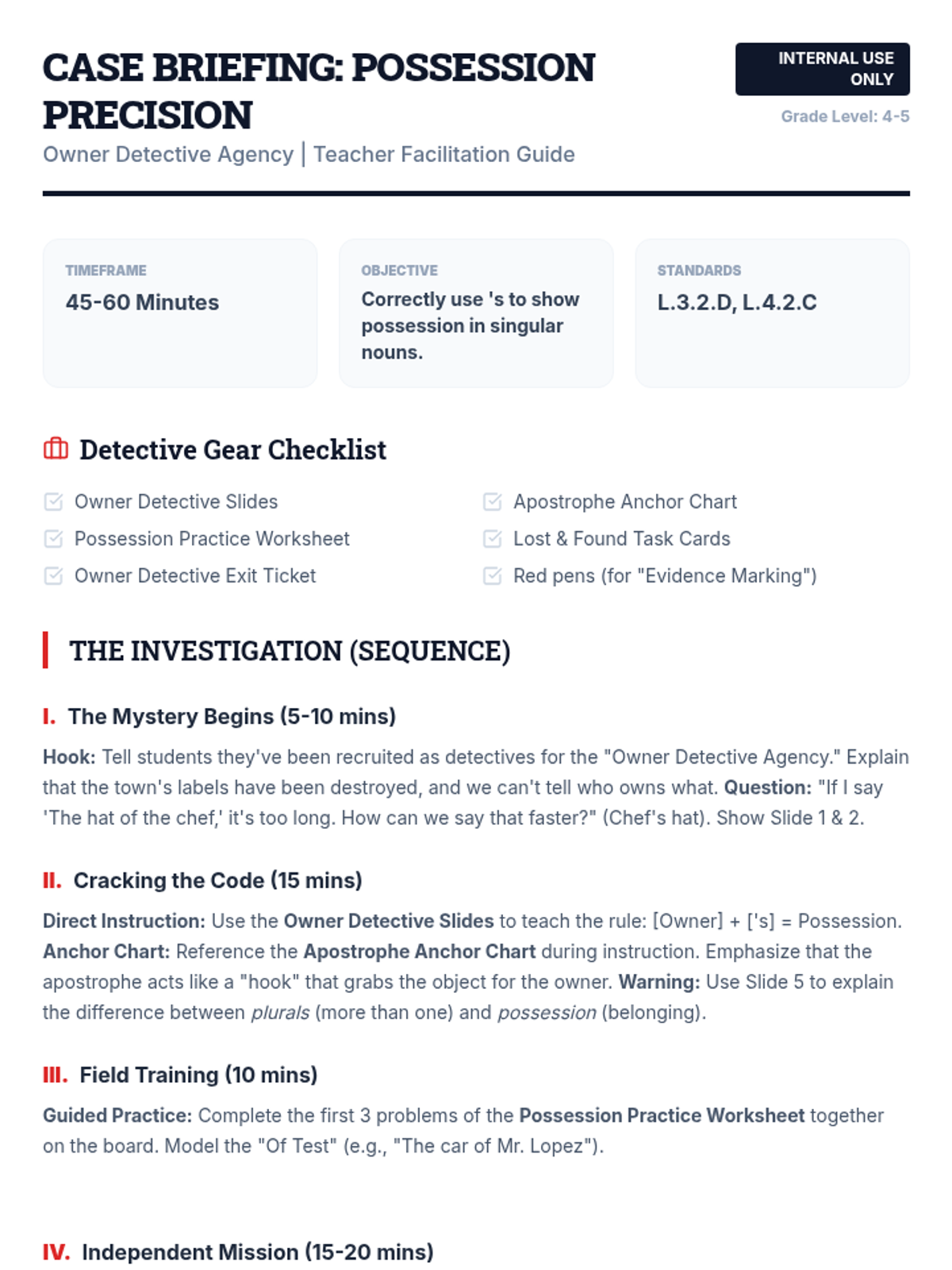
Students learn to identify owners and use 's correctly to show possession through guided practice and independent detective-themed activities.
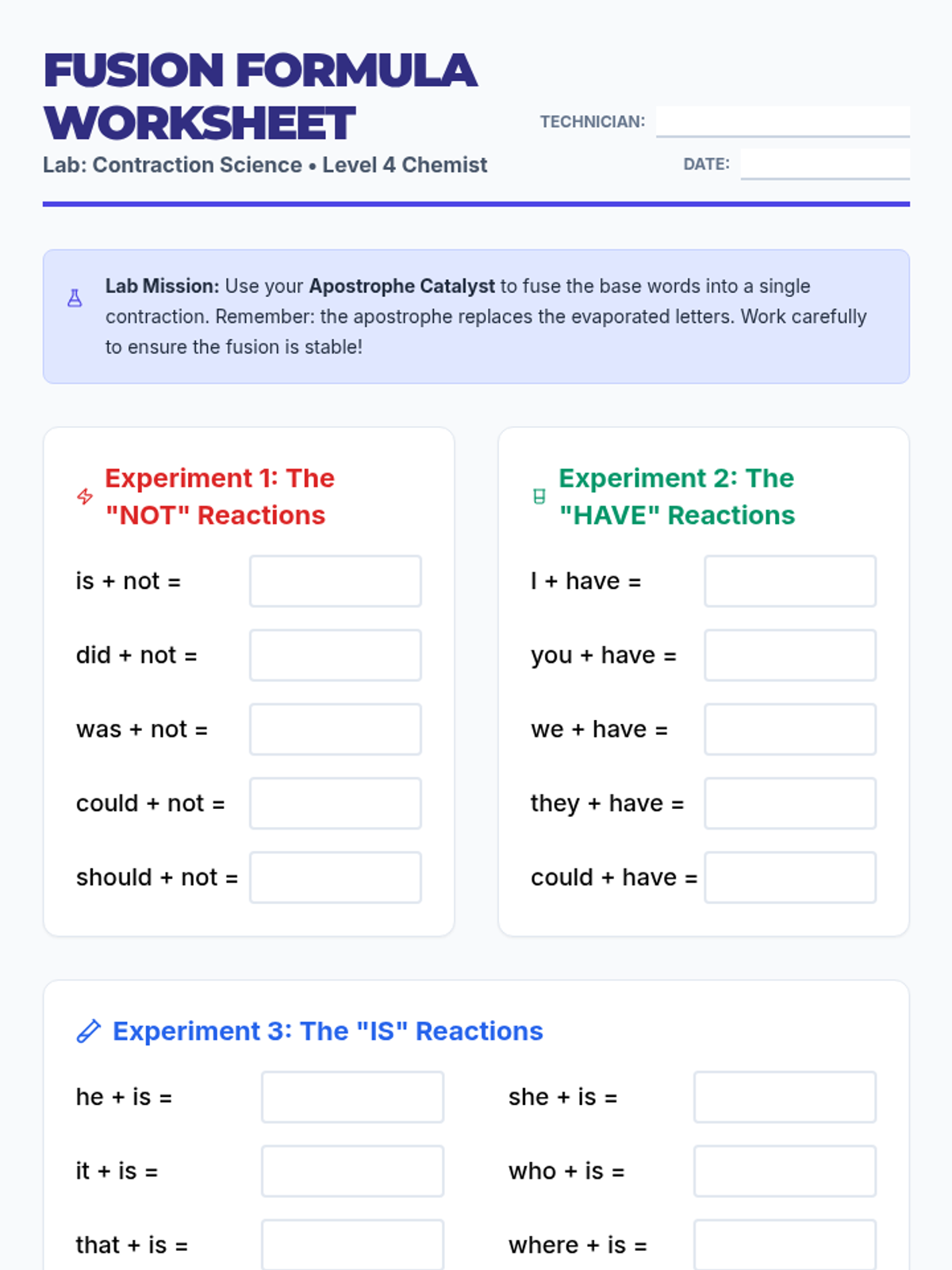
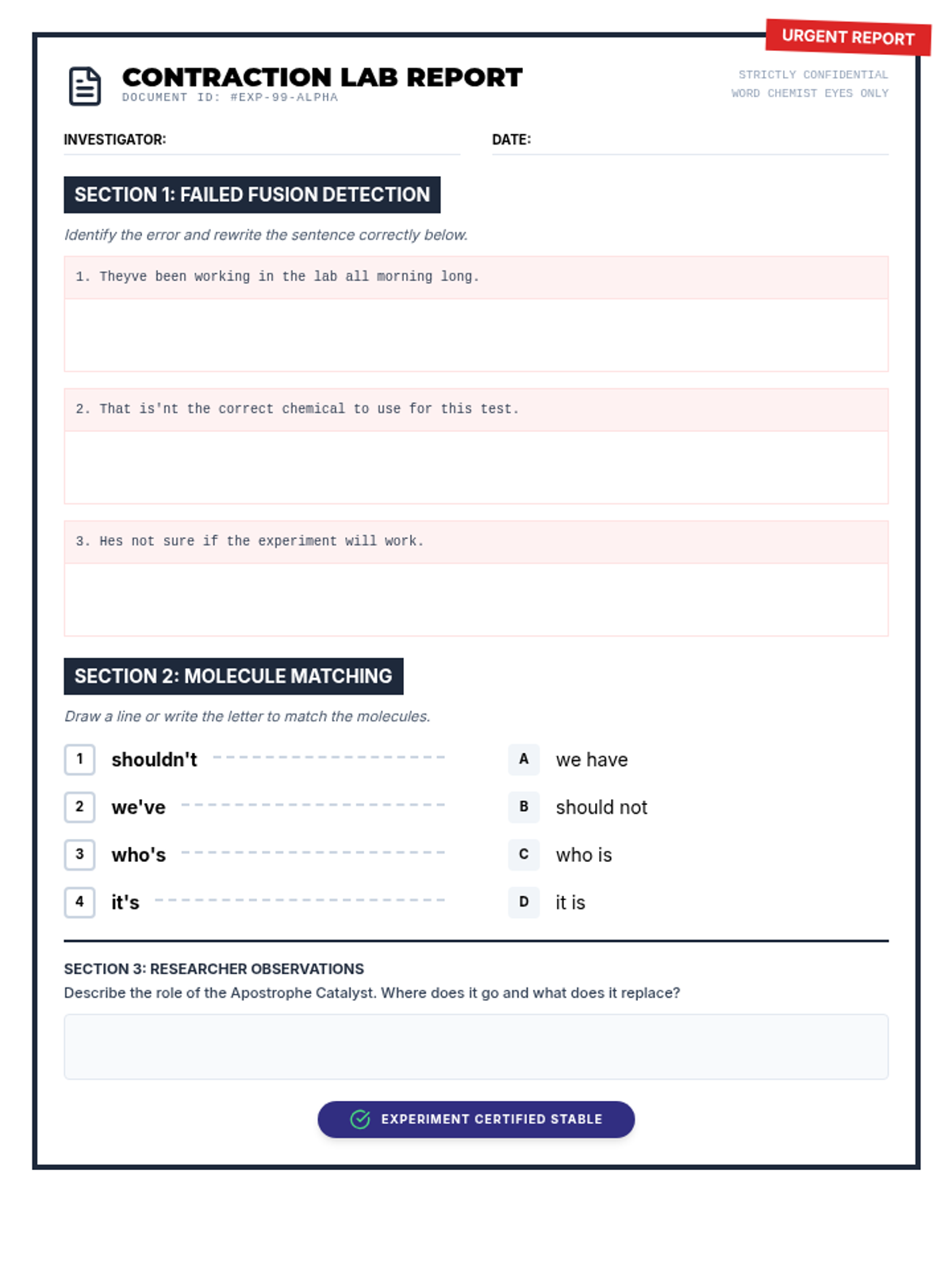
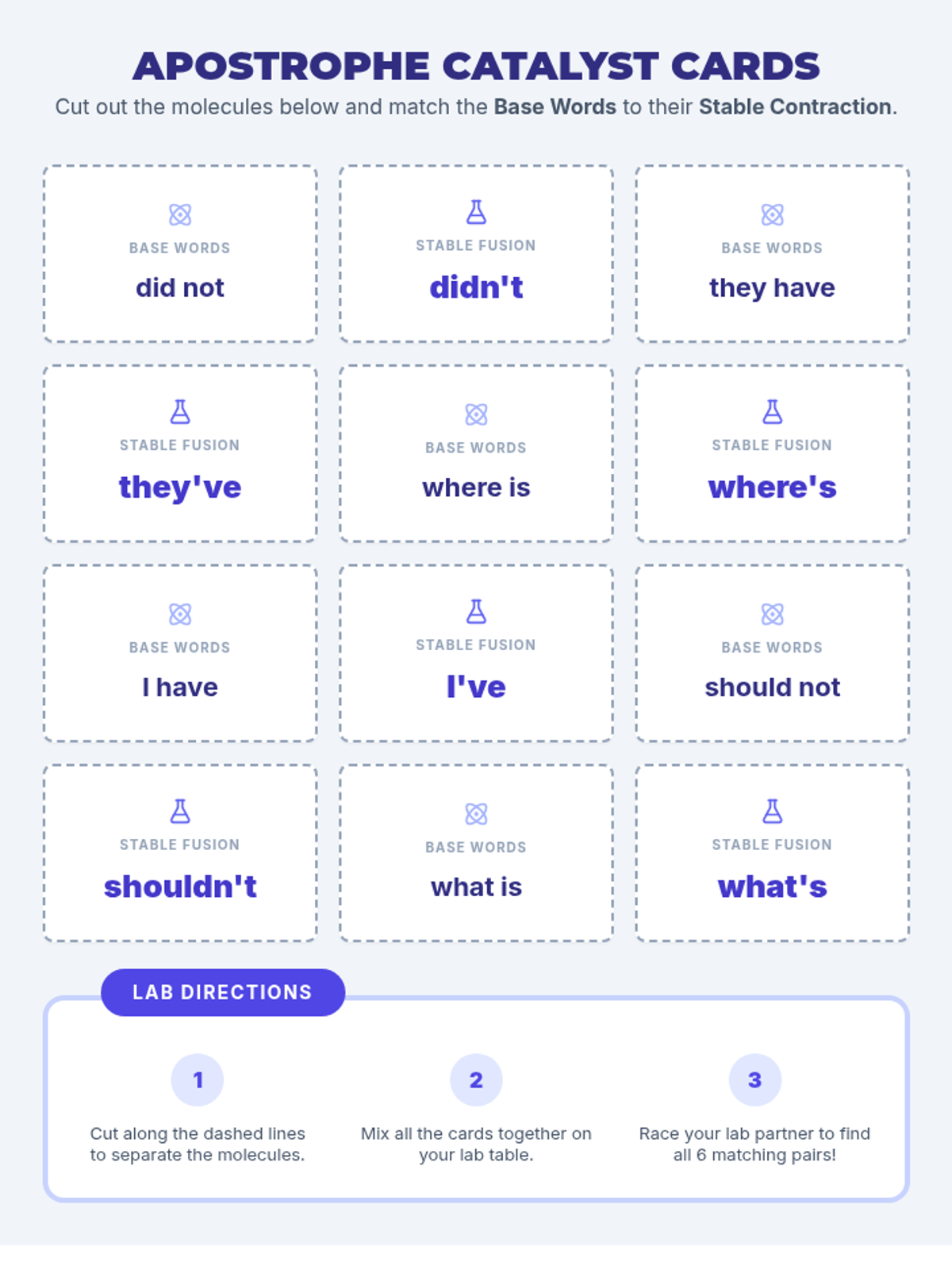
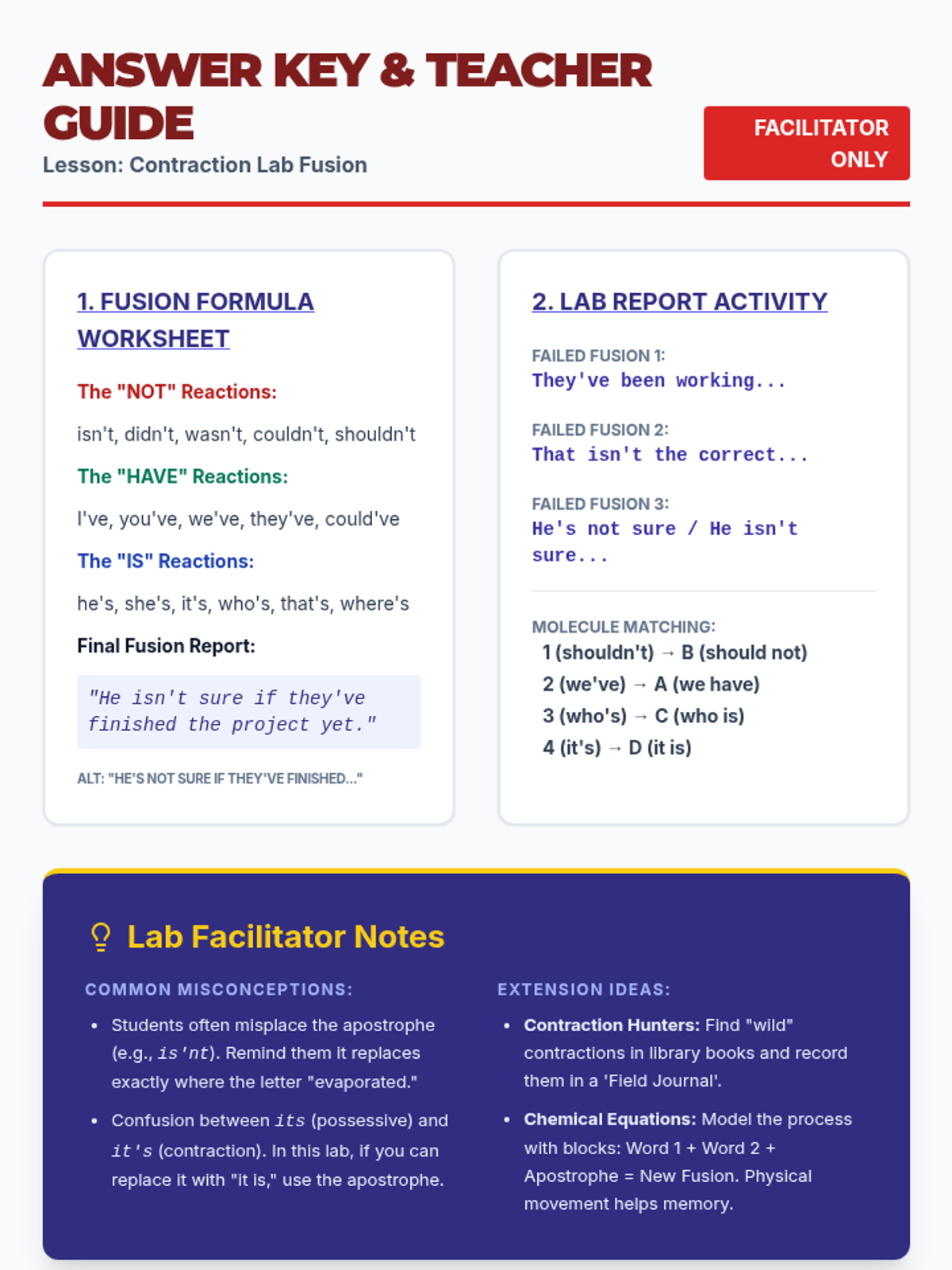
A high-energy, science-themed lesson where students become 'Word Chemists' to fuse words together using the power of the apostrophe. Focuses on contractions formed with 'not', 'have', and 'is'.
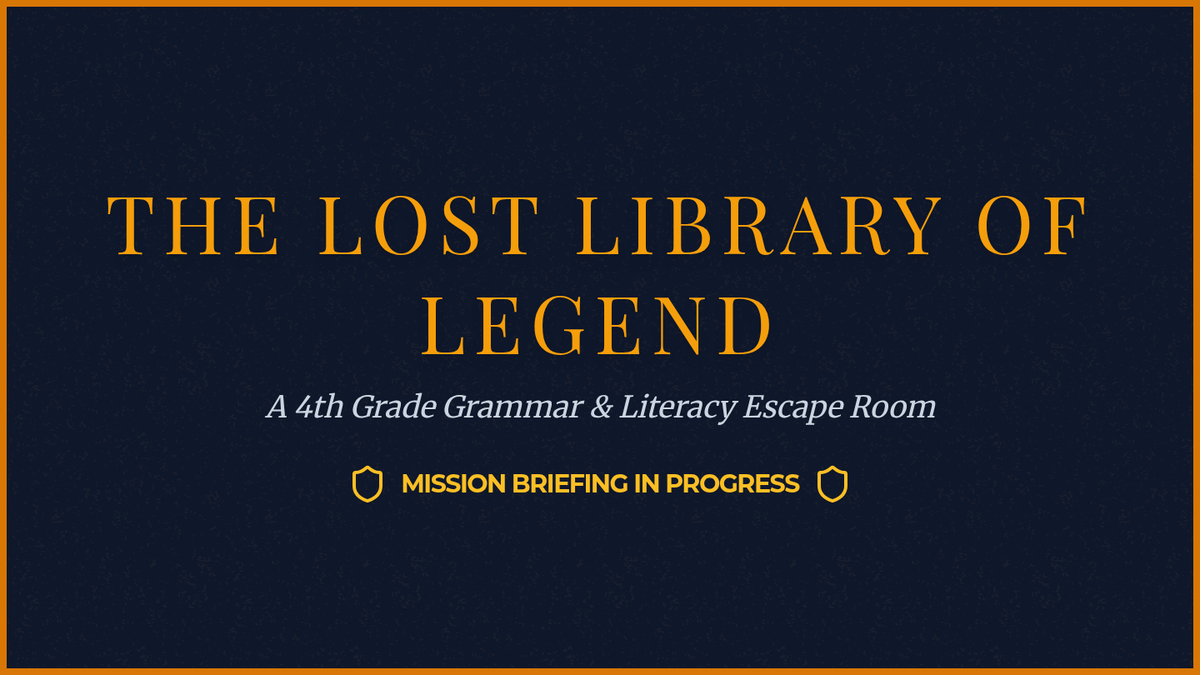
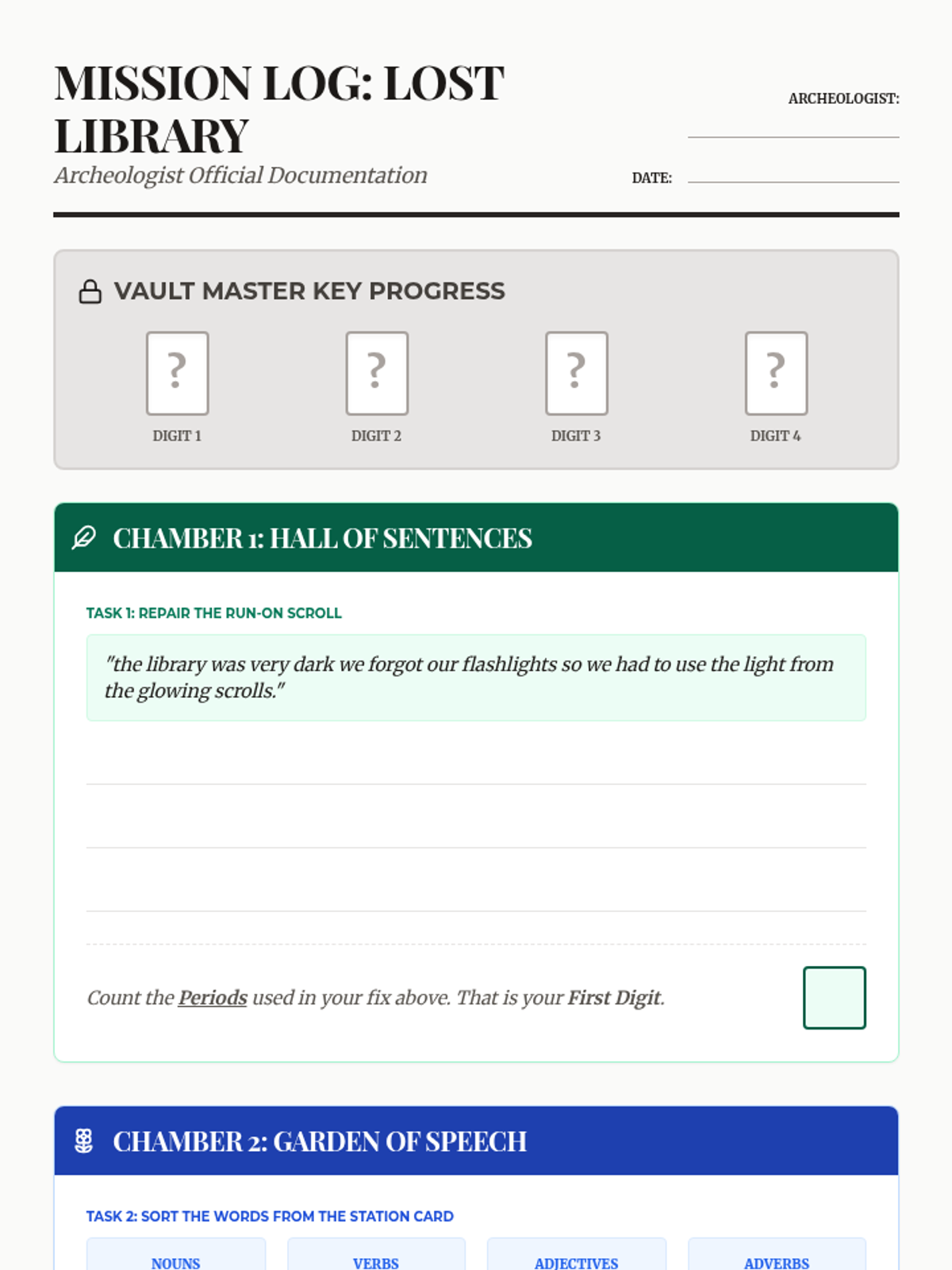
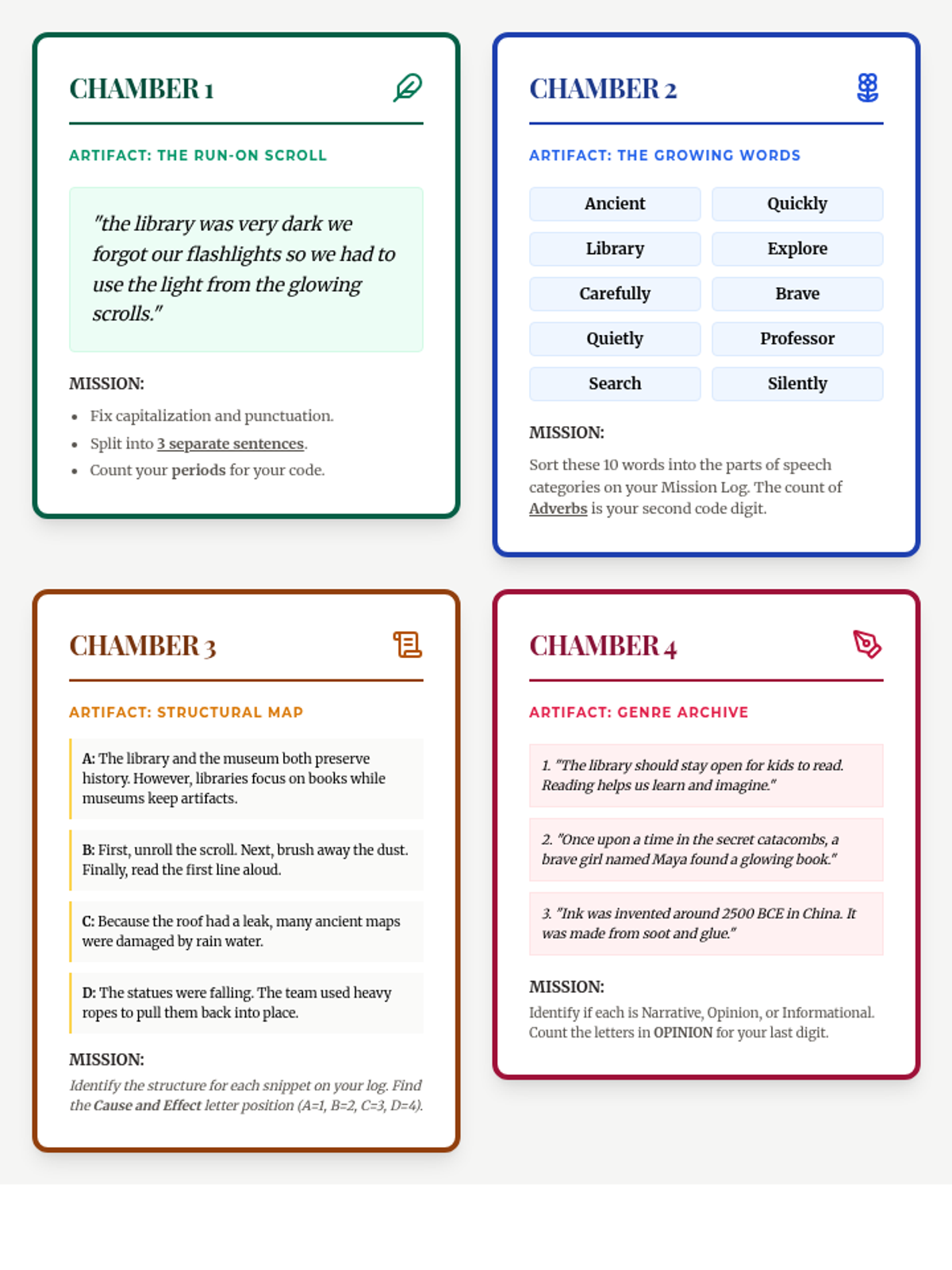
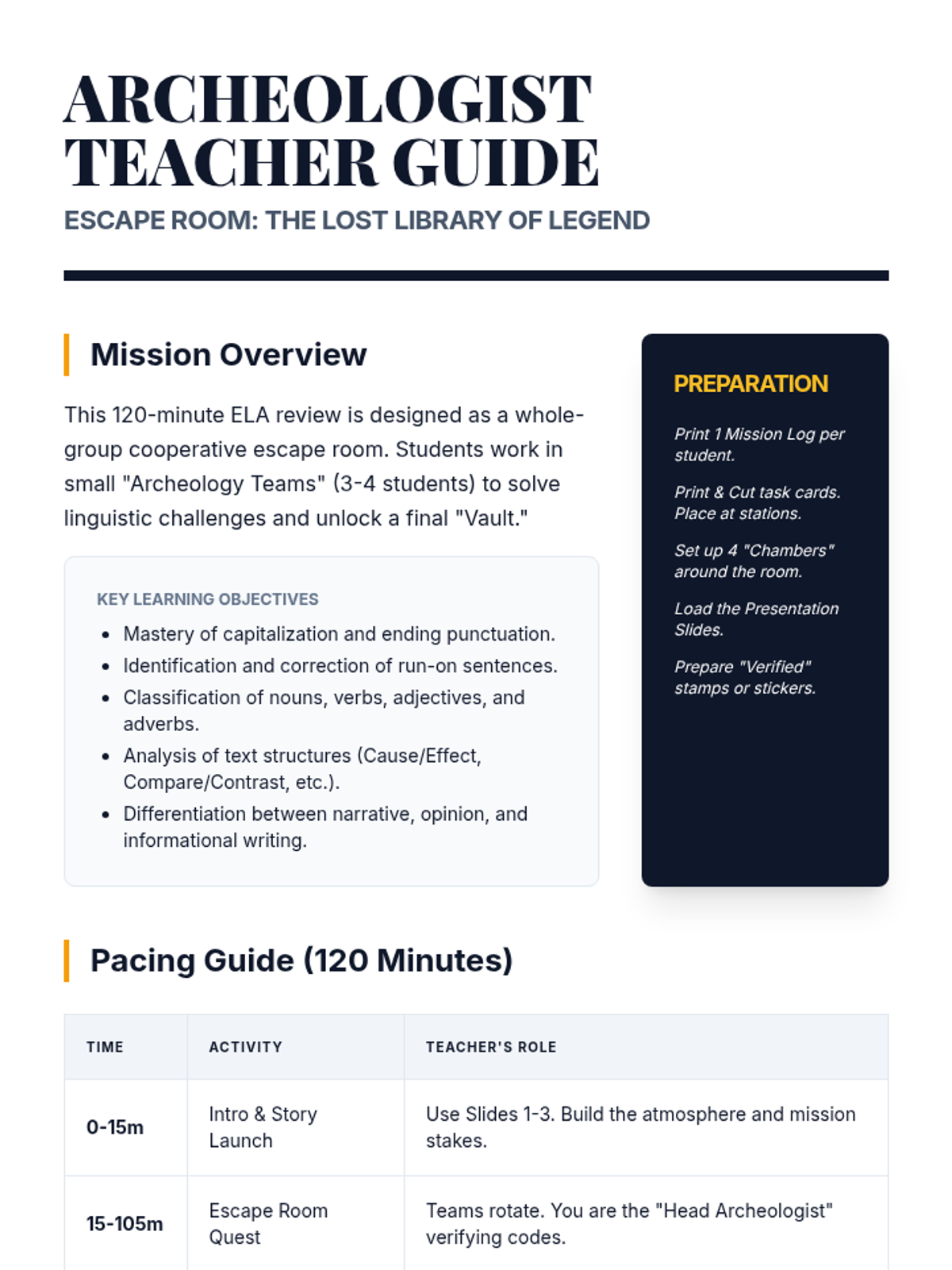
A high-energy, 120-minute whole-group escape room where students act as Linguistic Archeologists to save the Lost Library of Legend. This lesson reviews 4th-grade ELA standards including sentence structure, parts of speech, text structures, and writing genres.
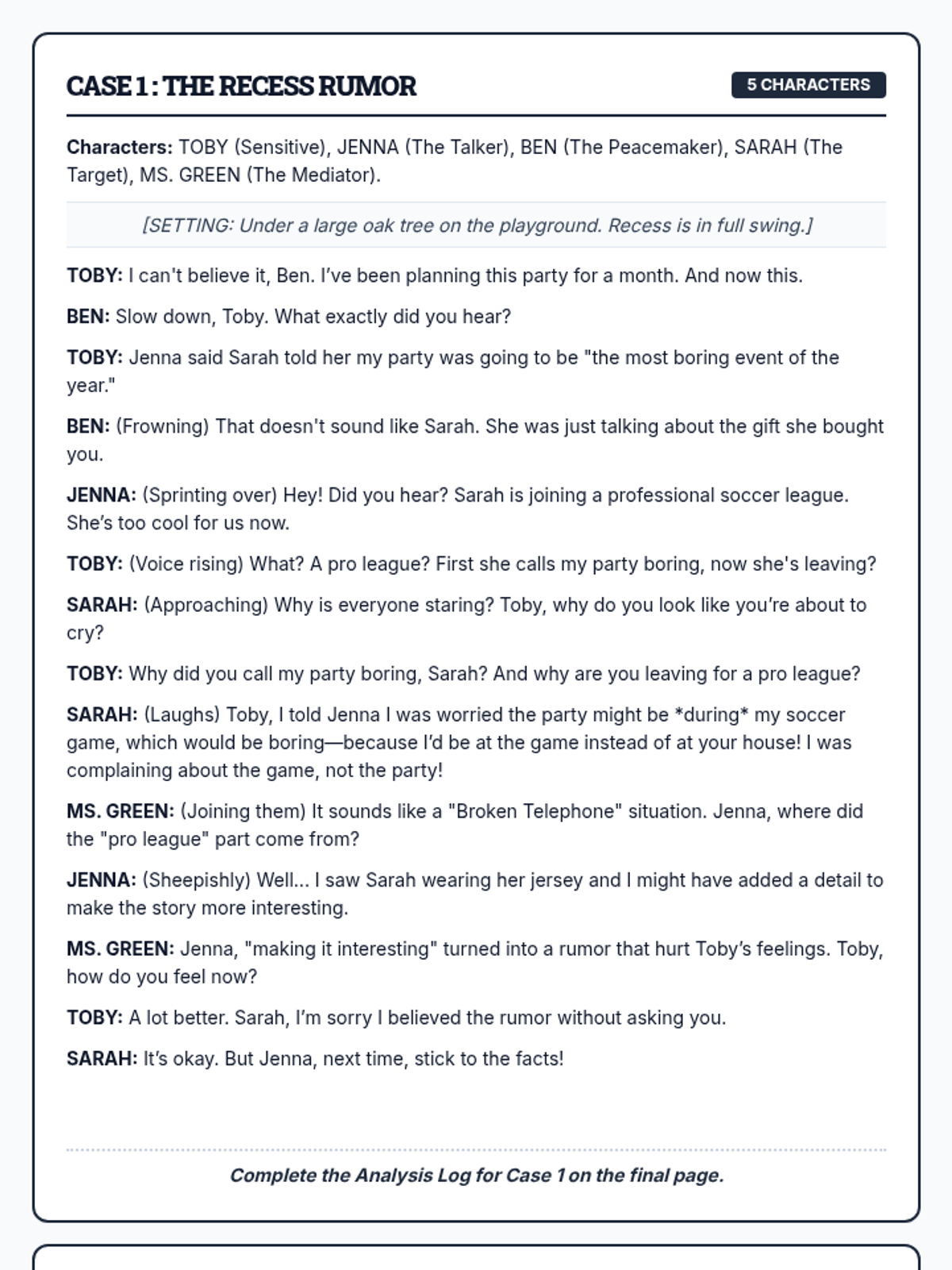
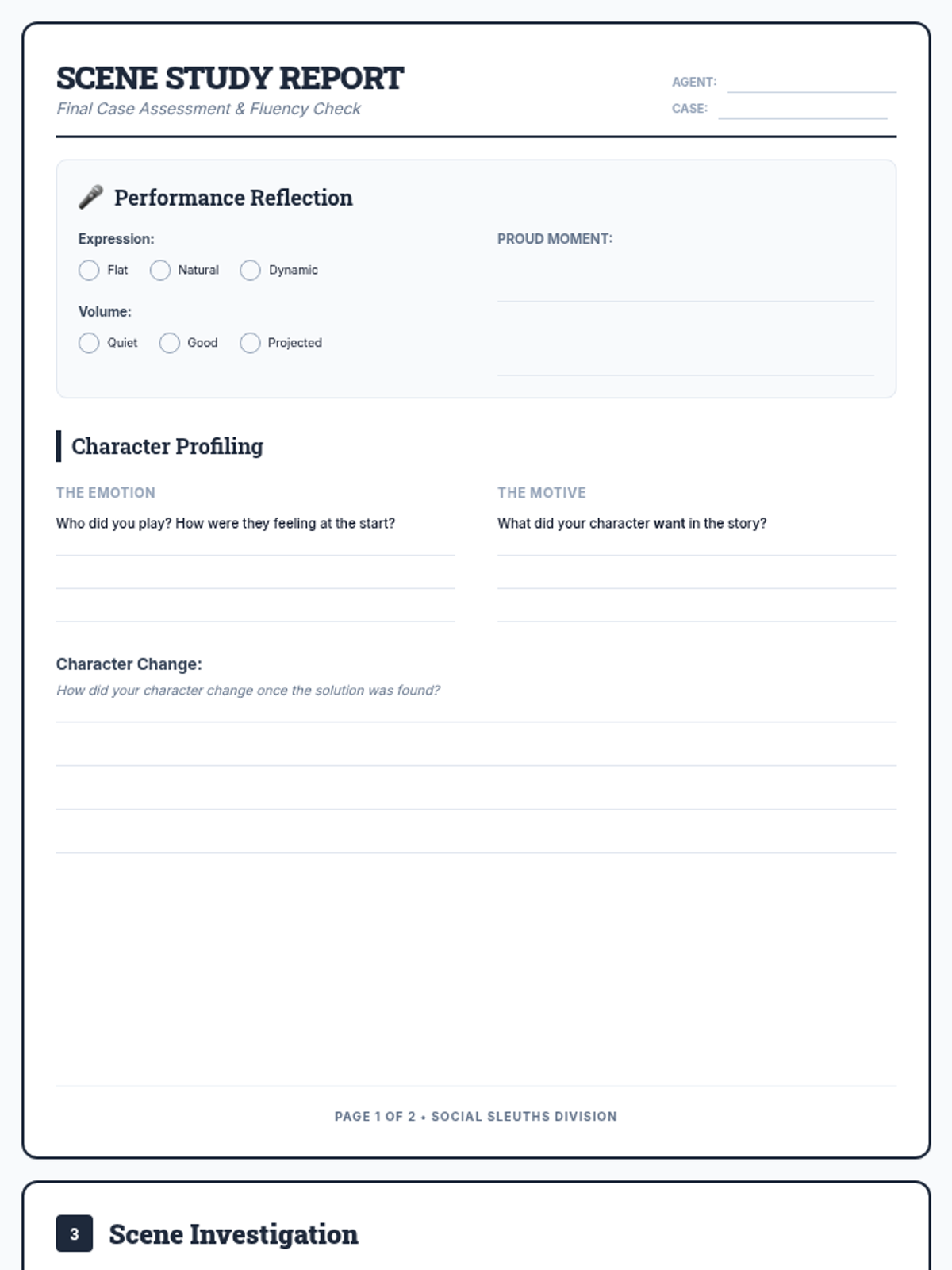
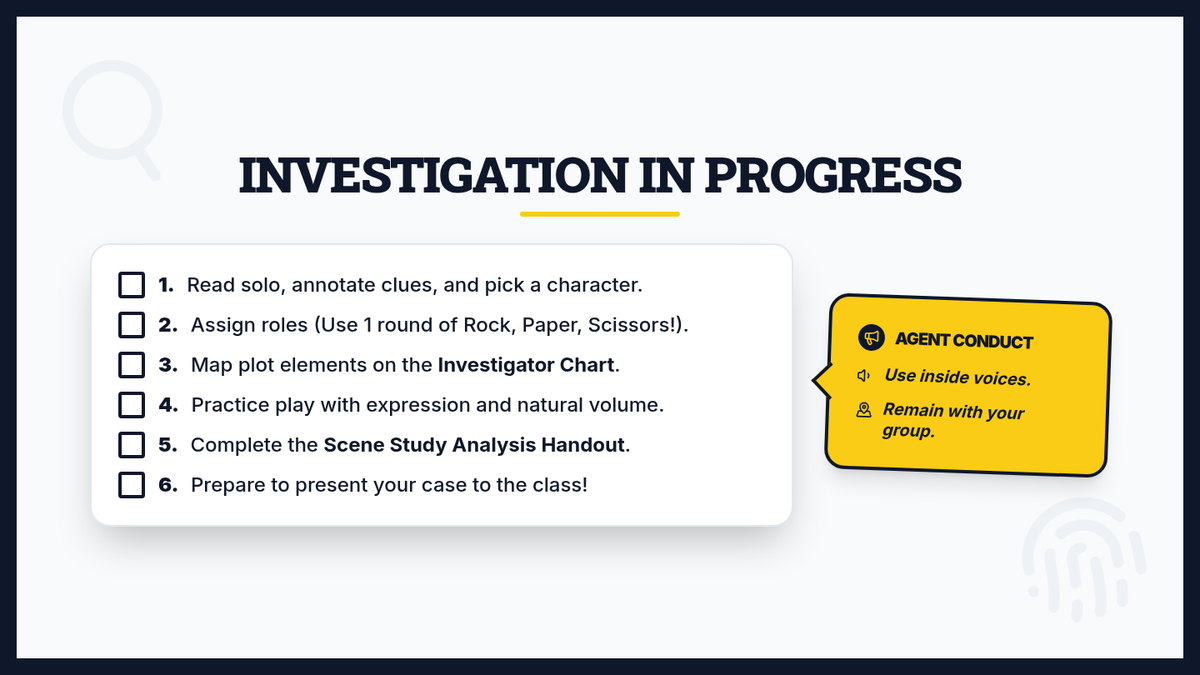
Students work in small groups to rehearse and perform mystery plays, analyzing their specific plot structures and reflecting on social-emotional themes.
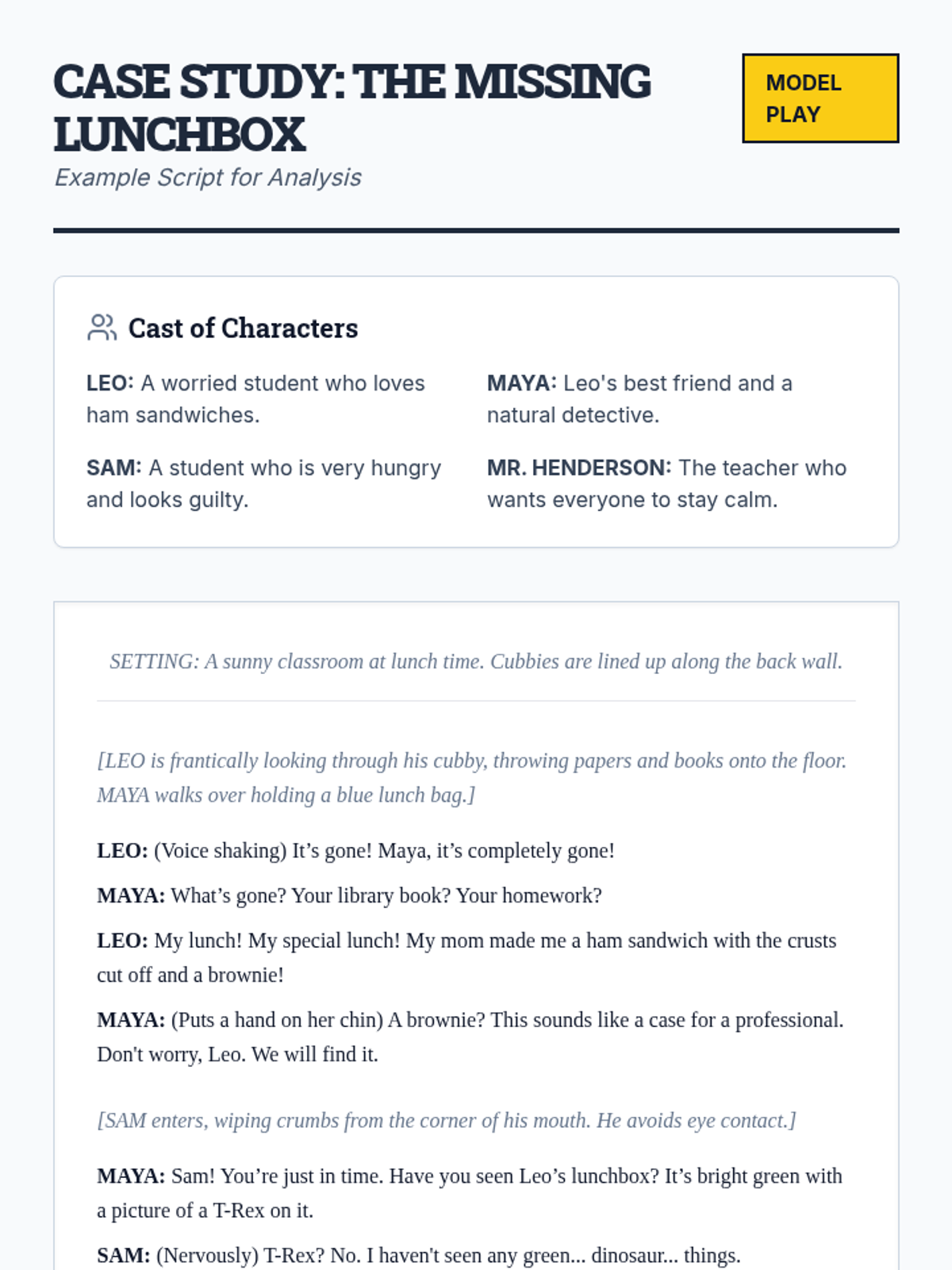
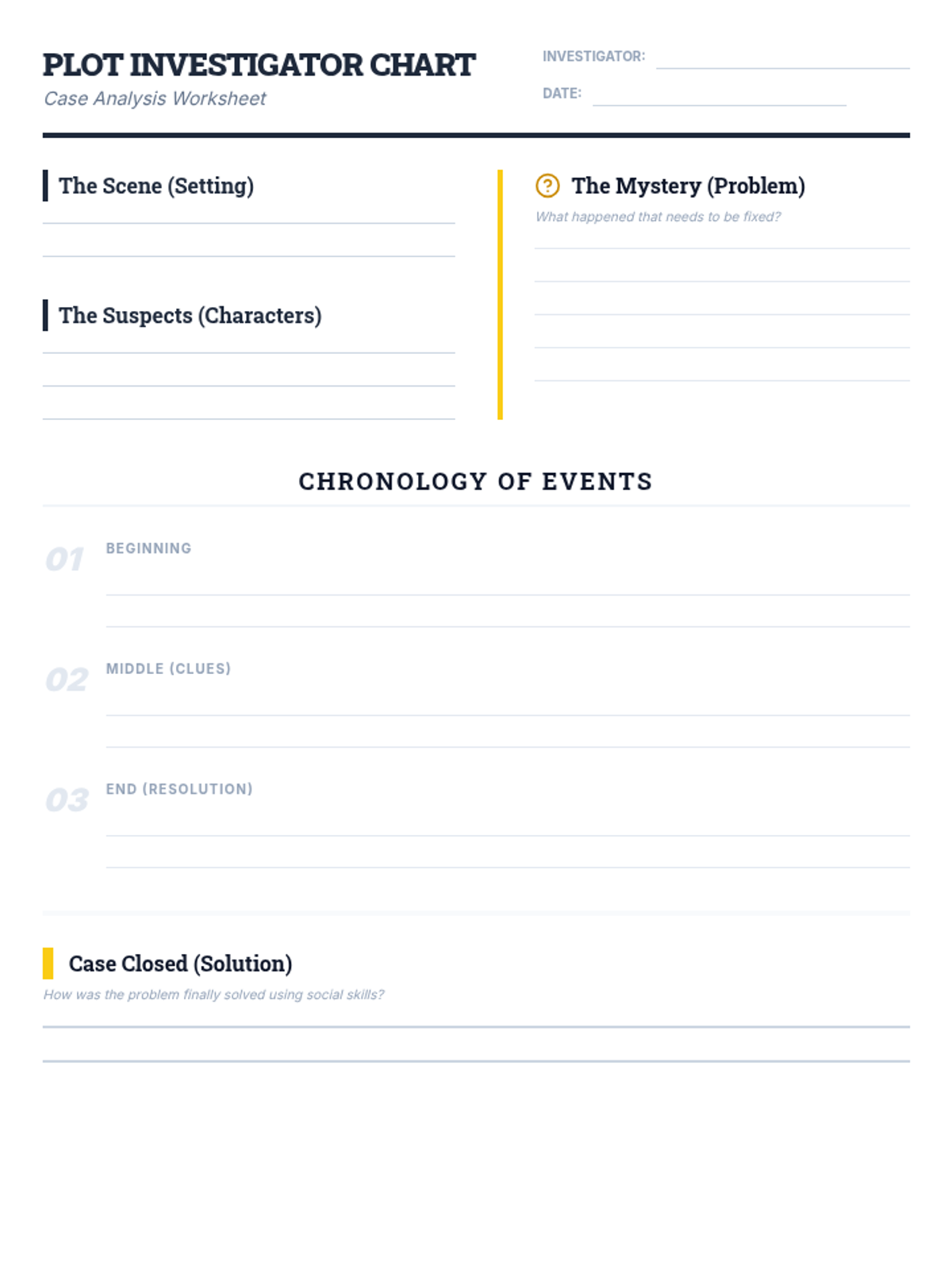
Students learn the fundamental components of a play script and use a model play to identify setting, characters, and plot structure.
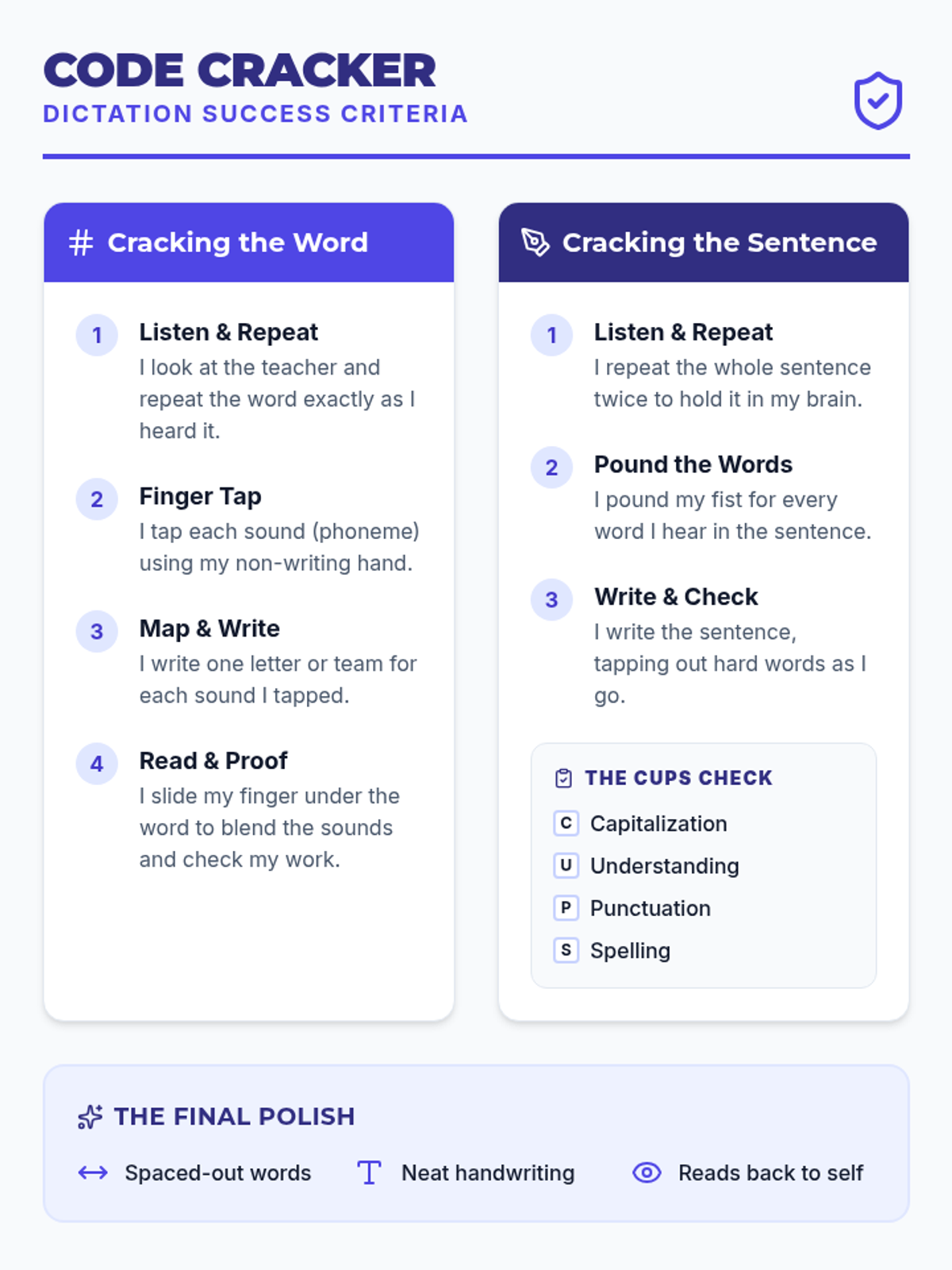
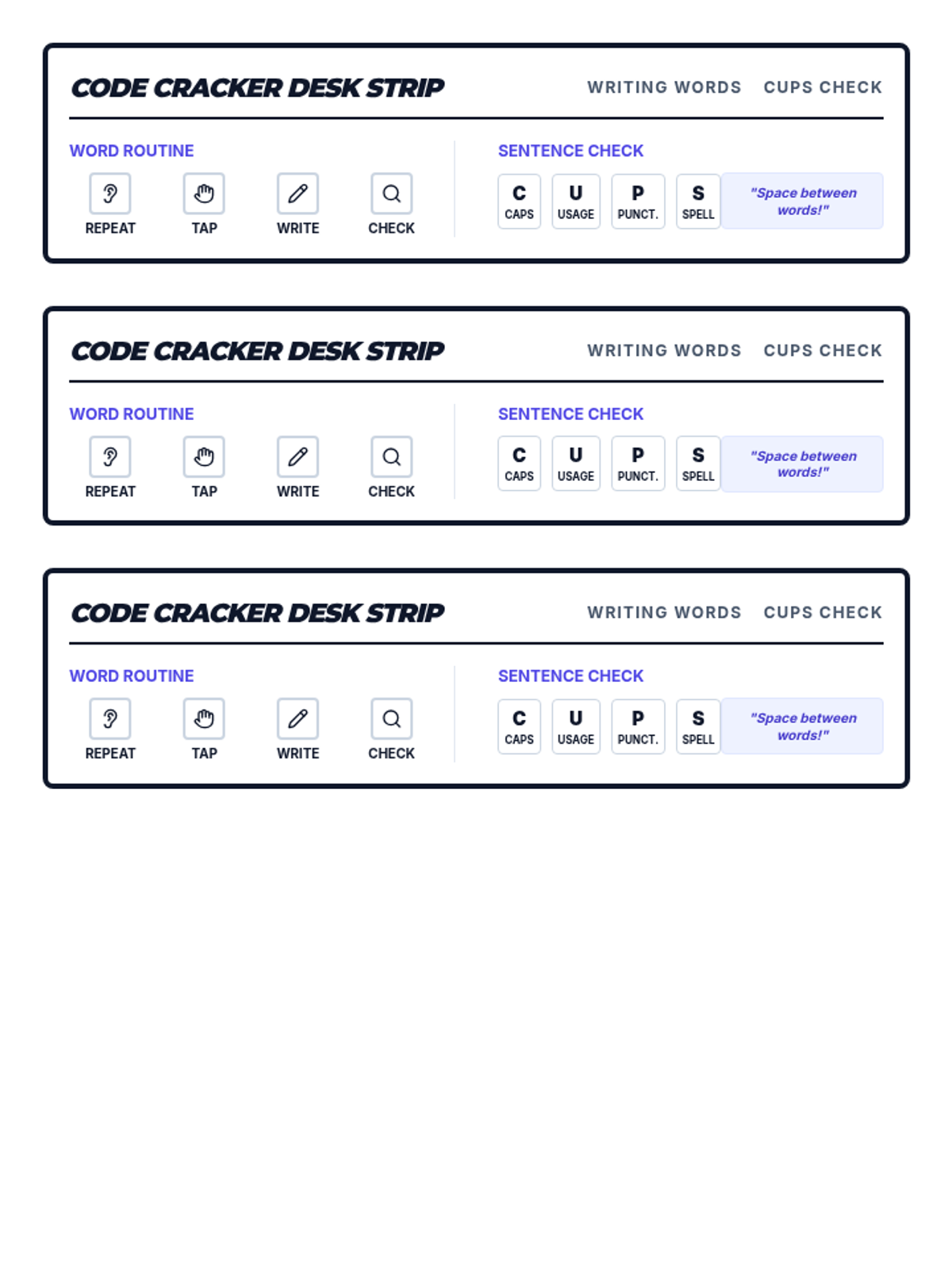
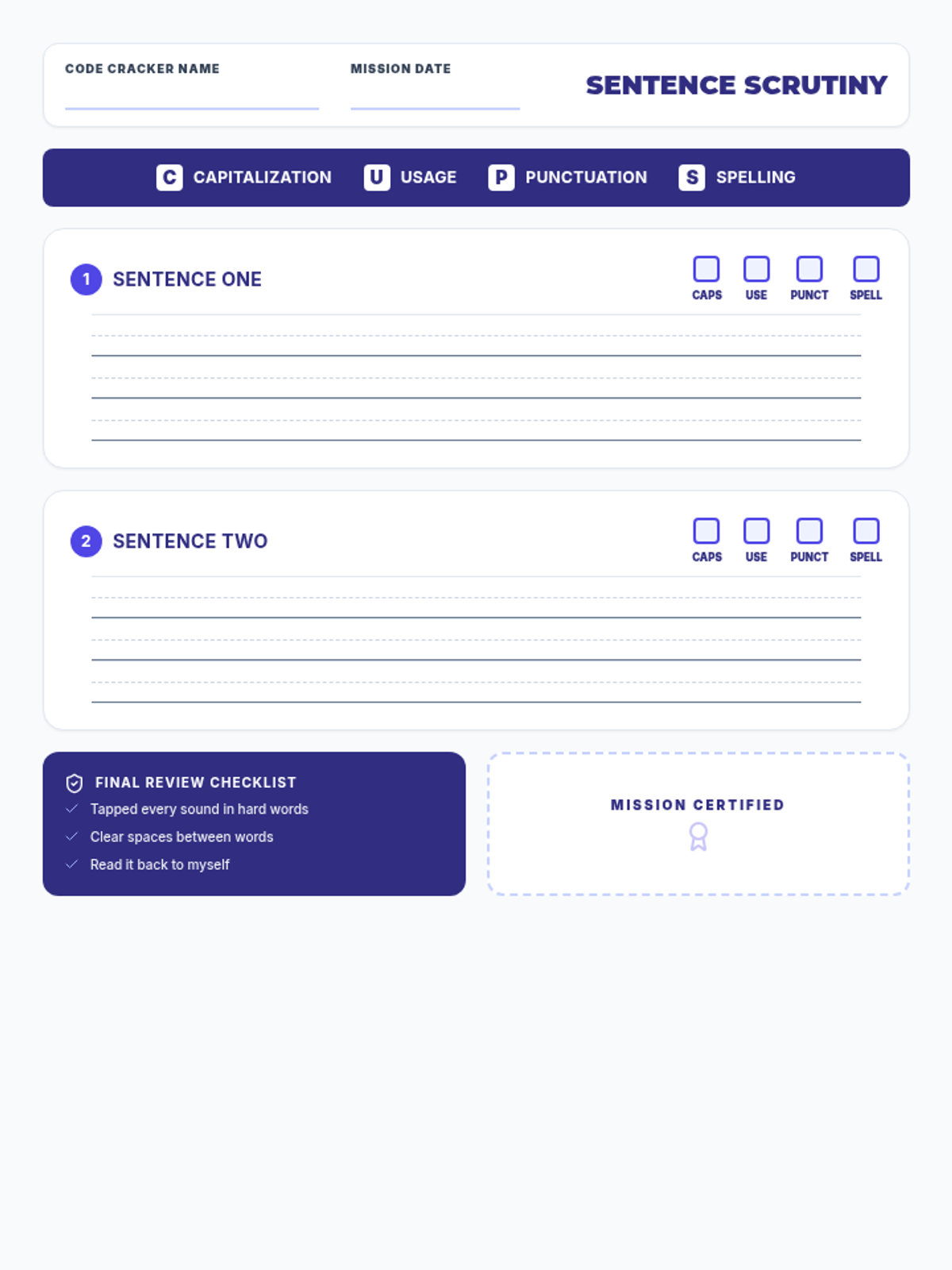
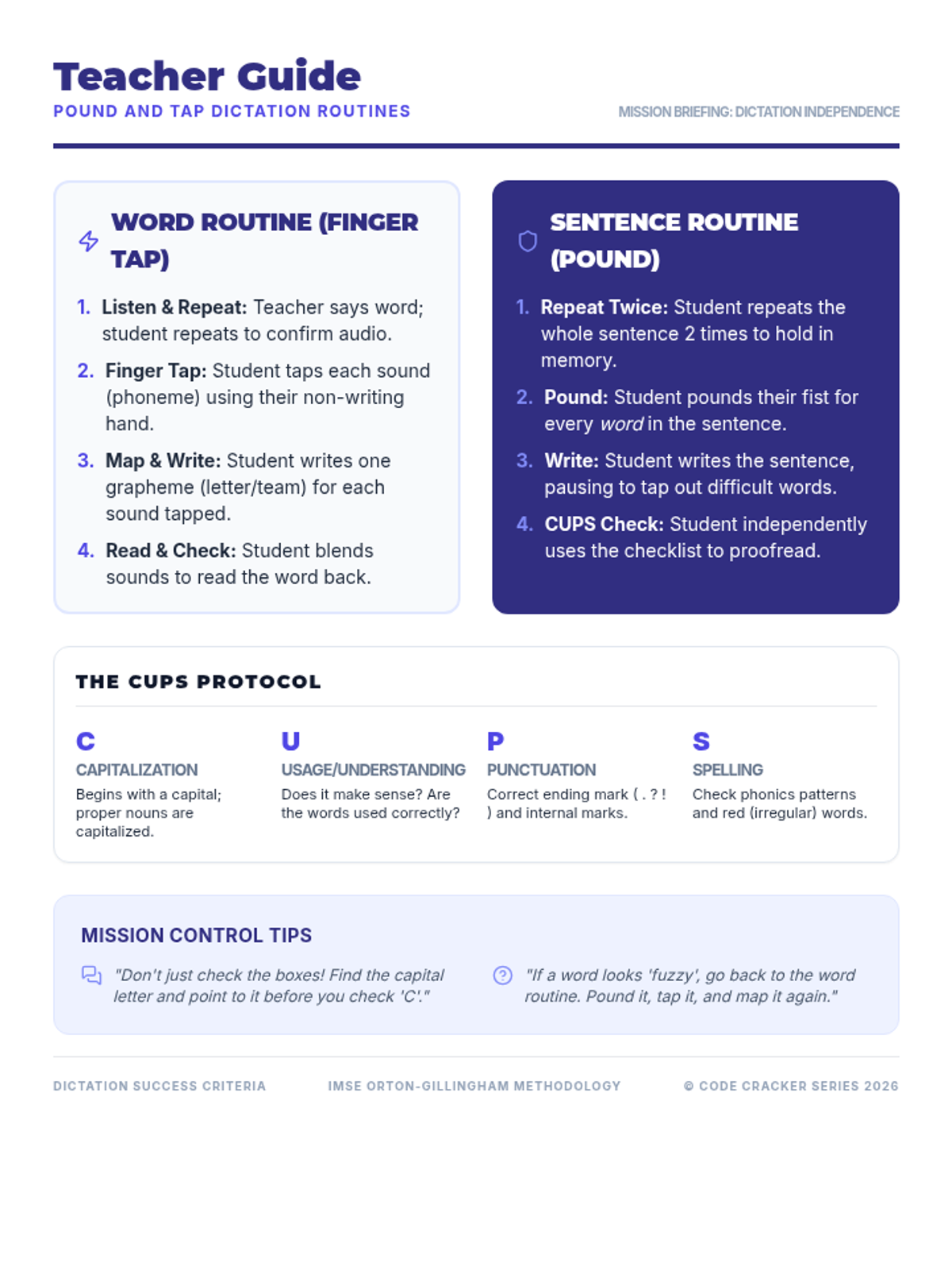
A toolkit of success criteria and structured practice materials for IMSE Orton-Gillingham dictation routines, focusing on word mapping and sentence conventions.
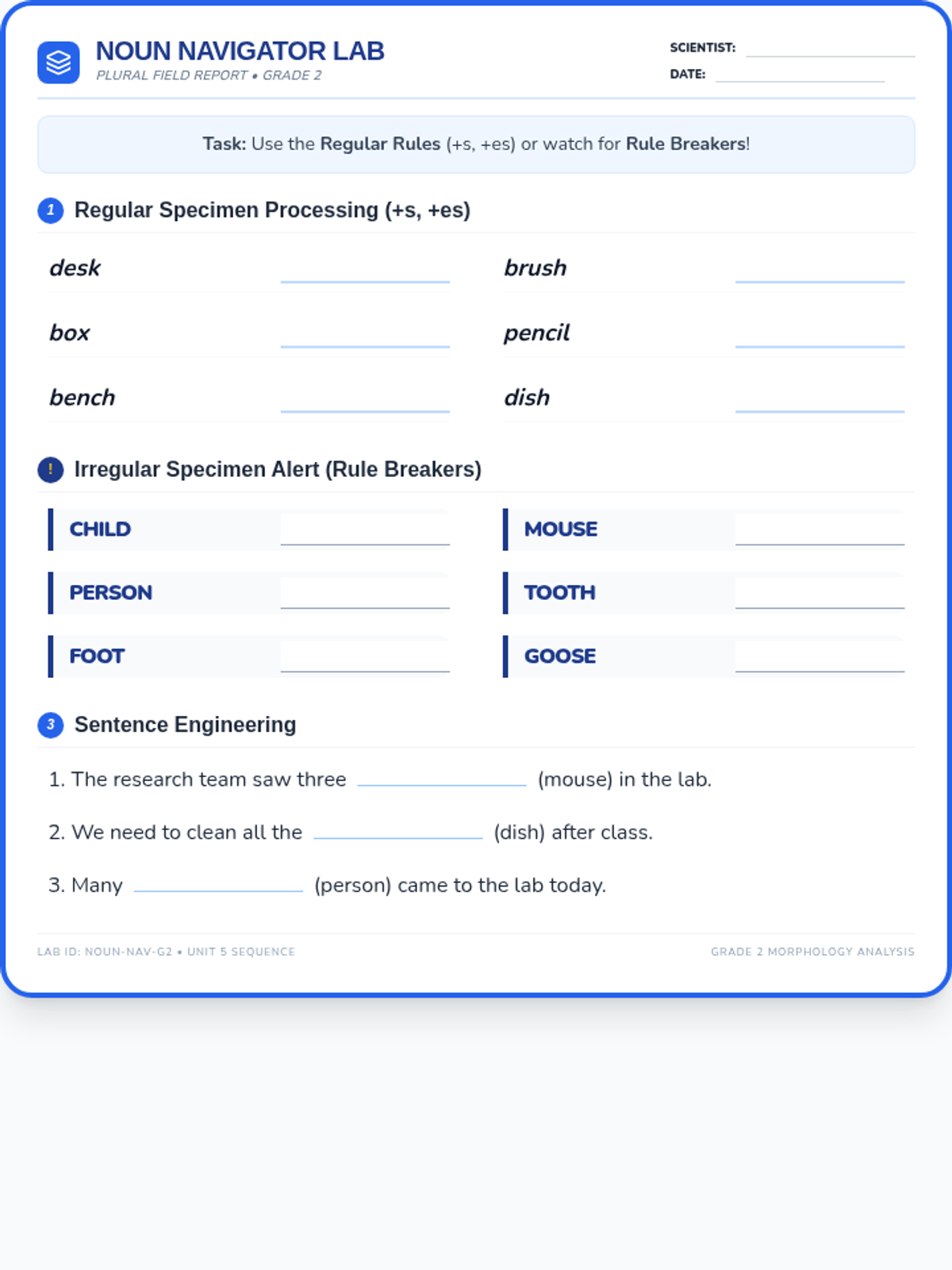
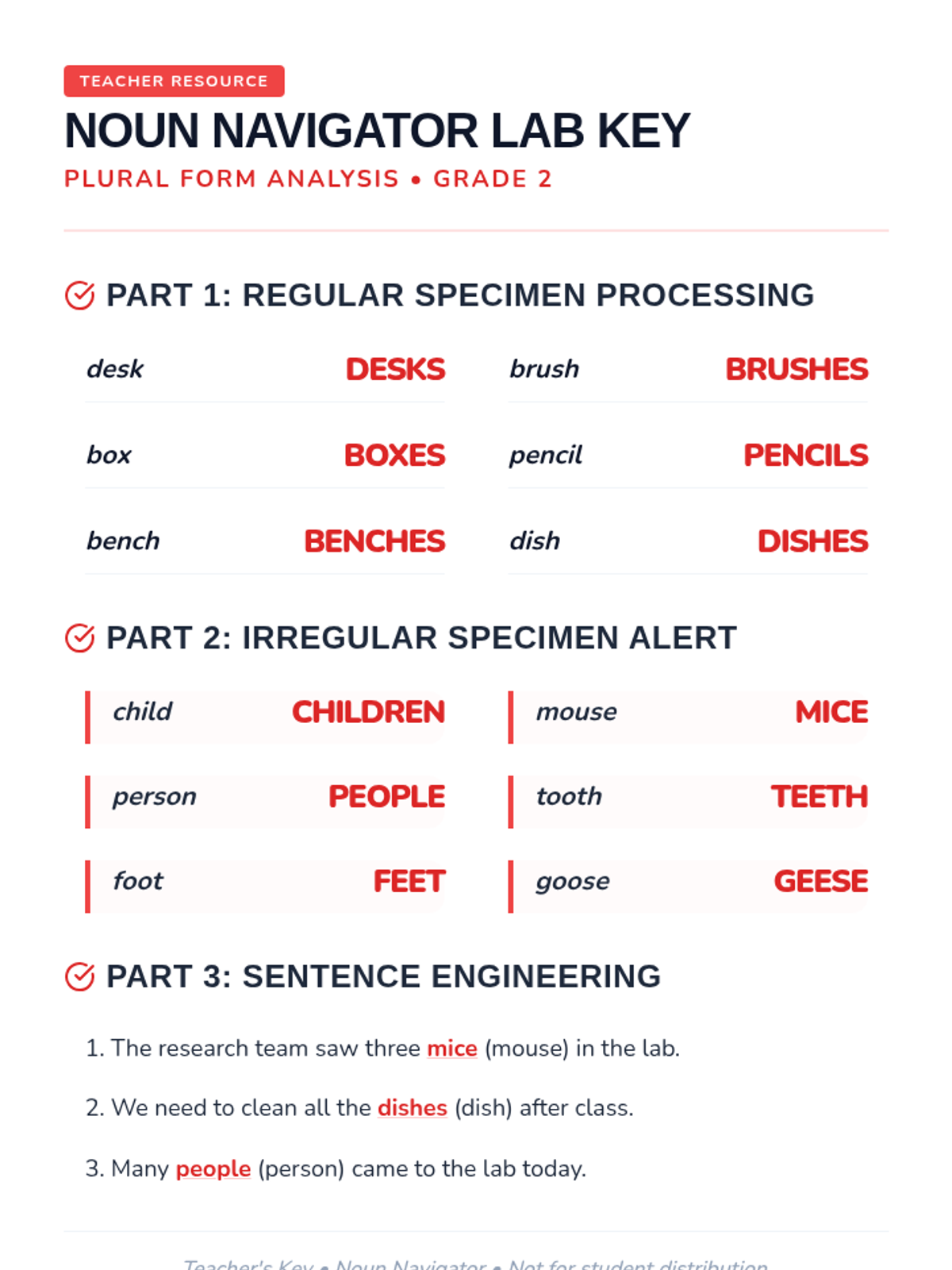
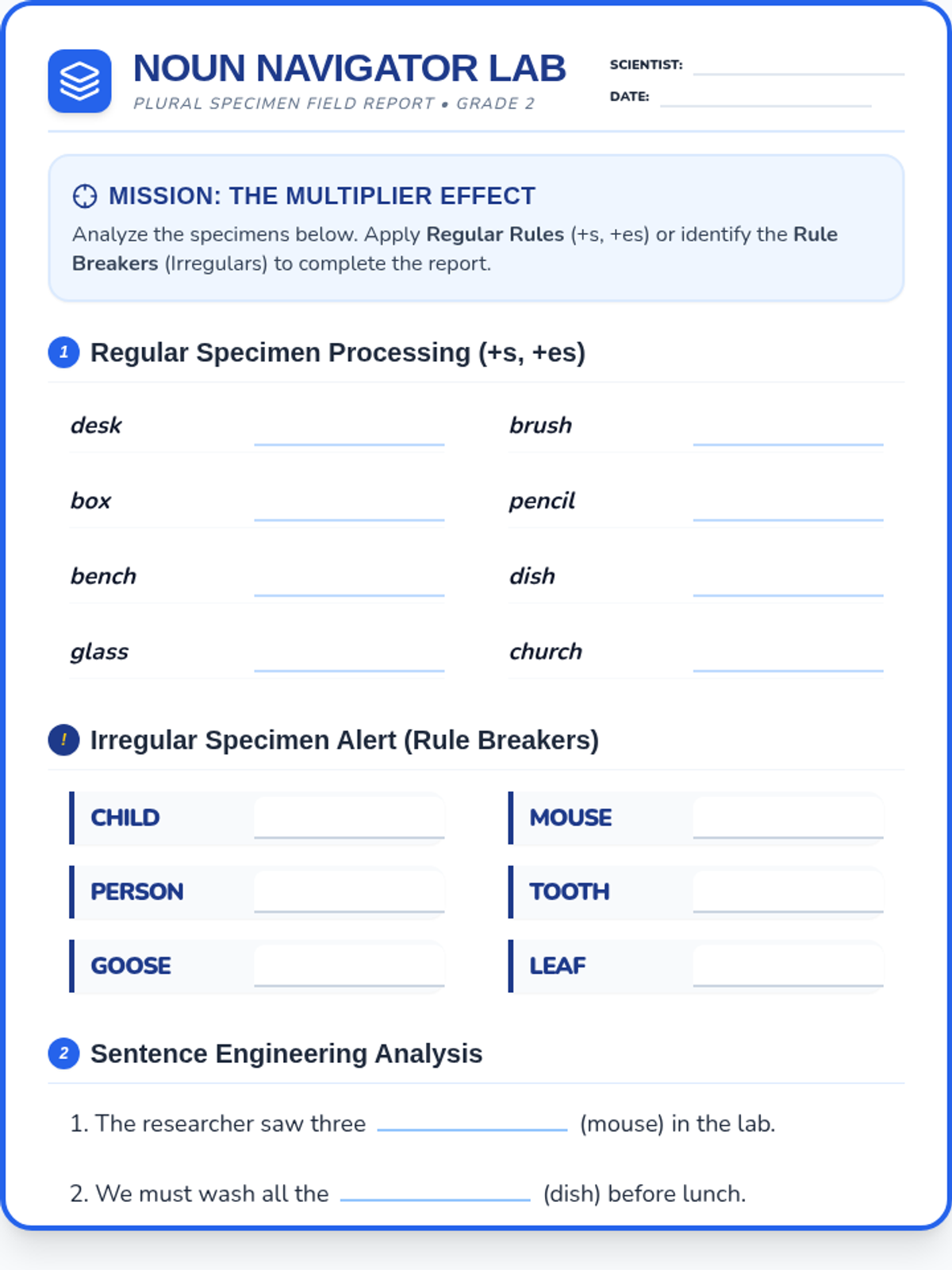
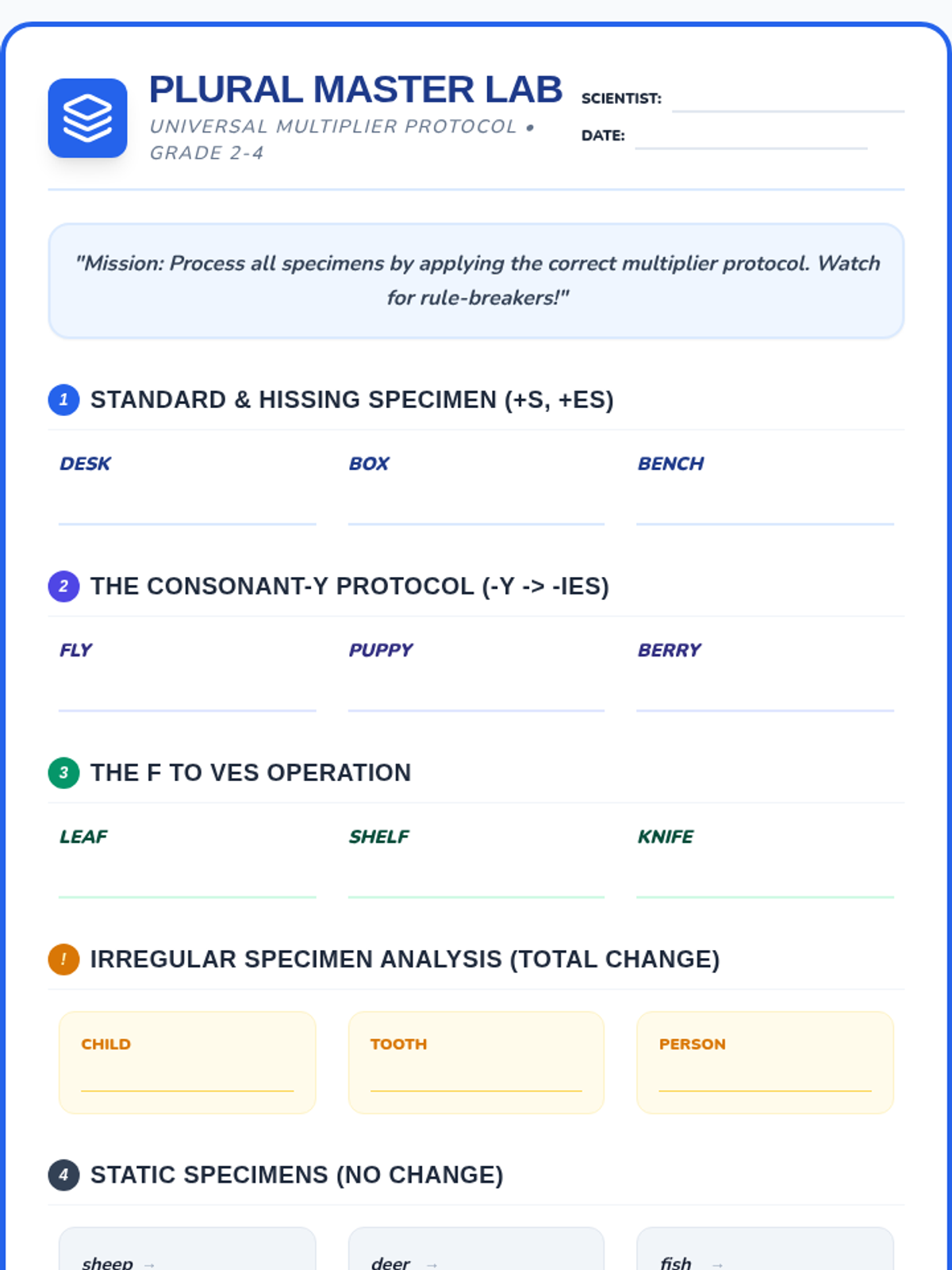
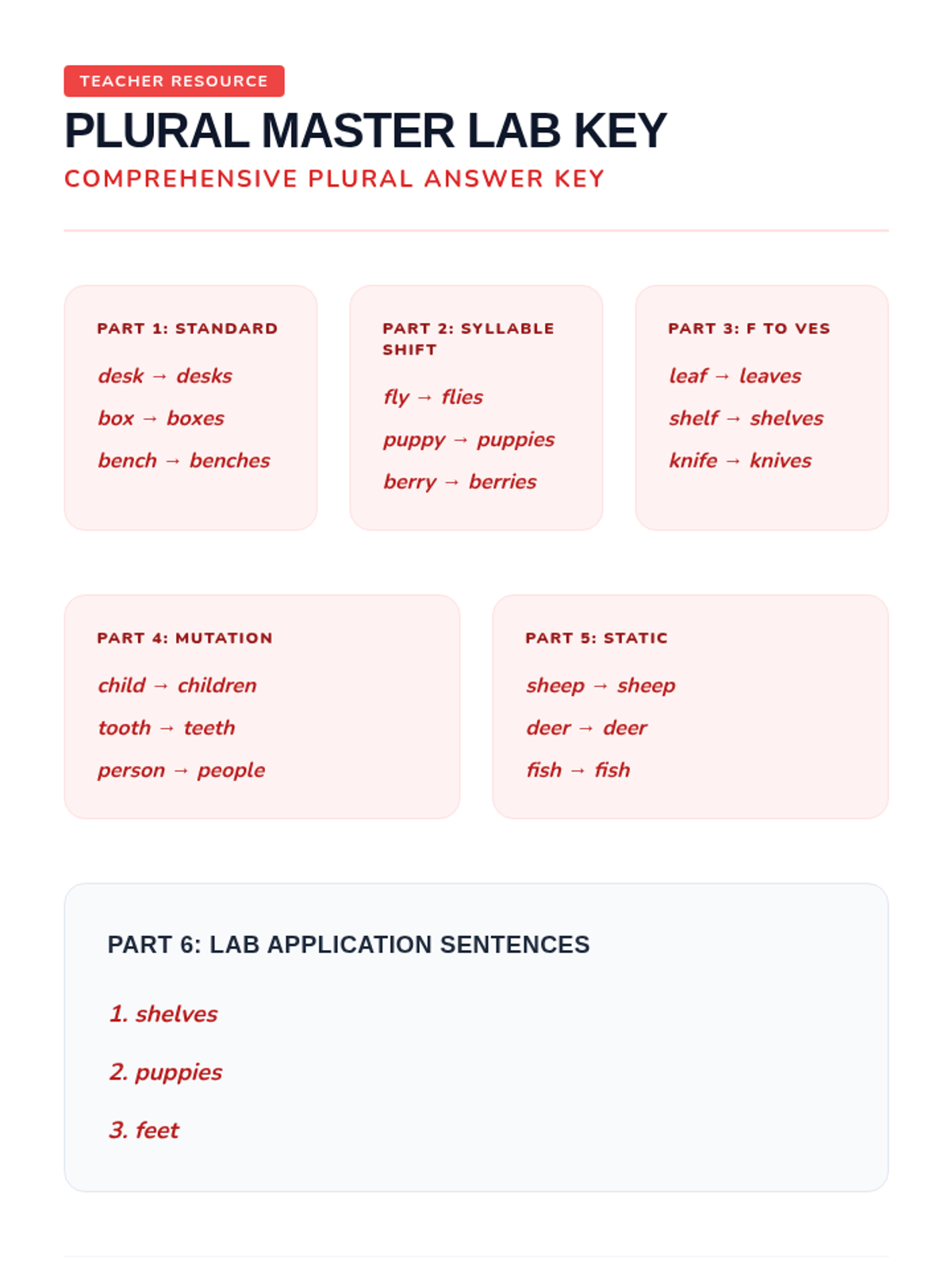
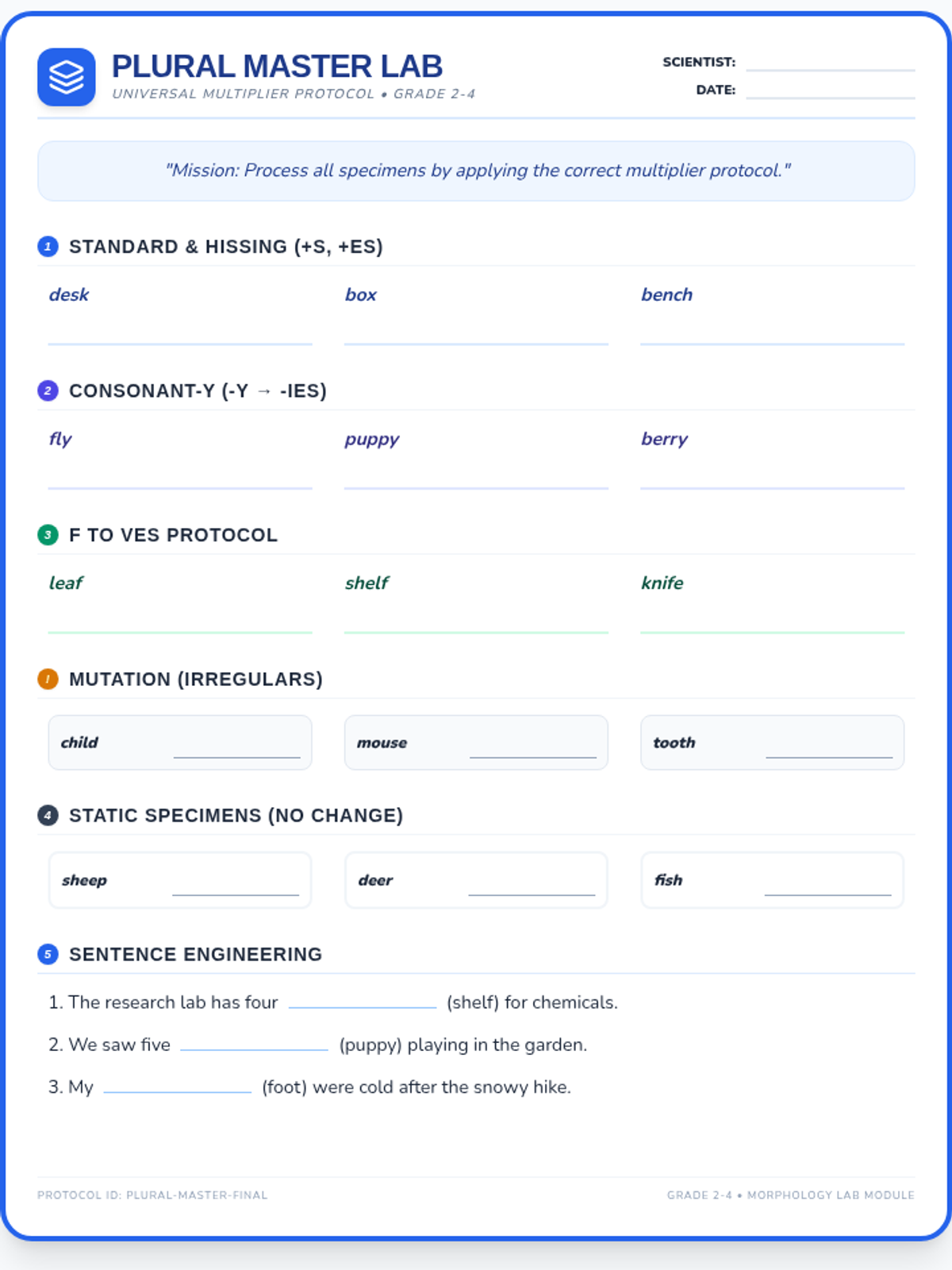
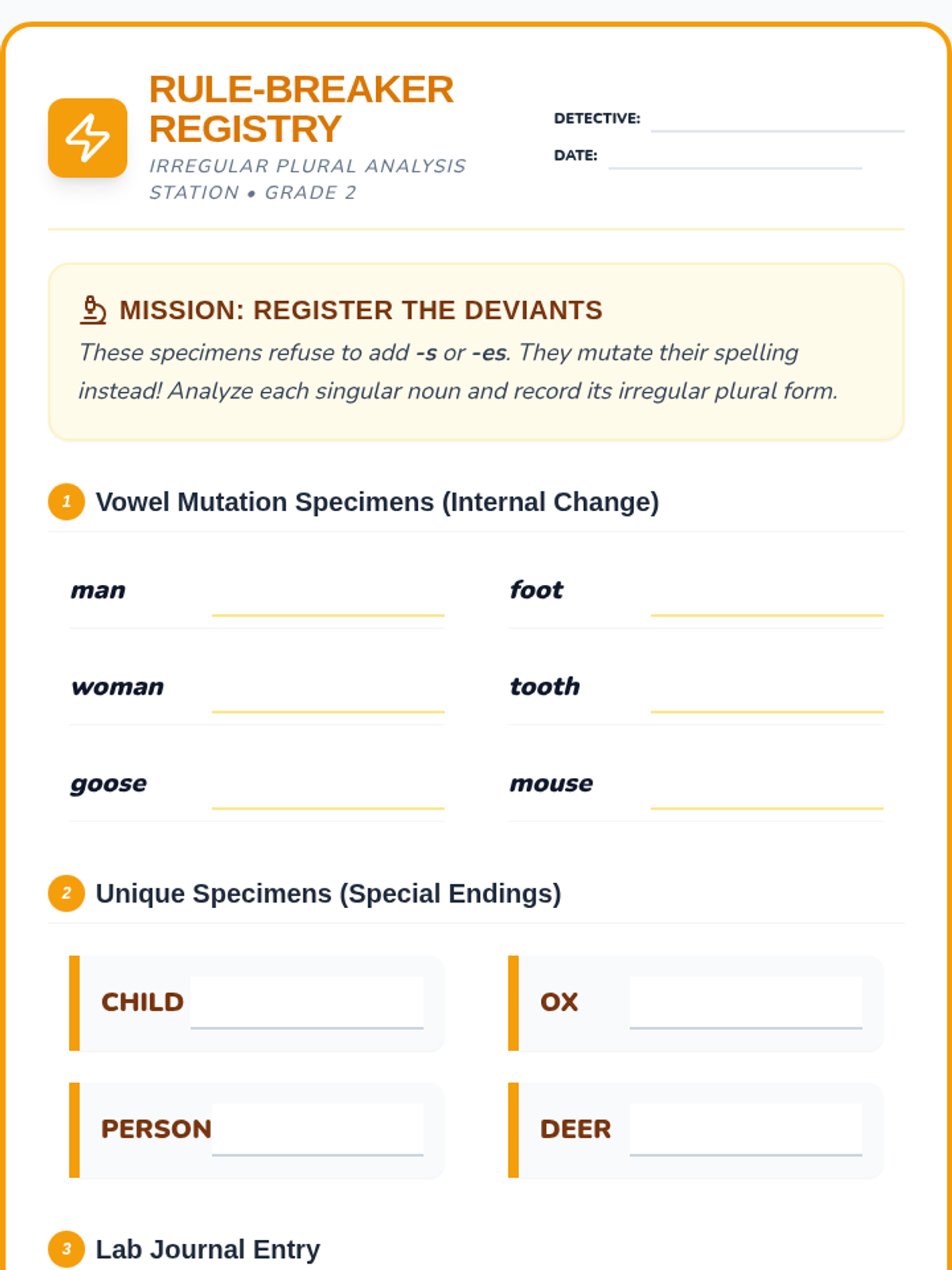
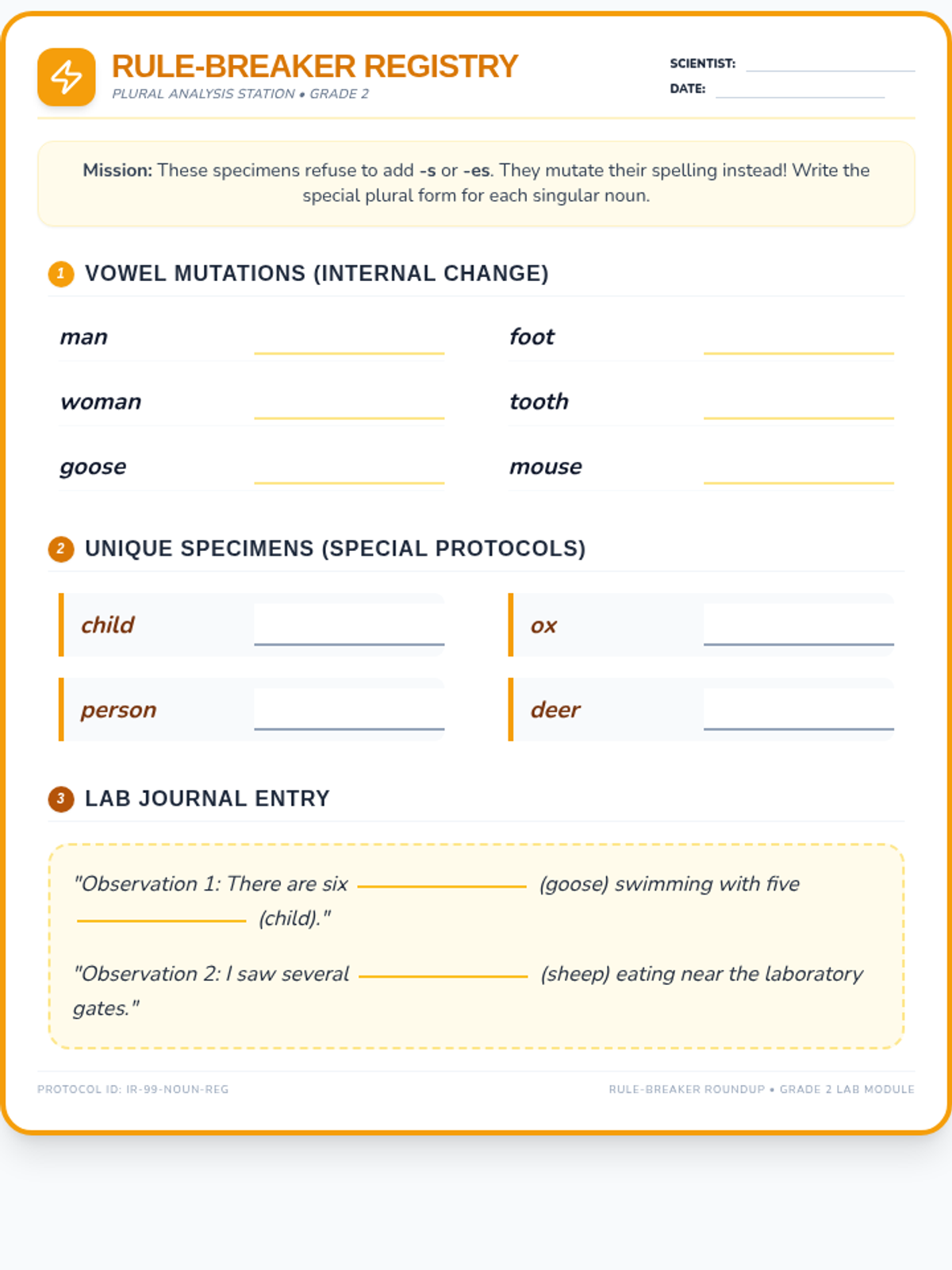
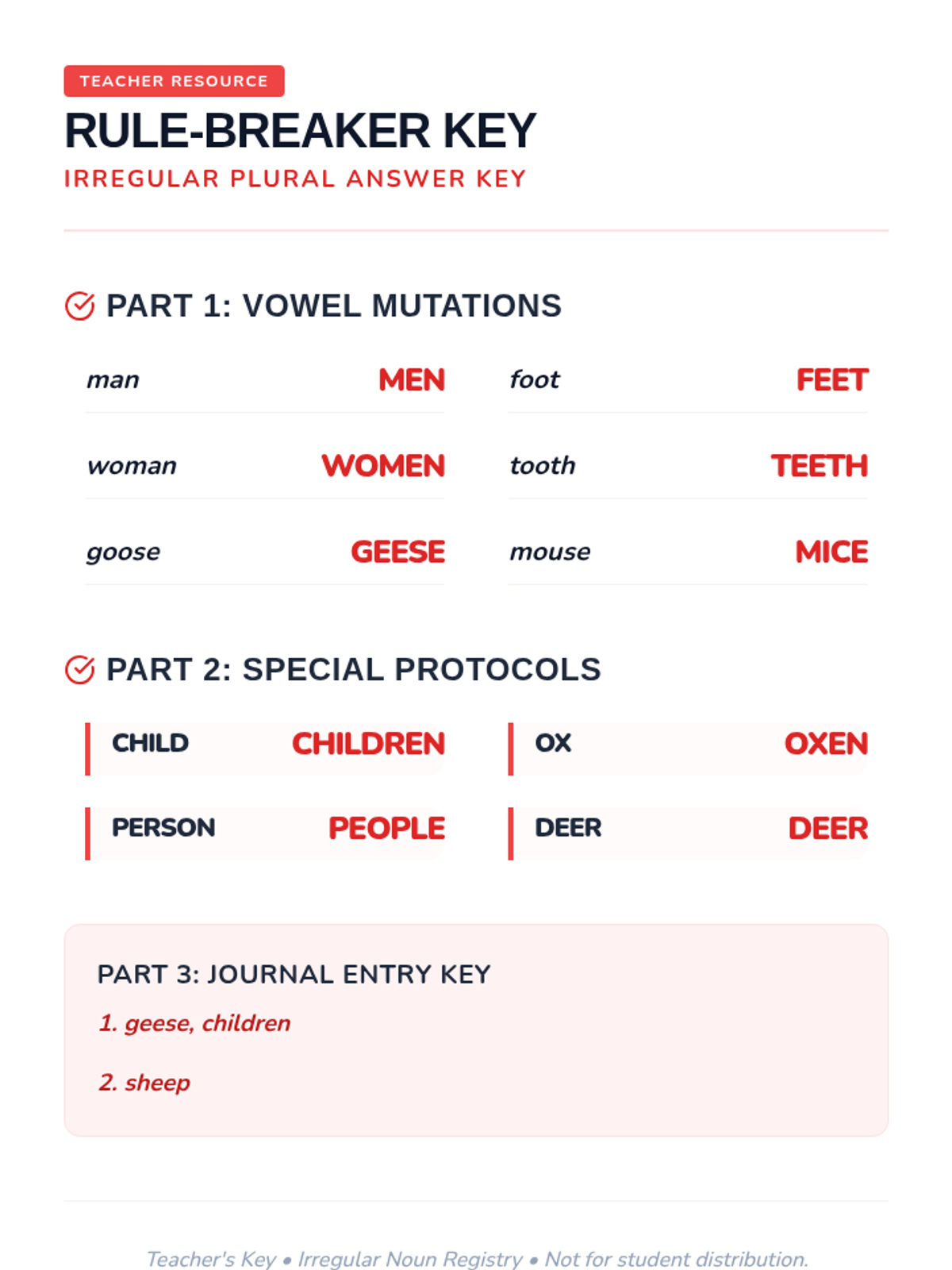
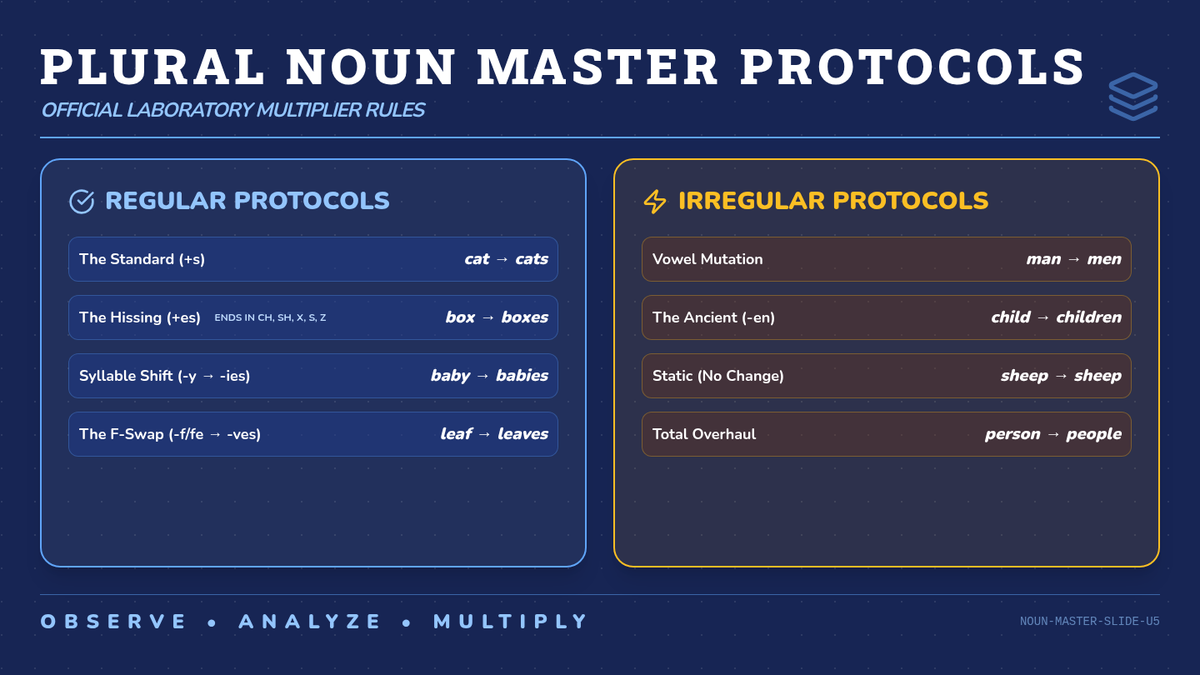
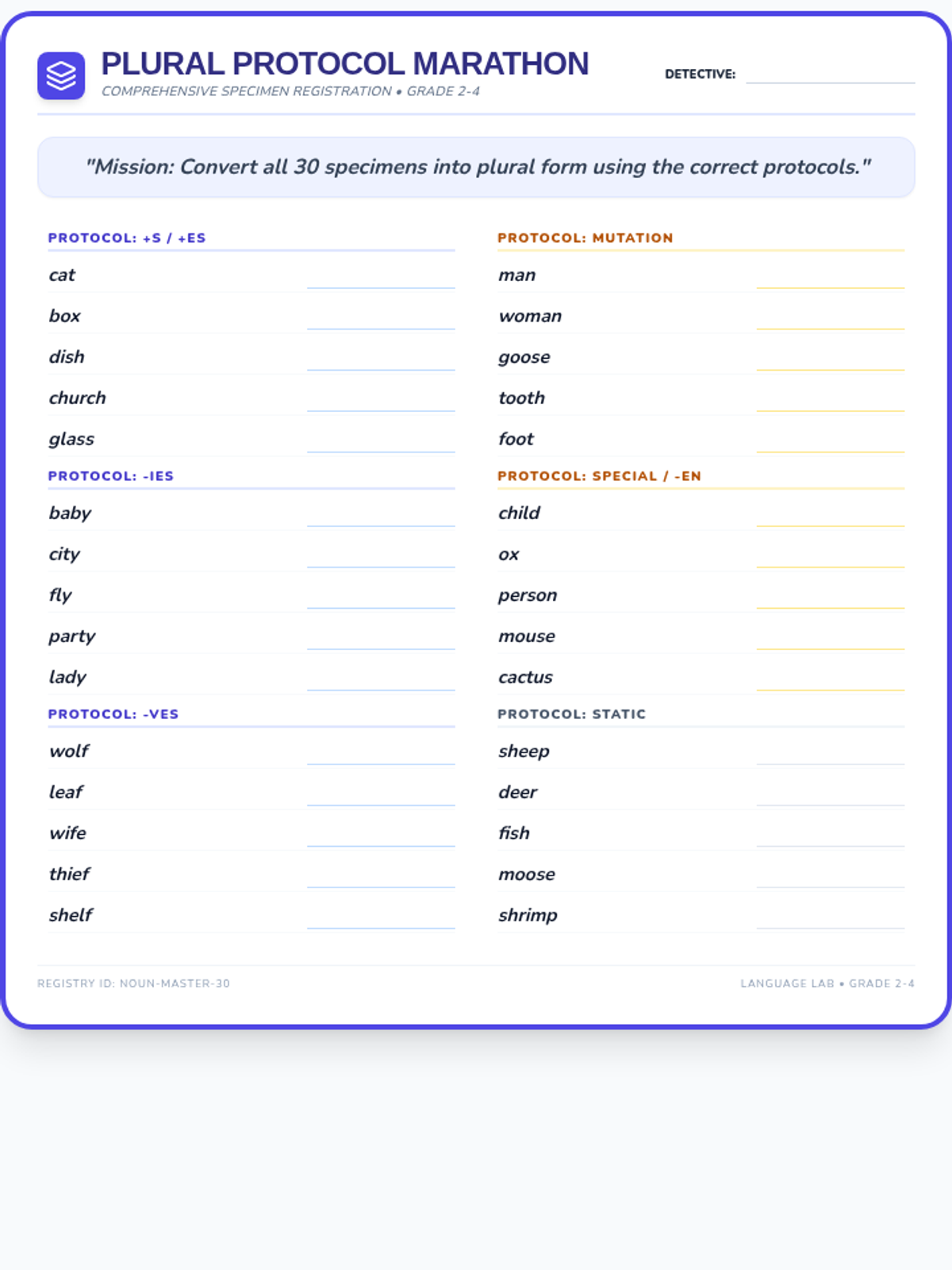
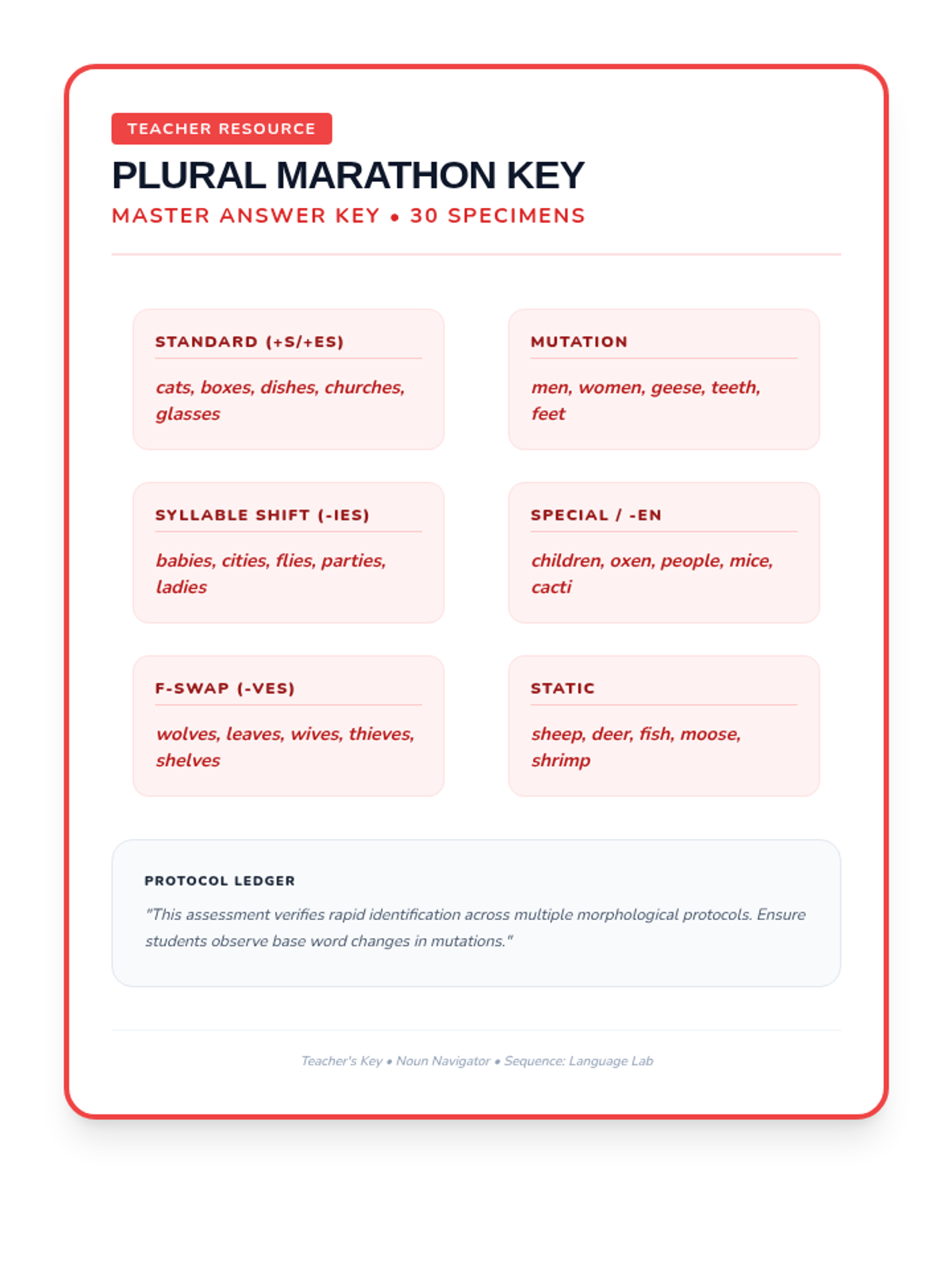
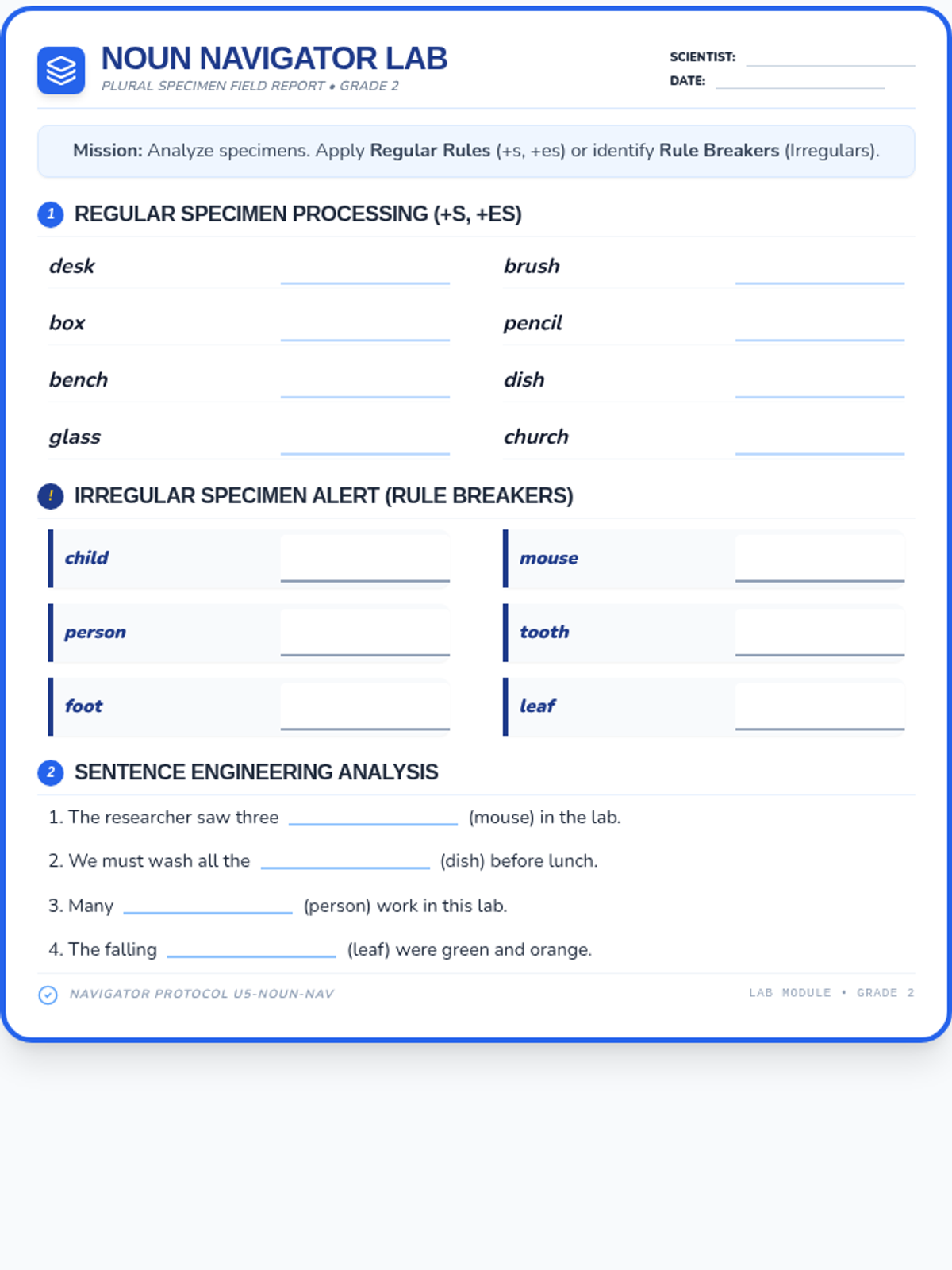
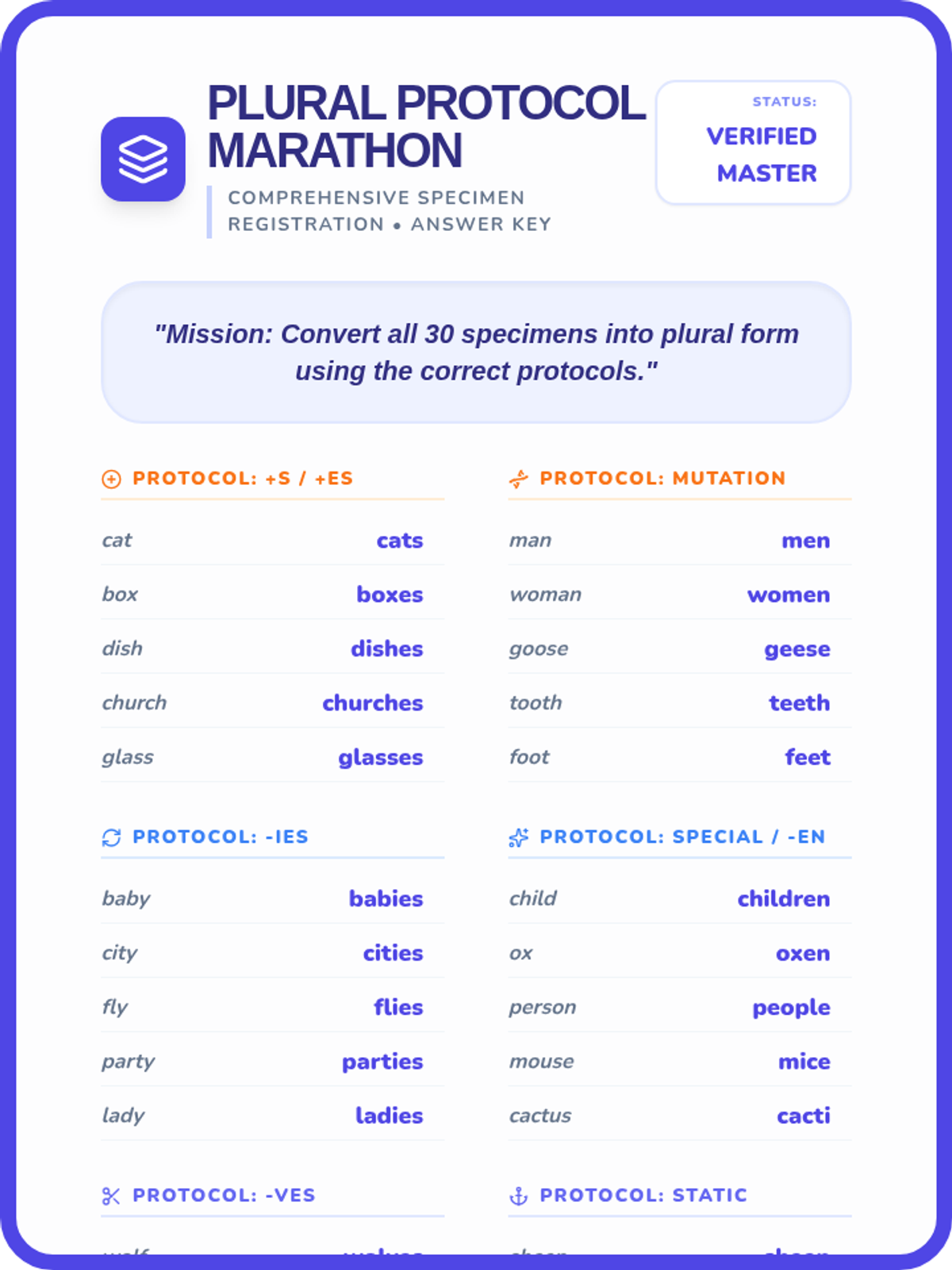
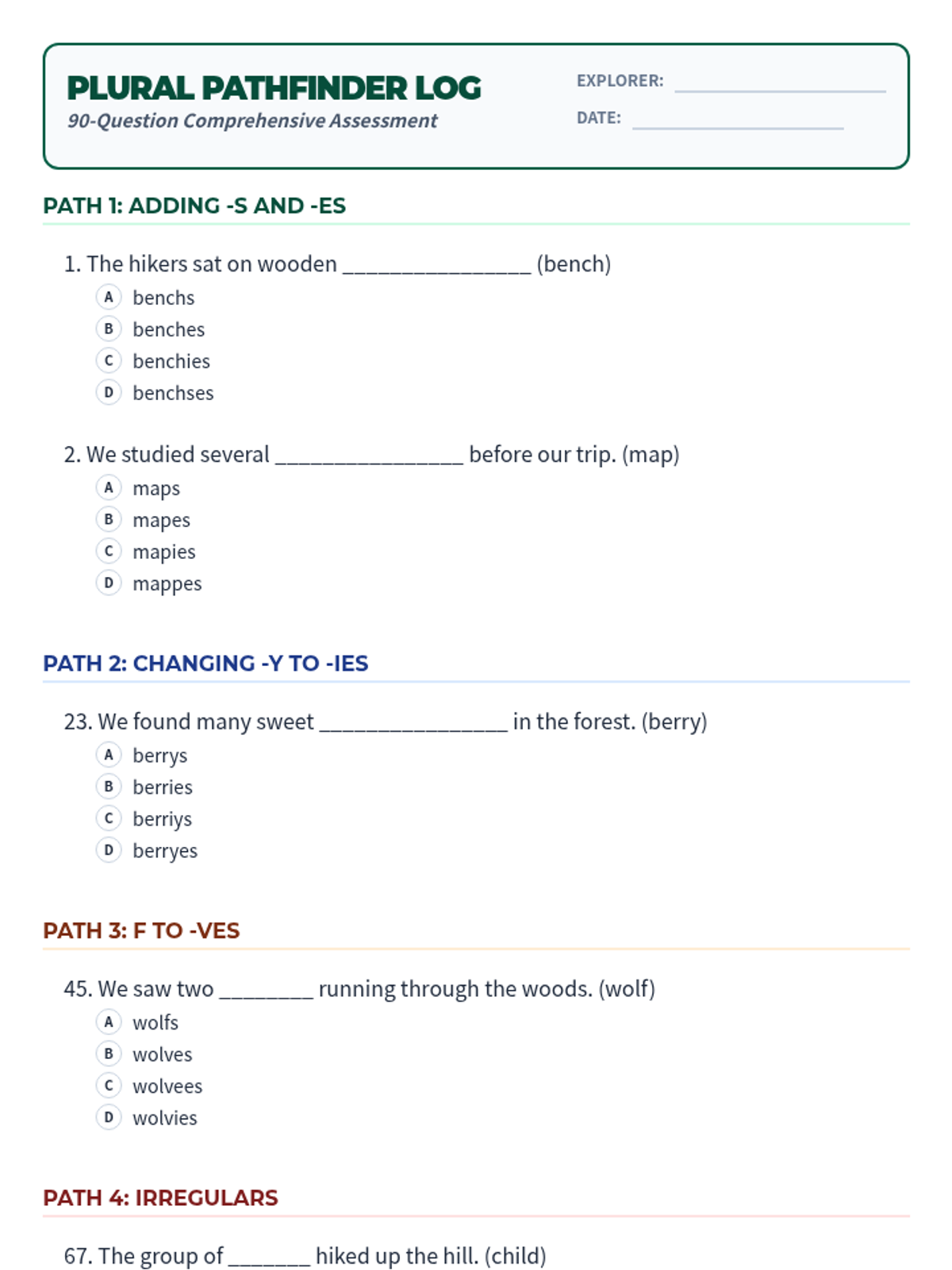
A lesson on identifying and forming plural nouns. Students learn the standard rules for regular plurals (-s, -es, -ies, -ves) and investigate 'rule-breaking' irregular nouns like mice, children, and people.
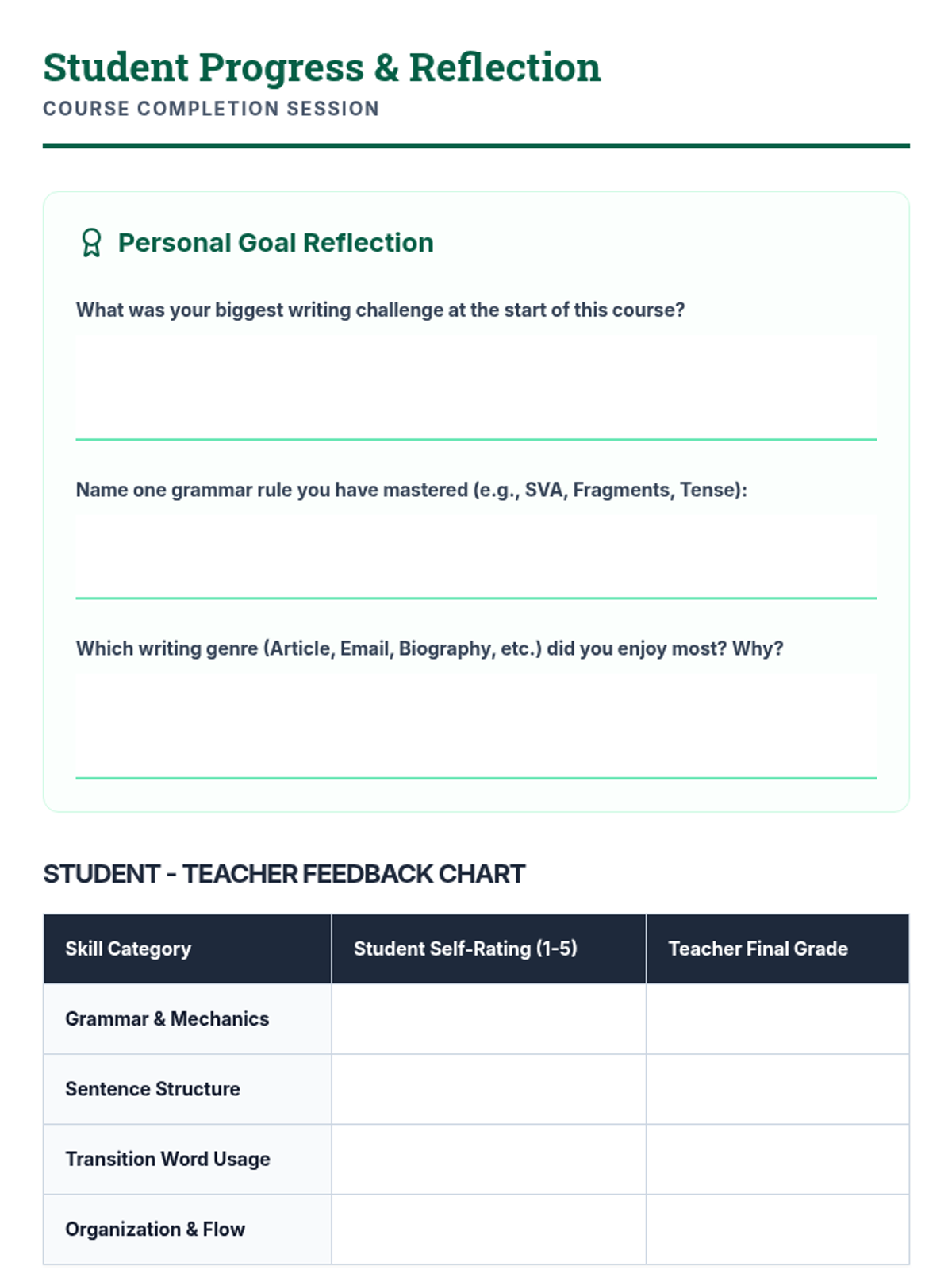
A final evaluation and reflection session including the final assessment, feedback charts, and student-teacher goal reviews.
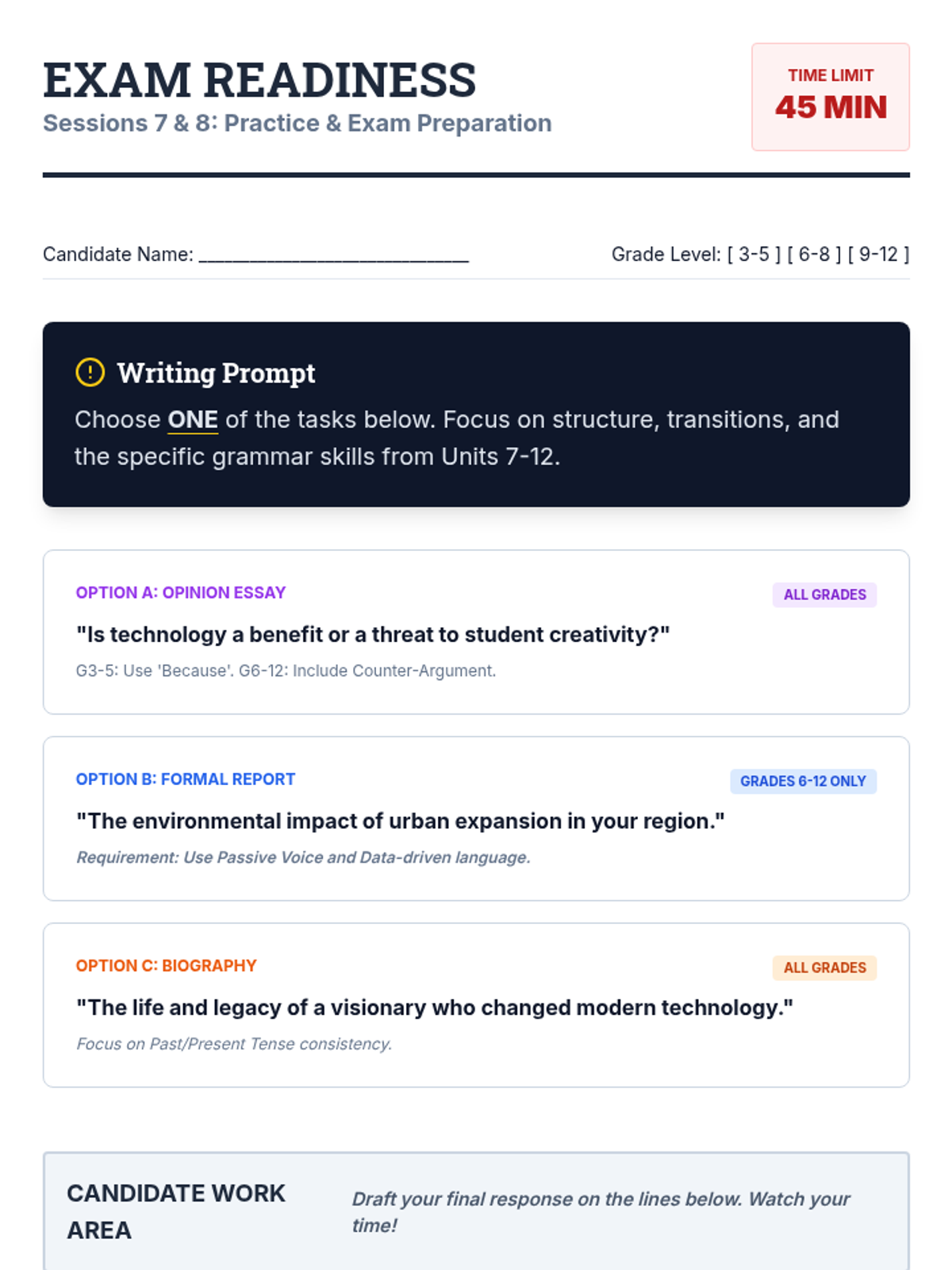
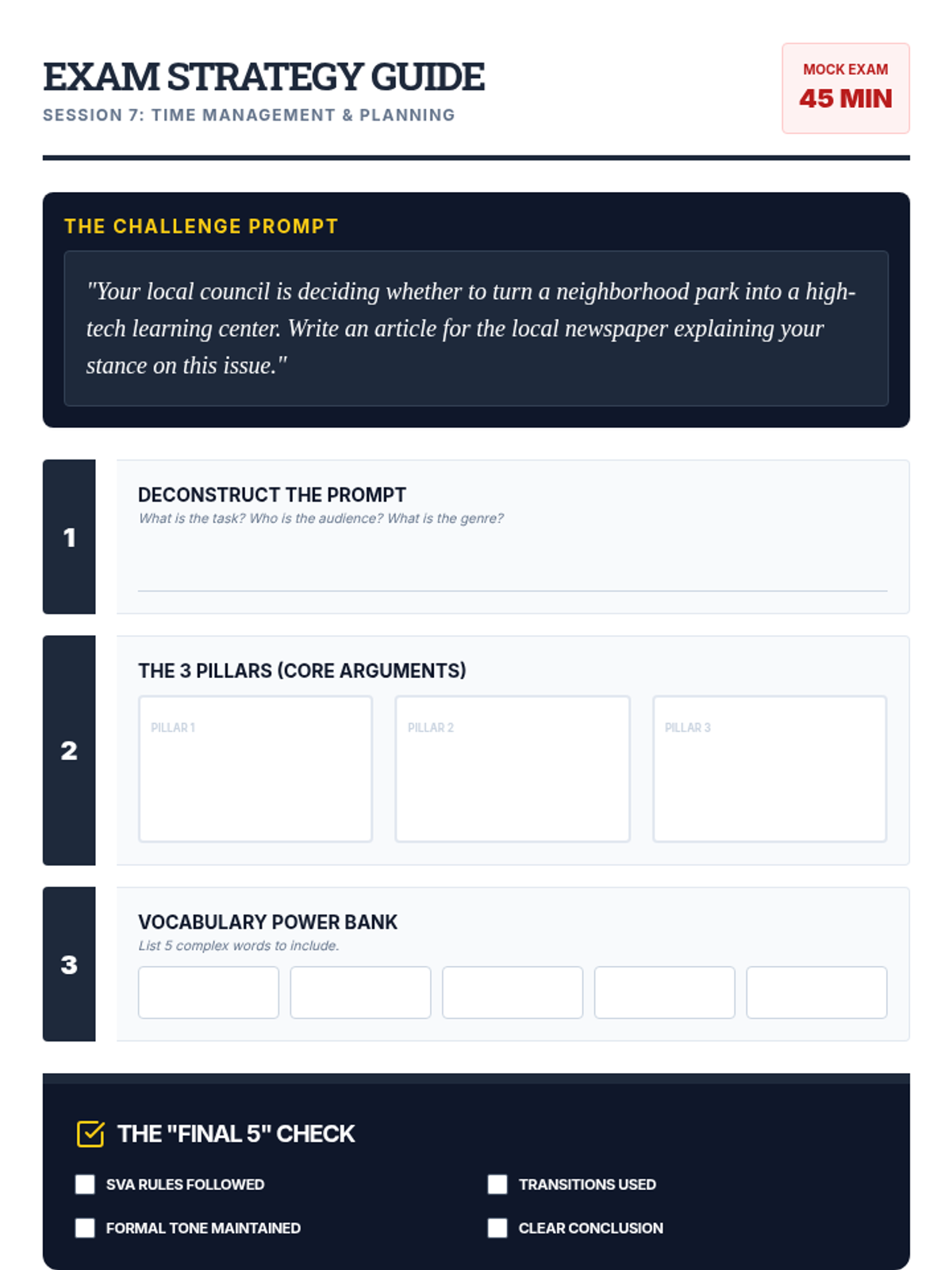
Provides timed writing practice and mock exam conditions to build stamina and review structural clarity.
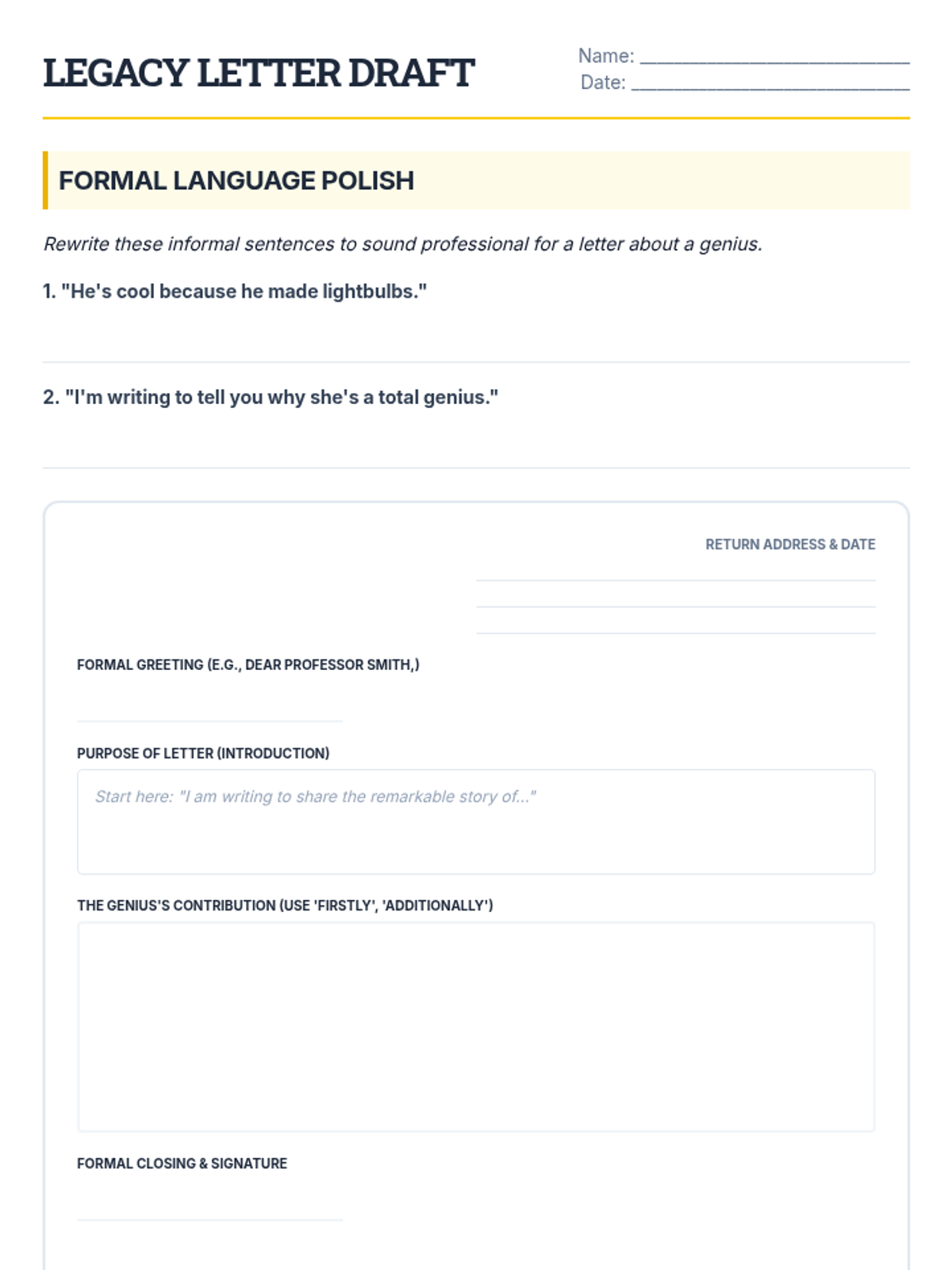
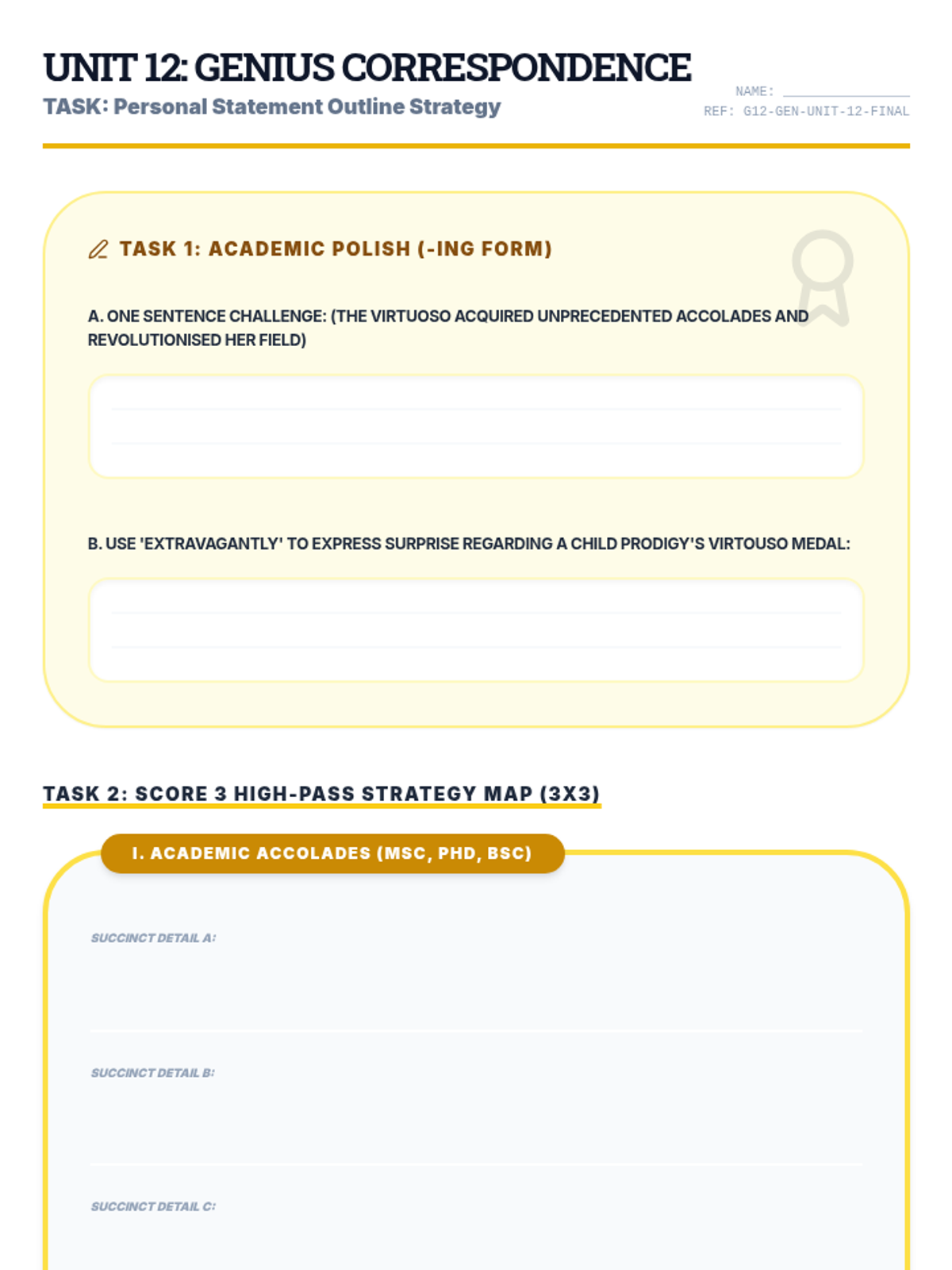
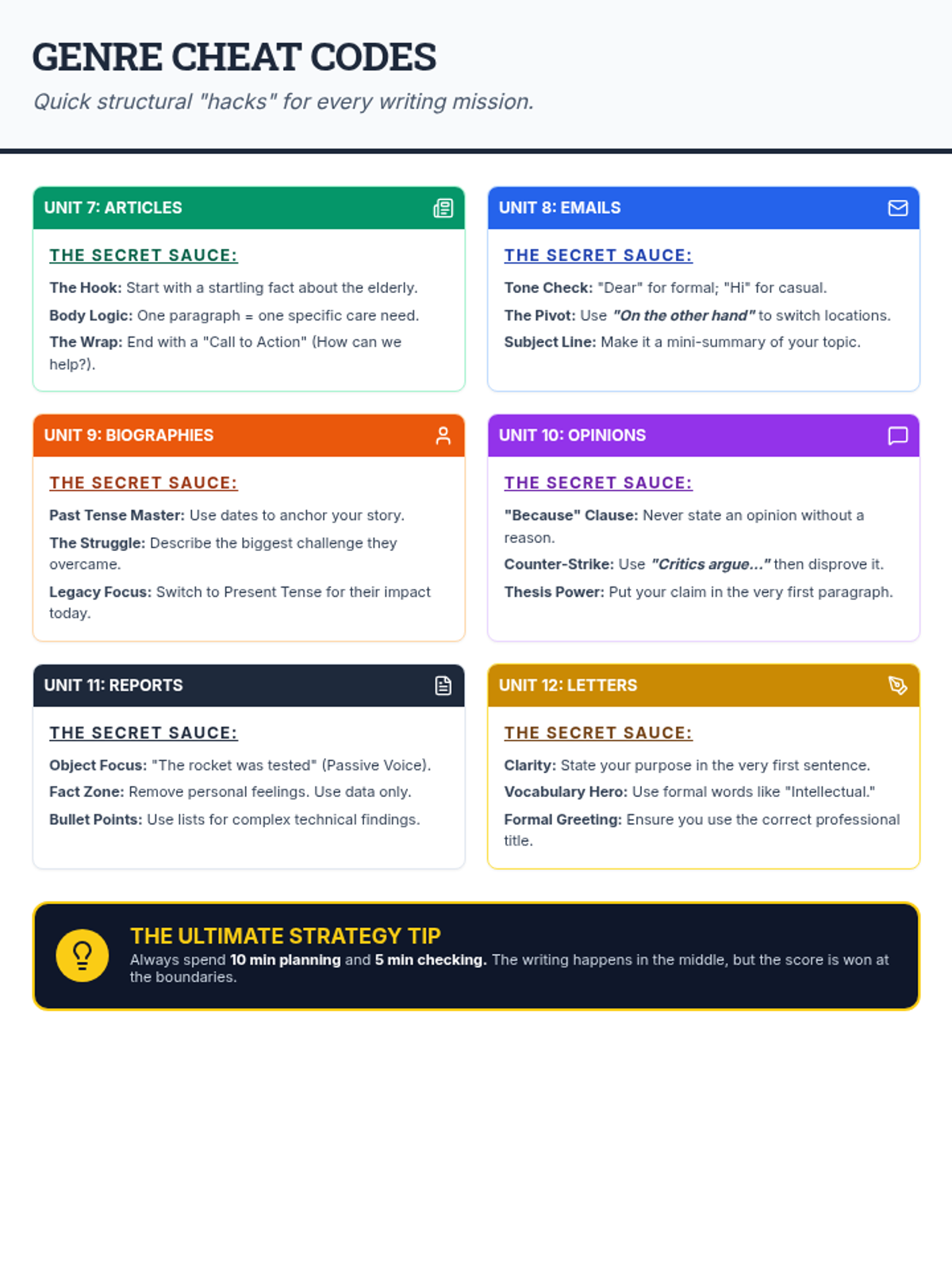
Practices formal letter writing focused on the achievements of geniuses, reinforcing formal tone and structural transitions.
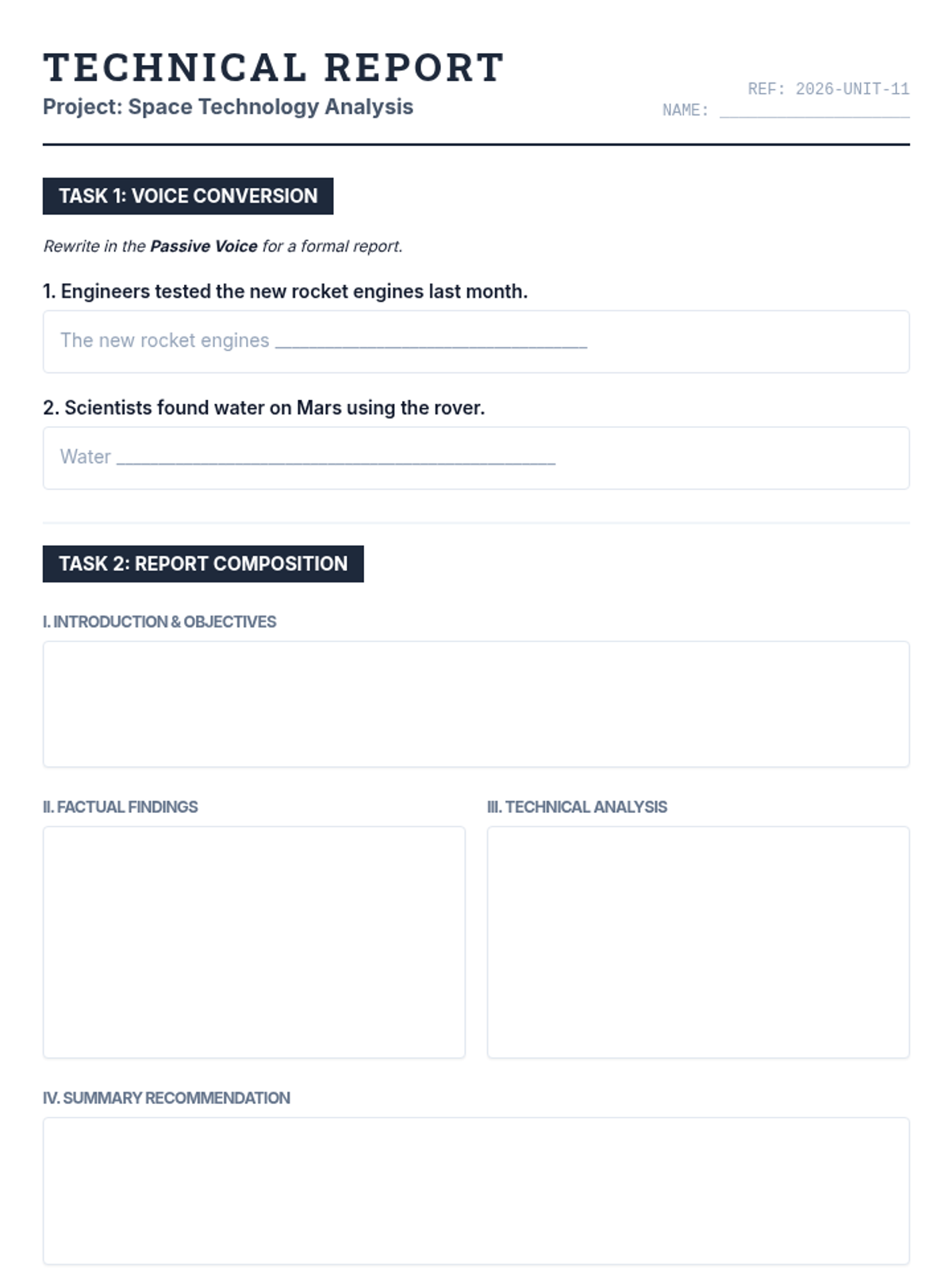
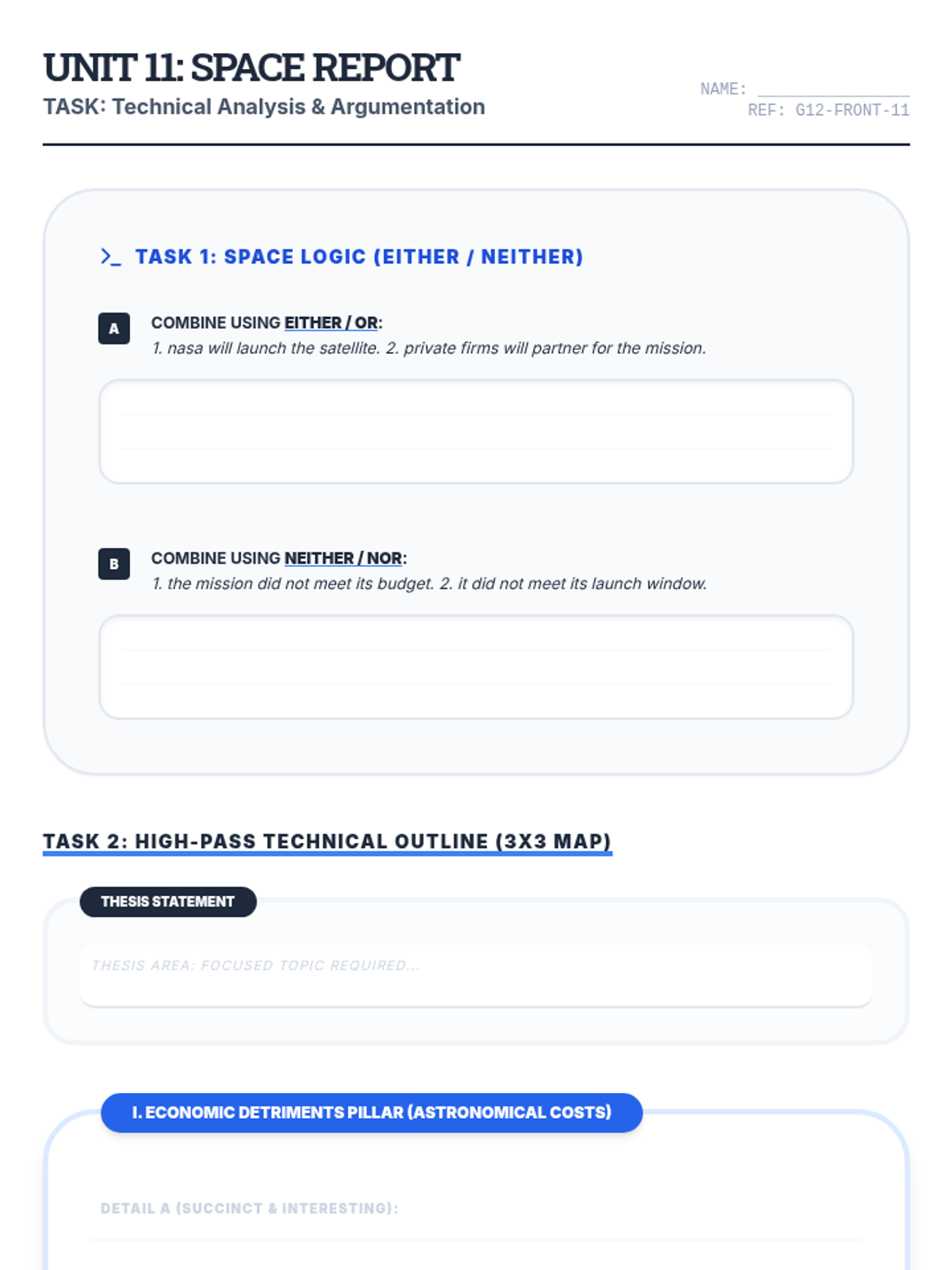
Introduces formal report writing on space technology, emphasizing passive vs. active voice and data-driven analysis.
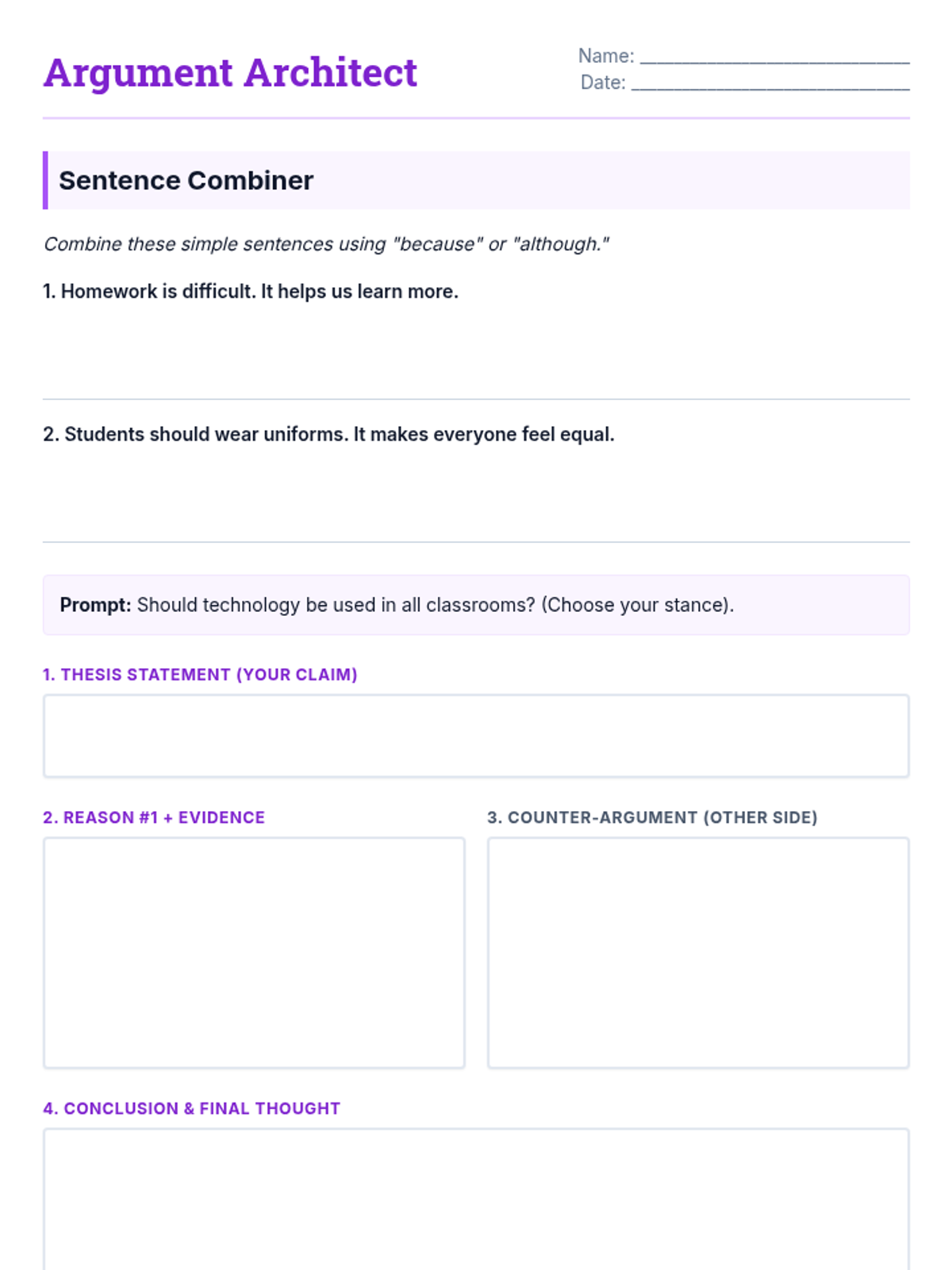
Develops argumentative skills through opinion essays on debatable topics, focusing on conjunctions, counter-arguments, and persuasive transitions.
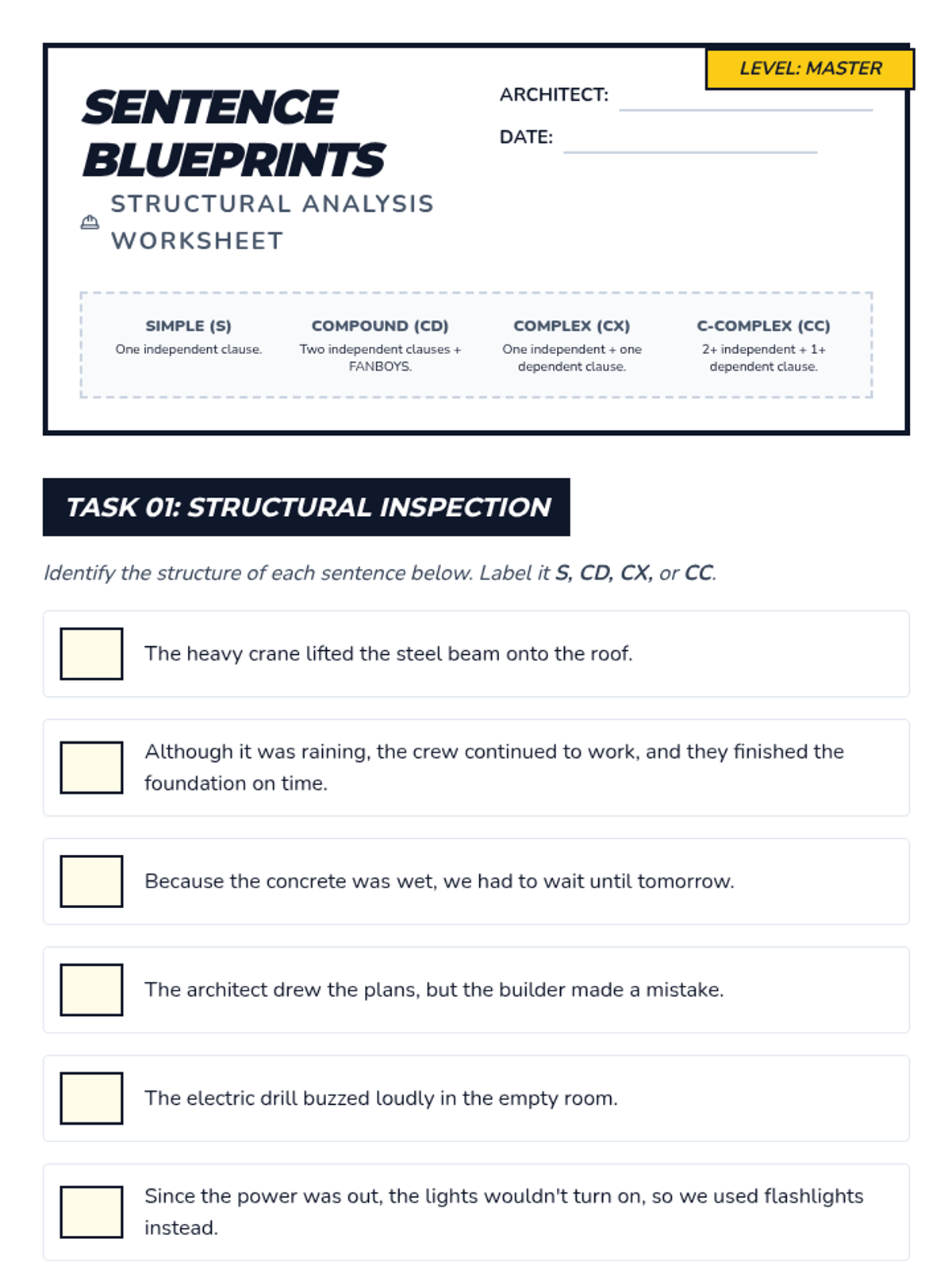
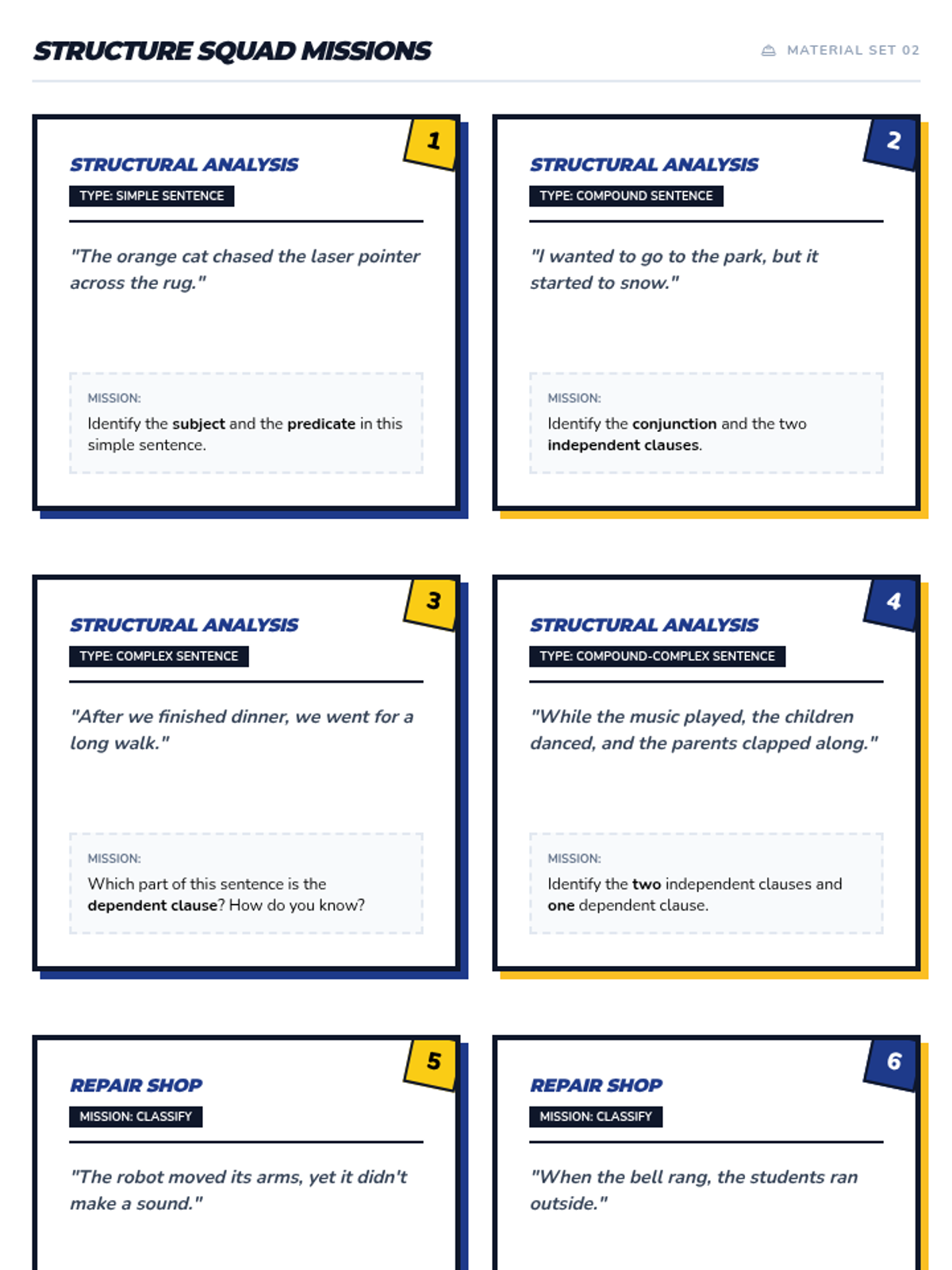
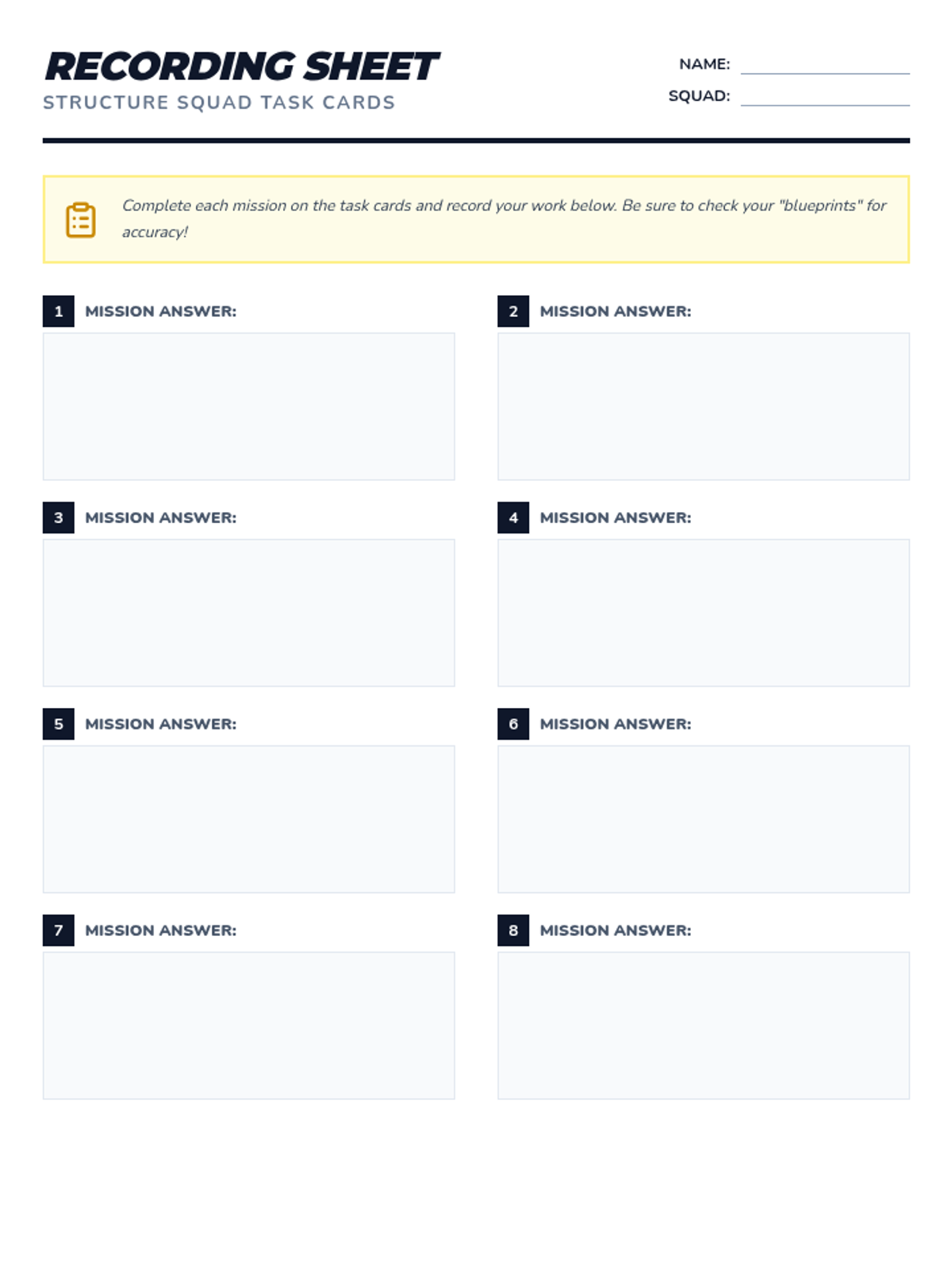
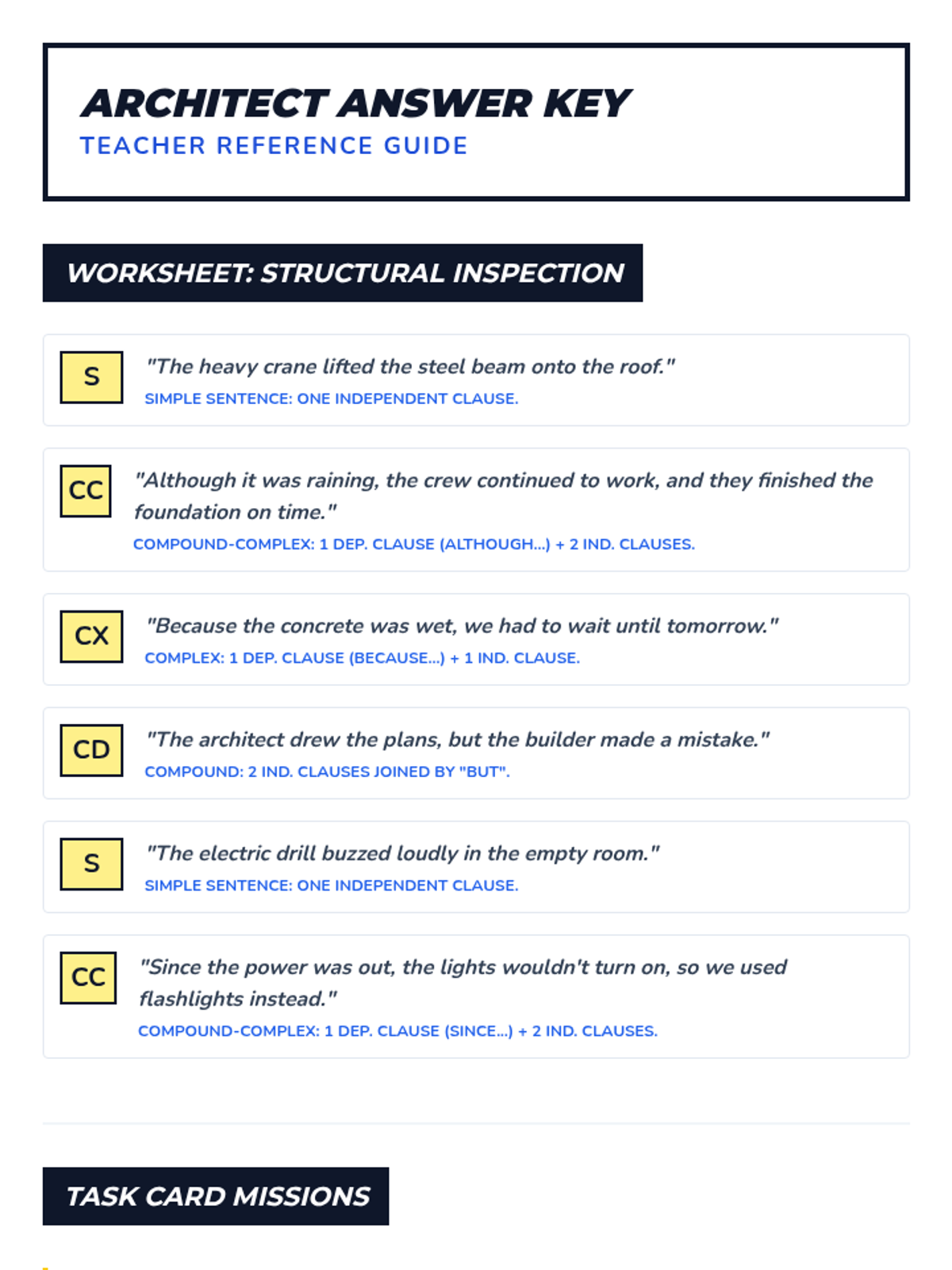
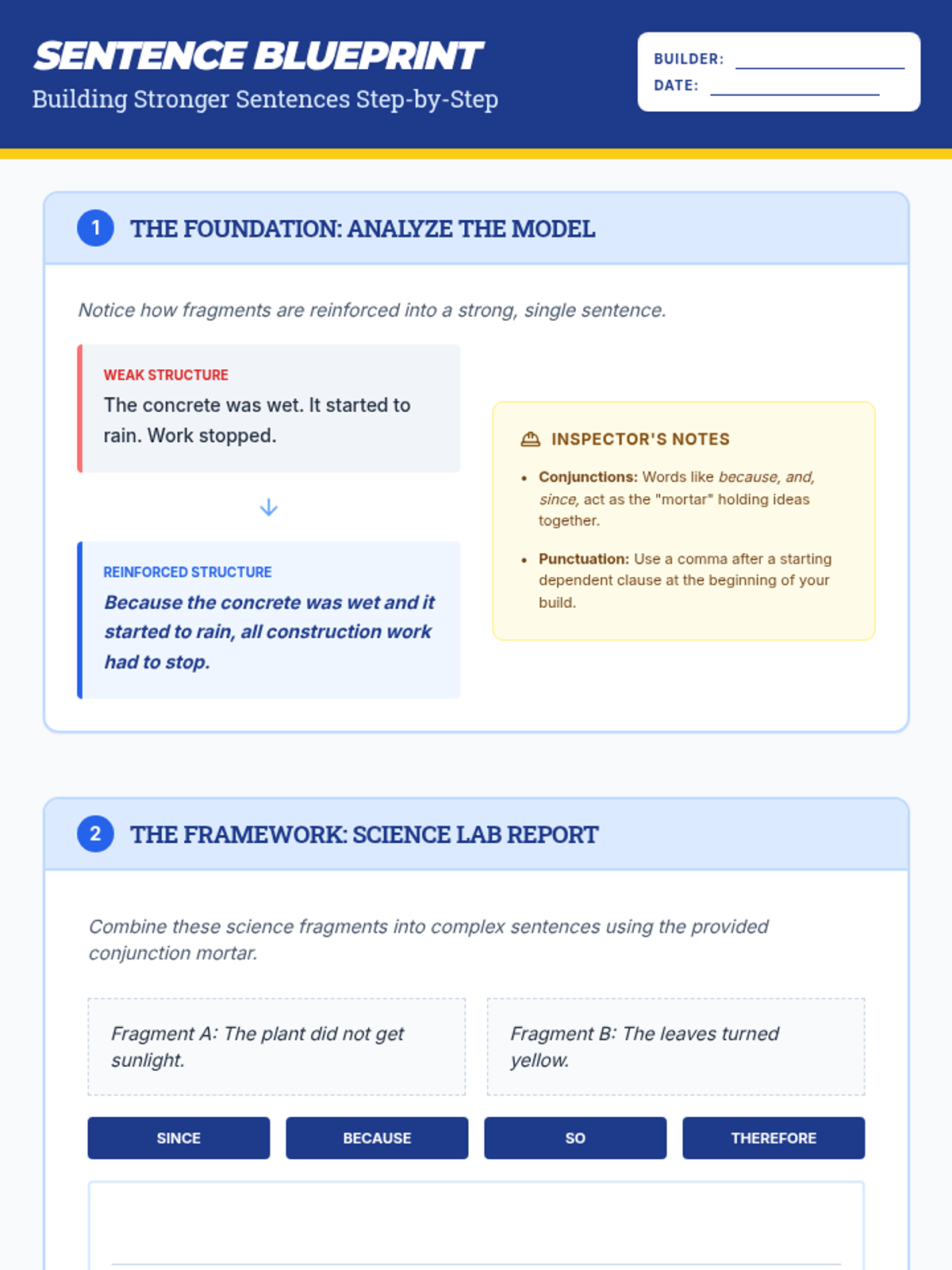
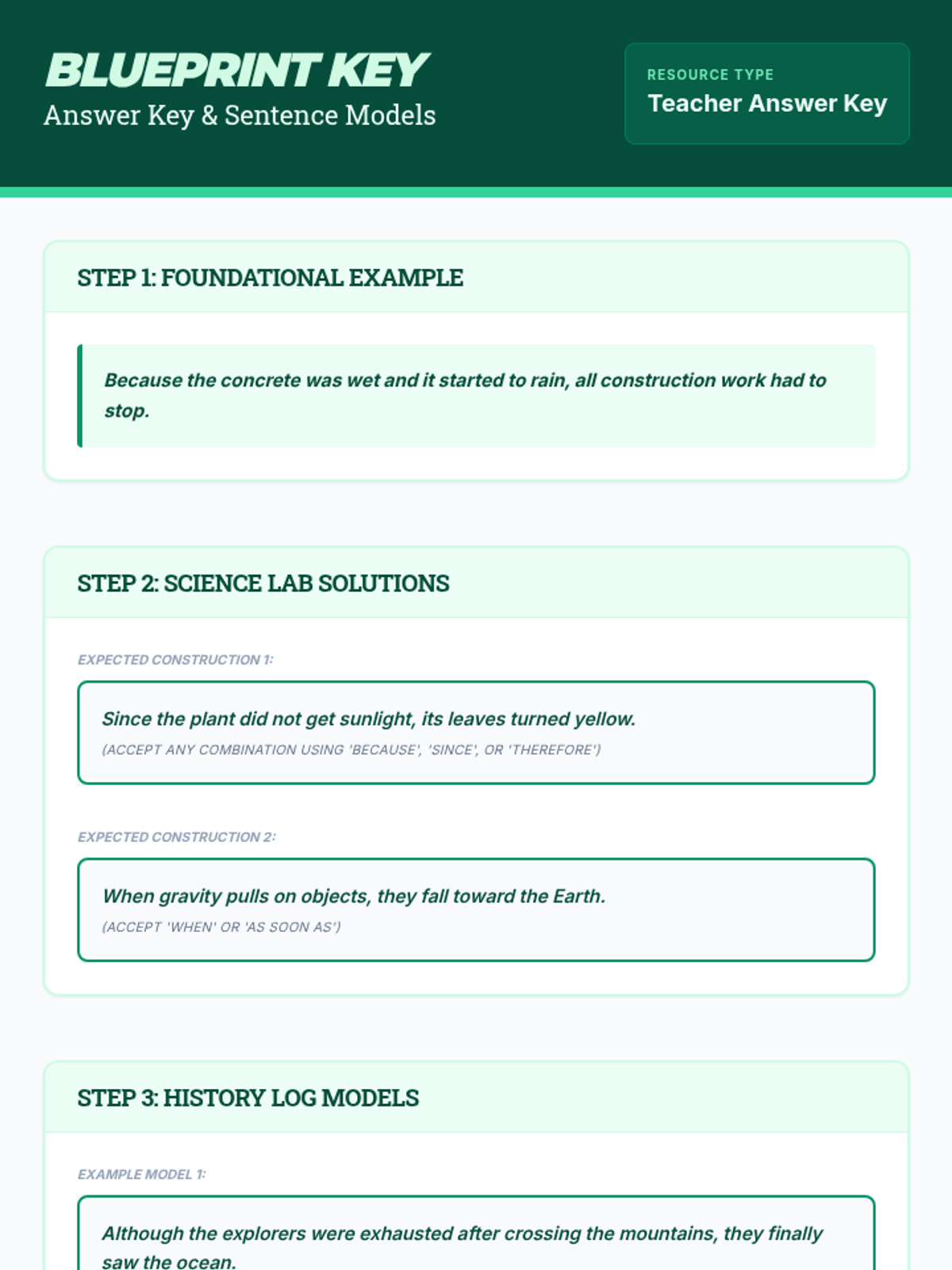
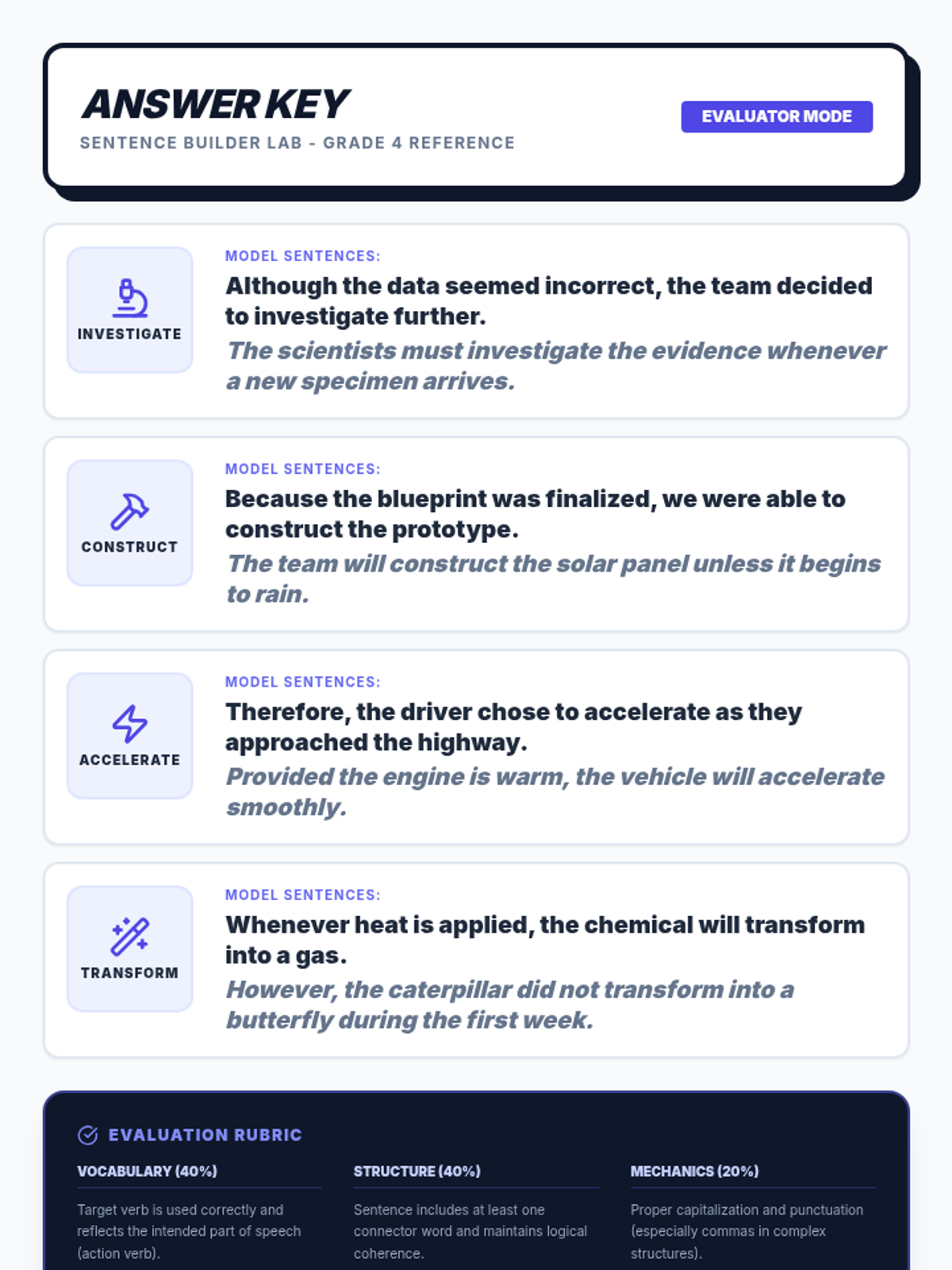
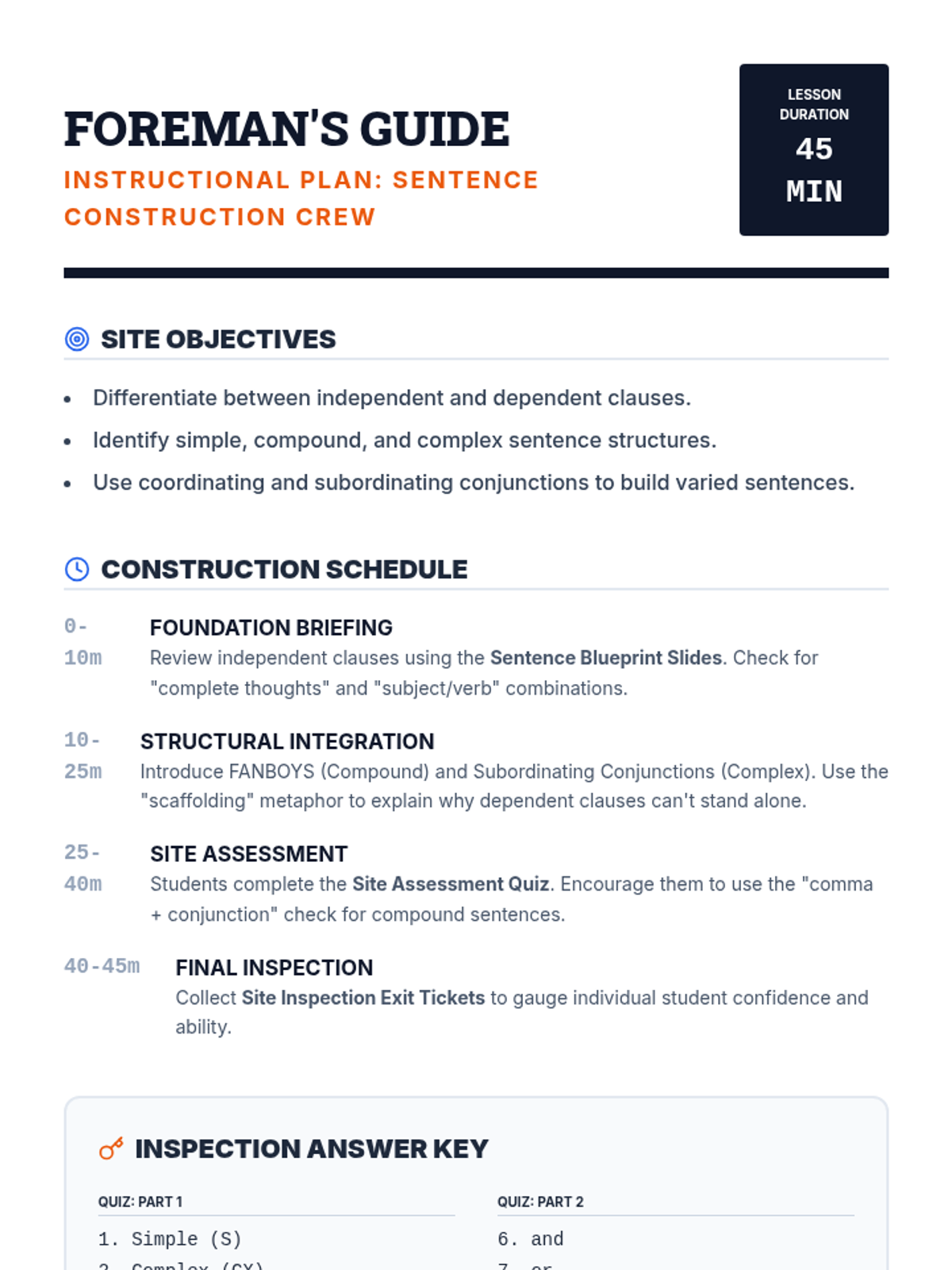
A comprehensive review of sentence structures including simple, compound, complex, and compound-complex sentences using a construction-themed approach. Students will analyze blueprints of sentences and build their own using specific grammatical tools.
Unit 9 Lesson 2 Do Now focusing on focused structure in a solar eclipse passage and editing dialogue punctuation and complex sentences in a formal letter.
Unit 9 Lesson 1 Do Now focusing on developing engaging ideas in a baking narrative and editing capitalization and spelling for a Texas state parks report.
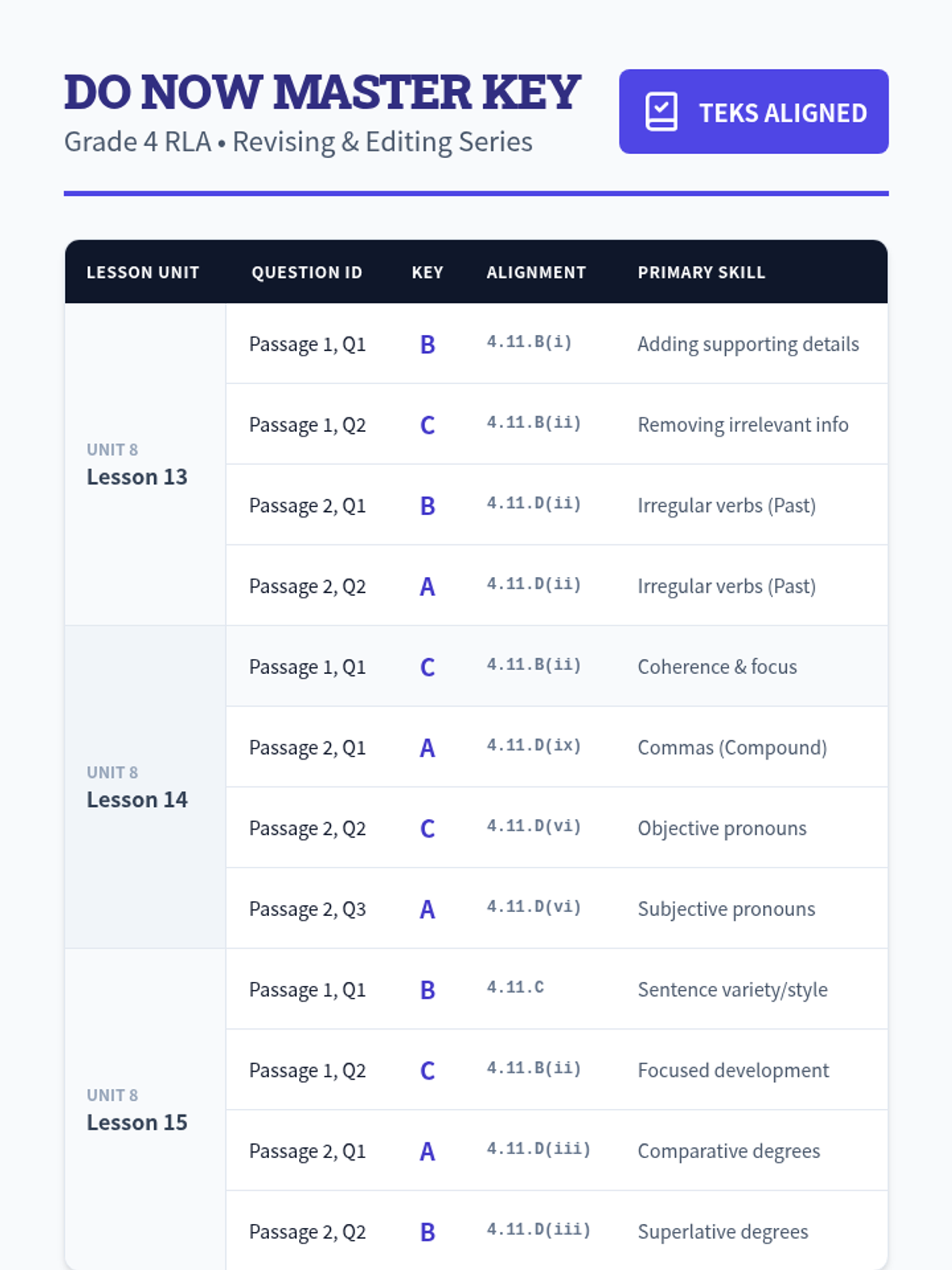
Unit 8 Lesson 15 Do Now focusing on improving sentence variety in a science fair passage and editing adjectives and prepositions in a mountain climbing journal.
Unit 8 Lesson 14 Do Now focusing on passage organization for a sea turtle conservation story and editing compound sentences and pronouns in a school play description.
Unit 8 Lesson 13 Do Now focusing on adding details to a passage about a community garden and editing irregular verbs in a museum trip narrative.
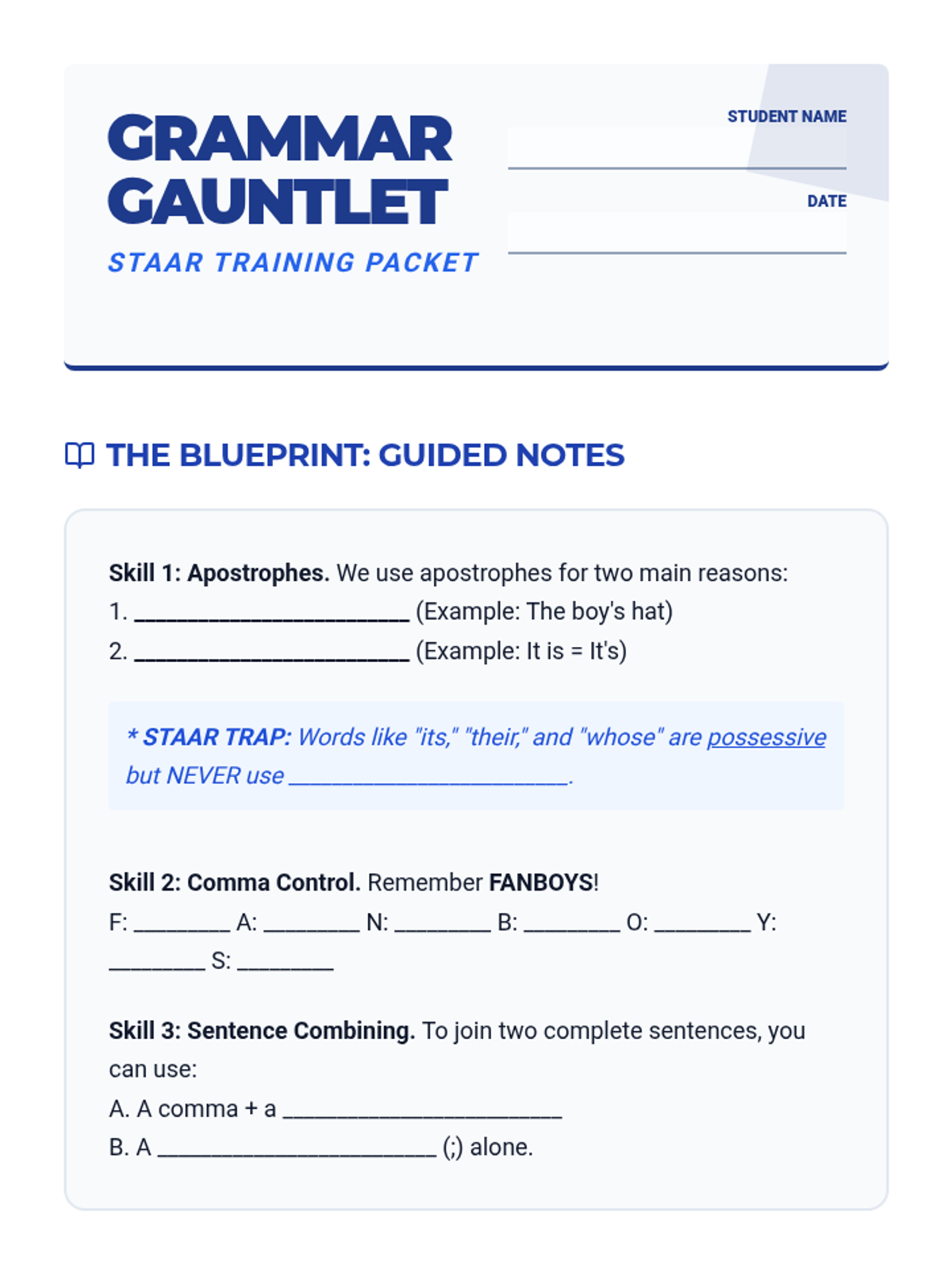
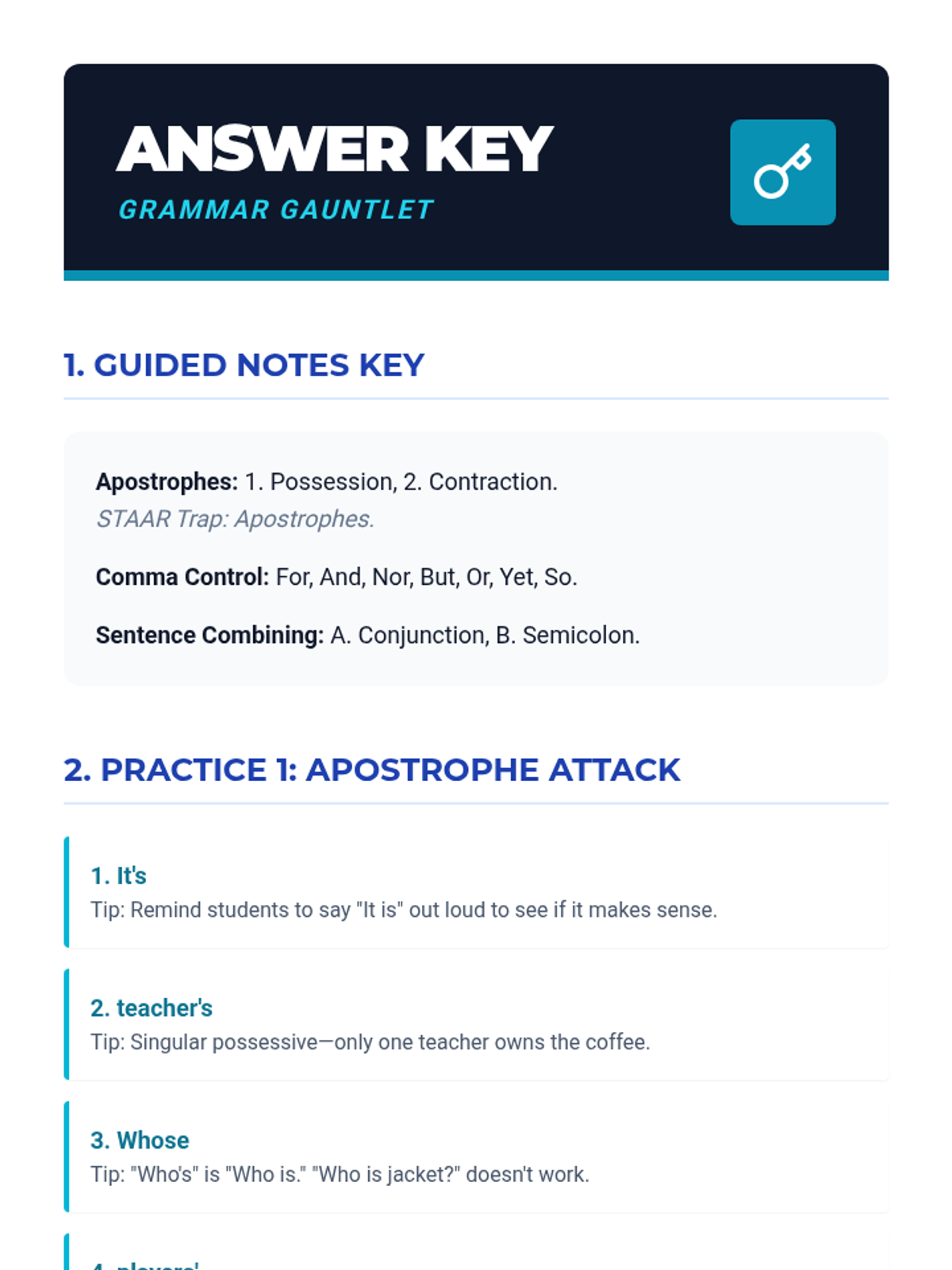
A high-impact tutoring session focused on STAAR writing skills, specifically targeting apostrophes, comma rules, and sentence combining through direct instruction and intensive practice.
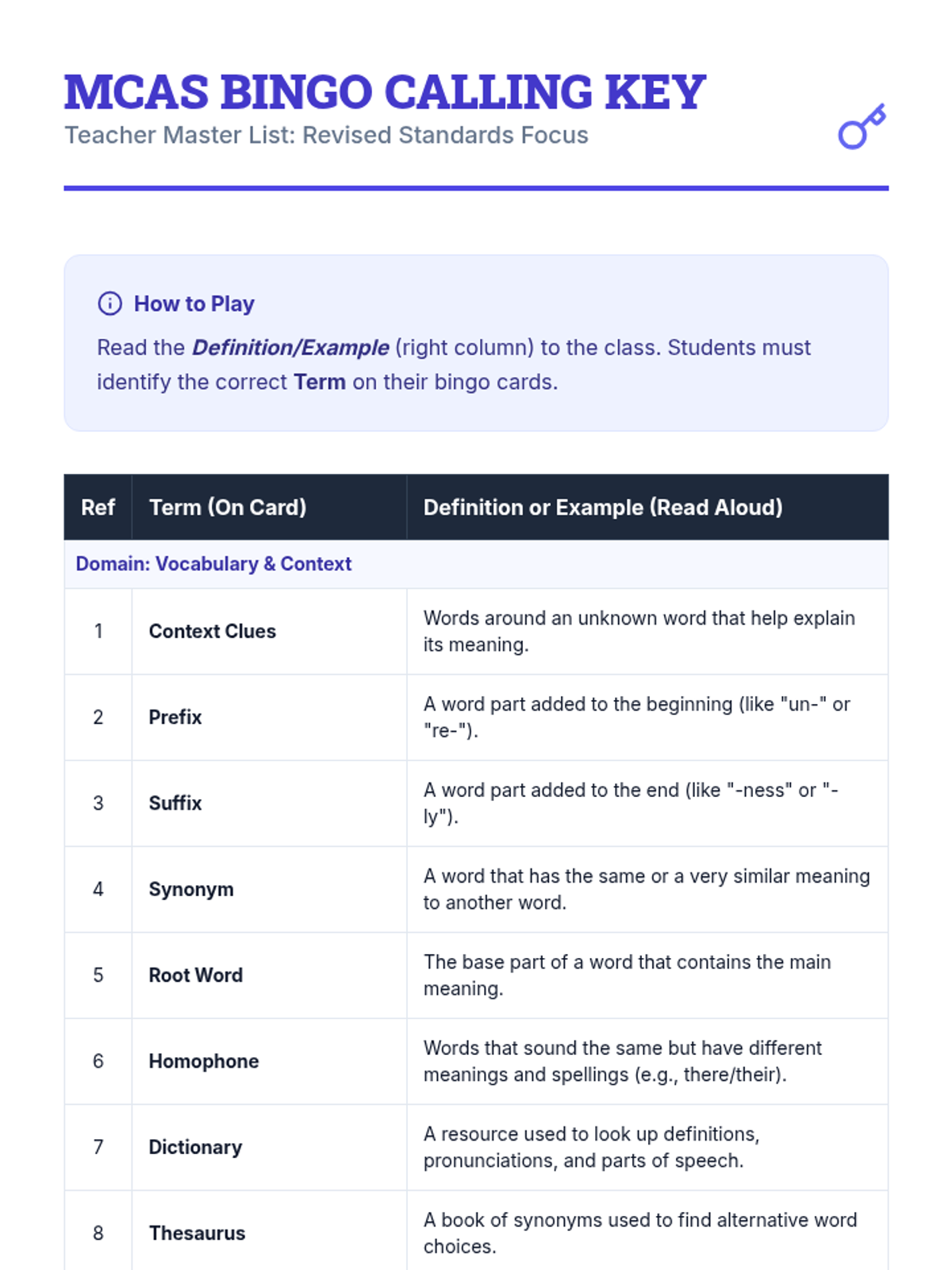
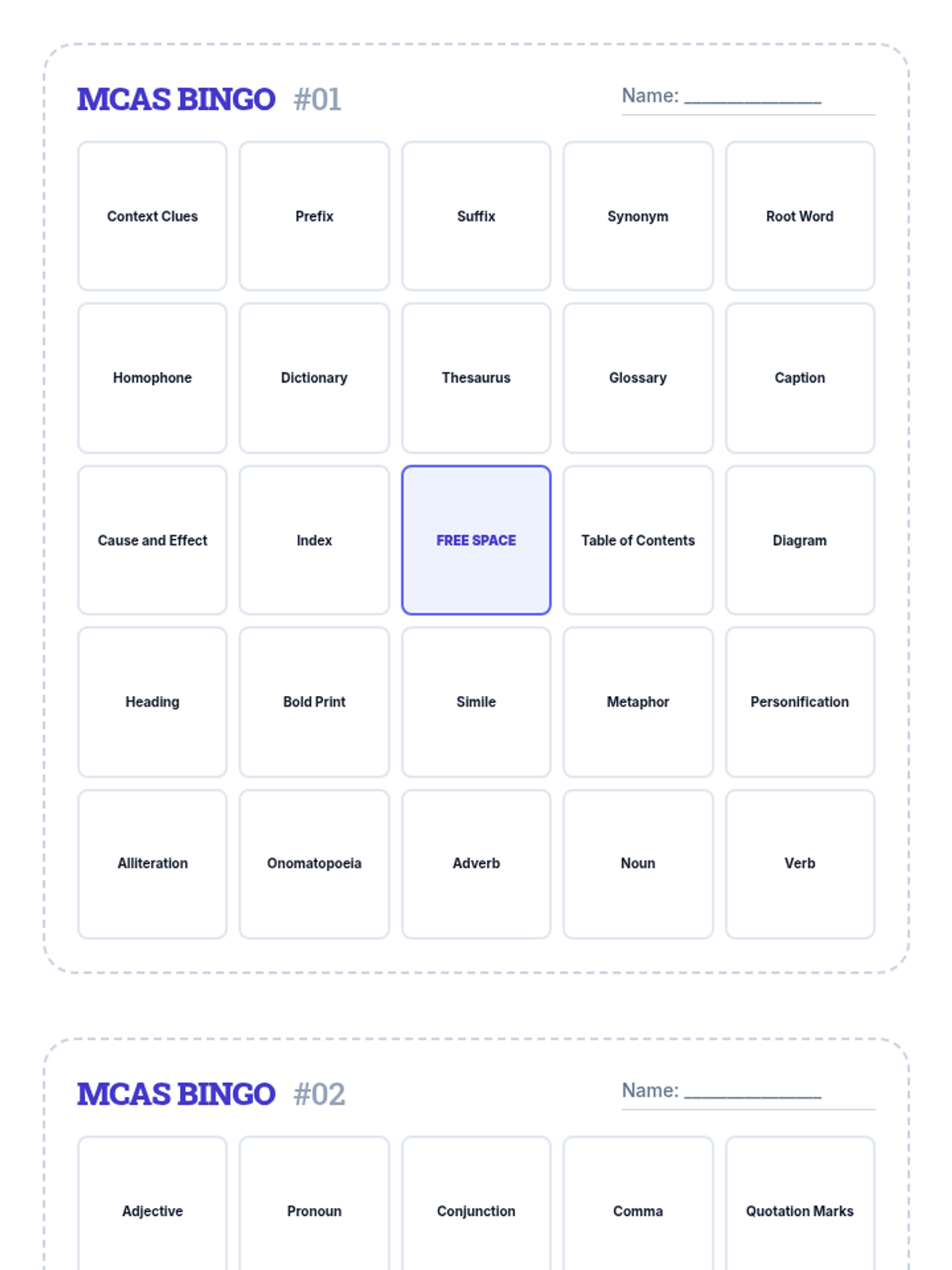
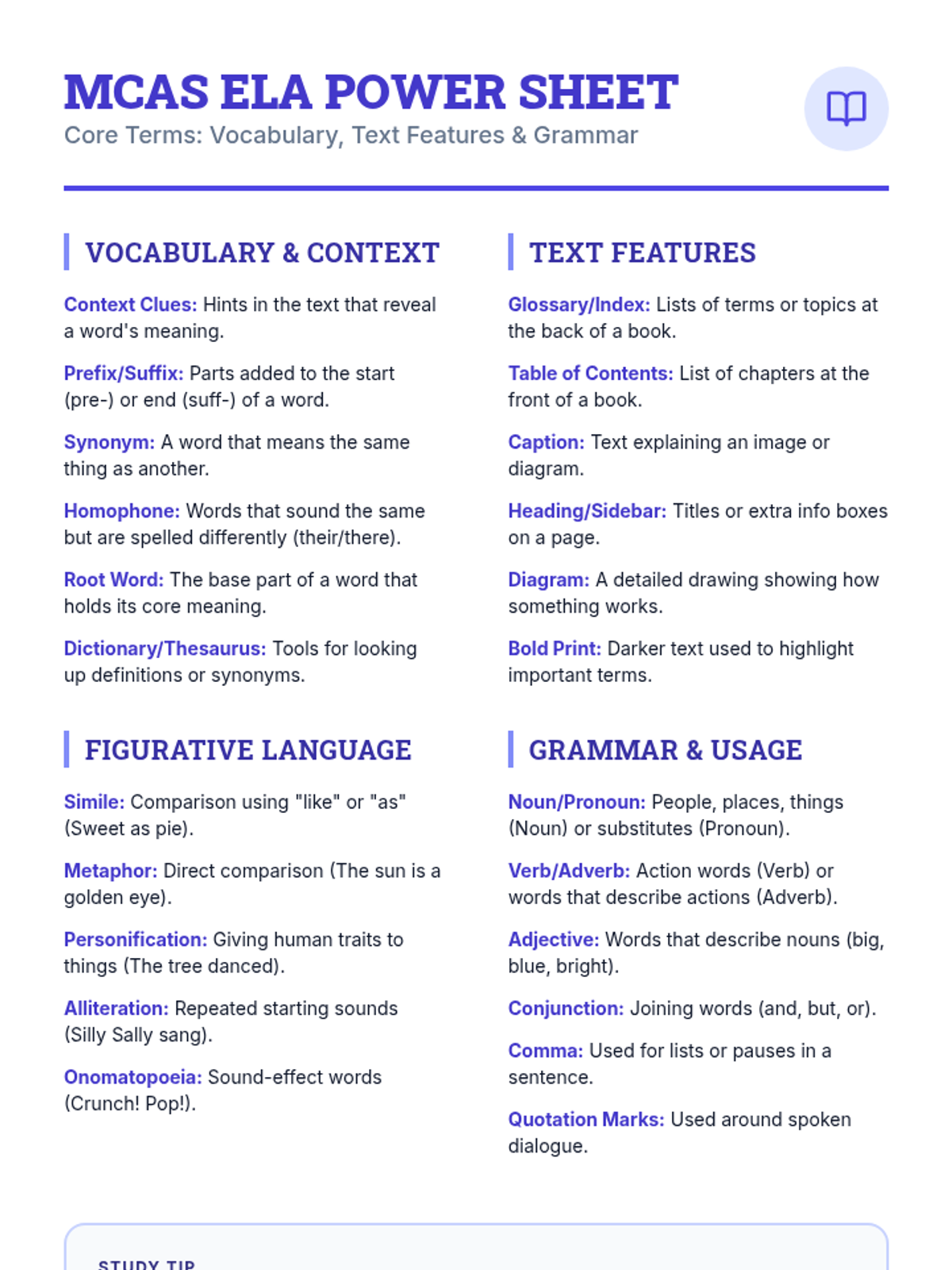
A comprehensive ELA review game designed to help students master MCAS standards through a competitive and engaging bingo format. The lesson covers vocabulary, literary elements, text structures, and grammar.
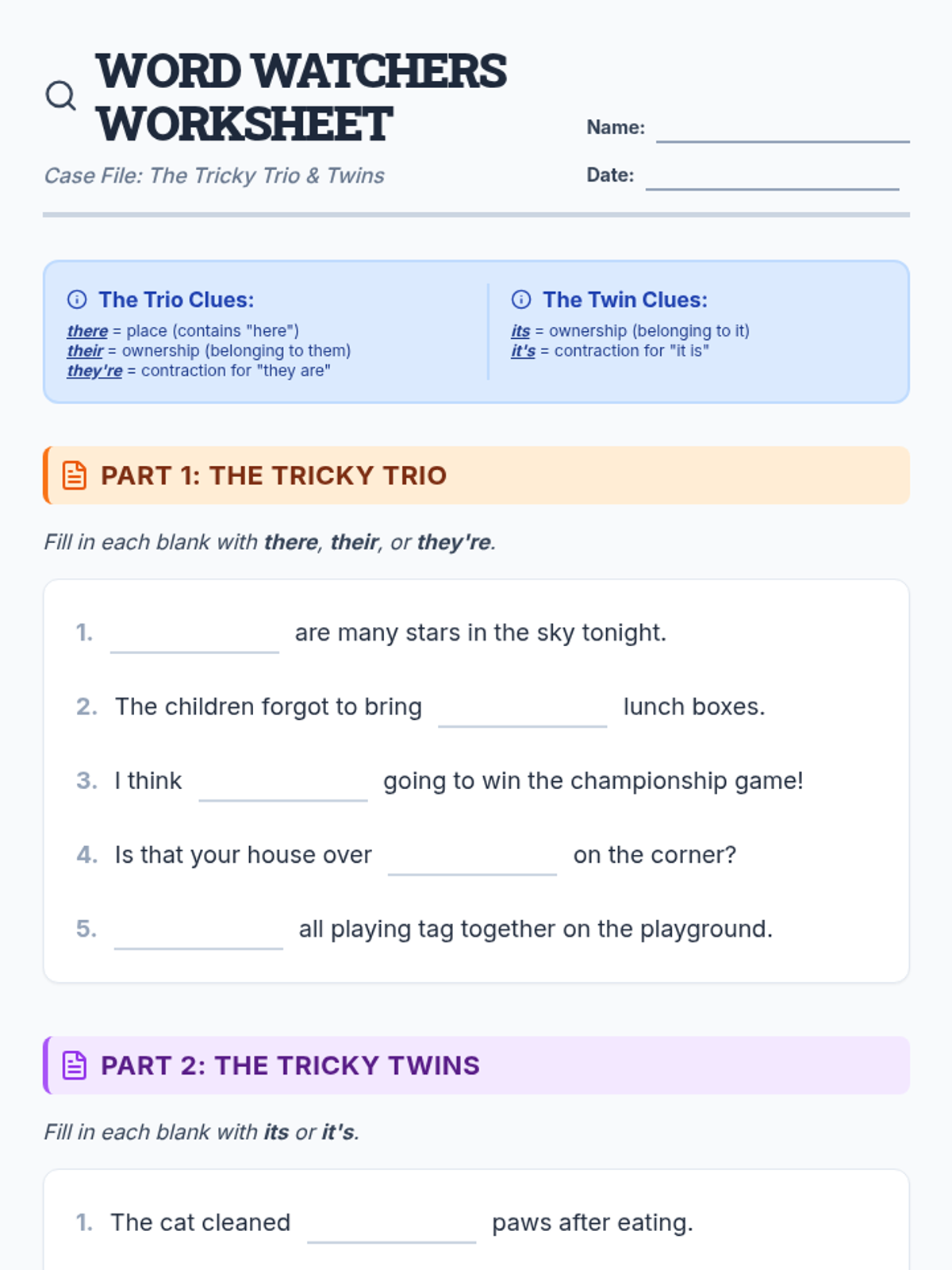
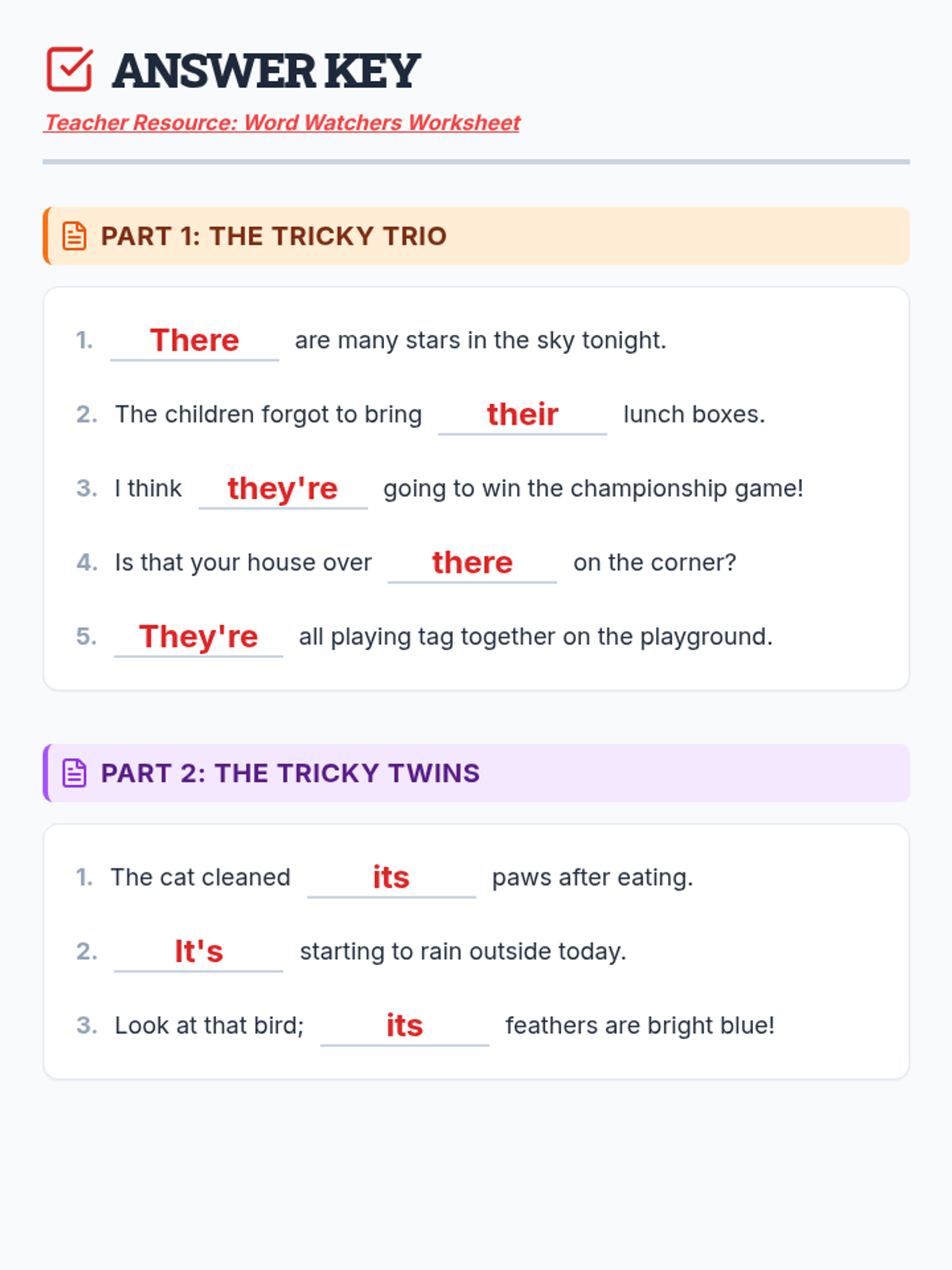
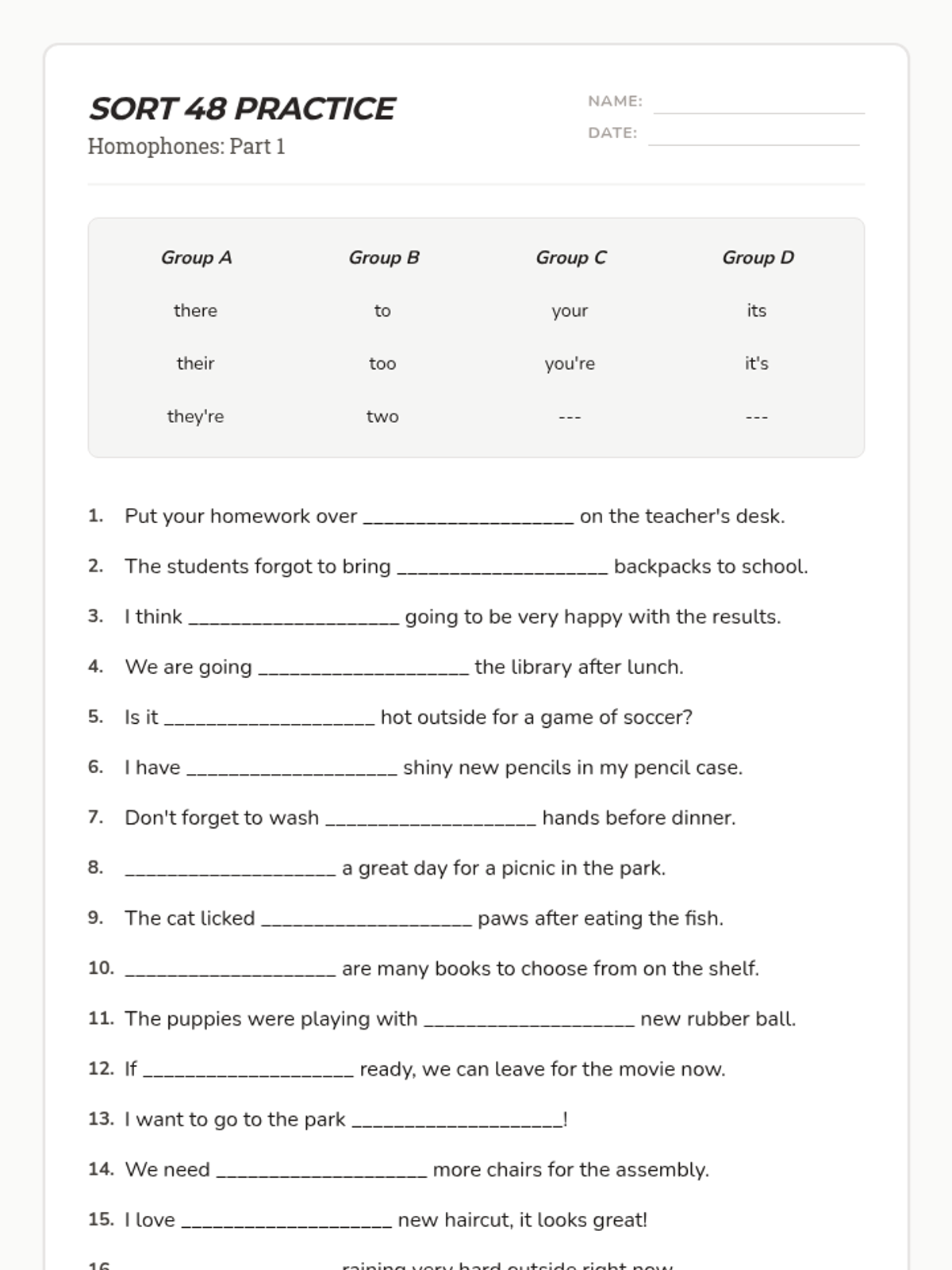
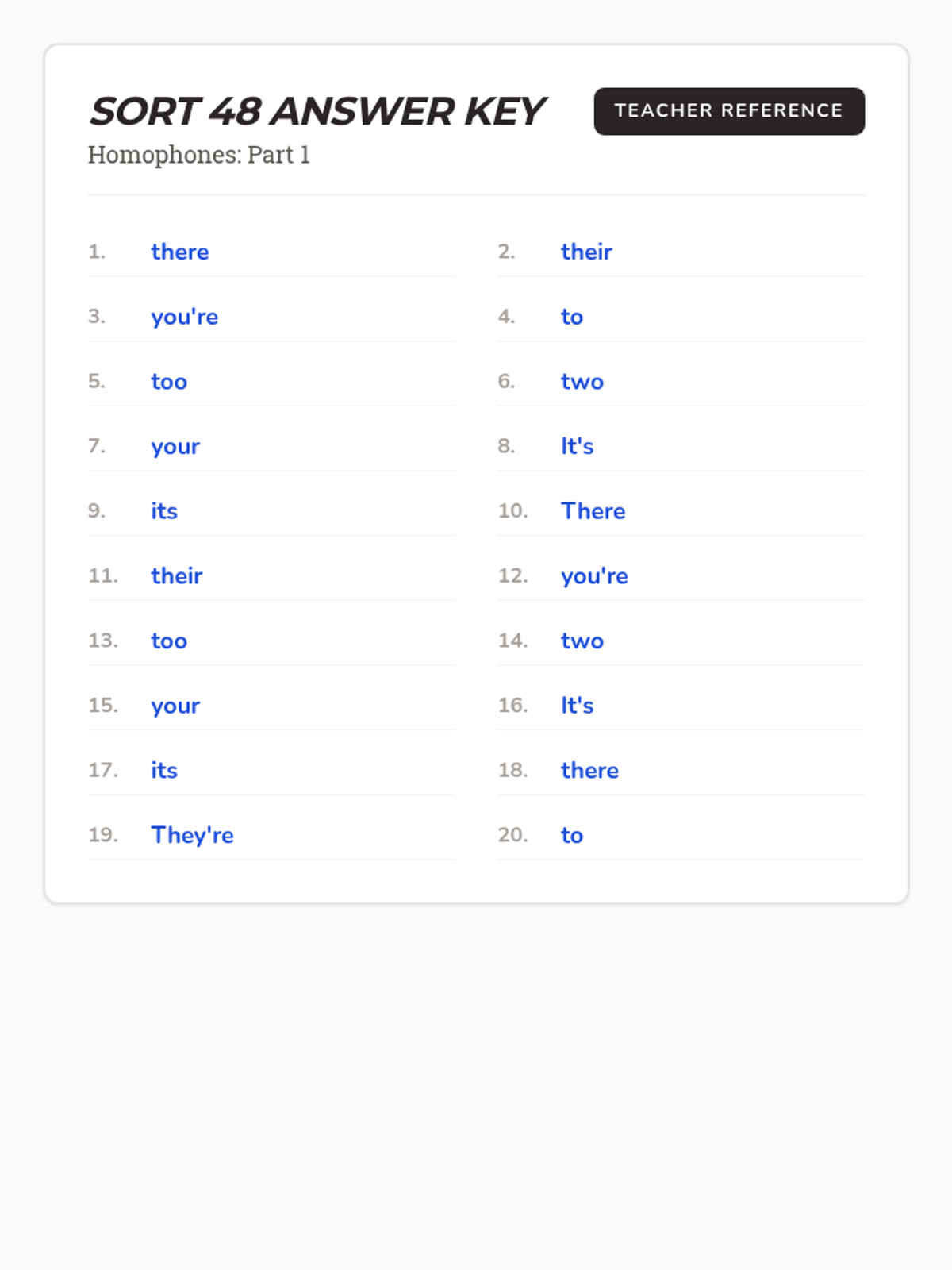
A lesson focused on distinguishing between common homophones and contractions: there/their/they're and its/it's for third-grade students. Includes visual aids and hands-on practice.
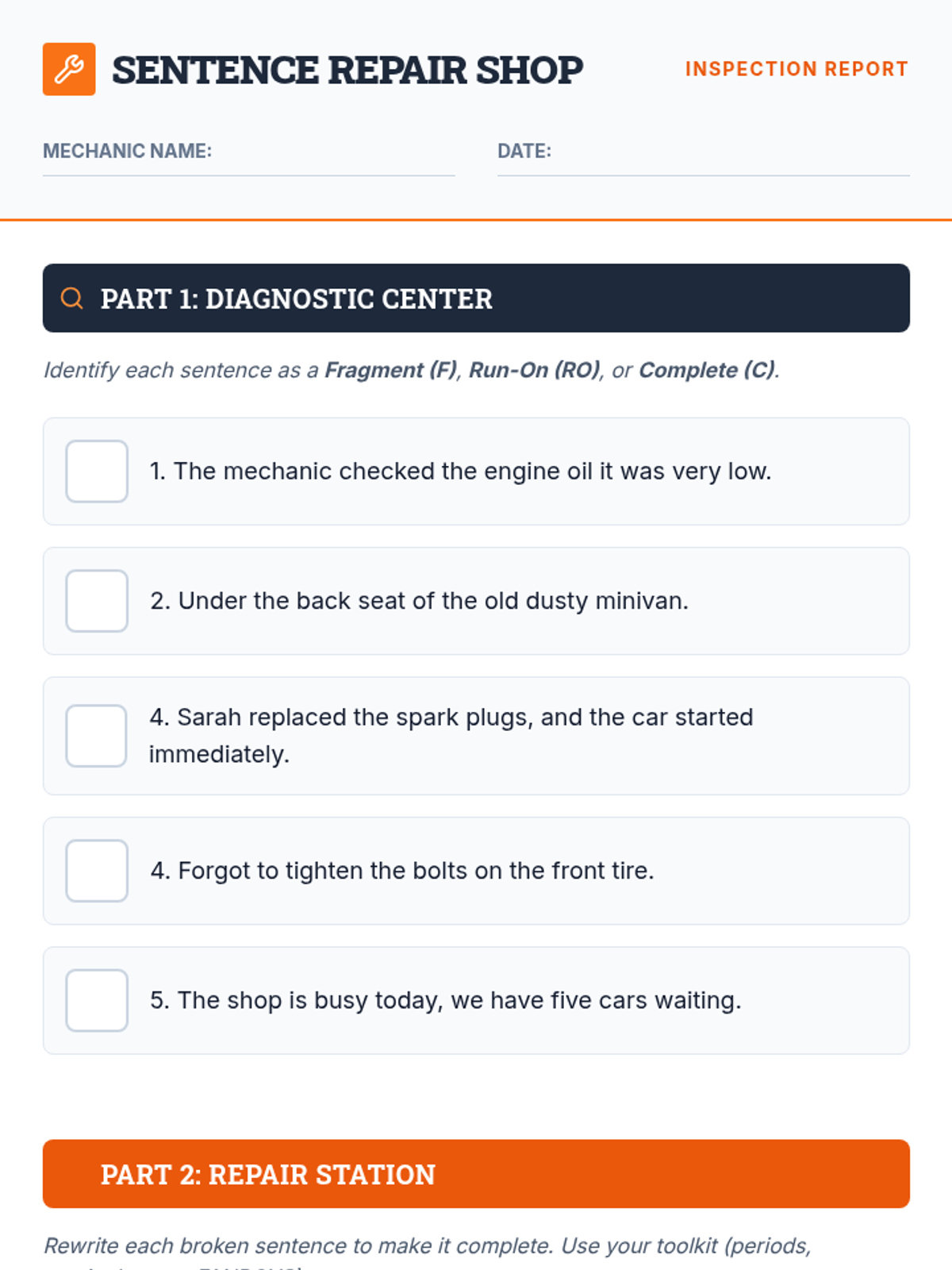
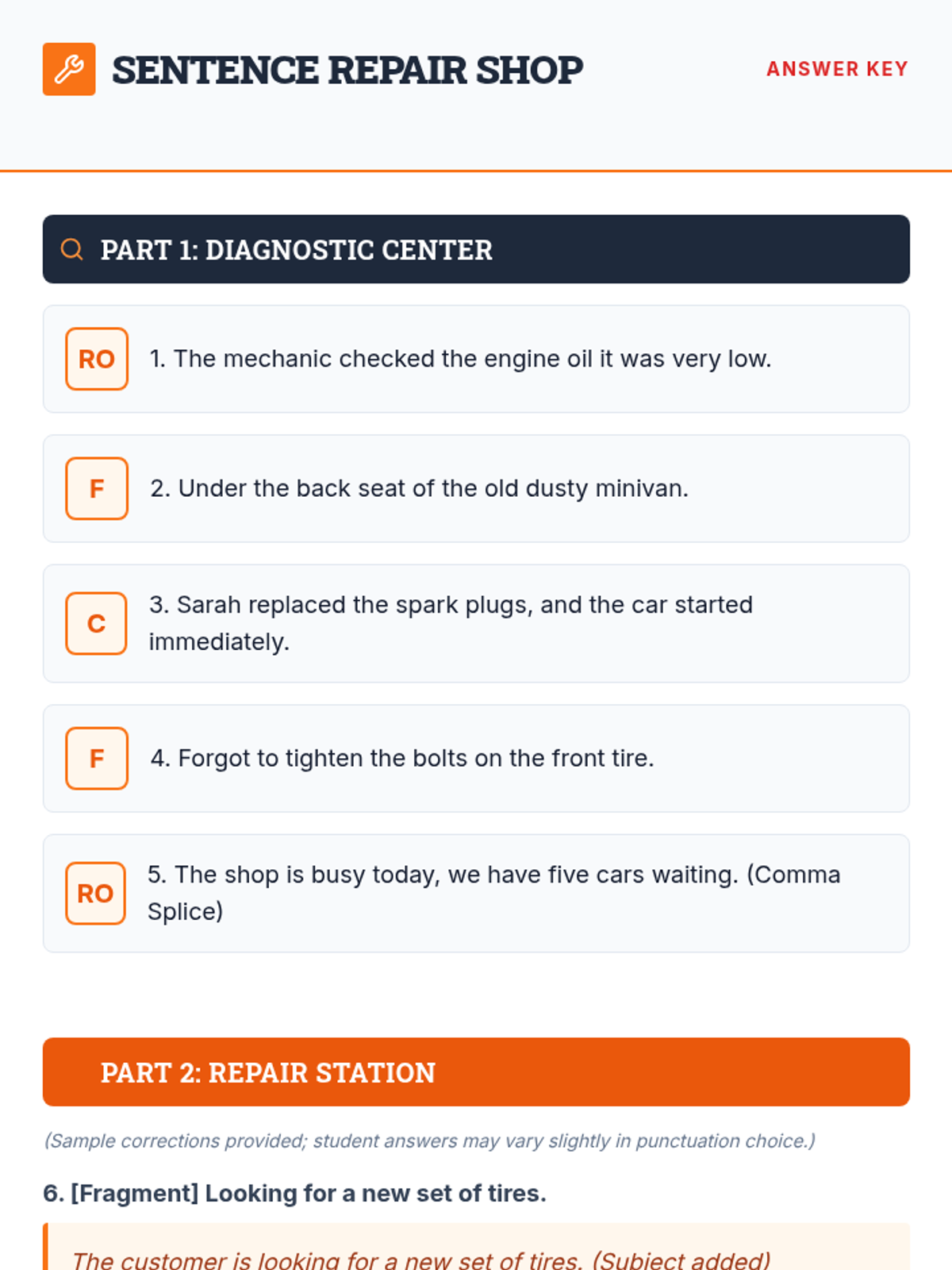
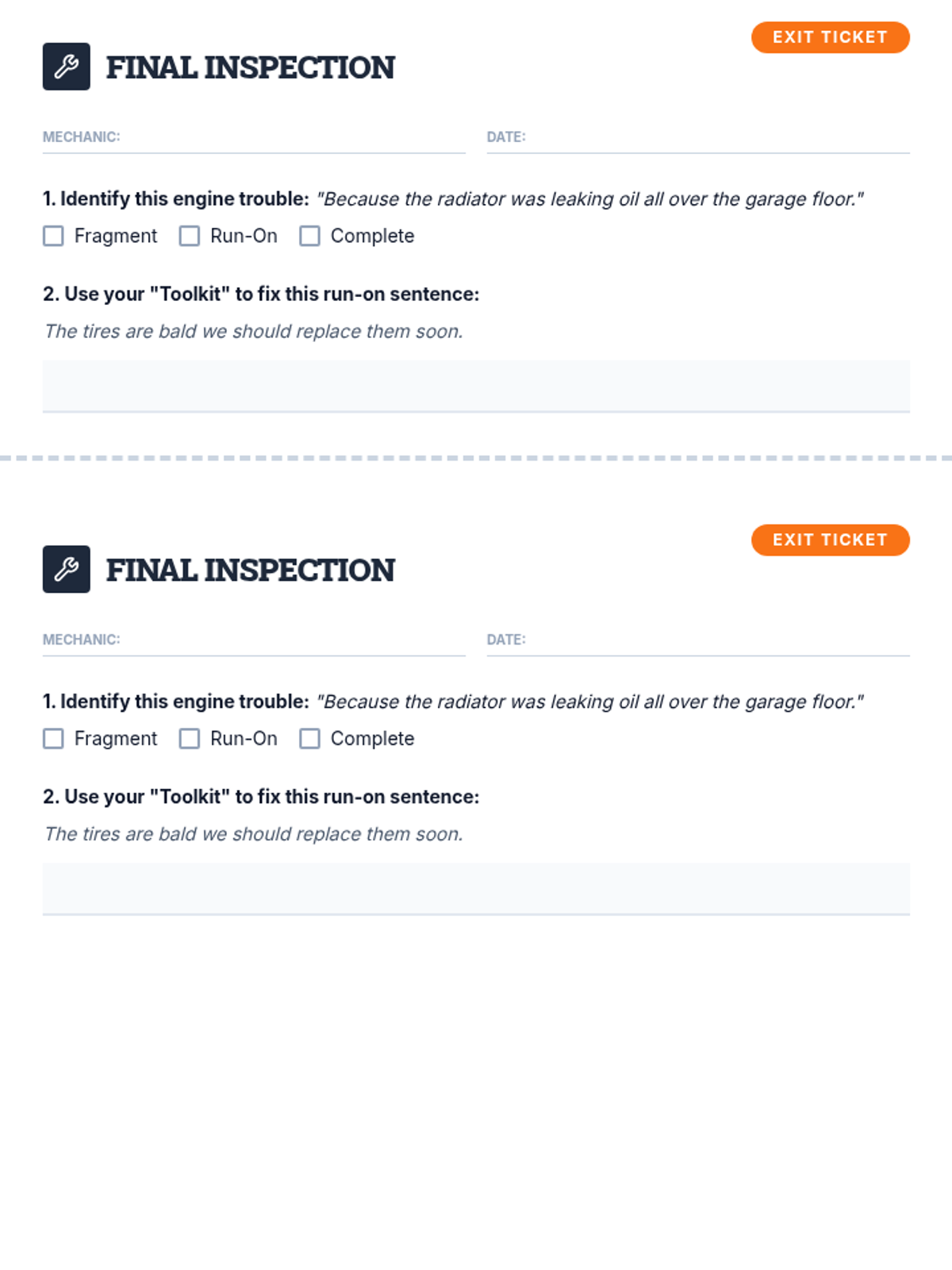
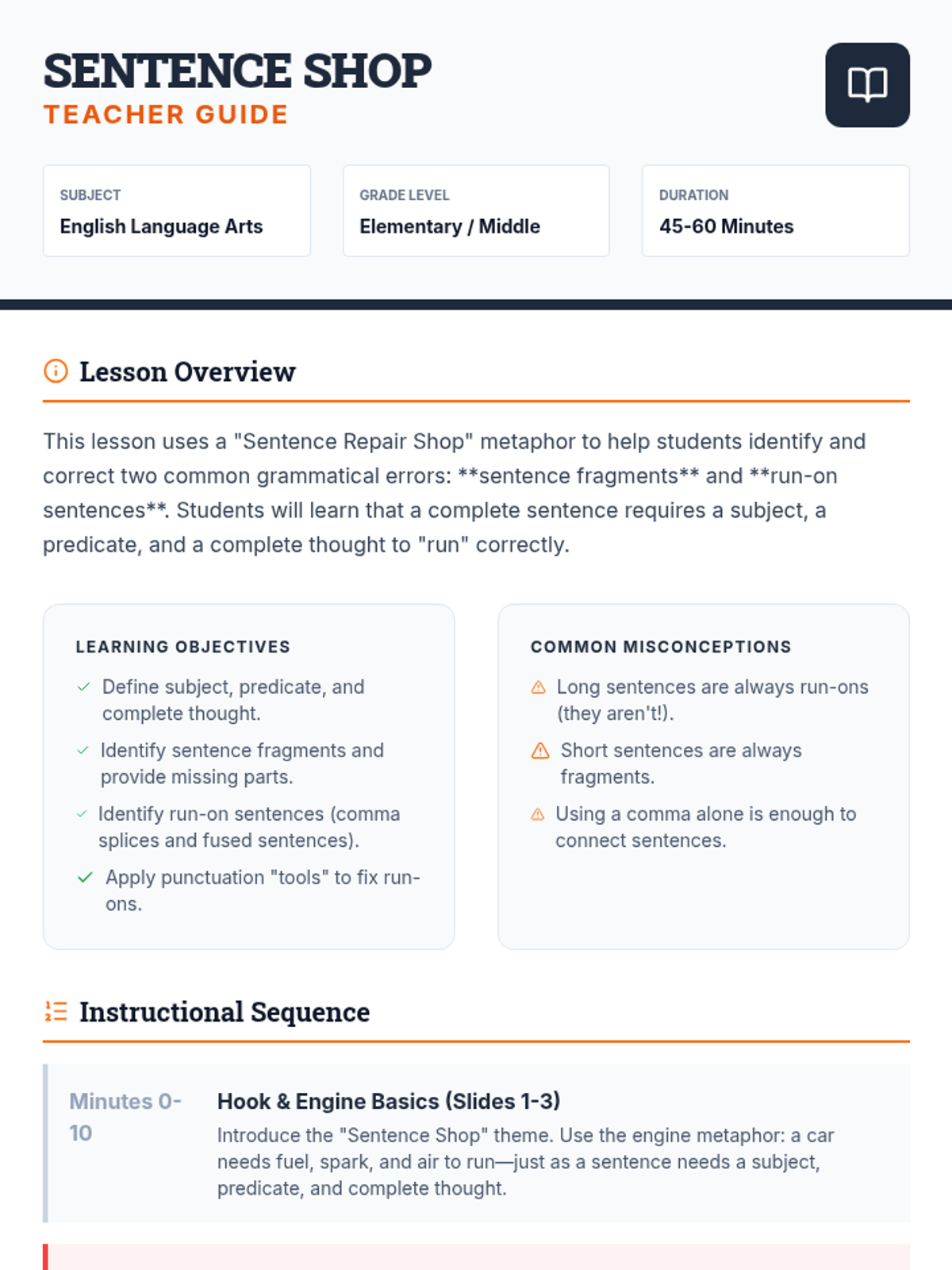
An introductory lesson on identifying and fixing sentence fragments and run-on sentences, themed around a 'Sentence Shop' repair garage.
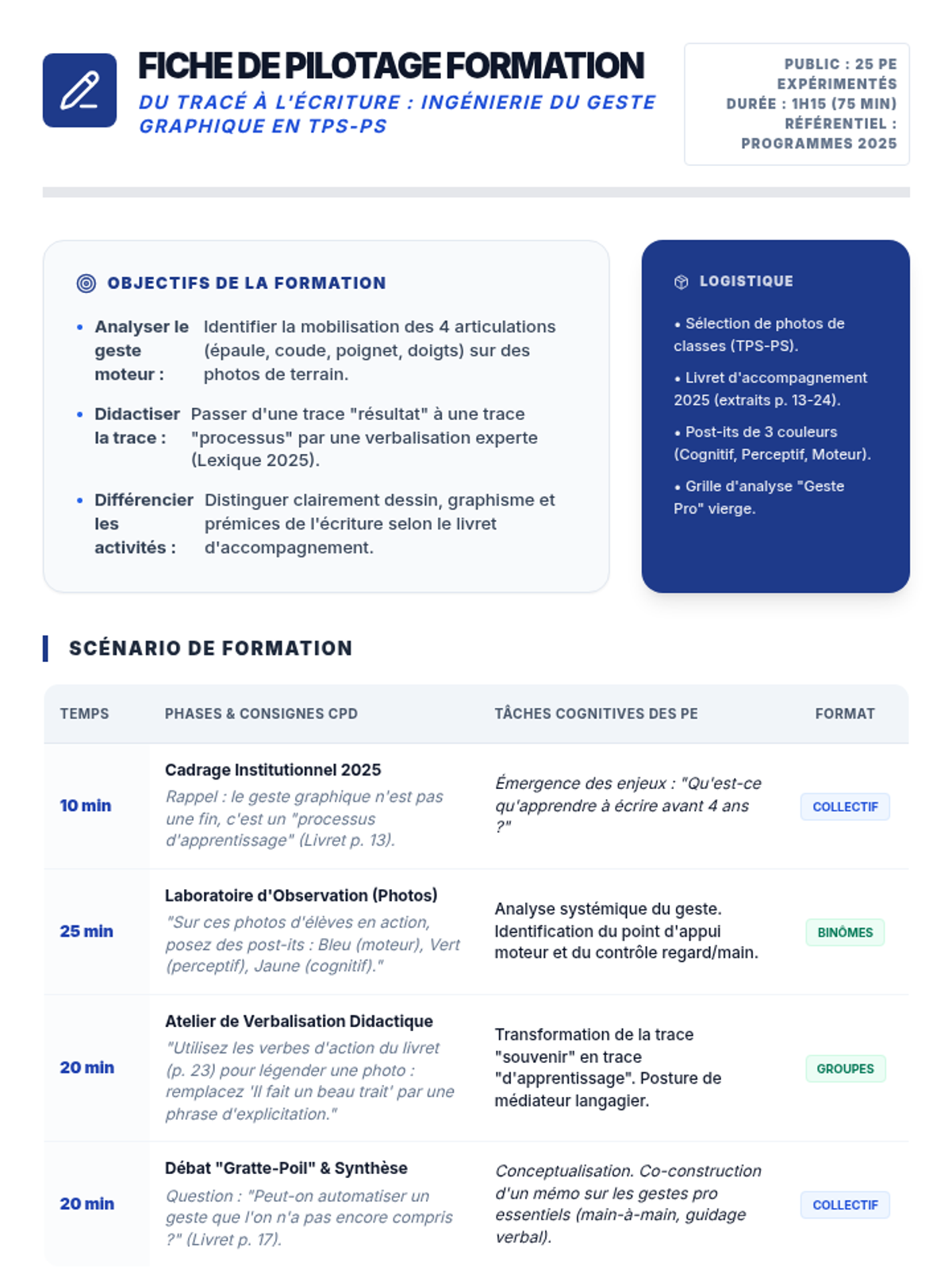
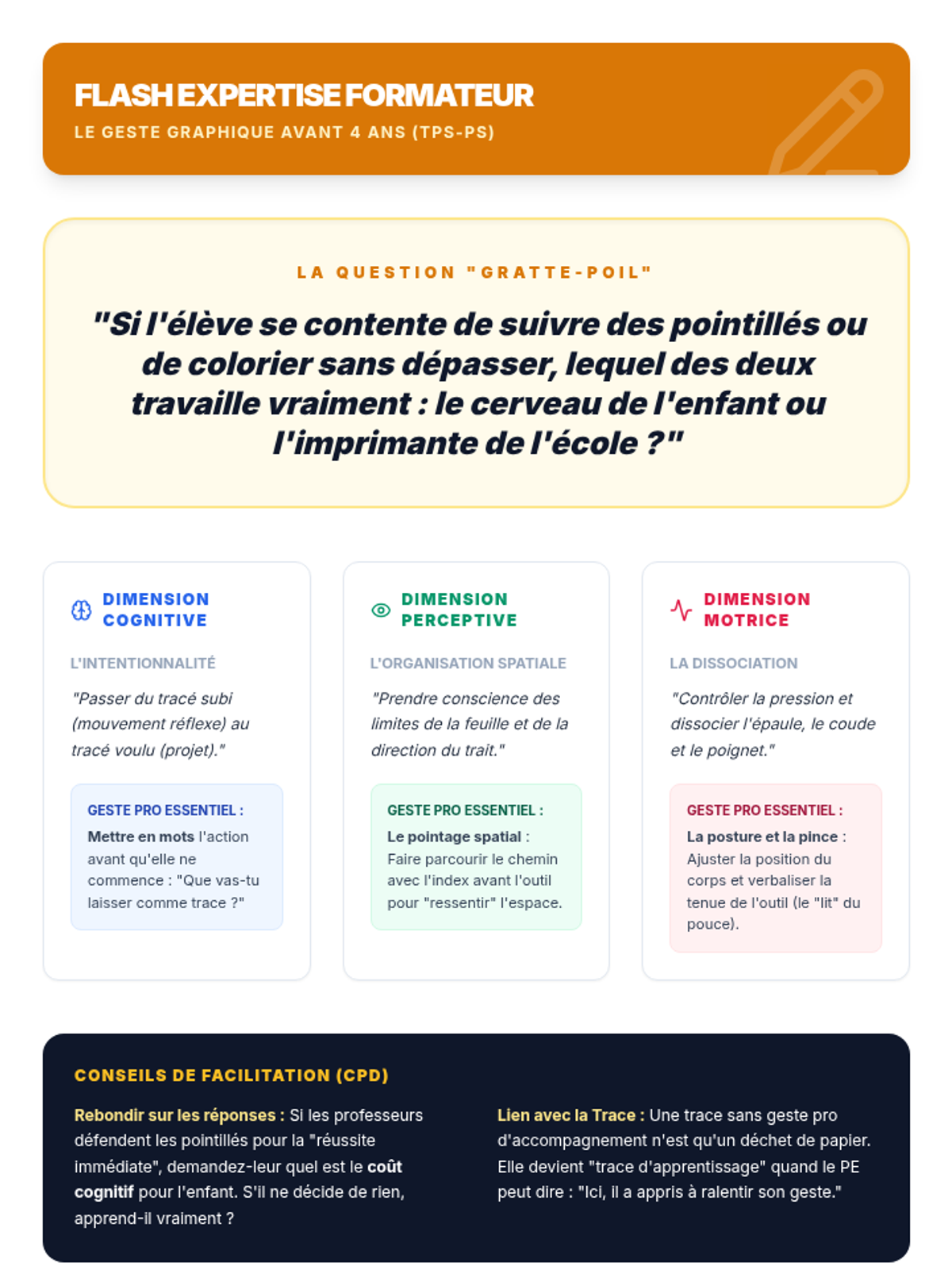
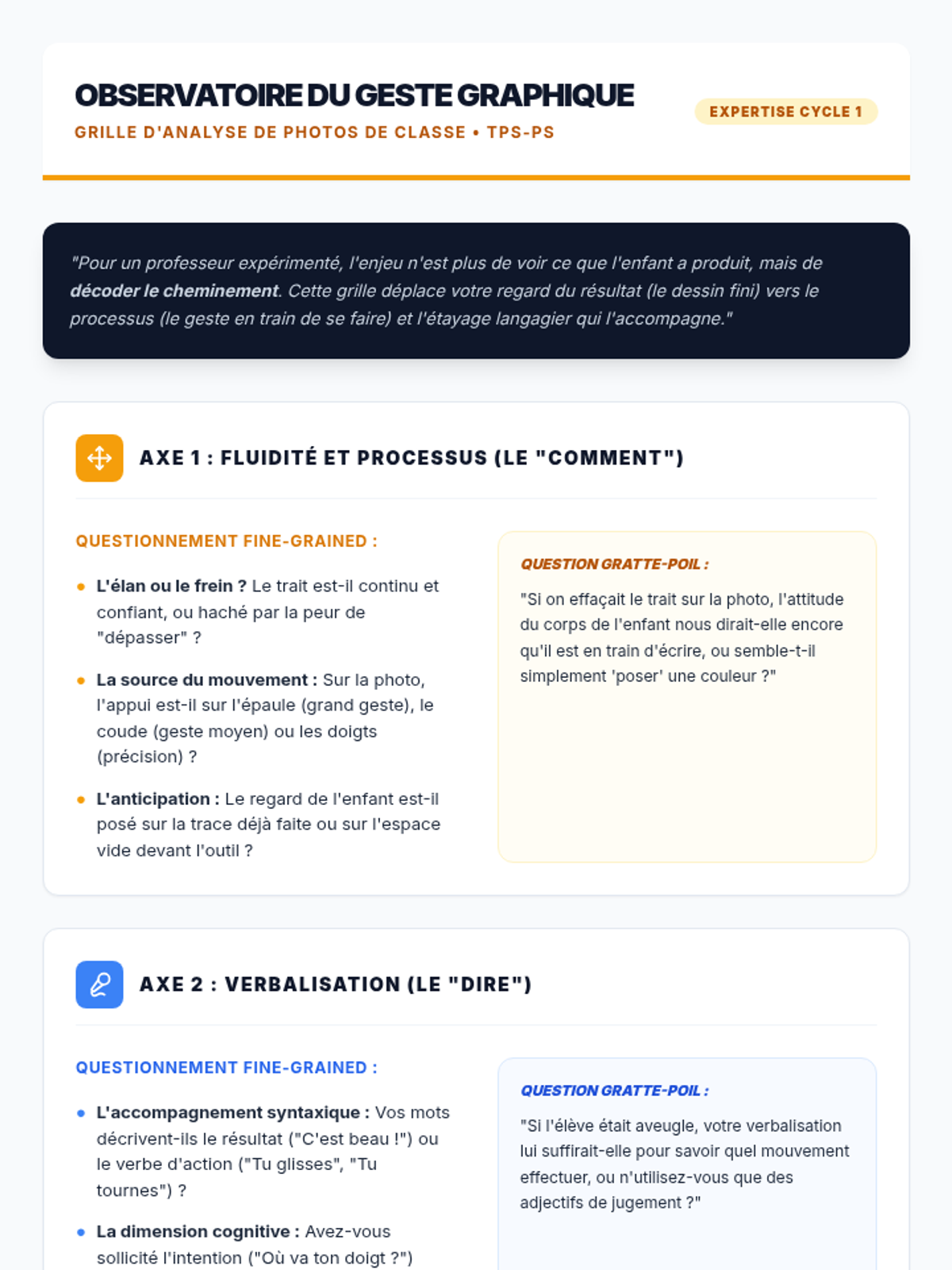
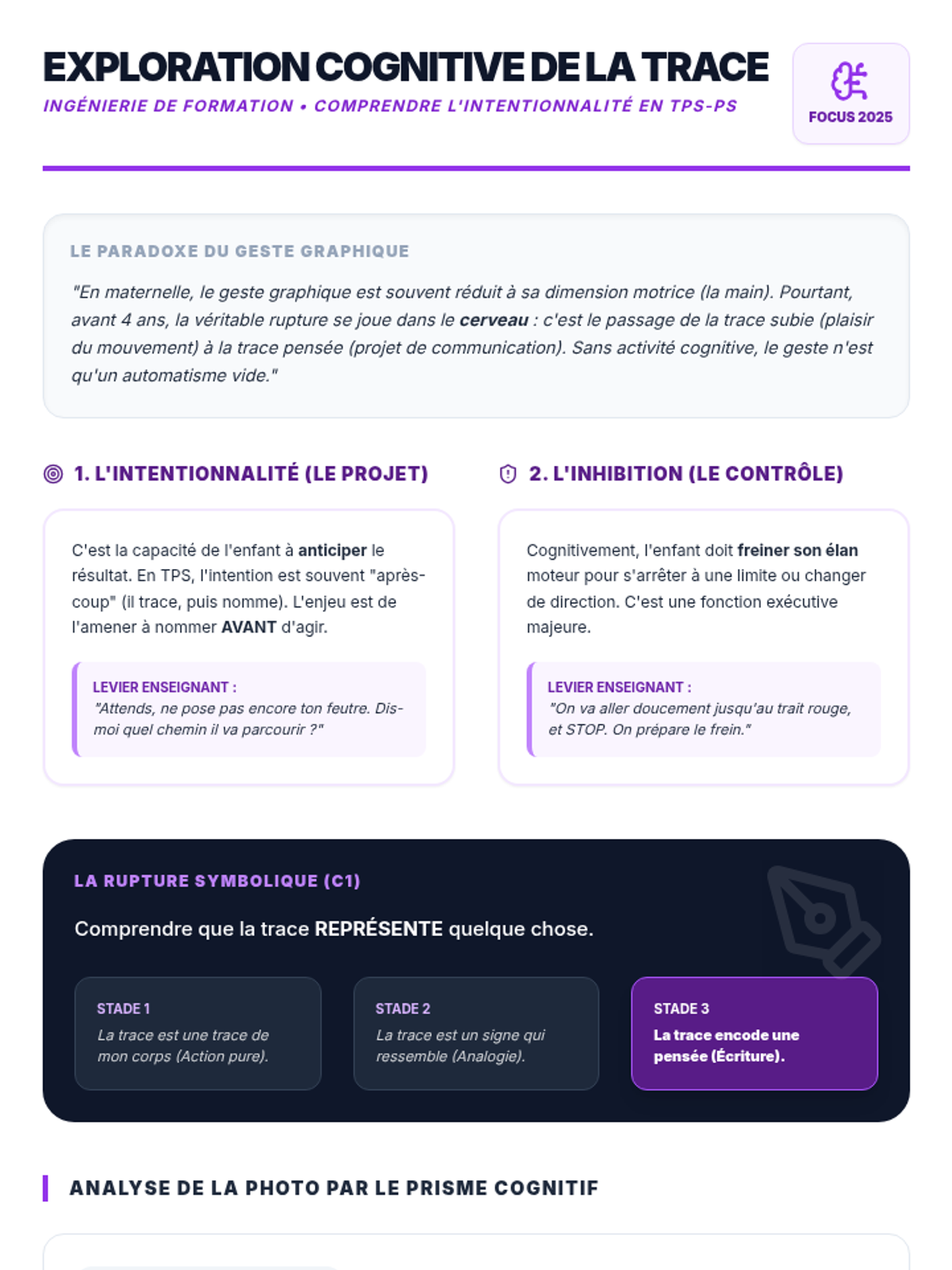
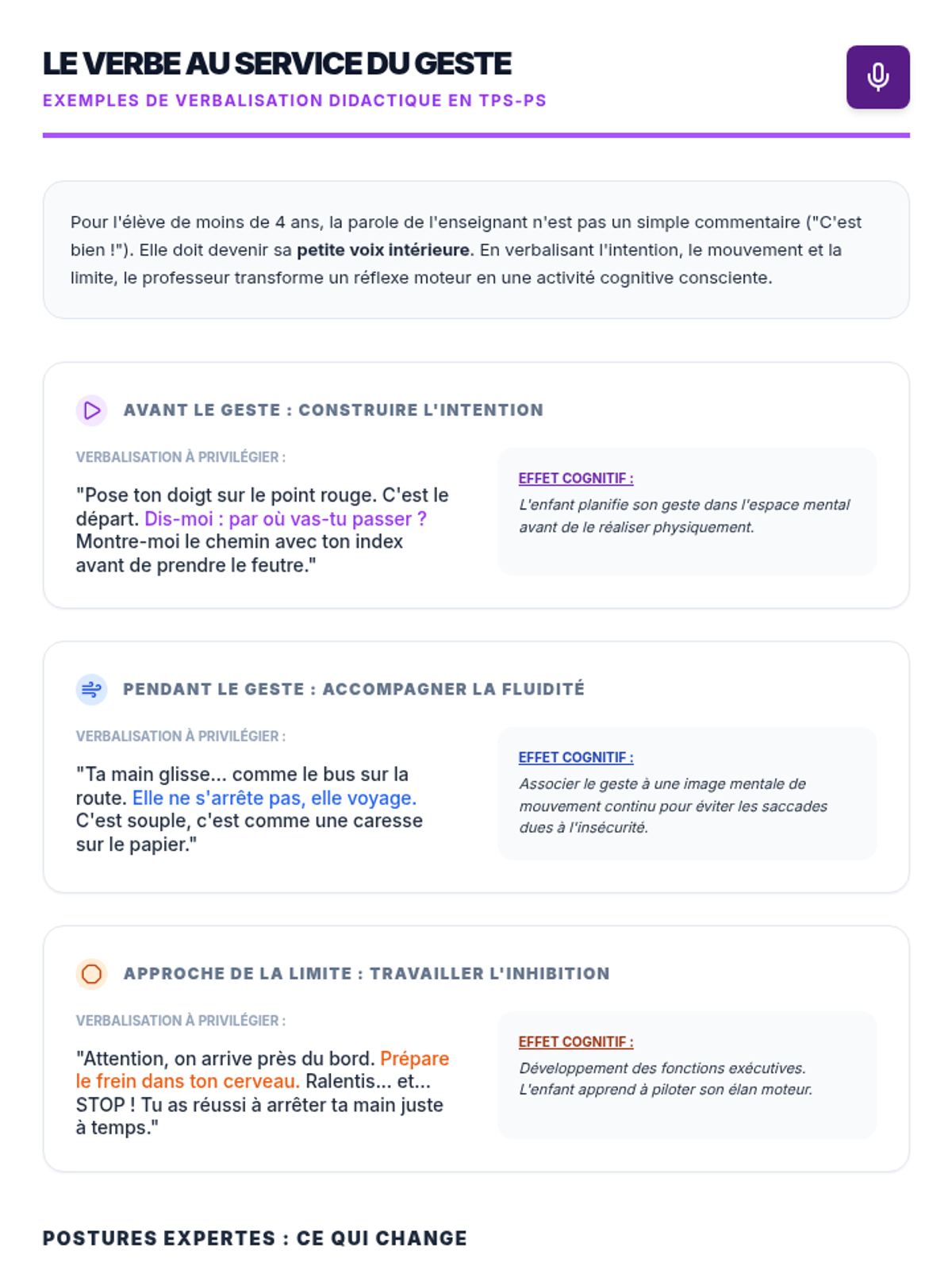
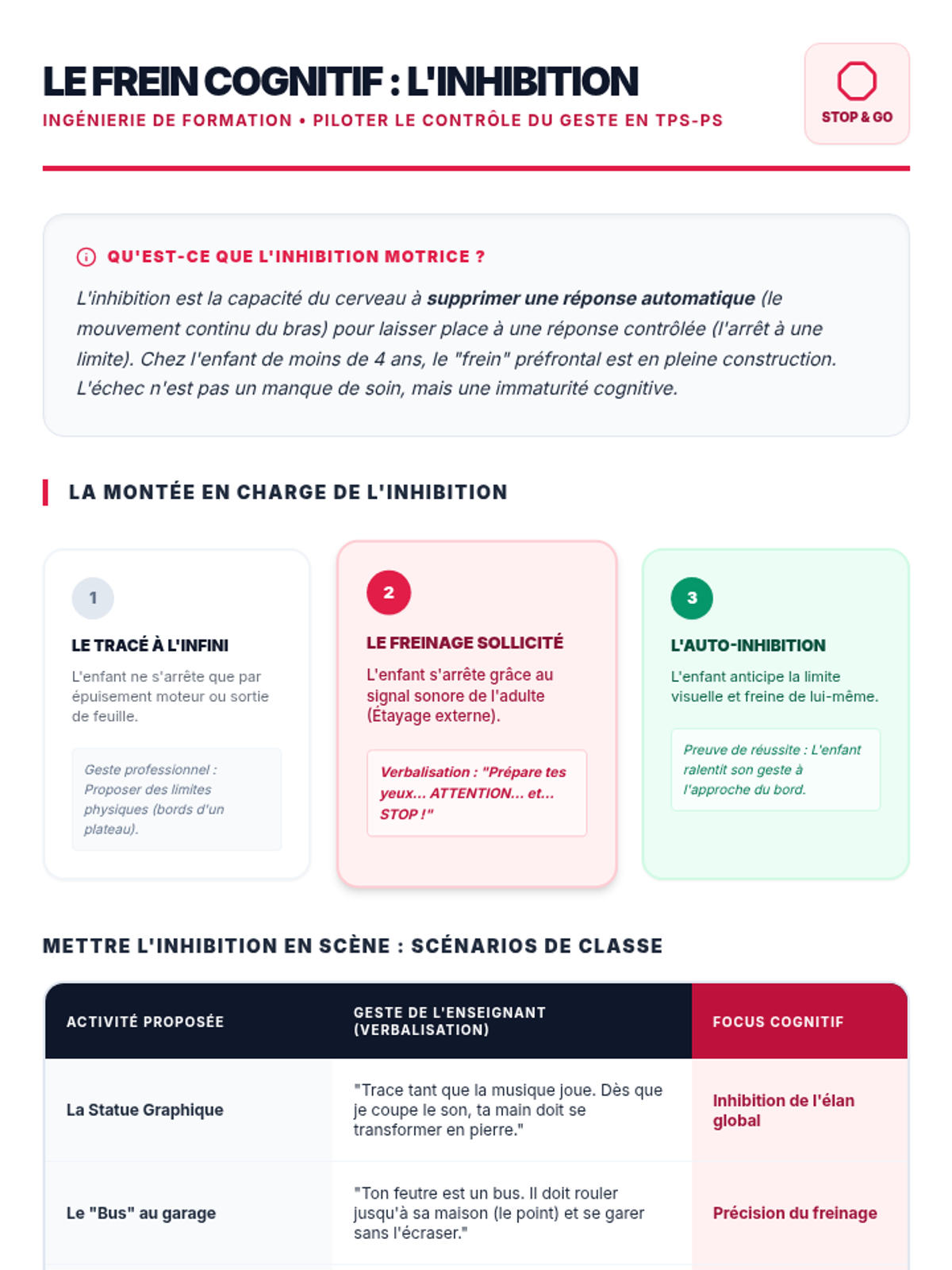
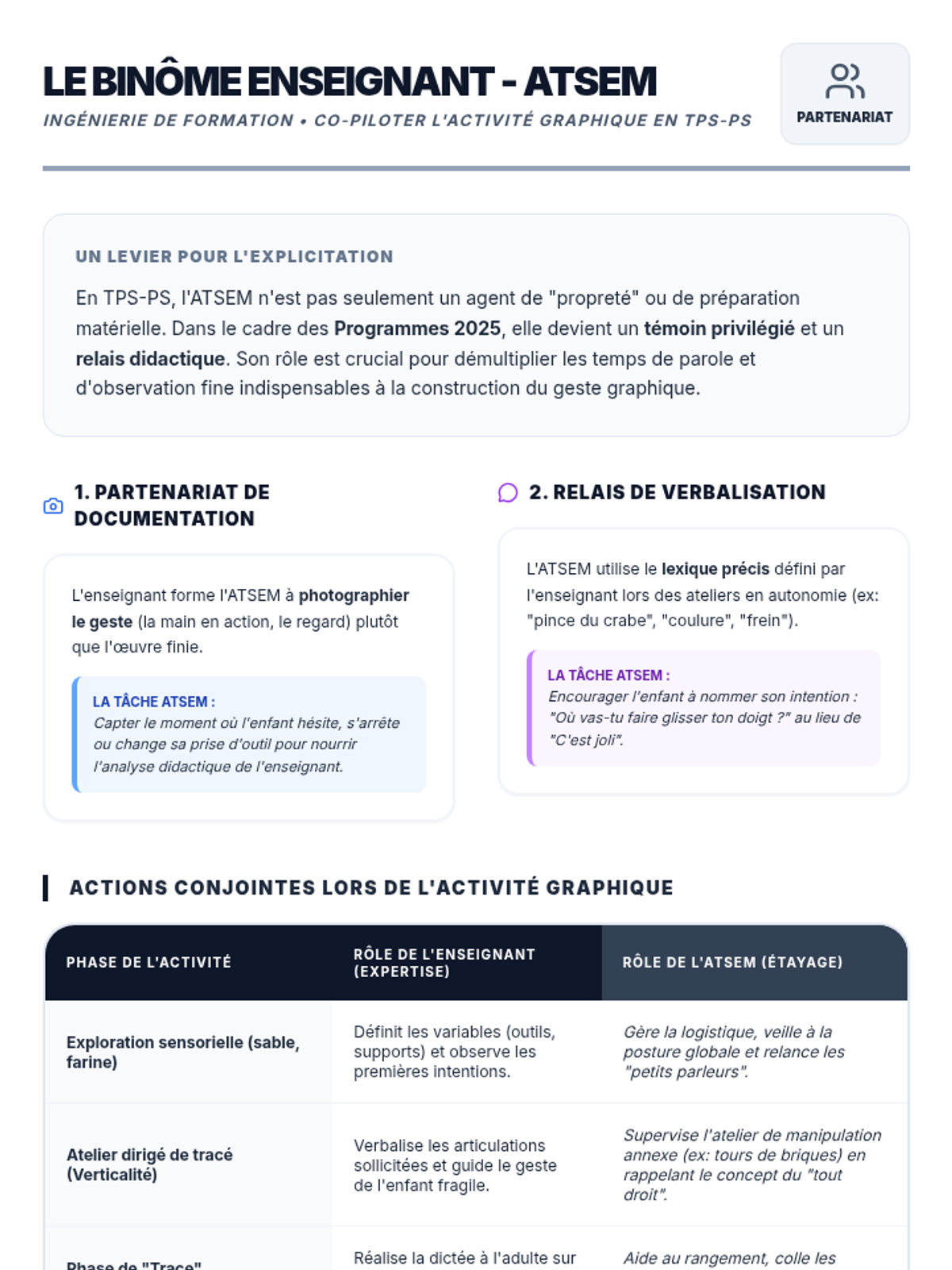
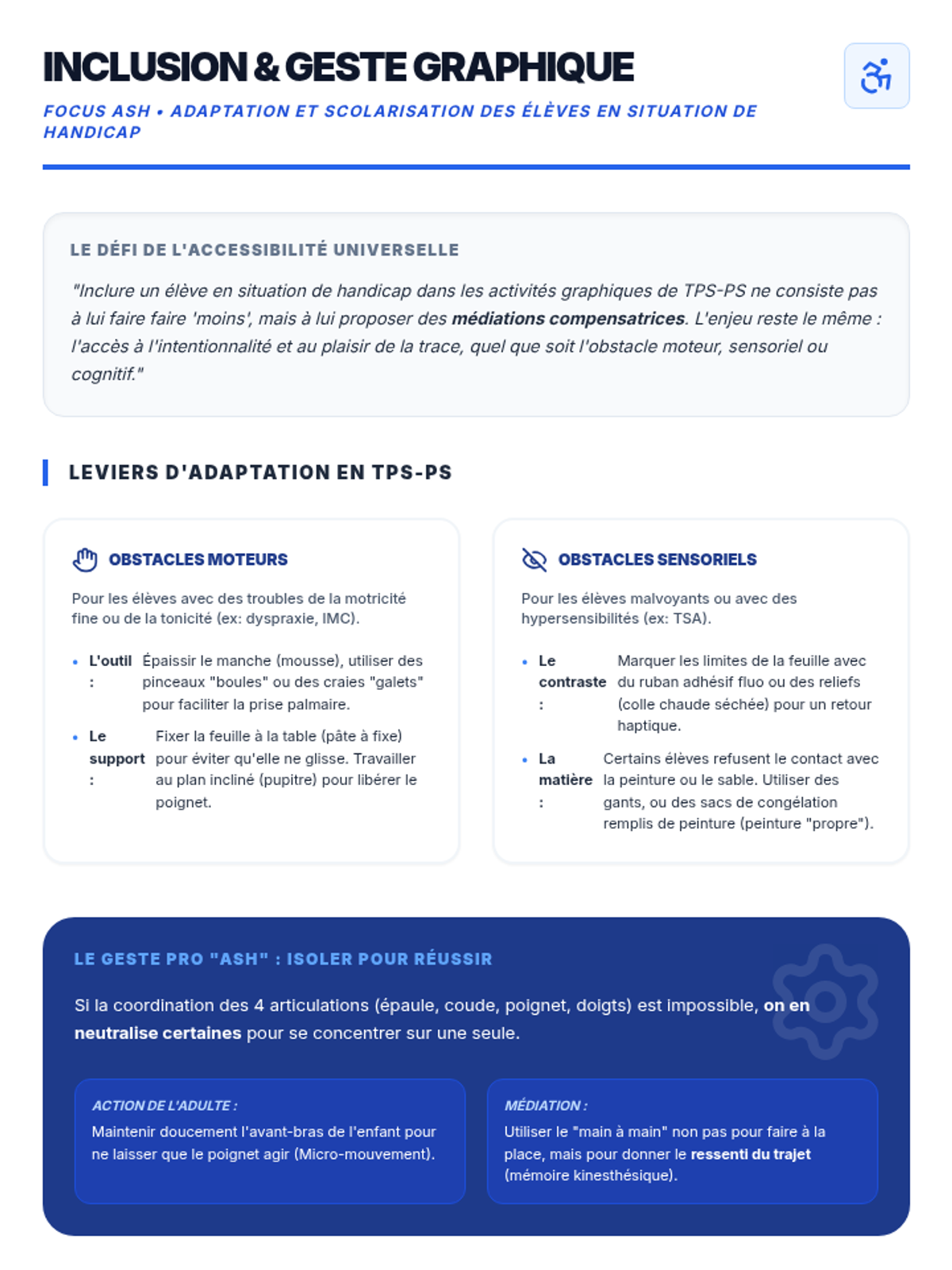
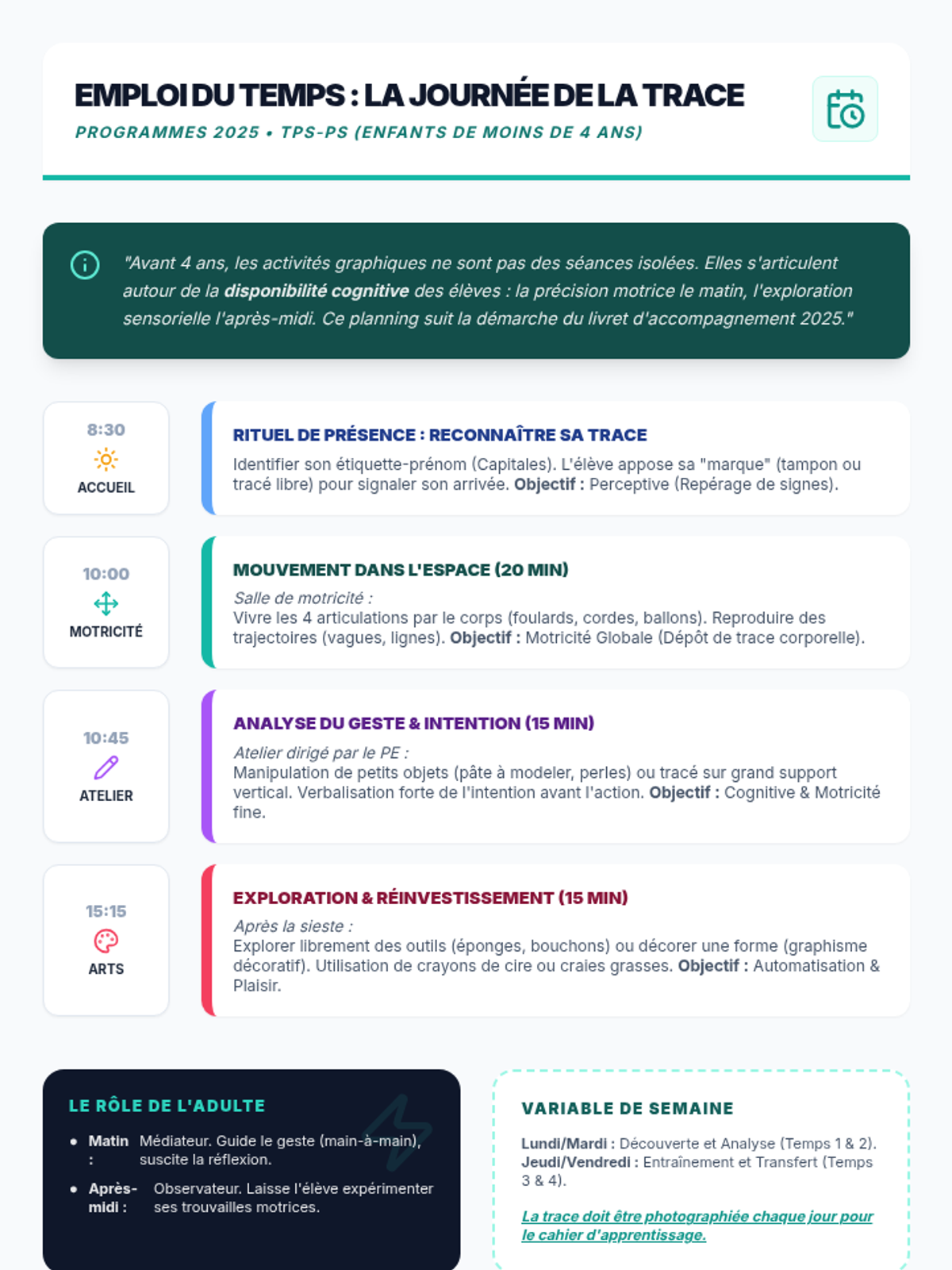
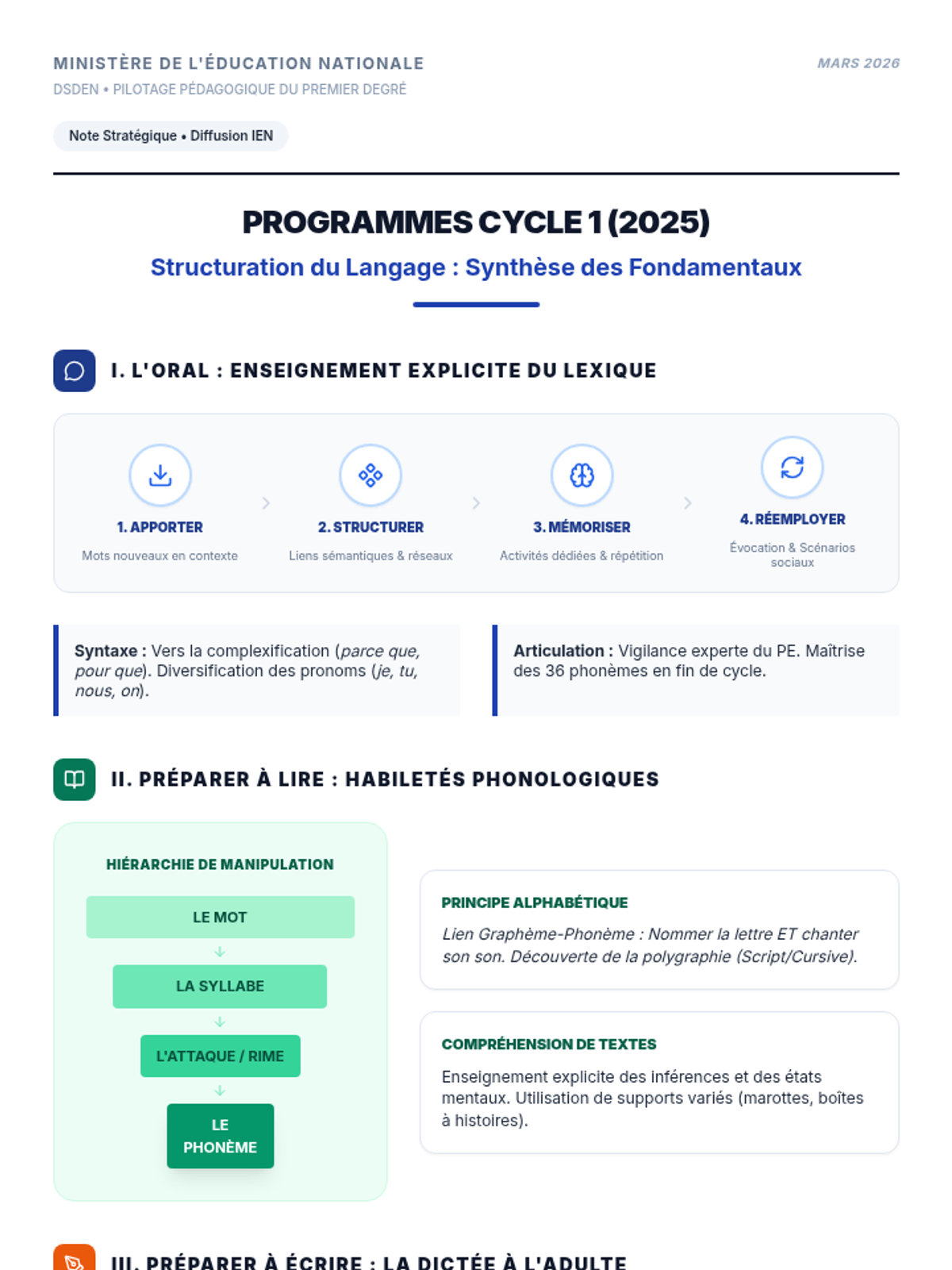
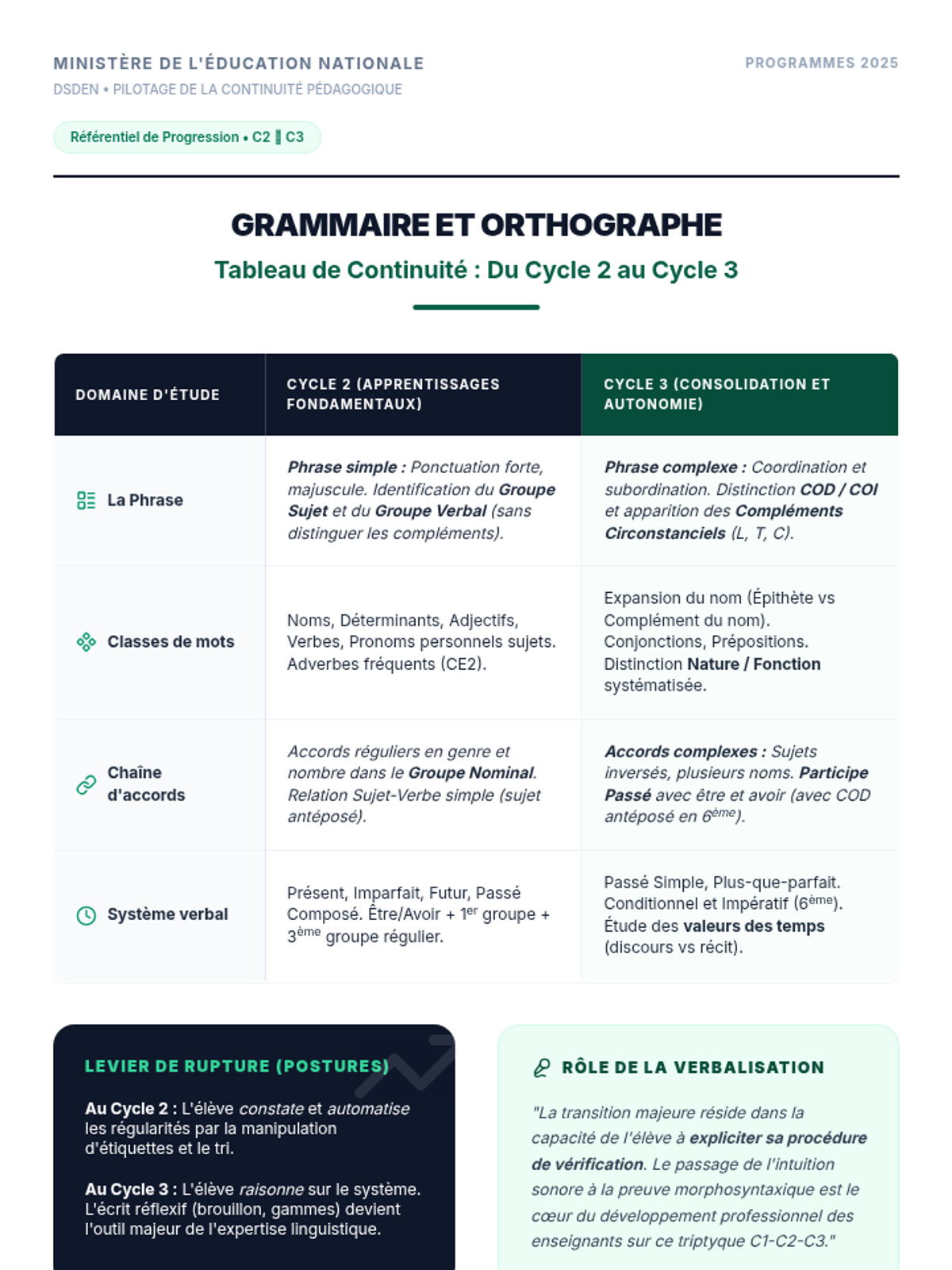
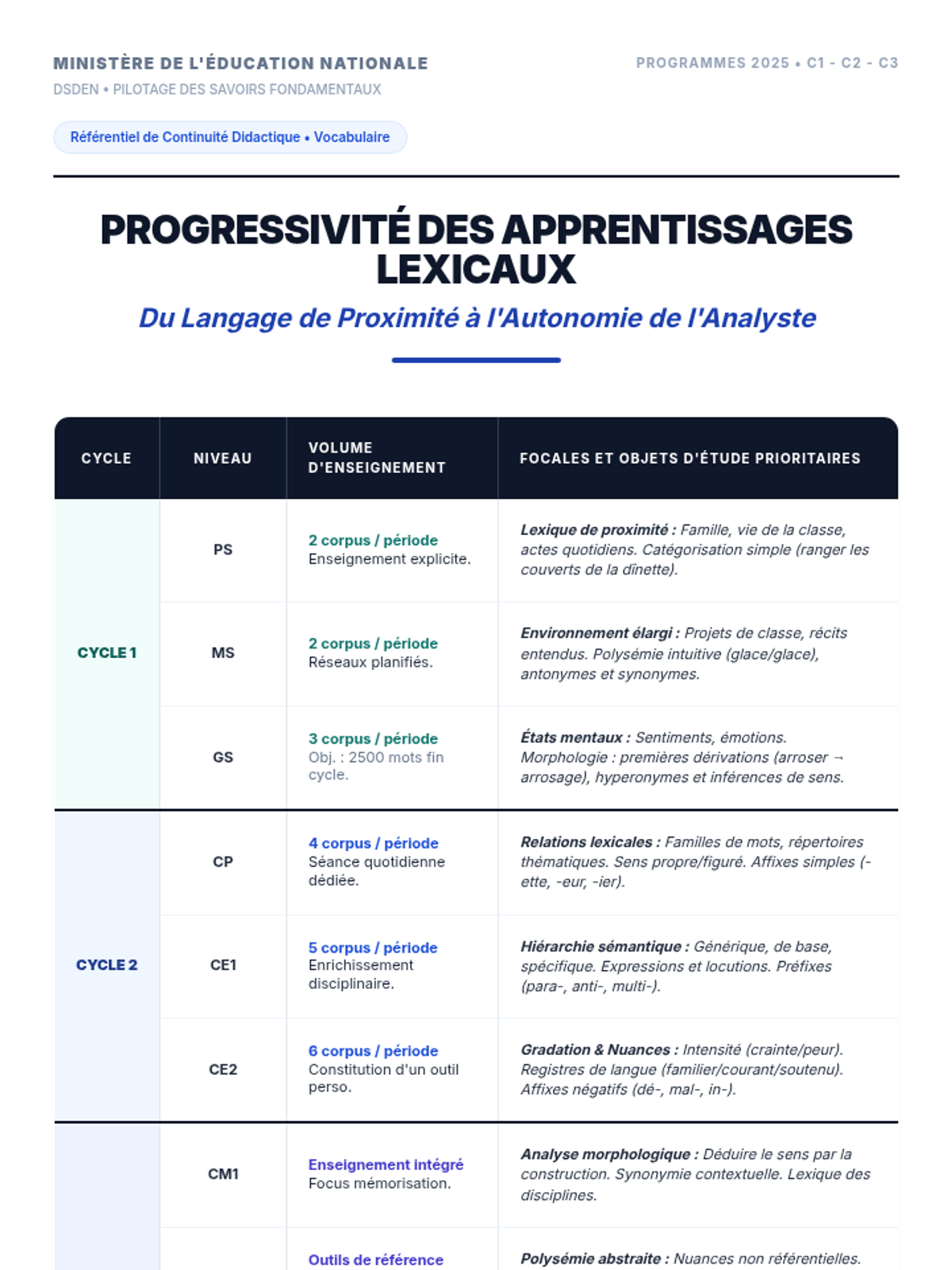
Cette formation pour les professeurs de TPS-PS vise à professionnaliser la conception des "traces" d'activités (cahiers de vie, affichages). En s'appuyant sur les photos de classe et les guides 2025, les enseignants apprennent à rendre les apprentissages explicites pour les élèves et les familles.
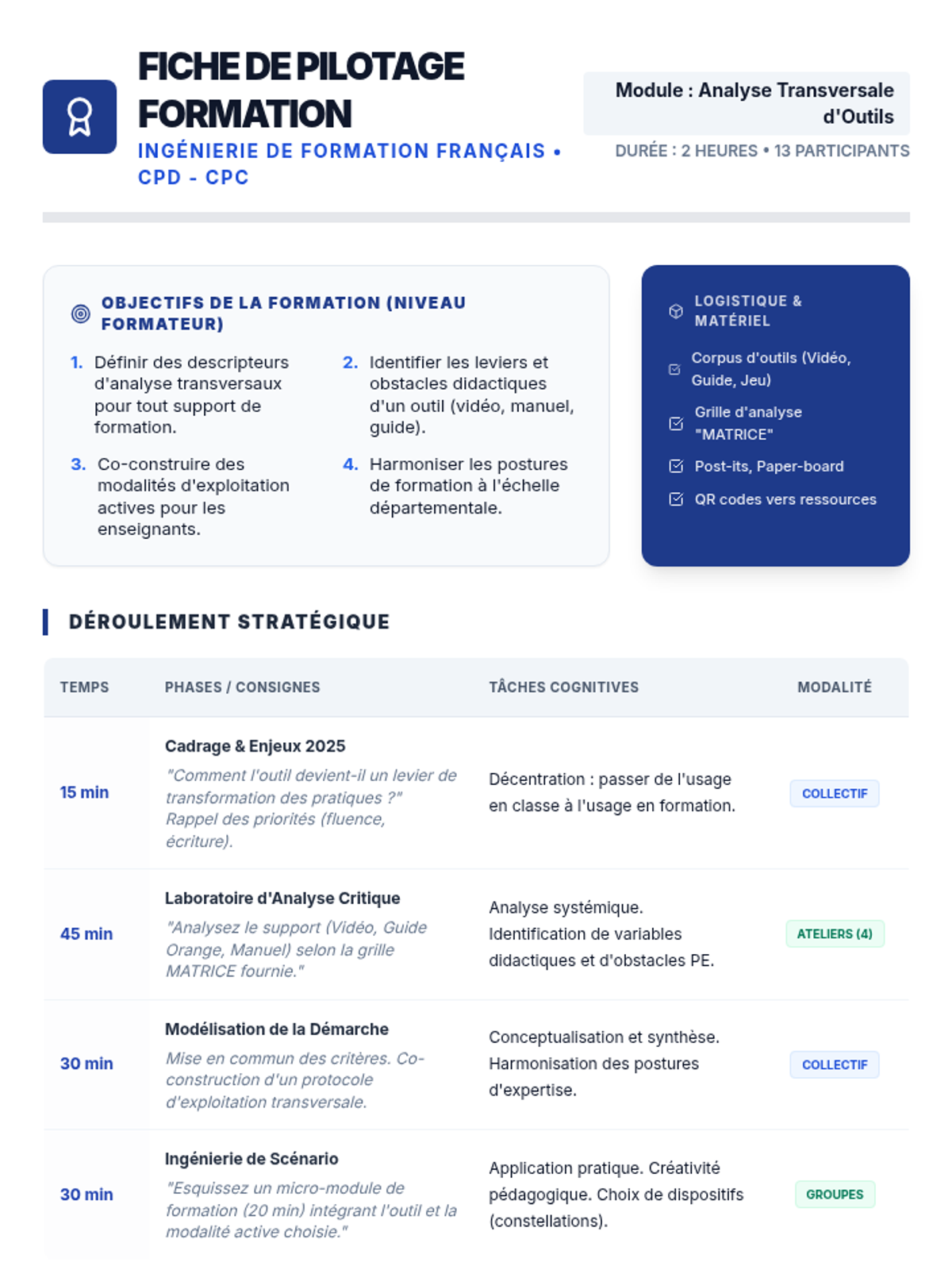
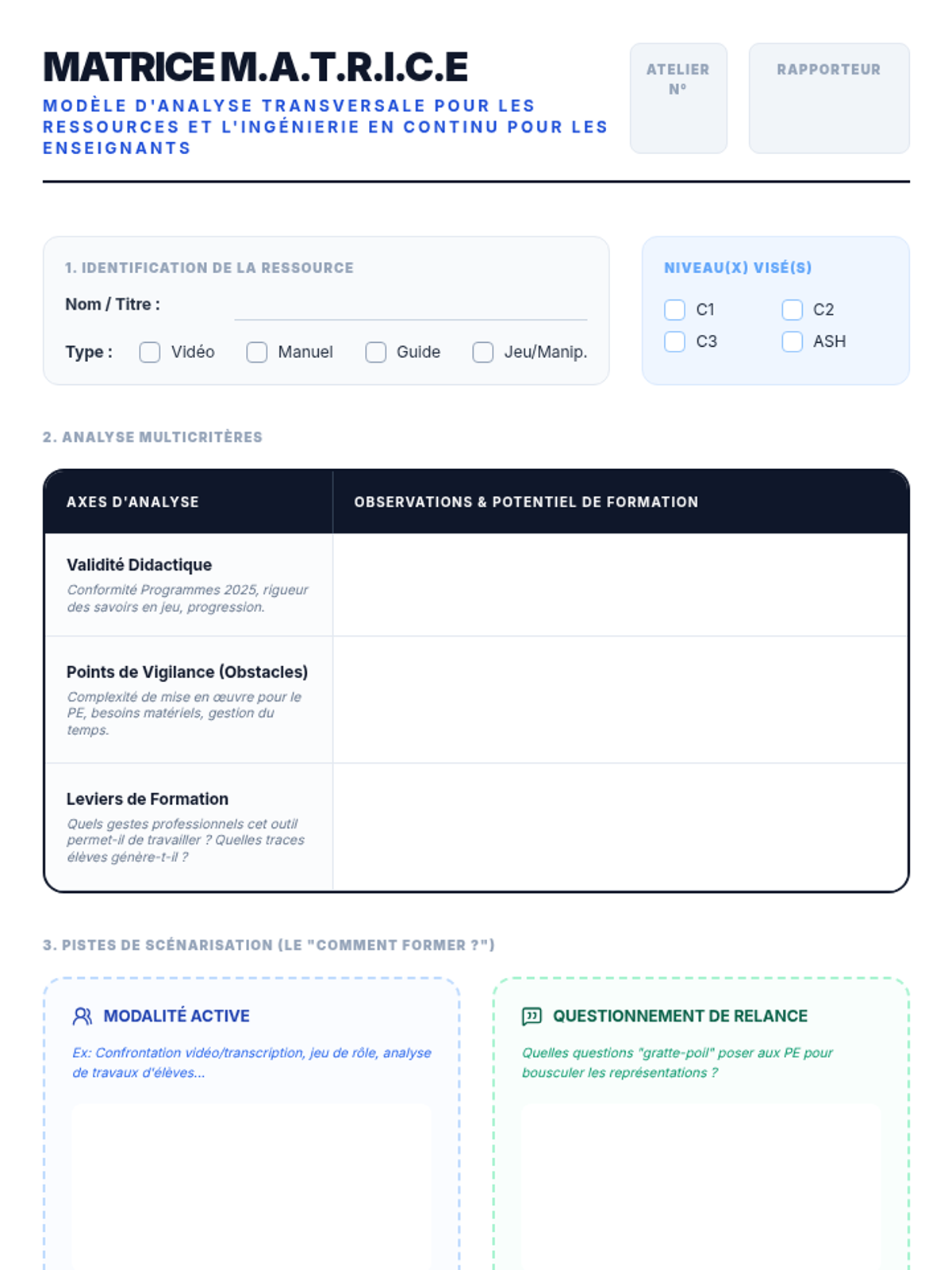
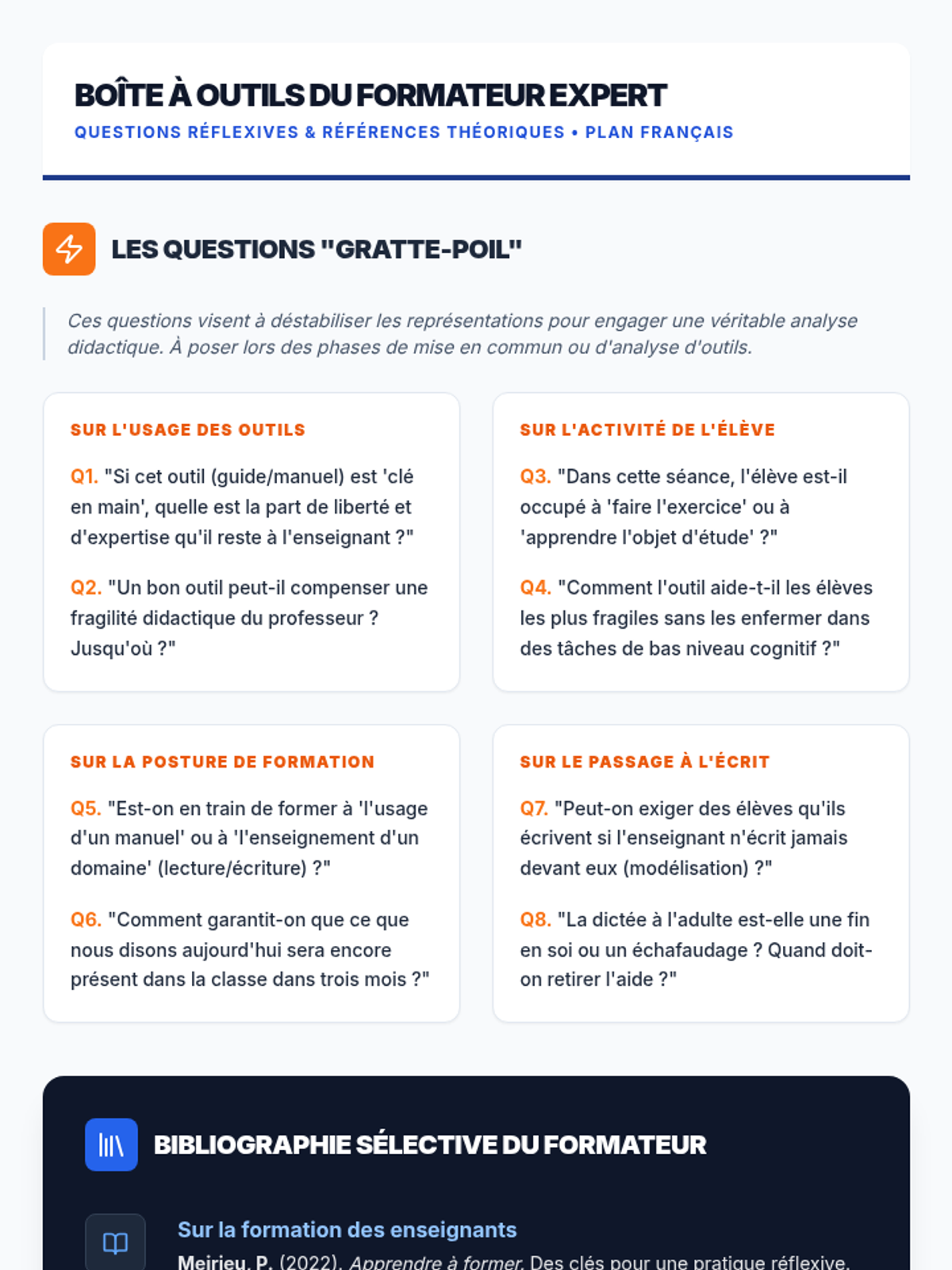
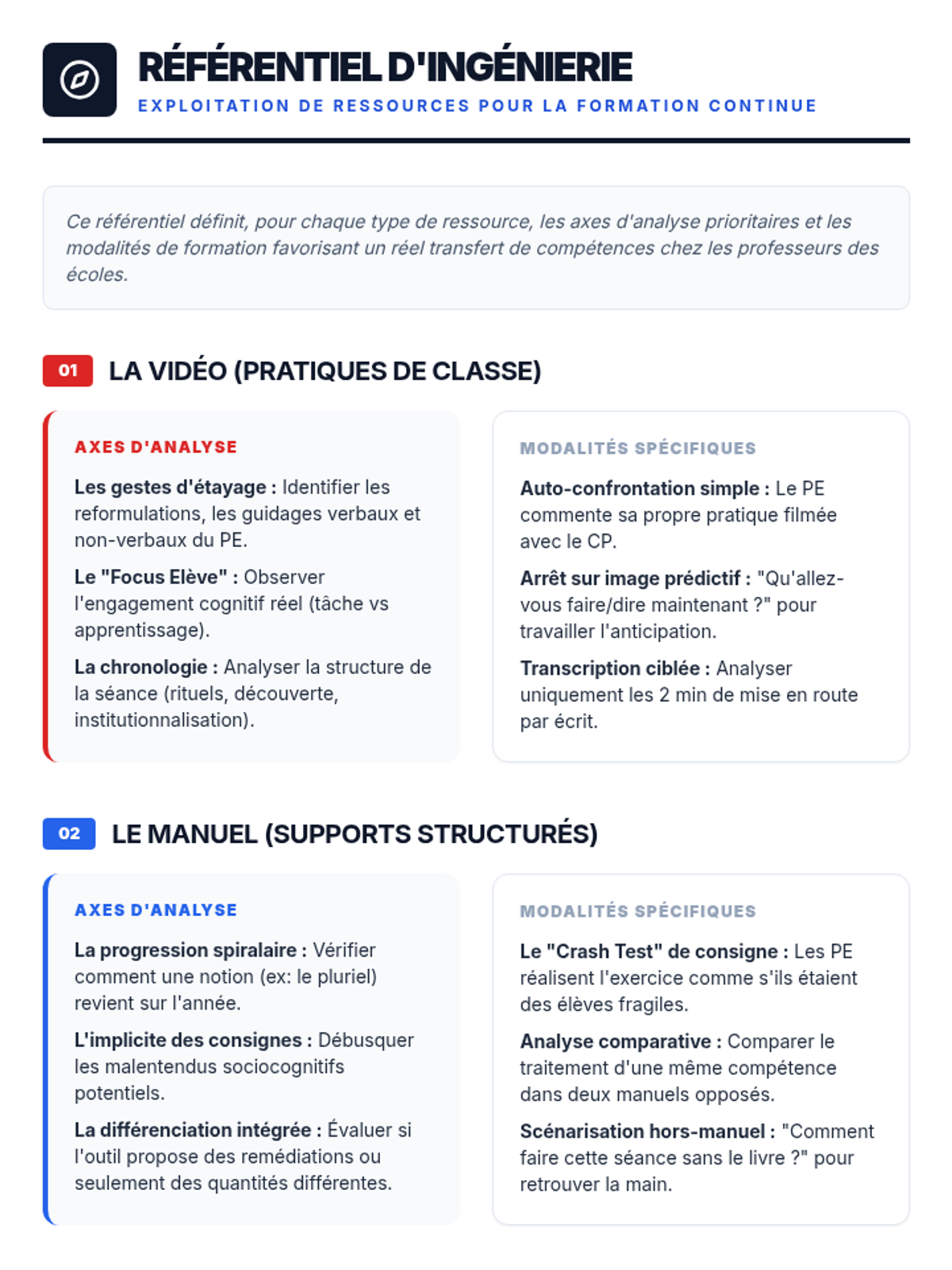
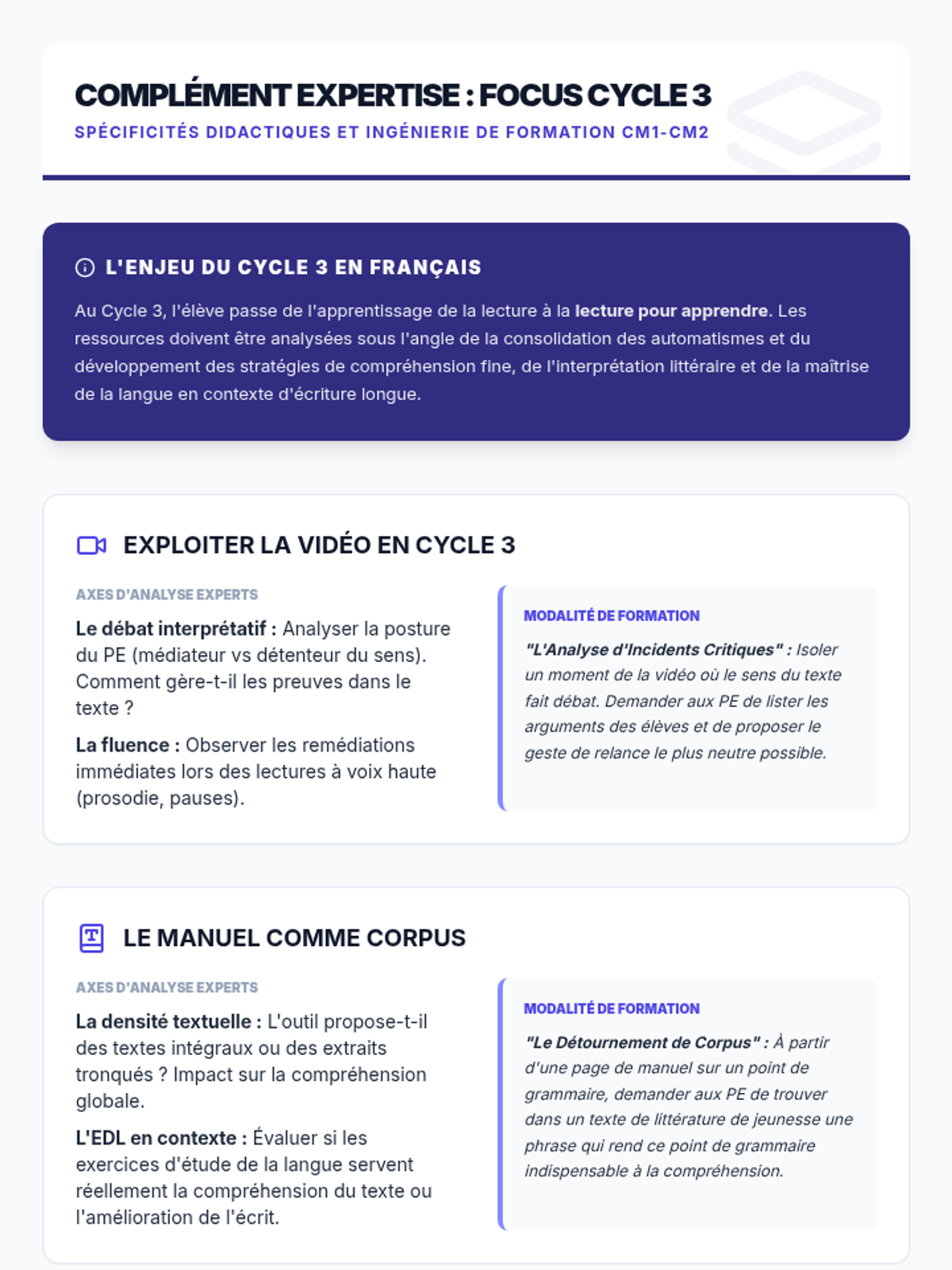
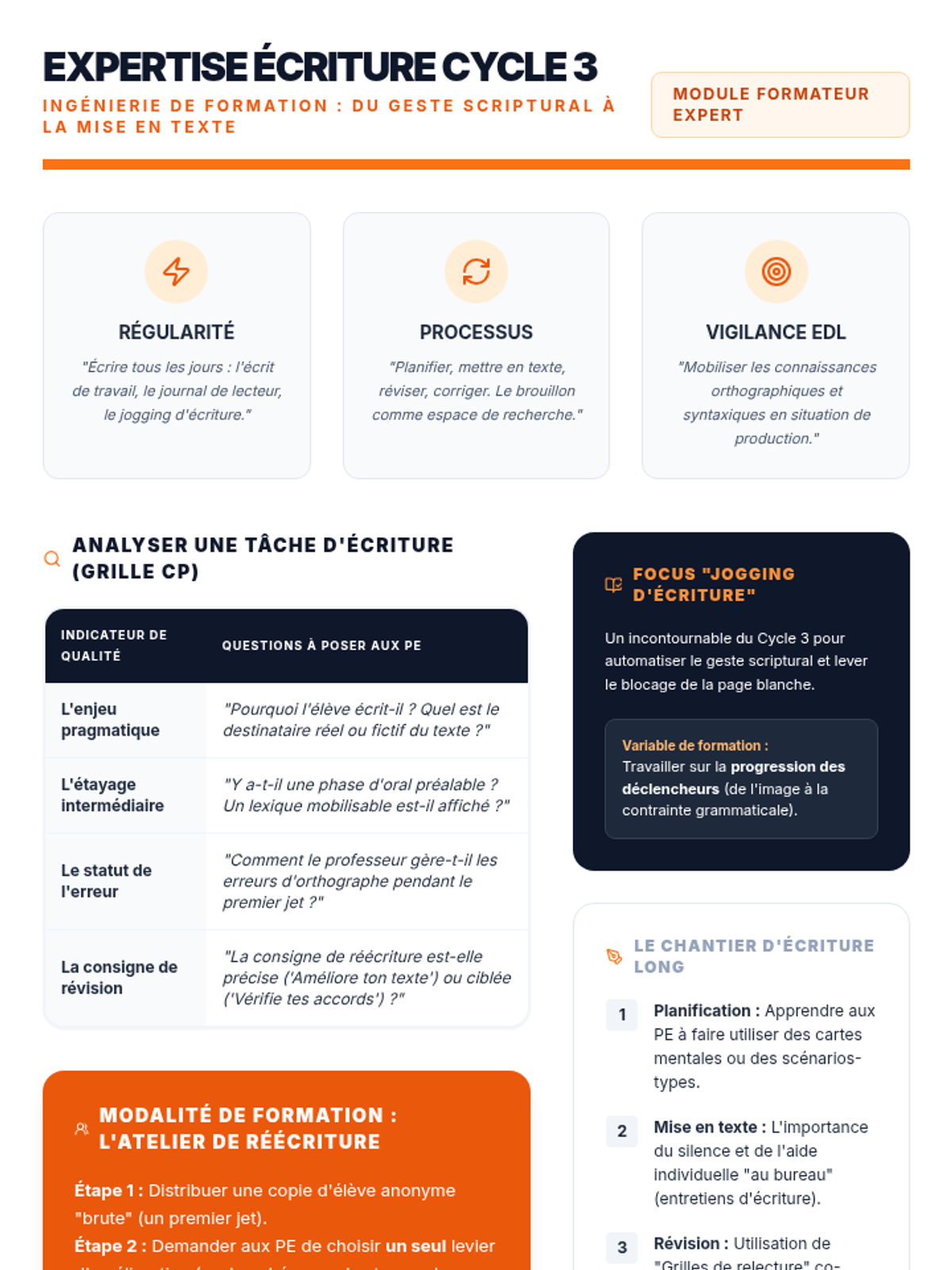
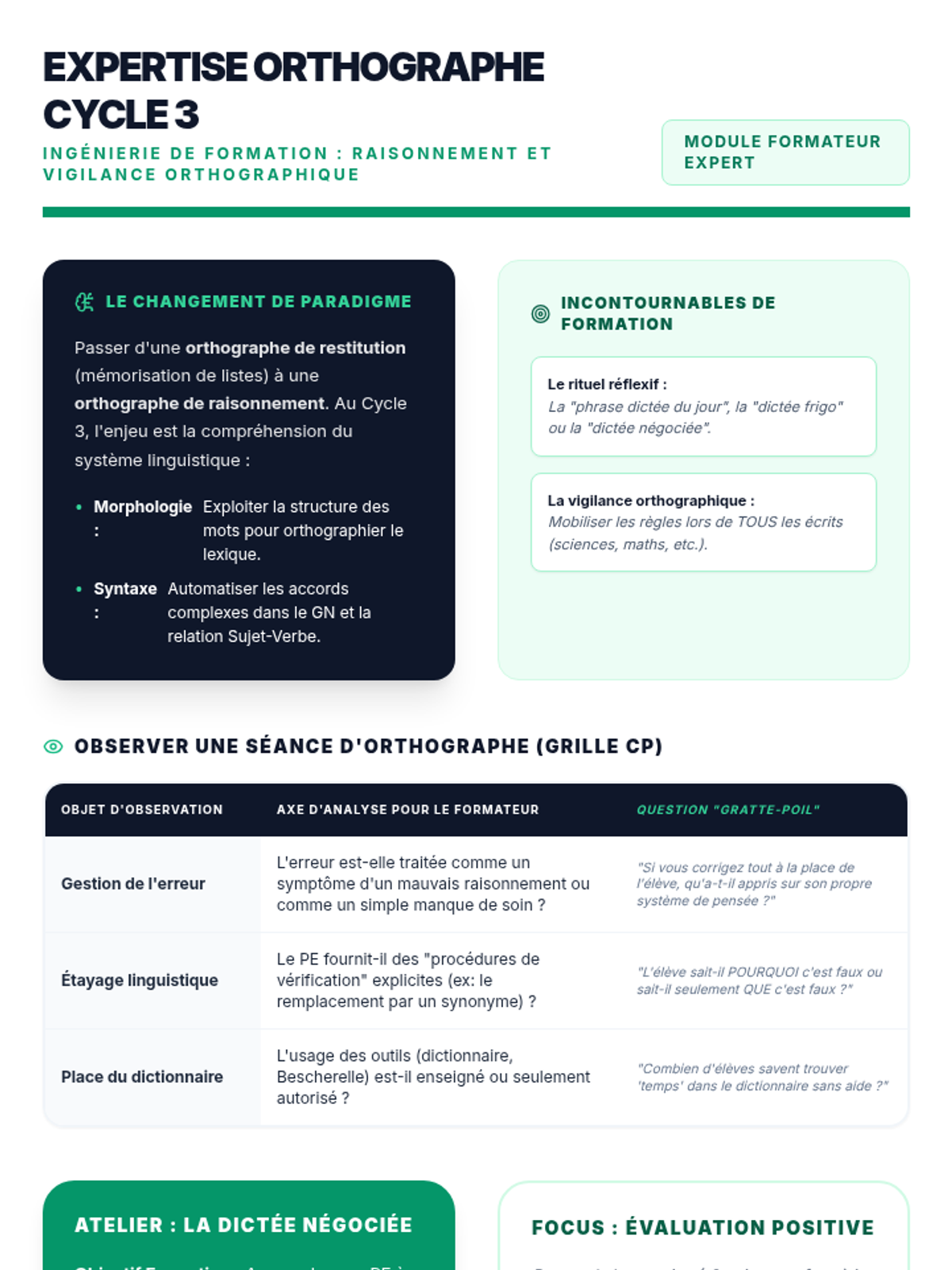
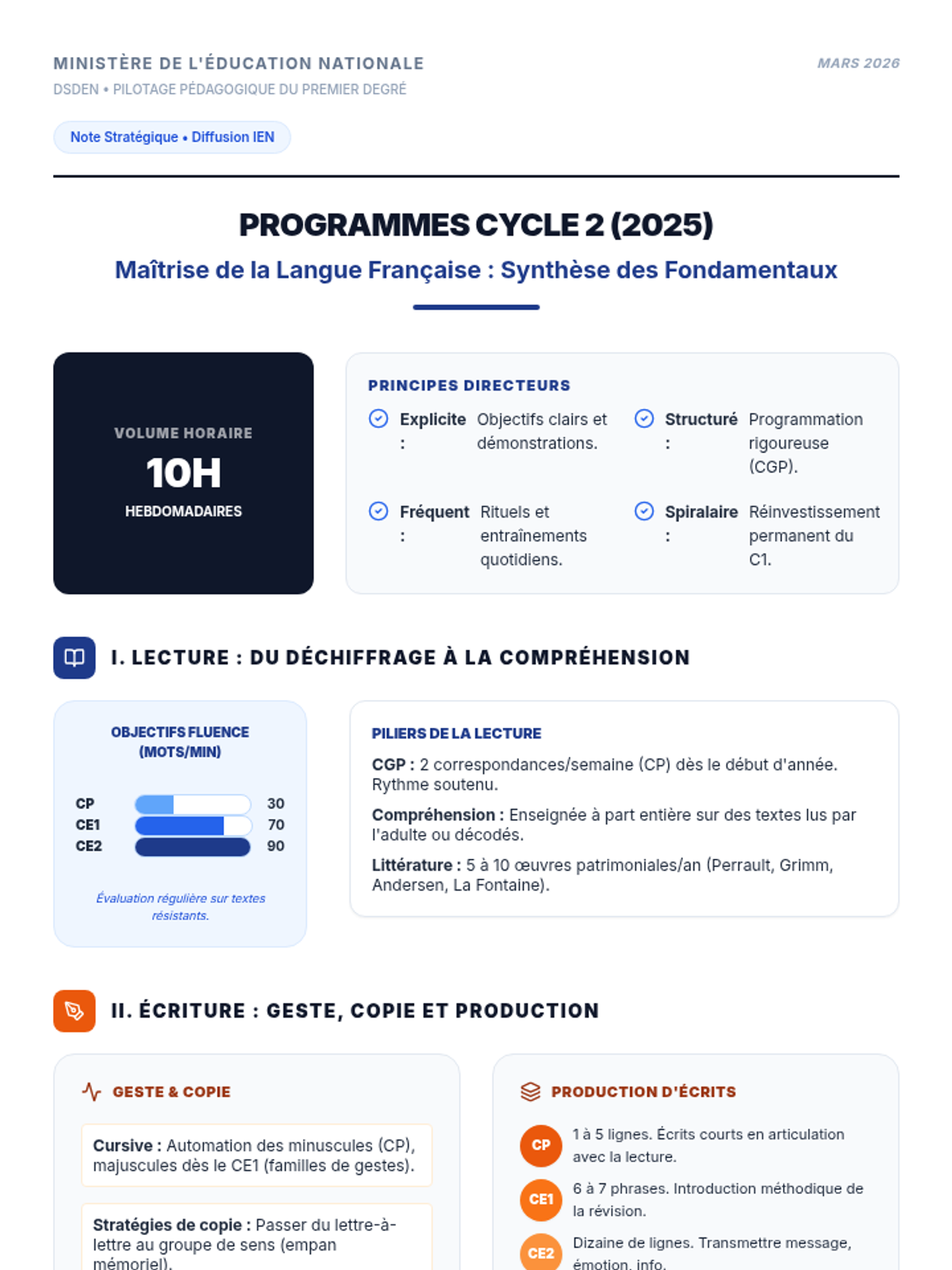
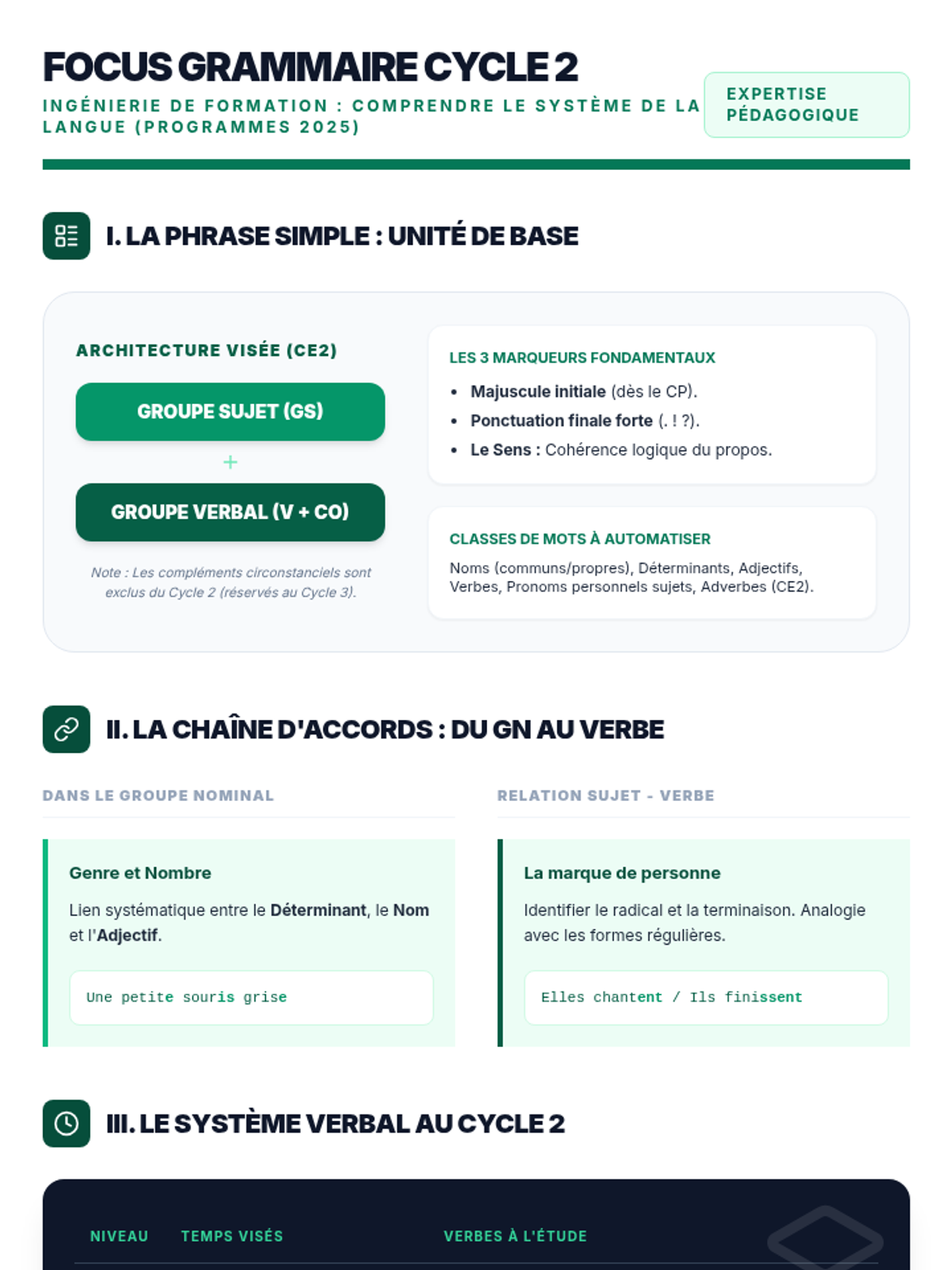
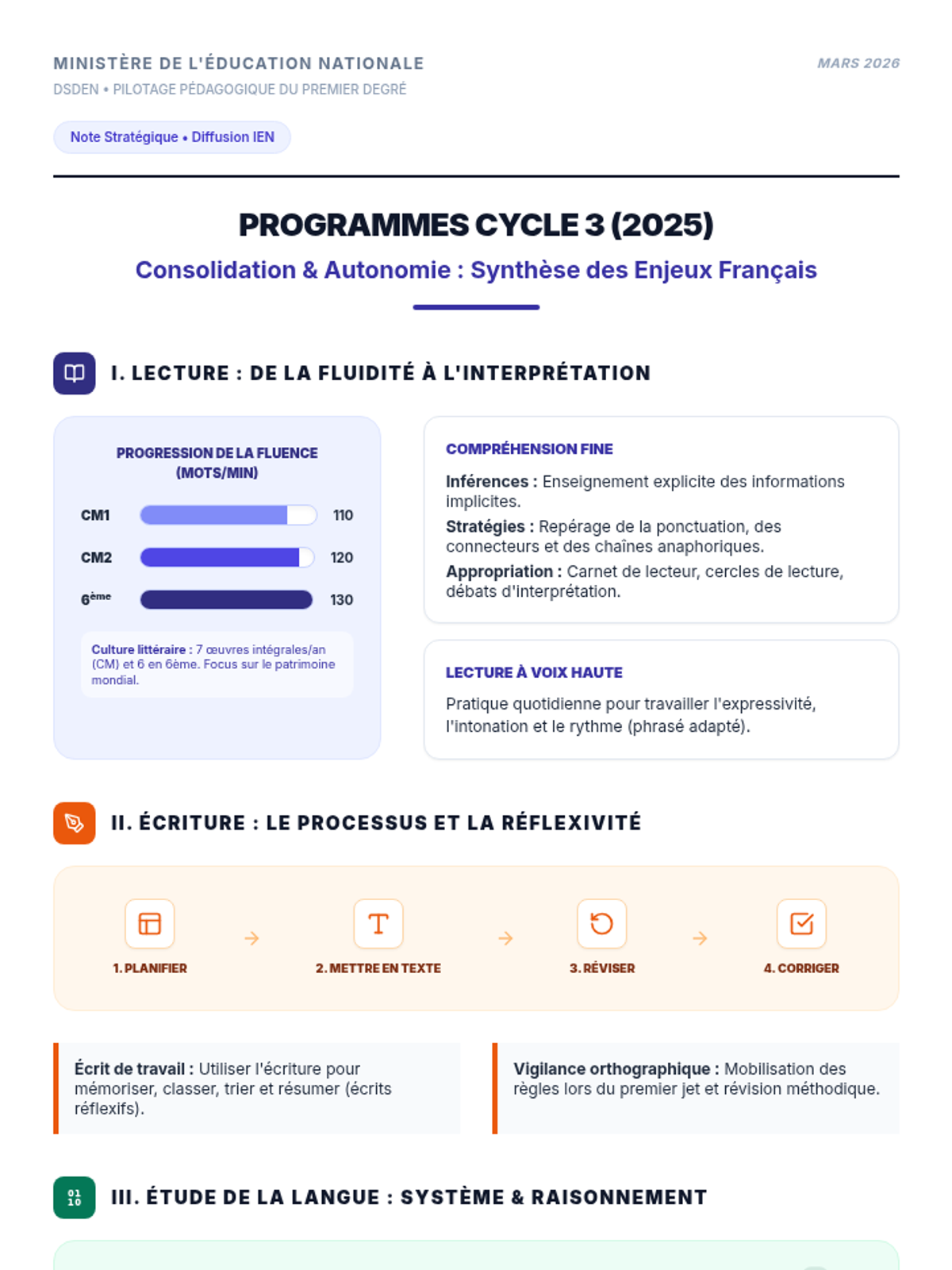
Cette formation vise à outiller les conseillers pédagogiques pour l'analyse et l'exploitation de ressources diverses (vidéos, manuels, guides) dans le cadre de la formation continue des professeurs des écoles en français, conformément aux orientations stratégiques nationales.
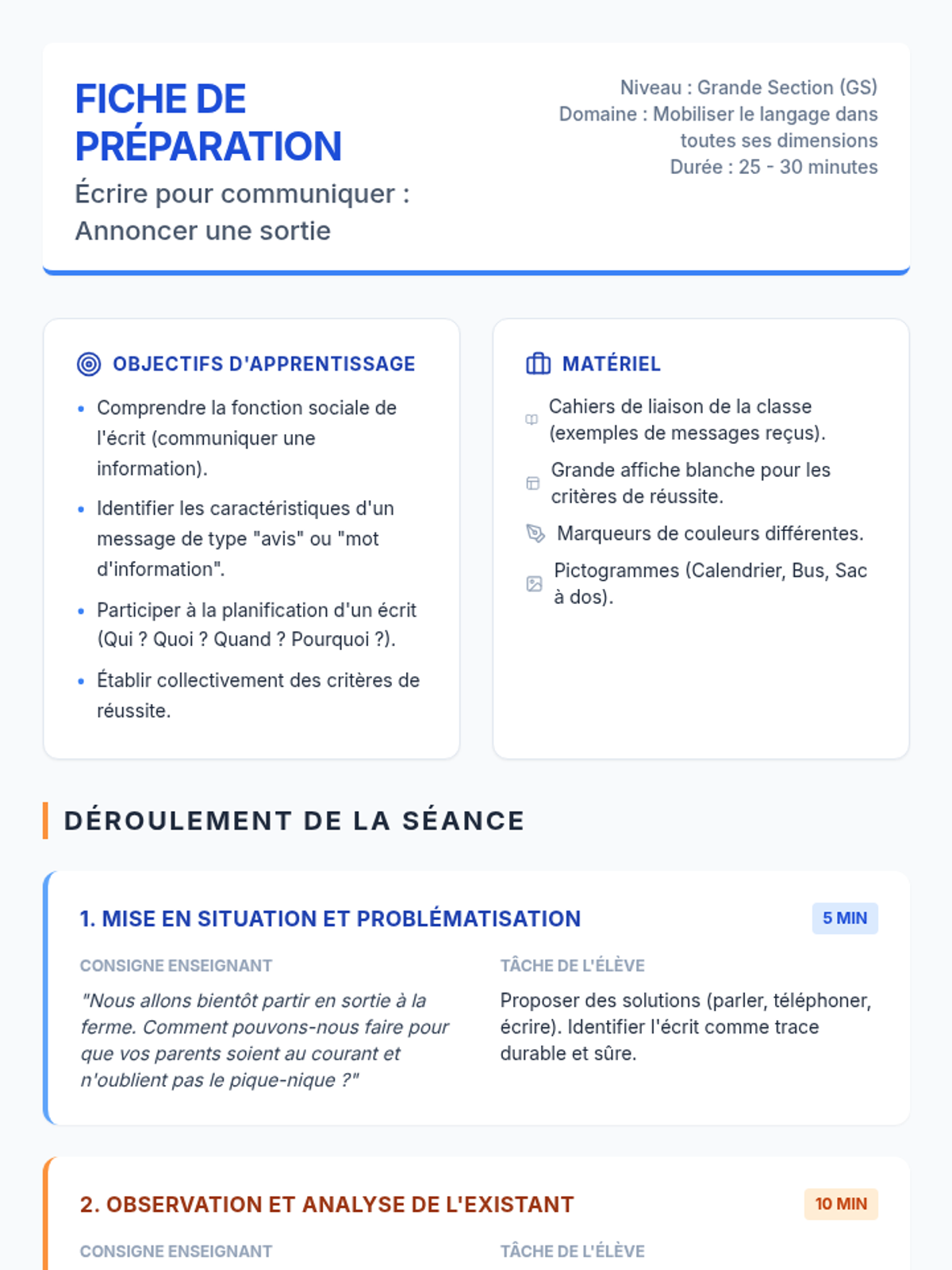
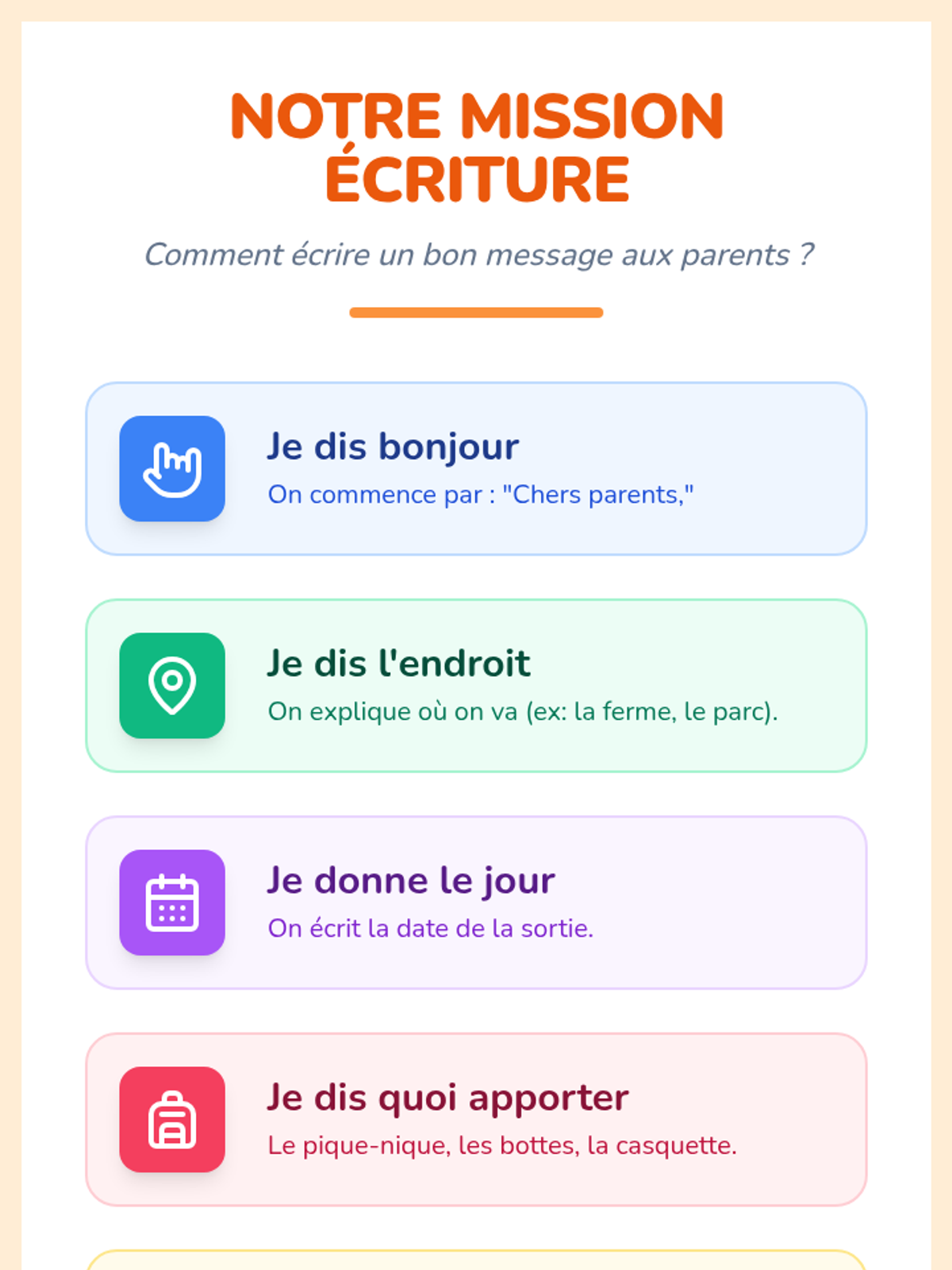
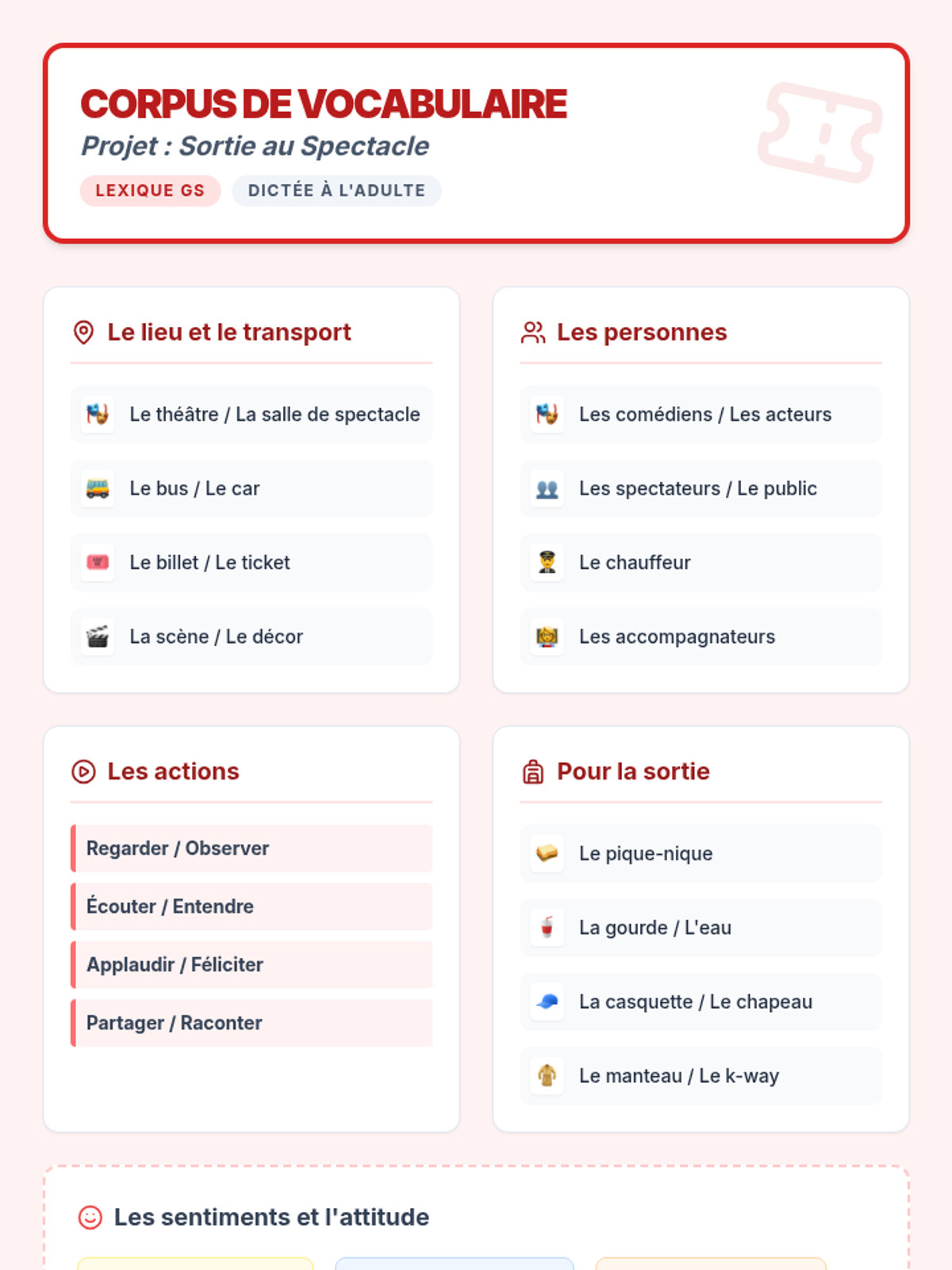
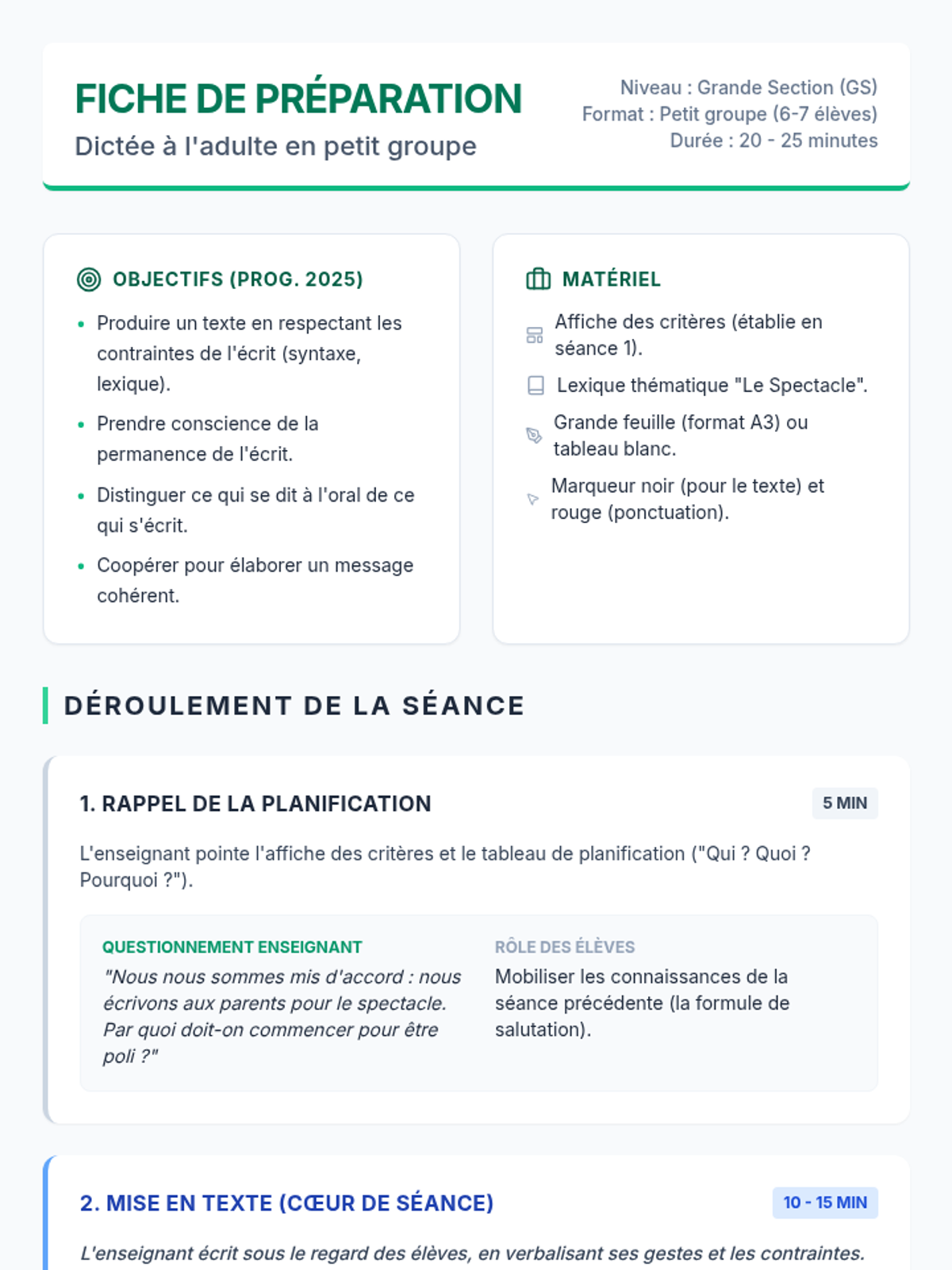
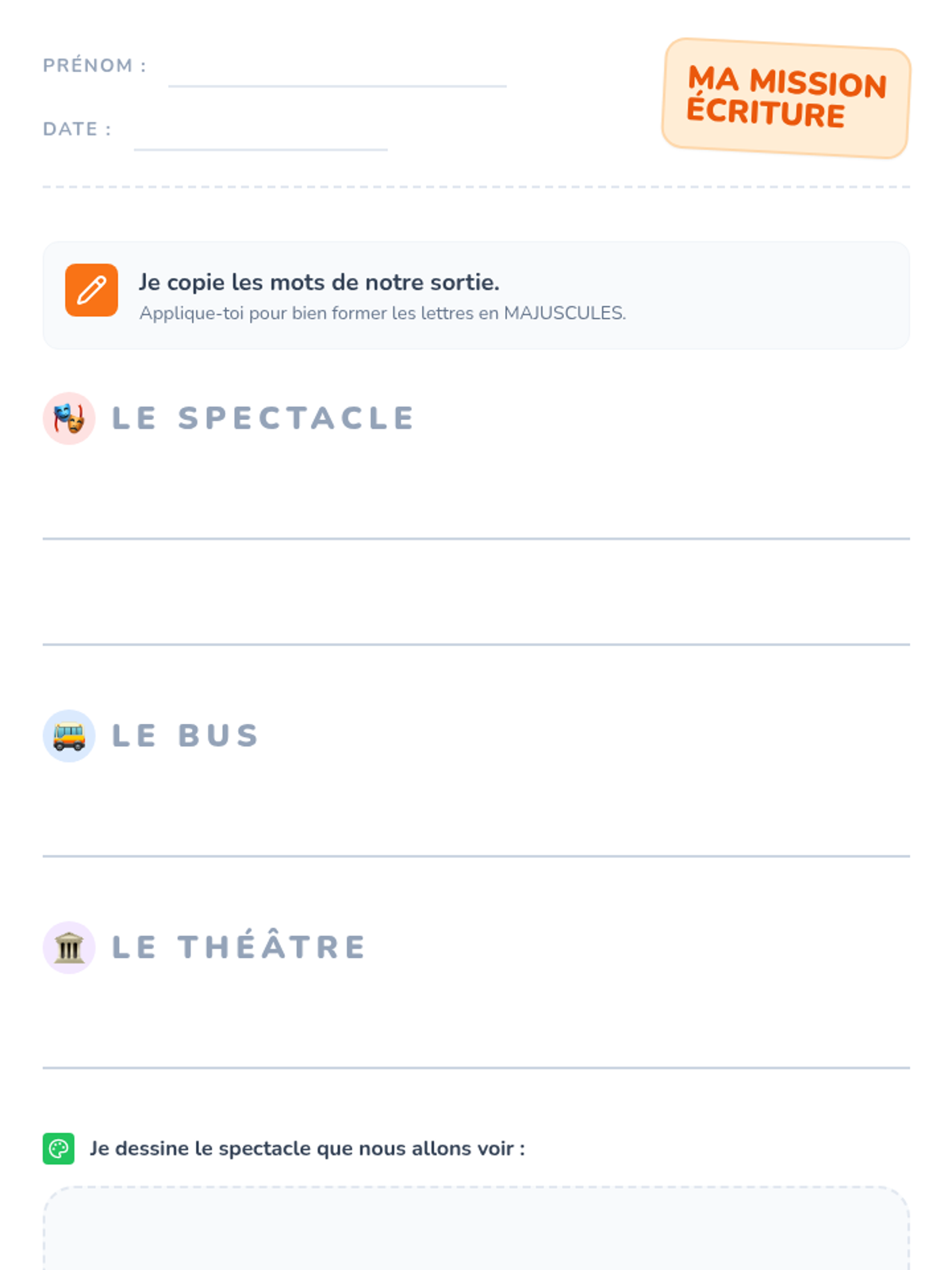
Cette leçon vise à introduire un projet d'écriture authentique en Grande Section : rédiger un message aux parents pour annoncer une sortie scolaire. Elle s'appuie sur l'observation de messages existants pour définir des critères de réussite et initier la planification selon les programmes 2025.
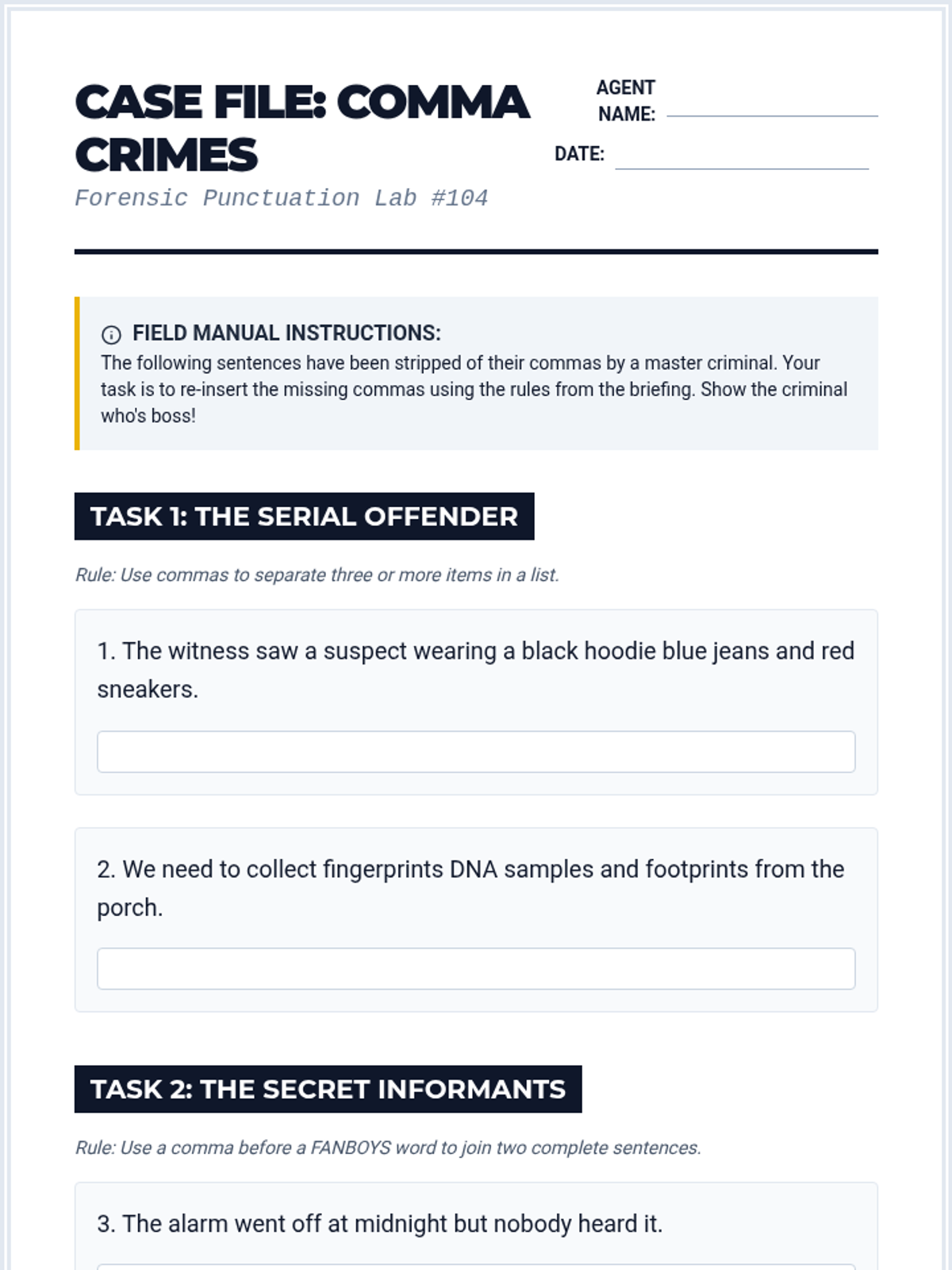
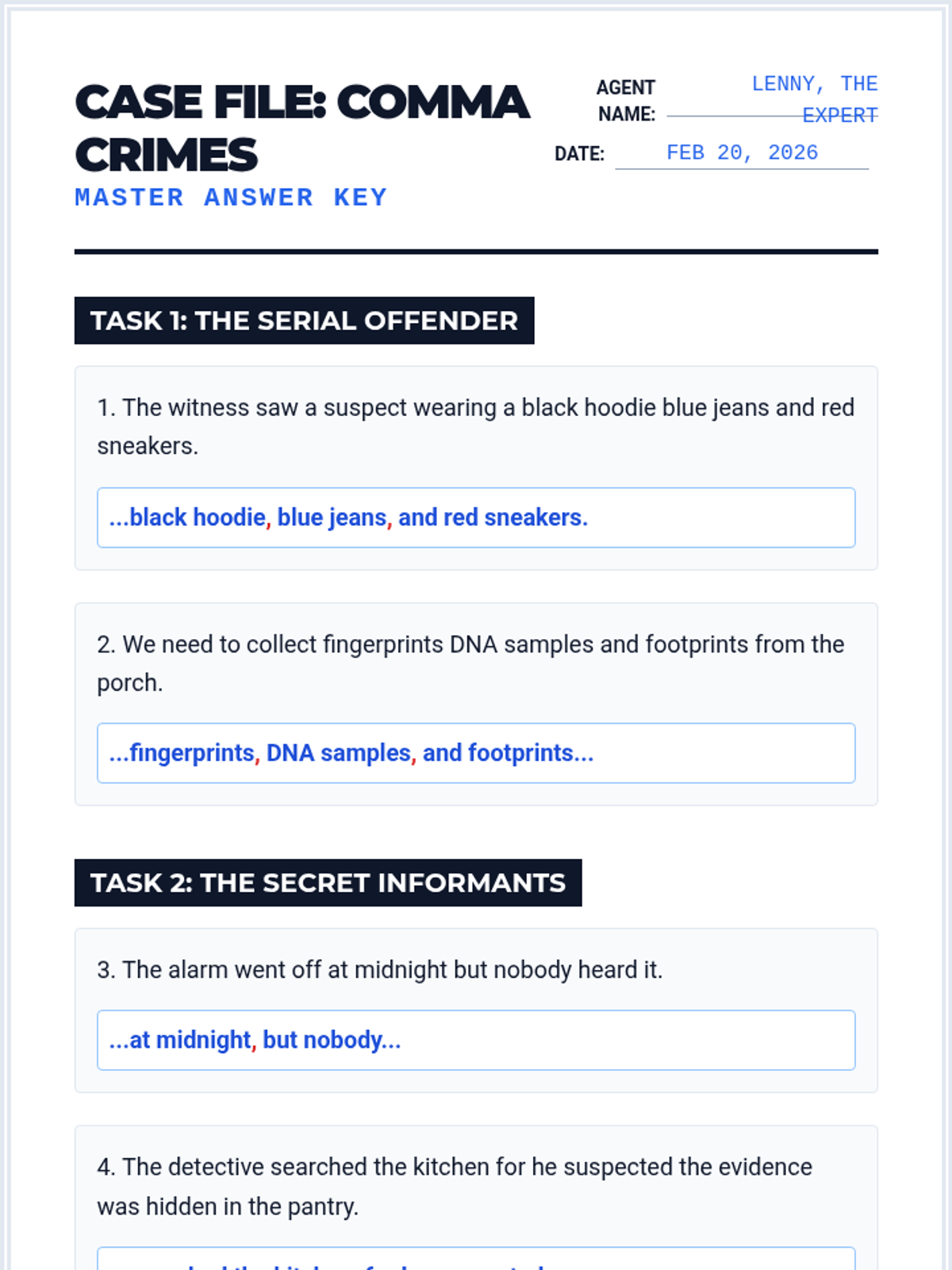
A comprehensive lesson on comma usage, themed as a forensic investigation to help students identify and correct common punctuation errors.
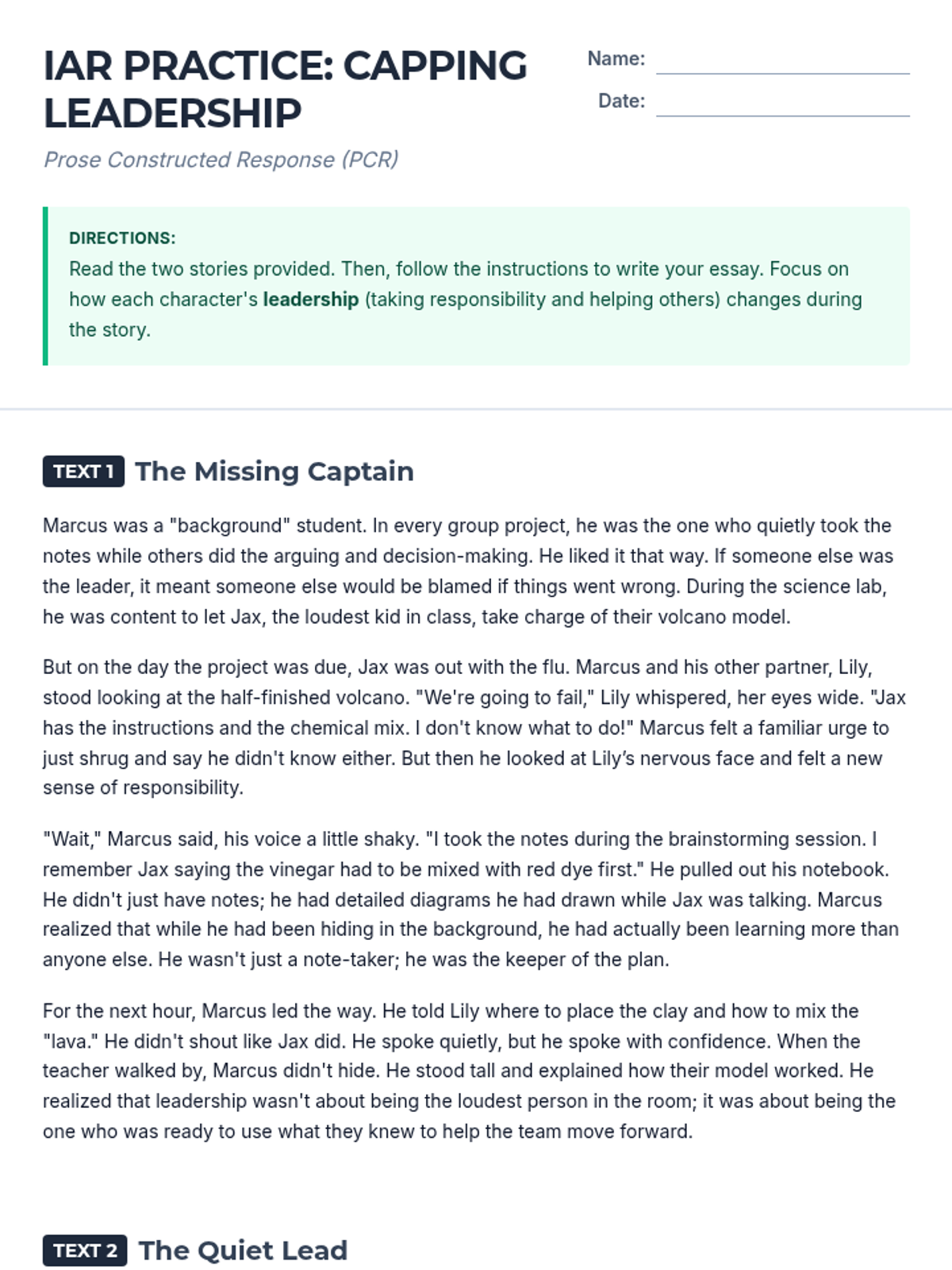
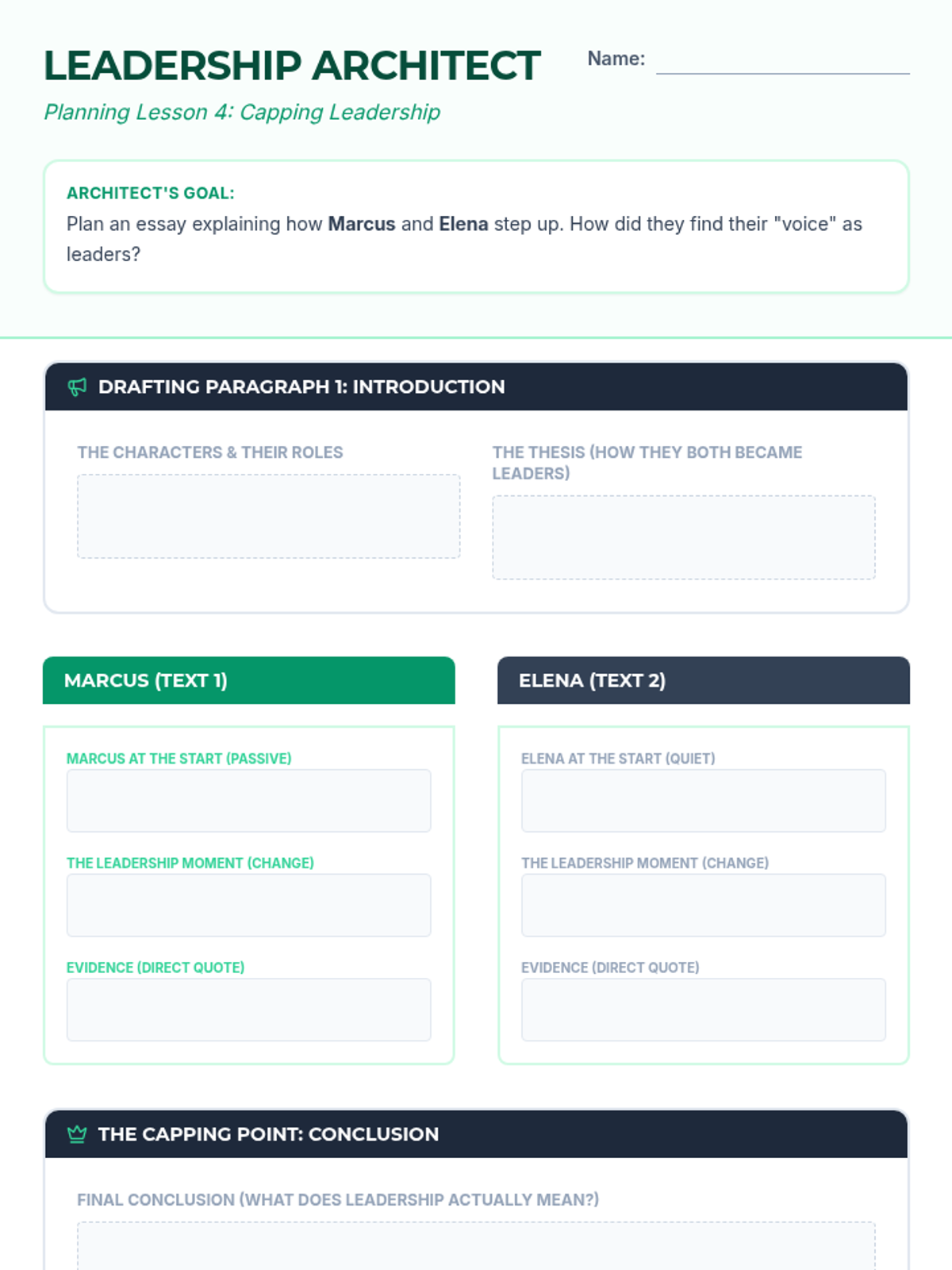
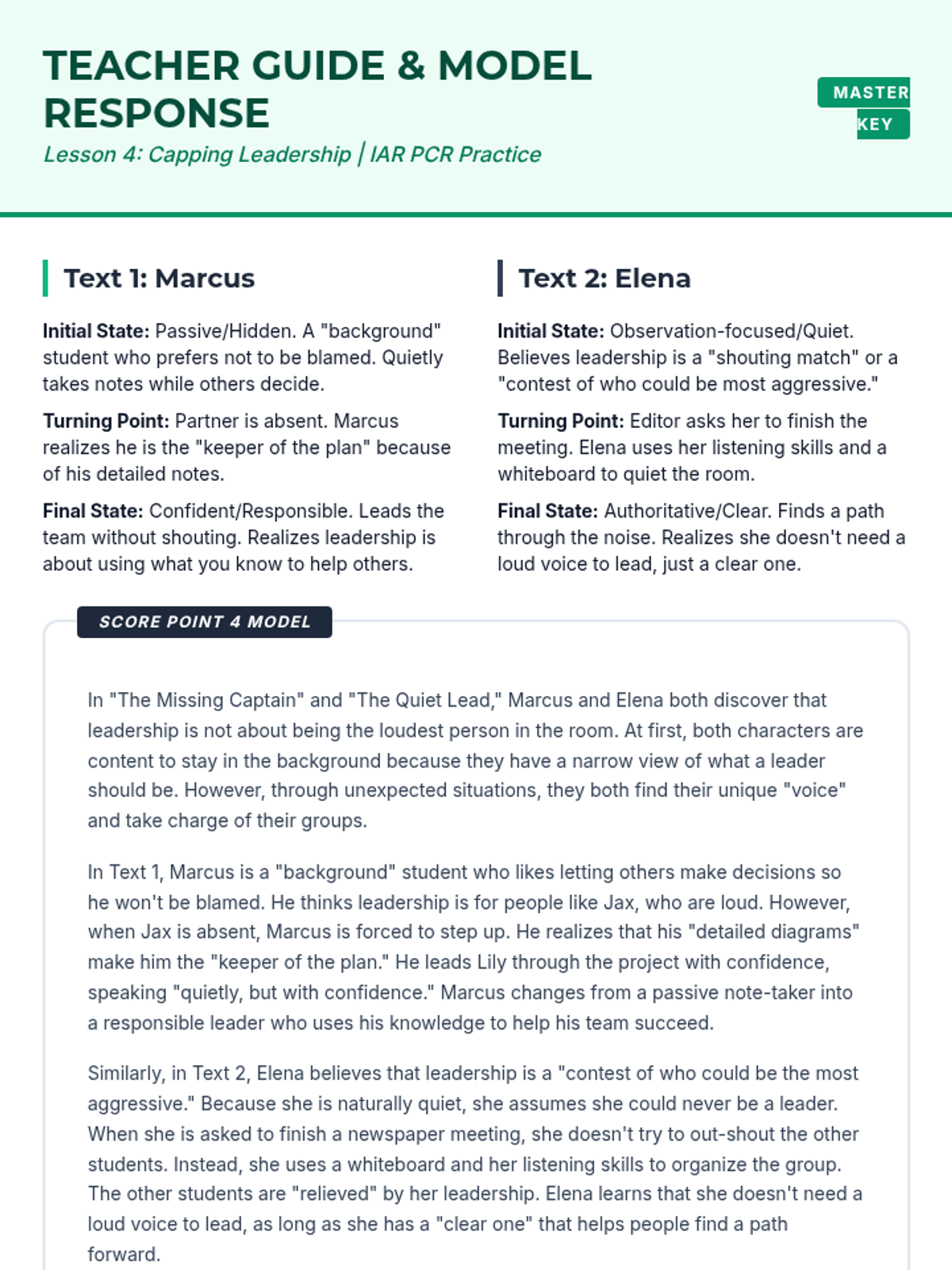
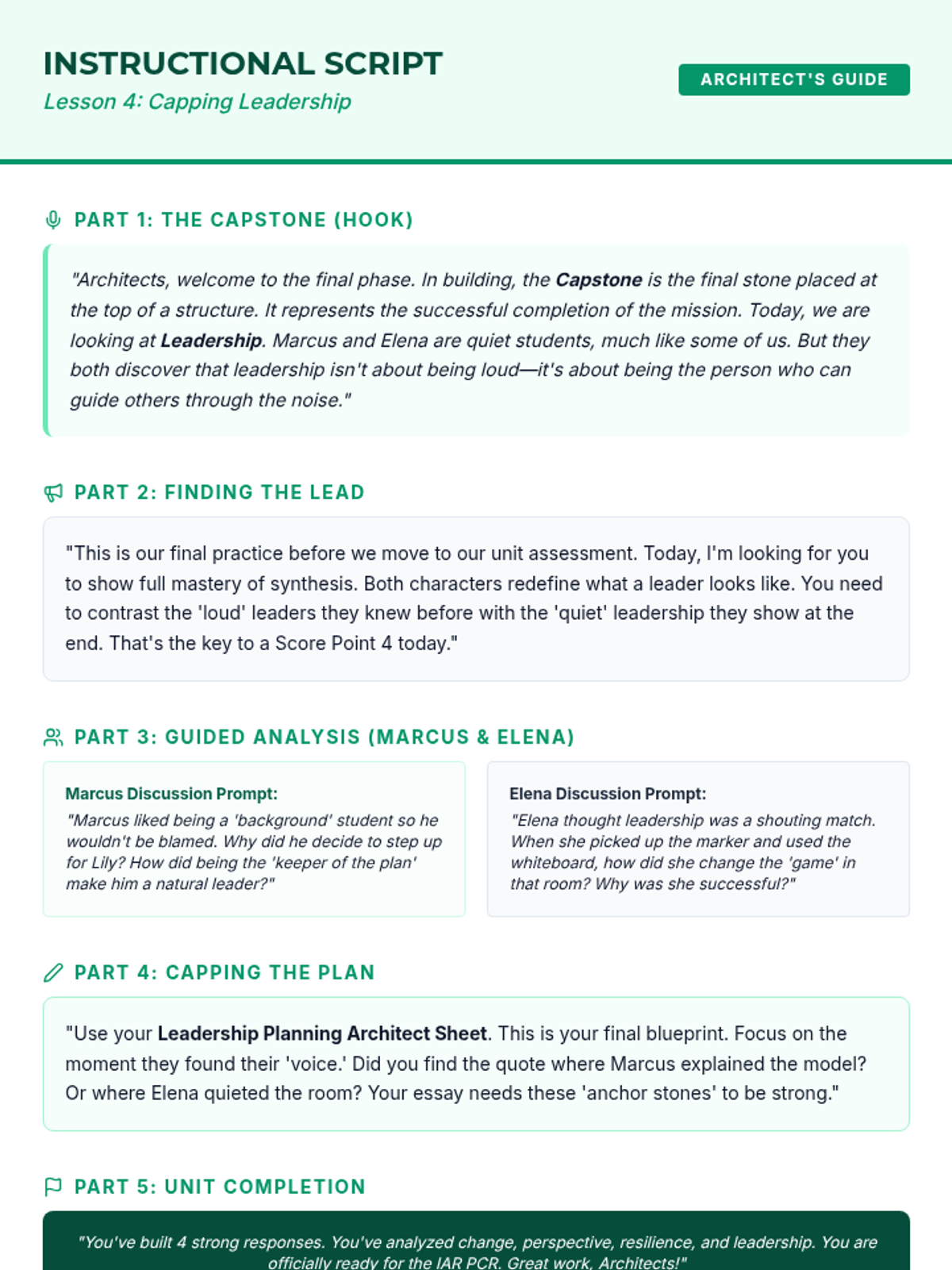
Students analyze how characters take on leadership roles and gain confidence. They compare two stories where characters move from being followers to taking active responsibility.
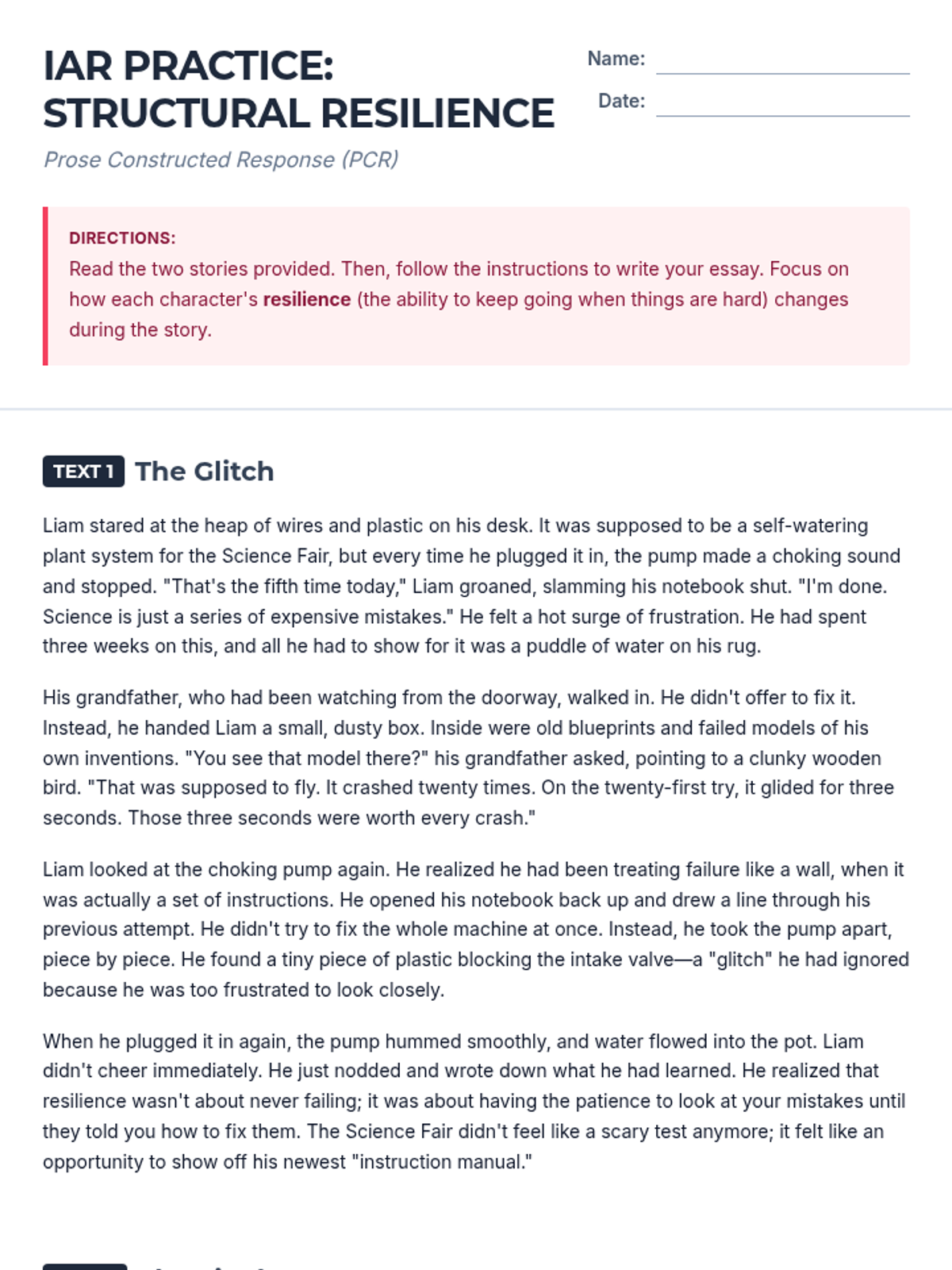
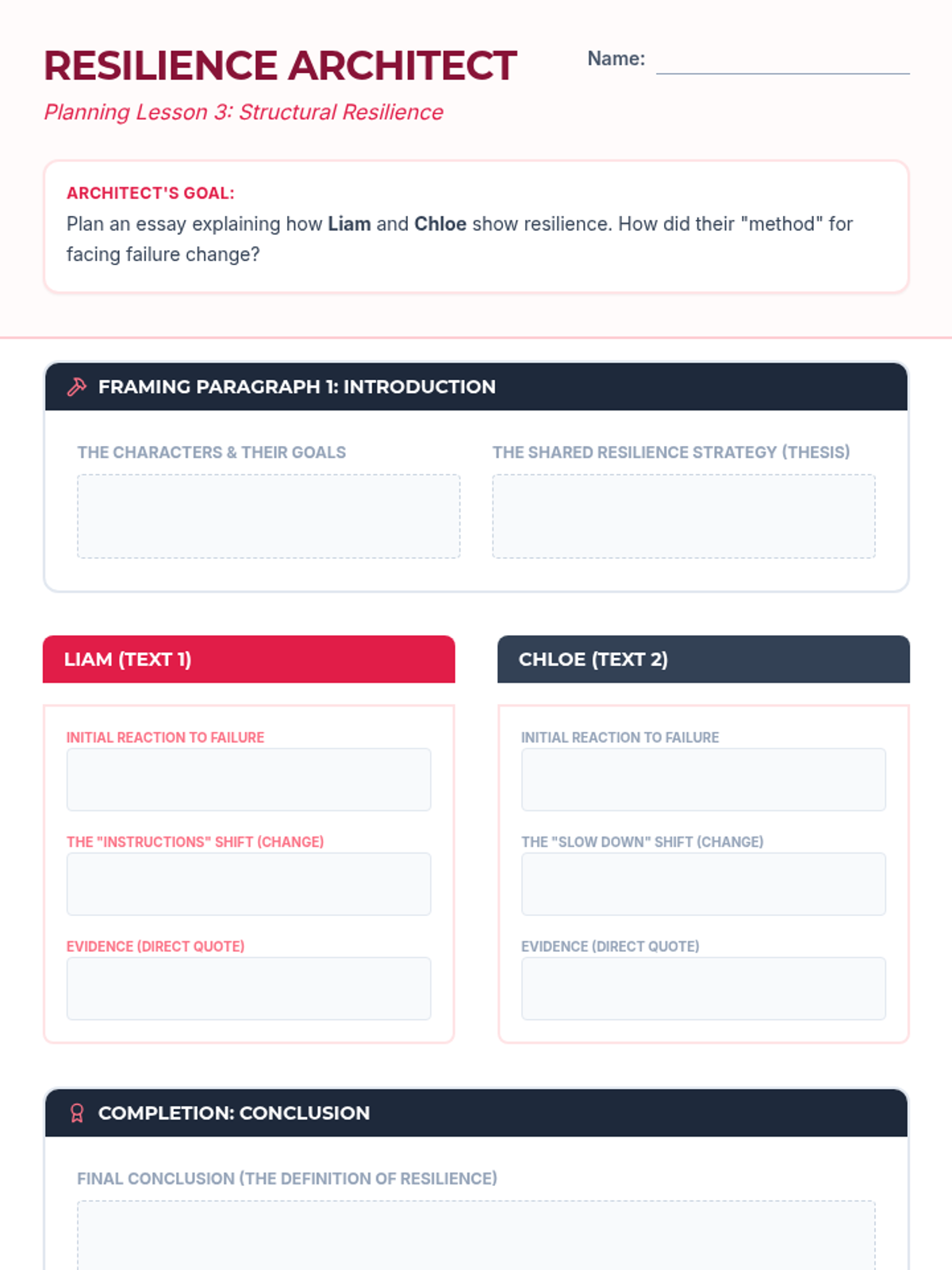
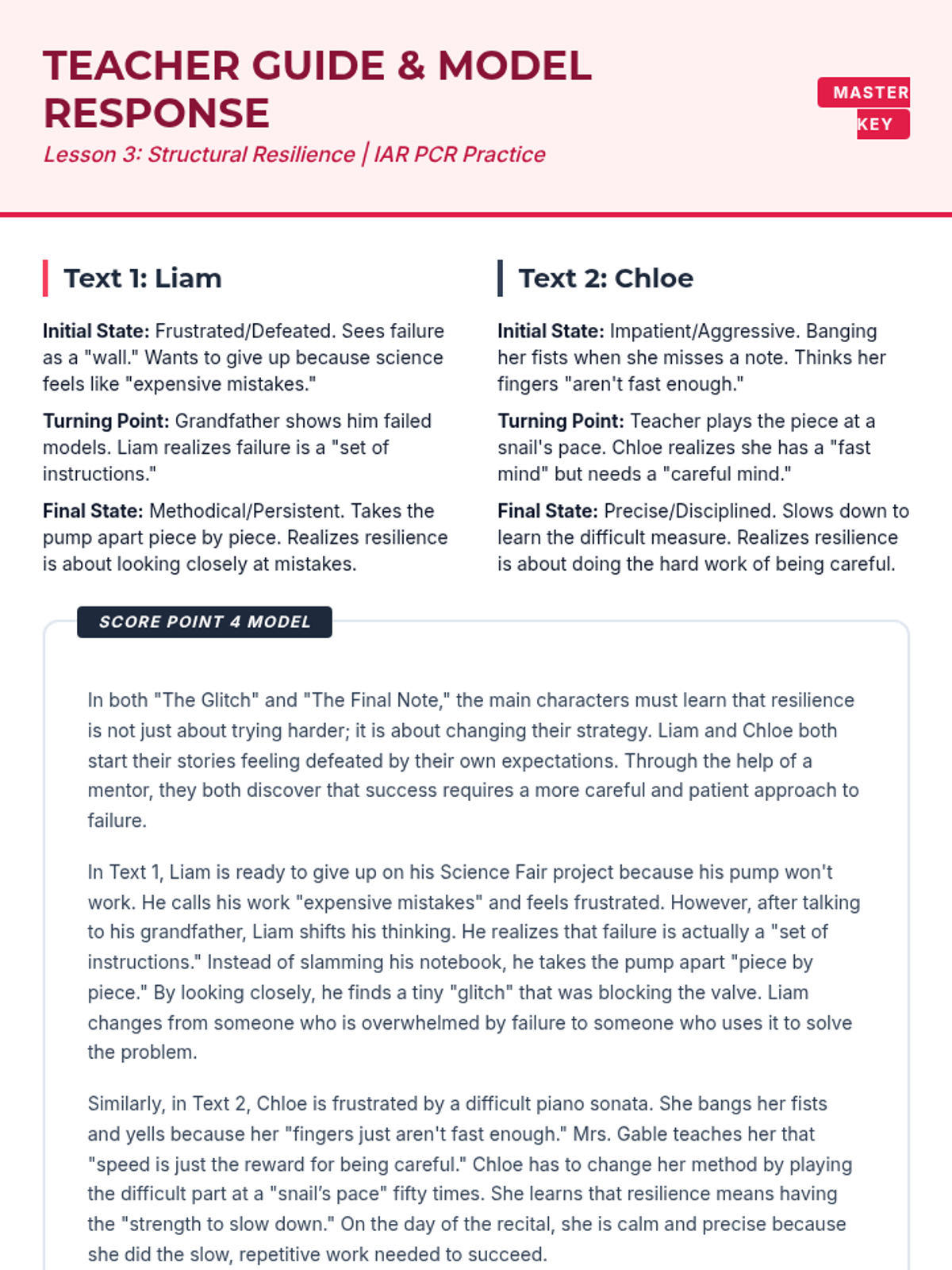
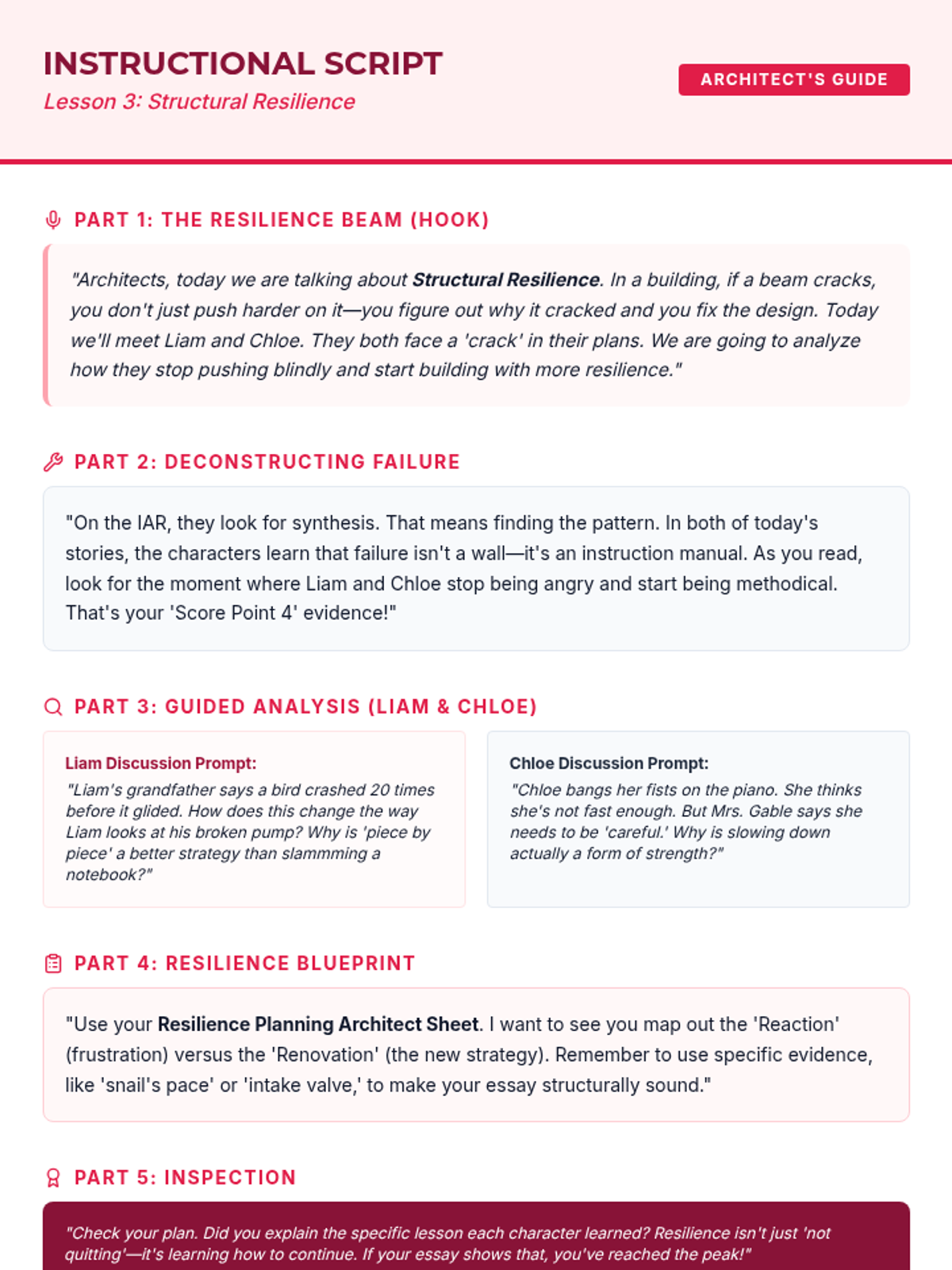
Students explore how characters develop resilience and persistence. They analyze two stories where characters face repeated failure before finding a new path to success.
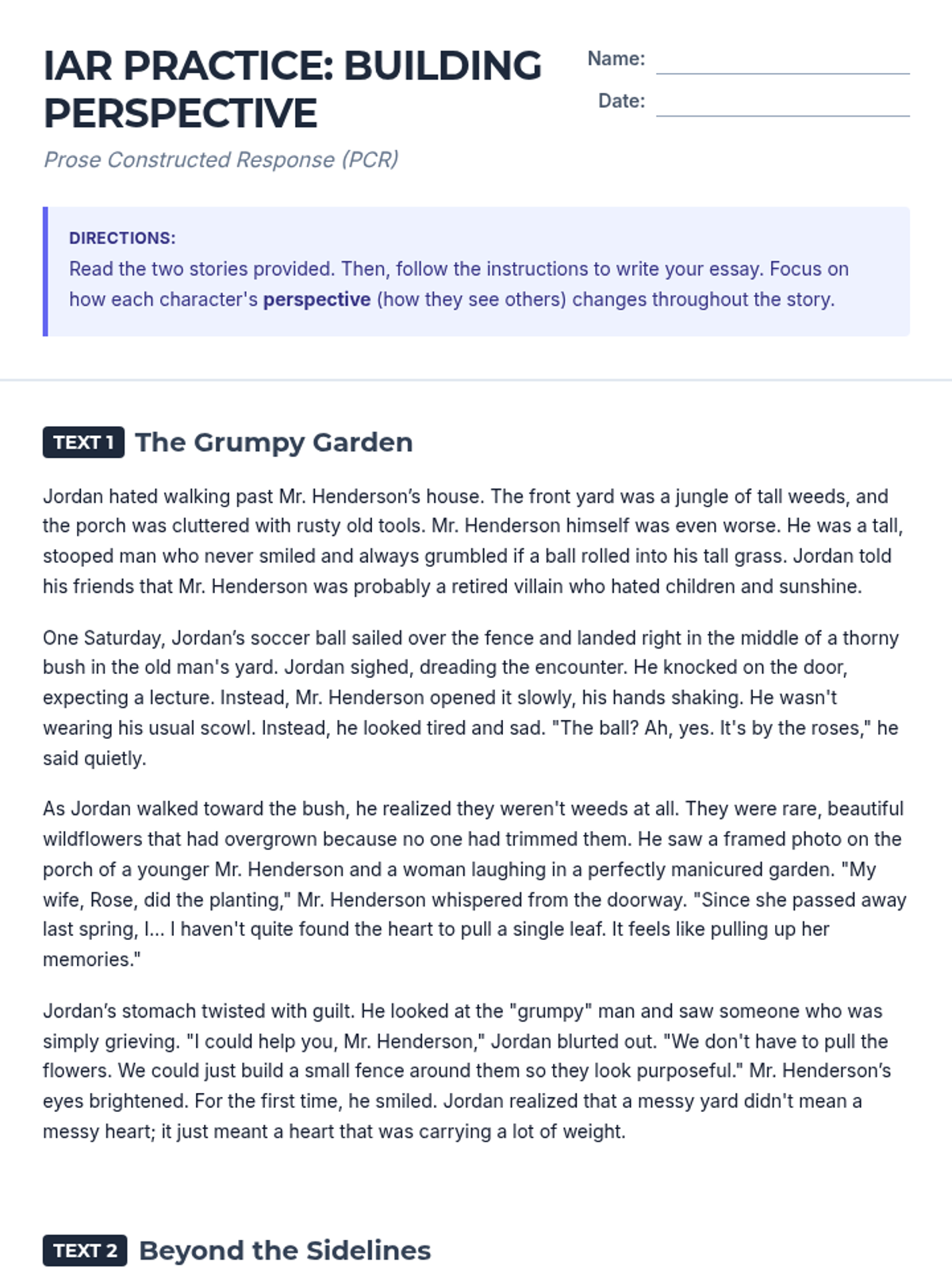
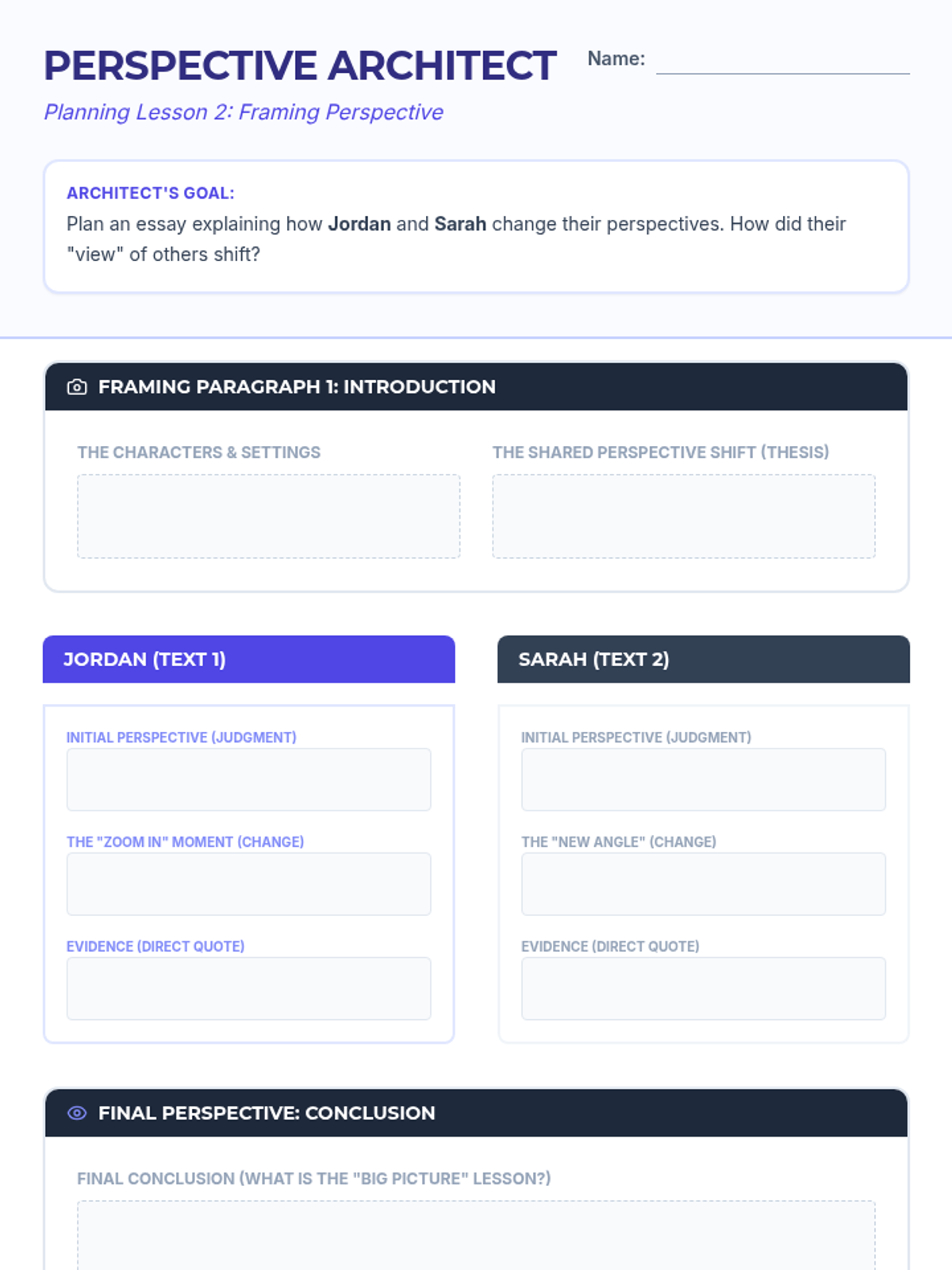
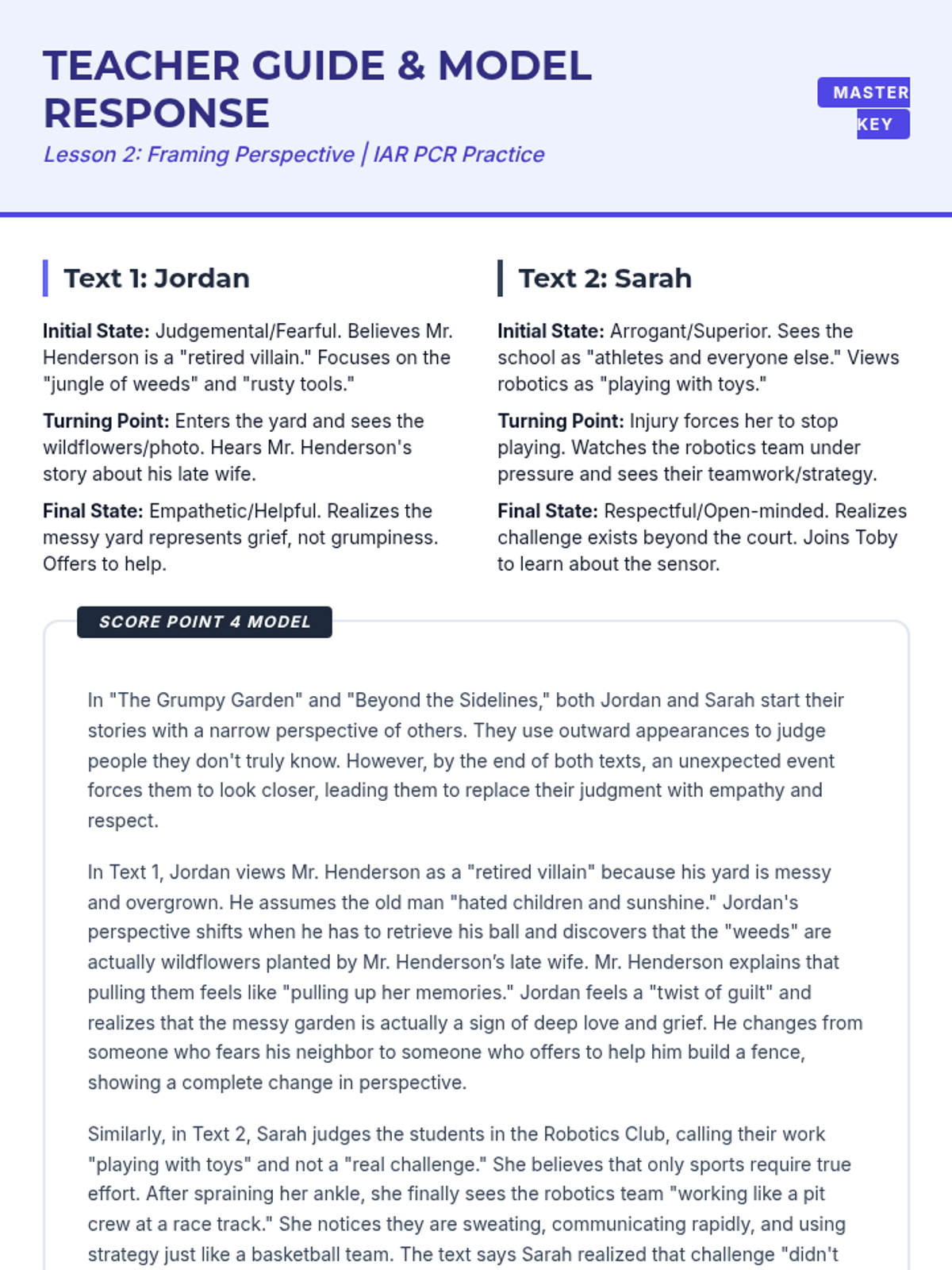
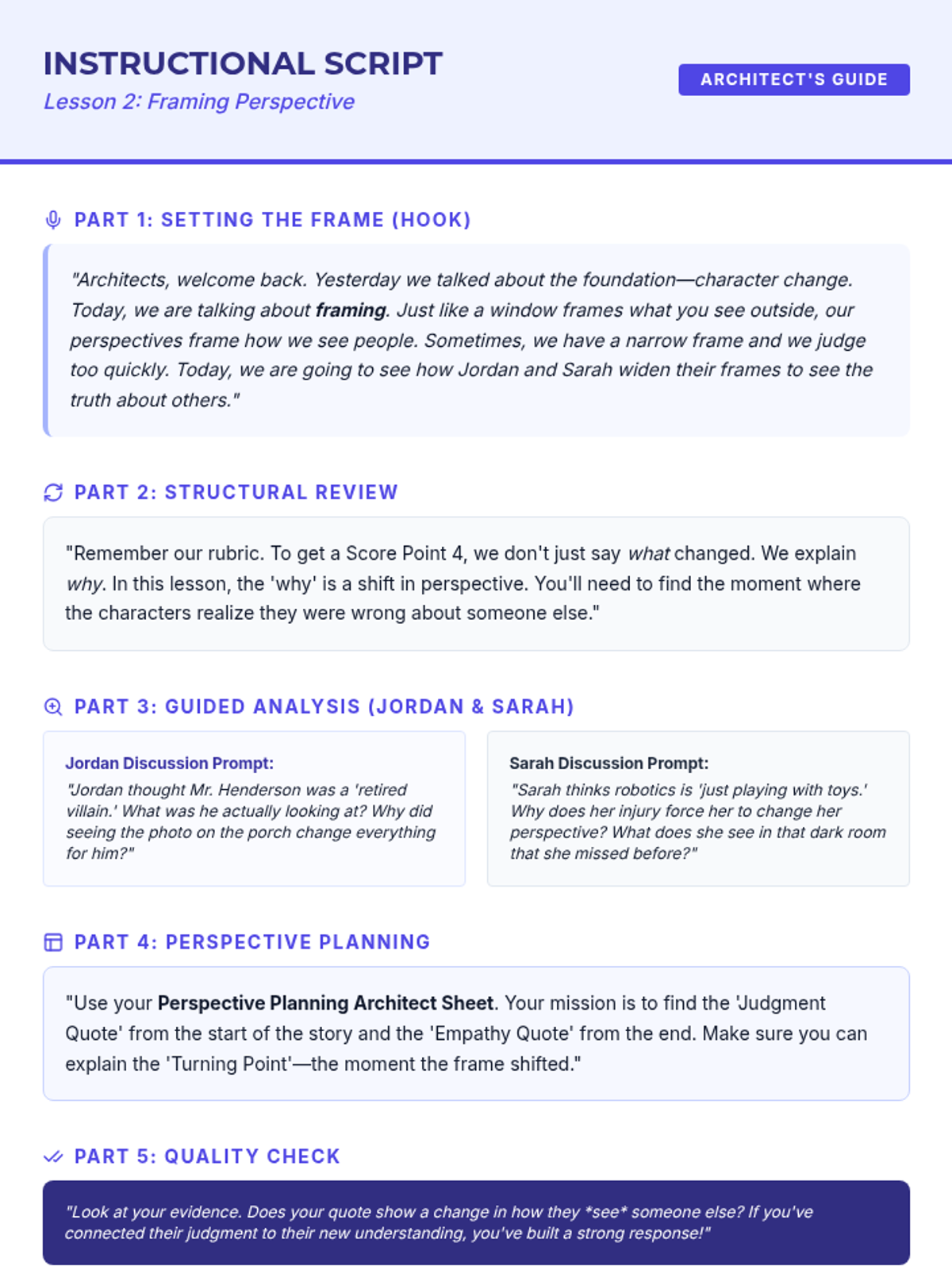
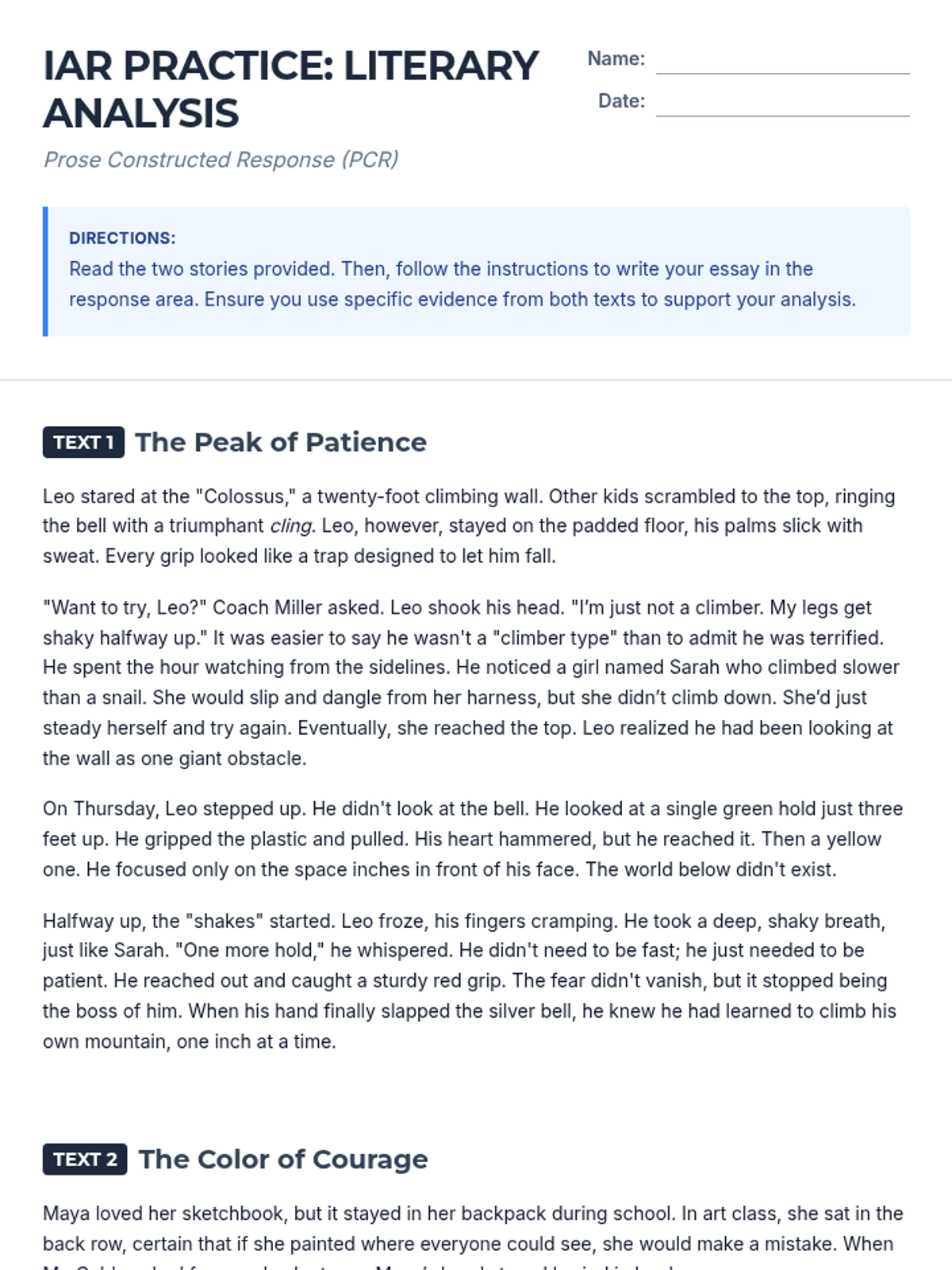
Students focus on how characters' perspectives shift from judgment to empathy. They analyze two stories where characters overcome initial biases to form new understandings.
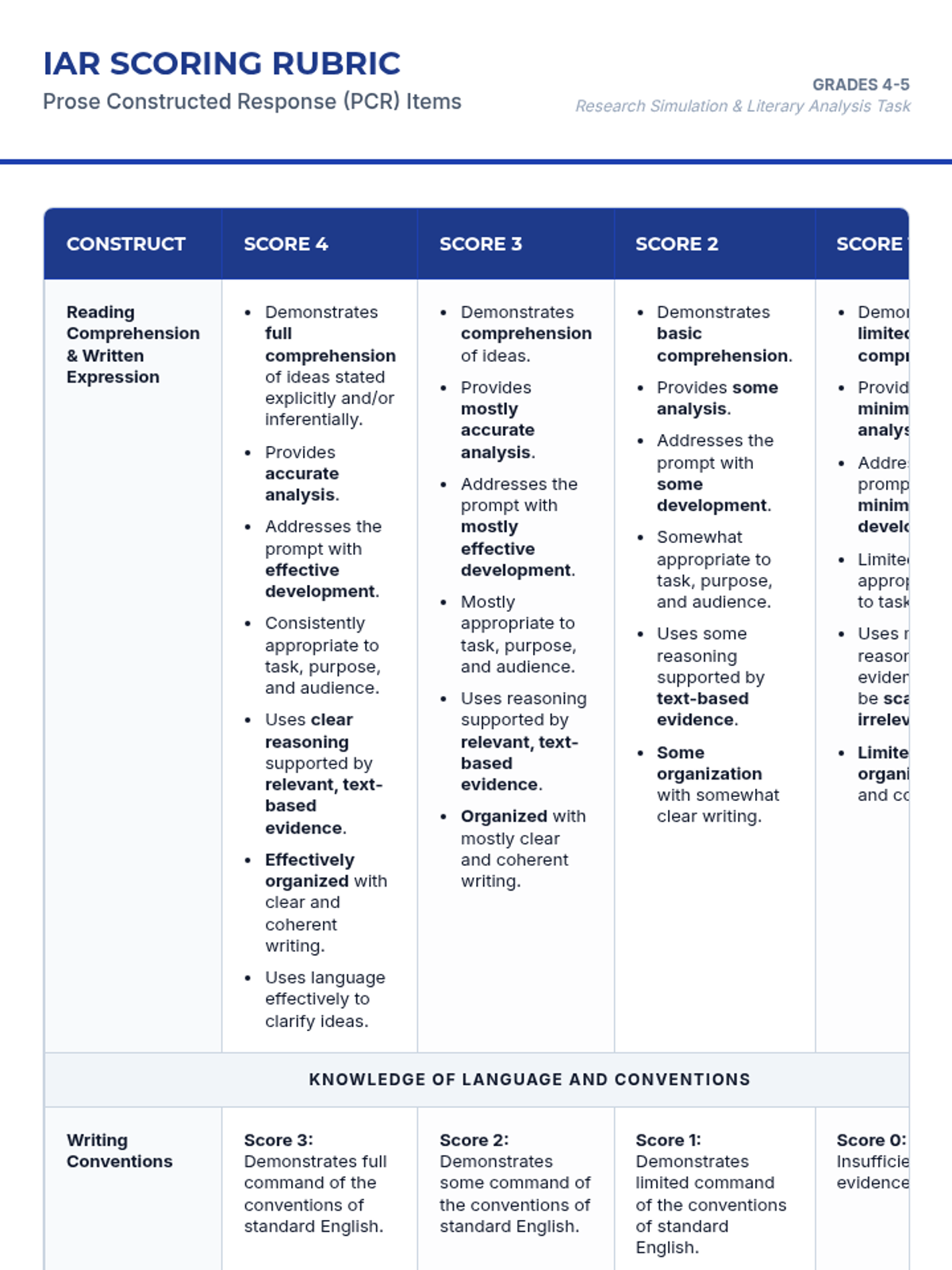
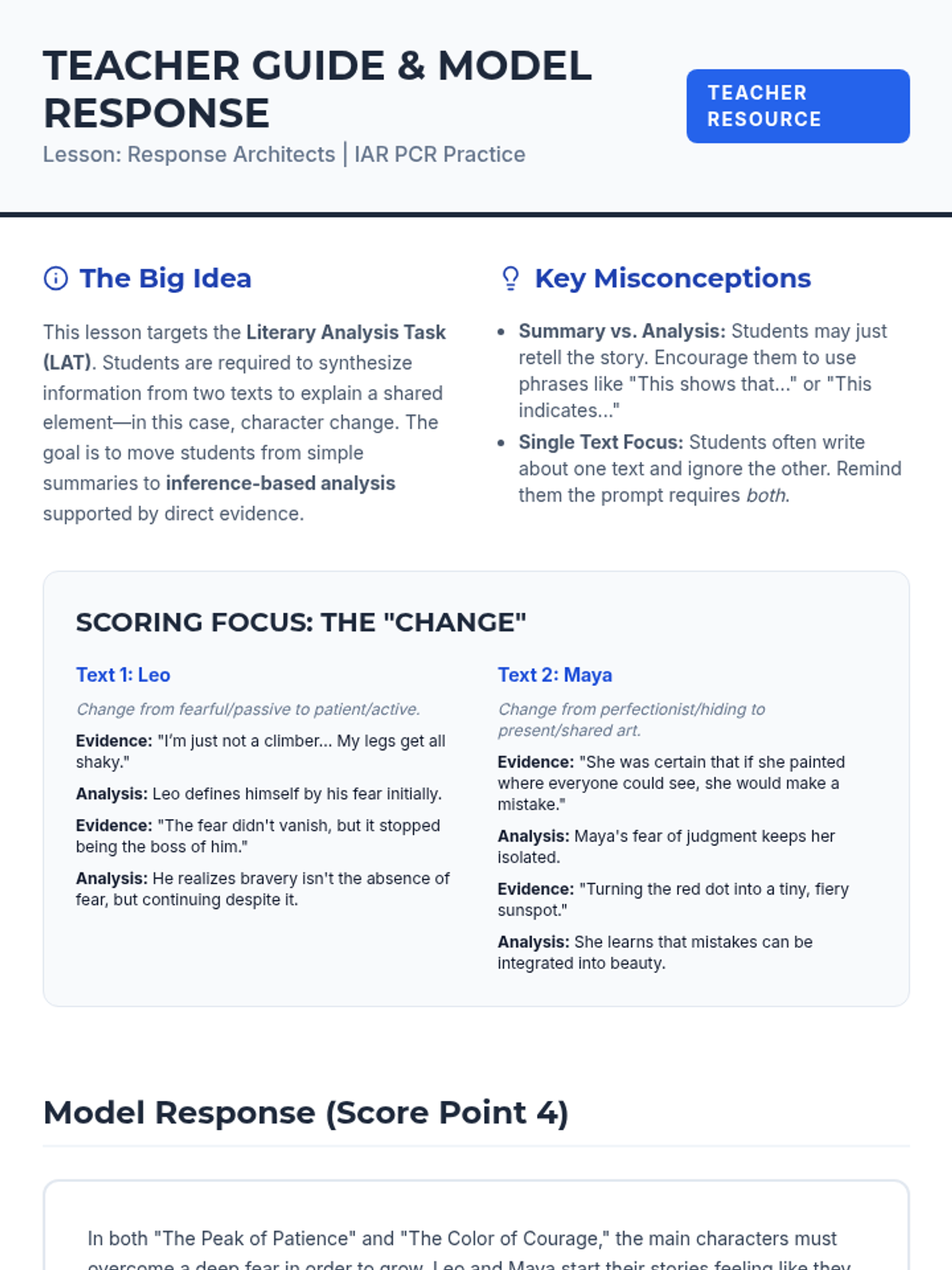
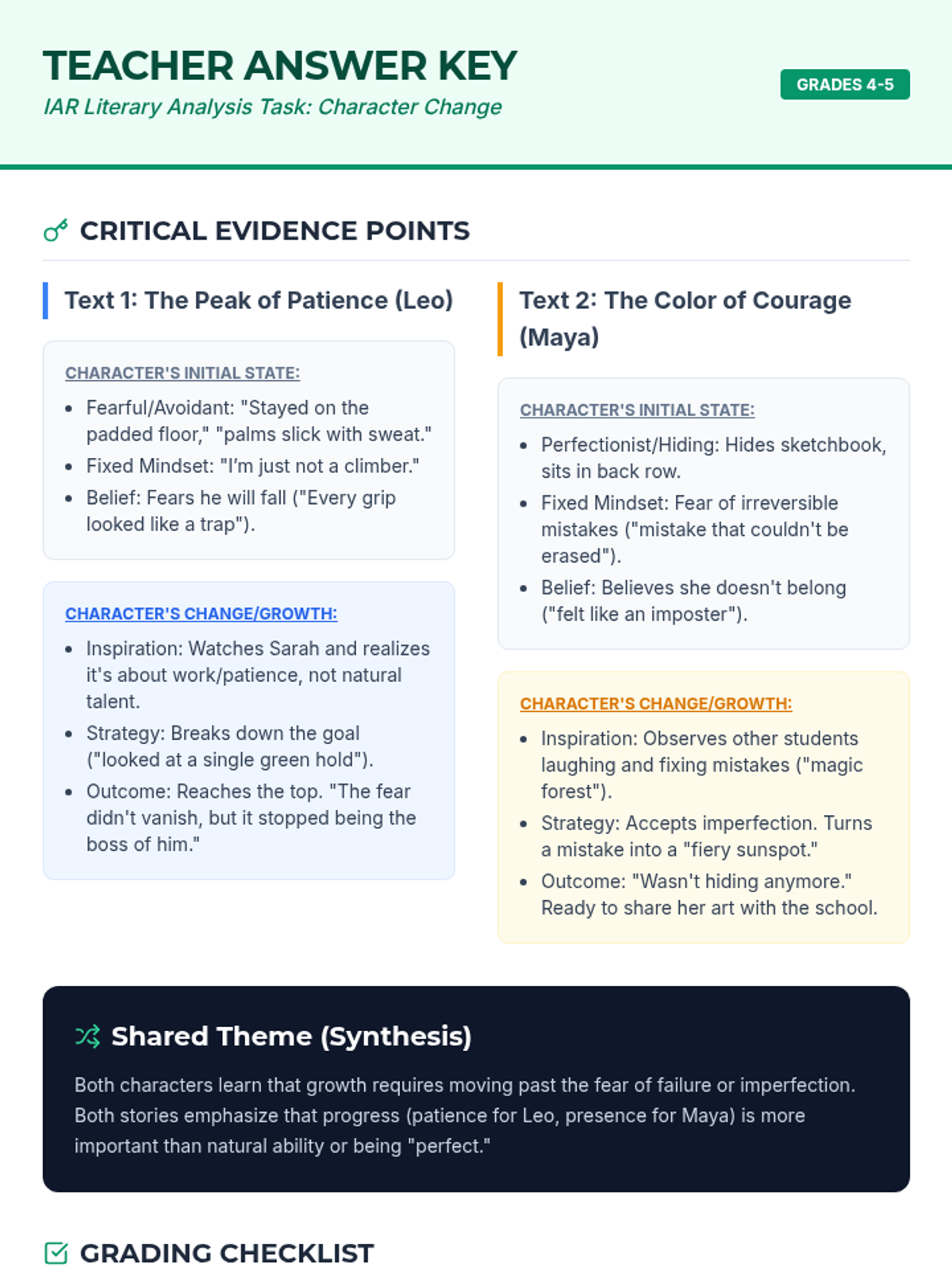
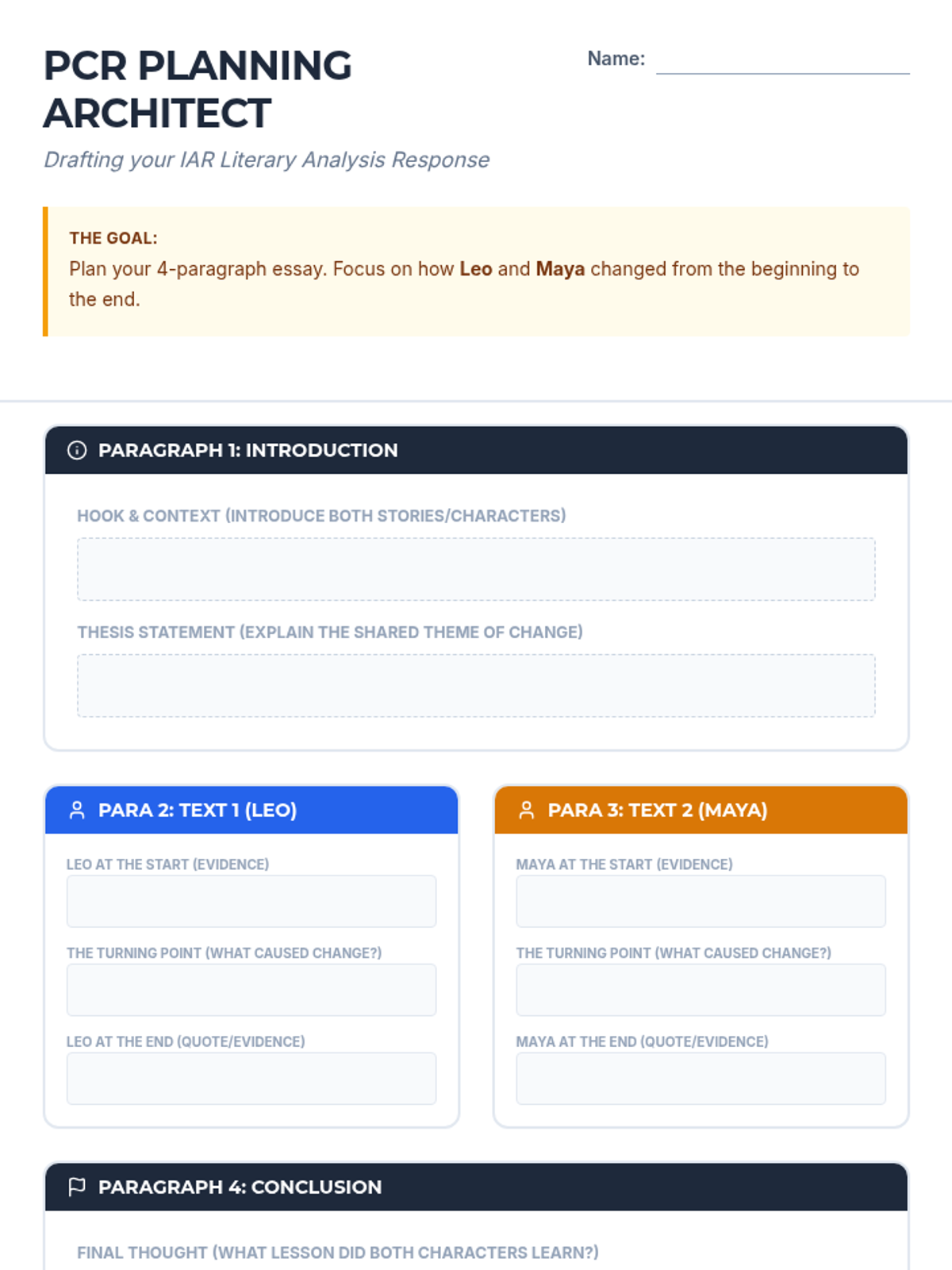
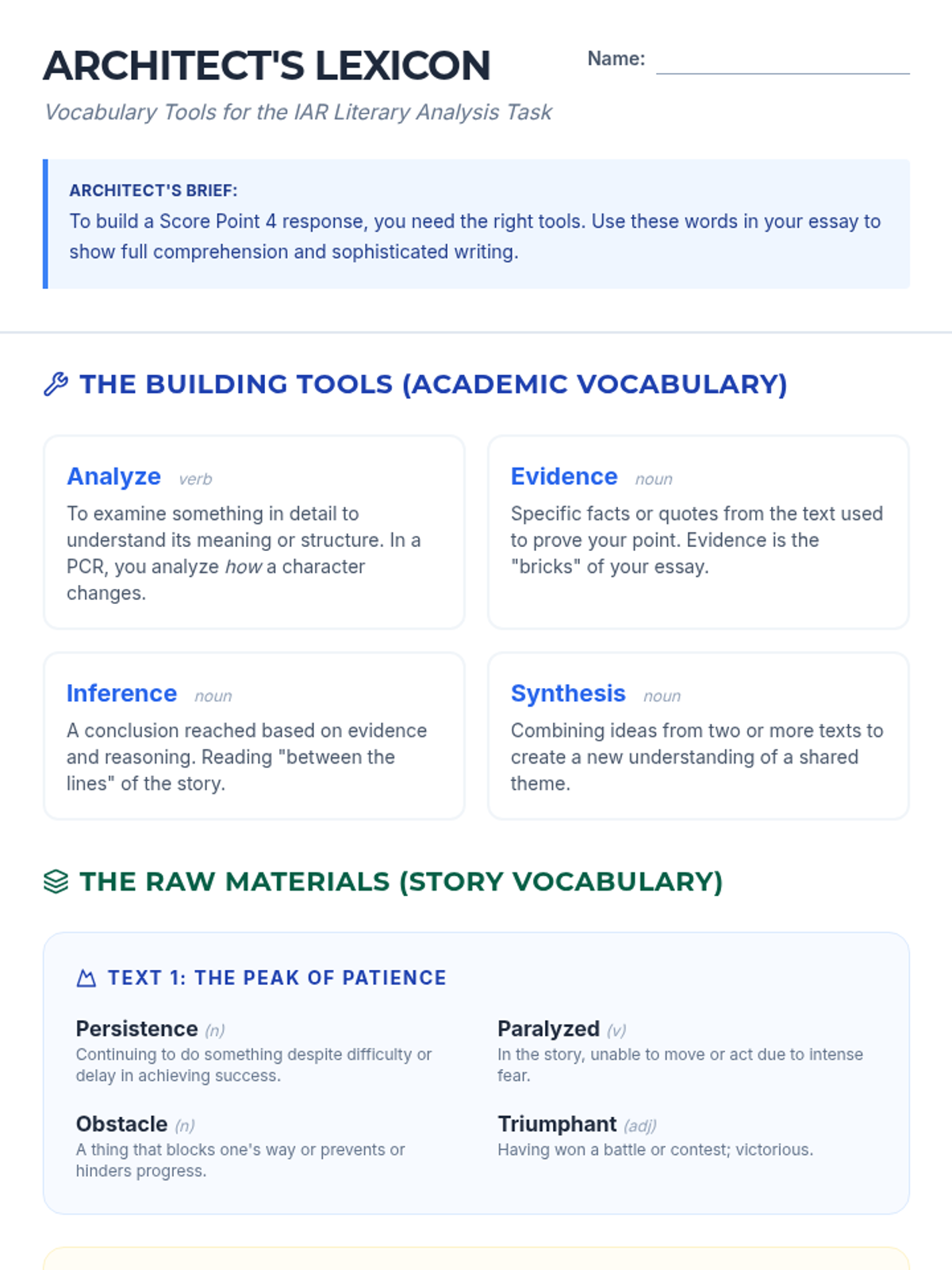
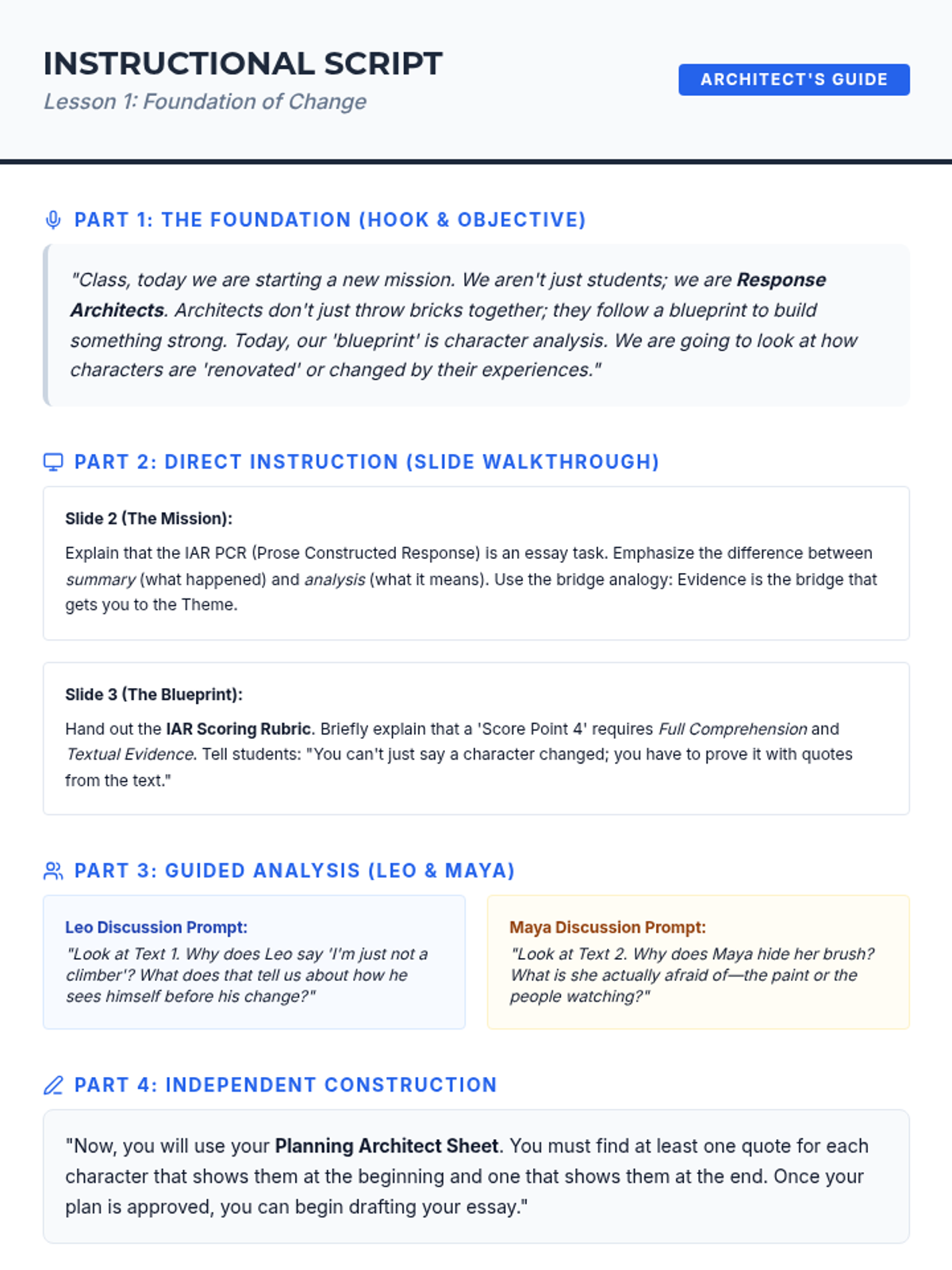
A focused lesson designed to prepare 4th and 5th-grade students for the IAR Prose Constructed Response (PCR). Students will analyze character development across two texts and draft a comparative essay using a provided scoring rubric.
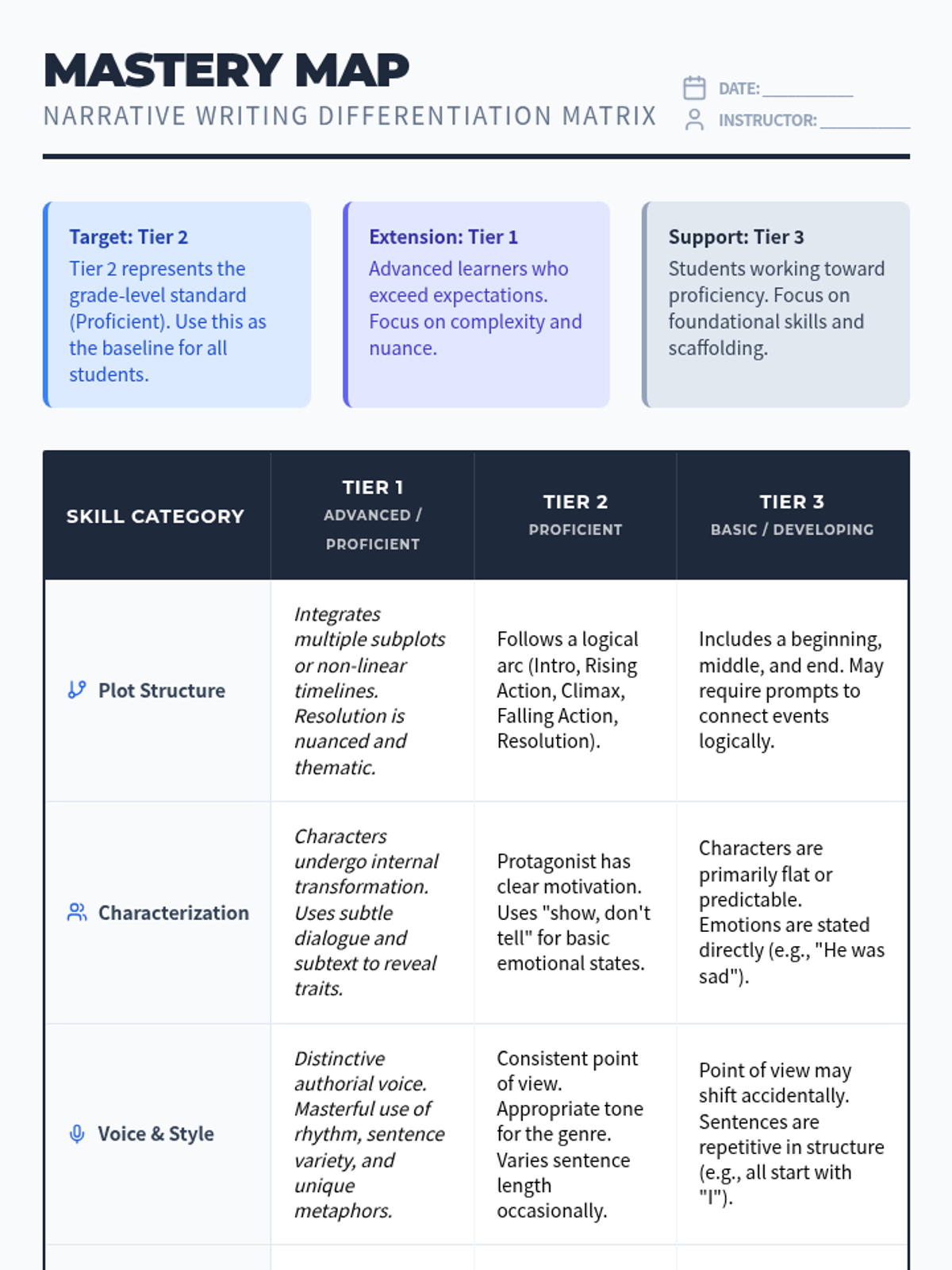
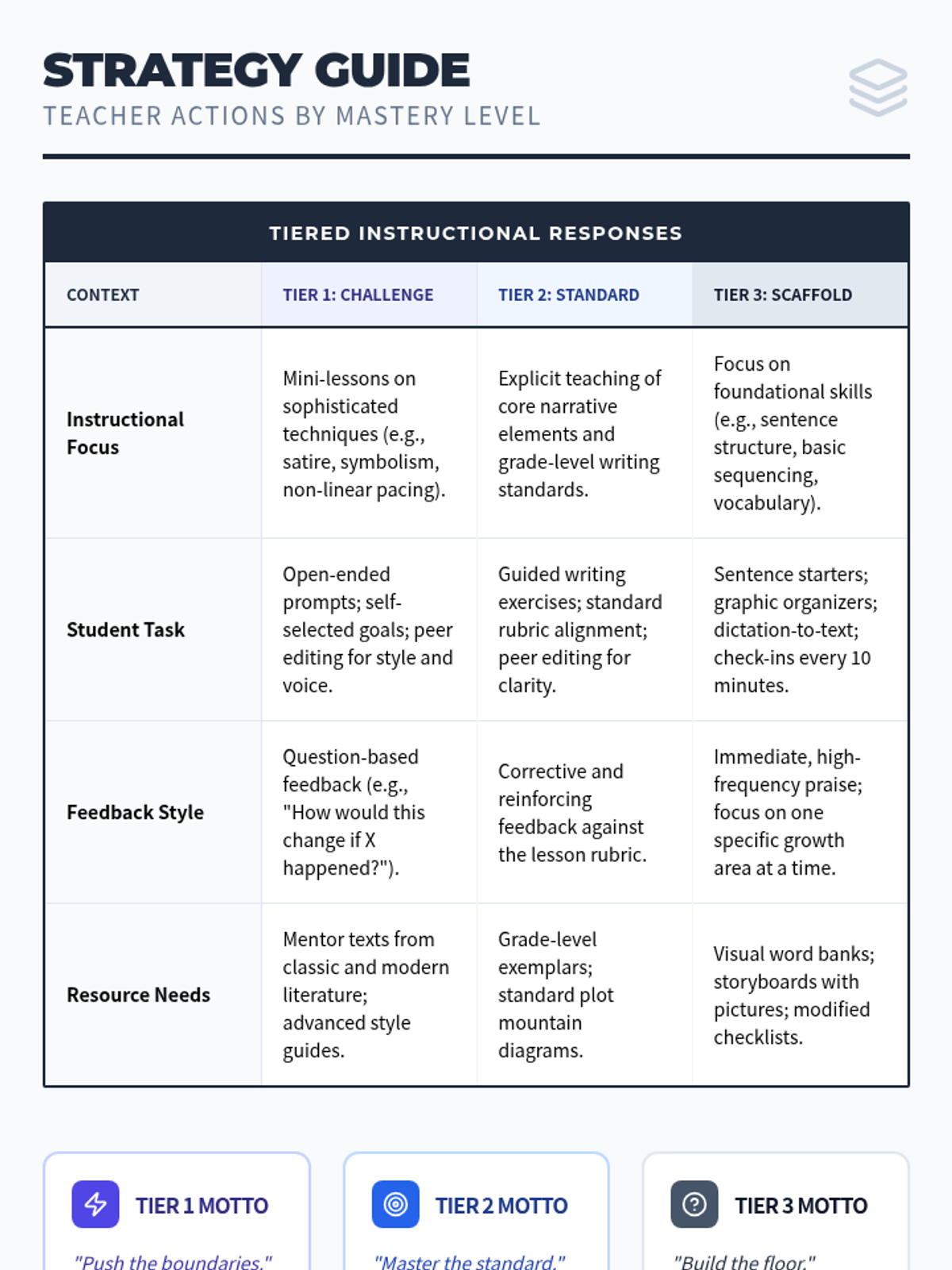
A resource kit for teachers to track and support student progress across three distinct tiers of mastery, specifically tailored for Narrative Writing skills.
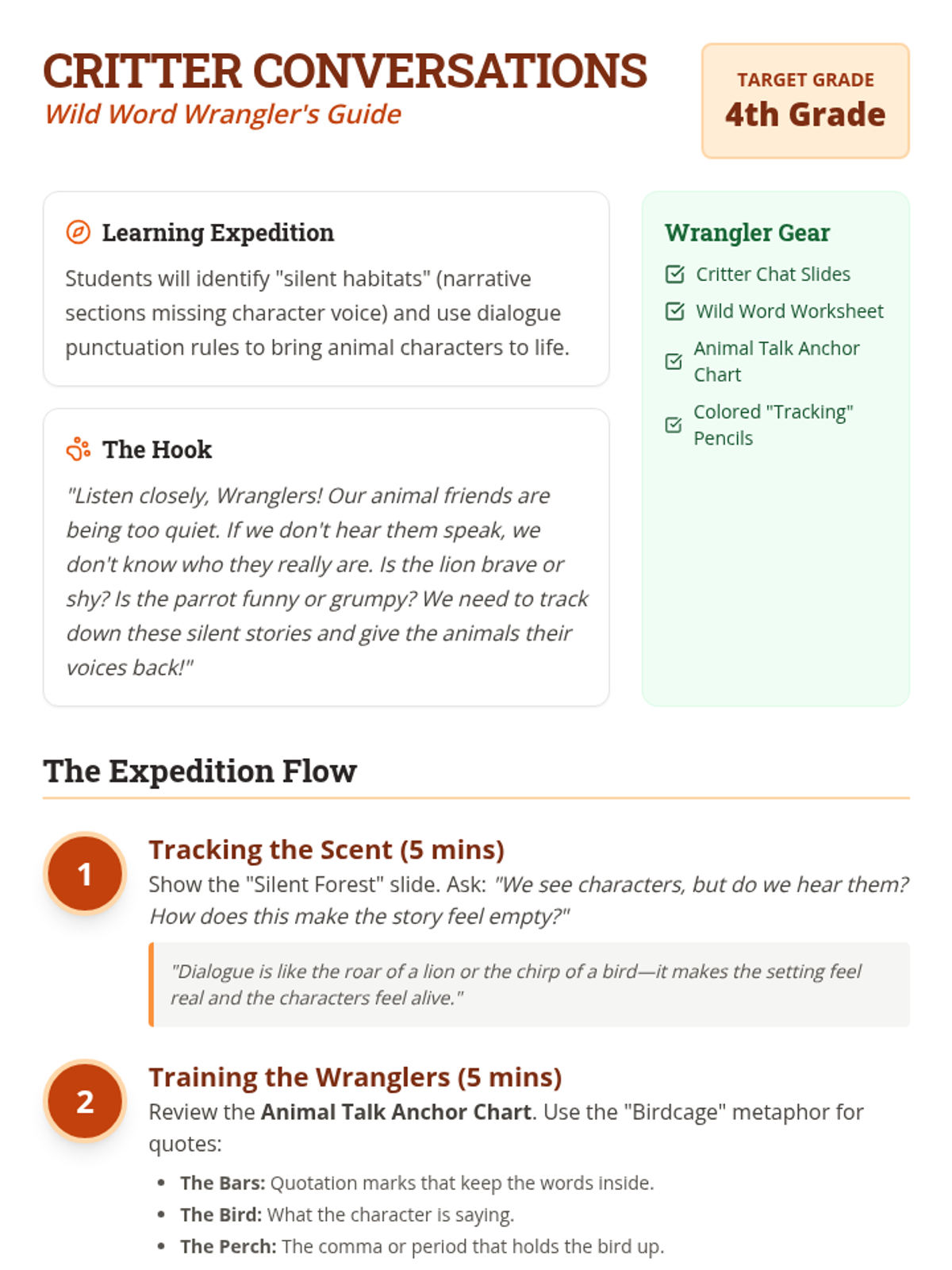
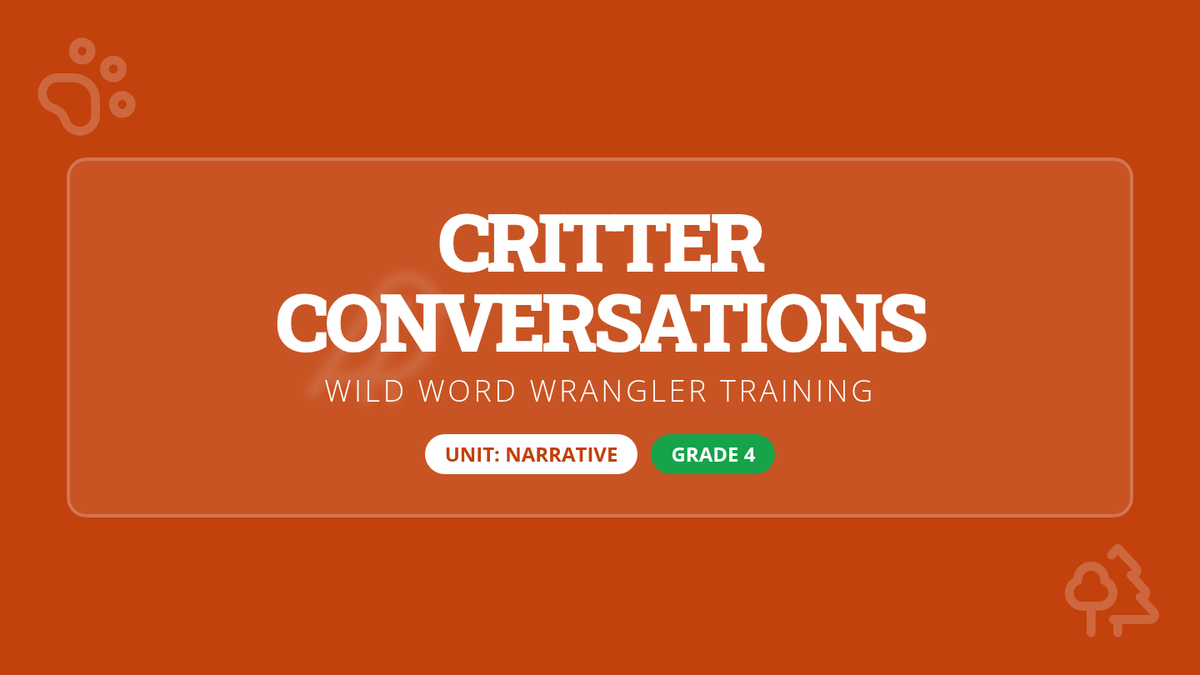
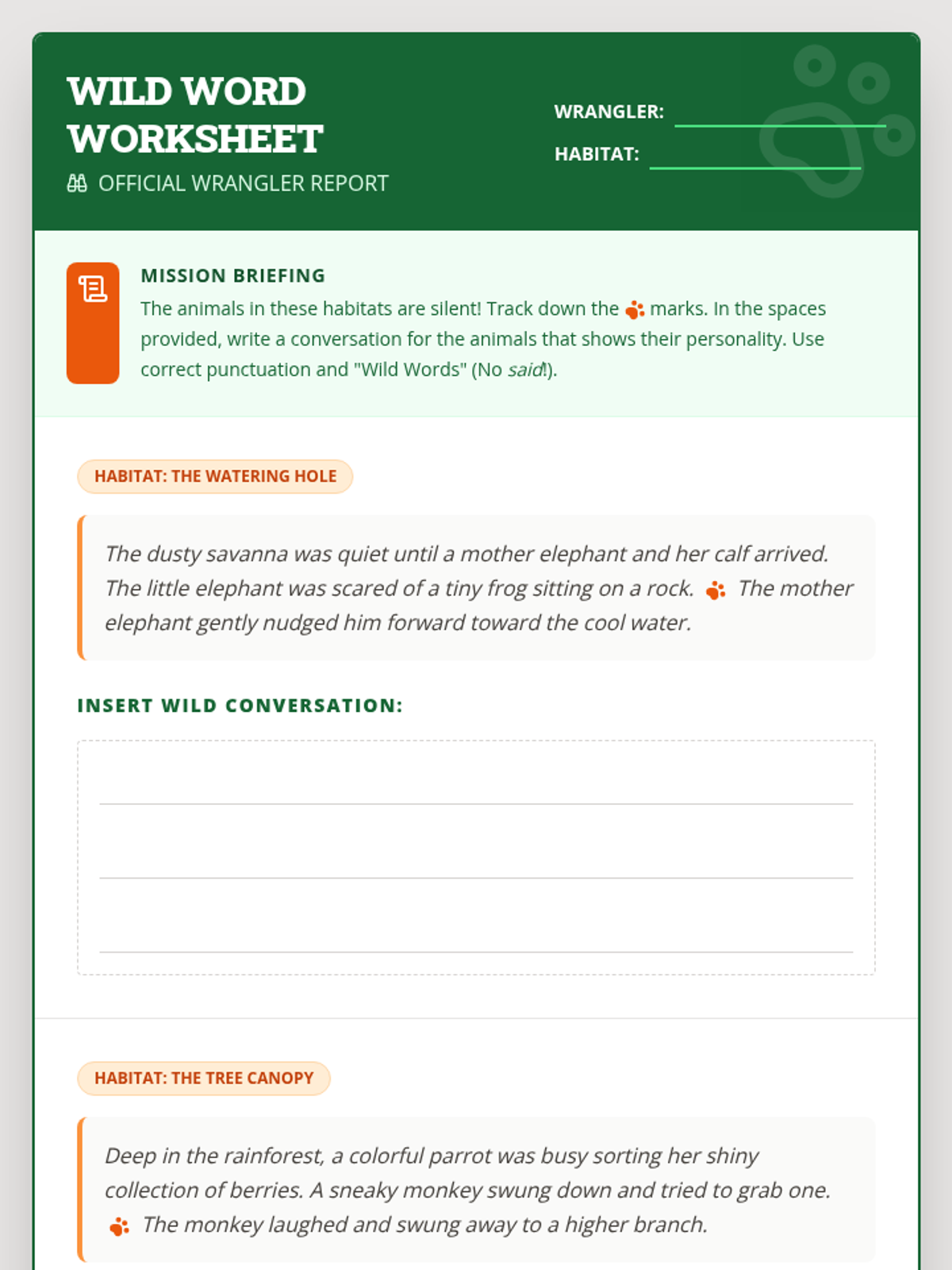
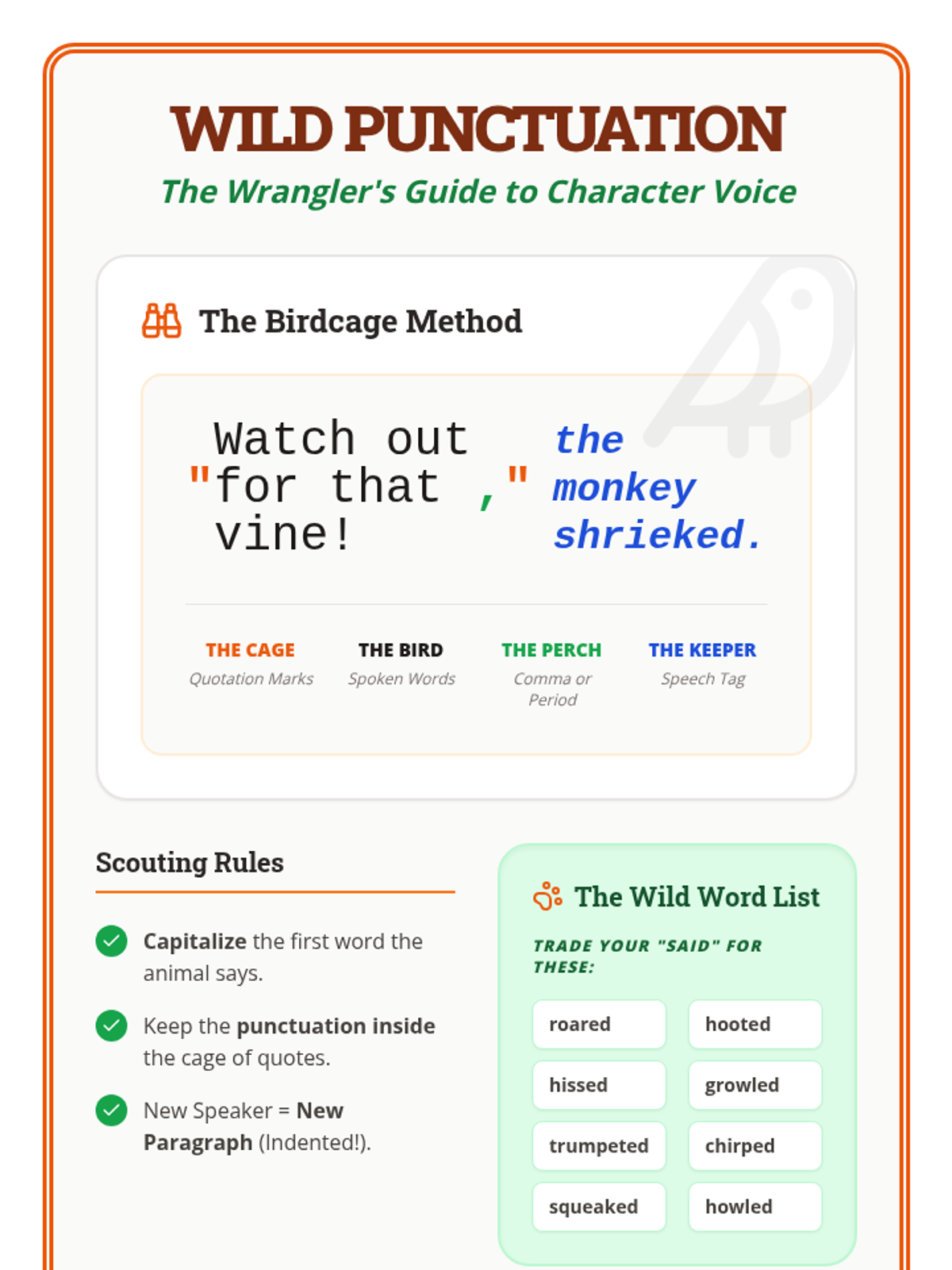
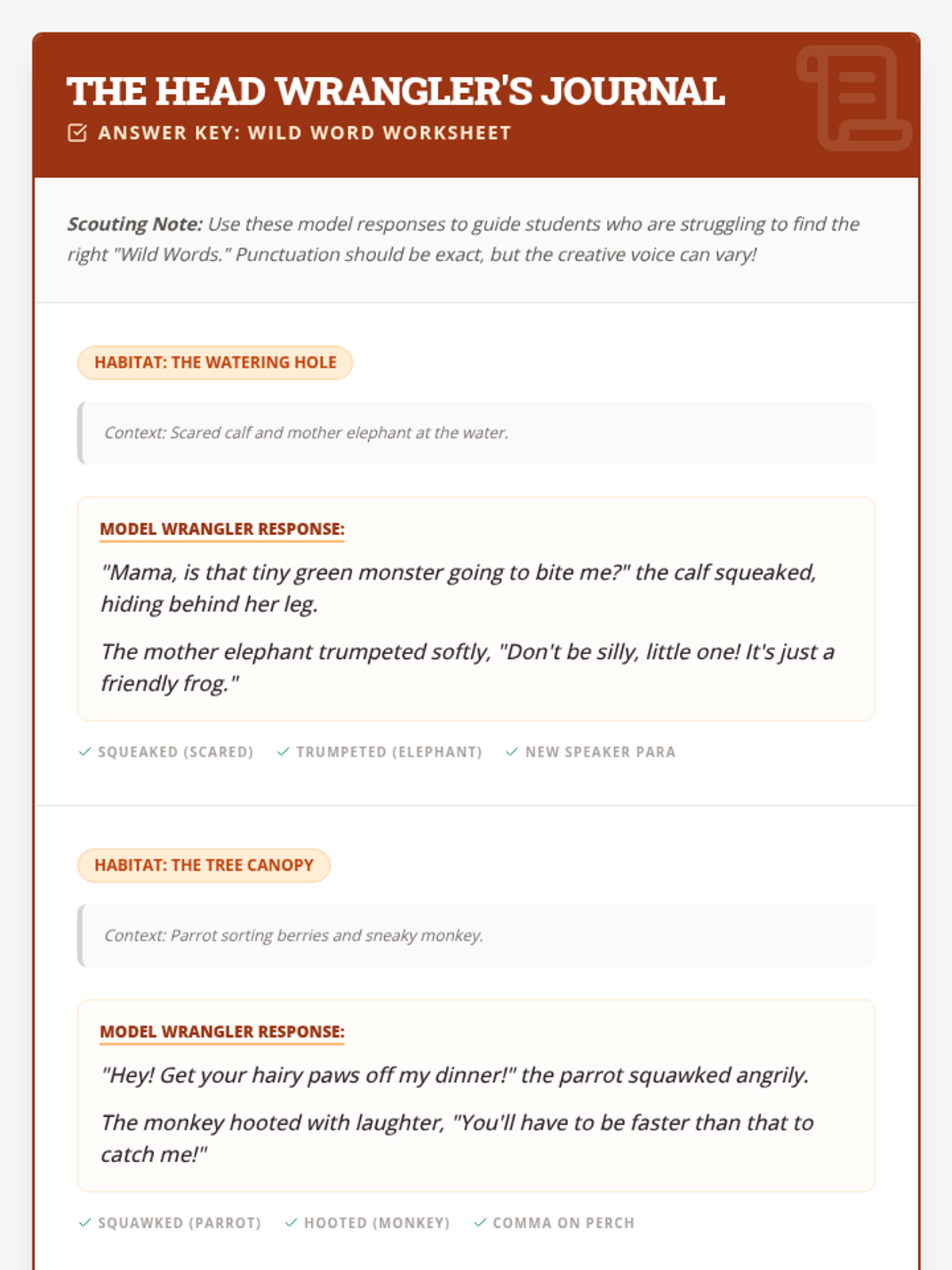
A small-group focused lesson where students act as 'Wild Word Wranglers' to track down and improve character dialogue in animal stories. Students will learn punctuation rules, varied speech tags, and how to use dialogue to reveal animal personalities and traits.
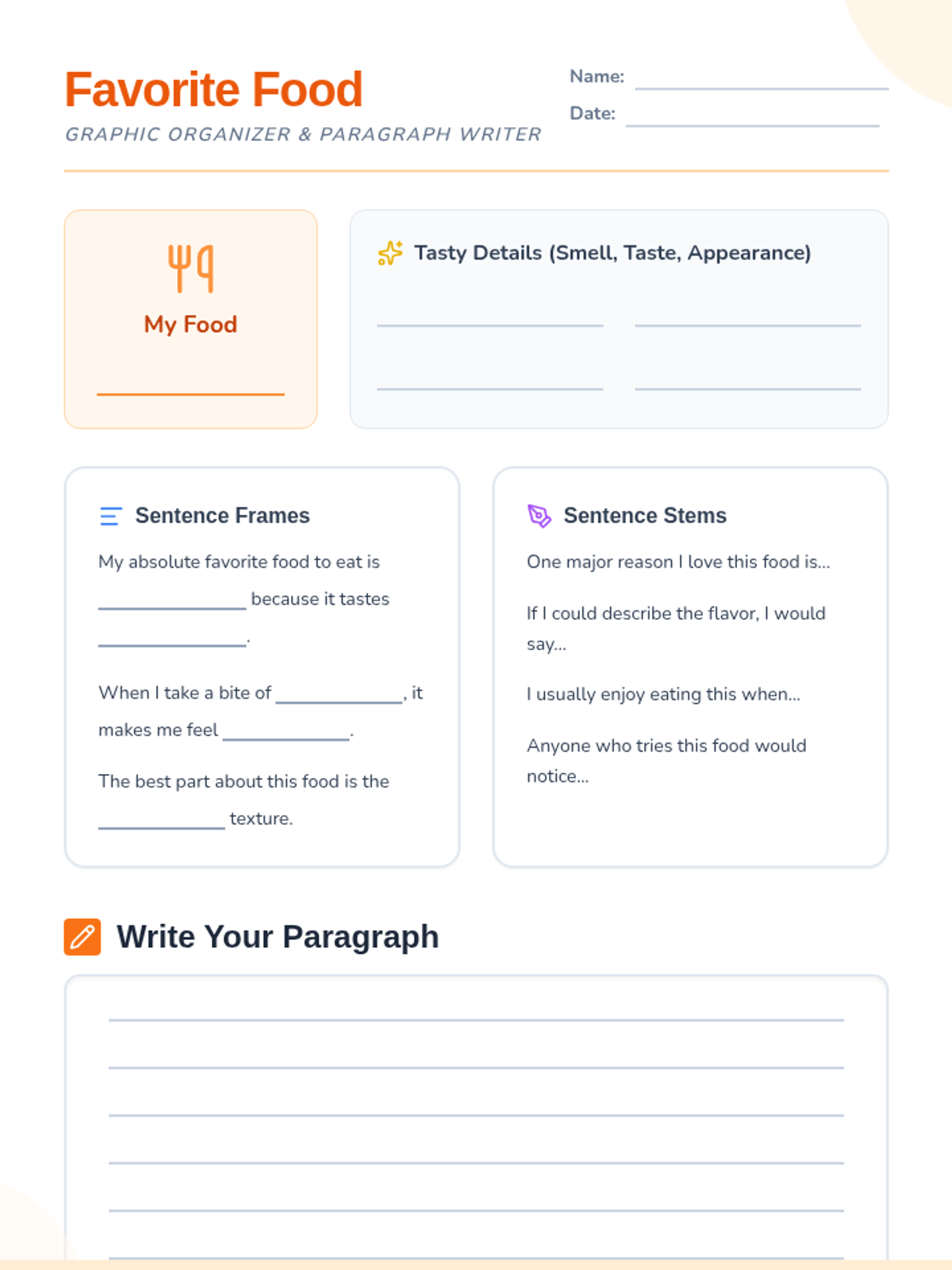
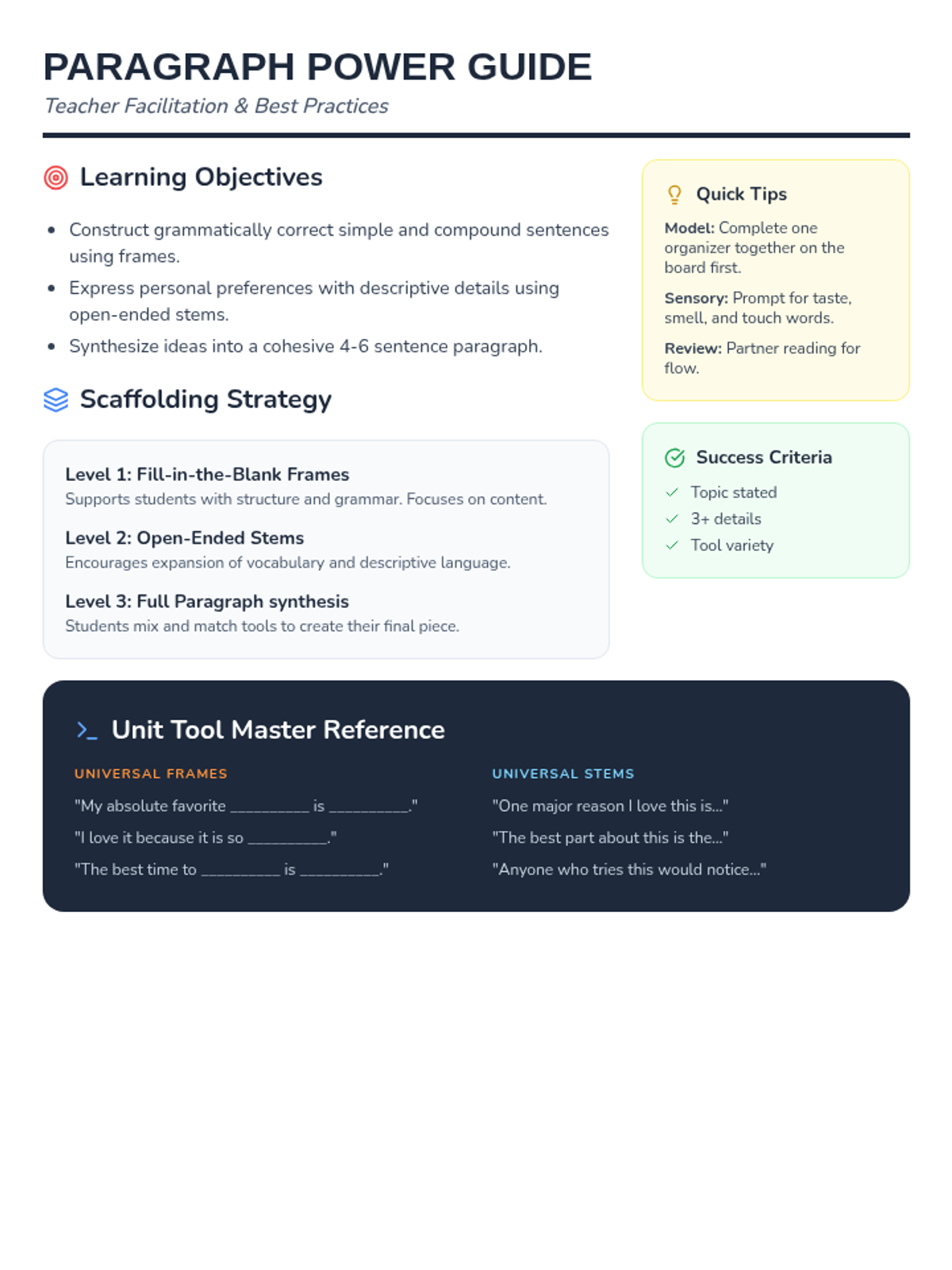
A collection of graphic organizers designed to help students write structured paragraphs about their favorite things using sentence stems and frames.
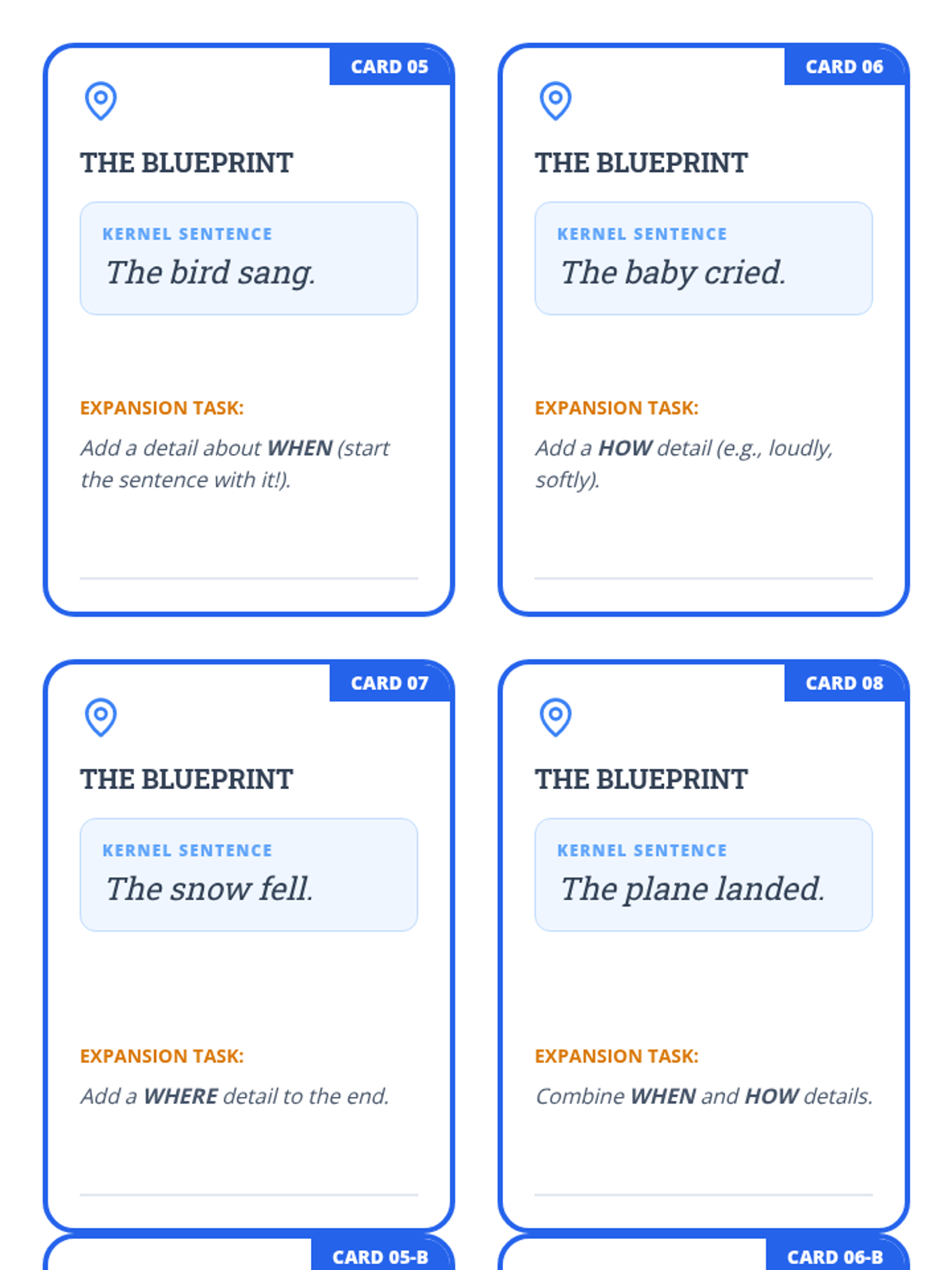
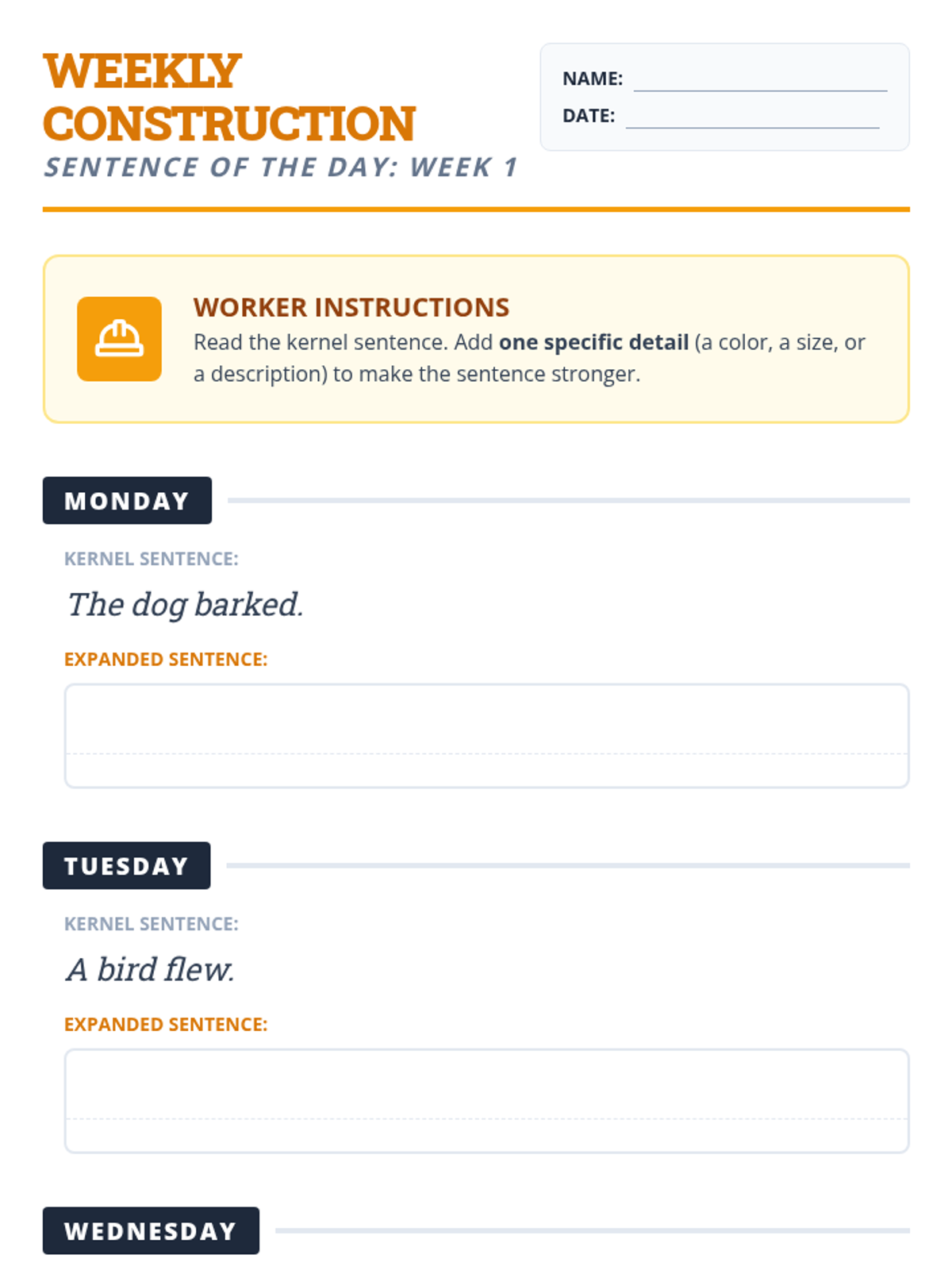
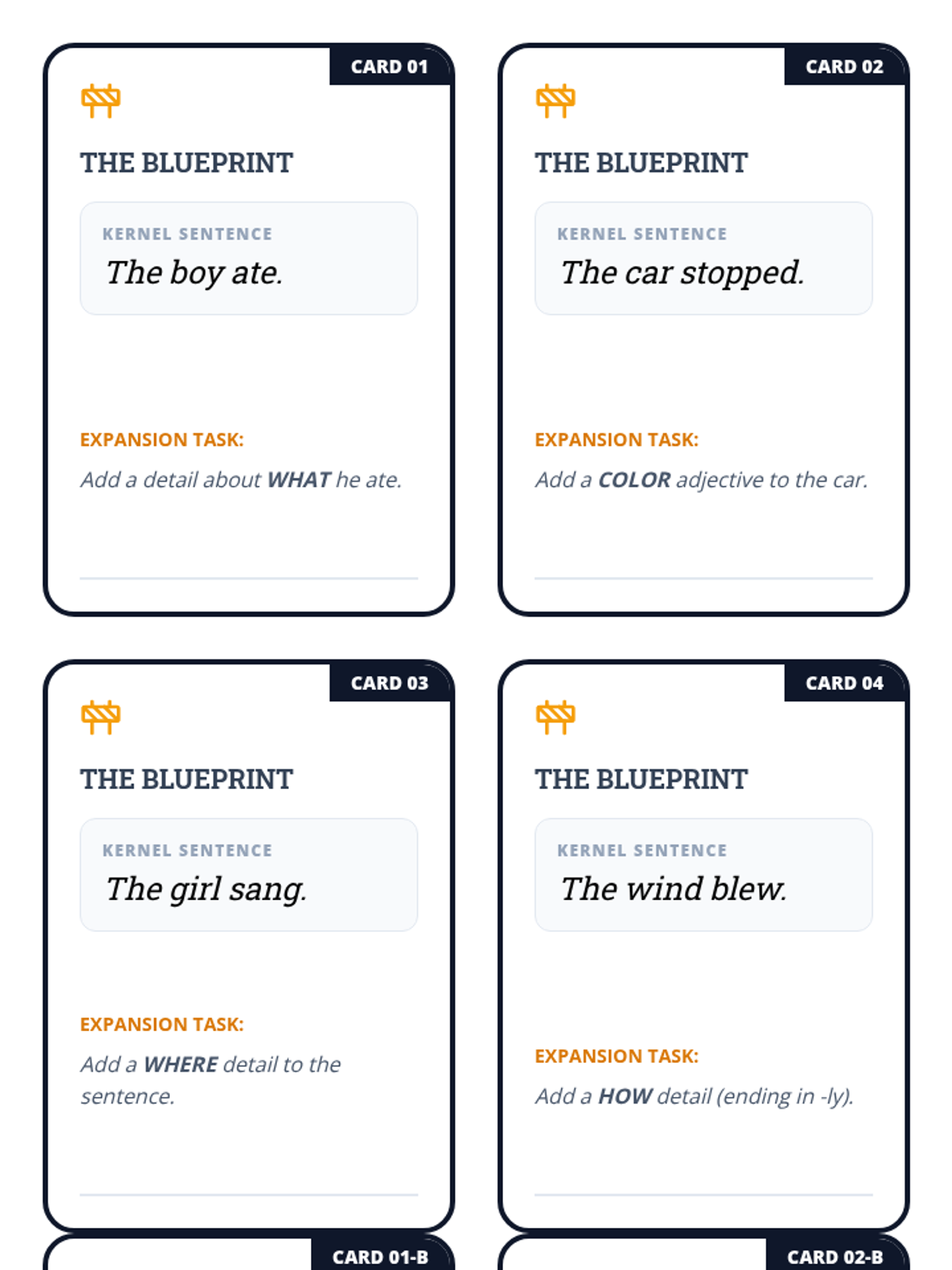
A lesson focused on sentence construction, teaching students to transform fragments and simple sentences into sophisticated compound and complex sentences using a construction-themed framework.
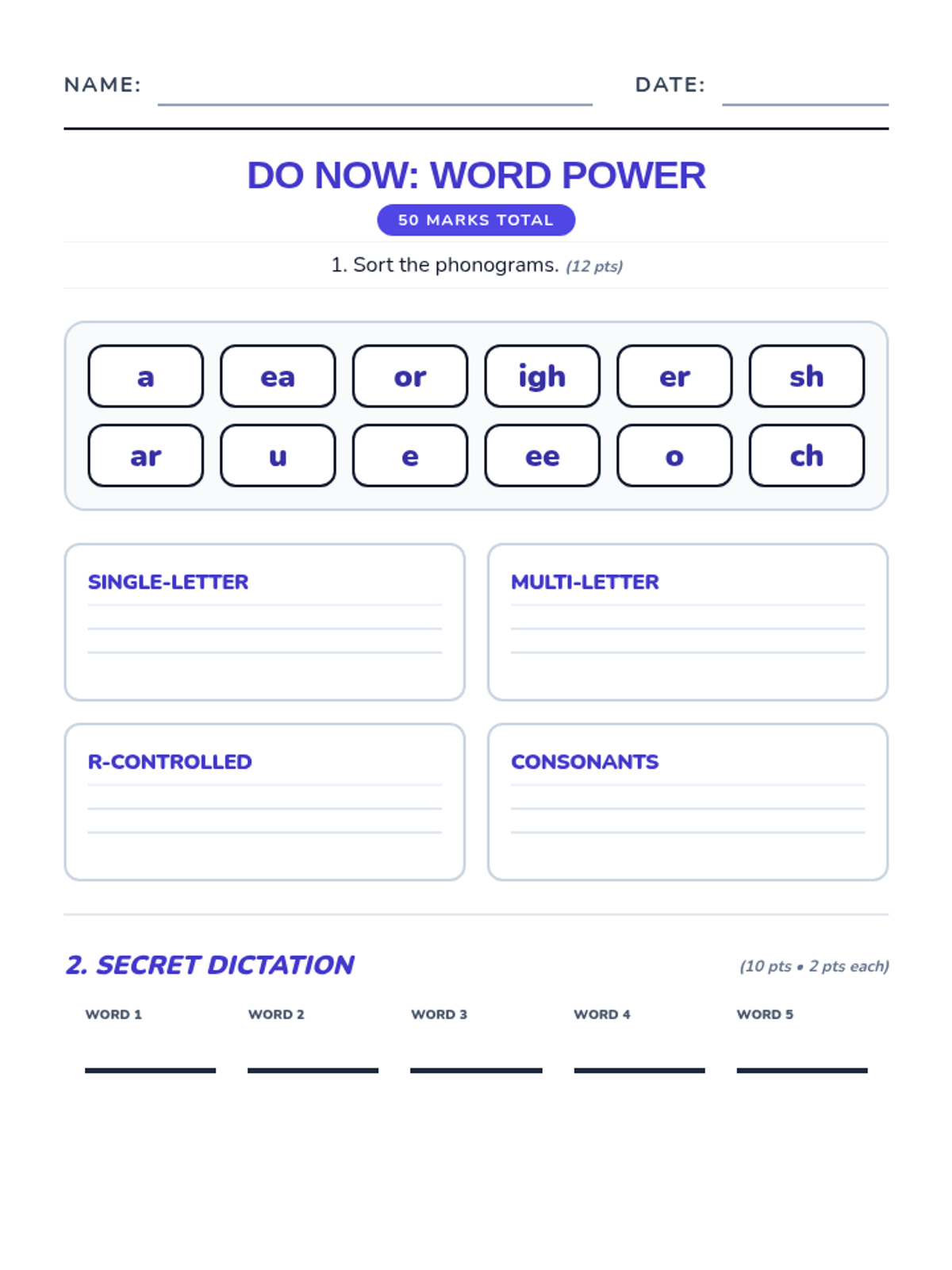
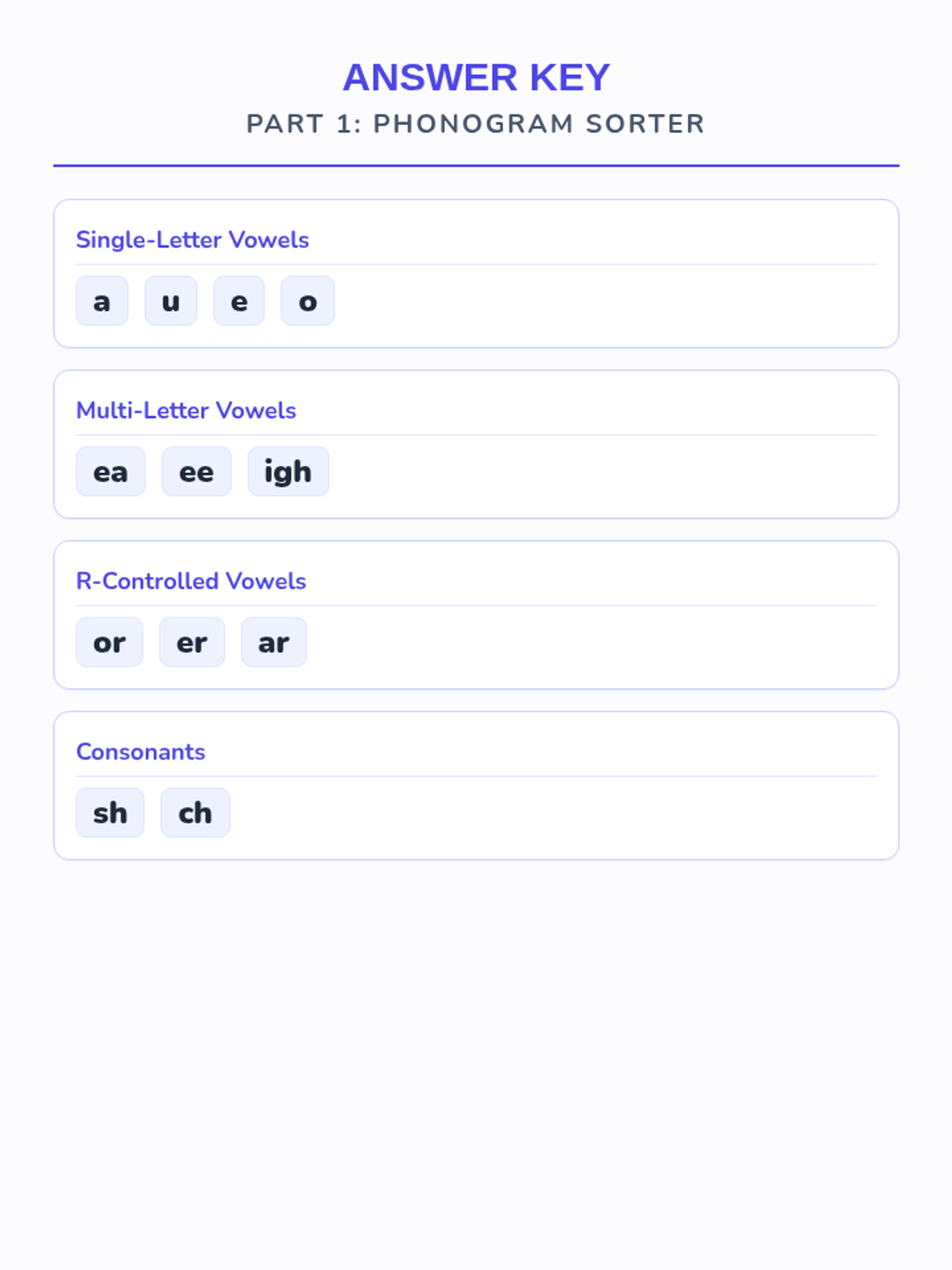
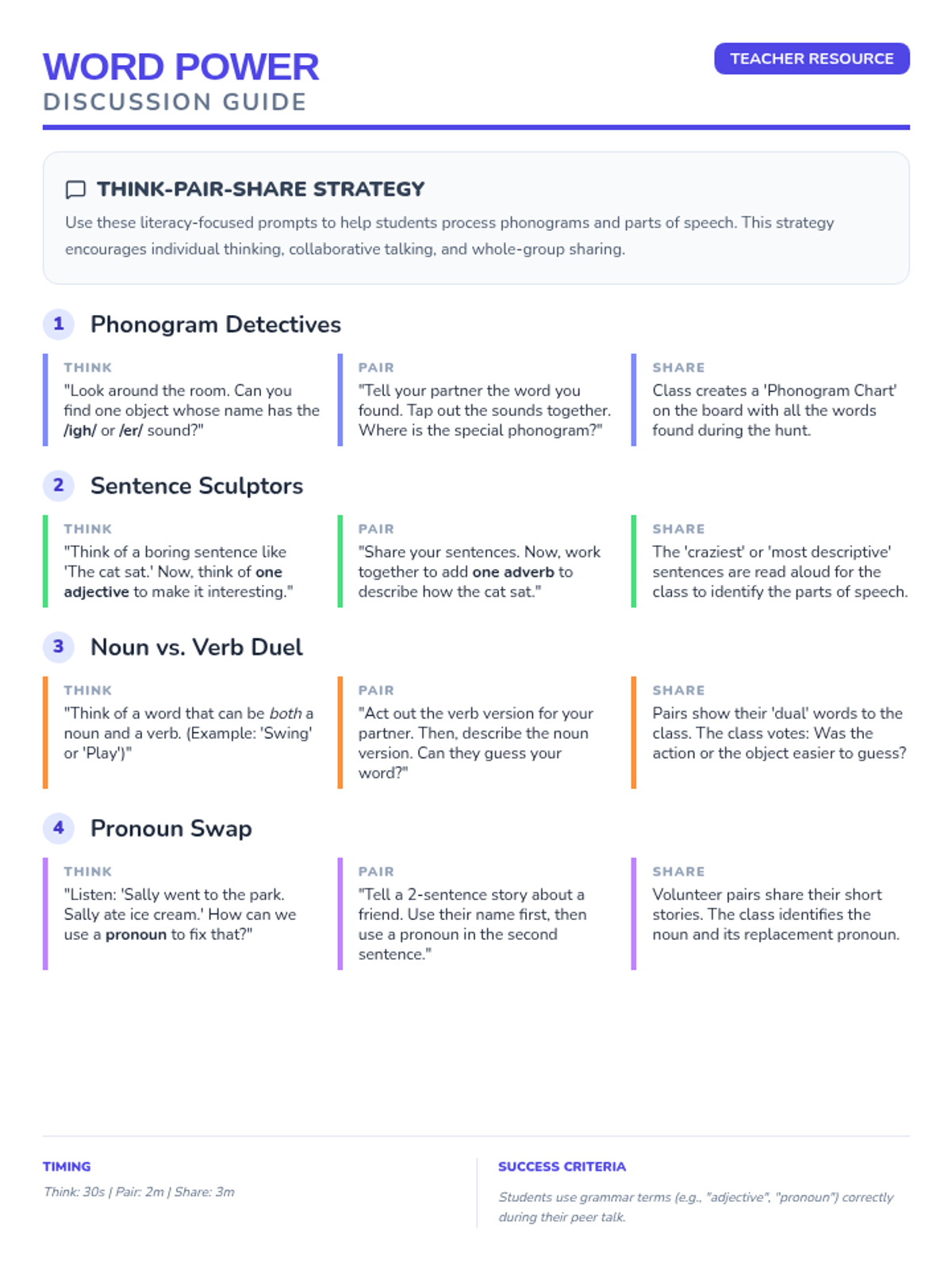
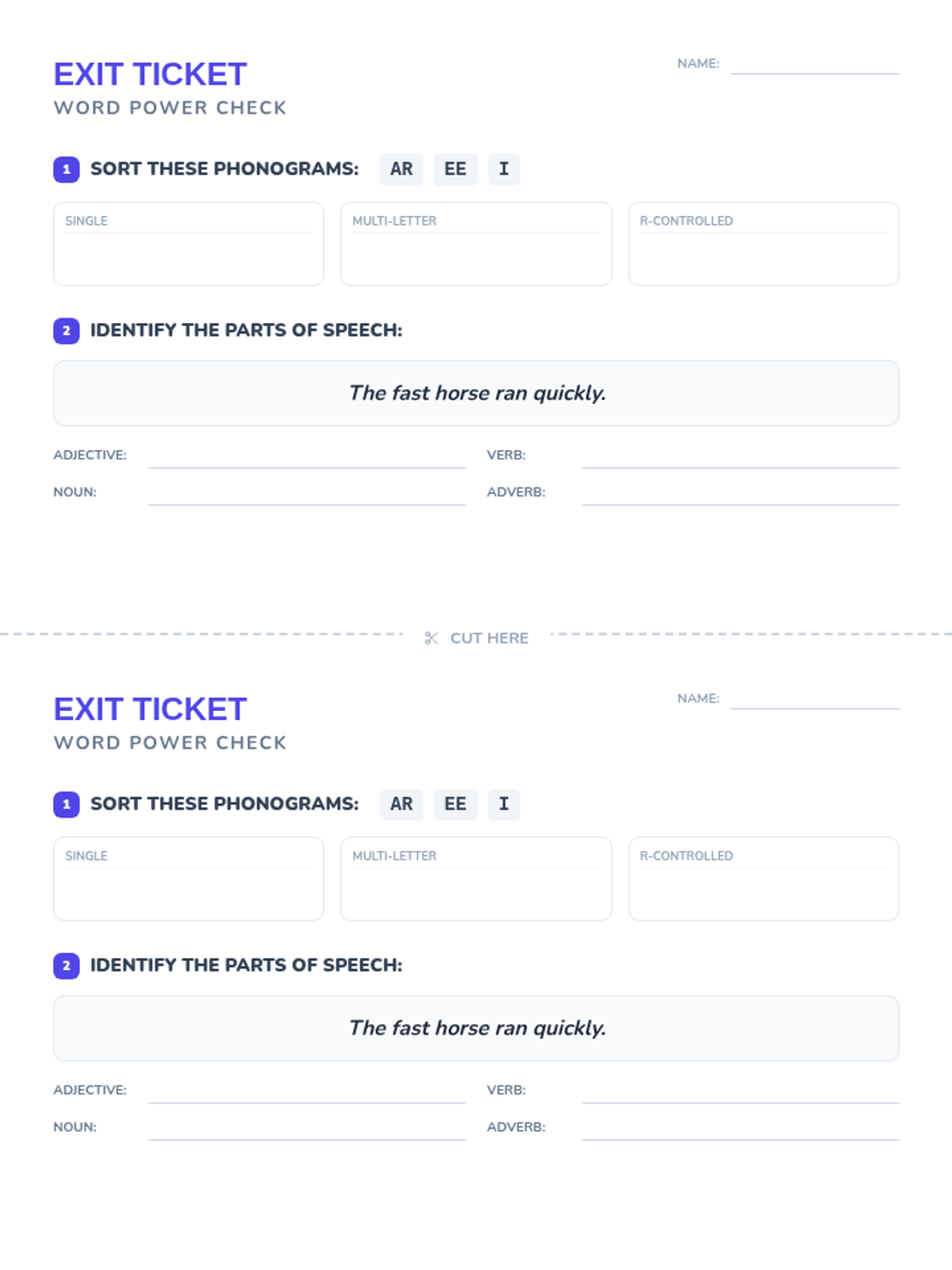
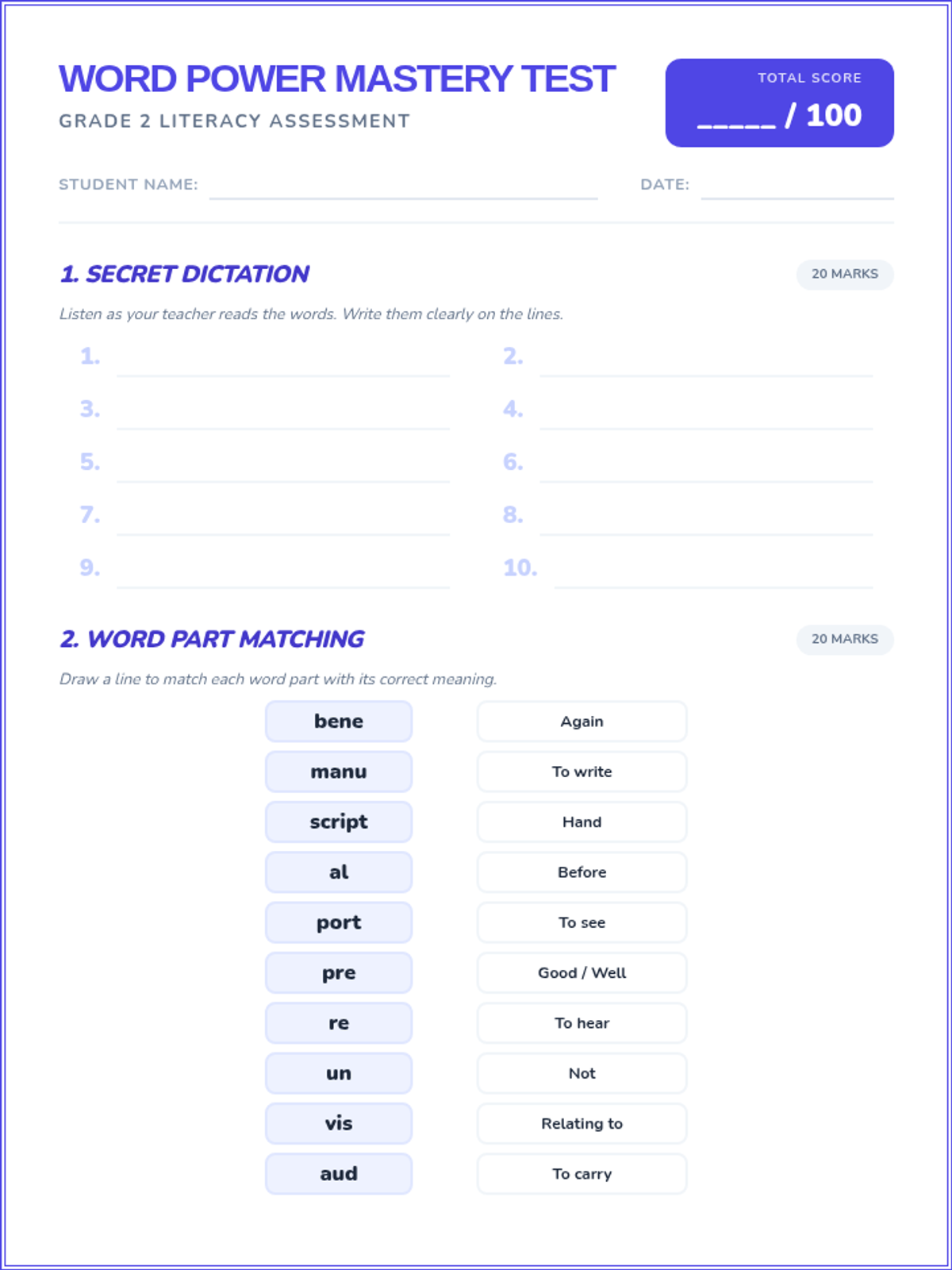
A two-part foundational literacy lesson focusing on phonogram categorization and identifying parts of speech in simple sentences.
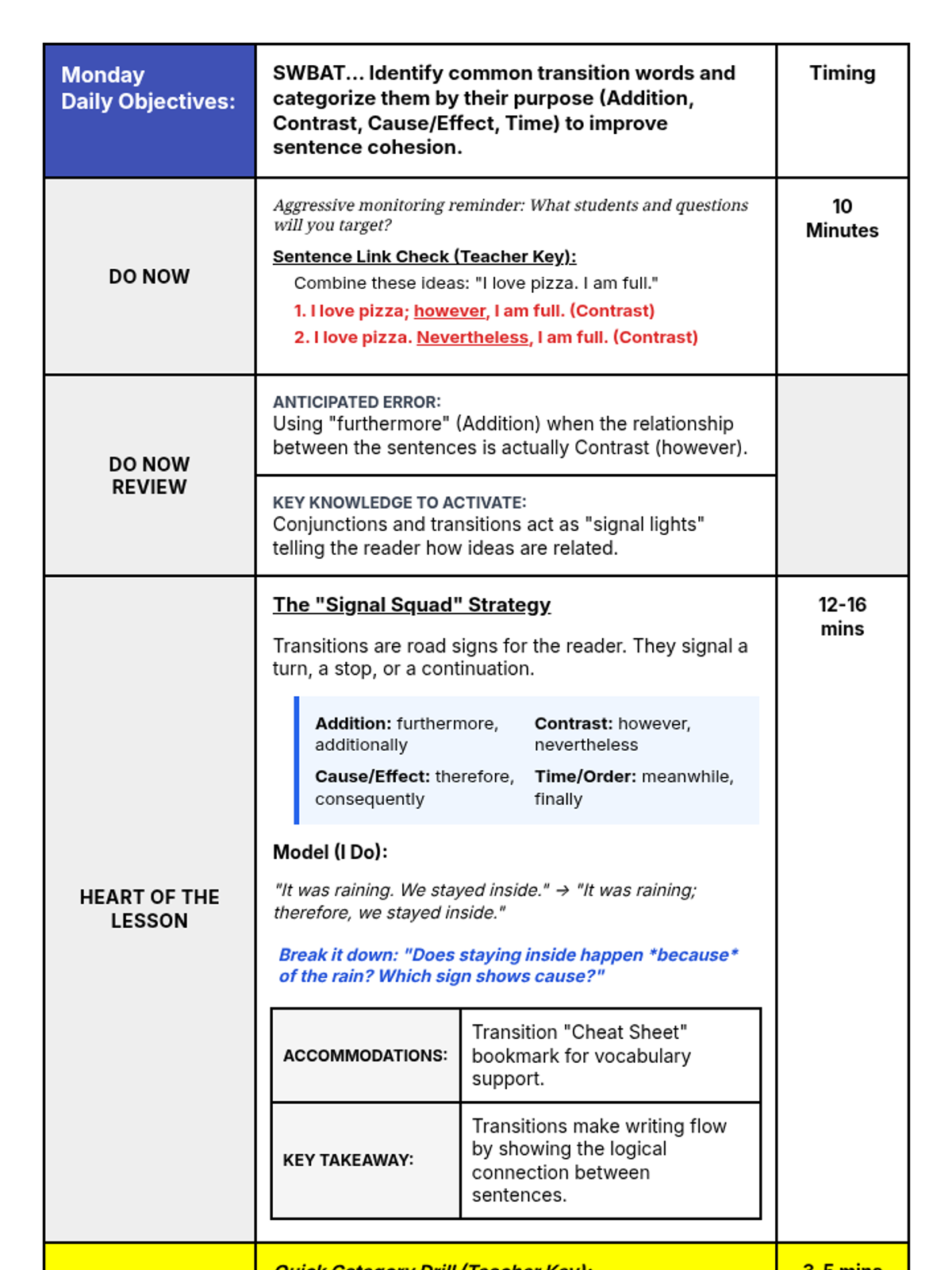
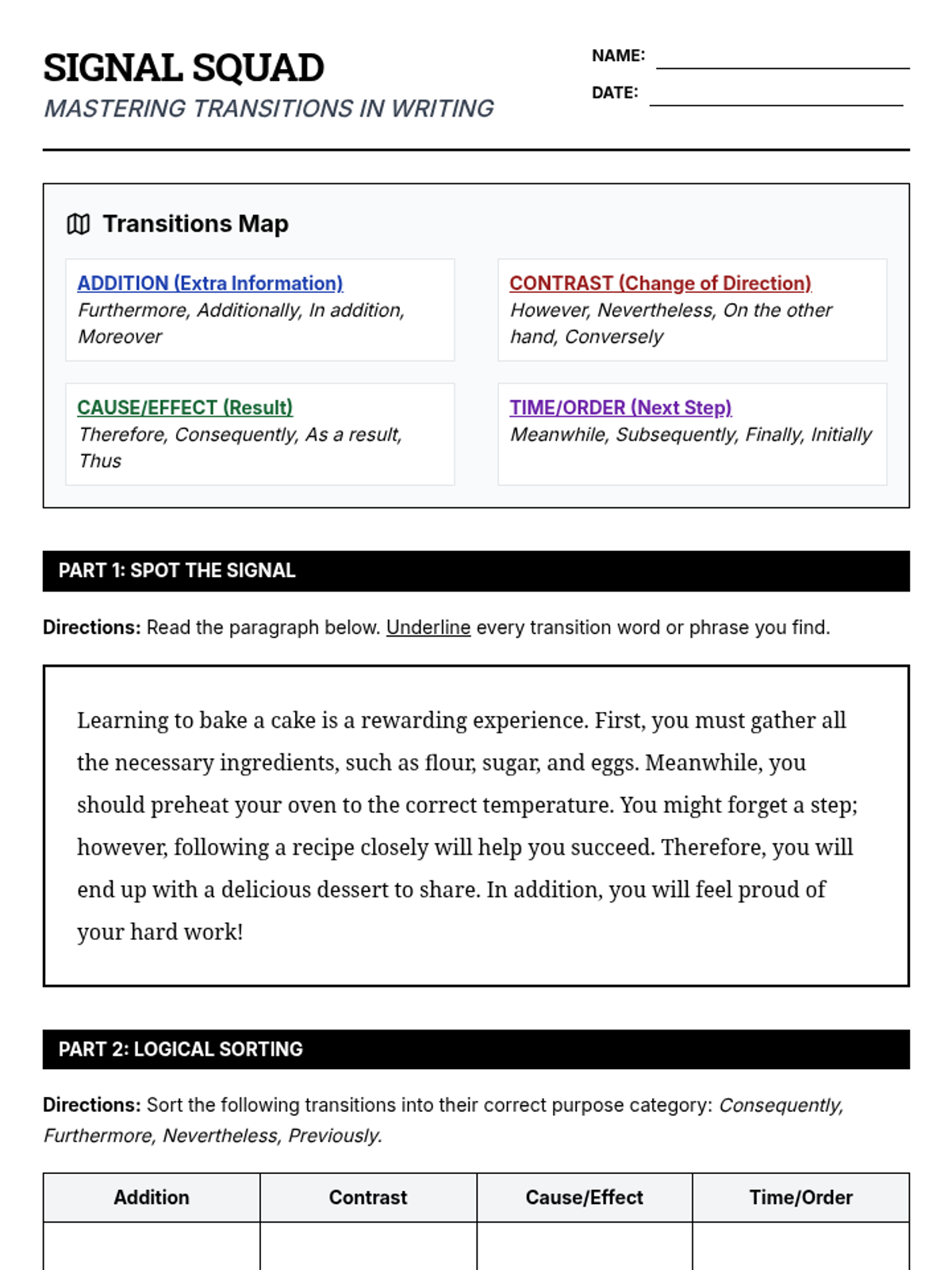
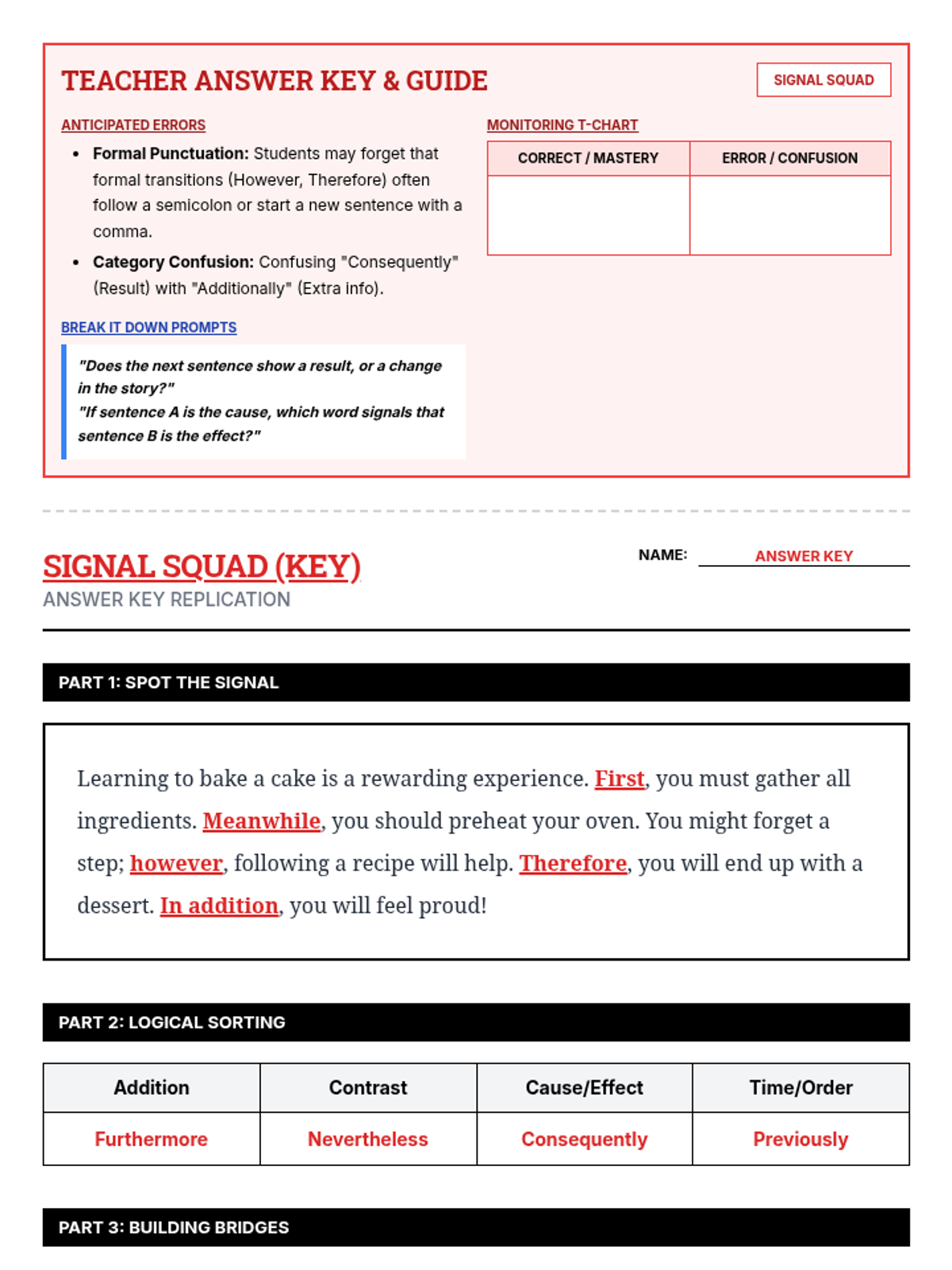
A lesson on identifying and using common transition words to create cohesion in writing. Students will categorize transitions by purpose (Addition, Contrast, Cause/Effect, Time) and use them to link ideas.
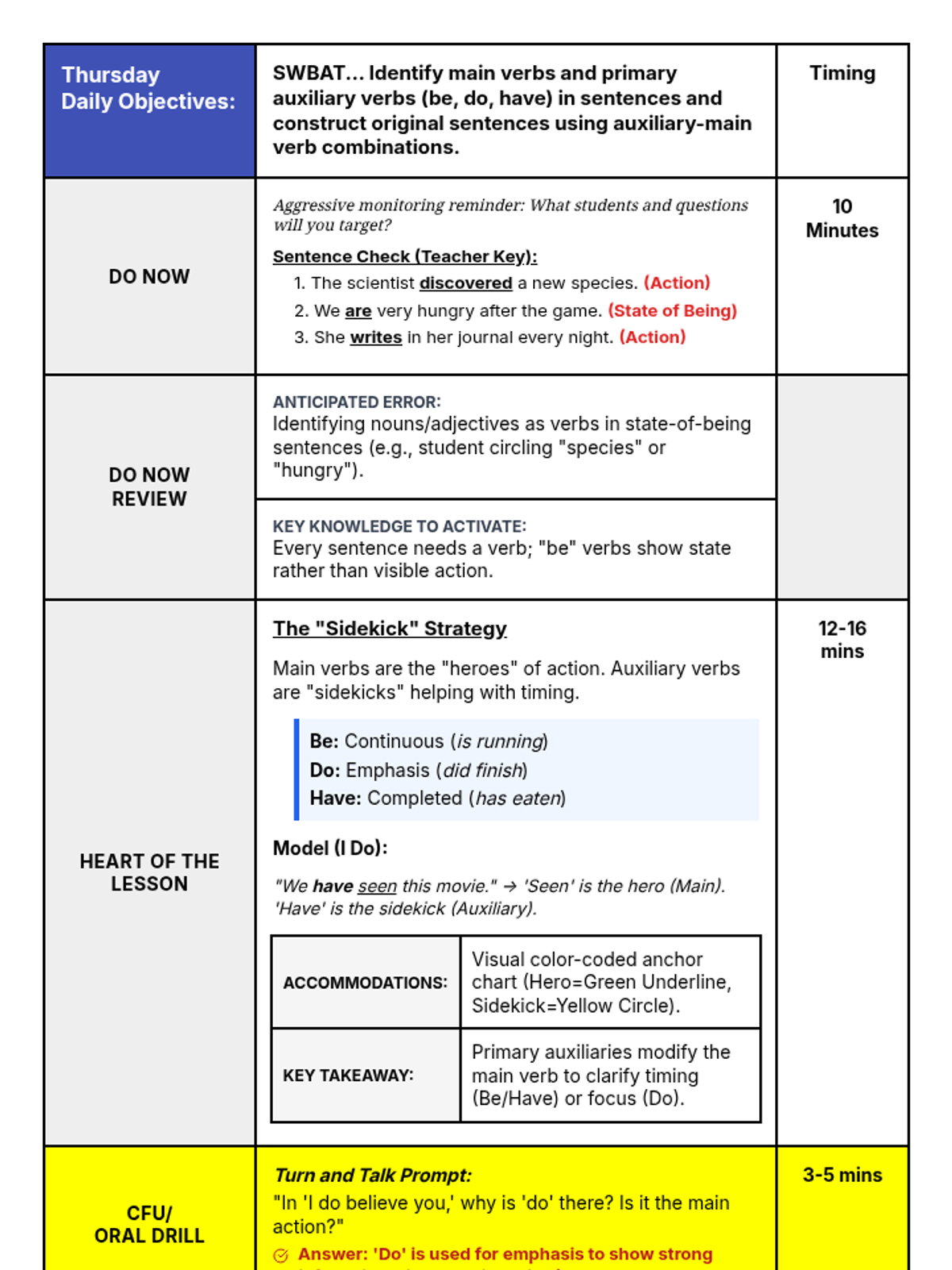
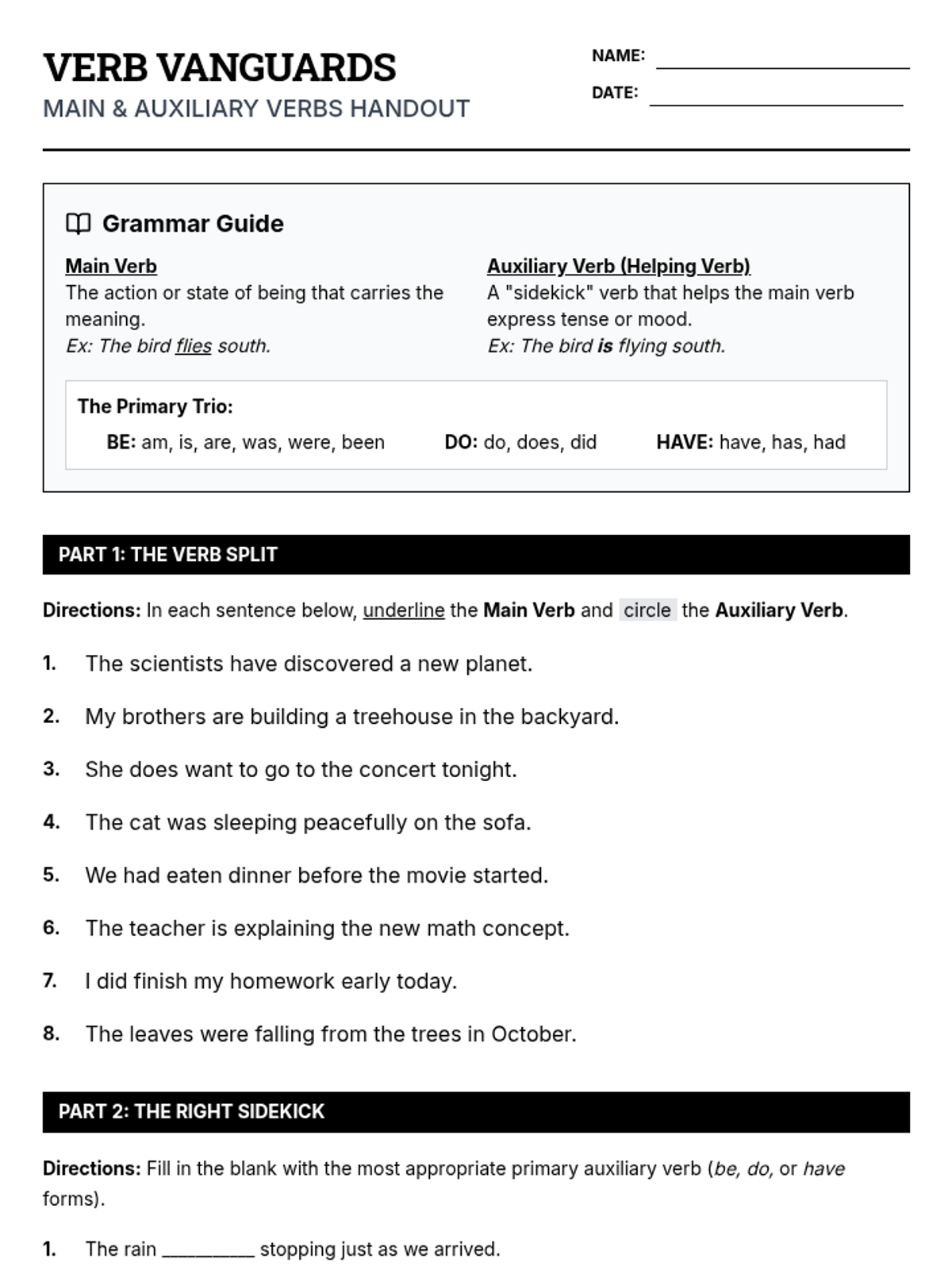
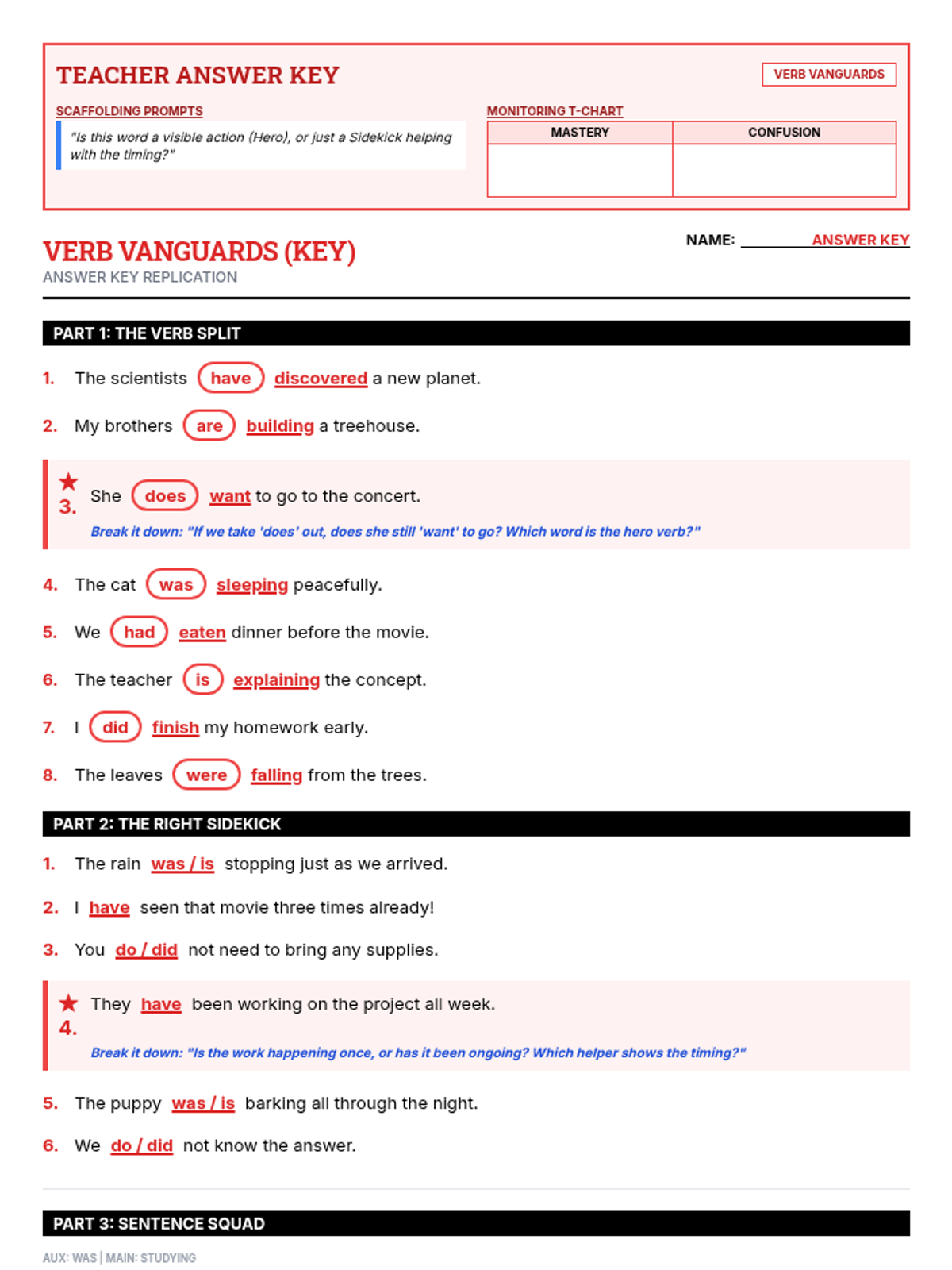
A comprehensive lesson on identifying and using main verbs and primary auxiliary verbs (be, do, have) in sentences. Includes a structured lesson plan, a practice handout, and a detailed answer key with monitoring tools.
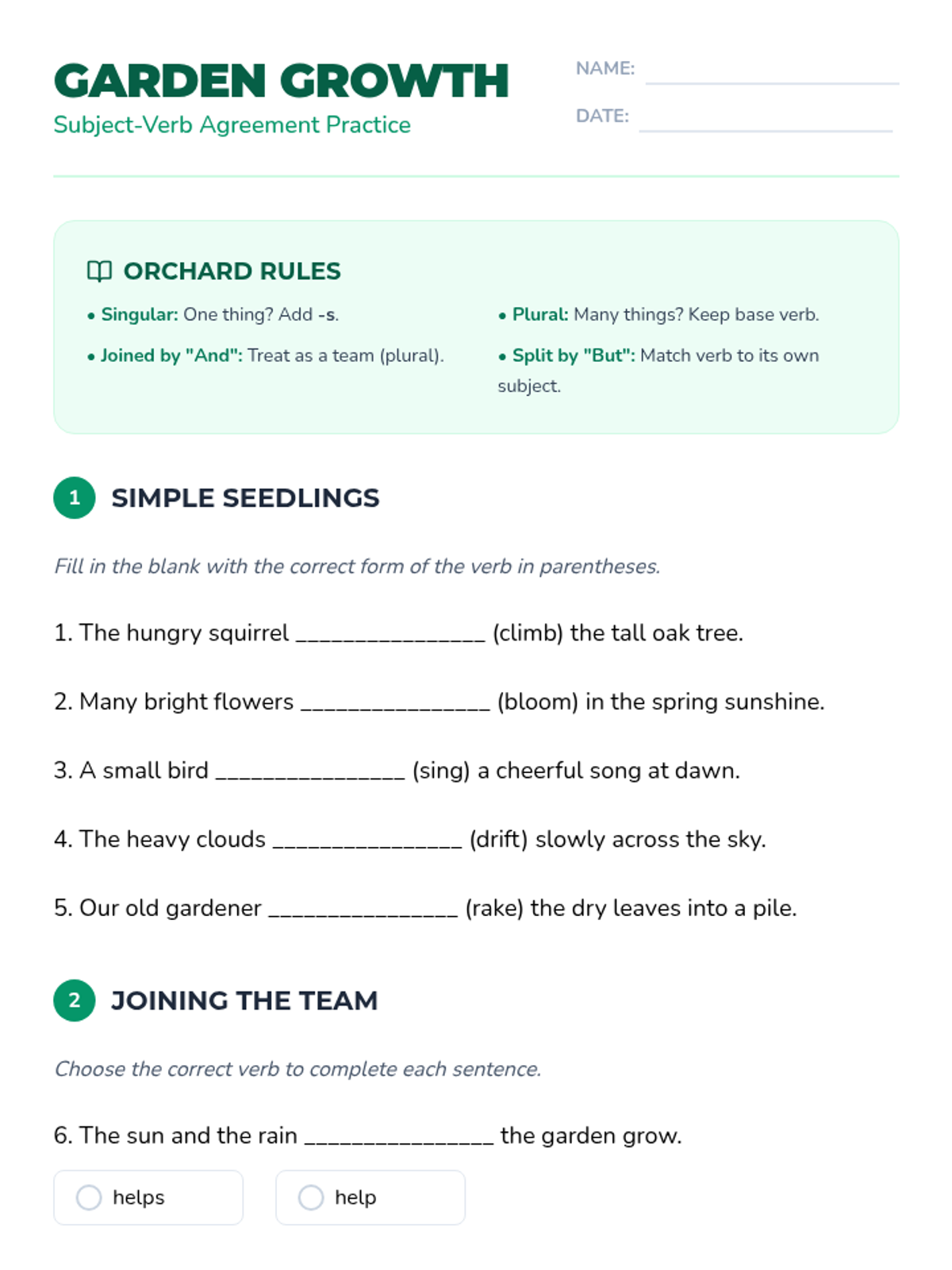
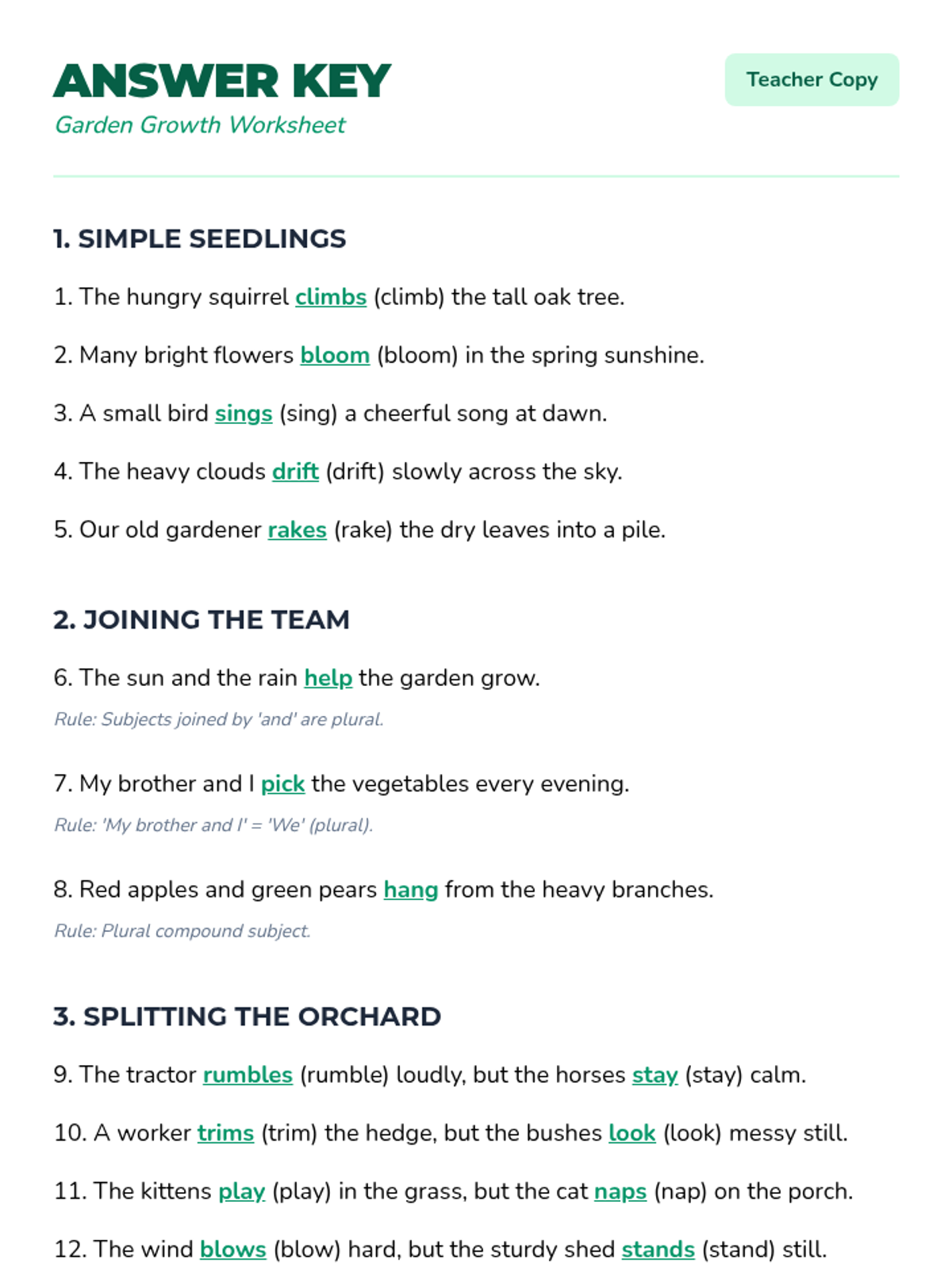
A comprehensive lesson on subject-verb agreement featuring simple sentences and compound sentences using 'and' and 'but'. Includes instructional slides, a practice worksheet, and an answer key.
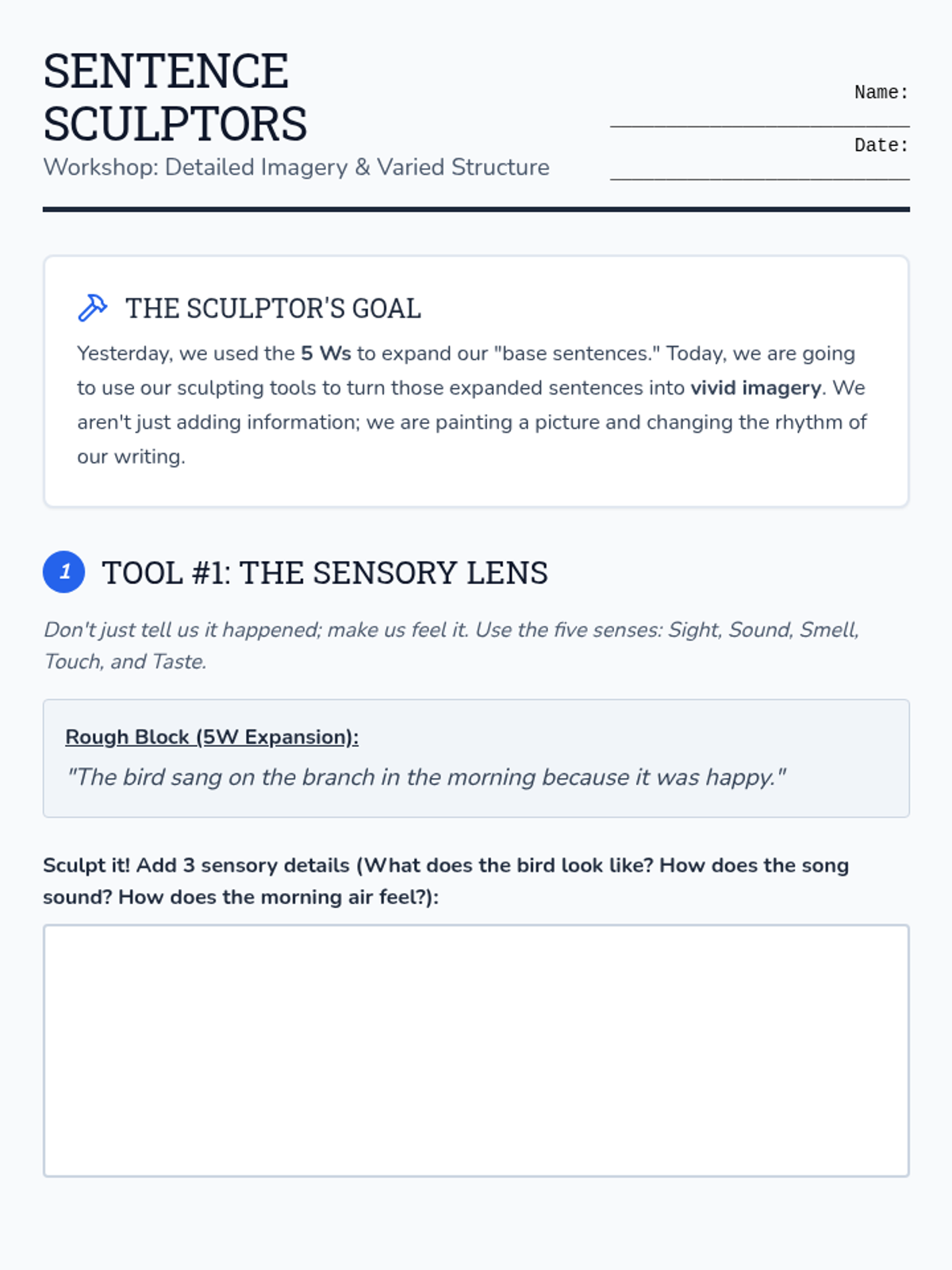
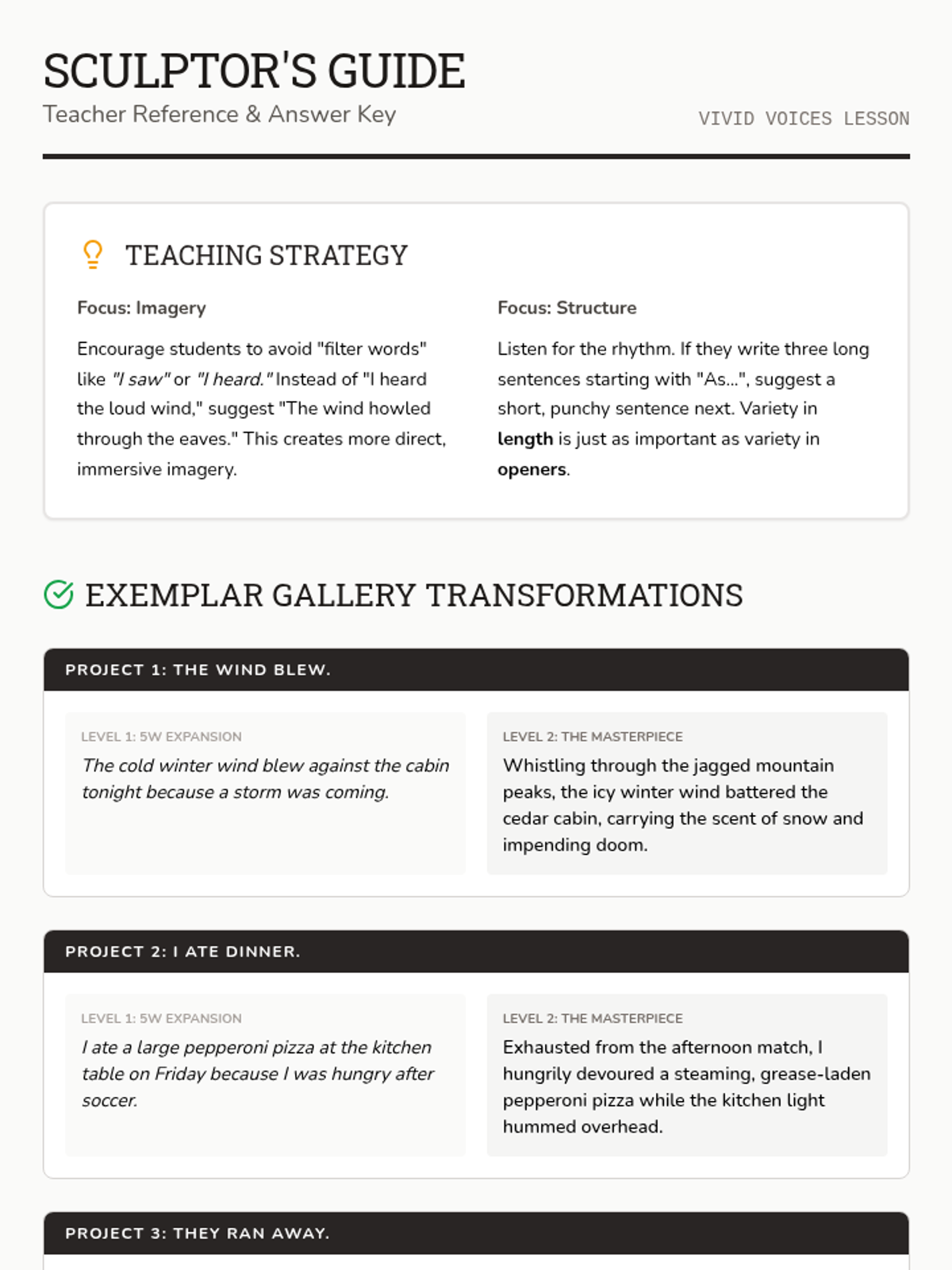
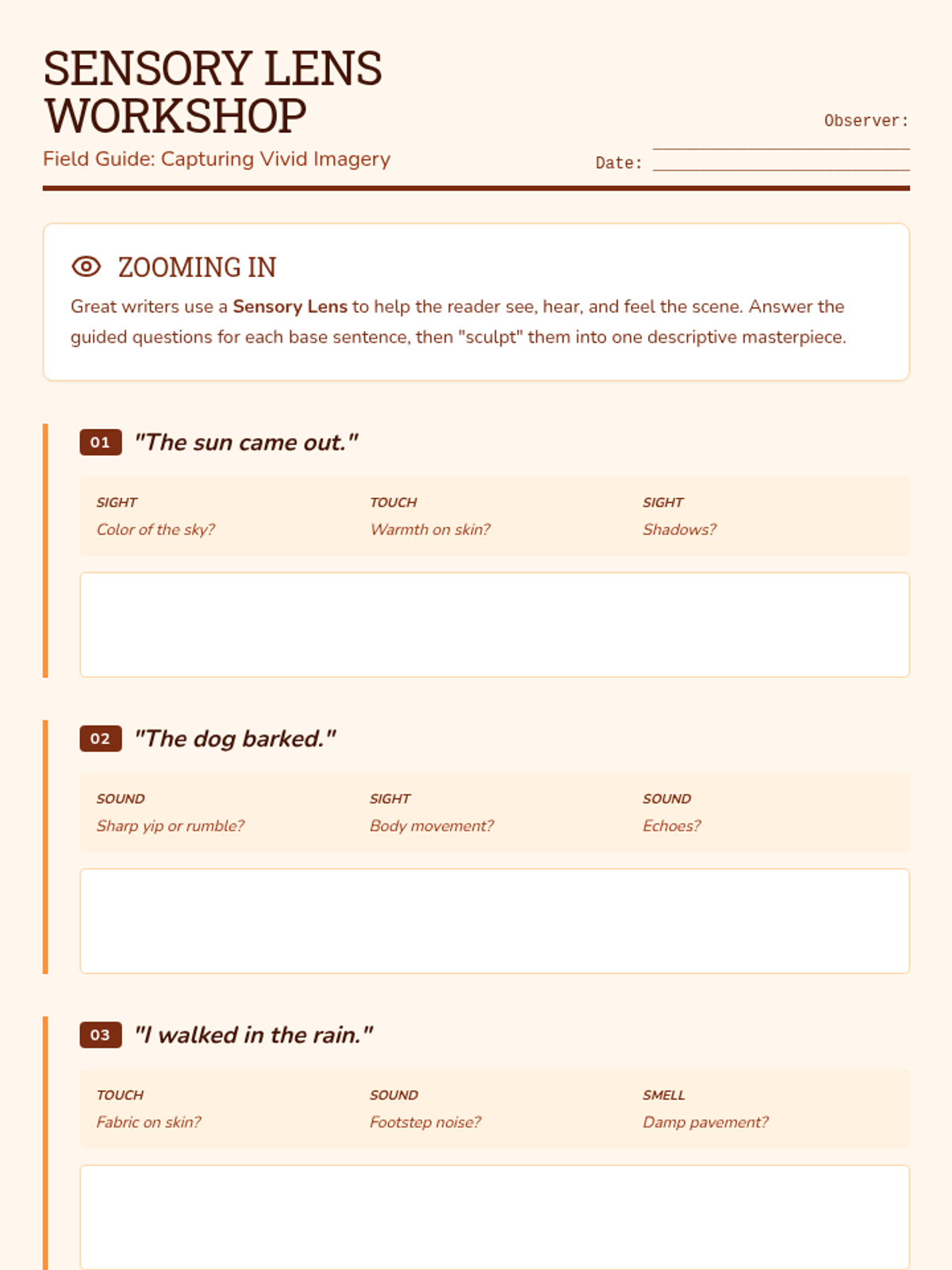
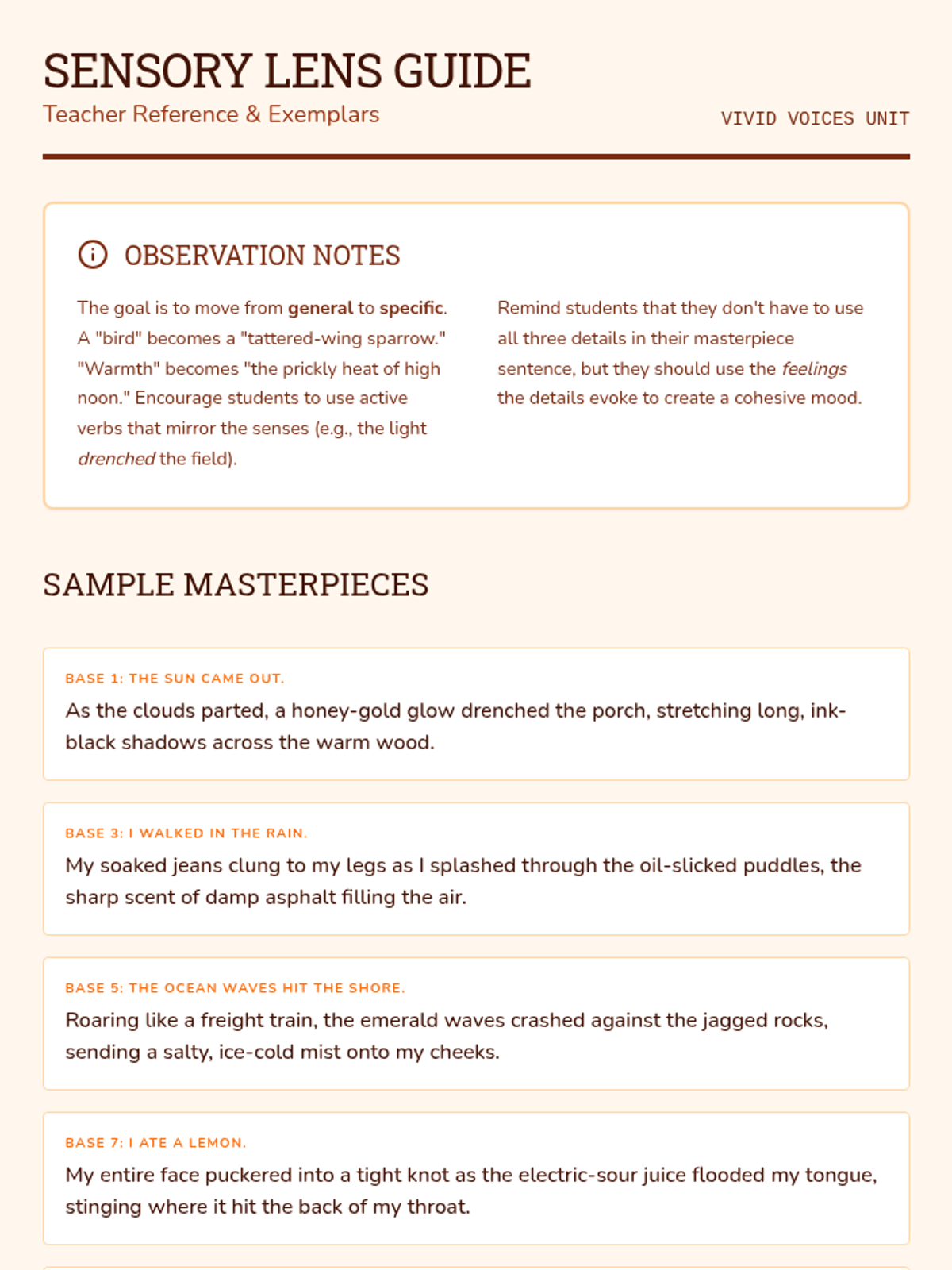
A lesson focused on transforming basic sentences into vivid, descriptive narratives using sensory imagery and varied sentence structures. Students build on their 5W foundation to 'sculpt' their writing into professional-quality prose.
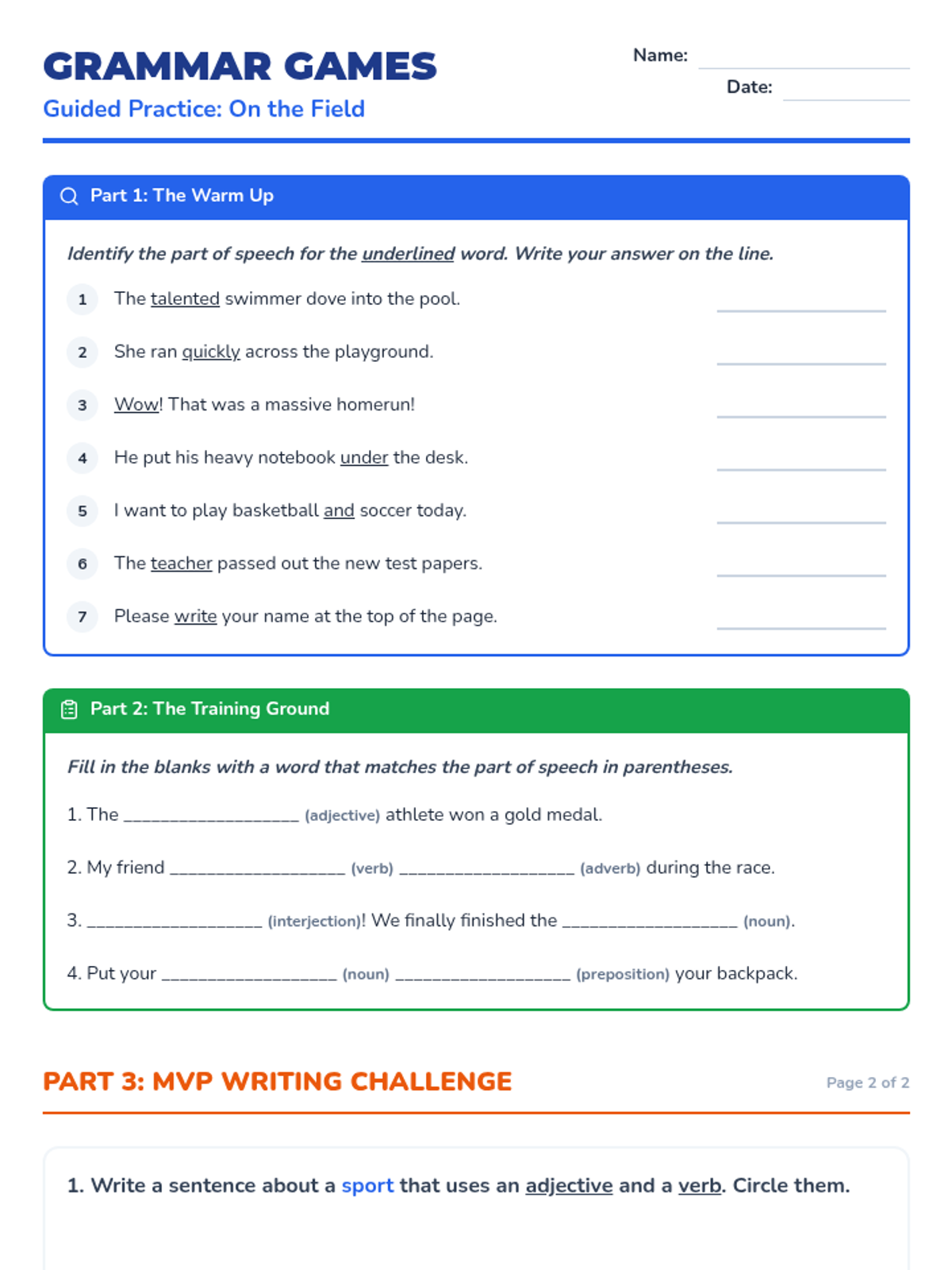
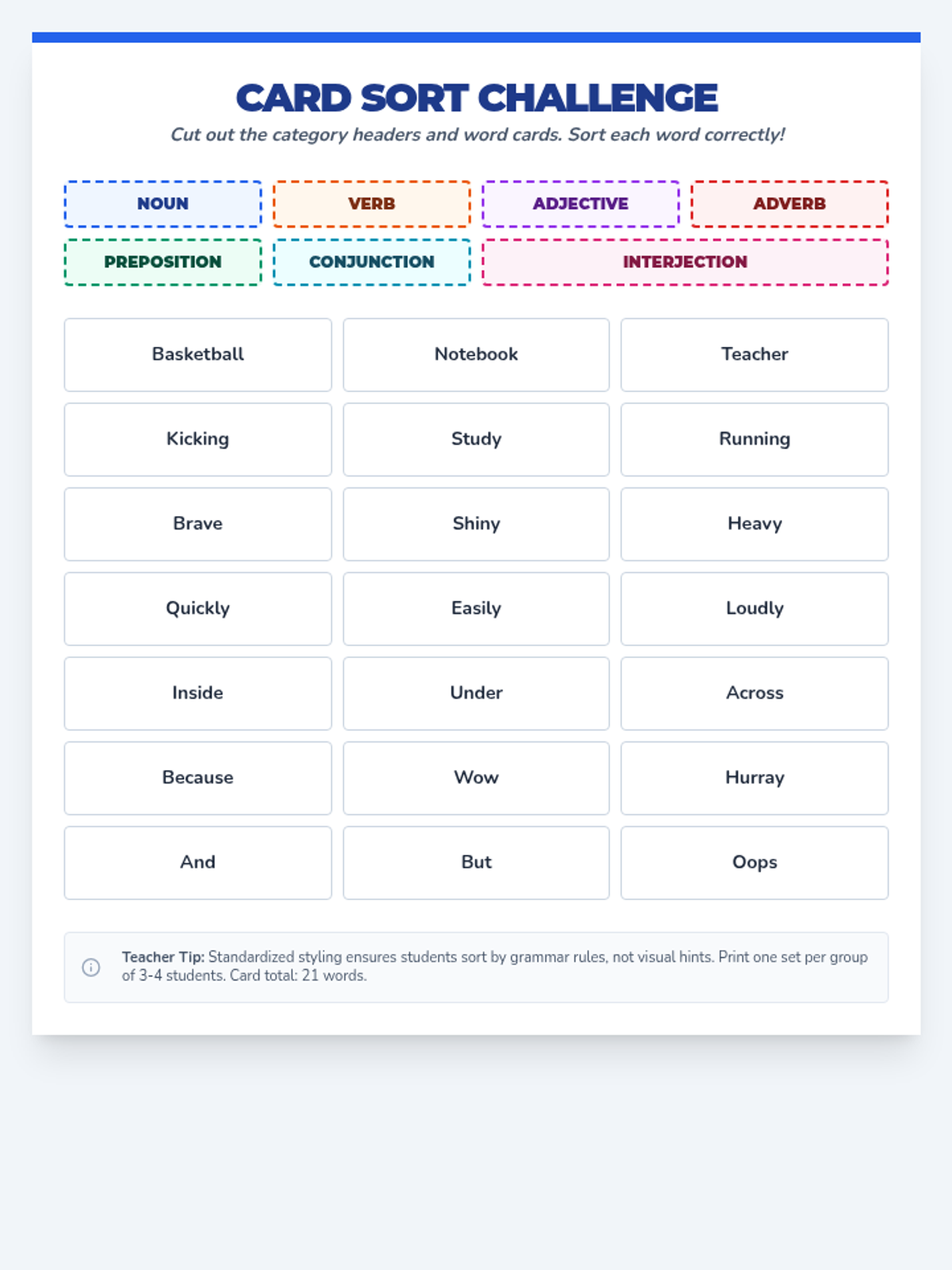
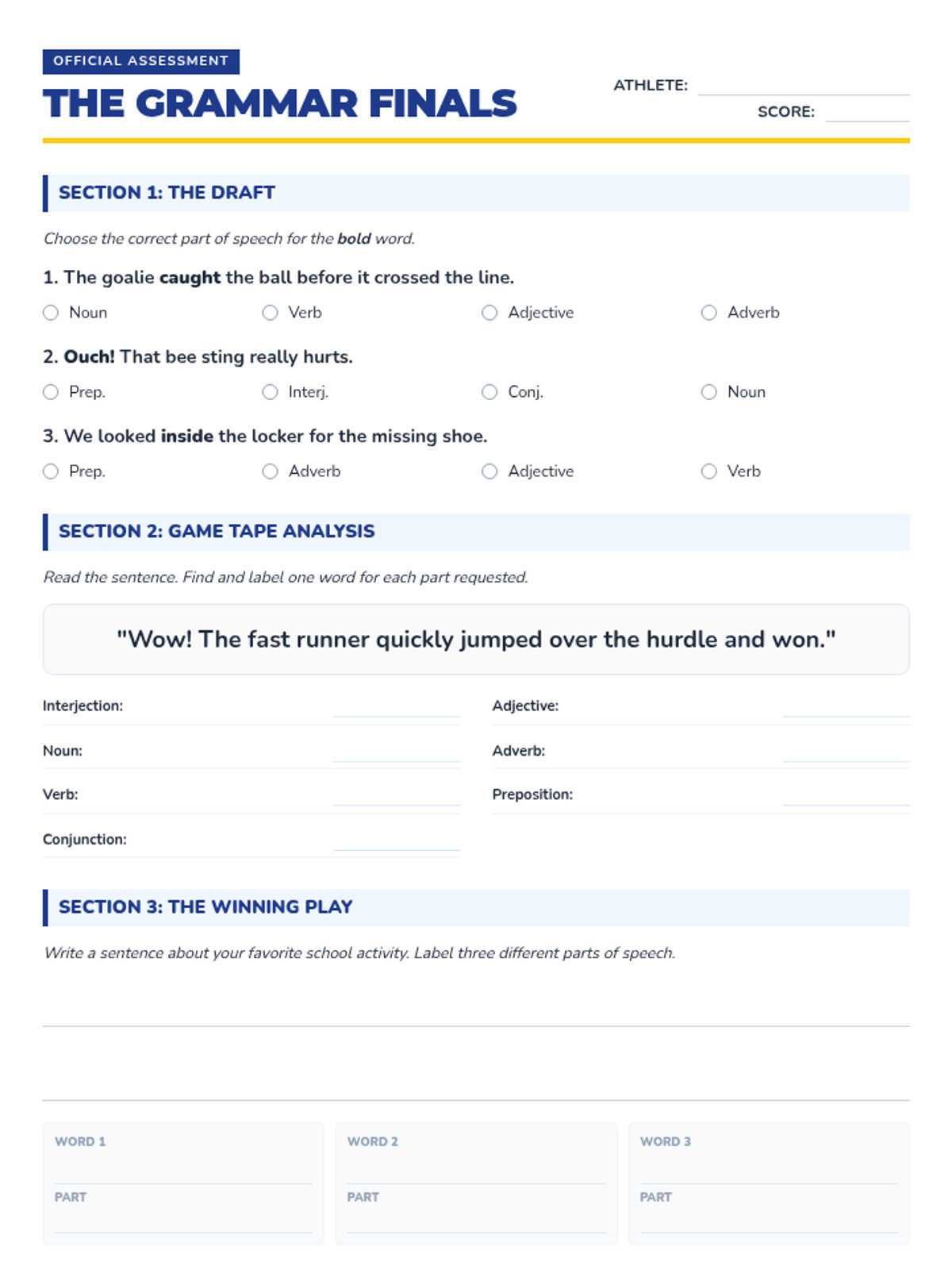
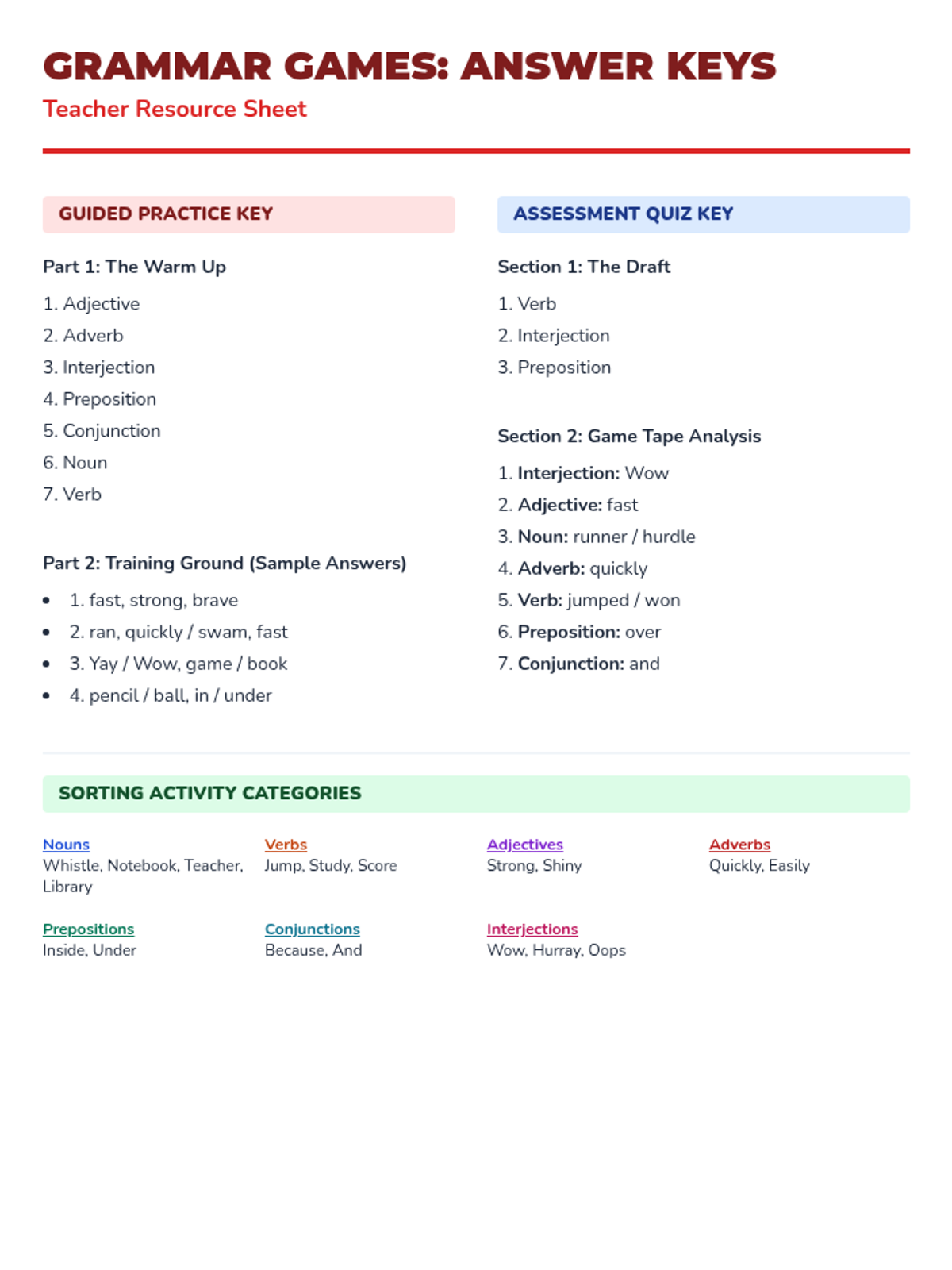
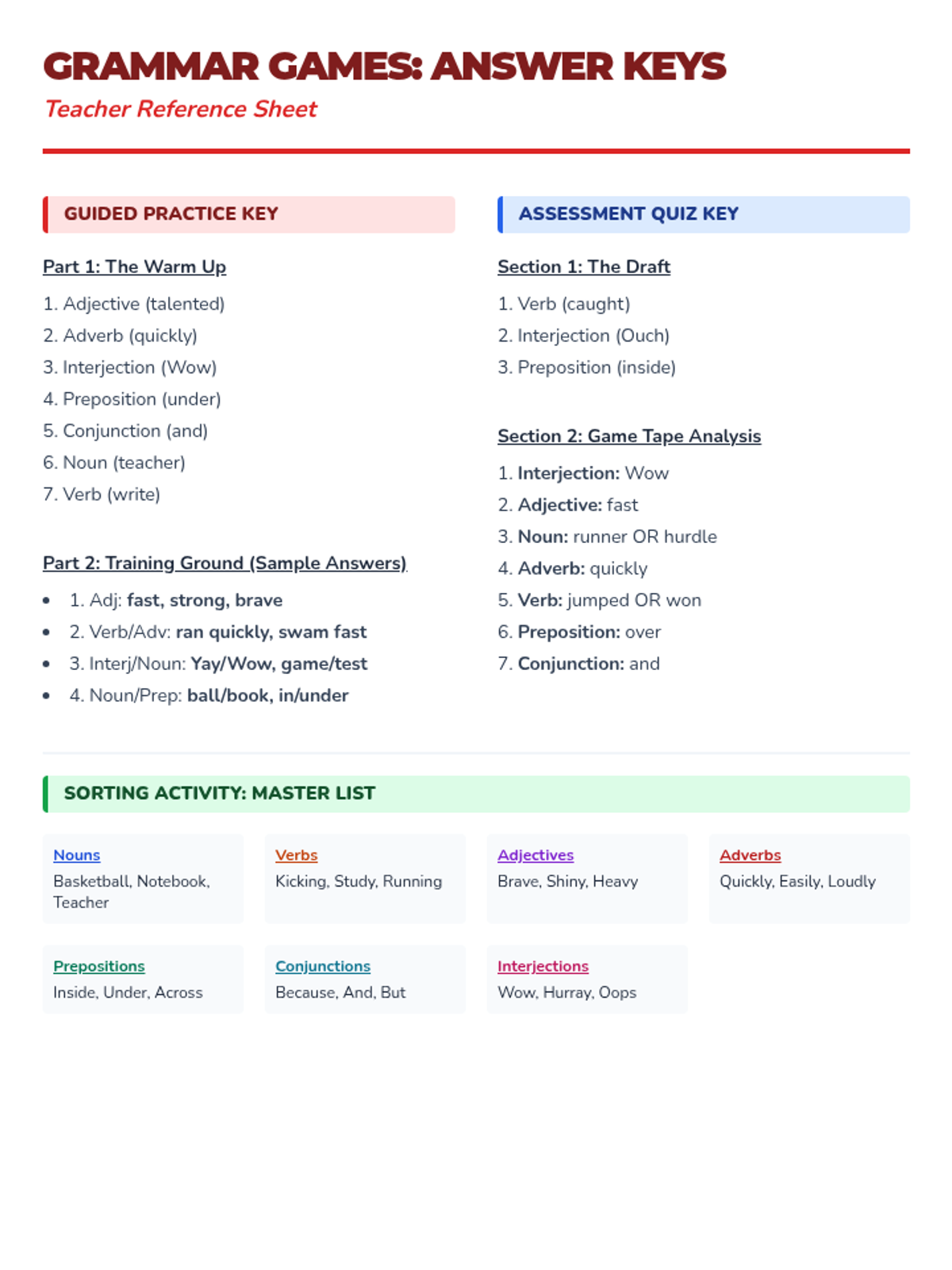
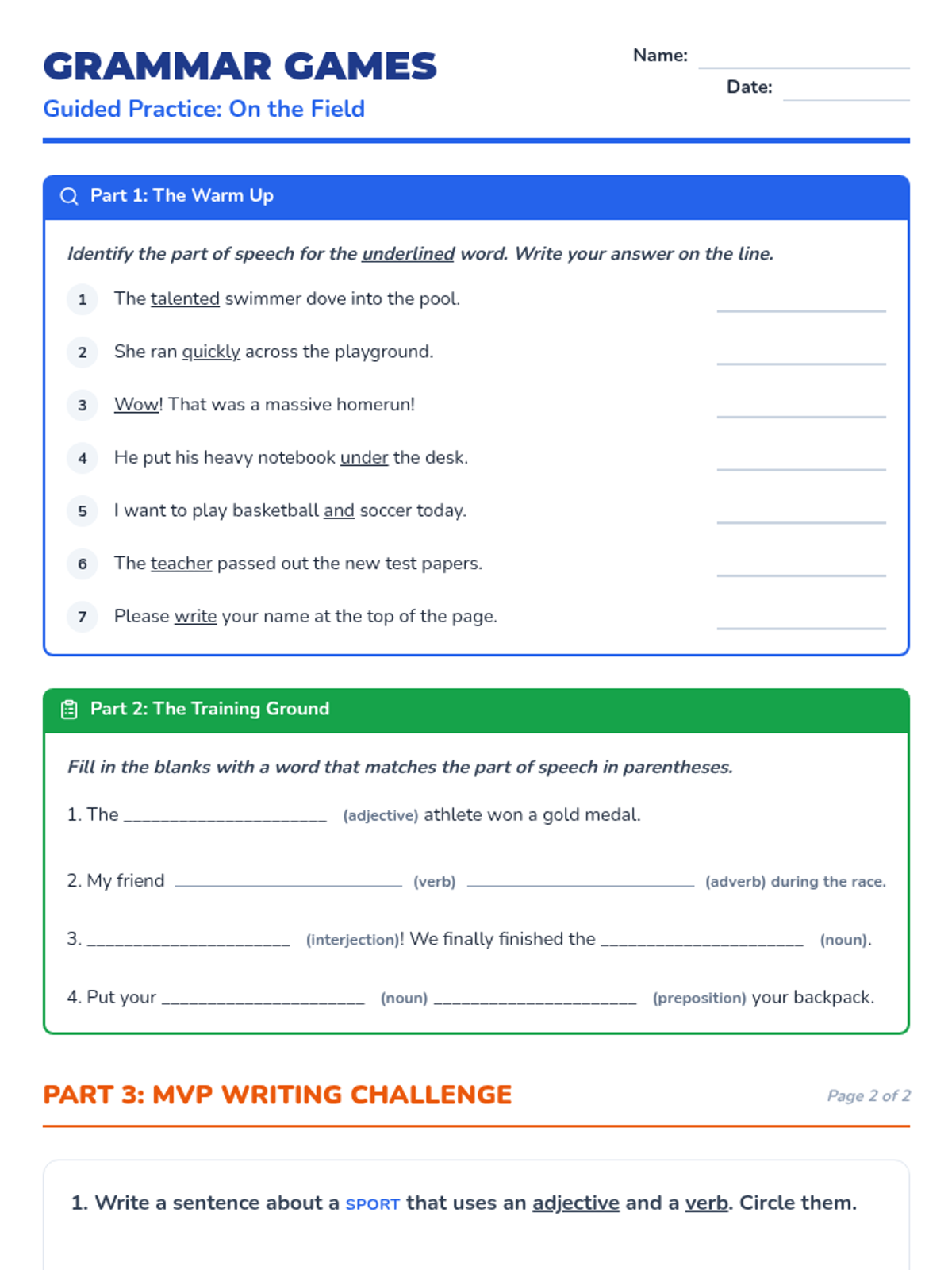
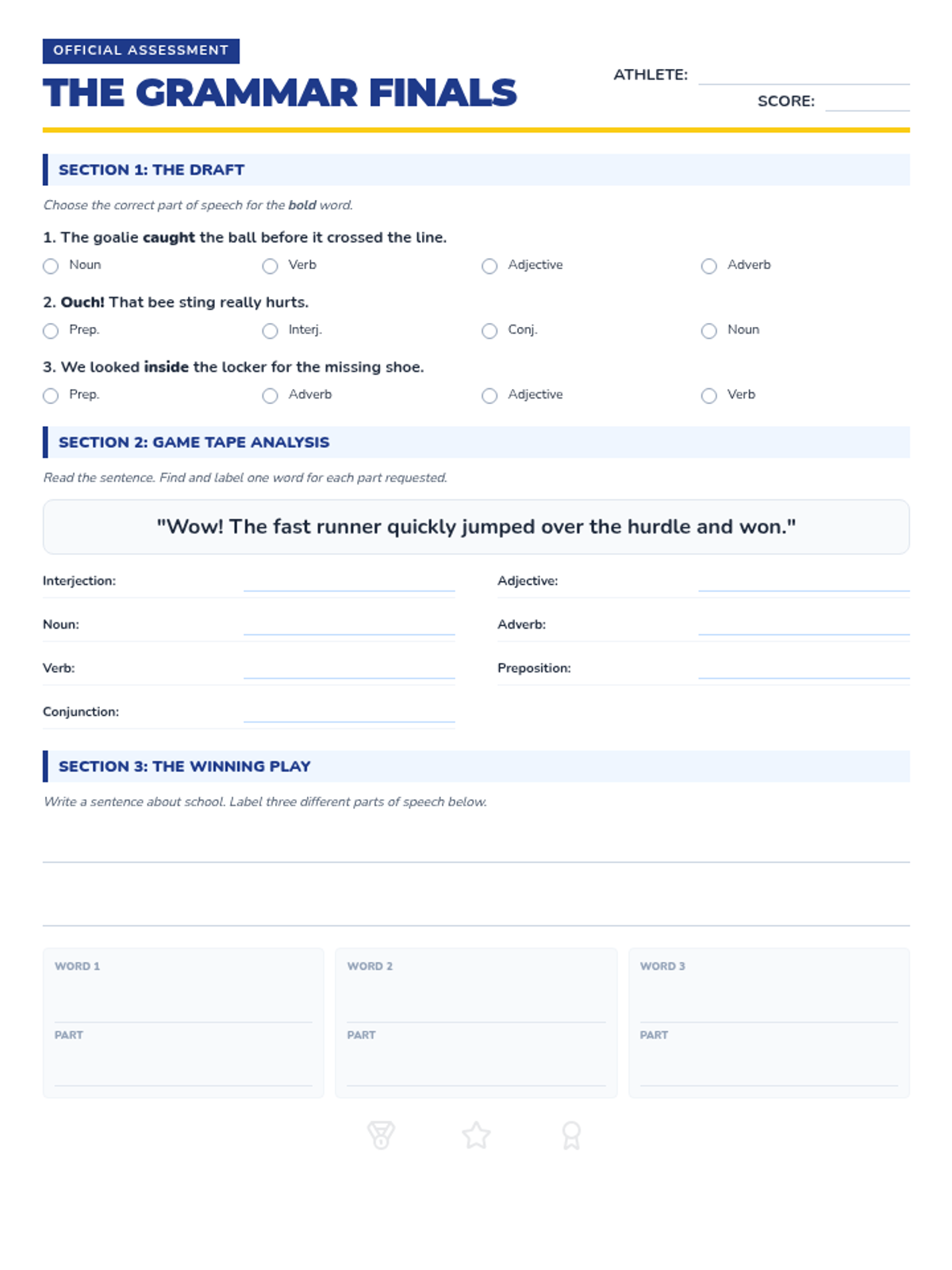
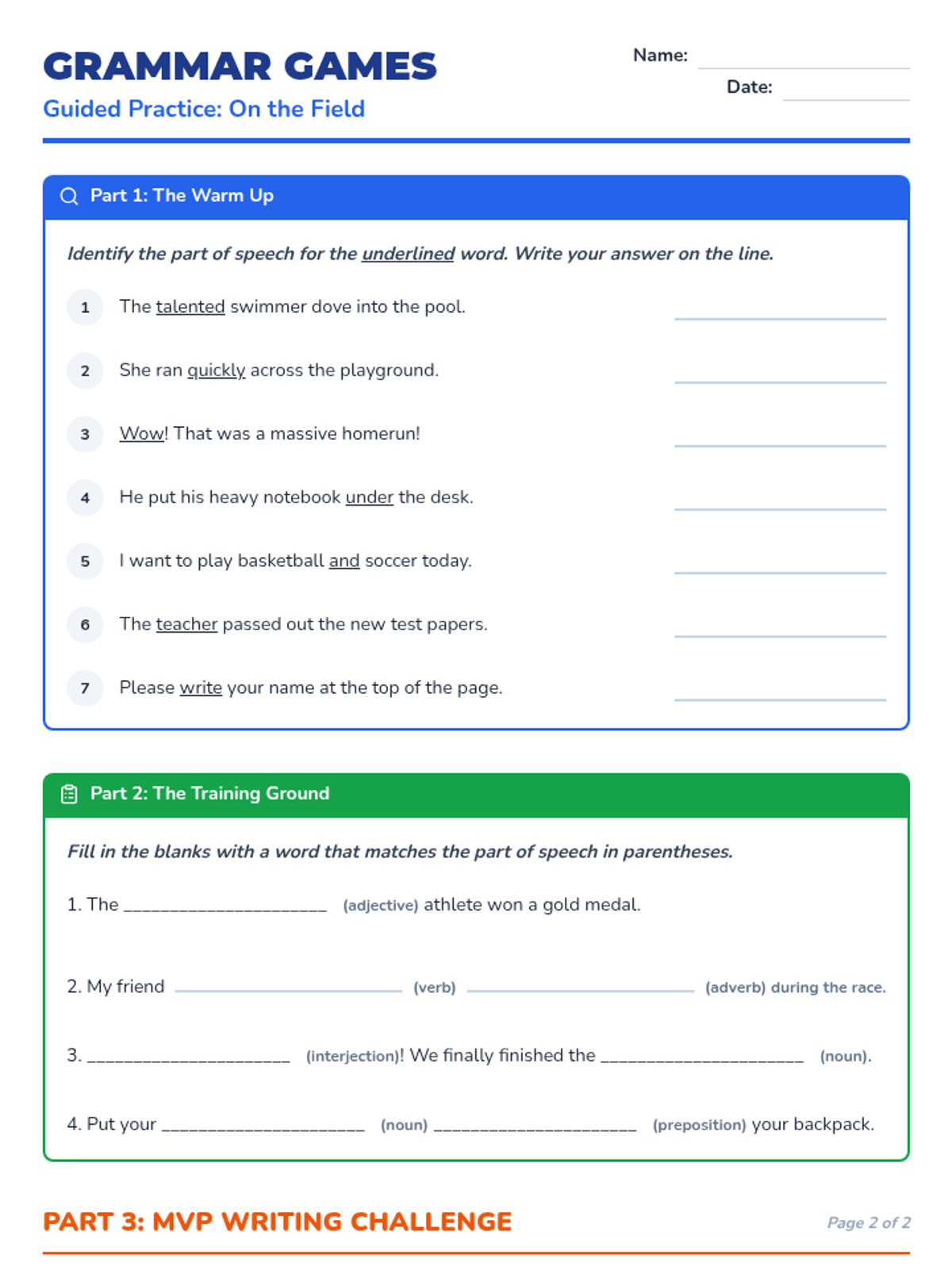
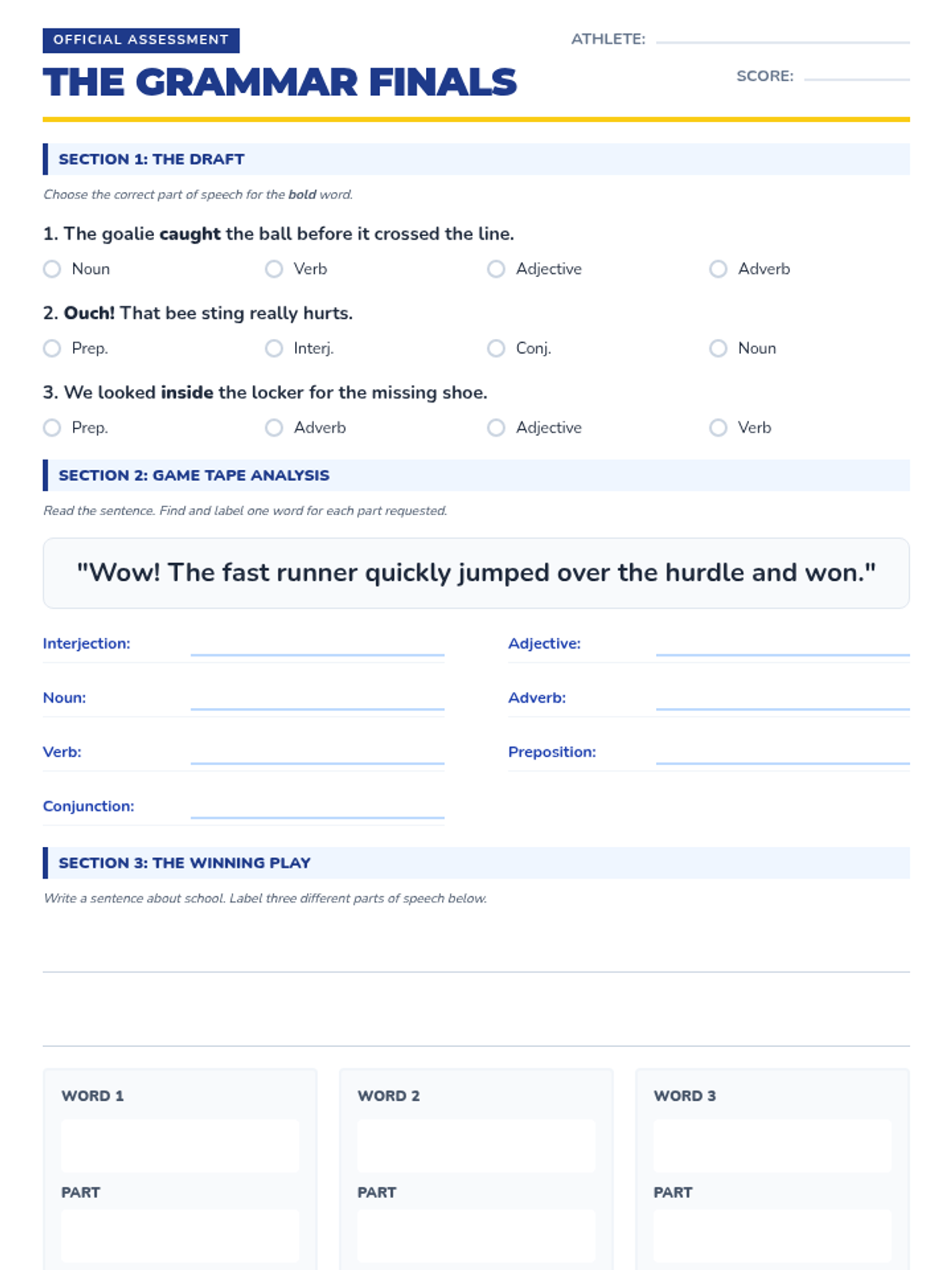
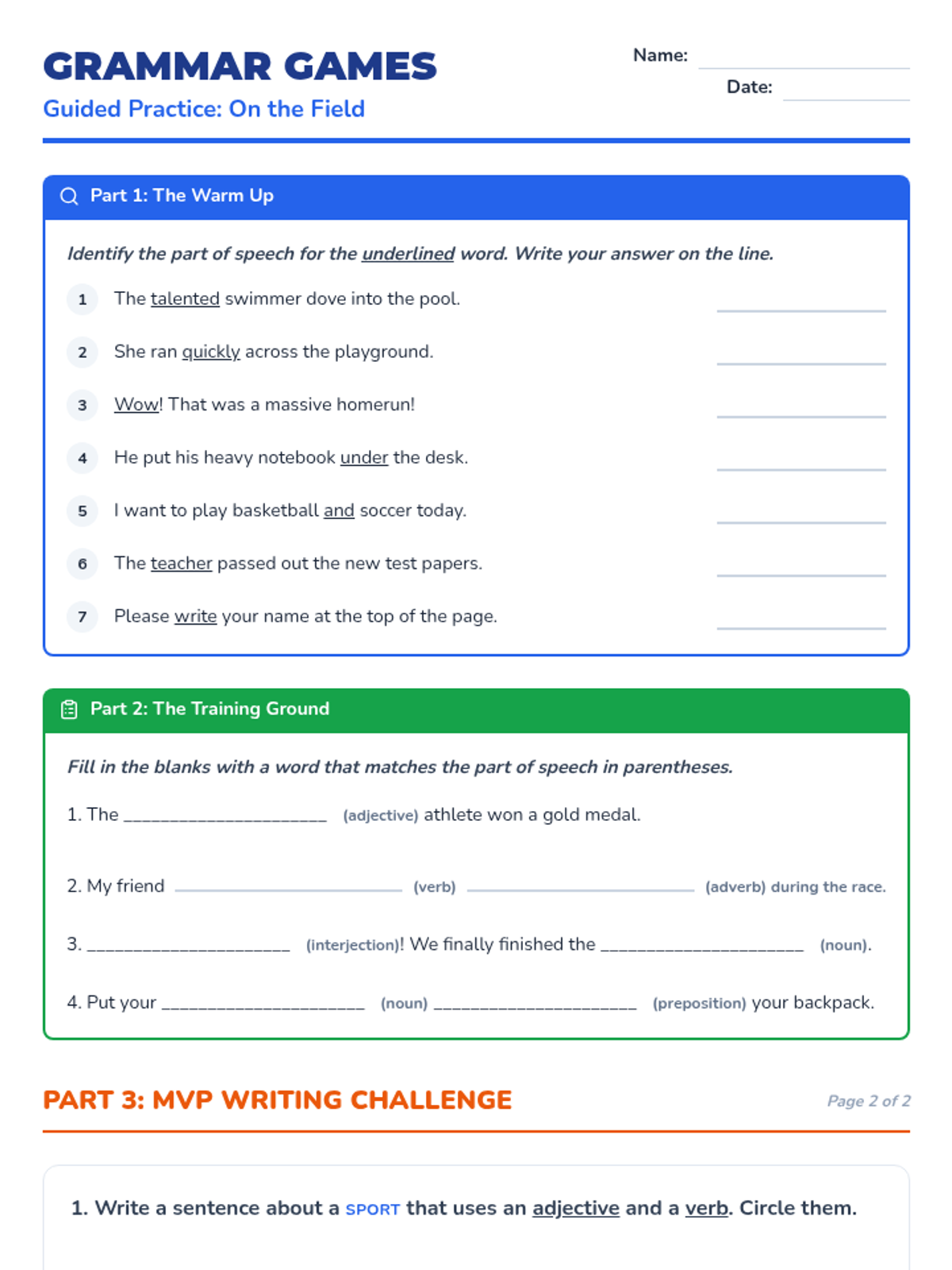
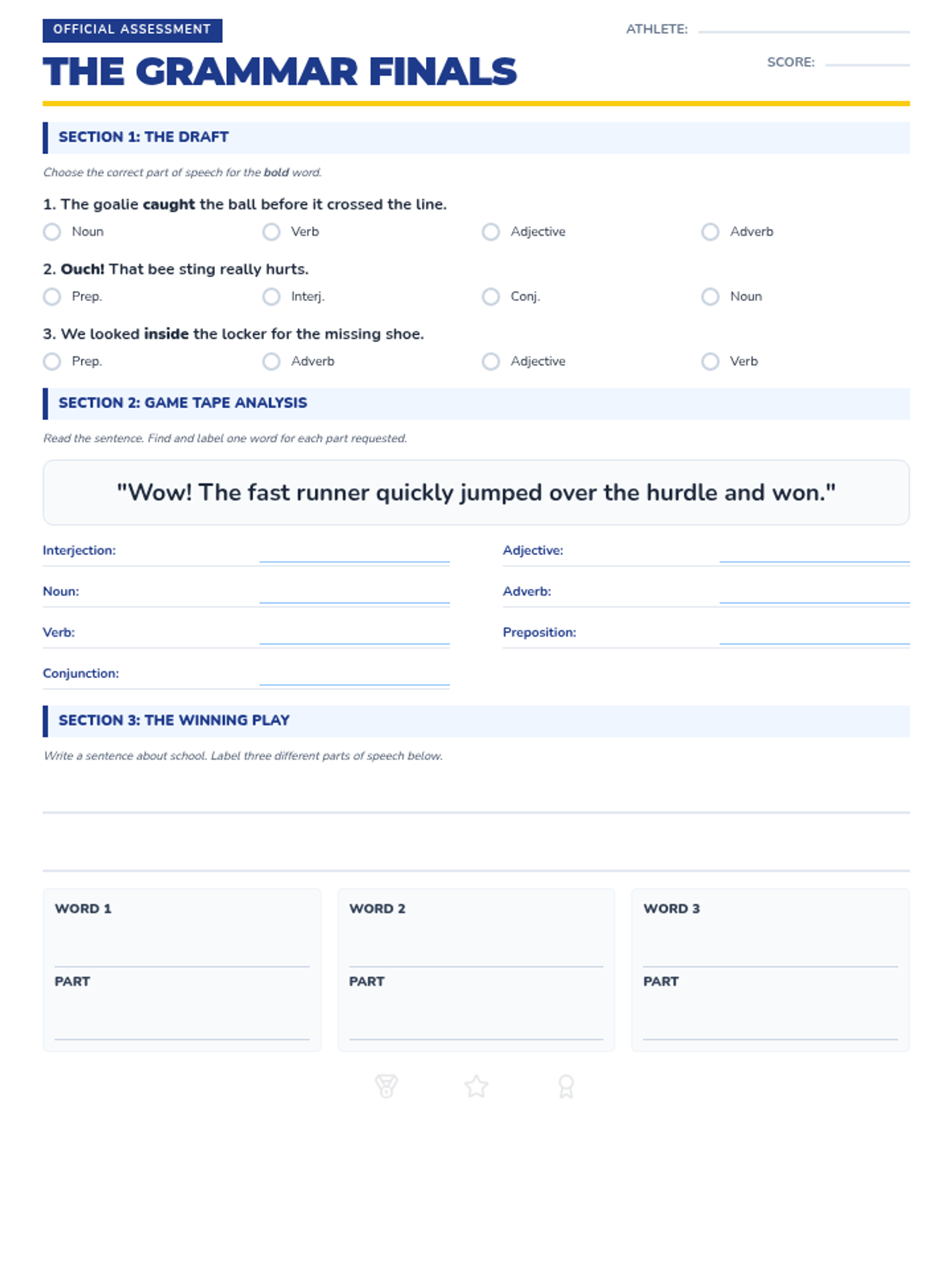
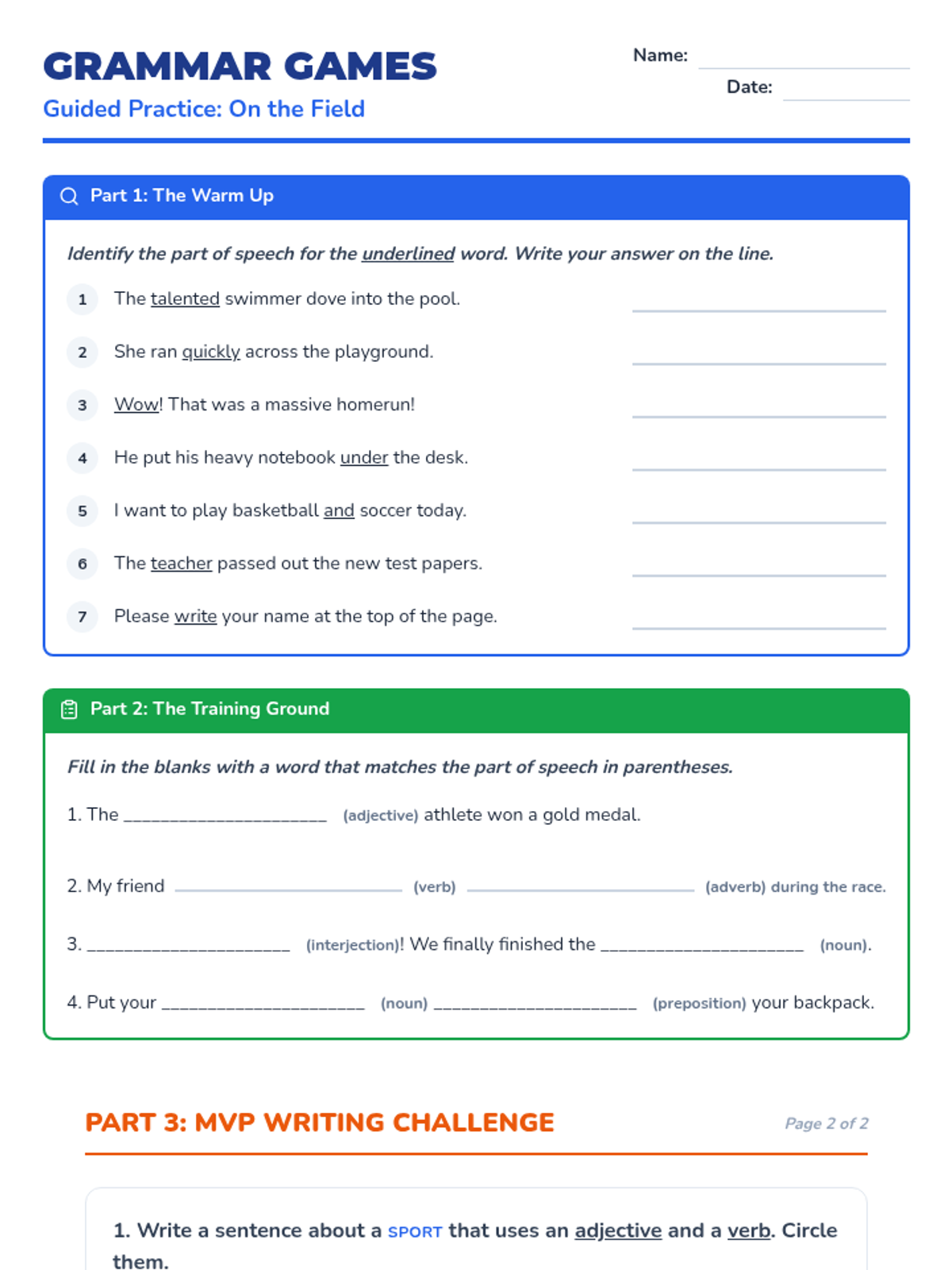
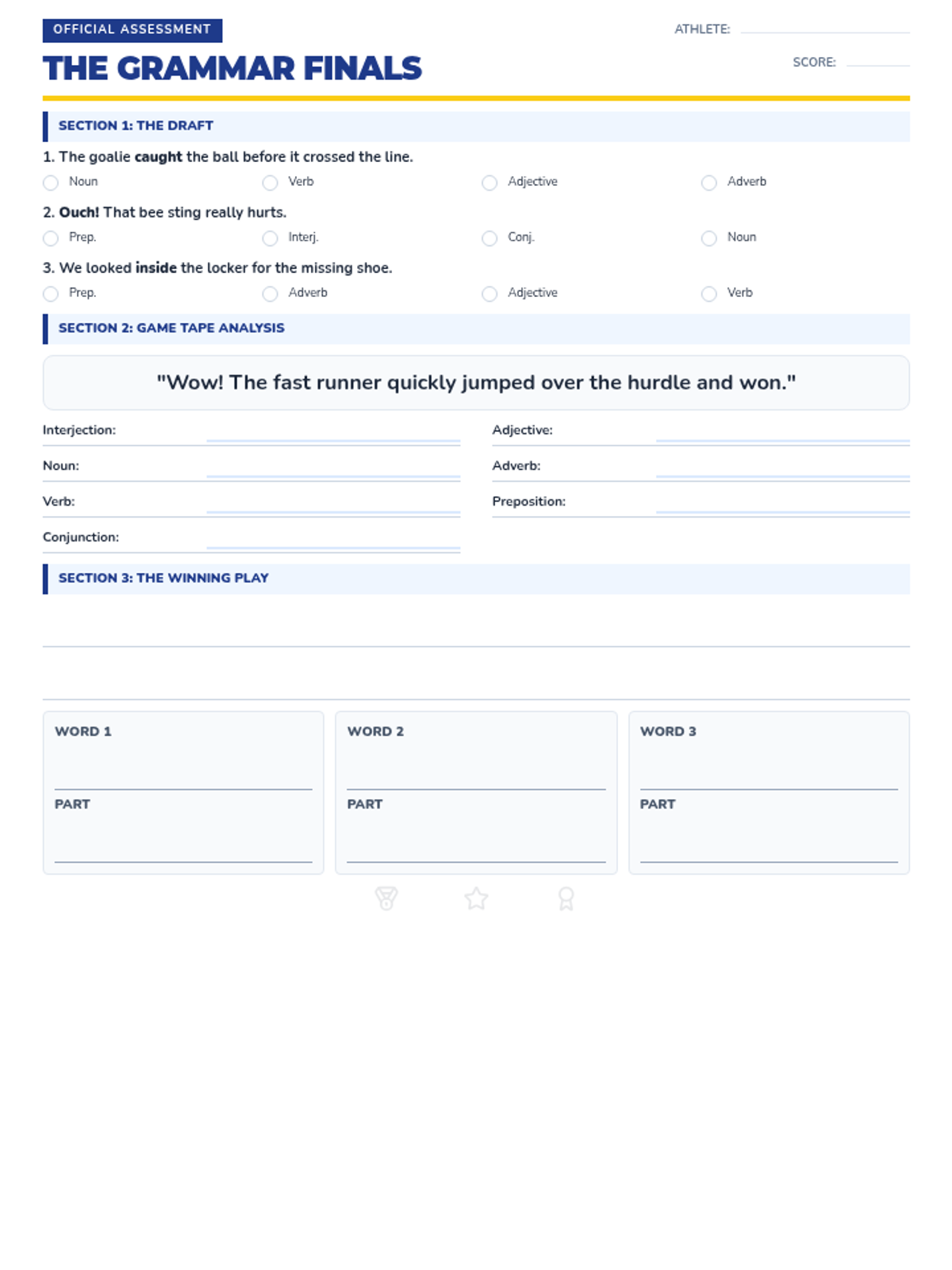
A lesson focusing on identifying nouns, verbs, adjectives, adverbs, prepositions, conjunctions, and interjections using athletic and academic contexts.
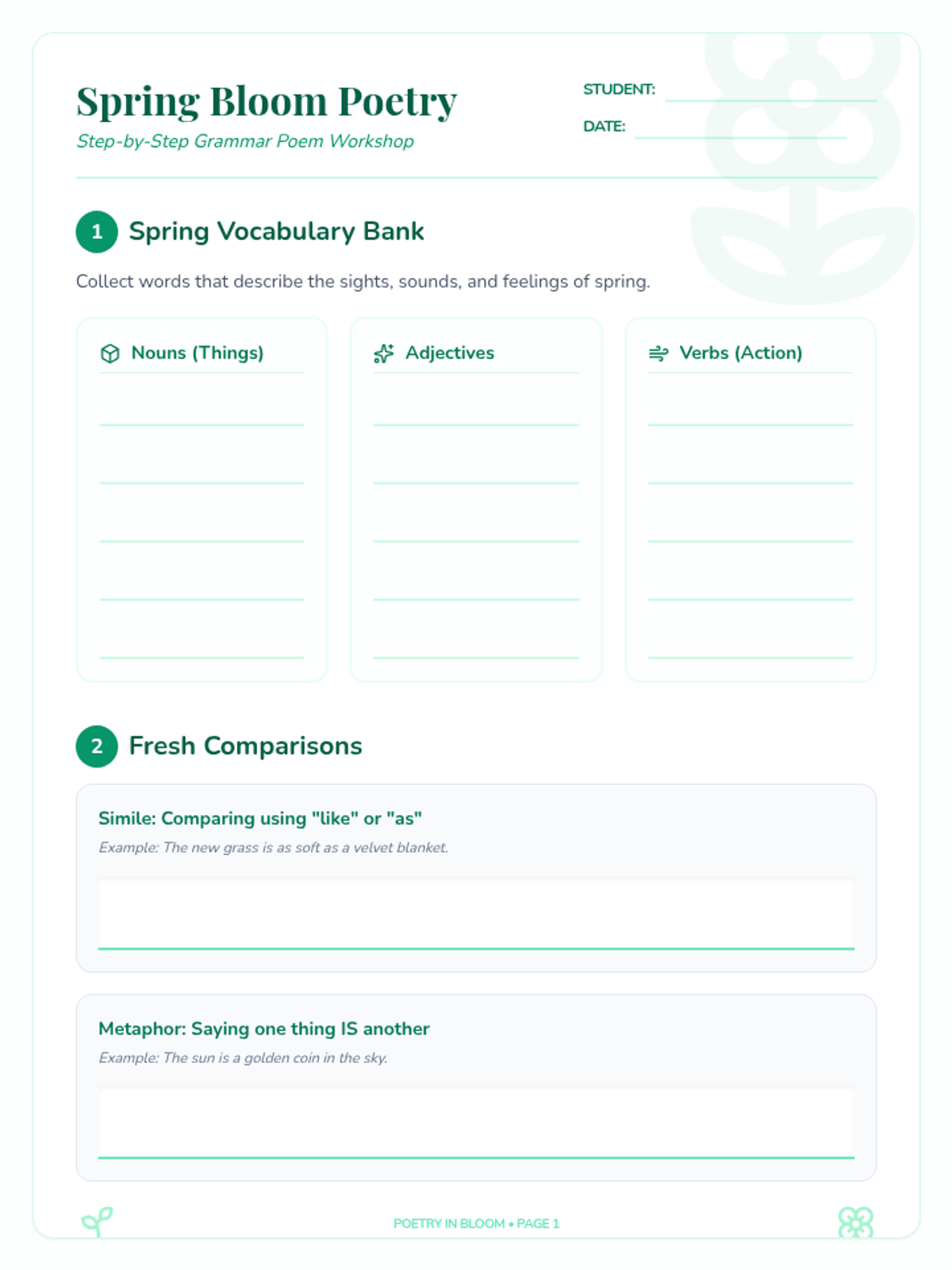
A guided poetry workshop where students use grammar concepts and figurative language to celebrate the arrival of spring.
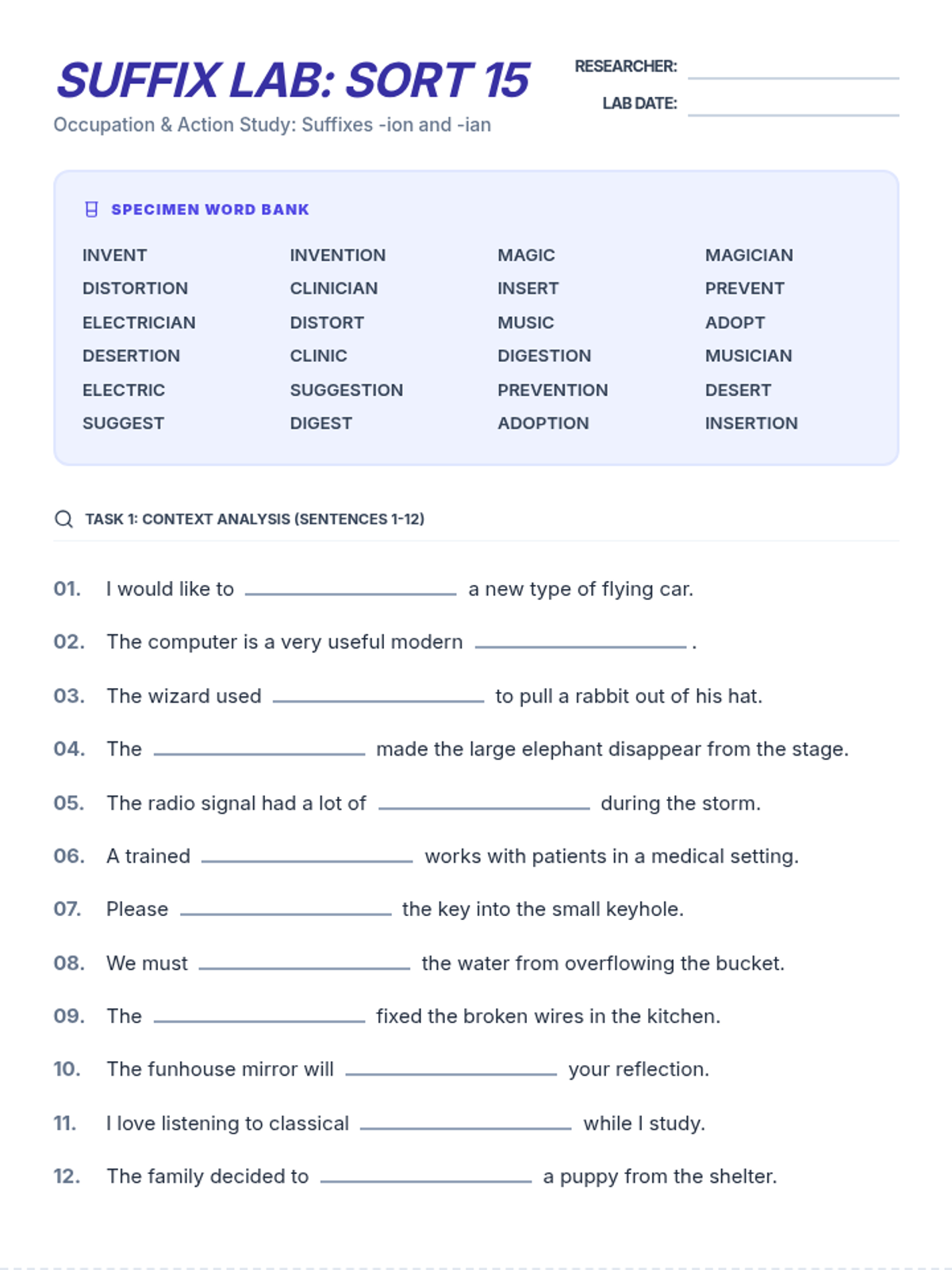
A lesson focused on the suffixes -ion and -ian with no spelling change to the base word. Students analyze nouns like 'invention', 'magician', and 'musician'.
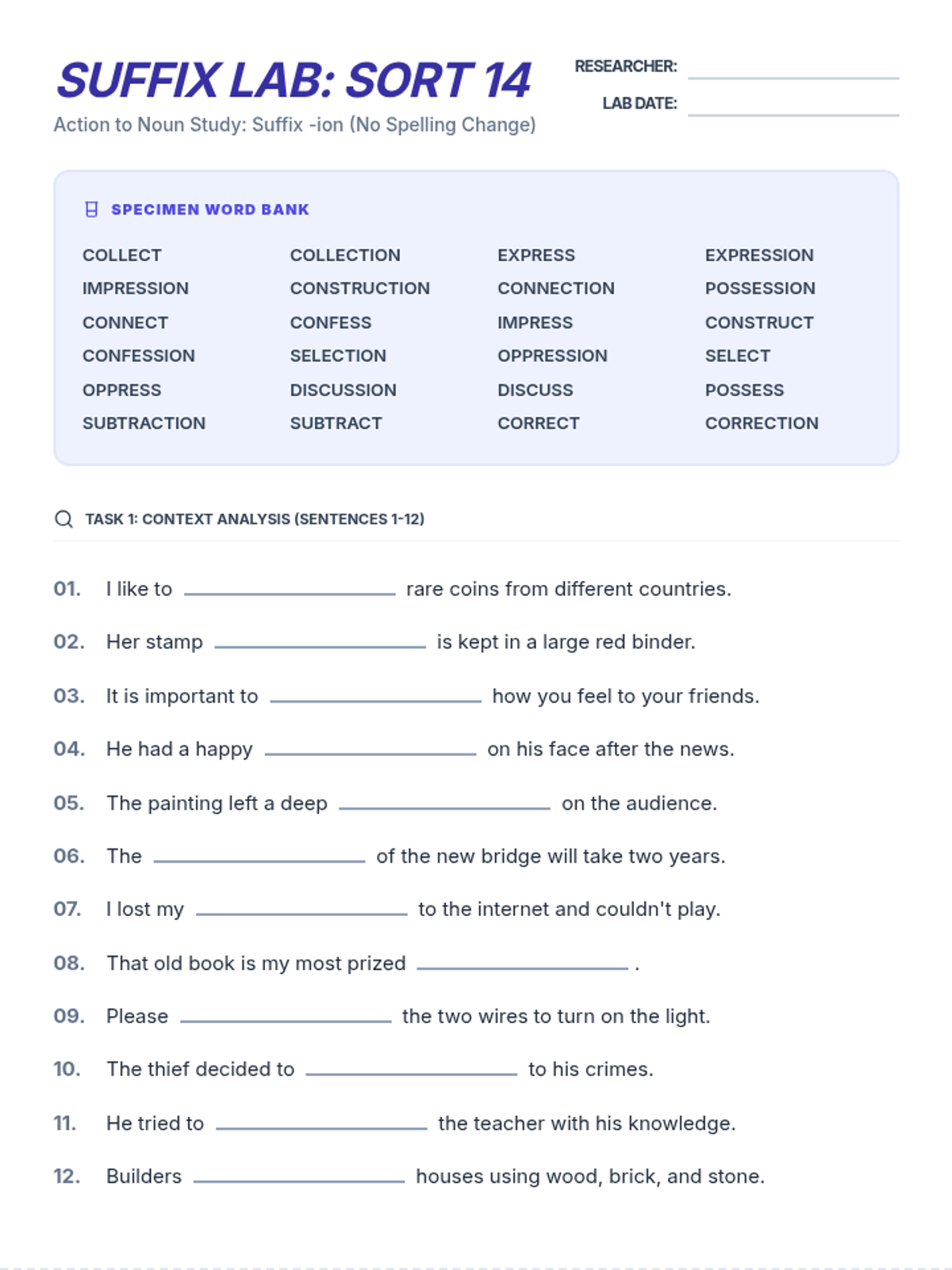
A lesson focused on the suffix -ion and how it changes verbs into nouns with no spelling change to the base word. Students analyze word pairs like 'collect' and 'collection'.
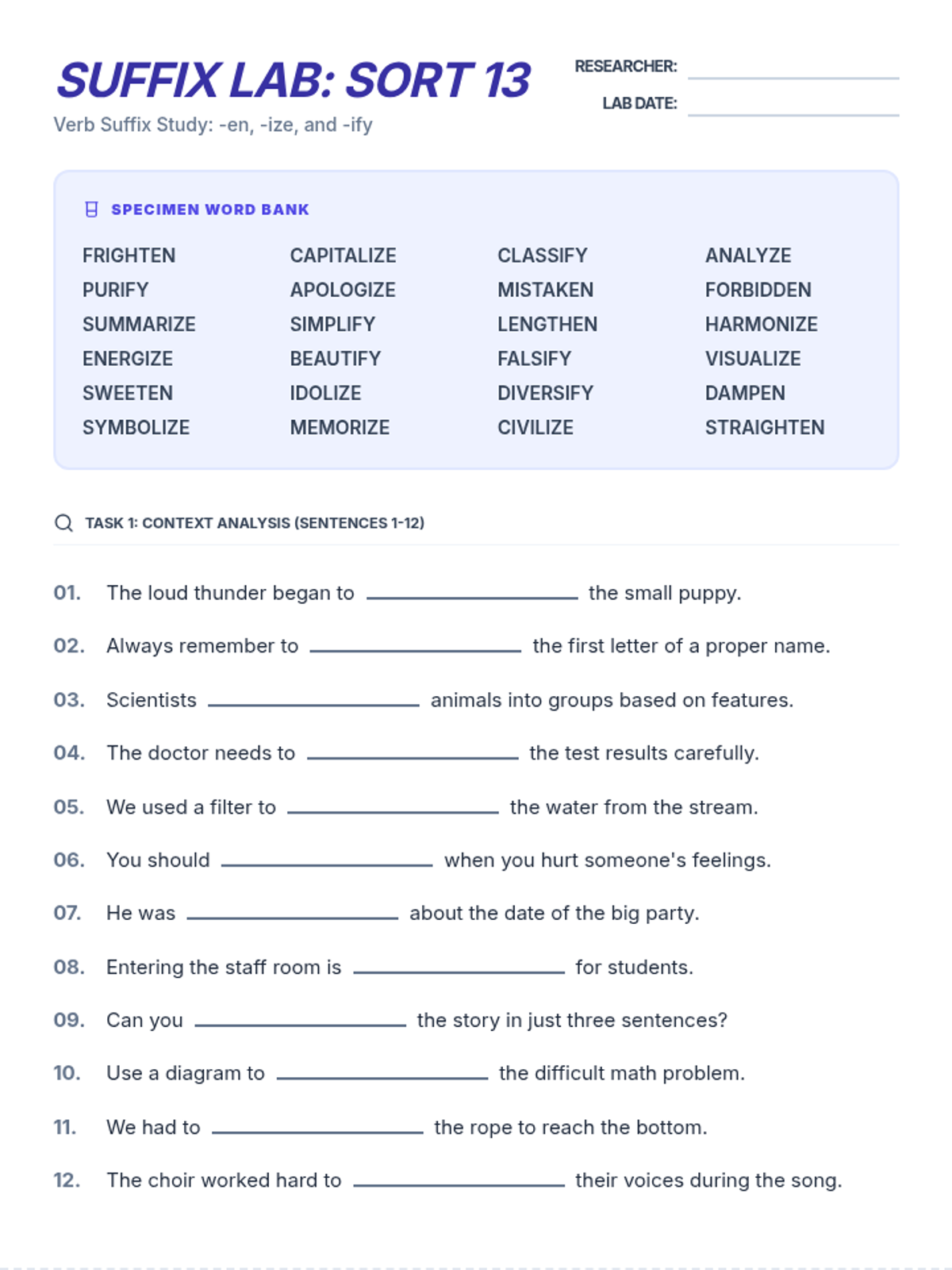
A lesson focused on the suffixes -en, -ize, and -ify. Students investigate how these suffixes transform base words into verbs representing actions or states.
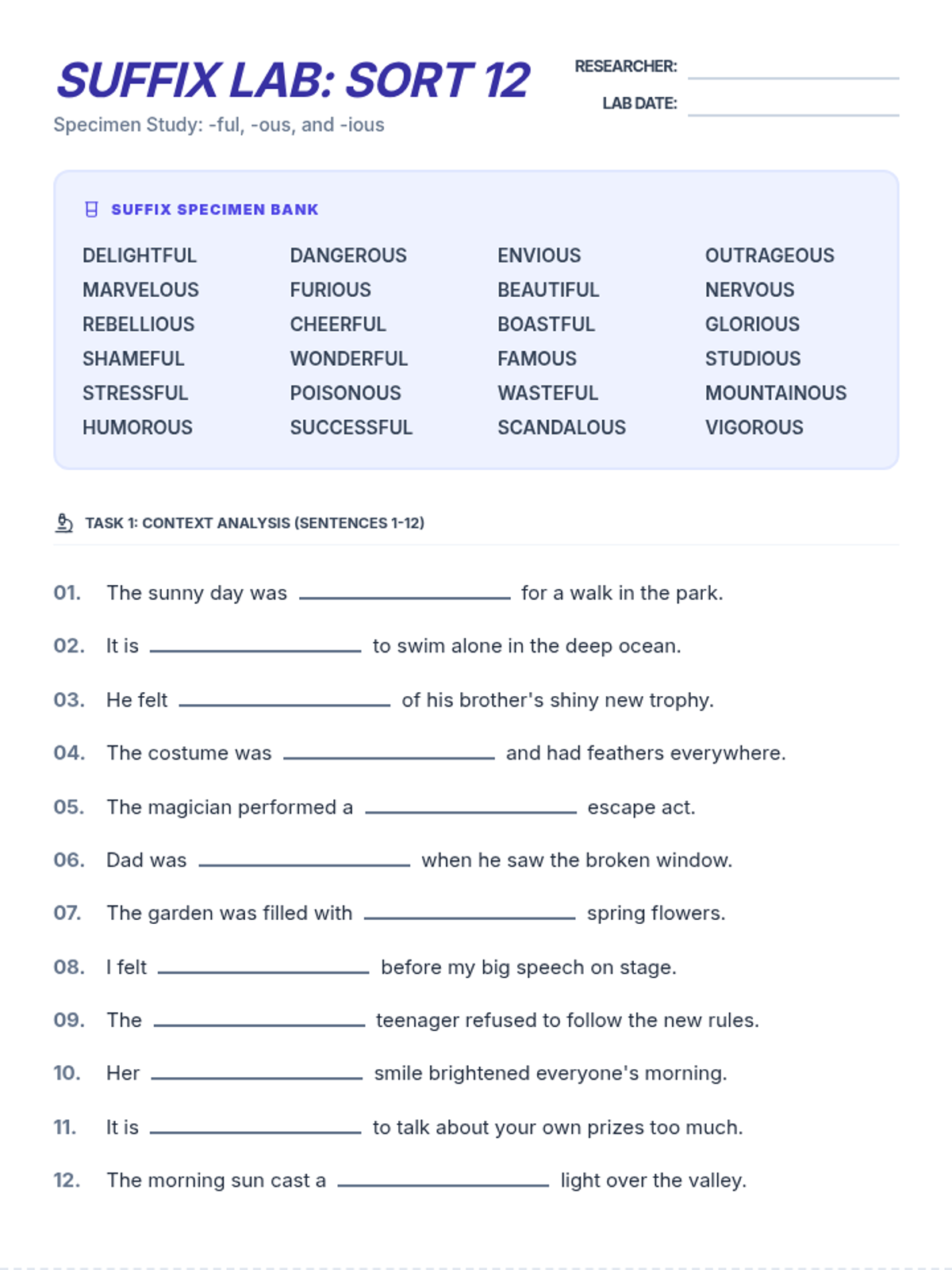
A lesson focused on the suffixes -ful, -ous, and -ious. Students analyze how these suffixes form adjectives from nouns, representing full of or having qualities of.
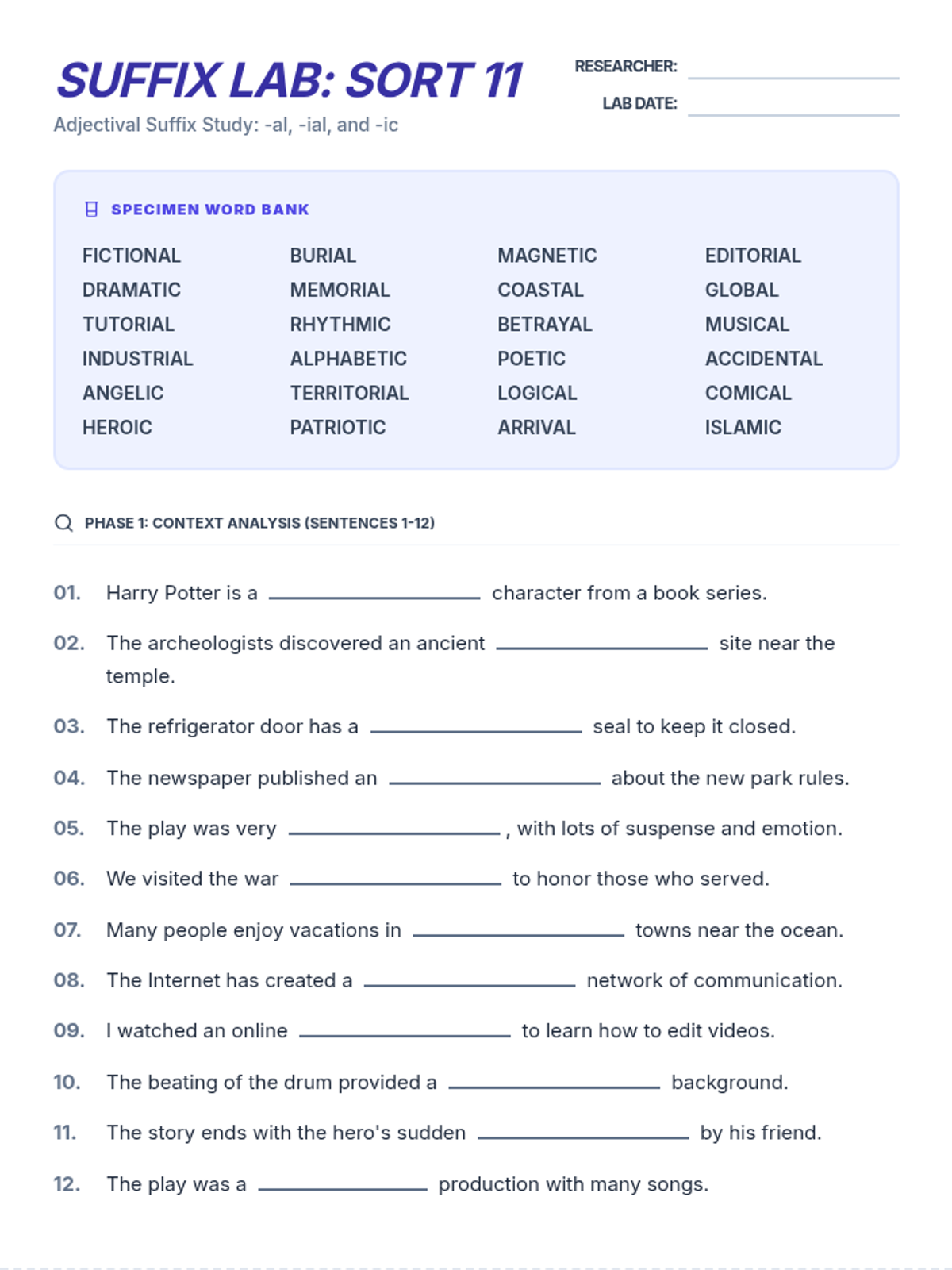
A lesson focused on the suffixes -al, -ial, and -ic. Students analyze how these suffixes form adjectives from nouns, representing relating to or having qualities of.
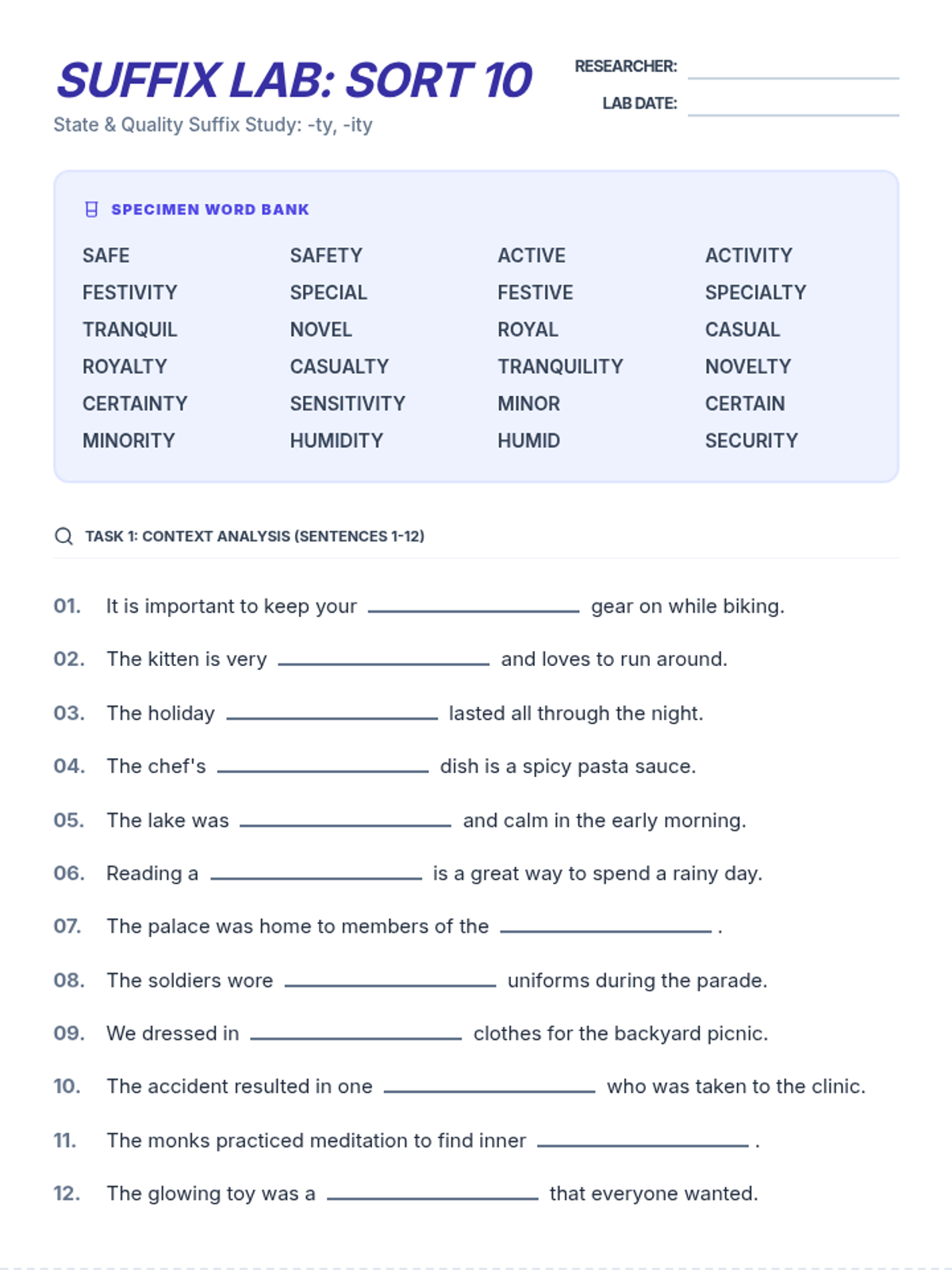
A lesson focused on the suffixes -ty and -ity. Students analyze how these suffixes form nouns from adjectives, representing states or qualities.
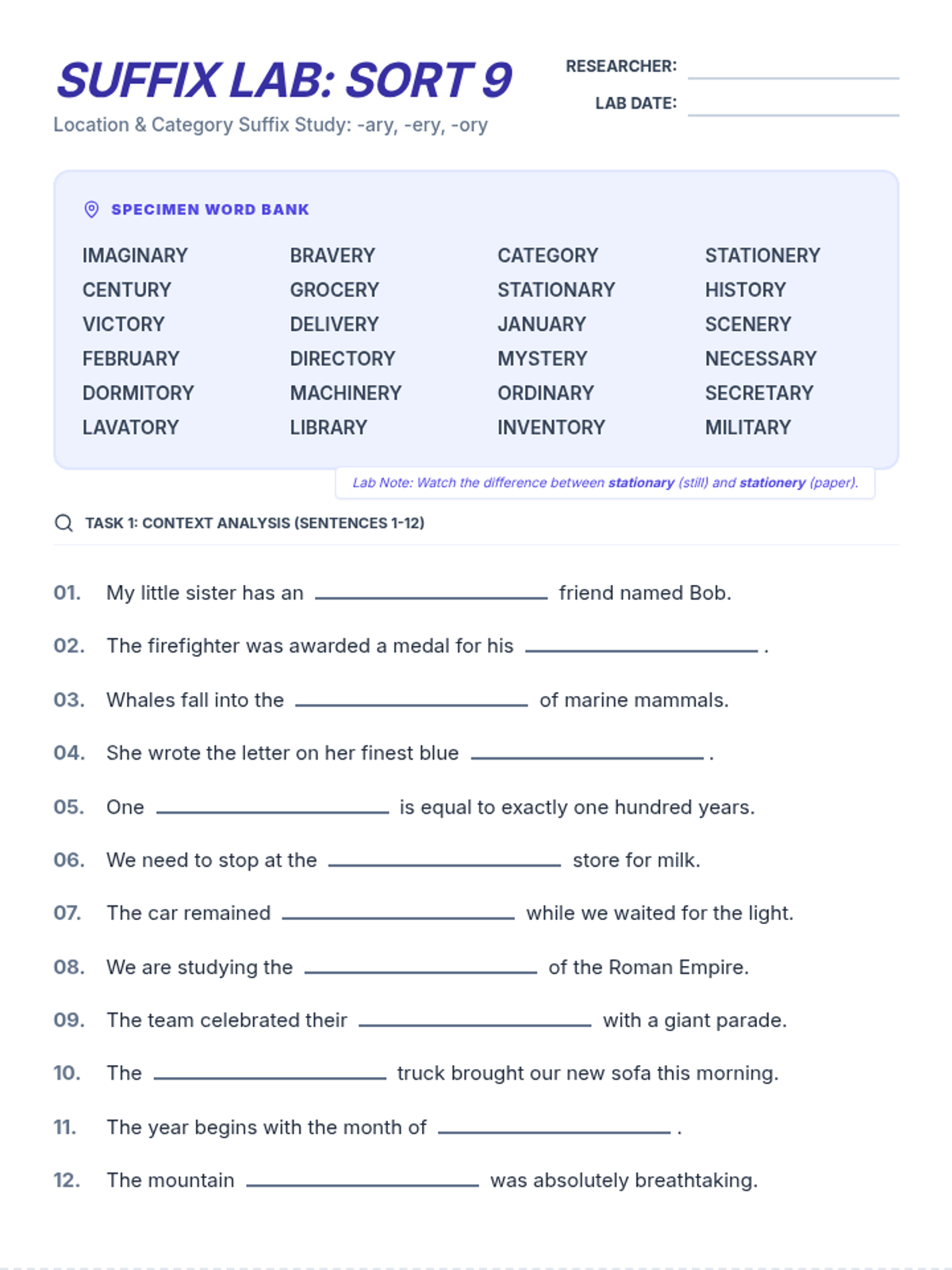
A lesson focused on location and category suffixes (-ary, -ery, -ory). Students analyze how these suffixes form nouns and adjectives related to places, groups, and qualities.
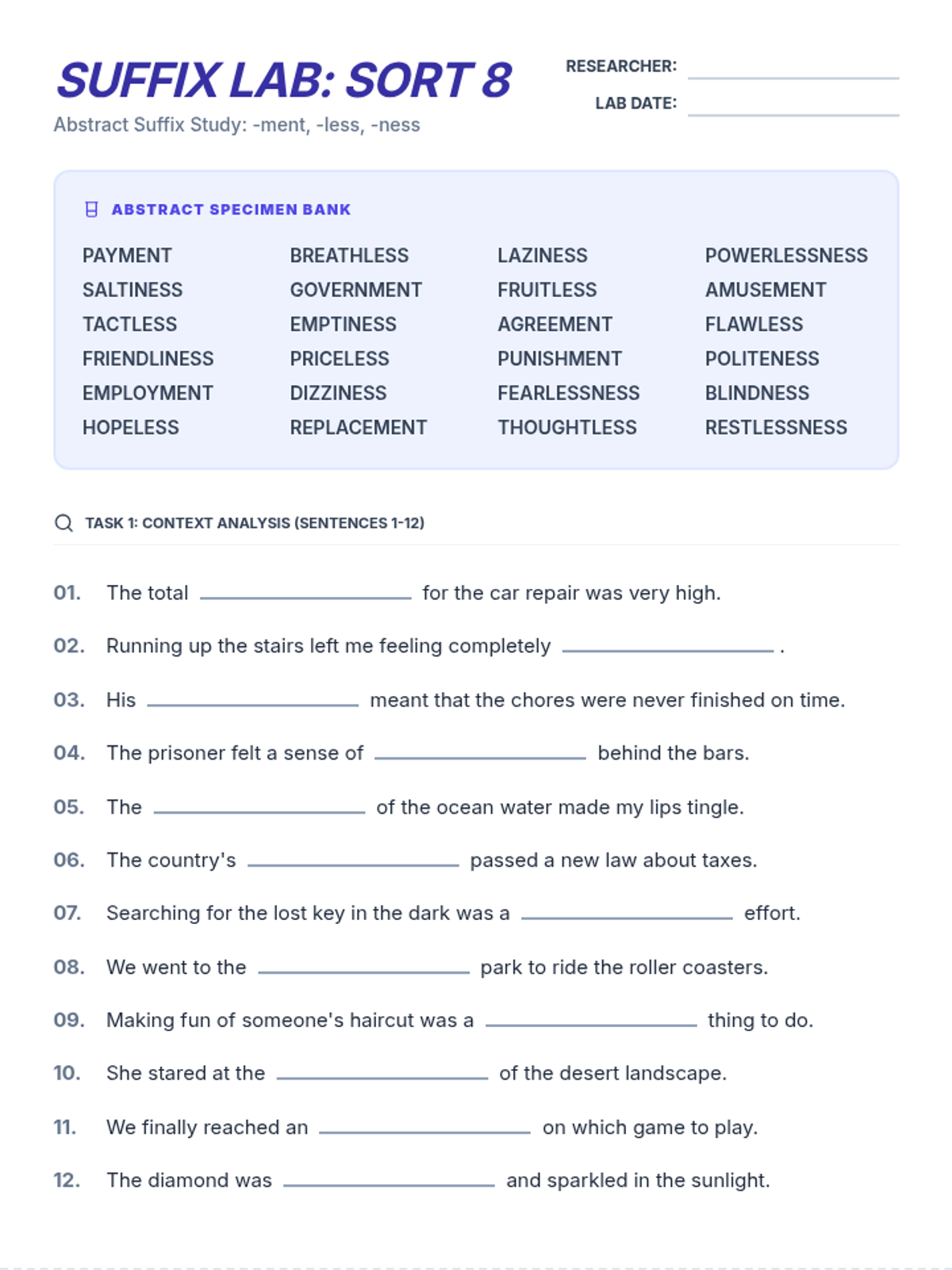
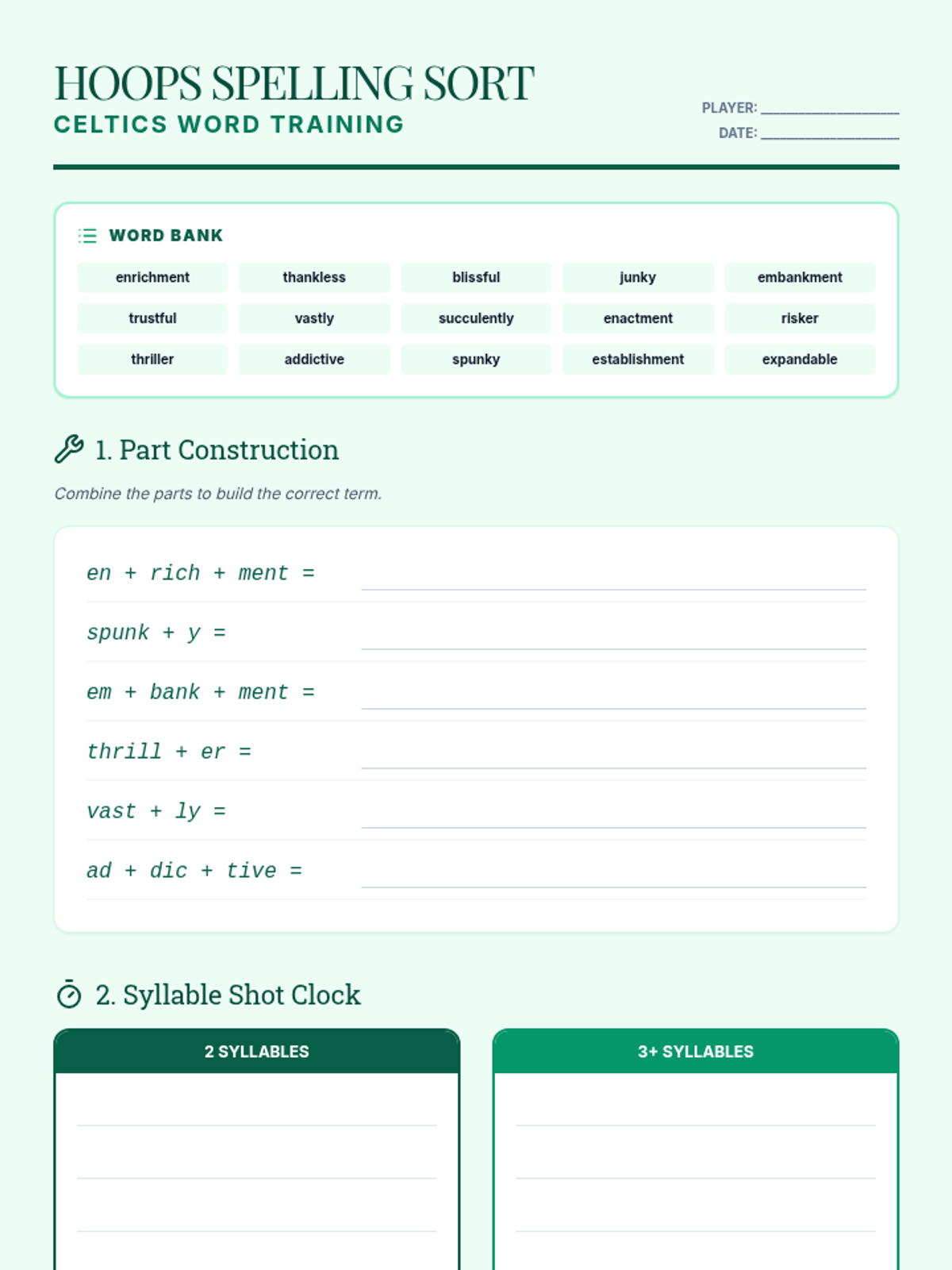
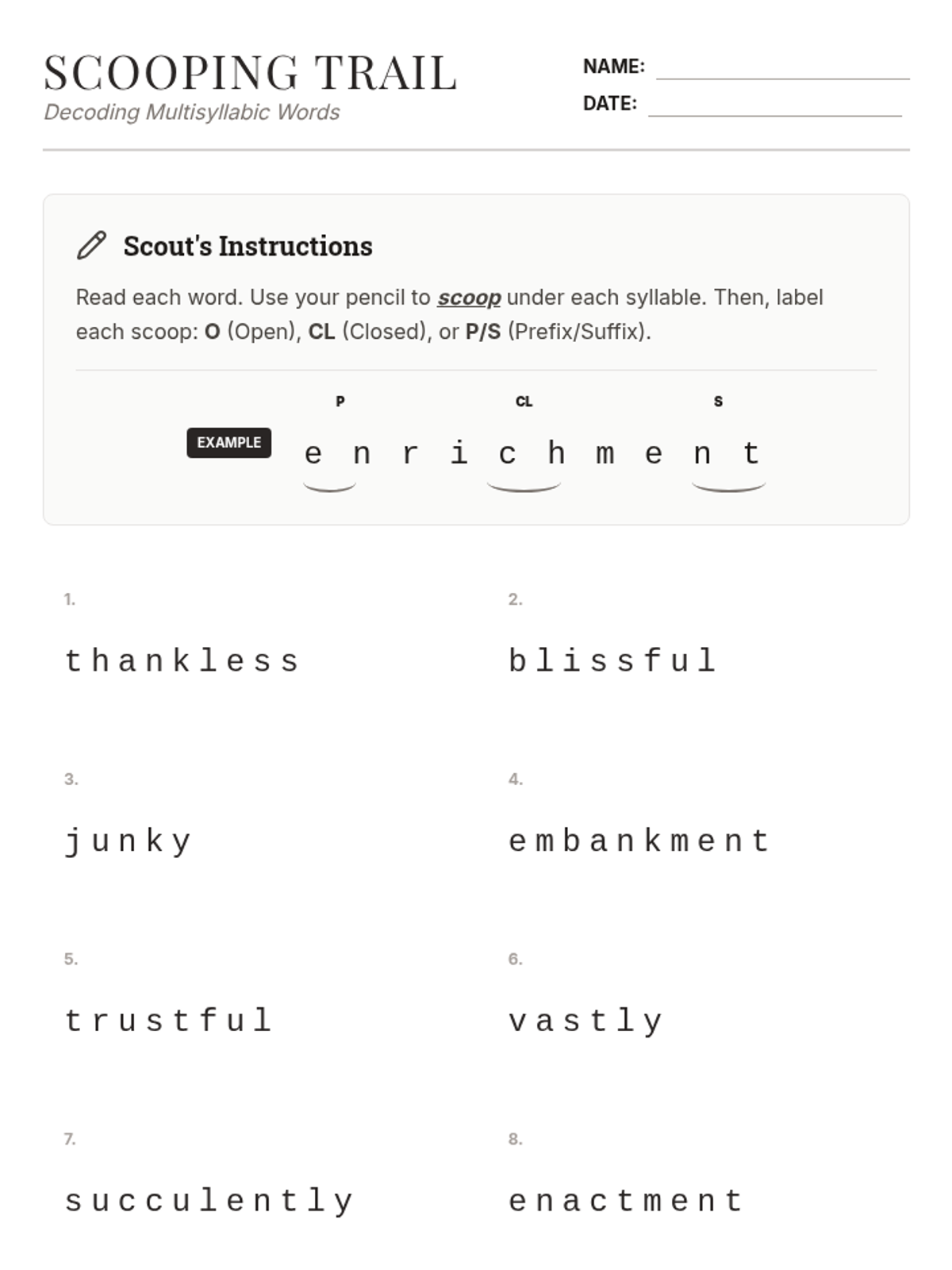
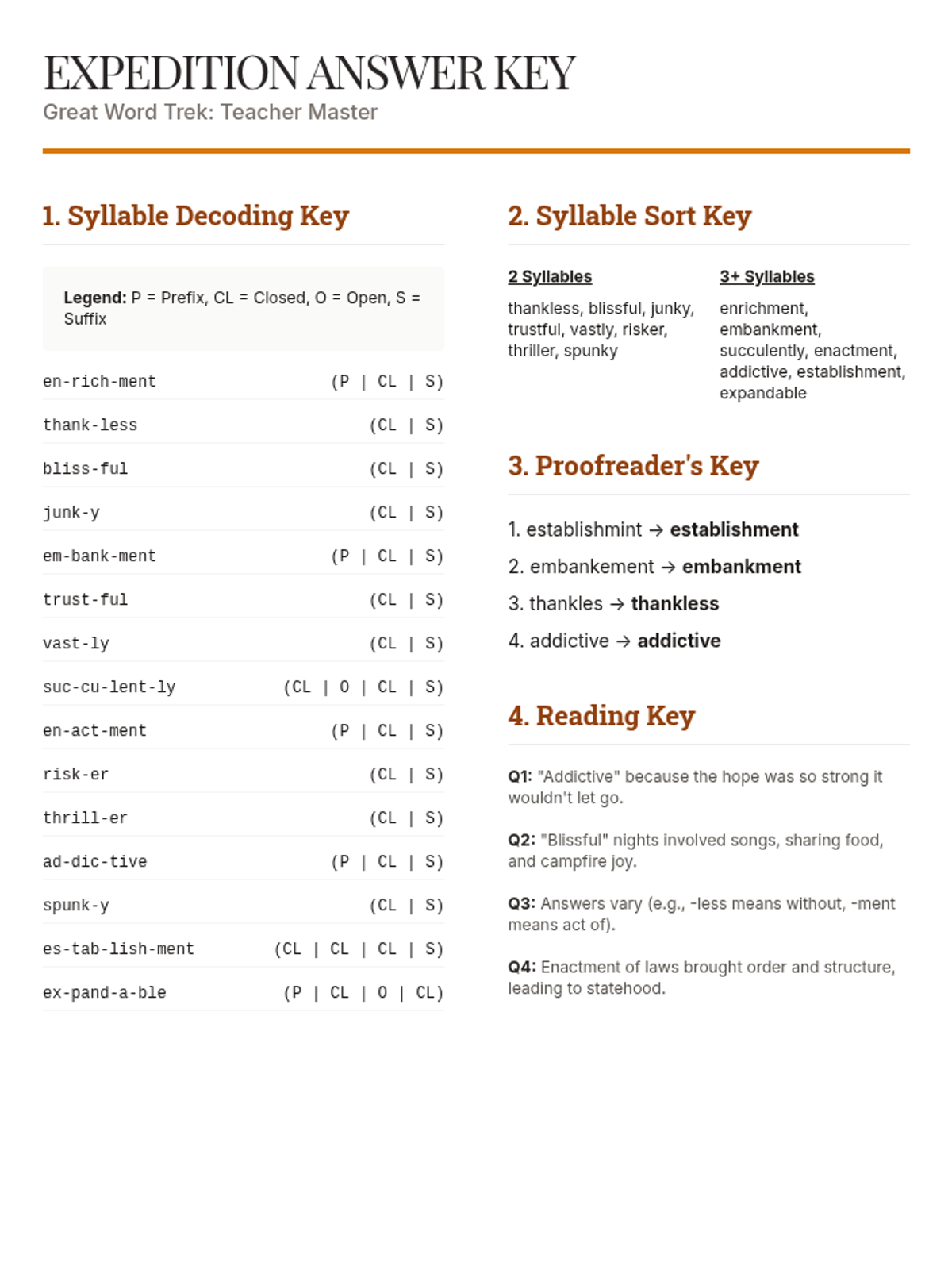
A lesson focused on abstract suffixes (-ment, -less, -ness). Students explore how these suffixes form nouns and adjectives related to states, qualities, and actions.
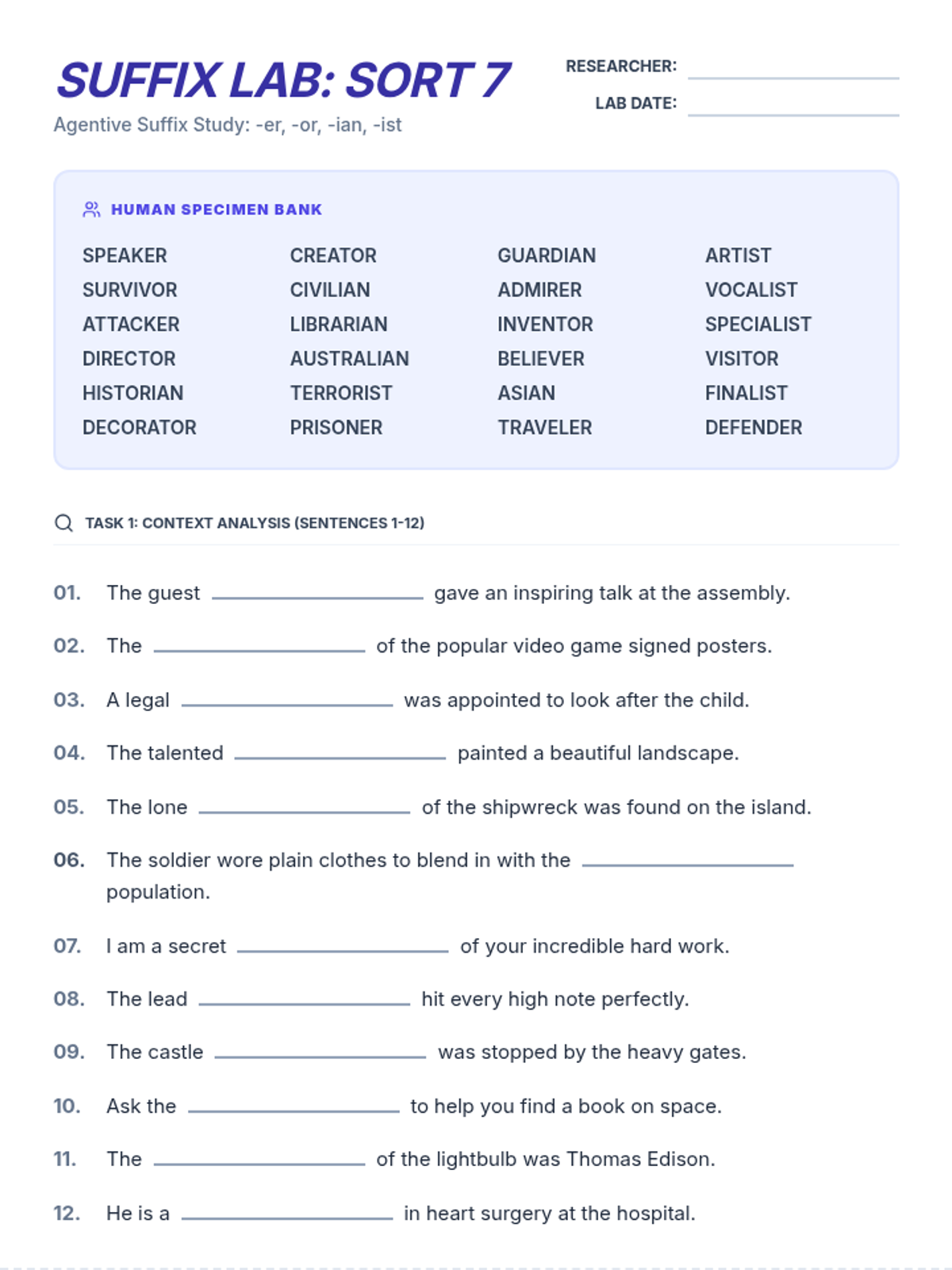
A lesson focused on agentive suffixes (-er, -or, -ian, -ist). Students analyze how these suffixes identify people who perform specific actions or hold certain roles.
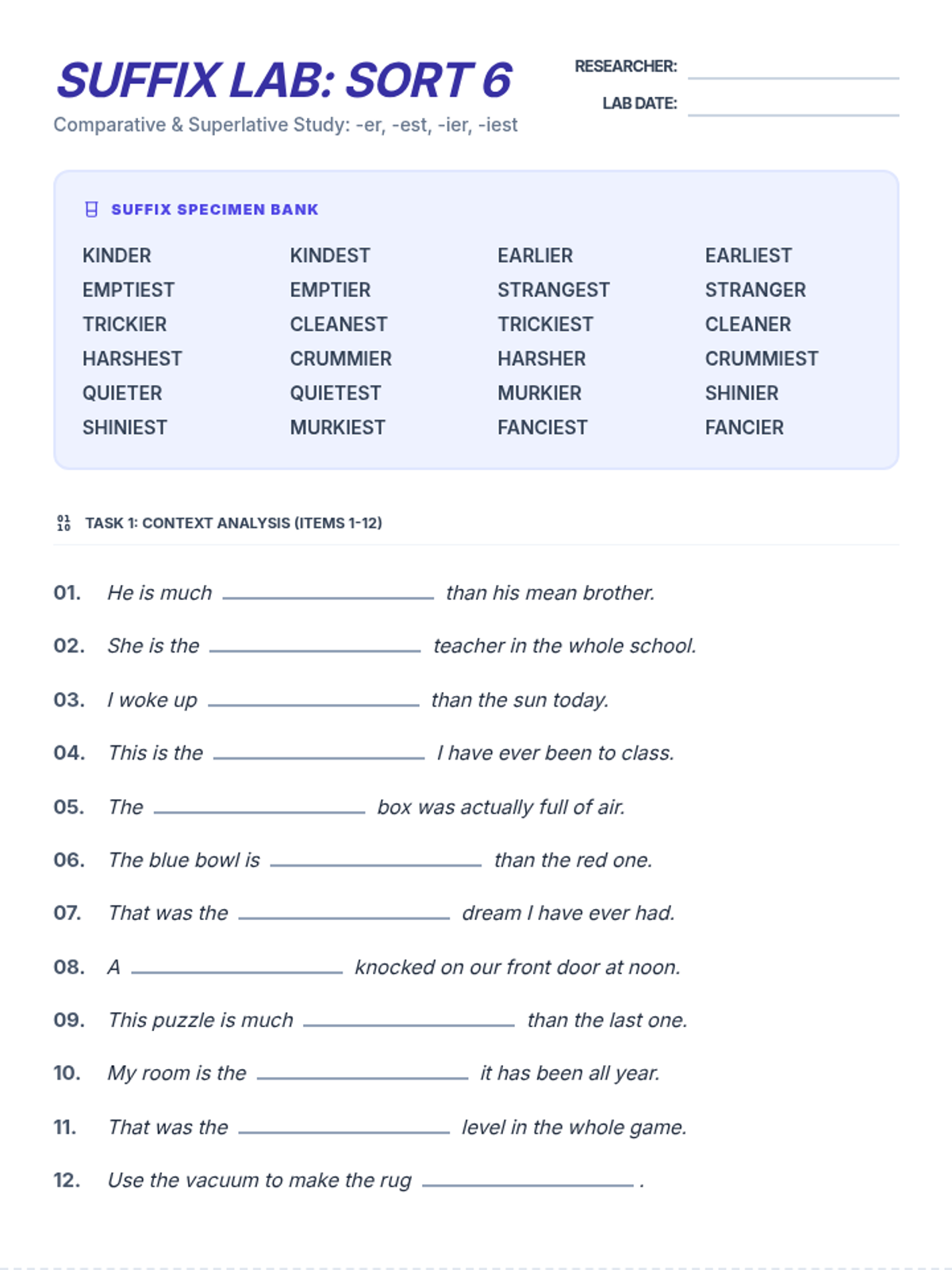
A lesson focused on comparative and superlative suffixes (-er, -est, -ier, -iest). Students explore how these suffixes change adjectives to compare two or more things.
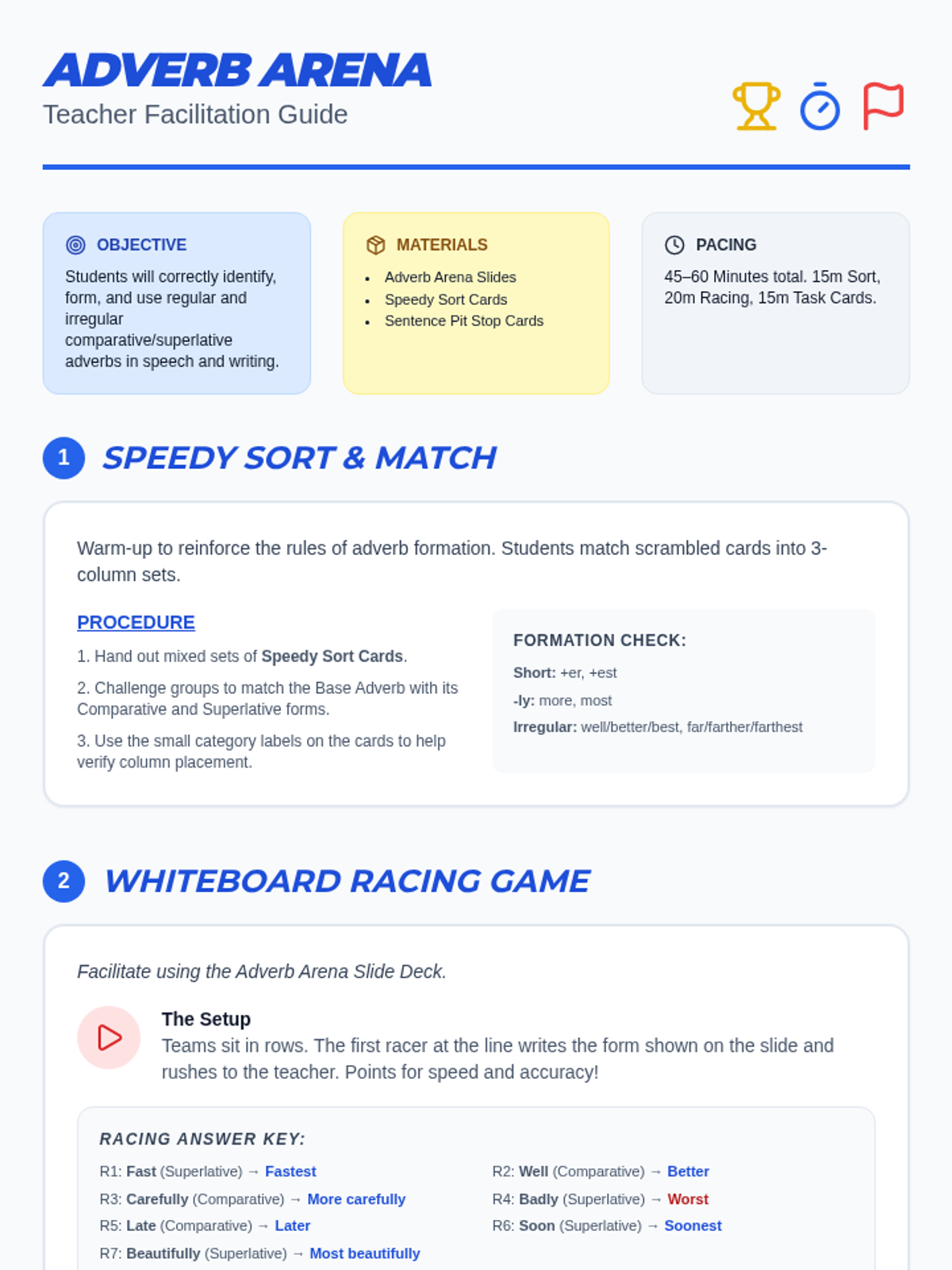
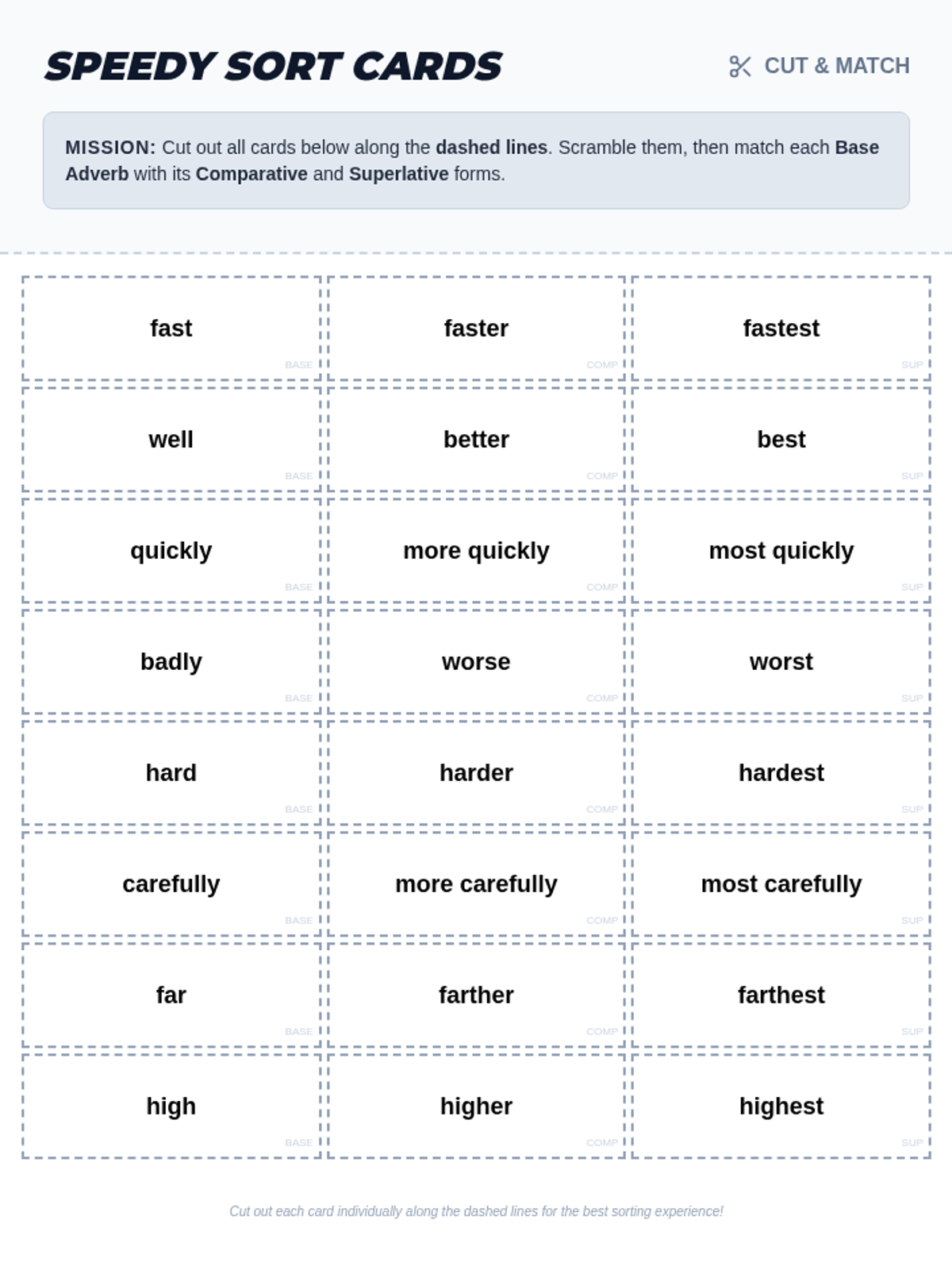
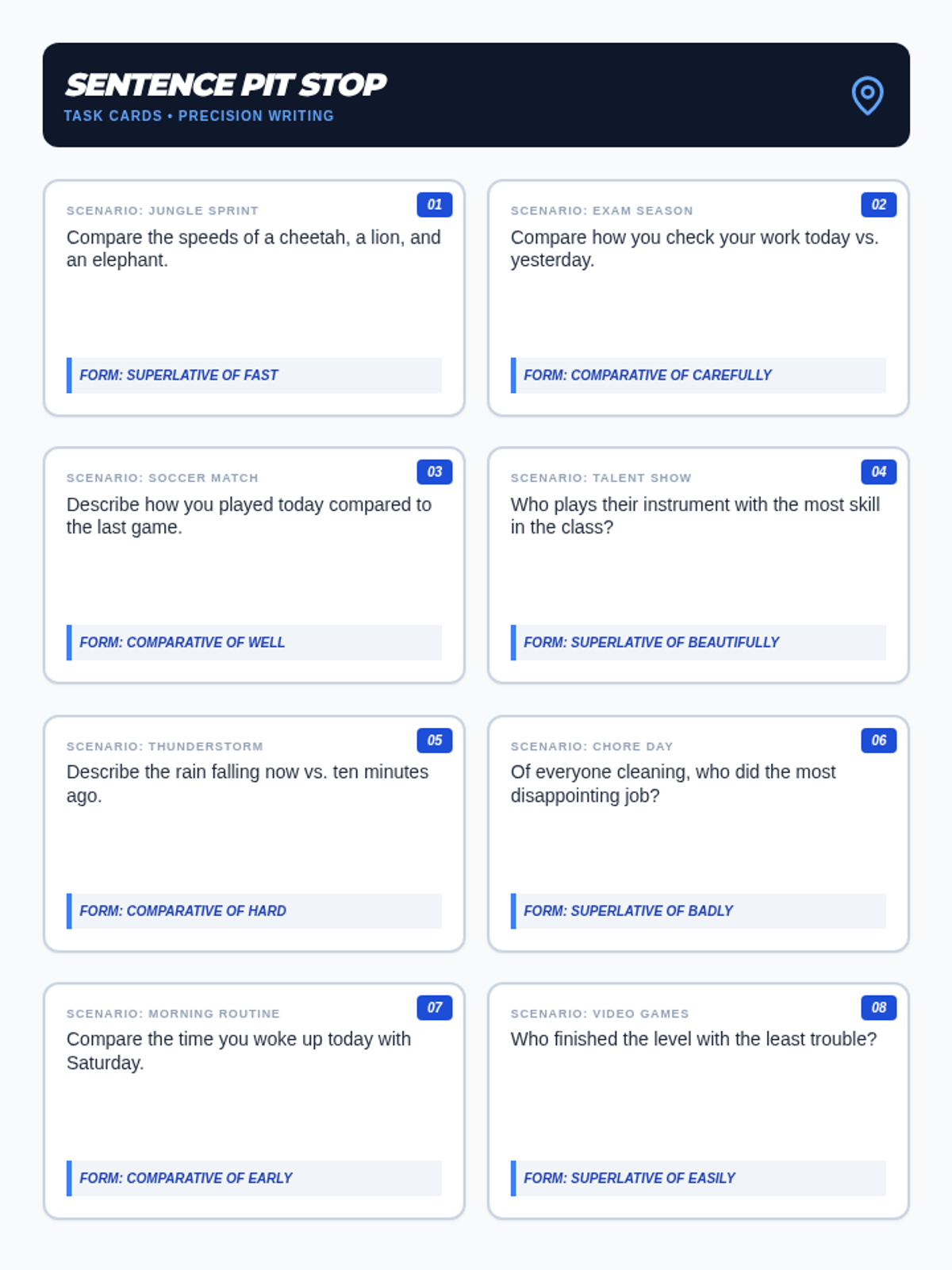
A high-energy set of activities designed to master comparative and superlative adverbs through movement, sorting, and creative sentence construction.
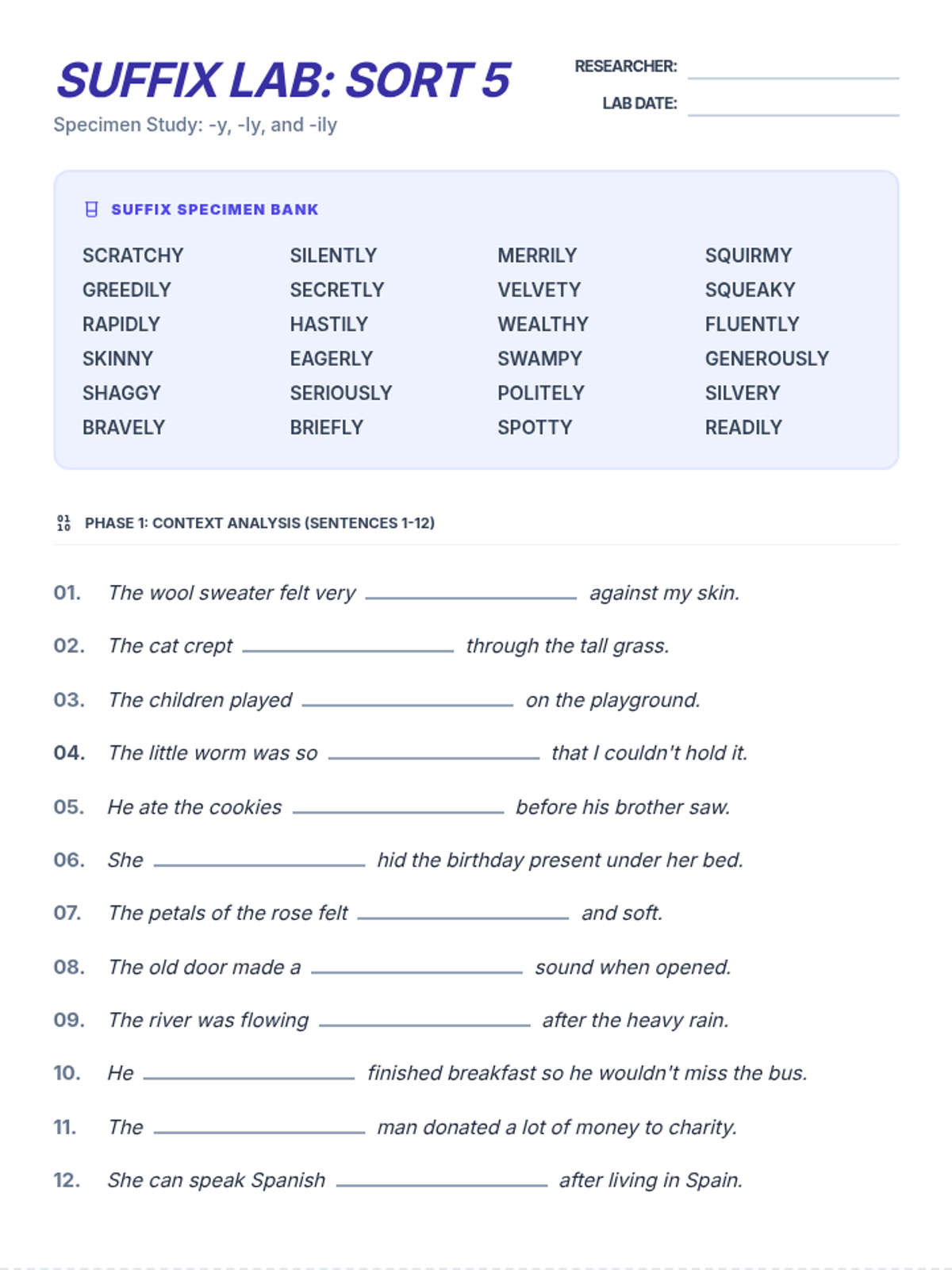
A lesson focused on the suffixes -y, -ly, and -ily. Students analyze how these suffixes change word meanings and usage through contextual application.
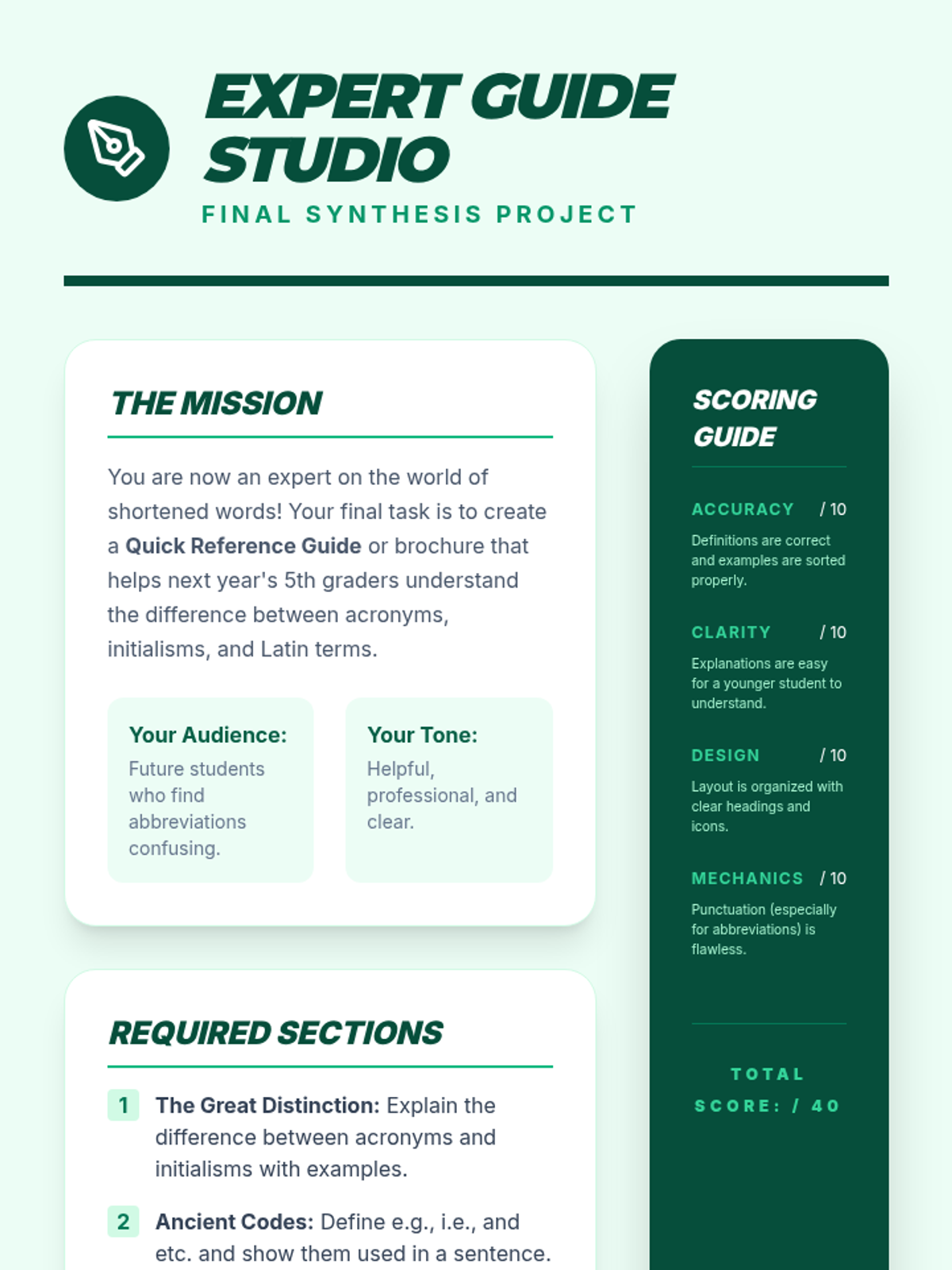
Students synthesize their knowledge by creating a 'Quick Reference Guide' or brochure. This guide will explain the differences between acronyms, initialisms, and Latin terms, providing examples and usage rules for other students.
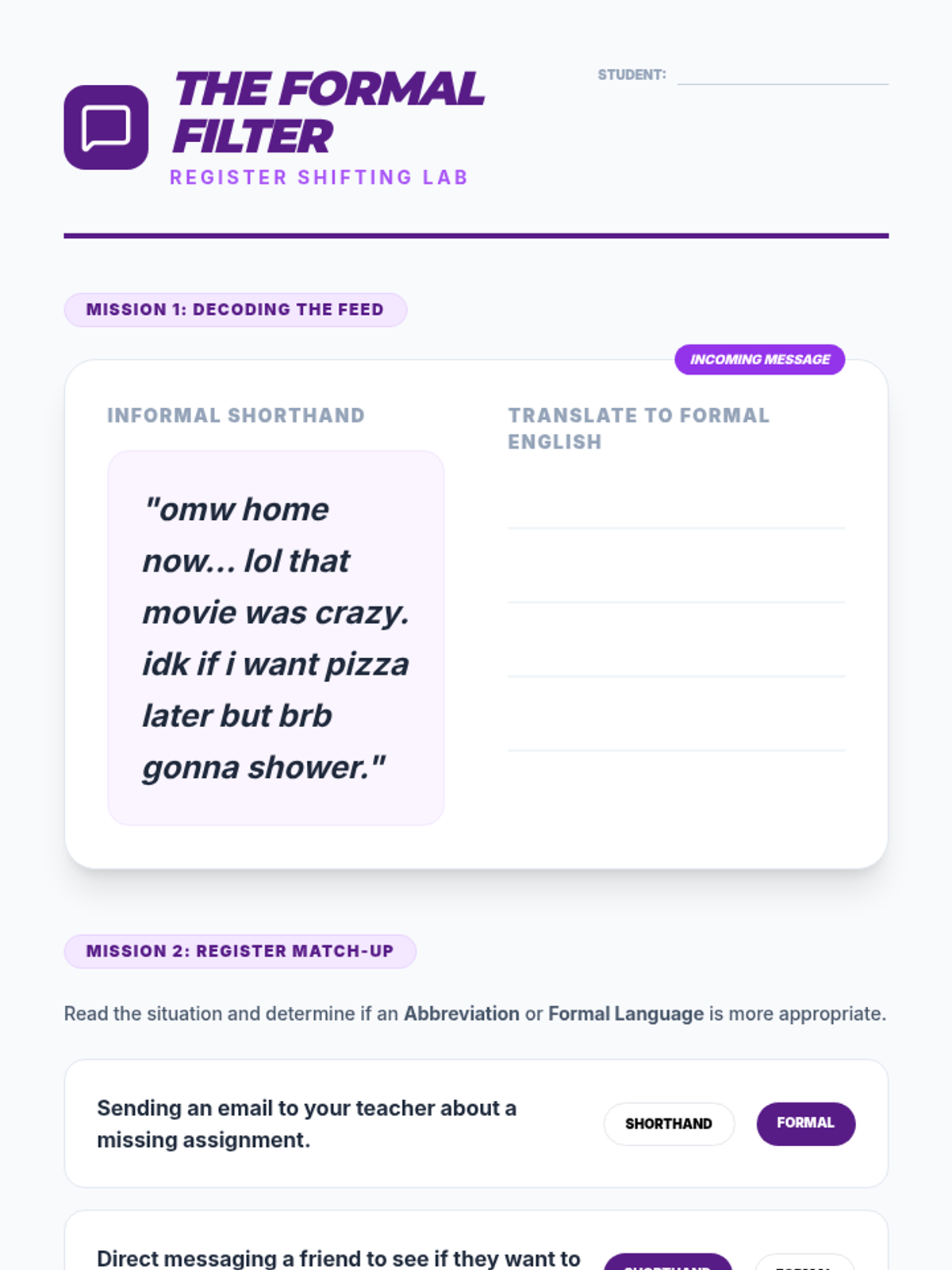
Classroom discussion shifts to informal digital communication. Students compare these with formal abbreviations, debating appropriate contexts for each and rewriting text messages into formal English sentences.
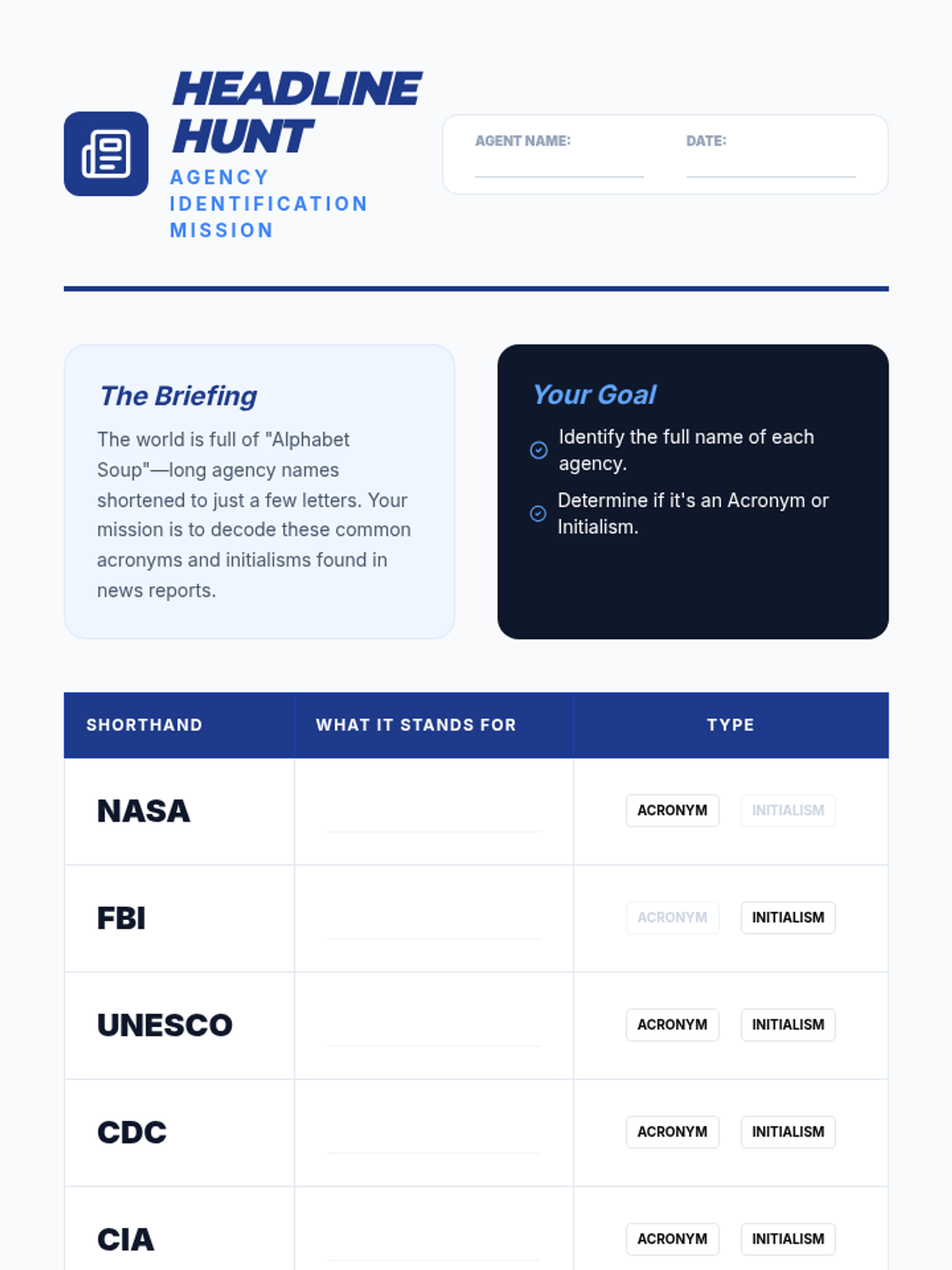
Students research major organizations and government bodies known by their acronyms. They read news headlines to see these in context and discuss why long names are shortened in media and official documents.
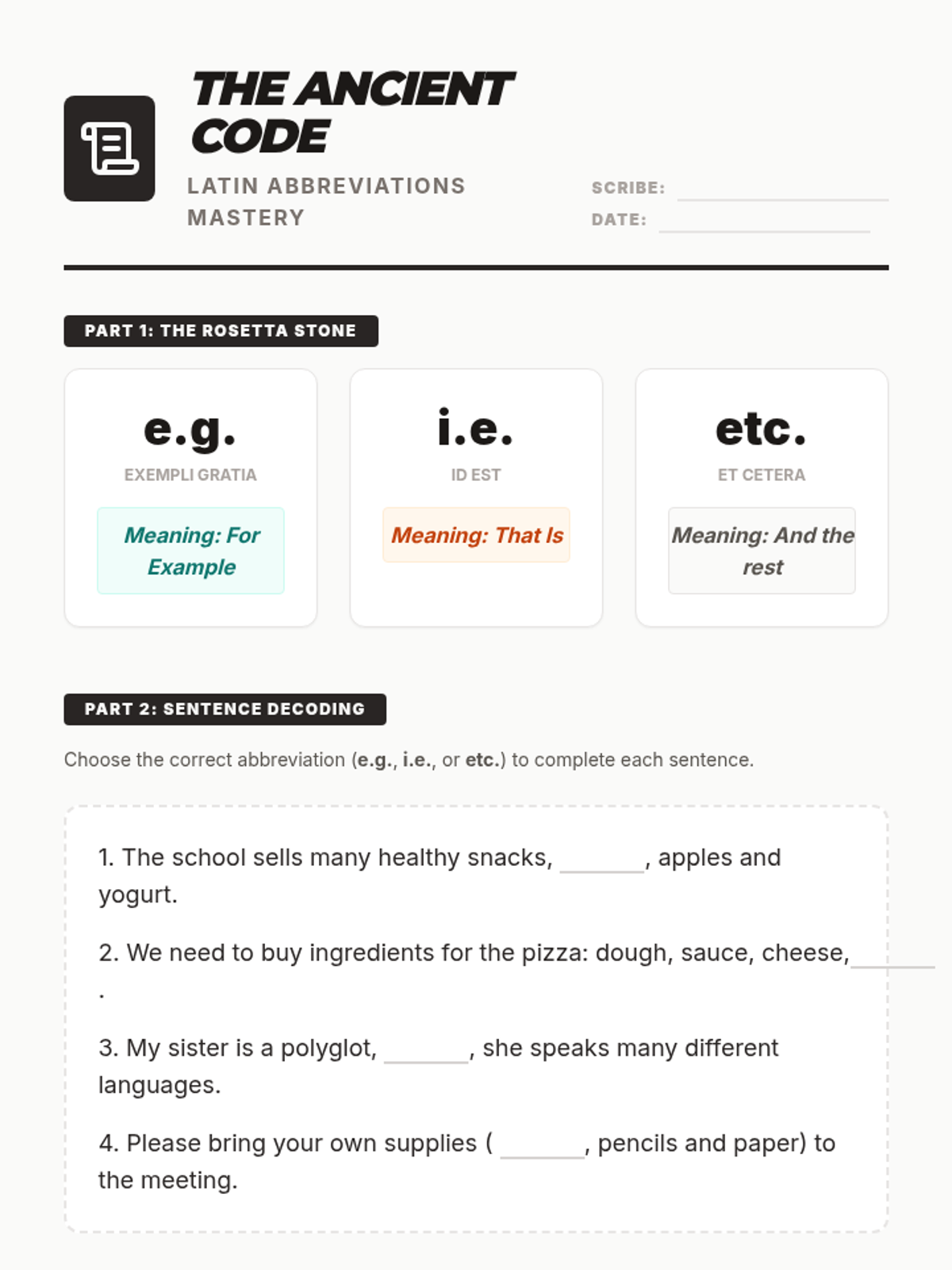
Learners explore frequently used Latin abbreviations such as e.g., i.e., and etc. They analyze sentences to determine the meaning of these terms and practice using them correctly to add detail or lists to their writing.
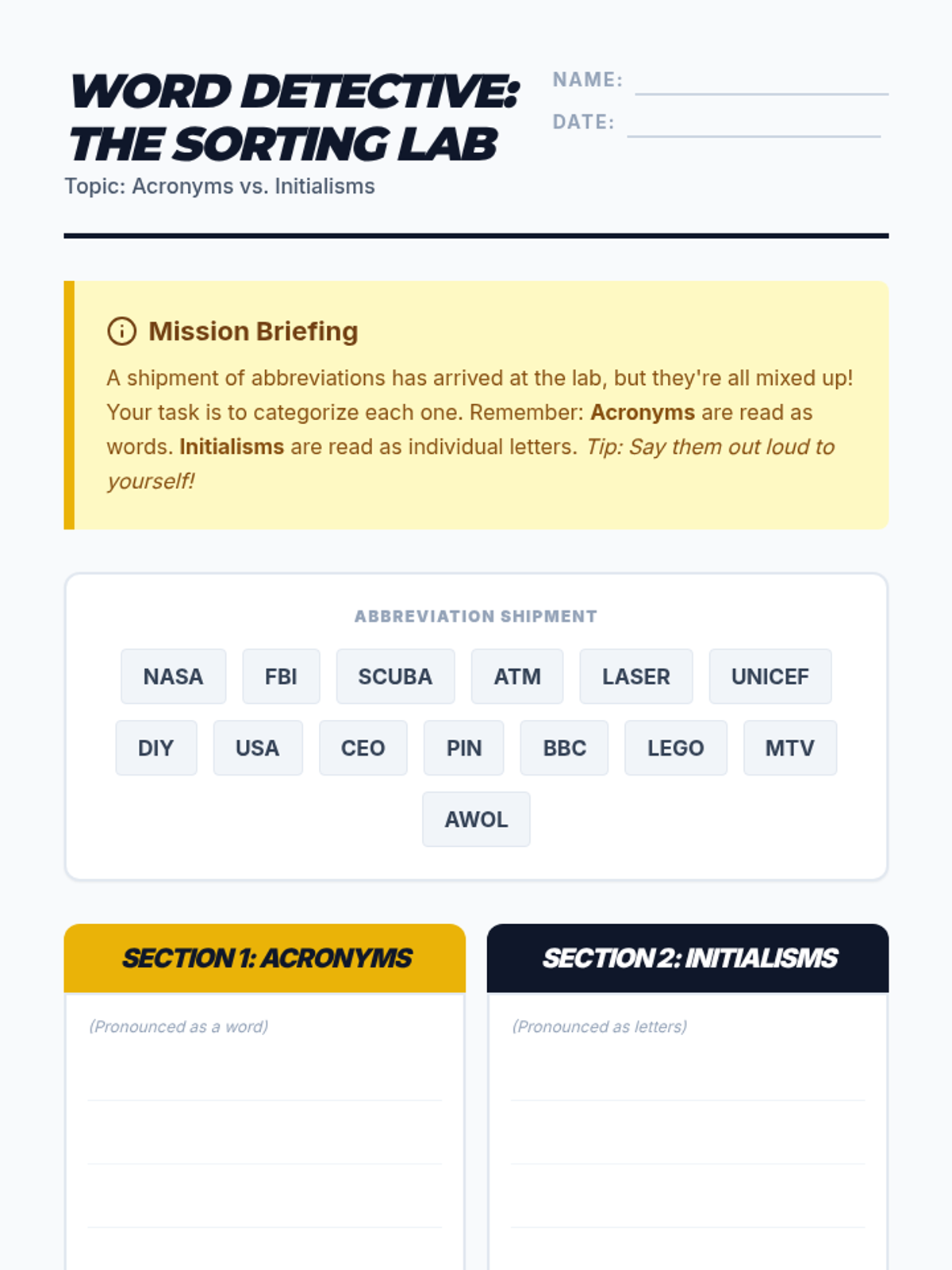
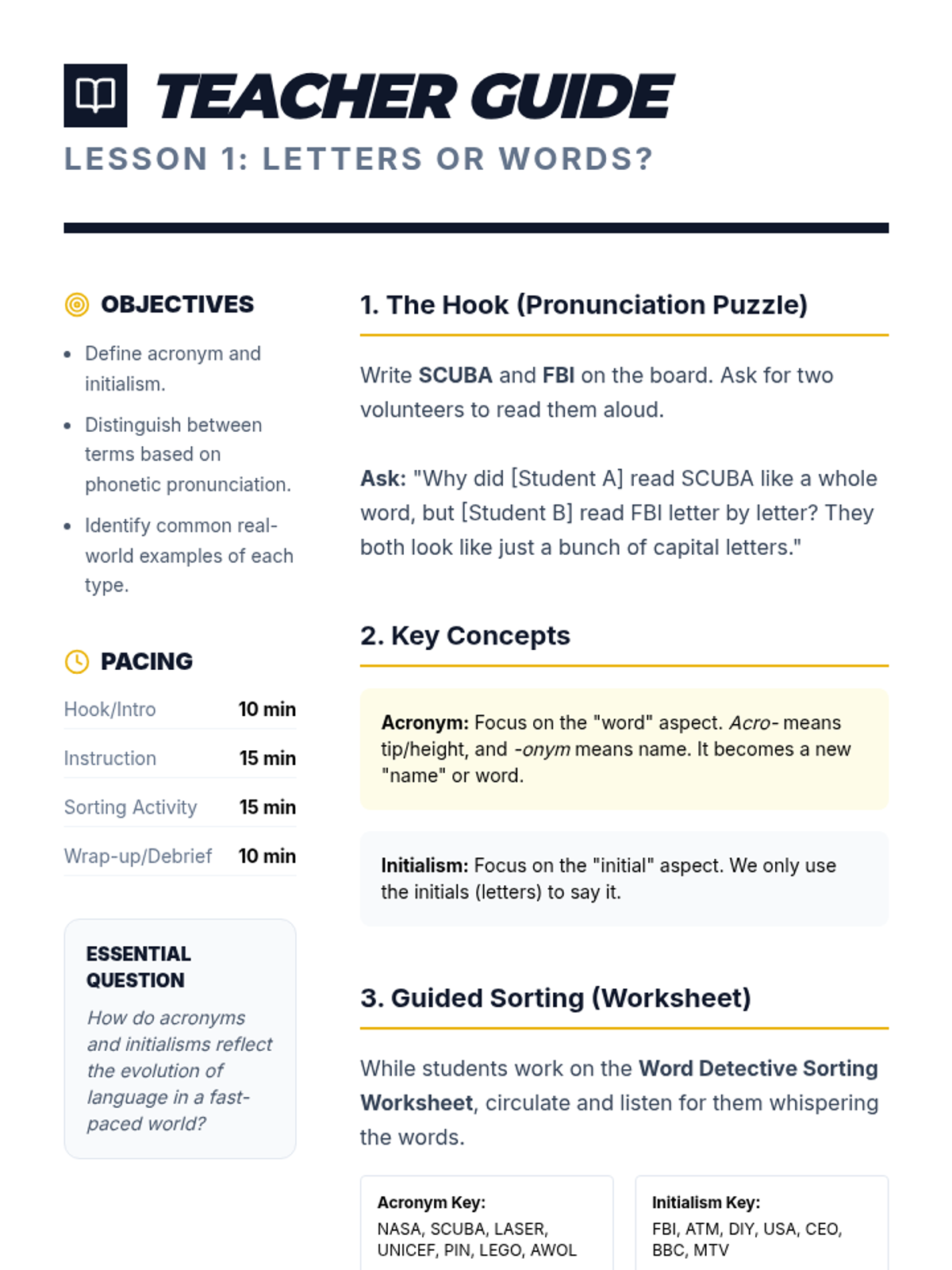
Students investigate the difference between acronyms (read as words) and initialisms (read as letters). Through a sorting activity, they categorize common terms and practice reading them aloud to reinforce the distinction.
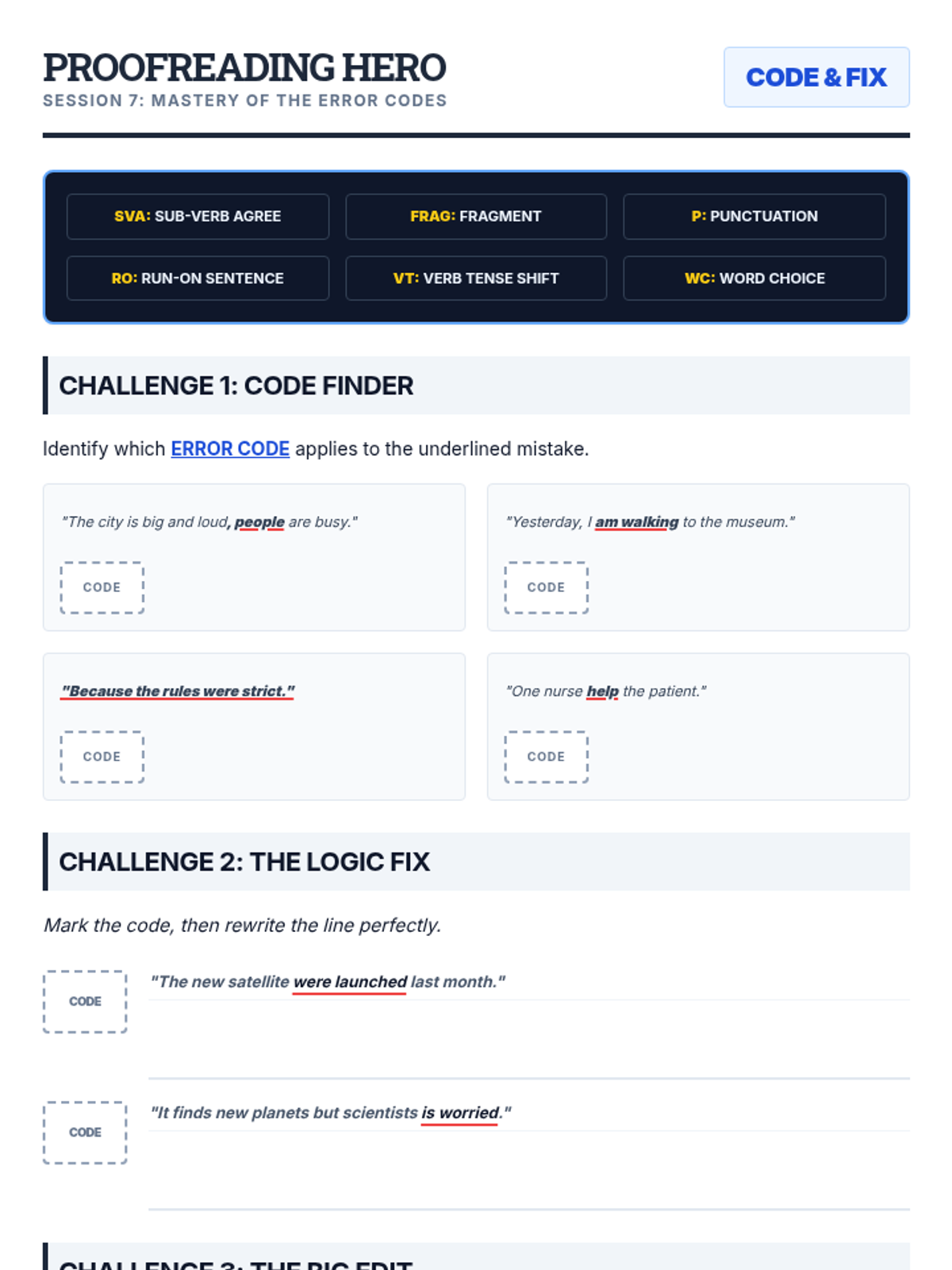
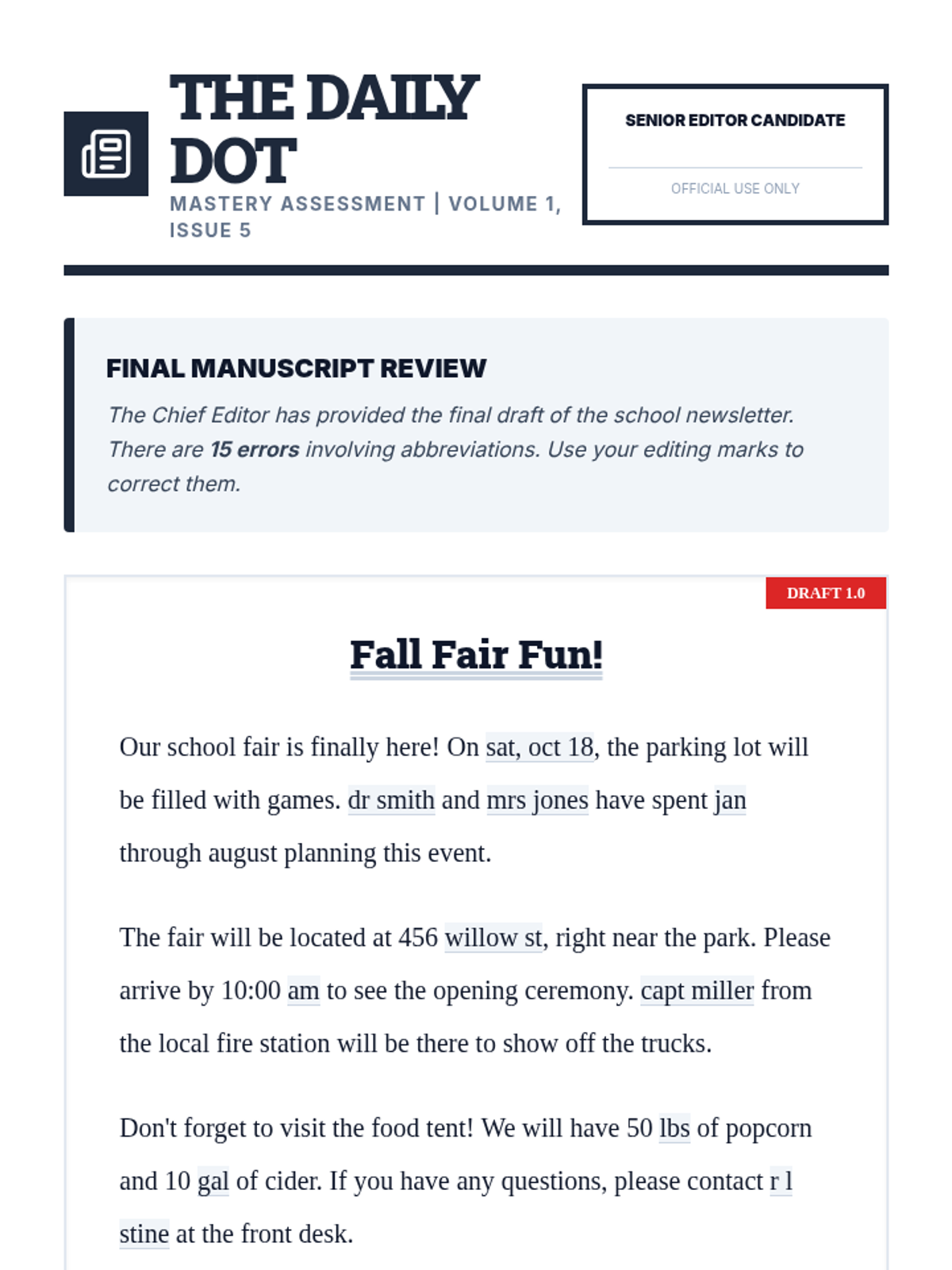
The final challenge where students must proofread a full school newsletter draft, applying all learned rules to earn their Senior Editor certification.
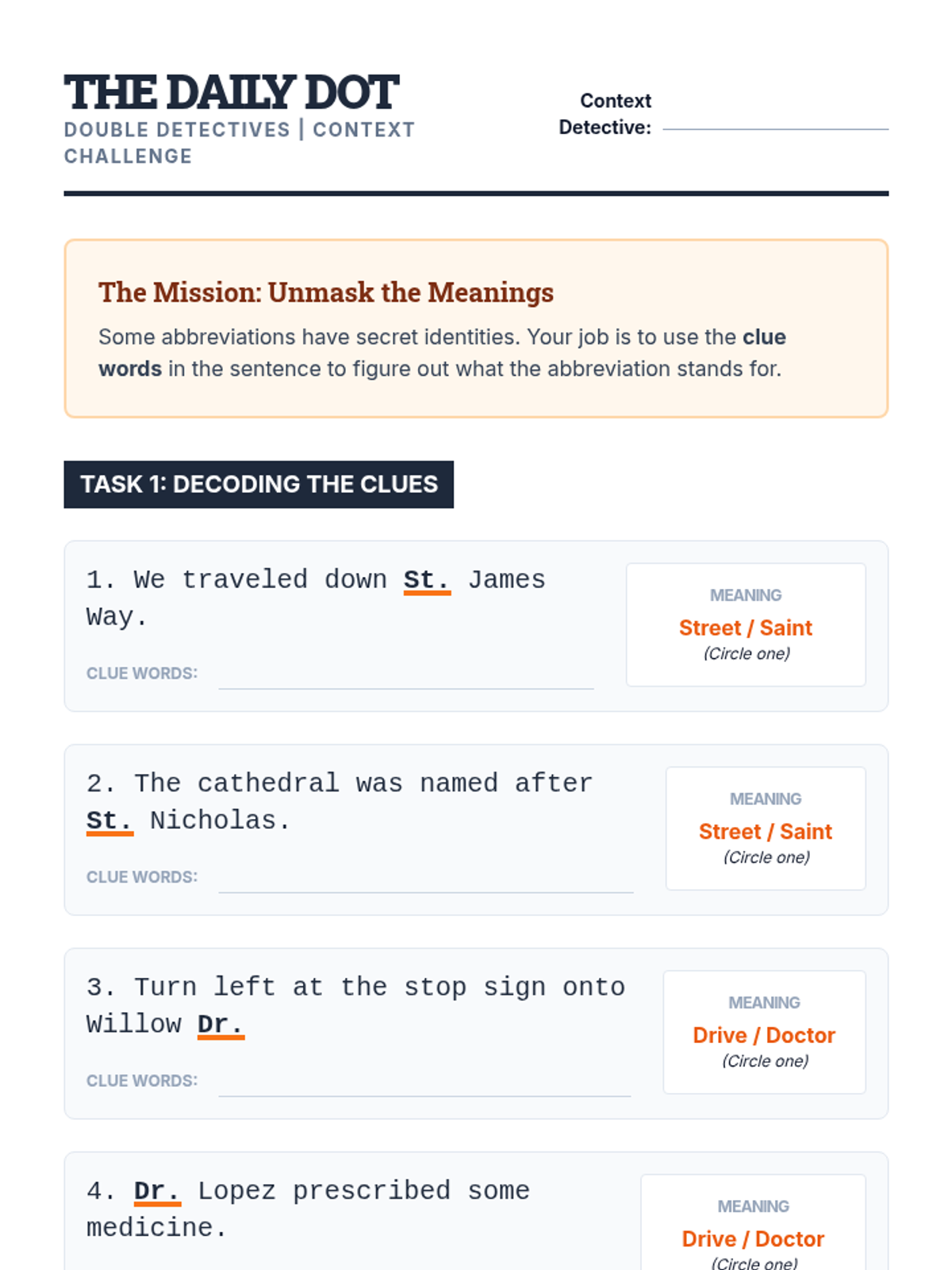
Students use context clues to solve the mystery of 'double meaning' abbreviations like St. and Dr., ensuring clarity in their writing.
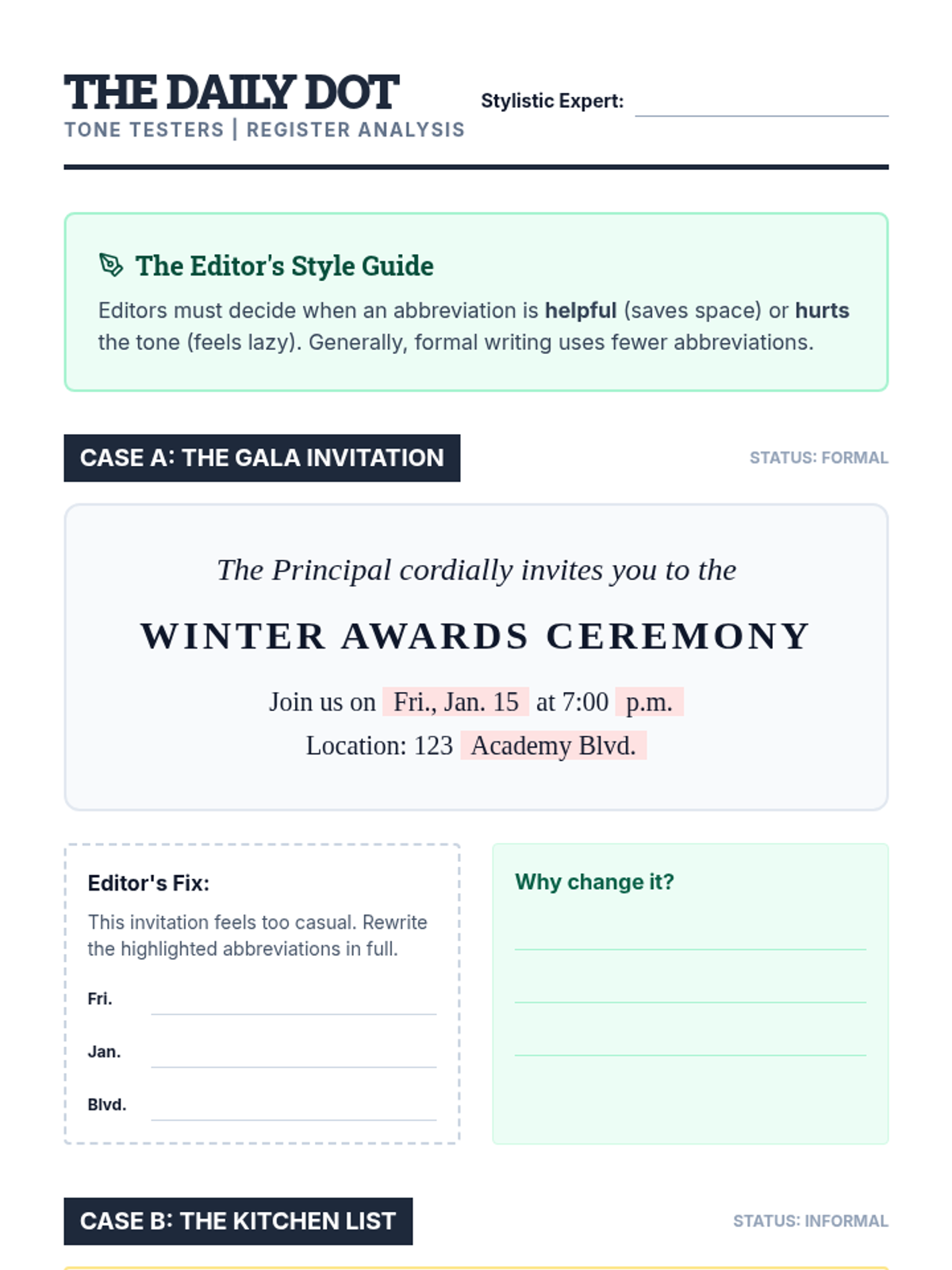
Students analyze the register of different texts to determine when to use abbreviations and when to write words out in full.
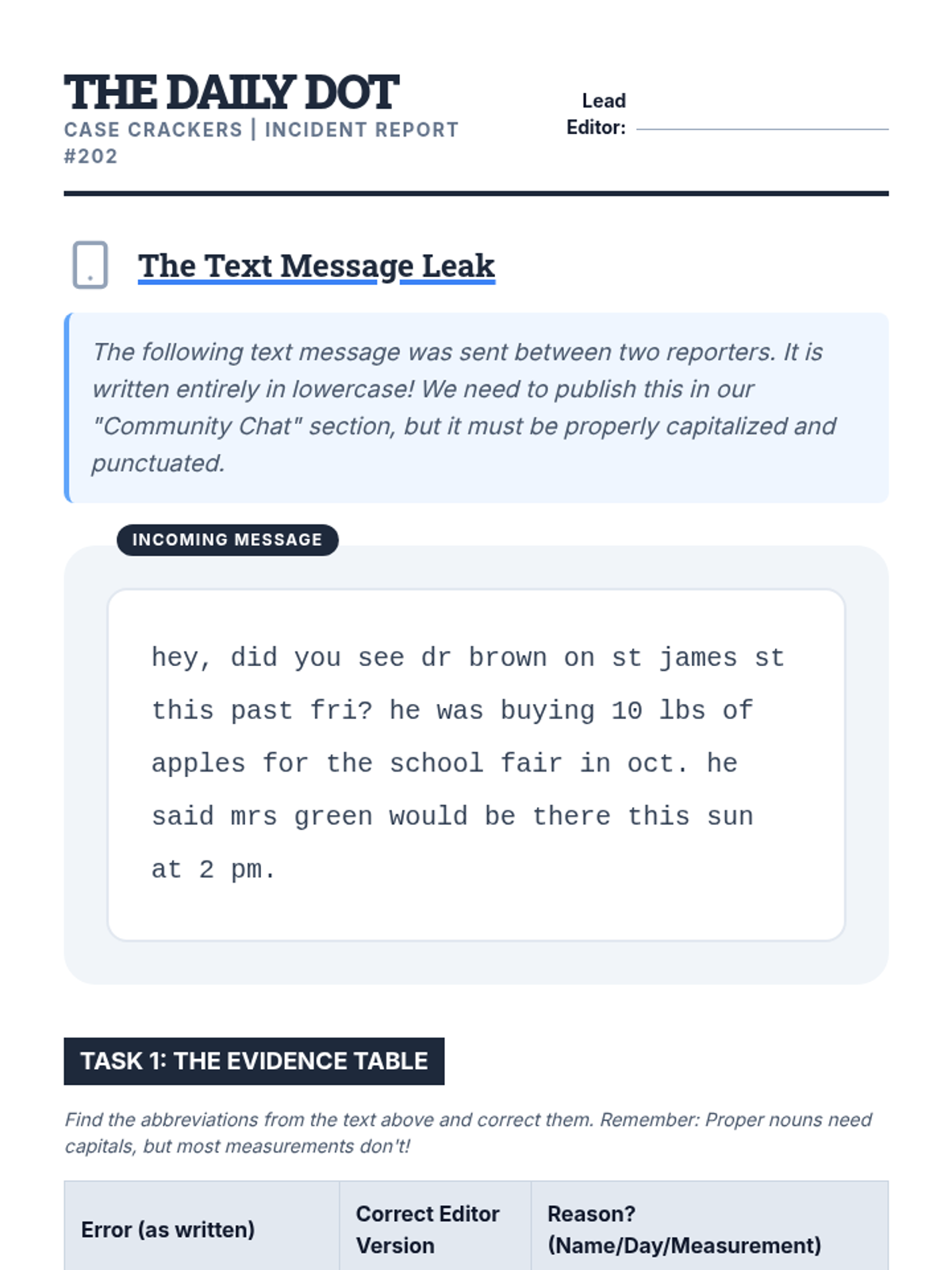
Students focus on capitalization rules within abbreviations, correcting a text where the lack of proper casing causes confusion.
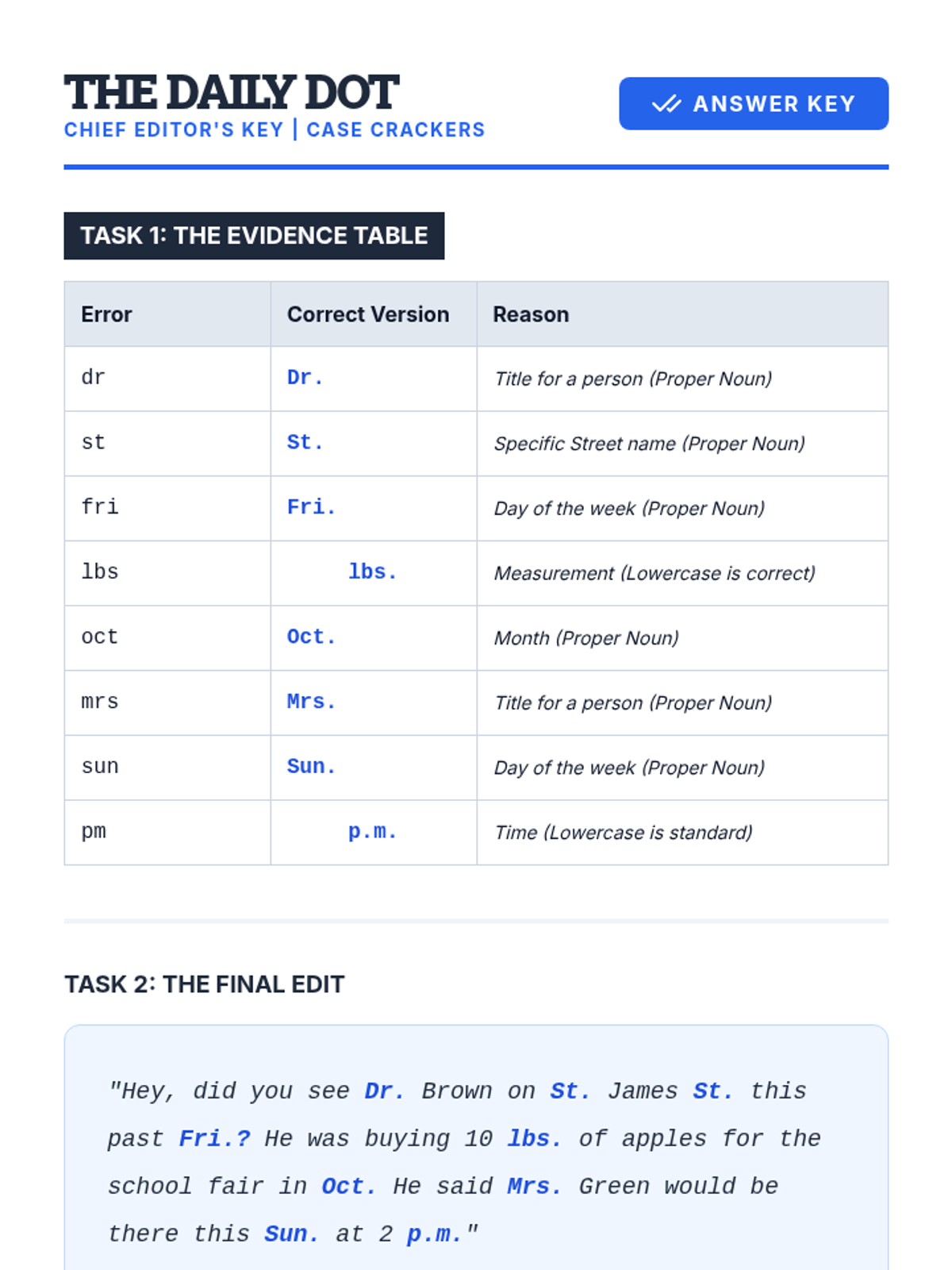
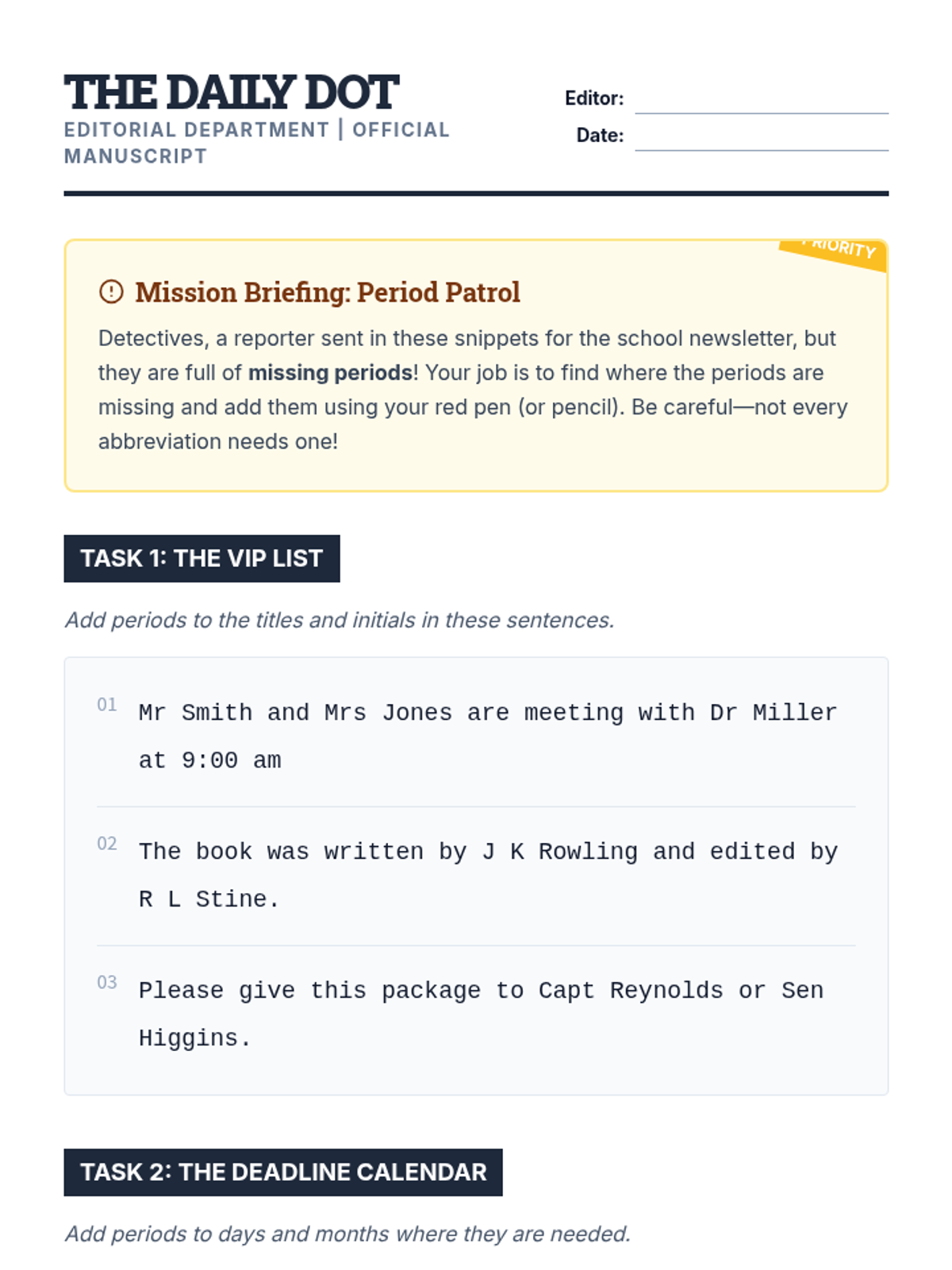
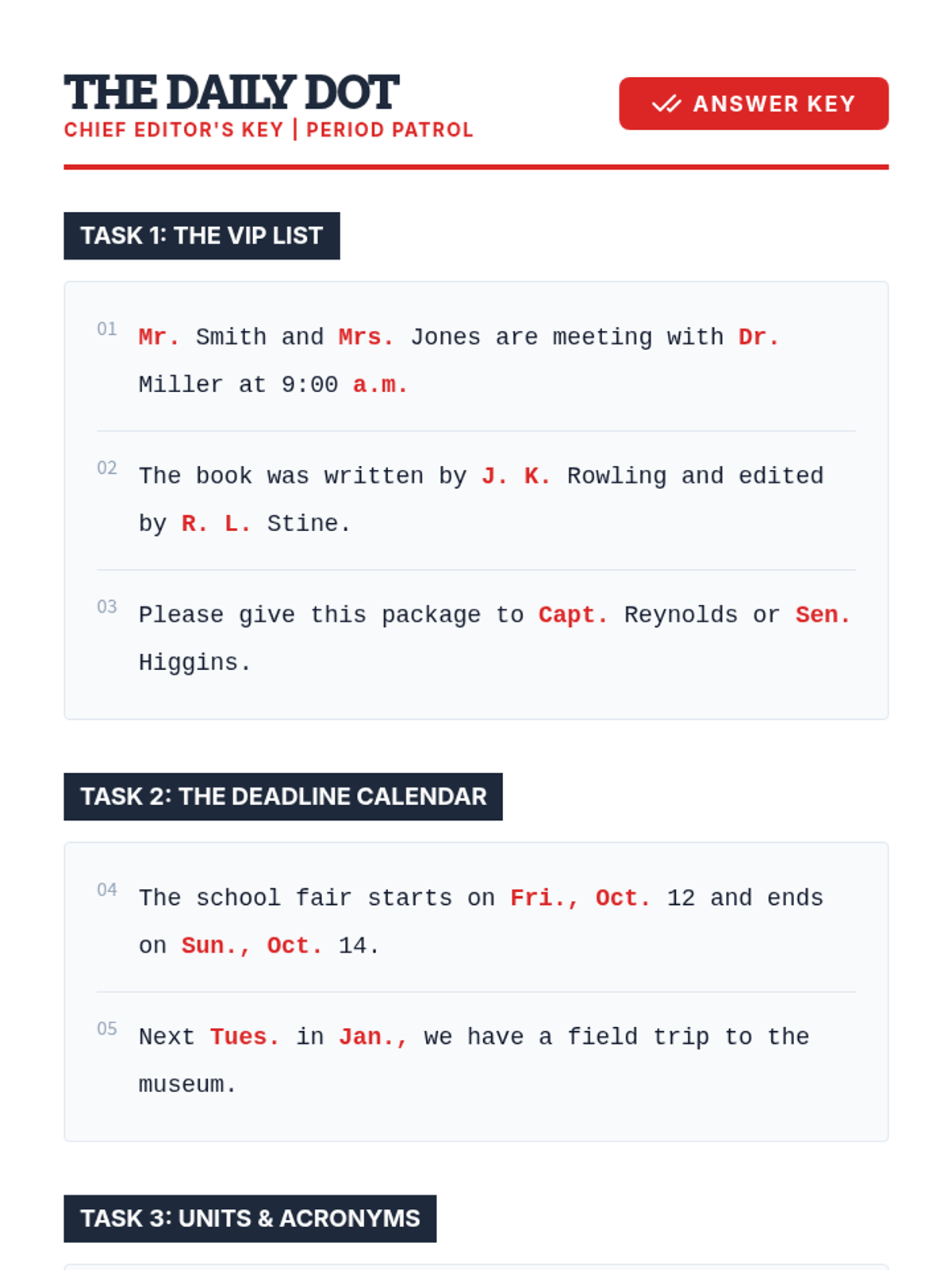
Students become 'period police' to hunt for missing punctuation in titles, days, and initials, learning to distinguish between abbreviations that require periods and acronyms that don't.
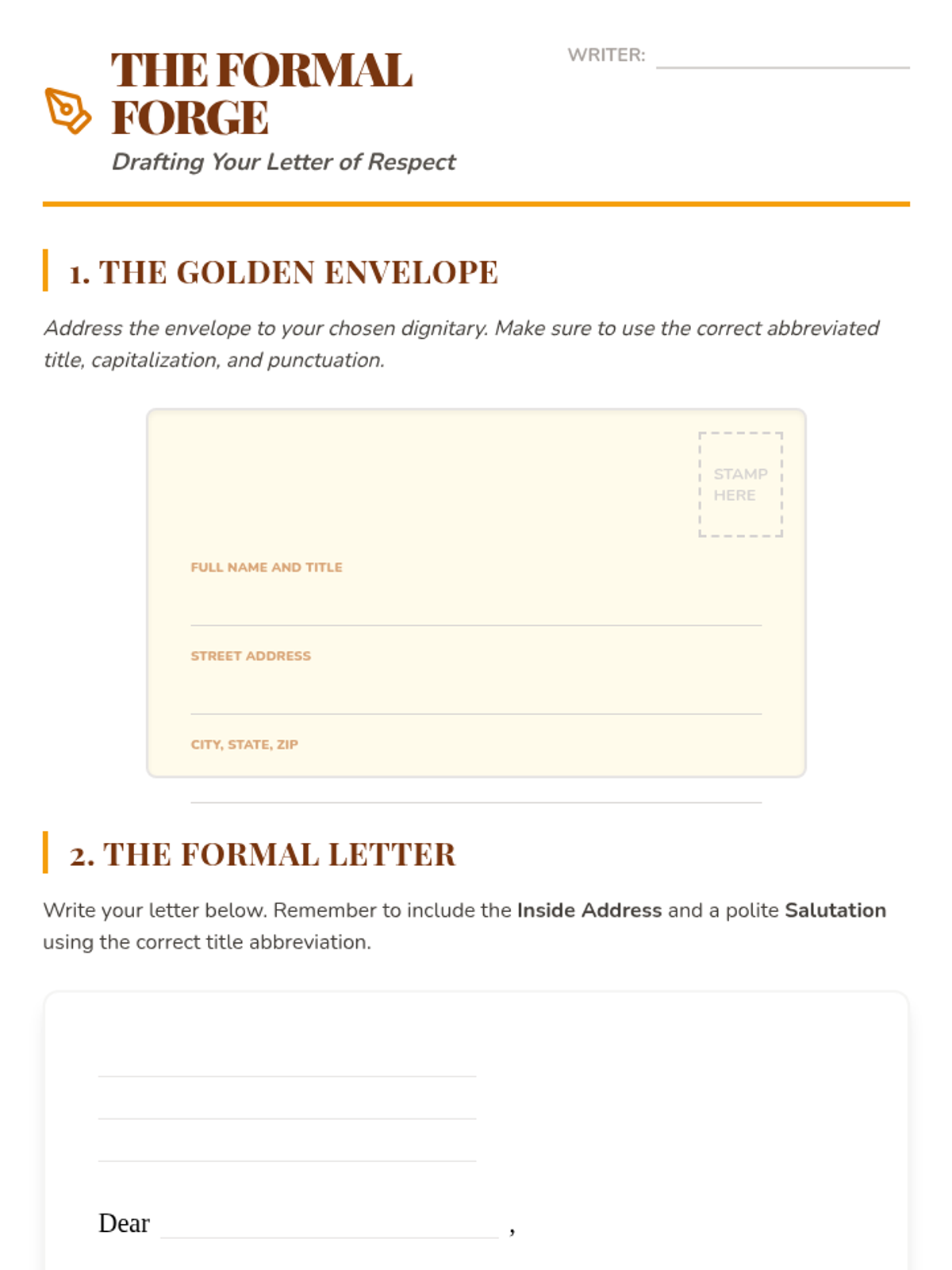
Students draft a formal letter to a real or fictional person of authority (e.g., the school Principal or a local Mayor). They must correctly use the recipient's title in the inside address and salutation.
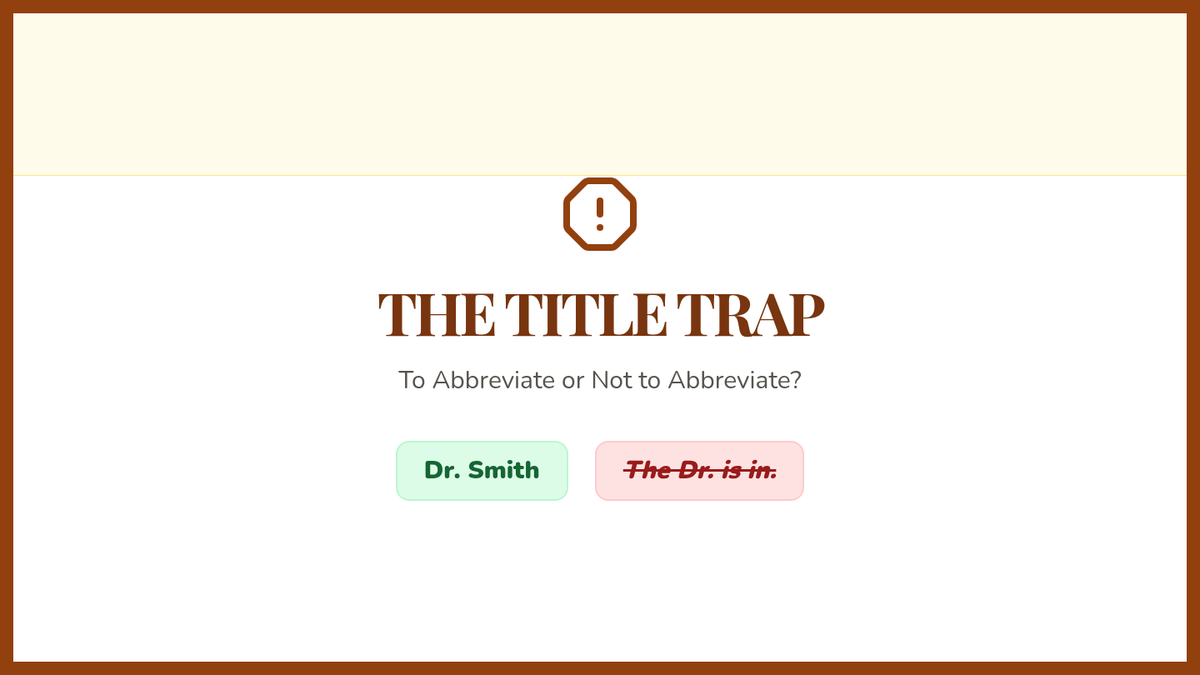
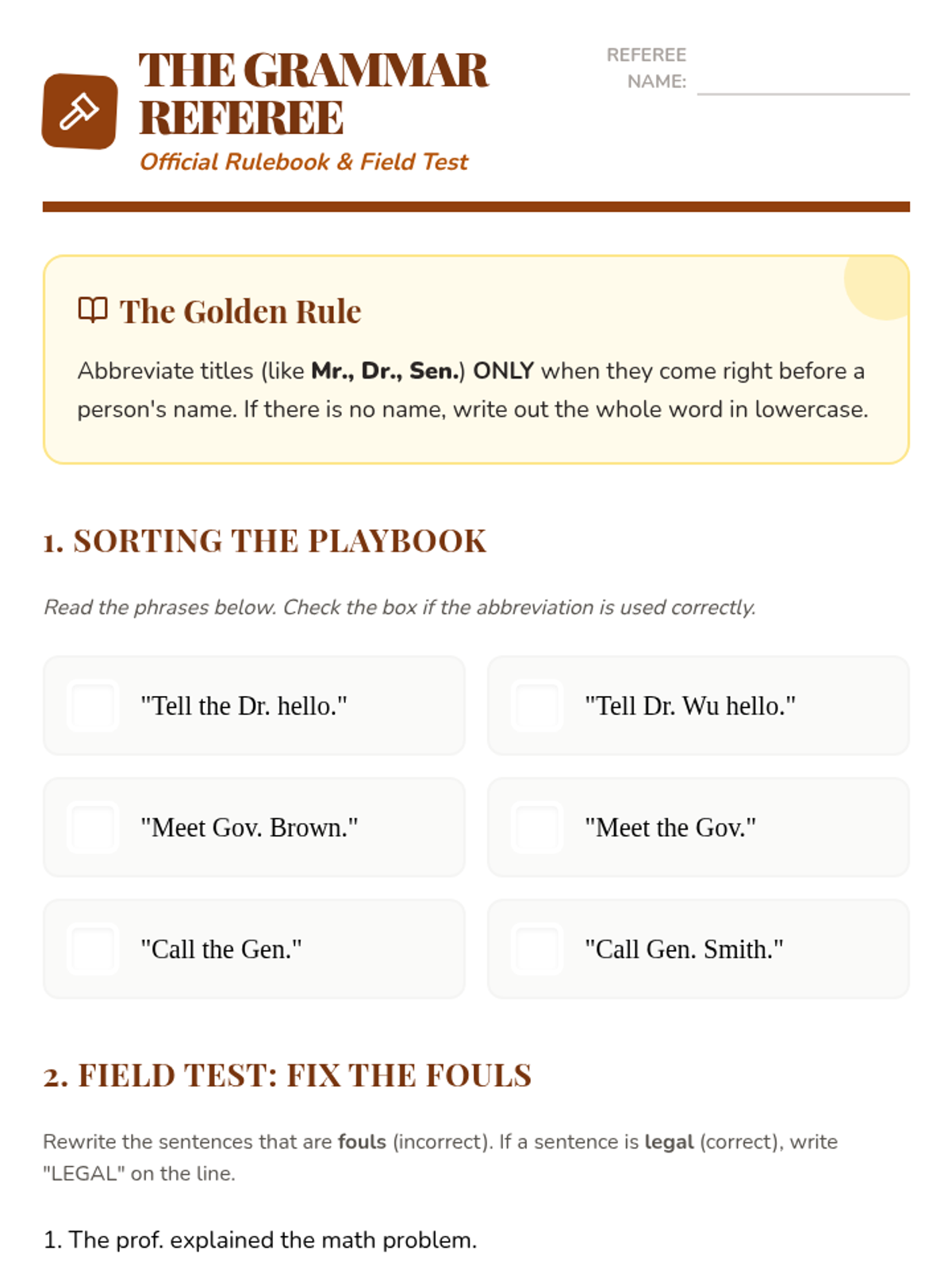
This lesson focuses on the rule that titles are usually only abbreviated when they appear before a name (e.g., 'Dr. Smith' vs. 'The doctor is here'). Students practice sorting sentences into correct and incorrect usage.
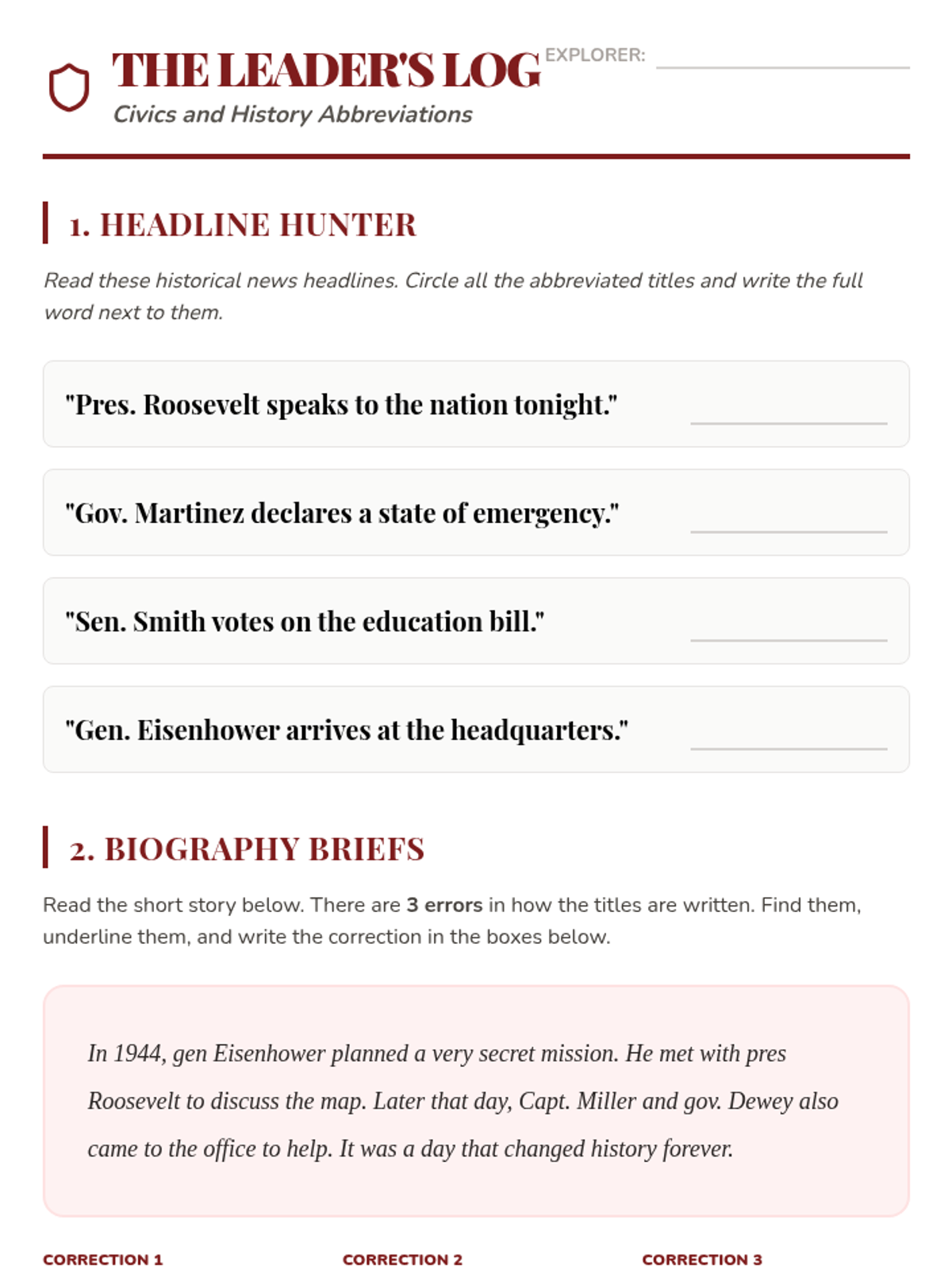
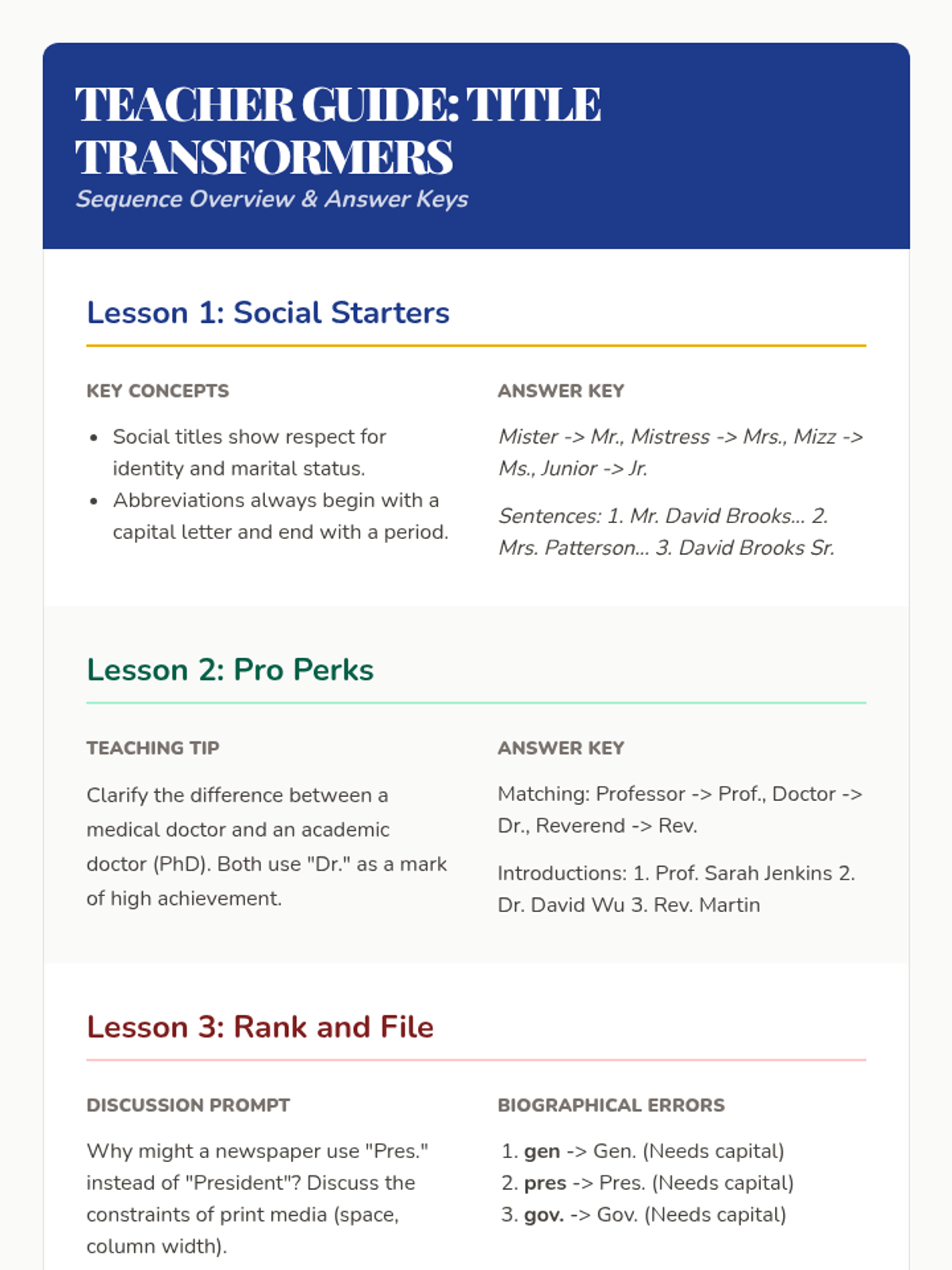
Students explore titles used in civics and history, such as Pres., Gov., Sen., Gen., and Capt. They read short biographical blurbs and identify these abbreviations, discussing why titles are often shortened in news and history books.
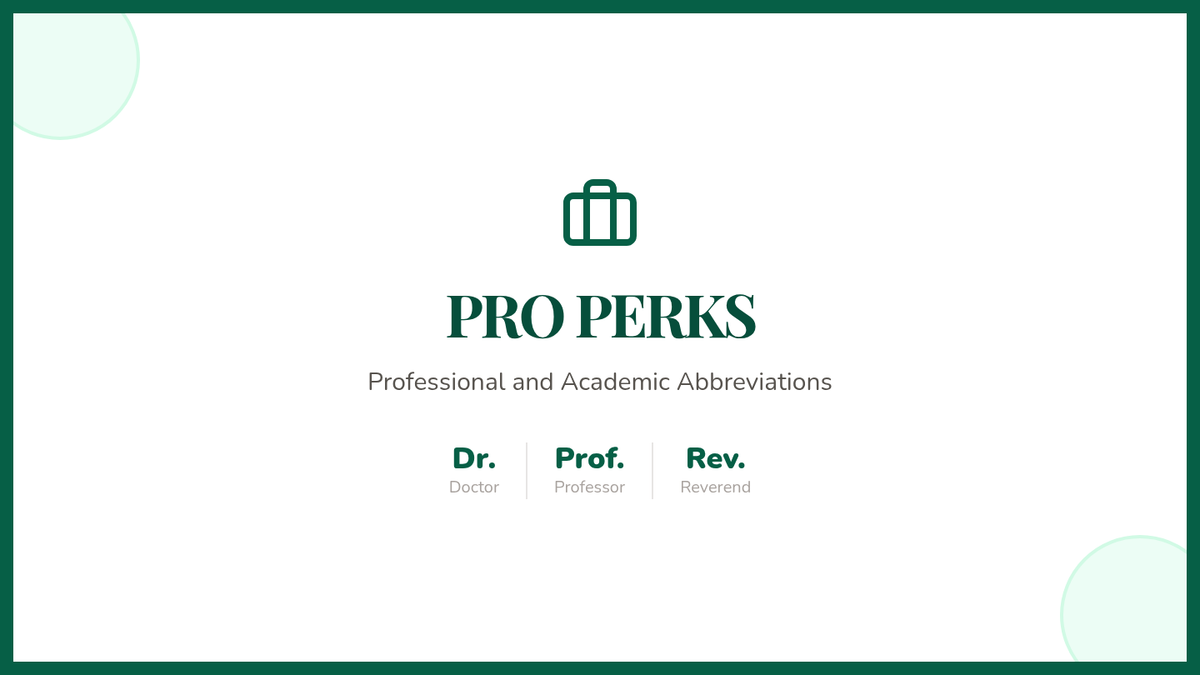
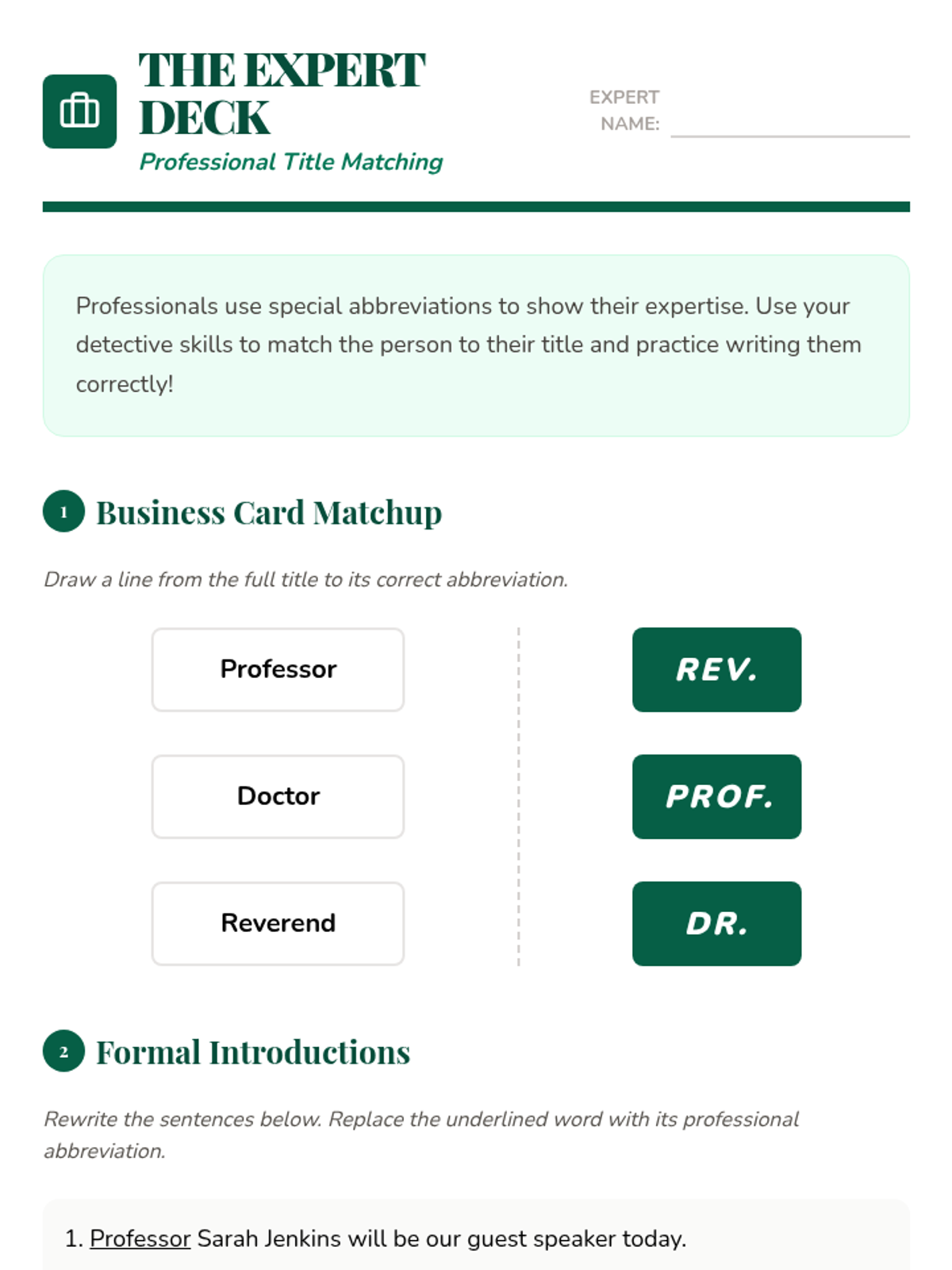
The lesson introduces professional titles such as Dr. (Doctor), Prof. (Professor), and Rev. (Reverend). Students match professionals to their titles and practice writing sentences introducing these figures.
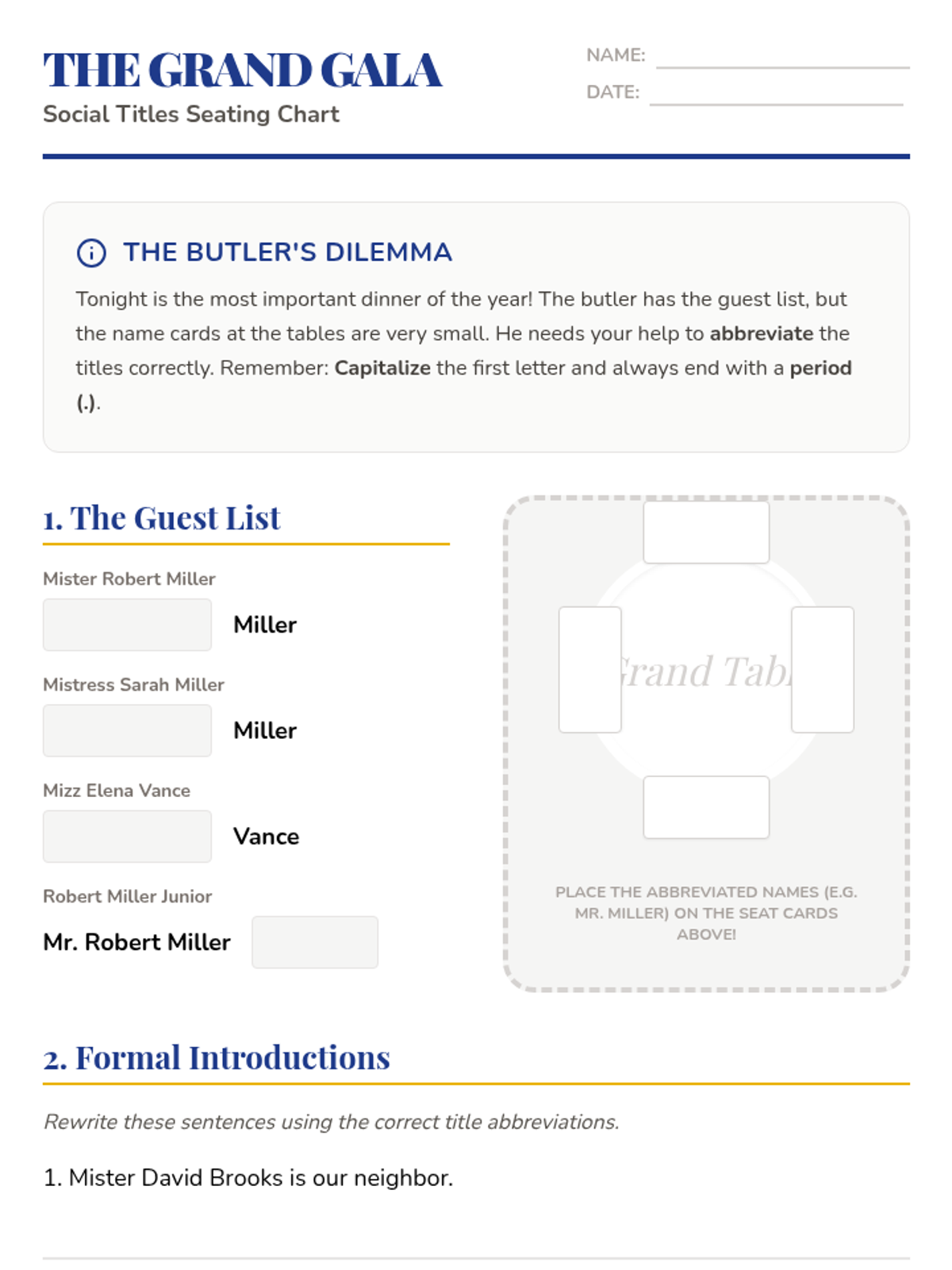
Students learn the standard social titles (Mr., Mrs., Ms., Jr., Sr.) and the rules for their use. Discussion focuses on the importance of the period and the capital letter to show respect.
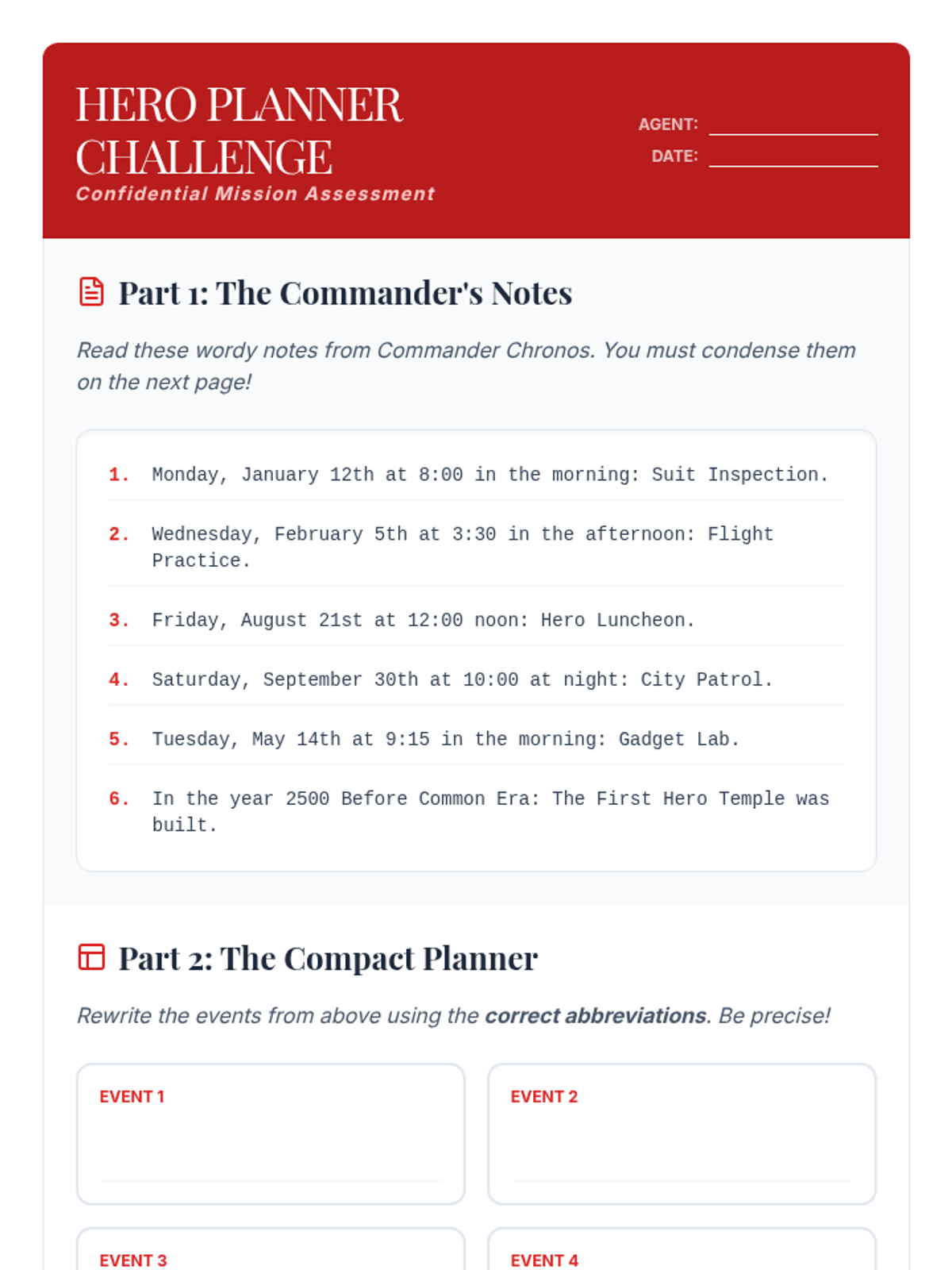
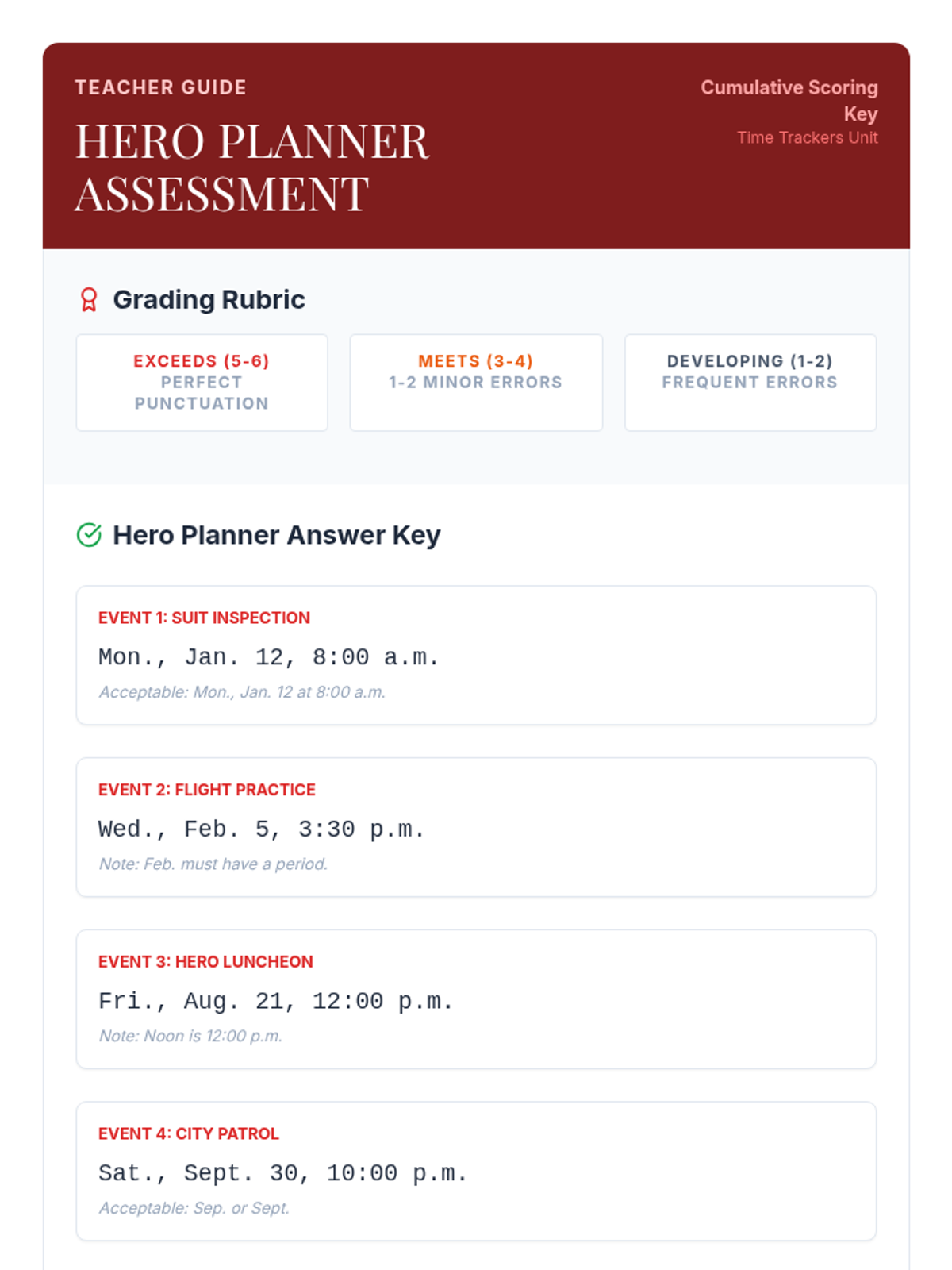
A cumulative assessment where students act as assistants to a superhero, condensing a complex schedule into a compact planner.
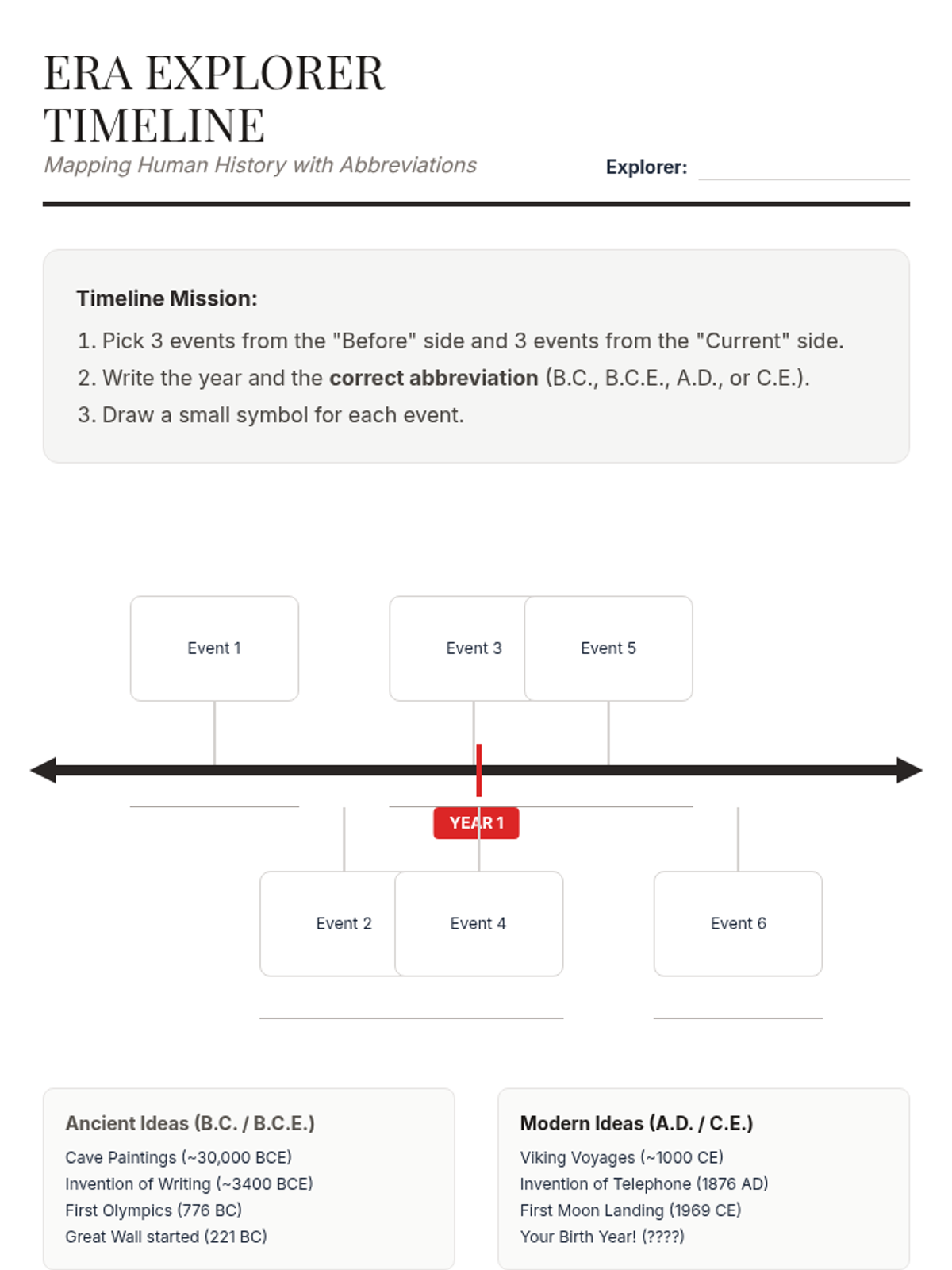
Students learn about historical markers like B.C., A.D., BCE, and CE to create timelines of historical events.
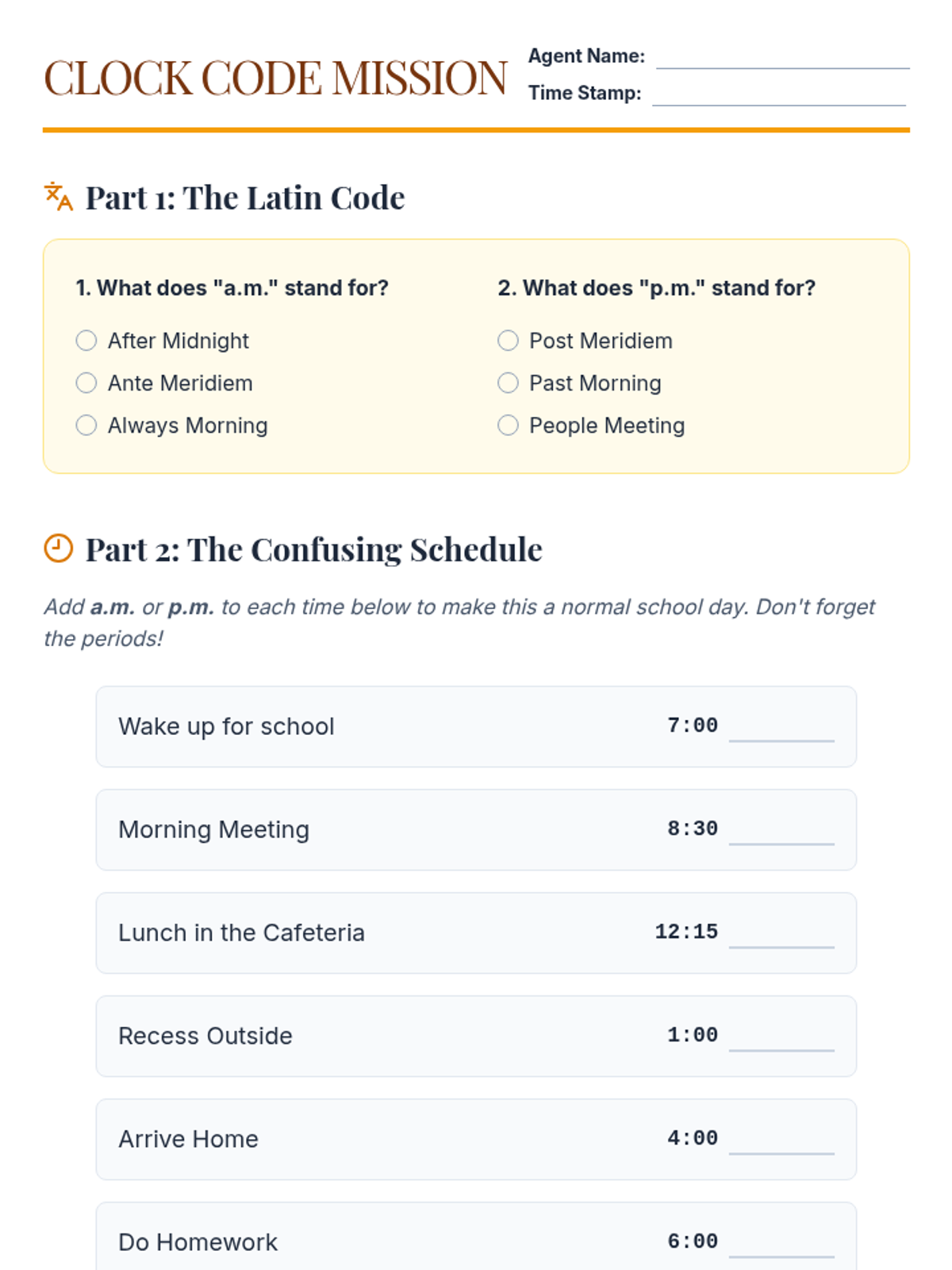
An exploration of Latin roots for a.m. and p.m., focusing on proper punctuation and clarifying schedules.
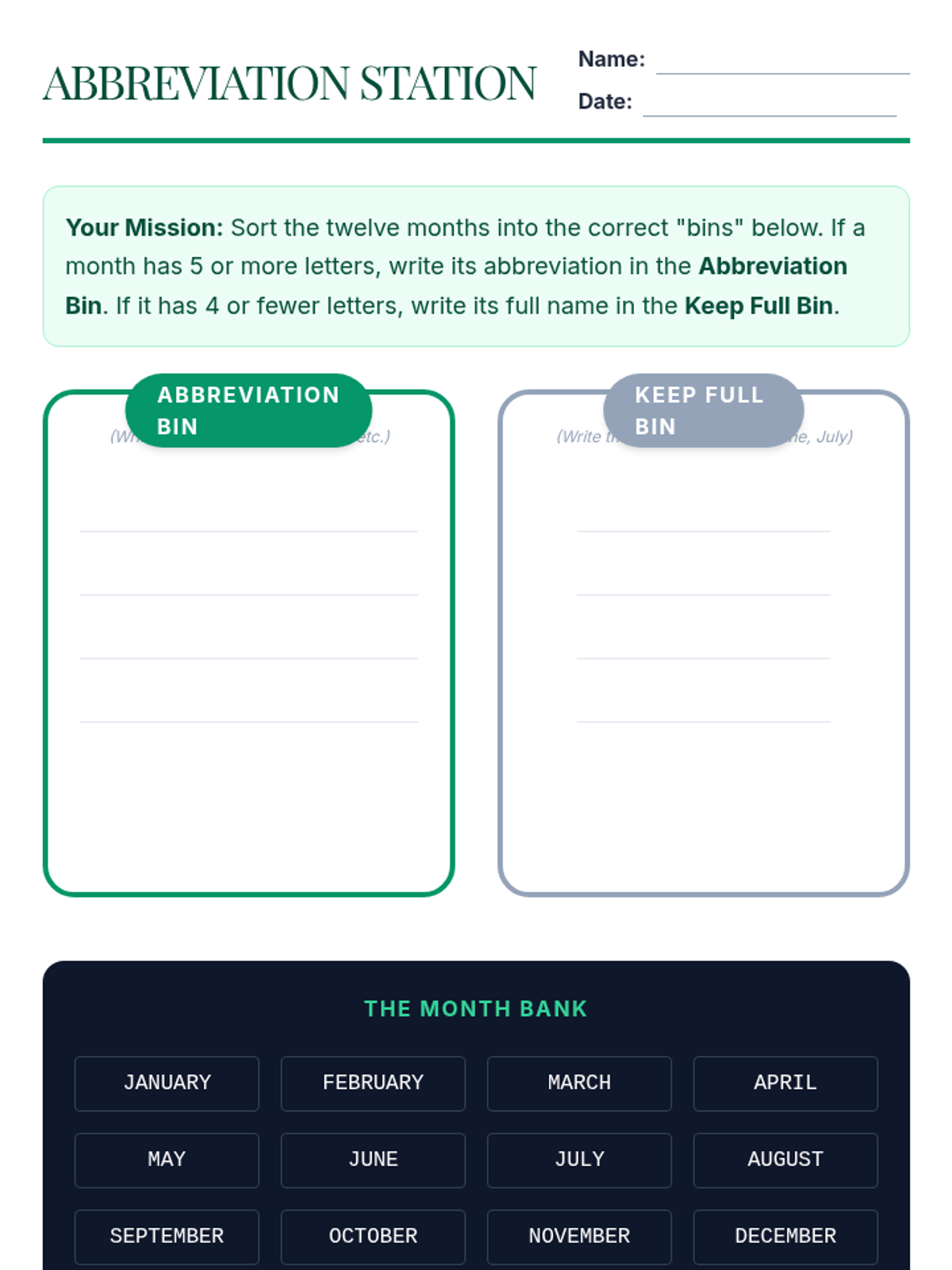
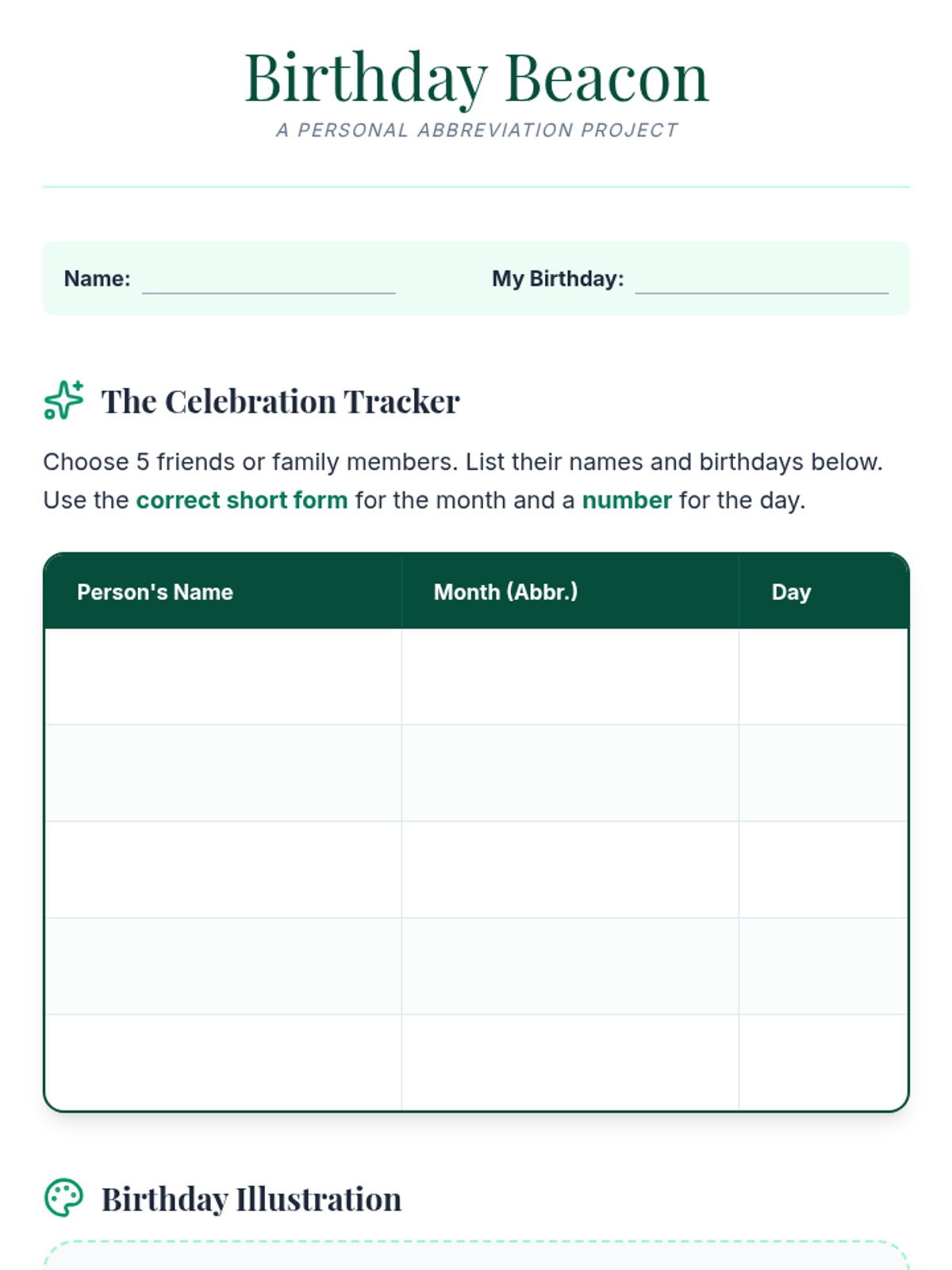
Students investigate which months are abbreviated and which are not, creating a personalized birthday calendar using correct short forms.
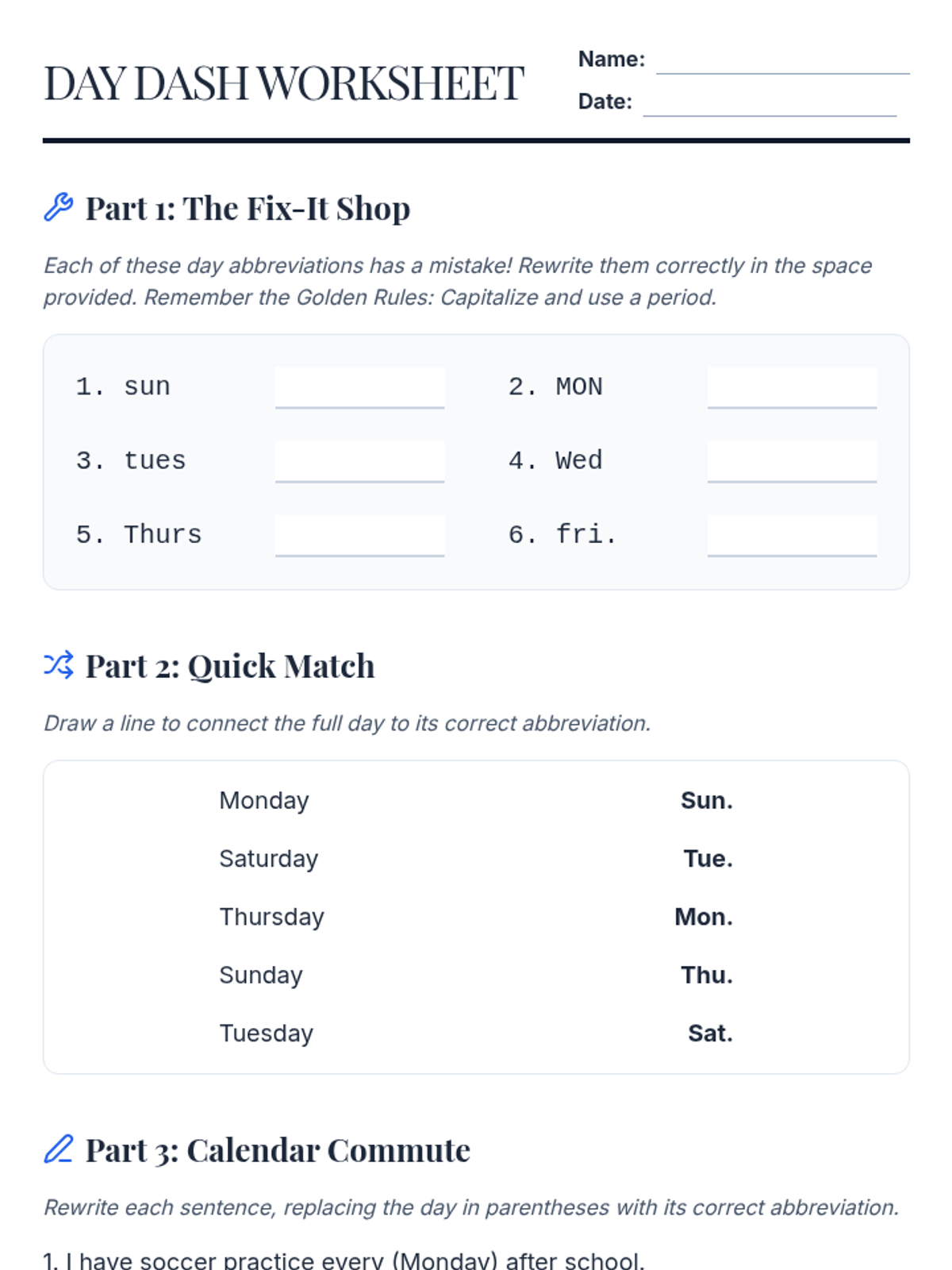
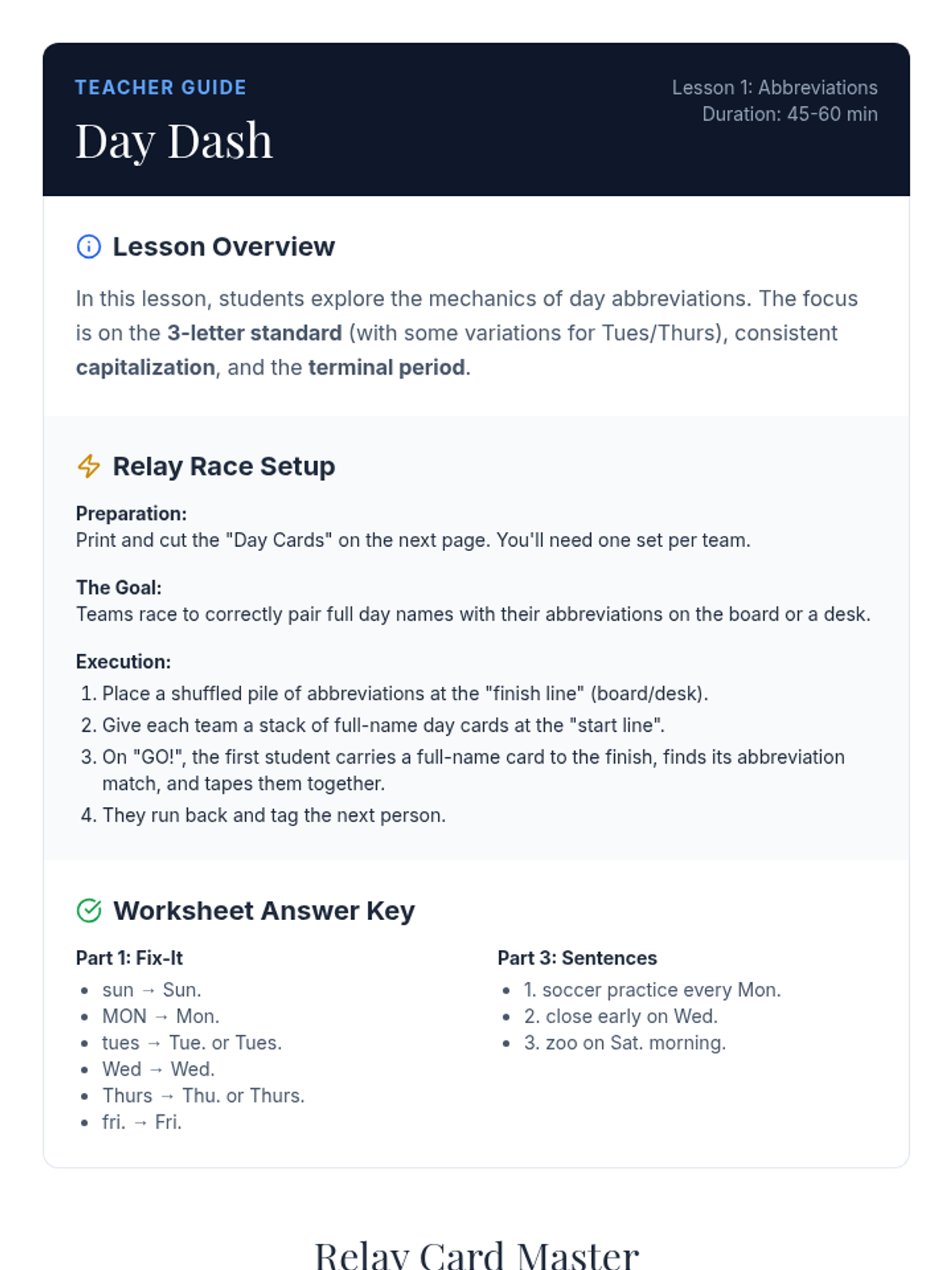
Students learn to abbreviate the days of the week, focusing on capitalization and the terminal period, then compete in a matching relay race.
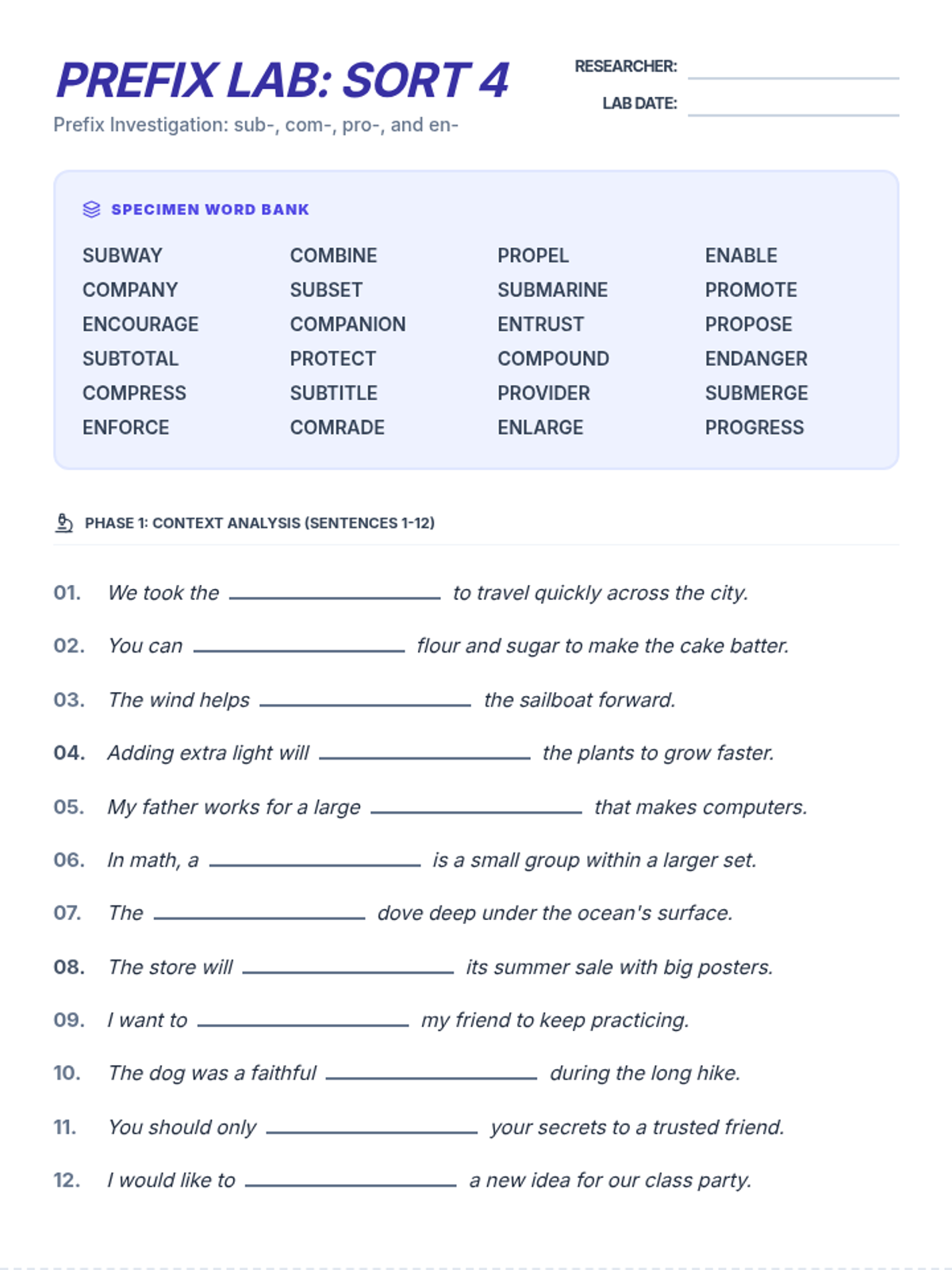
A lesson focused on the prefixes sub-, com-, pro-, and en-. Students apply their knowledge of these prefixes to identify and use words in various contexts.
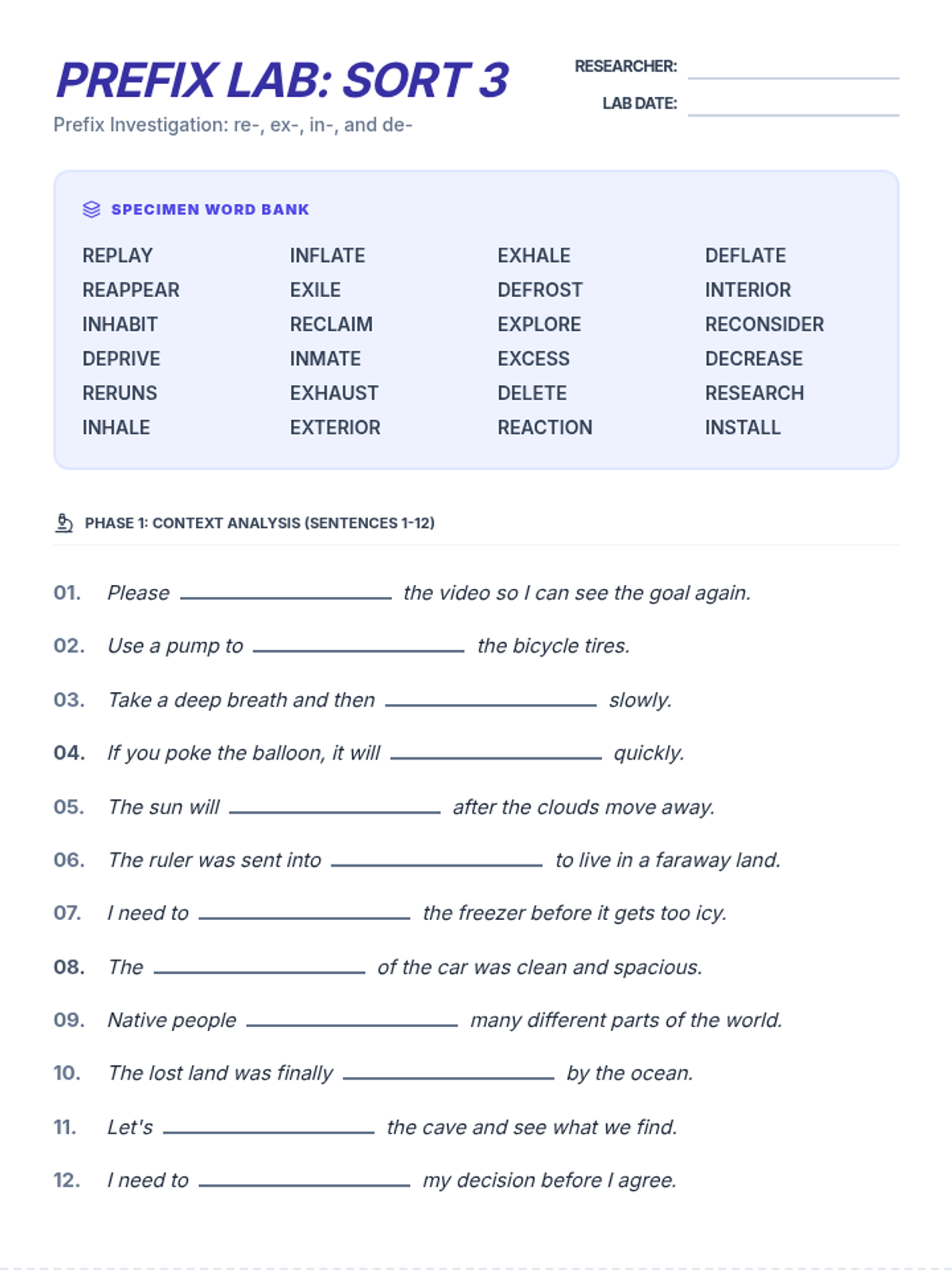
A lesson focused on the prefixes re-, ex-, in-, and de-. Students explore meanings like "again," "out," "in," and "down" through application.
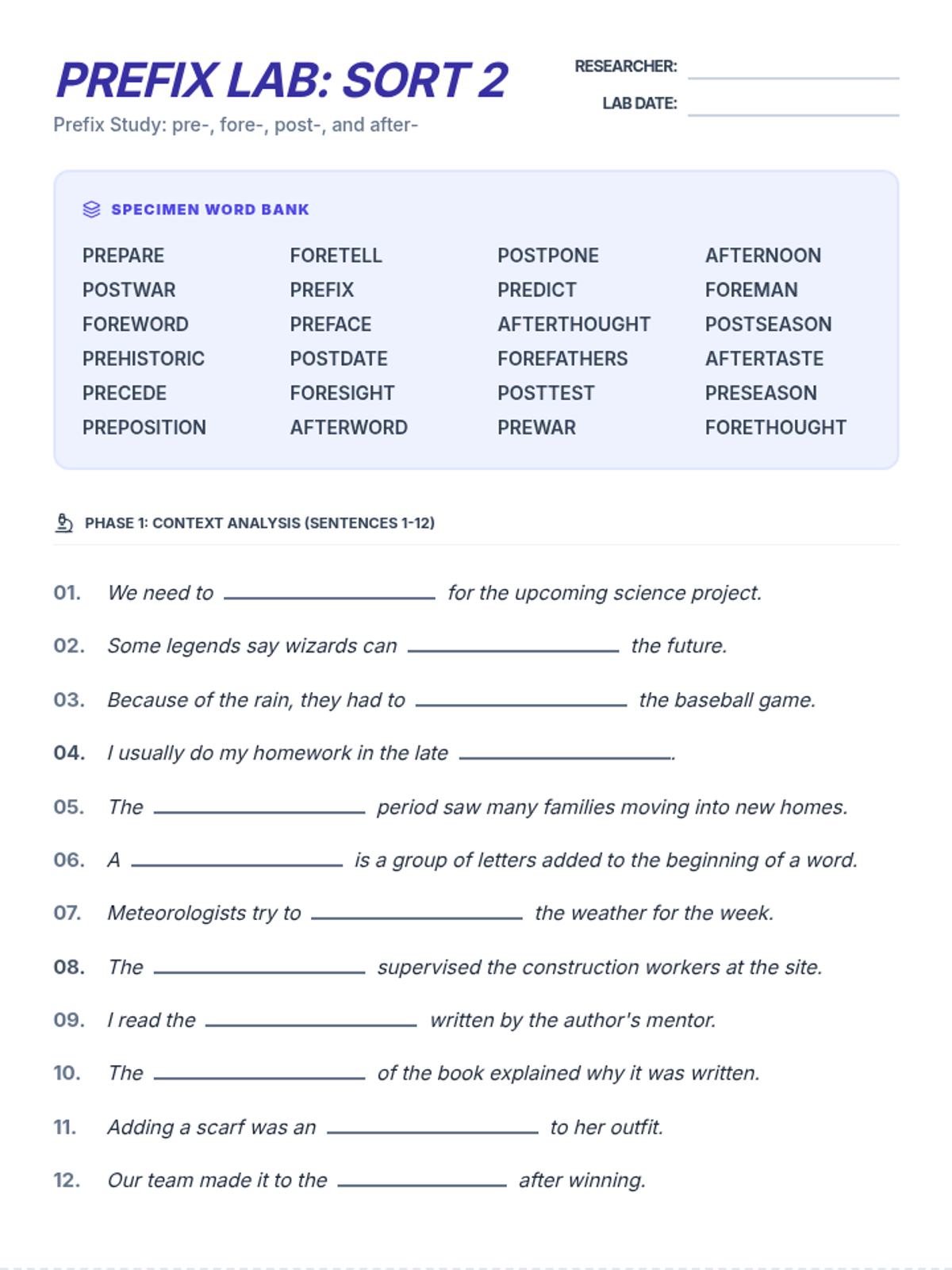
A lesson focused on the prefixes pre-, fore-, post-, and after-. Students practice using these temporal and directional prefixes in context.
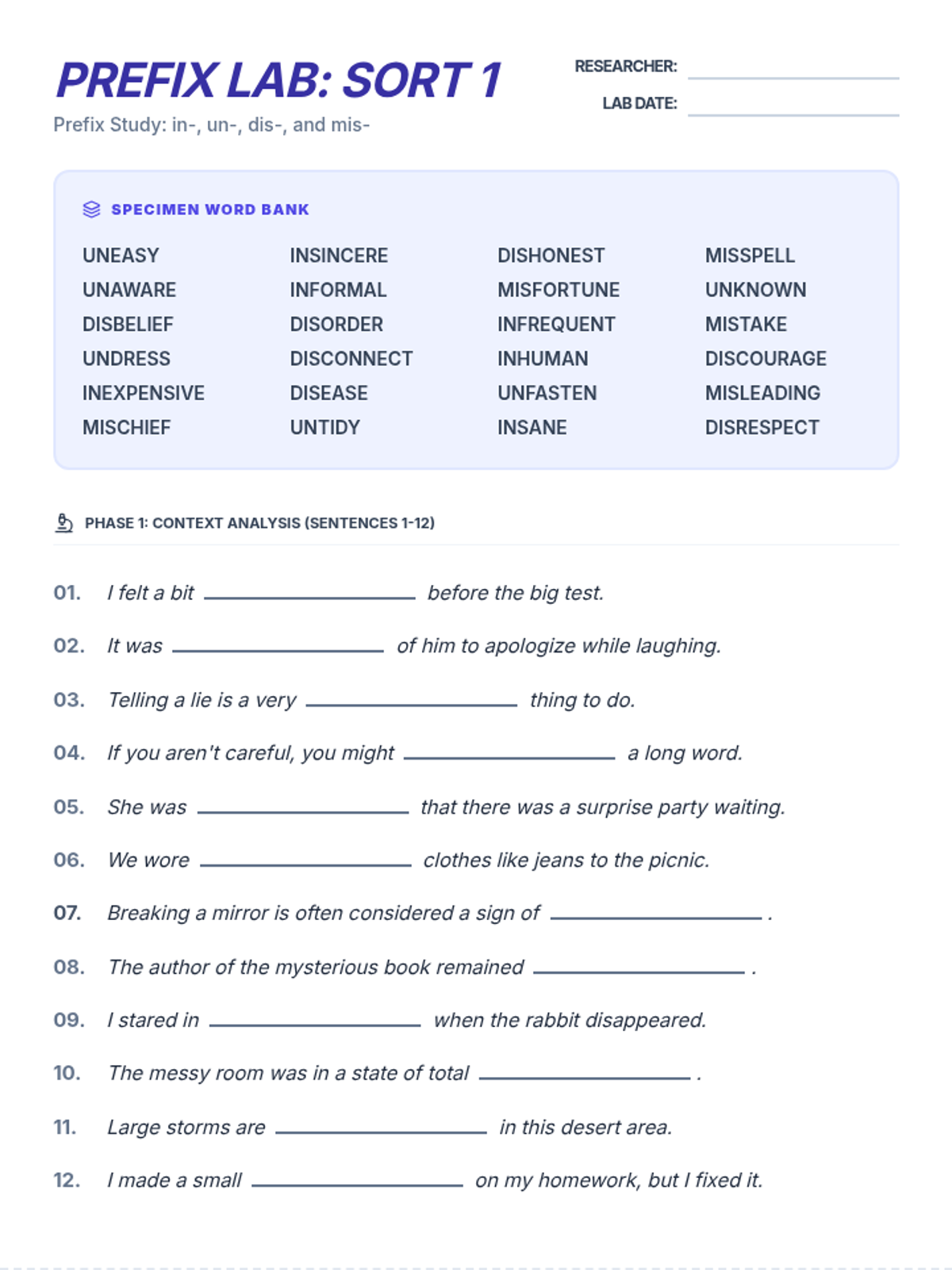
A lesson focused on the prefixes in-, un-, dis-, and mis-. Students analyze meanings and usage through contextual sentences and word puzzles.
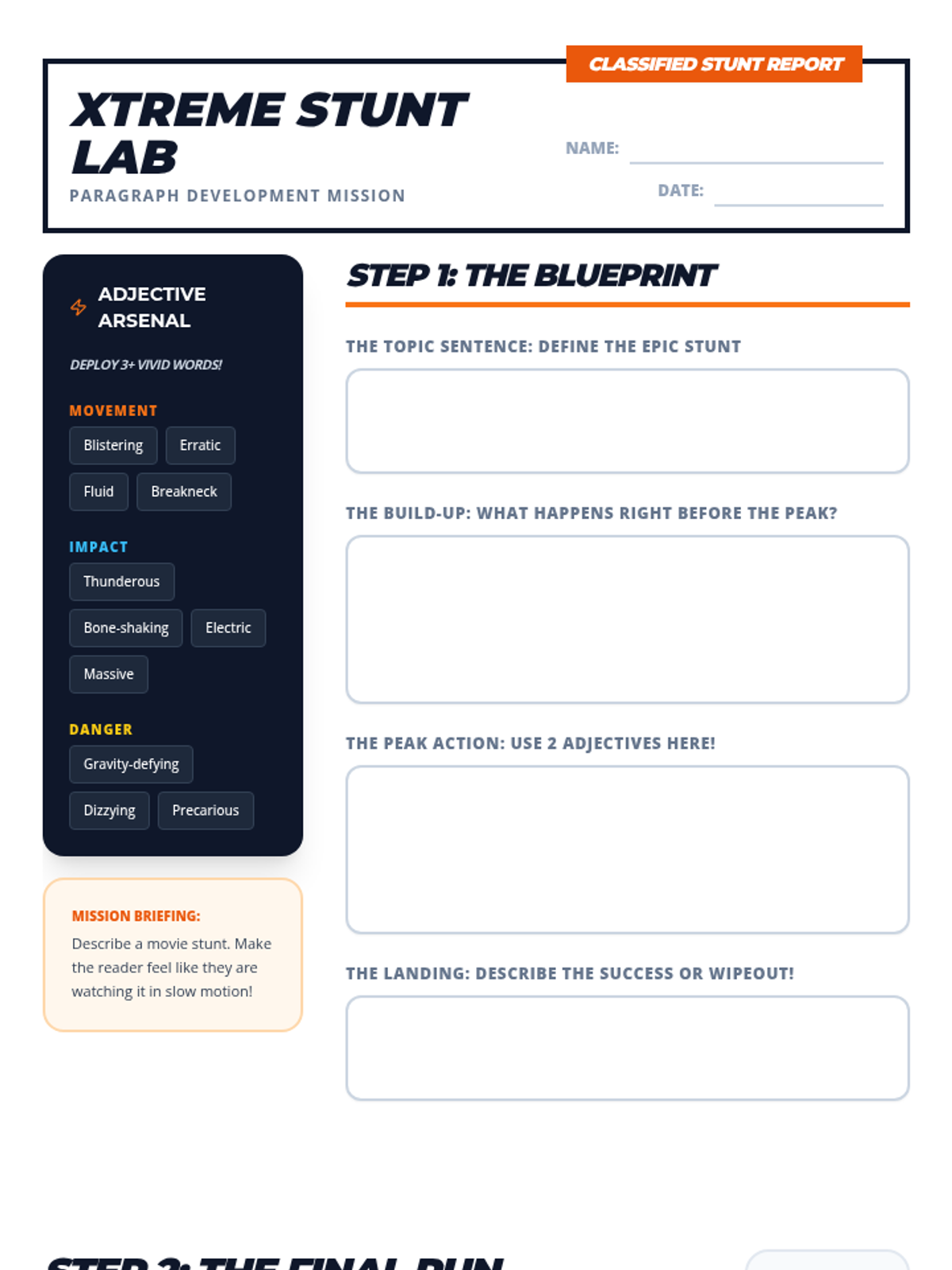
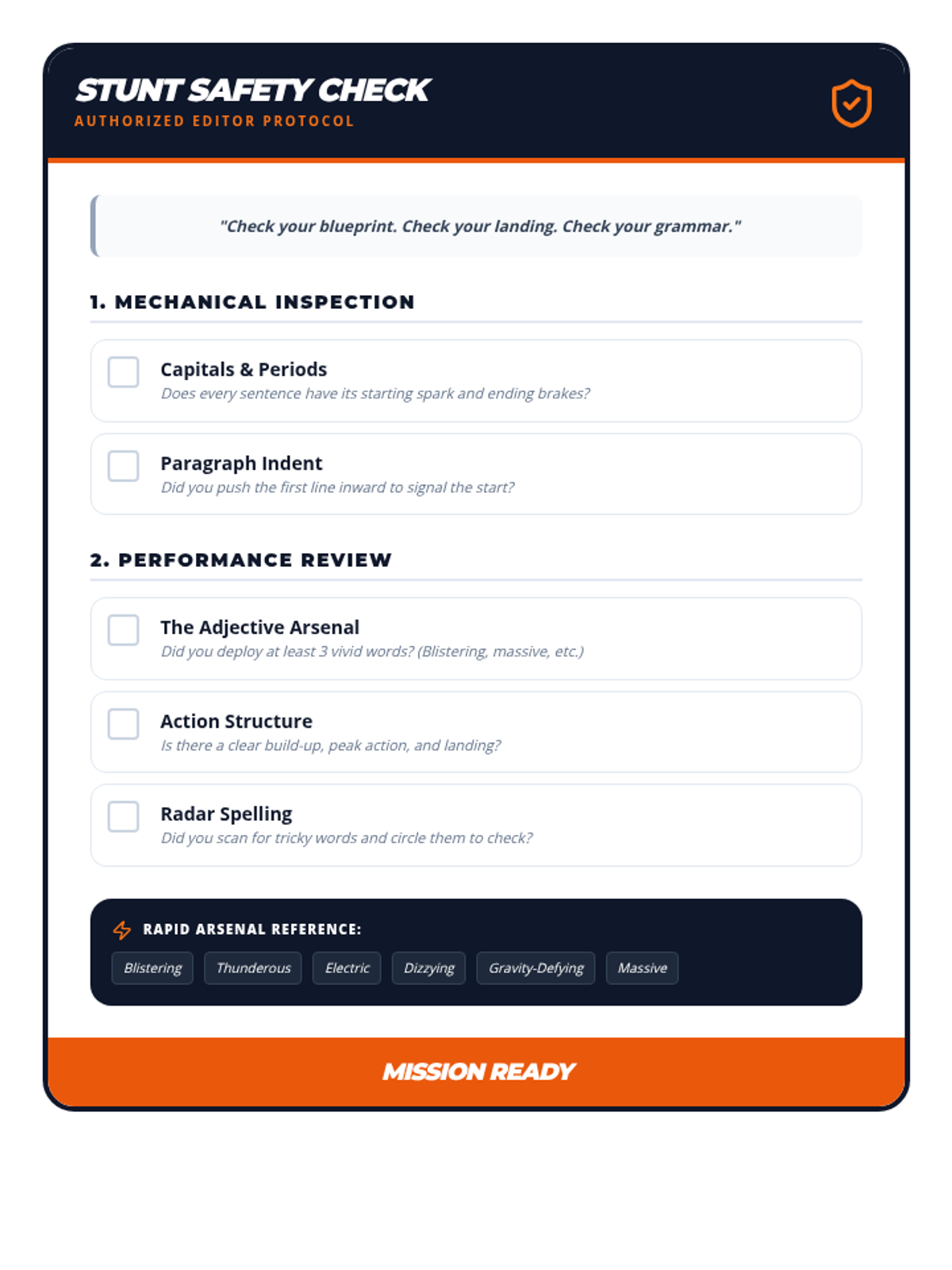
An action-packed writing lesson where students step into the role of a stunt coordinator or extreme sports reporter to master paragraph structure and vivid details.
A comprehensive guide to mastering plural nouns through an explorer-themed journey. Students learn and practice the rules for -s, -es, -ies, -ves, and irregular plurals using ILEARN-style sentence completion.
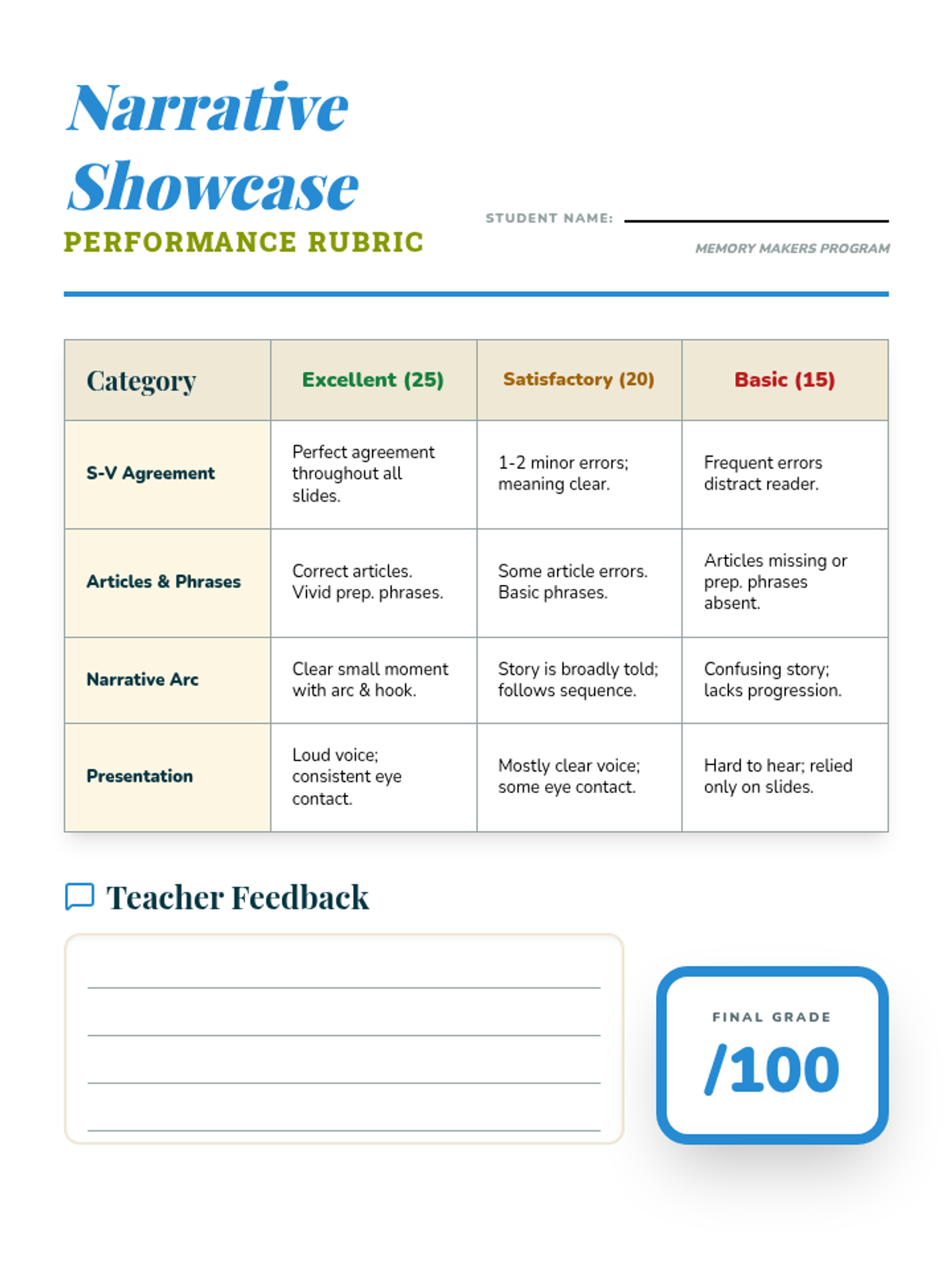
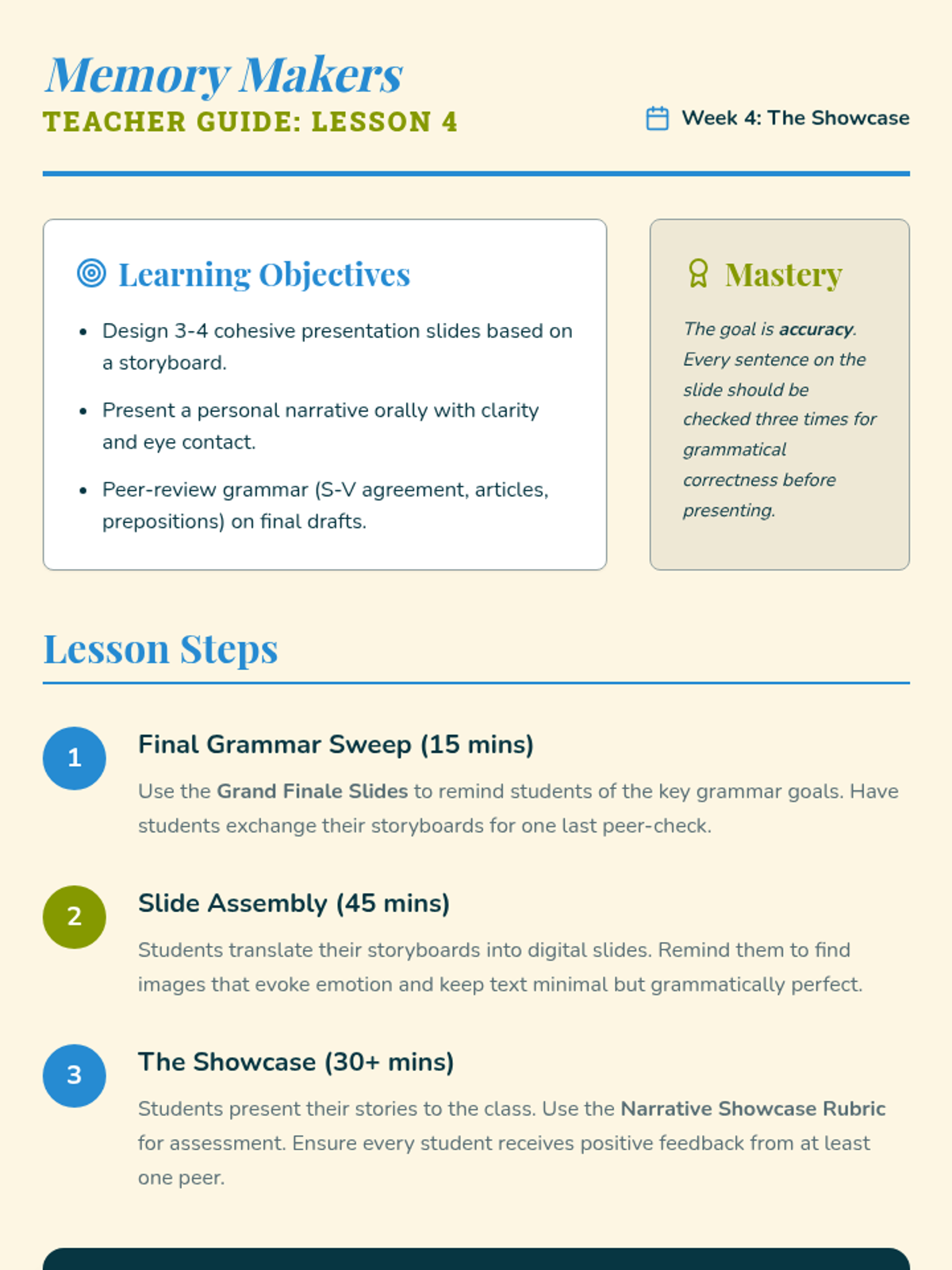
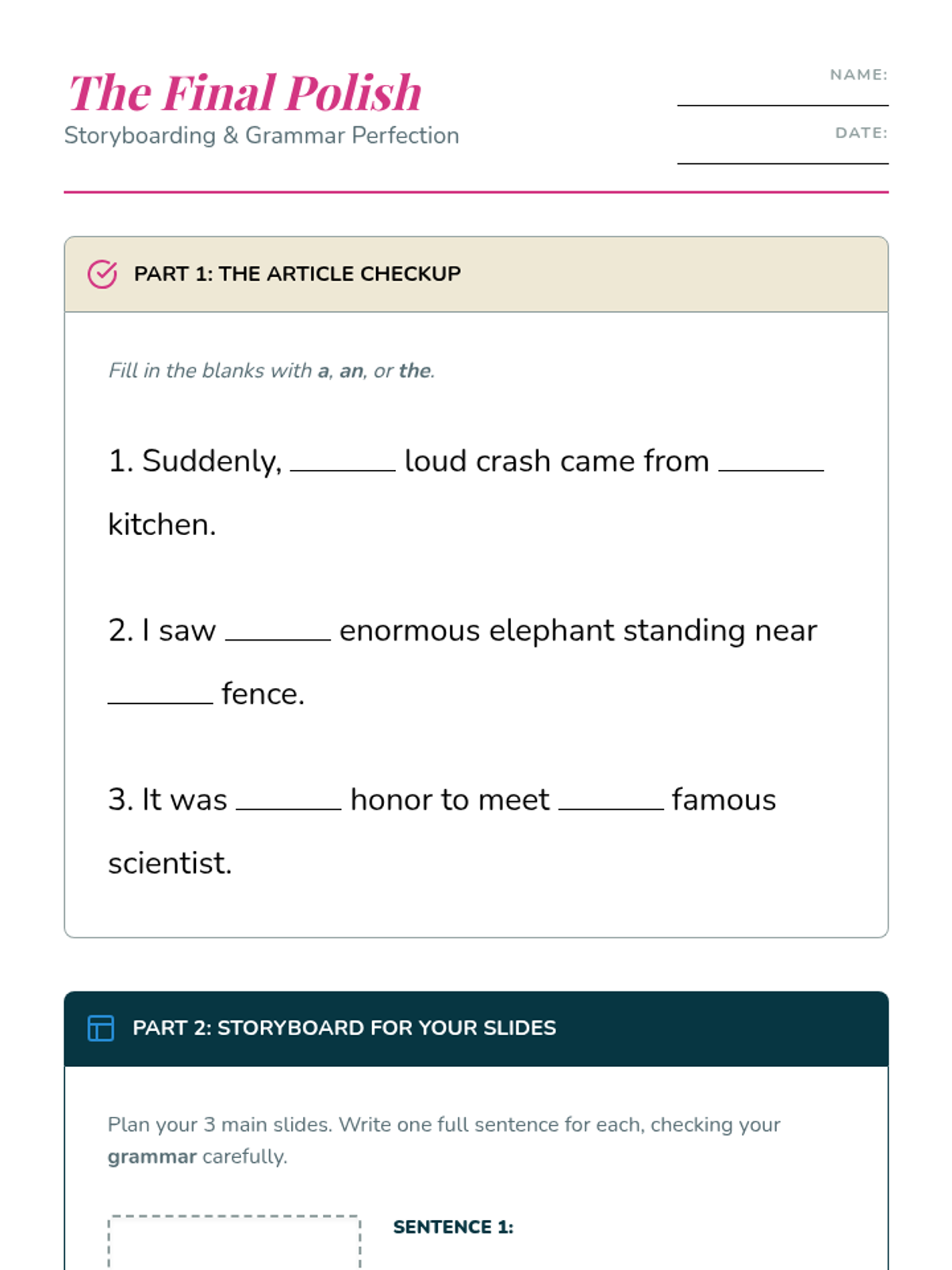
Prepares students for their final oral presentation, focusing on slide design, public speaking, and final grammar checks.
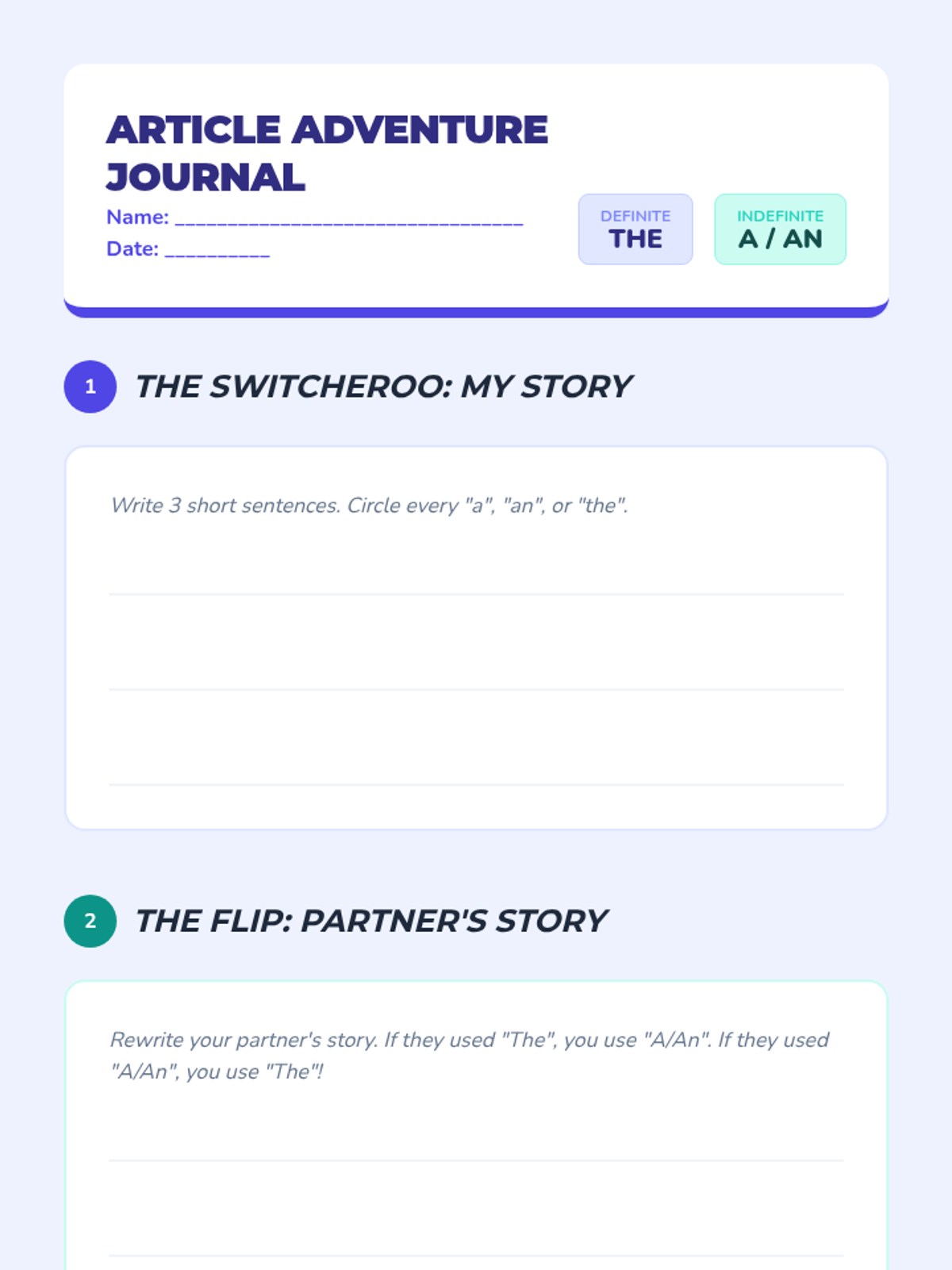
Refines the narrative structure and focuses on the precise use of articles (a, an, the) for clarity and flow.
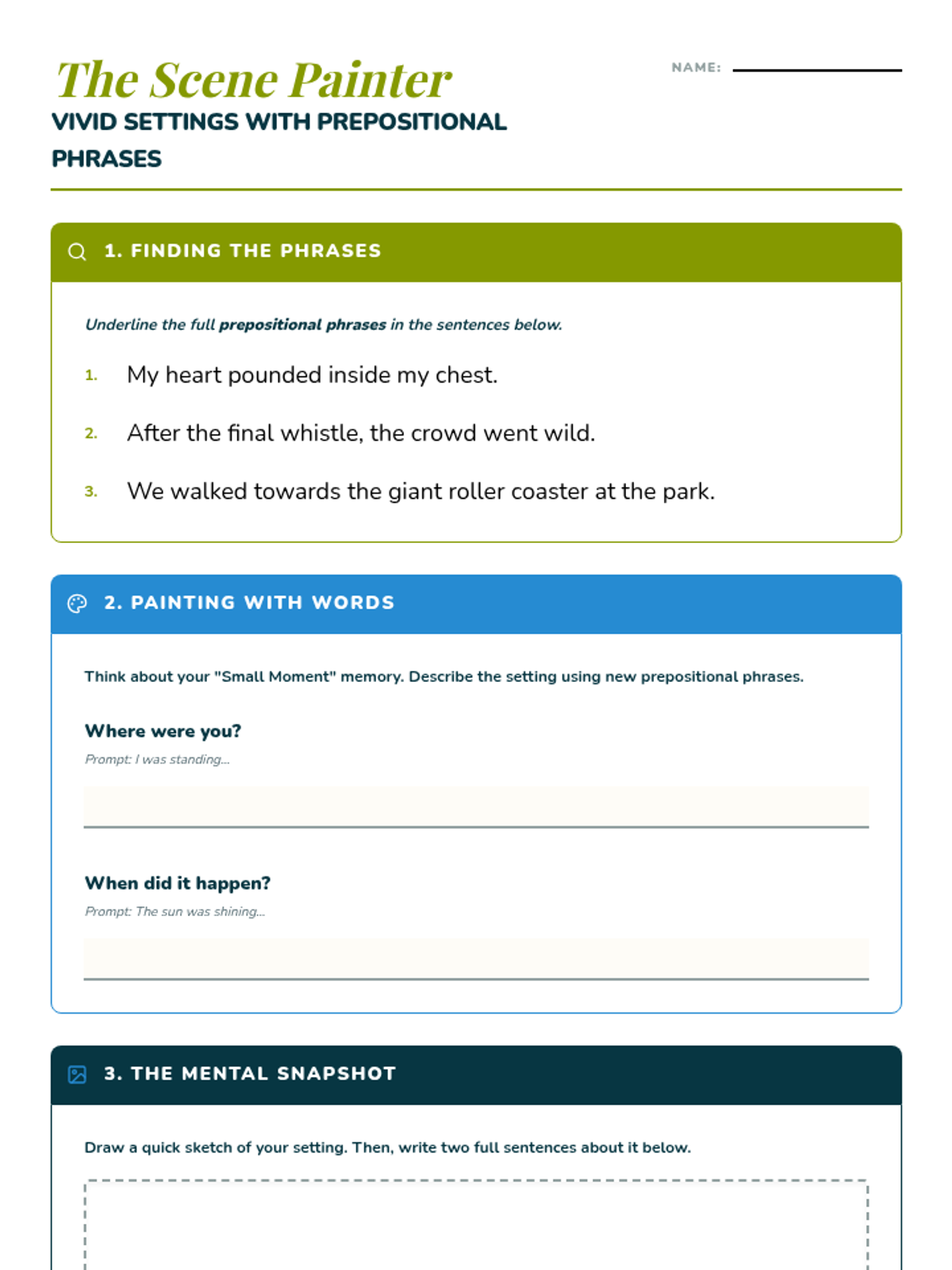
Explores setting and descriptive detail using prepositional phrases to ground narratives in a specific time and place.
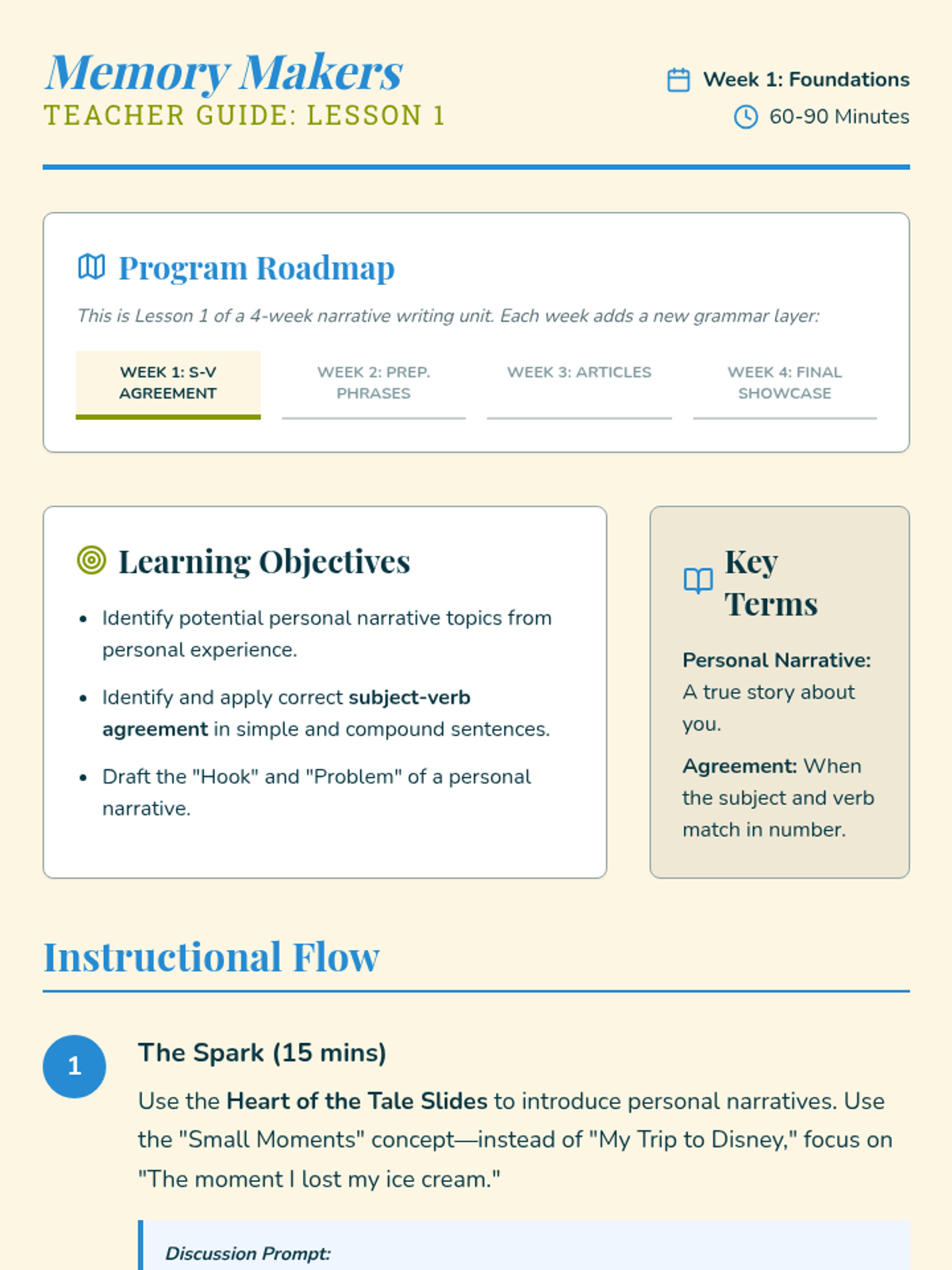
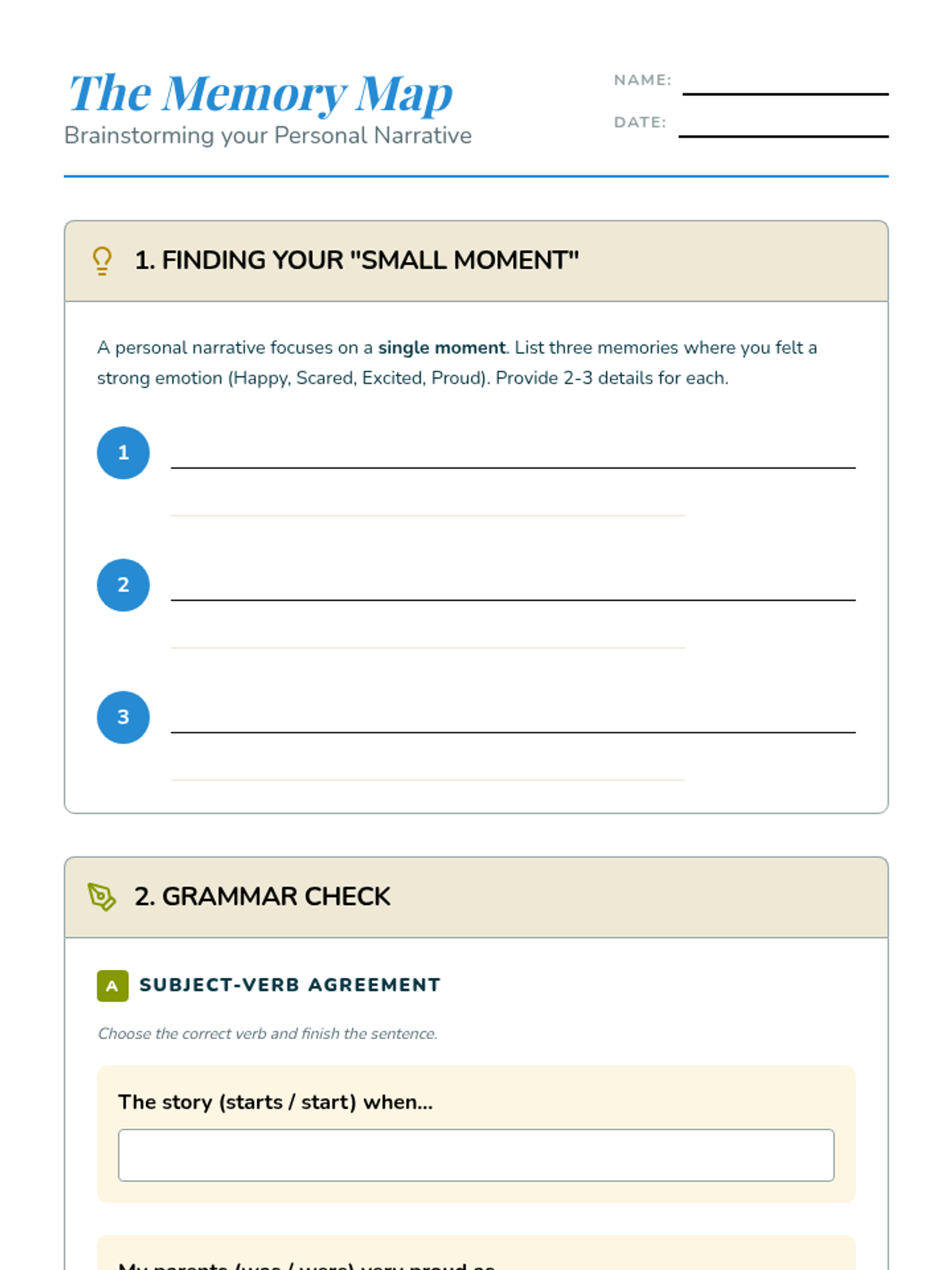
Focuses on identifying personal narrative topics and mastering subject-verb agreement to ensure clear story foundations.
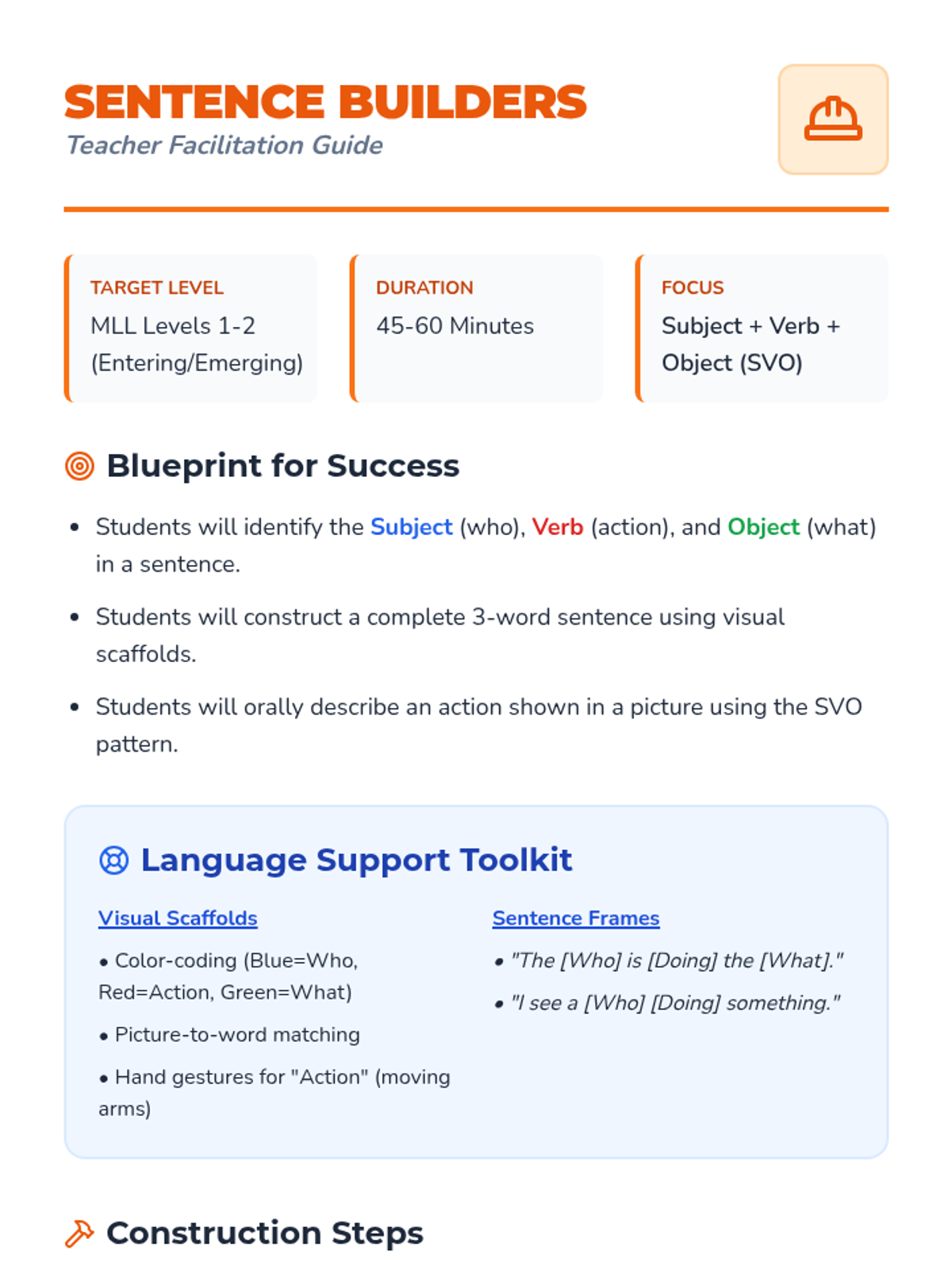
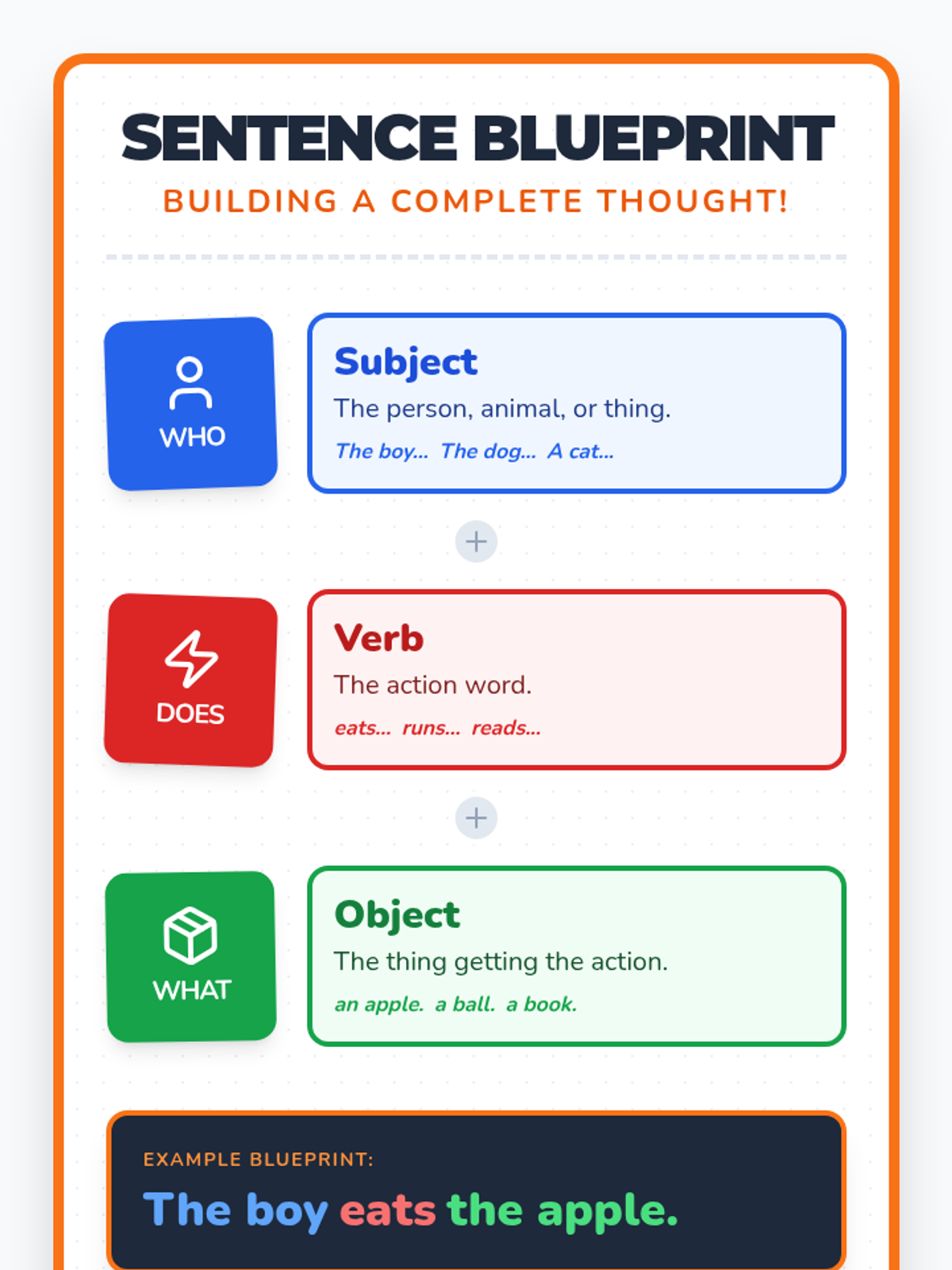
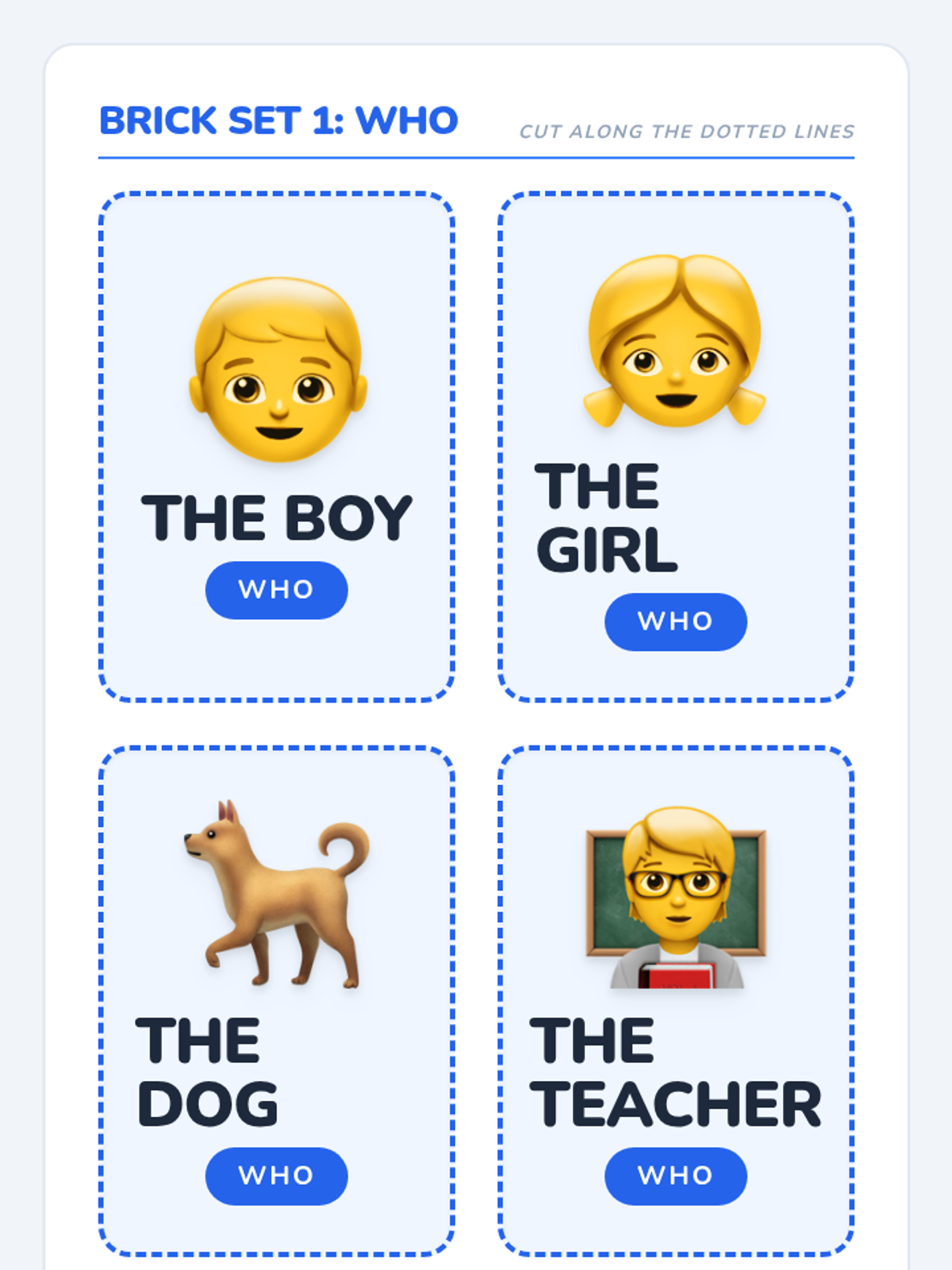
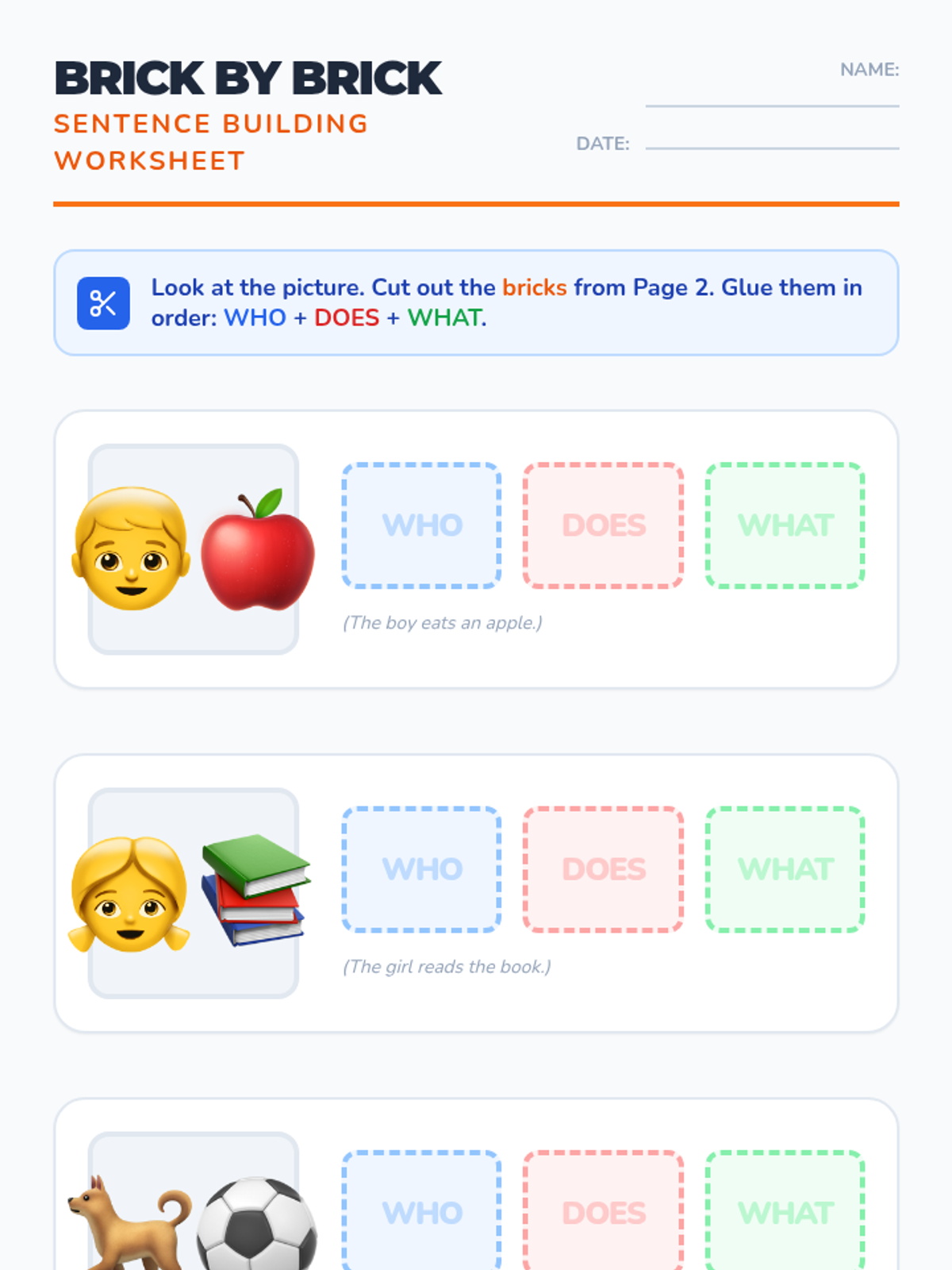
A foundational lesson for MLL students to master basic Subject-Verb-Object sentence structure using visual supports, scaffolding, and hands-on sequencing.
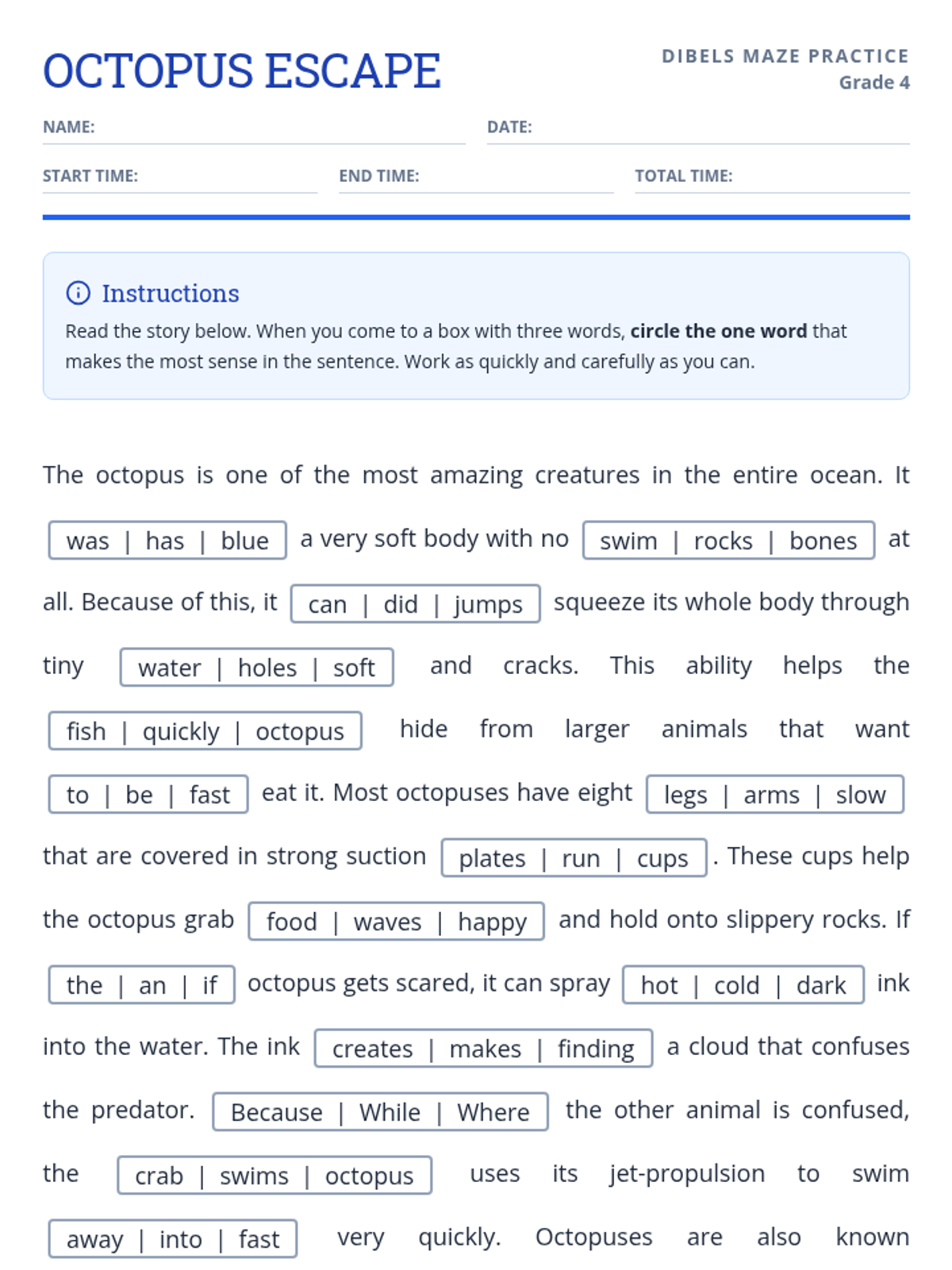
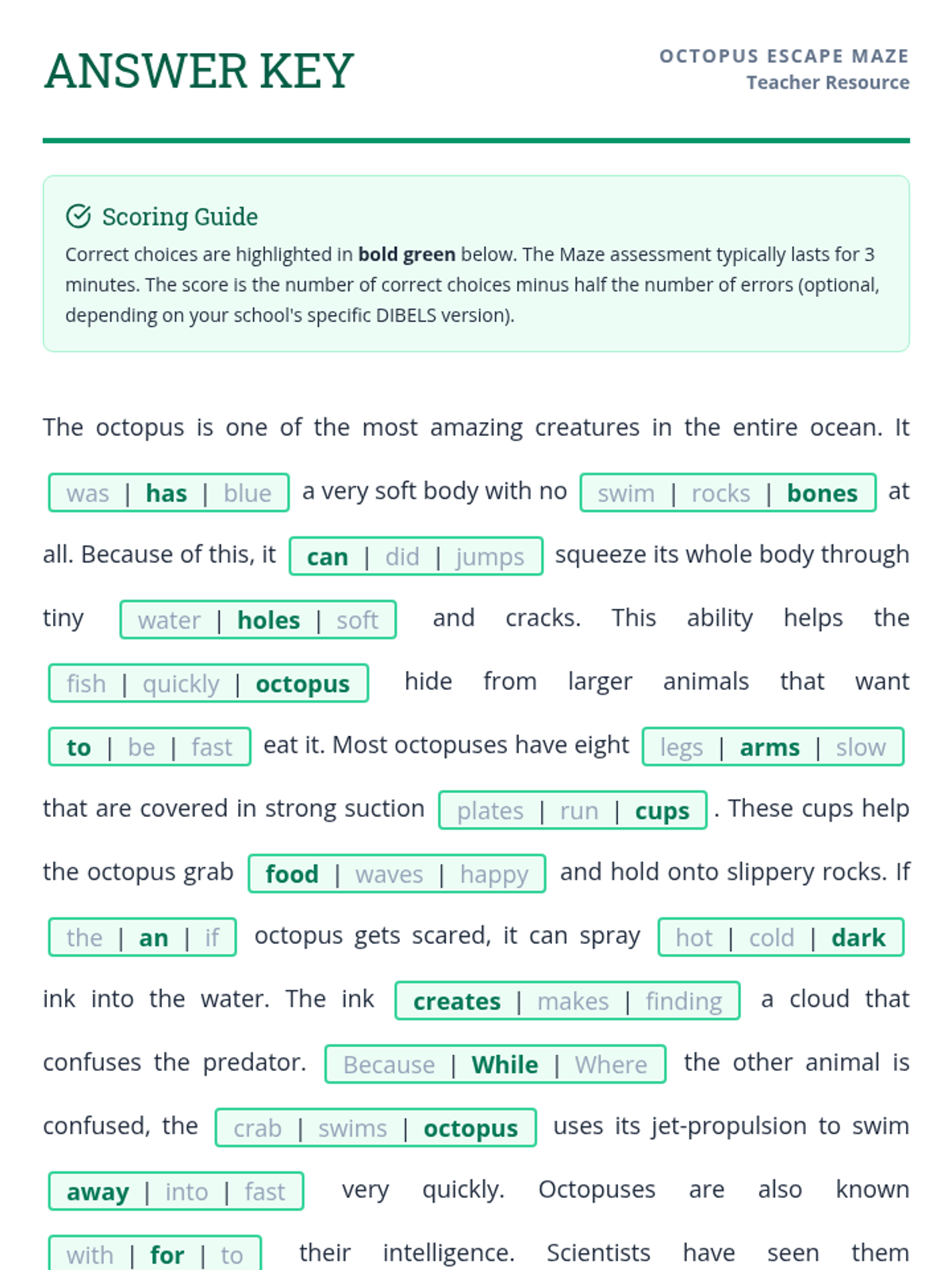
A 4th-grade reading comprehension practice focusing on the DIBELS Maze format, featuring an engaging passage about the remarkable intelligence and physical abilities of octopuses.
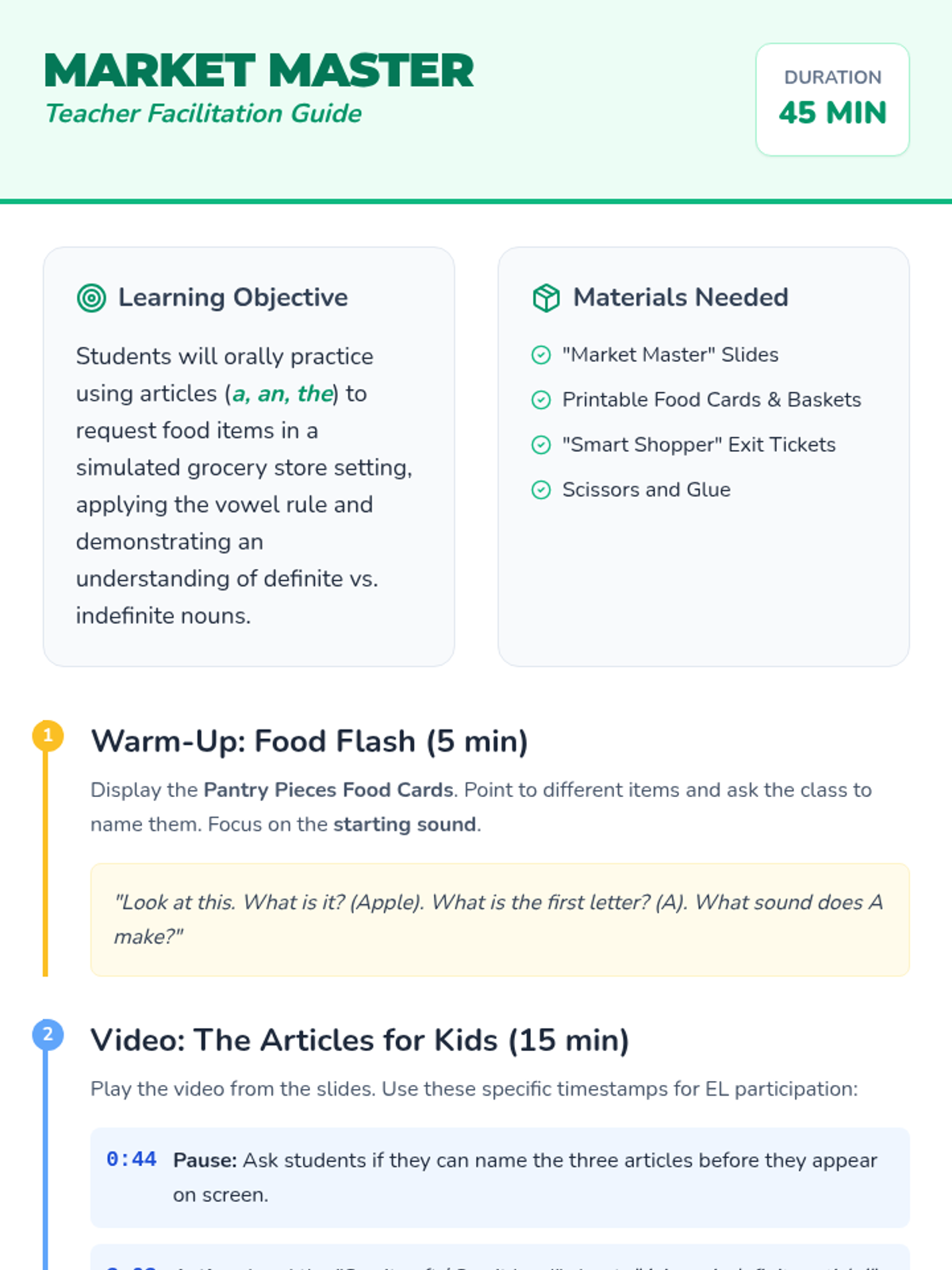
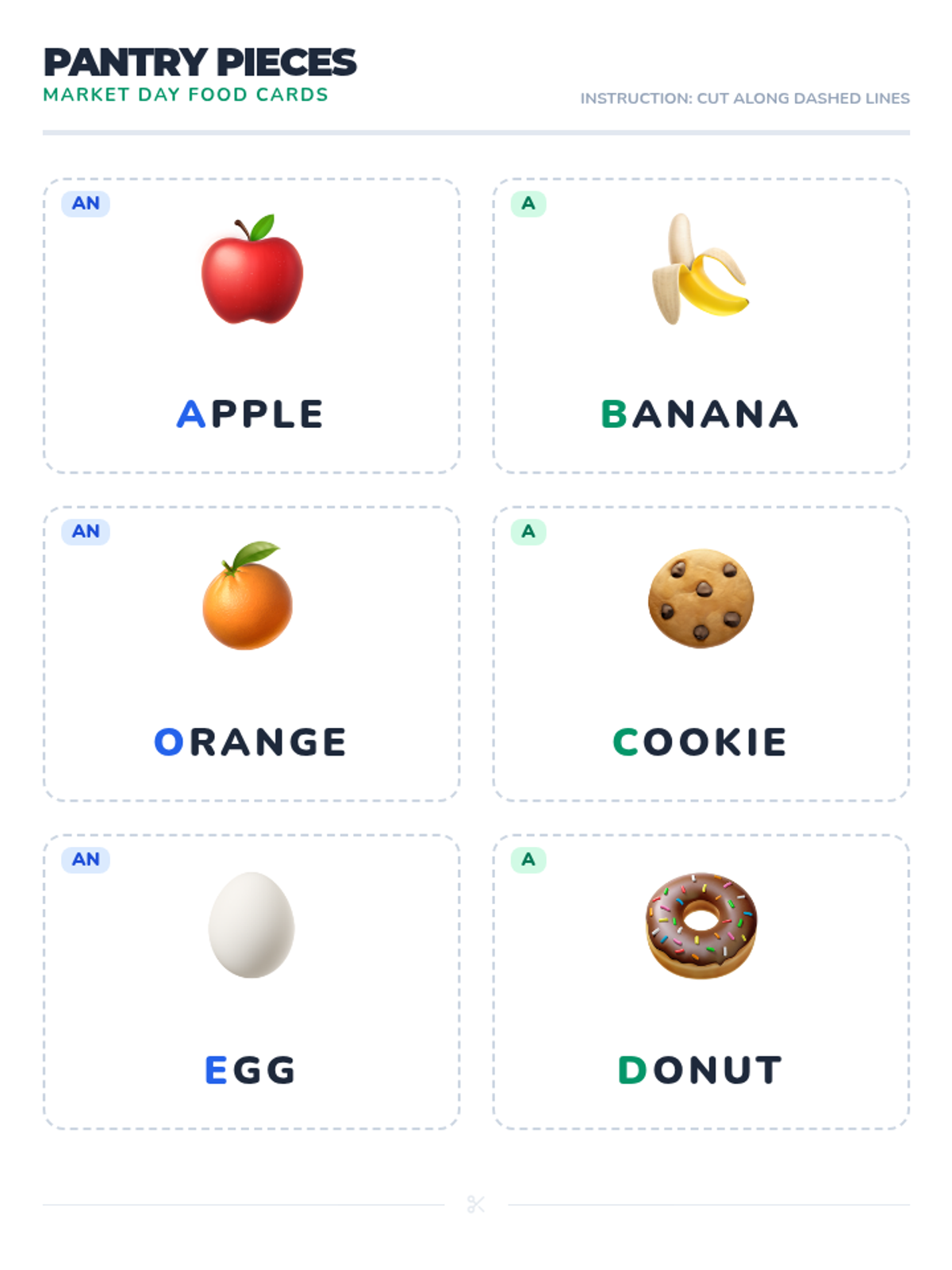
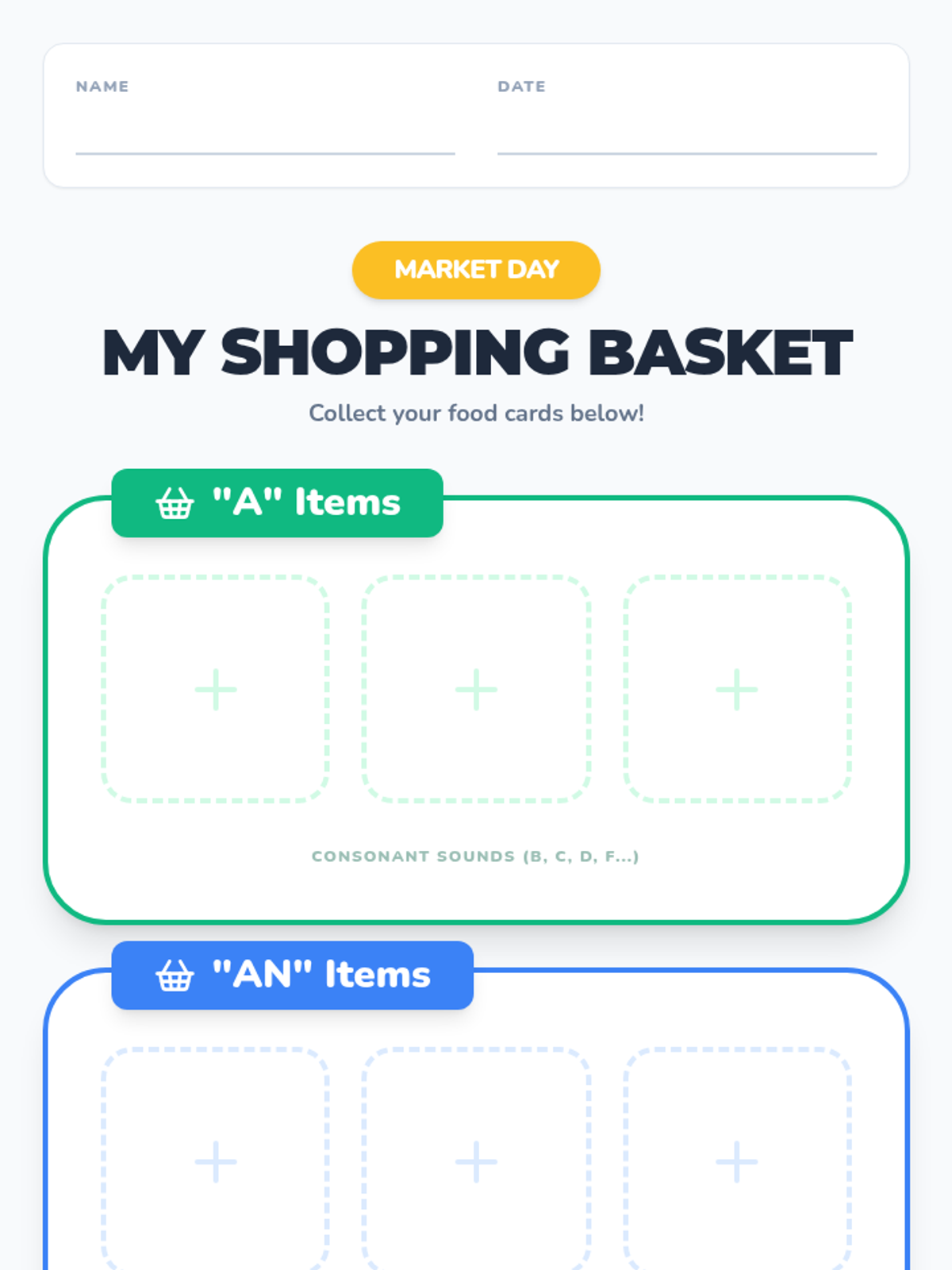
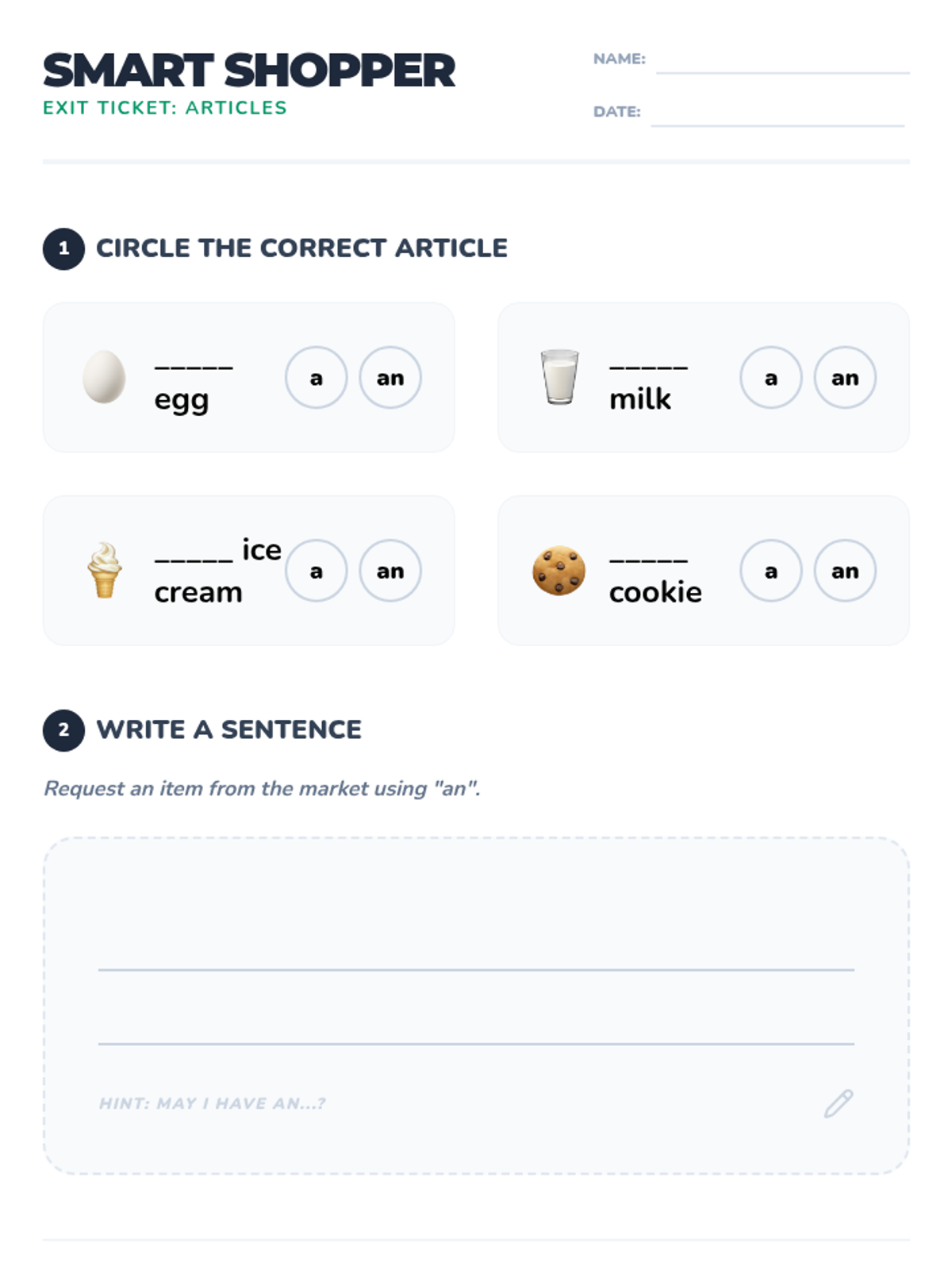
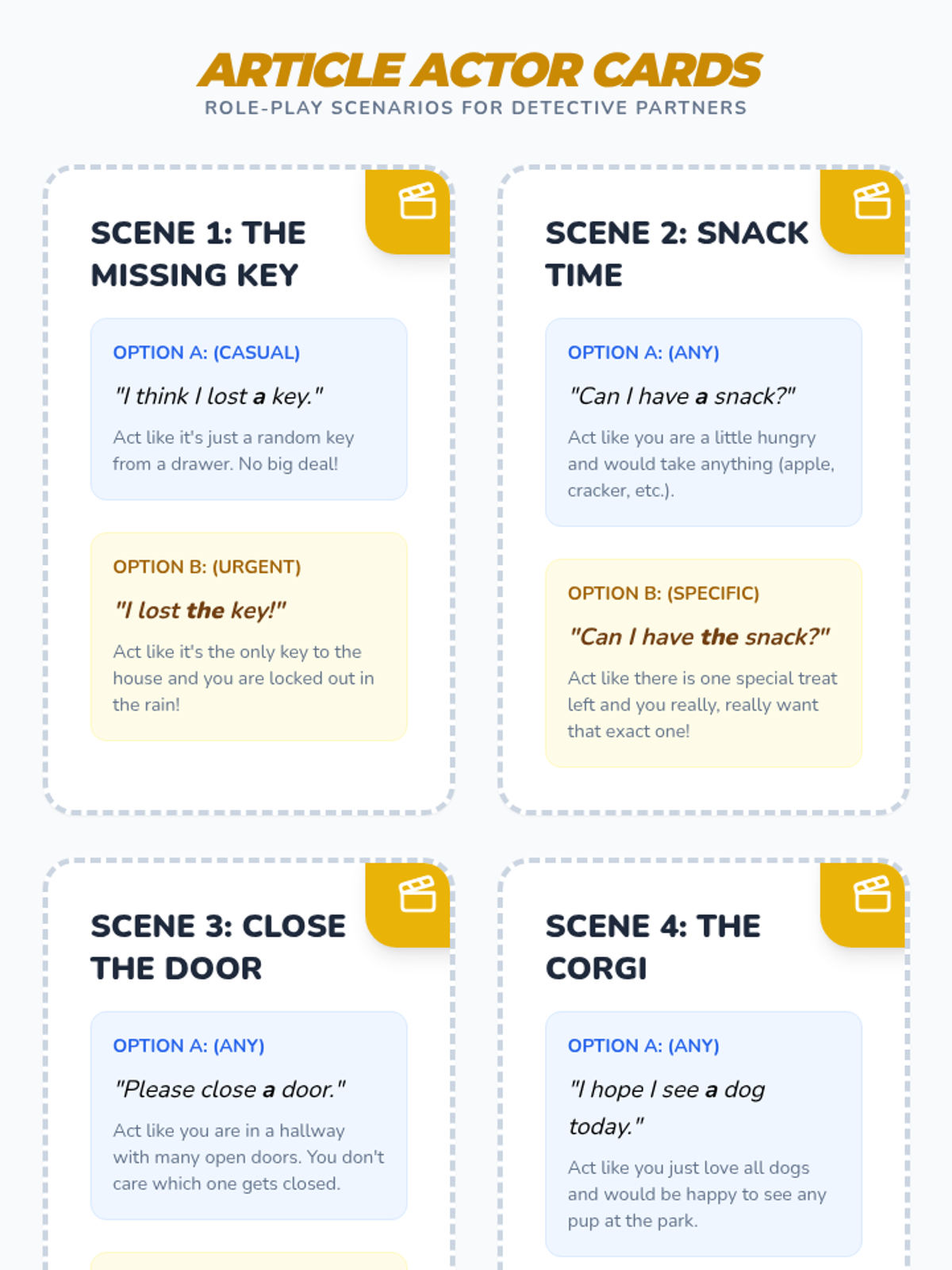
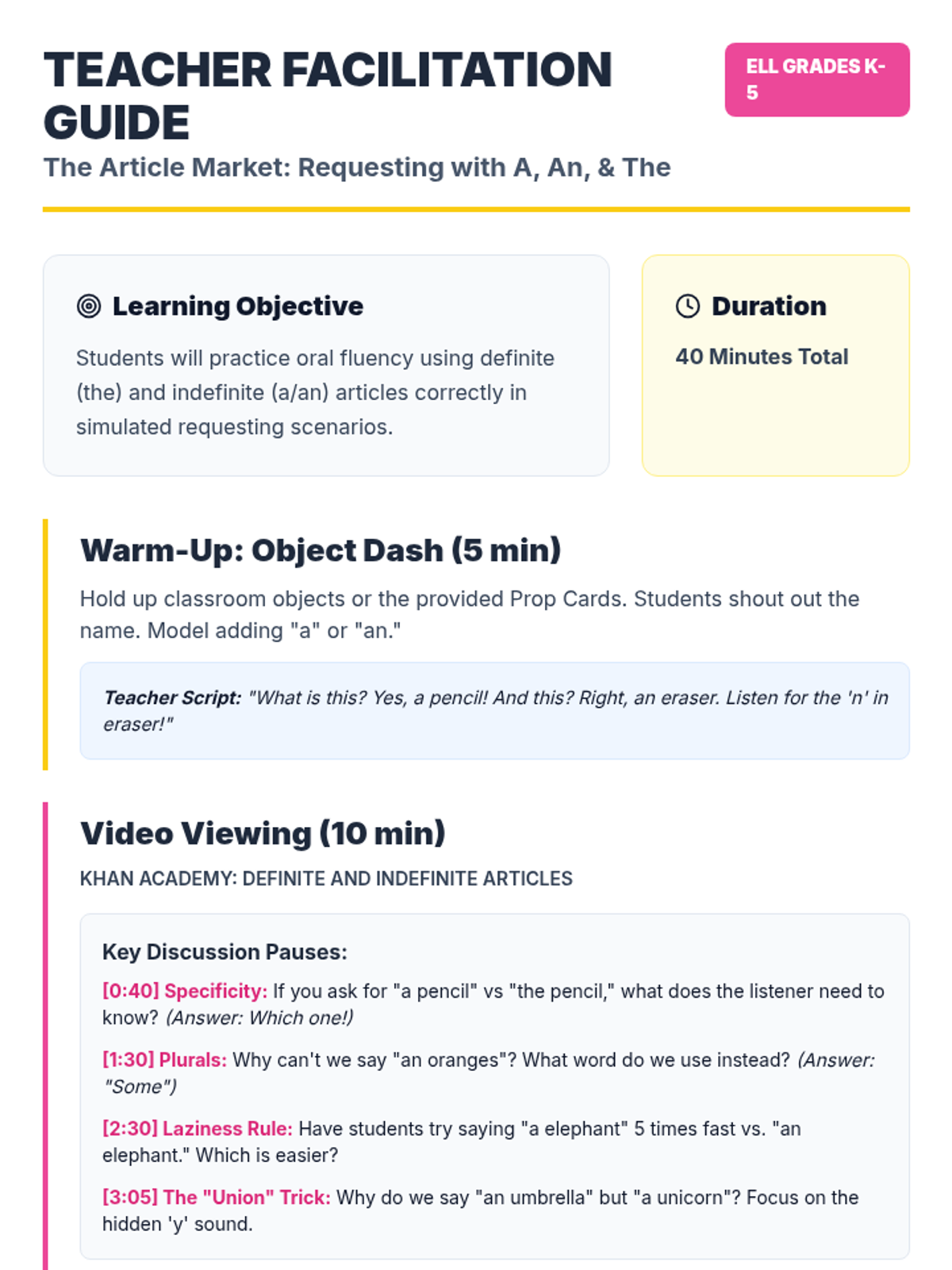
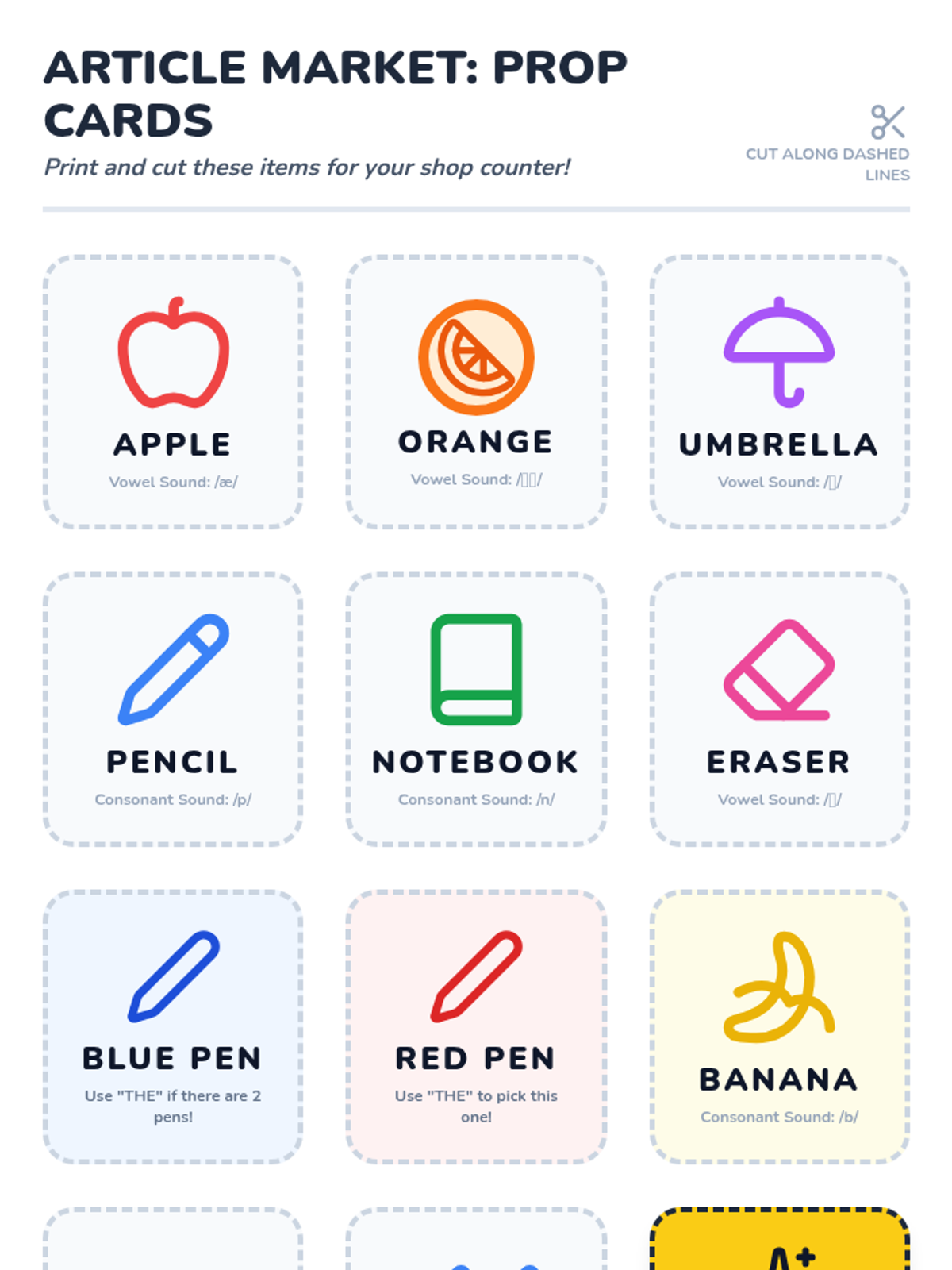
An interactive ESL/ELL lesson for elementary students focusing on the correct oral and written use of articles (a, an, the) within a grocery store roleplay context. Students learn the vowel rule for 'an' and the specificity of 'the' through a guided video and hands-on market activity.
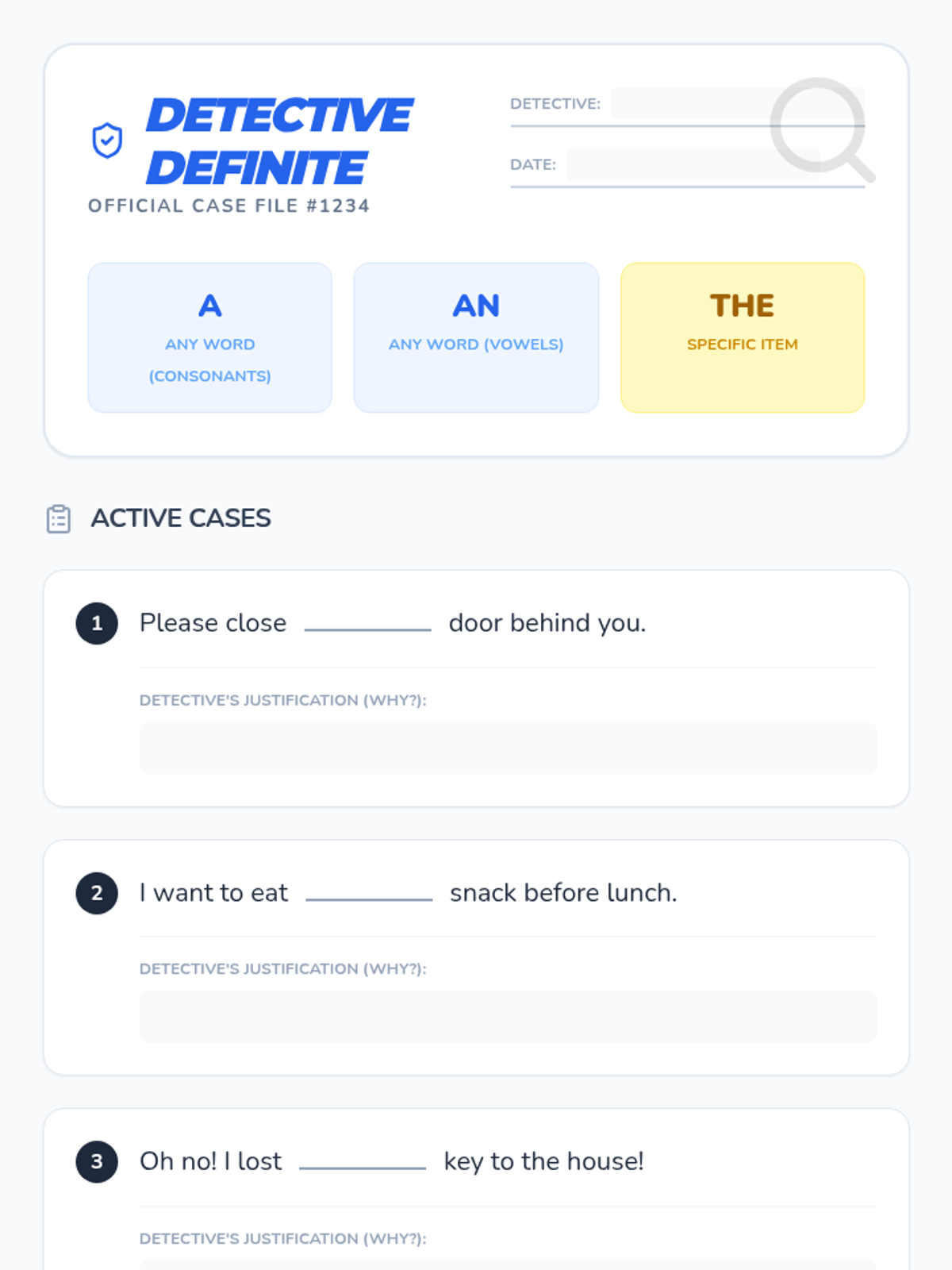
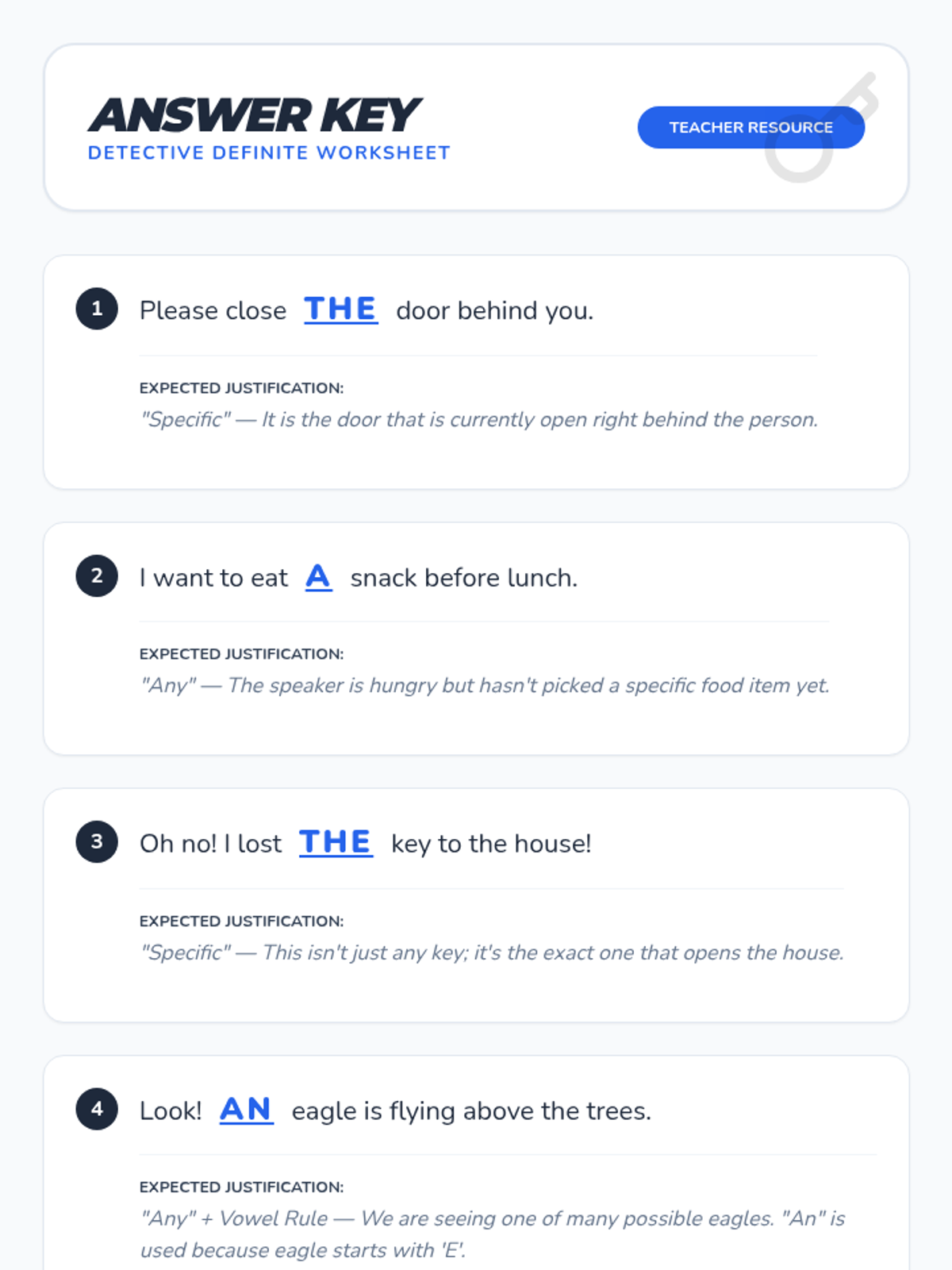
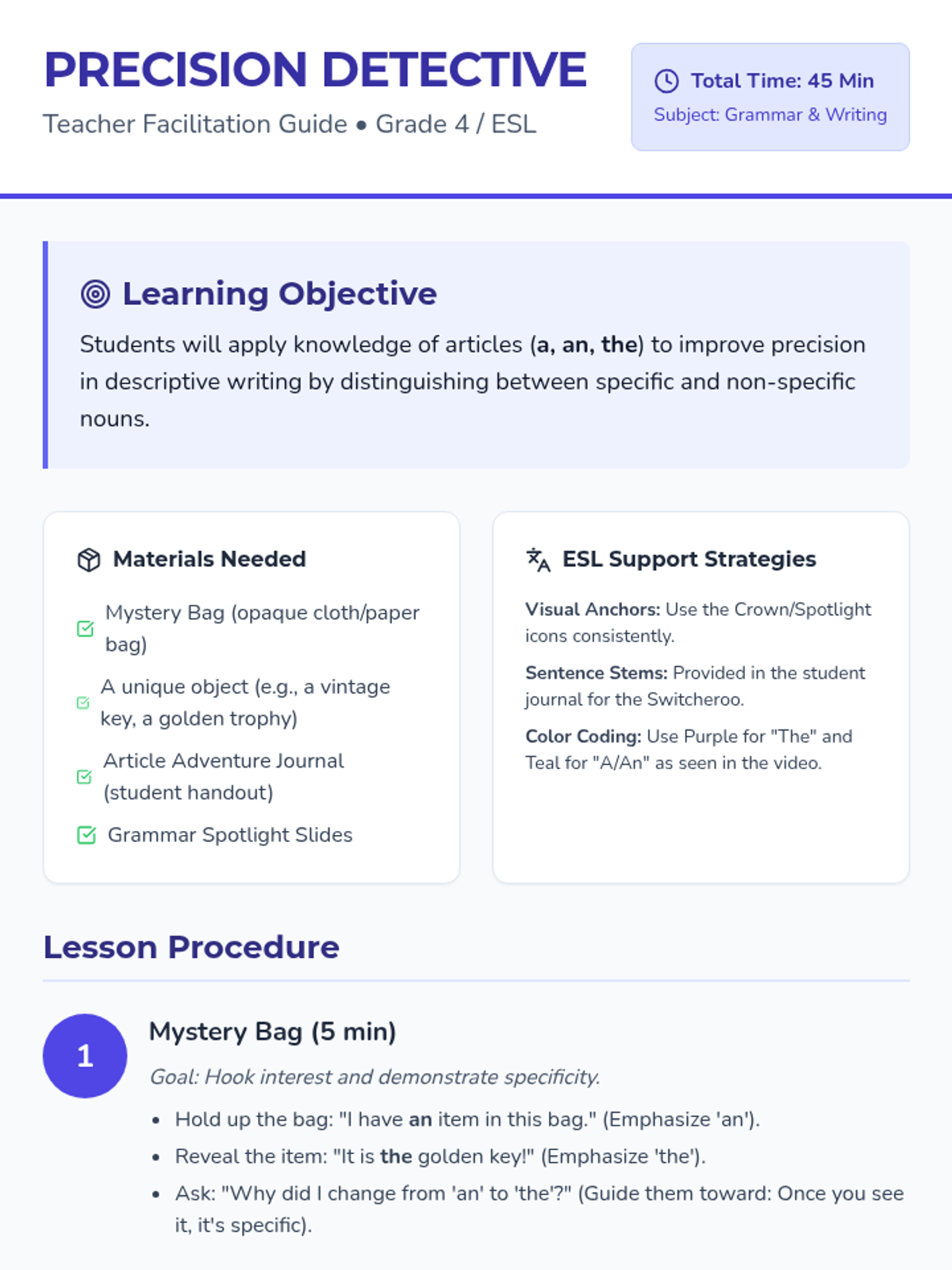
Students learn to distinguish between indefinite (a/an) and definite (the) articles through a hands-on detective activity and role-playing. The lesson uses a detective theme to help students hunt for specific vs. general nouns.
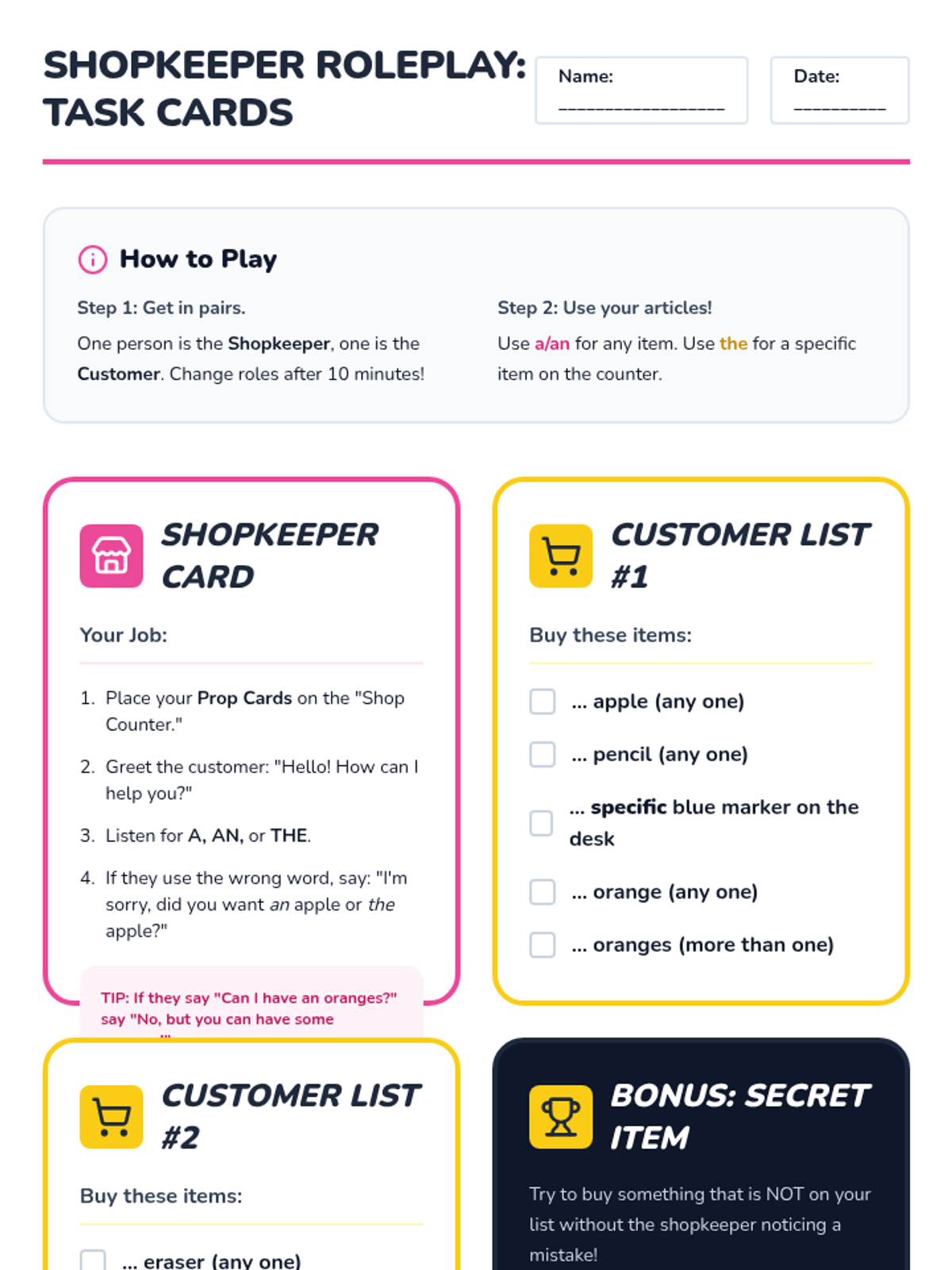
A lesson focused on English articles (a, an, the) through oral requests and a shopkeeper roleplay activity. Students learn to distinguish between specific and non-specific nouns and apply the vowel-sound rule for indefinite articles.
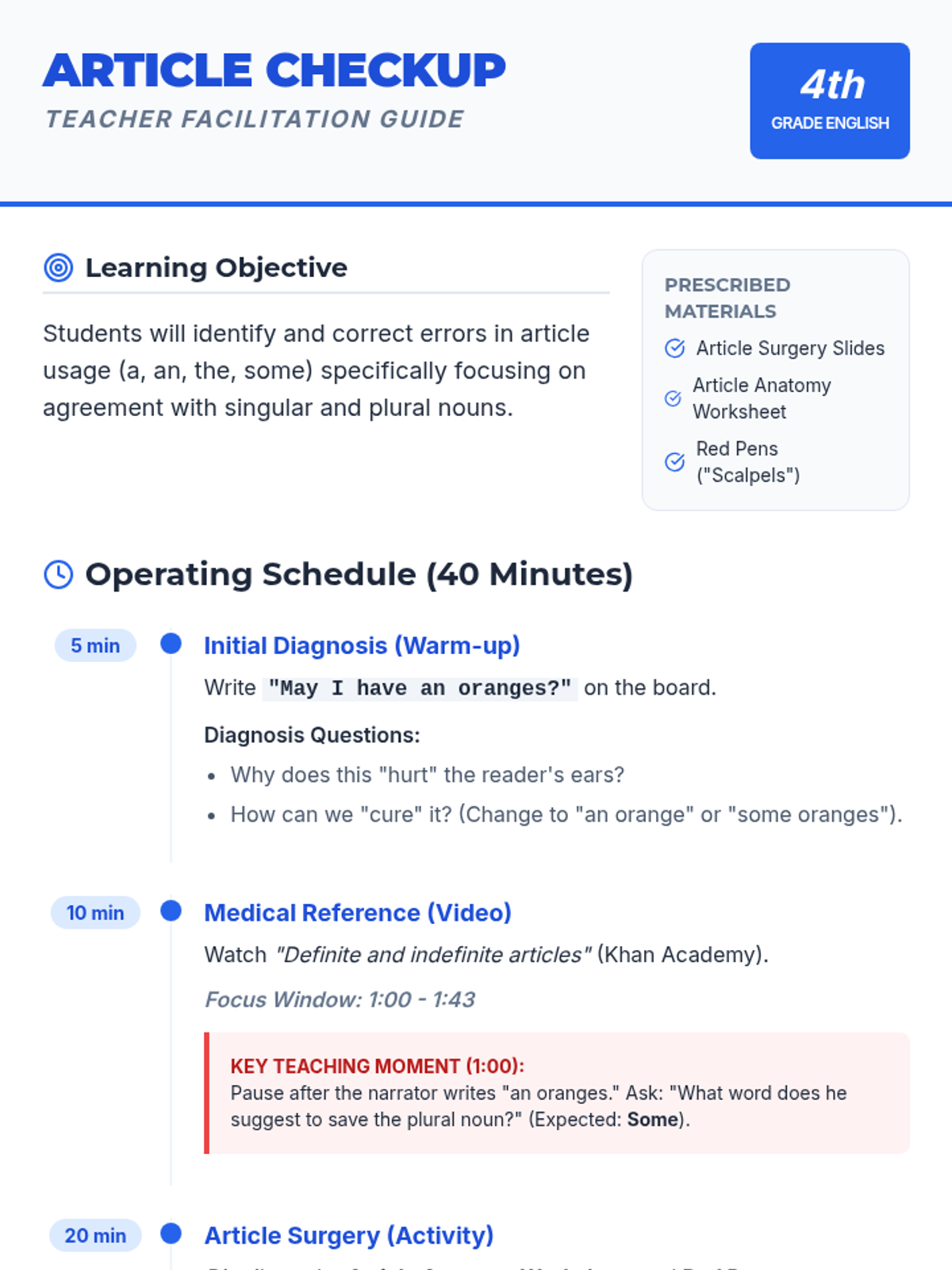
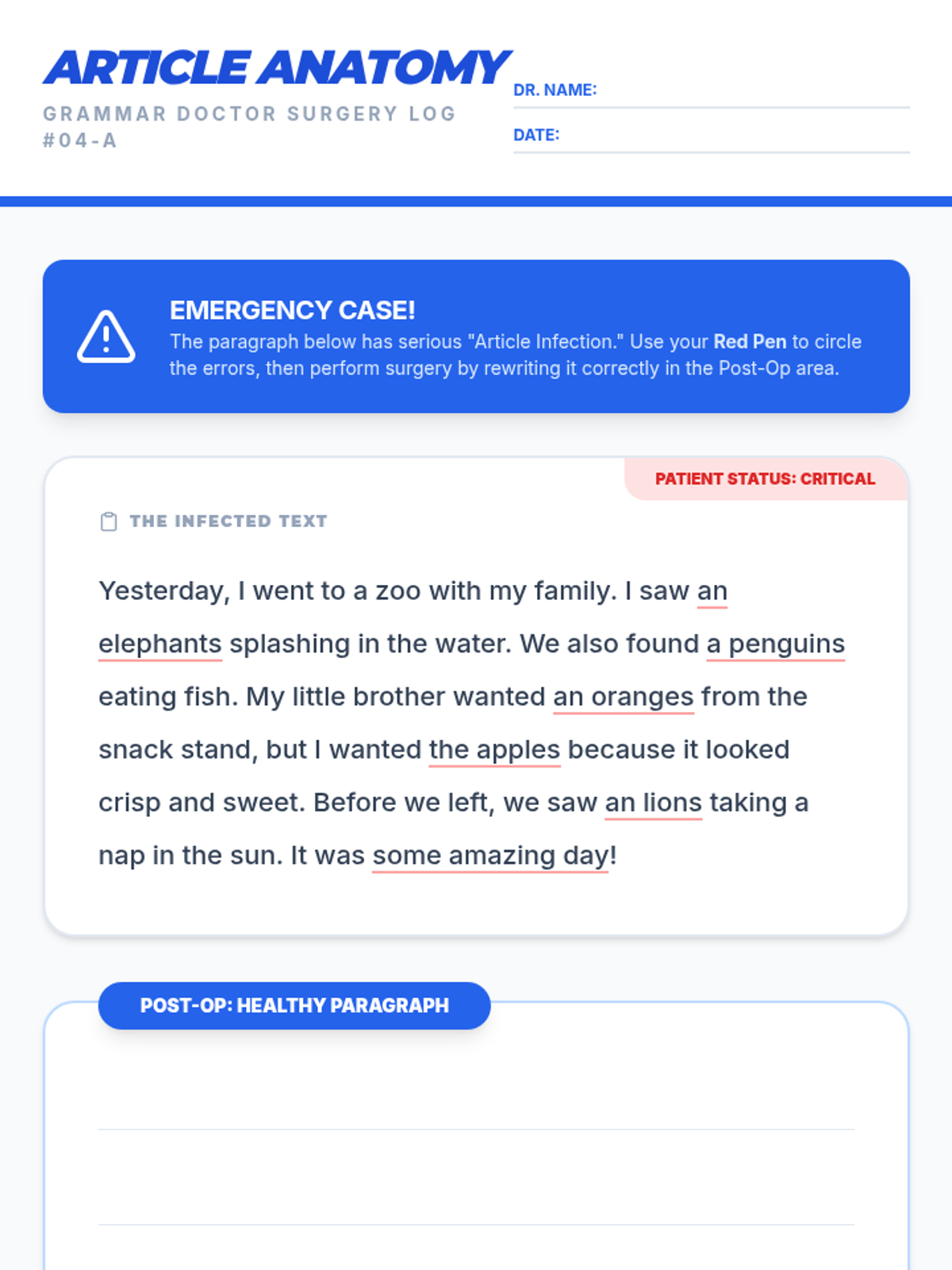
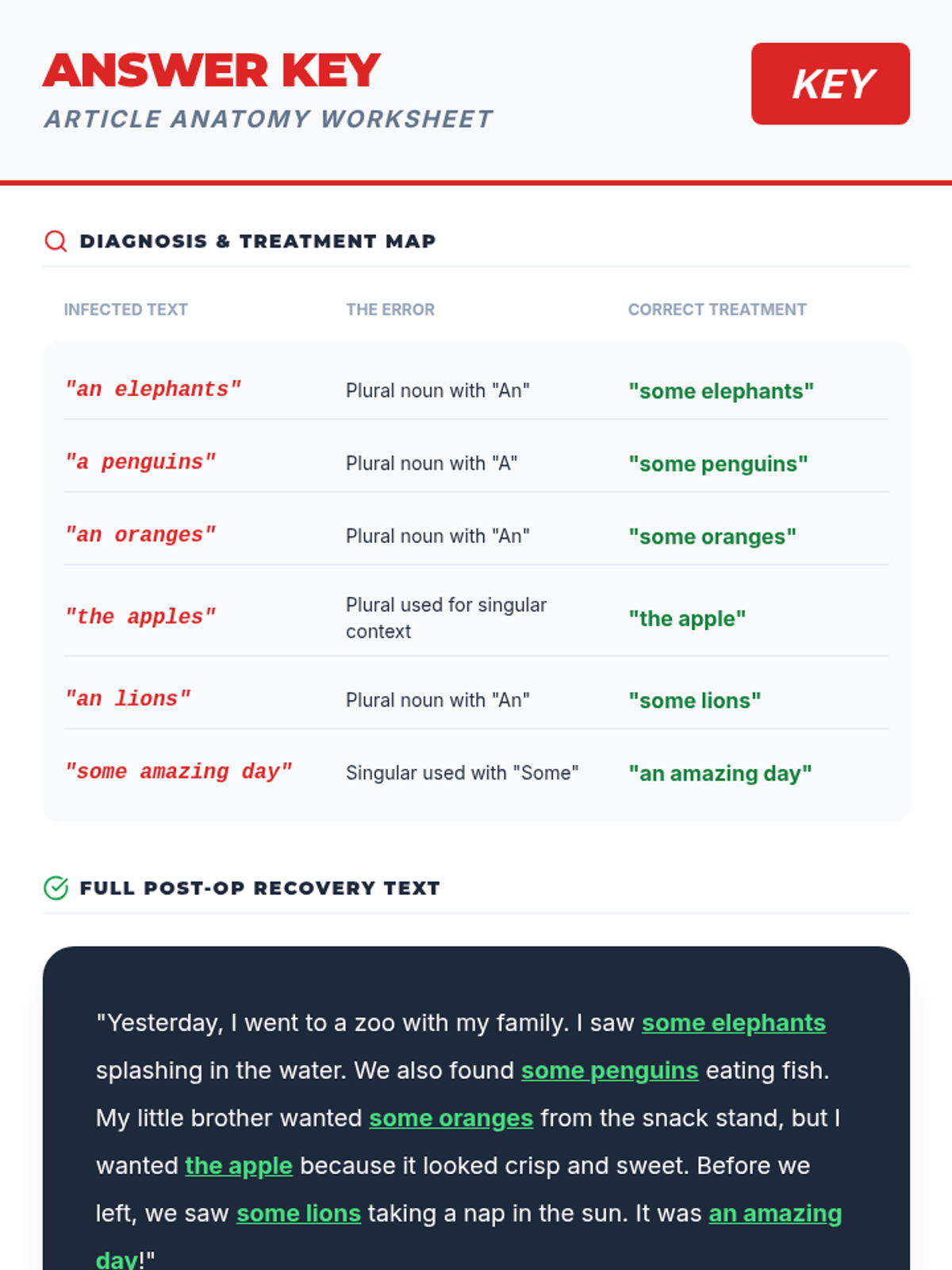
A medical-themed grammar lesson where students act as 'Grammar Doctors' to diagnose and treat incorrect article usage with singular and plural nouns. Students use a Khan Academy video as their medical reference to perform 'surgery' on a paragraph riddled with errors.
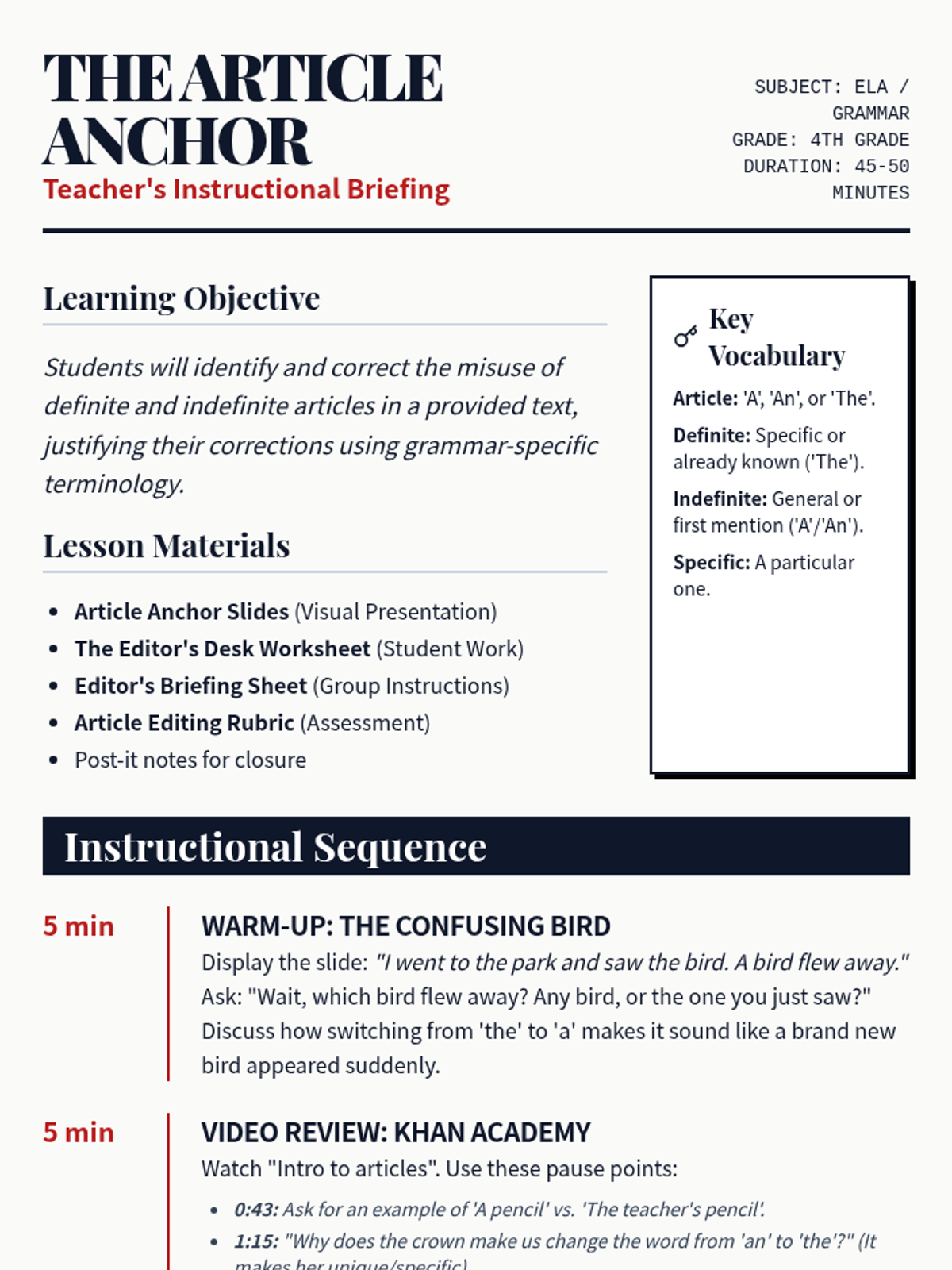
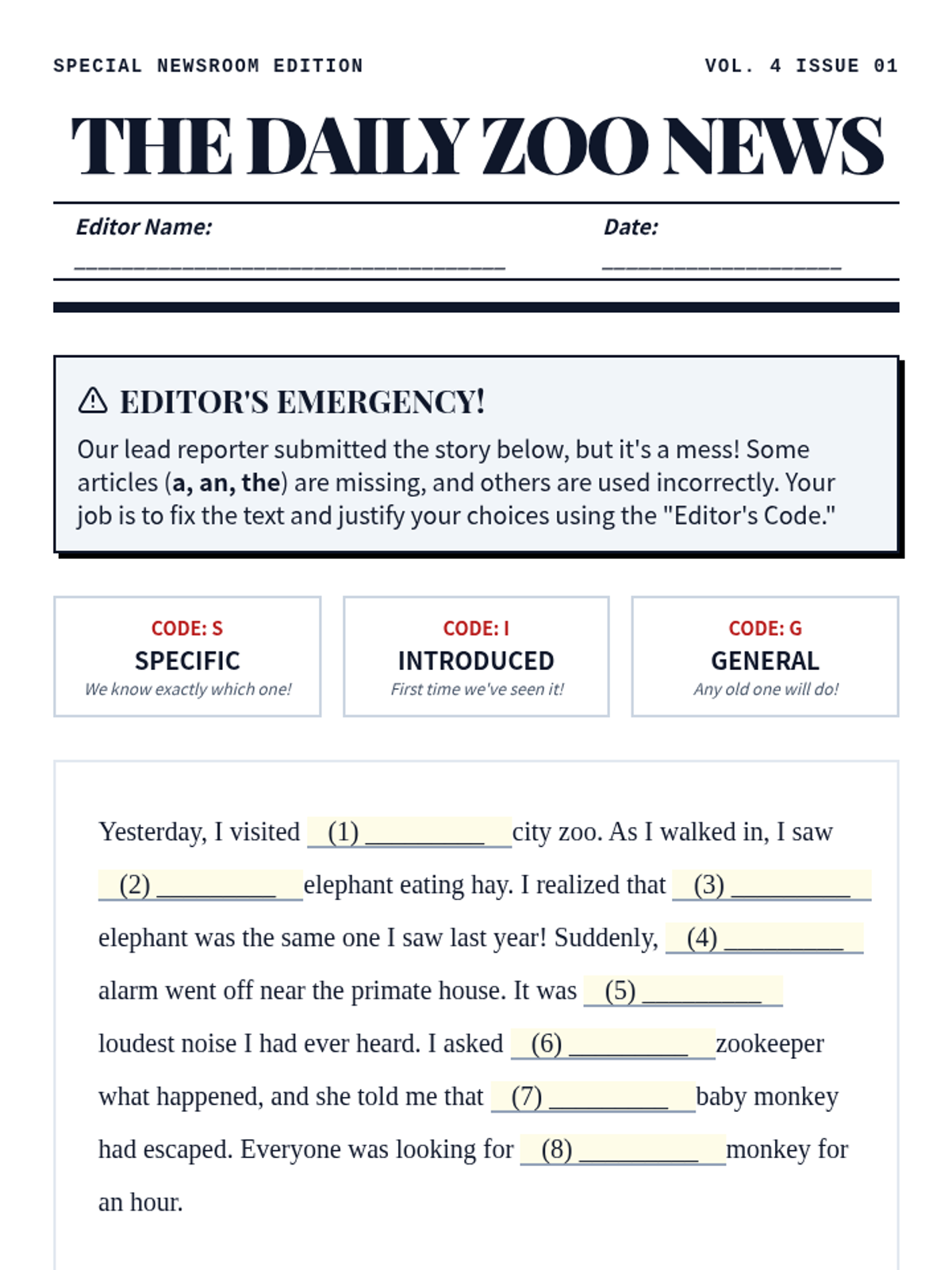
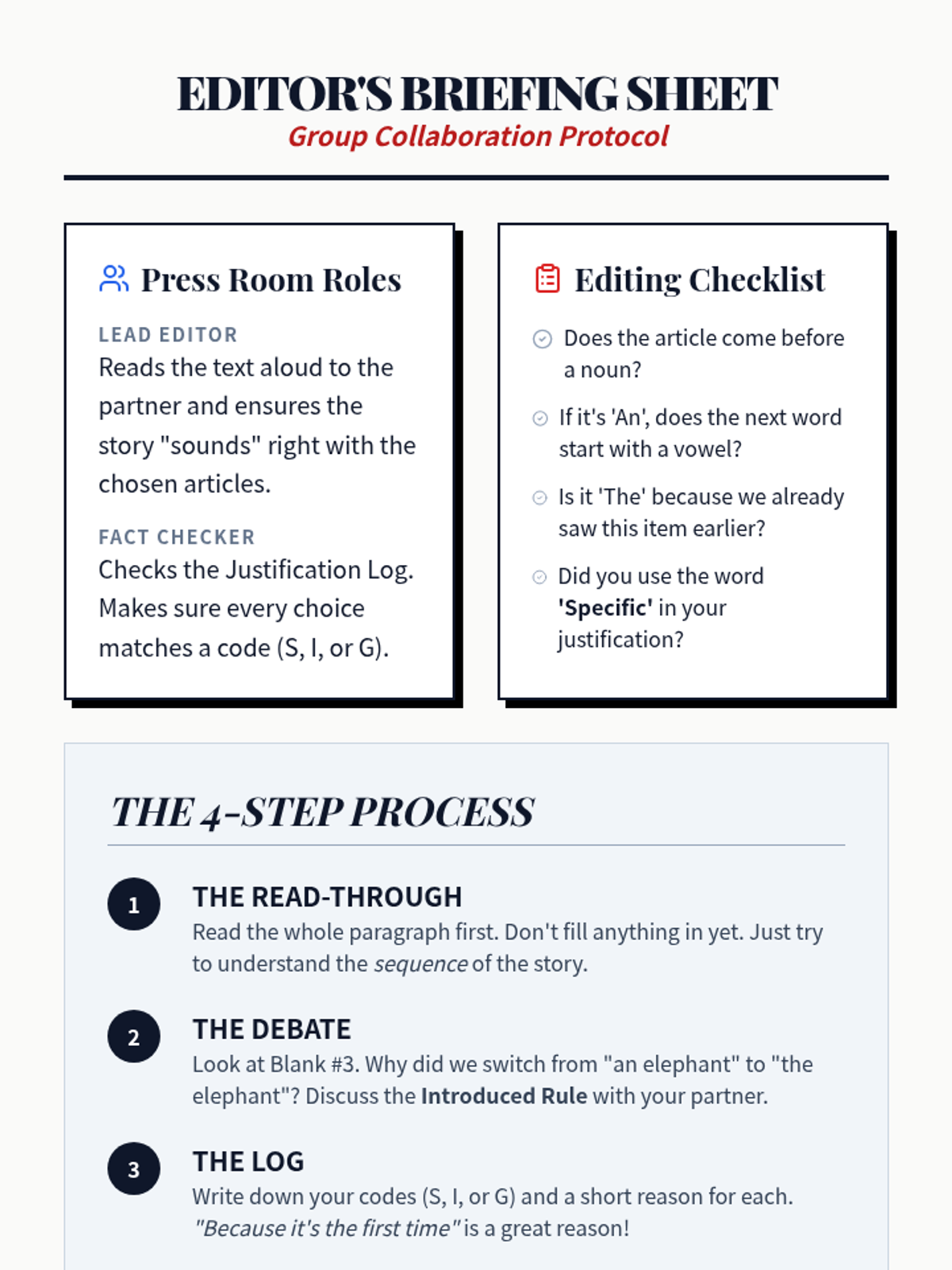
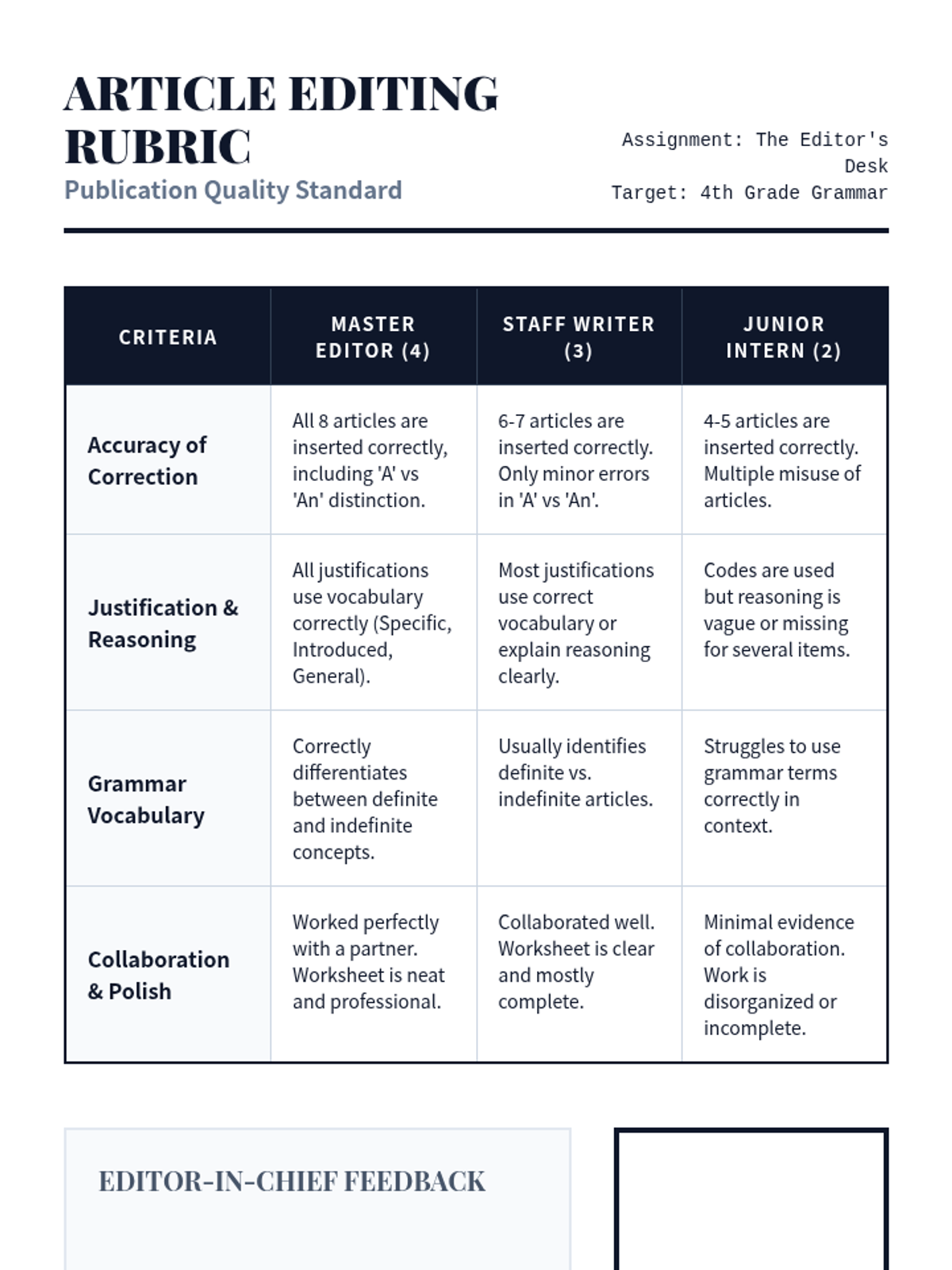
A journalism-themed lesson where students become editors to master the use of definite and indefinite articles through a zoo-themed editing challenge.
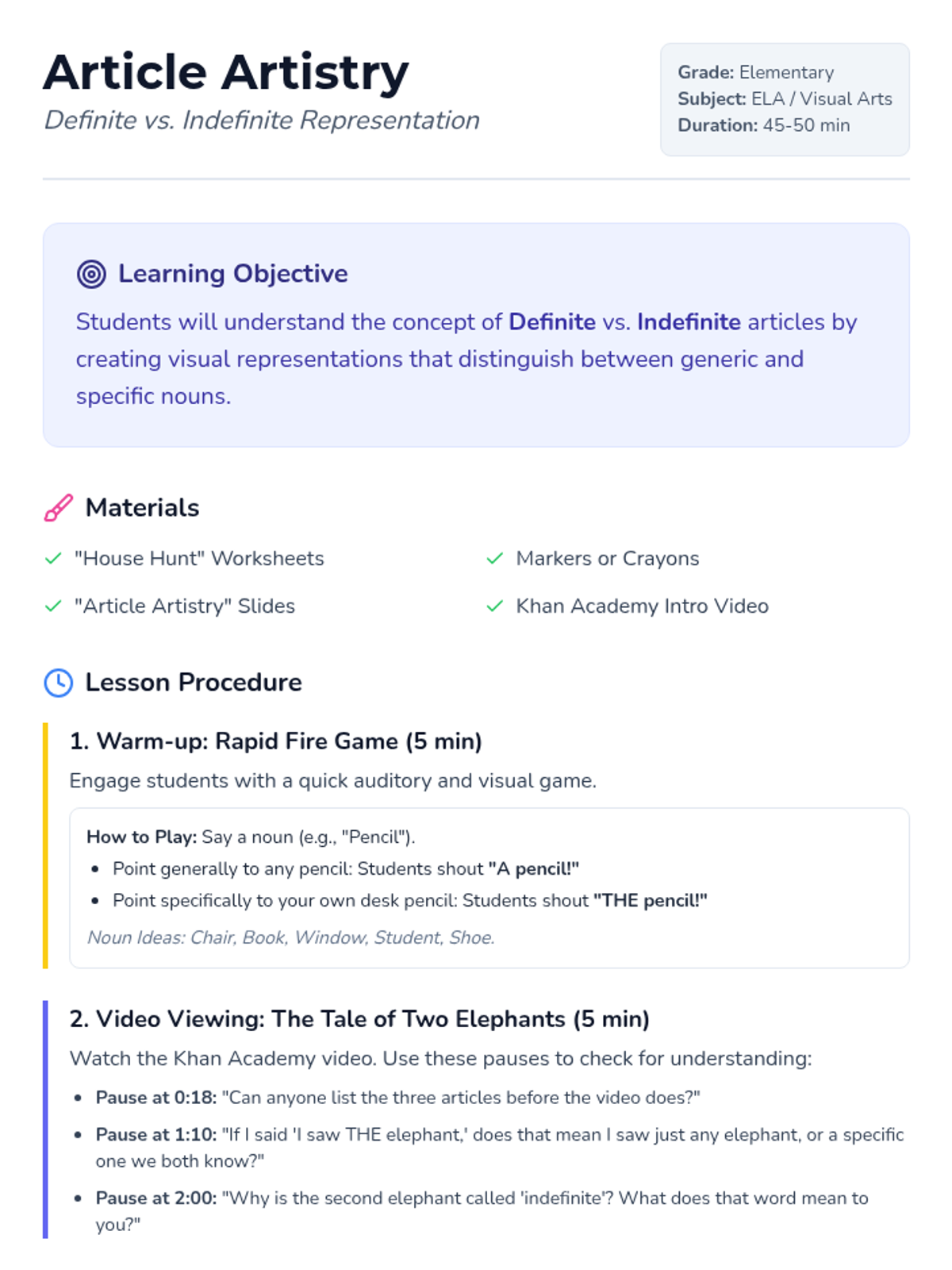
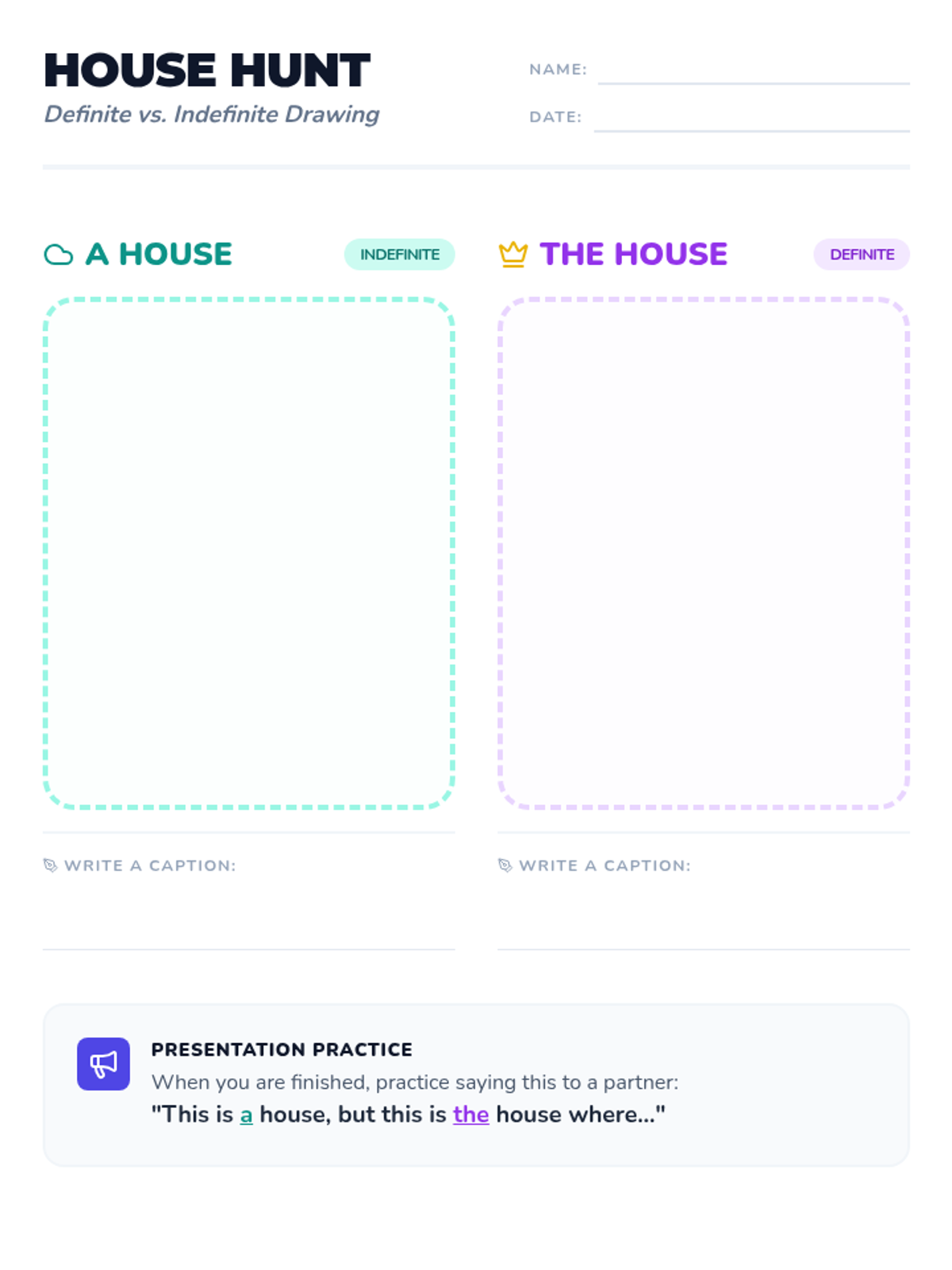
An art-integrated grammar lesson where students explore the difference between definite (the) and indefinite (a/an) articles by drawing generic and specific houses. Includes a video-based discussion and a rapid-fire game.
A lesson for 4th grade and ESL students focusing on the precision of definite and indefinite articles (a, an, the) through interactive storytelling and visual analysis.
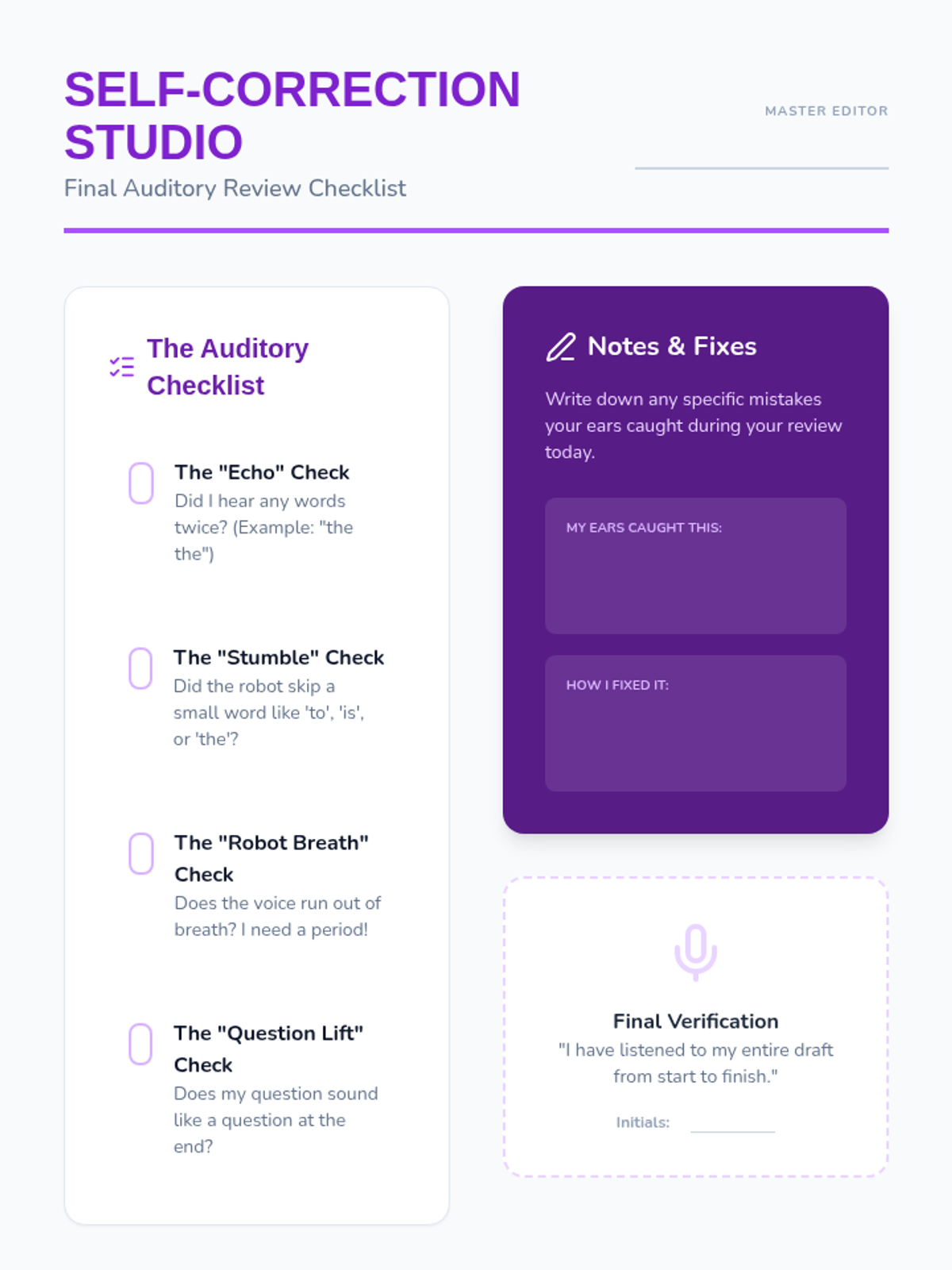
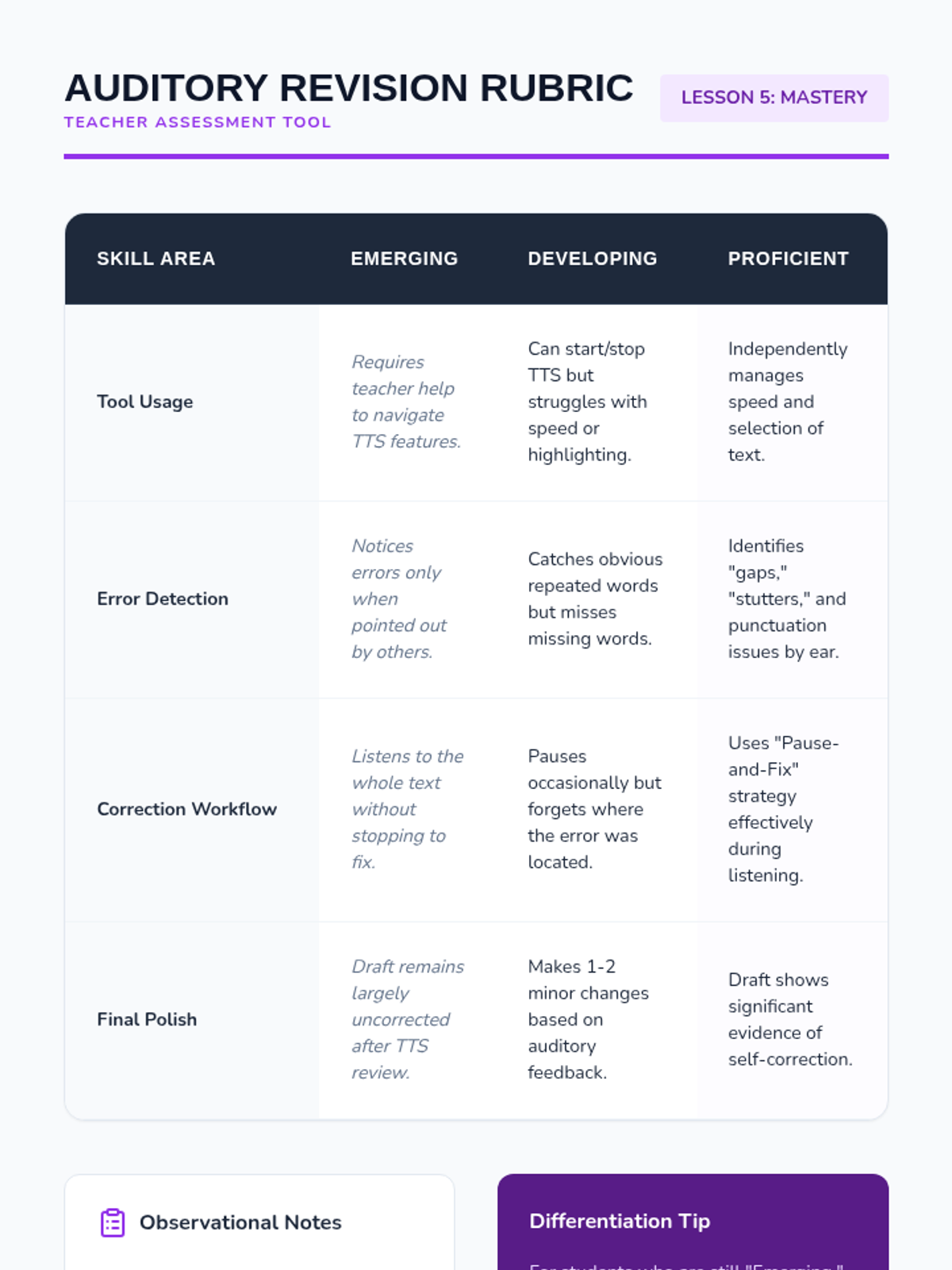
Students apply their TTS revision skills to their own writing. They perform a final auditory review of a personal draft to catch any remaining errors before submission.
Students practice the workflow of using TTS alongside a paper copy to edit a provided rough draft. They learn to mark corrections on paper while the computer reads the text digitally.
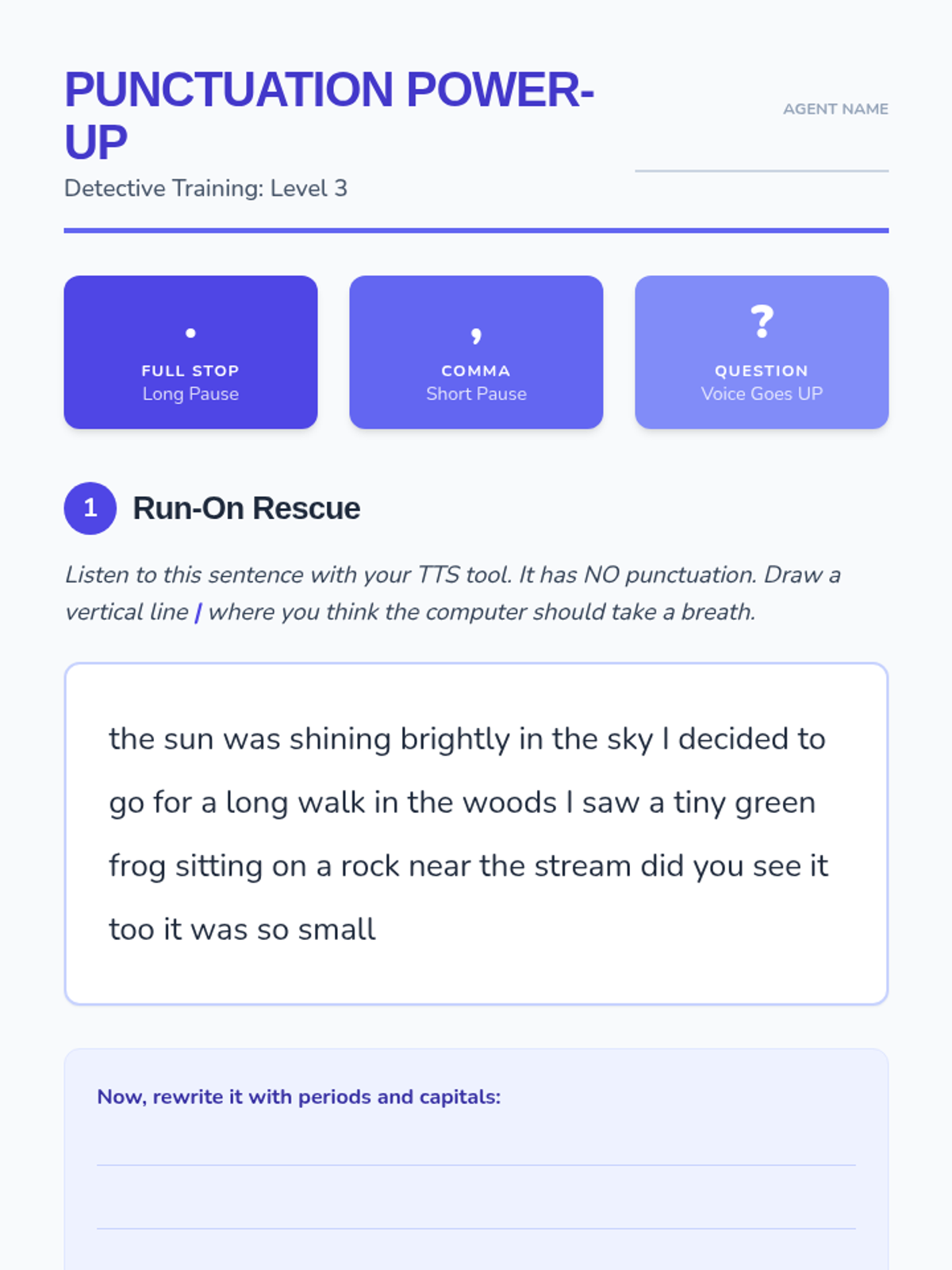
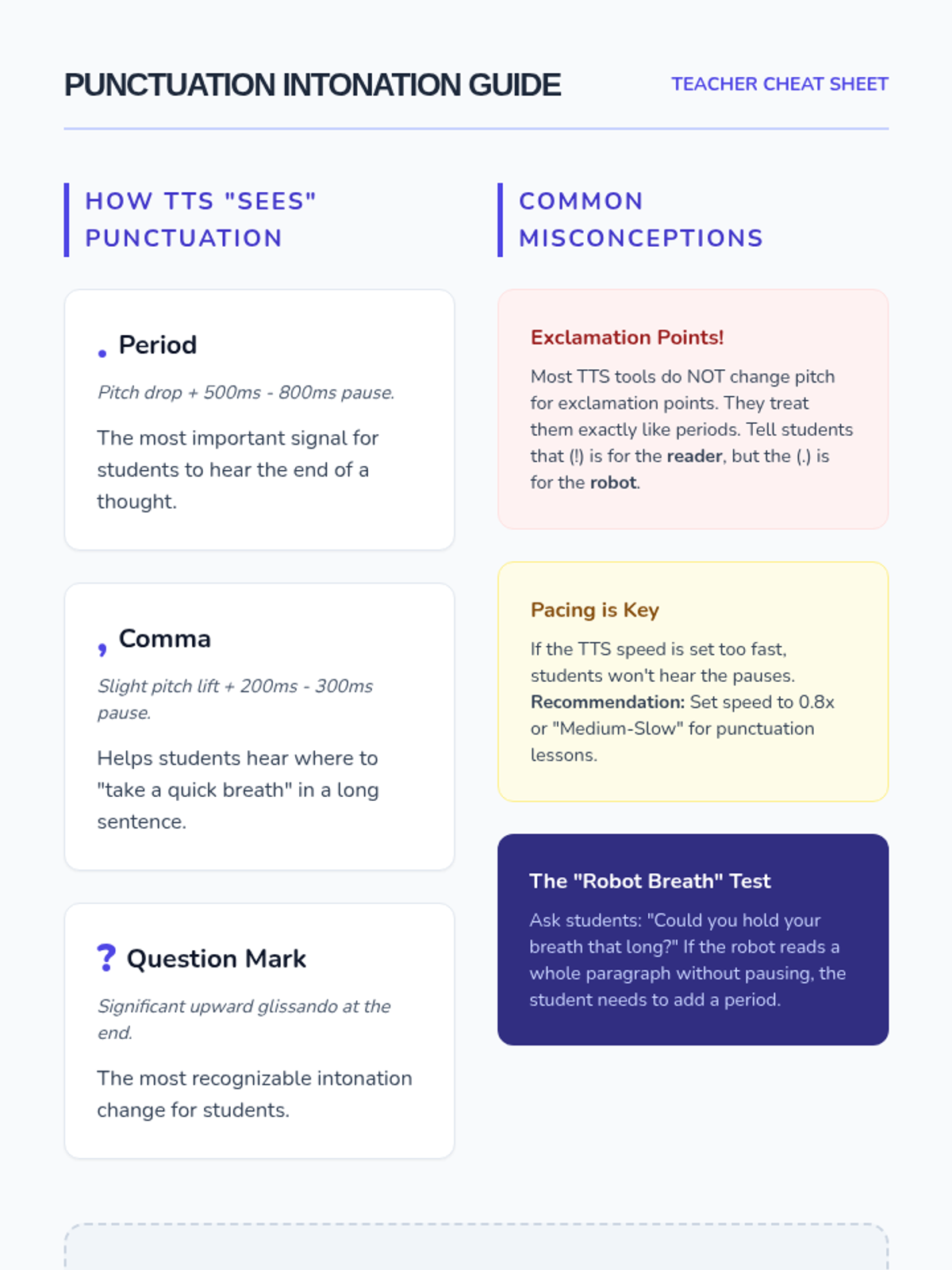
Students explore how TTS software uses intonation to signal punctuation. They learn to identify run-on sentences by listening for the "robot breath" (lack of pauses) and inserting necessary punctuation.
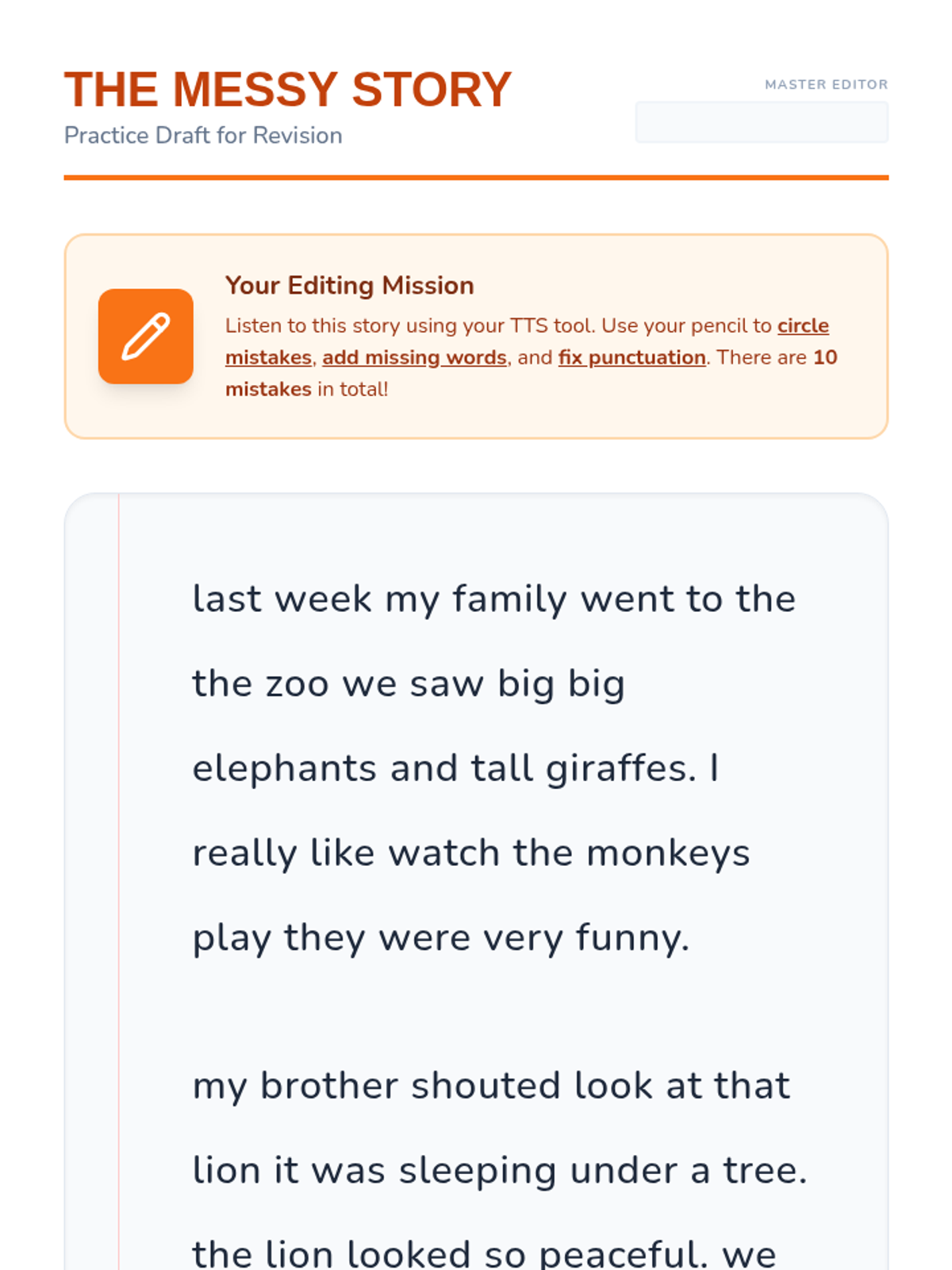
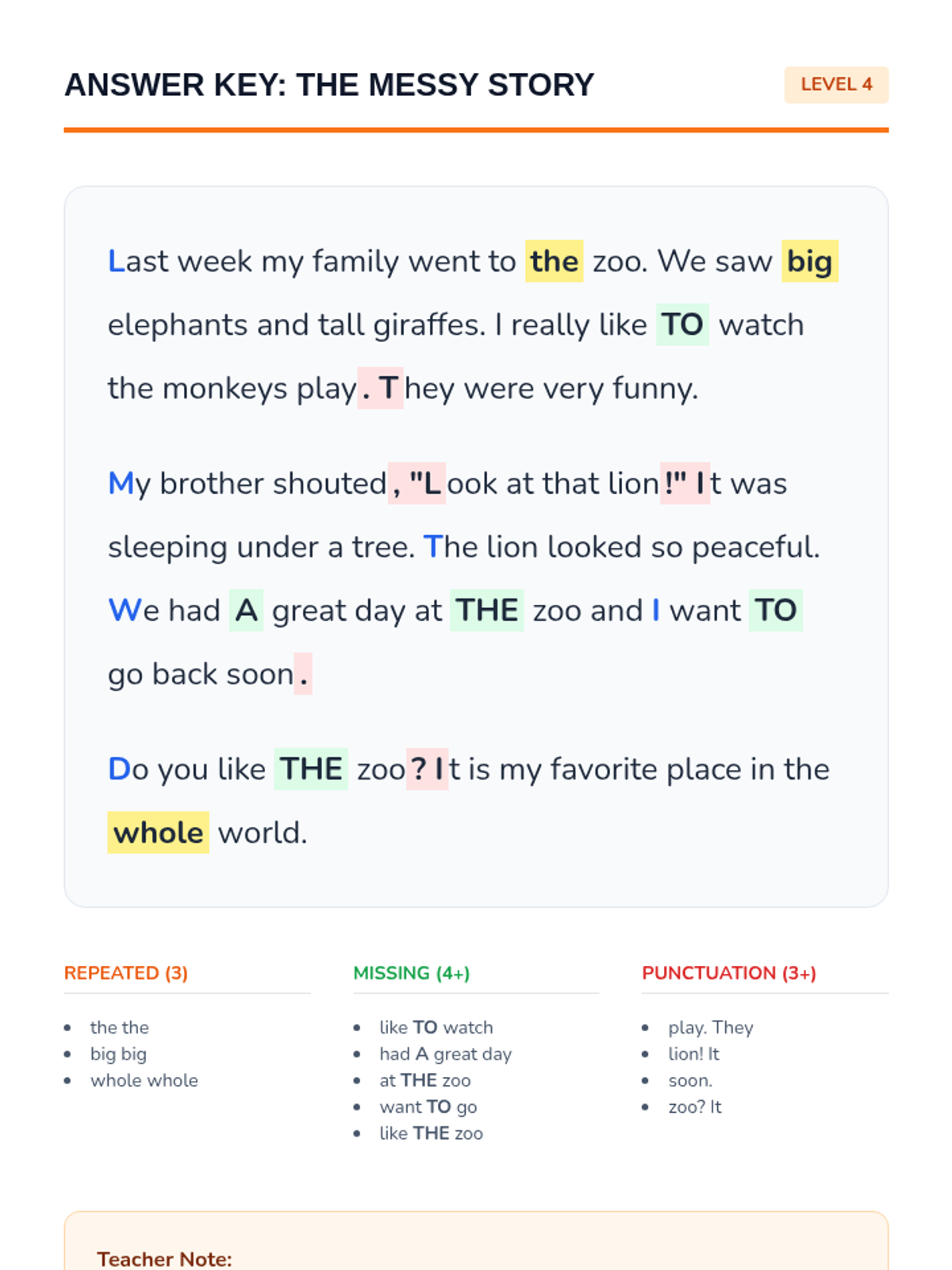
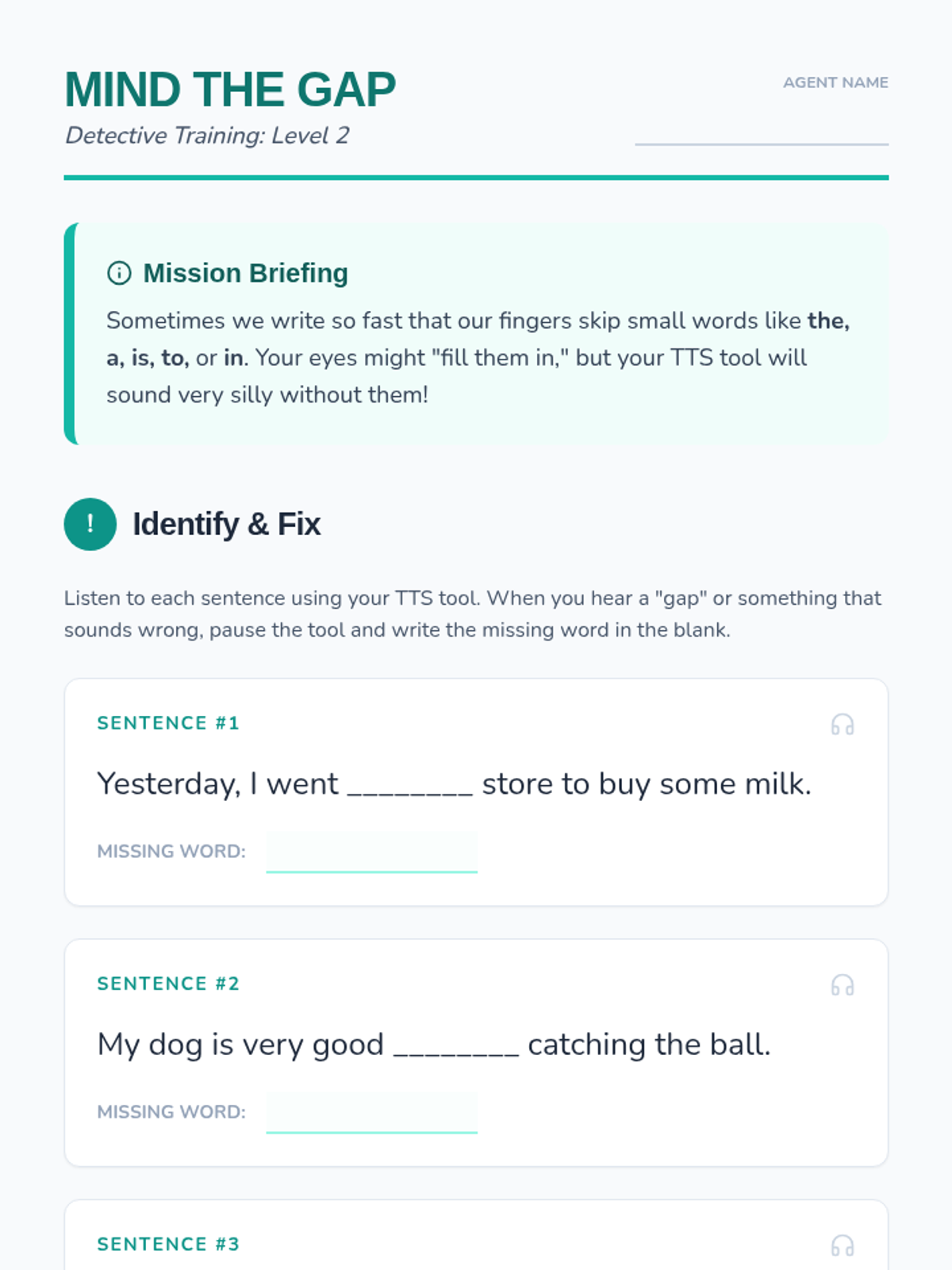
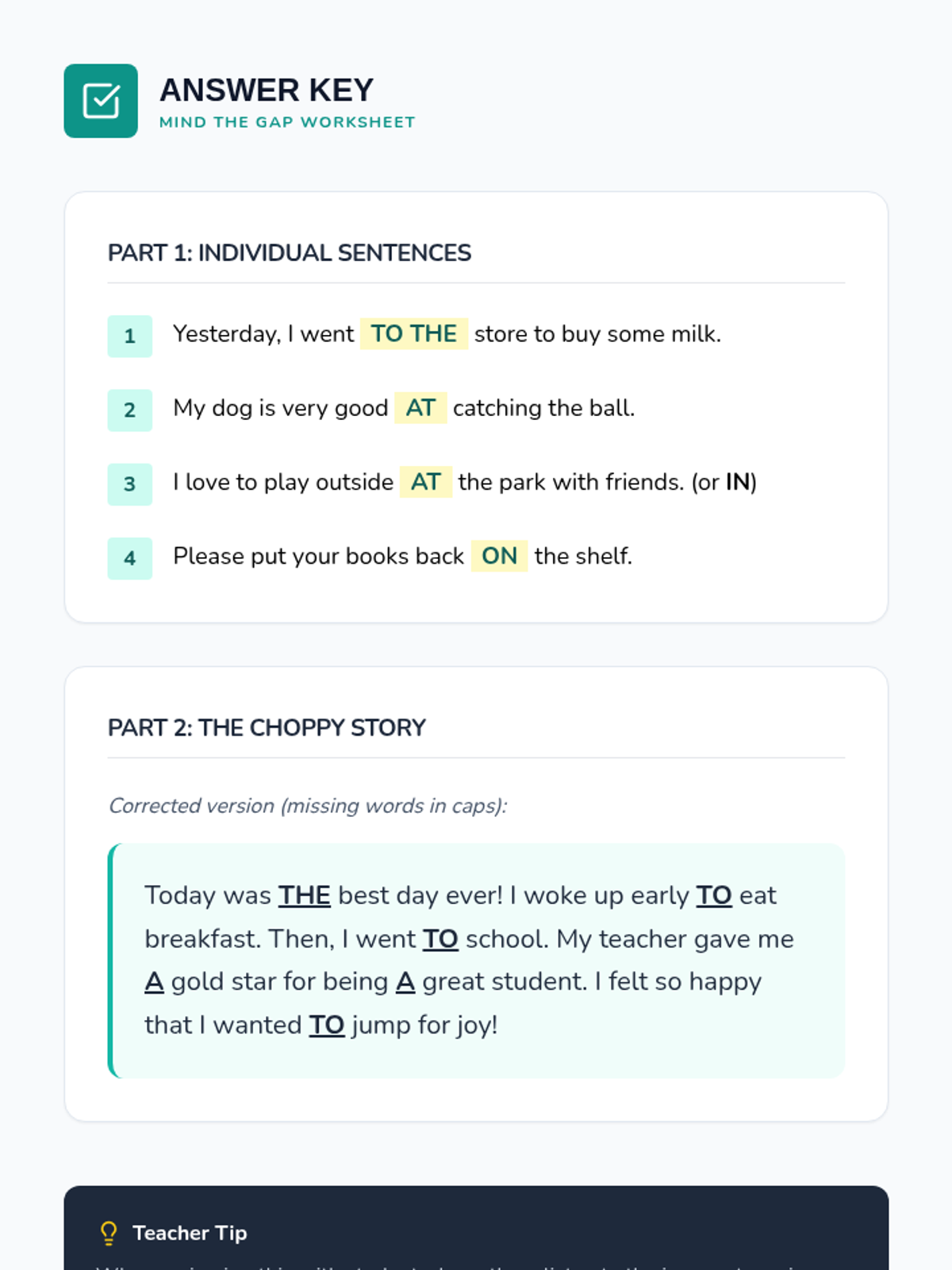
Students use TTS to identify missing small words (articles, prepositions) in sentences. They practice active listening and pausing the software at the exact moment an error is heard.
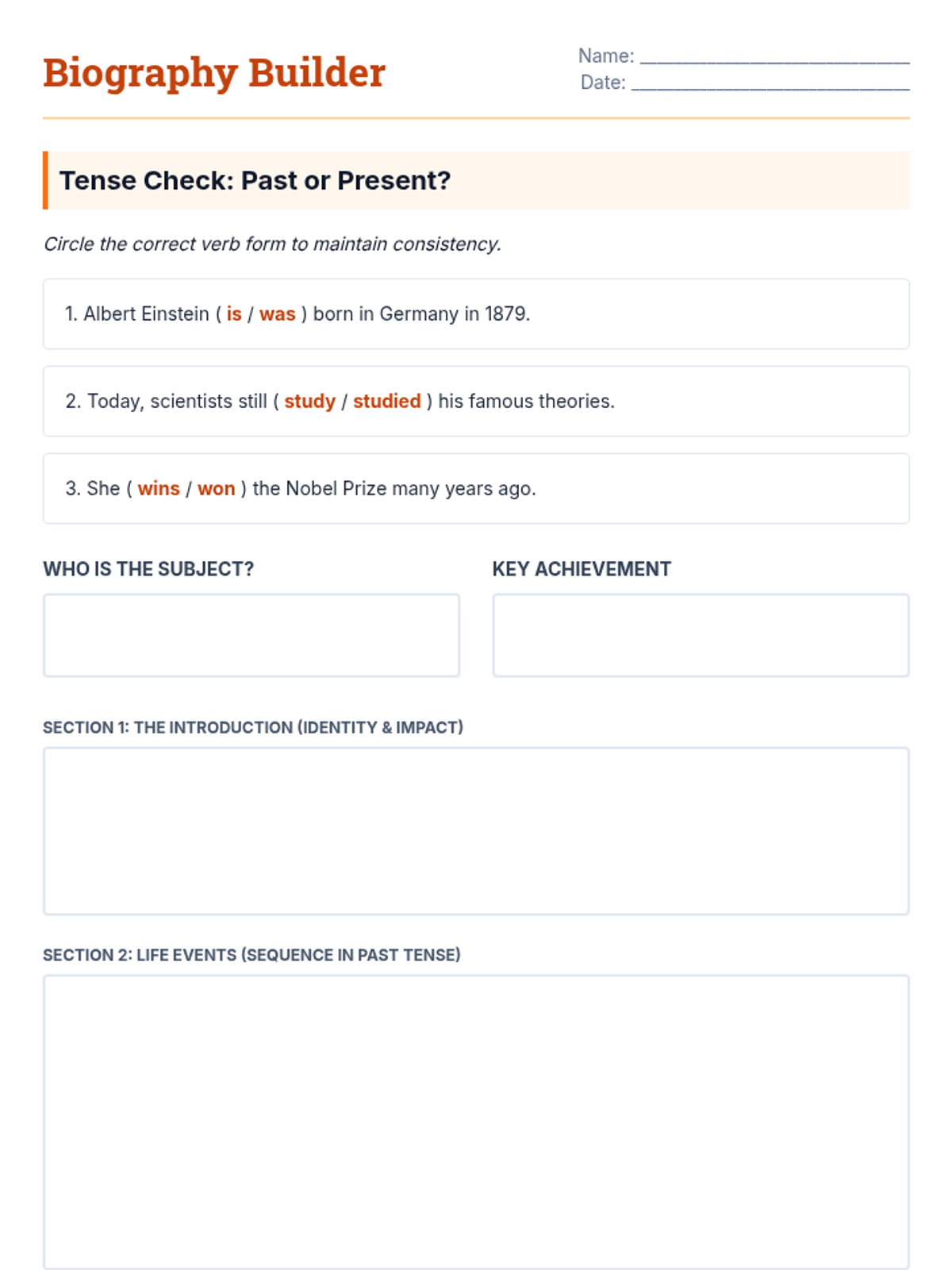
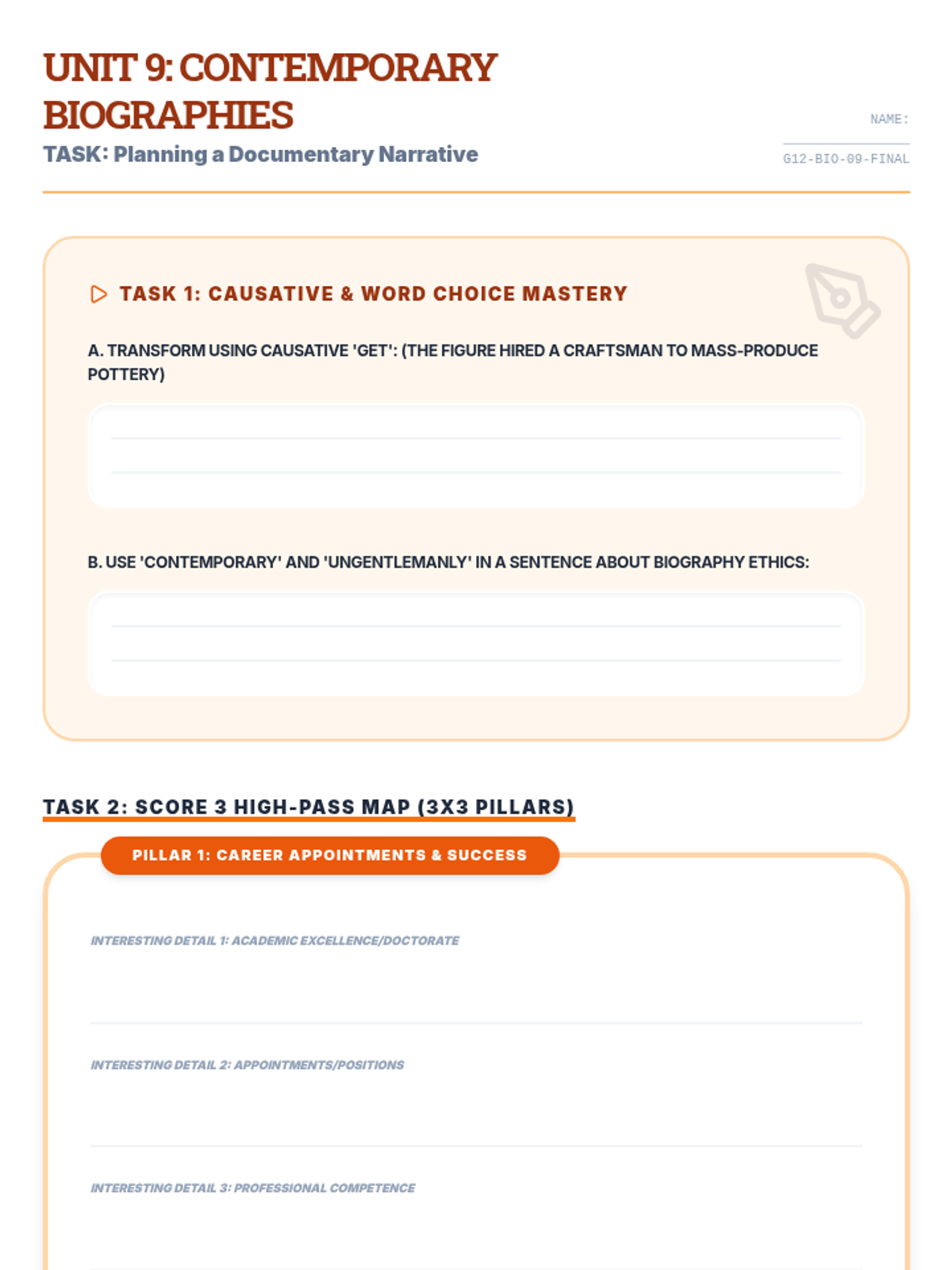
Explores the lives of historical figures through biography writing, emphasizing tense consistency and logical life-event sequencing.
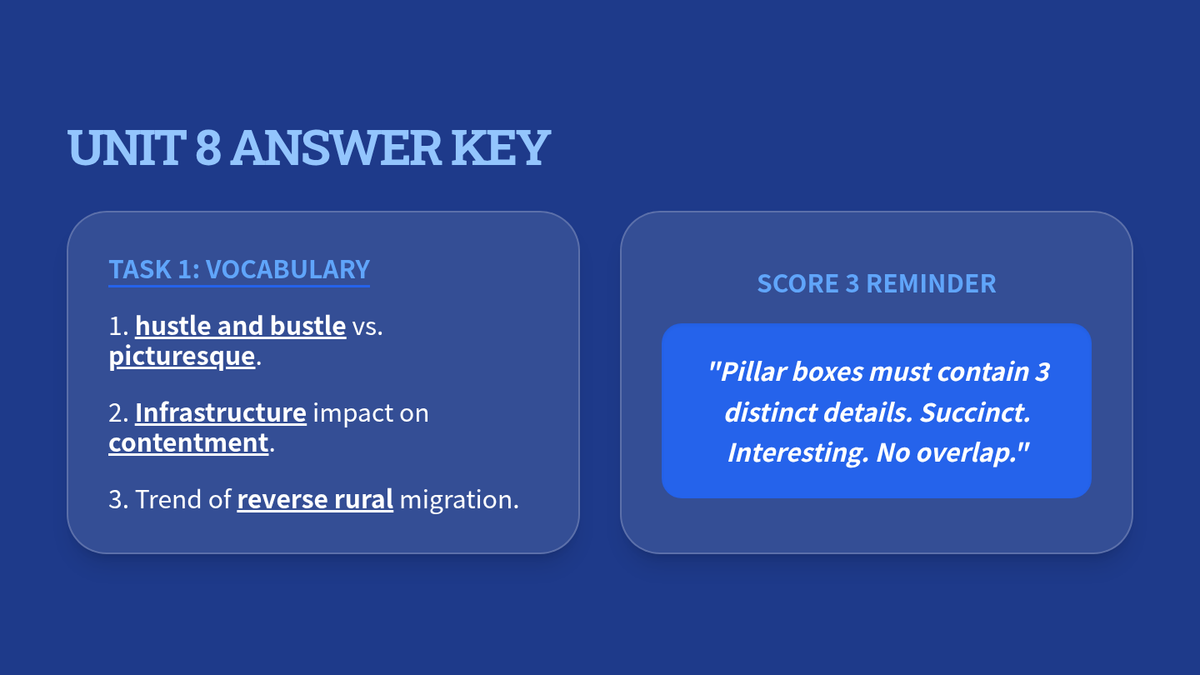
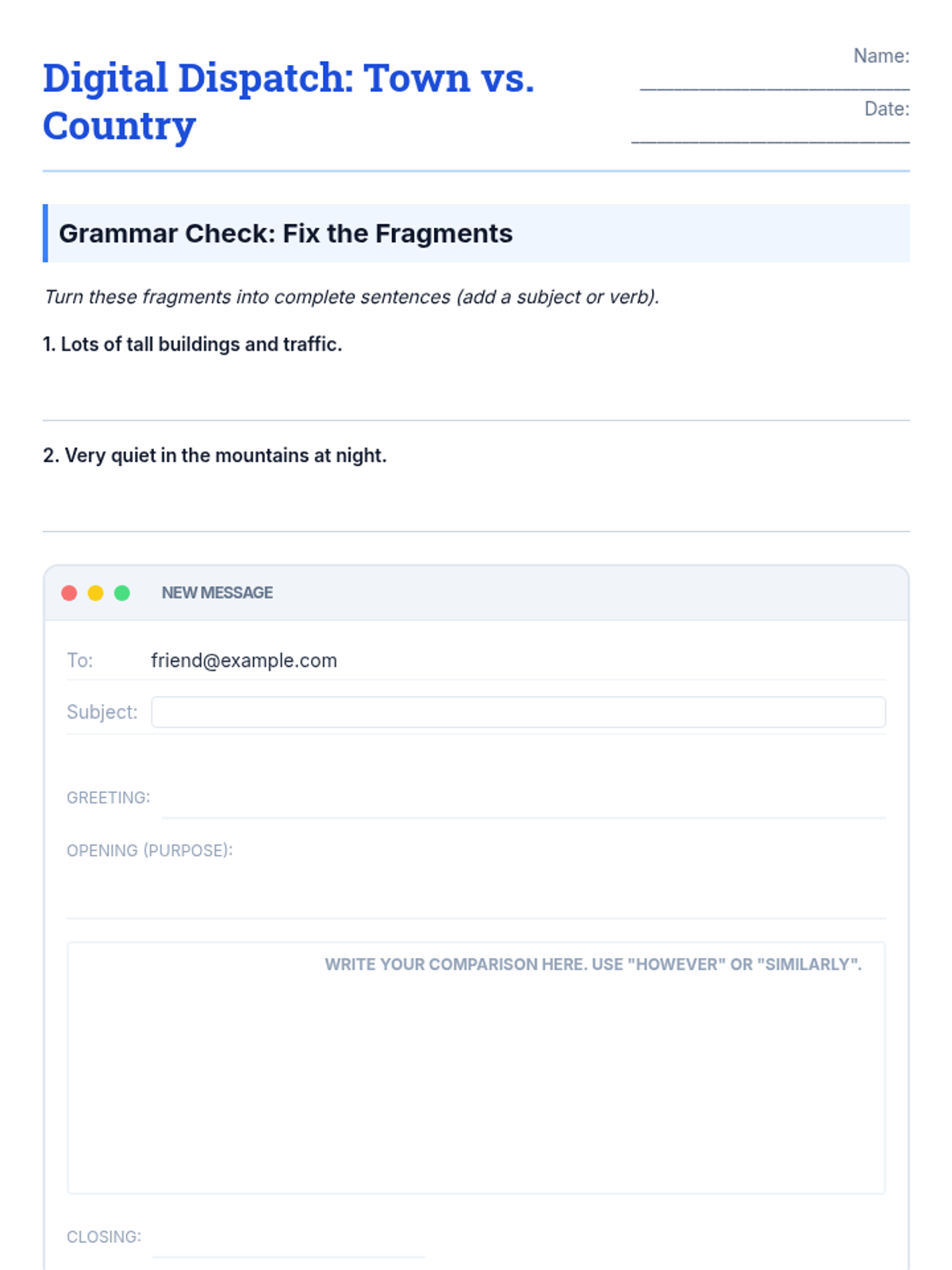
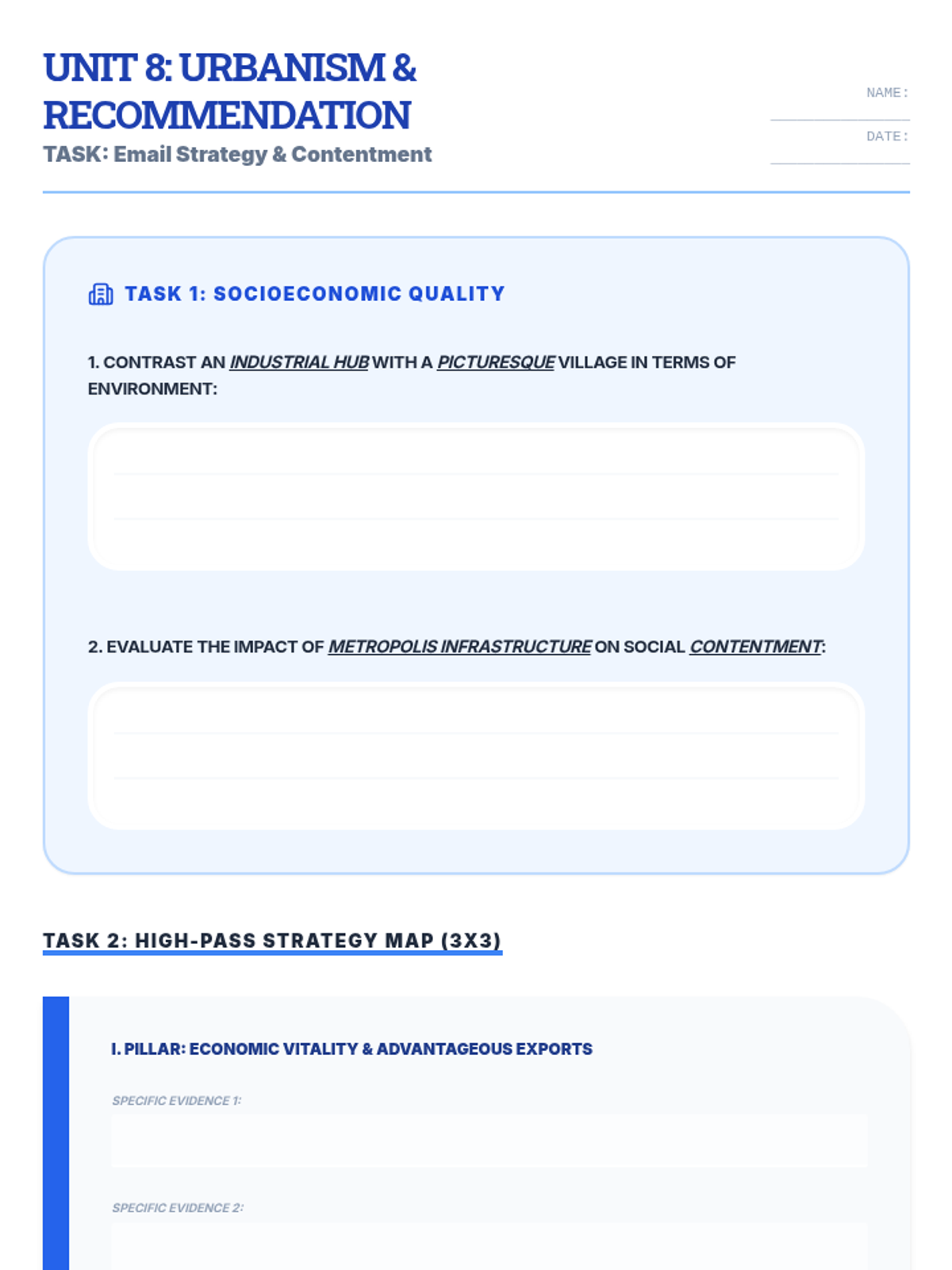
Teaches email etiquette and structure through a comparison of urban and rural life, focusing on sentence fragments and transitional words for comparison.
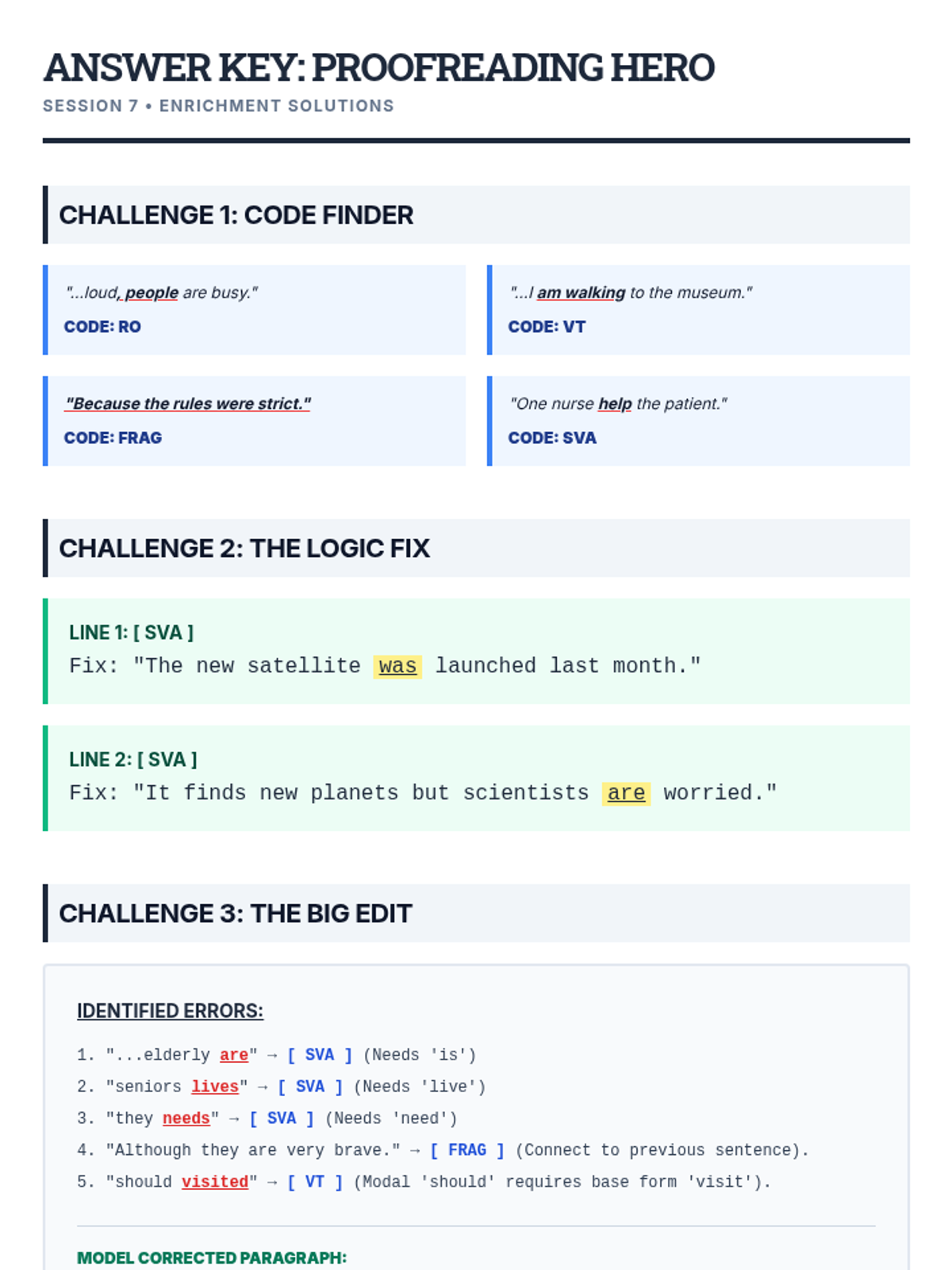
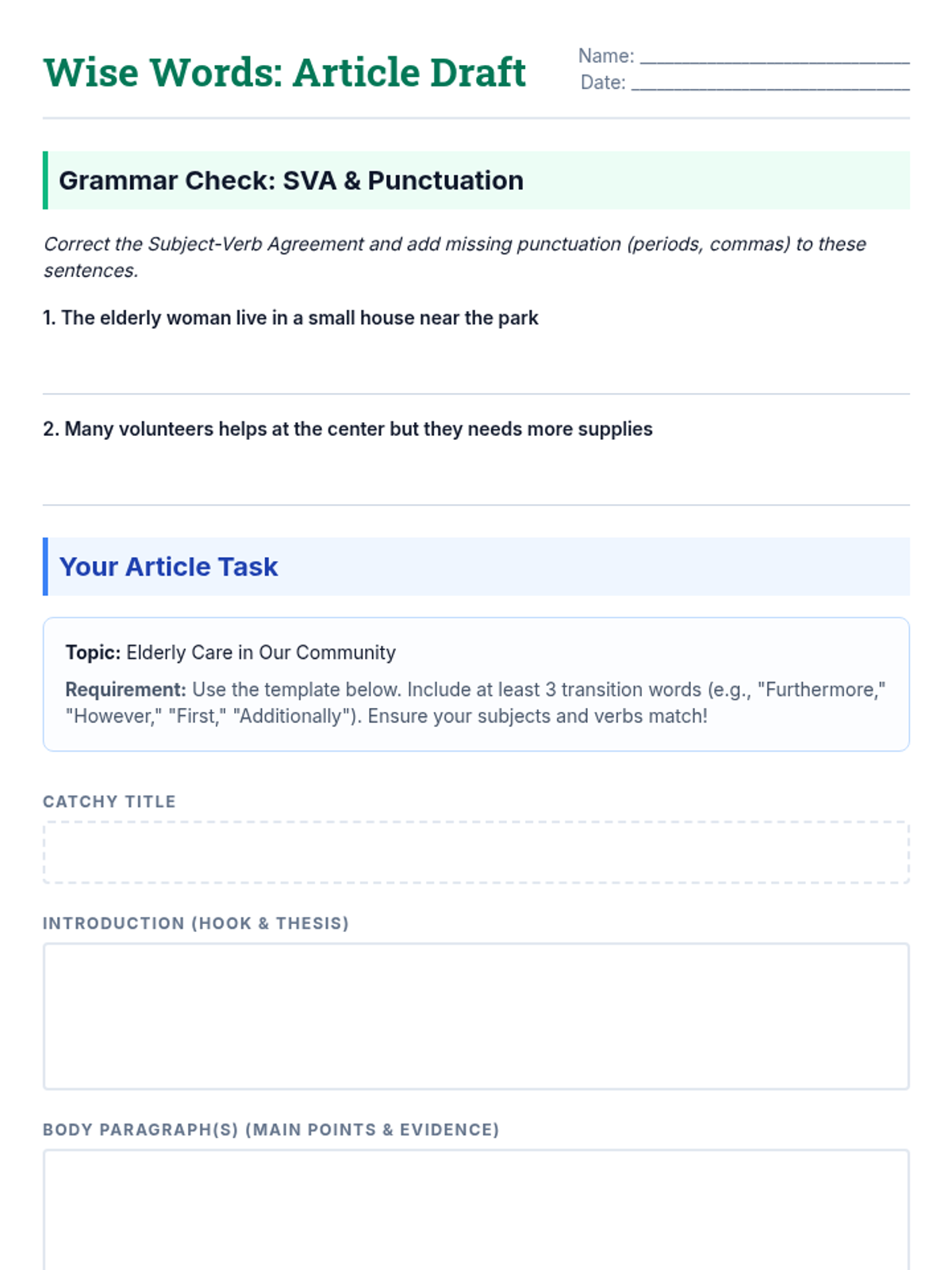
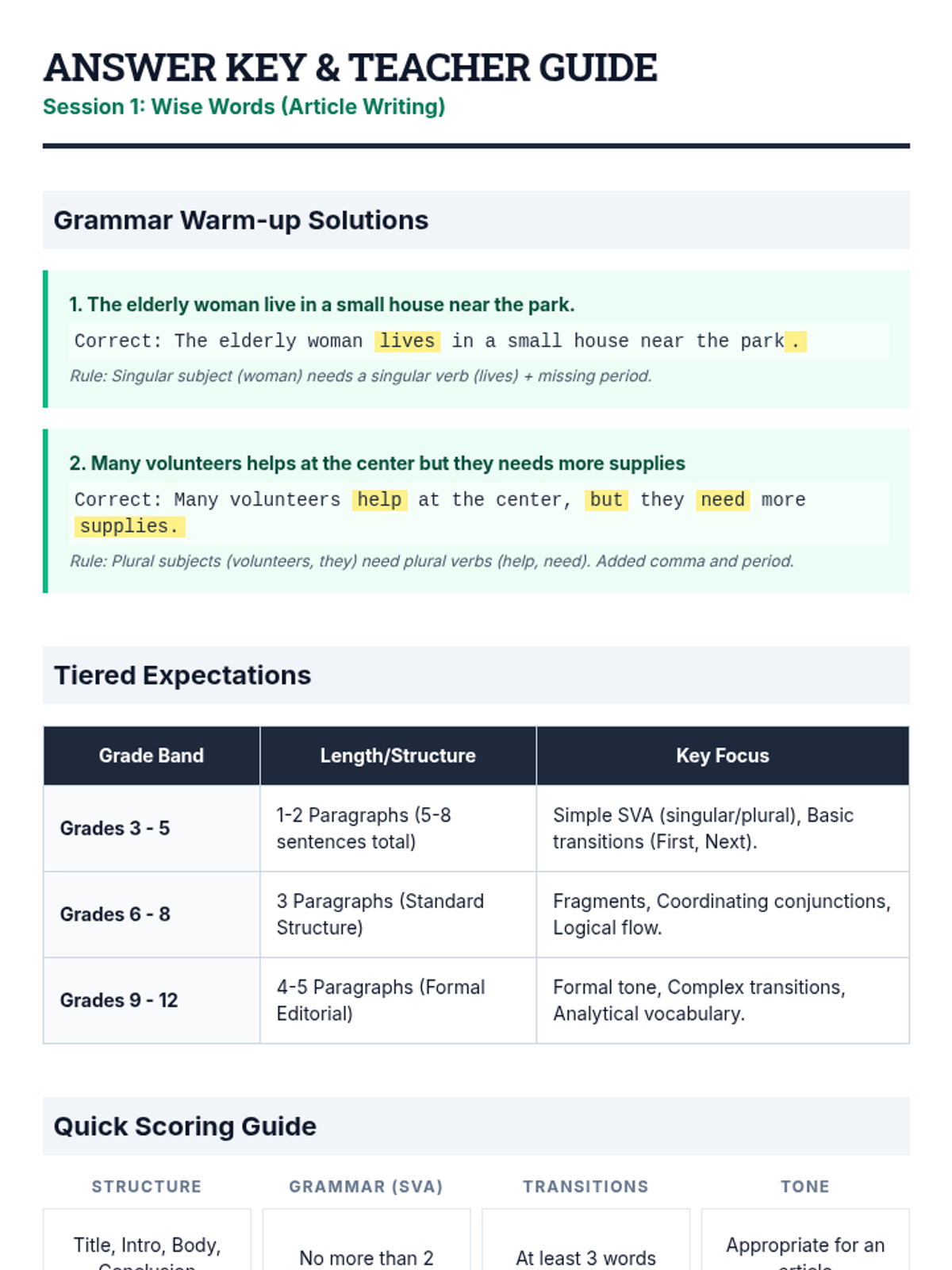
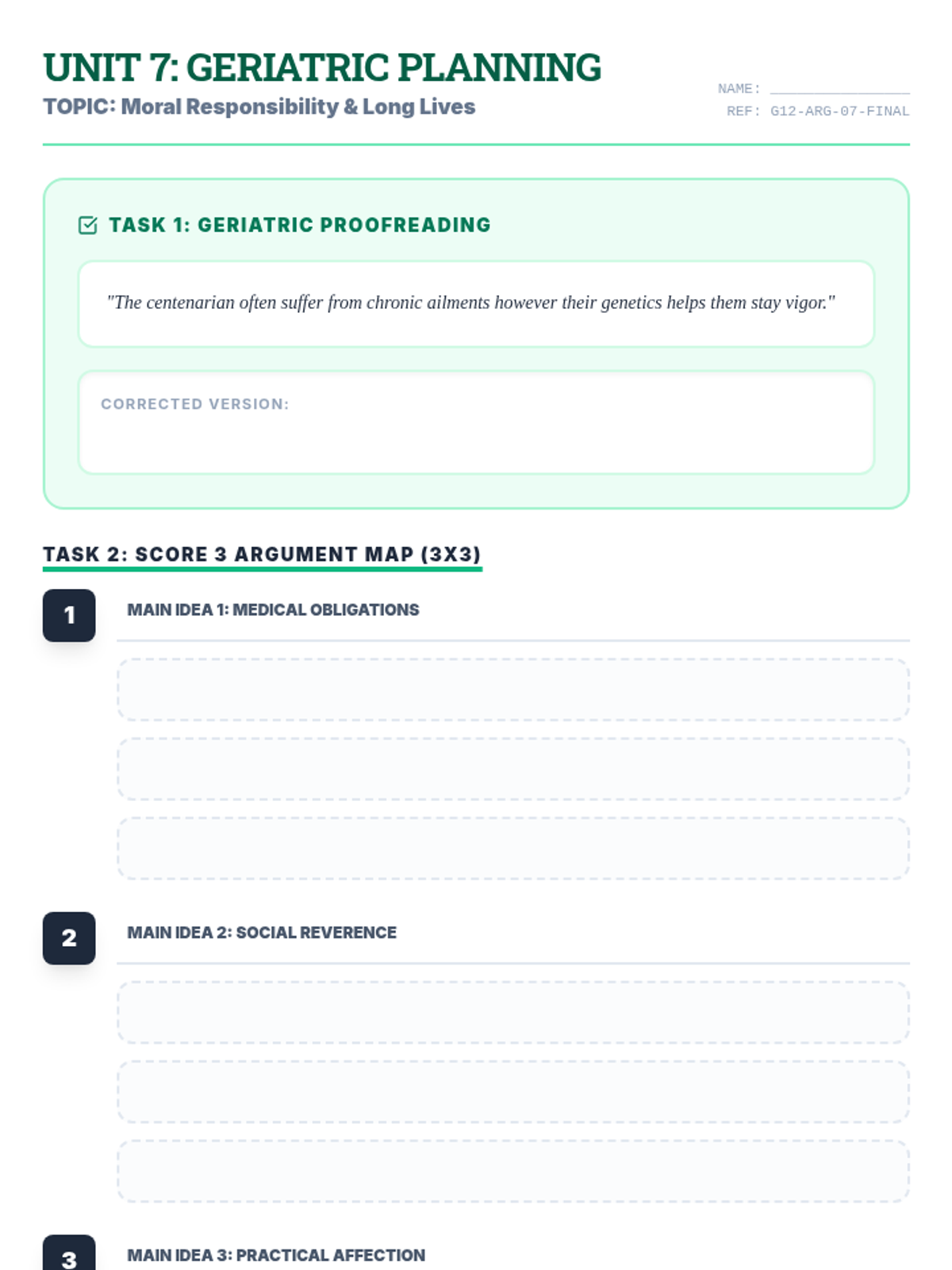
Focuses on writing articles about elderly care, teaching subject-verb agreement, punctuation, and article structure with tiered difficulty for elementary to high school levels.
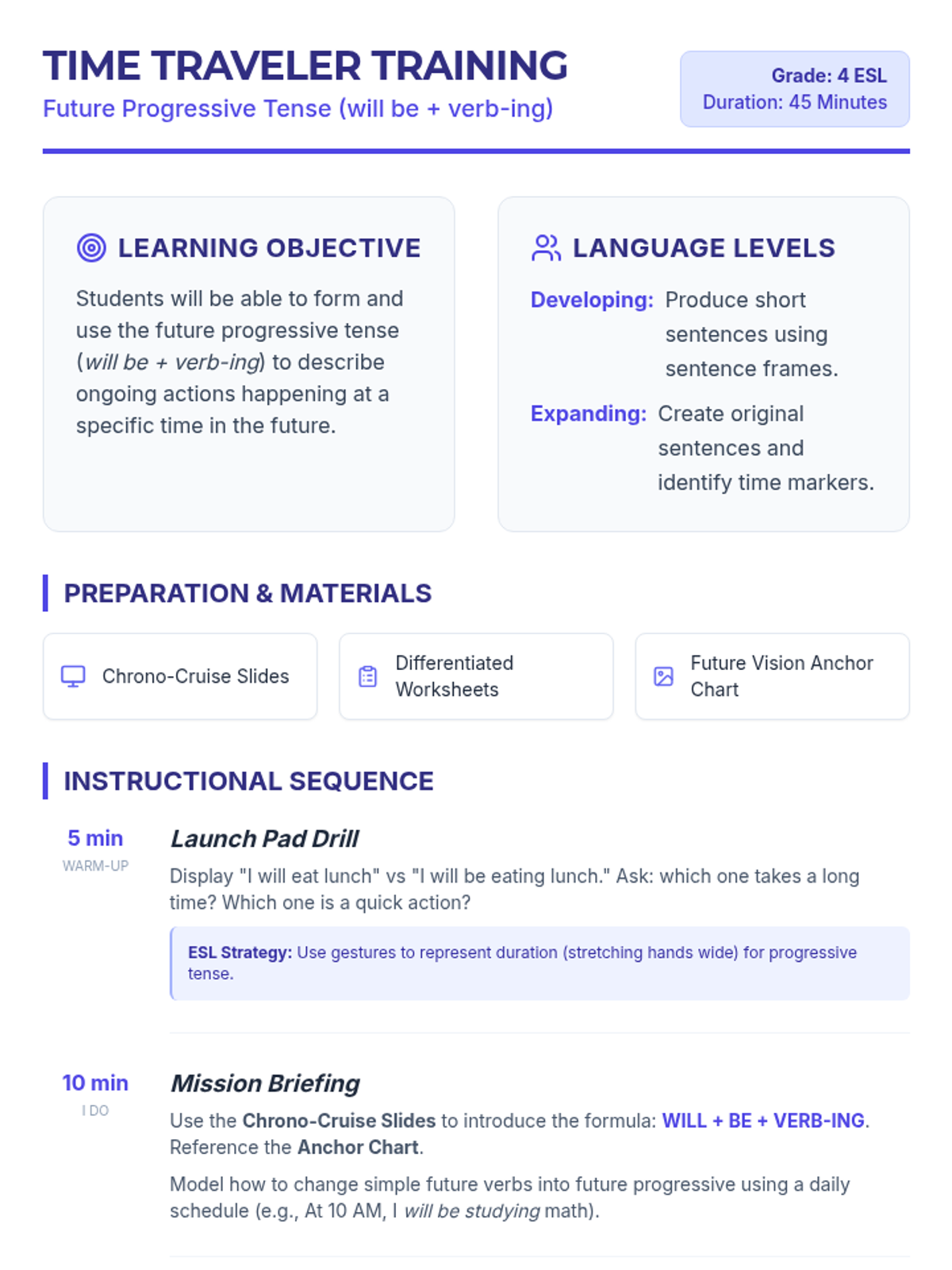
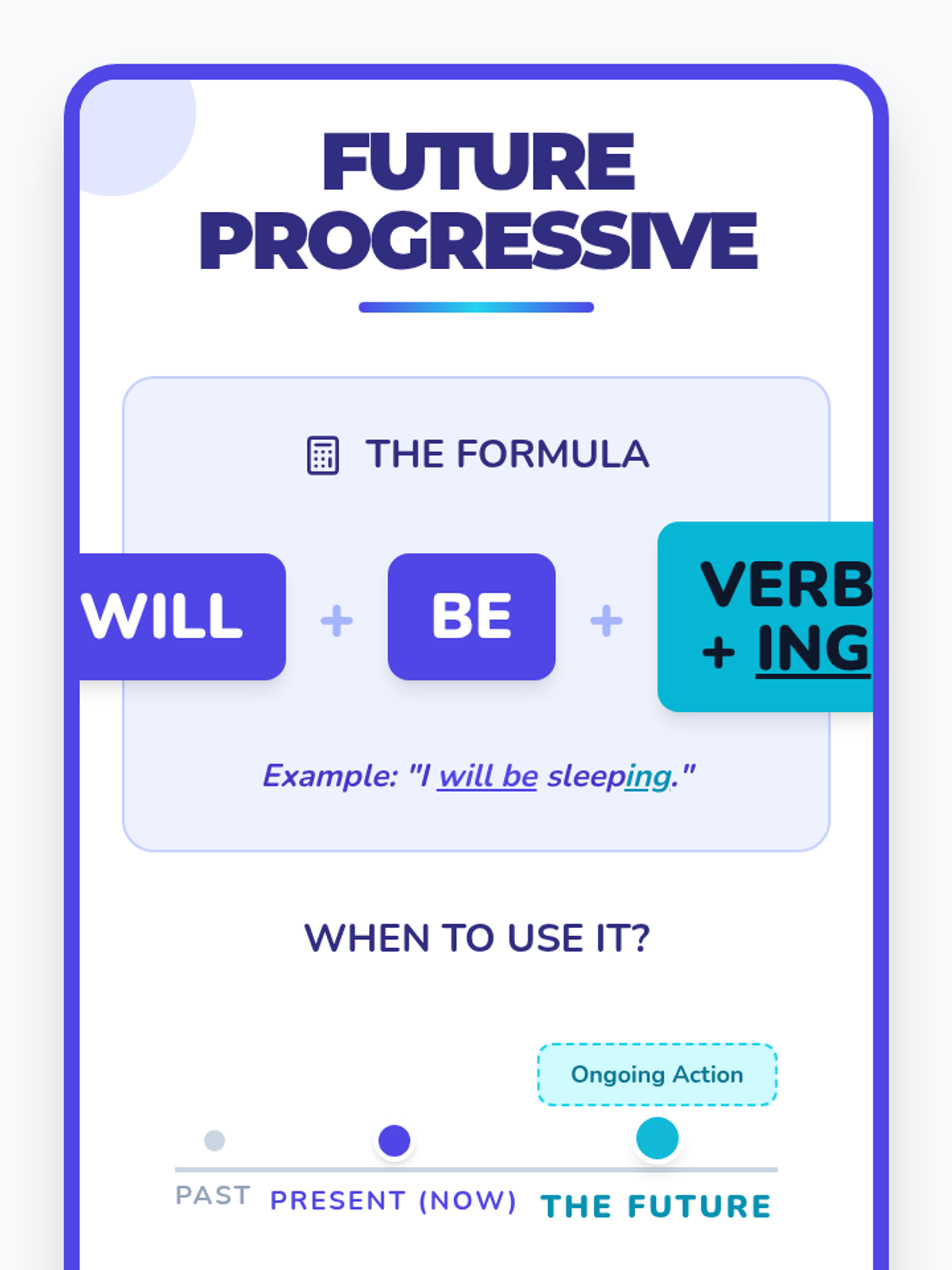
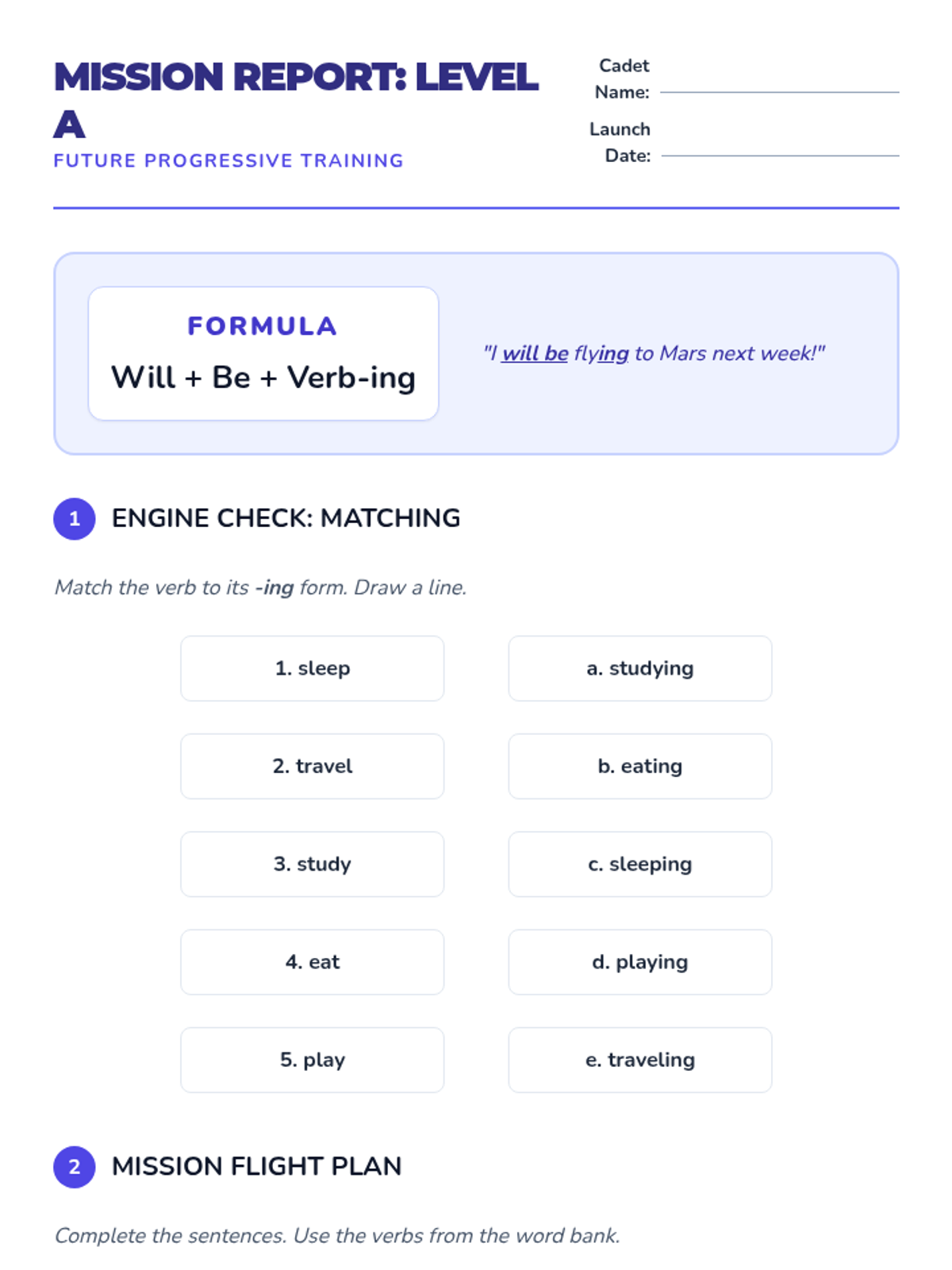
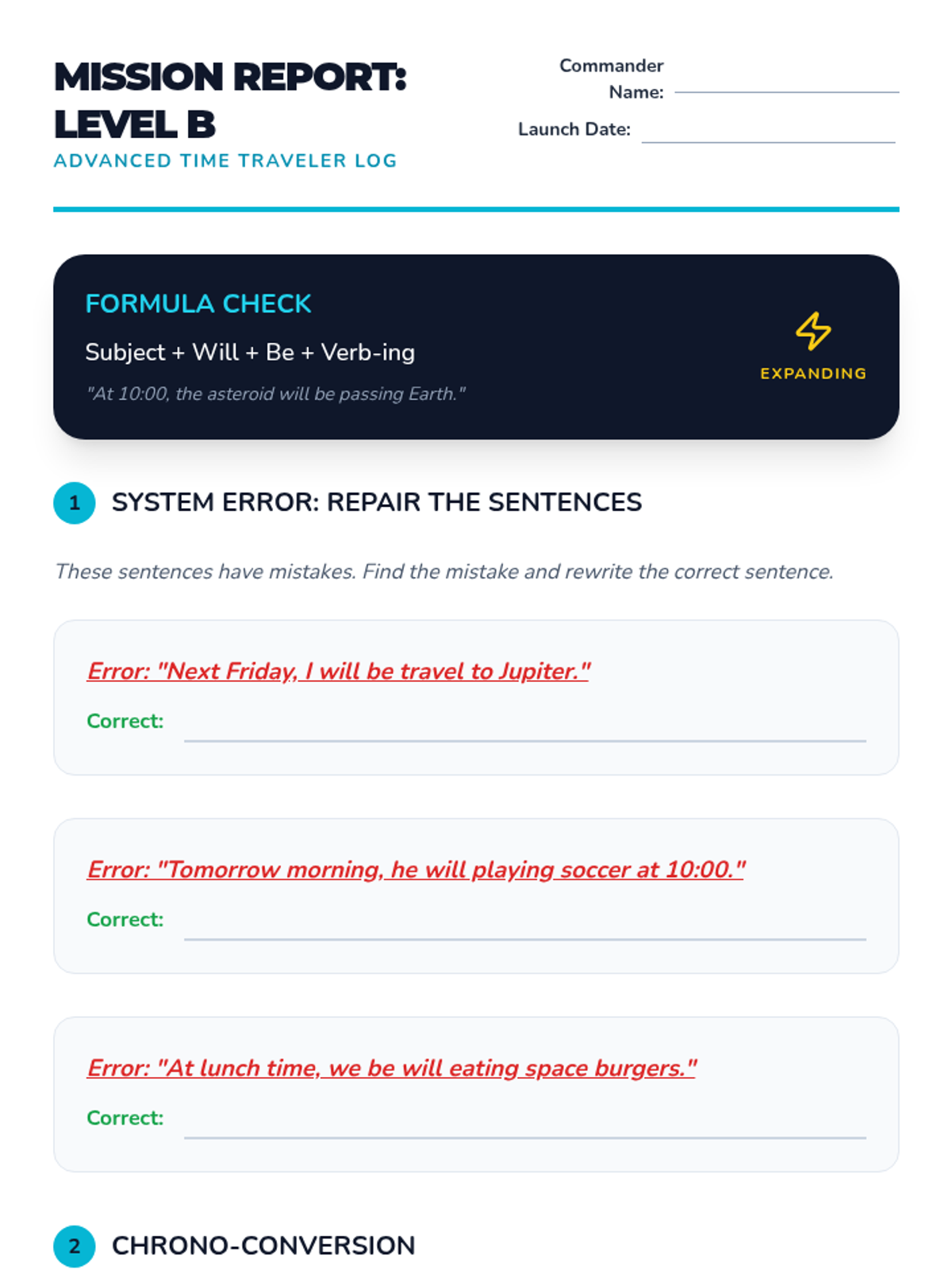
A 45-minute Grade 4 ESL lesson focusing on the future progressive tense (will be + verb-ing) using a 'Time Traveler Training' theme. Includes a comprehensive lesson plan, instructional slides, anchor chart, differentiated worksheets, and exit tickets.
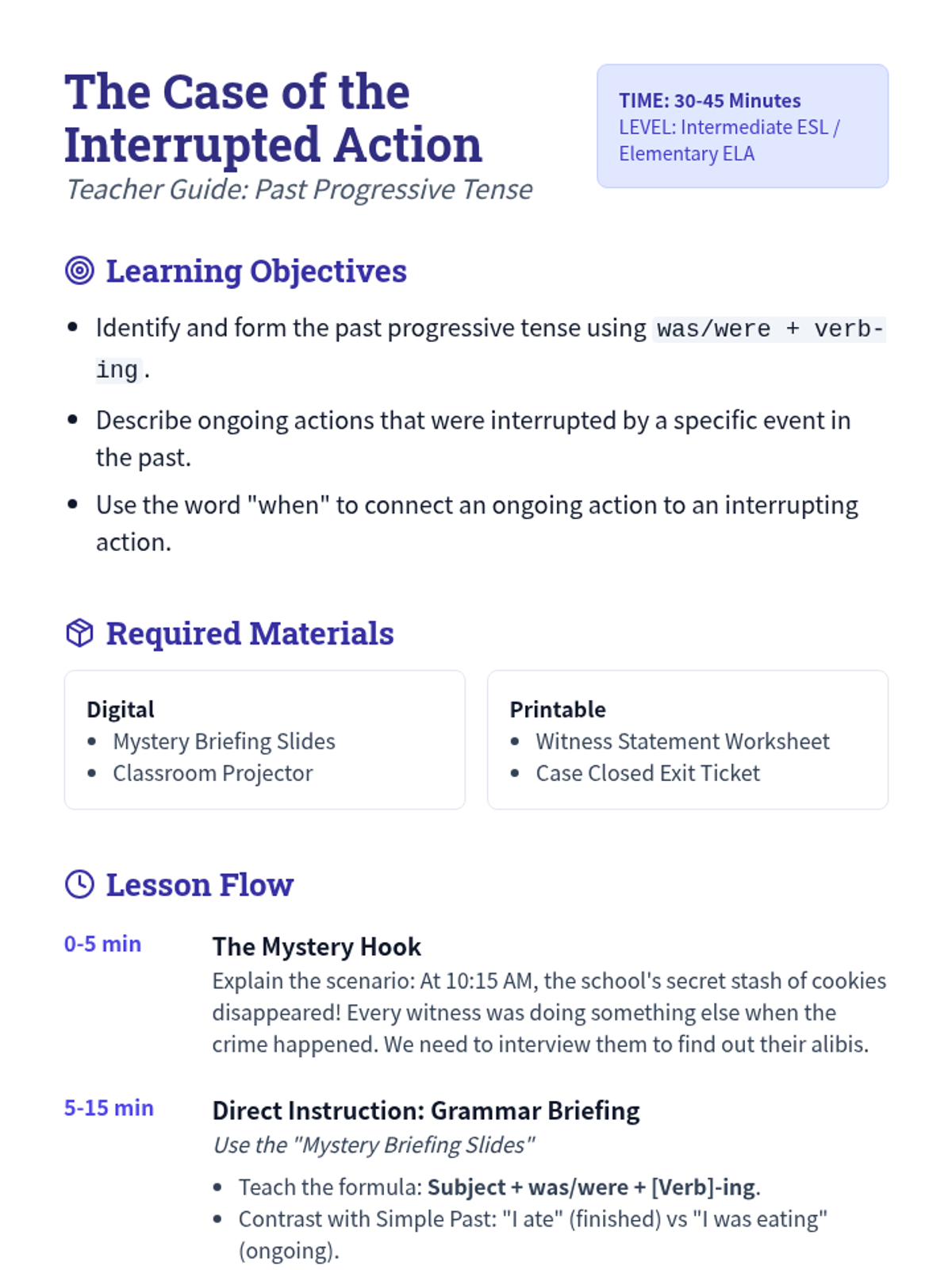
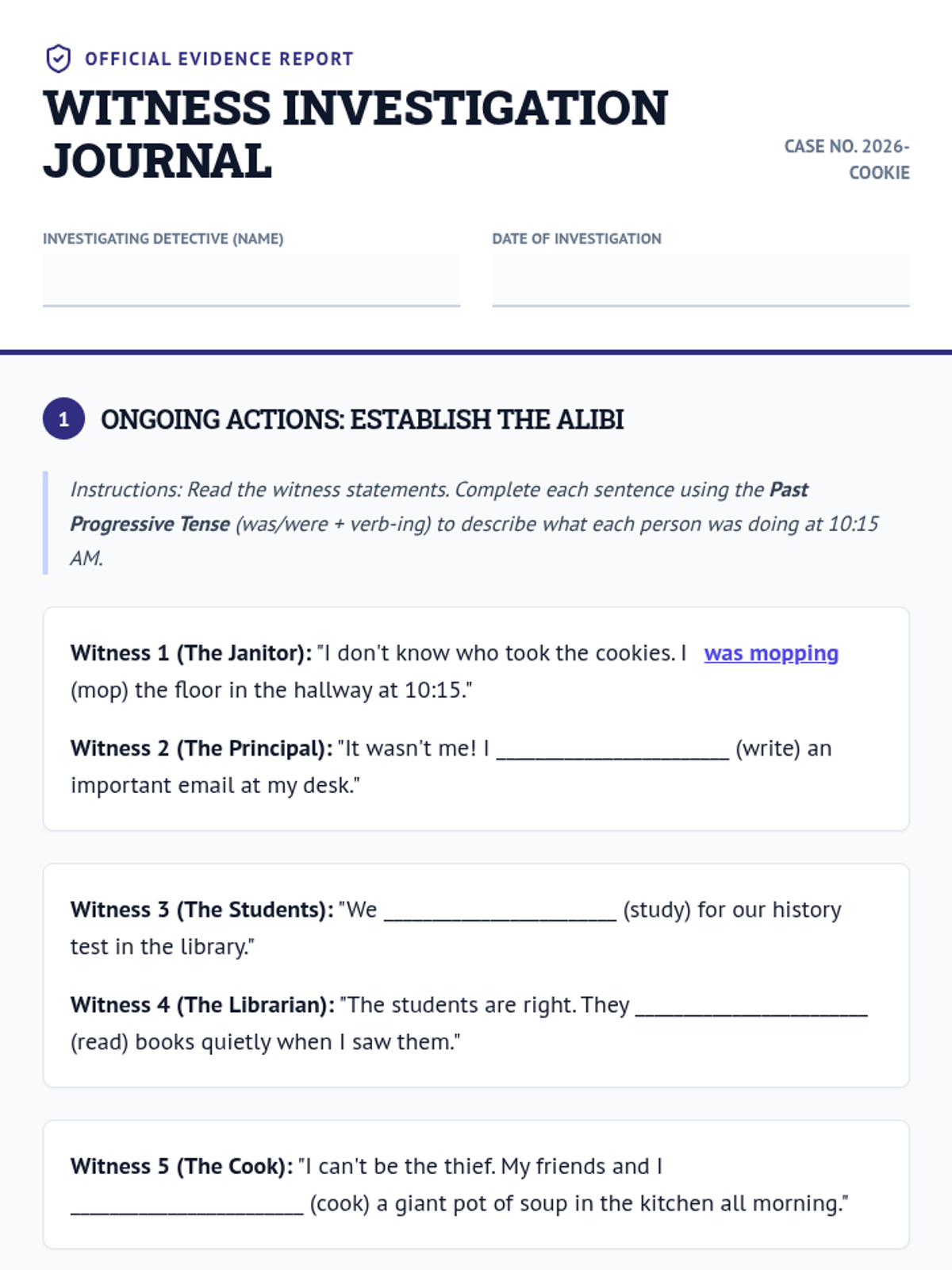
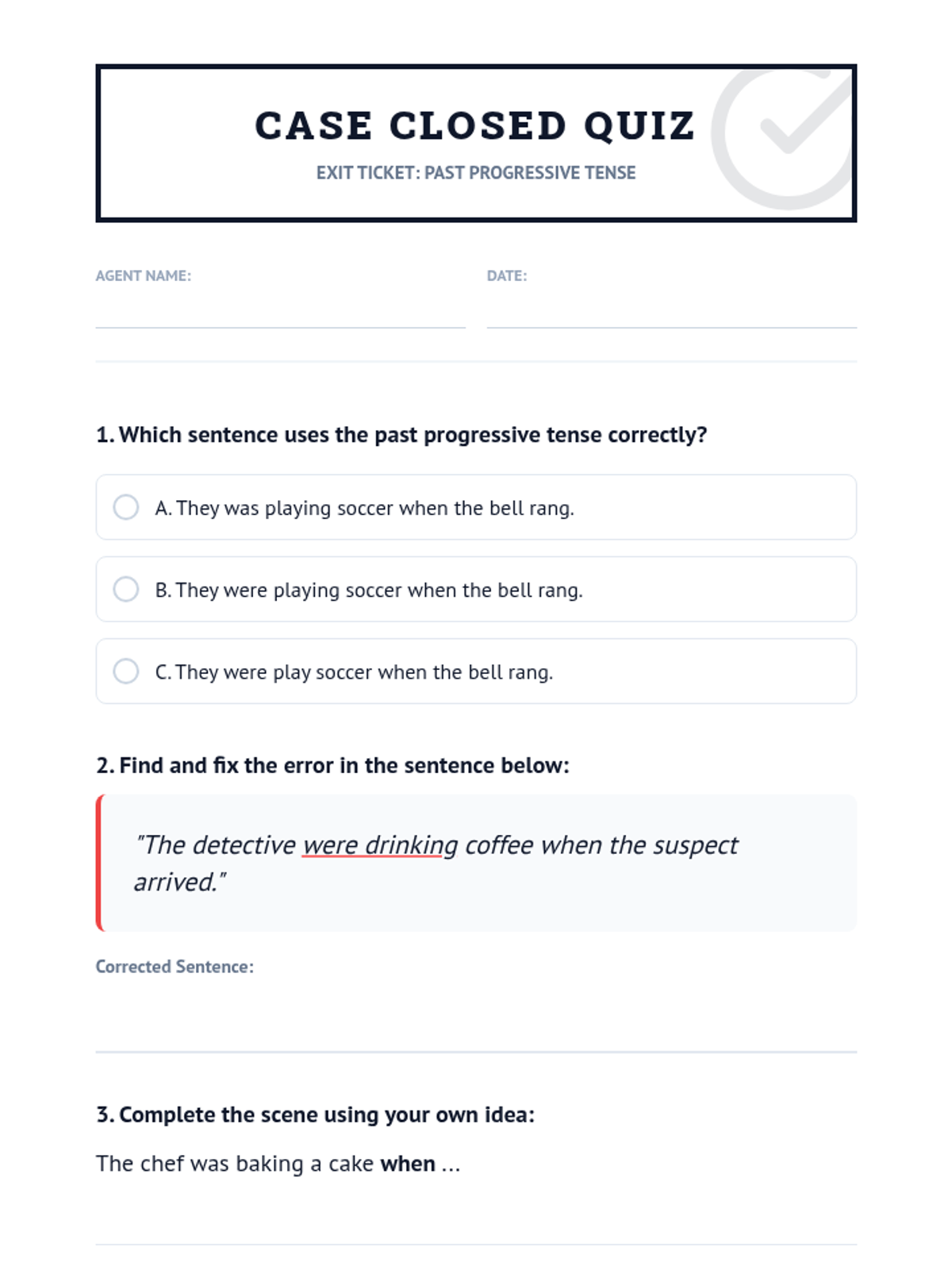
A lesson on the past progressive tense (was/were + verb-ing) focused on describing ongoing and interrupted actions in the past through a detective mystery theme.
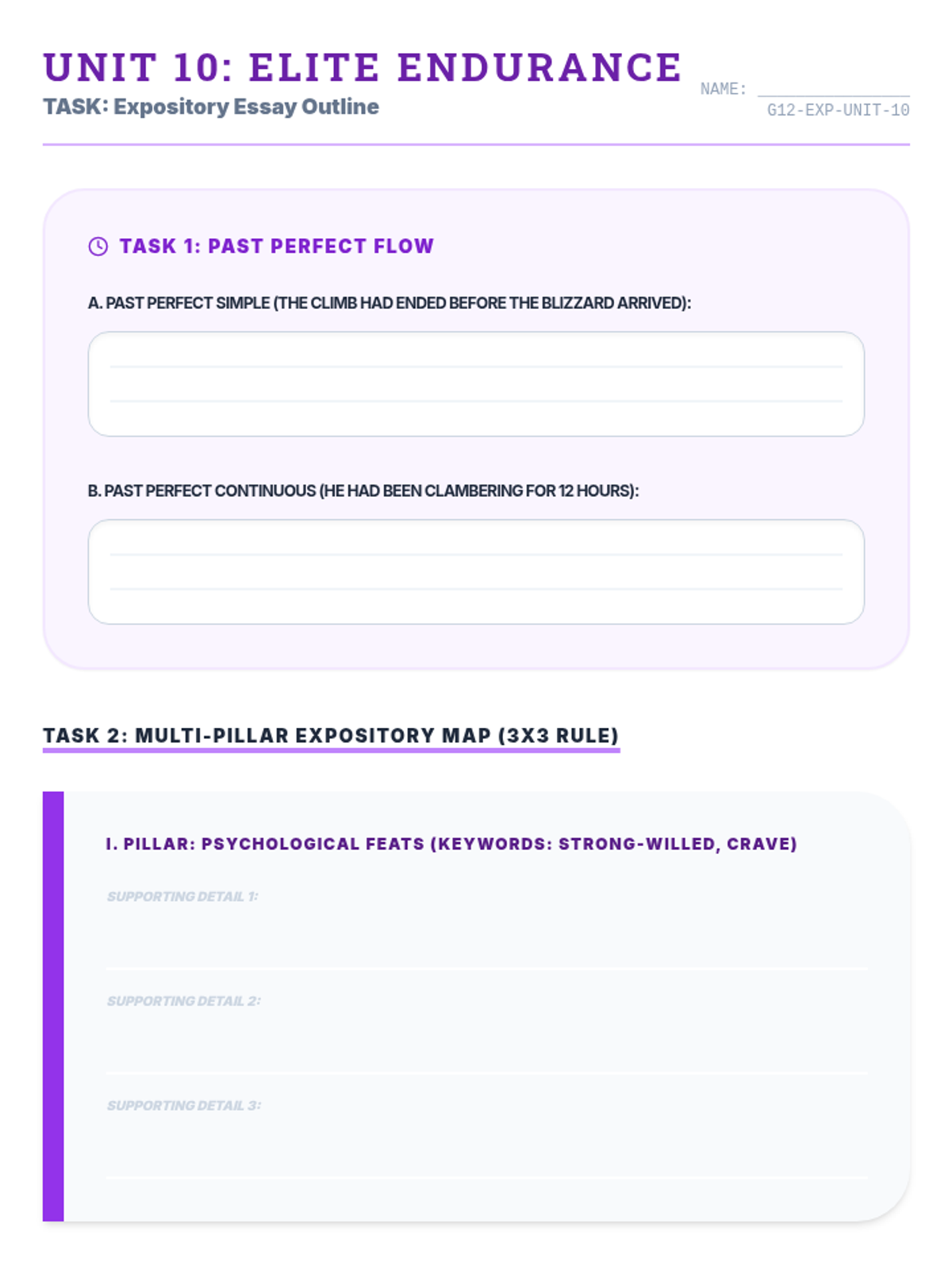
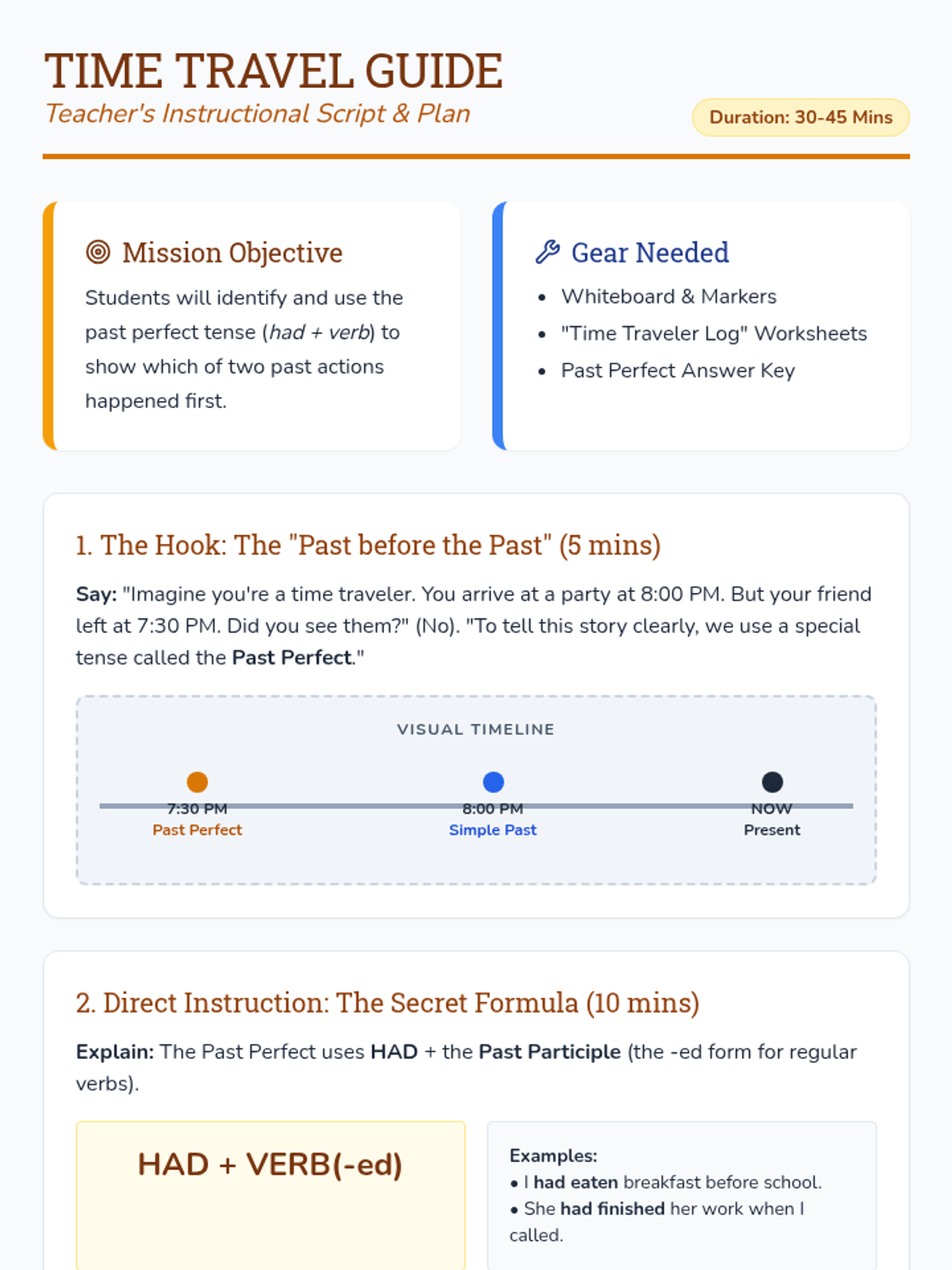
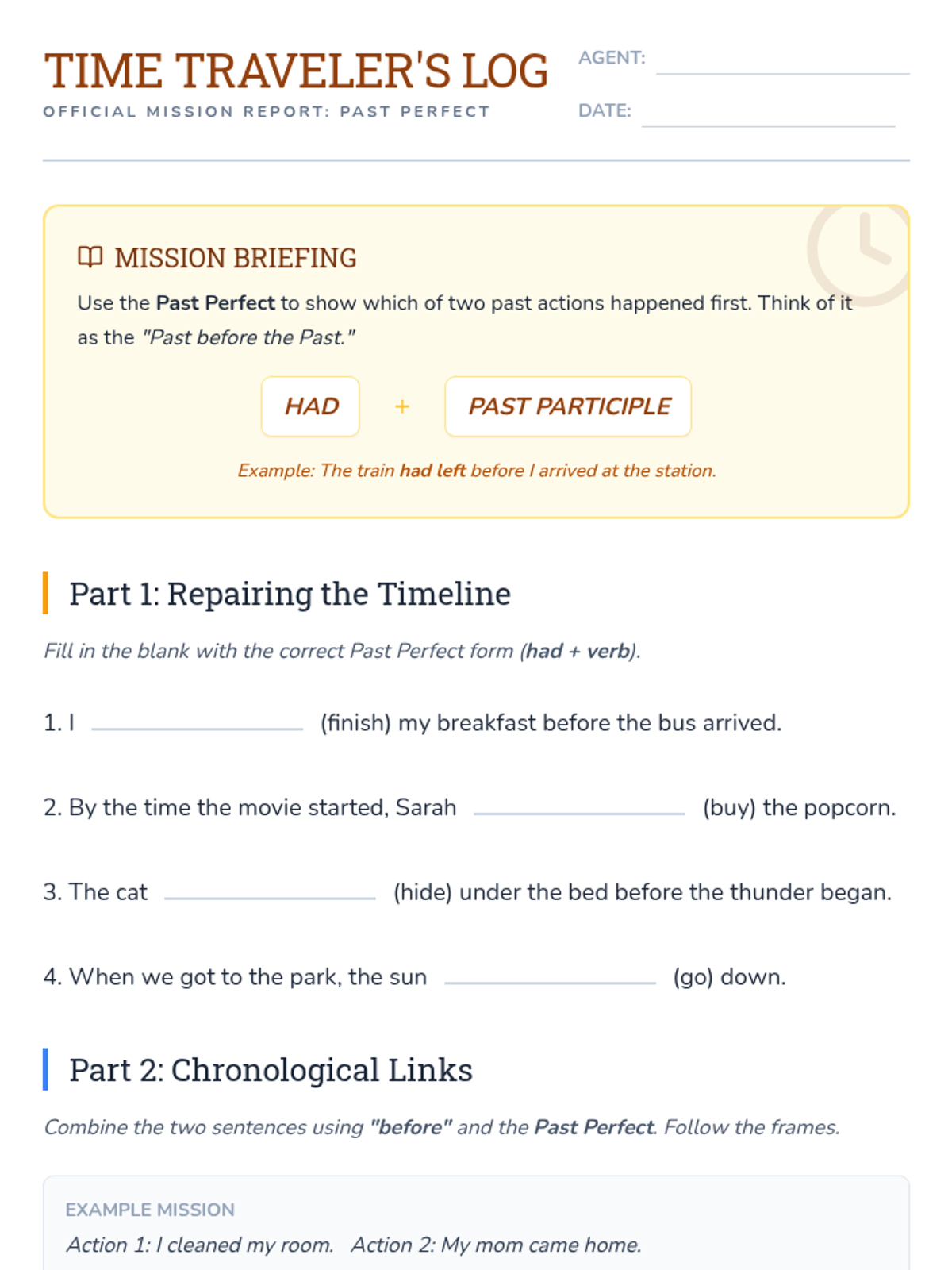
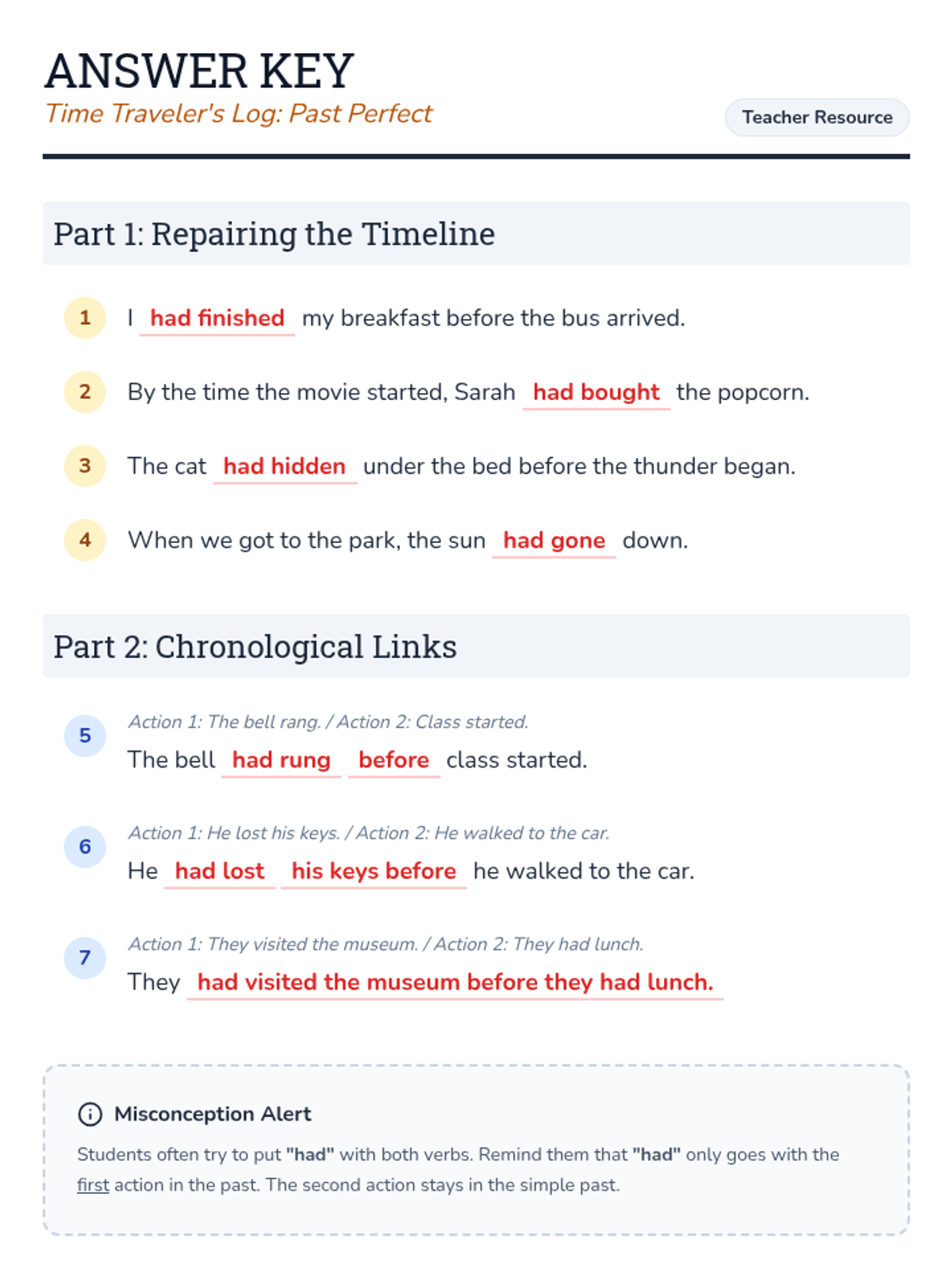
A comprehensive 30-45 minute lesson on the past perfect tense, featuring explicit instructions, a time-travel themed worksheet, and a detailed teacher guide. This lesson helps students understand how to sequence two past events using the 'past before the past' structure.
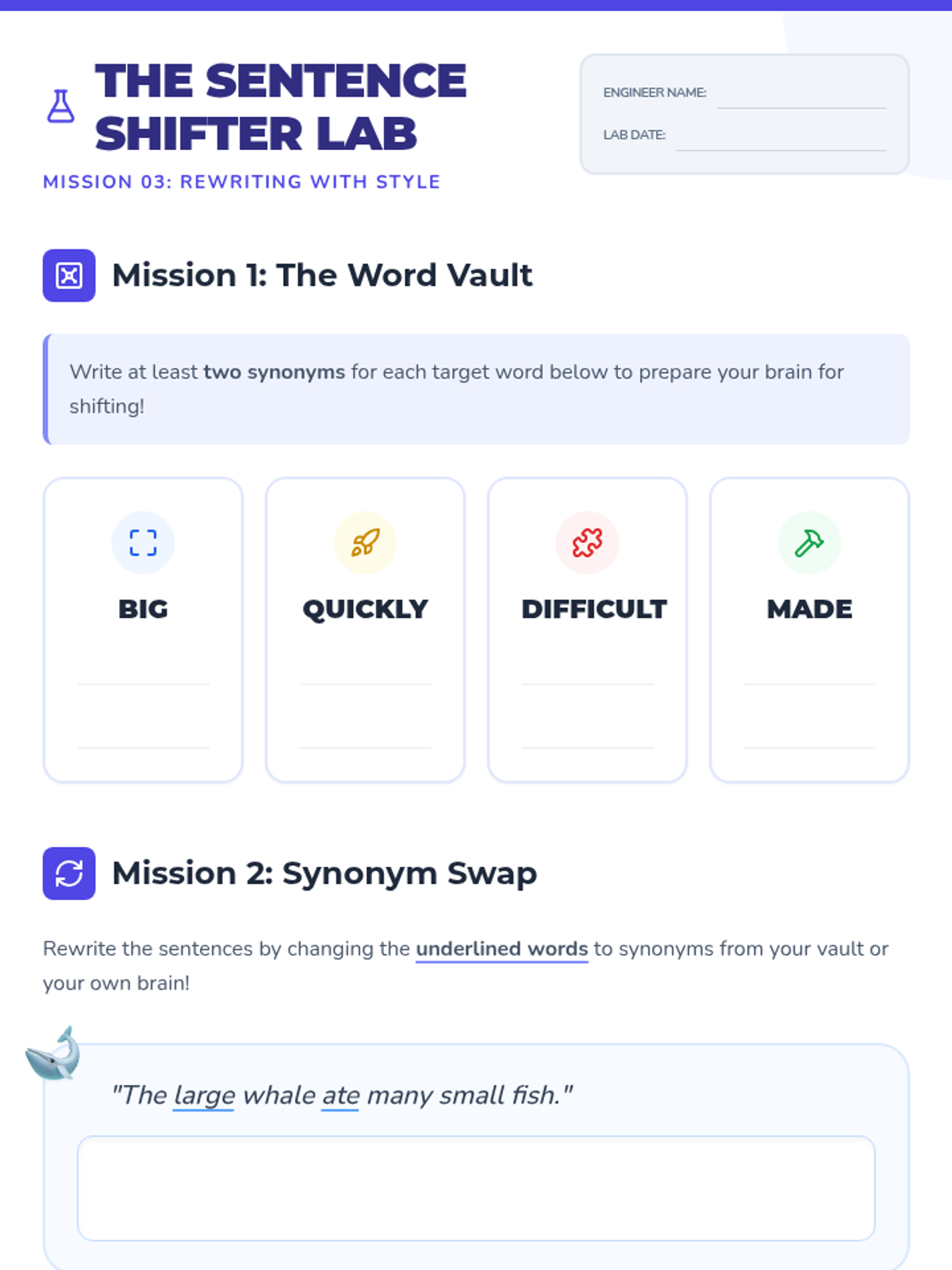
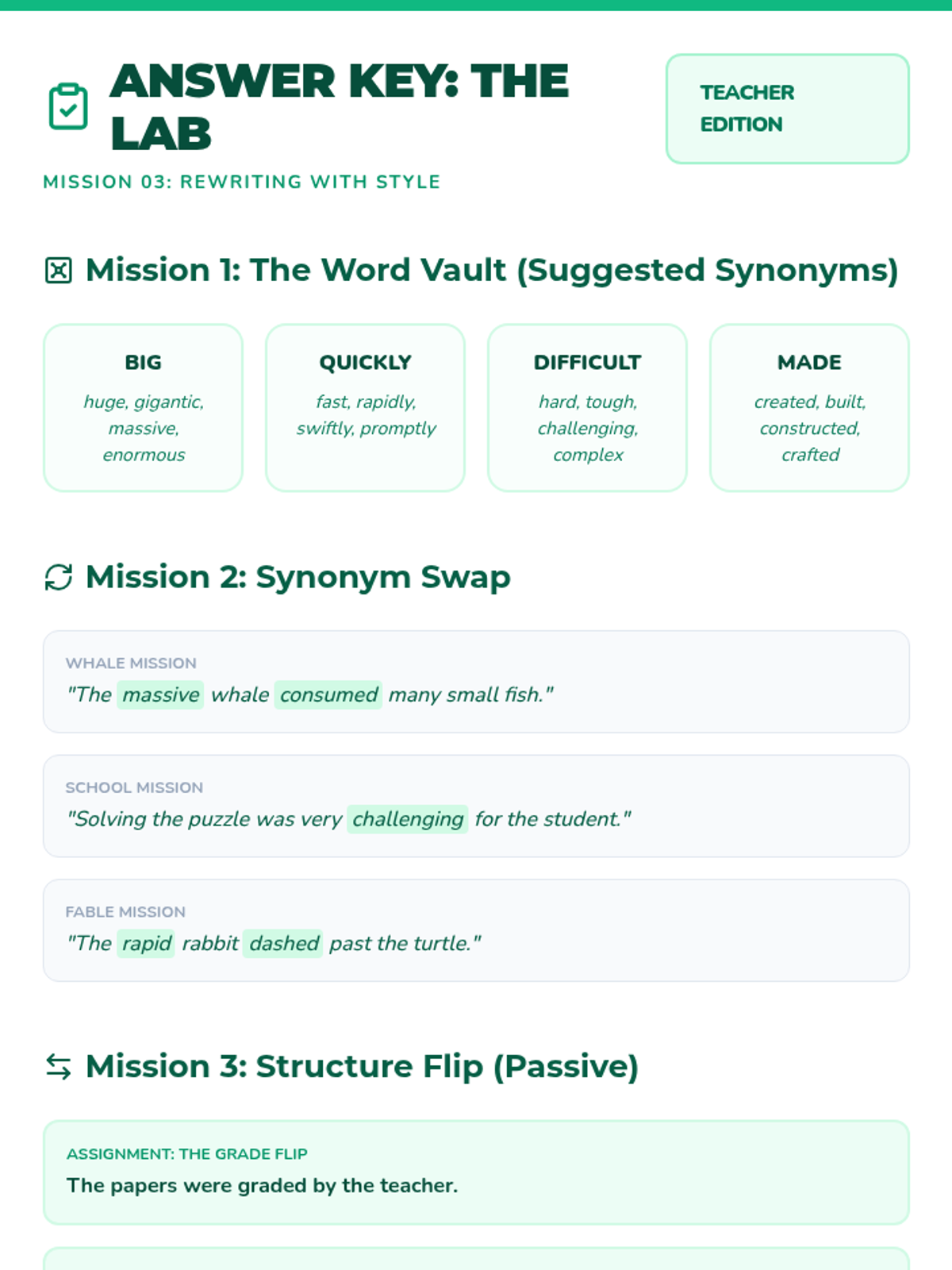
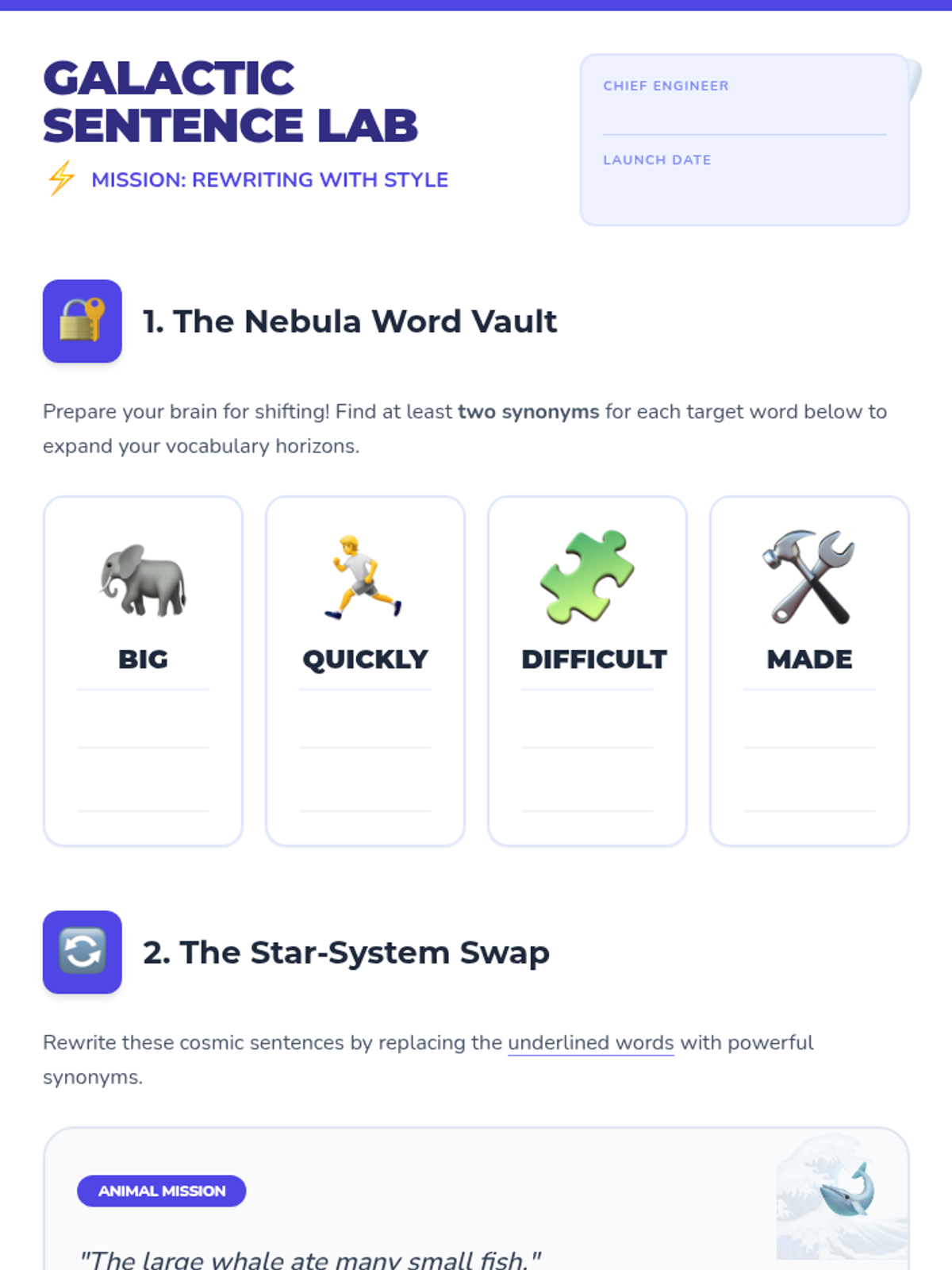
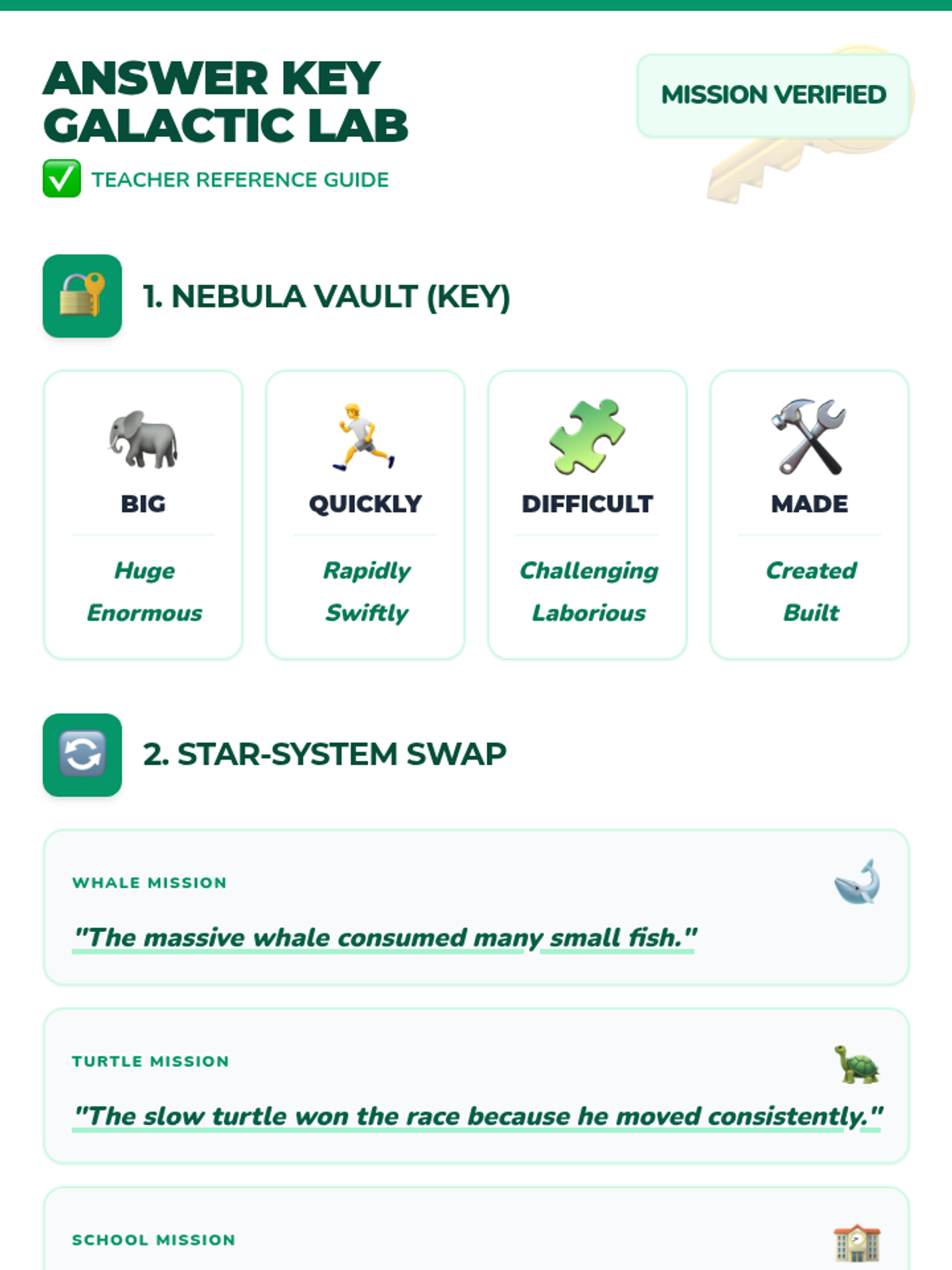
A visual, high-engagement workshop for students to practice sentence manipulation. Students explore synonyms to enhance vocabulary and master the 'Active to Passive' voice flip through space, school, and fable-themed missions.
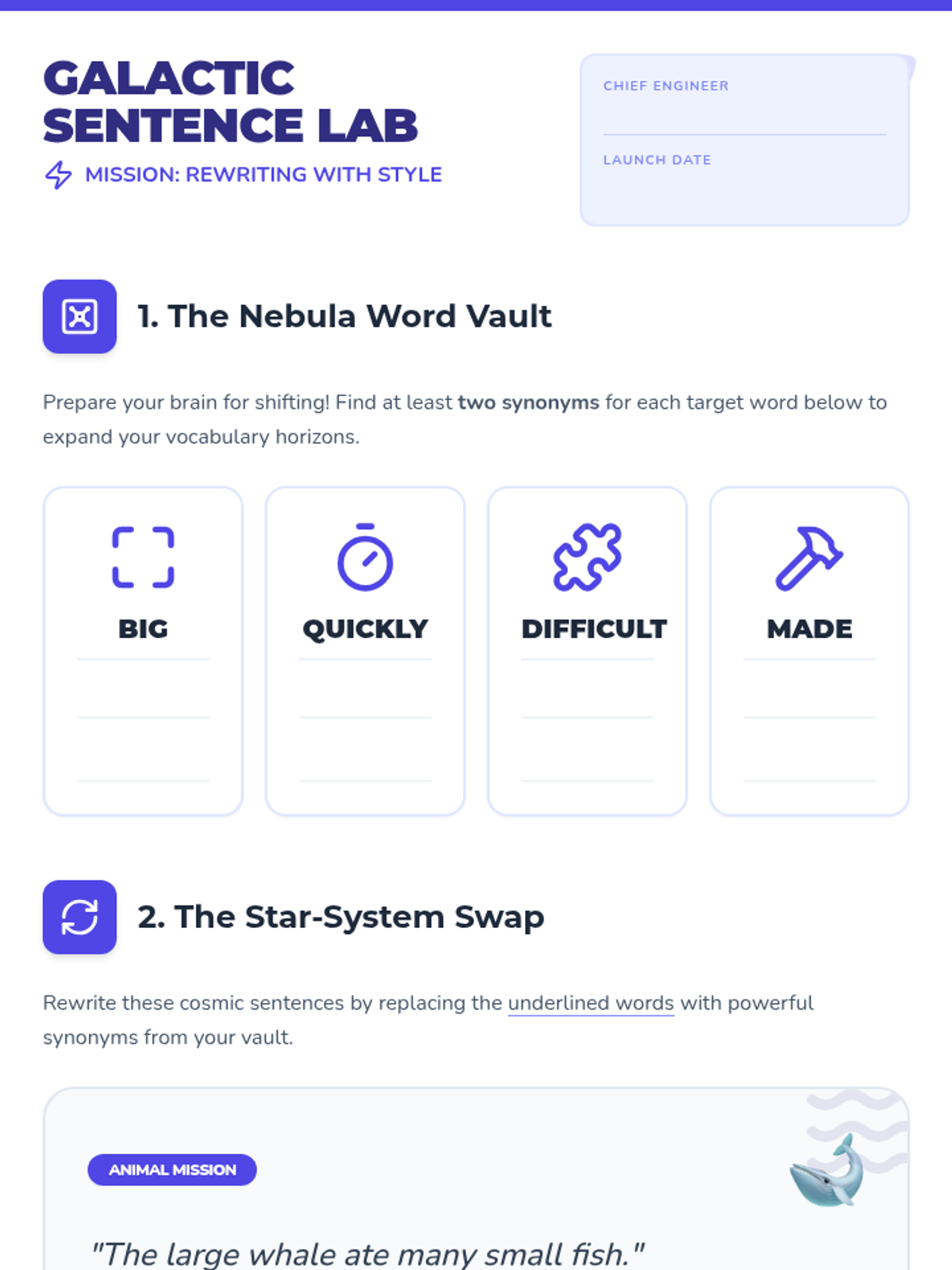
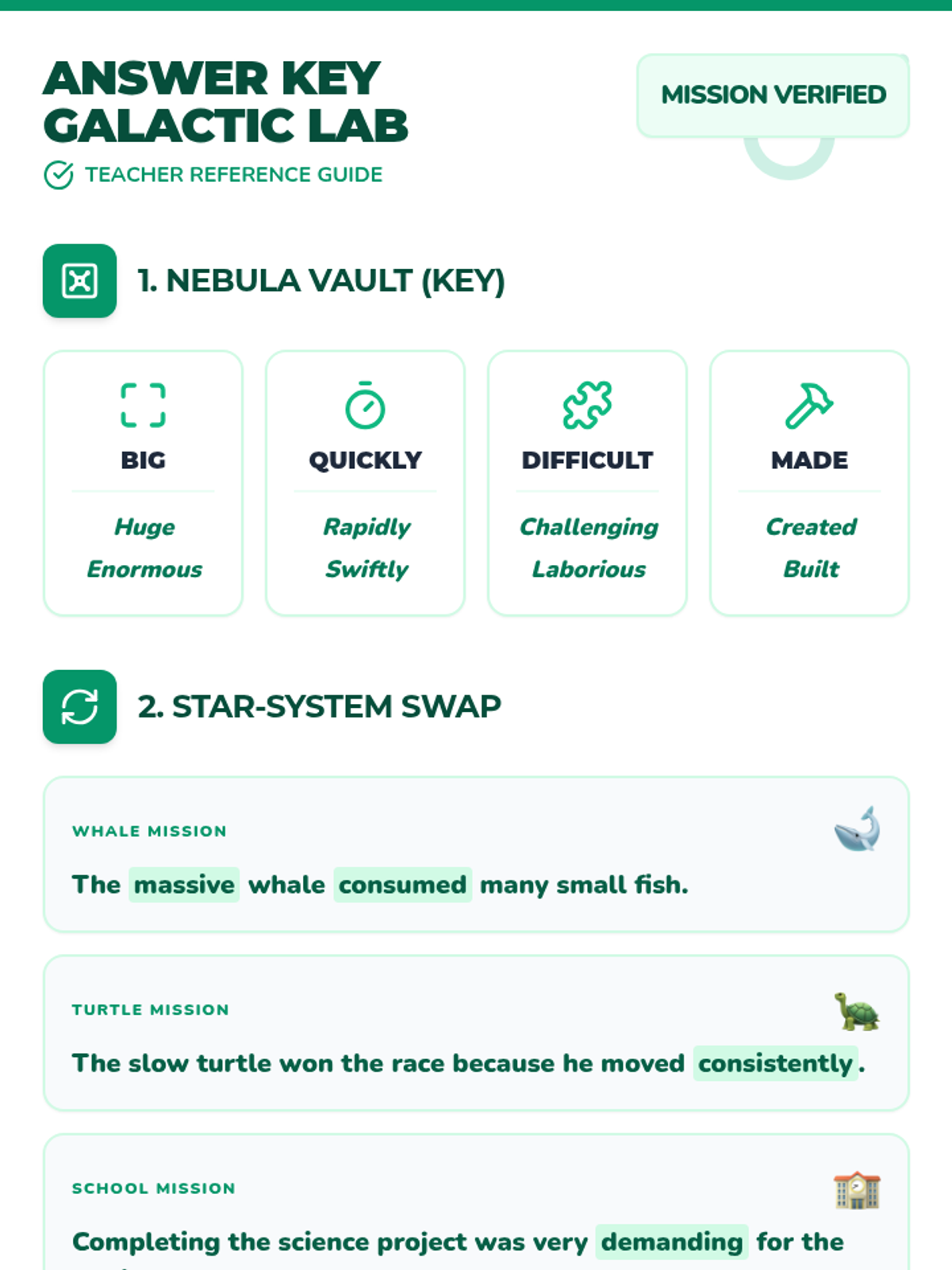
A visual, space-themed workshop focused on enhancing writing through synonyms and sentence structure transformations. Students explore the 'Galactic Sentence Lab' to practice vocabulary variety and active/passive voice flips.
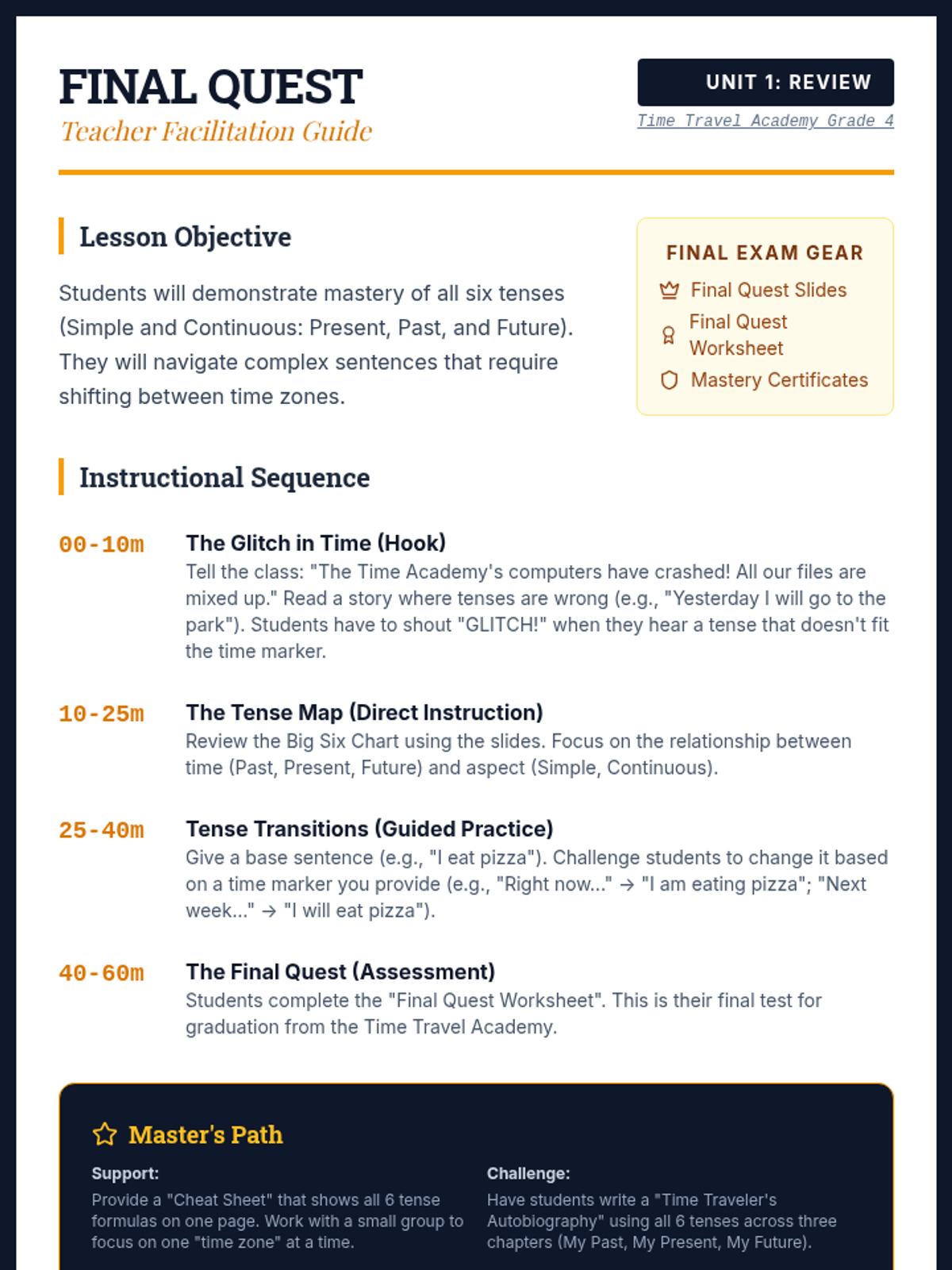
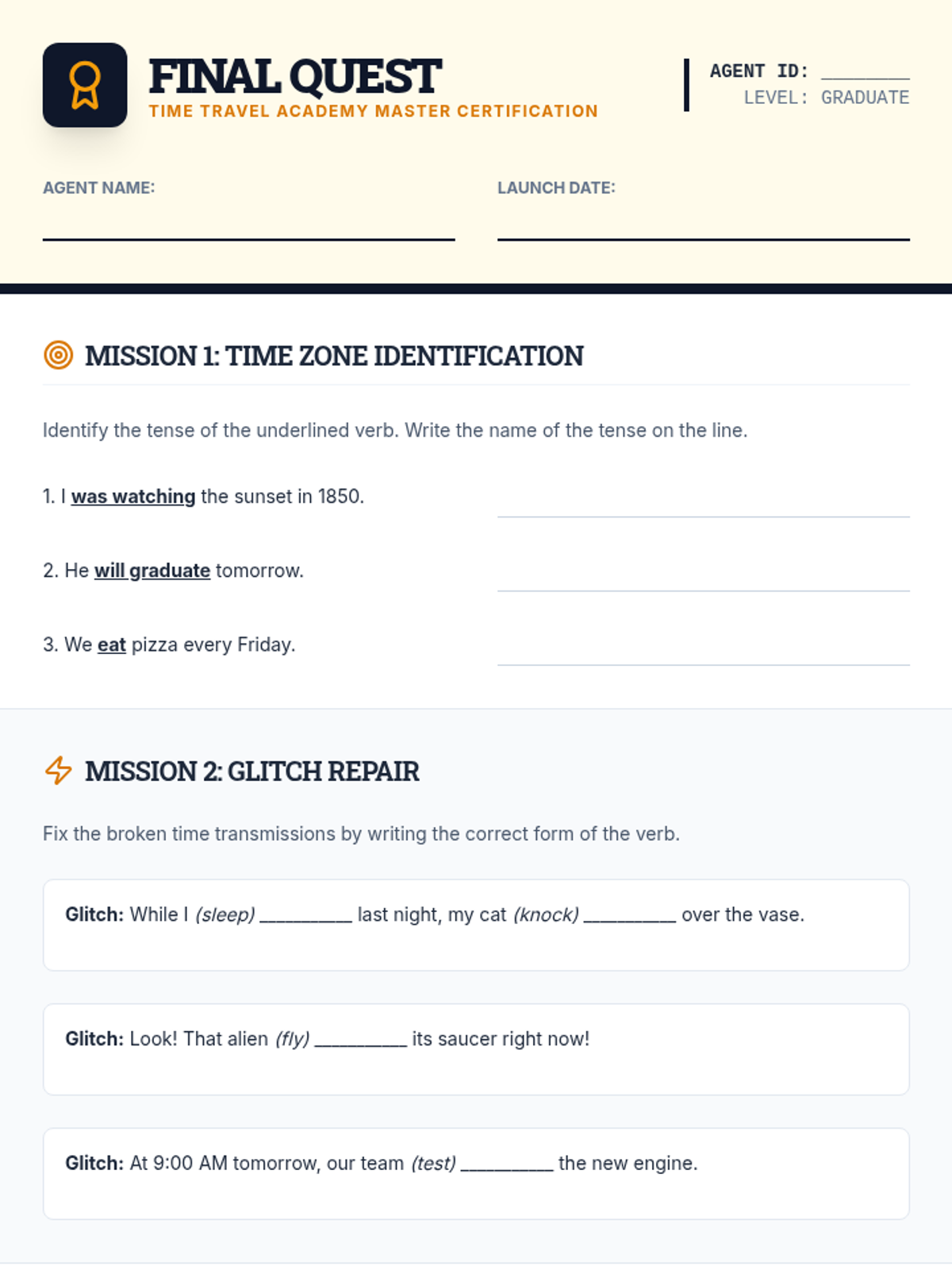
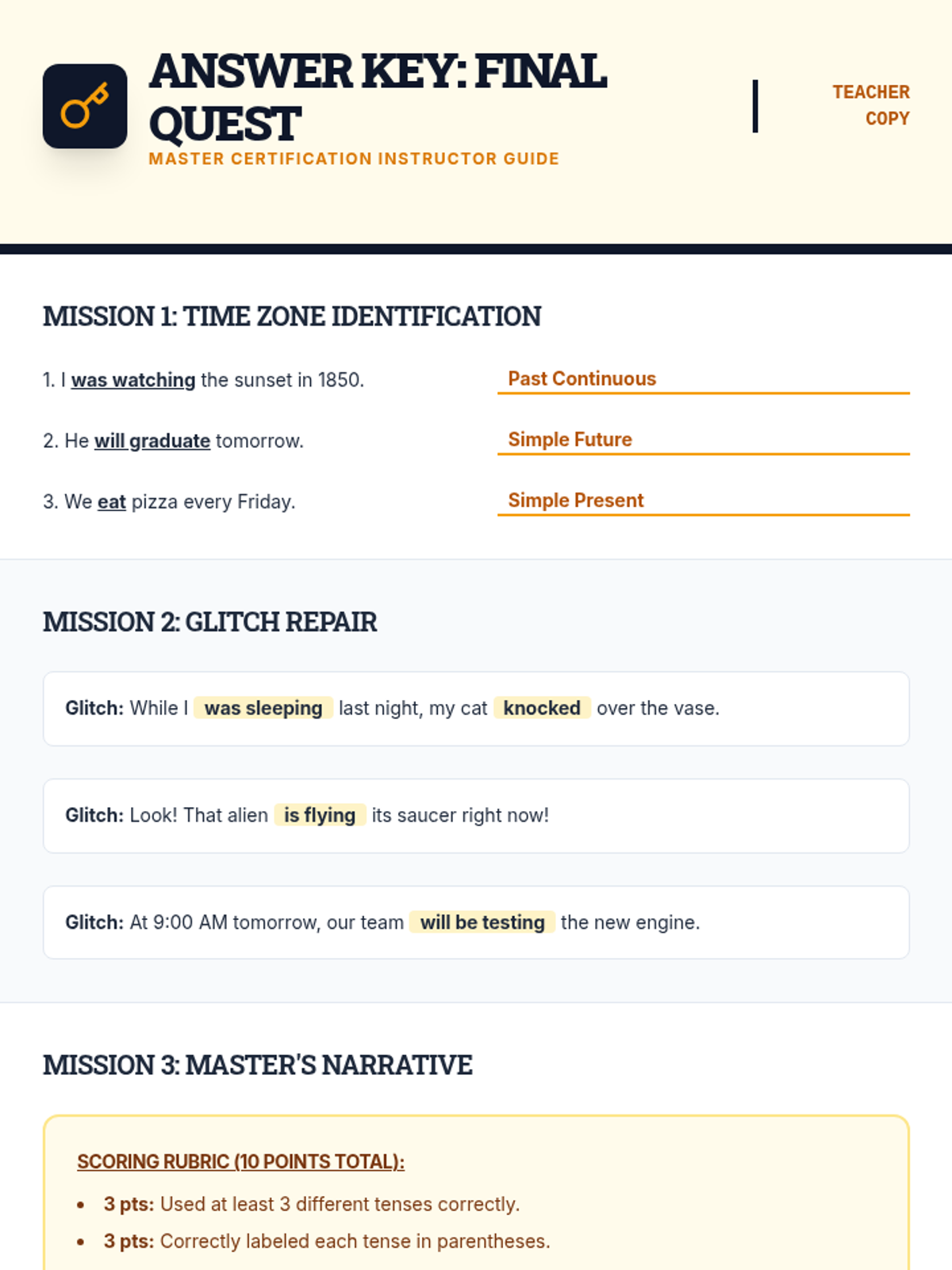
A comprehensive review of all six tenses covered in the unit. Students practice switching between tenses in complex sentences and stories.
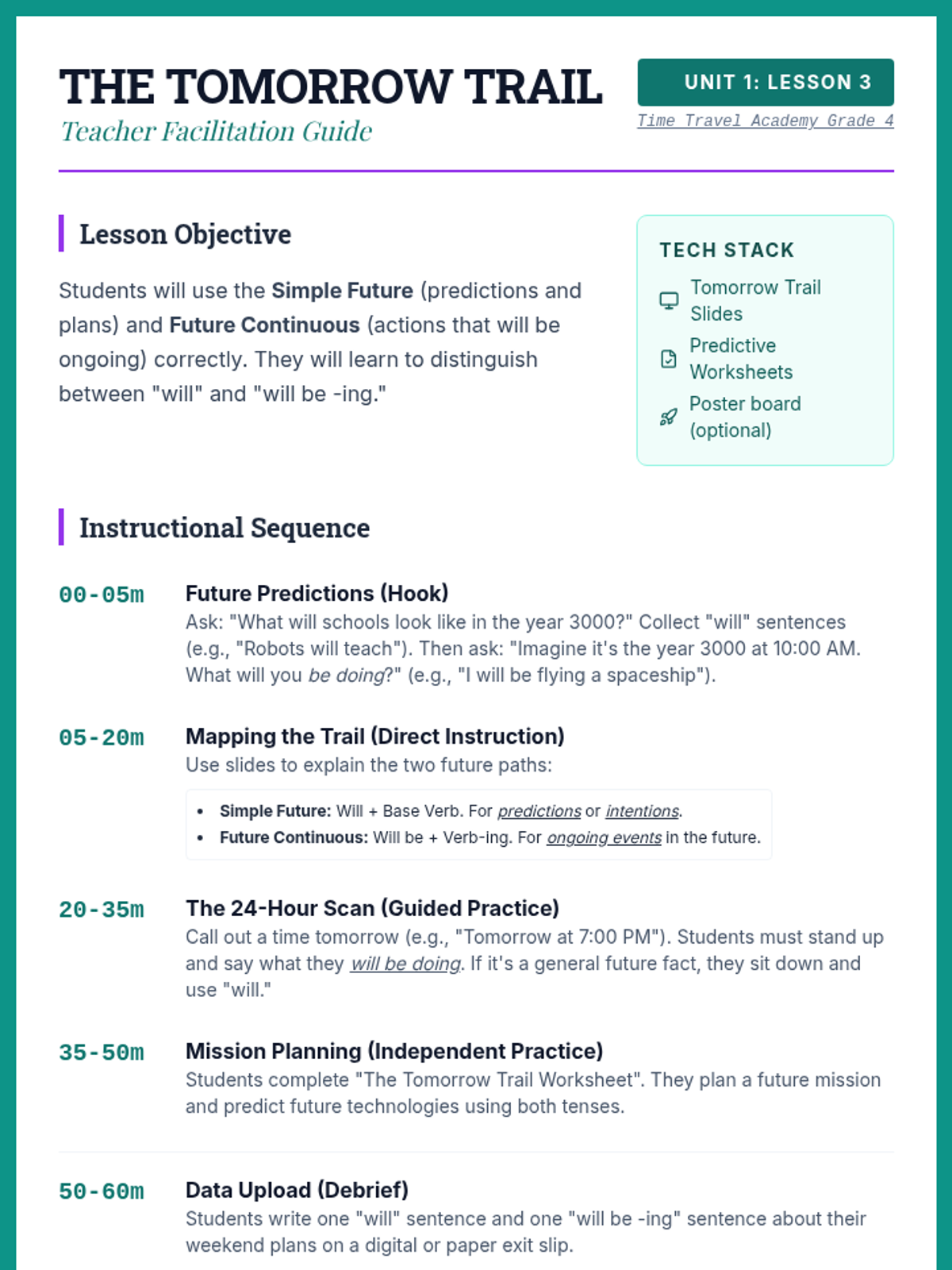
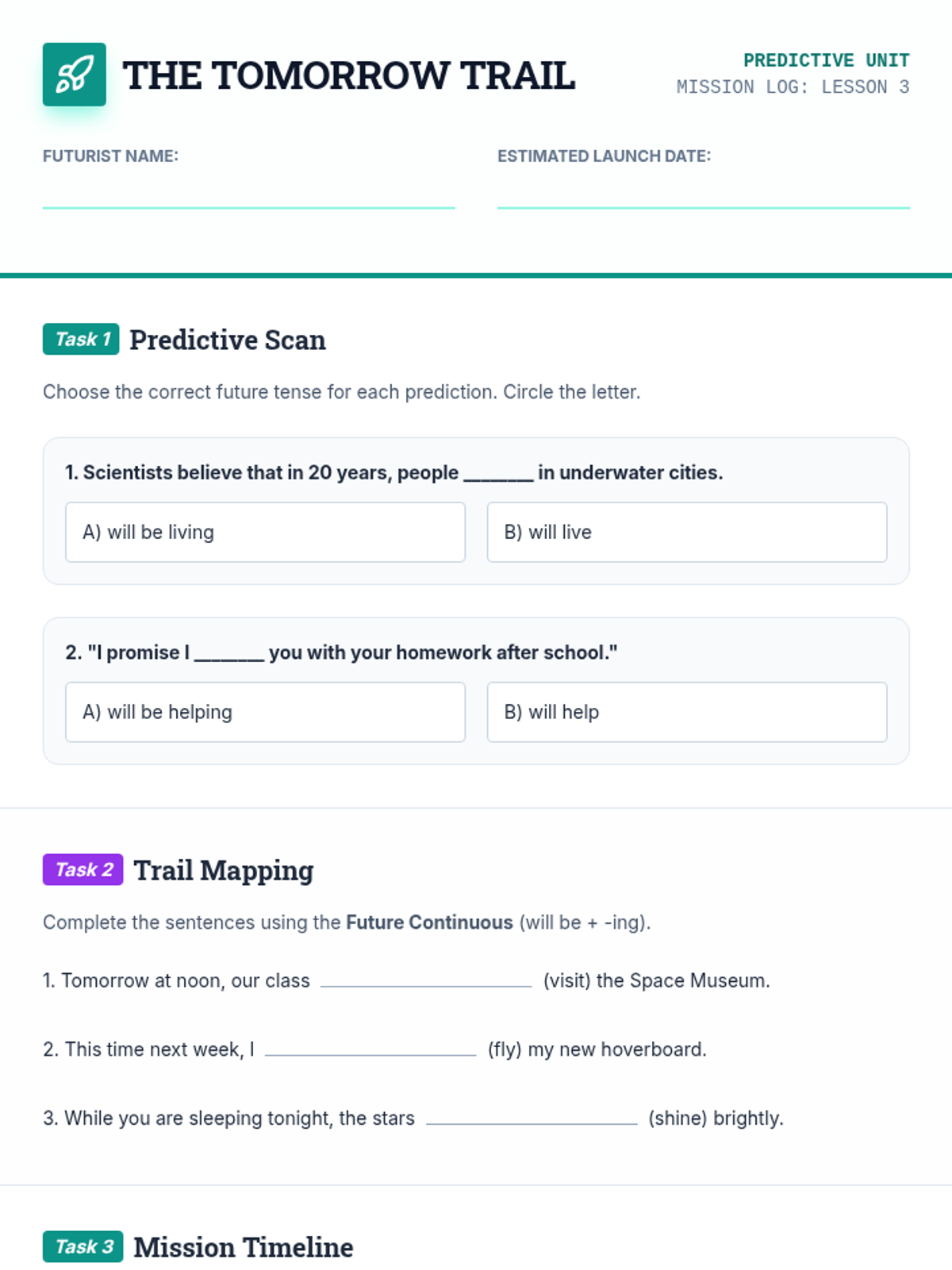
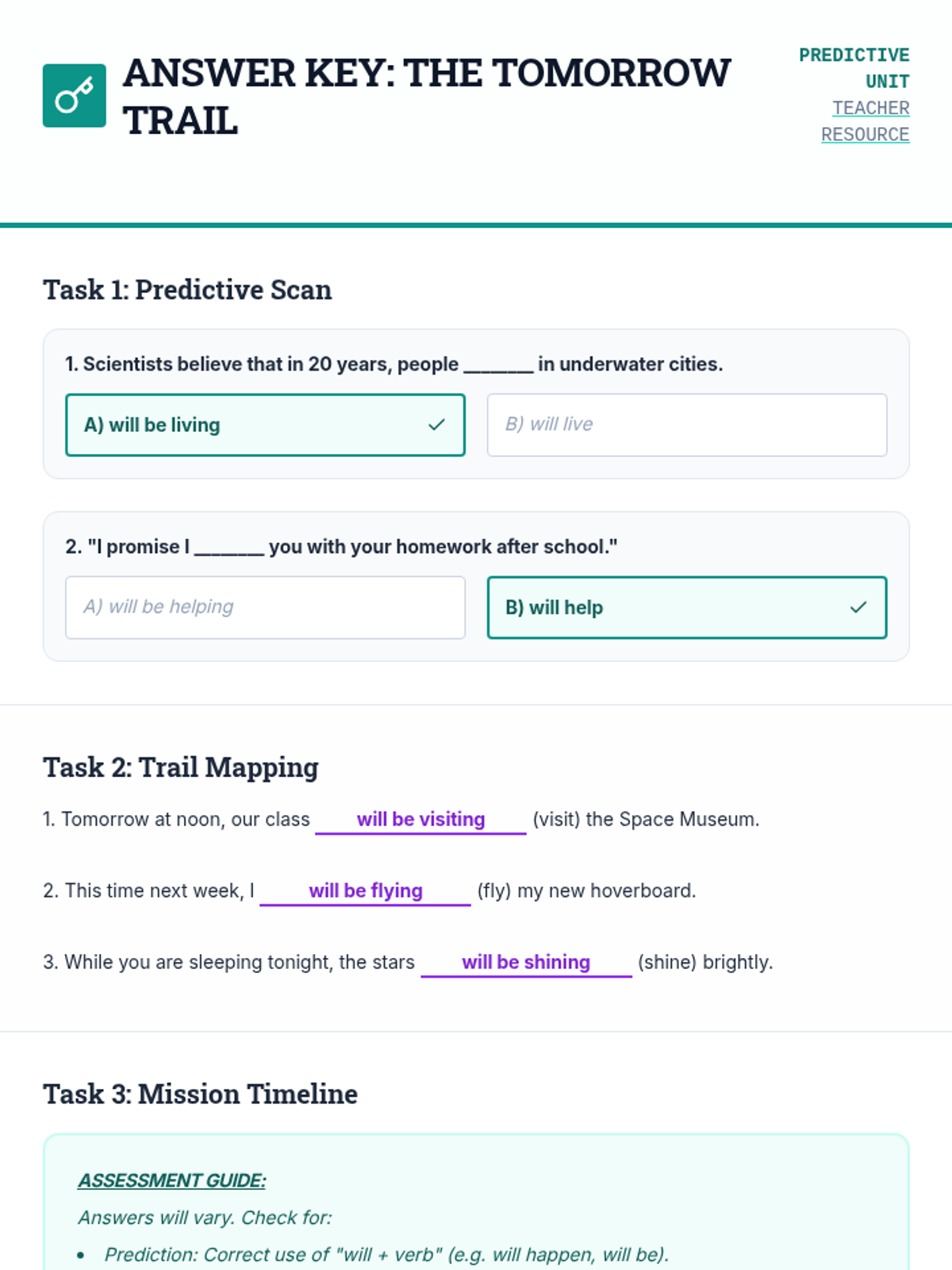
Covers the Simple Future and Future Continuous tenses. Students learn to predict and plan for actions that will happen later.
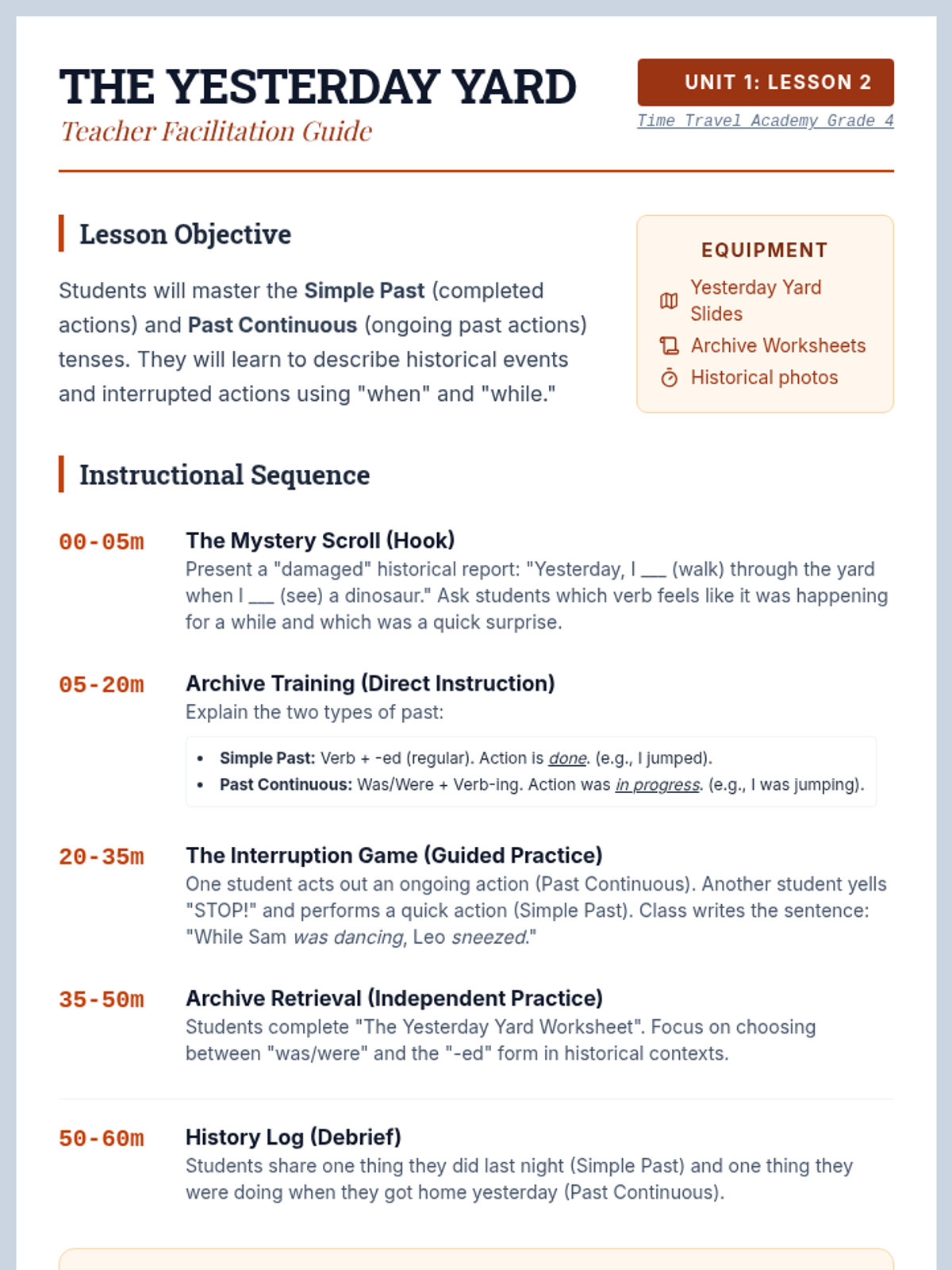
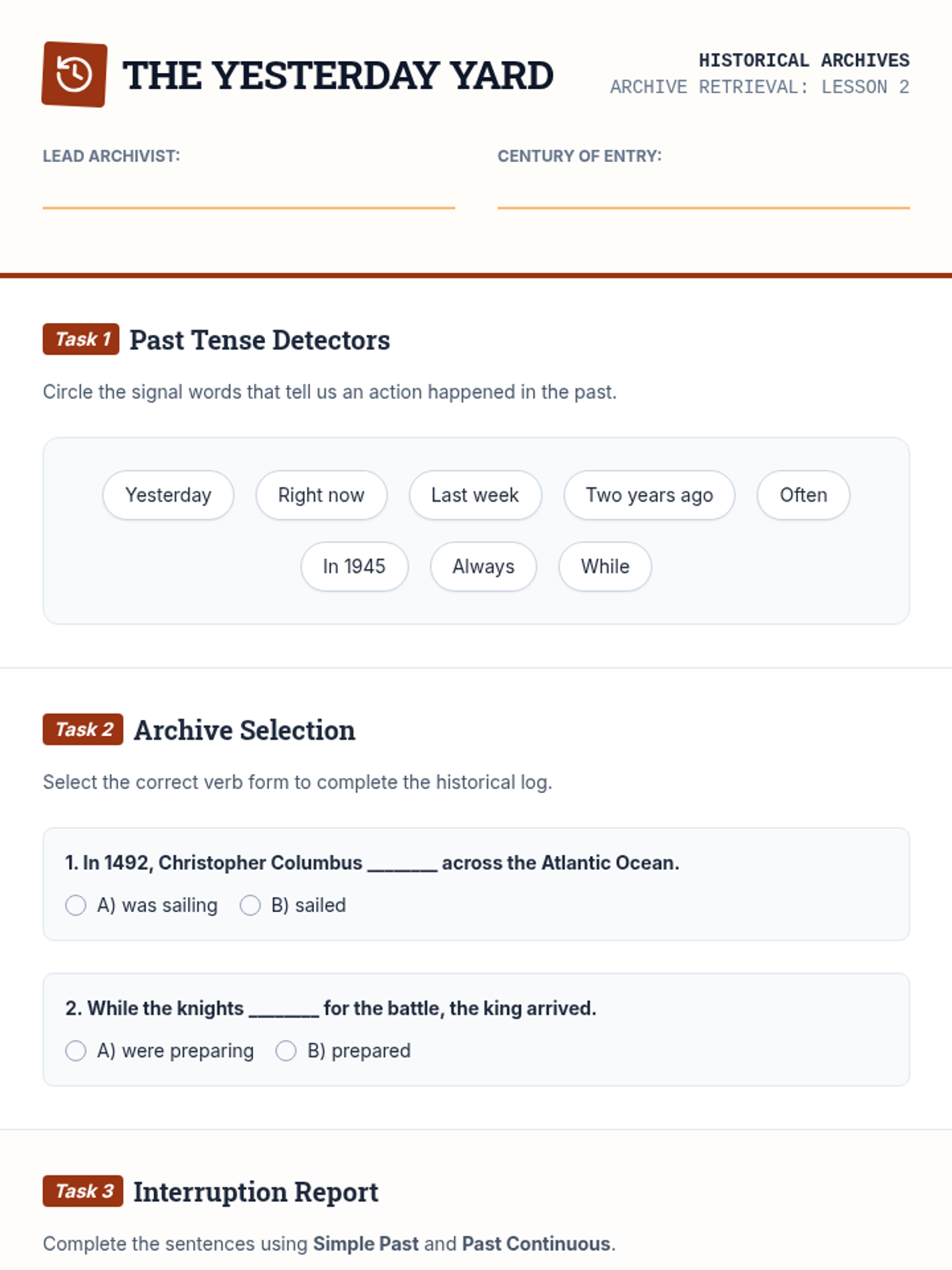
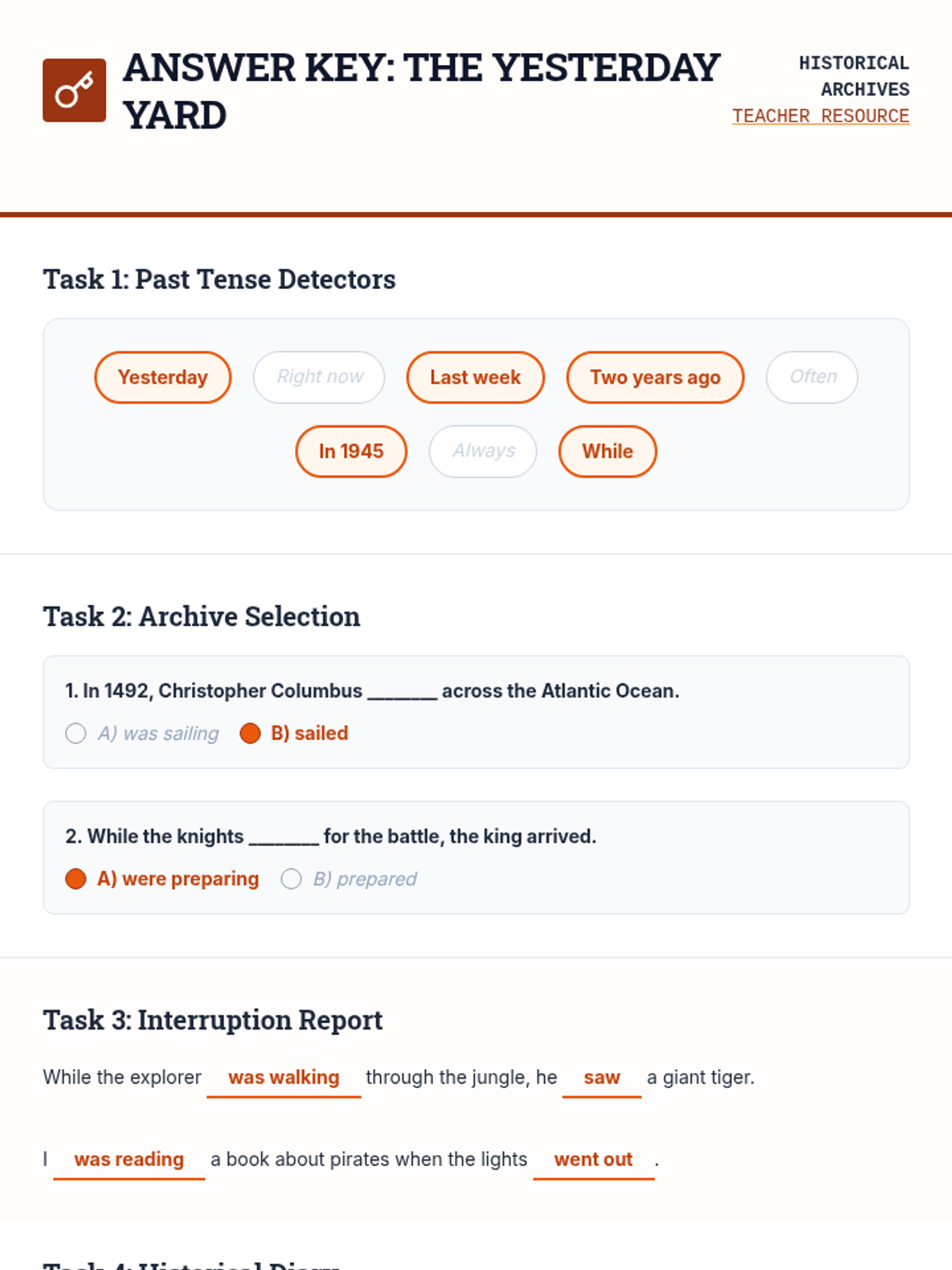
Explores the Simple Past and Past Continuous tenses. Students learn to describe completed actions and ongoing actions in the past.
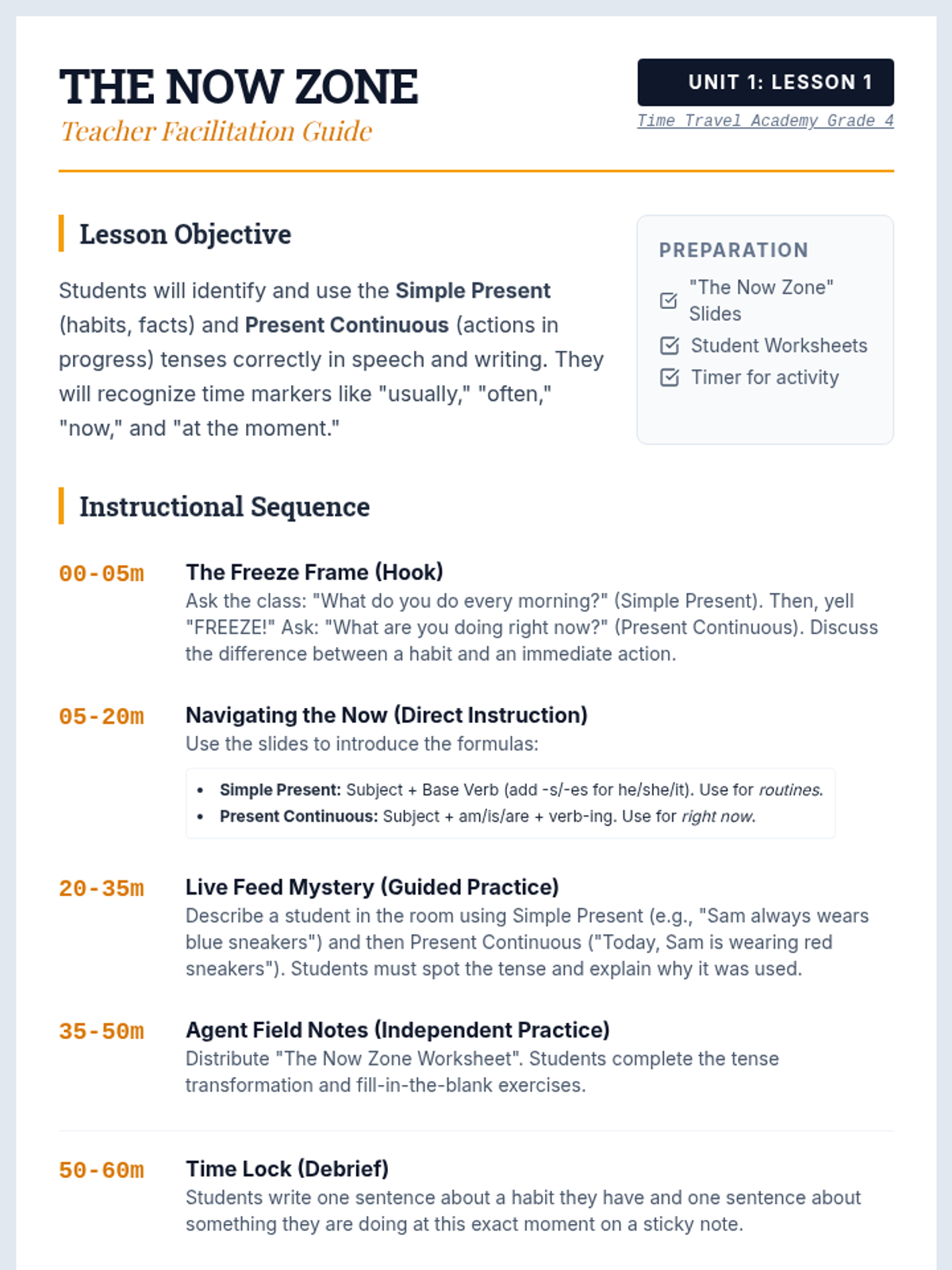
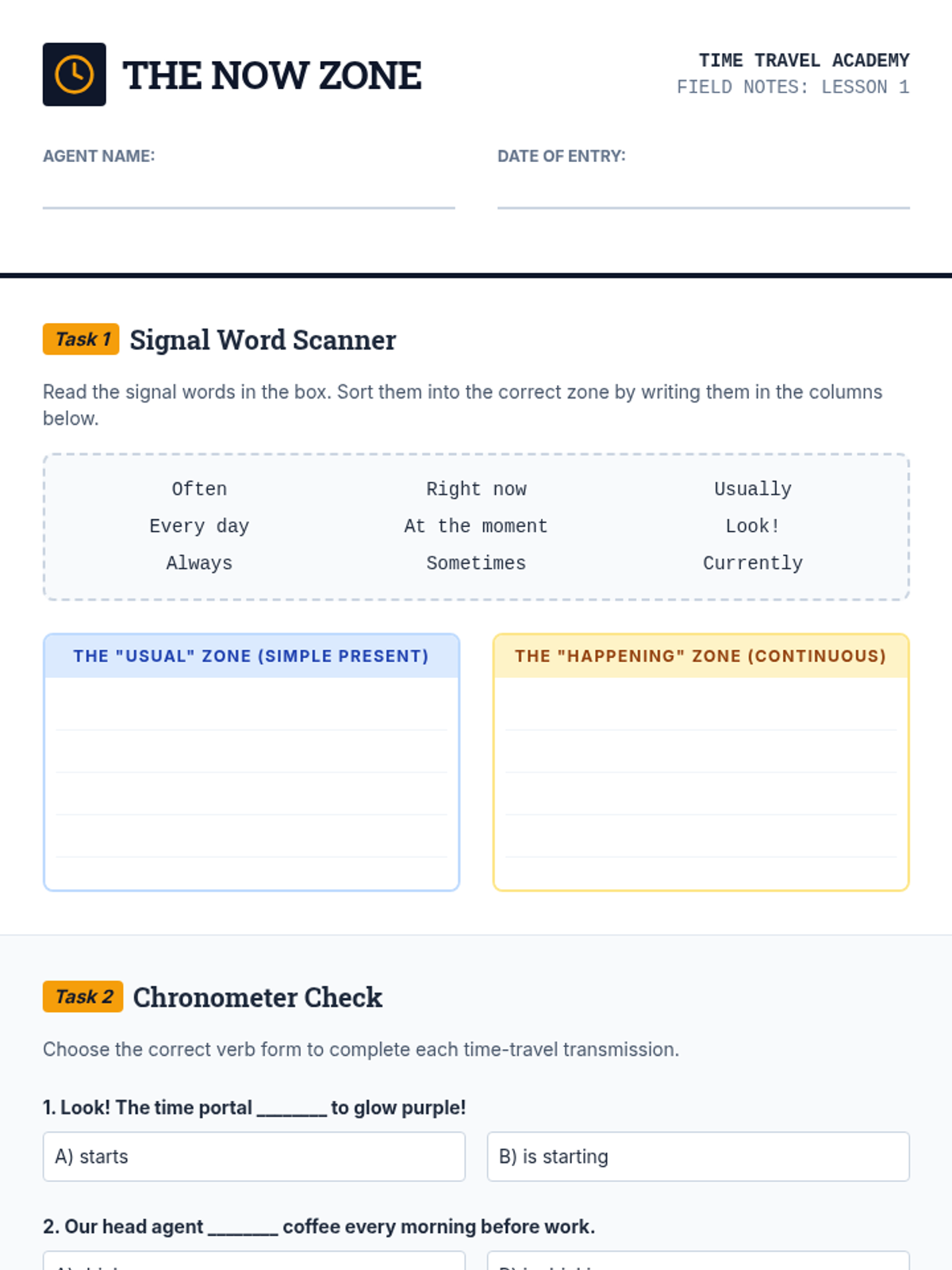
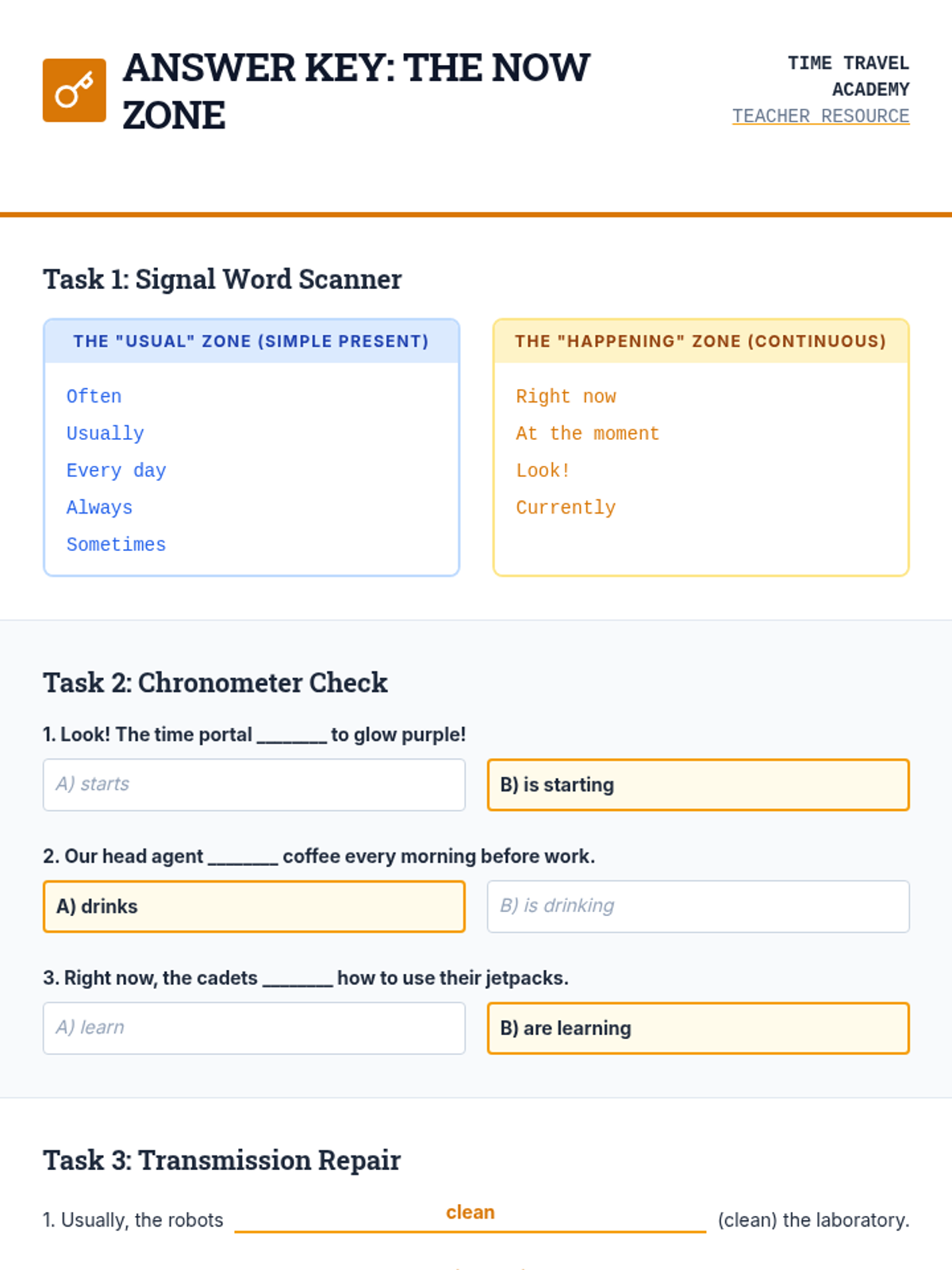
Focuses on the Simple Present and Present Continuous tenses. Students learn to distinguish between habits/facts and actions happening right now.
Unit 9 Lesson 12 Do Now focusing on sentence variety in a library passage and editing compound sentences and title capitalization in a history text.
Unit 9 Lesson 11 Do Now focusing on logical order in a gardening passage and editing double negatives and pronoun agreement in a space exploration text.
Unit 9 Lesson 10 Do Now focusing on clarity and conciseness in a science passage and editing run-on sentences and historical capitalization in a western narrative.
Unit 9 Lesson 9 Do Now focusing on introductory sentences in a party passage and editing sentence fragments and spelling in an ocean exploration text.
Unit 9 Lesson 8 Do Now focusing on word choice in a music passage and editing comparative adjectives and quotation marks in a nature text.
Unit 9 Lesson 7 Do Now focusing on focused structure in a recycling passage and editing prepositions and contractions in a winter narrative.
Unit 9 Lesson 6 Do Now focusing on adding supporting details in a historical passage and editing possessive nouns in a formal letter.
Unit 9 Lesson 5 Do Now focusing on conclusion sentences in a travel passage and editing dialogue punctuation and homophones in a science text.
Unit 9 Lesson 4 Do Now focusing on sentence combining in a cooking passage and editing subject-verb agreement in a mystery narrative.
Unit 9 Lesson 3 Do Now focusing on transition words in a zoo passage and editing irregular verbs and commas in a rainforest conservation text.
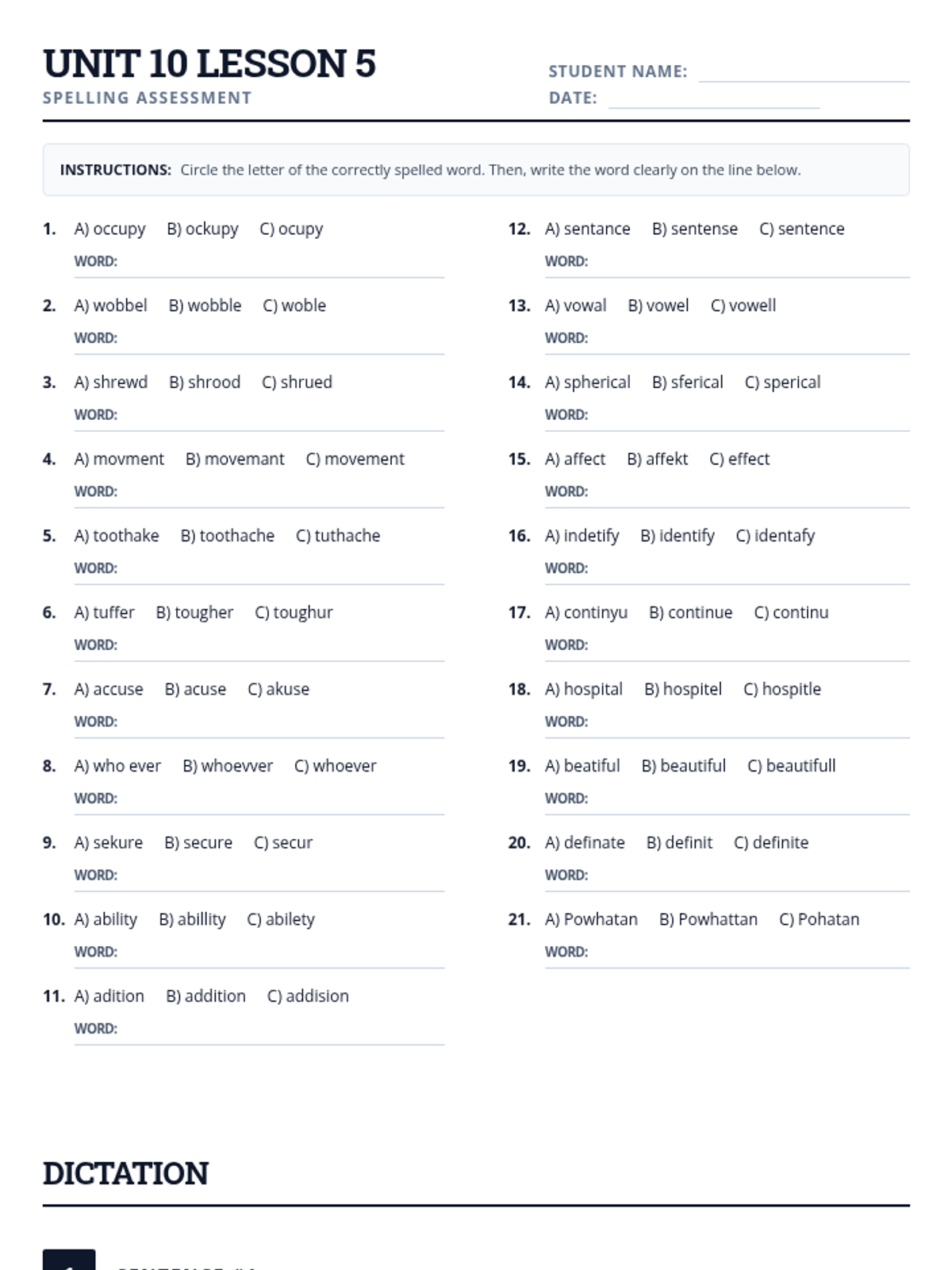
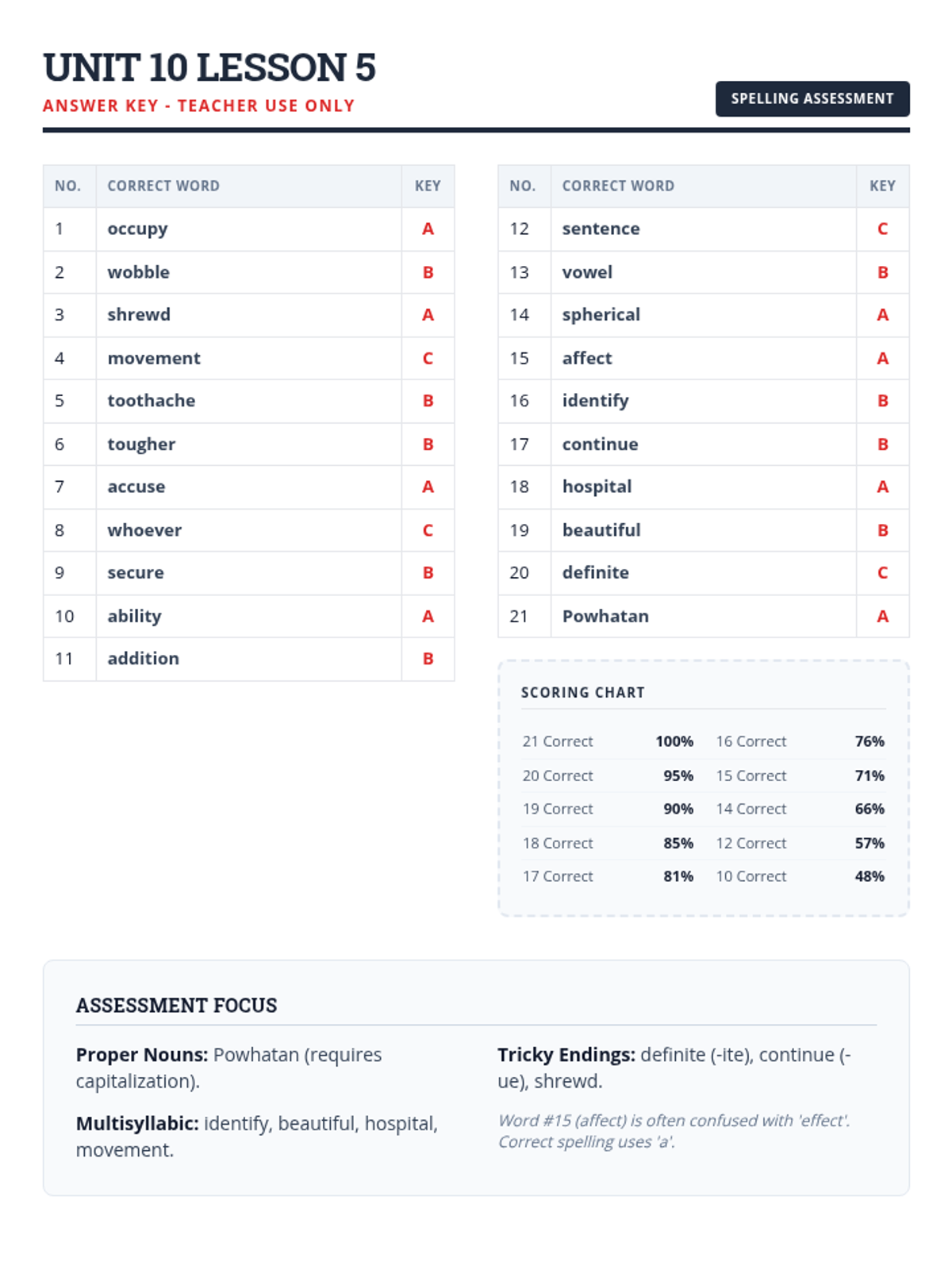
A spelling assessment for Unit 10 Lesson 5 featuring 21 words including 'occupy', 'identify', and 'Powhatan'. Covers double consonants, multisyllabic words, proper nouns, and common vowel teams.
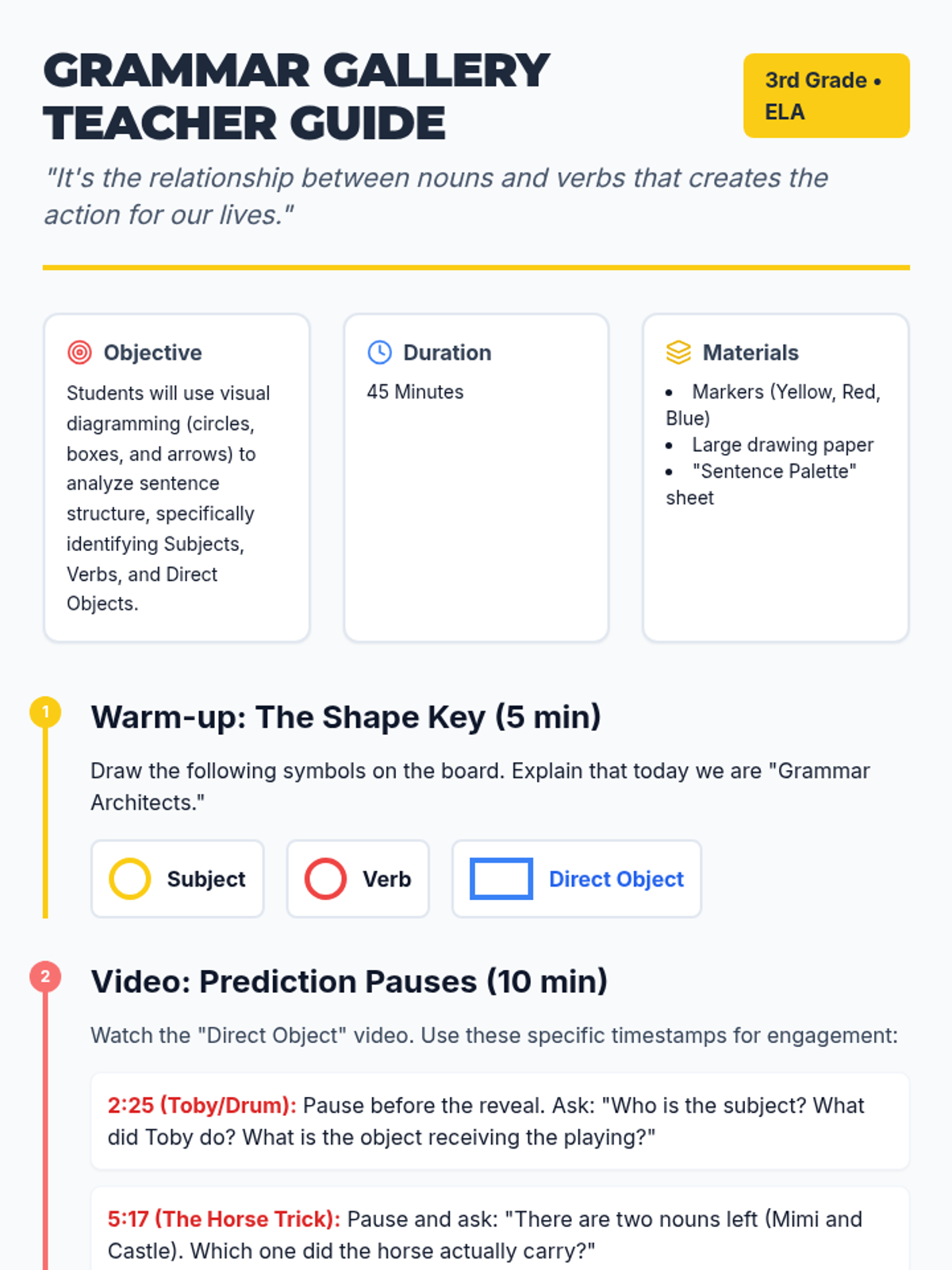
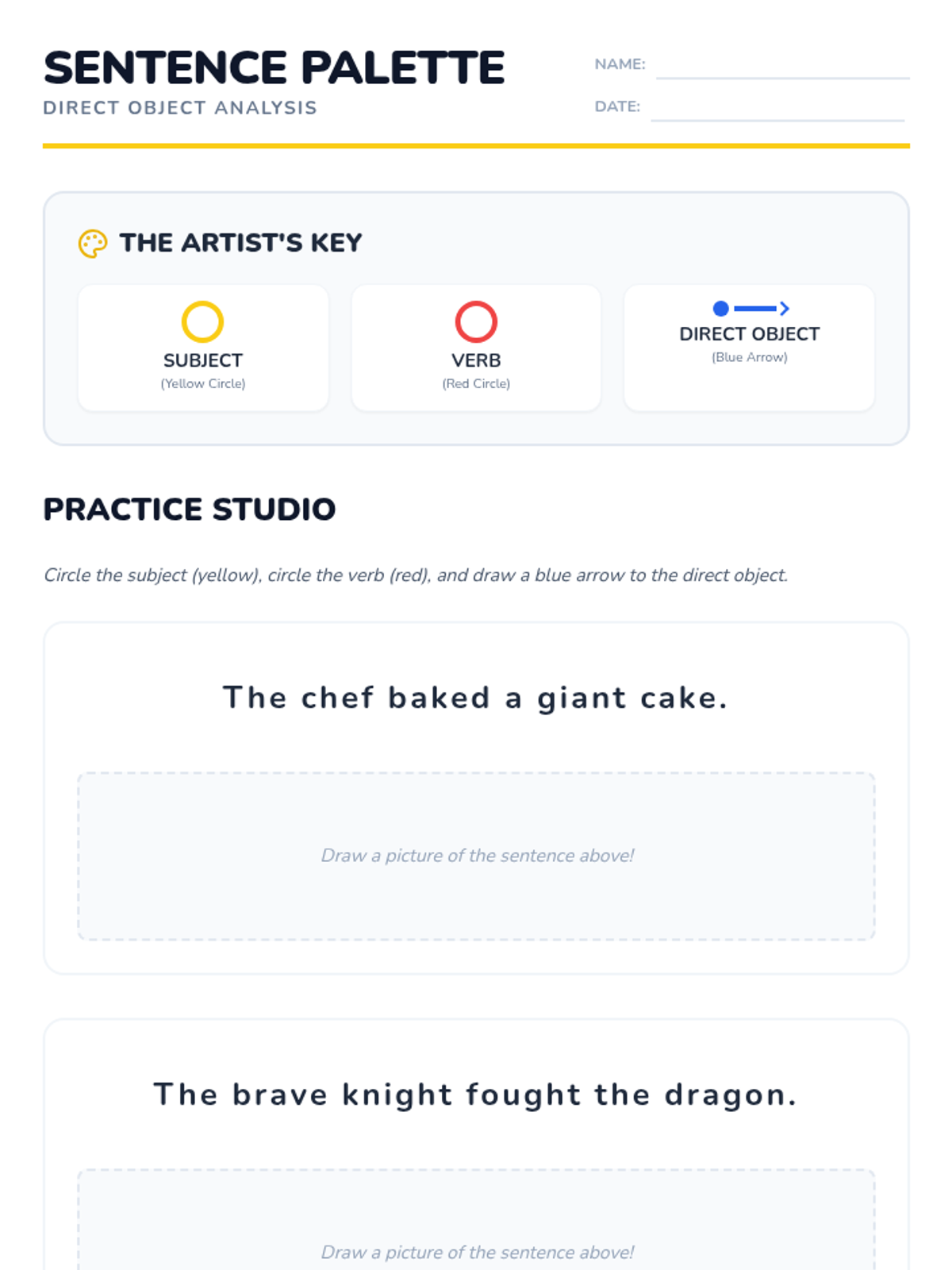
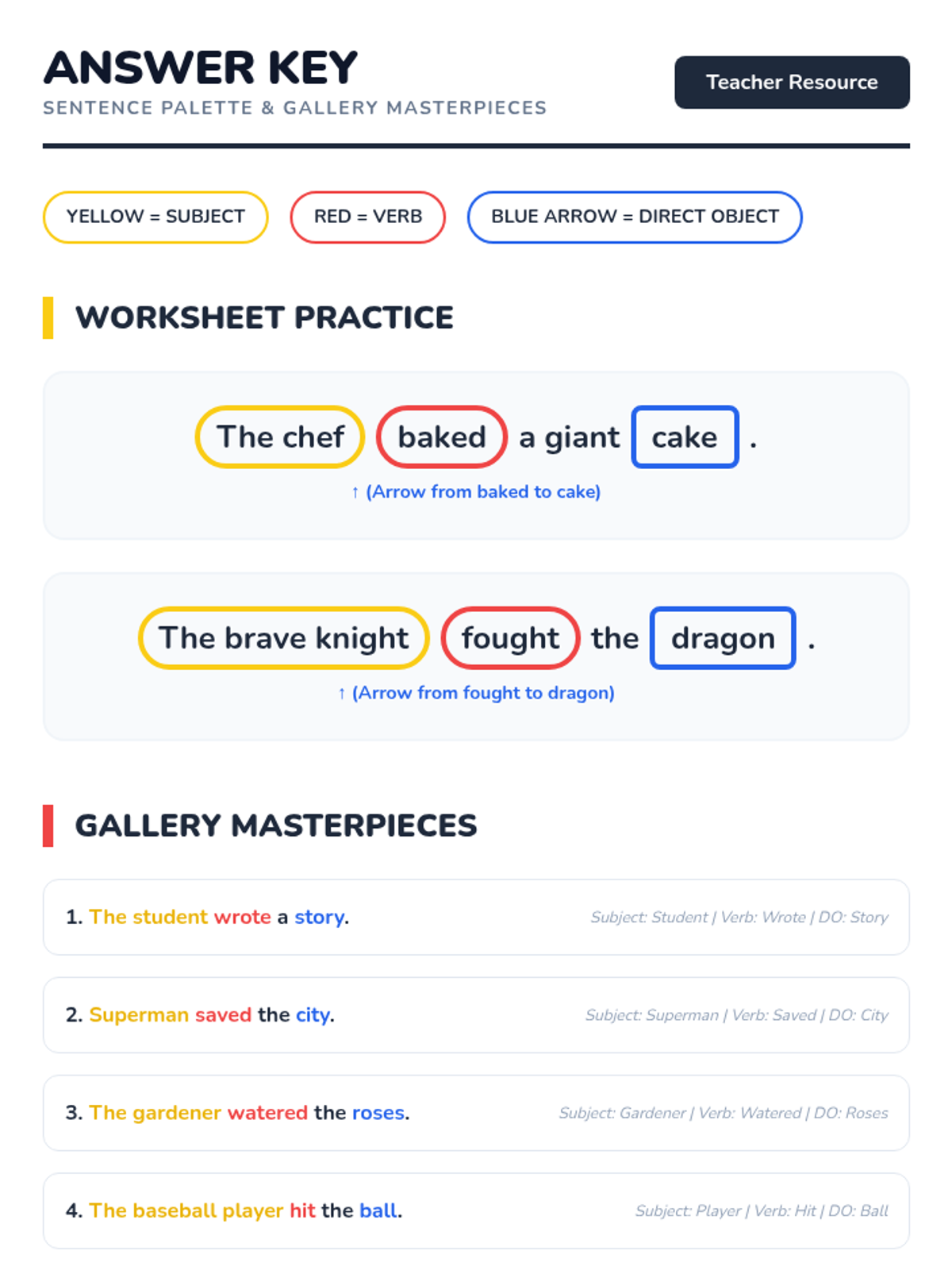
A lesson where students learn to identify subjects, verbs, and direct objects using a visual, color-coded diagramming system inspired by hand-drawn animations.
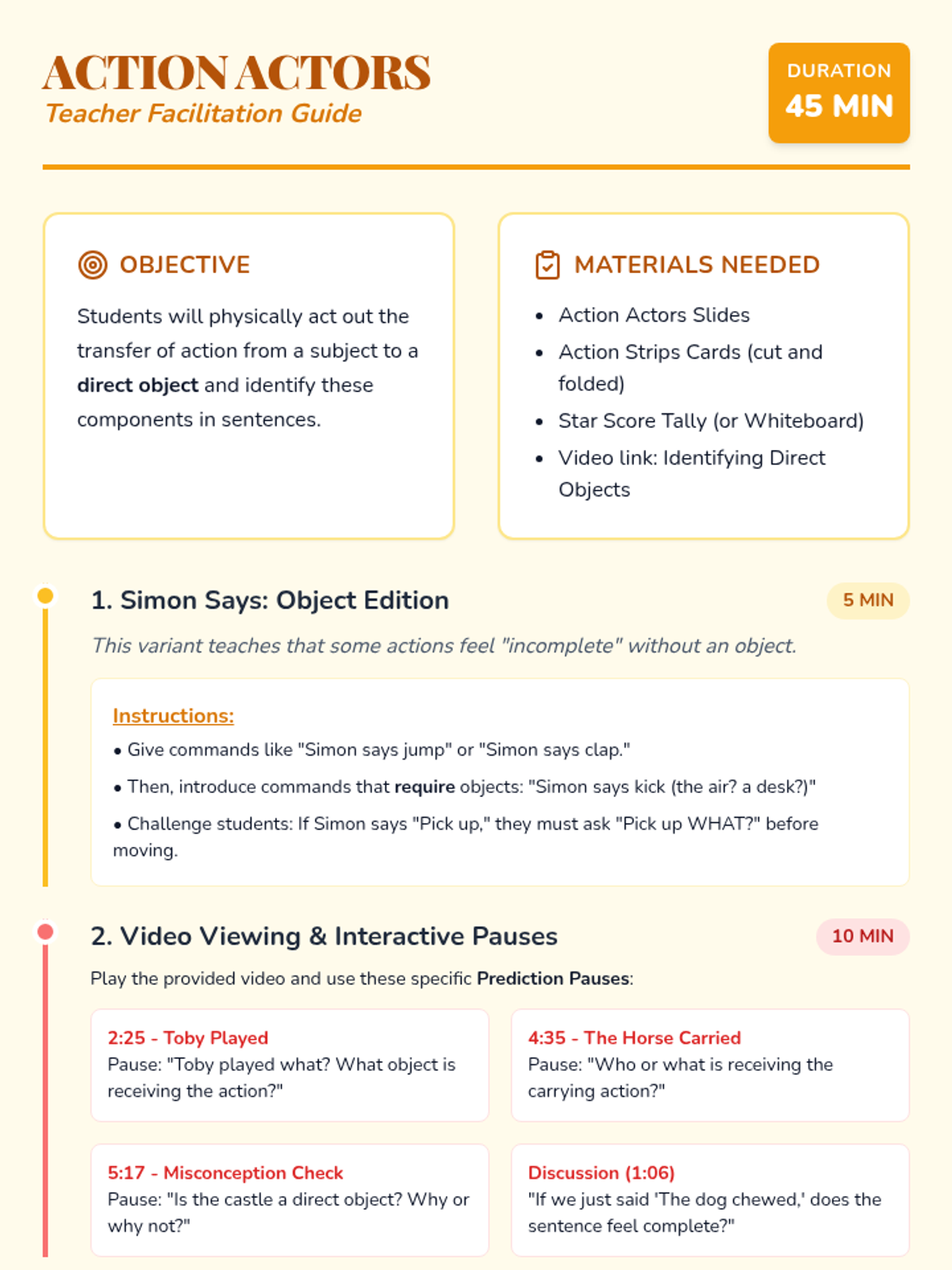
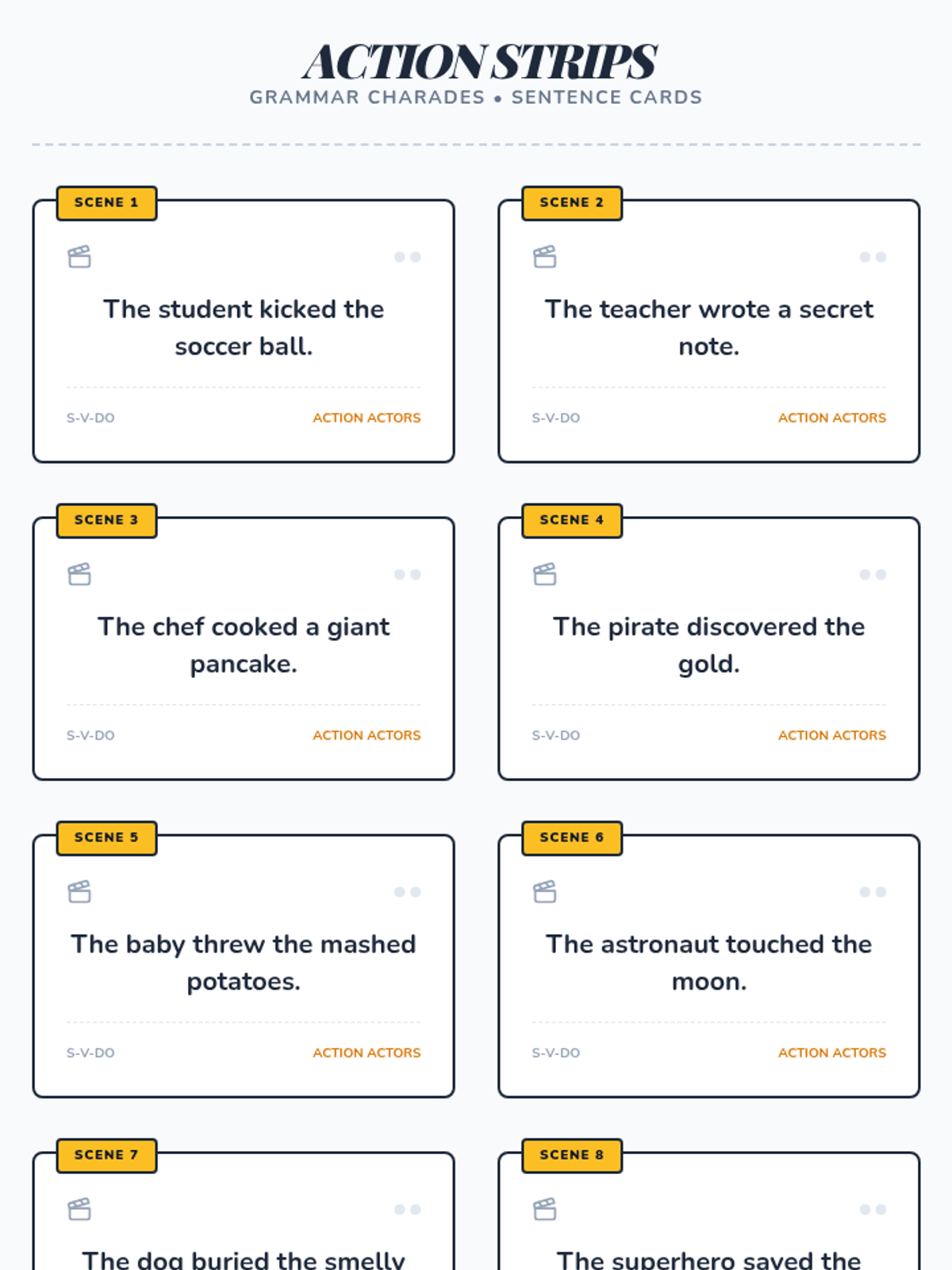
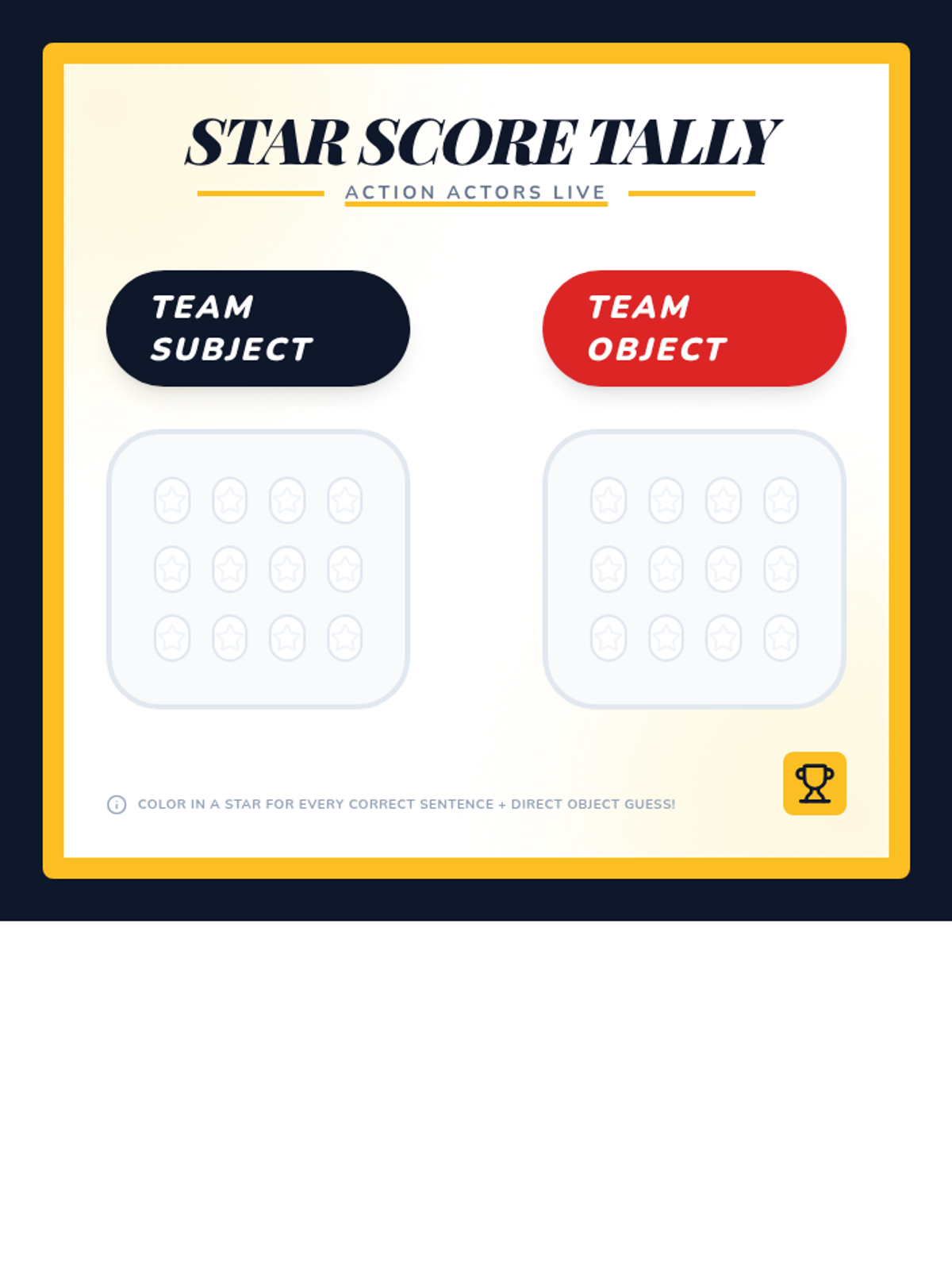
A high-energy 4th-grade grammar lesson where students physically demonstrate the relationship between verbs and direct objects through acting and charades.
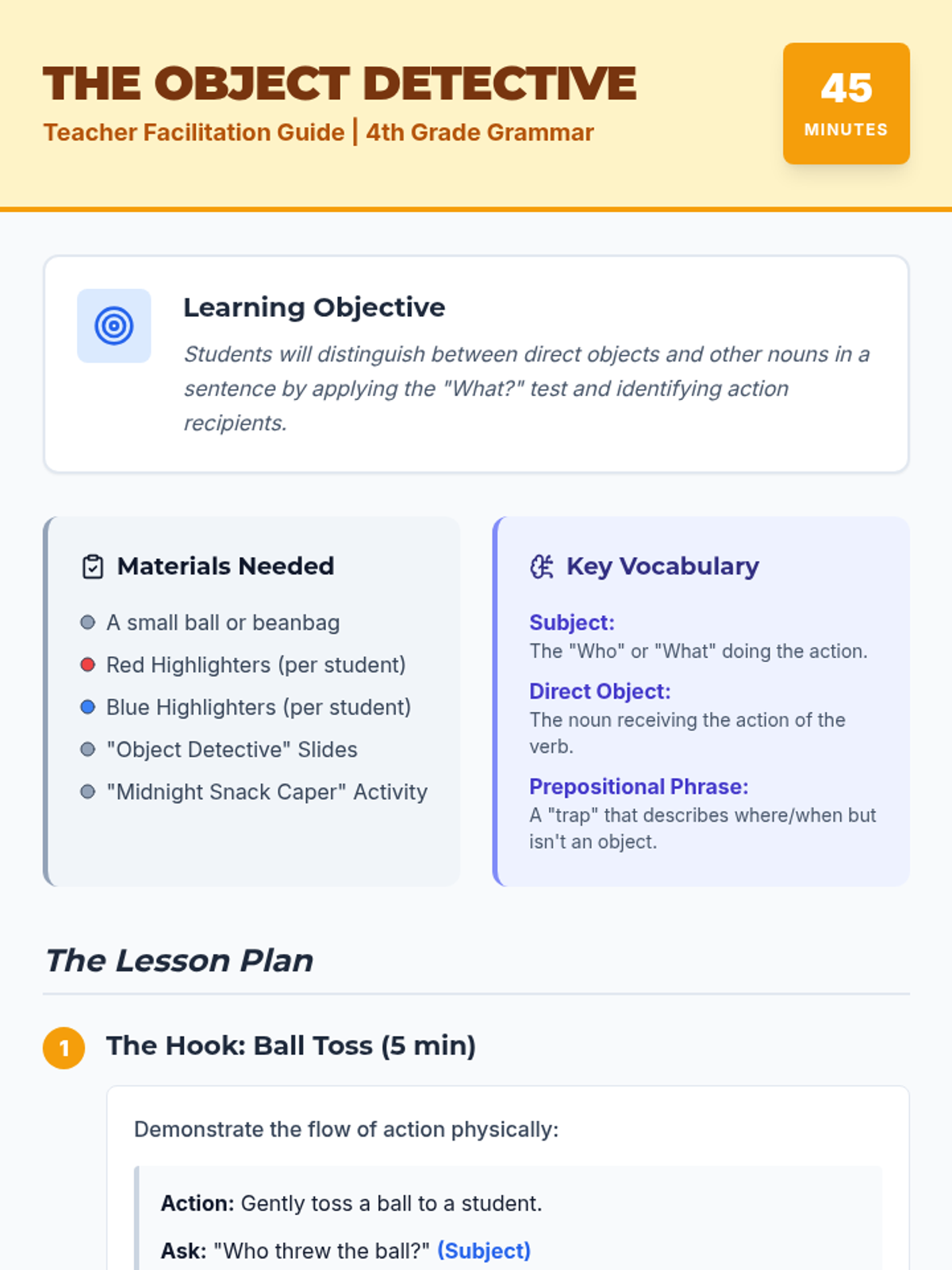
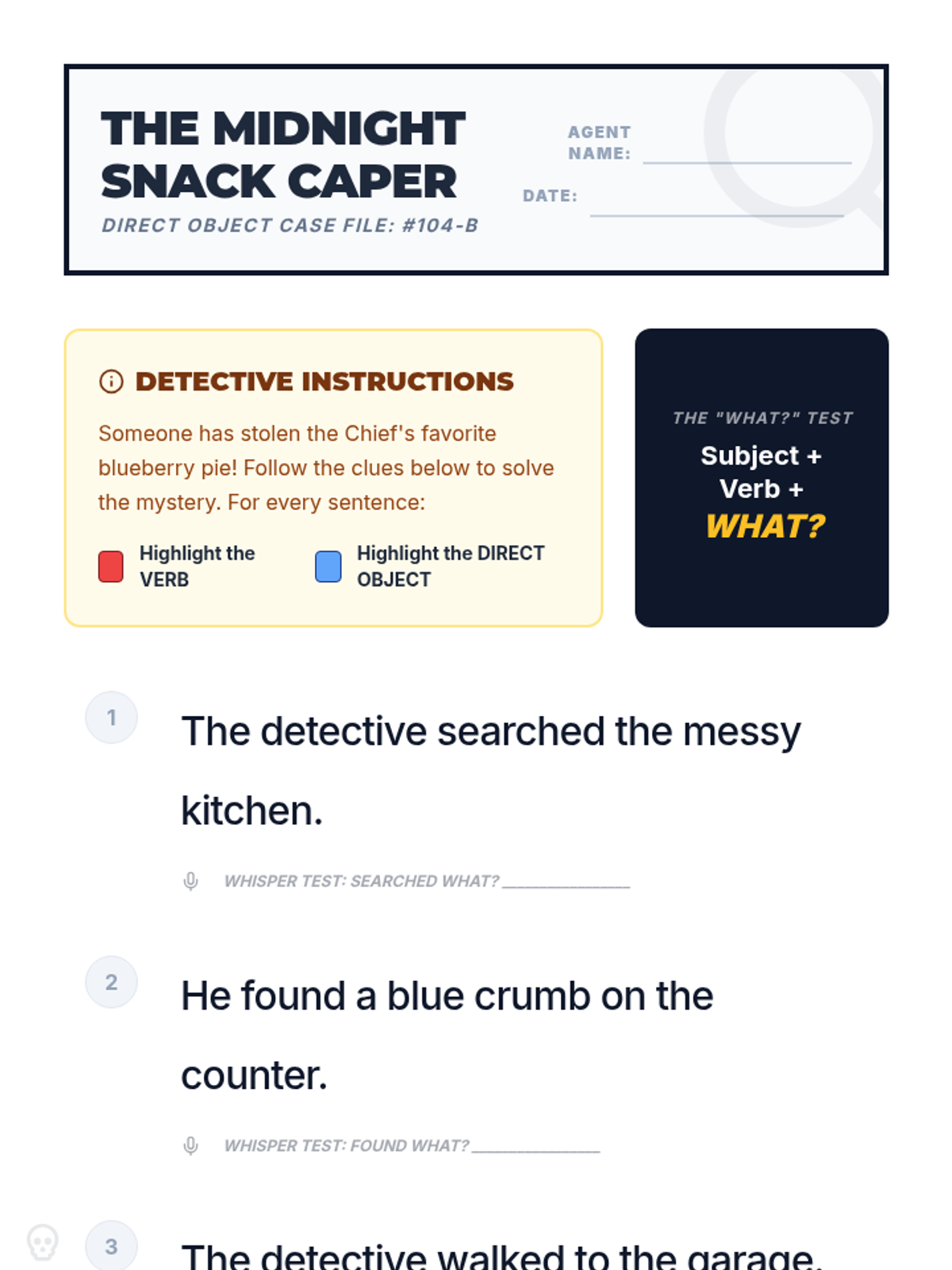
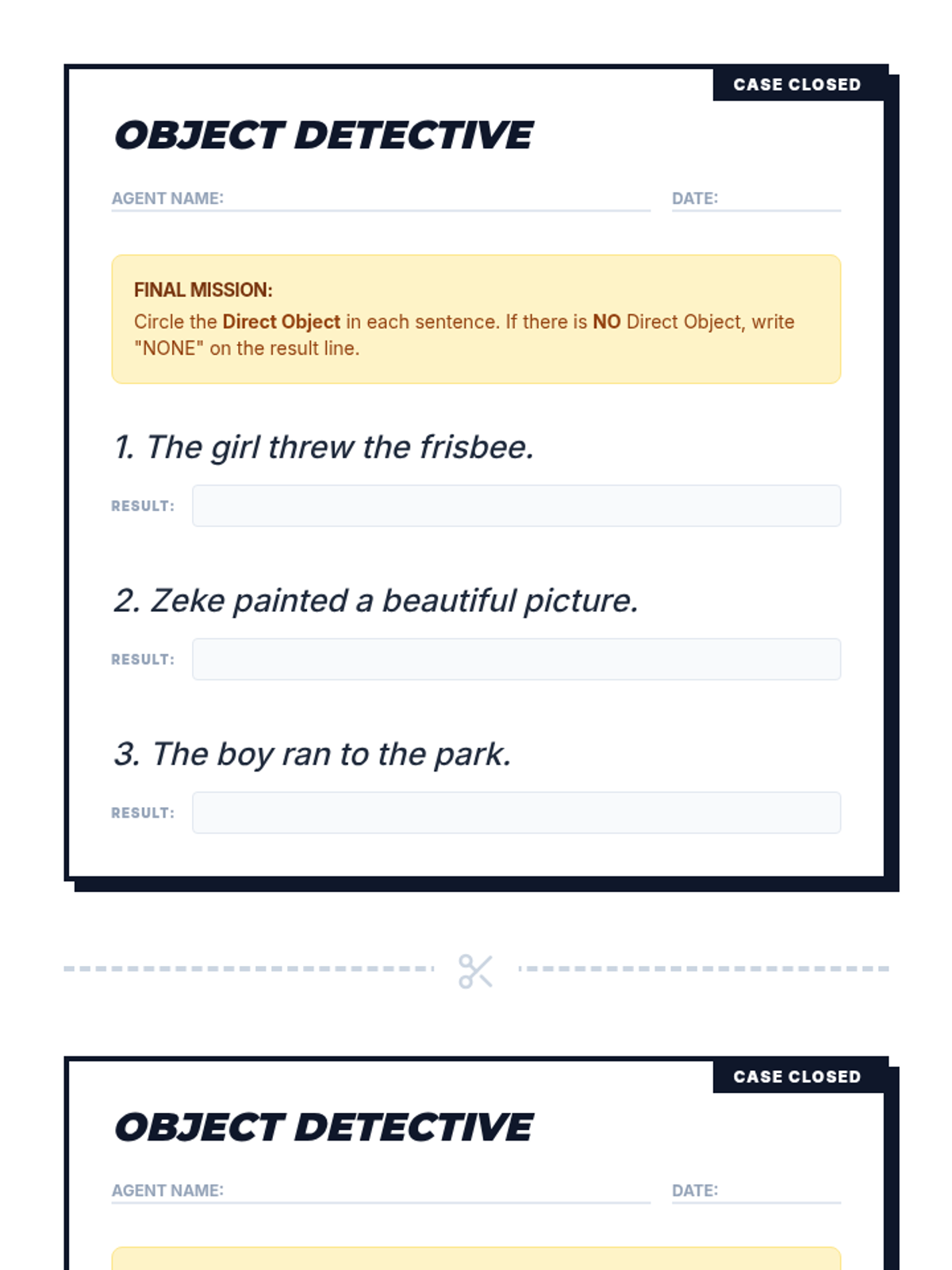
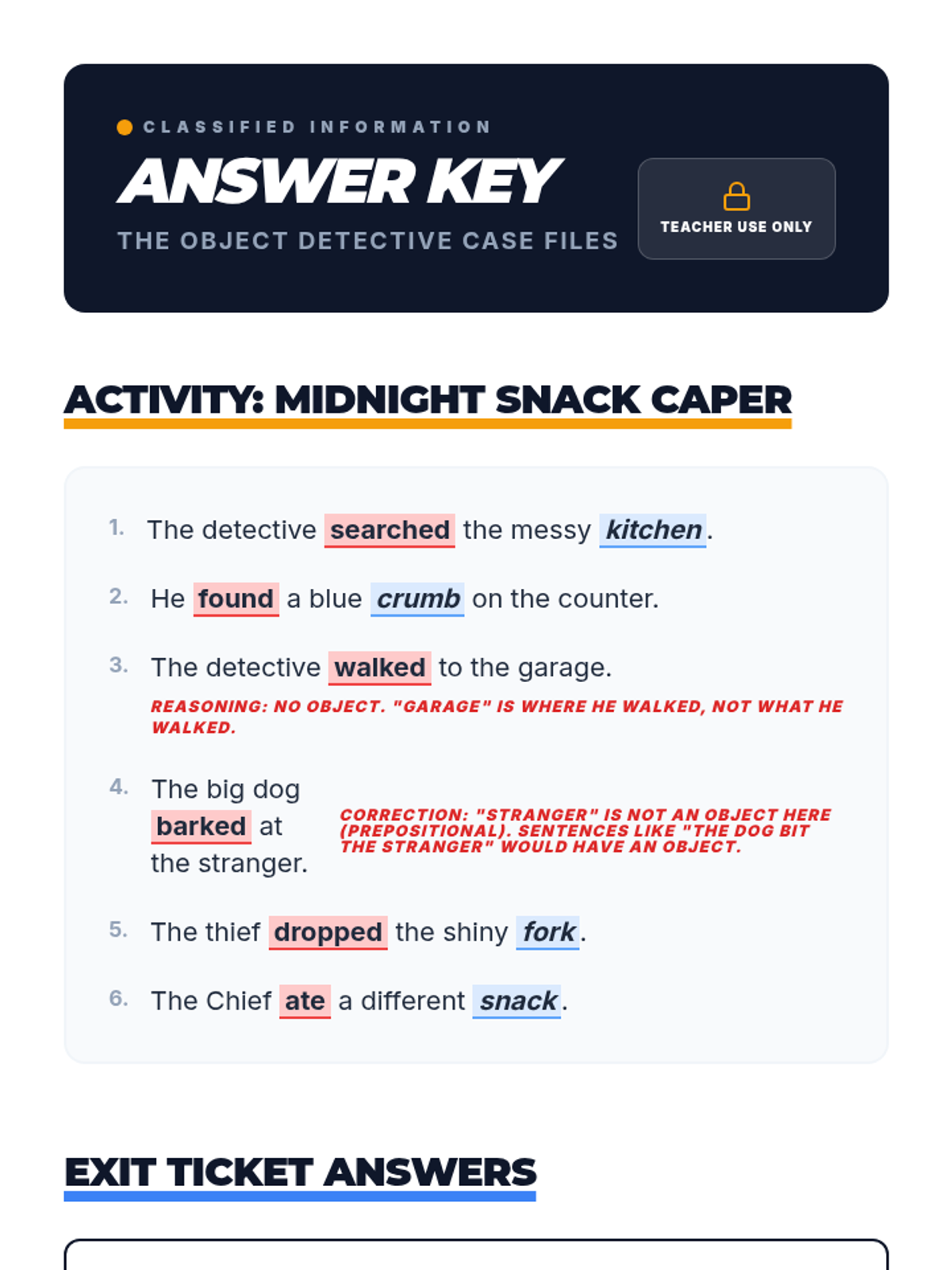
A detective-themed grammar lesson where 4th graders learn to identify direct objects by asking 'Verb + What?' and avoiding prepositional phrase traps.
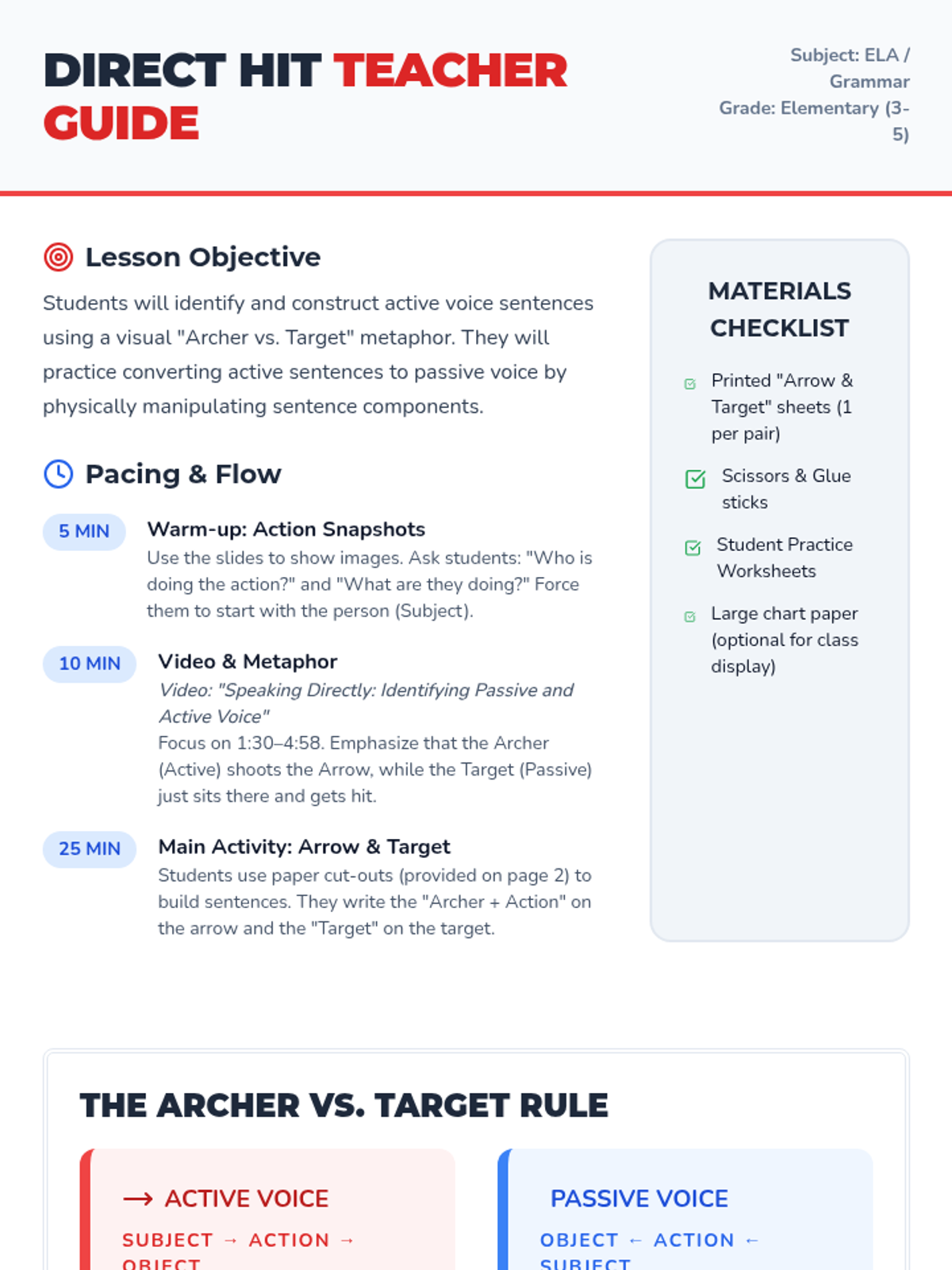
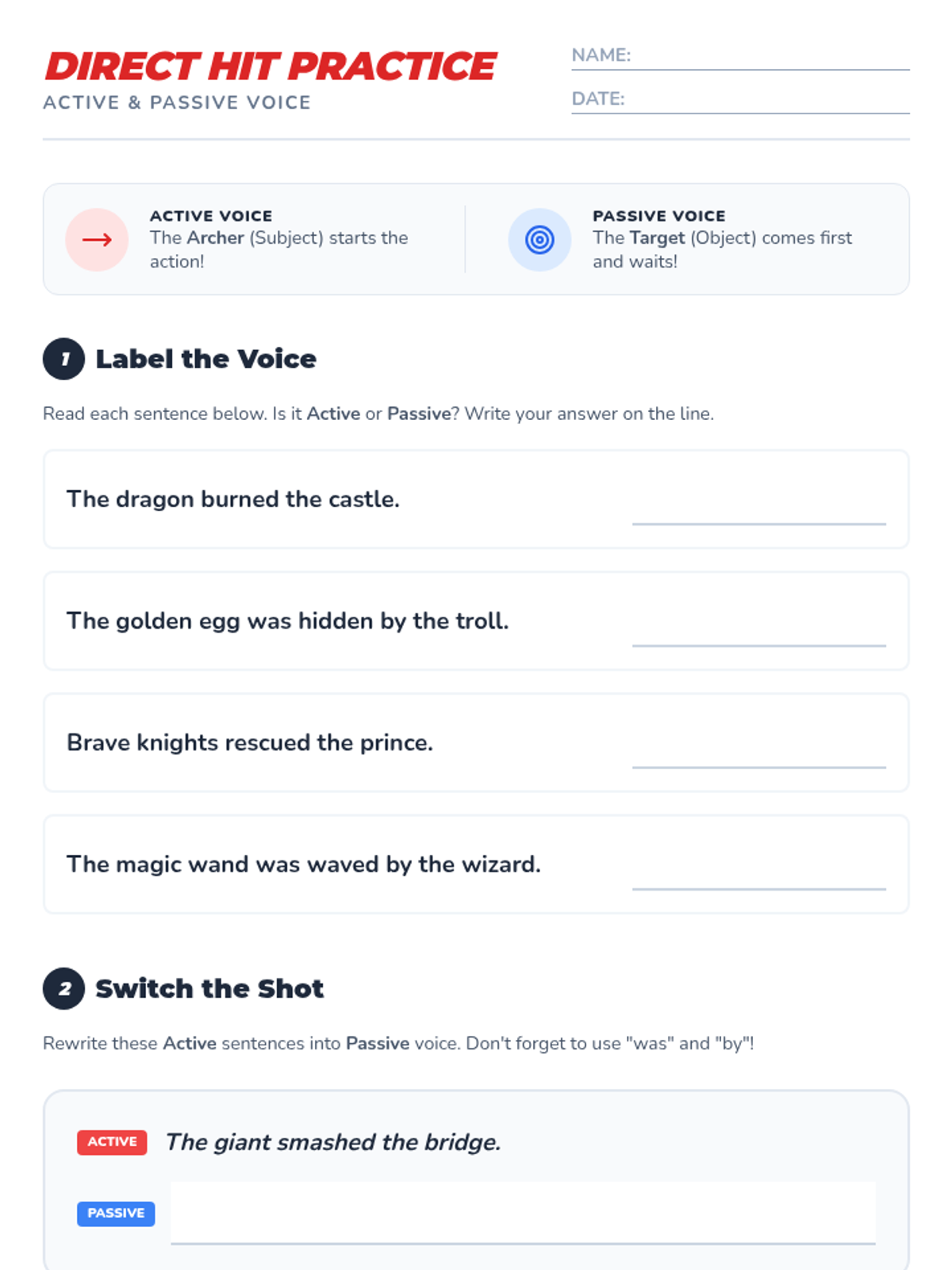
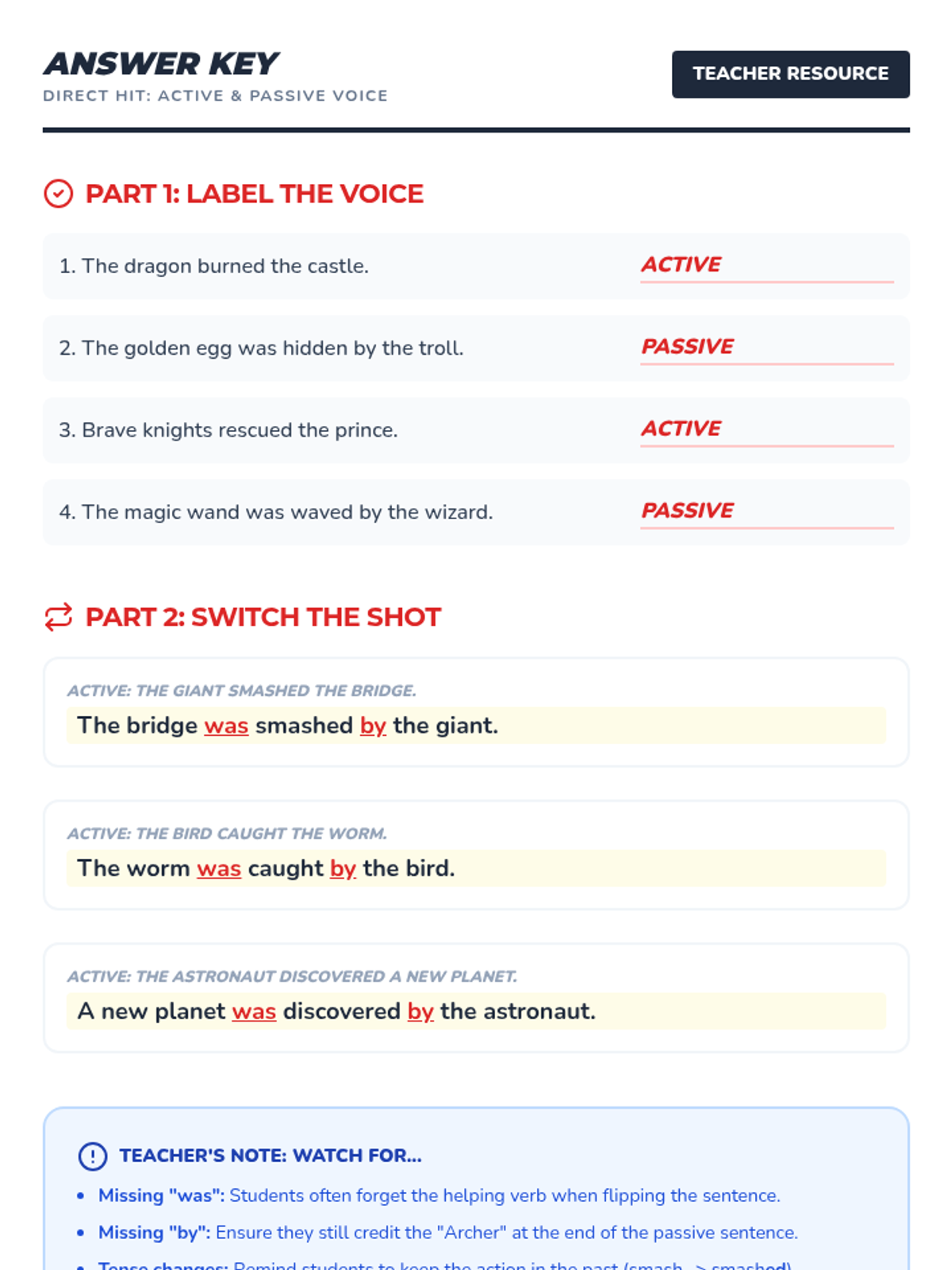
A dynamic grammar lesson using an 'Archer vs. Target' metaphor to help students master active and passive voice through physical sentence construction.
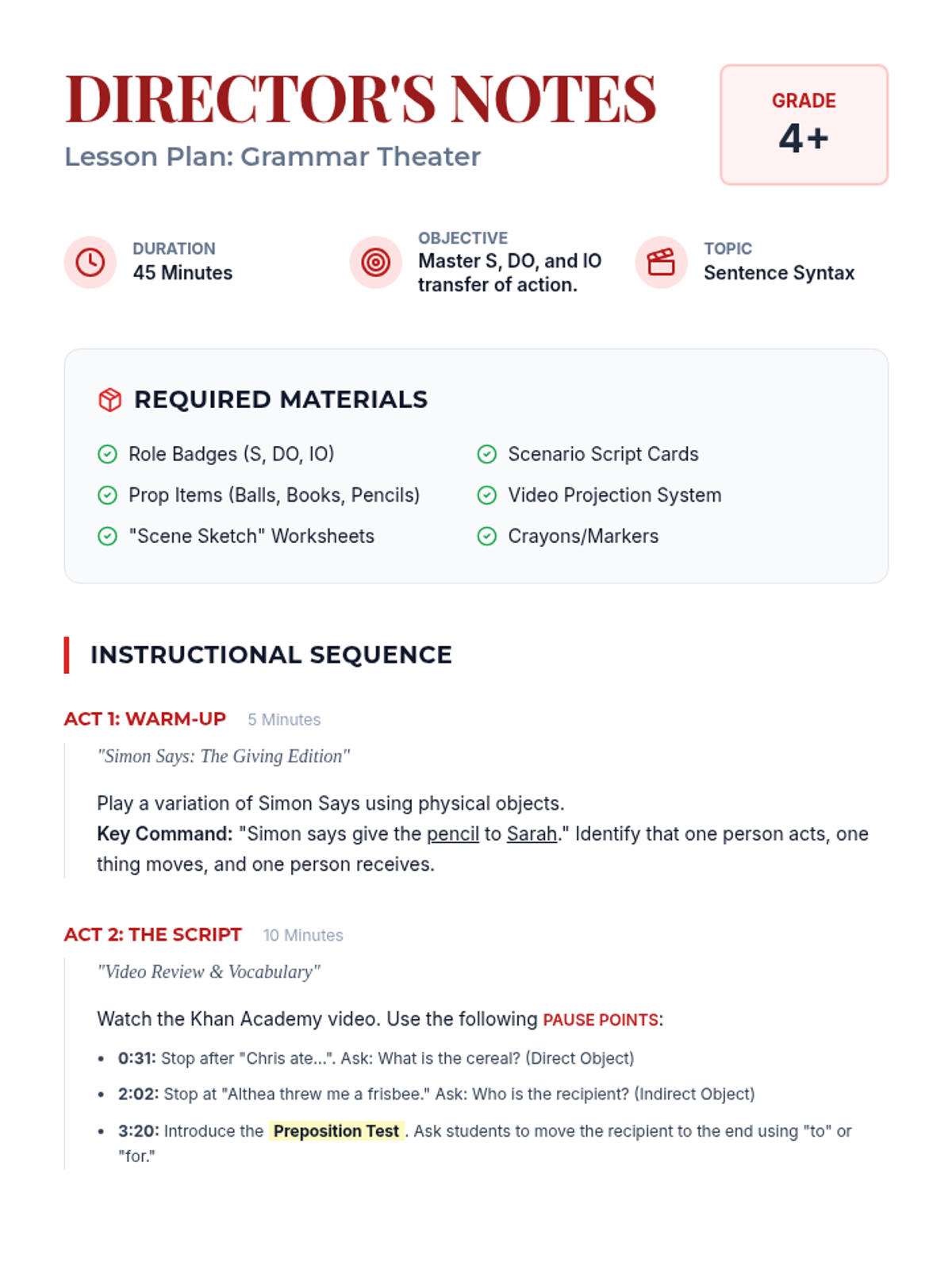
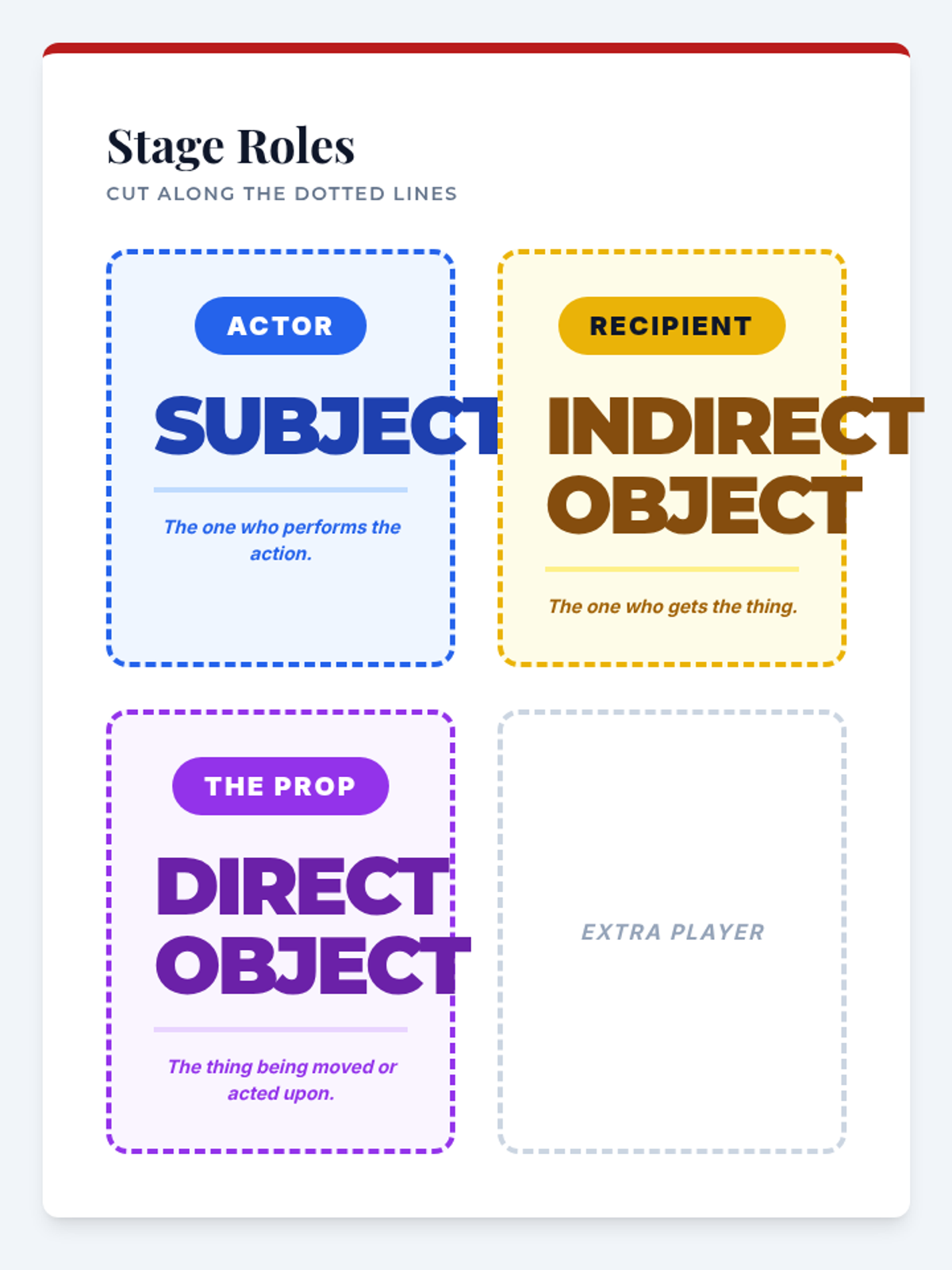
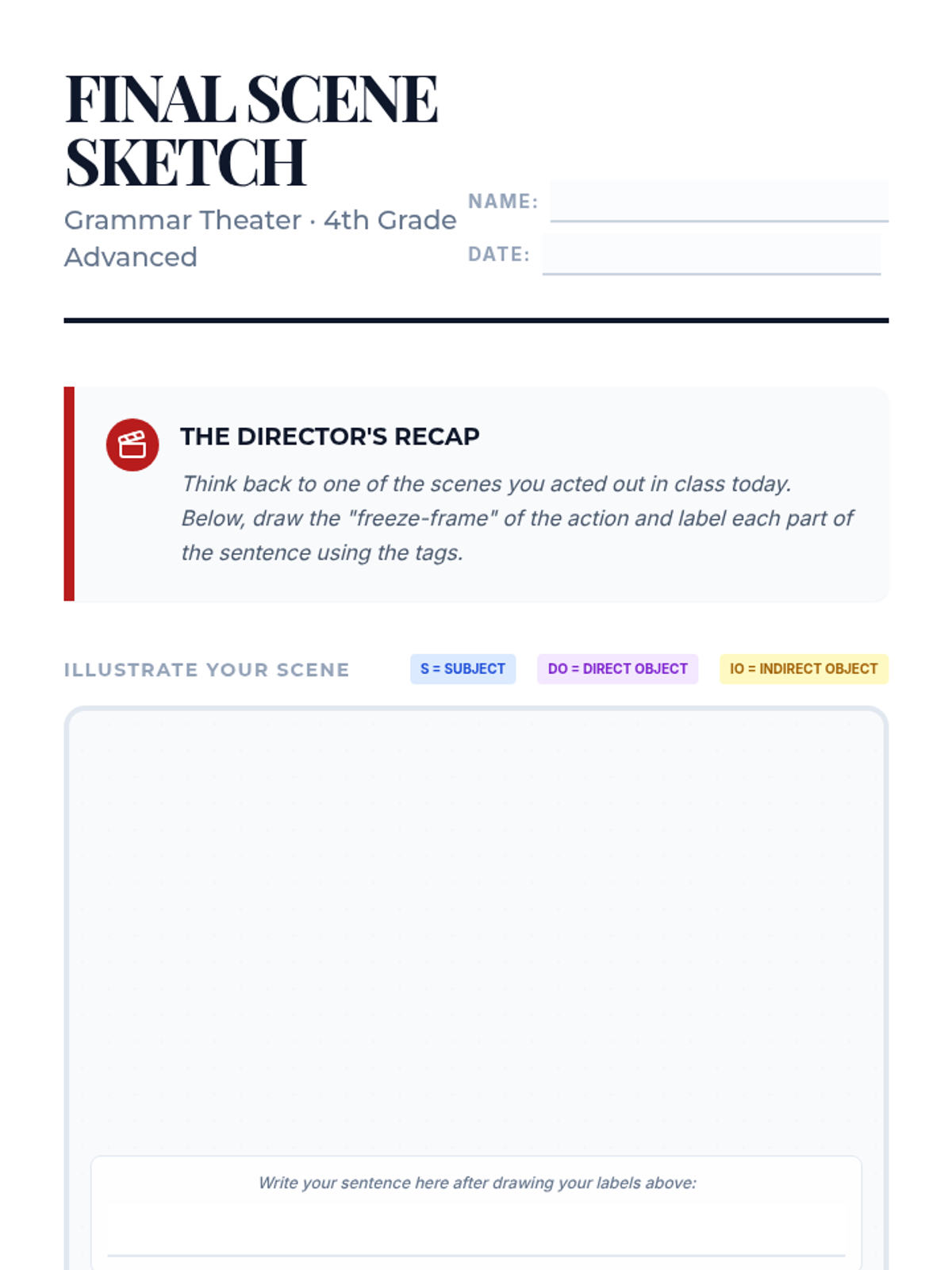
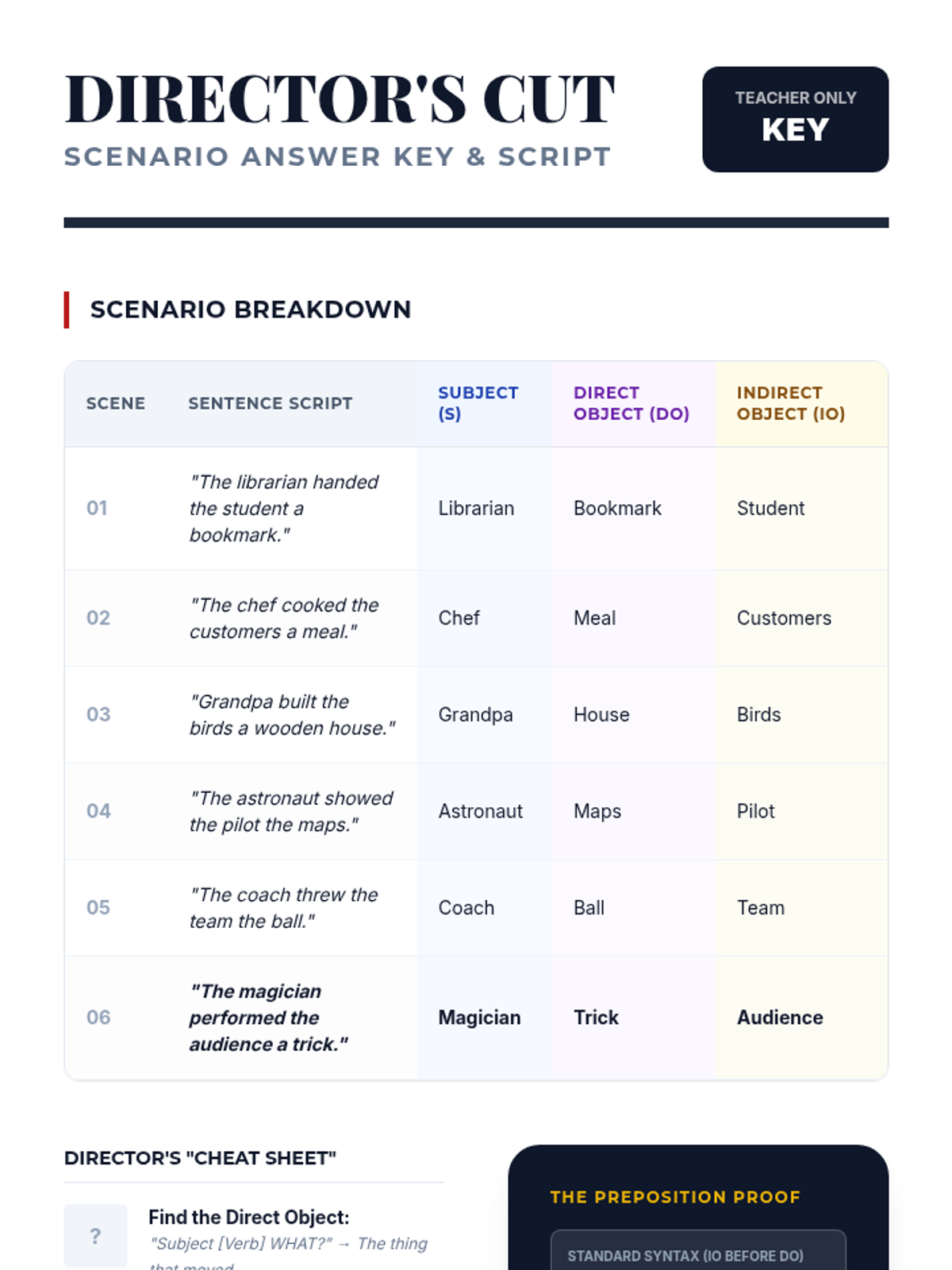
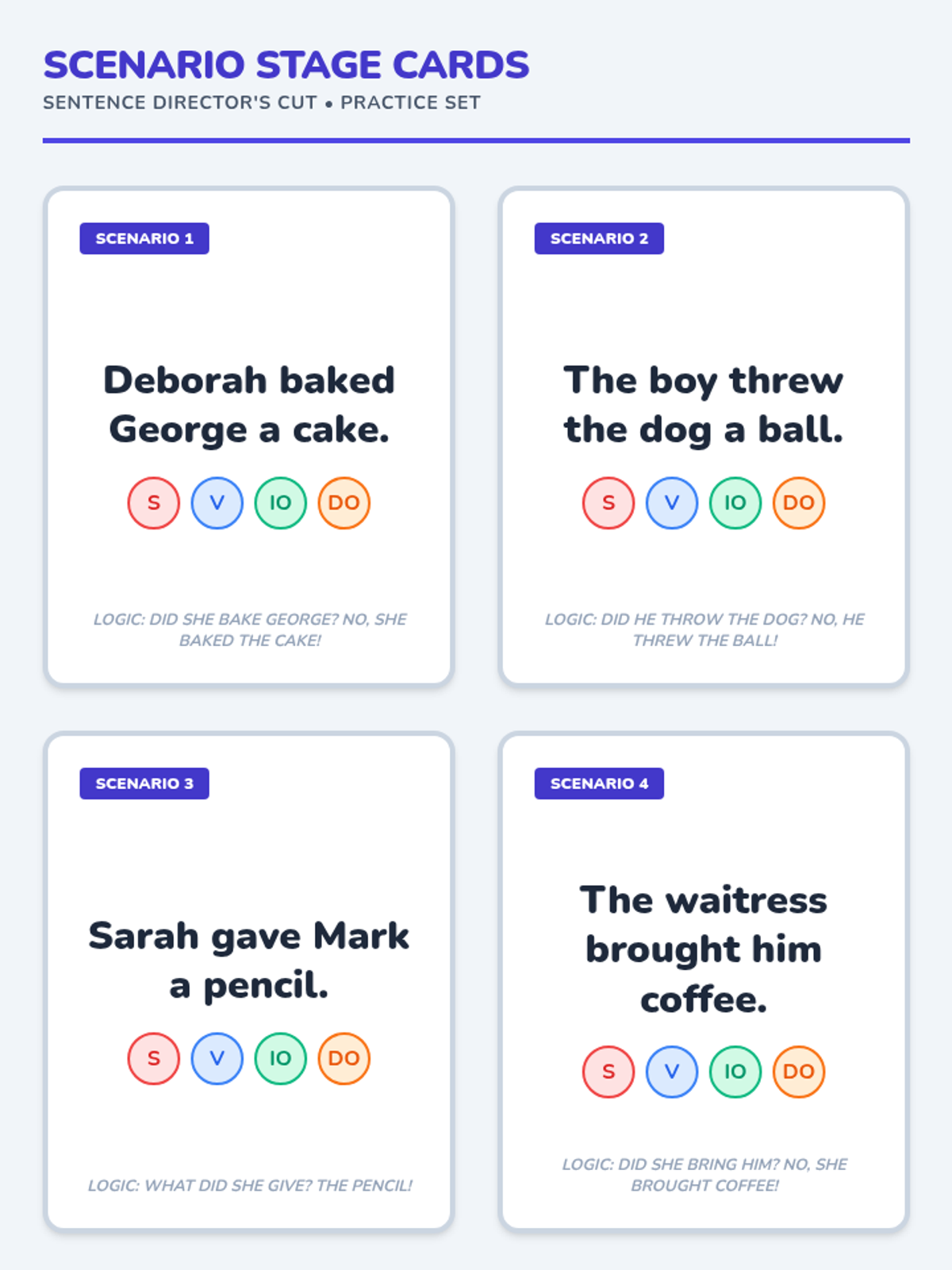
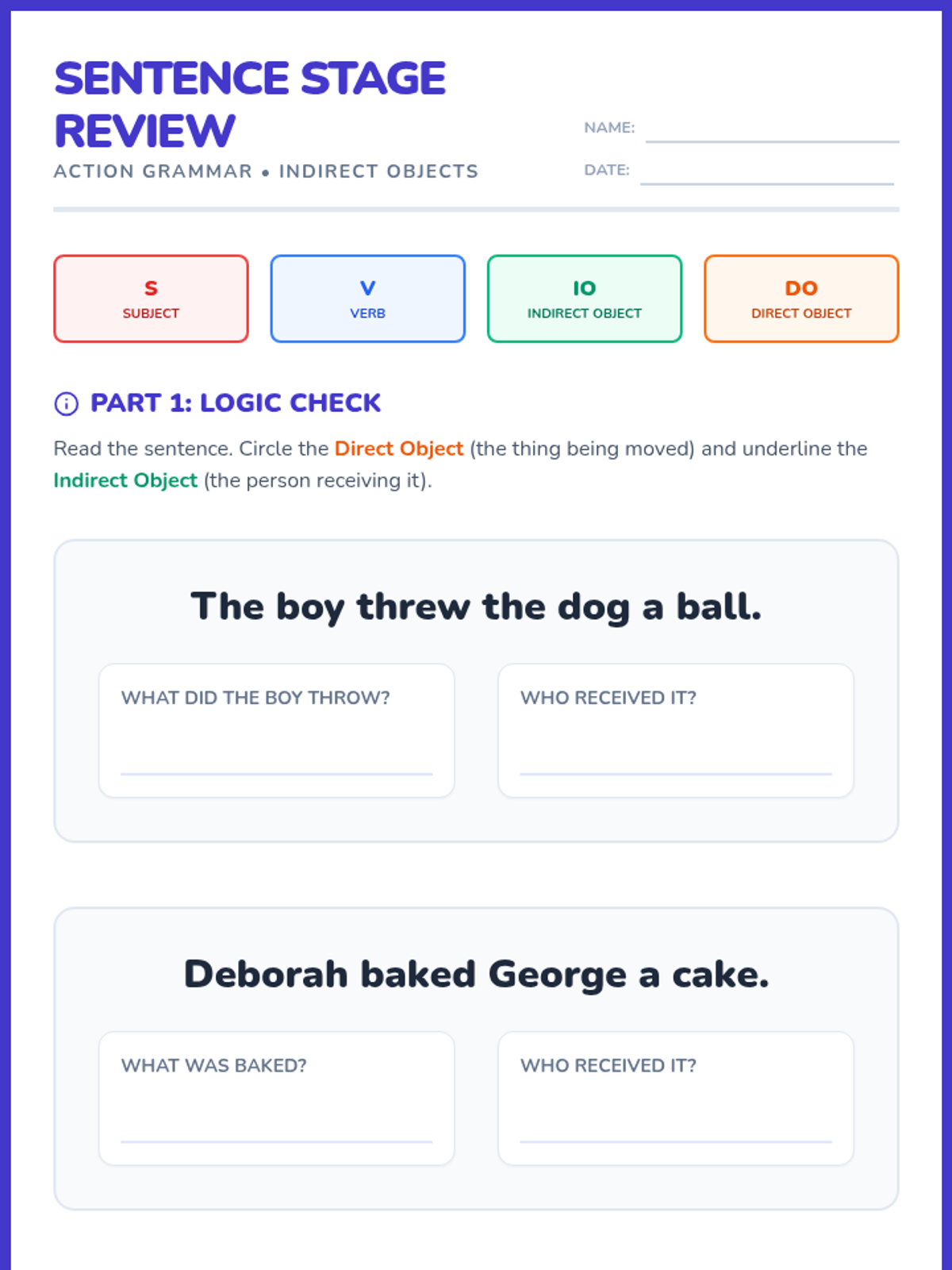
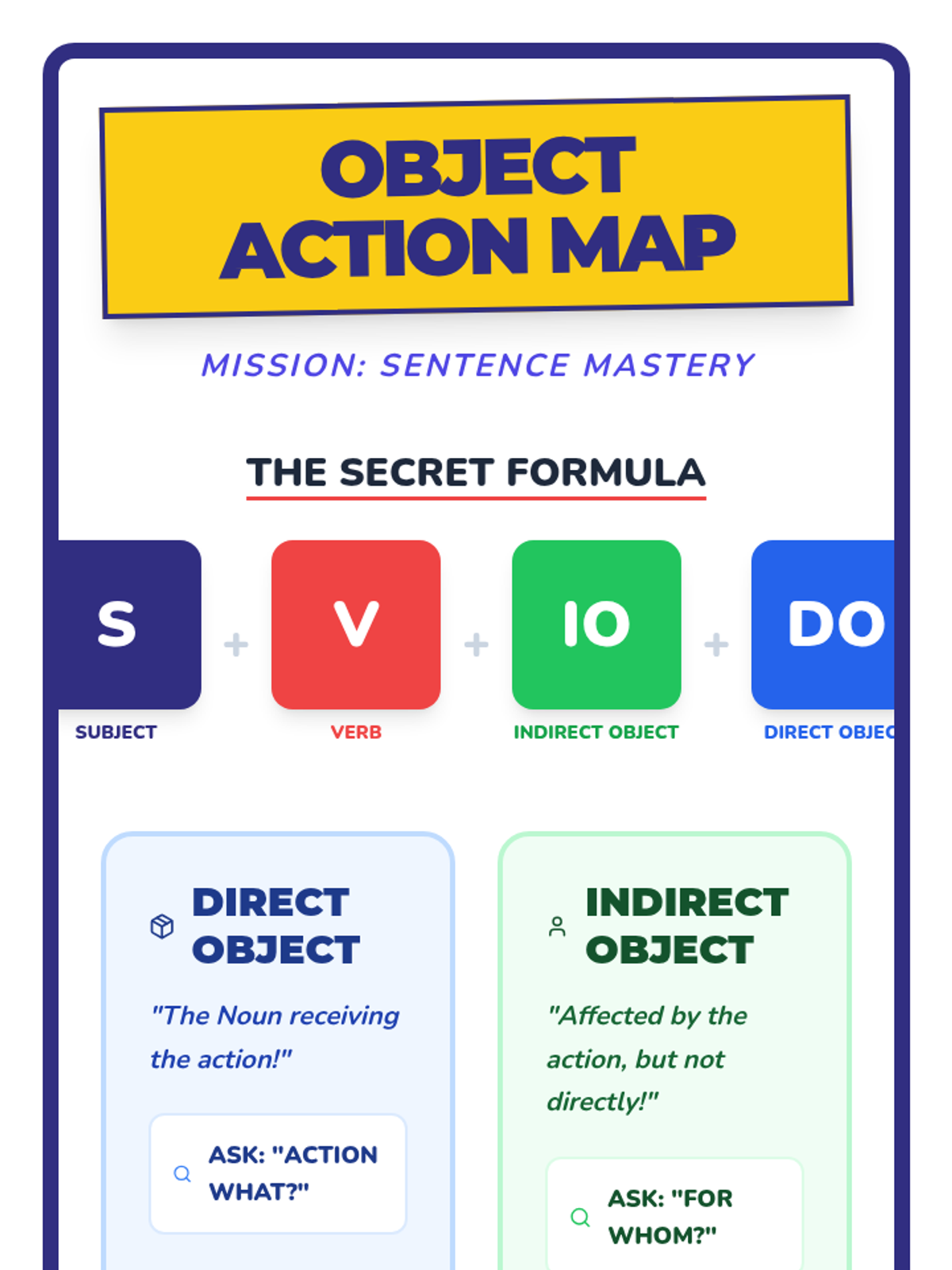
An advanced 4th-grade grammar lesson where students physically act out the relationships between subjects, direct objects, and indirect objects through a 'Grammar Theater' production. The lesson includes a video review, kinesthetic role-play, and visual diagramming.
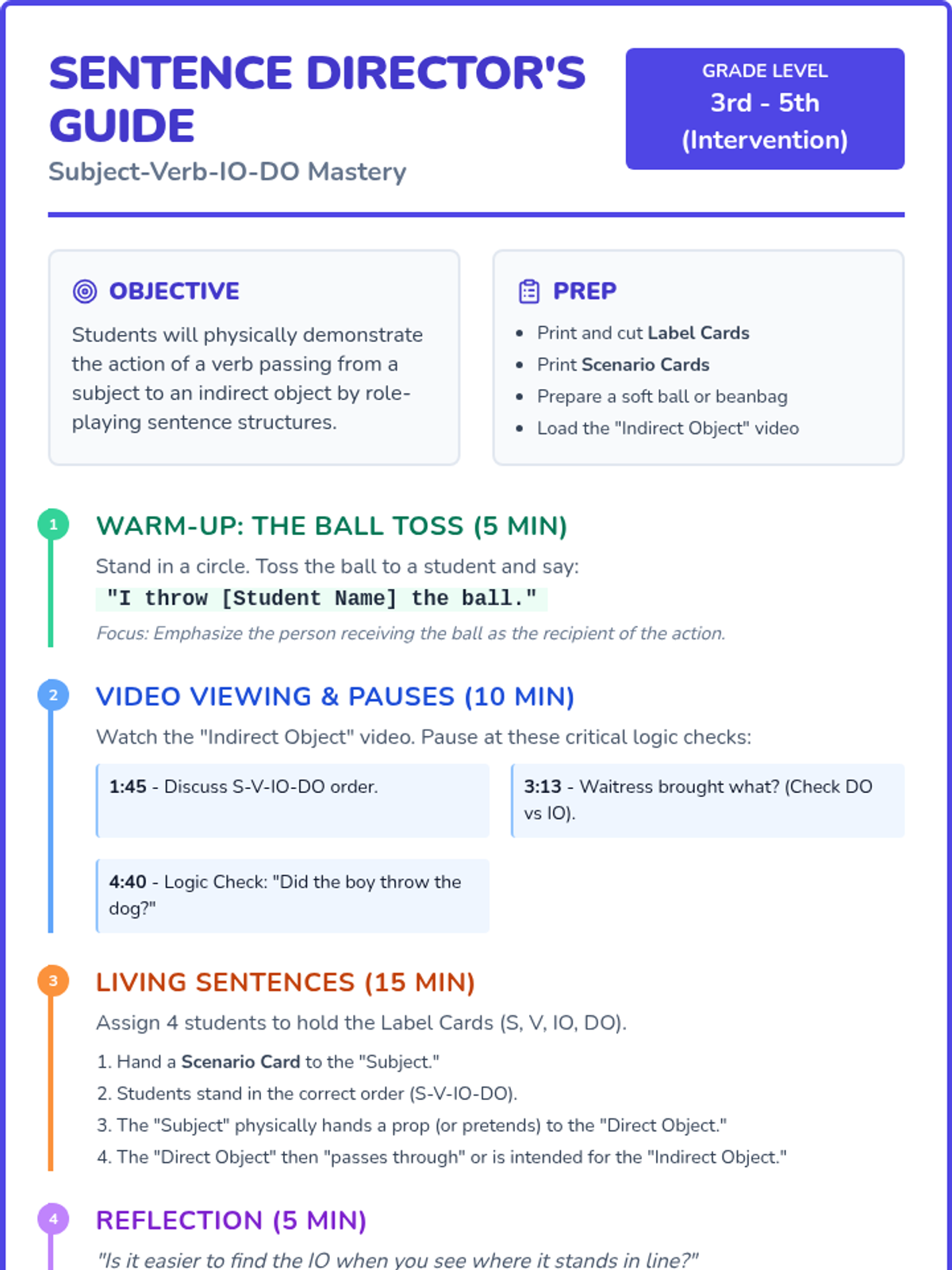
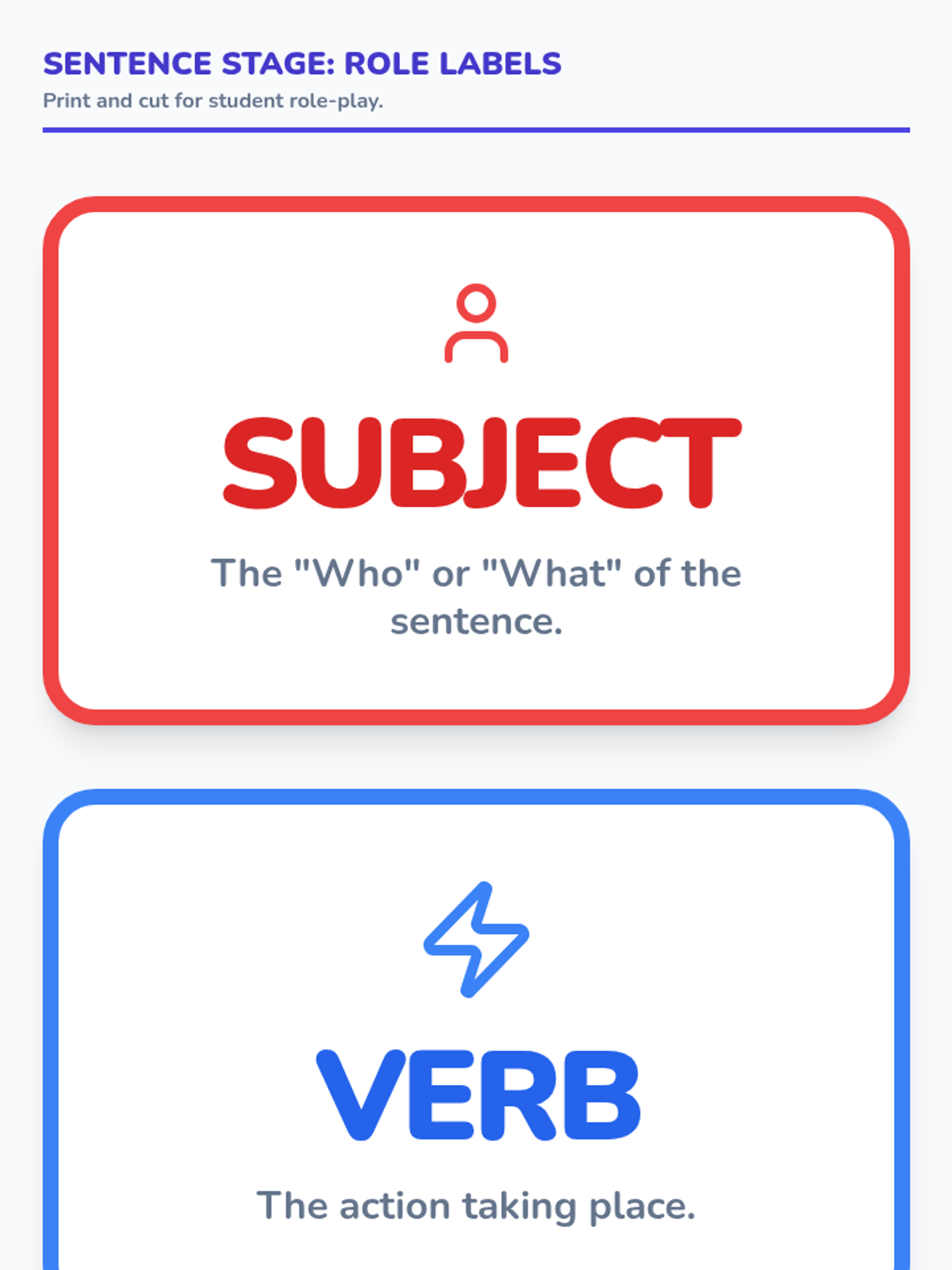
A hands-on grammar lesson for 3rd-5th grade intervention students to physically demonstrate and identify indirect objects using the 'Sentence Stage' method.
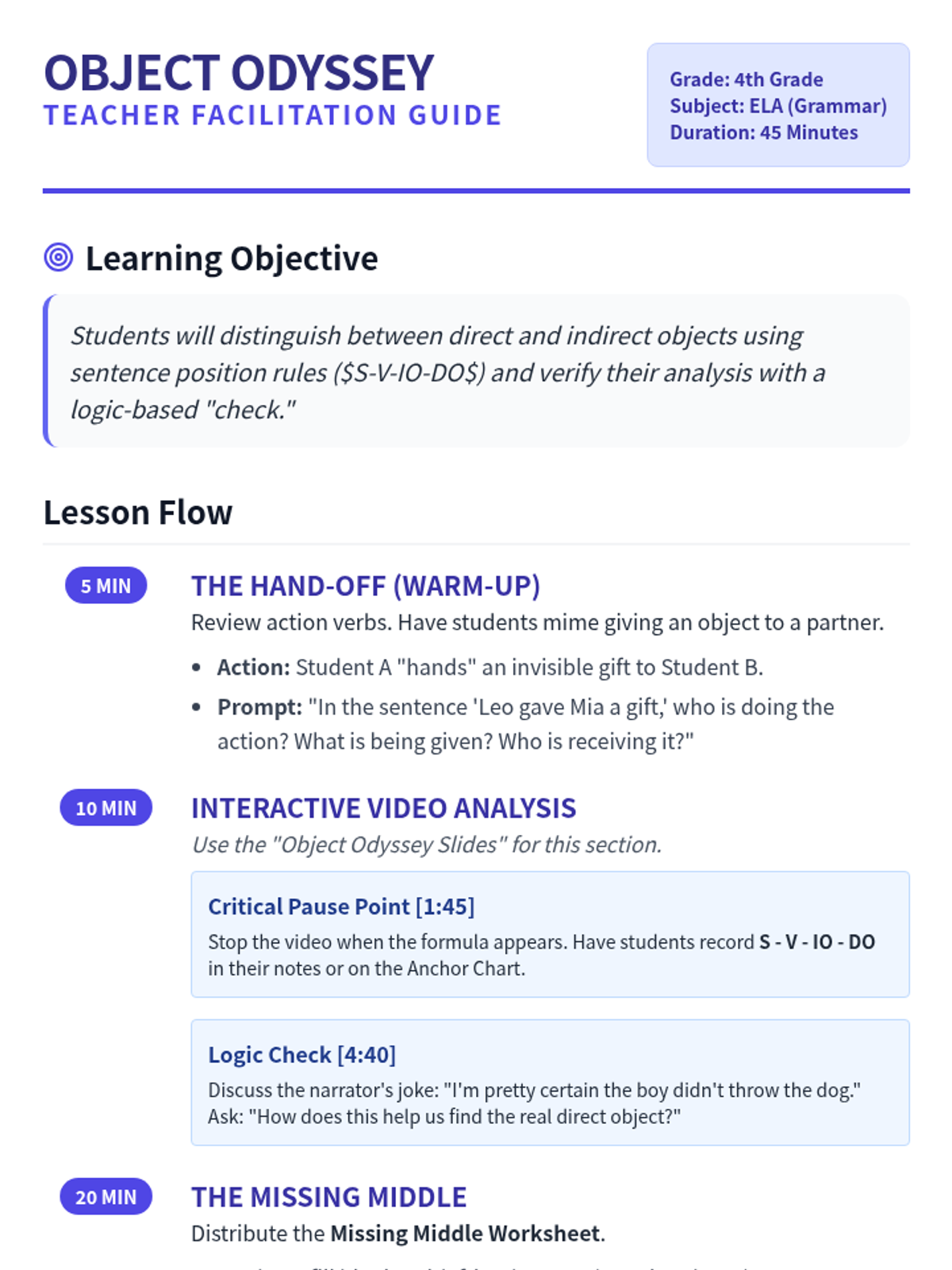
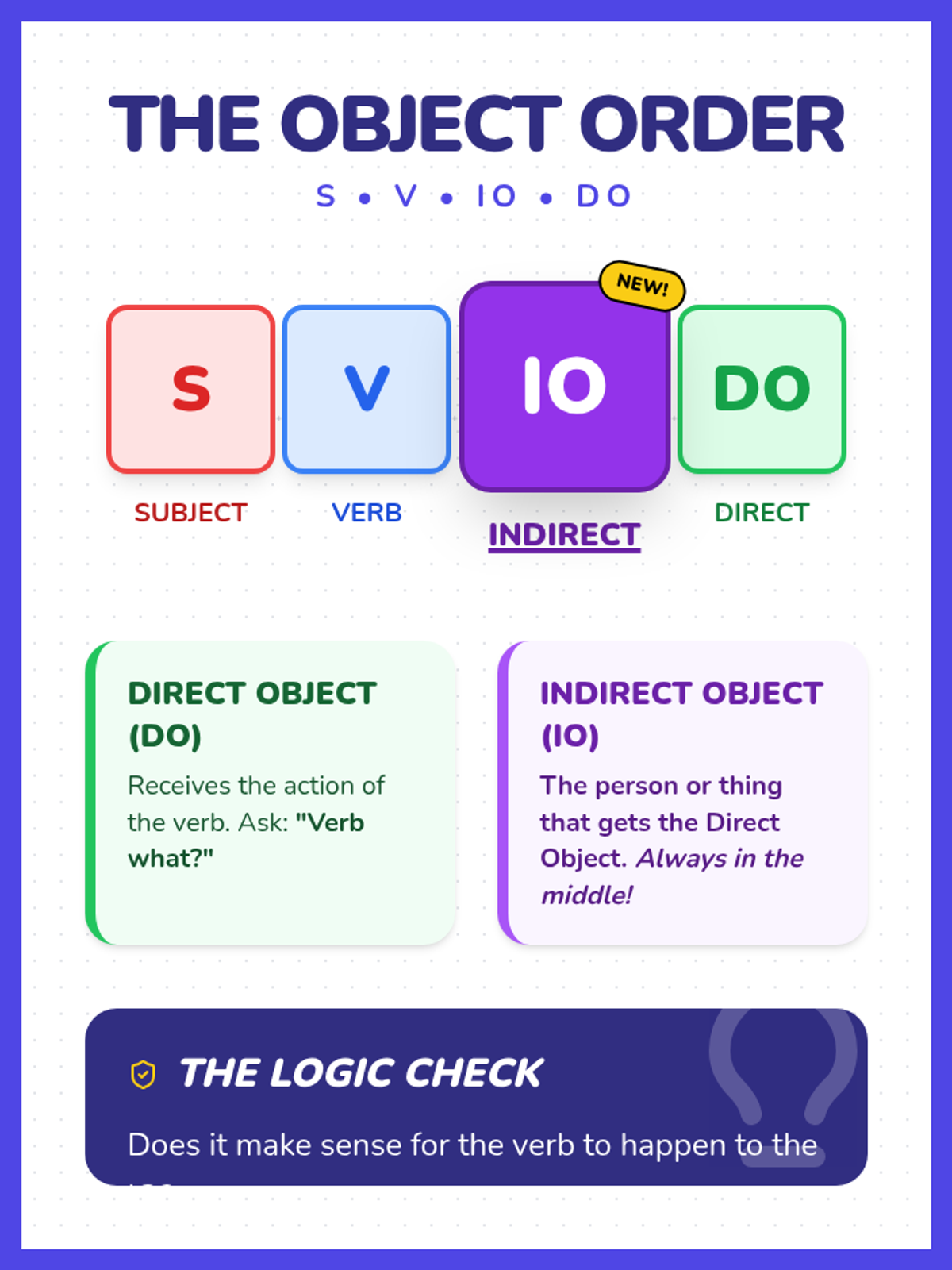
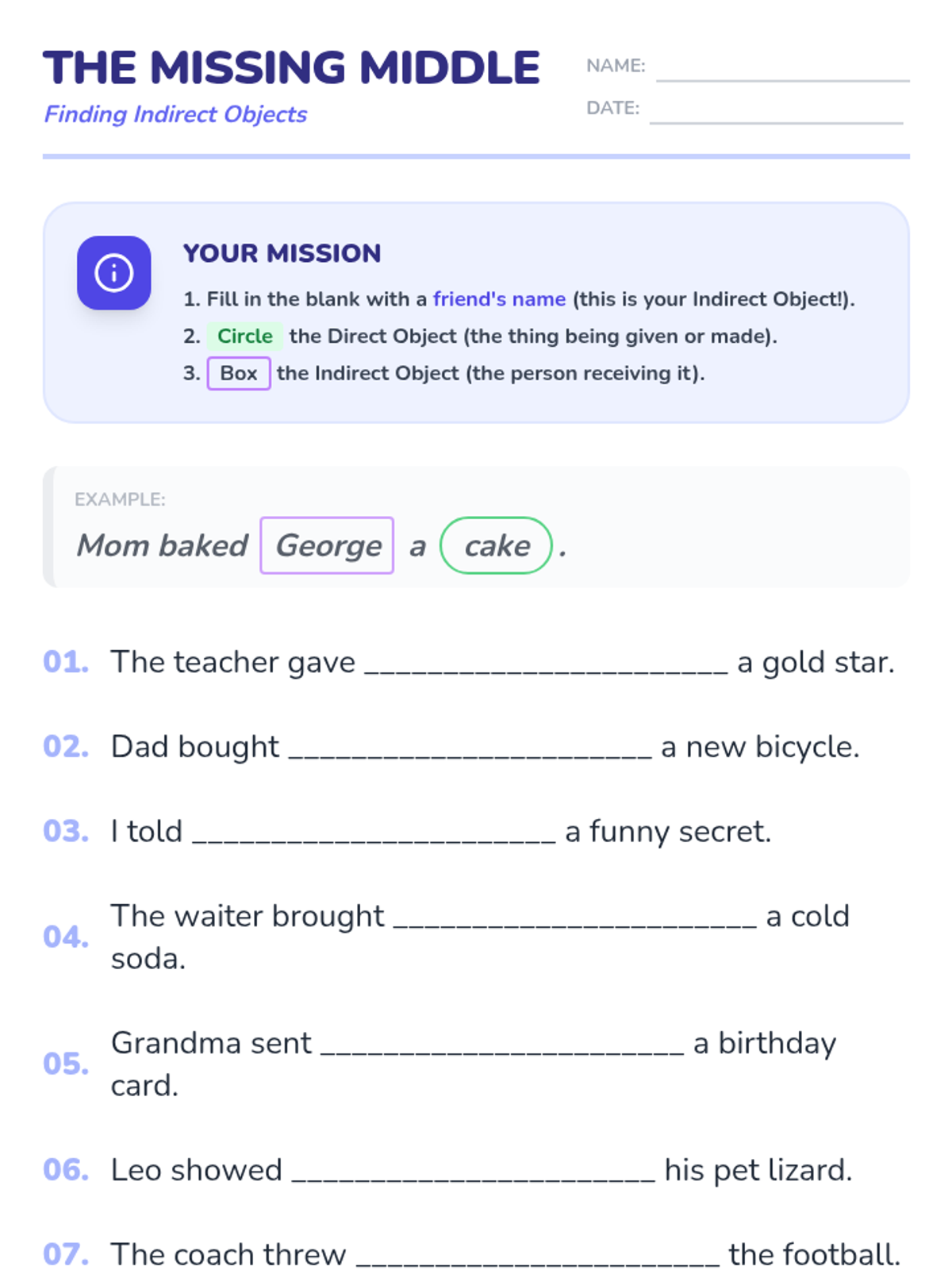
A 4th-grade grammar lesson focusing on the distinction between direct and indirect objects using the 'Missing Middle' strategy and a logic-based verification method. Students learn the S-V-IO-DO word order through interactive video analysis and peer-based sentence completion.
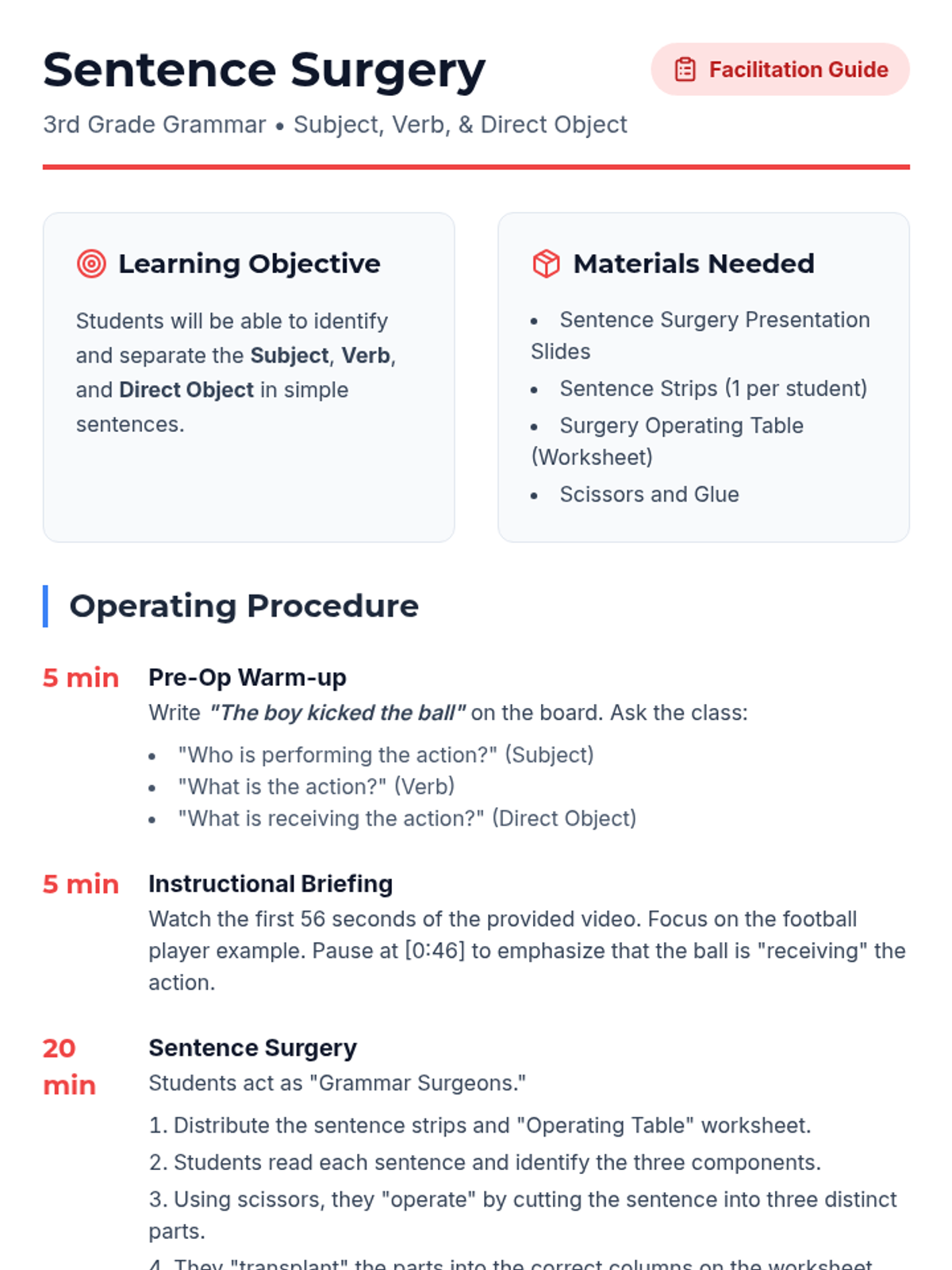
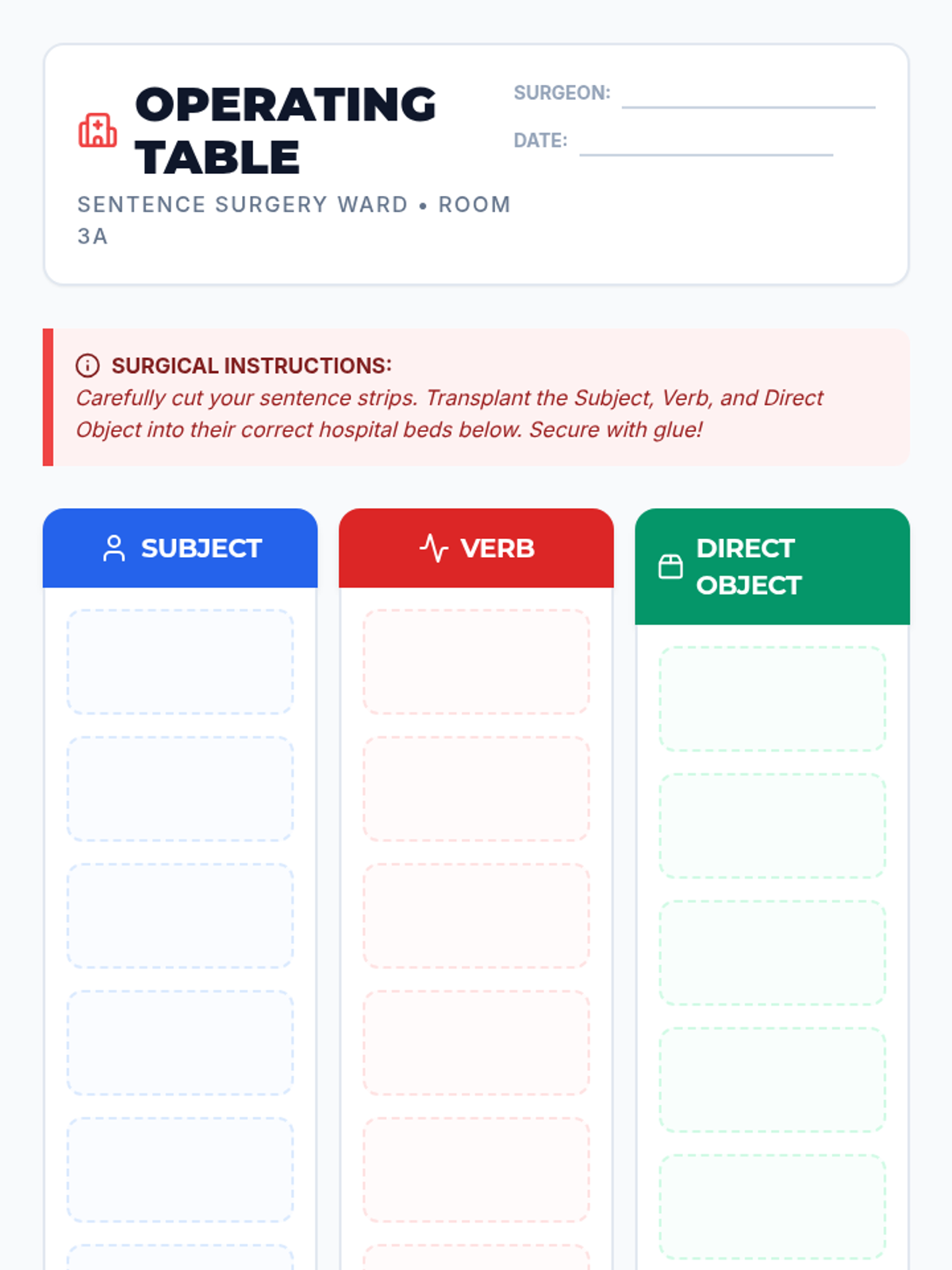
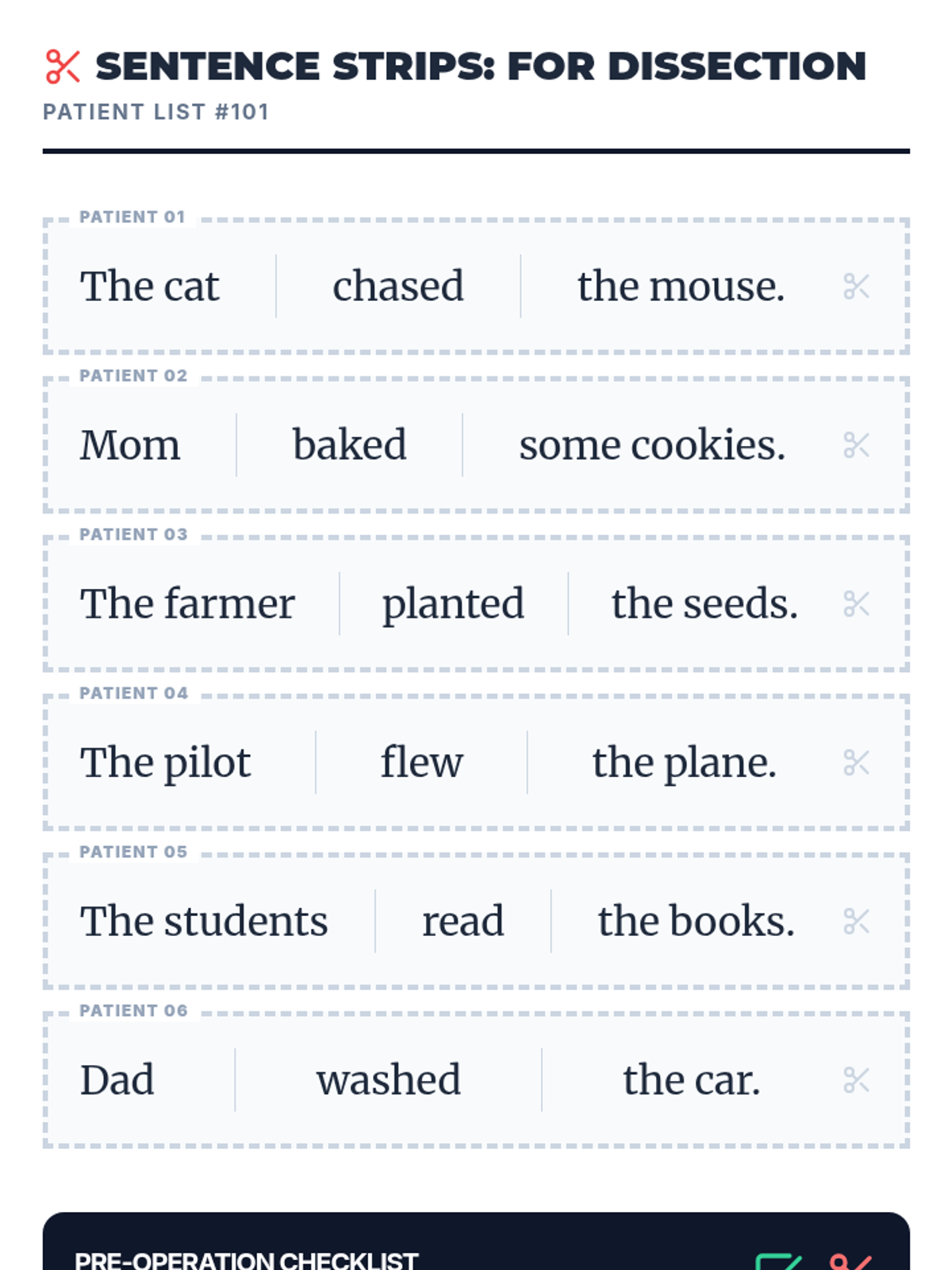
A hands-on grammar lesson where students 'operate' on sentences to identify subjects, verbs, and direct objects using a surgical theme. Includes a video review and a cut-and-paste activity.
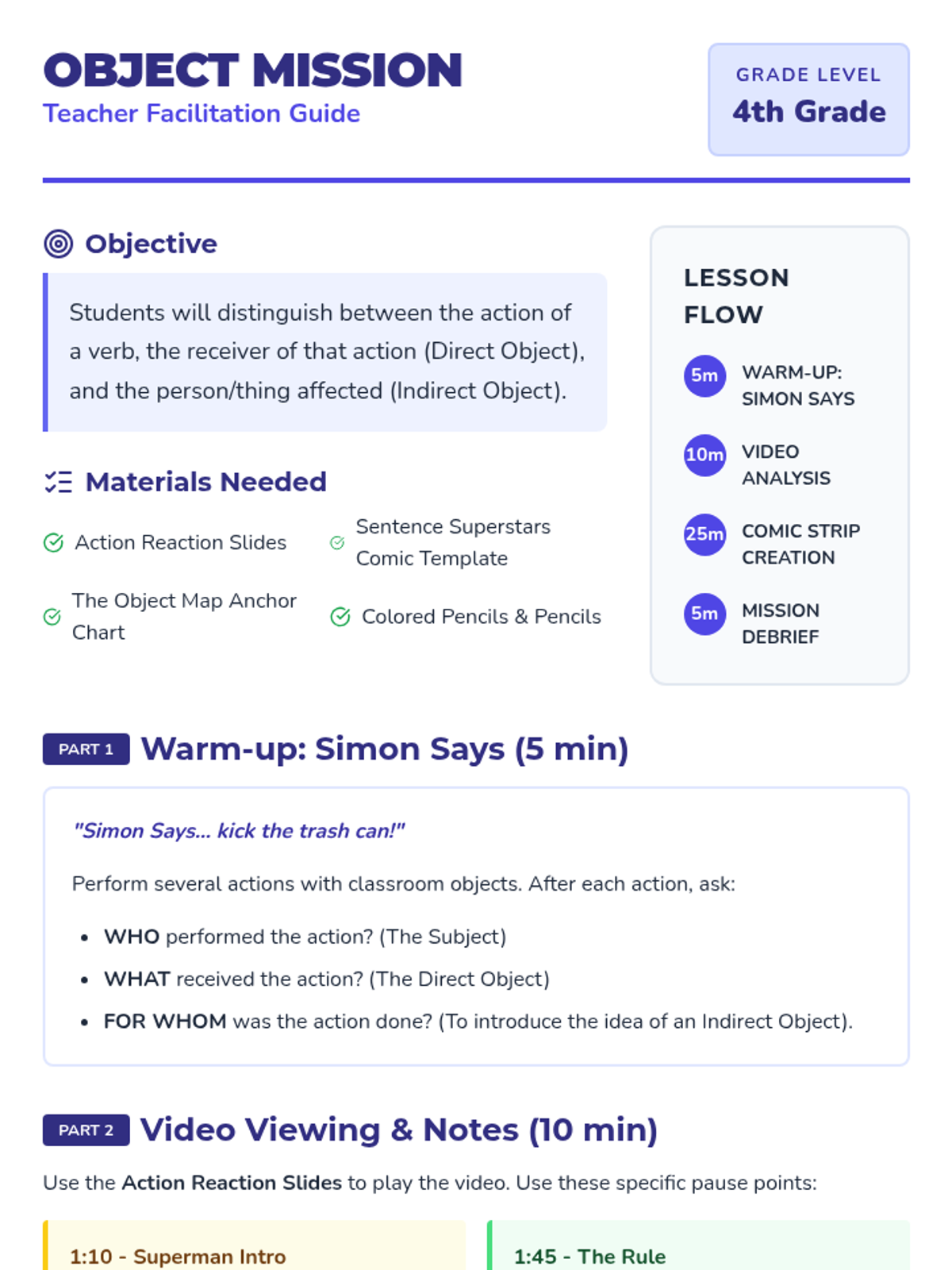
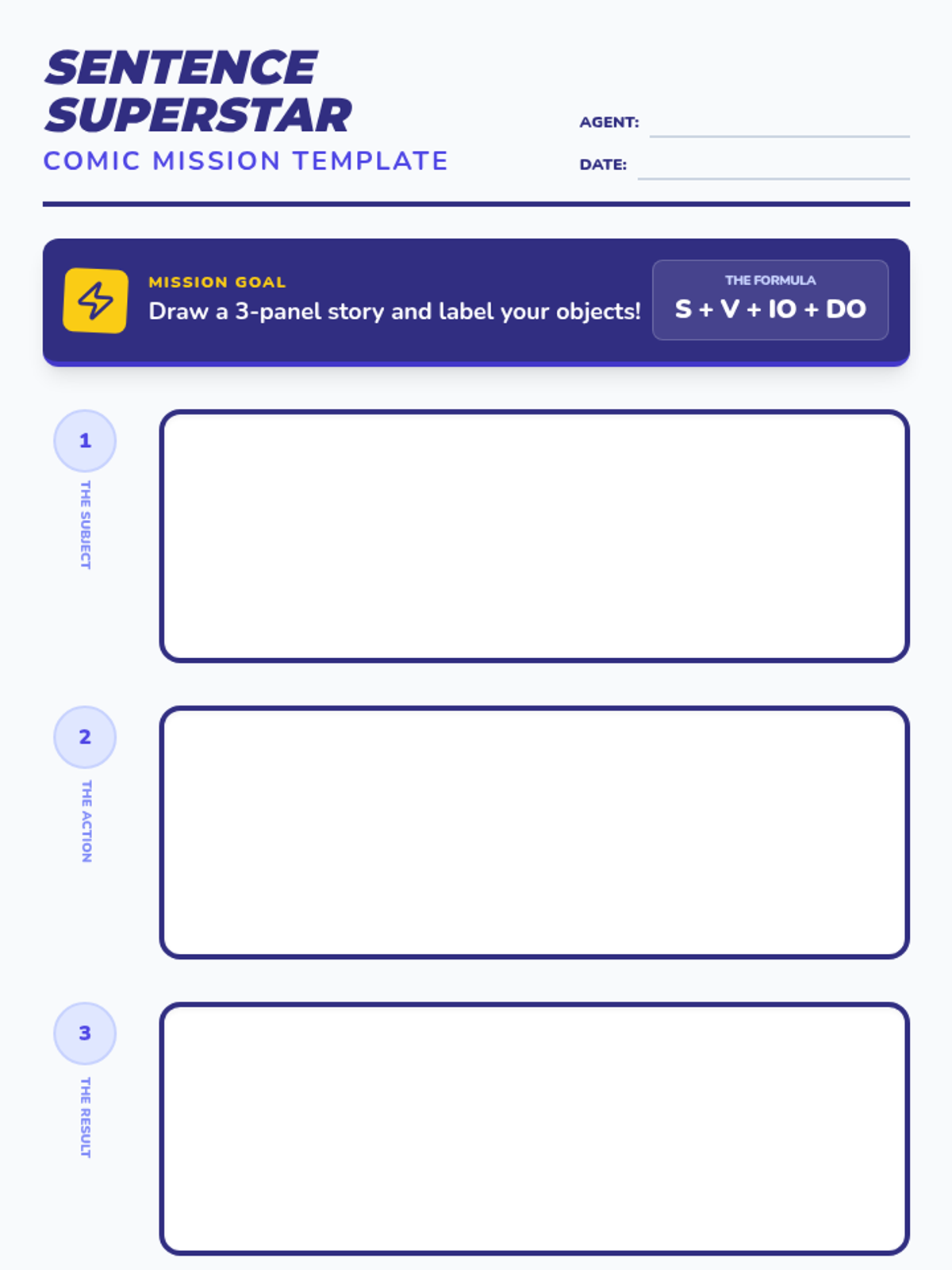
Students will learn to identify and distinguish between subjects, verbs, direct objects, and indirect objects through a high-energy 'Simon Says' warm-up, an interactive video analysis, and a creative comic strip project.
A hands-on literacy lesson where students build complete sentences using high-frequency Dolch sight words and common action verbs with visual scaffolding.
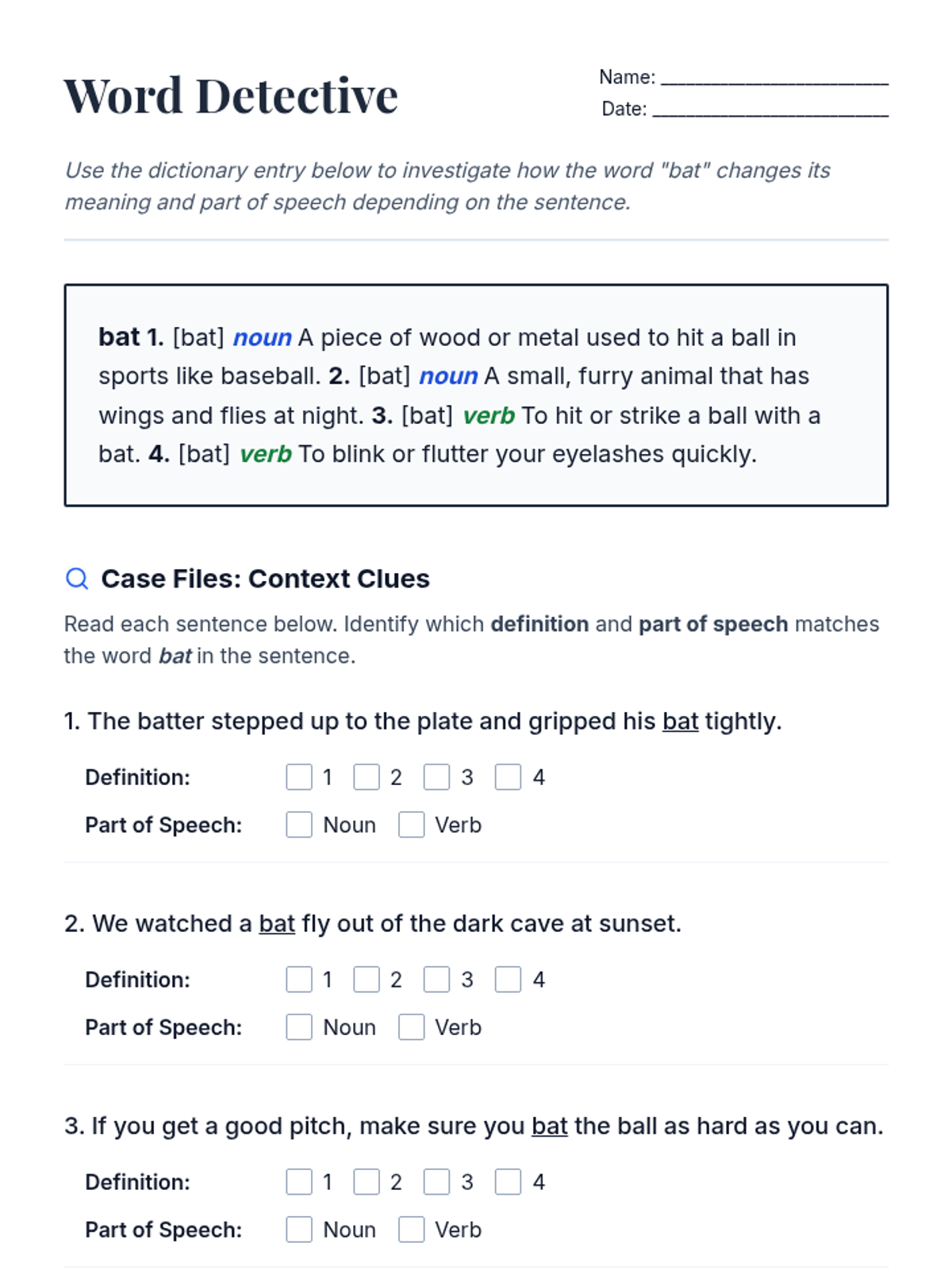
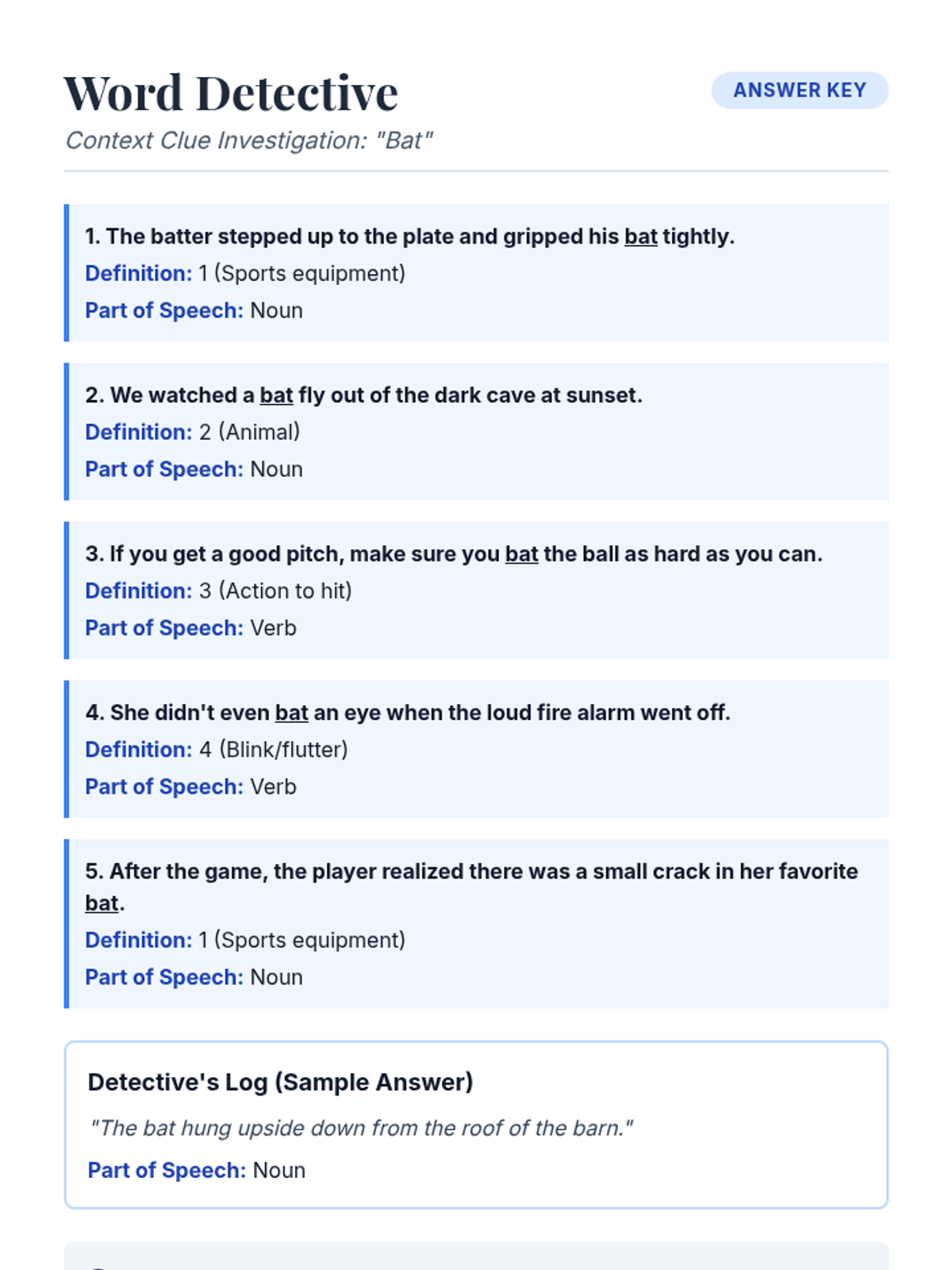
A lesson focused on using dictionary entries and context clues to identify the meaning of multiple-meaning words (homonyms).
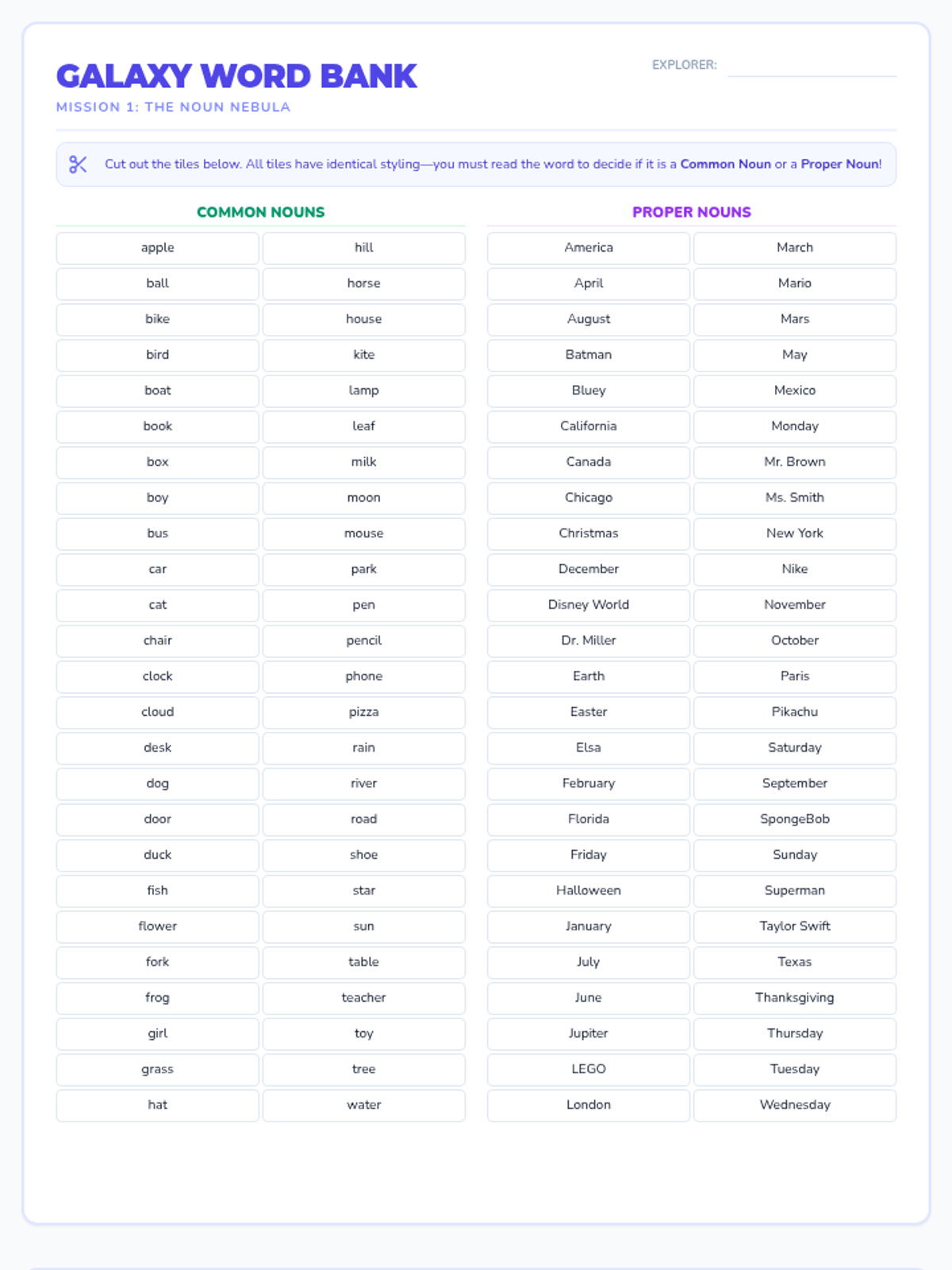
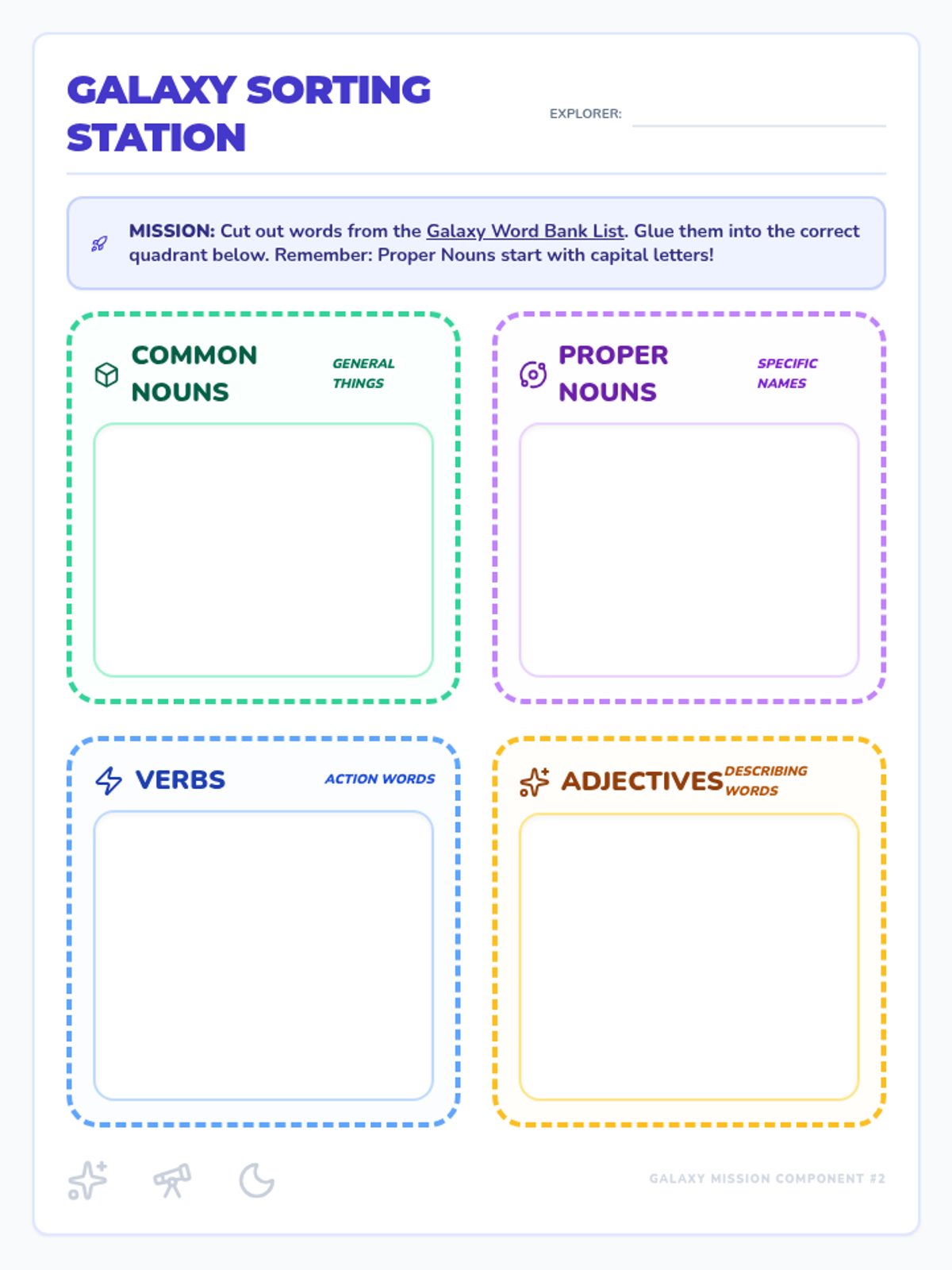
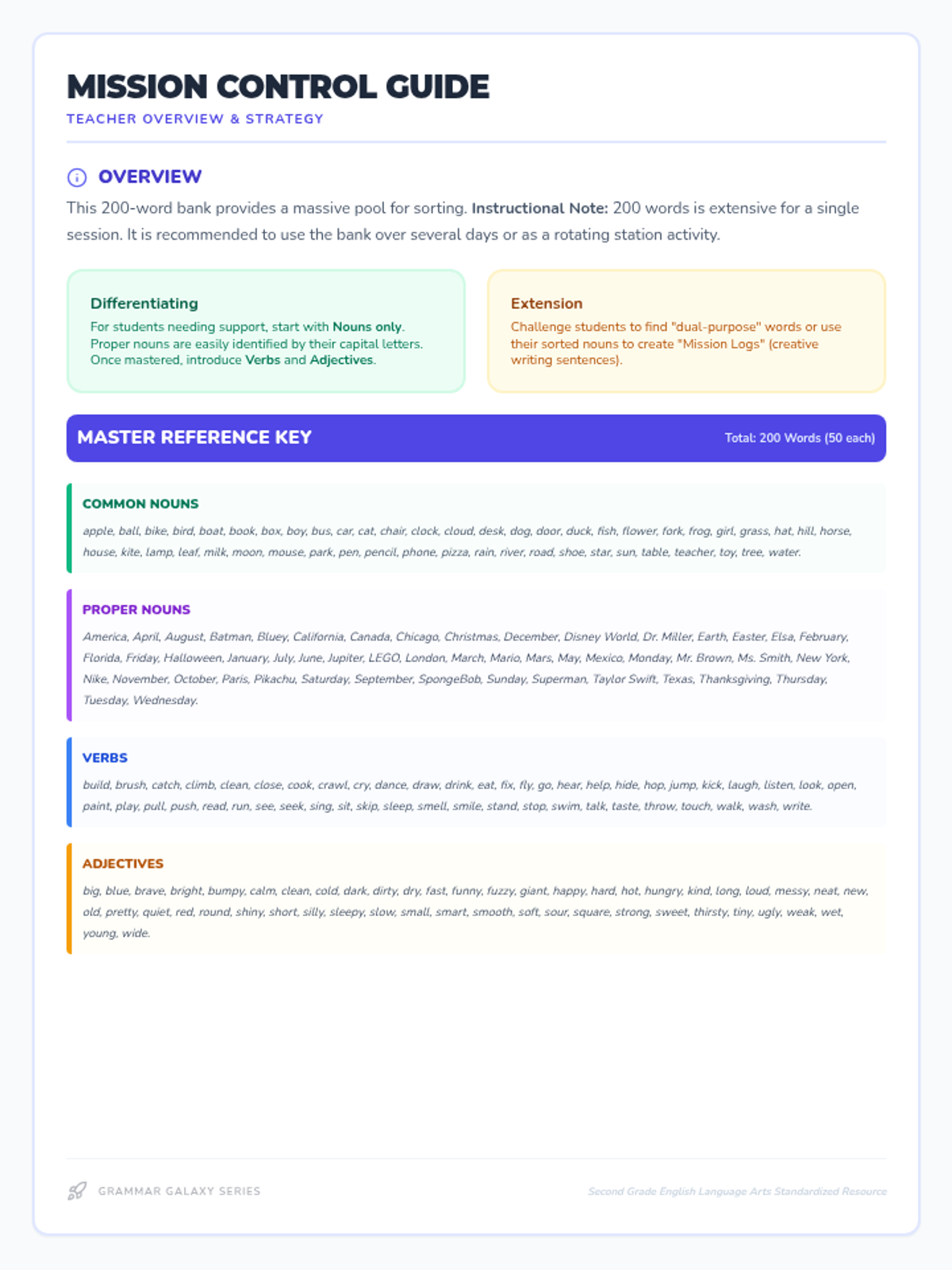
A comprehensive parts of speech sorting activity where students categorize 200 relatable words into adjectives, common nouns, proper nouns, and verbs.
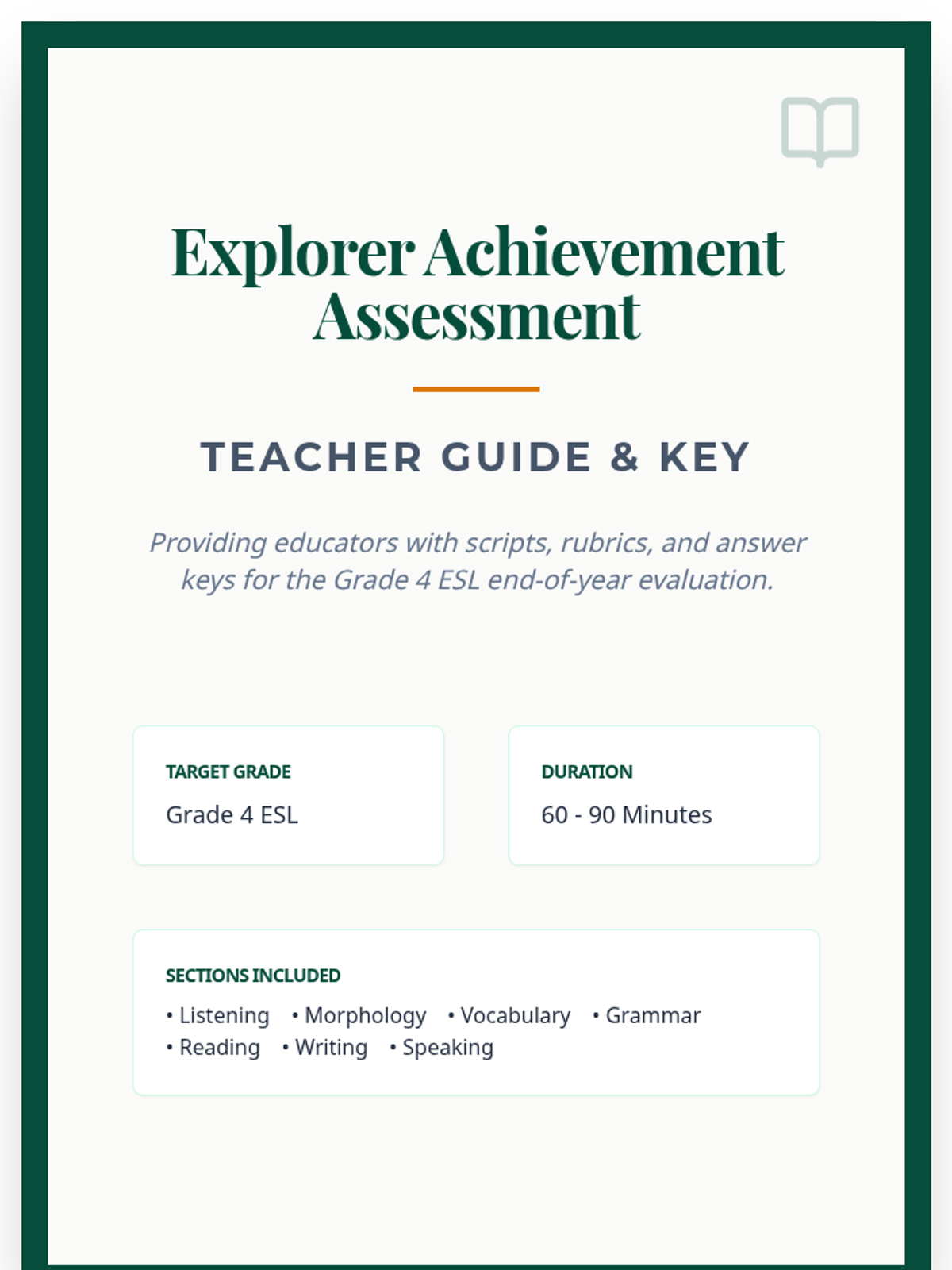
A comprehensive end-of-year assessment for Grade 4 ESL students, covering morphology, vocabulary, grammar, reading, writing, speaking, and listening.
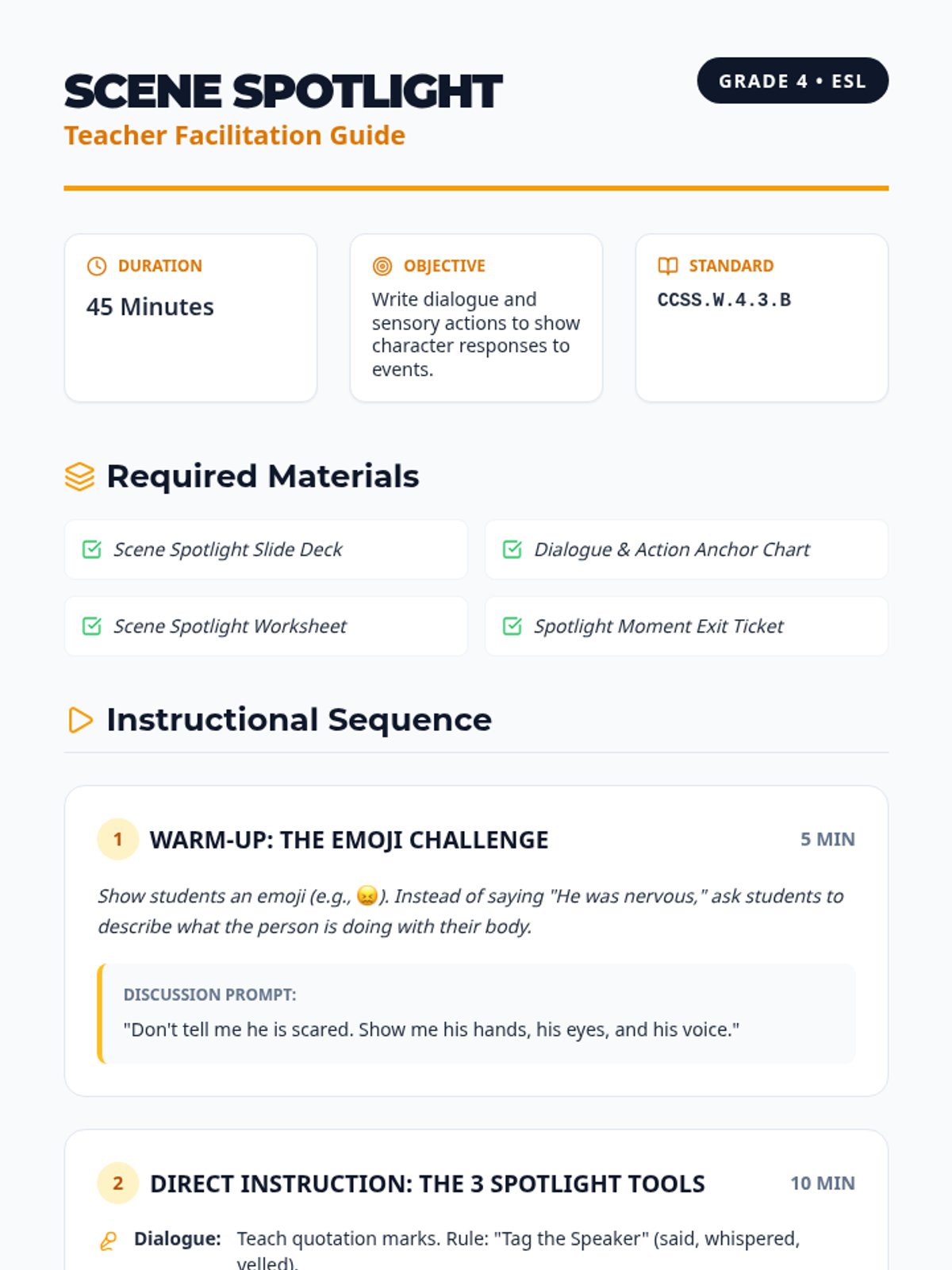
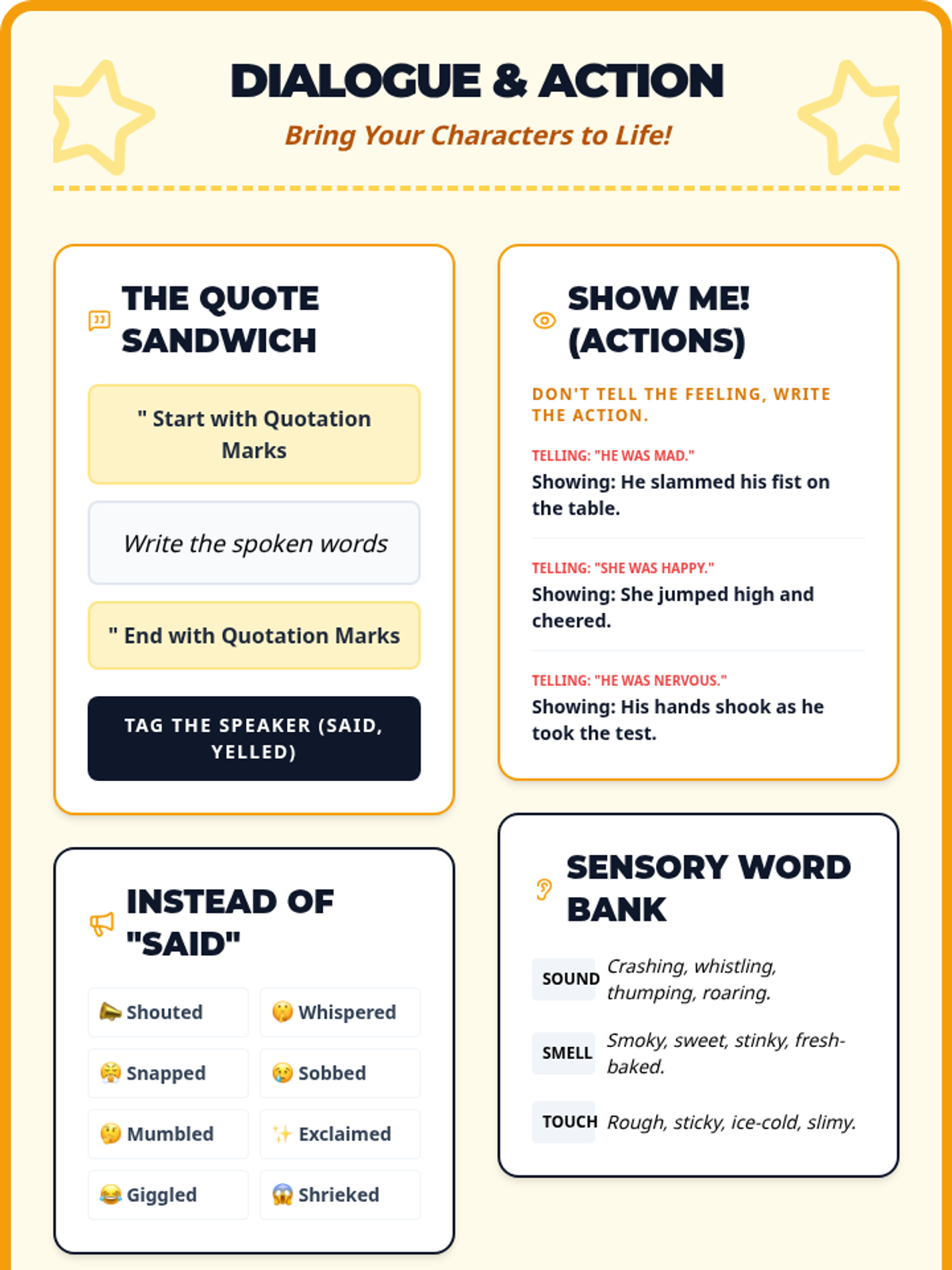
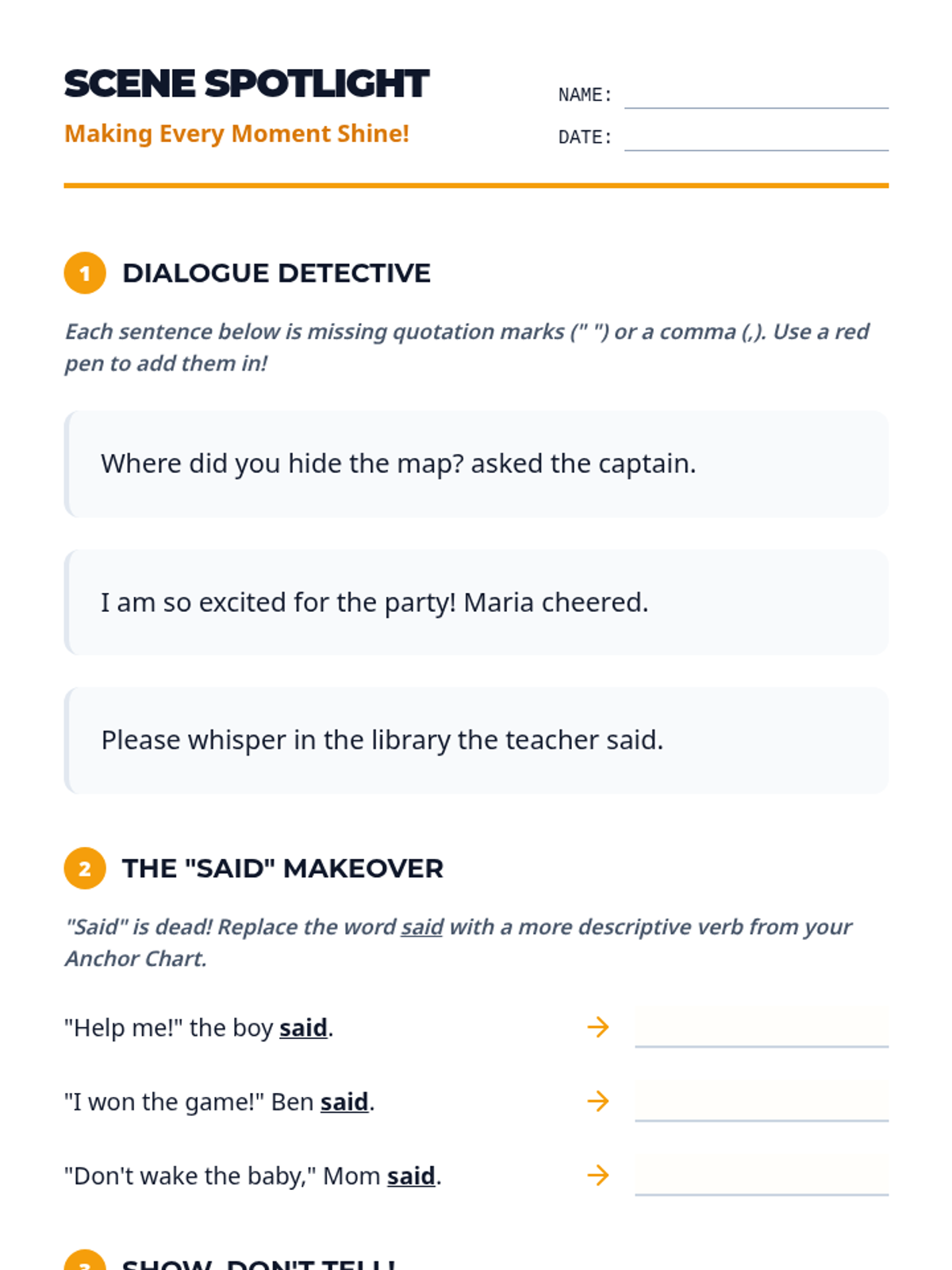
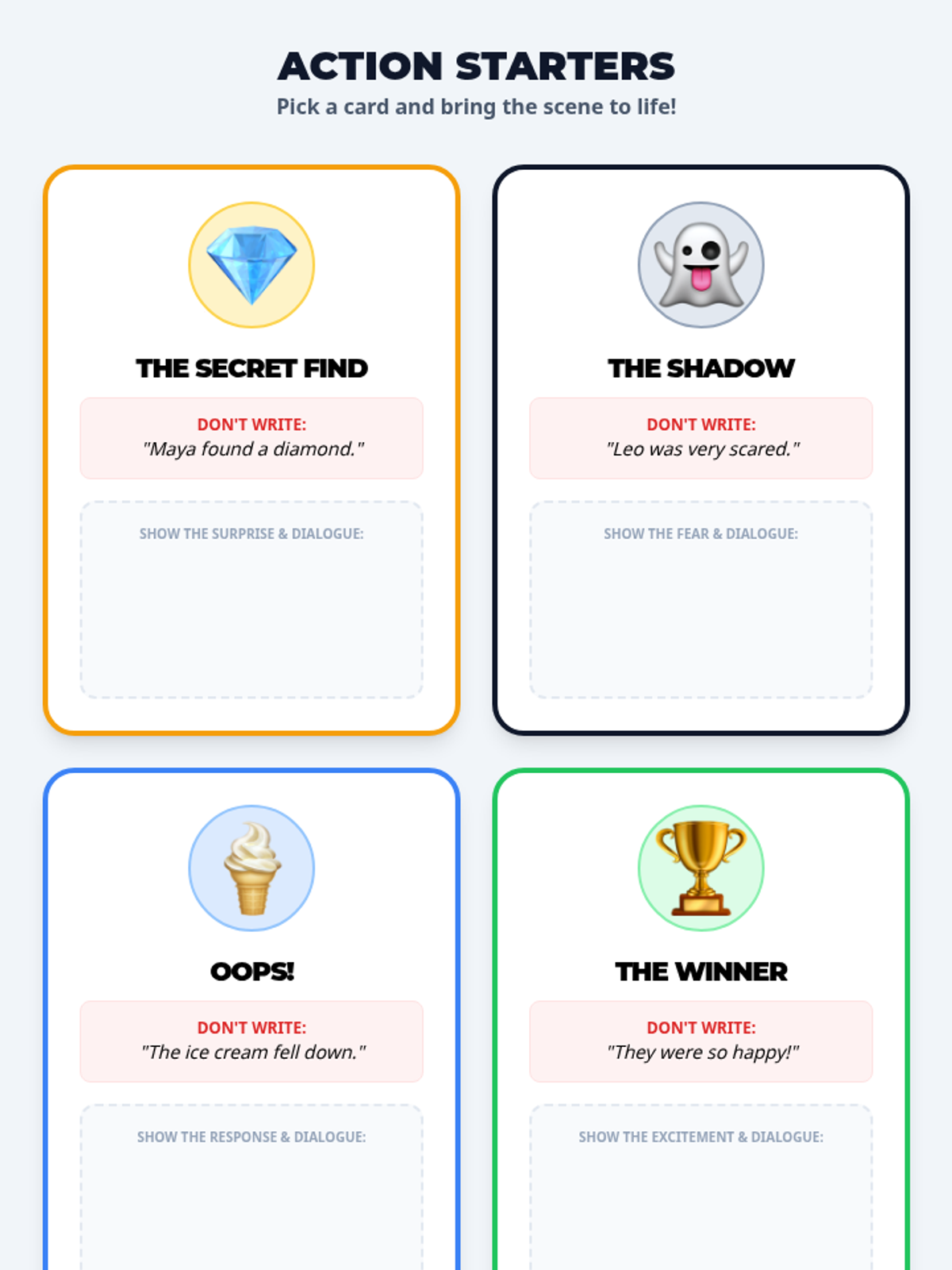
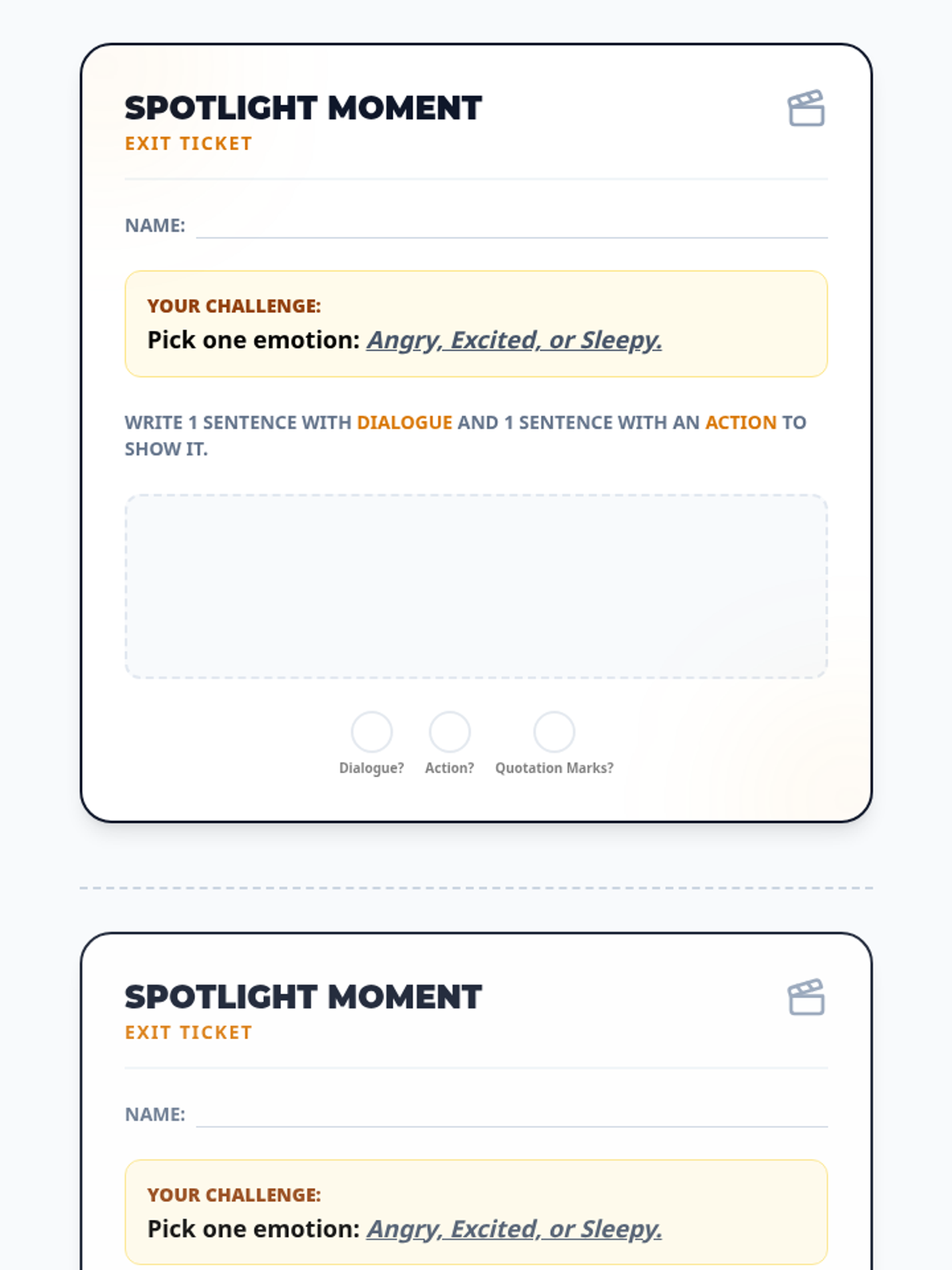
A 45-minute Grade 4 ESL lesson focused on CCSS W.4.3.B, teaching students to use dialogue, sensory details, and 'show, don't tell' actions to bring characters and scenes to life.
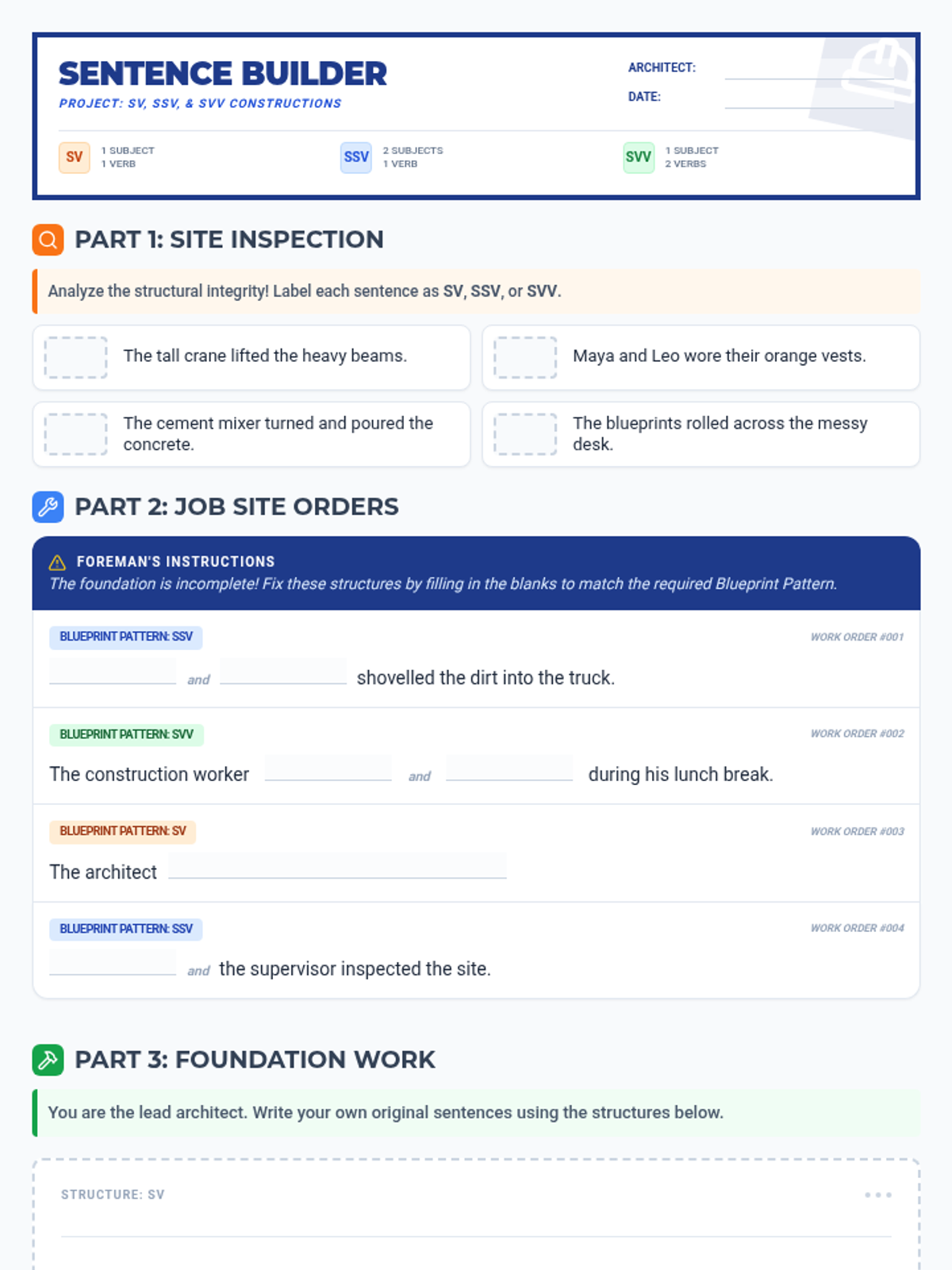
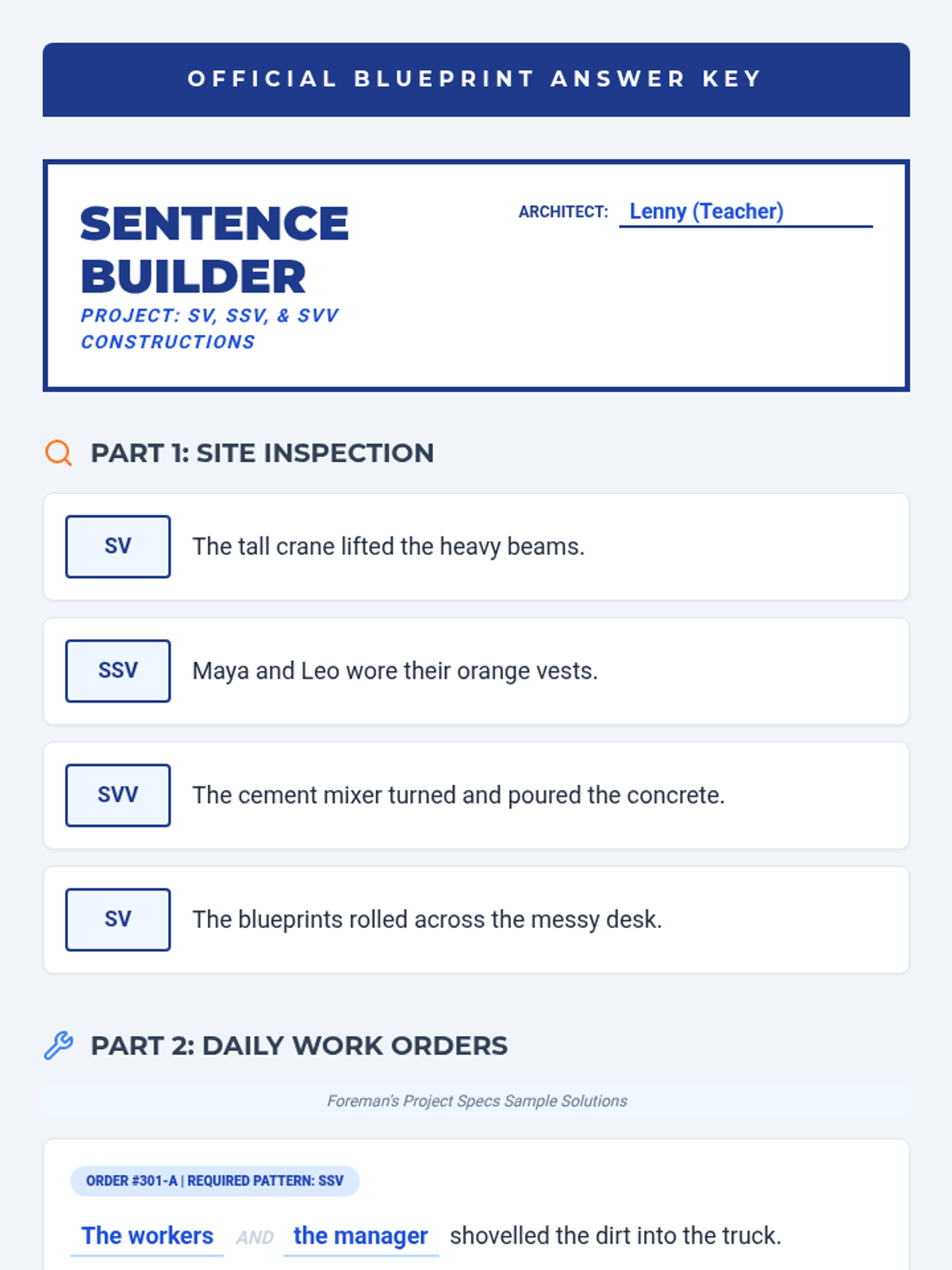
A lesson focused on mastering SV, SSV, and SVV sentence patterns through structured practice and construction-themed activities.
A comprehensive practice packet designed to simulate the English/Reading MAP test, featuring fiction and nonfiction passages with 20 standards-aligned questions.
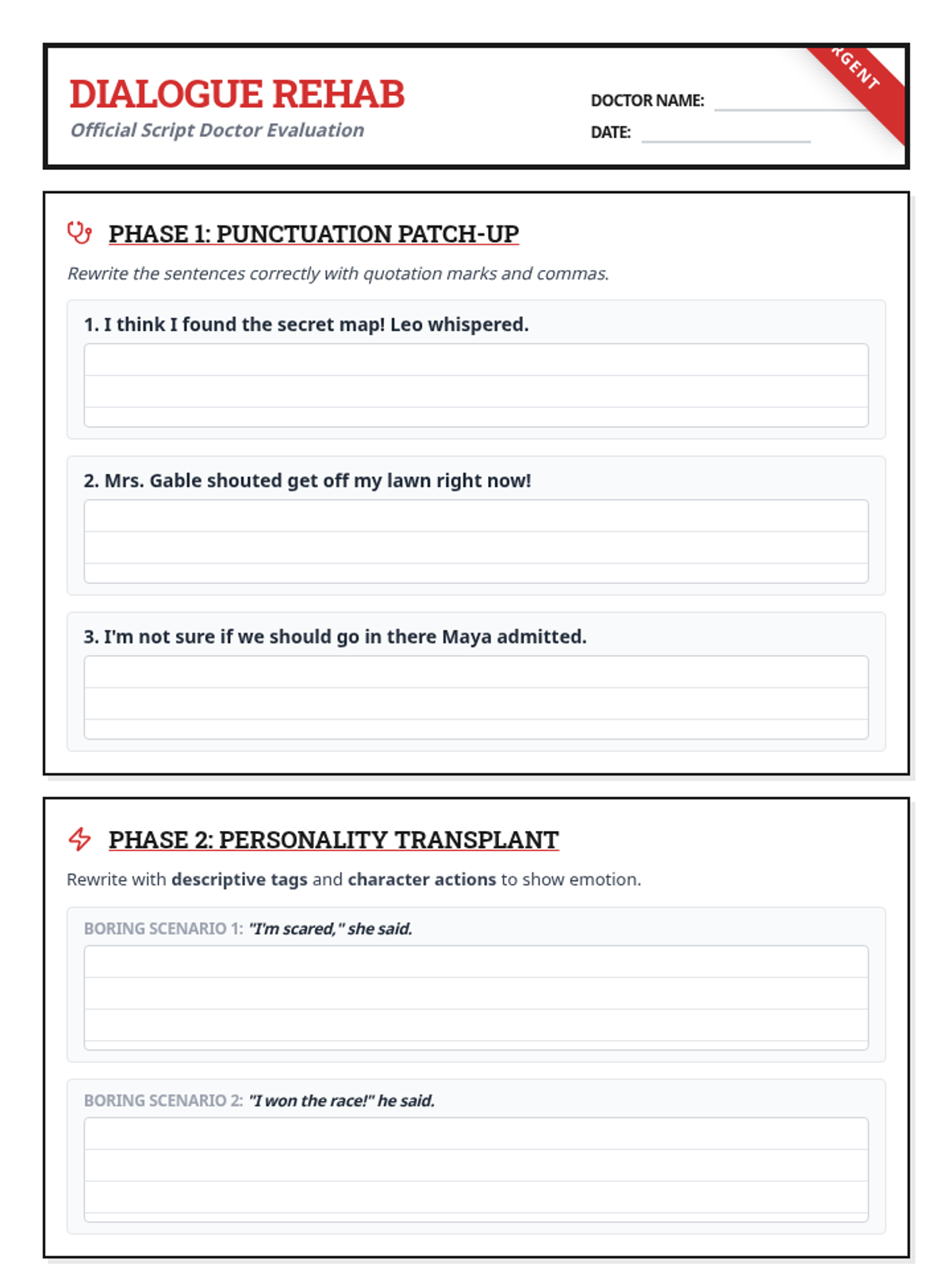
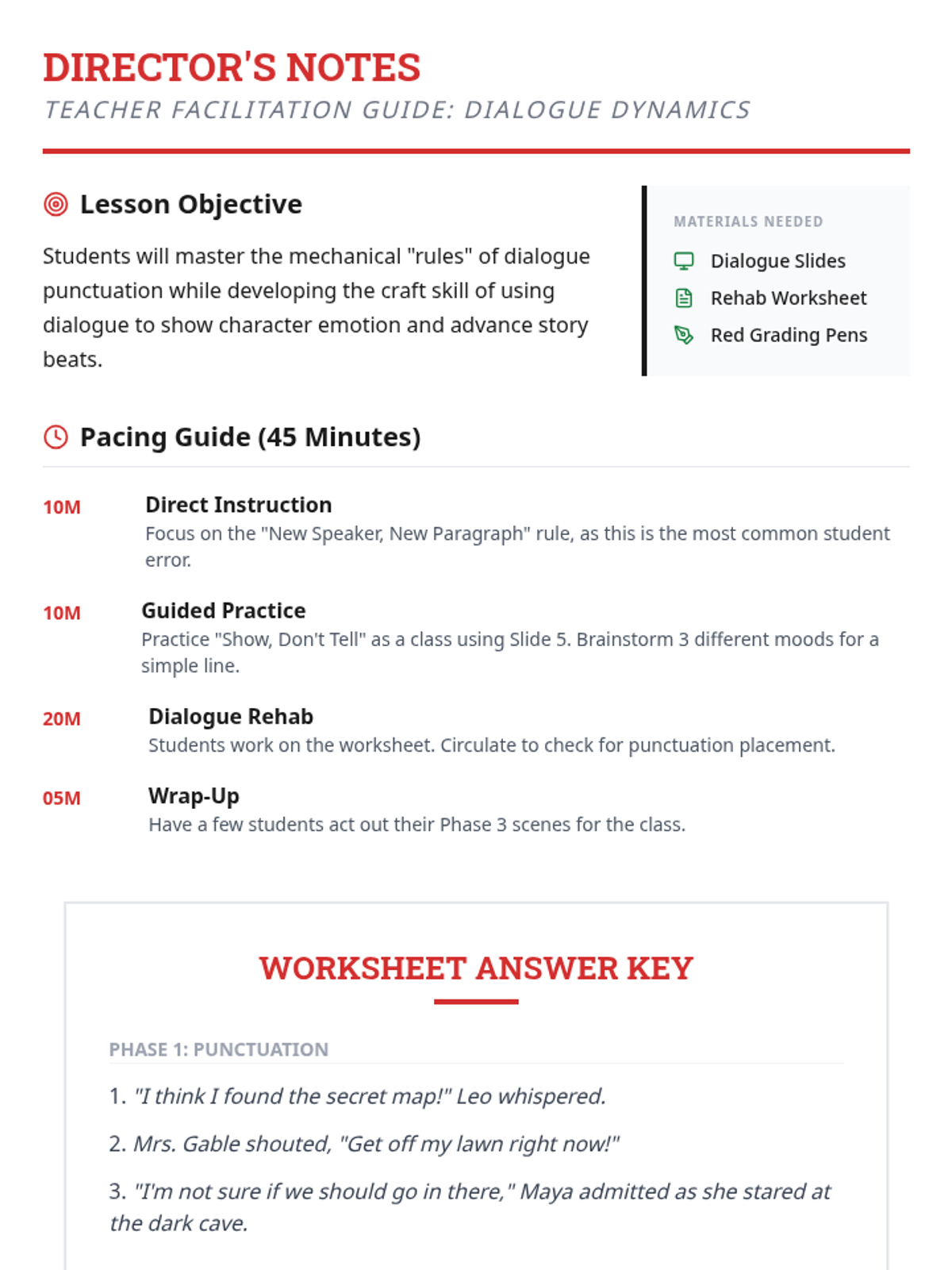
A mini-lesson focused on the mechanics and craft of writing dialogue to enhance storytelling. Students learn punctuation rules and how to use dialogue to reveal character and advance the plot.
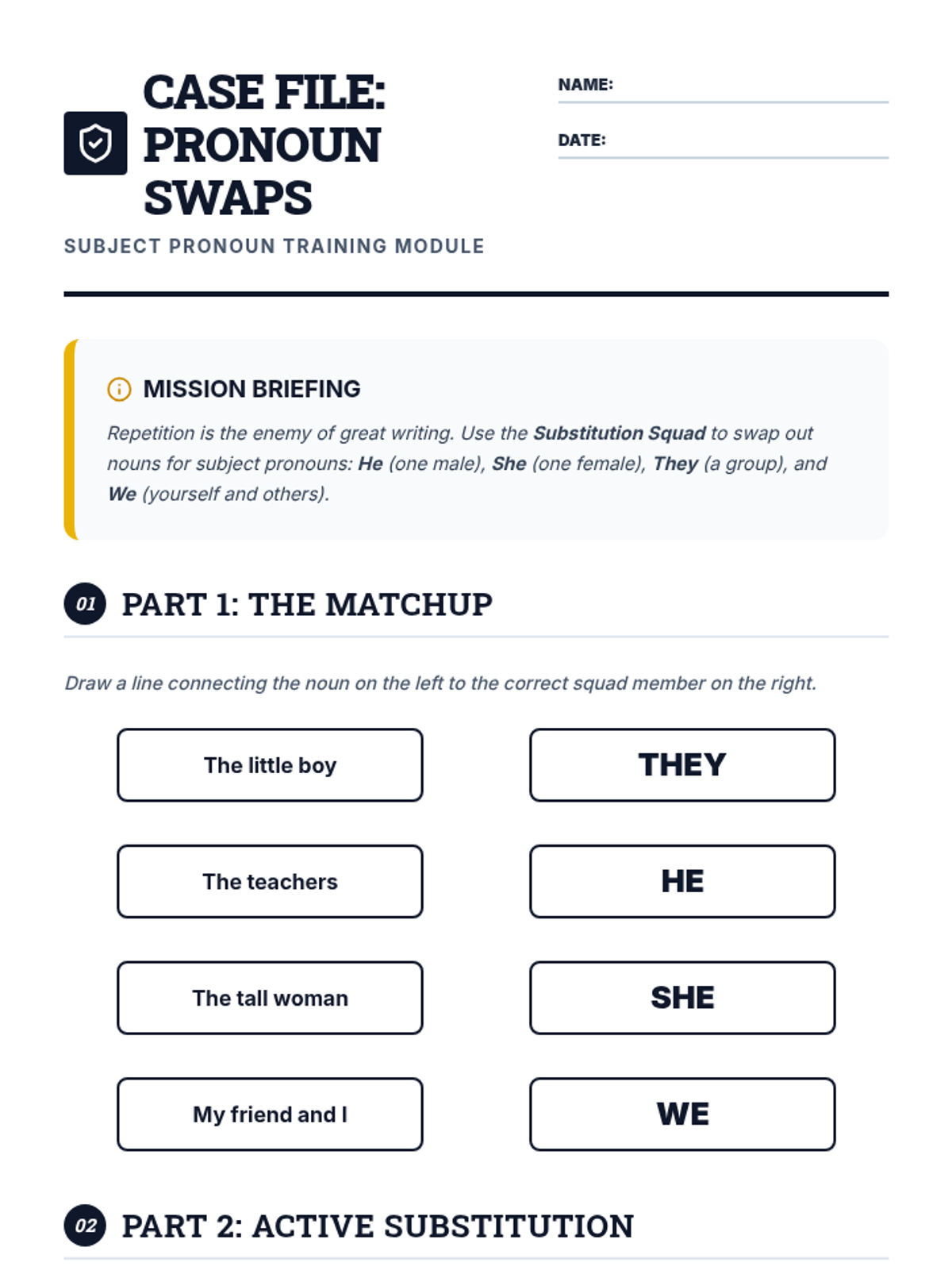
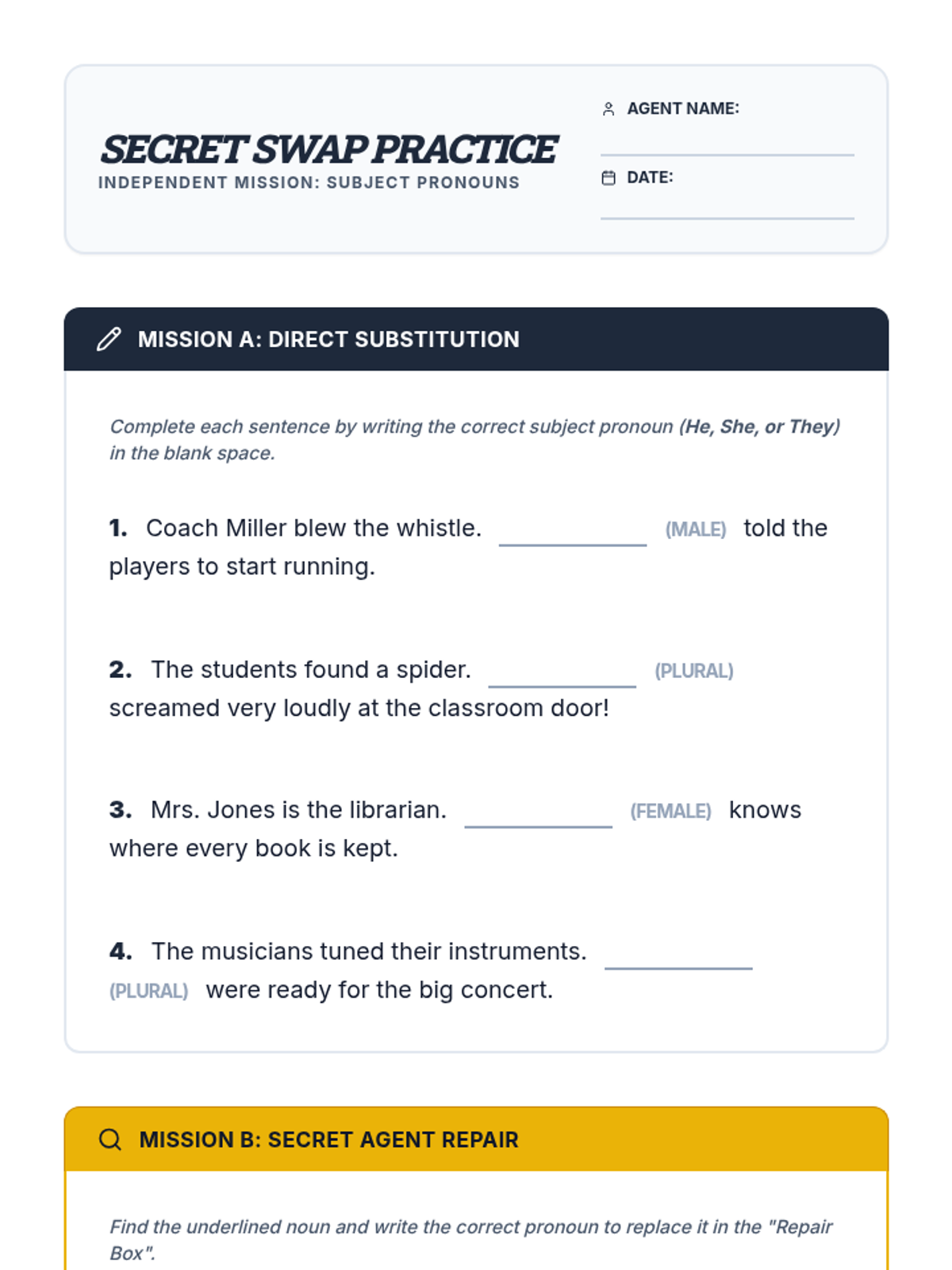
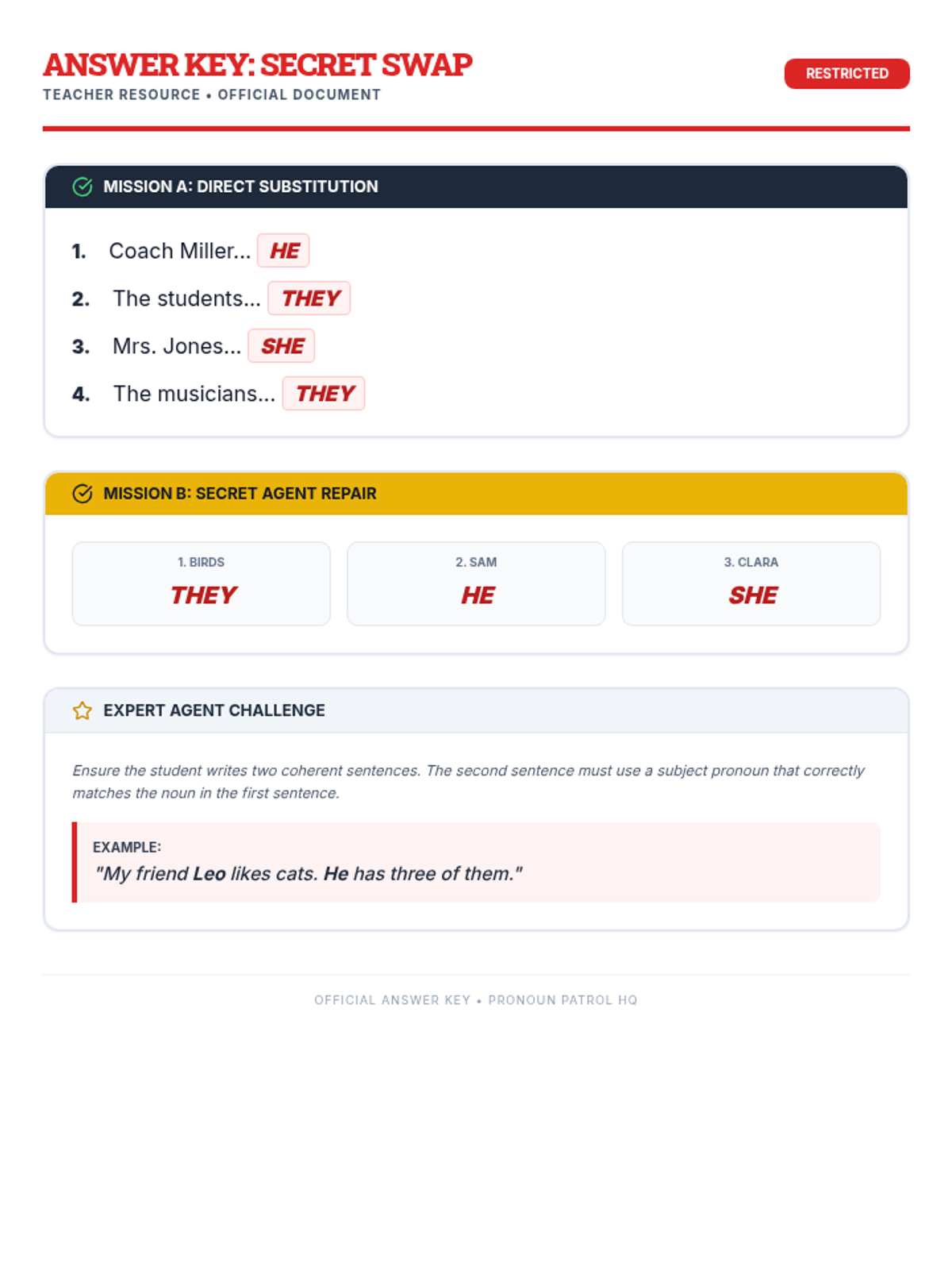
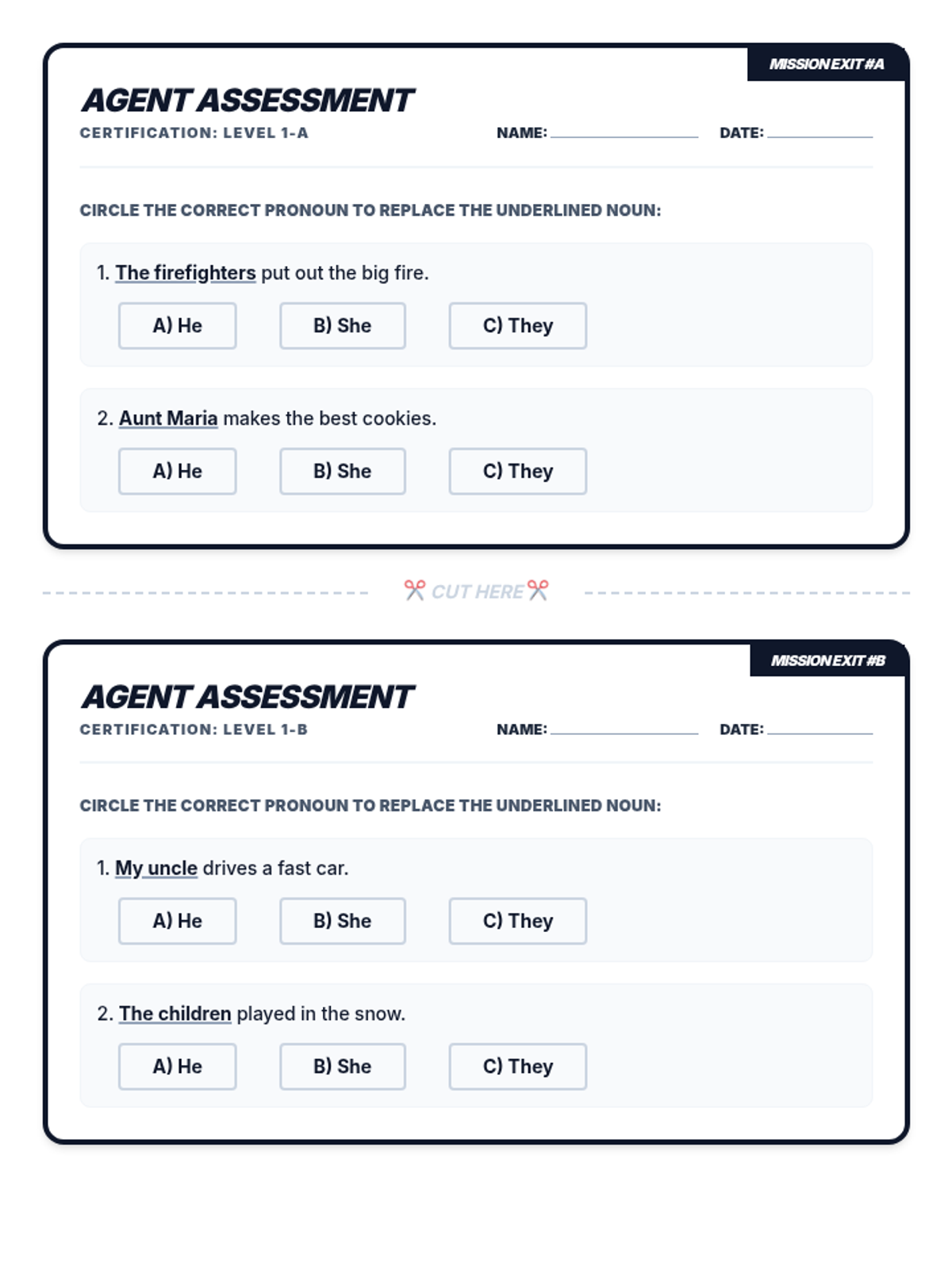
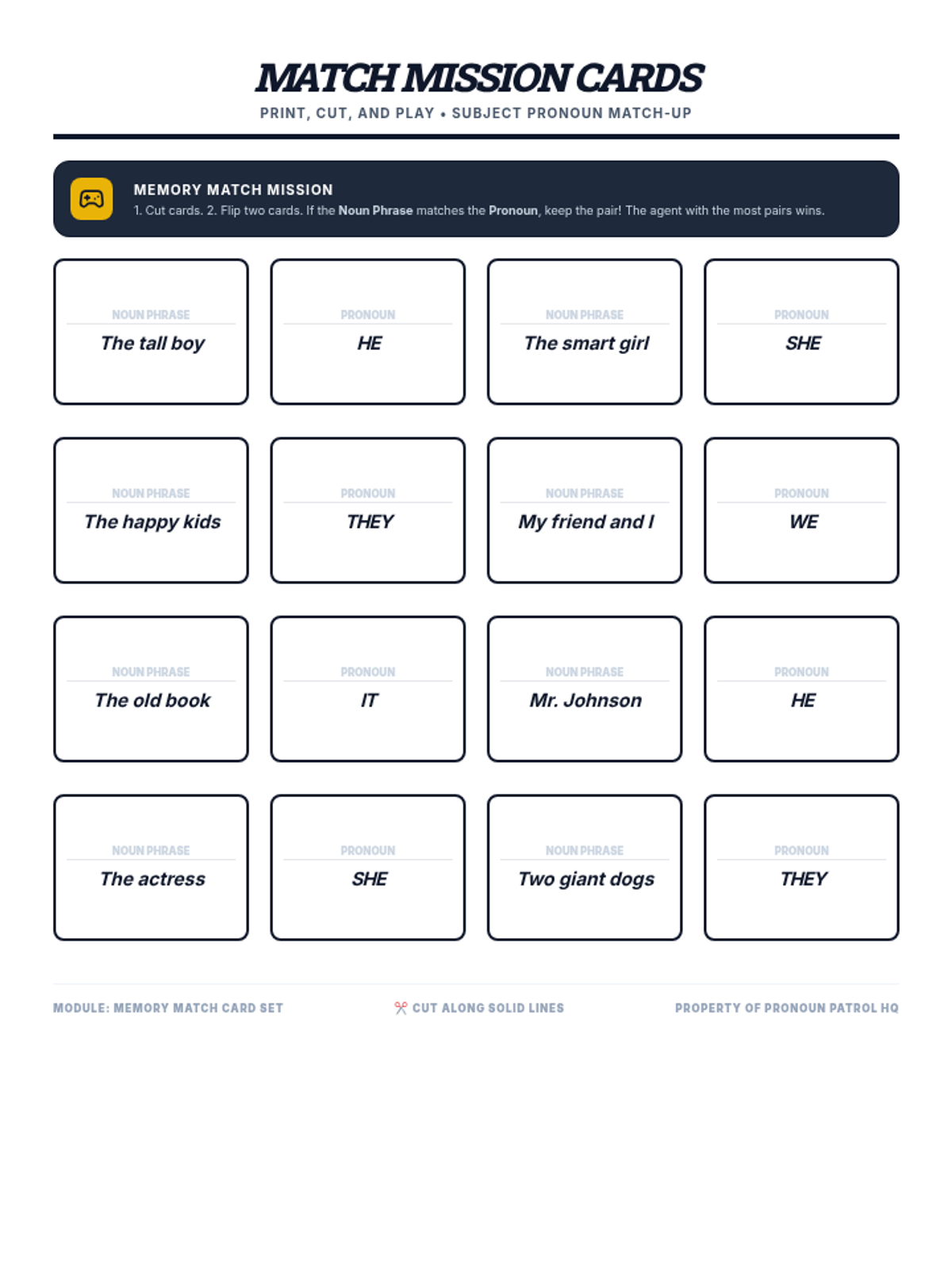
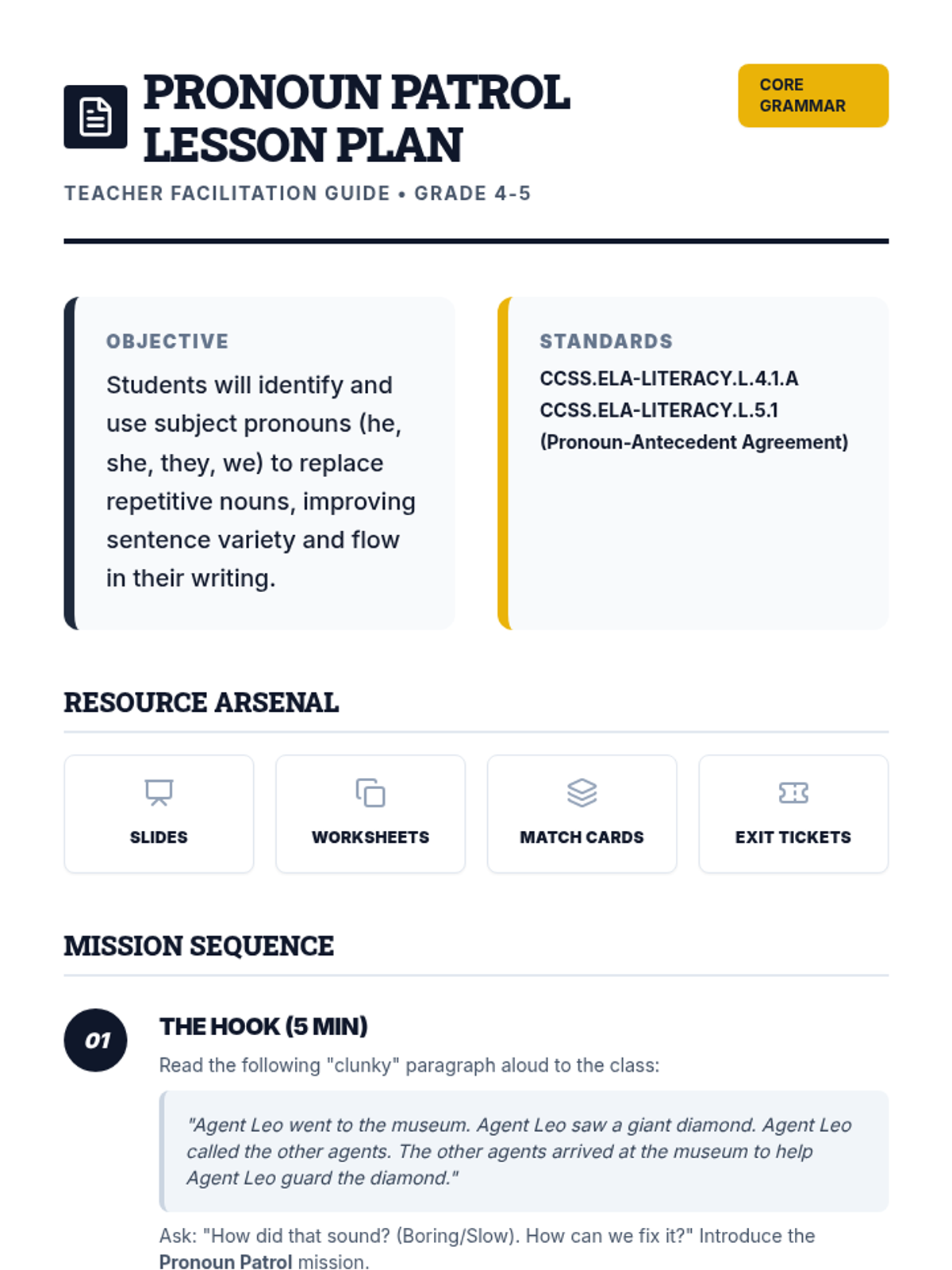
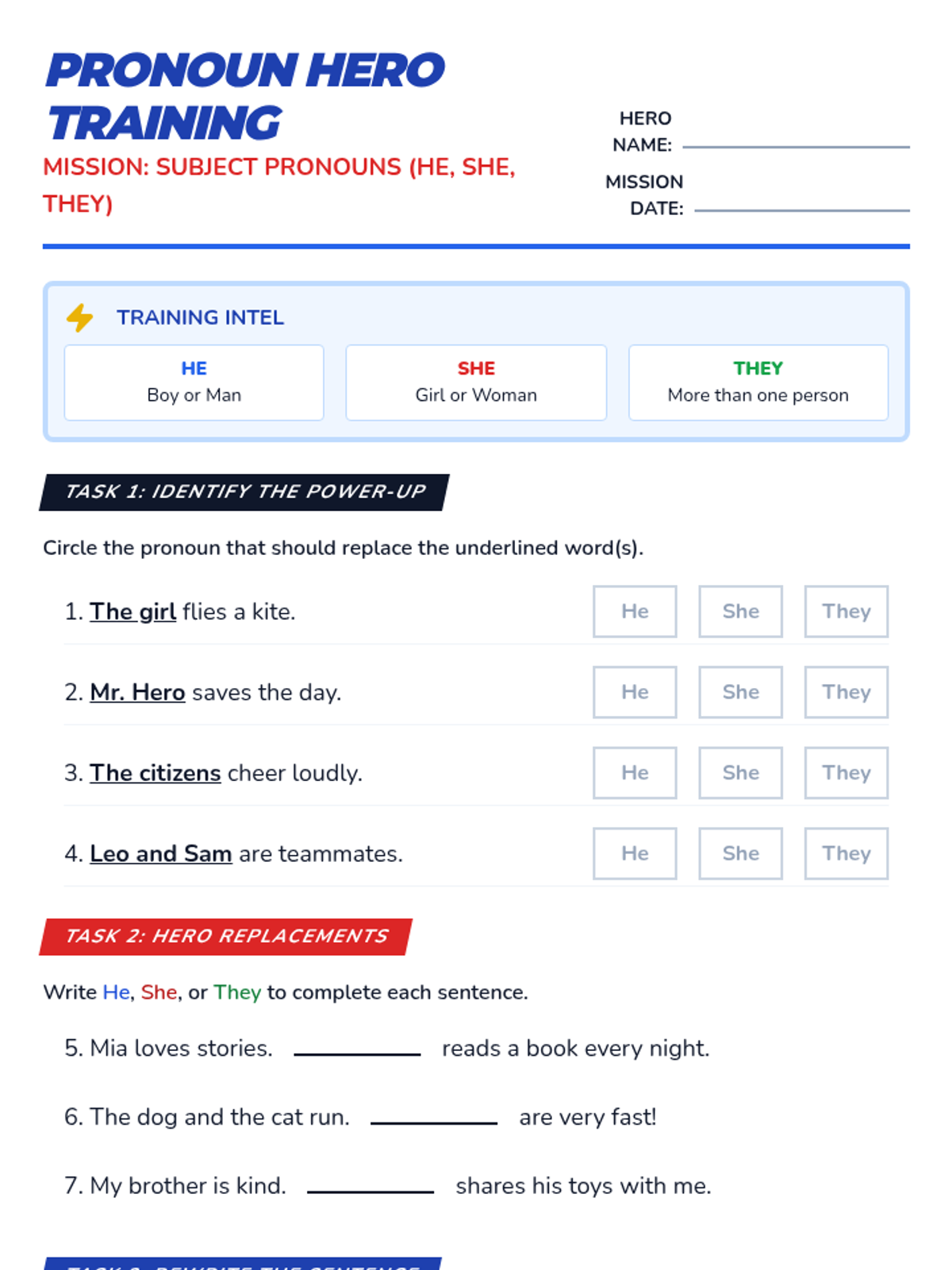
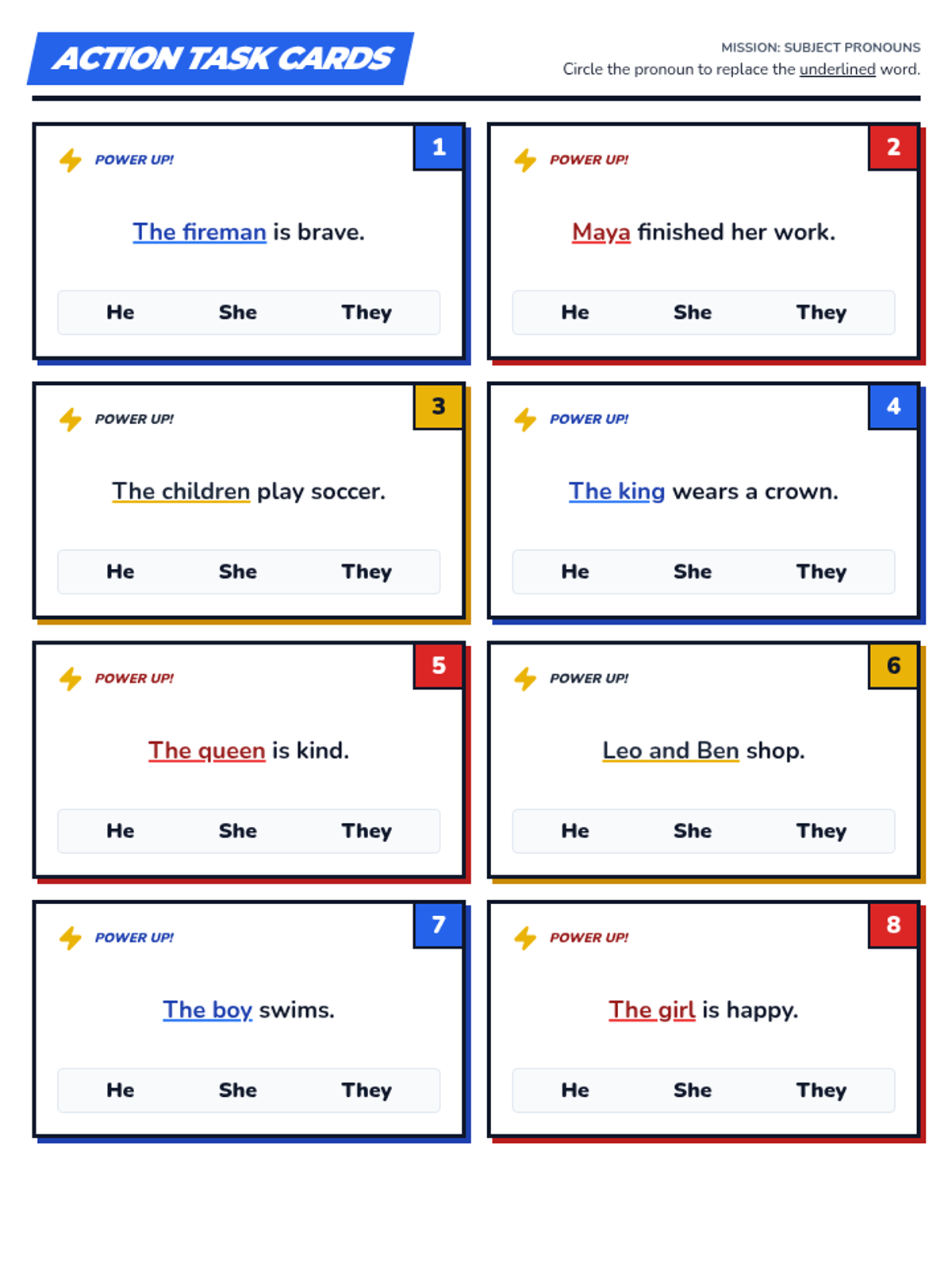
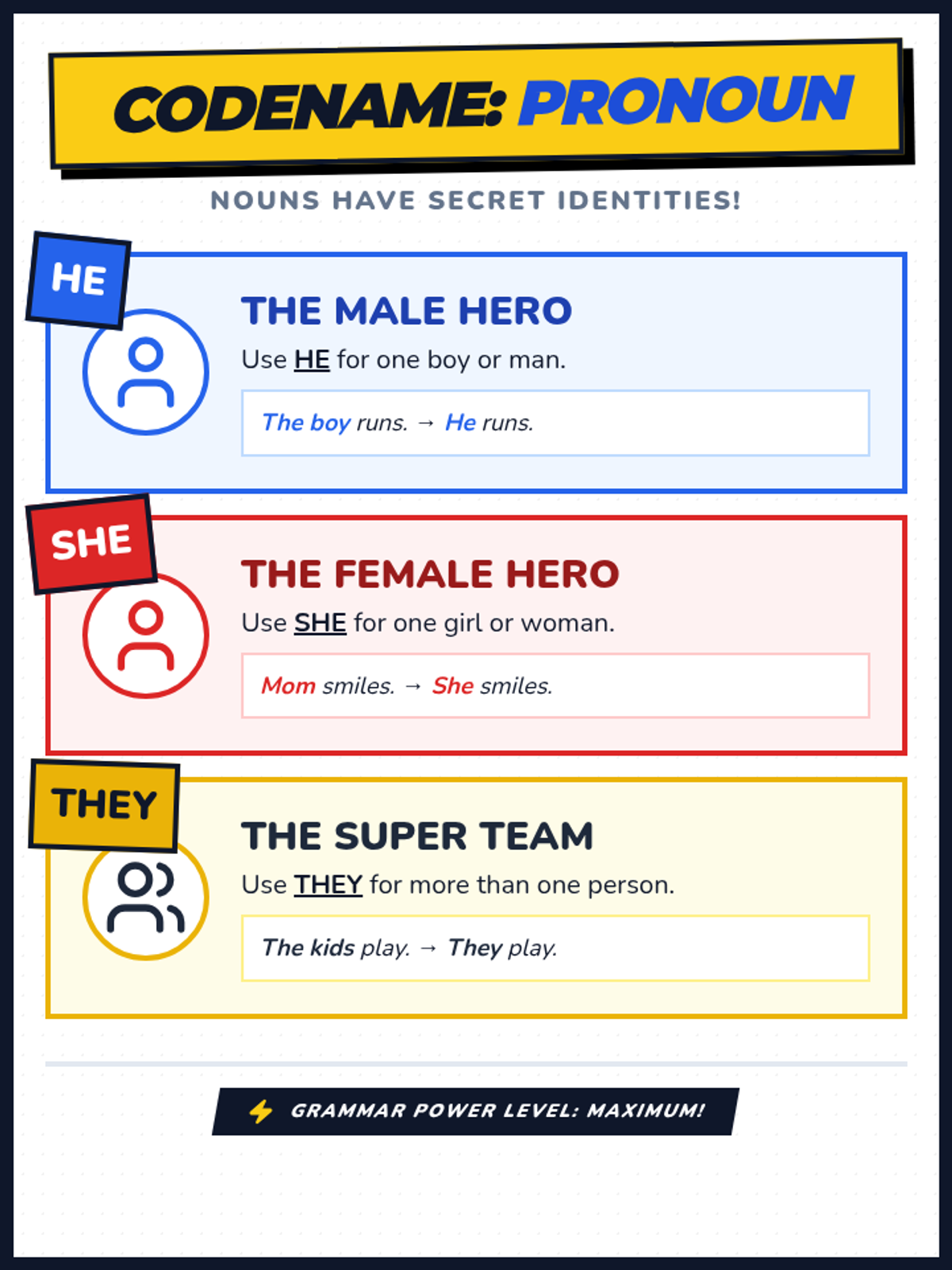
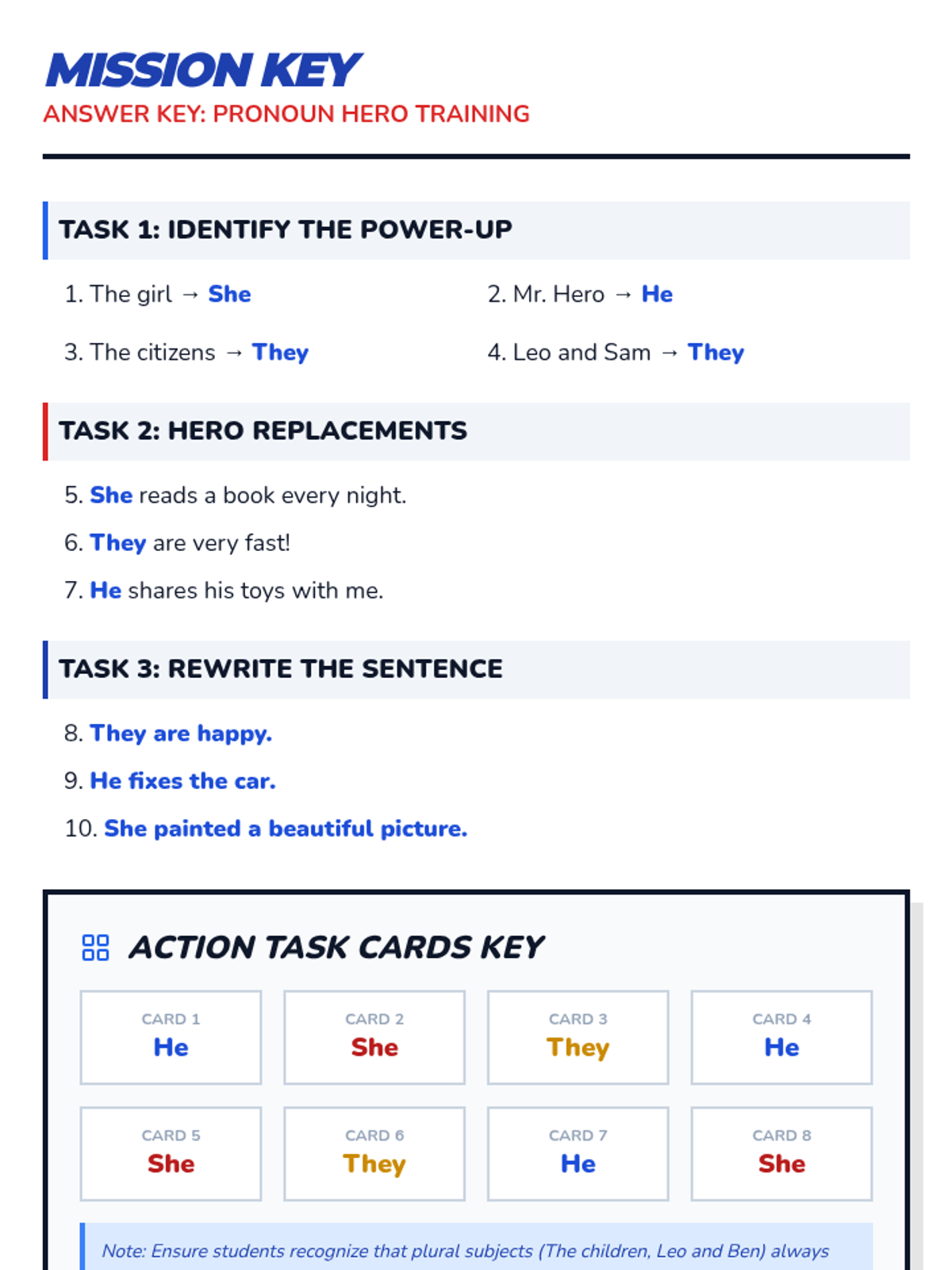
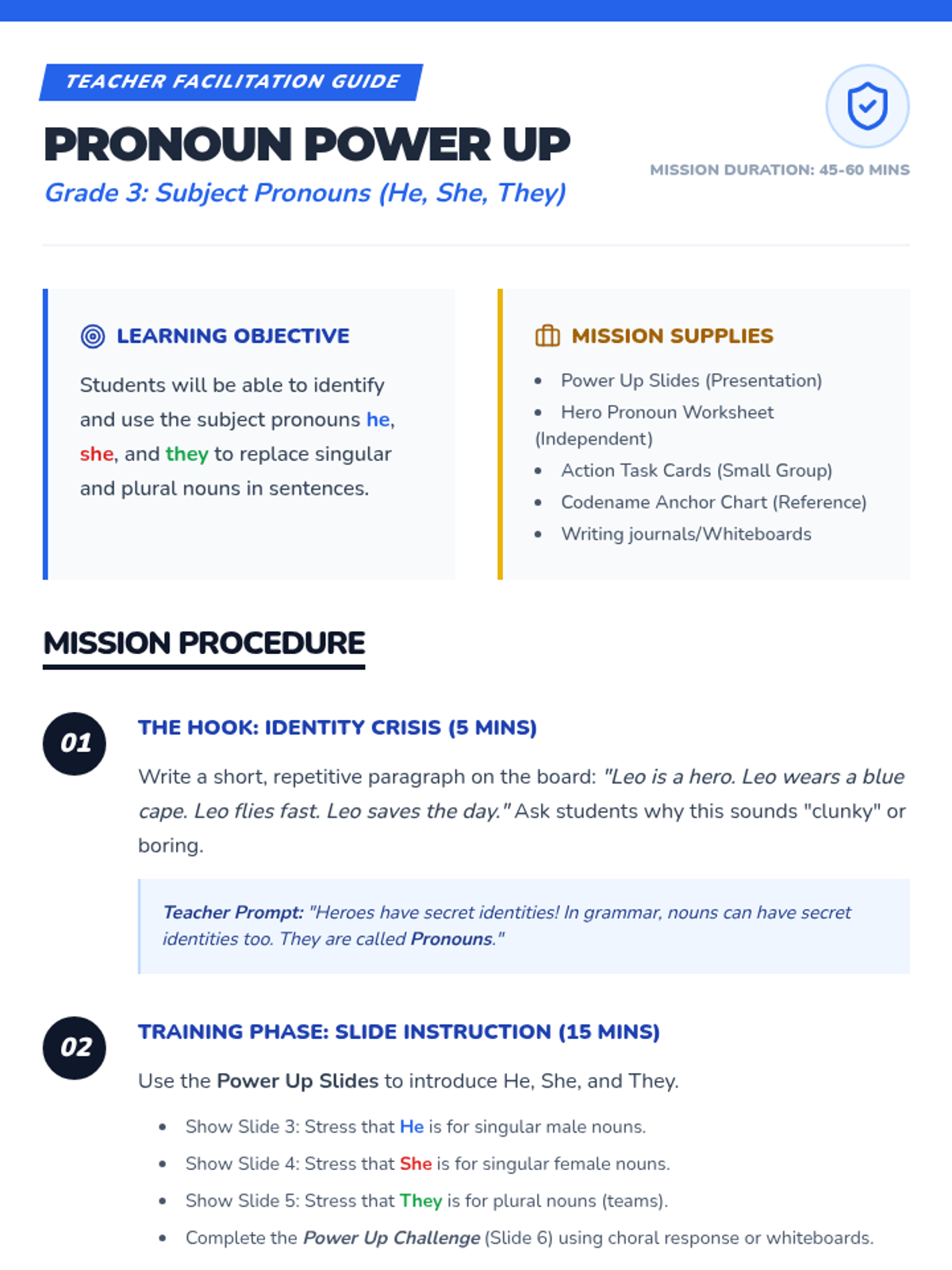
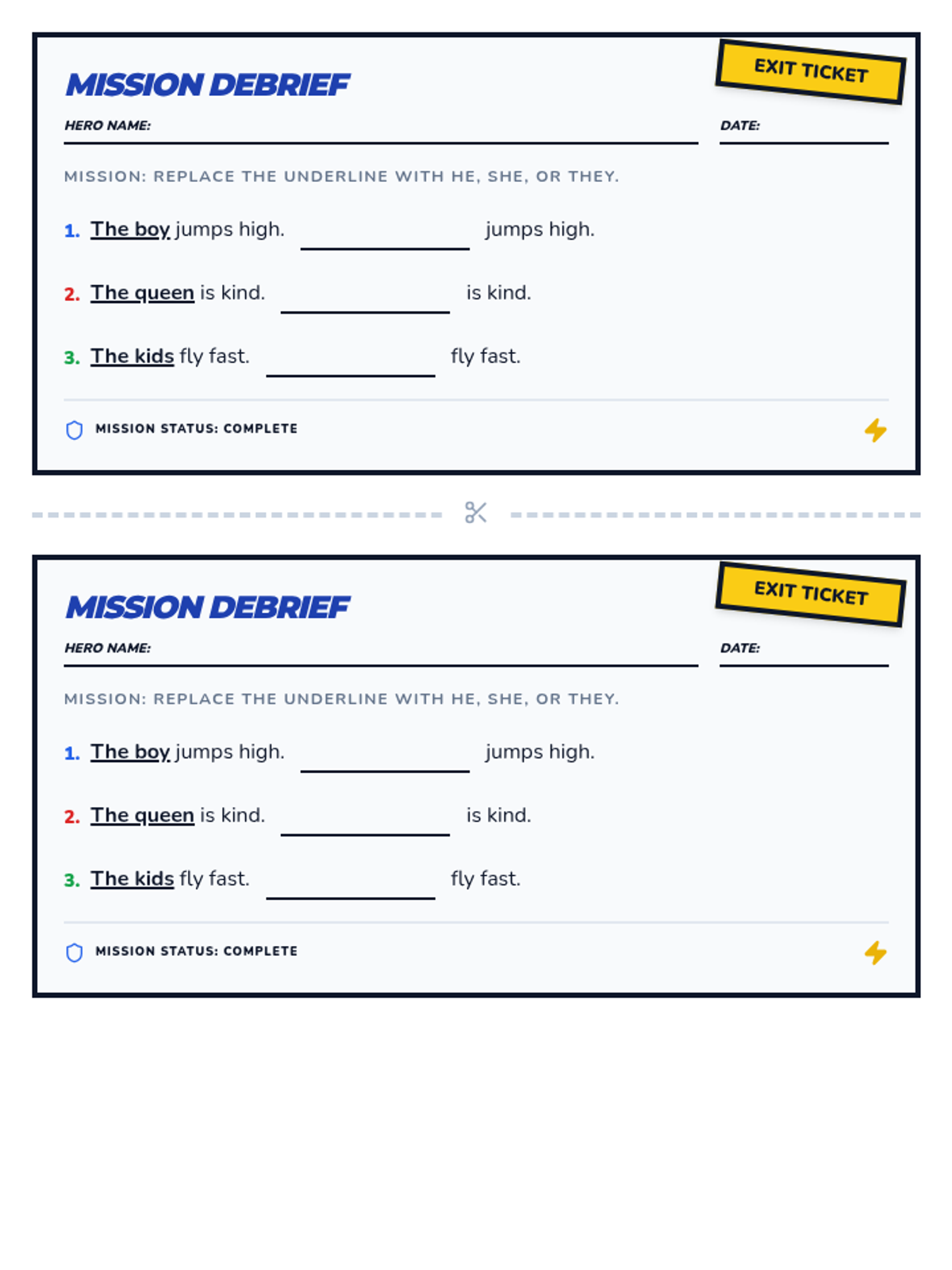
A comprehensive grammar lesson for 4th and 5th graders on identifying and using subject pronouns (he, she, they) to improve sentence variety and clarity. Students will learn to 'swap' repetitive nouns for efficient pronouns in various contexts.
A superhero-themed lesson introducing subject pronouns (he, she, they). Students learn how these pronouns 'power up' sentences by replacing repetitive nouns.
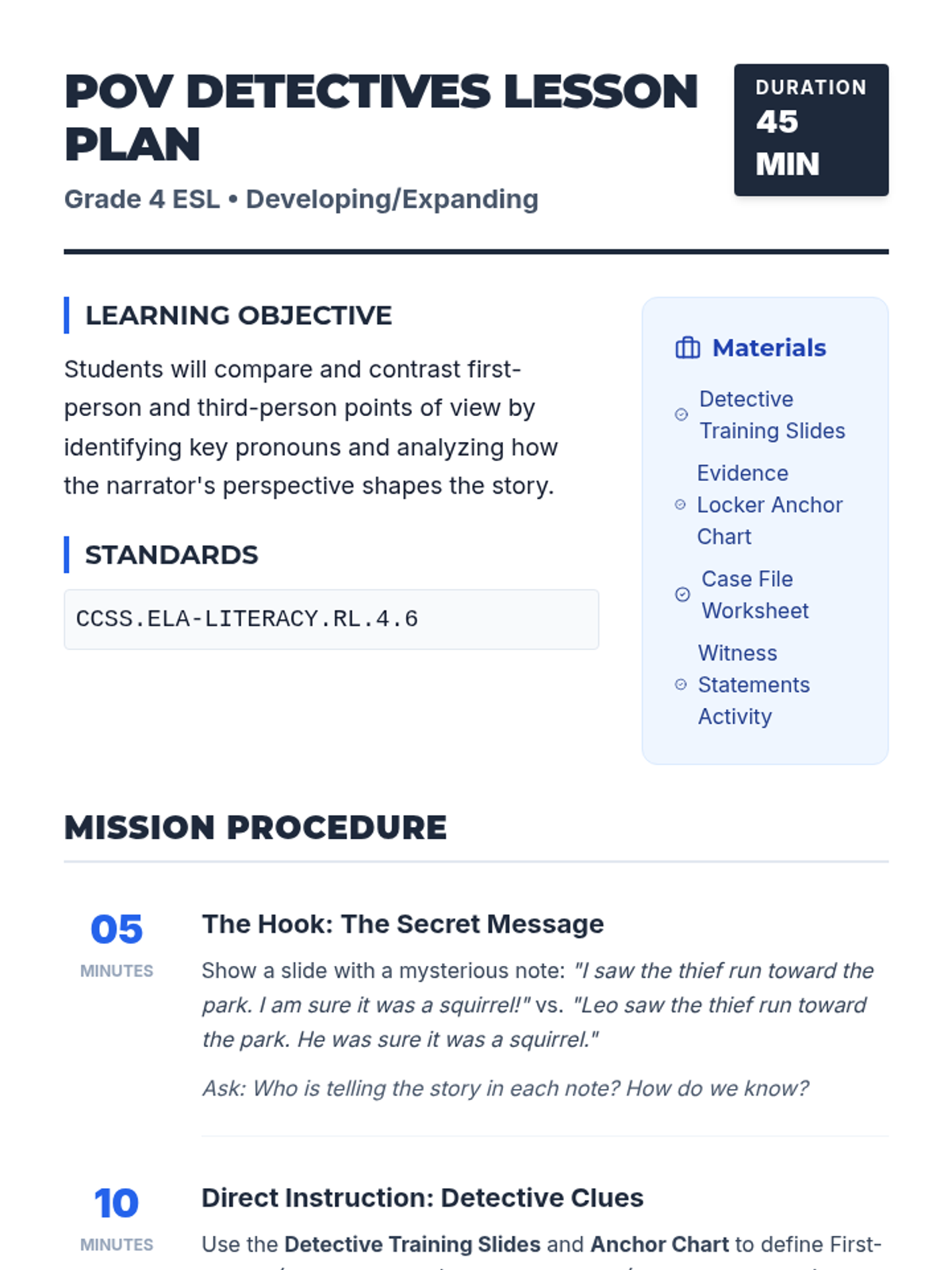
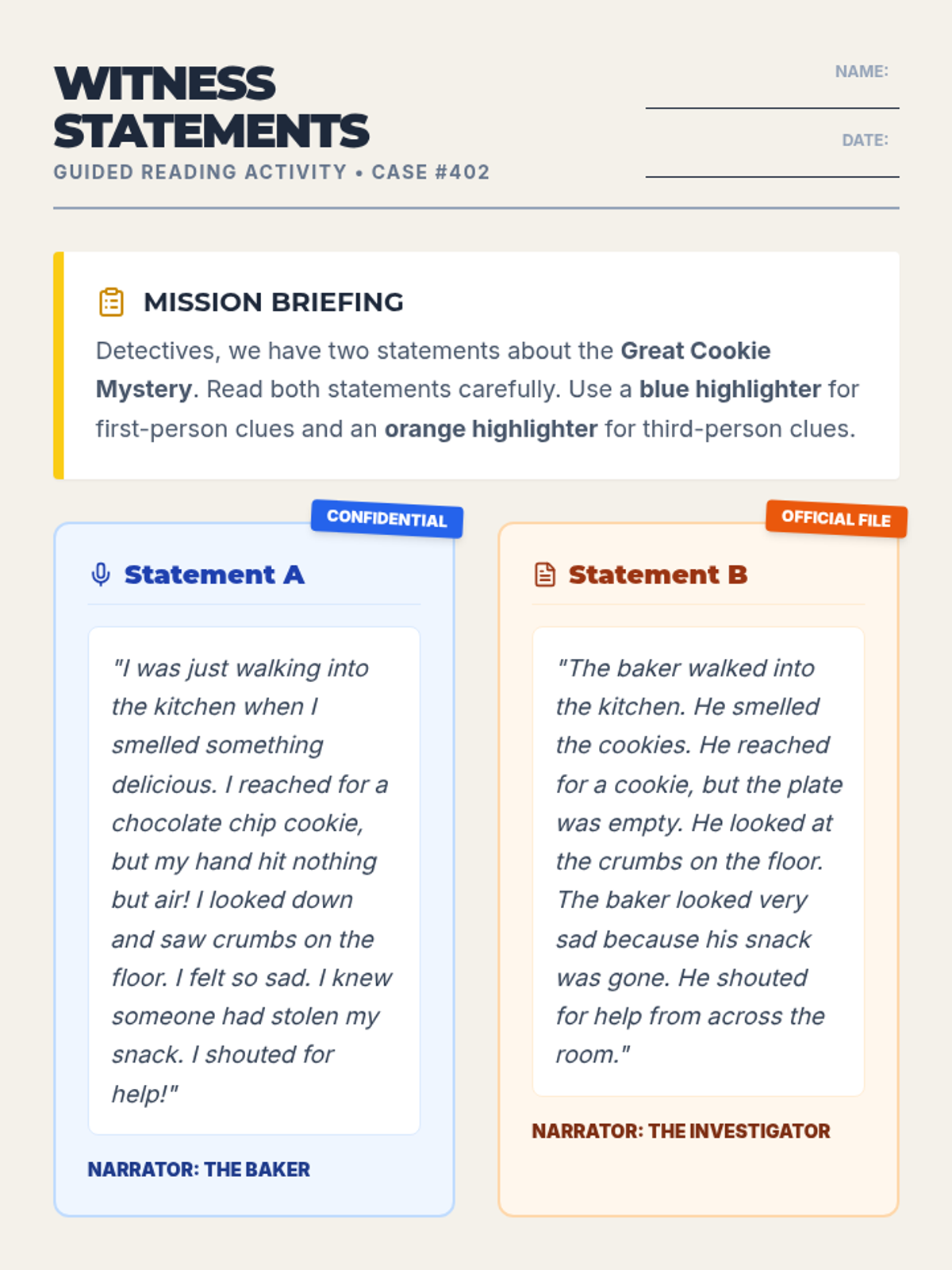
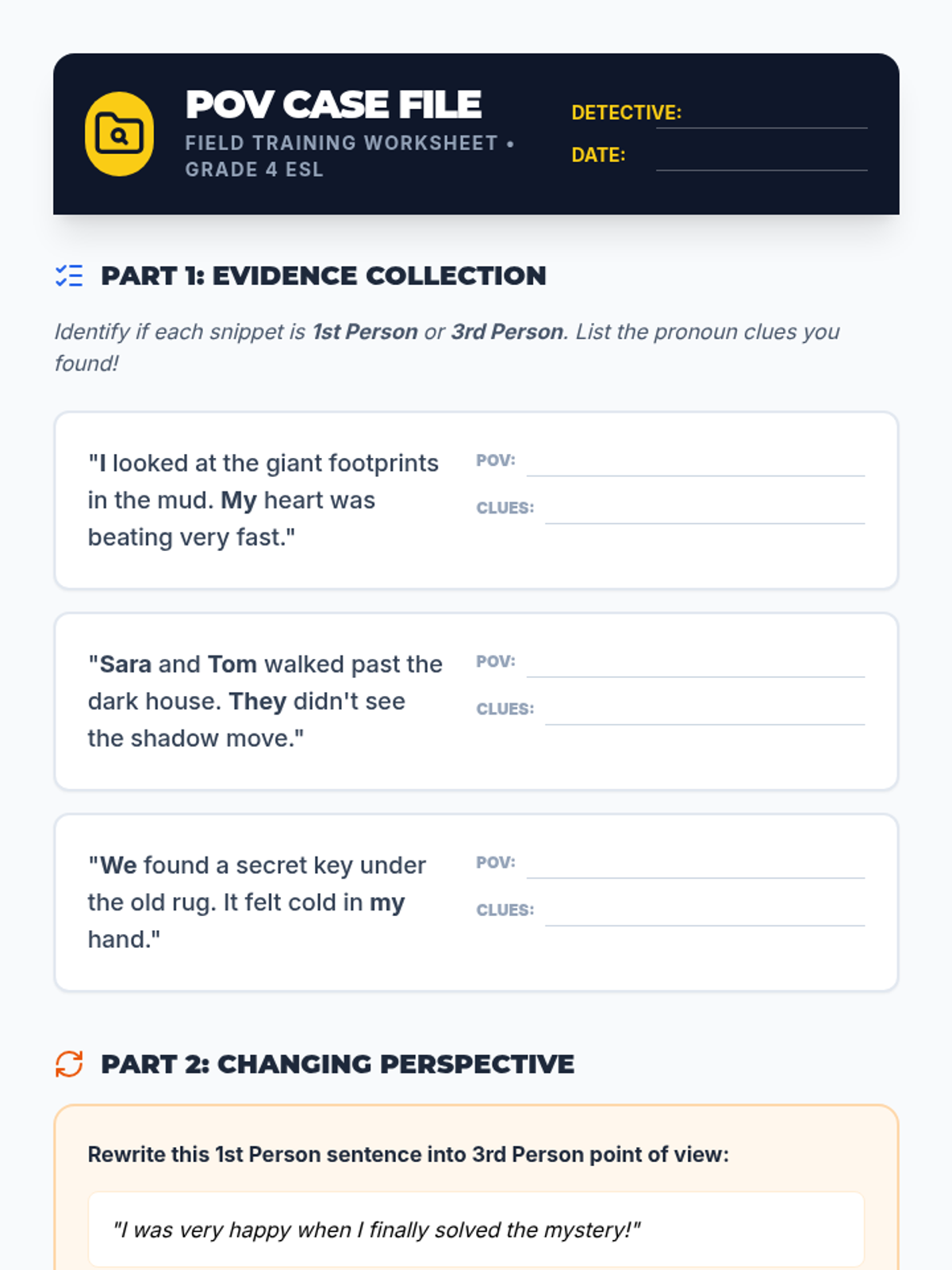
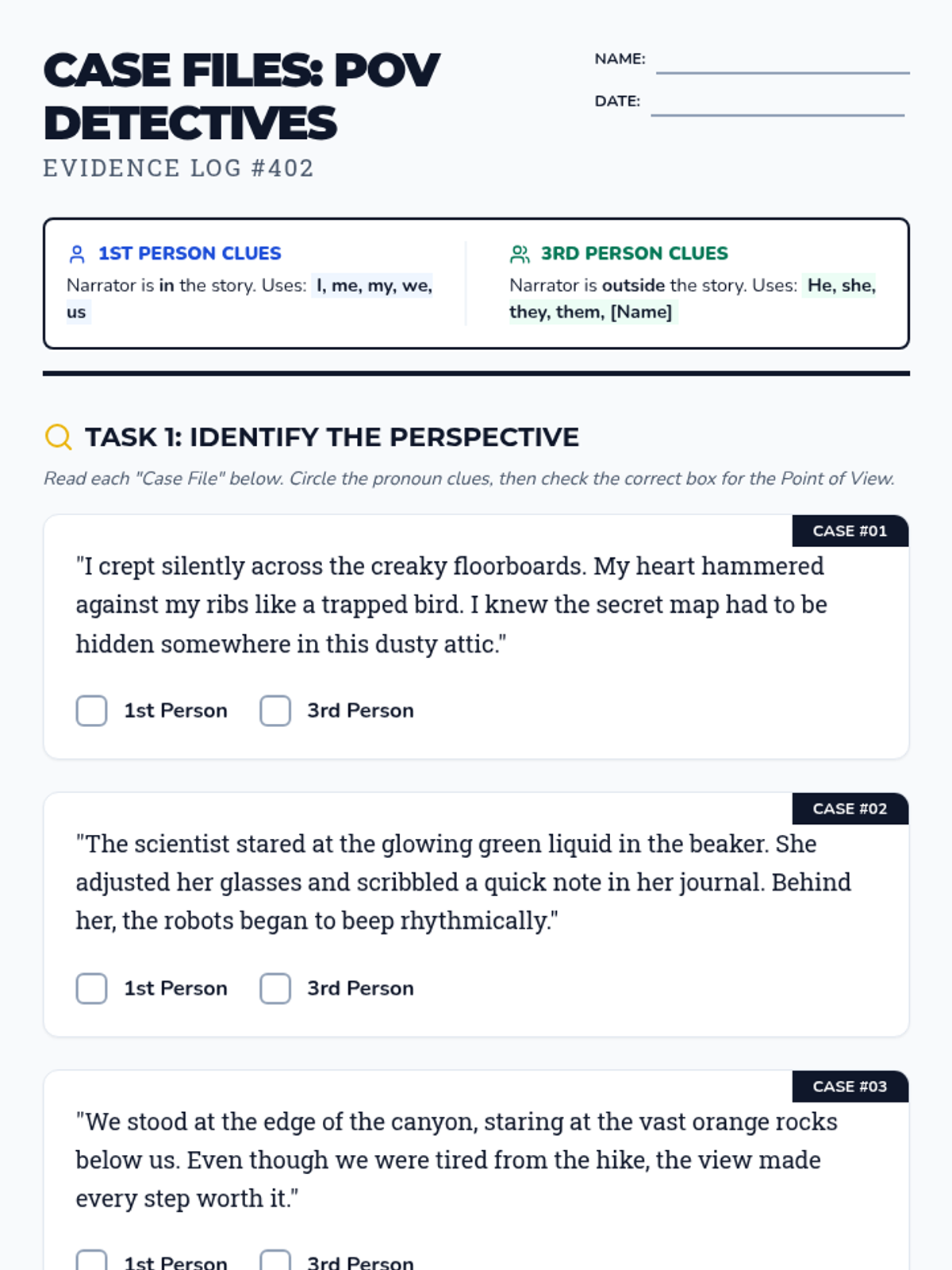
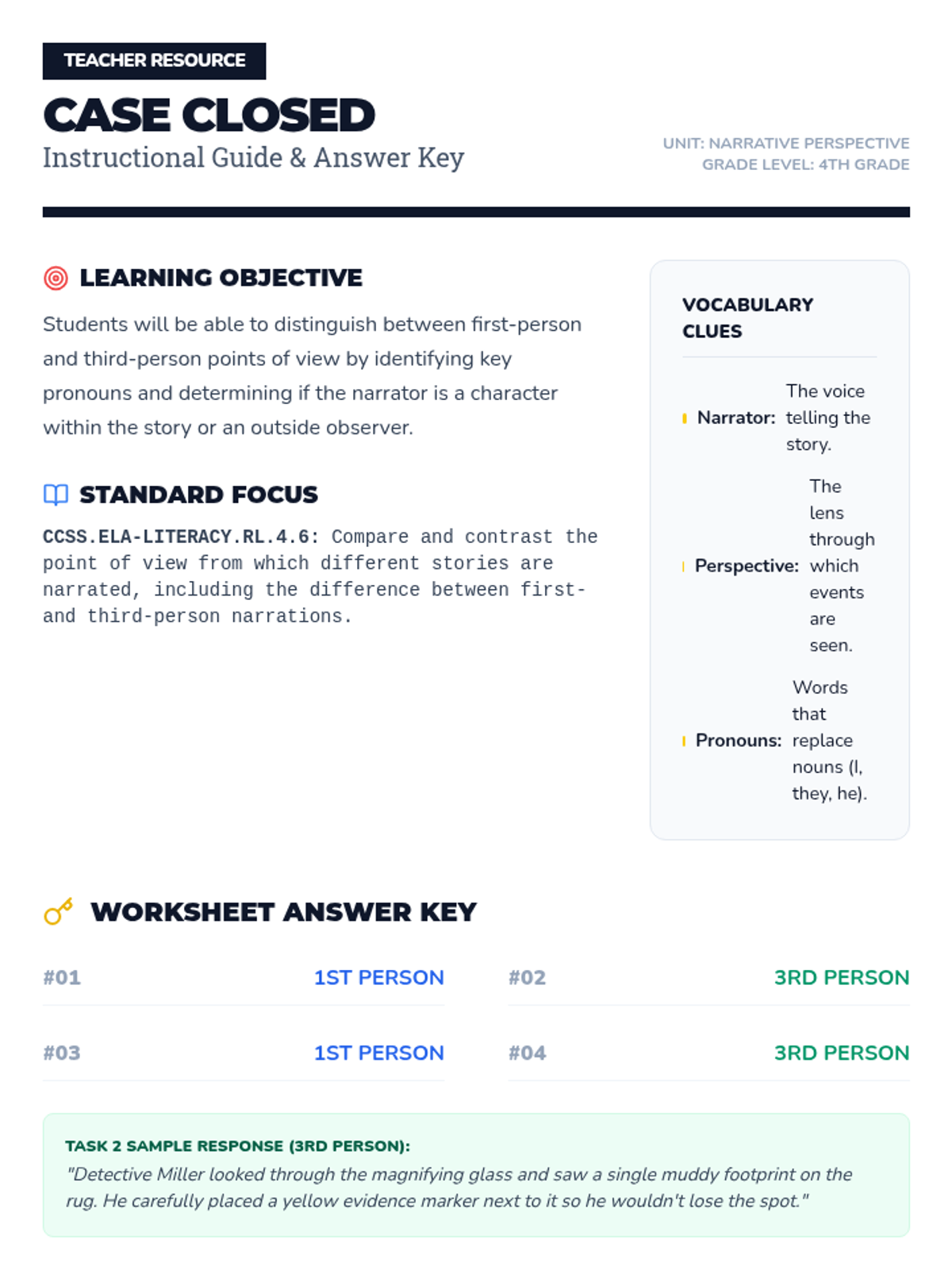
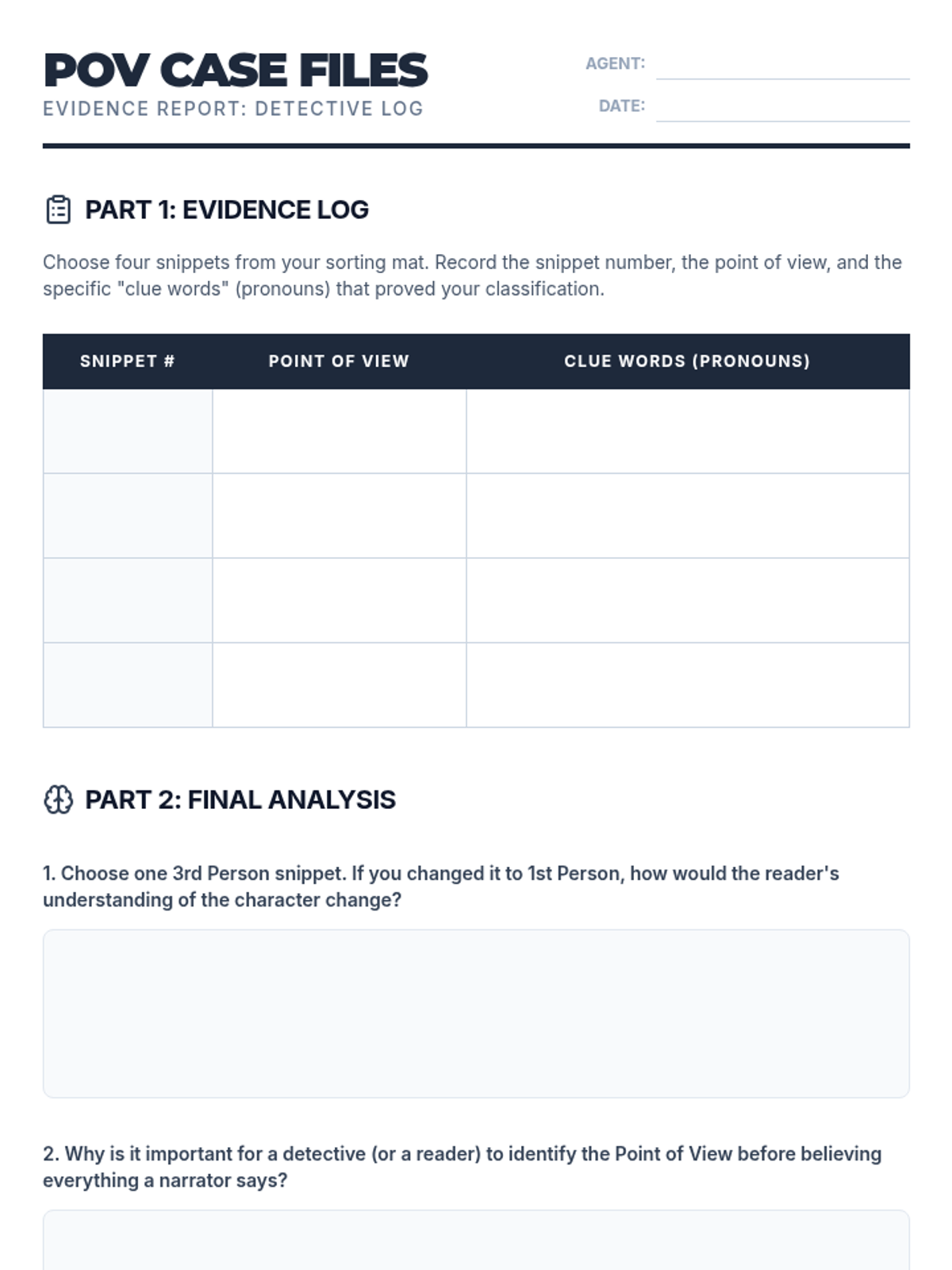
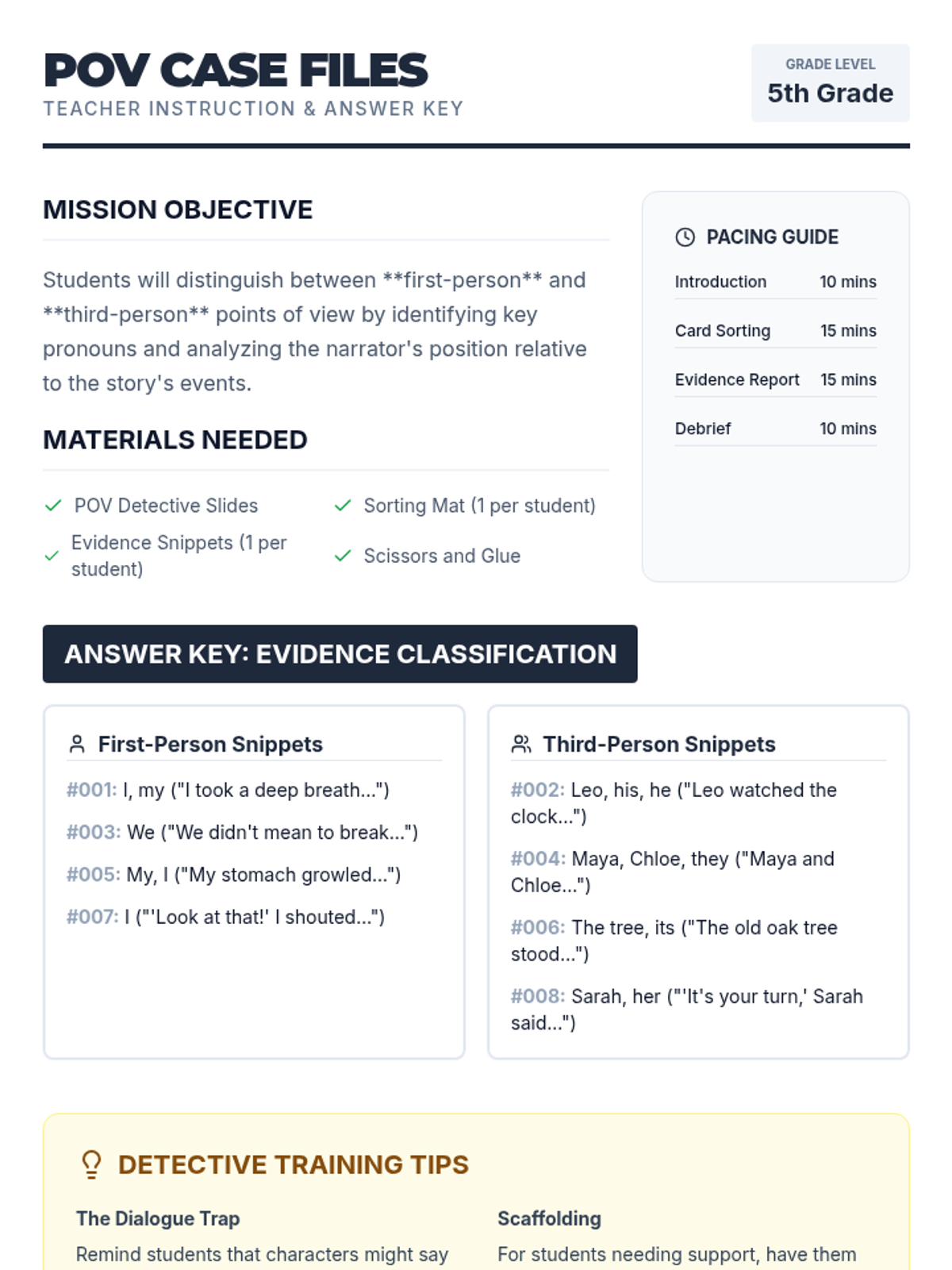
A 45-minute lesson for Grade 4 ESL students (Developing/Expanding) focused on identifying, comparing, and contrasting first-person and third-person points of view using a detective-themed 'case file' approach.
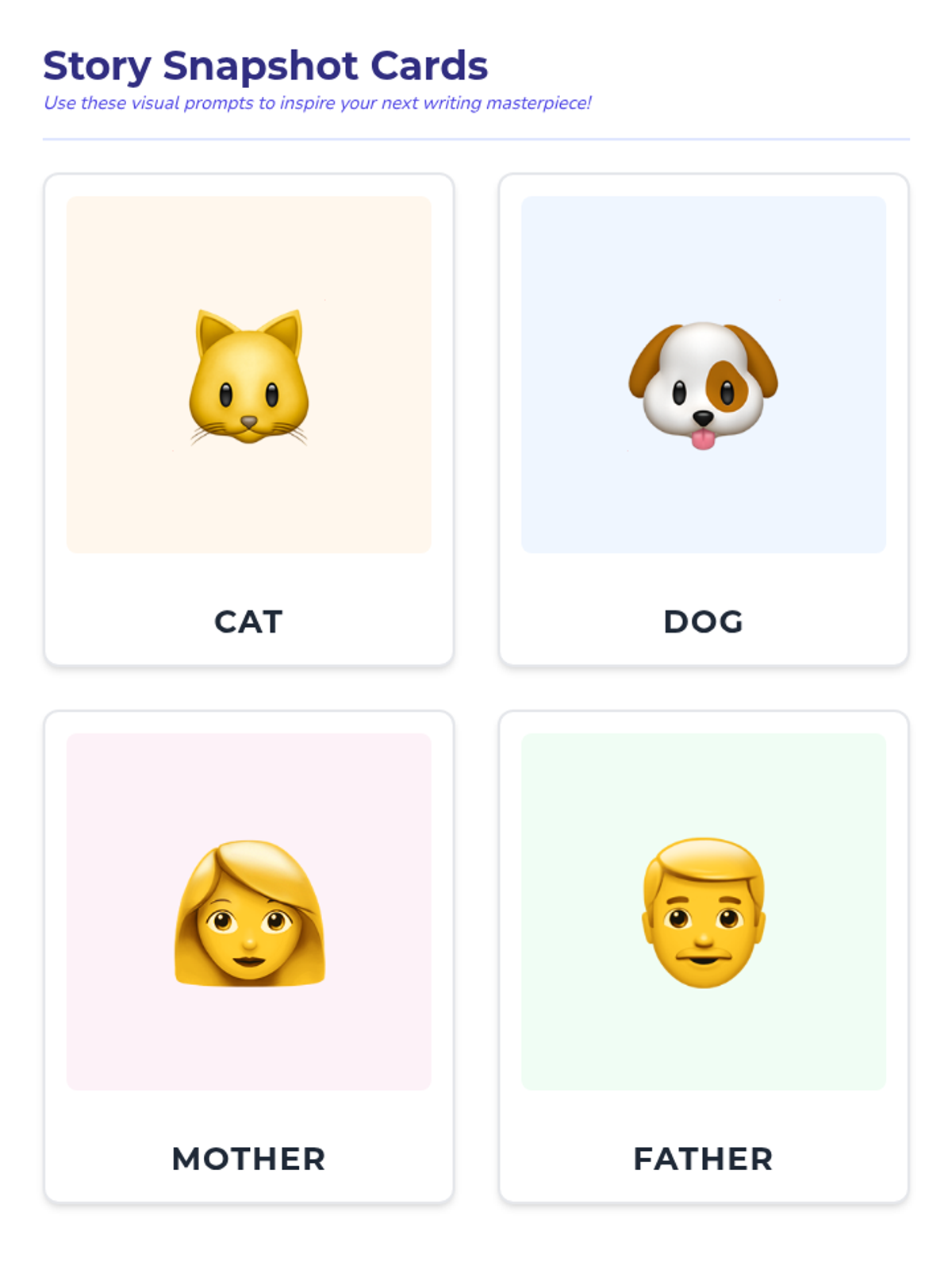
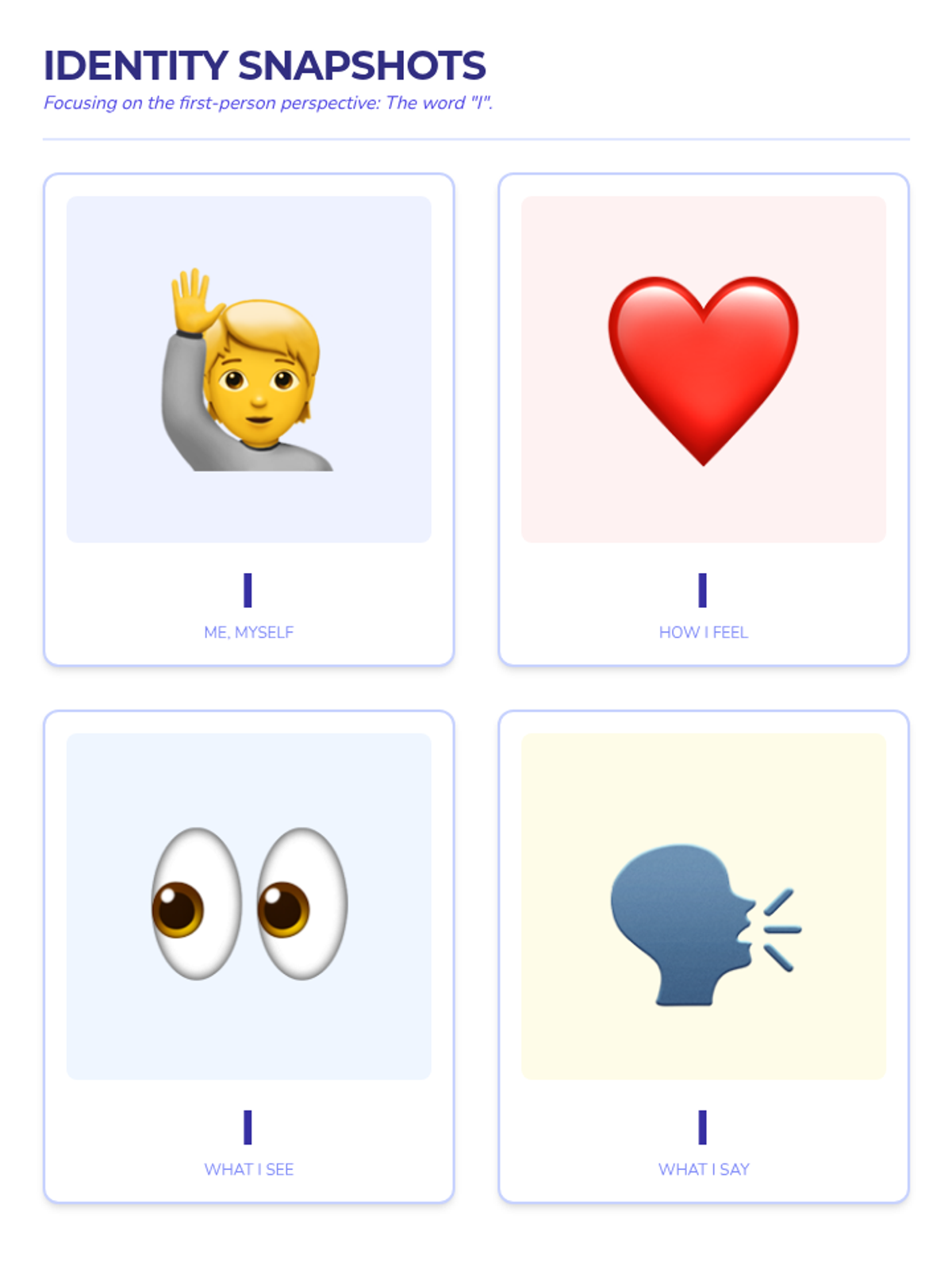
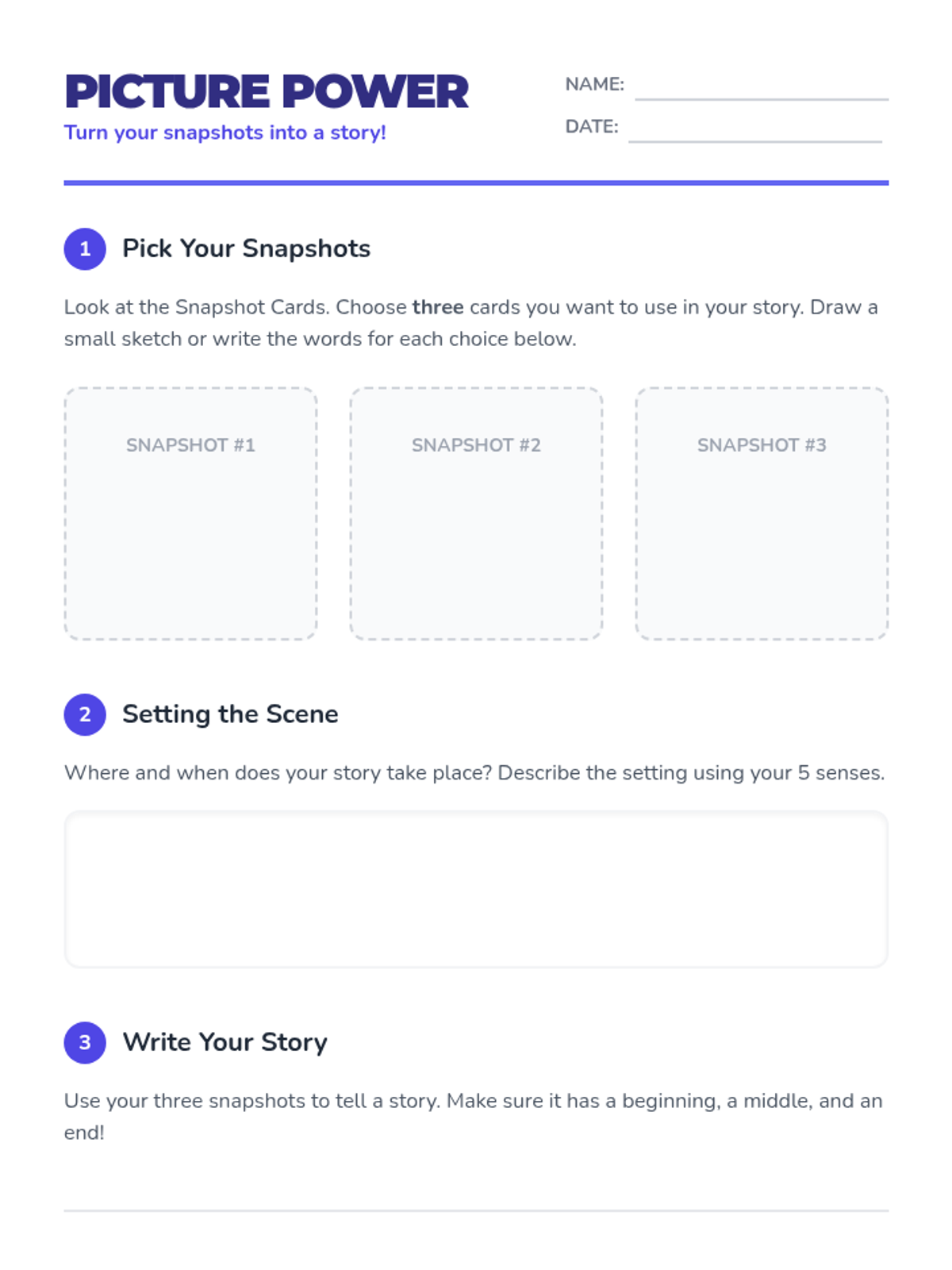
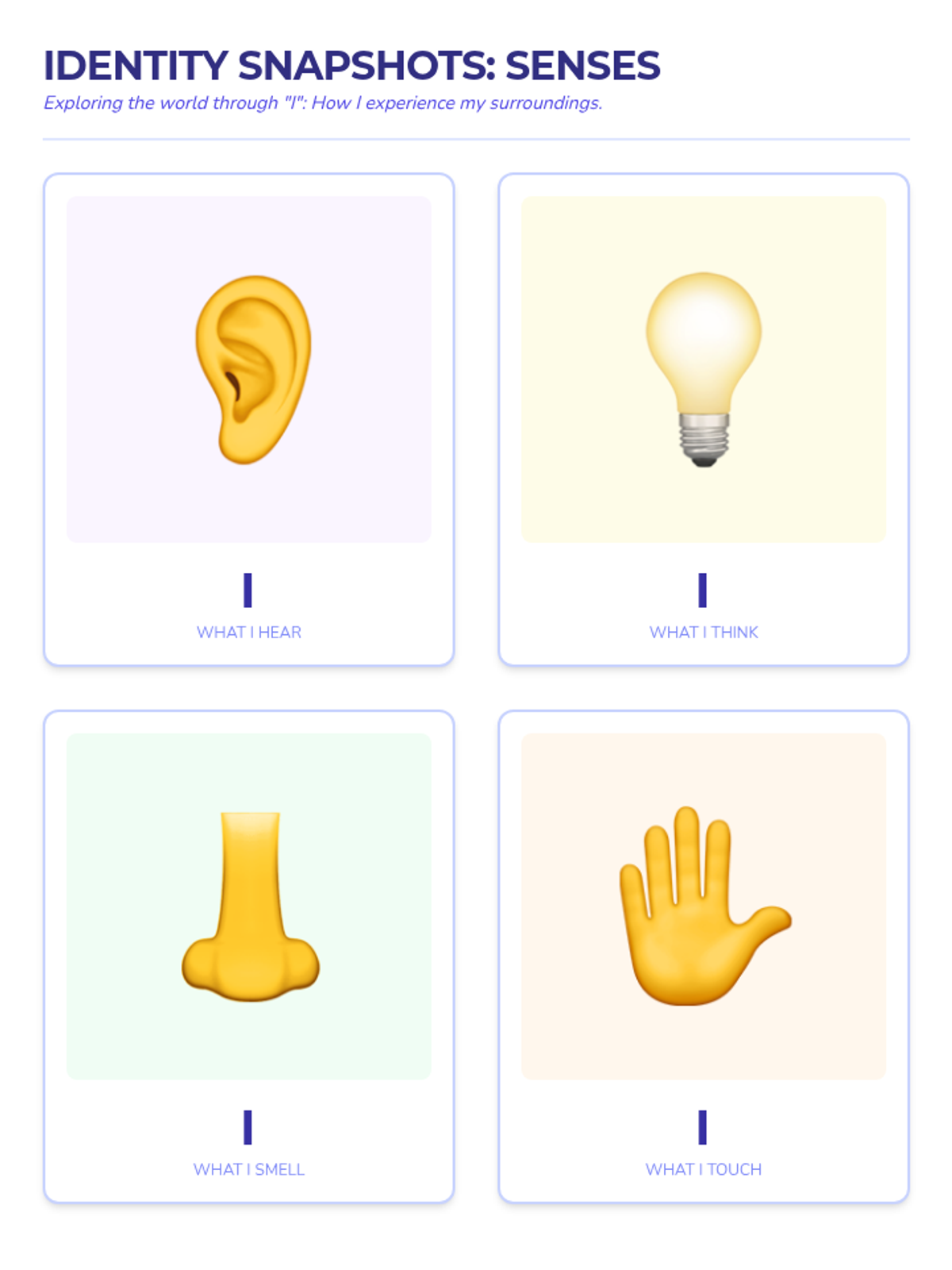
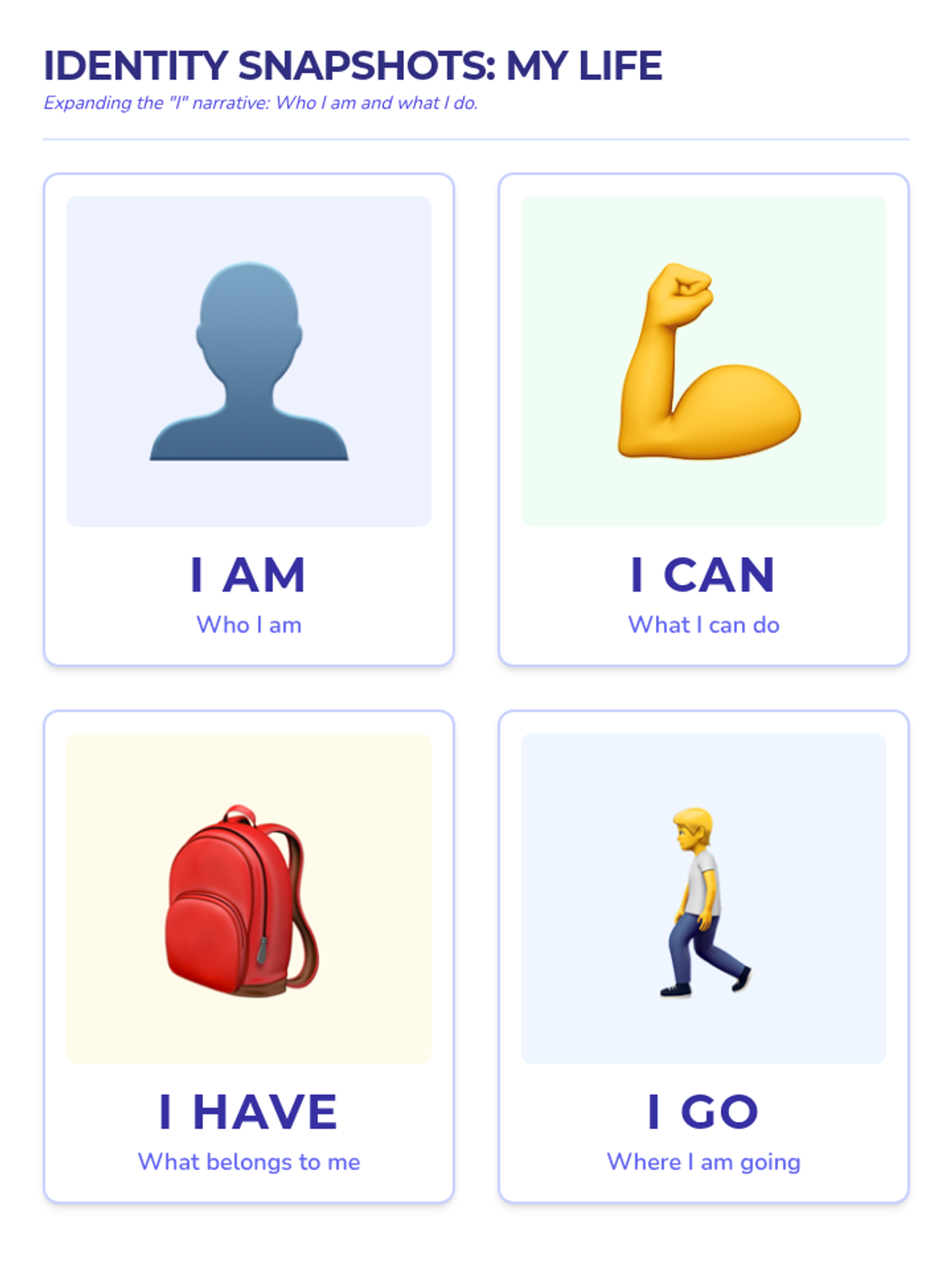
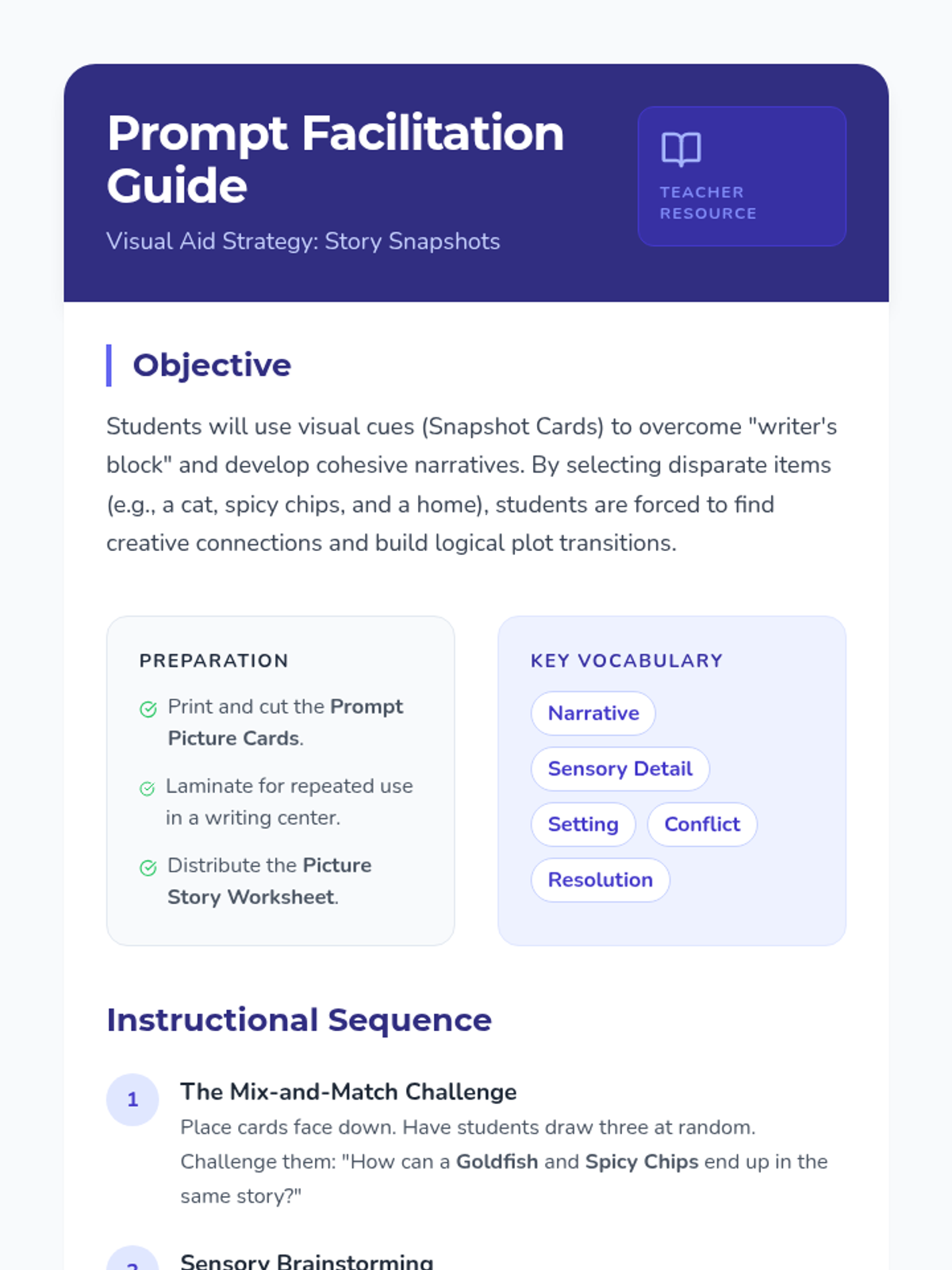
A lesson focused on using visual prompts to spark descriptive and narrative writing. Students use a set of visual cards to generate ideas, describe settings, and build characters for their stories.
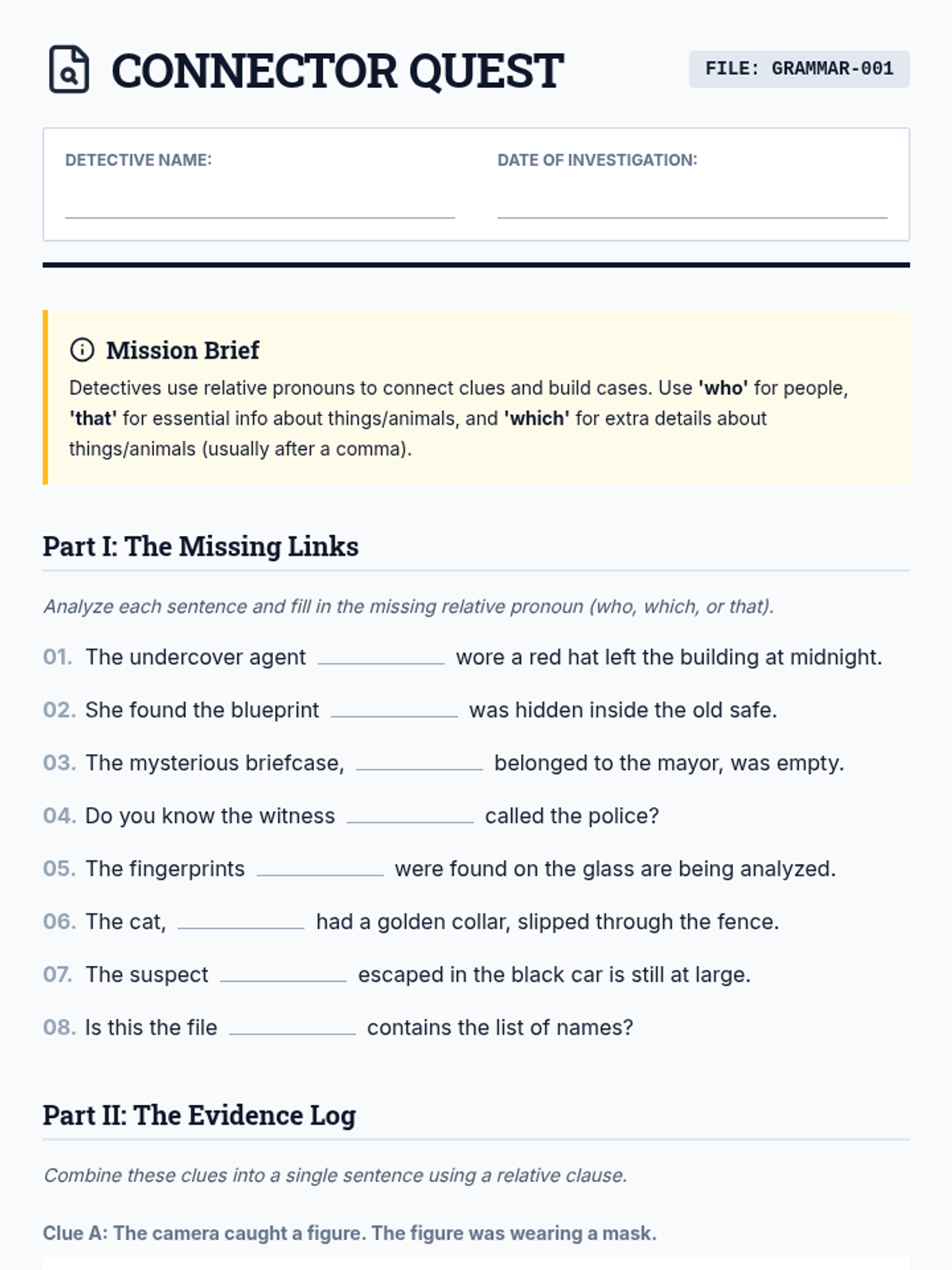
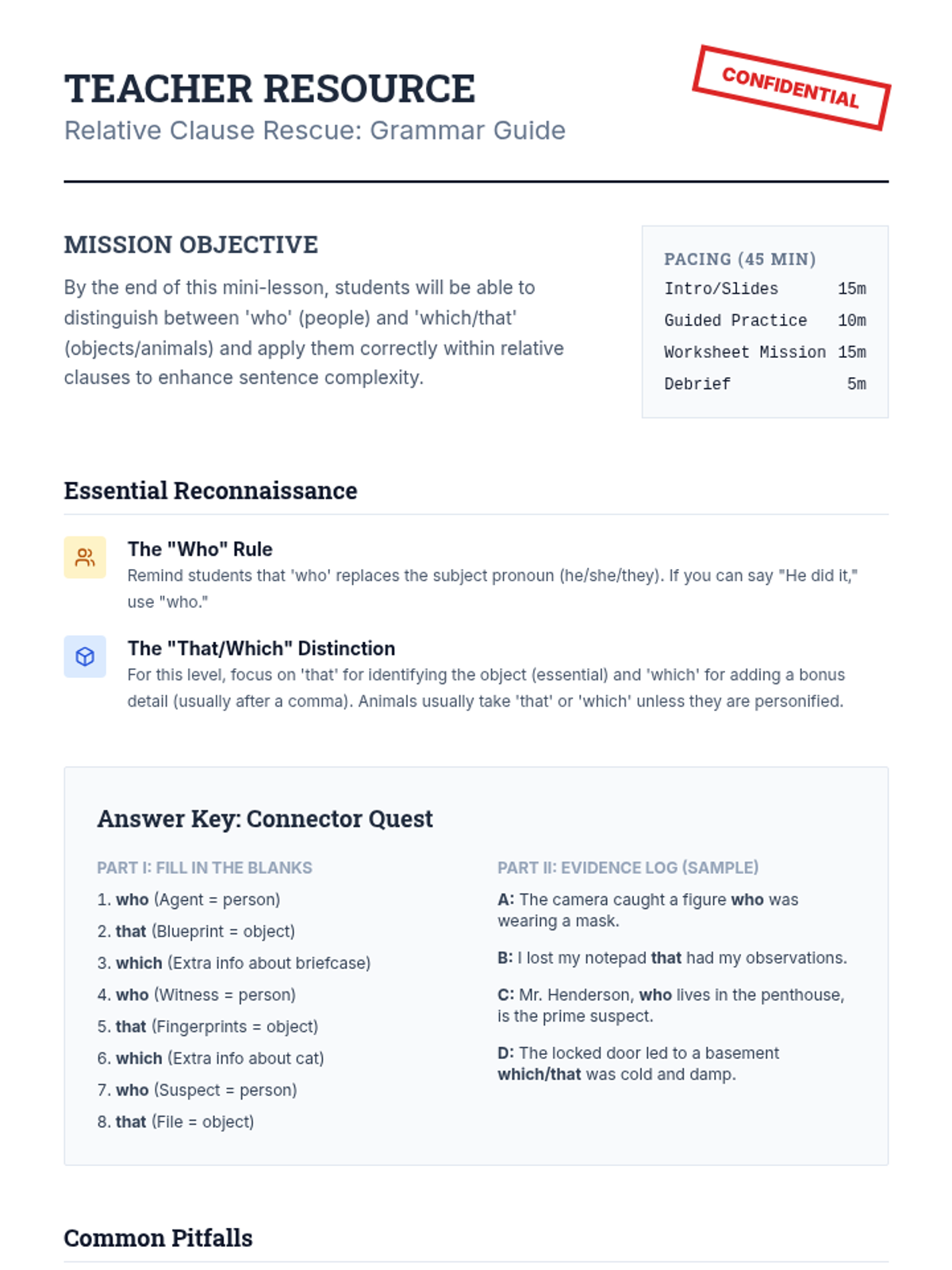
A detective-themed grammar lesson focused on correctly using relative pronouns 'who', 'which', and 'that'. Students will identify the correct pronouns for people versus objects through interactive instruction and a practice mission.
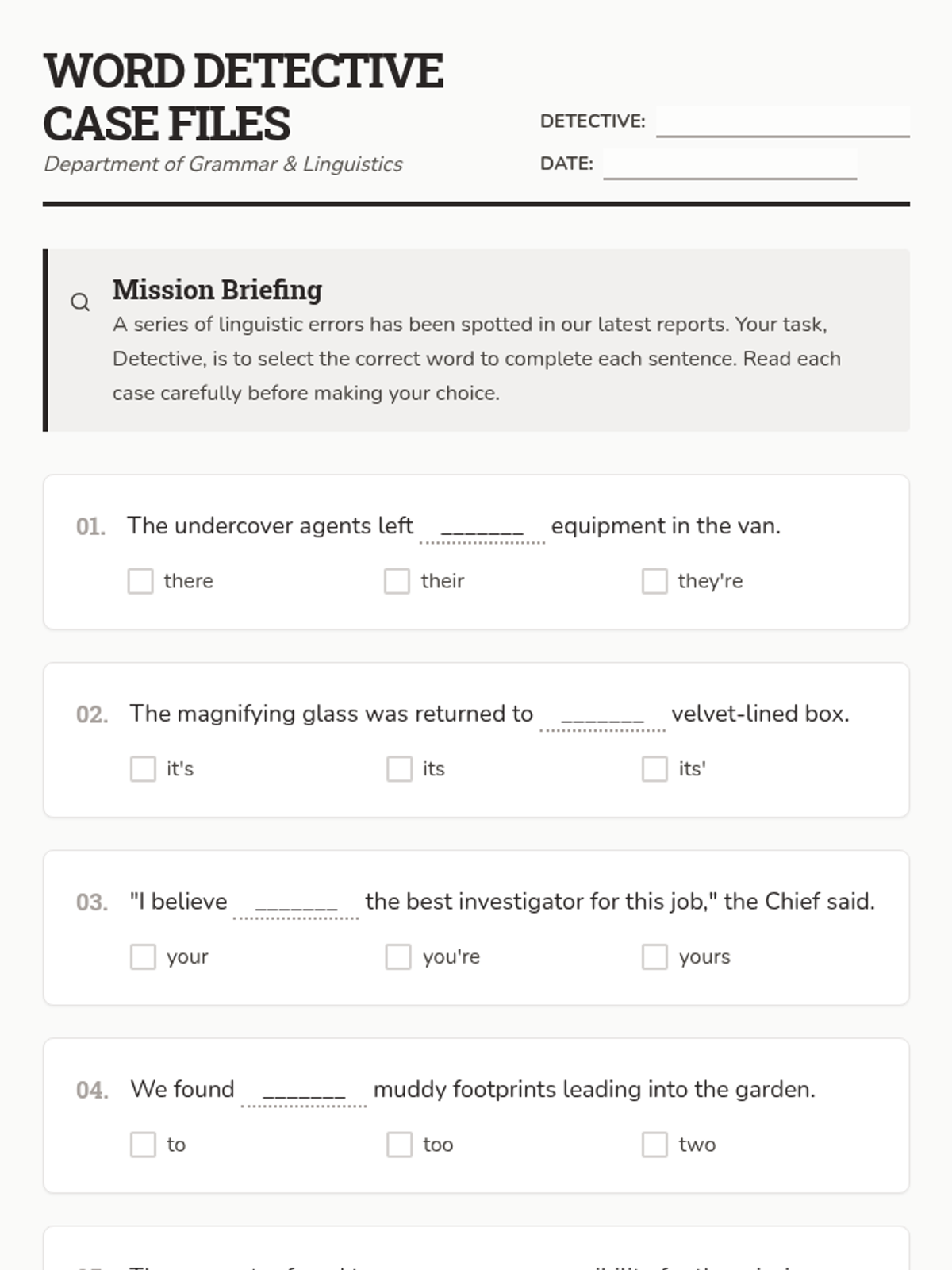
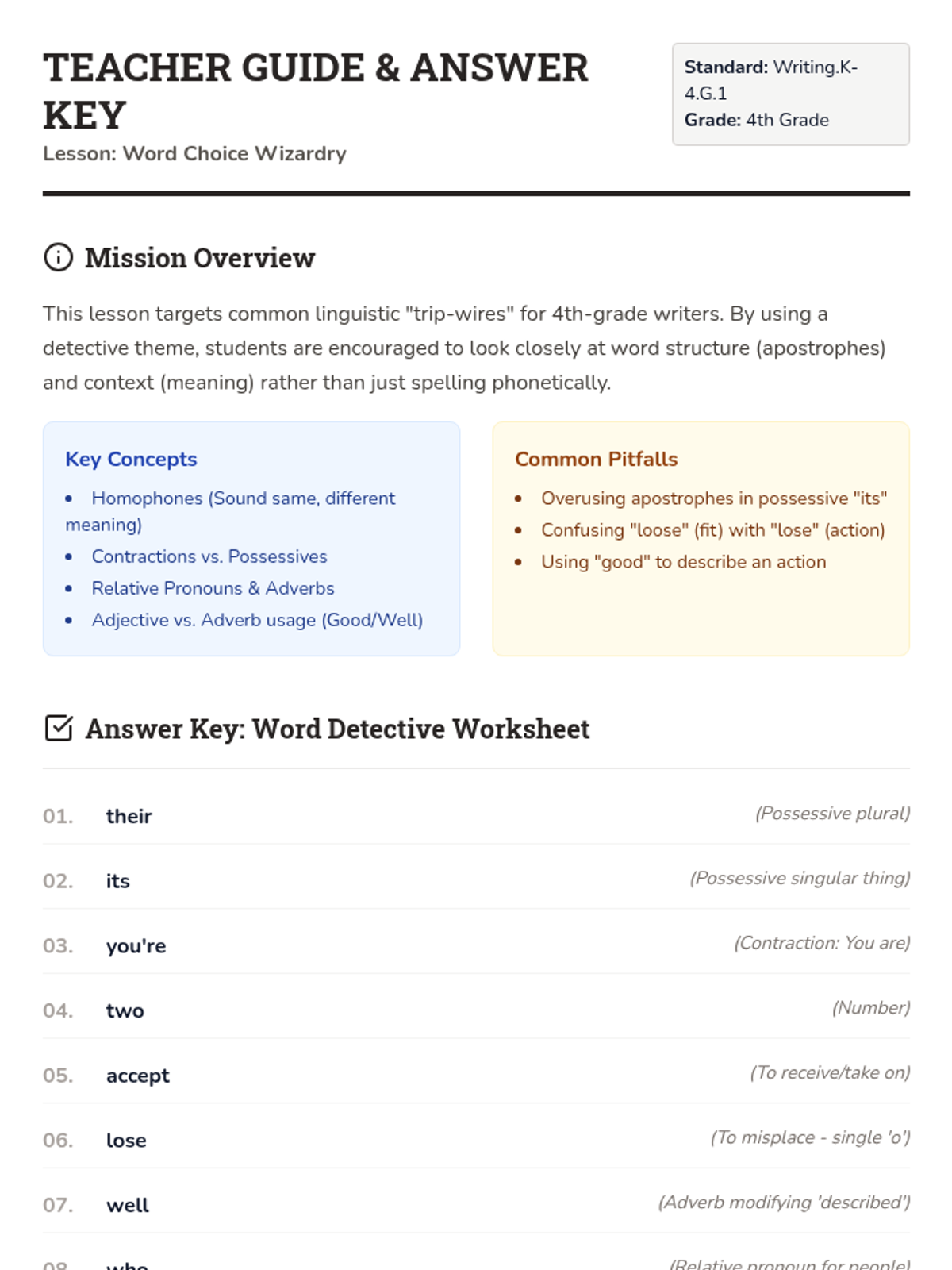
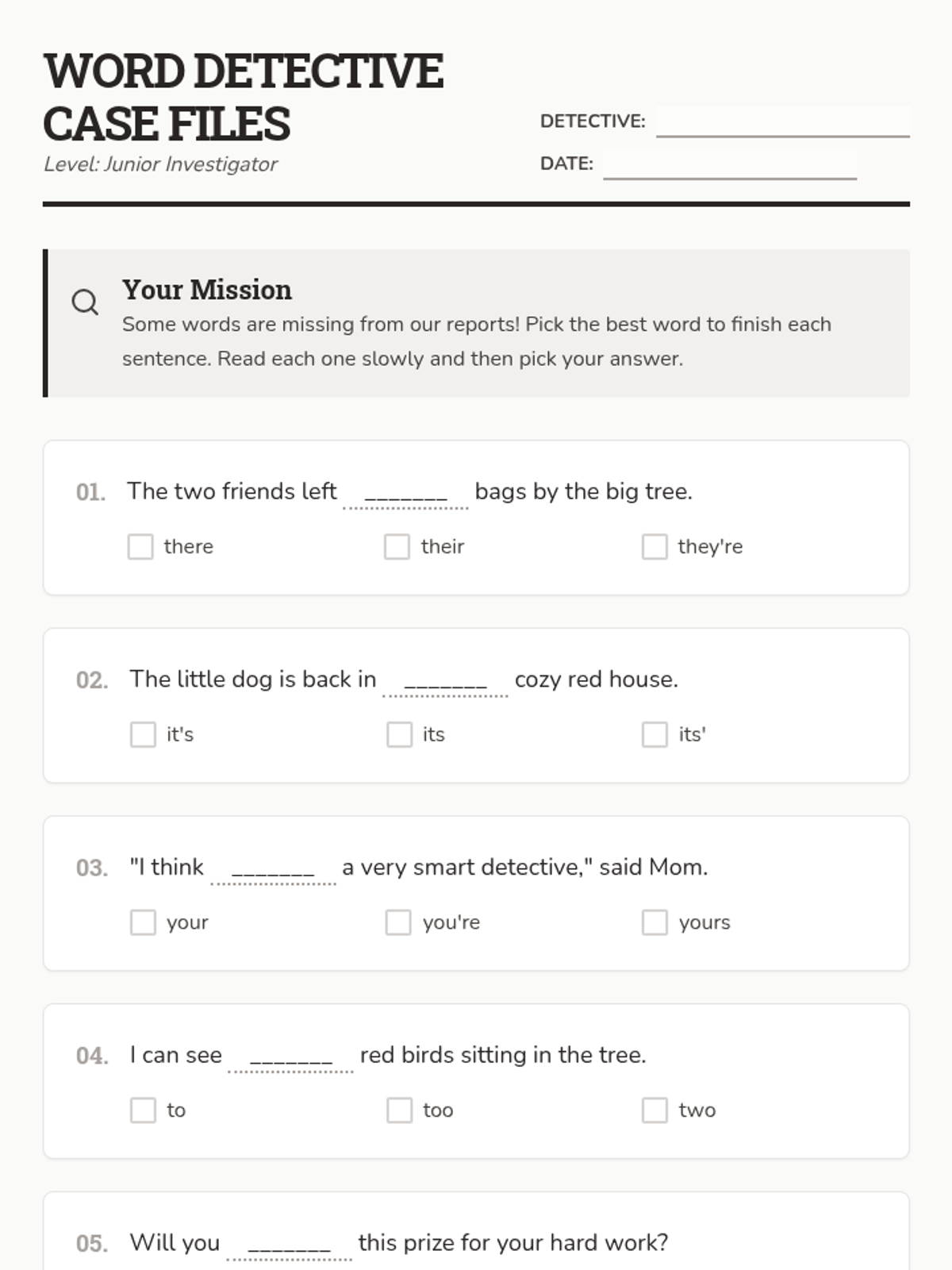
A lesson focused on common word usage errors, homophones, and frequently confused words for 4th-grade writers. Students practice identifying and using the correct words in context through detective-themed scenarios.
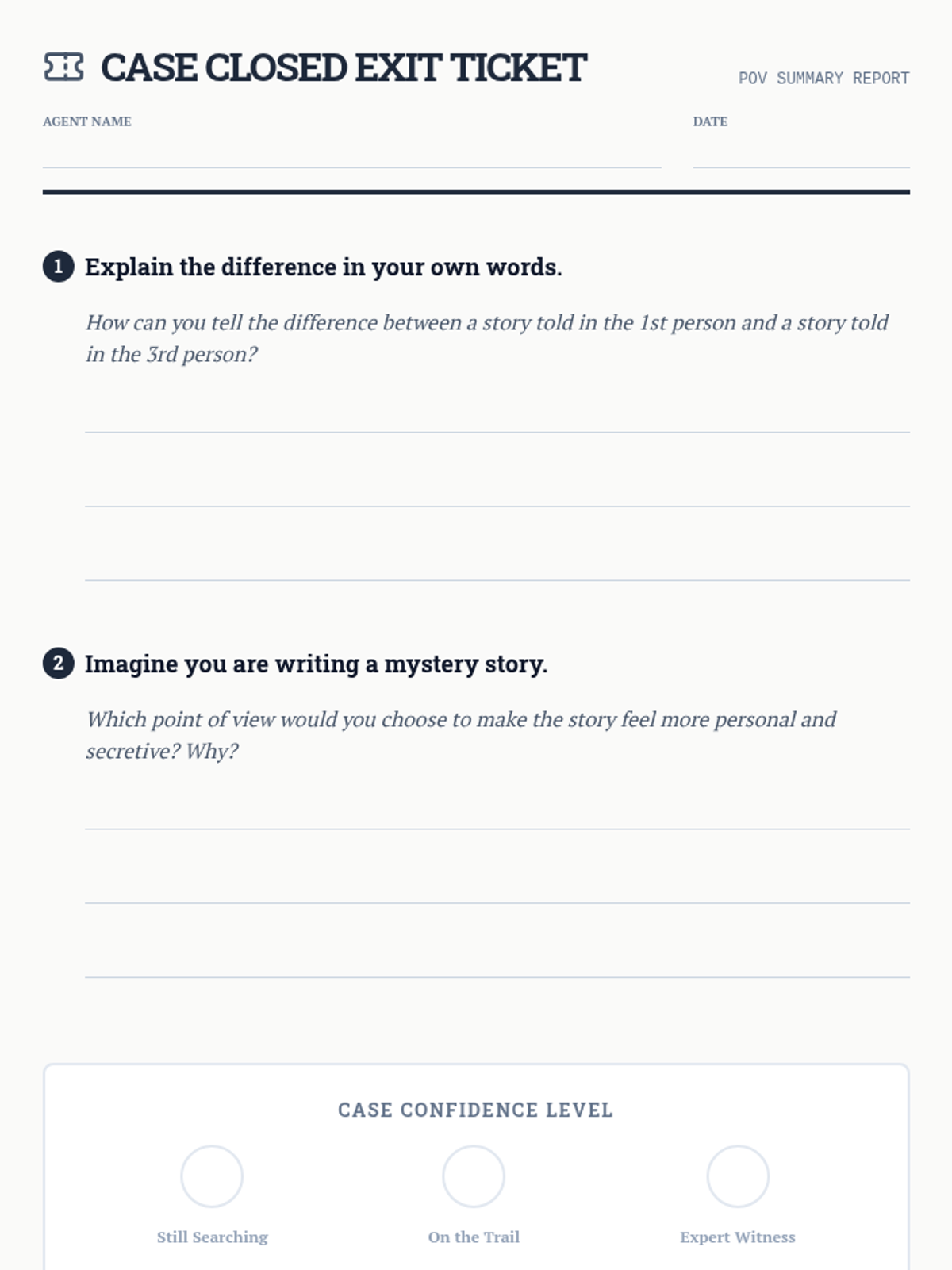
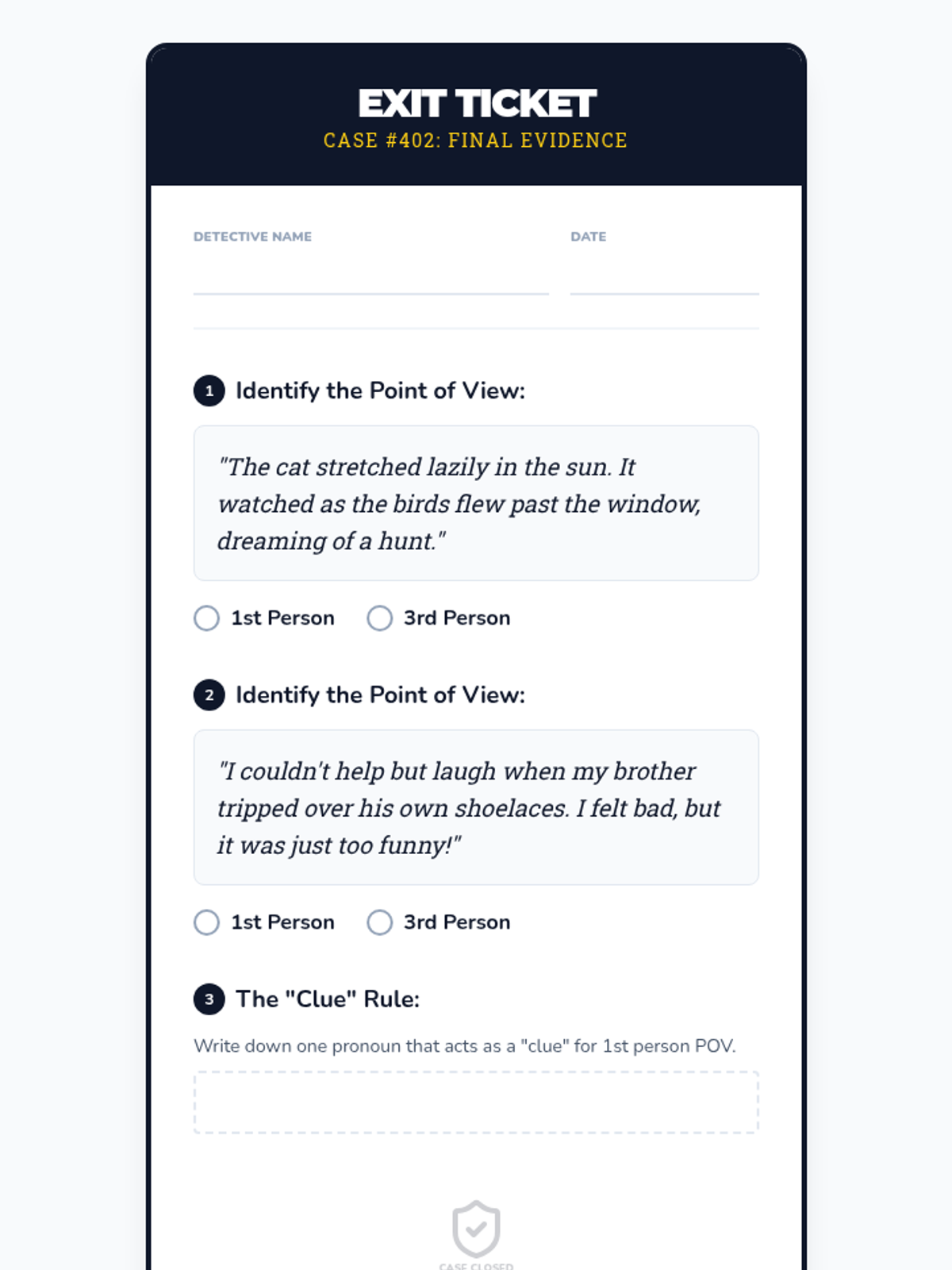
A mini-assessment focused on identifying first and third-person points of view through sentence analysis and open-ended reflection.
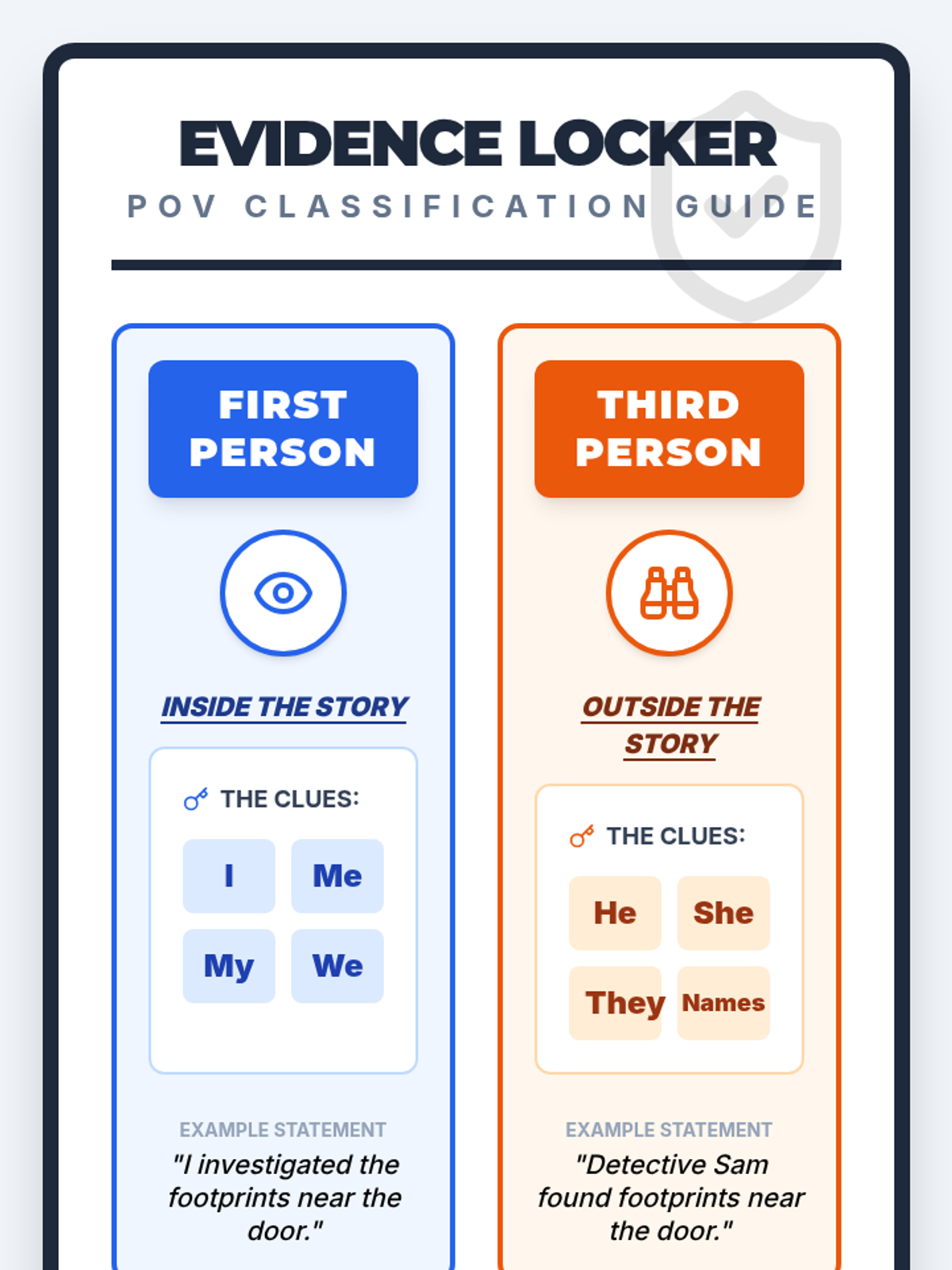
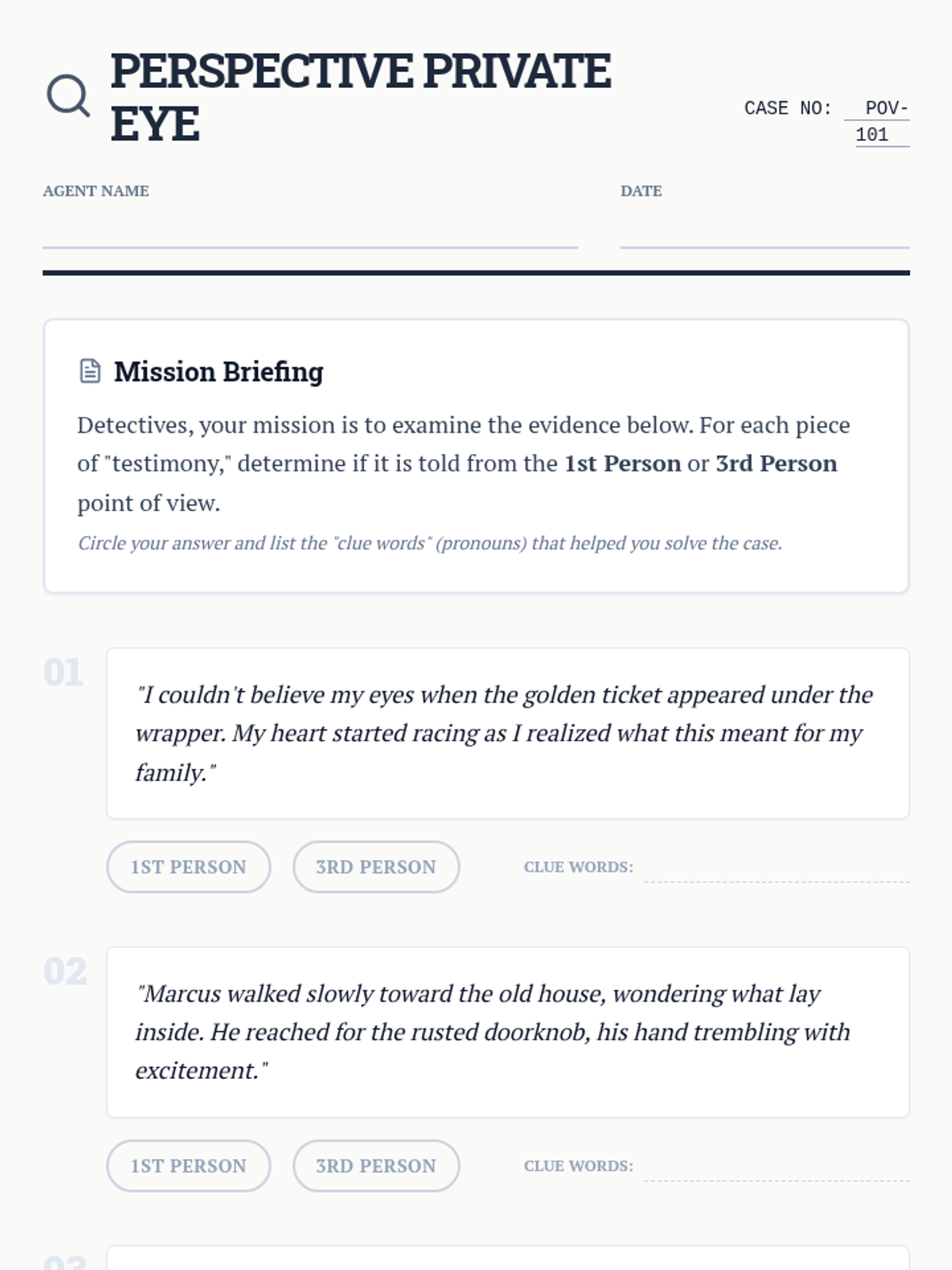
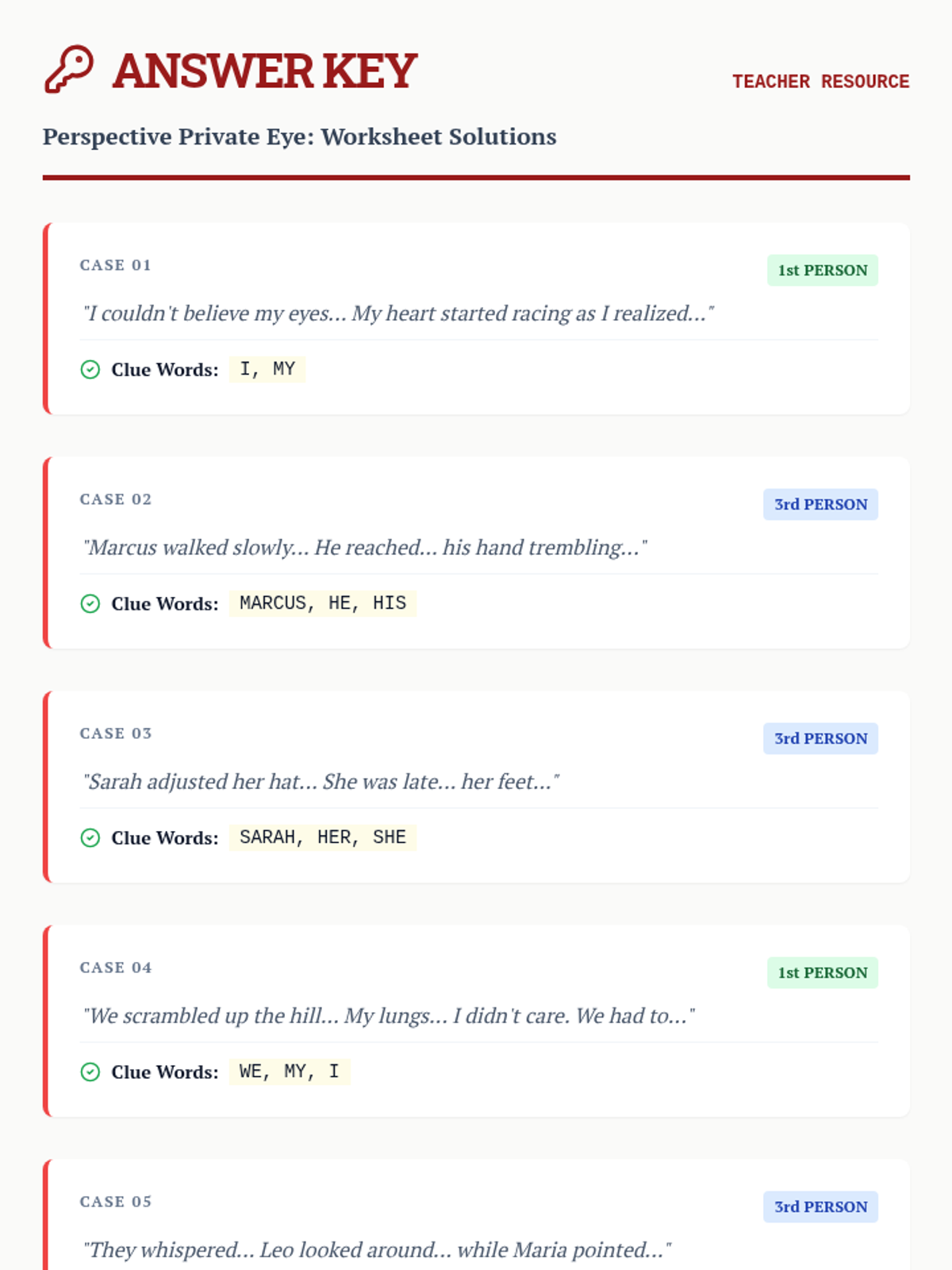
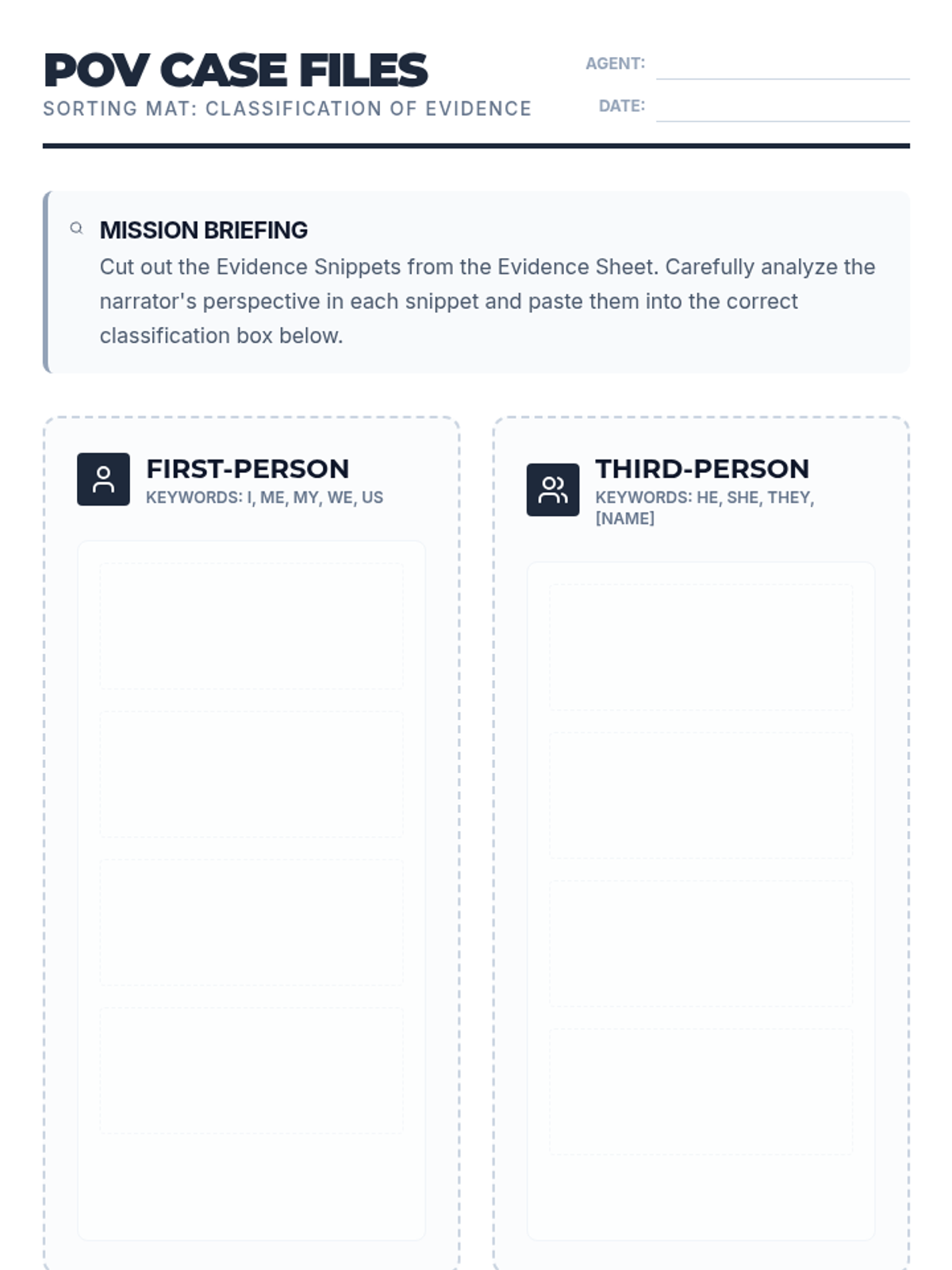
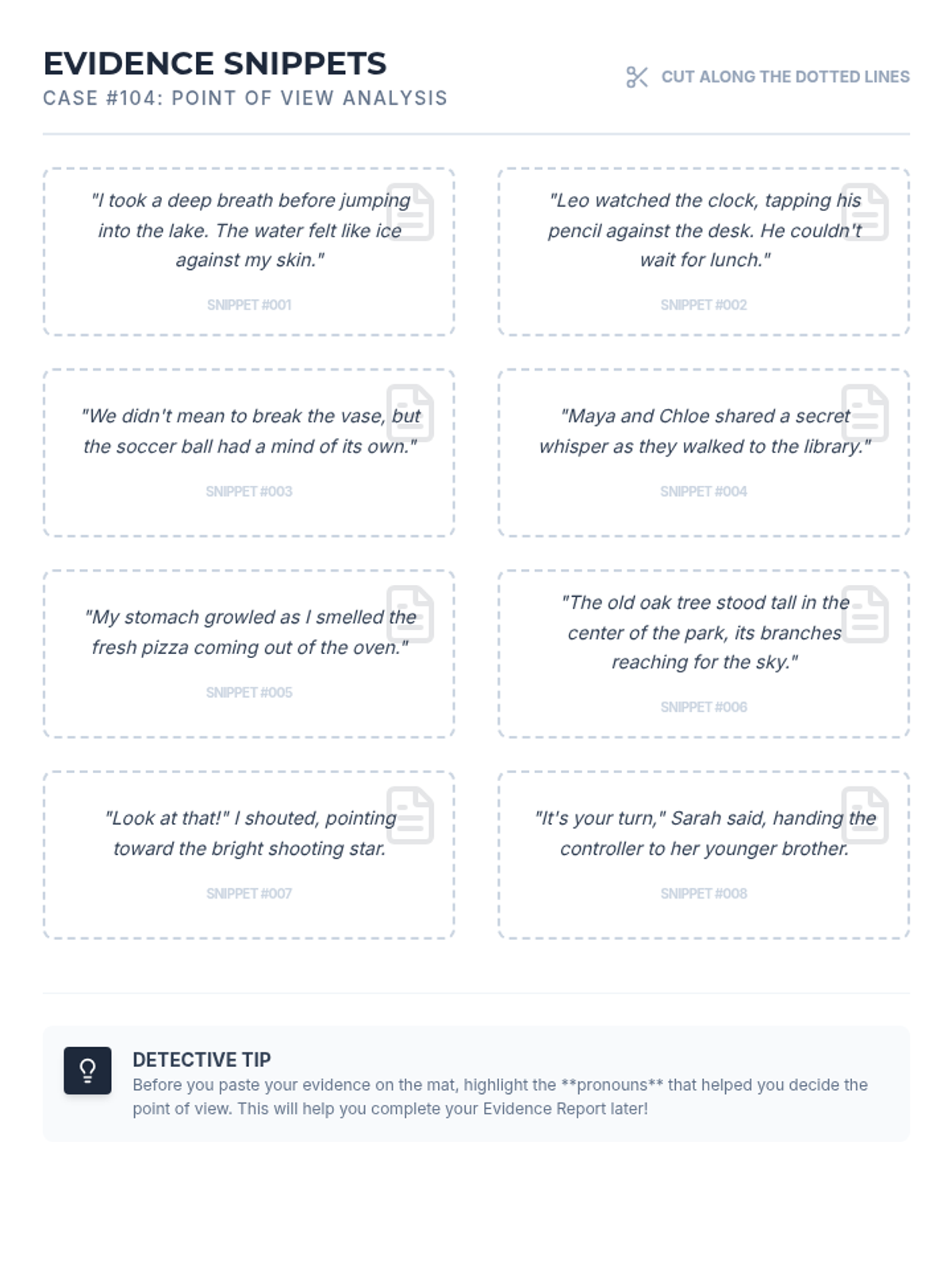
A 4th-grade ELA lesson focused on identifying and distinguishing between first-person and third-person points of view using detective-themed 'clue' identification.
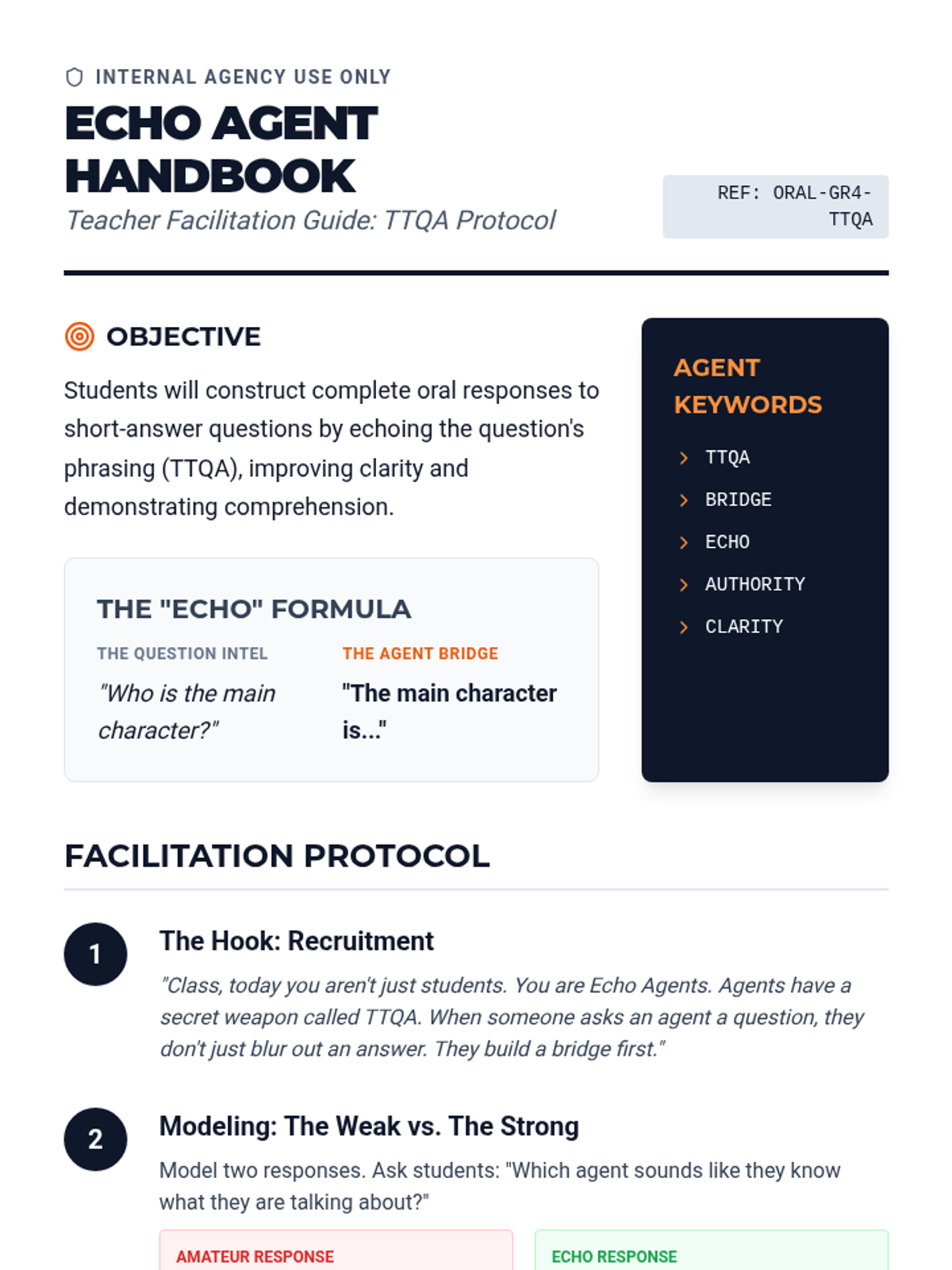
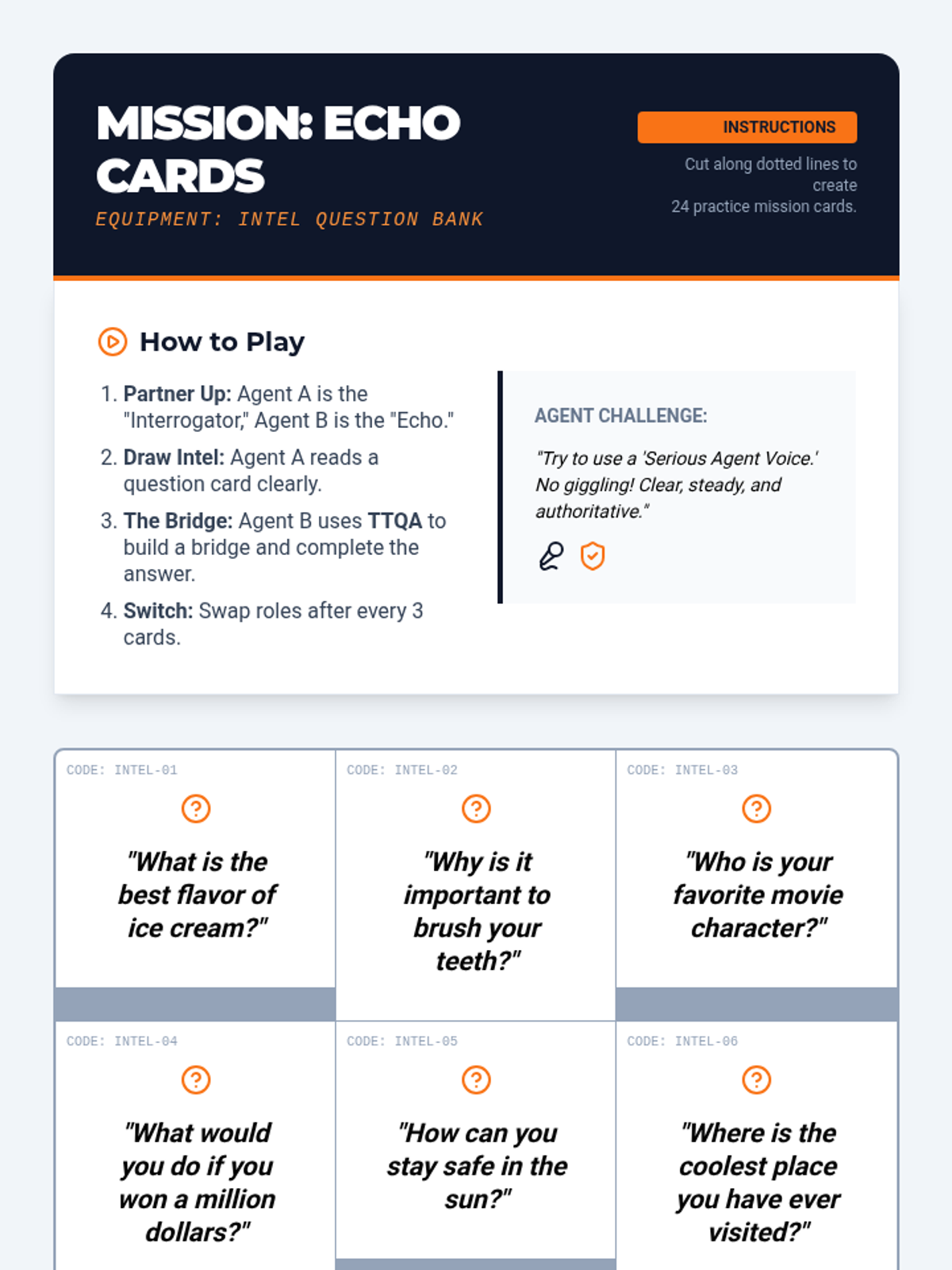
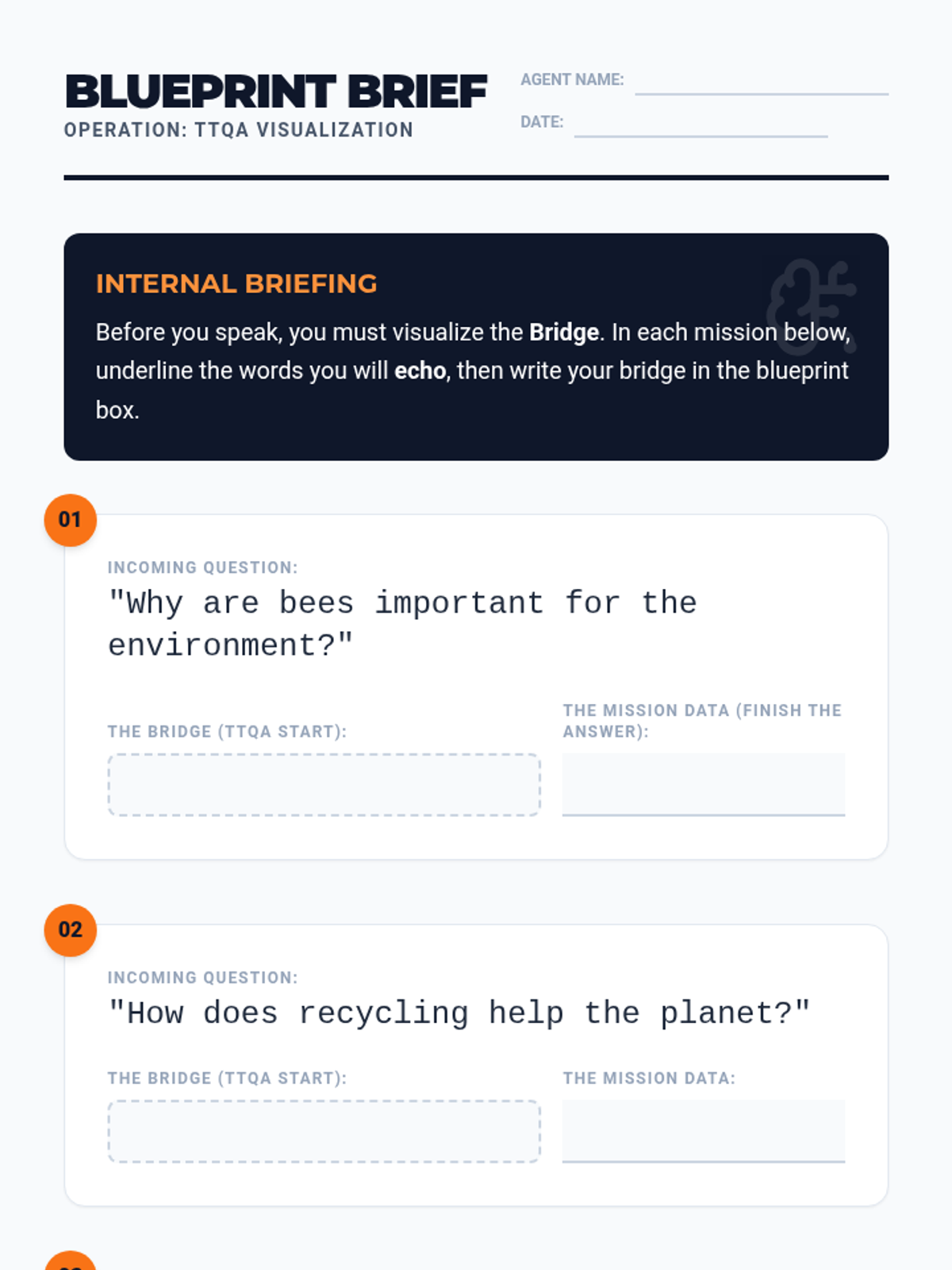
Students become 'Echo Agents' to master the TTQA (Turn The Question Around) technique, focusing on constructing strong oral responses by repurposing the wording of a question. This lesson emphasizes clear speaking, active listening, and the structural bridge between a question and its answer.
Students become POV Detectives to identify first-person and third-person points of view using evidence-based sorting and analysis.
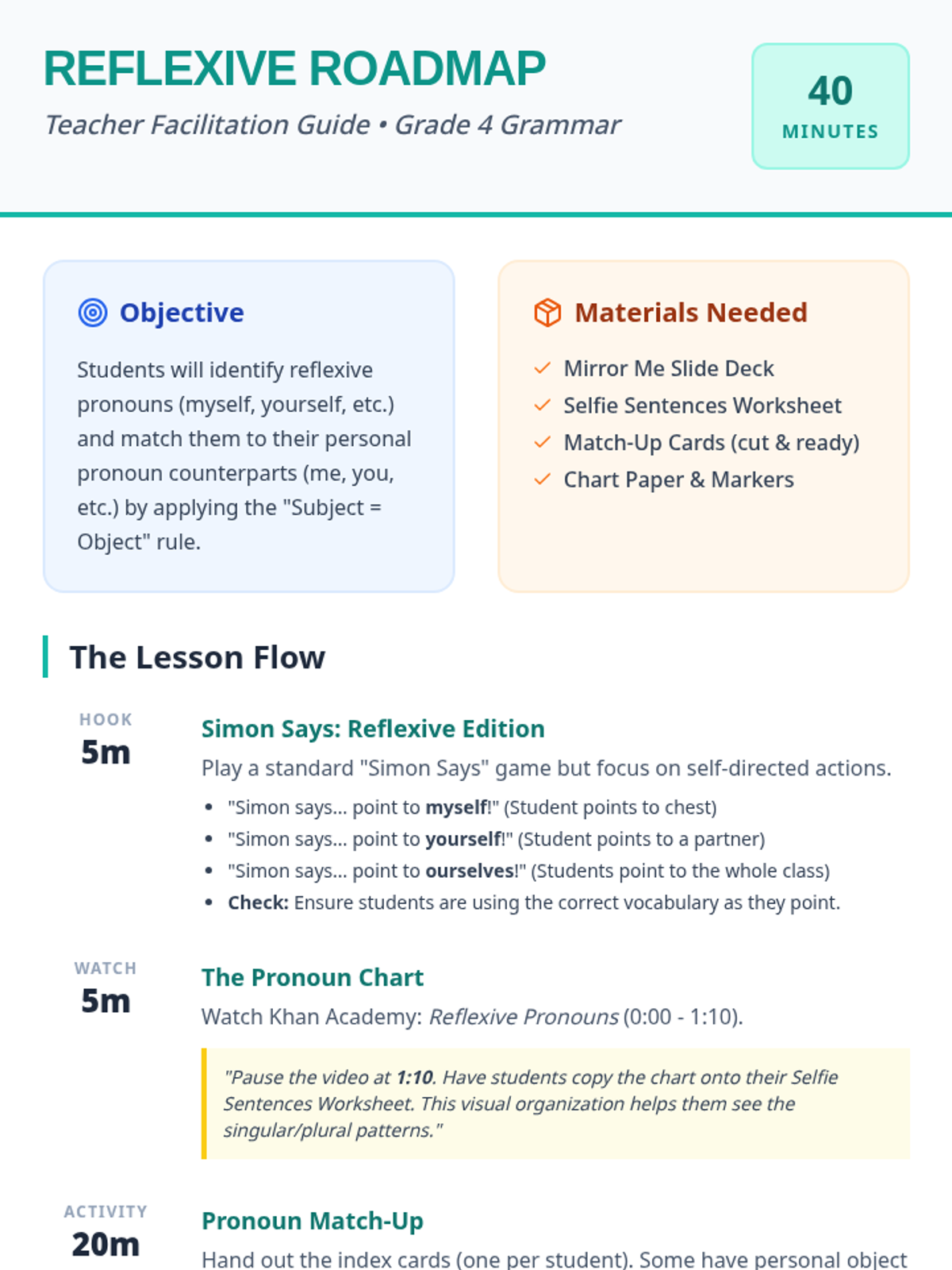
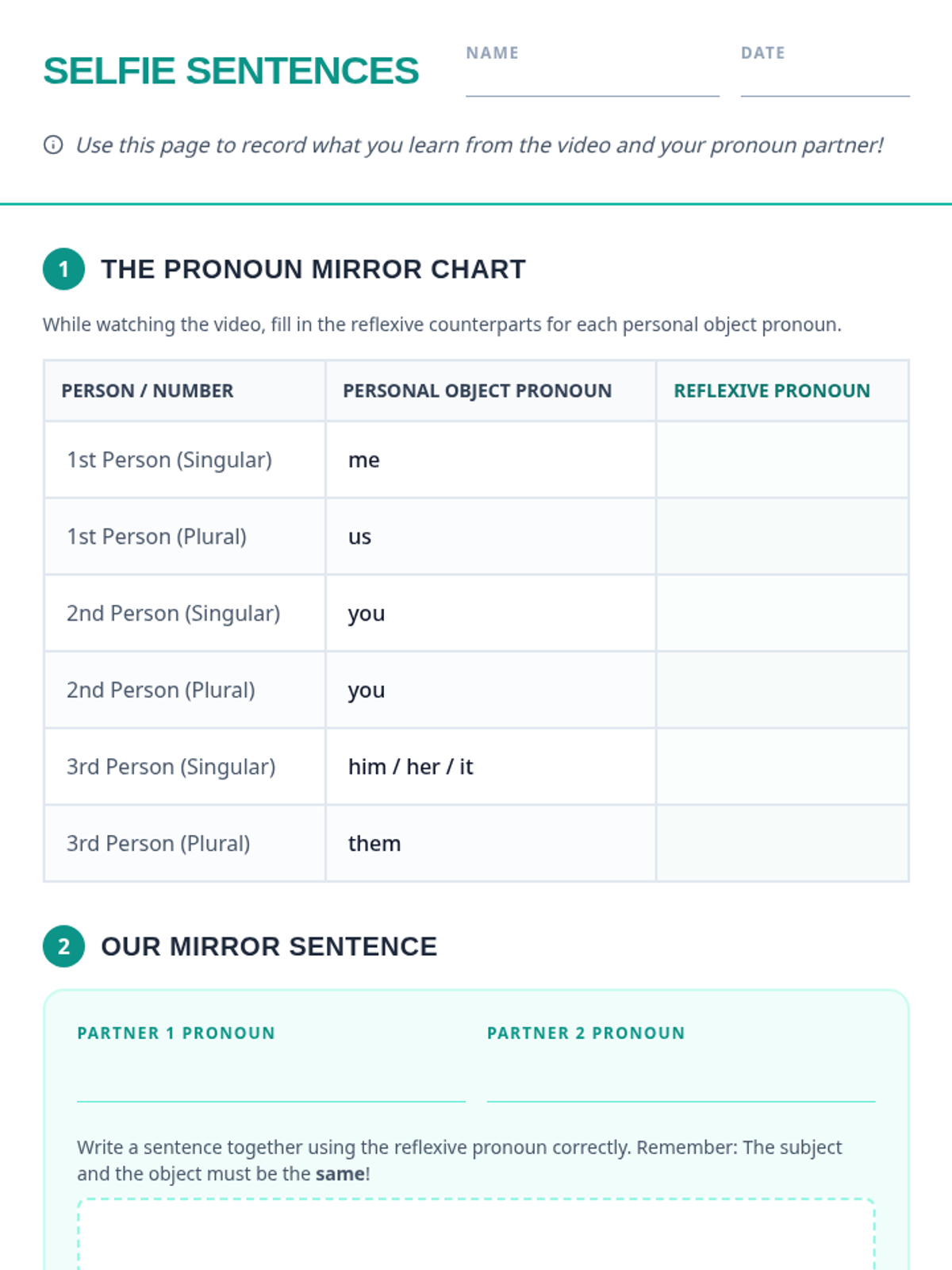
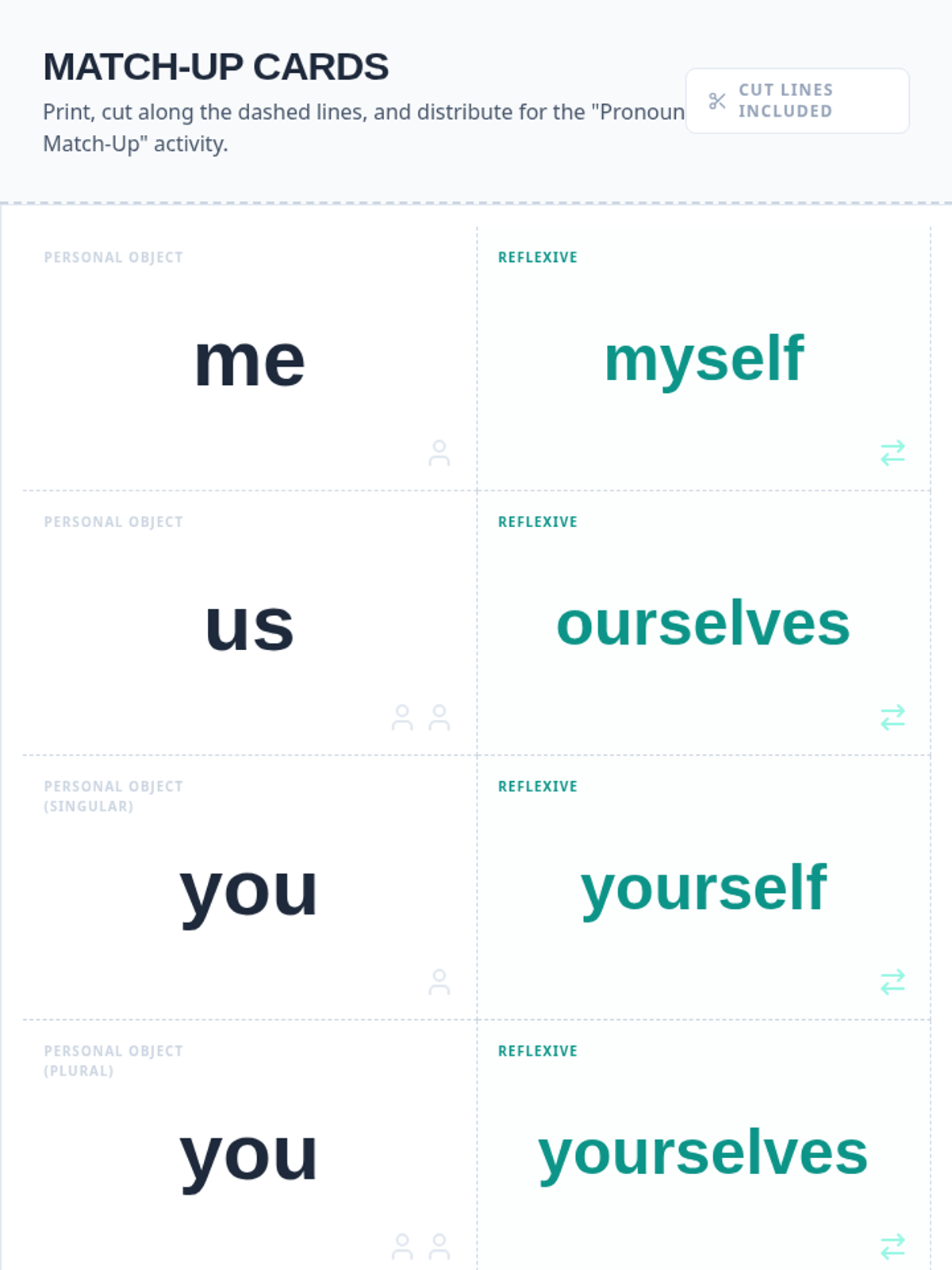
A 4th-grade grammar lesson focusing on identifying and using reflexive pronouns through a 'mirror' analogy, featuring a Khan Academy video and an interactive movement-based matching activity.
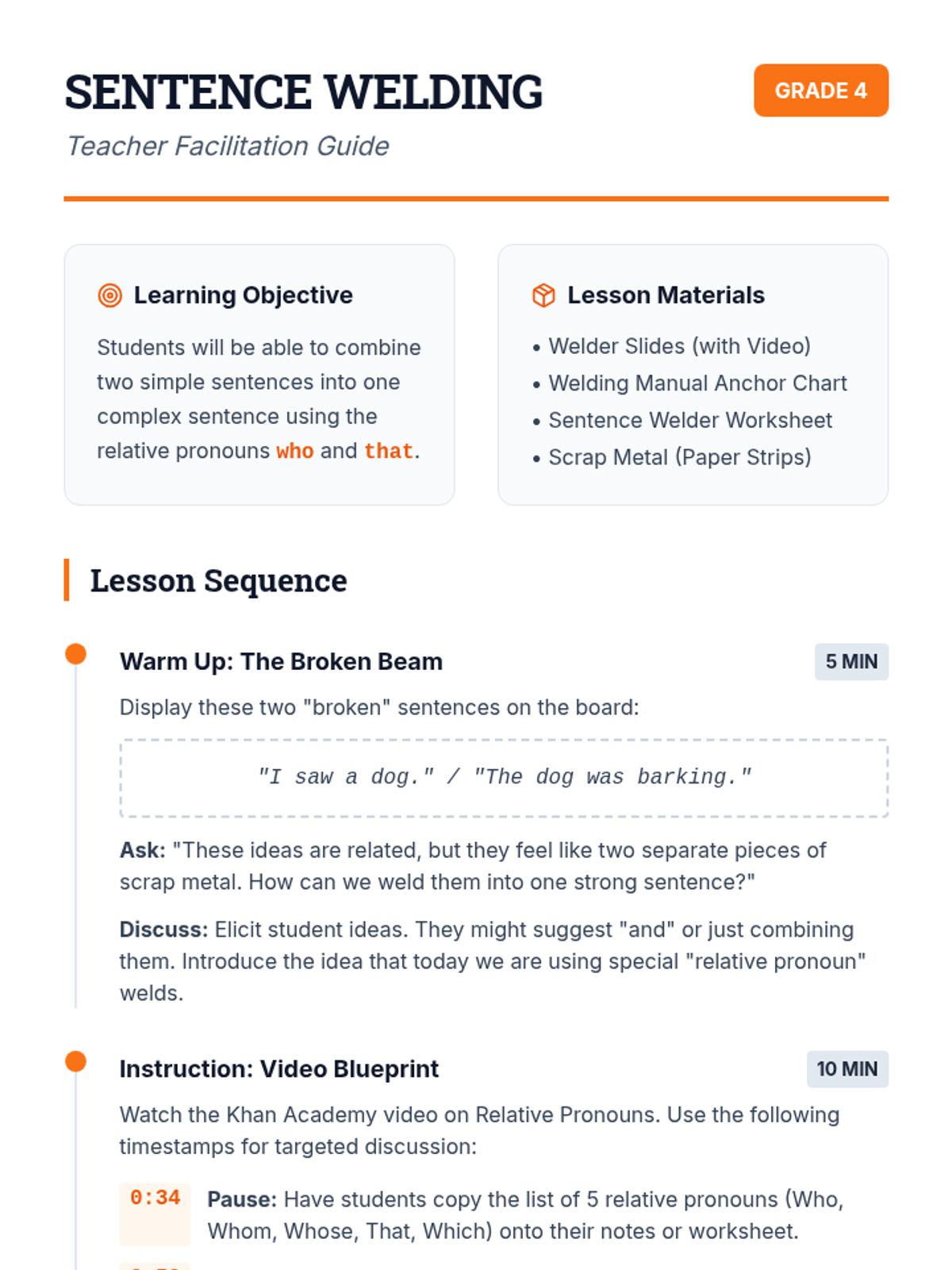
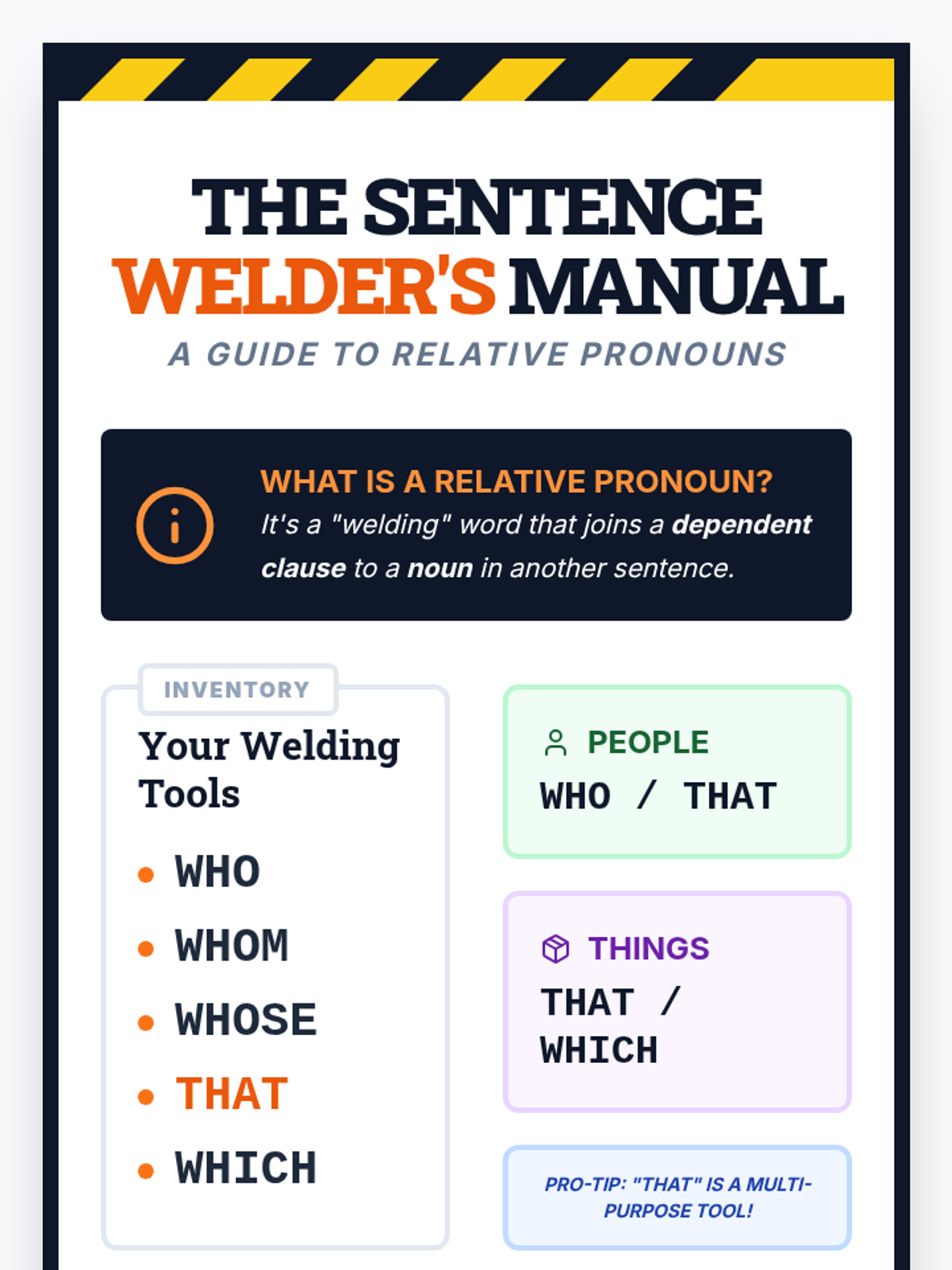
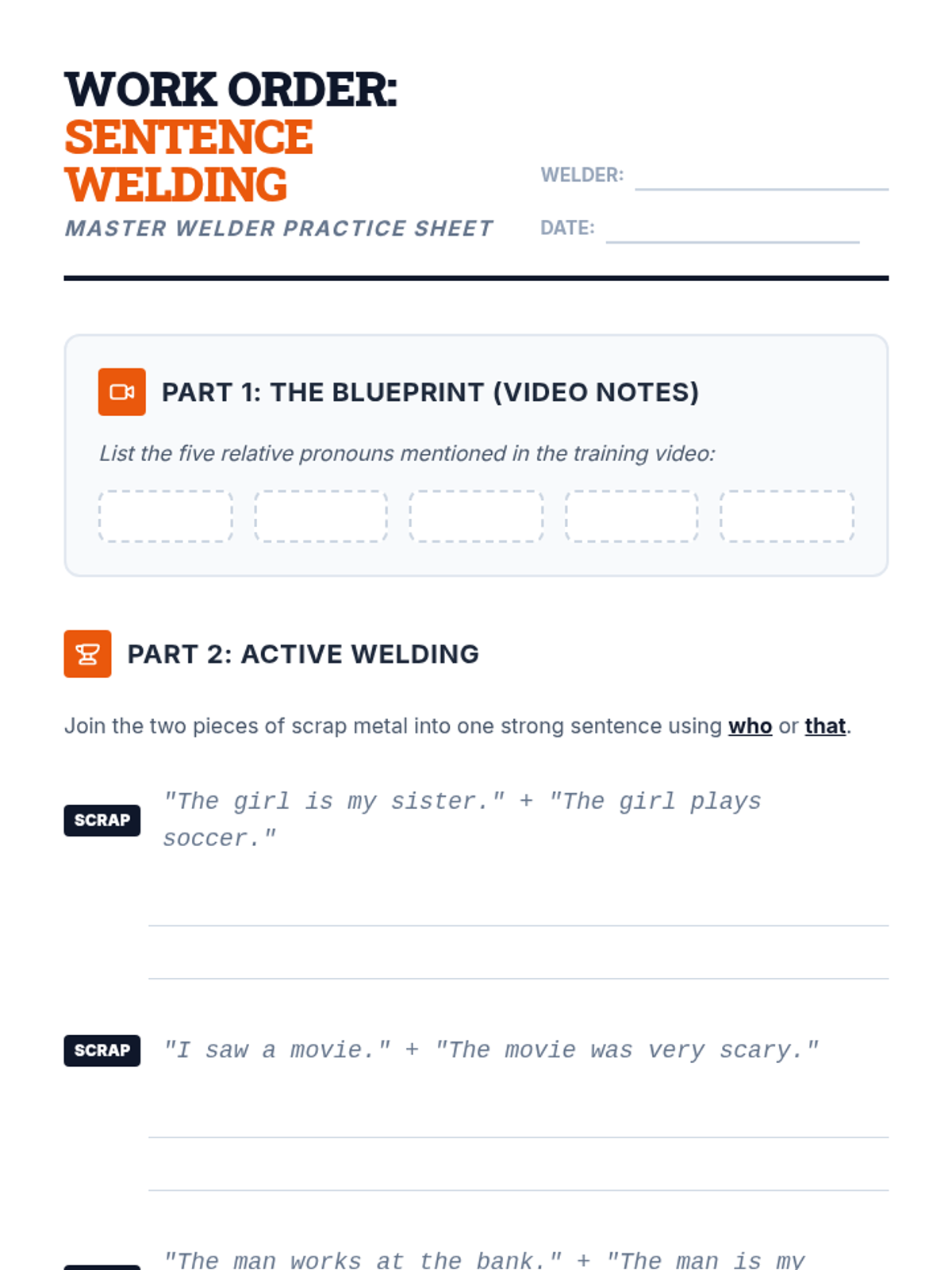
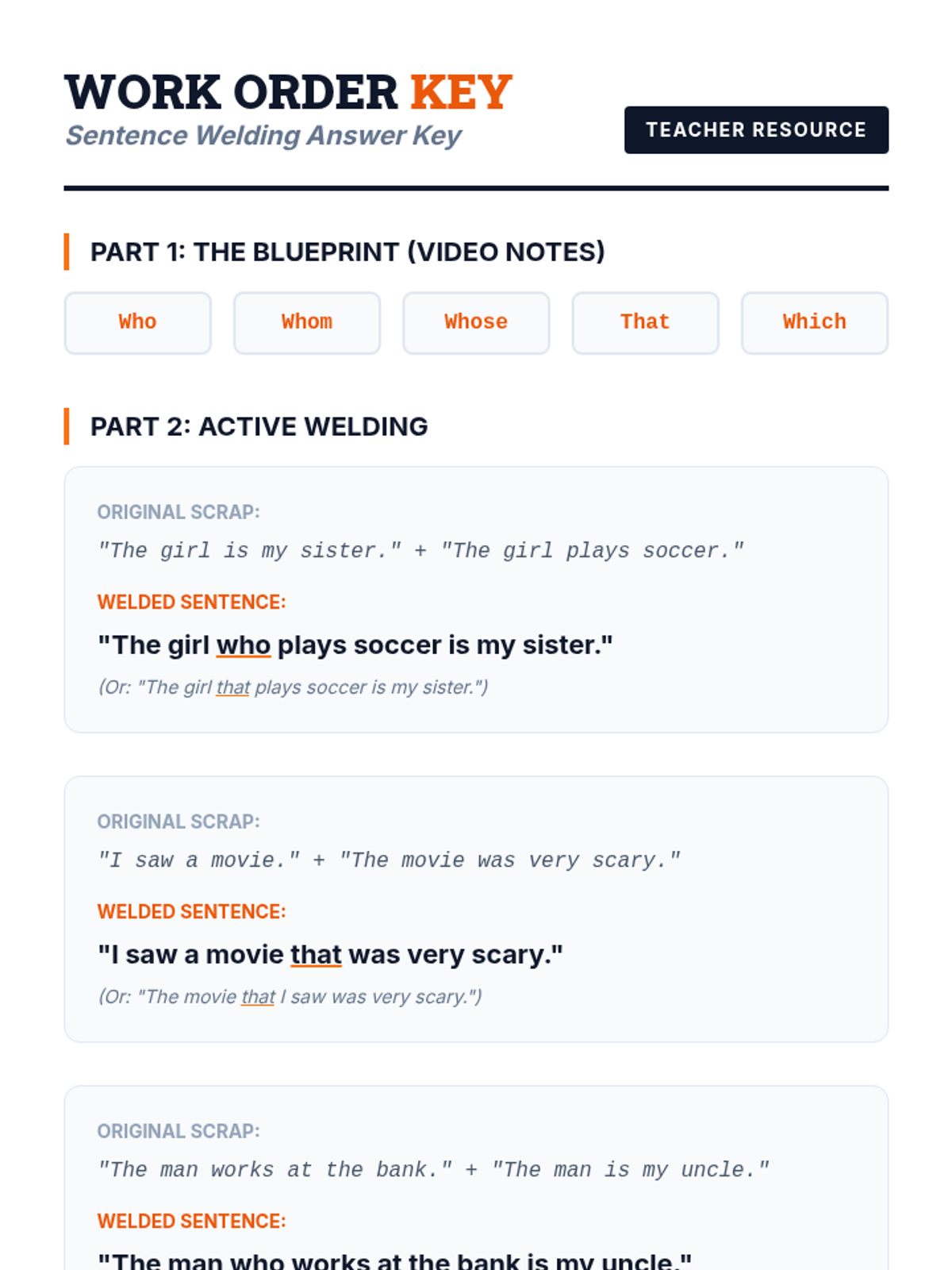
Students learn to use relative pronouns 'who' and 'that' to combine simple sentences into complex ones through a hands-on 'welding' metaphor. The lesson includes a video-based introduction, interactive slides, and a creative practice worksheet.
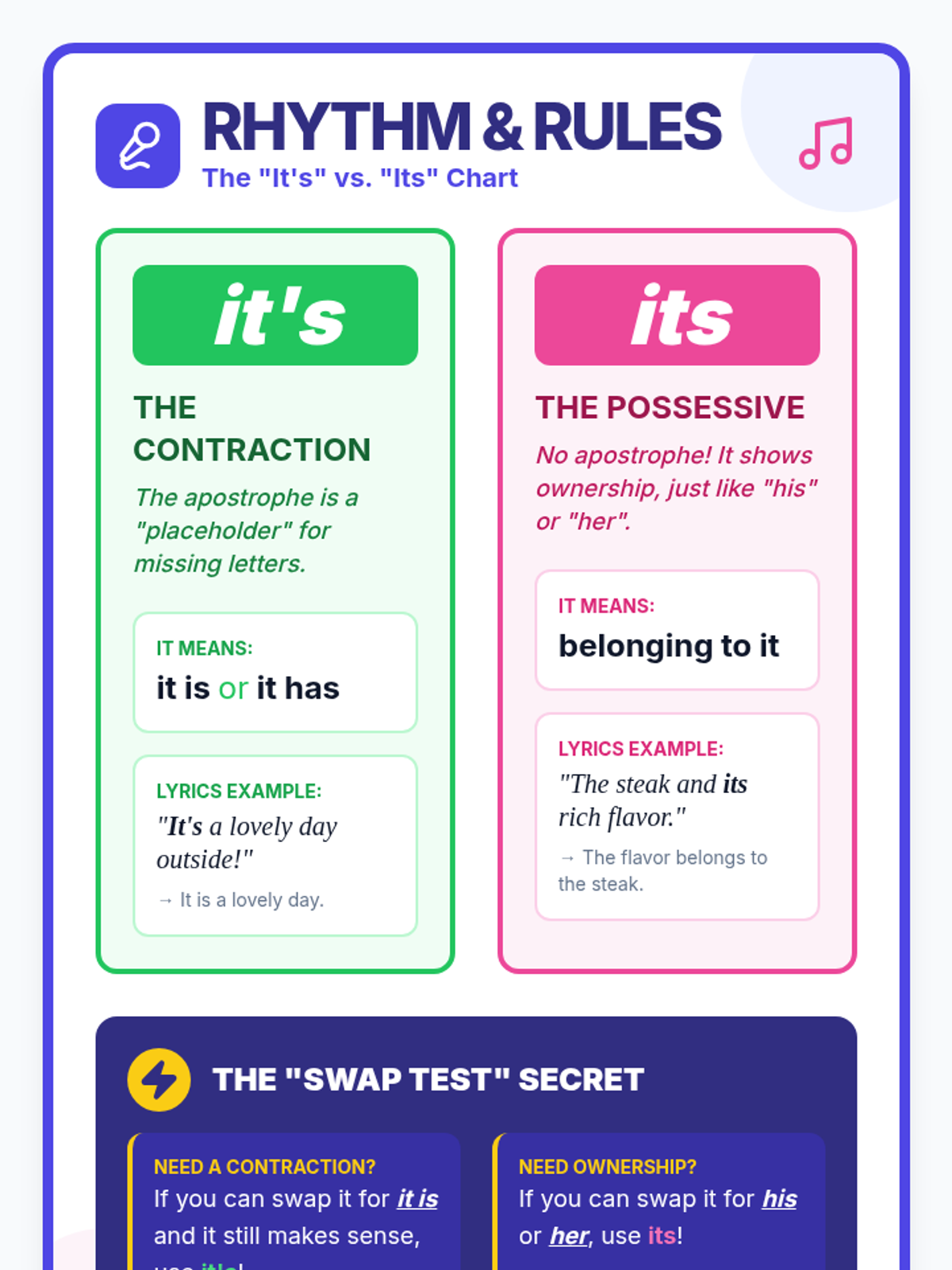
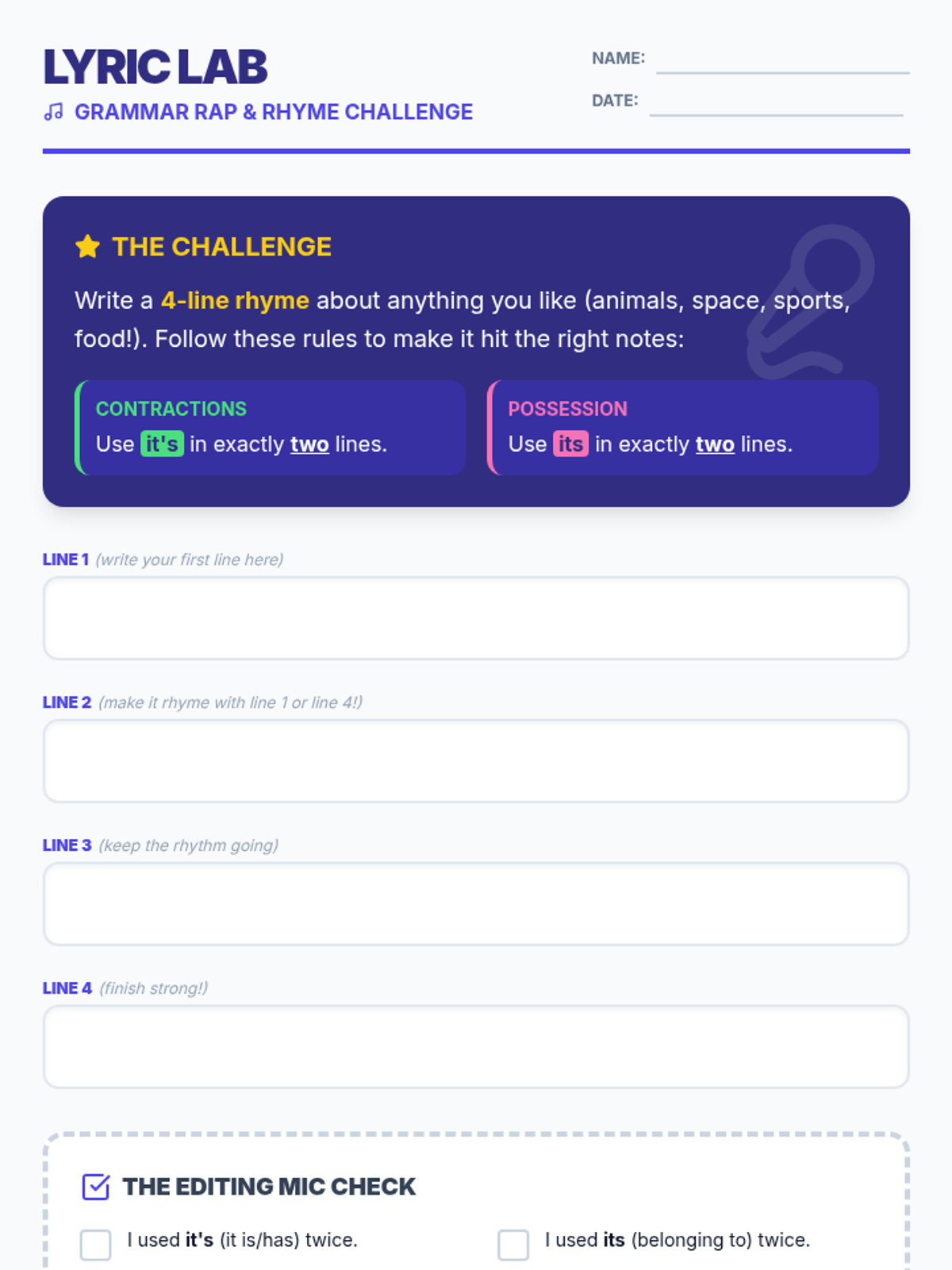
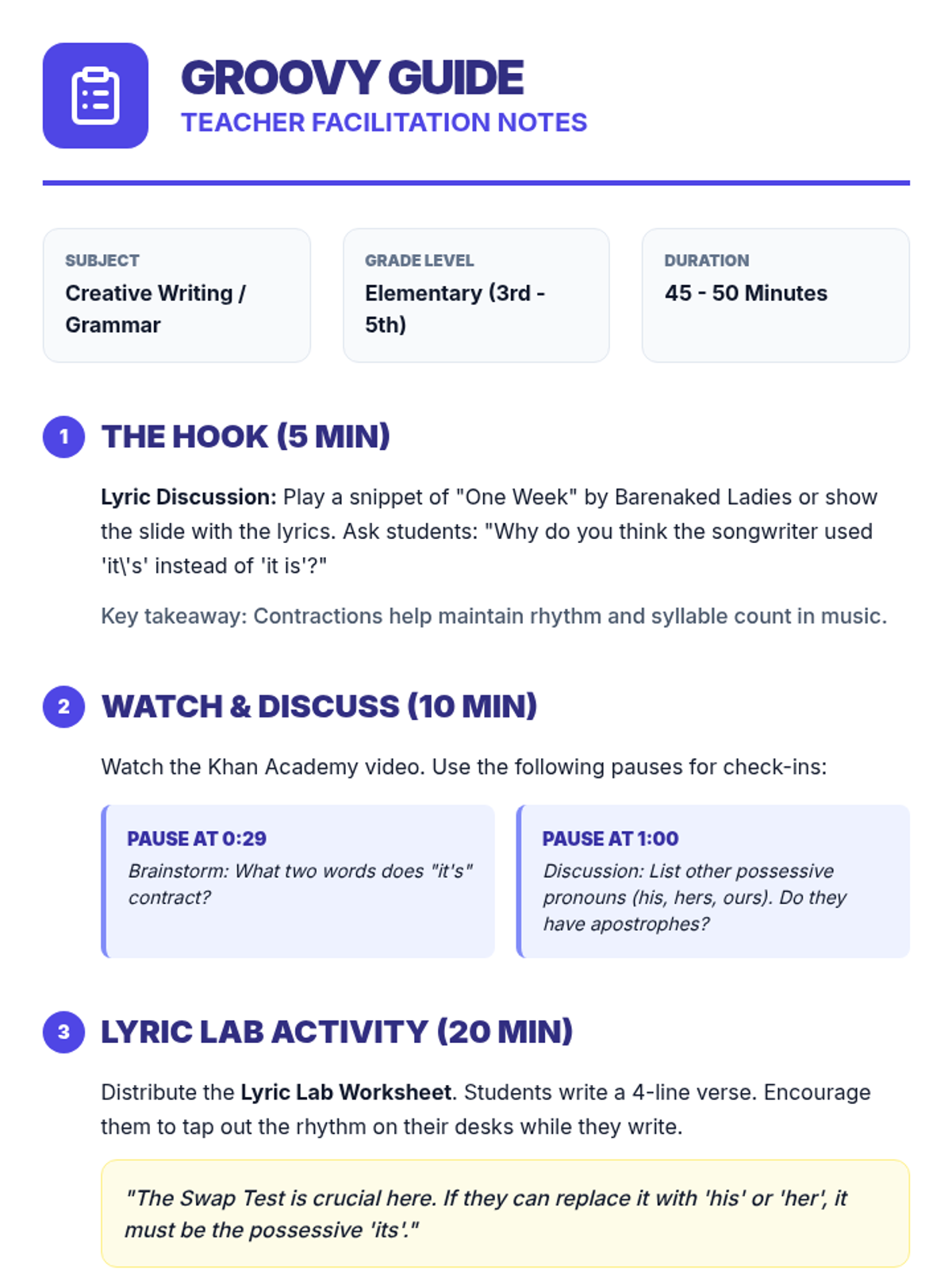
A creative writing lesson for elementary students focusing on the difference between 'it's' and 'its' through songwriting and rhyming. Students learn to distinguish between contractions and possessive pronouns using a music-inspired theme.
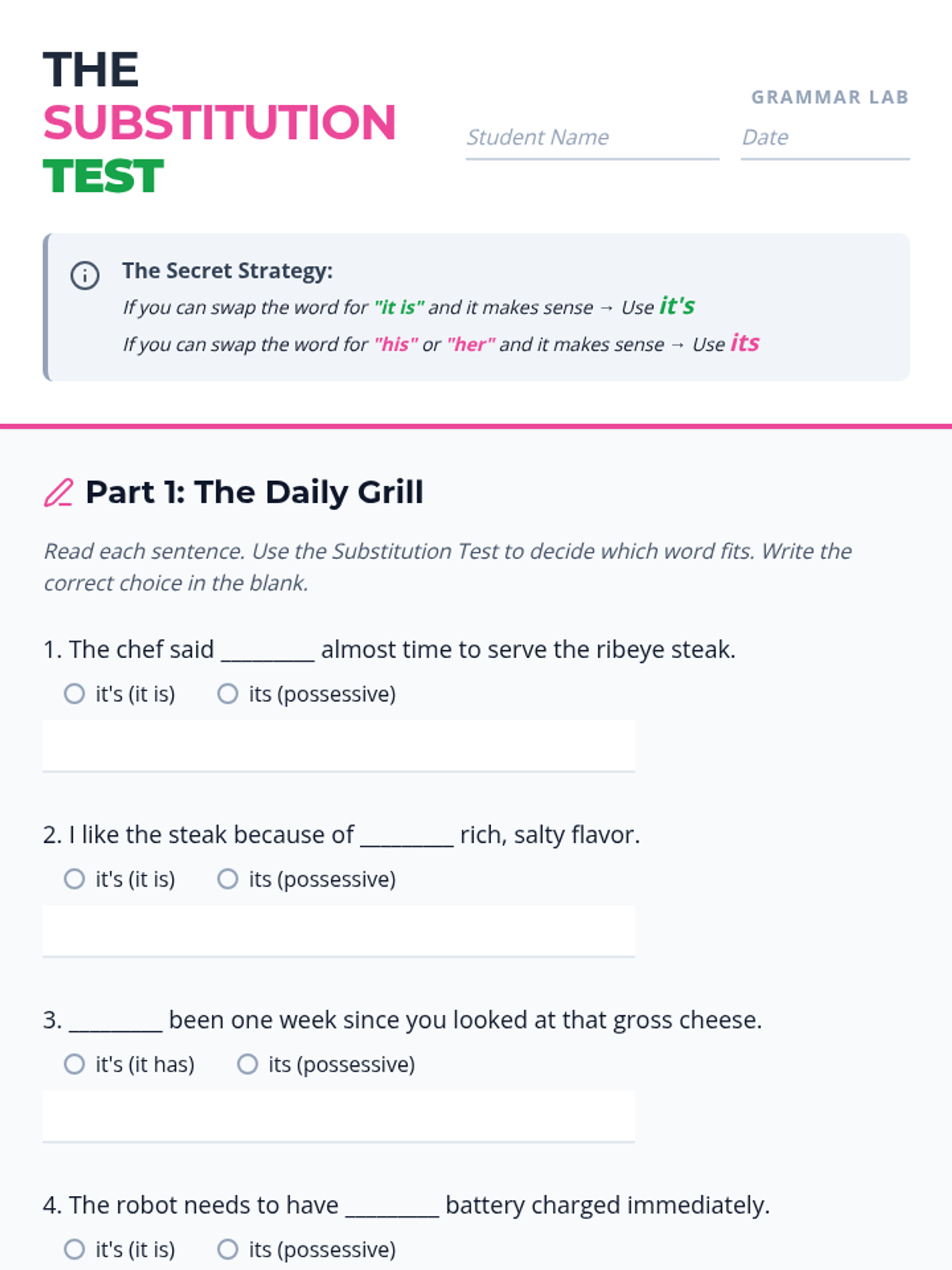
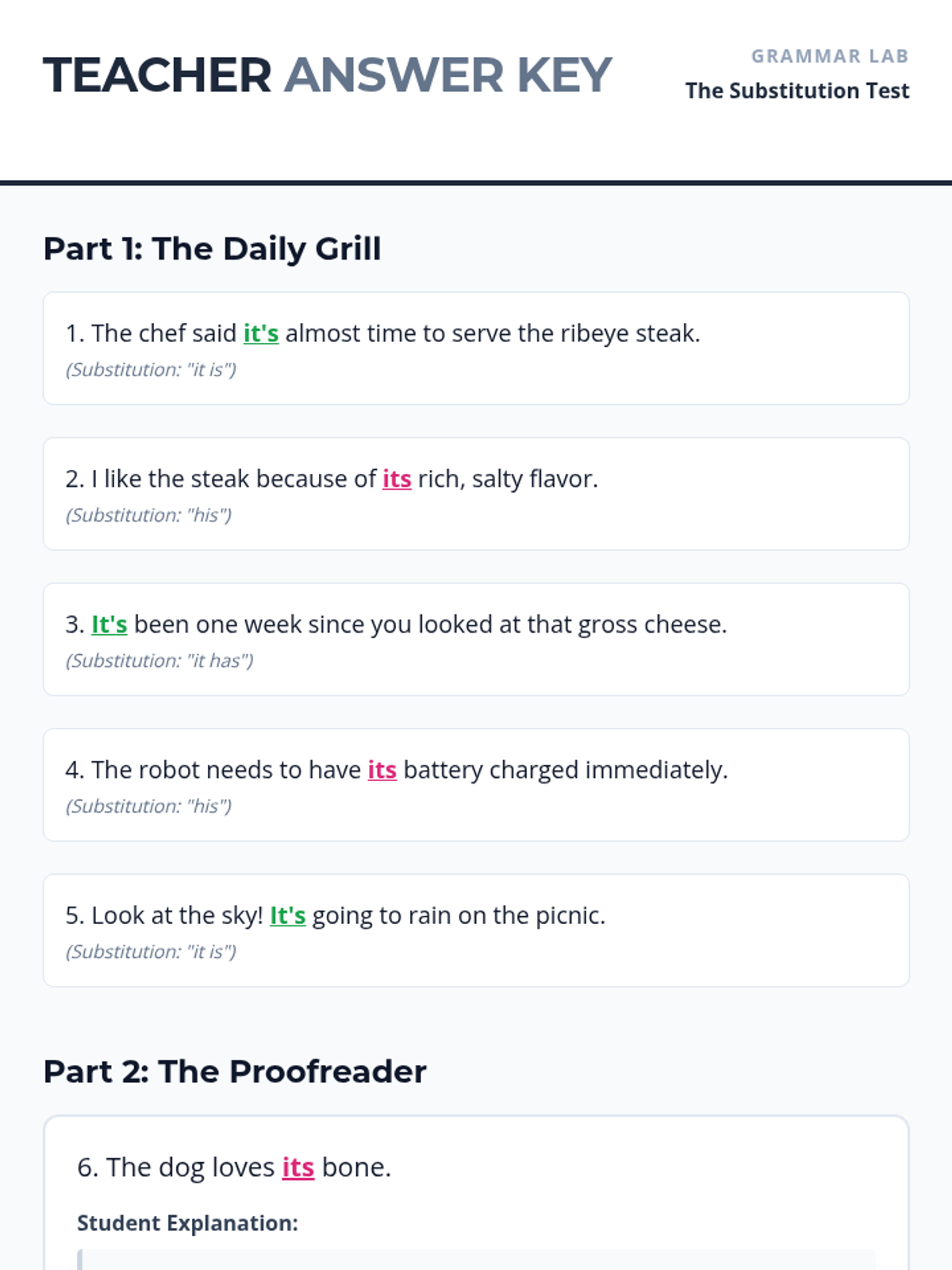
A 4th-grade grammar lesson distinguishing between the possessive pronoun 'its' and the contraction 'it\'s' using the 'Substitution Test' strategy. Includes a slide deck with an embedded Khan Academy video and a practice worksheet.
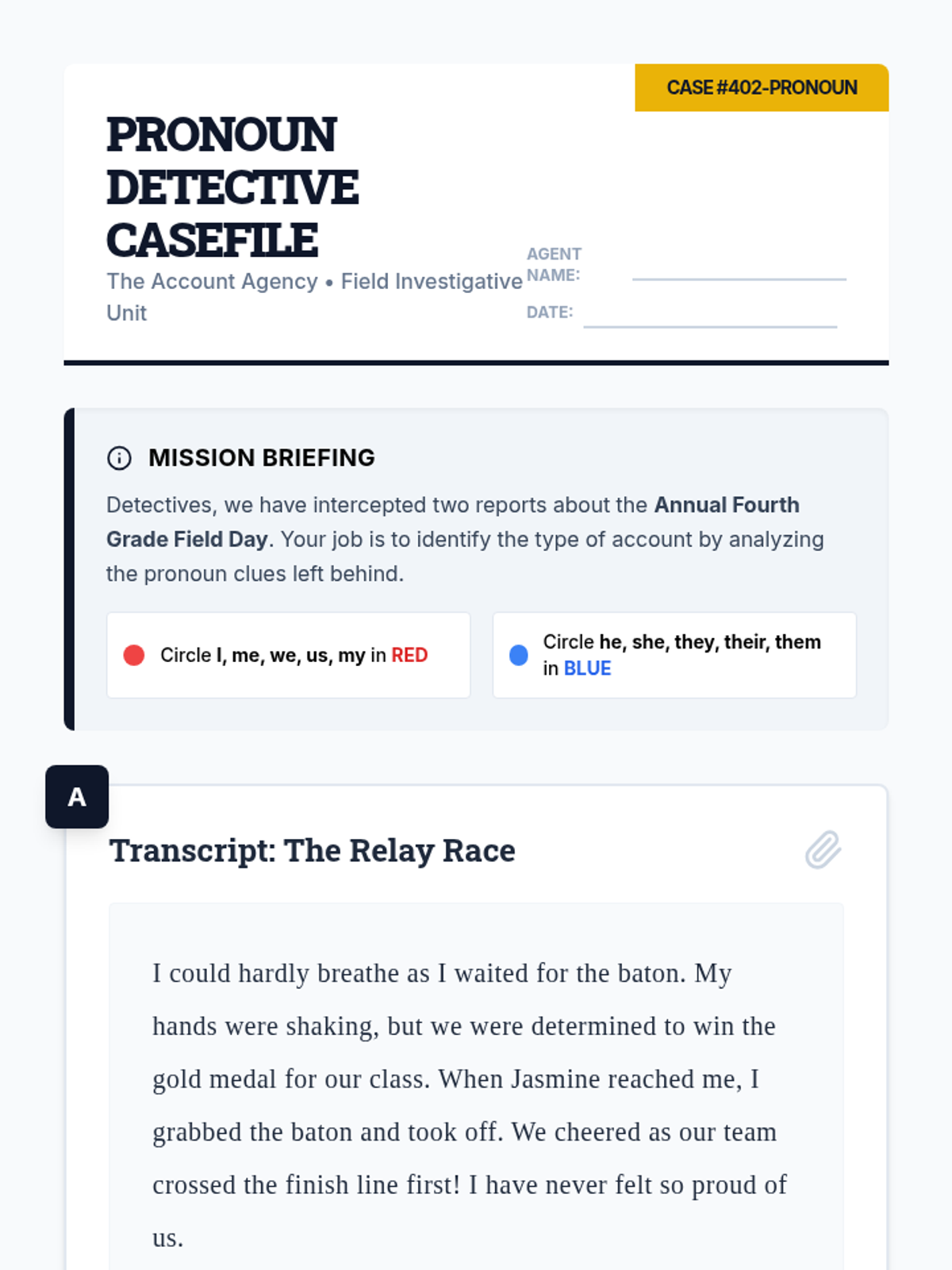
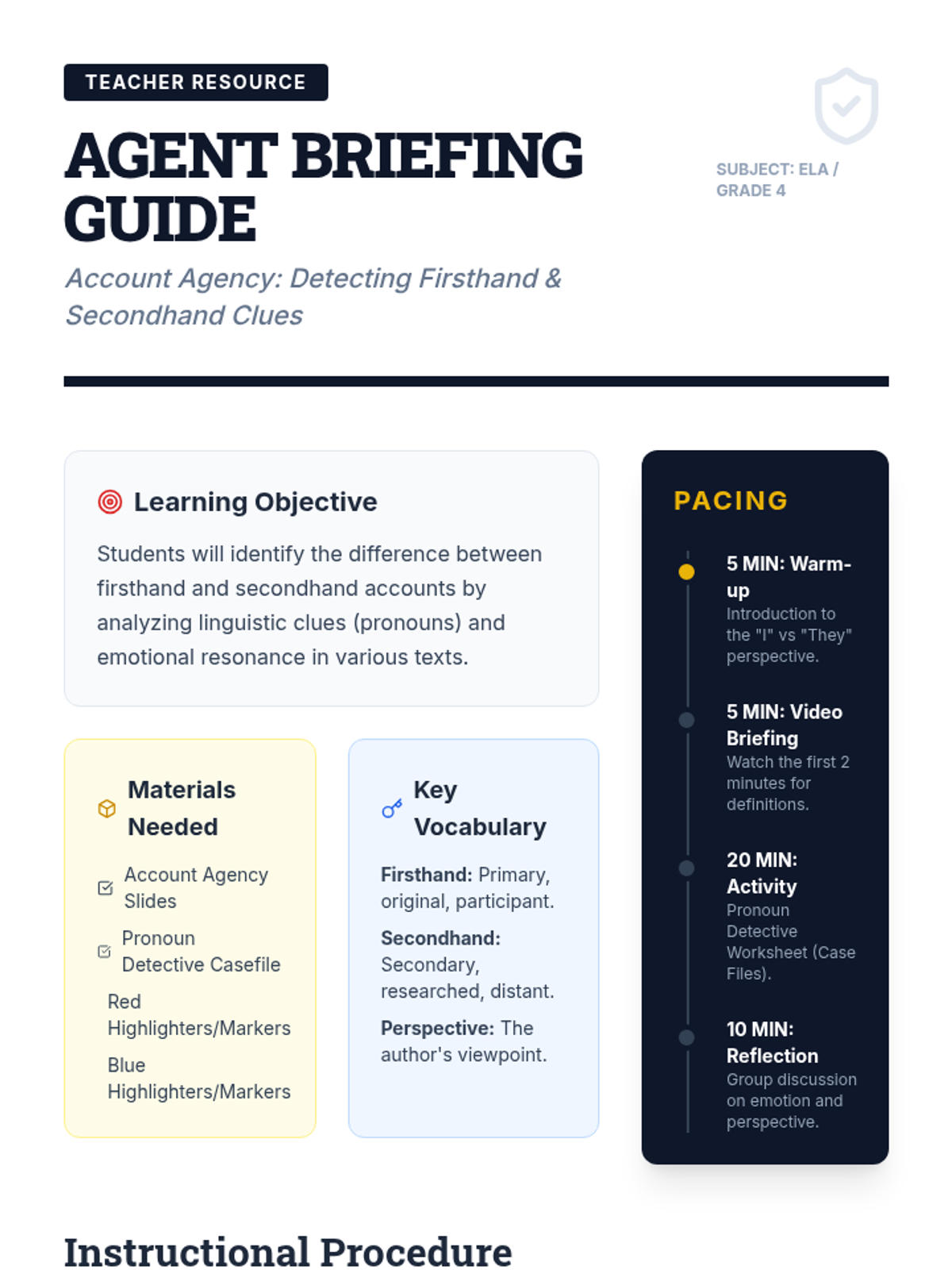
A detective-themed lesson where students investigate the linguistic clues (pronouns) that distinguish firsthand and secondhand accounts, featuring a video from Khan Academy.
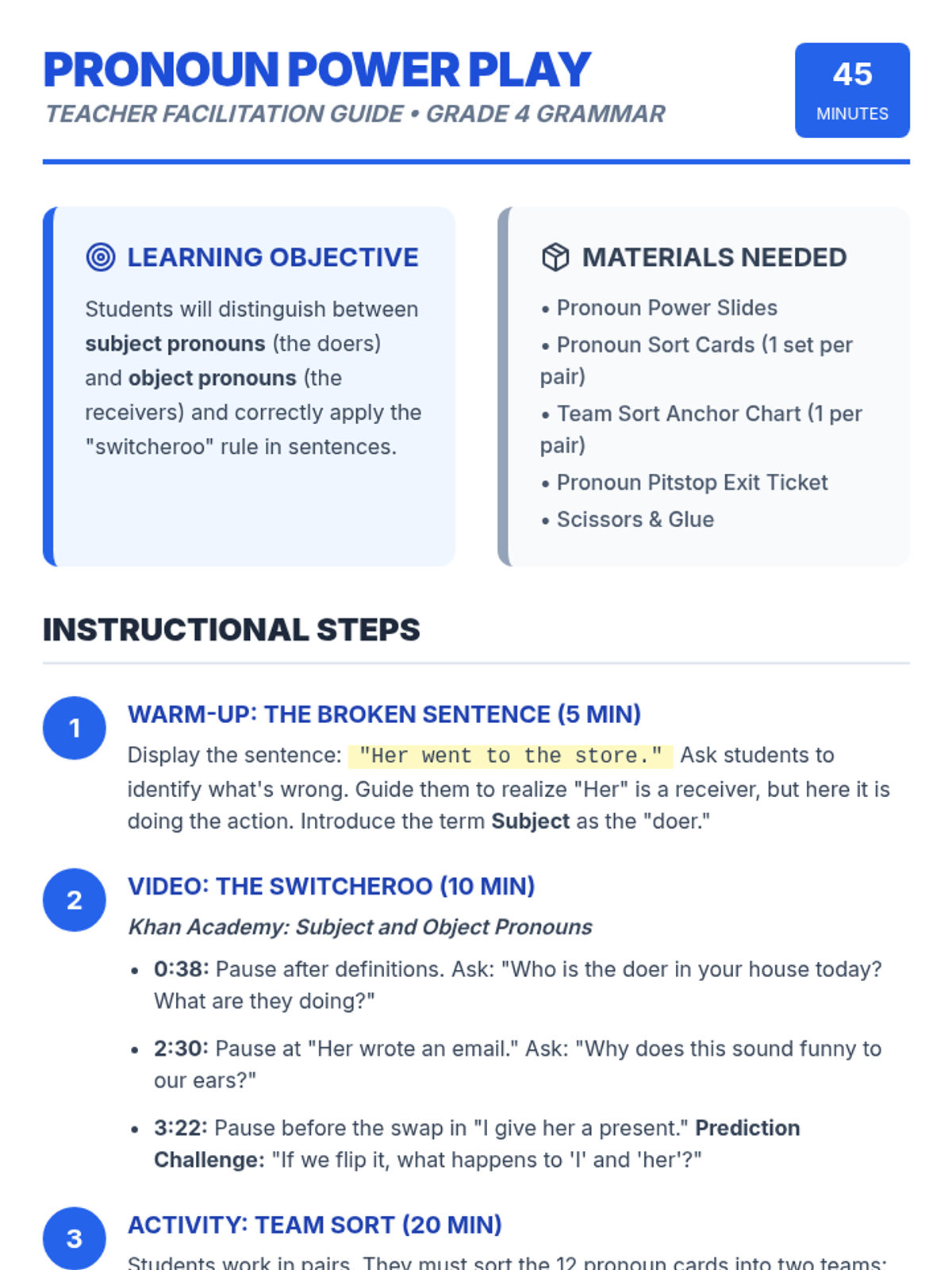
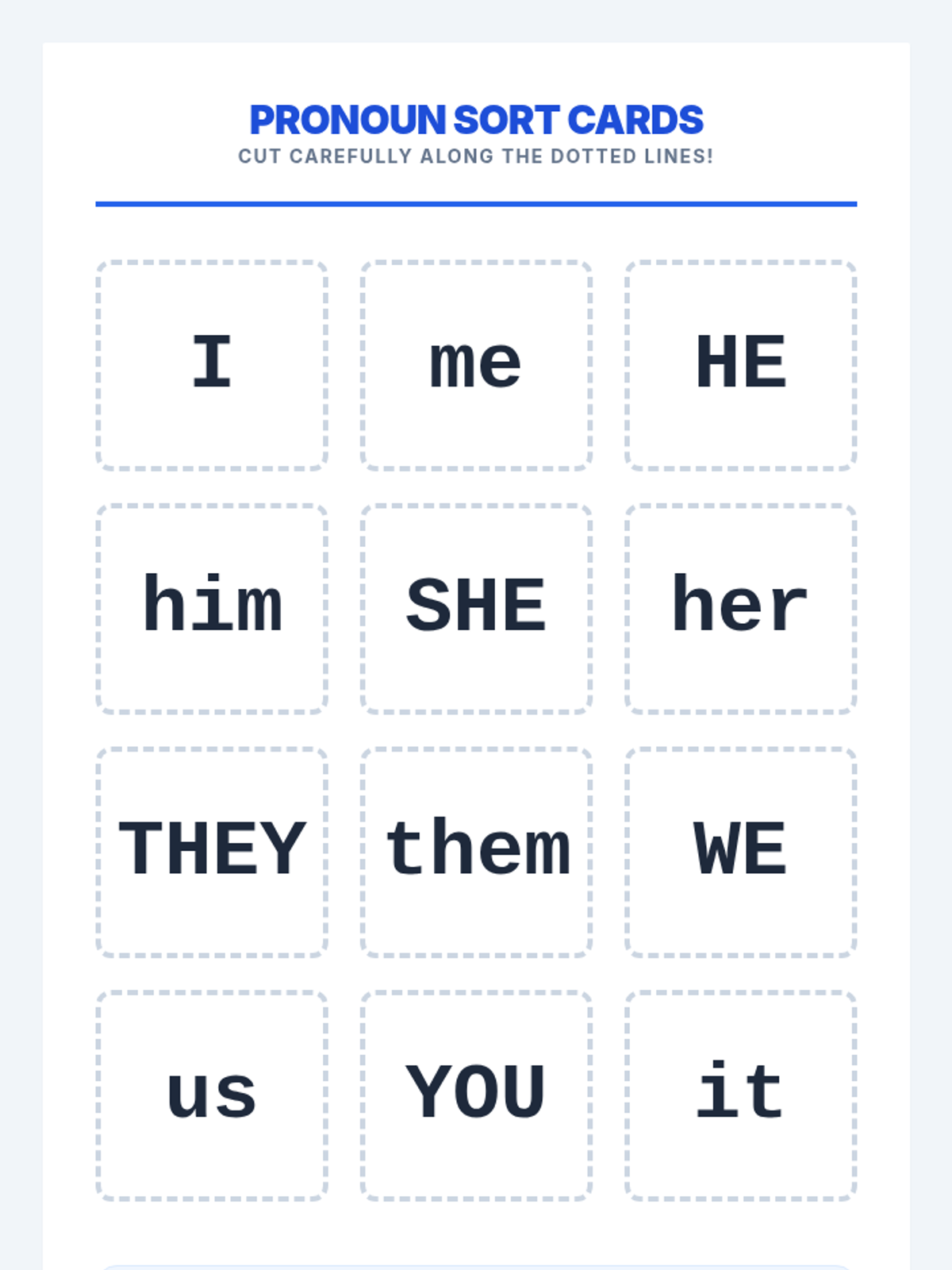
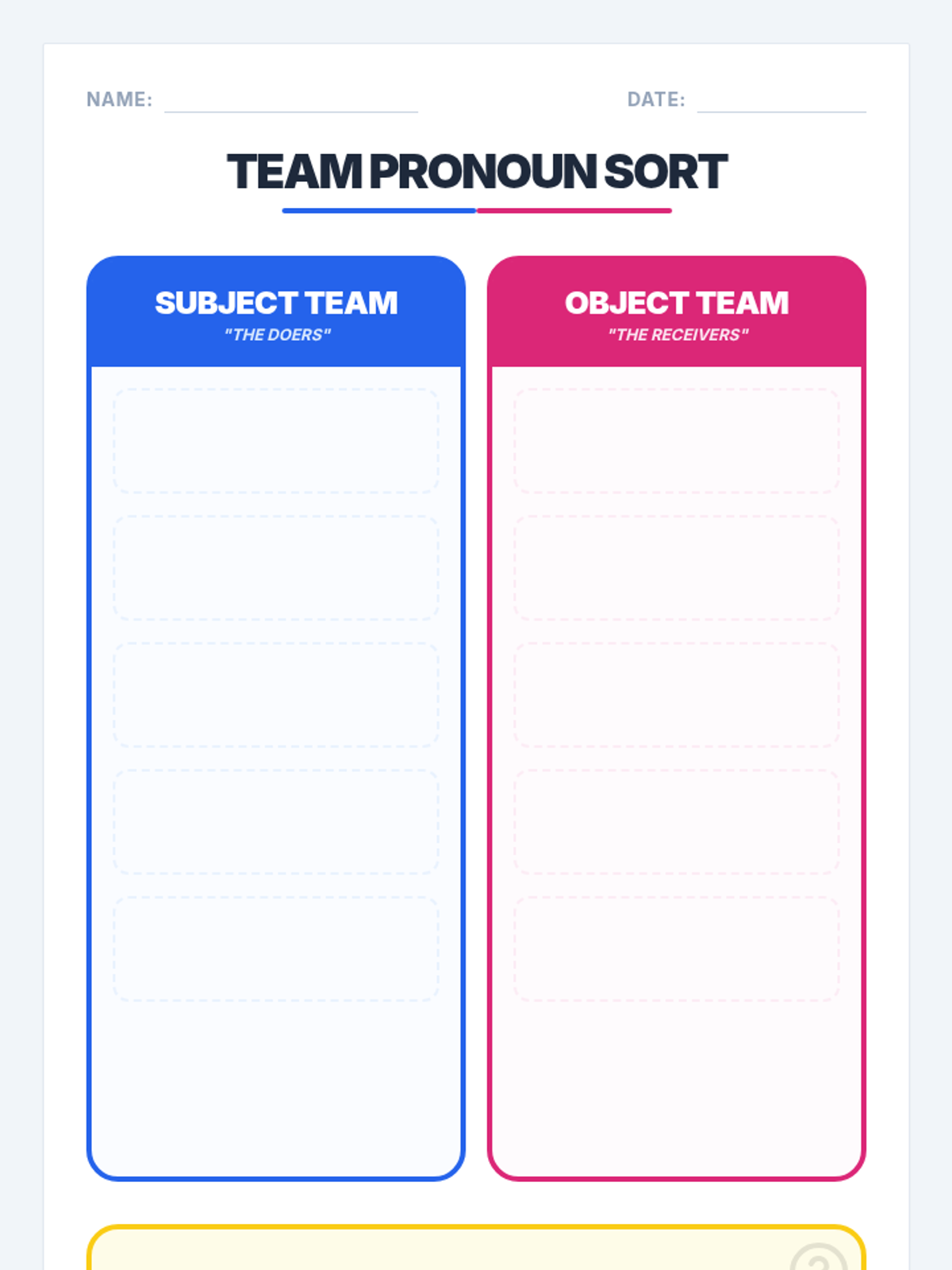
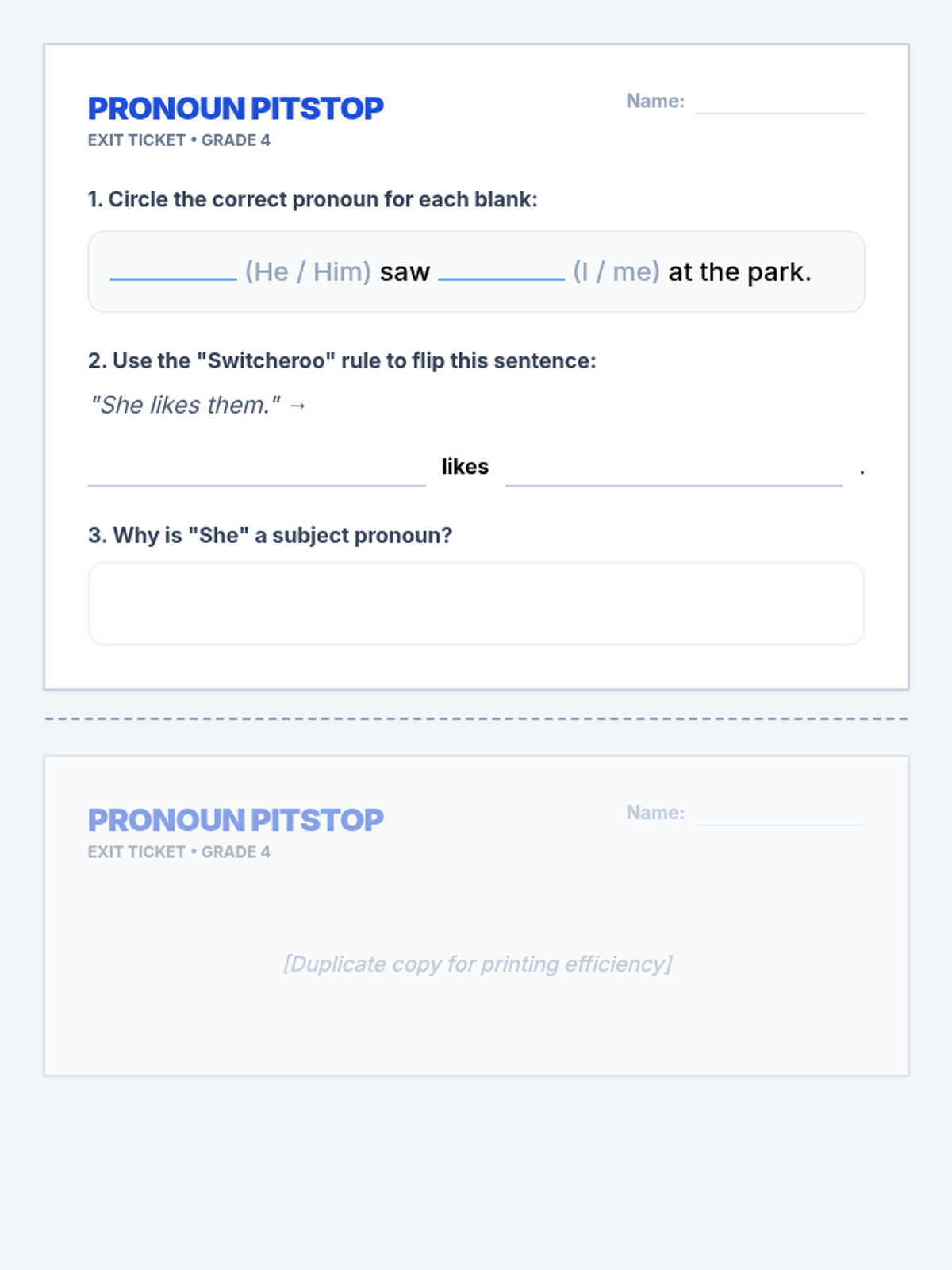
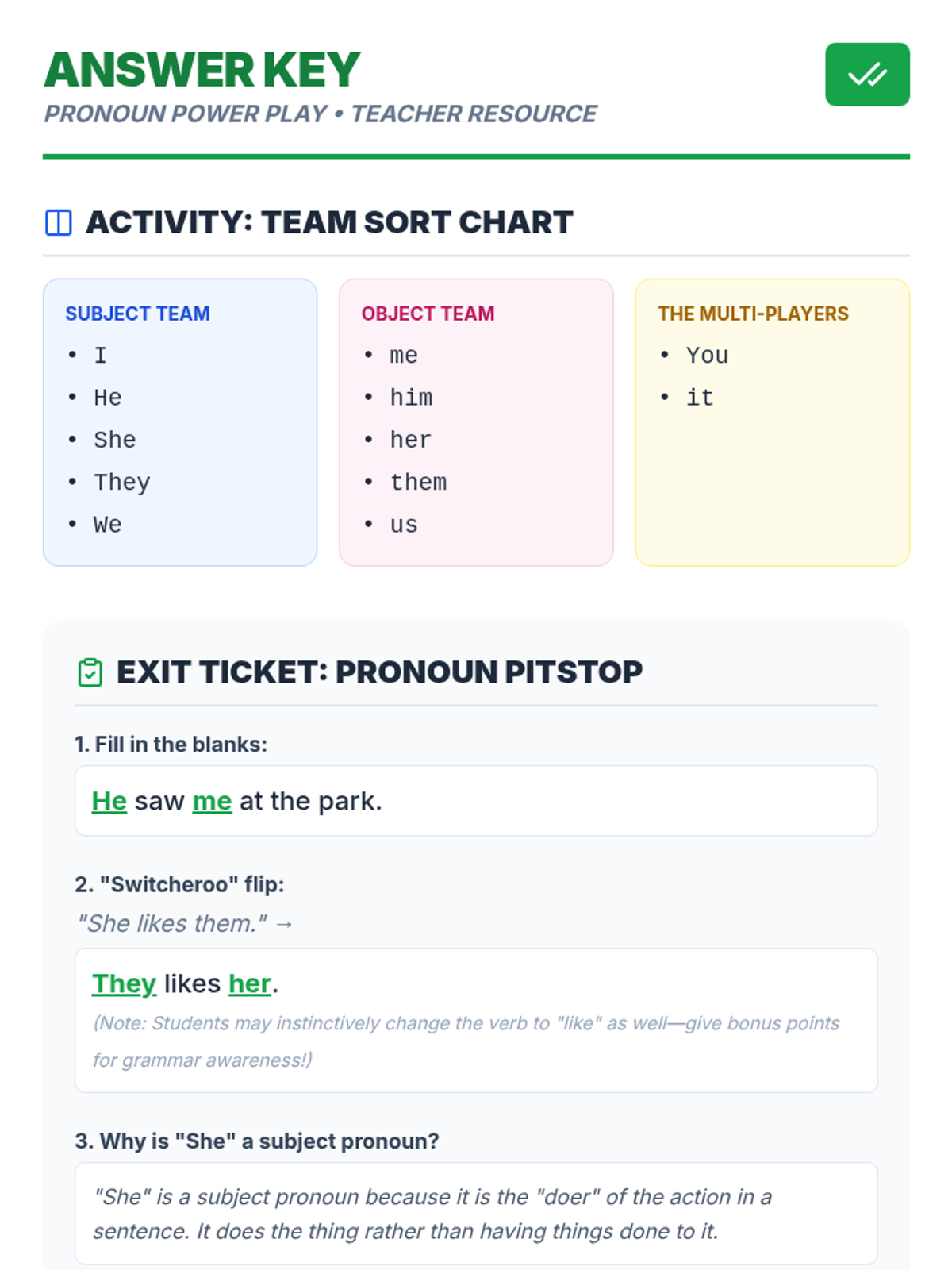
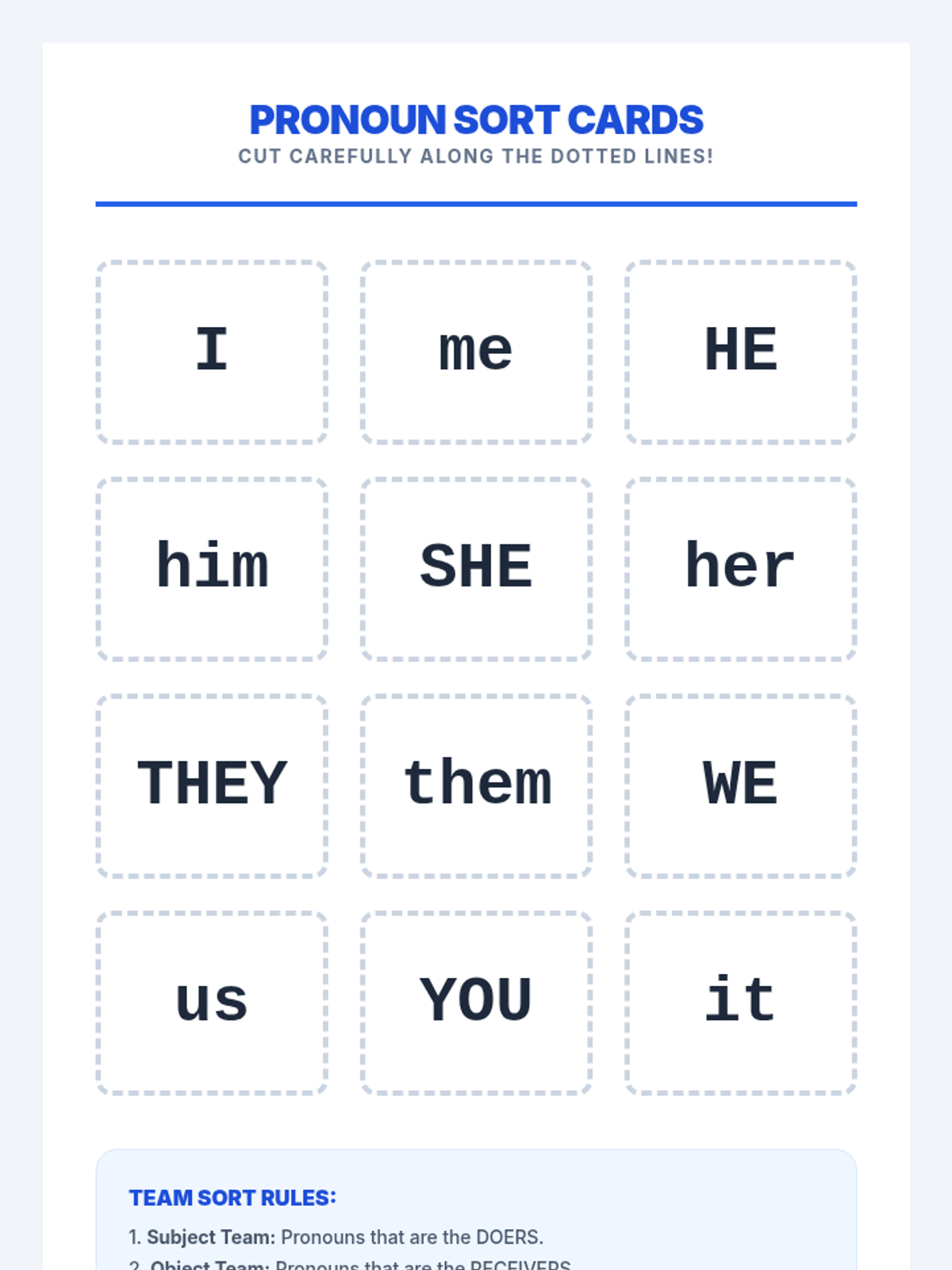
A high-energy 4th-grade grammar lesson focusing on the distinction between subject and object pronouns through the concept of the 'Switcheroo' and team-based sorting.
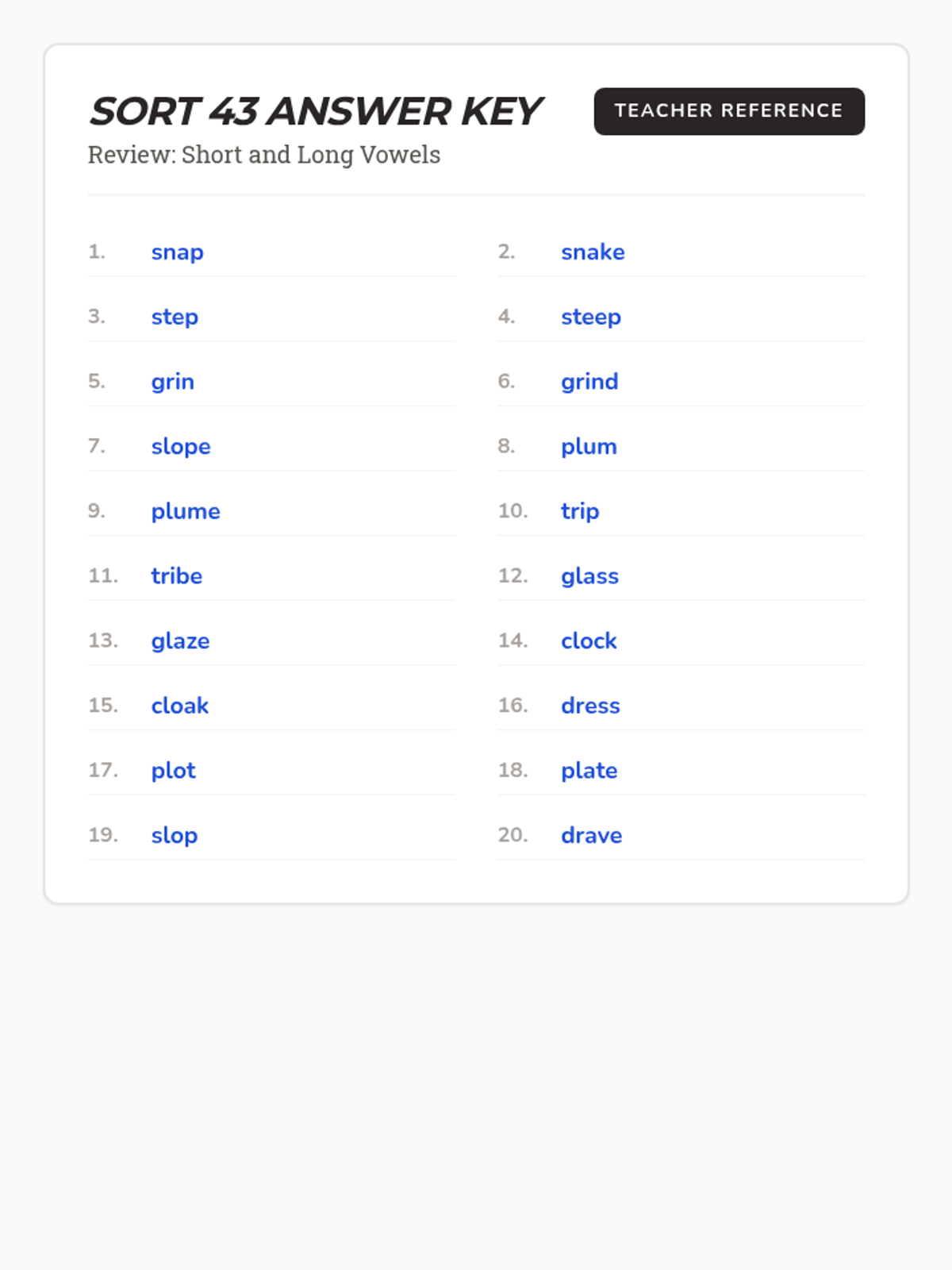
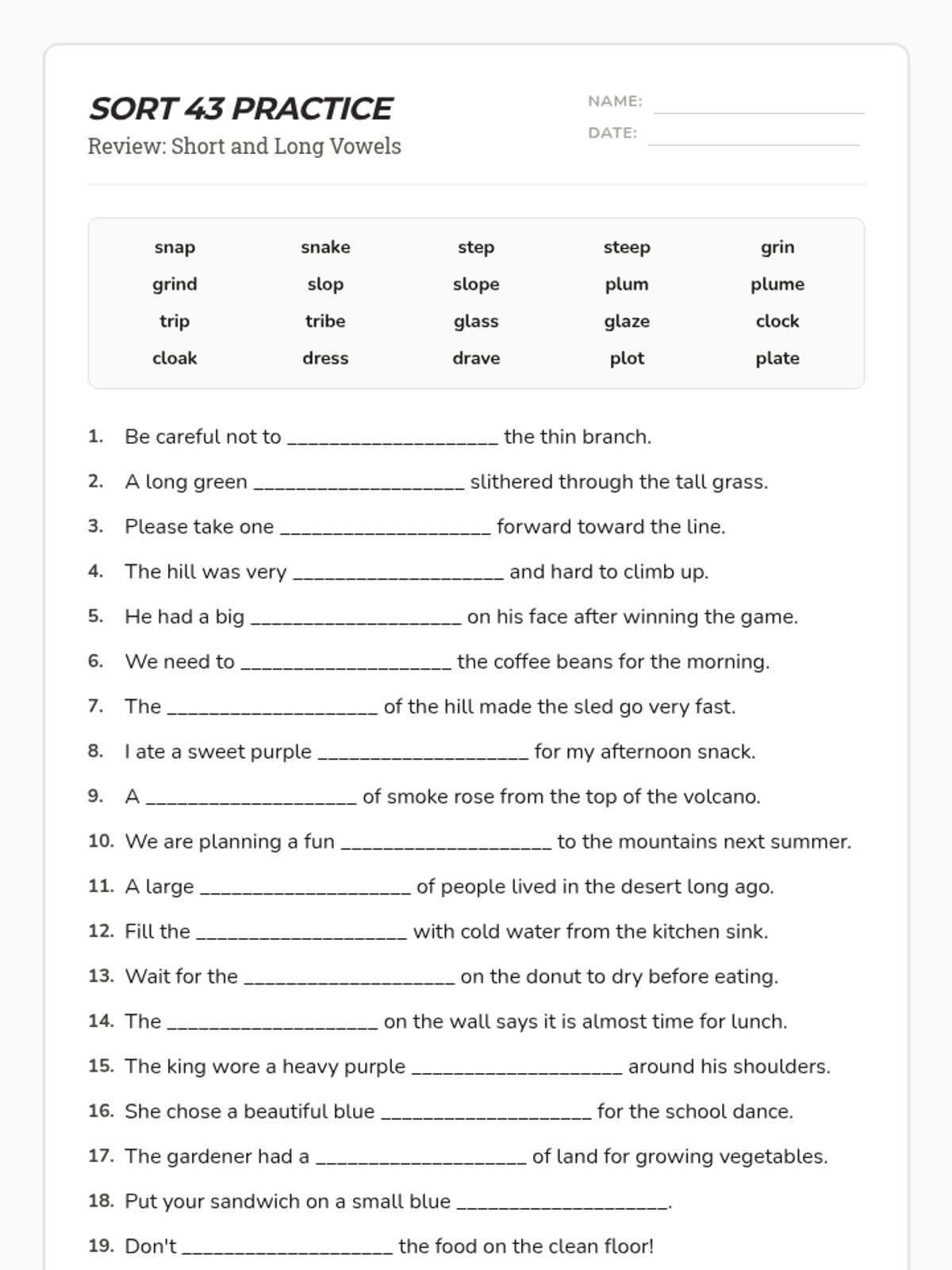
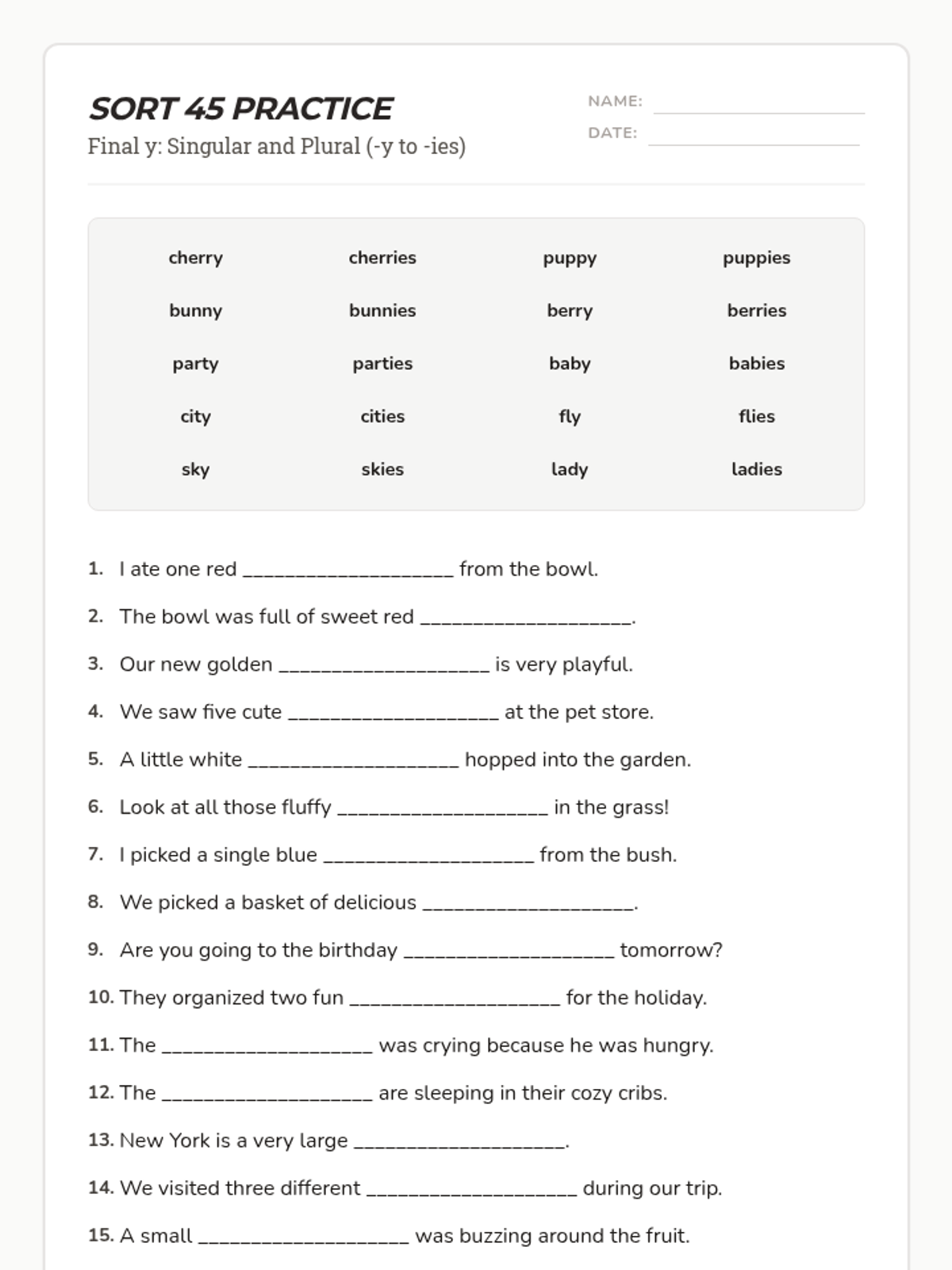
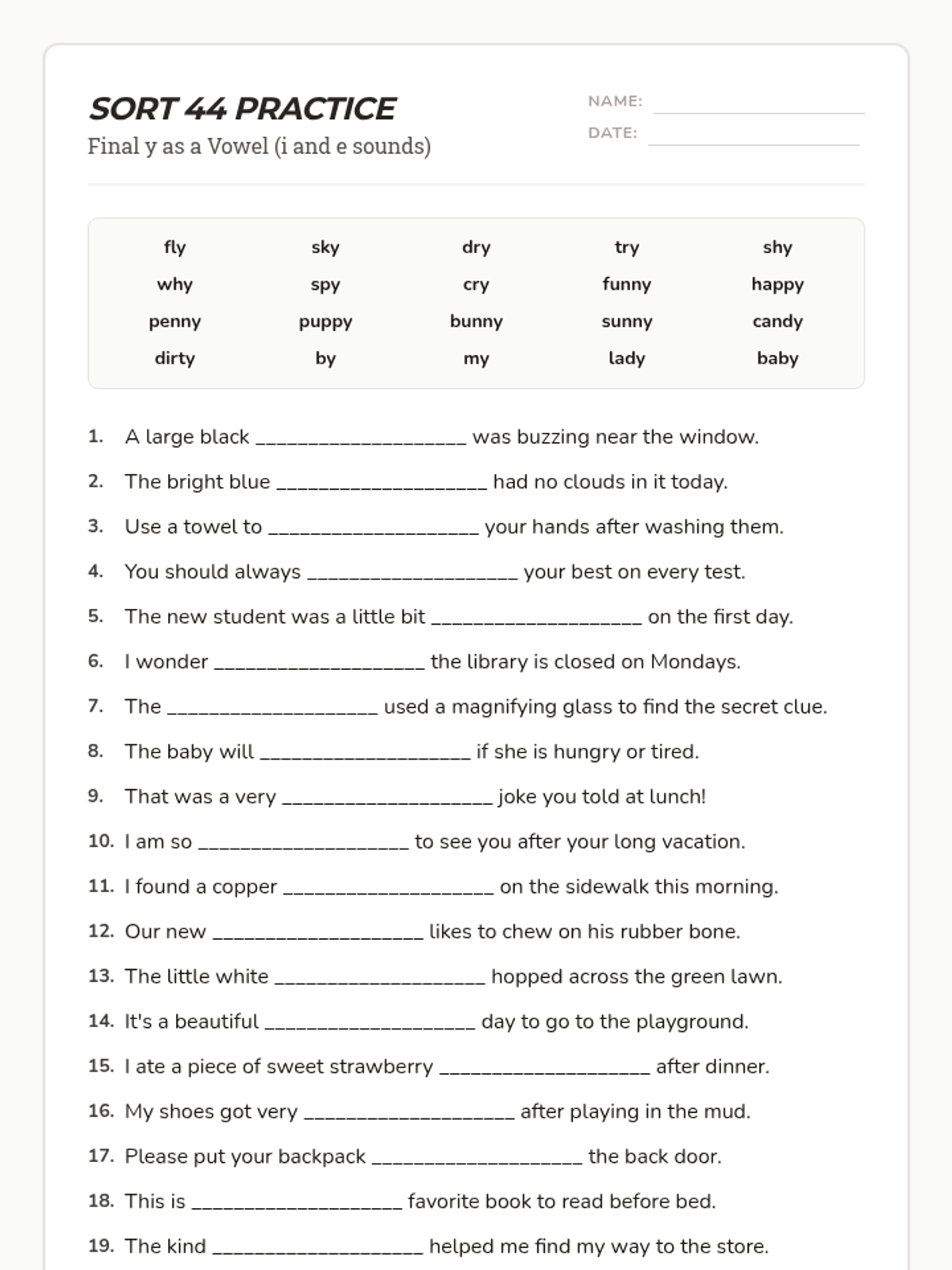
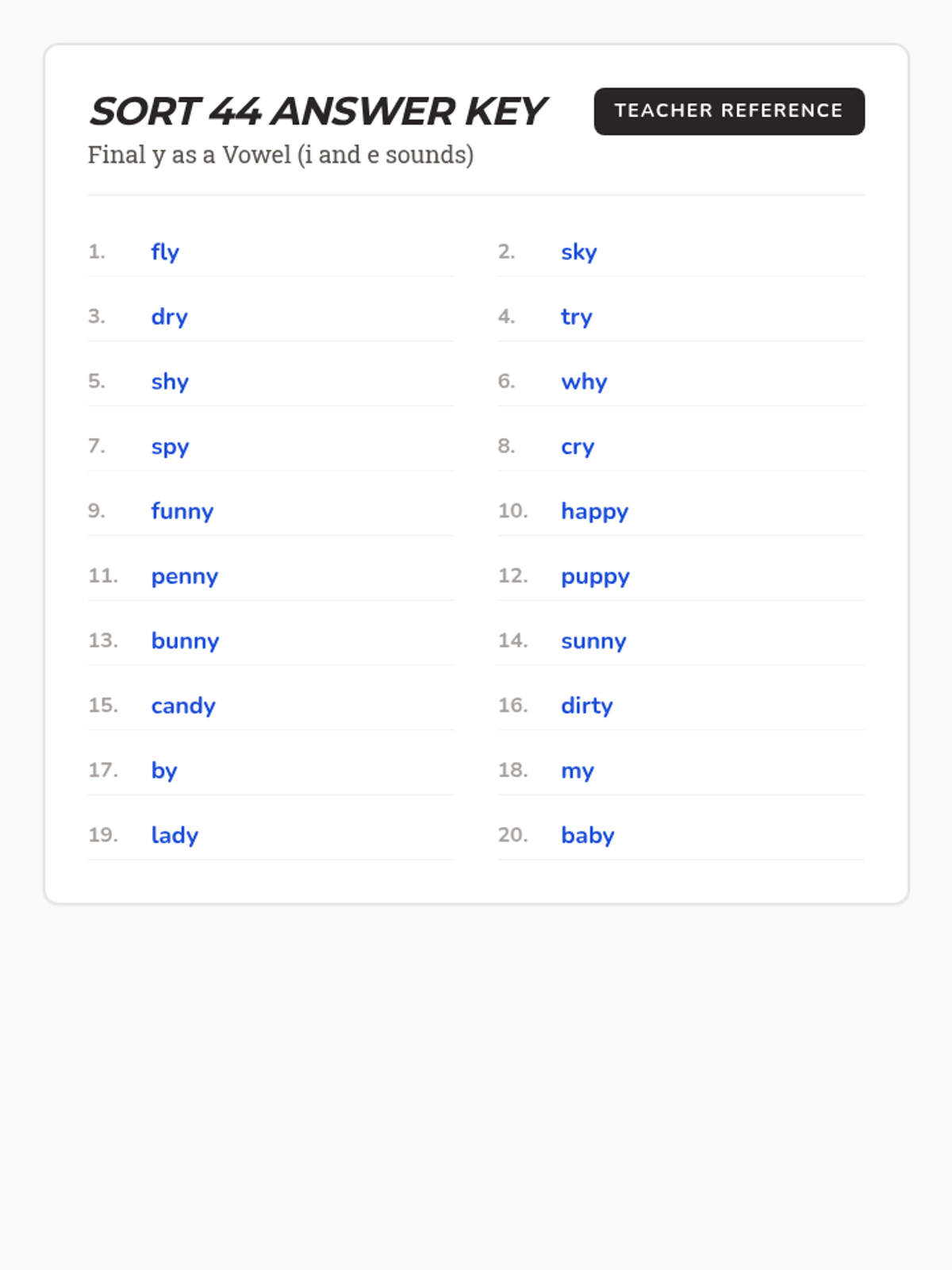
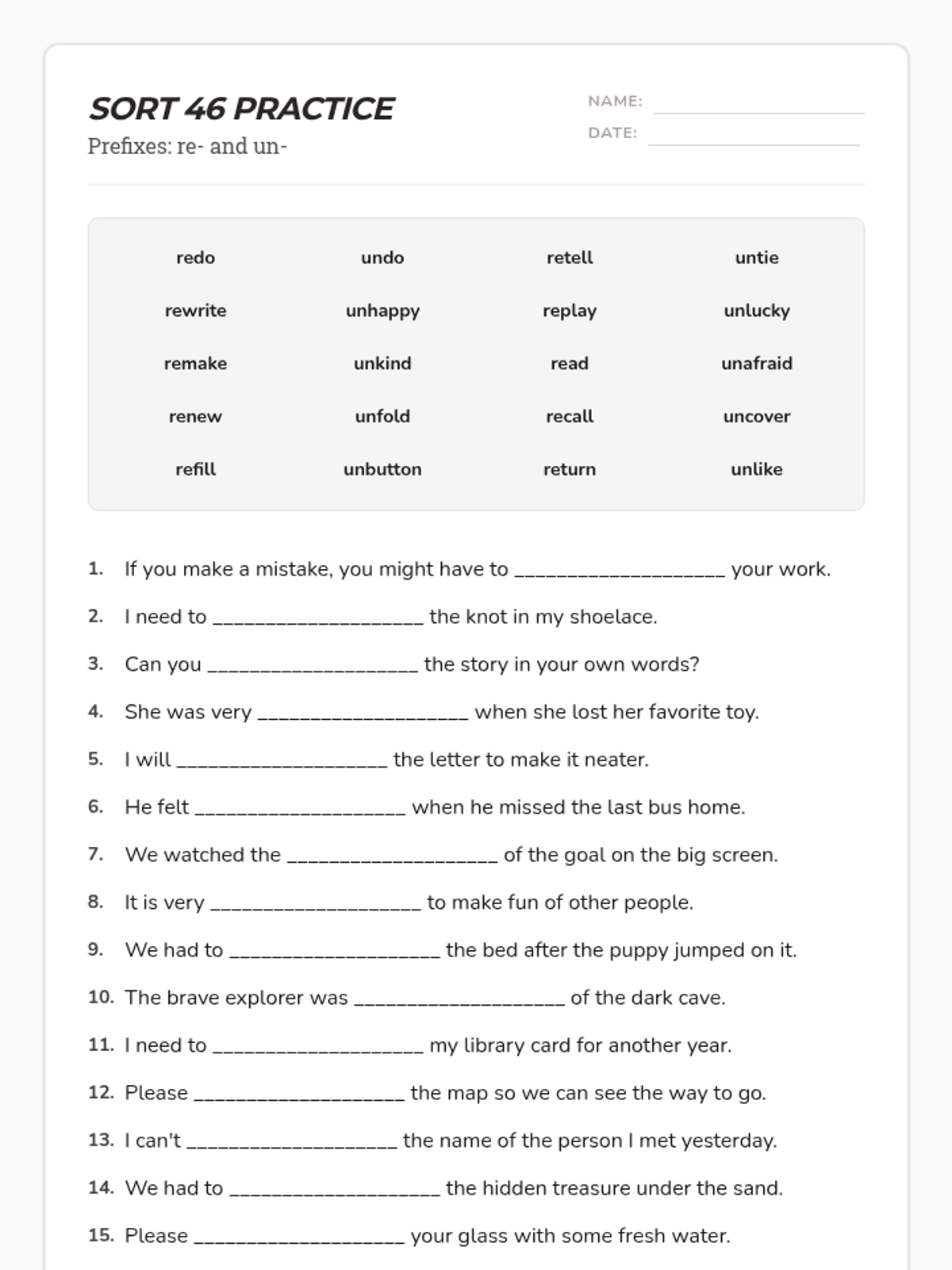
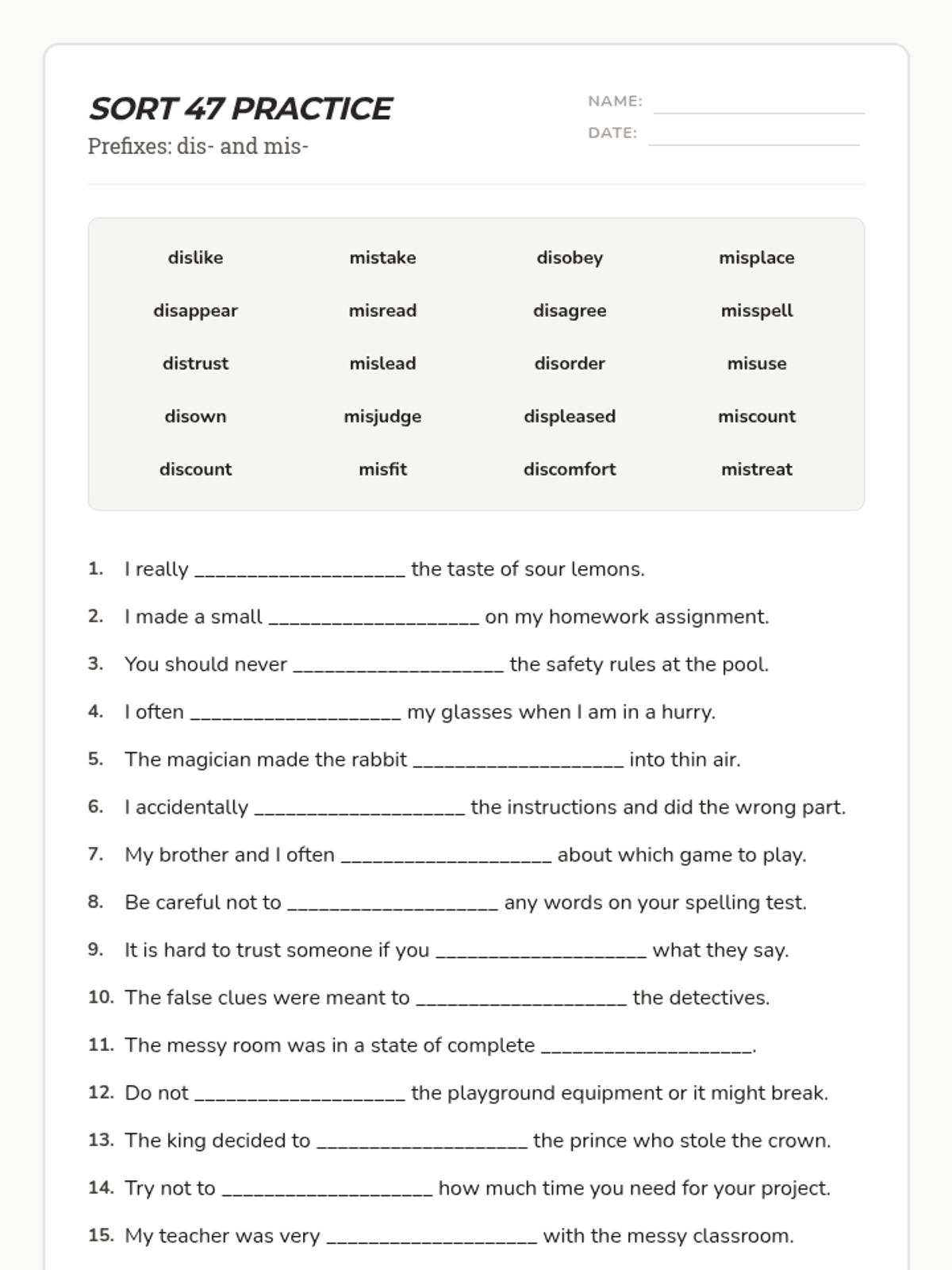
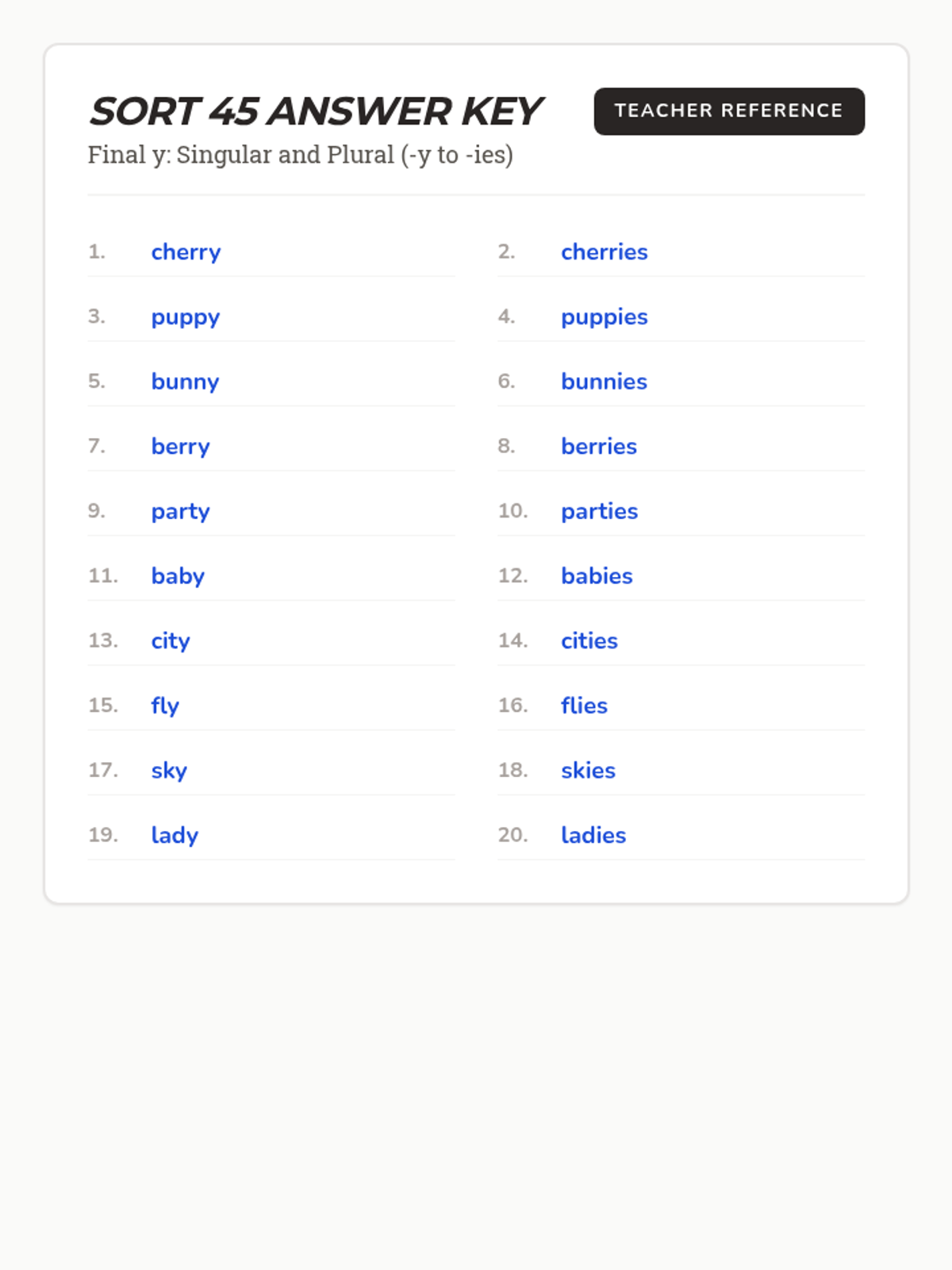
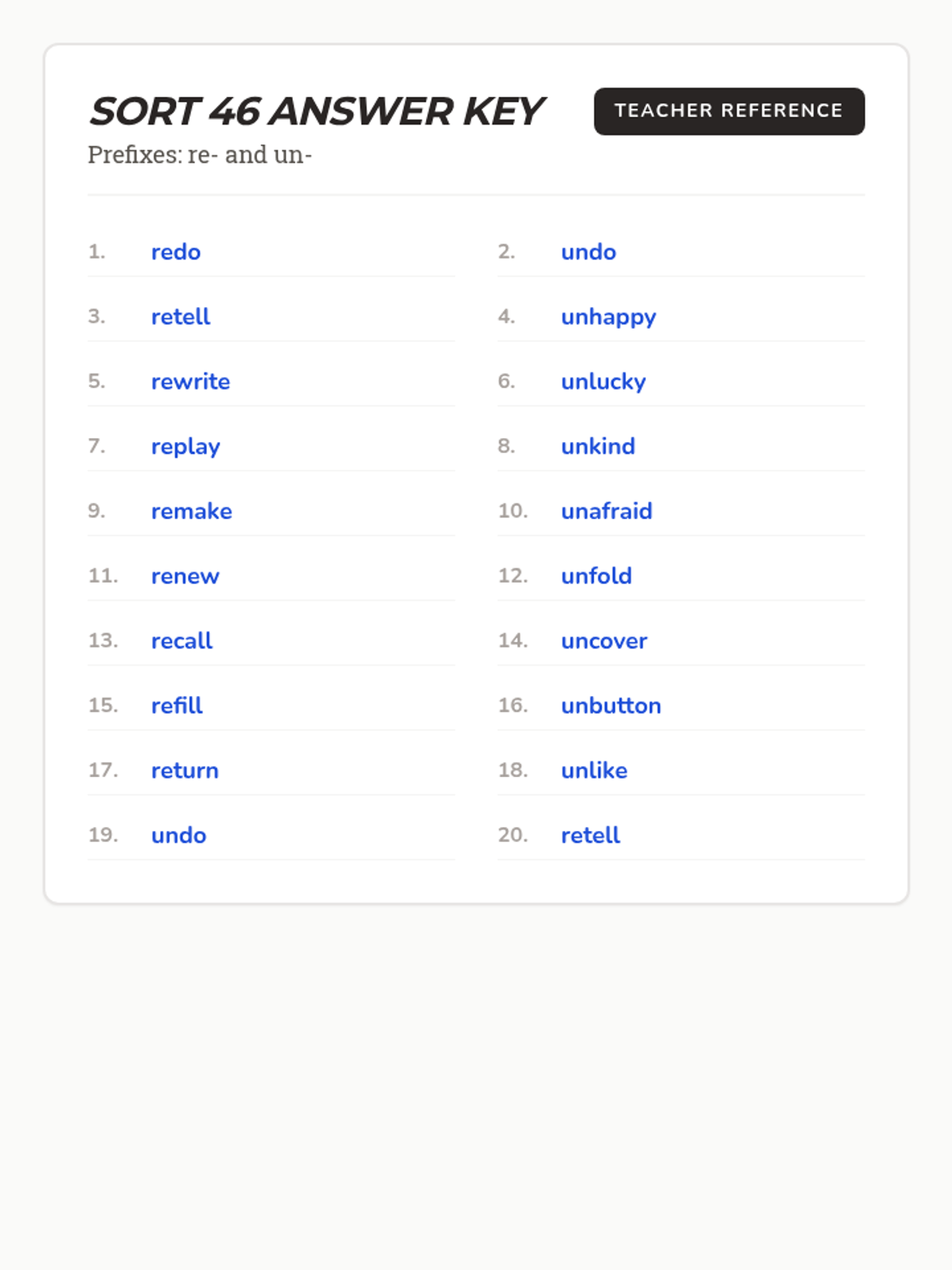
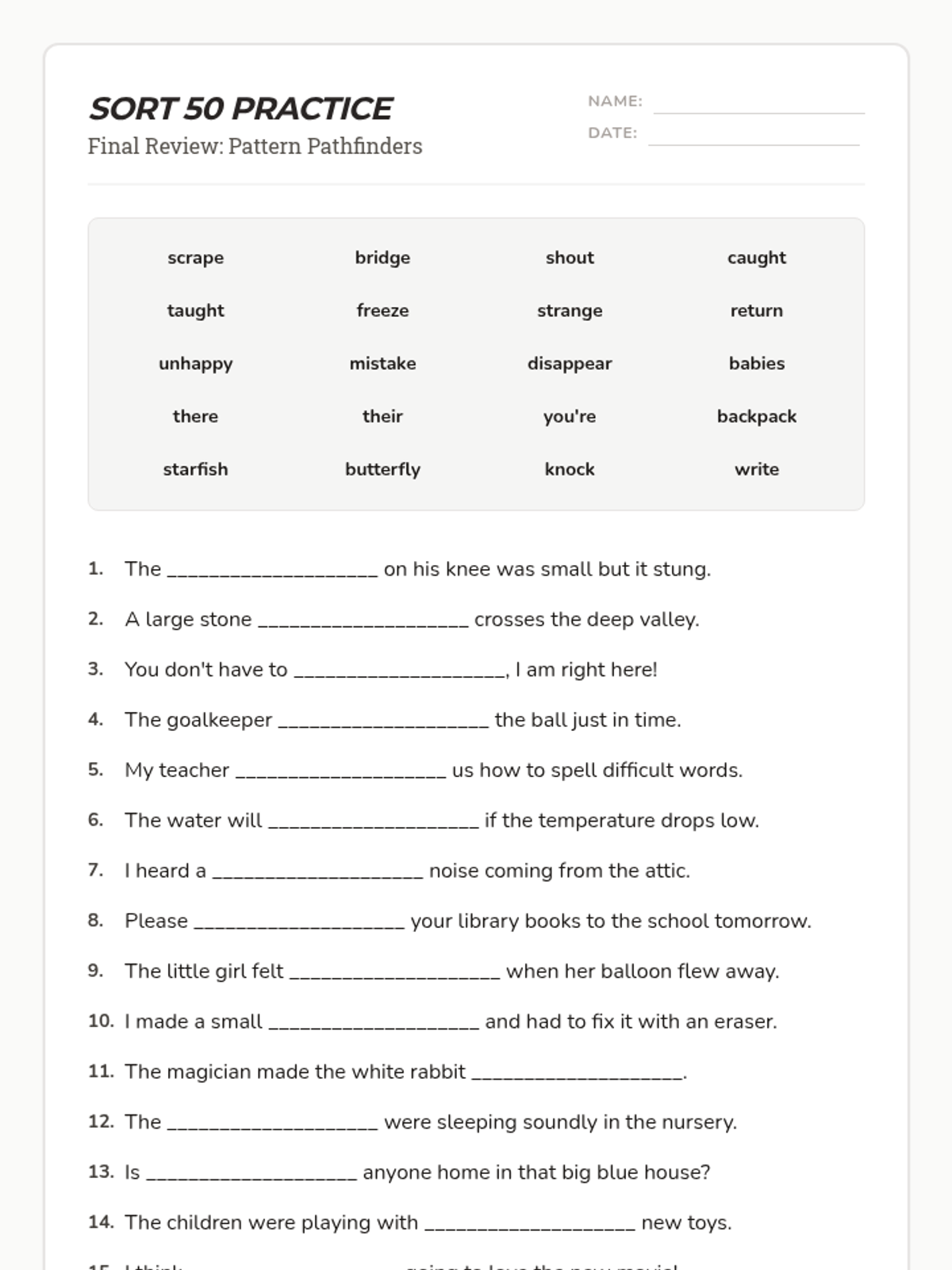
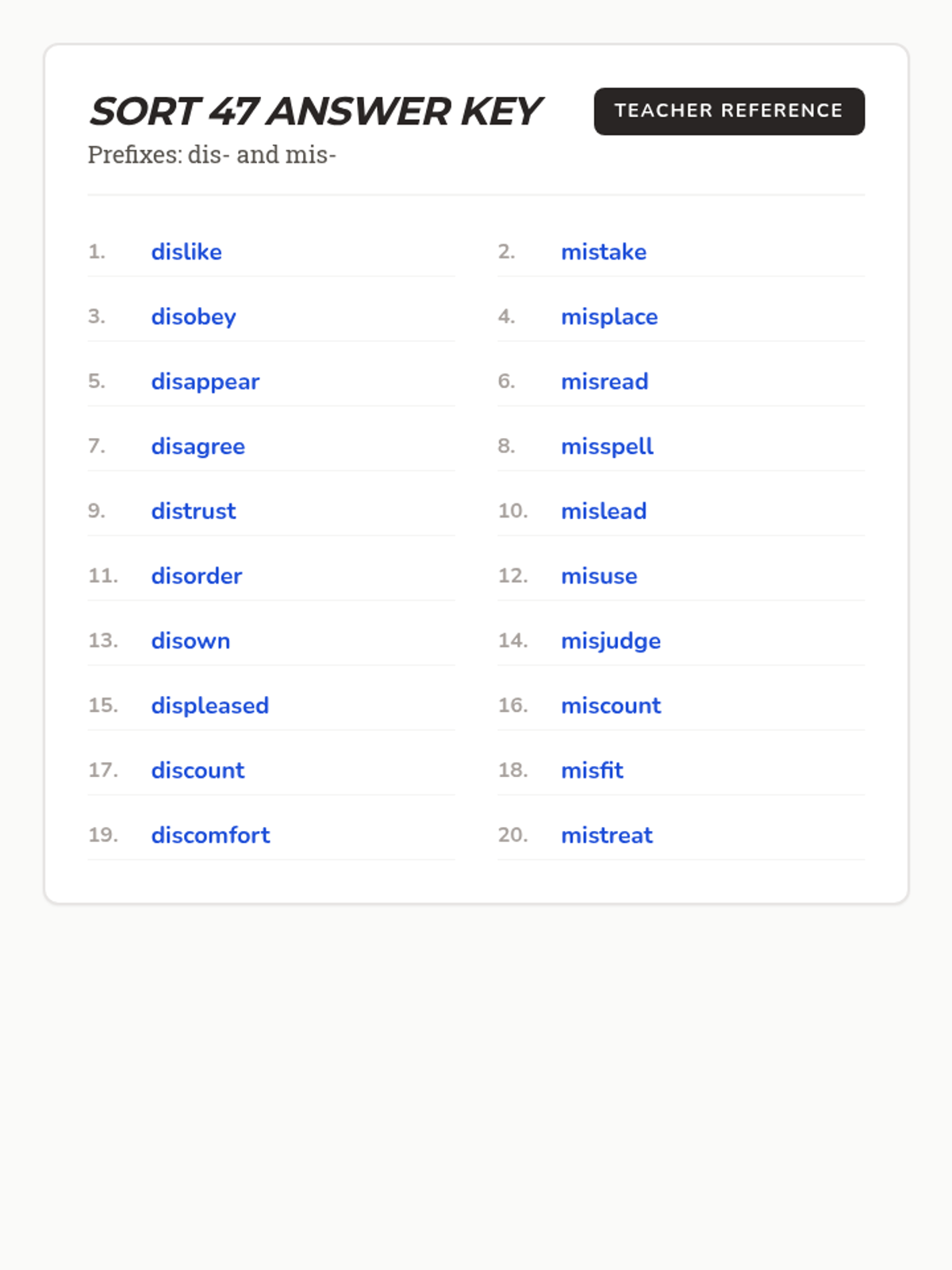
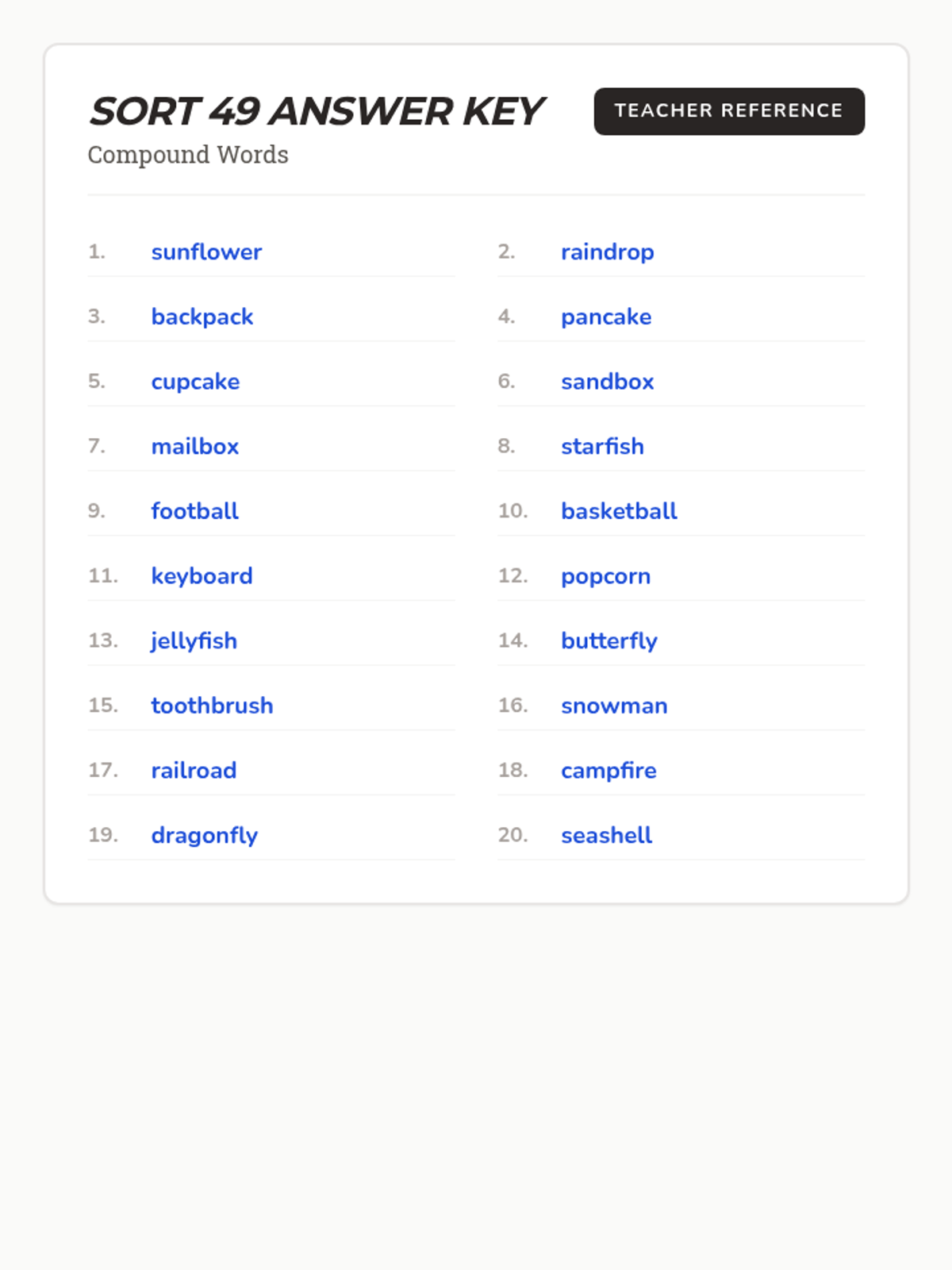
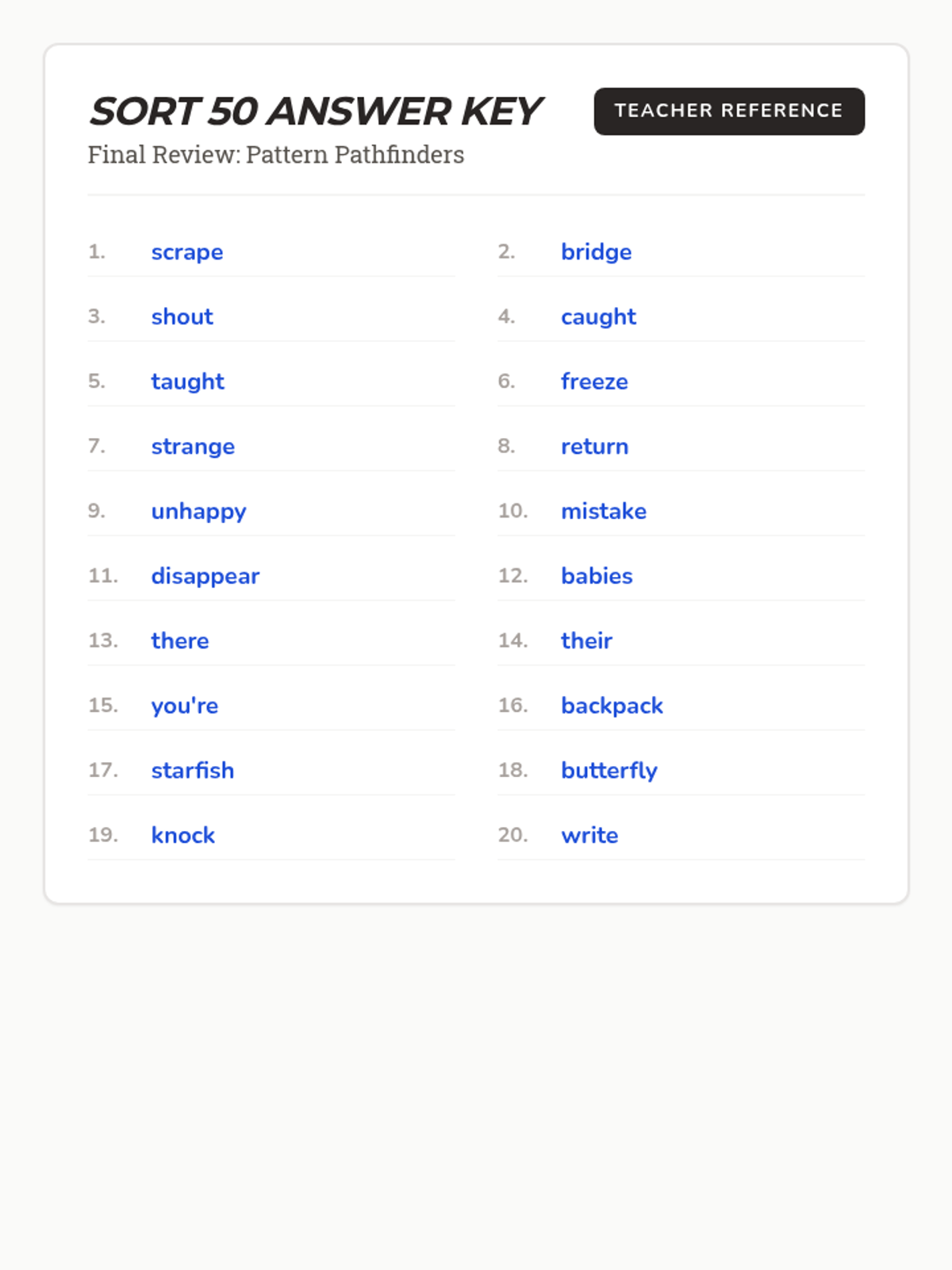
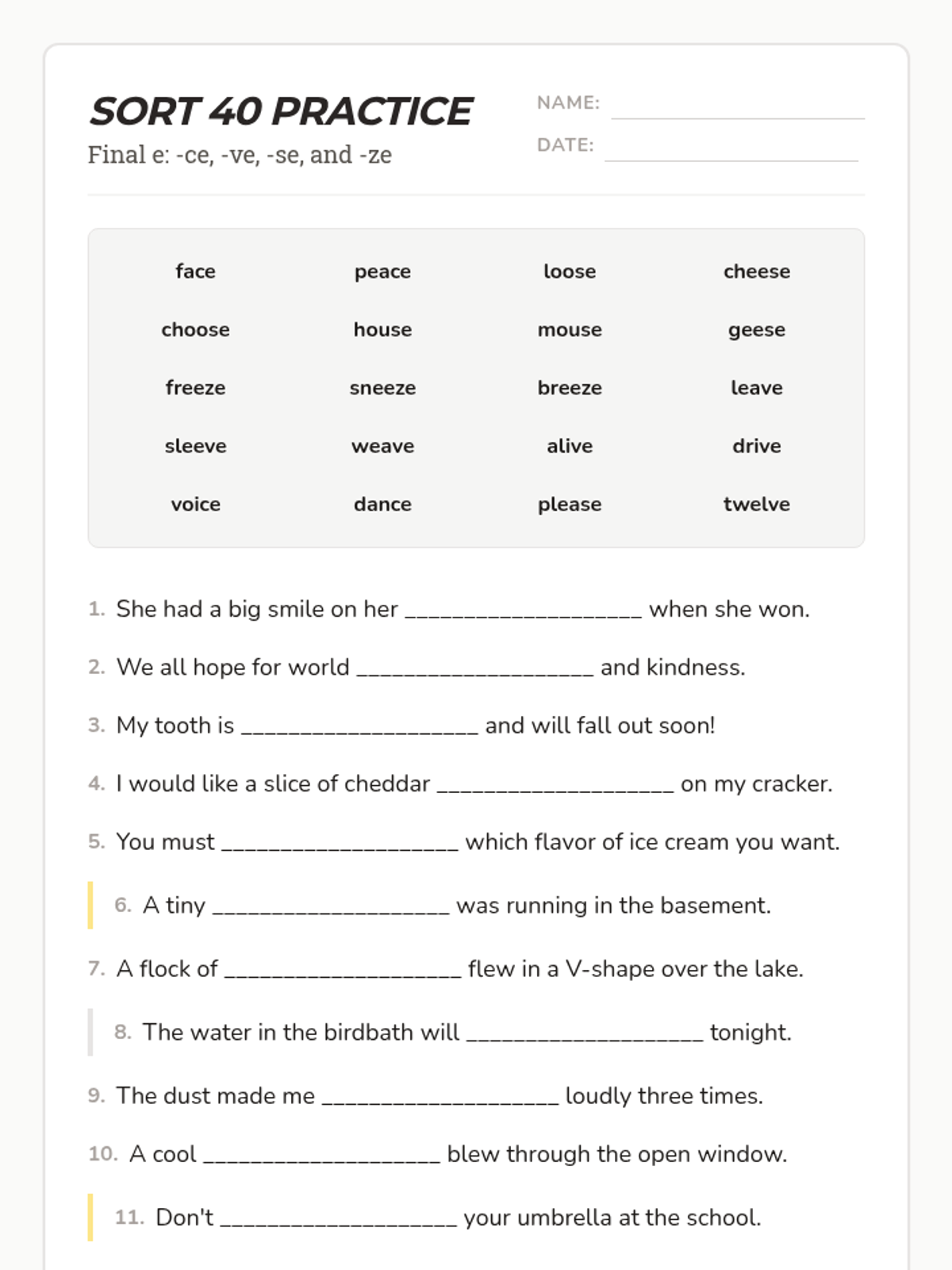
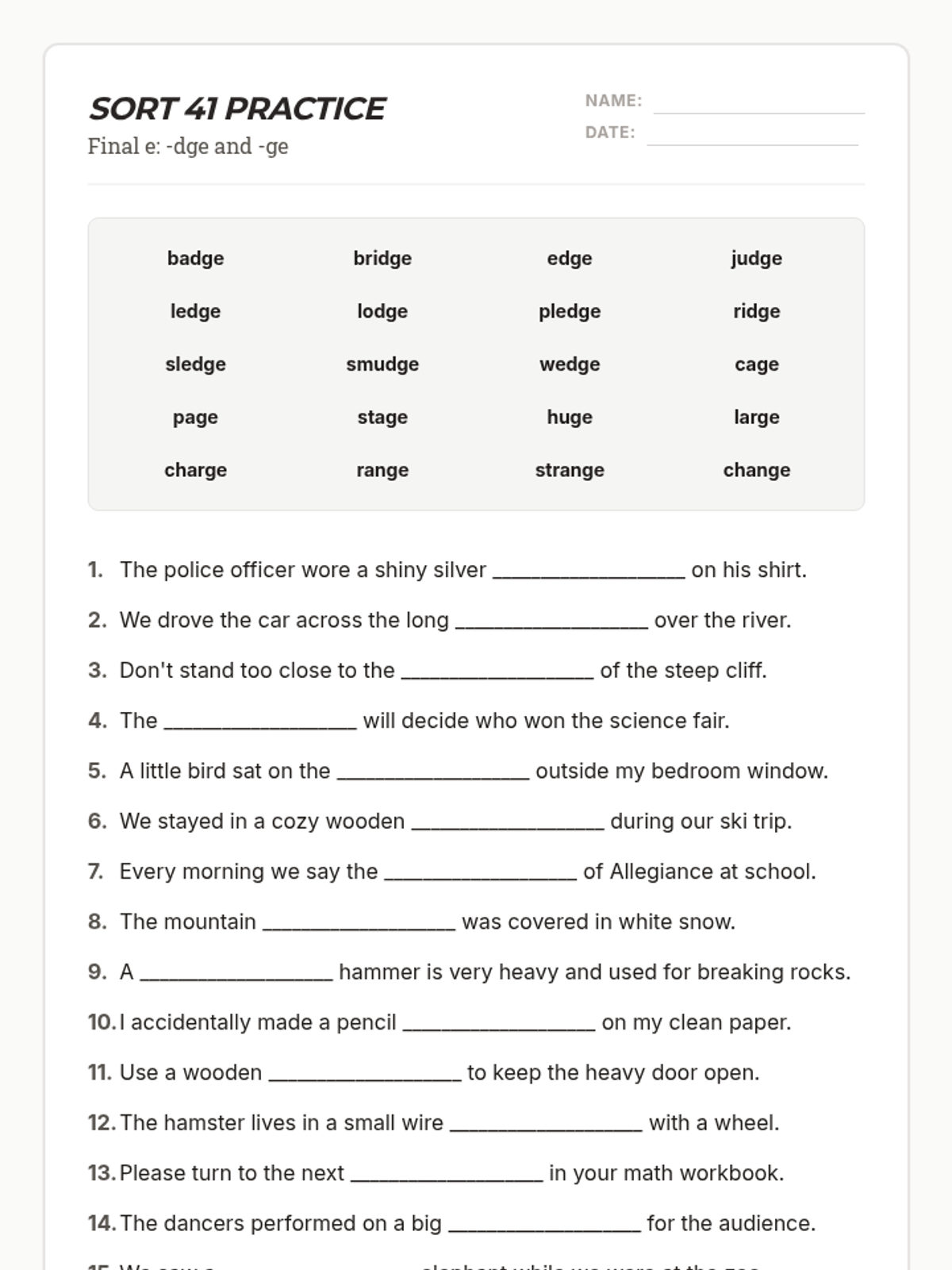
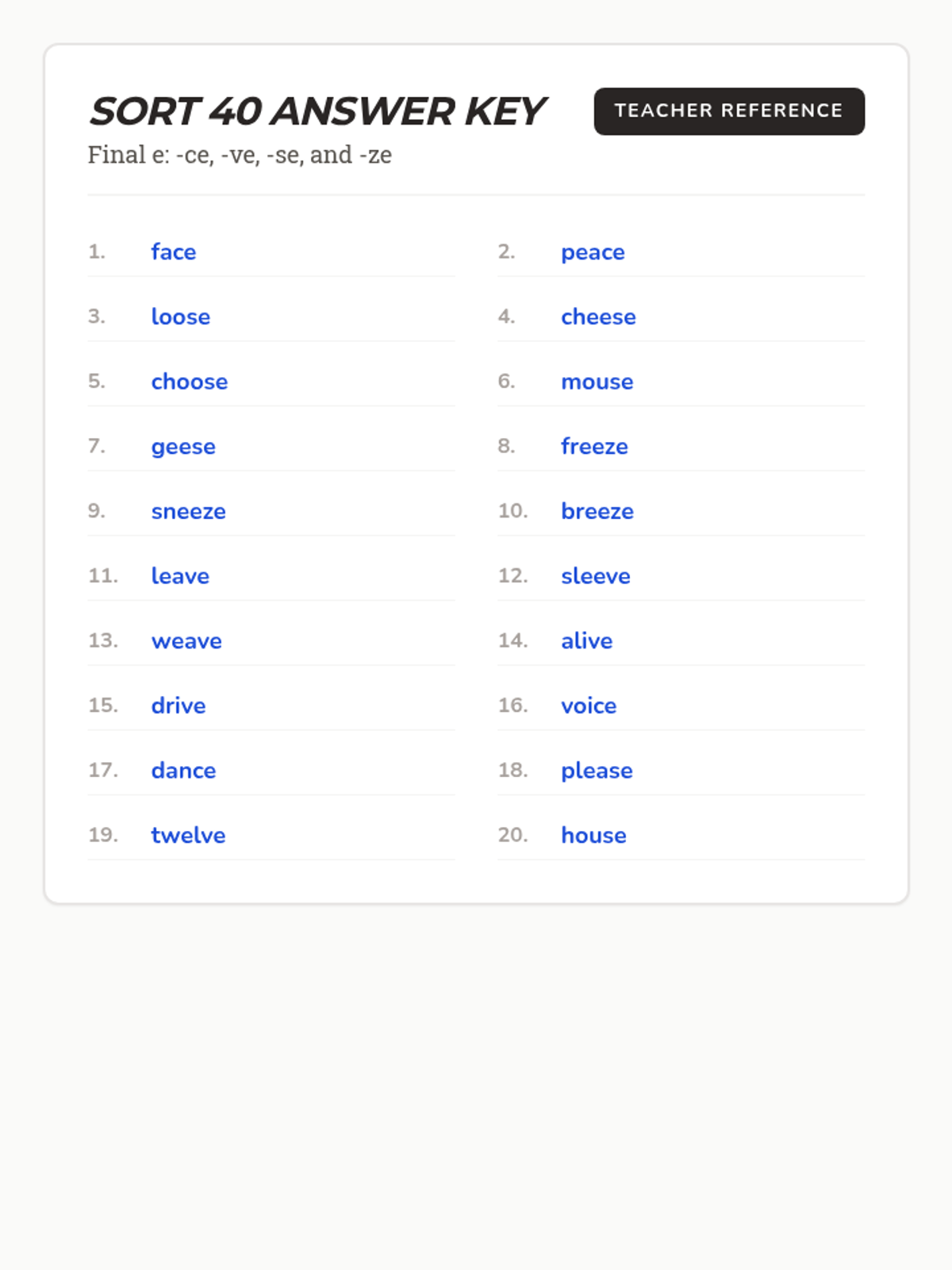
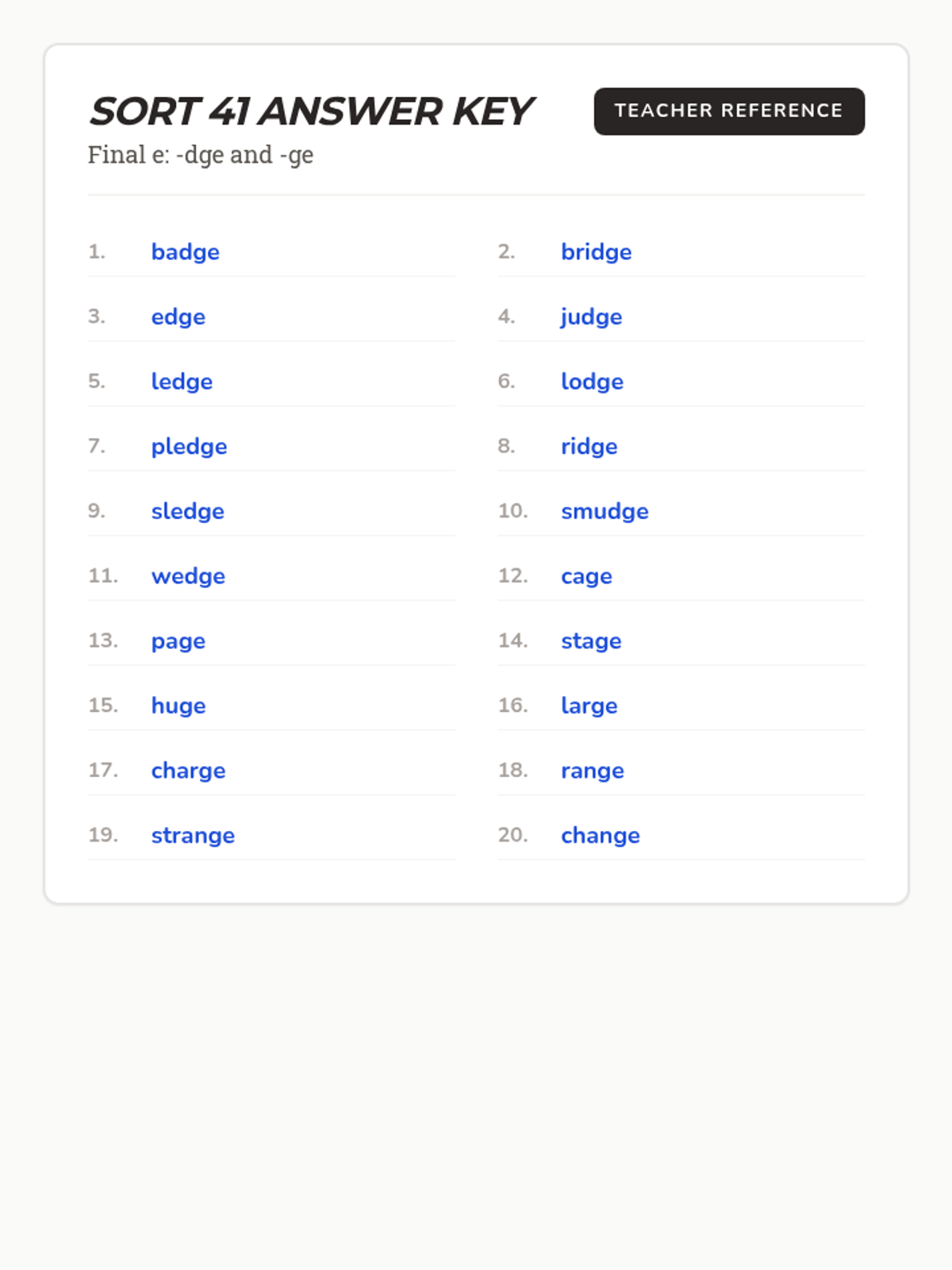
Covers final y as a vowel, plural endings with -ies, common prefixes (re-, un-, dis-, mis-), and a comprehensive review of patterns from Sorts 13-50.
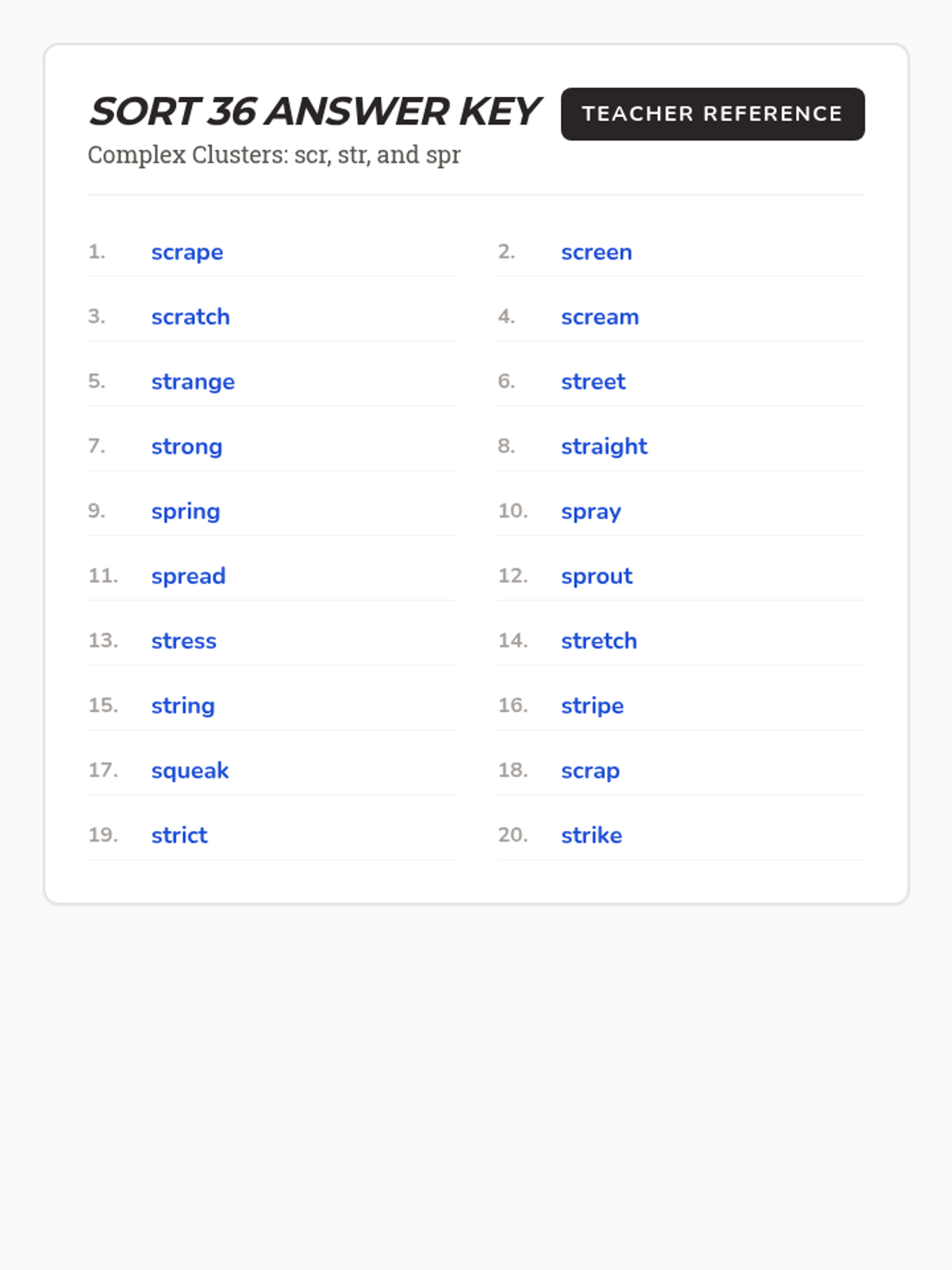
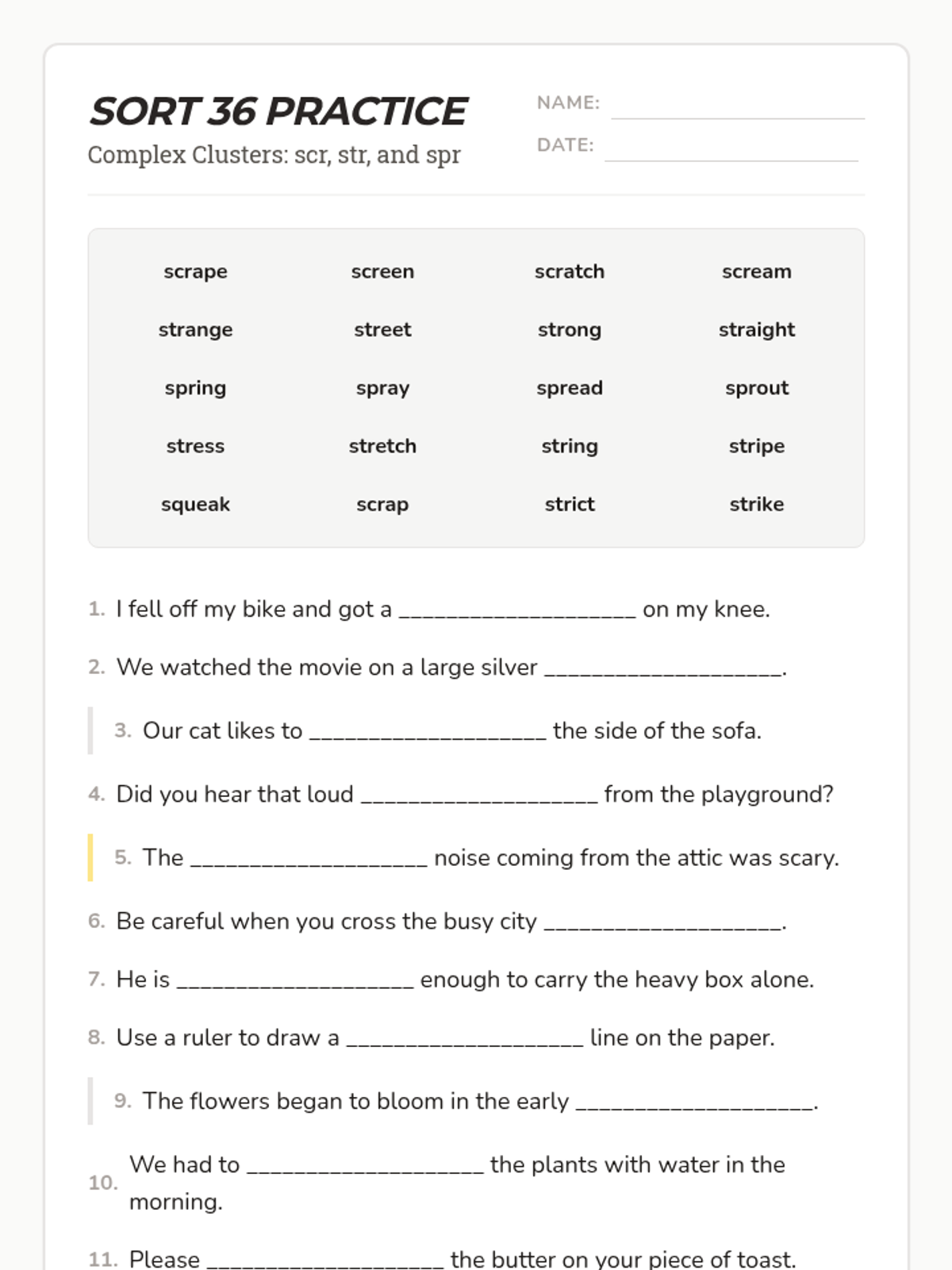
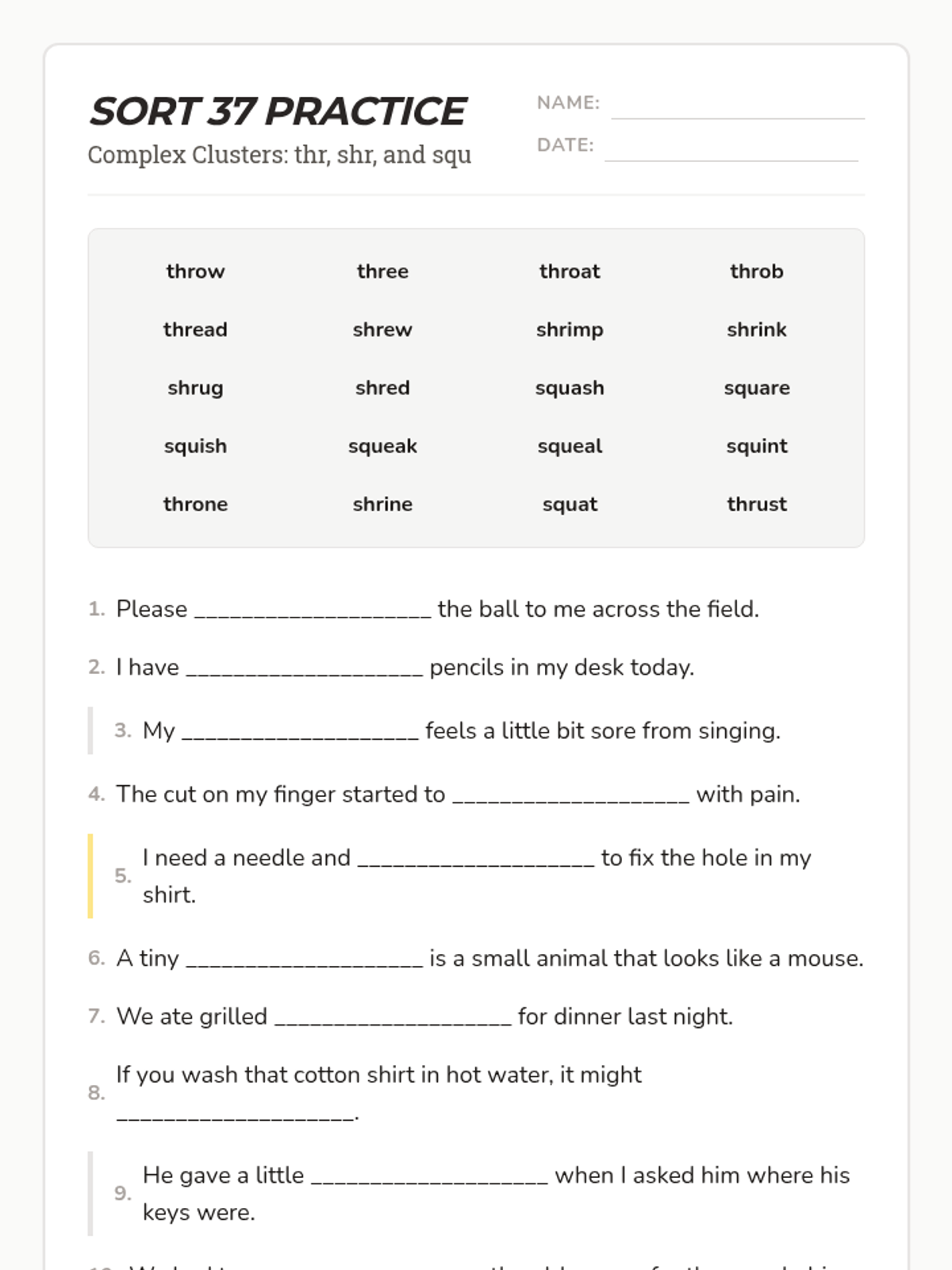
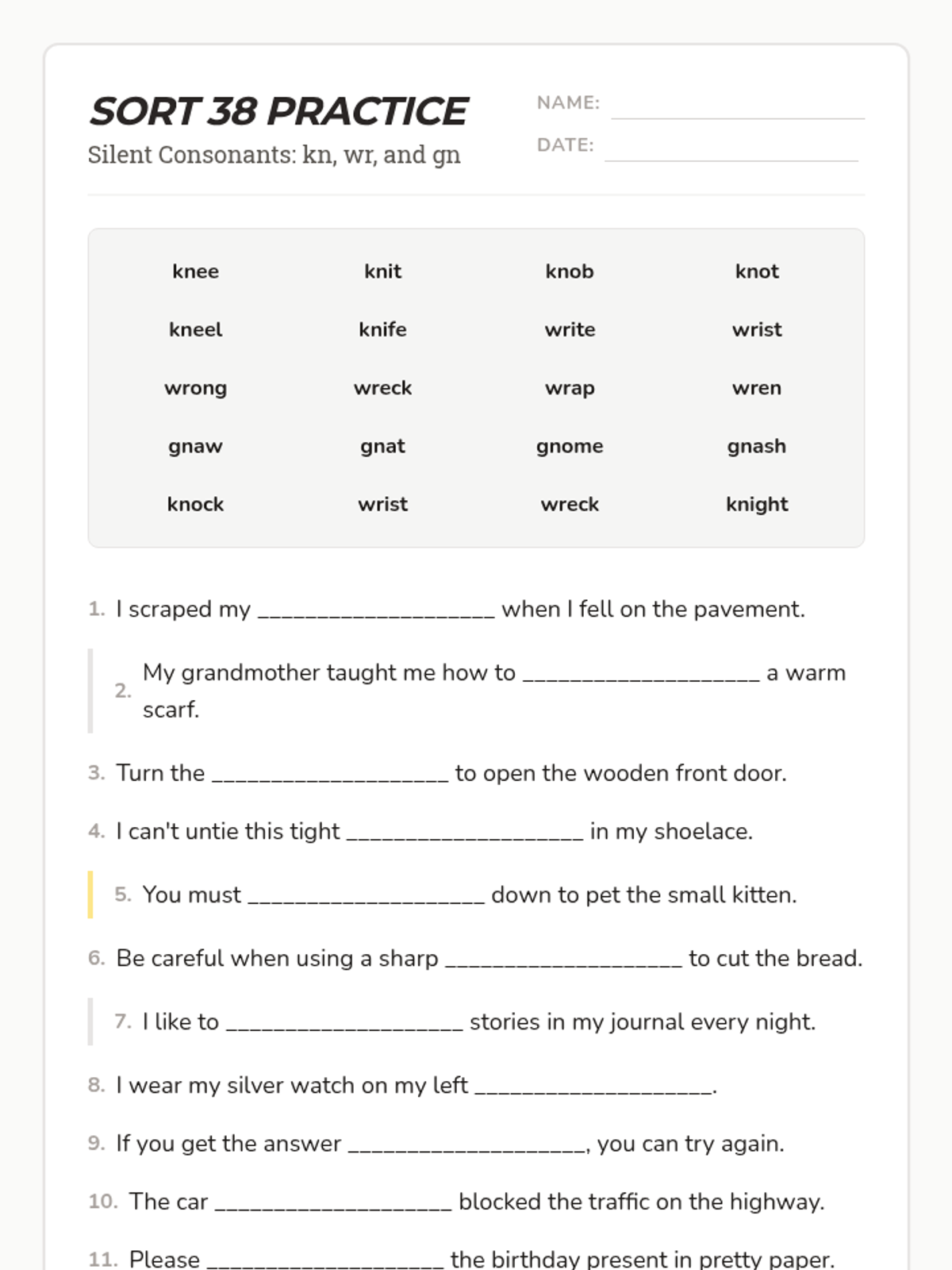
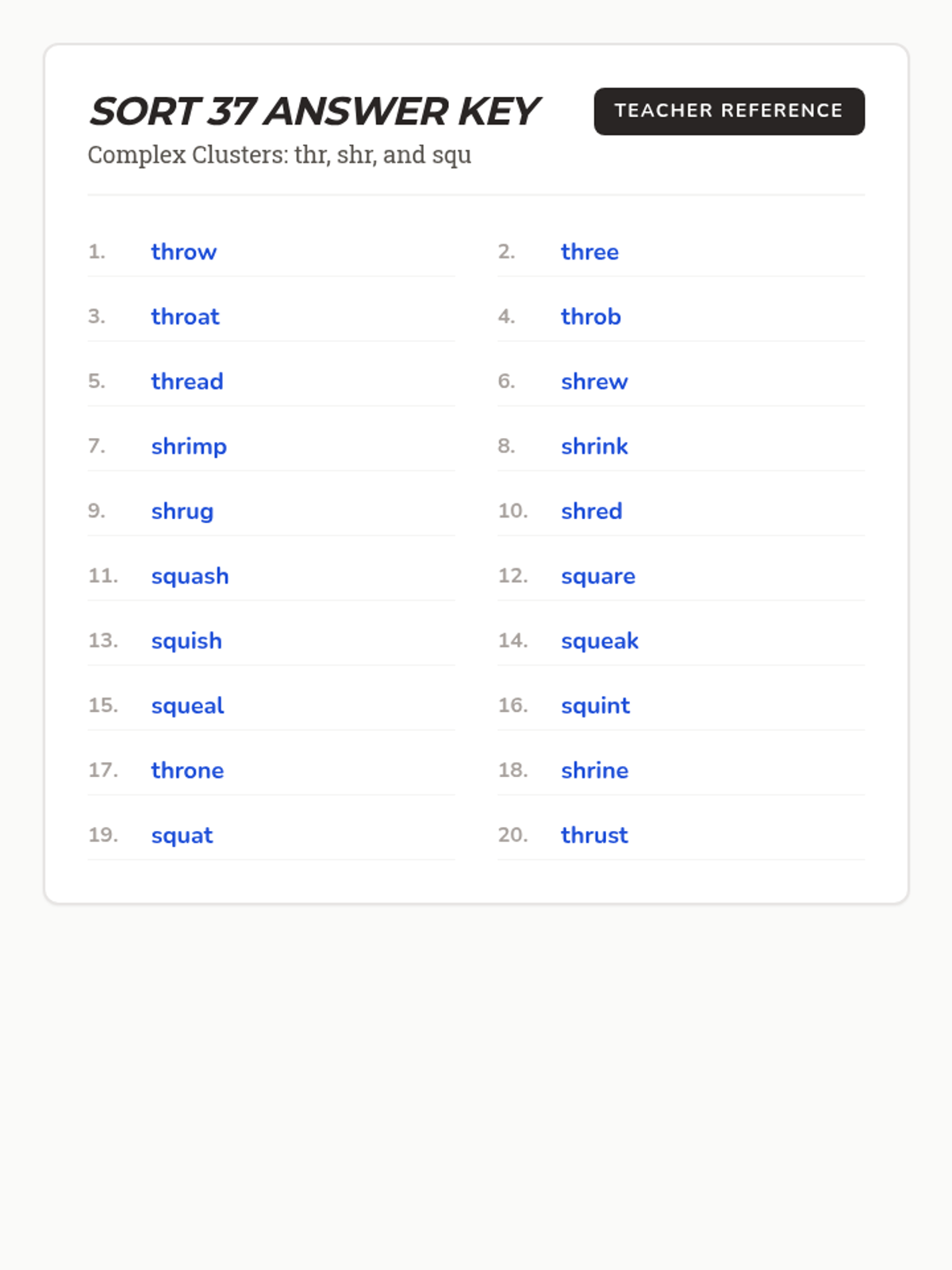
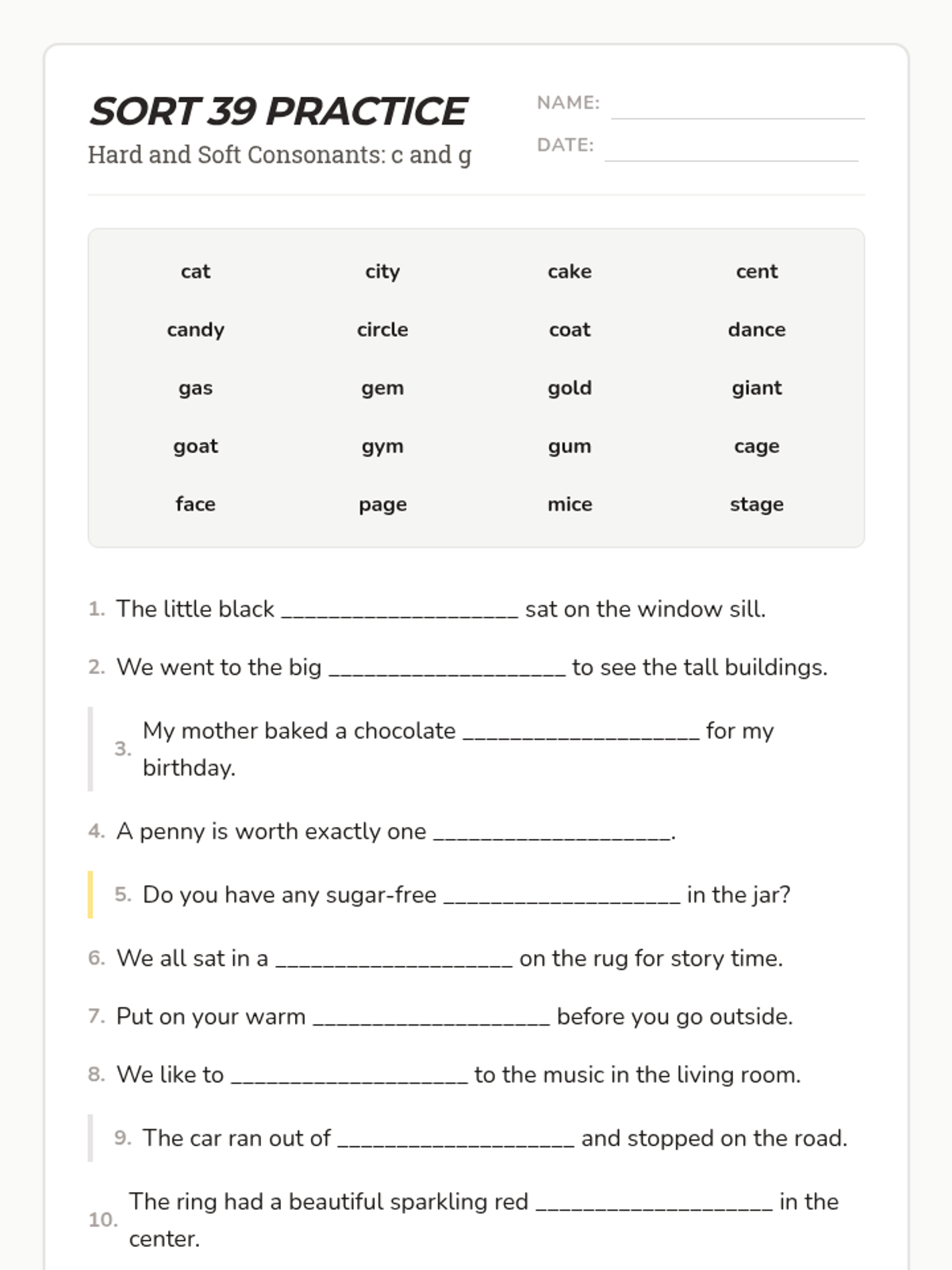
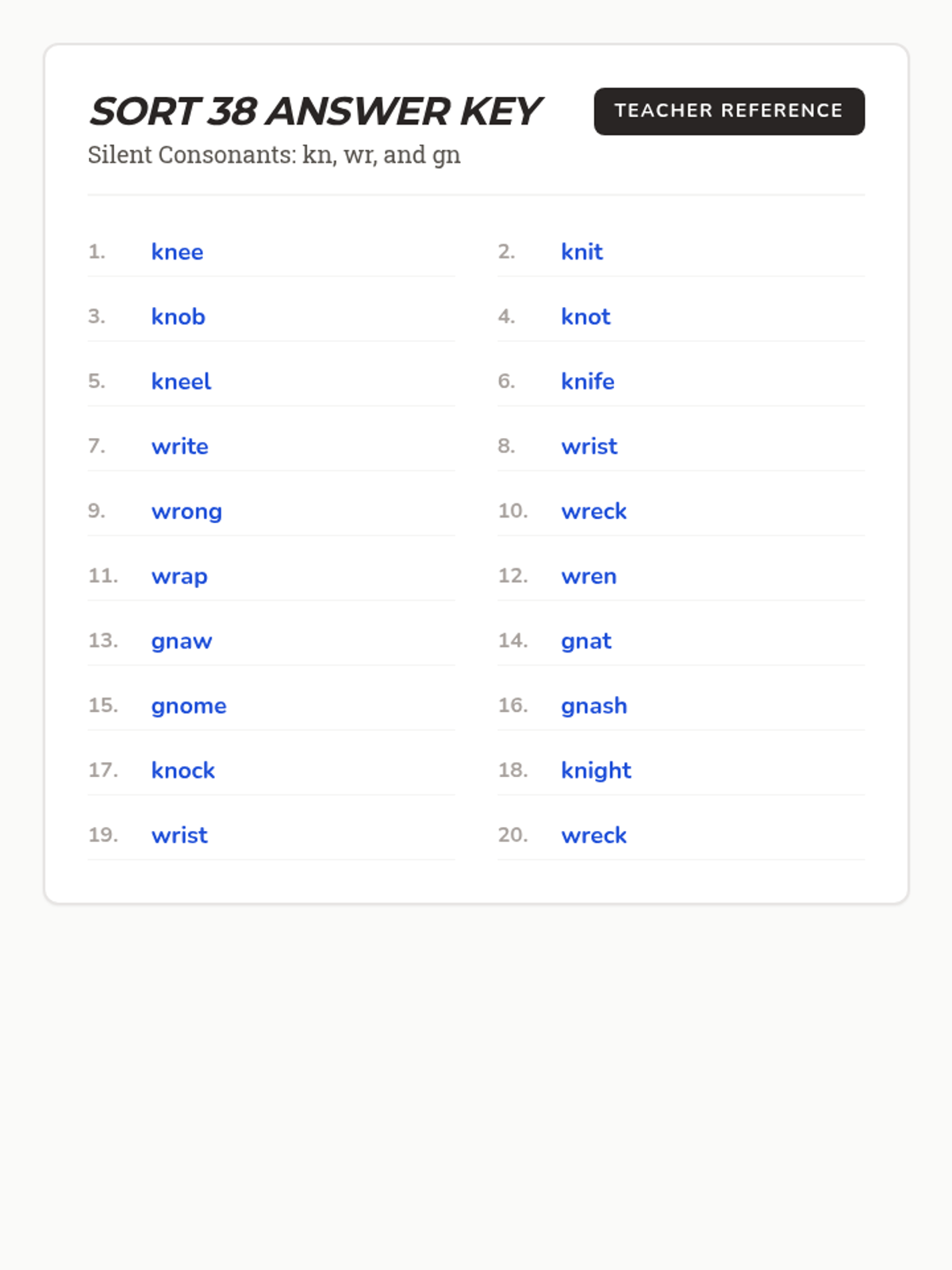
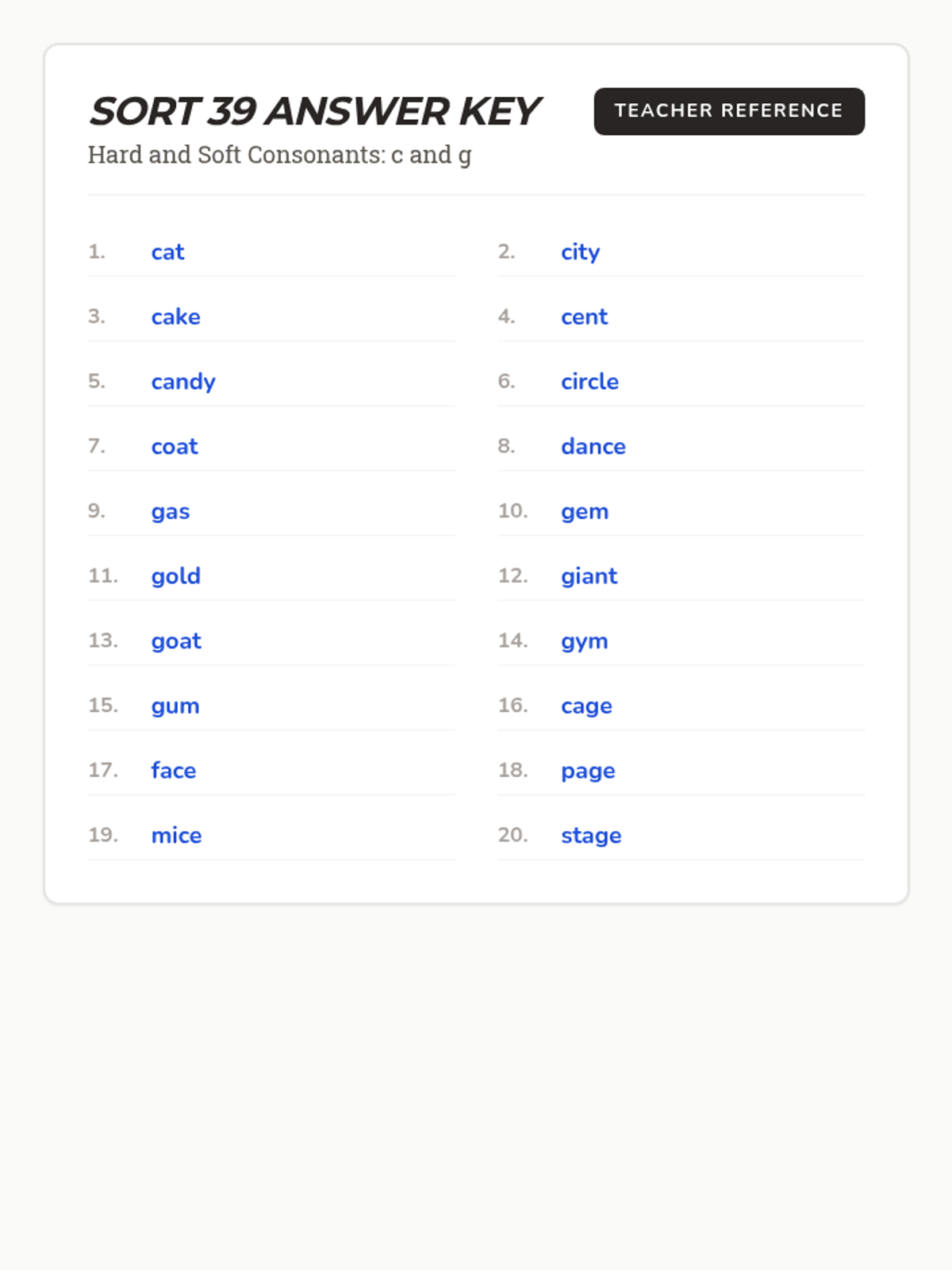
Focuses on complex consonant clusters including triple blends (scr, str, spr, thr, shr, squ), silent consonants (kn, wr, gn), and variations of hard/soft c and g. Students will practice these intricate spelling patterns through context.
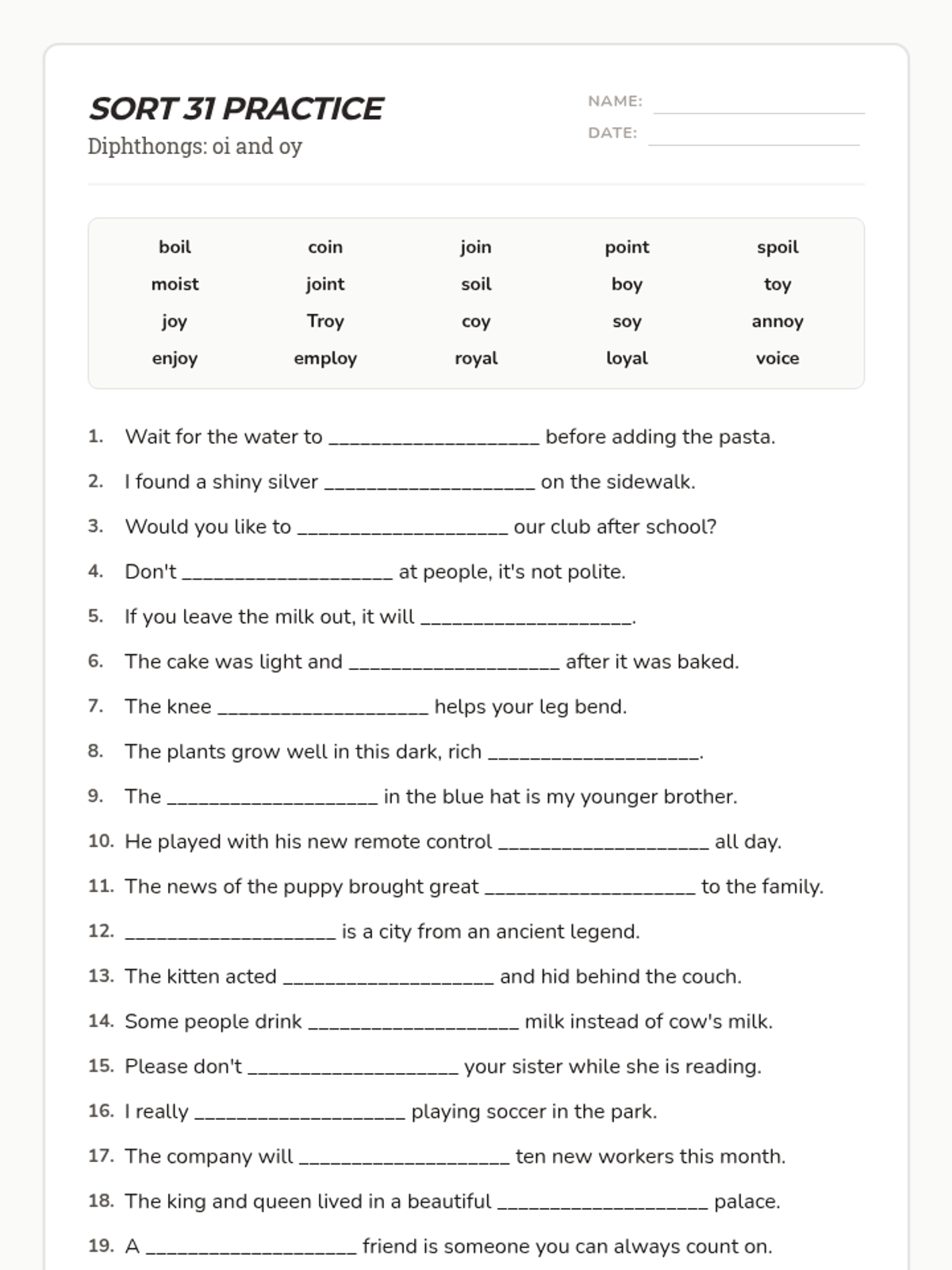
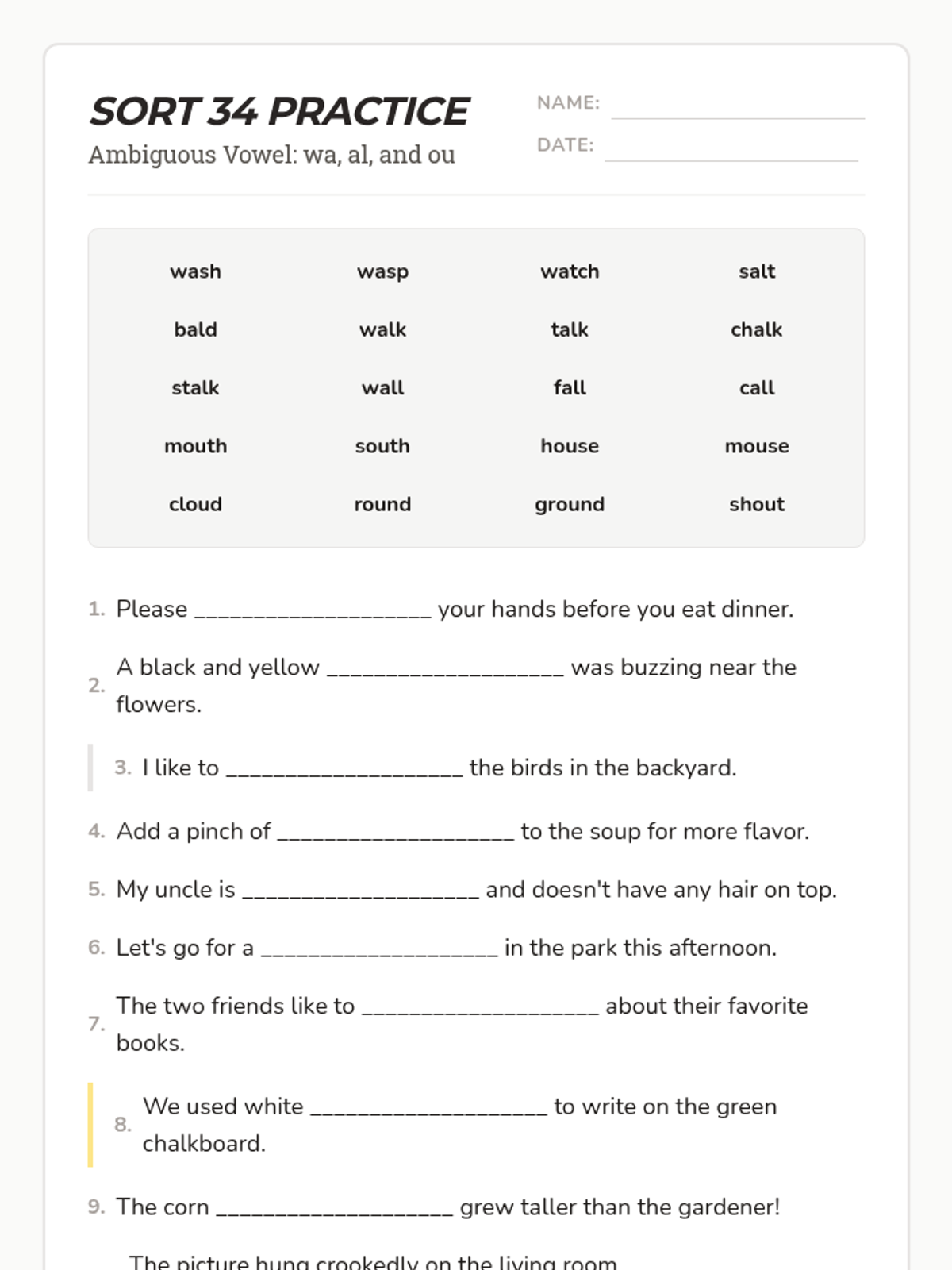
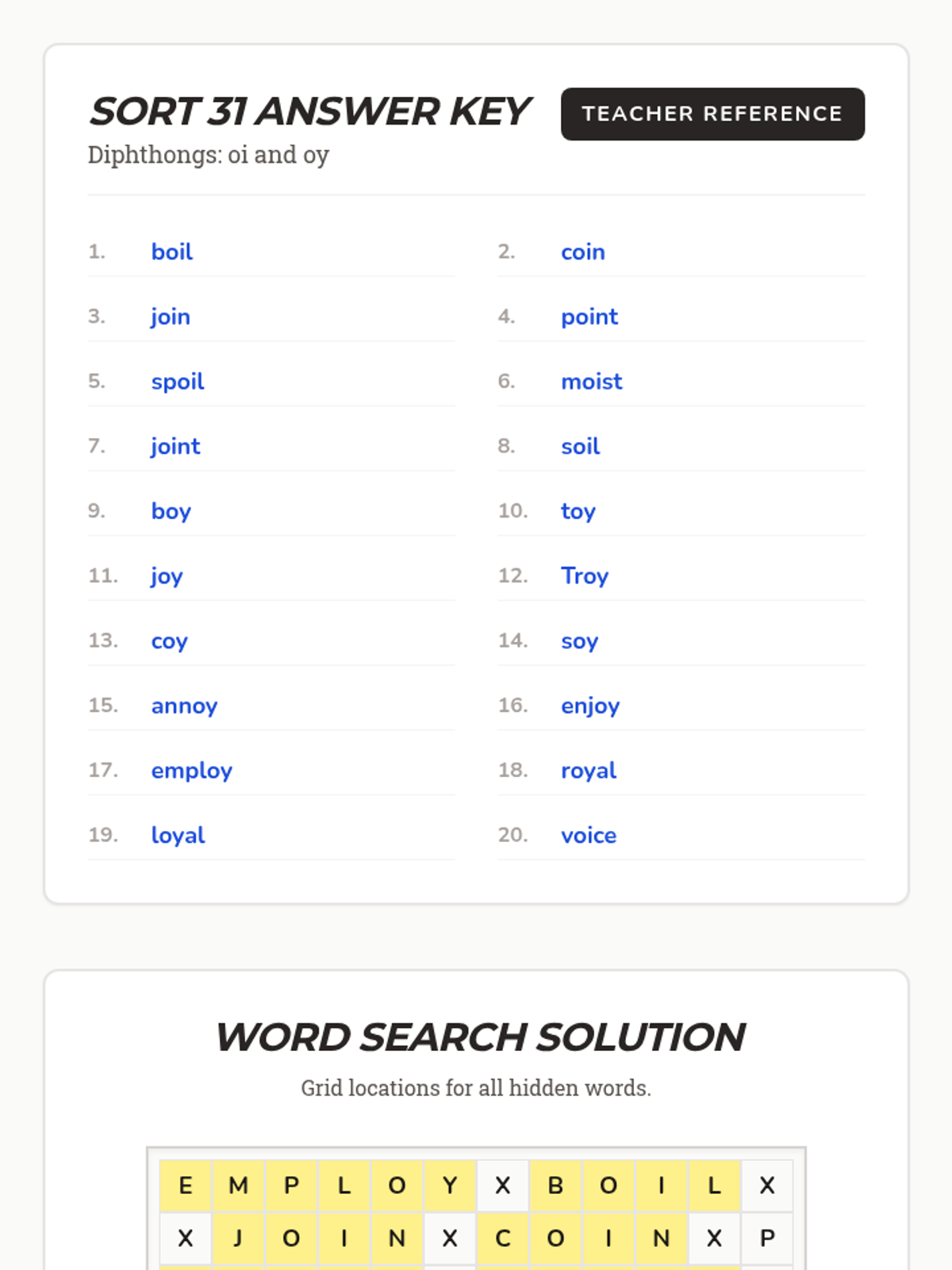
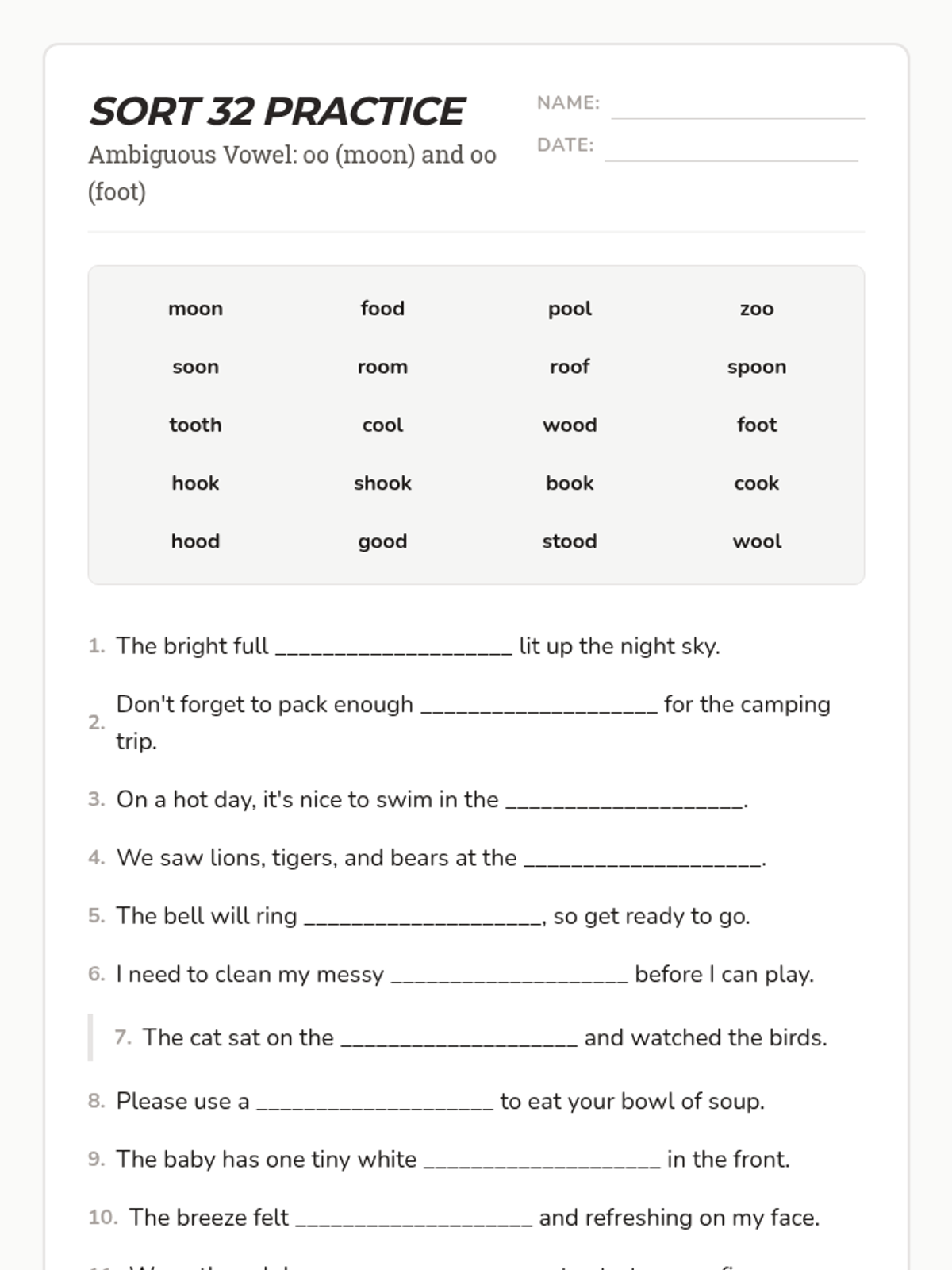
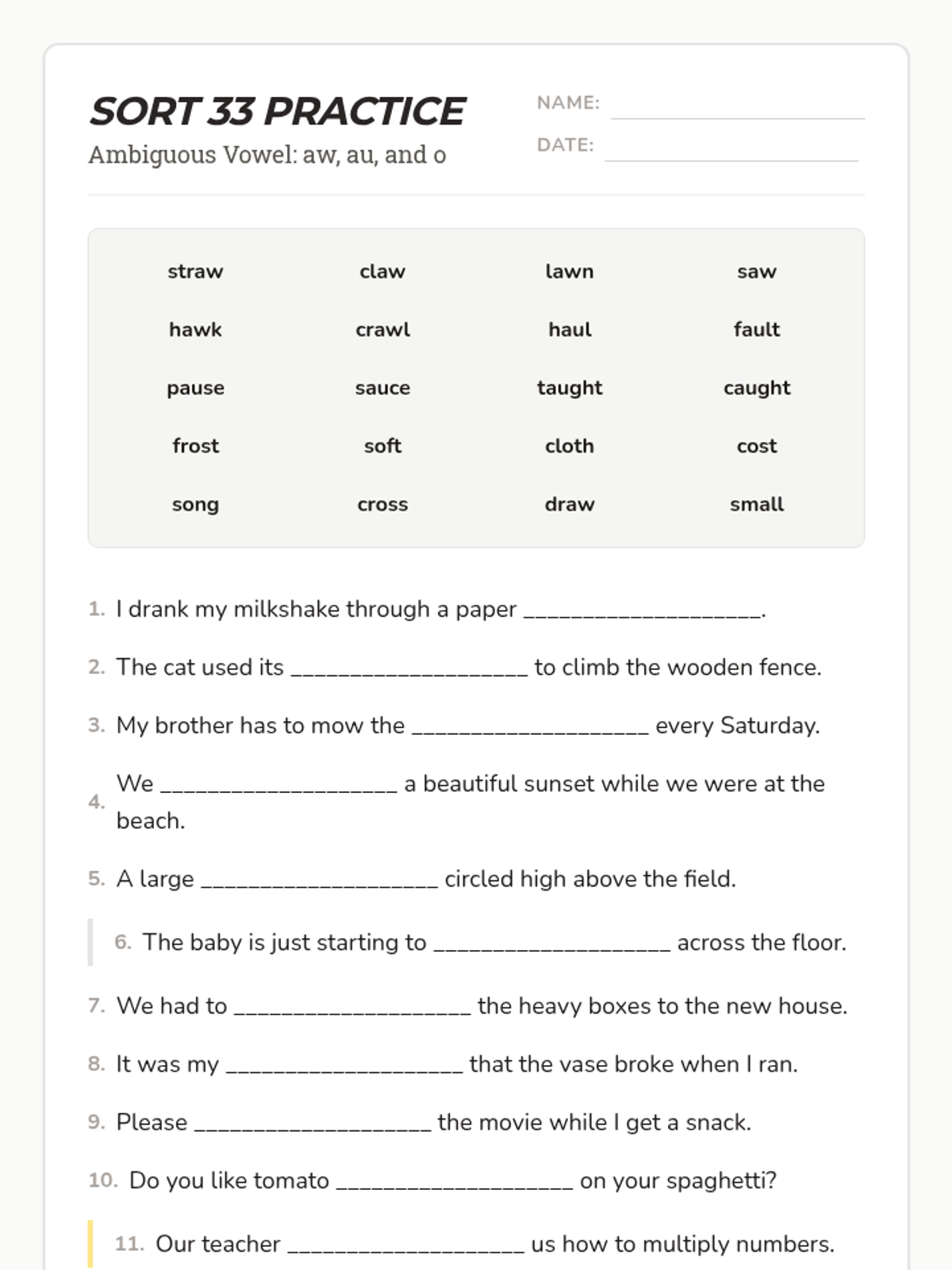
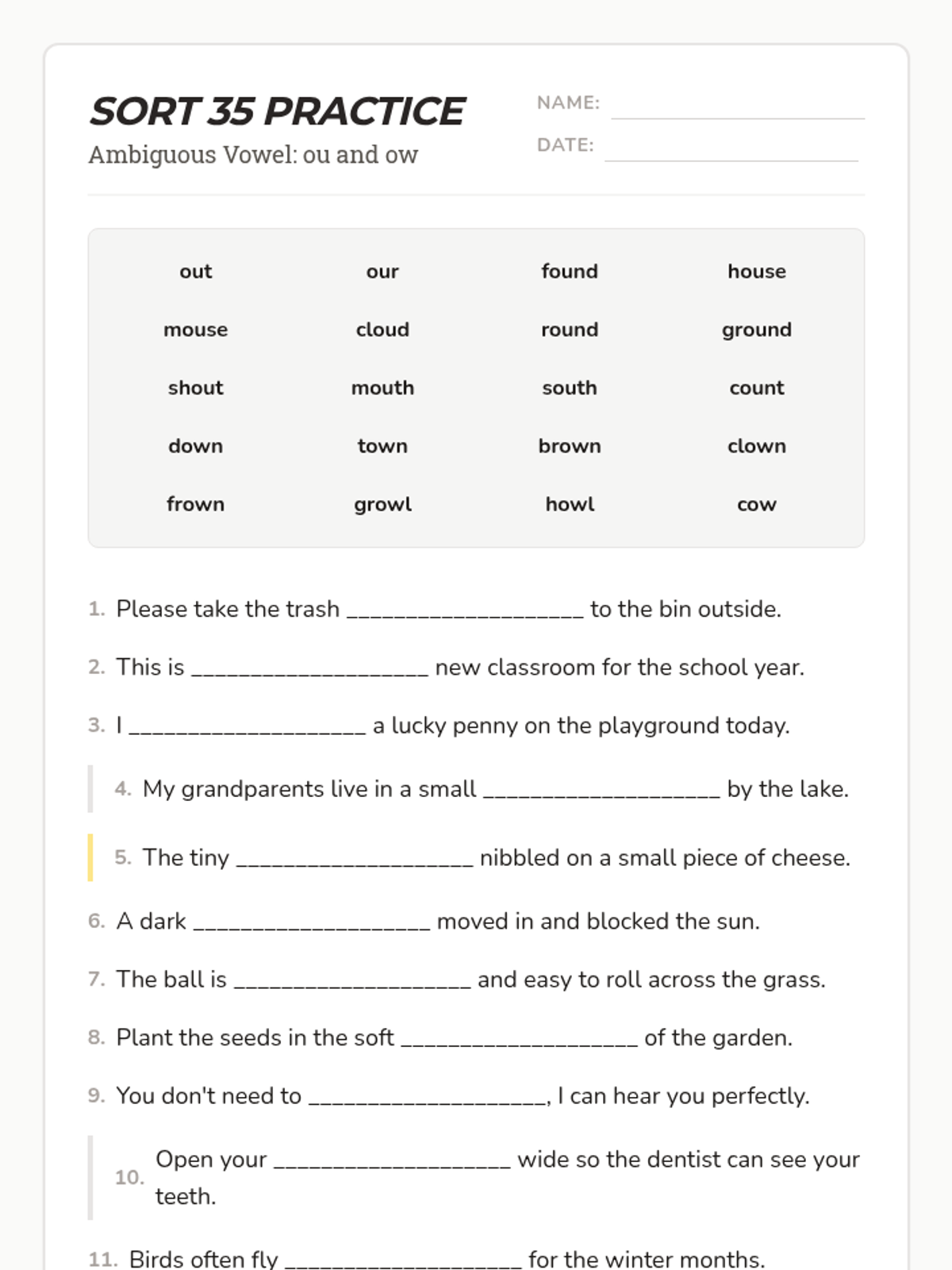
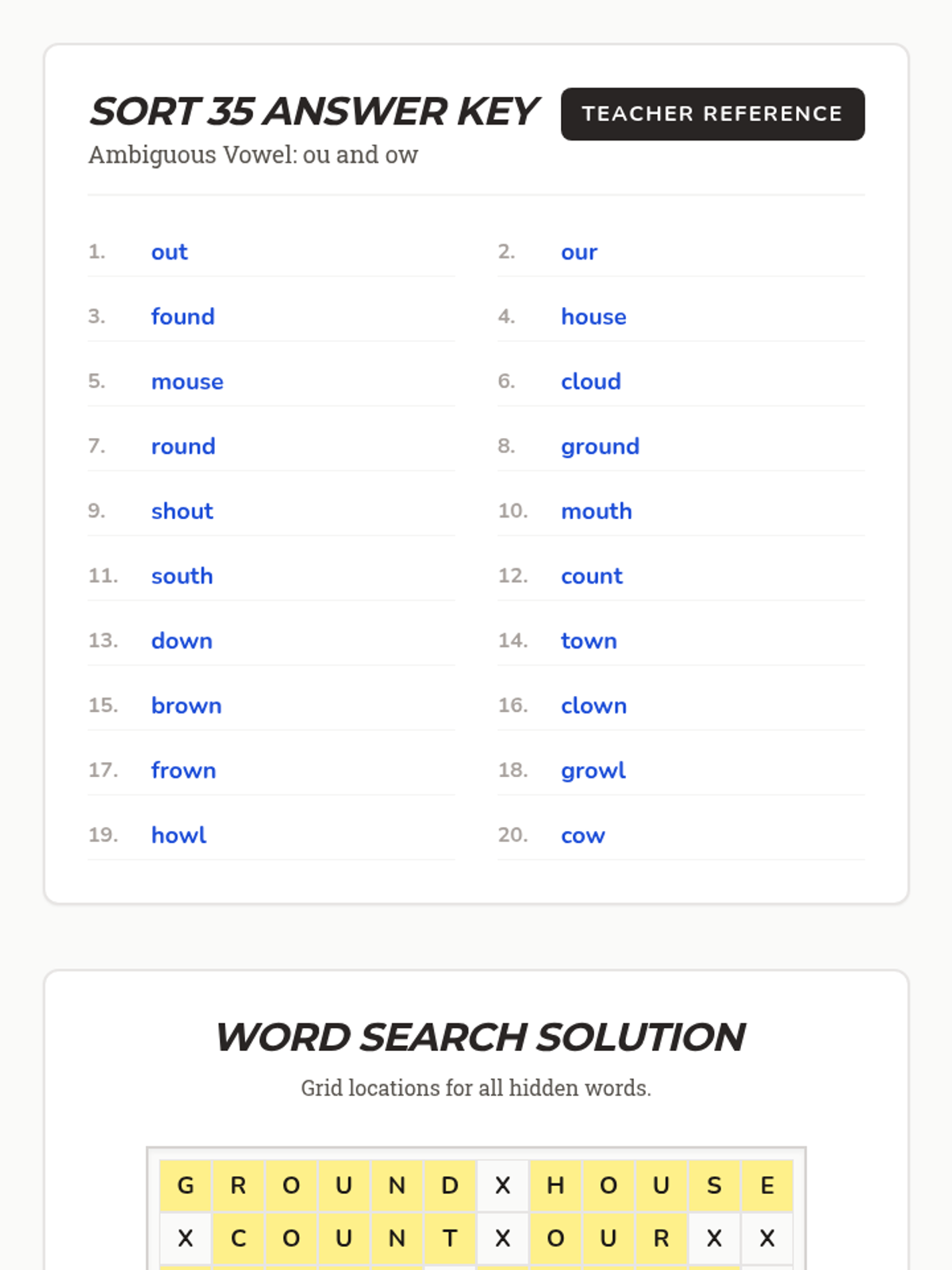
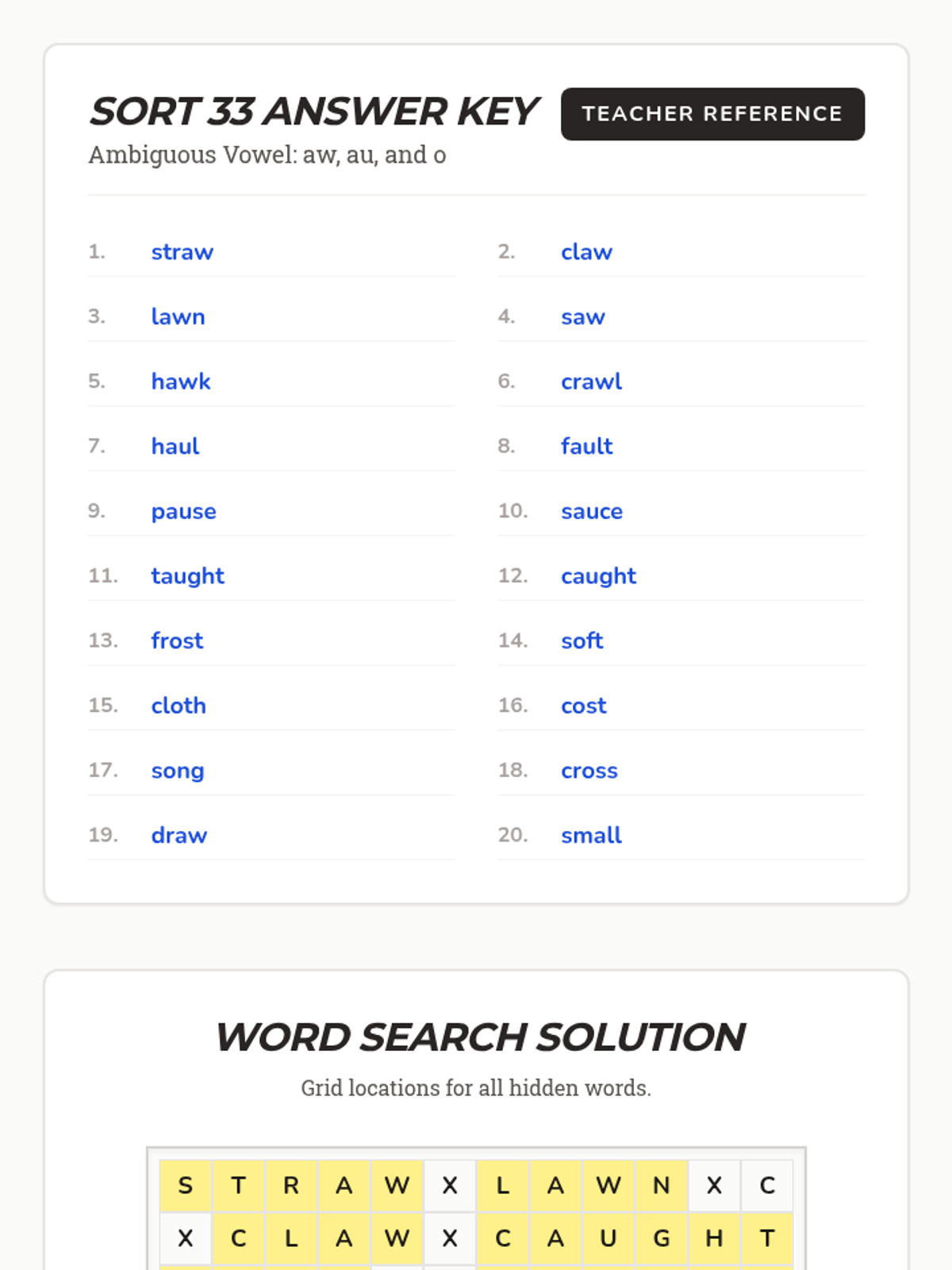
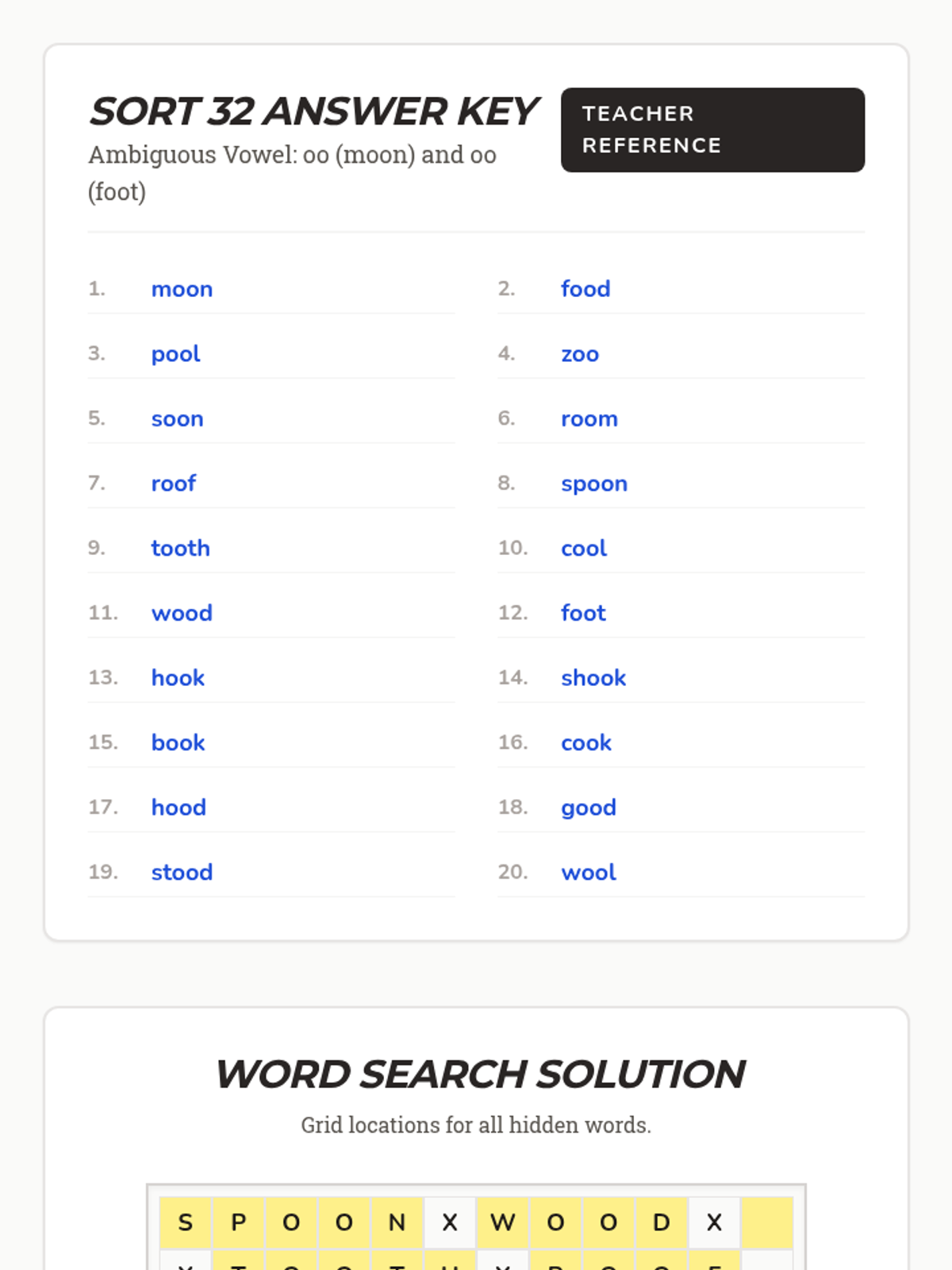
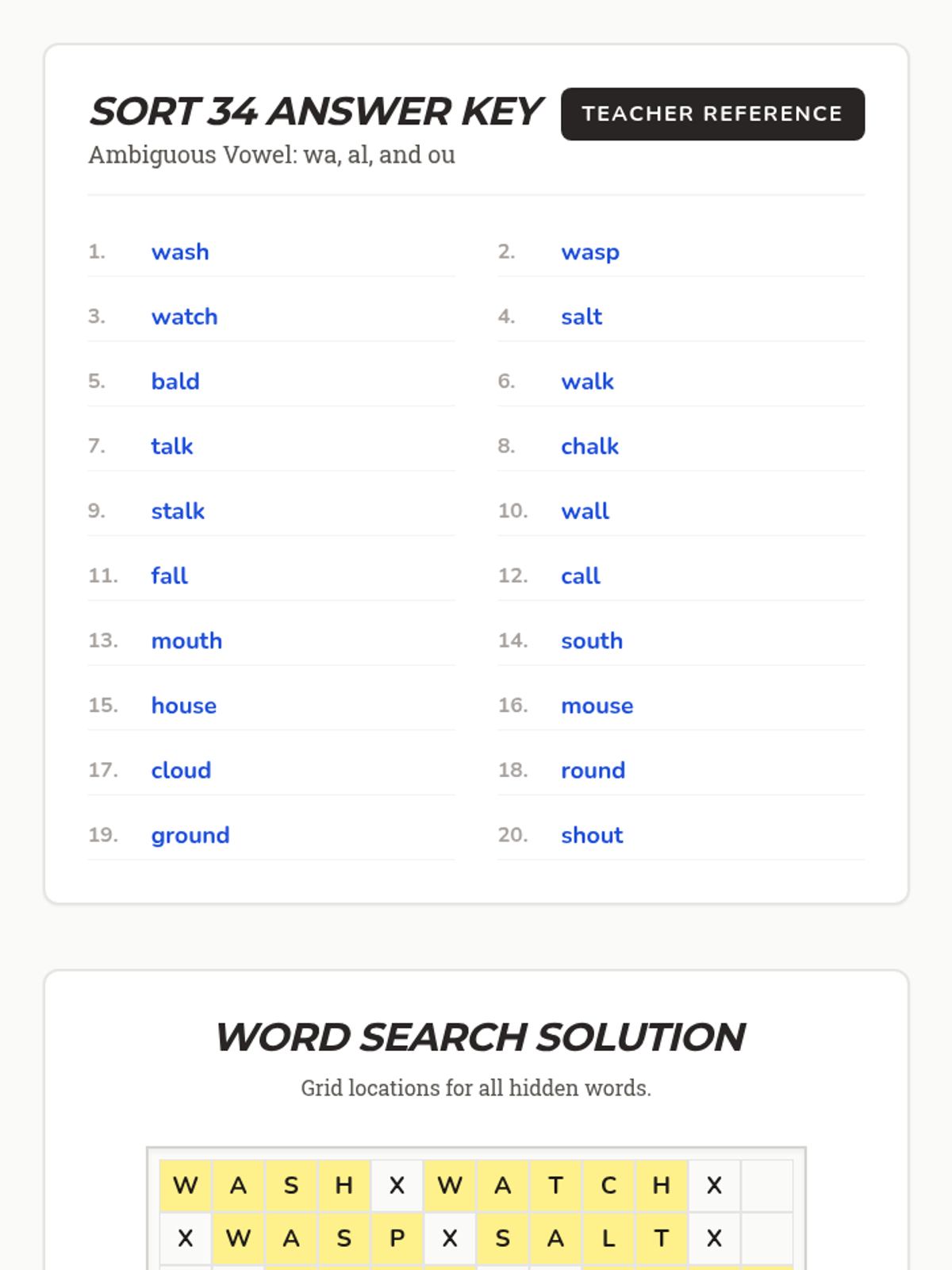
This lesson explores diphthongs and ambiguous vowel patterns including oi, oy, oo, aw, au, wa, al, and ou/ow. Students will practice identifying these sounds through context and word searches.
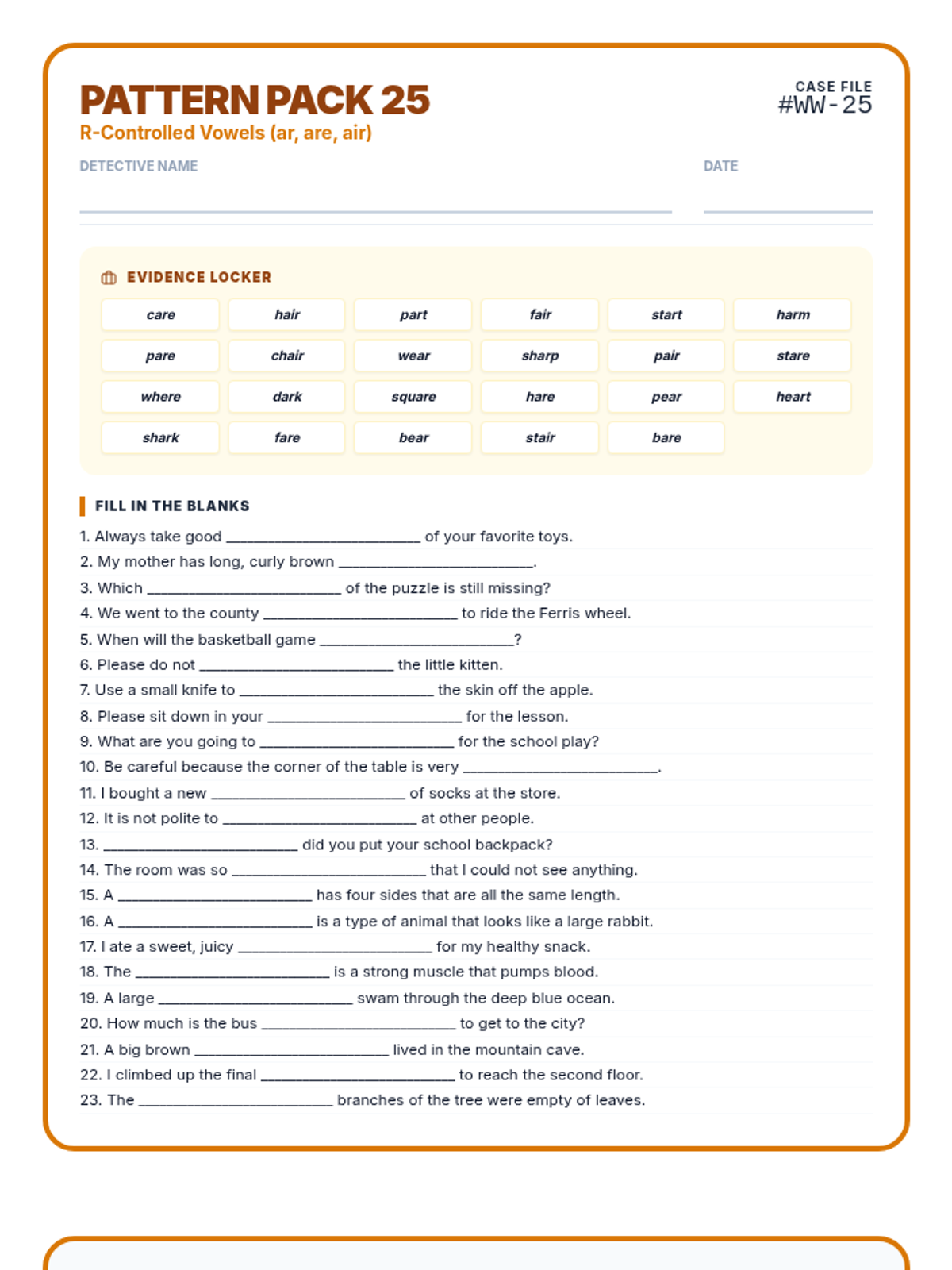
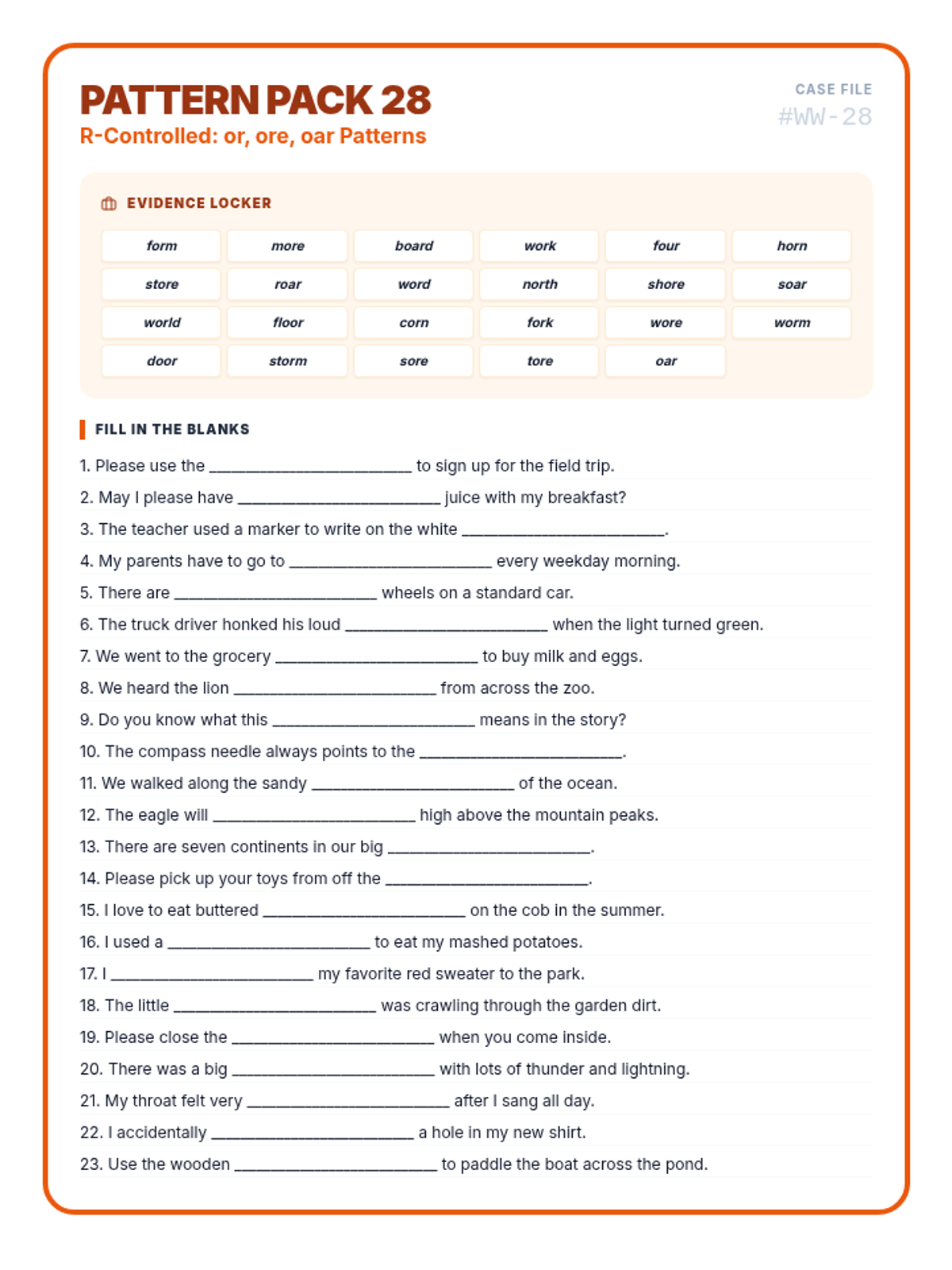
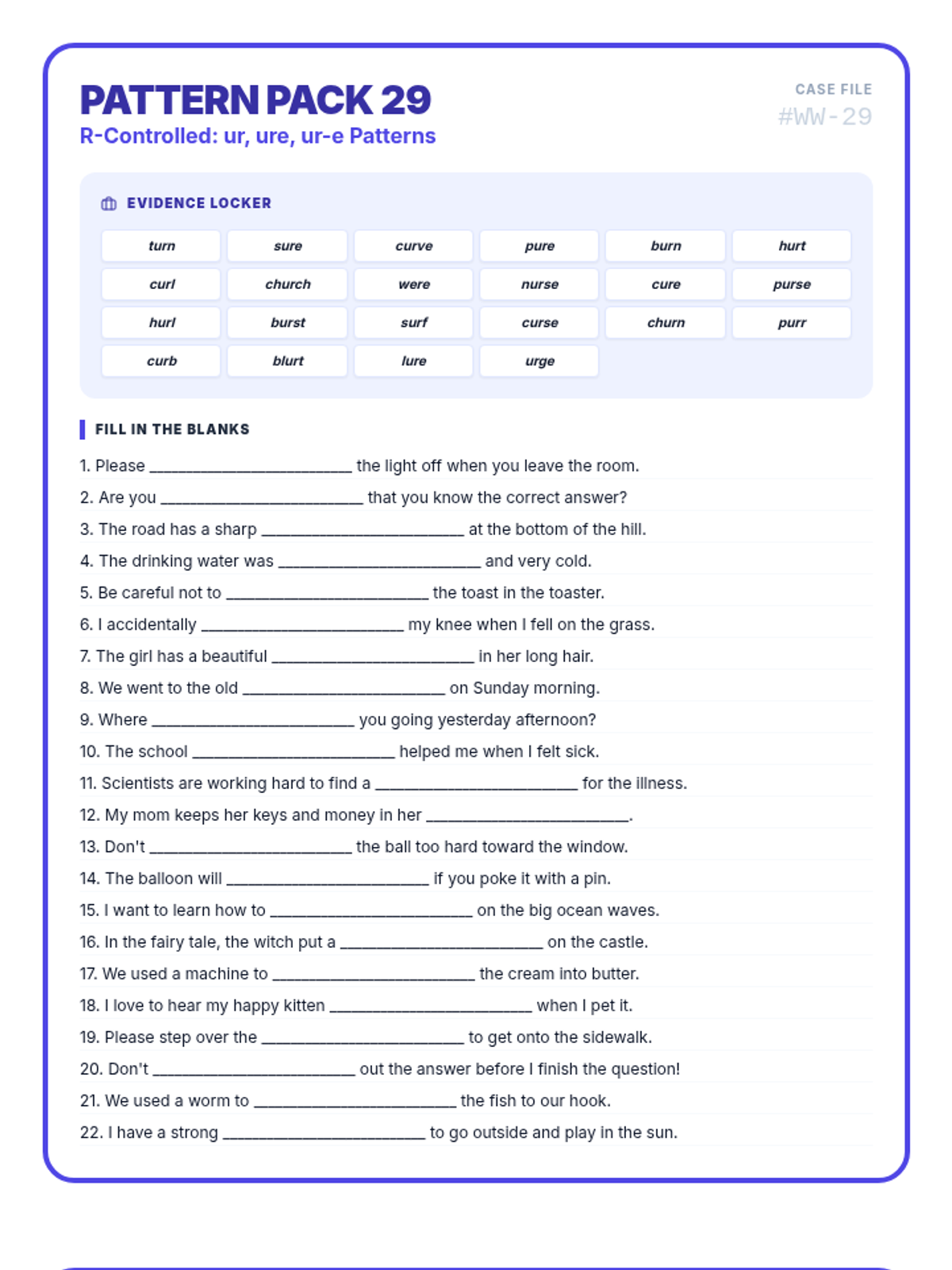
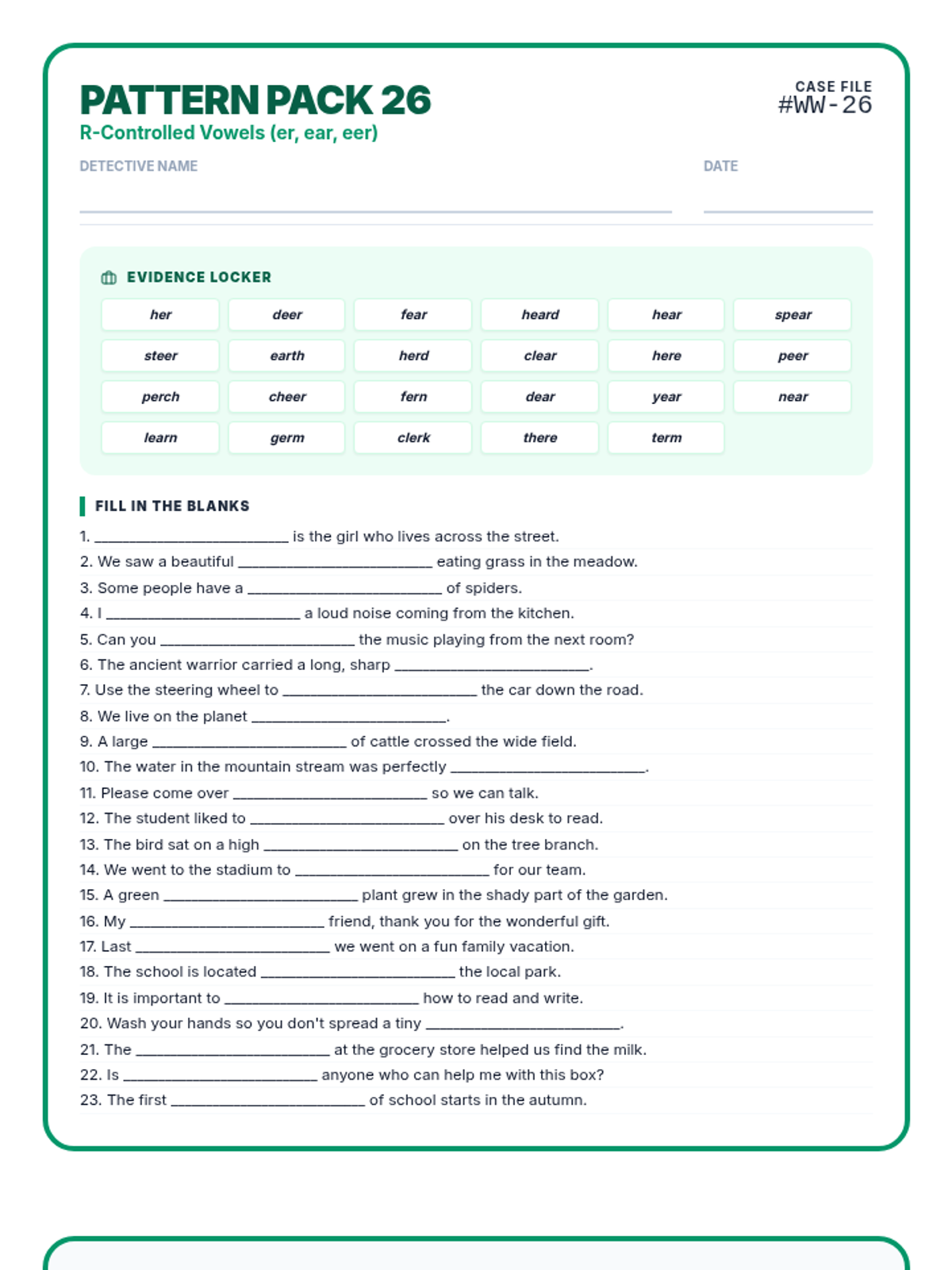
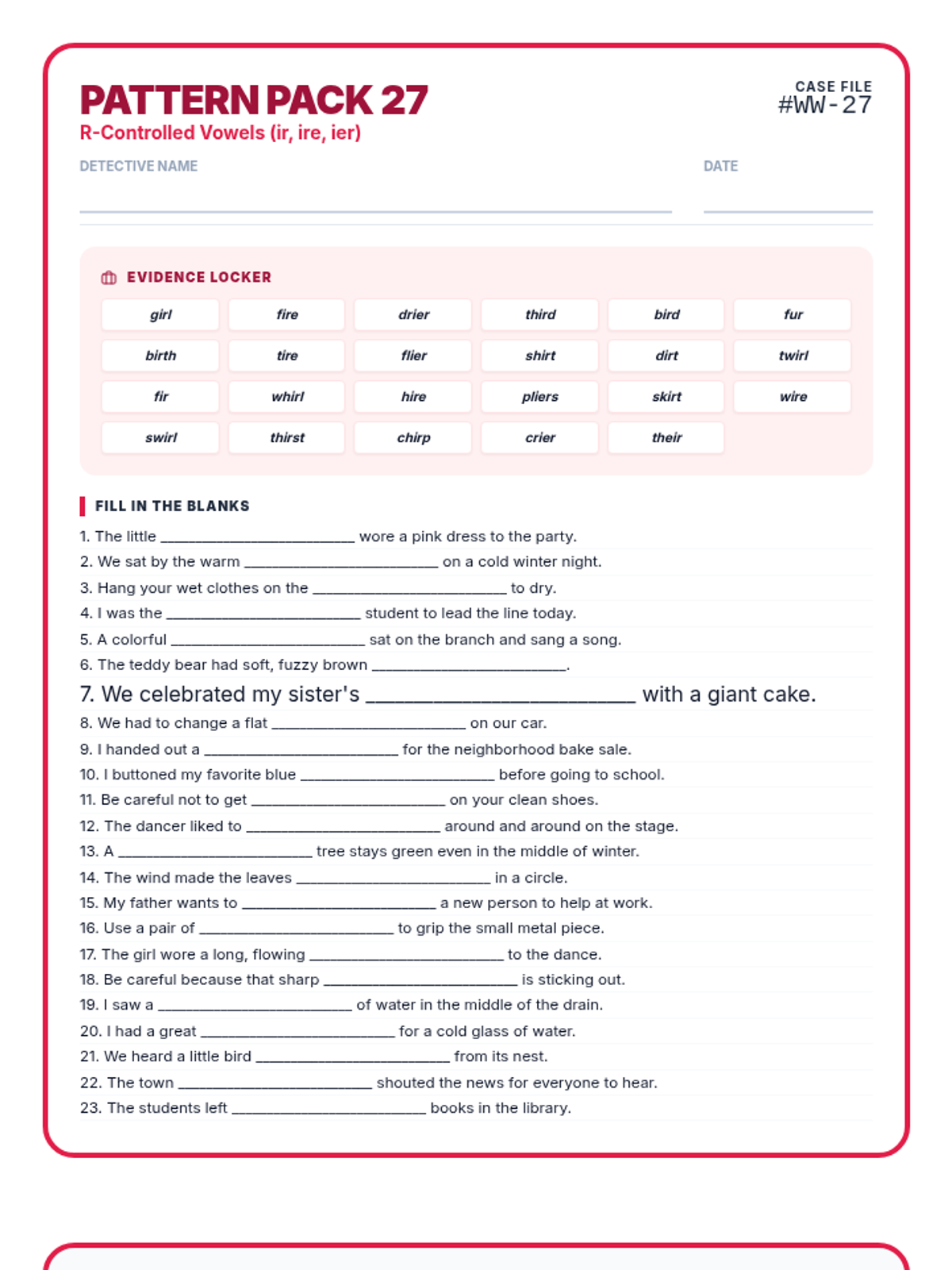
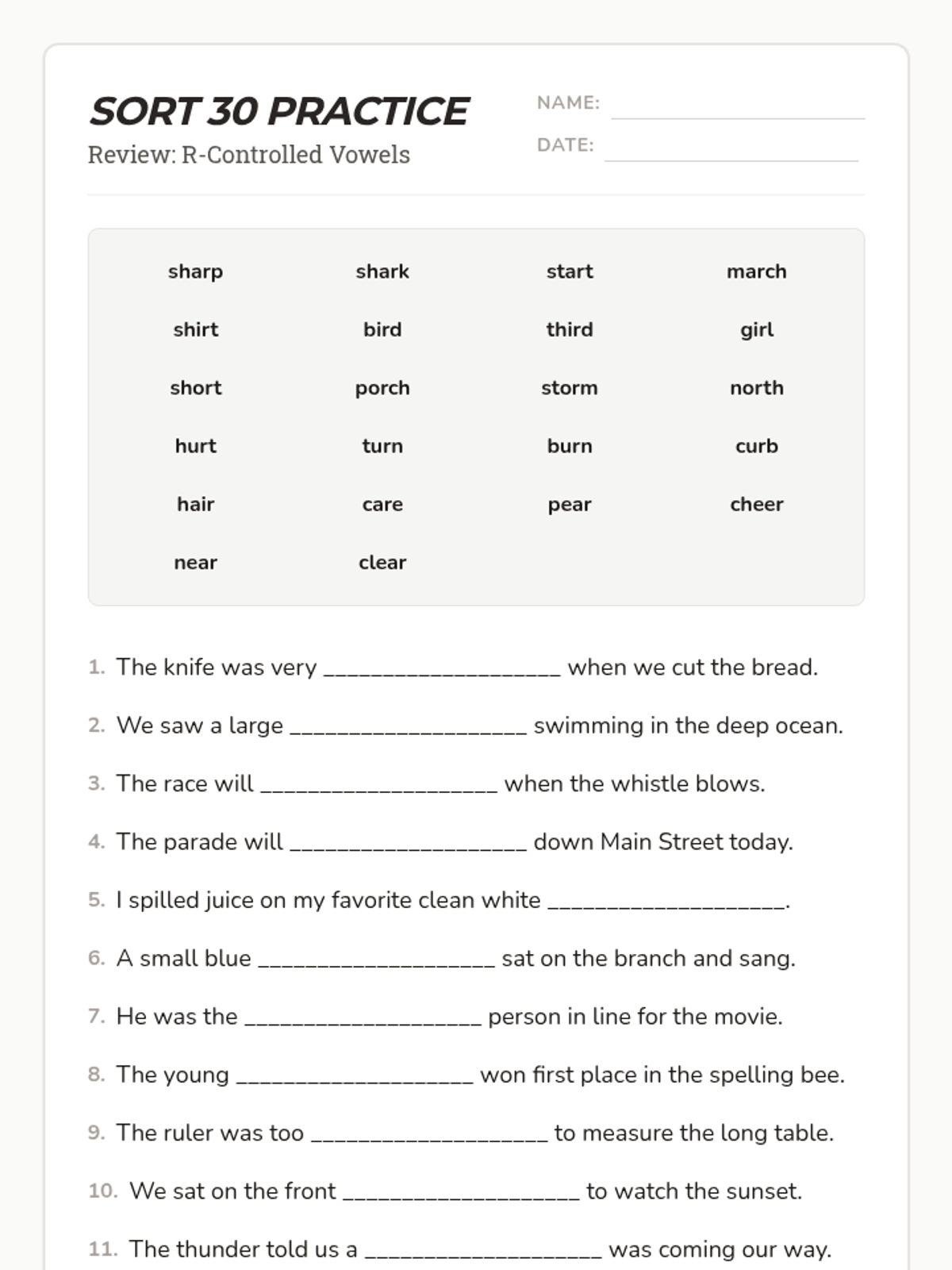
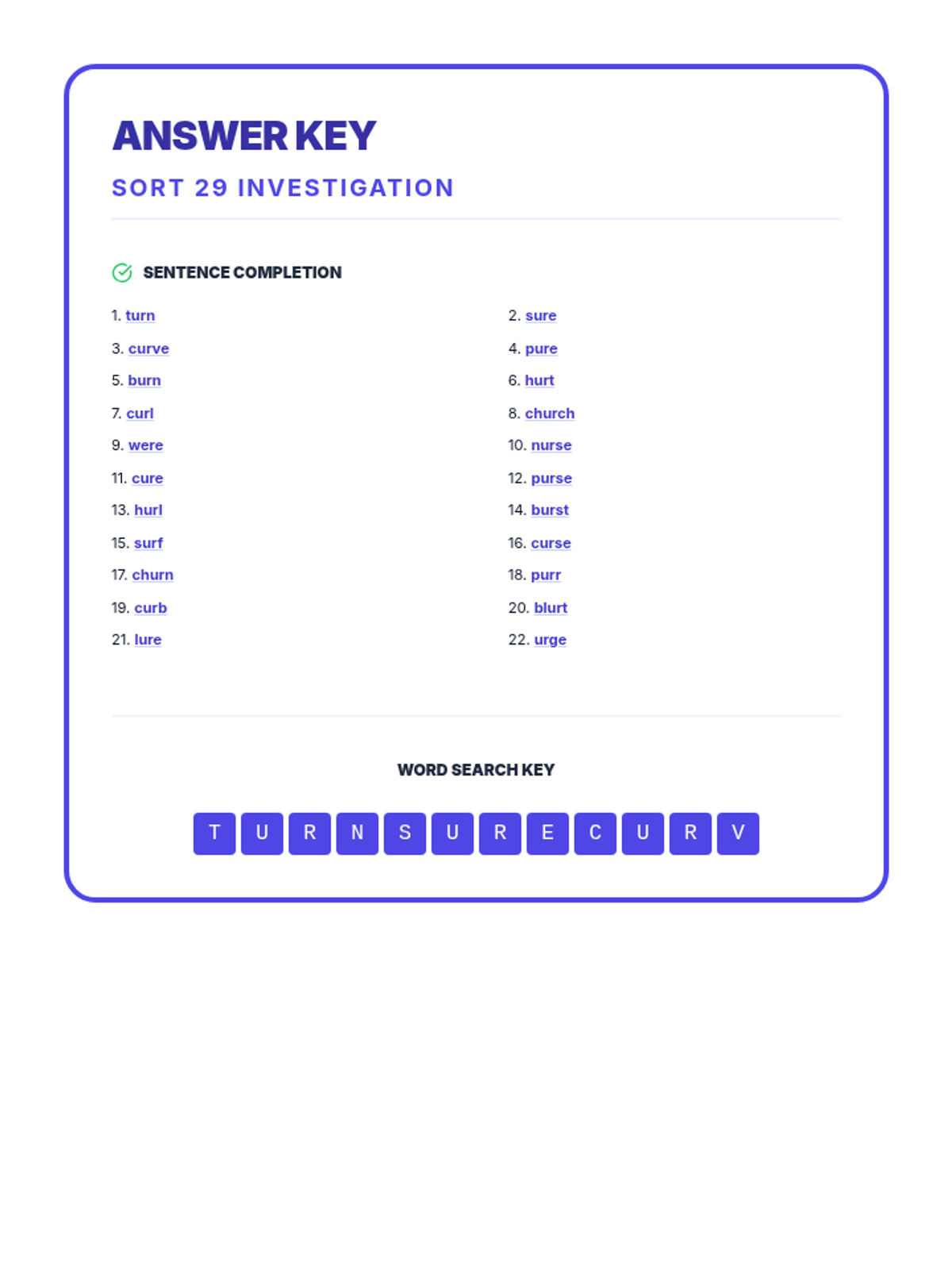
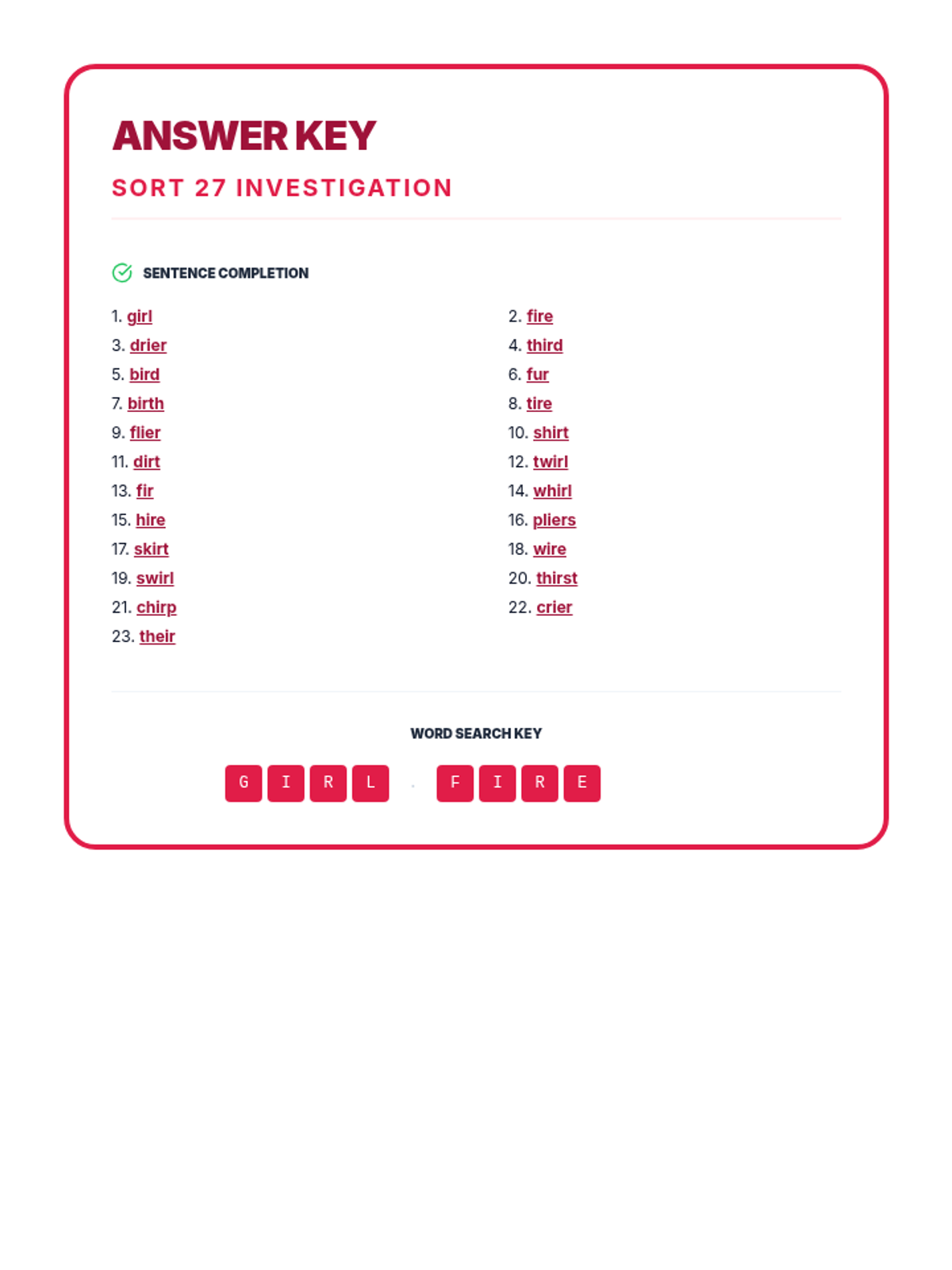
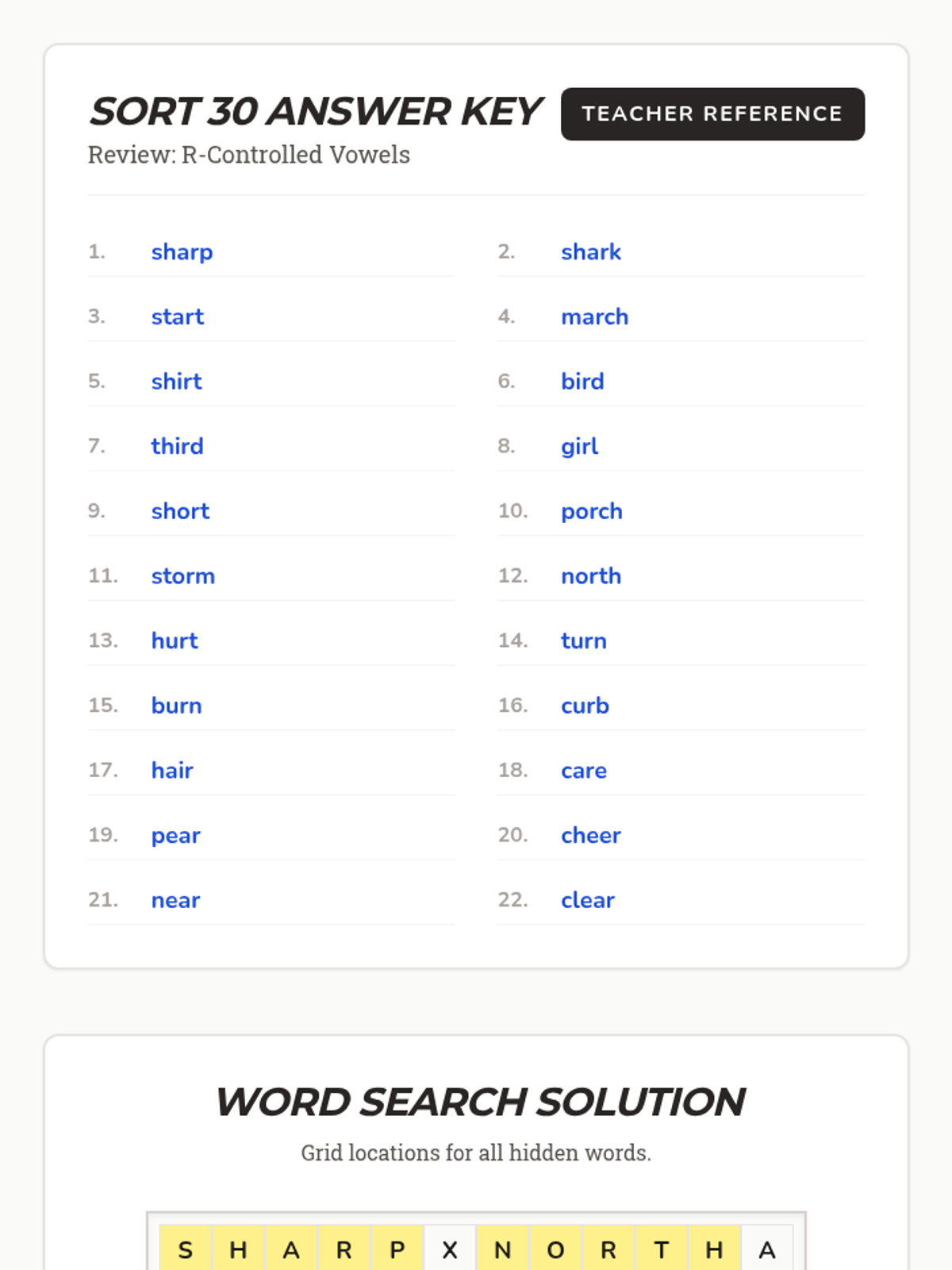
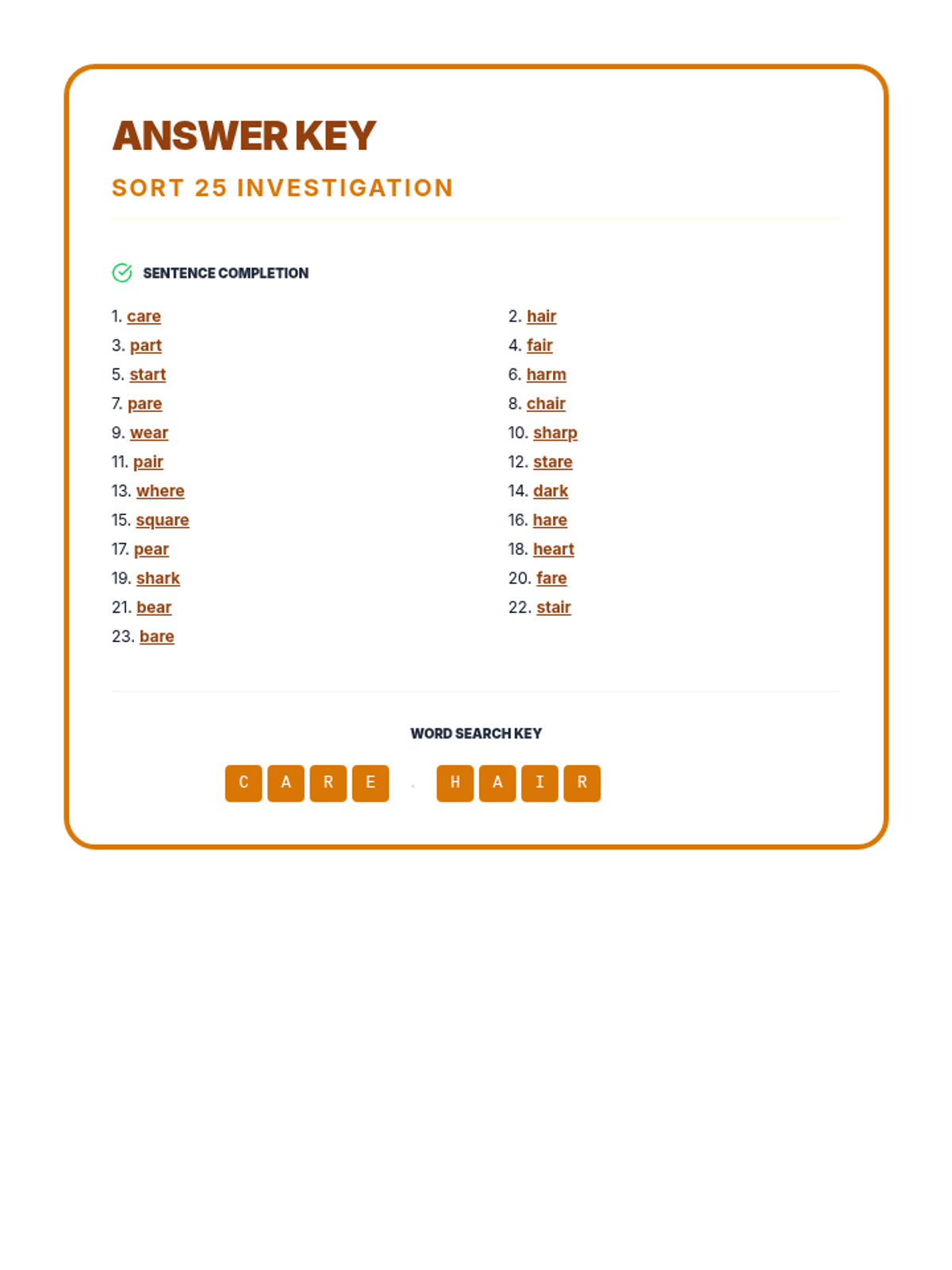
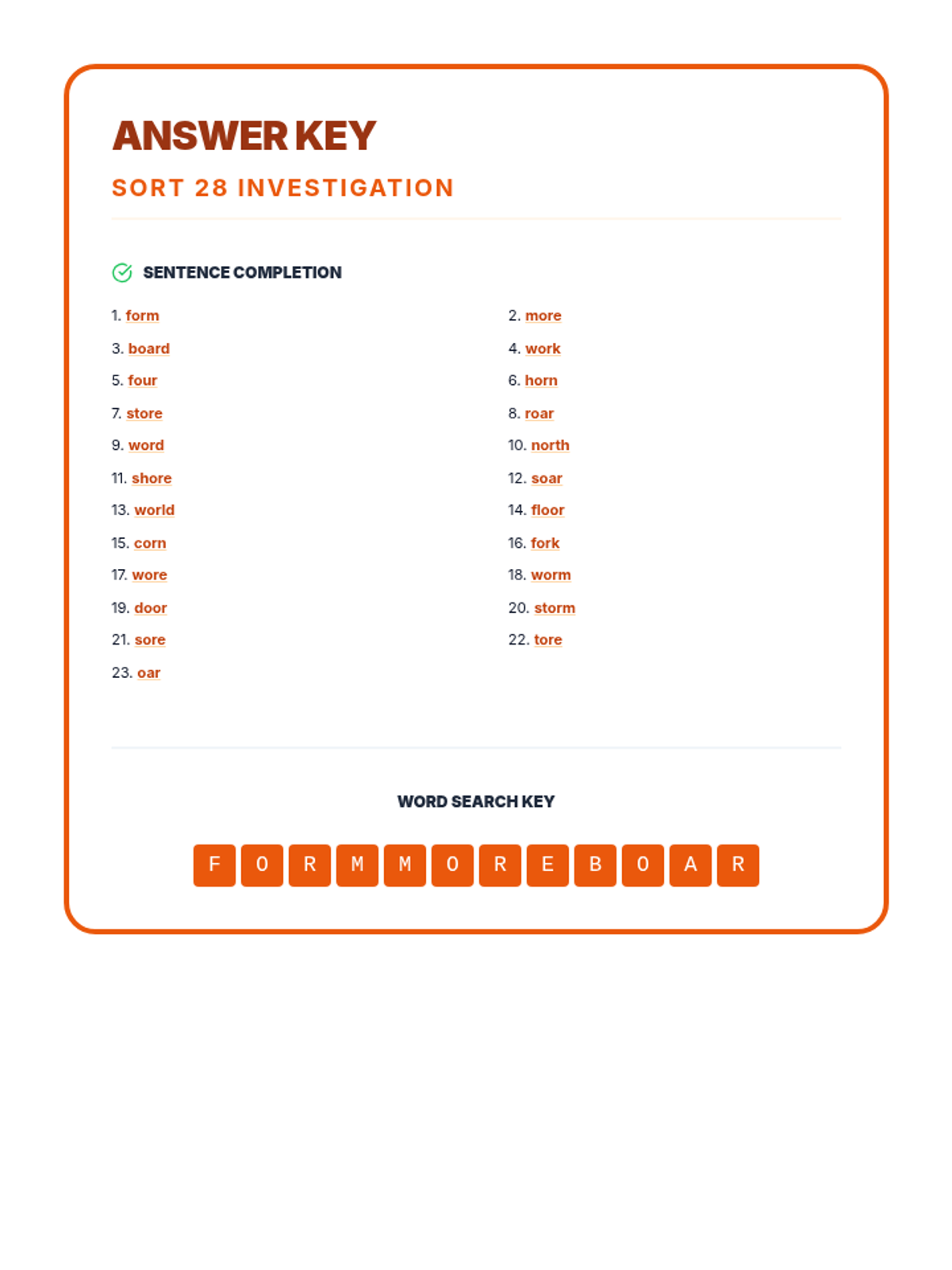
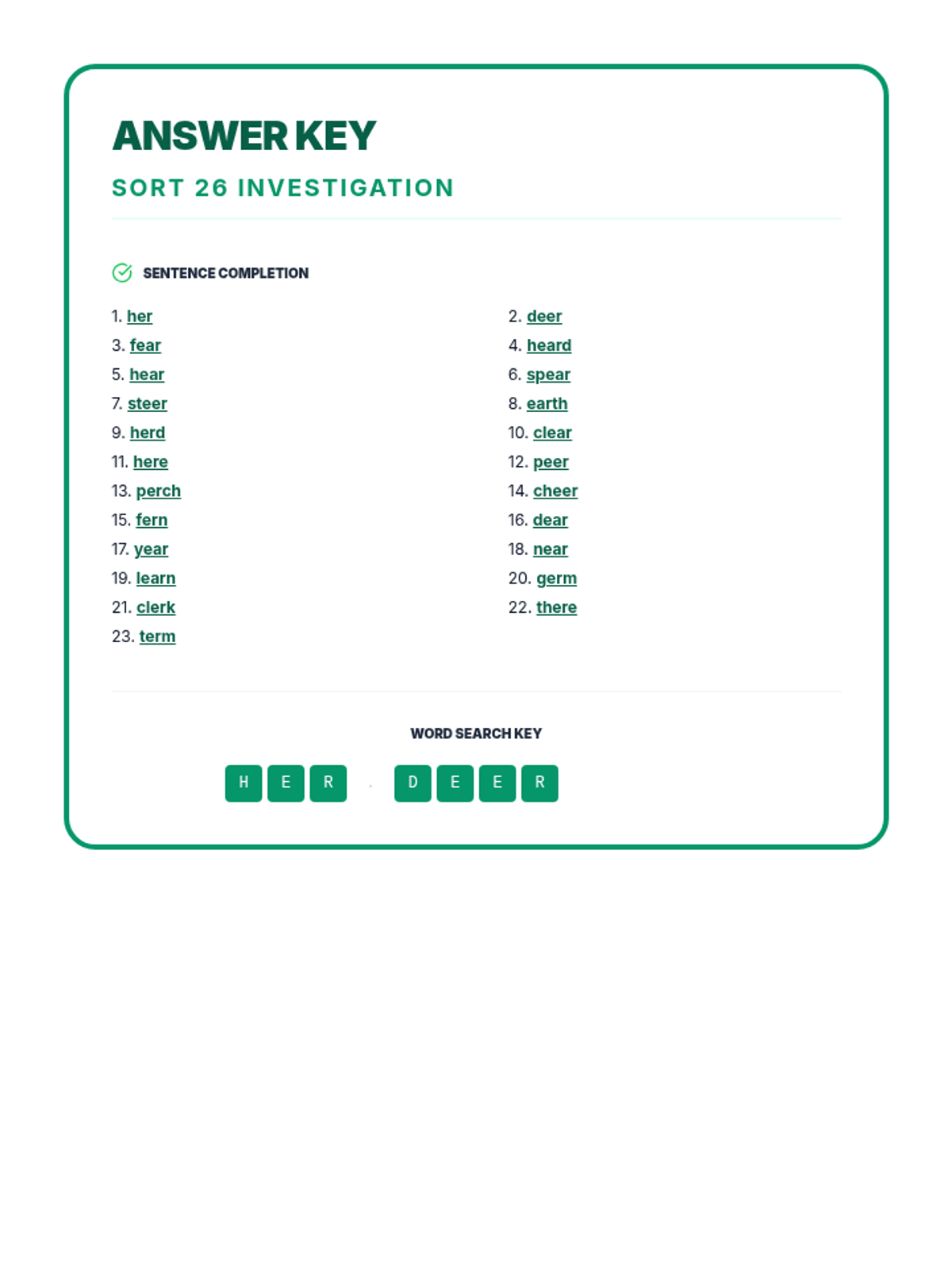
Investigation into r-controlled vowel patterns including ar, are, air, er, ear, eer, ir, ire, ier, or, ore, oar, and ur patterns.
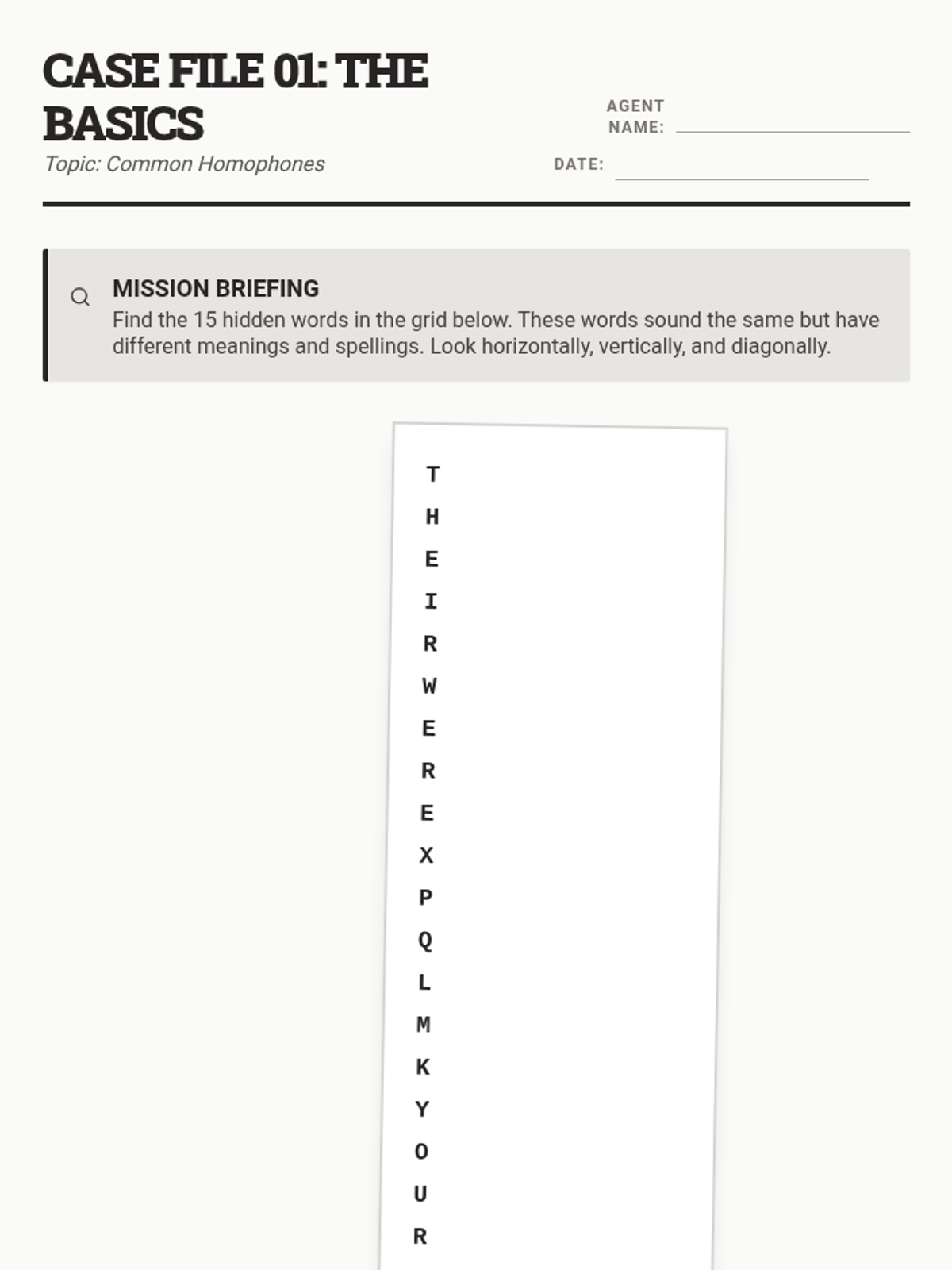
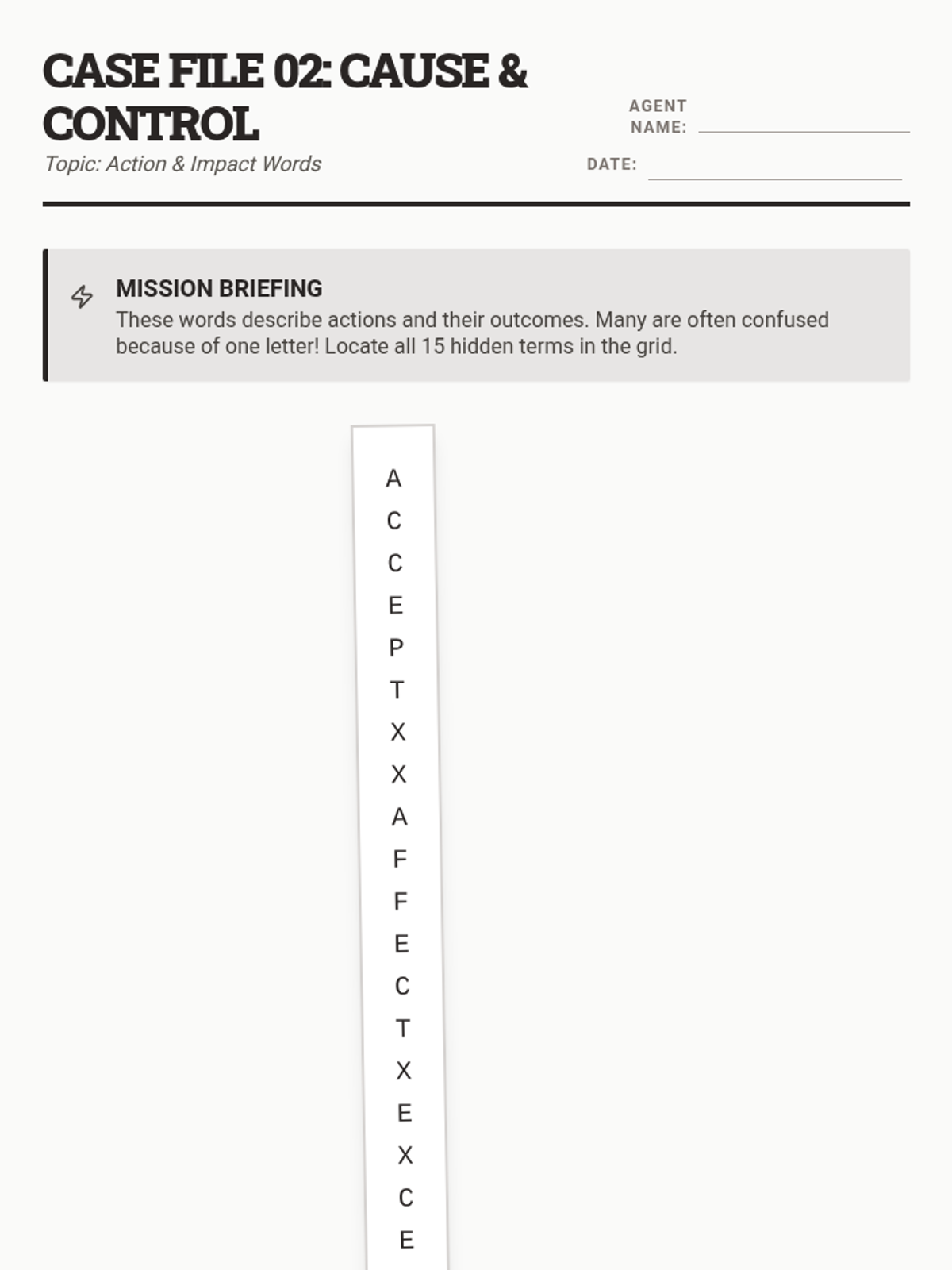
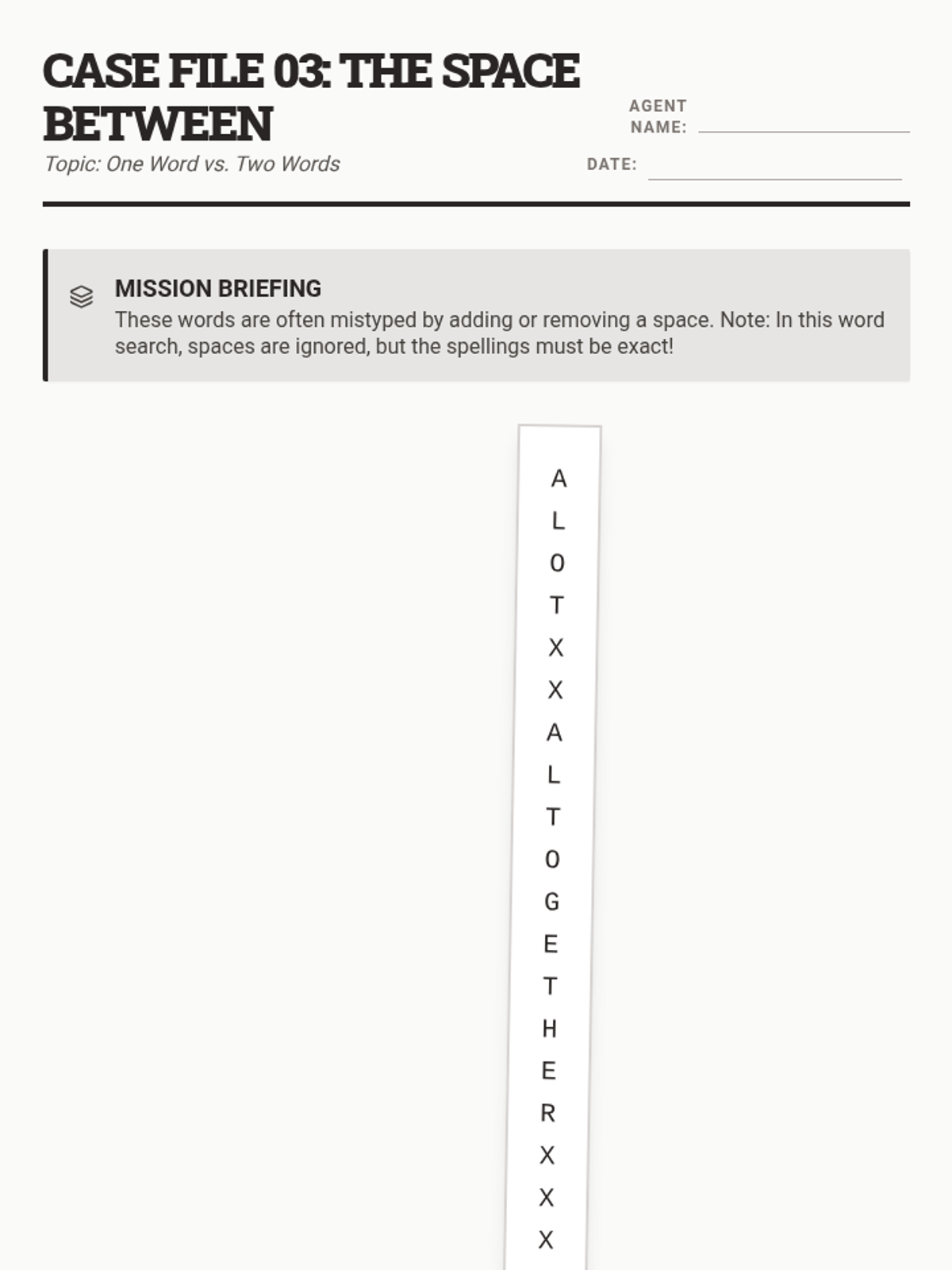
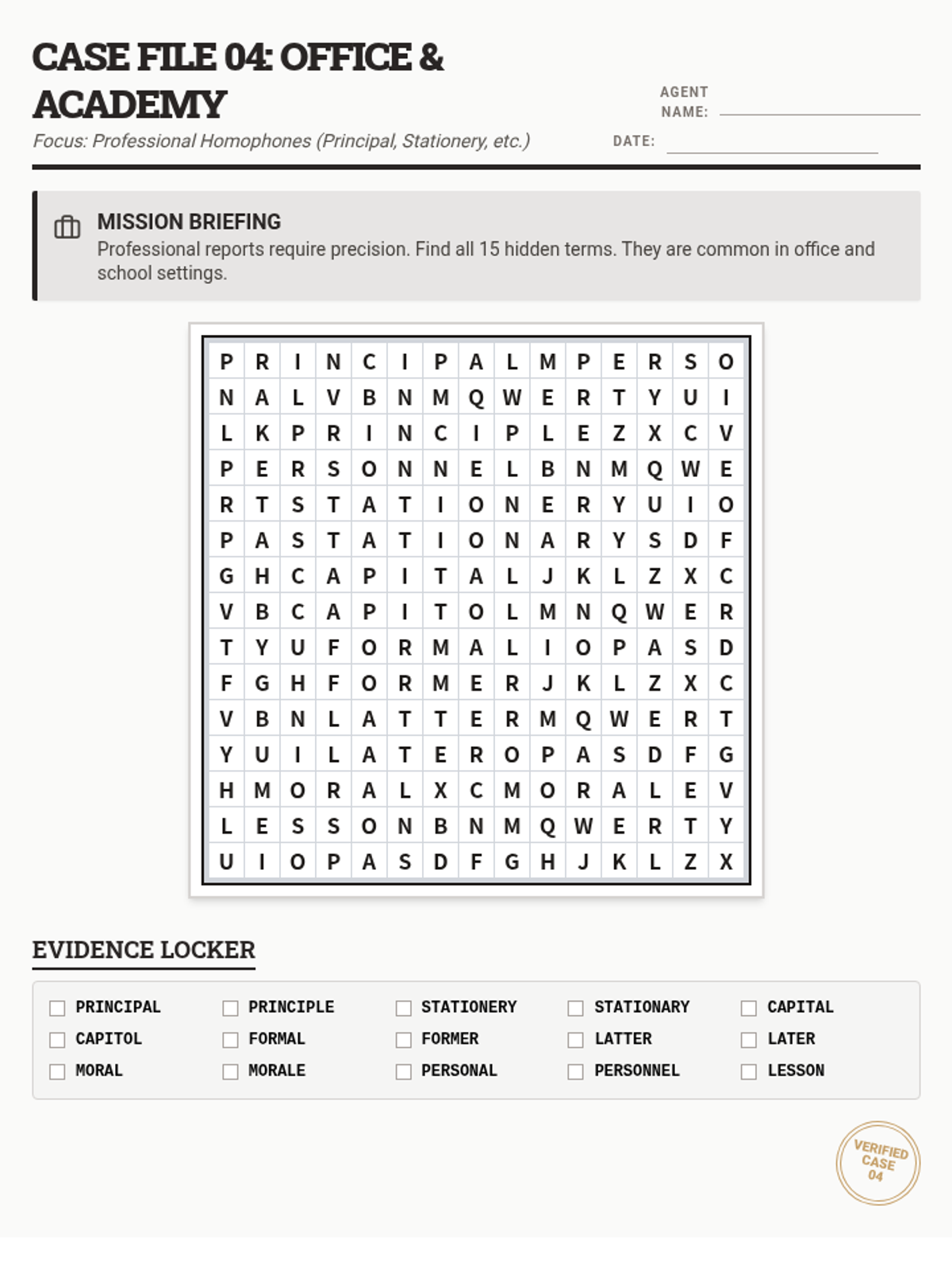
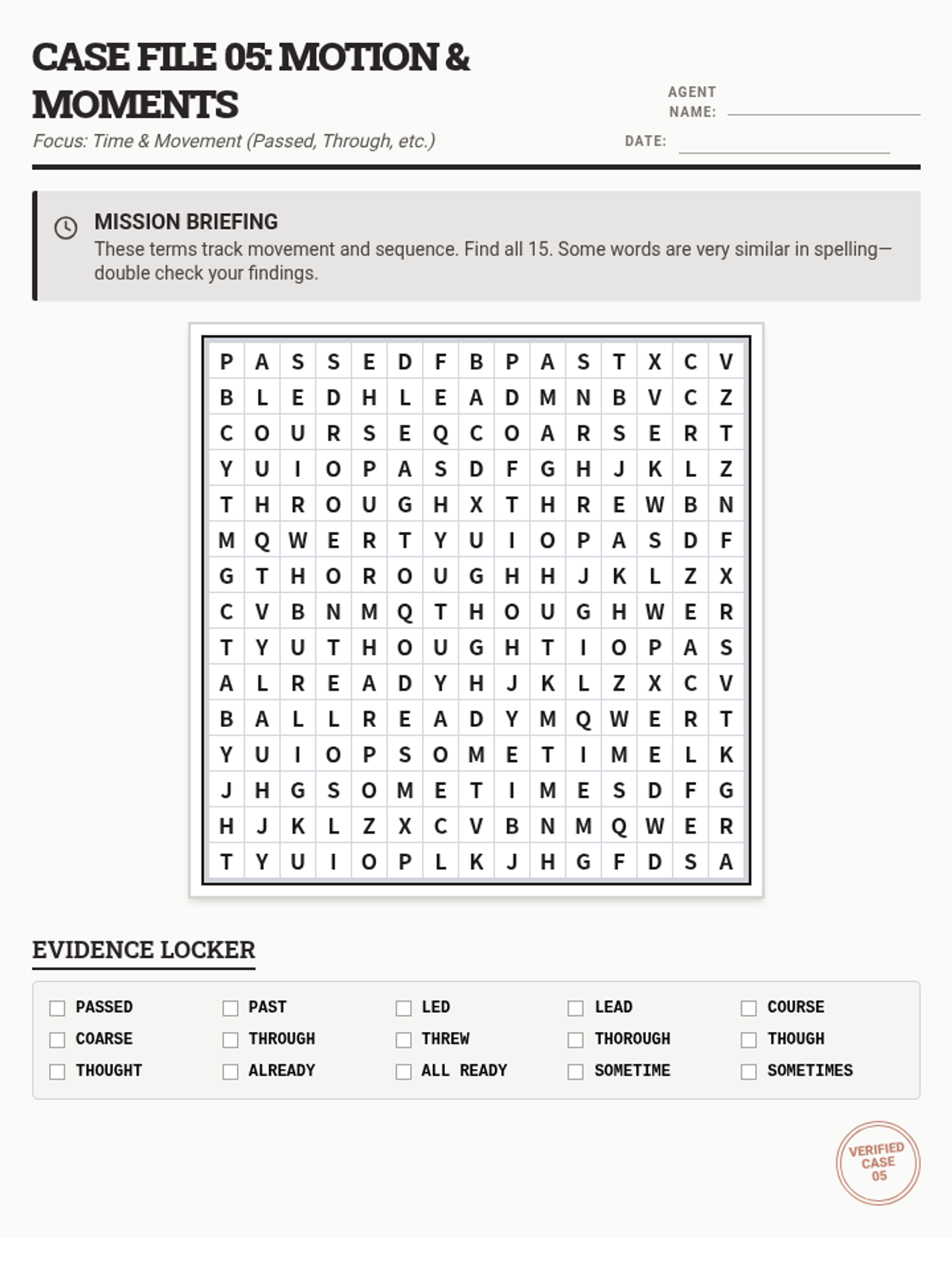
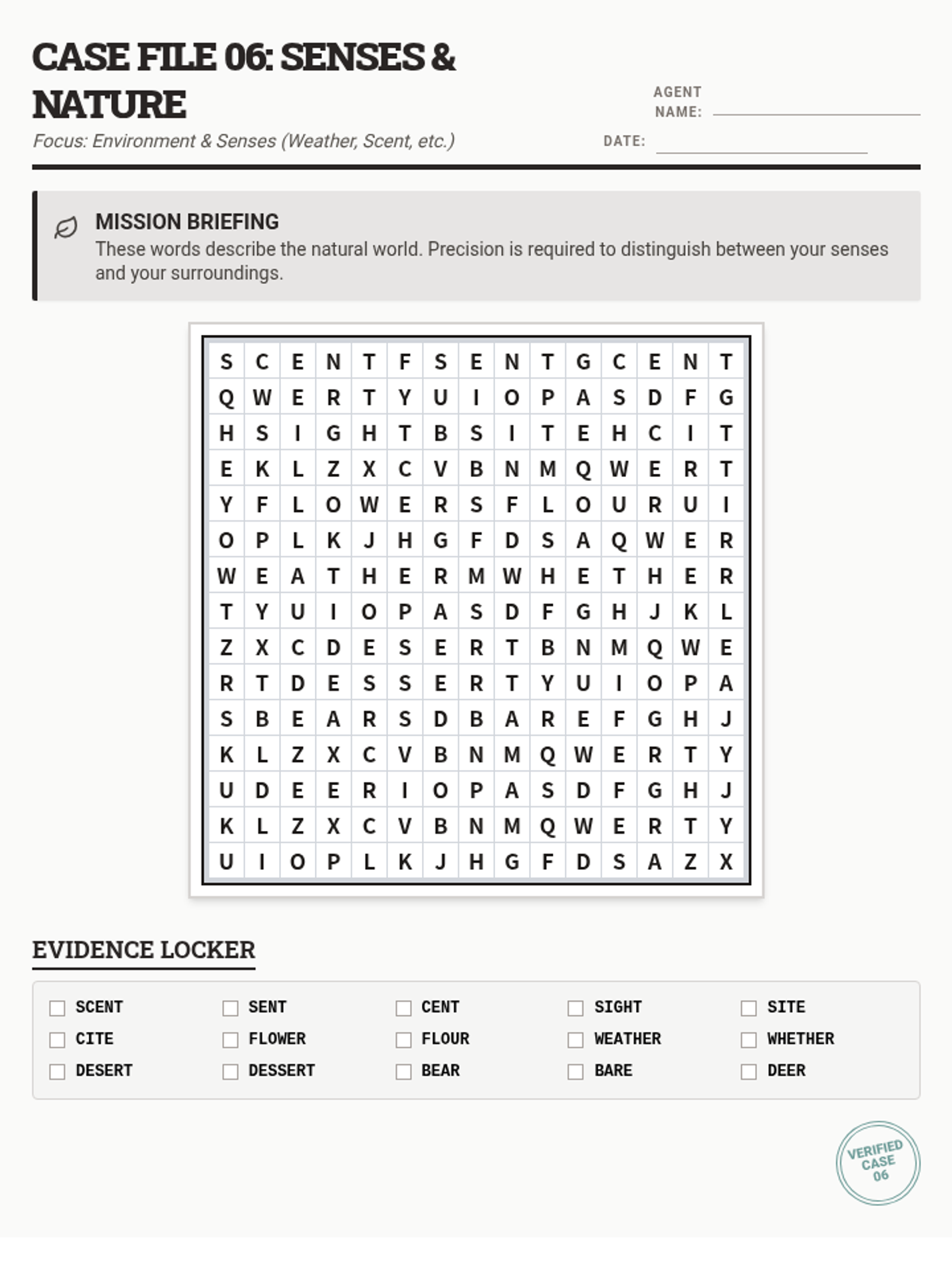
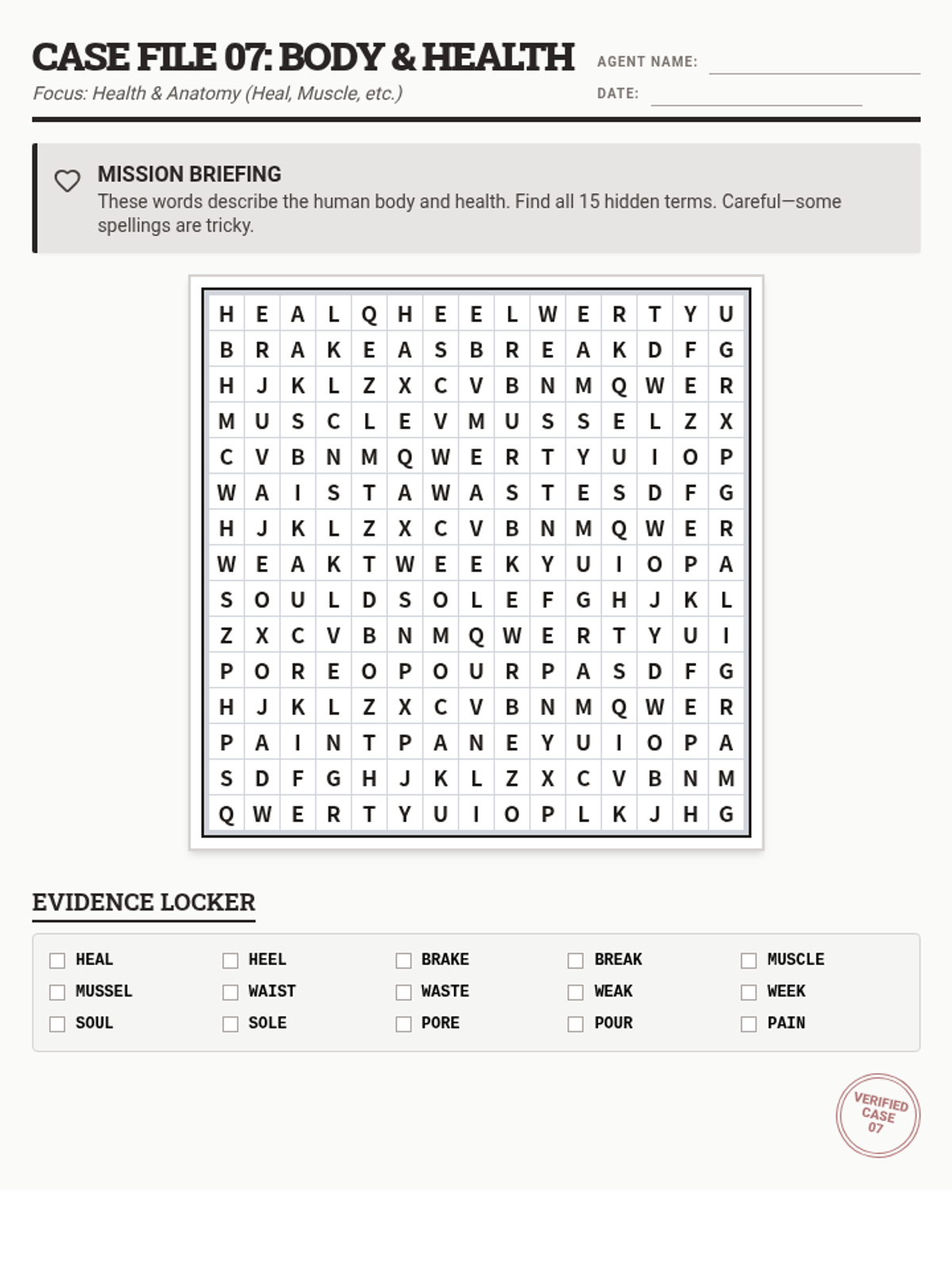
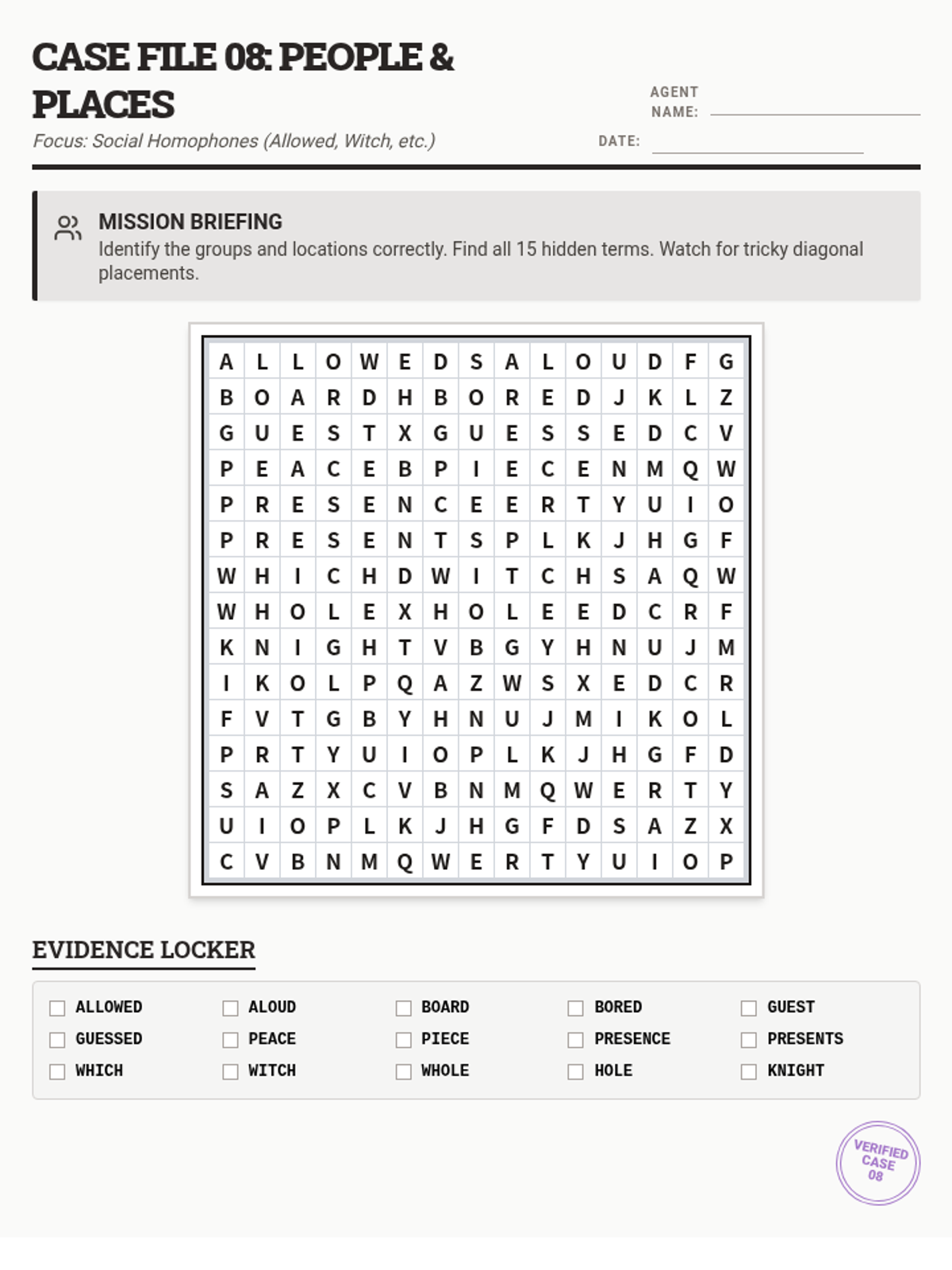
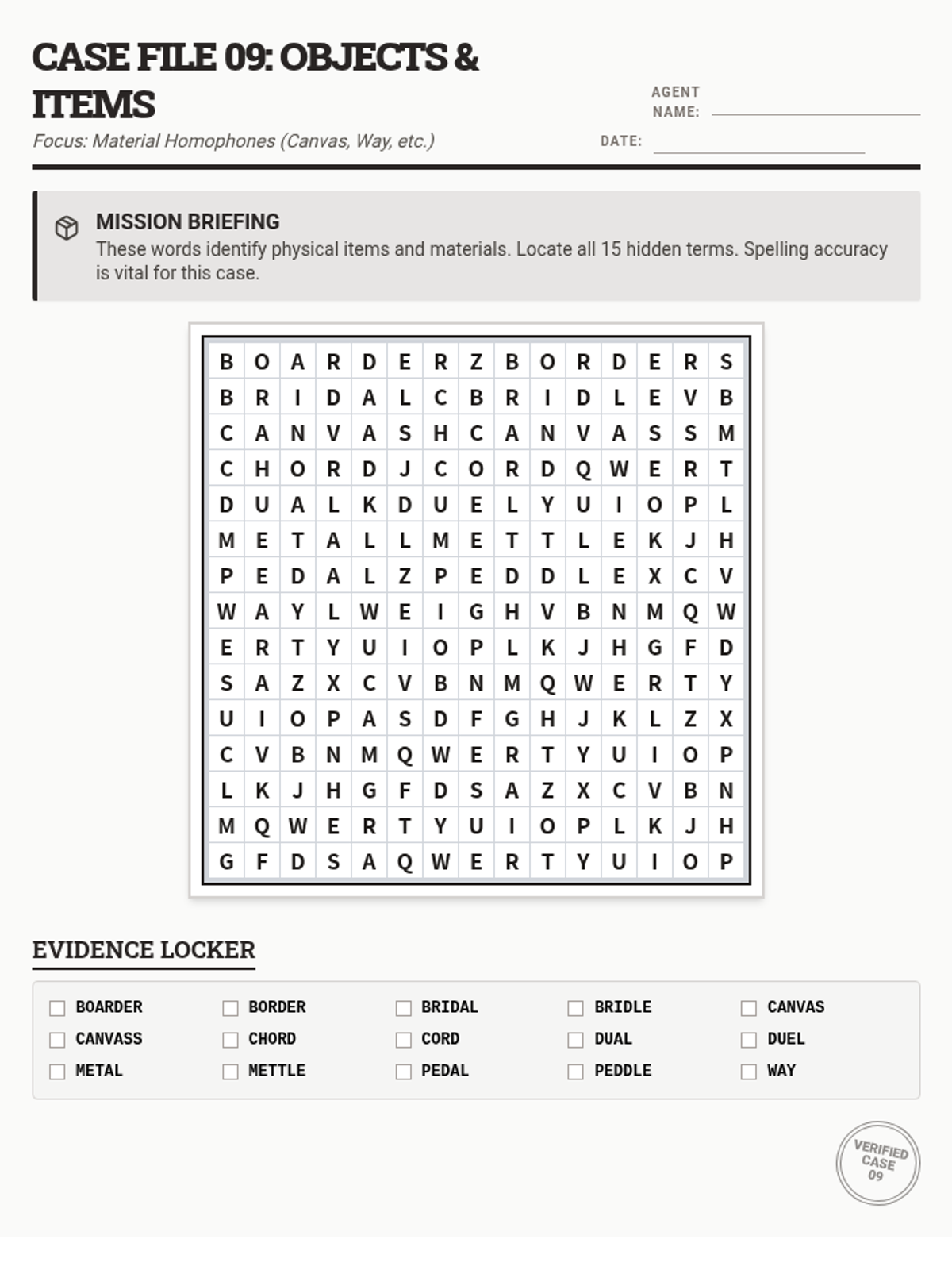
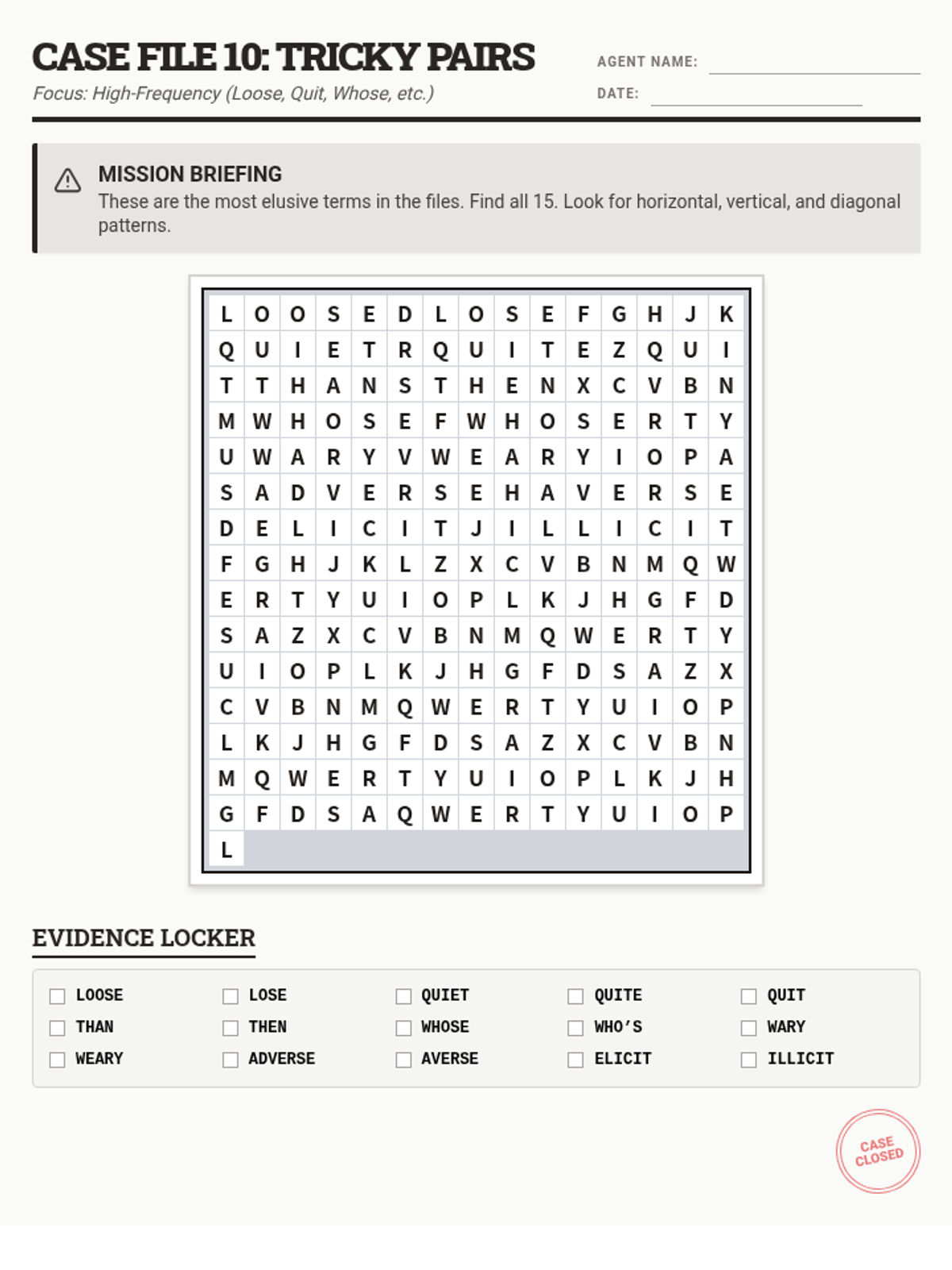
A comprehensive collection of 10 word search puzzles focusing on commonly confused words (homophones and near-homophones). Designed to improve vocabulary recognition and spelling through engaging "Case File" themed activities.
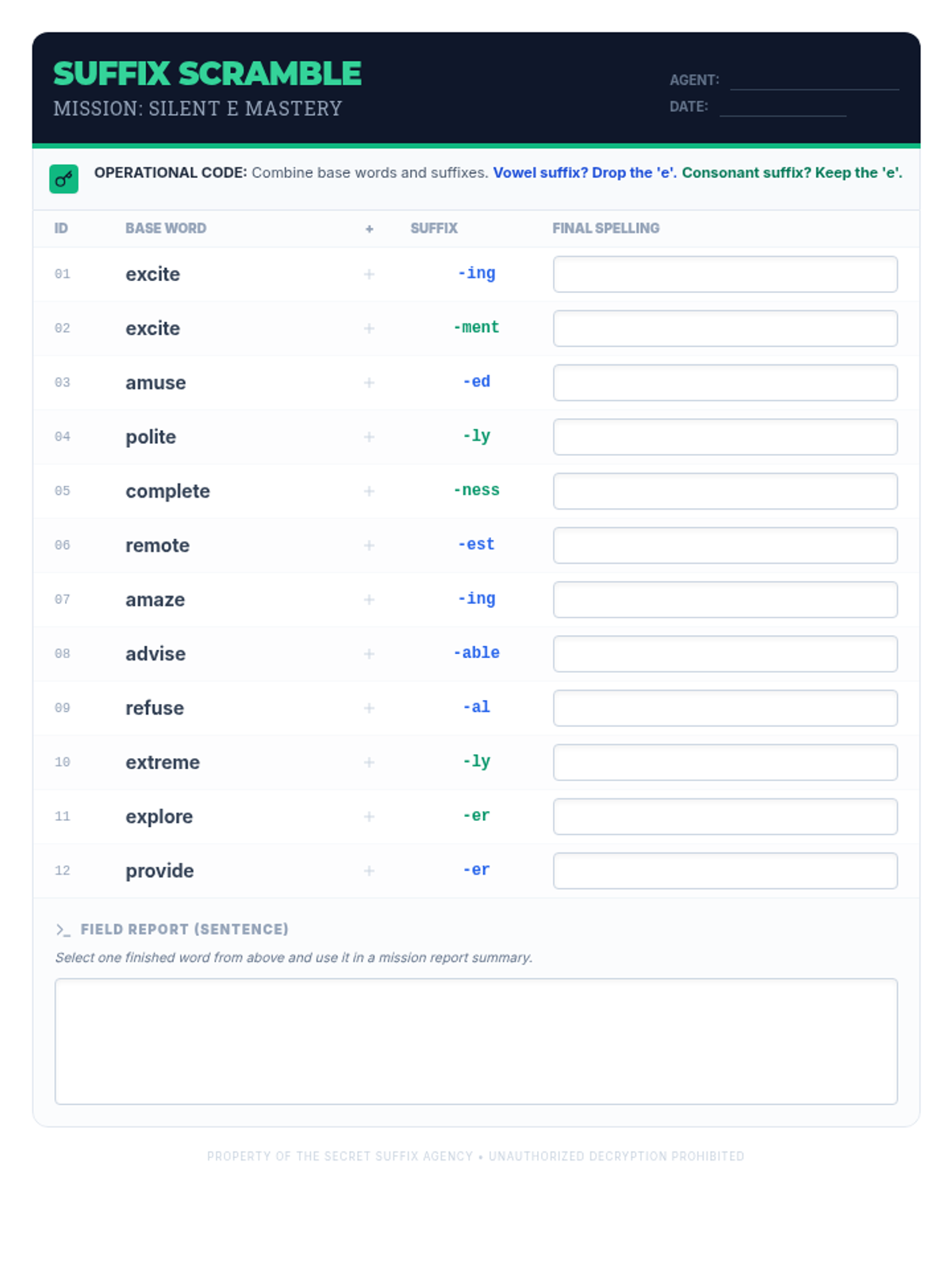
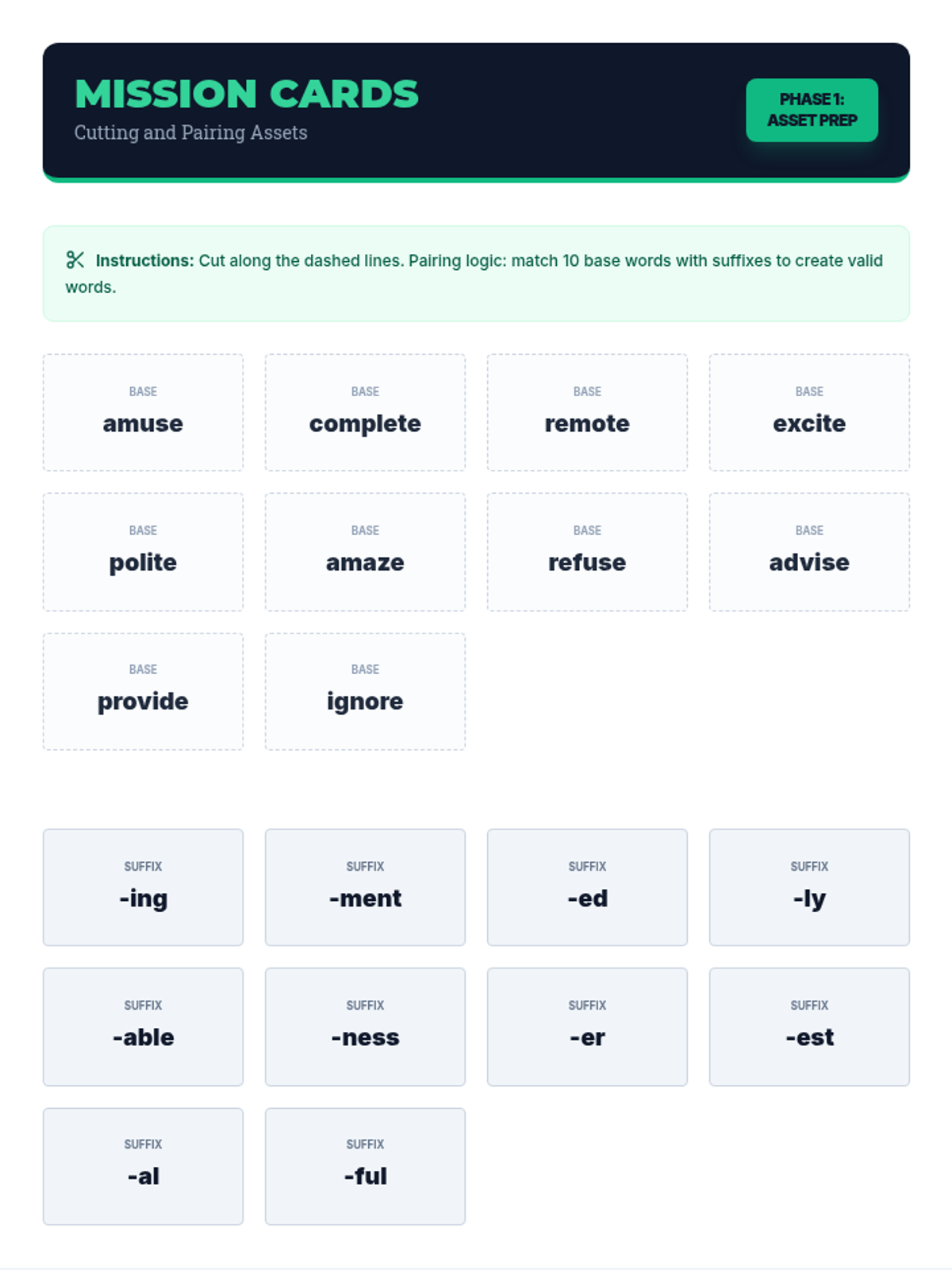
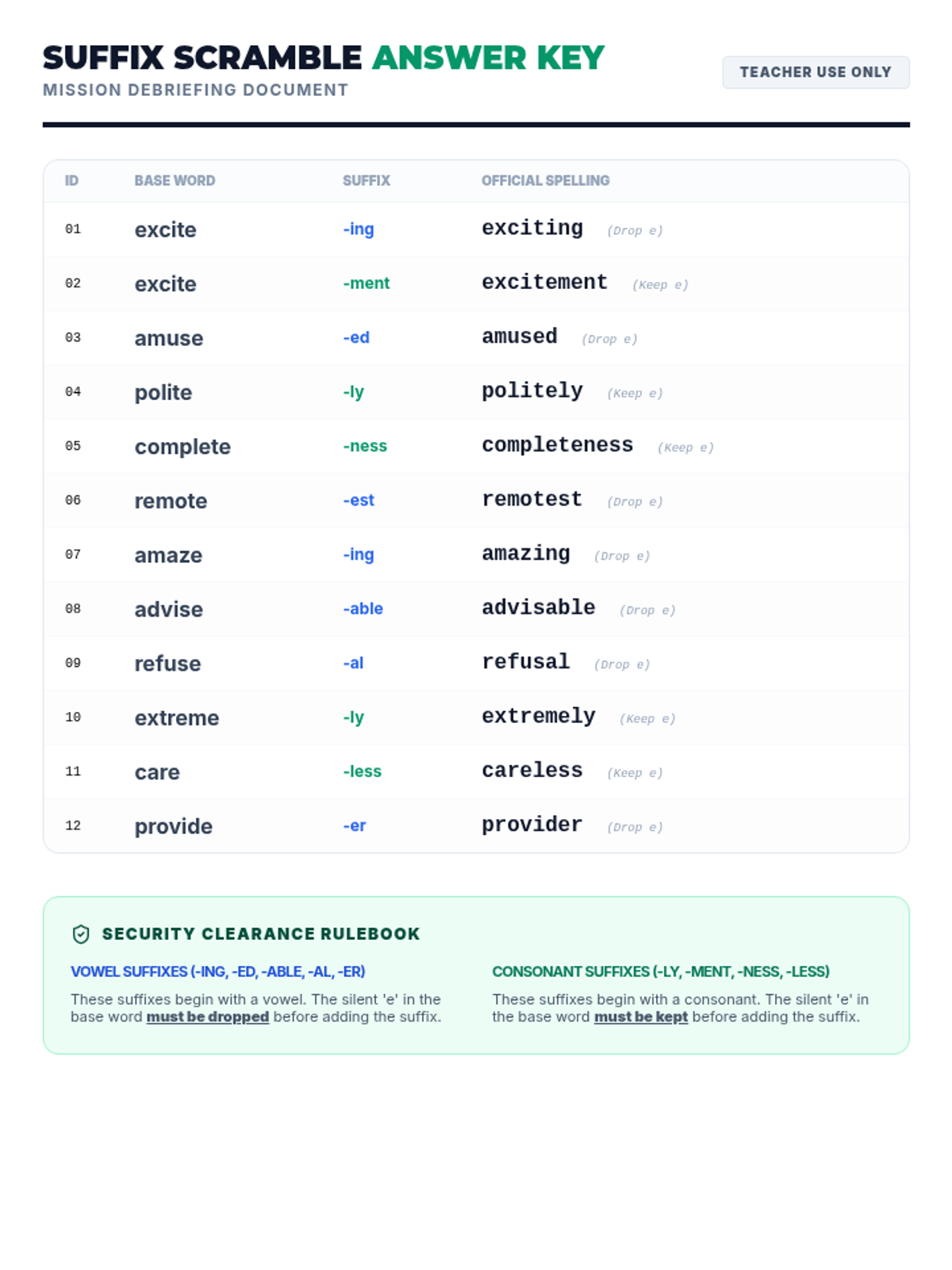
A comprehensive lesson on adding suffixes to multi-syllabic words ending in a silent 'e', focusing on the rules for dropping or keeping the 'e' based on the suffix type.
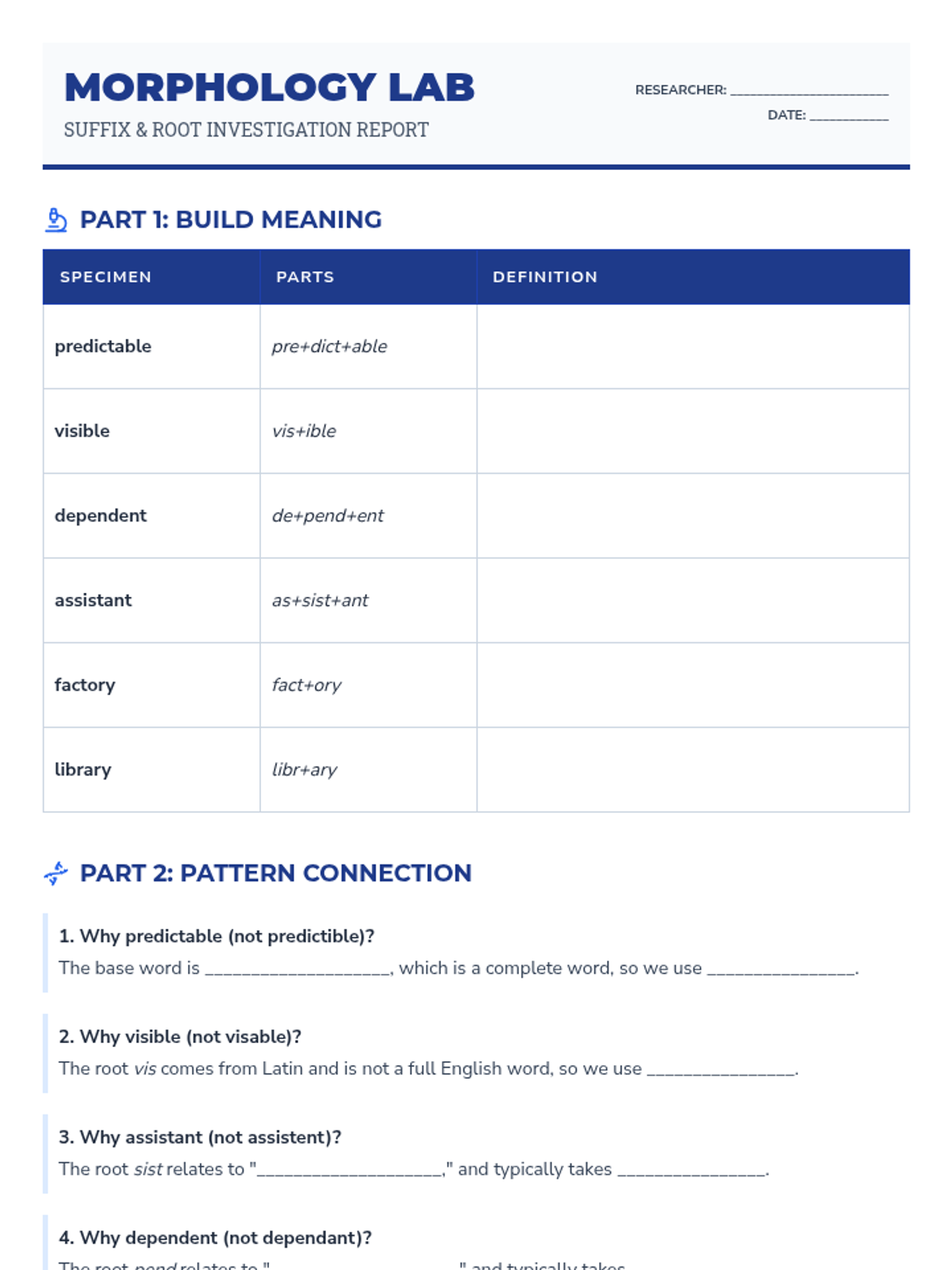
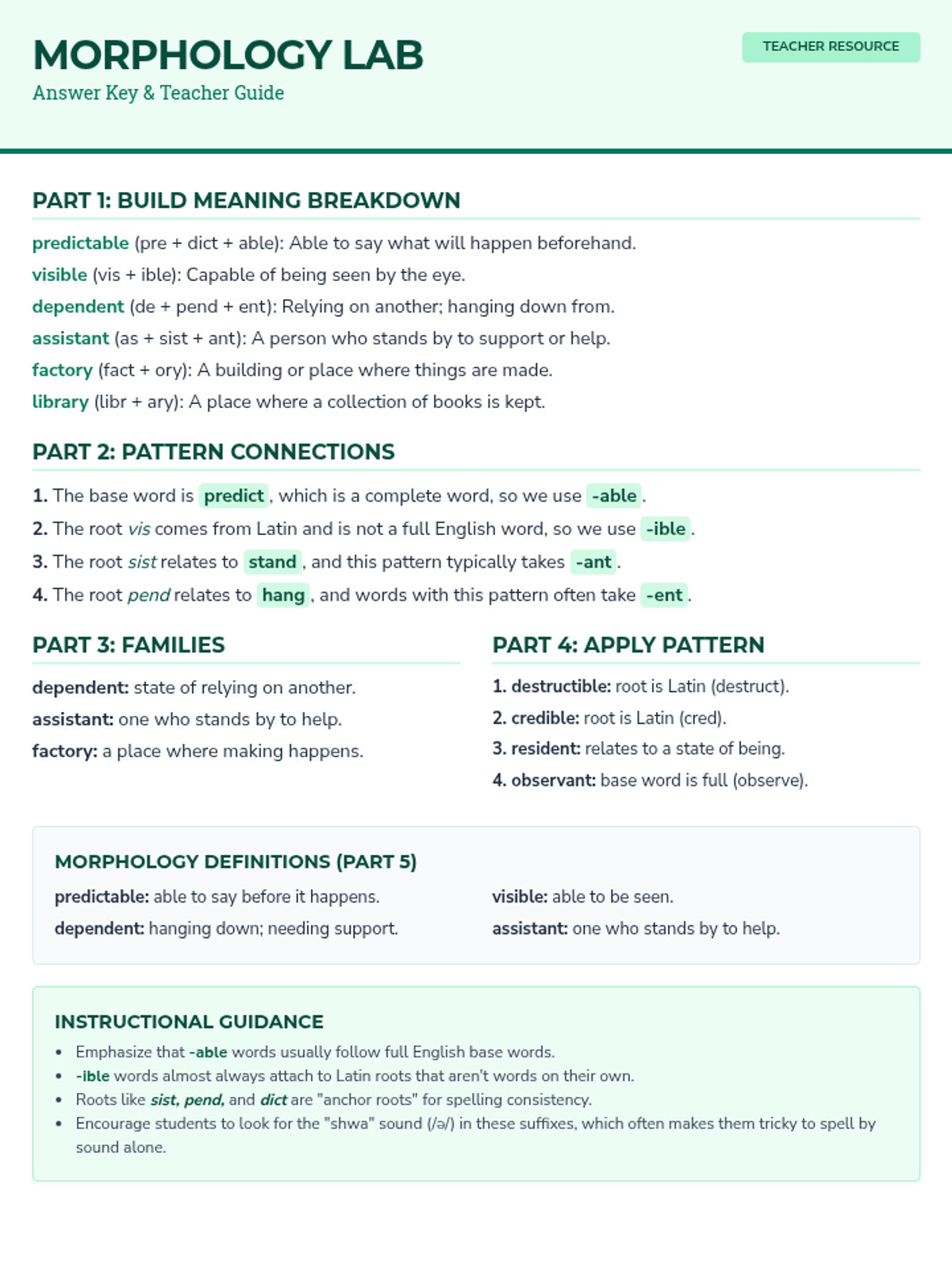
A deep dive into morphology and common word endings (-able, -ible, -ary, -ery, -ory, -ant, -ent), focusing on how Latin roots and base words determine spelling patterns.
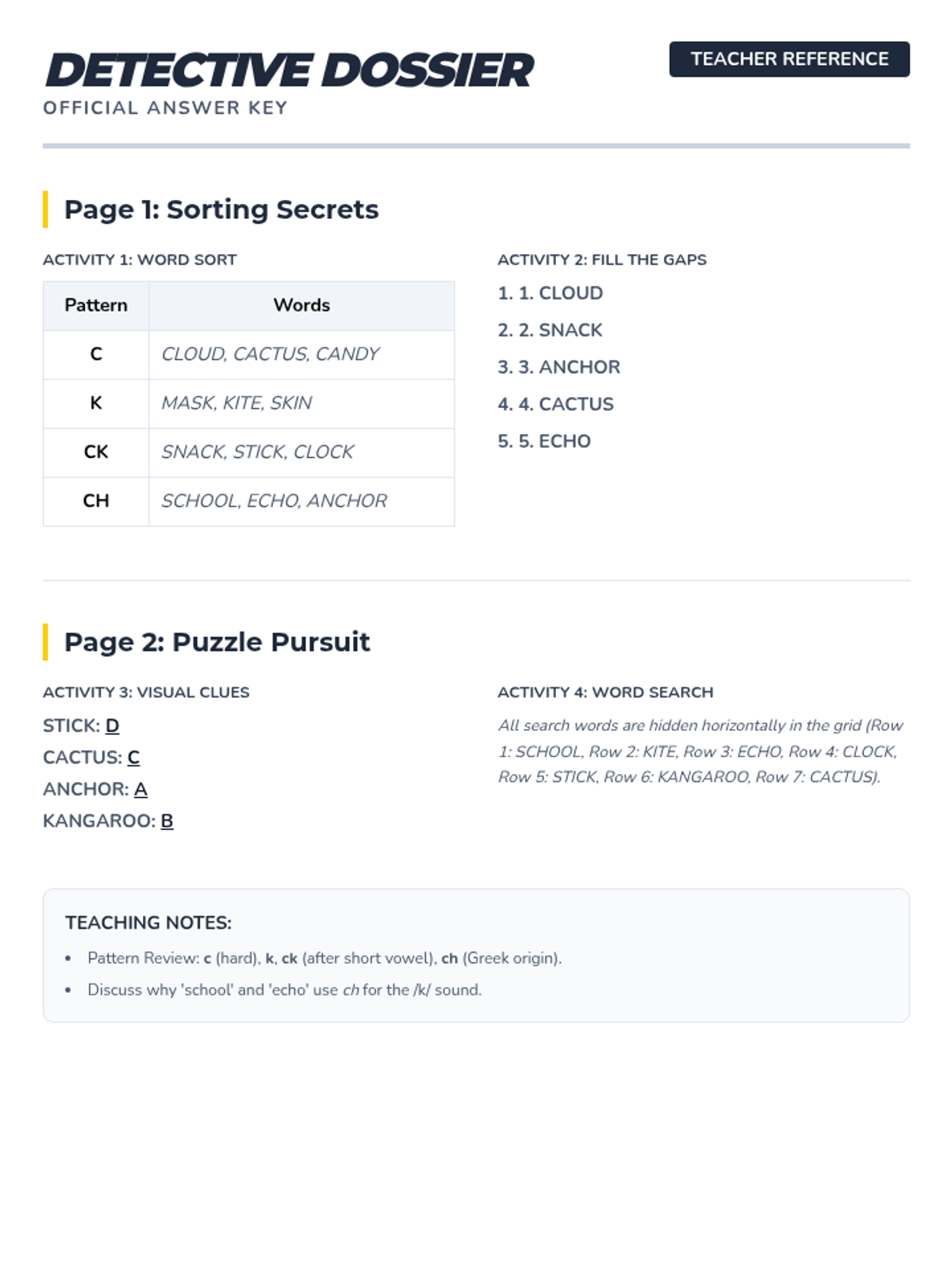
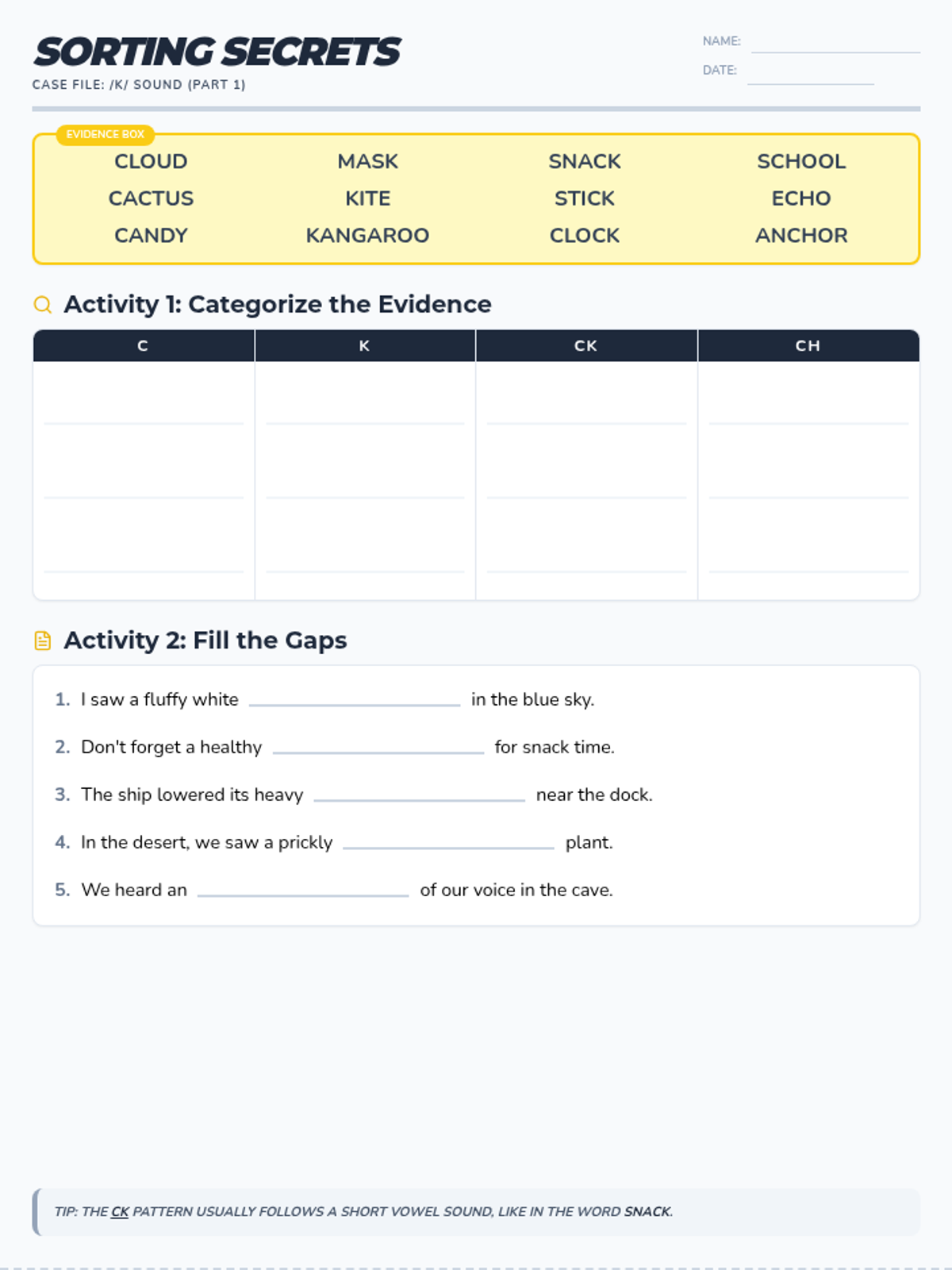
Students explore the four main ways to spell the /k/ sound using a detective-themed series of worksheets. Activities include sorting words by pattern, filling in context-rich sentences, matching pictures, and solving a crossword.
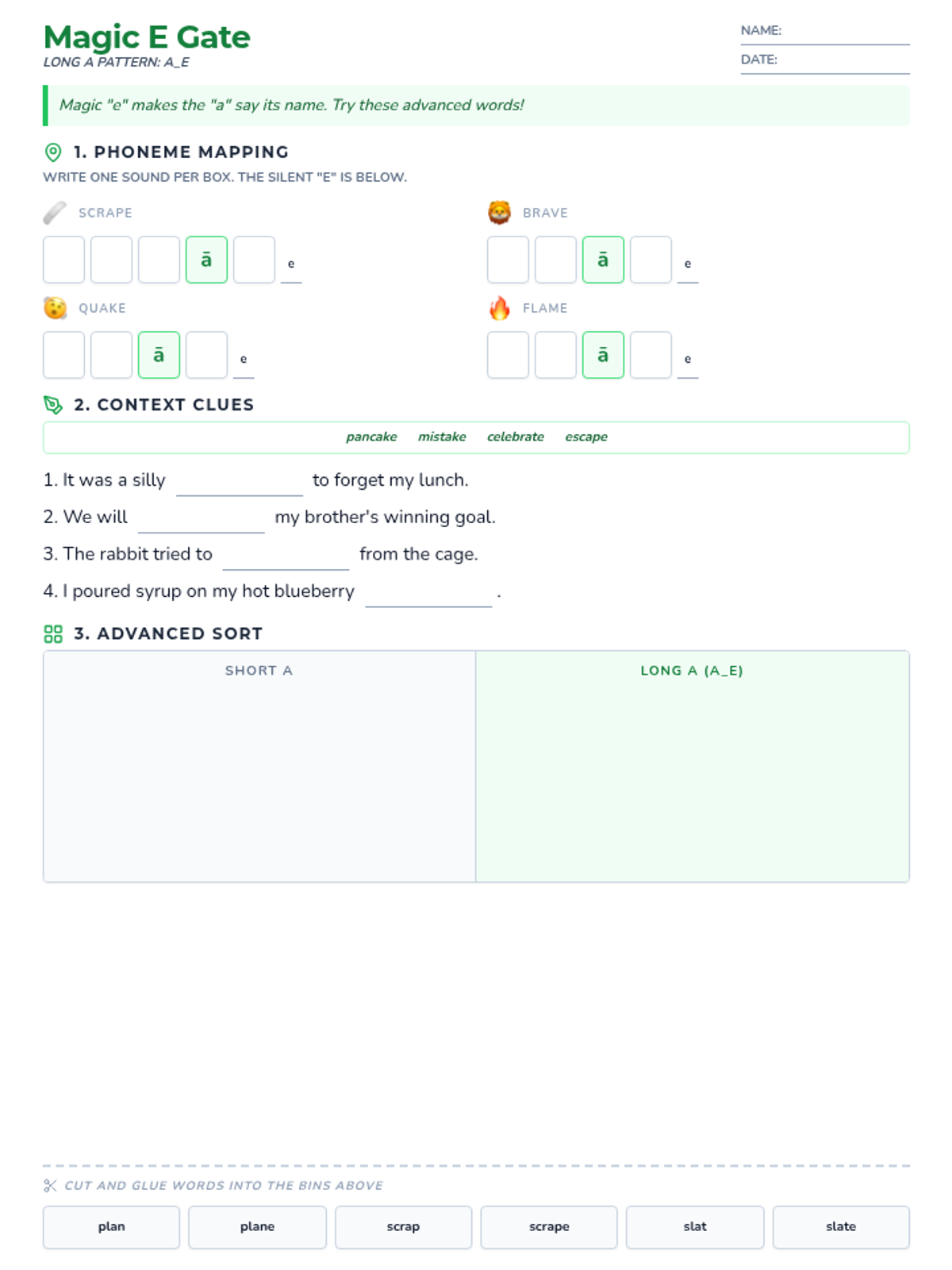
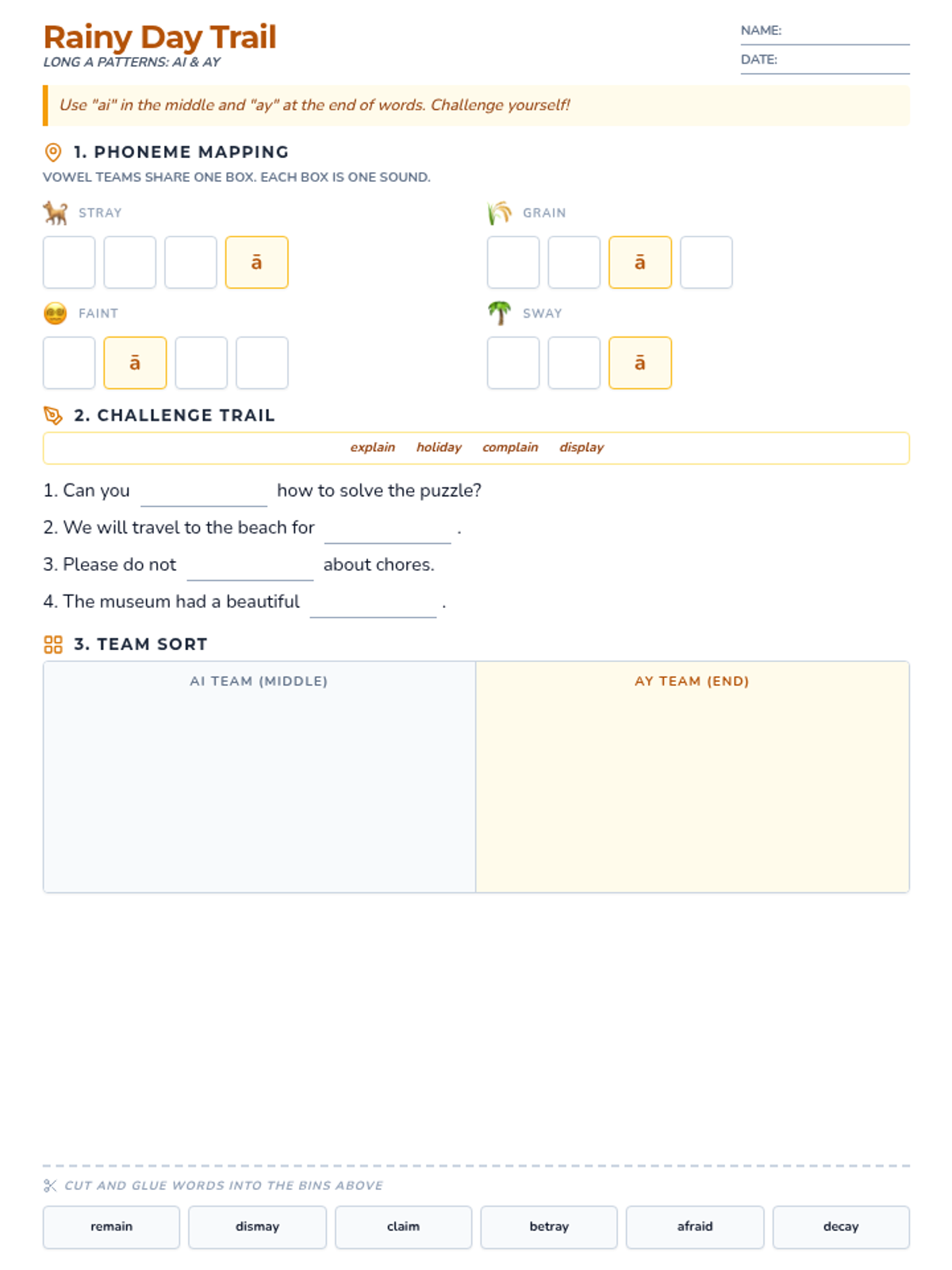
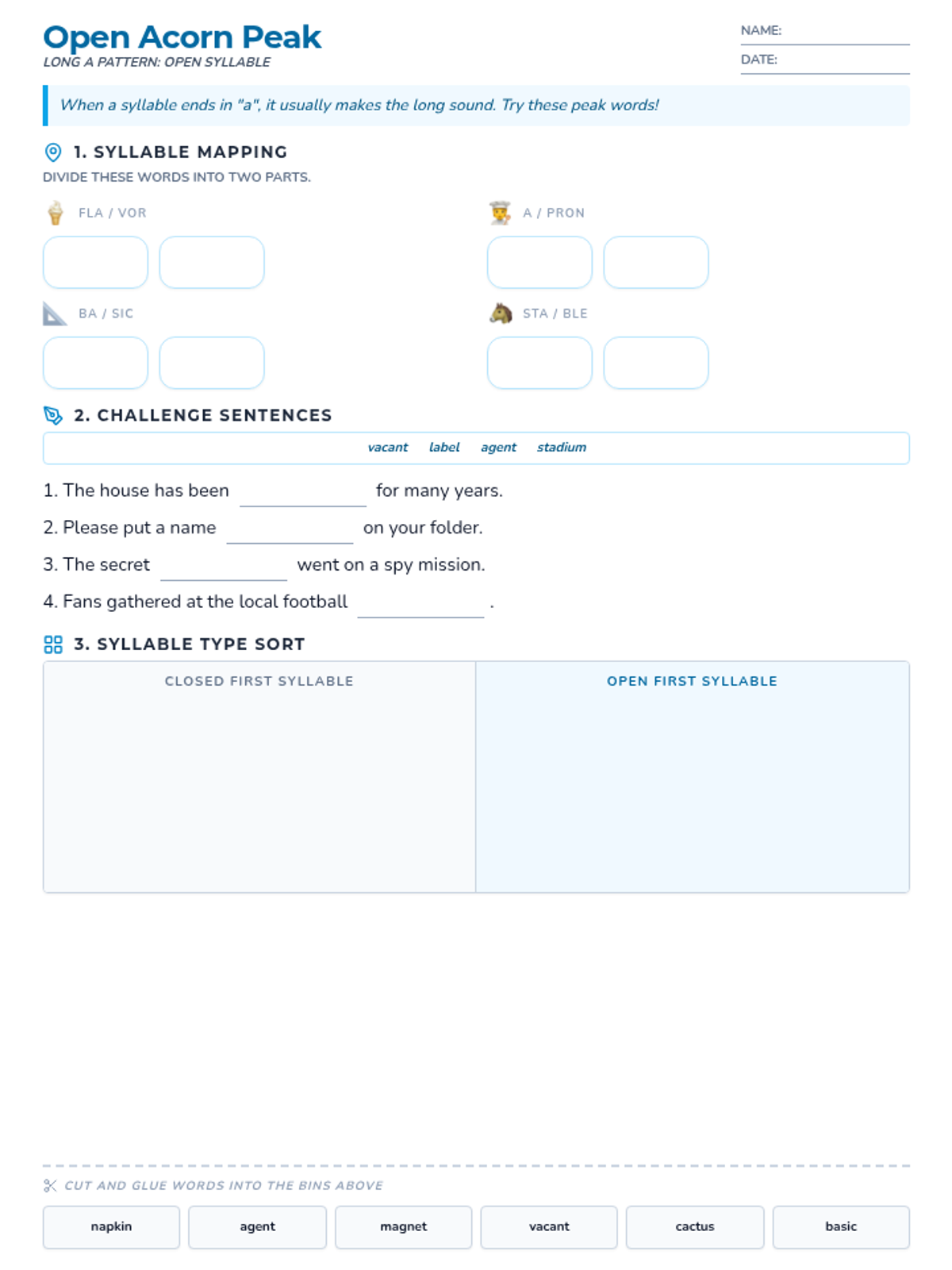
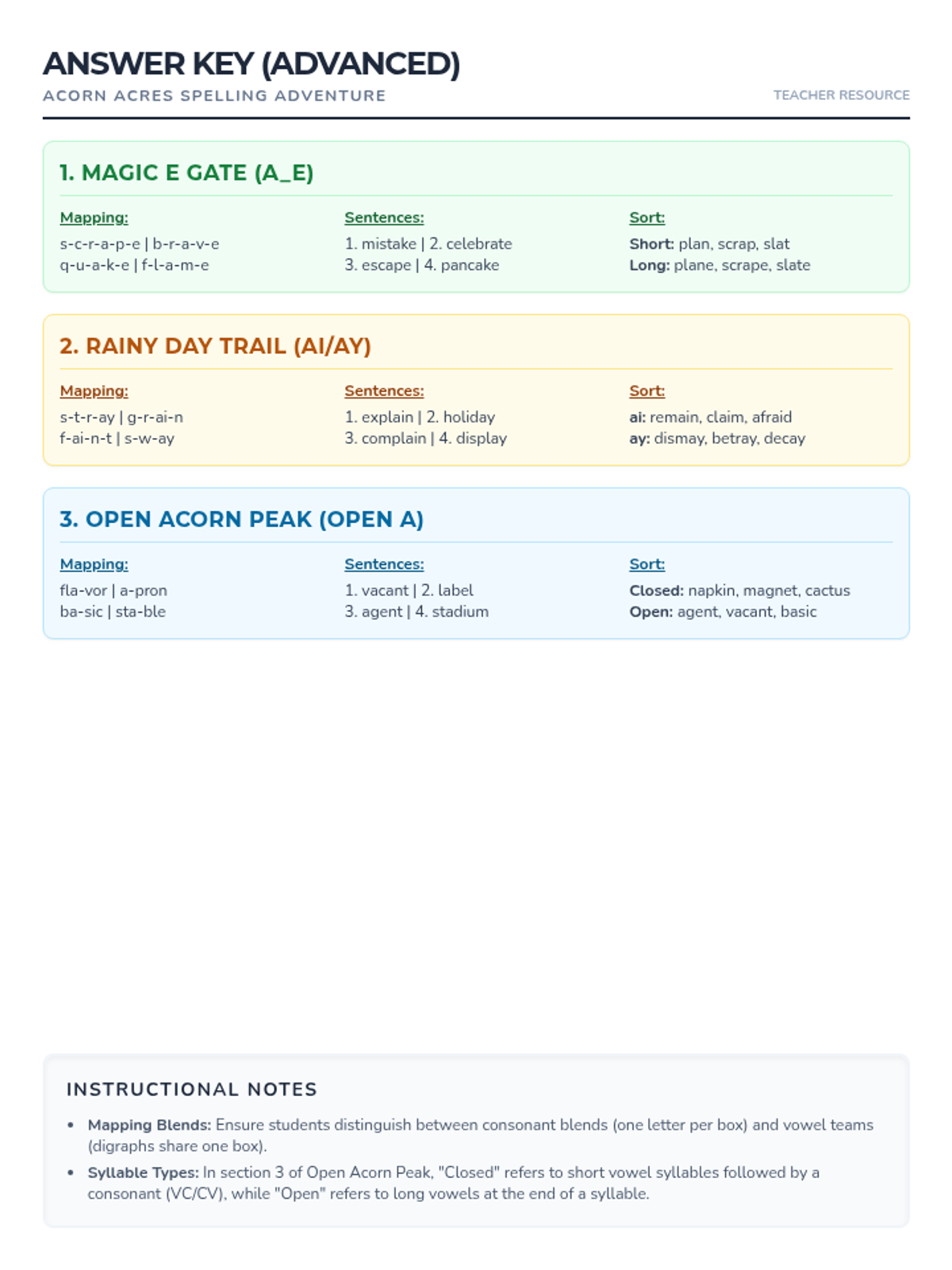
A series of activities focusing on long 'a' spelling patterns: a-consonant-e, vowel teams ai/ay, and open syllables. Students practice mapping sounds, completing sentences, and sorting words to build phonemic awareness and spelling proficiency.
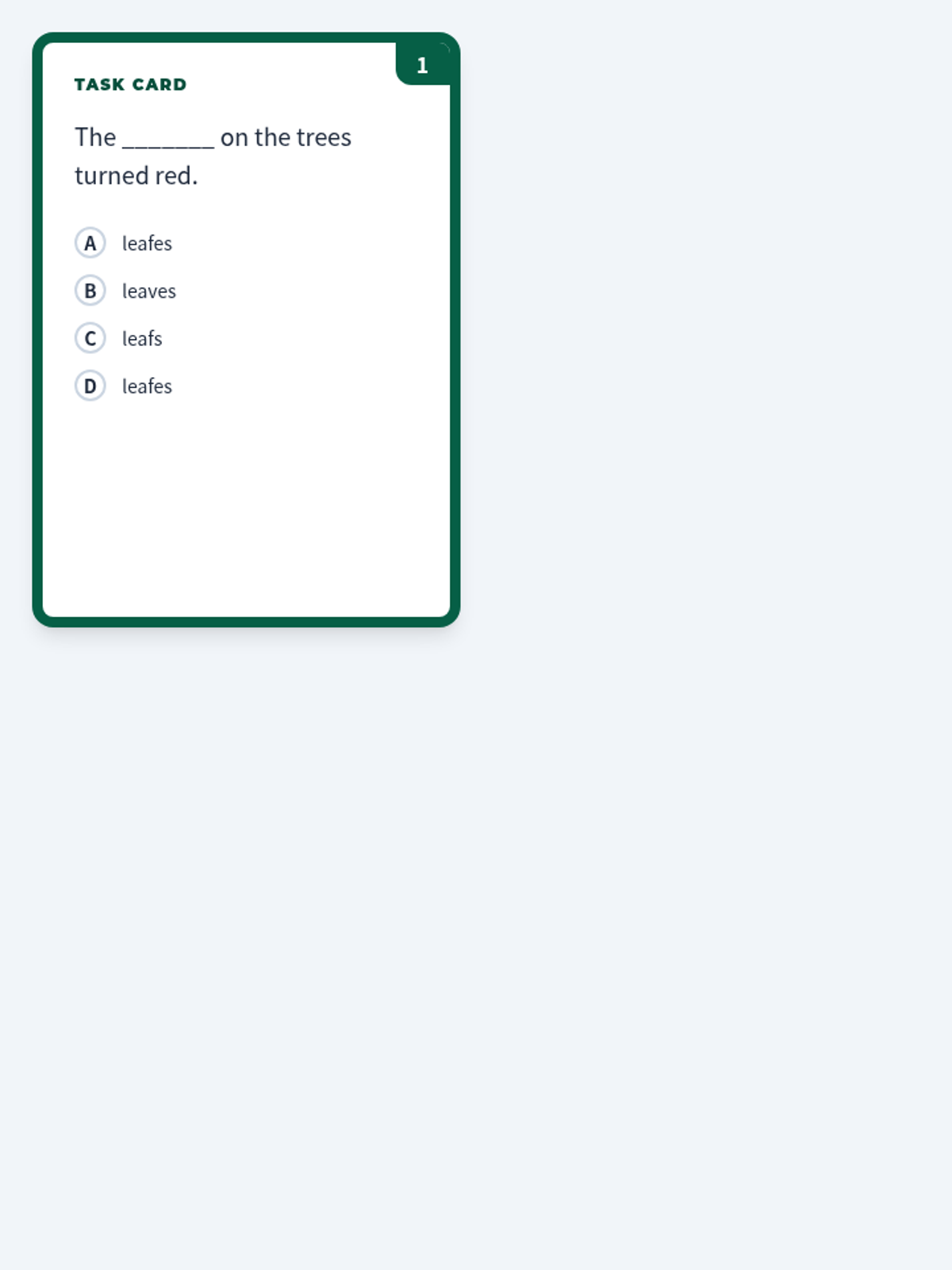
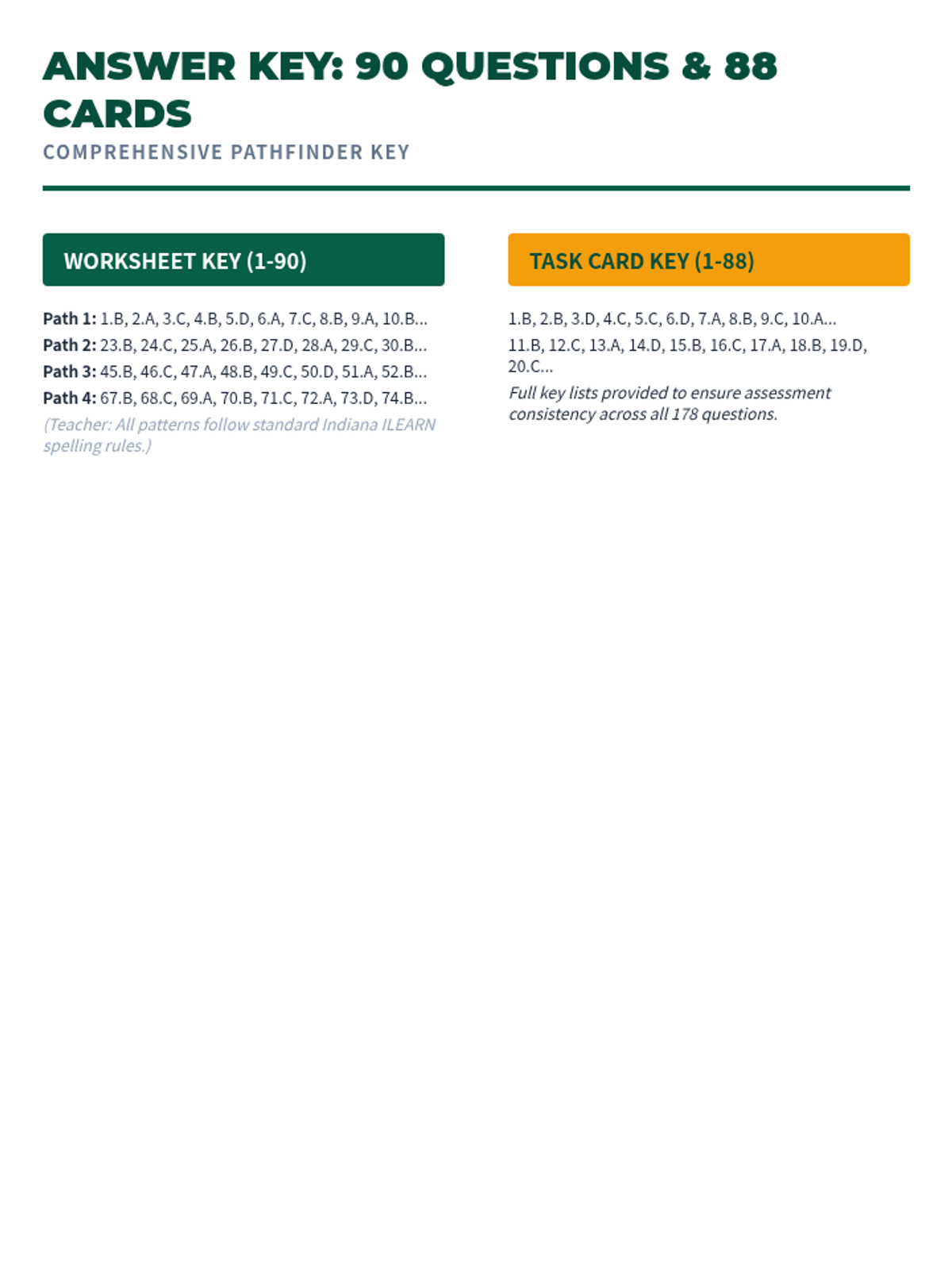
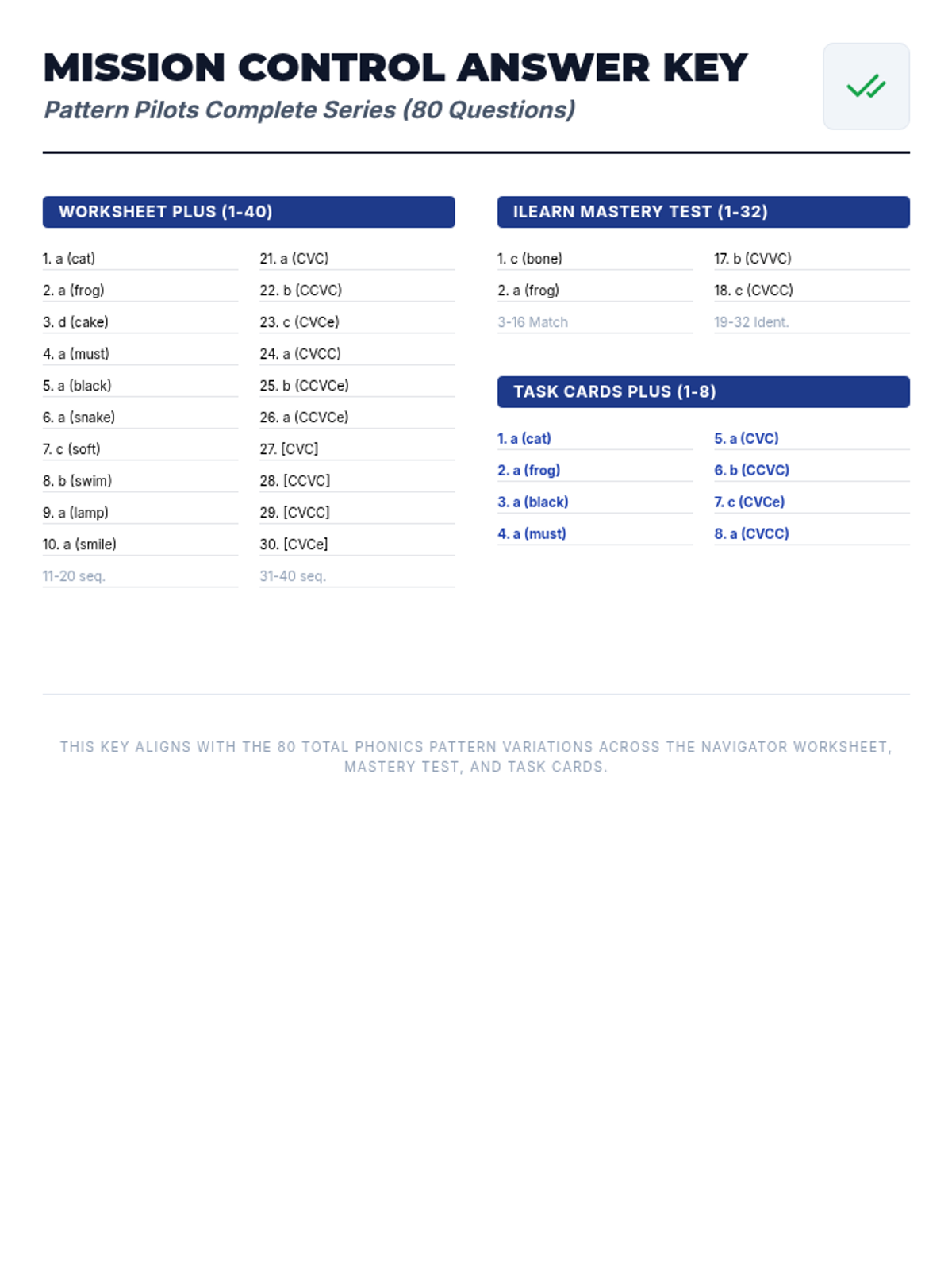
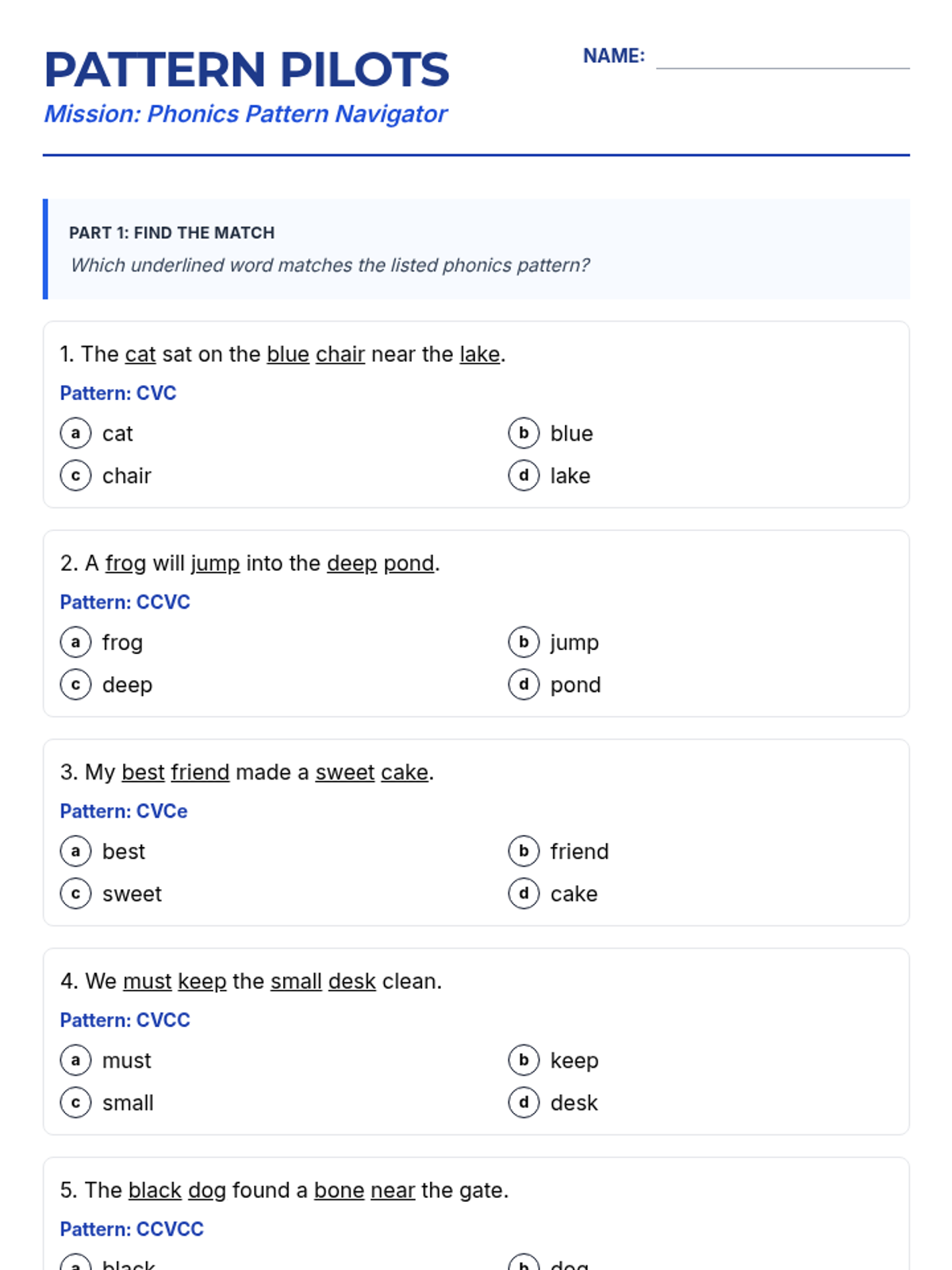
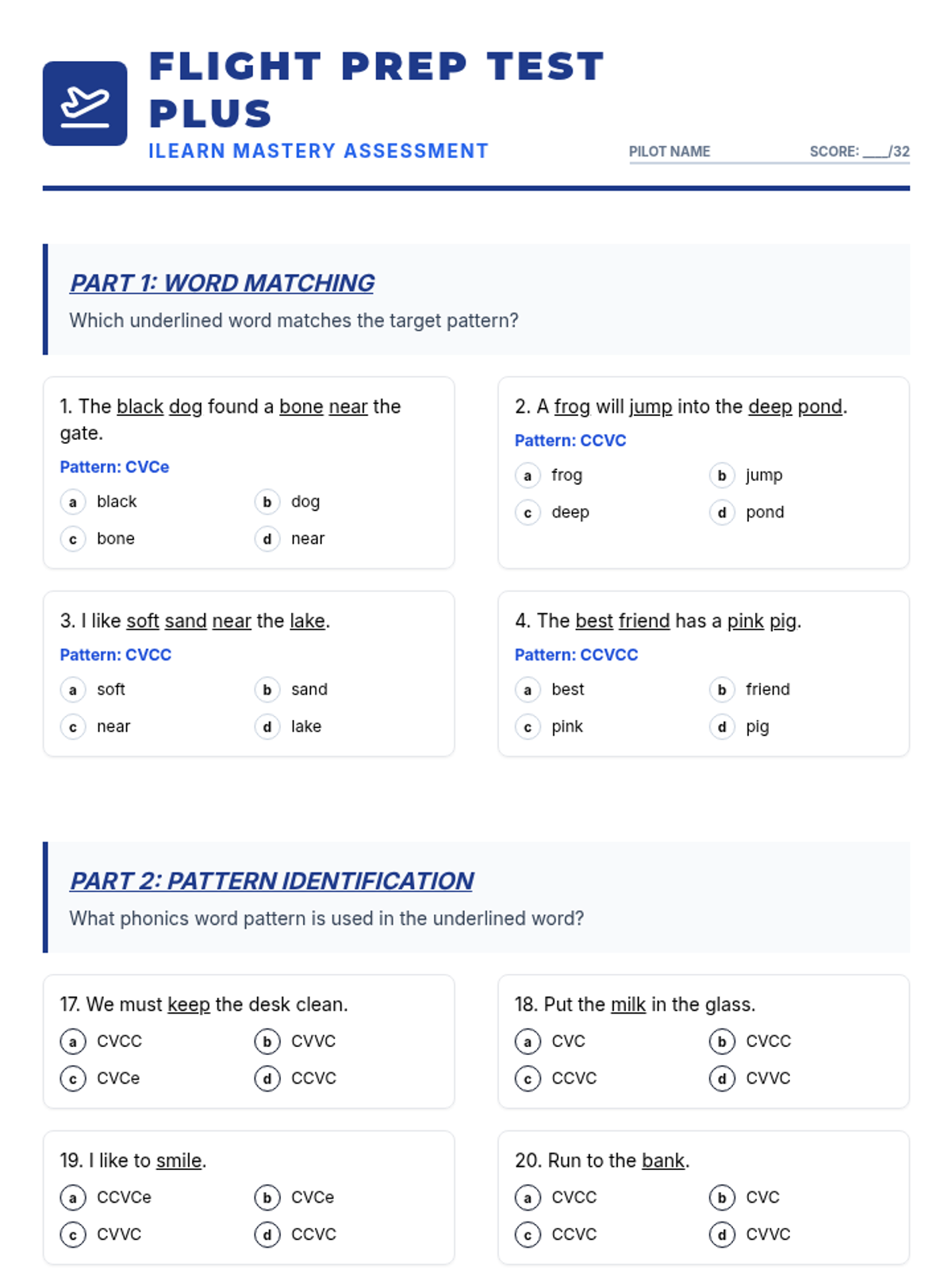
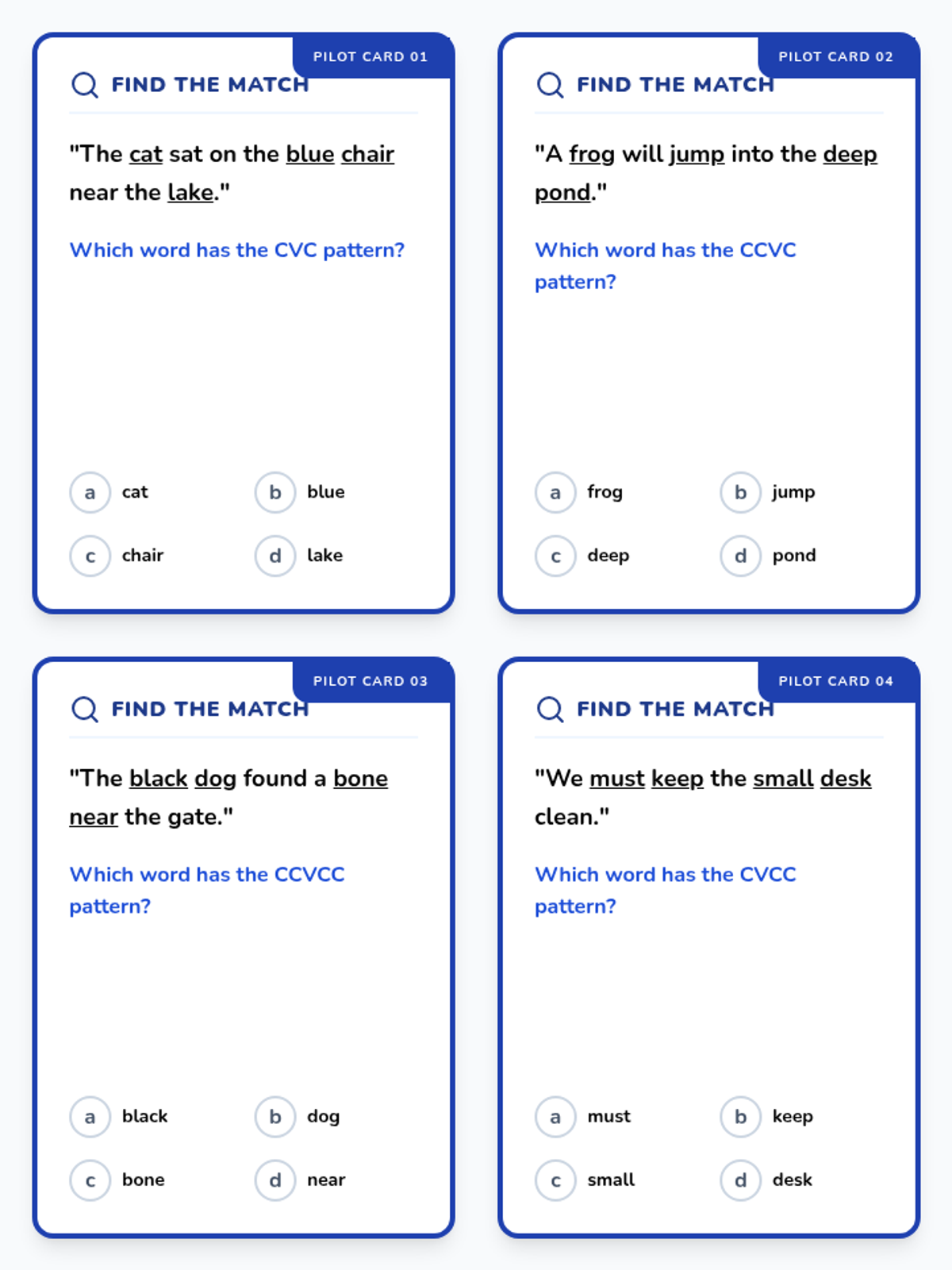
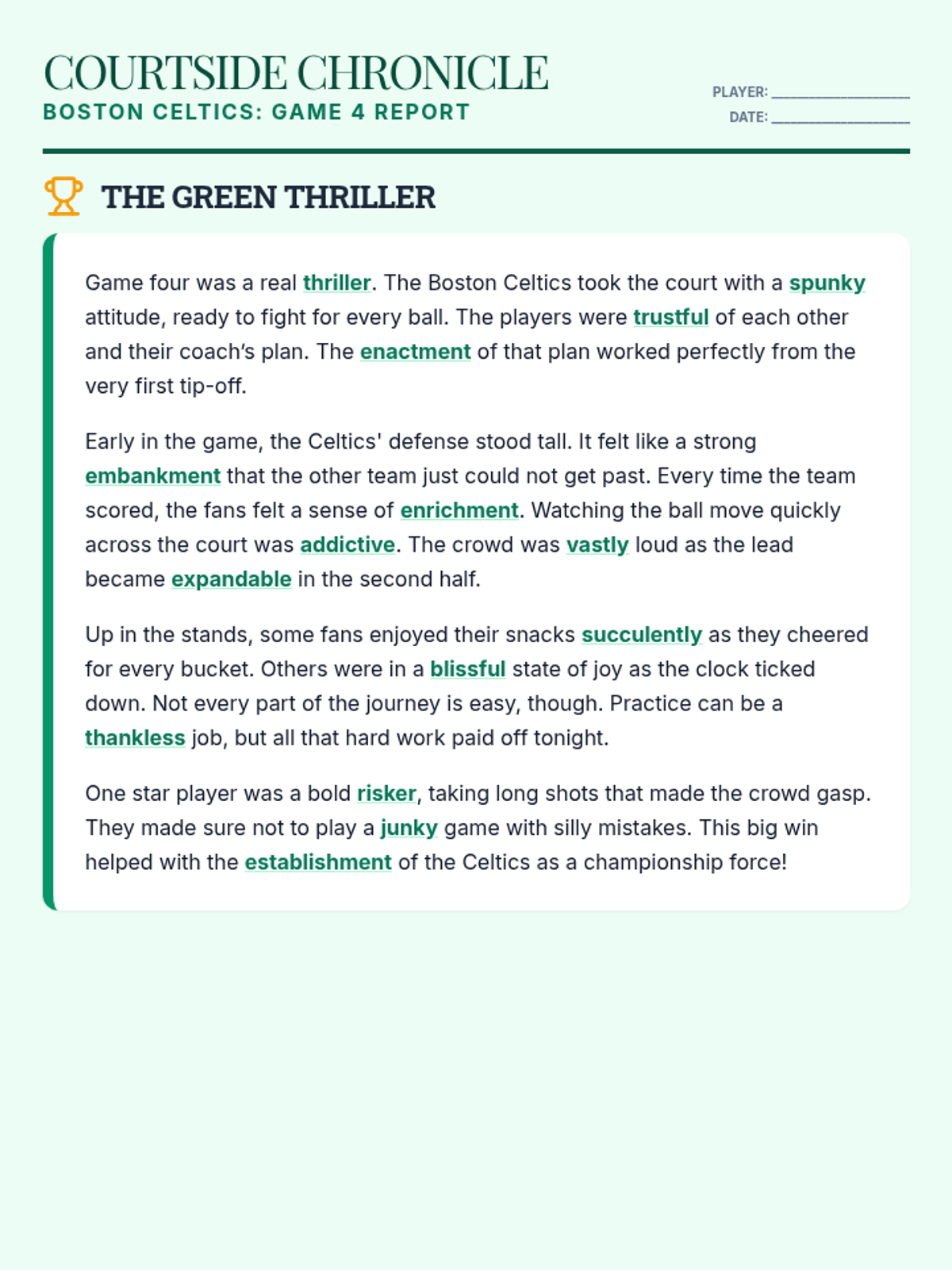
A comprehensive set of practice materials for the ILEARN assessment focusing on vowel and consonant patterns (CVC, CCVC, CVCe, etc.). Includes grouped practice, a mixed test, task cards, and an answer key.
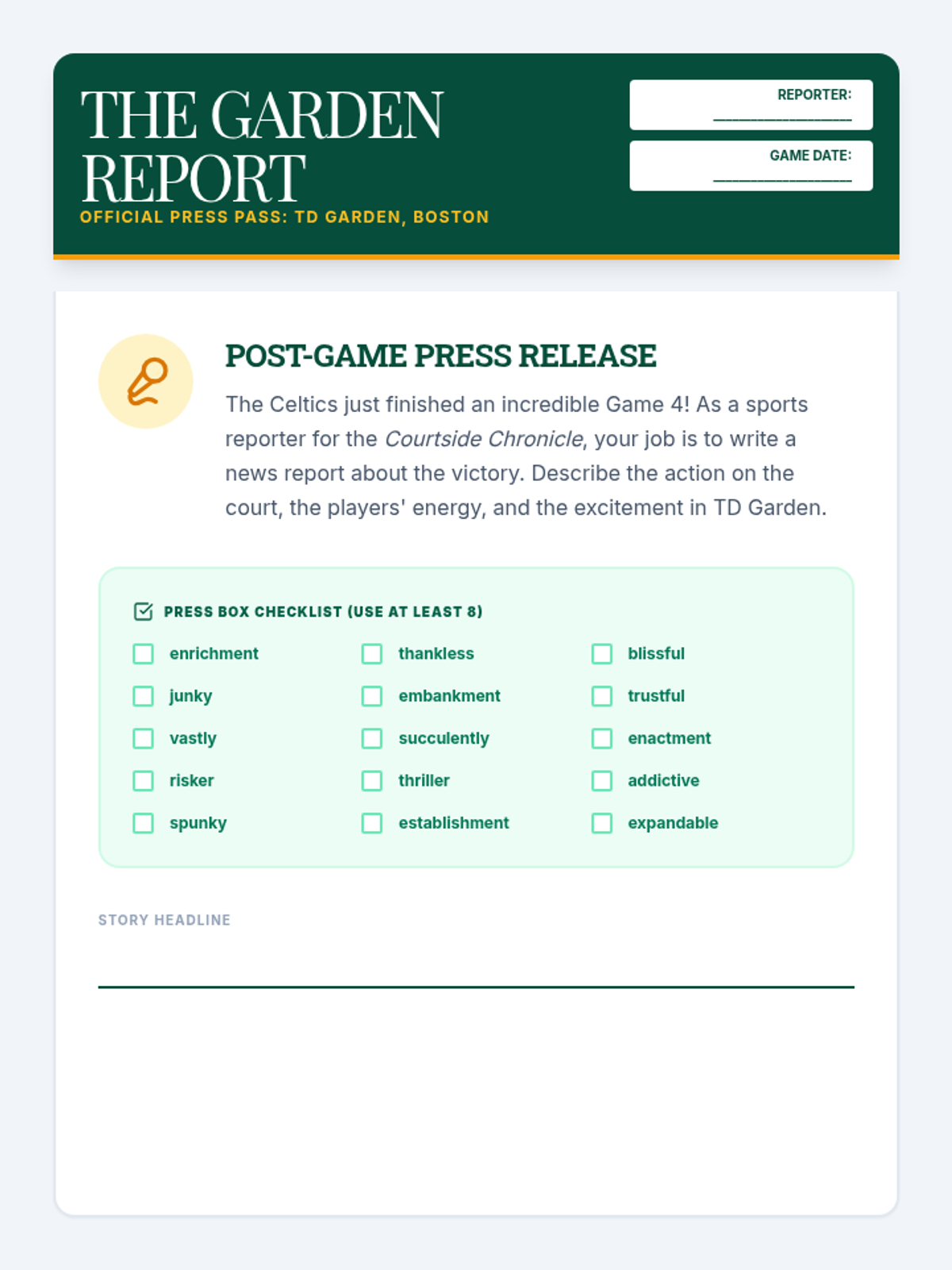
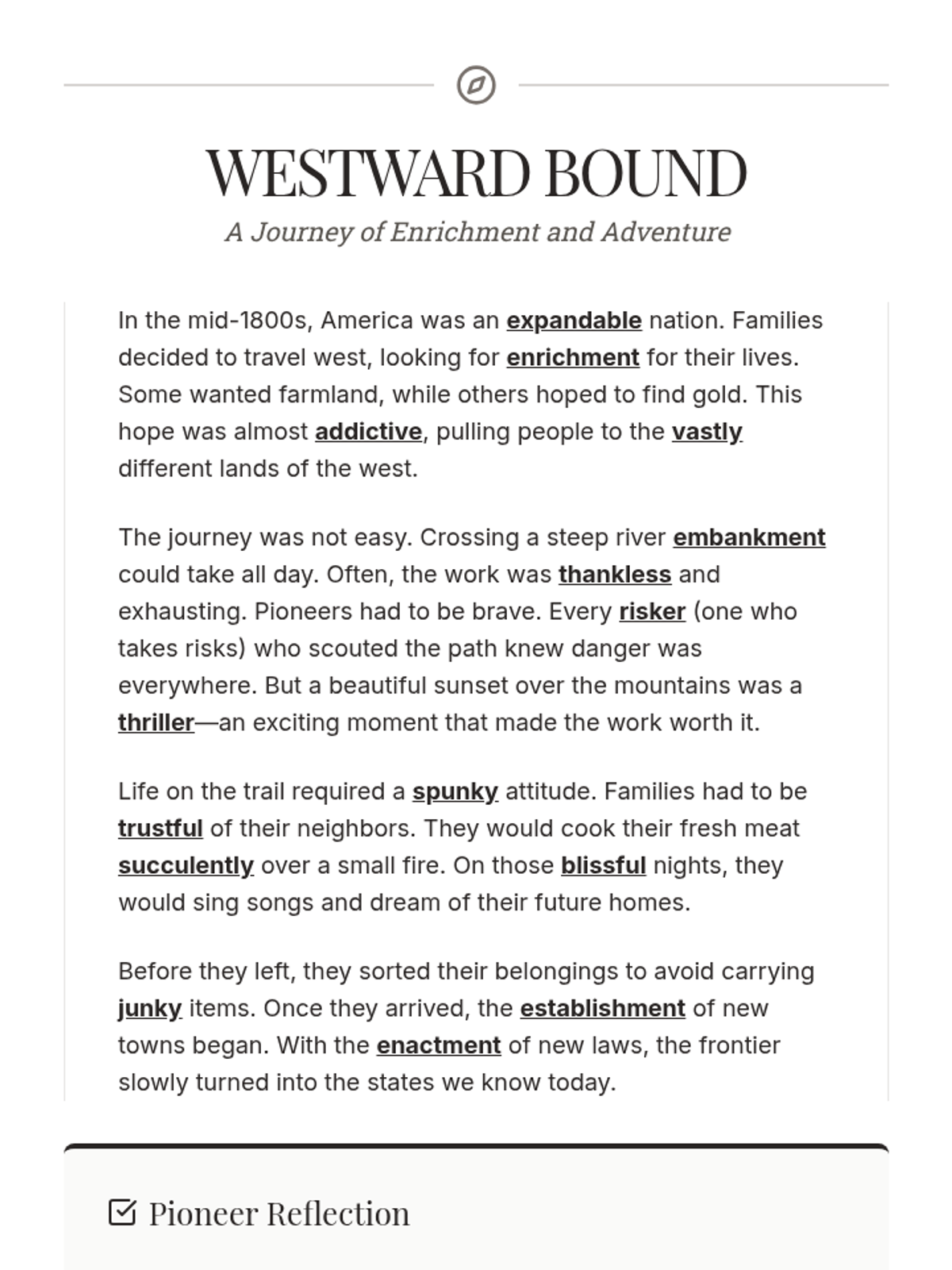
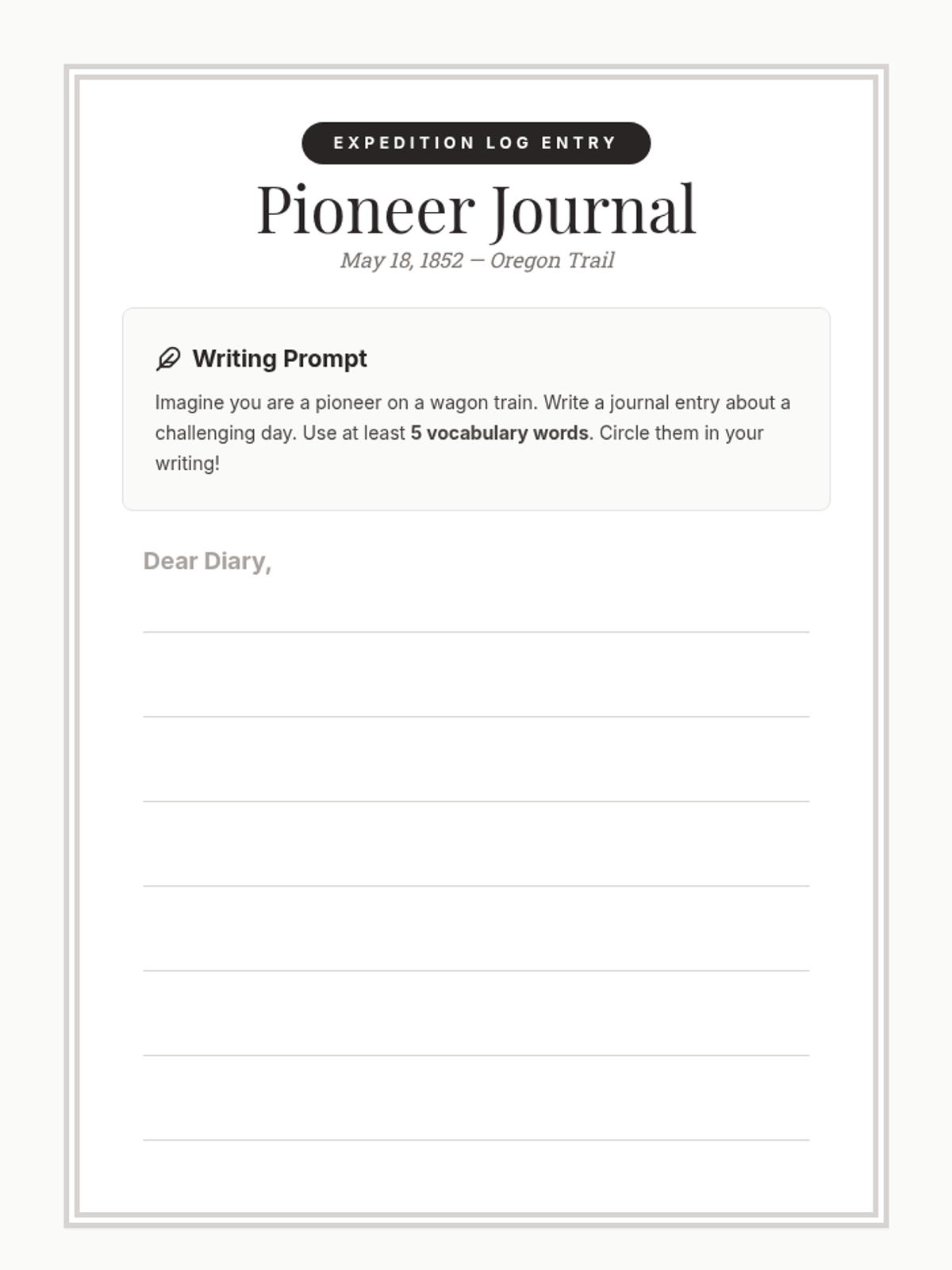
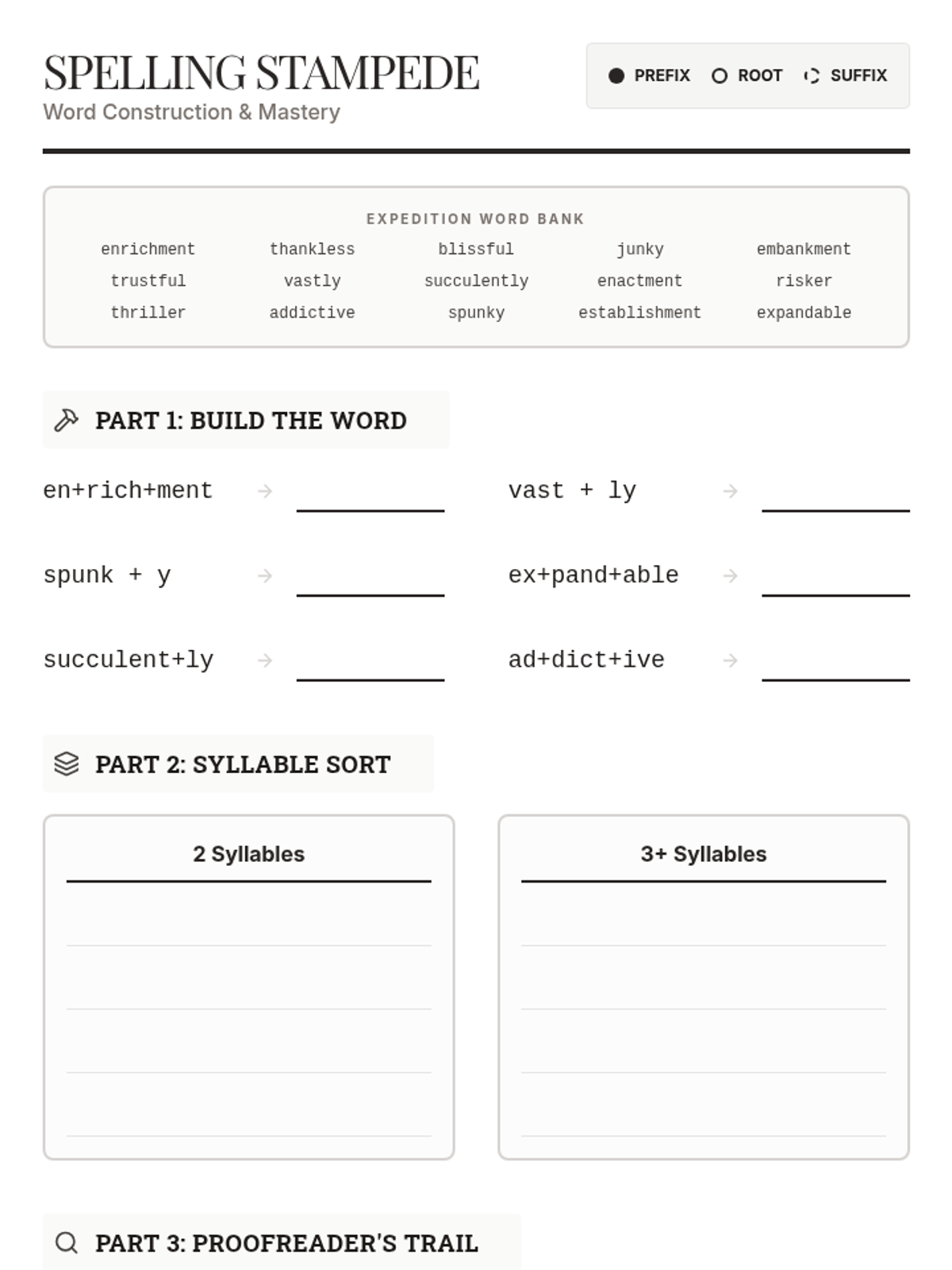
A multi-day lesson exploring morphology and syllable division through the lens of Westward Expansion. Students learn to decode complex words with prefixes and suffixes while building vocabulary related to pioneer life.
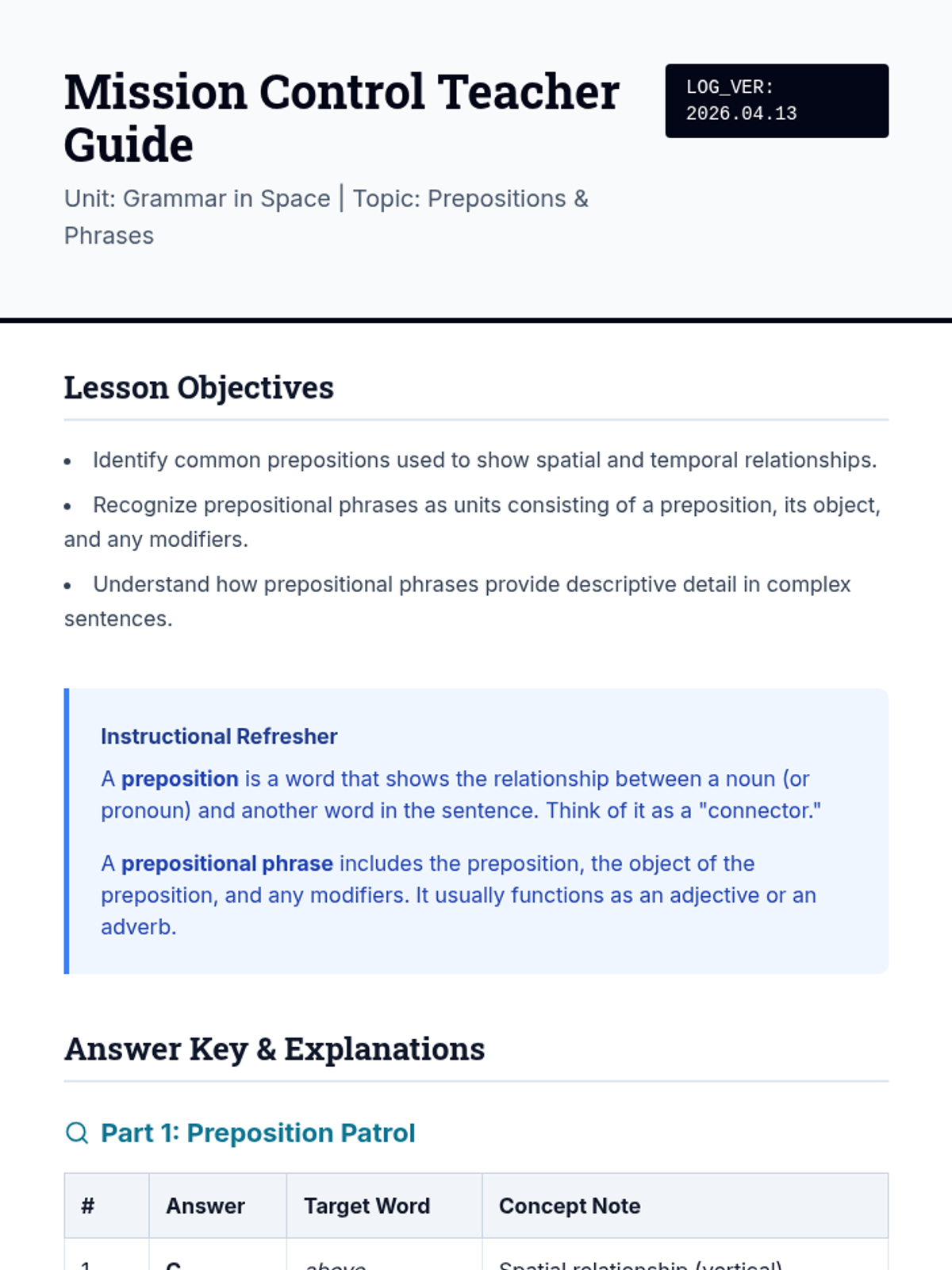
A grammar lesson focused on identifying prepositions and prepositional phrases through the lens of space exploration. Students practice identifying these parts of speech in context to improve sentence structure and clarity.
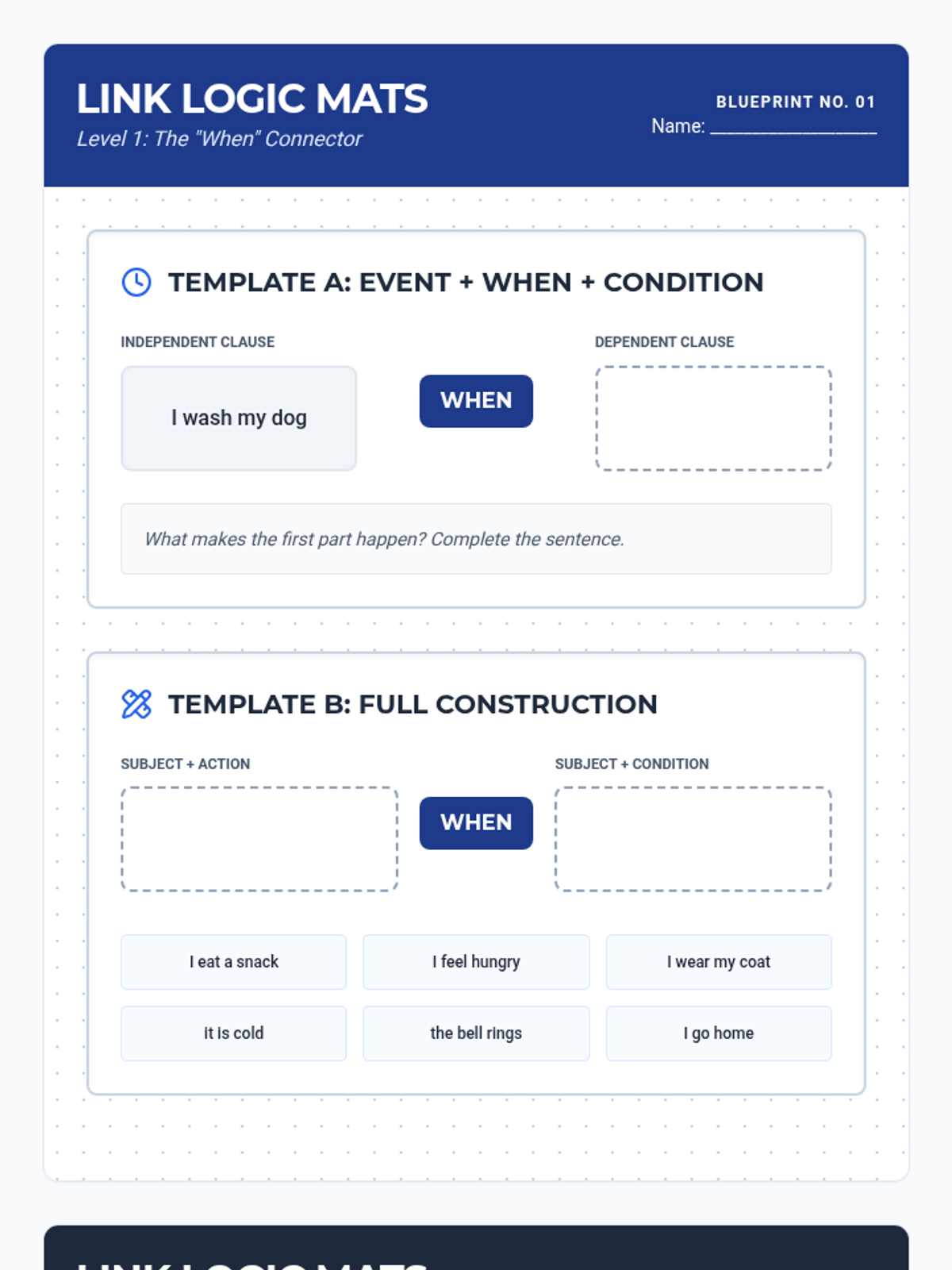
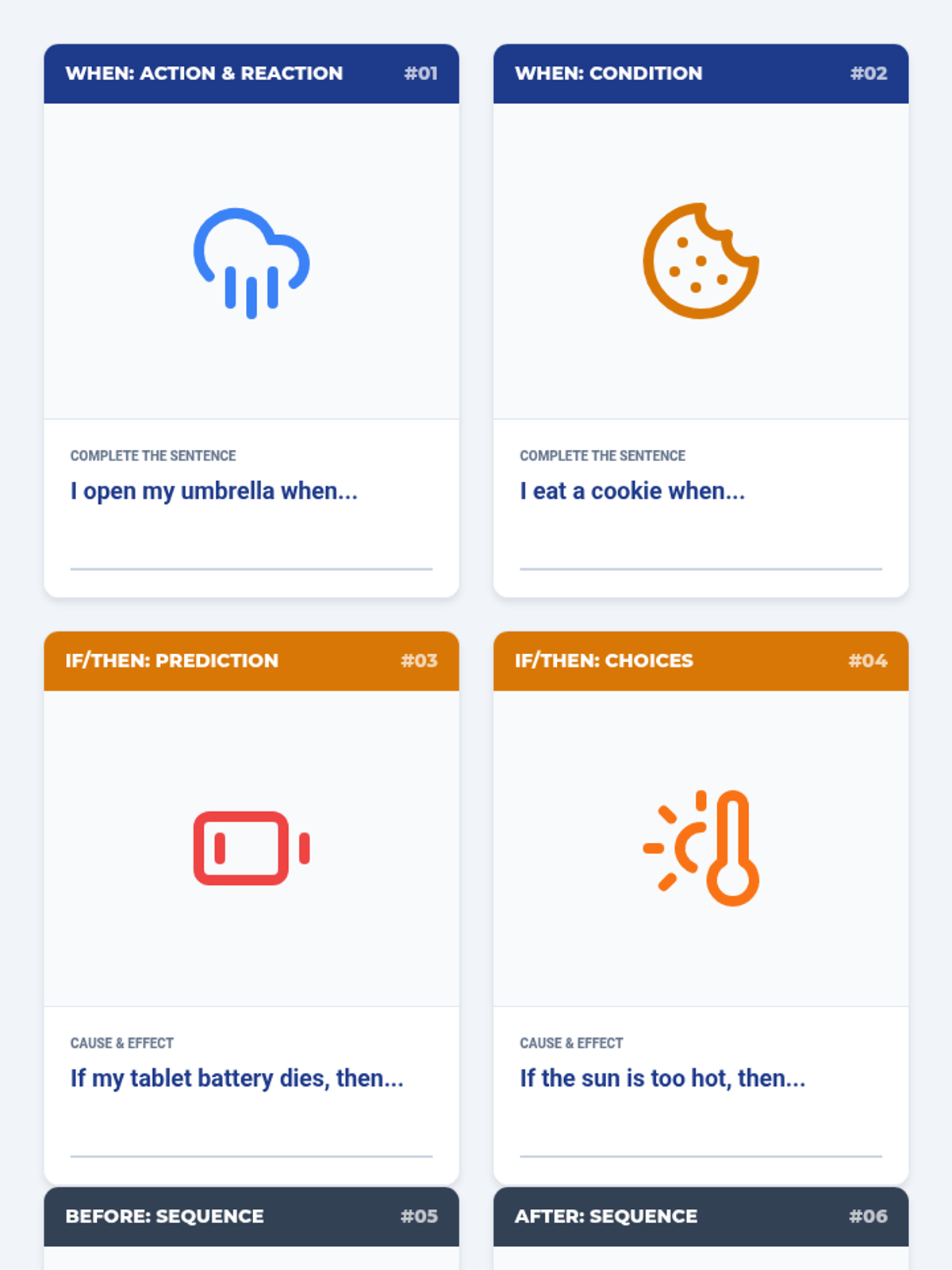
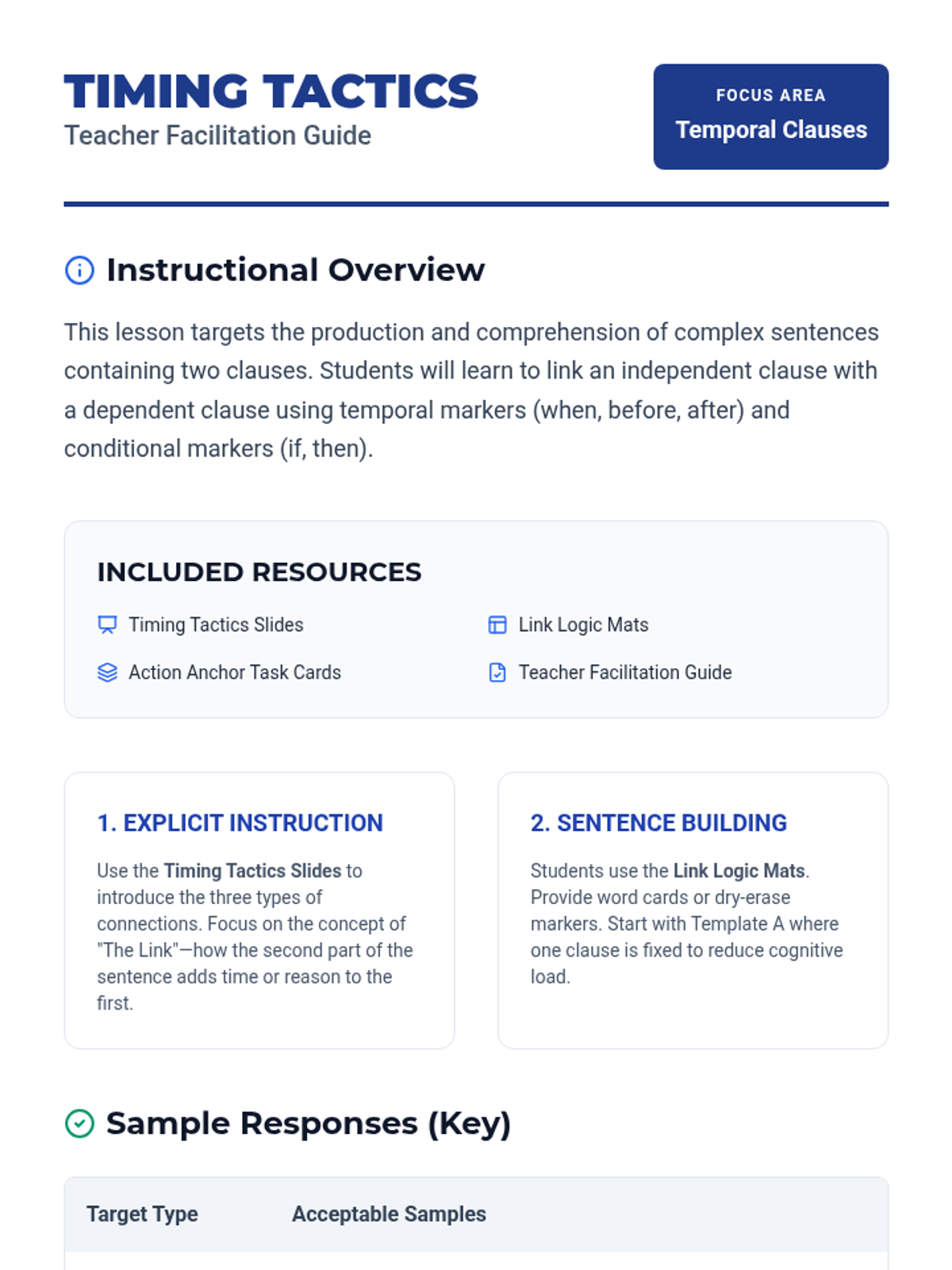
A lesson focused on constructing and understanding complex sentences using temporal conjunctions (when, before/after) and conditional markers (if/then) to describe sequences and conditions.
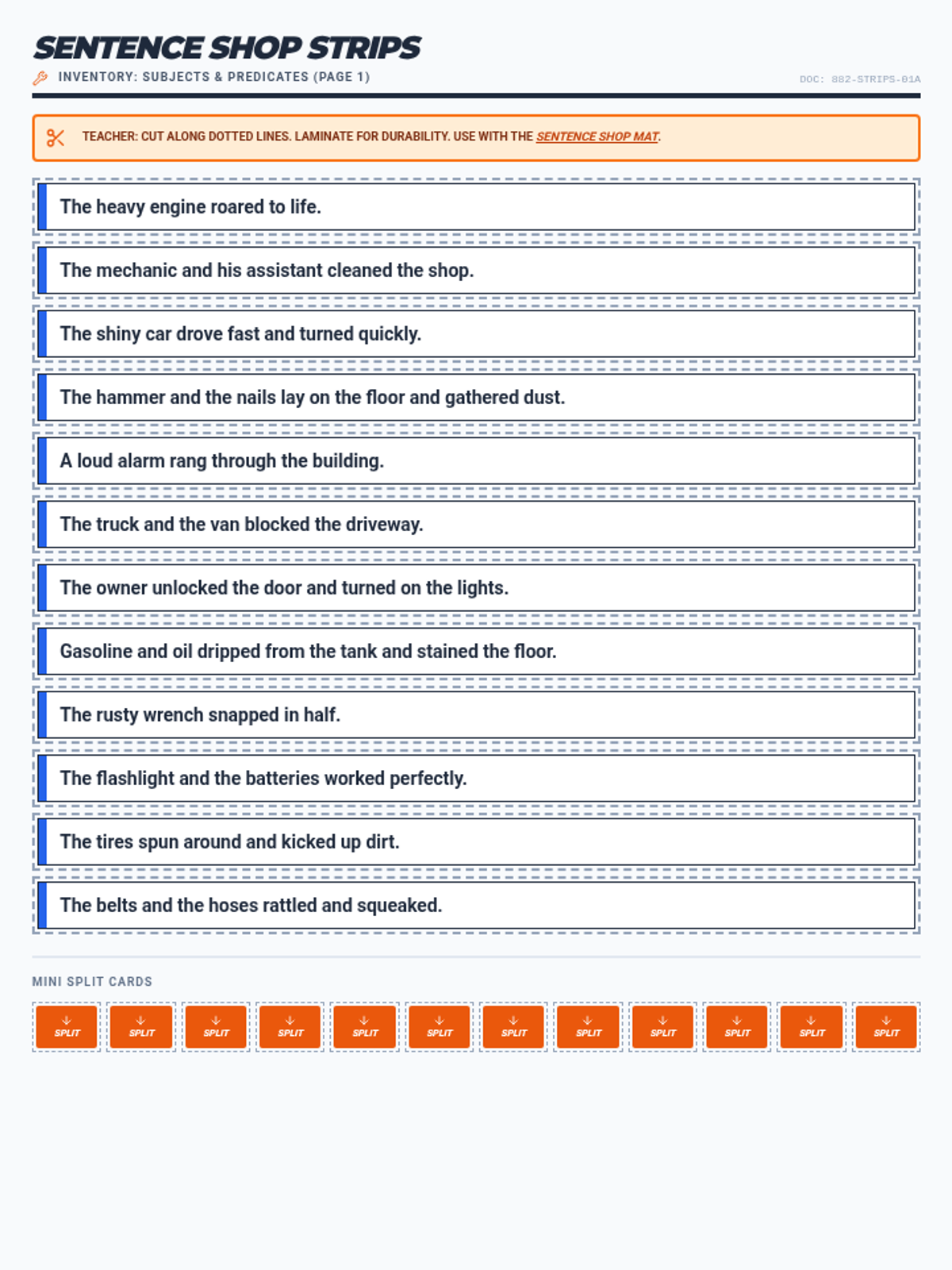
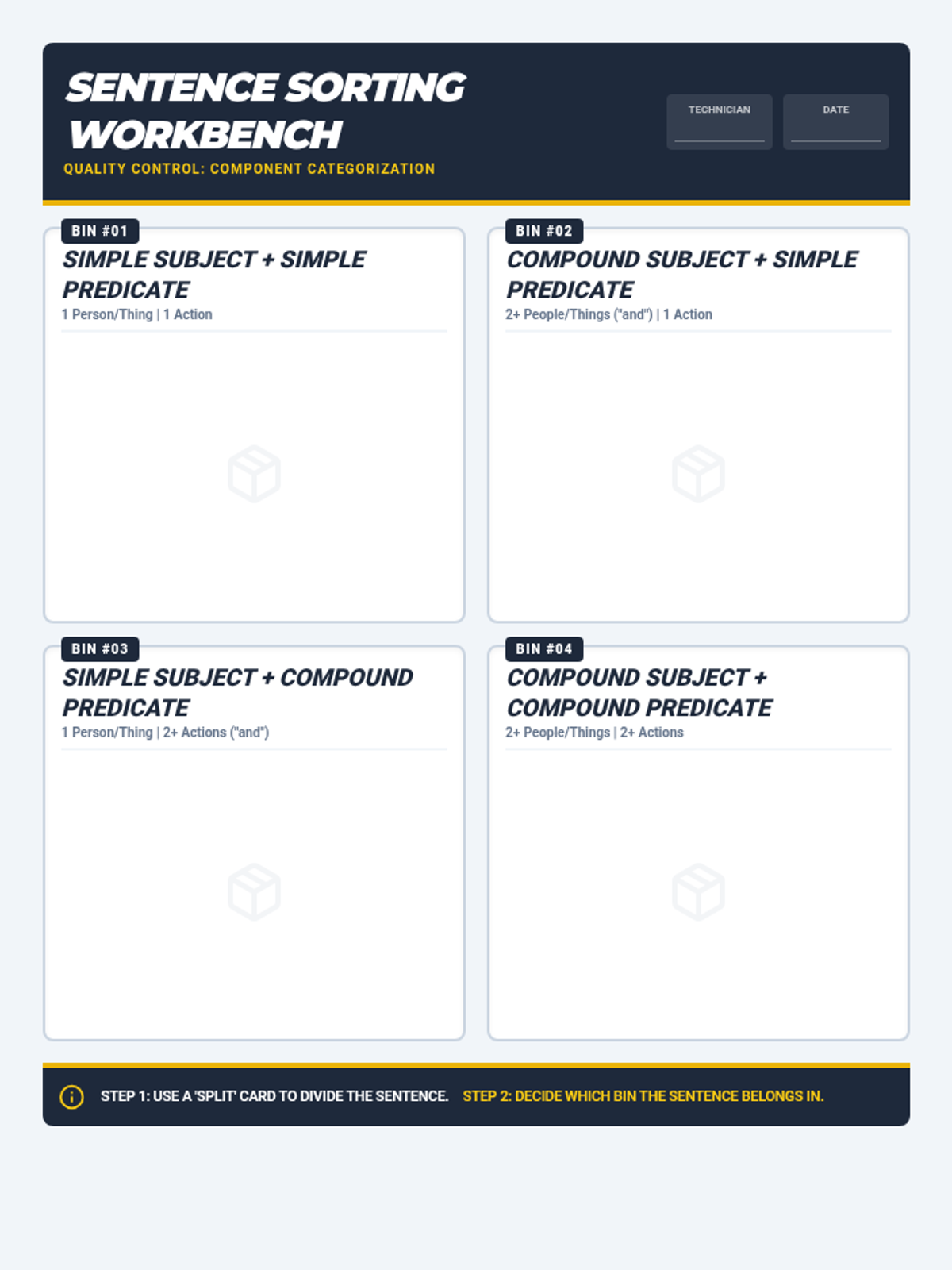
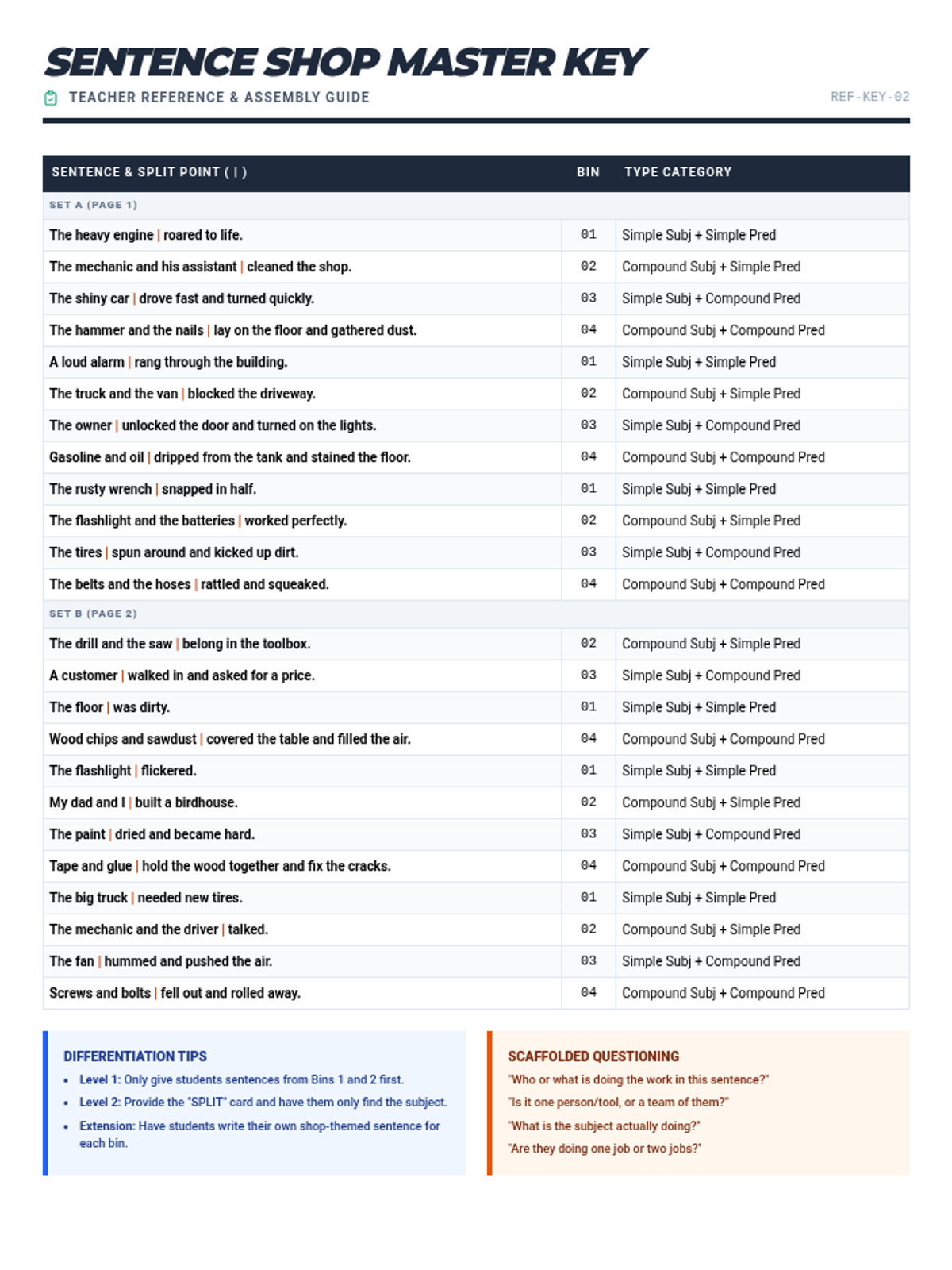
A hands-on, workshop-themed lesson where students master dividing sentences into subjects and predicates. They use physical cards to identify simple and compound components in a 'shop' environment.
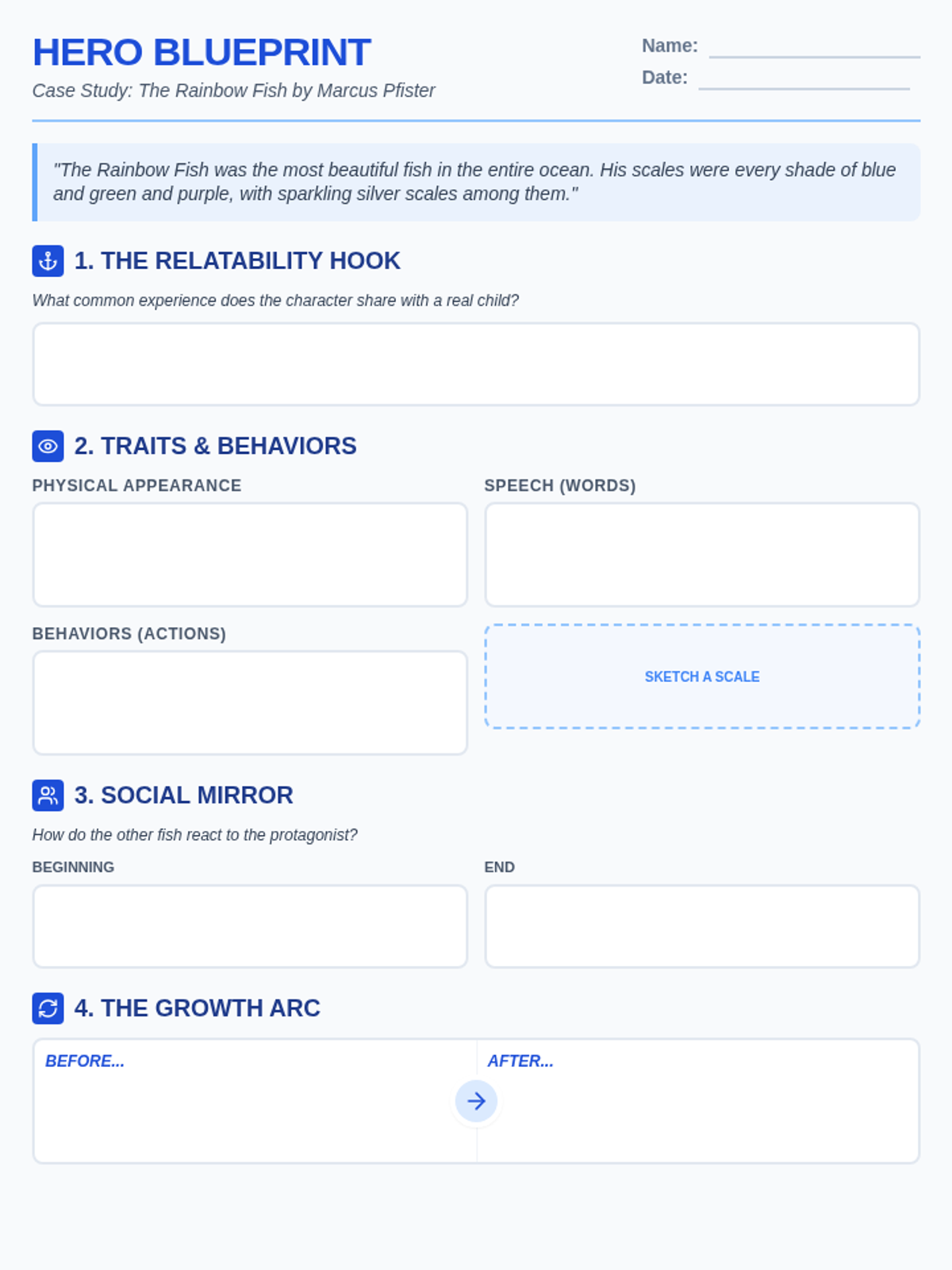
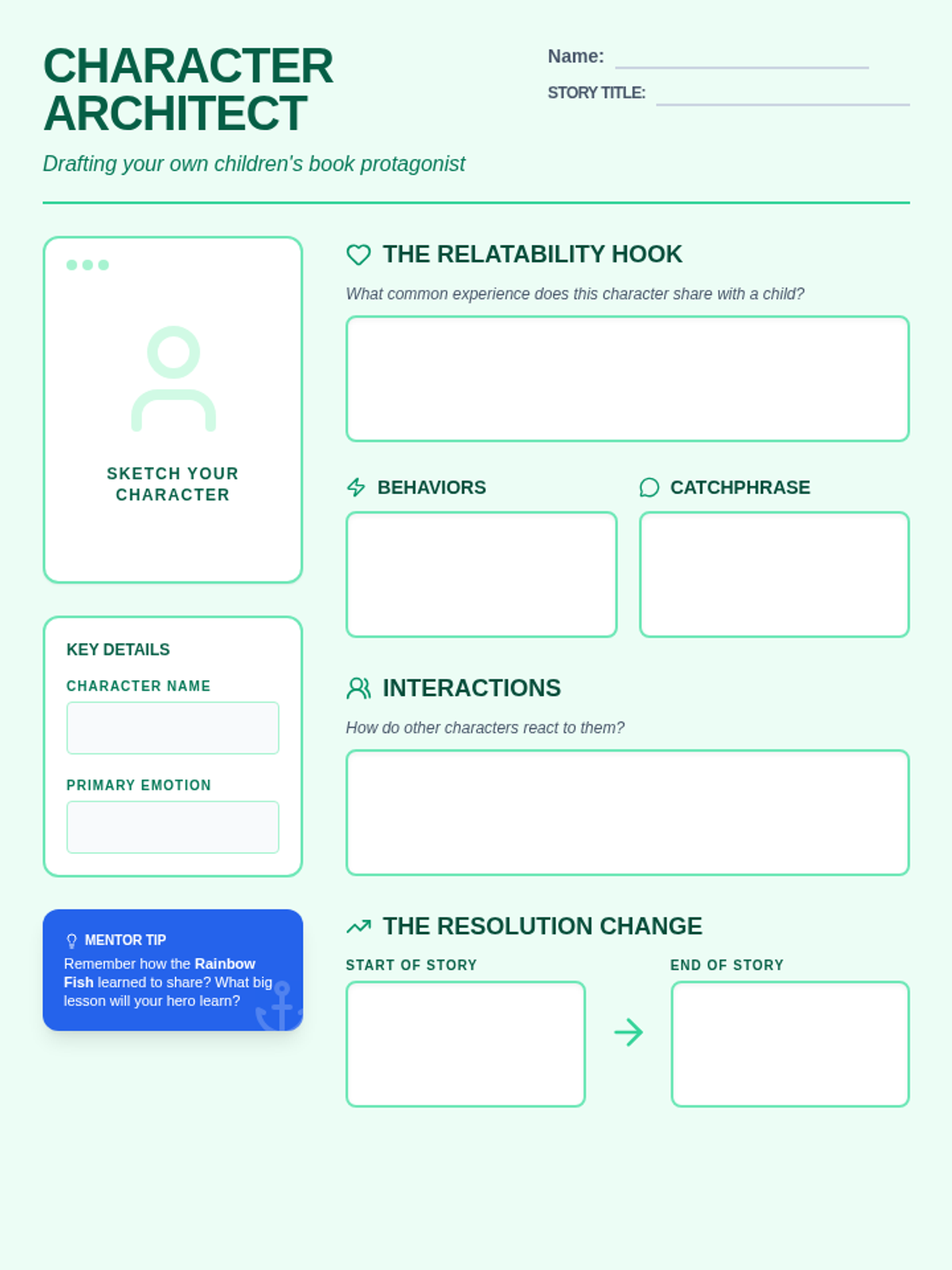
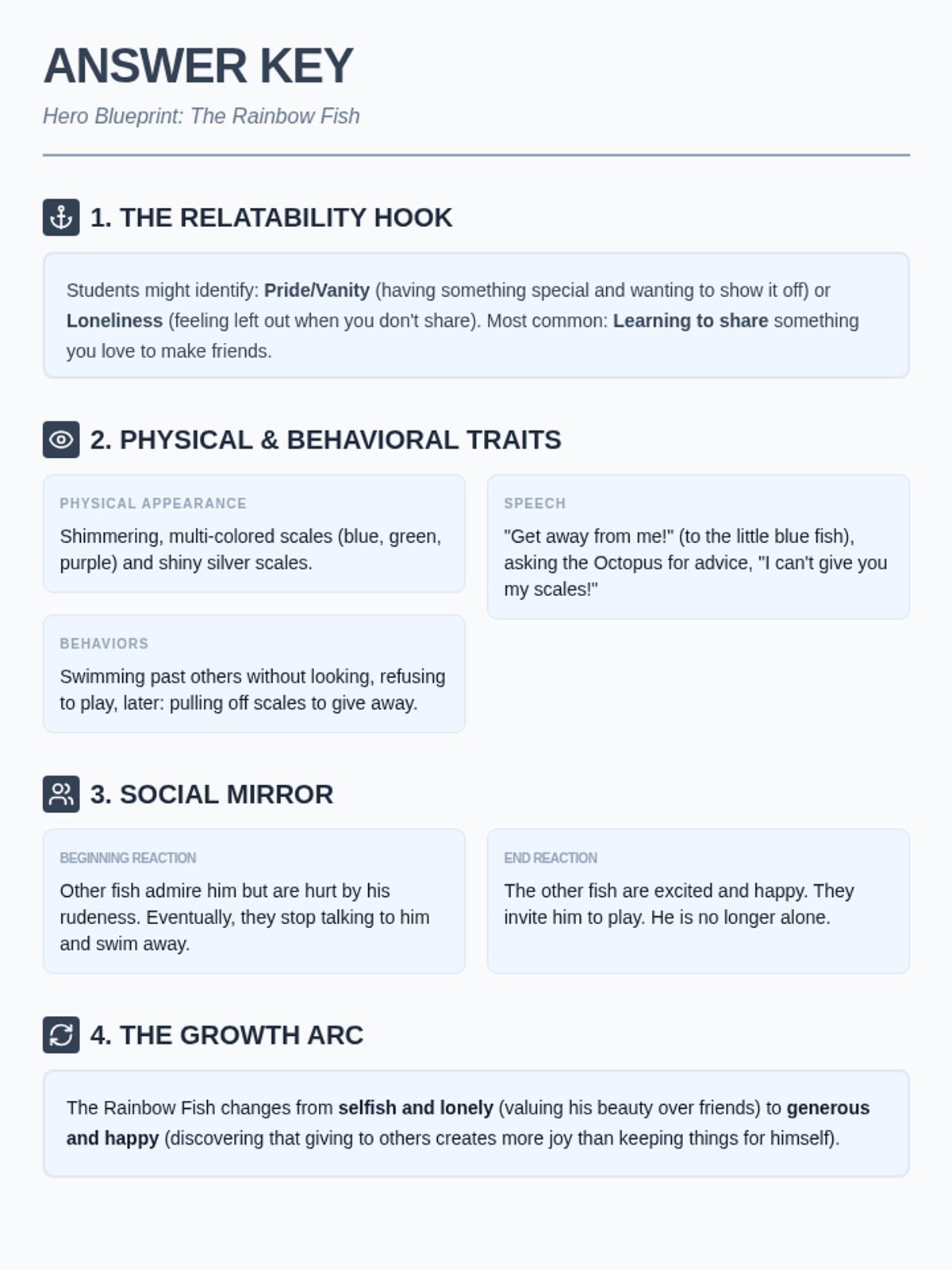
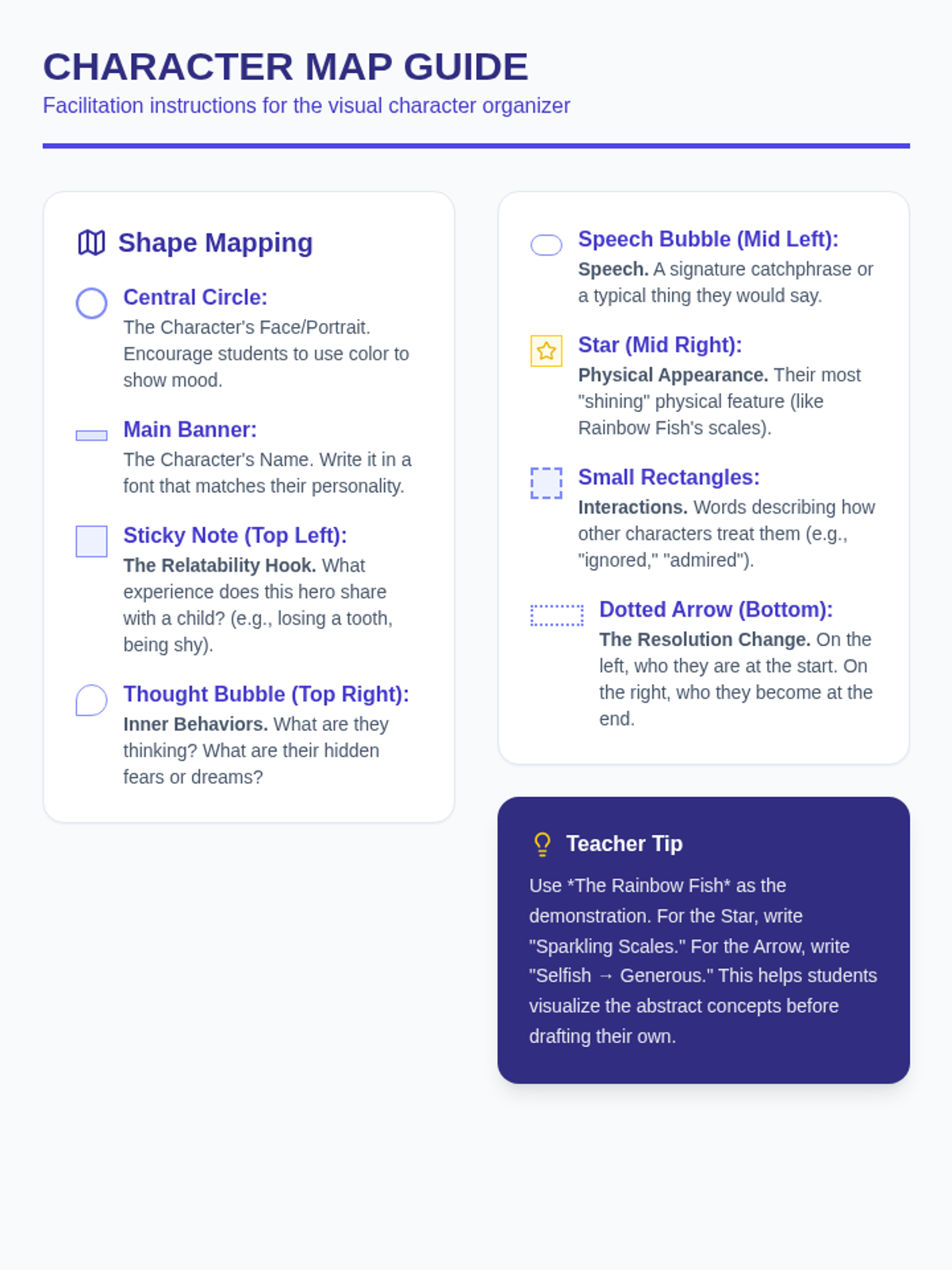
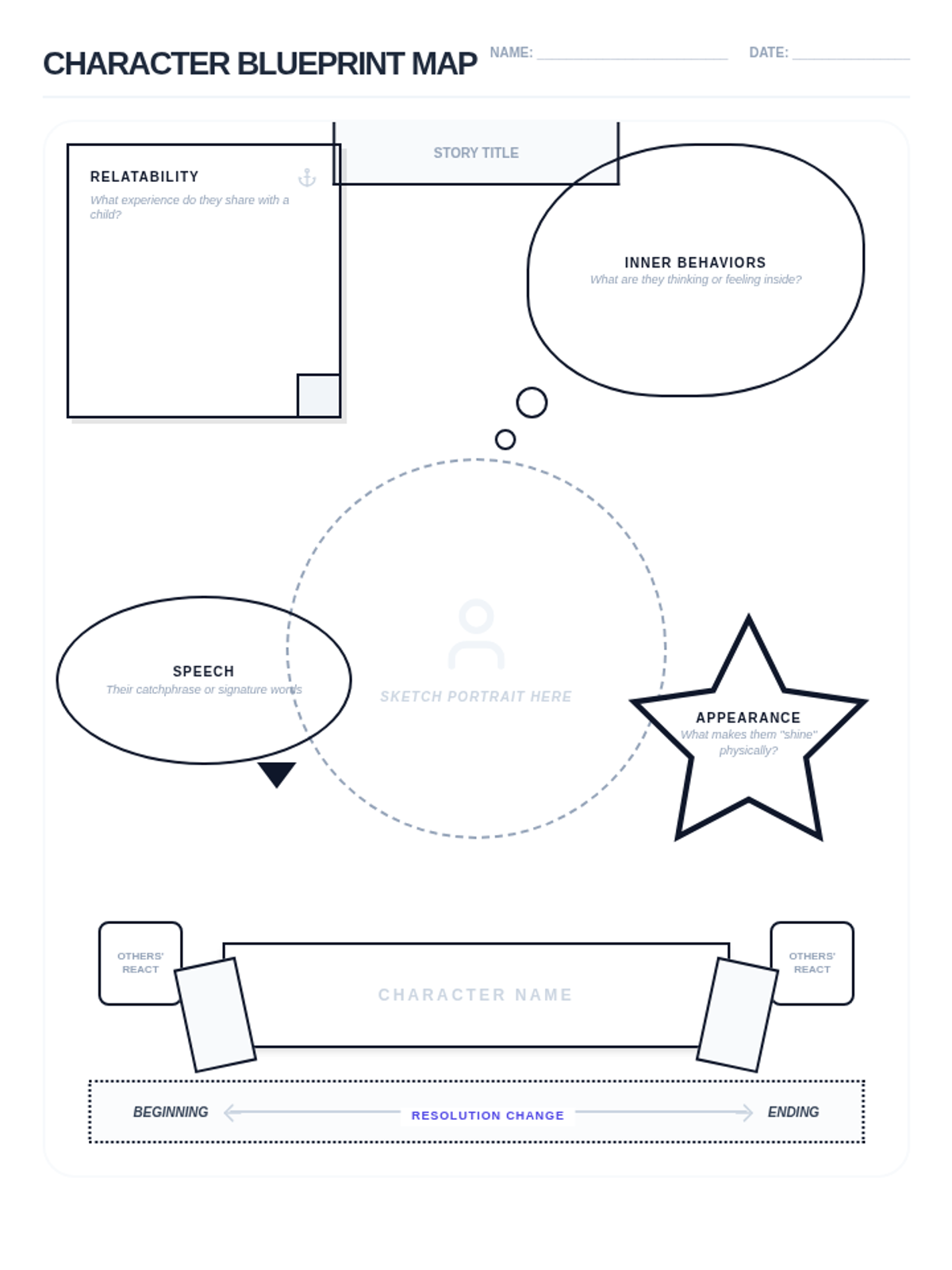
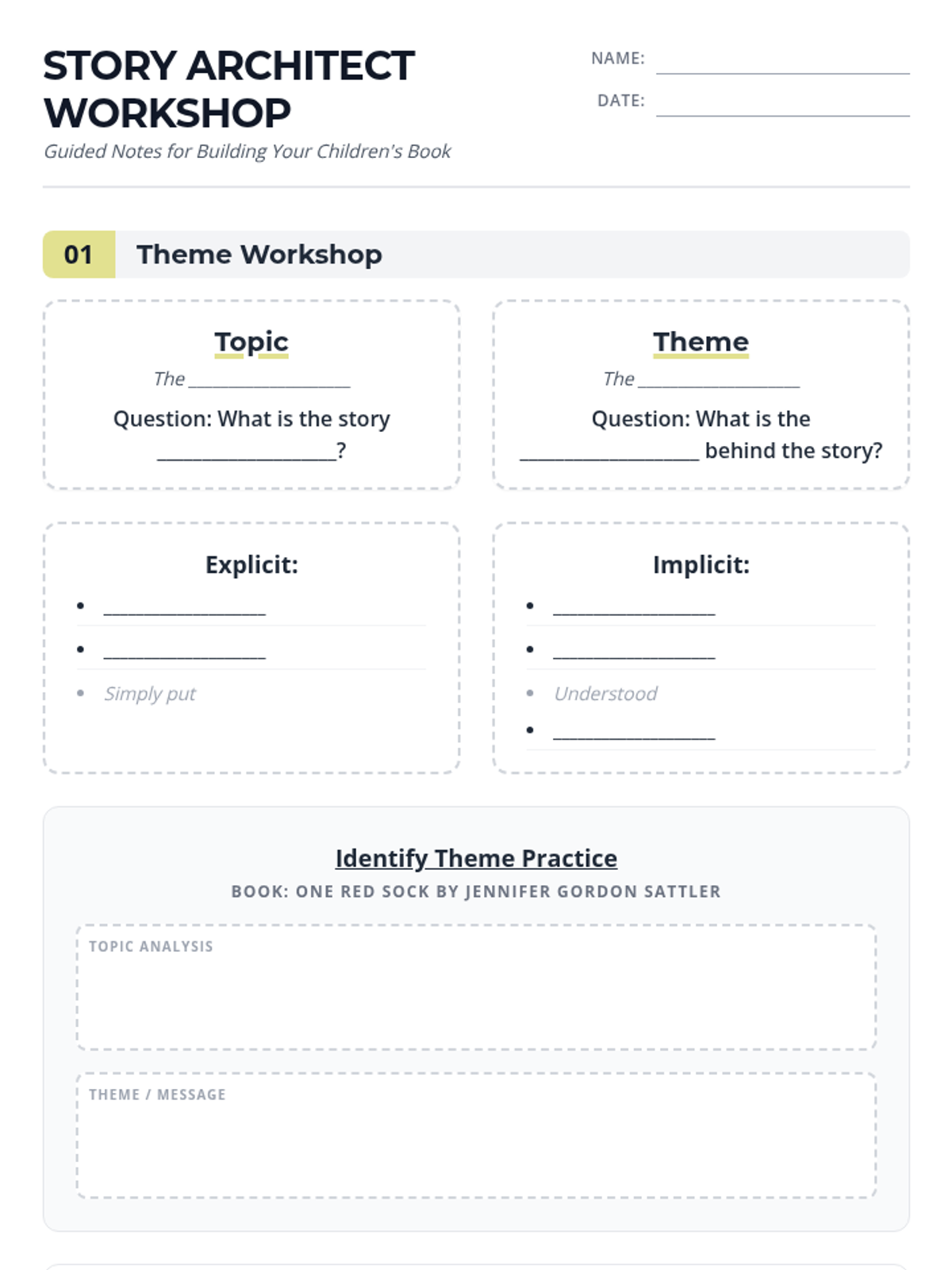
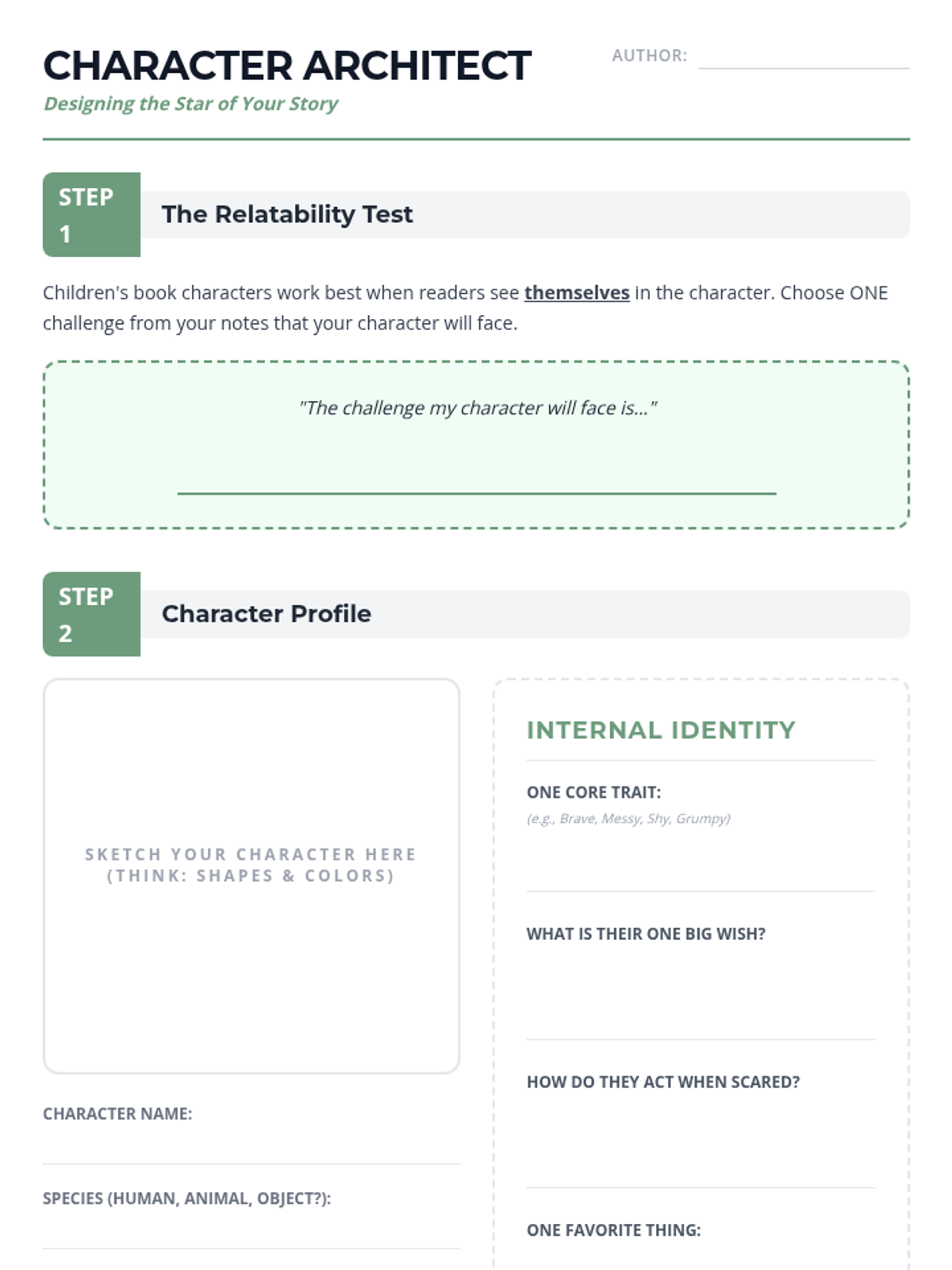
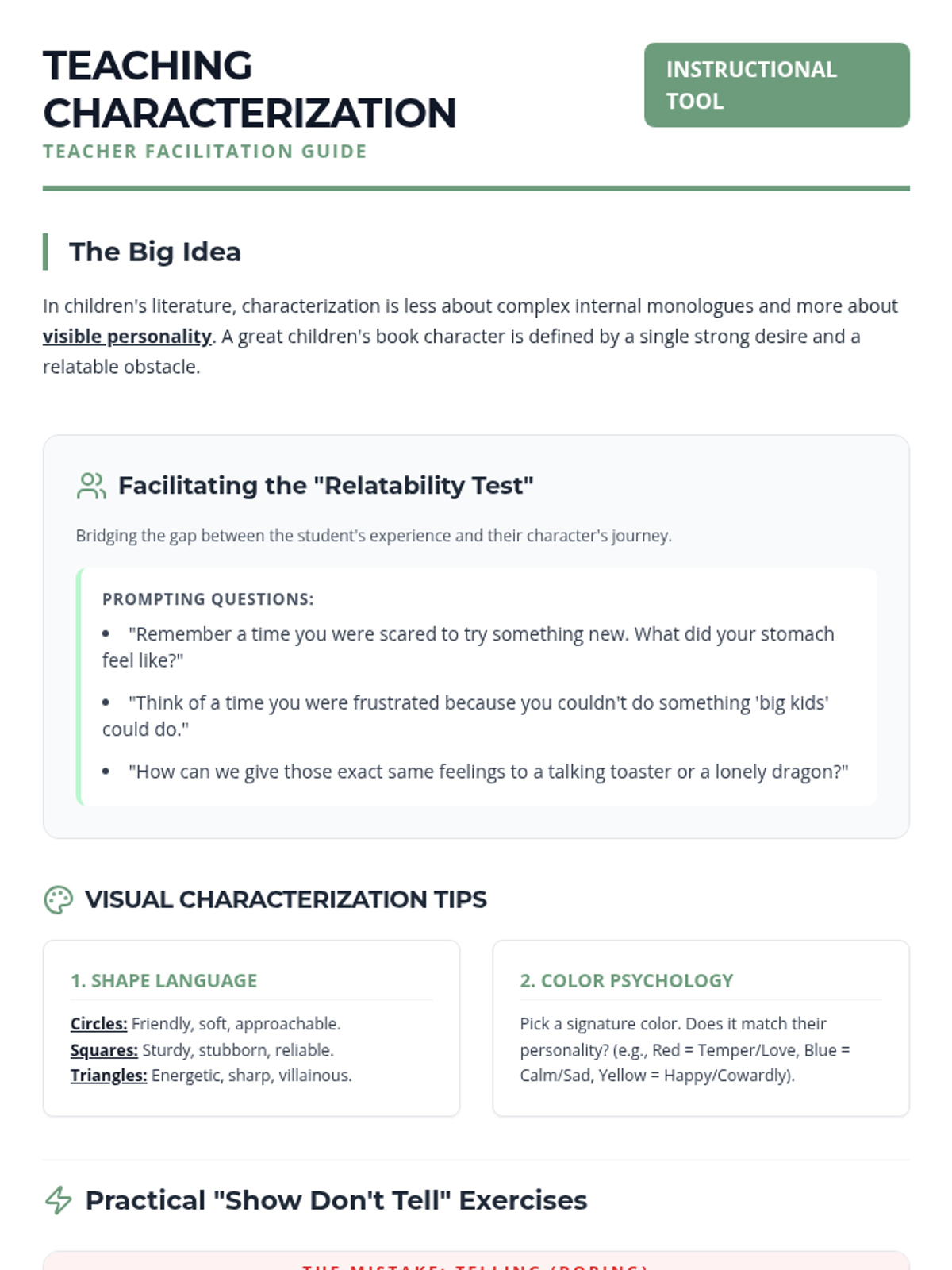
A creative workshop focused on character development for children's books, using The Rainbow Fish as a mentor text to explore relatability, behavior, and character arcs.
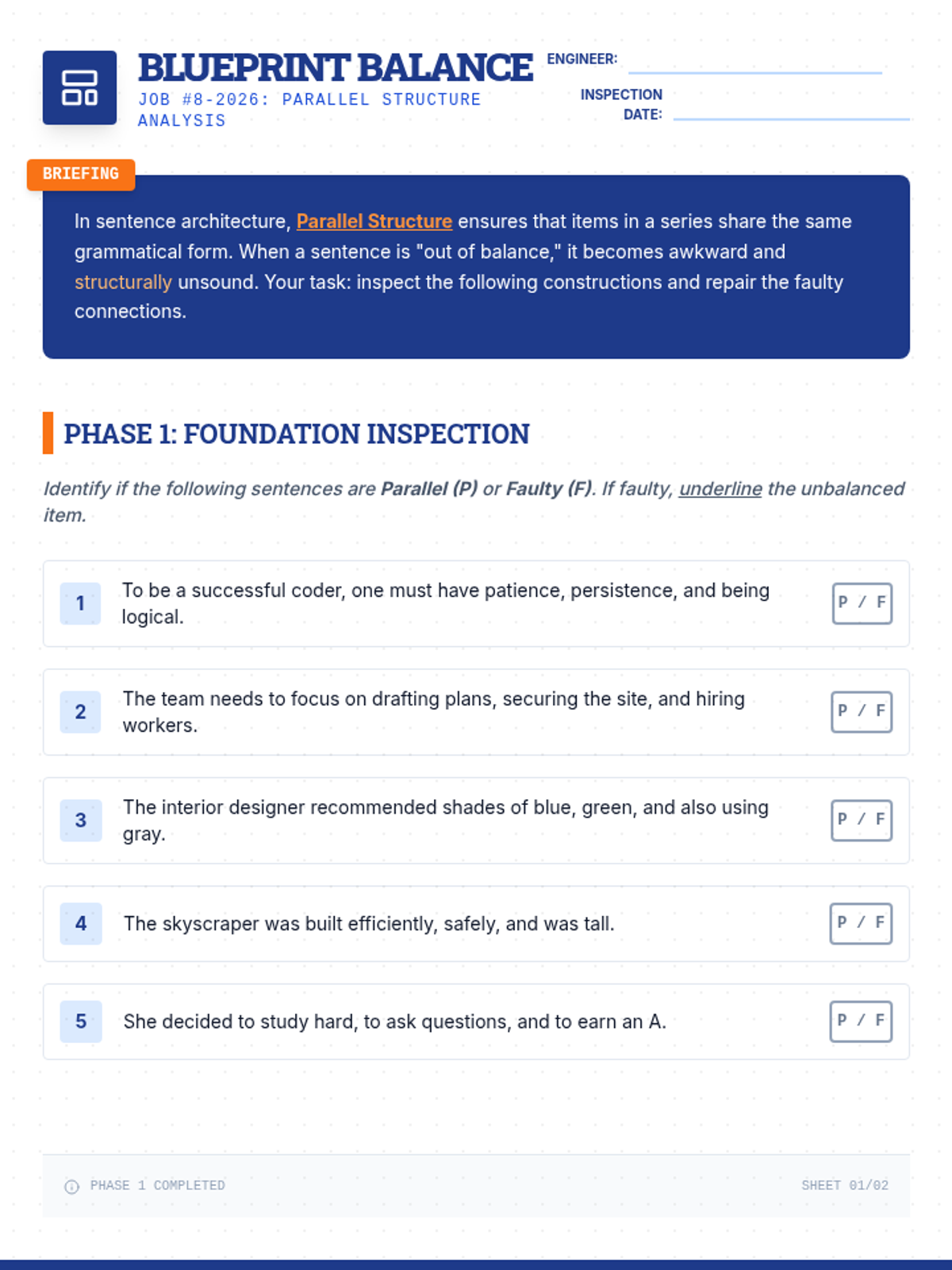
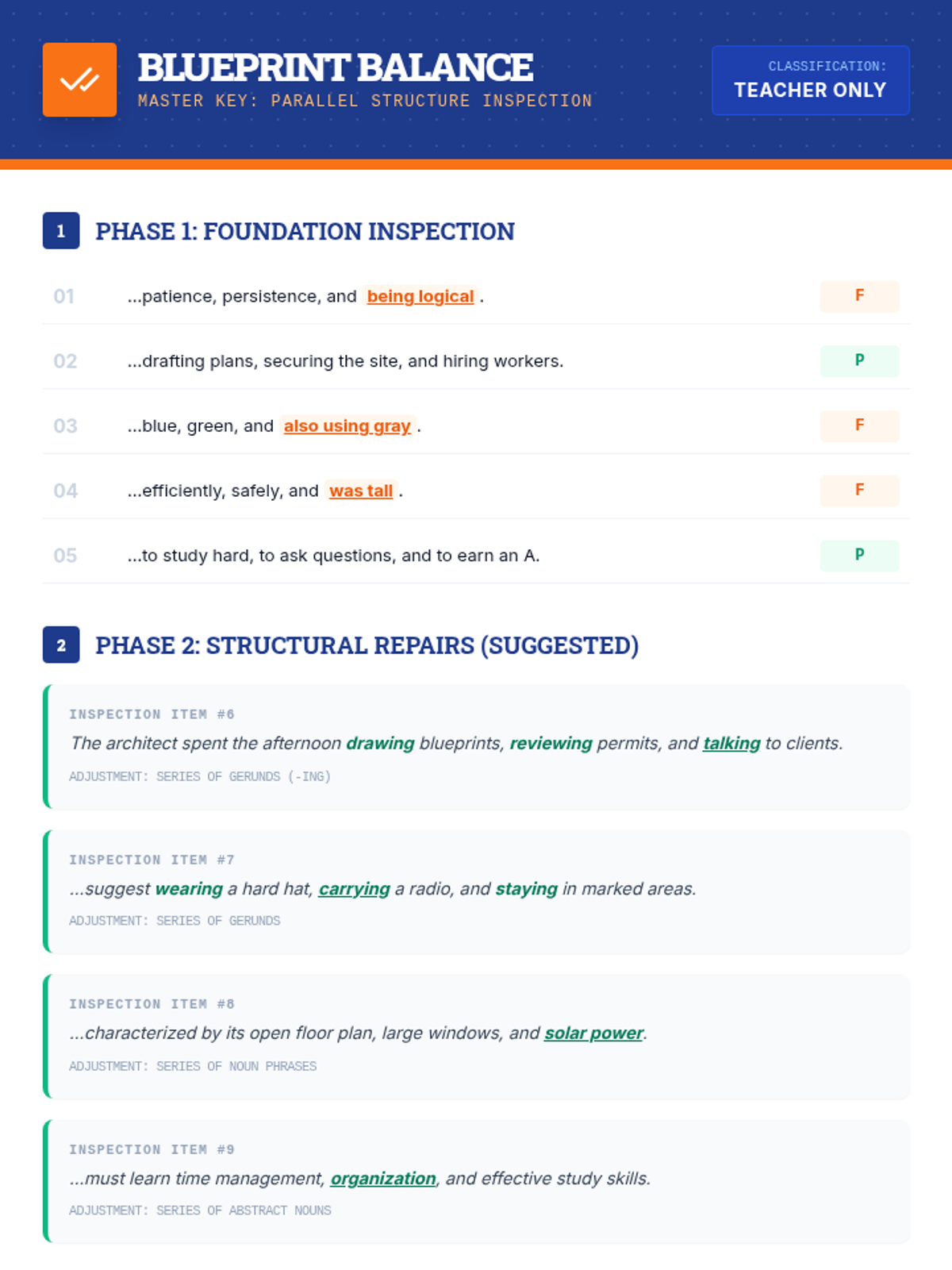
A focus on advanced grammar concepts for 8th-grade students, specifically mastering parallel structure in complex sentences to improve writing flow and clarity.
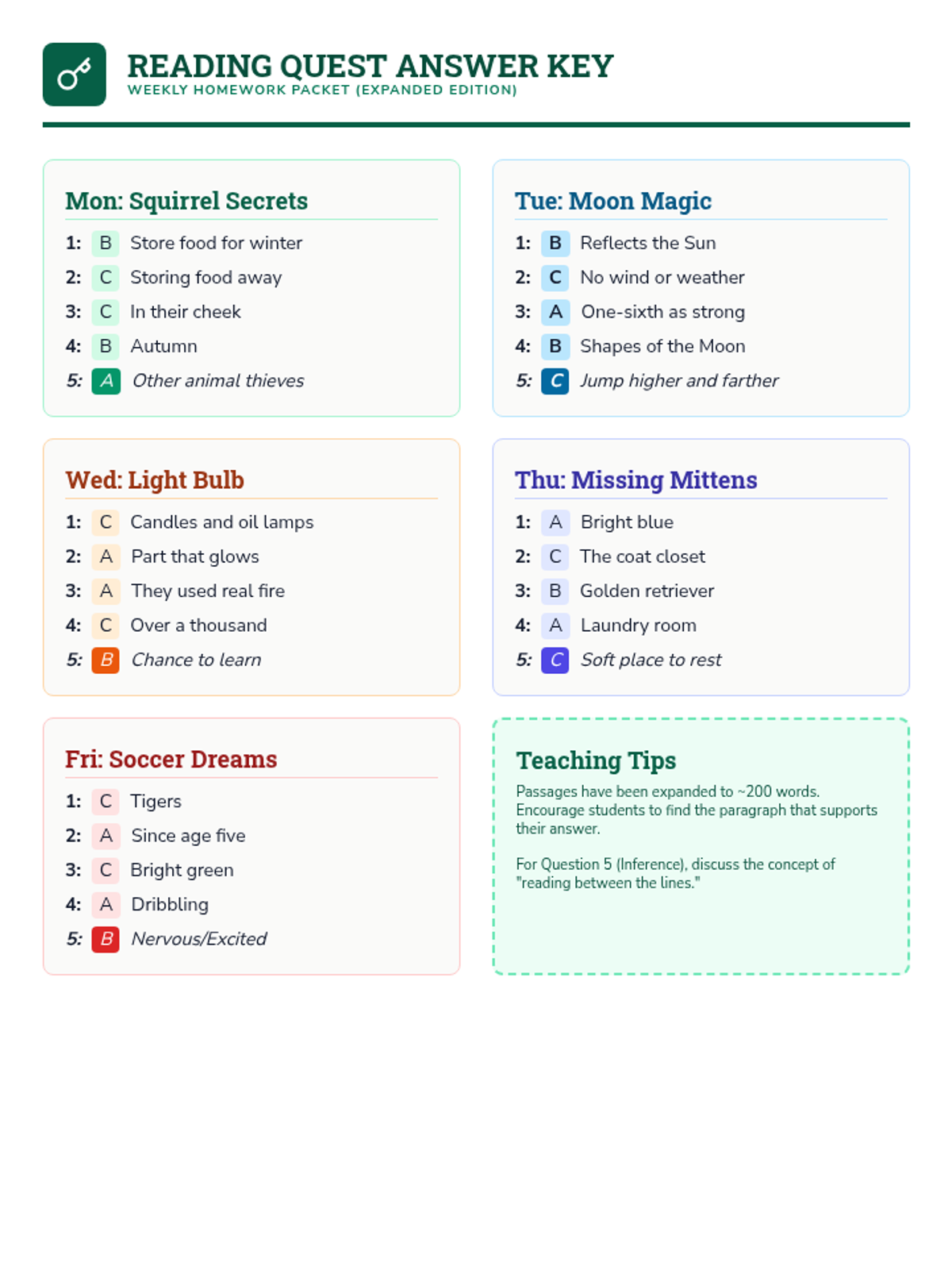
A collection of five reading passages and comprehension questions designed for beginning 4th-grade students to practice literal and inferential reading skills.
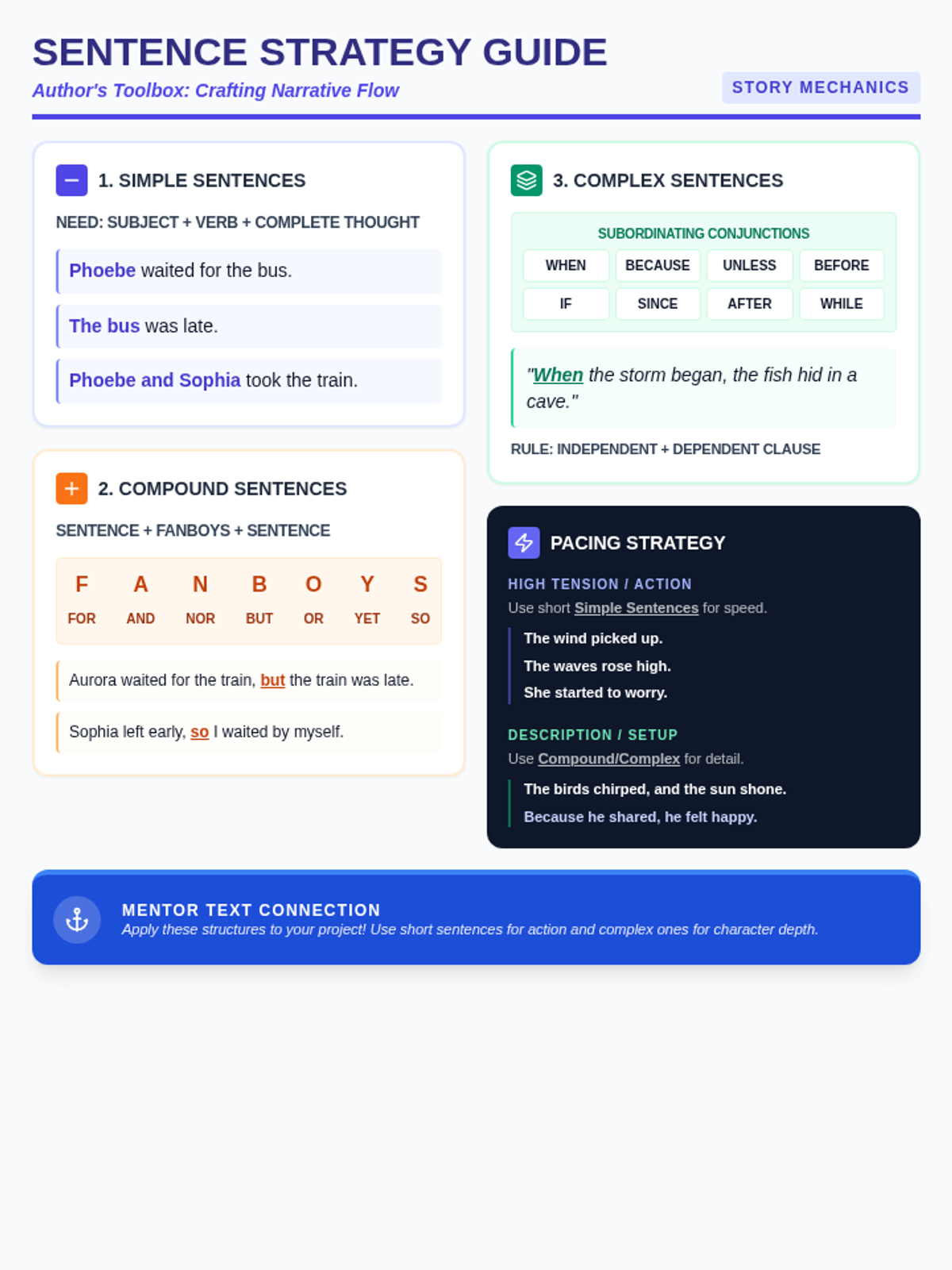
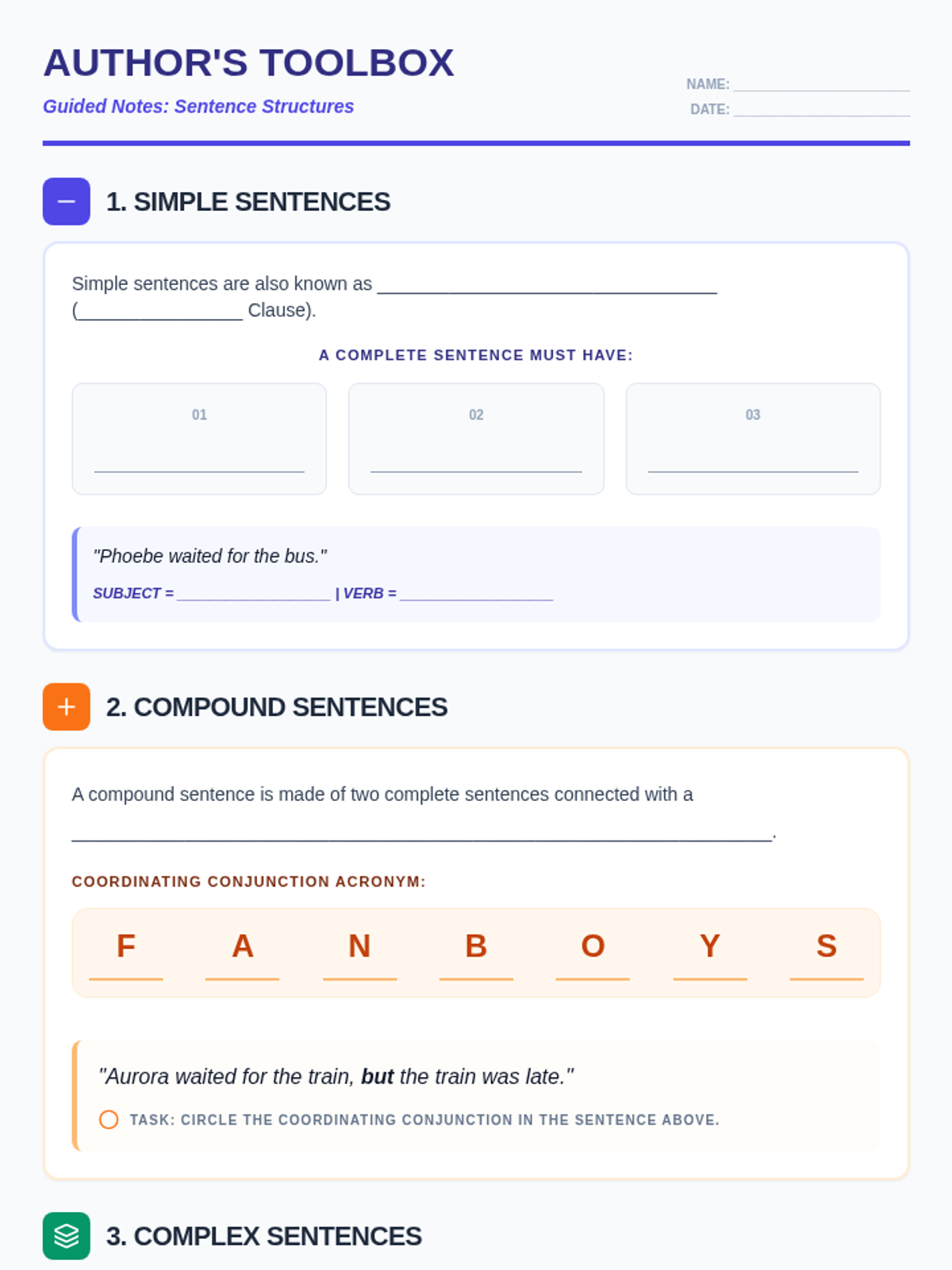
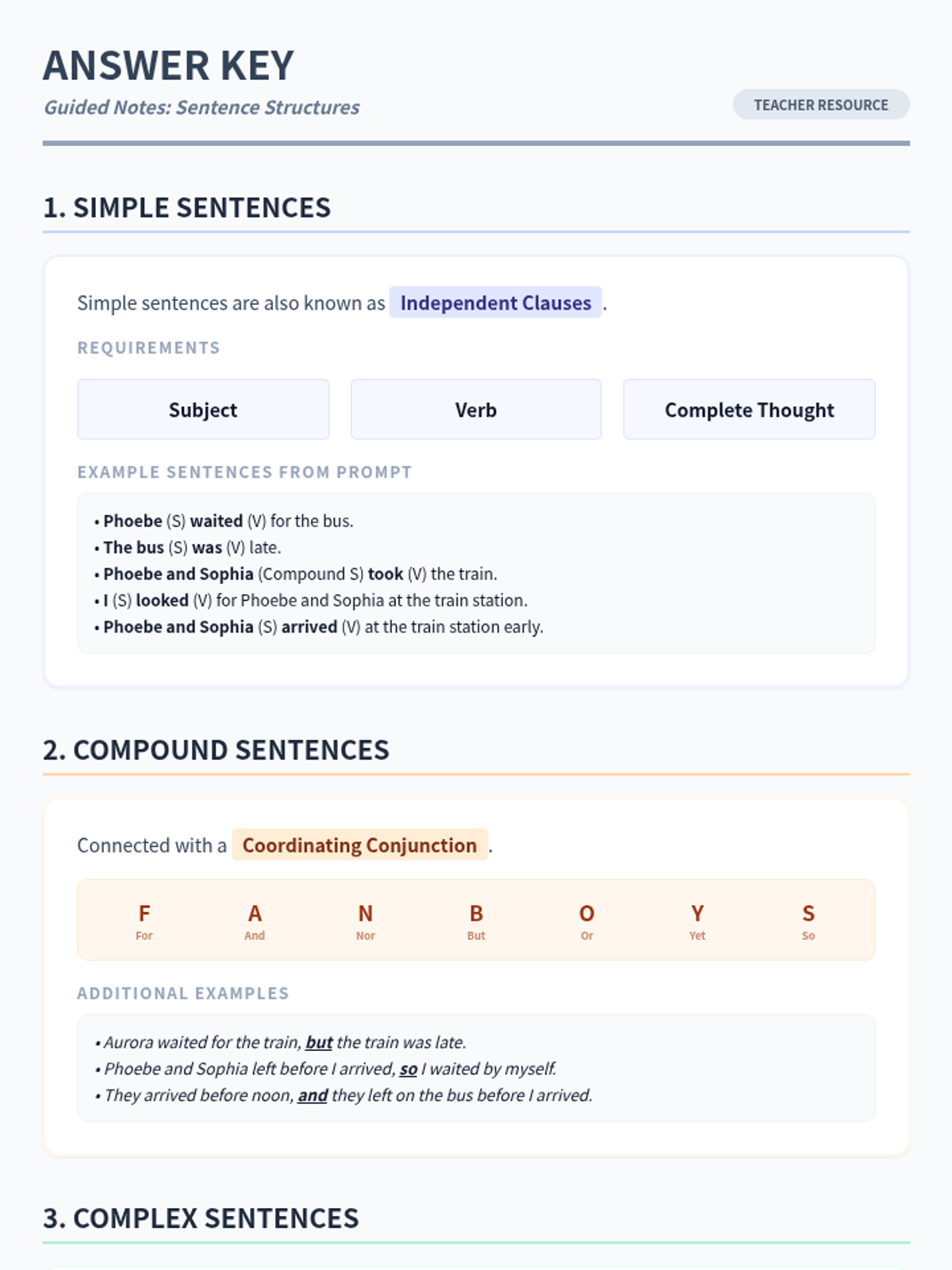
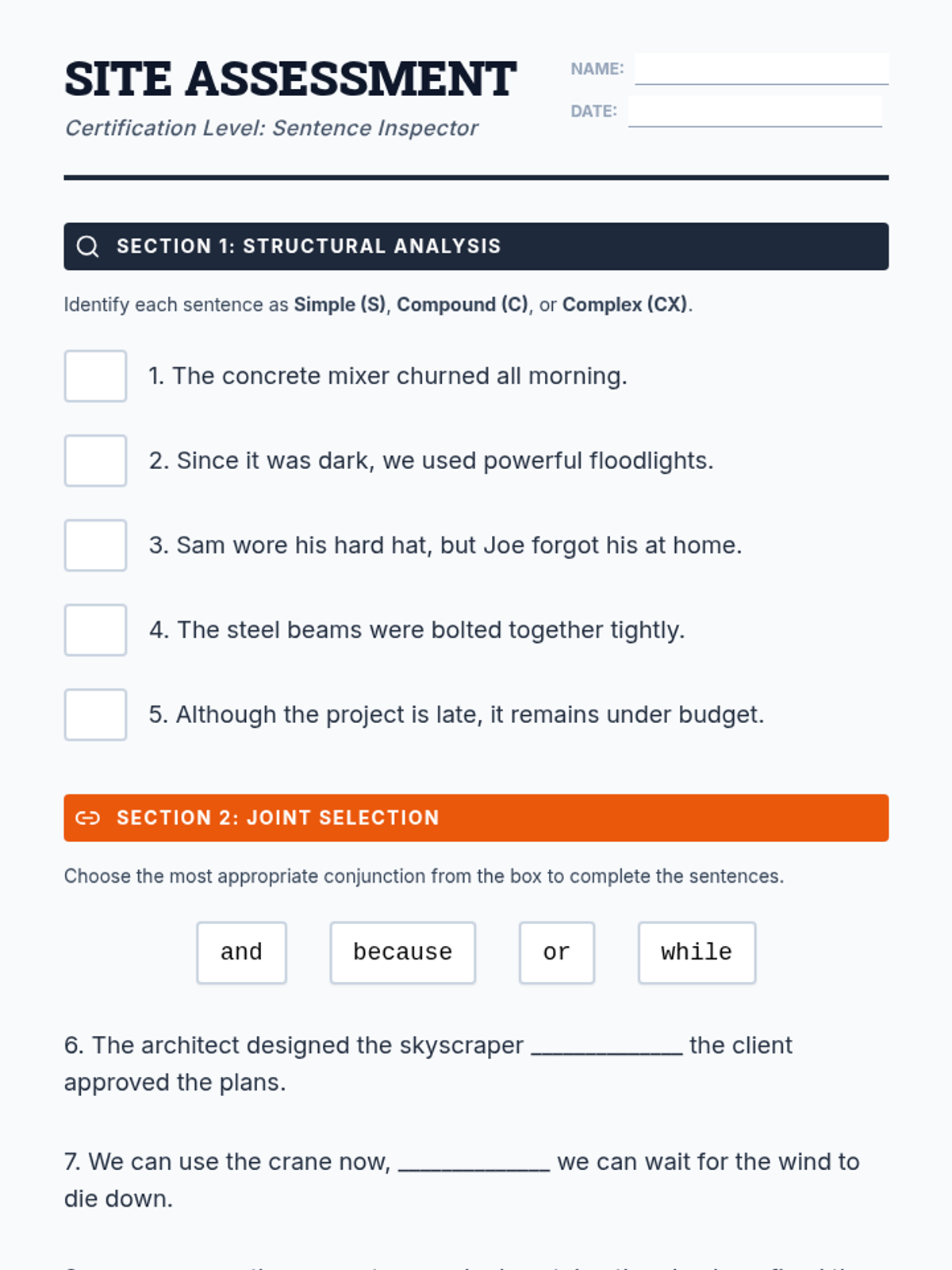
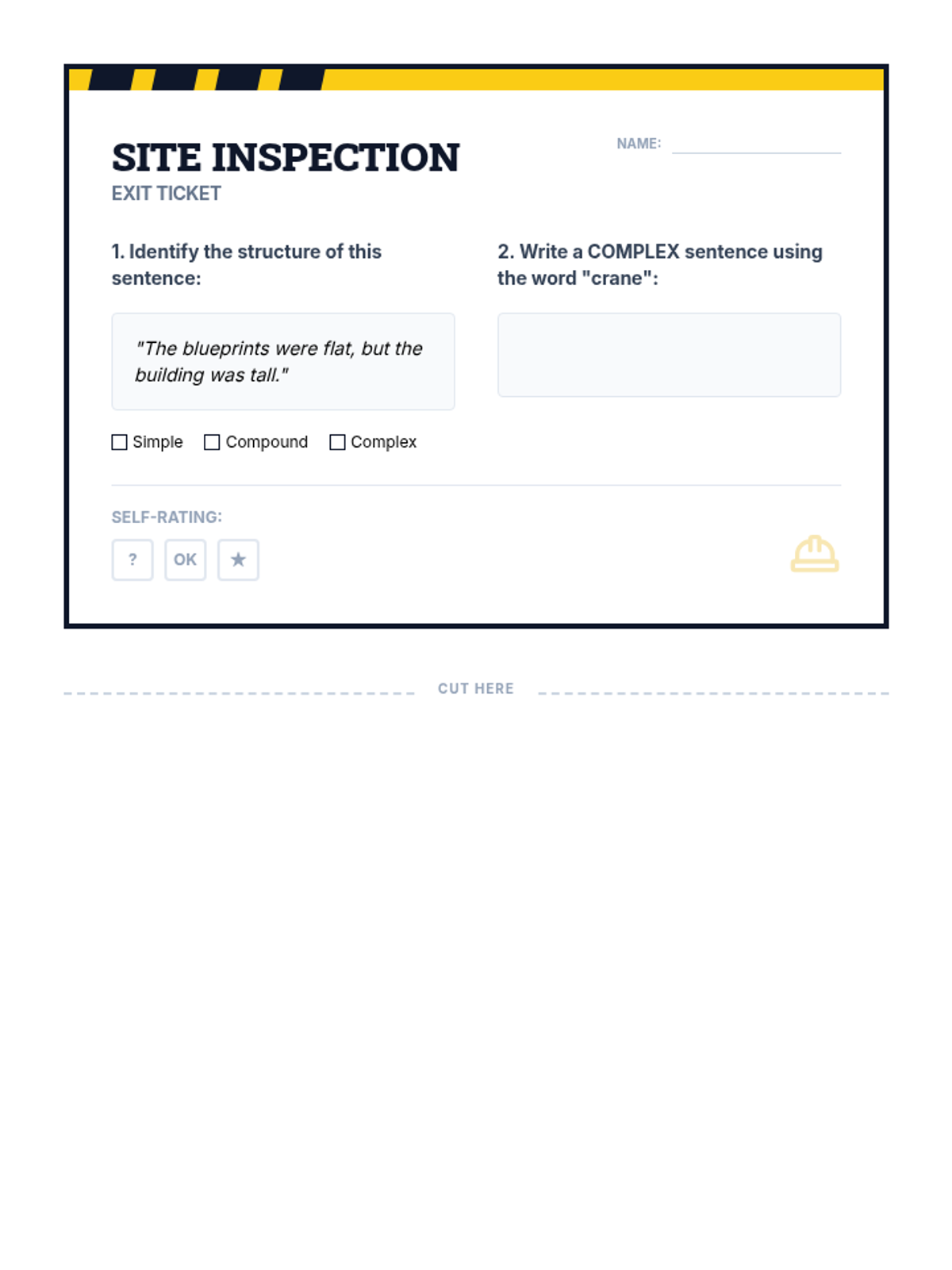
A comprehensive lesson on identifying and constructing simple, compound, and complex sentences using a construction site theme.
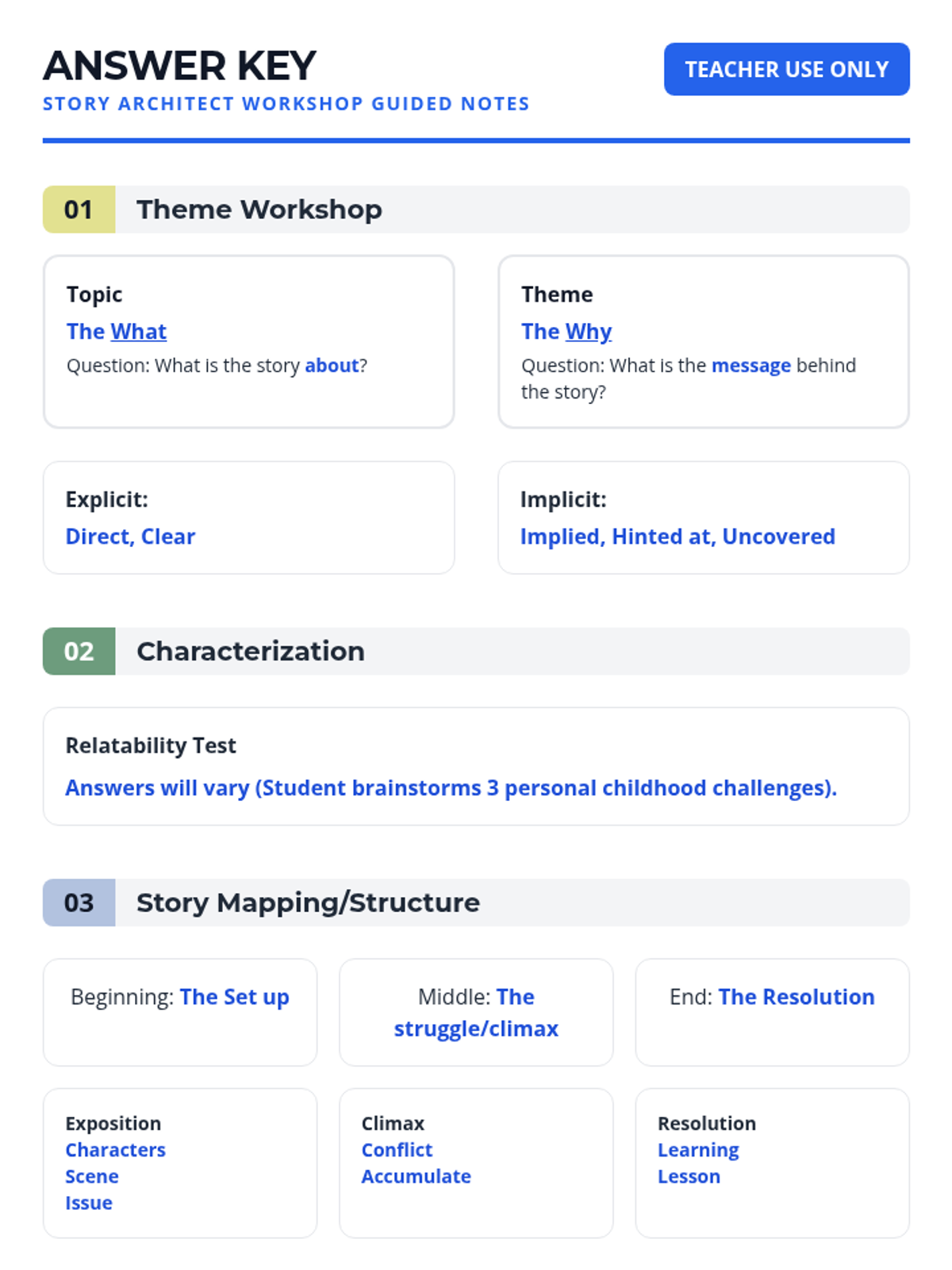
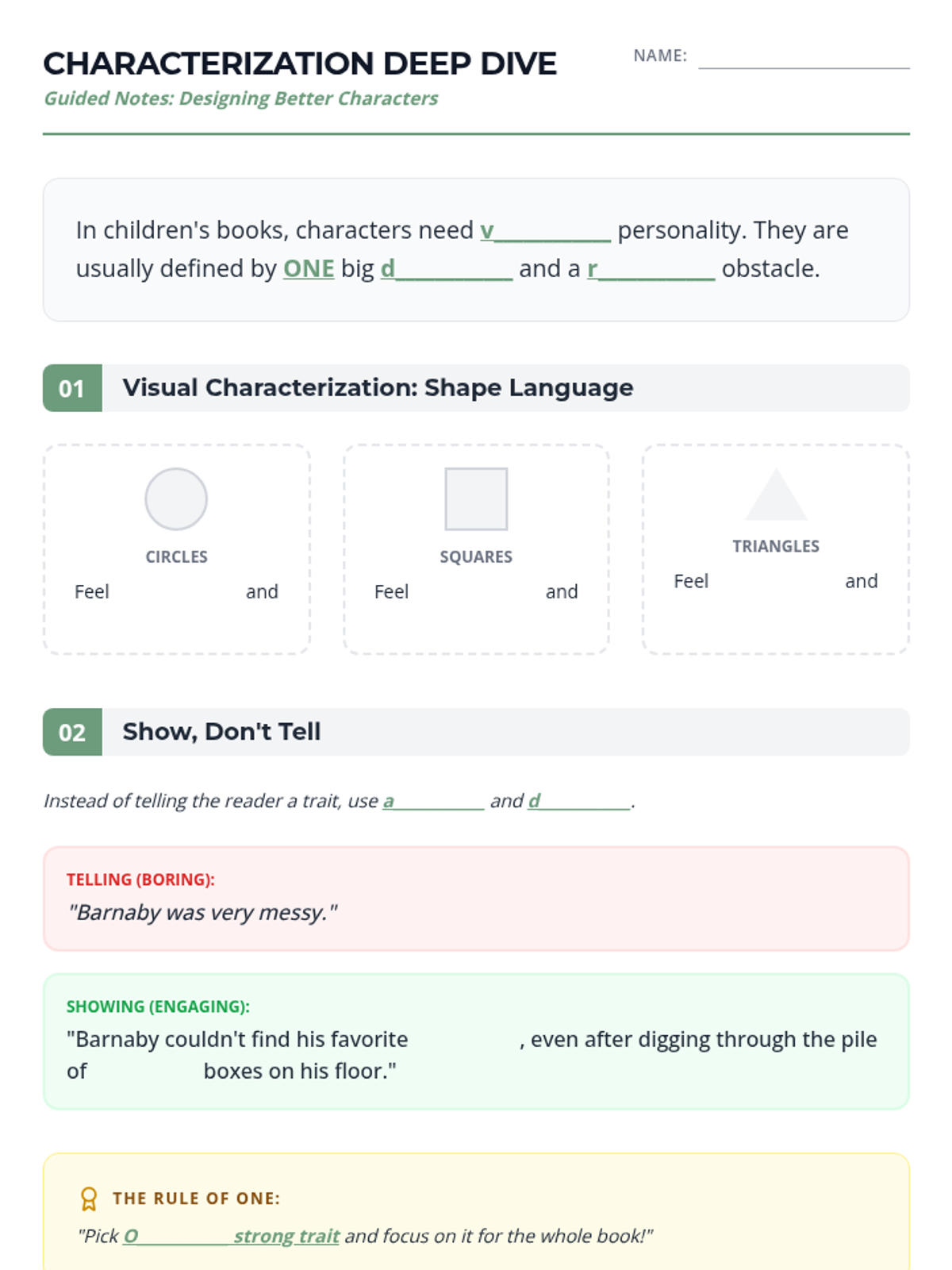
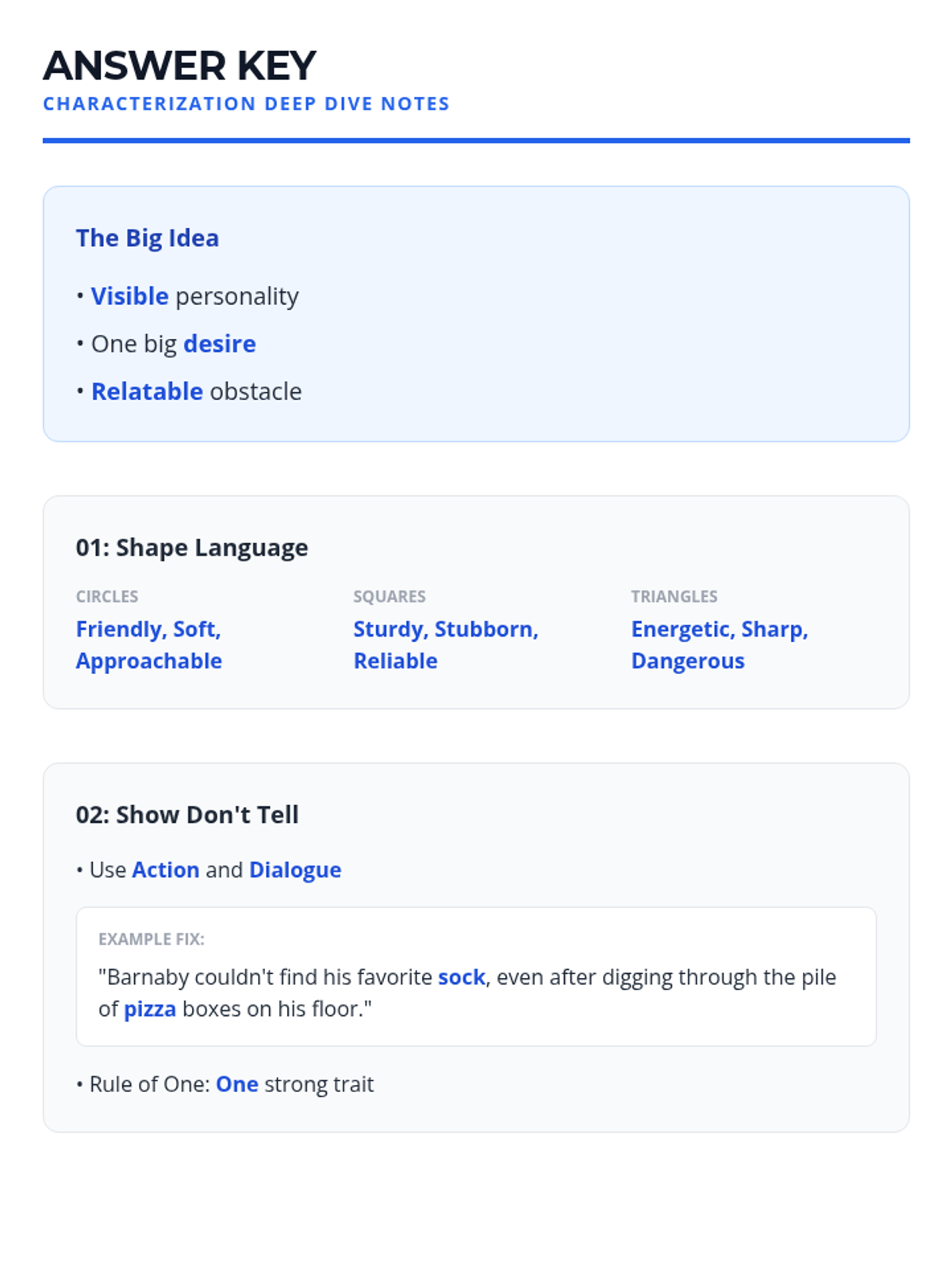
A comprehensive set of guided notes and materials based on the 'Building Your Children Book' workshop slides, covering theme, characterization, story structure, and sentence syntax.
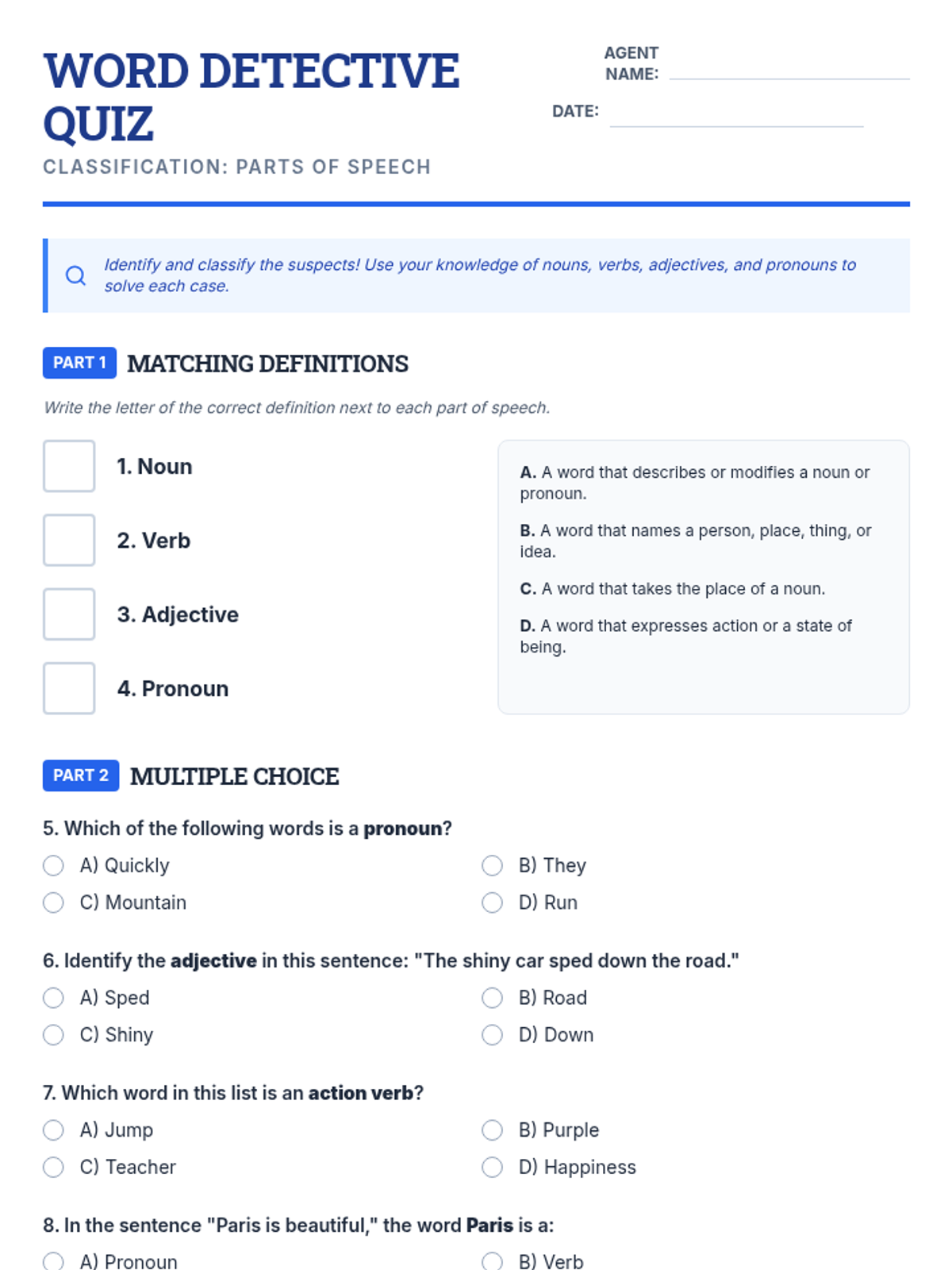
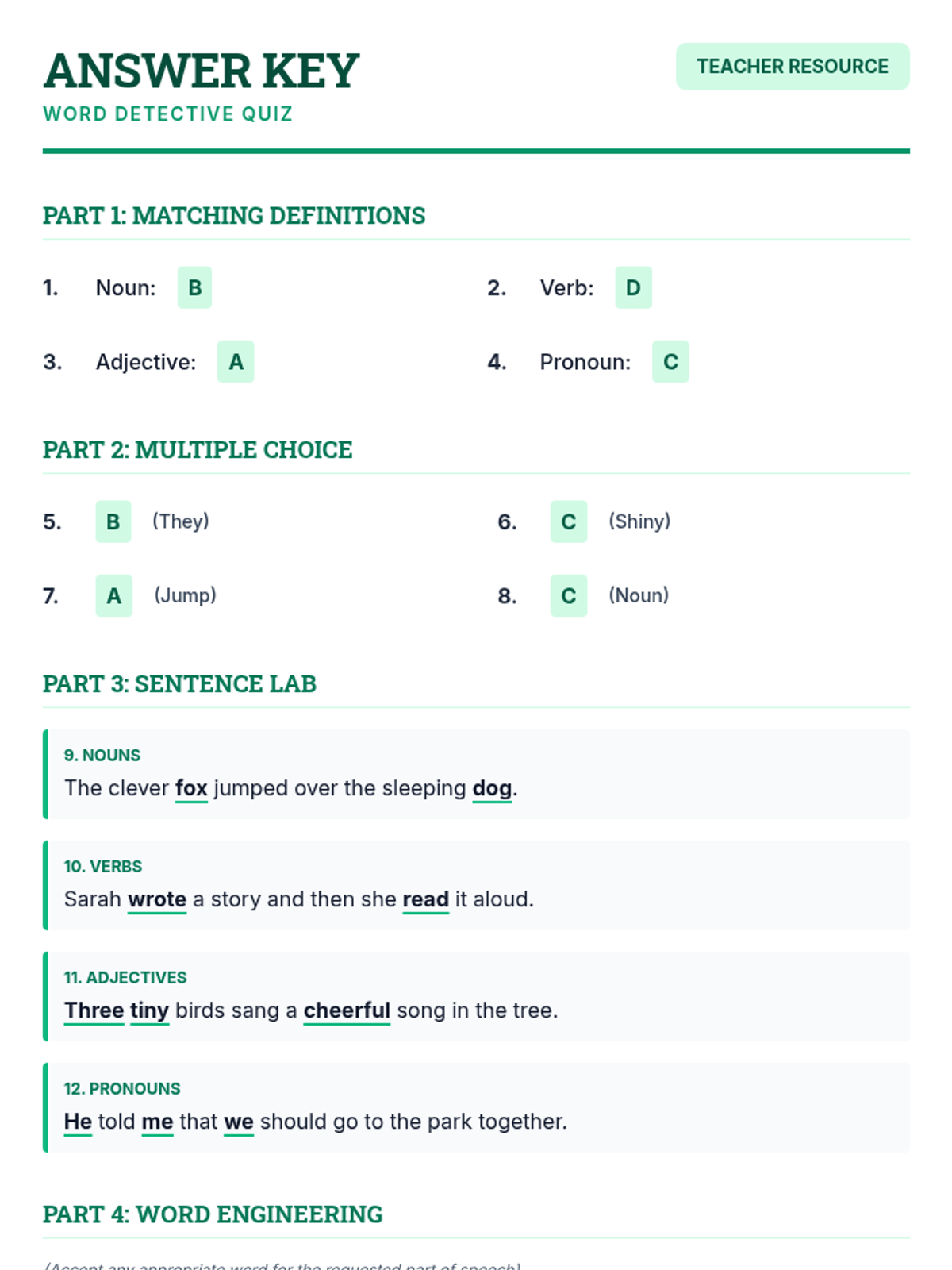
A comprehensive quiz covering the four foundational parts of speech: nouns, verbs, adjectives, and pronouns. Includes matching, multiple choice, identification, and creative fill-in-the-blank questions.
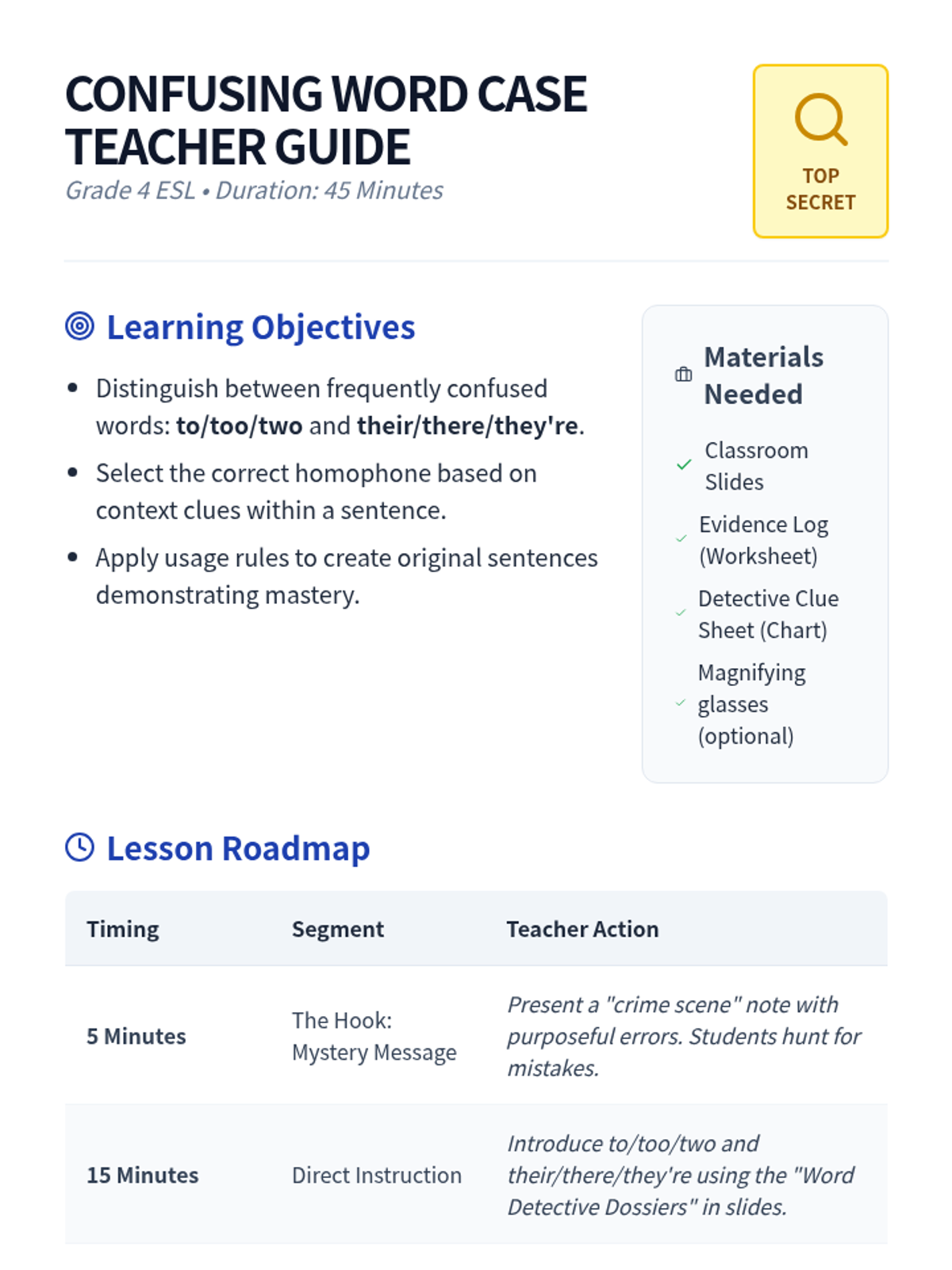
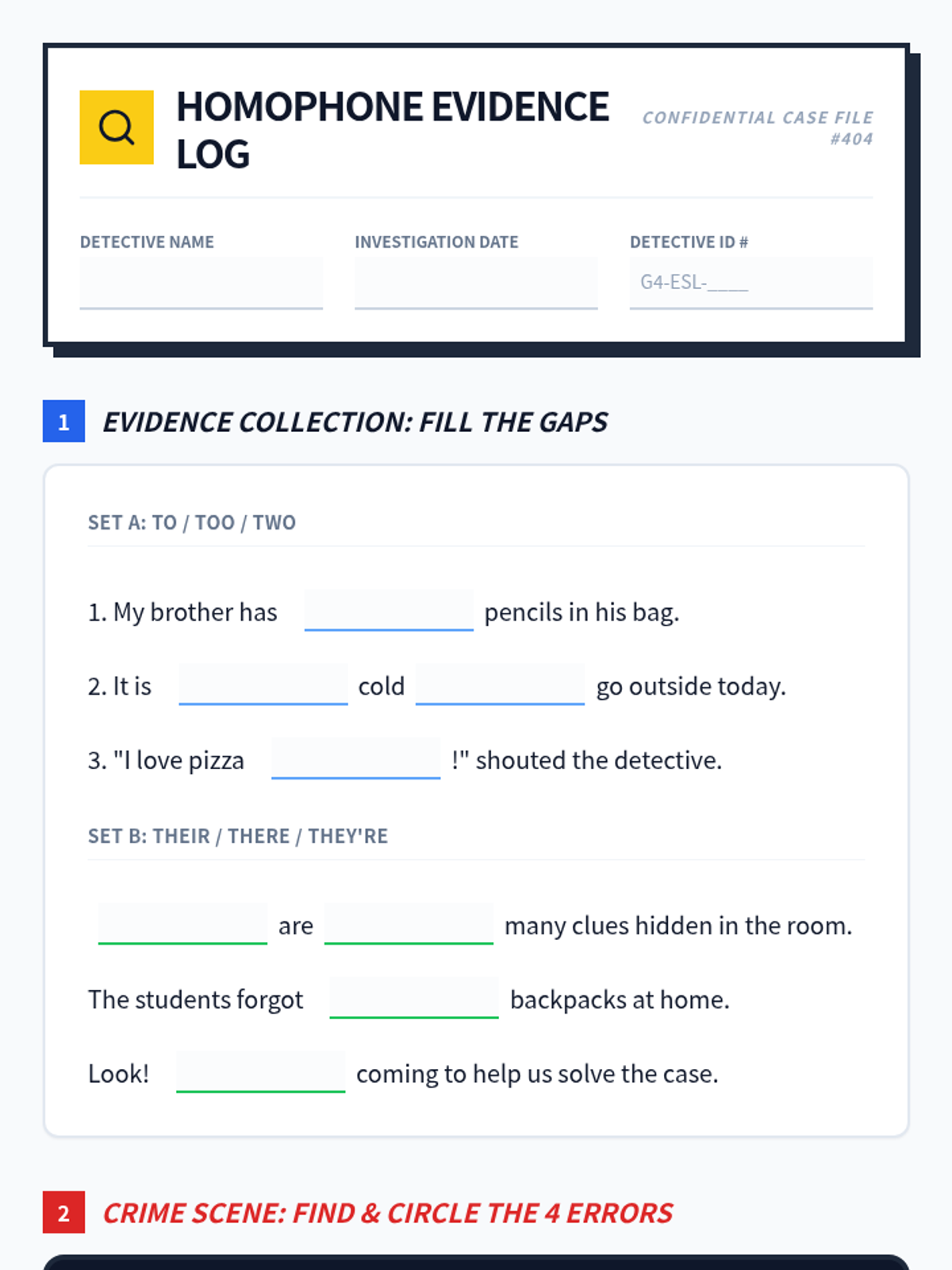
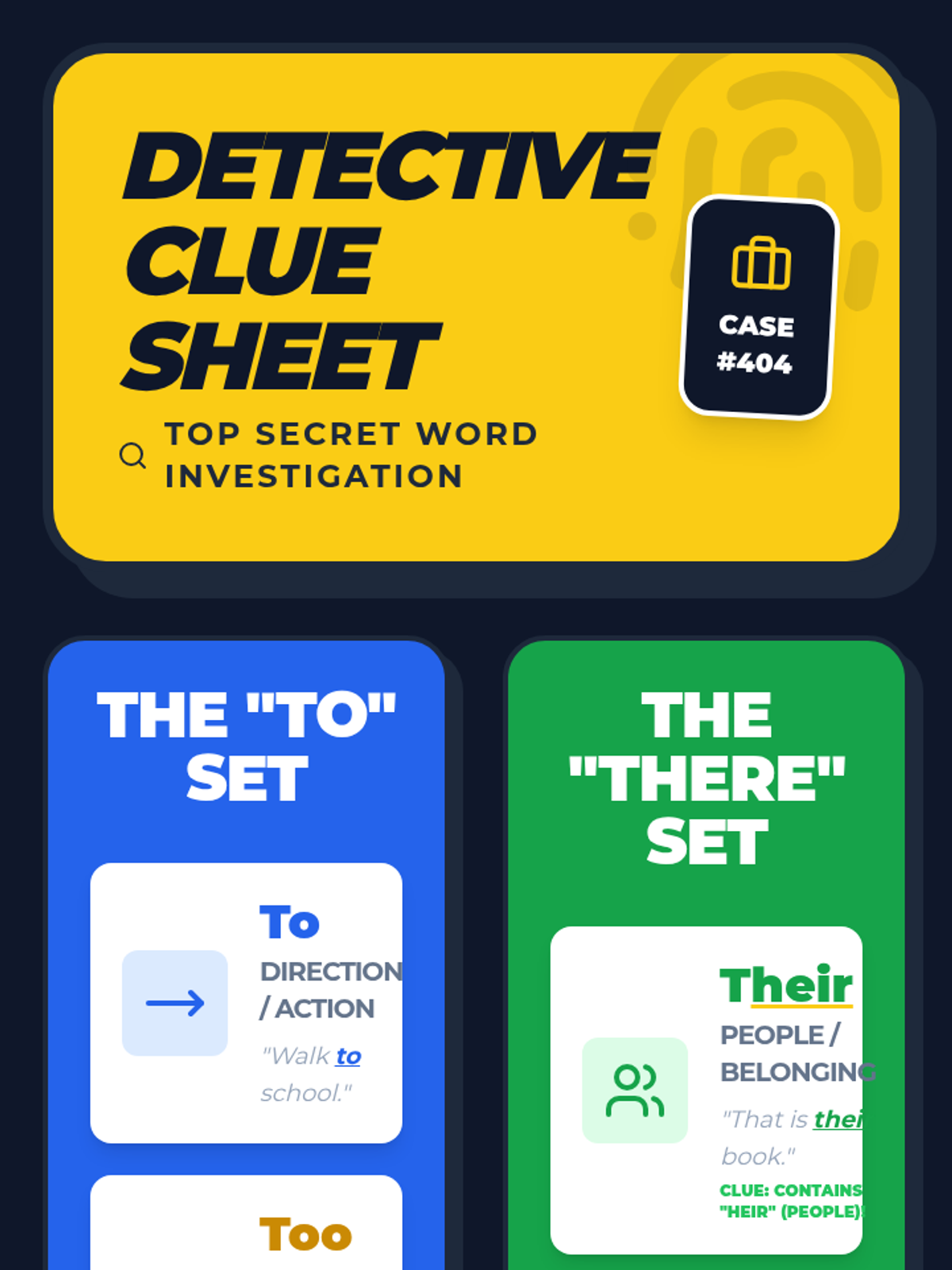
A 45-minute ESL lesson for 4th graders focused on mastering the homophones to/too/two and their/there/they're through a fun 'Word Detective' mystery theme.
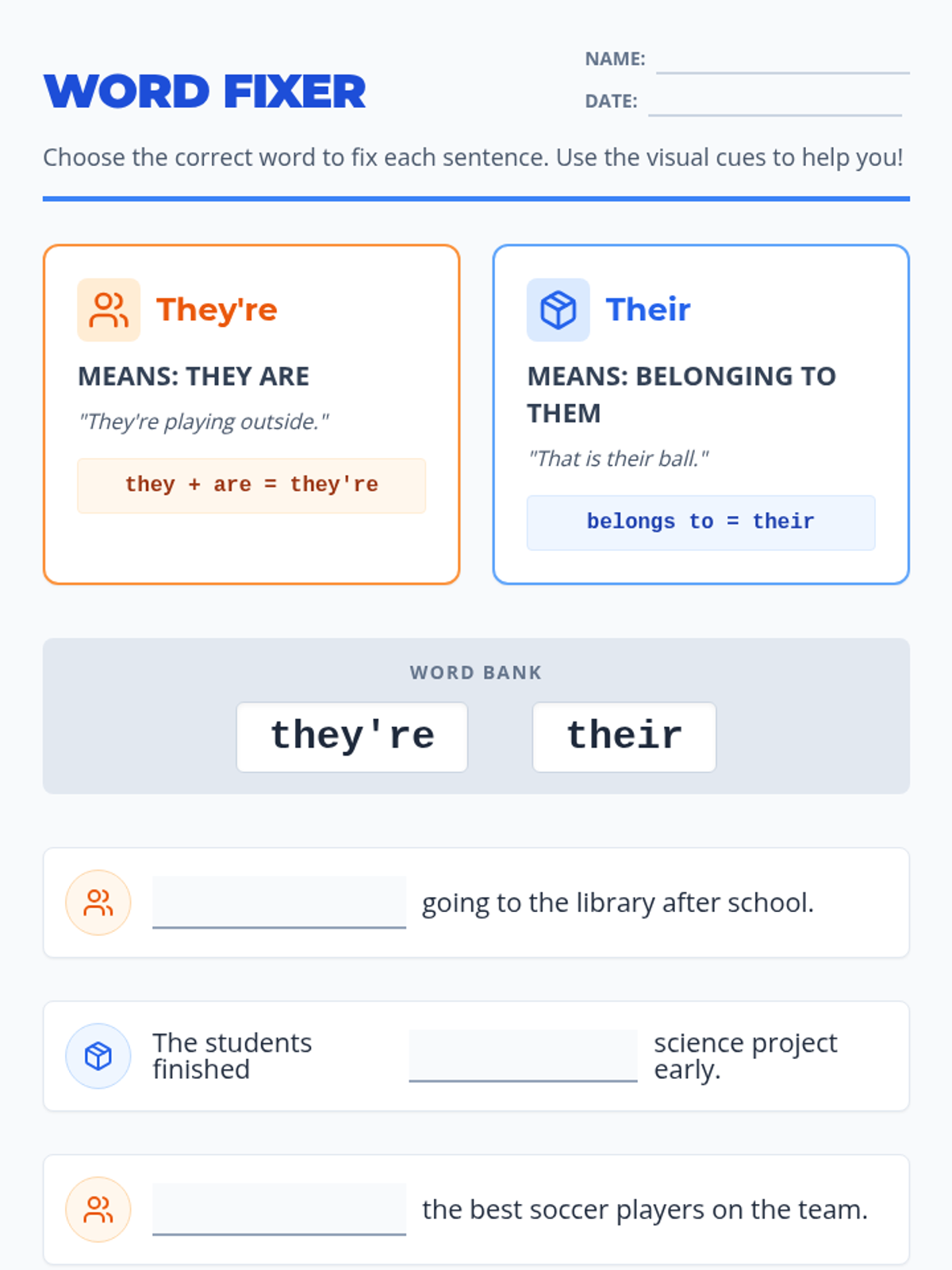
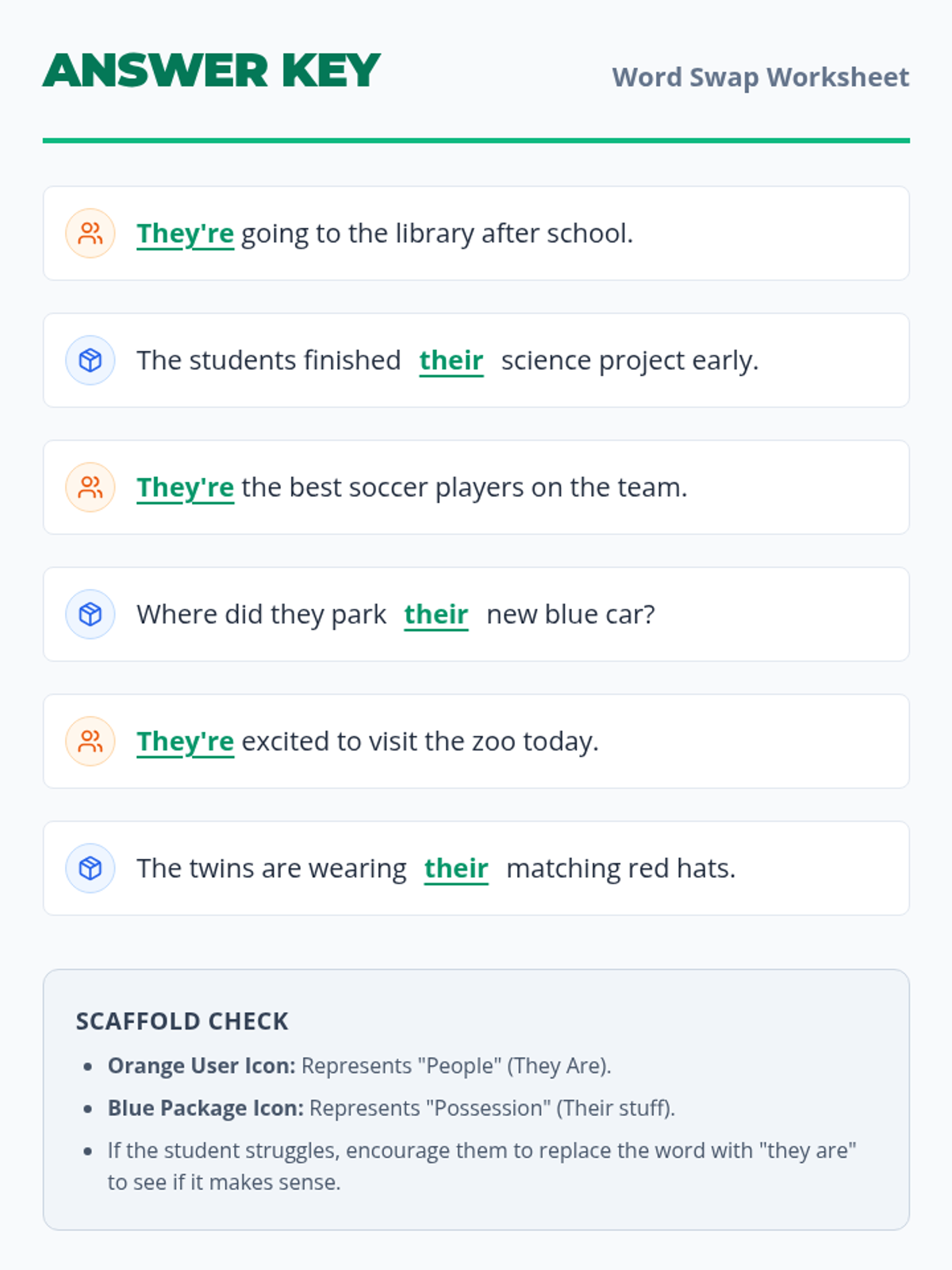
A lesson focused on distinguishing between the homophones 'they're' and 'their' using visual cues and contextual practice.
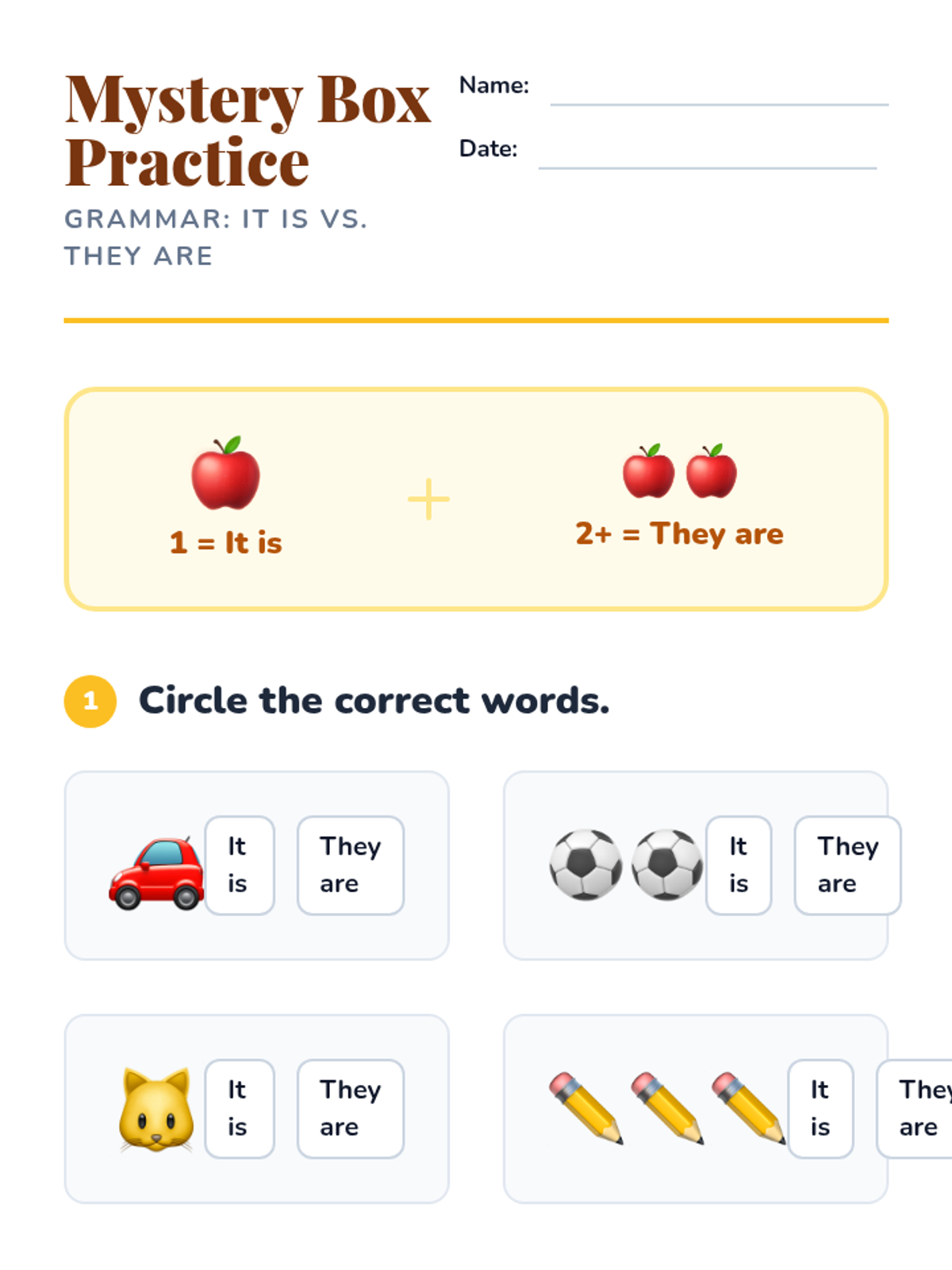
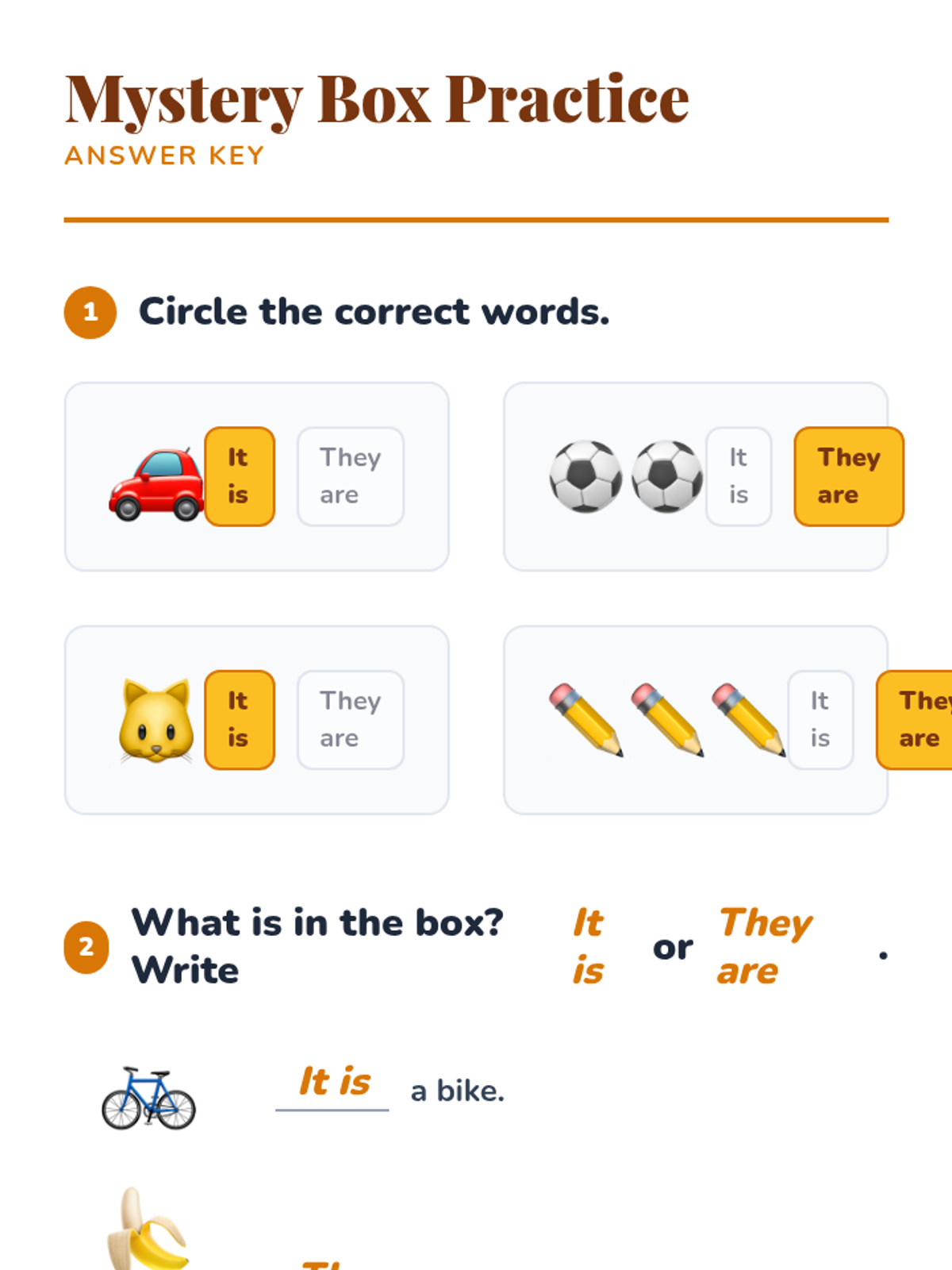
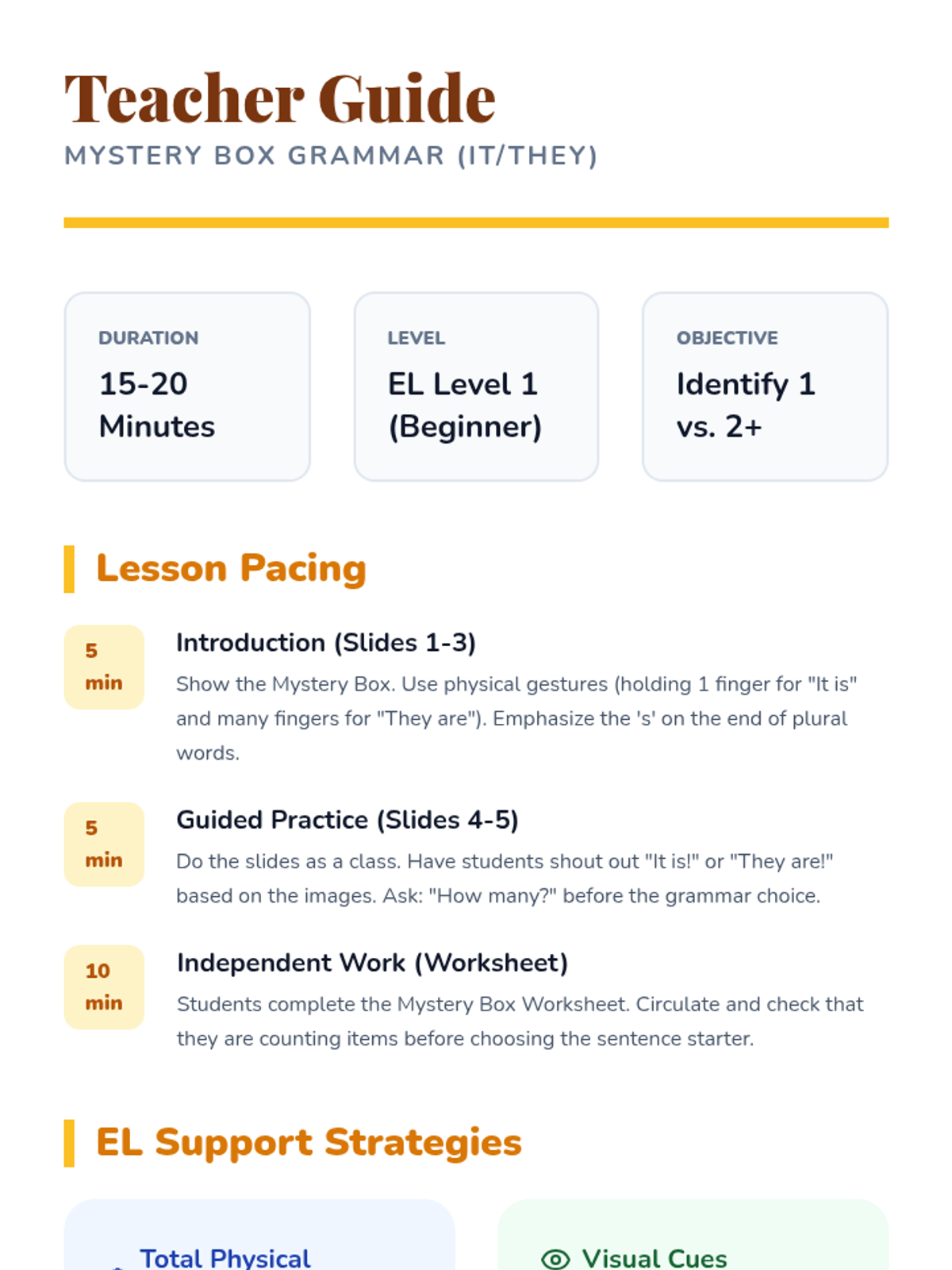
A beginner-friendly grammar lesson for English Learners focusing on the distinction between 'It is' for singular objects and 'They are' for plural objects using a mystery box theme.