Students learn to identify owners and use 's correctly to show possession through guided practice and independent detective-themed activities.
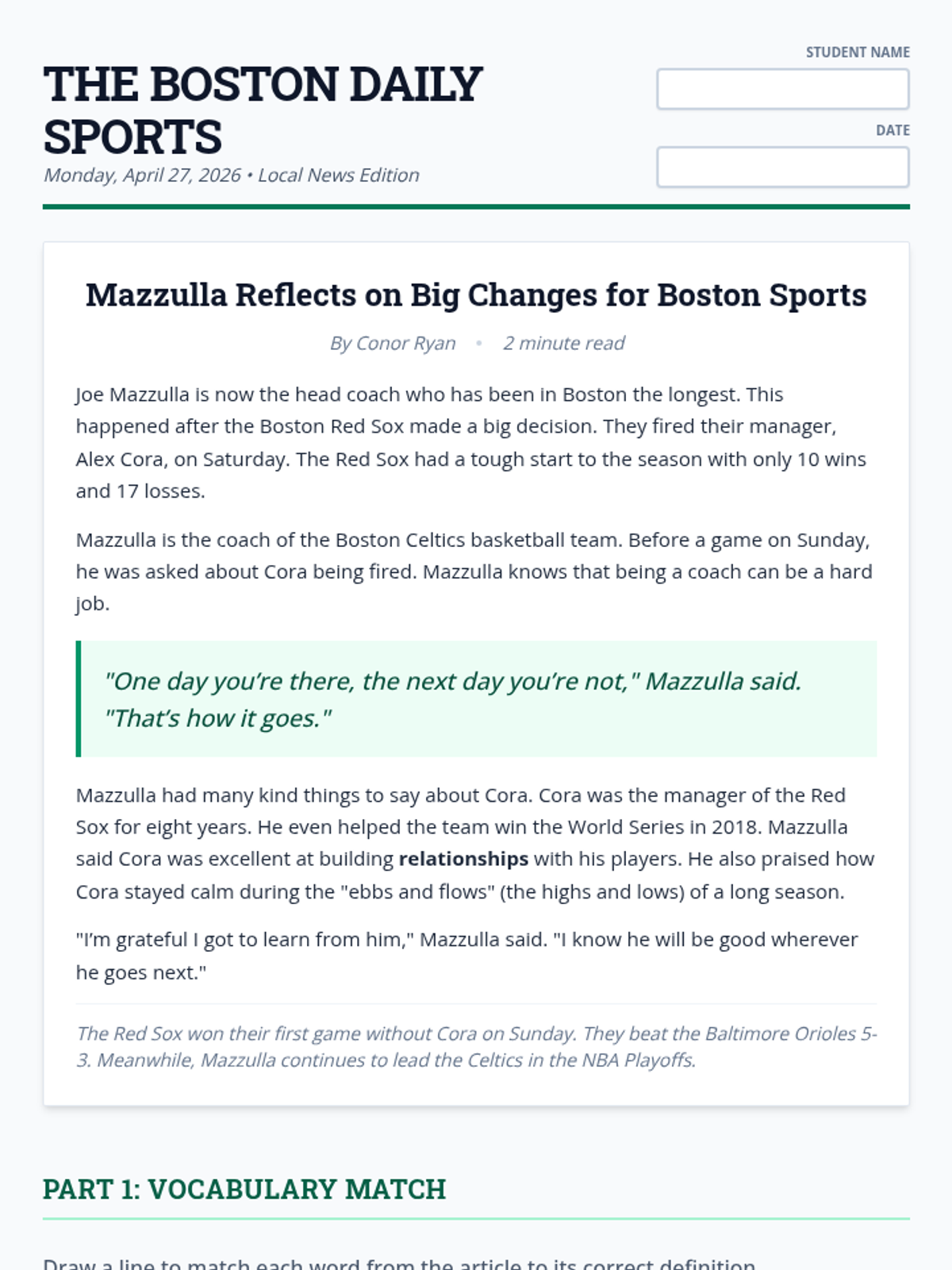
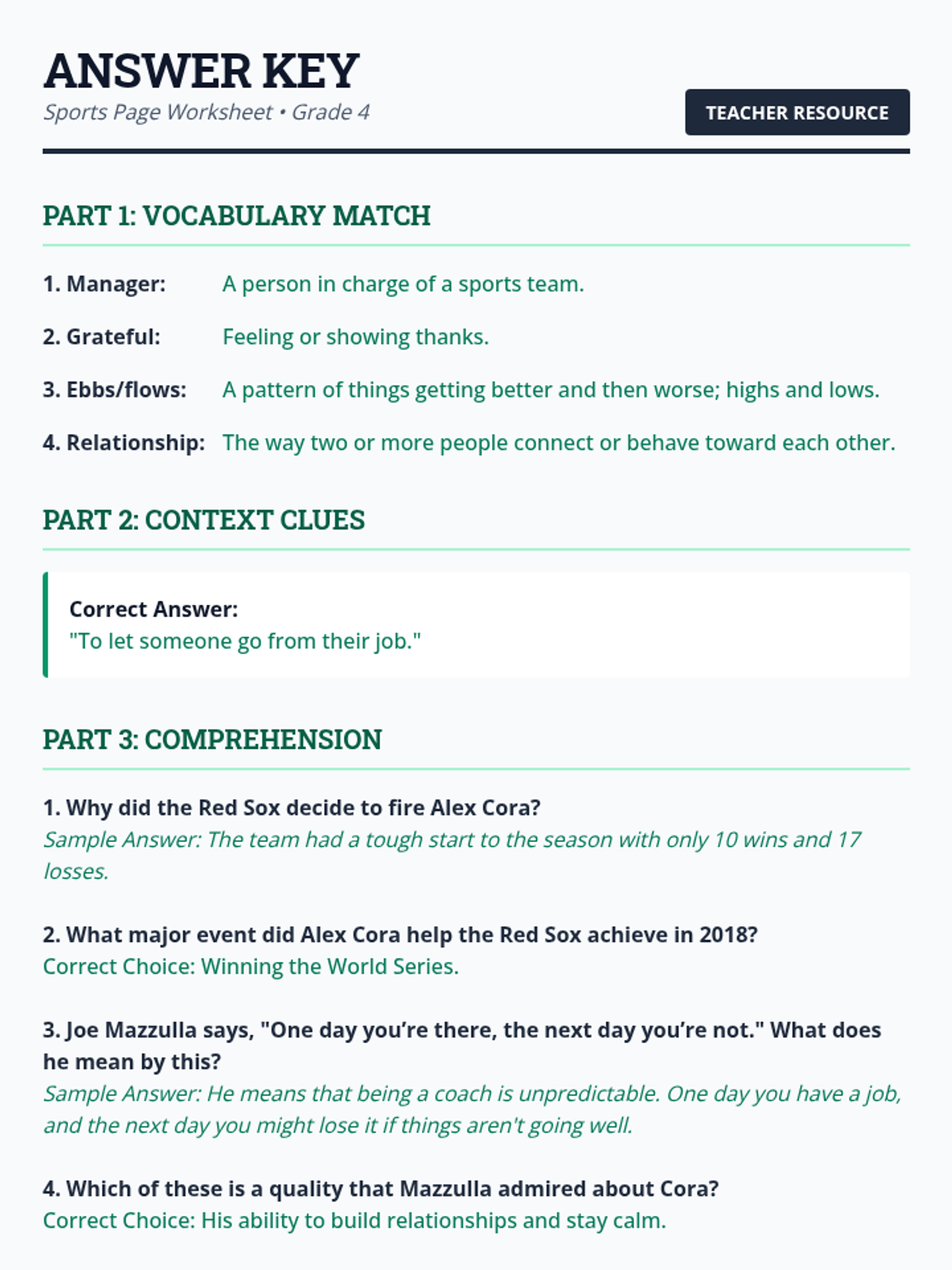
A reading comprehension lesson centered on a local sports news story about coaching changes in Boston, adapted for 4th-grade readers. Students will practice identifying key details, understanding vocabulary in context, and making inferences from quotes.
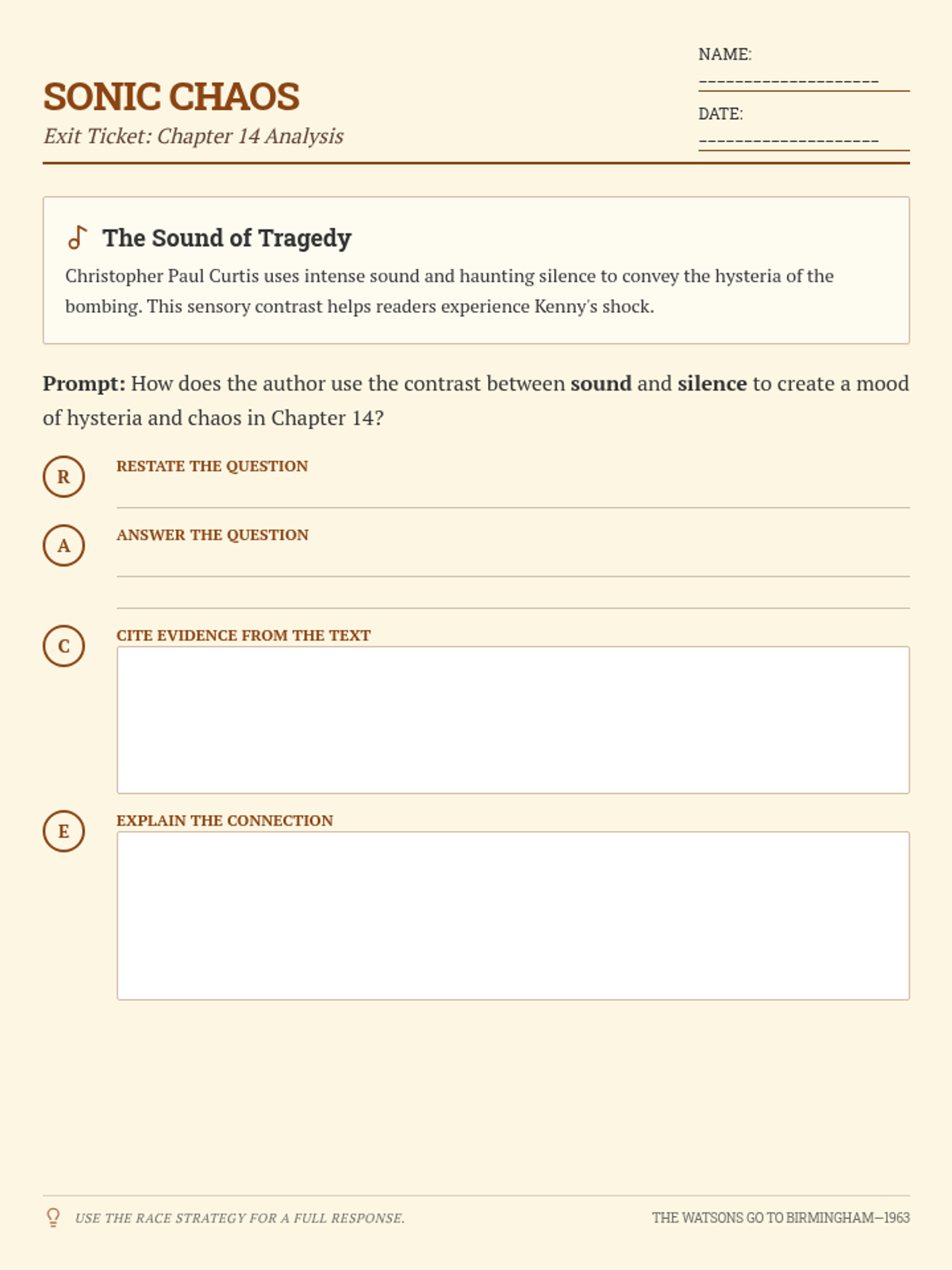
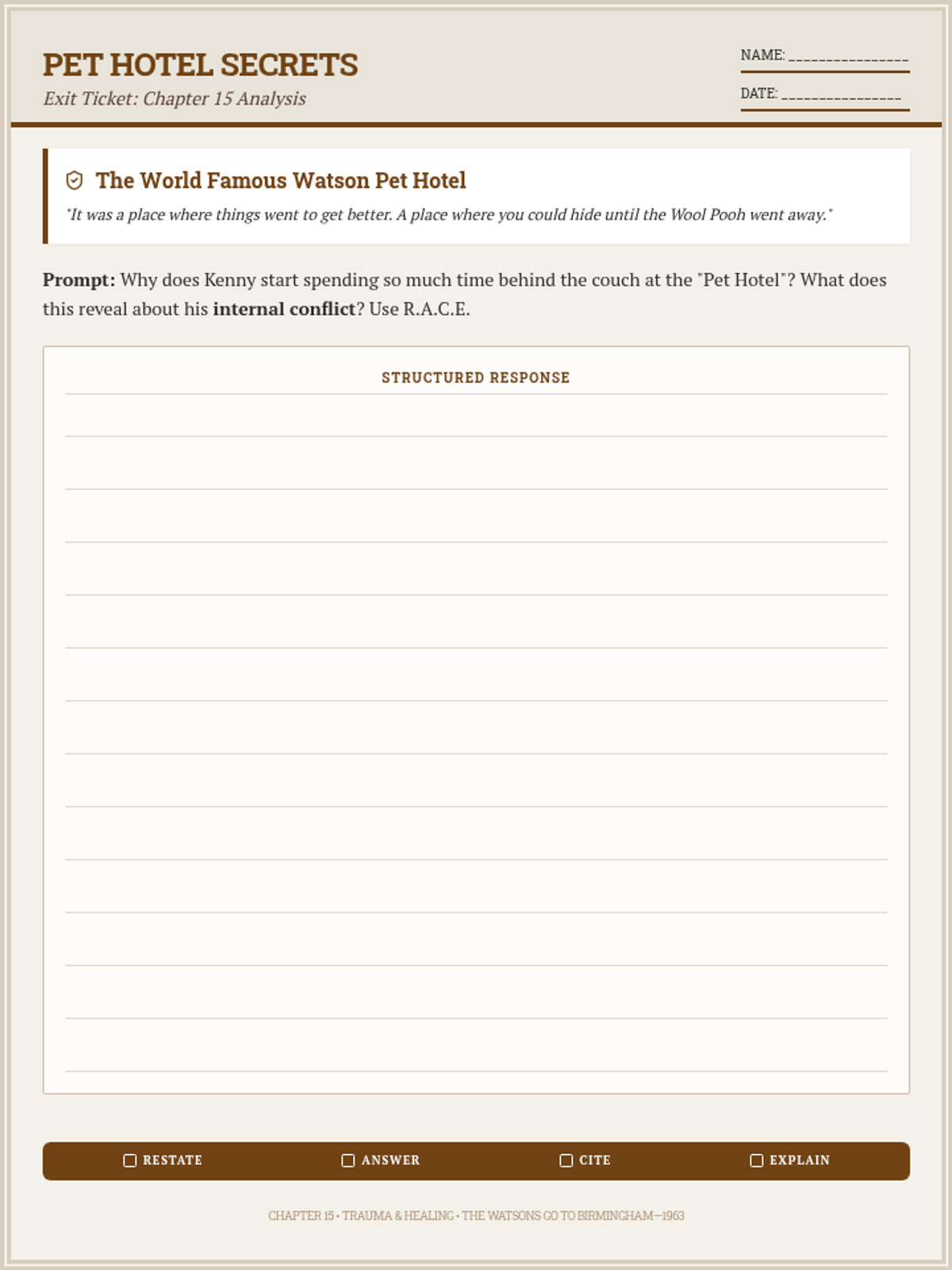
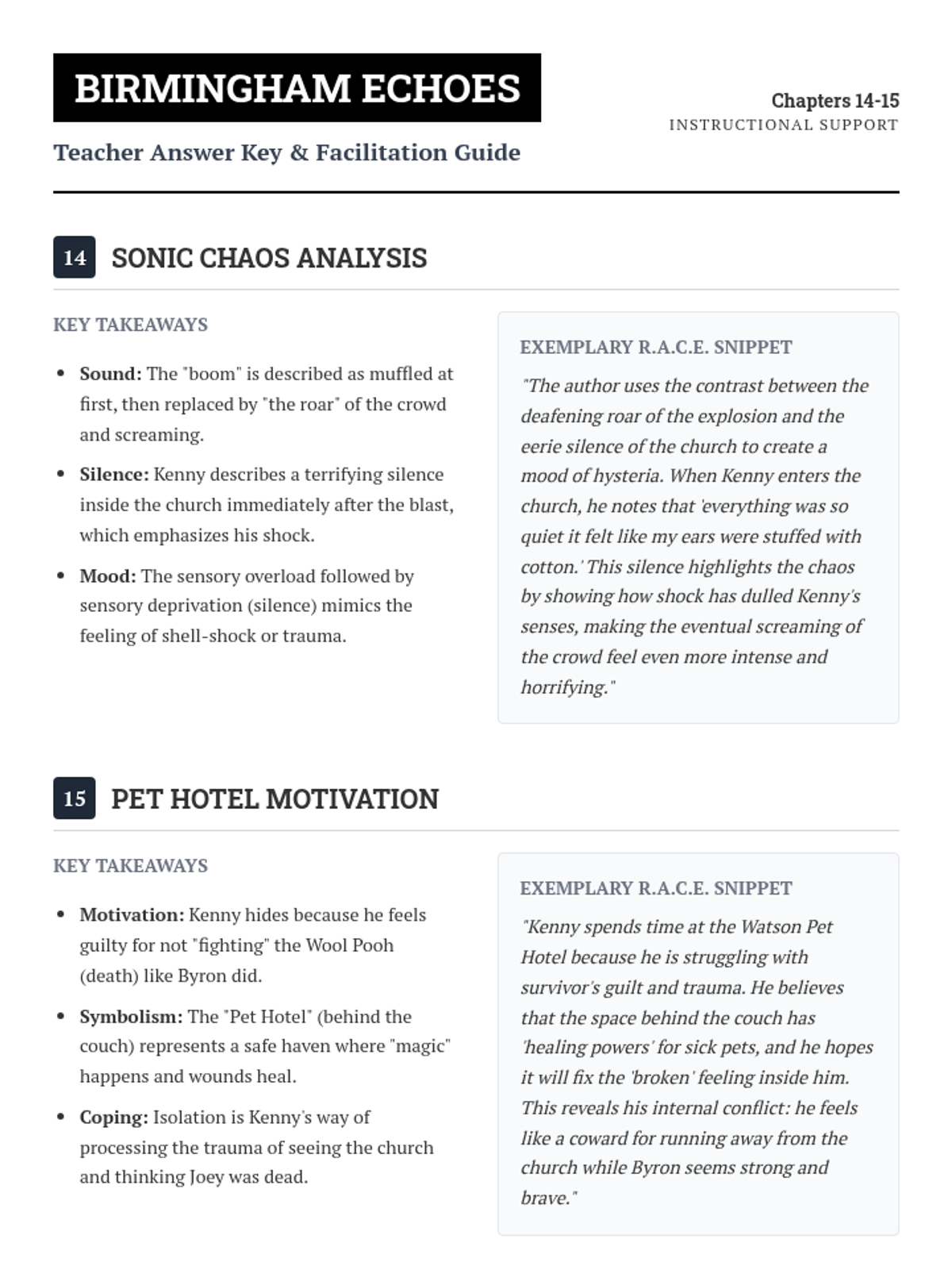
A deep dive into Chapters 14 and 15 of *The Watsons Go to Birmingham—1963*, focusing on the emotional aftermath of the church bombing and Kenny's internal struggle through mood analysis and character motivation.
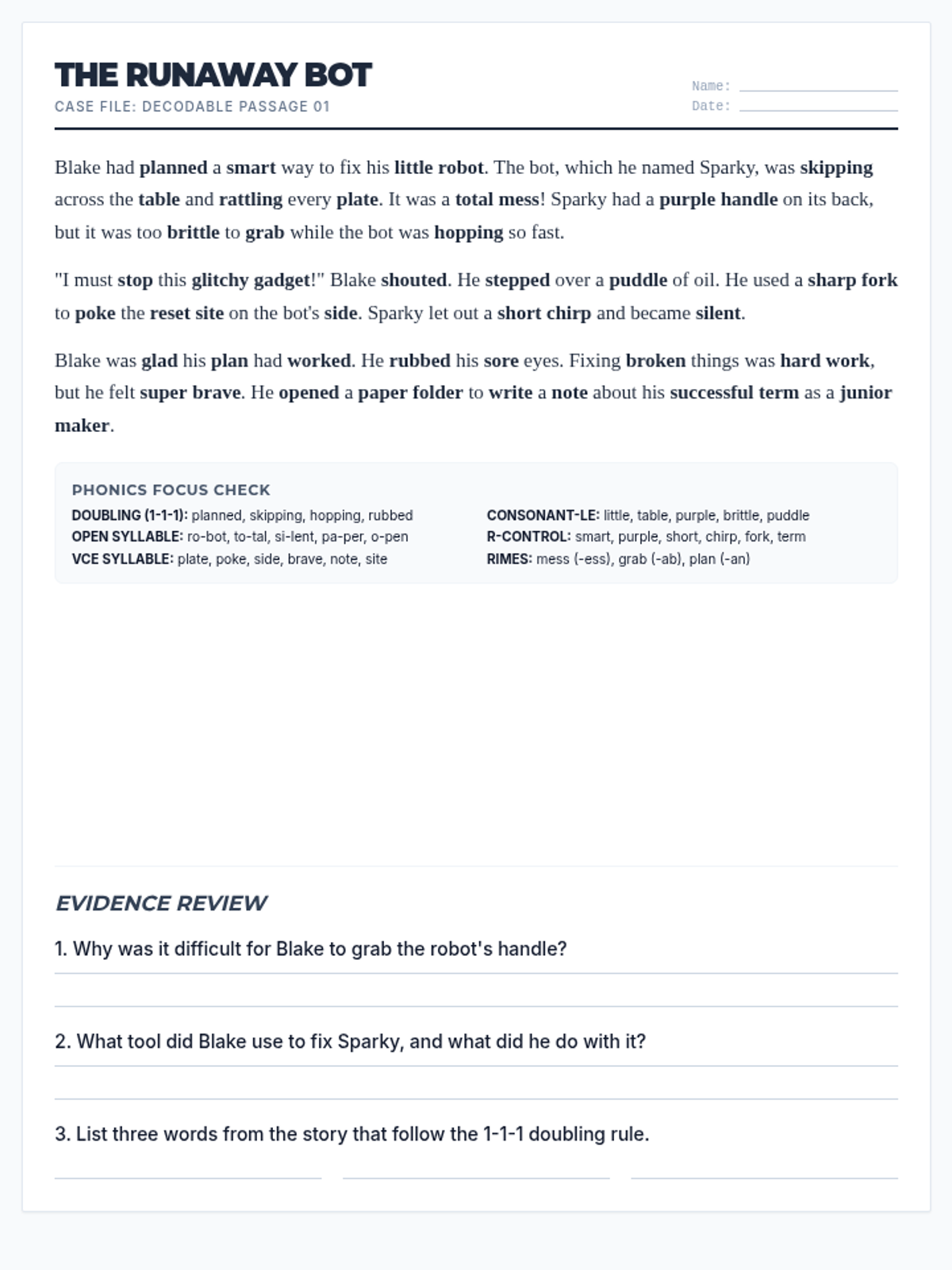
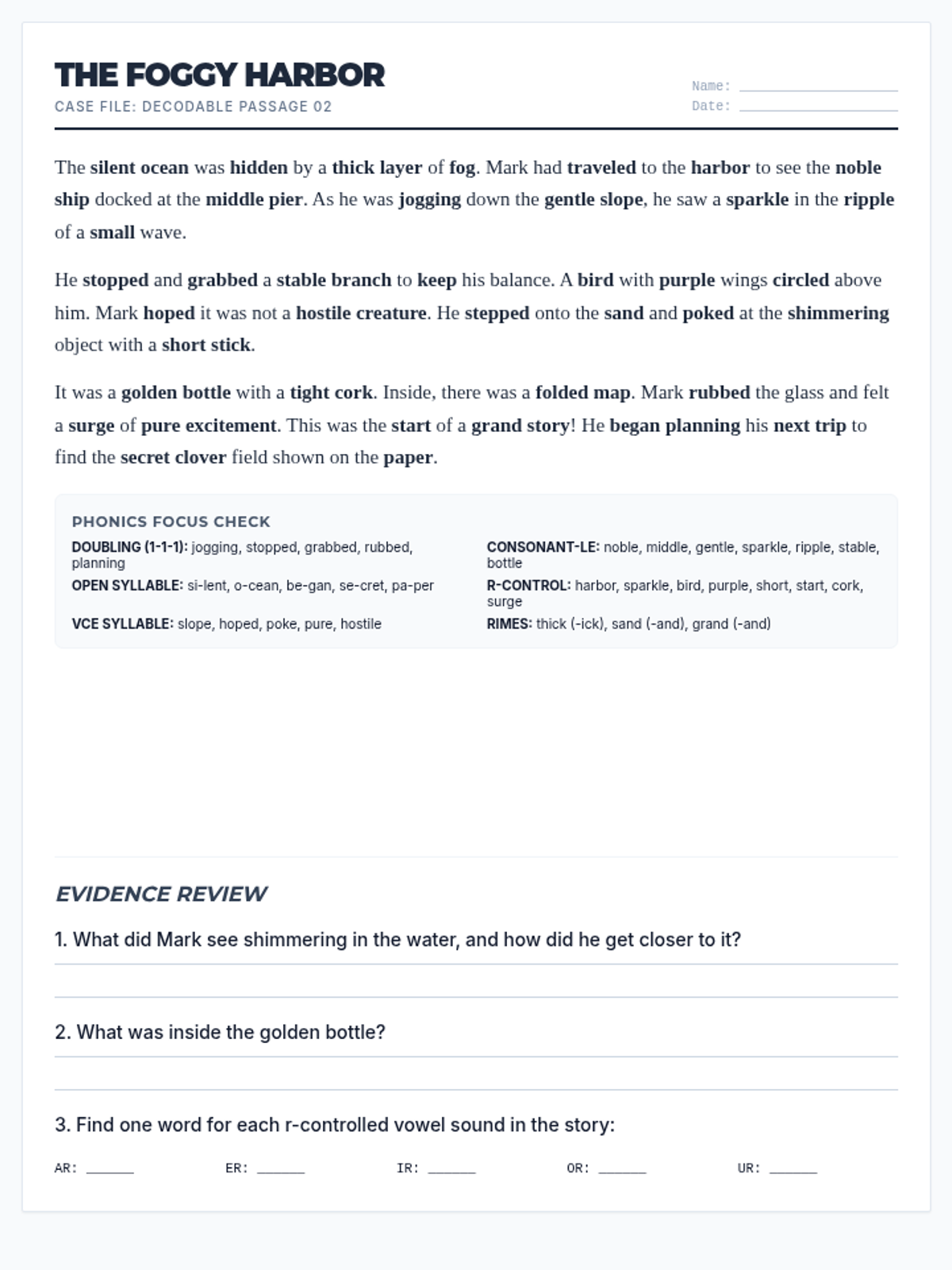
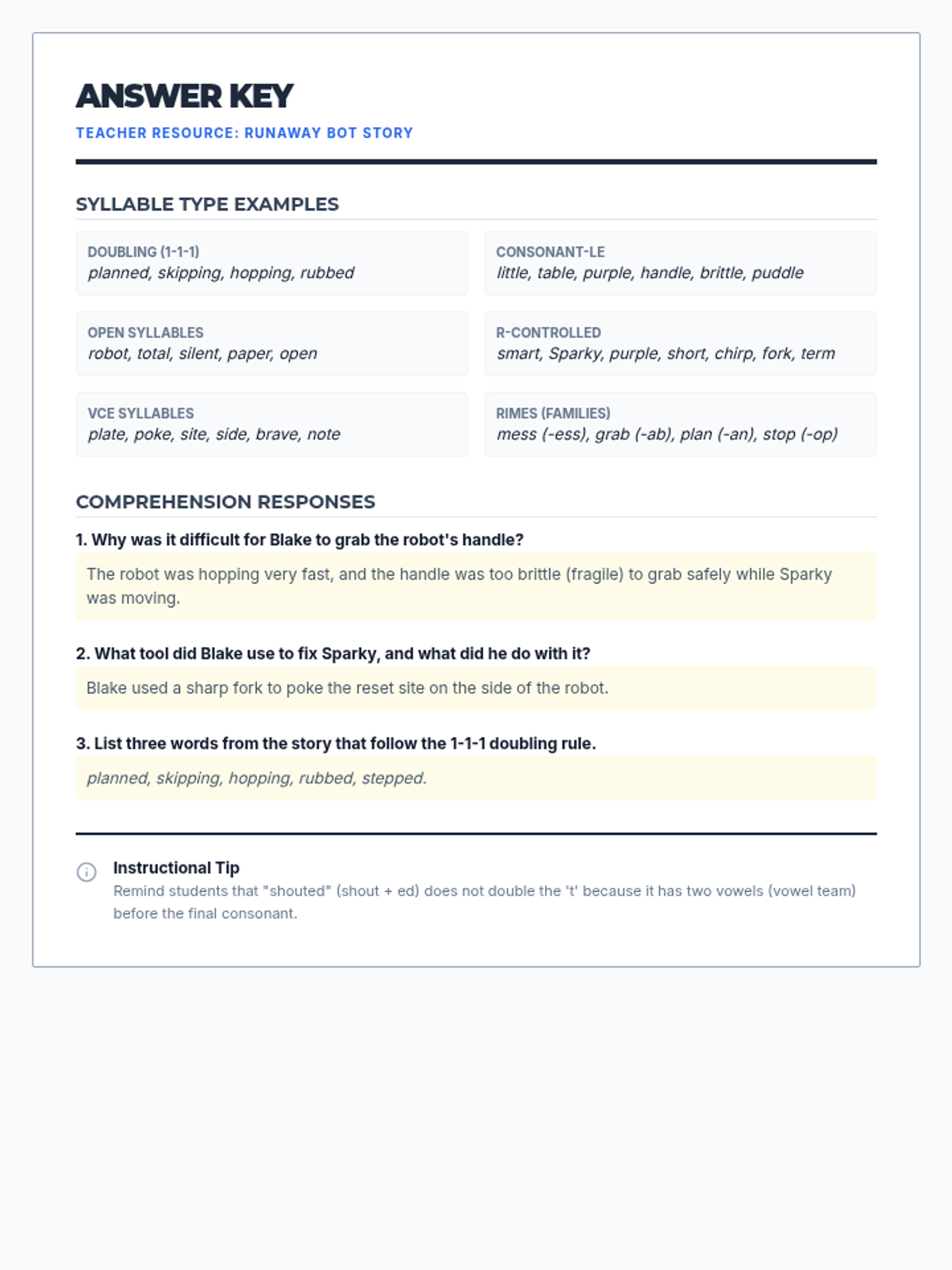
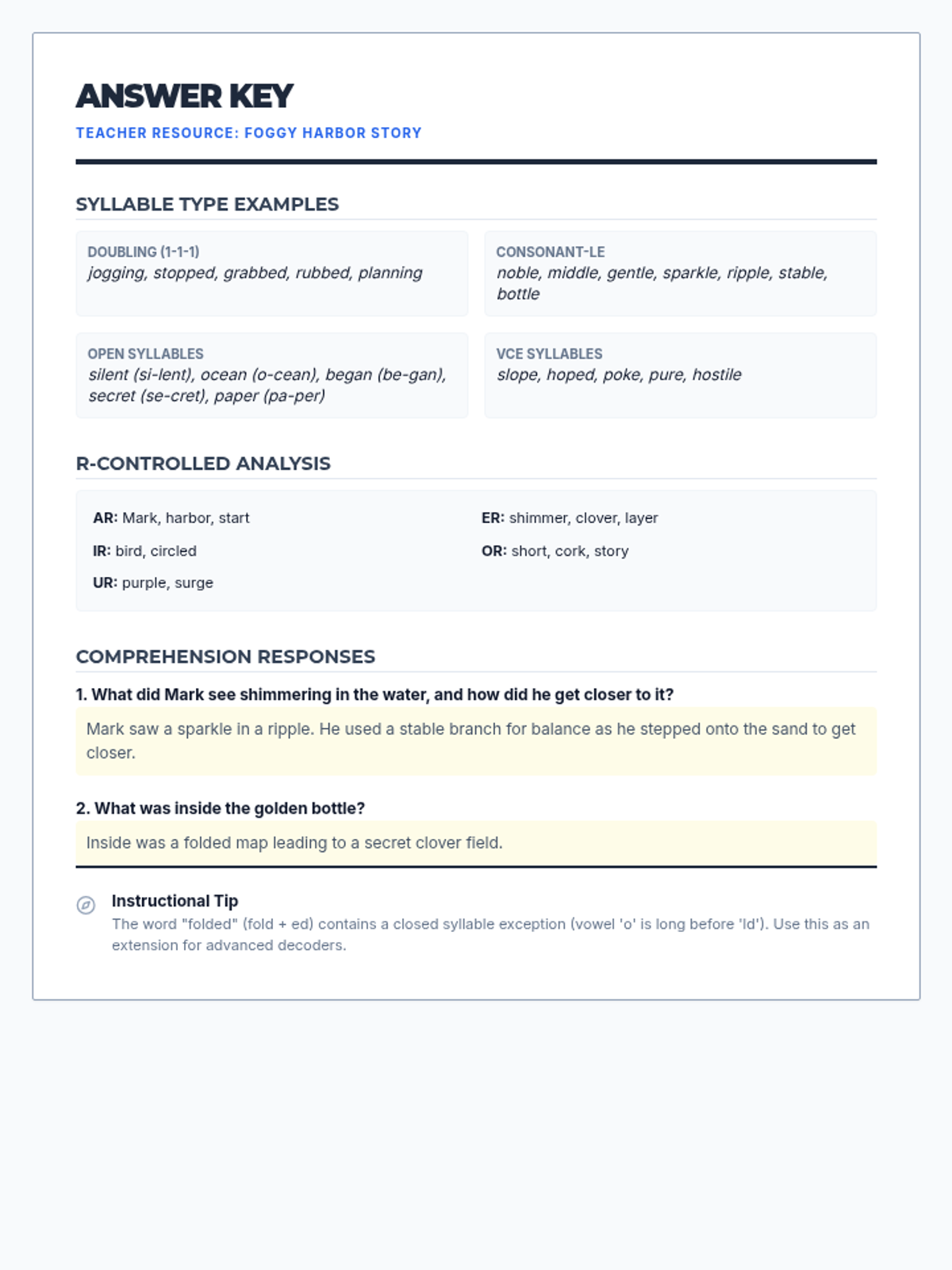
A pair of decodable stories designed for 4th and 5th-grade students to practice complex syllable types including the doubling rule, consonant-le, open syllables, and r-controlled vowels. Each story includes targeted comprehension questions.
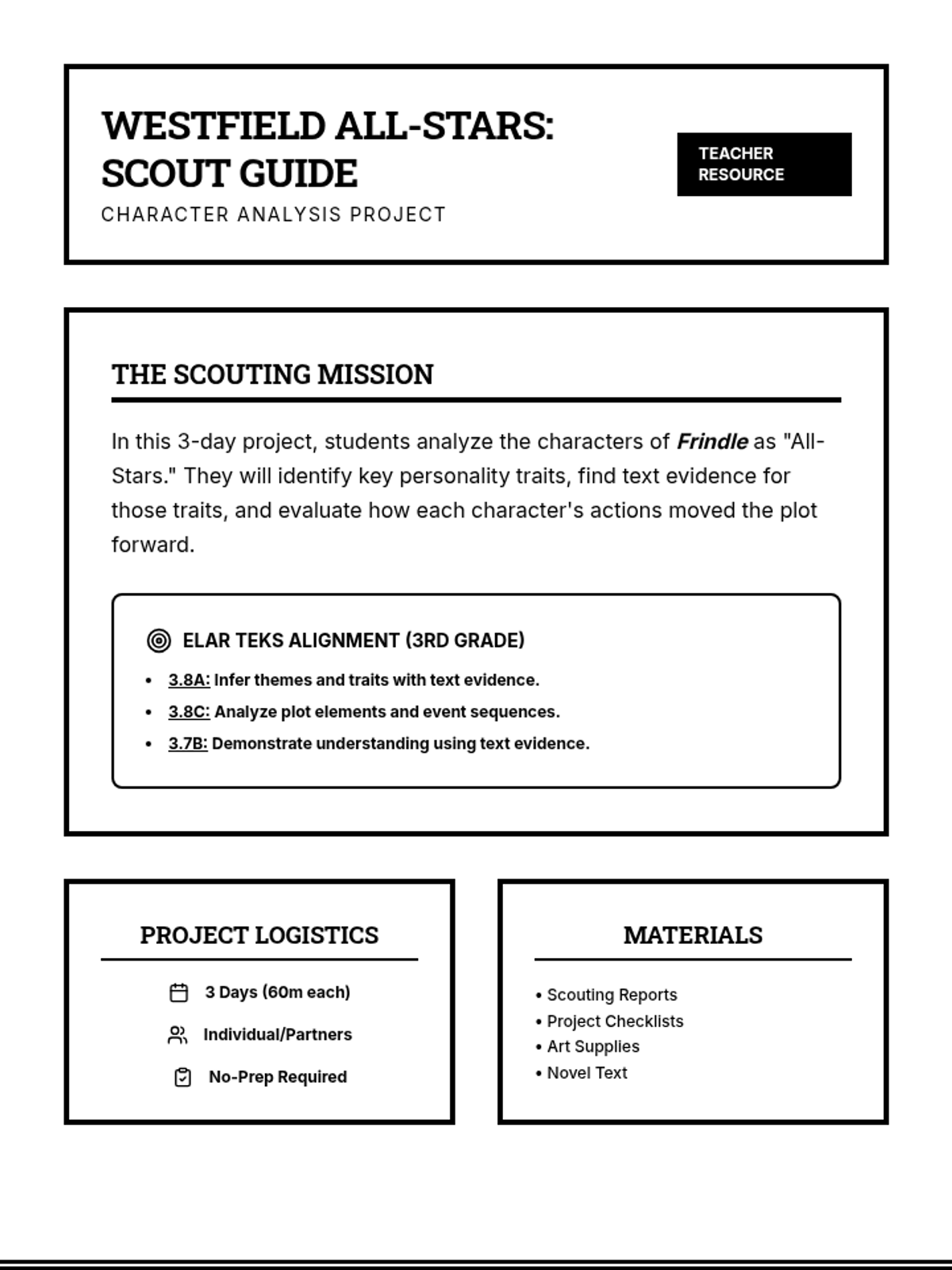
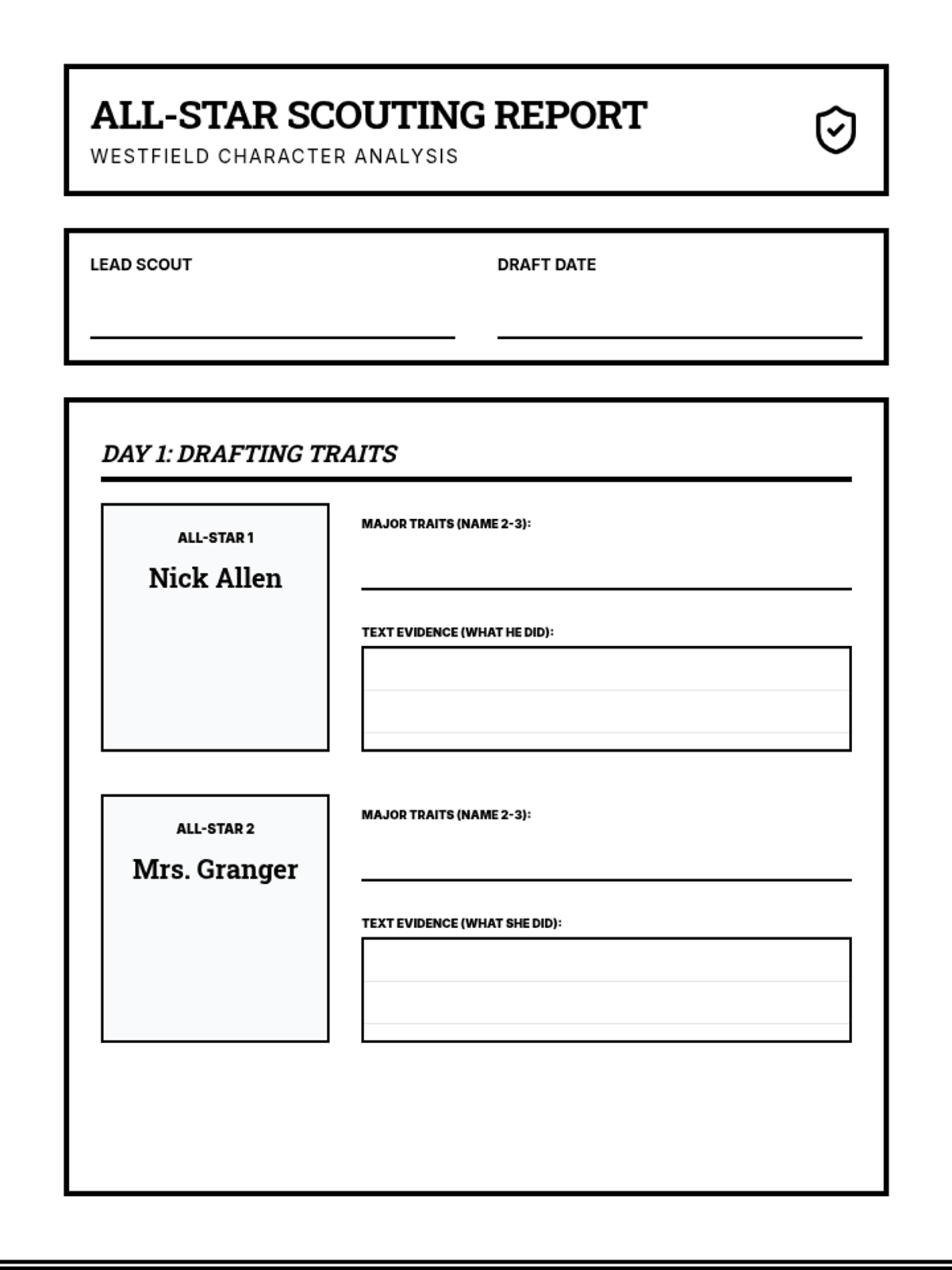
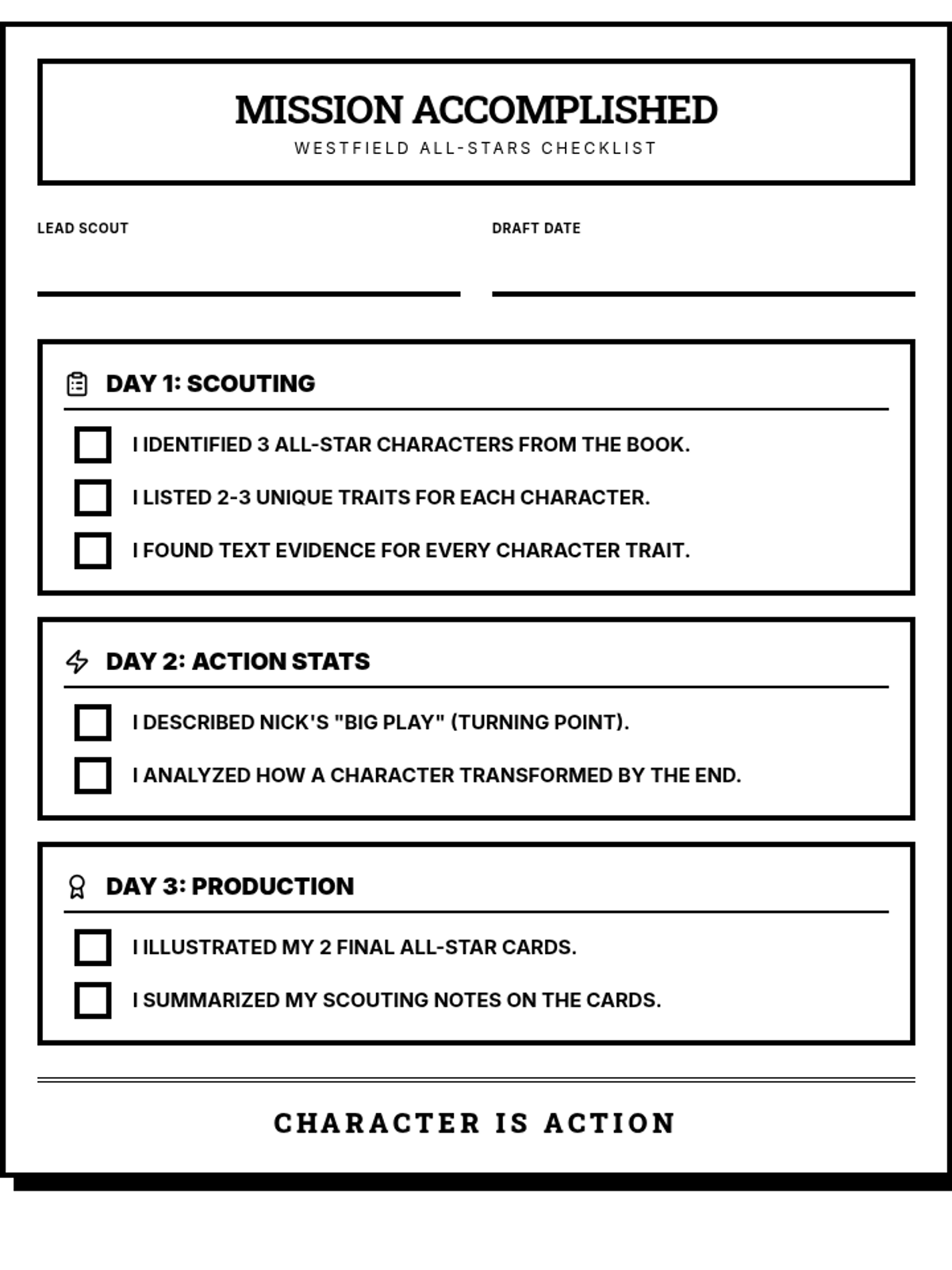
A 3-day post-reading project where students analyze character traits (3.8A) and plot influence (3.8C) by creating a collection of 'Westfield All-Star' character trading cards.
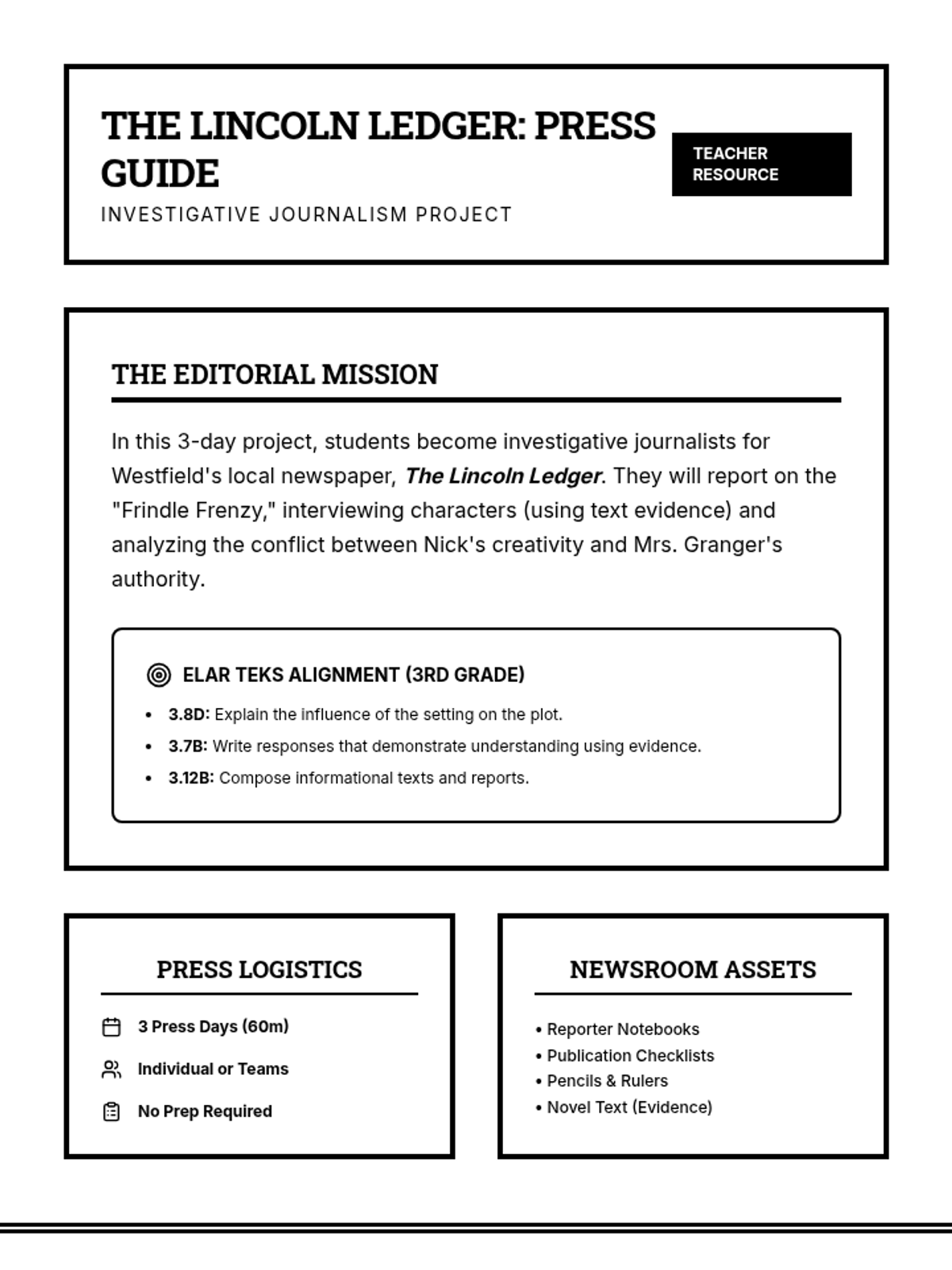
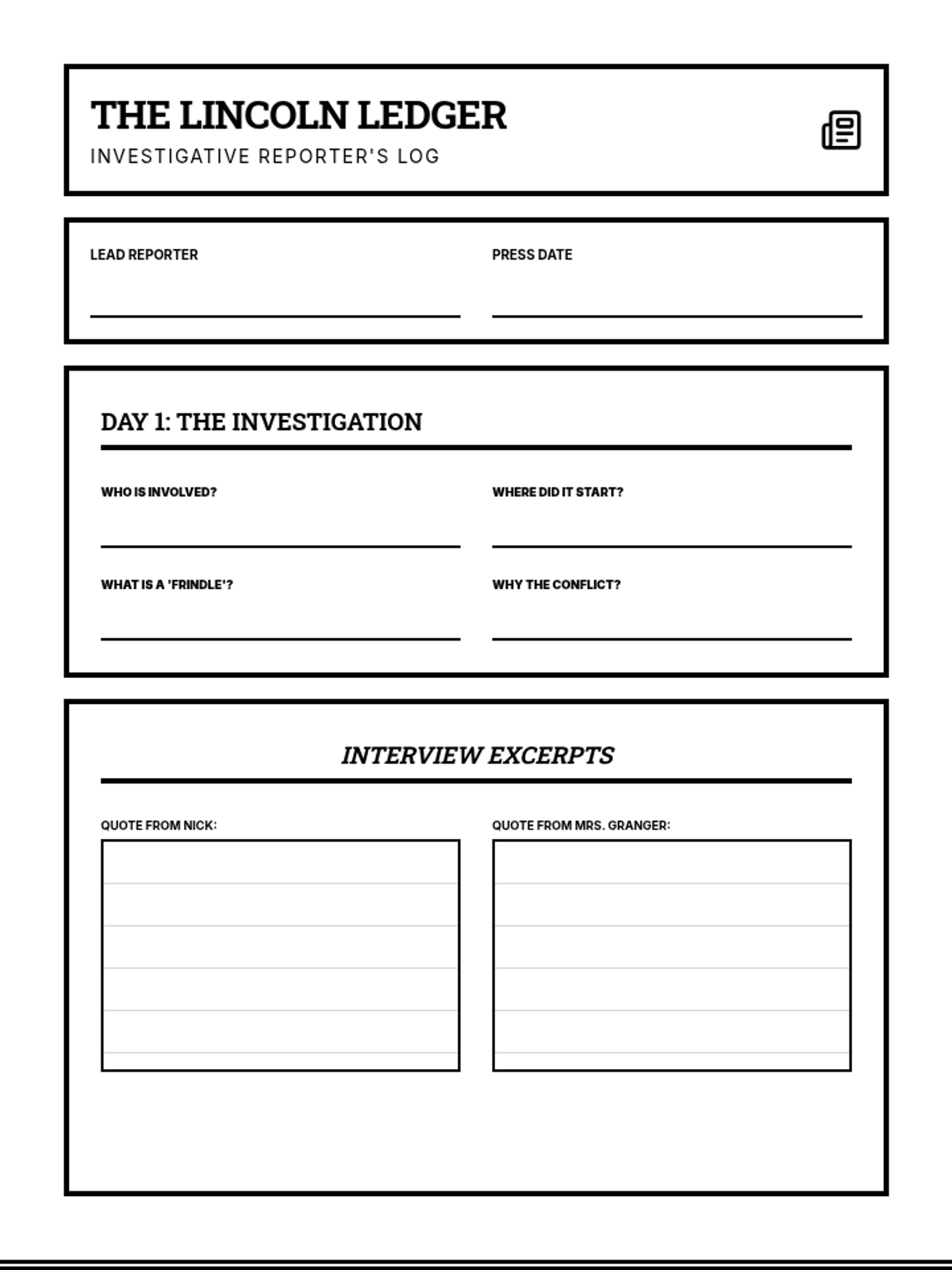
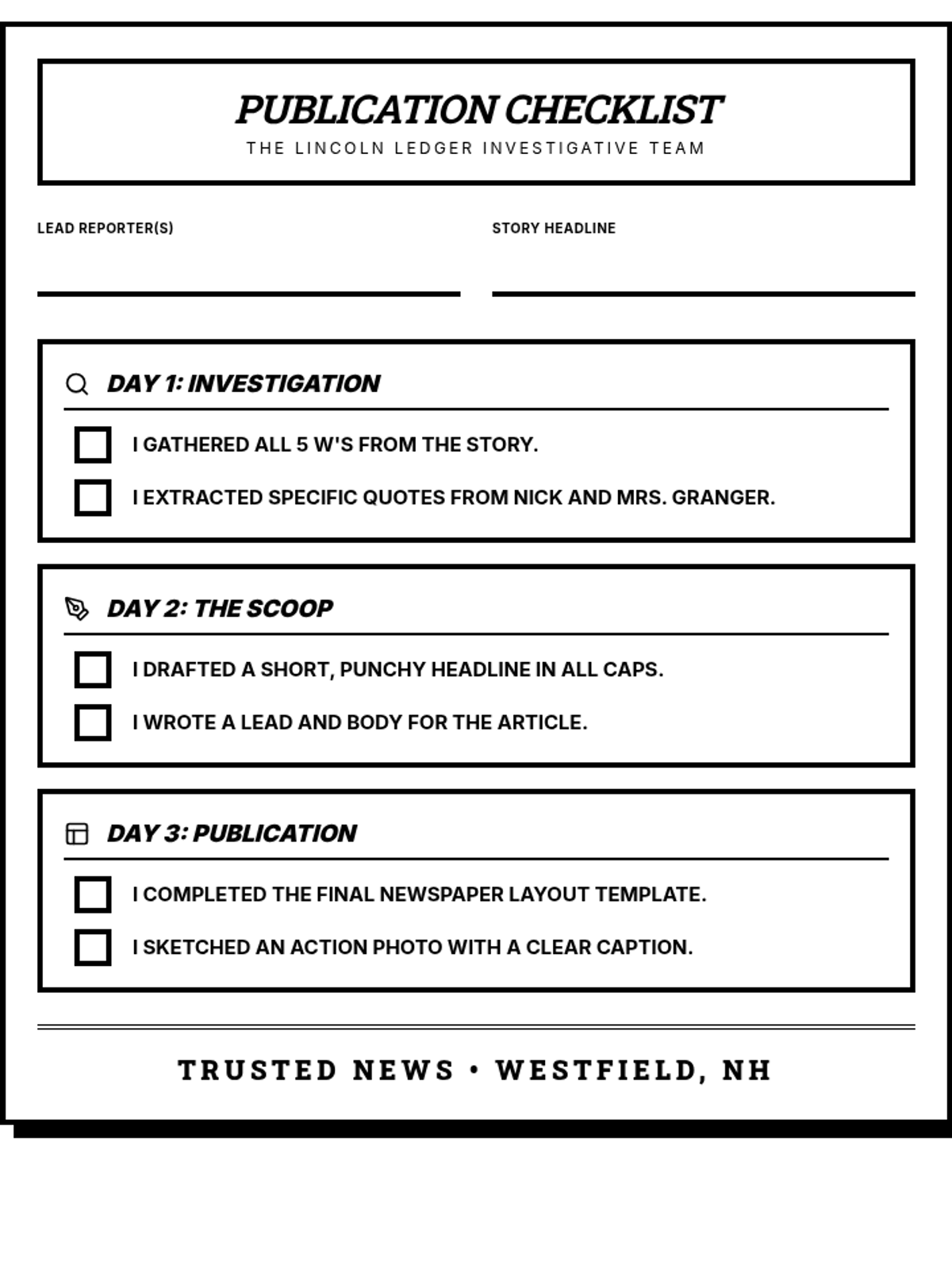
A 3-day post-reading project where students become investigative journalists for 'The Lincoln Ledger,' covering the national sensation of the word 'frindle' and the 'war' between Nick and Mrs. Granger.
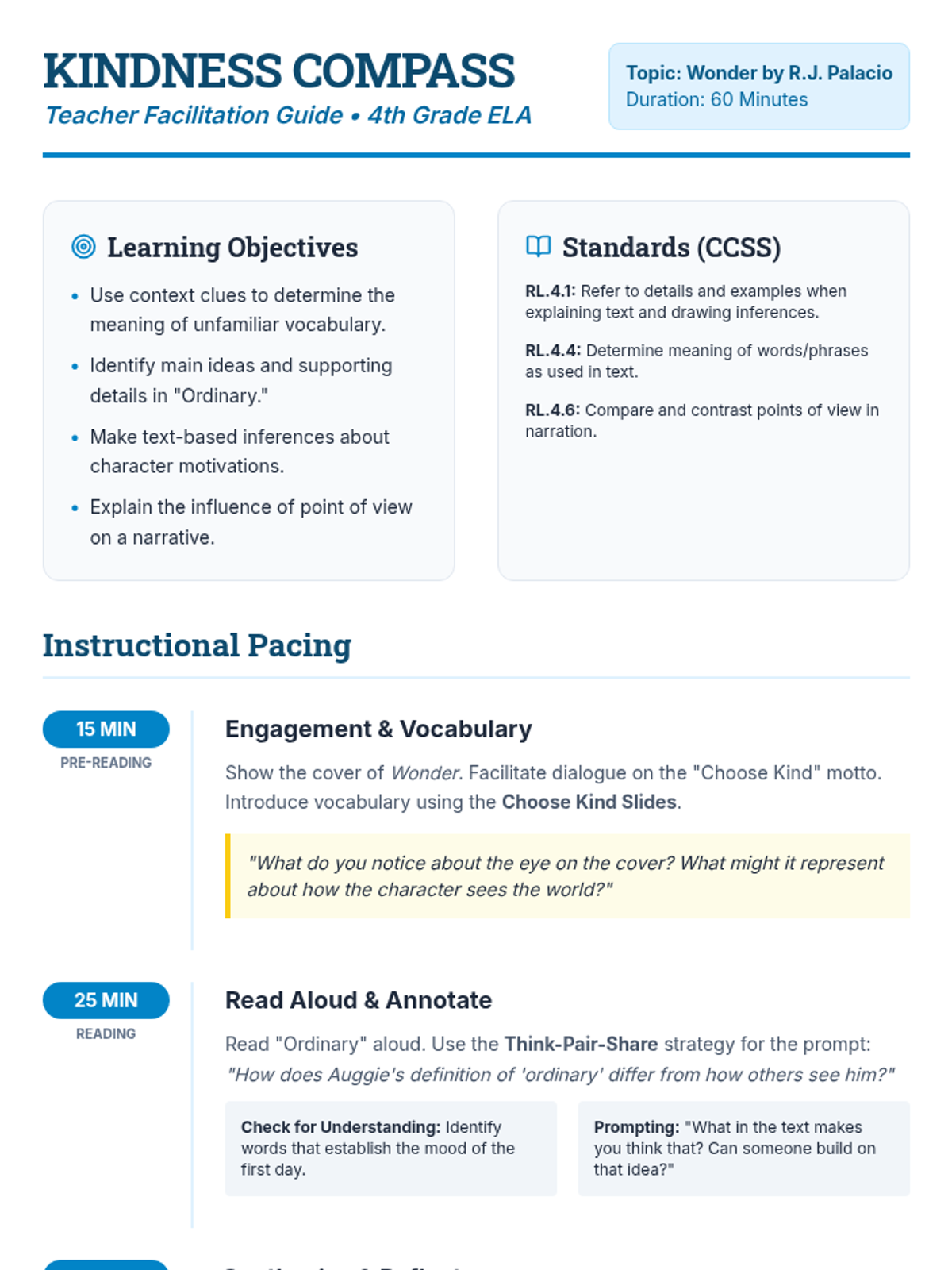
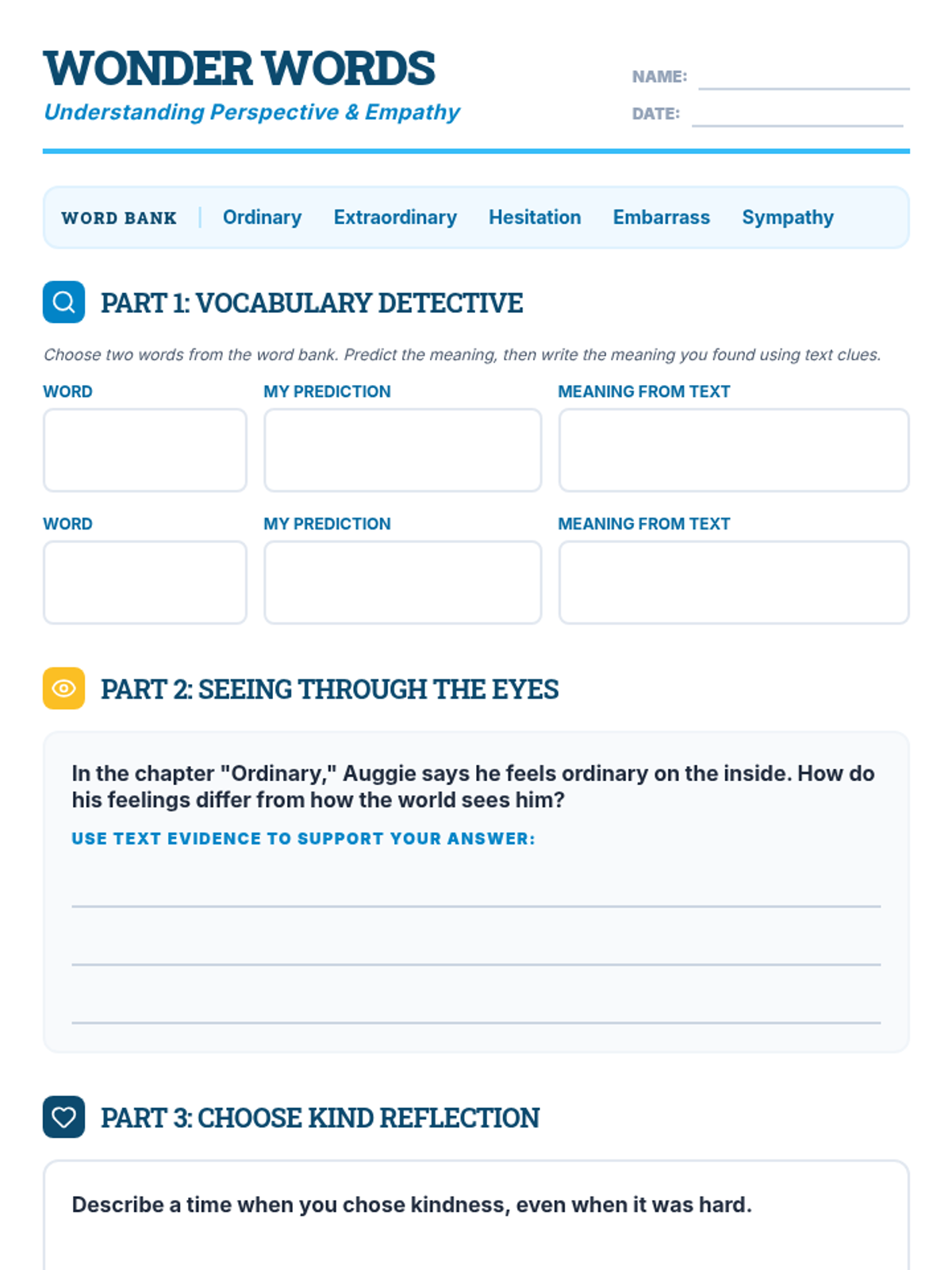
A literature-based ELA lesson for 4th grade focused on empathy, vocabulary, and perspective using R.J. Palacio's 'Wonder'. Students explore the concept of being 'ordinary' versus 'extraordinary' while building core literacy skills.
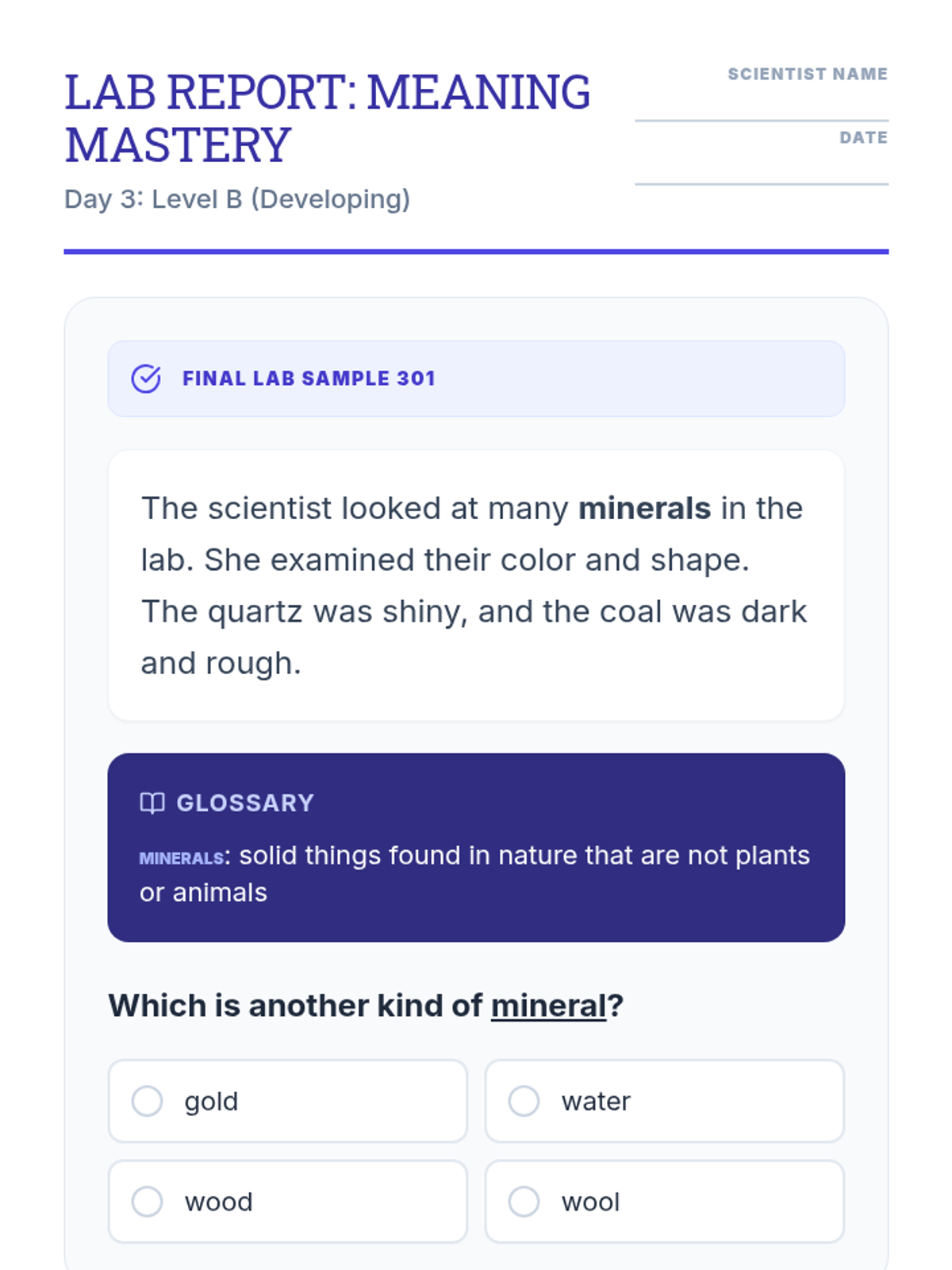
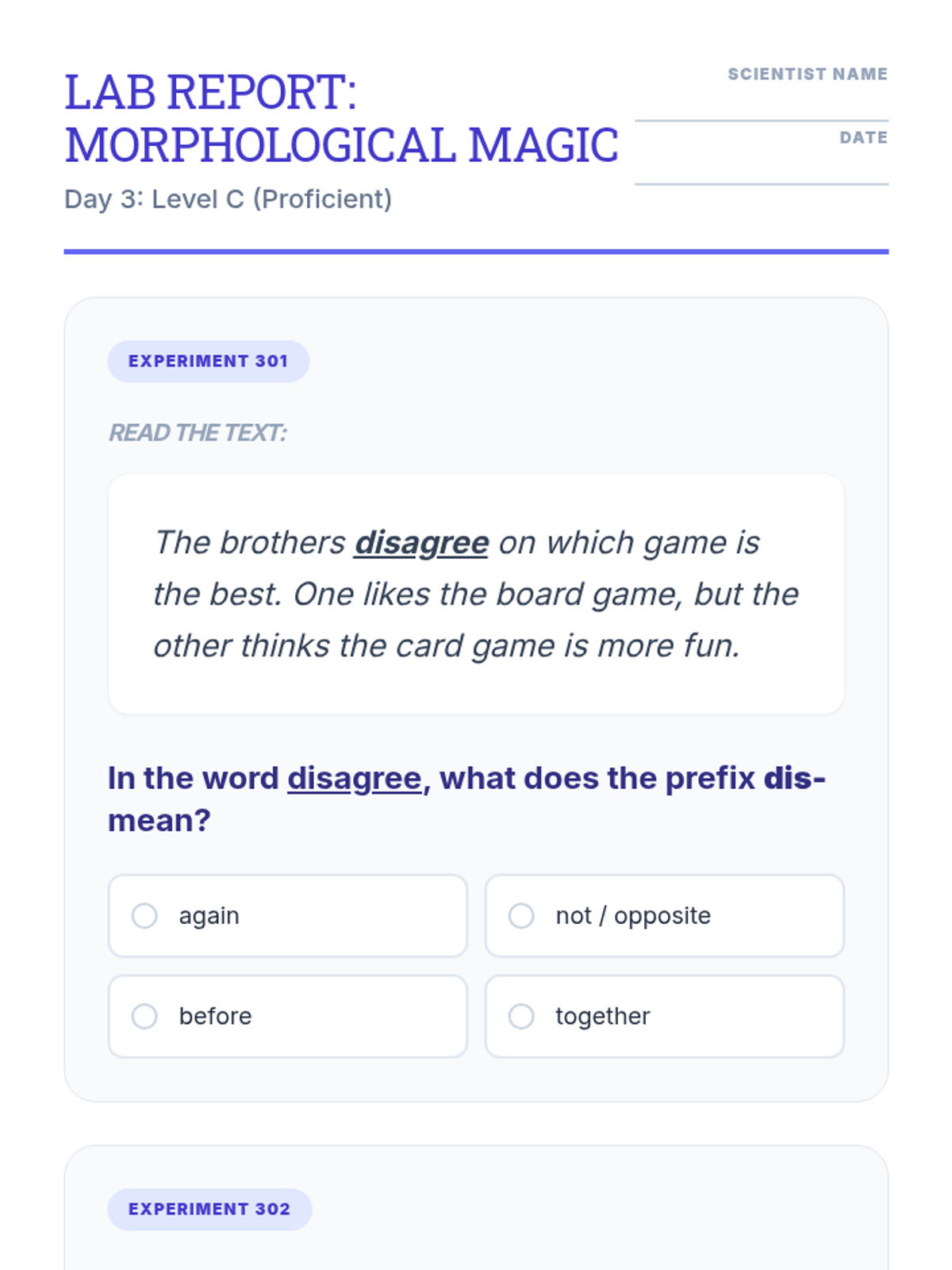
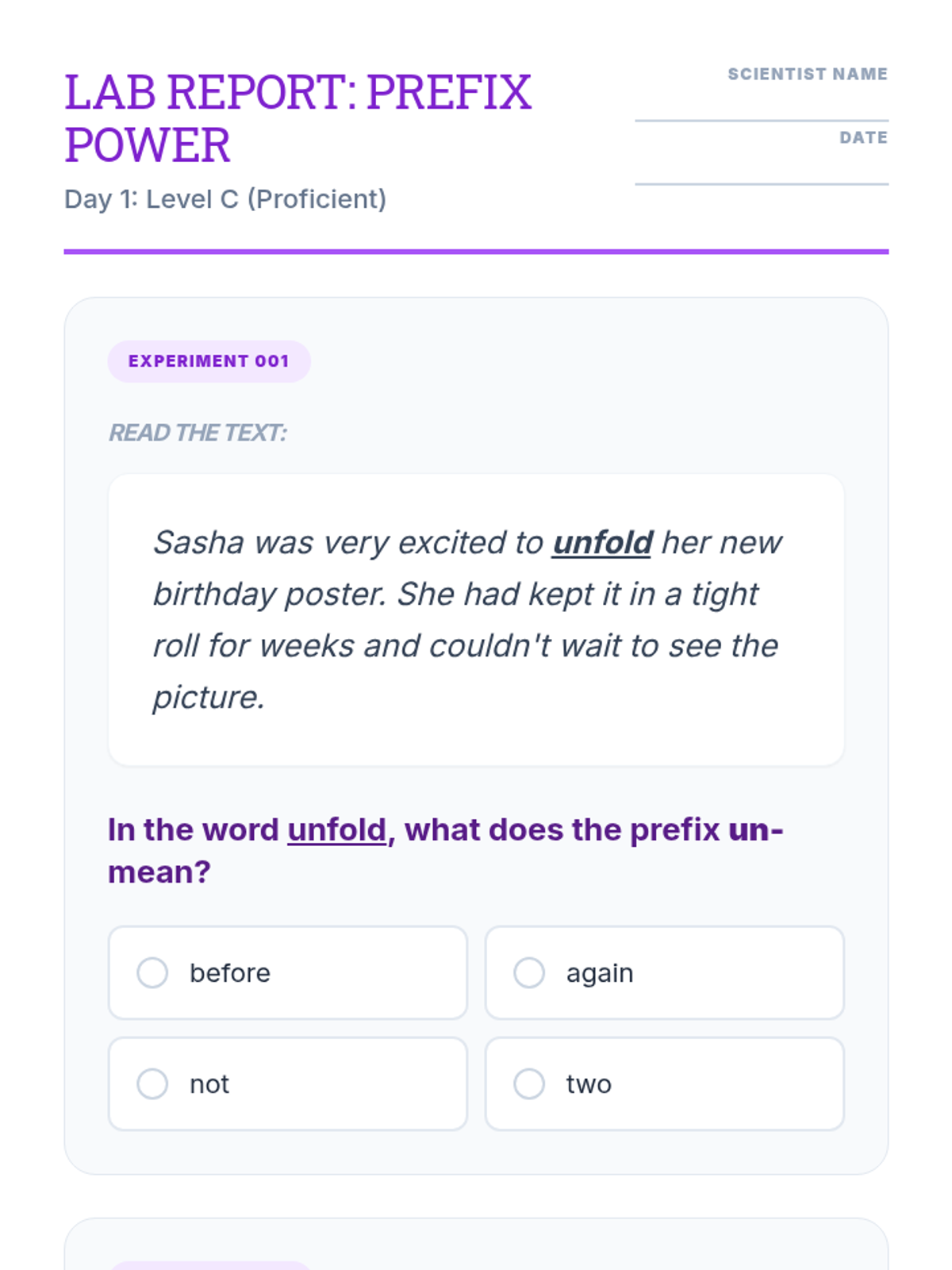
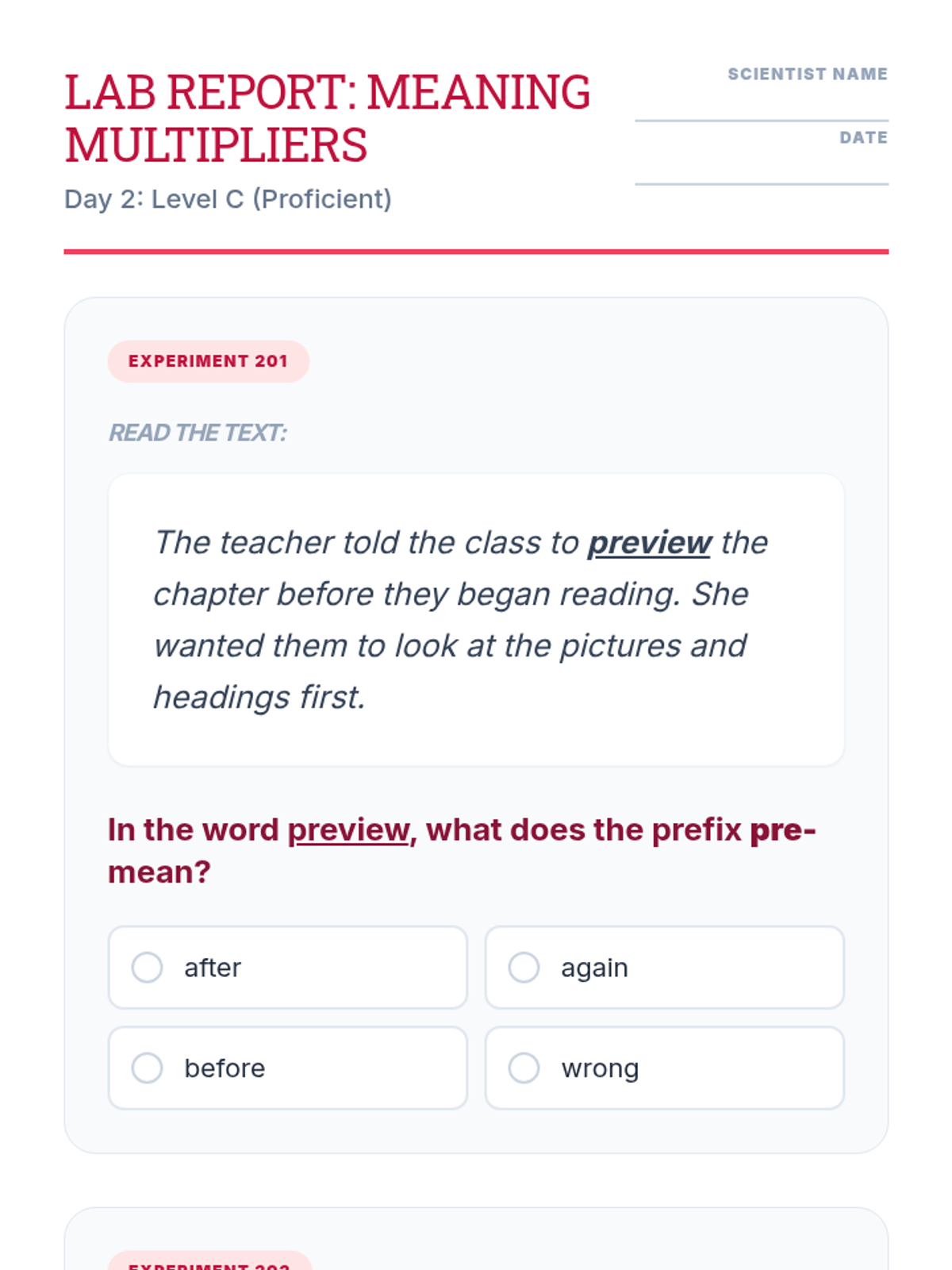
Focuses on synthesizing context clues and morphological knowledge to master complex semantics.
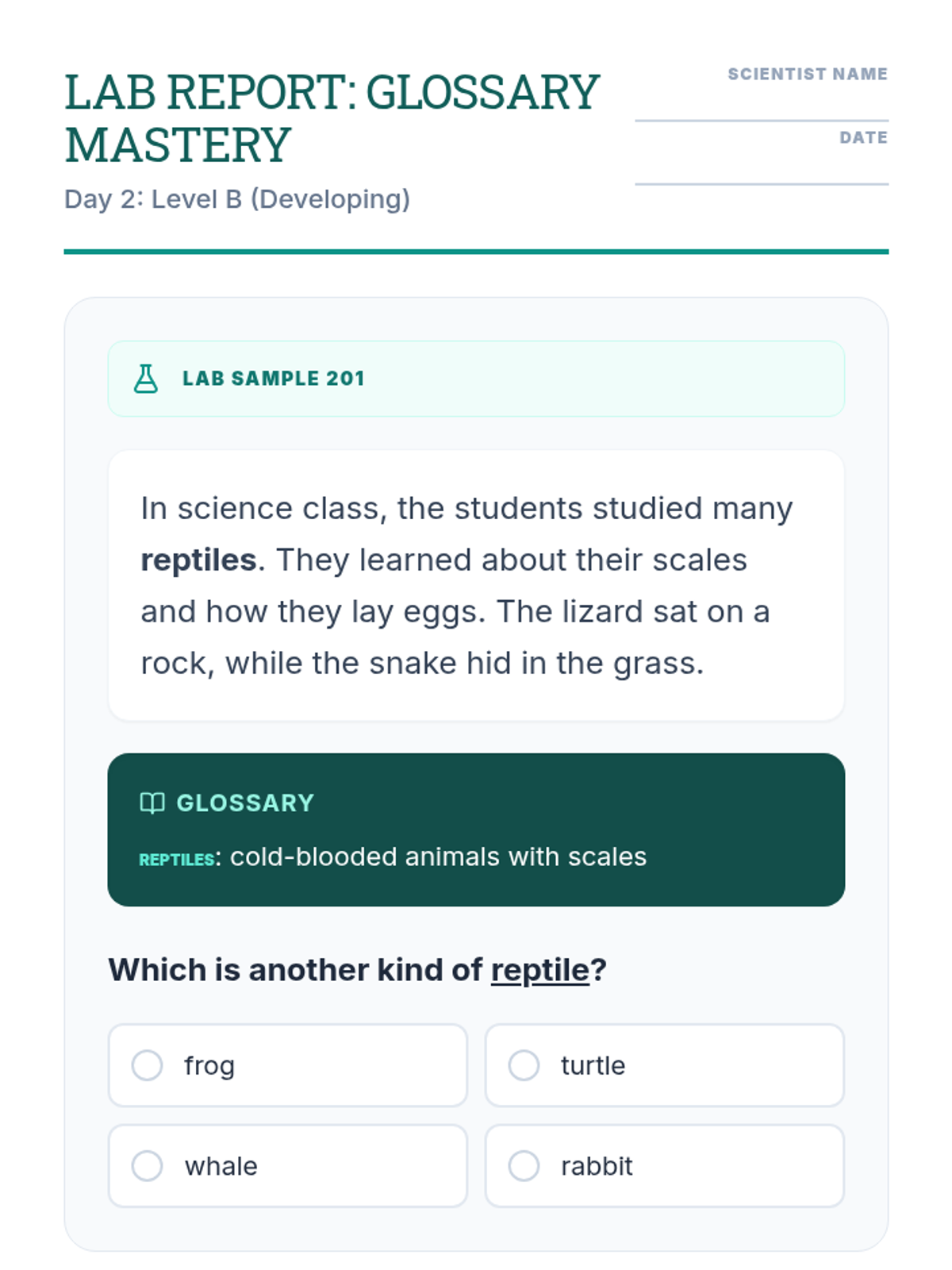
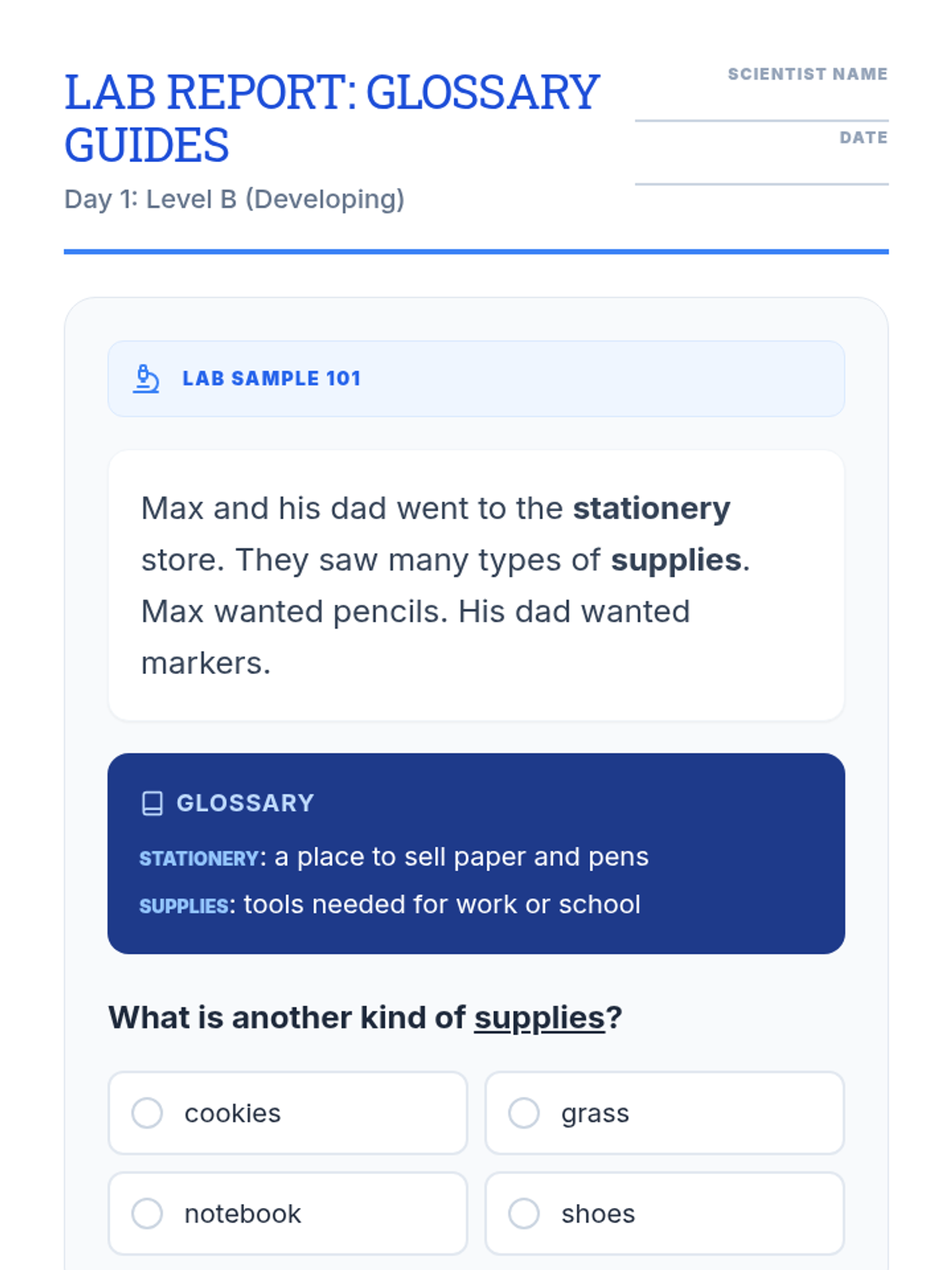
Focuses on deepening glossary skills and applying word parts to solve unfamiliar vocabulary.
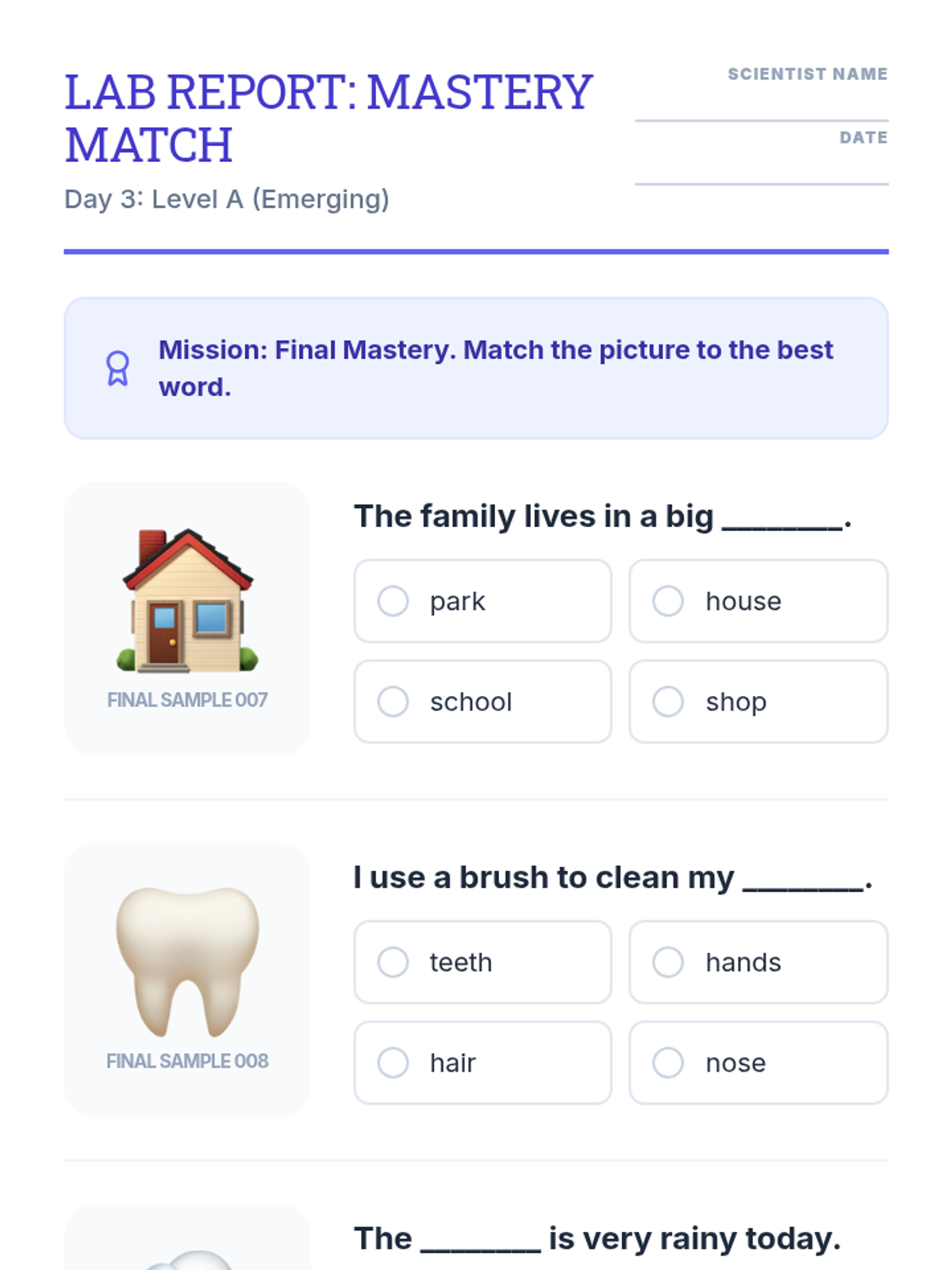
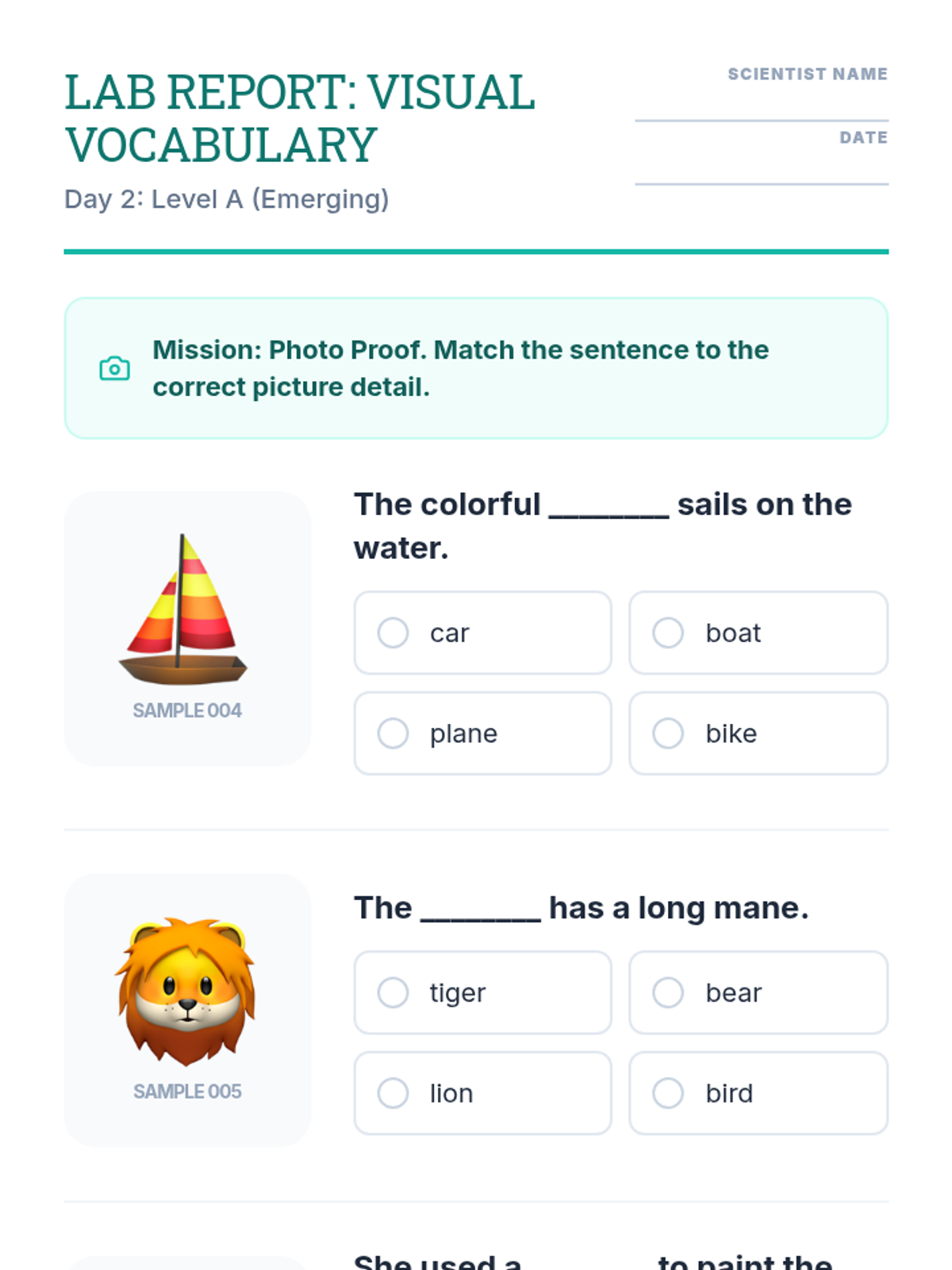
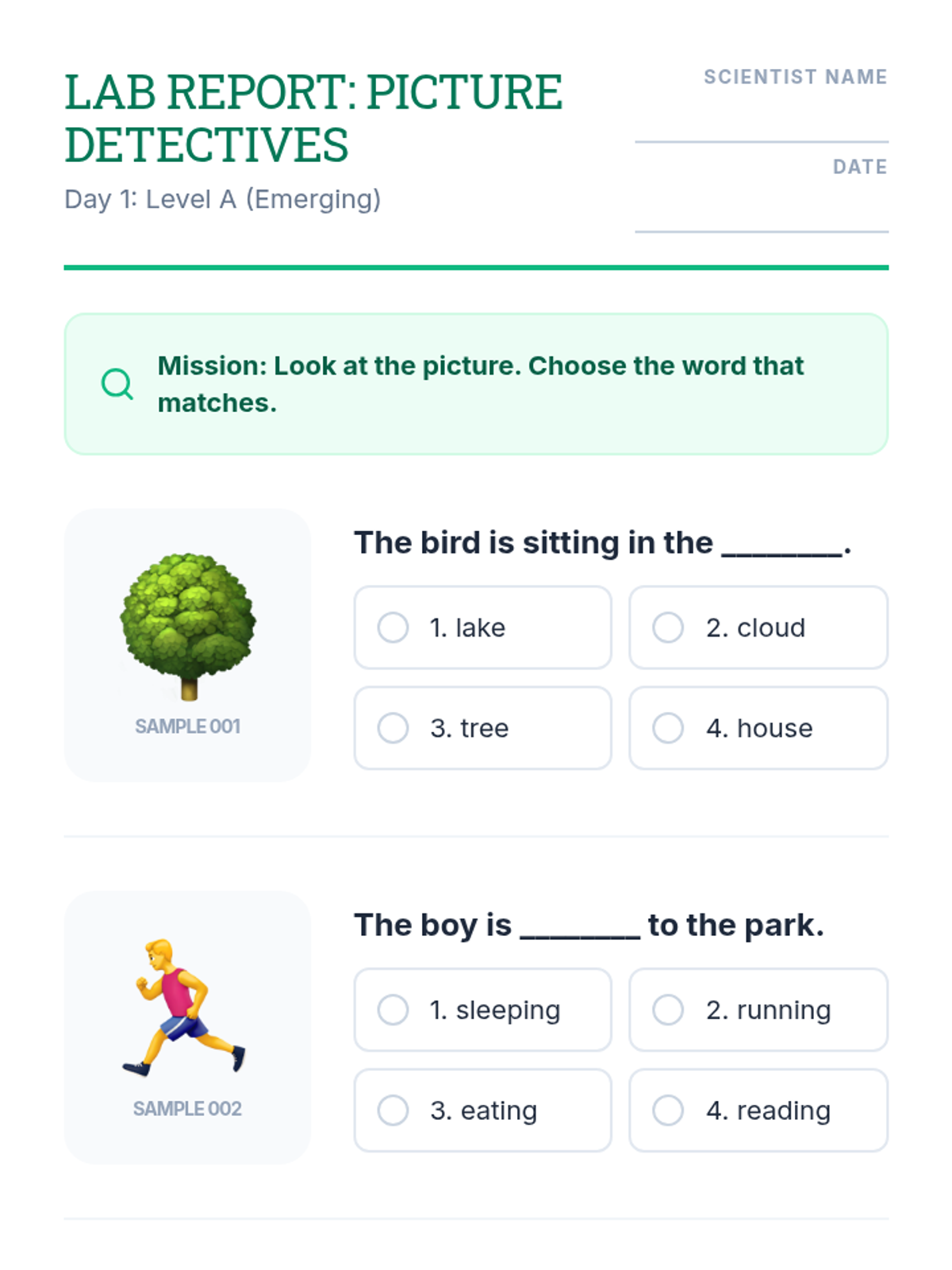
Focuses on using simple context clues, glossaries, and basic prefixes to determine word meaning.
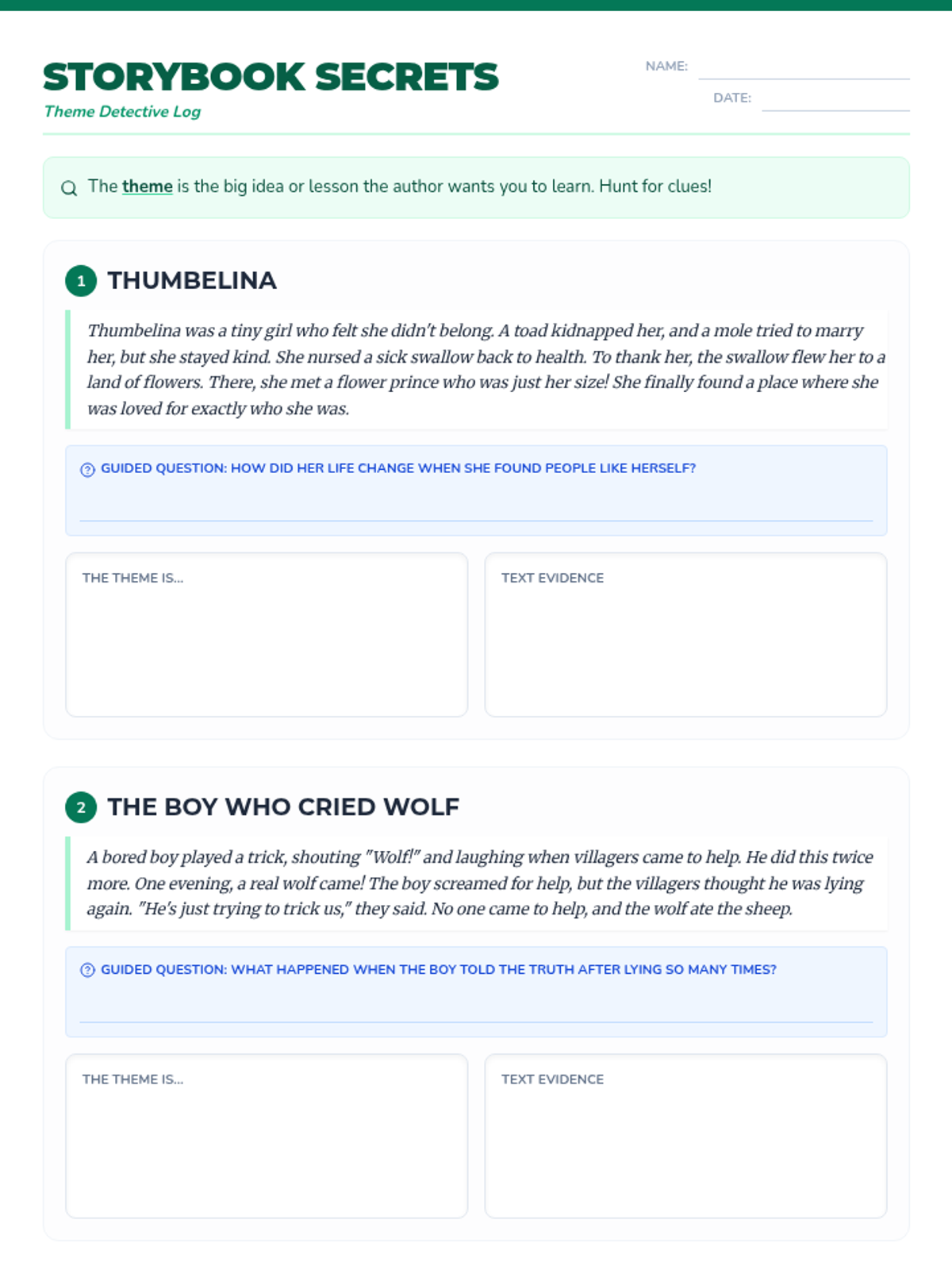
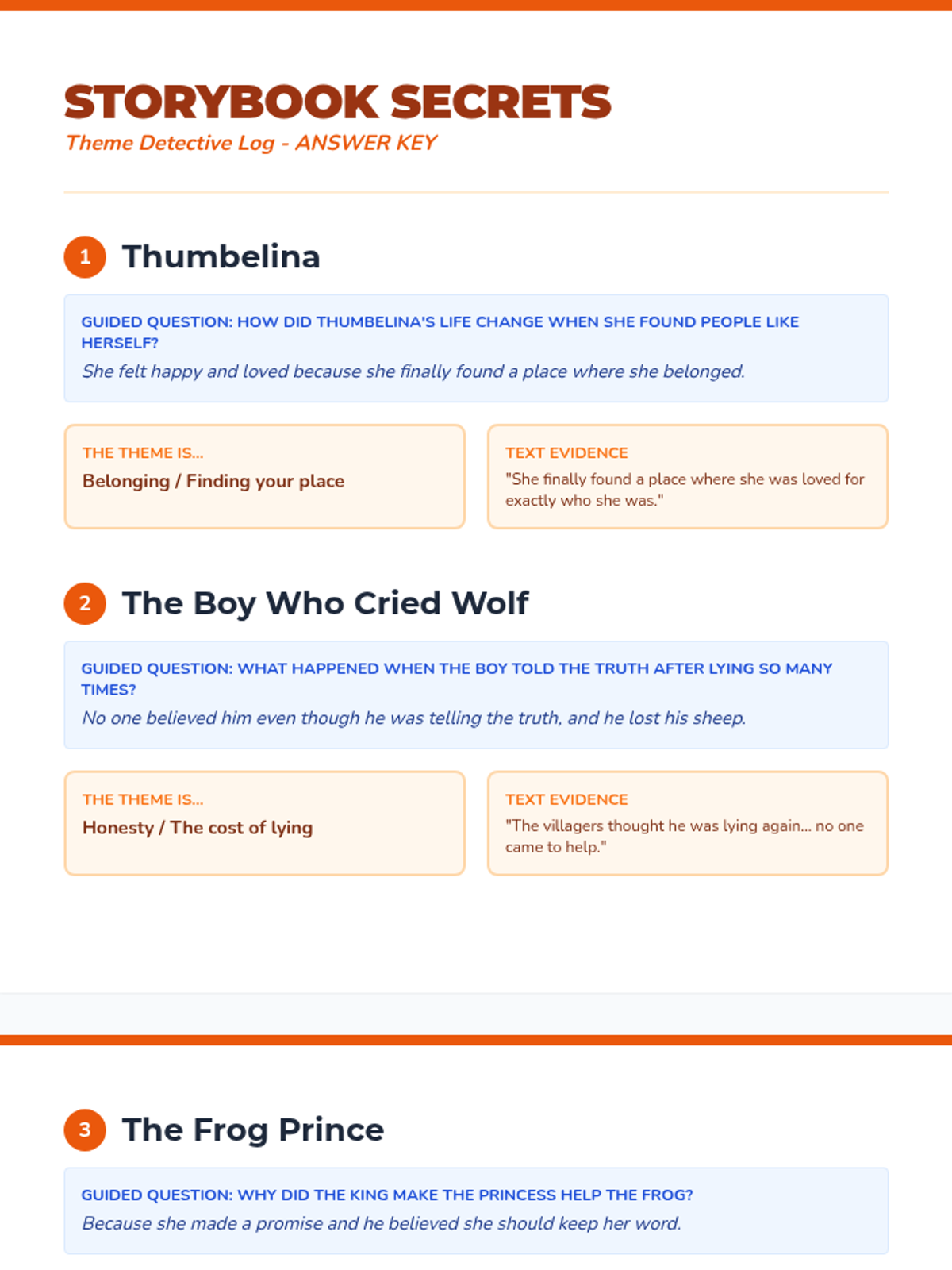
A lesson focused on identifying themes in classic fairy tales through text evidence and guided analysis for elementary students.
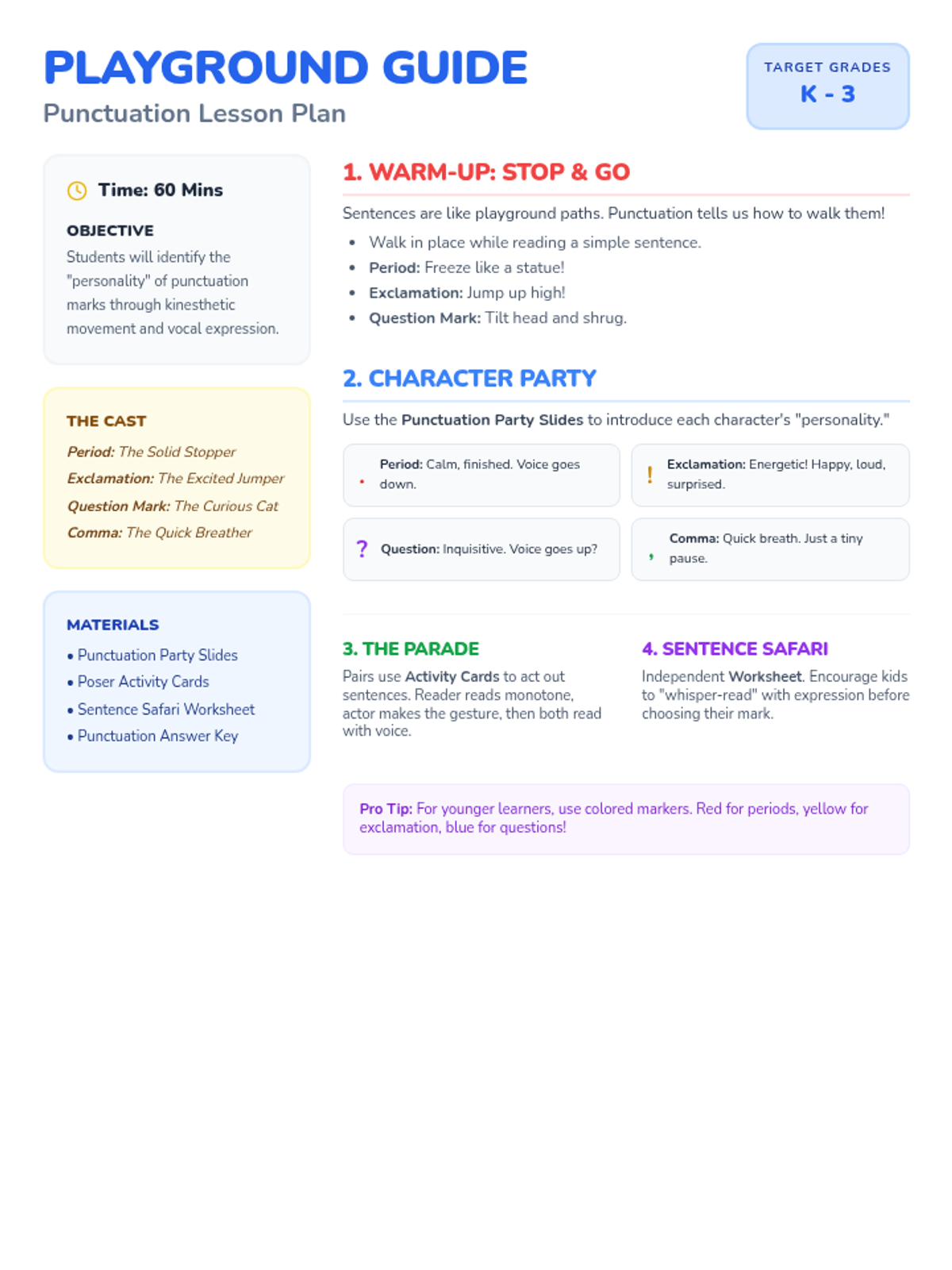
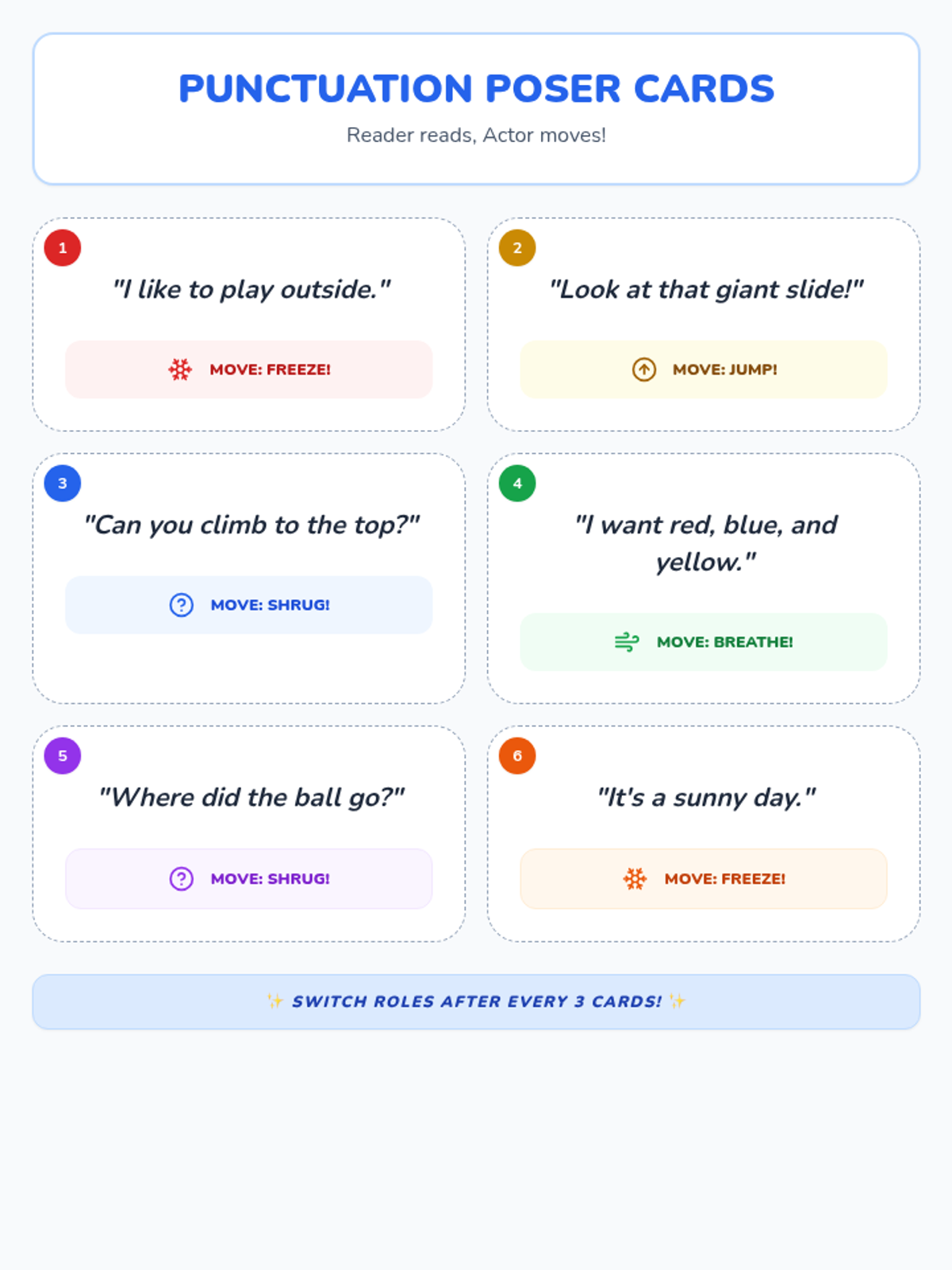
A lively, kinesthetic lesson where K-3 students personify punctuation marks through movement and creative writing to understand how they shape the voice of a sentence.
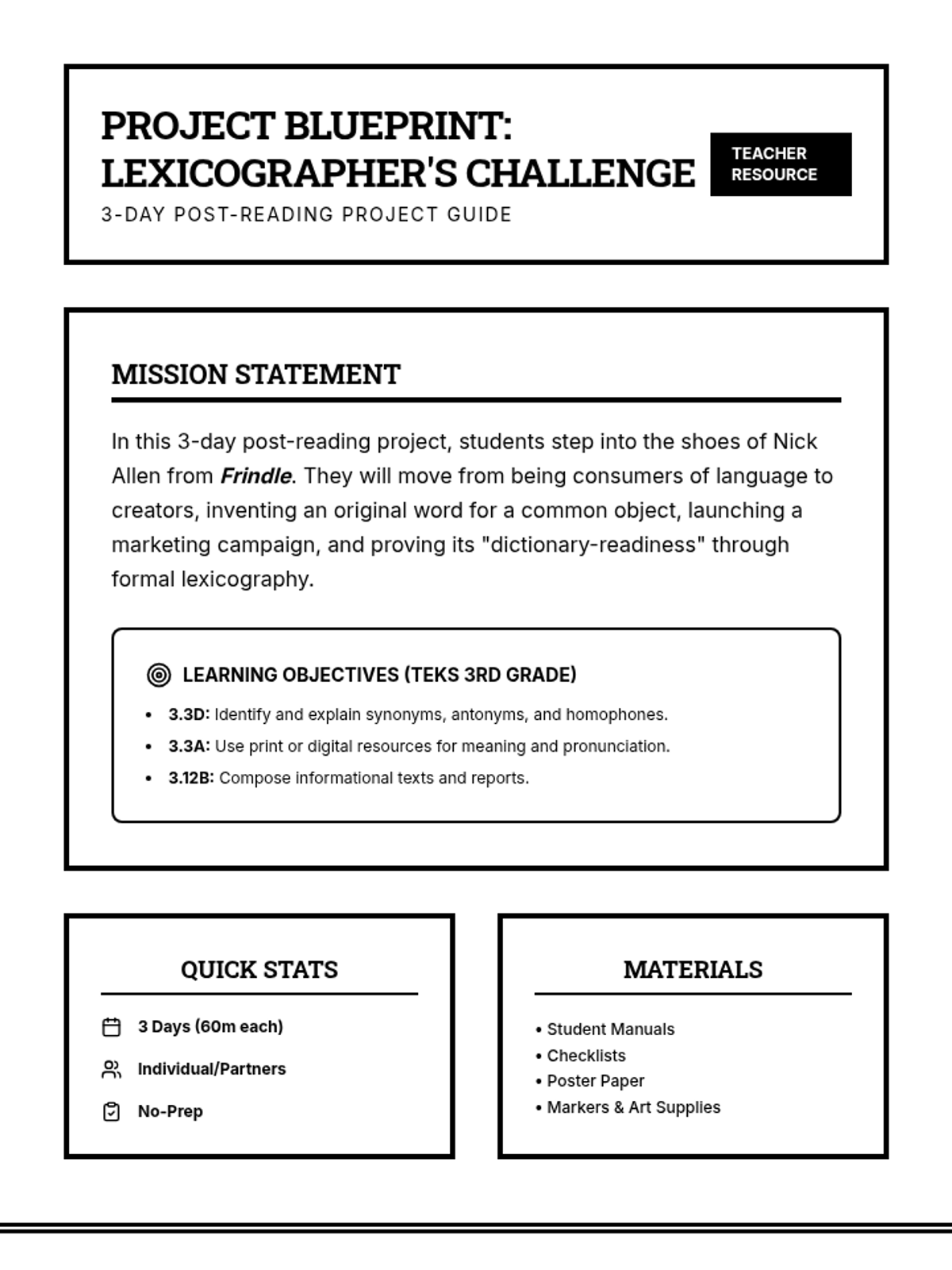
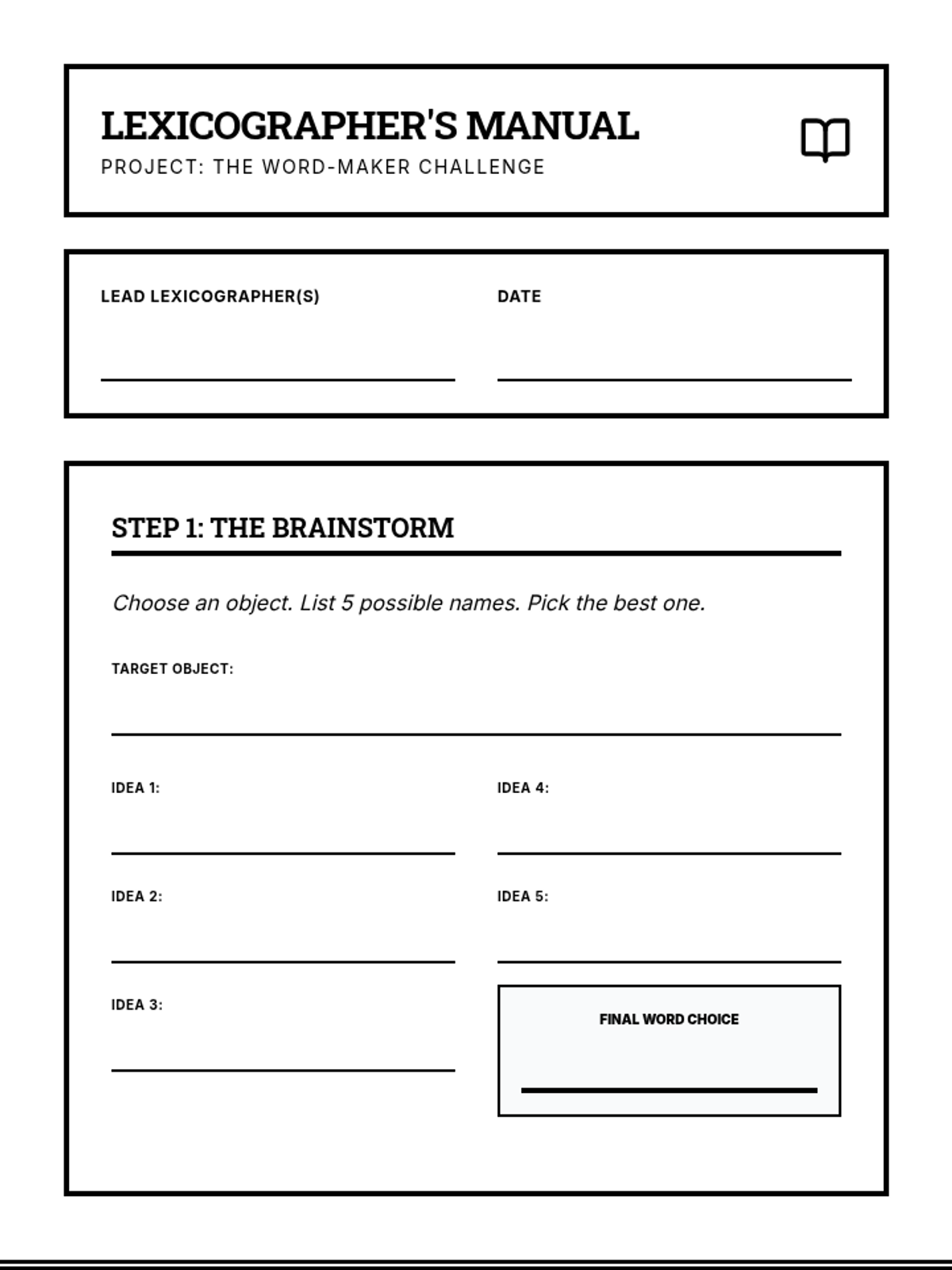
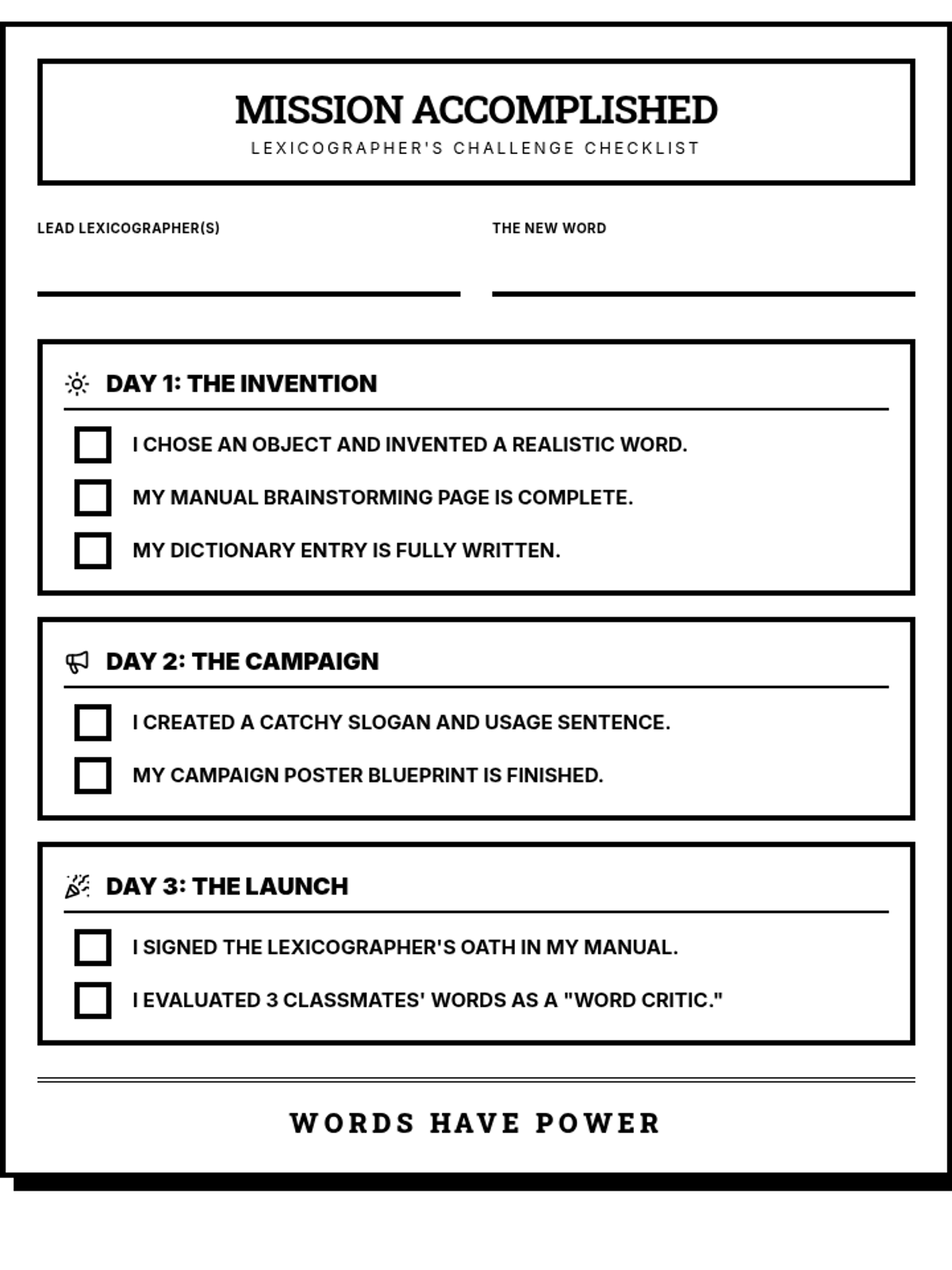
A 3-day post-reading project where students follow in Nick Allen's footsteps to invent their own word, create a marketing campaign, and document its 'dictionary-readiness'.
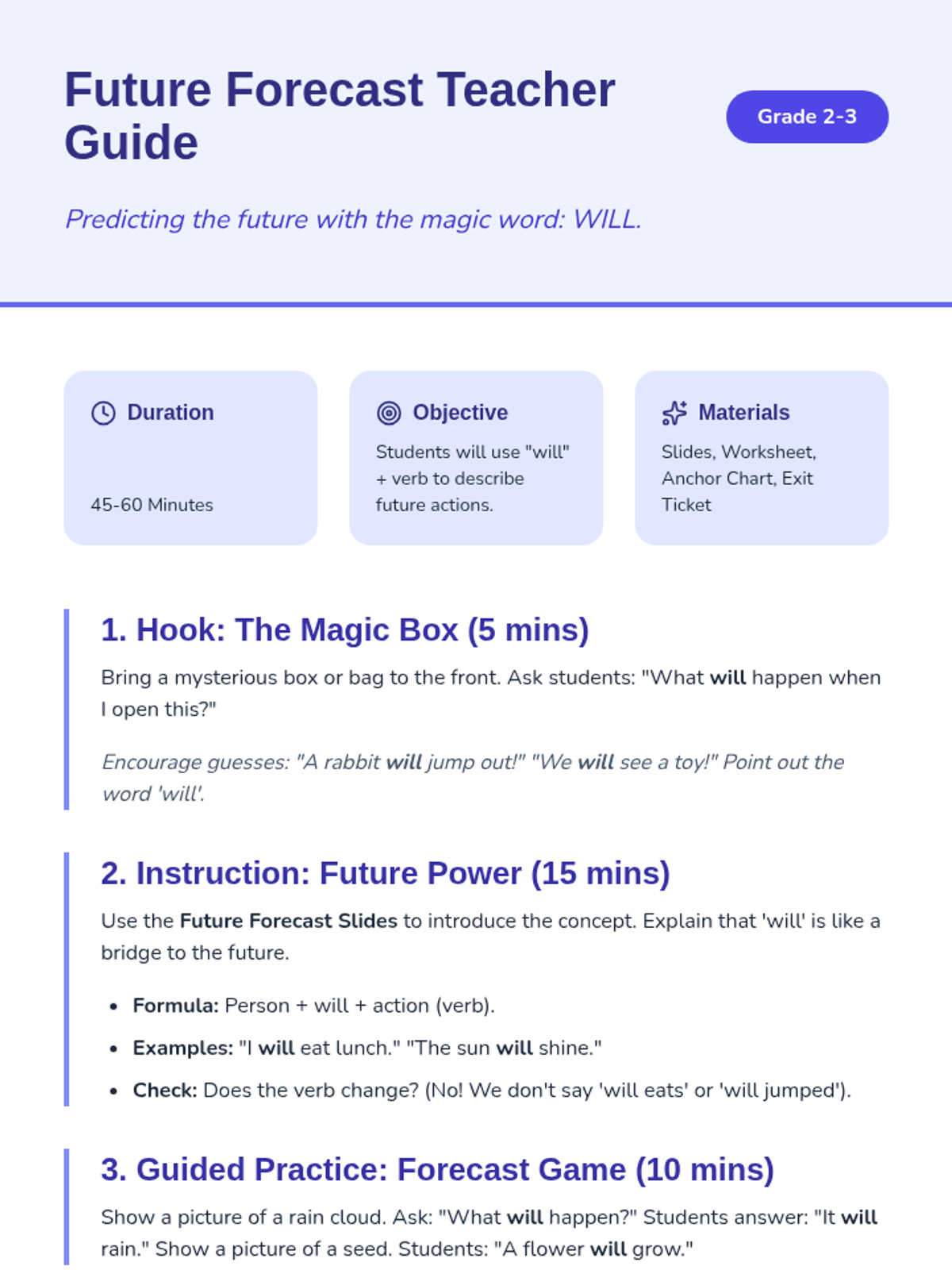
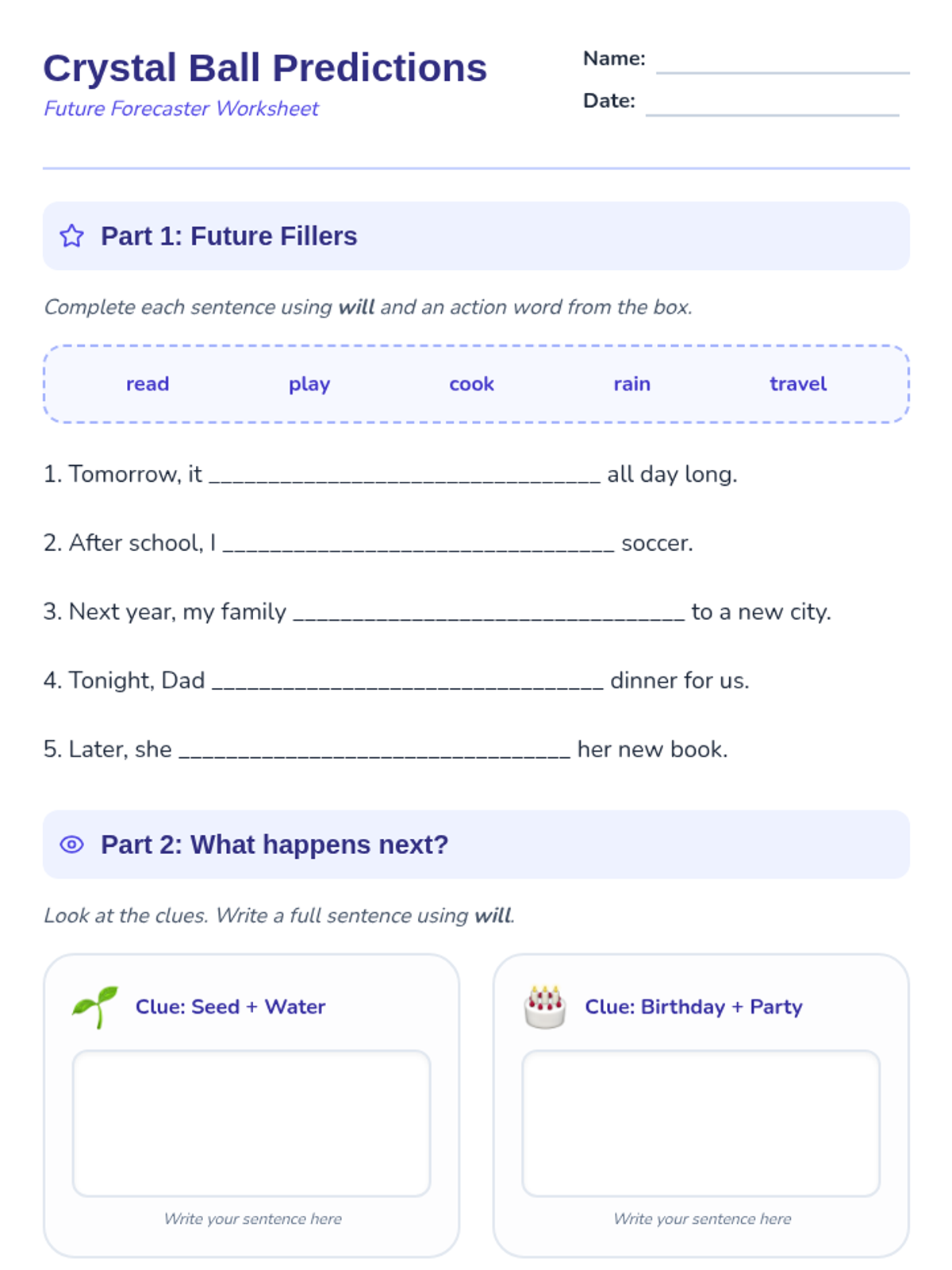
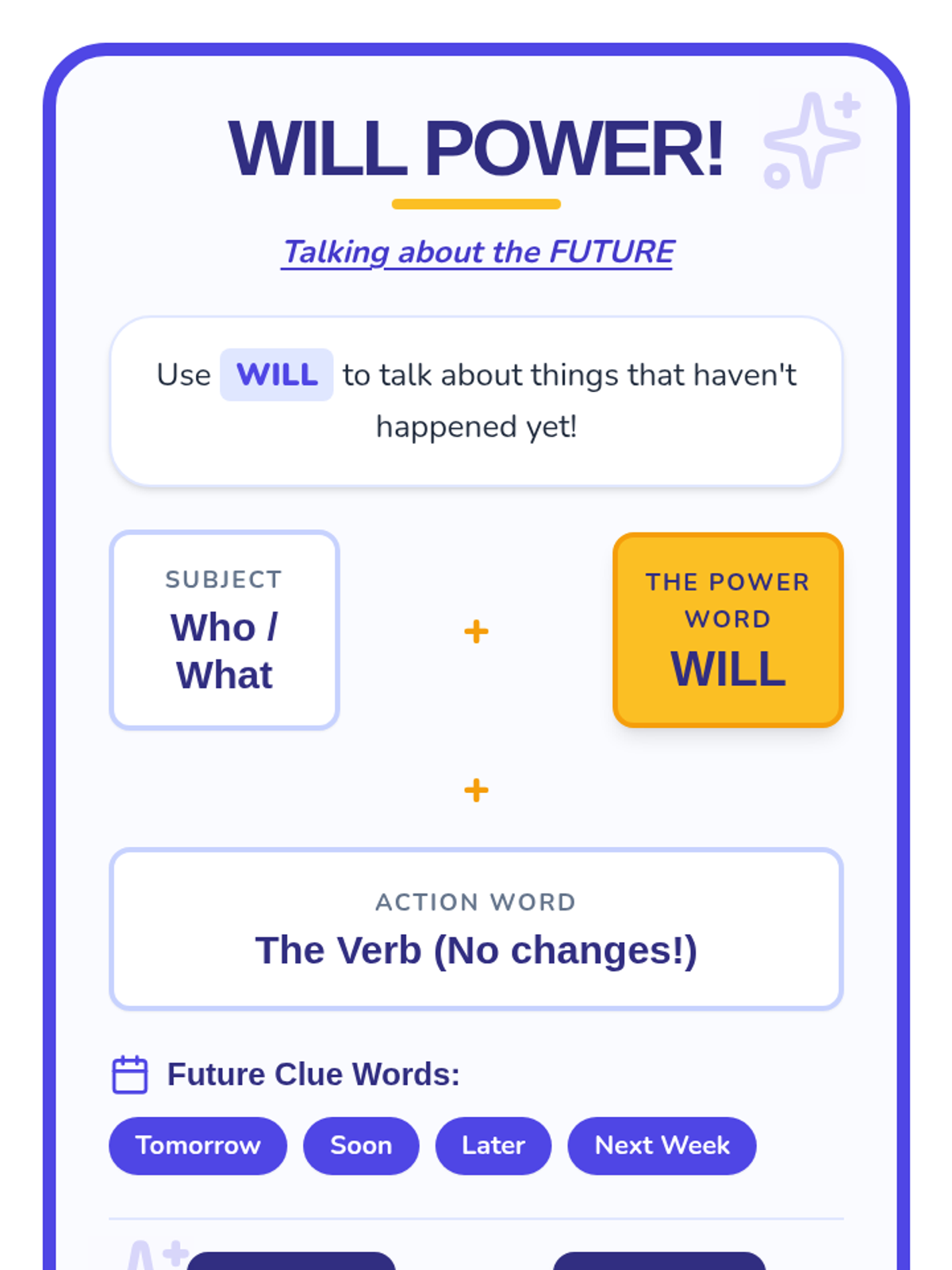
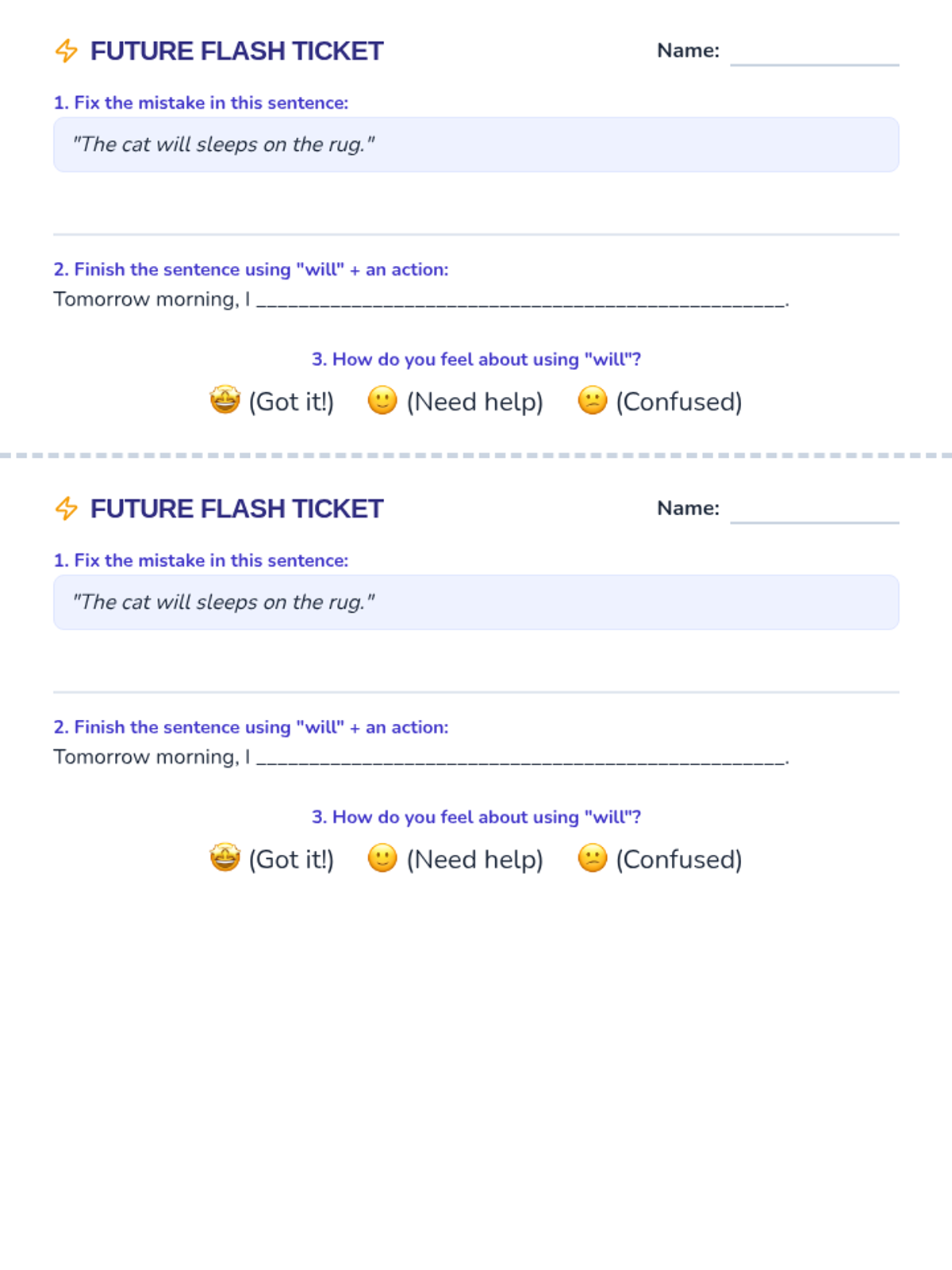
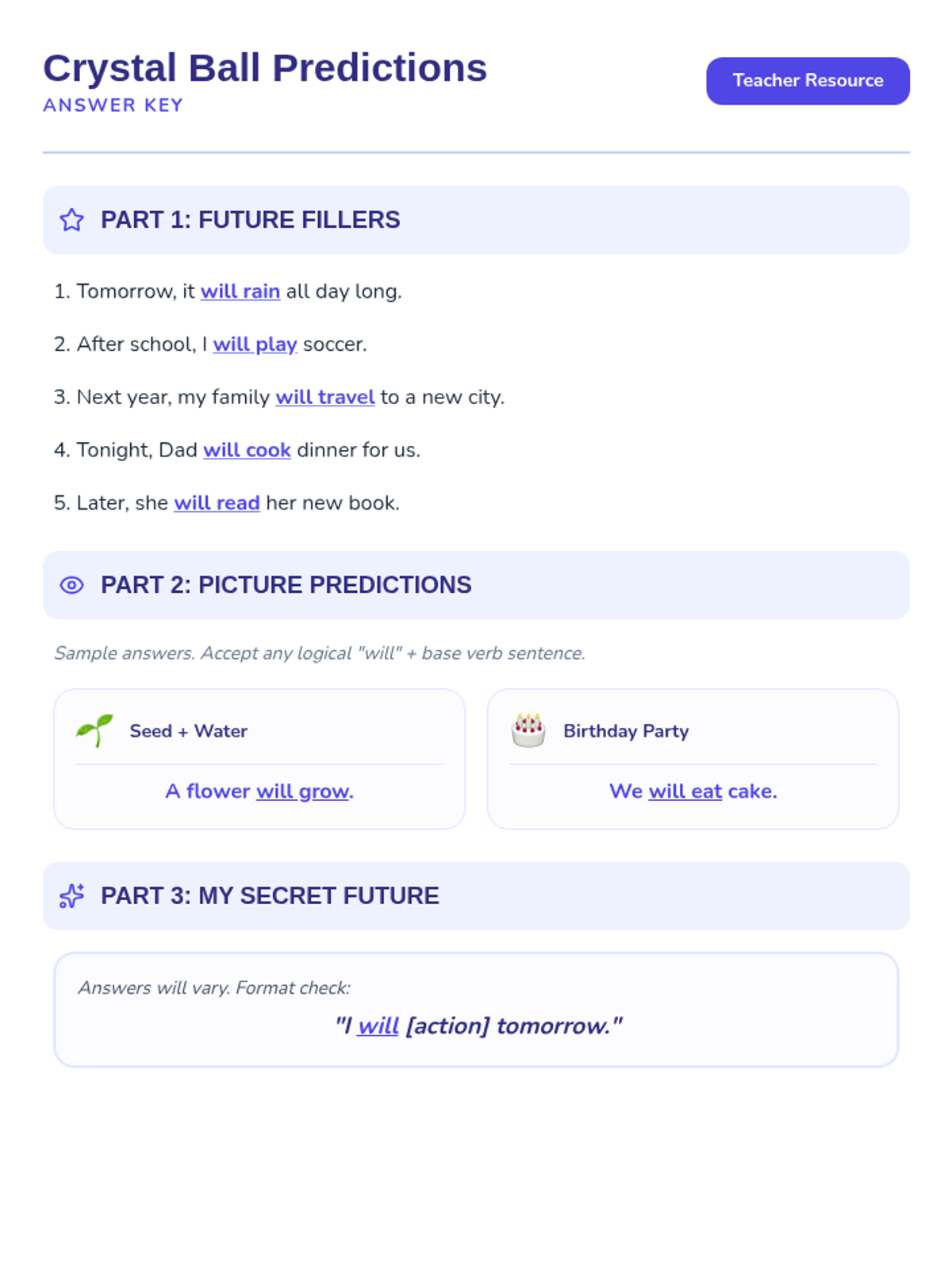
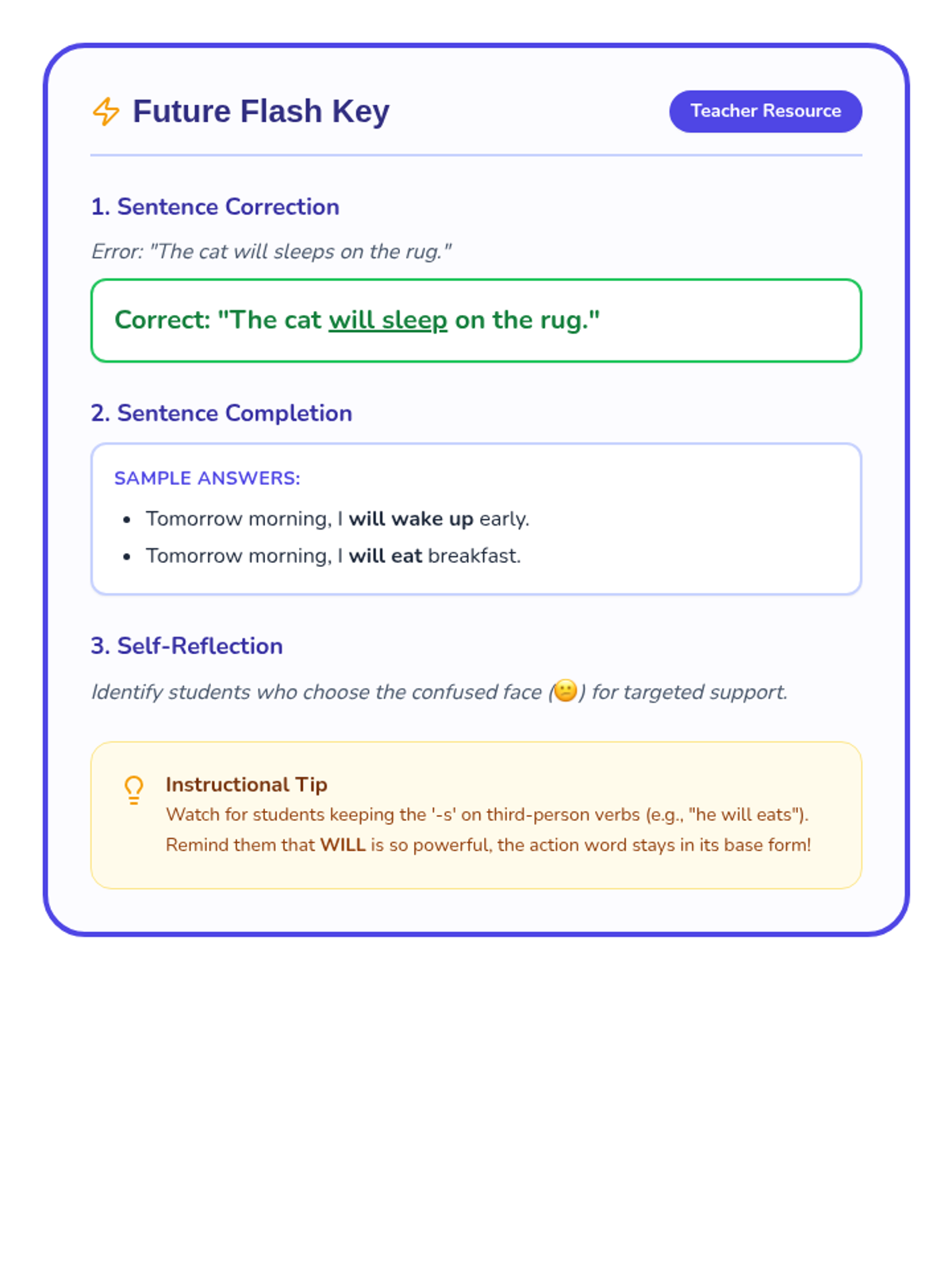
A magical introduction to using 'will' for future tense, where students become 'Future Forecasters' to predict what happens next.
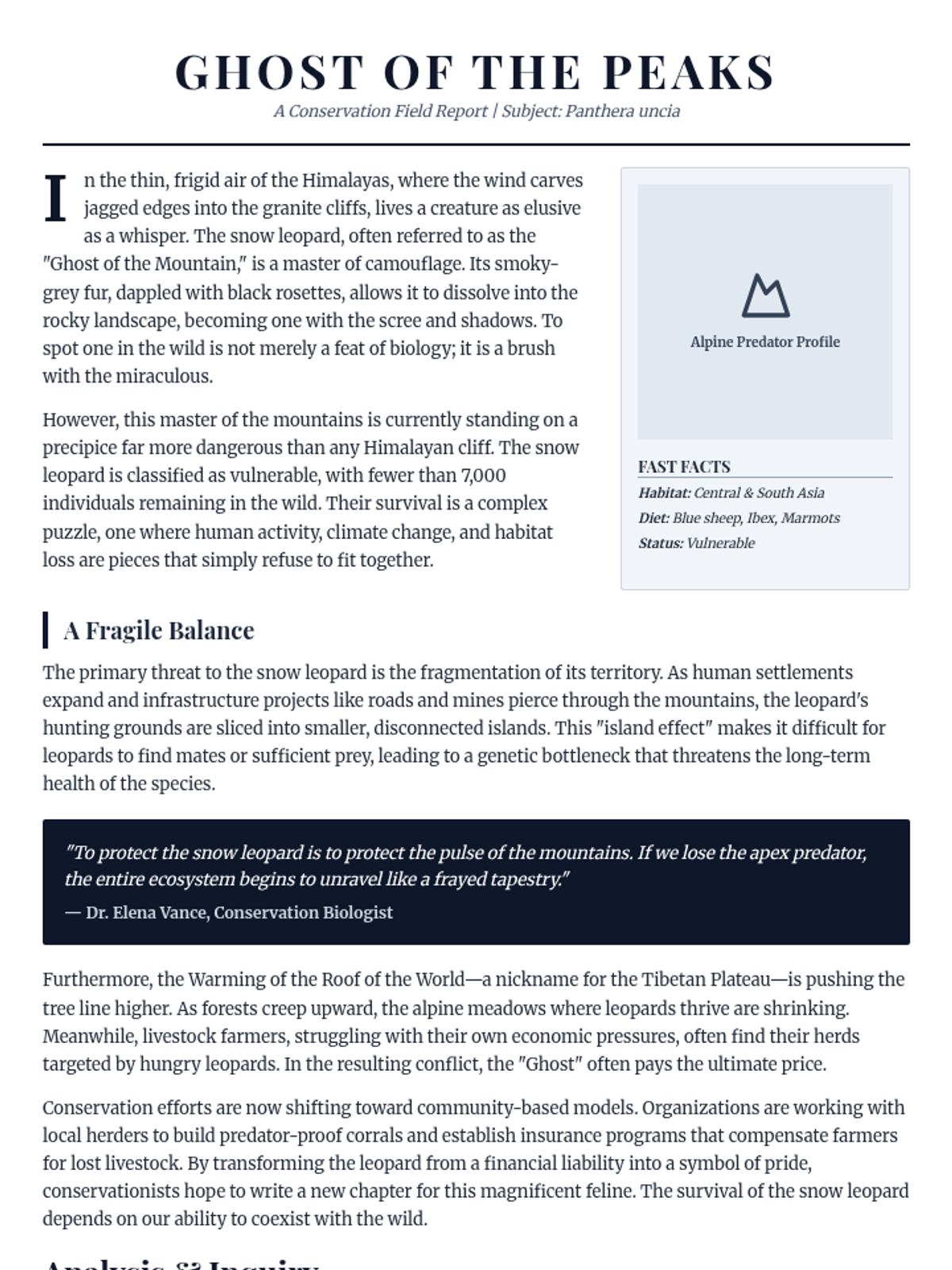
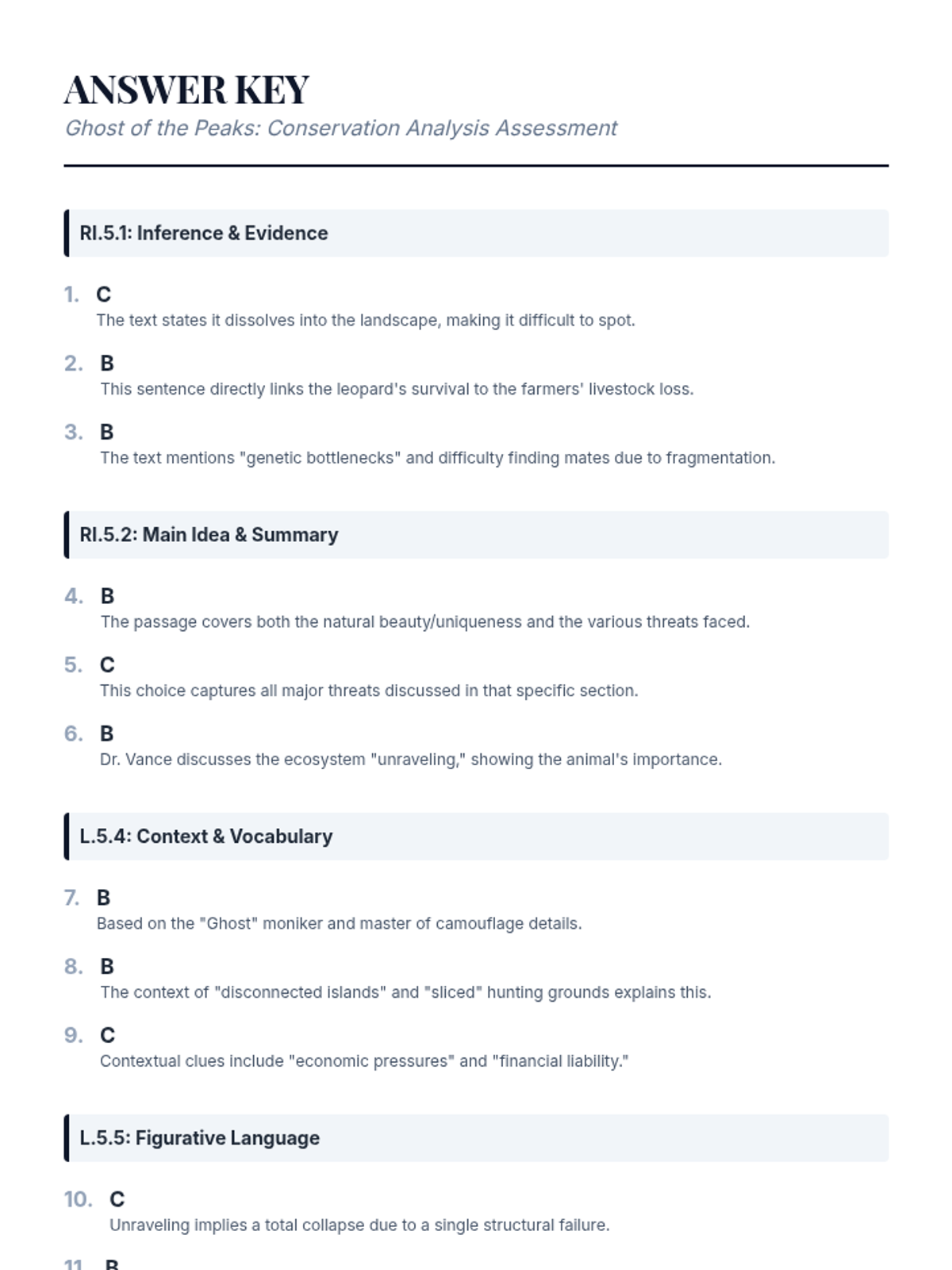
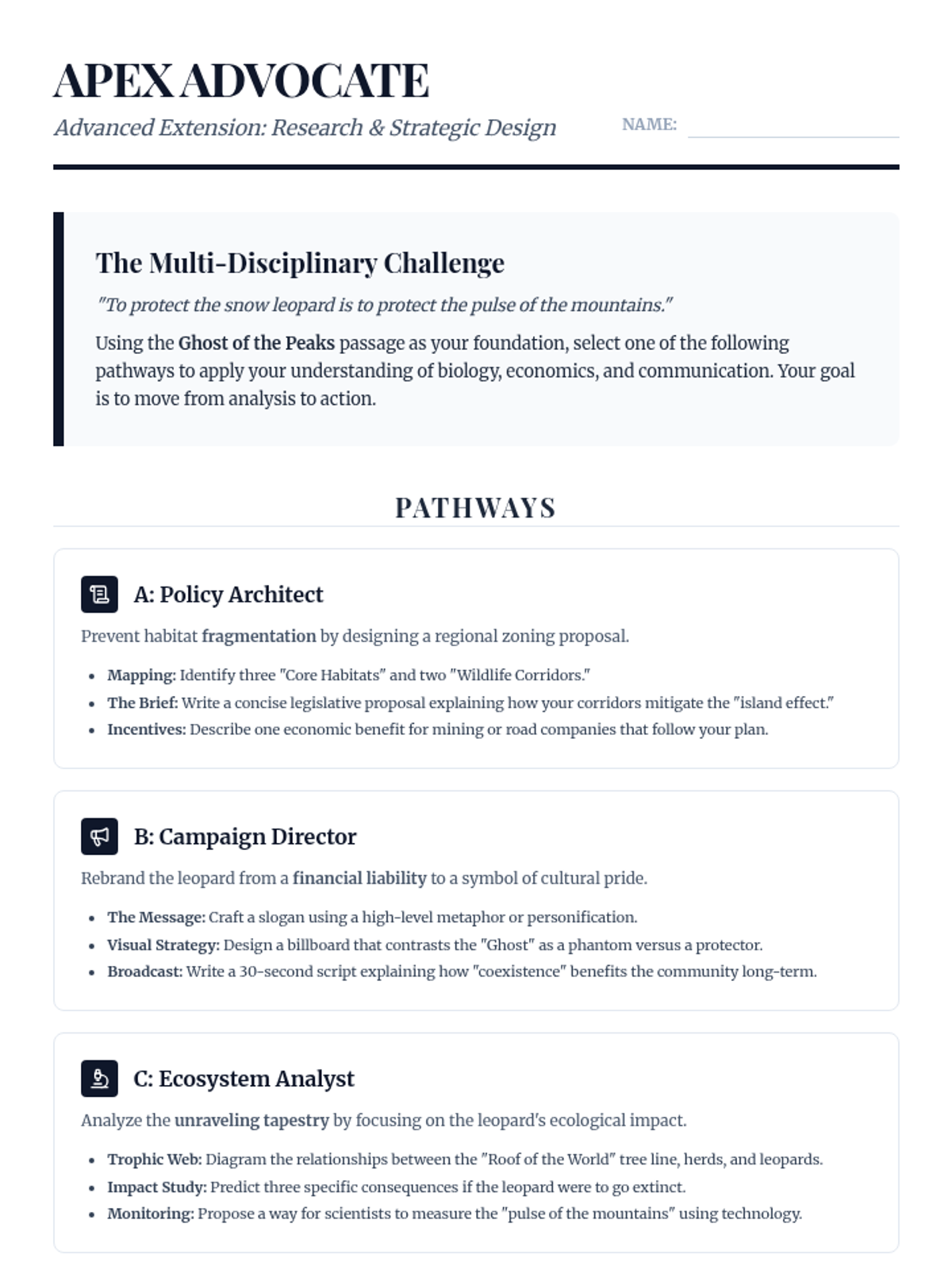
A high-level reading comprehension lesson focused on endangered species, specifically the snow leopard. Students will analyze complex text for main ideas, nuanced vocabulary, and figurative language.
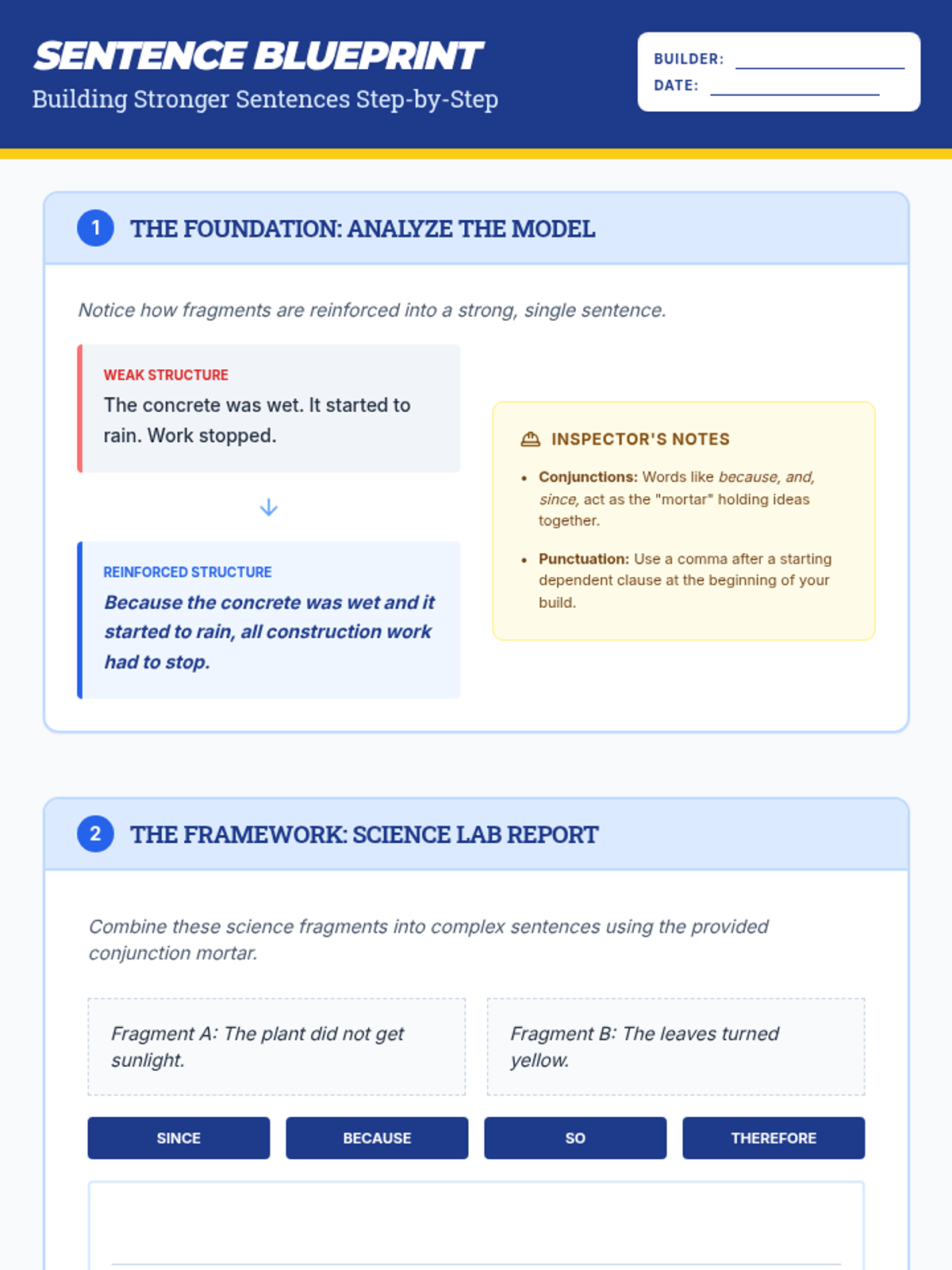
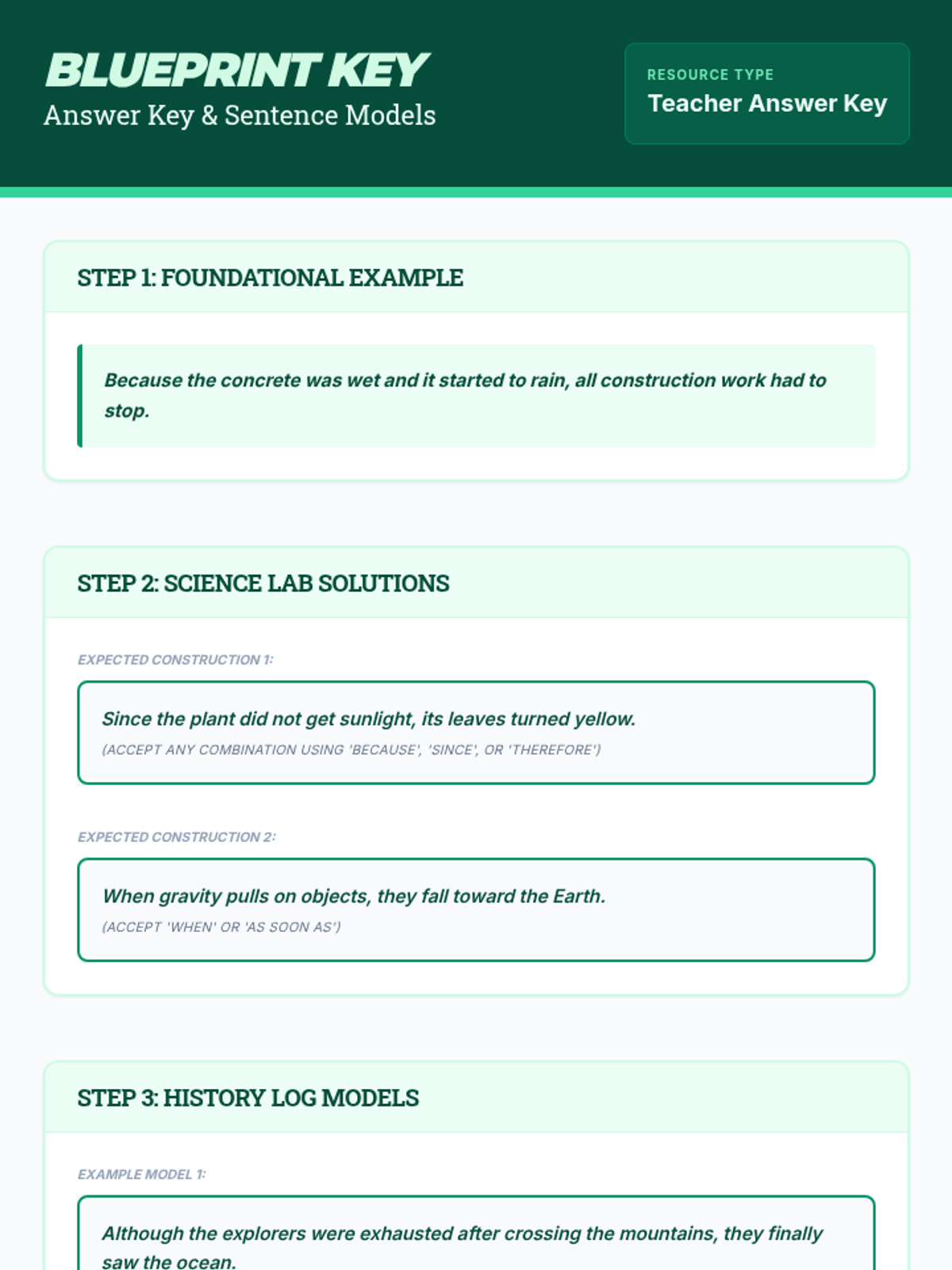
A lesson focused on sentence construction, teaching students to transform fragments and simple sentences into sophisticated compound and complex sentences using a construction-themed framework.
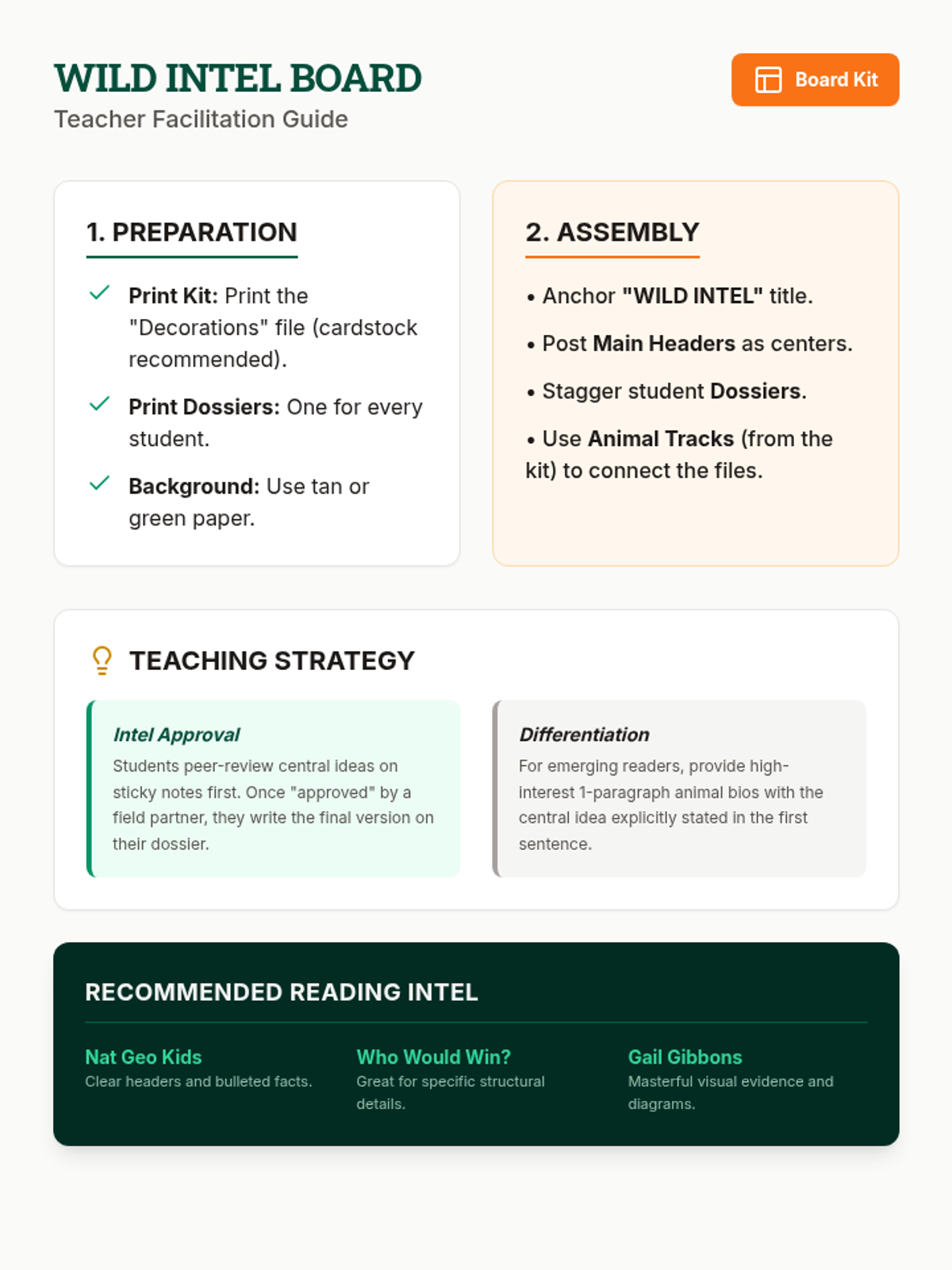
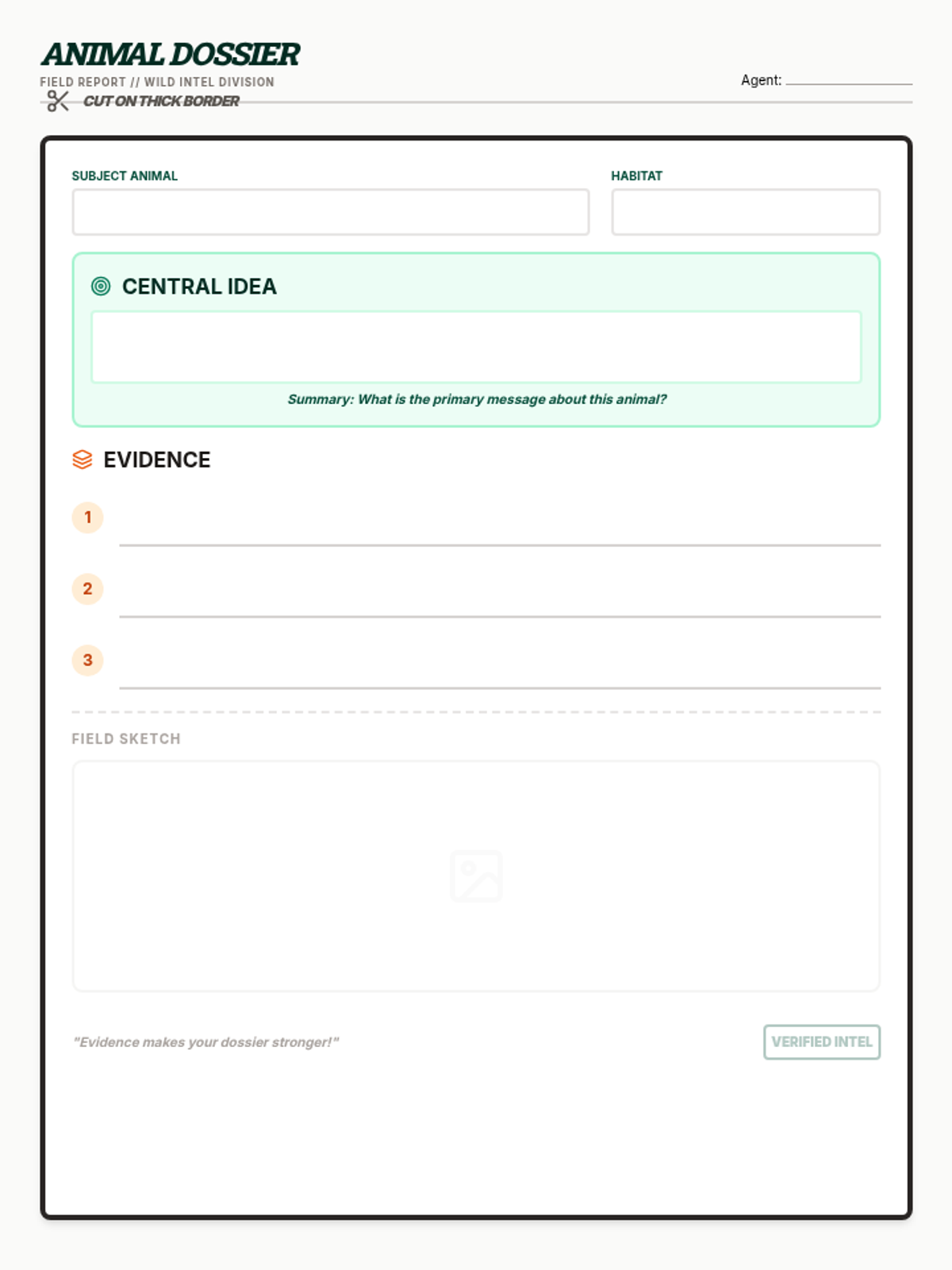
A lesson focused on identifying central ideas and supporting details in nonfiction animal texts, culminating in a student-created wildlife research bulletin board.
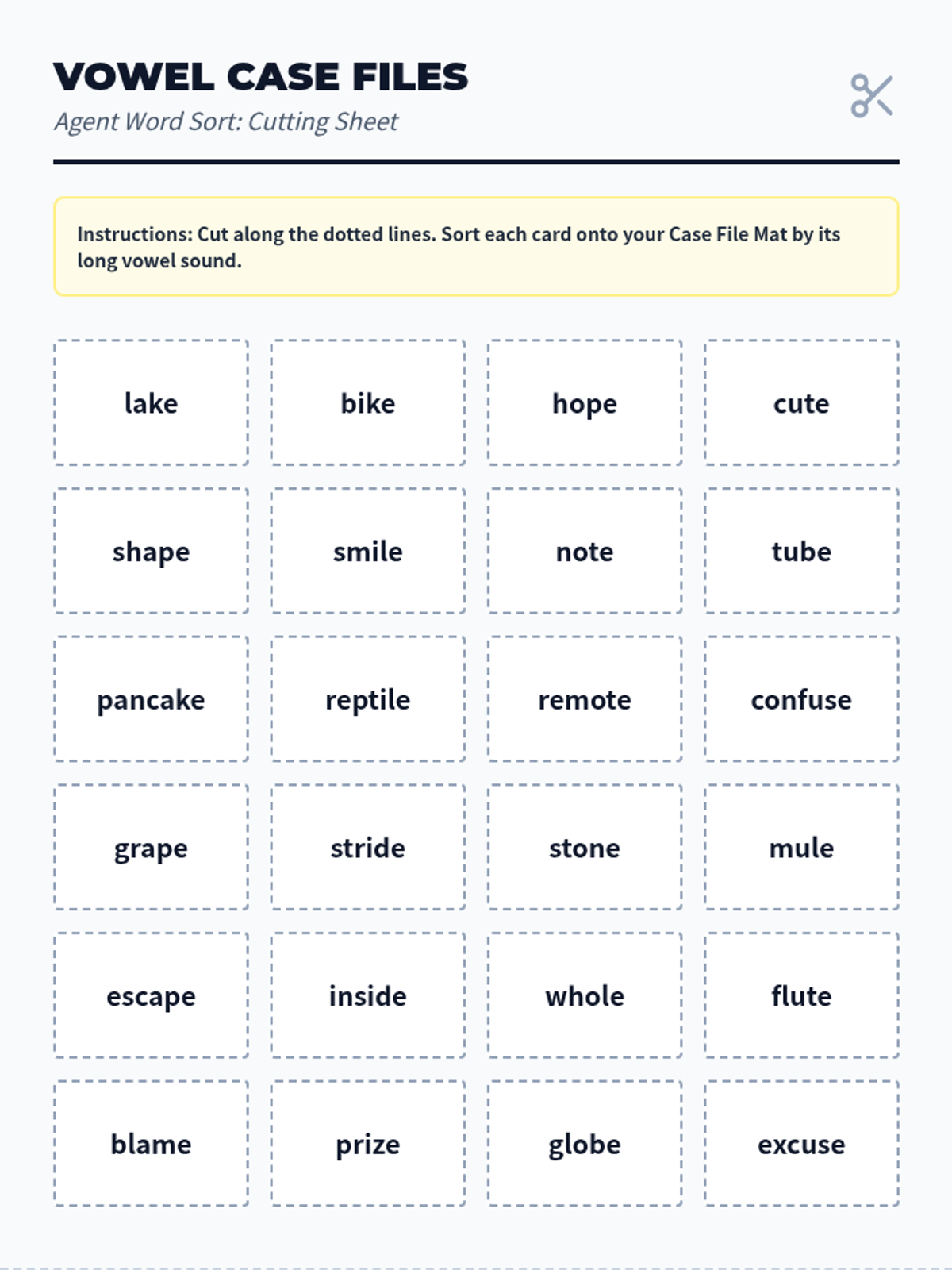
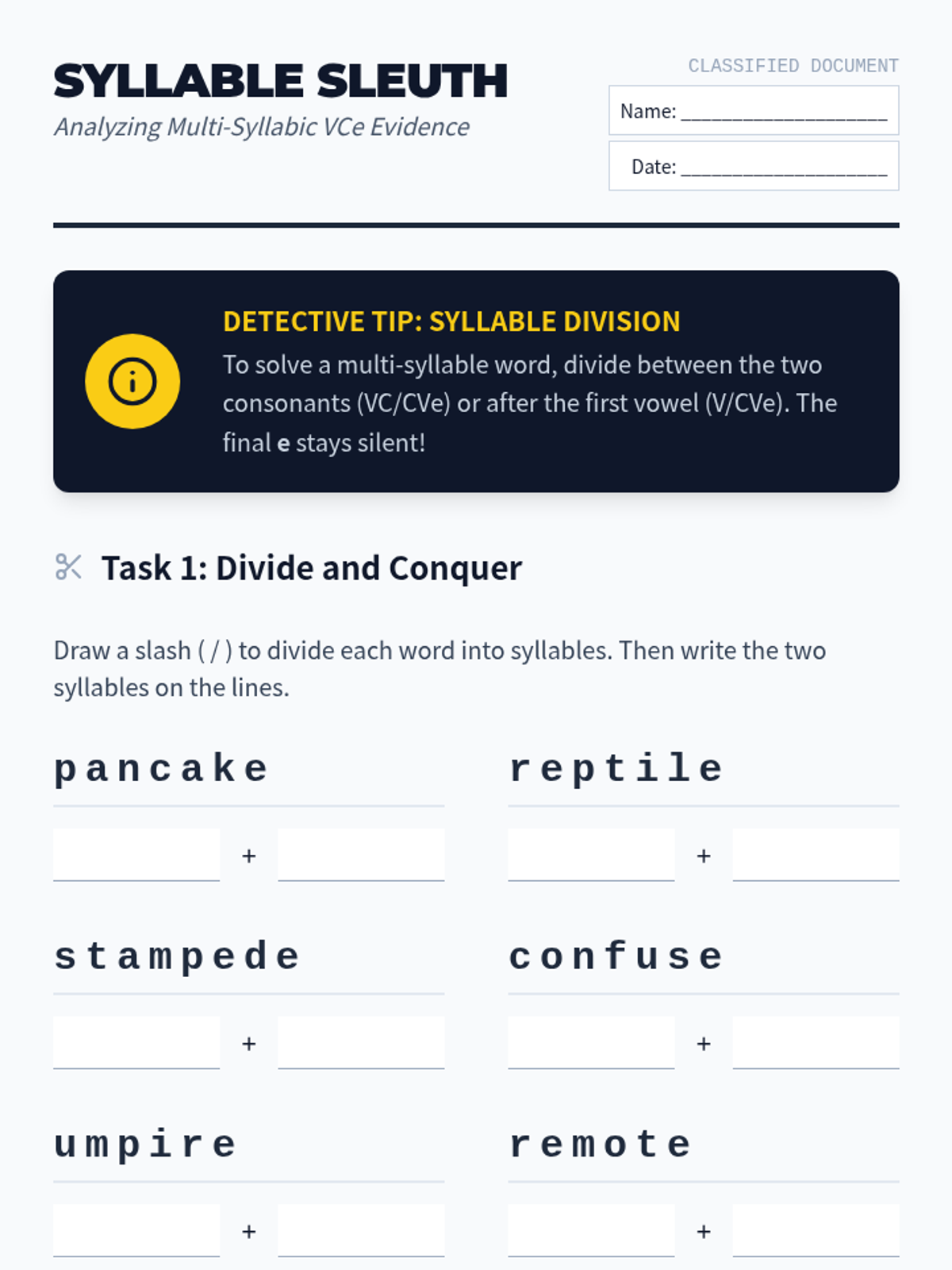
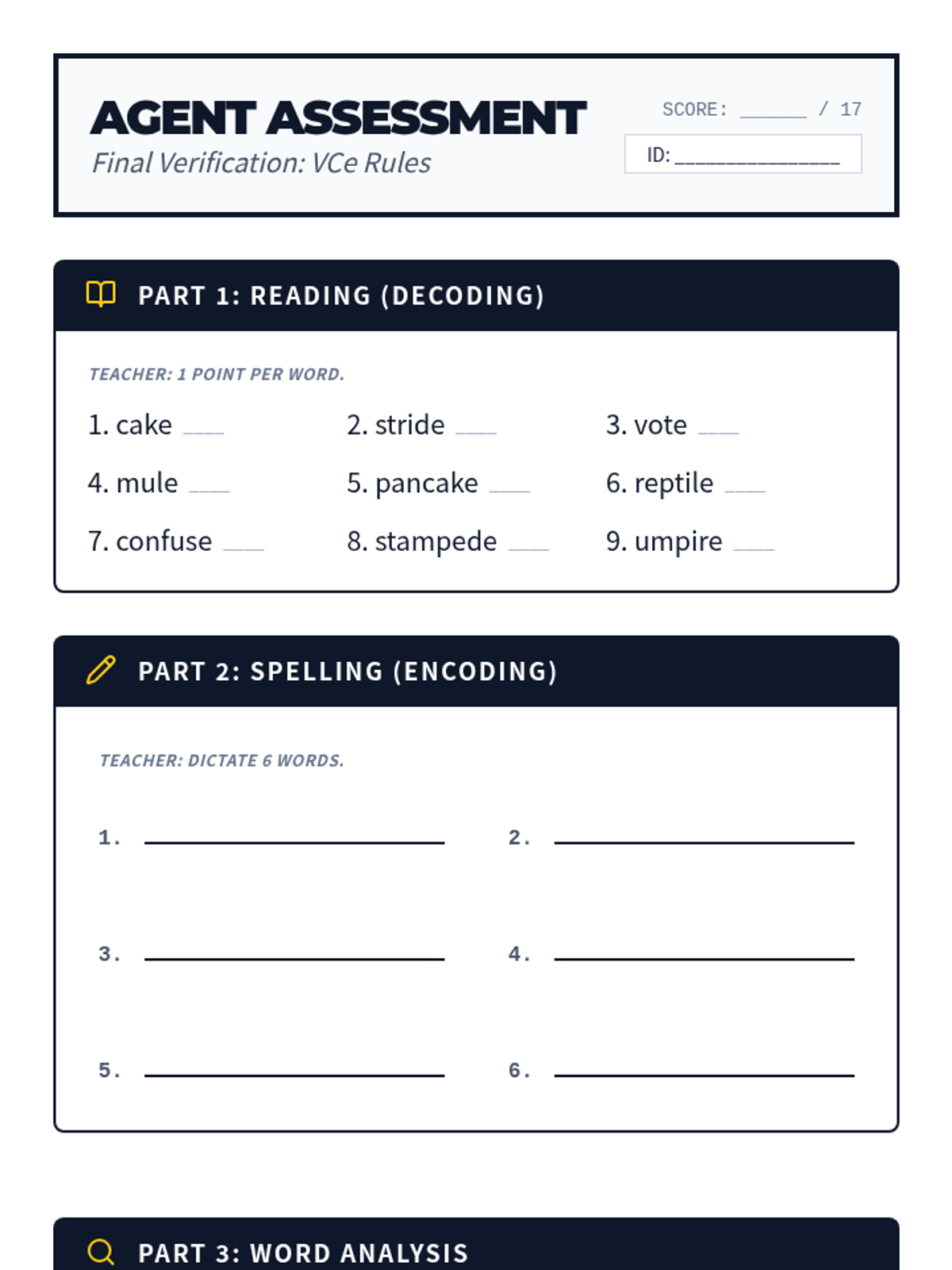
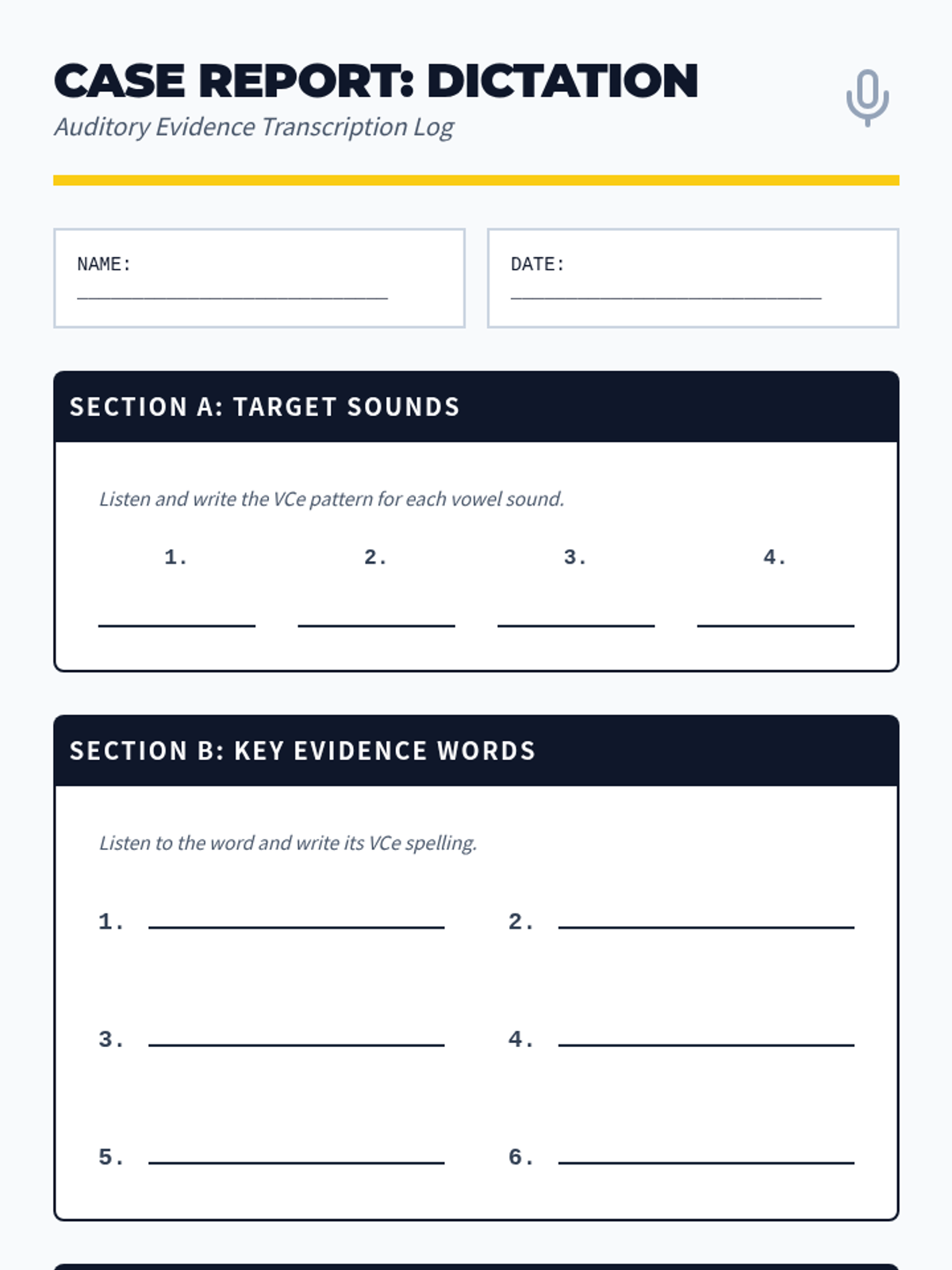
A comprehensive phonics lesson on Vowel-Consonant-e (VCe) patterns for single and multi-syllabic words, using a detective-themed approach to investigate the "Silent E" rule.
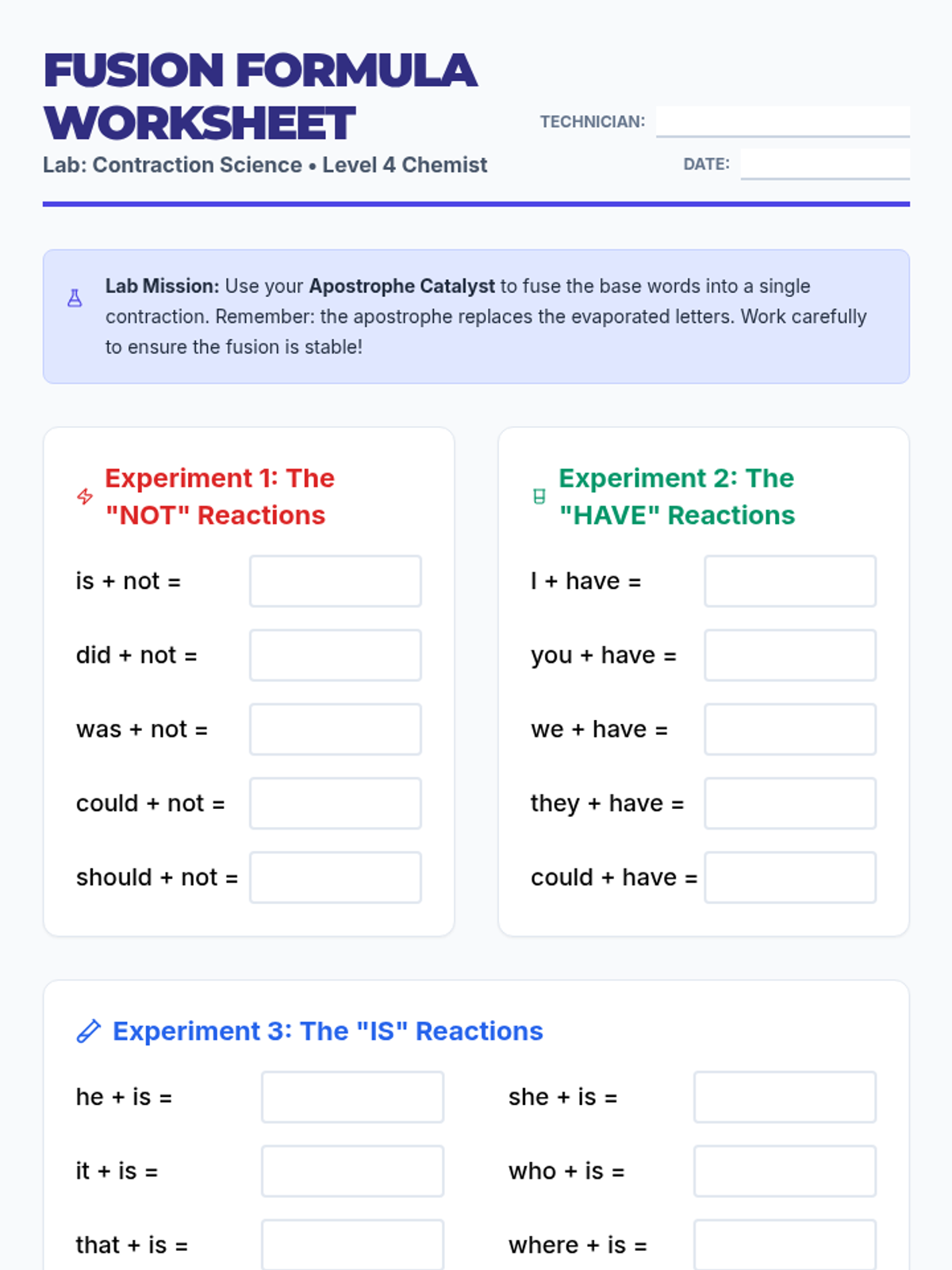
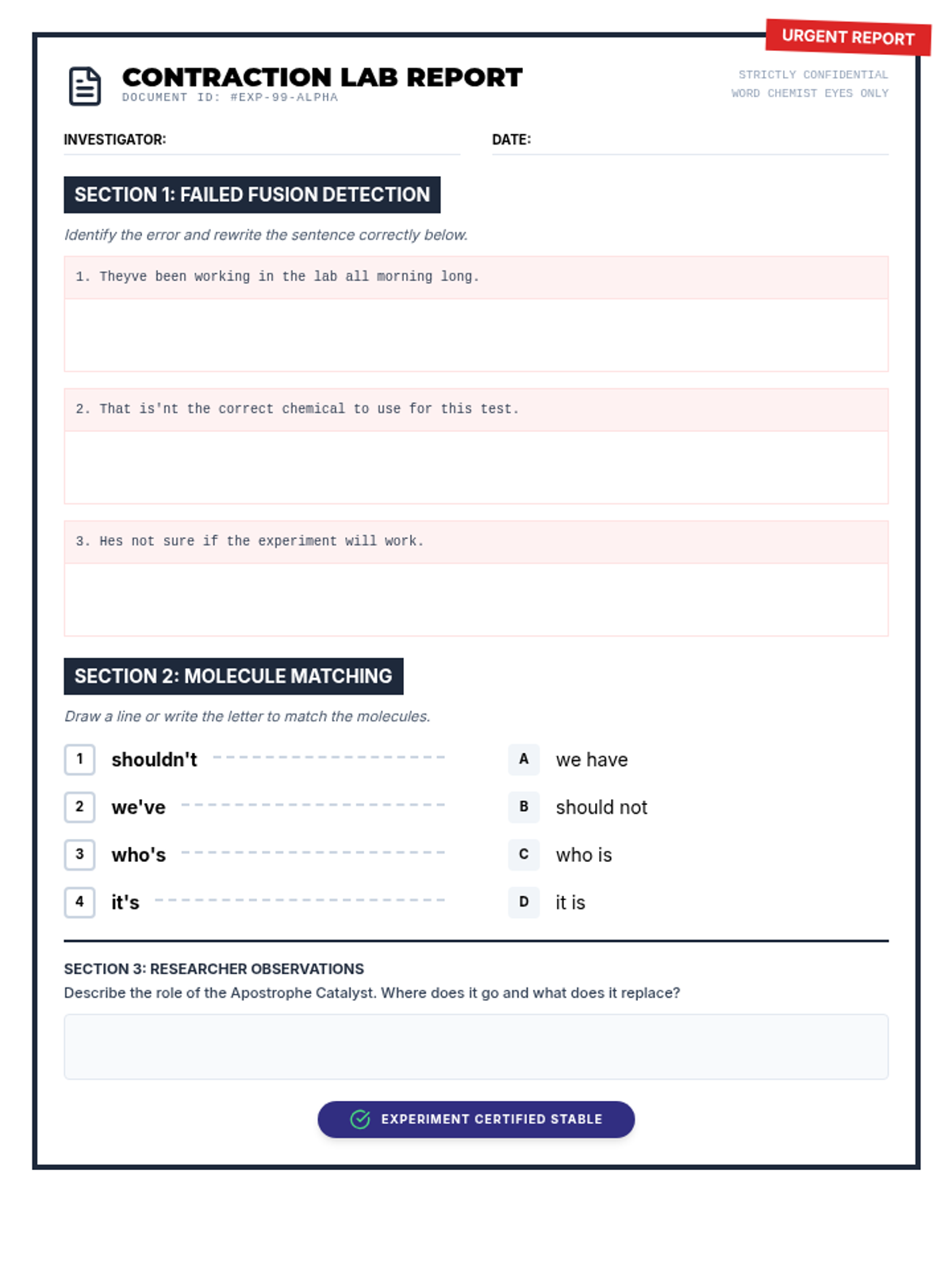
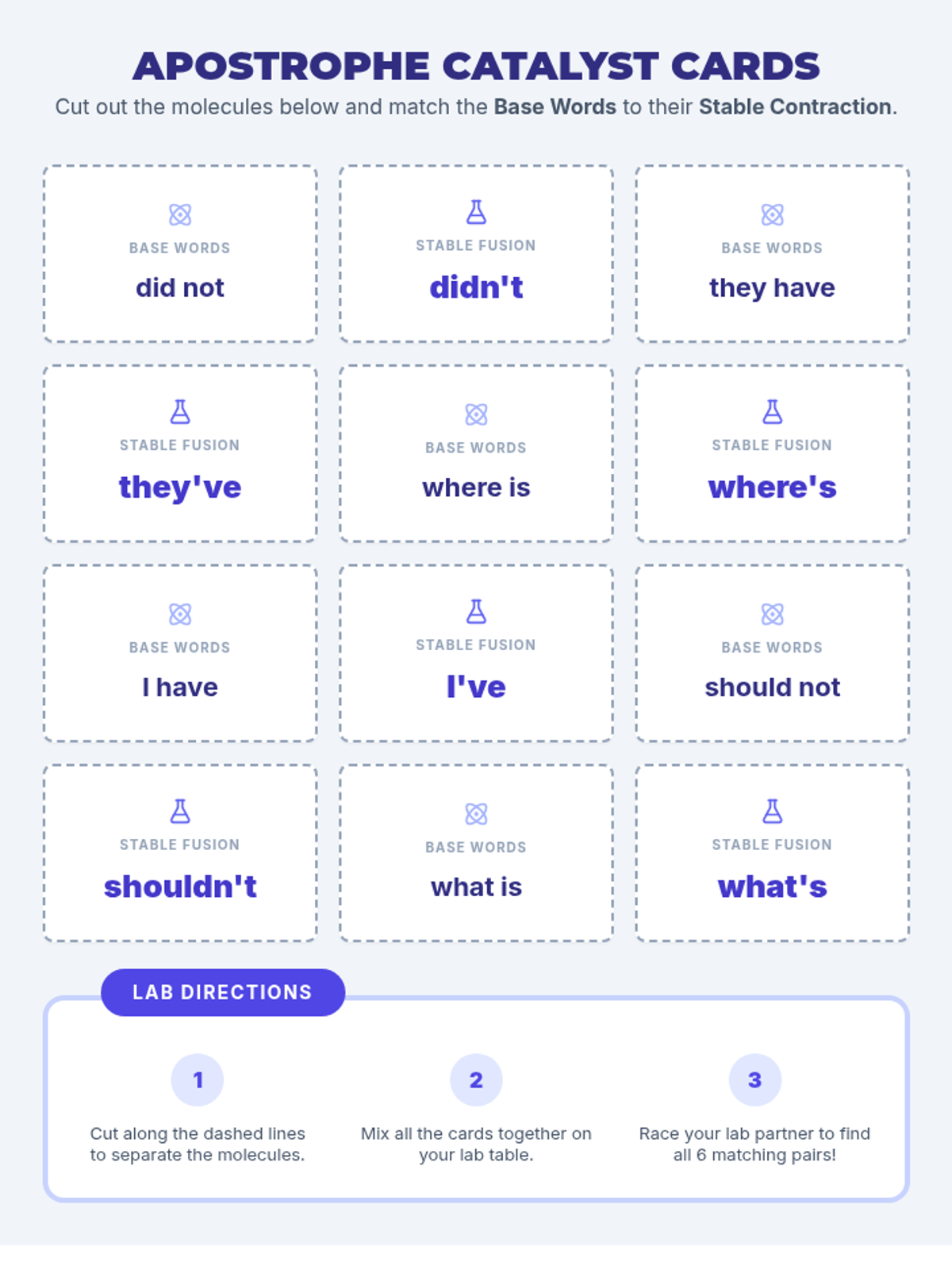
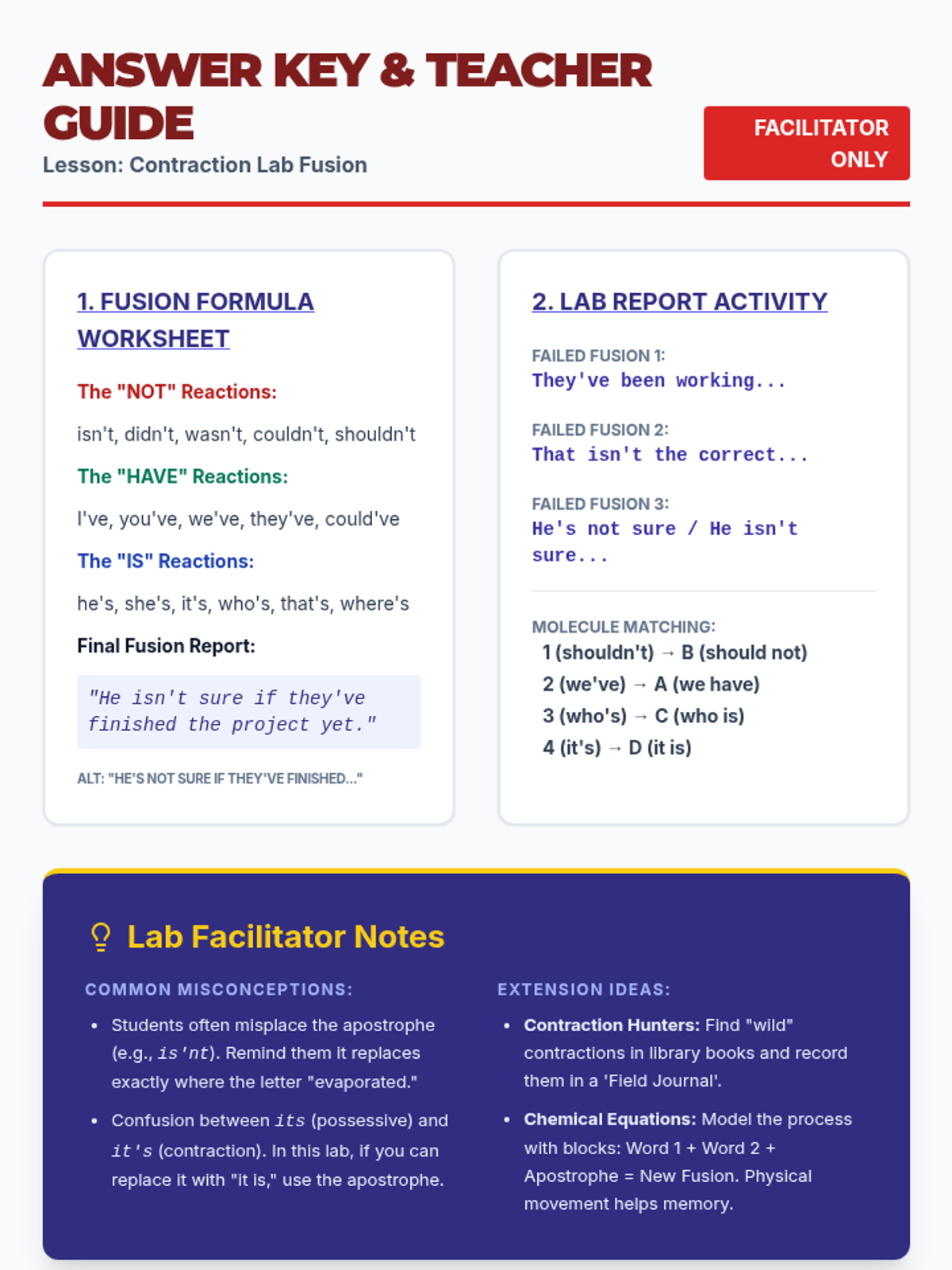
A high-energy, science-themed lesson where students become 'Word Chemists' to fuse words together using the power of the apostrophe. Focuses on contractions formed with 'not', 'have', and 'is'.
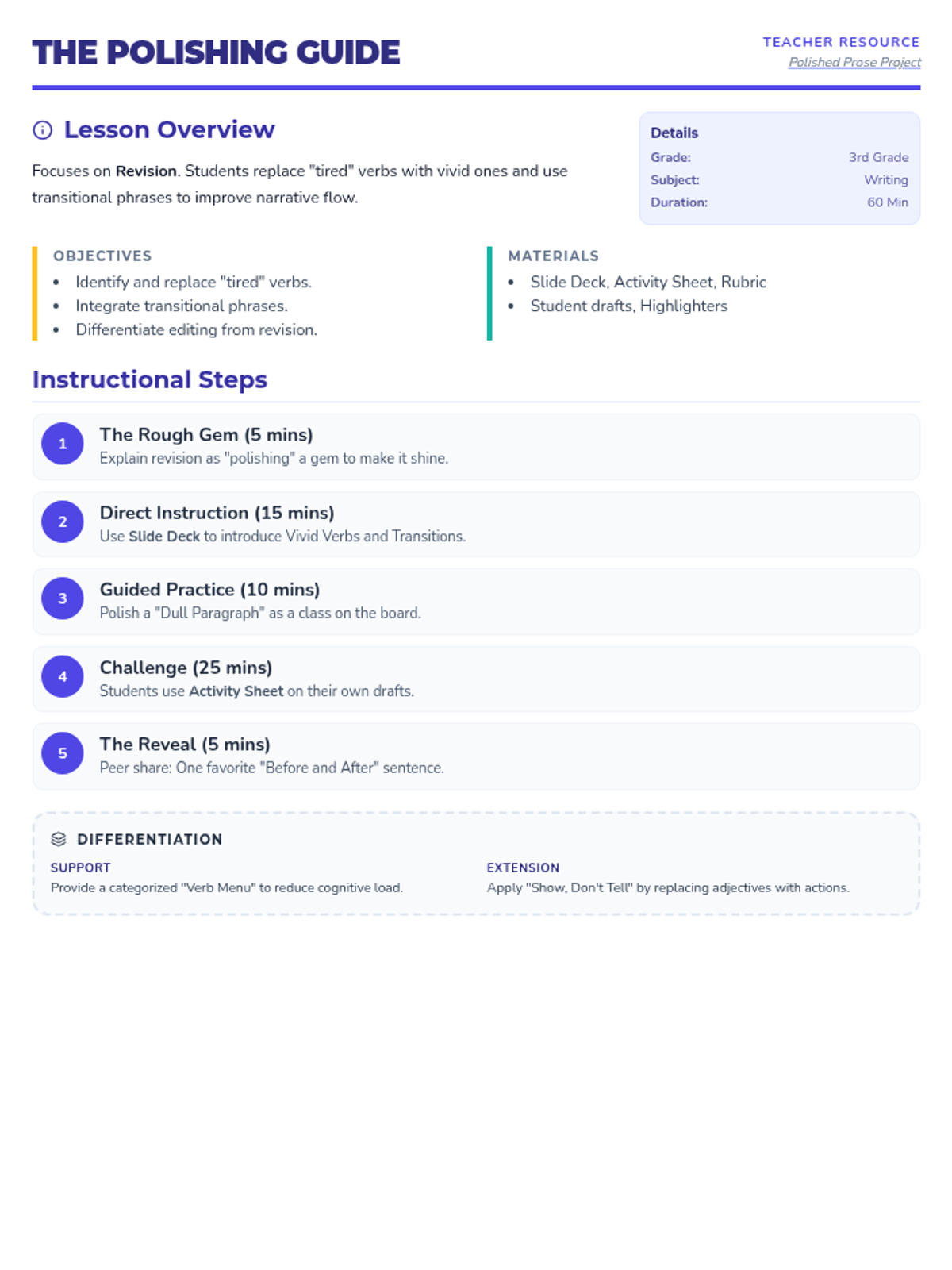
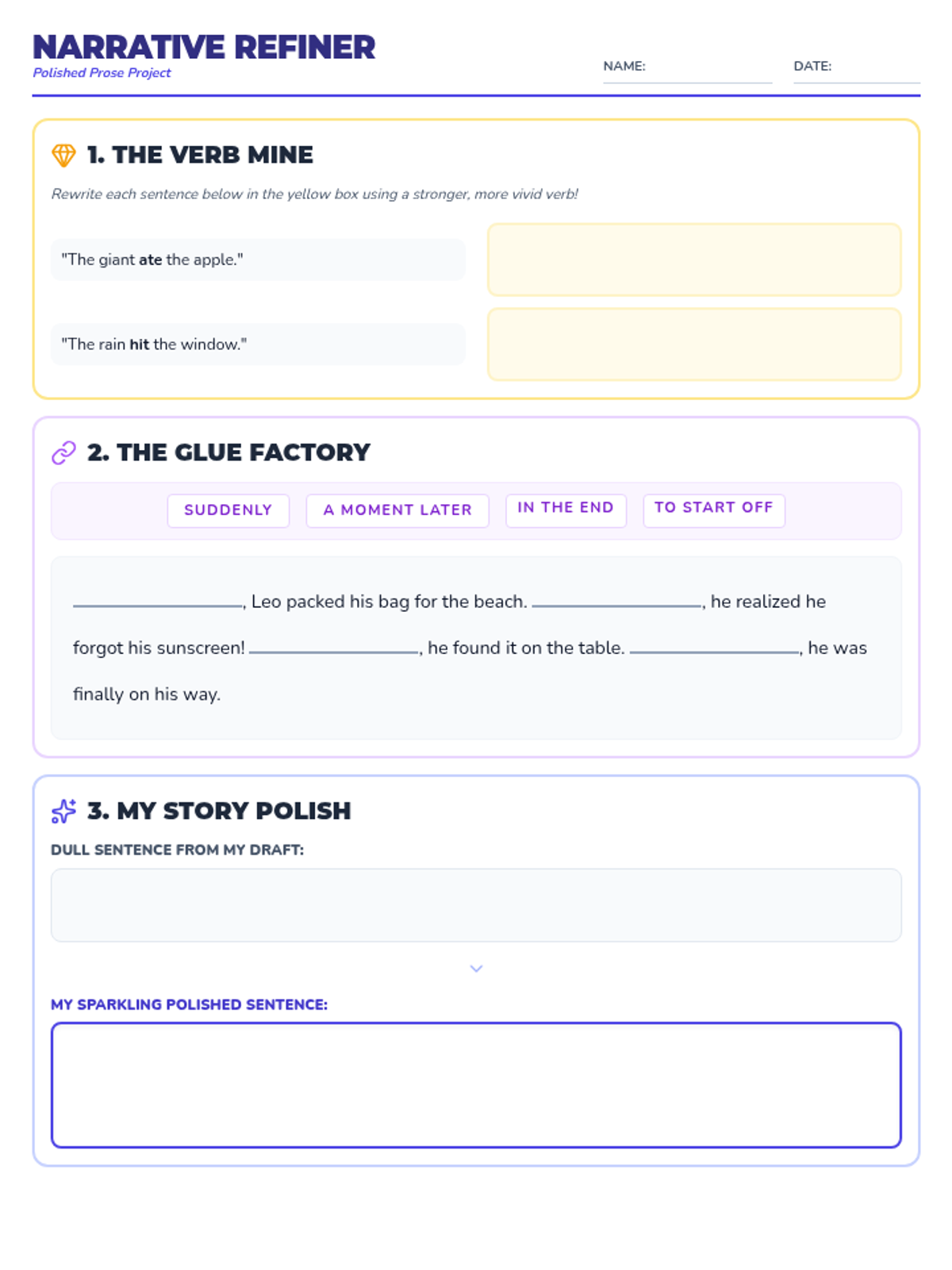
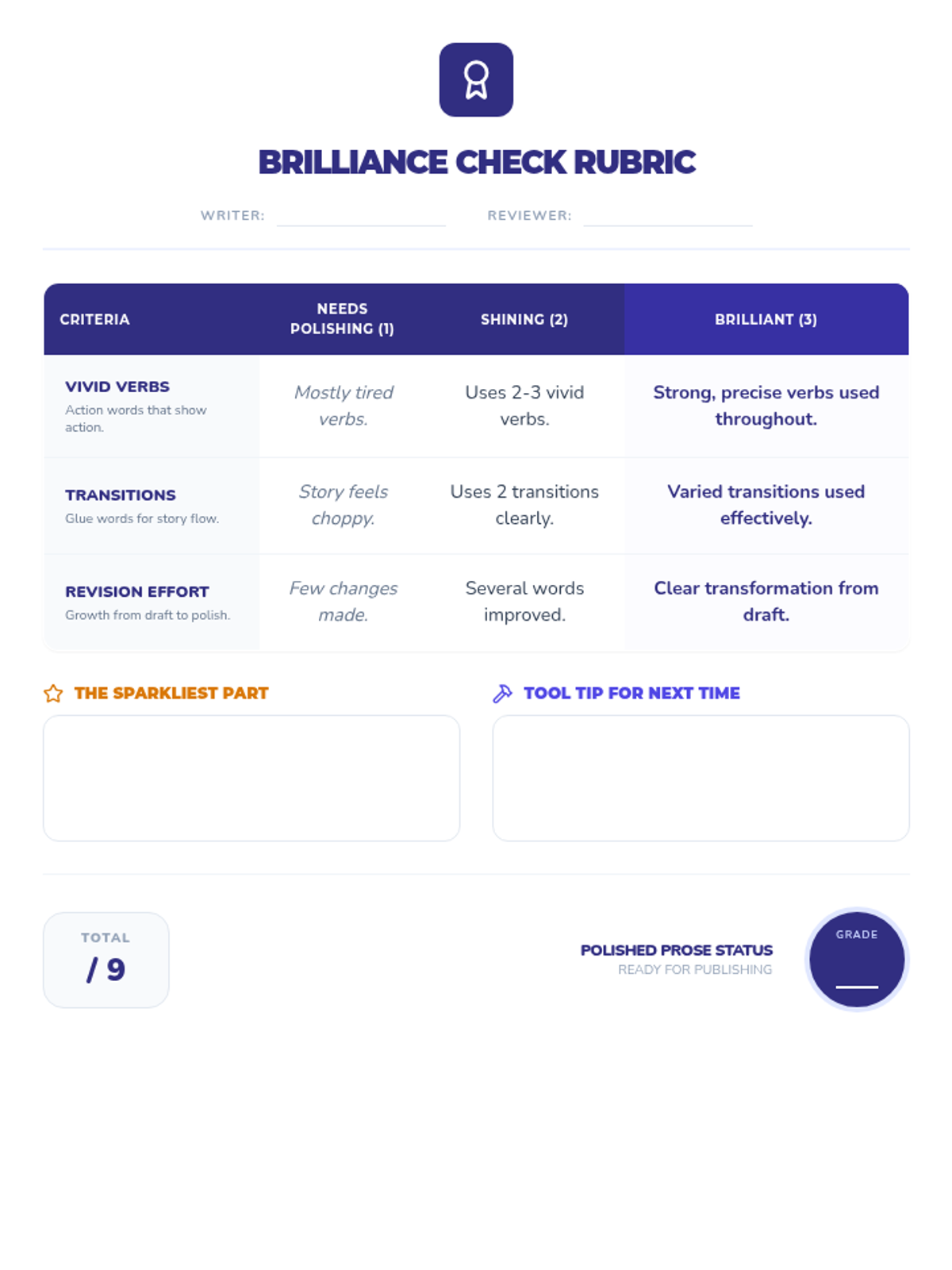
In this lesson, third-grade students learn to 'polish' their narrative drafts into sparkling stories. They focus on replacing 'tired' verbs with vivid ones and using transitional phrases to create a smooth flow for their readers.
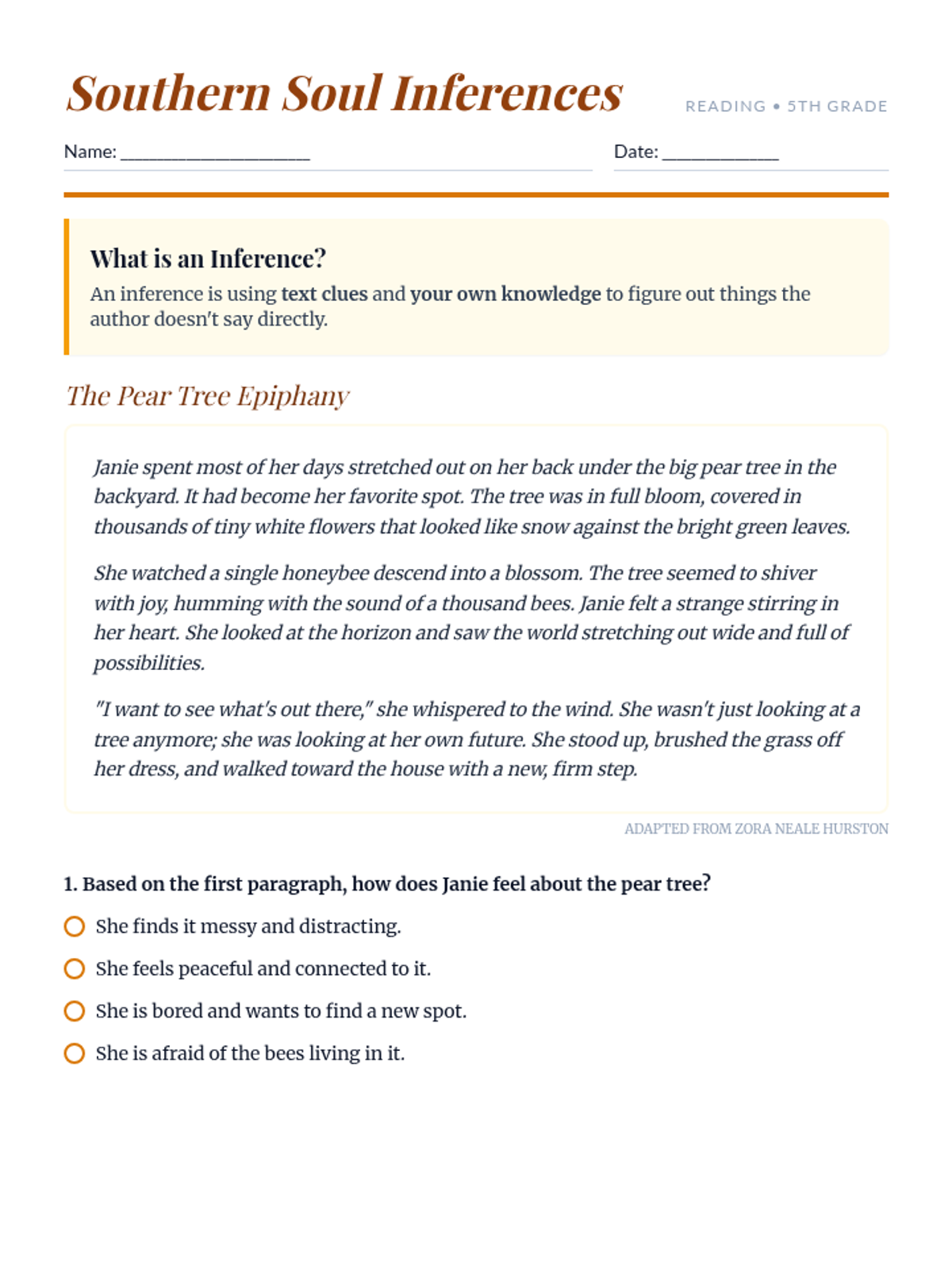
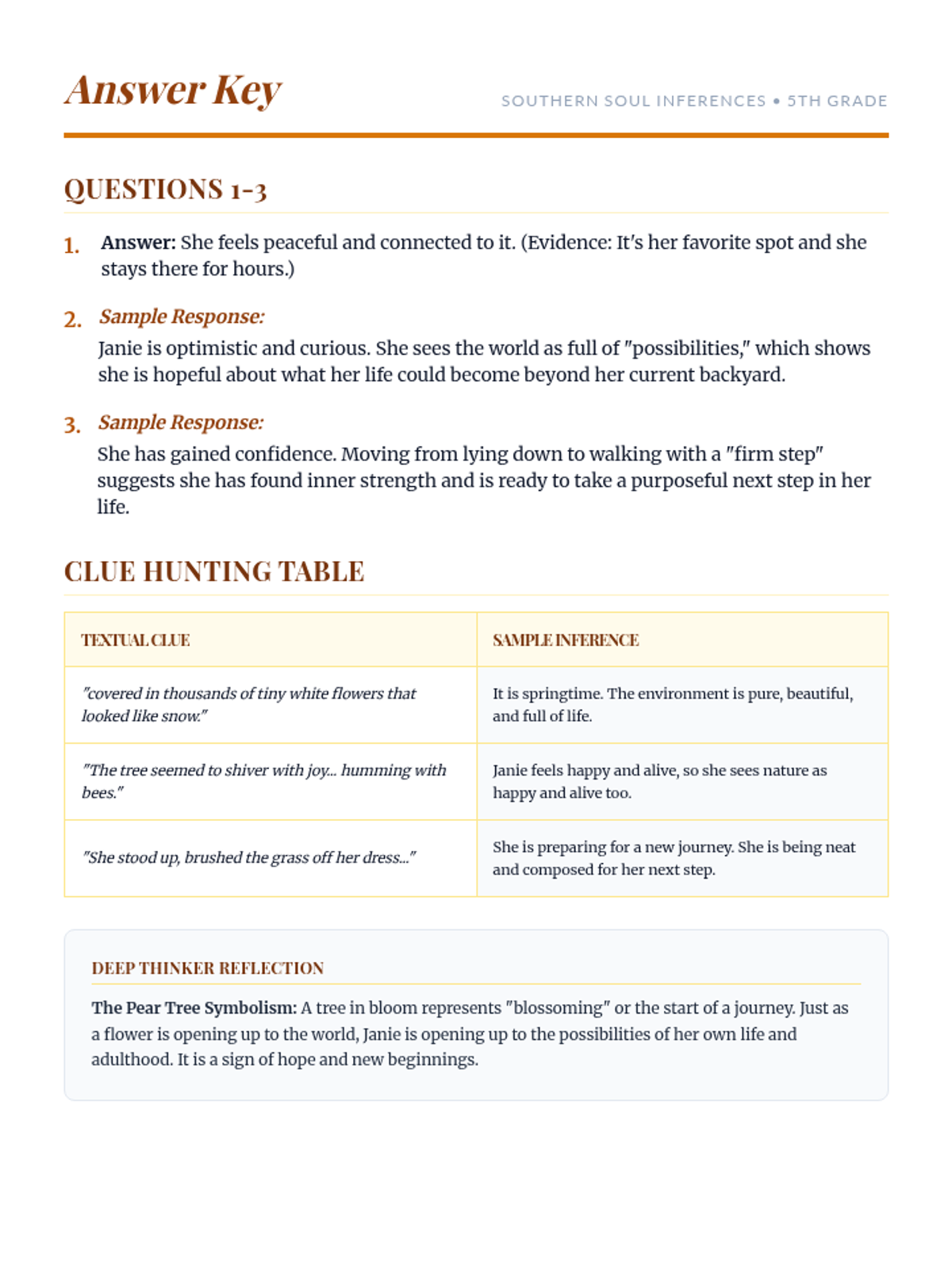
A reading comprehension lesson focusing on making inferences using adapted excerpts from 'Their Eyes Were Watching God'. Students will practice identifying textual evidence to support conclusions about Janie's feelings and growth.
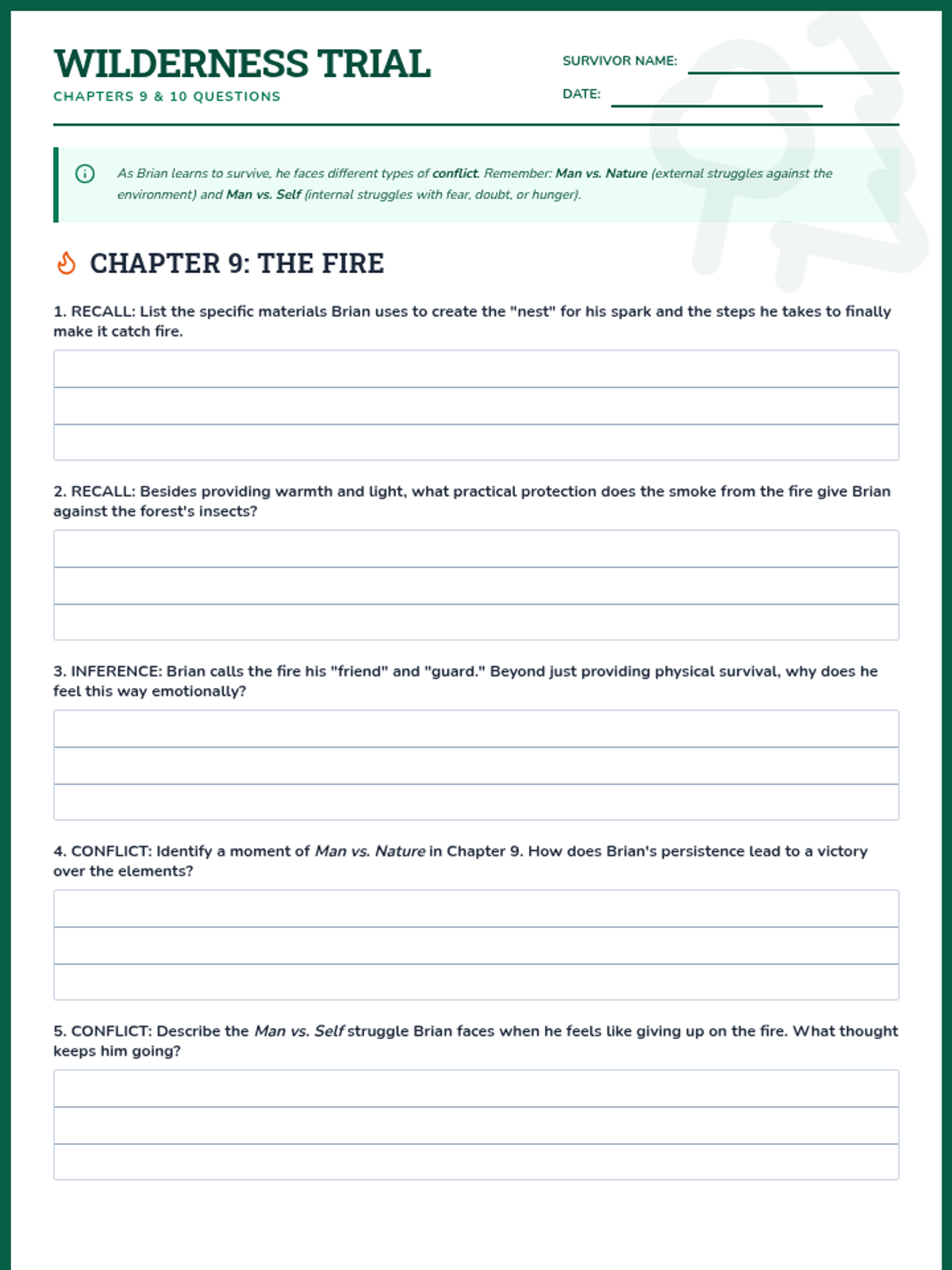
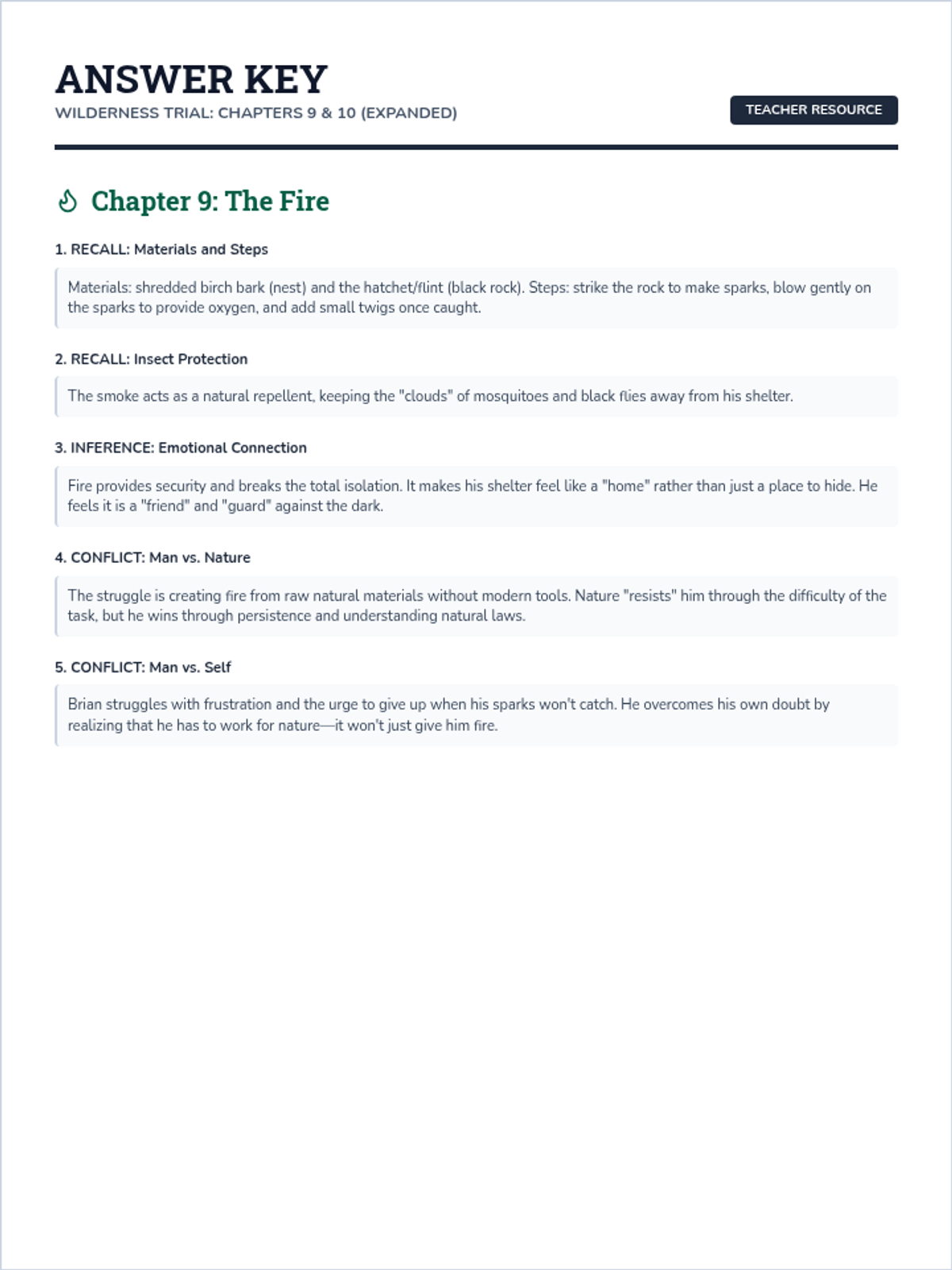
A focused study on Chapters 9 and 10 of Gary Paulsen's 'Hatchet,' focusing on Brian's discovery of fire and turtle eggs, emphasizing recall, inference, and types of literary conflict.
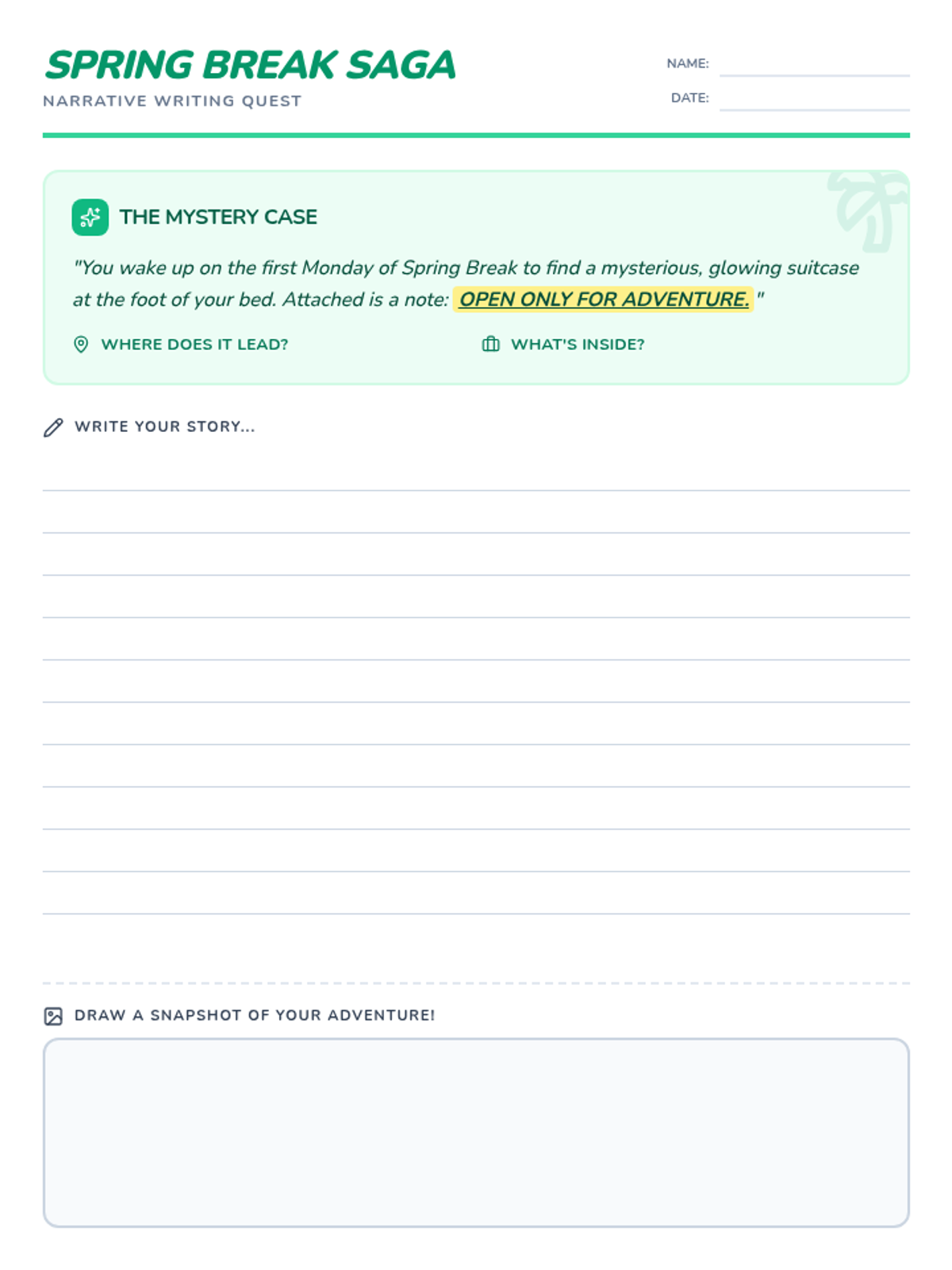
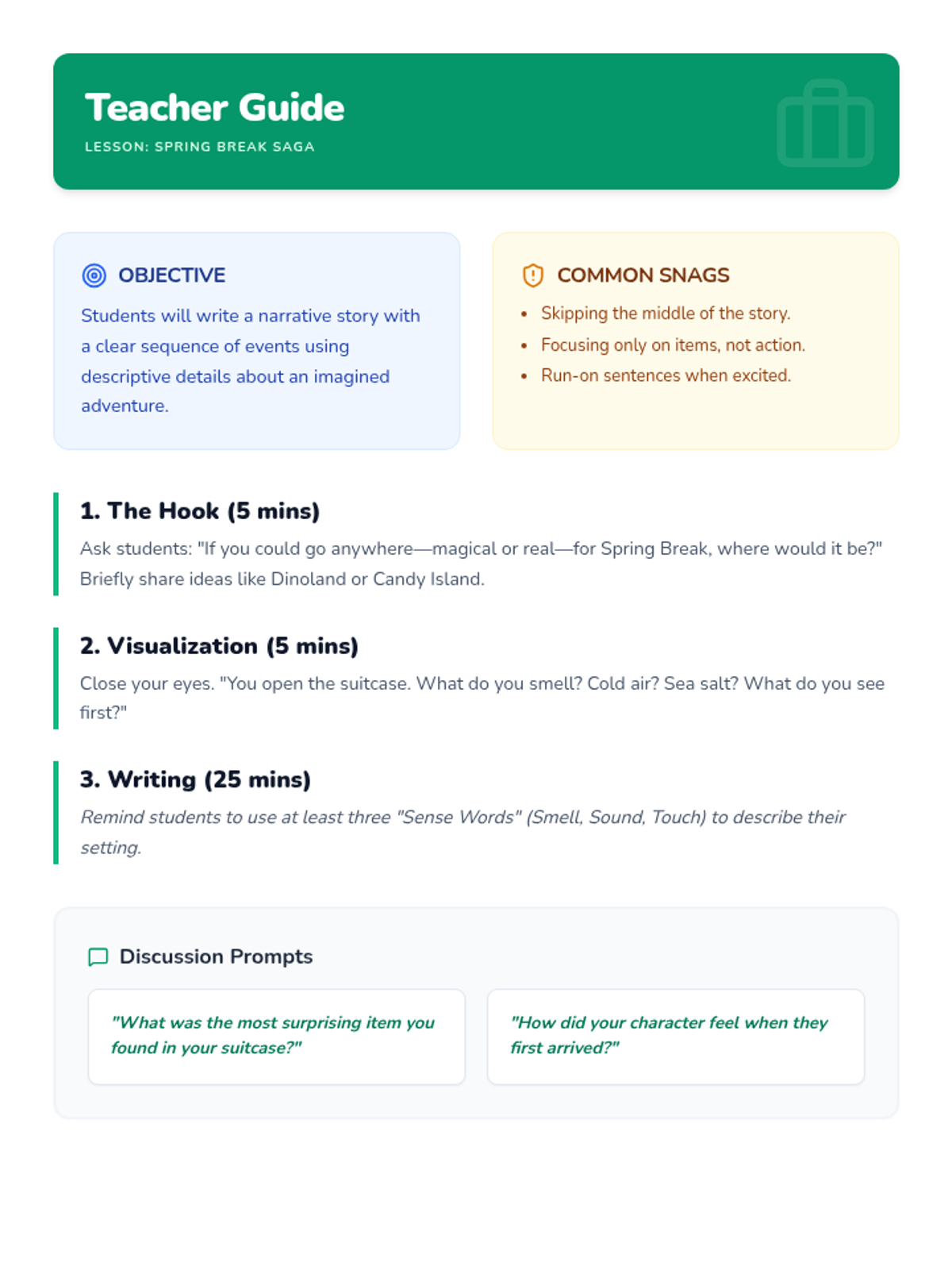
A creative writing lesson designed to help third graders develop narrative skills by imagining an extraordinary spring break adventure.
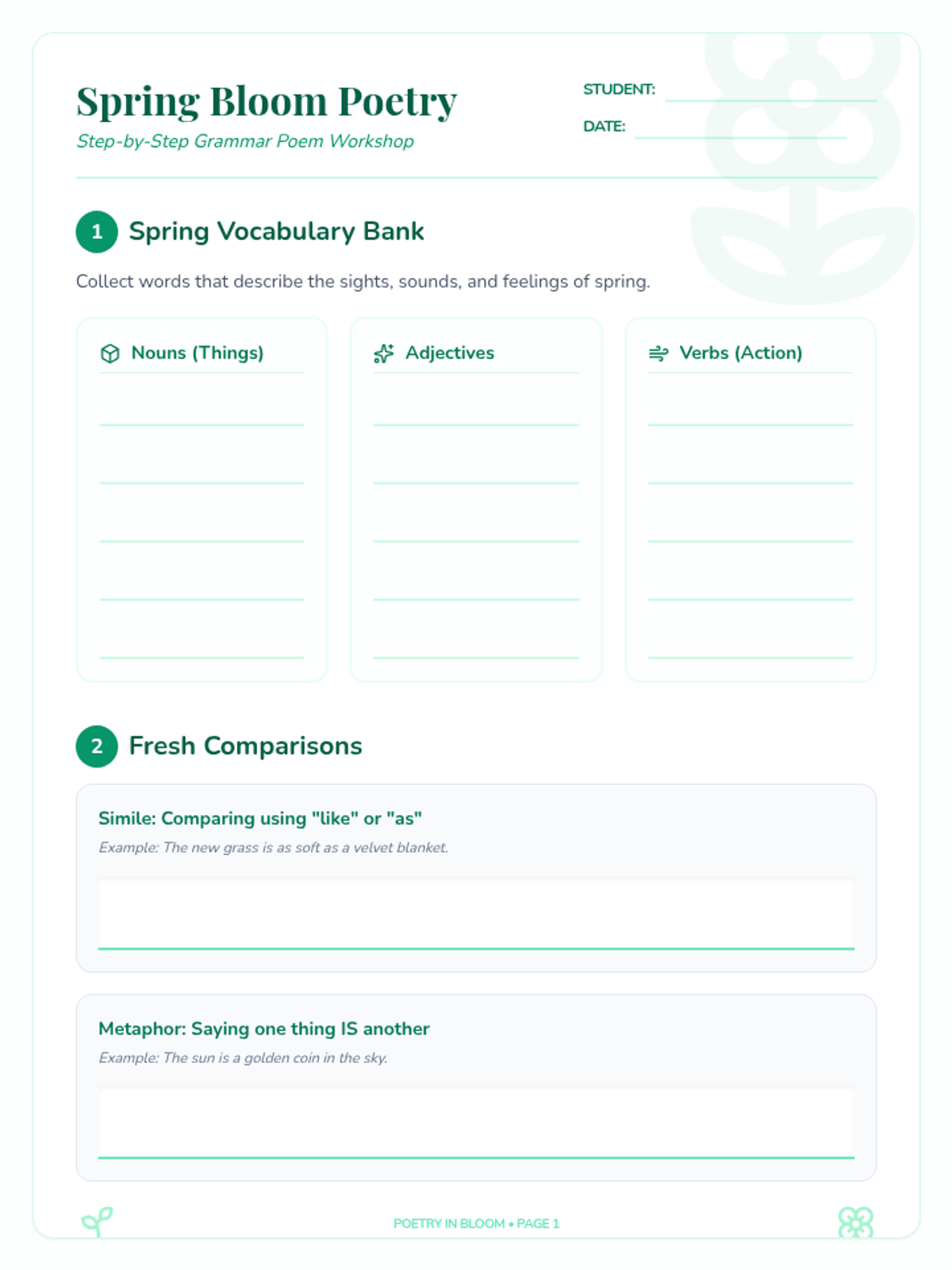
A guided poetry workshop where students use grammar concepts and figurative language to celebrate the arrival of spring.
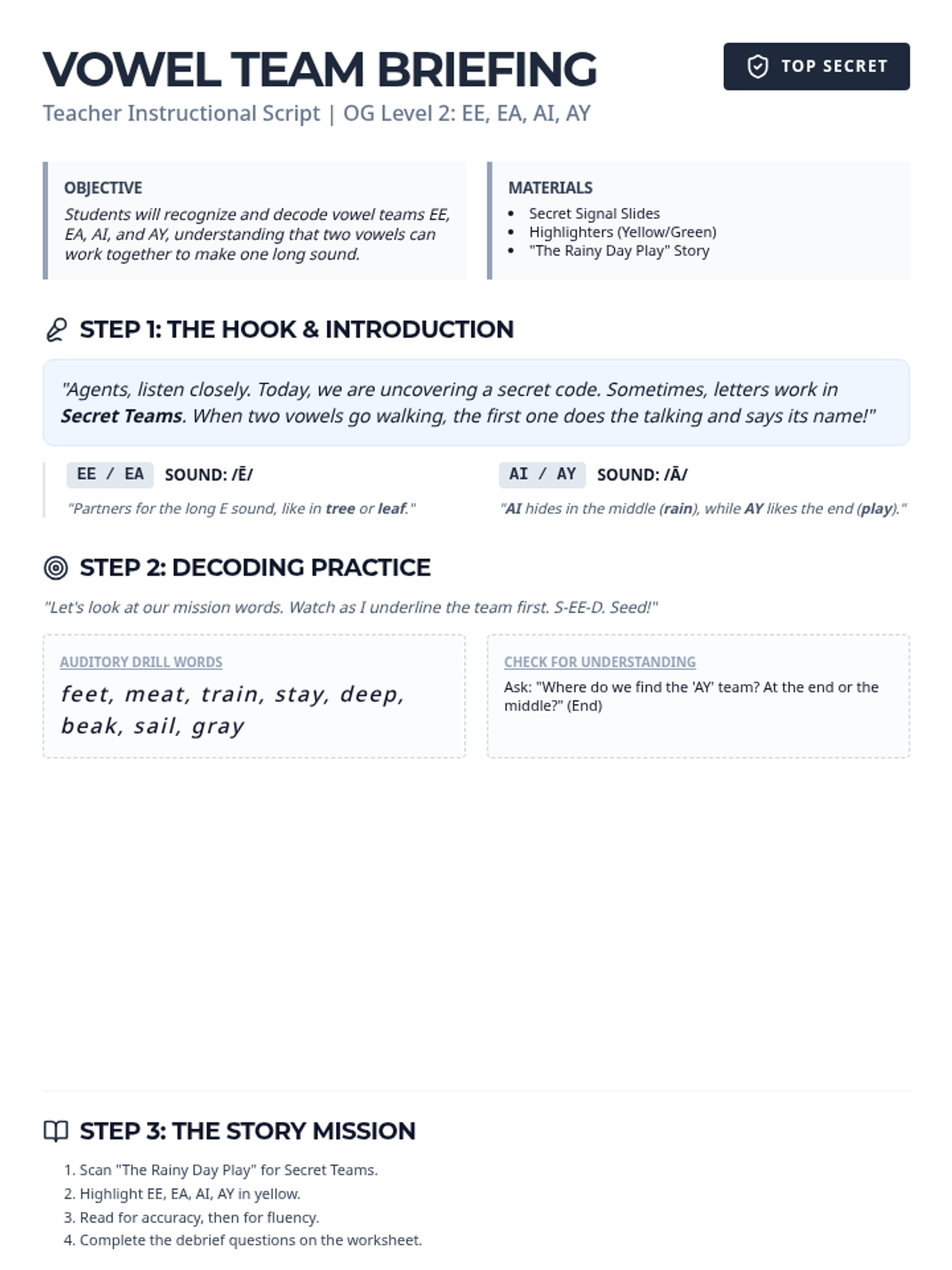
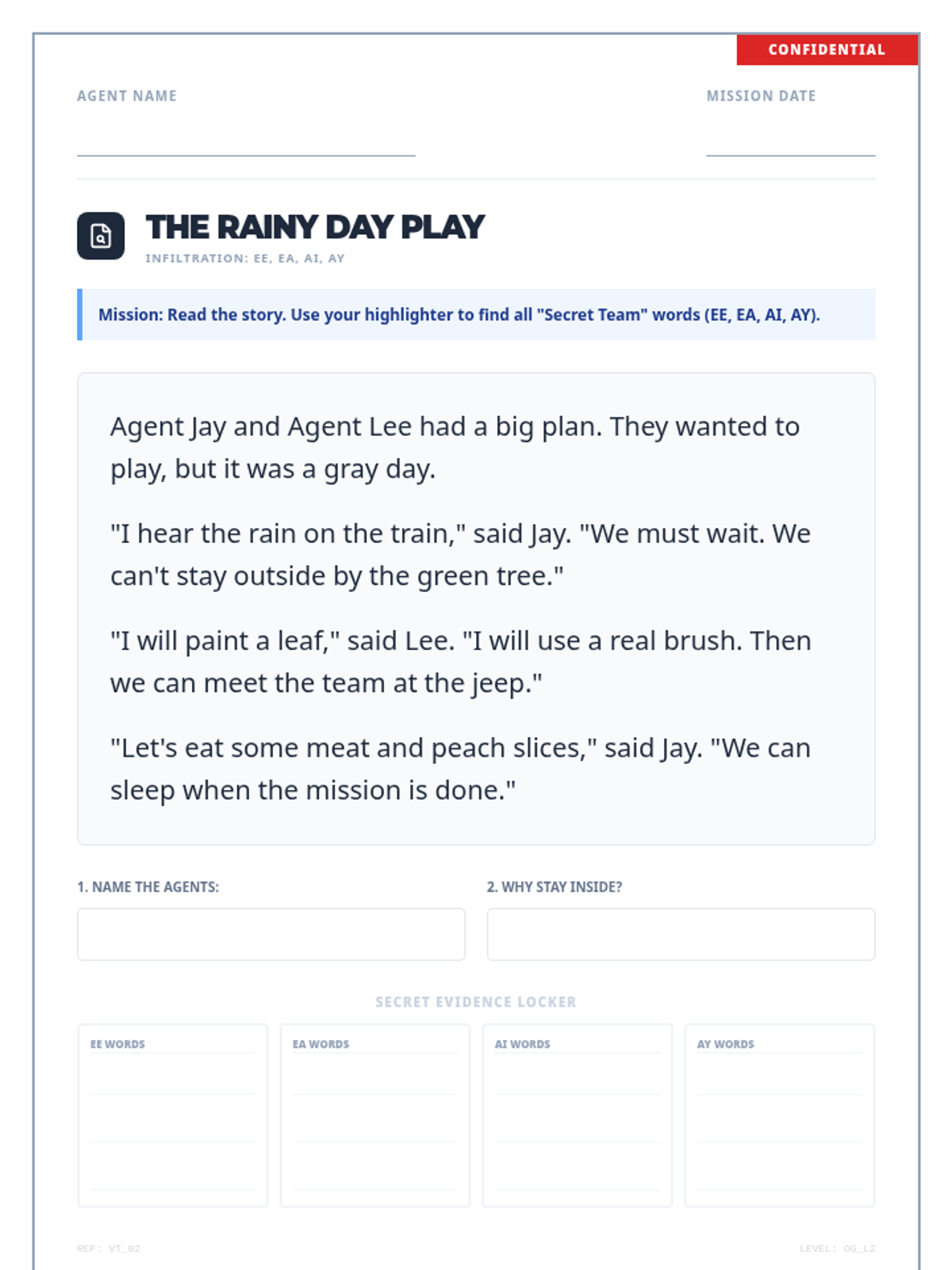
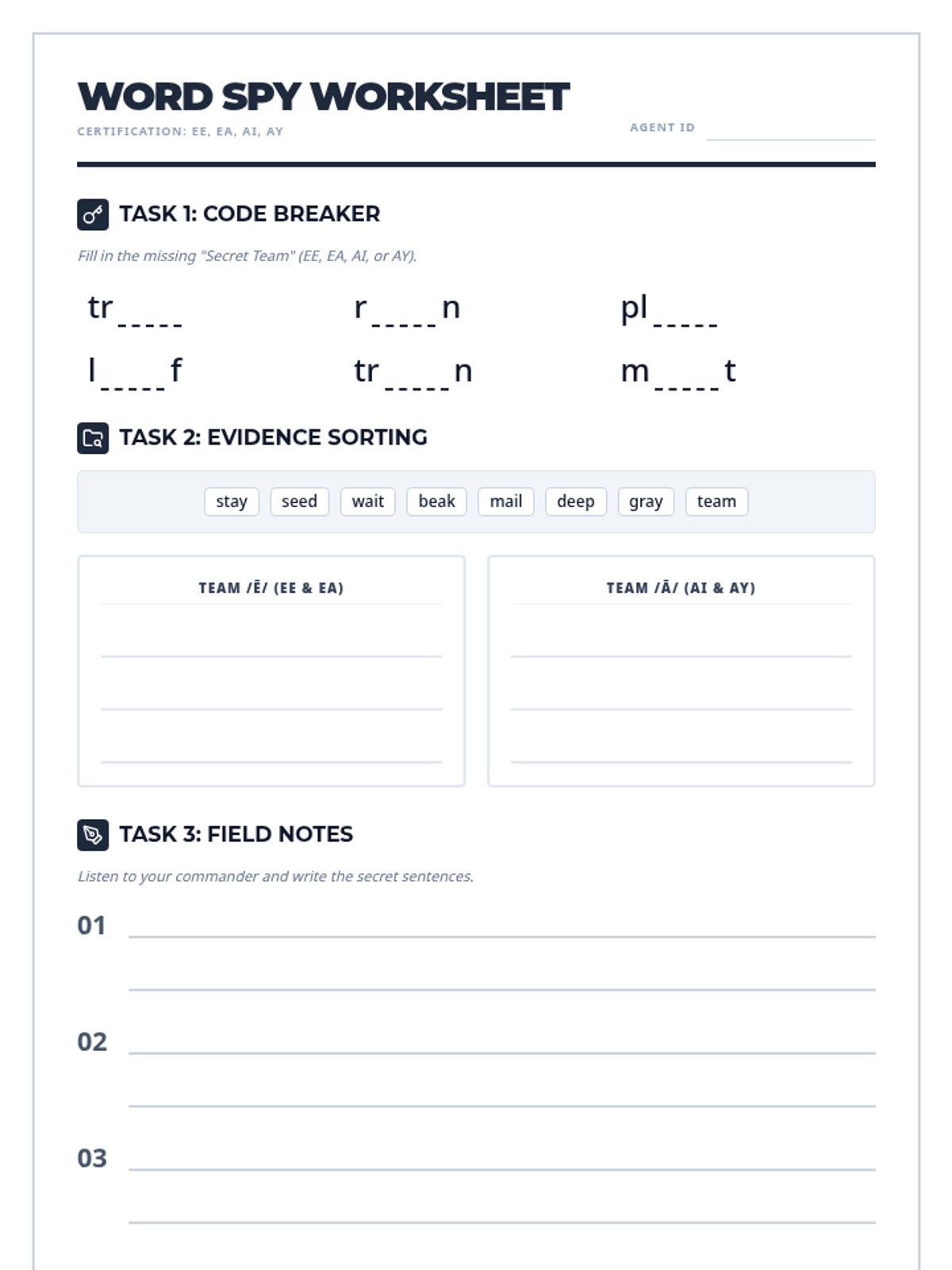
An Orton-Gillingham based introduction to Level 2 vowel teams (EE, EA, AI, AY) using a secret agent theme to engage students in decoding and encoding.
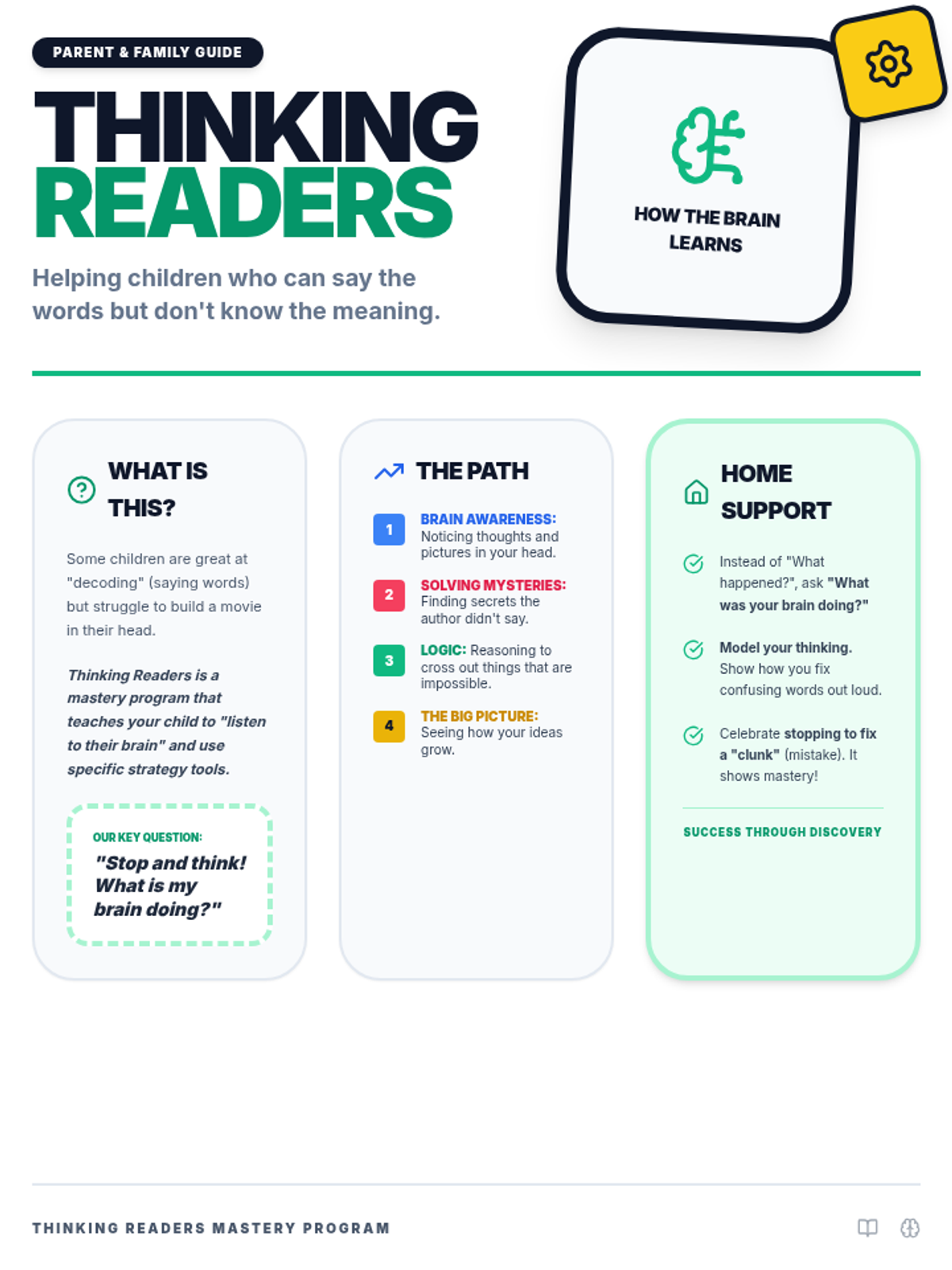
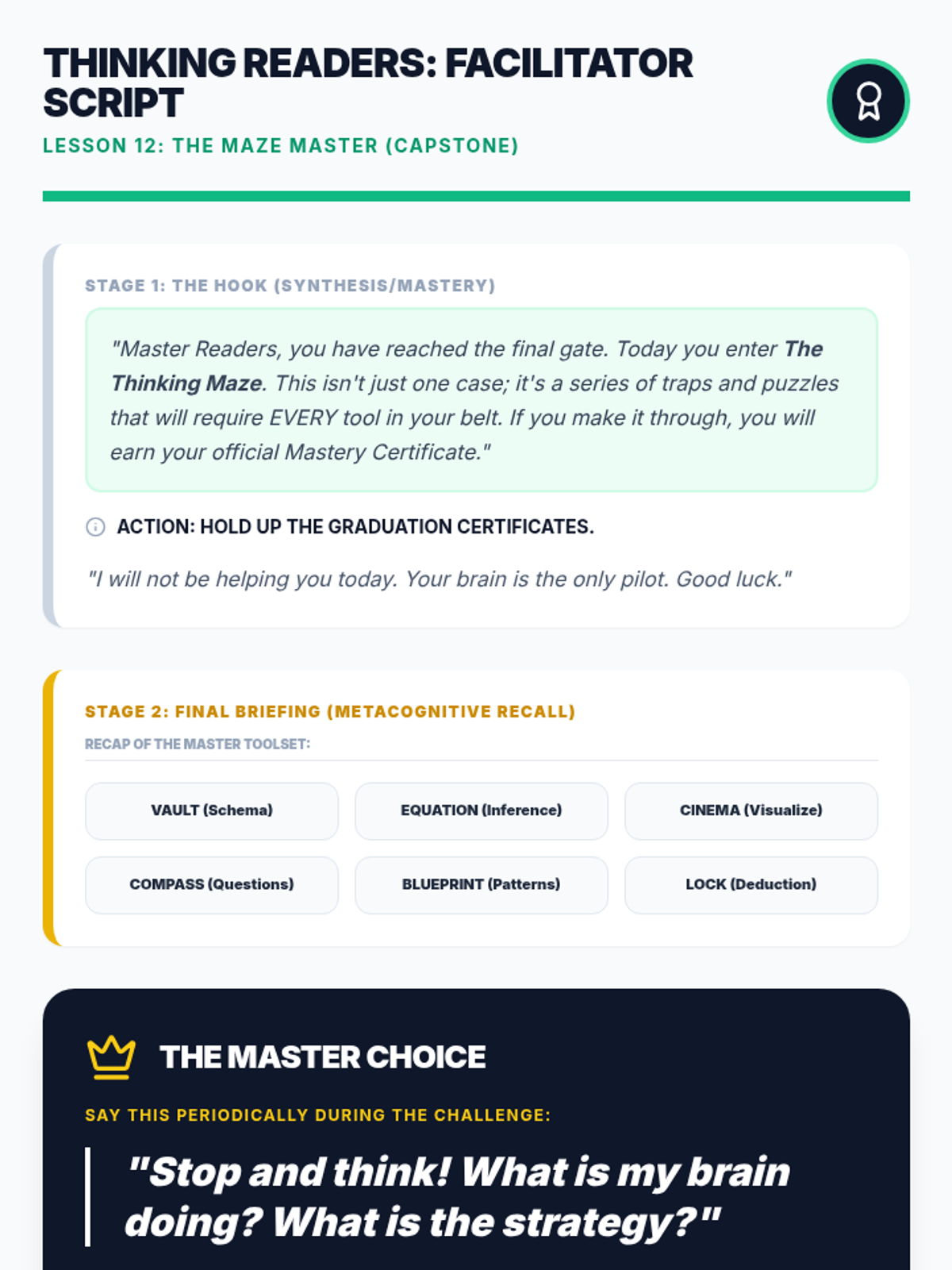
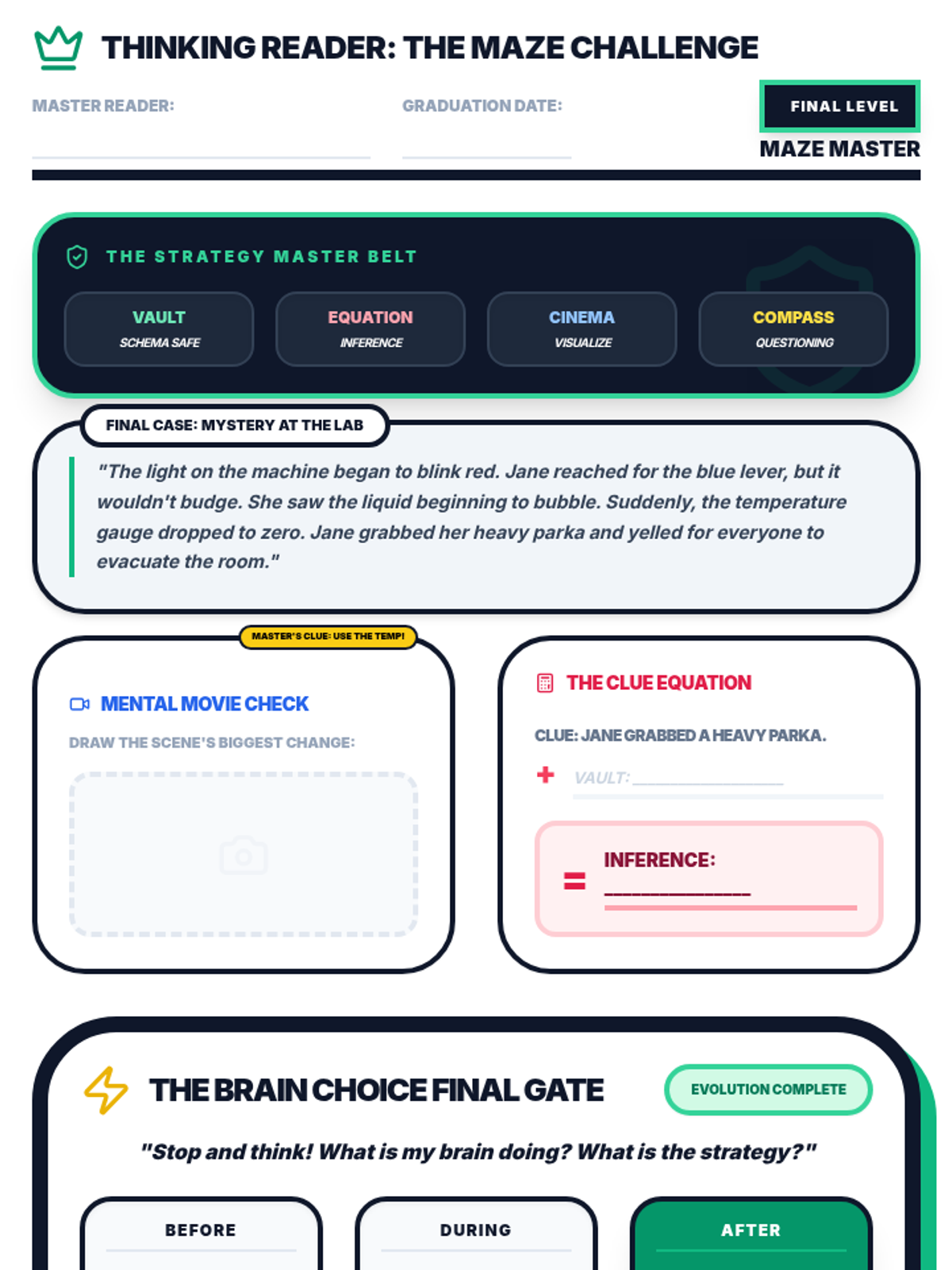
Capstone simulation. Students apply all 11 strategies to solve a complex text-based 'Maze' and earn their Thought Tracker Mastery.
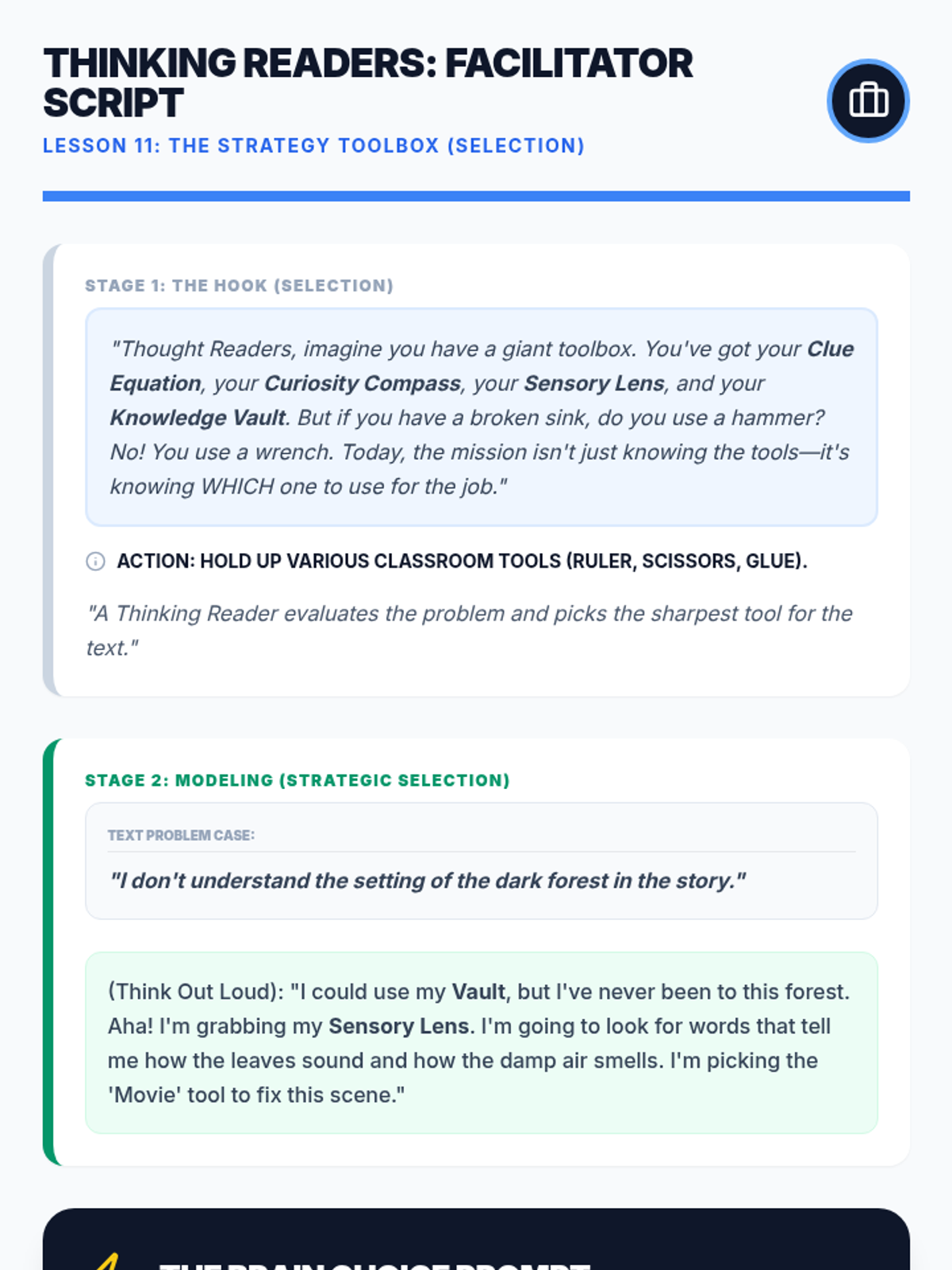
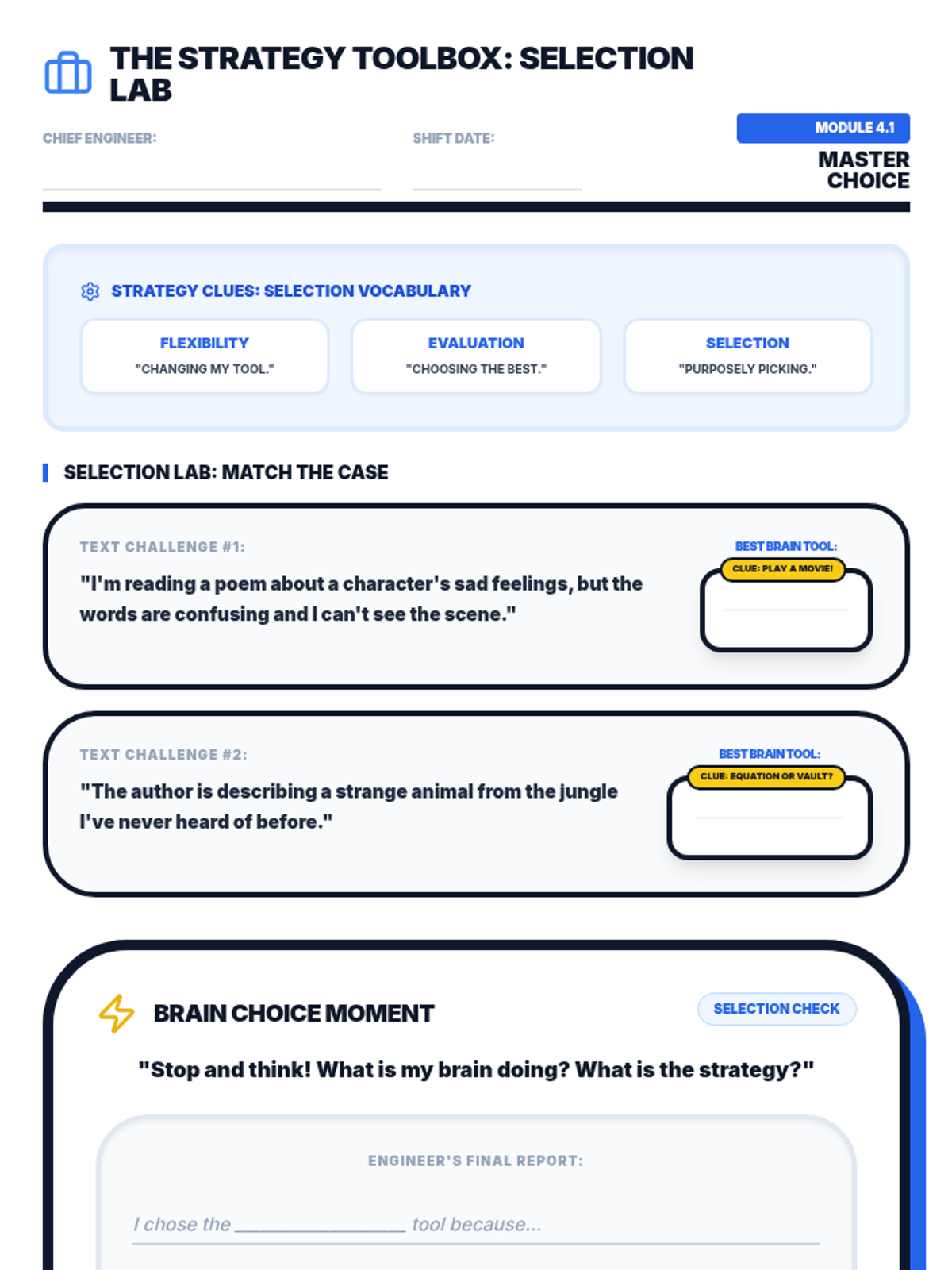
Metacognitive choice. Students practice deciding which 'Mind Tool' (Inference, Visualization, Questioning) is best for specific text challenges.
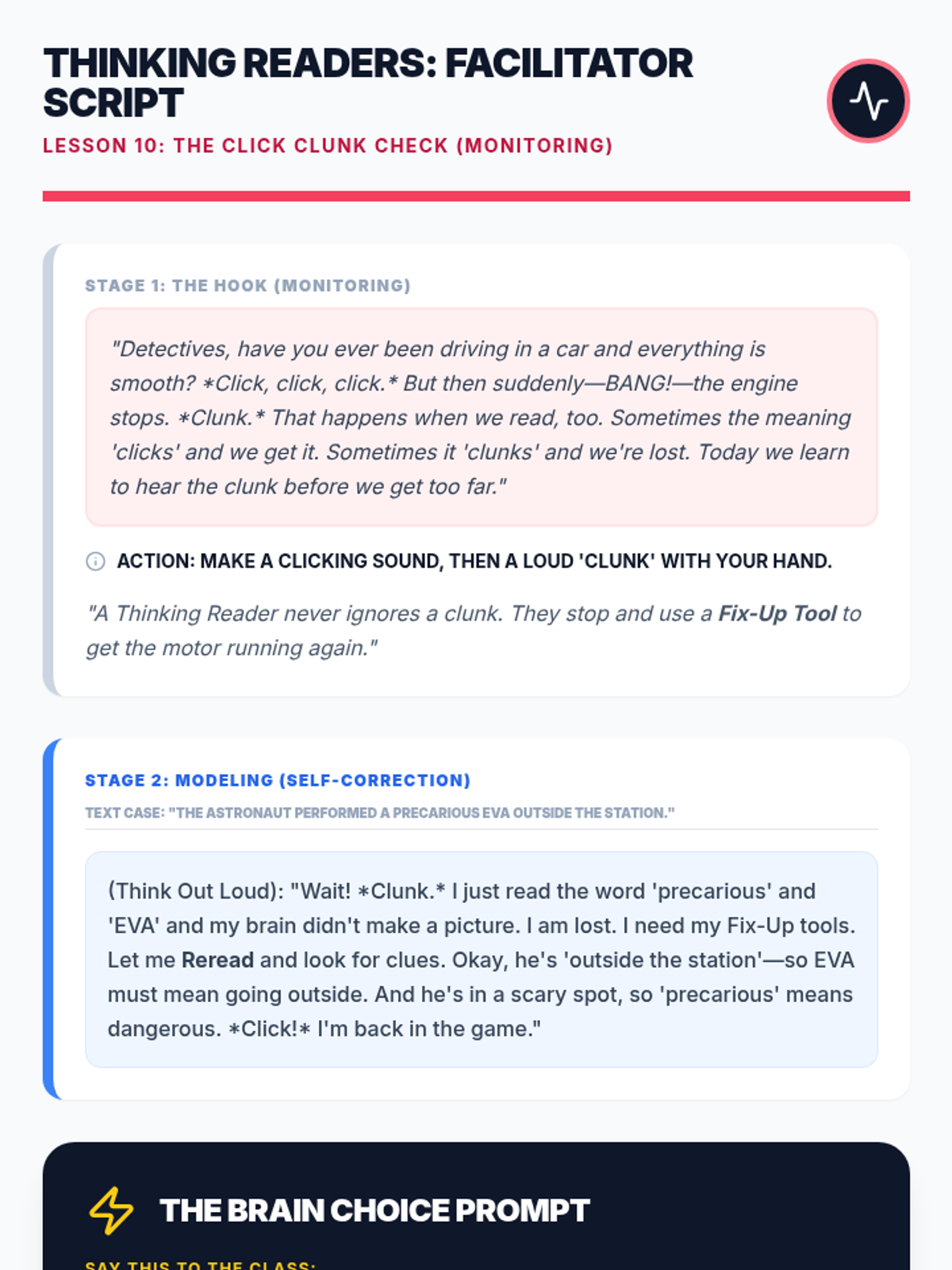
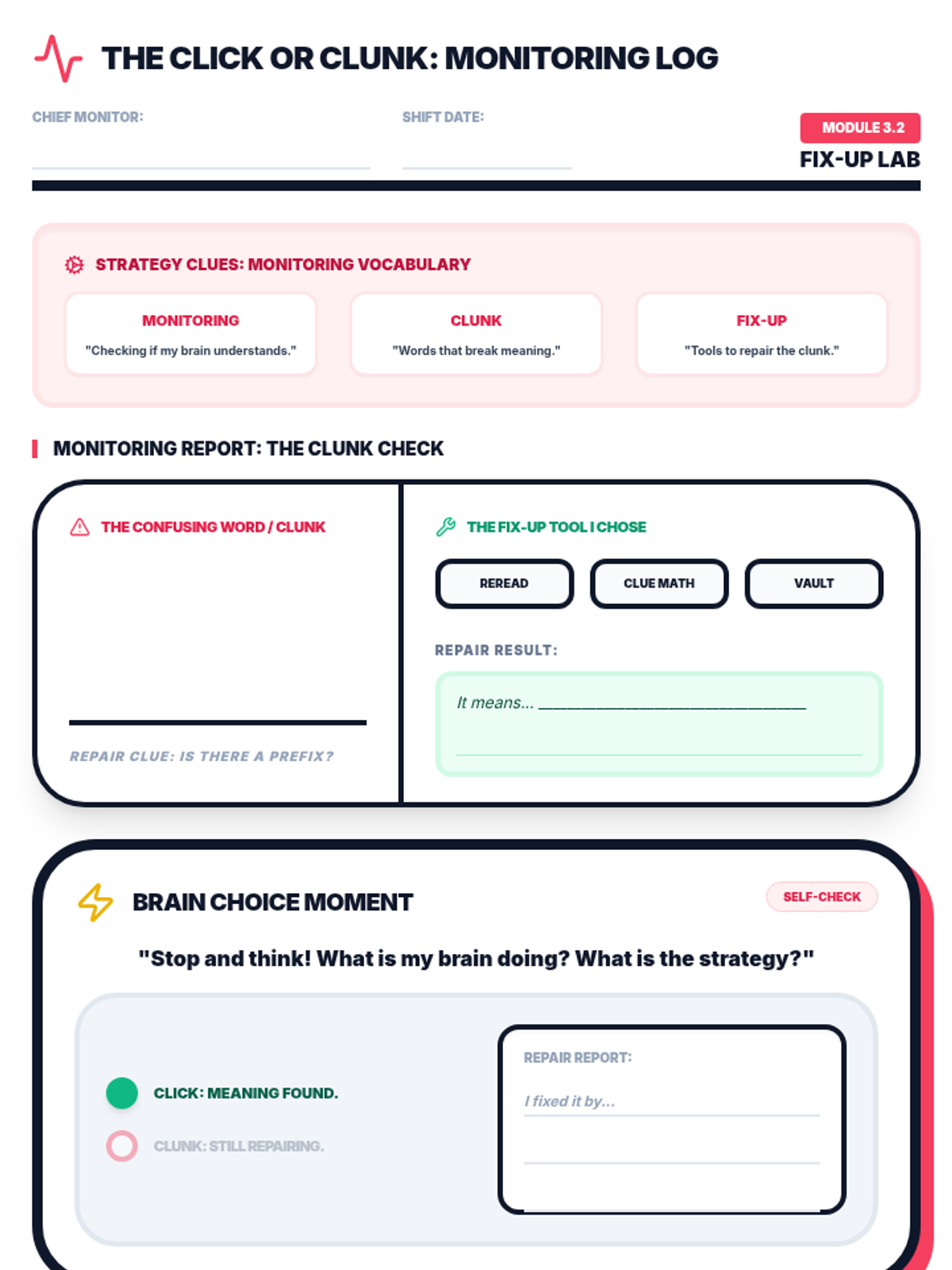
Masters the 'Click or Clunk' monitoring technique. Students learn to identify when meaning breaks down and which tool to use for a 'fix-up'.
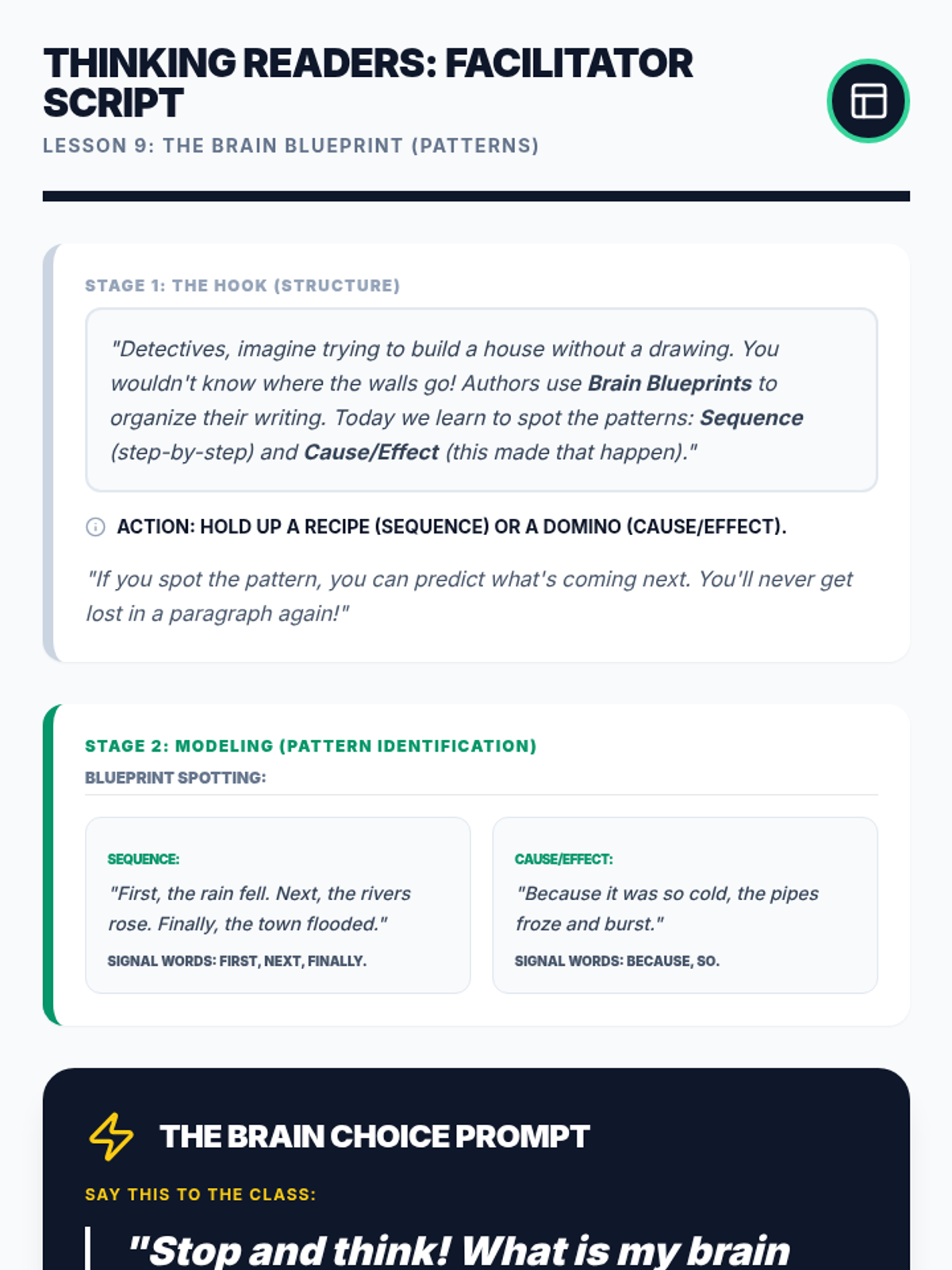
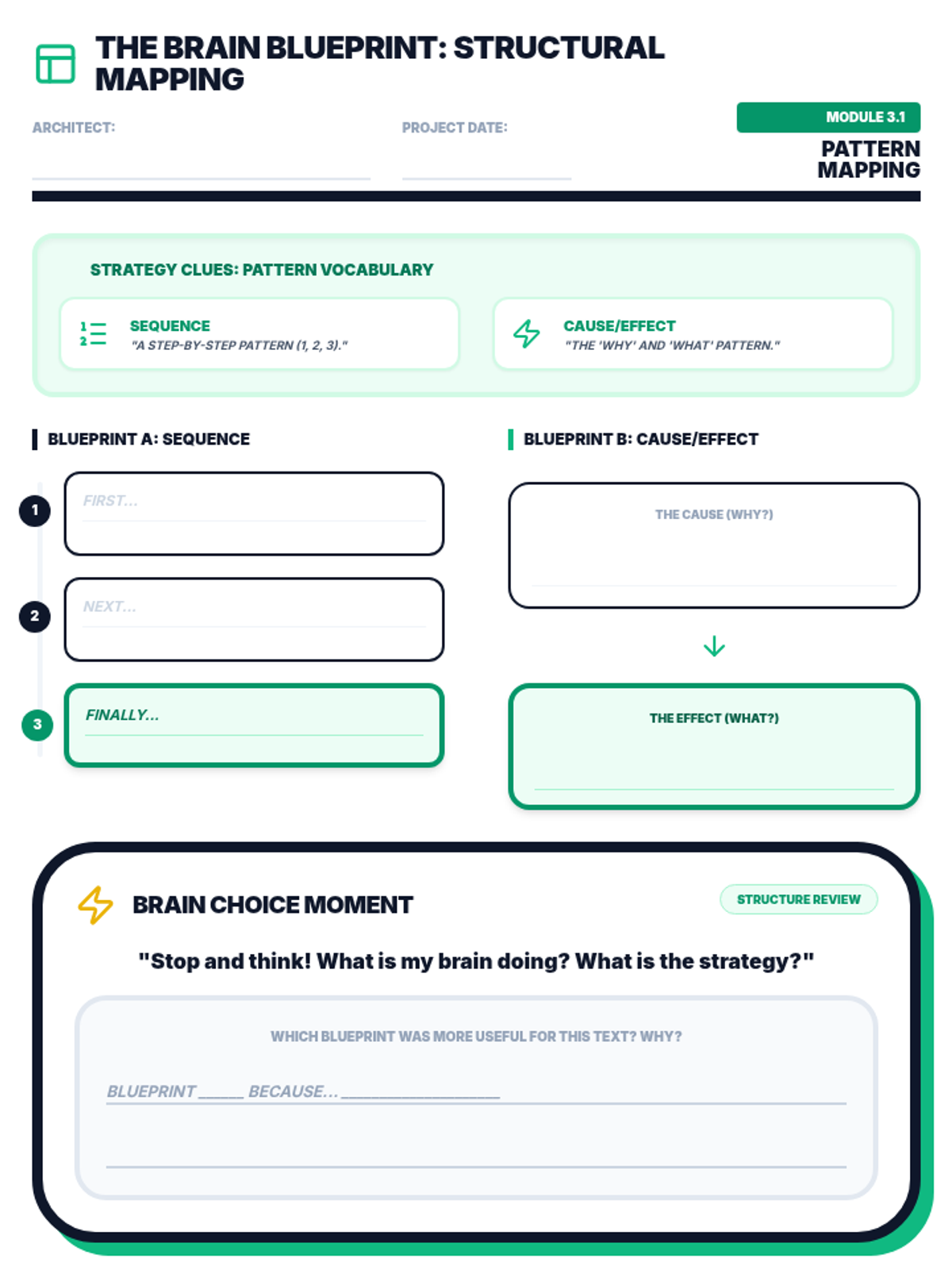
Identifies text structures (Cause/Effect, Sequence) as 'Brain Blueprints' that help organize incoming data.
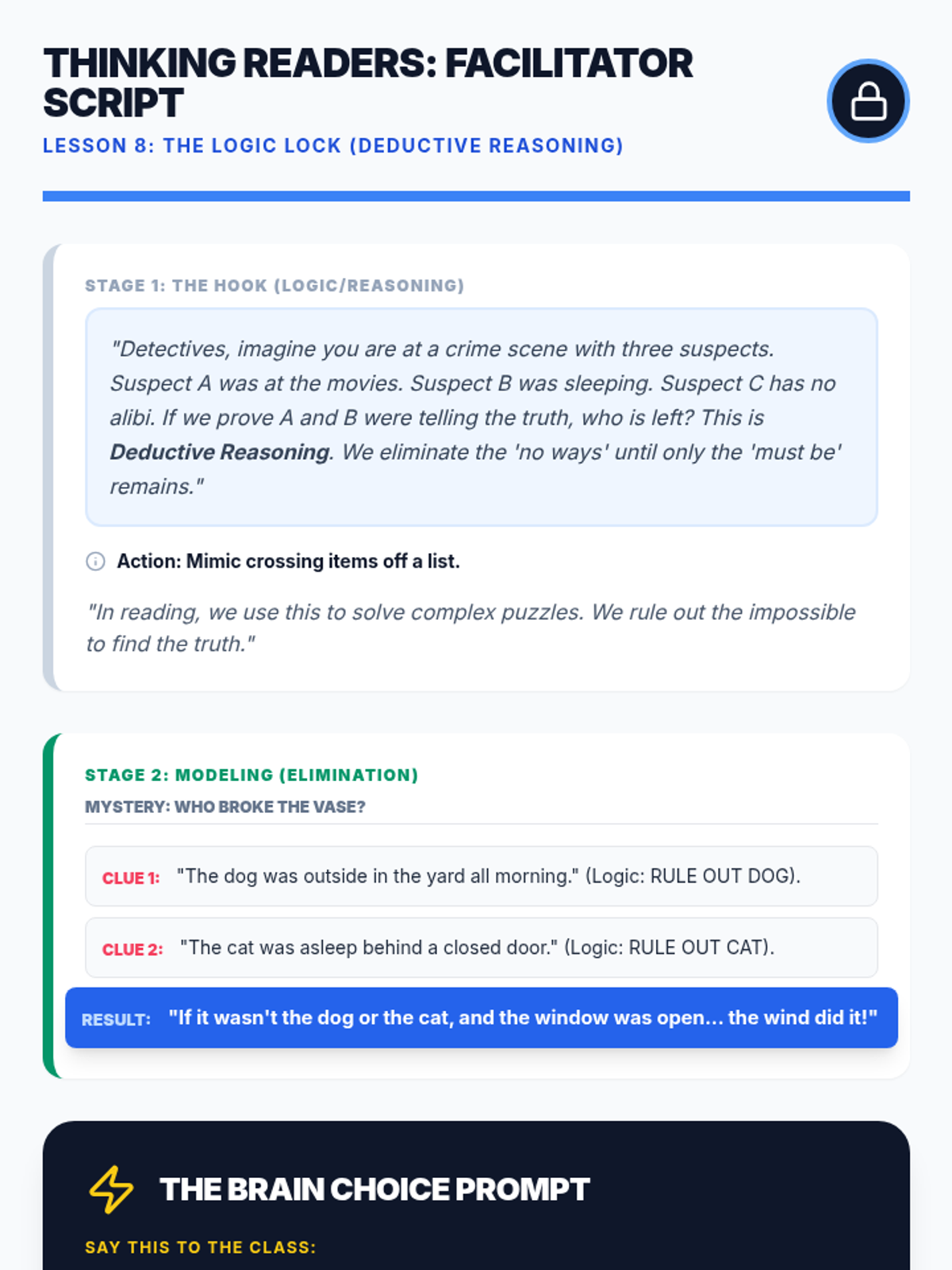
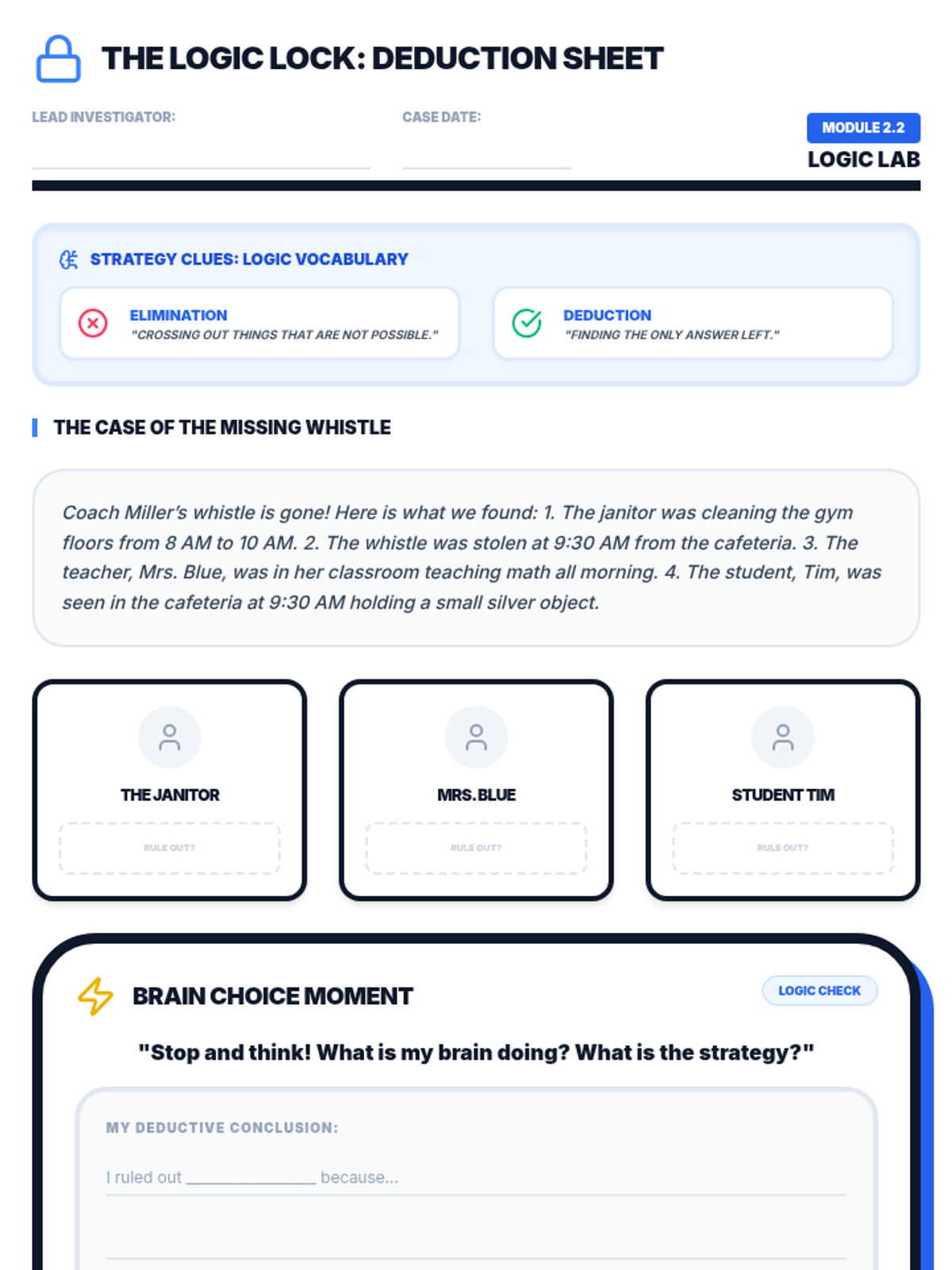
Uses Arthur Evans' deductive reasoning techniques. Students solve logic puzzles by eliminating impossibilities within a text.
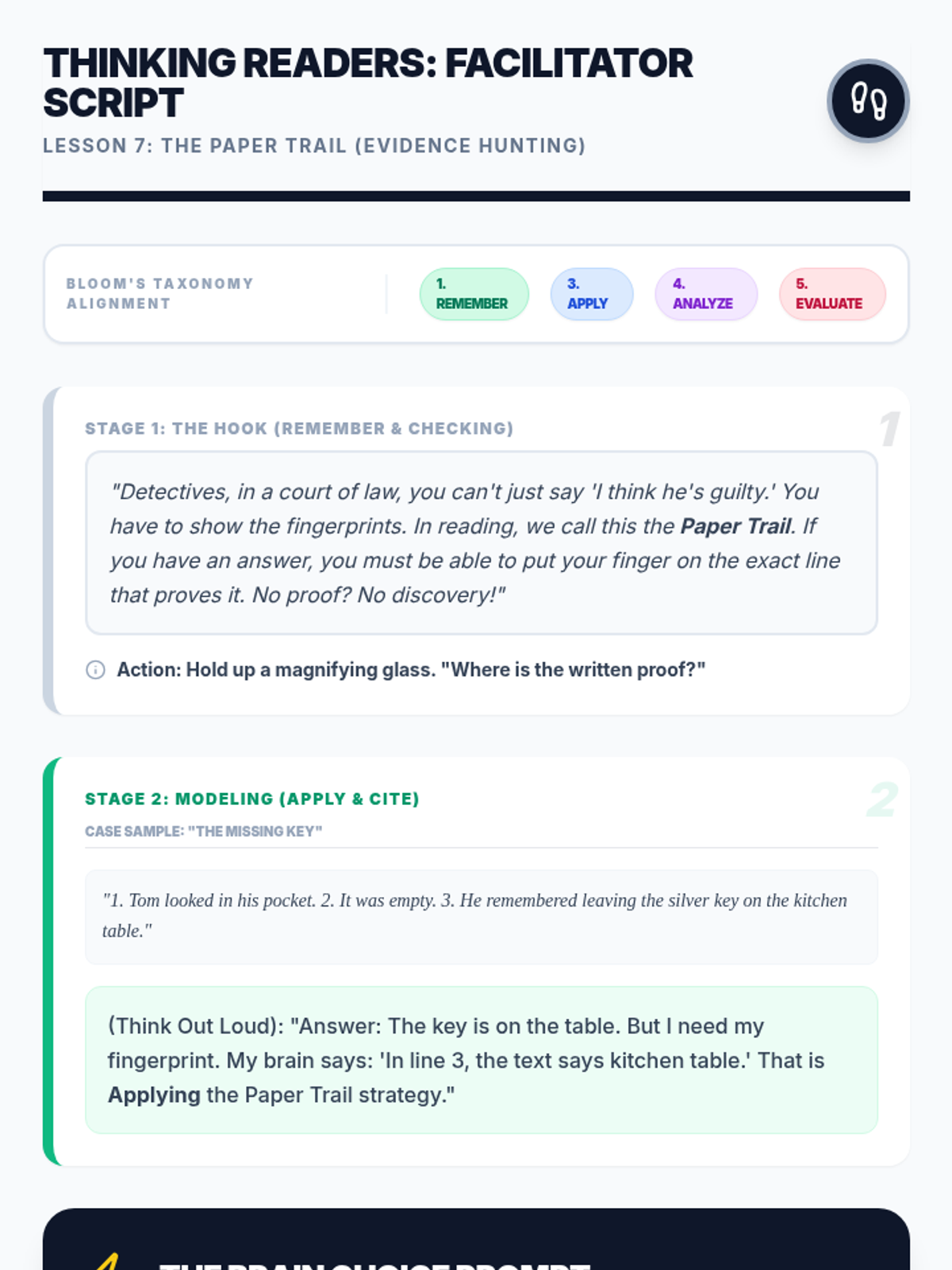
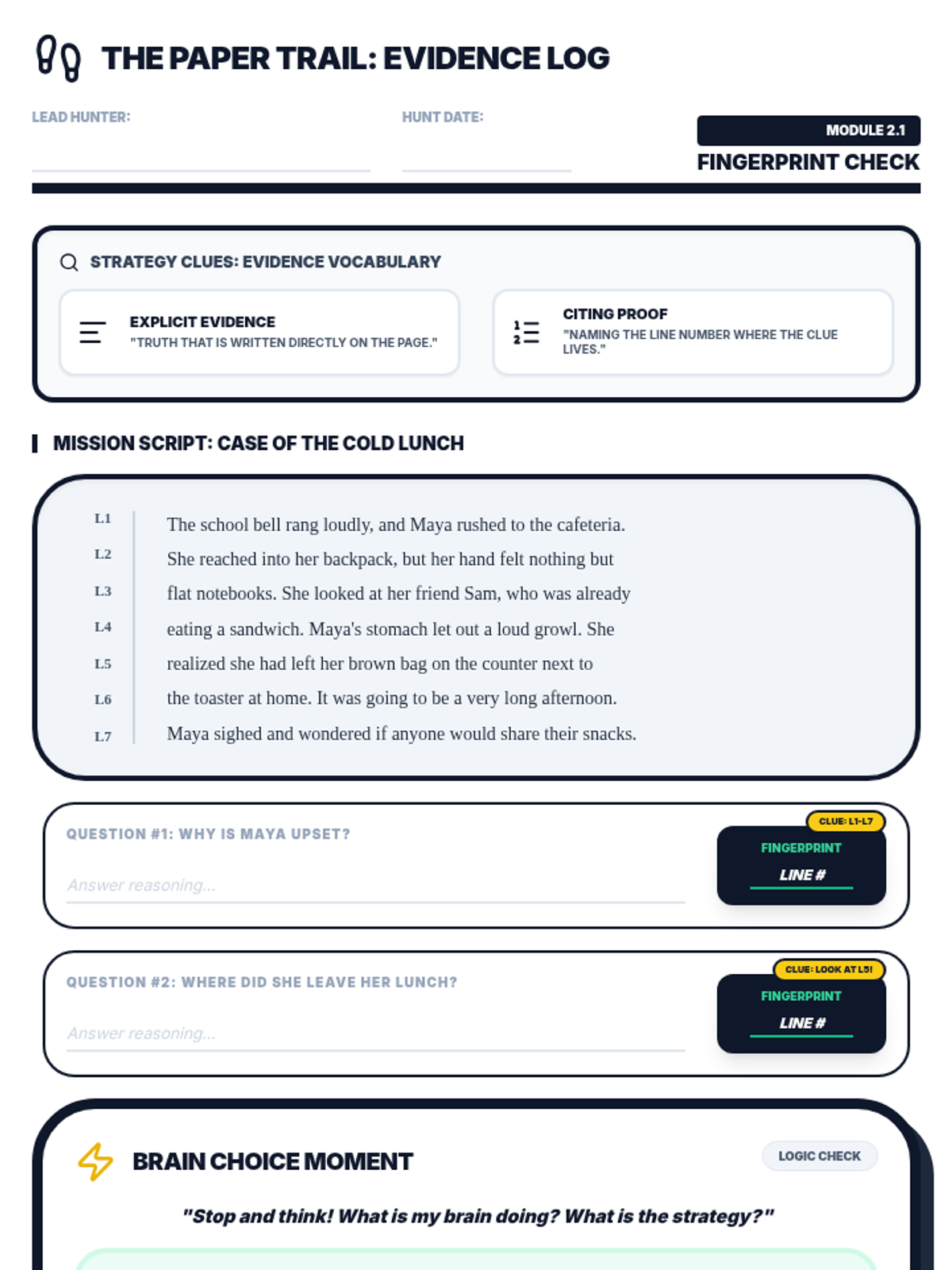
Directly inspired by the Reading Detective series. Students learn to cite page, line, and word clues to prove their reasoning.