A pair of decodable stories designed for 4th and 5th-grade students to practice complex syllable types including the doubling rule, consonant-le, open syllables, and r-controlled vowels. Each story includes targeted comprehension questions.

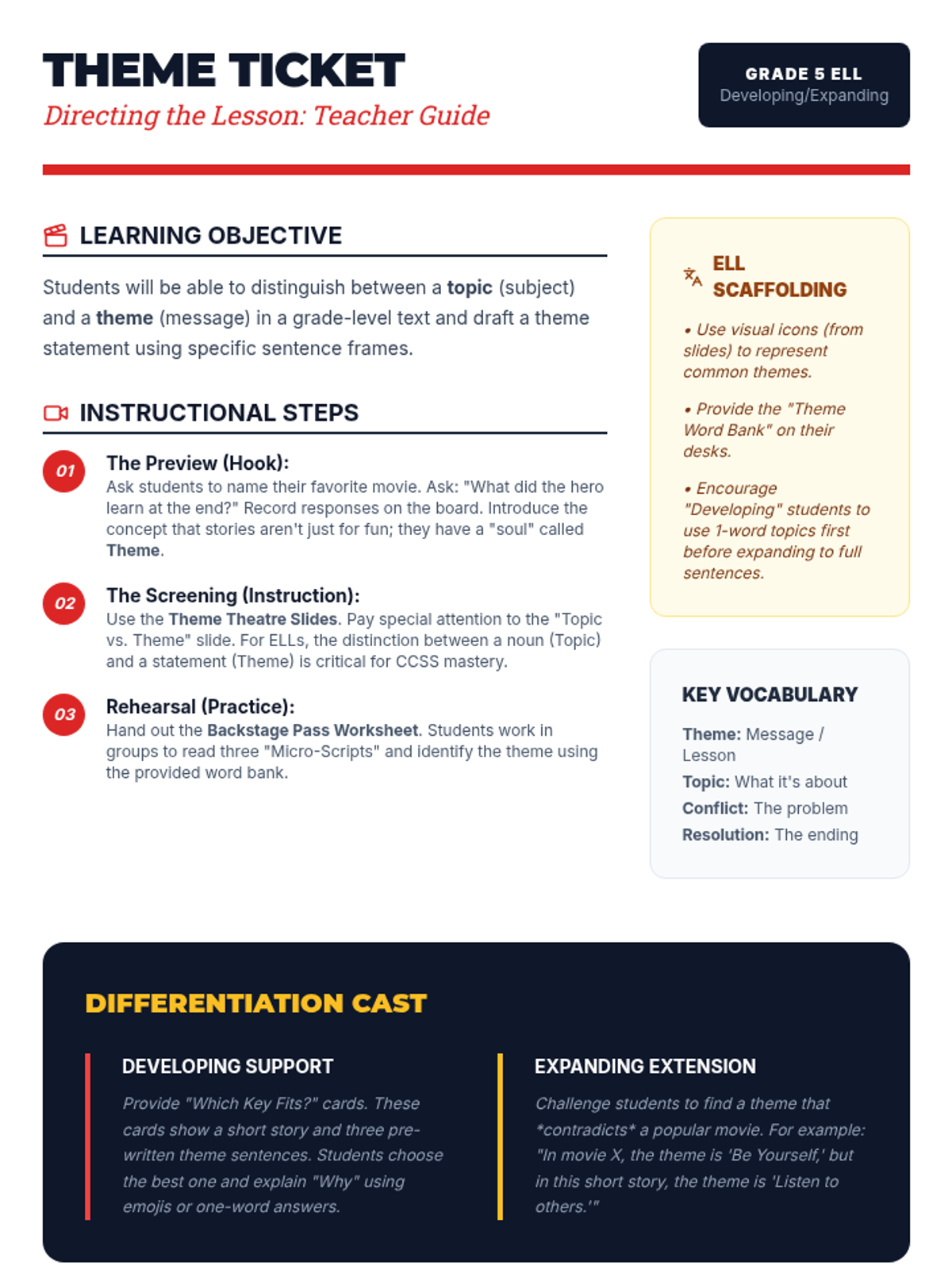
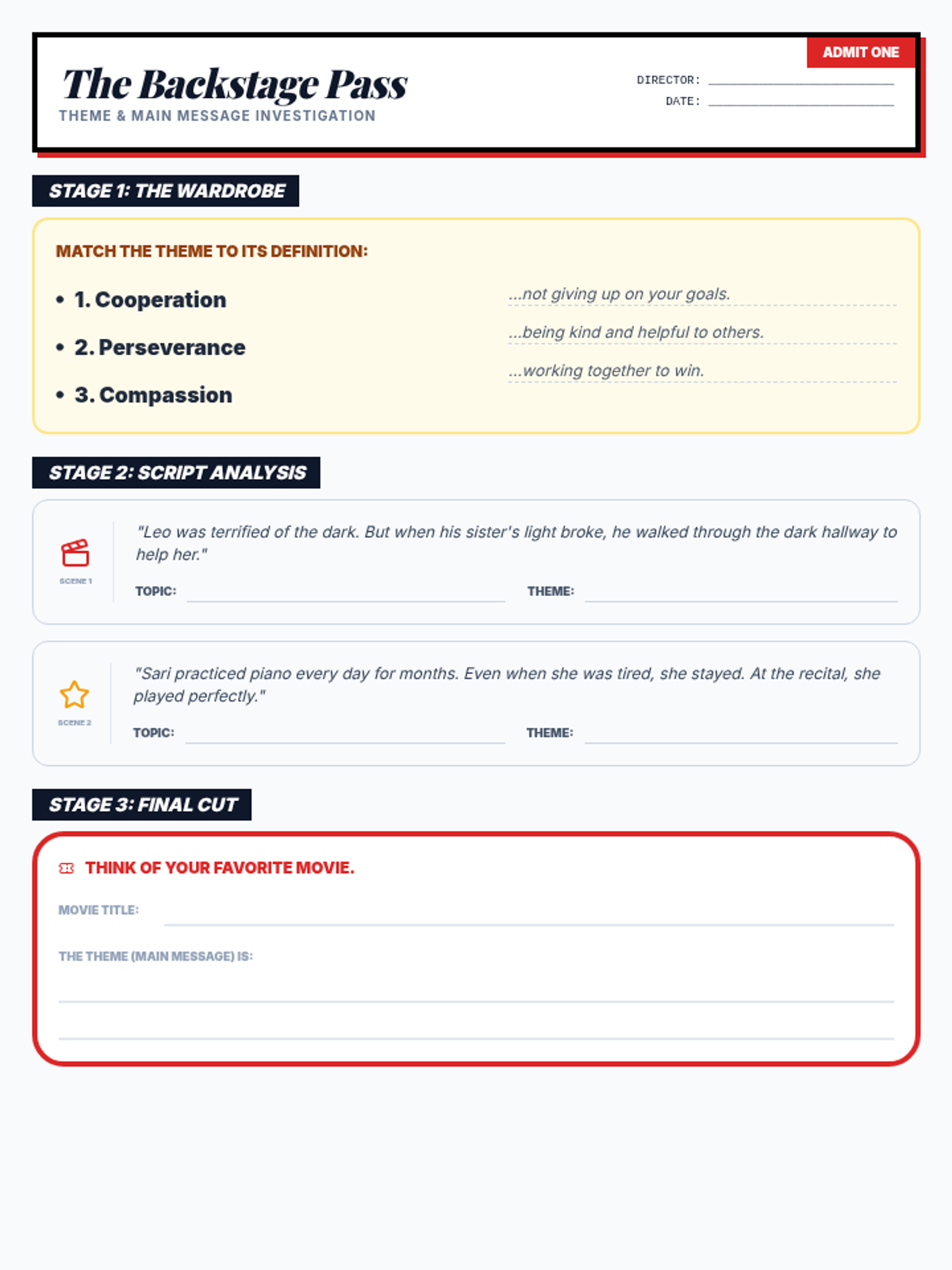
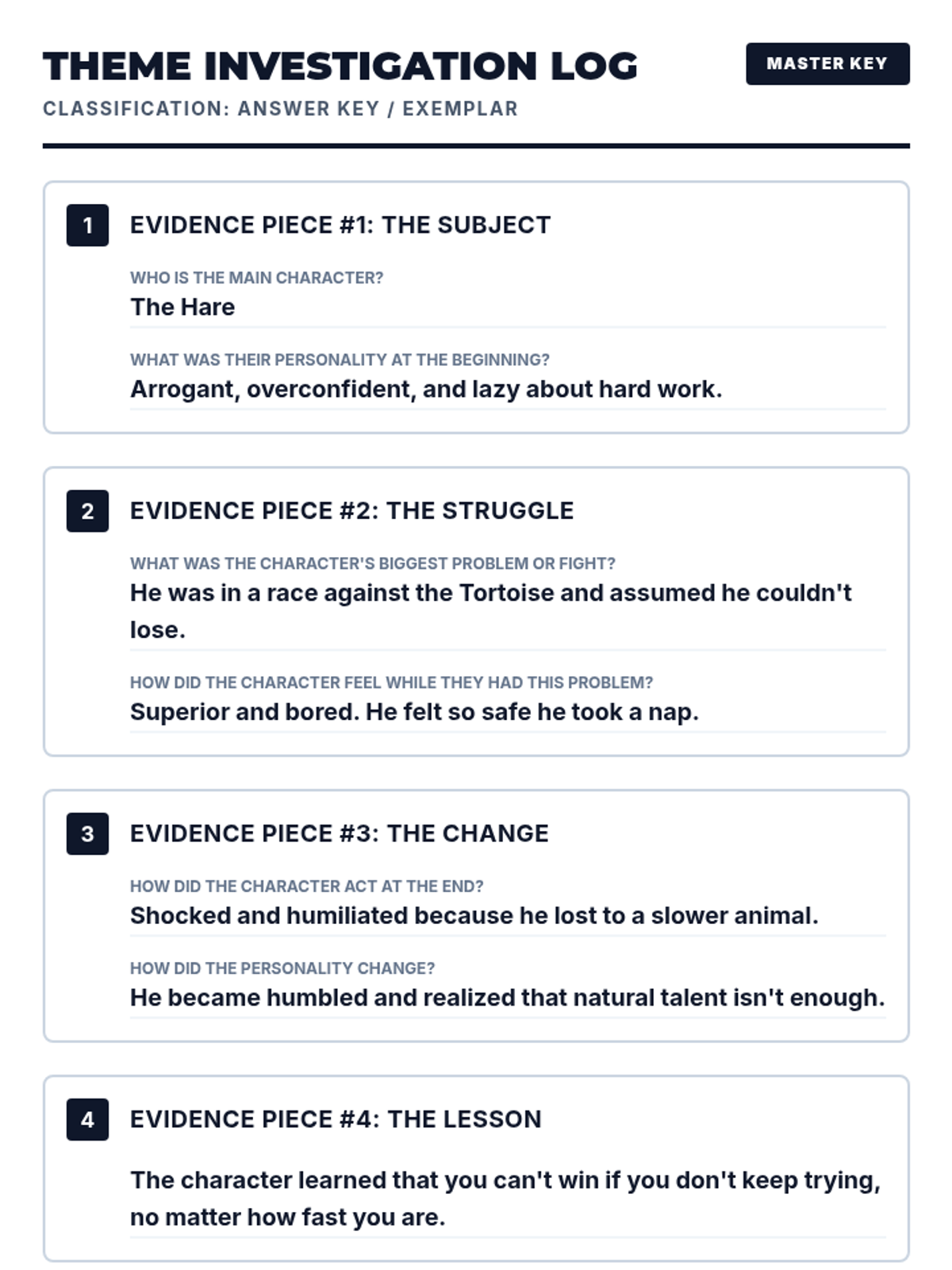
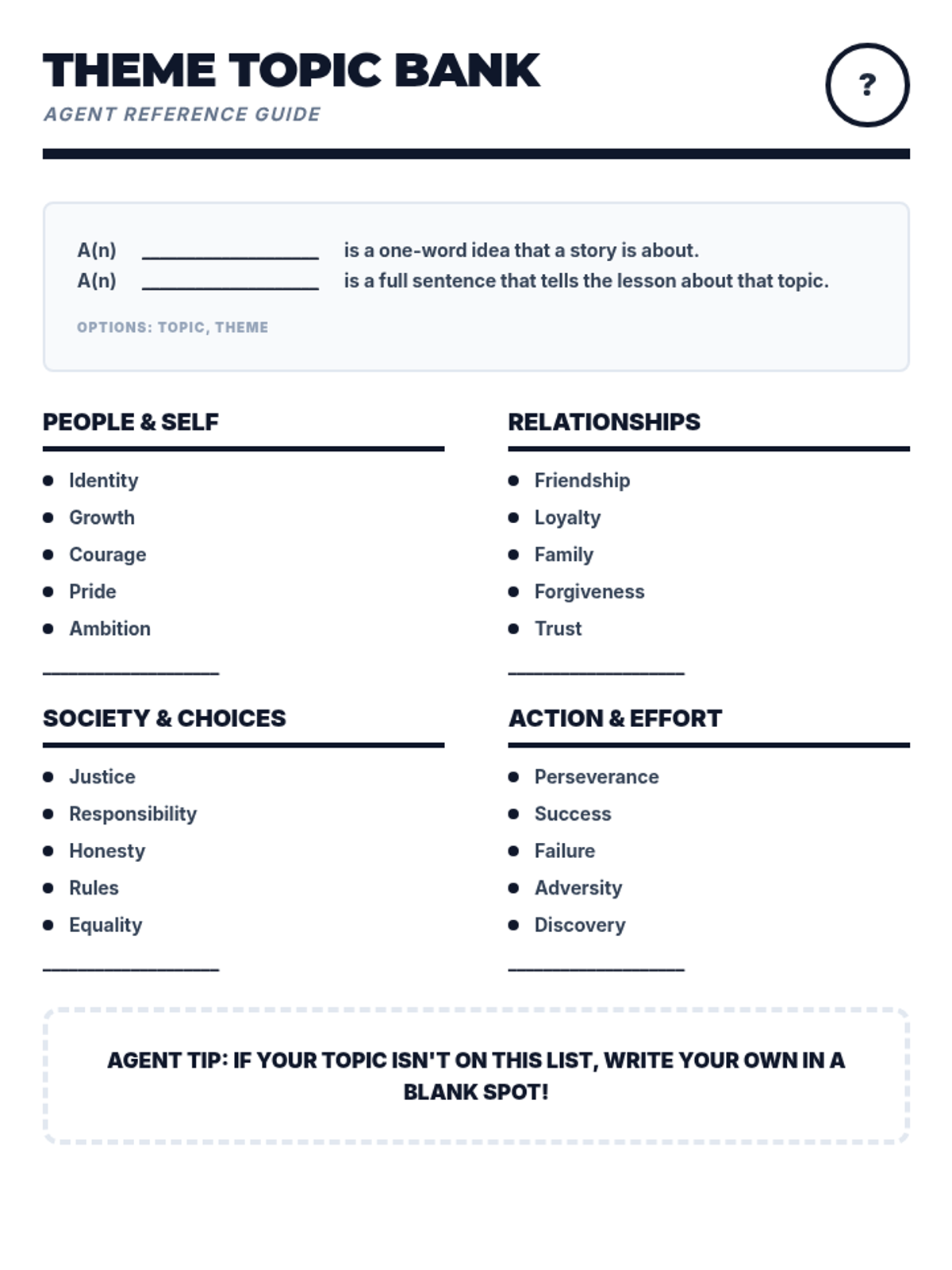
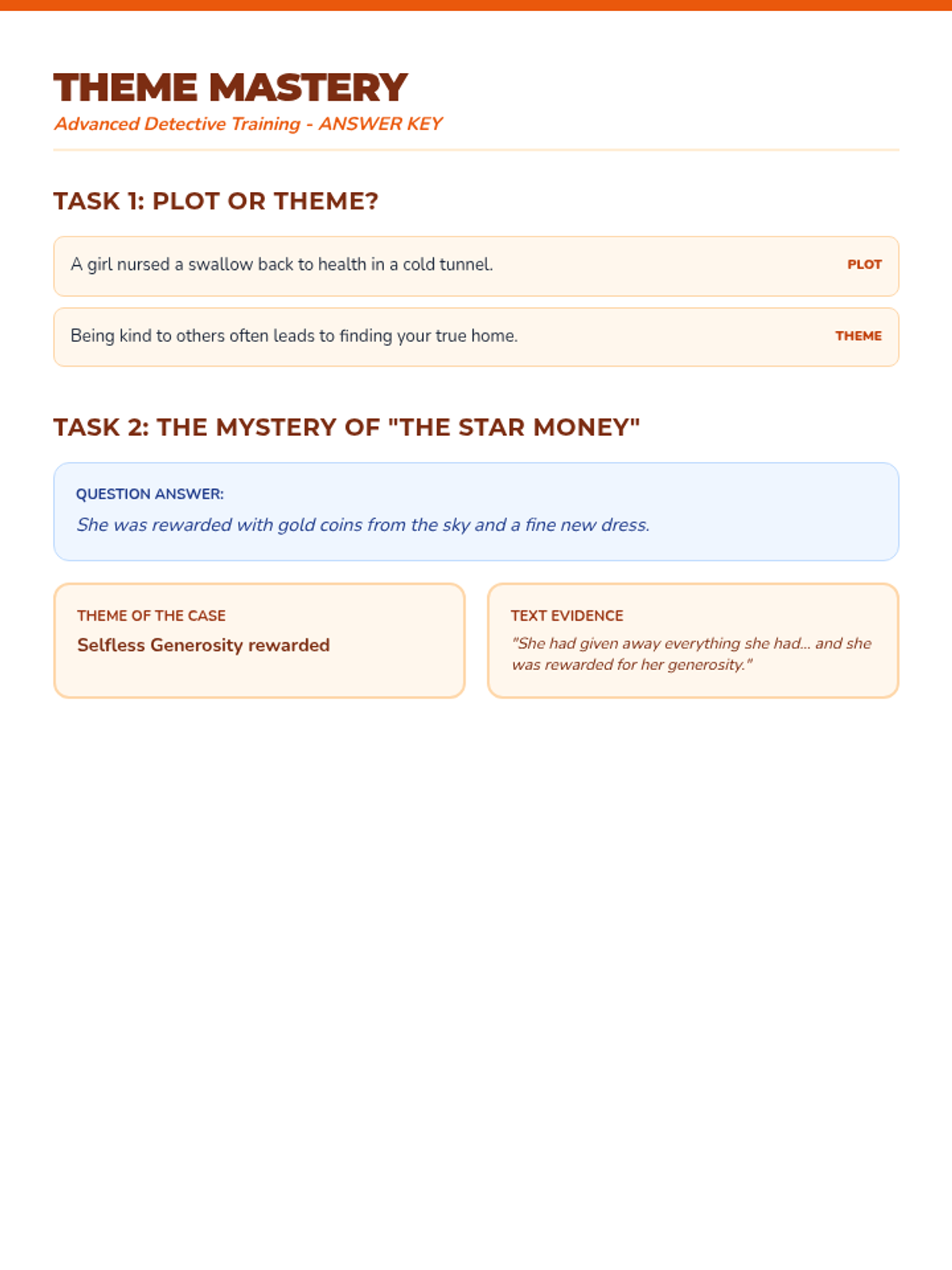
Students learn to identify the theme or main message of a story by analyzing character choices and outcomes, framed through a "Cinema" or "Movie Theatre" lens to help ELL students distinguish between topic and theme.
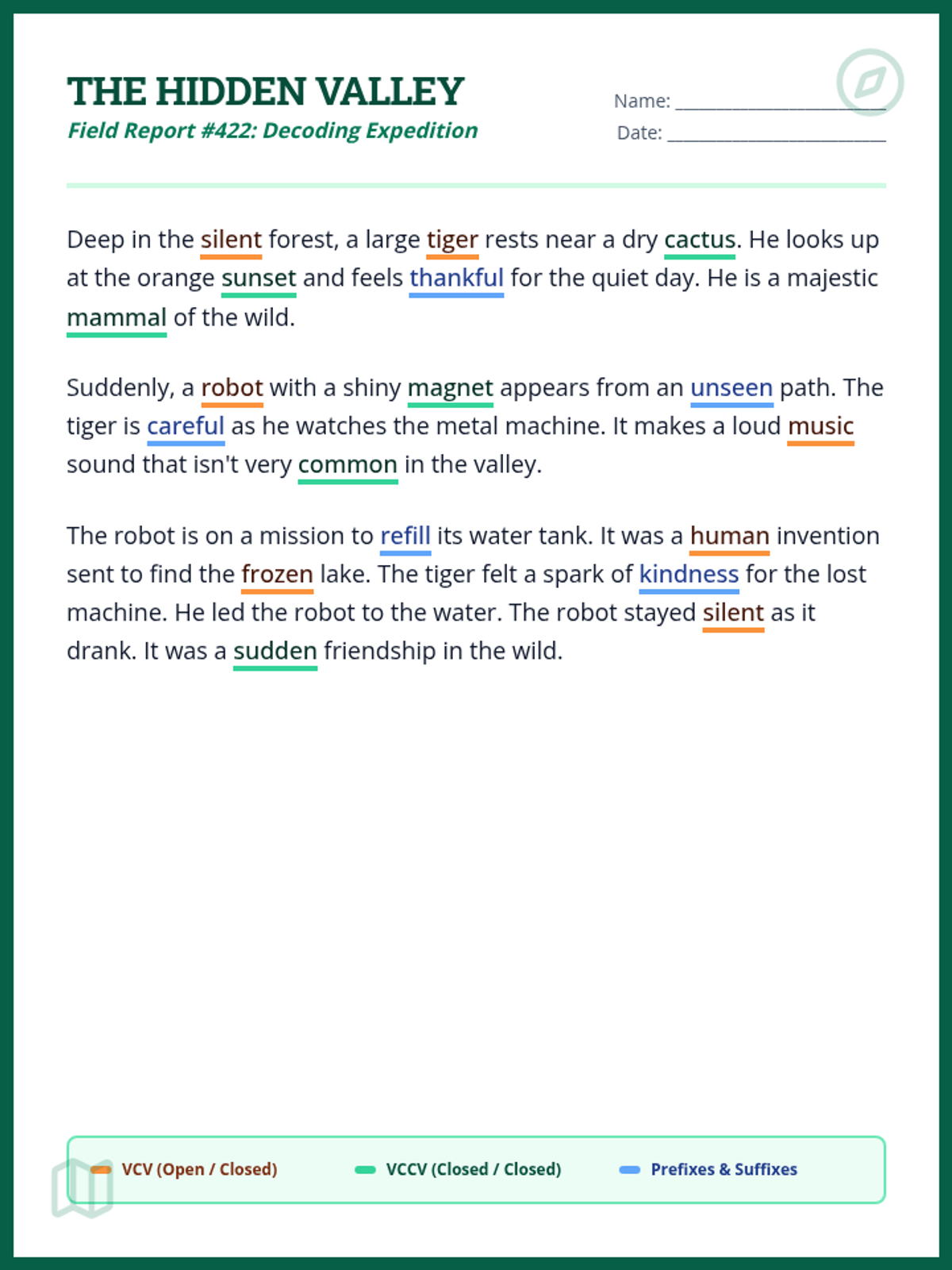
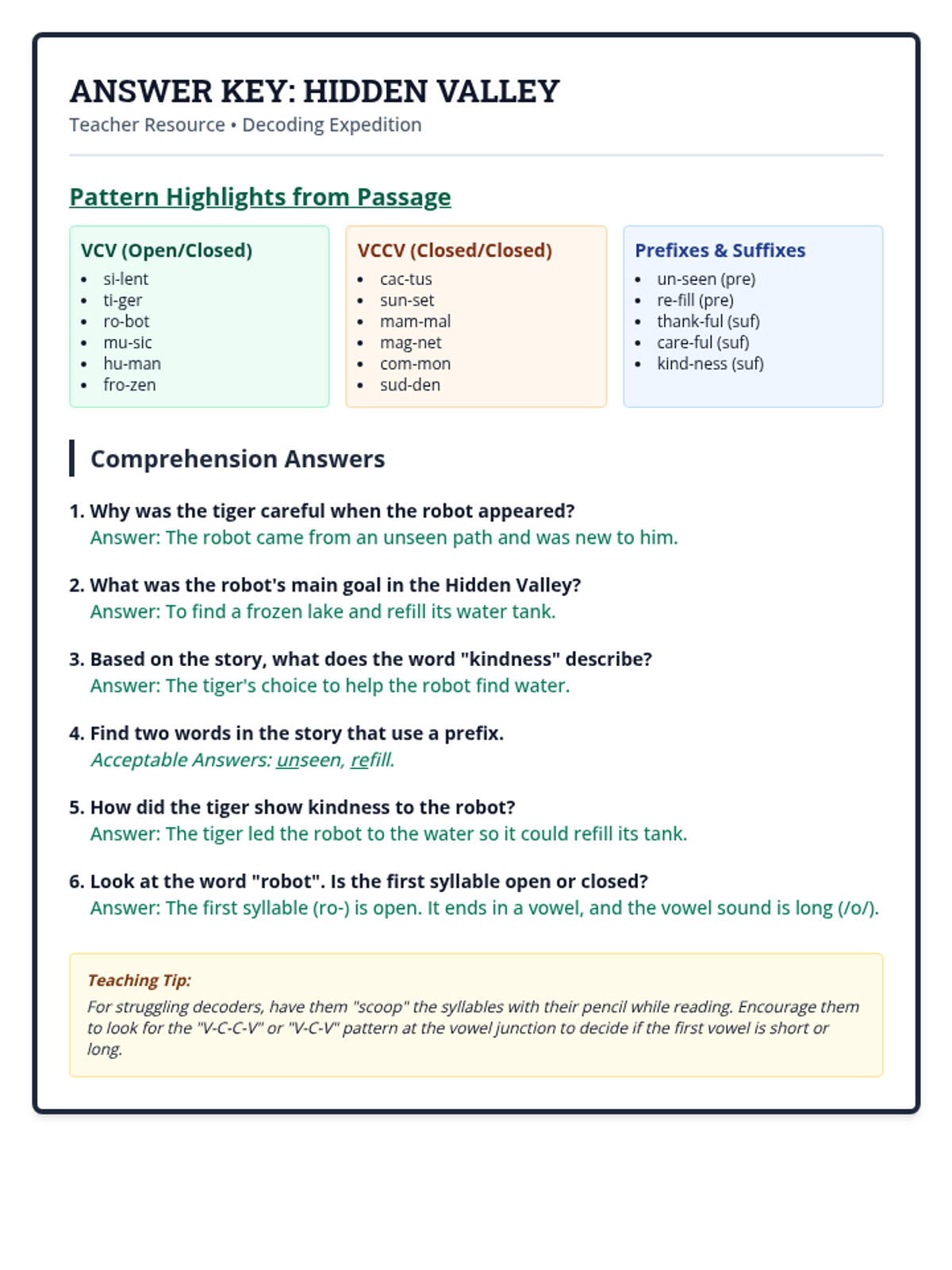
A lesson focused on decoding VCCV and VCV syllable patterns, along with common prefixes and suffixes, through an engaging reading passage and comprehension check.
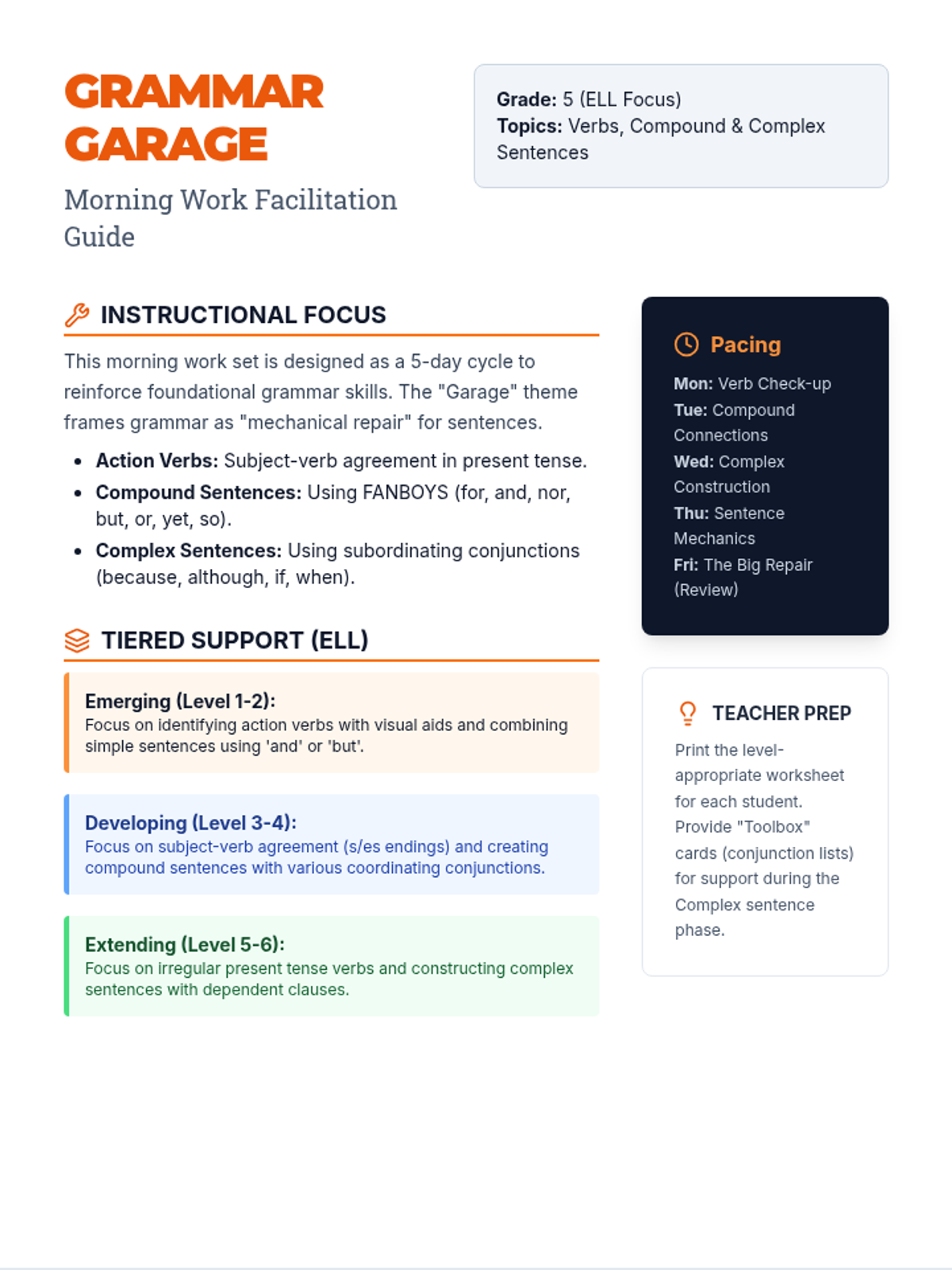
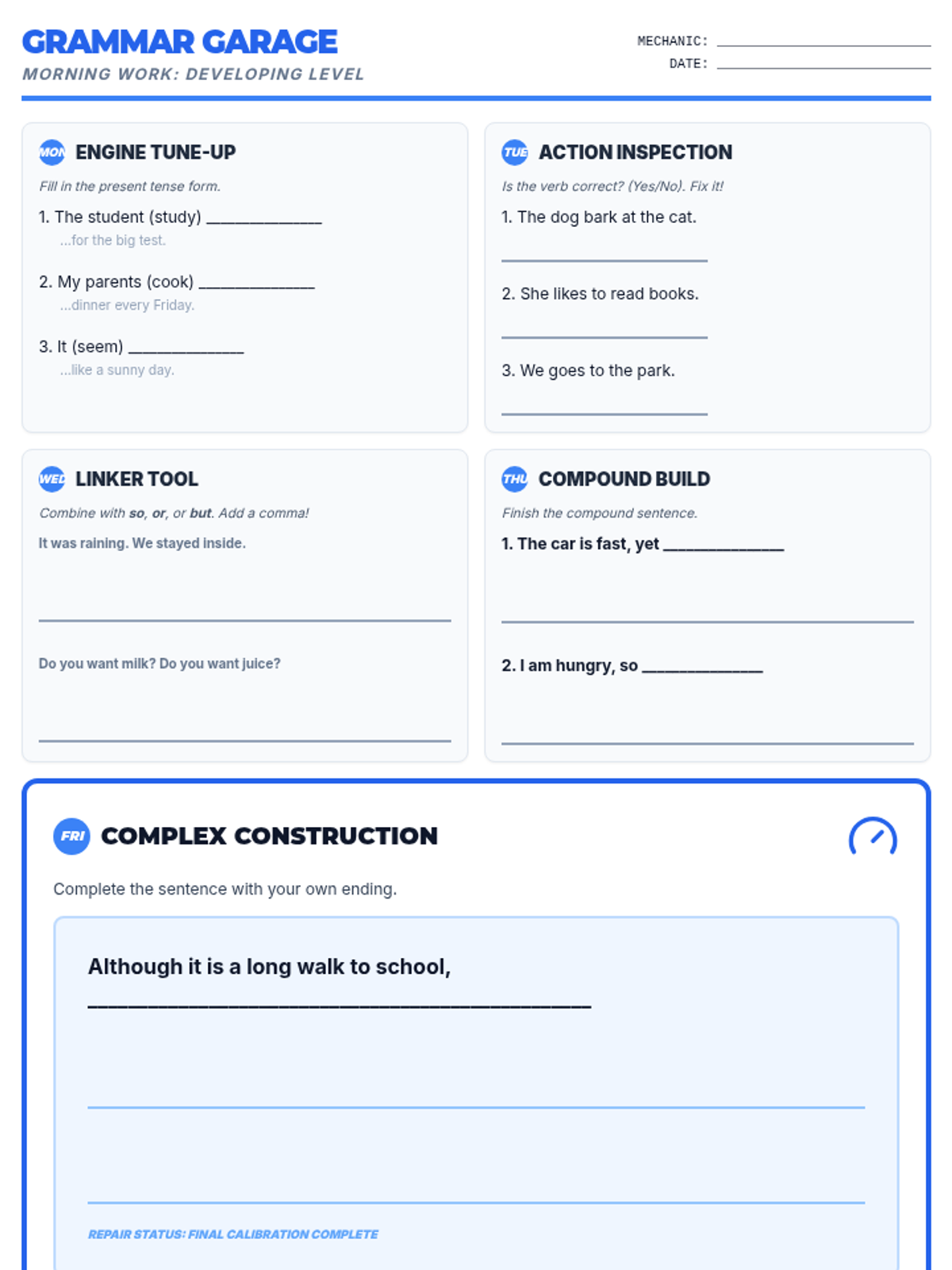
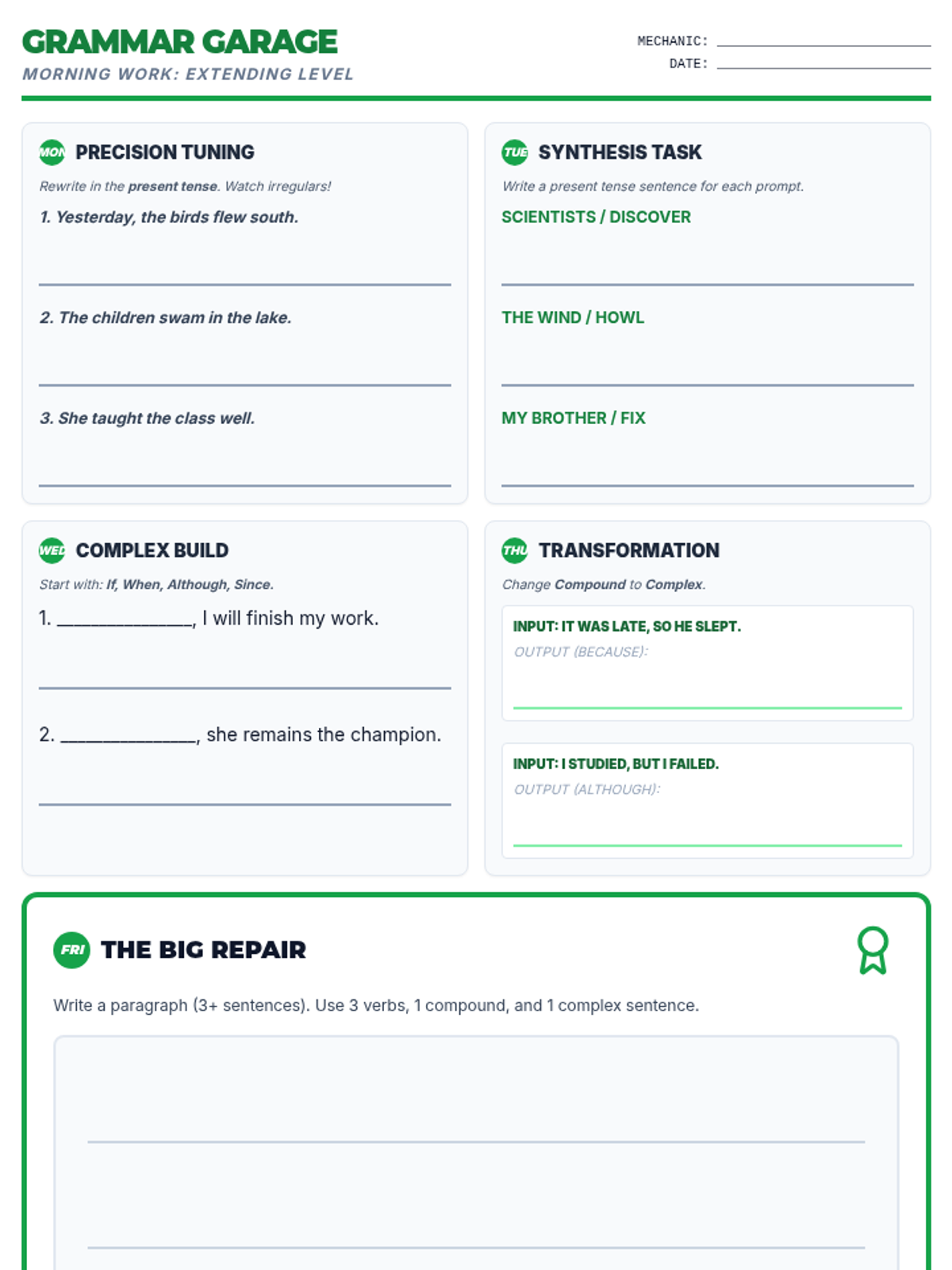
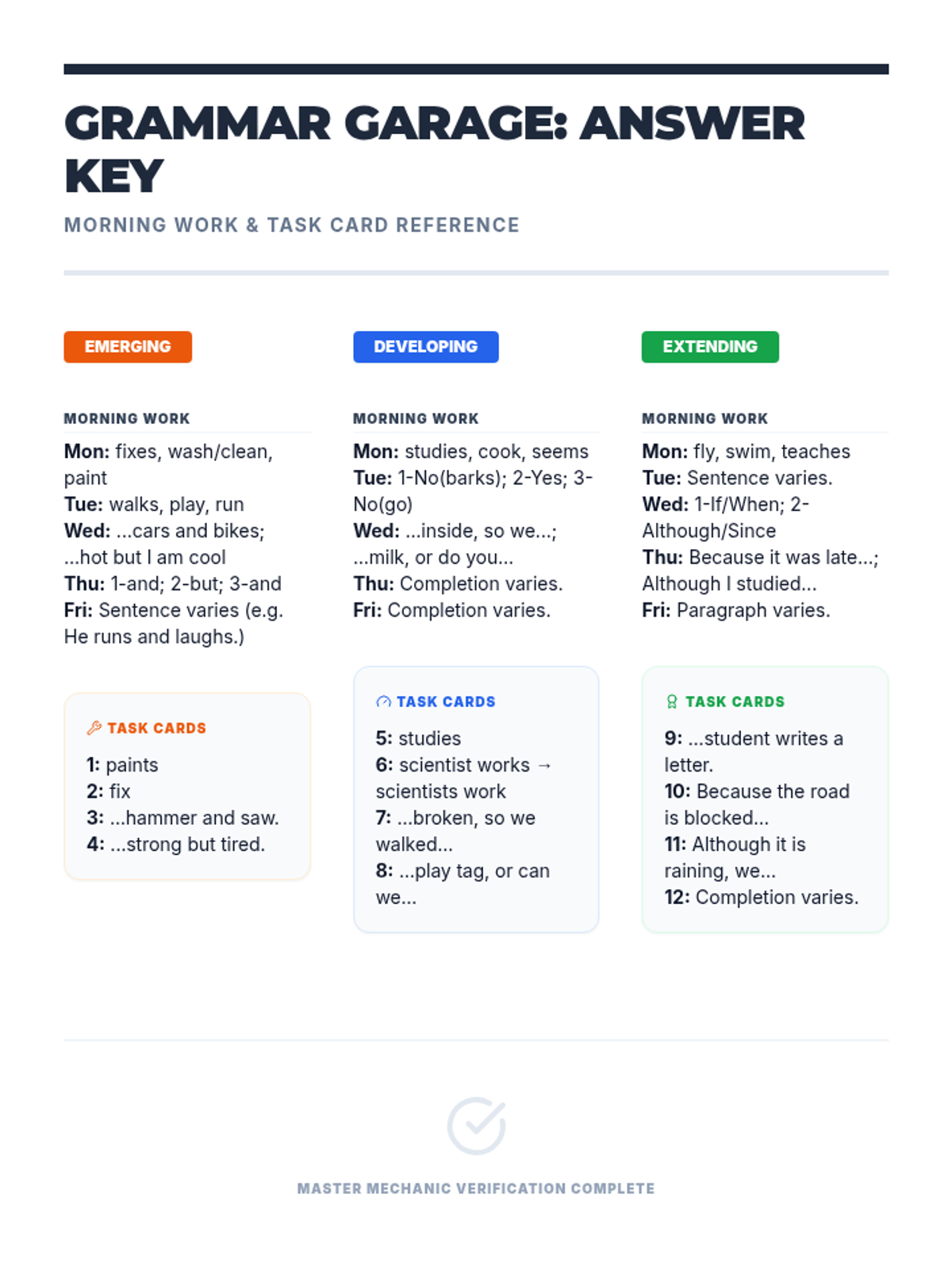
A series of tiered morning work activities designed to review present tense action verbs, compound sentences, and complex sentences for 5th-grade ELL students.
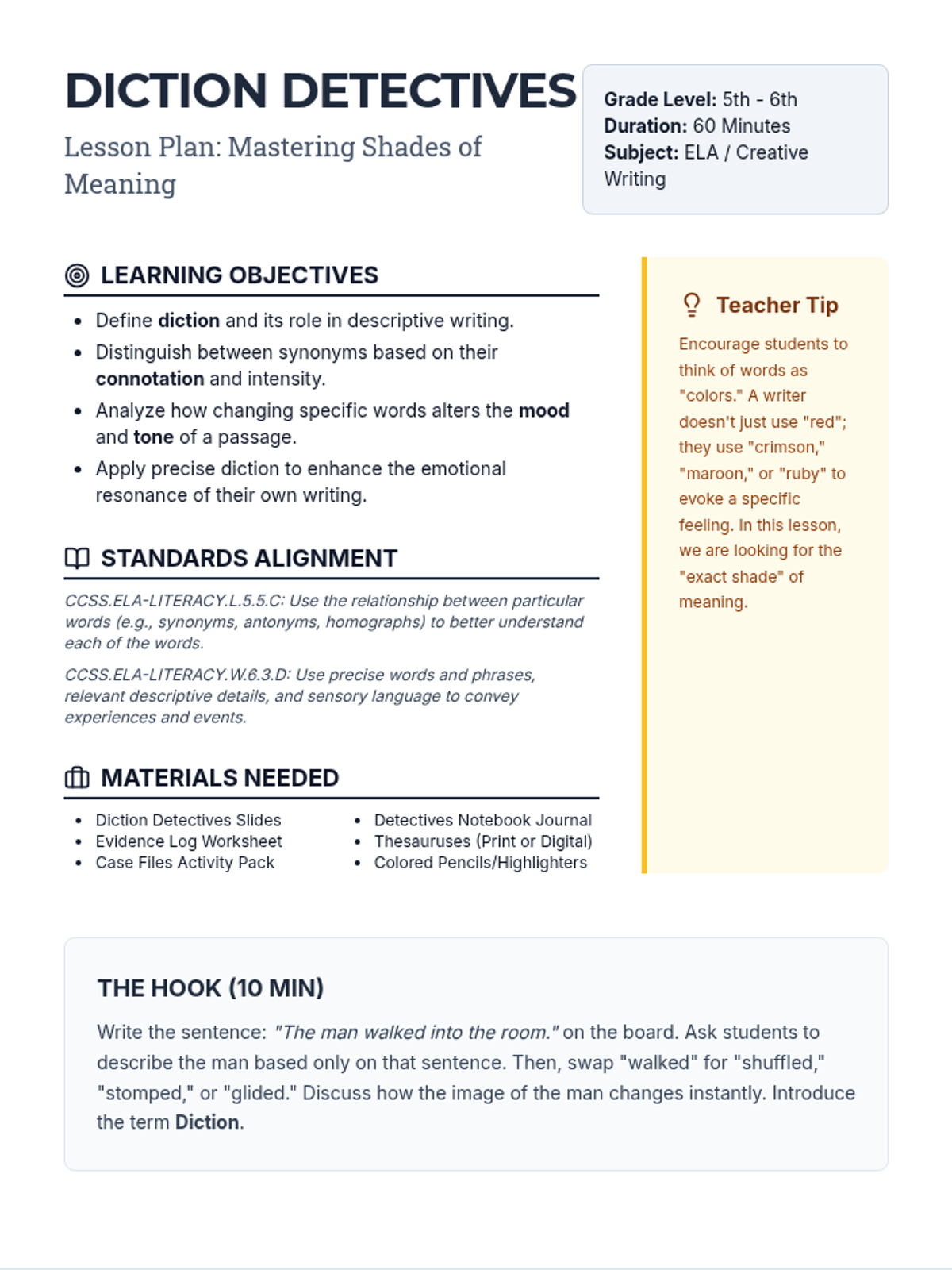
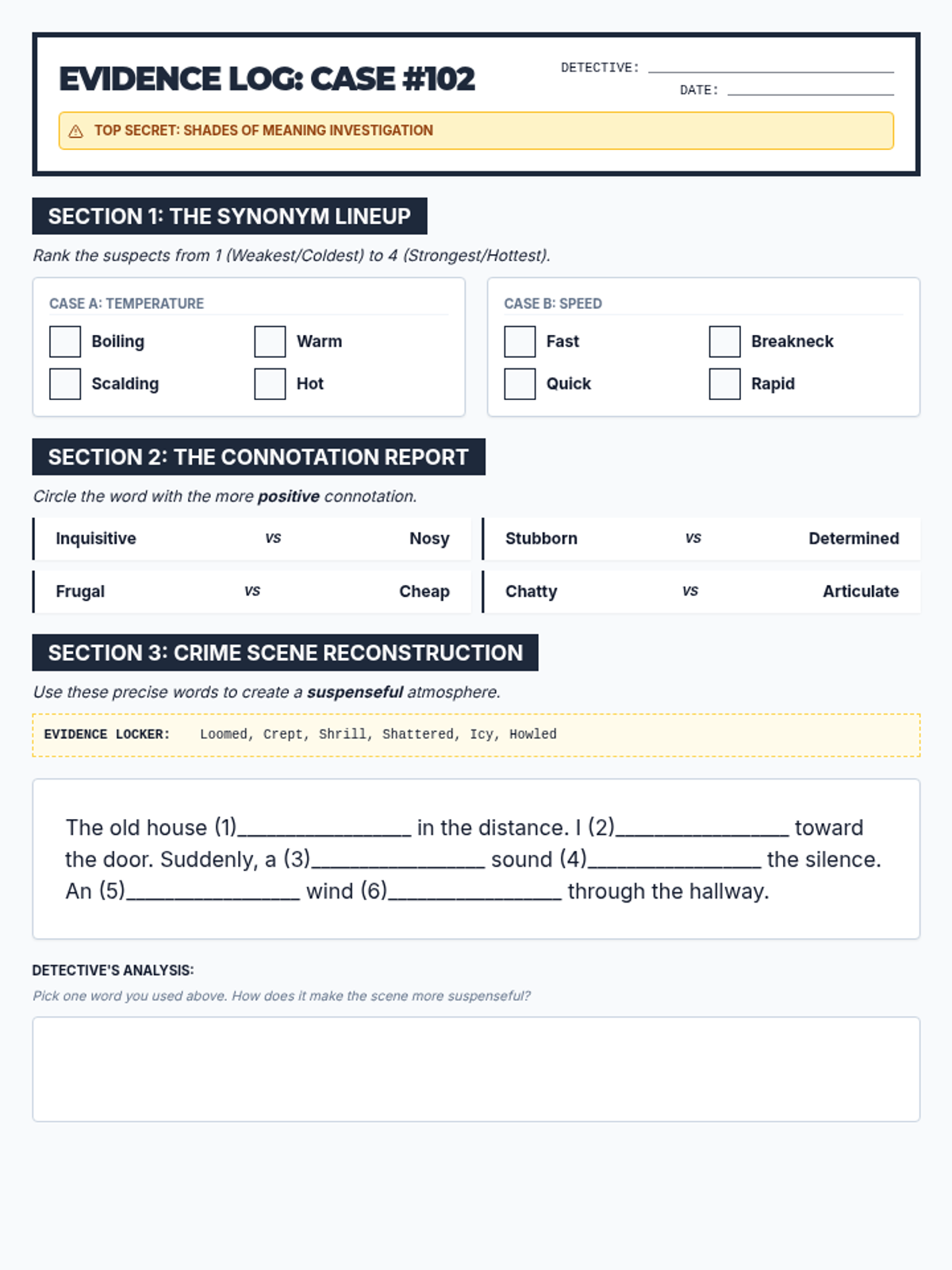
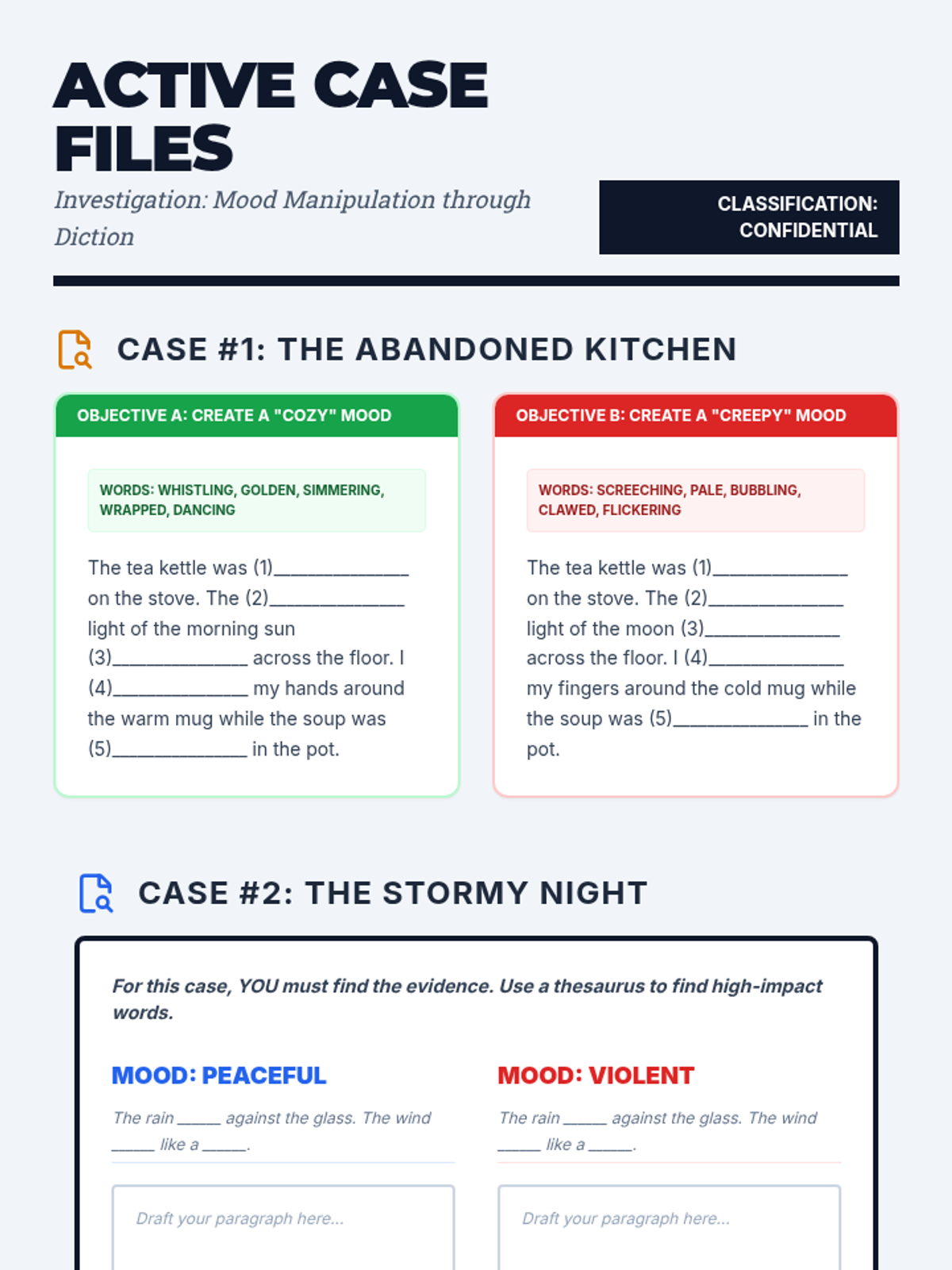
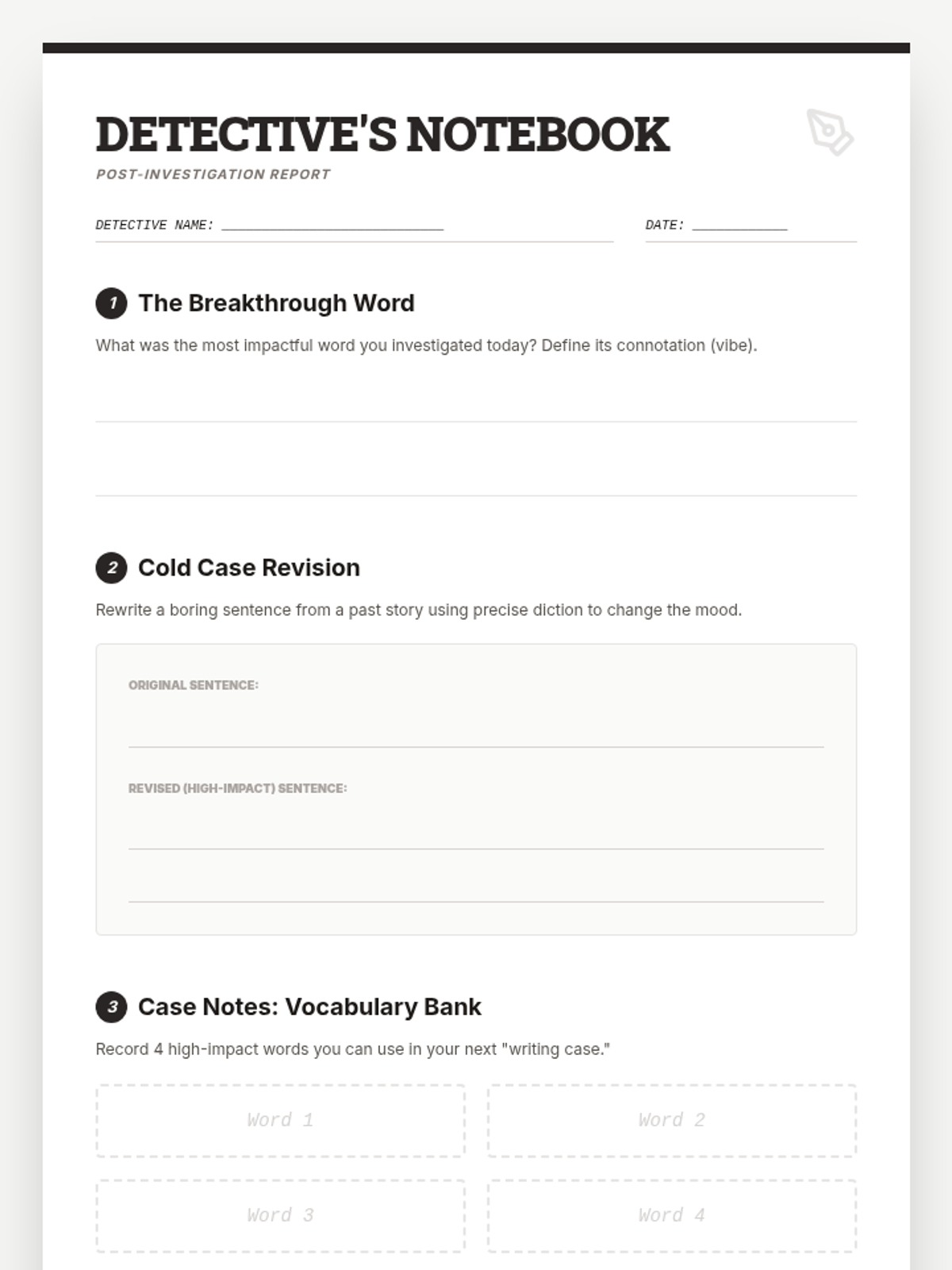
Students investigate how precise word choices (diction) influence the mood and tone of a story through a detective-themed exploration of synonyms and shades of meaning.
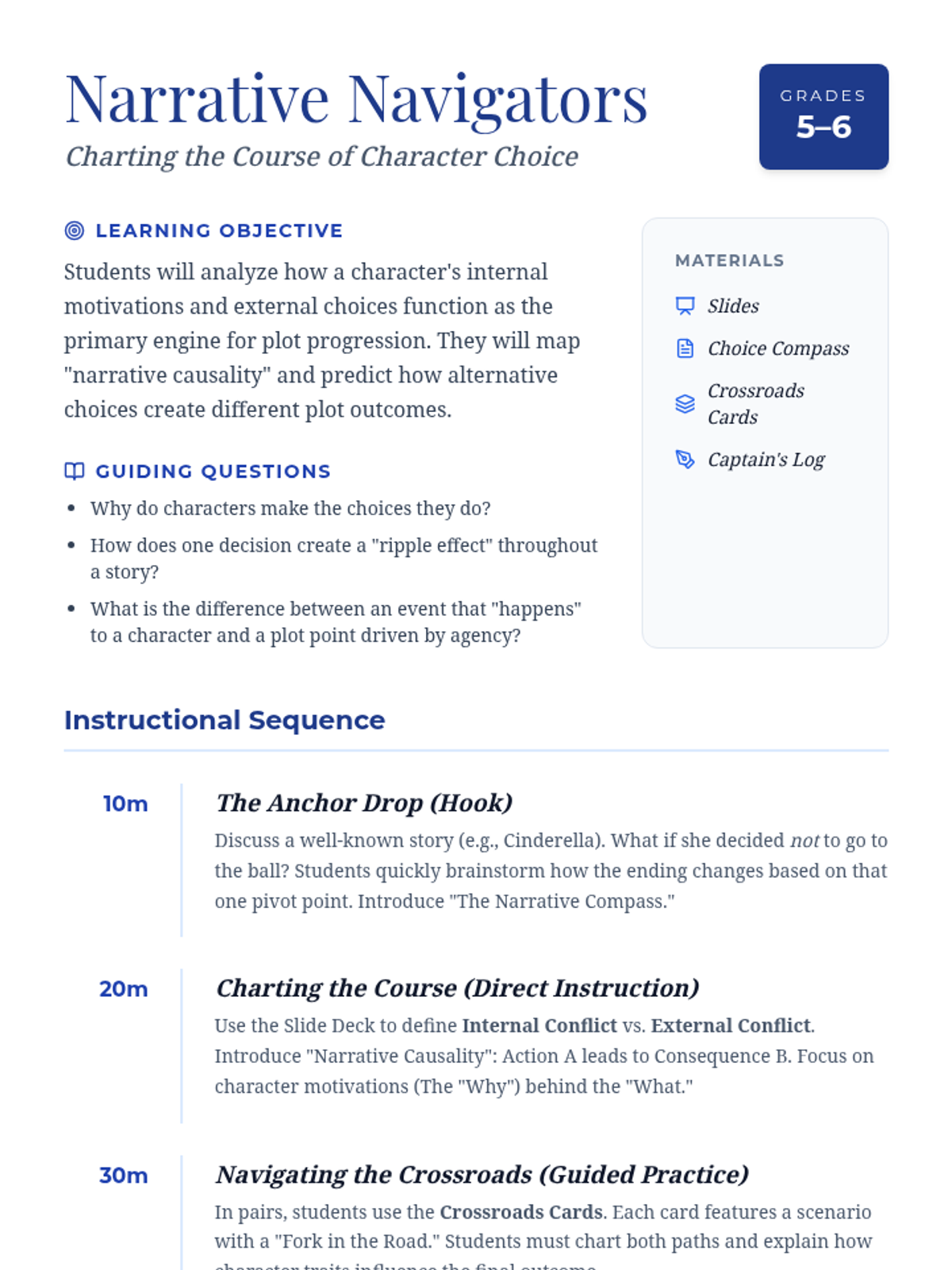
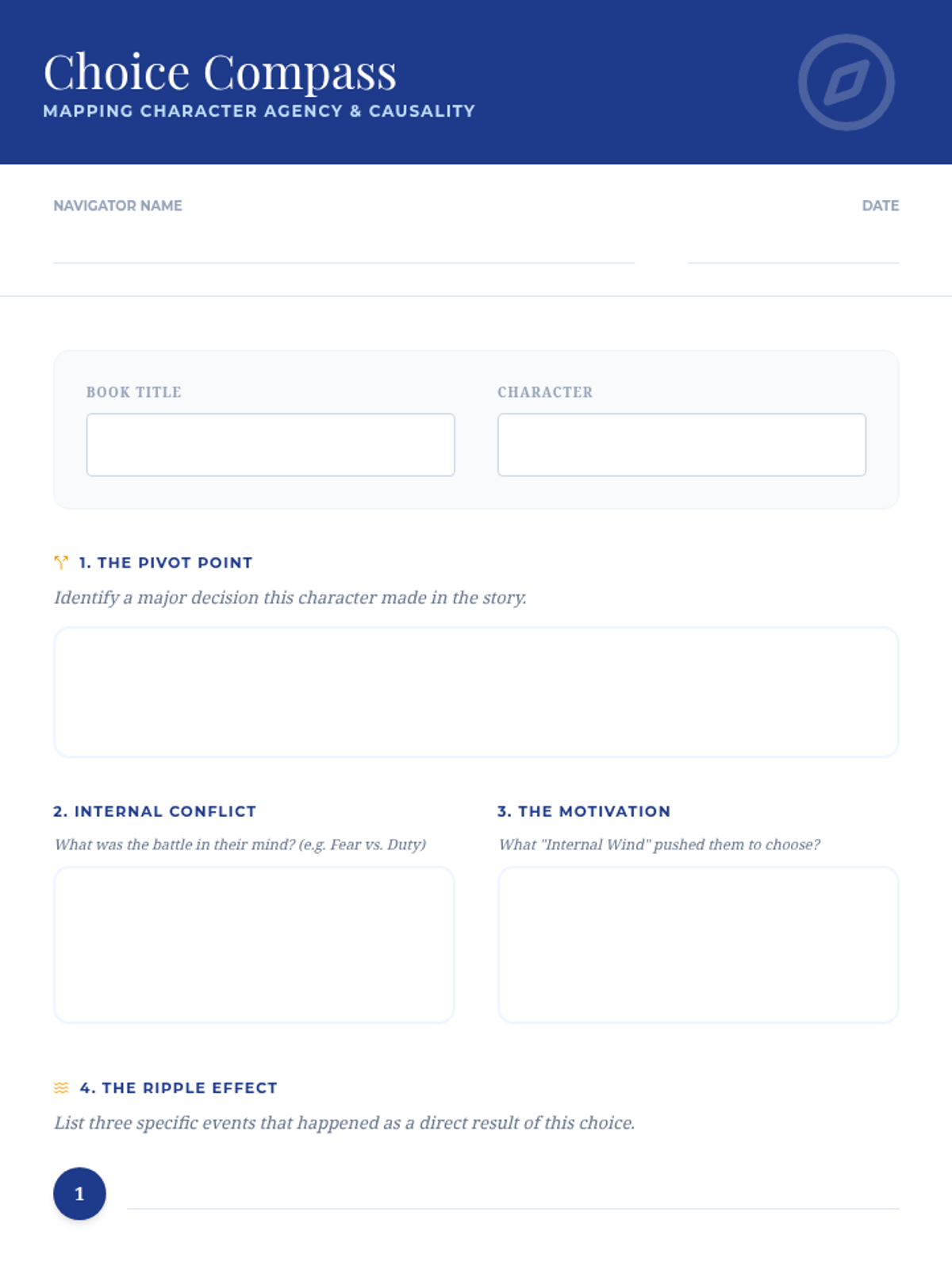
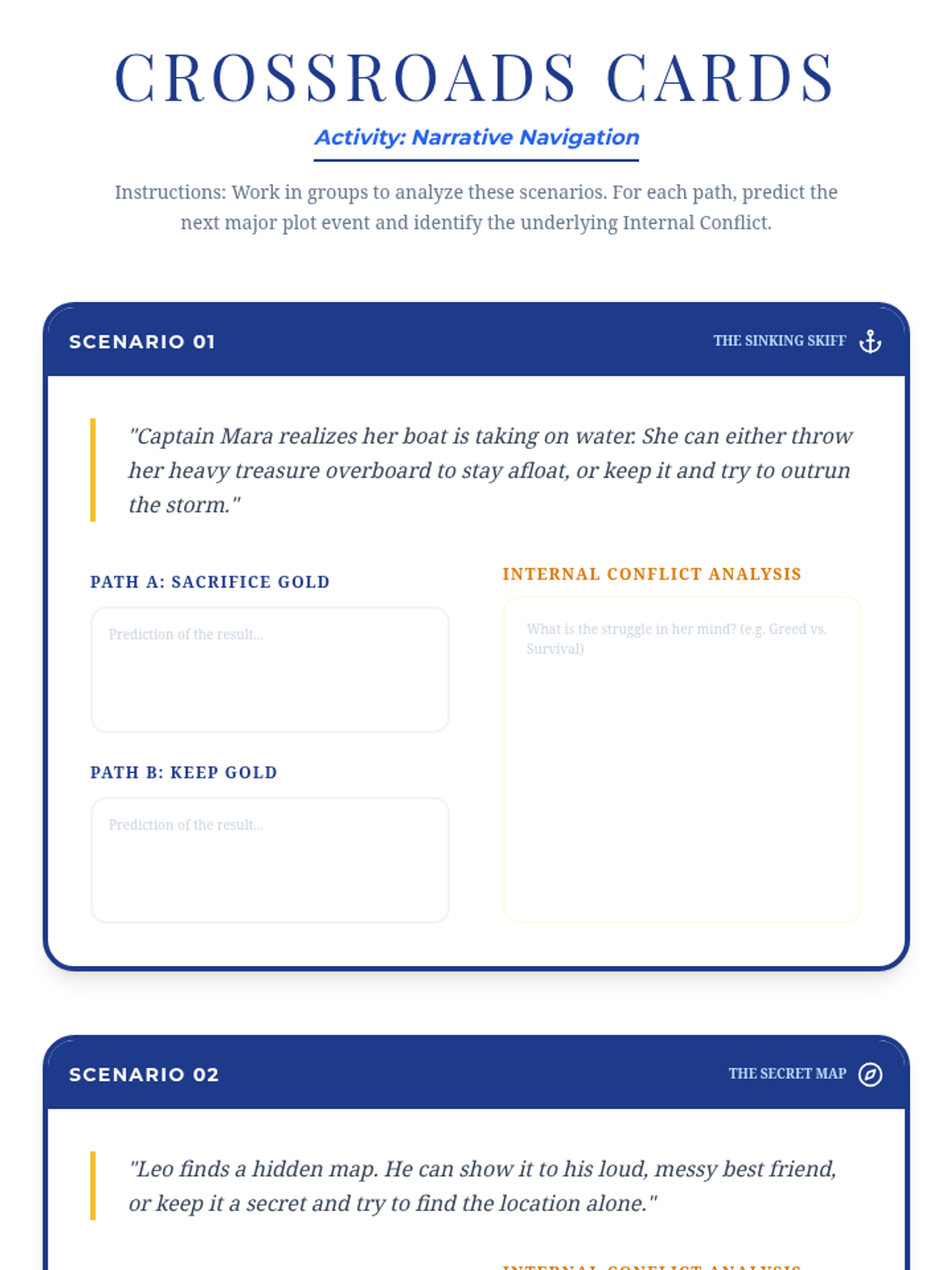
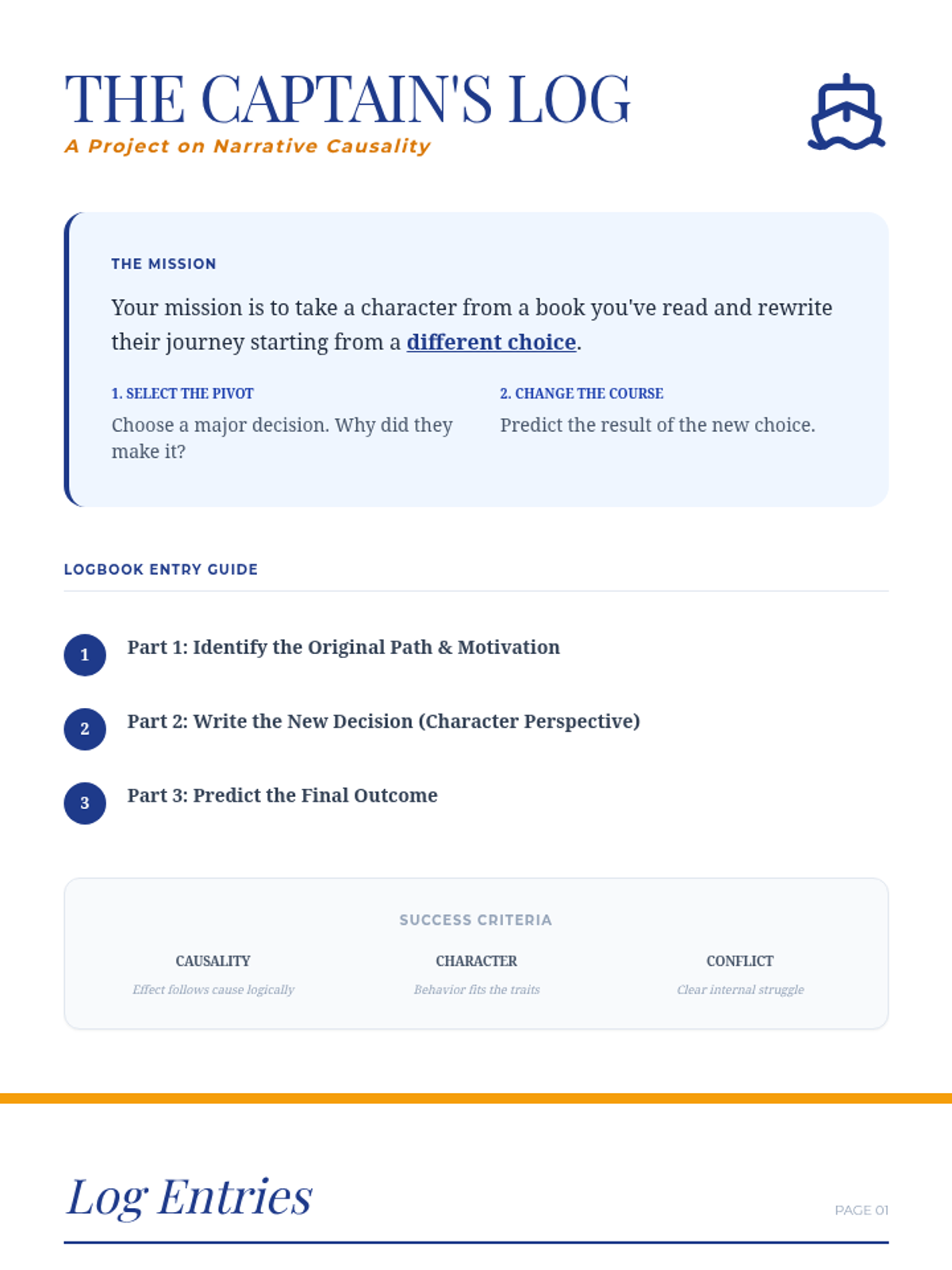
Students explore narrative causality by analyzing how character choices drive plot development, mapping alternative consequences, and understanding the role of internal conflict in 5th and 6th-grade literature.
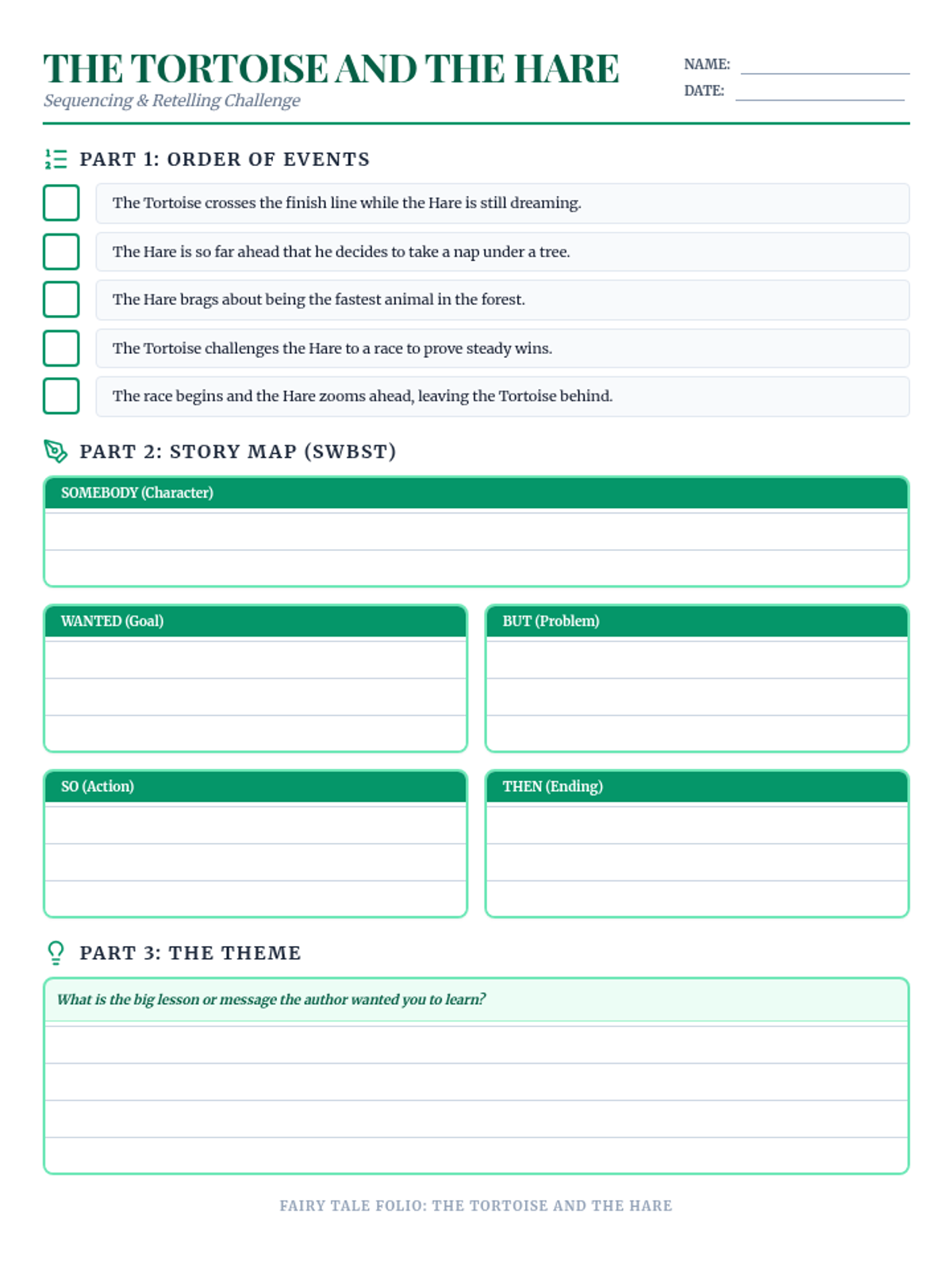
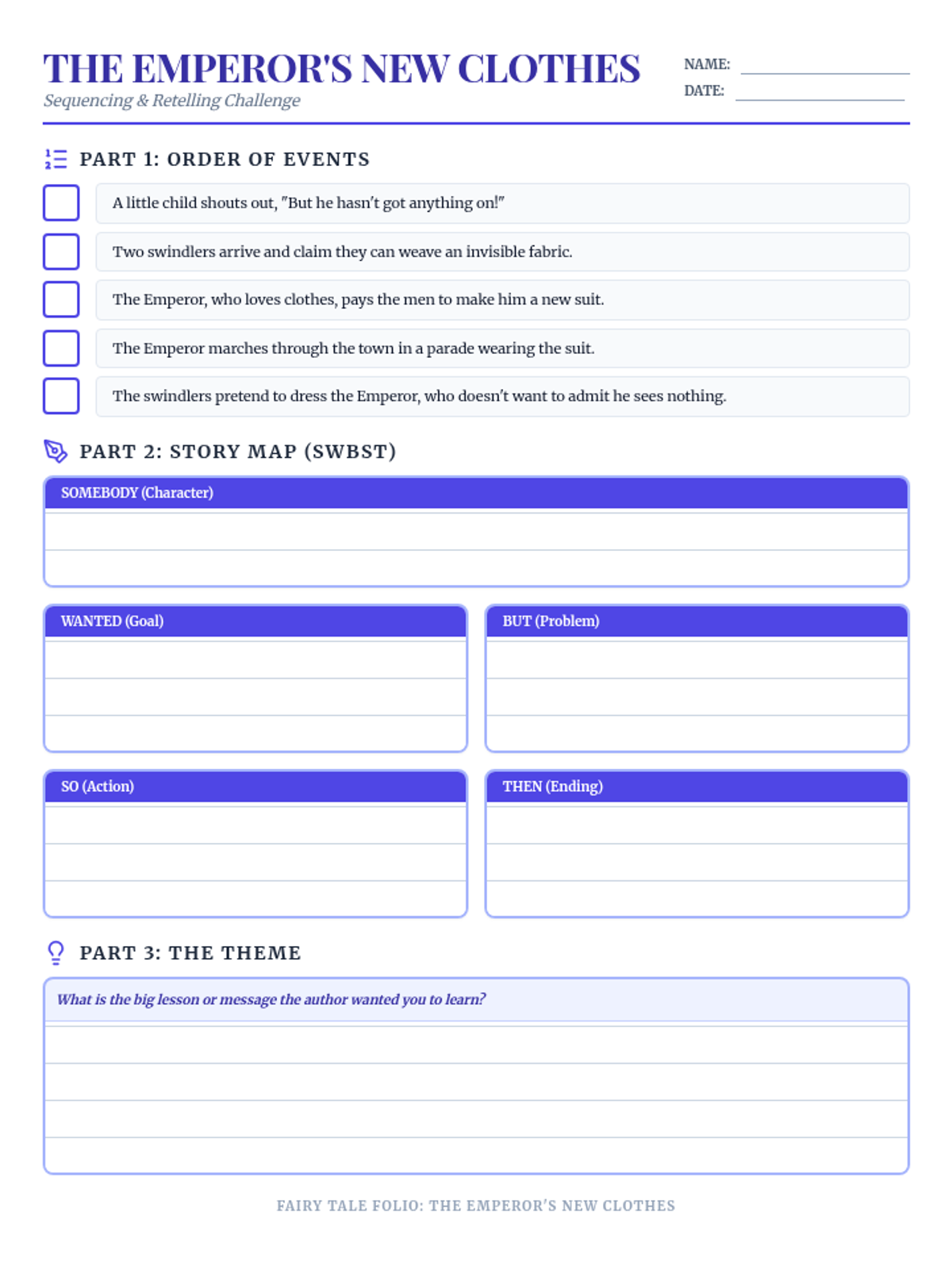
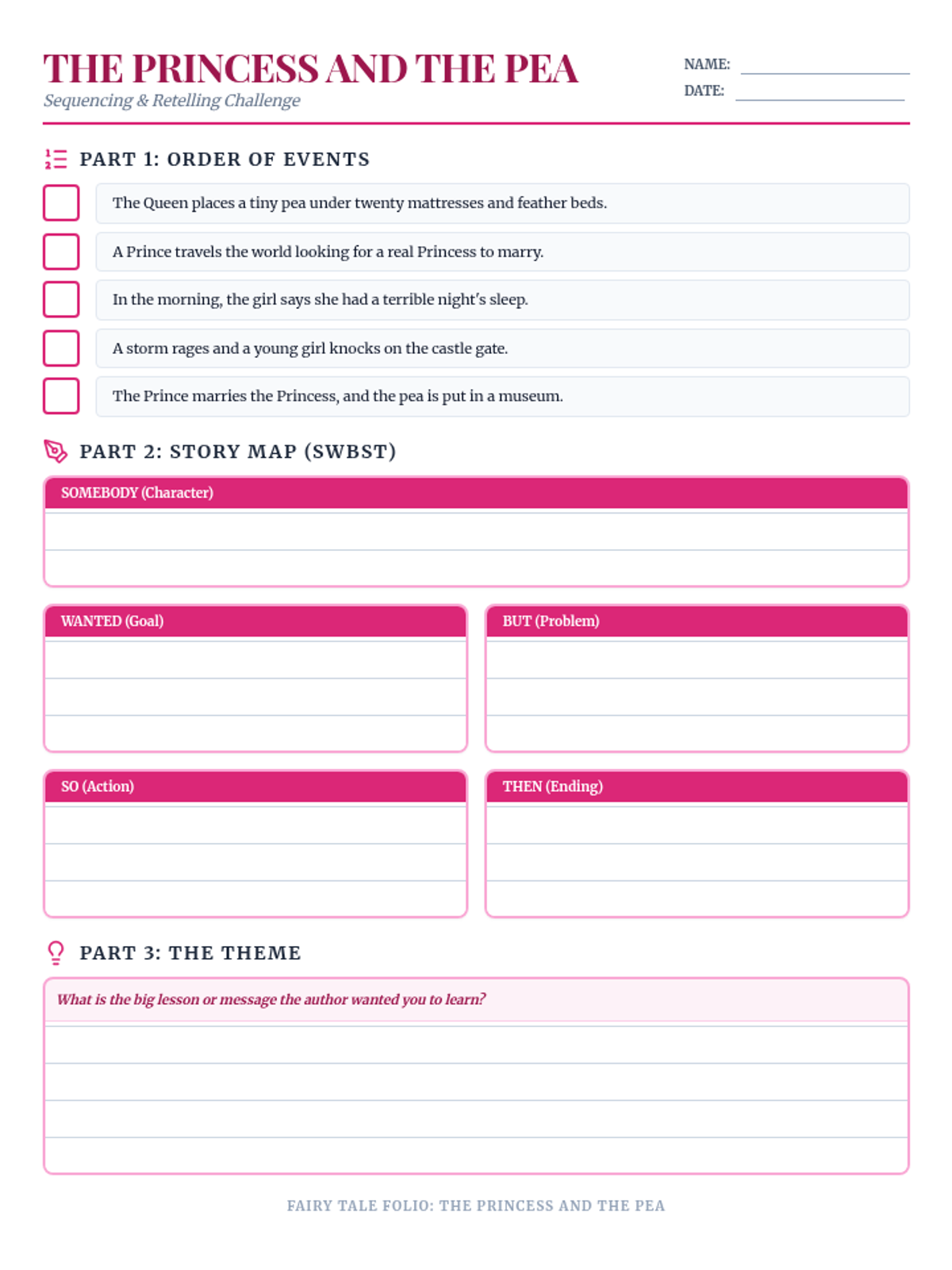
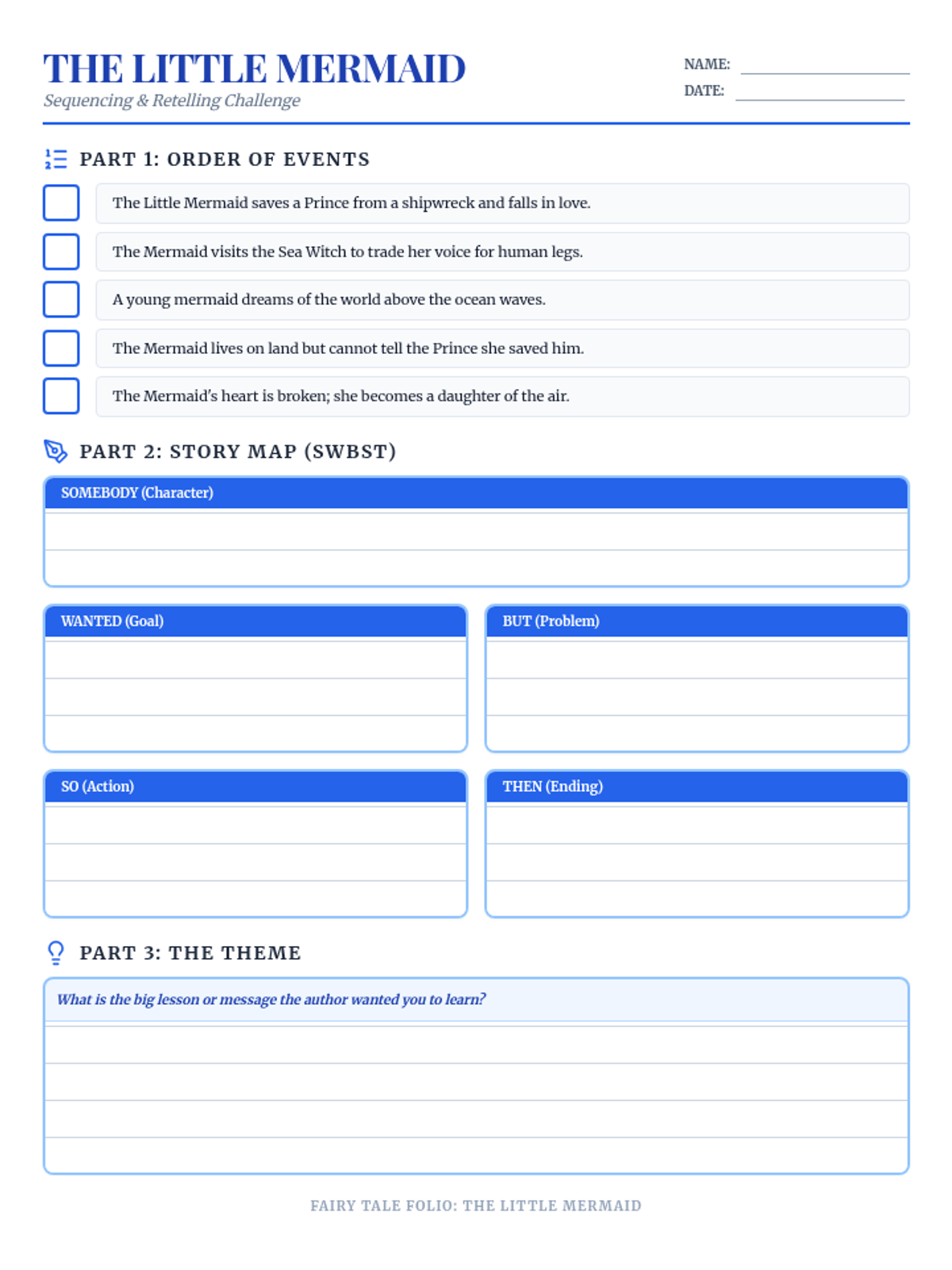
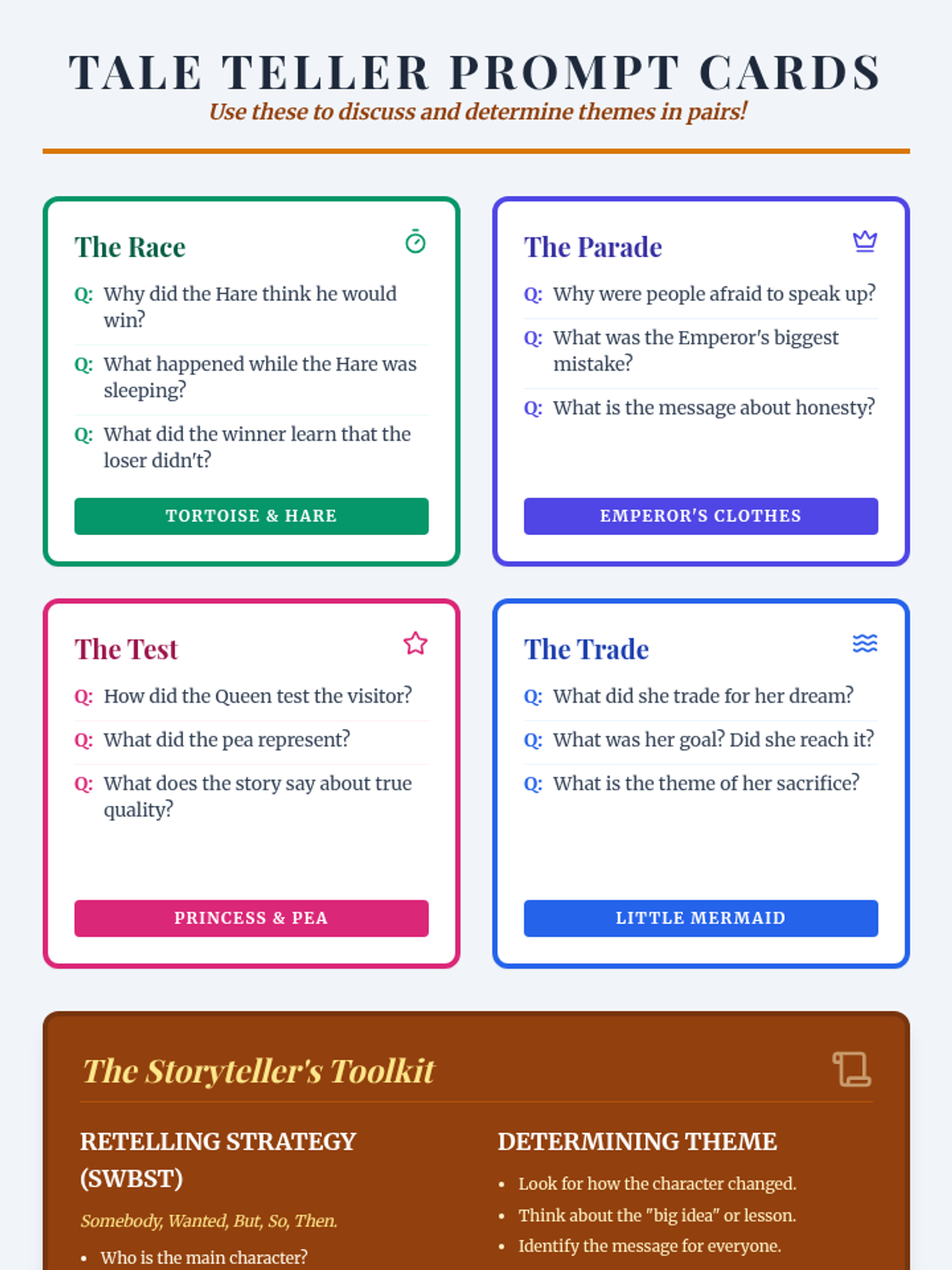
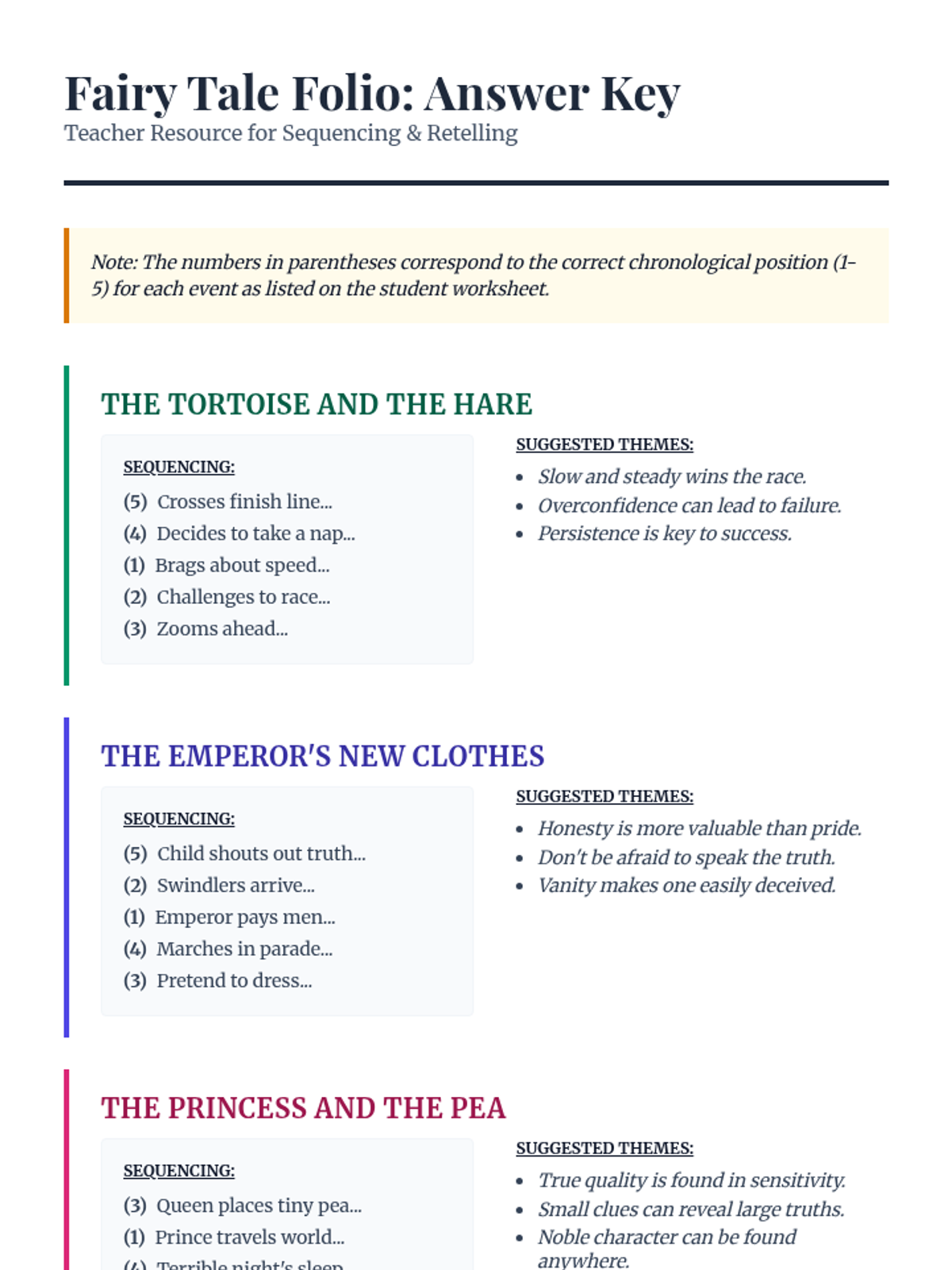
A comprehensive lesson focusing on four classic tales, using sequencing and structured prompts to improve reading comprehension and oral narrative skills.
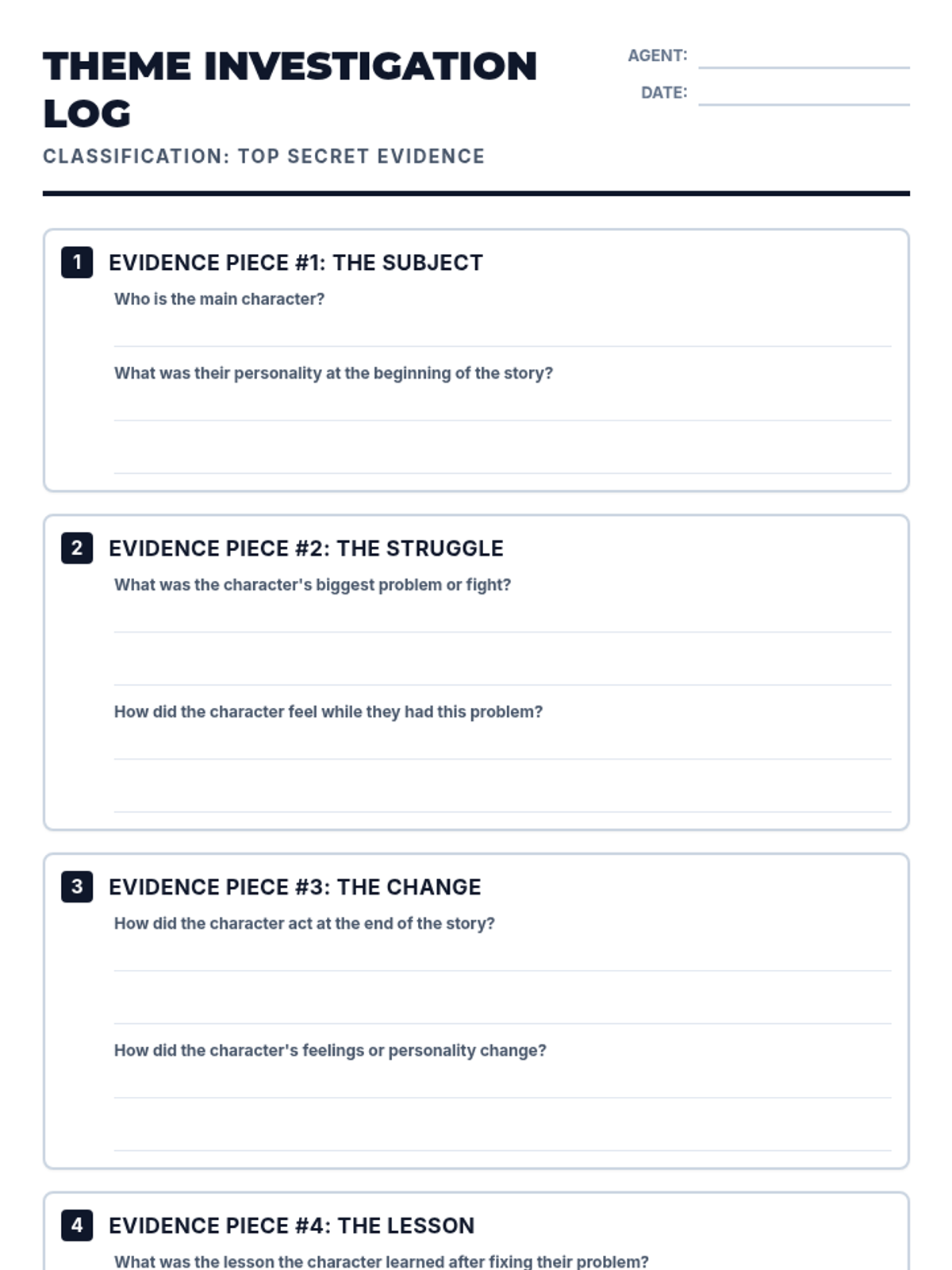
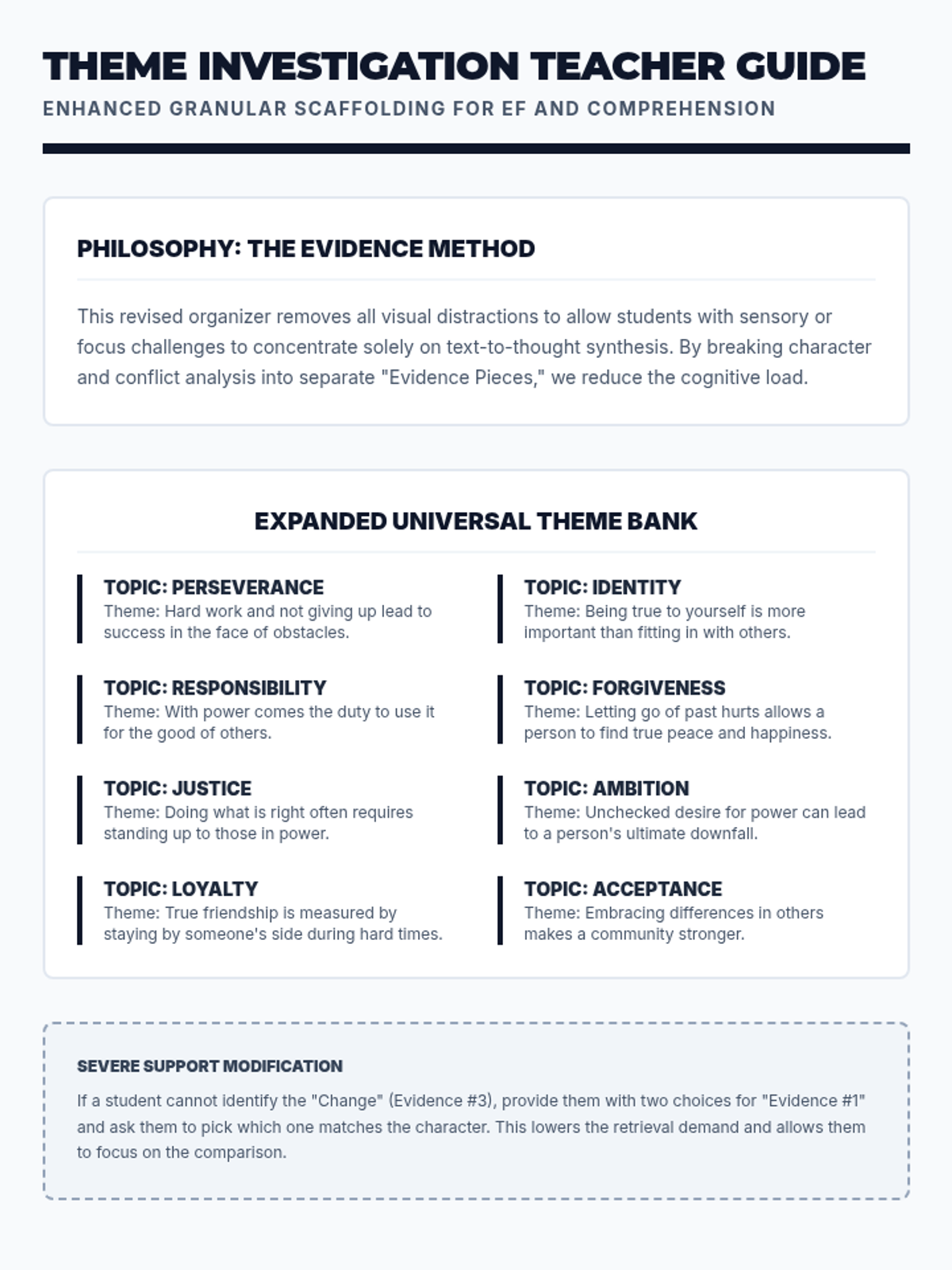
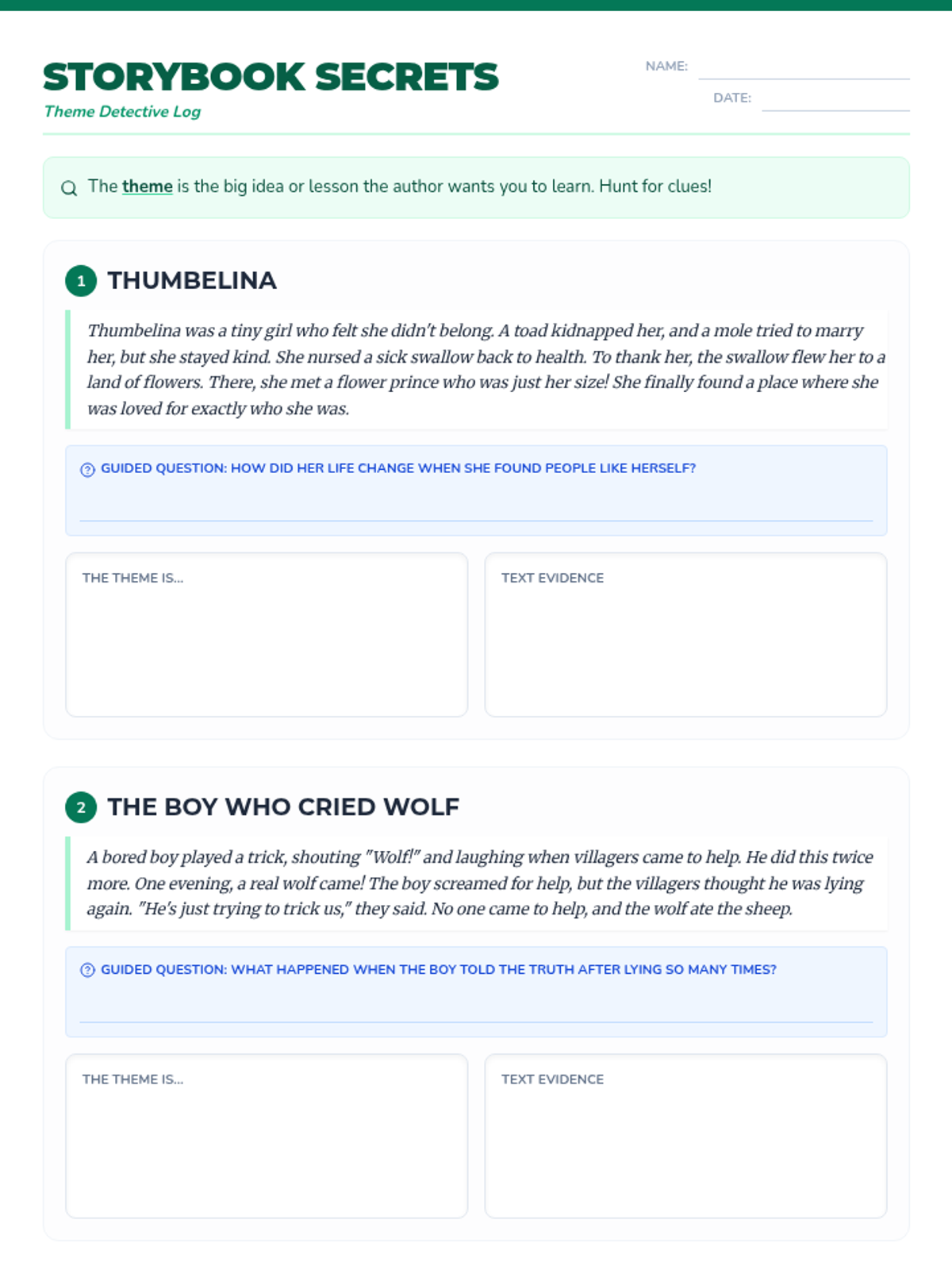
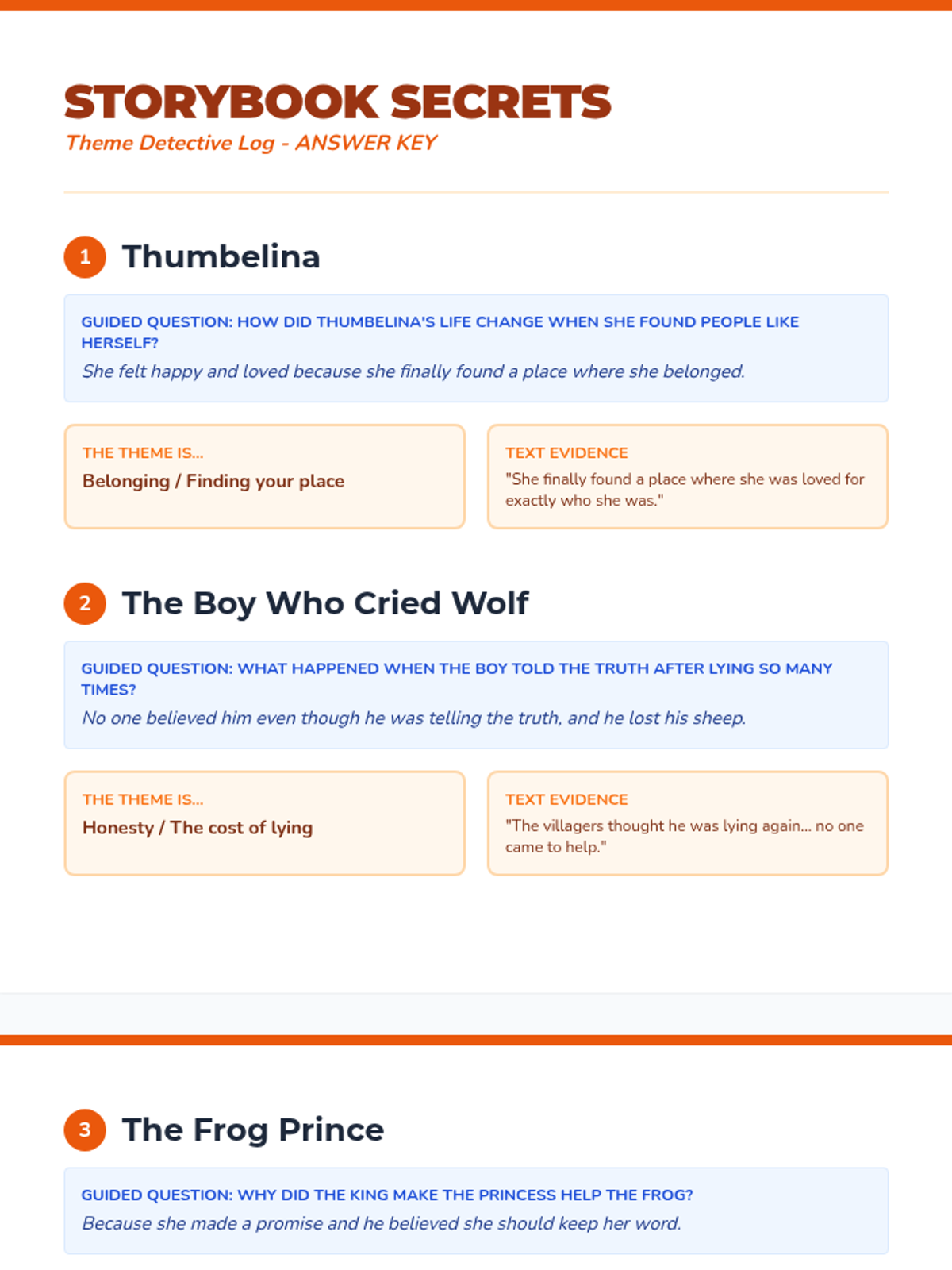
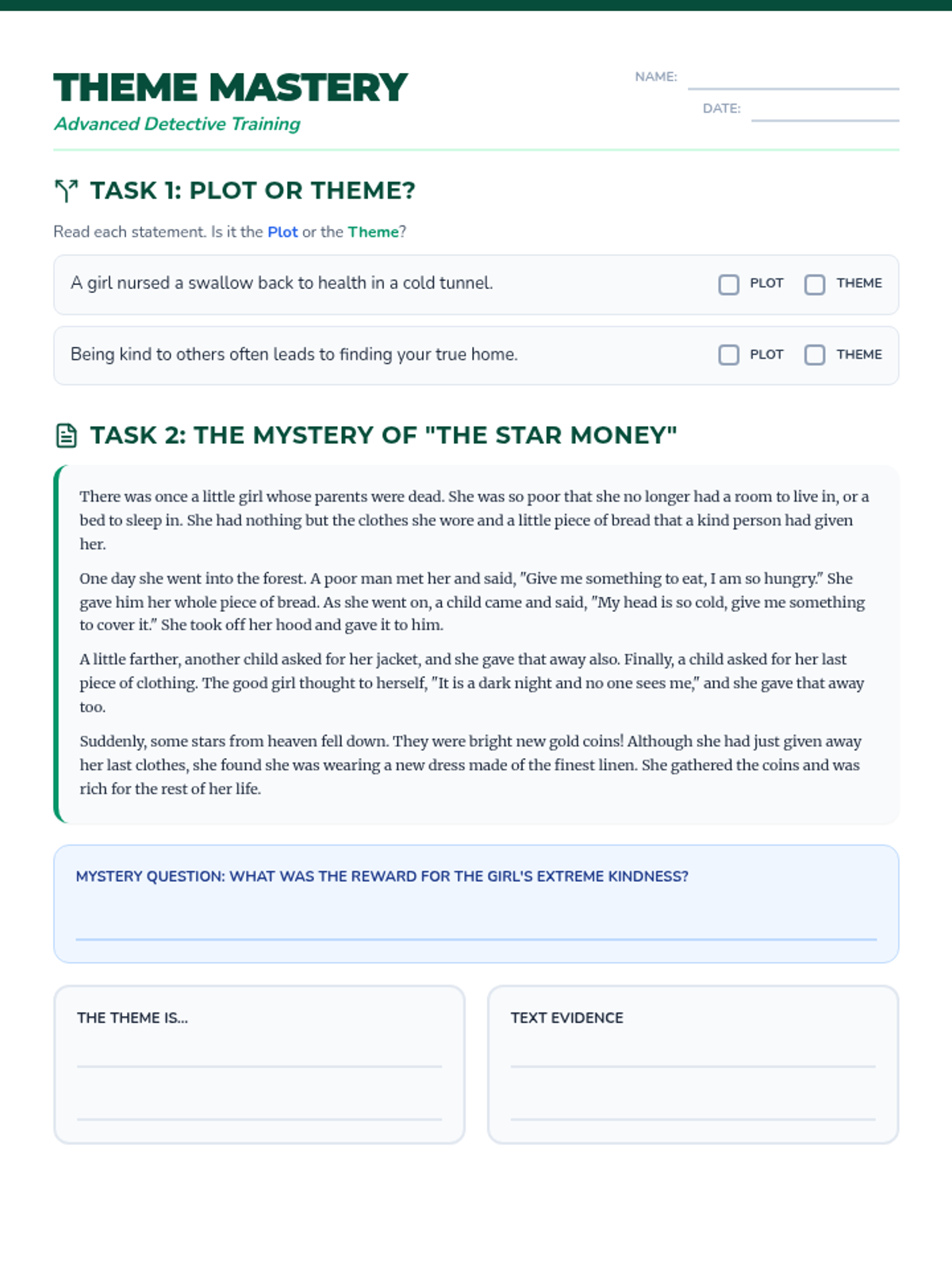
A structured approach to identifying themes in literature using a detective-themed graphic organizer designed for students with executive function and comprehension challenges.
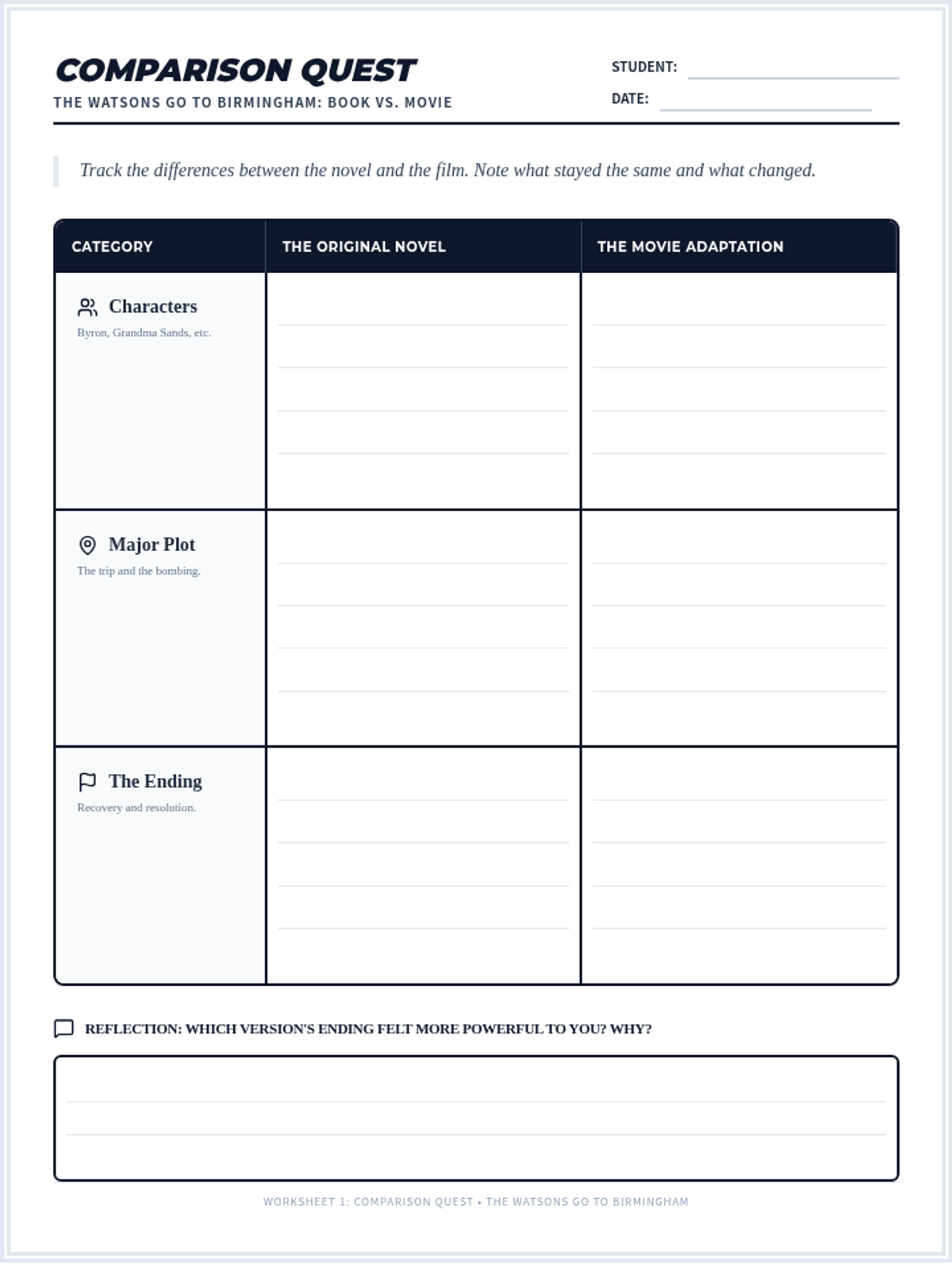
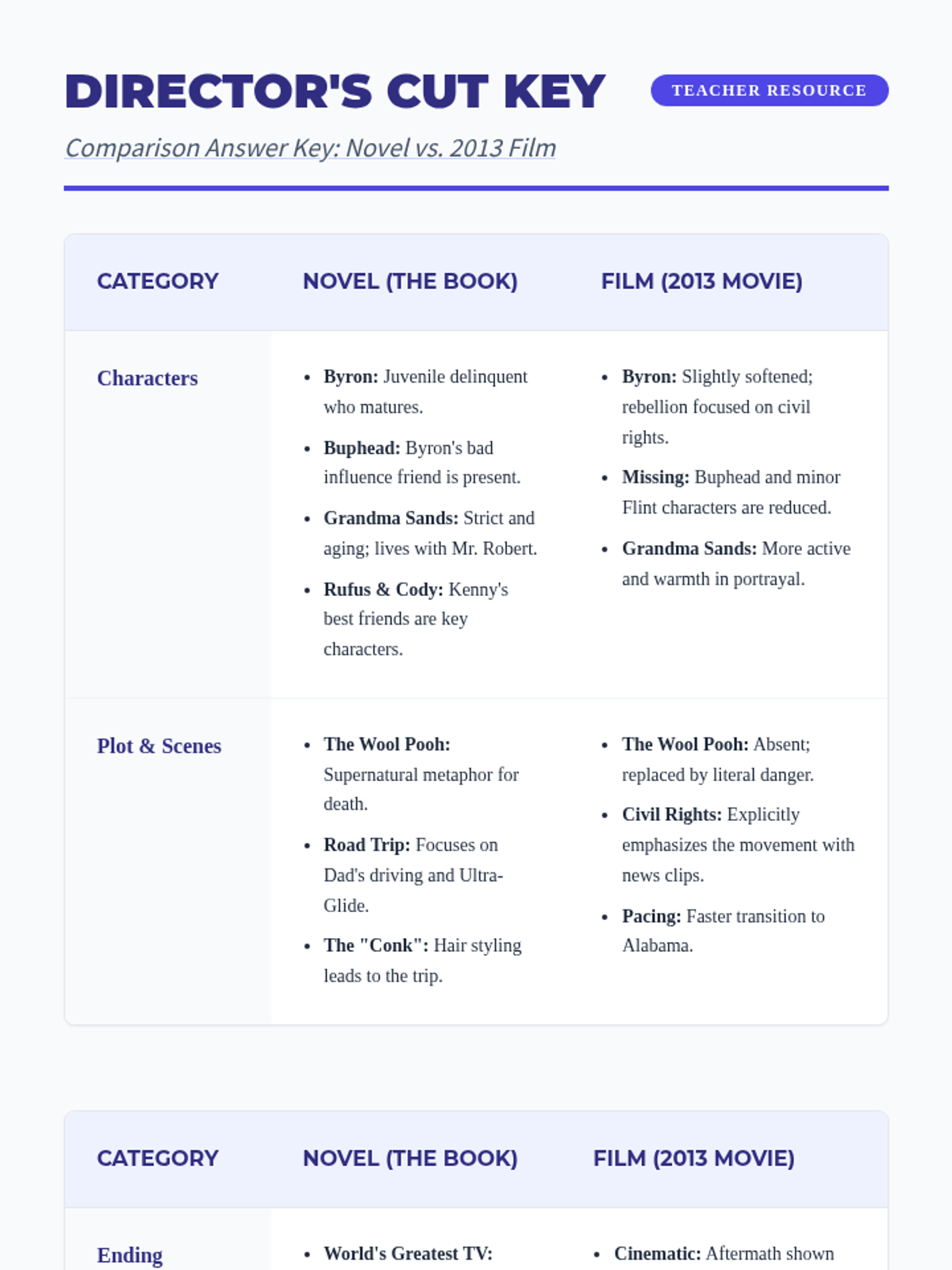
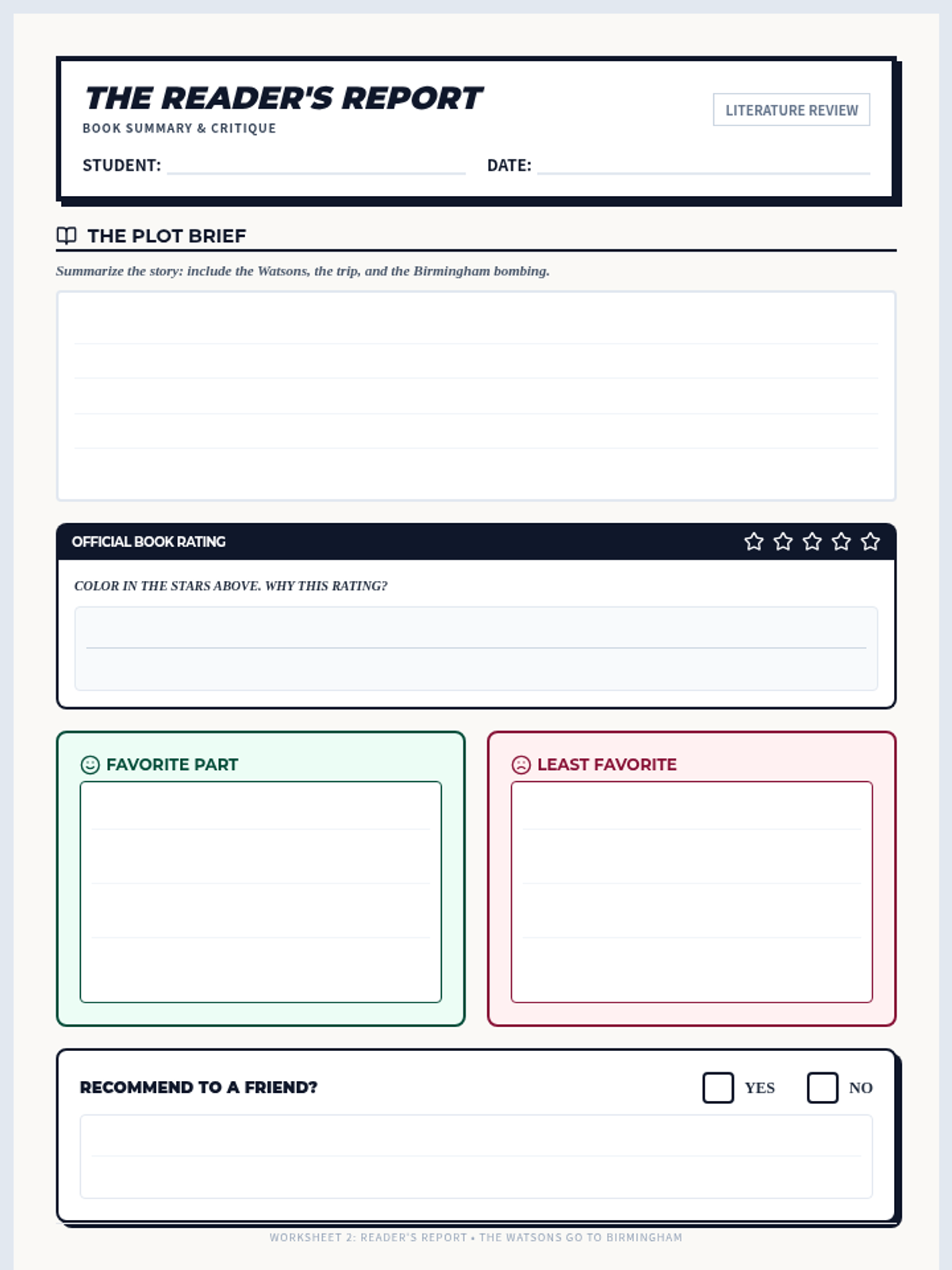
A comprehensive look at the classic novel 'The Watsons Go to Birmingham – 1963', including a complete plot summary and a comparative analysis between the book and its film adaptation.
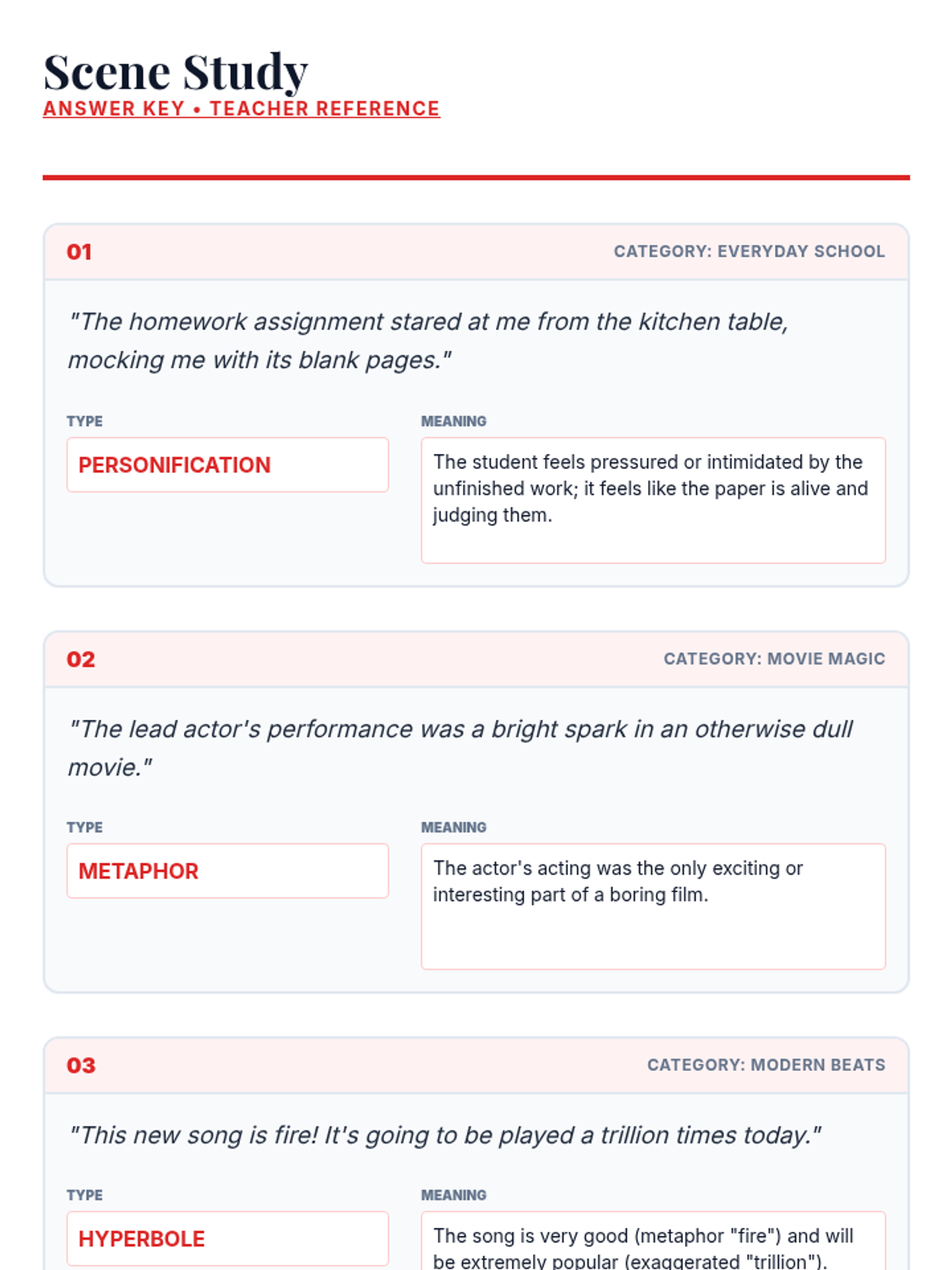
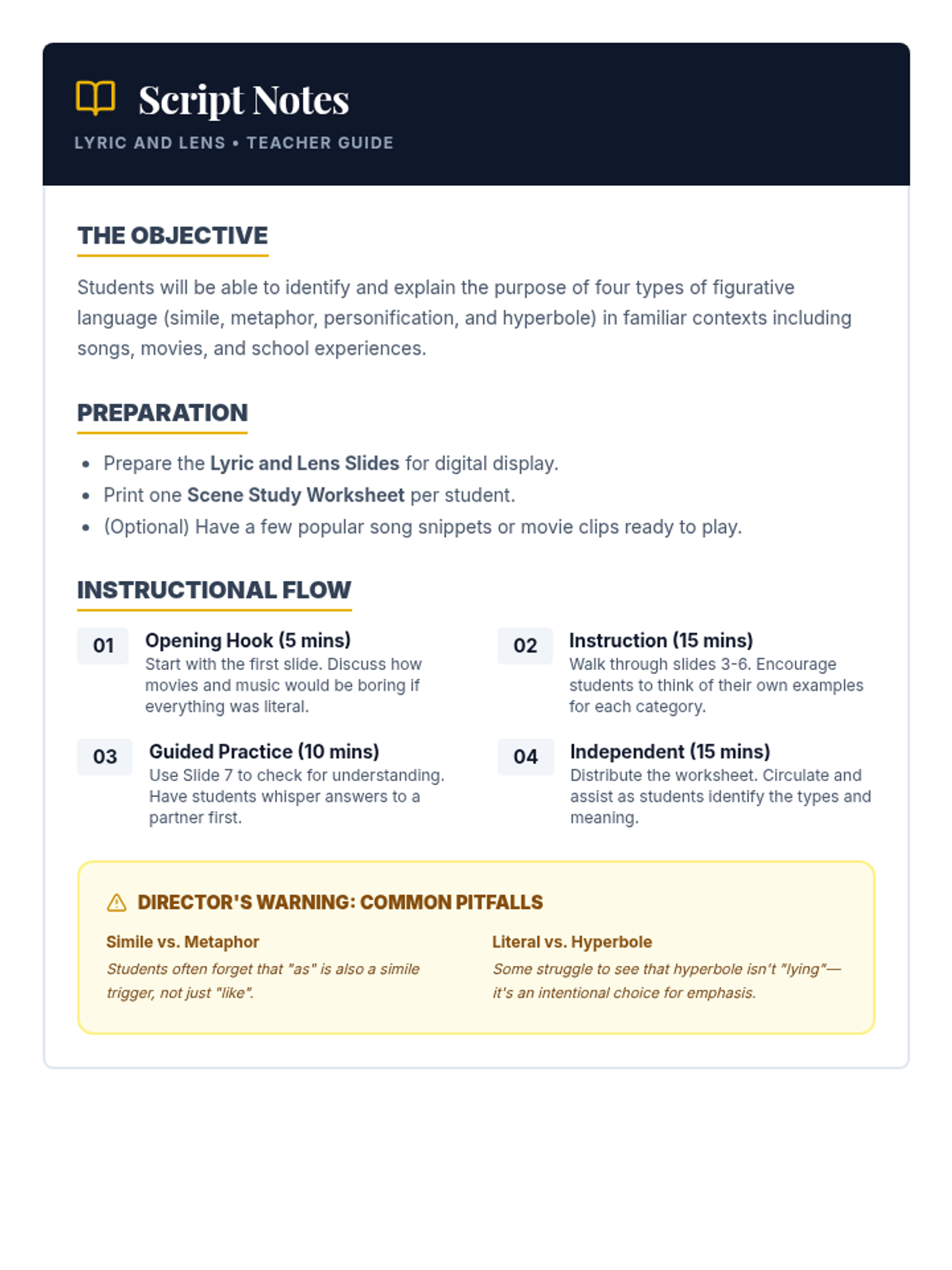
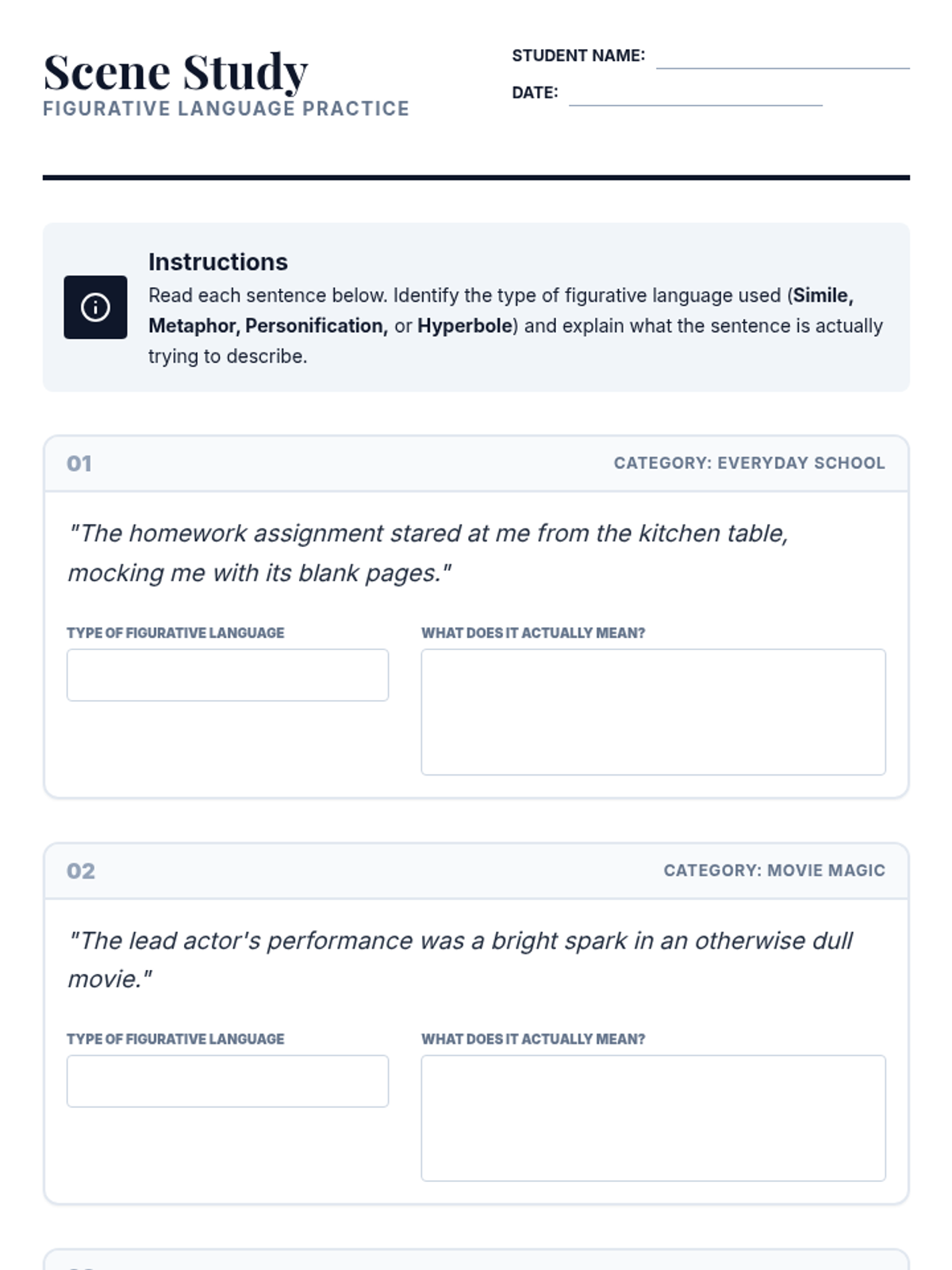
A lesson exploring simile, metaphor, personification, and hyperbole through the lens of popular media and everyday school experiences. Students identify and analyze figurative language in familiar contexts.
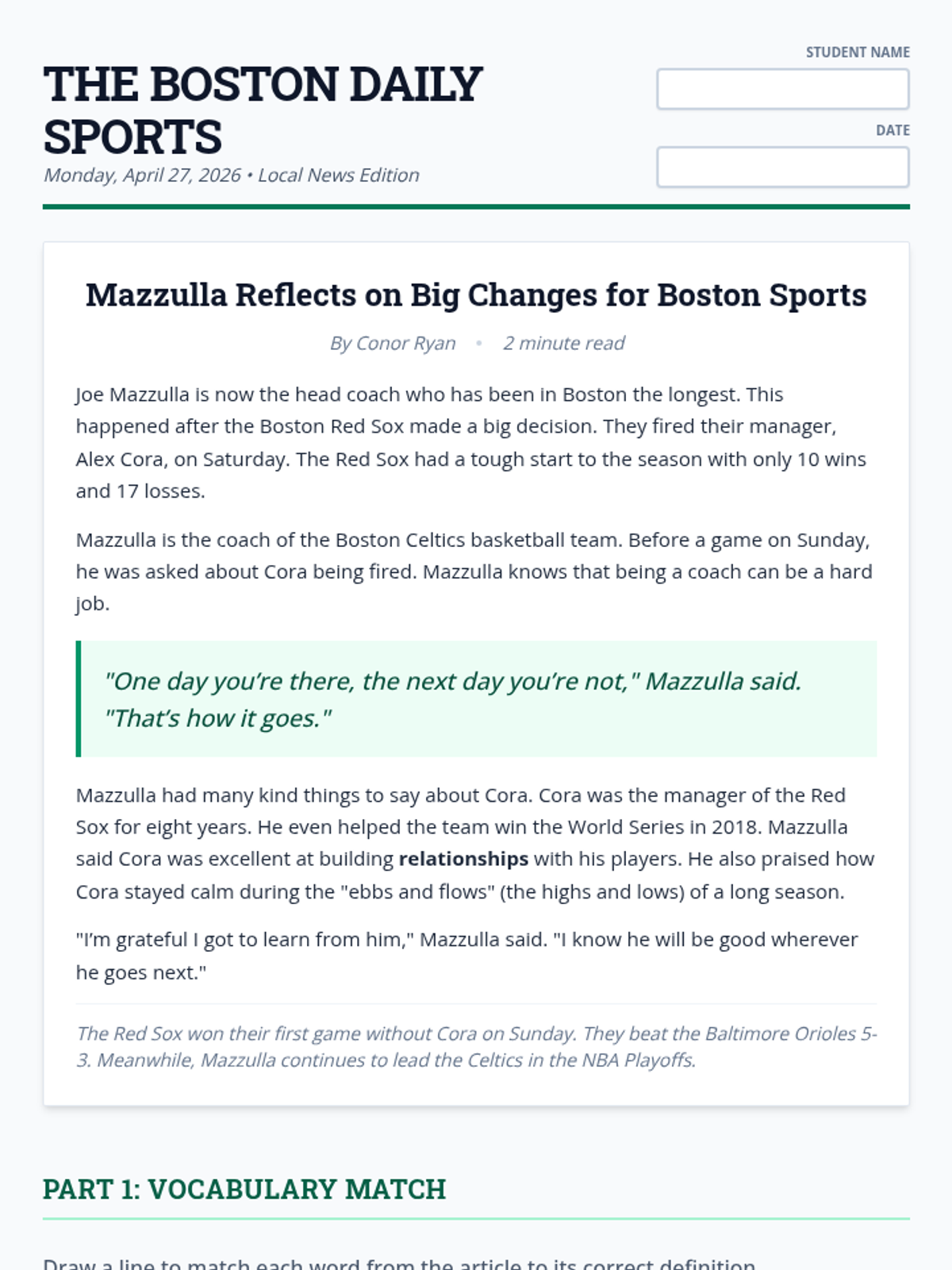
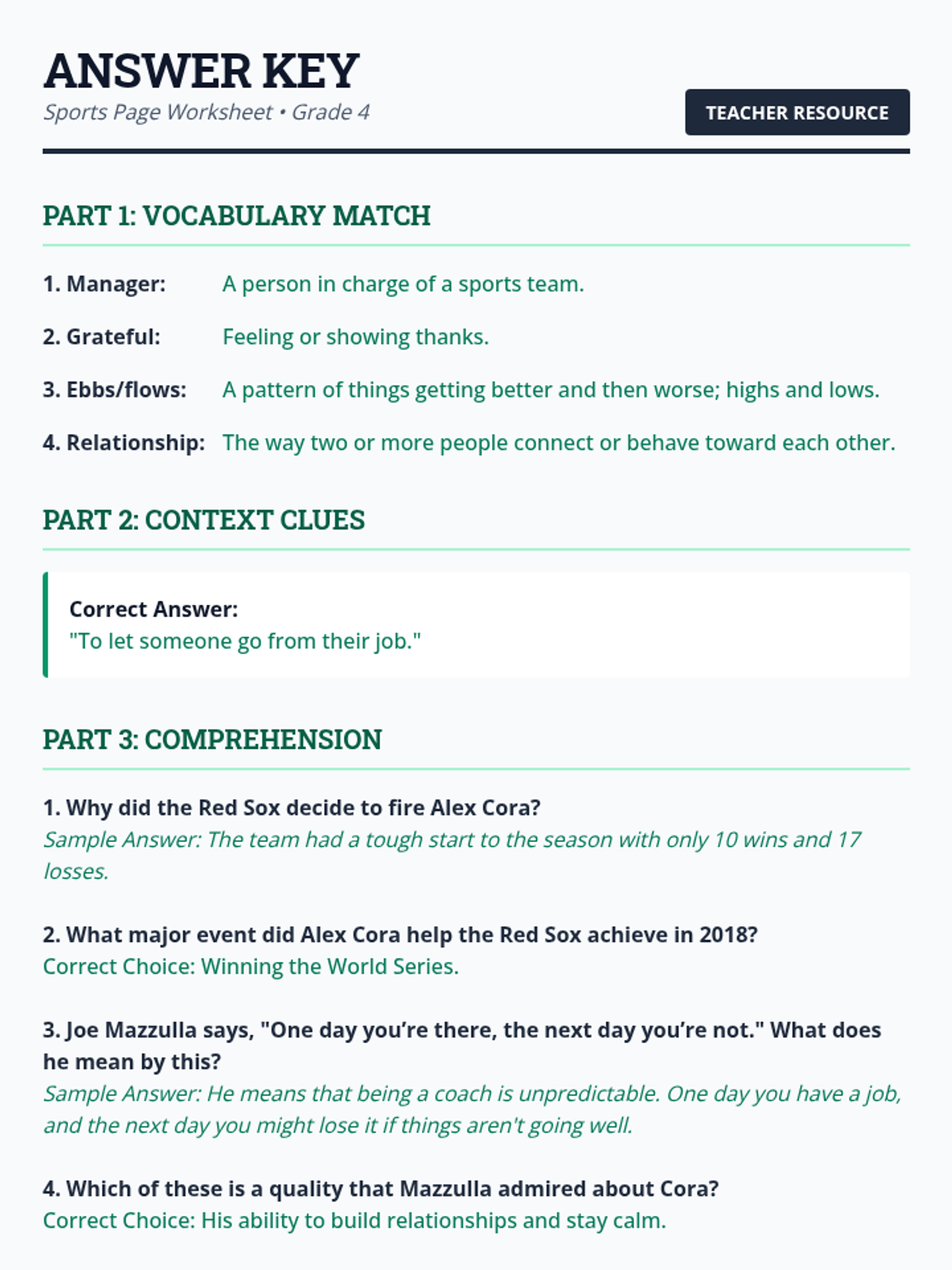
A reading comprehension lesson centered on a local sports news story about coaching changes in Boston, adapted for 4th-grade readers. Students will practice identifying key details, understanding vocabulary in context, and making inferences from quotes.
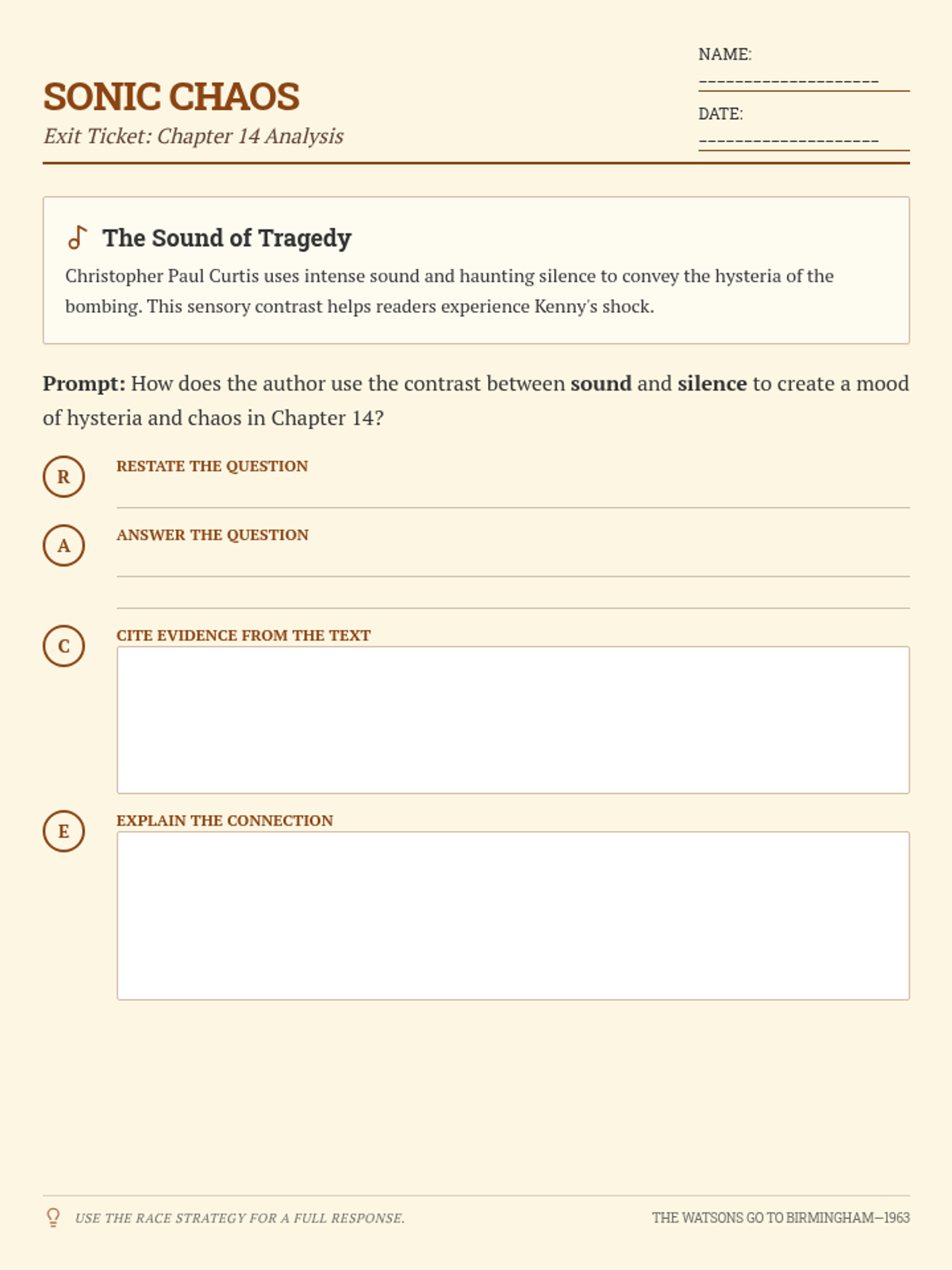
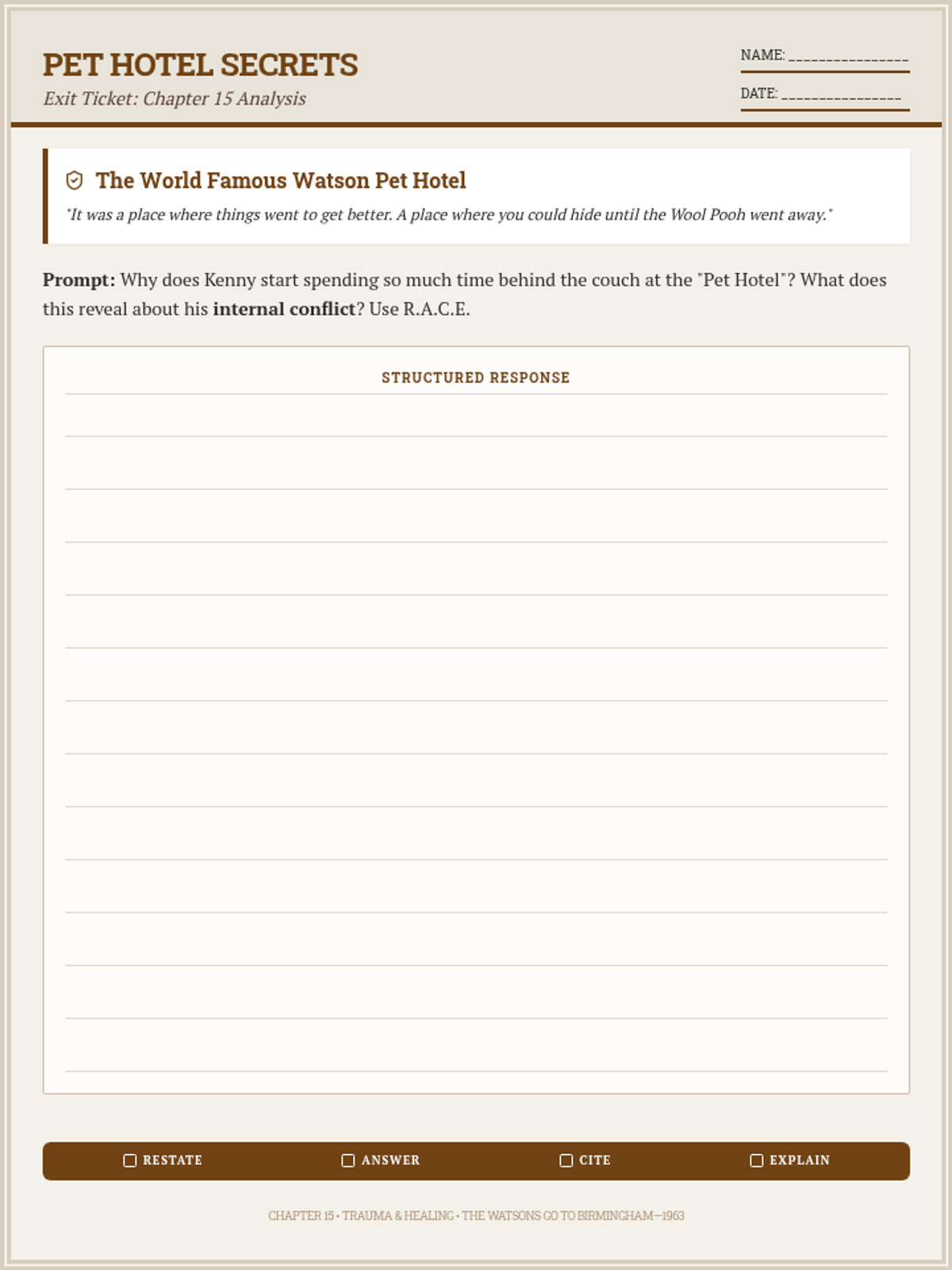
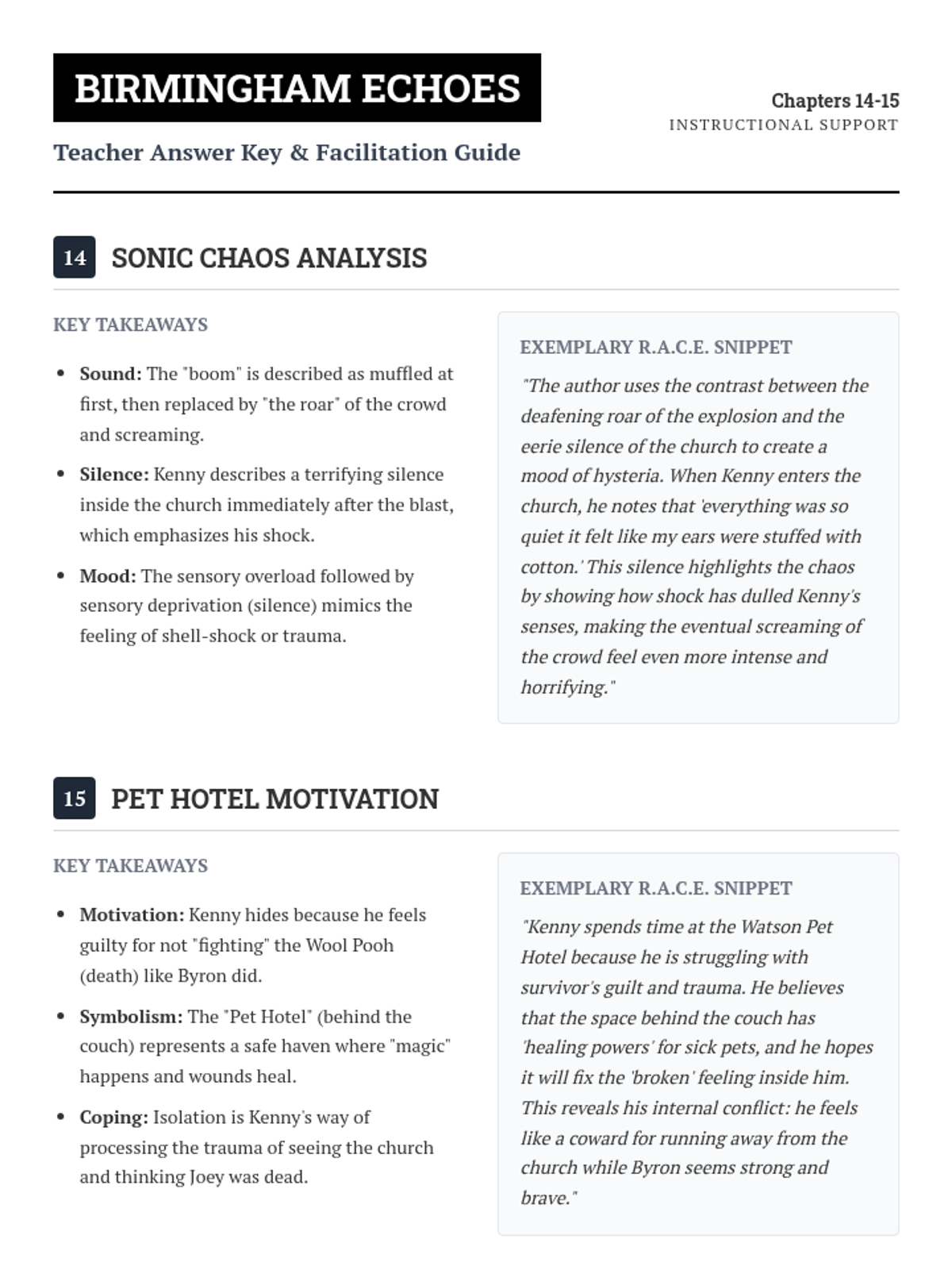
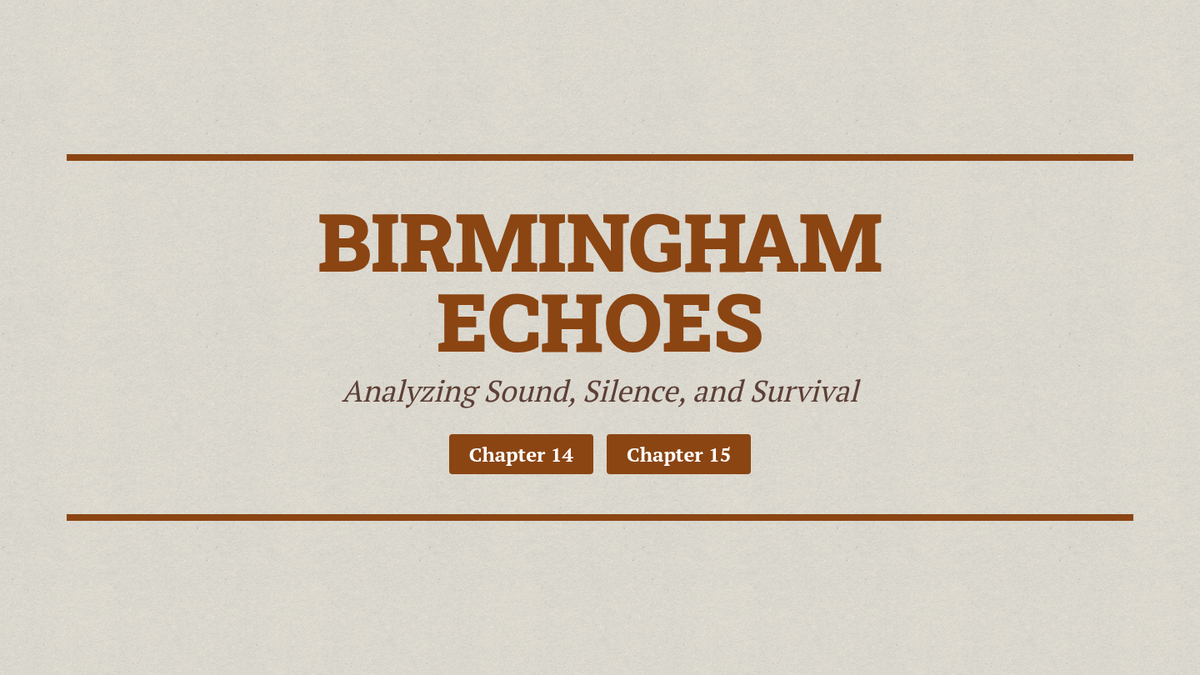
A deep dive into Chapters 14 and 15 of *The Watsons Go to Birmingham—1963*, focusing on the emotional aftermath of the church bombing and Kenny's internal struggle through mood analysis and character motivation.
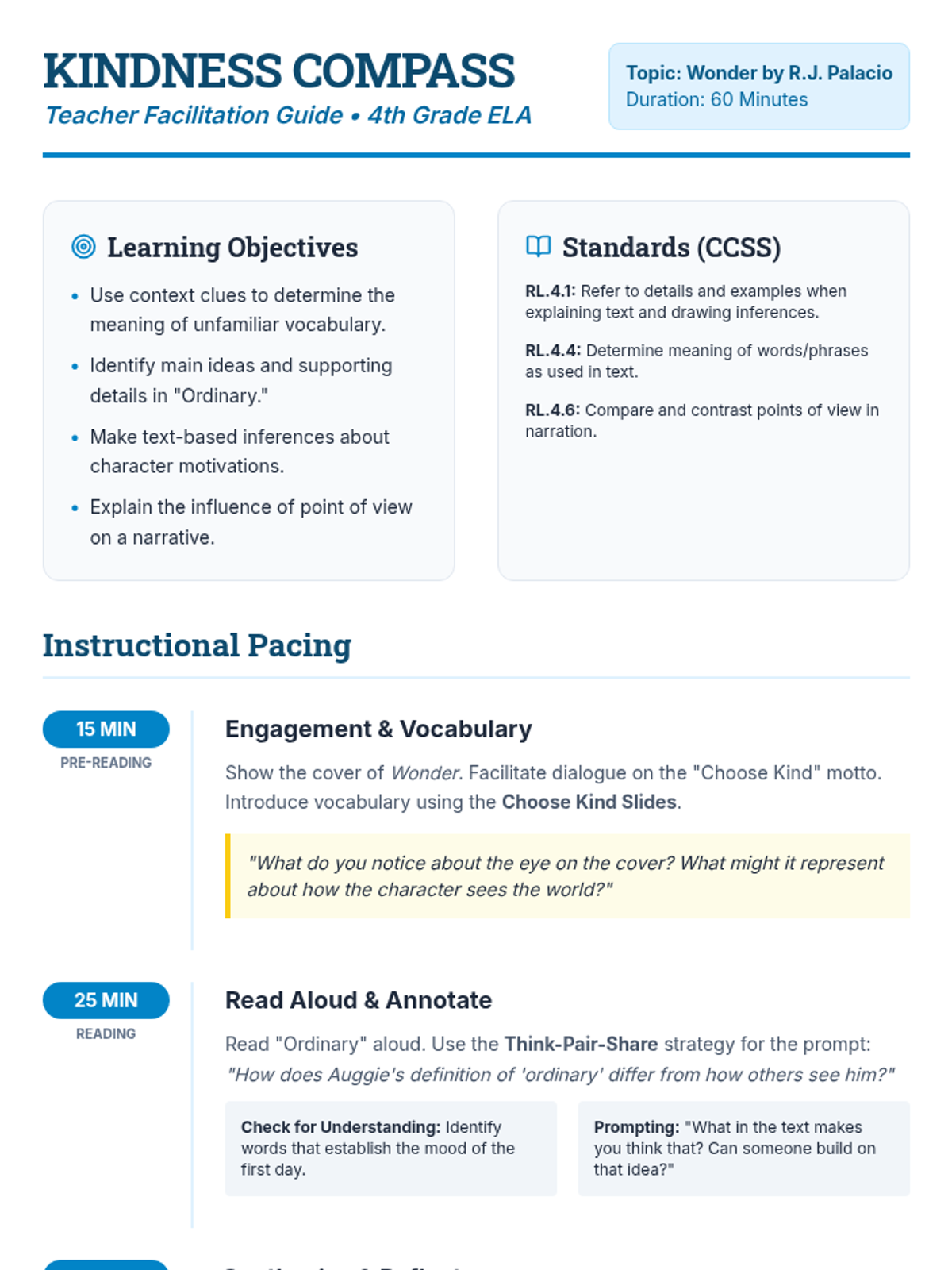
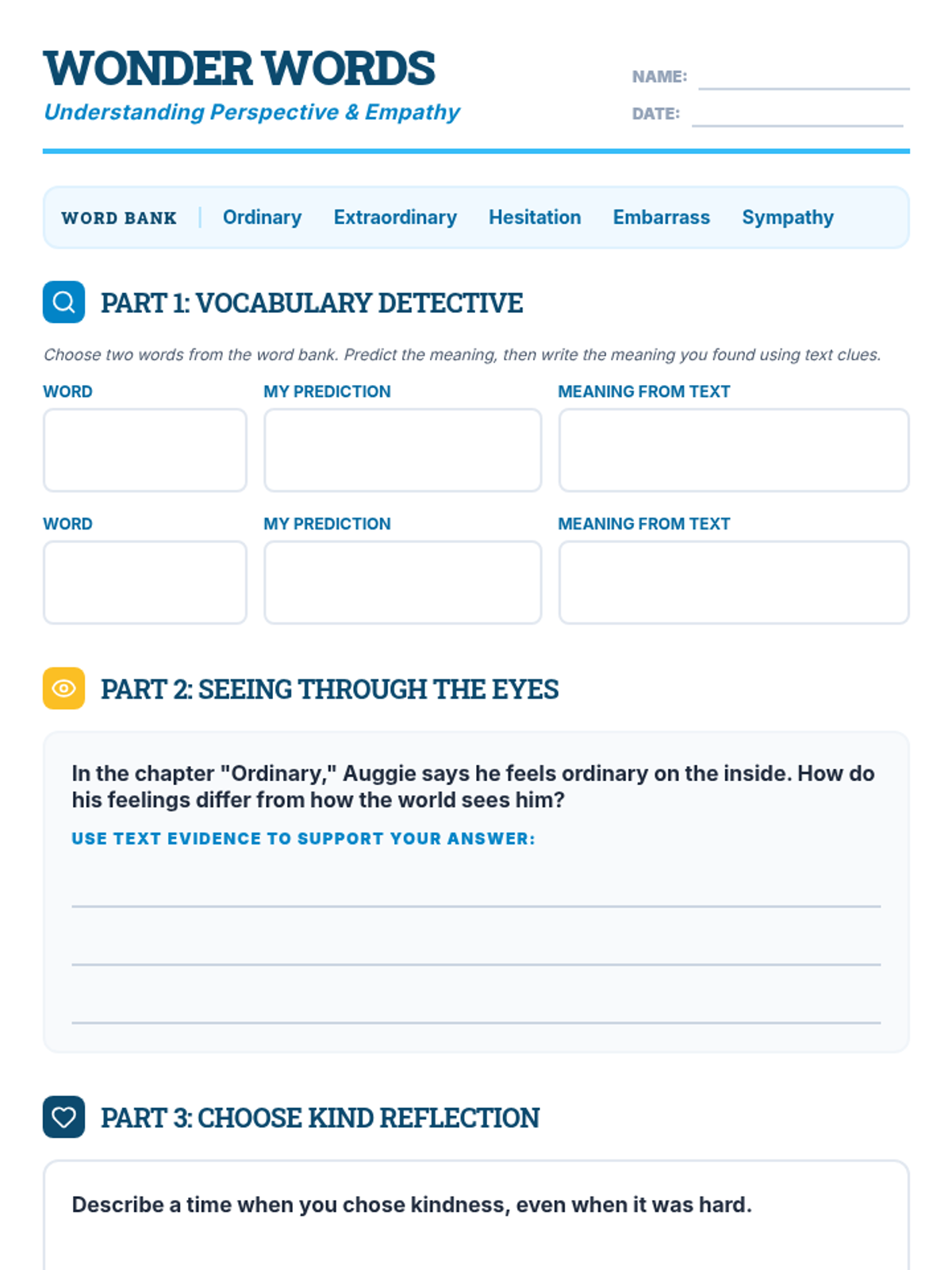
A literature-based ELA lesson for 4th grade focused on empathy, vocabulary, and perspective using R.J. Palacio's 'Wonder'. Students explore the concept of being 'ordinary' versus 'extraordinary' while building core literacy skills.
A lesson focused on identifying themes in classic fairy tales through text evidence and guided analysis for elementary students.
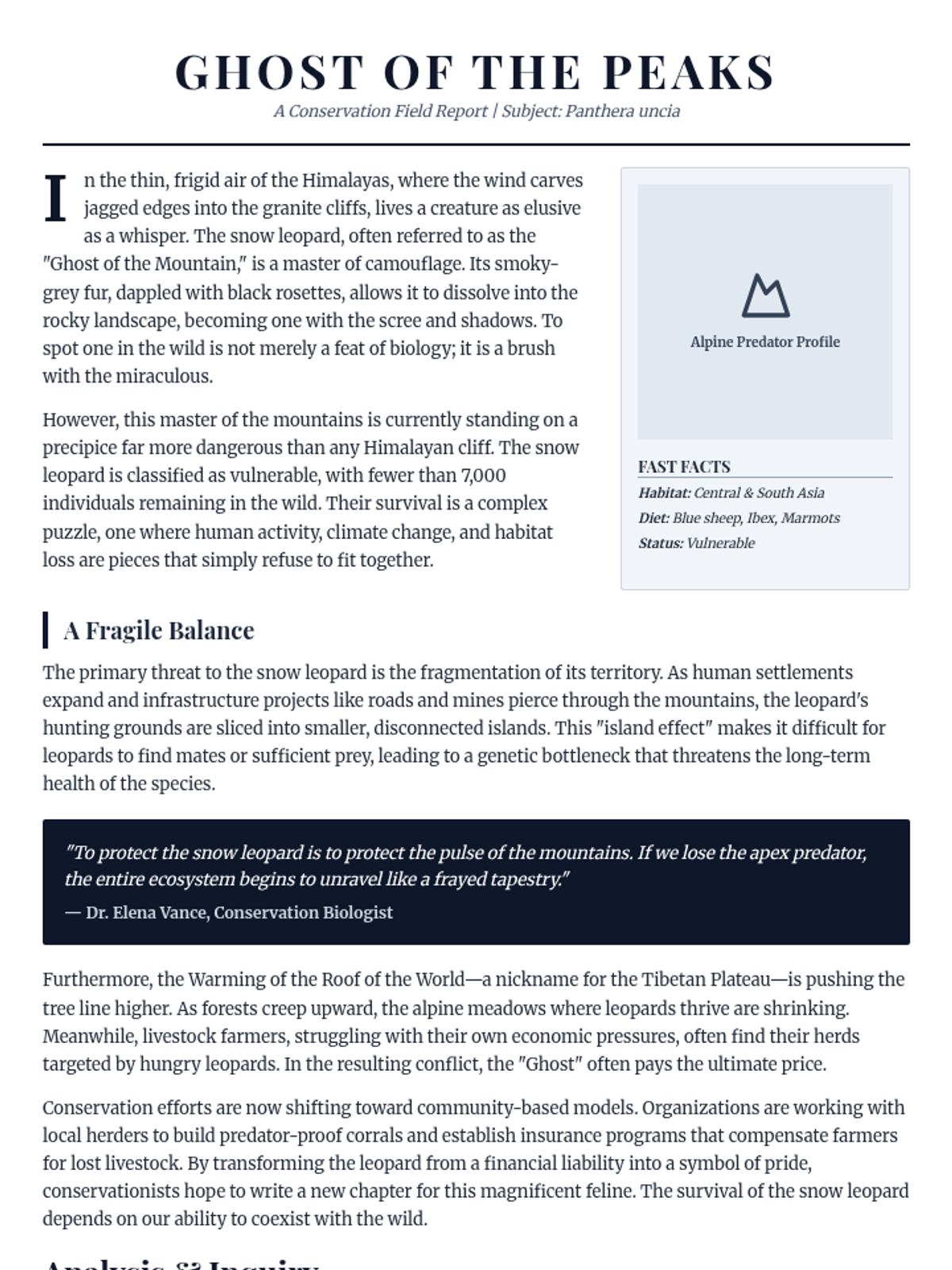
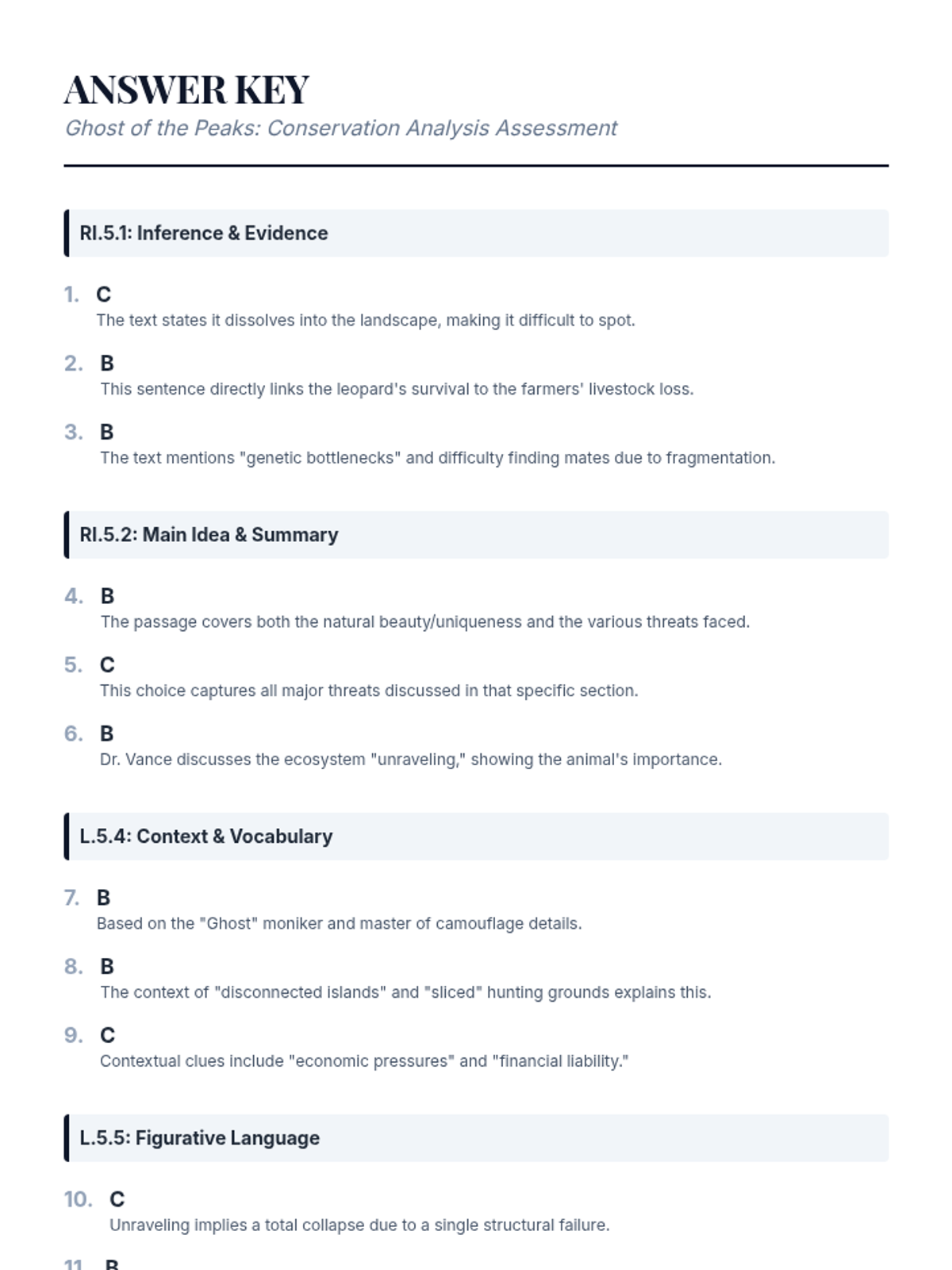
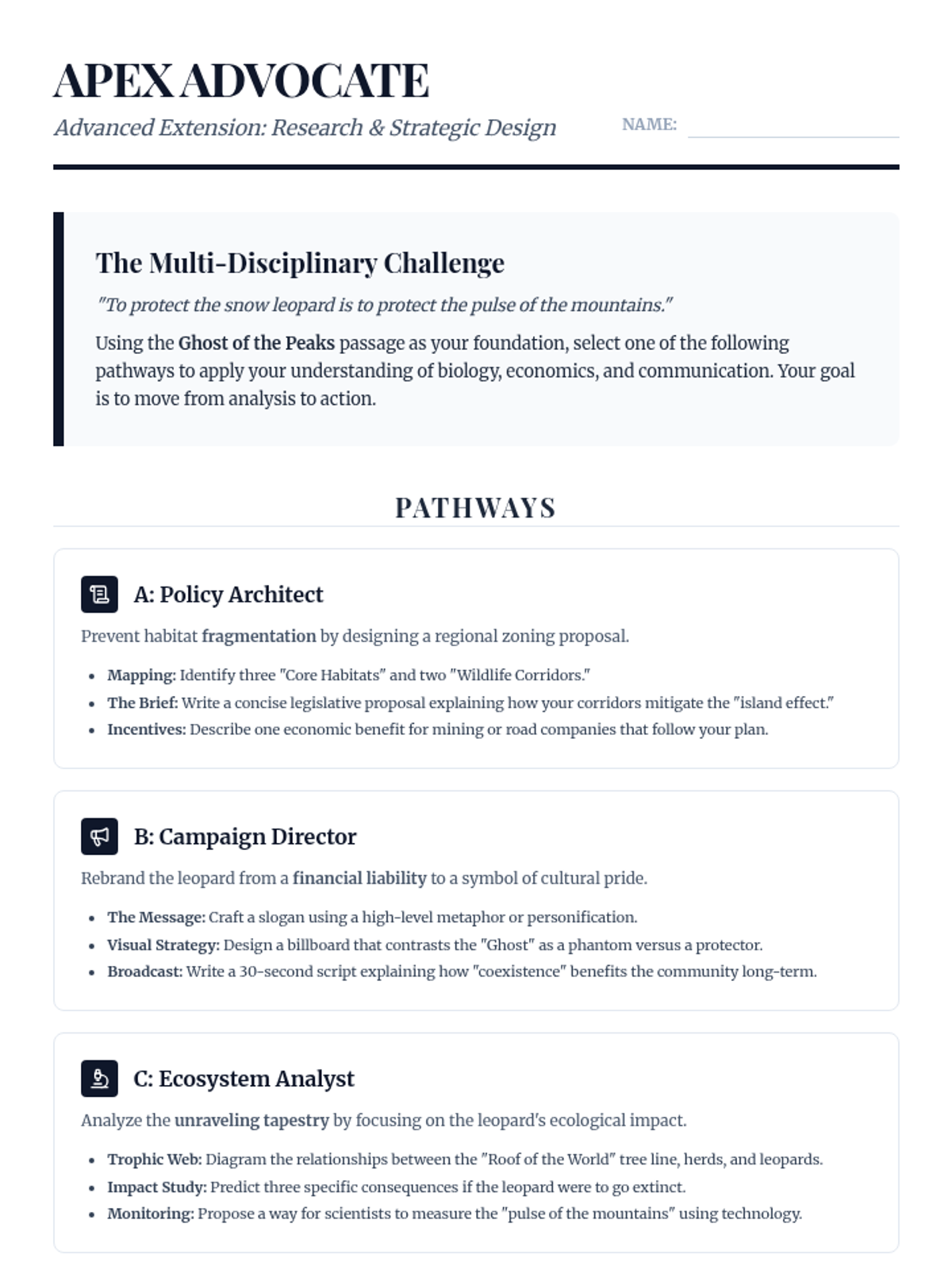
A high-level reading comprehension lesson focused on endangered species, specifically the snow leopard. Students will analyze complex text for main ideas, nuanced vocabulary, and figurative language.
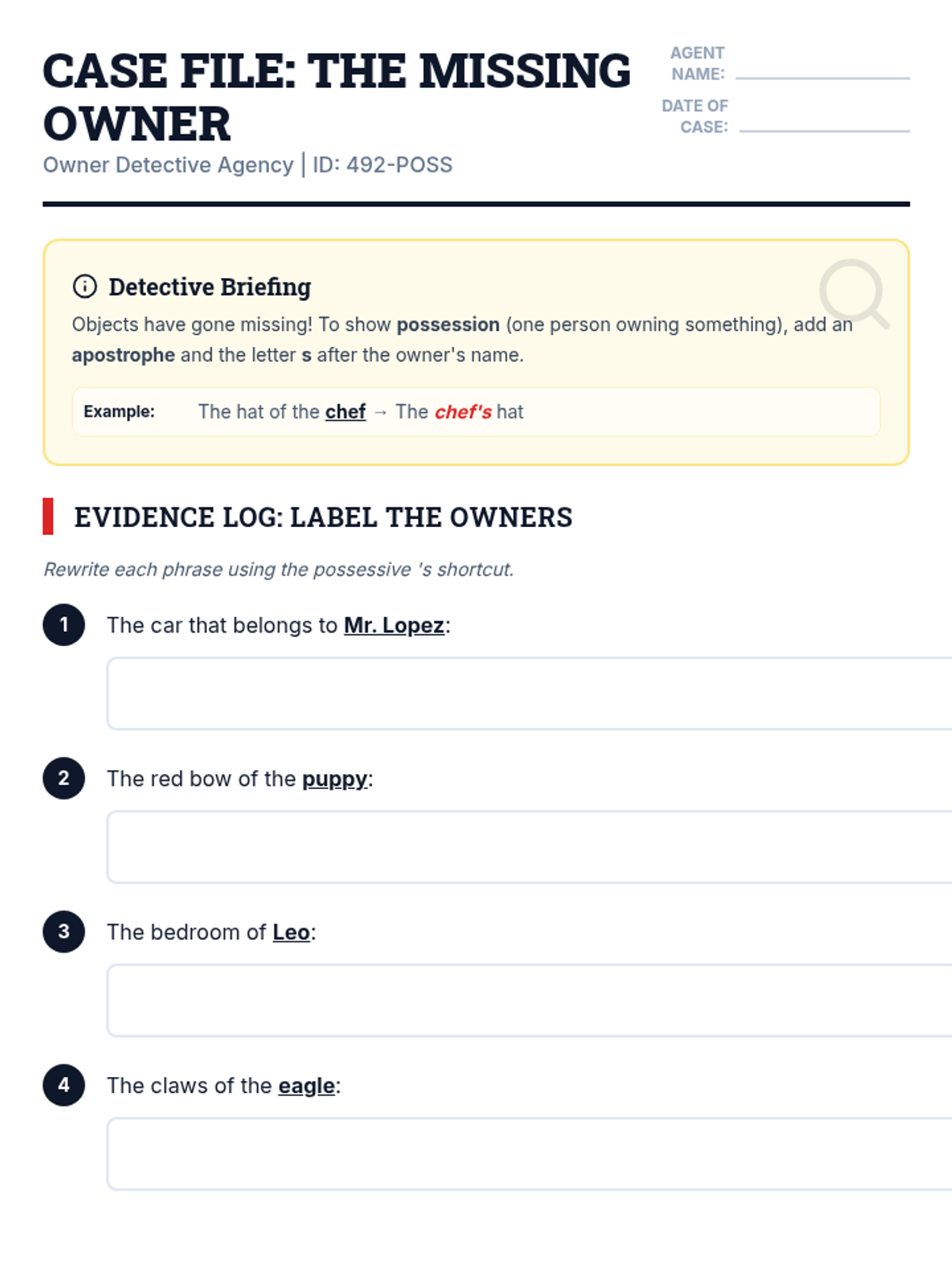
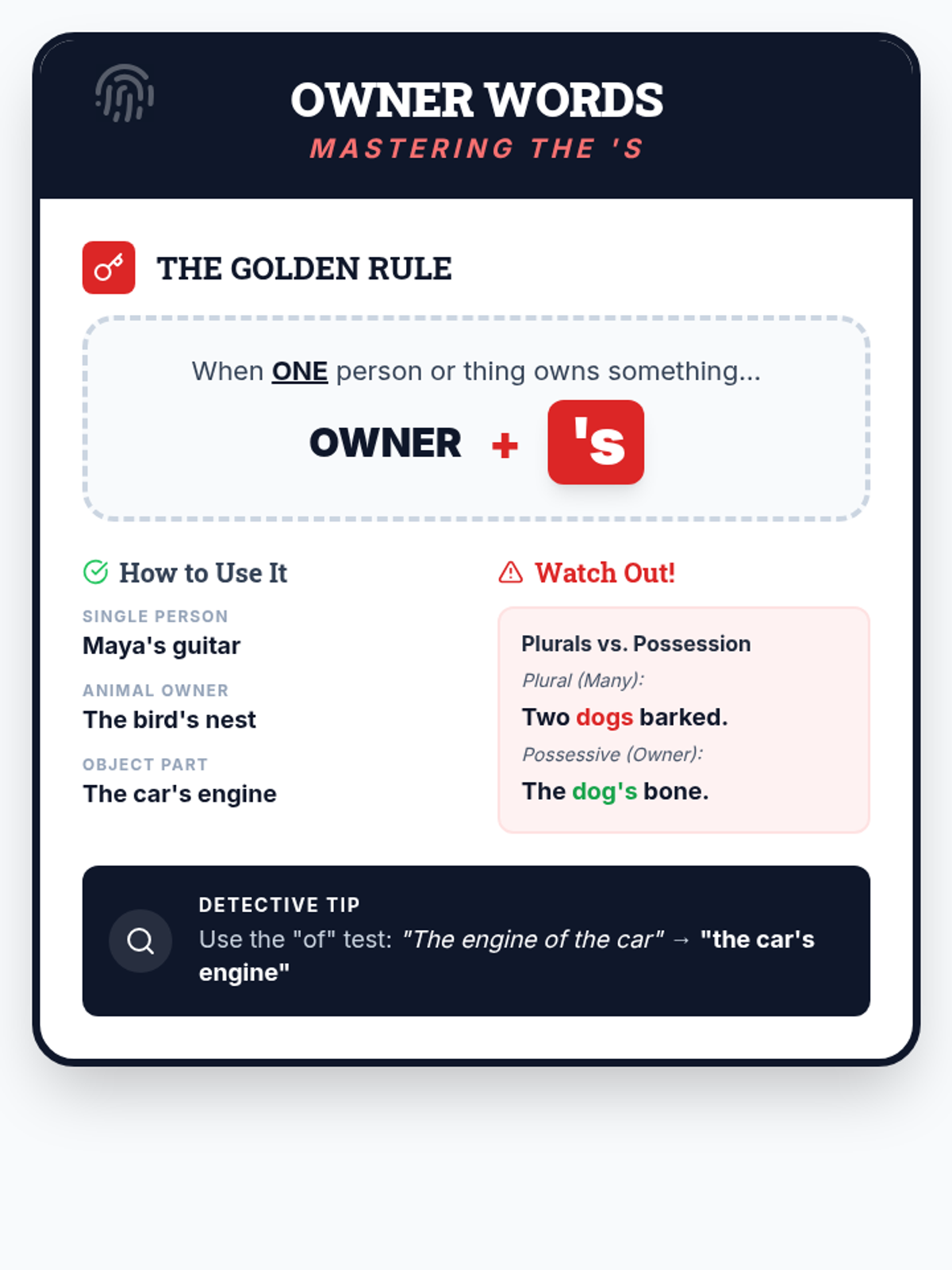
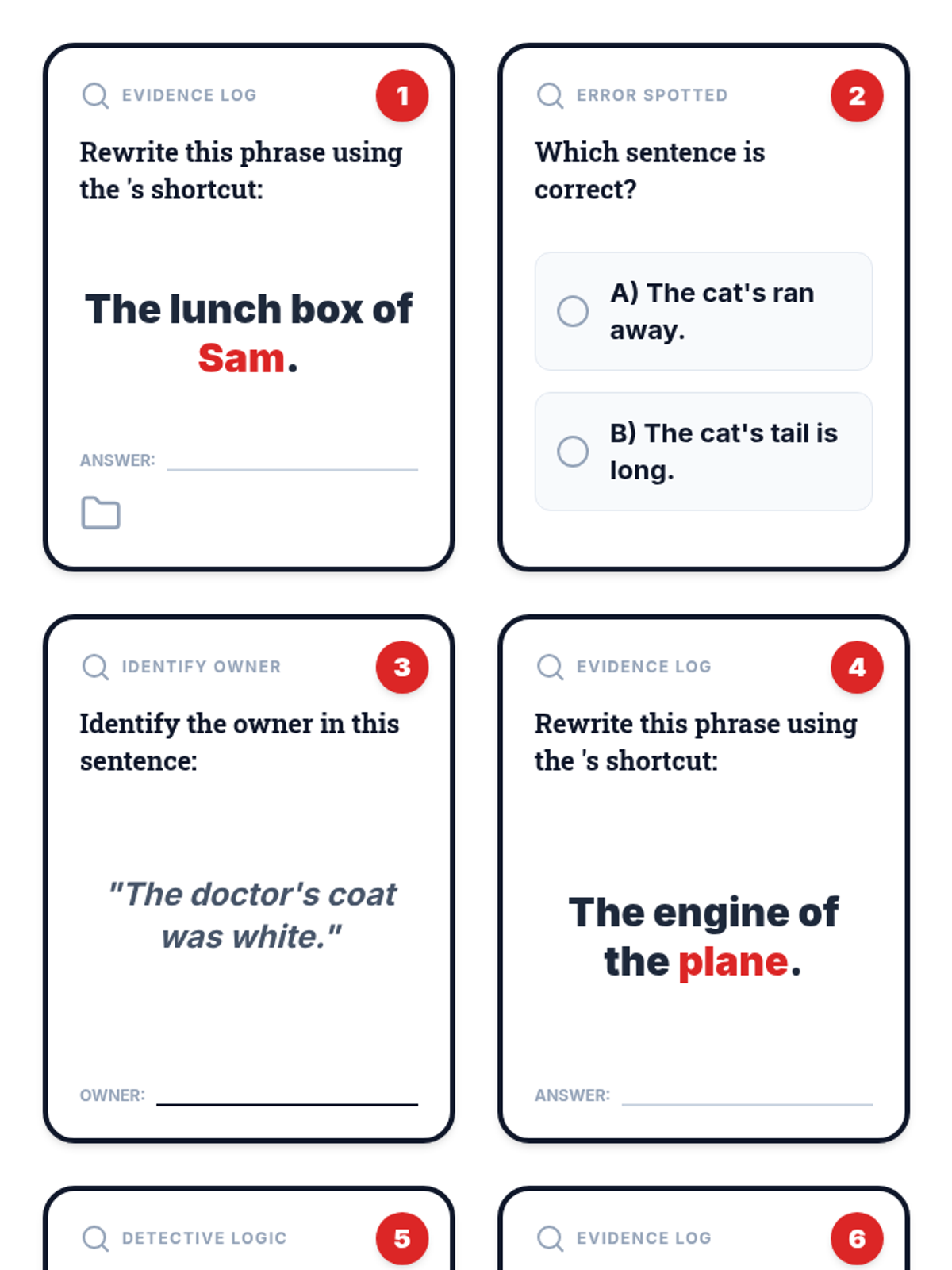
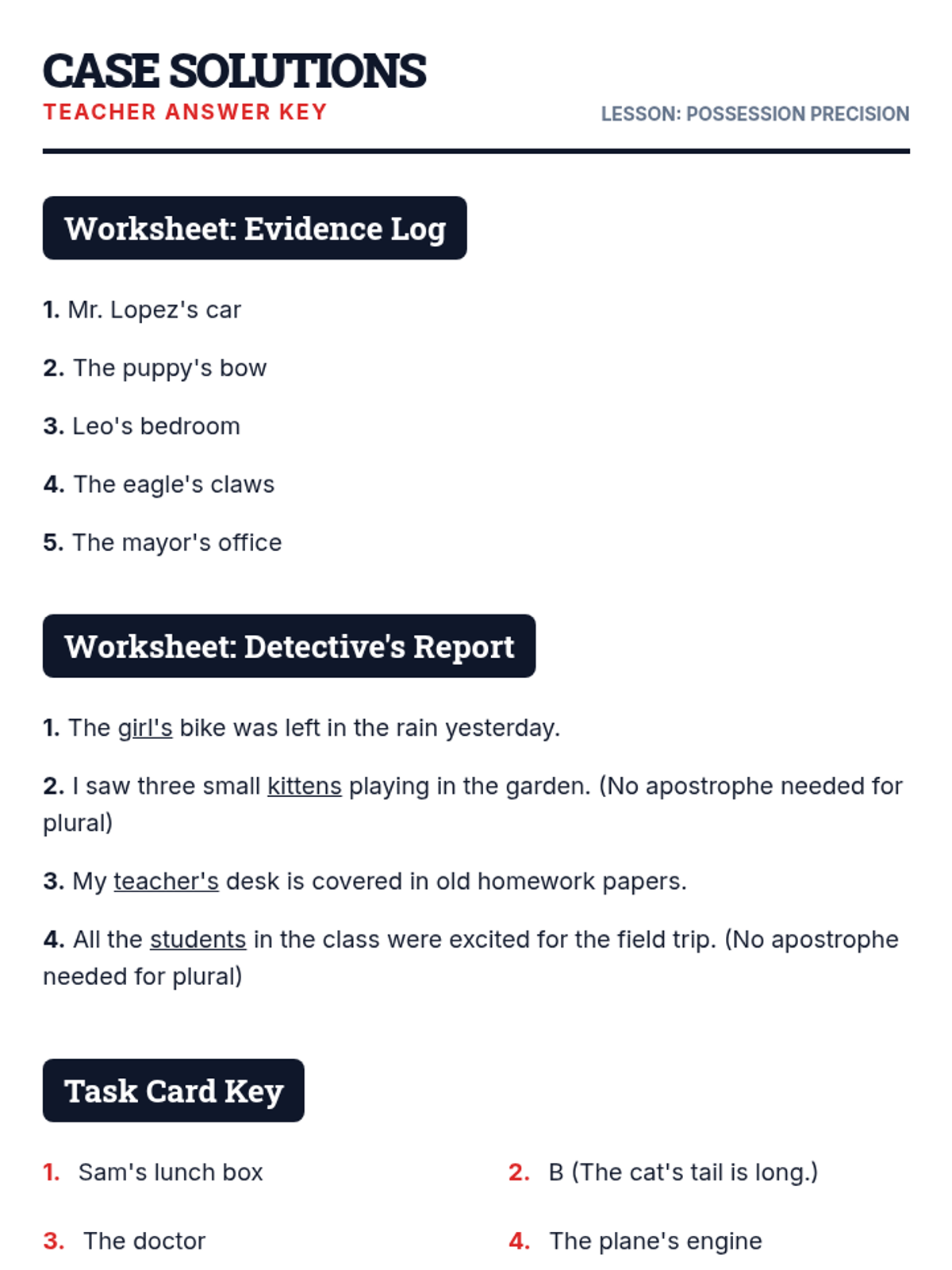
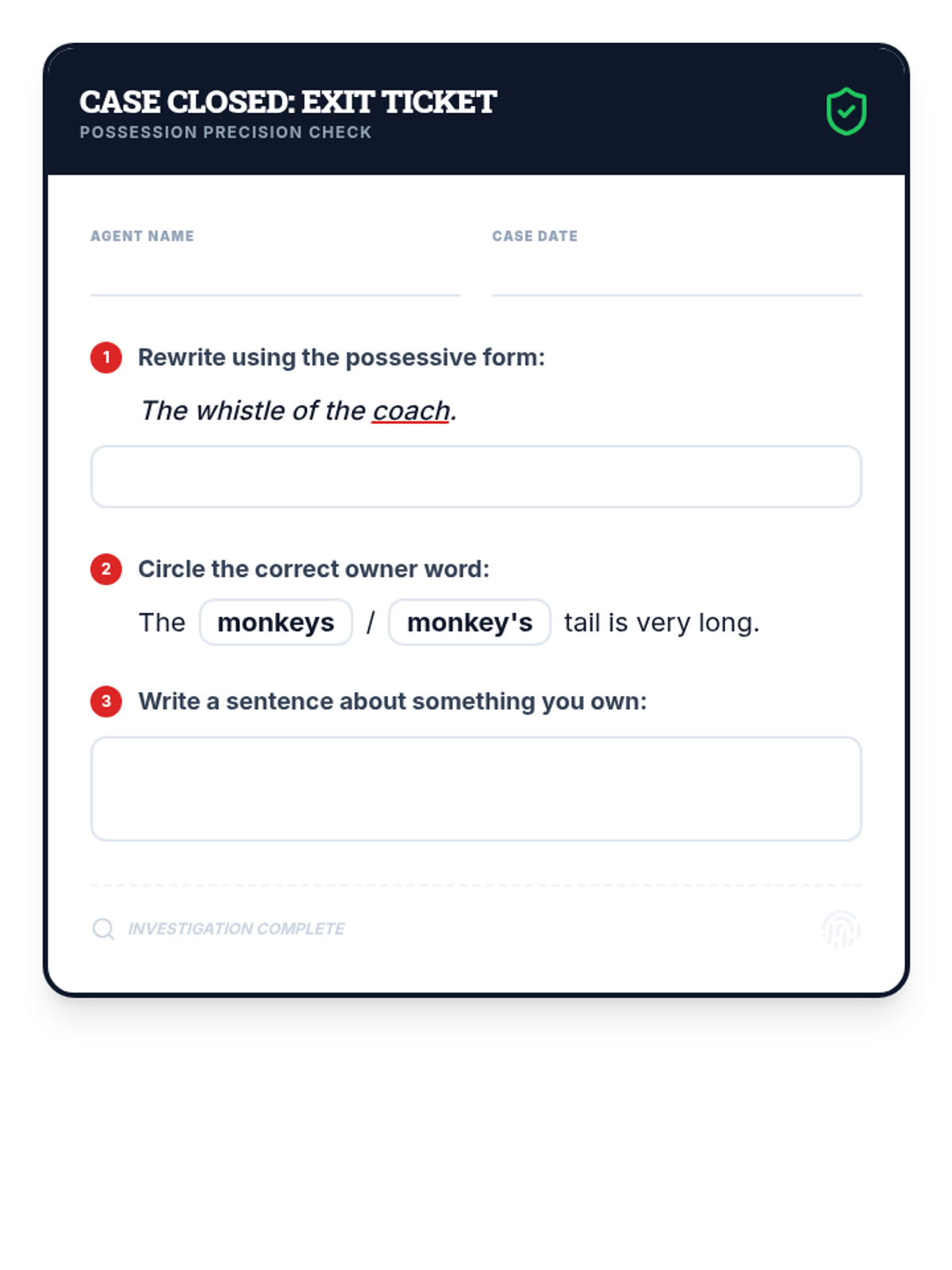
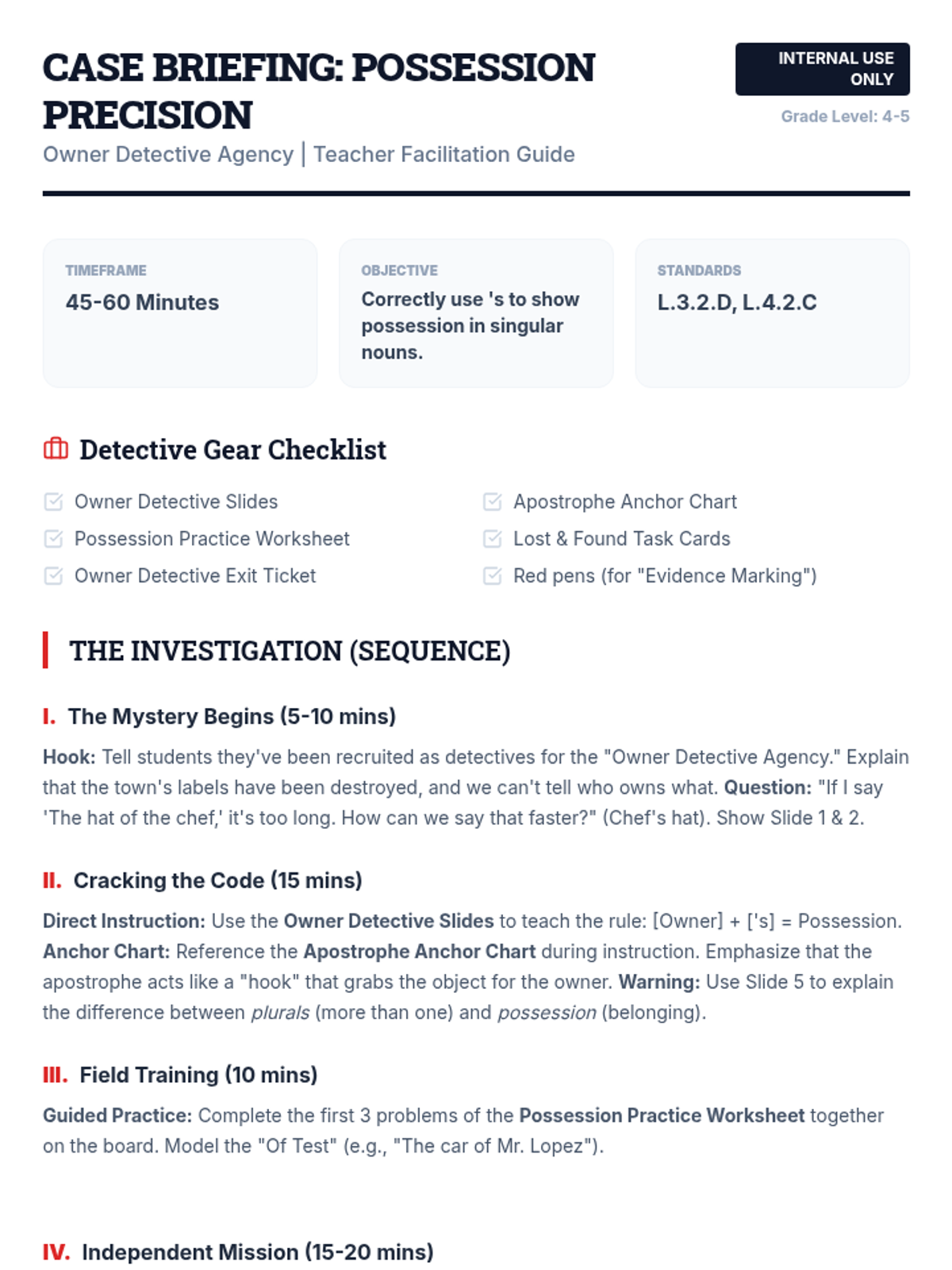
Students learn to identify owners and use 's correctly to show possession through guided practice and independent detective-themed activities.
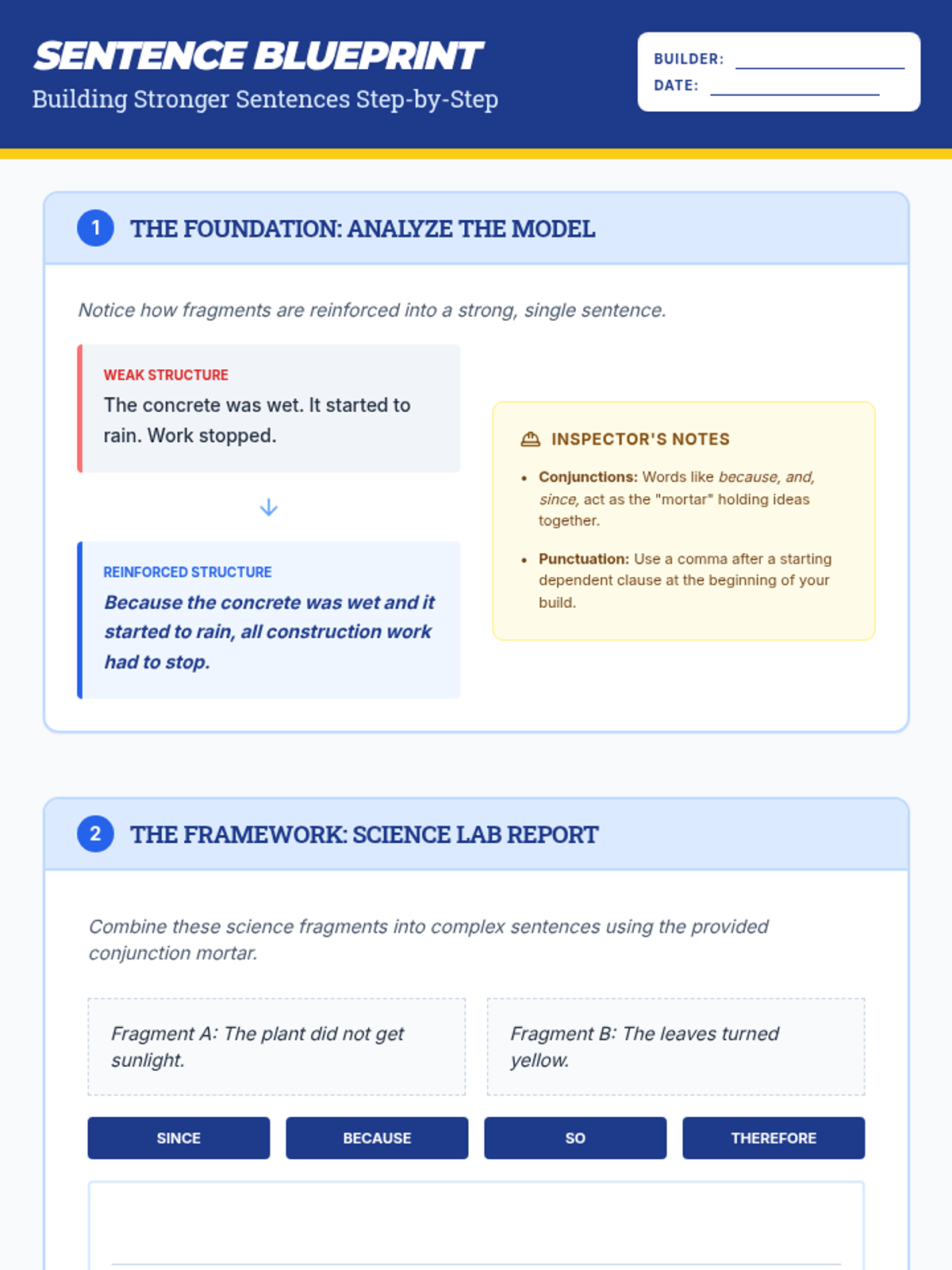
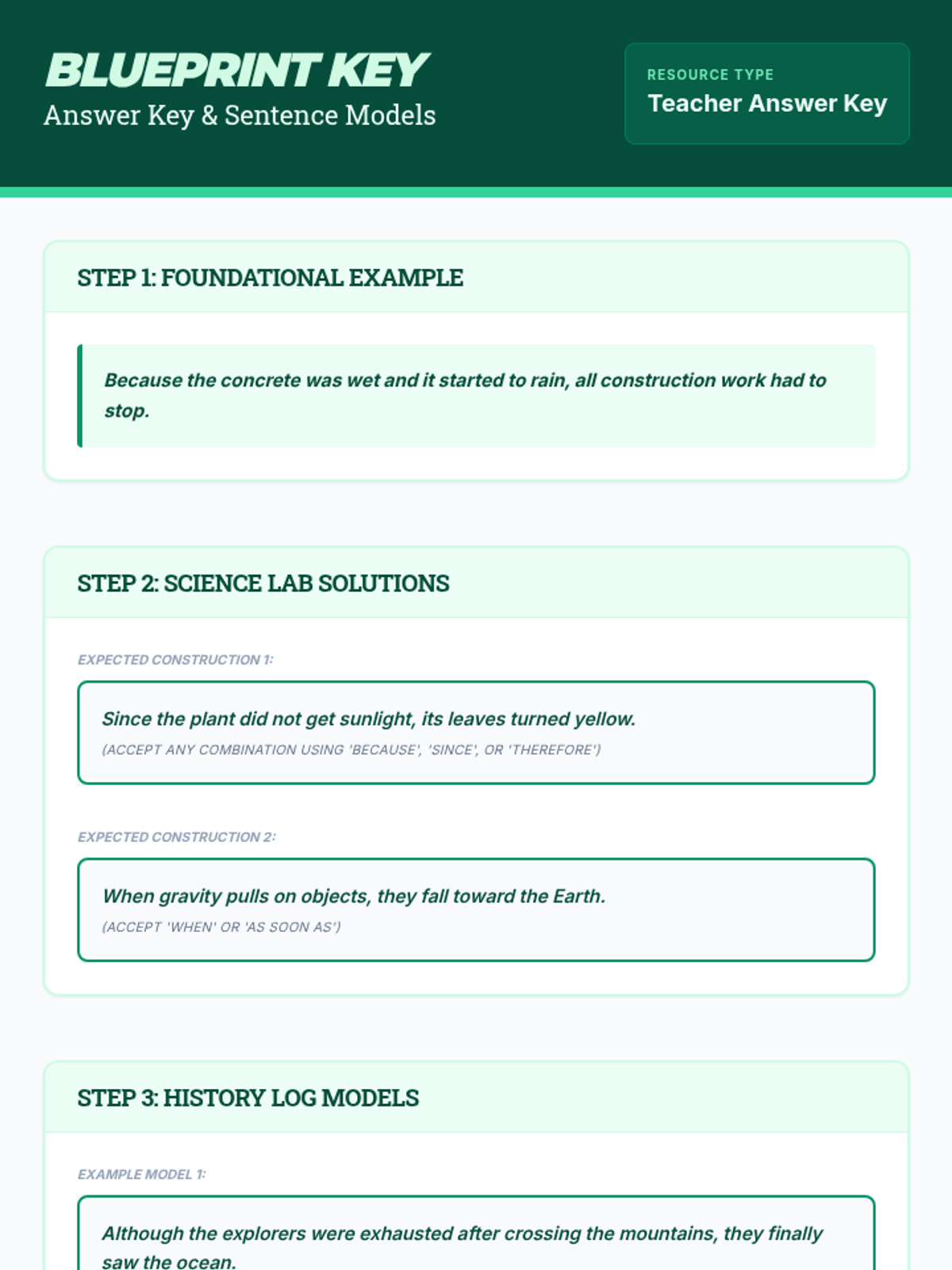
A lesson focused on sentence construction, teaching students to transform fragments and simple sentences into sophisticated compound and complex sentences using a construction-themed framework.
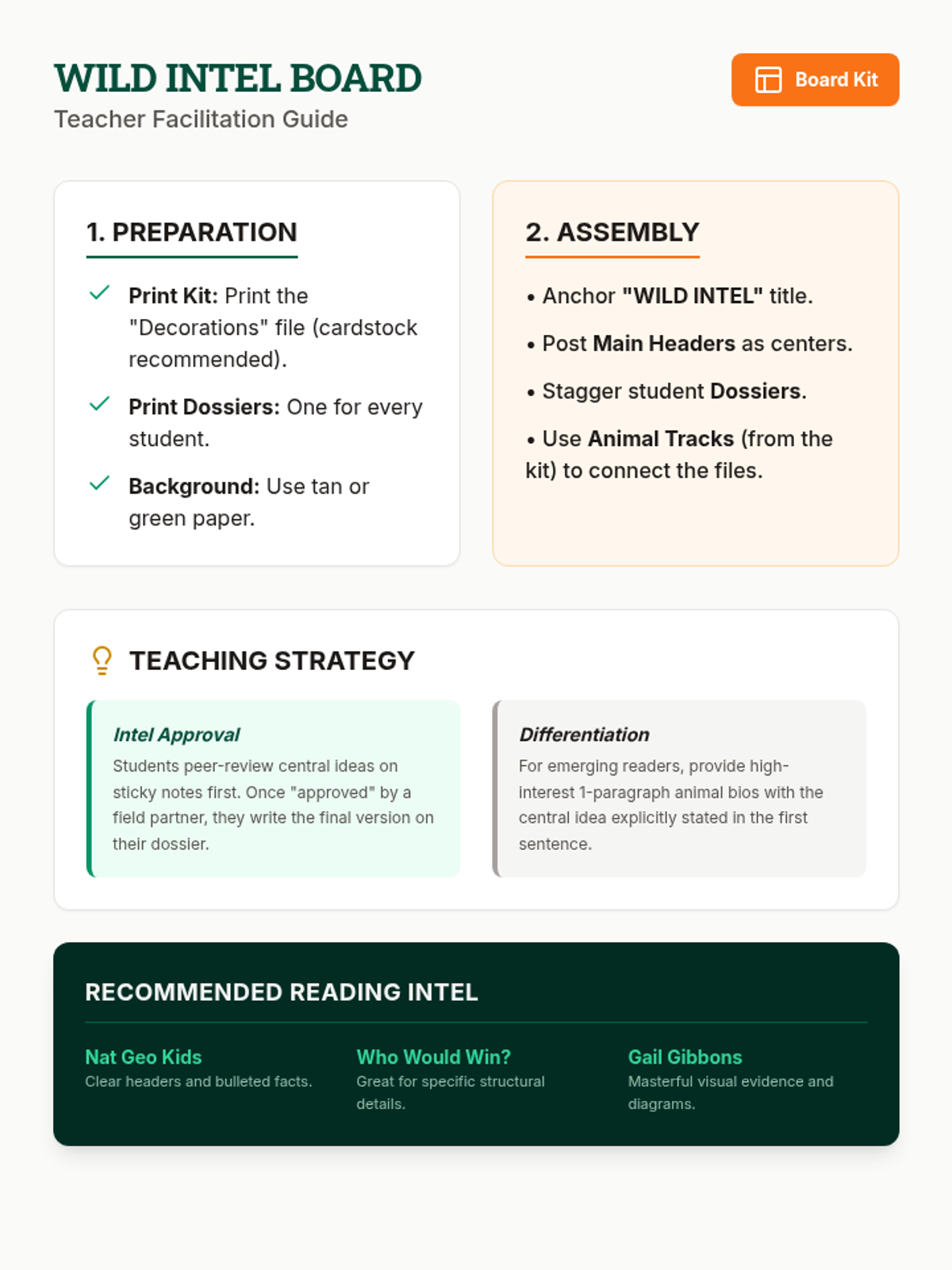
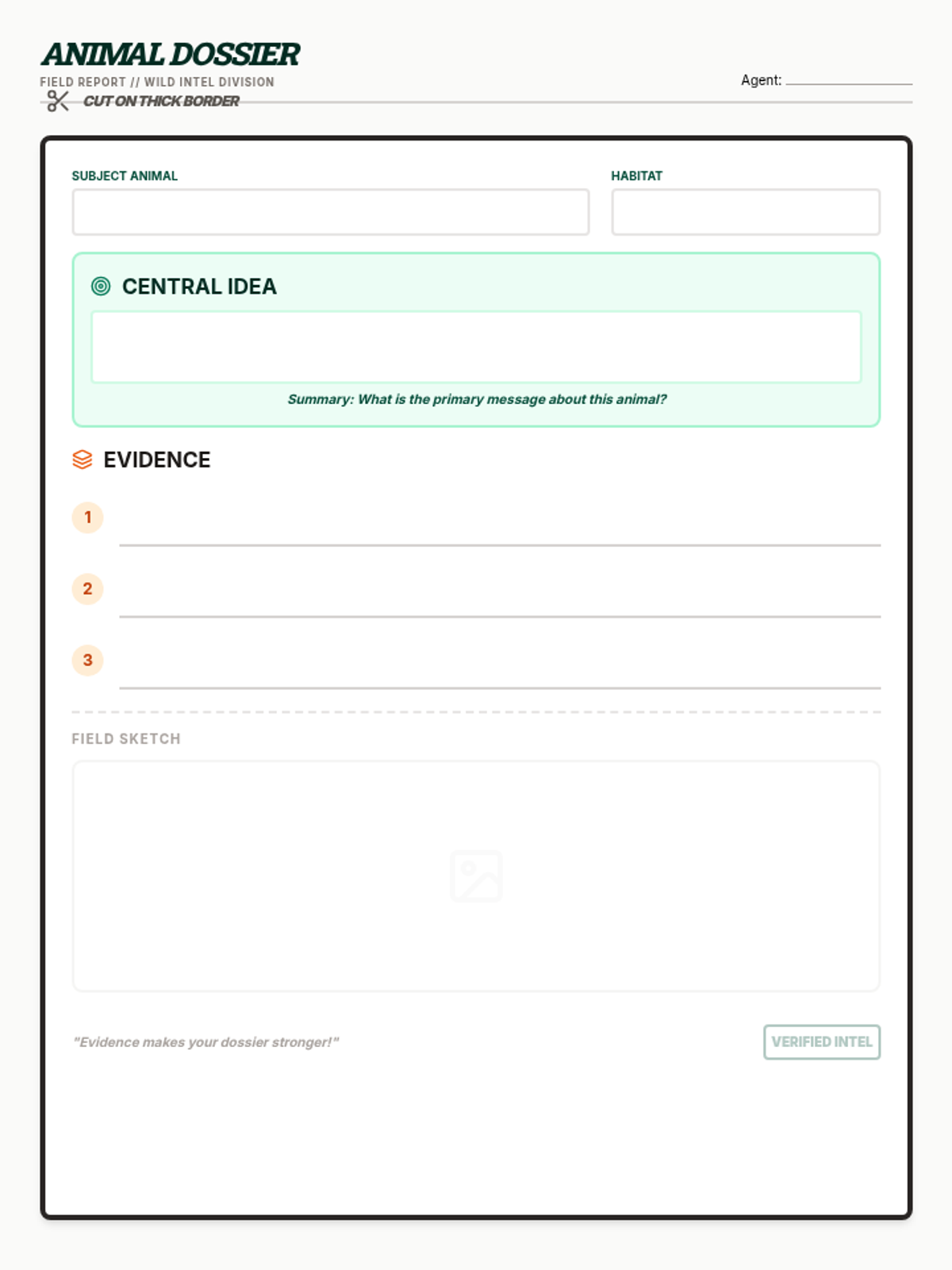
A lesson focused on identifying central ideas and supporting details in nonfiction animal texts, culminating in a student-created wildlife research bulletin board.
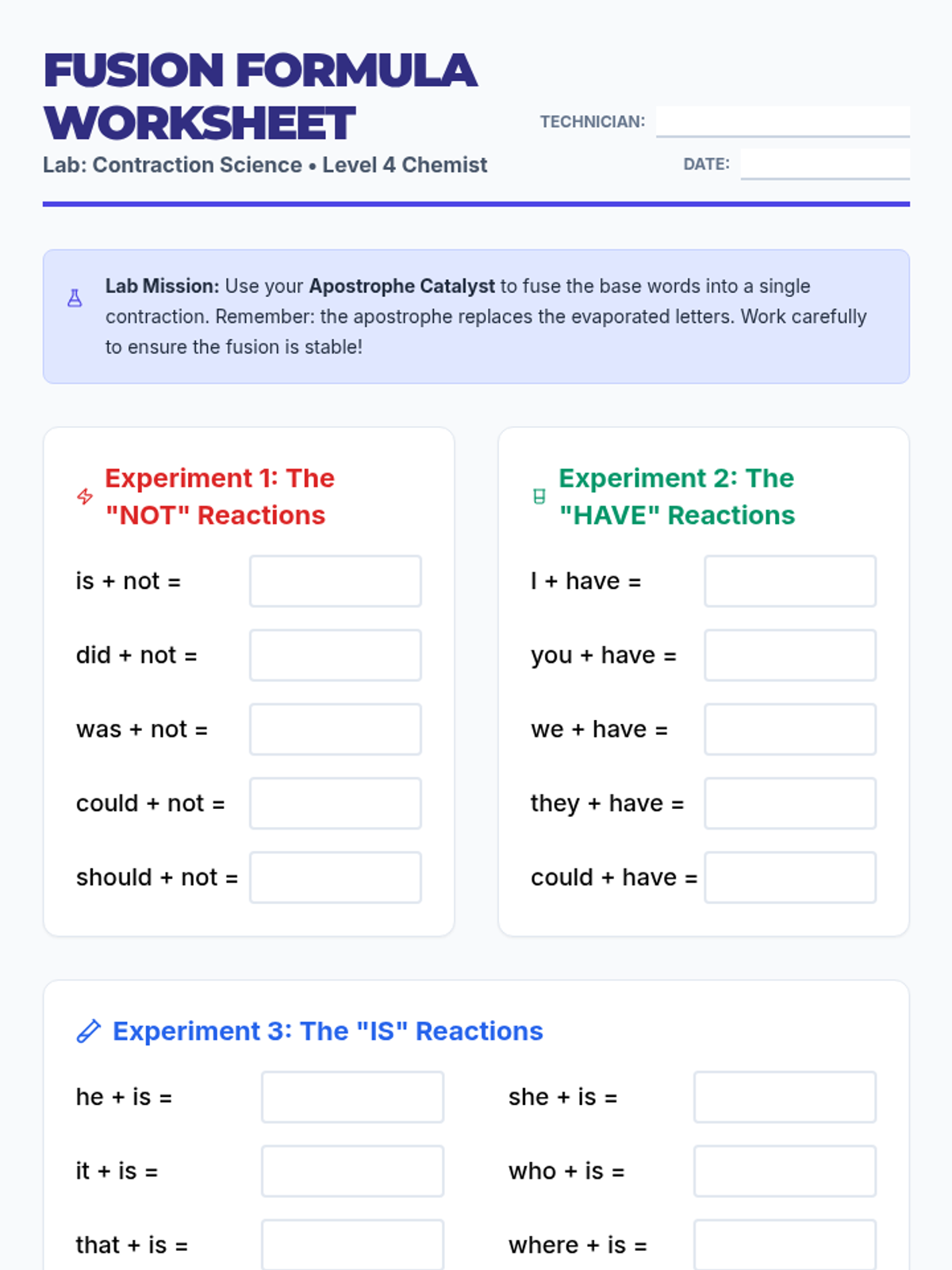
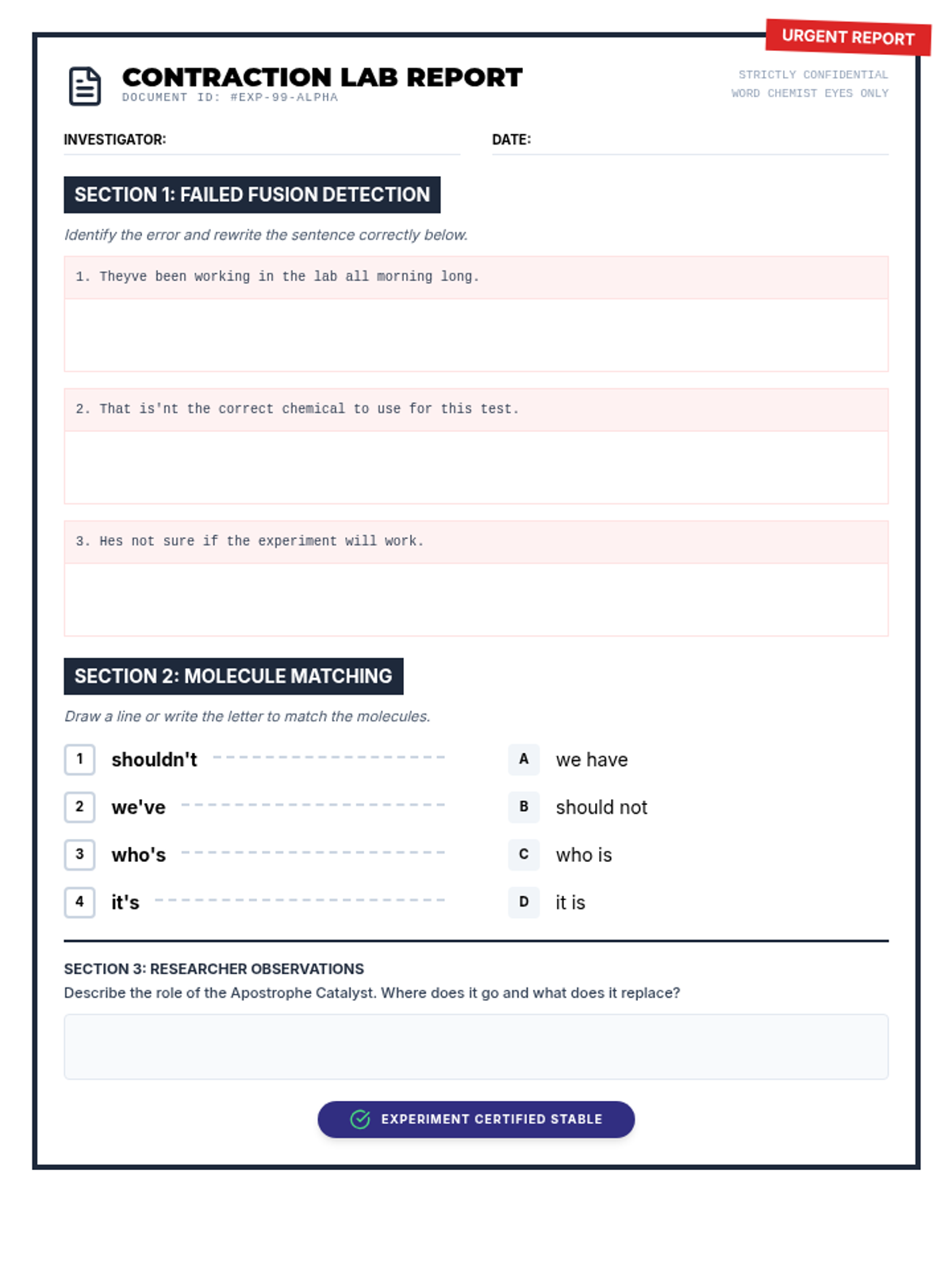
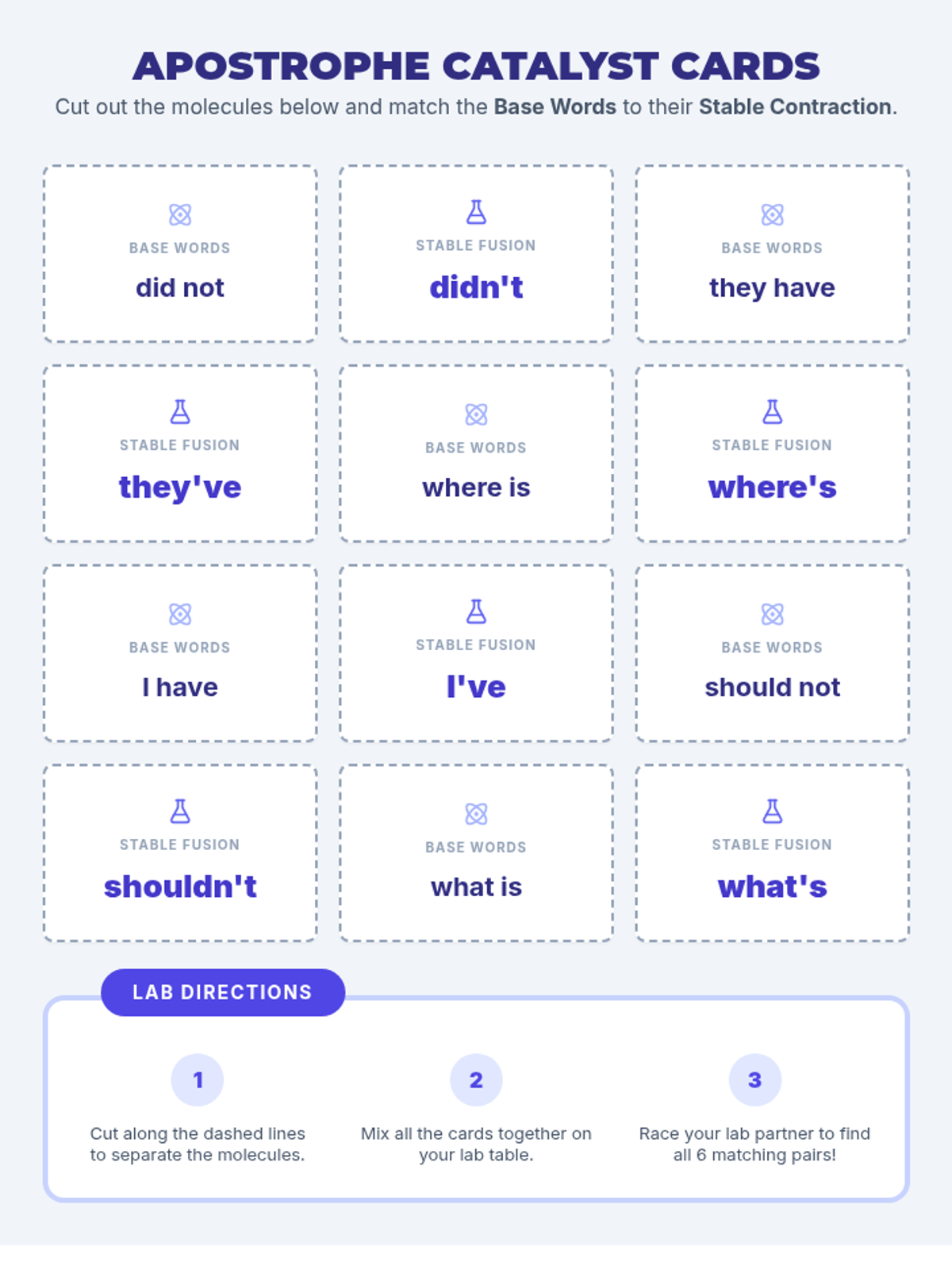
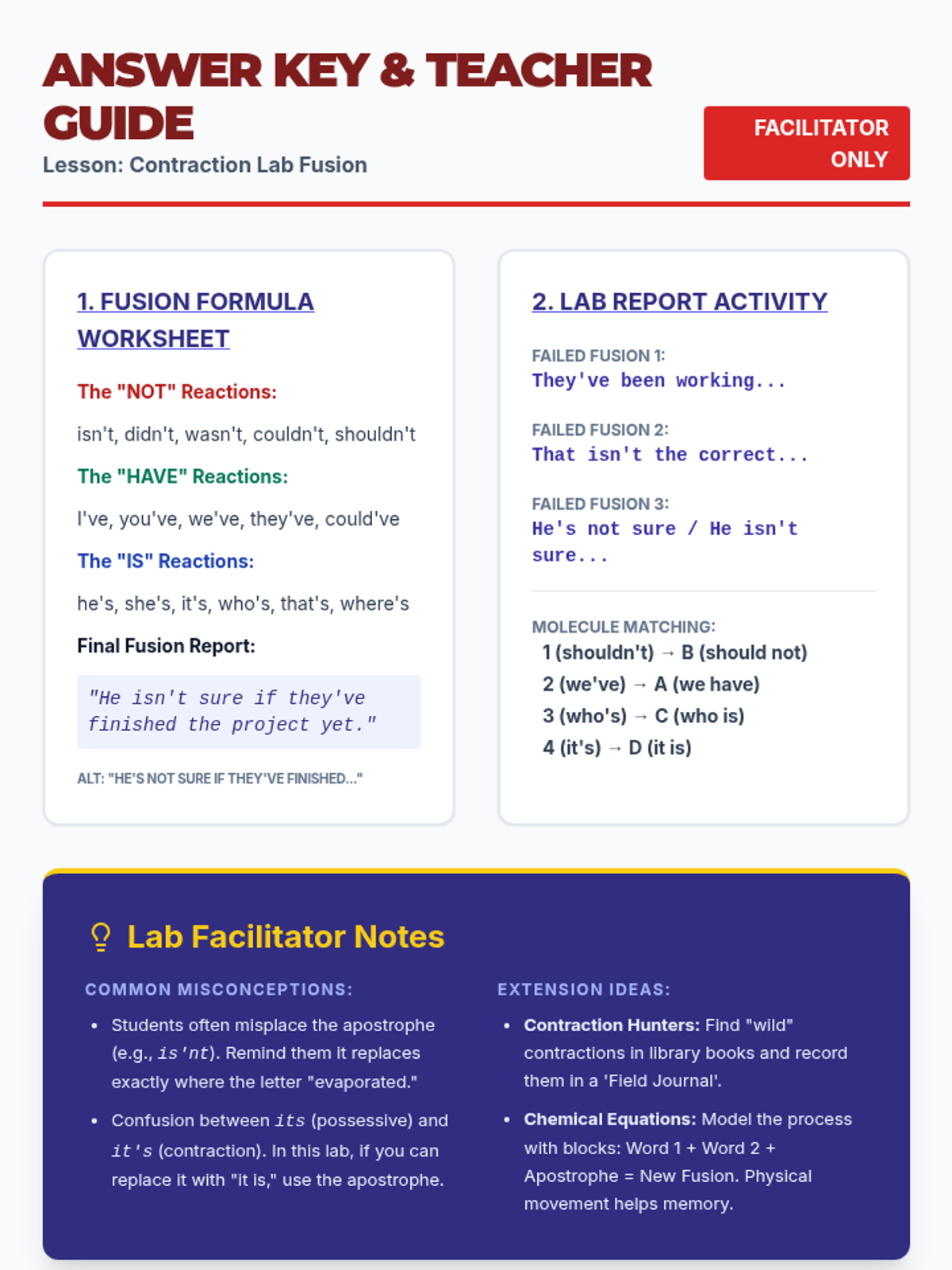
A high-energy, science-themed lesson where students become 'Word Chemists' to fuse words together using the power of the apostrophe. Focuses on contractions formed with 'not', 'have', and 'is'.
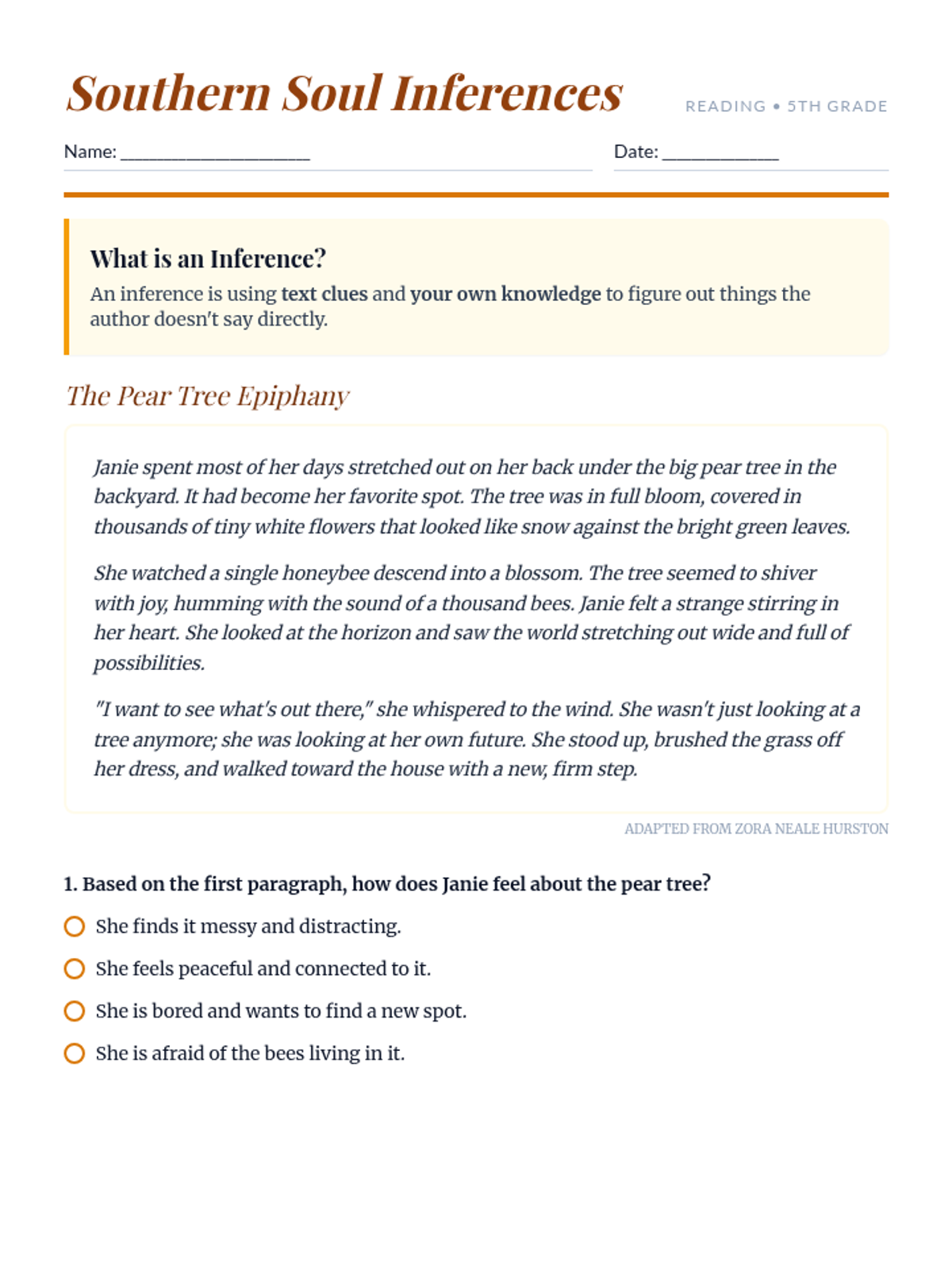
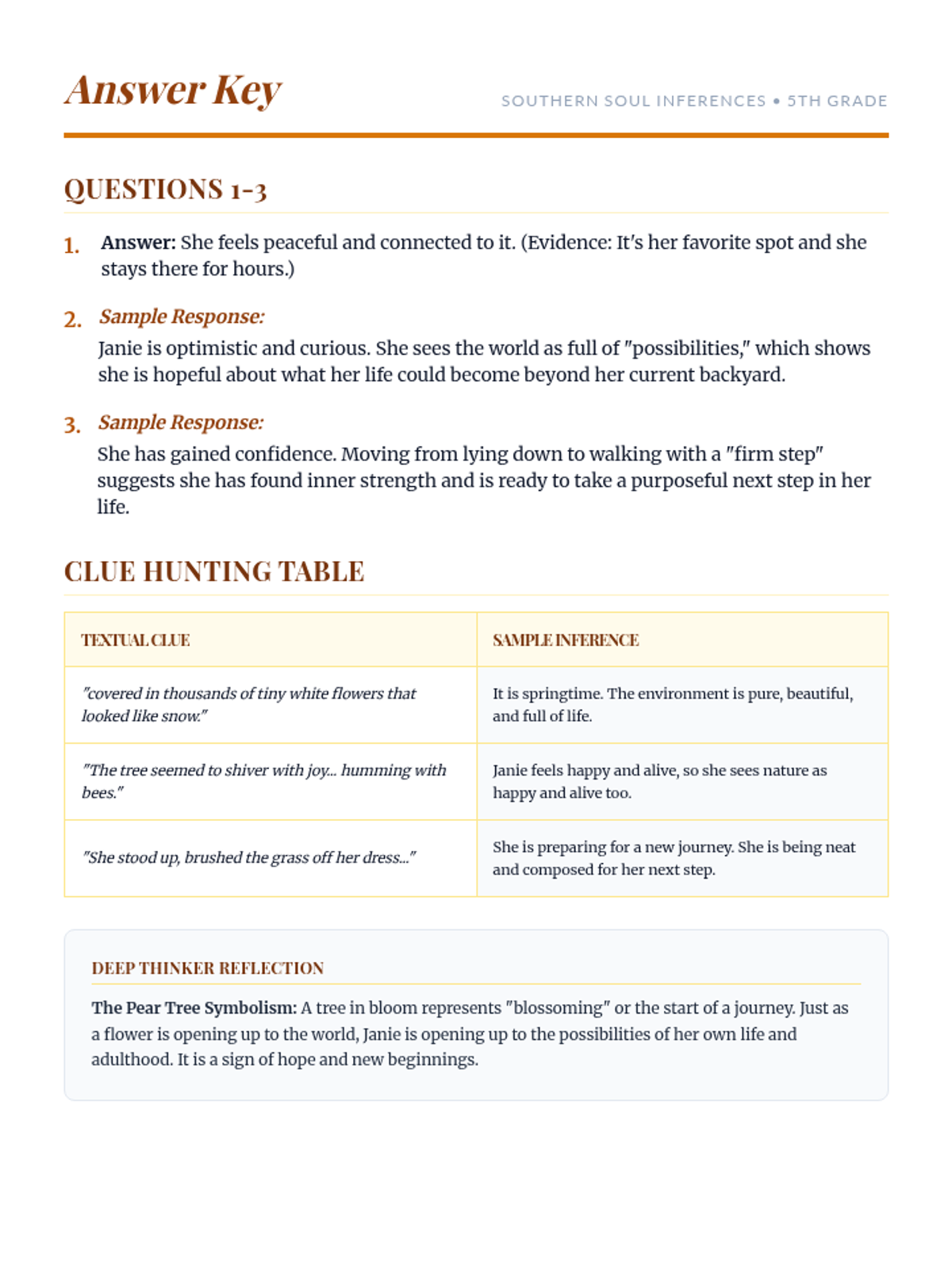
A reading comprehension lesson focusing on making inferences using adapted excerpts from 'Their Eyes Were Watching God'. Students will practice identifying textual evidence to support conclusions about Janie's feelings and growth.