Exploration of the five seventh chord qualities, focusing on the tritone tension within dominant sevenths and their functional resolutions.
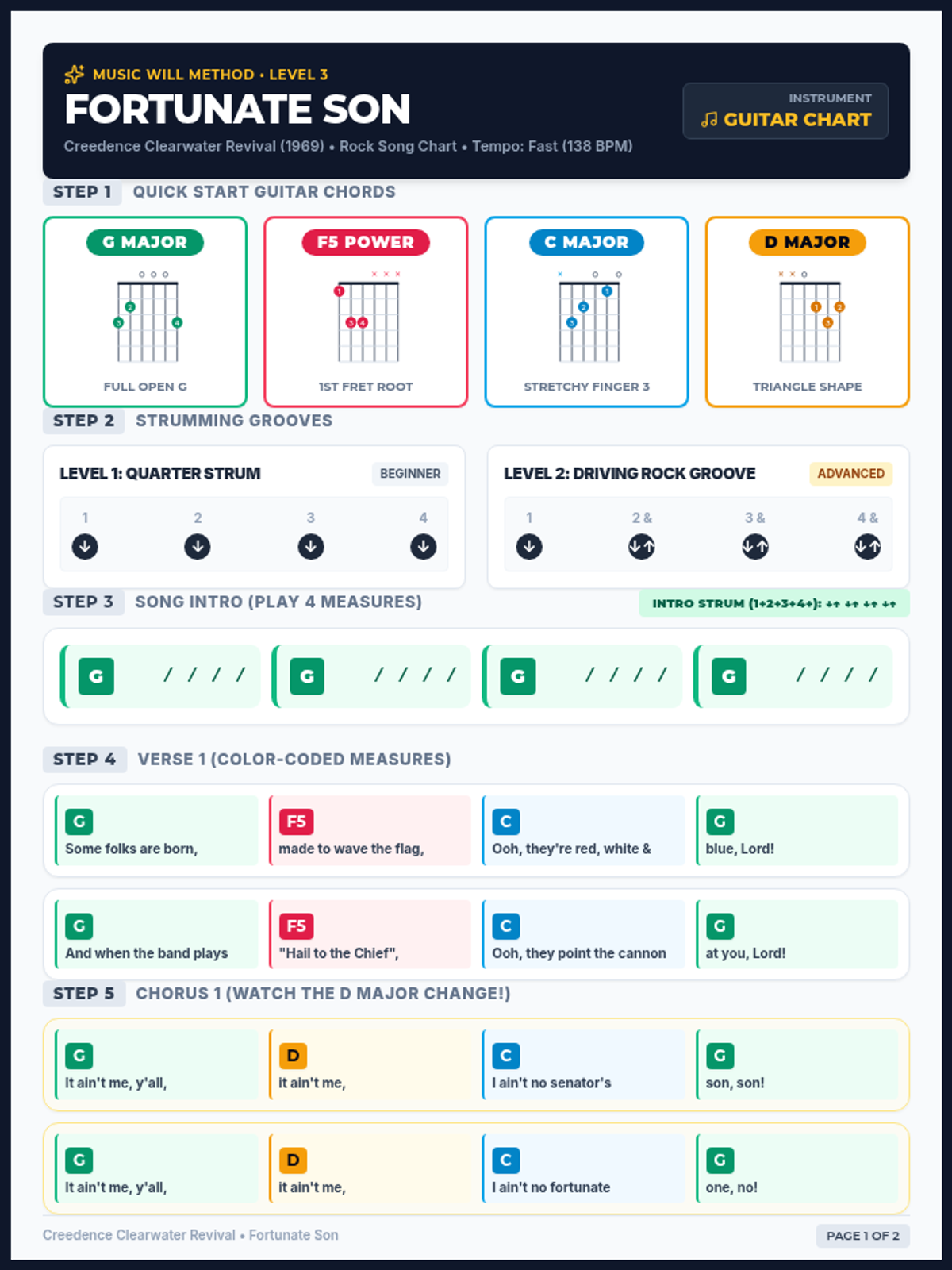
An engaging guitar lesson focused on Creedence Clearwater Revival's 'Fortunate Son', introducing intermediate rock strumming patterns, chord transitions (G, F, C, D), and visual lyric tracking.
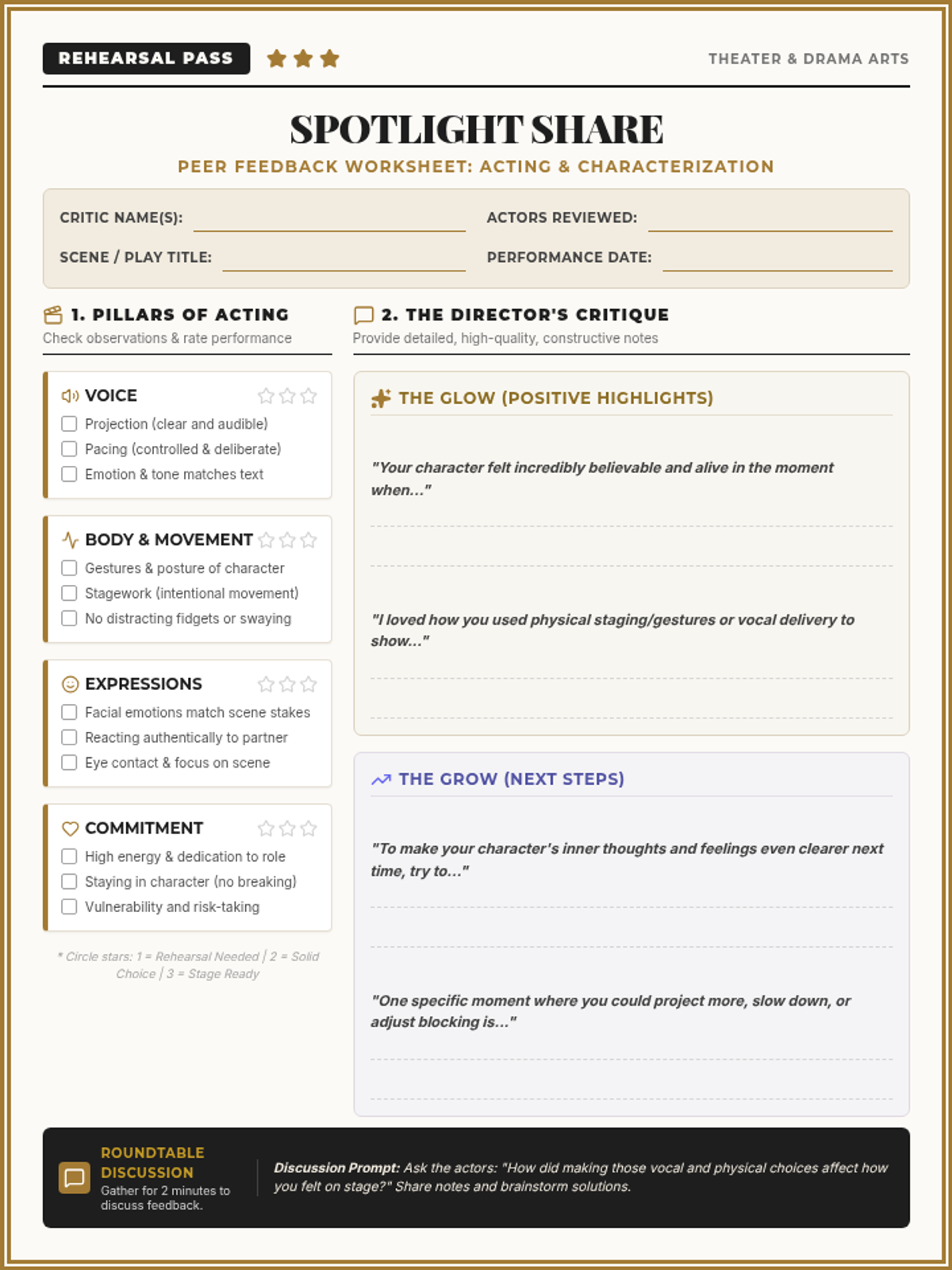
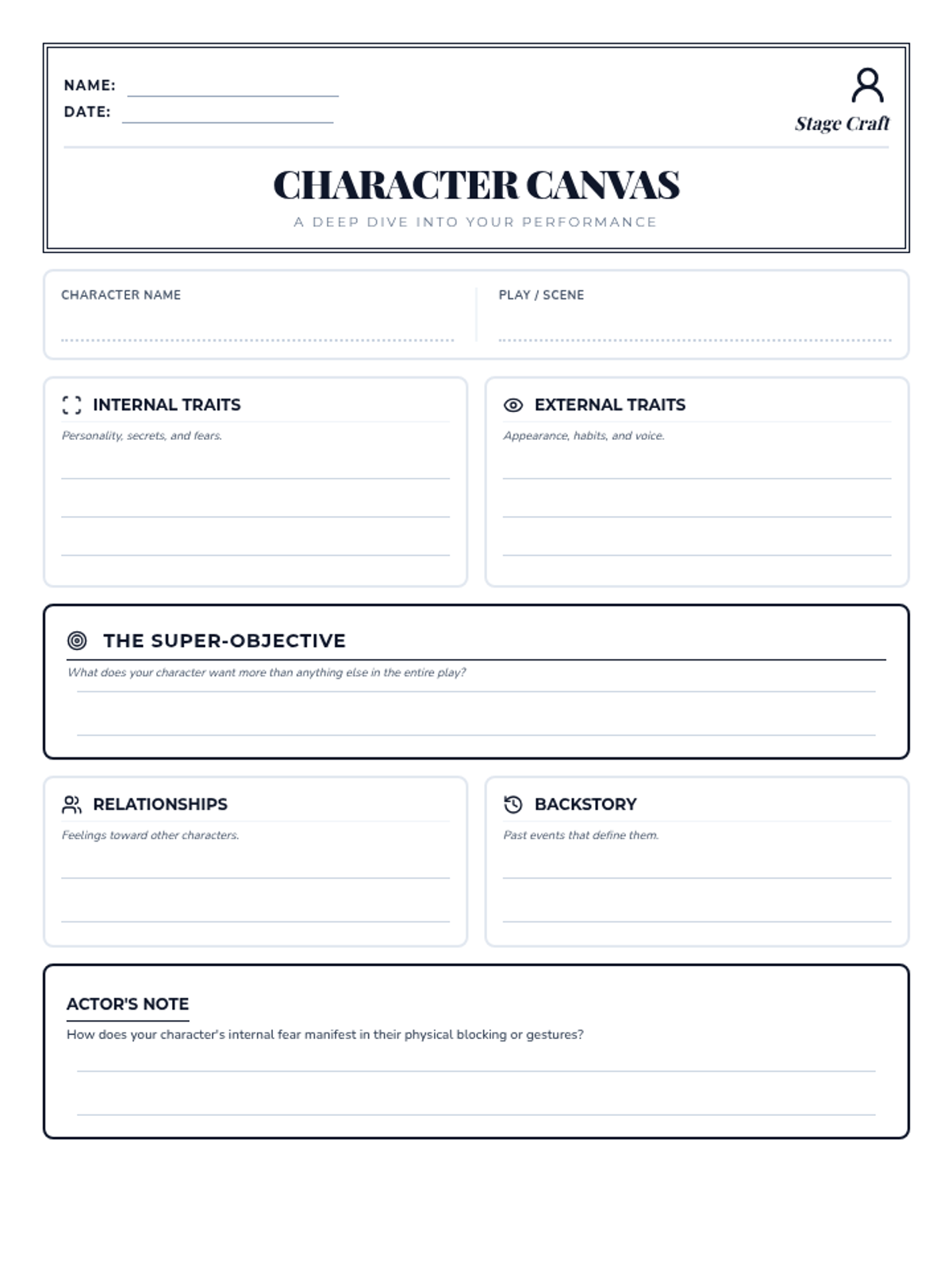
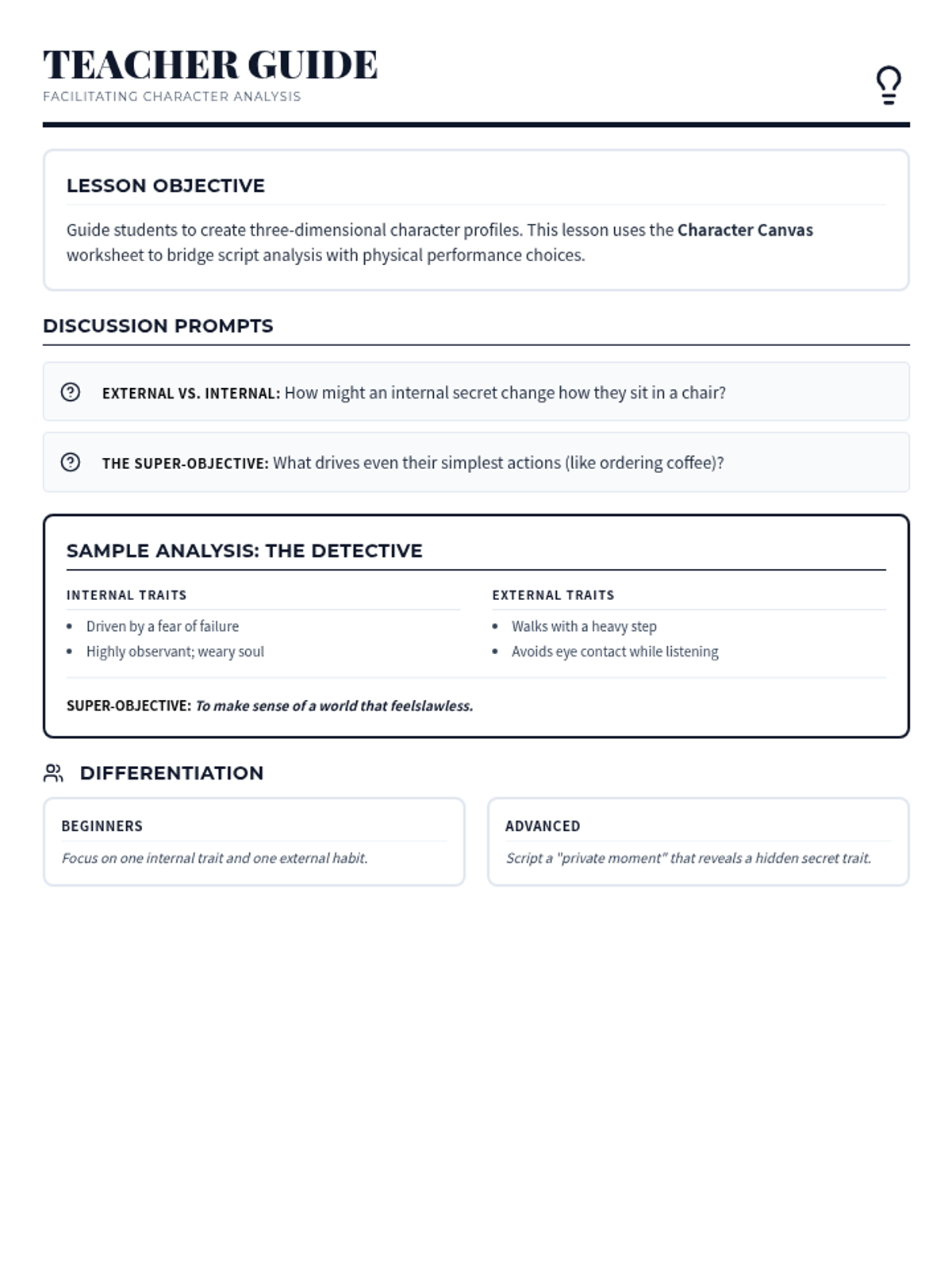
A lesson centered on scene work, characterization, and dramatic performance. Students analyze characters, rehearse scripts, and engage in peer feedback to elevate their physical and vocal choices before final performance.
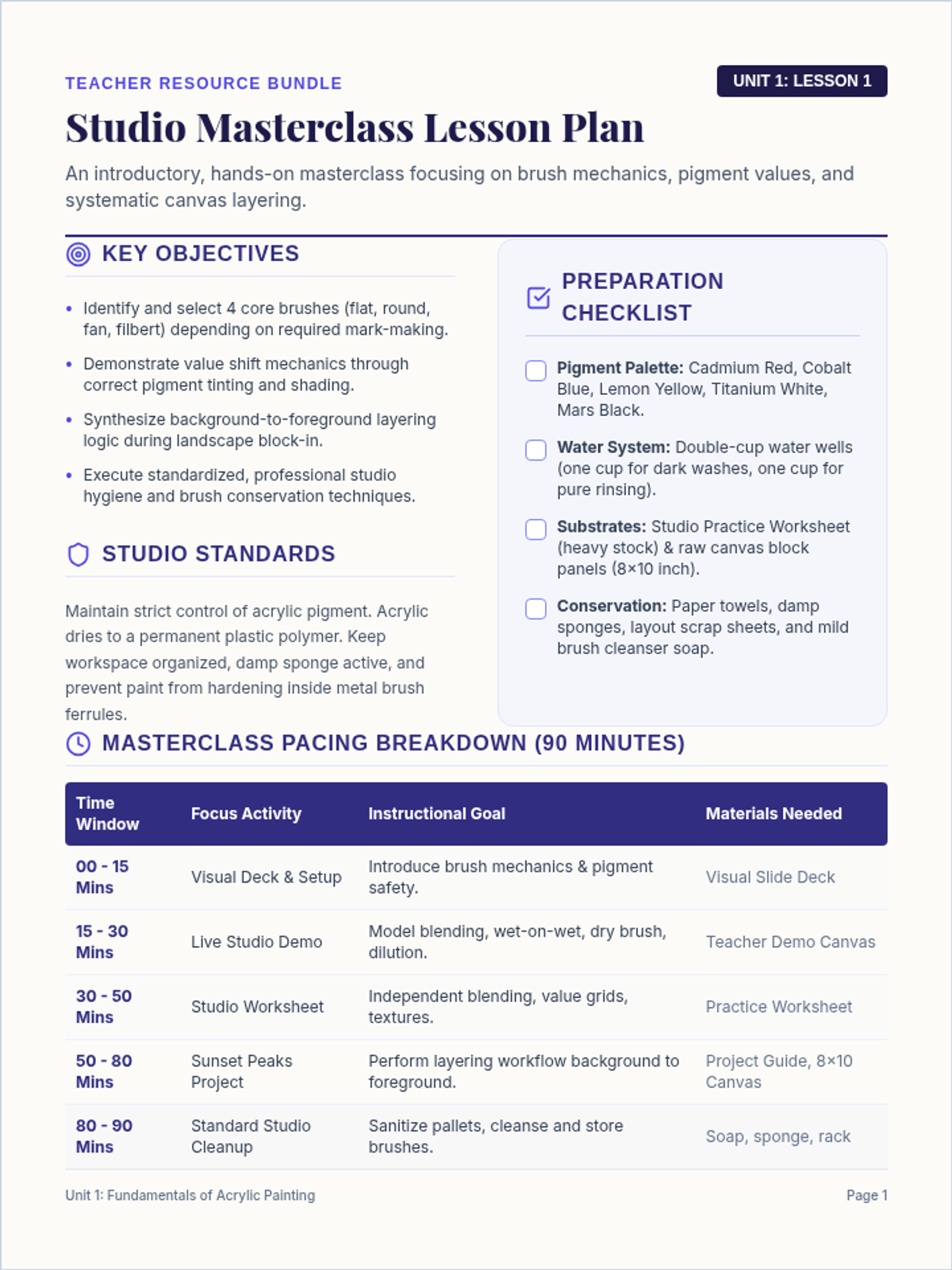
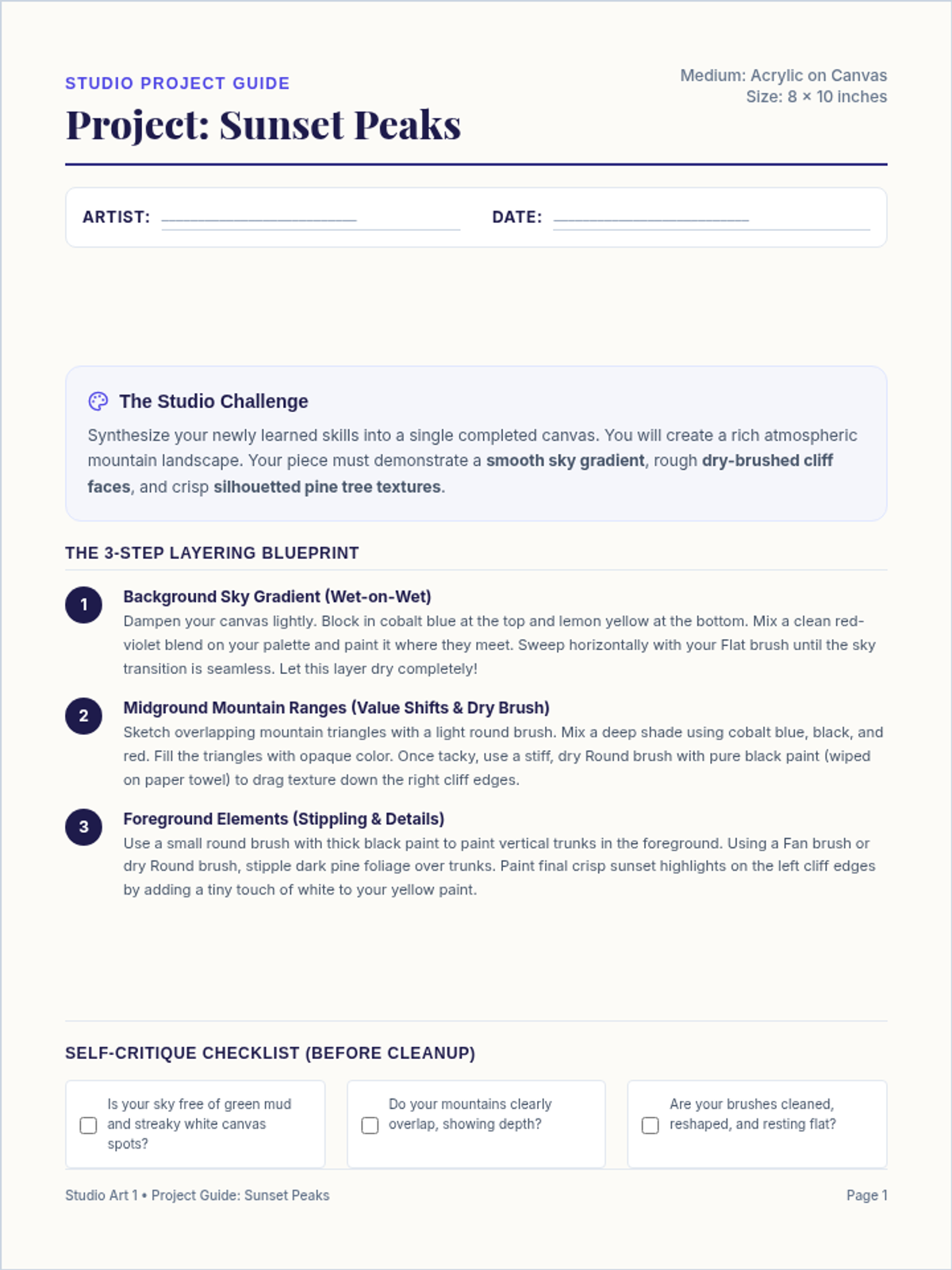
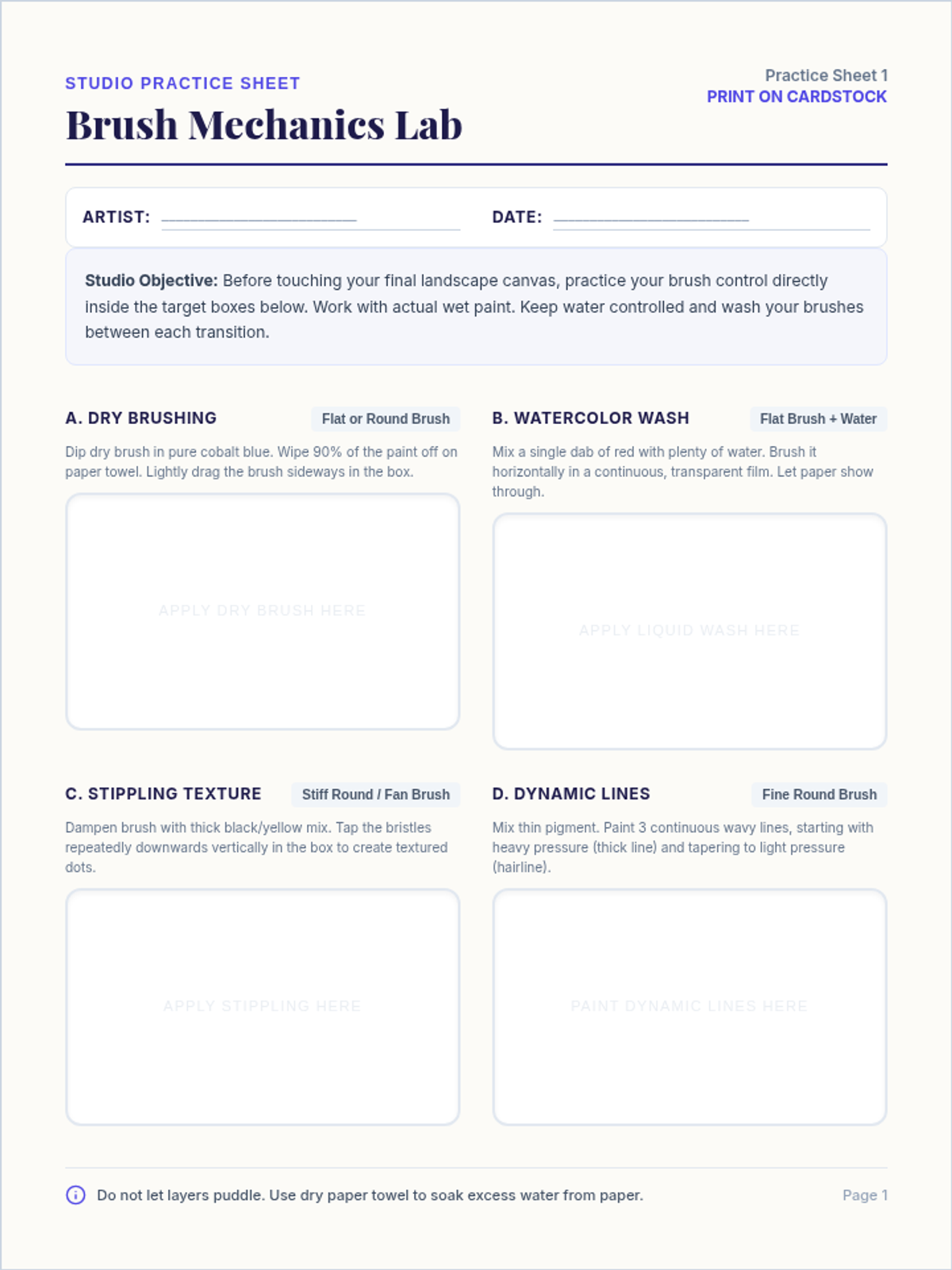
An introductory studio lesson on the fundamentals of acrylic painting. Students explore brushwork textures, color mixing mechanics, and structural layering through hands-on practice and a guided landscape project.
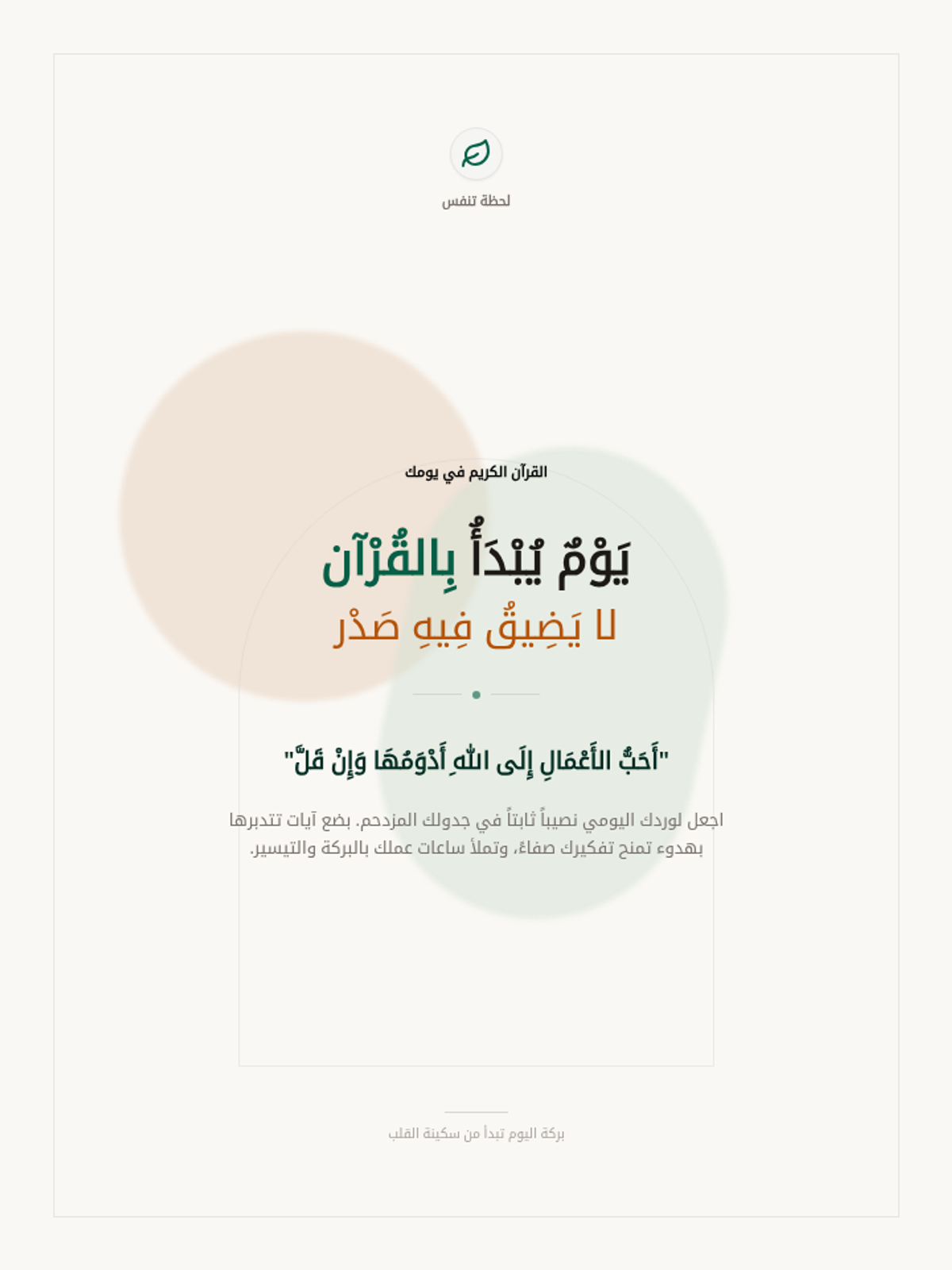
درس بسيط يركز على التذكير بالورد اليومي وقراءة القرآن الكريم، ويضم ملصقًا فنيًا وتذكيريًا مصممًا بأسلوب حديث ومريح للعين.
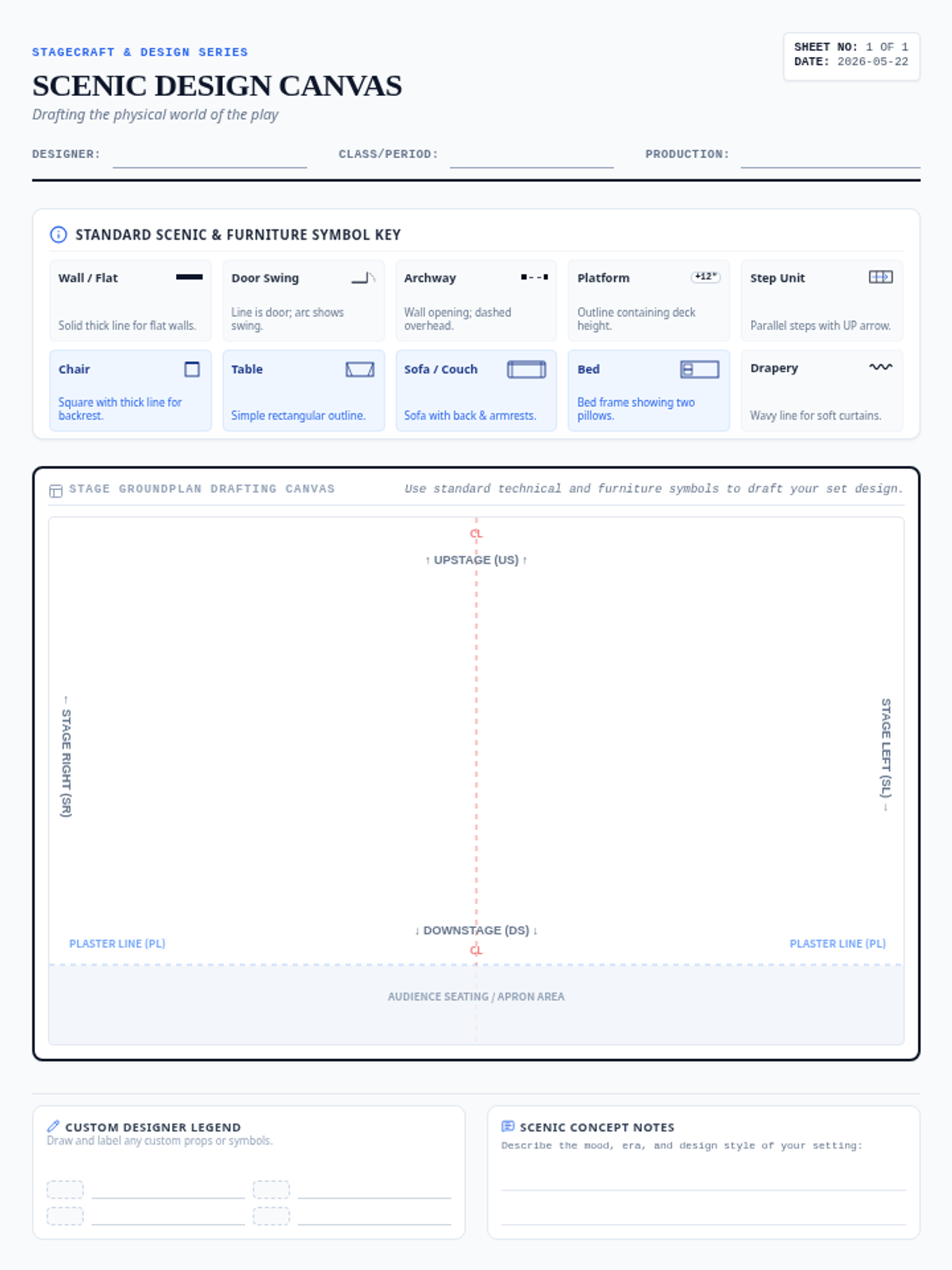
An introductory lesson on the fundamentals of scenic design, guiding students to create their own stage groundplans using industry-standard drafting symbols.
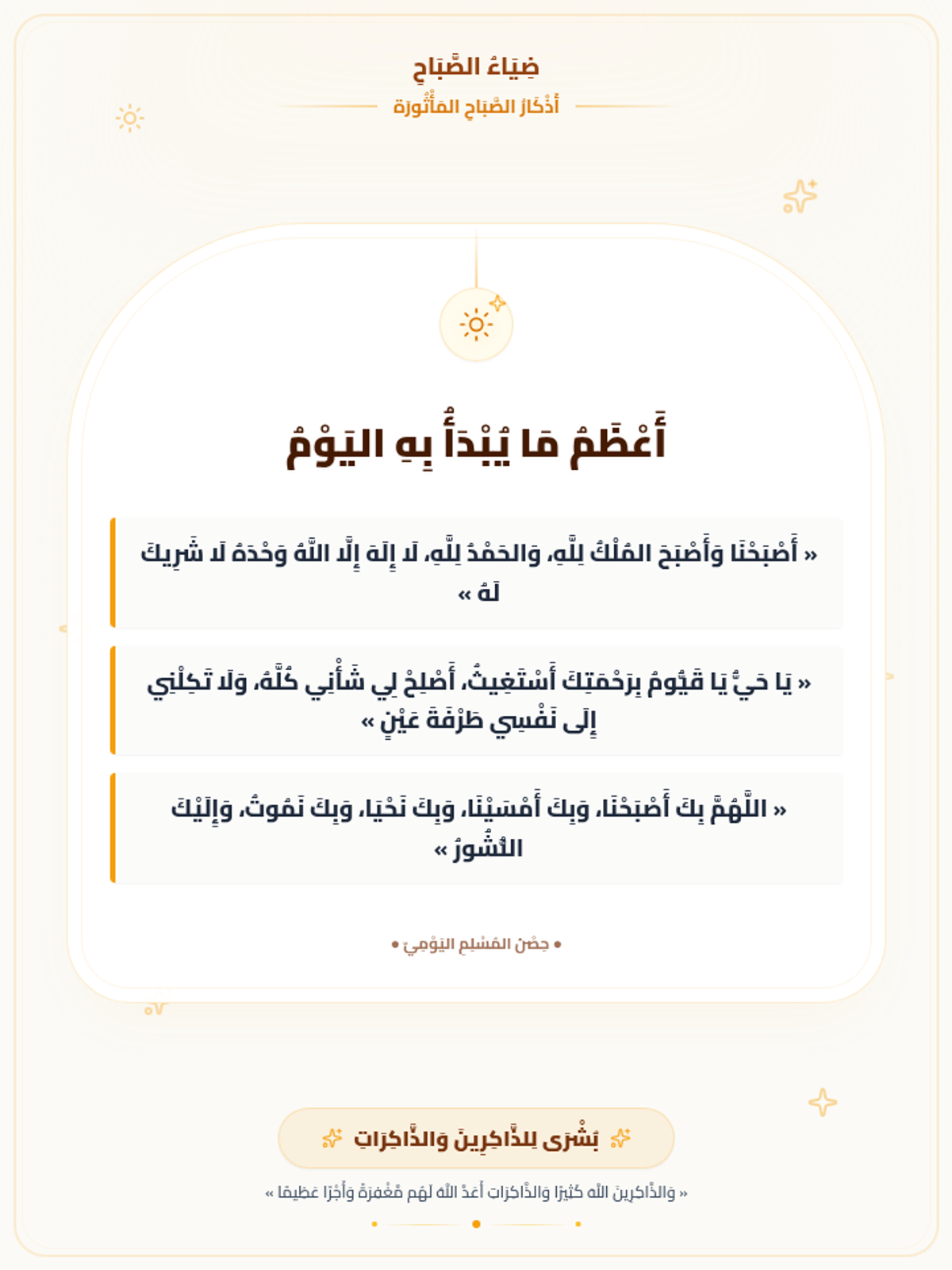
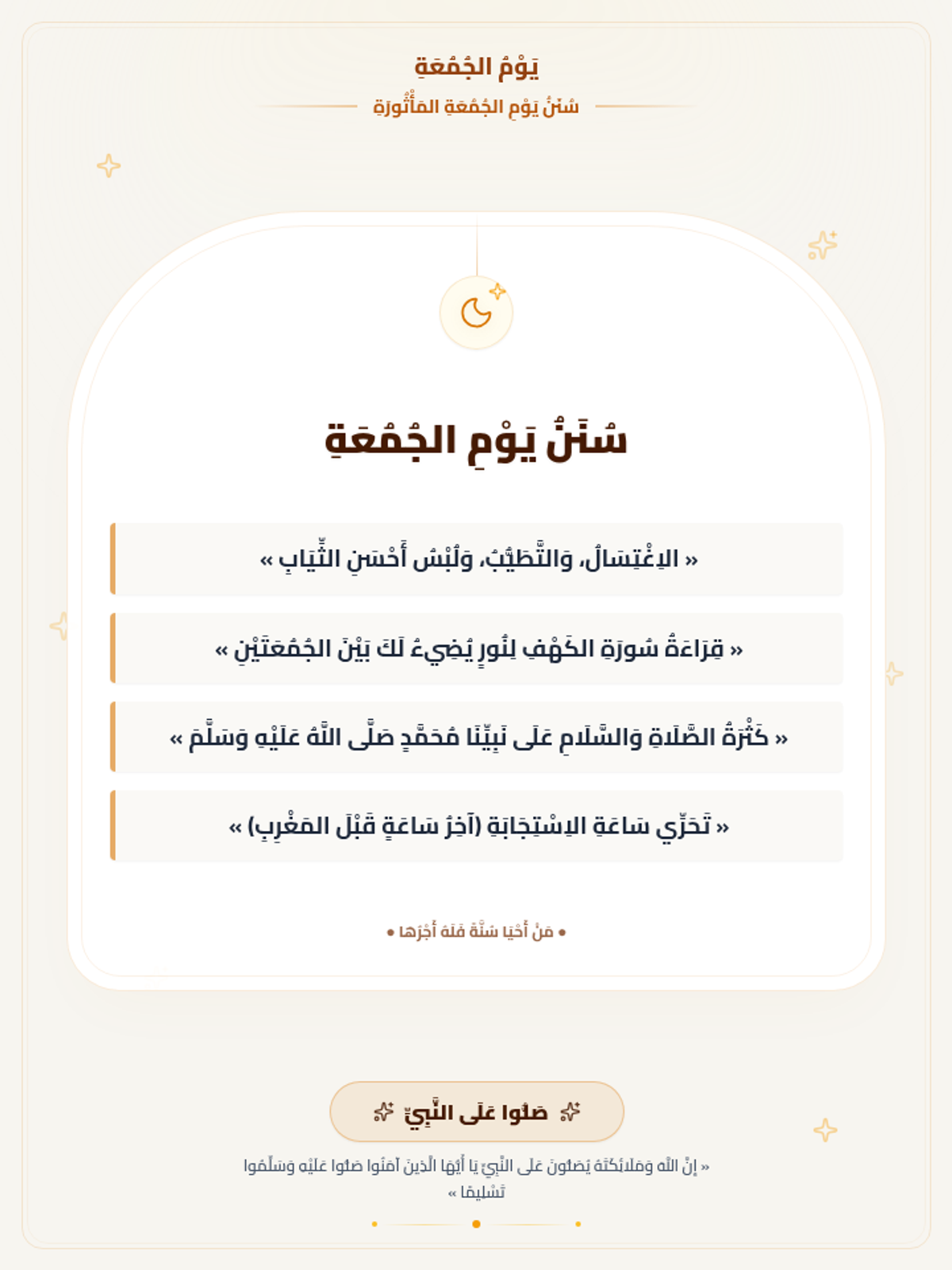
A premium, cohesive collection of beautifully designed spiritual and religious reminders for daily, weekly, and seasonal practices, featuring high-contrast connected Arabic typography, elegant arches, and glowing celestial themes.
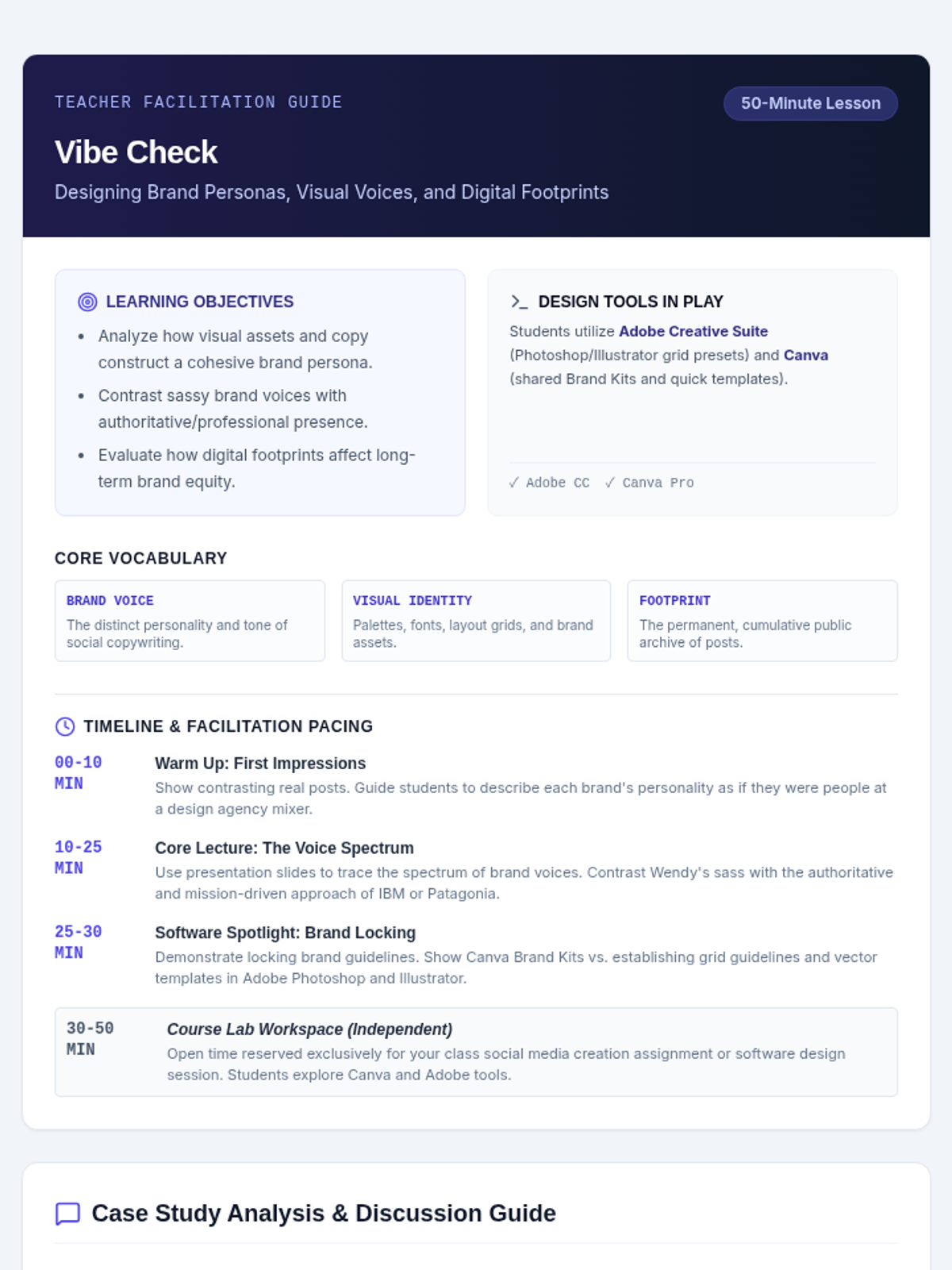
A digital design lesson focusing on social media brand personas, digital footprint, and visual design aesthetics using Adobe and Canva. Students compare contrasting brand voices, from Wendy's playful roasts to polished professional corporate presences.
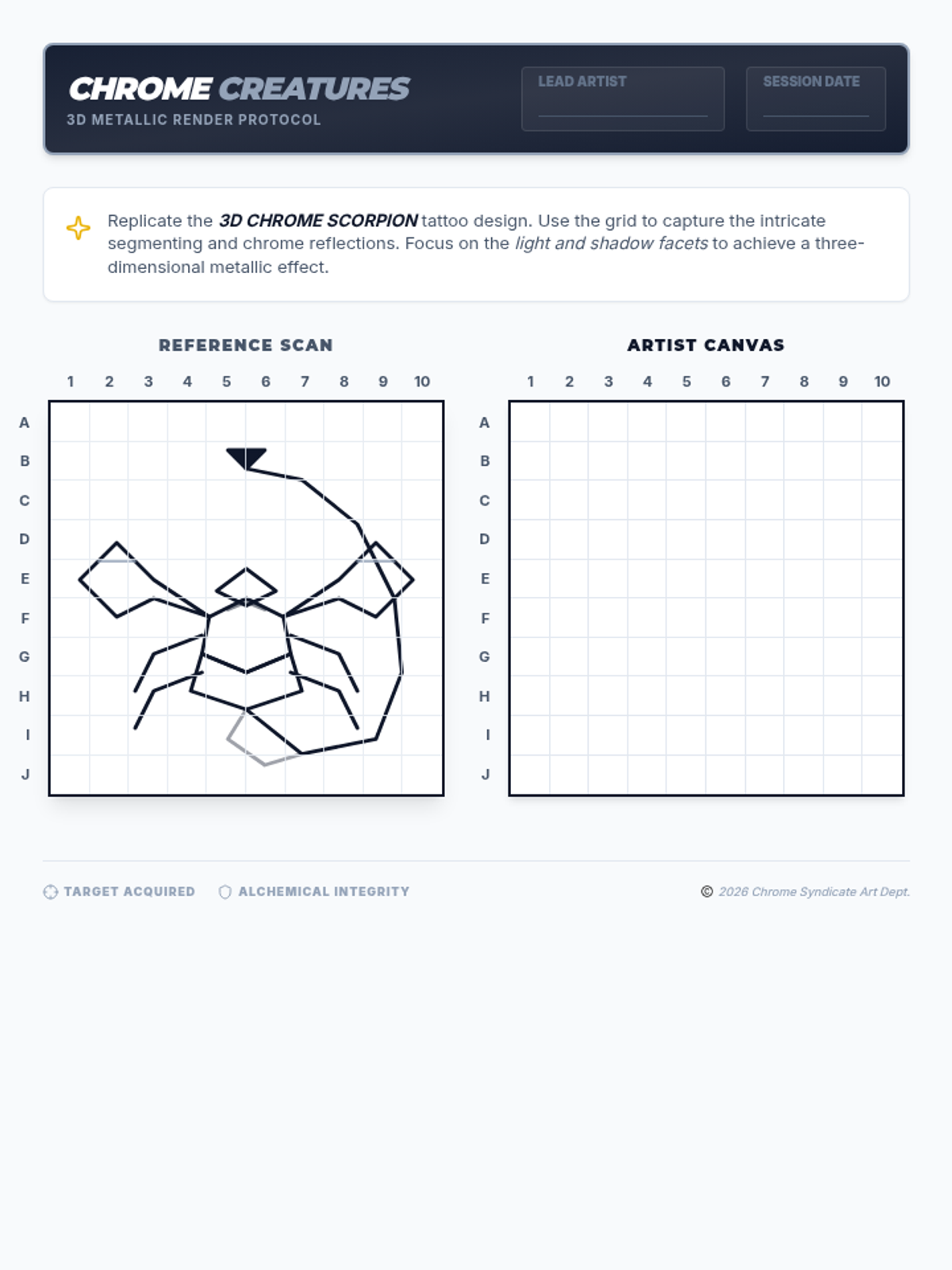
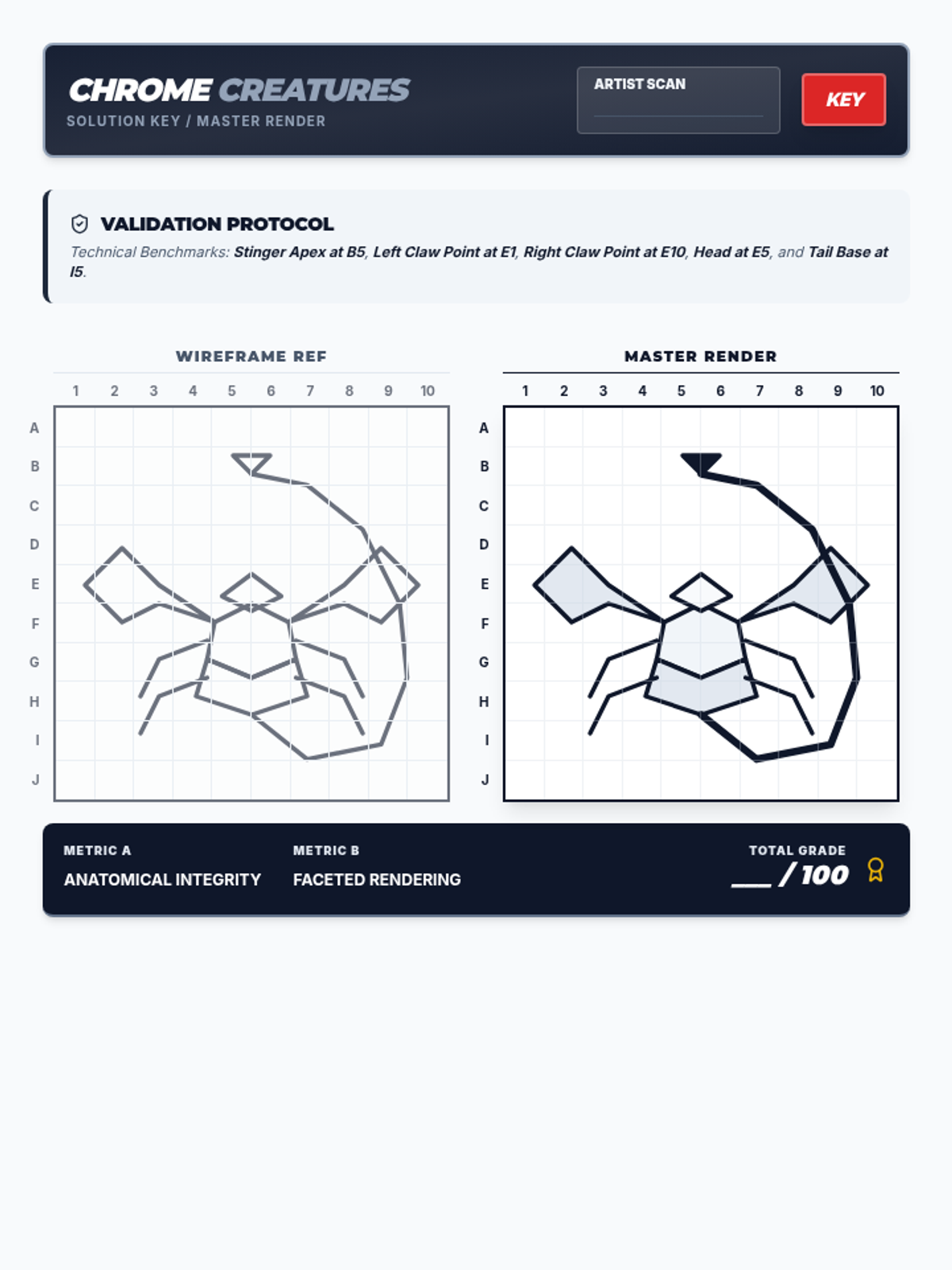
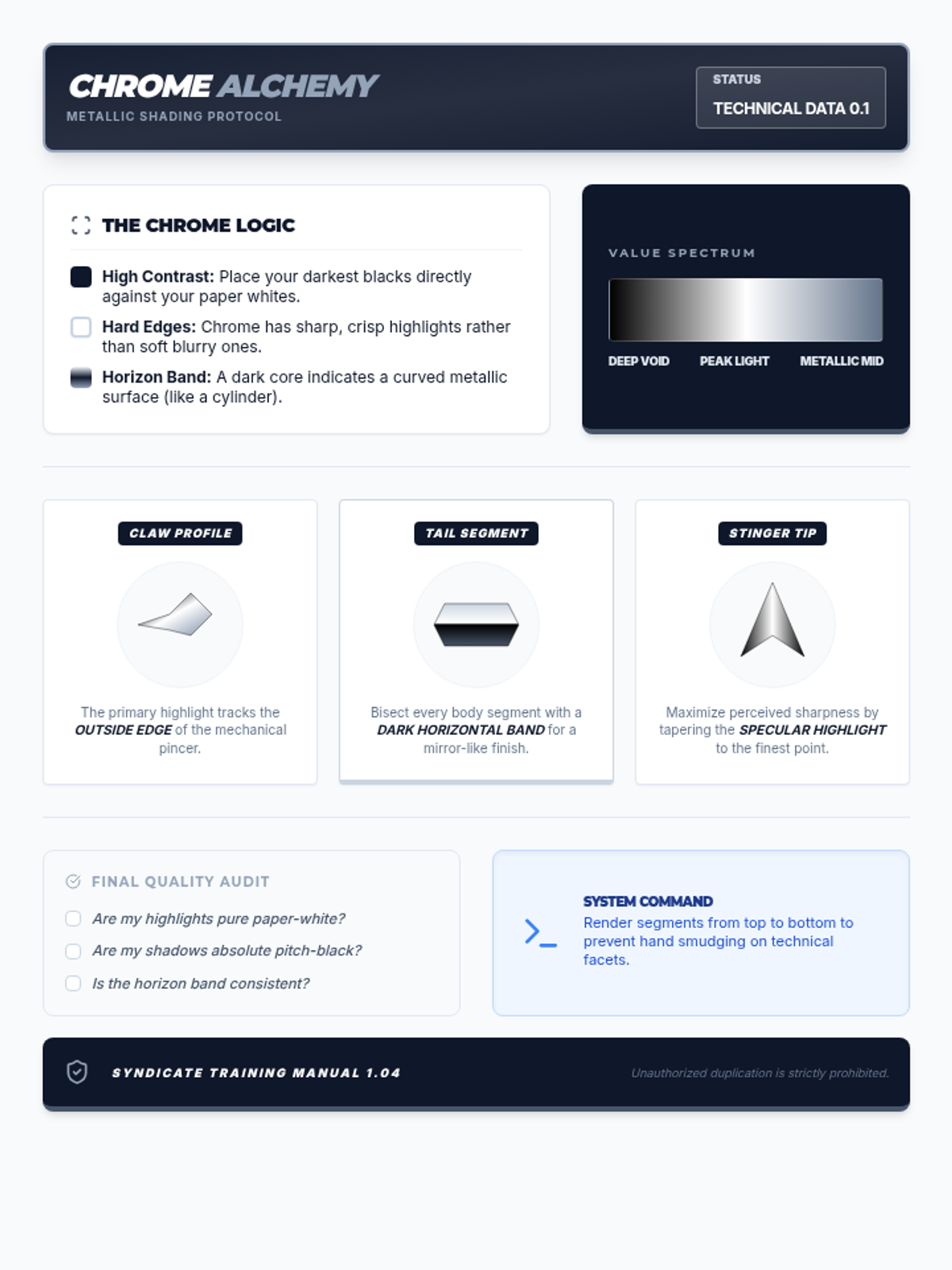
A lesson on precision drawing and proportion using grid techniques, themed around futuristic chrome animal tattoo designs. Students learn to translate complex shapes square by square to achieve technical accuracy.
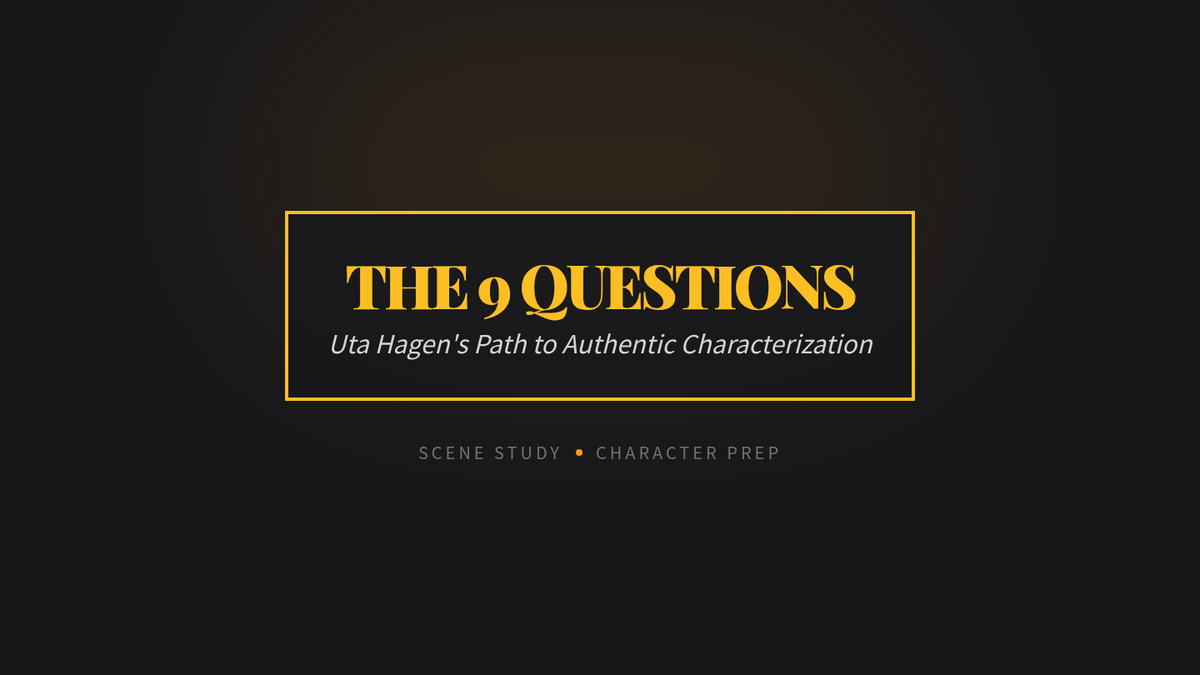
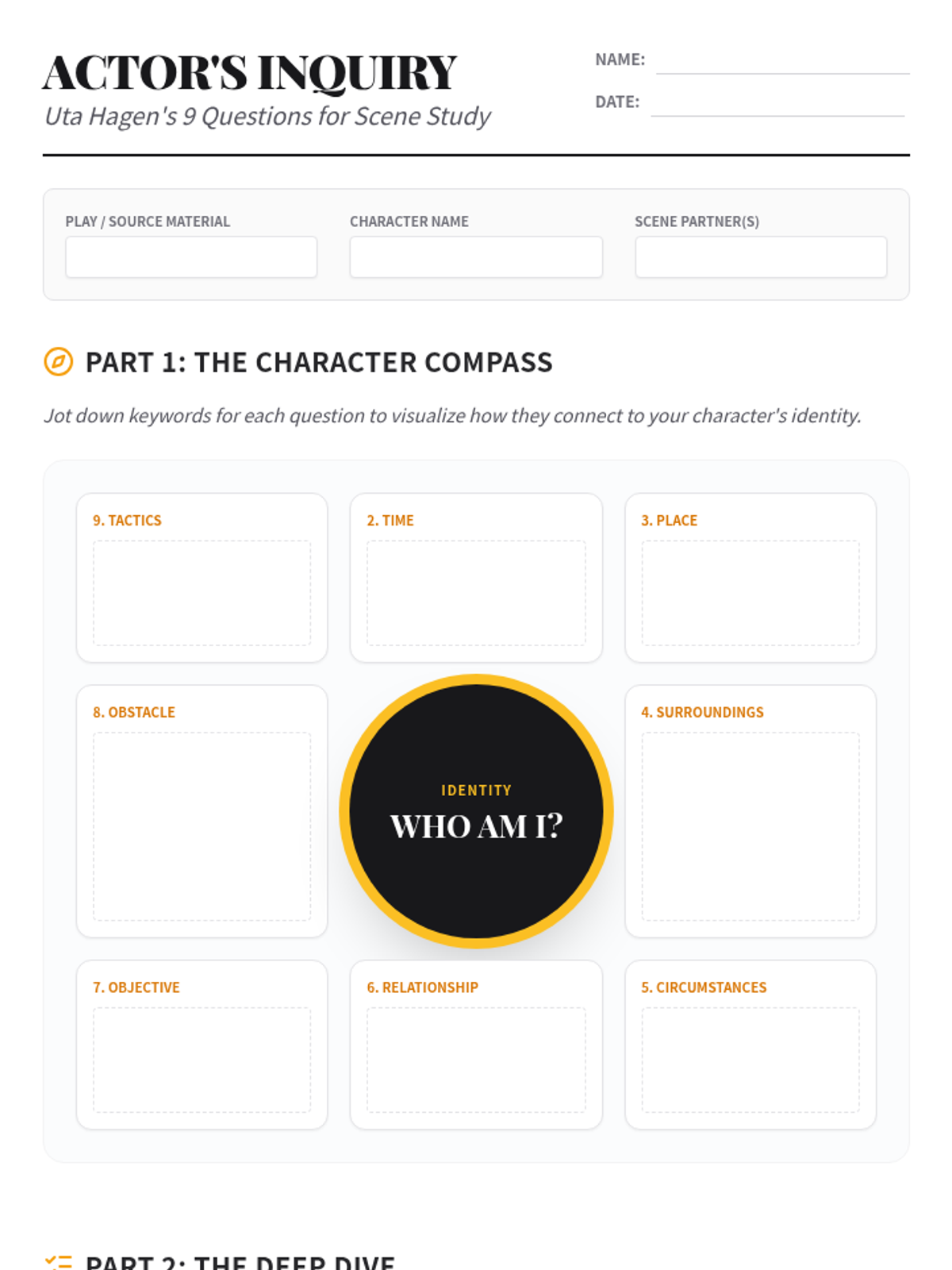
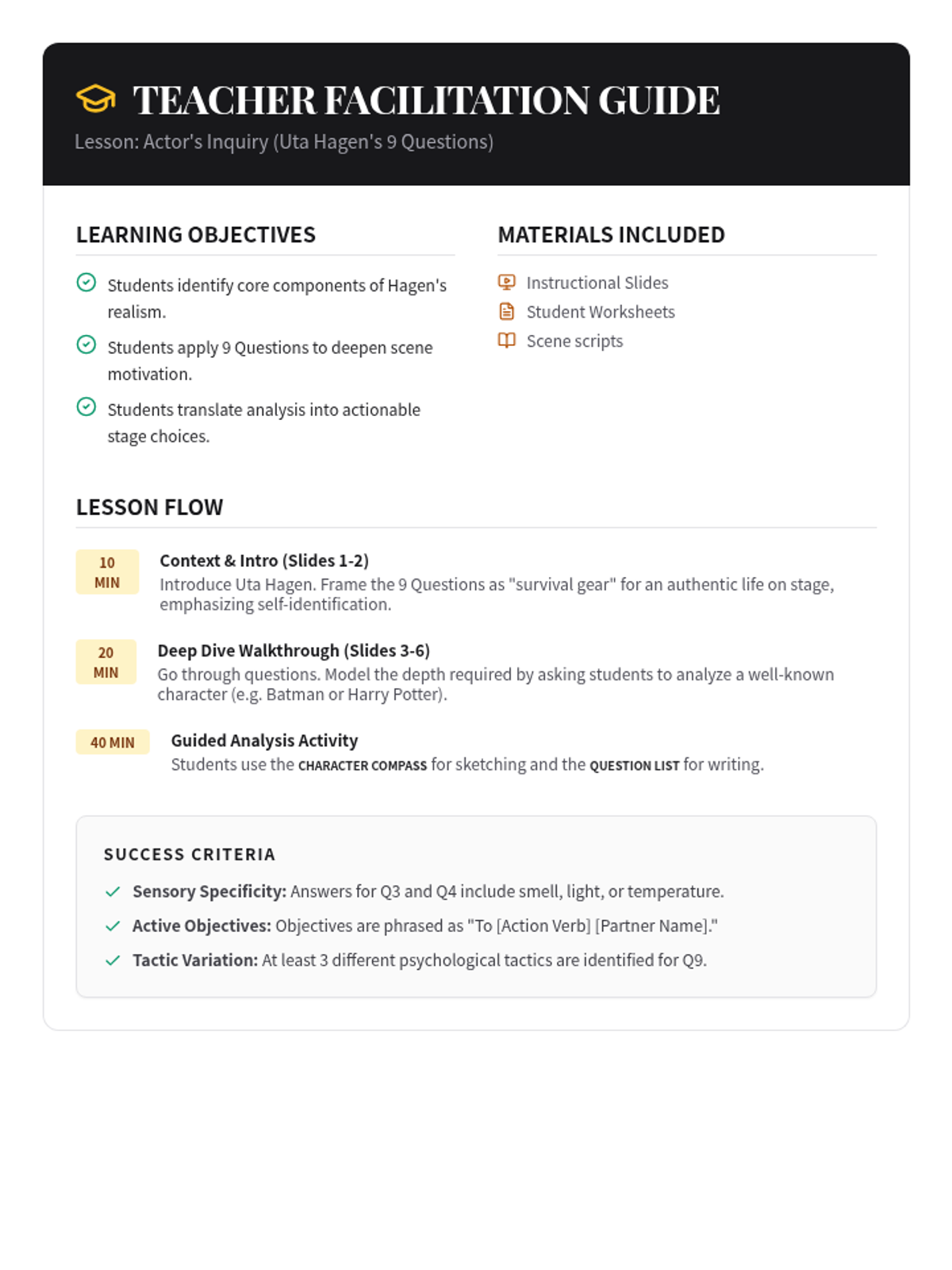
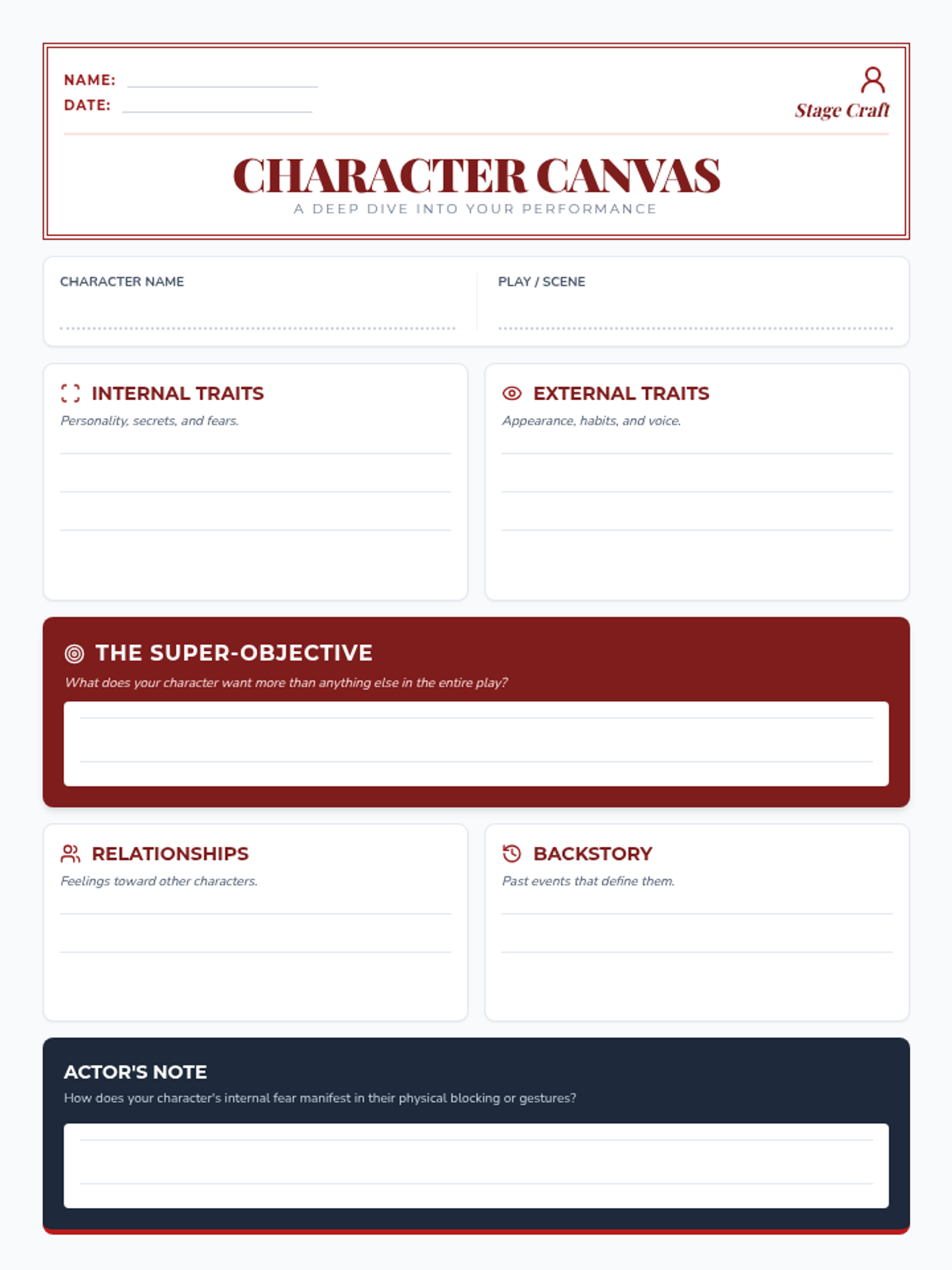
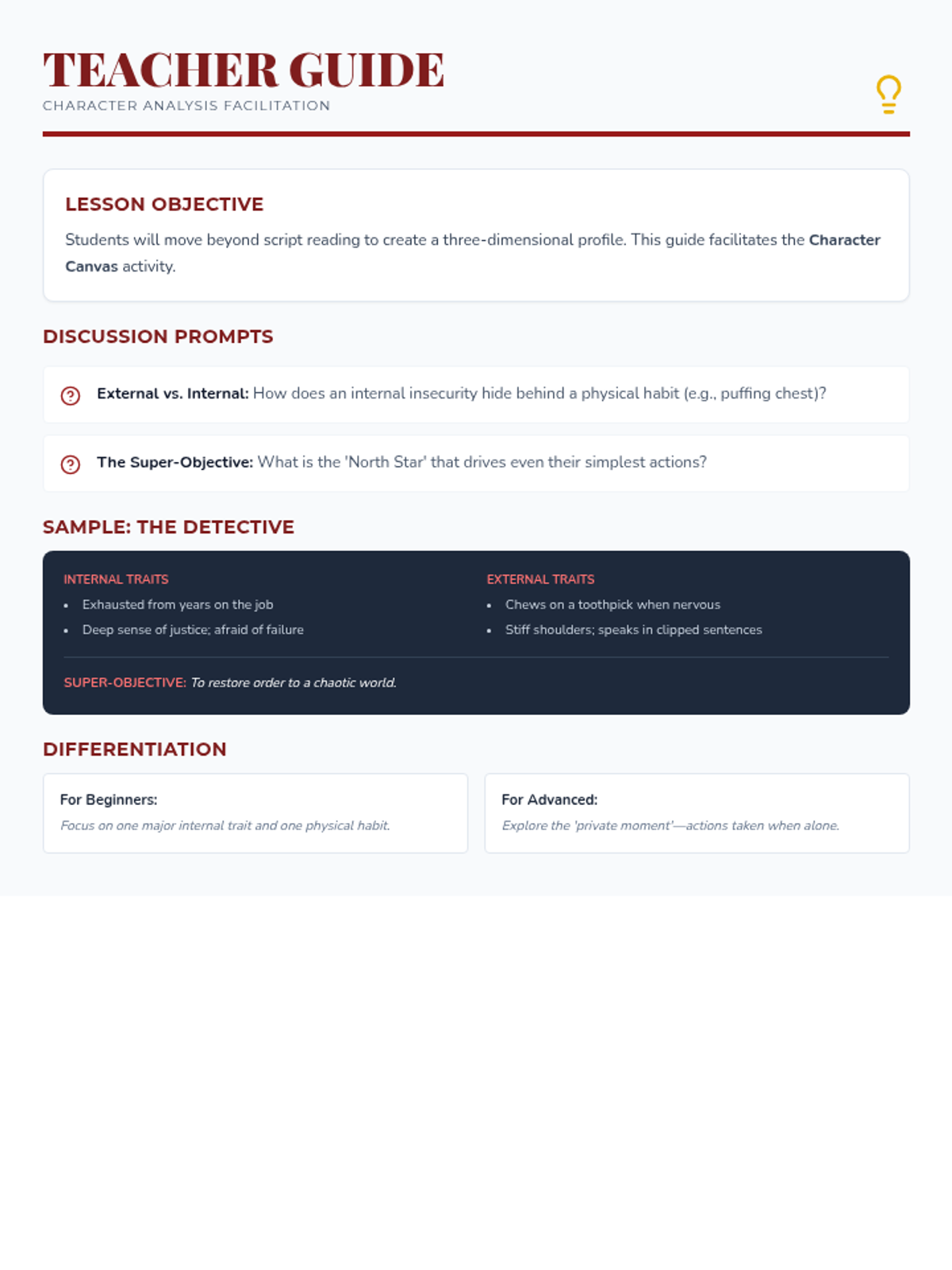
A comprehensive lesson introducing Uta Hagen's 9 Questions for character development in scene study. Includes instructional slides, a visual graphic organizer worksheet, and a teacher facilitation guide.
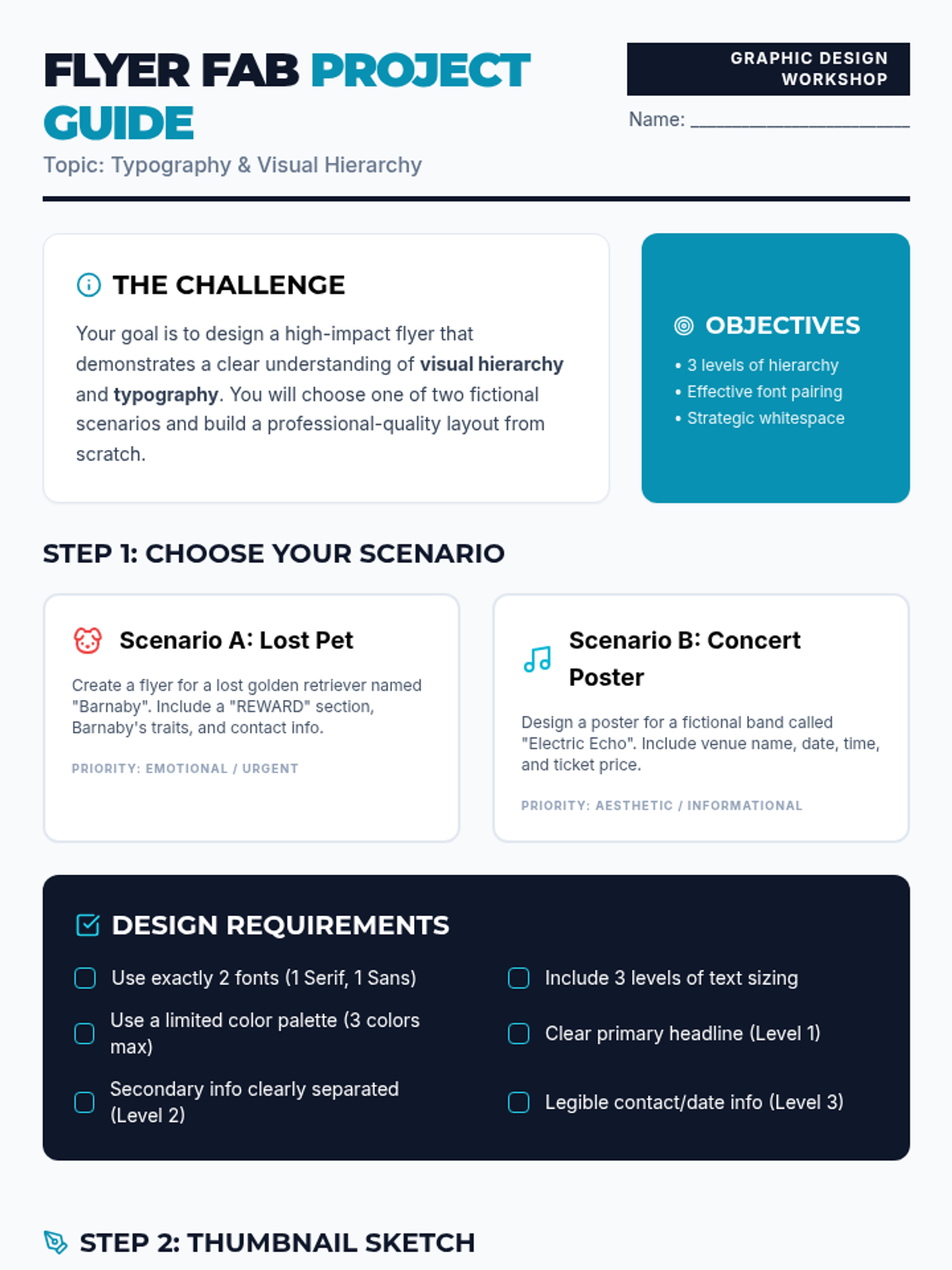
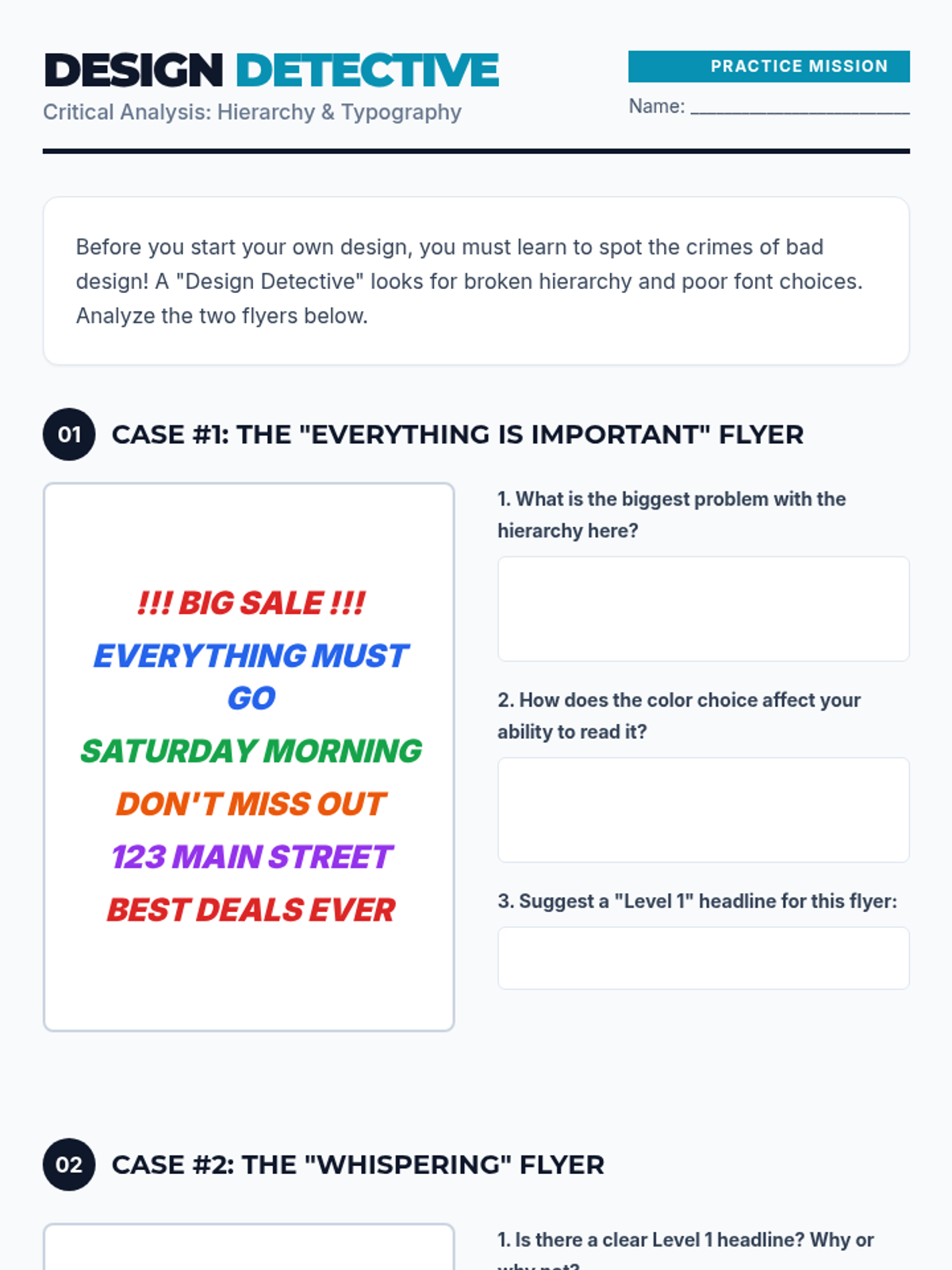
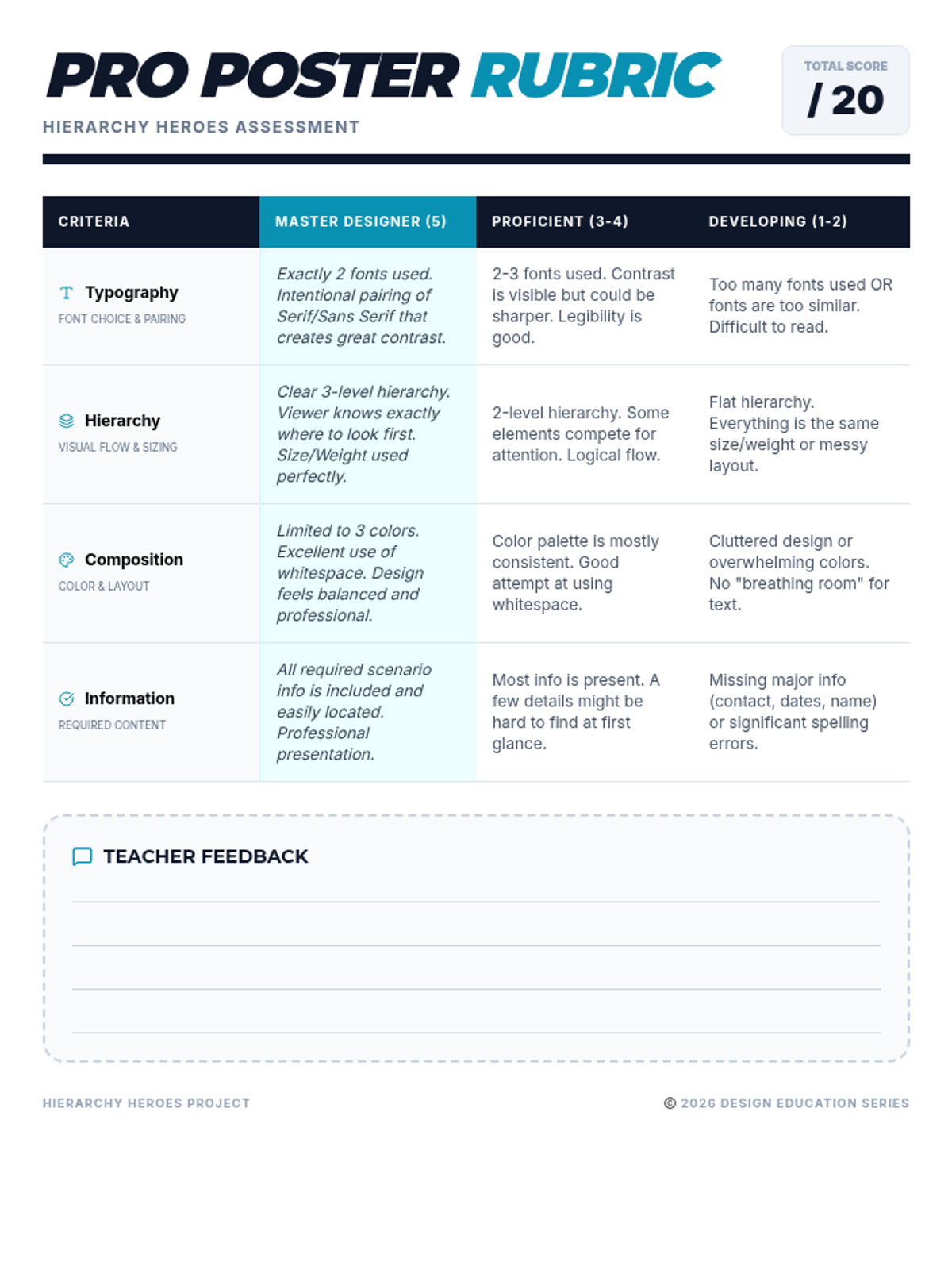
A graphic design project focused on visual hierarchy and typography. Students will choose between creating a lost pet flyer or a concert poster to demonstrate their understanding of design principles.
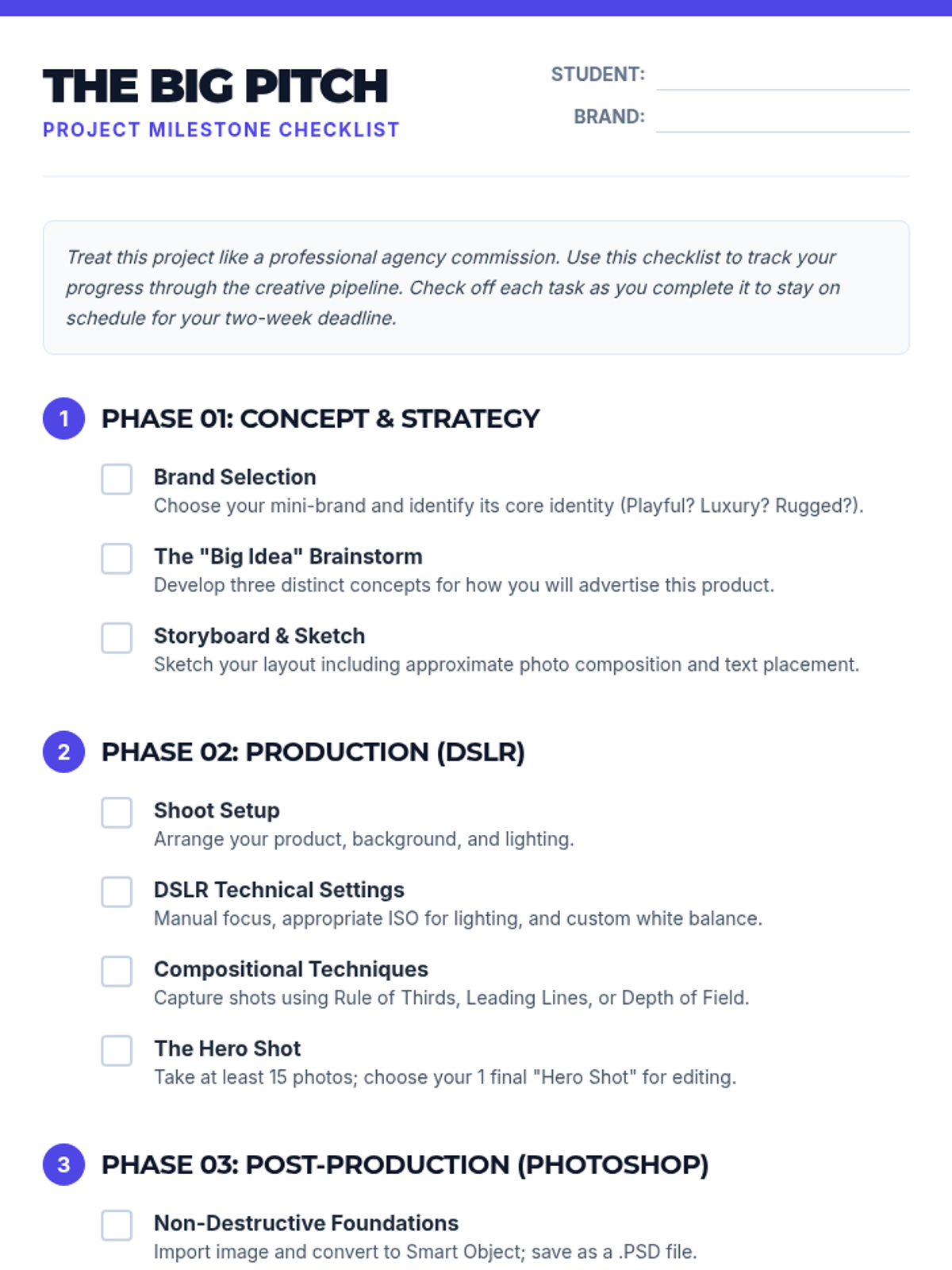
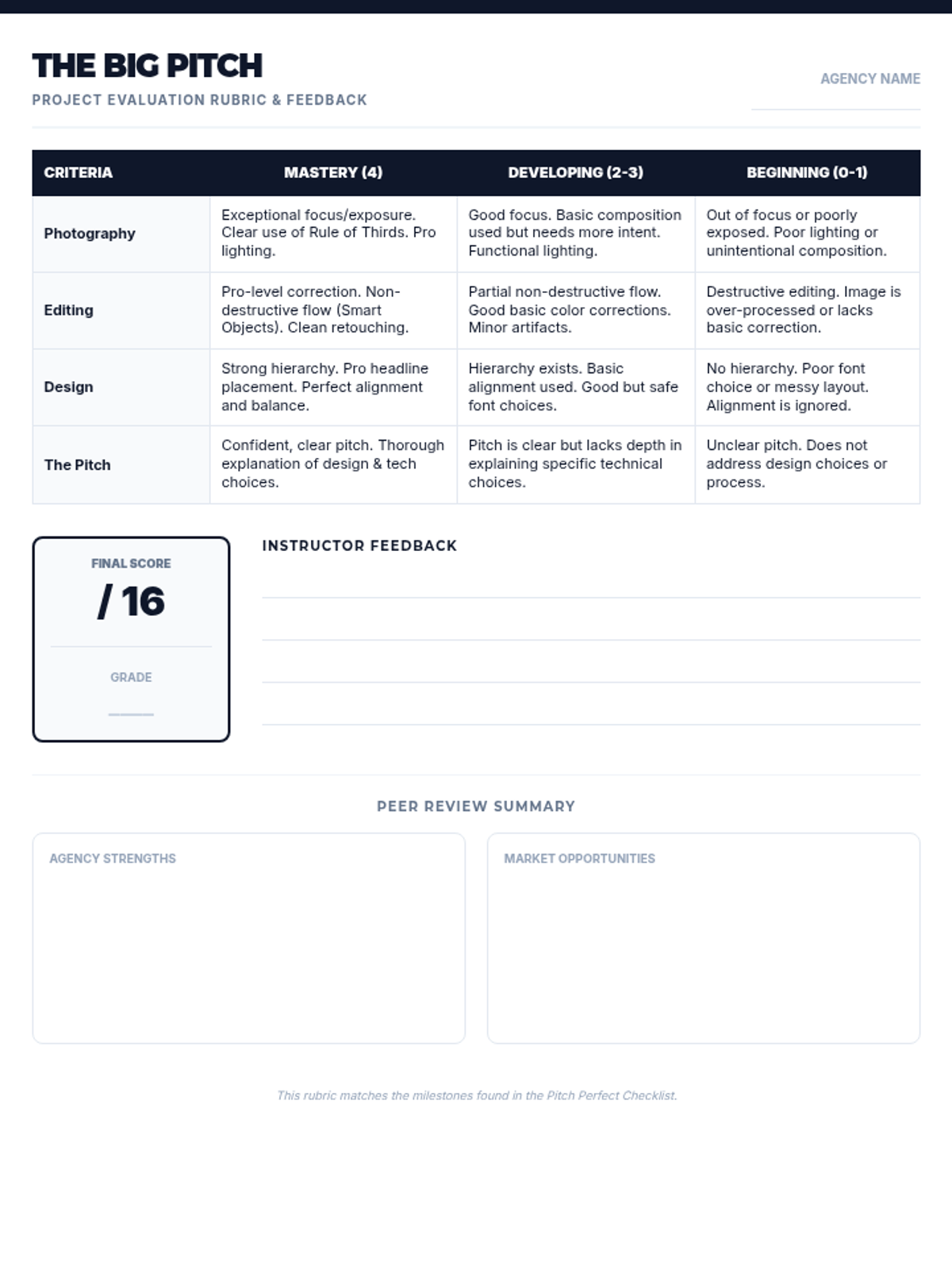
A comprehensive final project where students act as a creative agency to design a professional advertisement for a mini-brand, integrating photography, Photoshop editing, and design principles.
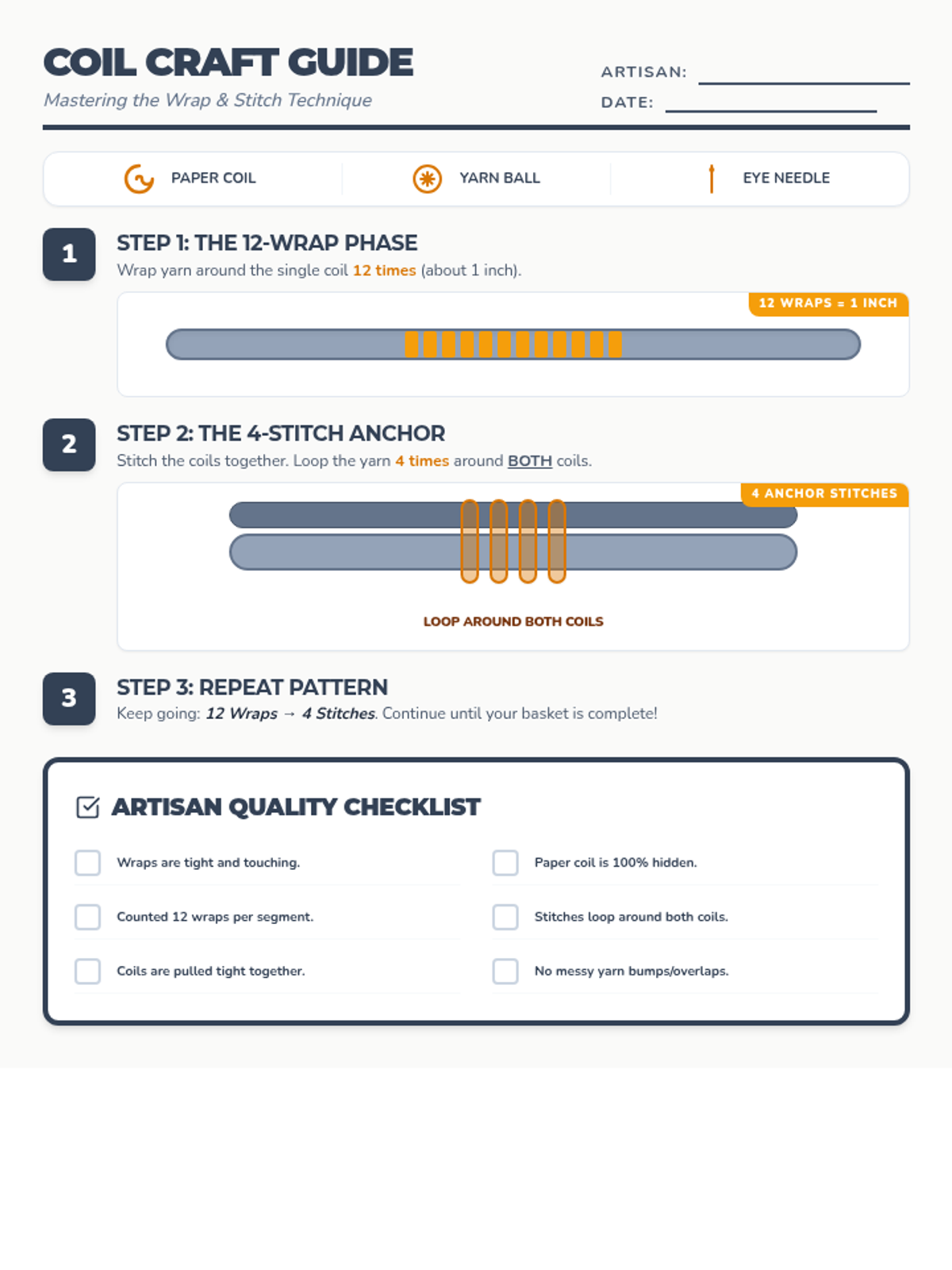
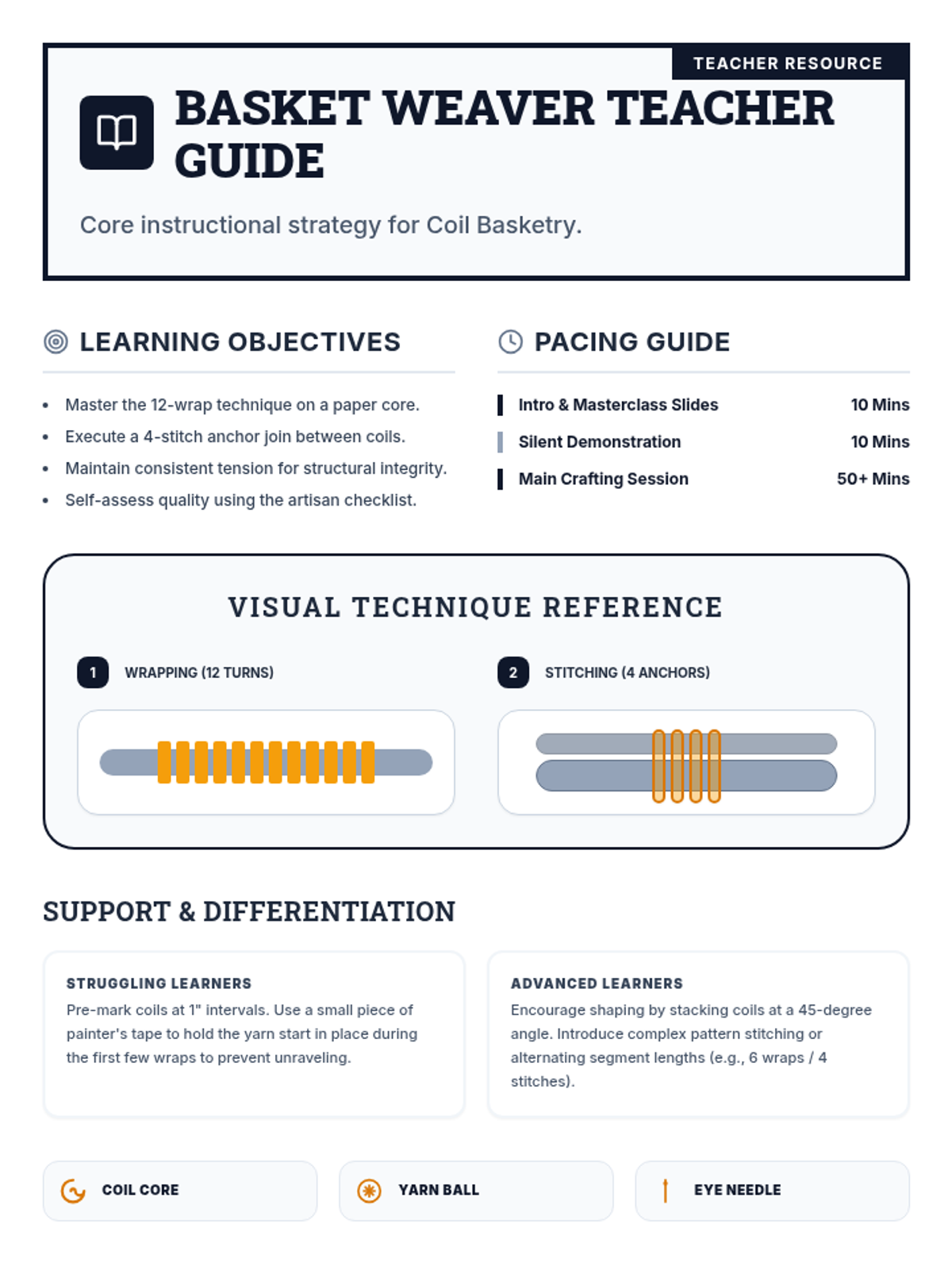
A hands-on introductory lesson to the traditional art of coil basketry using paper coils and yarn. Students master the rhythmic technique of wrapping and stitching to create a functional, decorative vessel.
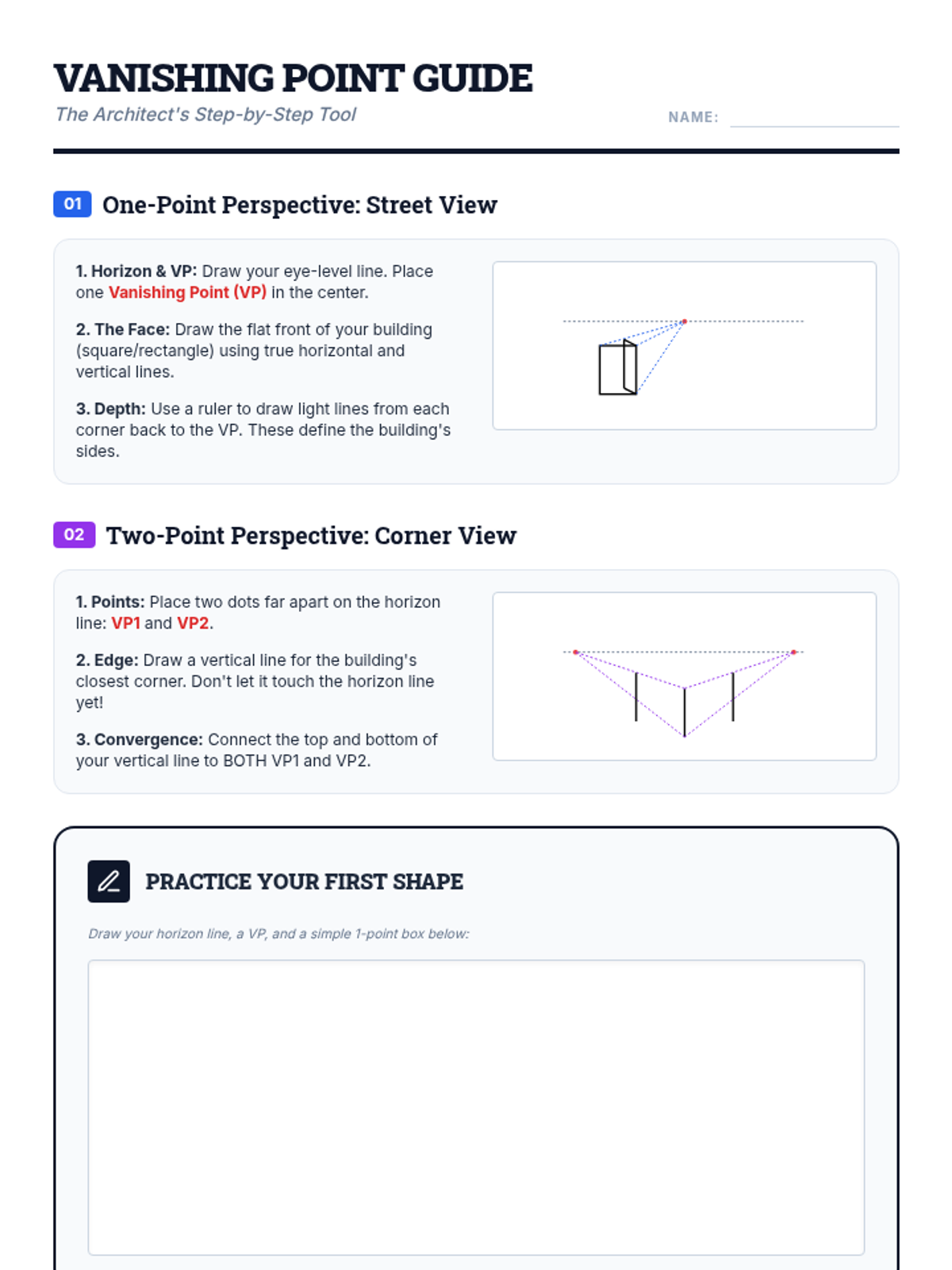
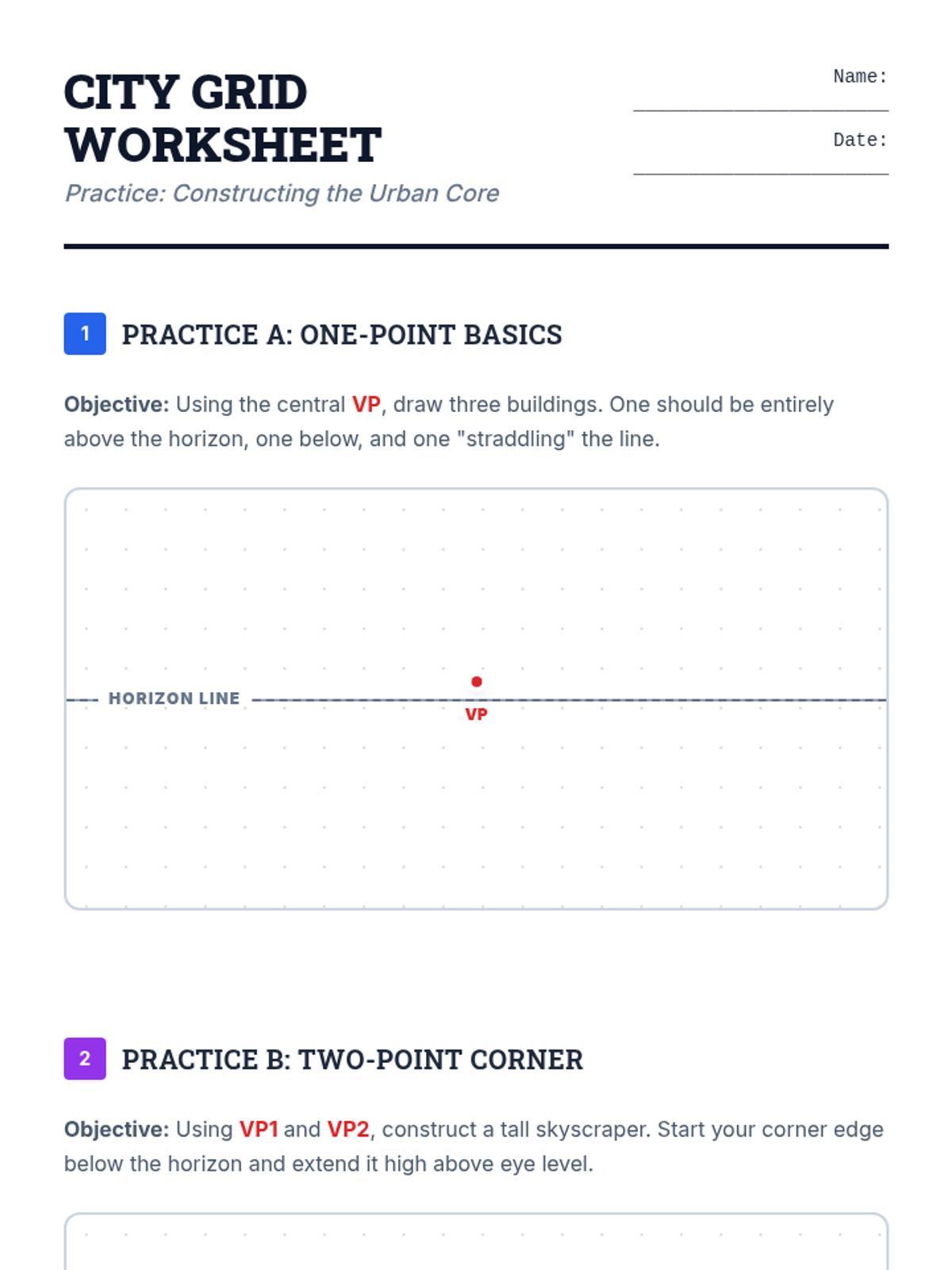
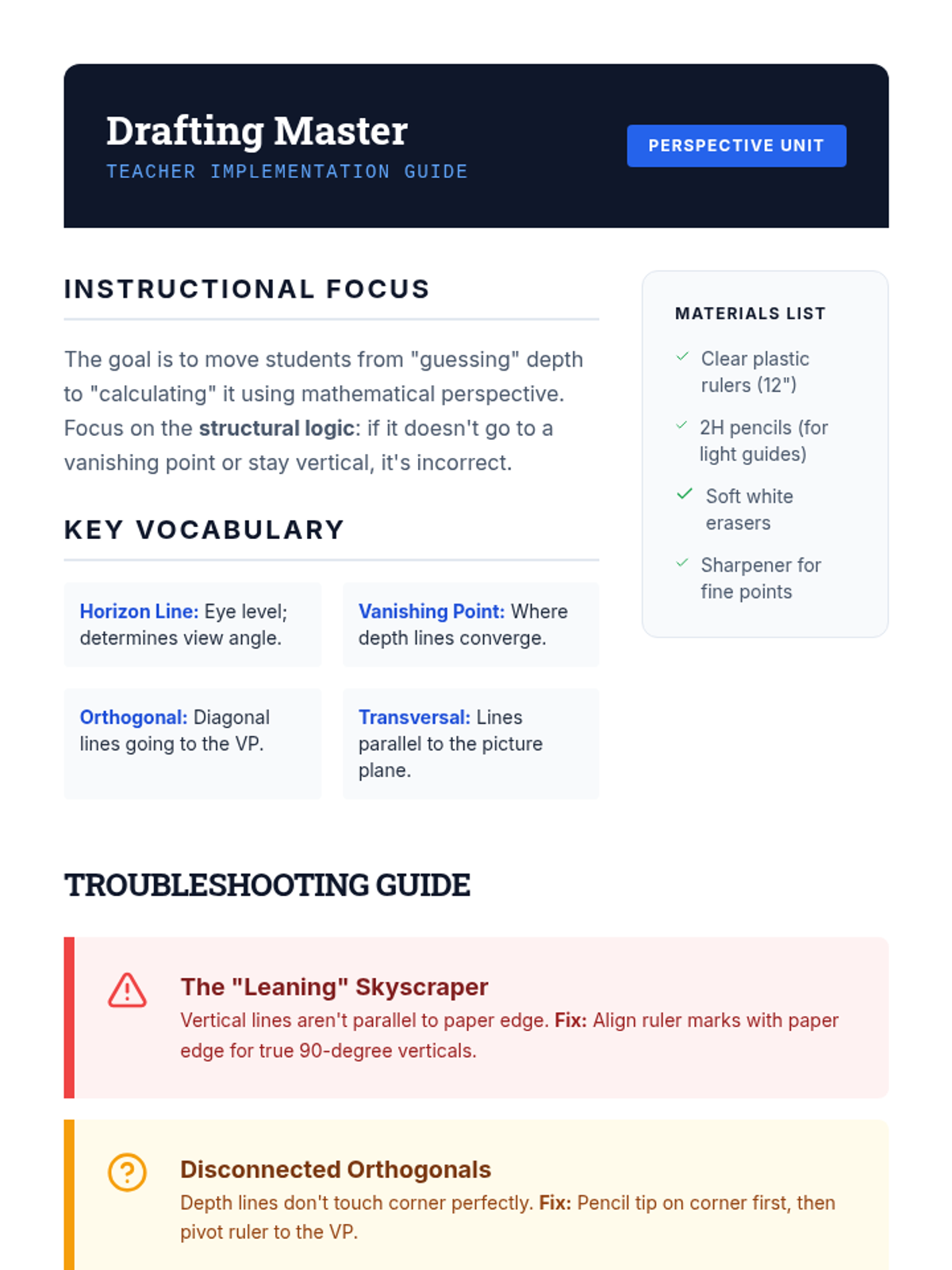
A comprehensive introduction to 1-point and 2-point perspective drawing through the lens of urban architecture. Students learn the fundamentals of vanishing points and horizon lines to create realistic 3D cityscapes.
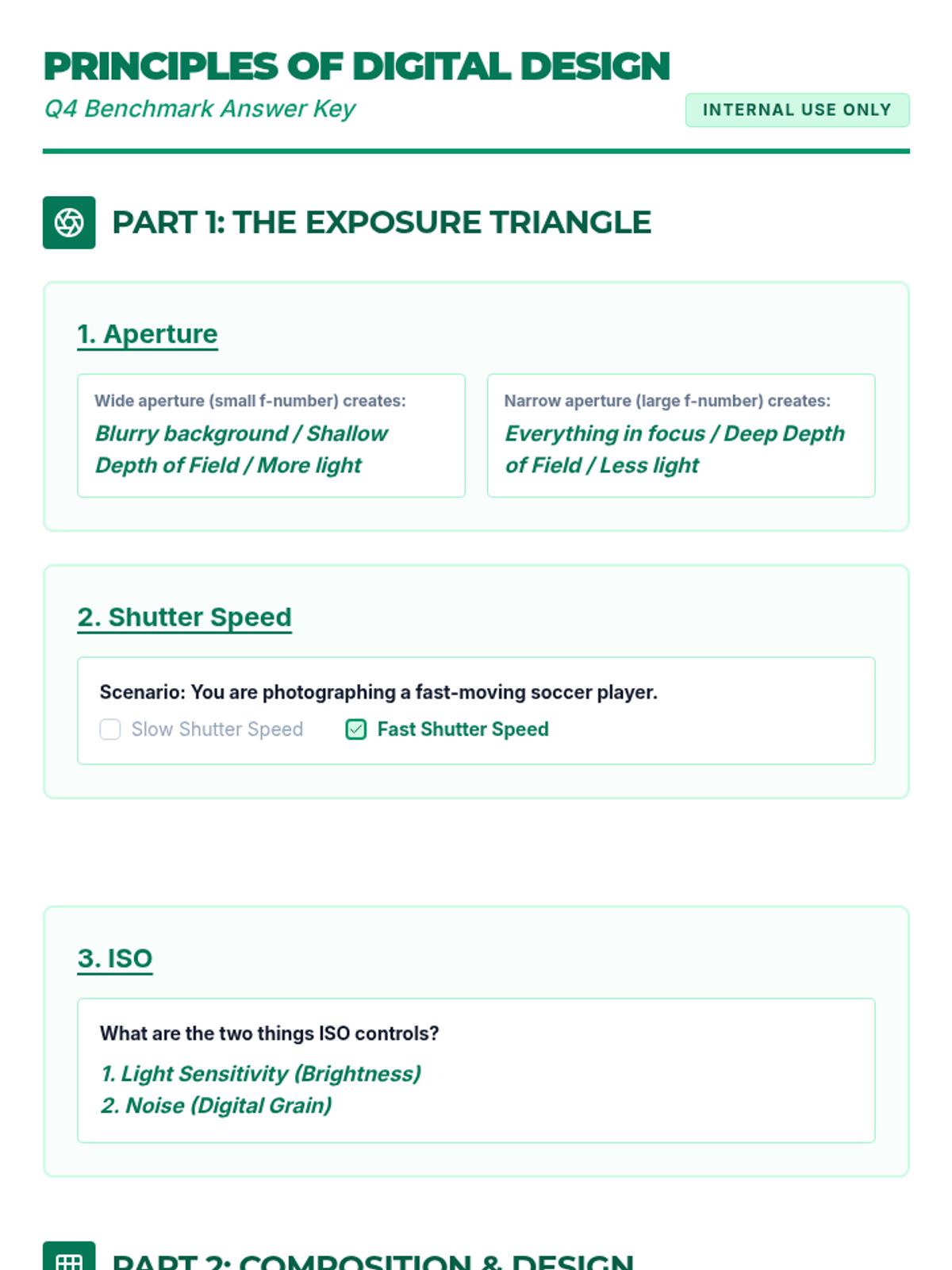
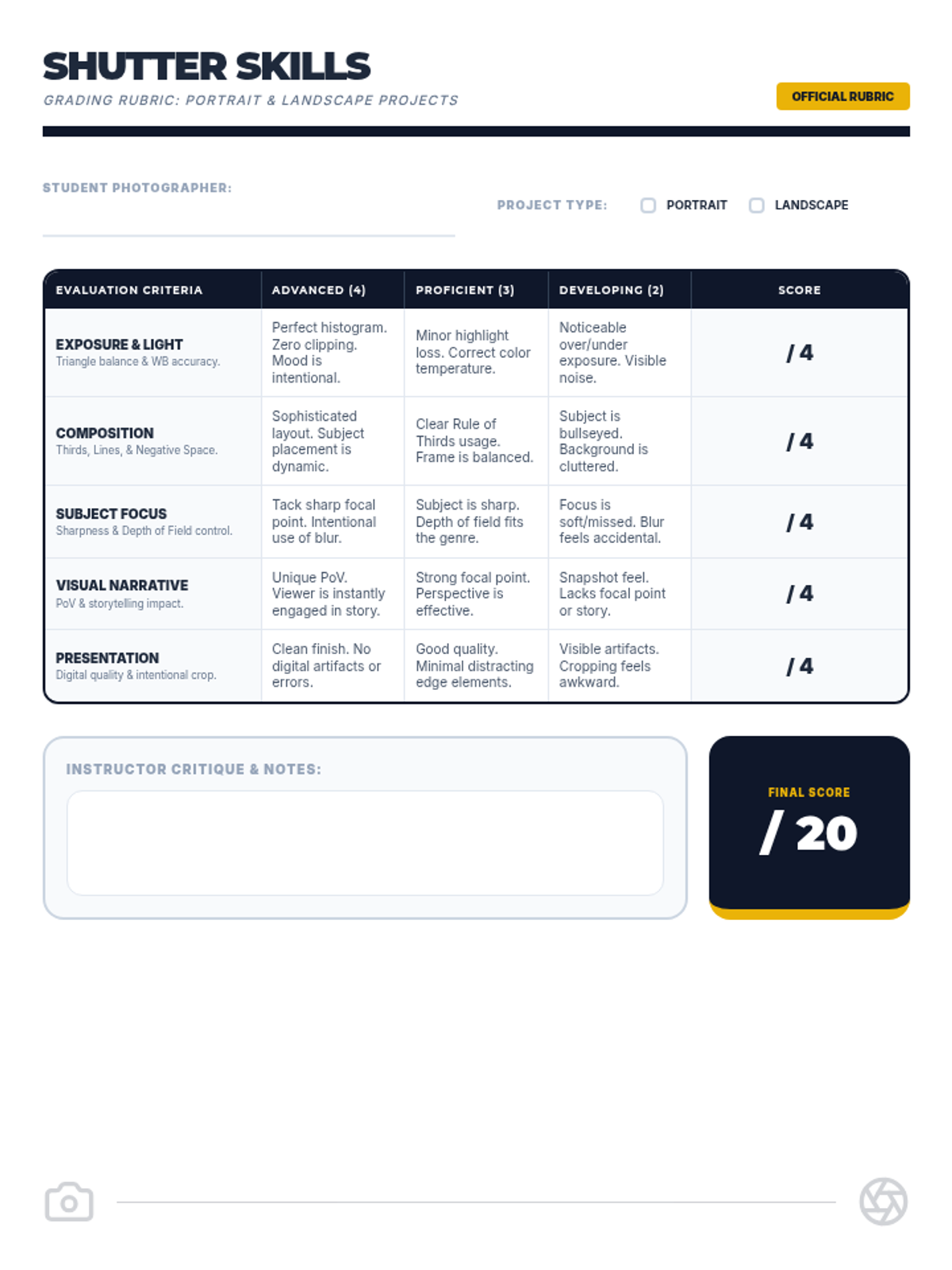
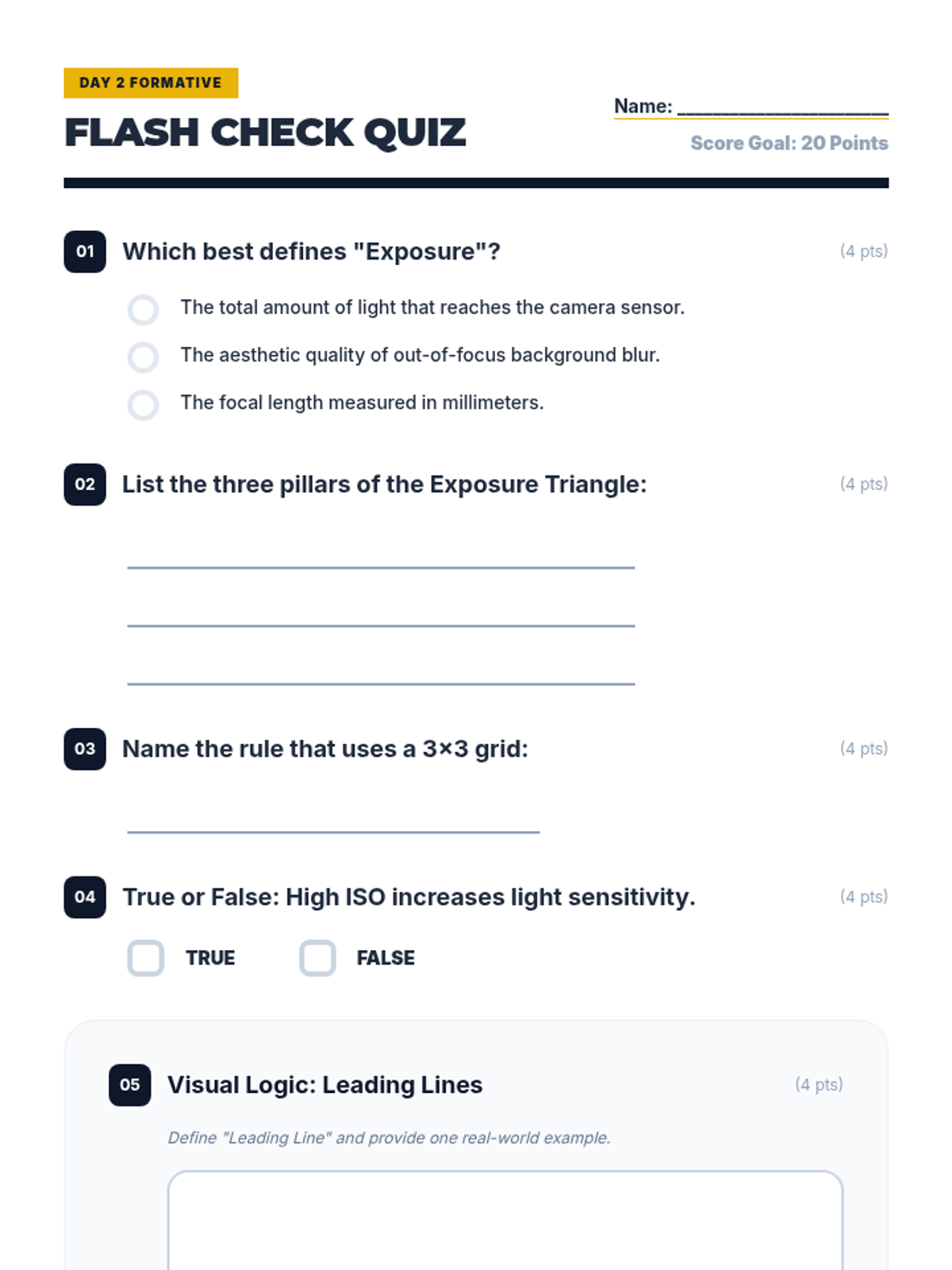
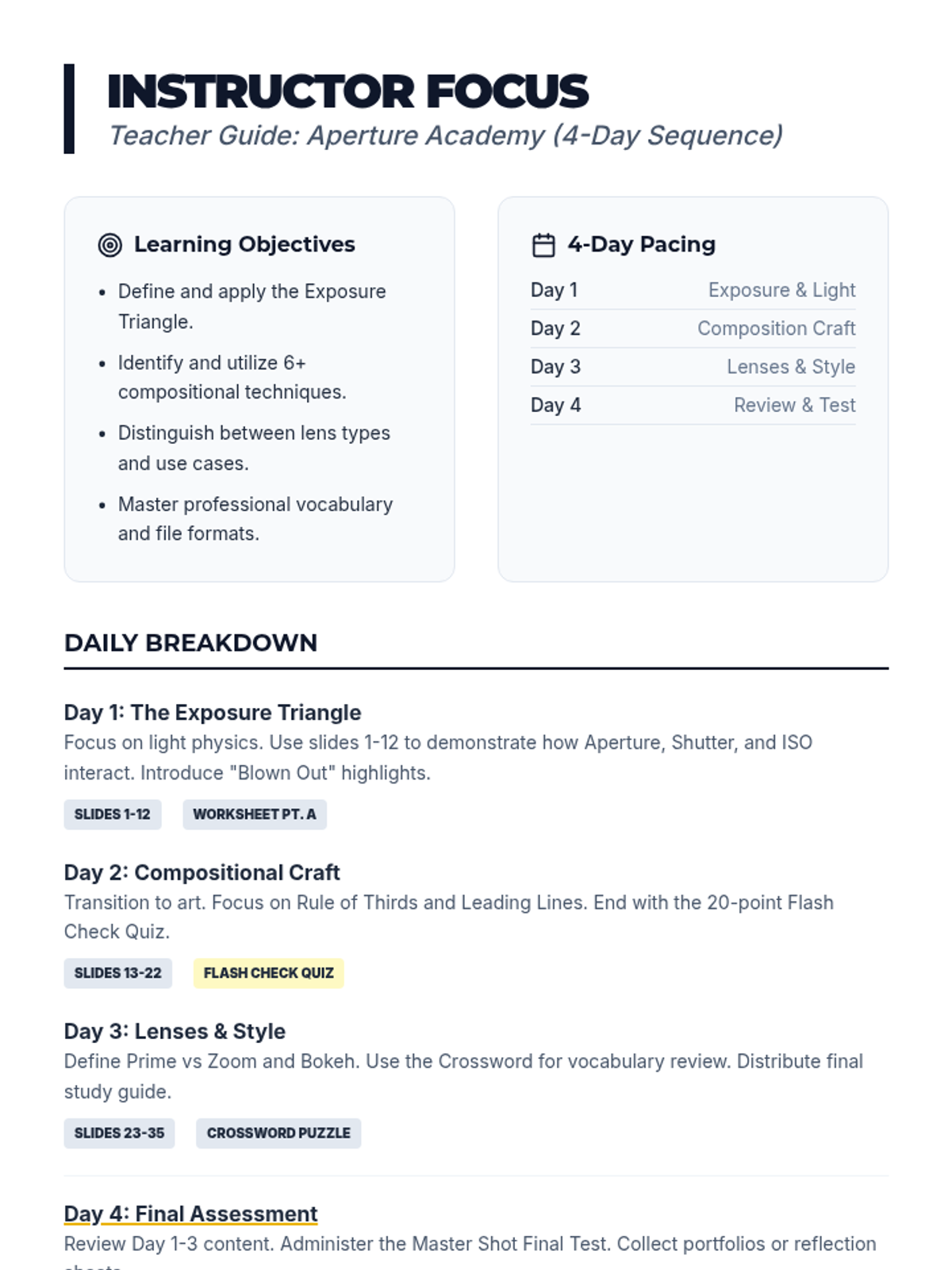
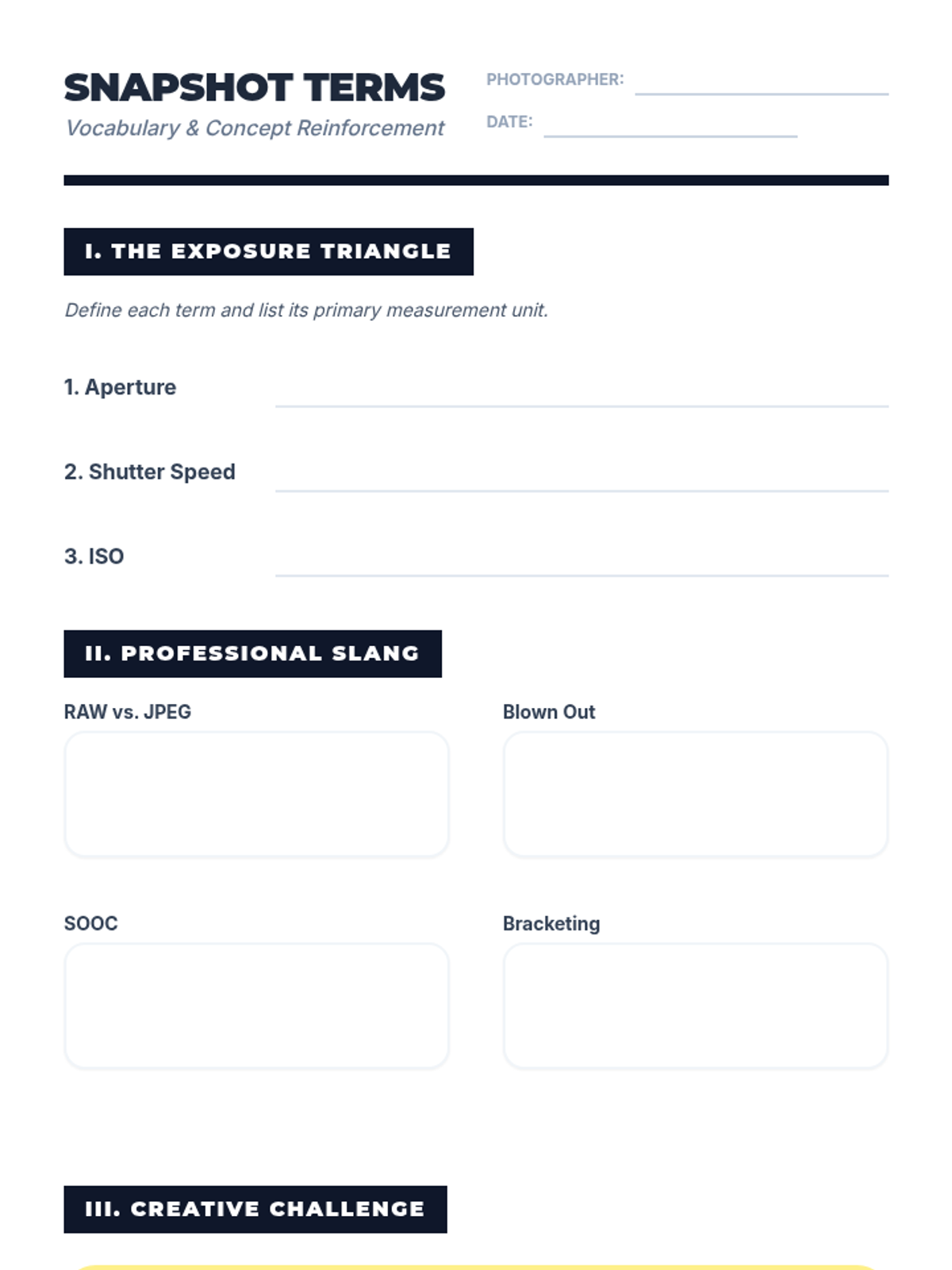
A comprehensive lesson preparing students for their photography benchmark, covering technical camera settings, compositional principles, and the philosophy of artistic intention.
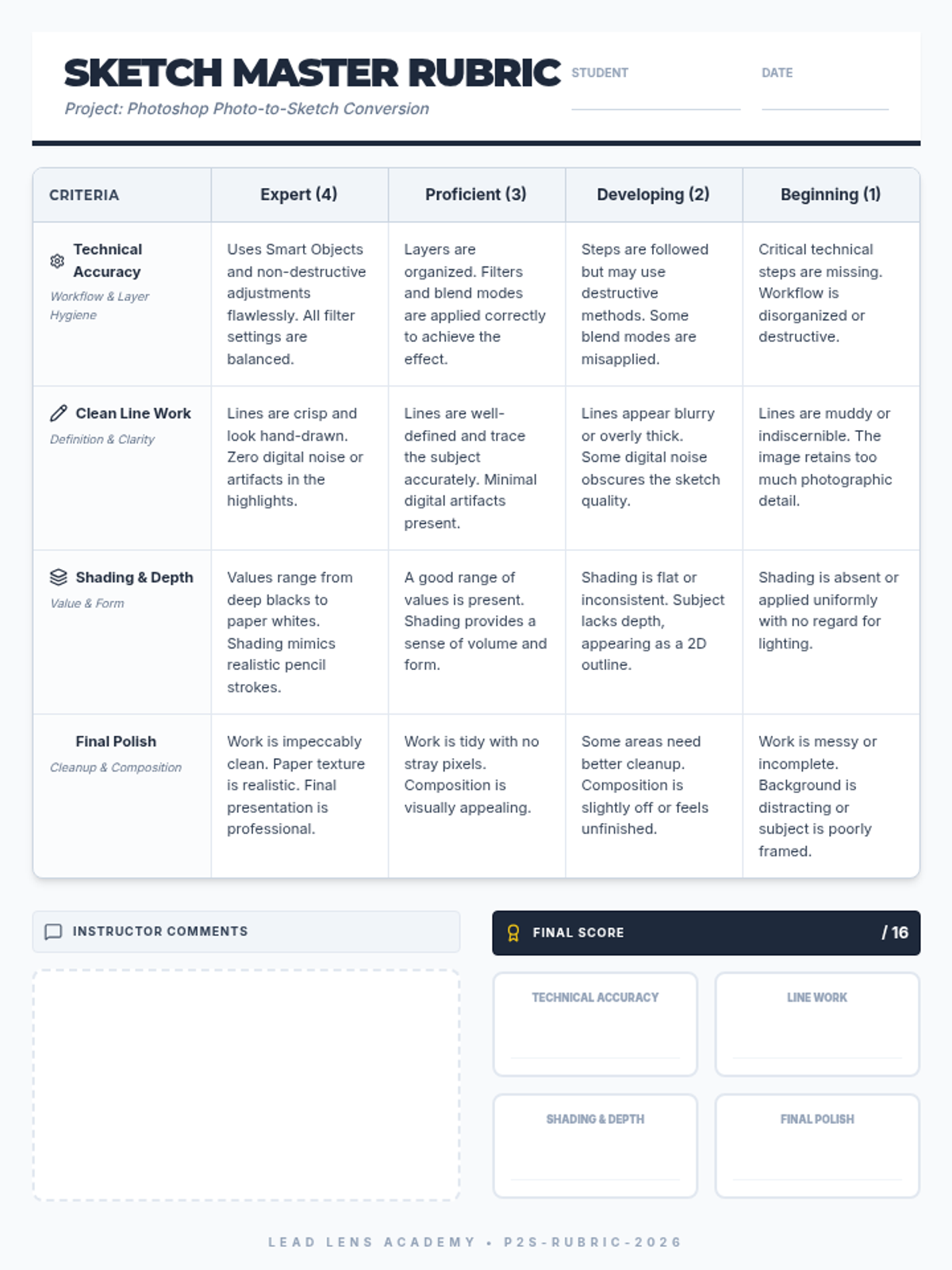
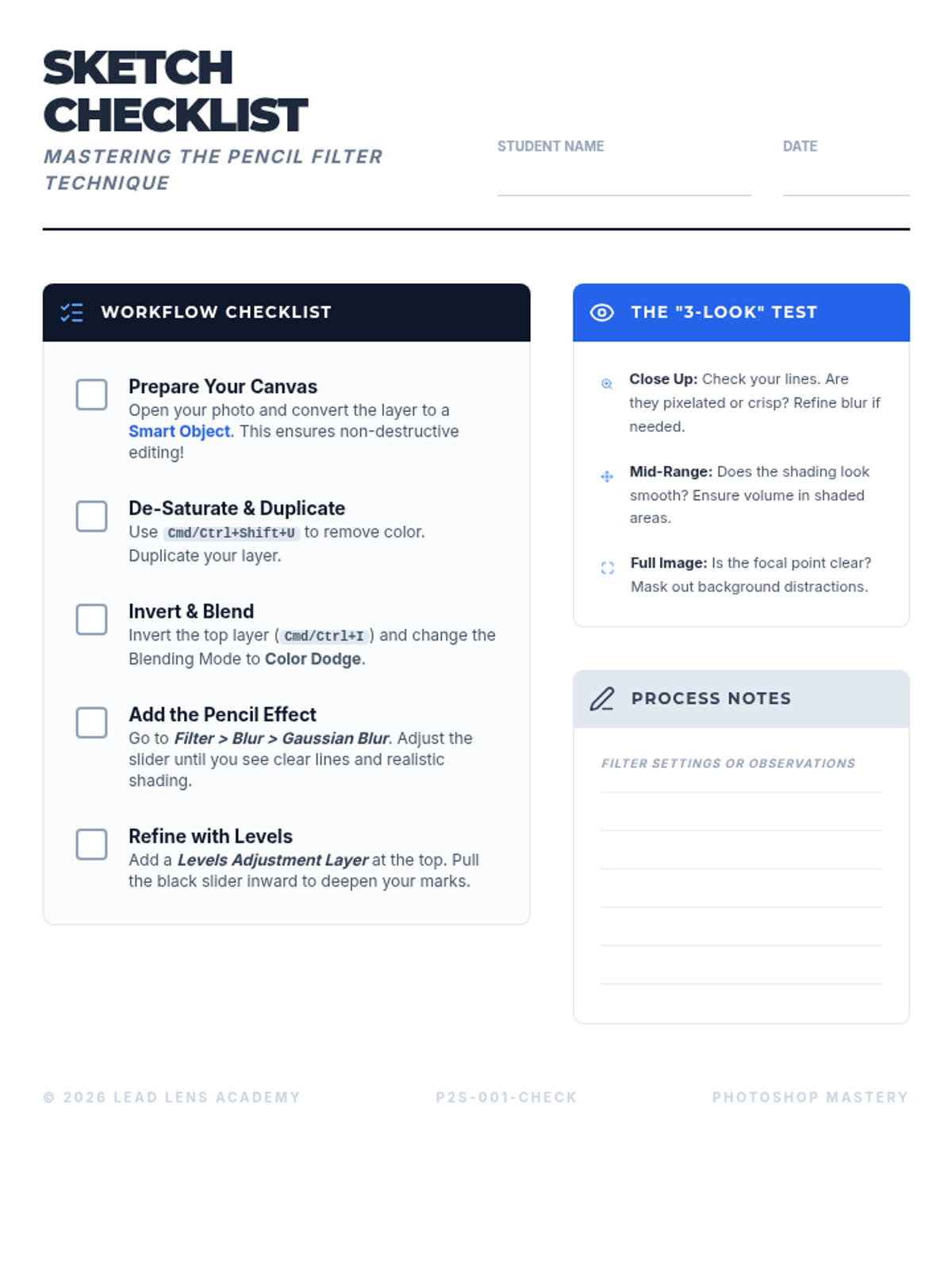
A comprehensive guide to transforming digital photographs into realistic pencil sketches using Adobe Photoshop, focusing on technical precision and artistic shading techniques.
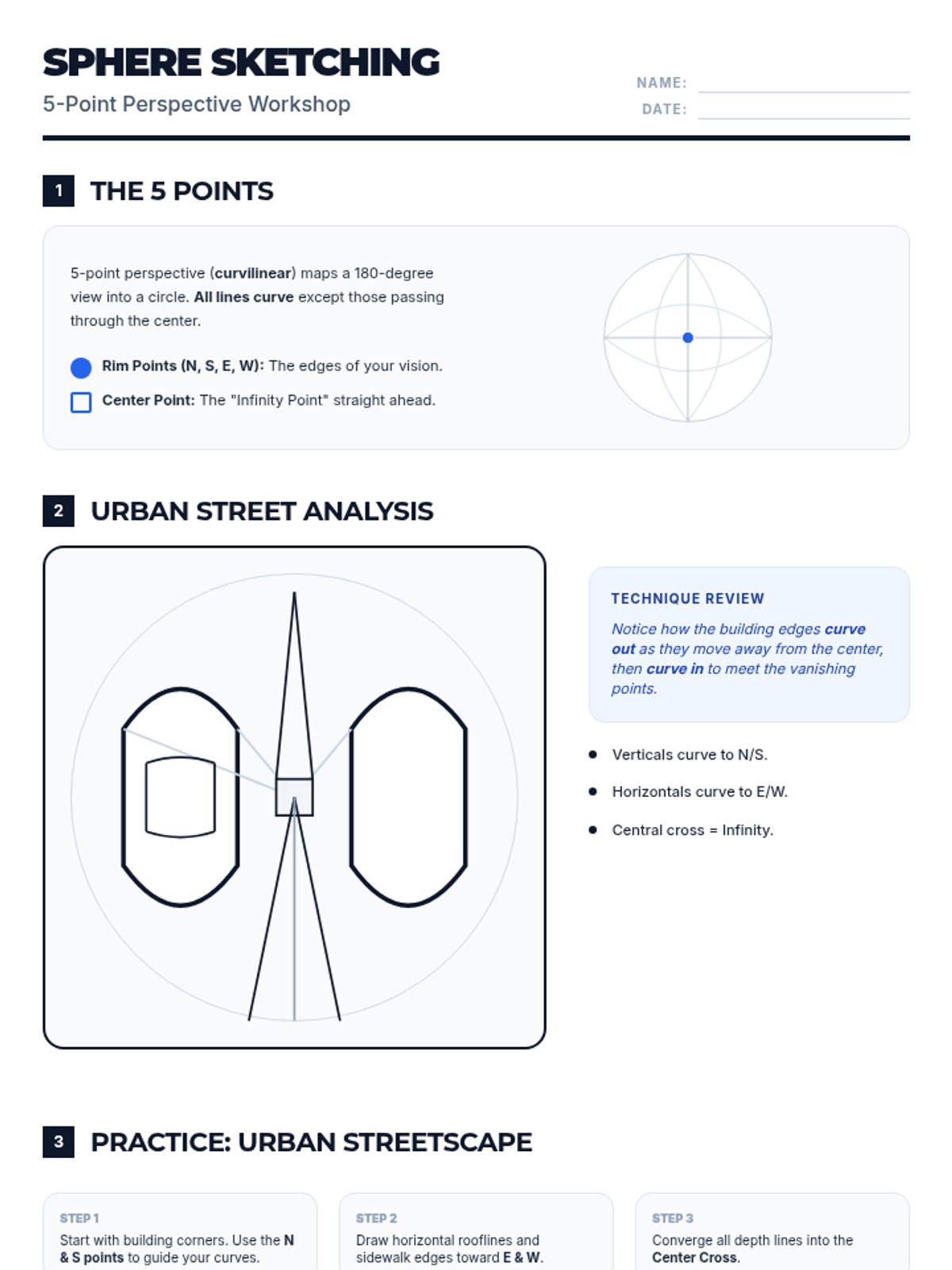
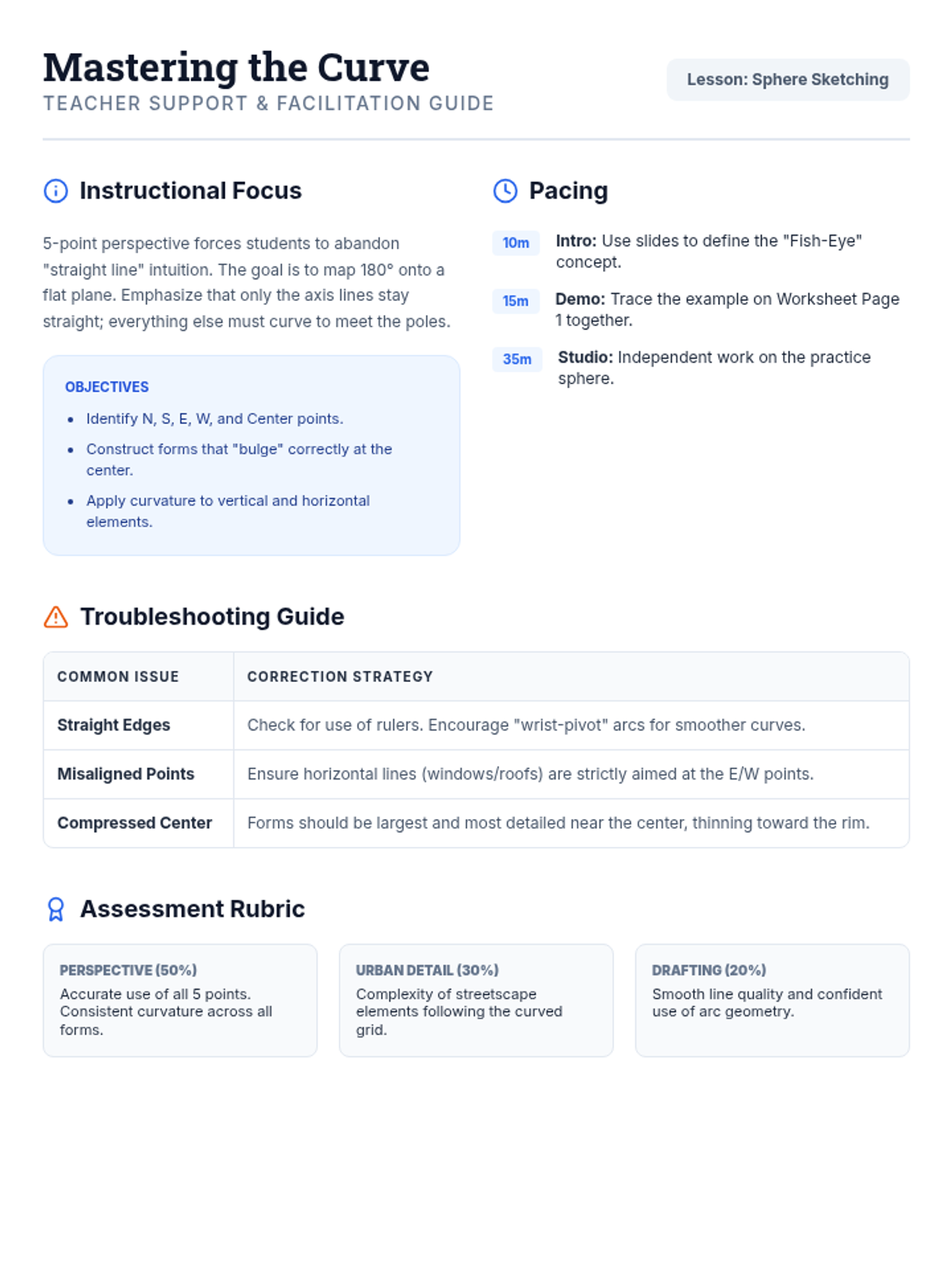
A lesson on mastering 5-point curvilinear perspective, focusing on capturing wide-angle urban environments within a spherical frame. Students will learn to map the world onto a sphere using five vanishing points.
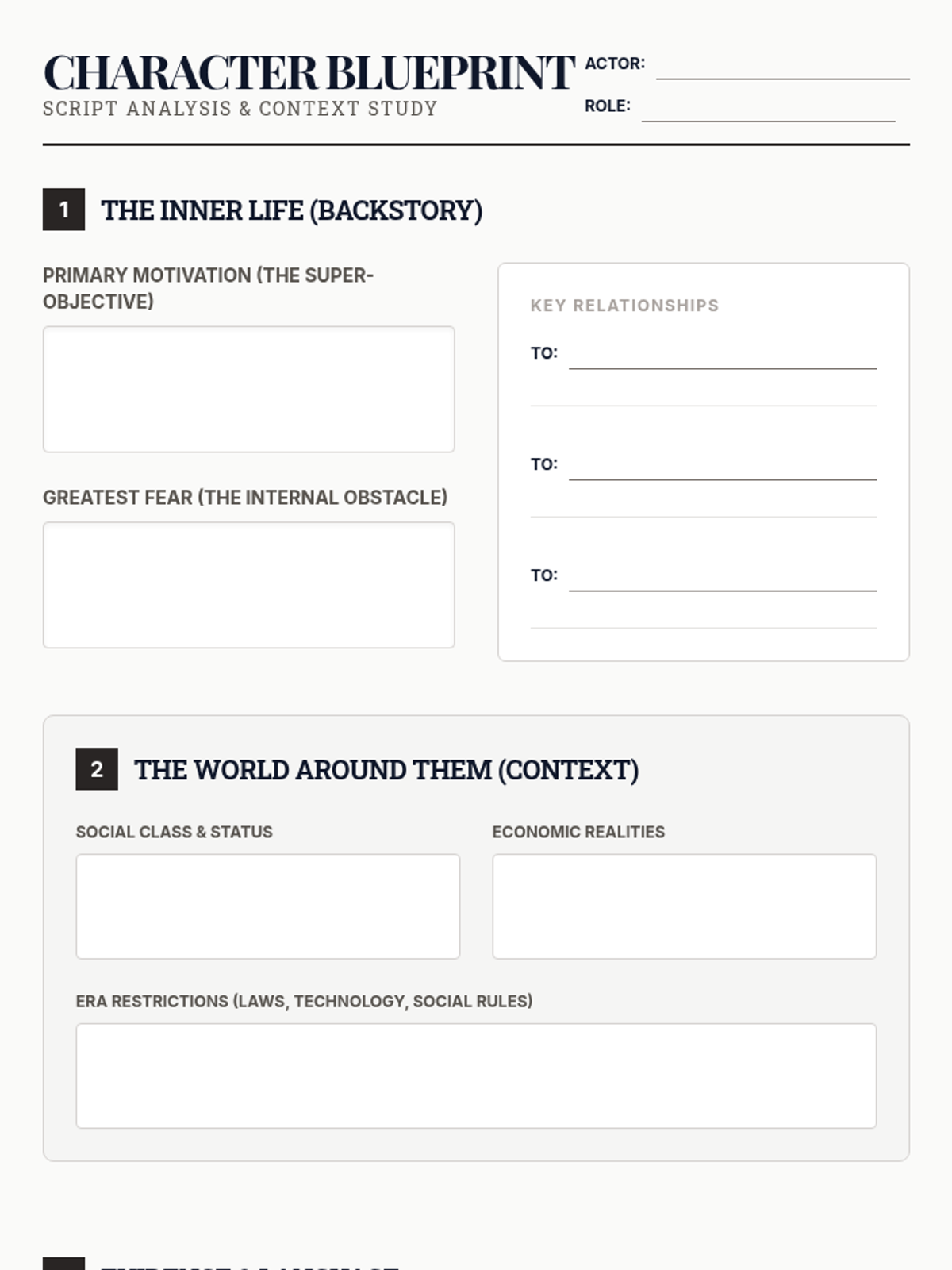
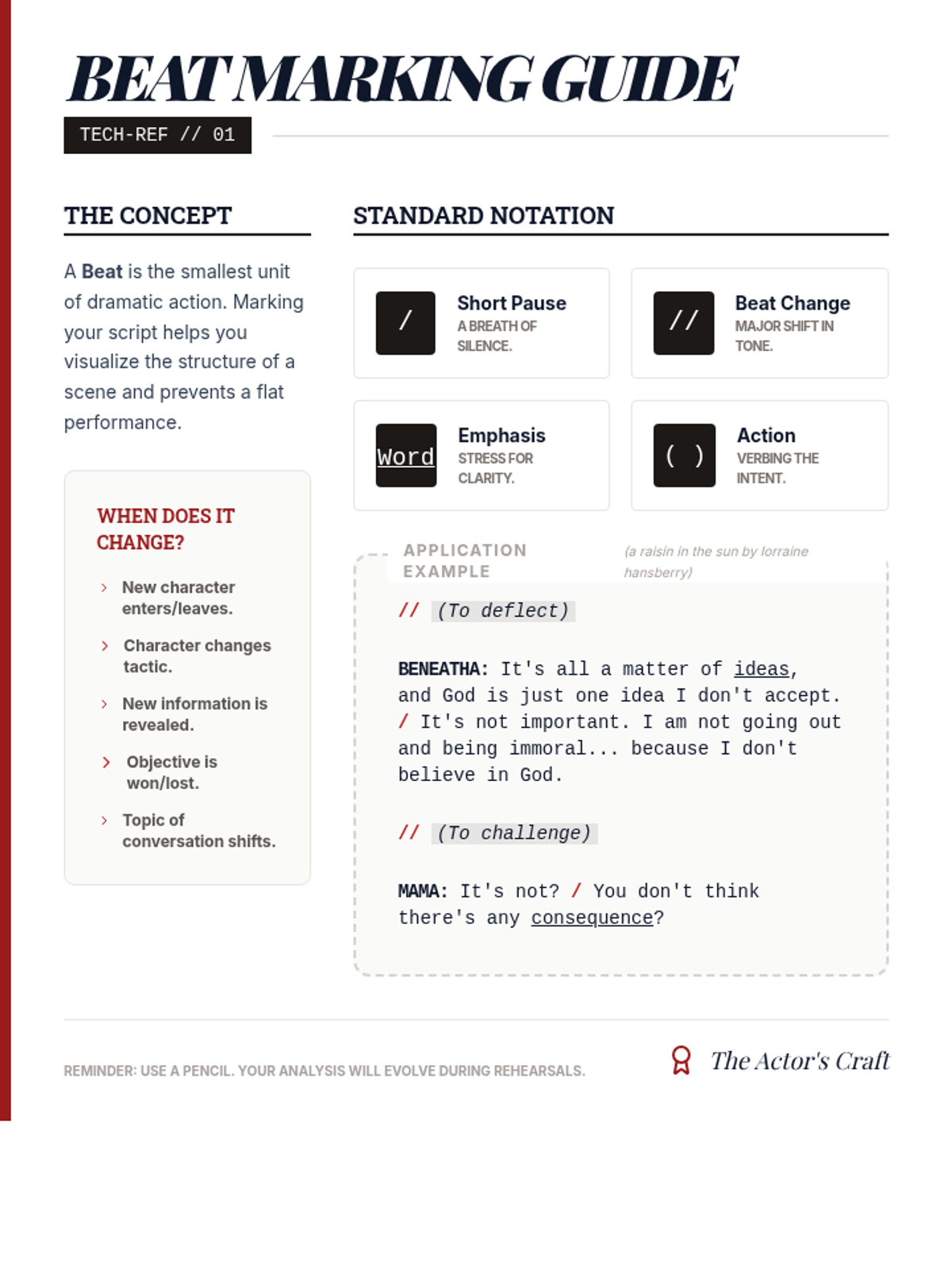
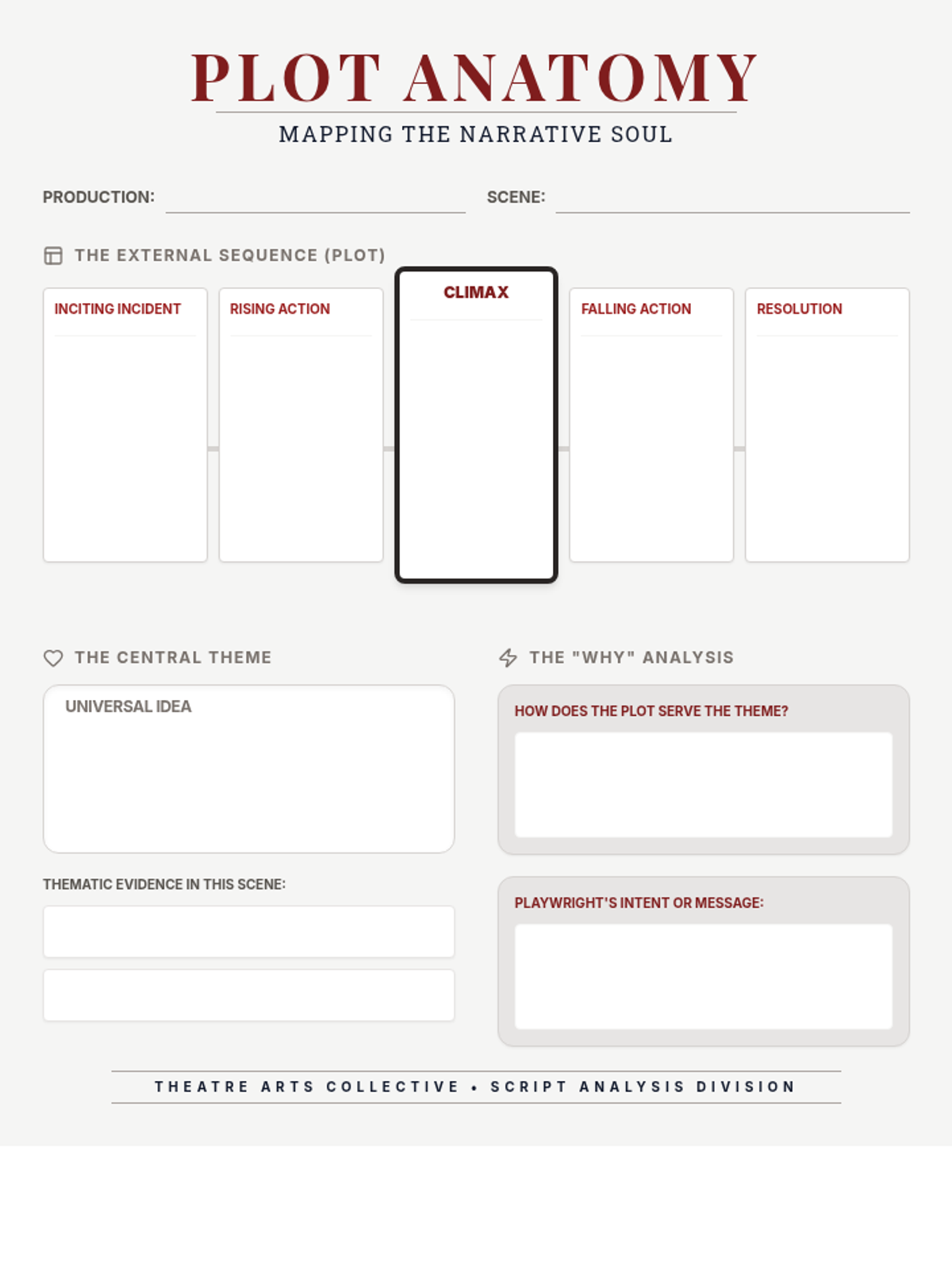
A comprehensive dive into the 'table work' phase of theatrical production, focusing on character depth, historical context, and technical script analysis. Students will move from initial reading to deep interpretation.
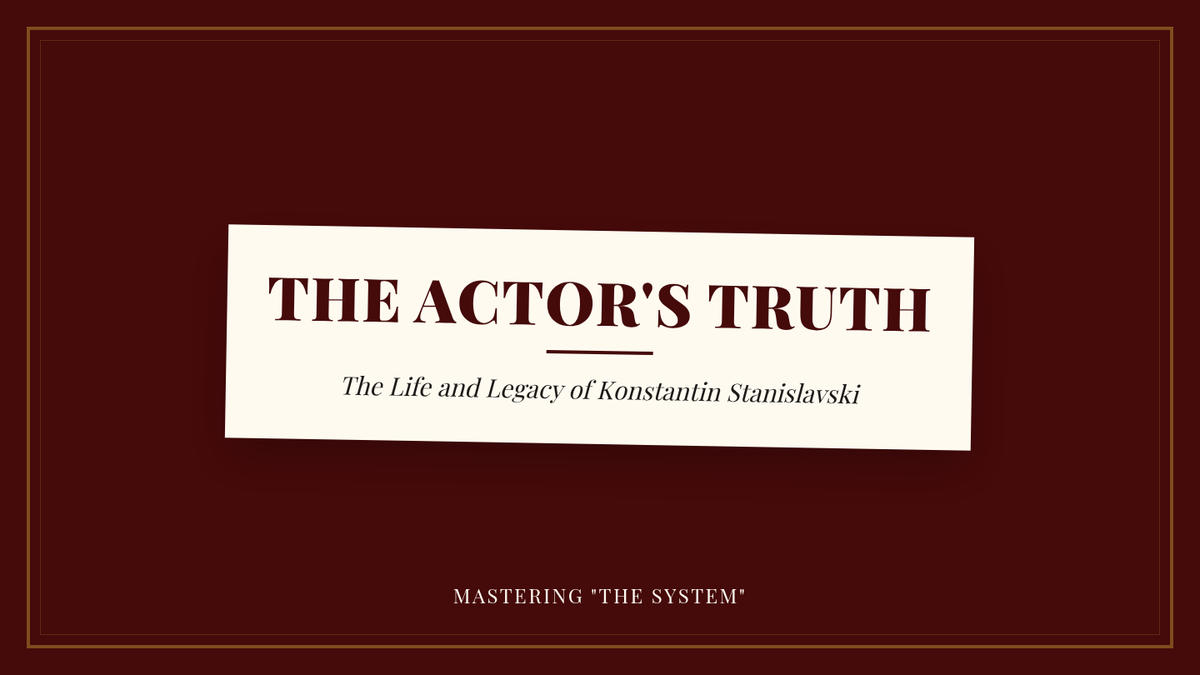
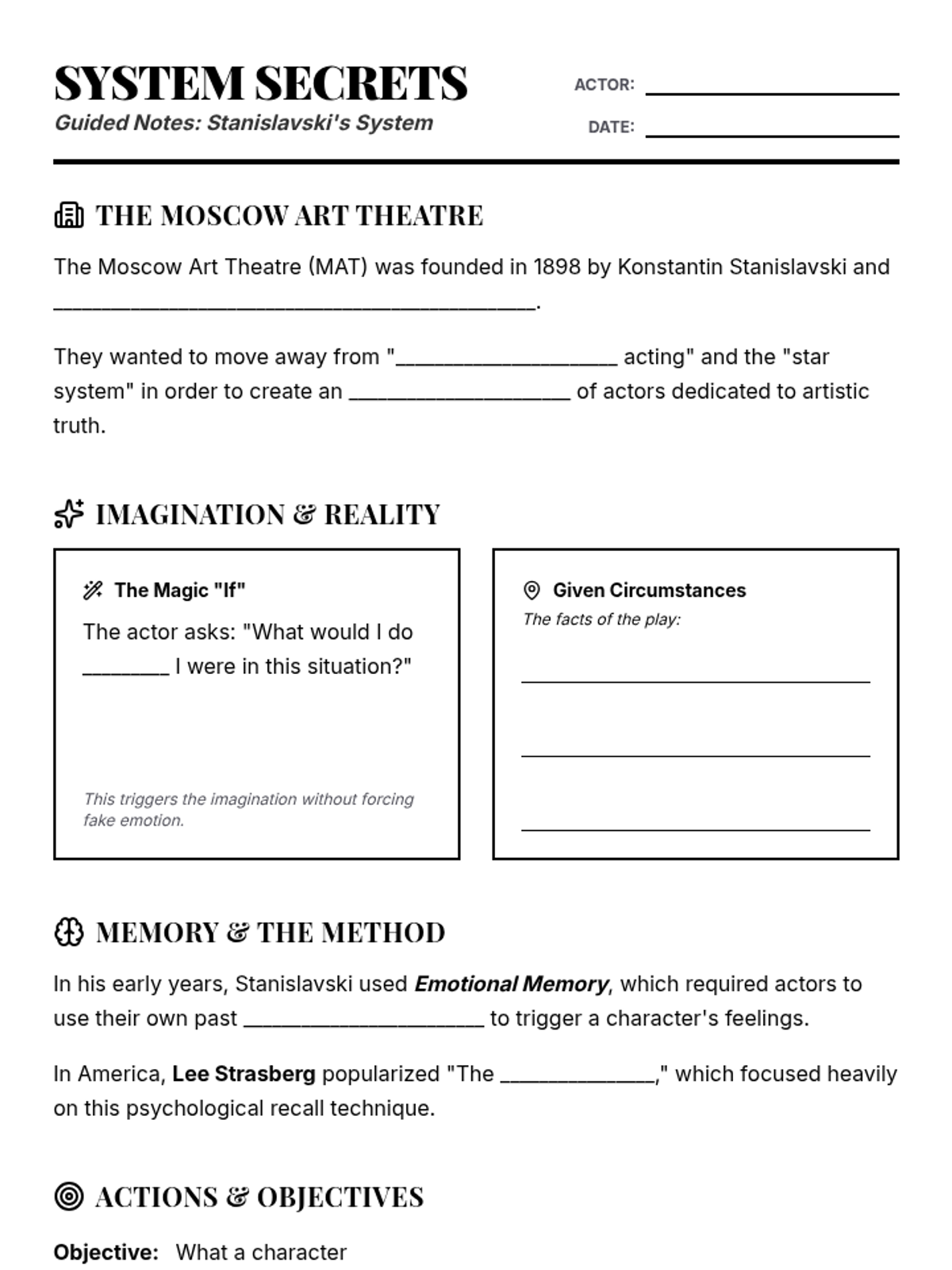
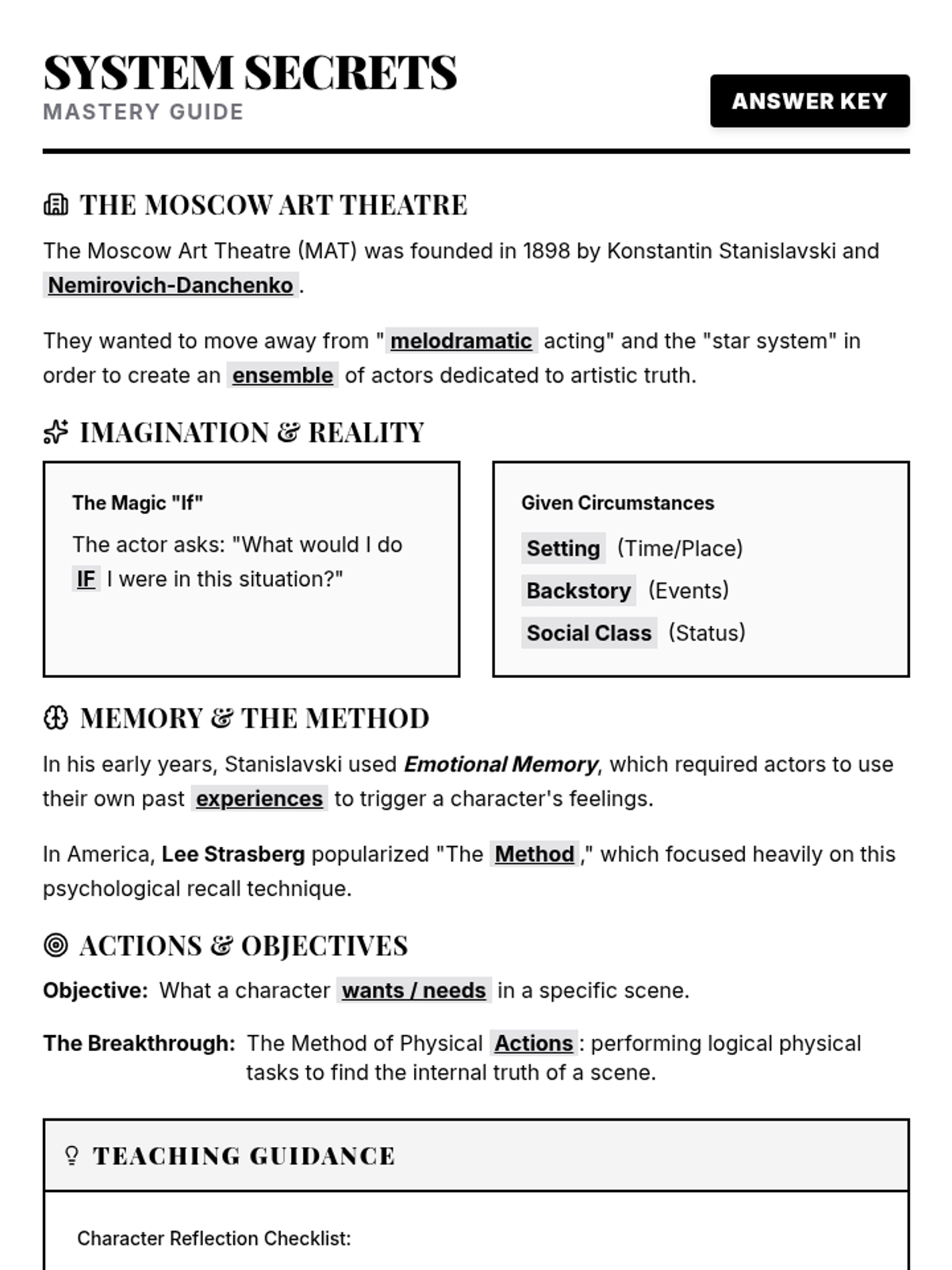
A deep dive into Konstantin Stanislavski's revolutionary approach to realistic acting, covering the Moscow Art Theatre, the Magic If, and the shift from Emotional Memory to Physical Actions.
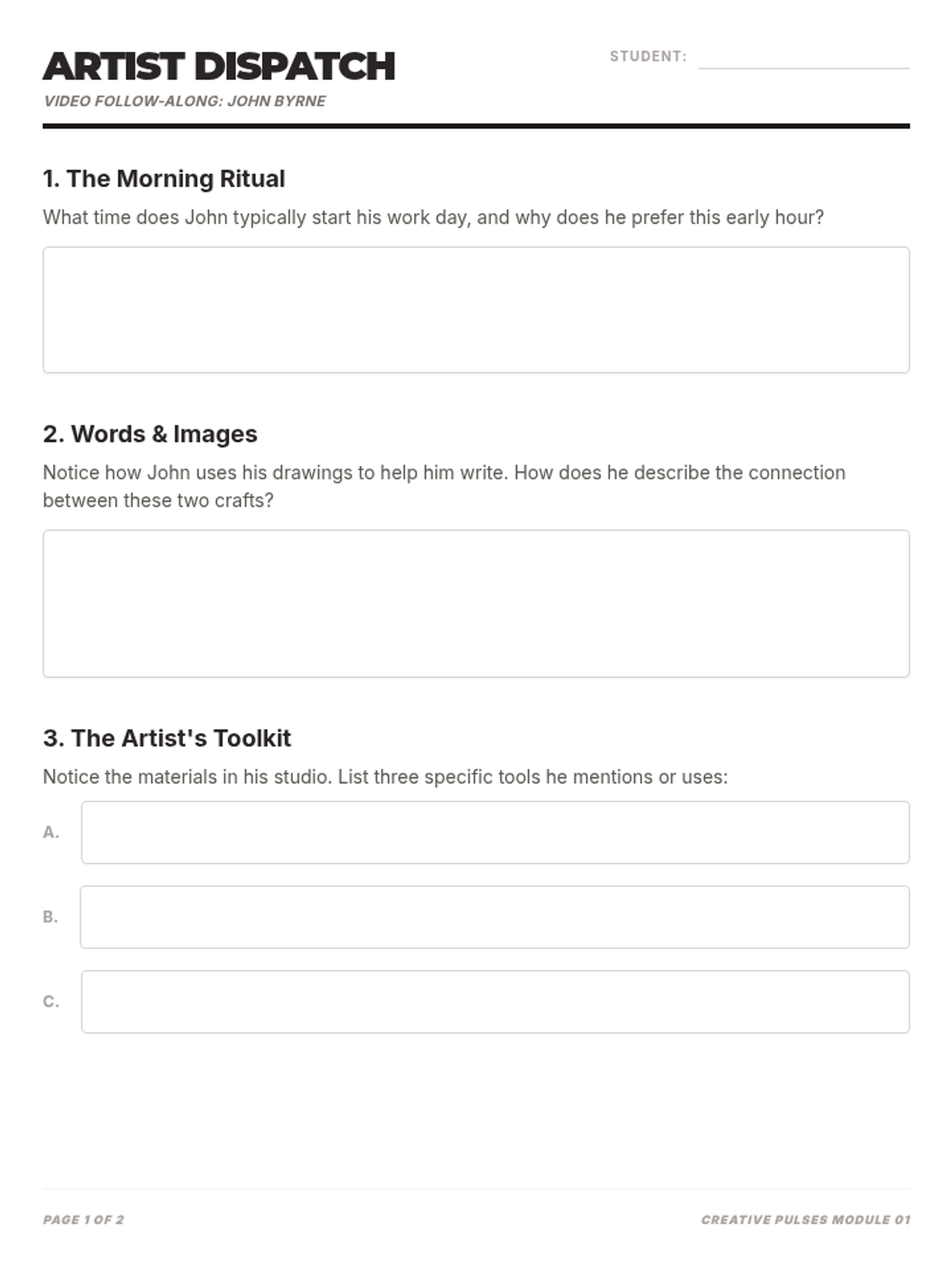
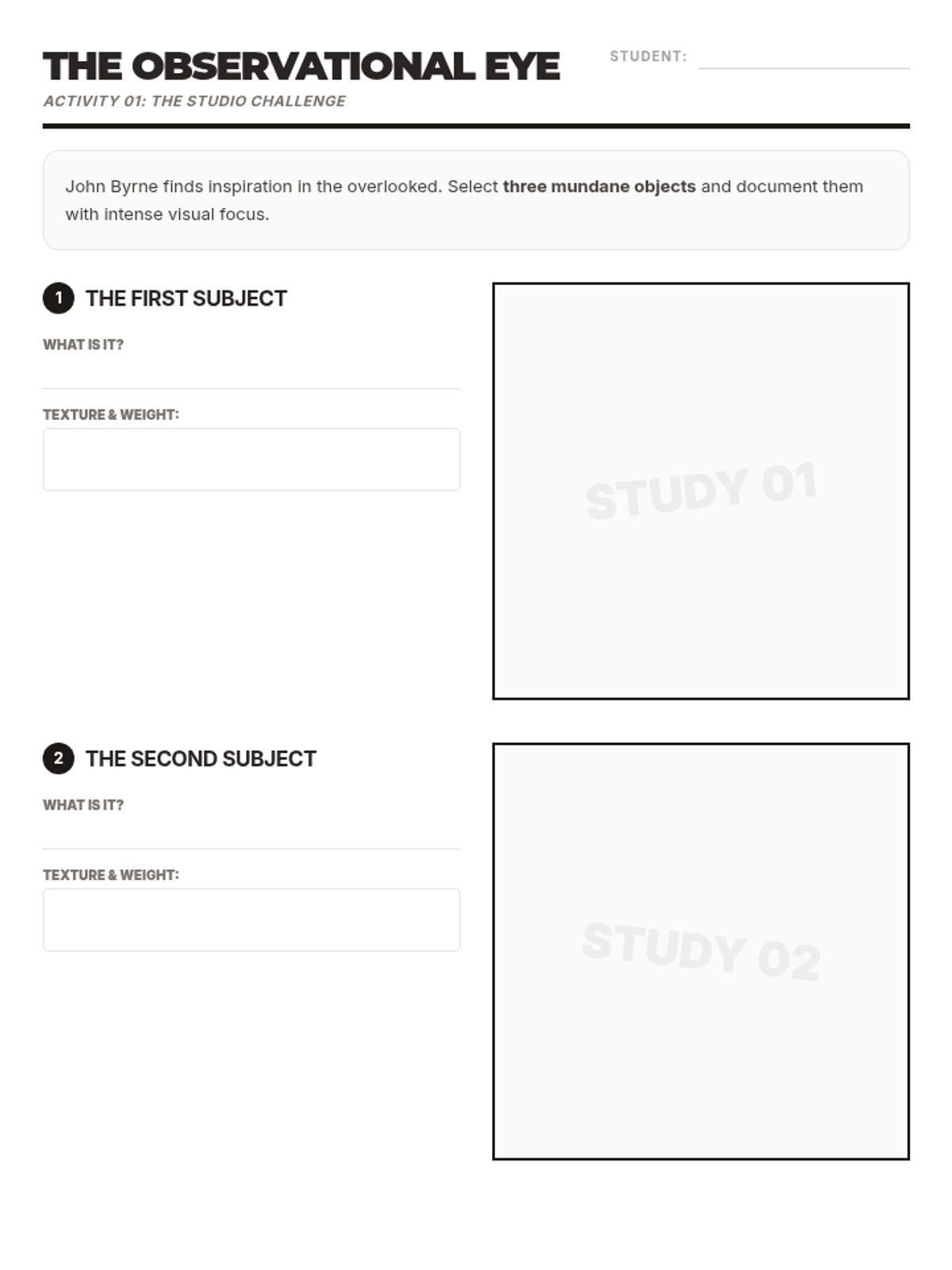
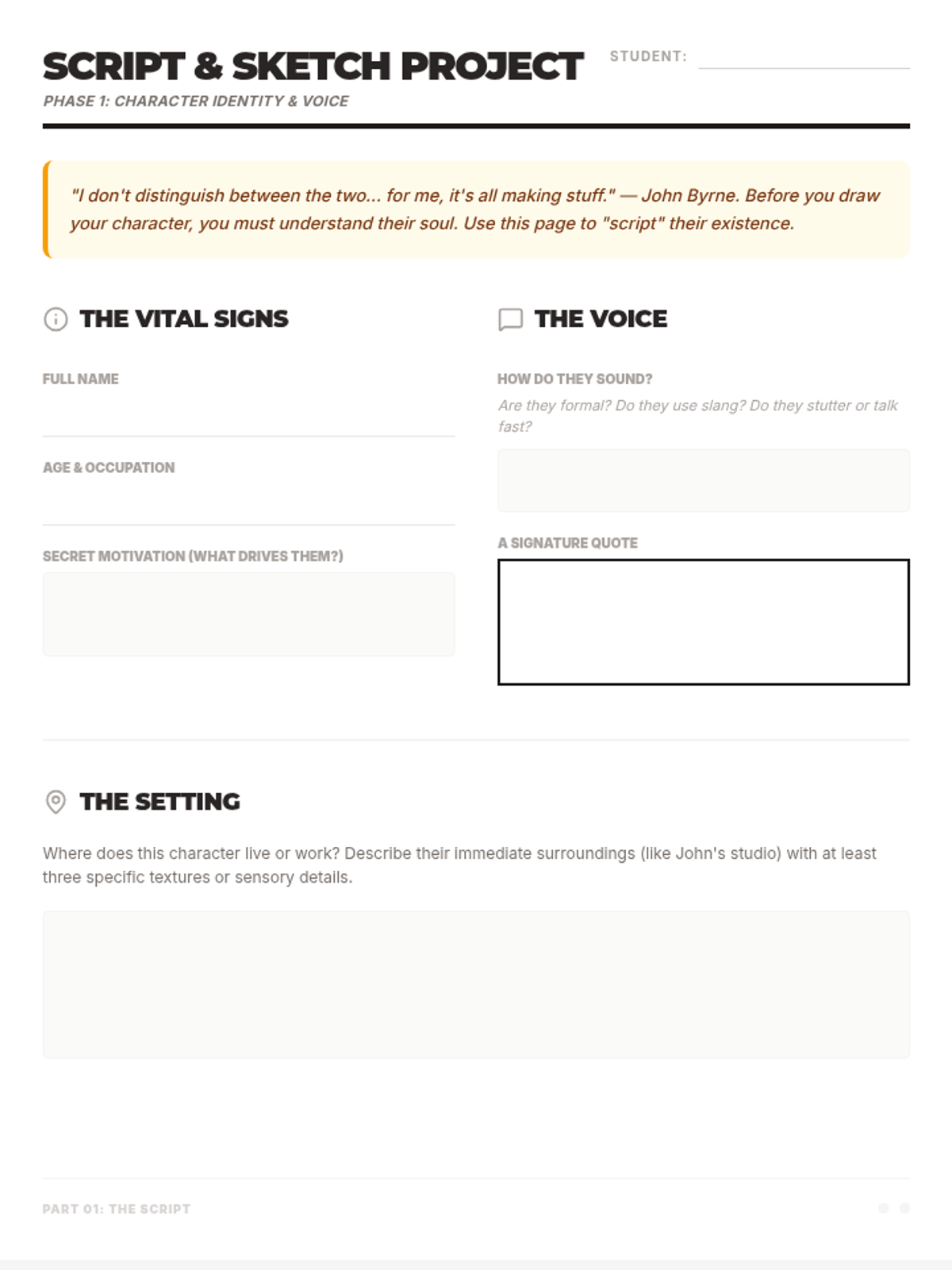
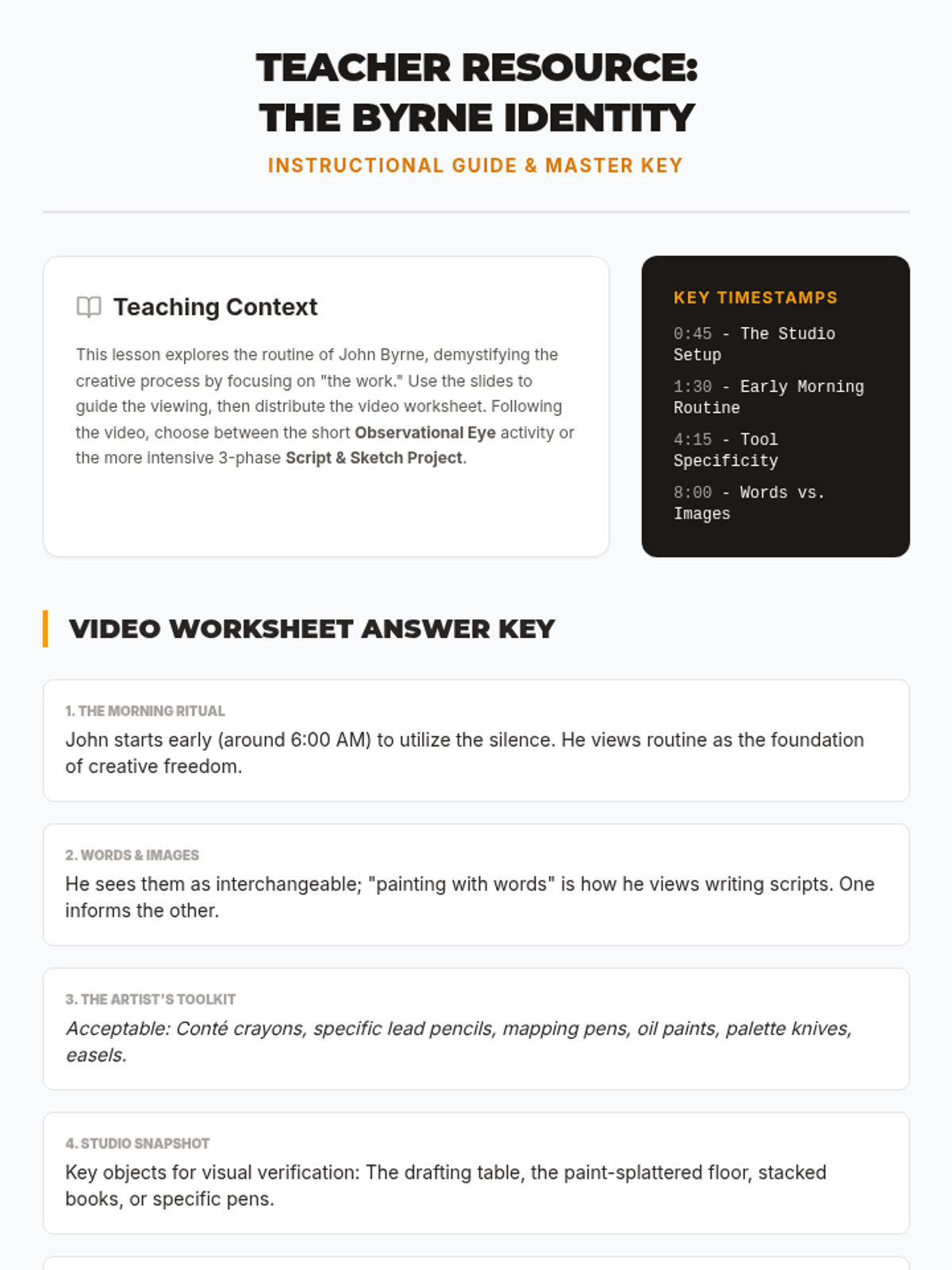
An in-depth look at John Byrne's daily life as a painter and playwright, focusing on his studio habits, materials, and the intersection of visual art and storytelling.
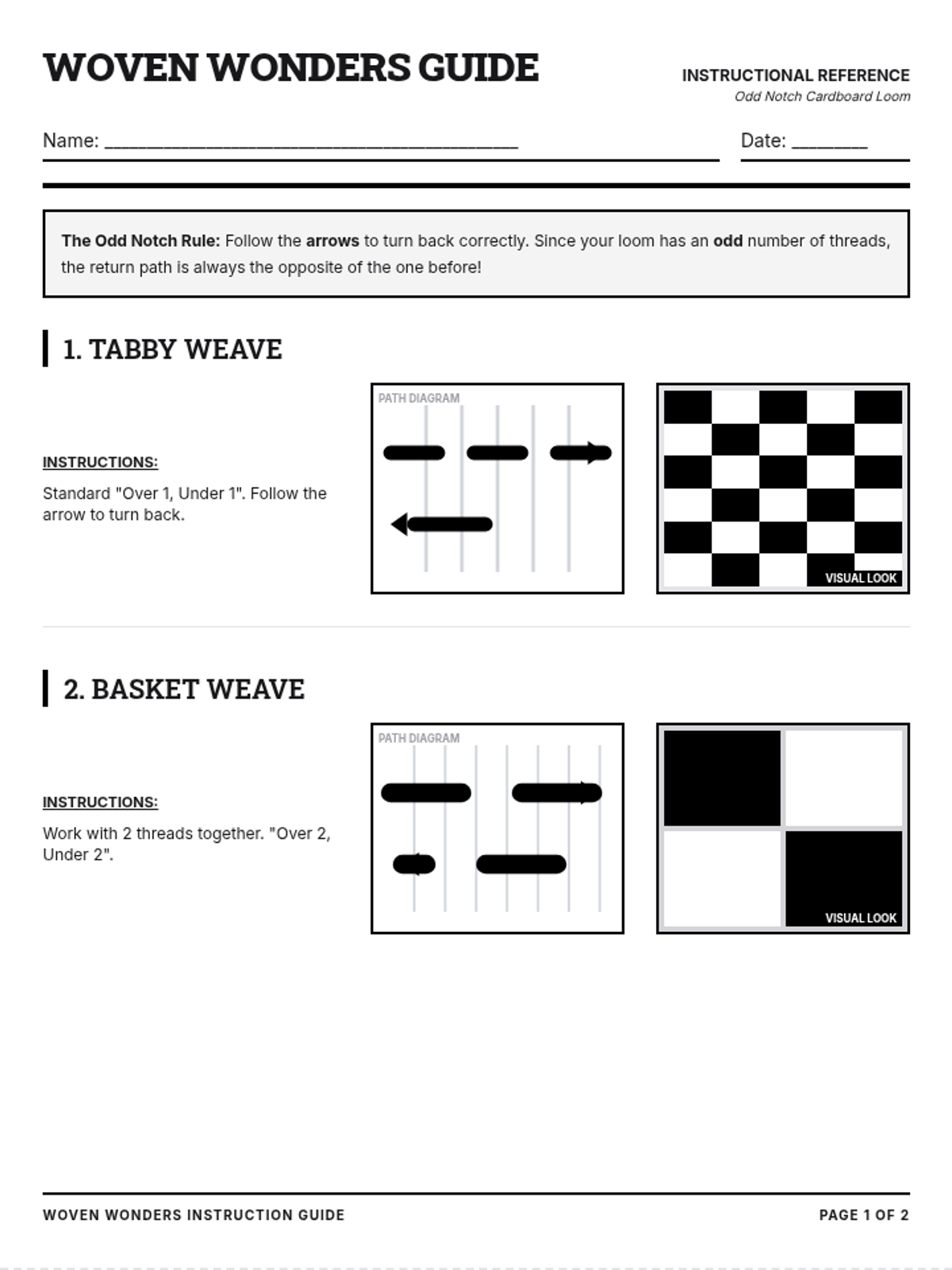
A hands-on guide to mastering four essential weaving techniques on a cardboard notch loom, featuring step-by-step instructions and visual patterns.
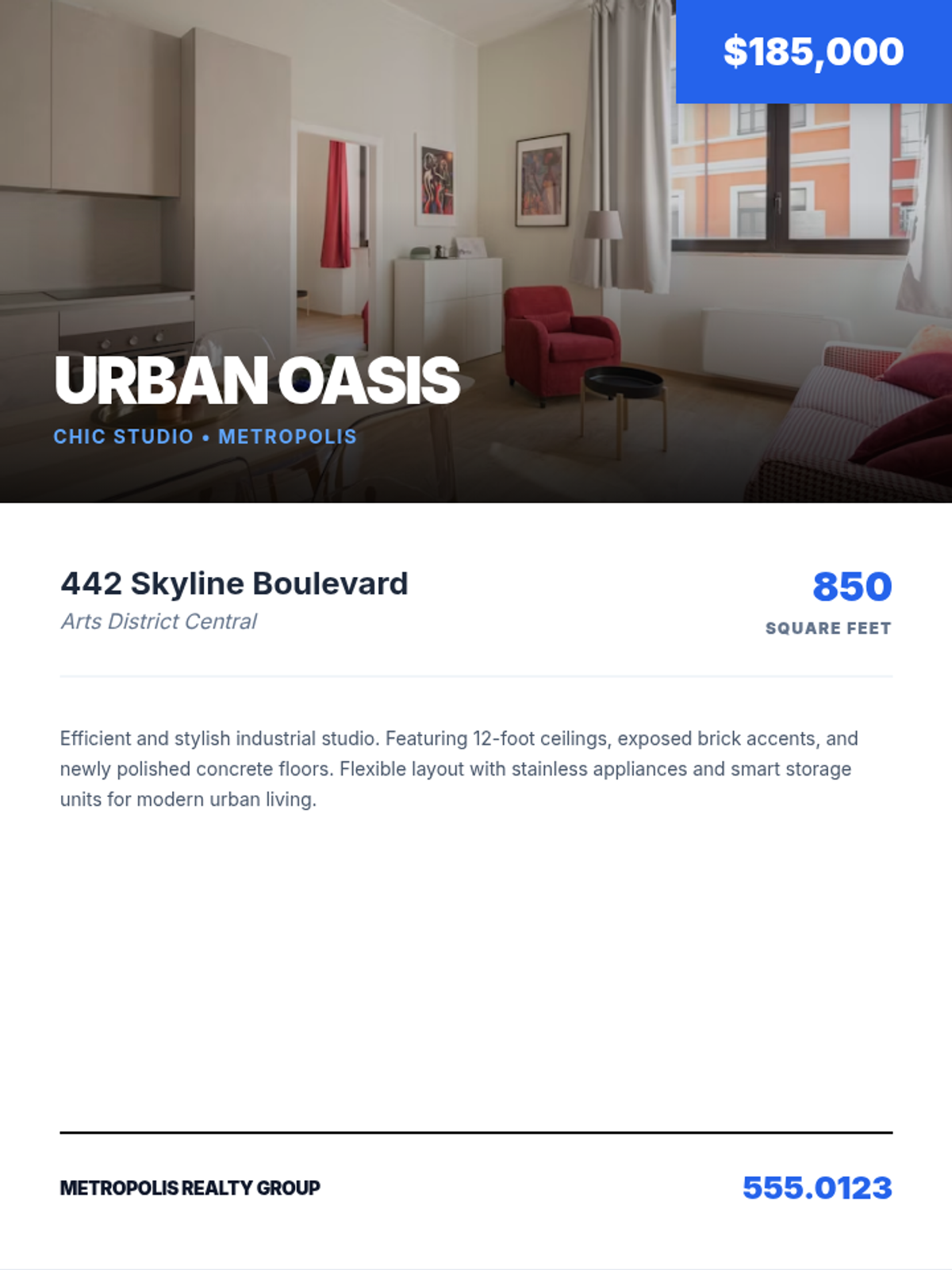
A collection of professionally designed real estate listing posters featuring unique properties with detailed descriptions, pricing, and specifications.
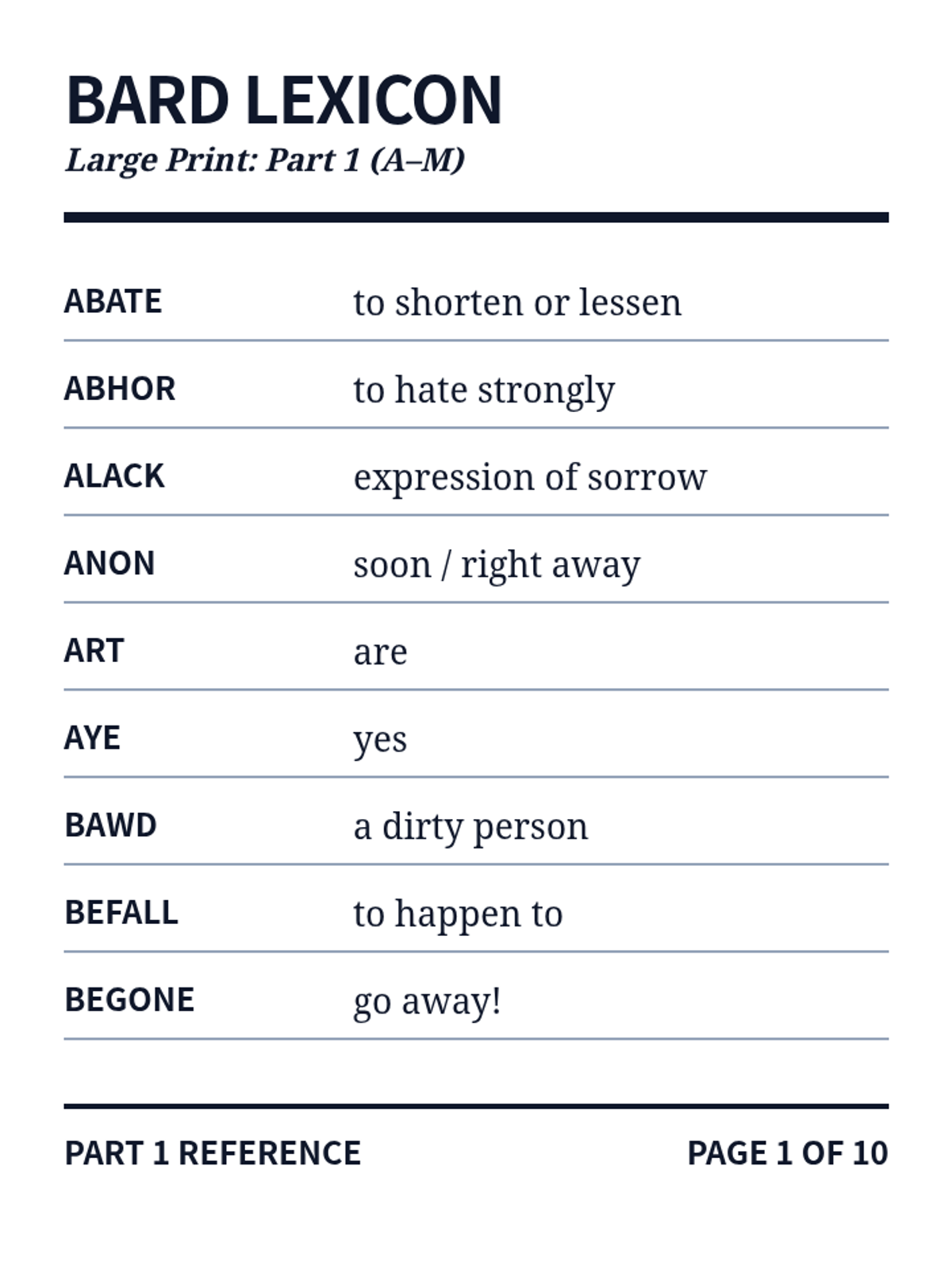
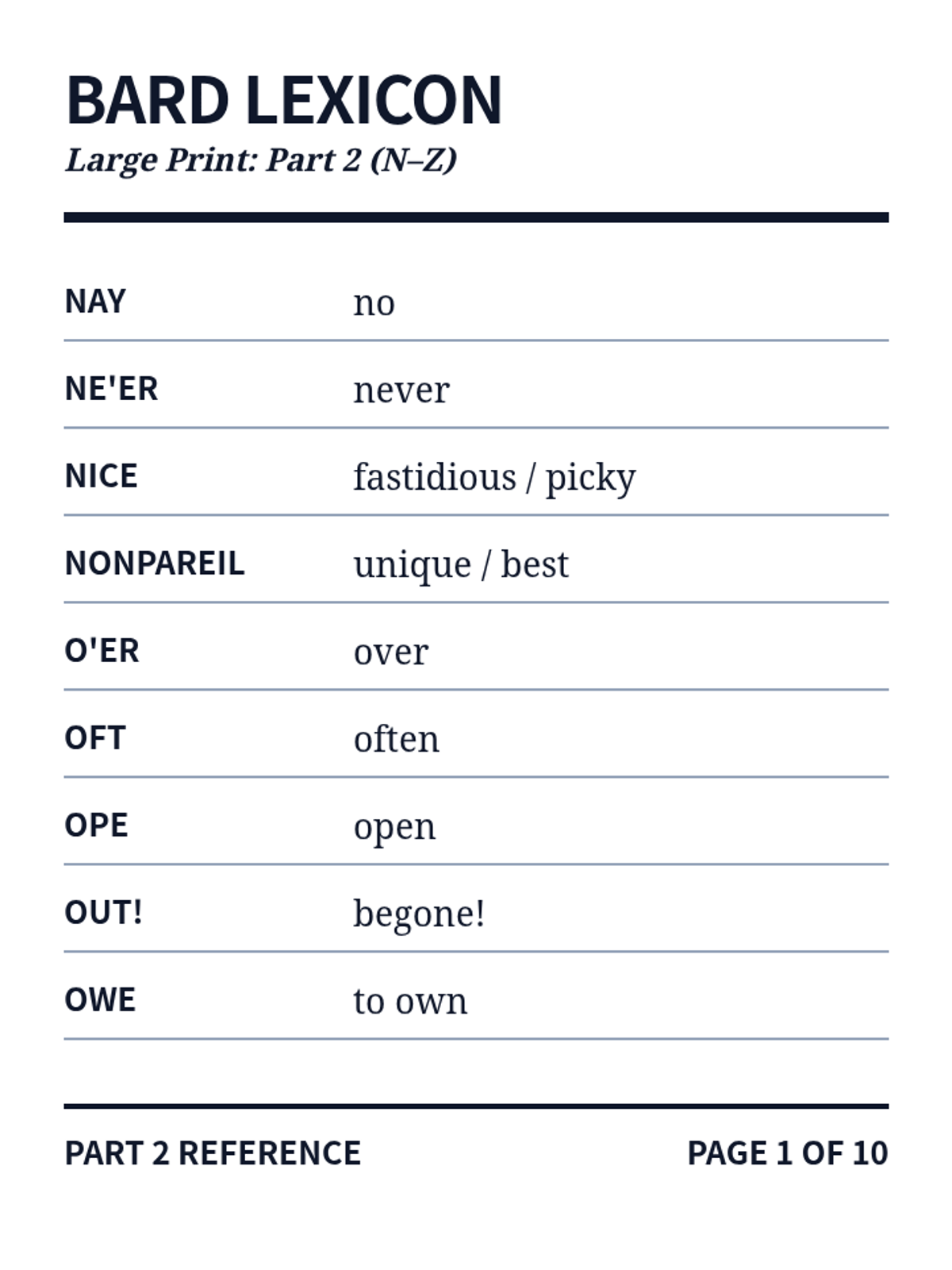
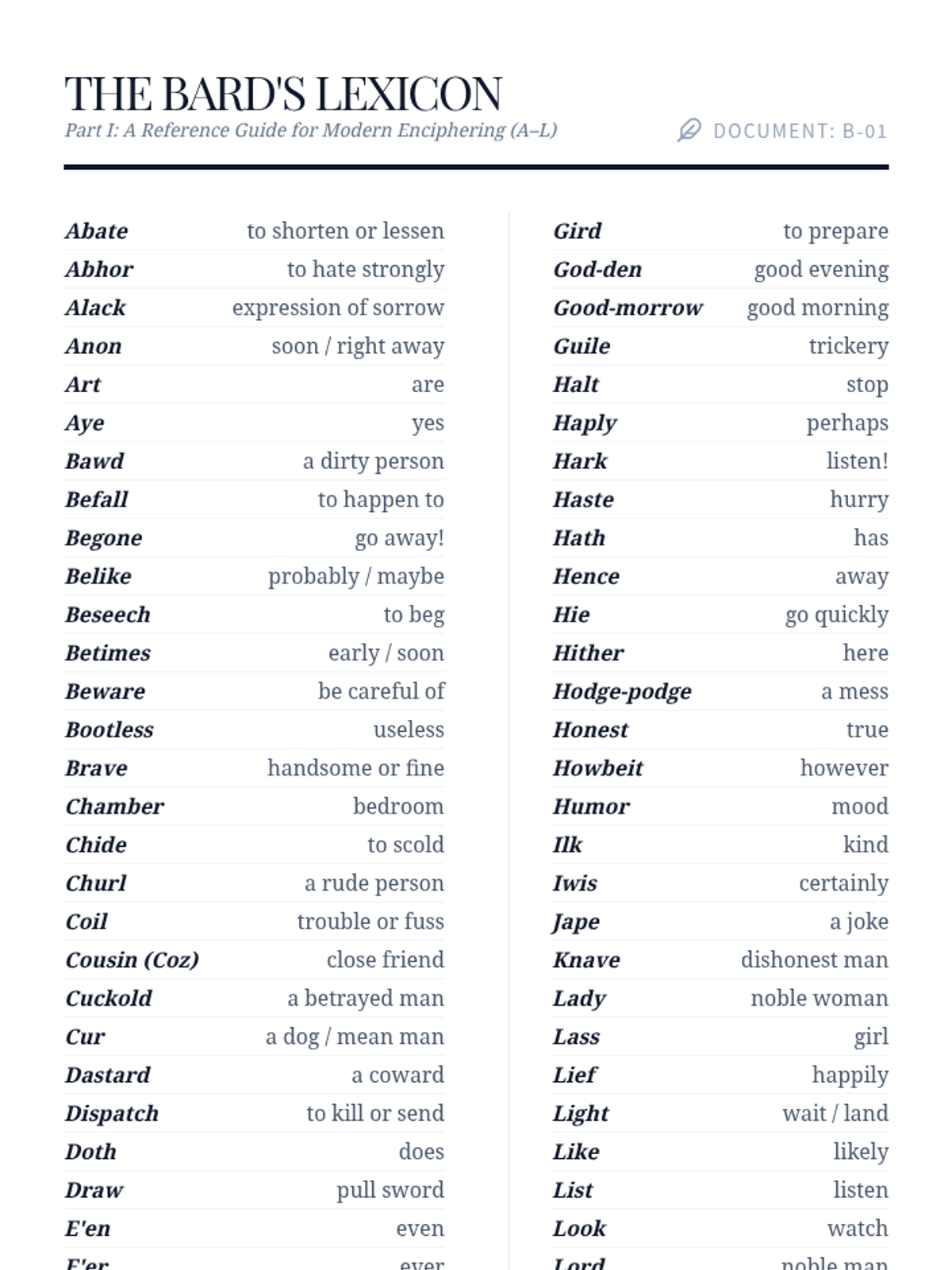
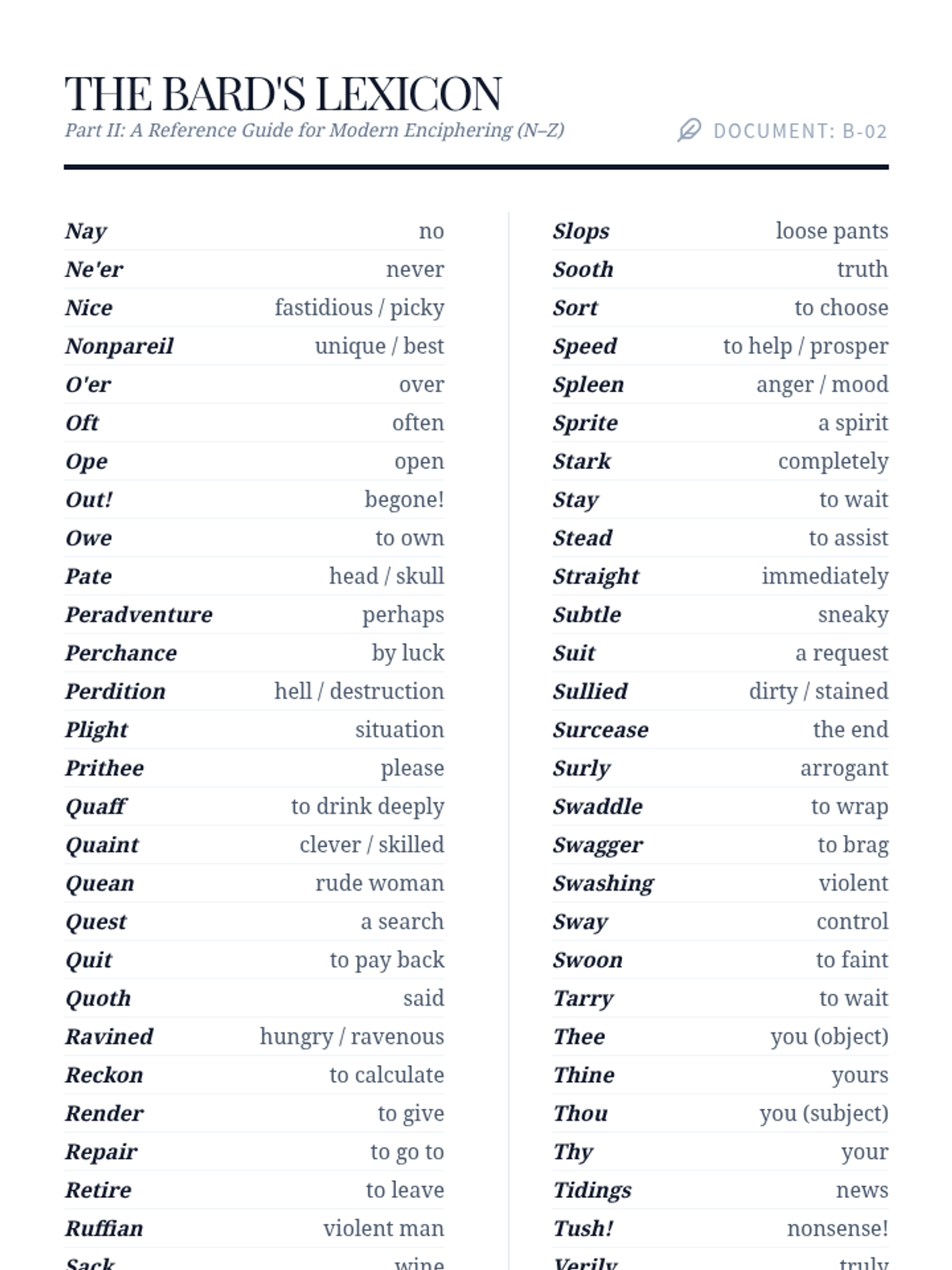
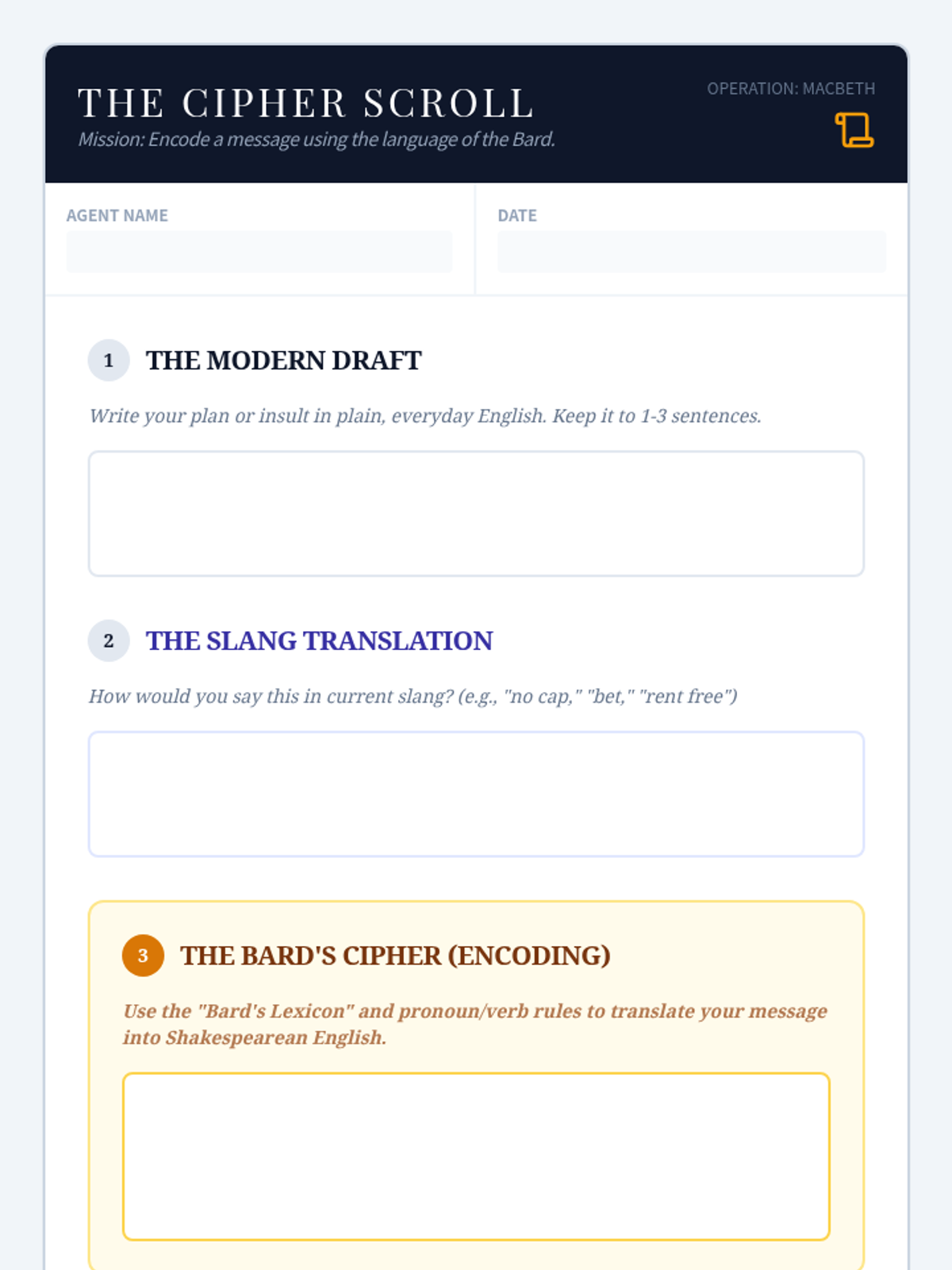
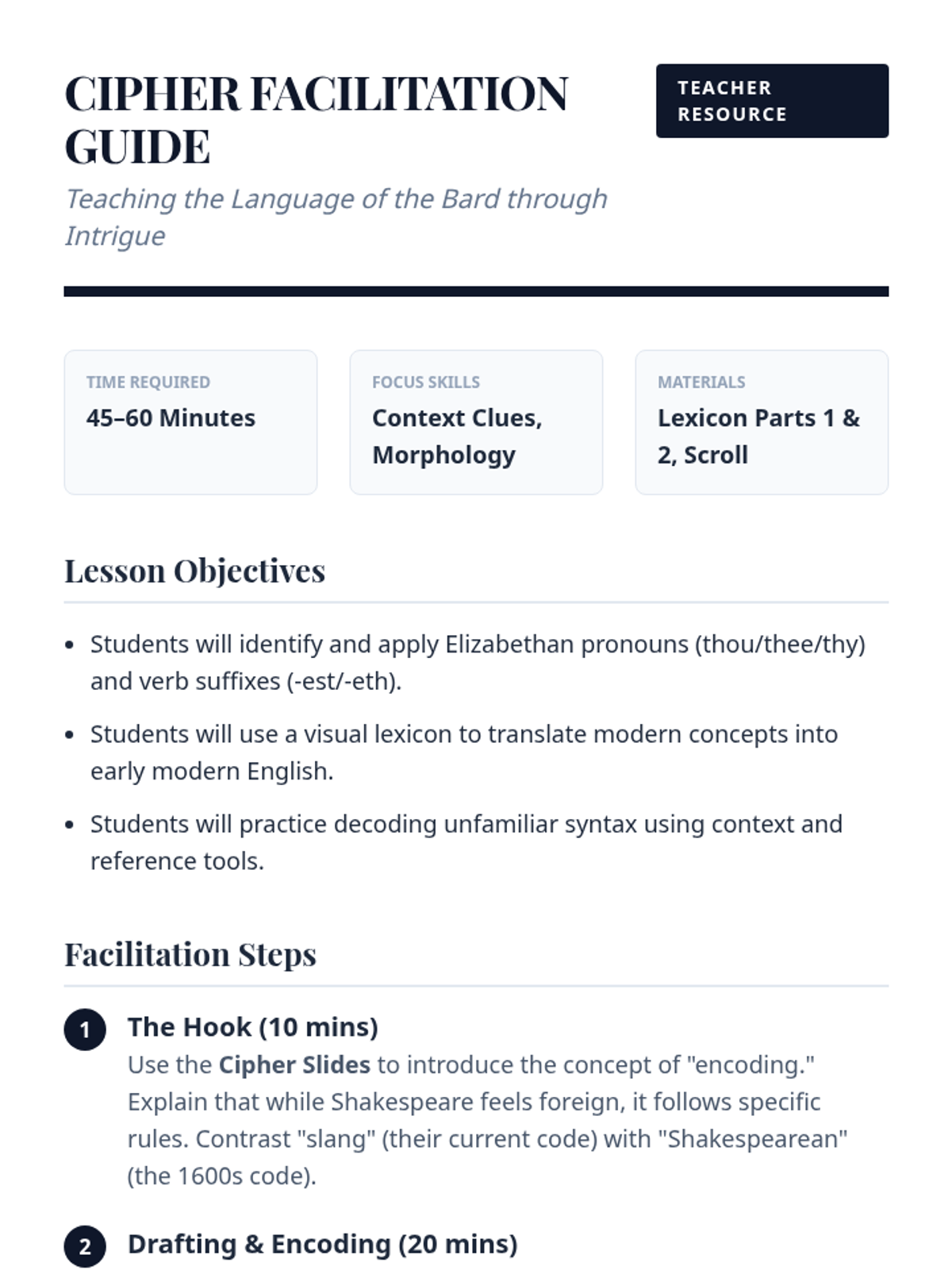
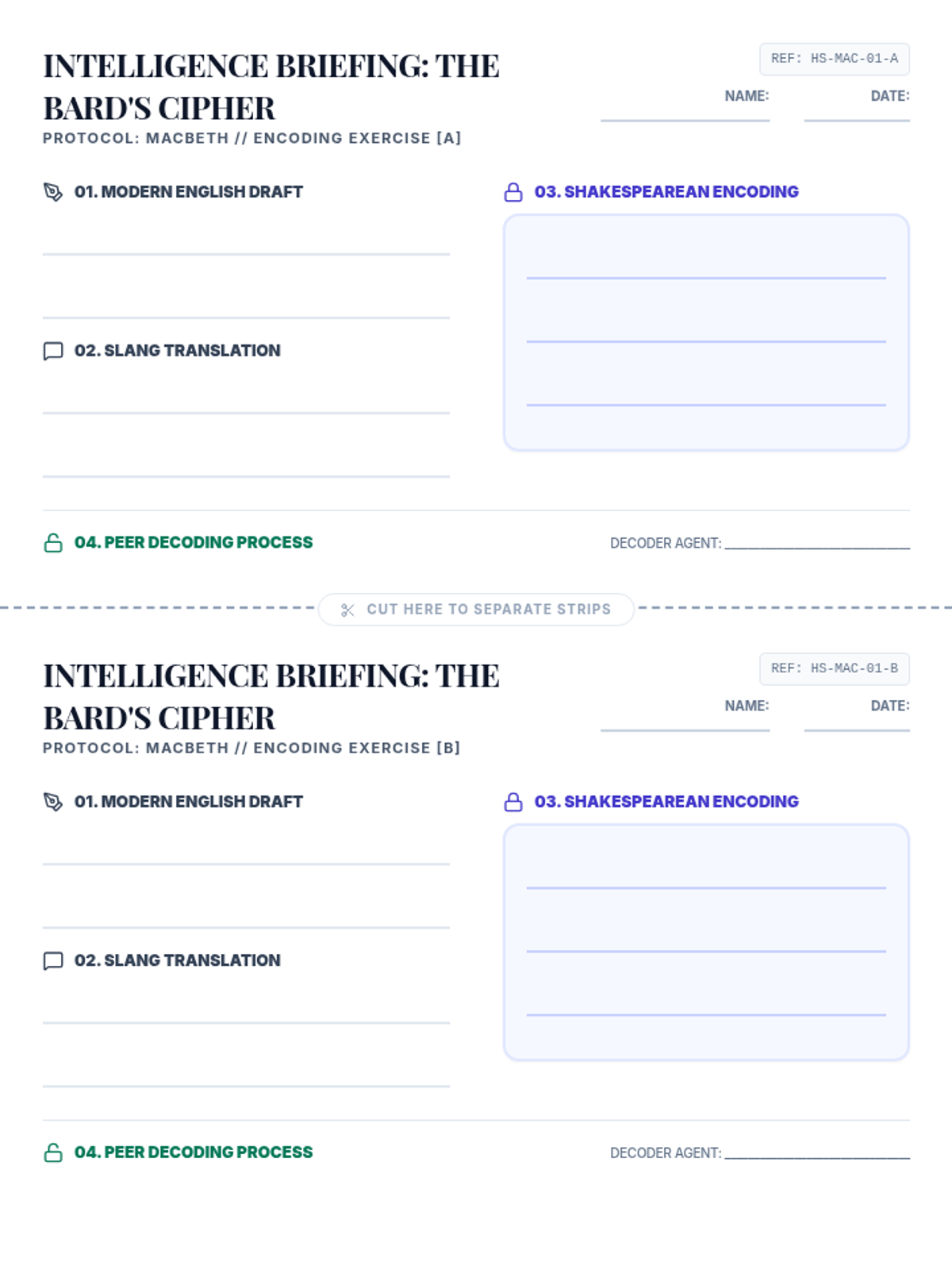
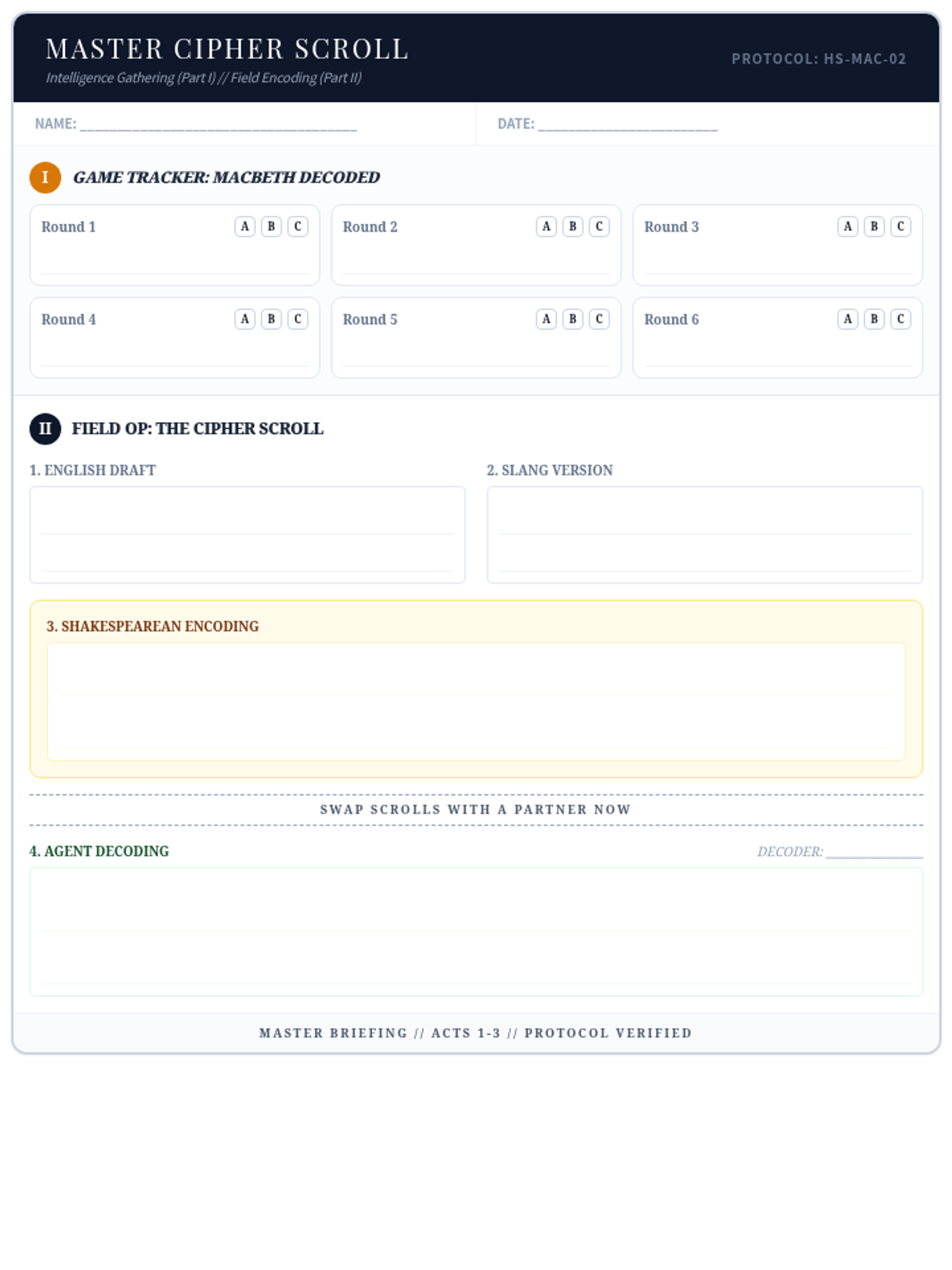
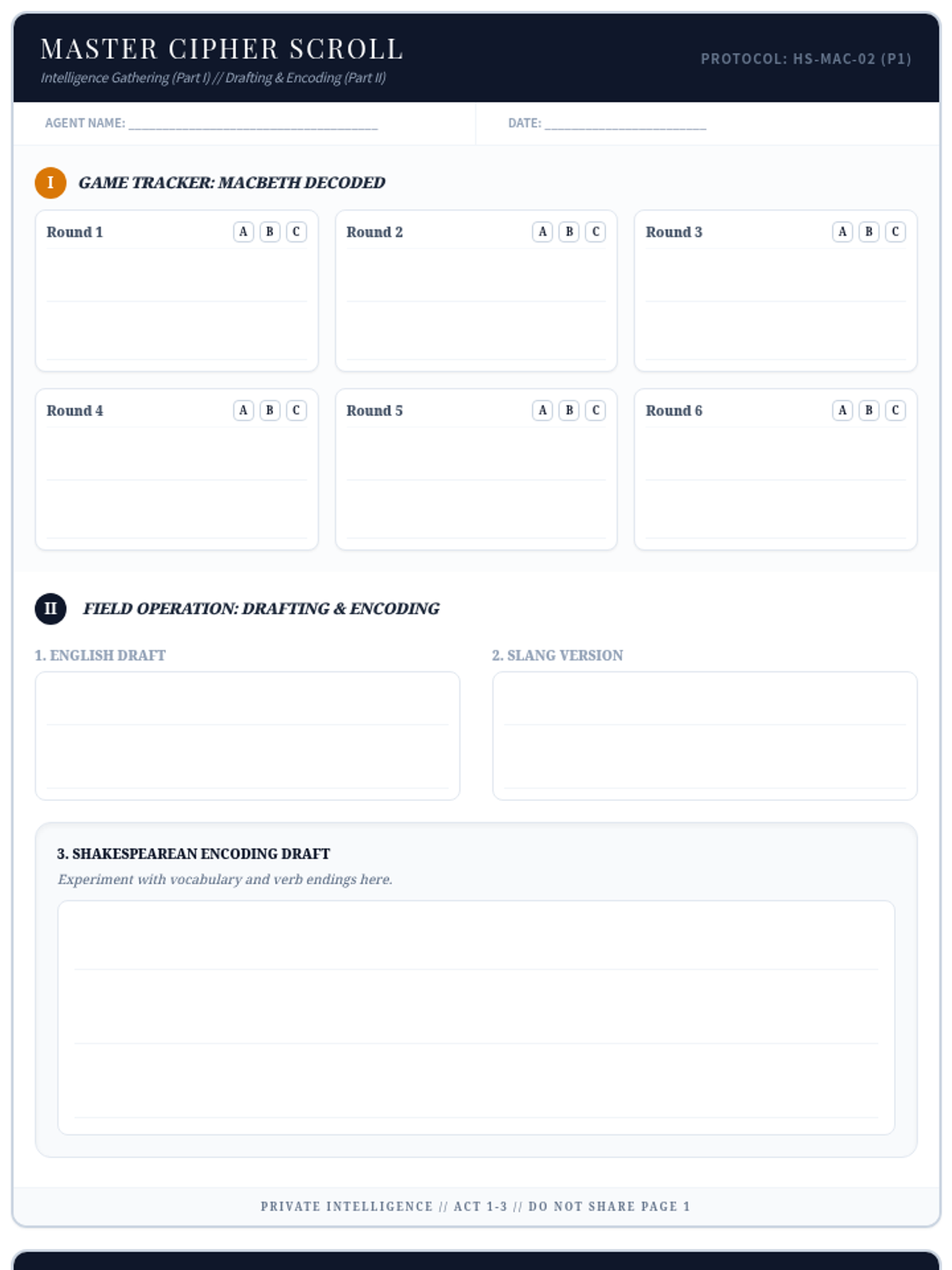
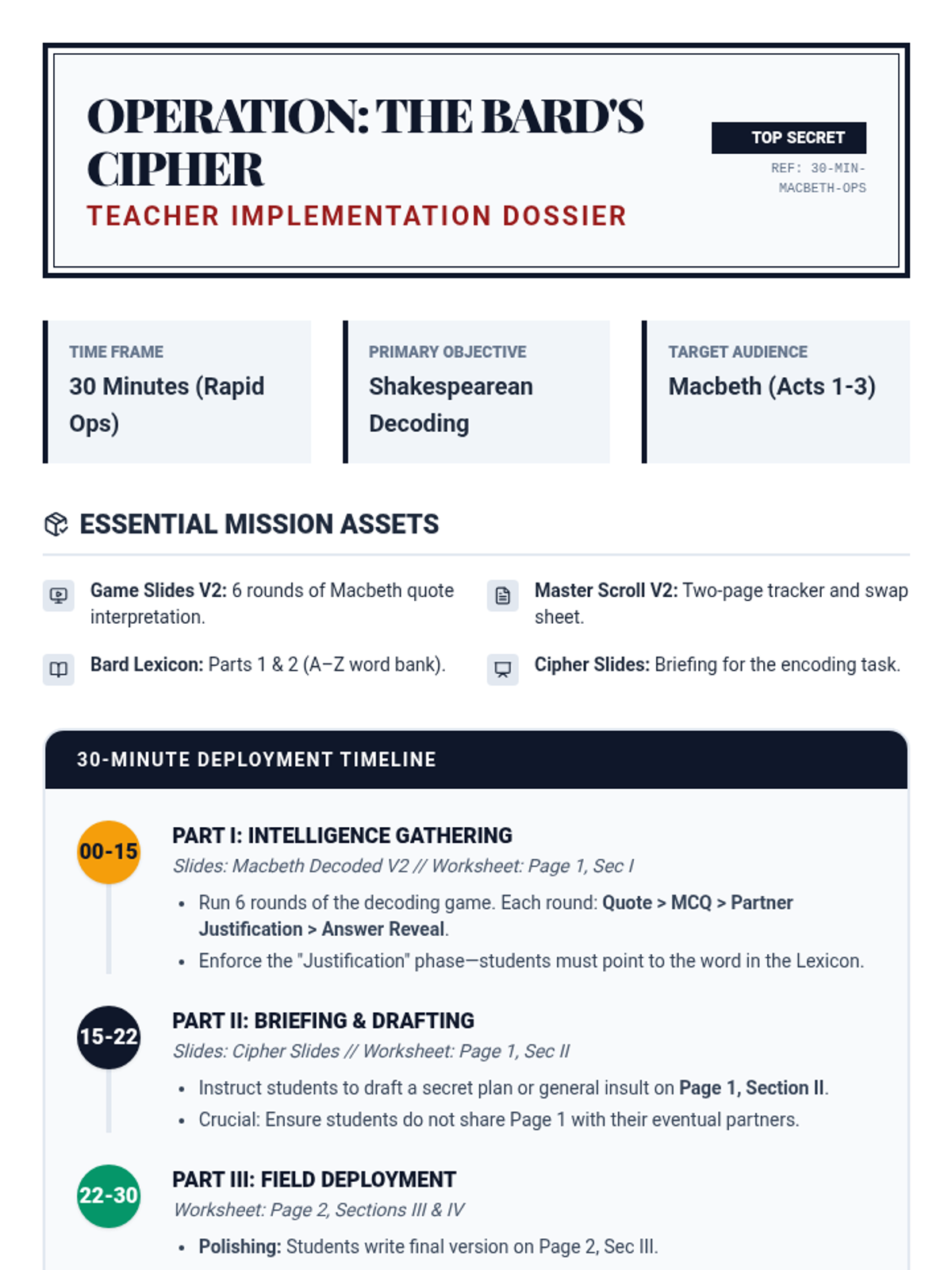
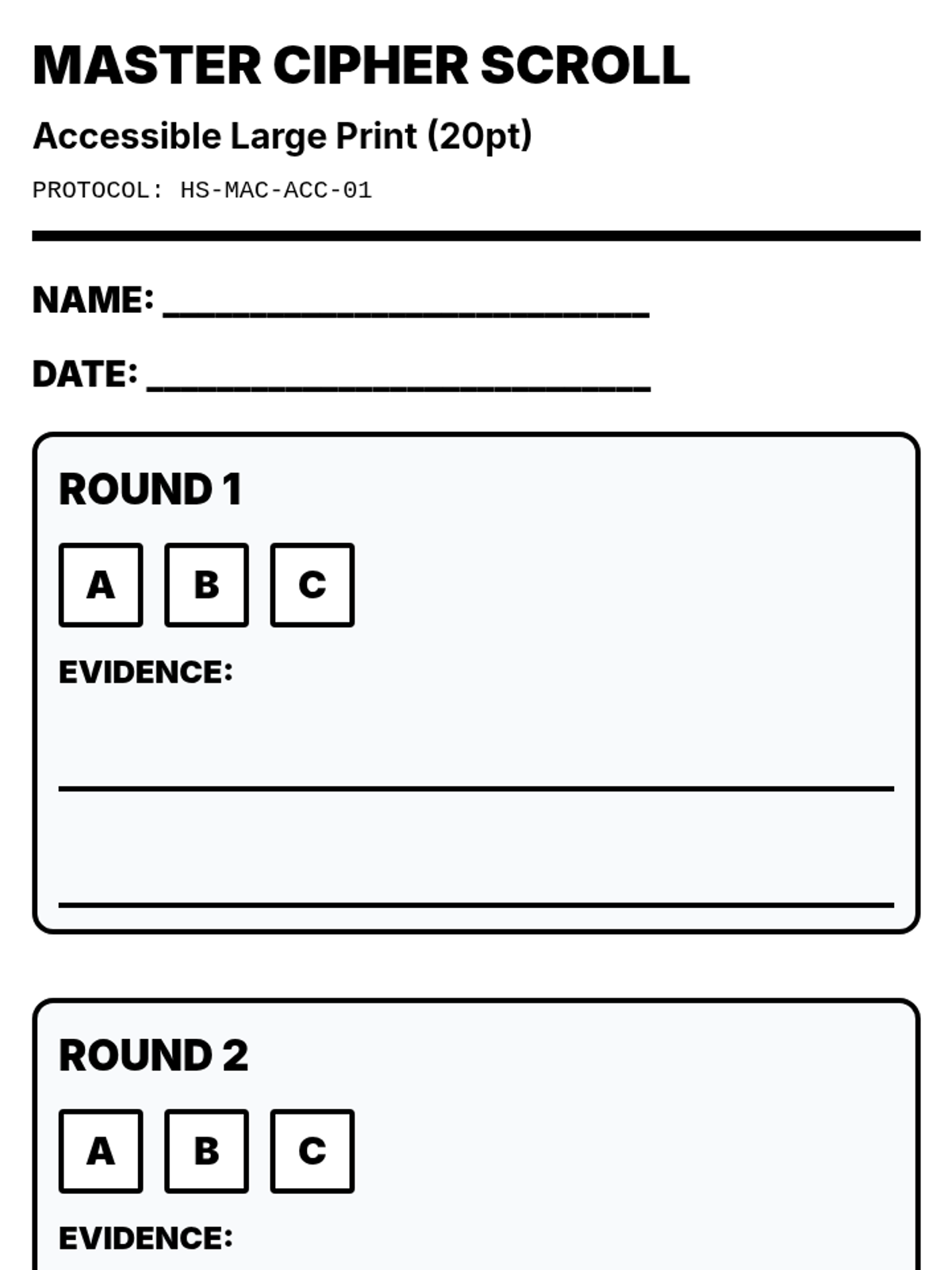
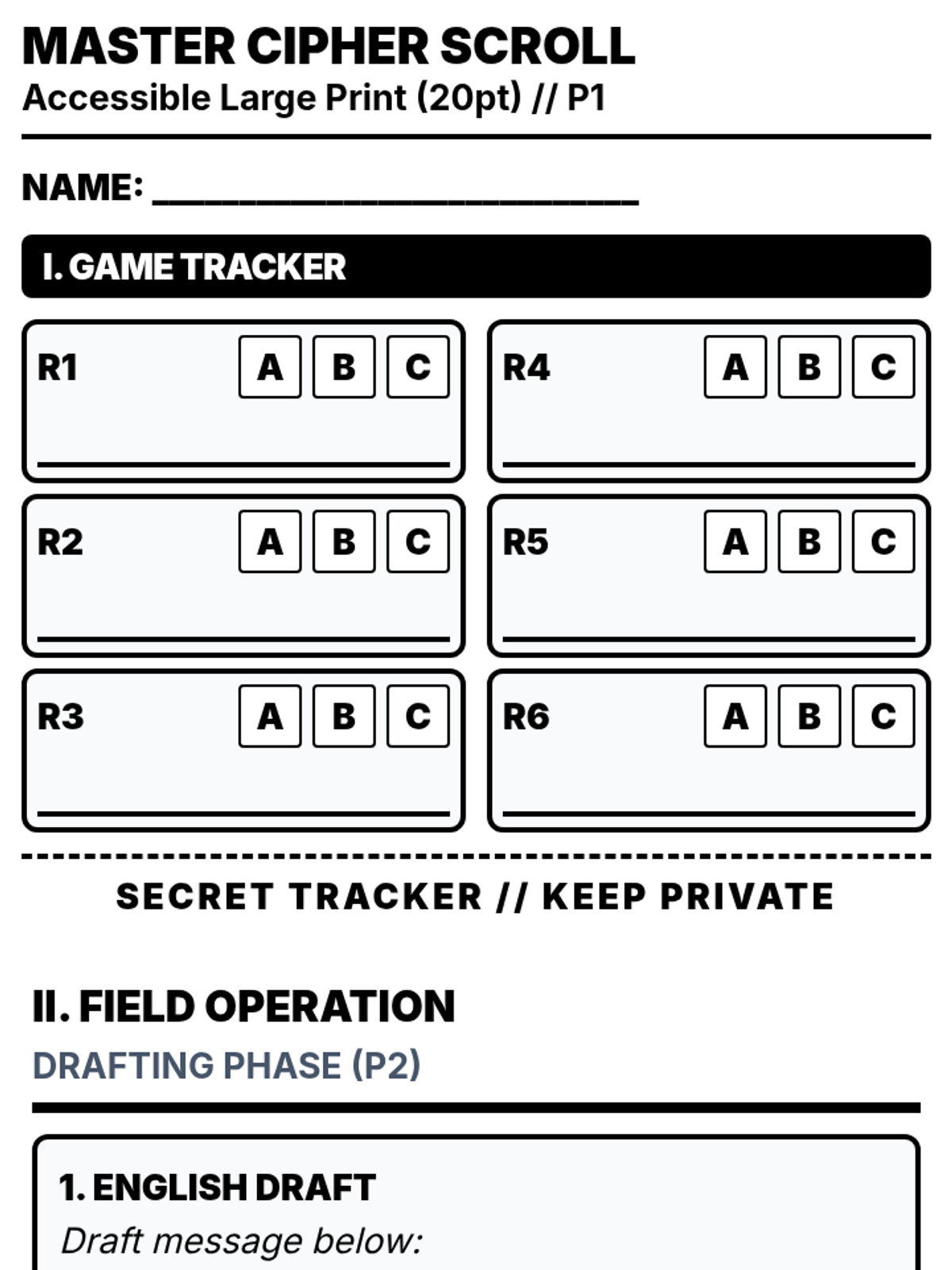
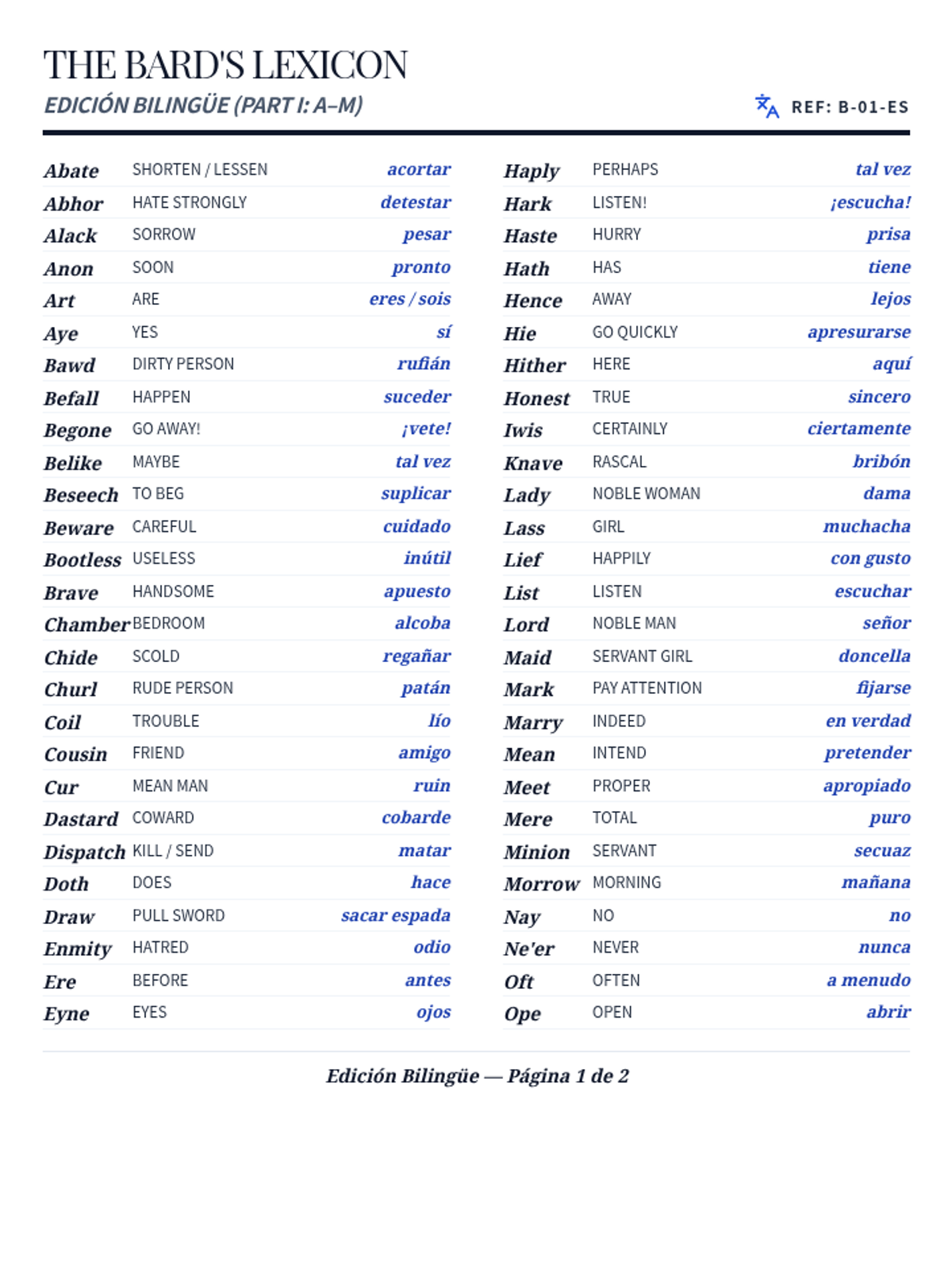
A hands-on activity where students learn to decode and encode Shakespearean language by writing secret messages or insults, then swapping them with peers to translate.
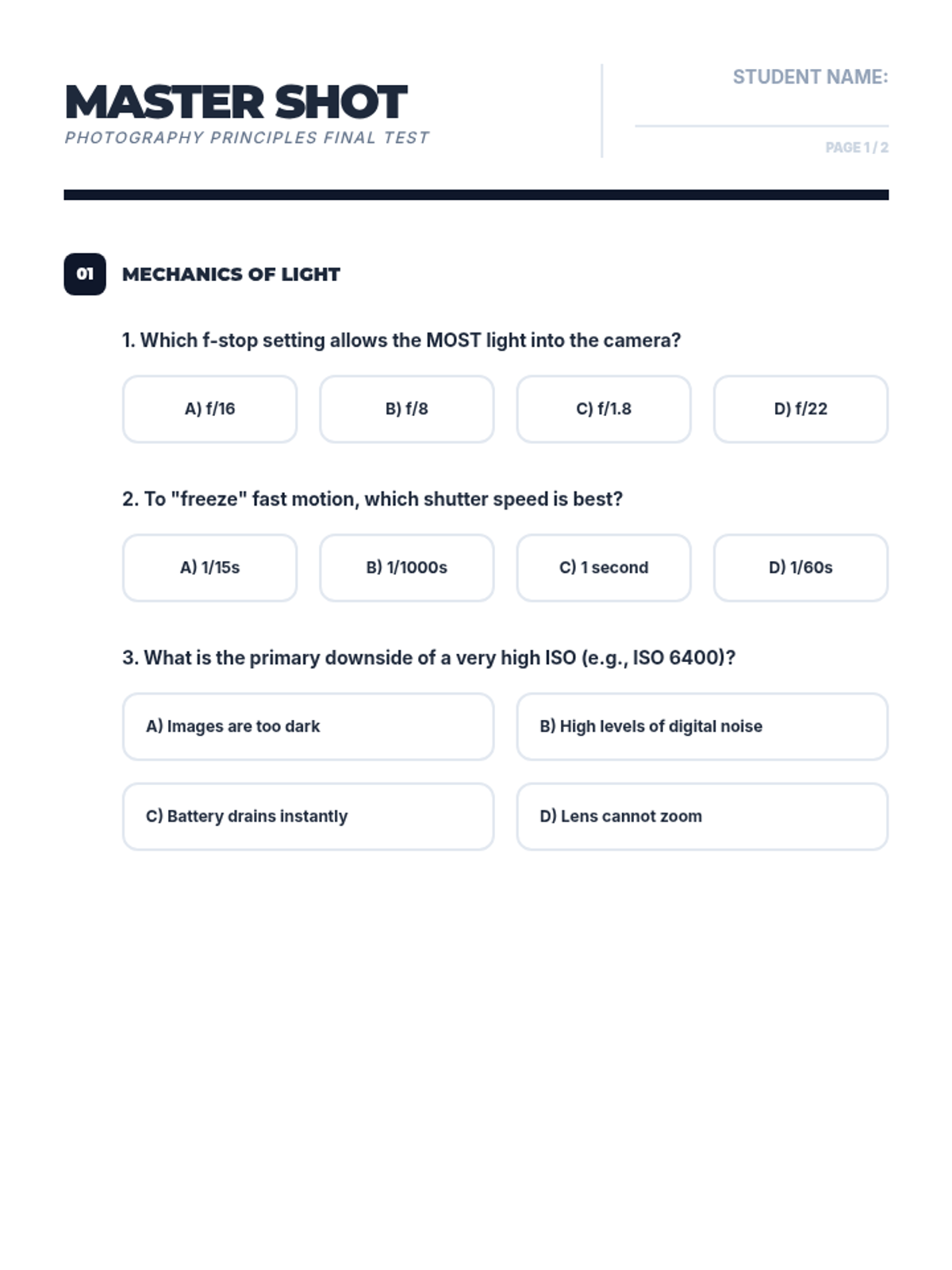
Final review and assessment to evaluate student mastery of photographic principles and vocabulary.
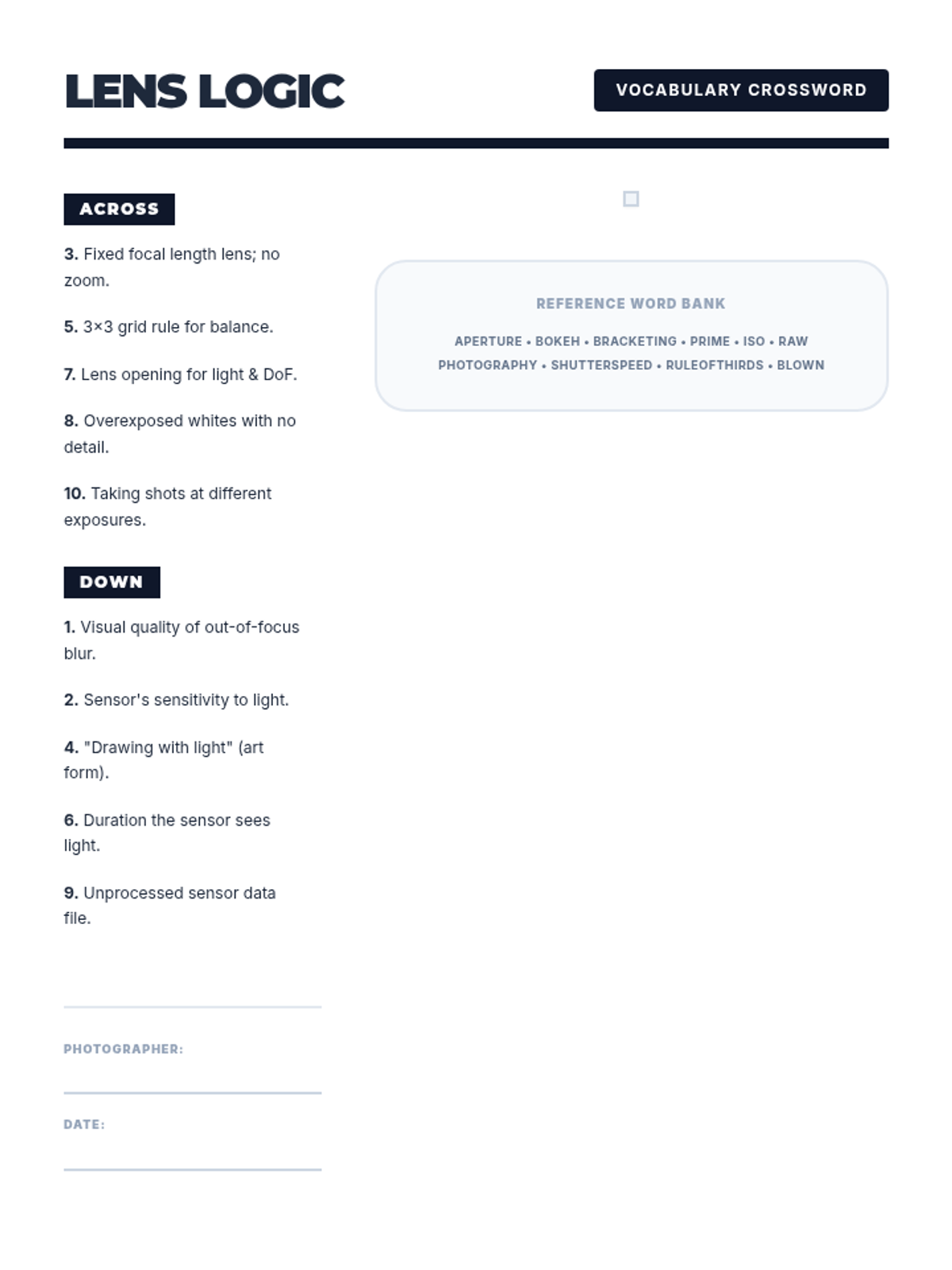
A deep dive into different lens types, depth of field, white balance, and professional photographic styles.
Explores the artistic side of photography through composition principles like the Rule of Thirds, leading lines, and framing.
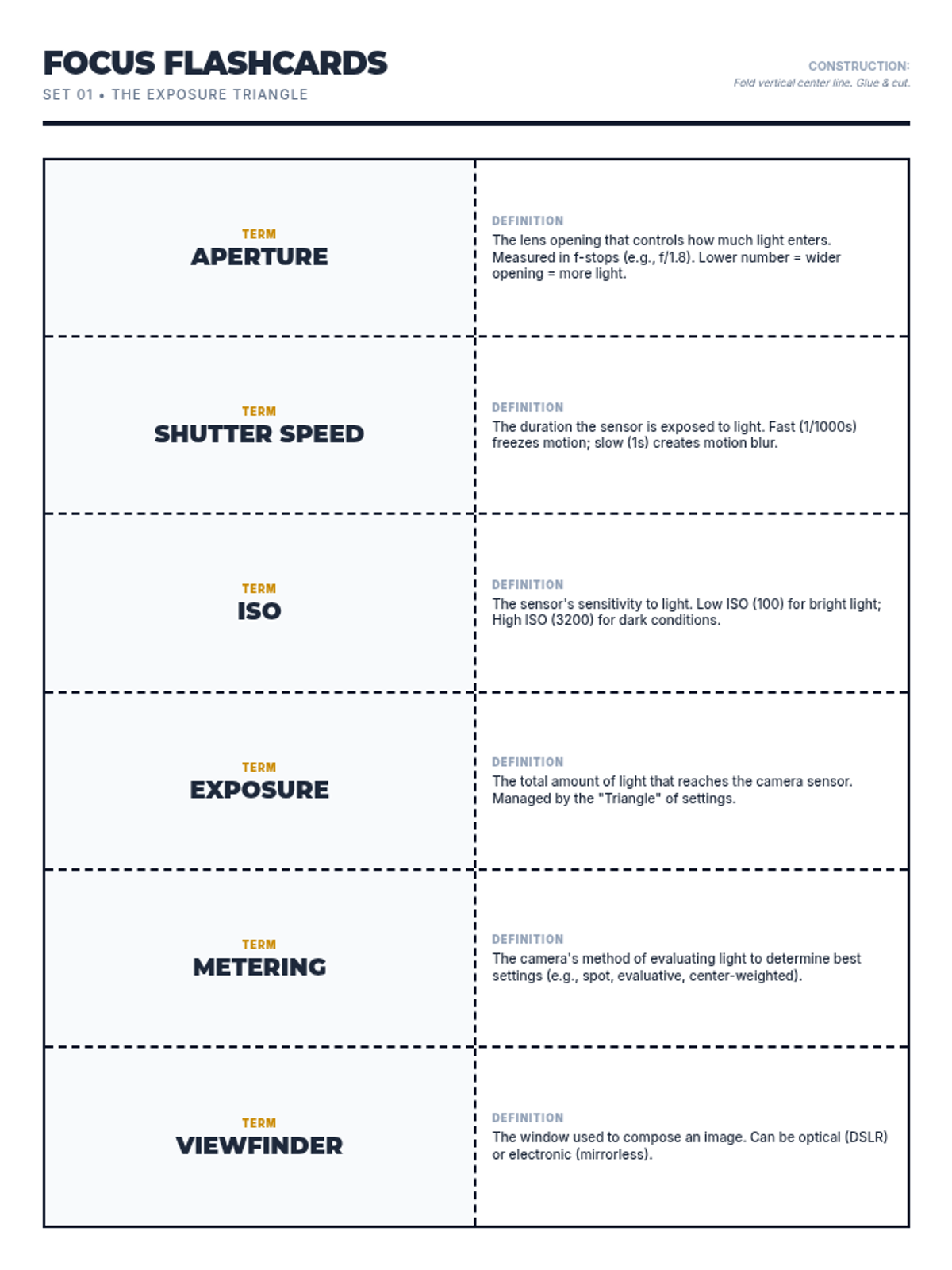
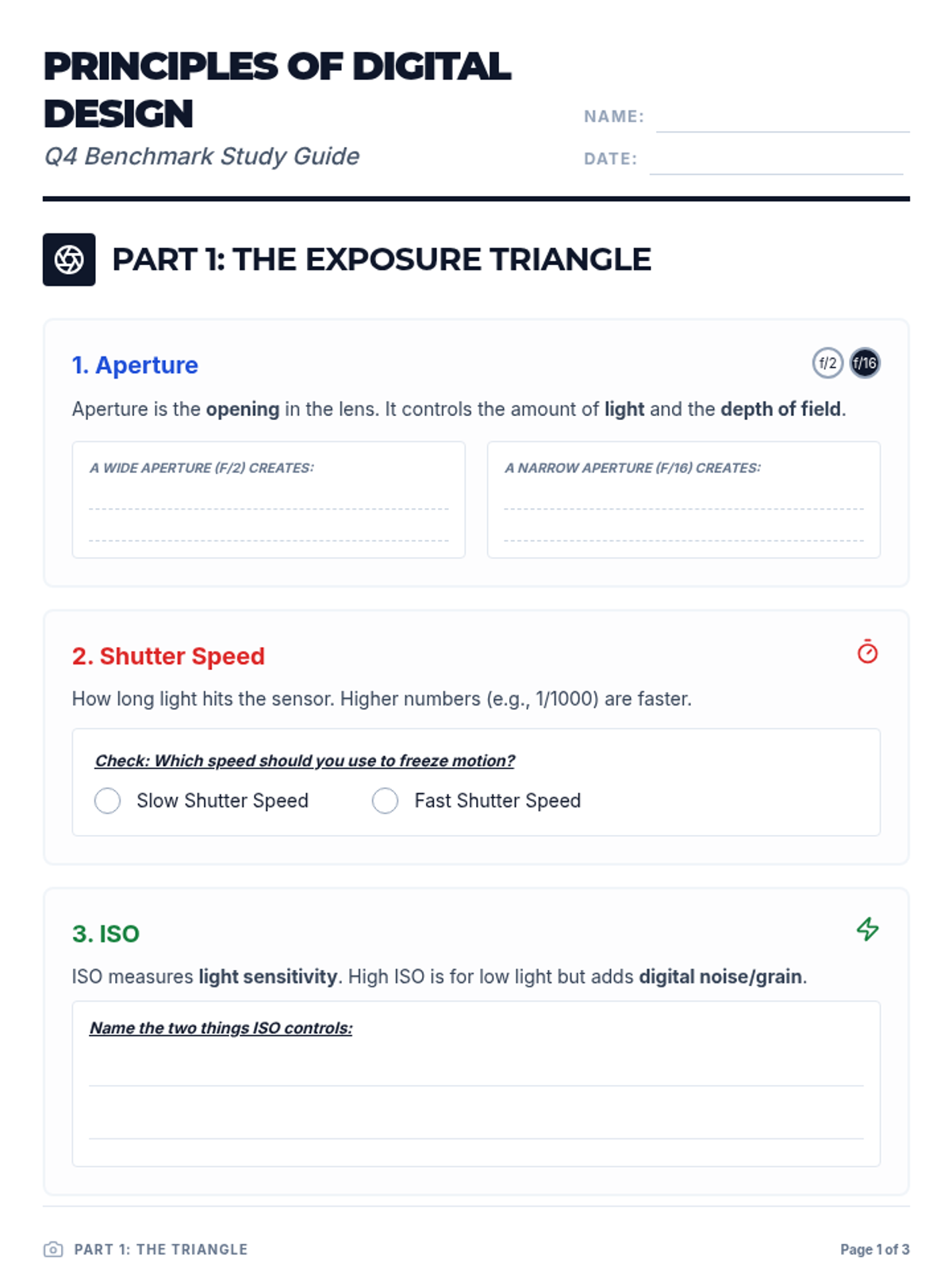
An introduction to the fundamental physics of photography, focusing on light, the exposure triangle (Aperture, Shutter Speed, ISO), and how cameras measure light.
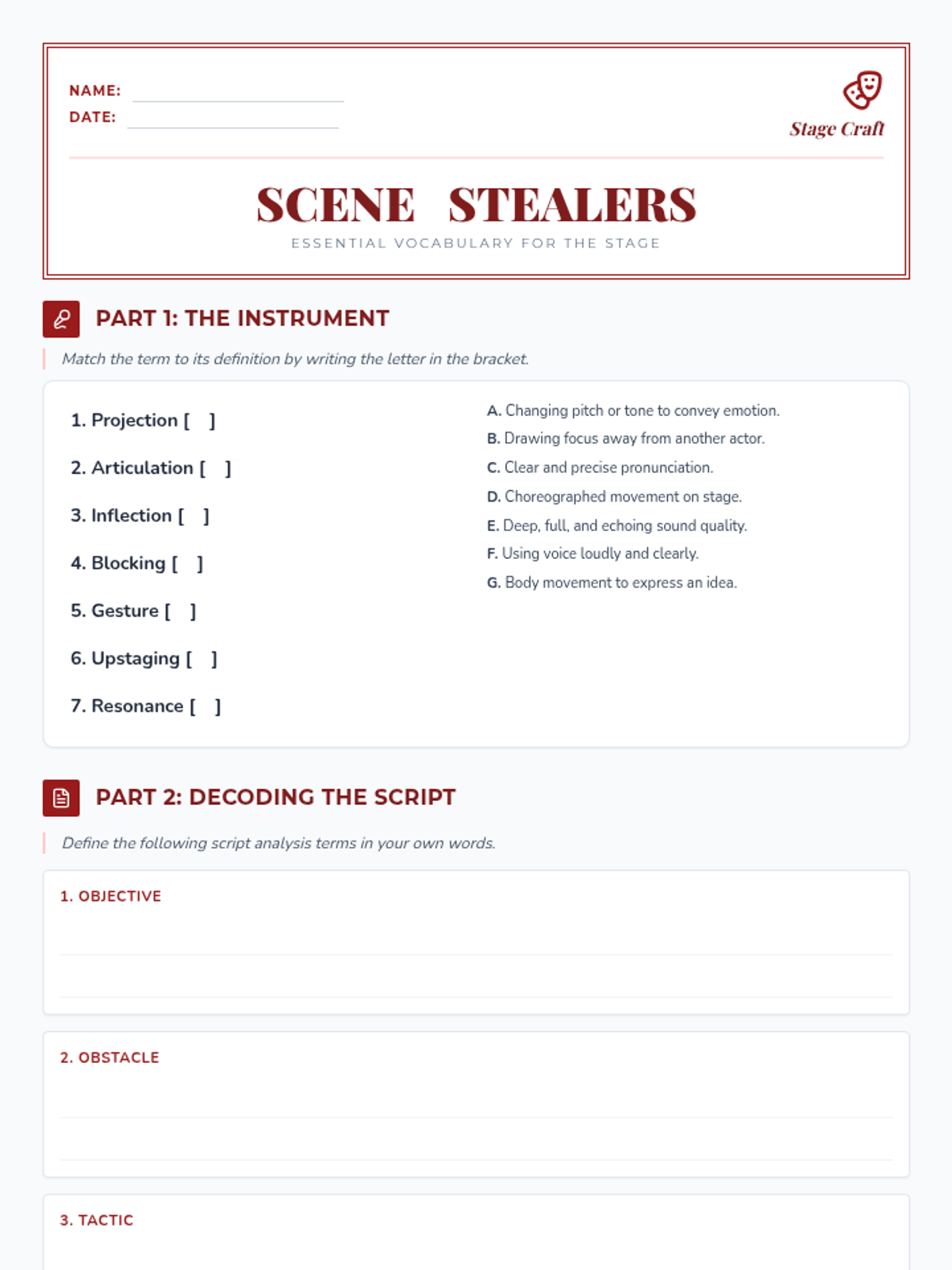
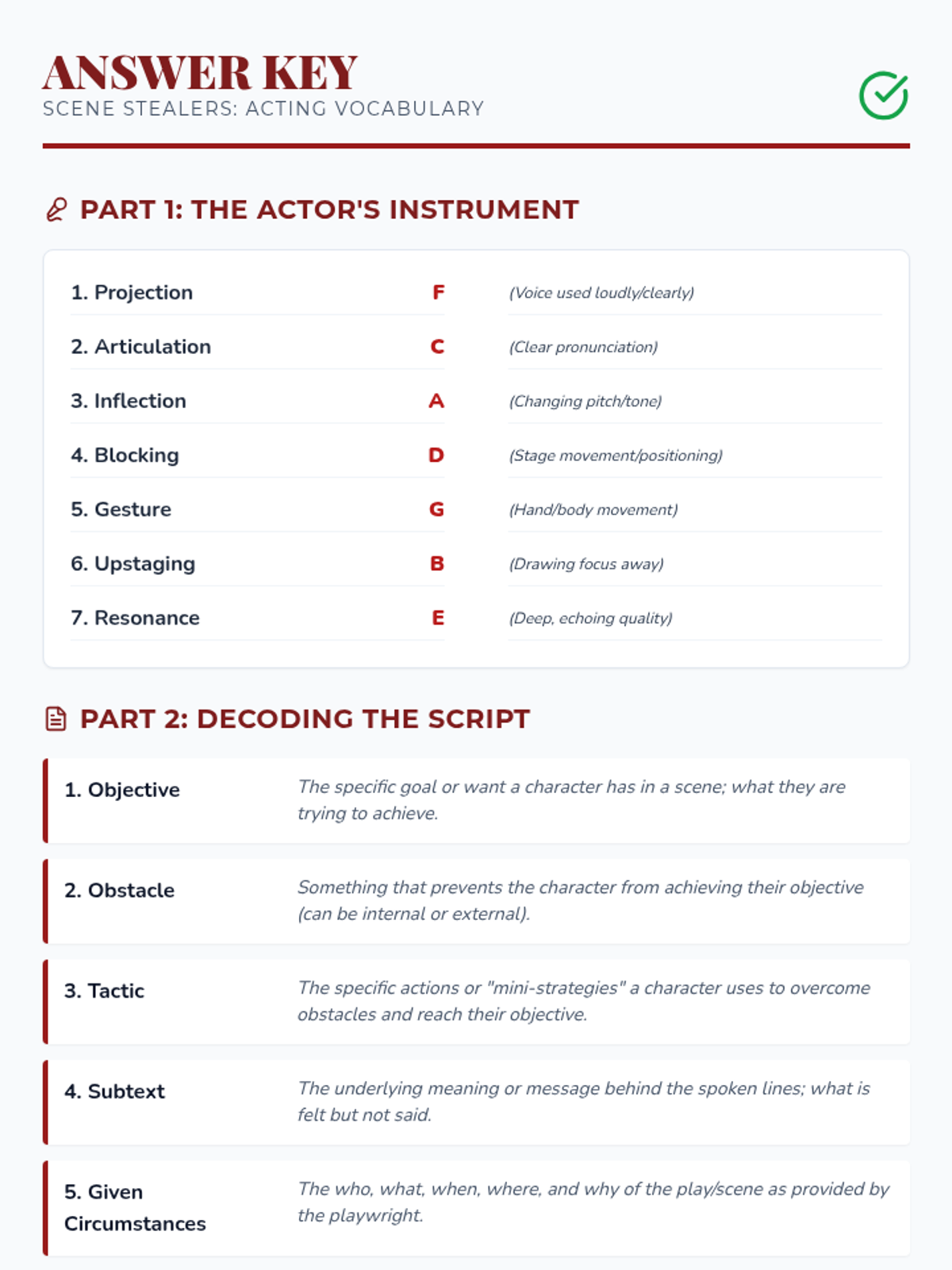
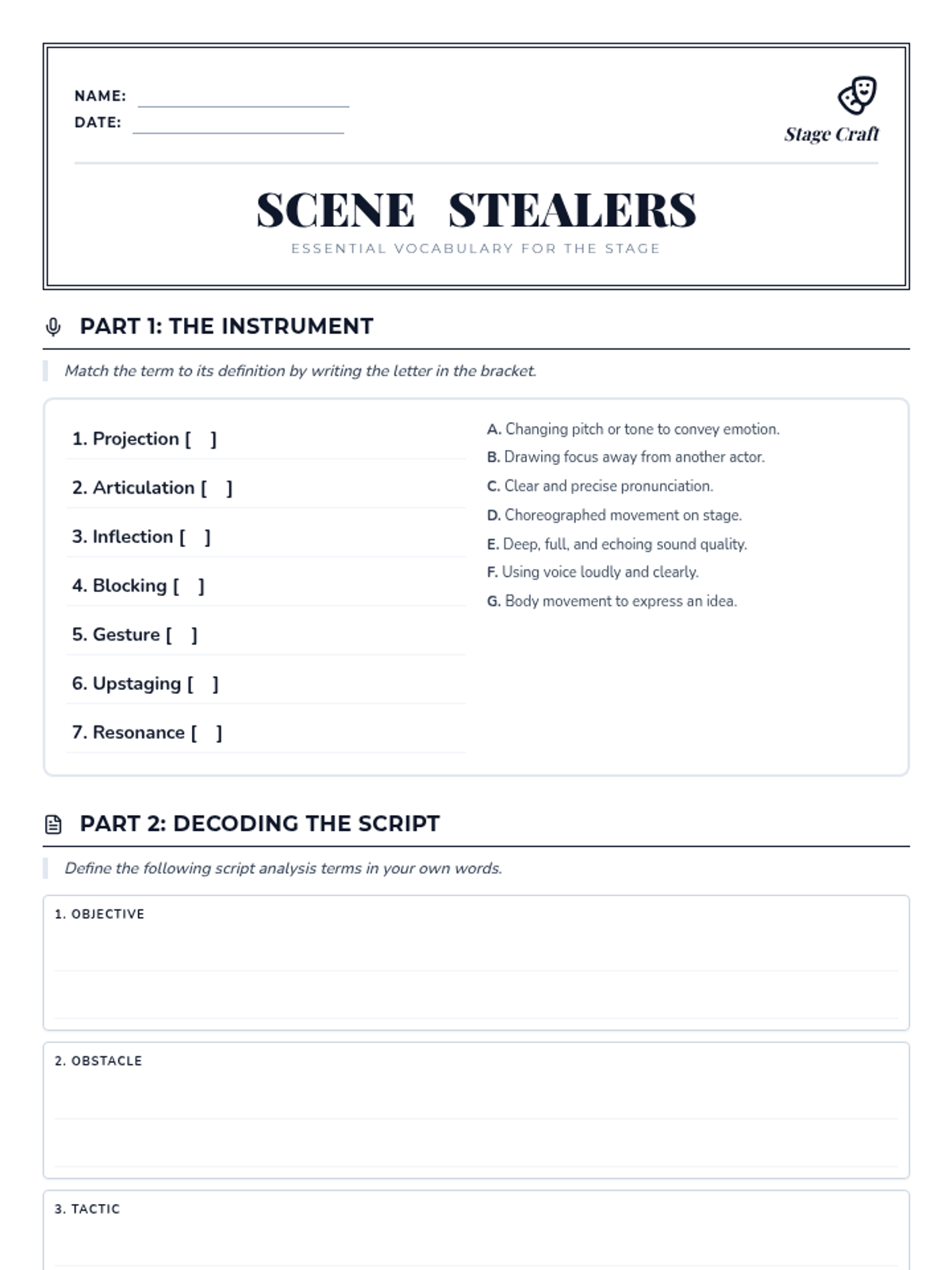
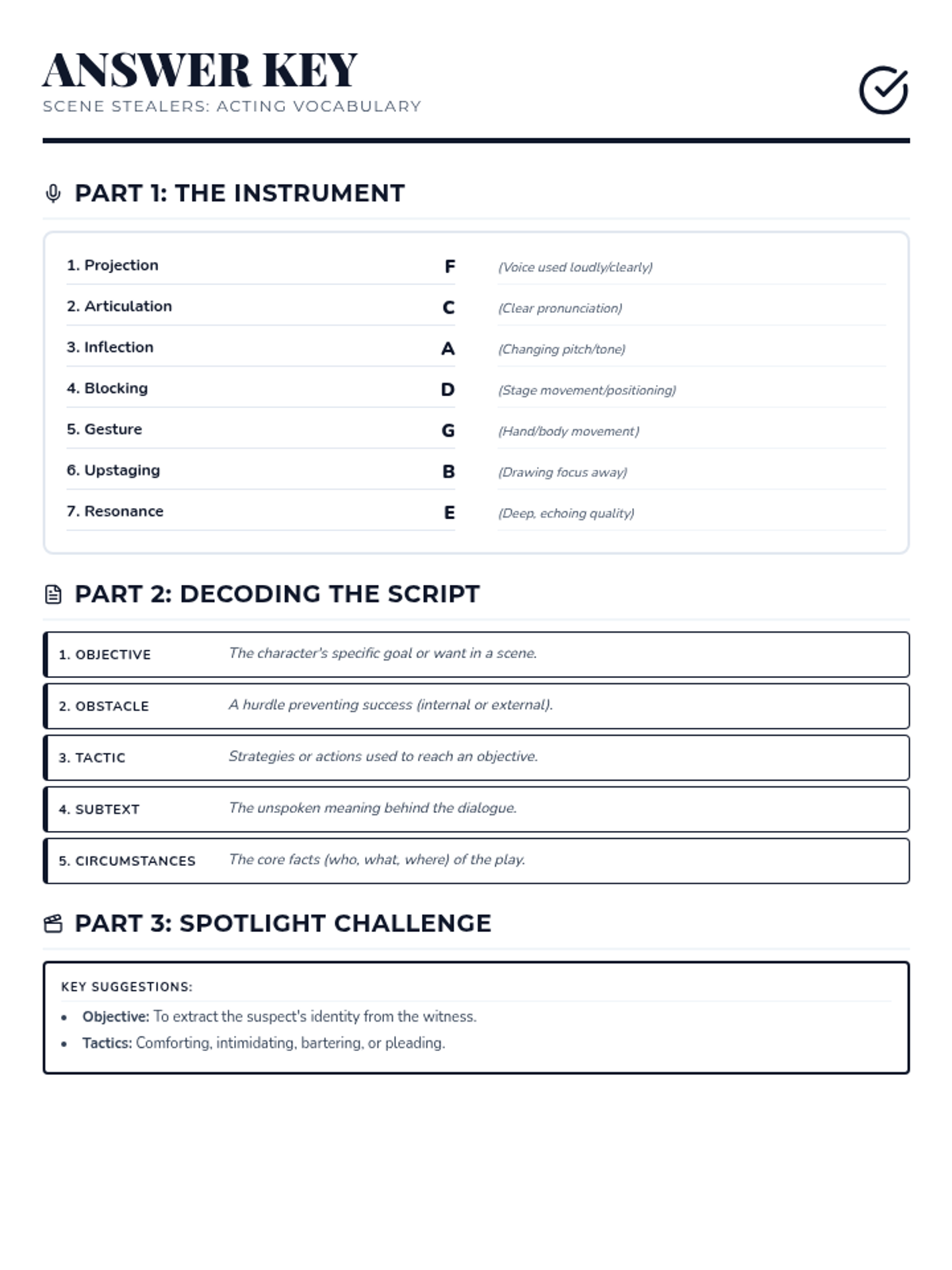
A foundational lesson on theater terminology focusing on how actors use their voice, body, and script analysis to create compelling characters.
A technical yet creative introduction to light metering using the Nikon D7500 and Sekonic Flashmate L-308X-U. Students will learn to balance the exposure triangle and achieve consistent lighting results.
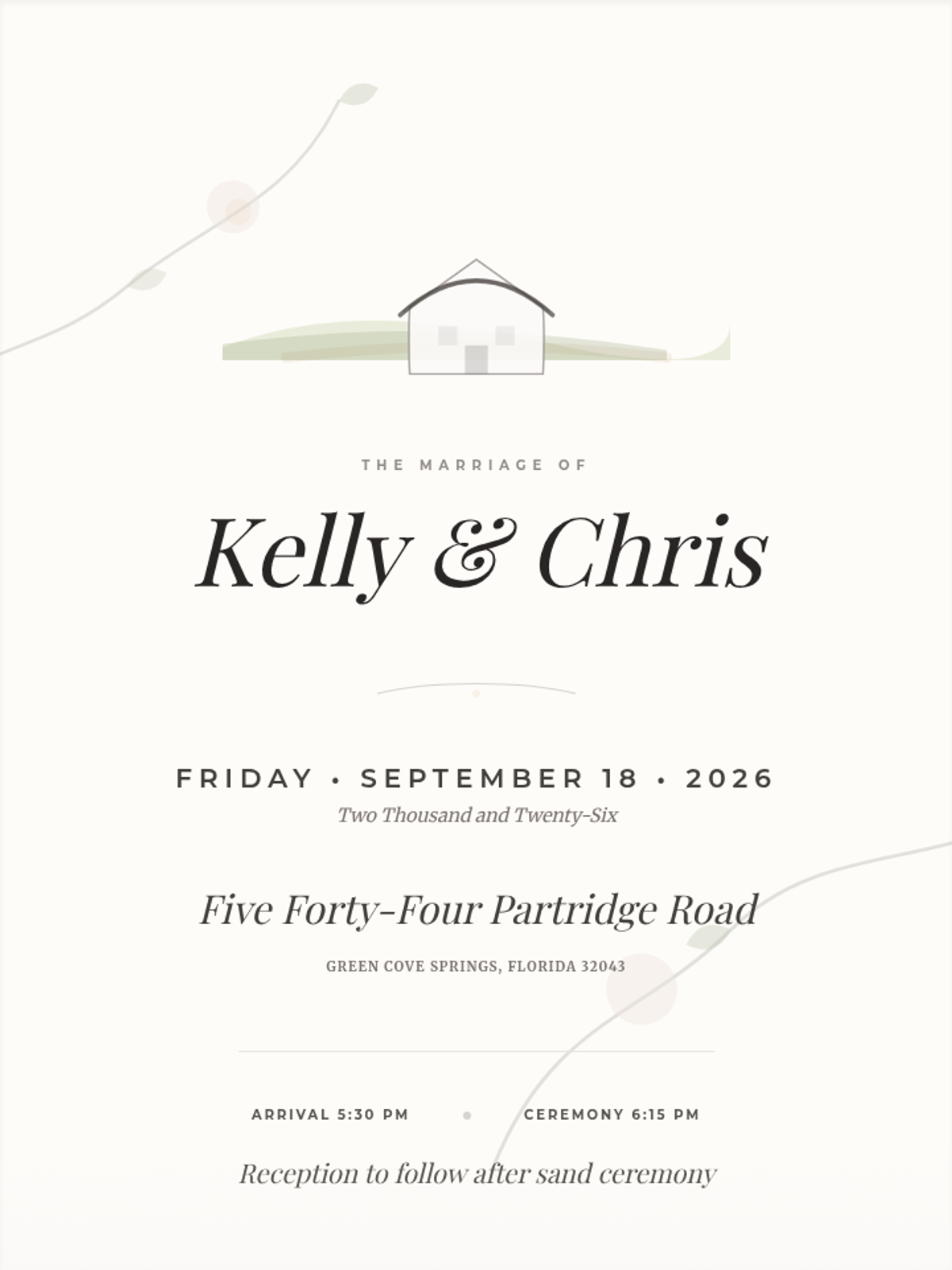
A collection of rustic, watercolor-themed wedding materials for a homestead countryside ceremony, focusing on soft aesthetics and romantic typography.
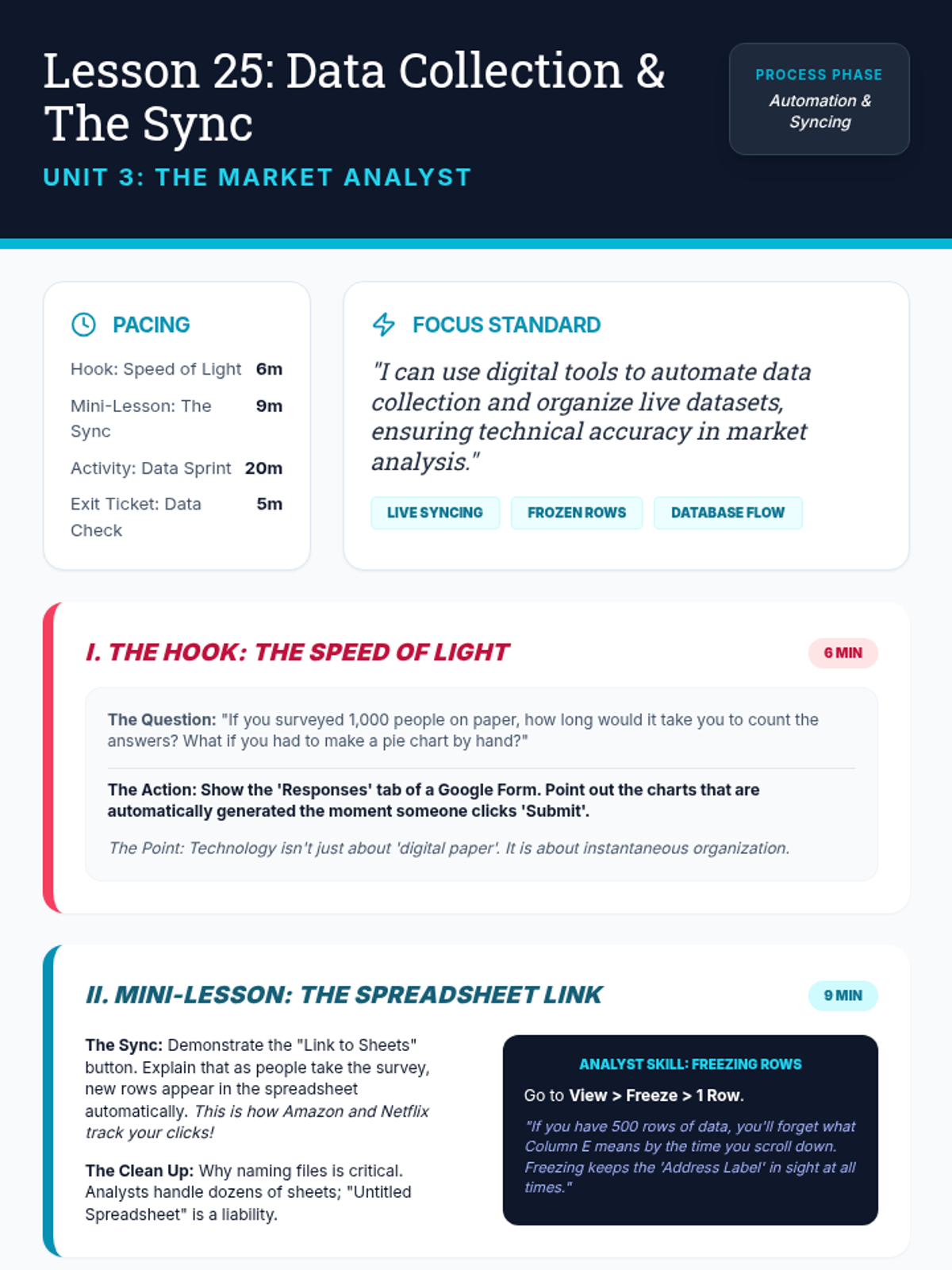
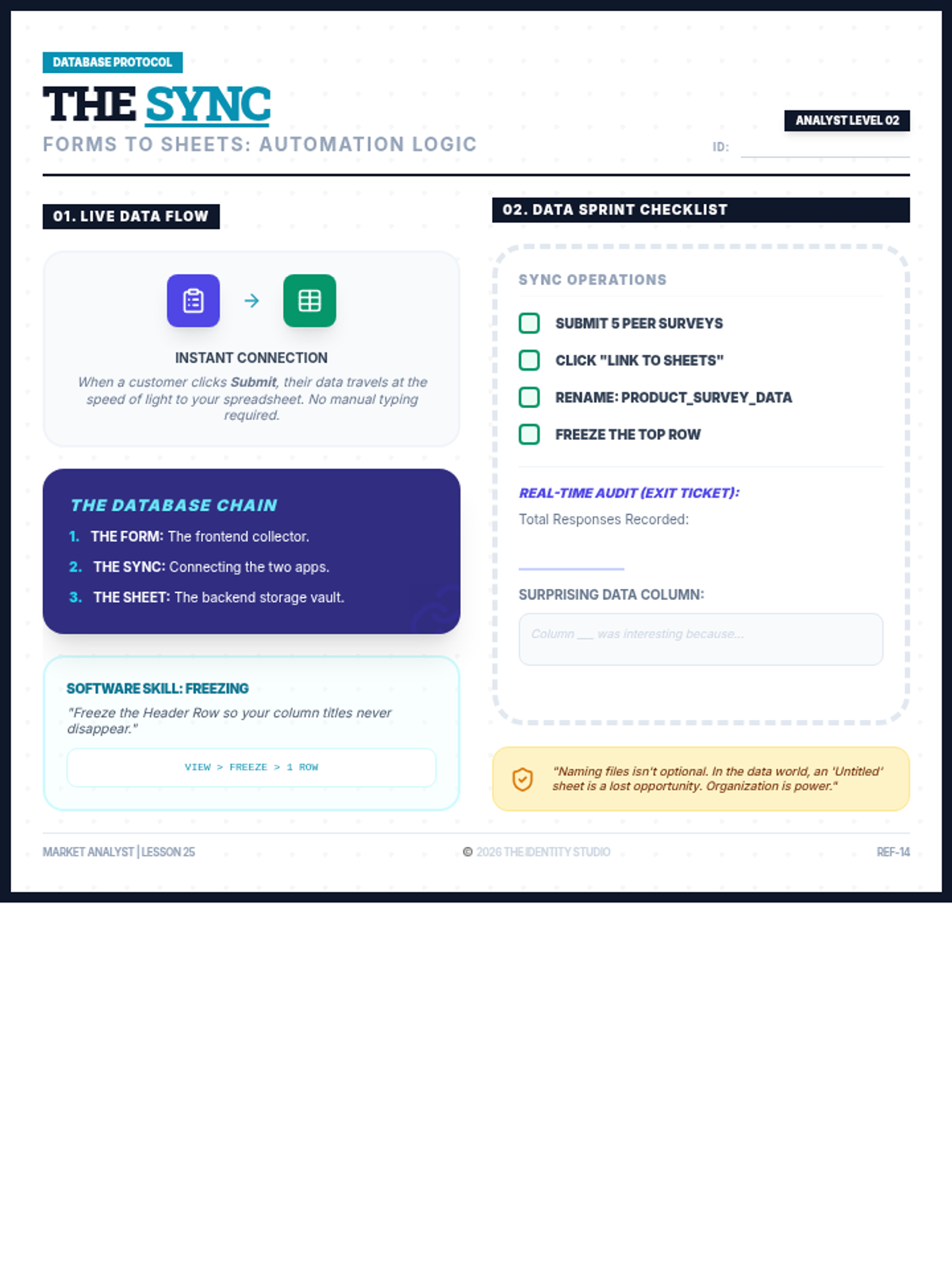
Students explore the efficiency of automated data collection by linking their market research forms to live spreadsheets. They learn the concept of real-time data syncing and master the 'Freezing Rows' skill to manage large datasets effectively.
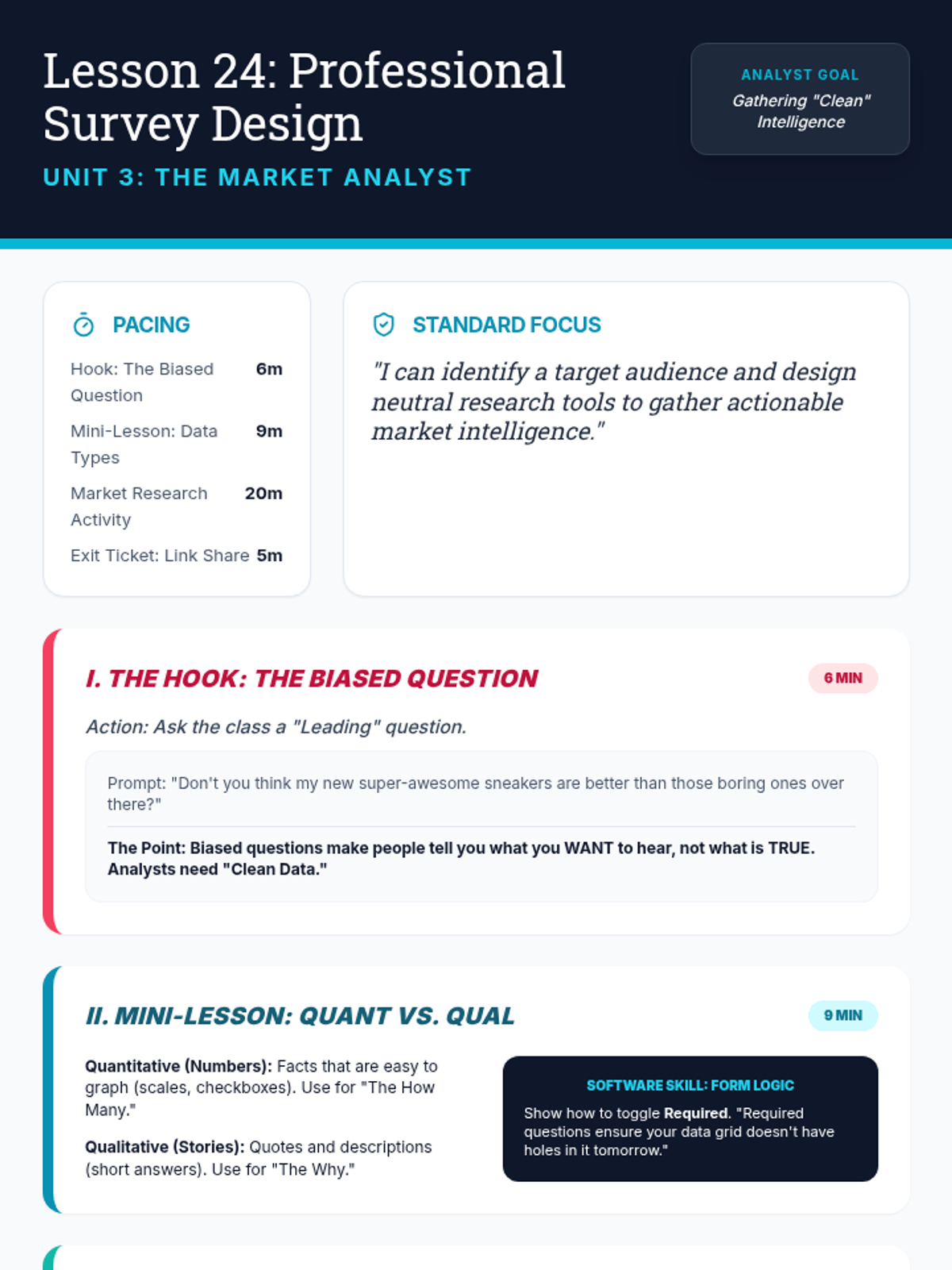
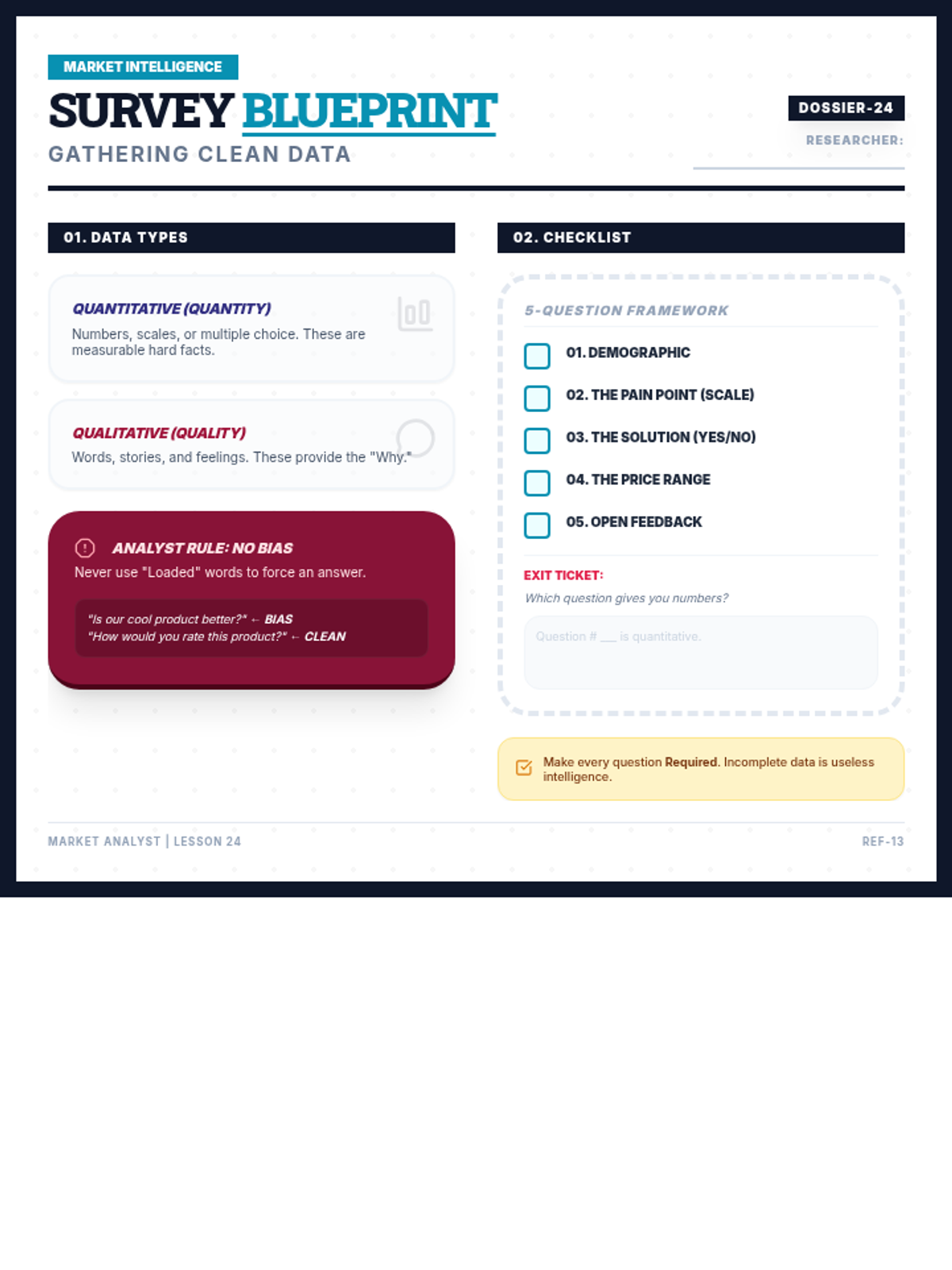
Students learn the art of professional survey design to gather market intelligence. They distinguish between quantitative and qualitative data, identify biased questioning, and build a multi-format survey in Google Forms or Microsoft Forms to collect clean data from their target audience.
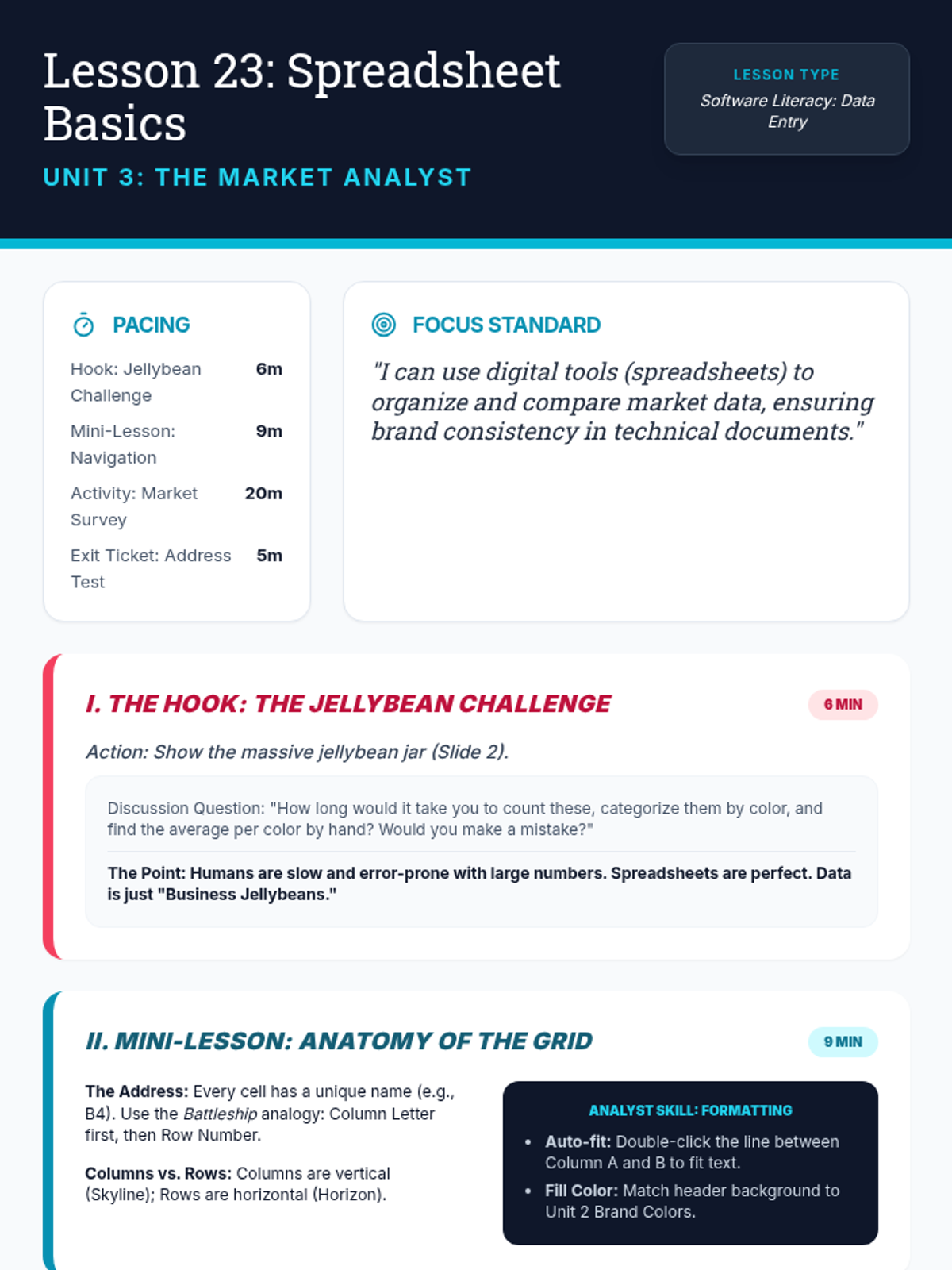
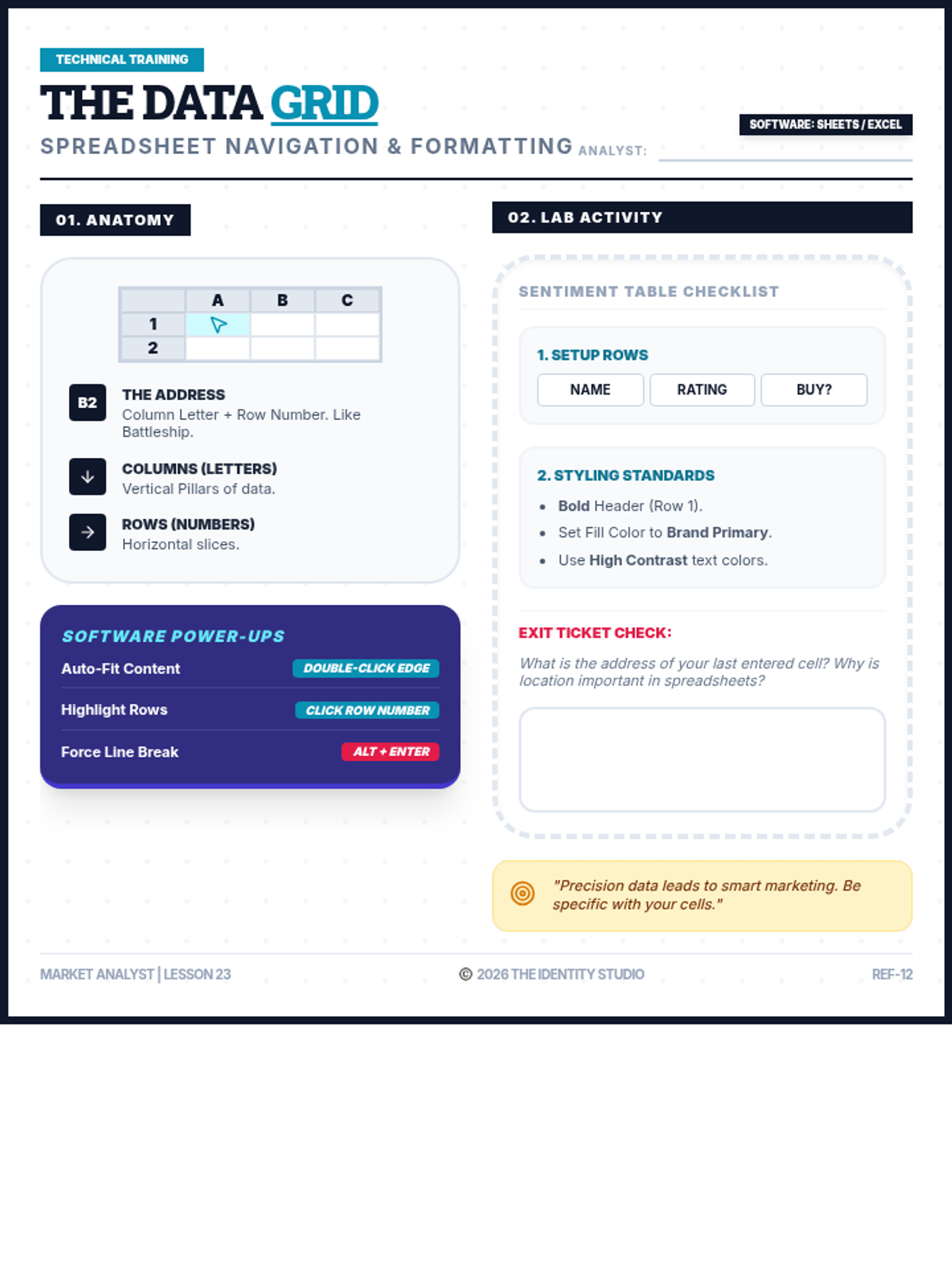
This lesson introduces students to the fundamental structure of spreadsheet software. They learn about cells, rows, columns, and addresses while performing basic data entry and formatting to align with their brand identity.
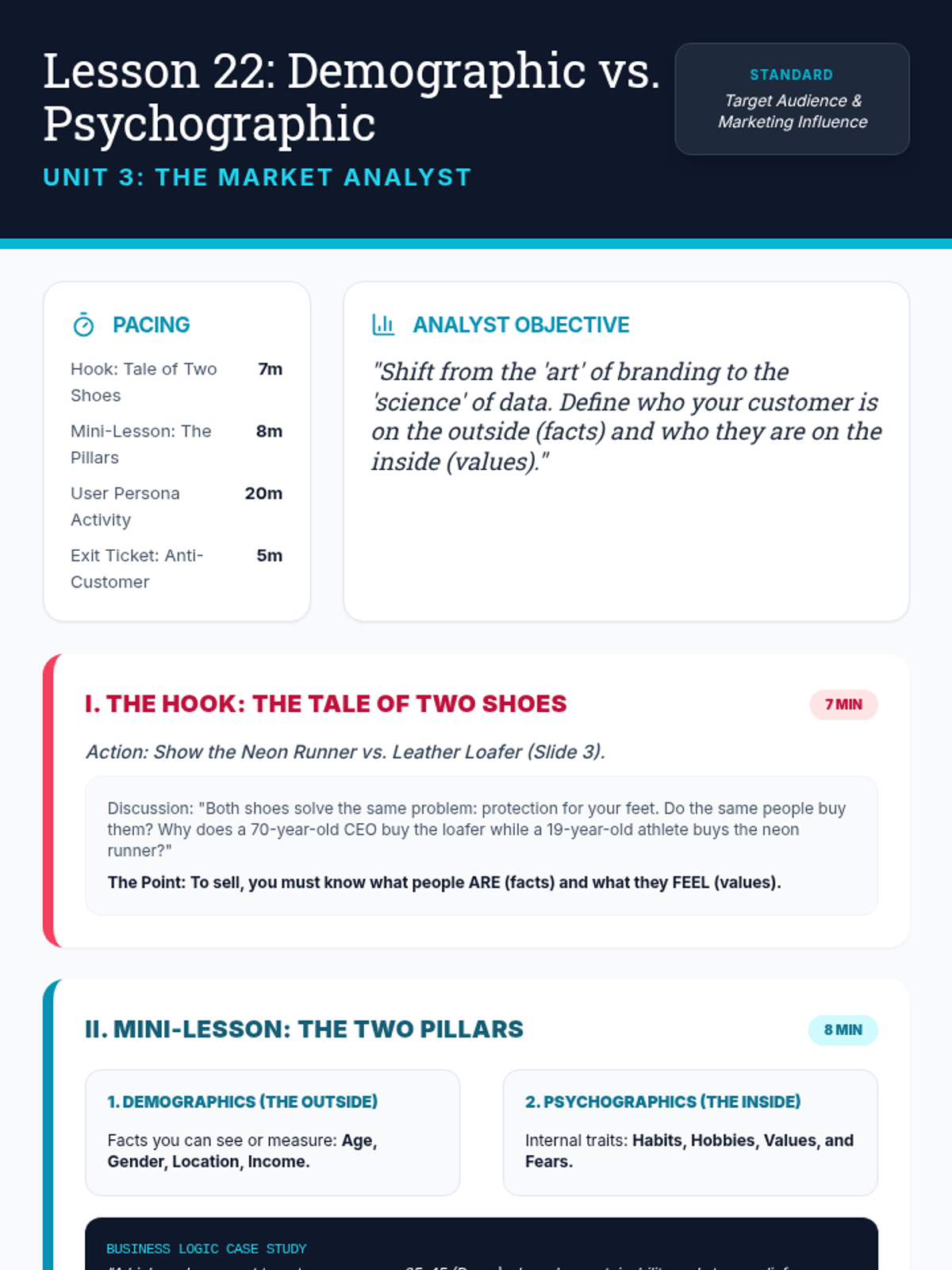
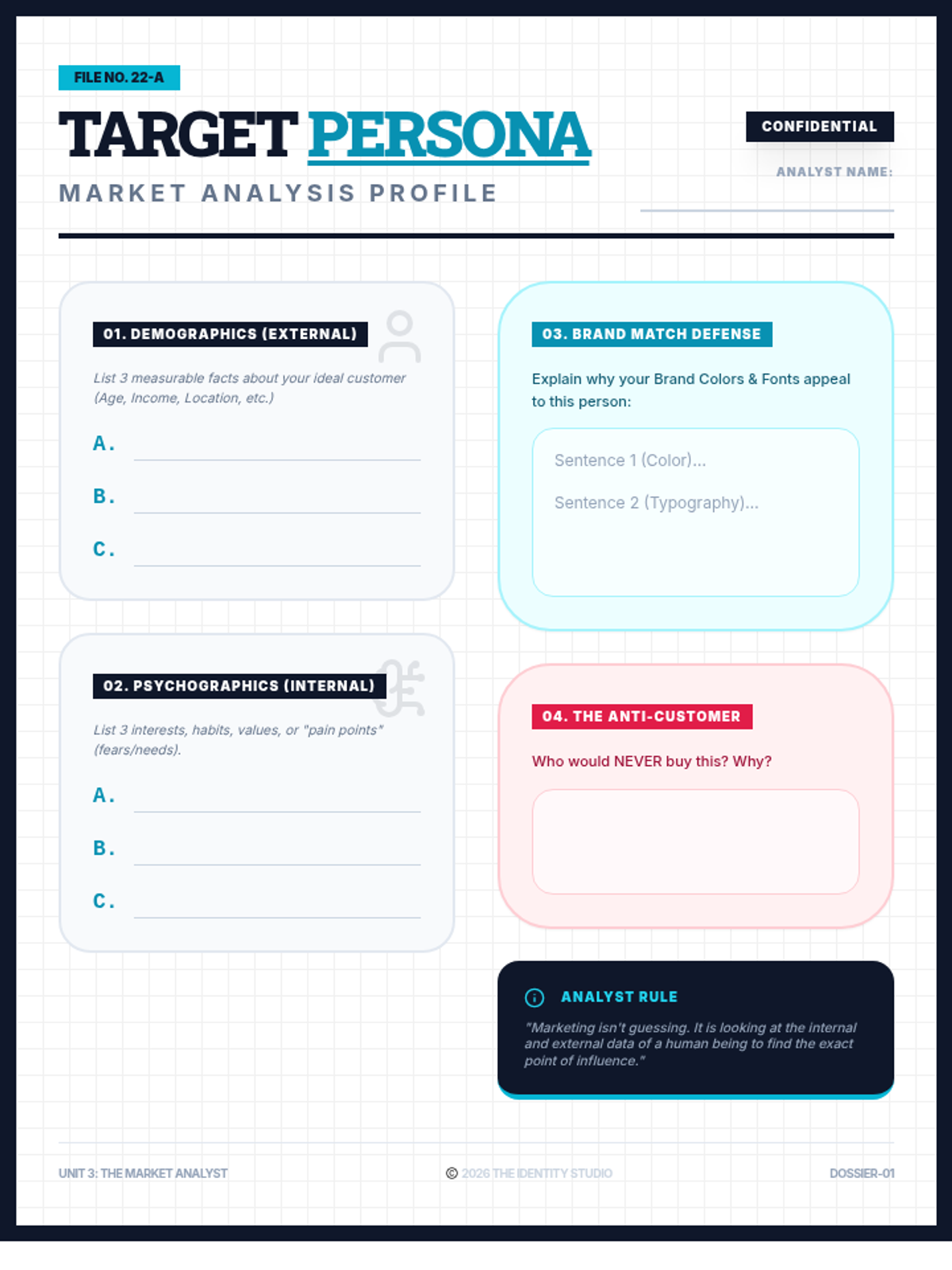
Students transition from brand design to market analysis by distinguishing between demographic data (external facts) and psychographic data (internal values). They apply these concepts by building a formal User Persona for their brand, justifying their earlier design choices based on audience data.
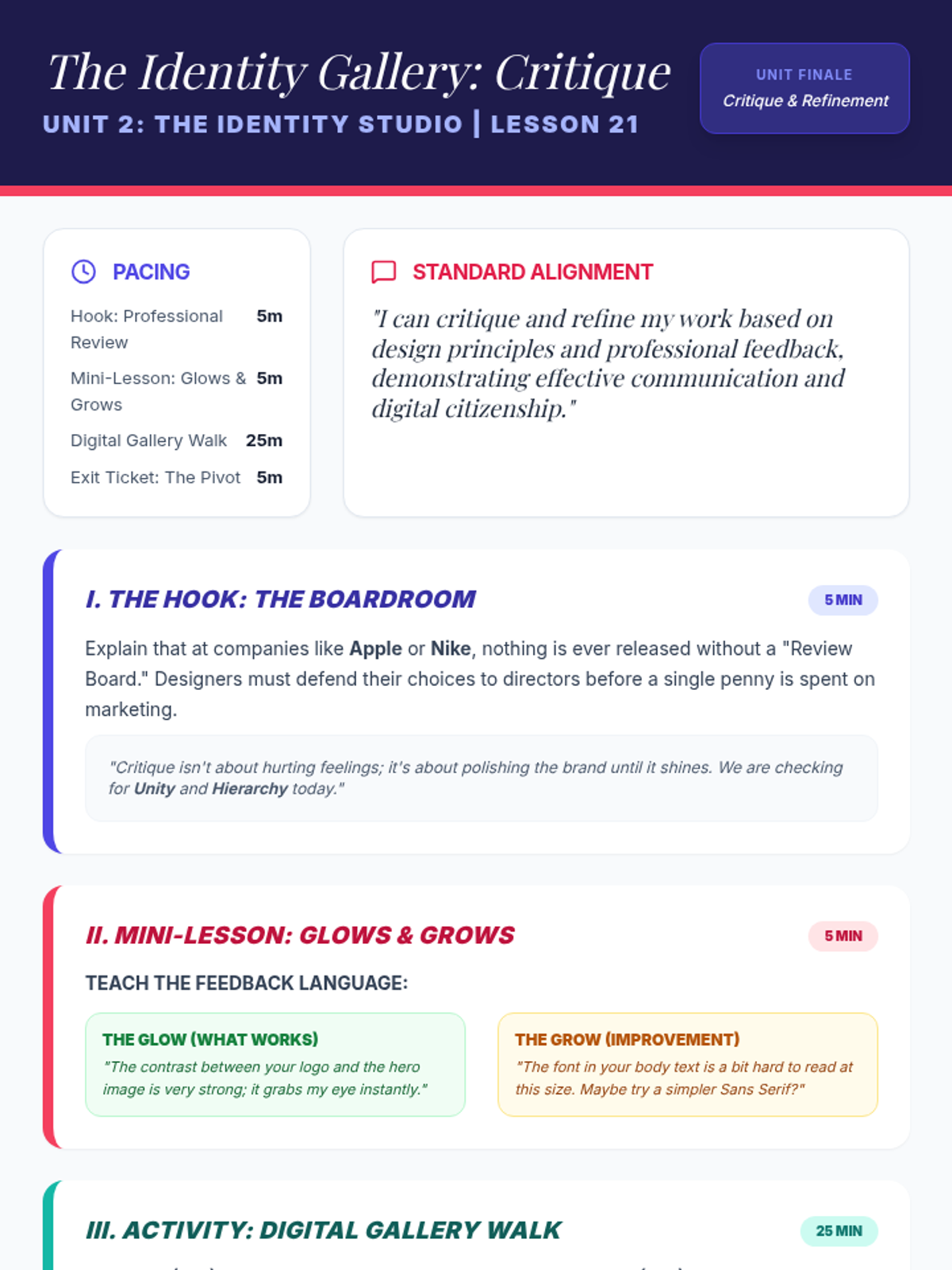
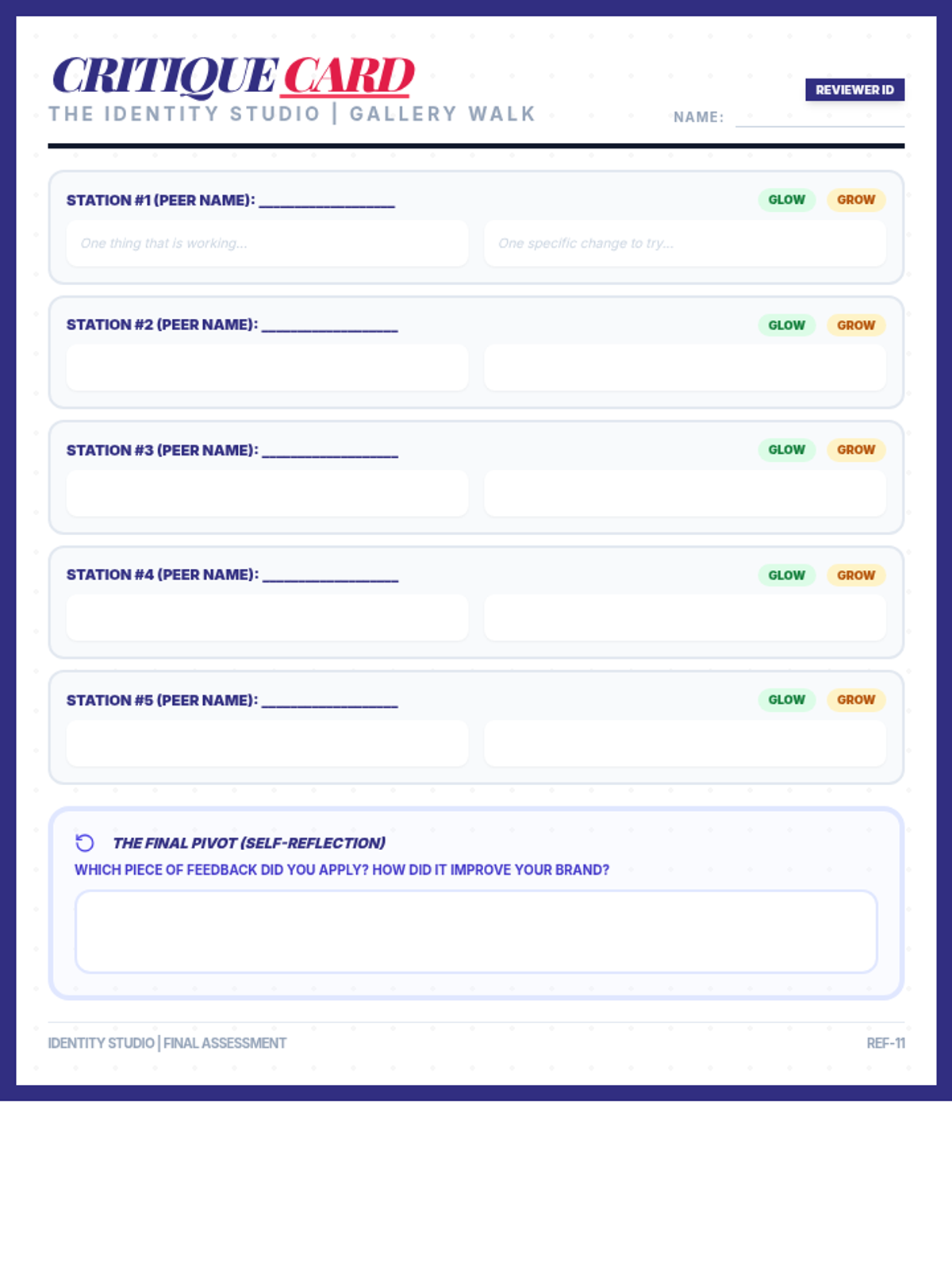
Students participate in a professional 'Gallery Walk' to provide and receive constructive feedback on their Brand Style Guides and One-Pagers. They apply the 'Glow and Grow' framework to refine their designs, fulfilling standards for artistic critique and professional communication.
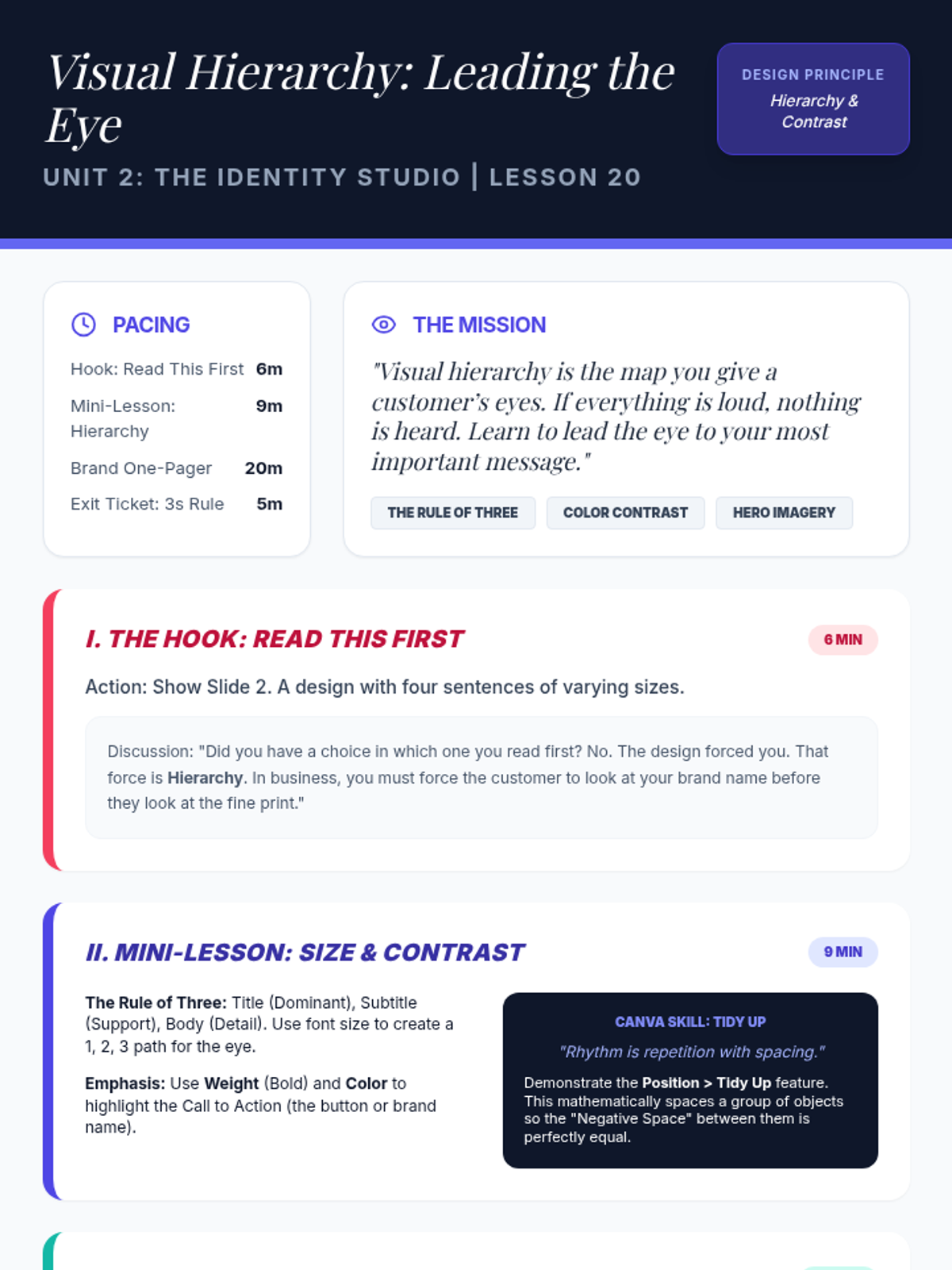
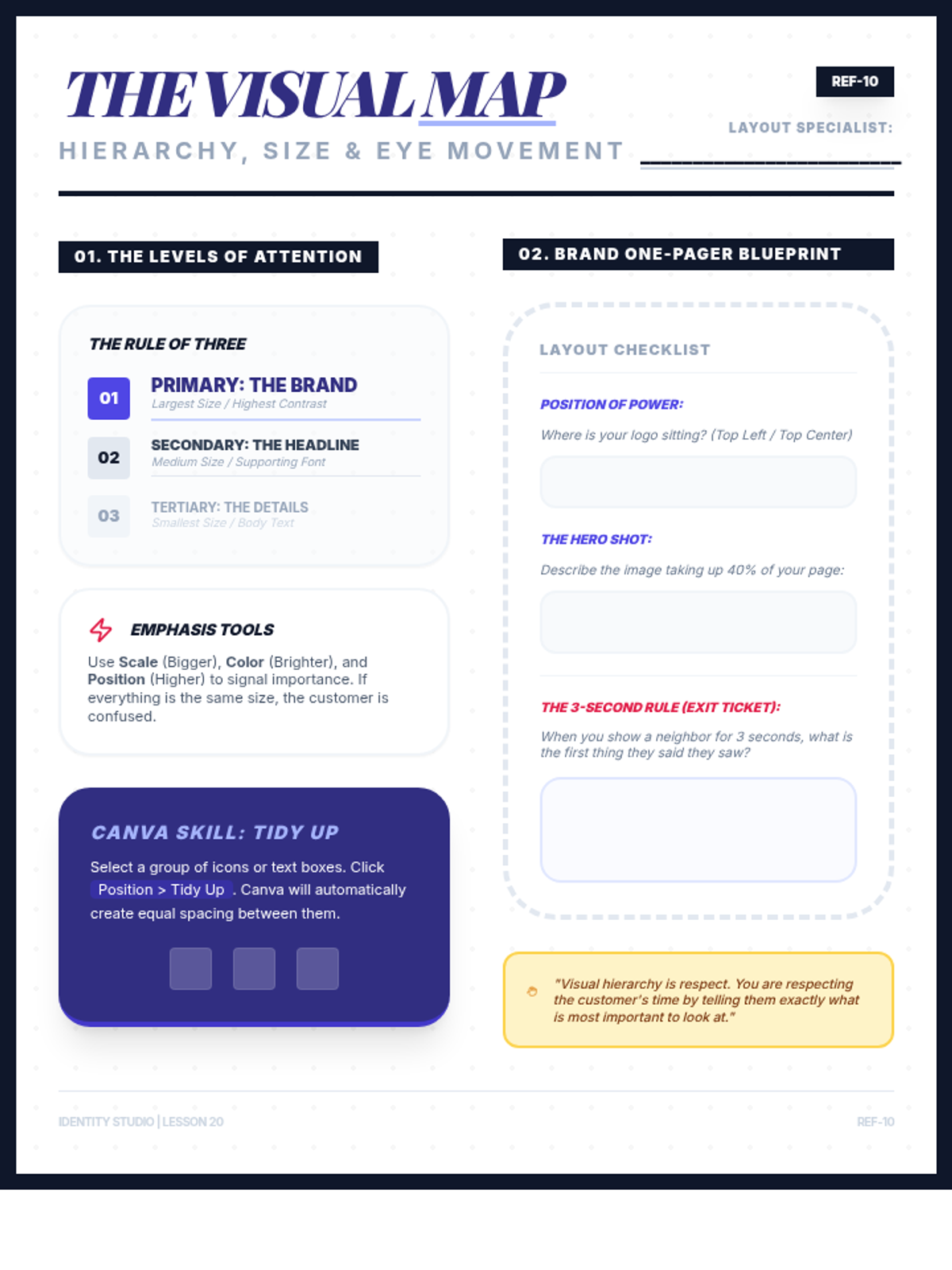
Students master the principle of visual hierarchy to lead a customer's eye through a design. They apply the 'Rule of Three' (Size, Weight, and Contrast) to create a professional brand 'One-Pager' in Canva, ensuring their most important brand assets receive maximum visibility.
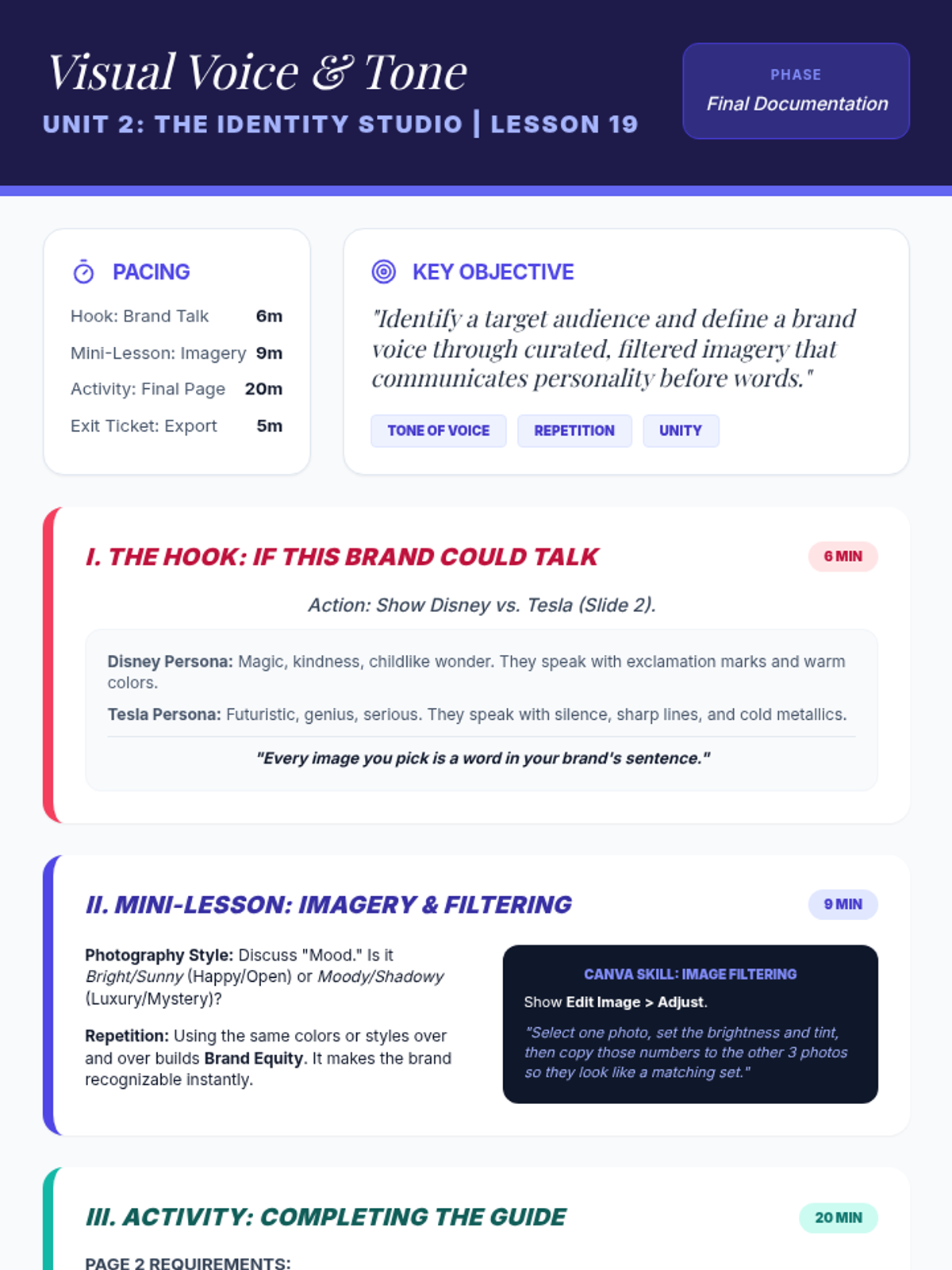
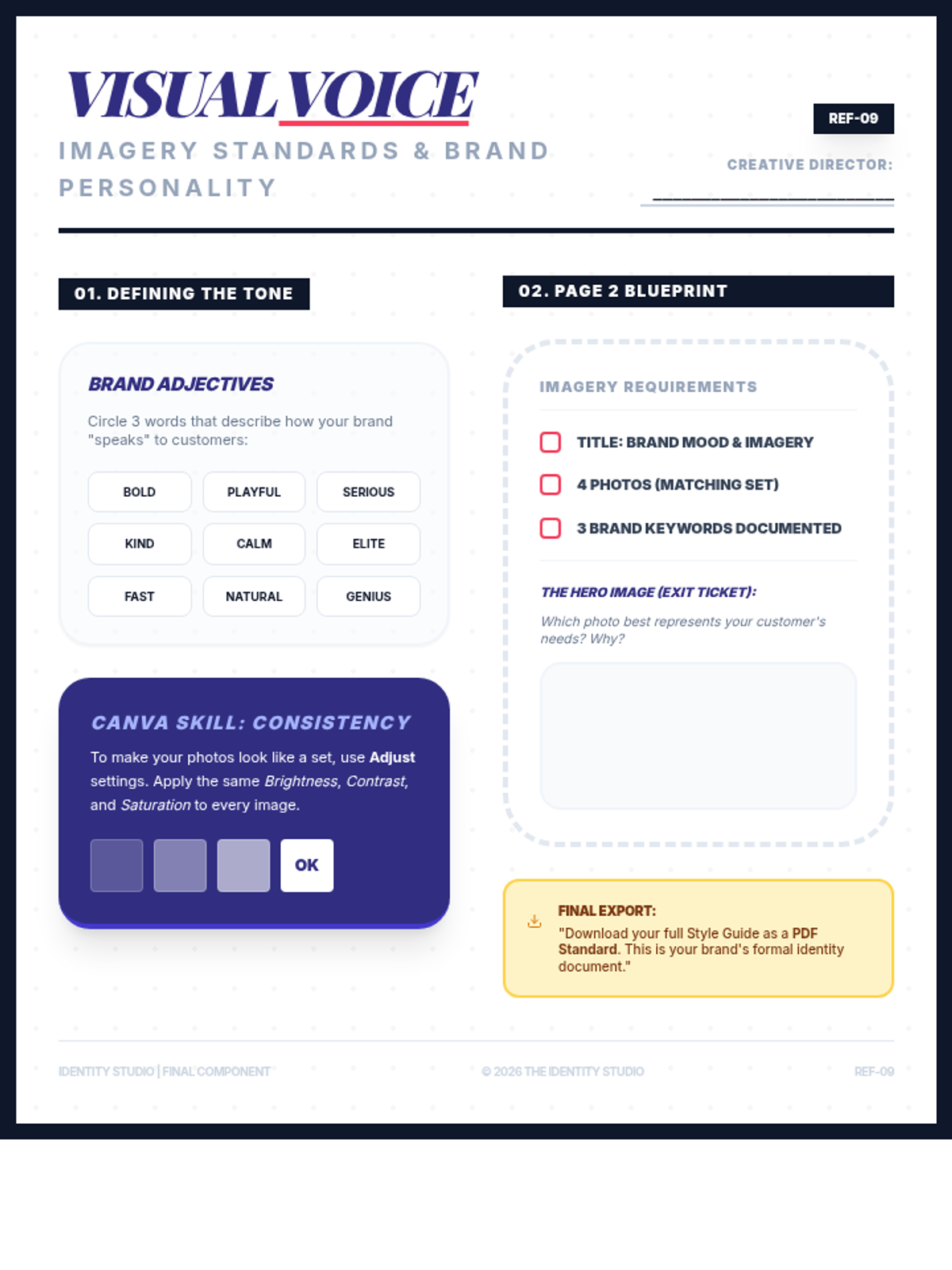
Students define their brand's 'personality' by selecting and filtering imagery that aligns with a specific tone. They complete their formal Brand Style Guide by documenting photography standards and brand keywords, focusing on the principles of repetition and unity.
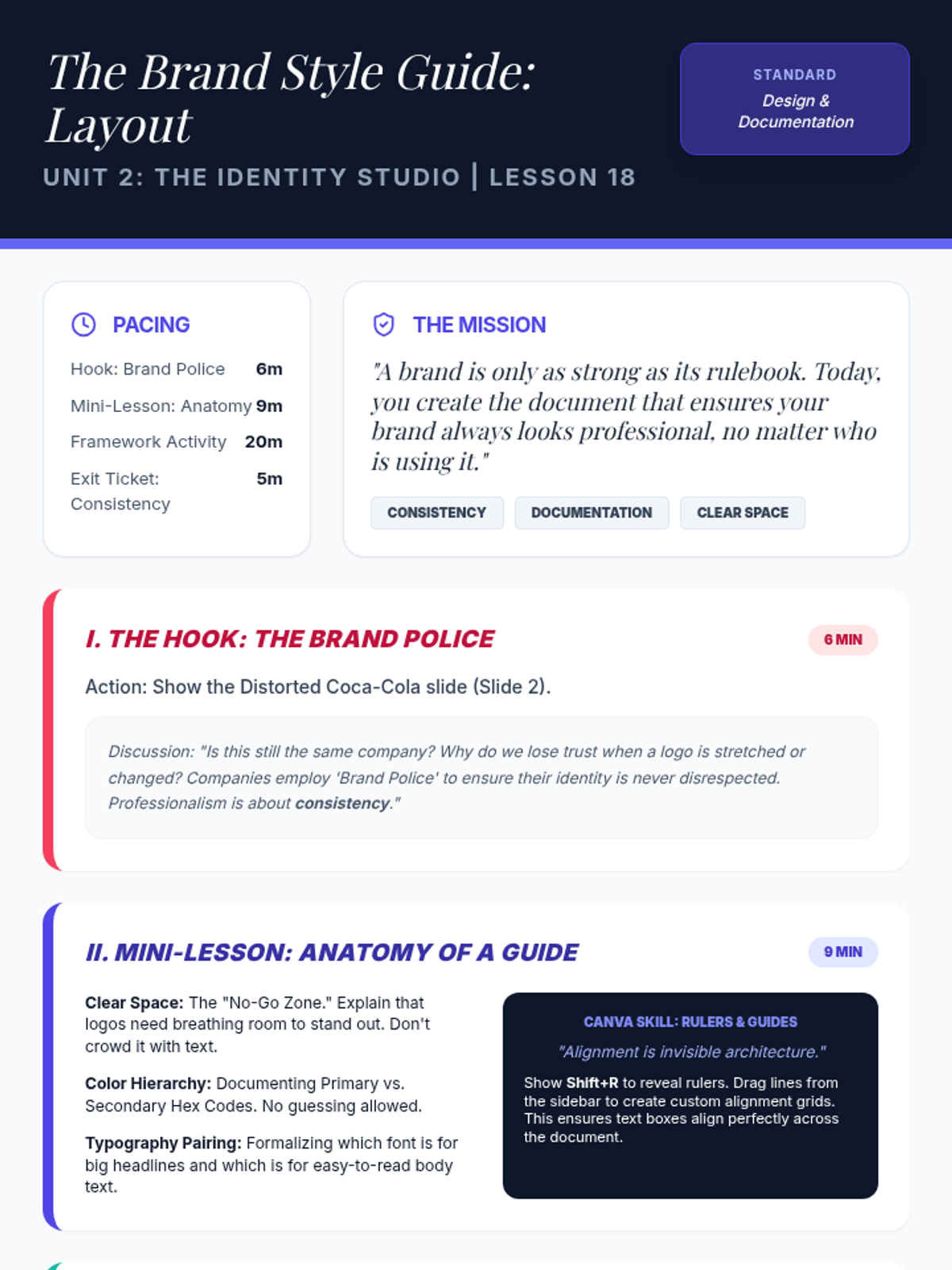
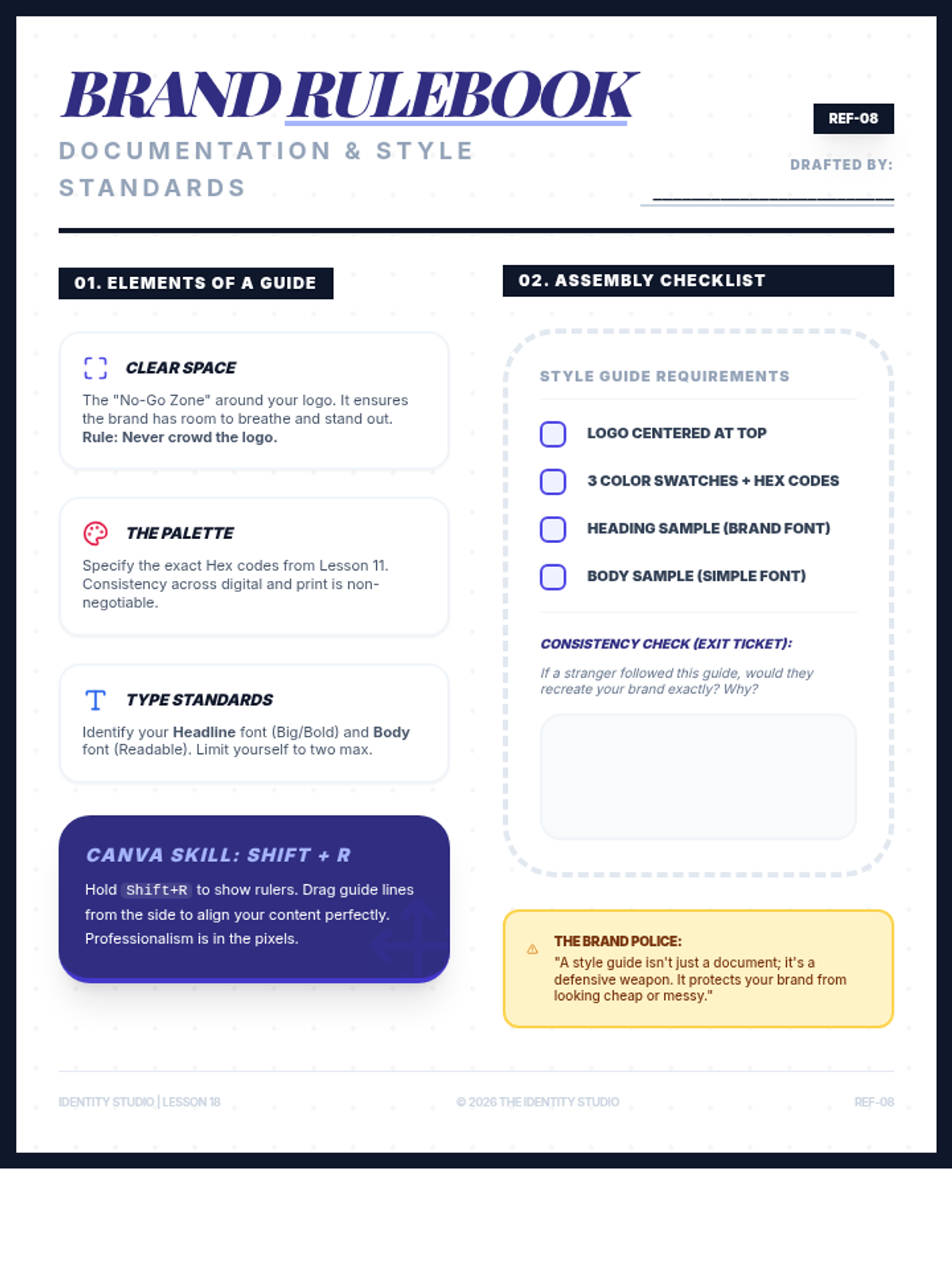
Students transition from brand creation to documentation by building a formal Style Guide. They learn the importance of brand consistency through 'The Brand Police' concept and document their logo usage, hex codes, and typography pairings in Canva using alignment rulers and guides.
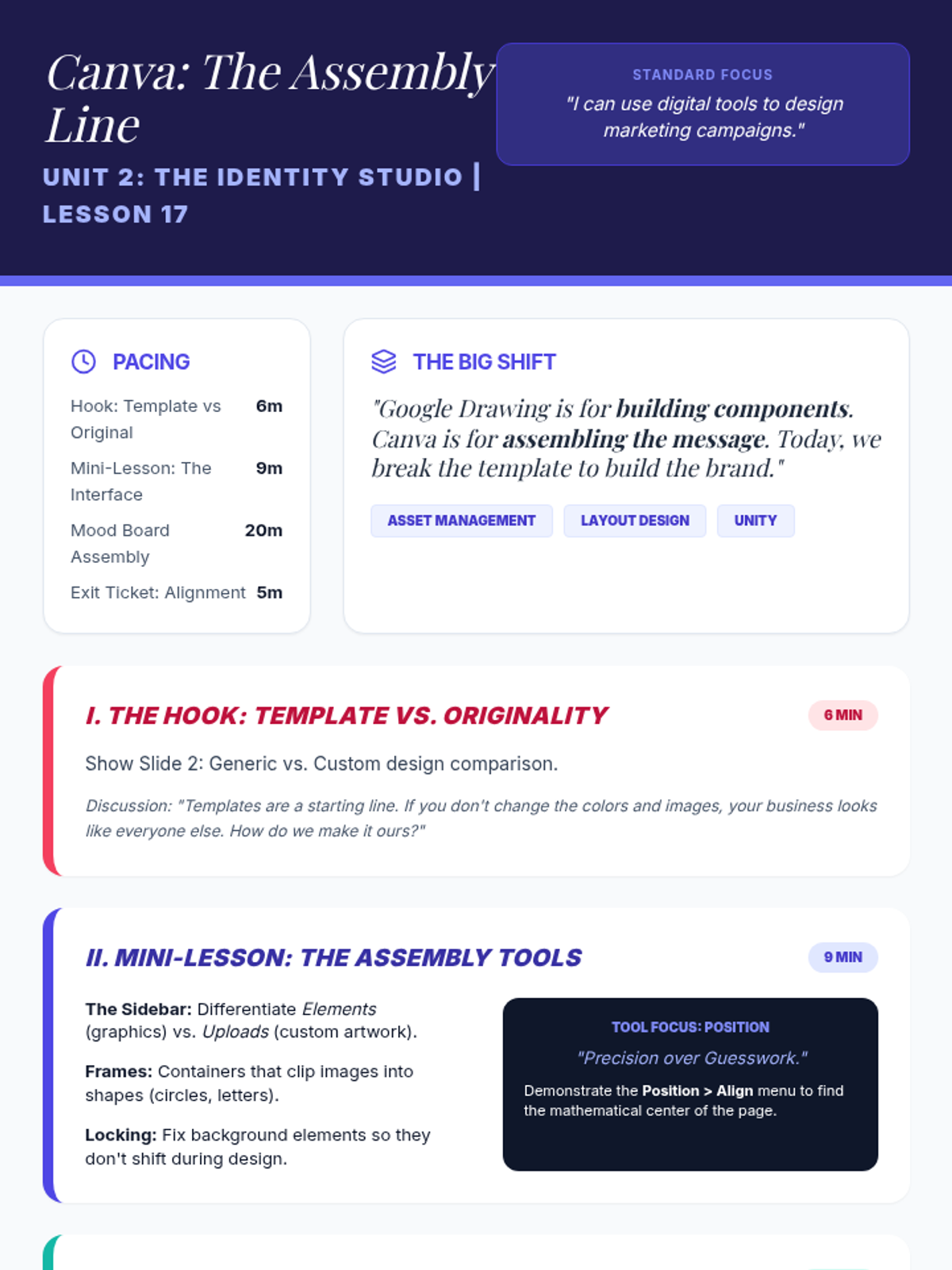
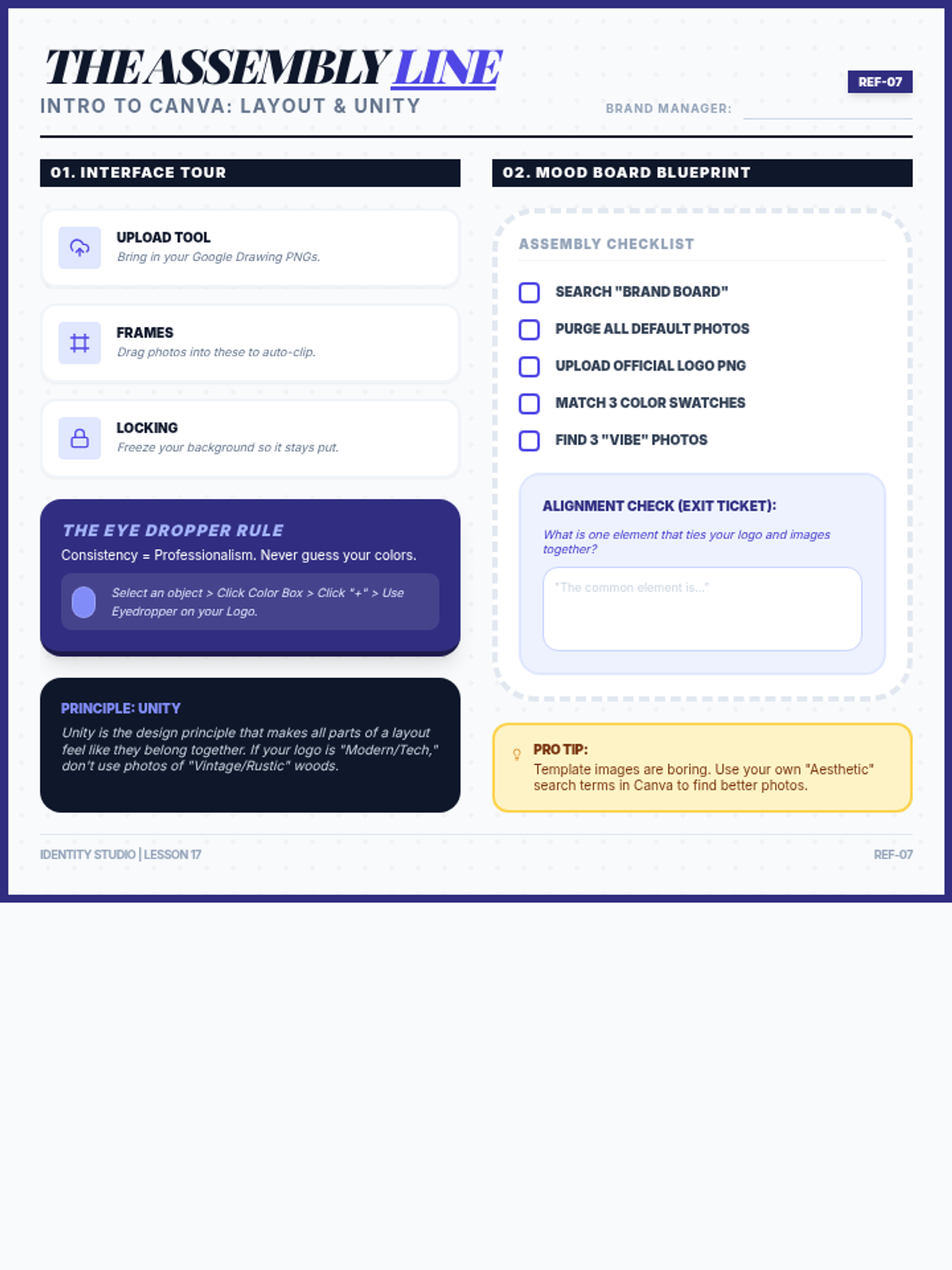
Students transition to Canva as a layout tool to assemble their brand assets into a professional Mood Board. They learn to 'break' templates by replacing generic elements with their own custom logos and colors, focusing on brand consistency and visual harmony.
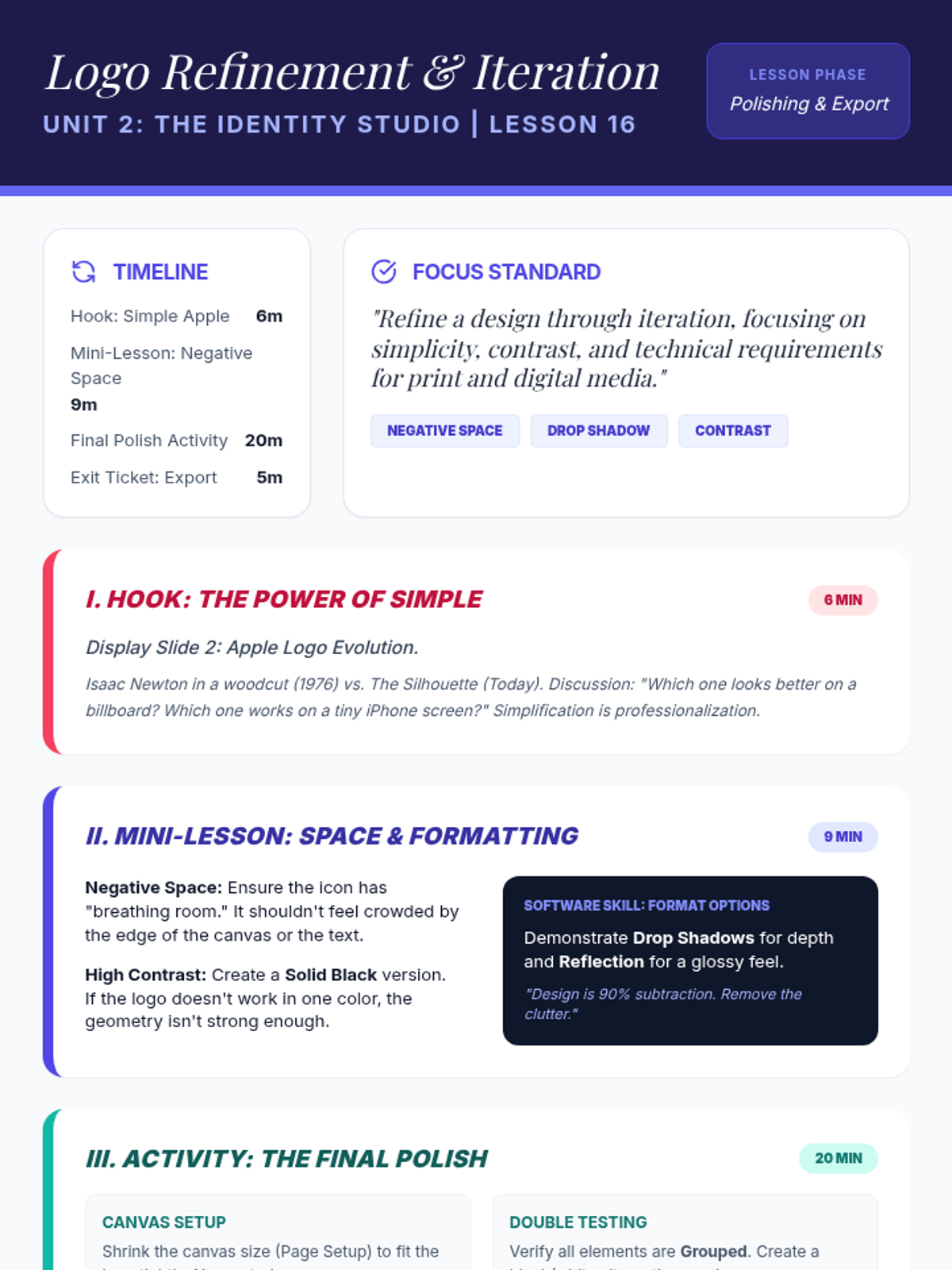
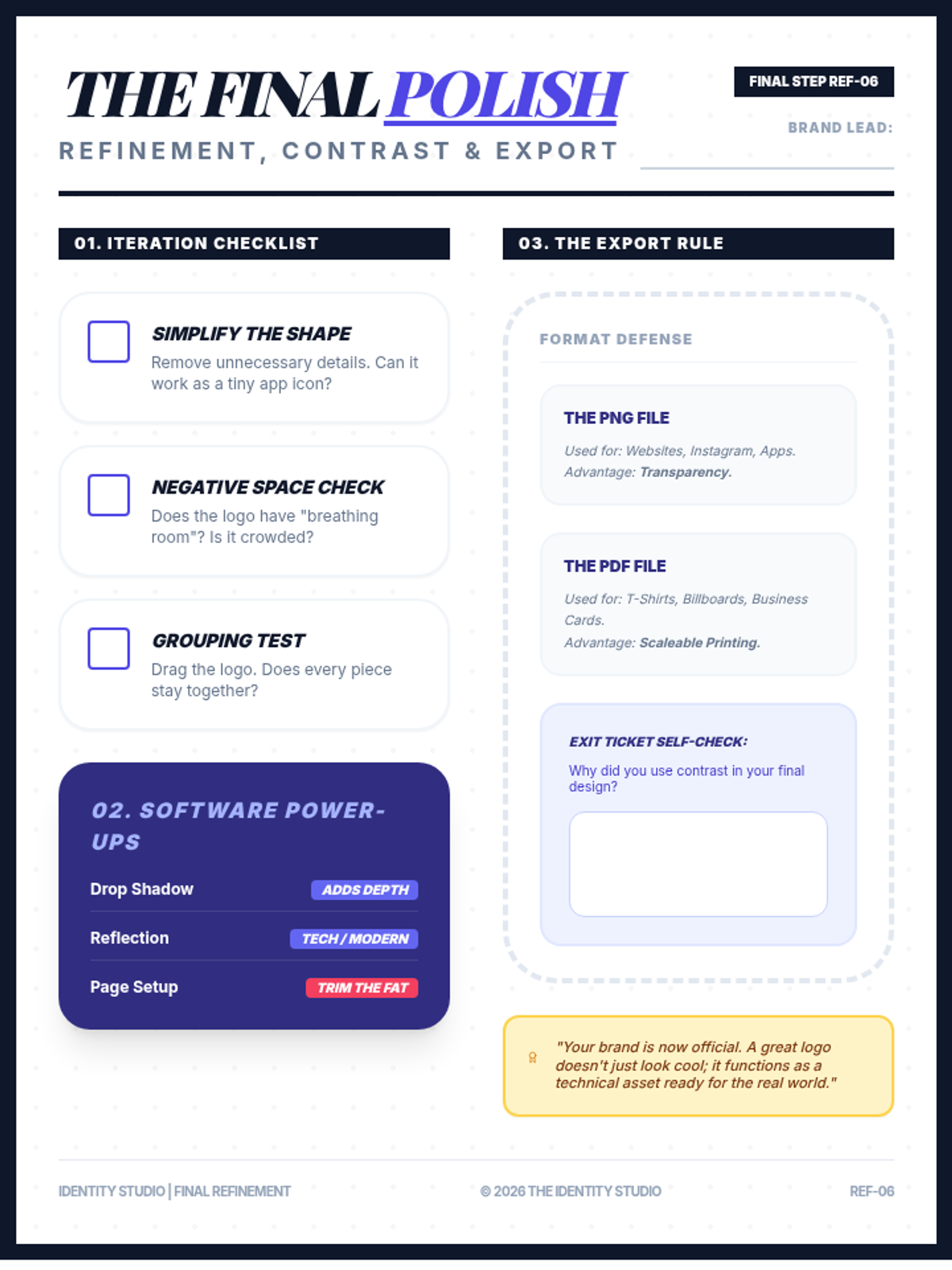
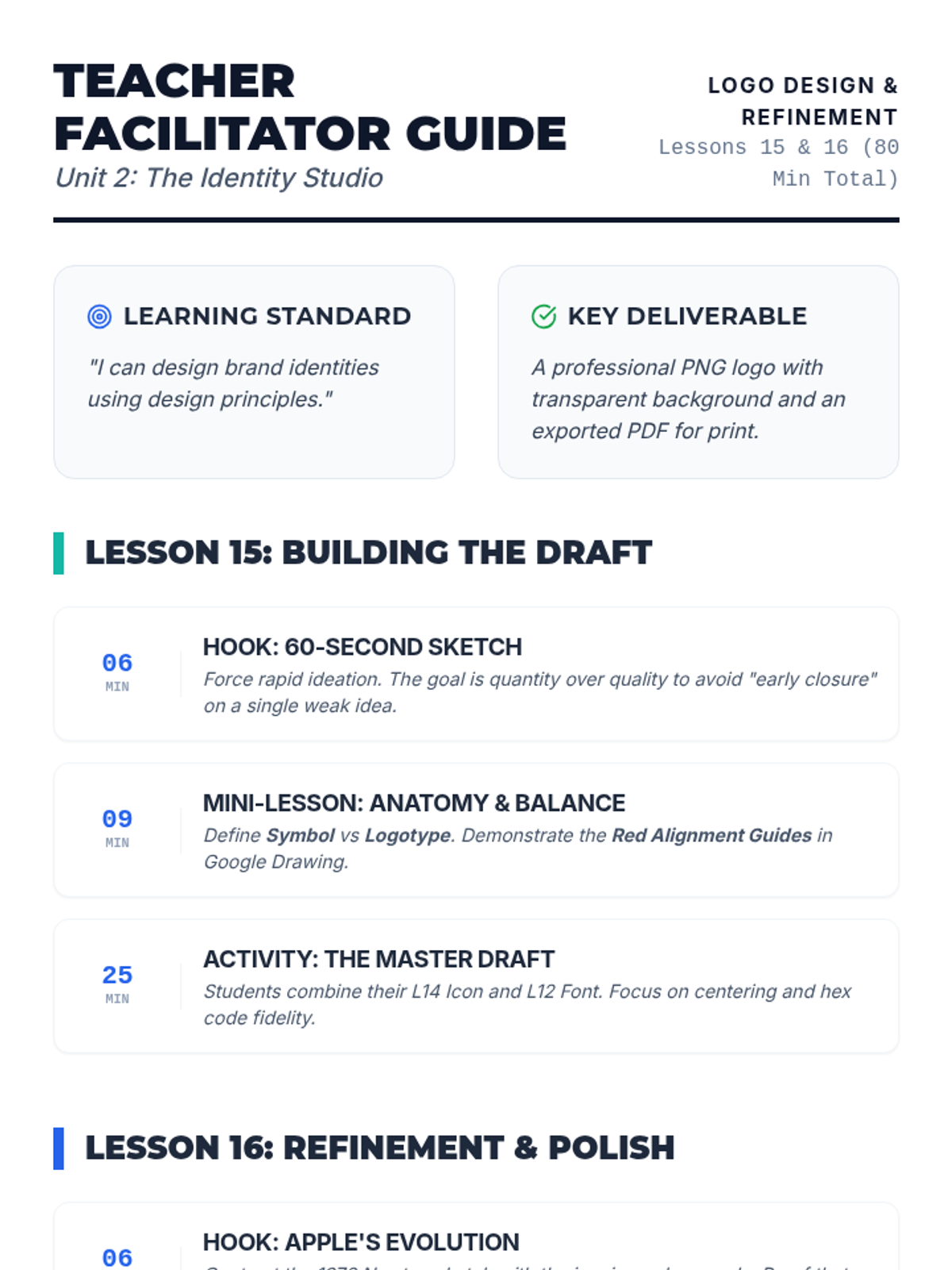
Students refine their logo drafts for professional use, focusing on simplicity, negative space, and contrast. They learn to create multiple versions (Full Color and Solid Black) and understand the technical export requirements for digital vs. print media (PNG vs. PDF).
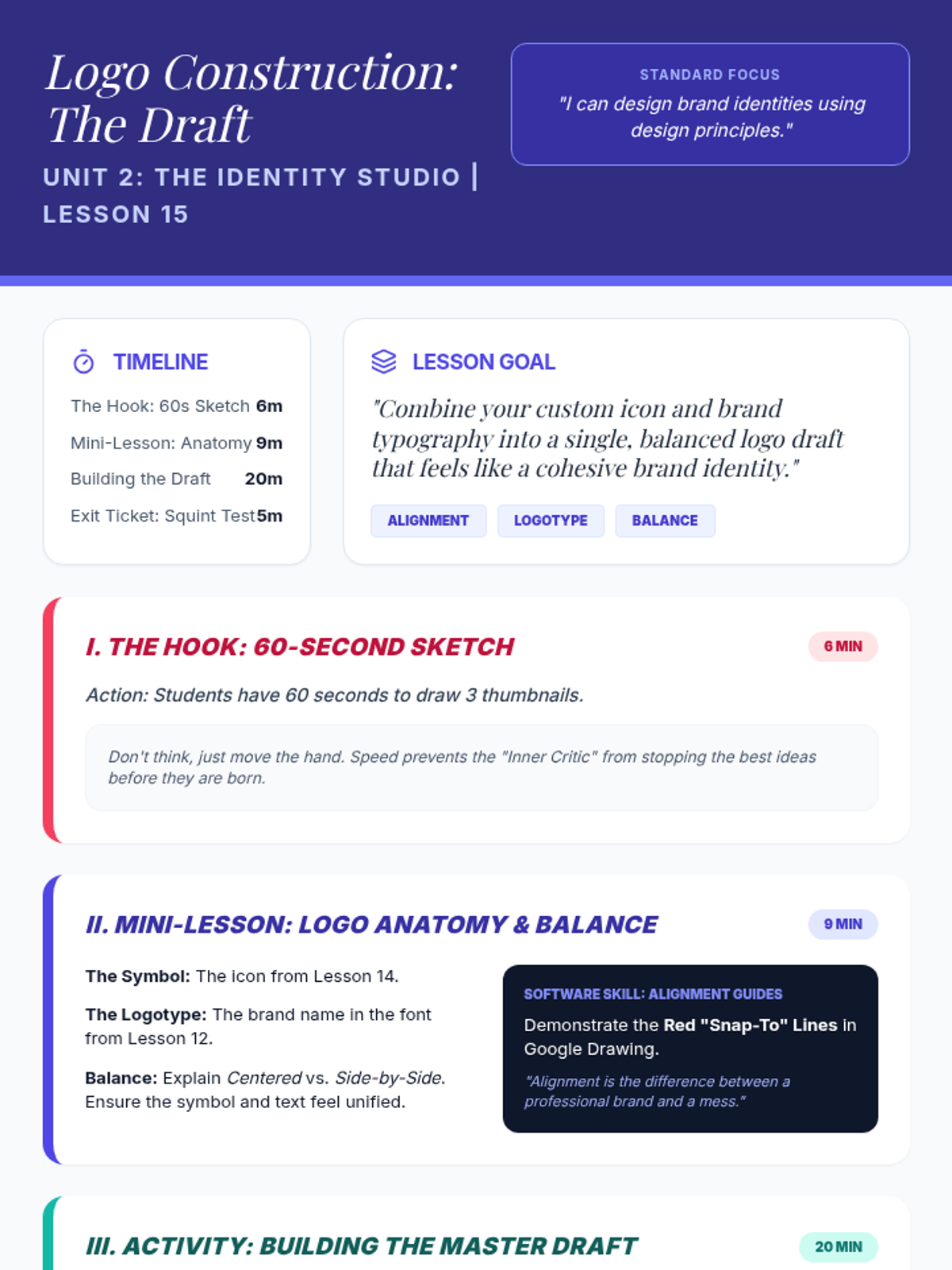
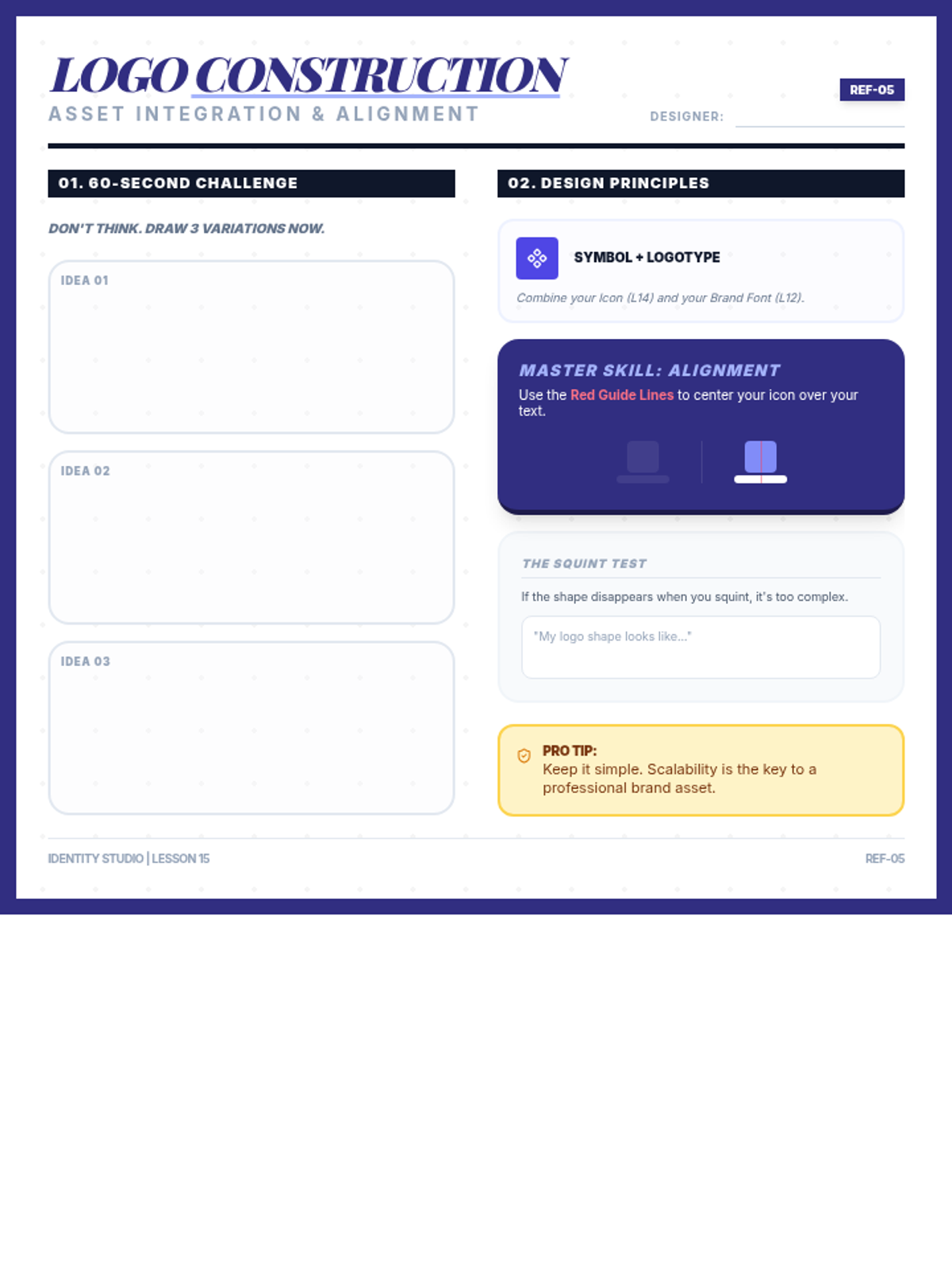
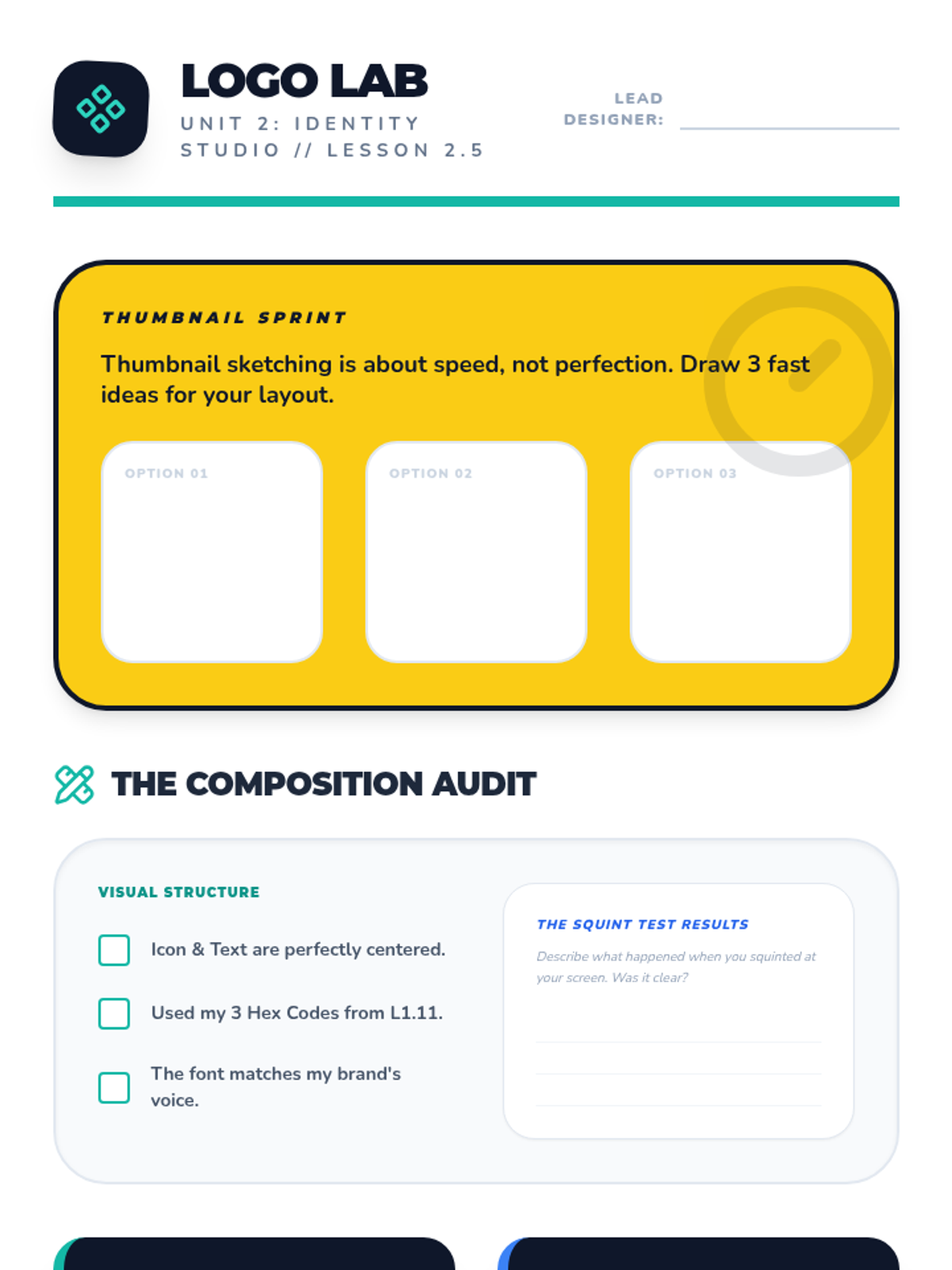
Students transition from creating isolated assets to building their official brand logo. They learn the anatomy of a logo (Symbol + Logotype), master alignment guides in Google Drawing, and perform the 'Squint Test' to ensure their design is clear and balanced.
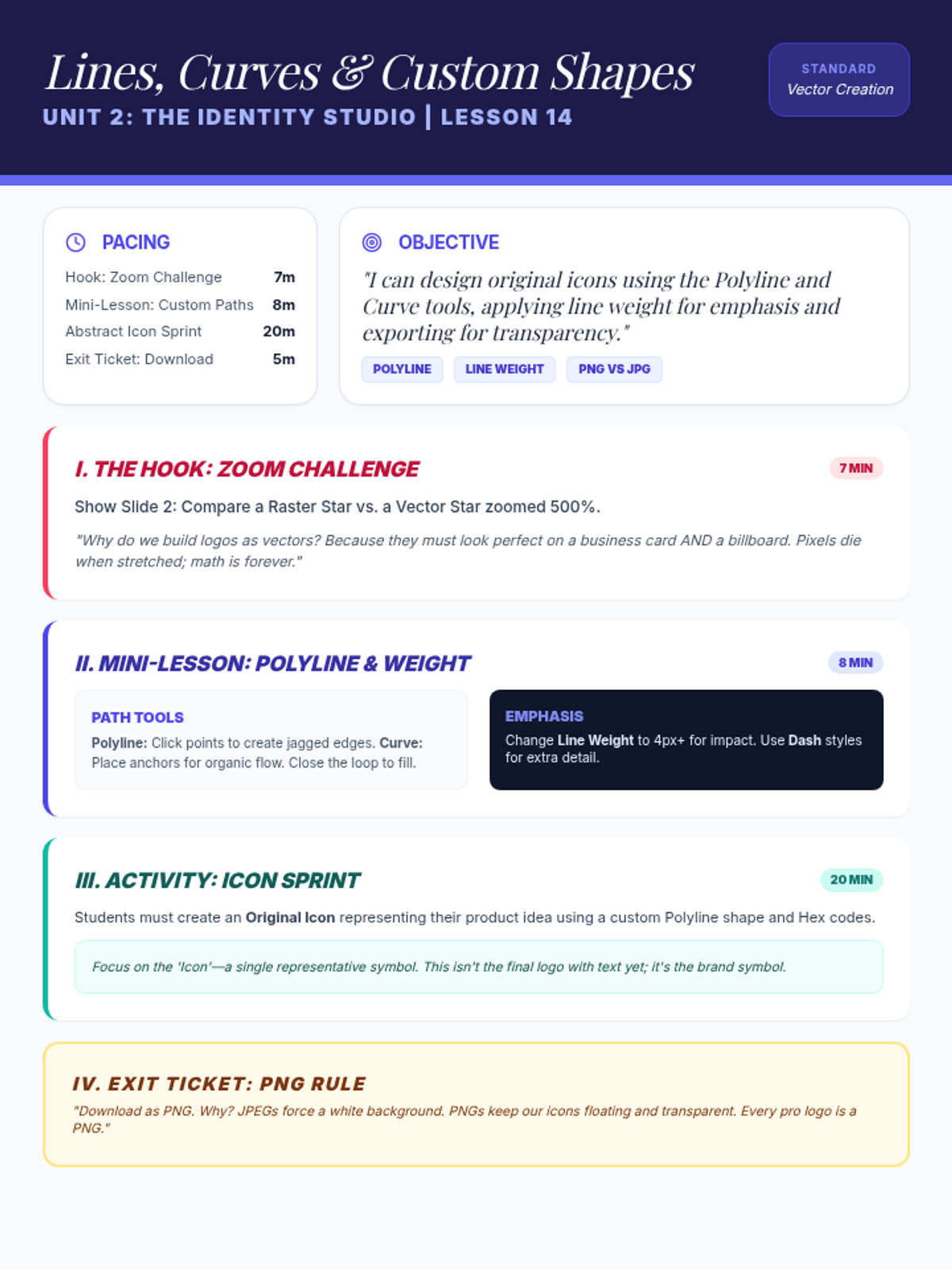
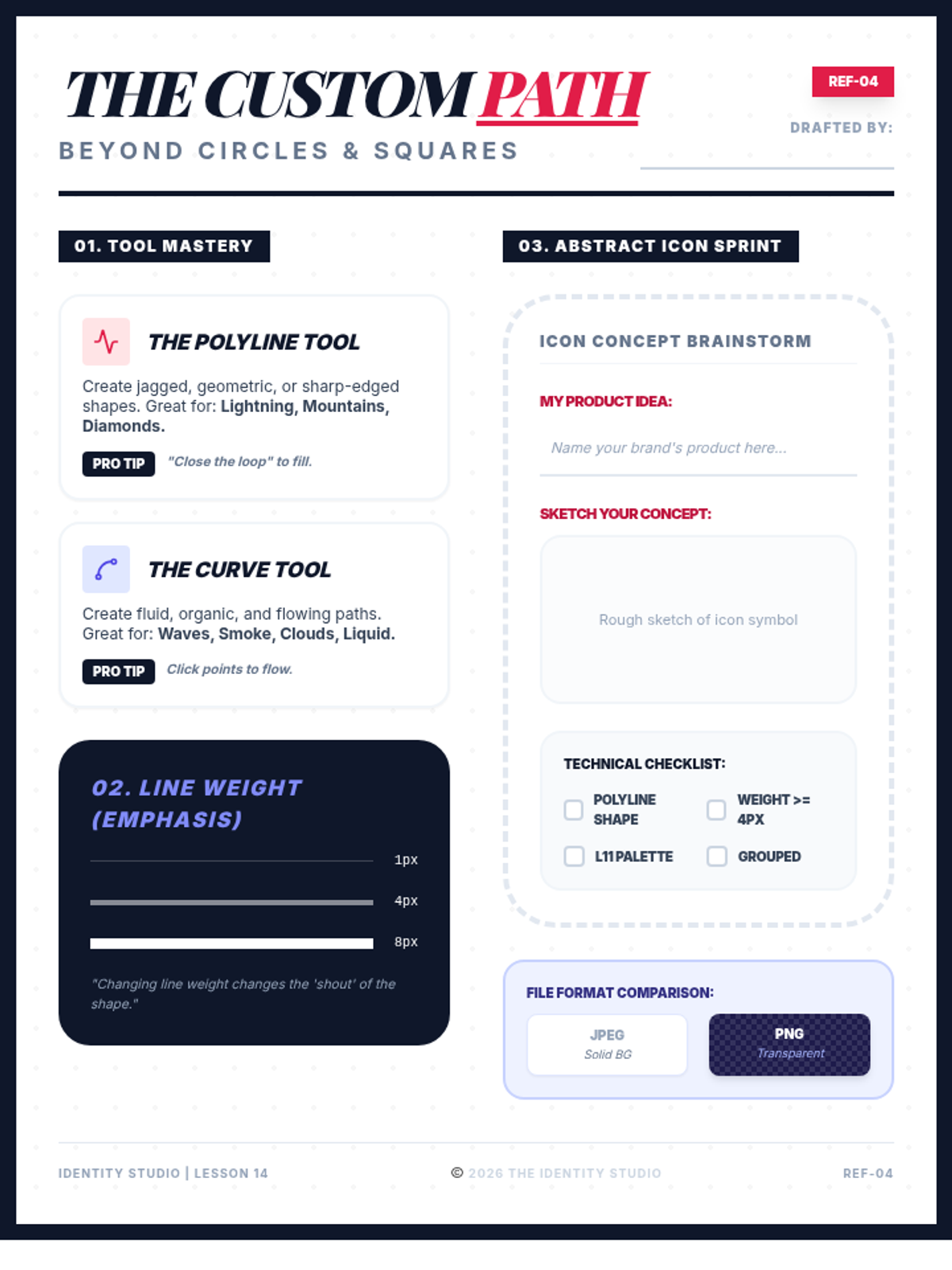
Students advance their Google Drawing skills by moving beyond basic geometric shapes to custom paths. They learn to use the Polyline and Curve tools to create original icons, while understanding the technical differences between Vector and Raster images and the importance of PNG transparency.
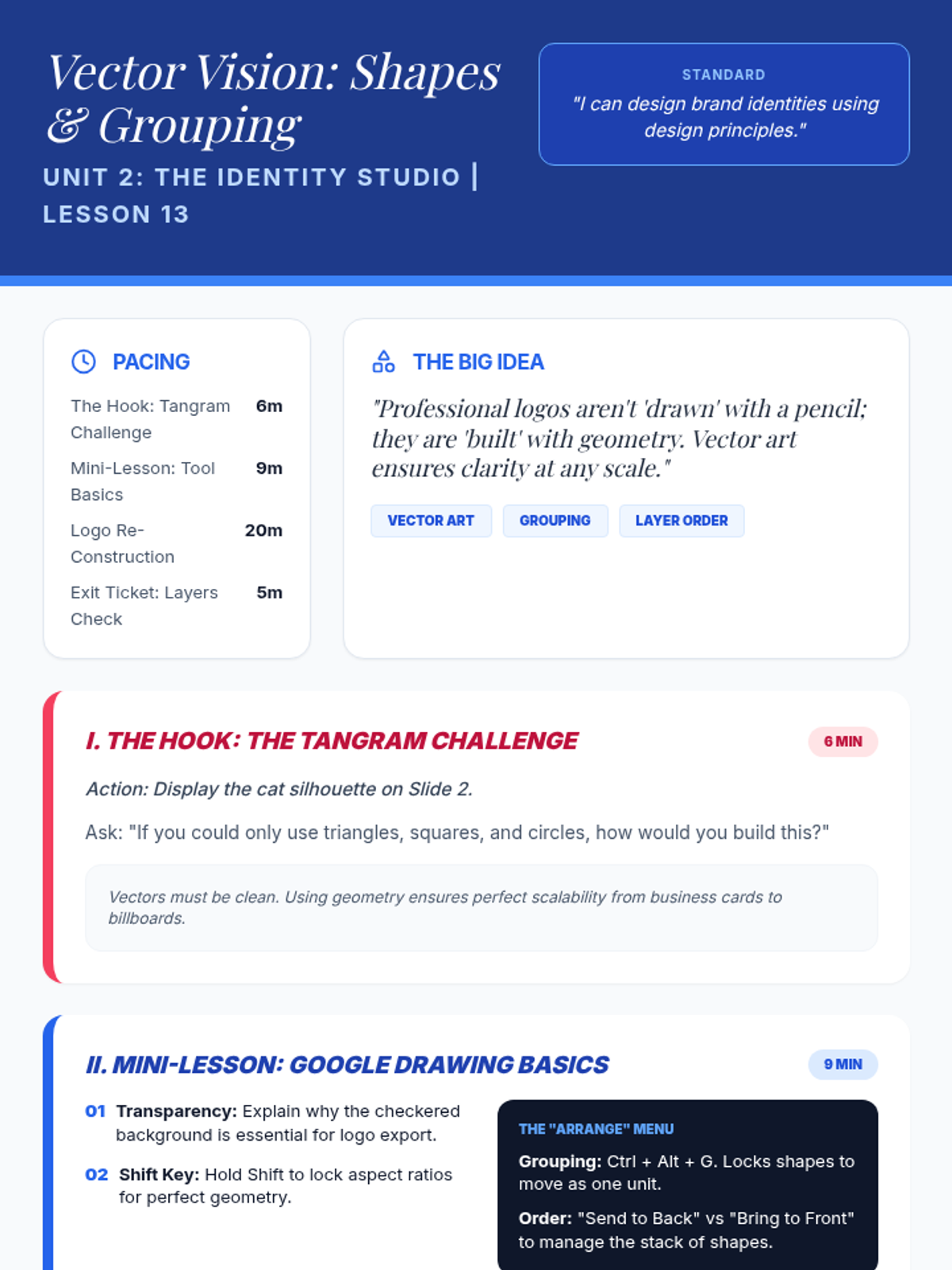
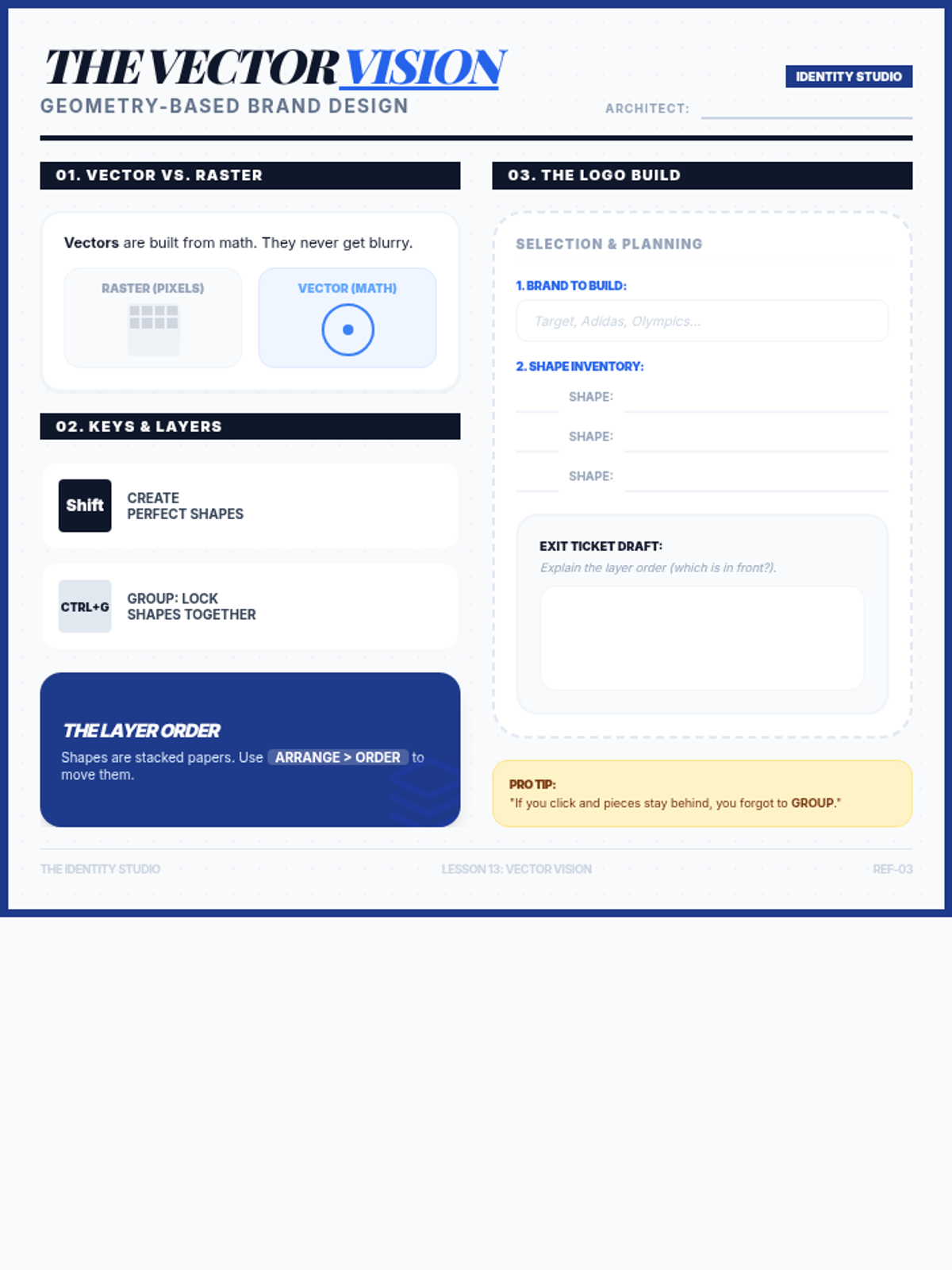
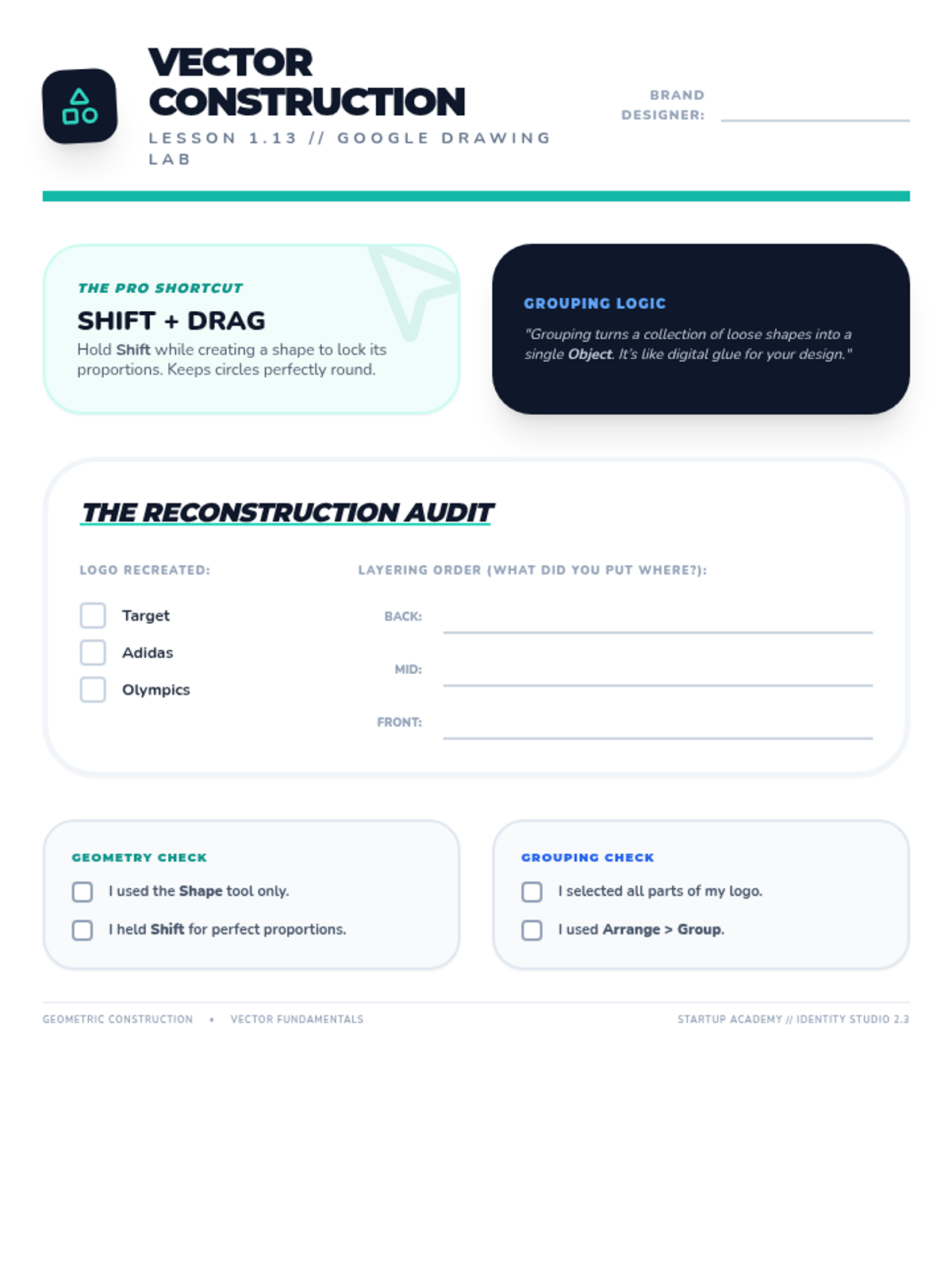
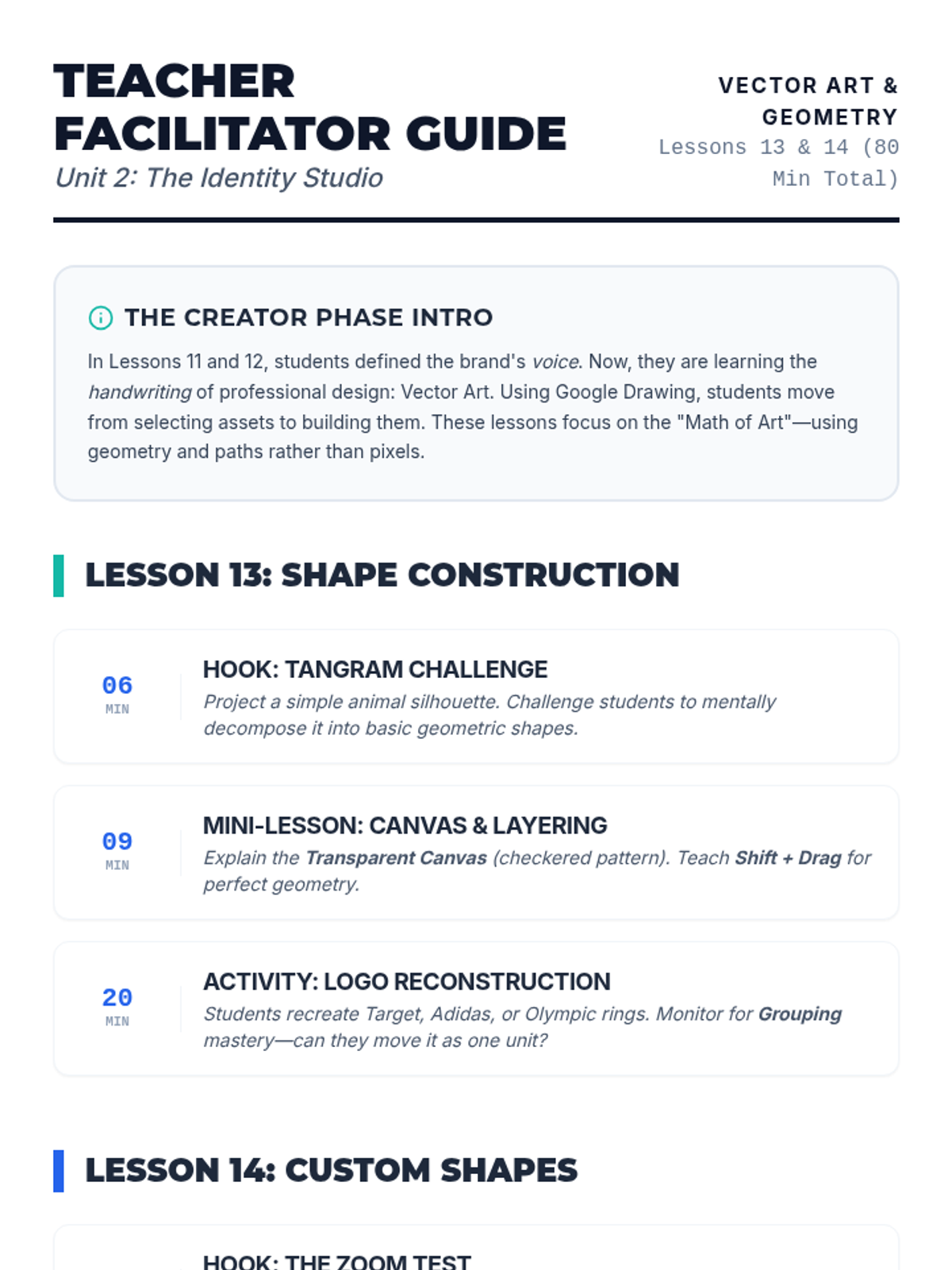
This lesson introduces students to the concept of vector art using Google Drawing. Students learn to build complex objects using simple geometric shapes, mastering skills like grouping, layering (order), and the use of the Shift key for perfect proportions.
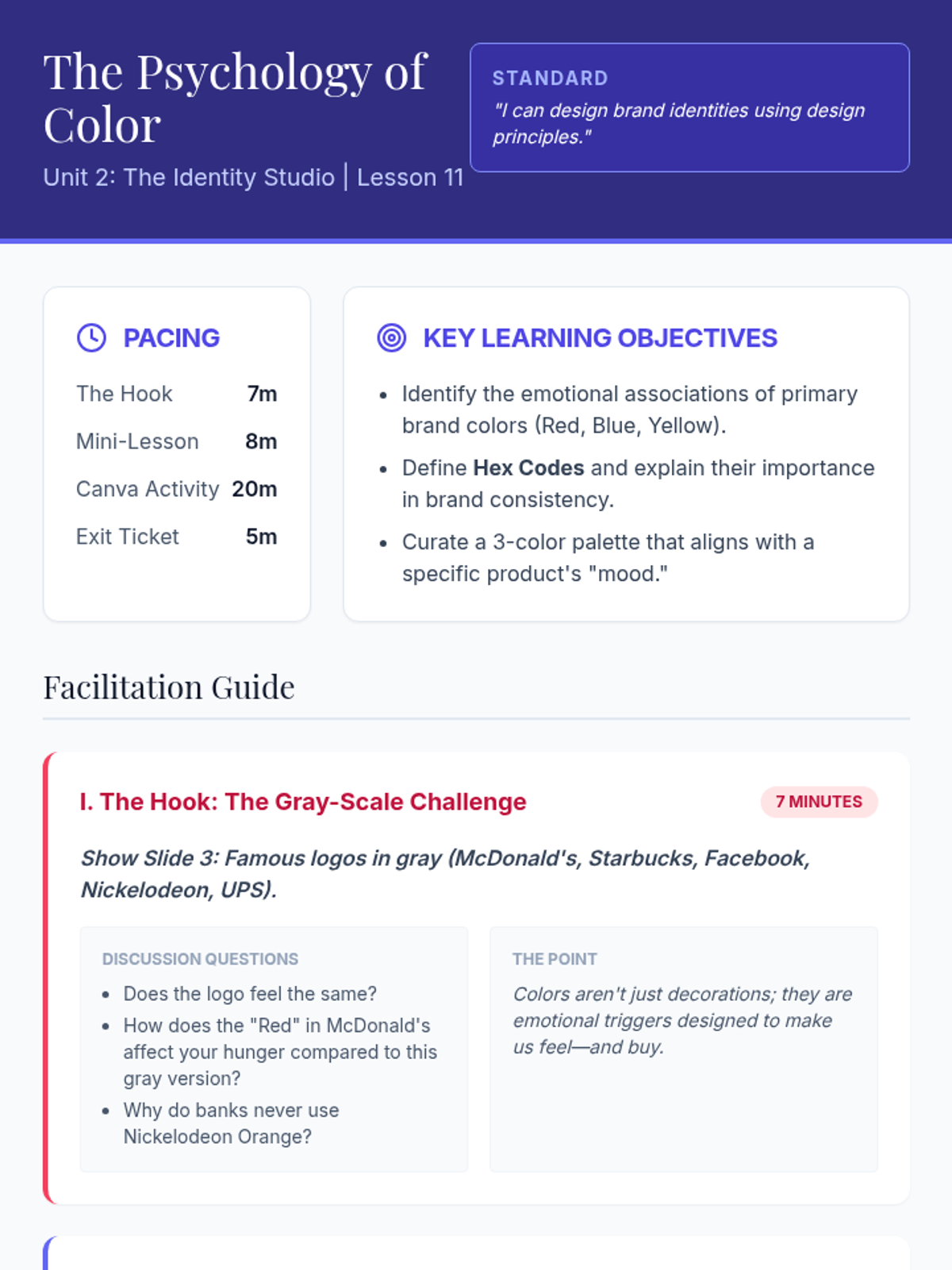
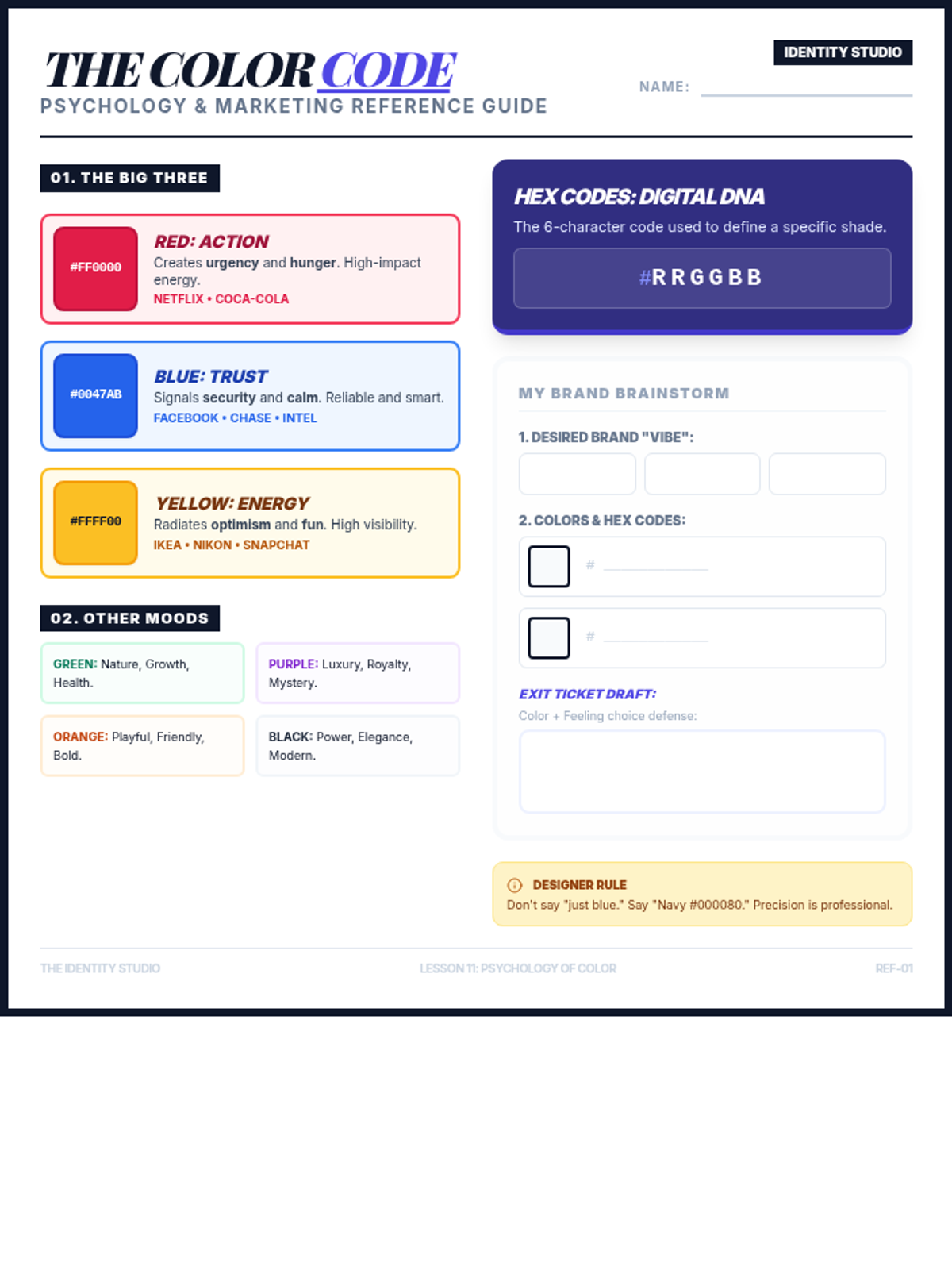
This lesson introduces students to the emotional impact of color in branding, the basics of color theory in marketing, and the technical use of Hex Codes in digital design. Students apply these concepts by creating a brand mood board in Canva.


Students refine their logo drafts by applying principles of negative space and contrast, creating color and black-and-white versions for professional export.
Students combine their icon and typography choices to build an official brand logo draft, focusing on balance, alignment guides, and the 'Squint Test' for simplicity.
Students master custom shape creation using polyline and curve tools, exploring line weights and the importance of vector scalability for professional branding.
Students move from curating to creating, using Google Drawing to build complex objects with simple geometric shapes while learning the fundamentals of vector design and layering.
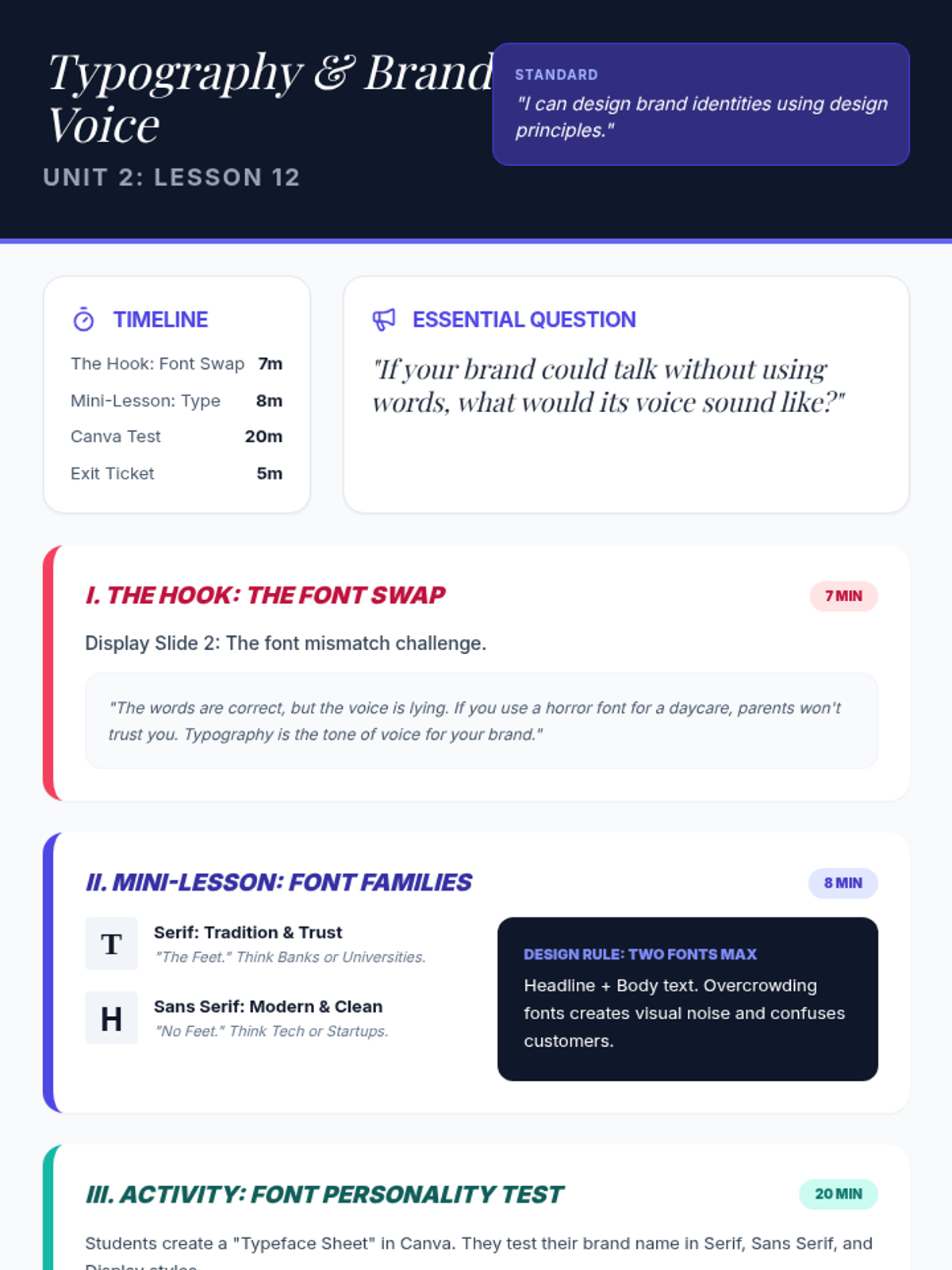
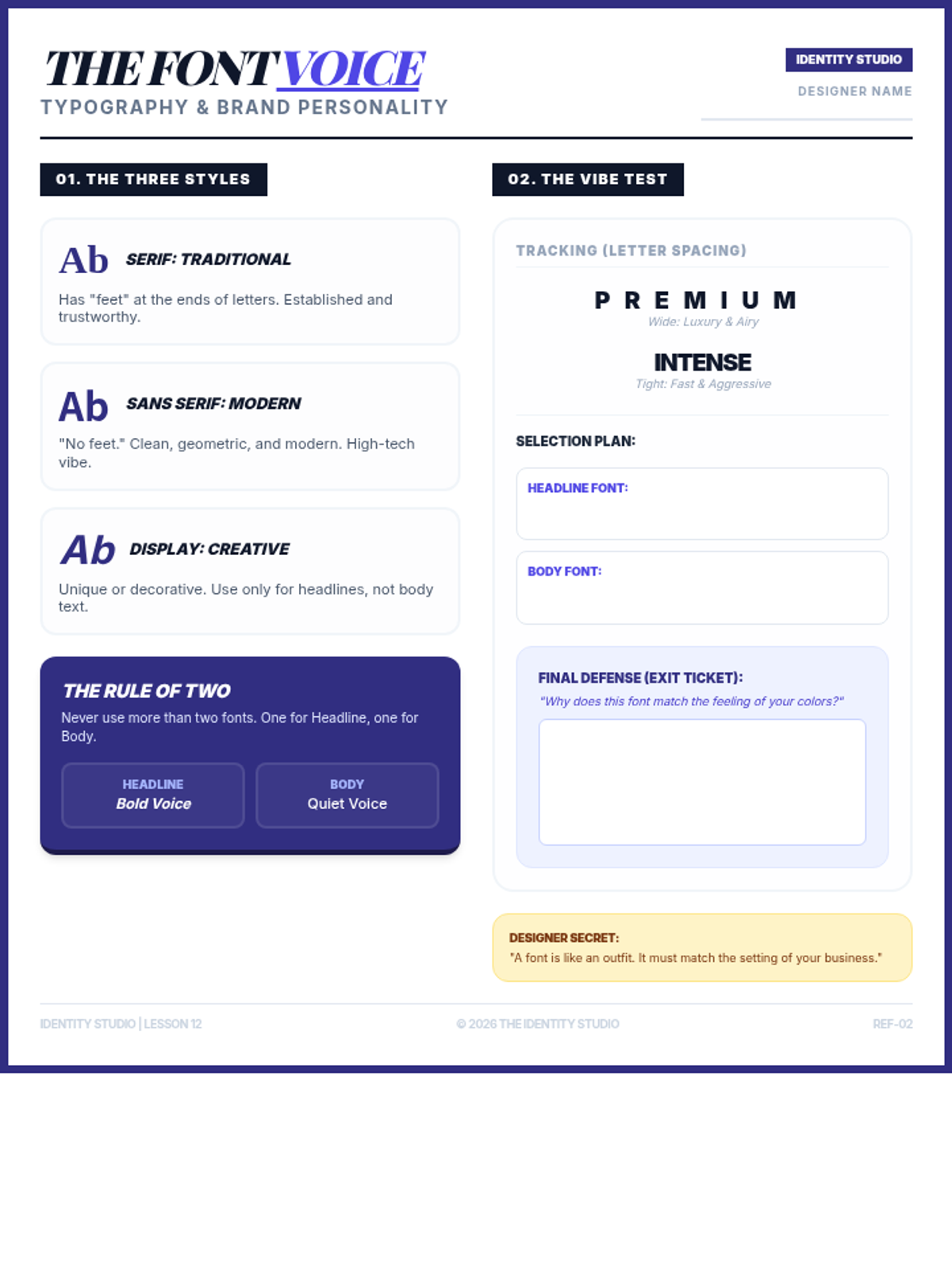
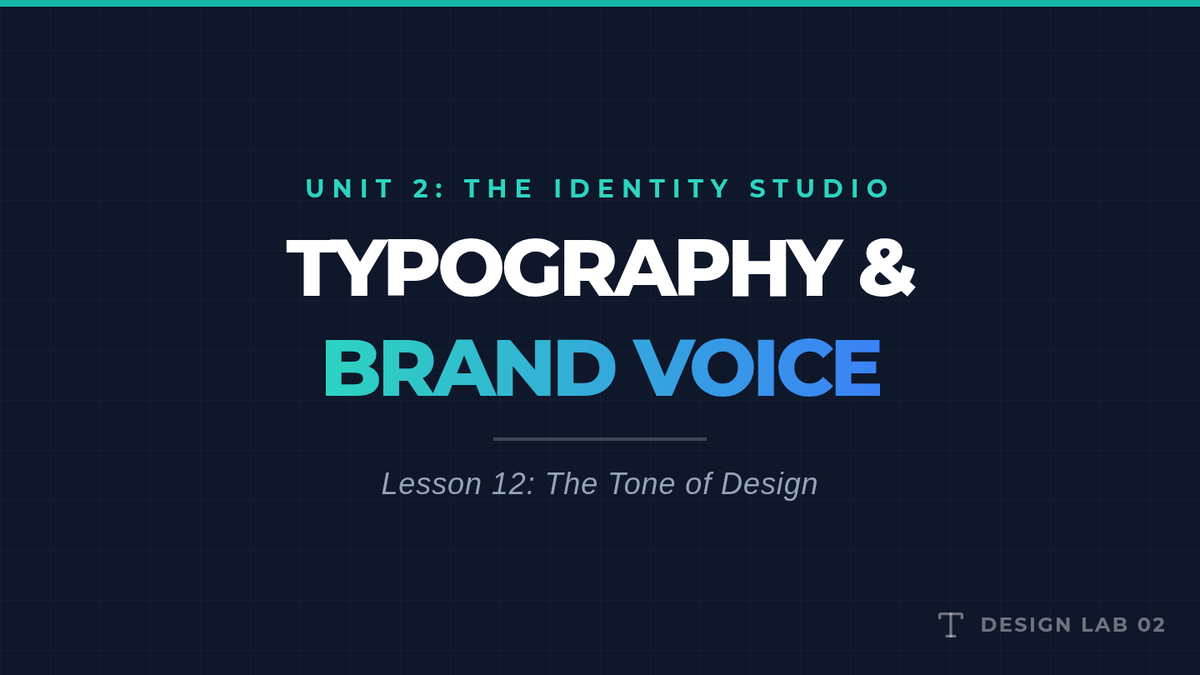
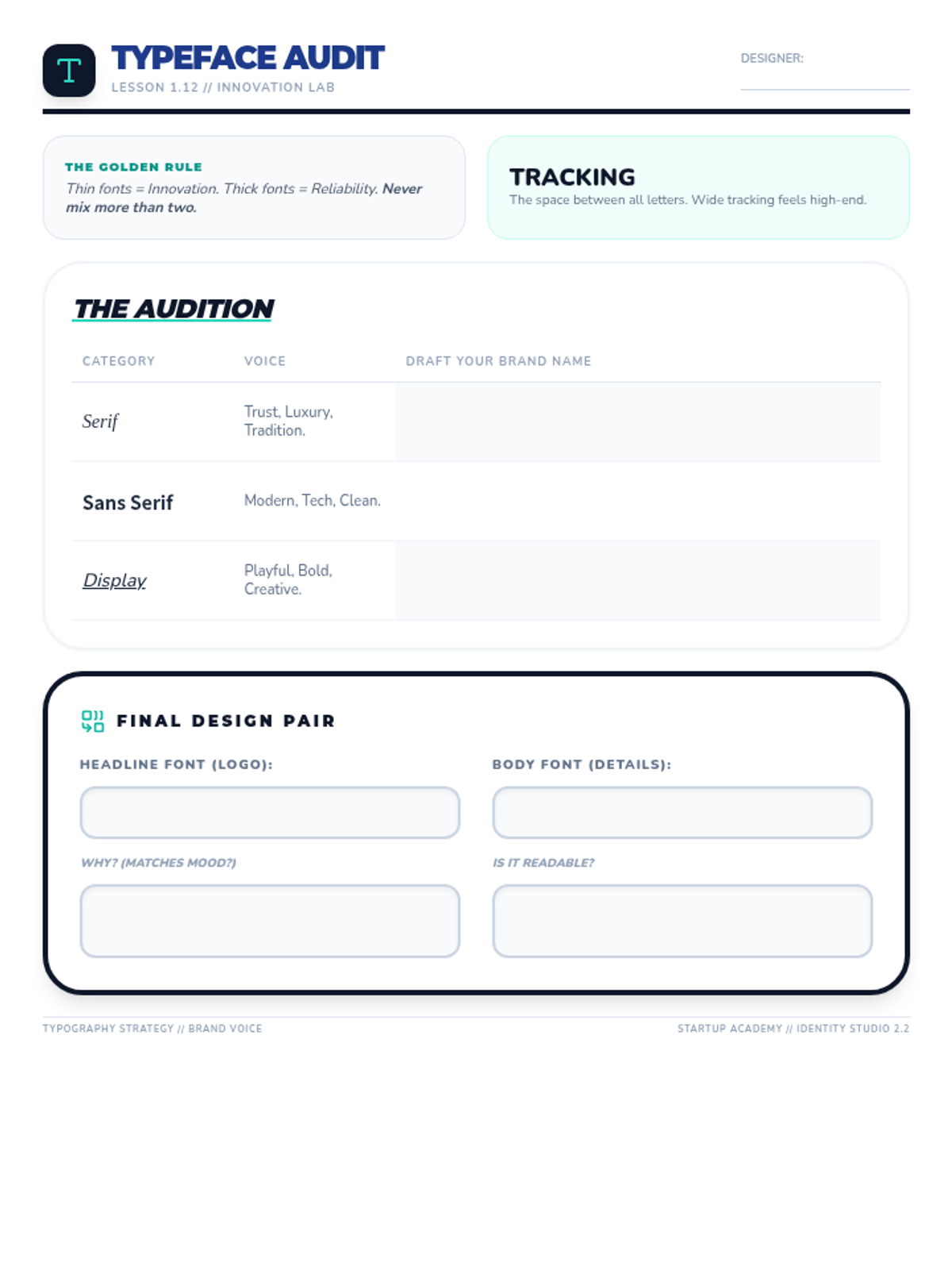
Students learn how font choices communicate a brand's tone of voice, distinguishing between serif, sans serif, and display fonts to select a pair that fits their business identity.