A comprehensive lesson preparing students for their photography benchmark, covering technical camera settings, compositional principles, and the philosophy of artistic intention.
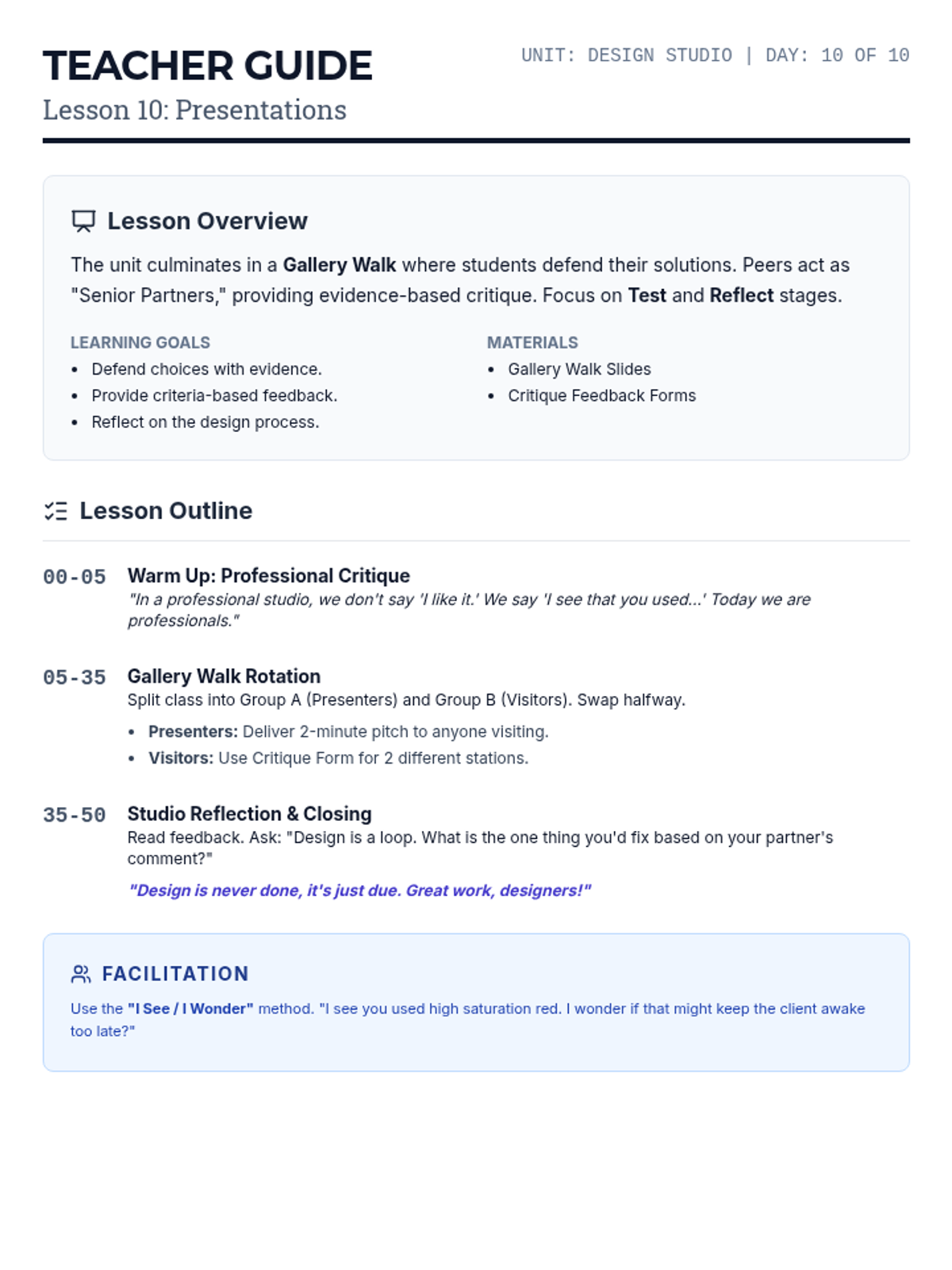
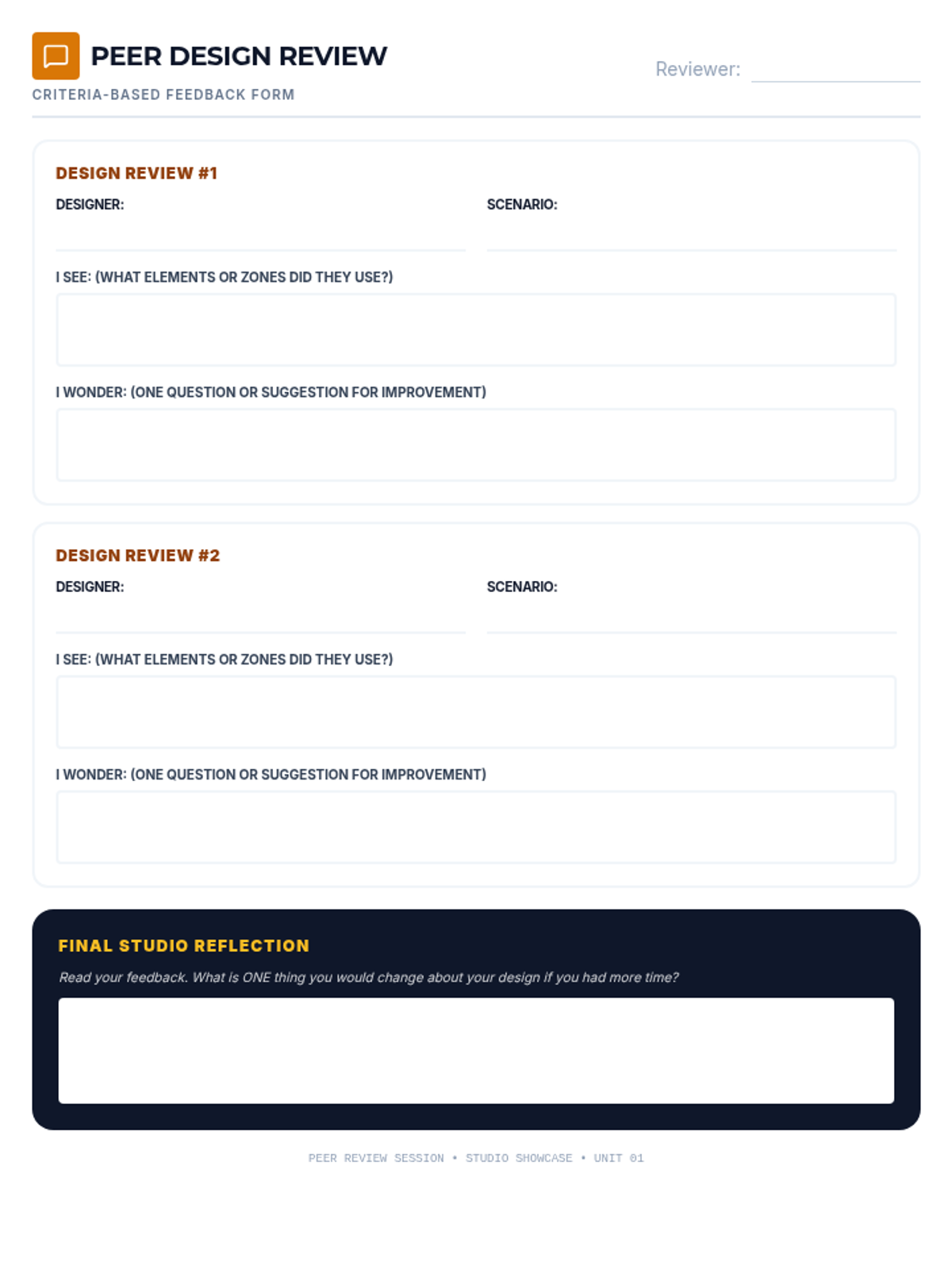
The unit culminates in a gallery walk and formal presentation where students defend their design choices using evidence from their clients' briefs. Peer critique focuses on how well the design meets the user's emotional and functional needs.
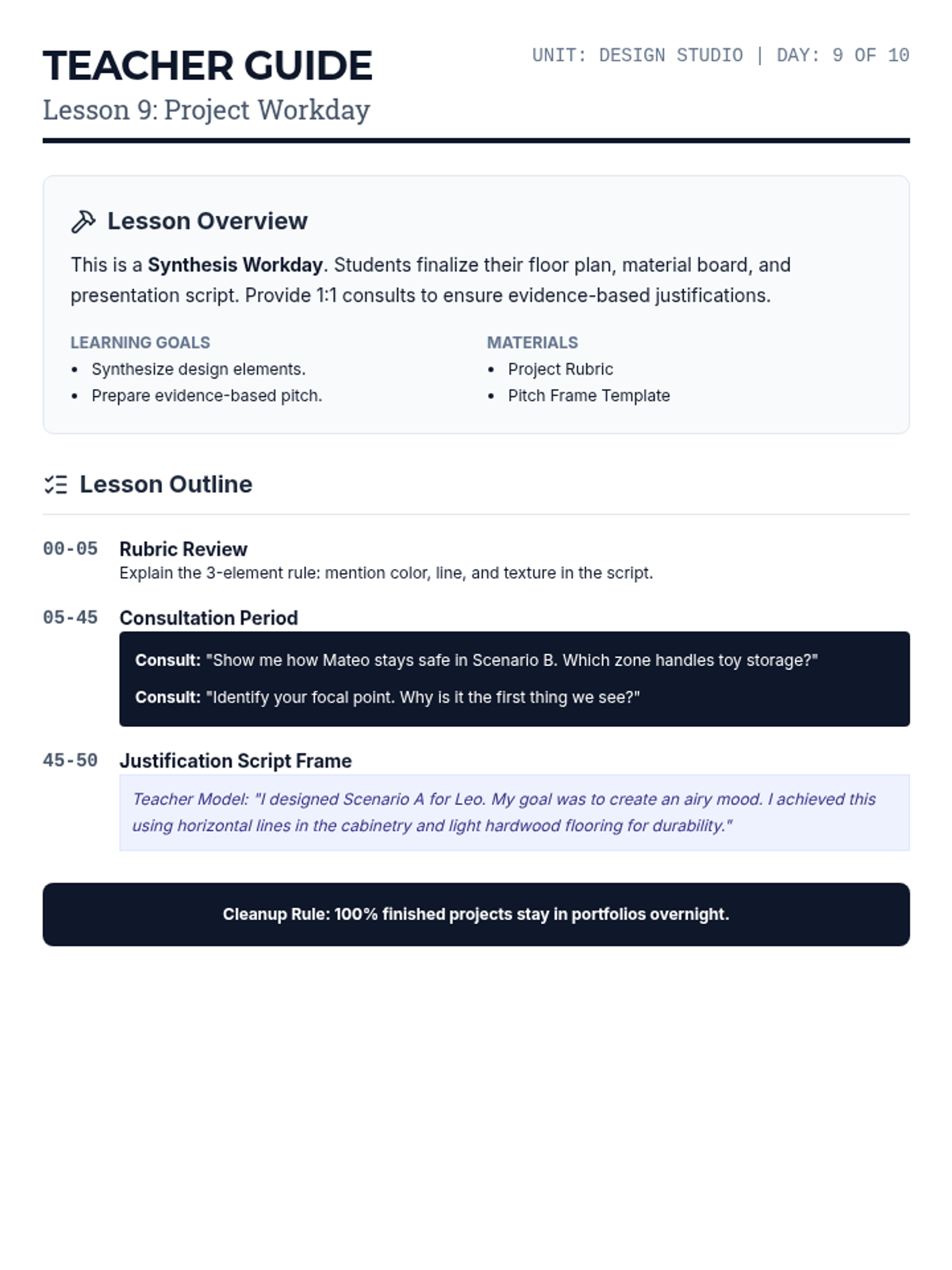
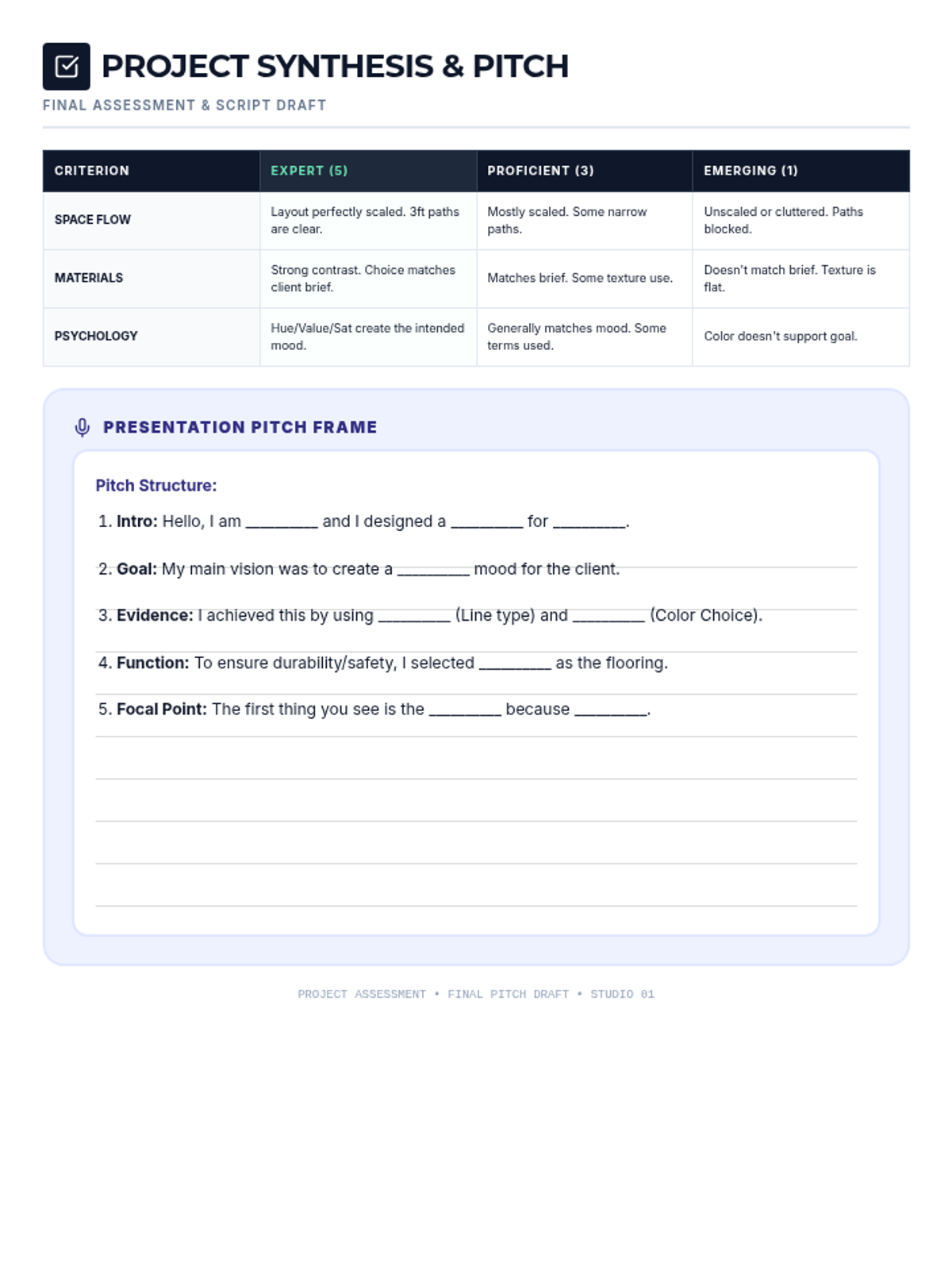
A focused studio workday where students synthesize all elements and principles of design into a final visual presentation. They complete their floor plans, material boards, and write a verbal justification for their design choices.
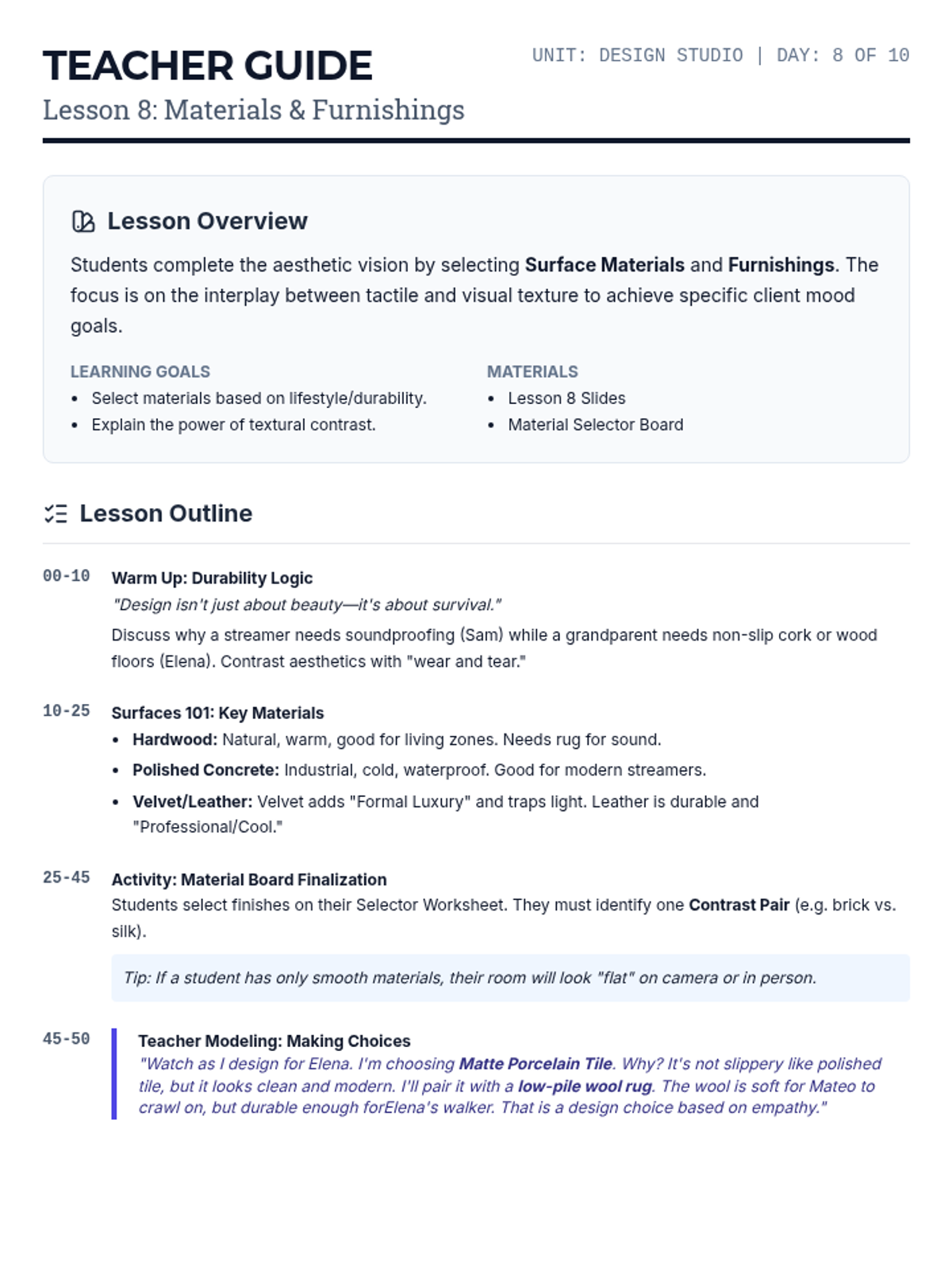
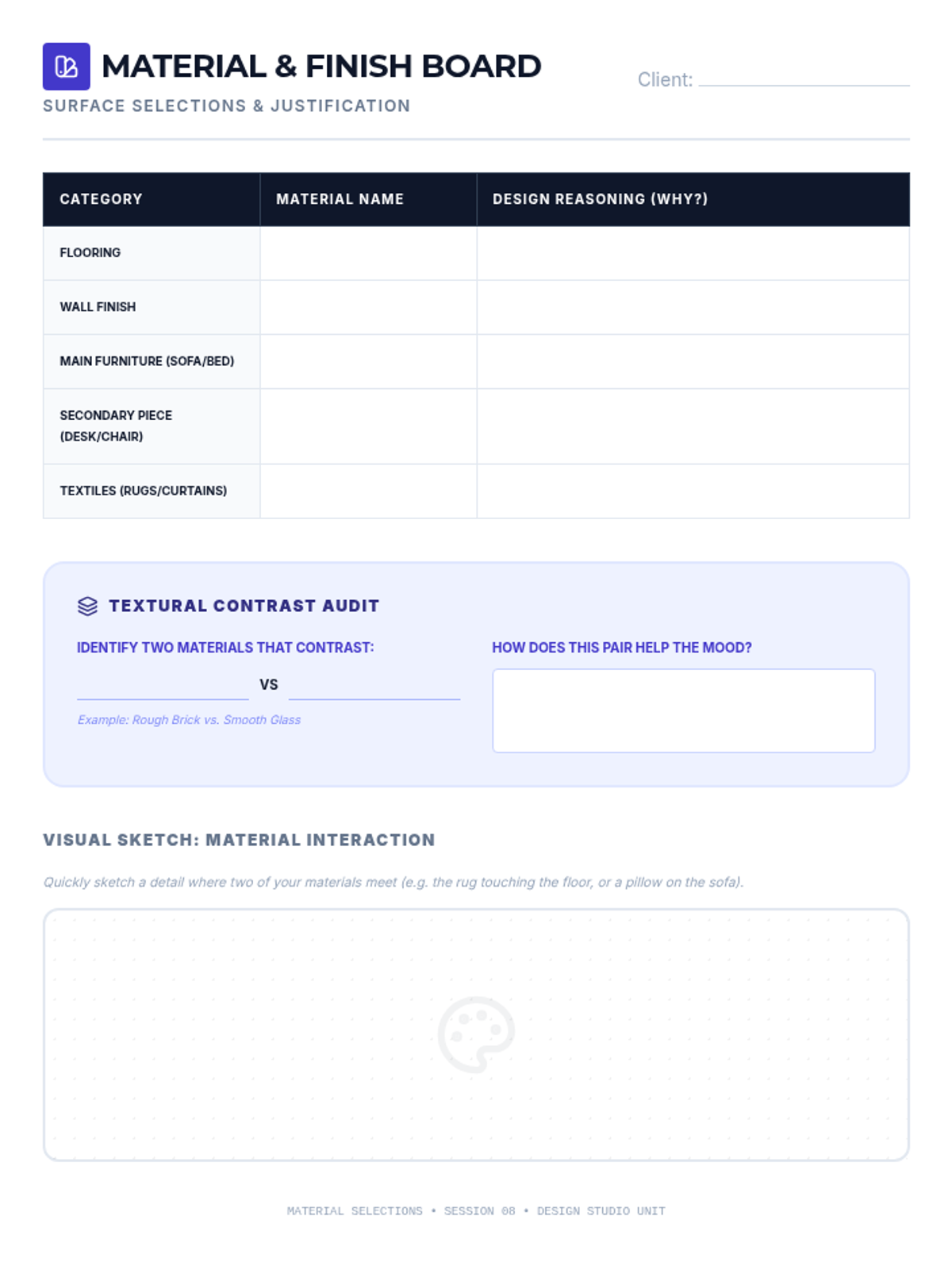
Students select textiles, finishes, and furniture styles that complement their client's needs and desired mood. They explore the durability and aesthetic of various surface materials to complete the sensory profile of their room.
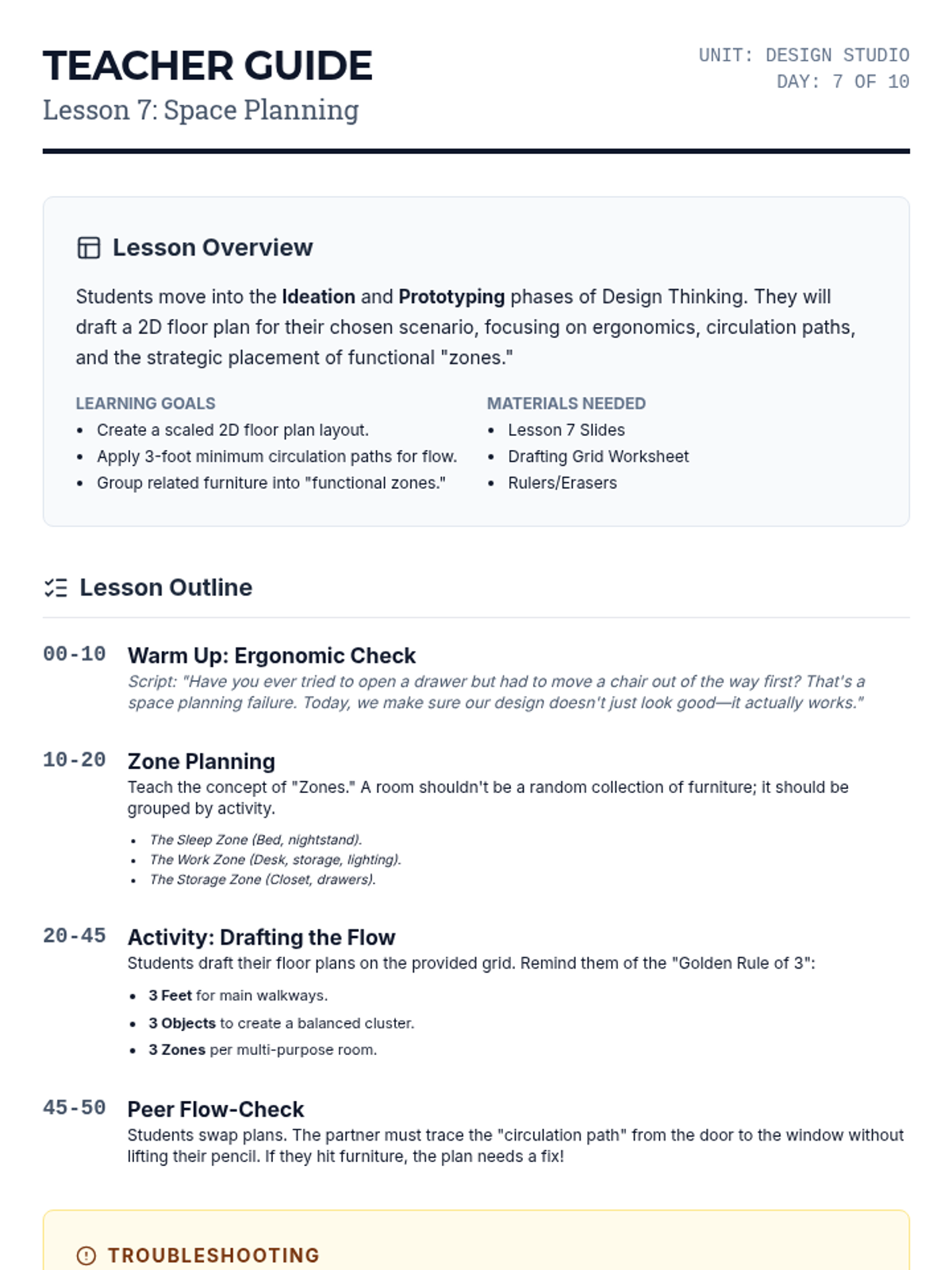
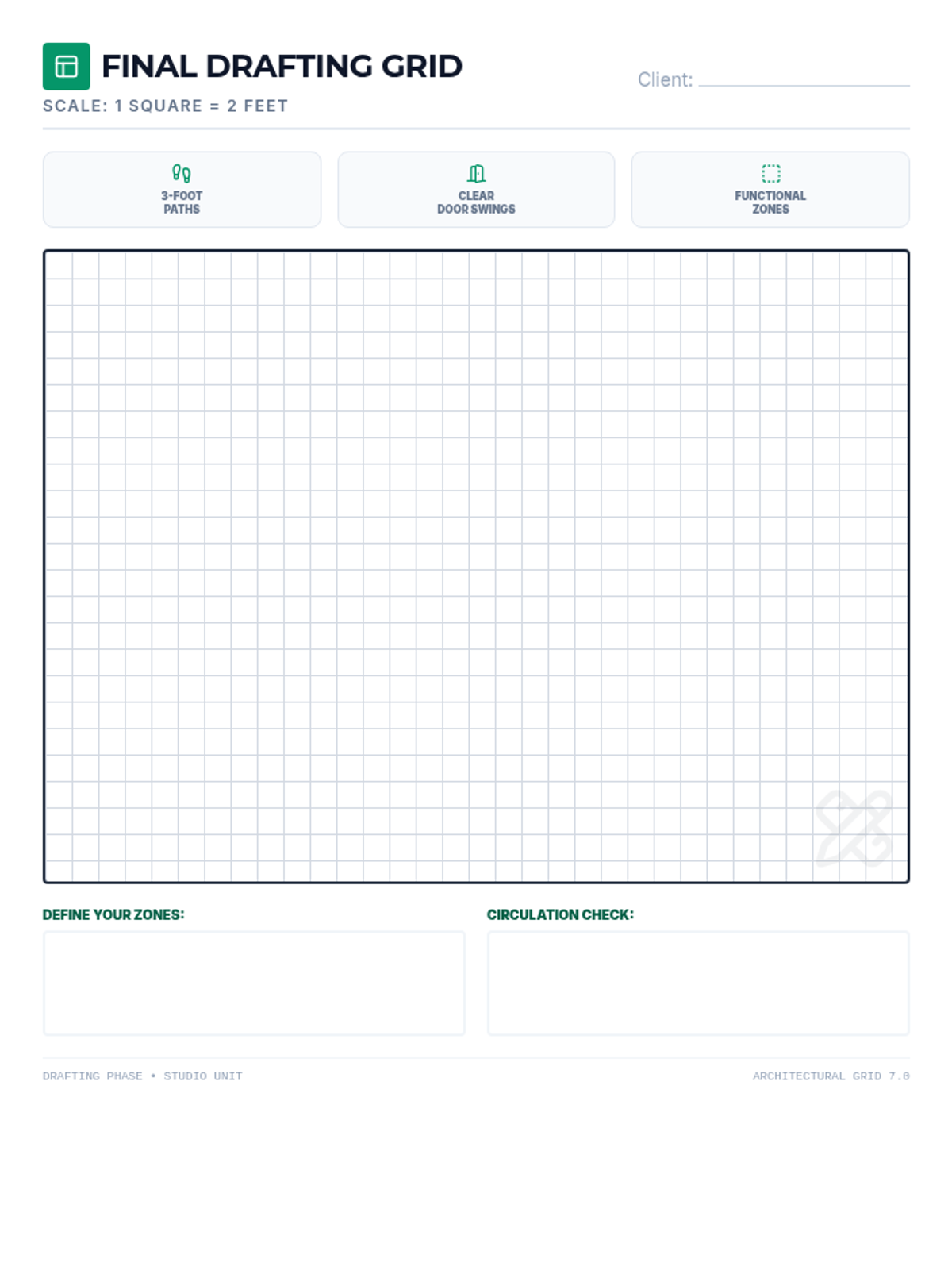
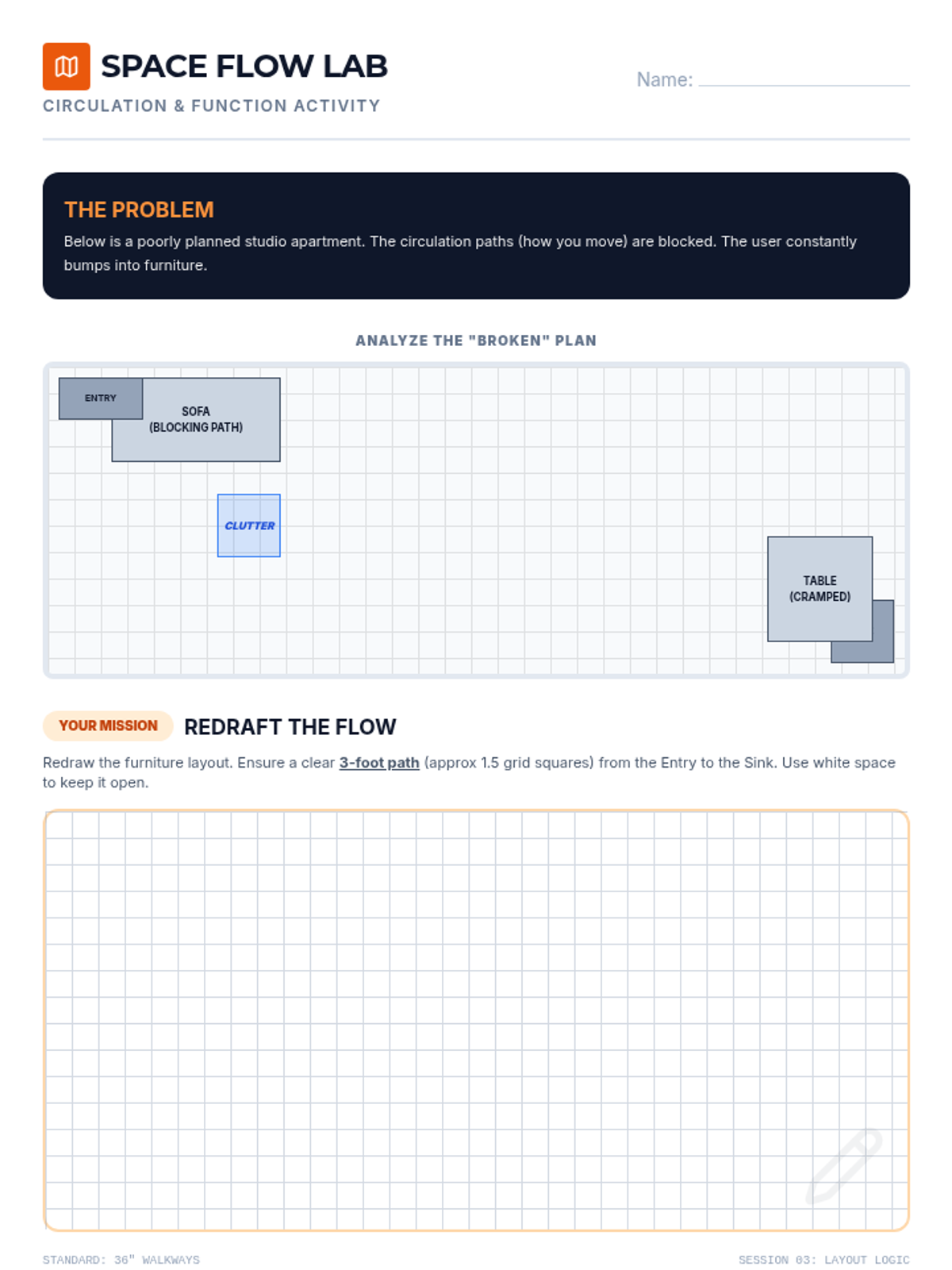
Applying ergonomics and circulation paths, students draft a functional floor plan for their assigned scenario. The focus is on maximizing flow, ensuring accessibility, and balancing positive and negative space.
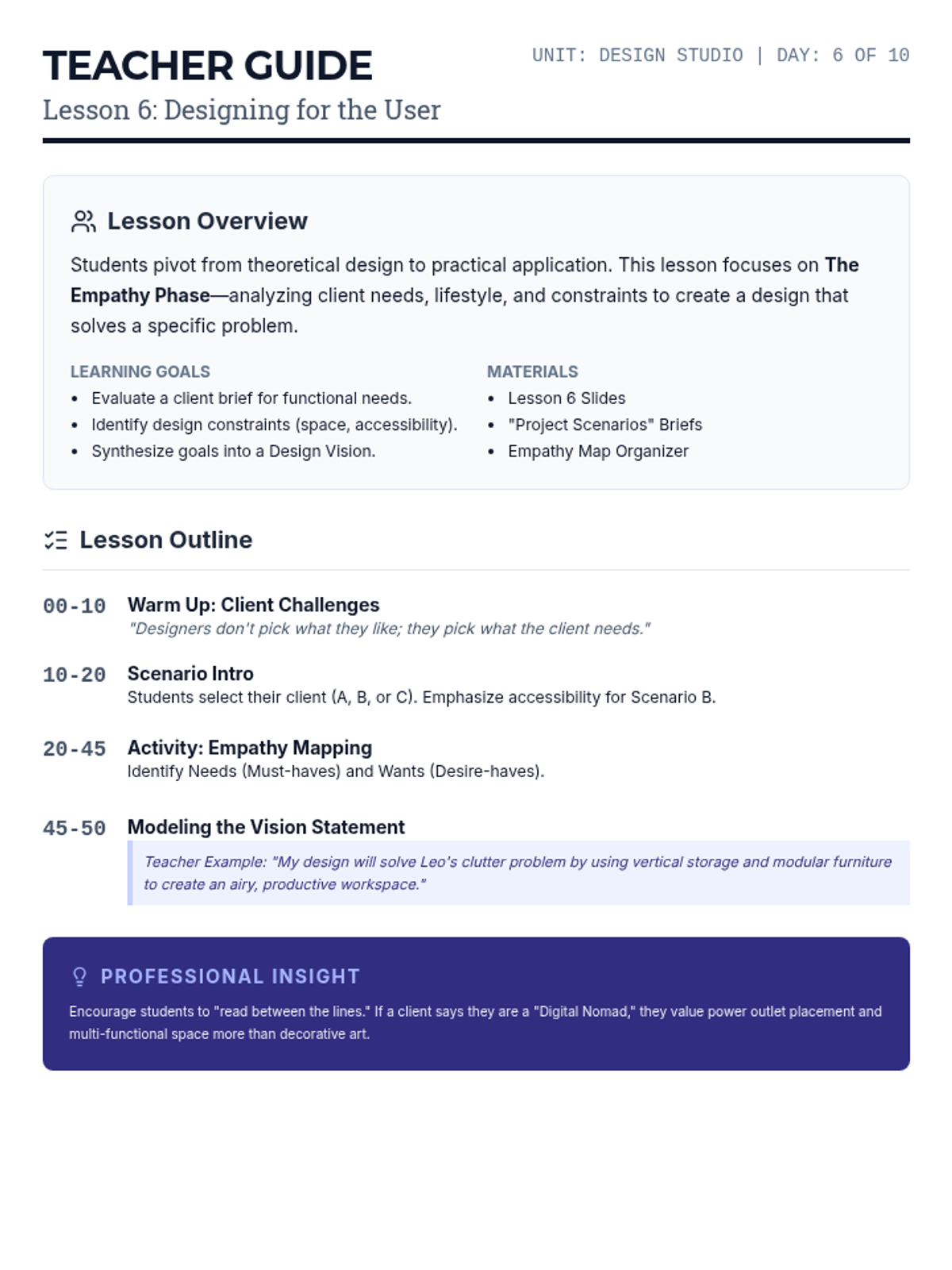
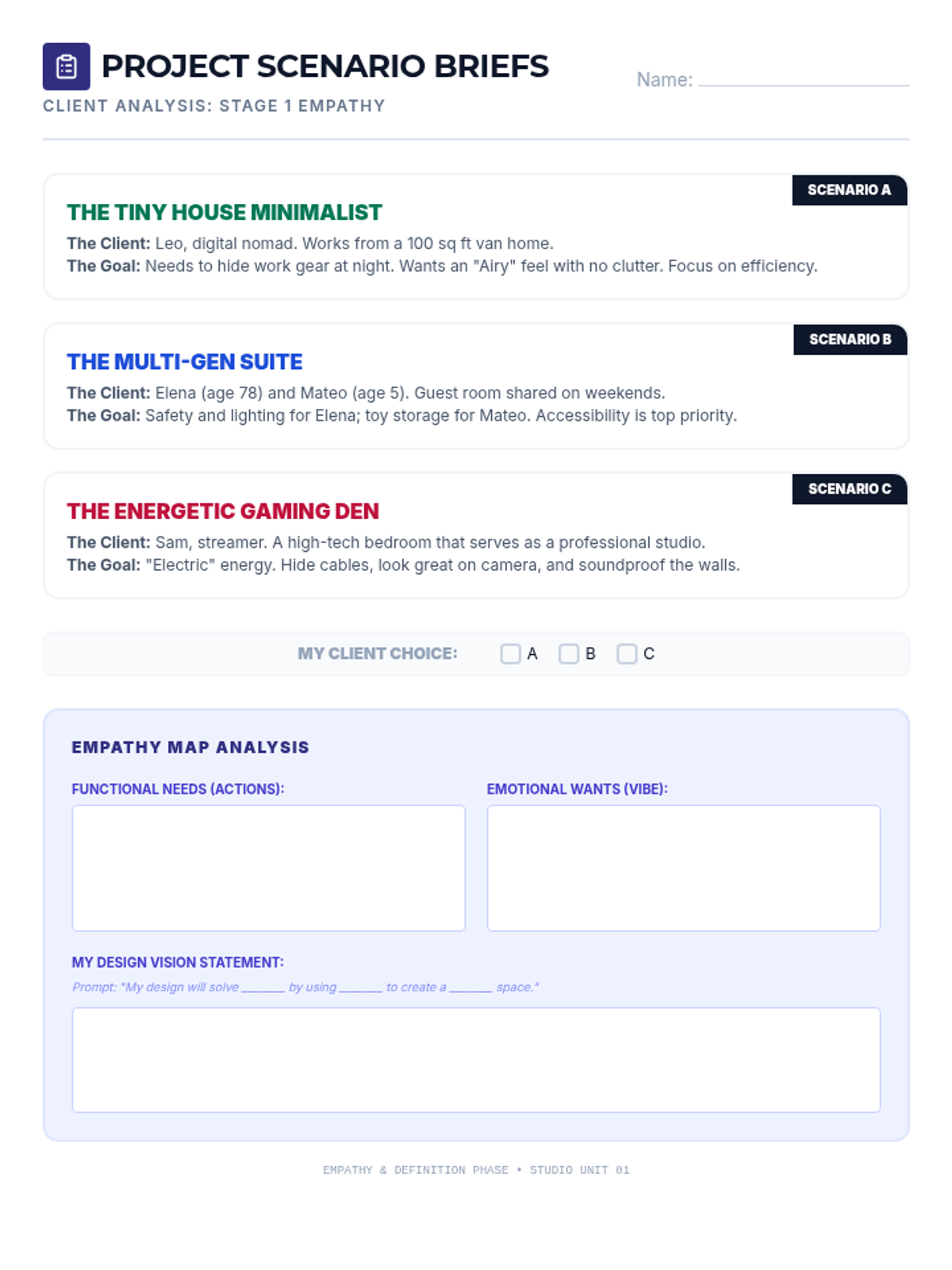
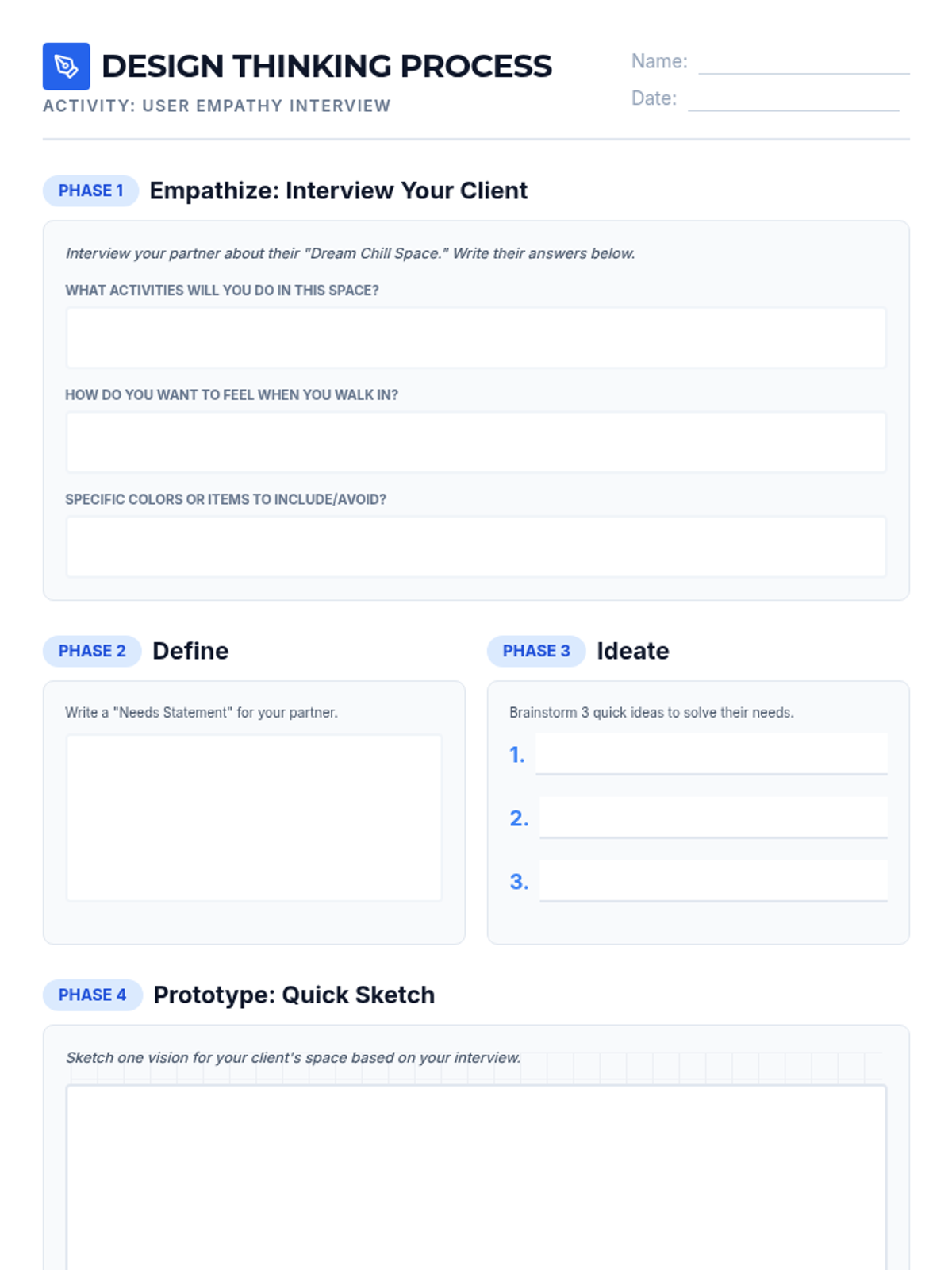
Students transition to the culminating project by receiving and analyzing their "Project Scenarios." This lesson focuses on the first stage of Design Thinking: Empathy. Students evaluate client needs, constraints, and lifestyle goals to inform their design choices.
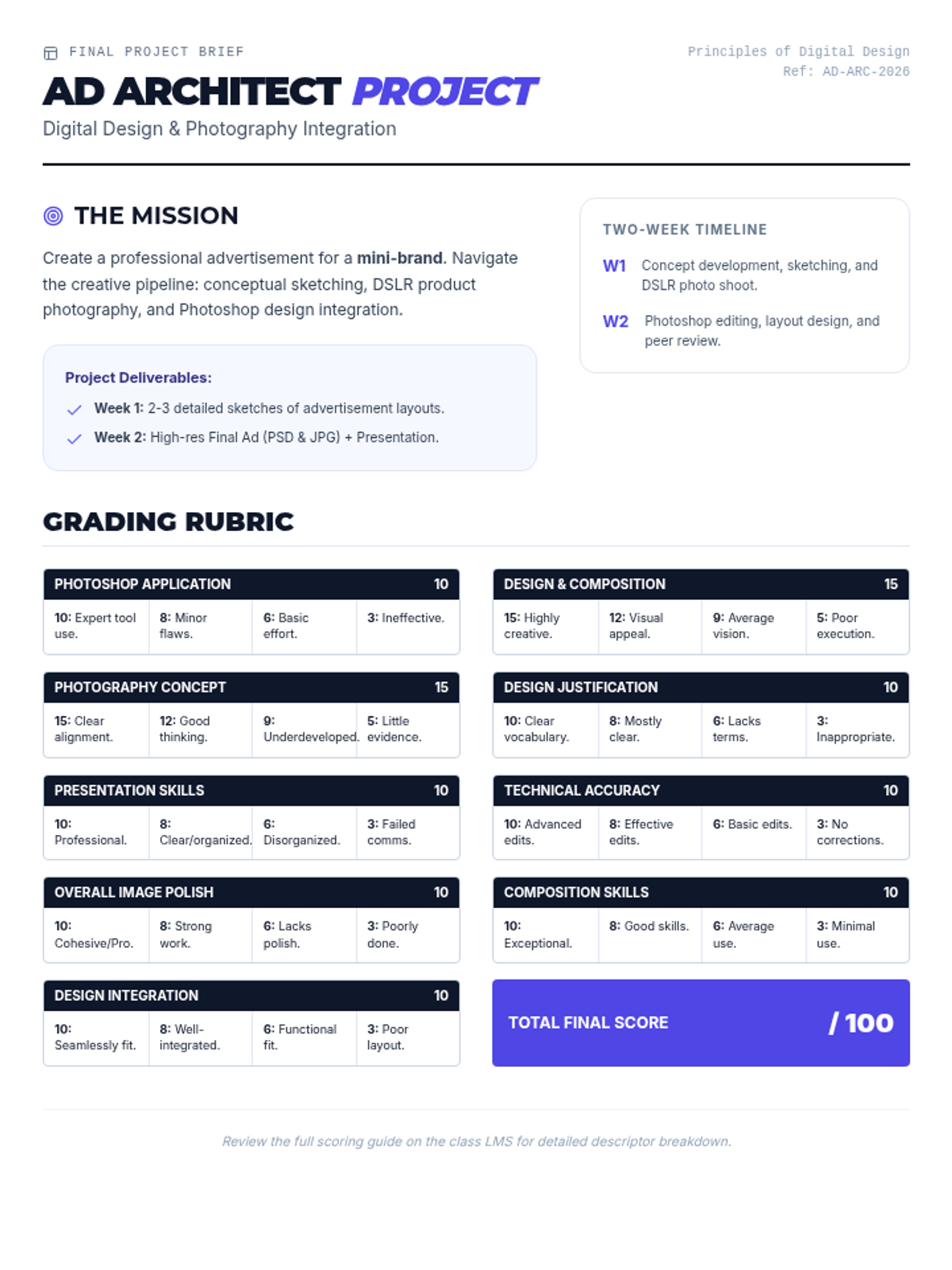
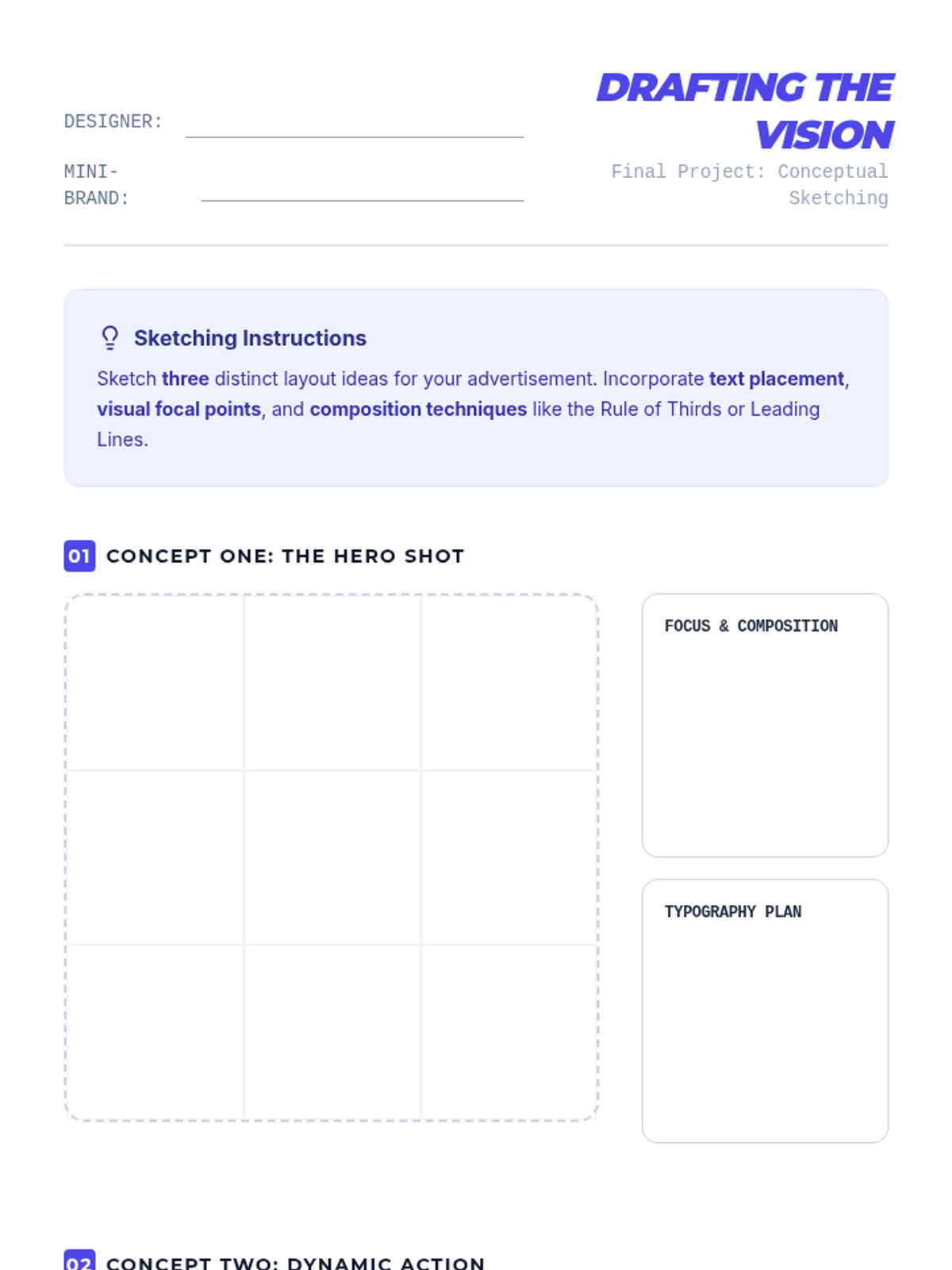
A comprehensive final project for digital design students where they create a professional advertisement for a mini-brand using photography and Photoshop.
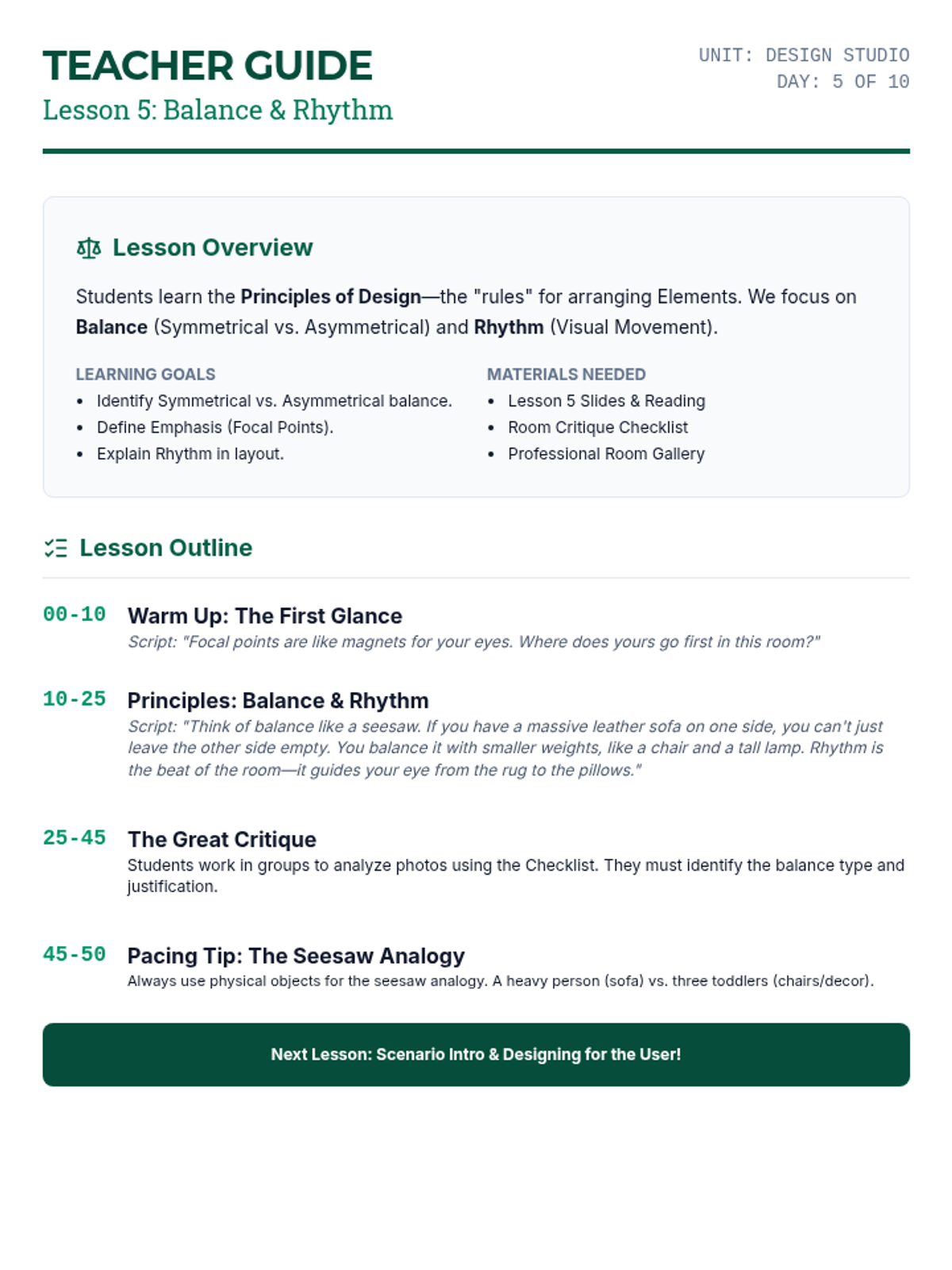
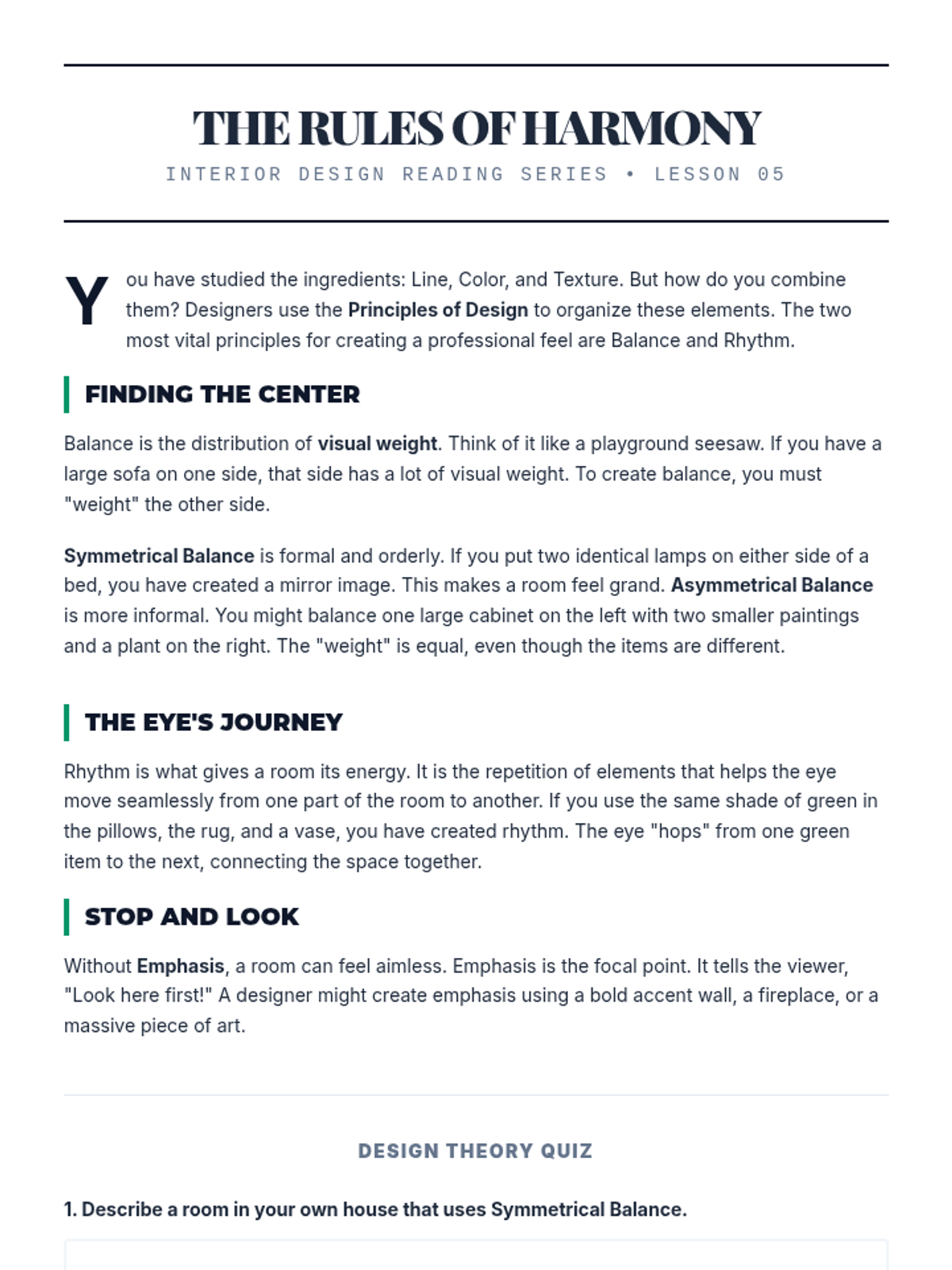
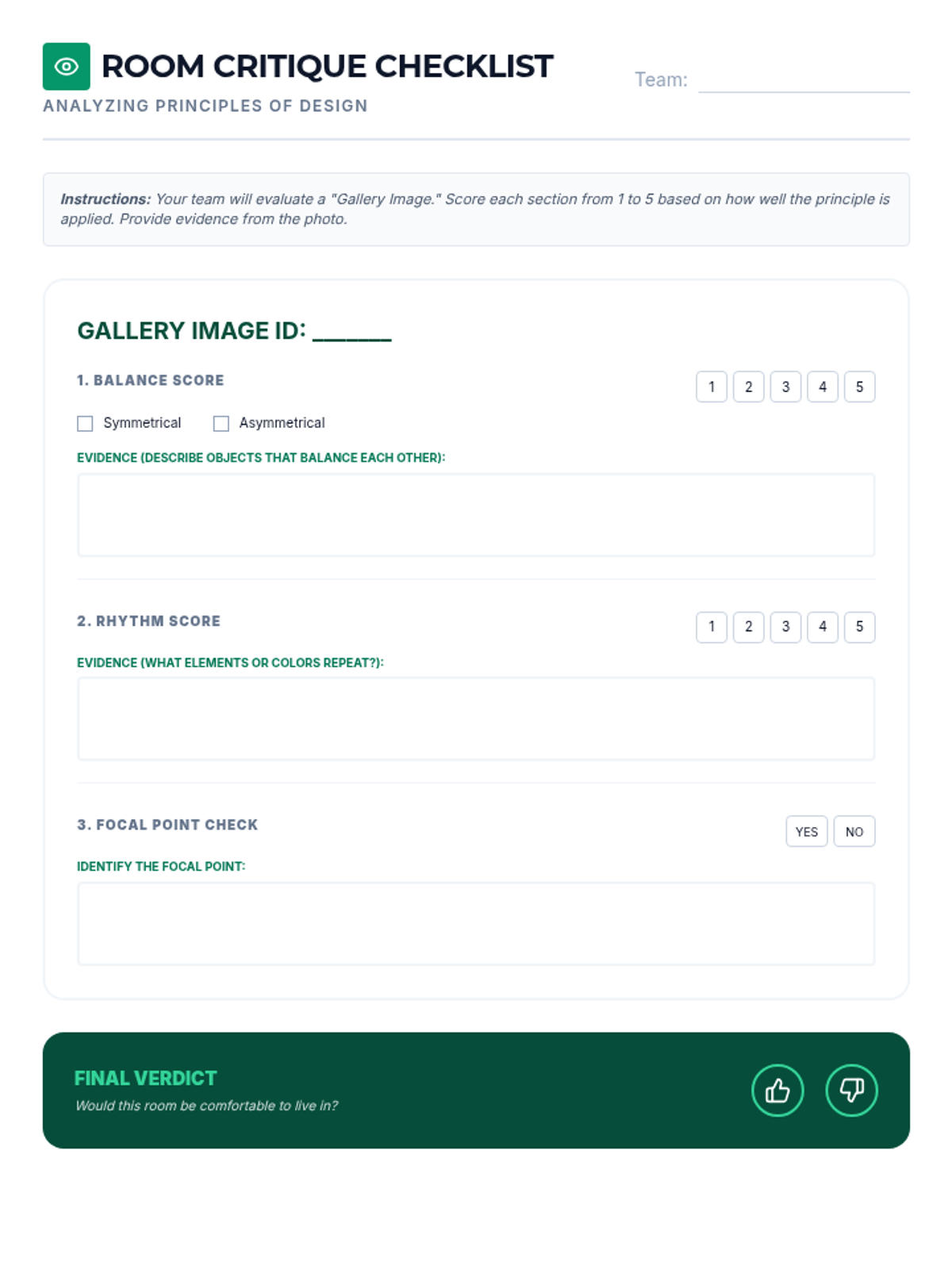
Applying the principles of balance, rhythm, and emphasis to create unified and harmonious room layouts, featuring a critical analysis of professional interior designs.
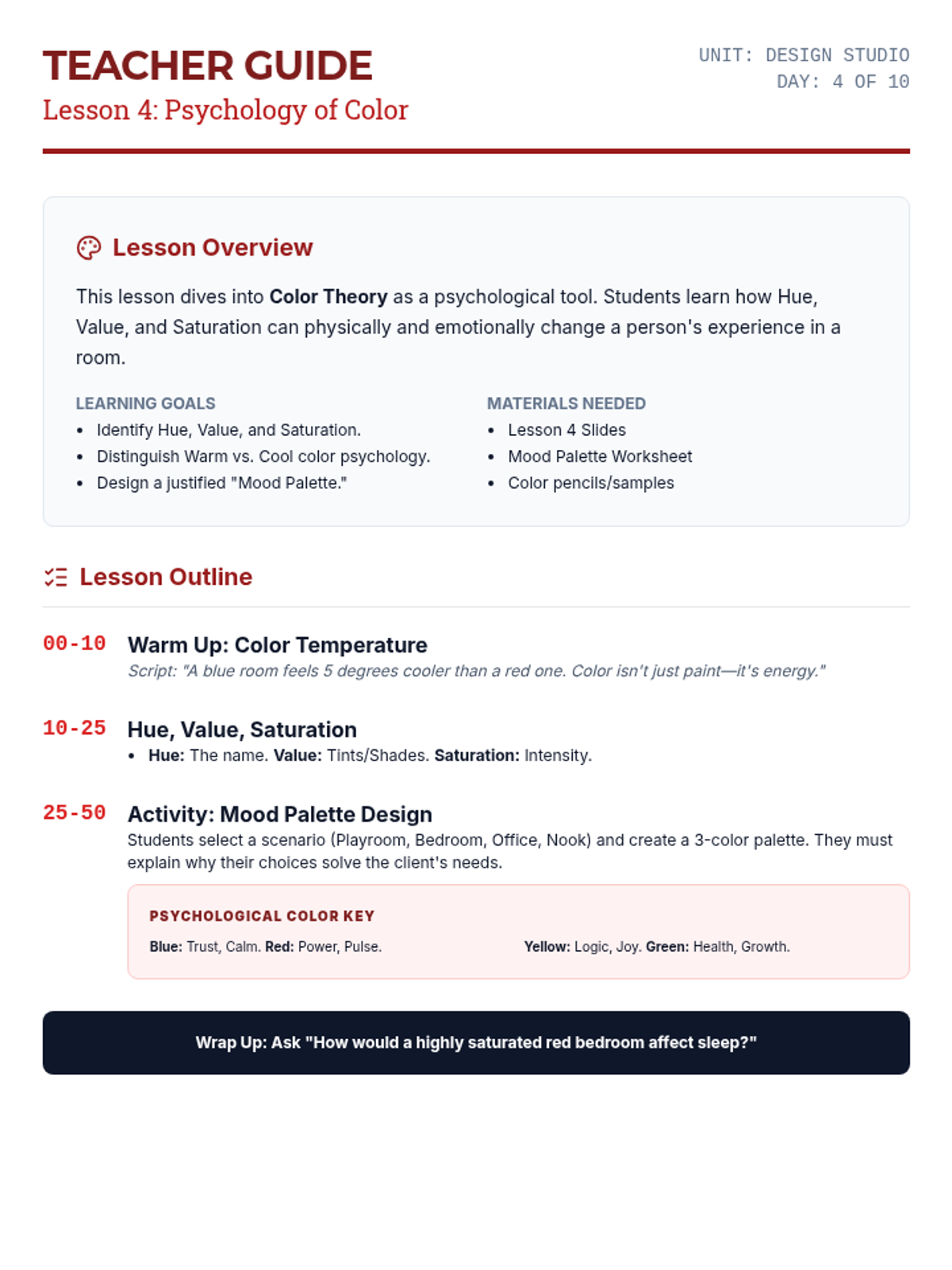
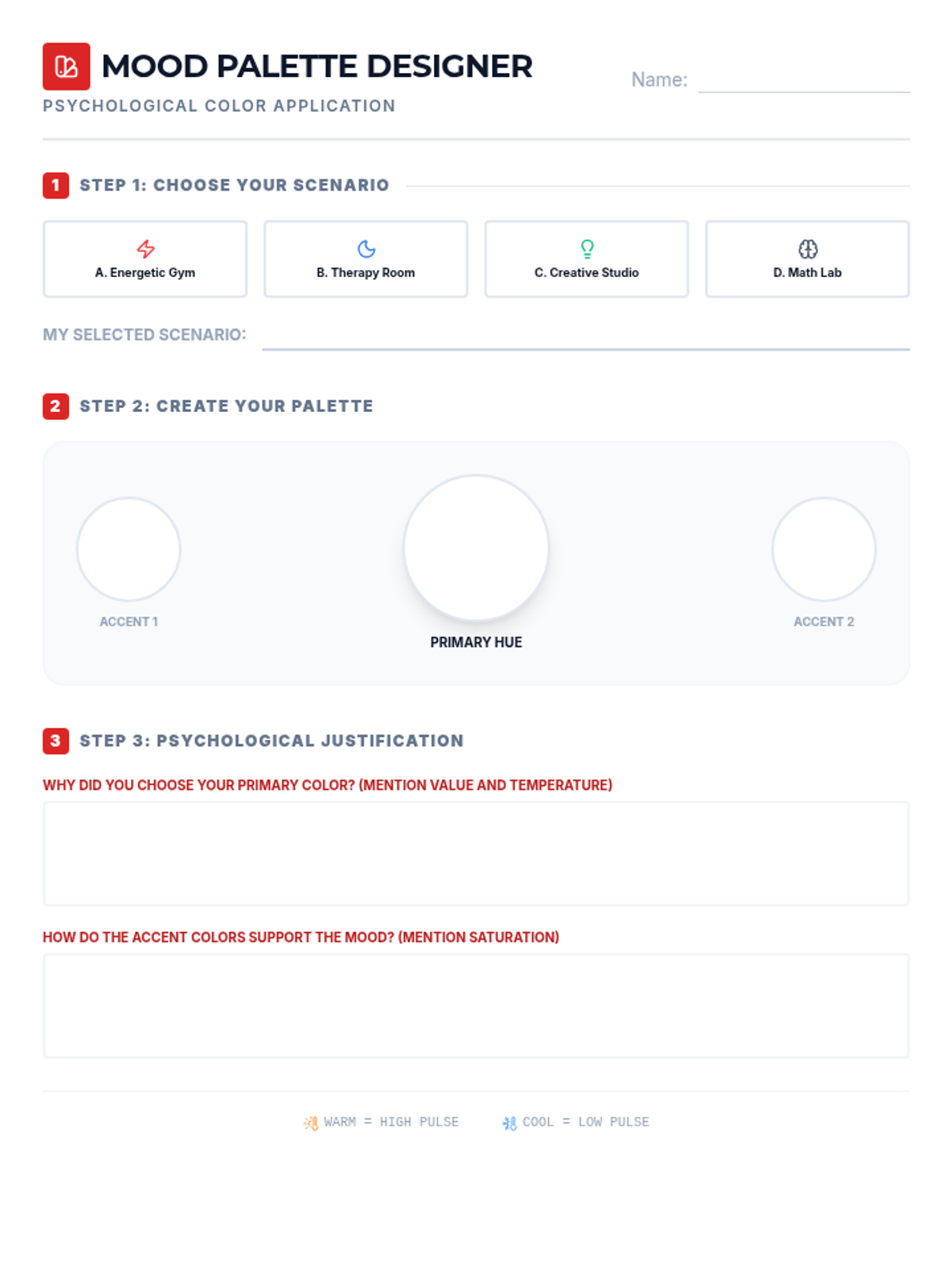
An investigation into color theory, focusing on how hue, value, and saturation are used to evoke specific psychological responses and emotions in interior spaces.
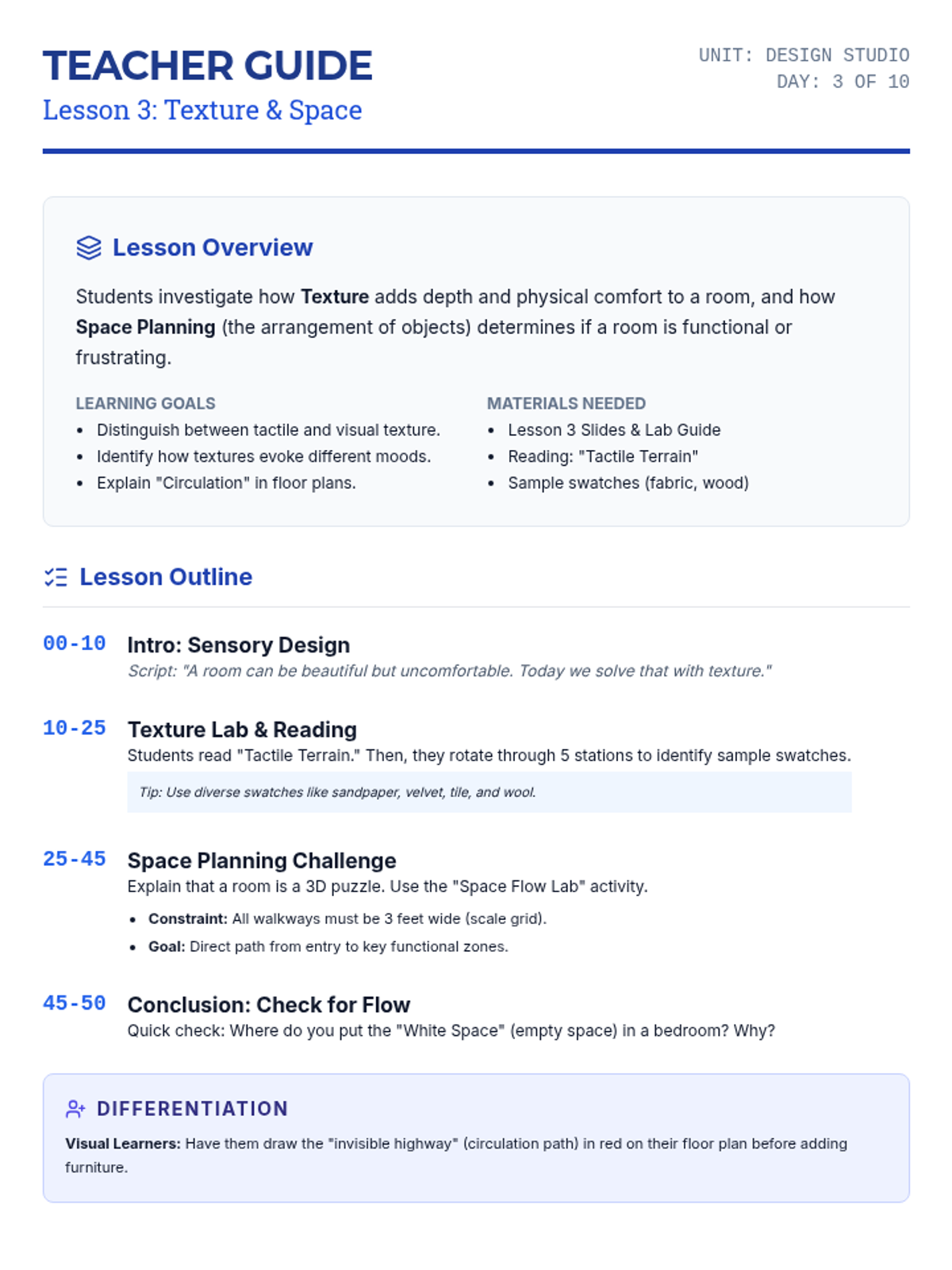
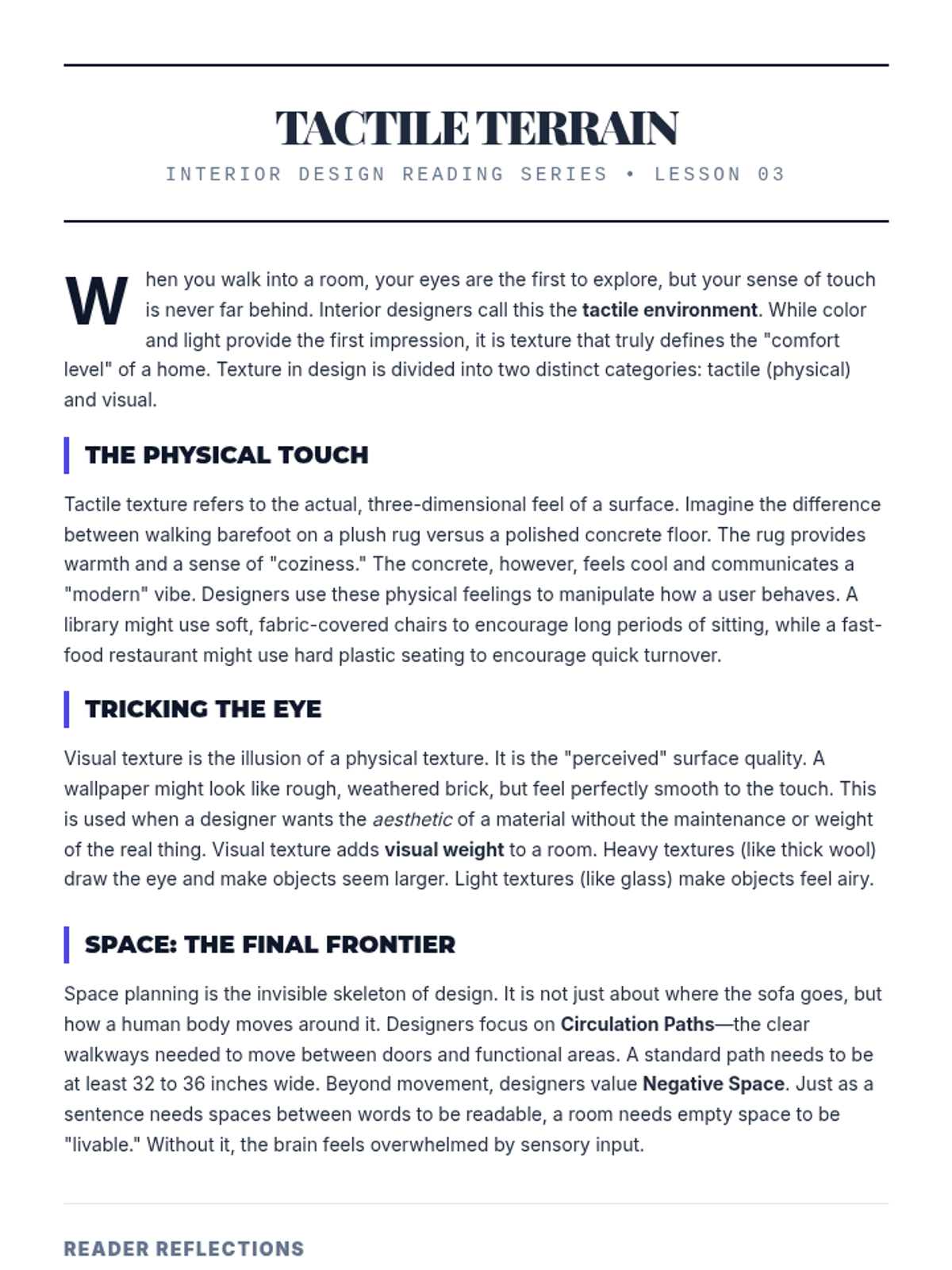
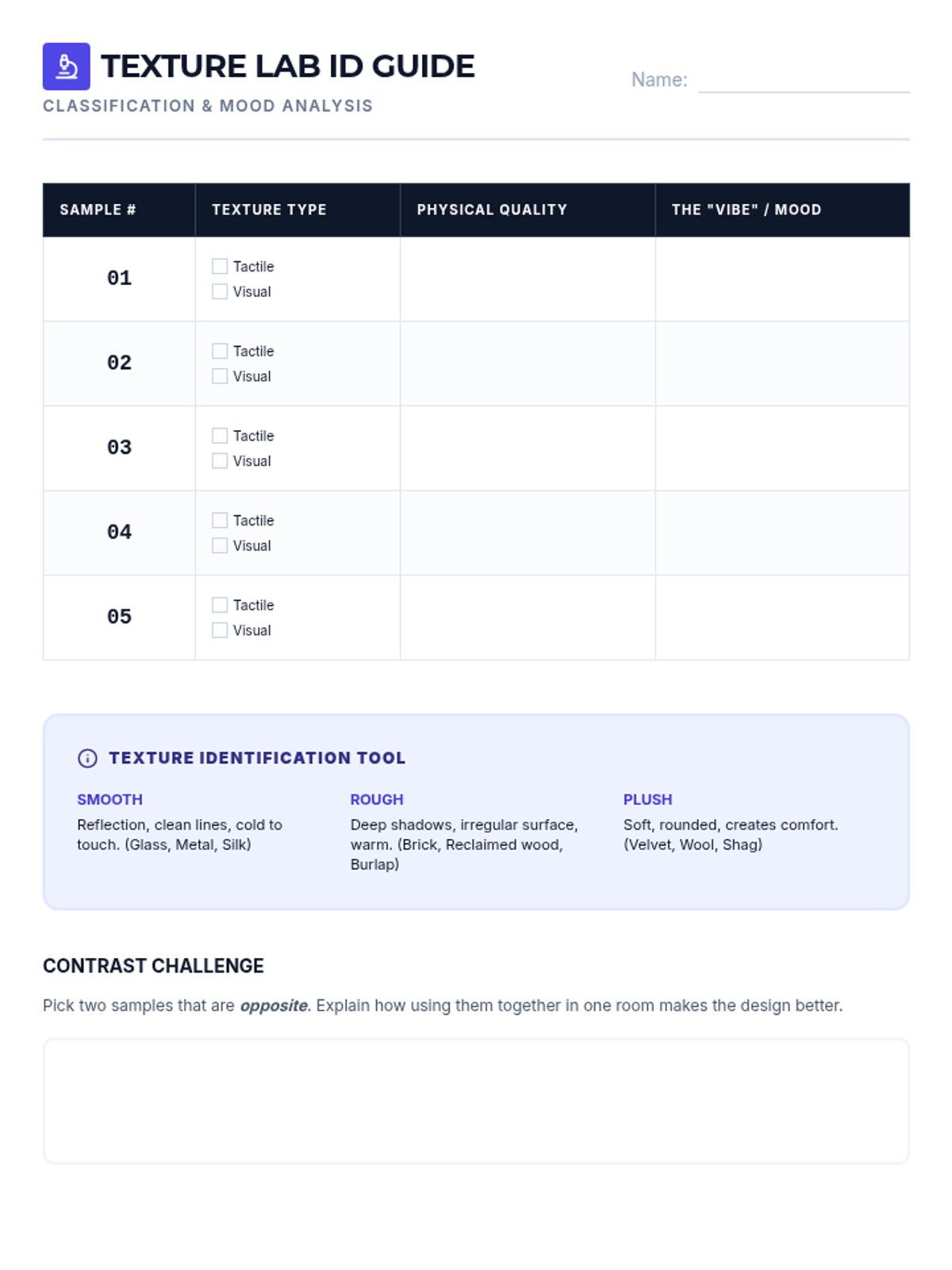
A hands-on exploration of how tactile and visual textures impact comfort, paired with an investigation into how space planning affects room functionality.
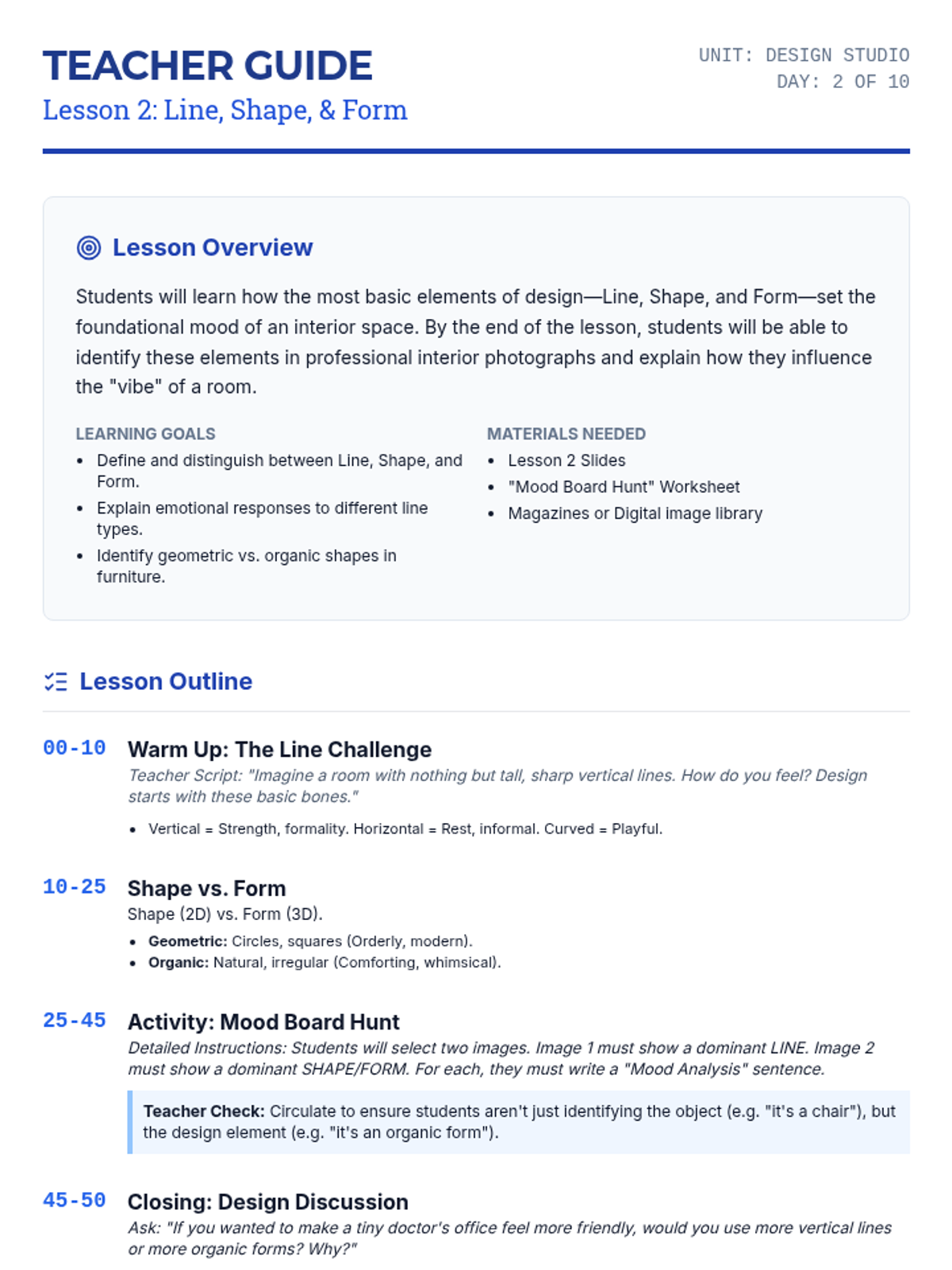
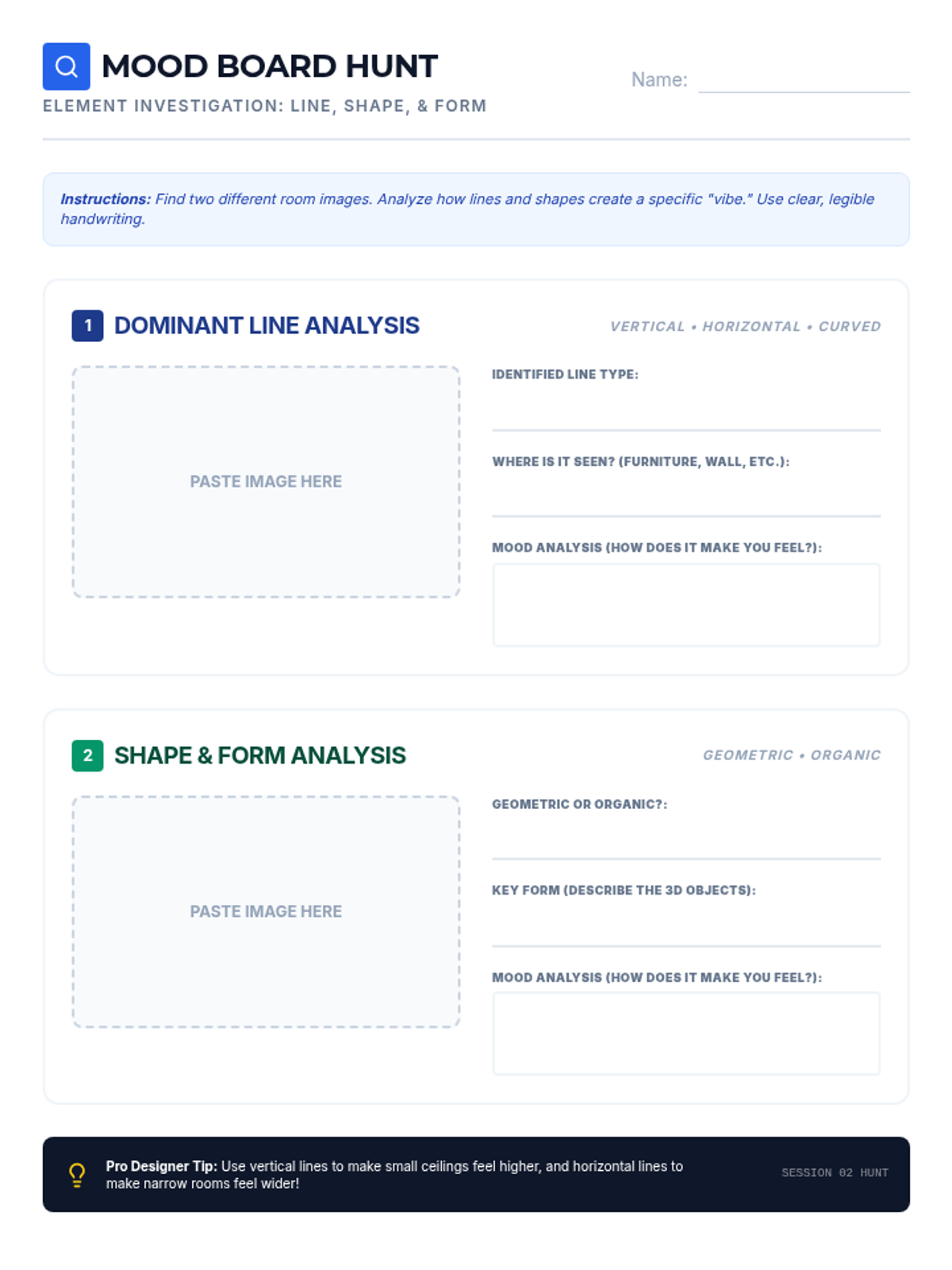
Students explore how different types of lines, shapes, and forms influence the mood and feeling of a room through a visual mood board scavenger hunt.
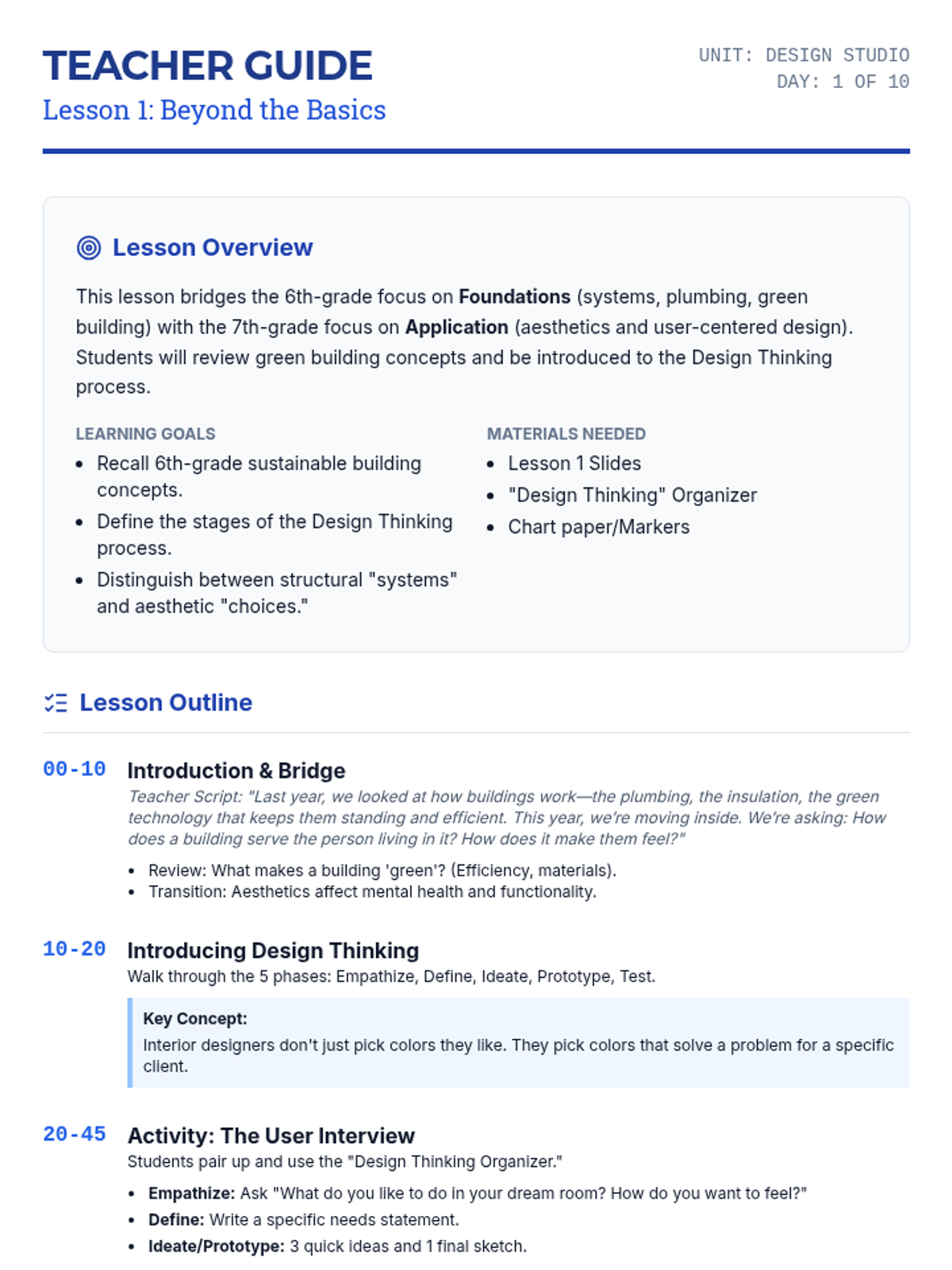
Bridging the gap between 6th-grade structural systems and 7th-grade aesthetic design, this lesson introduces the Design Thinking process in the context of sustainable housing.
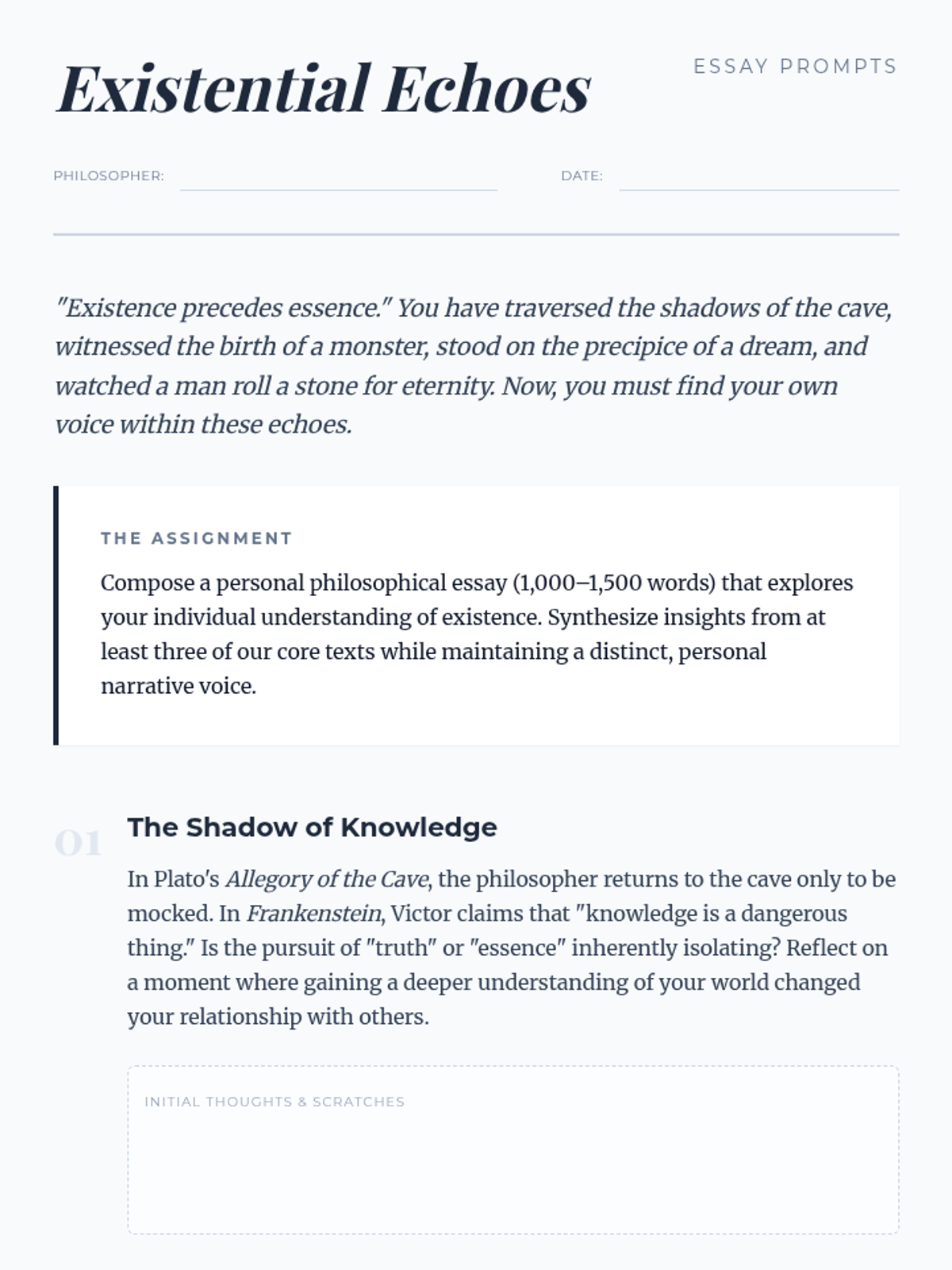
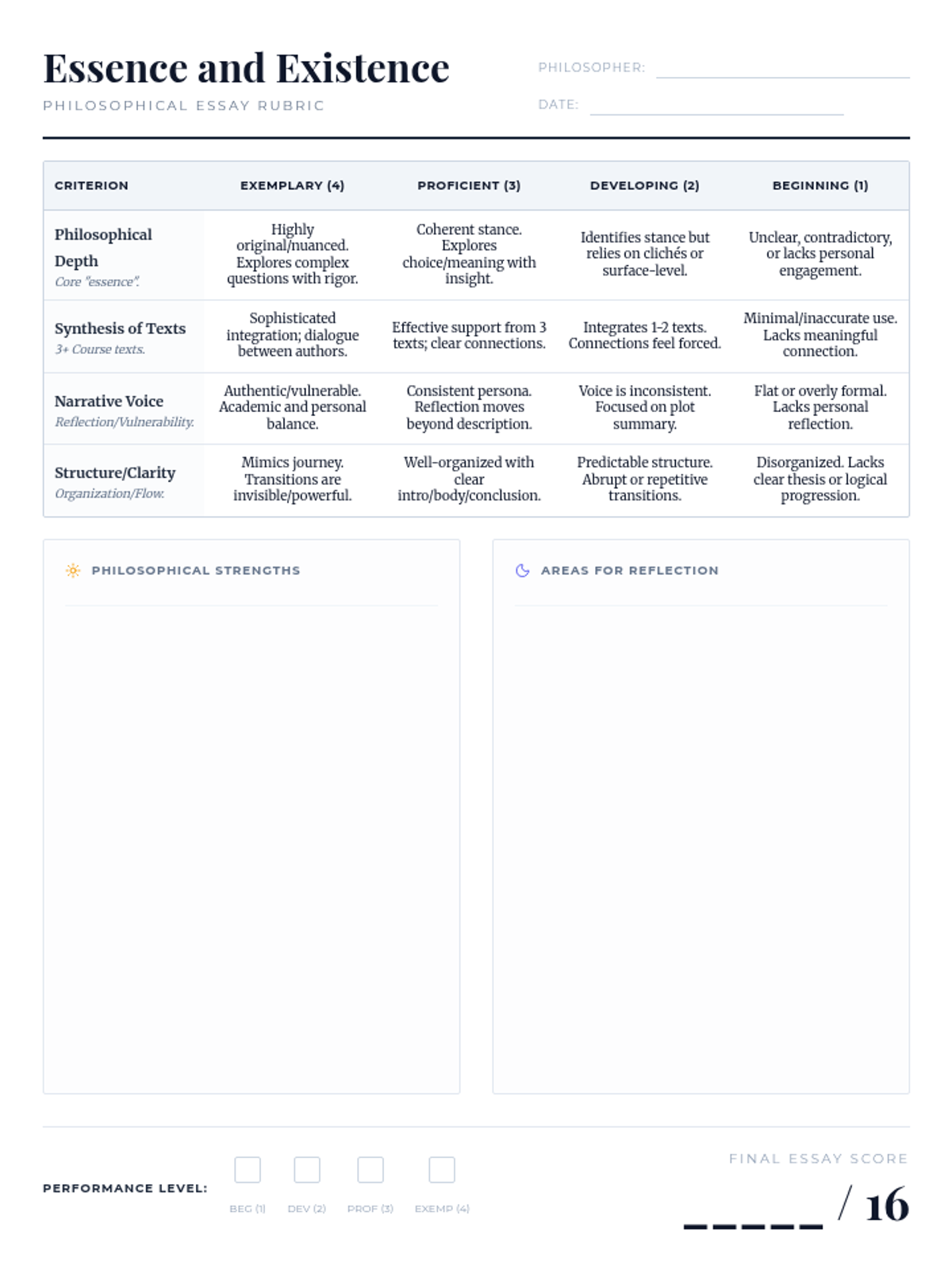
A exploration of existential themes through classic literature, philosophy, and contemporary film, culminating in a personal philosophical essay.
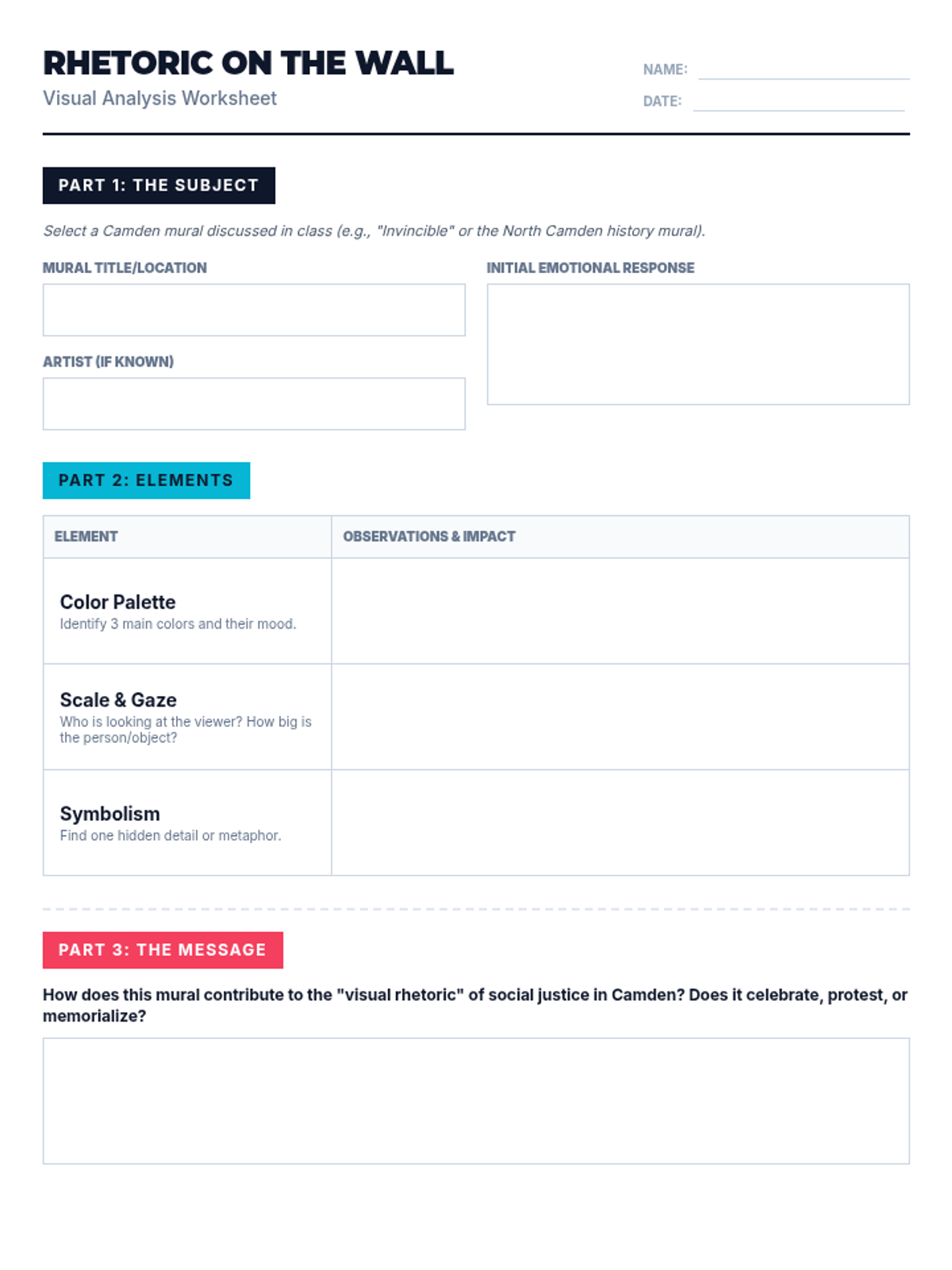
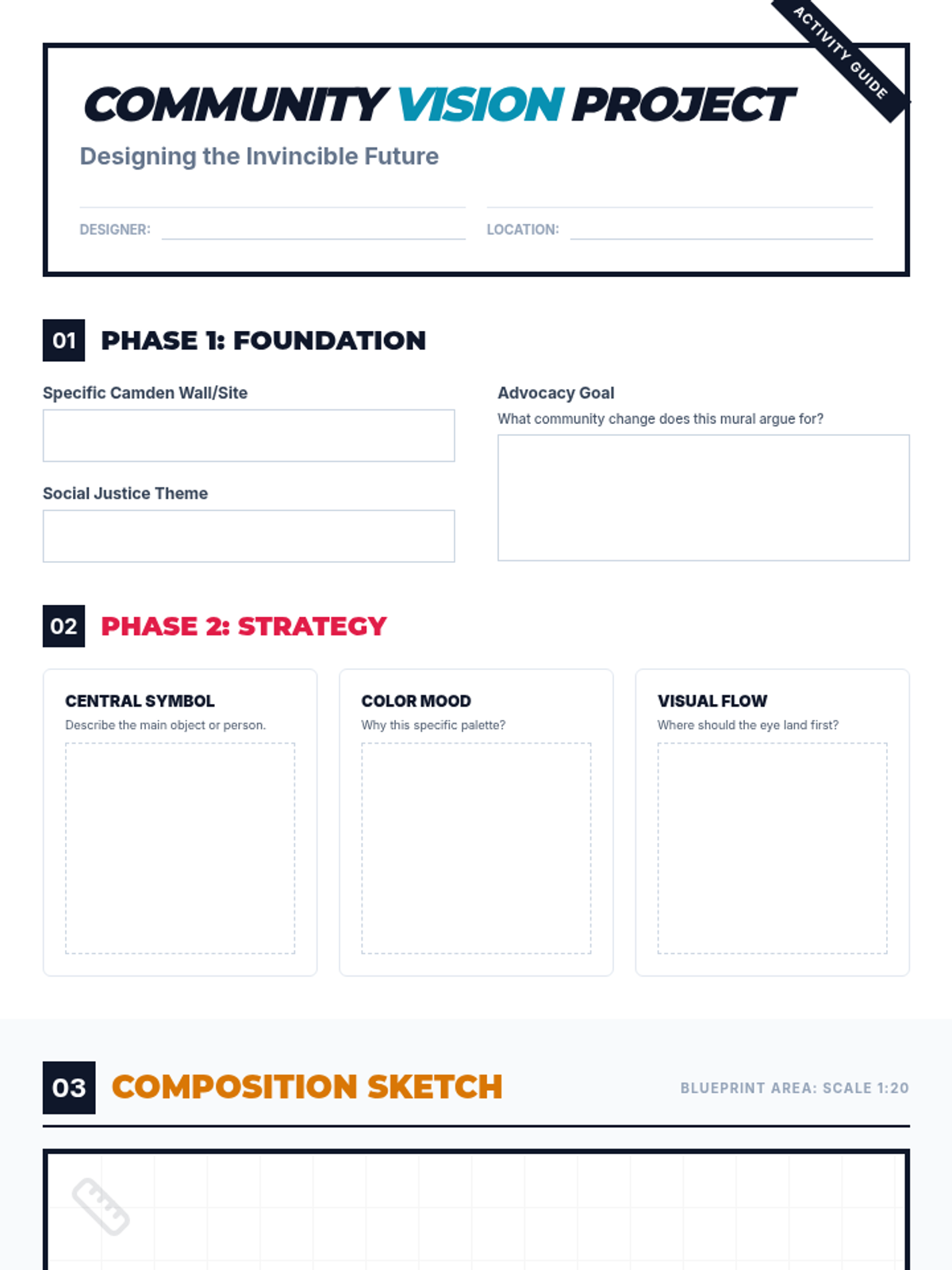
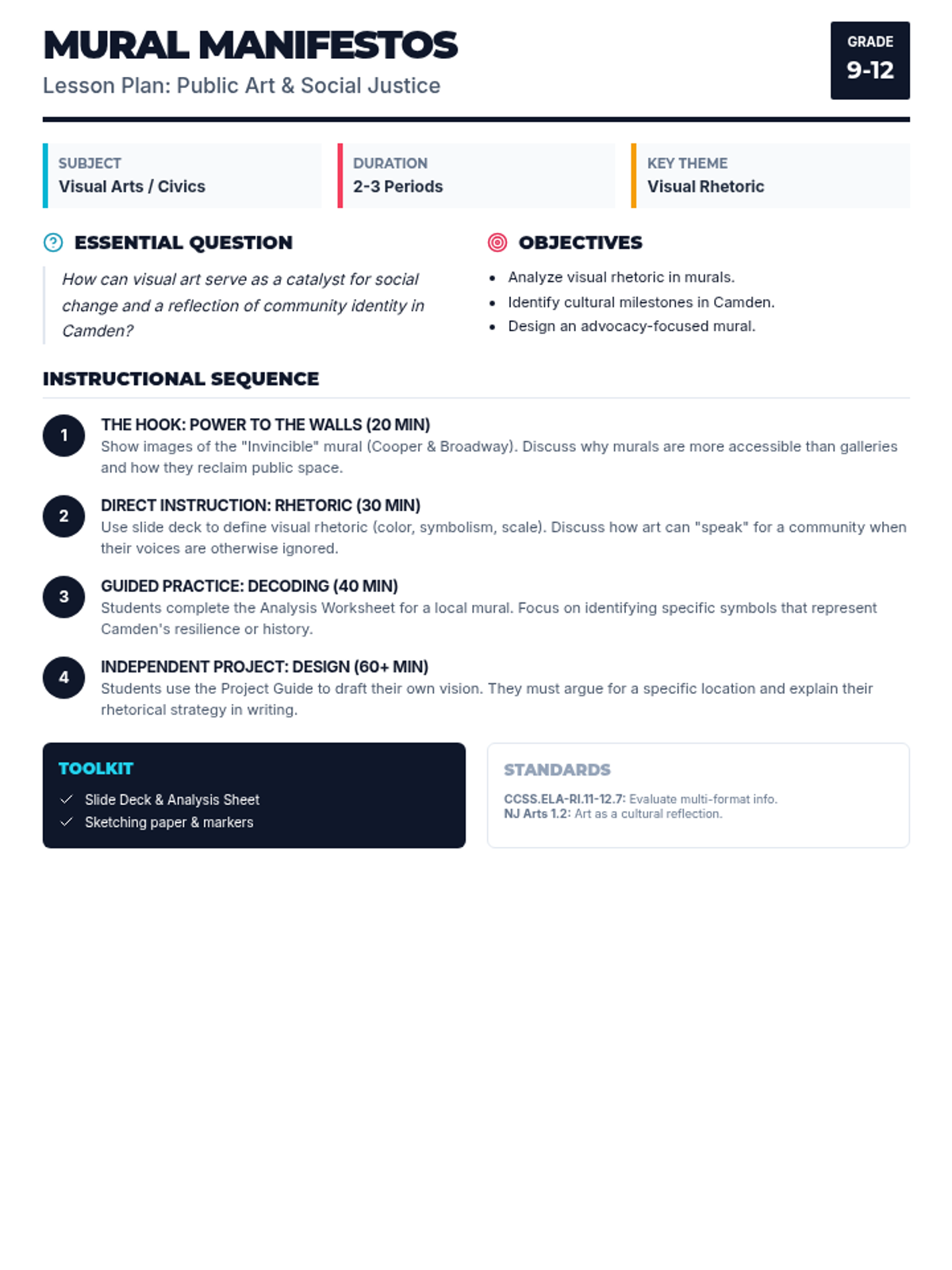
In this lesson, high school students explore the power of public art as a tool for social justice and community advocacy. They will analyze visual rhetoric in famous murals and design their own mural concept that honors the history and future of Camden, NJ.