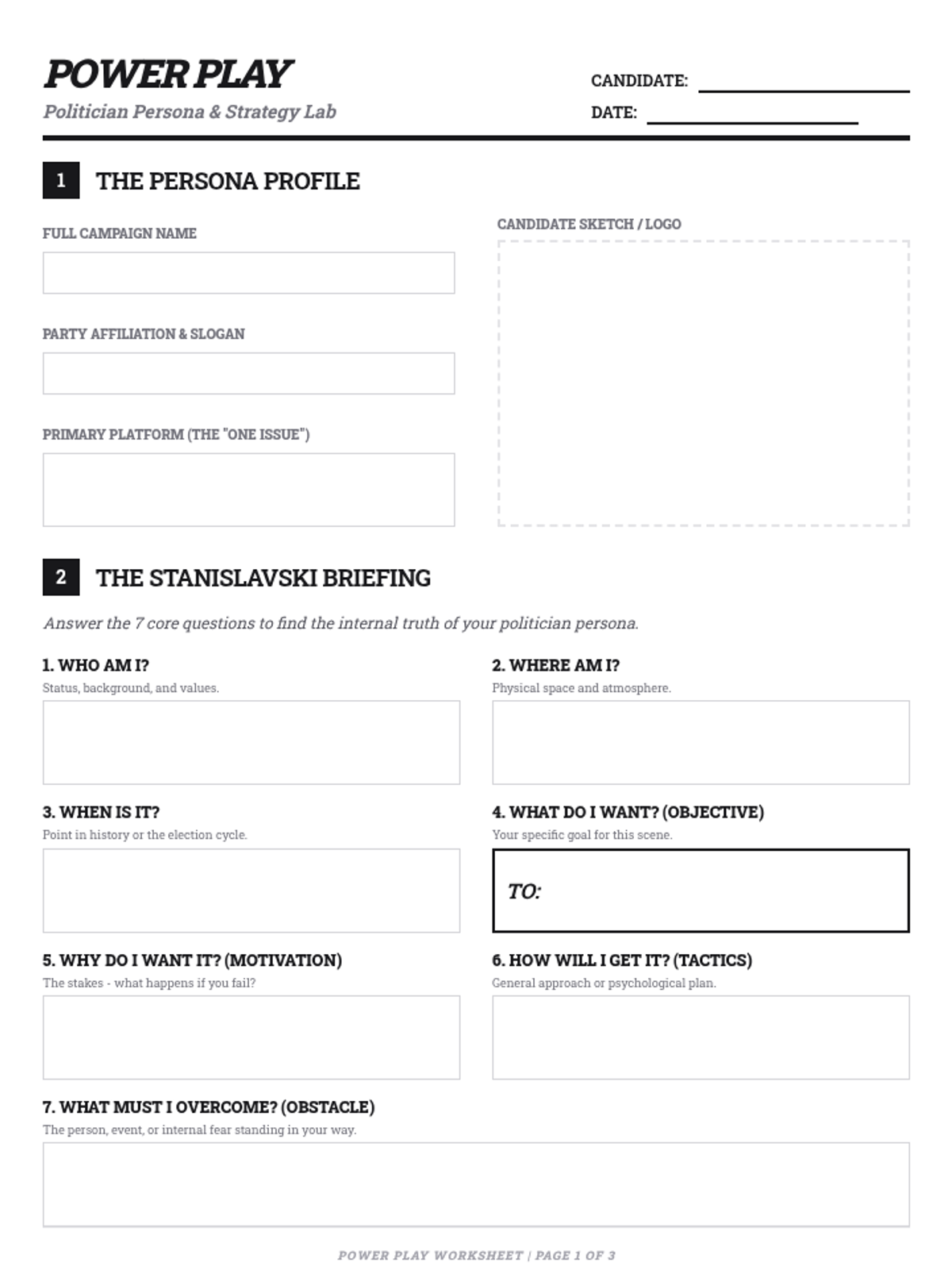
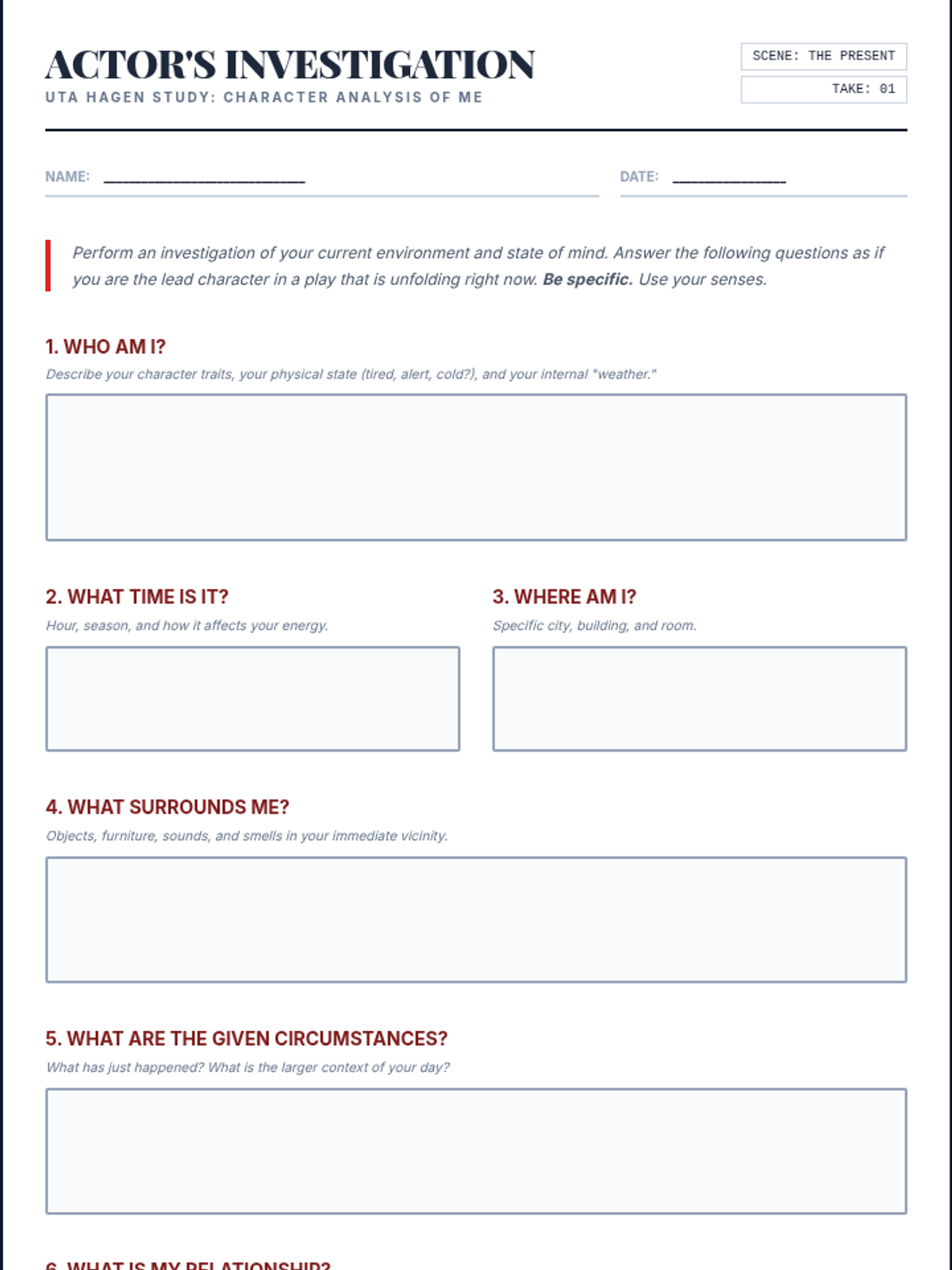
A comprehensive lesson introducing Uta Hagen's 9 Questions for character development in scene study. Includes instructional slides, a visual graphic organizer worksheet, and a teacher facilitation guide.
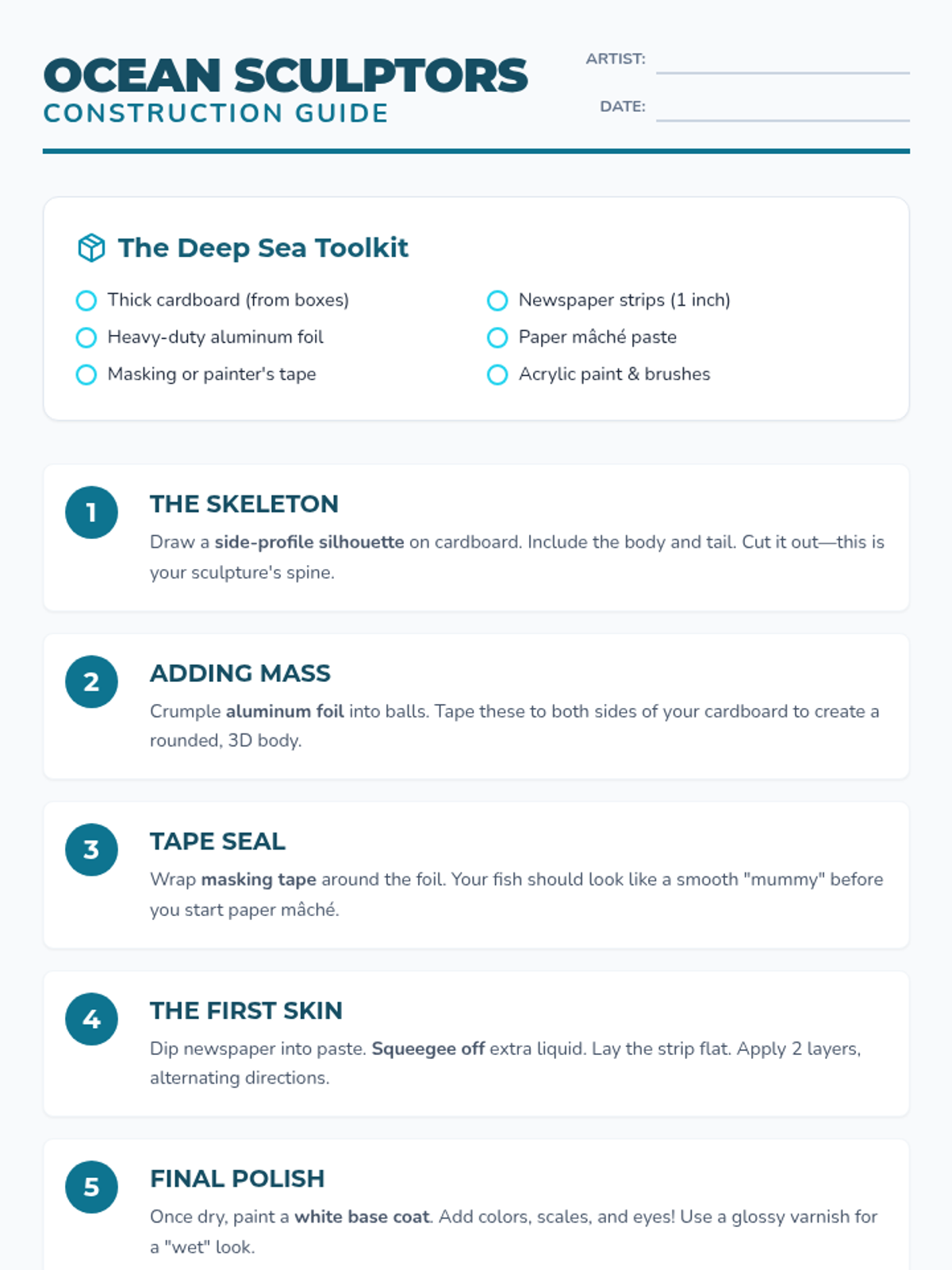
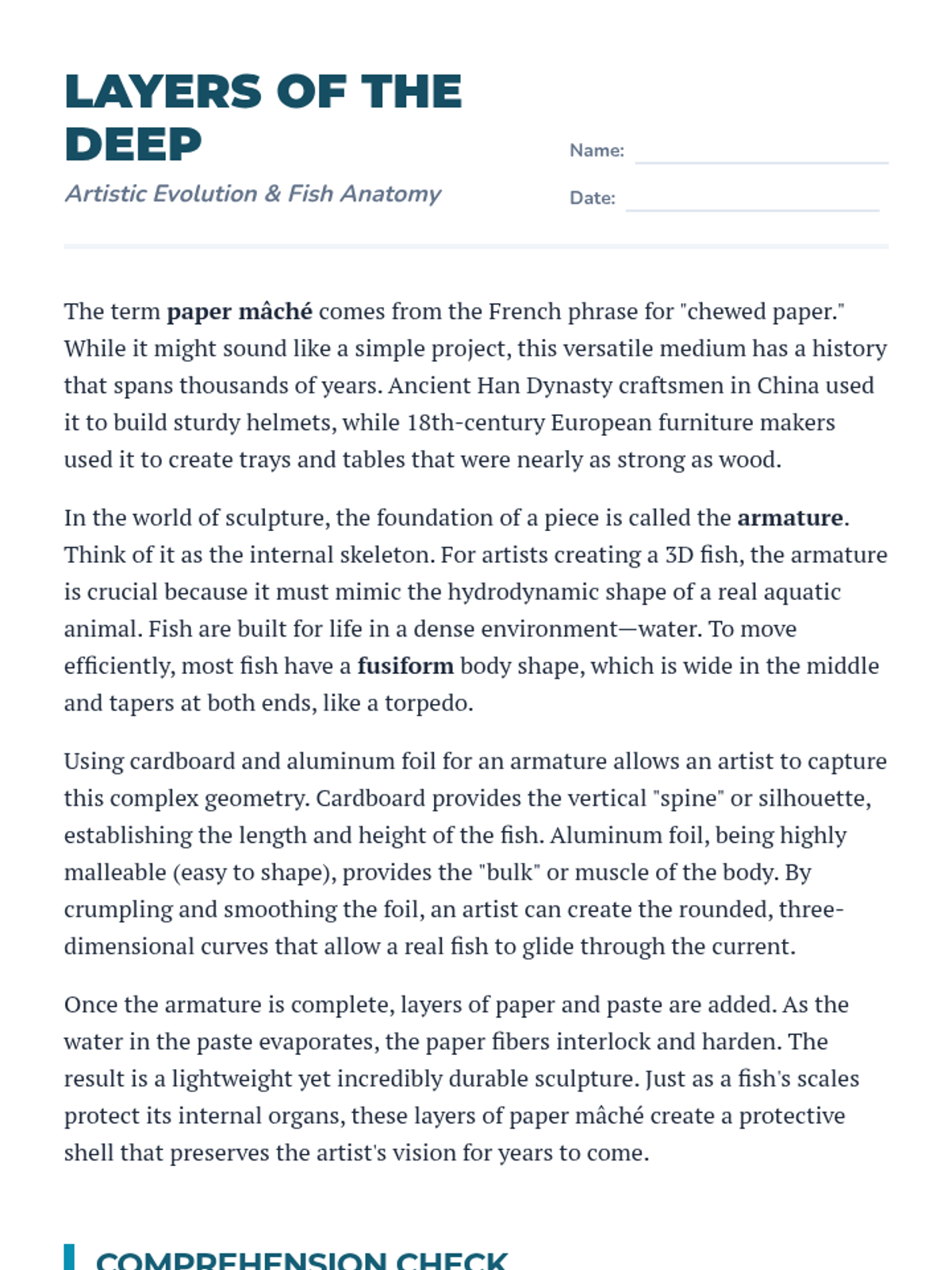
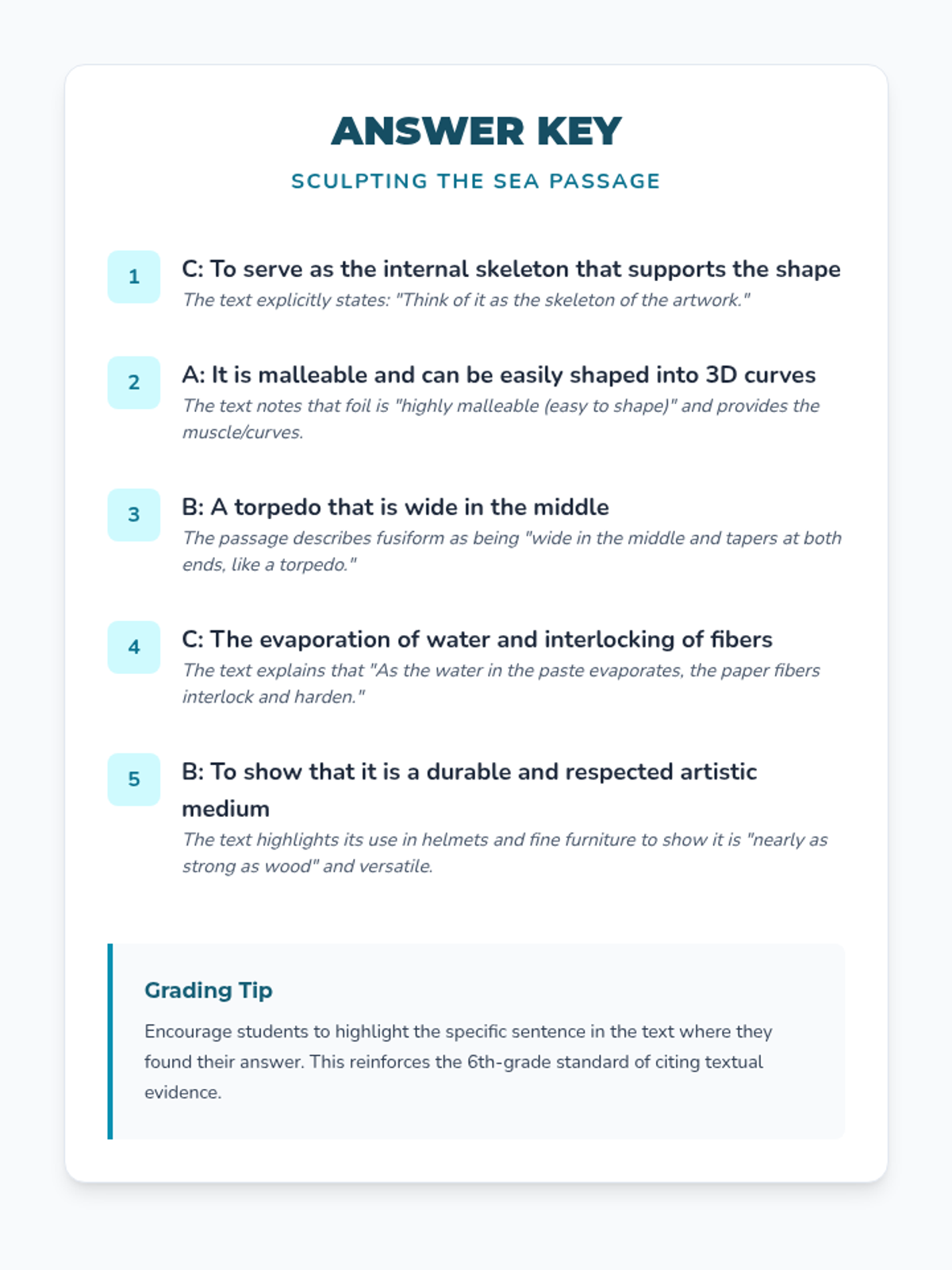
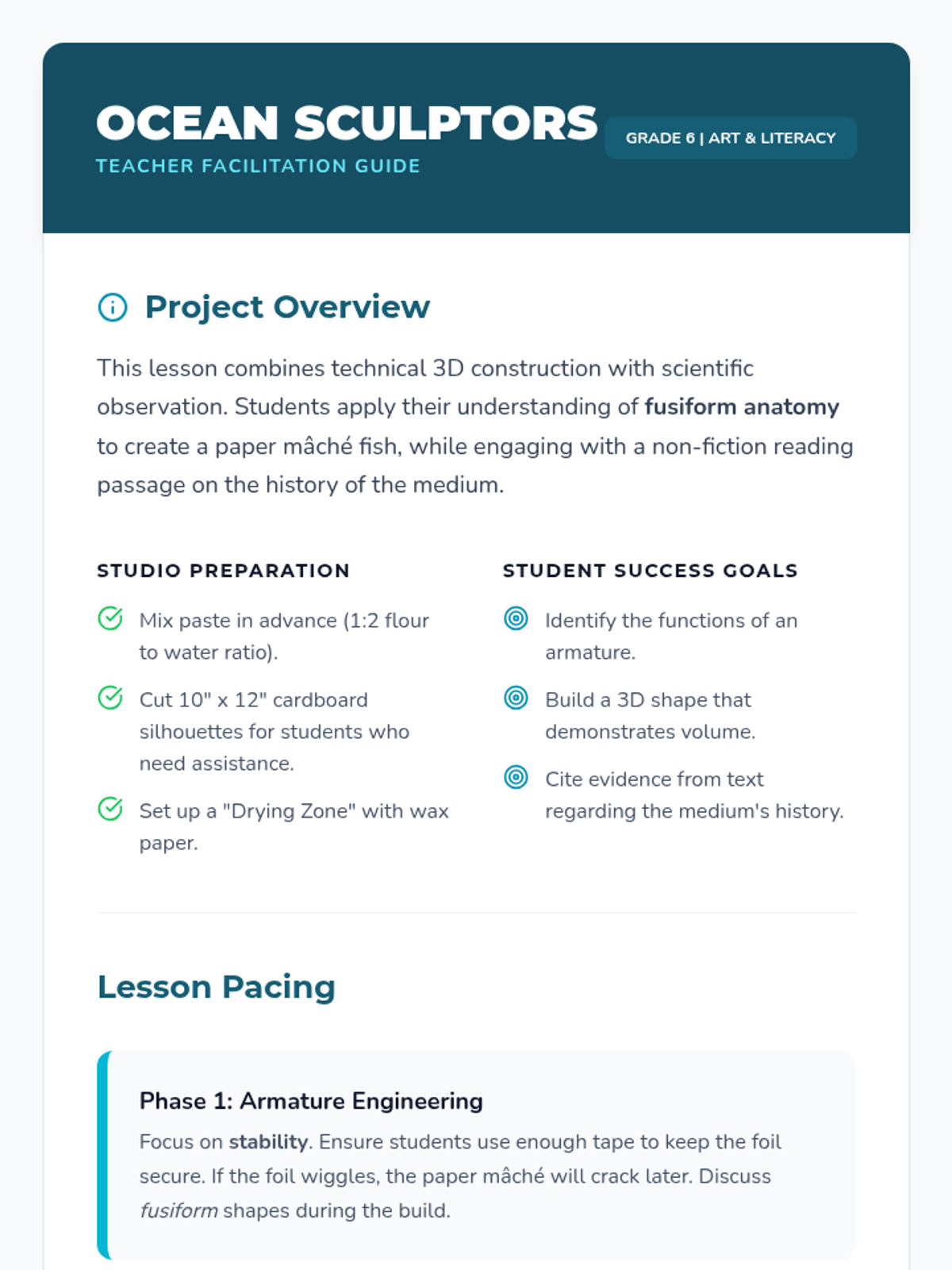
A hands-on art and literacy lesson where 6th-grade students create 3D fish sculptures using paper mâché techniques while exploring the history of the medium and fish anatomy.
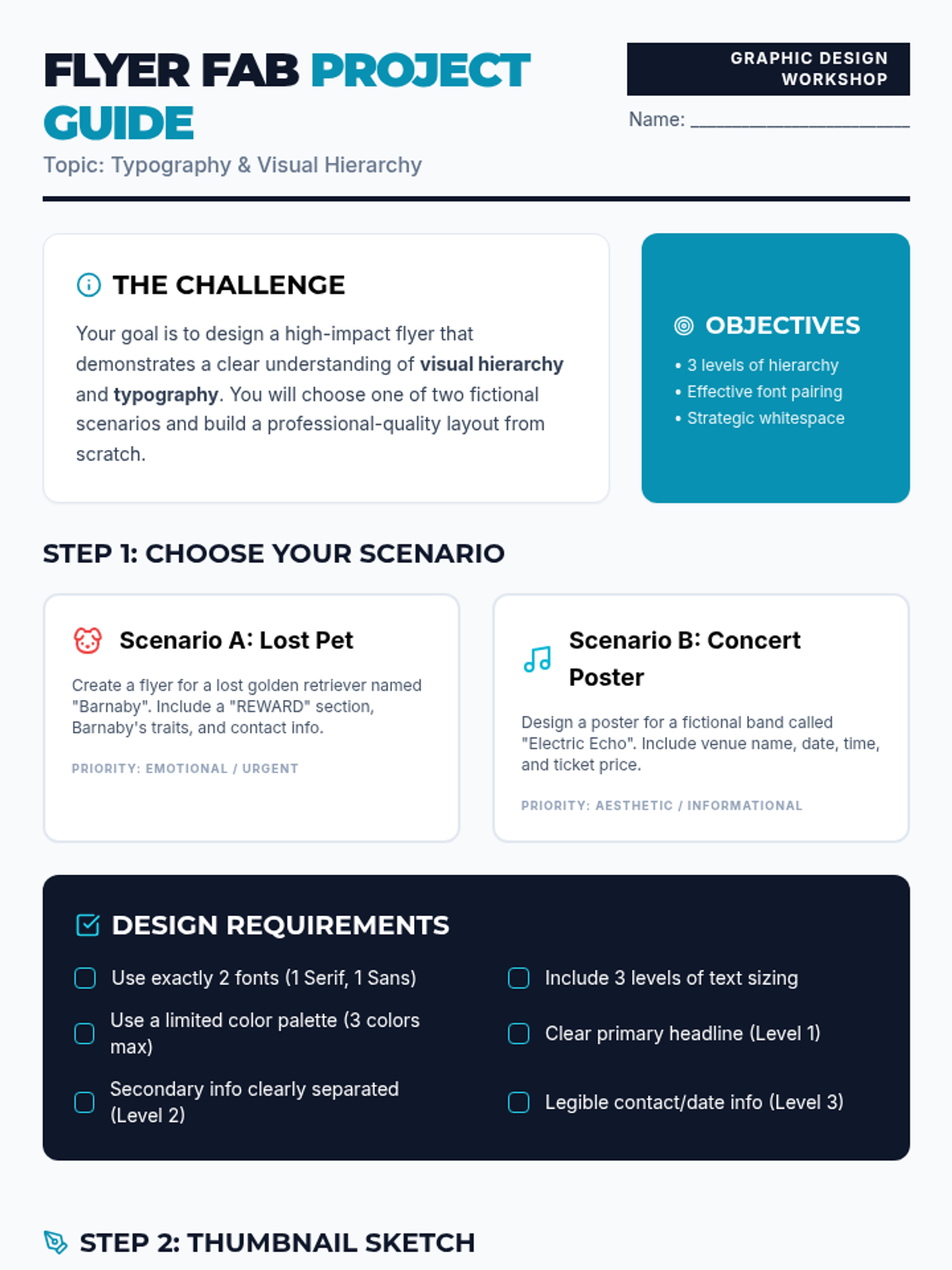
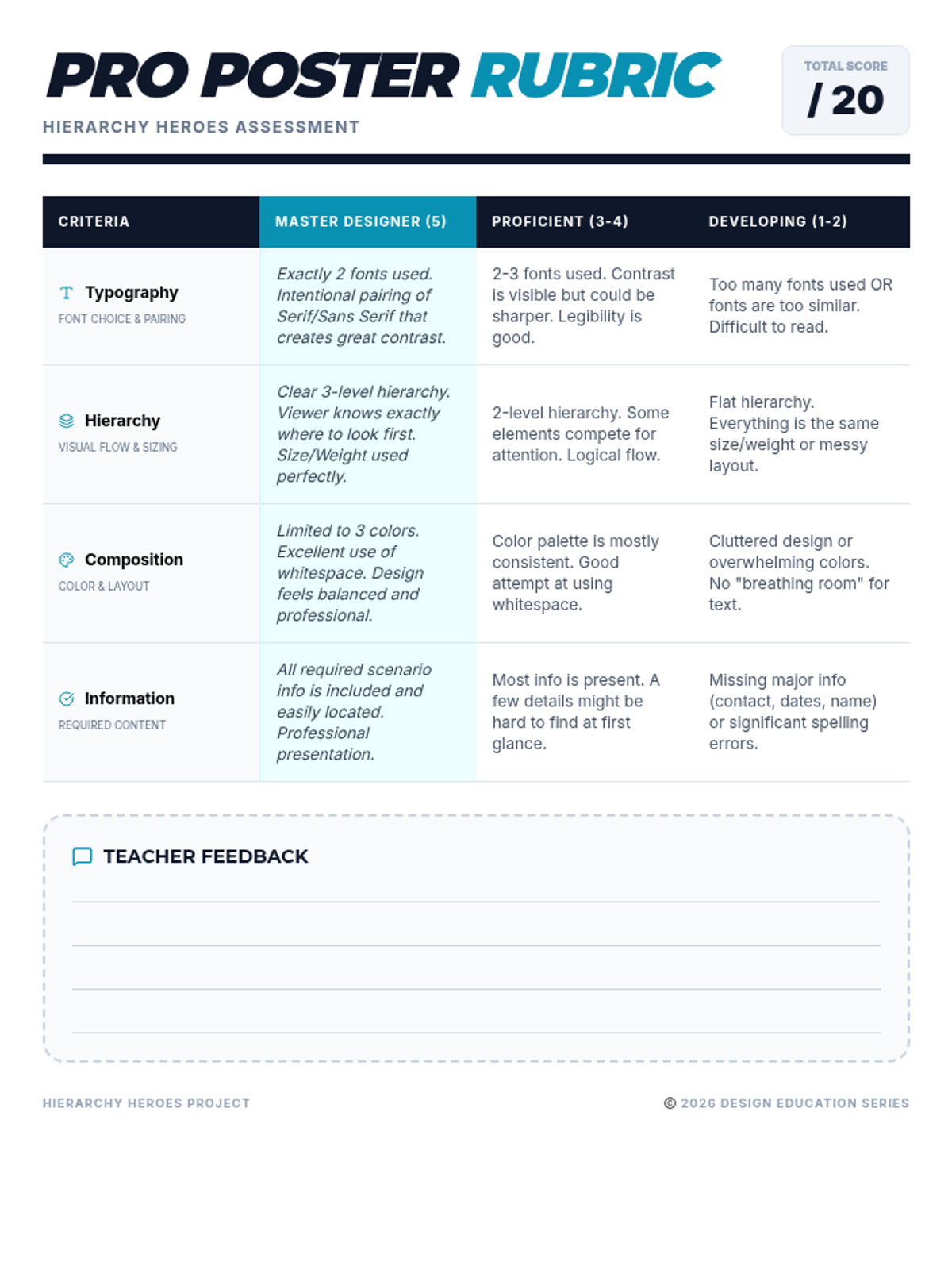
A graphic design project focused on visual hierarchy and typography. Students will choose between creating a lost pet flyer or a concert poster to demonstrate their understanding of design principles.
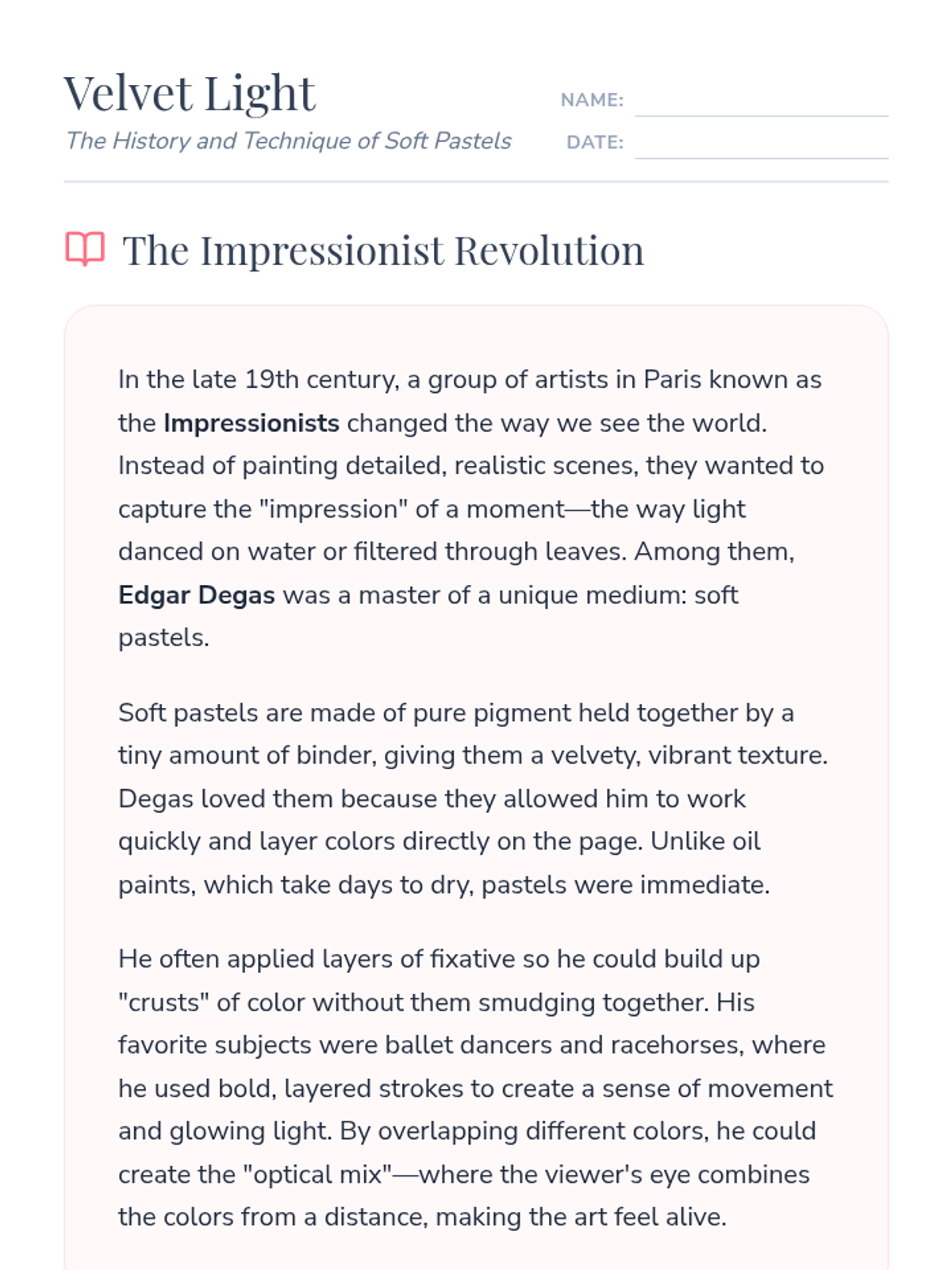
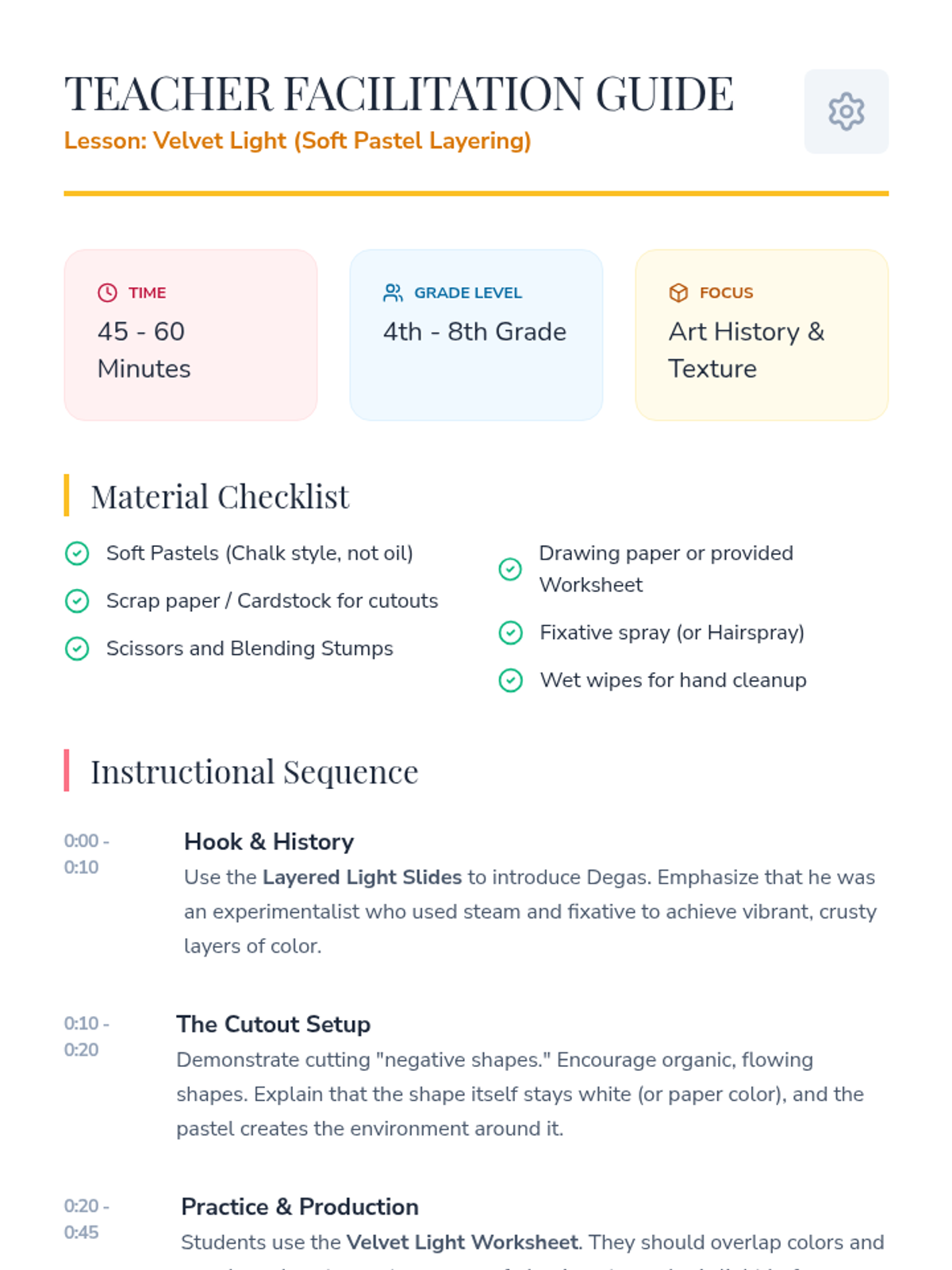
Explore the history and technique of soft pastels through the lens of Edgar Degas and the Impressionists, featuring a hands-on layering activity using paper cutouts.
Explore the cultural impact and character archetypes of the world's most iconic anime characters. This lesson analyzes why these characters resonate globally and how their designs and stories influence modern media.
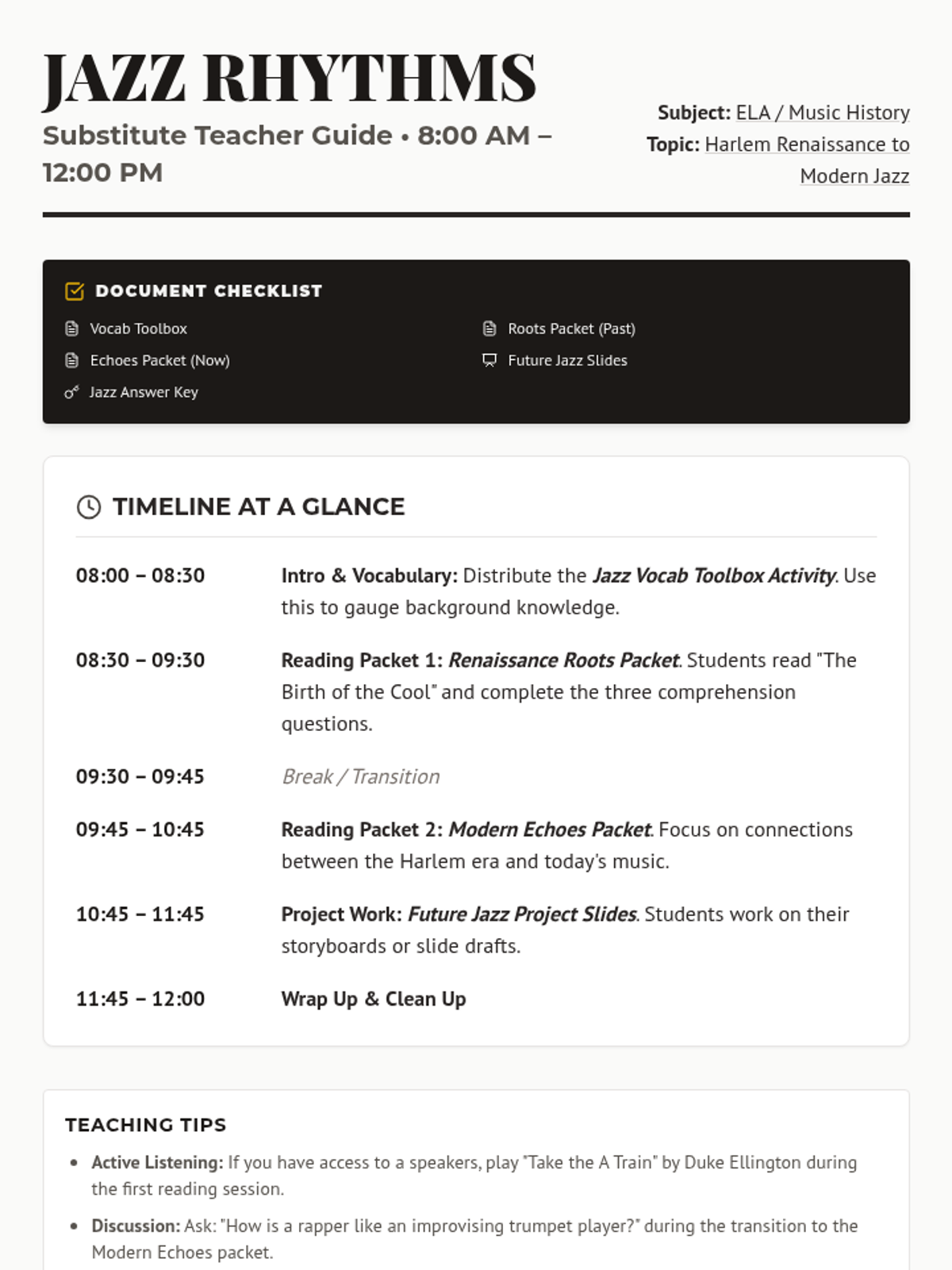
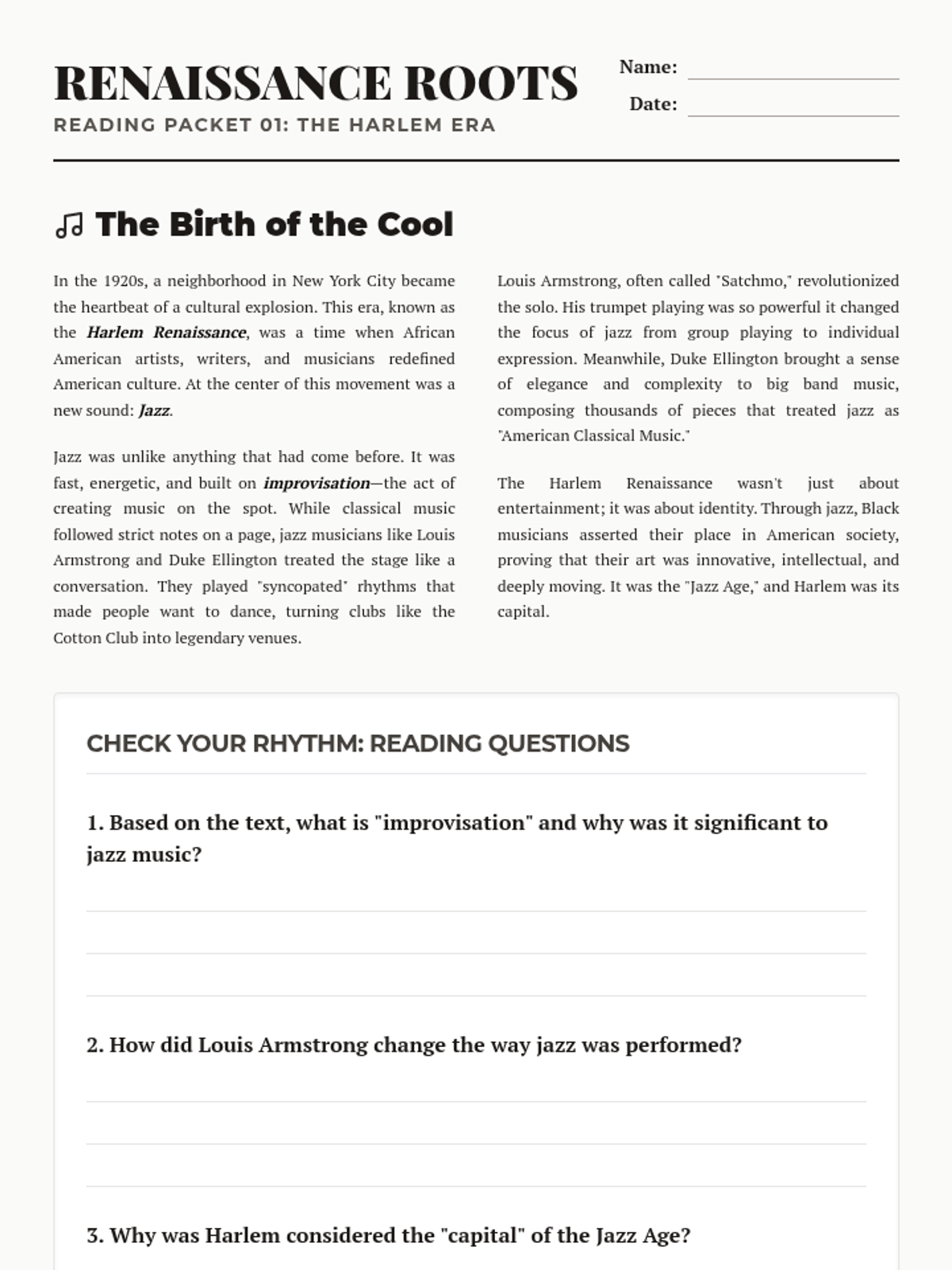
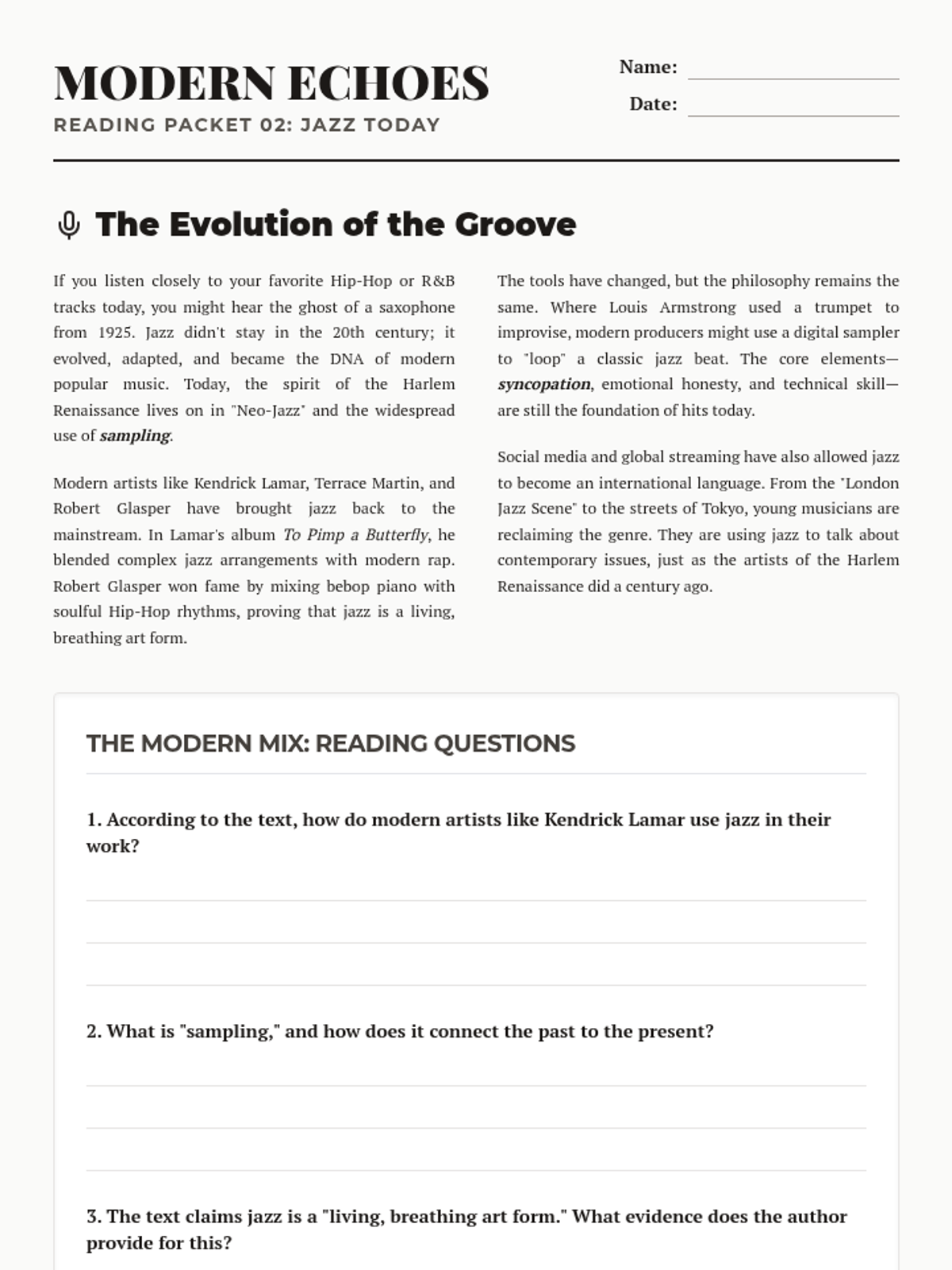
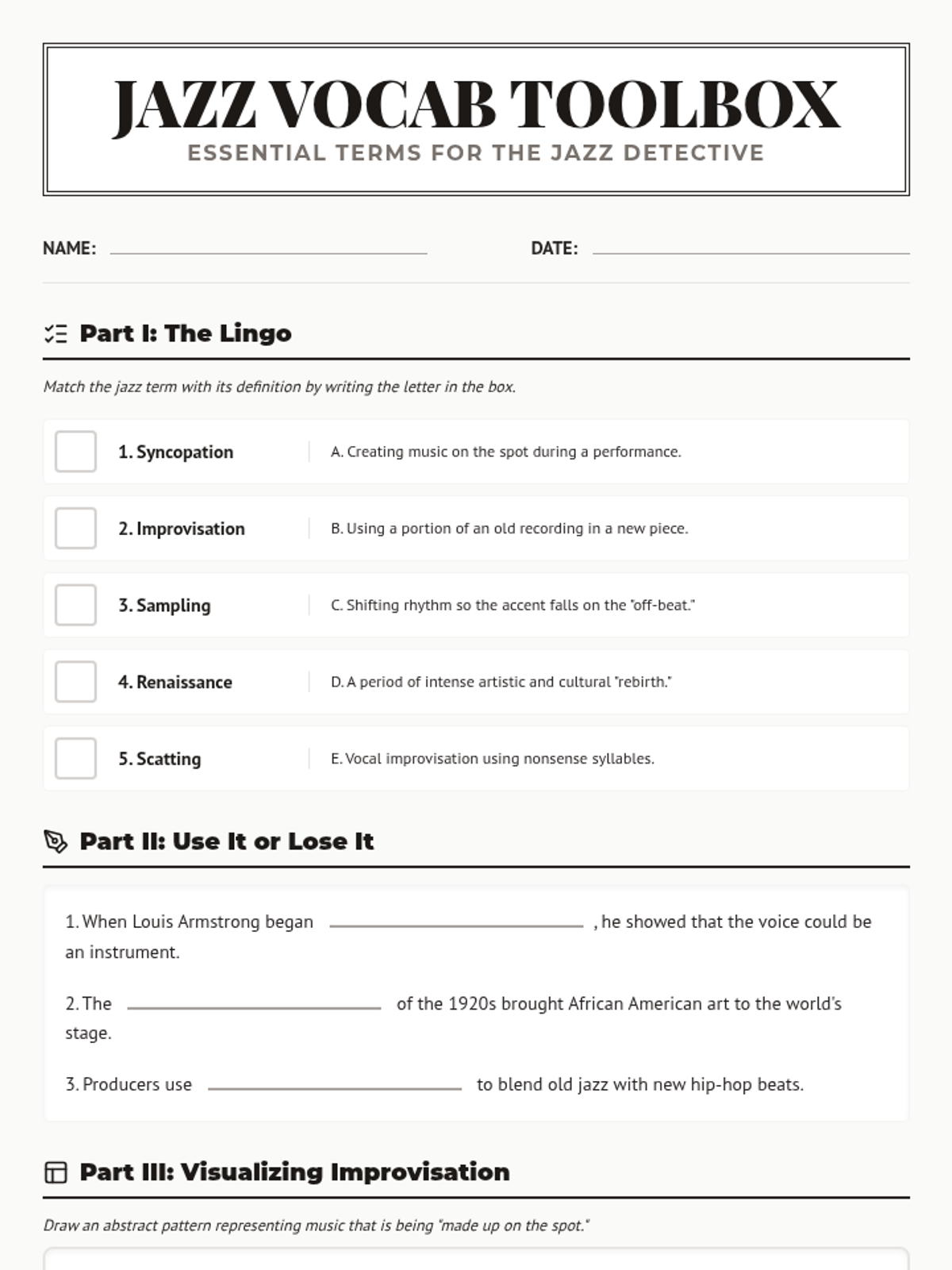
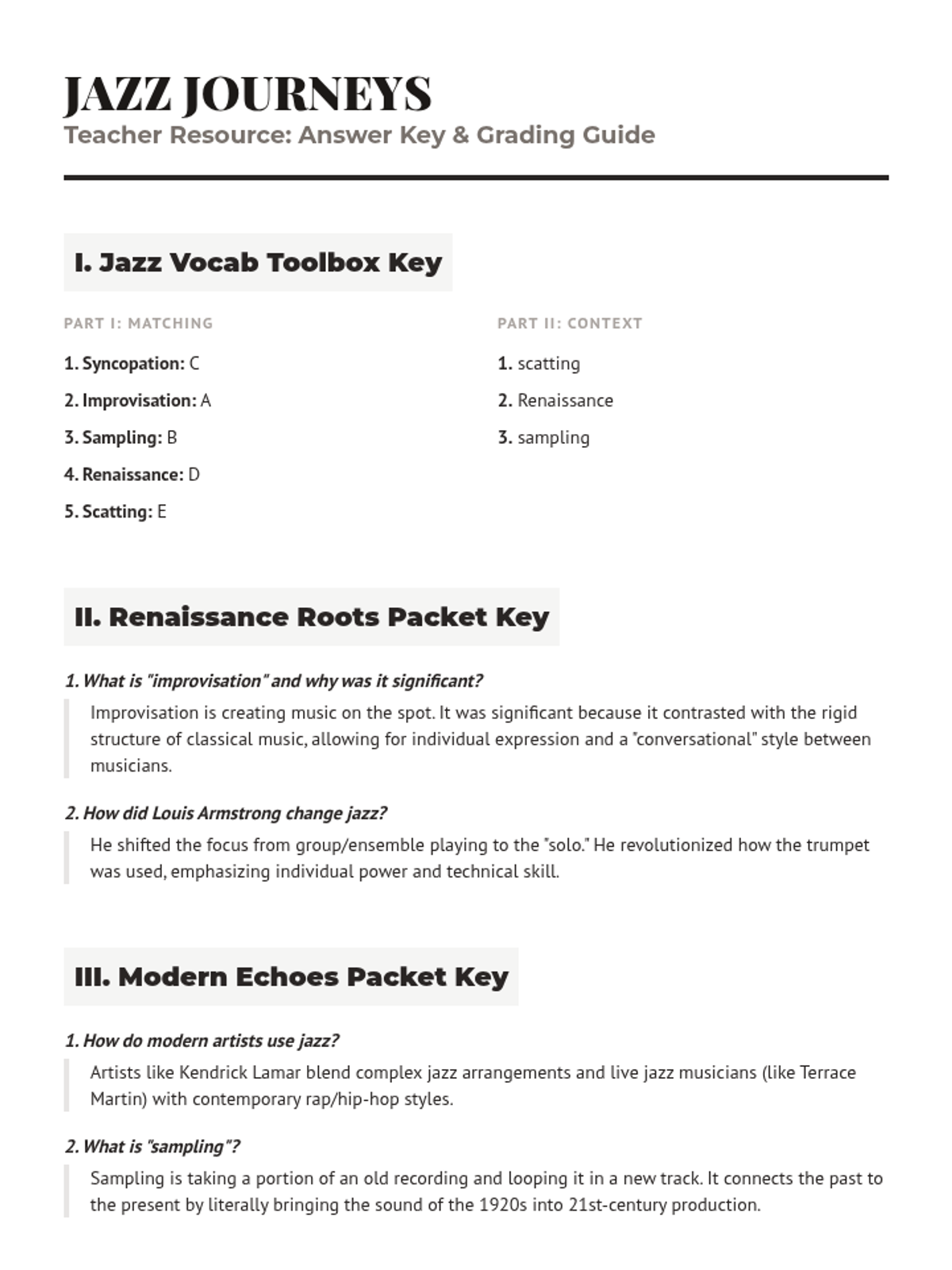
A complete 4-hour substitute teacher plan exploring the history of the Harlem Renaissance and its modern influence on jazz music and culture.
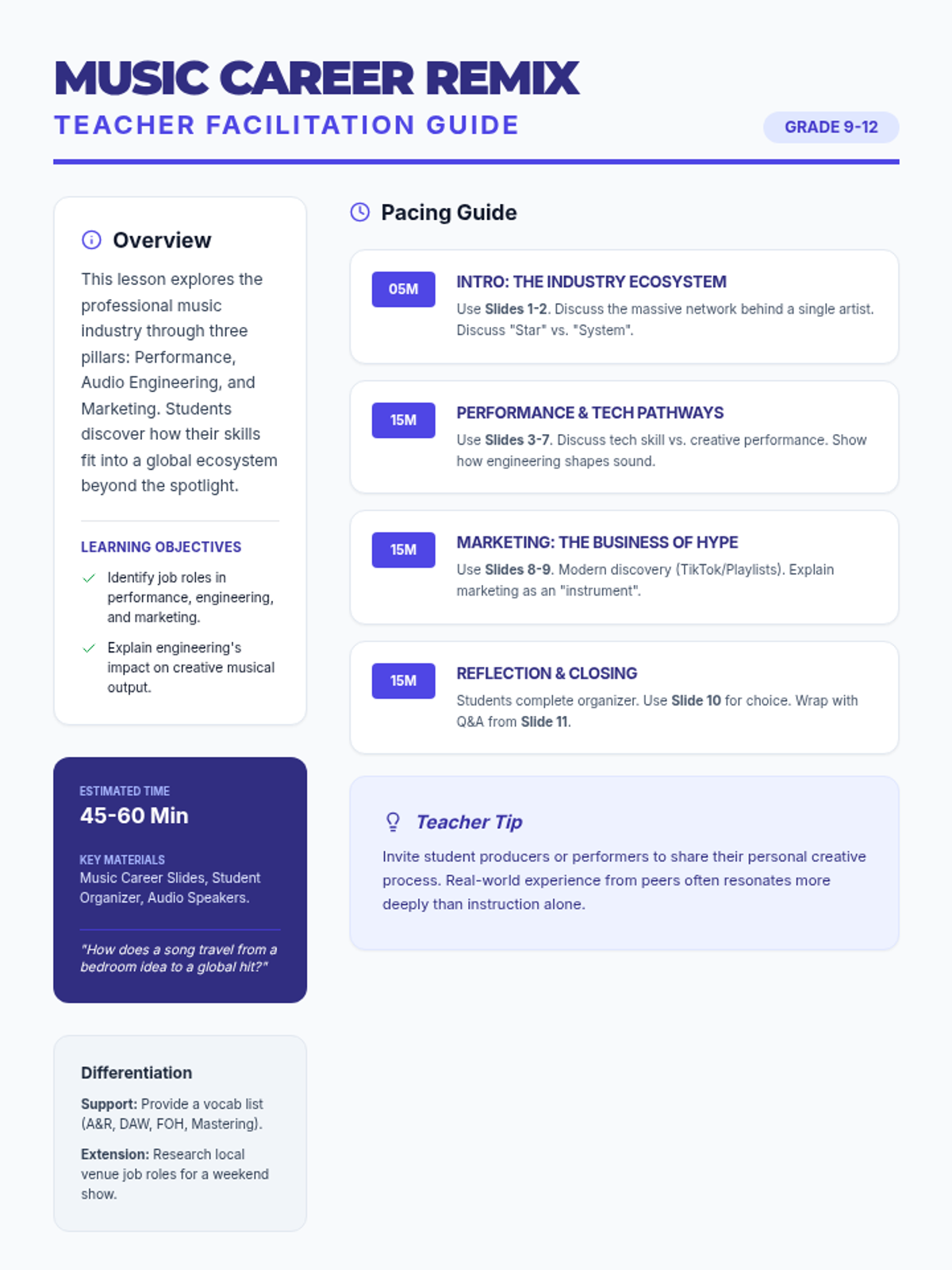
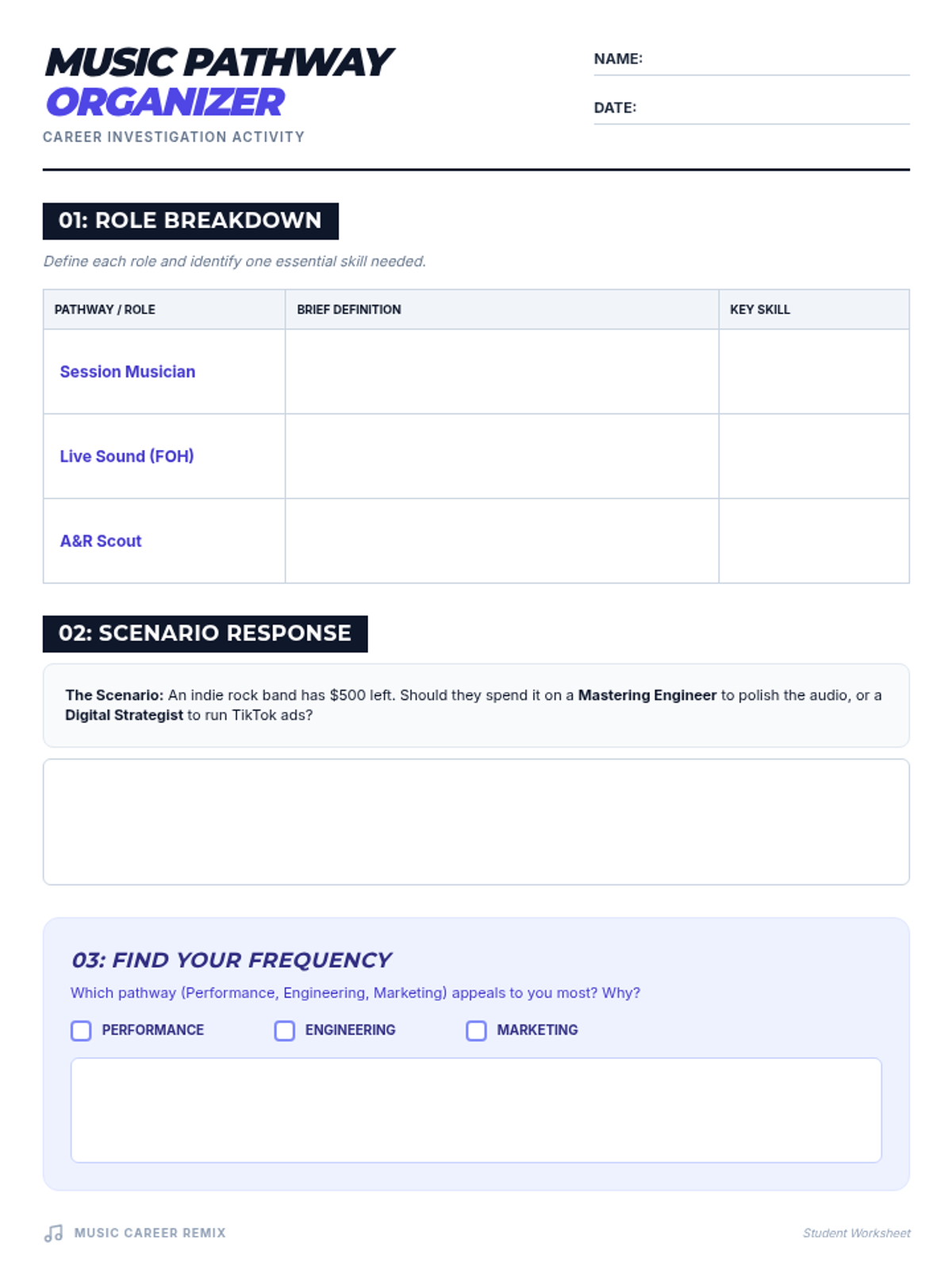
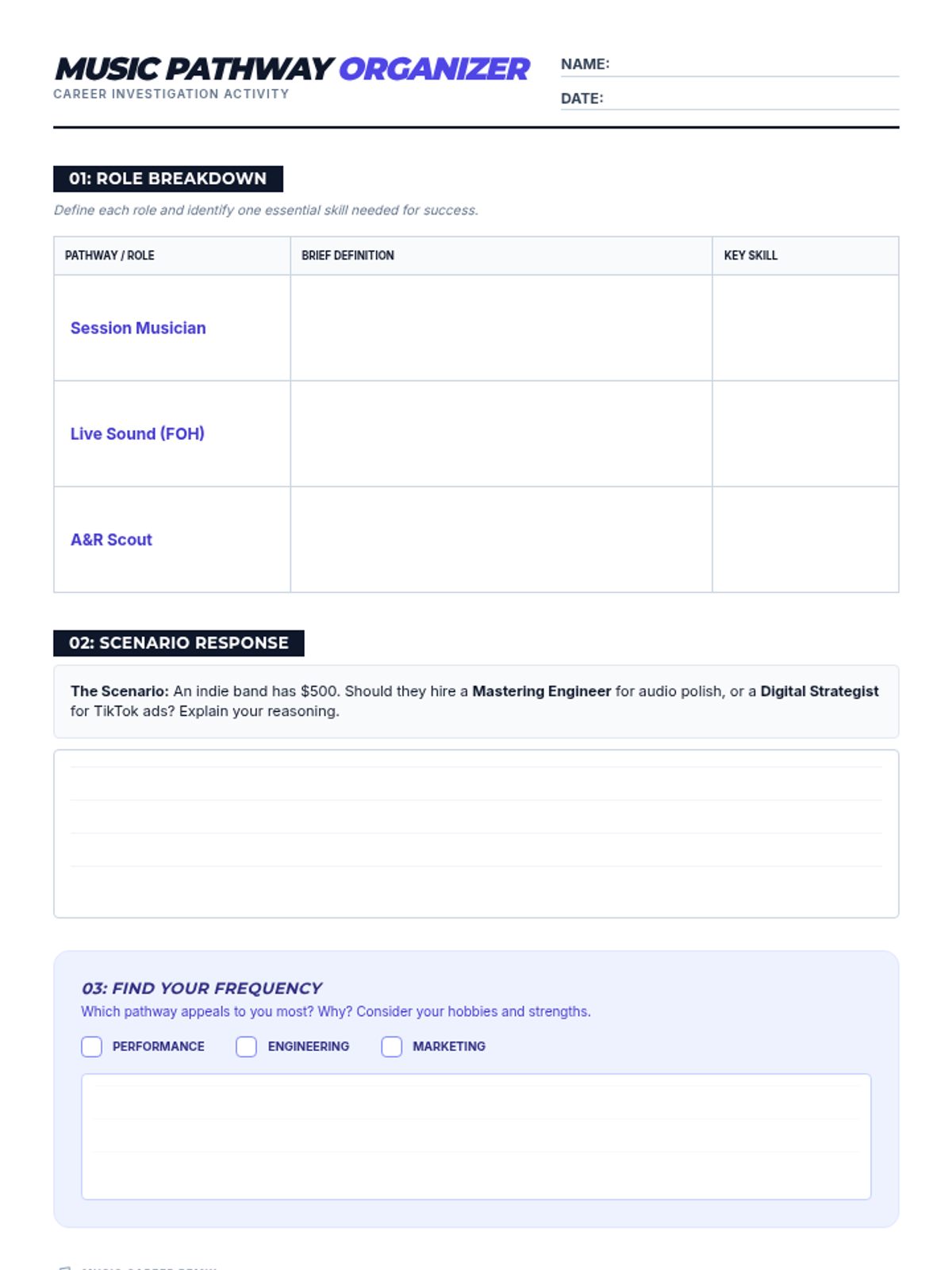
A comprehensive look at professional pathways in the music industry, focusing on performance, technical engineering, and business marketing.
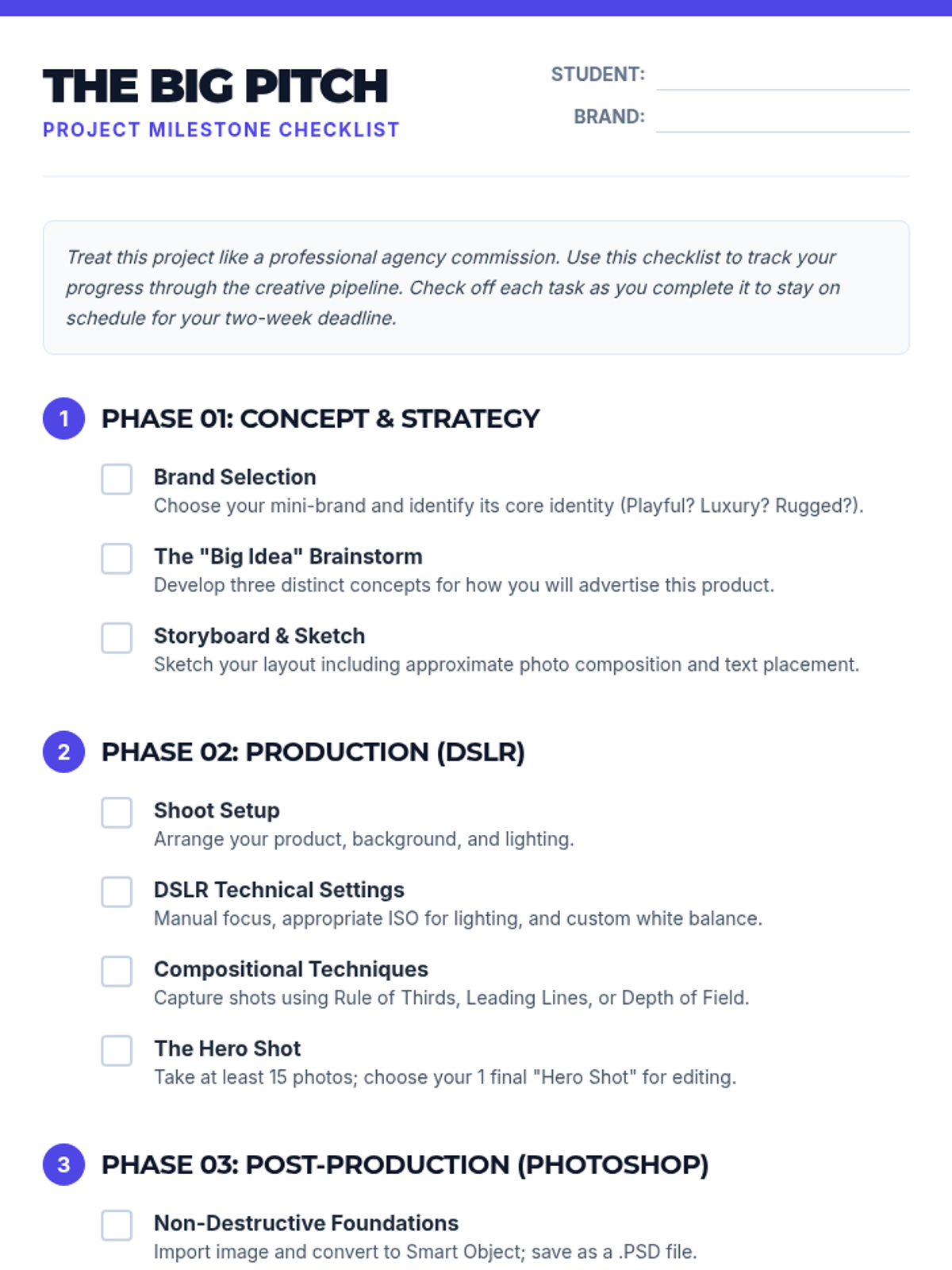
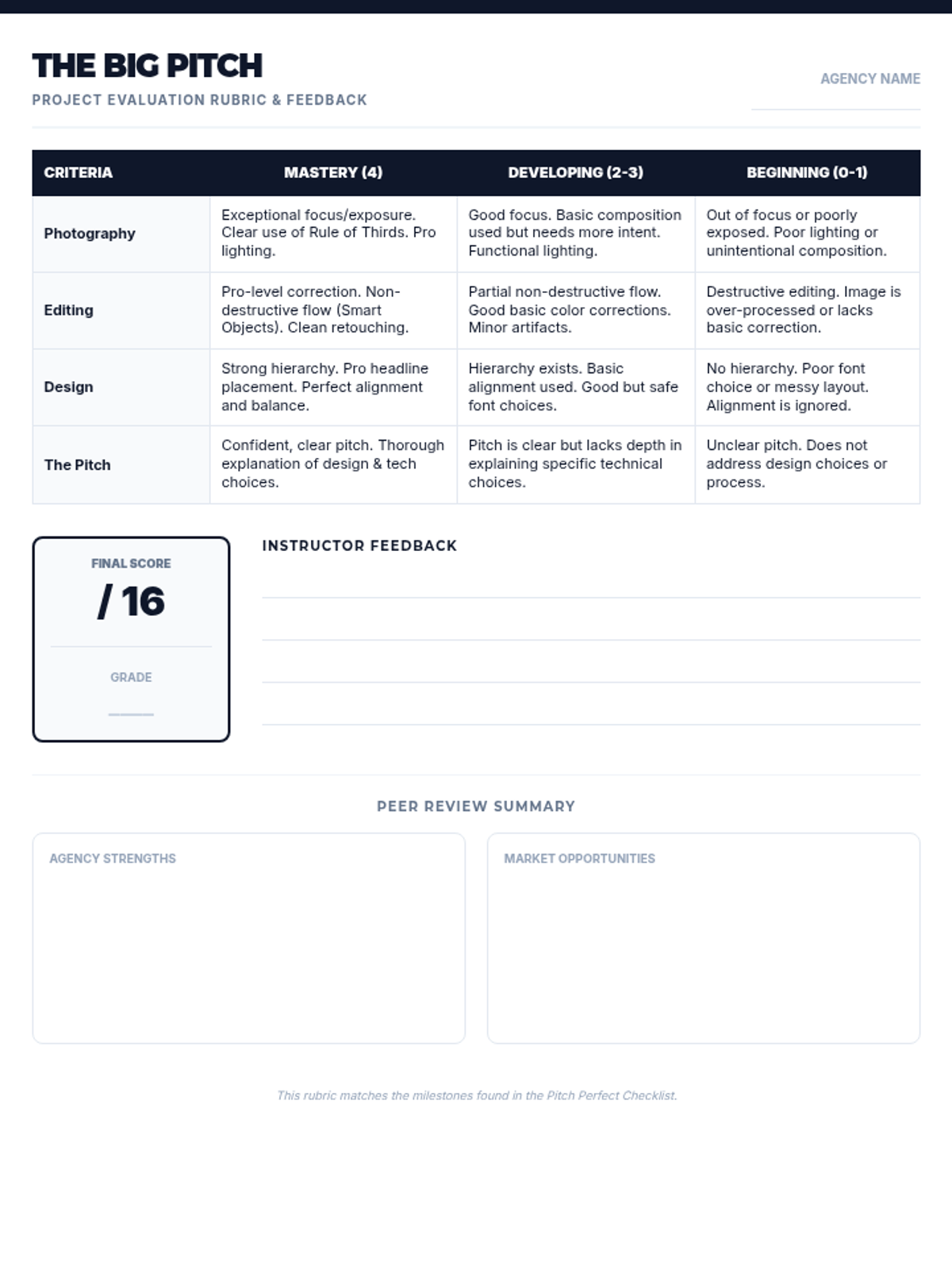
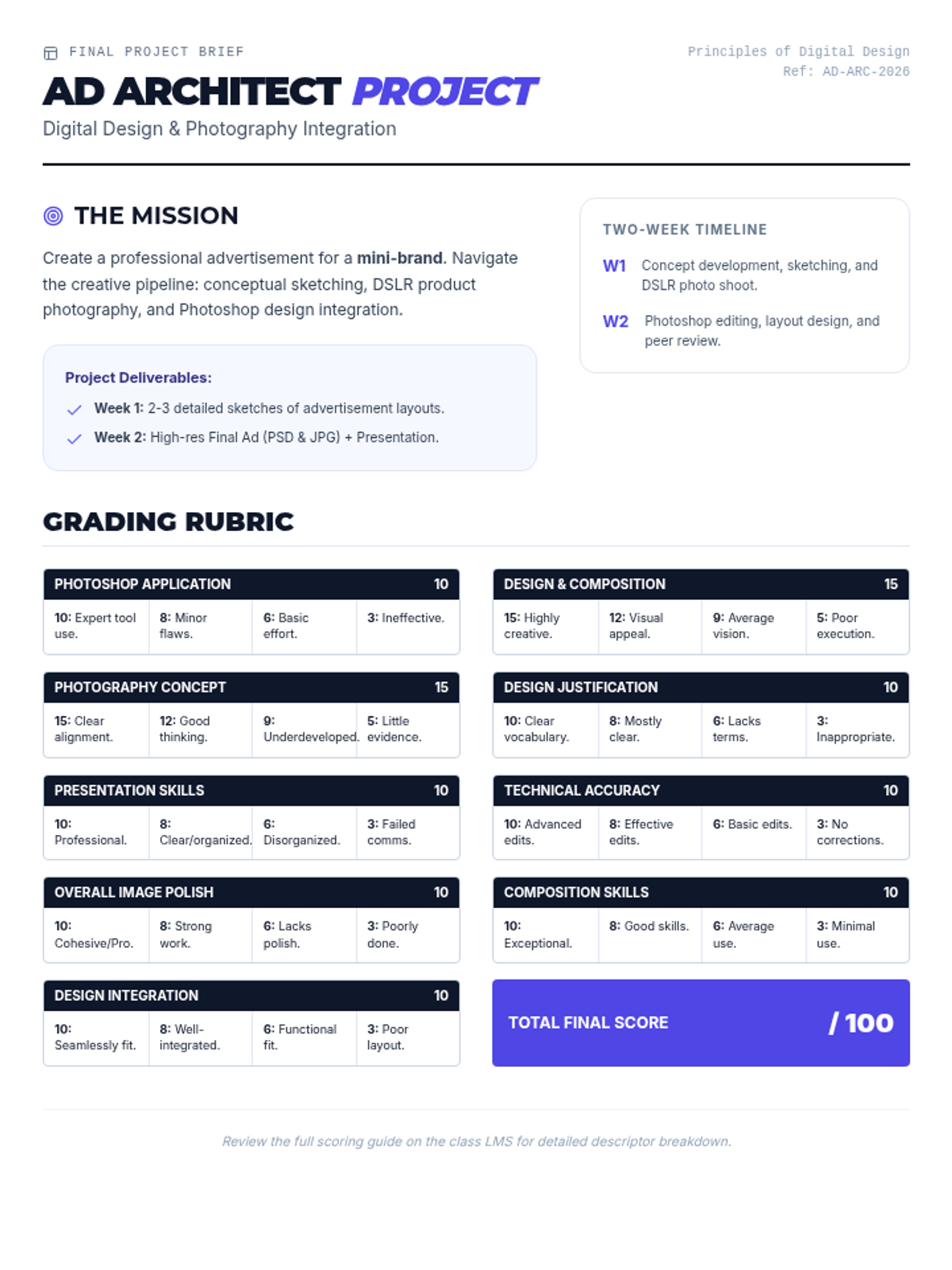
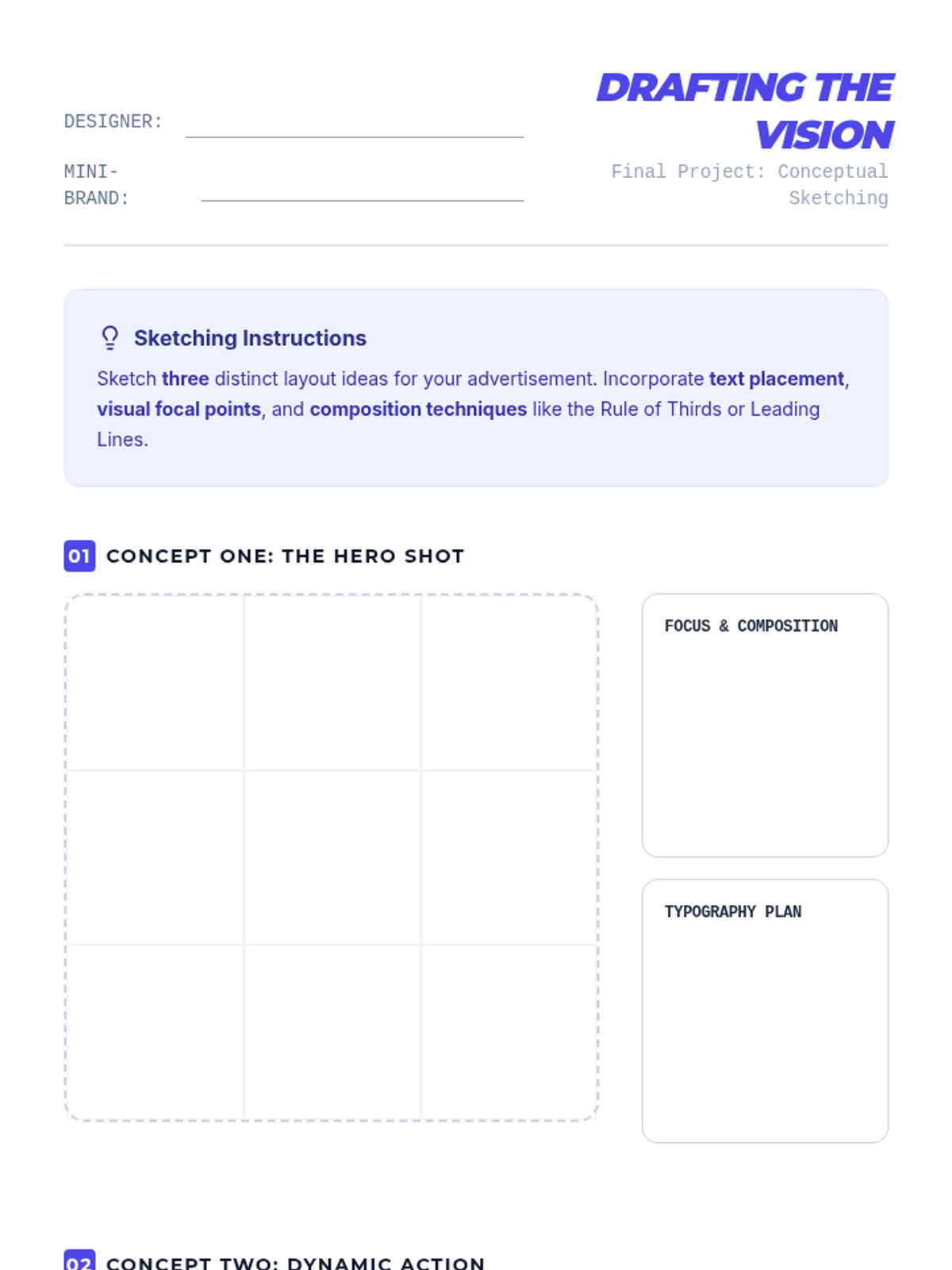
A comprehensive final project where students act as a creative agency to design a professional advertisement for a mini-brand, integrating photography, Photoshop editing, and design principles.
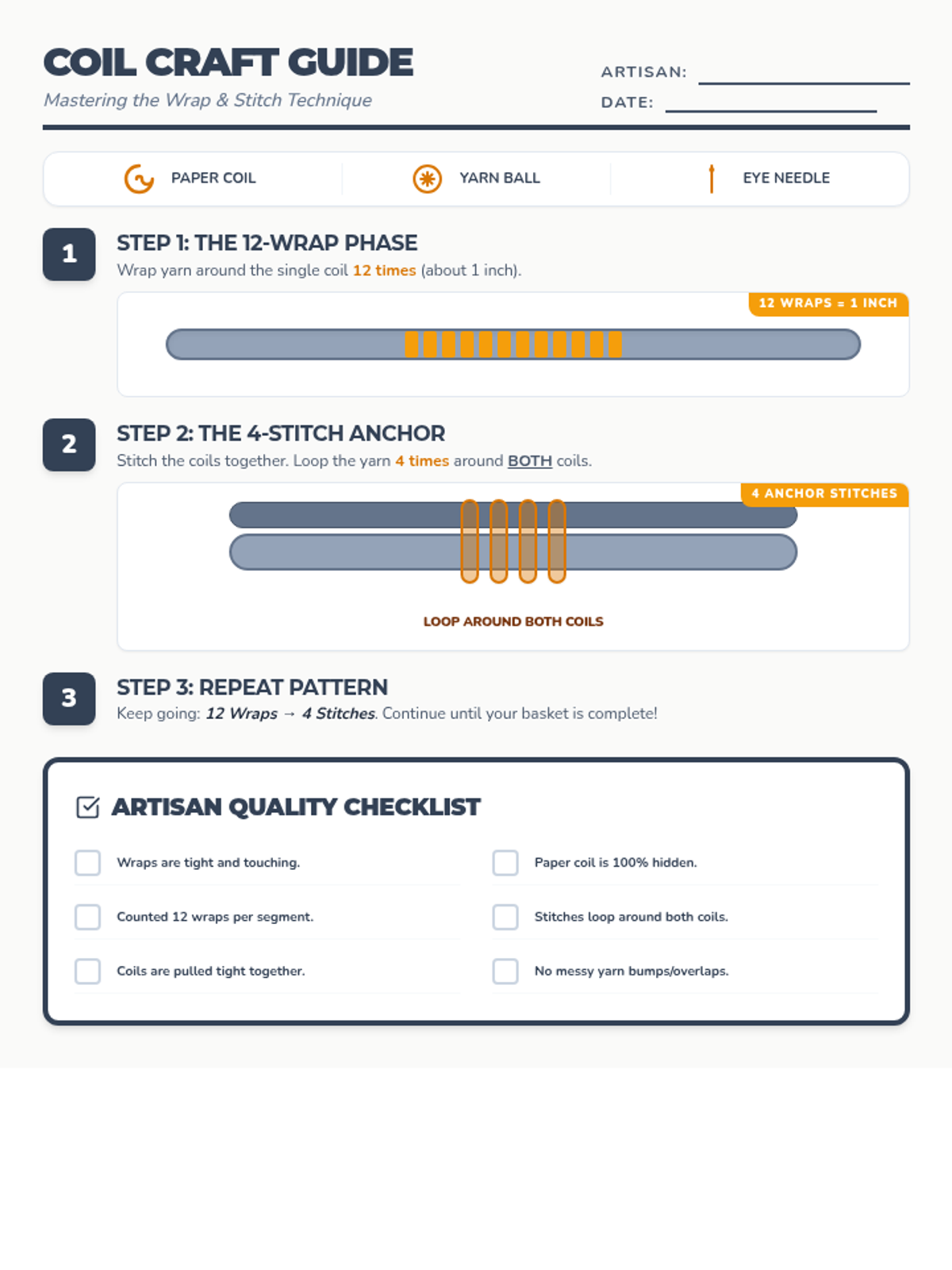
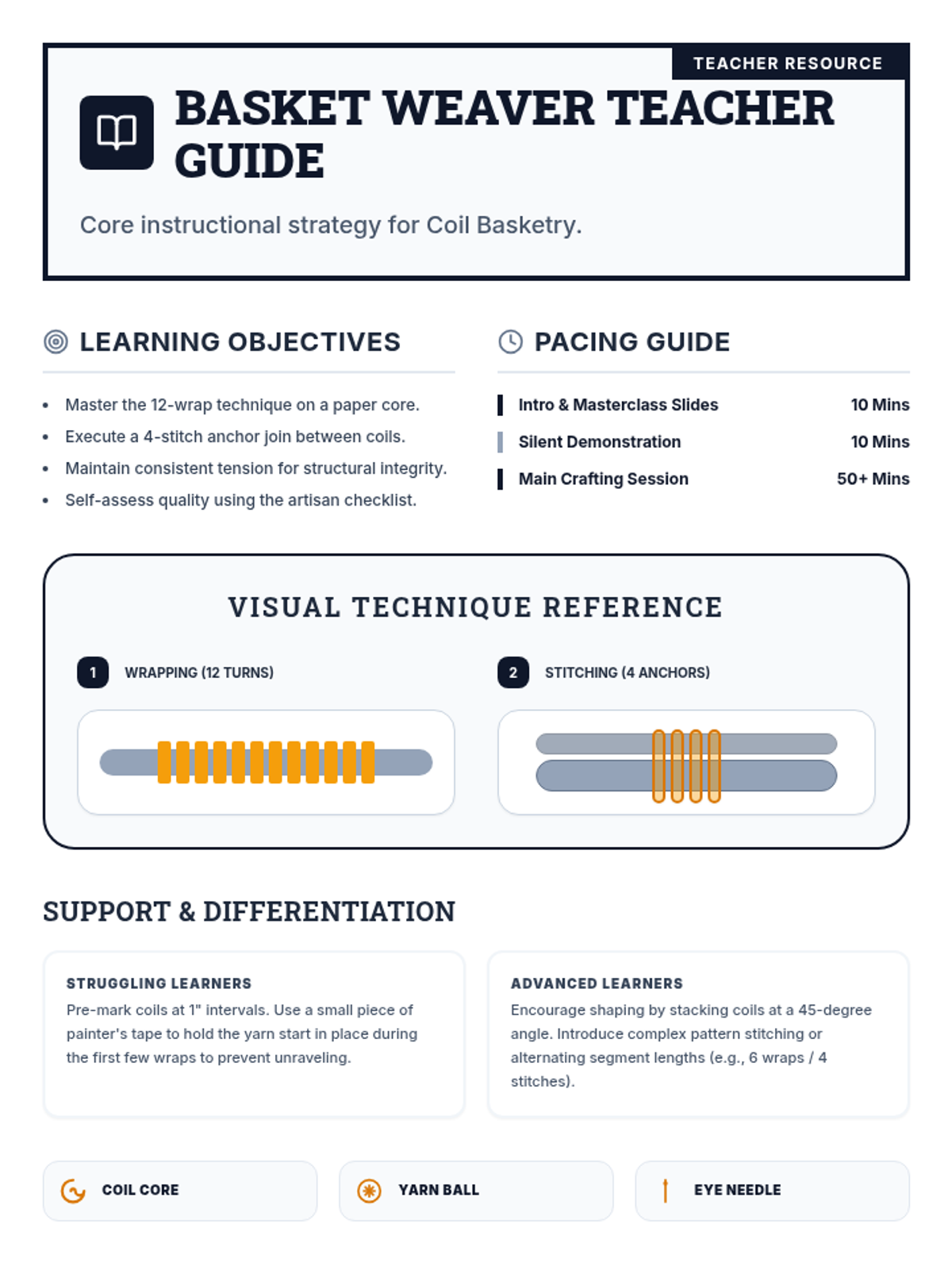
A hands-on introductory lesson to the traditional art of coil basketry using paper coils and yarn. Students master the rhythmic technique of wrapping and stitching to create a functional, decorative vessel.
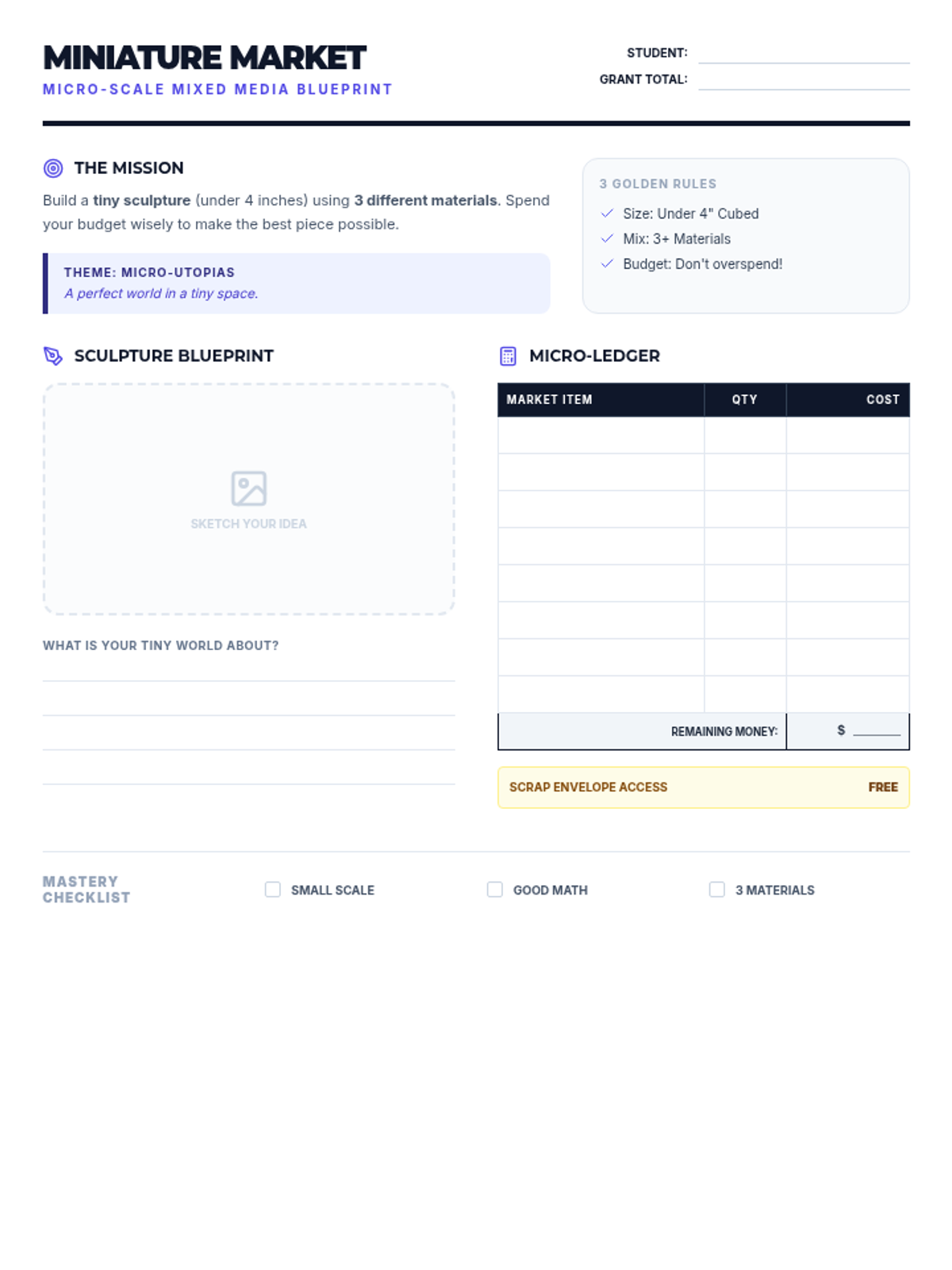
A collaborative art project where students navigate financial constraints to create high-quality mixed media sculptures, mimicking real-world commission and grant structures.
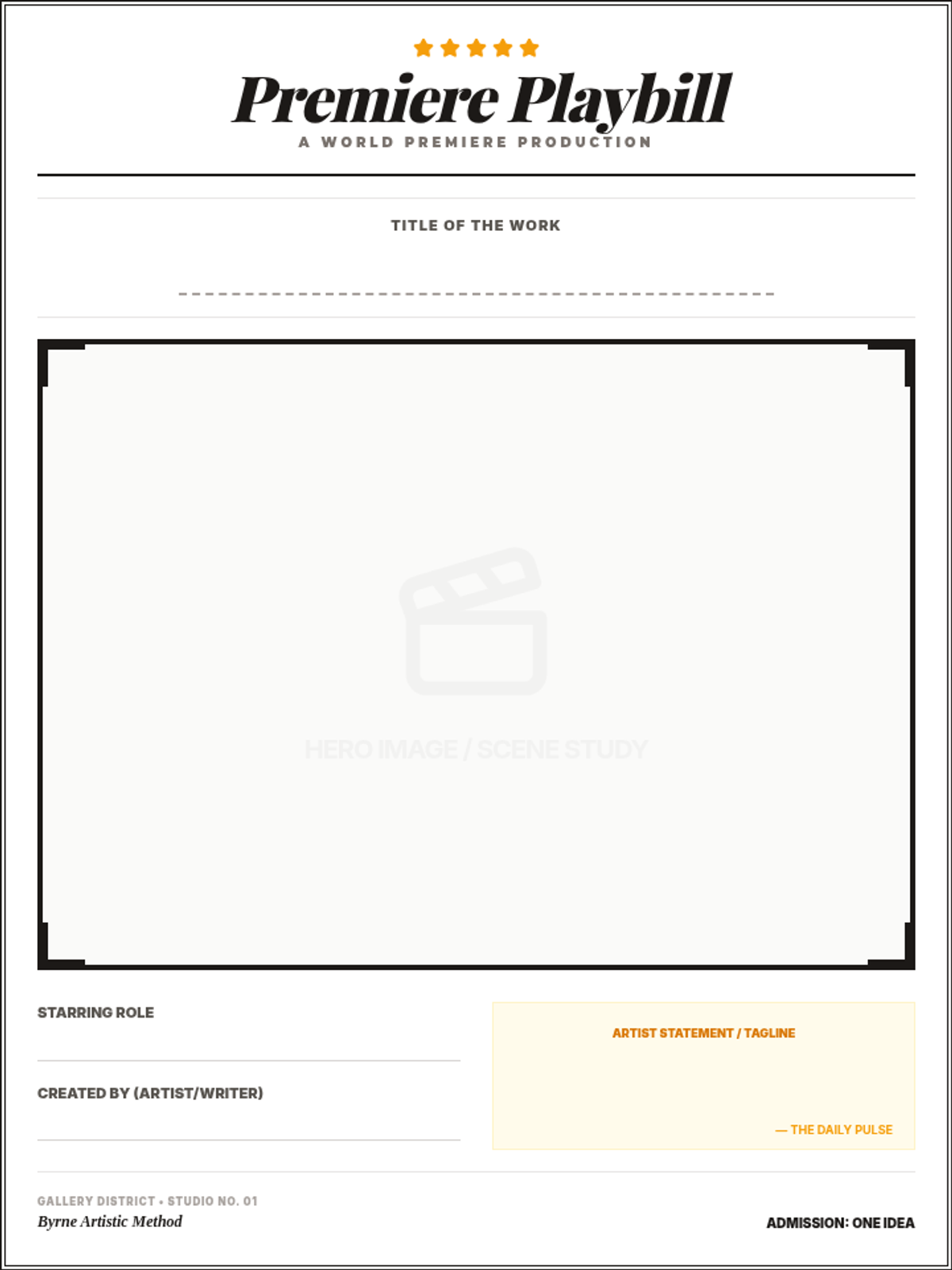
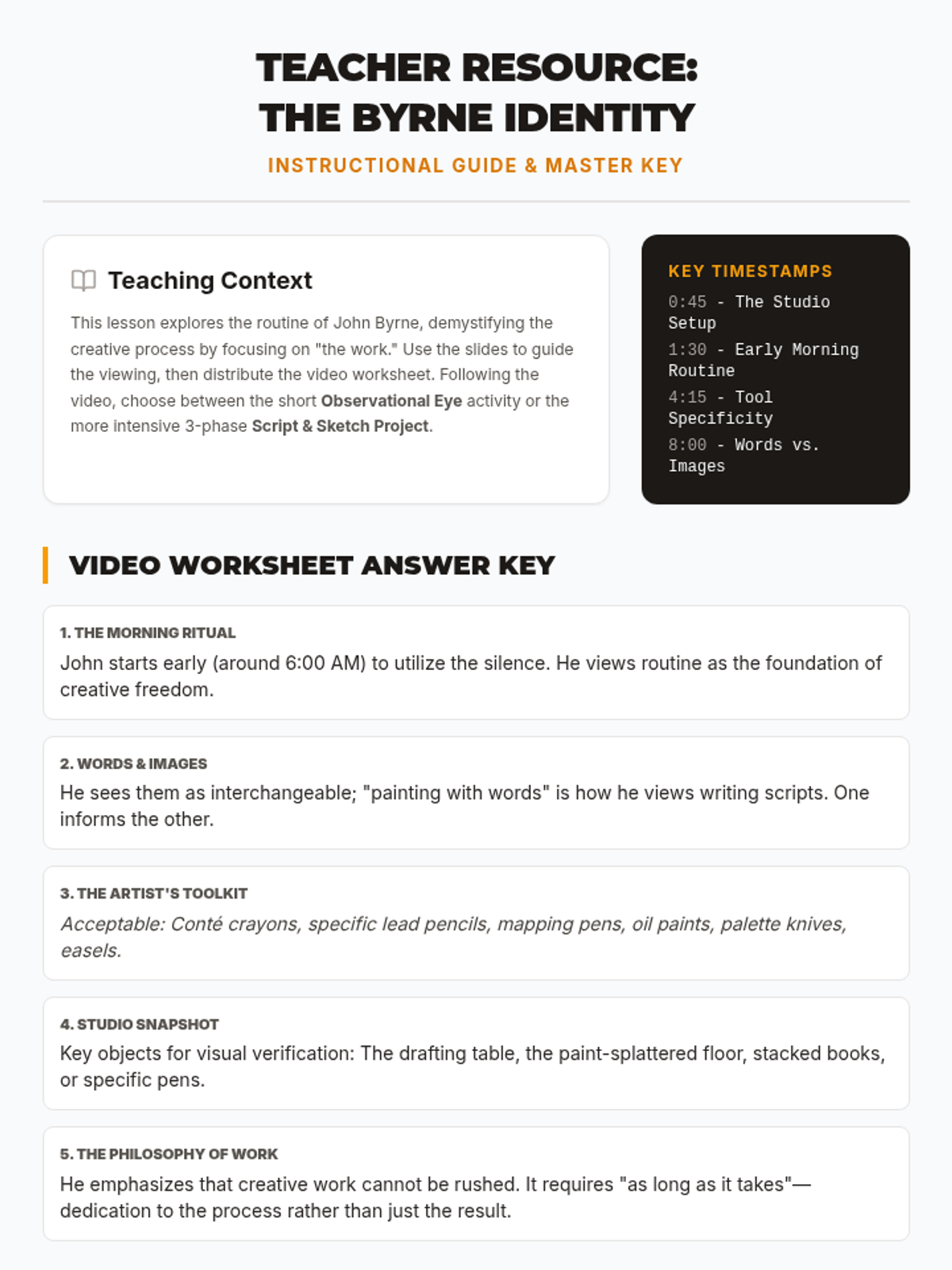
An in-depth look at John Byrne's daily life as a painter and playwright, focusing on his studio habits, materials, and the intersection of visual art and storytelling.
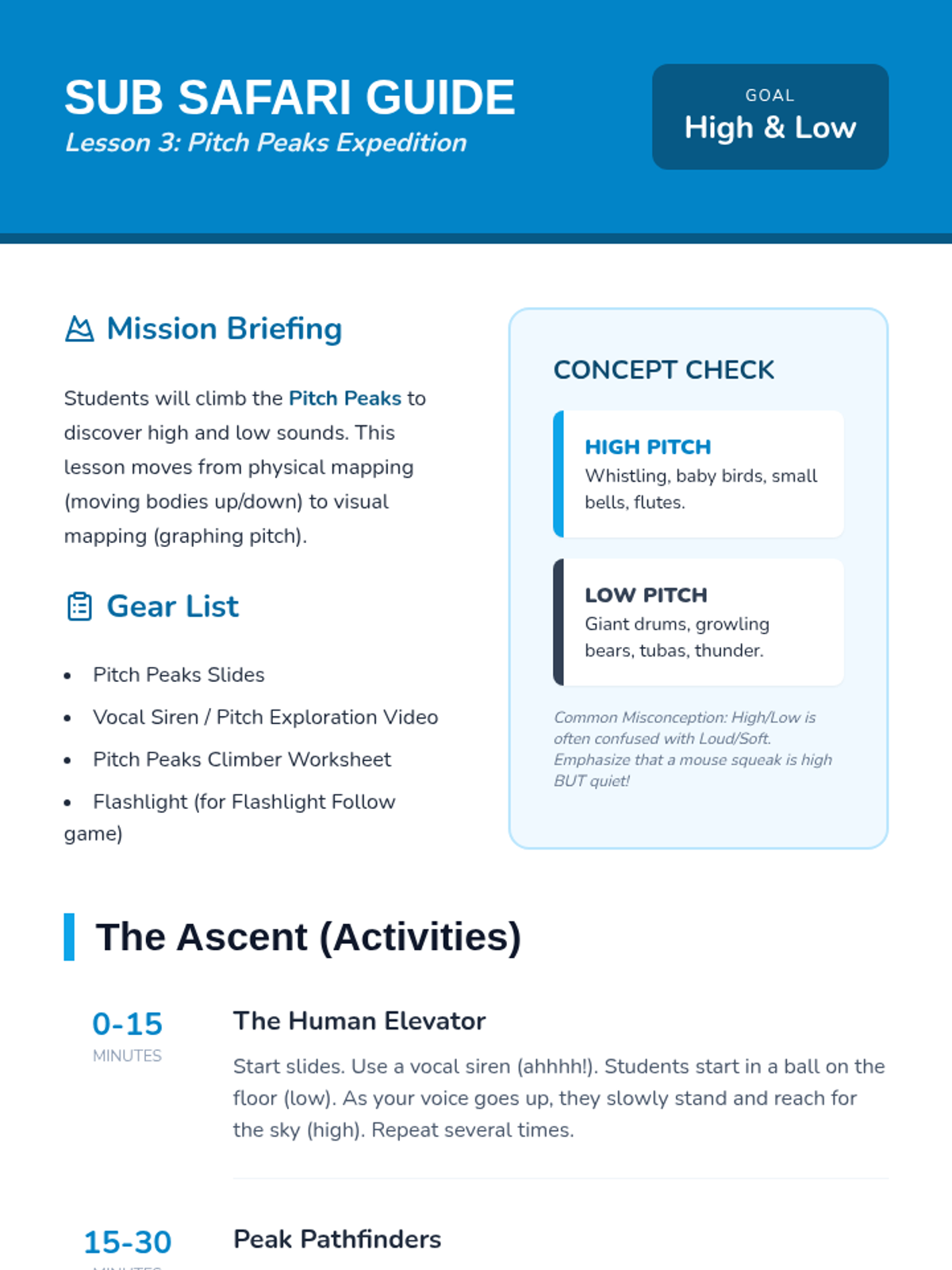
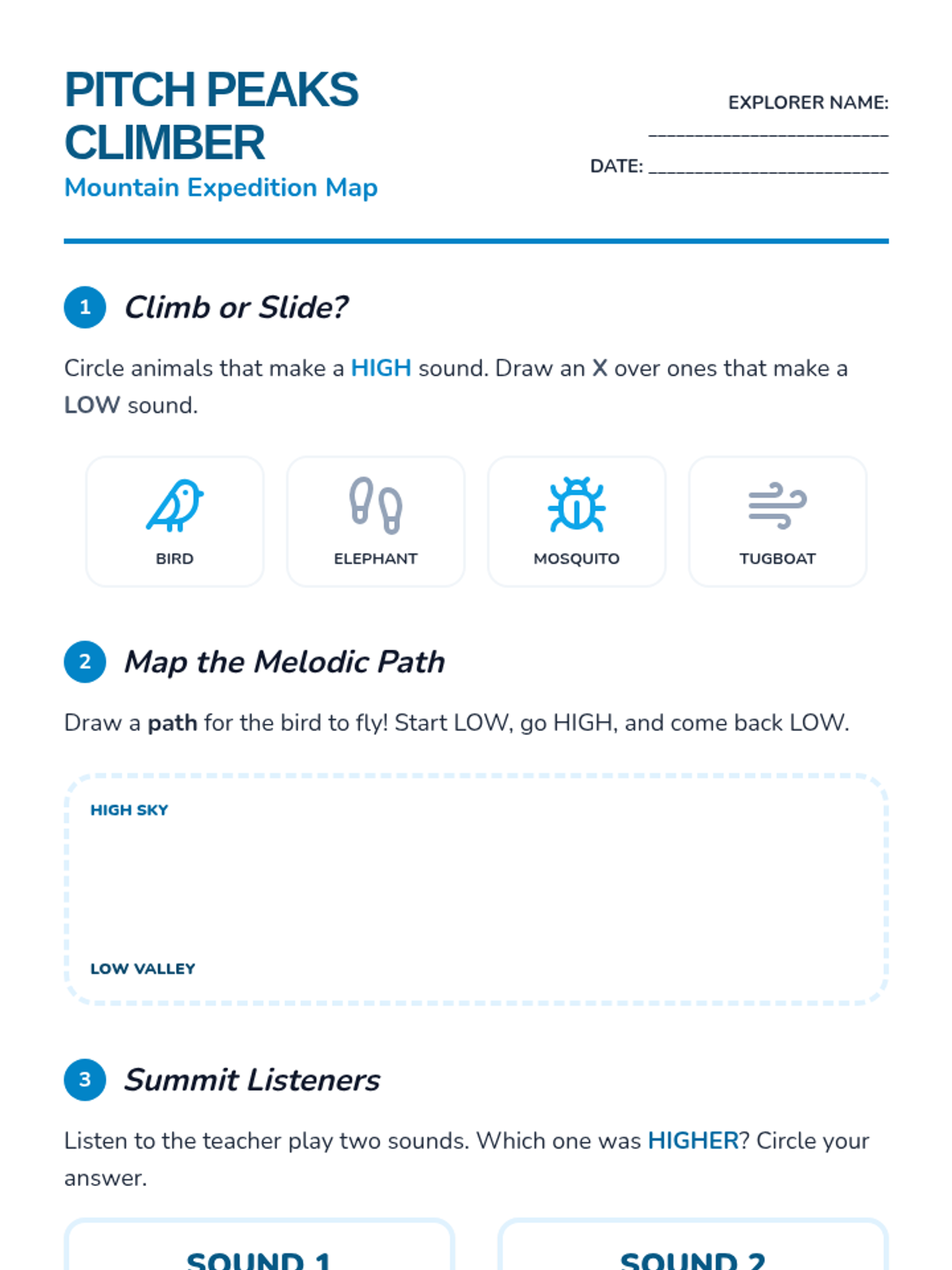
Students climb the musical mountains to distinguish between high and low sounds through active listening and visual mapping.
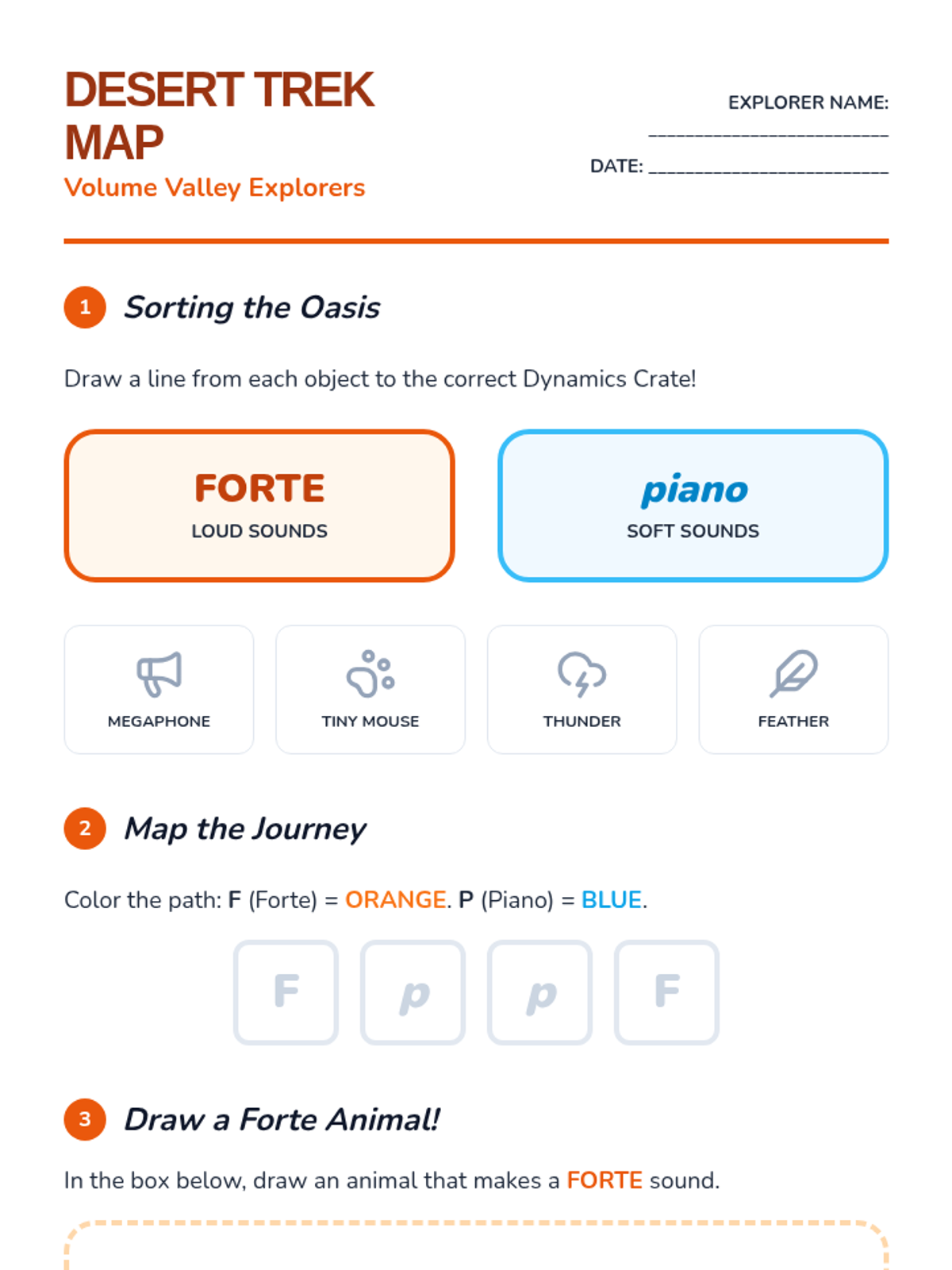
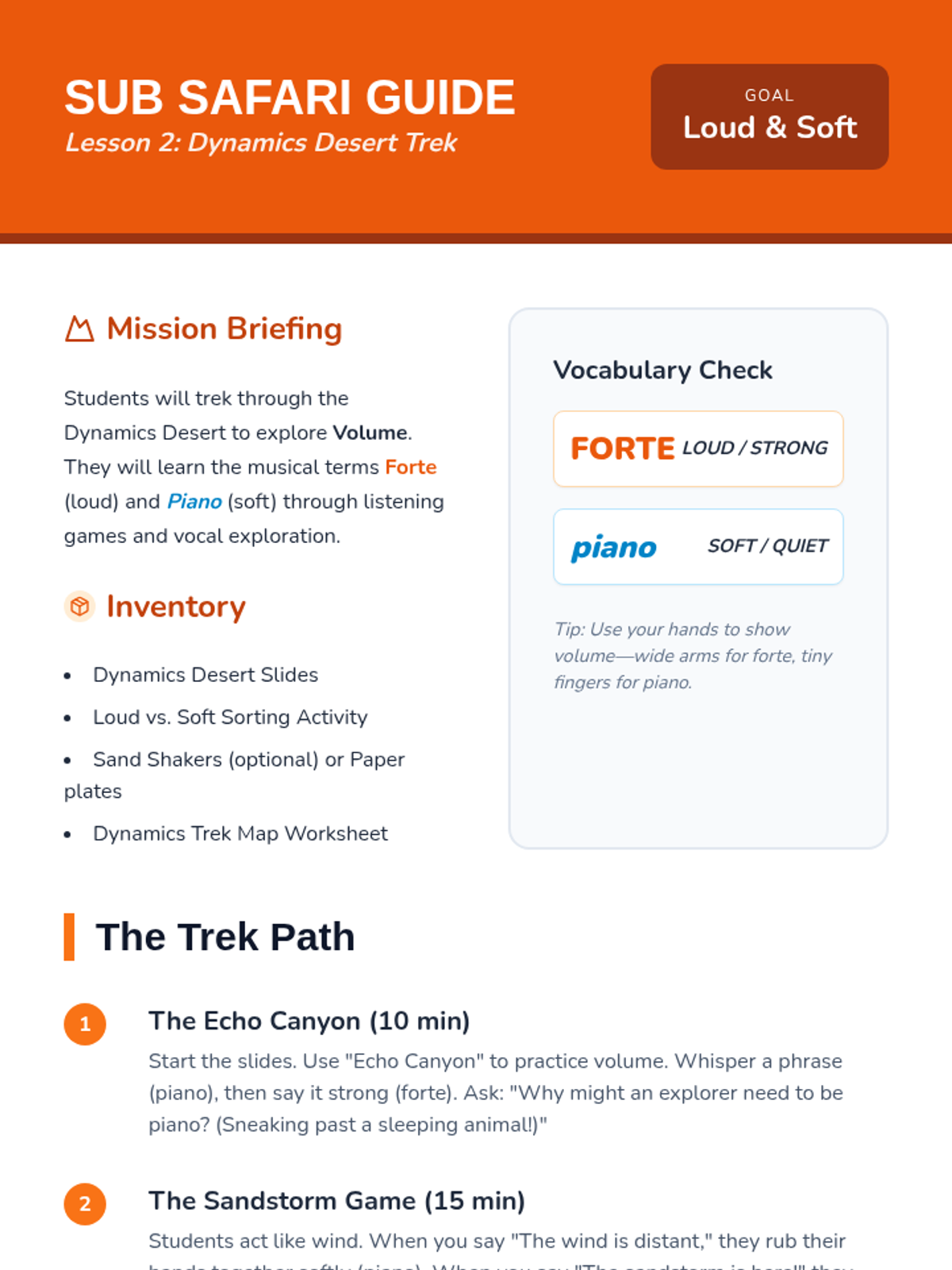
An adventure through the desert to discover piano and forte, using environmental sounds and vocal exploration to understand volume.
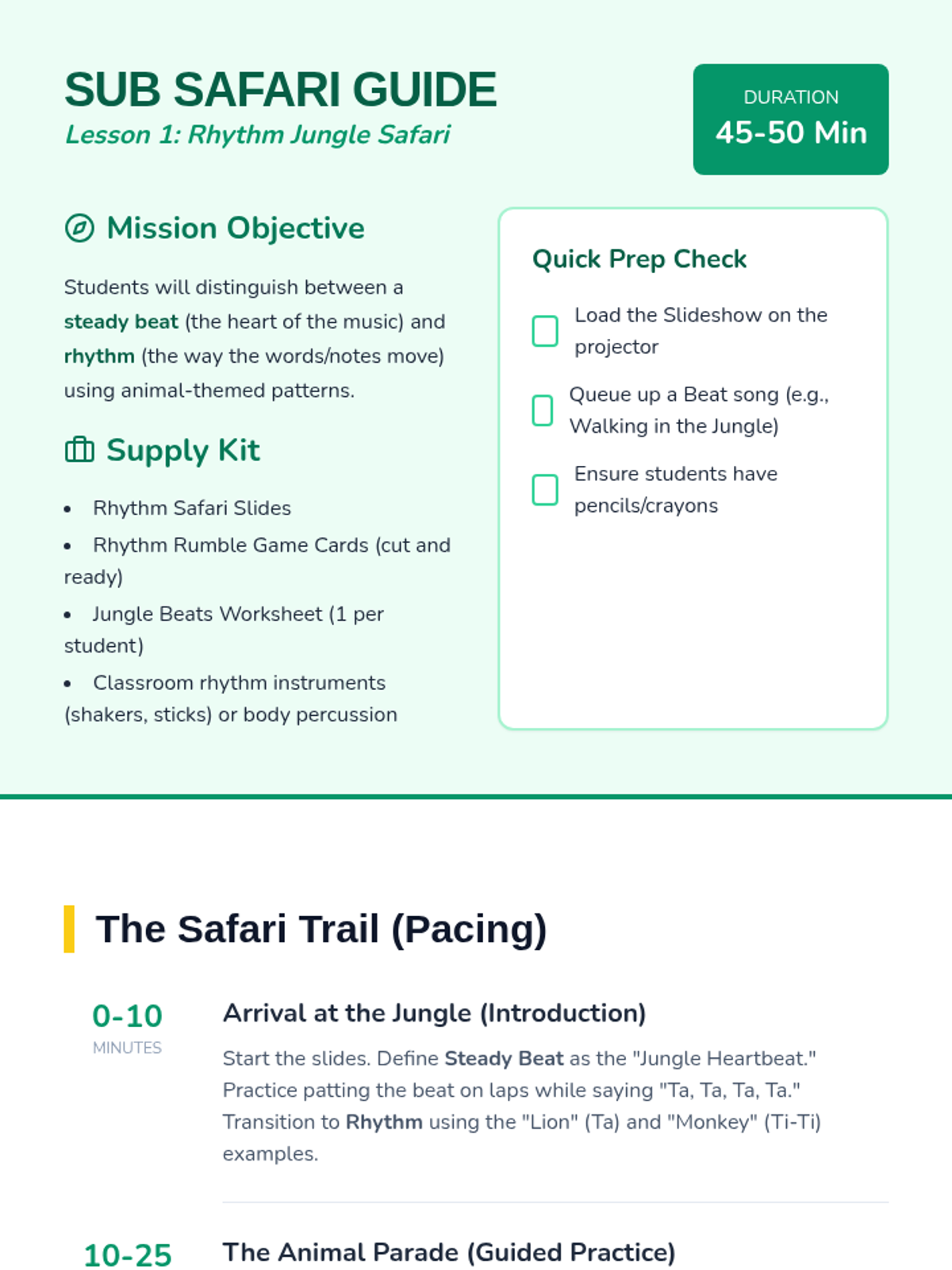
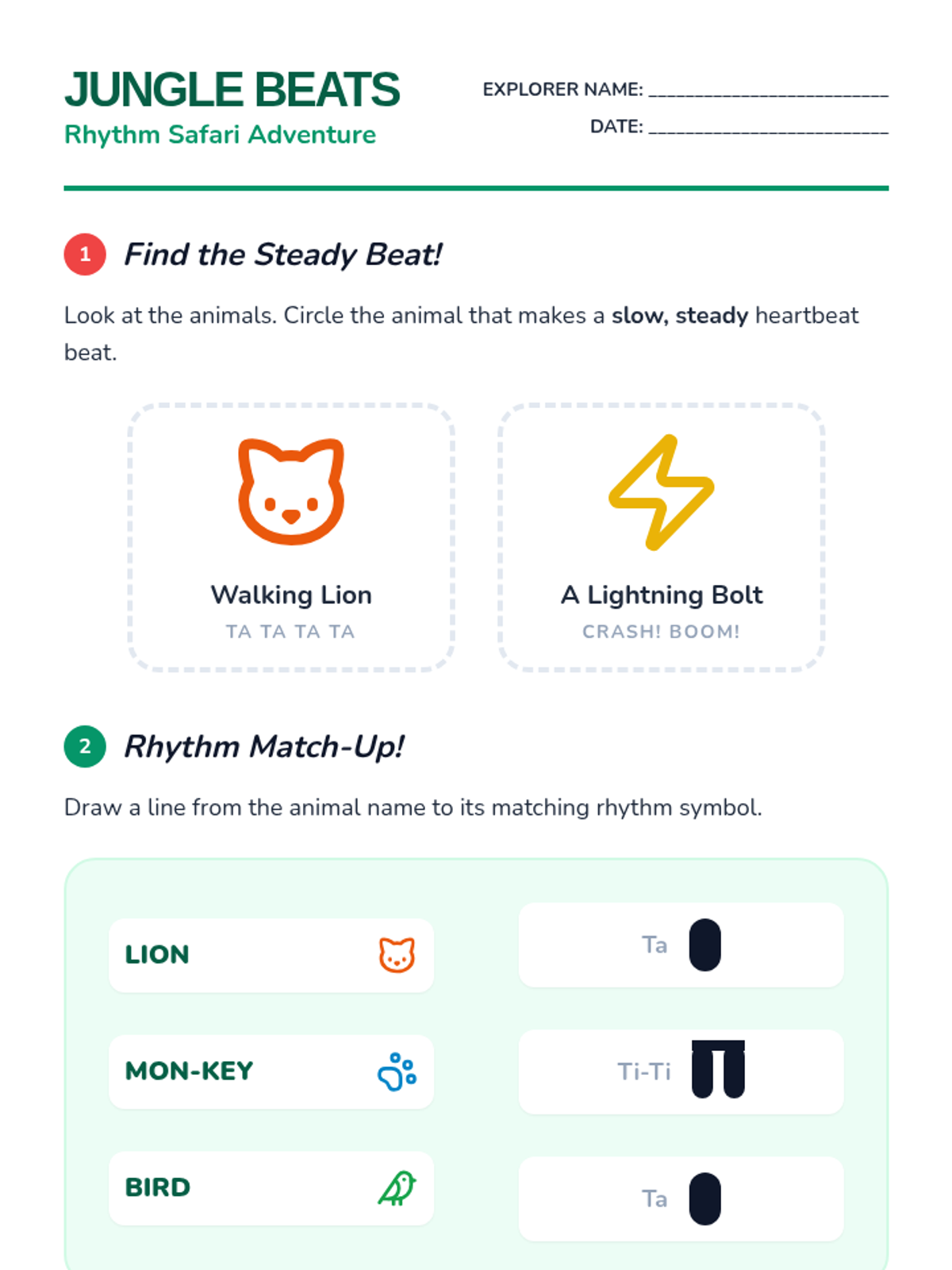
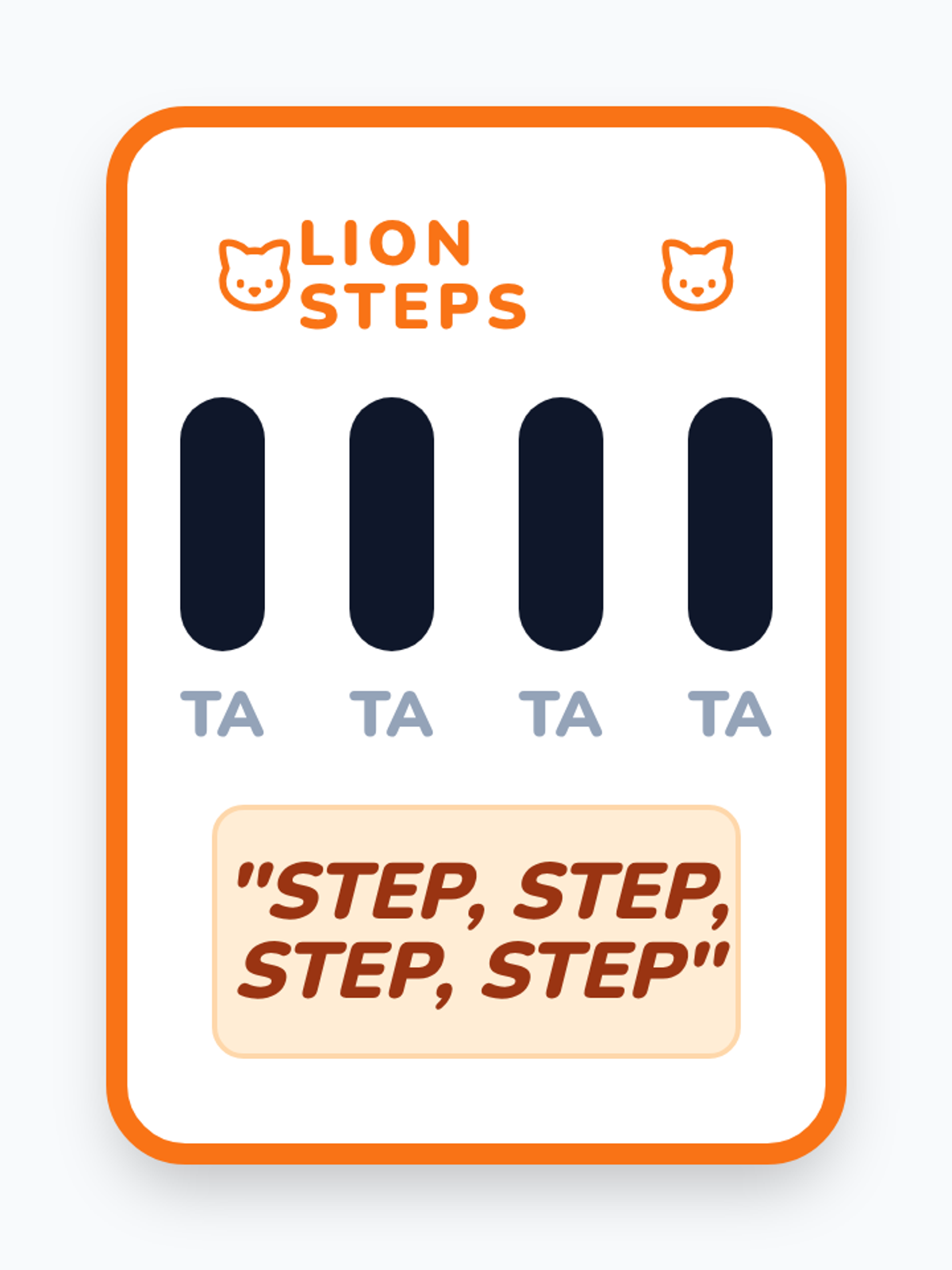
Students explore the difference between steady beat and rhythm using animal movements and simple rhythmic patterns (quarter and eighth notes).
A comprehensive final project for digital design students where they create a professional advertisement for a mini-brand using photography and Photoshop.
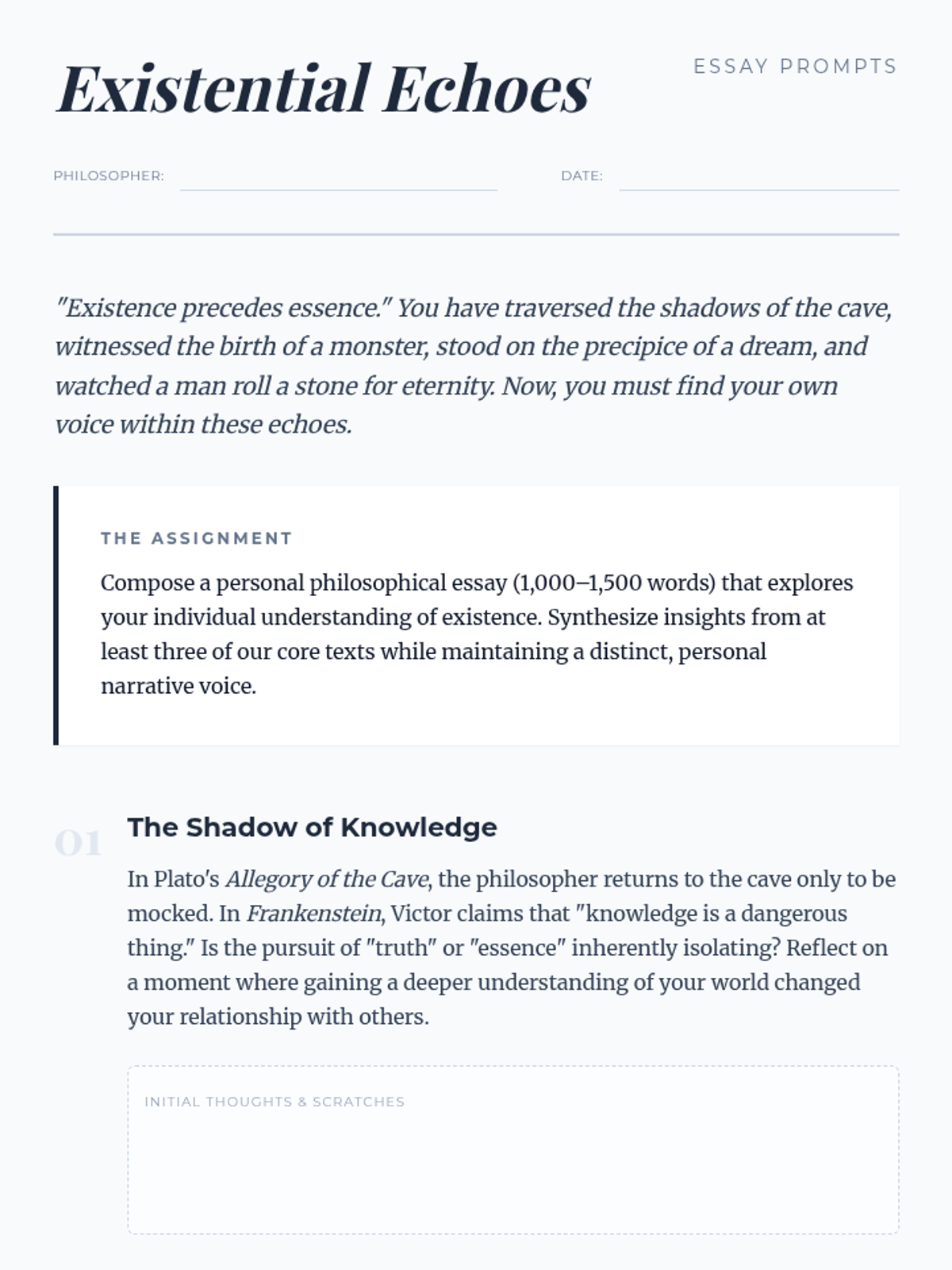
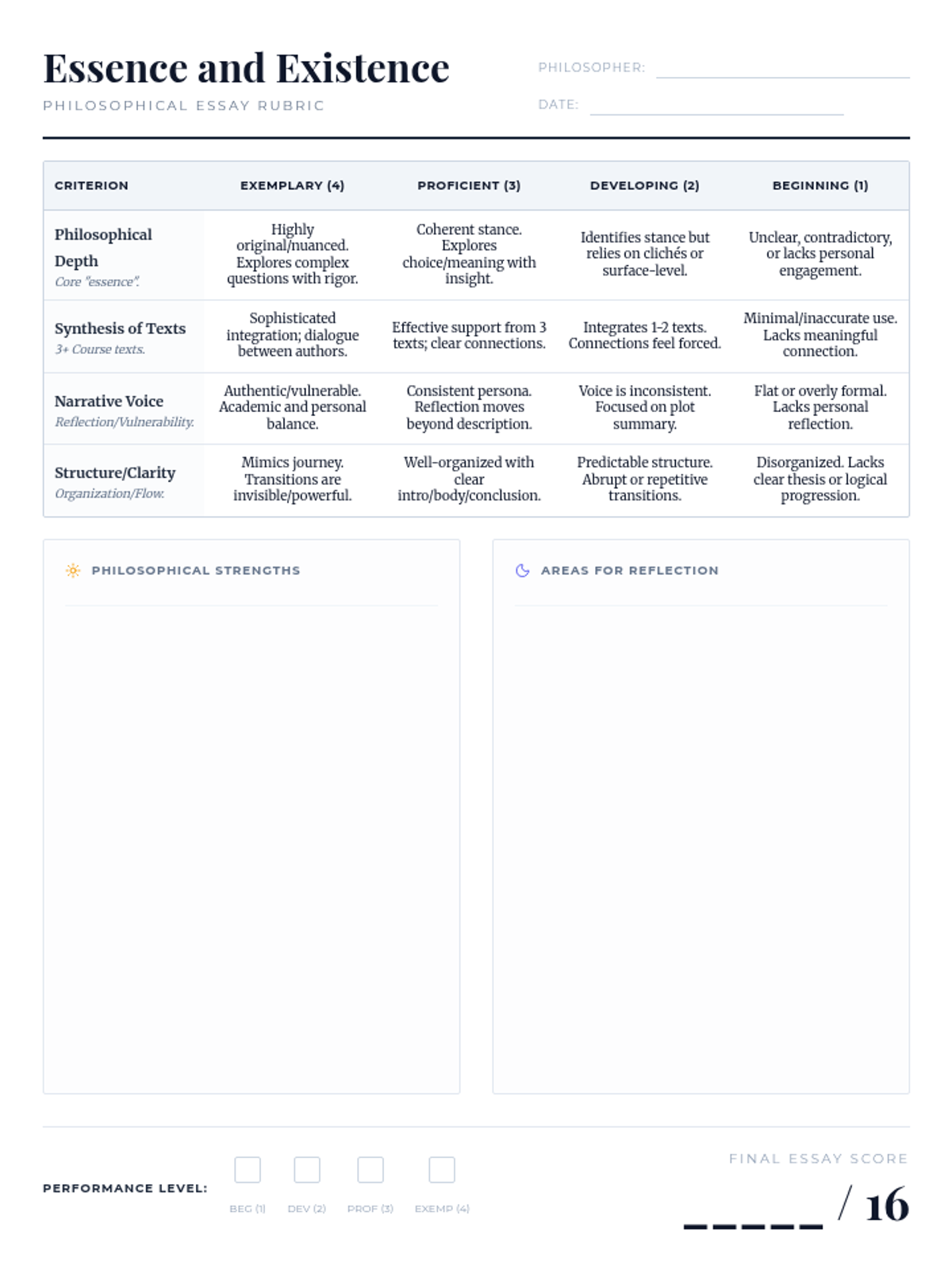
A exploration of existential themes through classic literature, philosophy, and contemporary film, culminating in a personal philosophical essay.
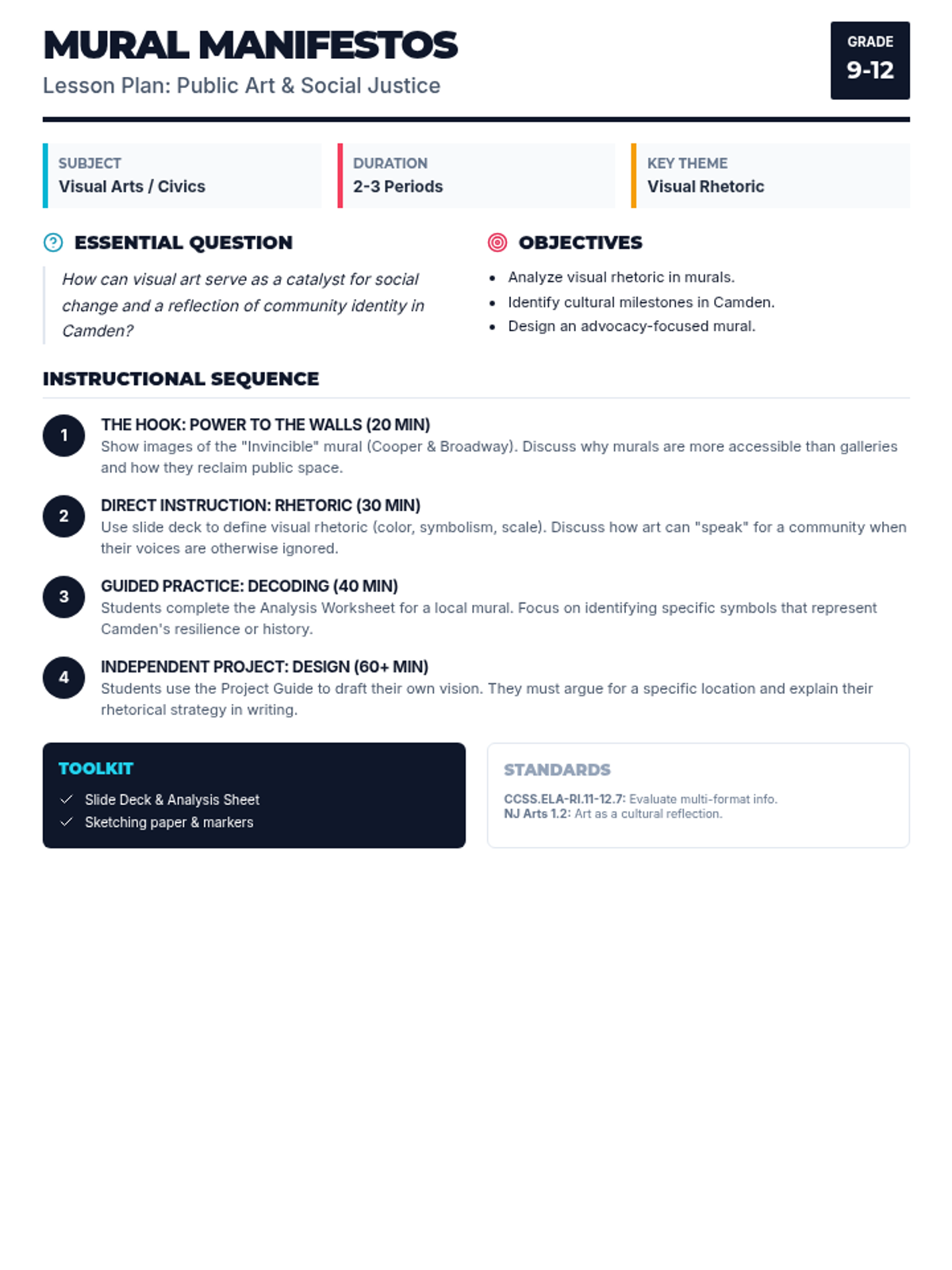
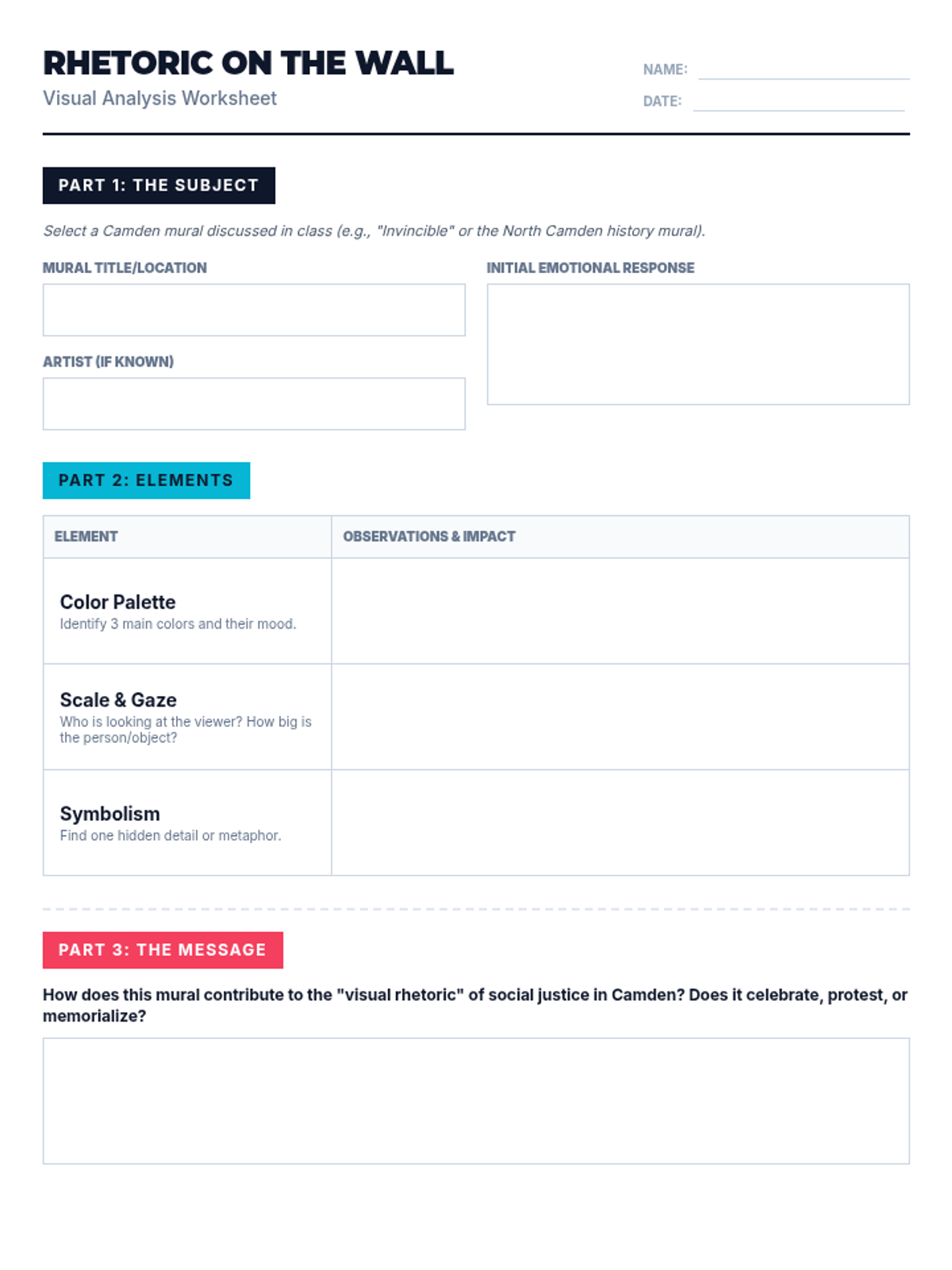
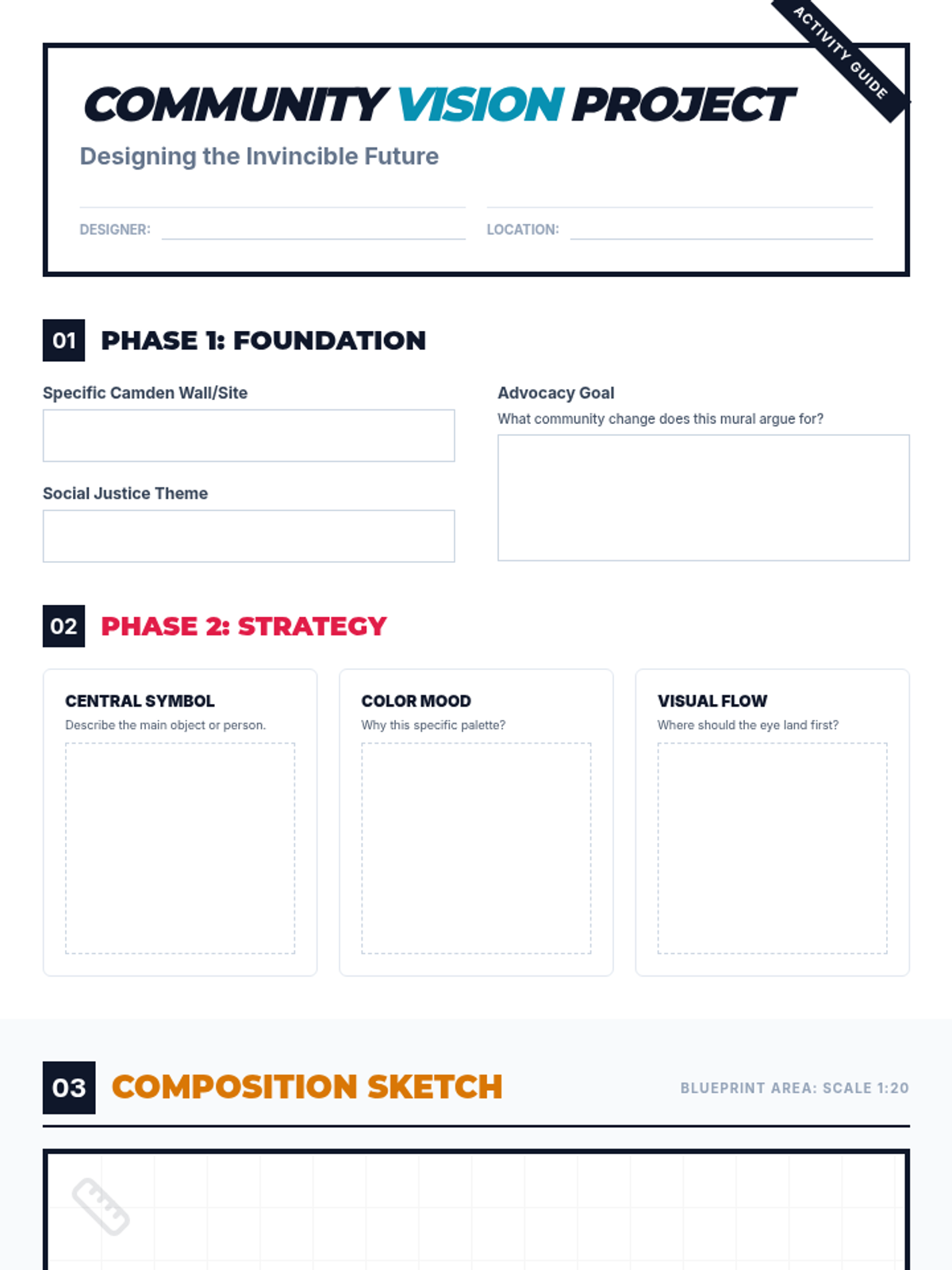
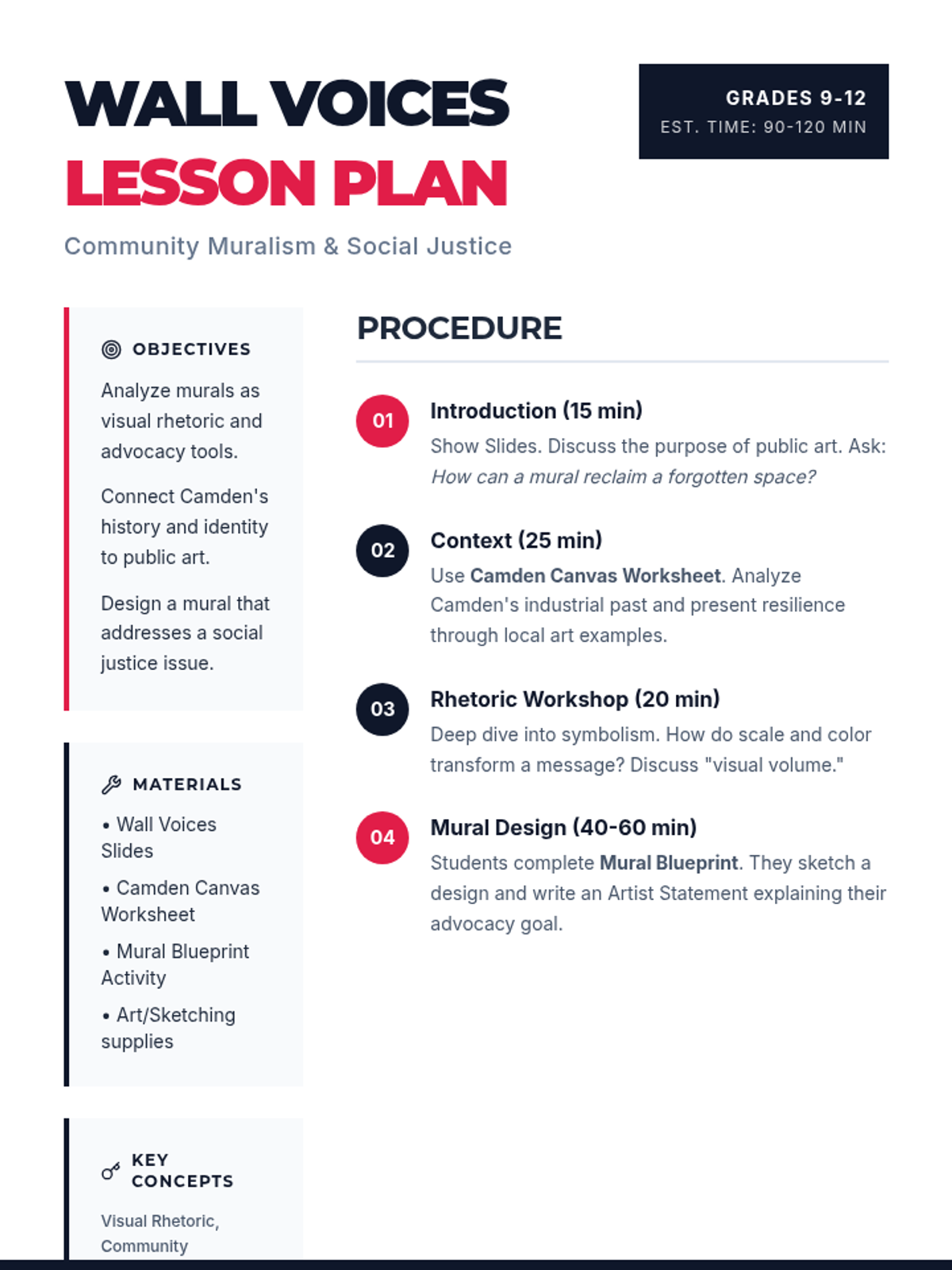
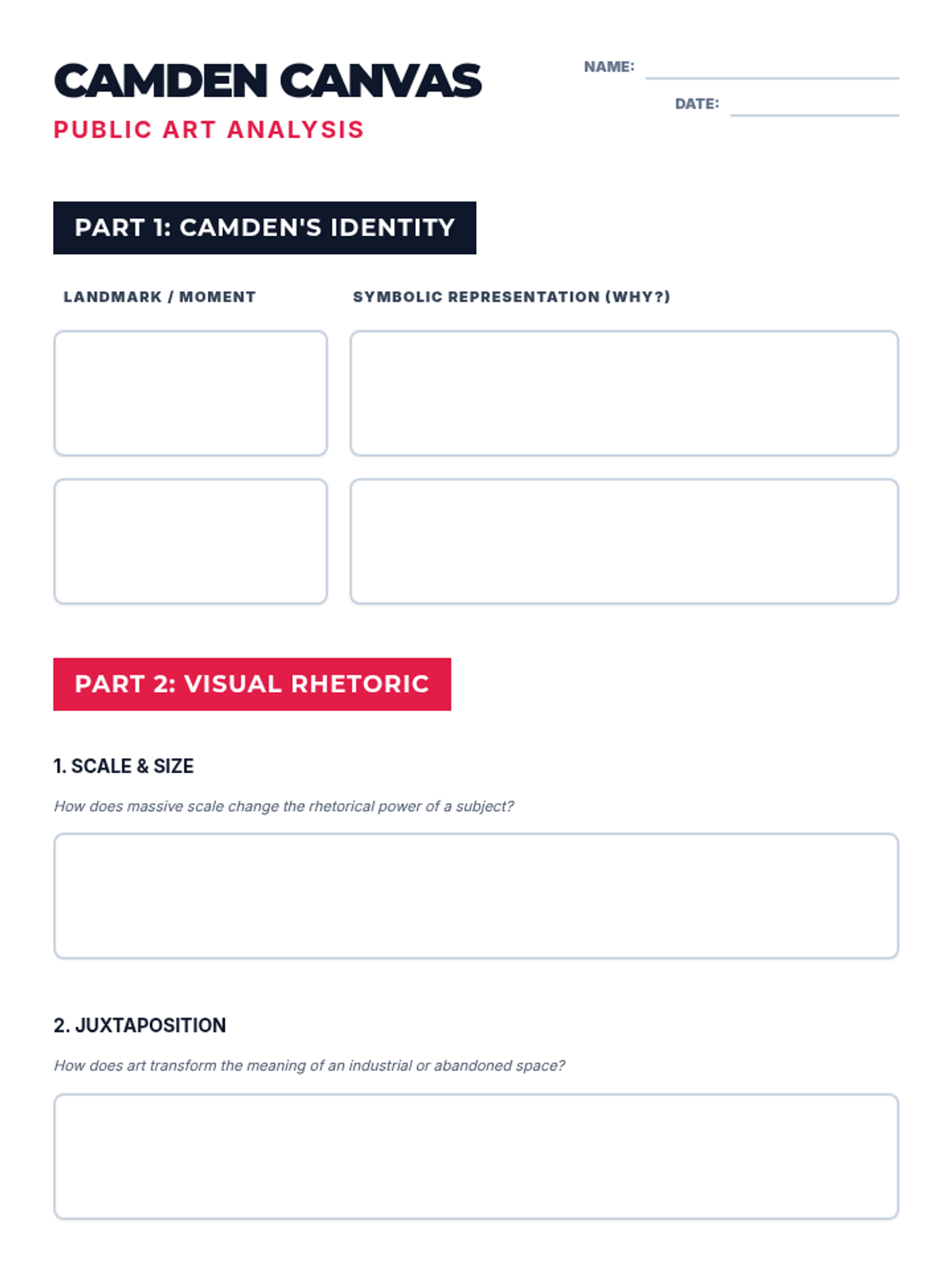
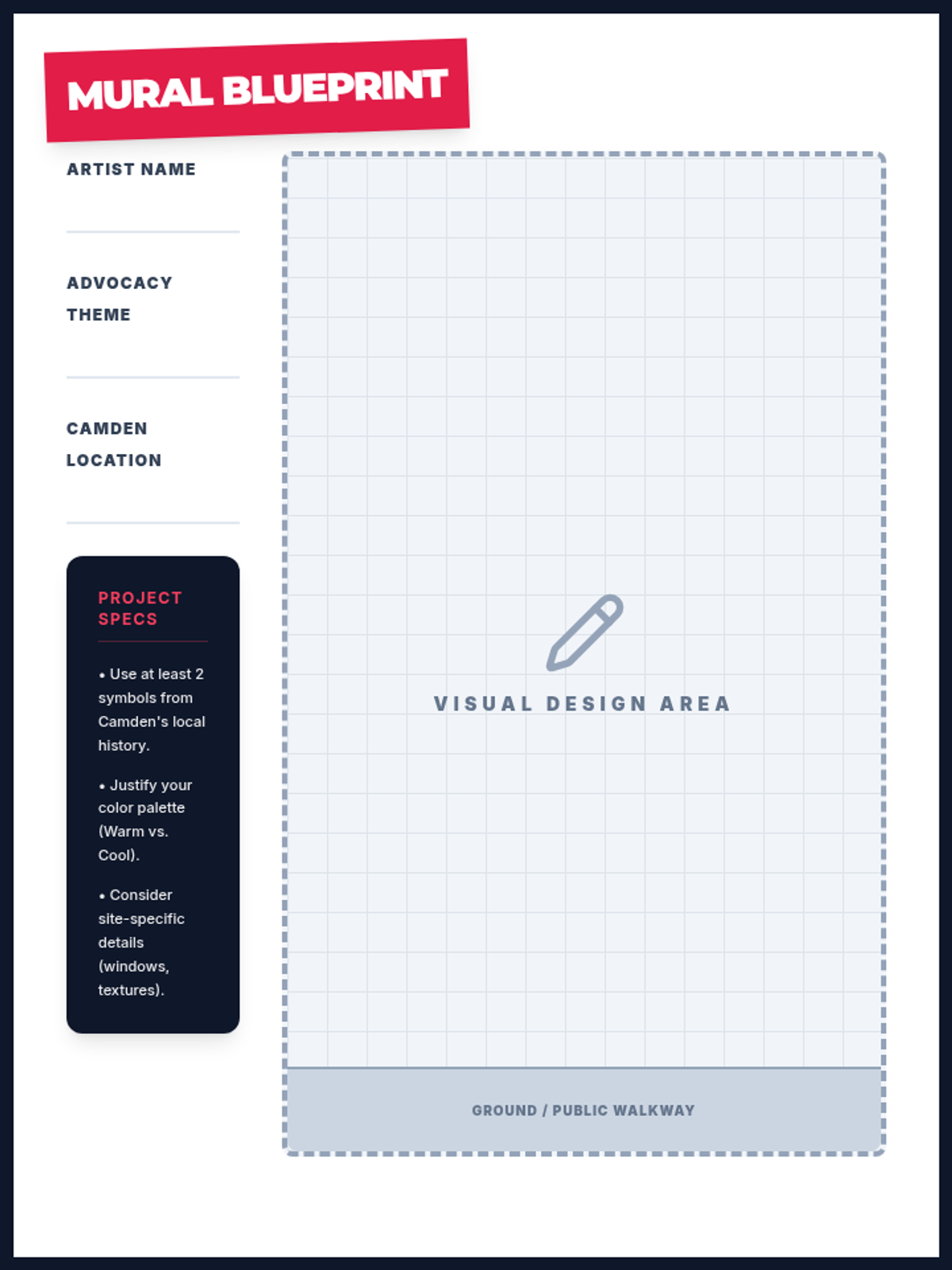
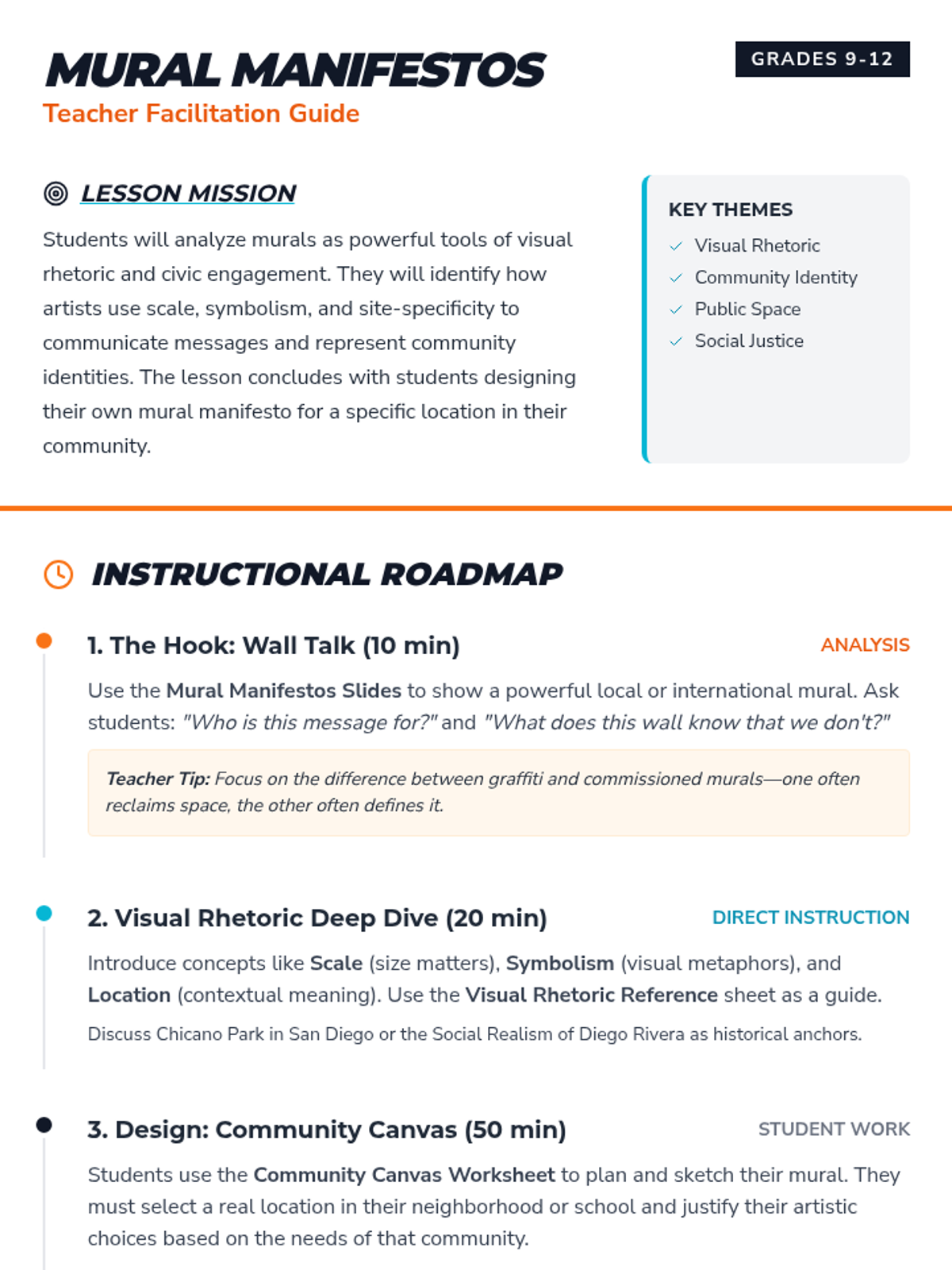
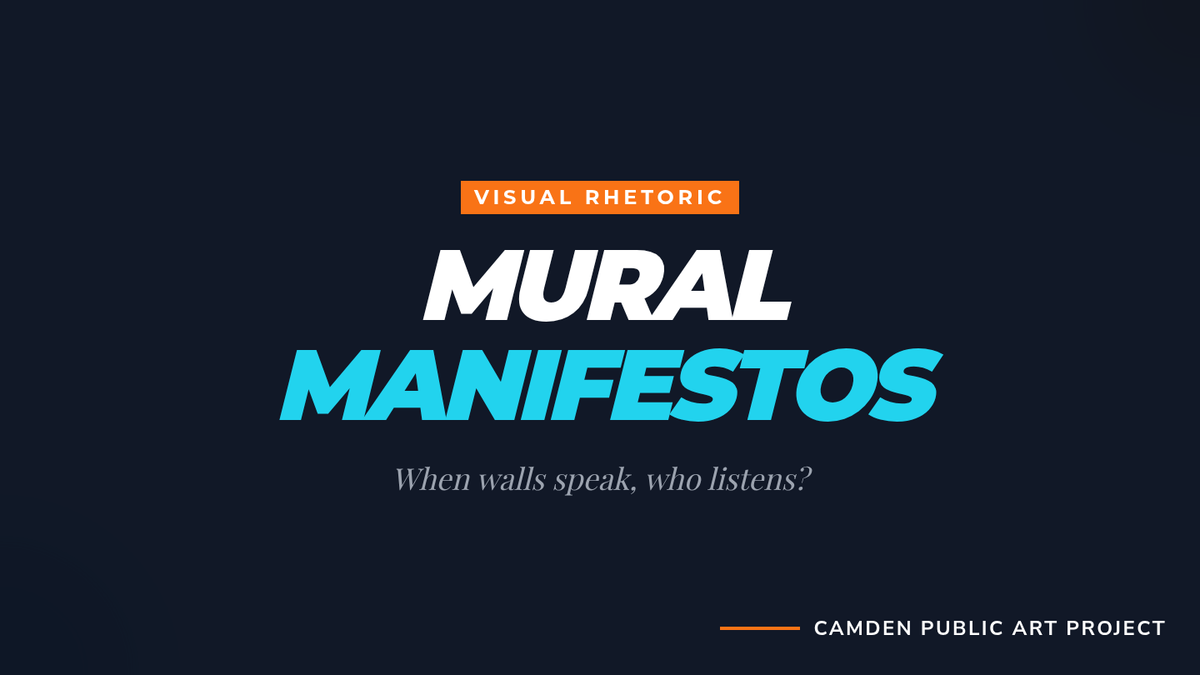
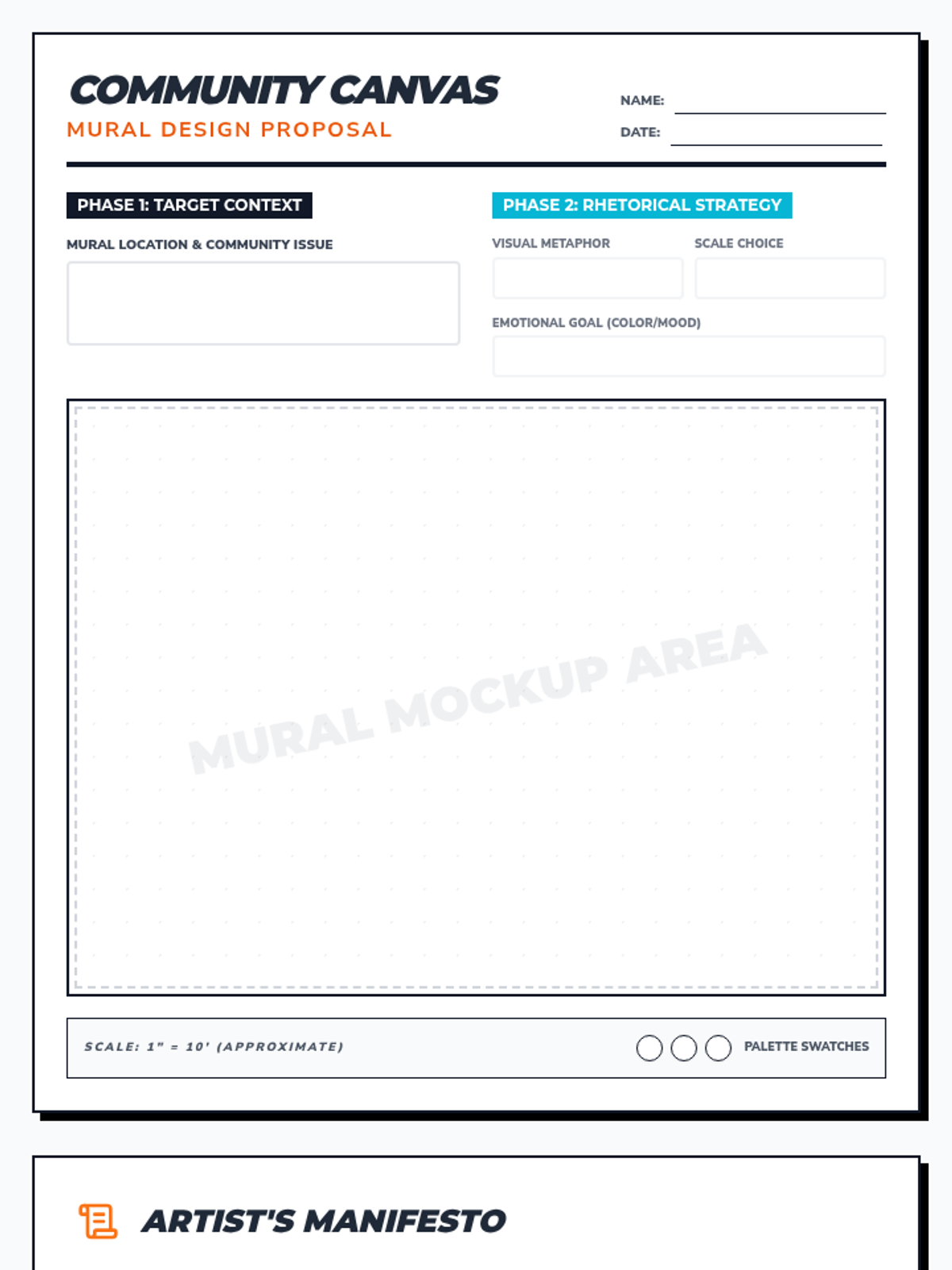
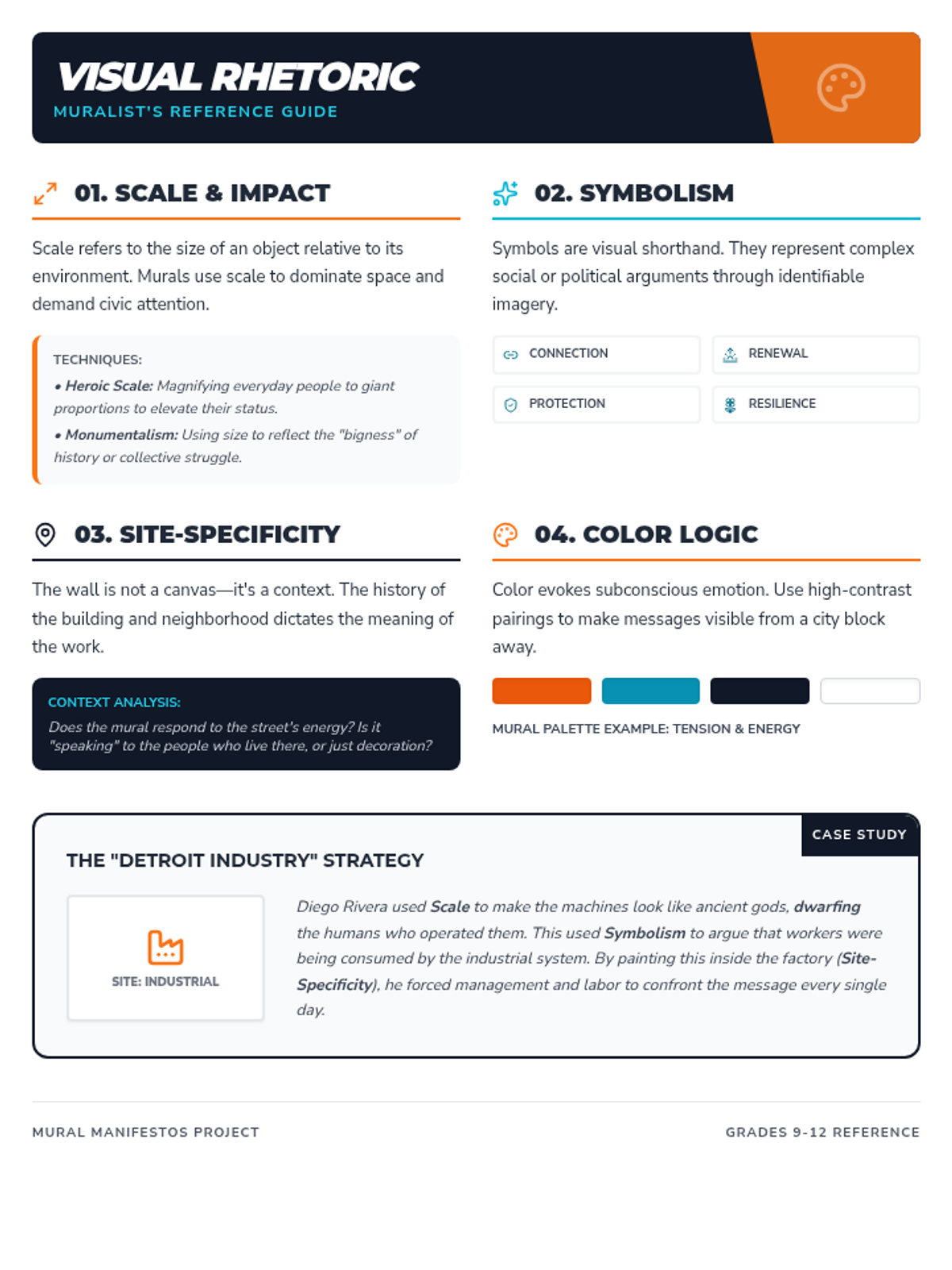
In this lesson, high school students explore the power of public art as a tool for social justice and community advocacy. They will analyze visual rhetoric in famous murals and design their own mural concept that honors the history and future of Camden, NJ.
A high school lesson exploring public art as a tool for social justice, specifically focused on the history and future of Camden, NJ. Students analyze visual rhetoric and design their own mural concepts.
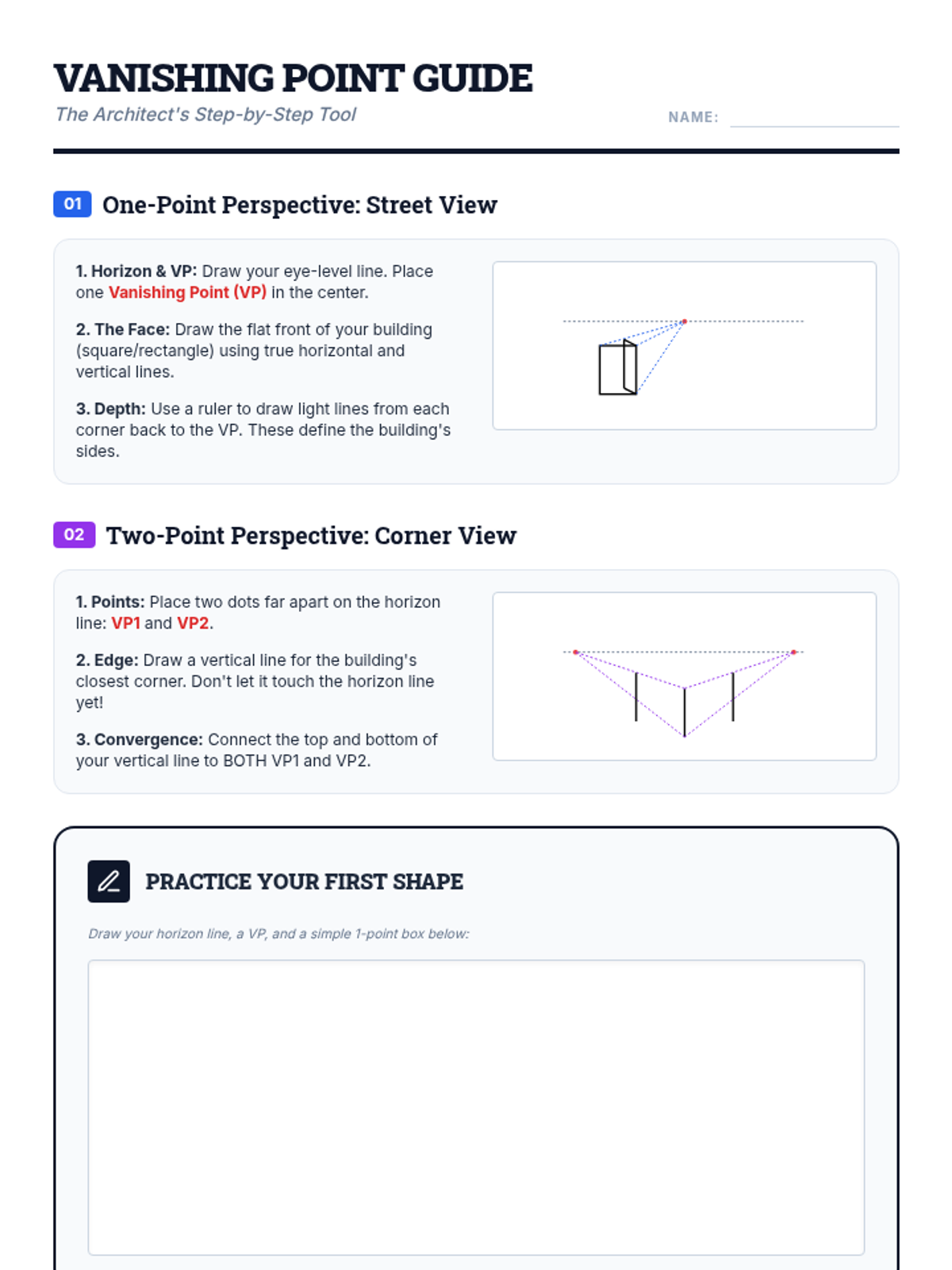
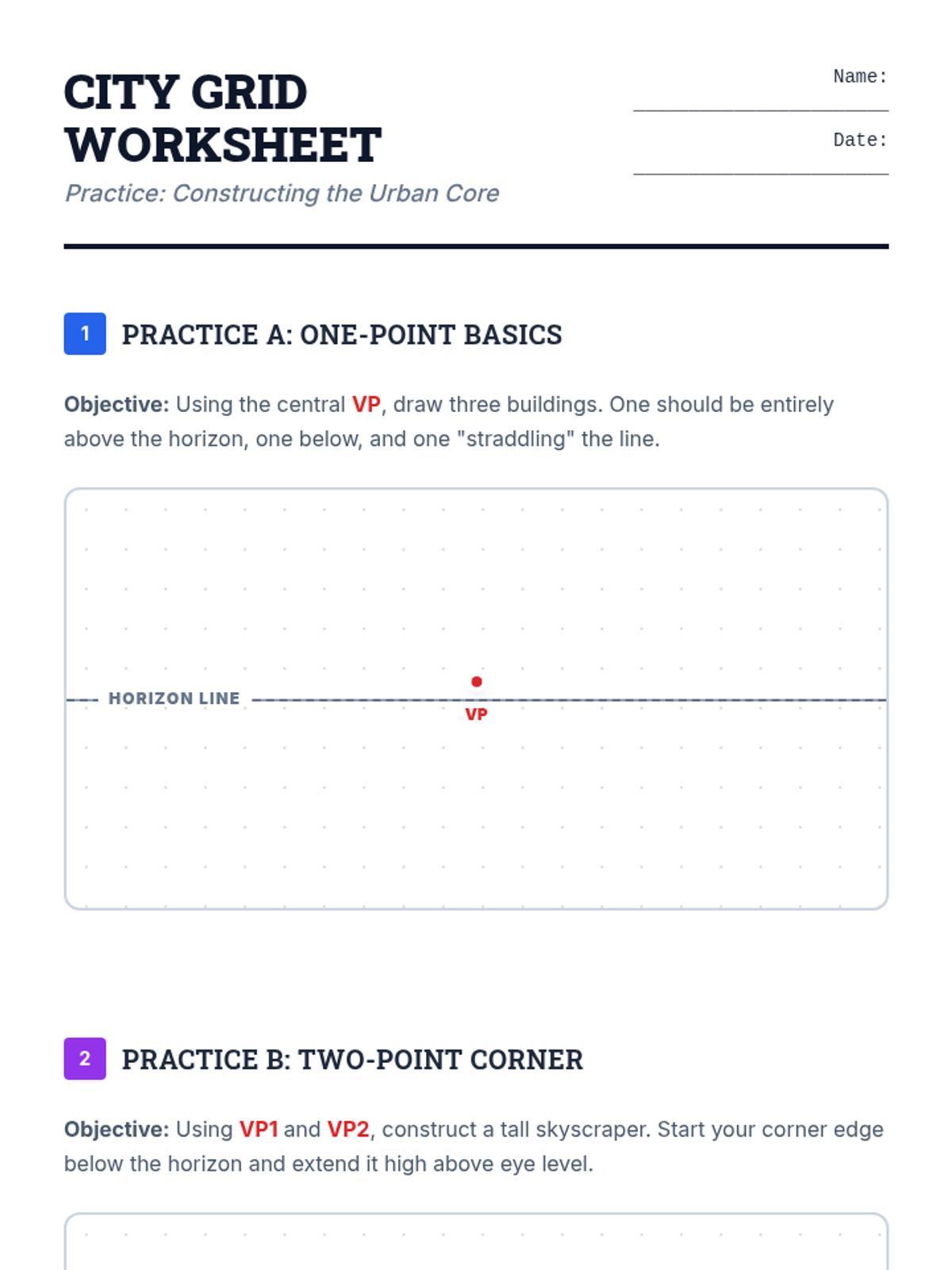
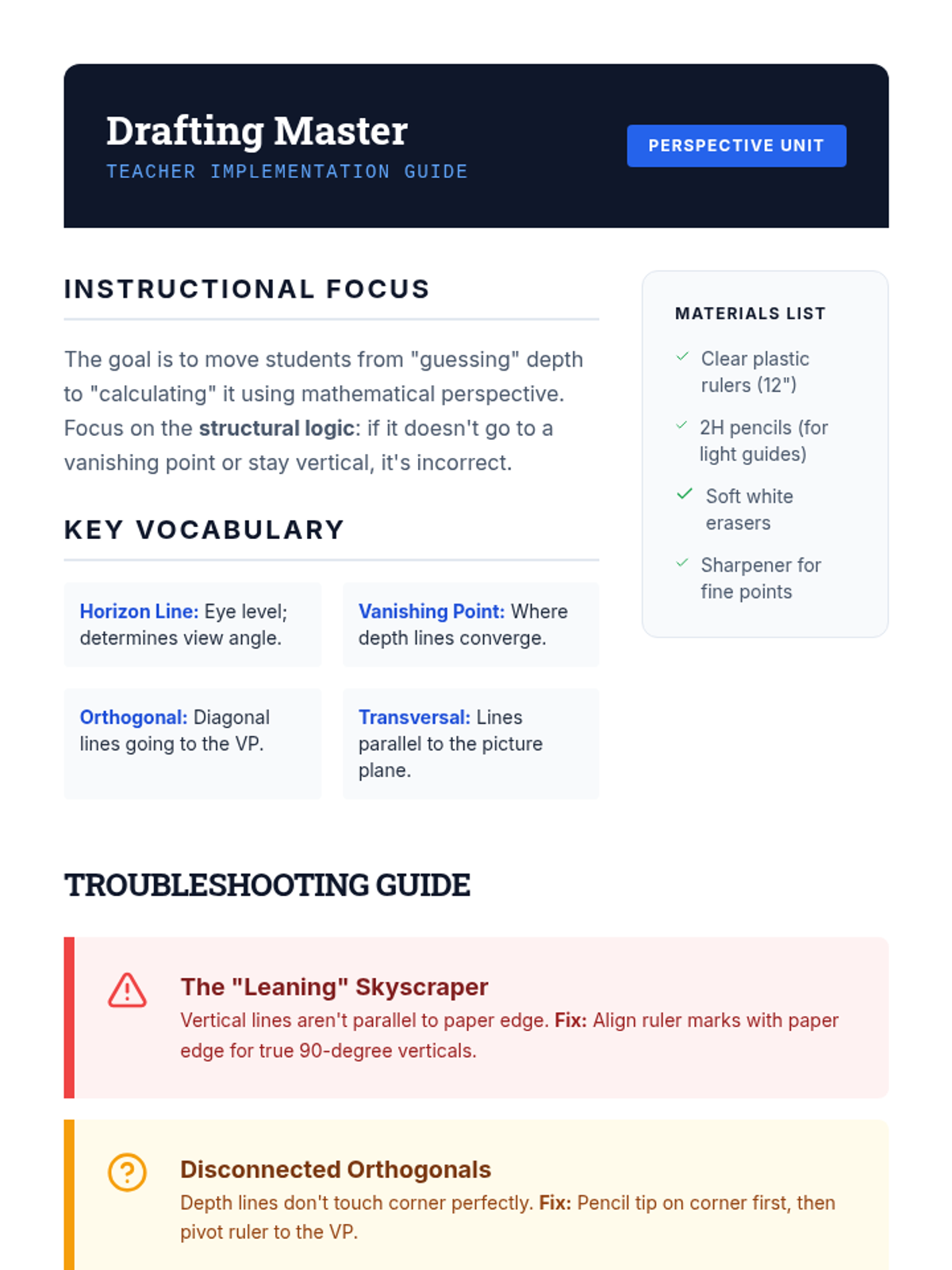
A comprehensive introduction to 1-point and 2-point perspective drawing through the lens of urban architecture. Students learn the fundamentals of vanishing points and horizon lines to create realistic 3D cityscapes.
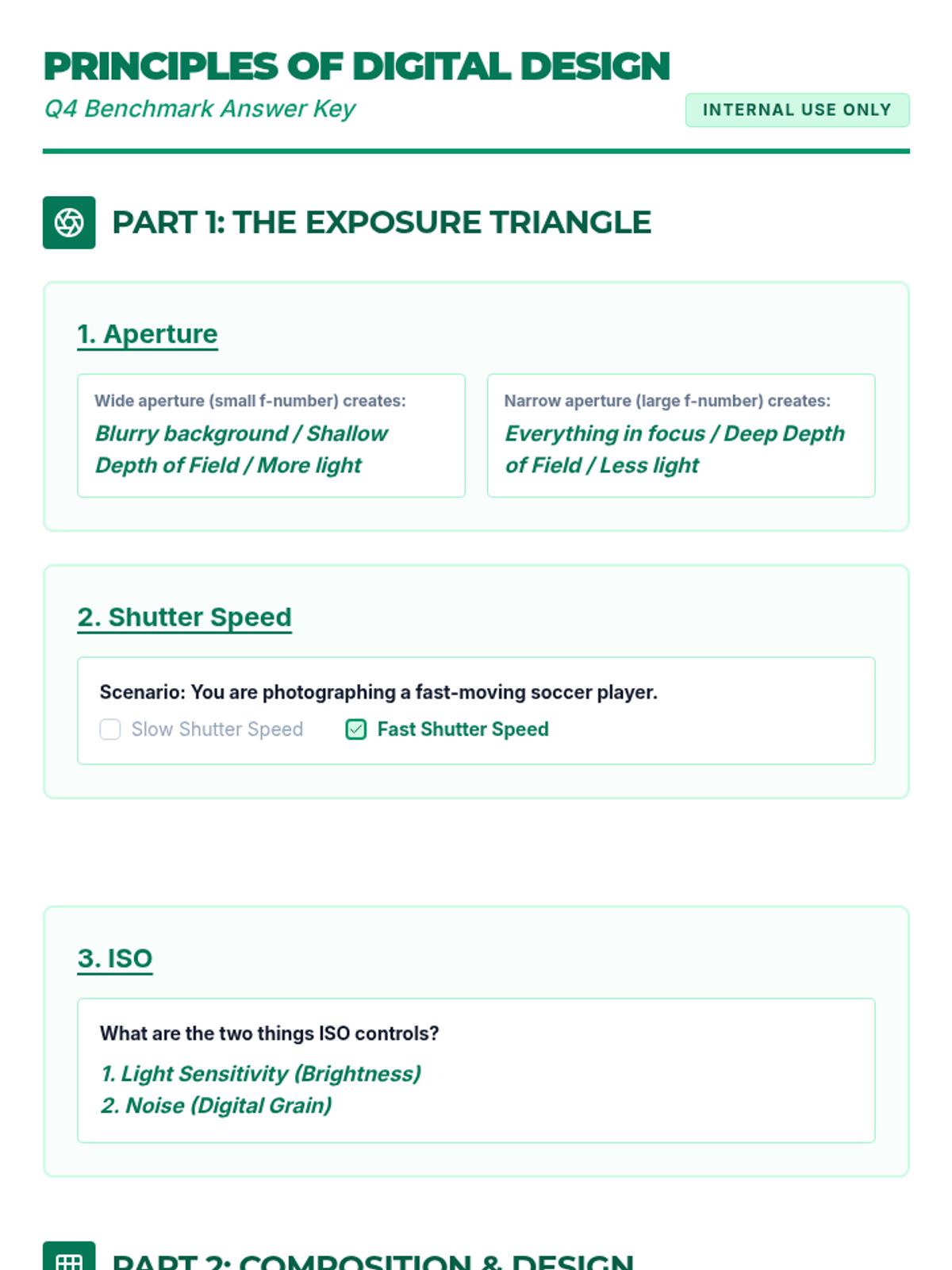
A comprehensive lesson preparing students for their photography benchmark, covering technical camera settings, compositional principles, and the philosophy of artistic intention.
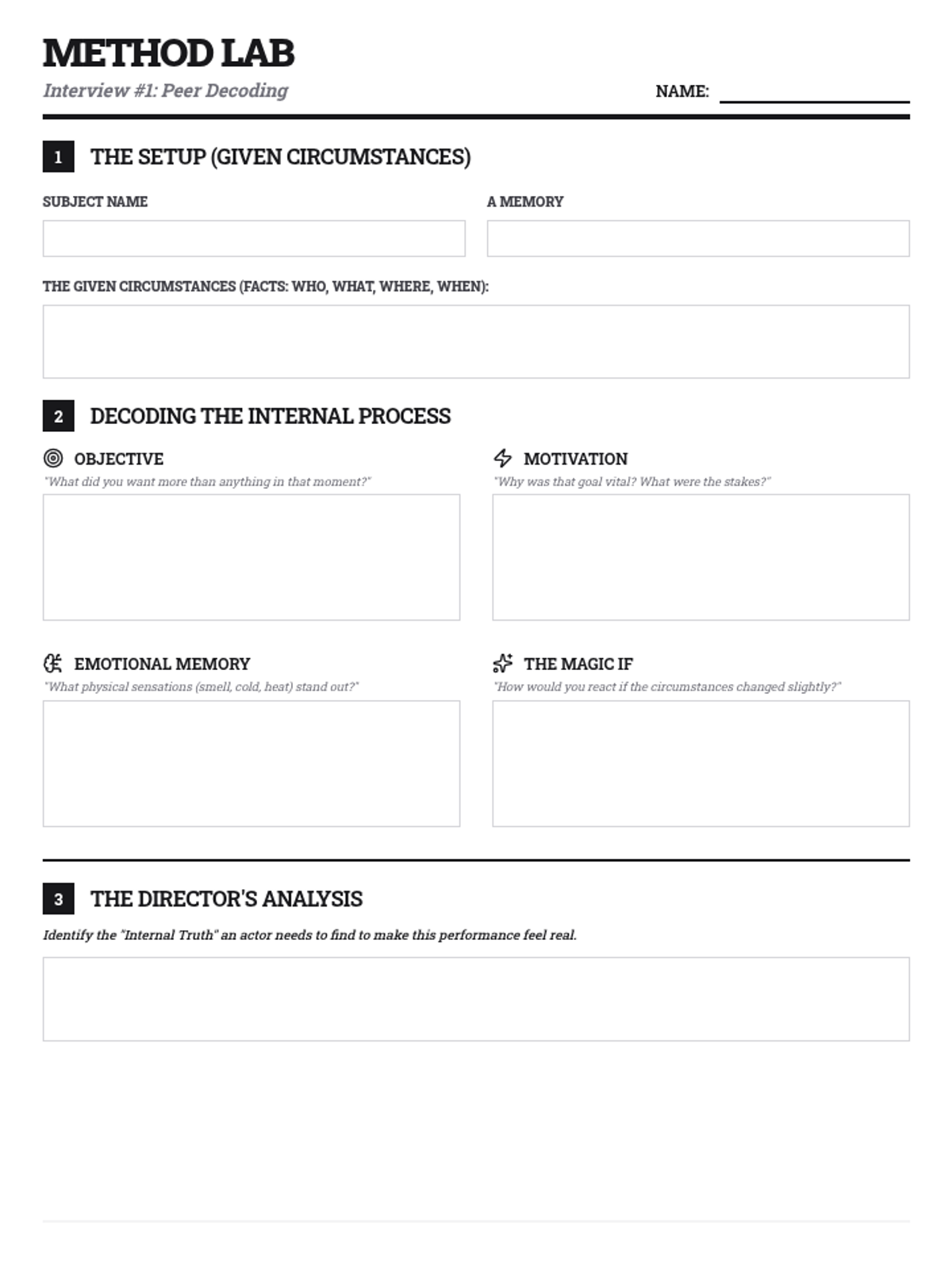
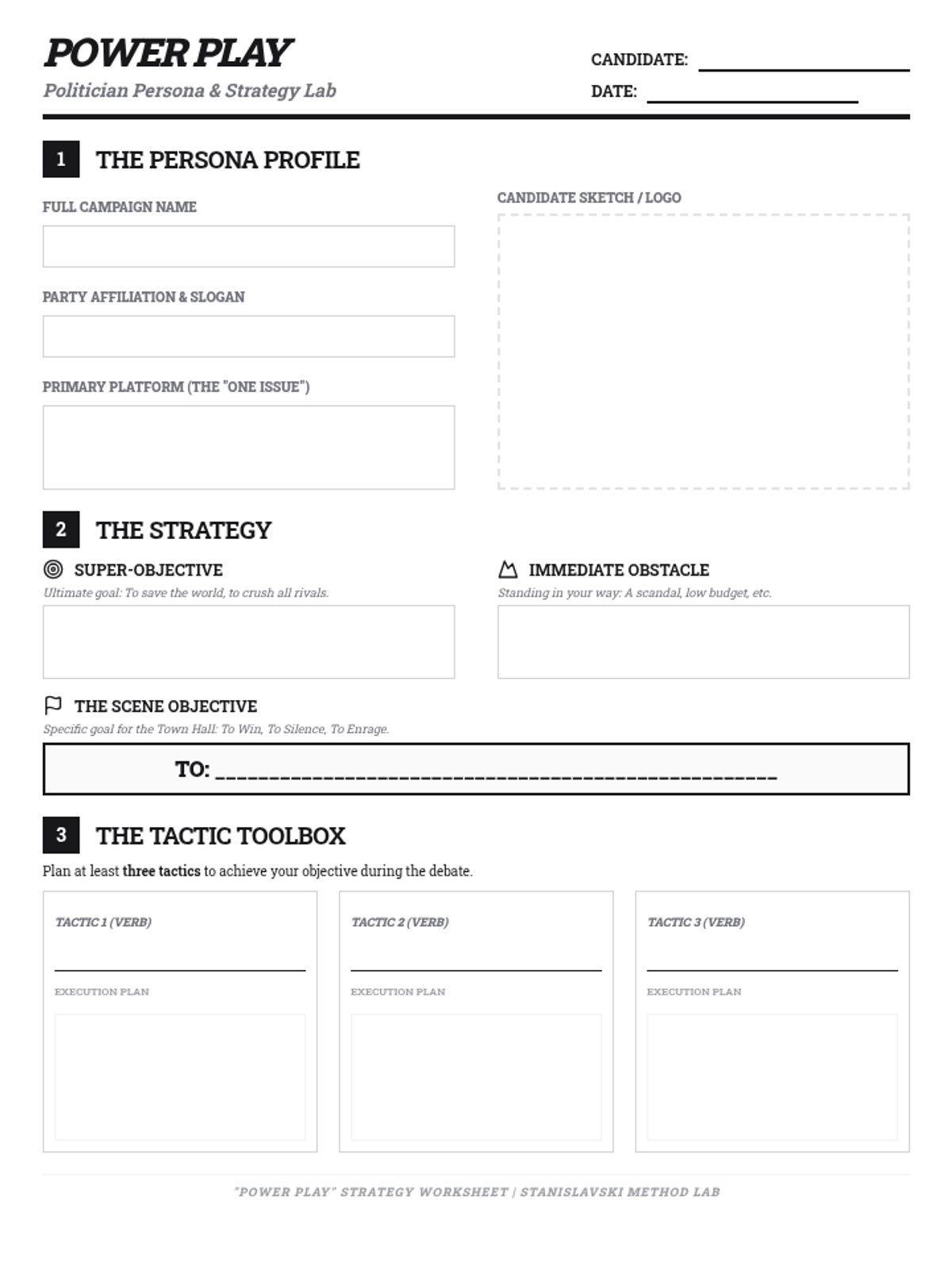
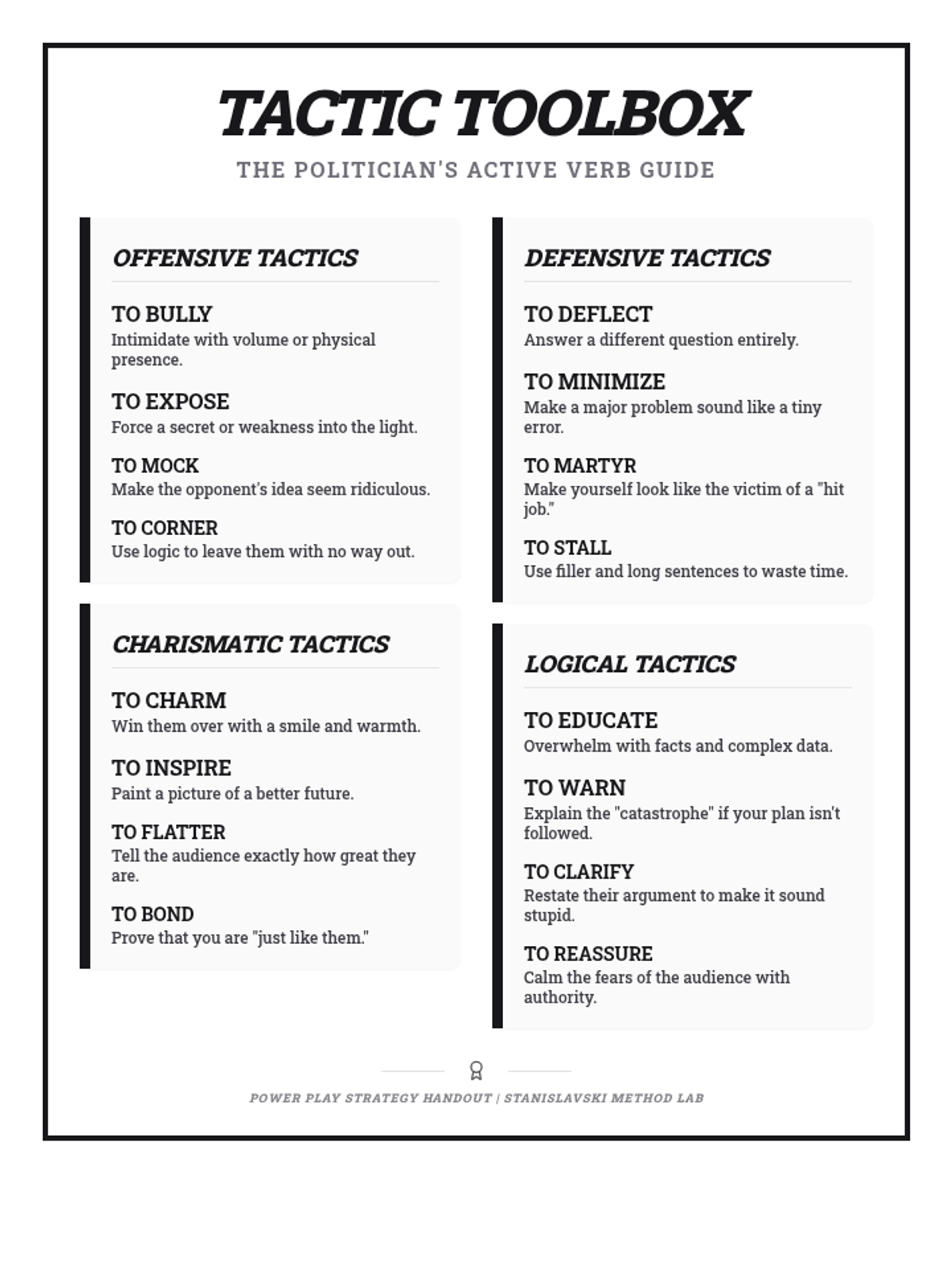
A deep dive into Stanislavski's 'System', focusing on using real-world experiences to inform character work through peer interviews.
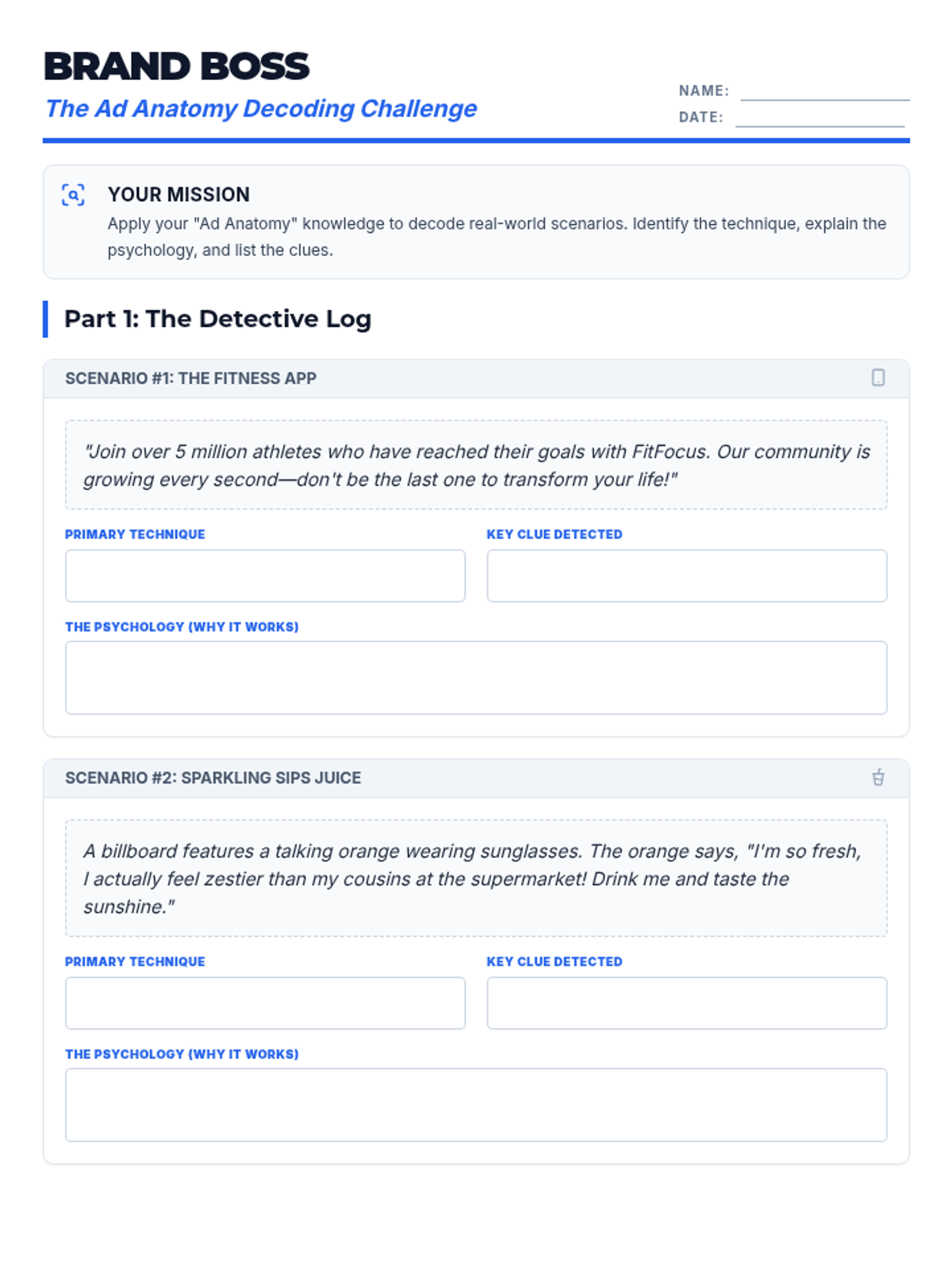
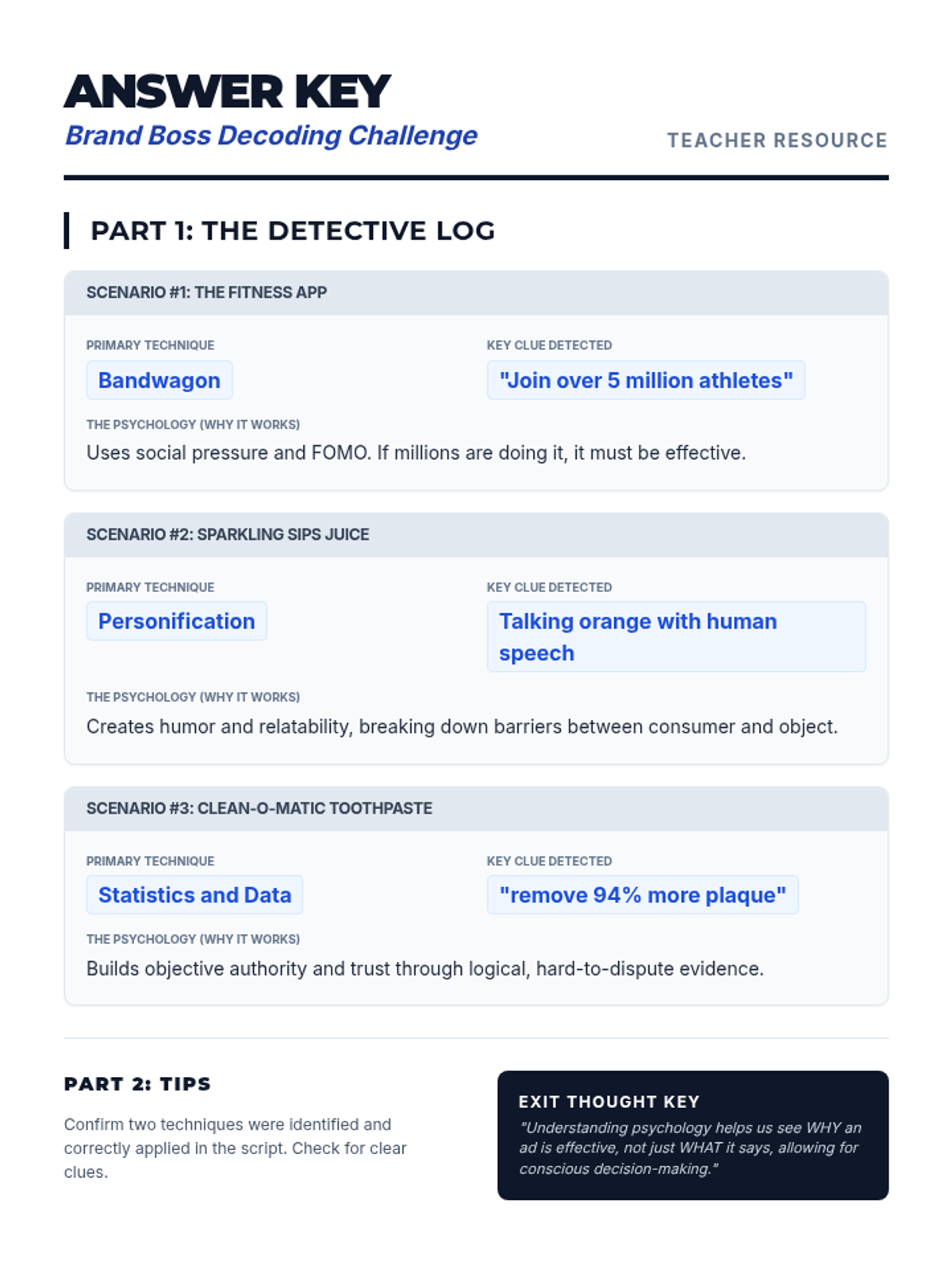
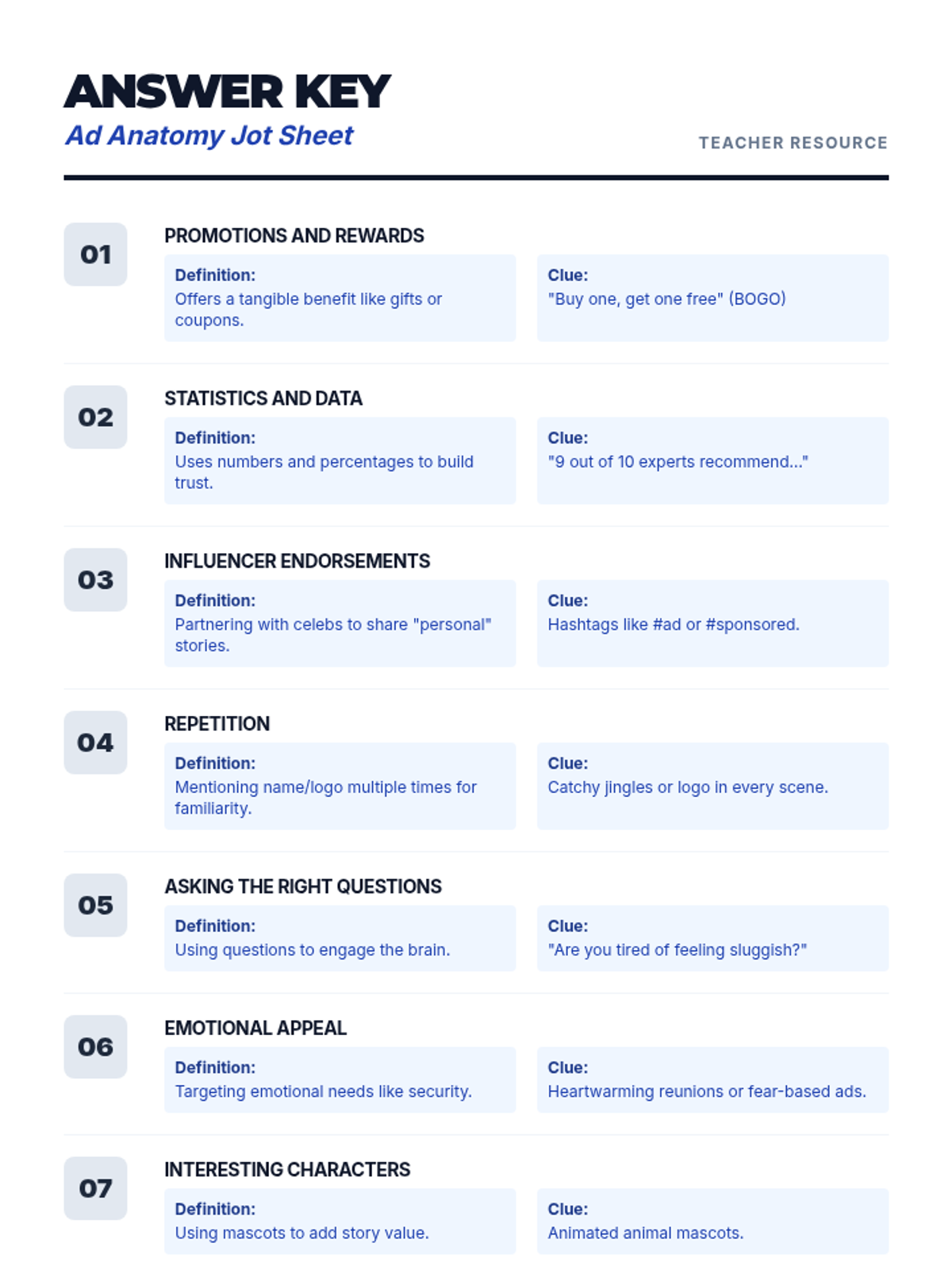
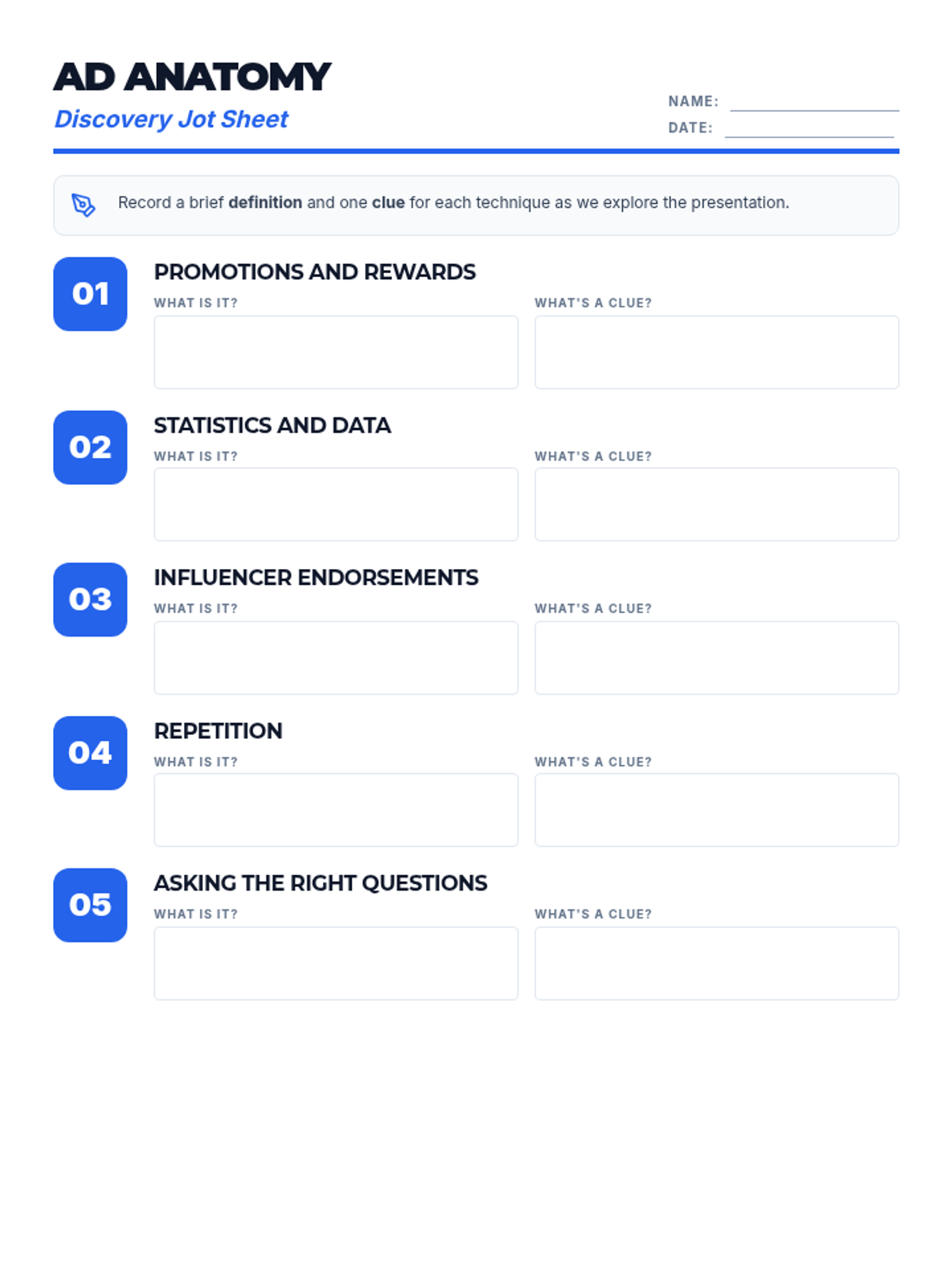
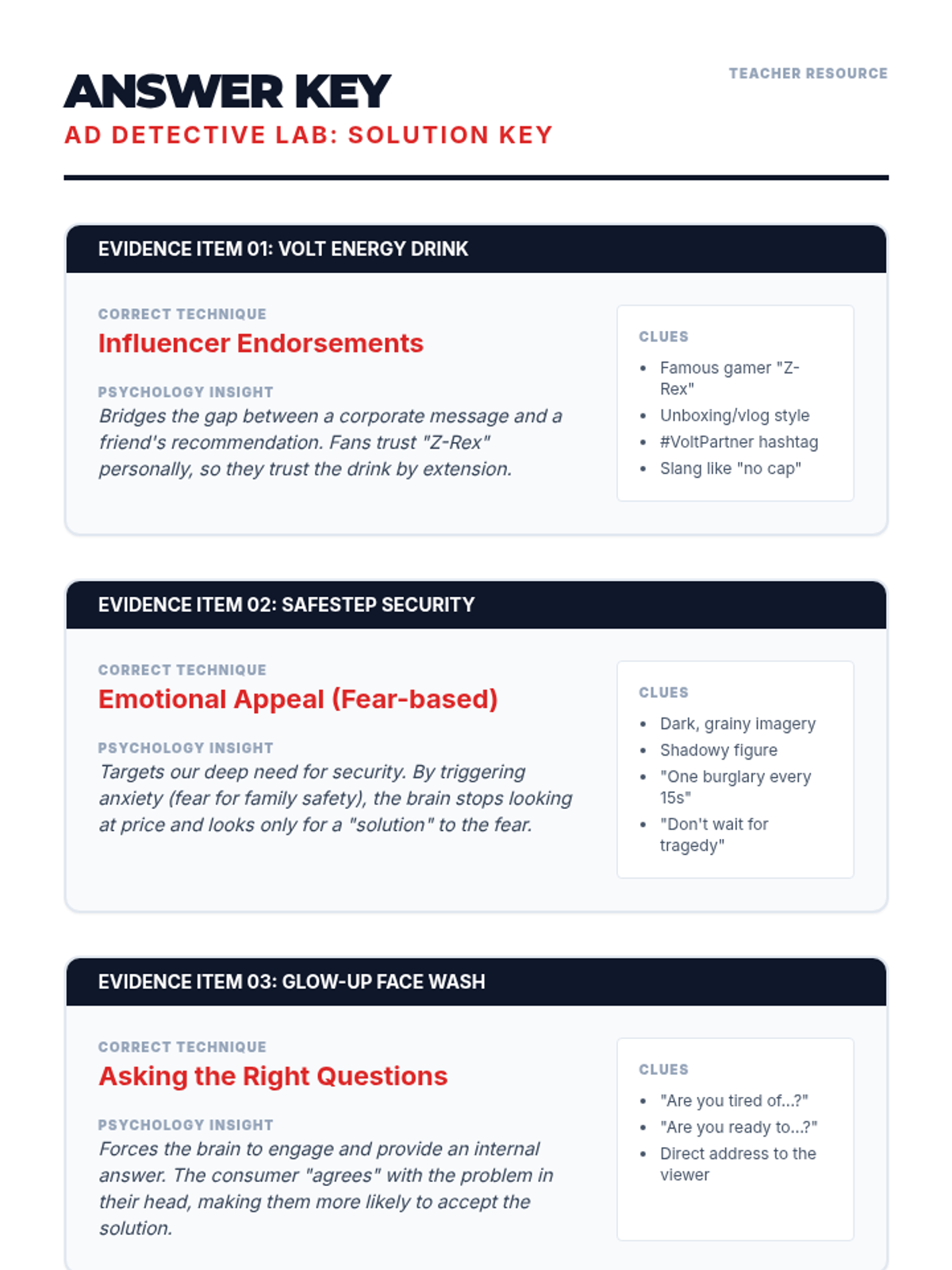
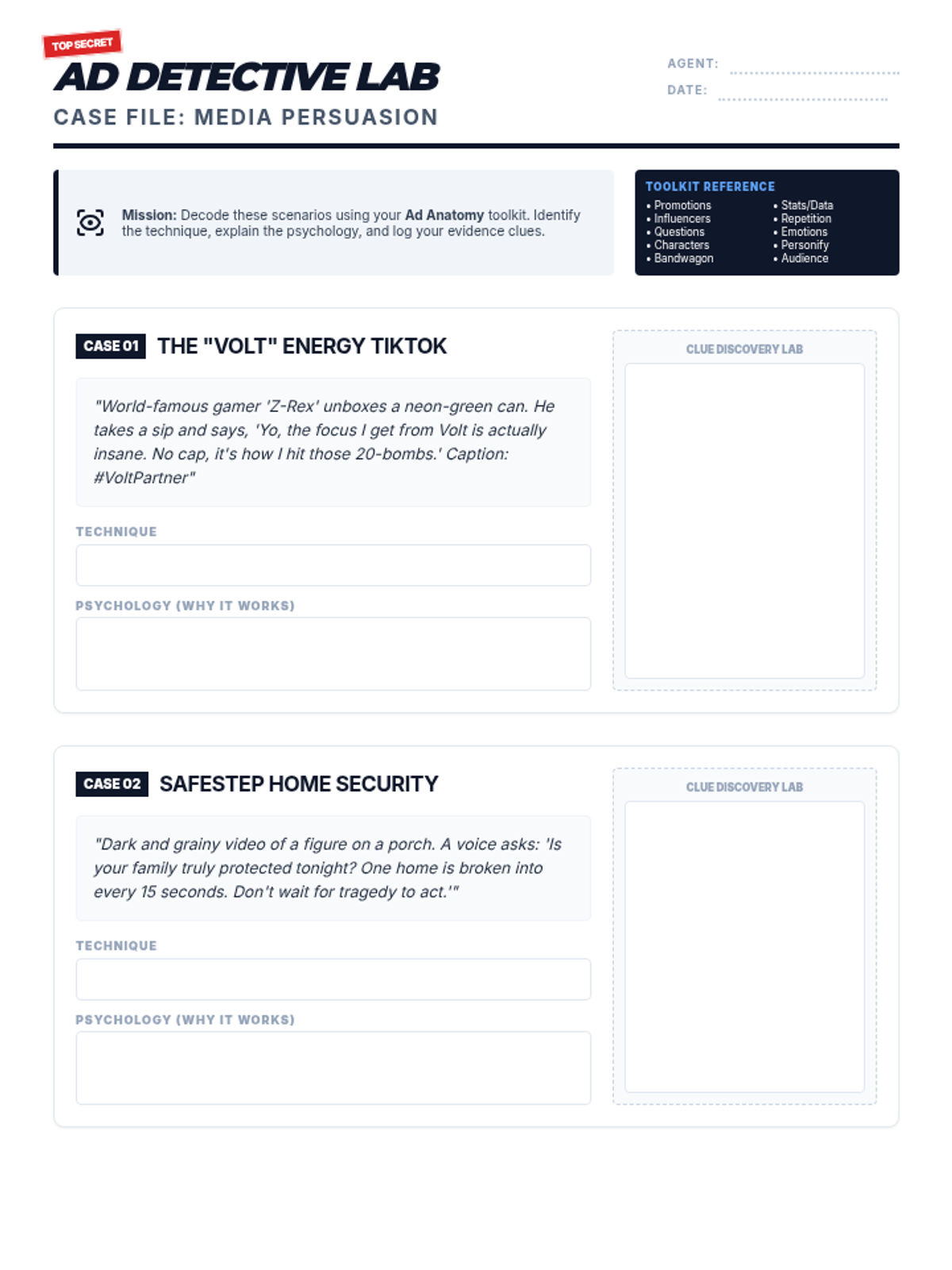
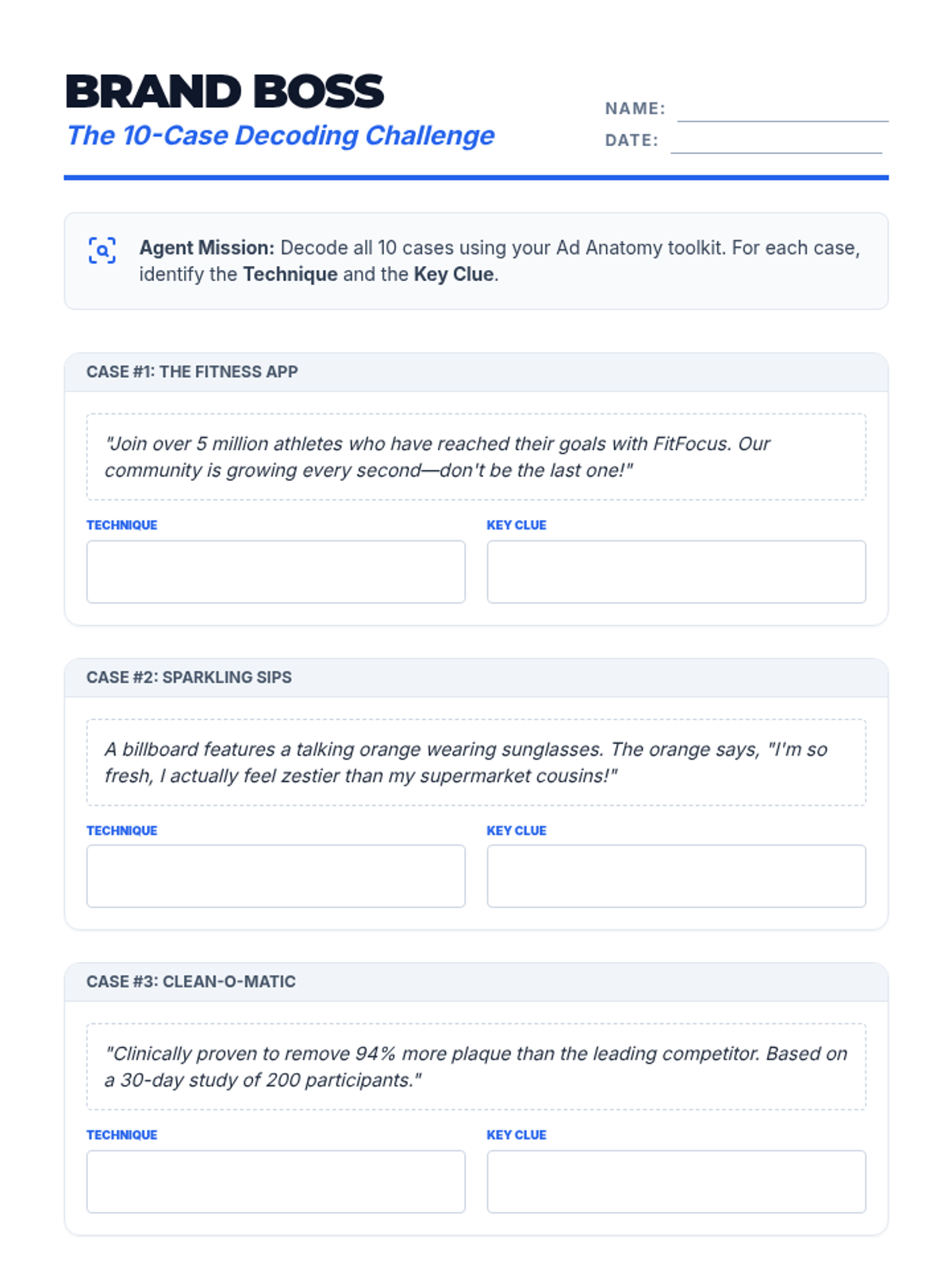
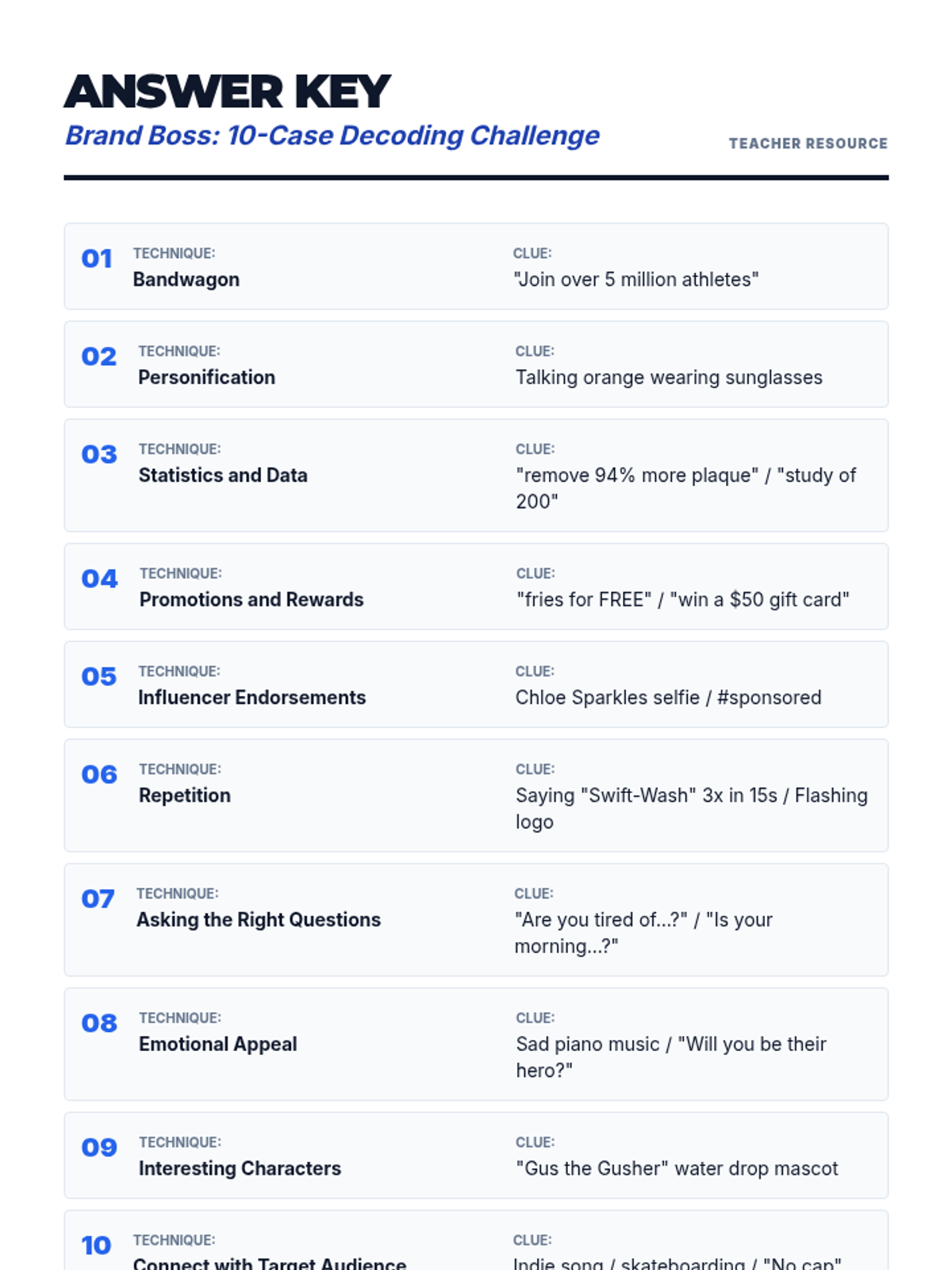
A lesson exploring 10 key advertising techniques used to influence consumer behavior, based on the Ad Anatomy Field Guide.
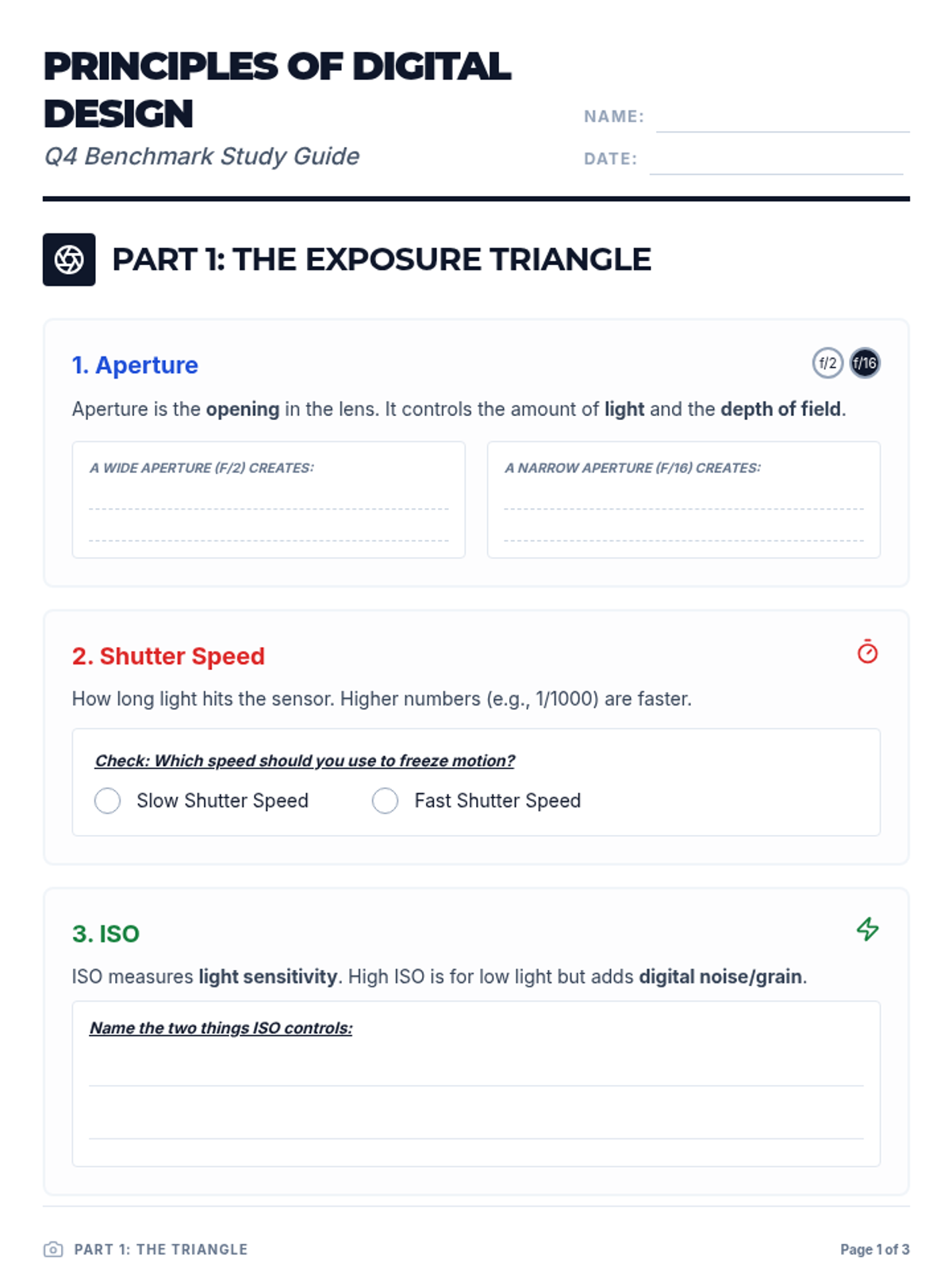
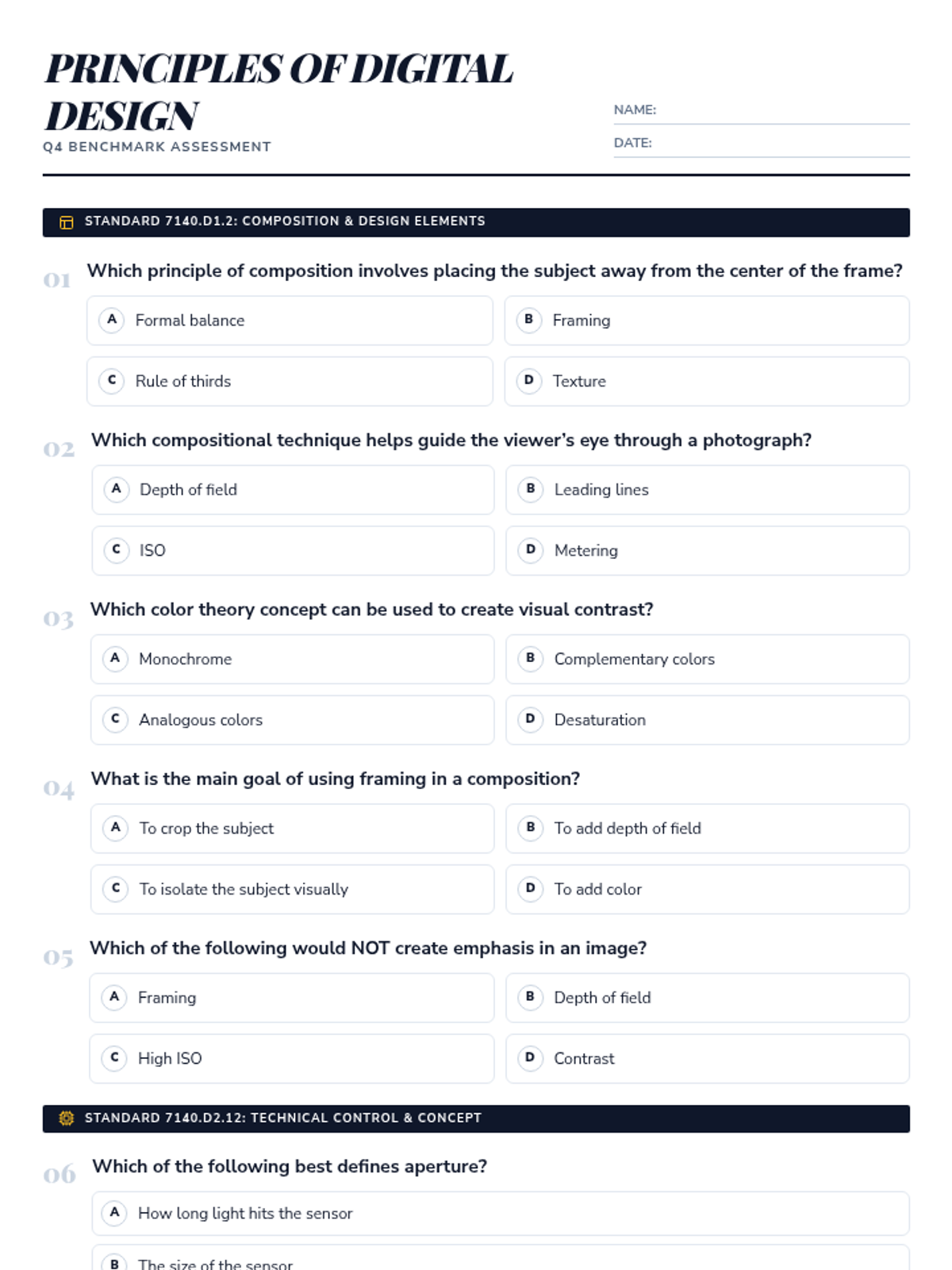
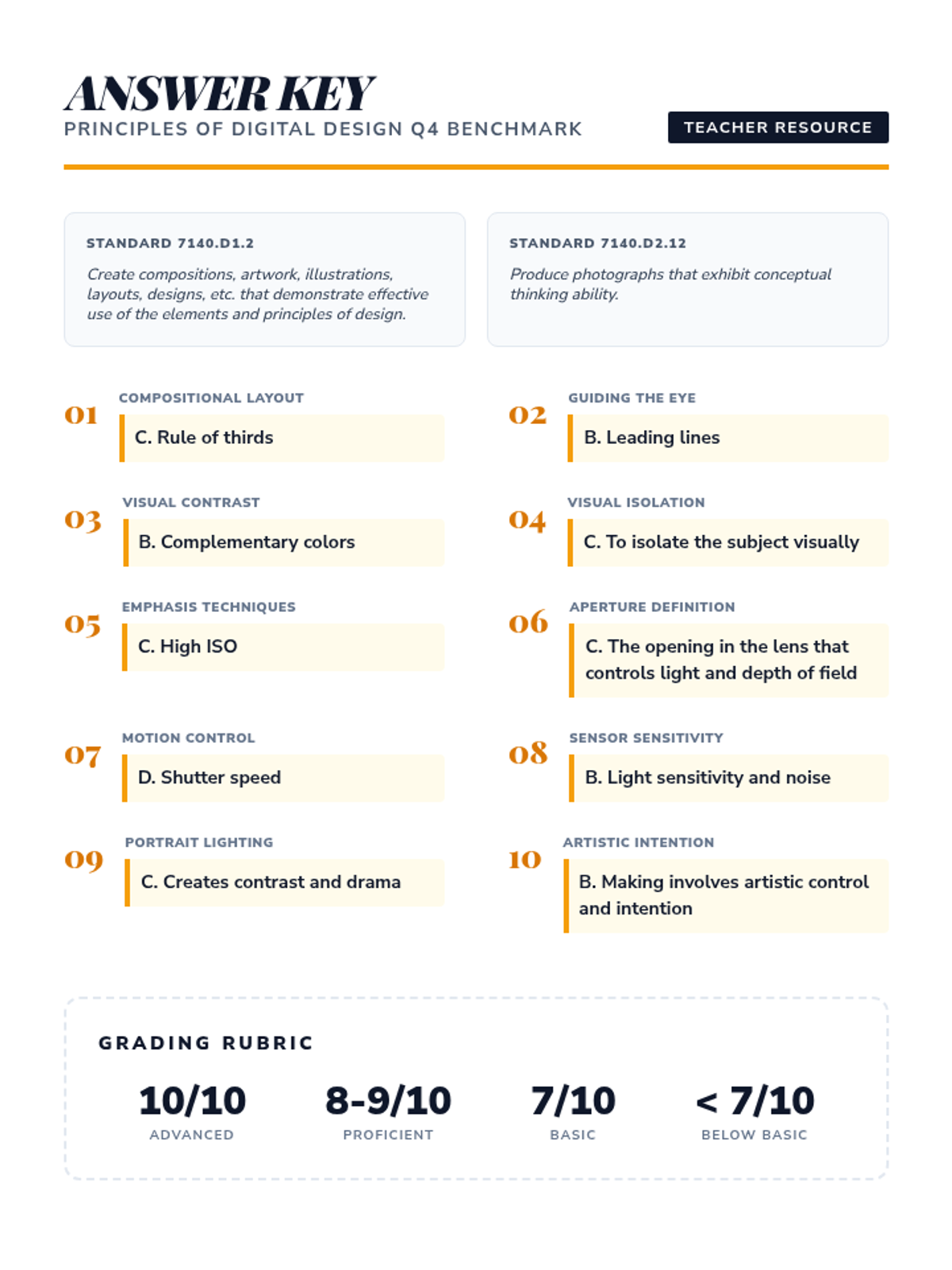
A comprehensive digital design assessment based on standard 7140.D1.2 and 7140.D2.12, covering composition, camera settings, and conceptual thinking.
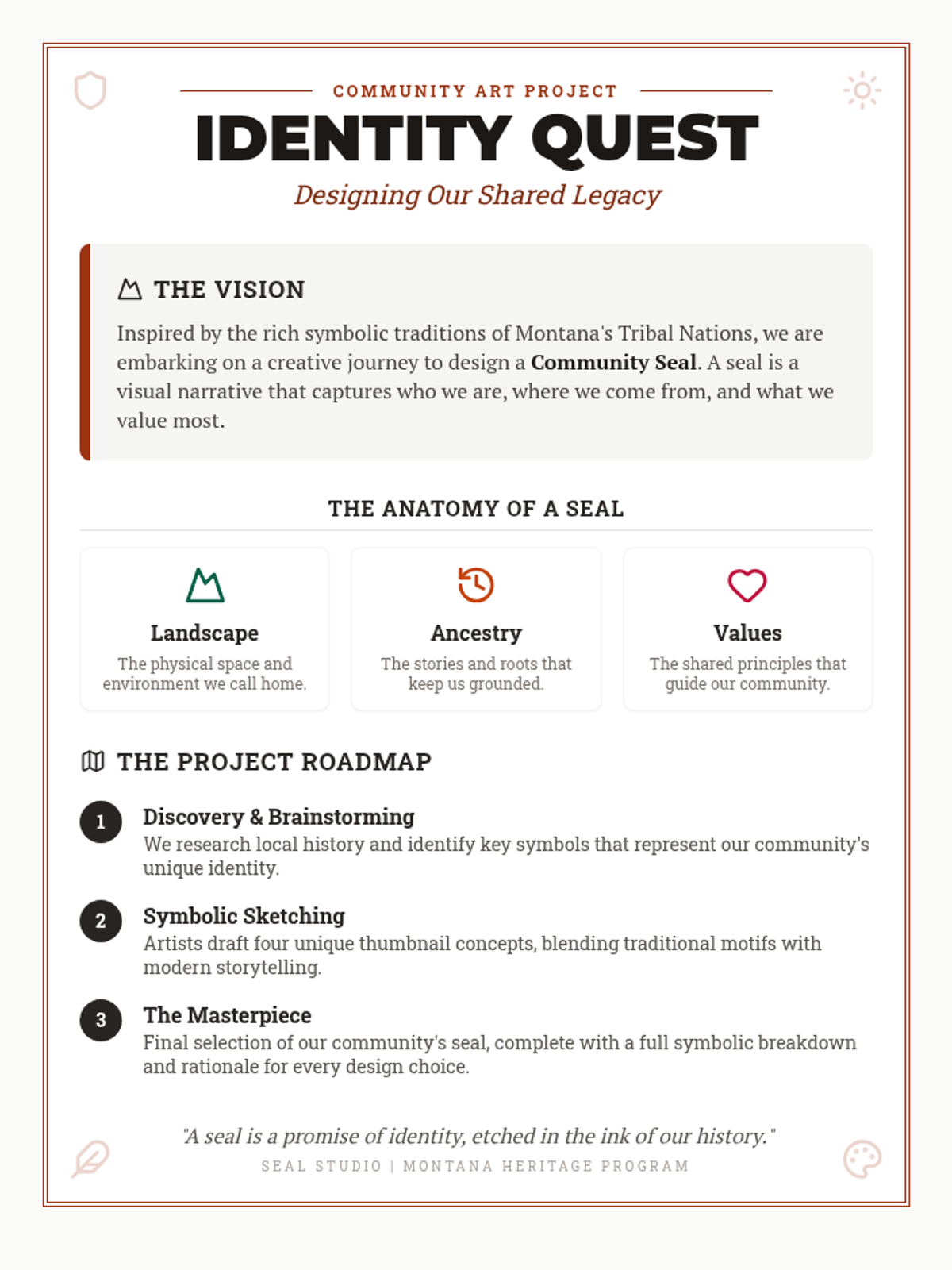
A project-based lesson where students design a community seal inspired by Montana's tribal traditions, focusing on visual identity and symbolic storytelling.
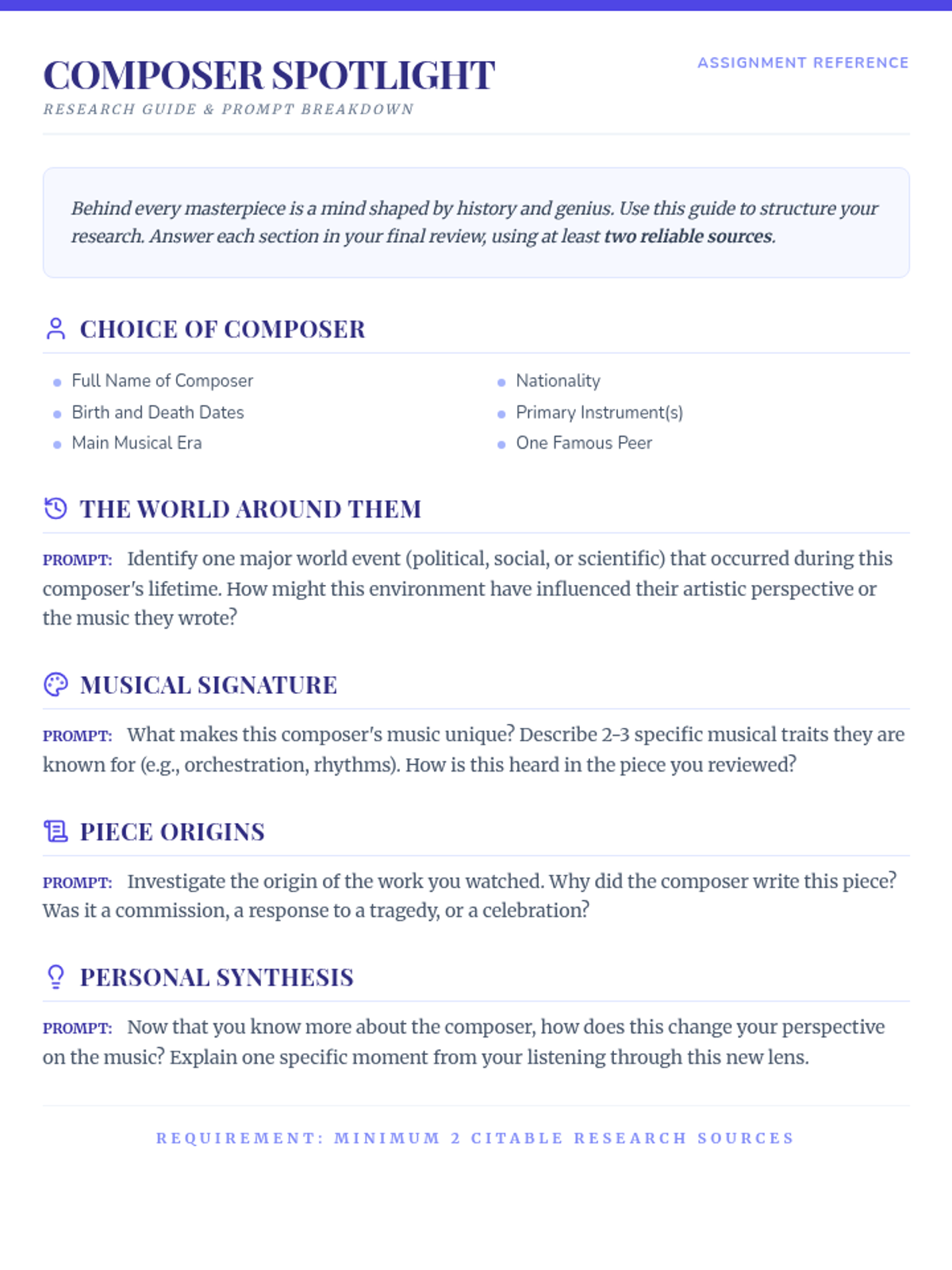
A comprehensive make-up assignment for students who missed a performance, requiring a detailed 5-paragraph review of a world-class orchestral concert with research and personal critique.
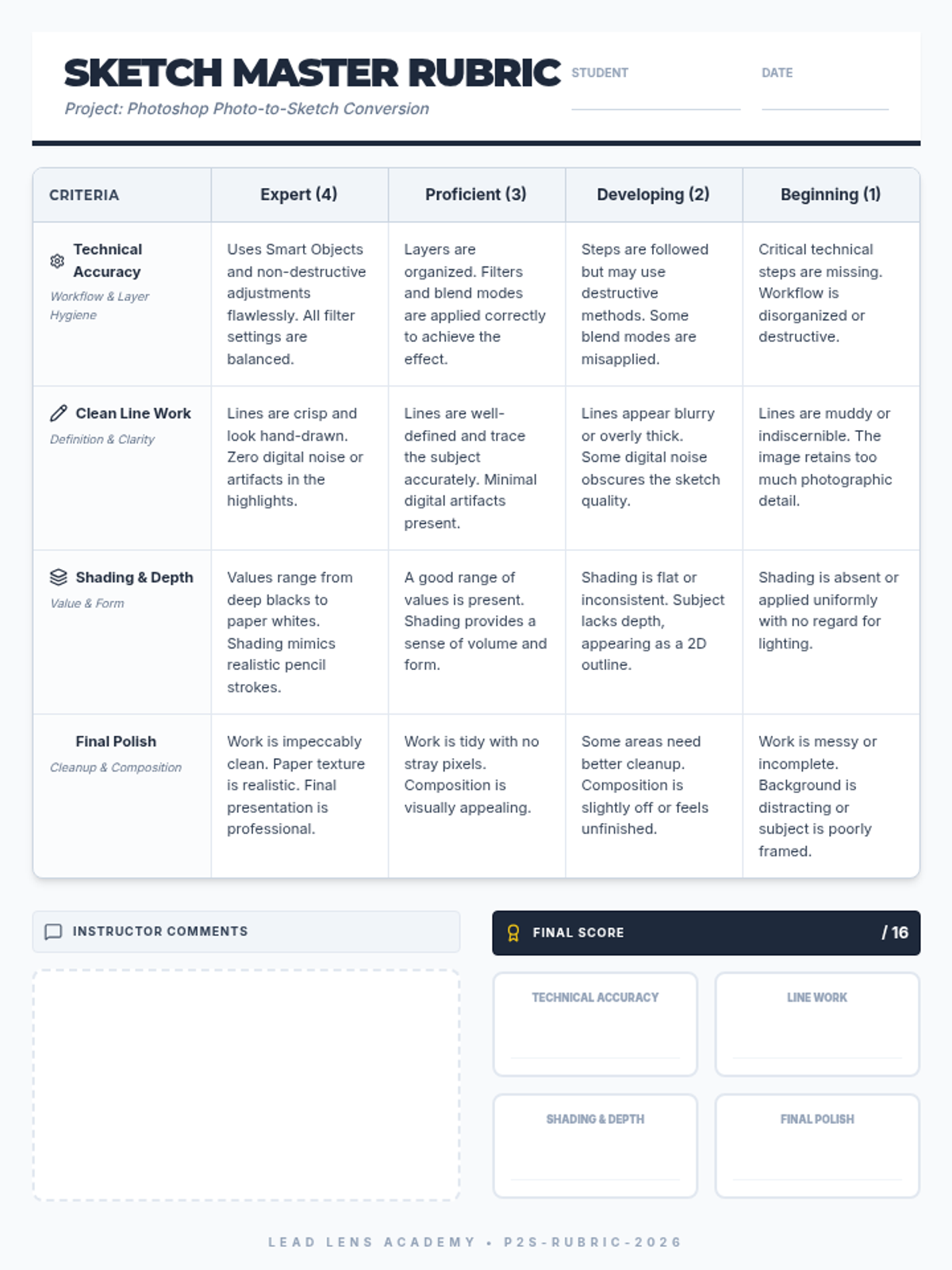
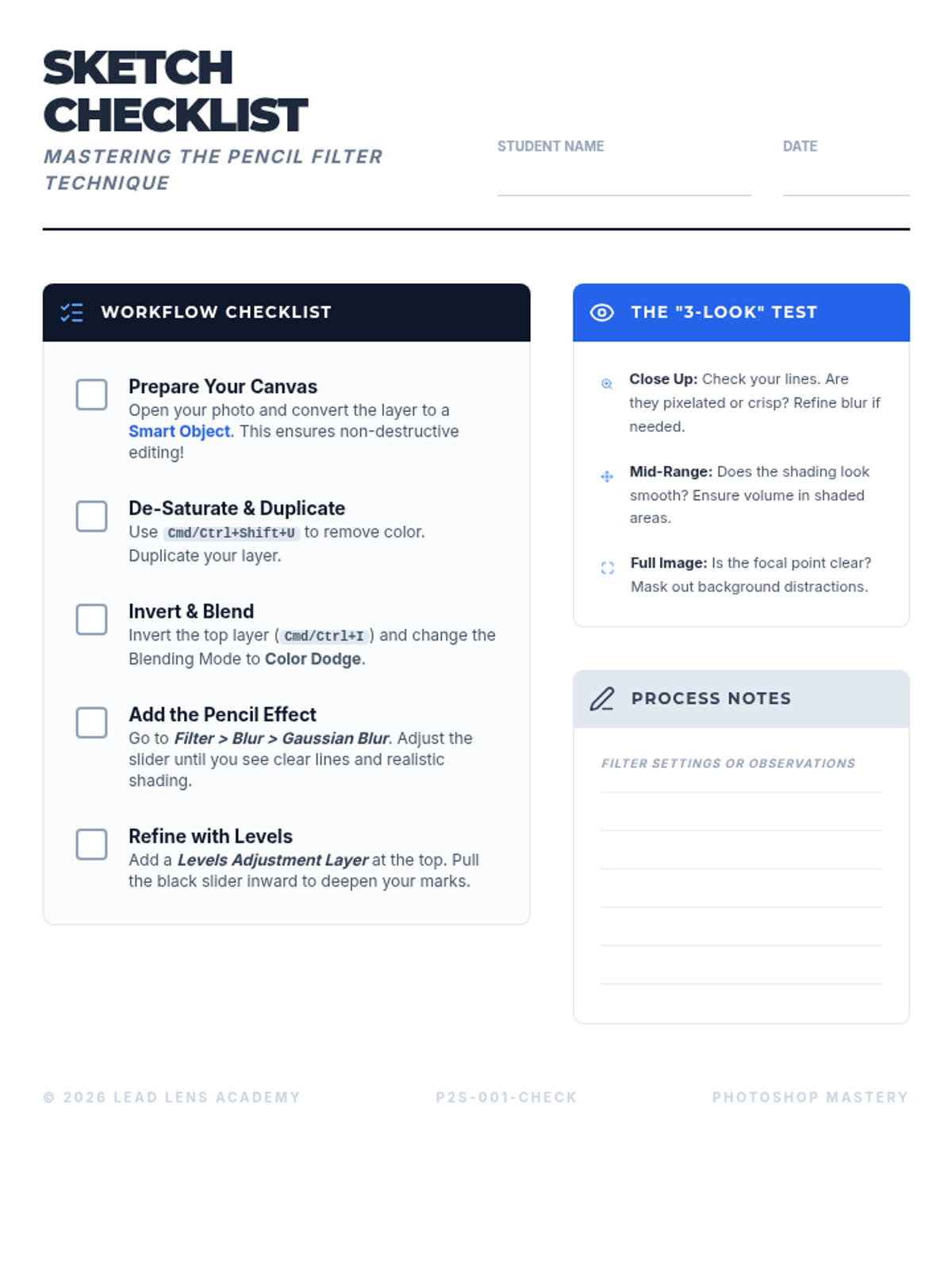
A comprehensive guide to transforming digital photographs into realistic pencil sketches using Adobe Photoshop, focusing on technical precision and artistic shading techniques.
Students explore murals as a form of visual rhetoric and community storytelling, culminating in the design of a mural that addresses a local social or cultural issue.
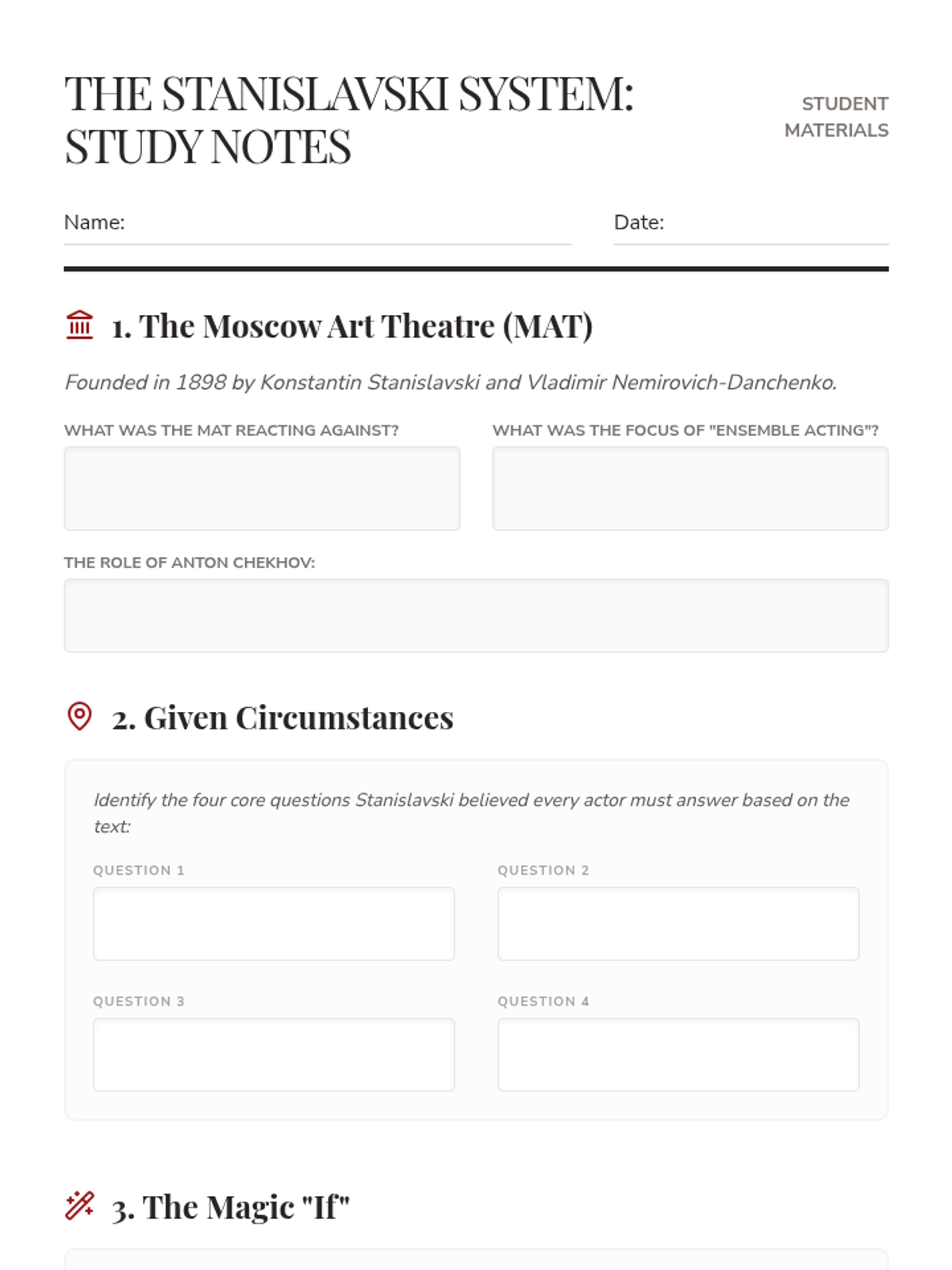
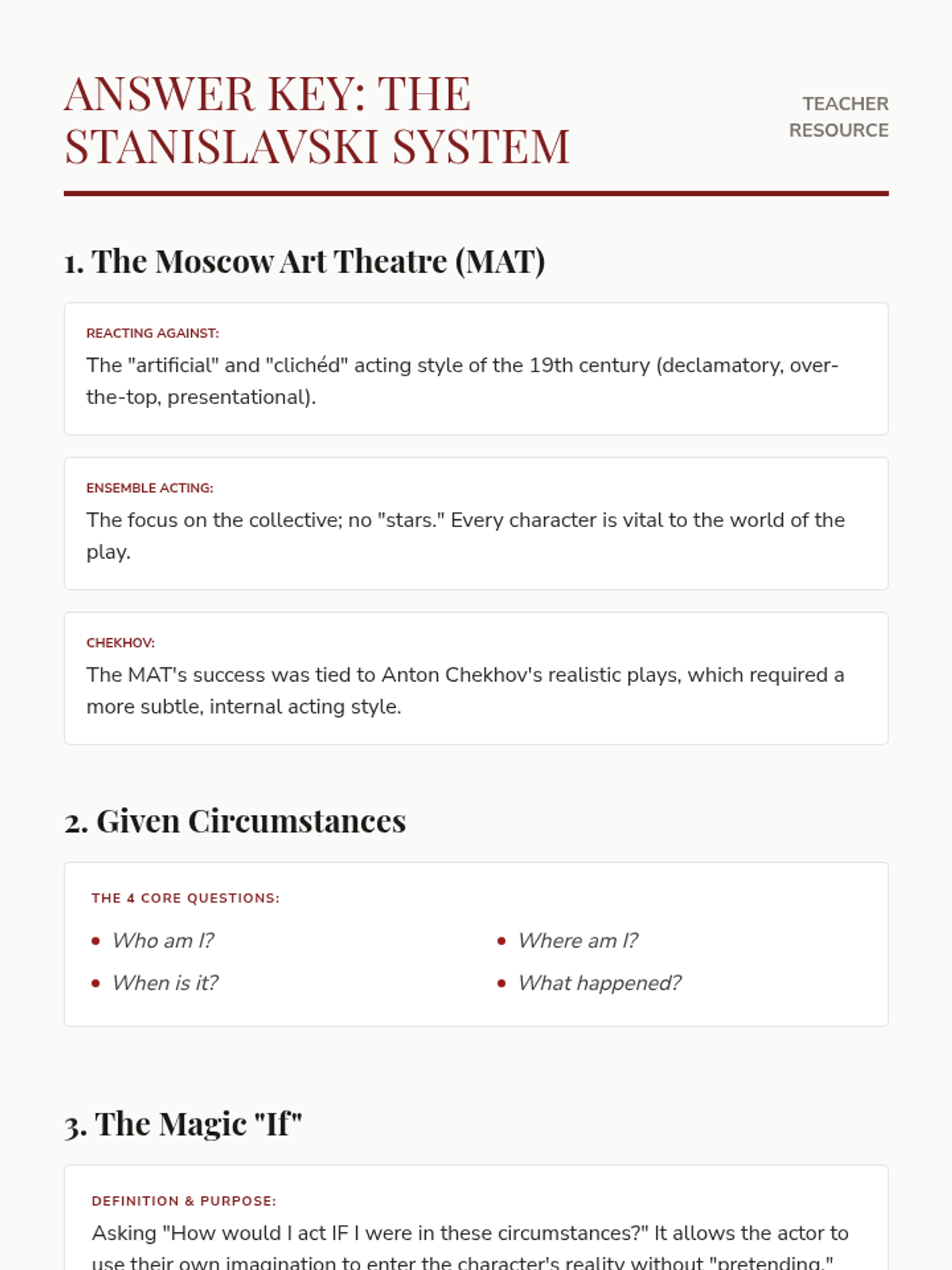
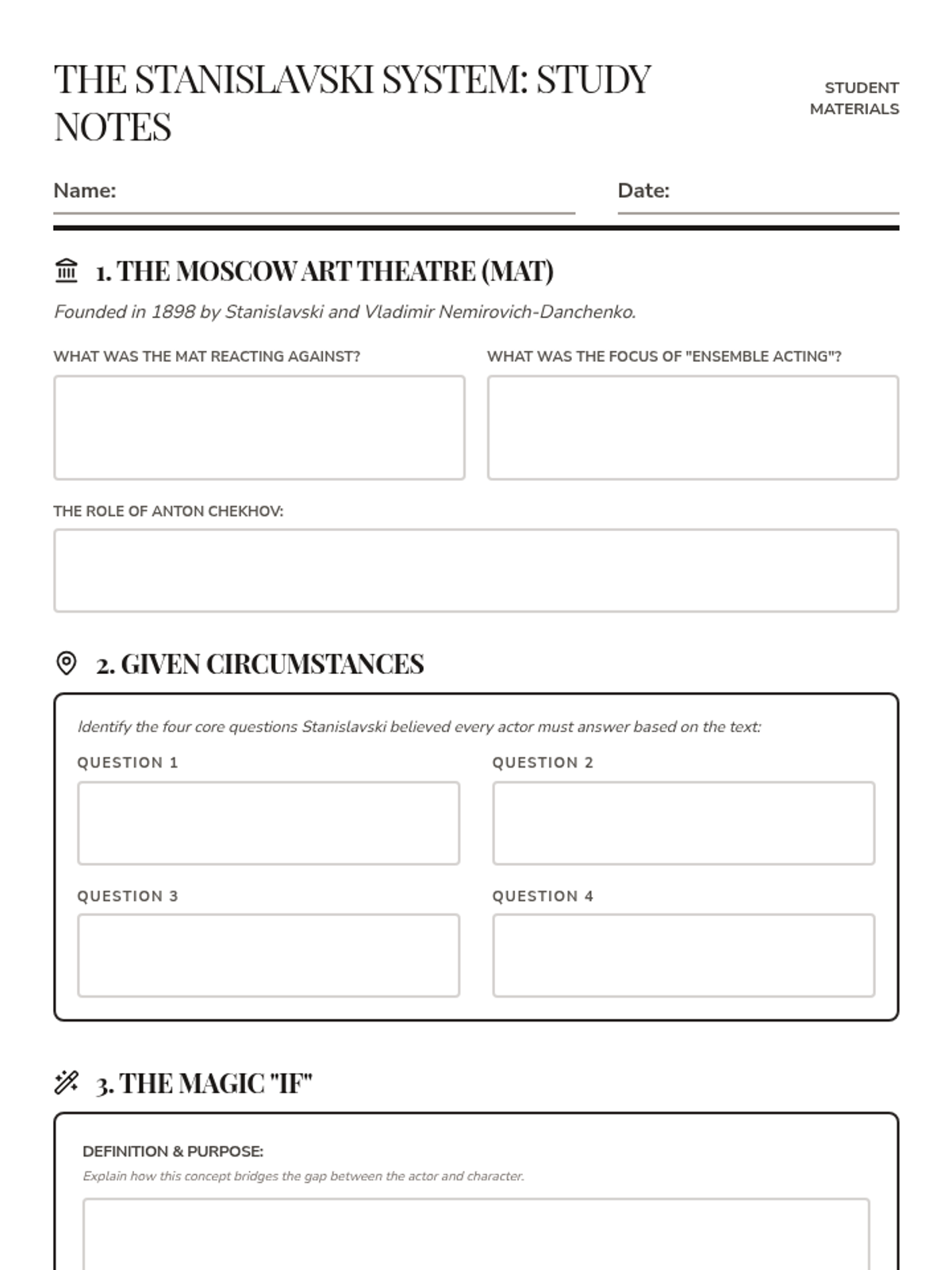
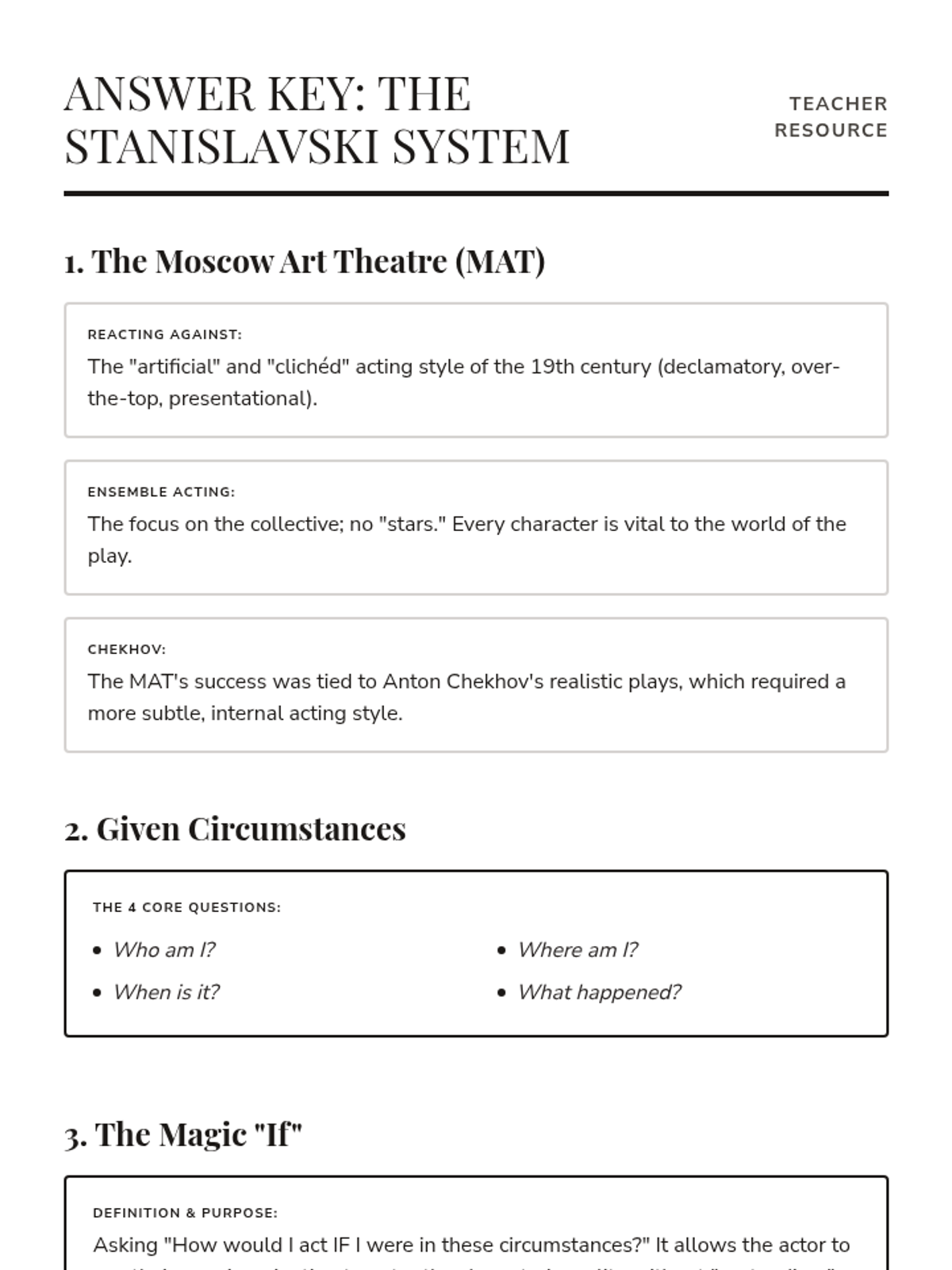
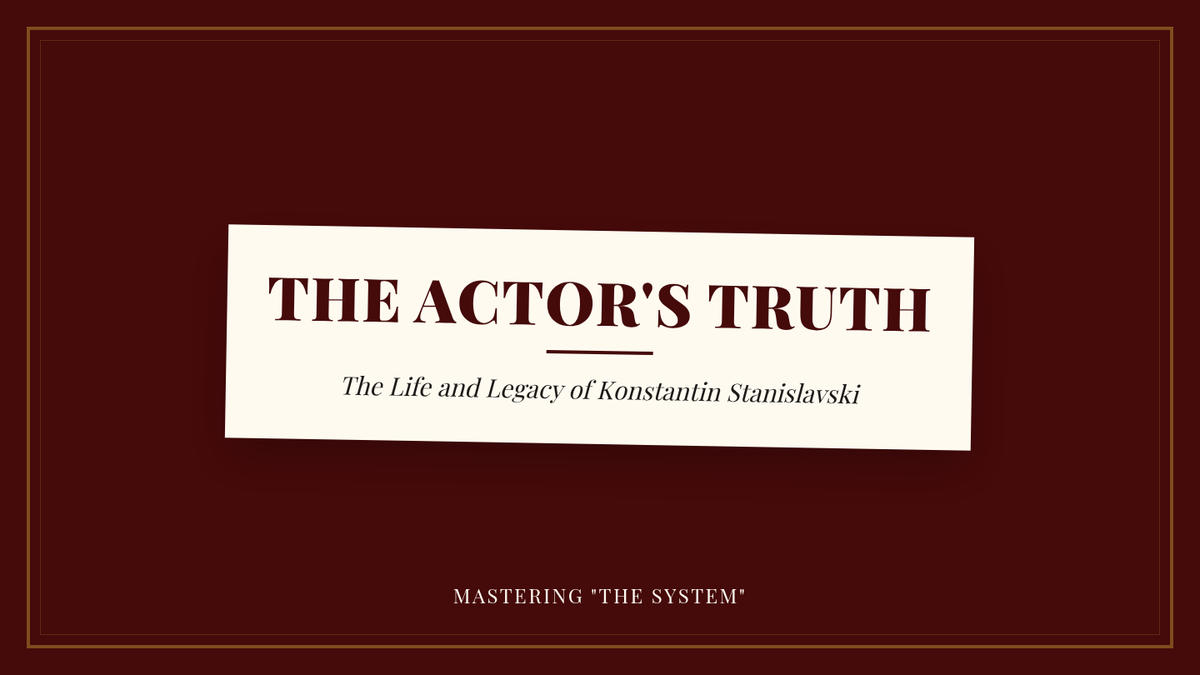
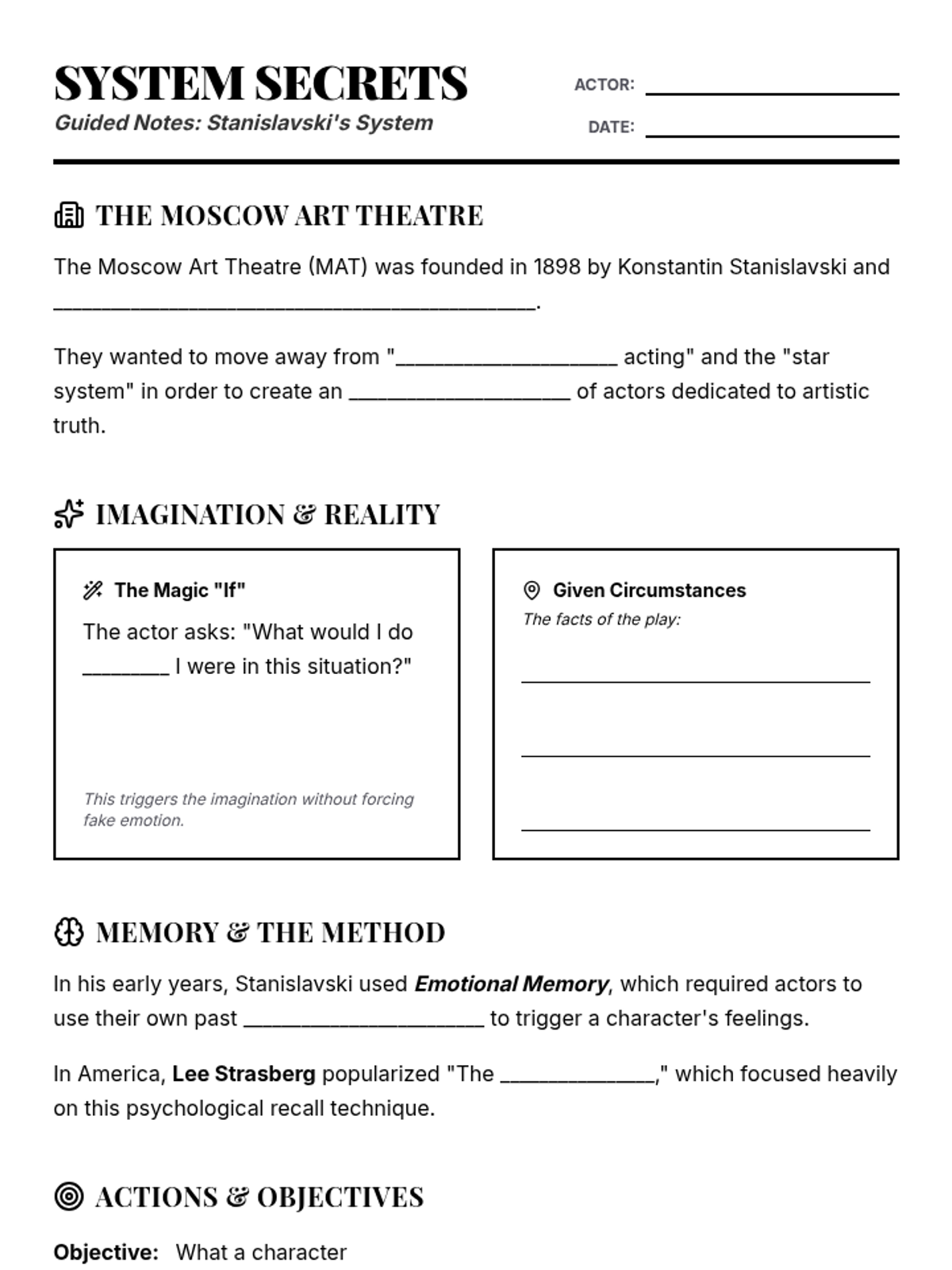
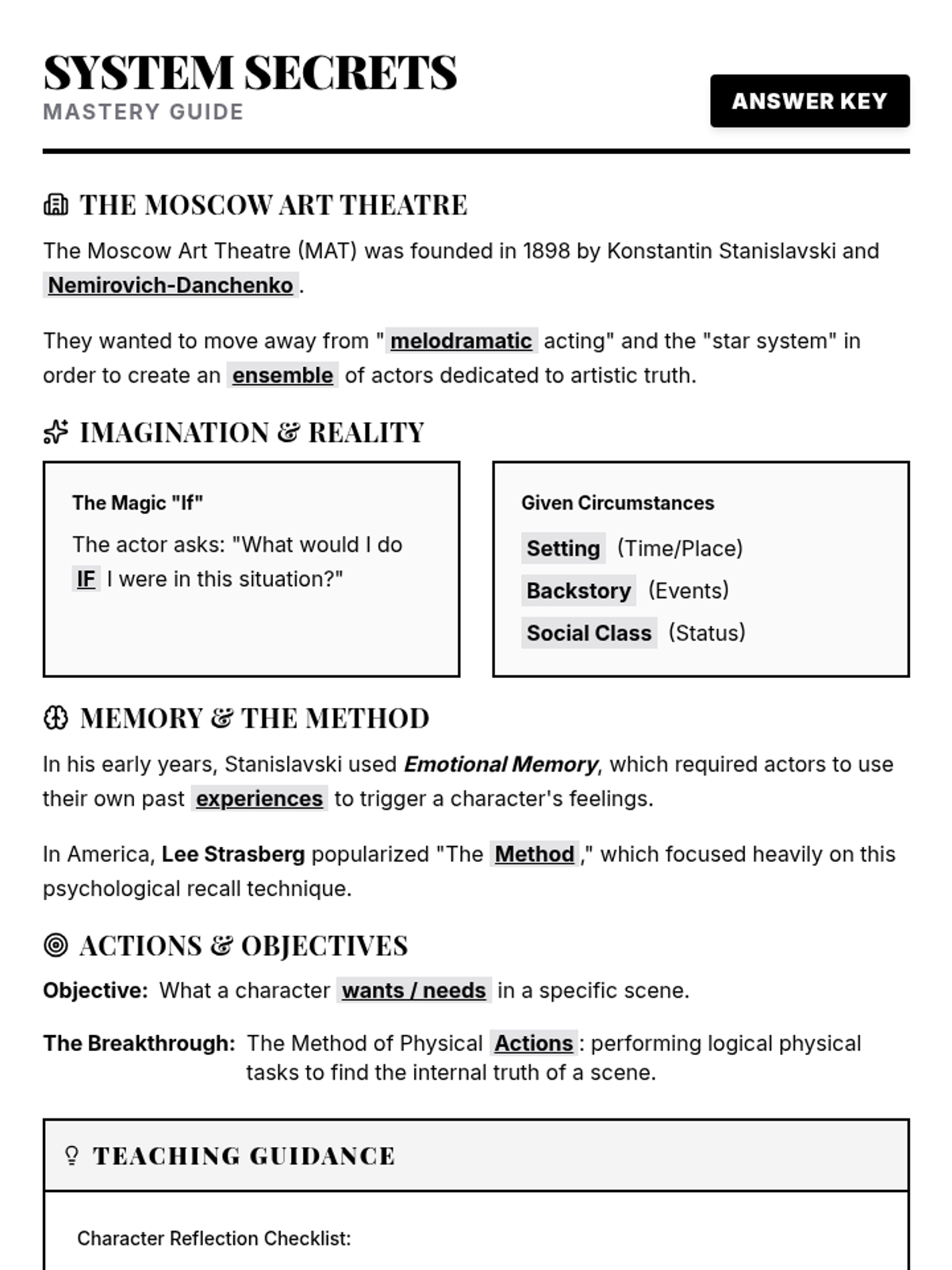
An in-depth exploration of Konstantin Stanislavski's revolutionary acting system, from the founding of the Moscow Art Theatre to the evolution of the Method of Physical Actions. Students will learn key concepts like the Magic If, Given Circumstances, and the shift from internal emotion to external action.
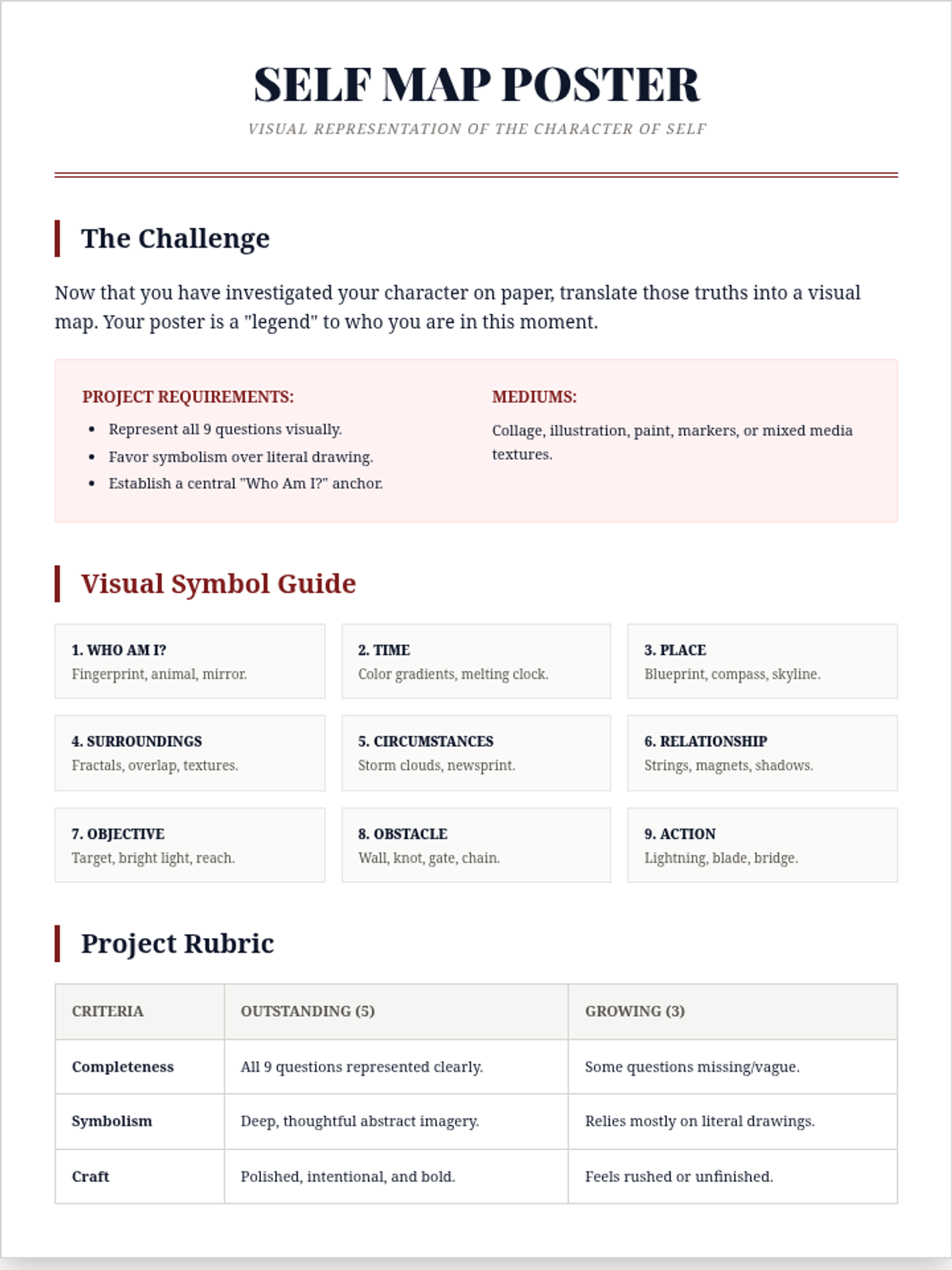
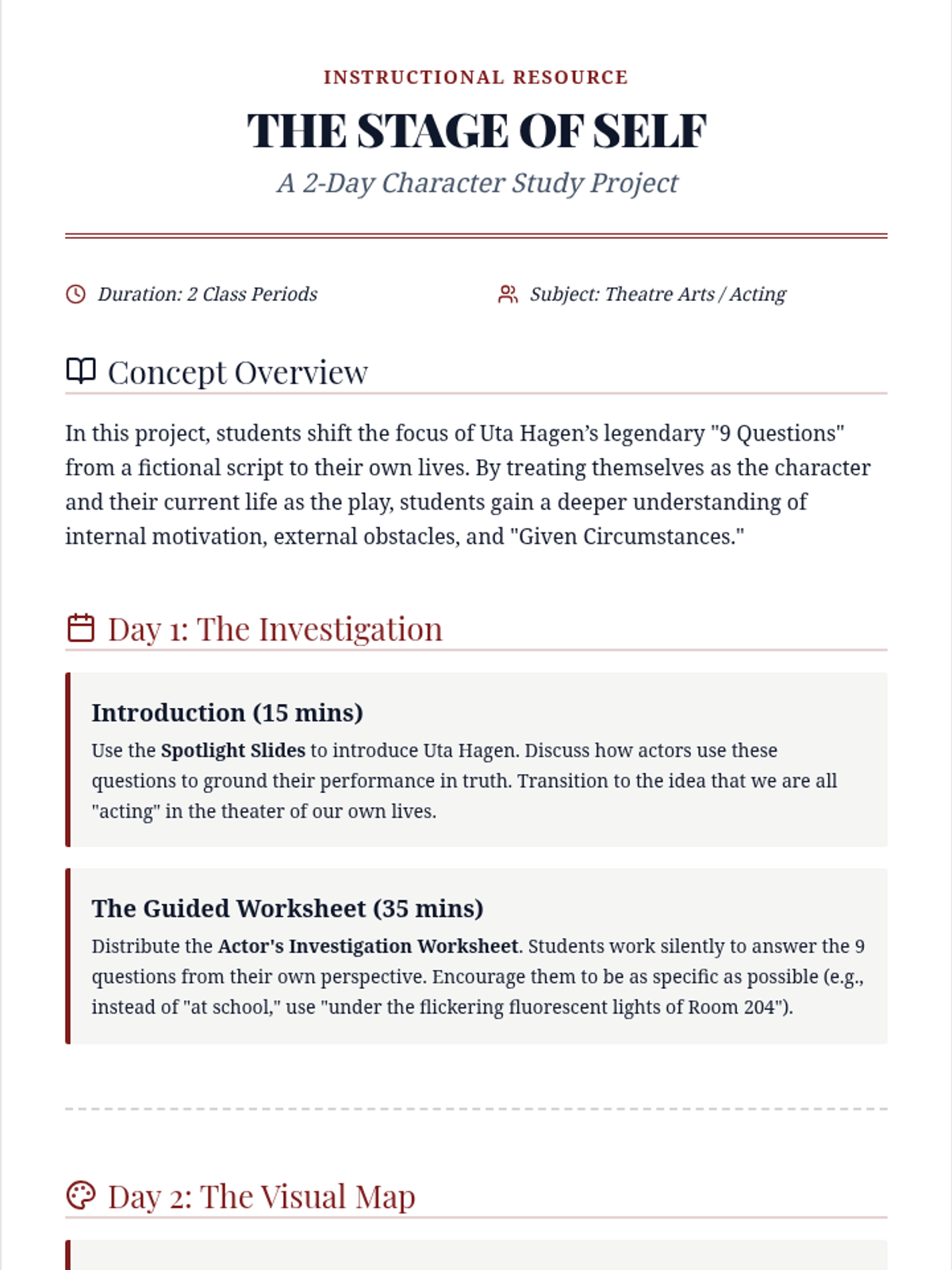
A 2-day drama project where students apply Uta Hagen's 9 Questions to themselves, culminating in a visual character map poster that explores their own 'given circumstances' and 'objectives'.
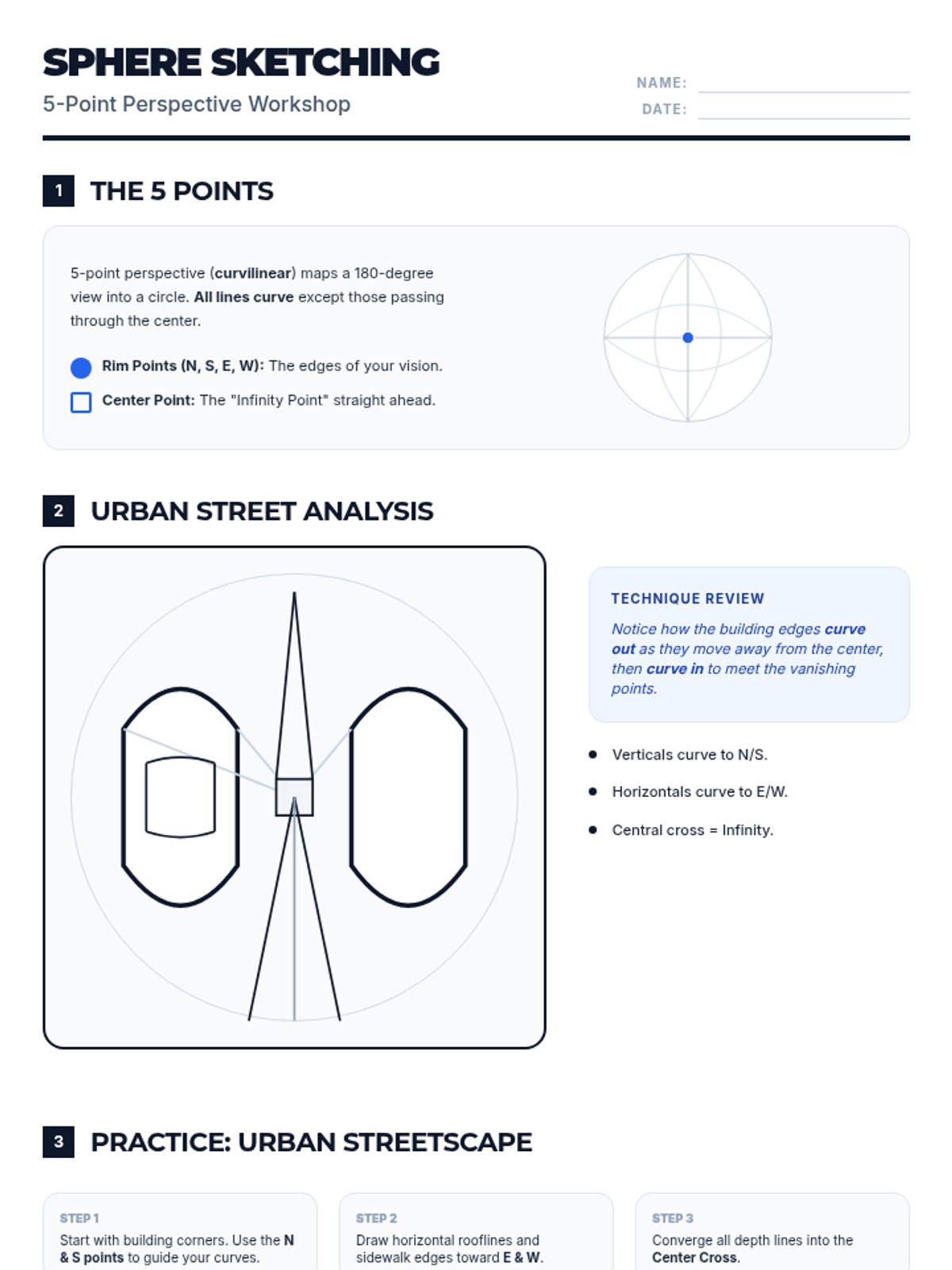
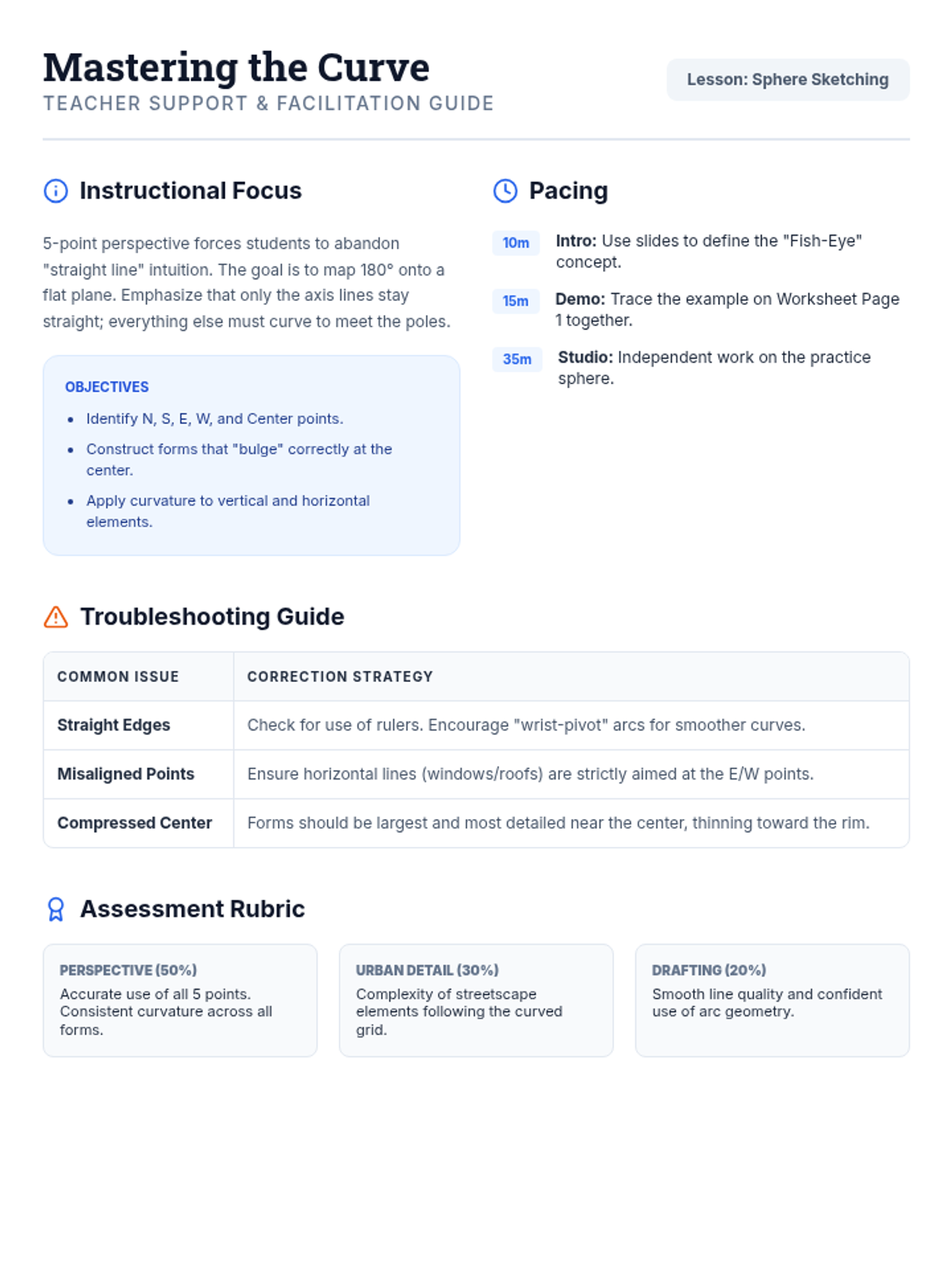
A lesson on mastering 5-point curvilinear perspective, focusing on capturing wide-angle urban environments within a spherical frame. Students will learn to map the world onto a sphere using five vanishing points.
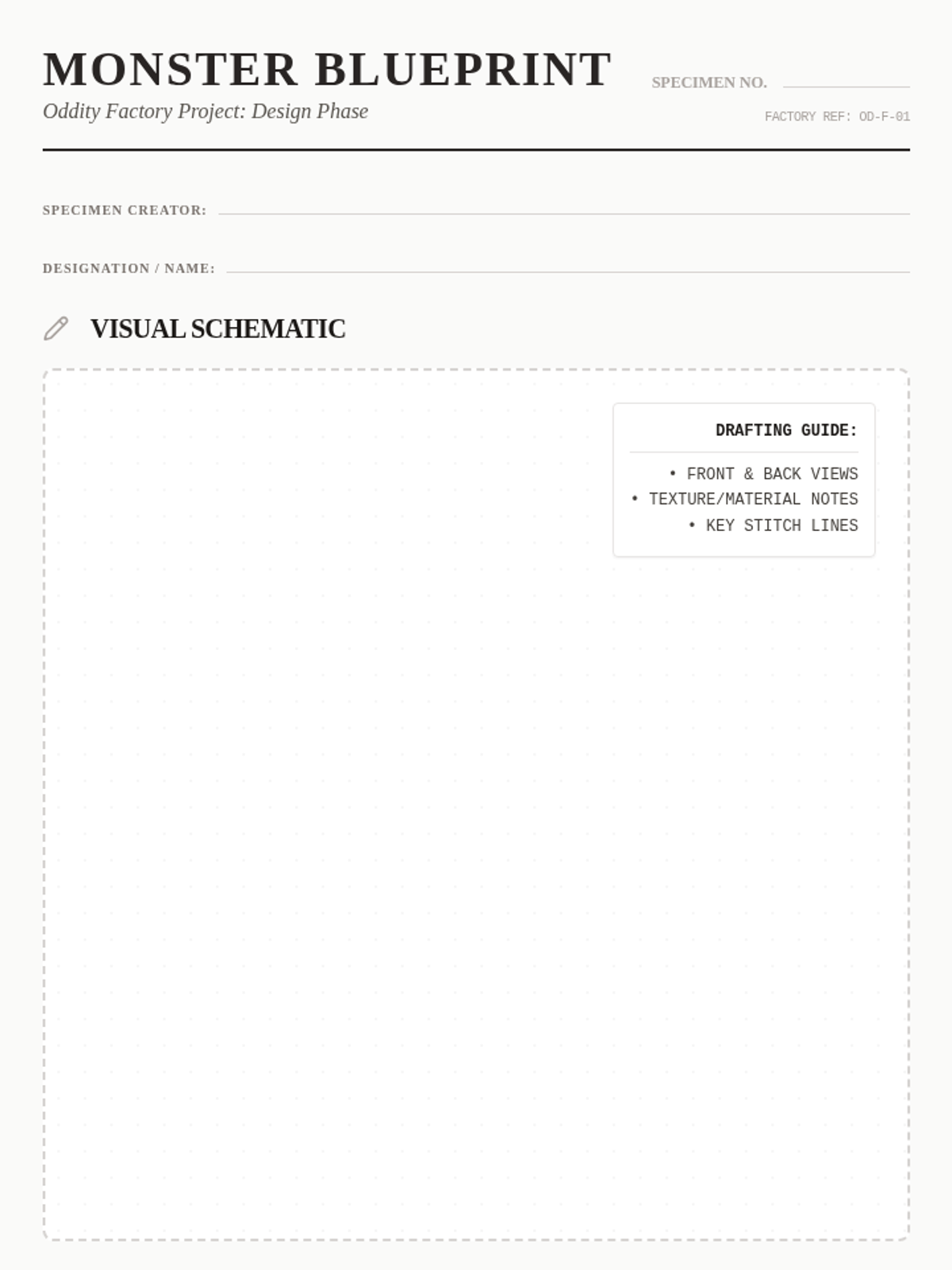
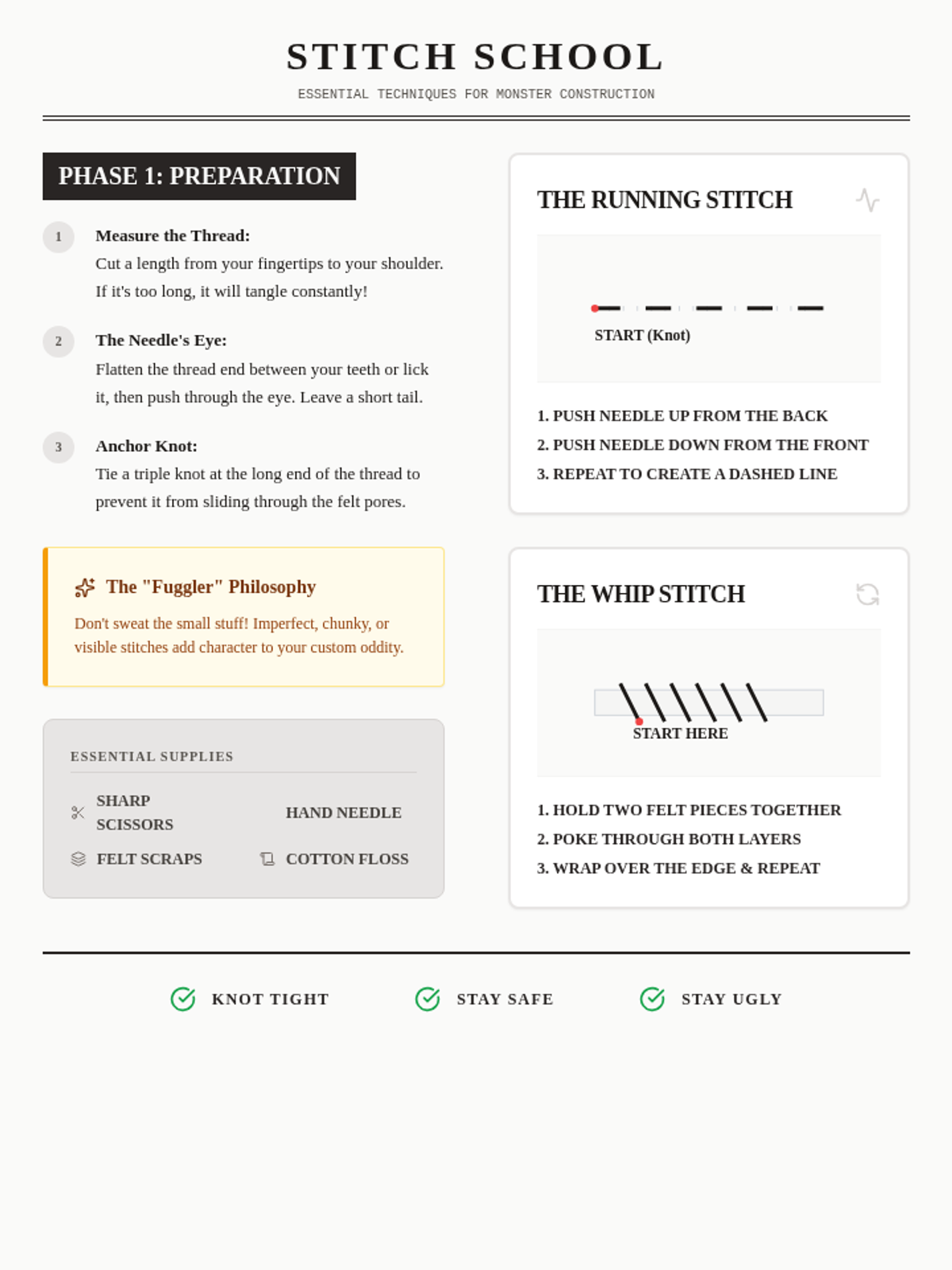
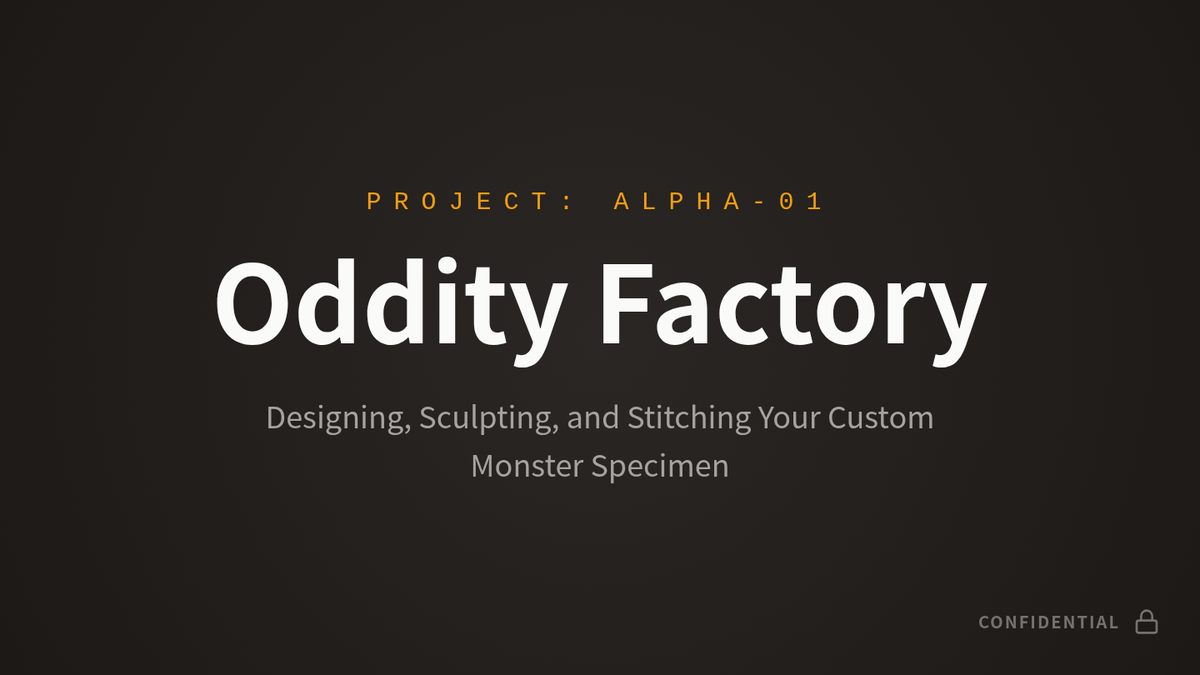
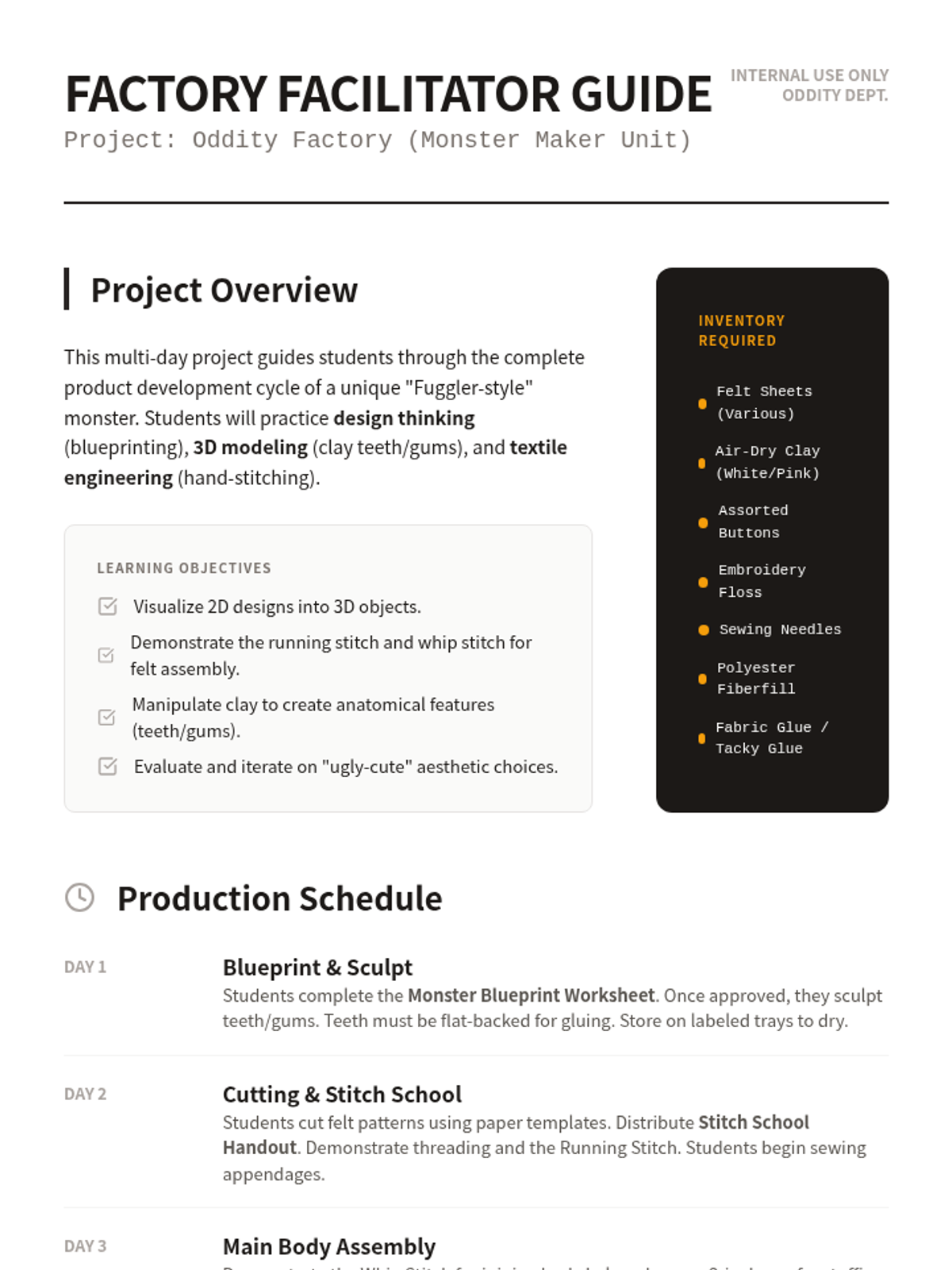
A multi-day creative project where students design and construct their own 'Fuggler-style' monsters using felt, clay, and buttons, focusing on design planning and introductory hand-stitching techniques.
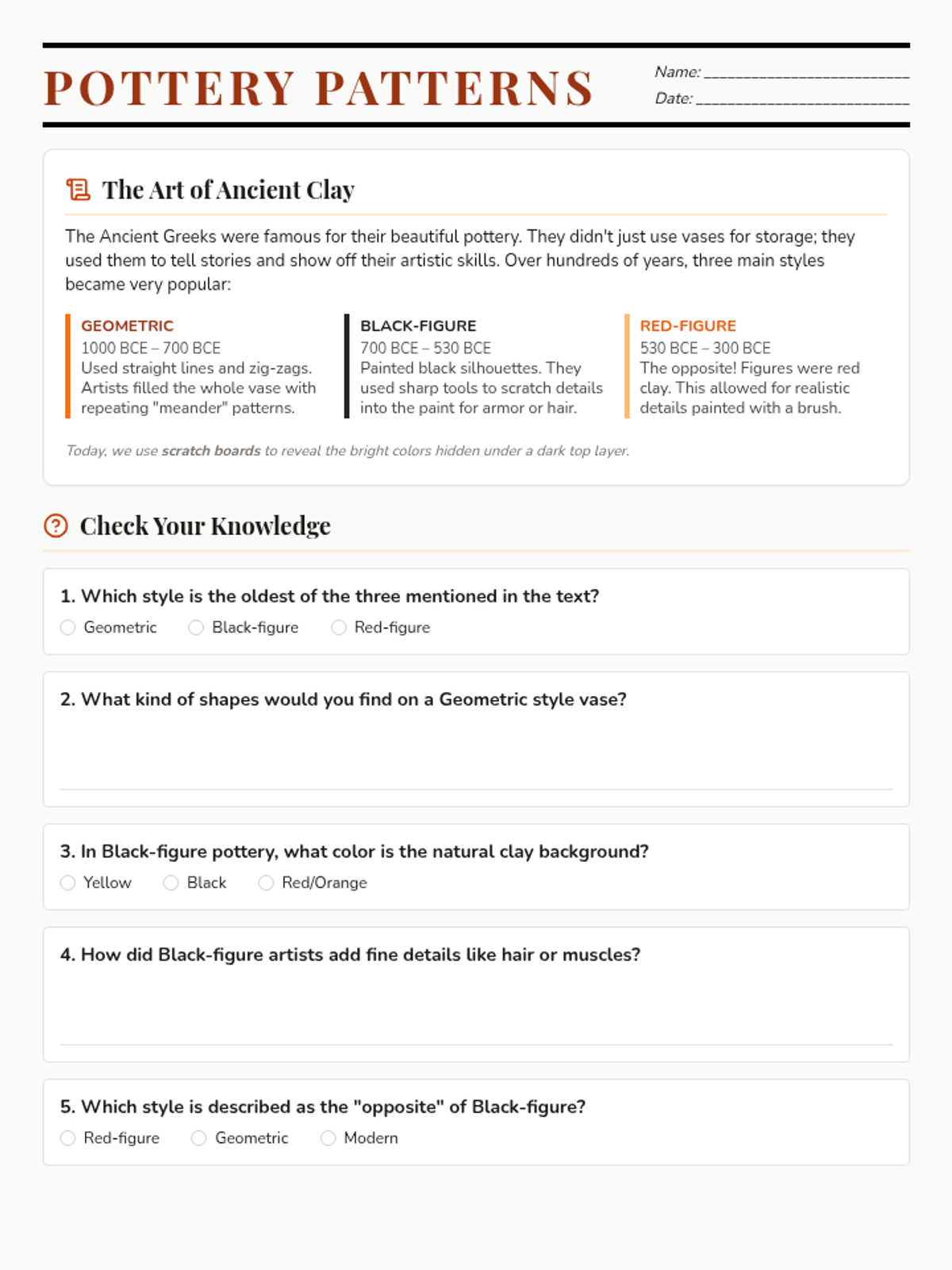
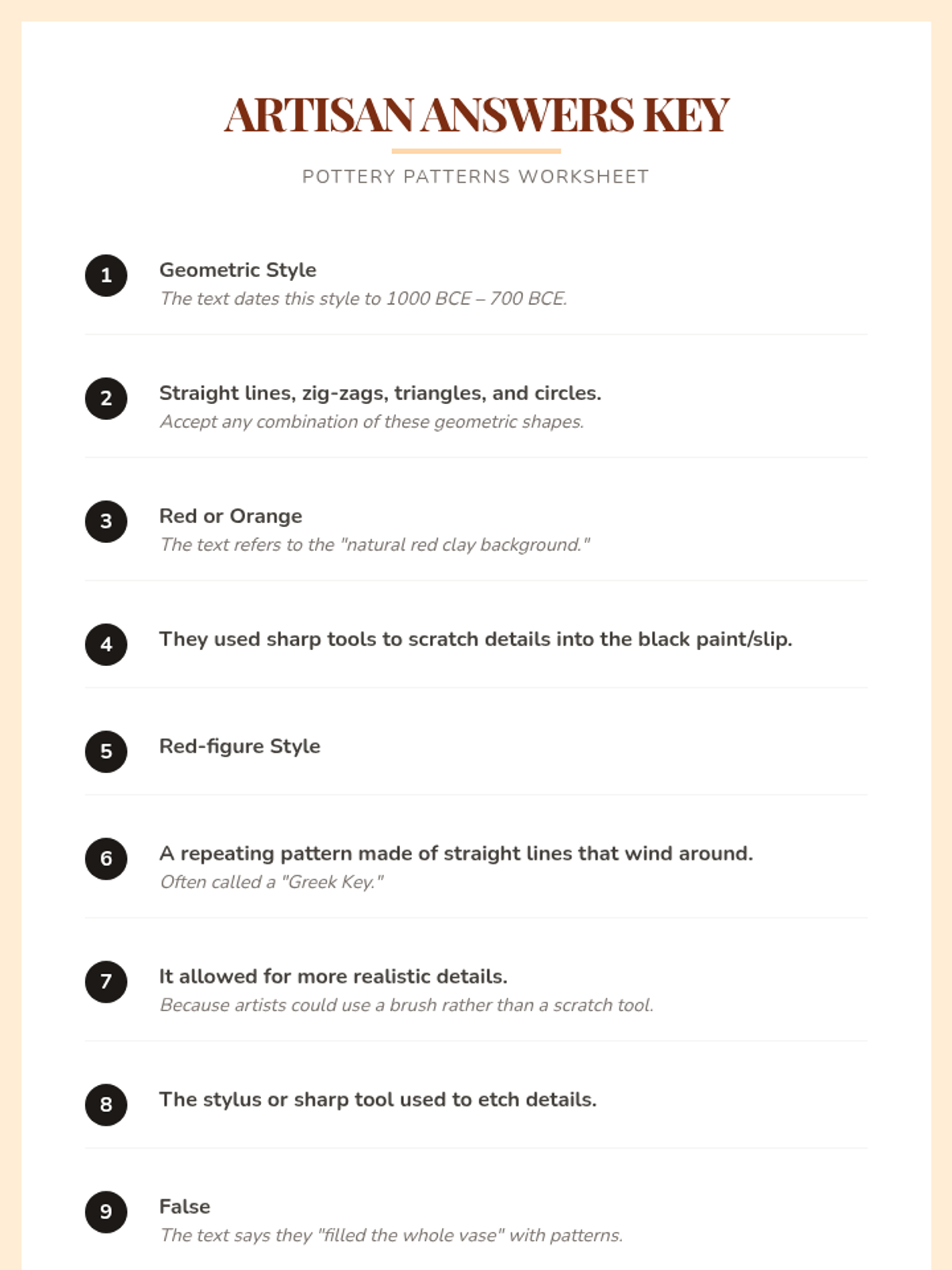
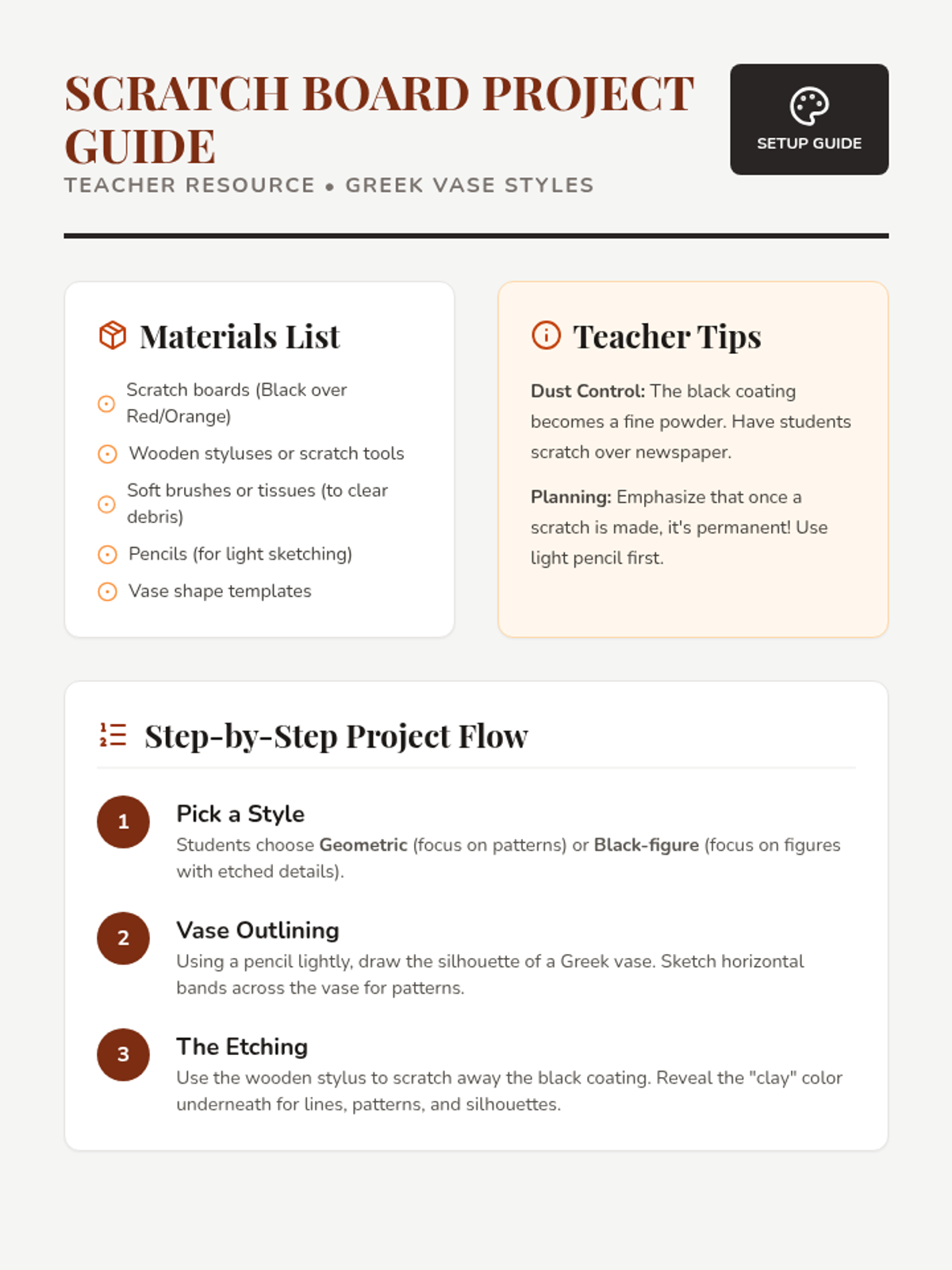
An introduction to the three primary styles of Ancient Greek pottery: Geometric, Black-figure, and Red-figure. Students read about the history and techniques before creating their own scratch board art.
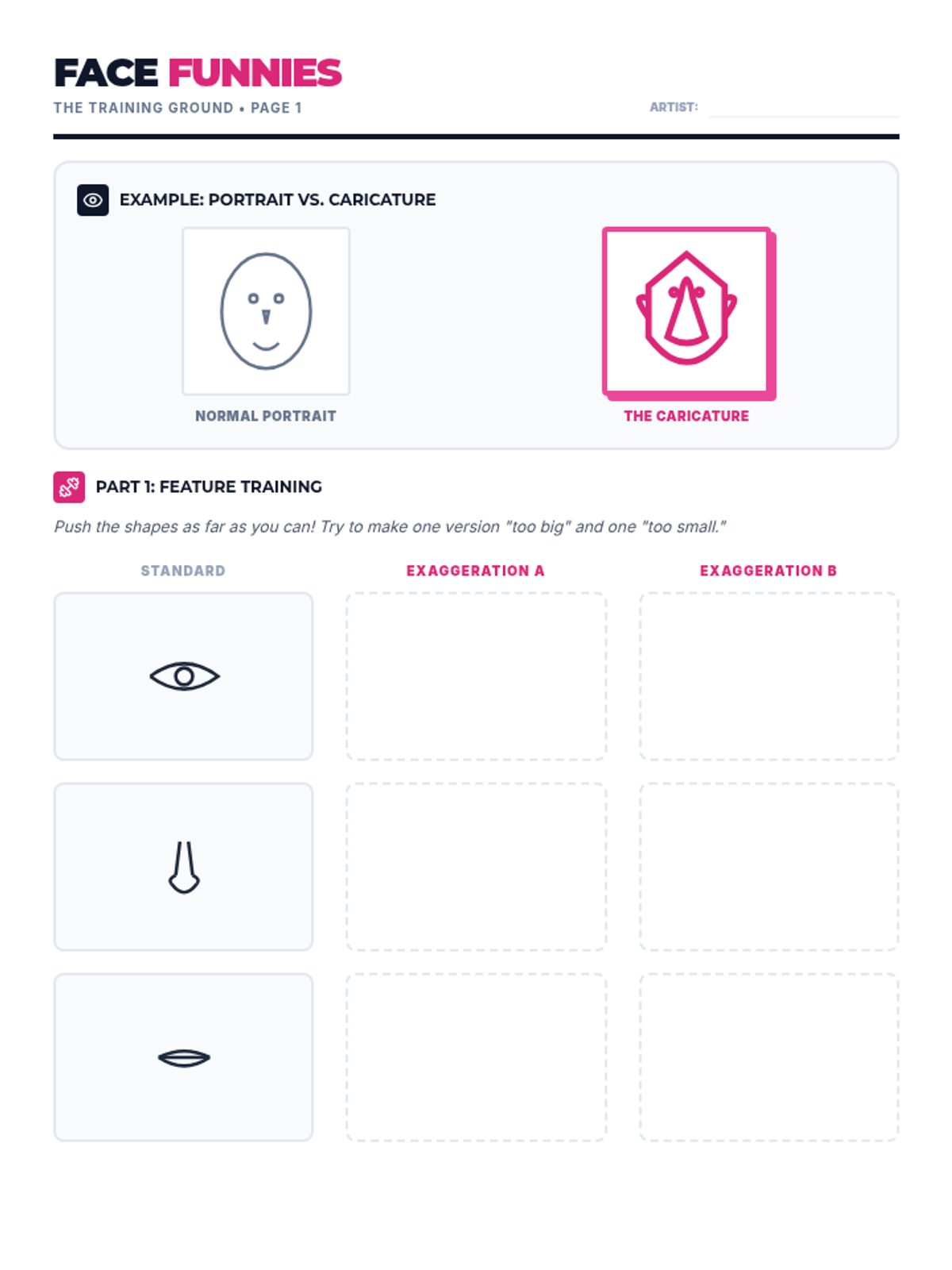
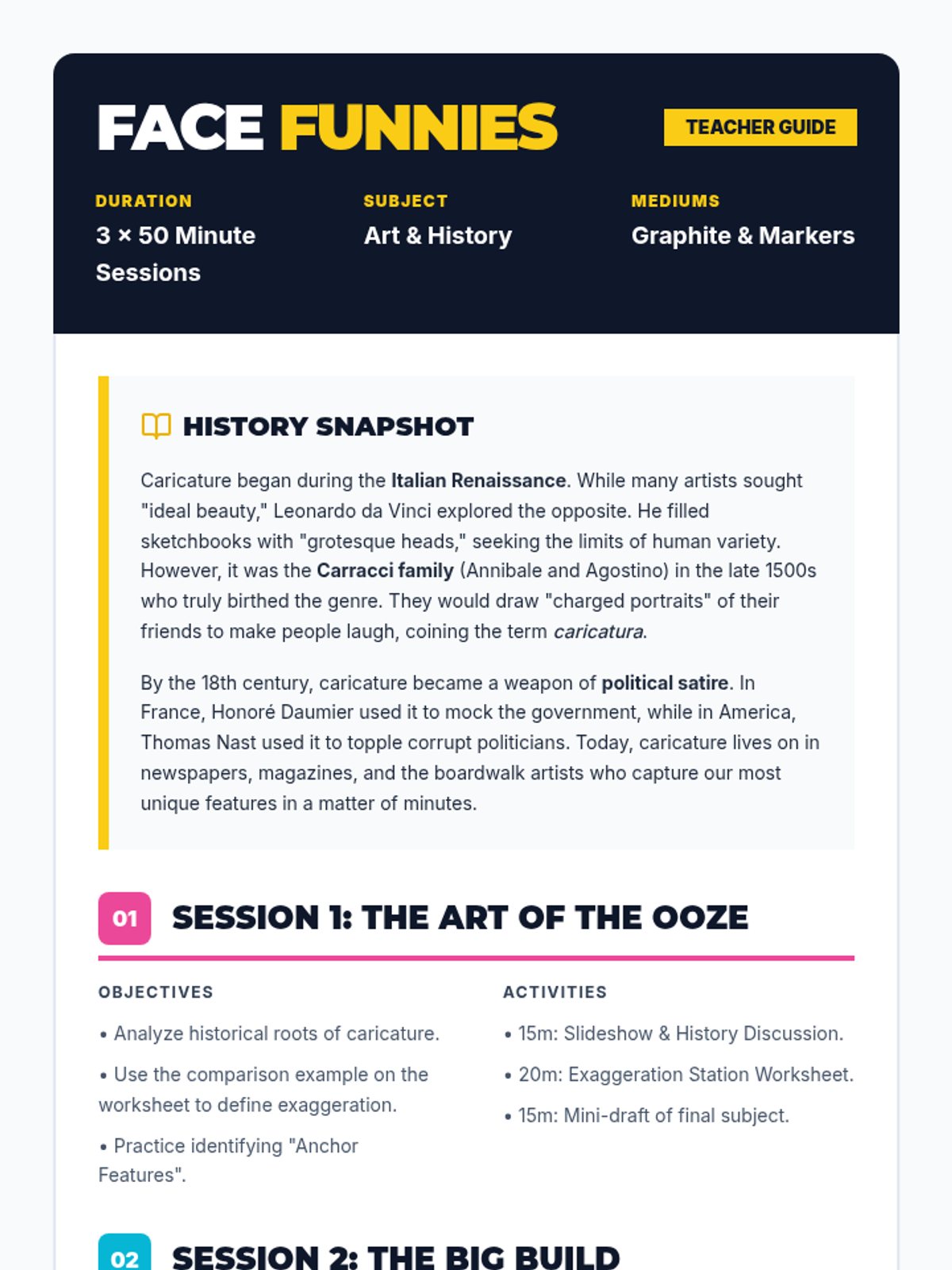
A three-session art lesson exploring the history and technique of caricature drawing, focusing on feature exaggeration and the use of graphite and markers.
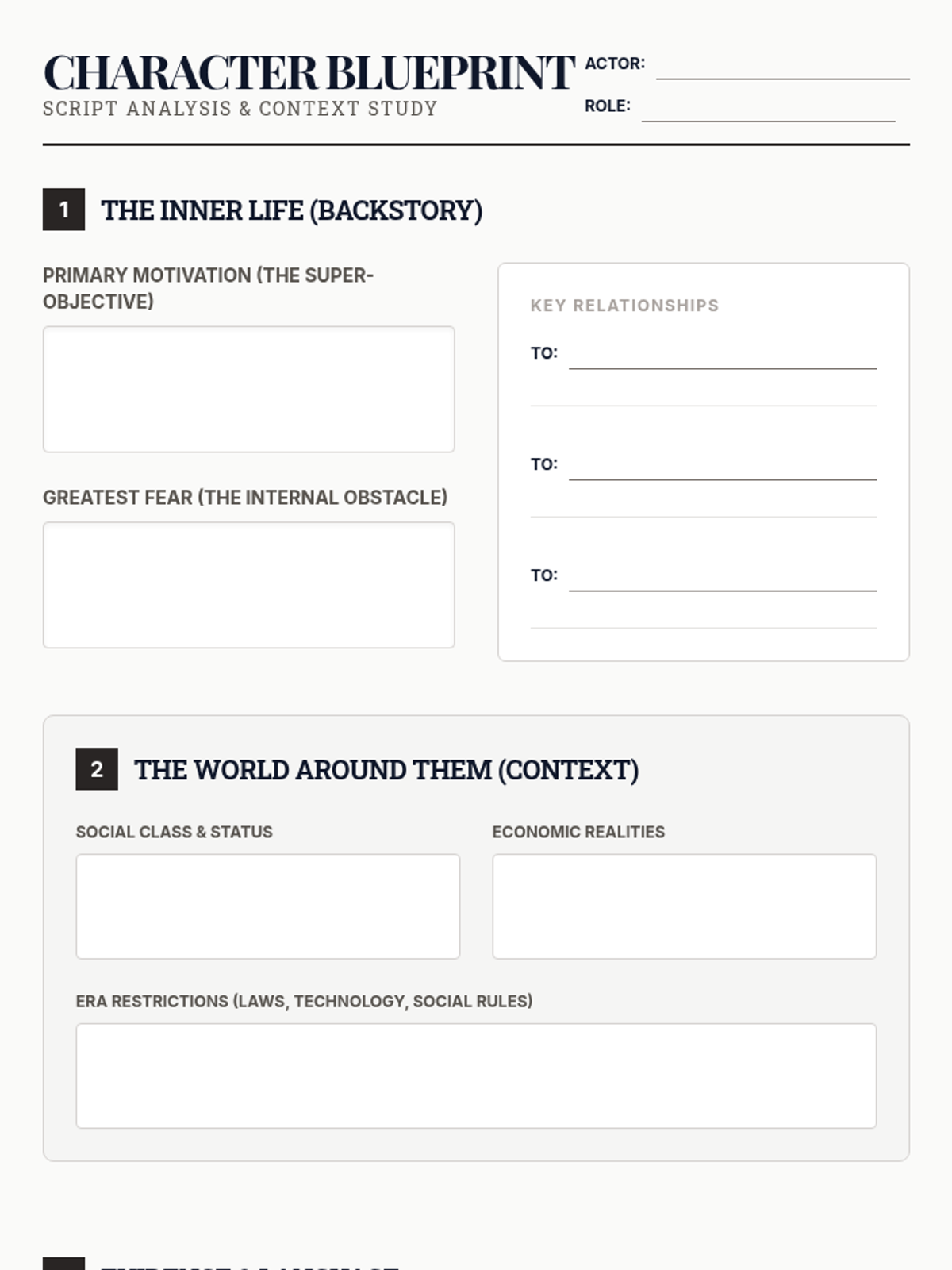
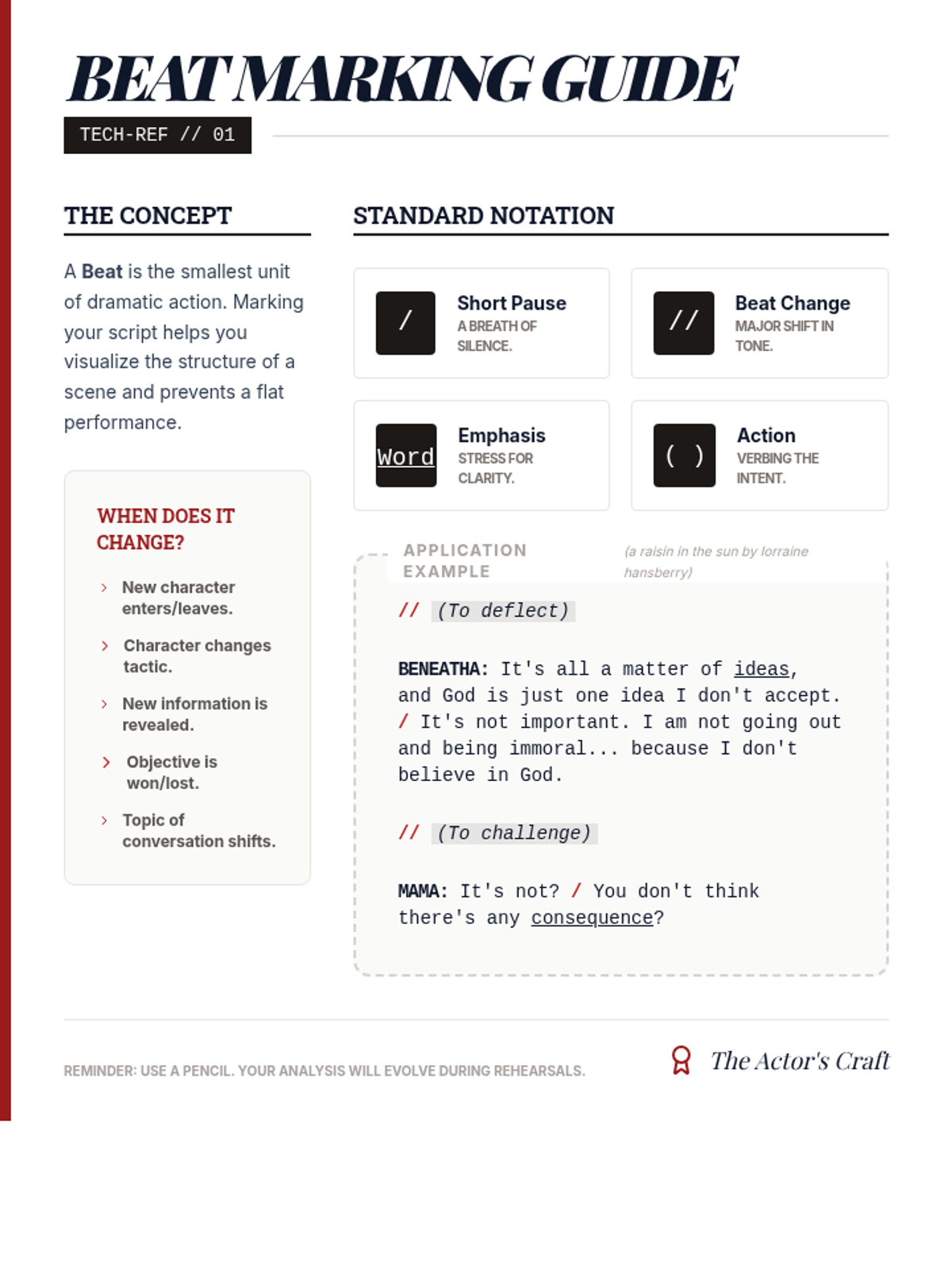
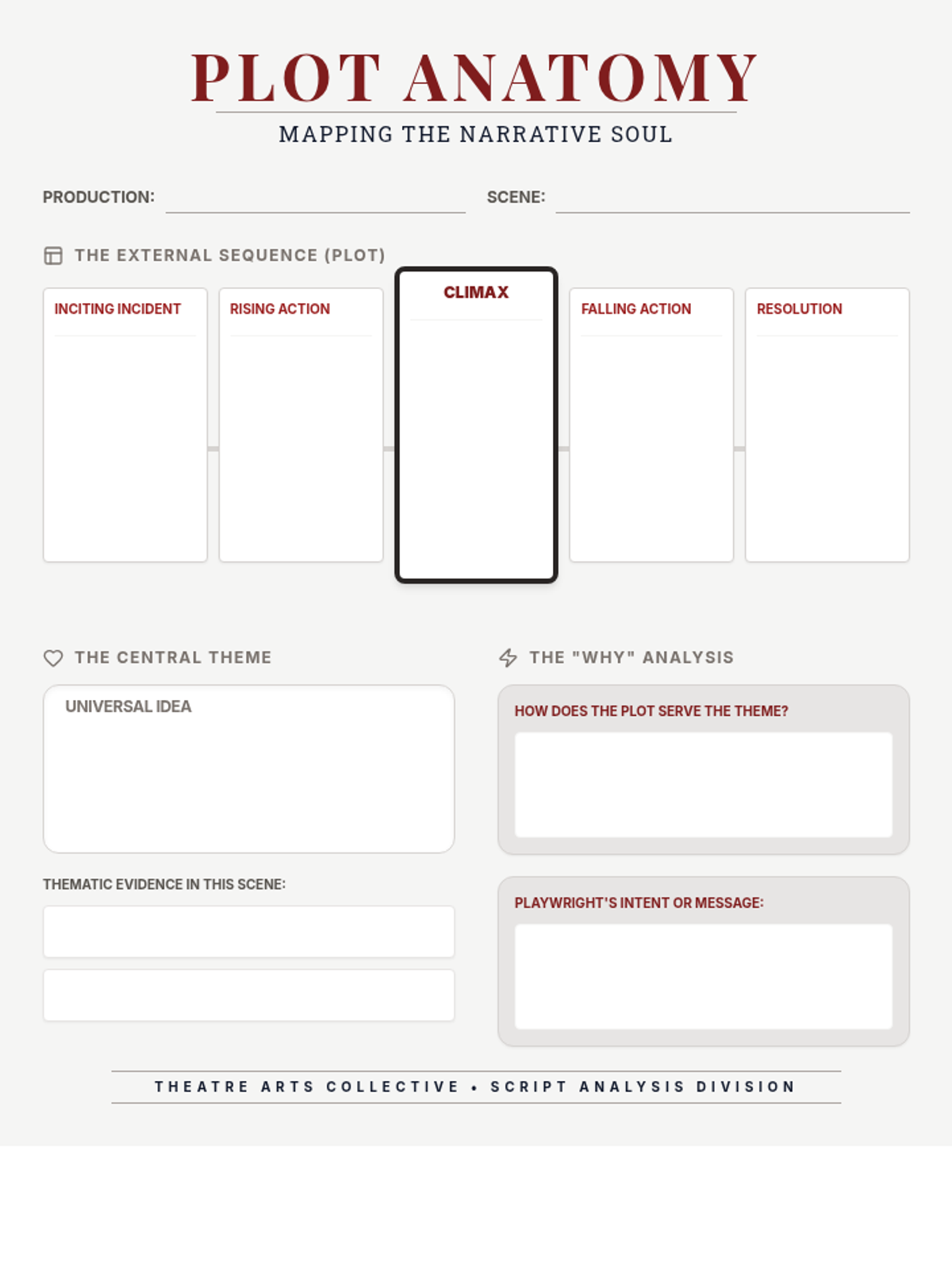
A comprehensive dive into the 'table work' phase of theatrical production, focusing on character depth, historical context, and technical script analysis. Students will move from initial reading to deep interpretation.
A deep dive into Konstantin Stanislavski's revolutionary approach to realistic acting, covering the Moscow Art Theatre, the Magic If, and the shift from Emotional Memory to Physical Actions.
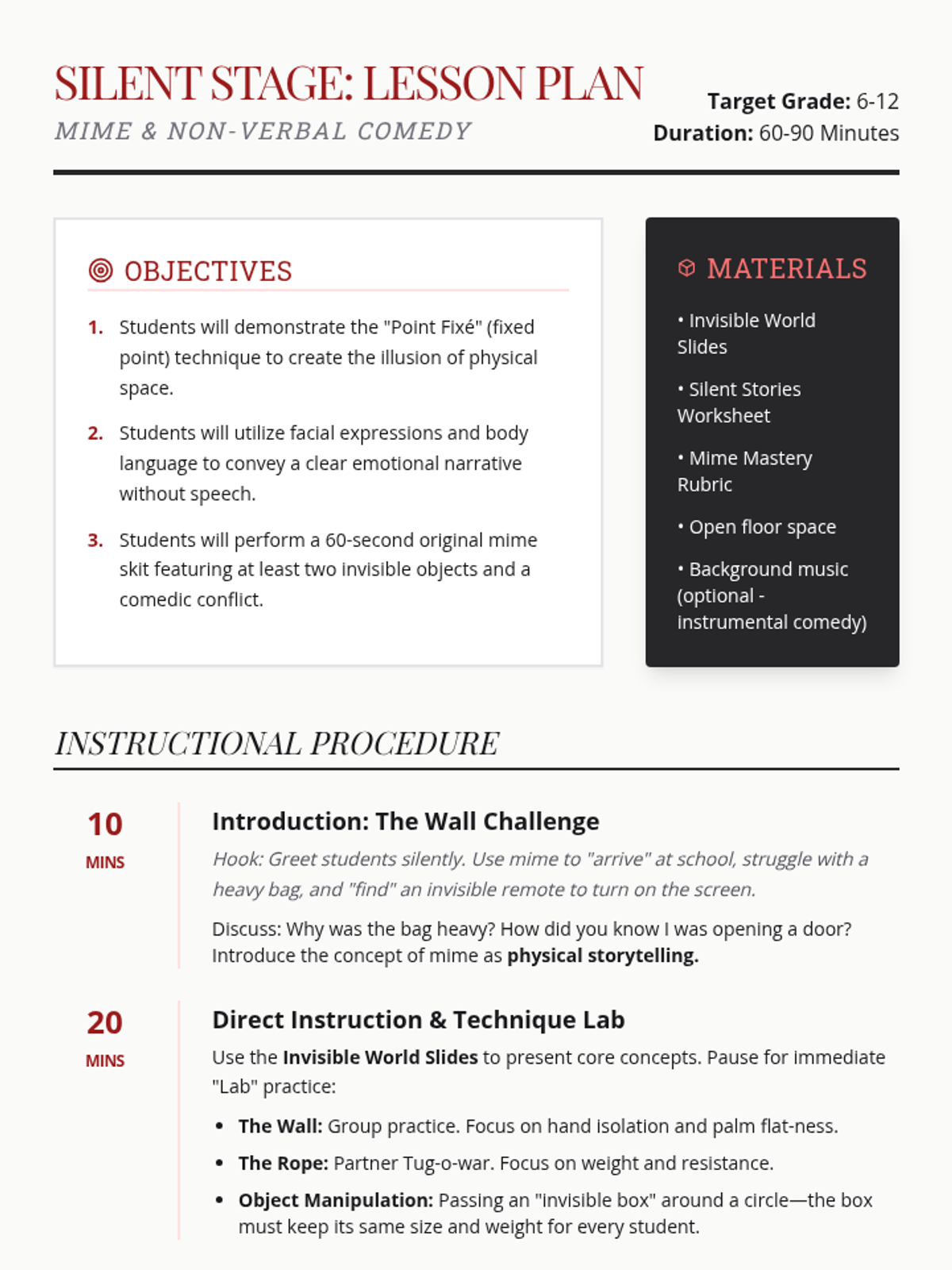
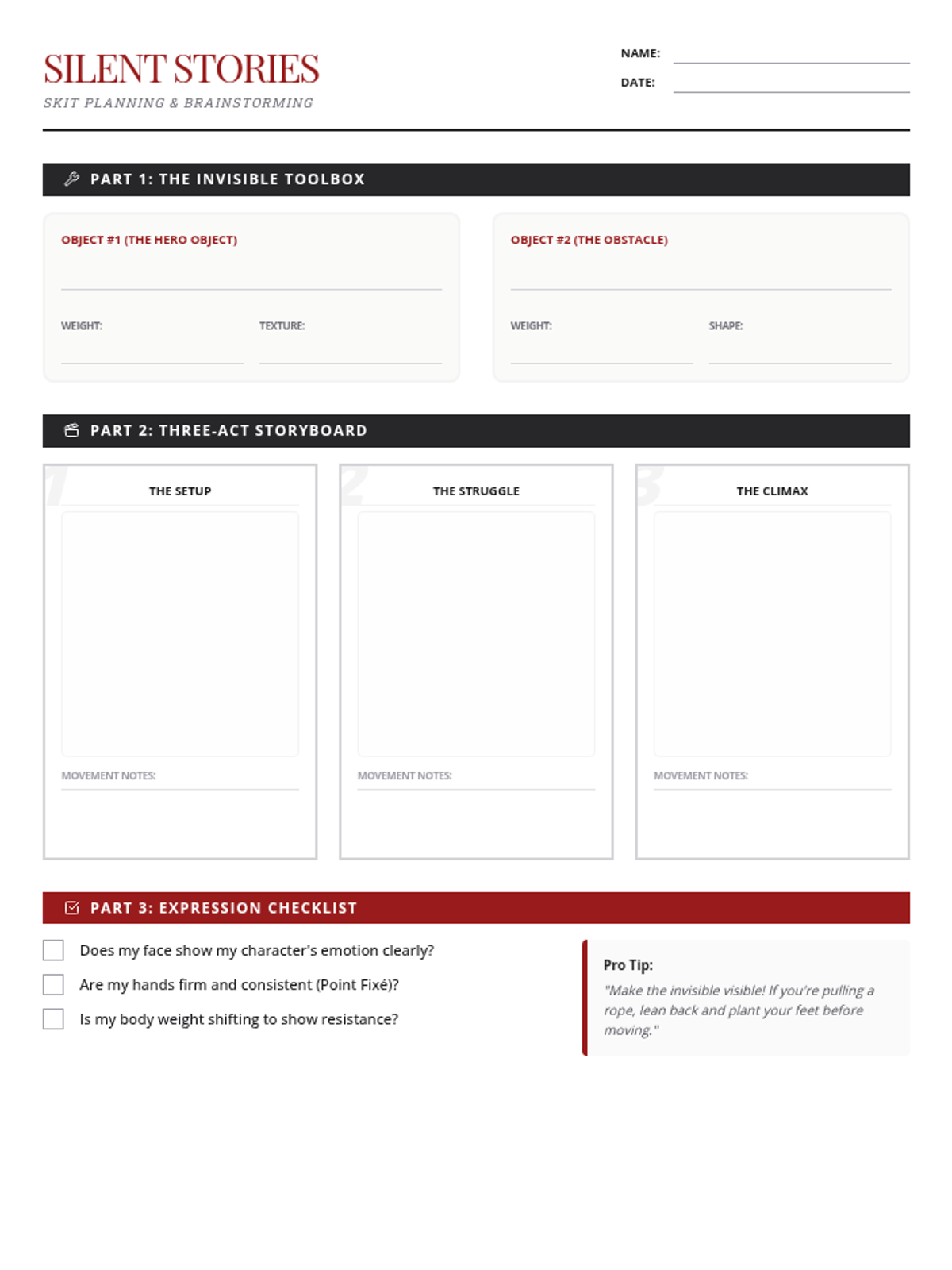
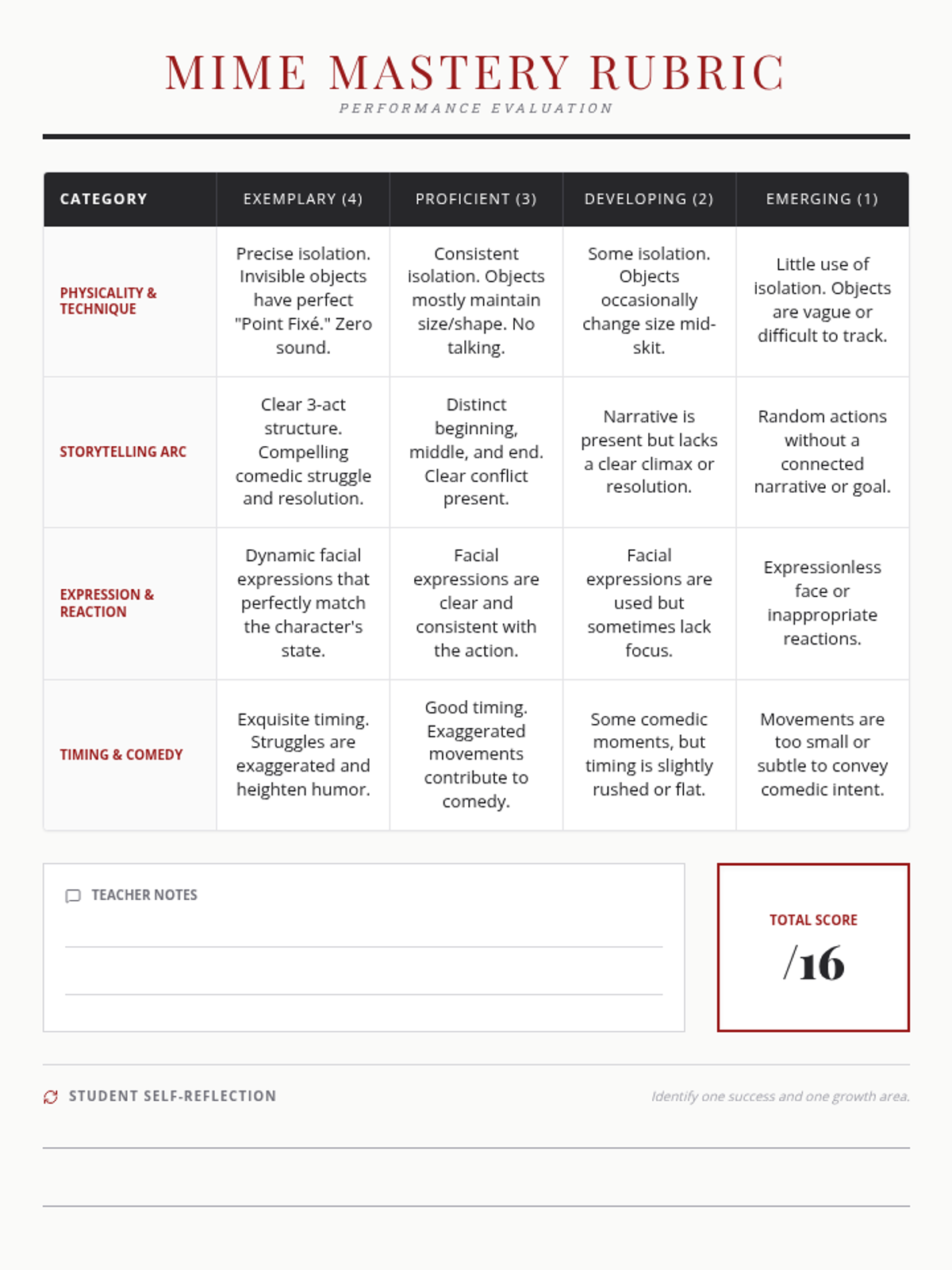
A comprehensive exploration of mime techniques and non-verbal storytelling, where students learn to build invisible worlds through precise movement and comedic timing.