Students investigate the duration and capacity of iconic and echoic memory through rapid-flash visual and auditory experiments. They analyze the brain's filtering mechanisms that determine which sensory inputs move forward in the memory system.
A high school history lesson exploring Woodrow Wilson's Fourteen Points, the Treaty of Versailles, and the intense U.S. Senate debate over joining the League of Nations. Students analyze primary sources and engage in a structured debate regarding American sovereignty and internationalism.
A 35-minute exploration of the American home front during World War I, covering social shifts, government propaganda, and legal challenges to civil liberties. Students analyze the roles of women and minorities, rationing efforts, and the tension between national security and free speech.
A 25-minute overview of World War I's defining characteristics and figures, covering trench warfare, technological innovations, and key military groups and individuals like the Harlem Hell Fighters and Alvin C. York.
A philosophical exploration of identity and logic centered on the Ship of Theseus paradox. Students analyze historical context, learn formal debate techniques, and grapple with the nature of change and continuity.
A collection of vocabulary resources focused on the structure of government and the role of the Pharaoh in Ancient Egypt, tailored for both elementary and high school levels.
A comprehensive look at the founding, geography, and development of the thirteen original American colonies.
A comprehensive lesson exploring the complex decision-making, human impact, and ethical debates surrounding the use of atomic bombs on Hiroshima and Nagasaki in 1945.
A deep dive into the economic data of the Great Depression, comparing the US and German experiences through a slow-reveal graph technique to build analytical skills.
A comprehensive look at medieval Scottish life, covering religious devotion, the impact of the Black Death, the lawless Border Reivers, and the dangerous lives of monarchs.
A 69-minute lesson exploring the intersection of environmental issues and social equity, specifically designed for 6th-grade students to understand why climate change affects different communities in different ways and what fair solutions look like.
An interactive exploration of fiscal policy, focusing on the federal budget, debt dynamics, and the specific application of expansionary and contractionary tools to manage the economy.
A focused look at Thomas Jefferson's Embargo Act of 1807, exploring its causes, the economic fallout for New England merchants, and its role in leading to the War of 1812.
A 30-35 minute independent exploration of the fundamental differences between Classical and Keynesian economic theories, focusing on their origins, core beliefs about market self-correction, and the role of government intervention.
A lesson exploring the realities of life in medieval Scotland, from castle luxury to peasant survival, based on historical accounts of clothing, food, and social structure.
A forensic mental health simulation where students or patients analyze a criminal case and competency report for a defendant with Schizoaffective Disorder charged with a felony in Texas.
A comprehensive chapter-by-chapter summary and exploration of the book 'Hidden Figures', focusing on the lives and contributions of Katherine Johnson, Dorothy Vaughan, Mary Jackson, and Christine Darden during the Space Race.
A focused study on the complex factors and historical context surrounding President Harry S. Truman's decision to use atomic weapons at the end of World War II.
A comprehensive lesson on Nazi Blitzkrieg tactics during WWII, featuring a detailed reading passage and a structured analysis worksheet for 7th-grade students.
A comprehensive study of Ancient Egypt focusing on the Nile River, the role of Pharaohs, and the engineering of pyramids. Includes reading, assessment, and interactive note-taking.
A formal assessment and feedback set for the 2026 Energy Crisis economic analysis essay, including a scored rubric and clear, actionable feedback for the student.
A grading report and feedback sheet based on the Energy Crisis Rubric, providing clear, actionable insights for a student essay on the 2026 Iran War oil shortages.
A lesson focused on analyzing the economic impacts of energy crises, specifically the 2026 Iran War scenario, and providing feedback on student performance.
A lesson focused on evaluating student analysis of the 2026 global energy crisis, with a specific emphasis on applying supply and demand economic principles to real-world shortages.
A lesson focused on analyzing the economic consequences of global conflicts, specifically the 2026 energy crisis, featuring a graded assessment and feedback for students.
A graded feedback report for a student essay on the 2026 energy crisis, providing detailed point deductions and constructive criticism based on the provided rubric.
This lesson explores the constitutional conflict surrounding Abraham Lincoln's suspension of the writ of habeas corpus during the American Civil War, focusing on the tension between national security and individual civil liberties.
A dramatic exploration of John Brown's 1859 raid on Harpers Ferry, focusing on the conflicting perspectives of the raiders, the military, and the local community through a 4-scene classroom play.
A comprehensive lesson on the 1858 Illinois Senate race, exploring the historical significance of the Lincoln-Douglas debates, the expansion of slavery, and the rise of Abraham Lincoln.
A comprehensive overview of the American Civil War's major events from 1861 to 1865, focusing on key battles, political shifts, and the war's ultimate conclusion.
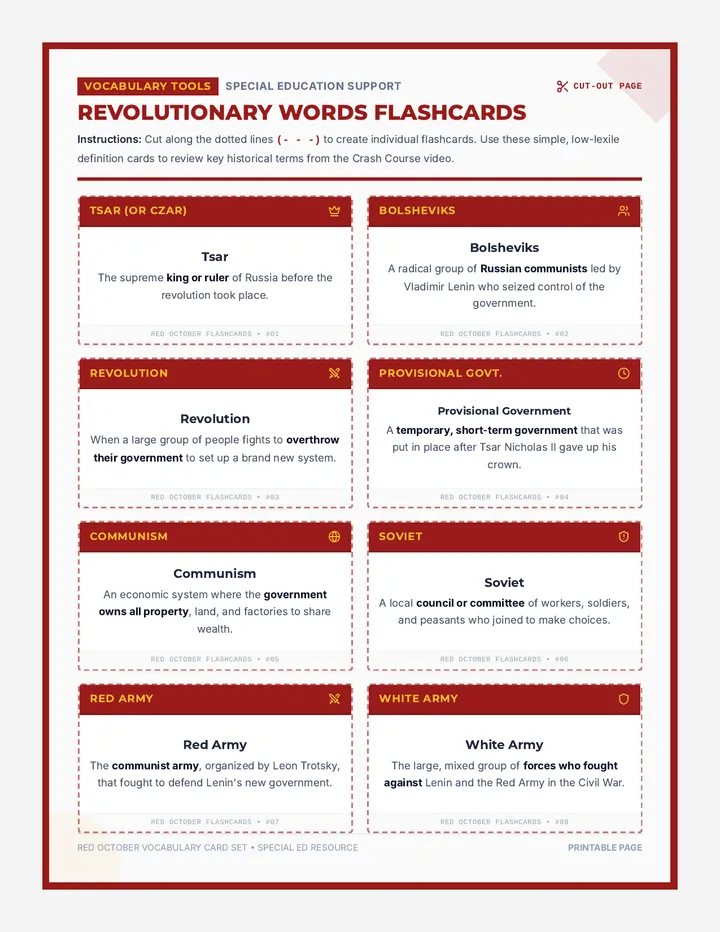
A comprehensive vocabulary lesson covering the essential terminology of the American Civil War, from the causes of slavery and abolitionism to the complexities of Reconstruction.
A high-stakes historical scavenger hunt where students solve puzzles related to the Age of Exploration to 'unlock' a hidden route. This game-based learning experience uses teamwork and problem-solving to teach geography and historical facts.
Examines individual rights, religious freedom, landmark Supreme Court cases, and the impact of the 14th Amendment on state government.
Explores the structure of the federal government with a focus on the Judicial branch, judicial review, and the system of checks and balances.
Covers the foundations of the U.S. Constitution, including its importance, the Preamble, and core principles like popular sovereignty and federalism.
A history lesson exploring the dual roles of music in the Soviet Union, from state-sponsored propaganda to the subversive voices of dissent during the late Soviet period.
A deep dive into the sensational world of yellow journalism and its pivotal role in propelling the United States into the Spanish-American War. Students analyze historical headlines and the impact of the USS Maine's sinking on public opinion.
An investigation into the significance of Shabbat as the primary ritual expression of Jewish life and identity.
A study of the core ethical teachings of Judaism, focusing on the 613 Mitzvot, the Prophetic Vision of social justice, and the wisdom literature of Proverbs.
An exploration of the principal beliefs of Judaism, including Monotheism, Moral Law, and the Covenant, as revealed through the Tanakh and Talmud.
A visual overview of the core pillars of Judaism as outlined in the Studies of Religion 1 syllabus, featuring concise summaries and symbolic illustrations.
A lesson examining the evolution of Soviet history through its music, comparing state-sponsored propaganda with dissident and personal expressions.
A lesson exploring the domestic and military impacts of WWII, specifically focusing on the attack at Pearl Harbor, the contribution of the Navajo Code Talkers, and the home front mobilization of Victory Gardens.
A deep dive into Soviet history through the lens of music, comparing early revolutionary propaganda with the dissident rock of the late 20th century. Students analyze lyrics to uncover state-sanctioned messages and the calls for change that eventually echoed through the USSR.
A primary source analysis lesson focusing on the early American Republic through the lens of foundational documents, using the HIPP framework to analyze political and social tensions.
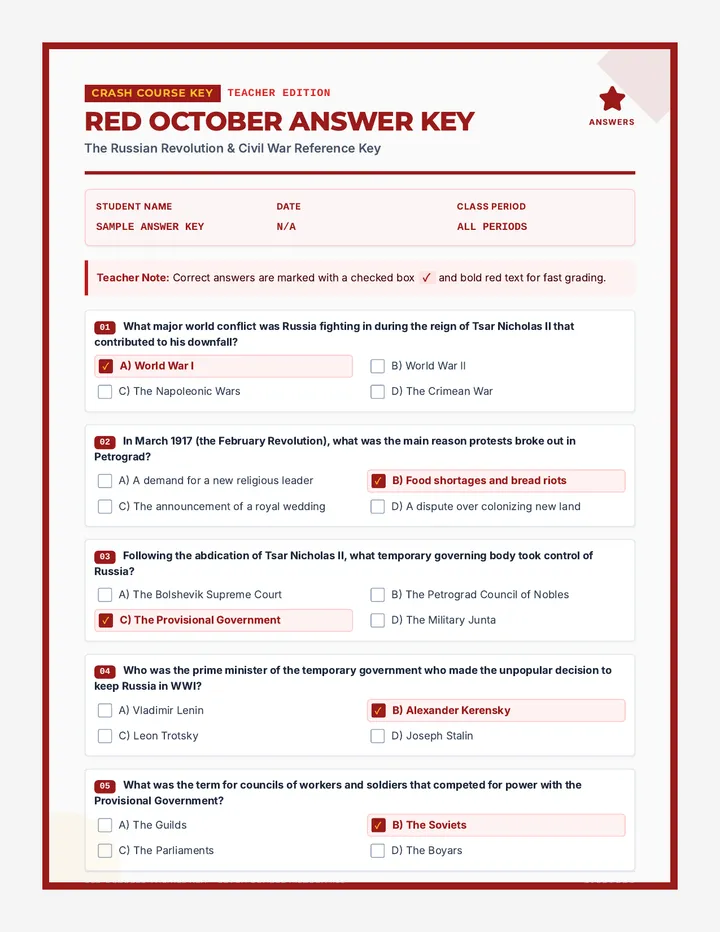
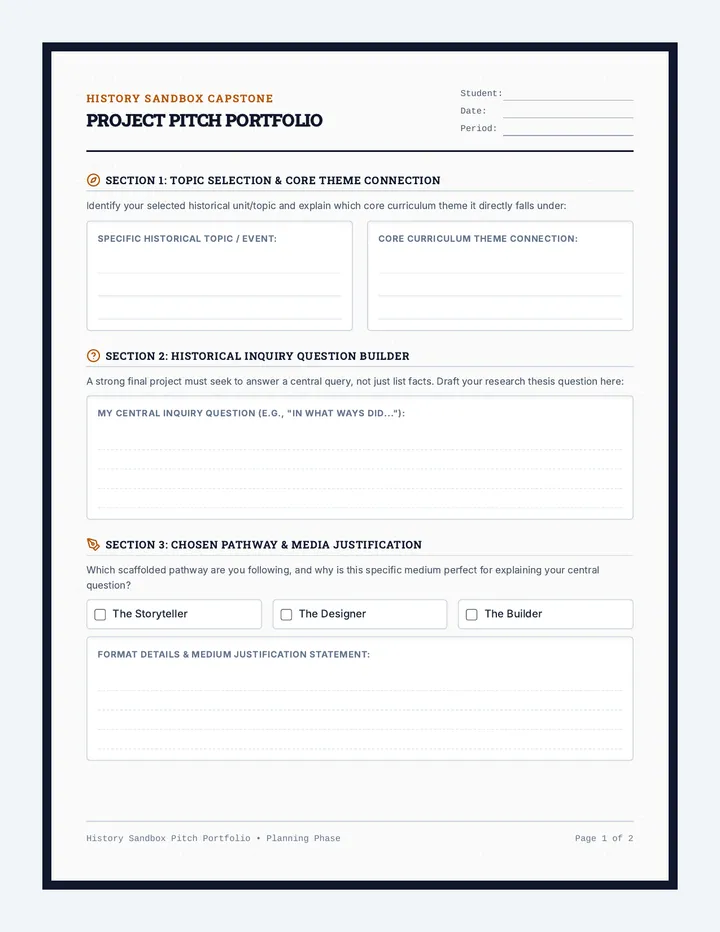
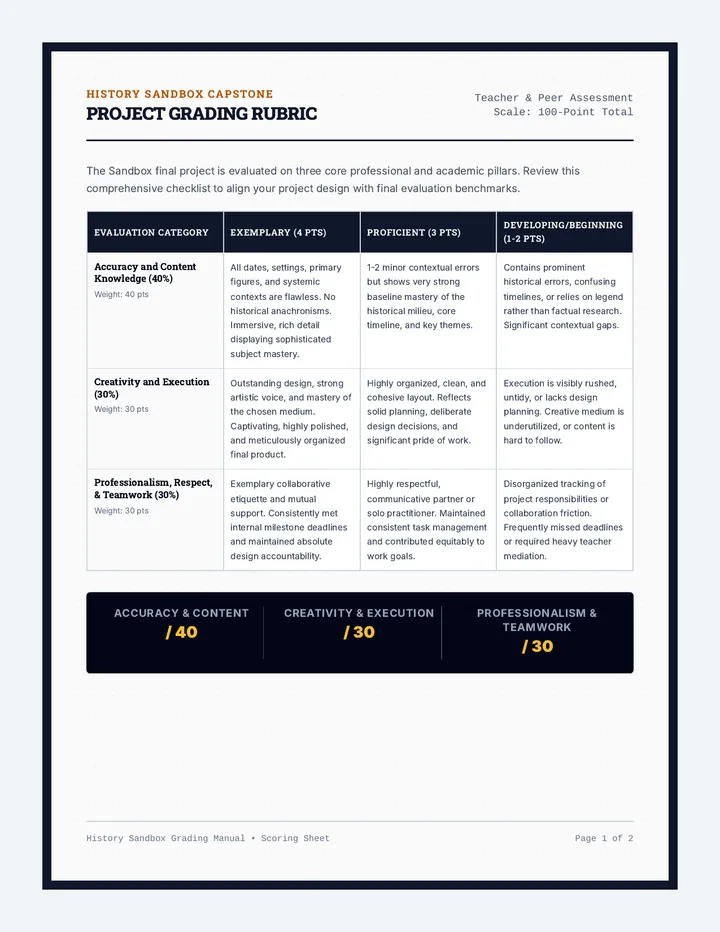
A comprehensive set of project-based learning assignments for AP U.S. History focusing on the political conflicts of the Early Republic (1789-1800), including the emergence of the first party system and the presidency of John Adams.
A comprehensive exploration of the Maya, Aztec, and Inca civilizations, focusing on their geography, social structures, and lasting achievements. Students will use guided notes to capture key details during a direct instruction lecture.
This lesson explores the arrival of the American Expeditionary Forces in Europe during WWI, focusing on their military contributions, the harsh realities of trench warfare, and their role in the Allied victory.
An exploration of two pivotal shifts in WWII strategy: the rapid-fire Blitzkrieg tactics of the Axis powers and the catastrophic decision-making behind the Atomic Bomb.
A deep dive into the historical timeline of Afghanistan from the 1950s to the present, mapping political regimes to the narrative arcs of Mariam and Laila to build empathy and historical literacy.