A comprehensive vocabulary lesson covering the essential terminology of the American Civil War, from the causes of slavery and abolitionism to the complexities of Reconstruction.
A dramatic exploration of John Brown's 1859 raid on Harpers Ferry, focusing on the conflicting perspectives of the raiders, the military, and the local community through a 4-scene classroom play.

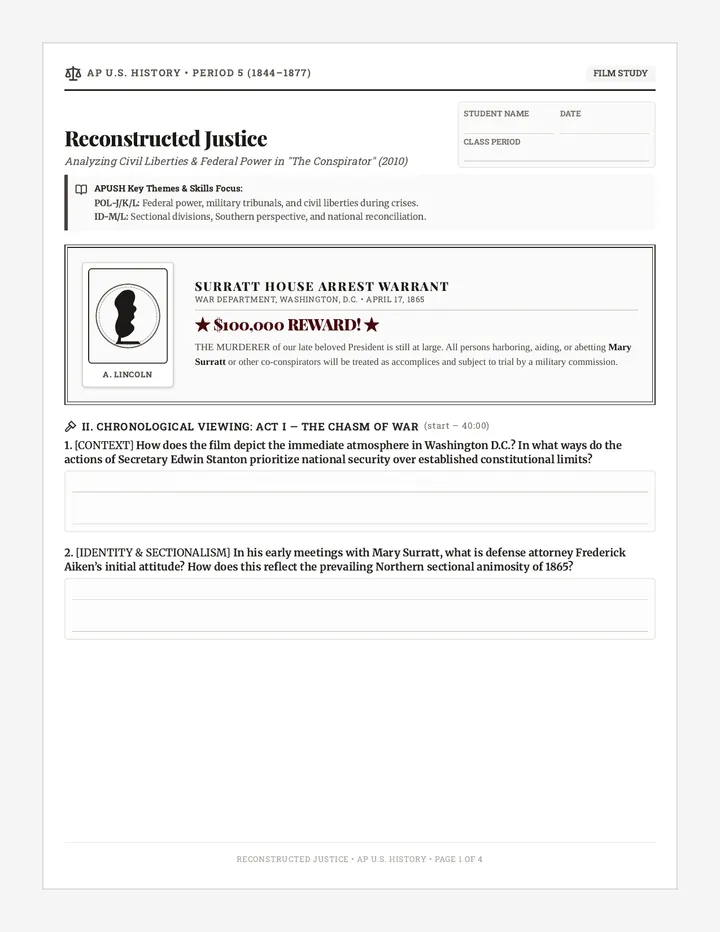
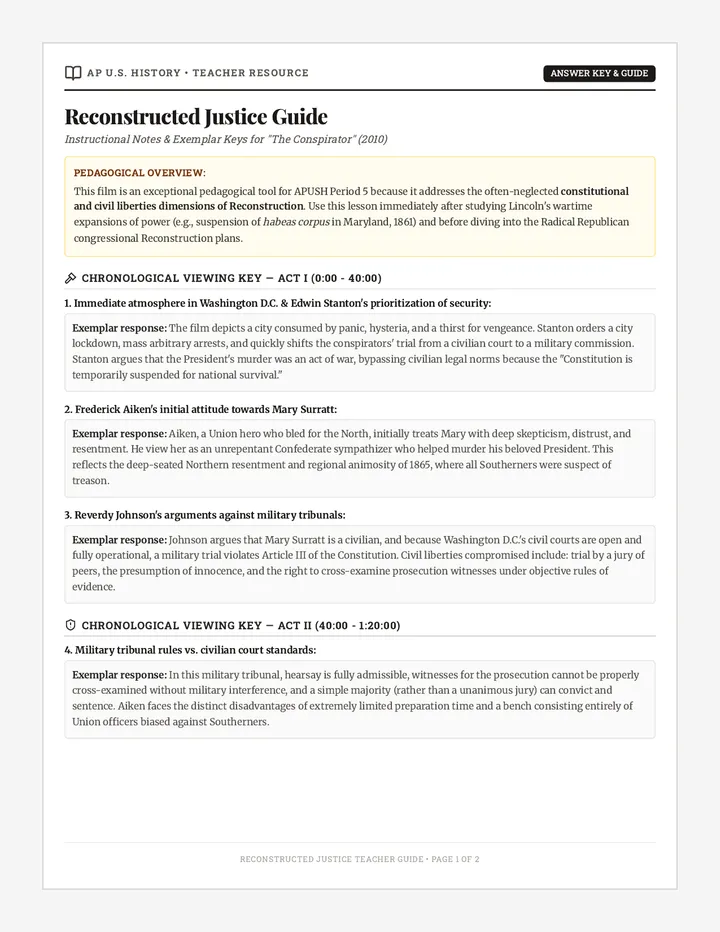
A comprehensive lesson on the 1858 Illinois Senate race, exploring the historical significance of the Lincoln-Douglas debates, the expansion of slavery, and the rise of Abraham Lincoln.
A comprehensive introduction to the three branches of the U.S. government, exploring their unique roles, responsibilities, and how they work together through checks and balances.
A comprehensive overview of the American Civil War's major events from 1861 to 1865, focusing on key battles, political shifts, and the war's ultimate conclusion.
An interactive lesson where students explore the geography, economy, and culture of the 13 original colonies through a classroom scavenger hunt. Students will categorize colonies by region and identify key characteristics of each.
A high-stakes historical scavenger hunt where students solve puzzles related to the Age of Exploration to 'unlock' a hidden route. This game-based learning experience uses teamwork and problem-solving to teach geography and historical facts.
Examines individual rights, religious freedom, landmark Supreme Court cases, and the impact of the 14th Amendment on state government.
Explores the structure of the federal government with a focus on the Judicial branch, judicial review, and the system of checks and balances.
Covers the foundations of the U.S. Constitution, including its importance, the Preamble, and core principles like popular sovereignty and federalism.
A lesson exploring the Quaker perspective during the American Revolution, focusing on their commitment to neutrality and nonviolence despite external pressures.
A deep dive into the three foundations of social power—violence, information, and charisma—using a modern-day thought experiment to explain how states are built.
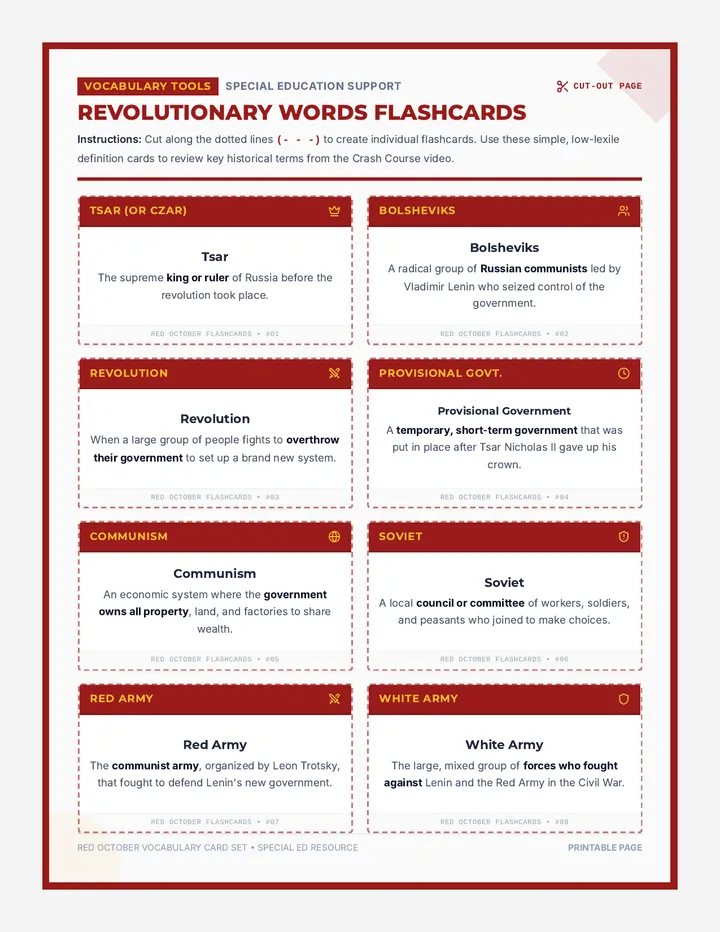
A history lesson exploring the dual roles of music in the Soviet Union, from state-sponsored propaganda to the subversive voices of dissent during the late Soviet period.
A deep dive into the sensational world of yellow journalism and its pivotal role in propelling the United States into the Spanish-American War. Students analyze historical headlines and the impact of the USS Maine's sinking on public opinion.
An investigation into the significance of Shabbat as the primary ritual expression of Jewish life and identity.
A study of the core ethical teachings of Judaism, focusing on the 613 Mitzvot, the Prophetic Vision of social justice, and the wisdom literature of Proverbs.
An exploration of the principal beliefs of Judaism, including Monotheism, Moral Law, and the Covenant, as revealed through the Tanakh and Talmud.
A visual overview of the core pillars of Judaism as outlined in the Studies of Religion 1 syllabus, featuring concise summaries and symbolic illustrations.
A lesson examining the evolution of Soviet history through its music, comparing state-sponsored propaganda with dissident and personal expressions.