A high-stakes historical scavenger hunt where students solve puzzles related to the Age of Exploration to 'unlock' a hidden route. This game-based learning experience uses teamwork and problem-solving to teach geography and historical facts.
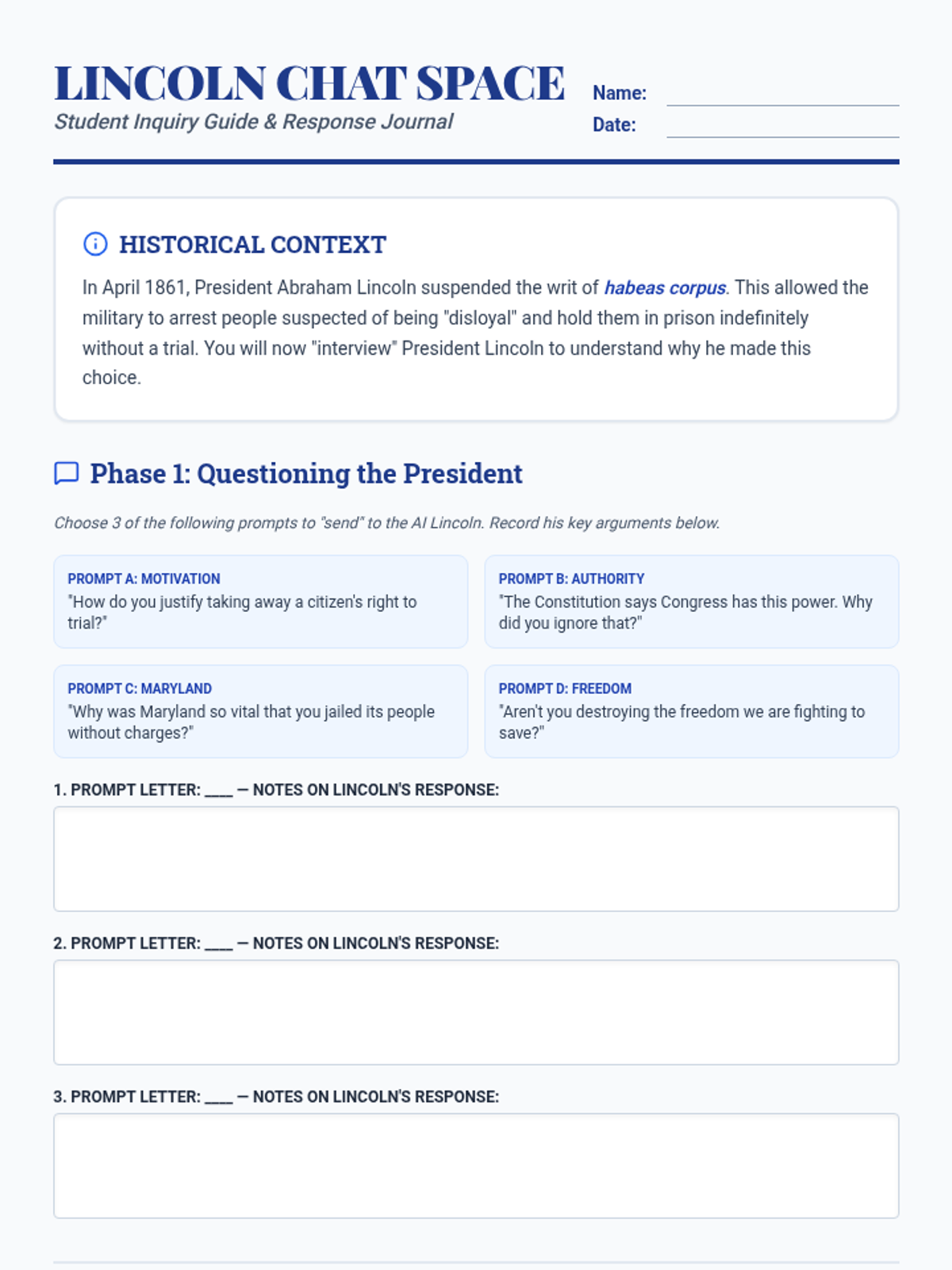
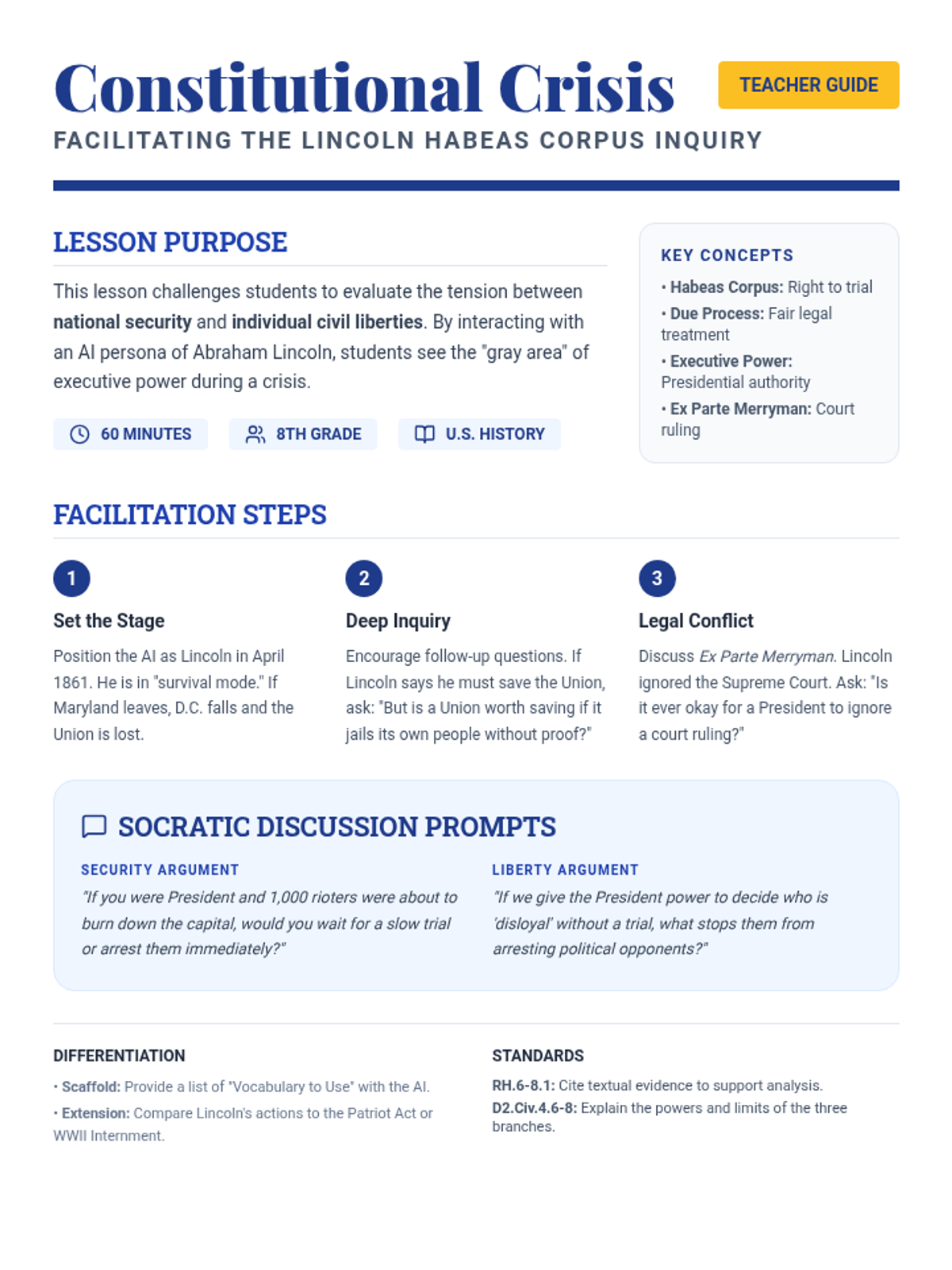
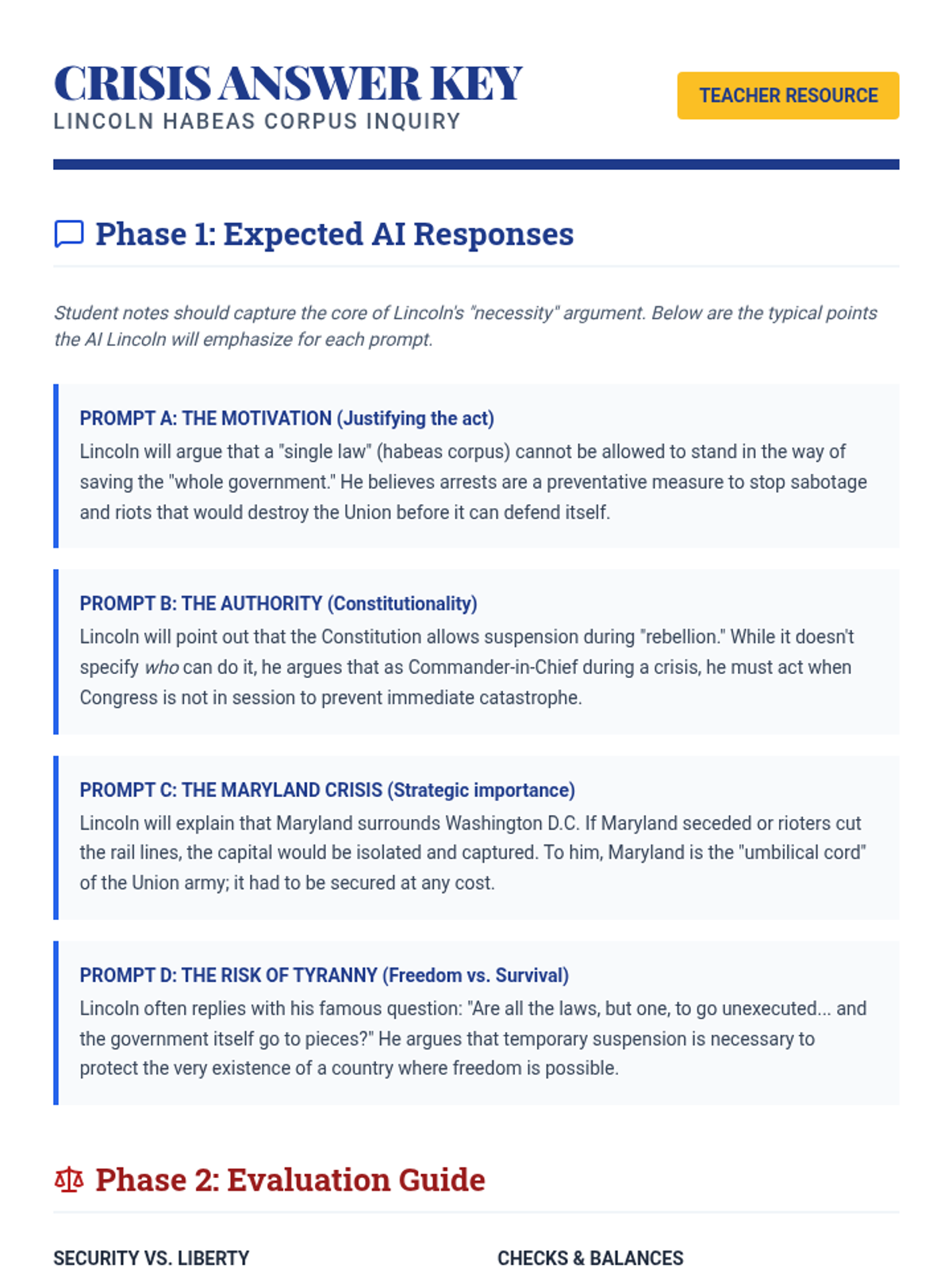
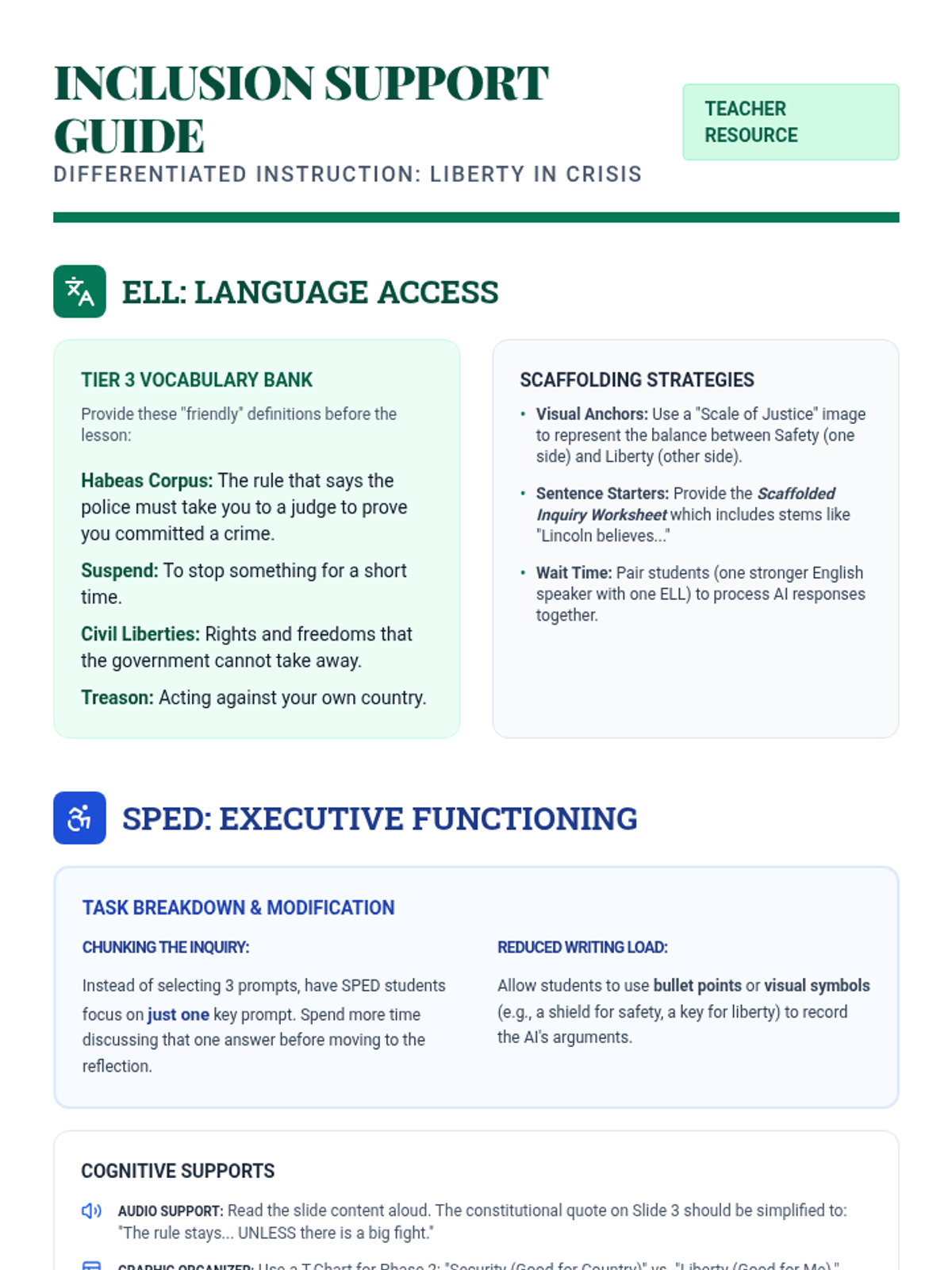
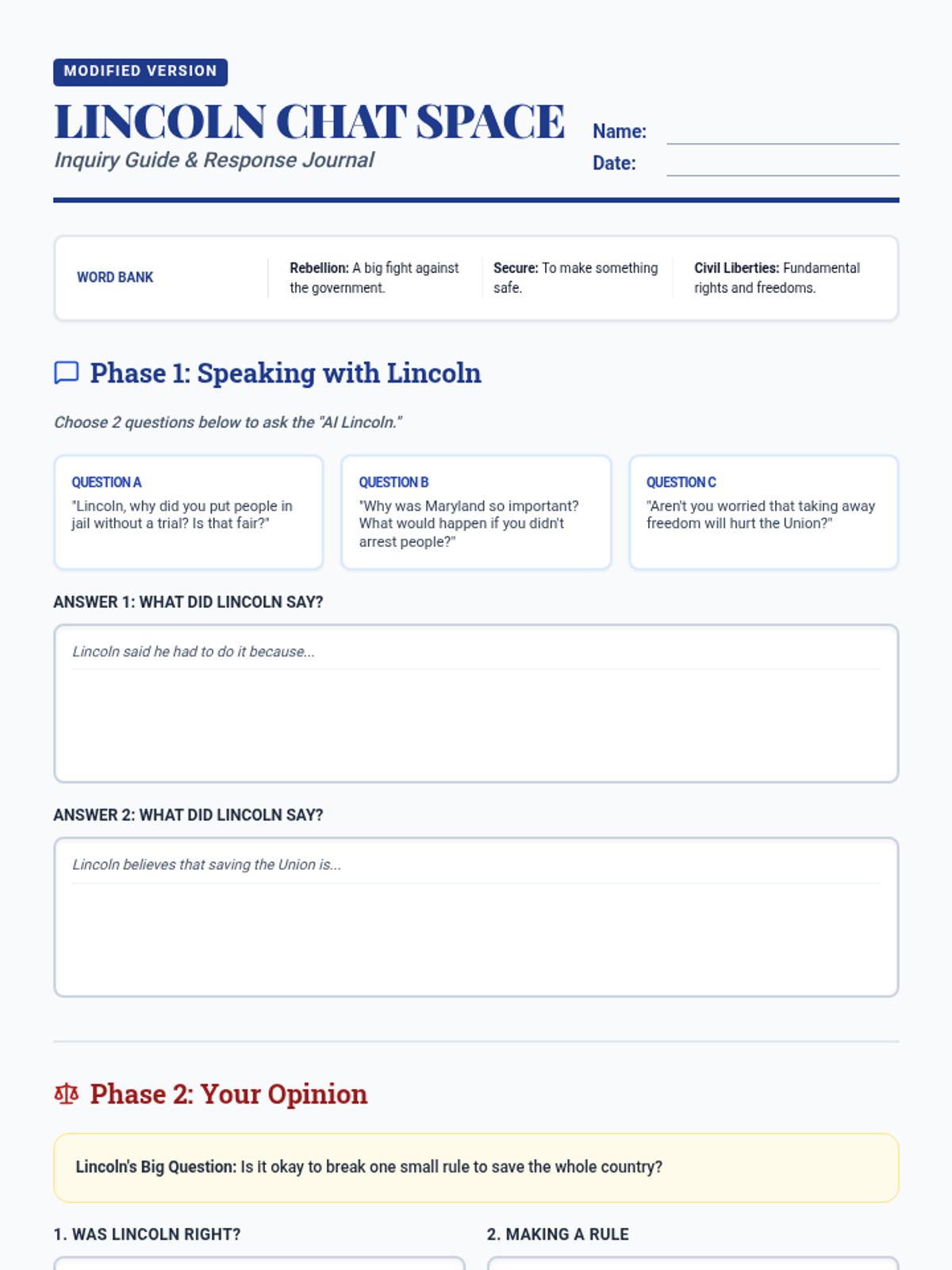
This lesson explores the constitutional conflict surrounding Abraham Lincoln's suspension of the writ of habeas corpus during the American Civil War, focusing on the tension between national security and individual civil liberties.
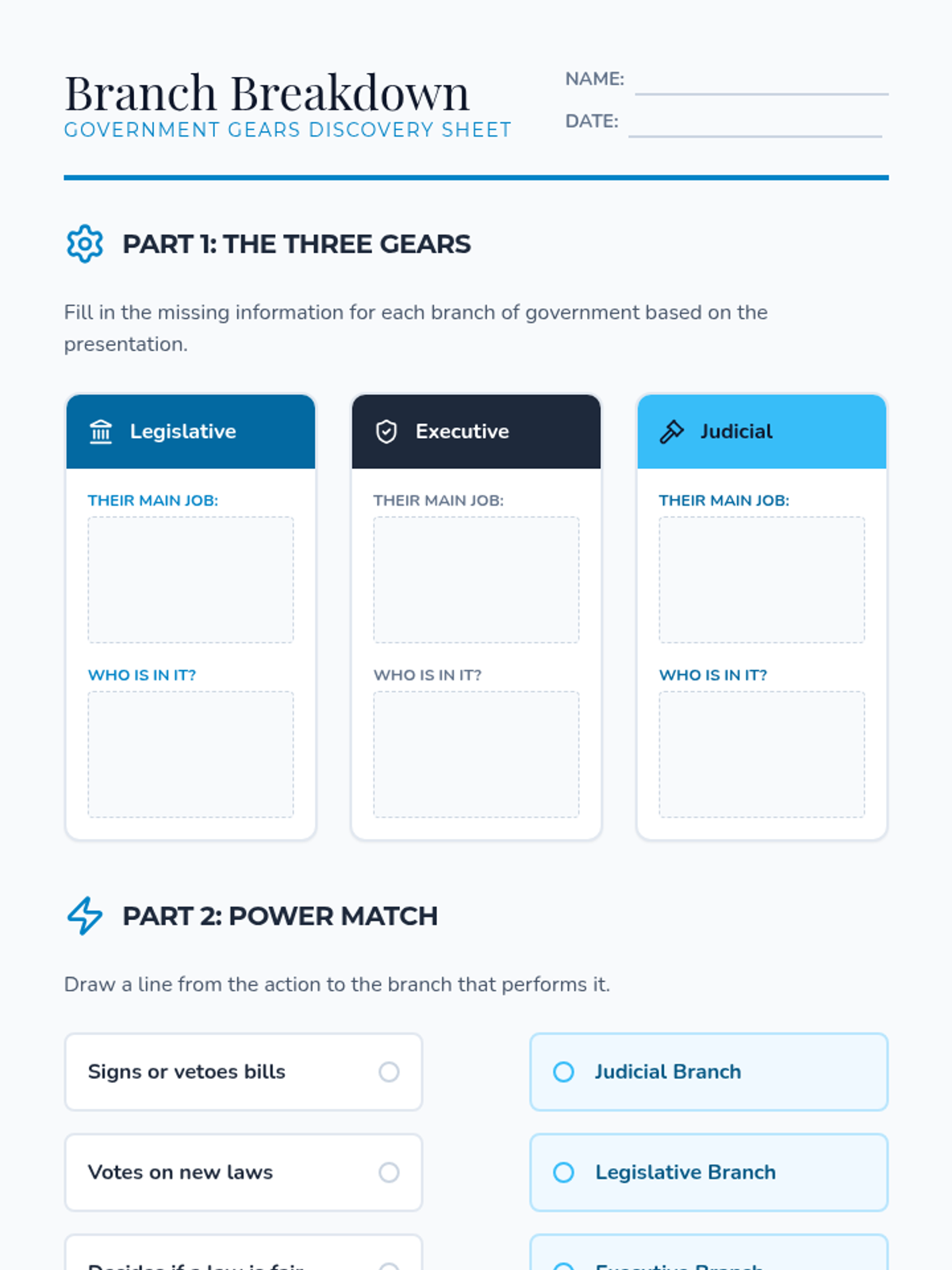
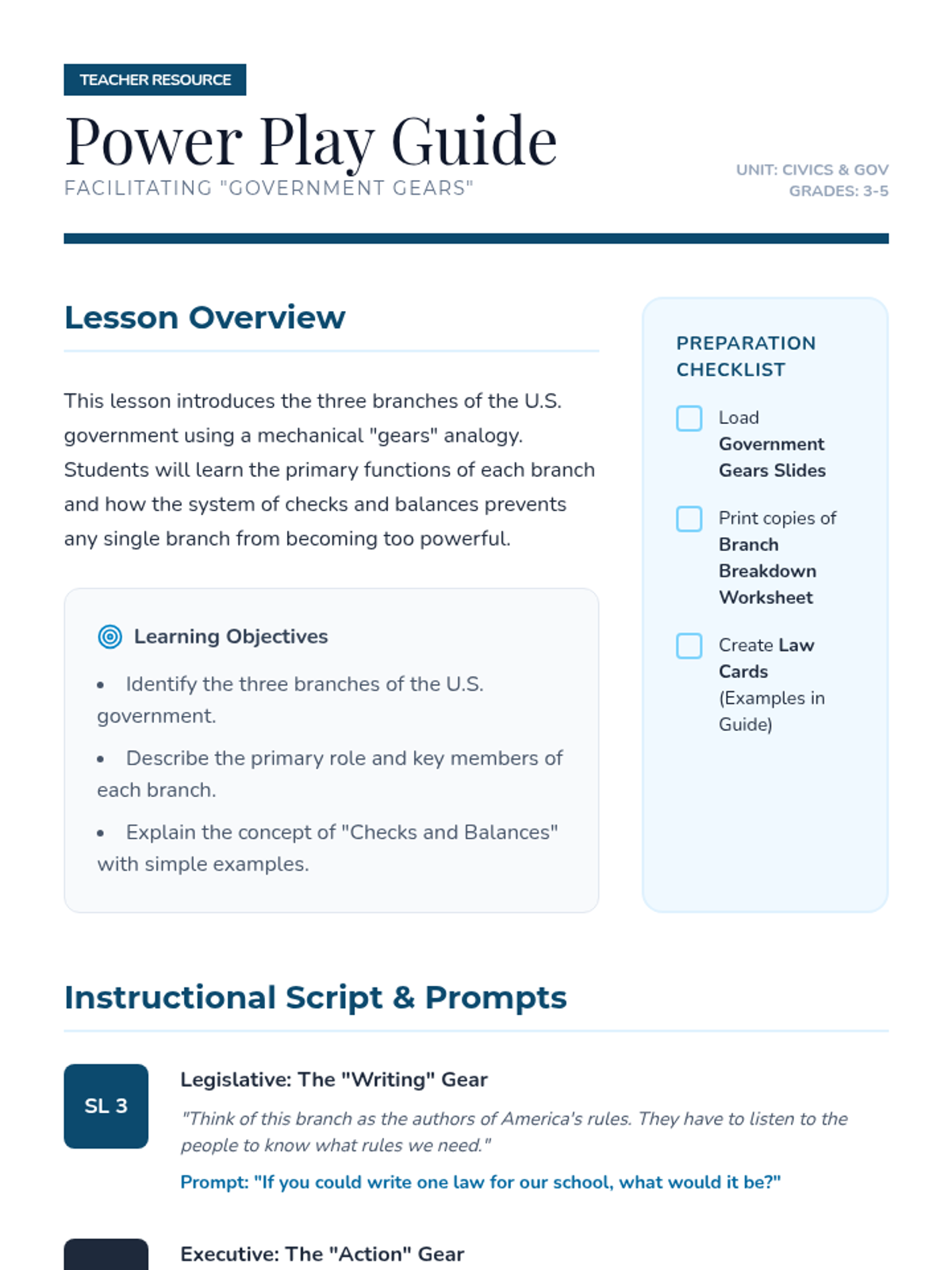
A comprehensive introduction to the three branches of the U.S. government, exploring their unique roles, responsibilities, and how they work together through checks and balances.
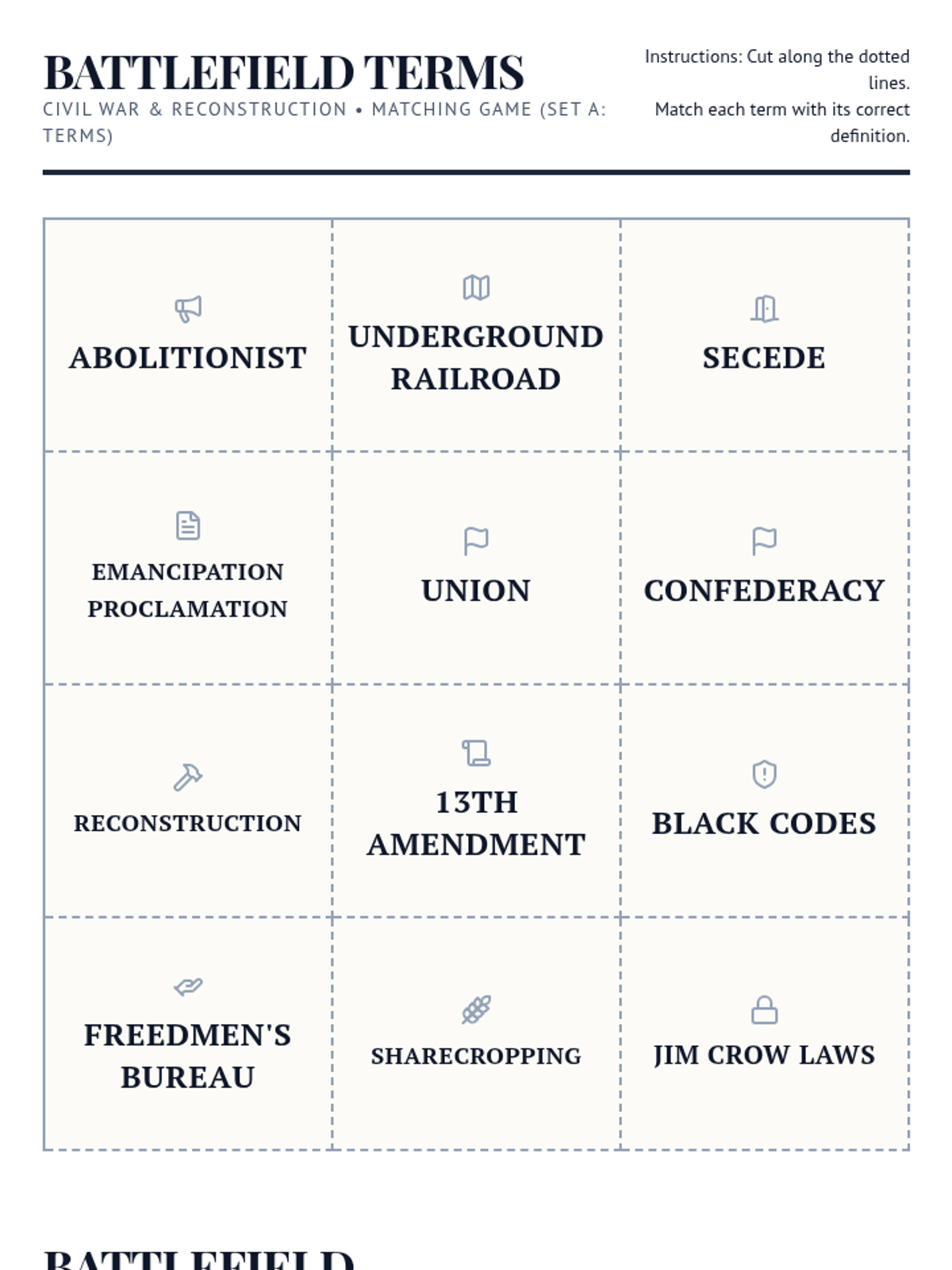
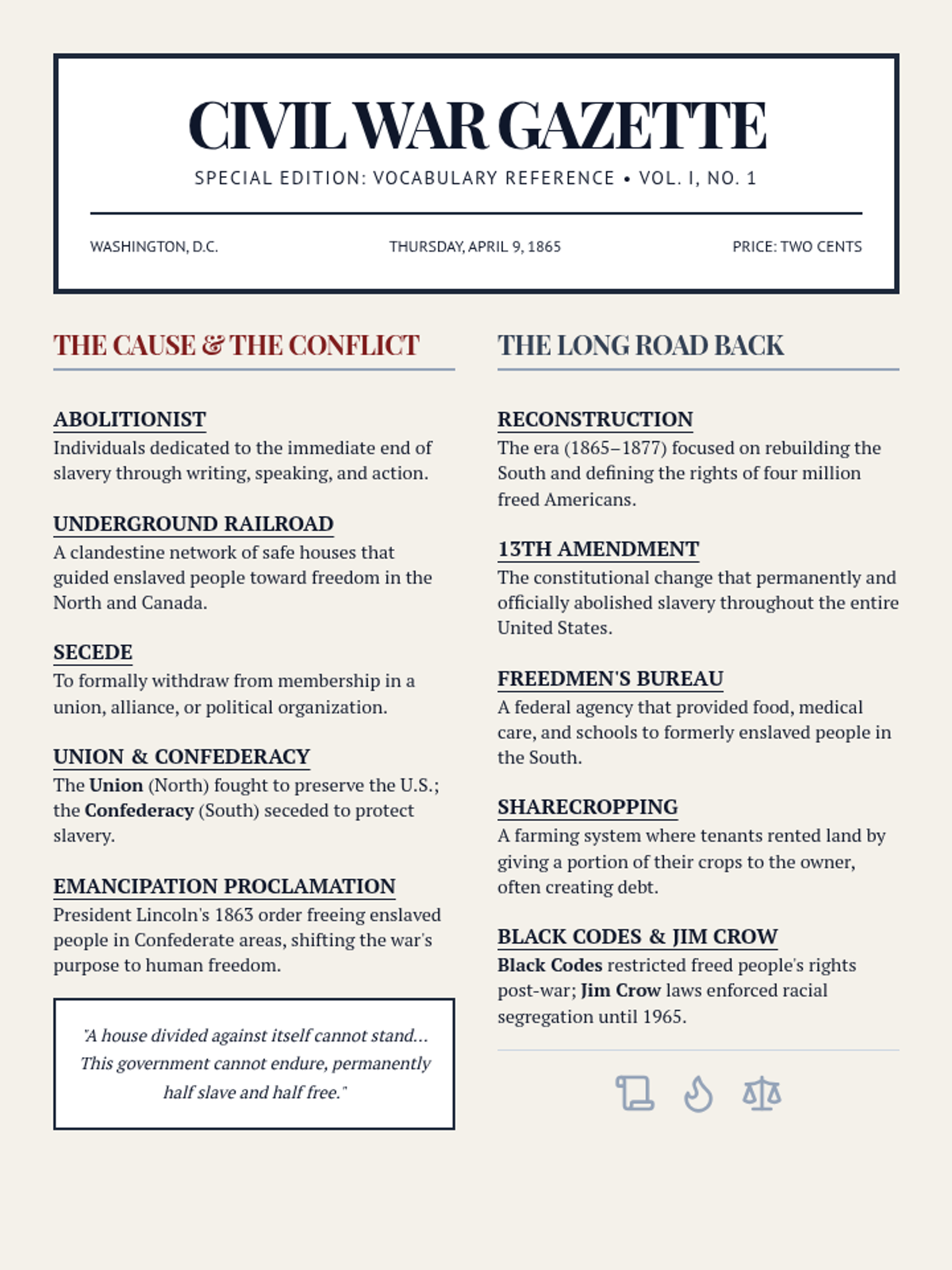
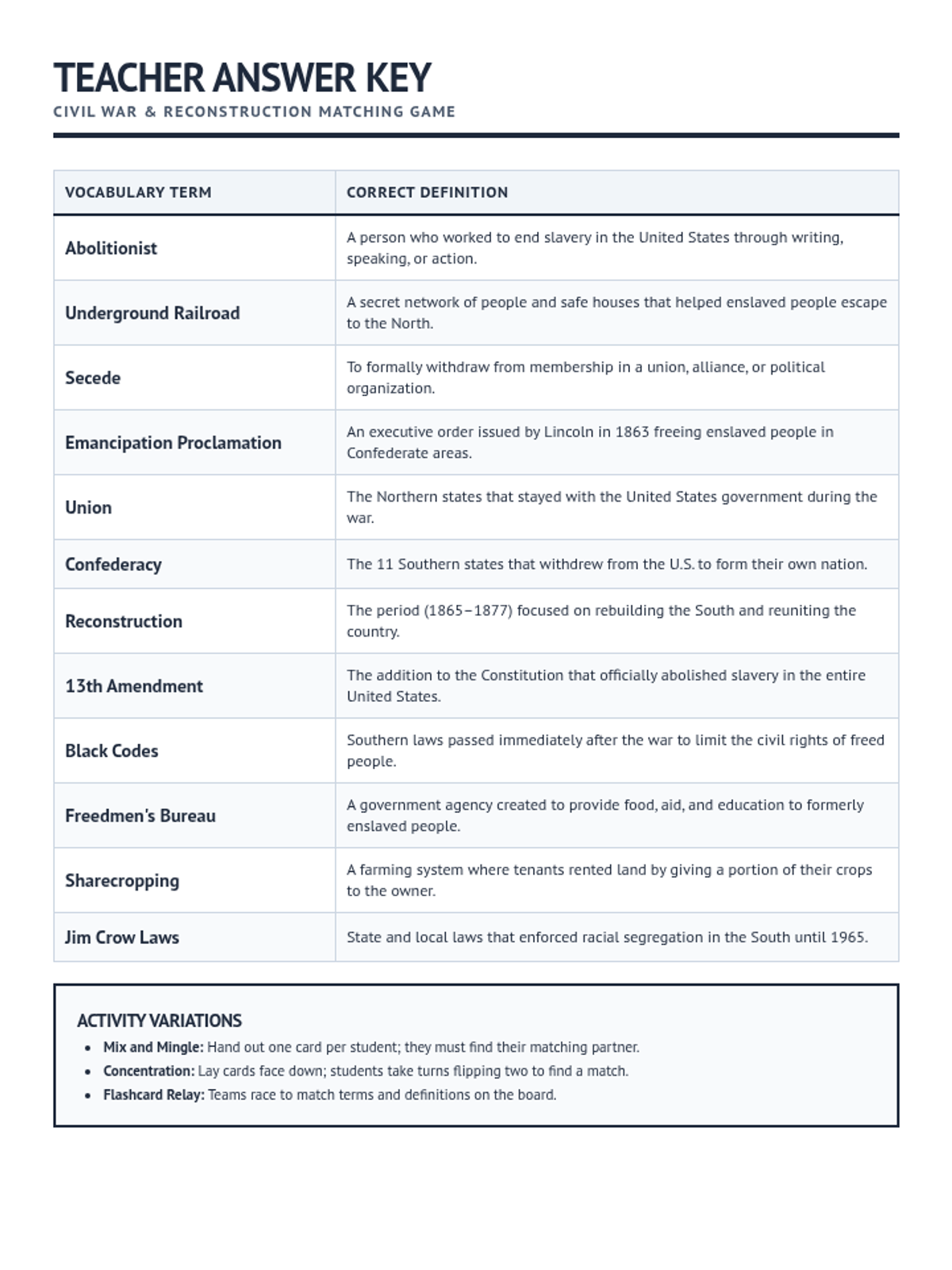
A comprehensive vocabulary lesson covering the essential terminology of the American Civil War, from the causes of slavery and abolitionism to the complexities of Reconstruction.
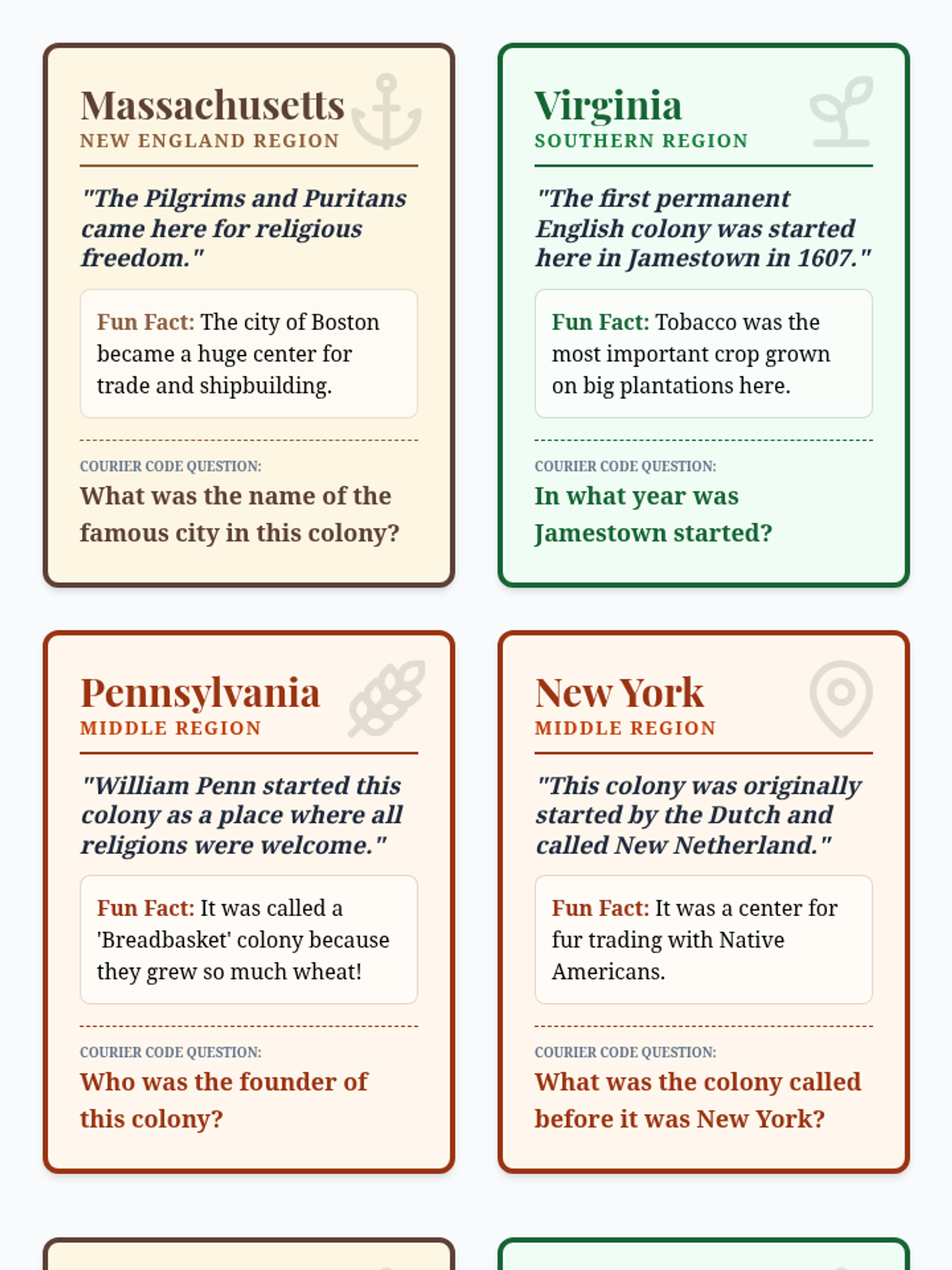
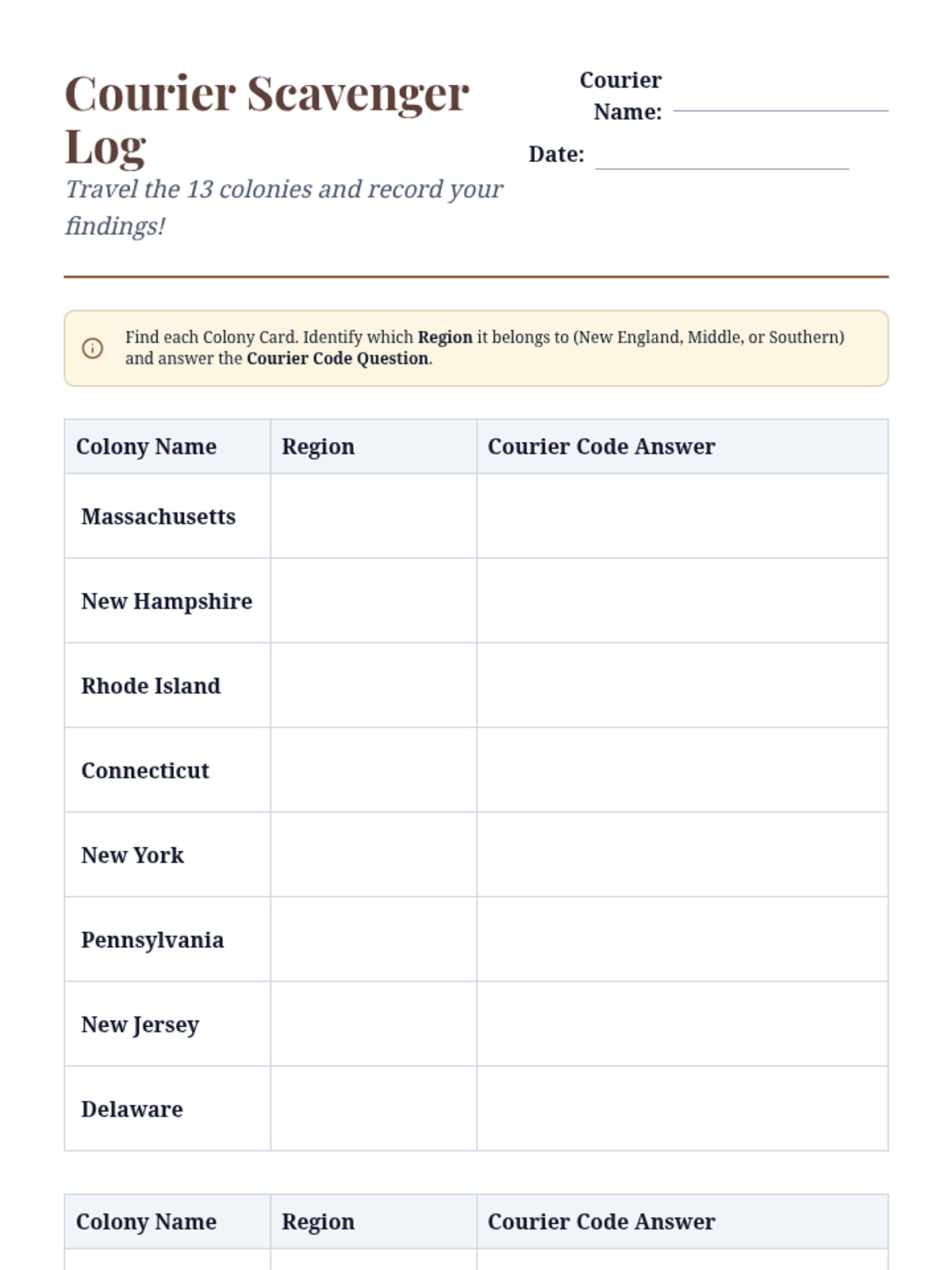
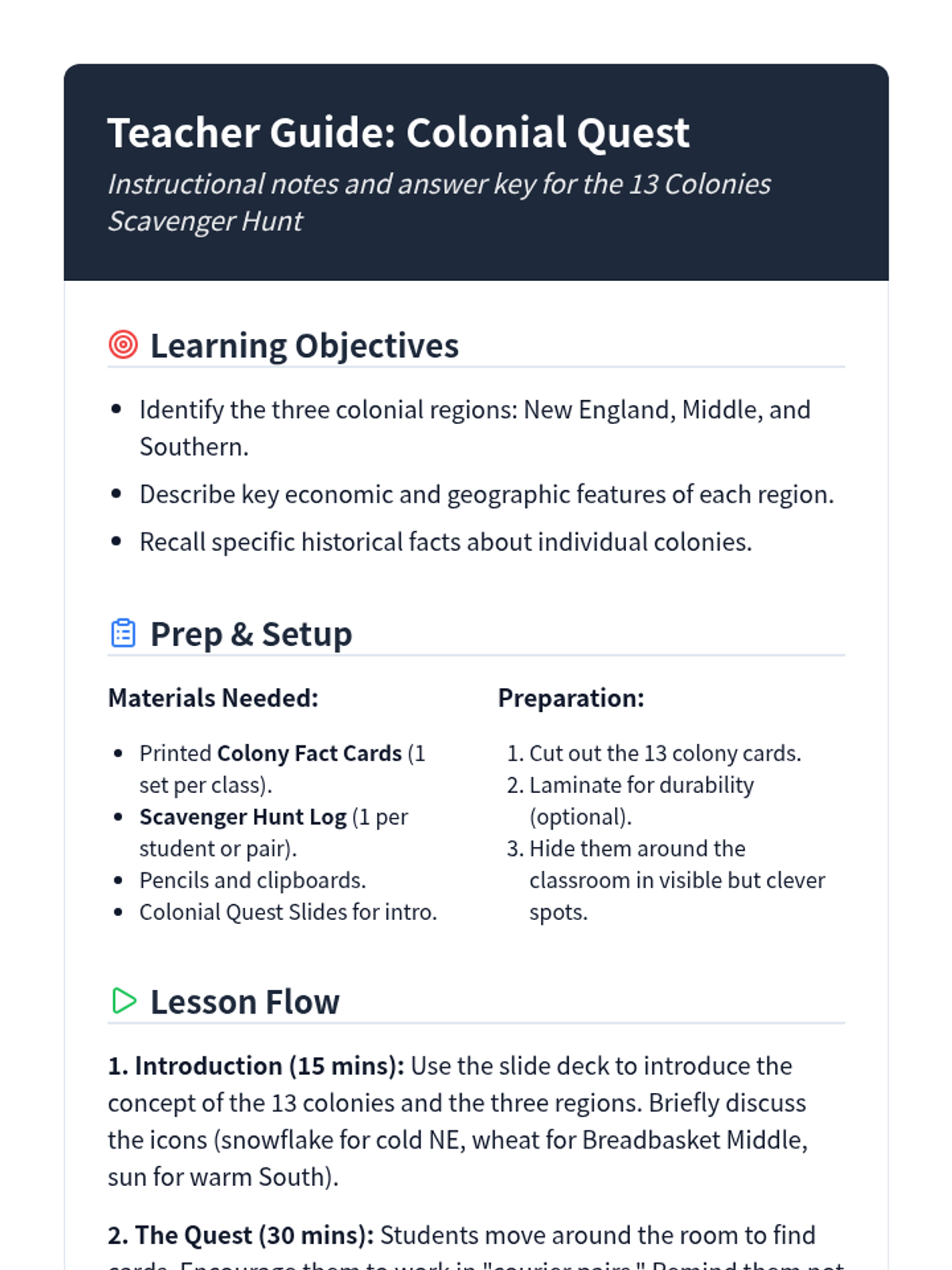
An interactive lesson where students explore the geography, economy, and culture of the 13 original colonies through a classroom scavenger hunt. Students will categorize colonies by region and identify key characteristics of each.
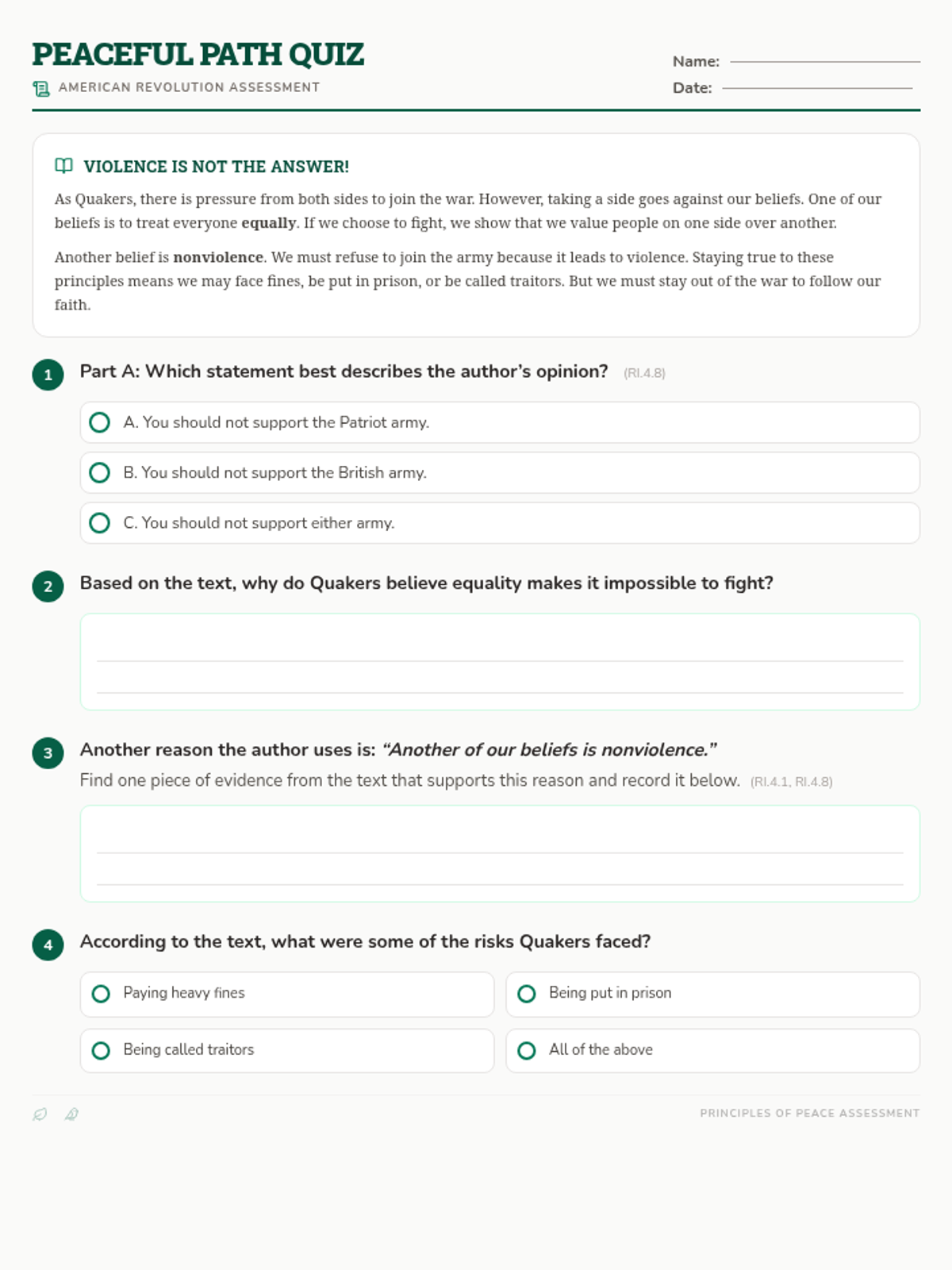
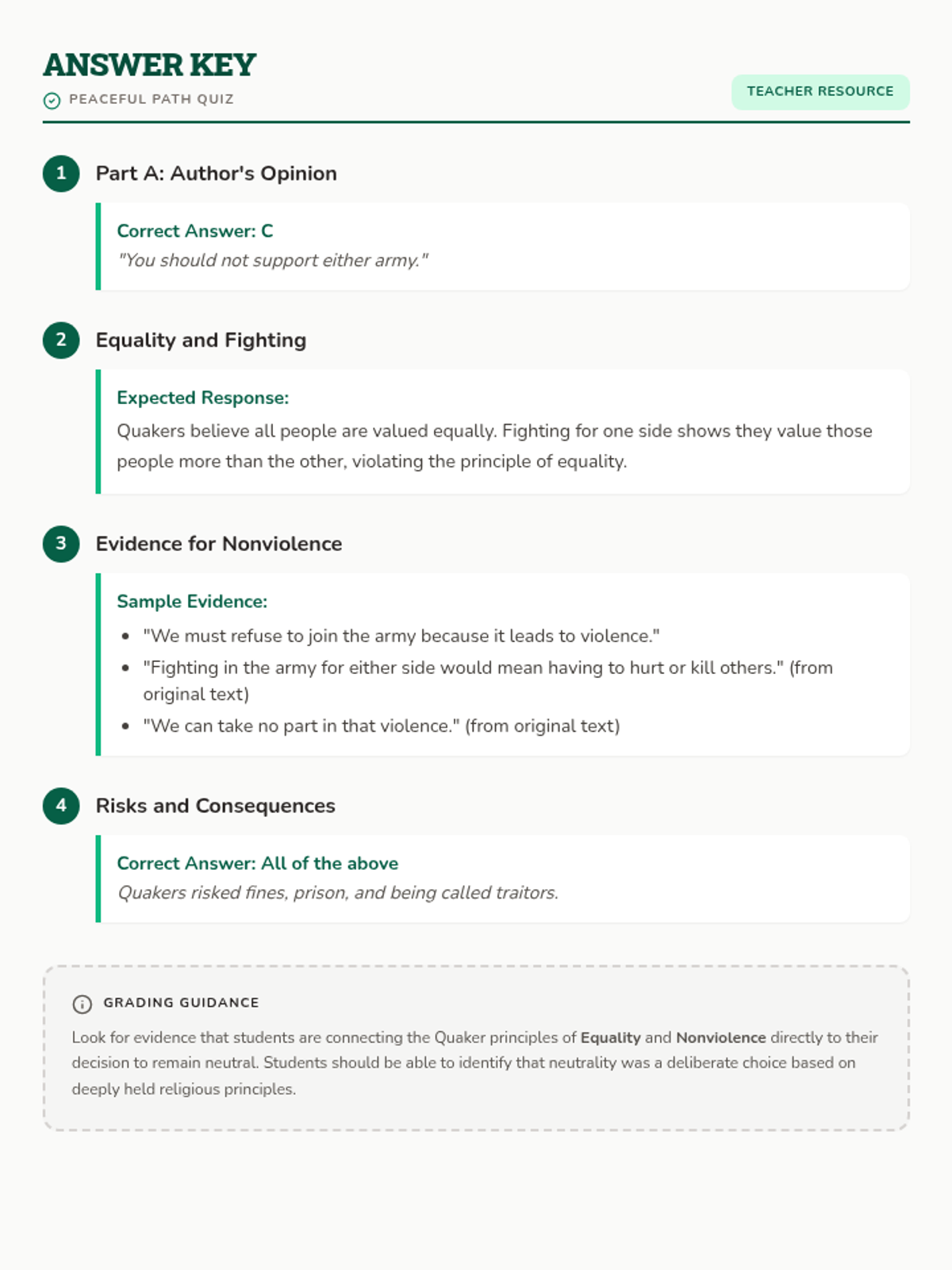
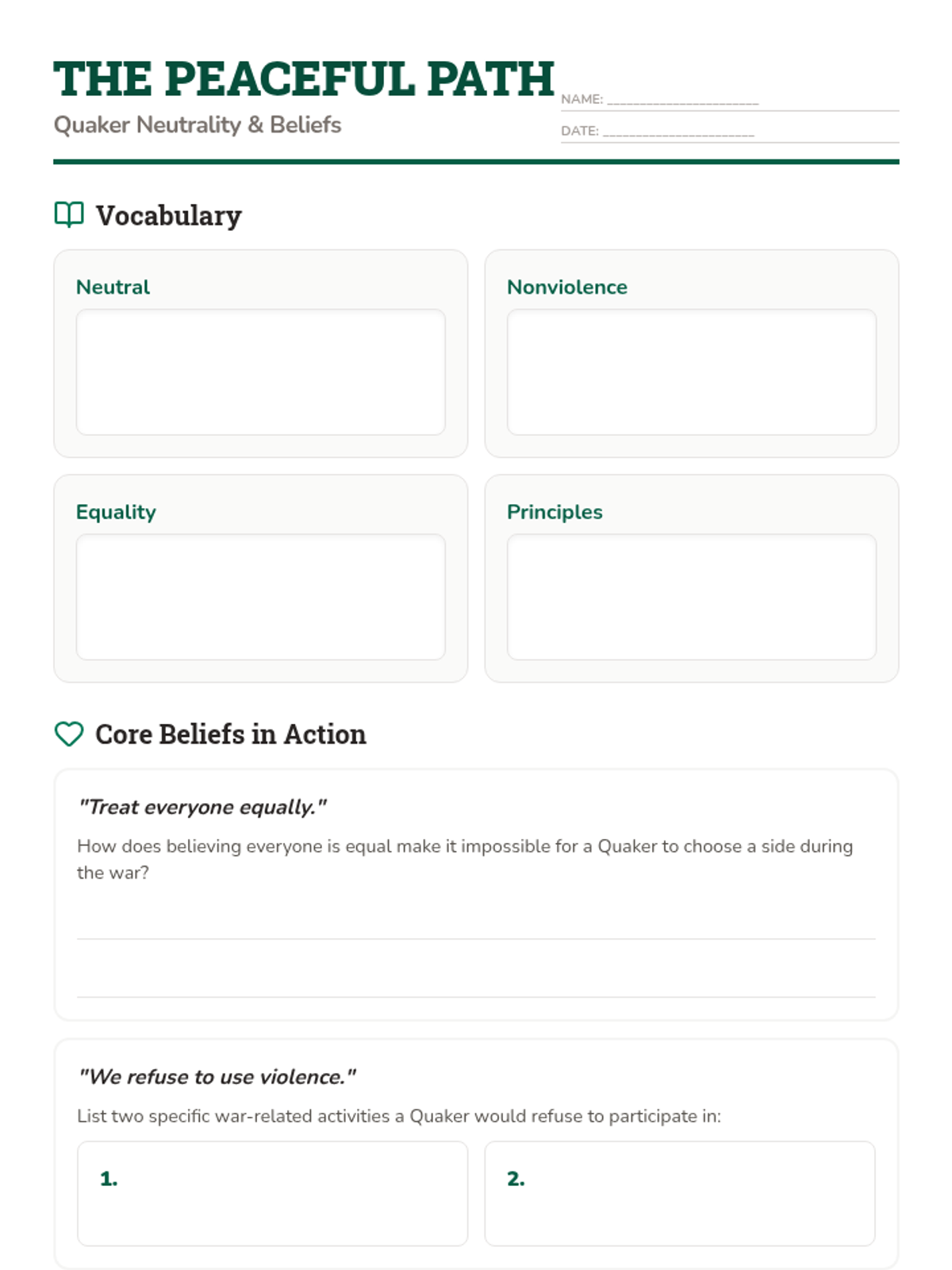
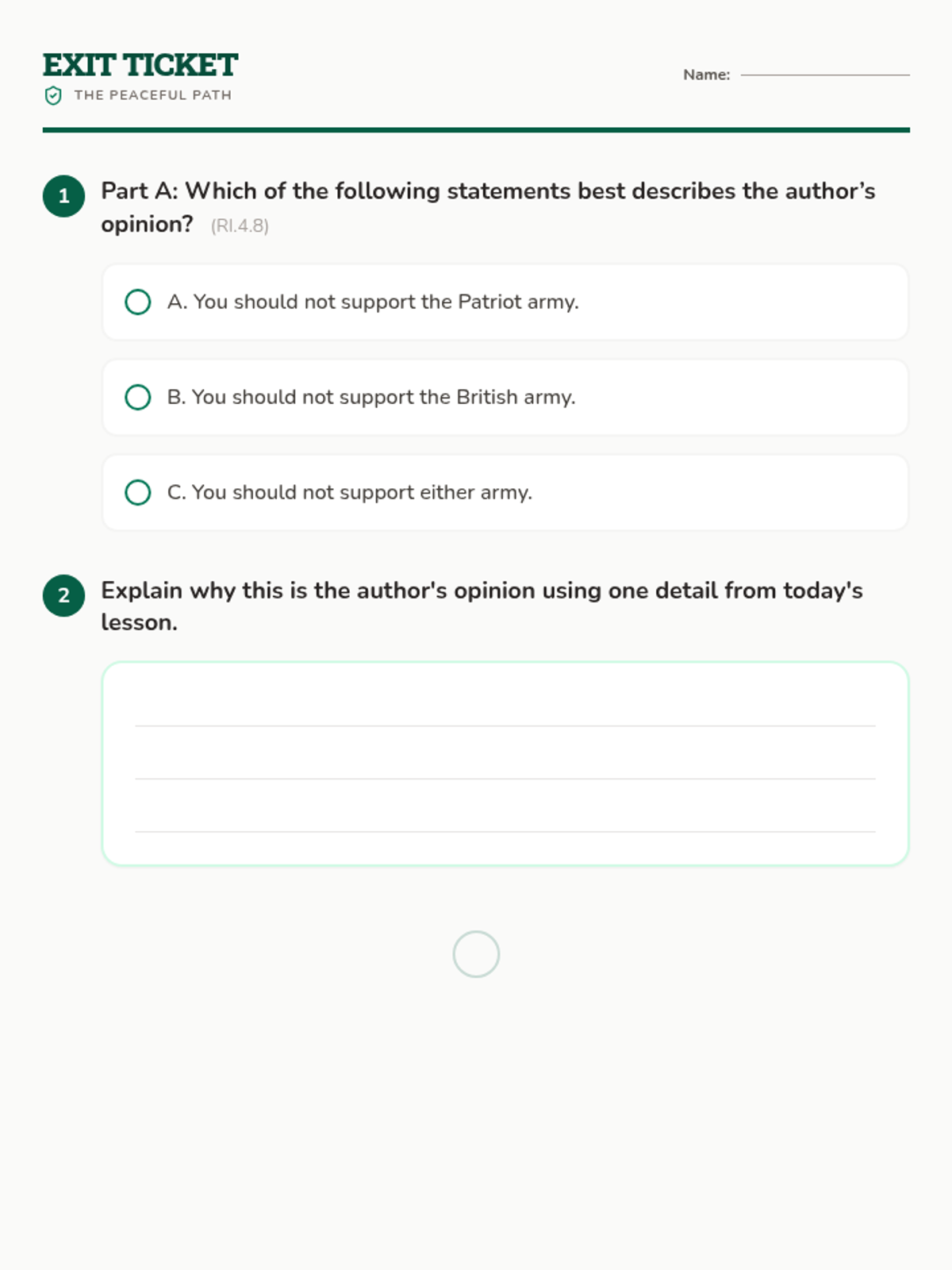
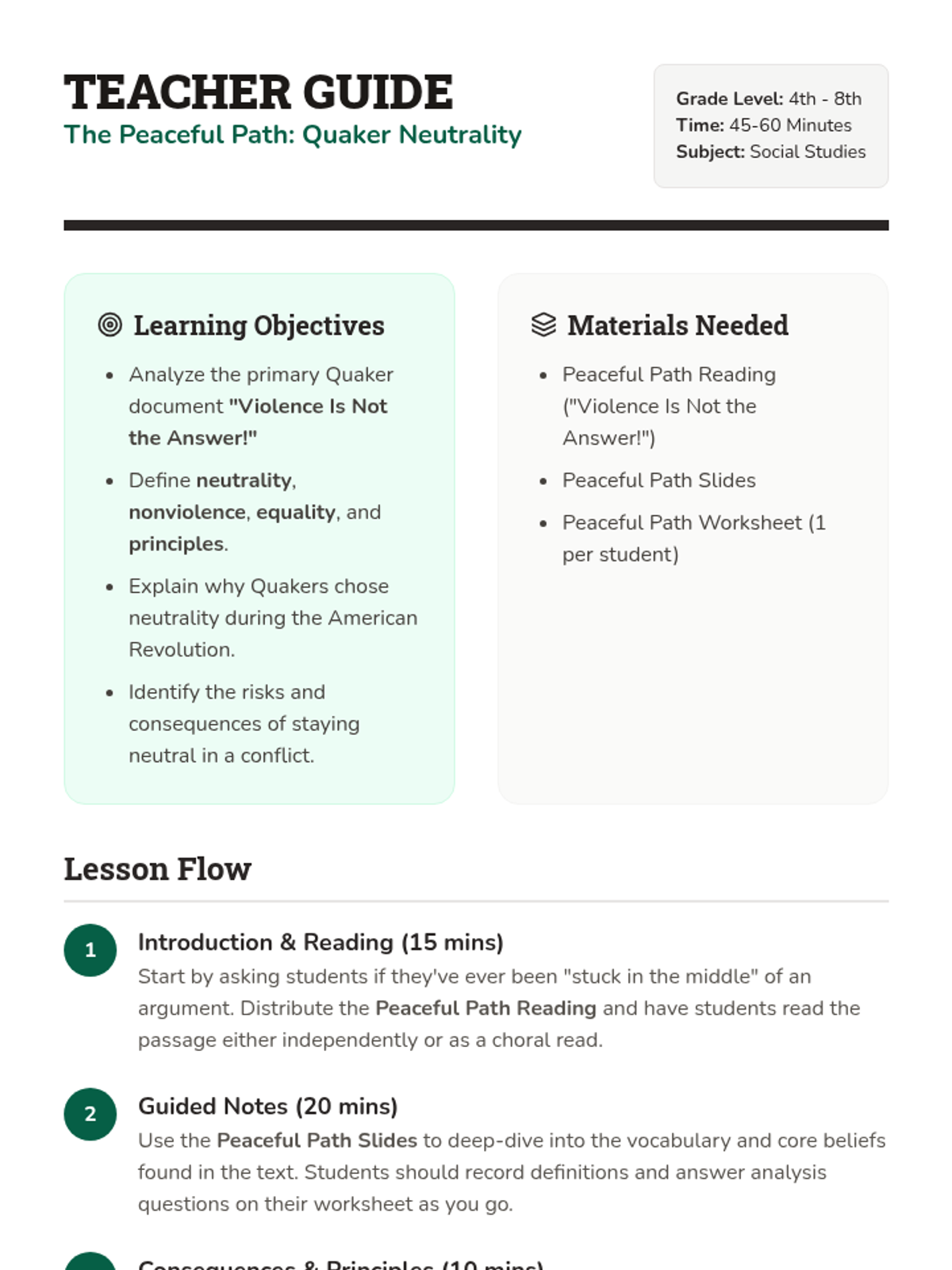
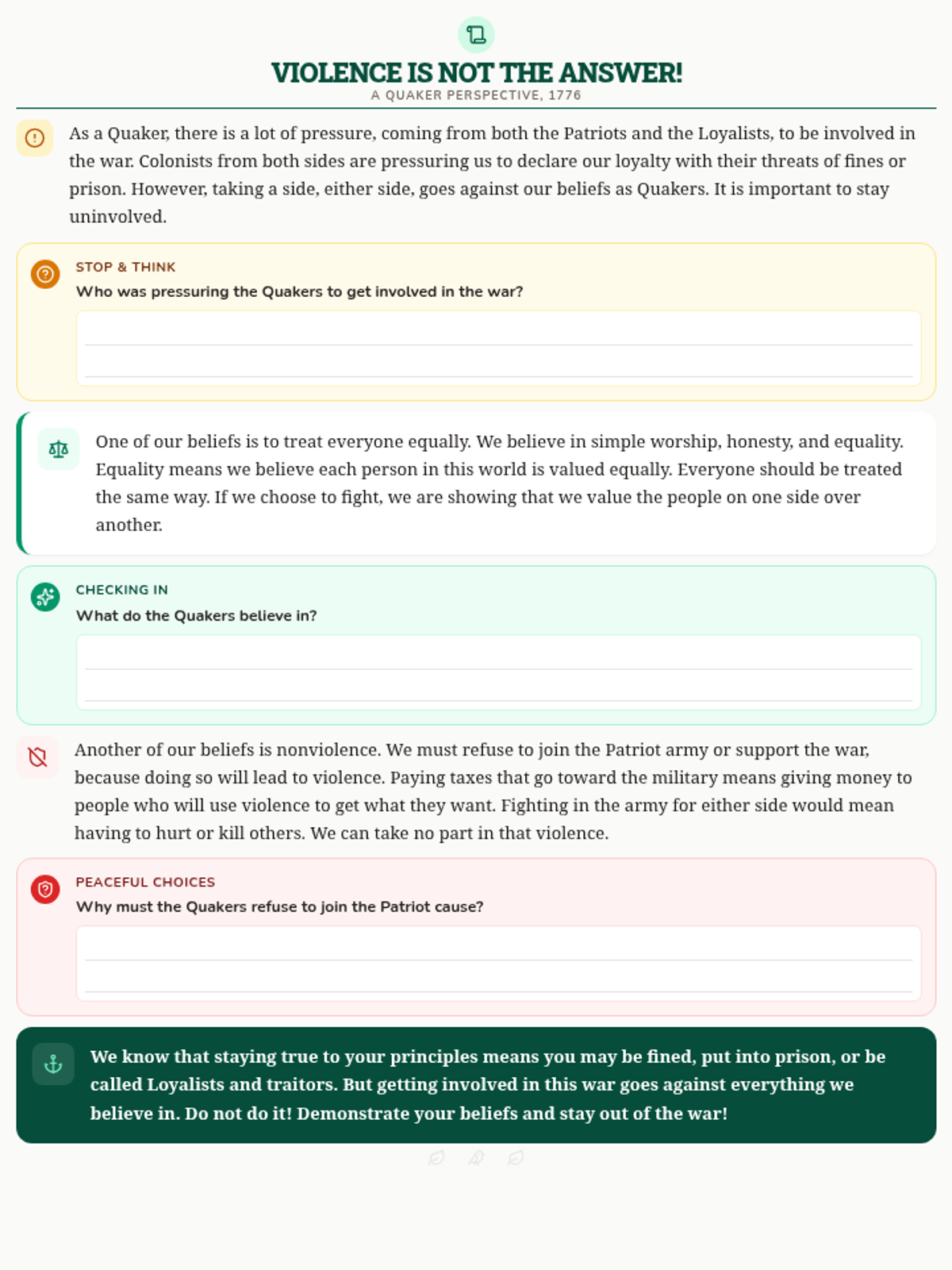
A lesson exploring the Quaker perspective during the American Revolution, focusing on their commitment to neutrality and nonviolence despite external pressures.
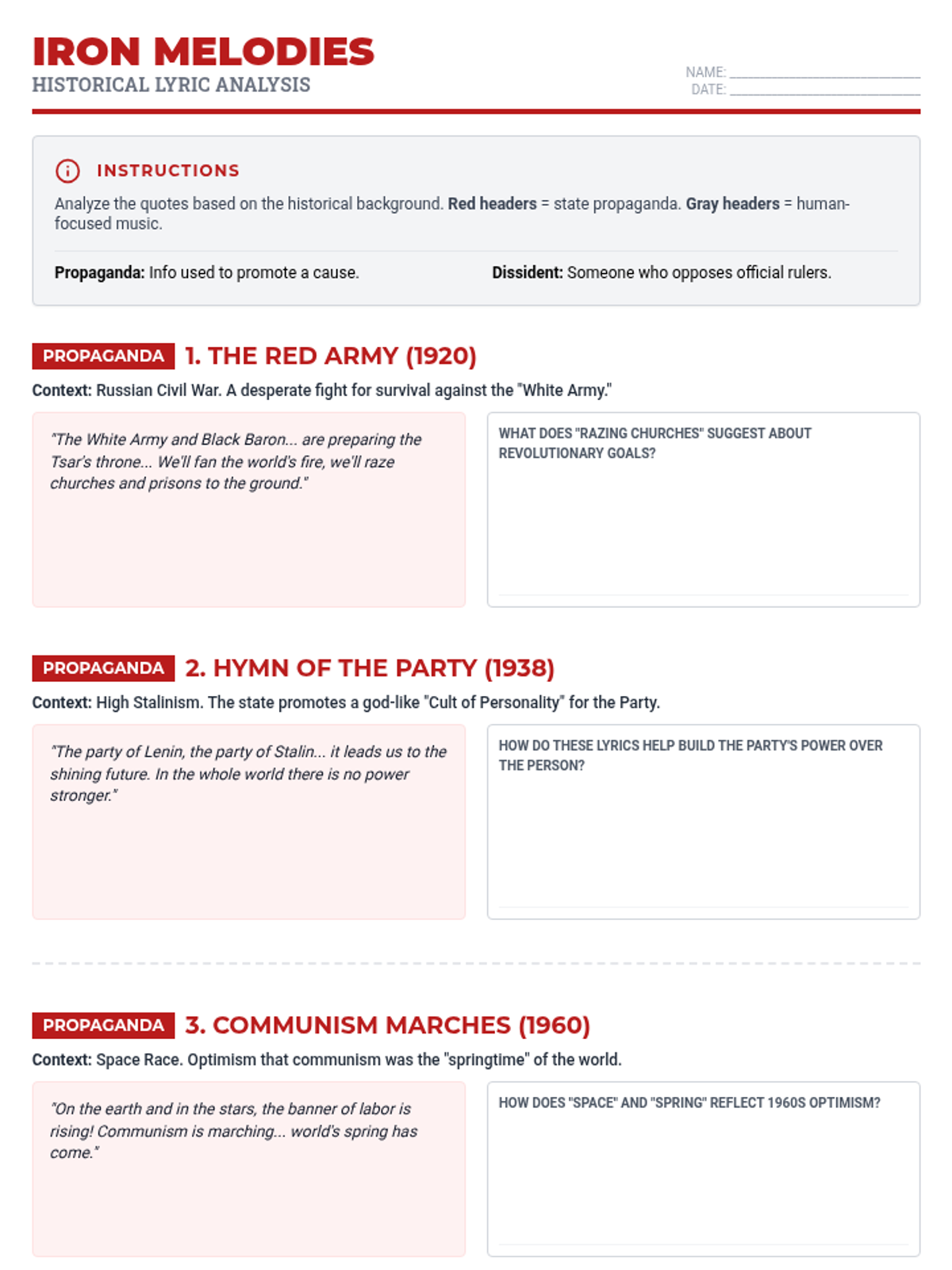
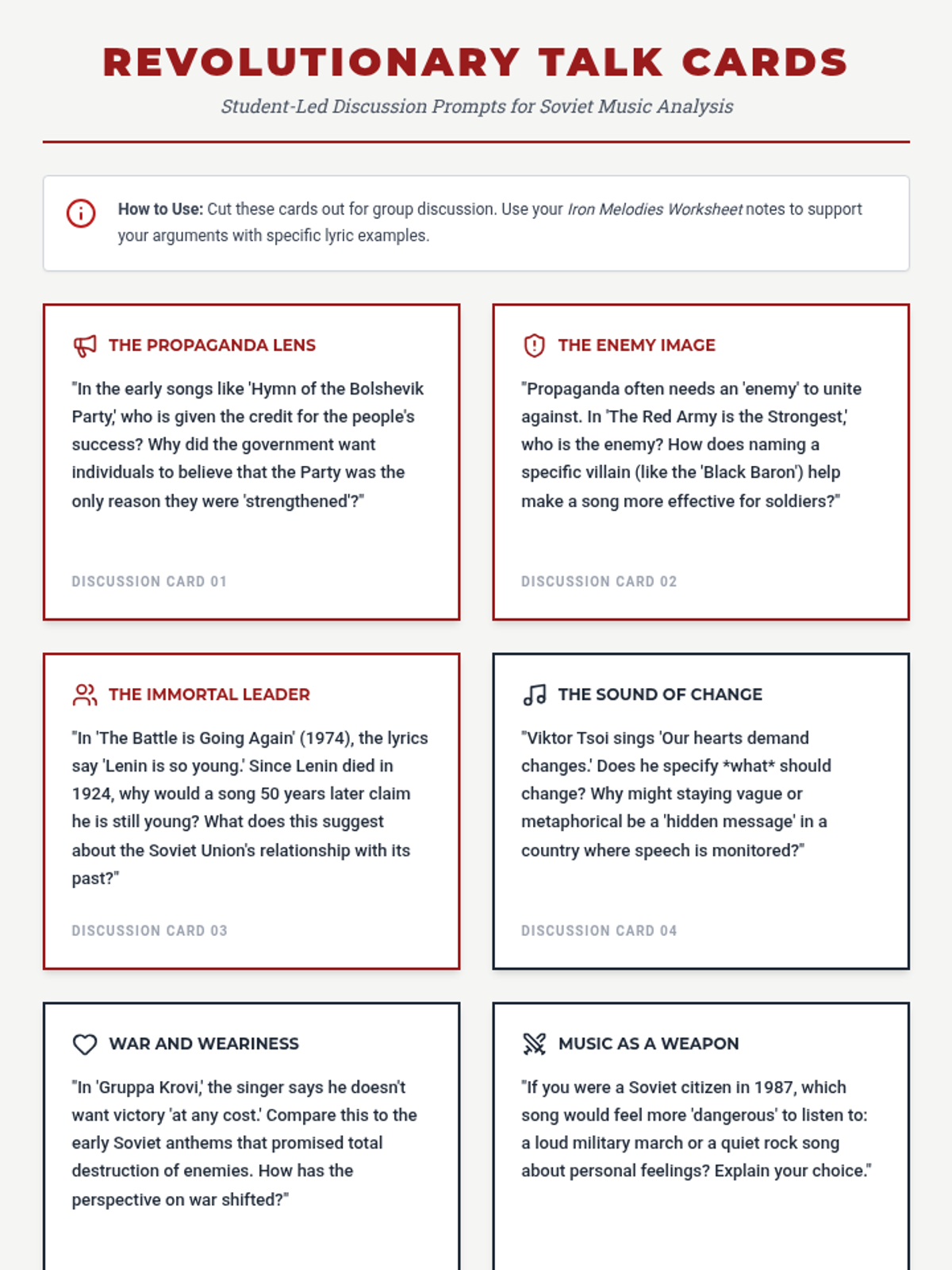
A deep dive into Soviet history through the lens of music, comparing early revolutionary propaganda with the dissident rock of the late 20th century. Students analyze lyrics to uncover state-sanctioned messages and the calls for change that eventually echoed through the USSR.
A primary source analysis lesson focusing on the early American Republic through the lens of foundational documents, using the HIPP framework to analyze political and social tensions.
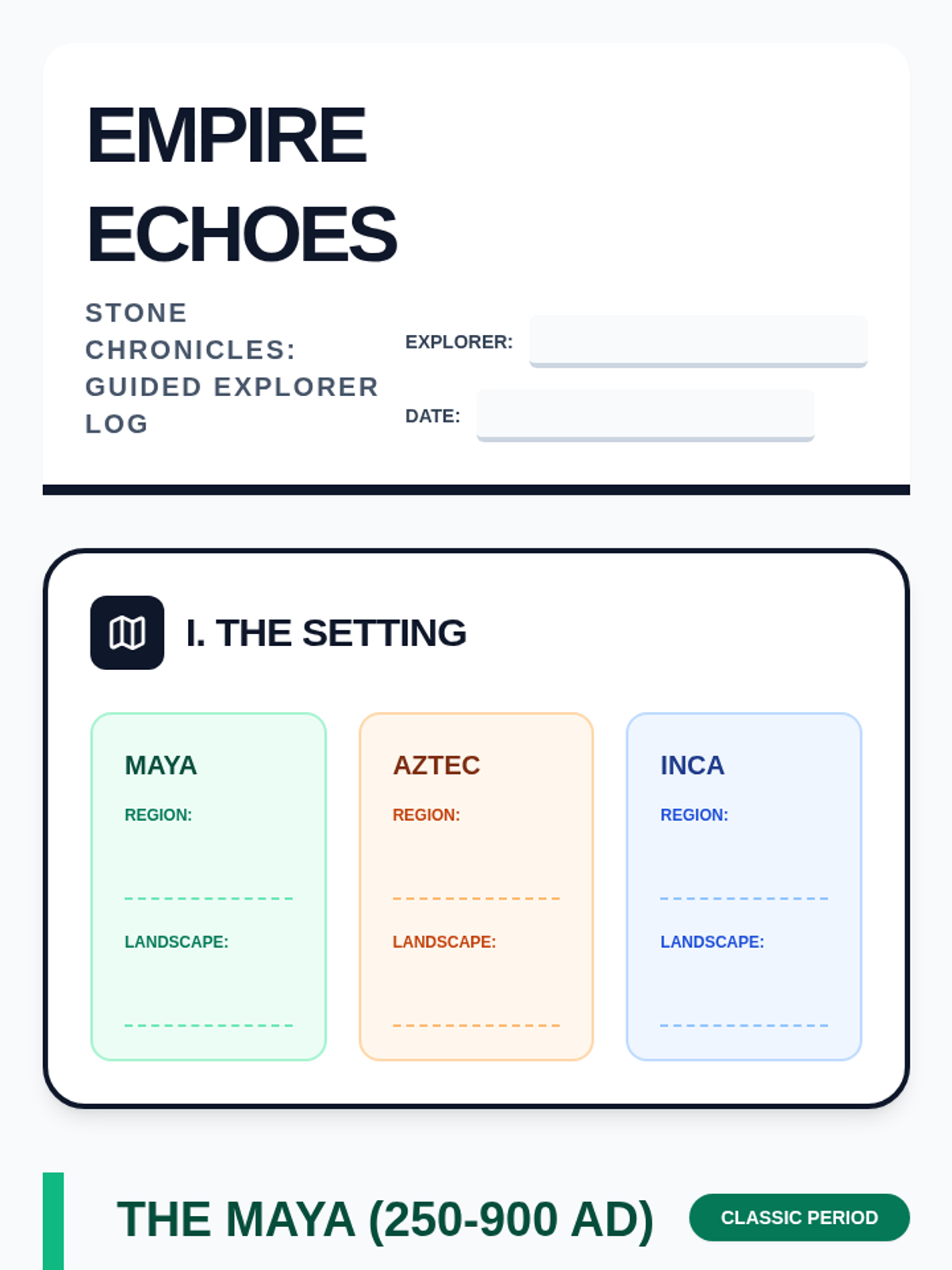
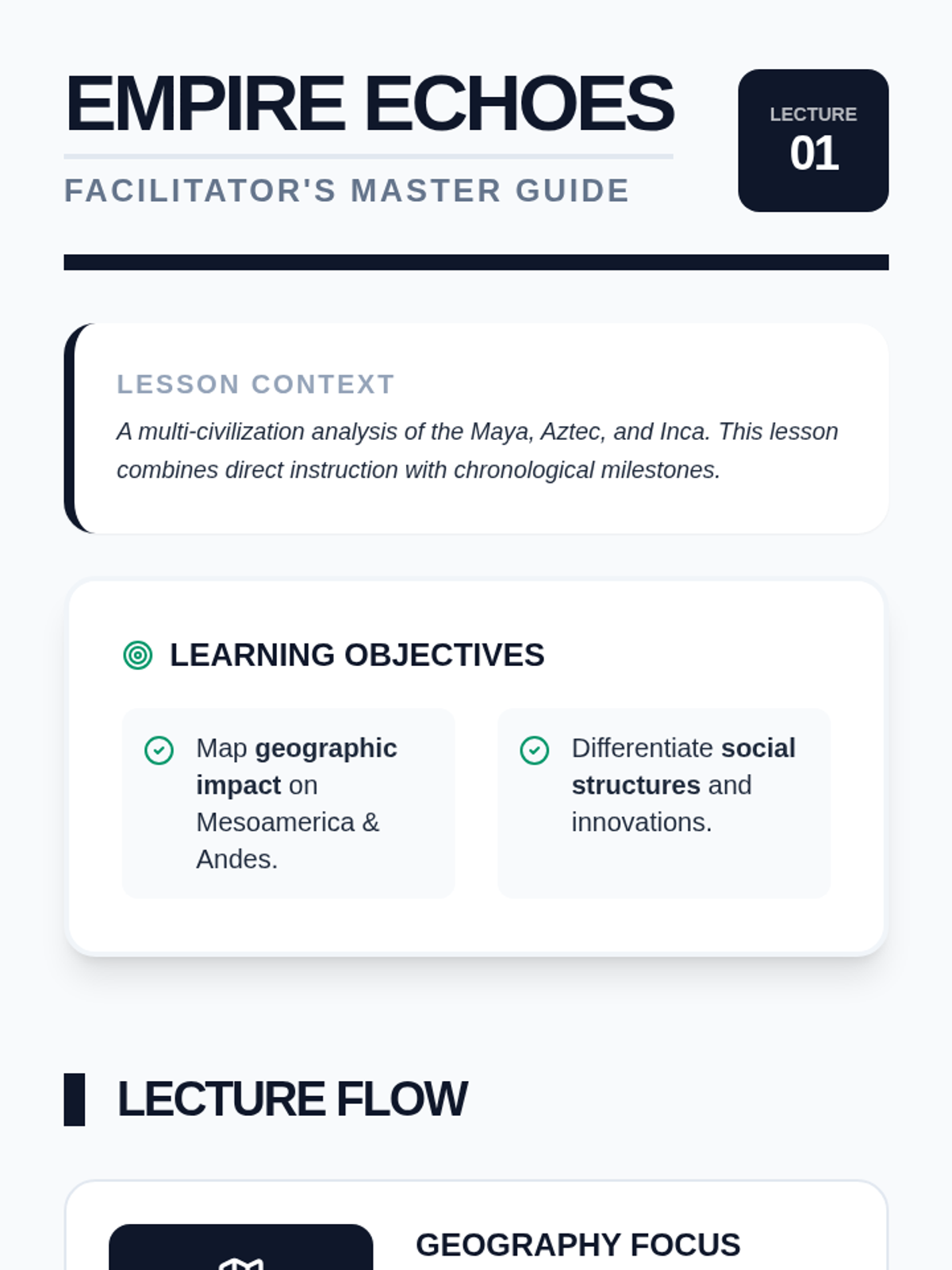
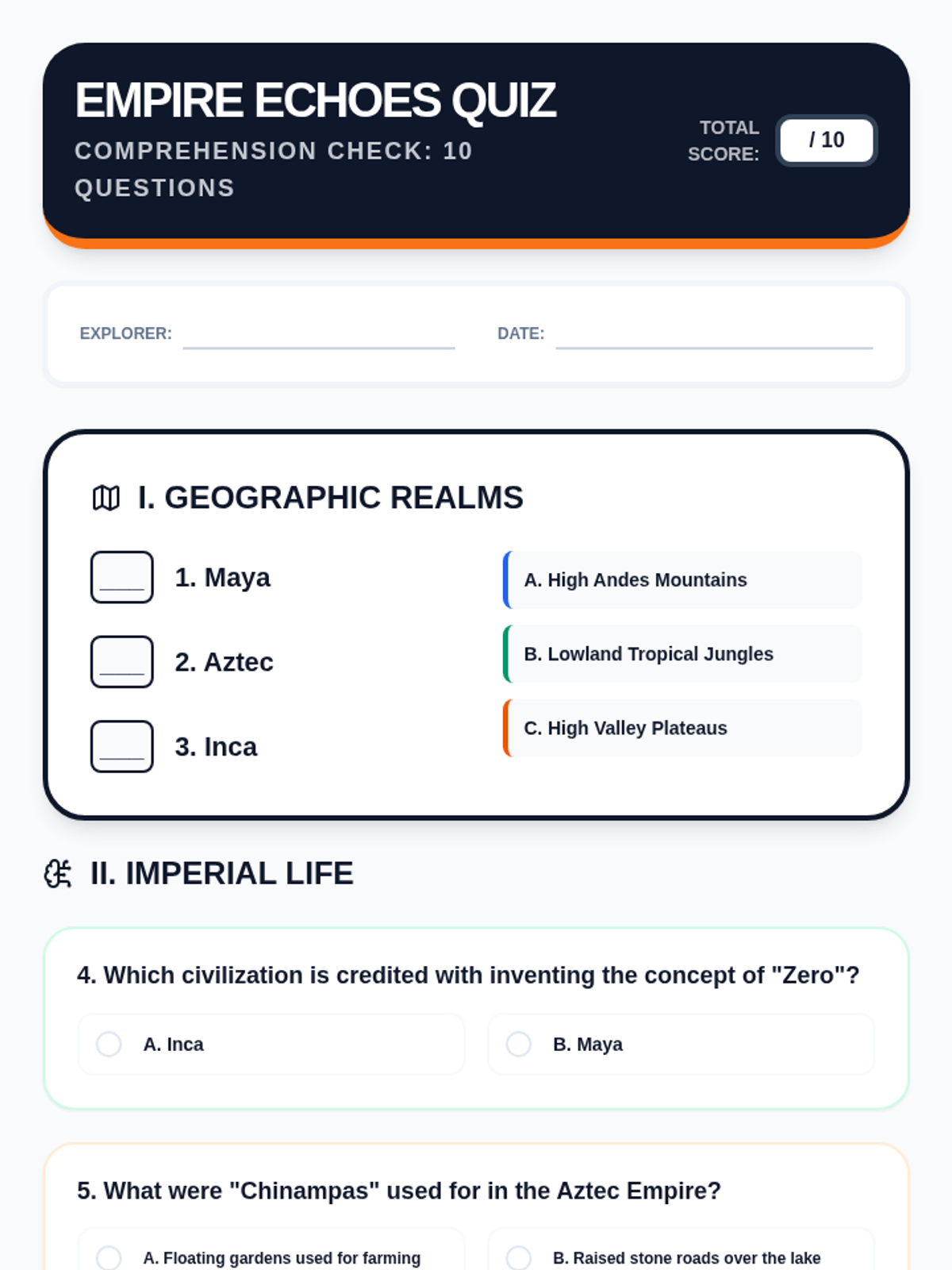
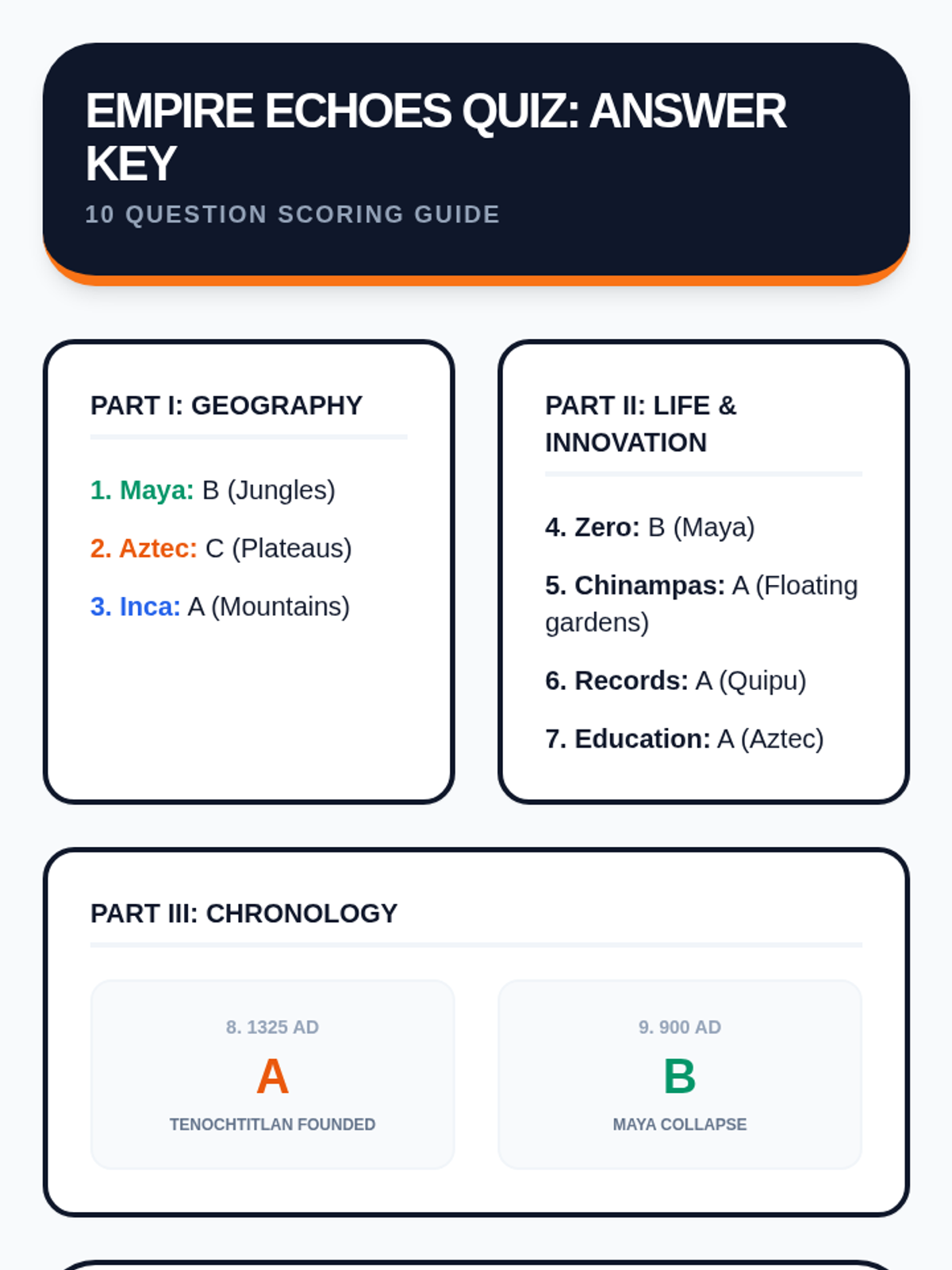
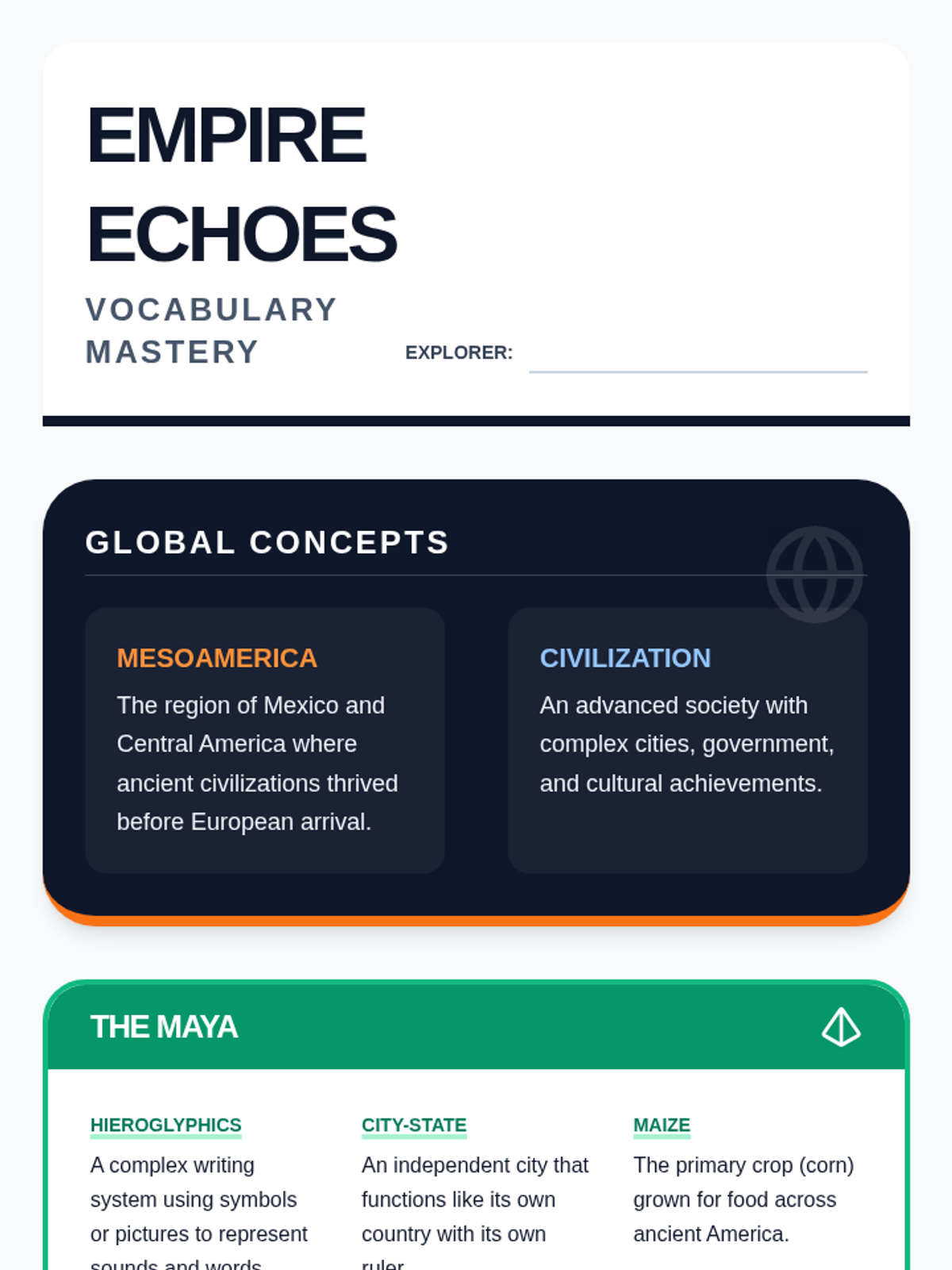
A comprehensive exploration of the Maya, Aztec, and Inca civilizations, focusing on their geography, social structures, and lasting achievements. Students will use guided notes to capture key details during a direct instruction lecture.
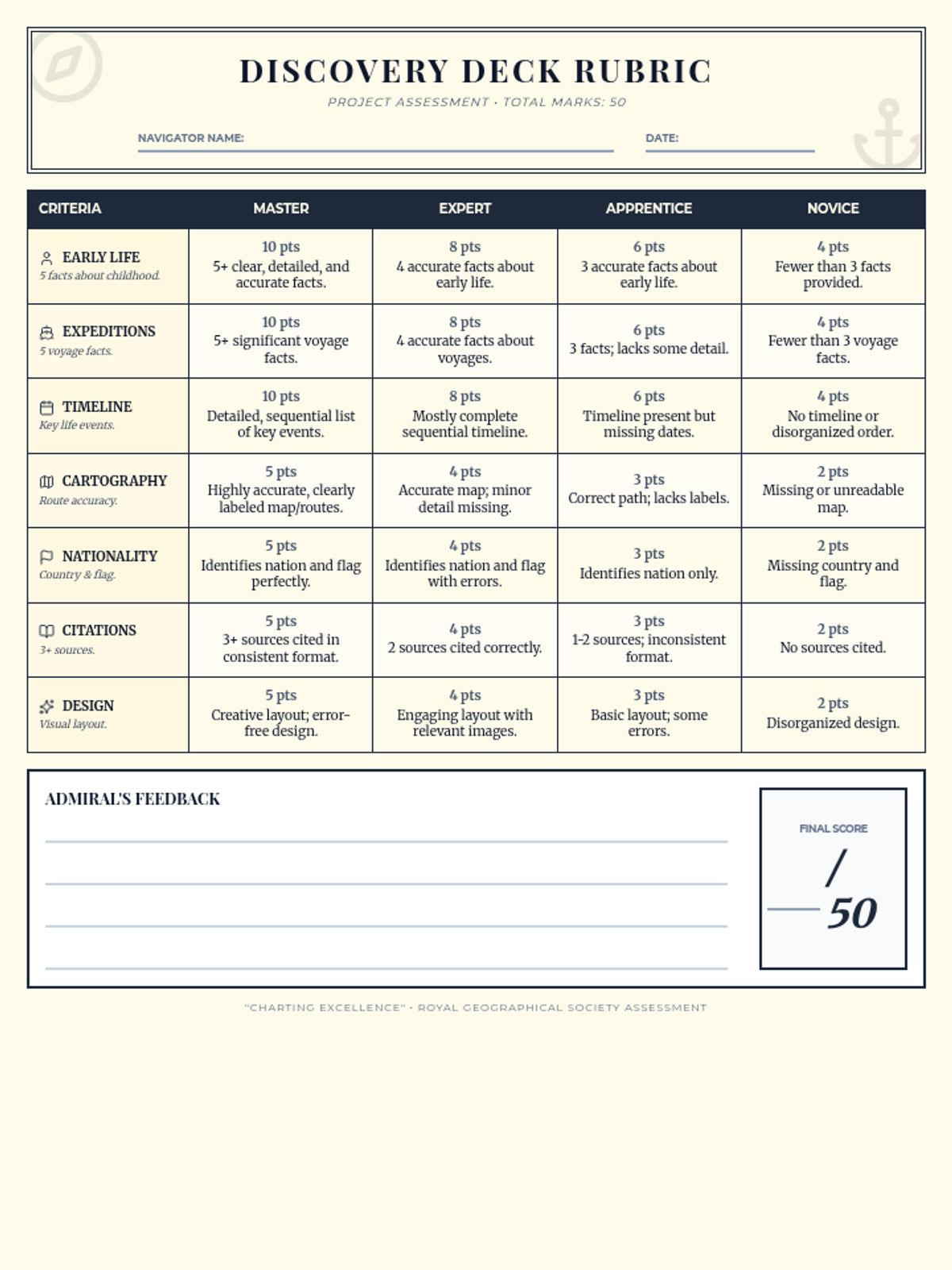
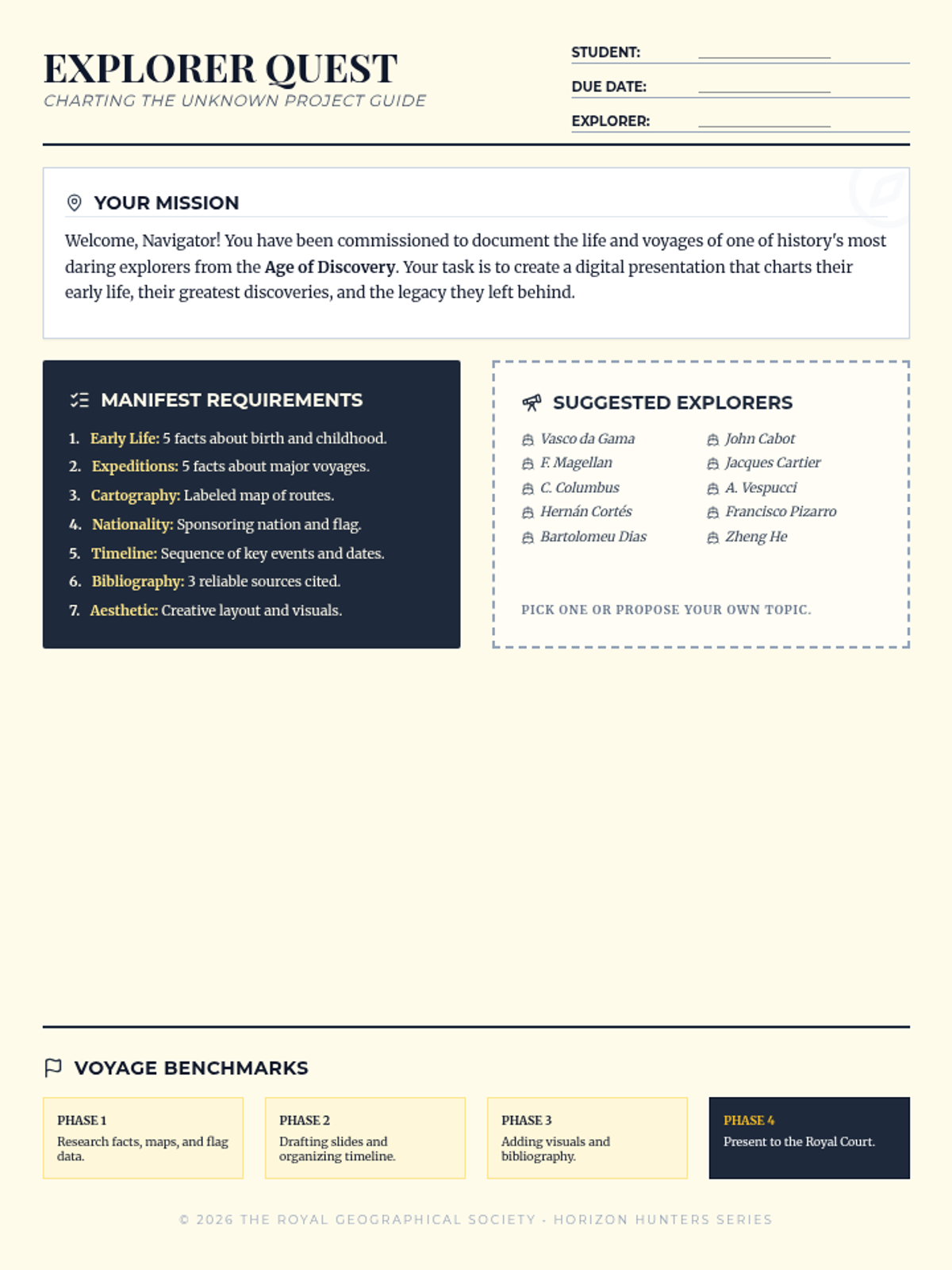
A research project where students investigate the life and voyages of early European explorers. This lesson provides the tools for students to create an engaging slide presentation and for teachers to assess their work accurately.

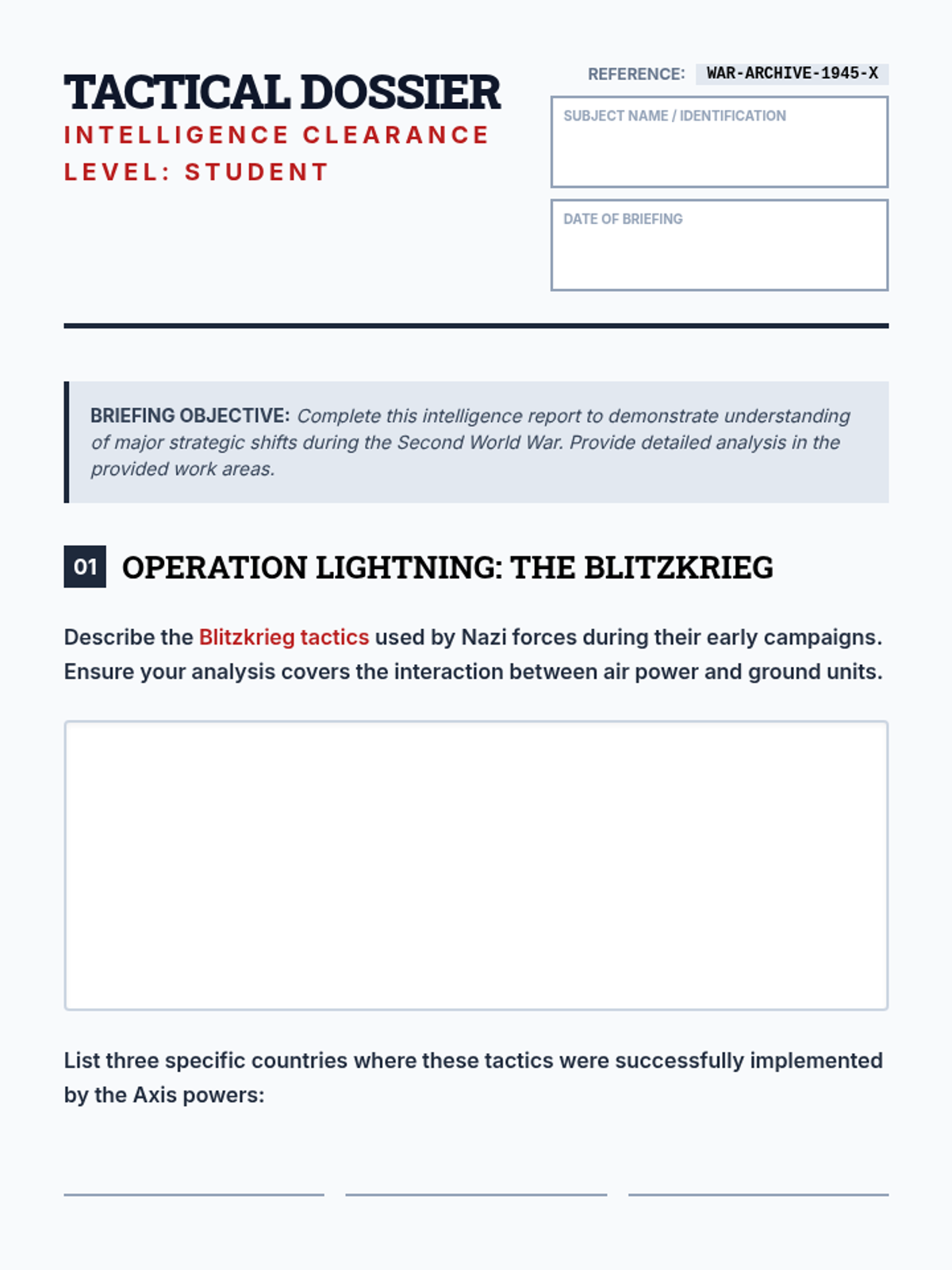
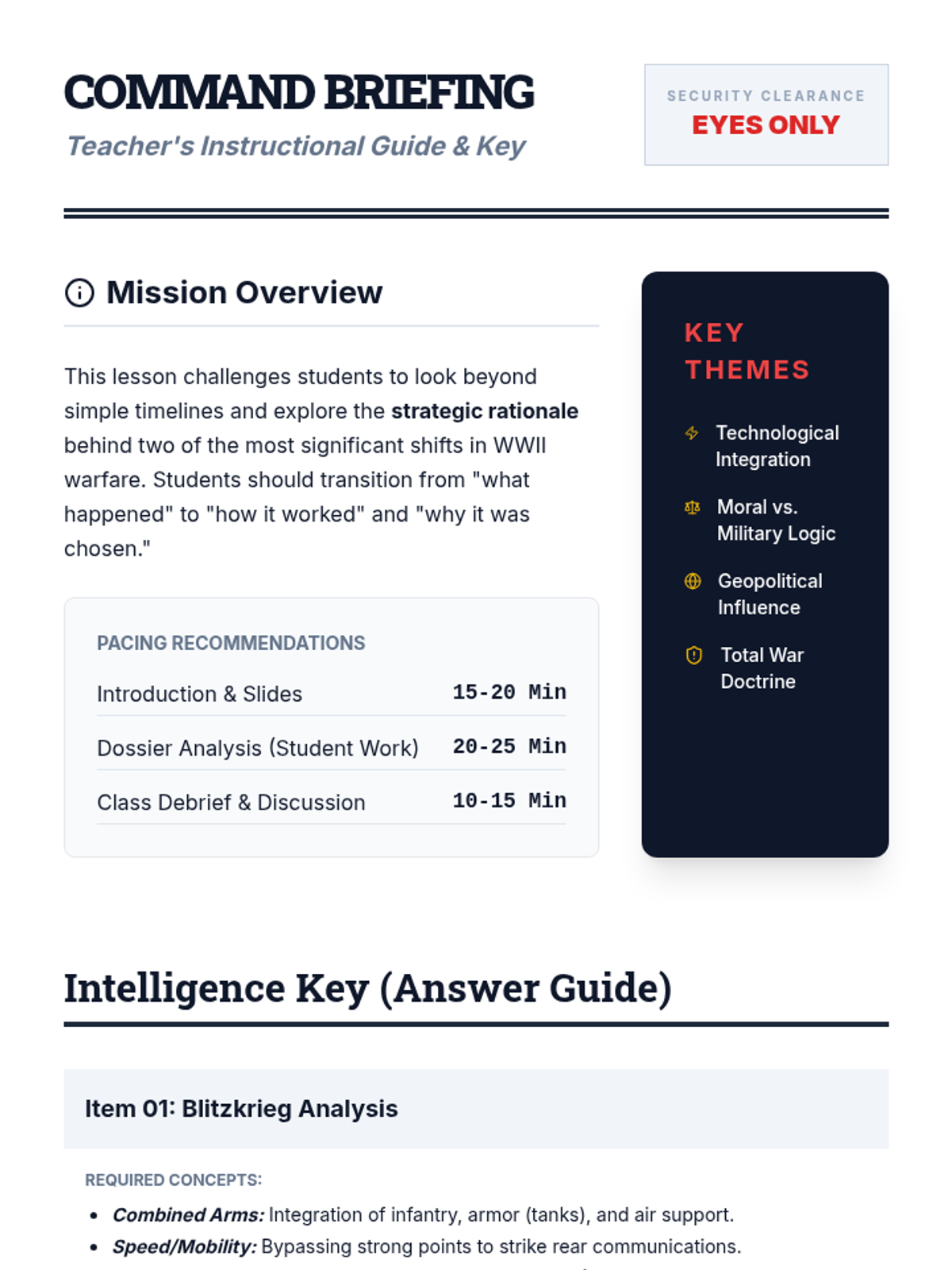
An exploration of two pivotal shifts in WWII strategy: the rapid-fire Blitzkrieg tactics of the Axis powers and the catastrophic decision-making behind the Atomic Bomb.
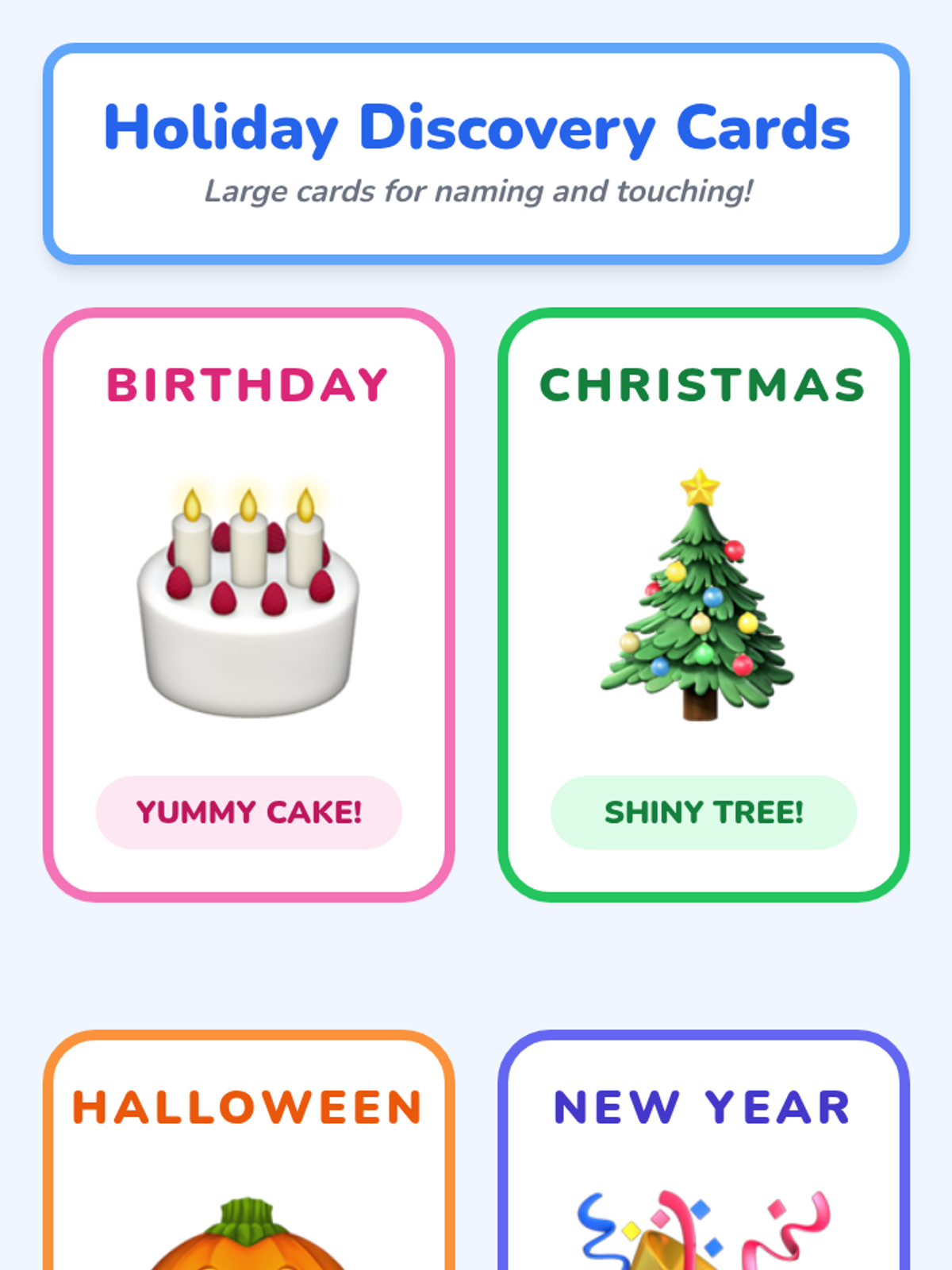
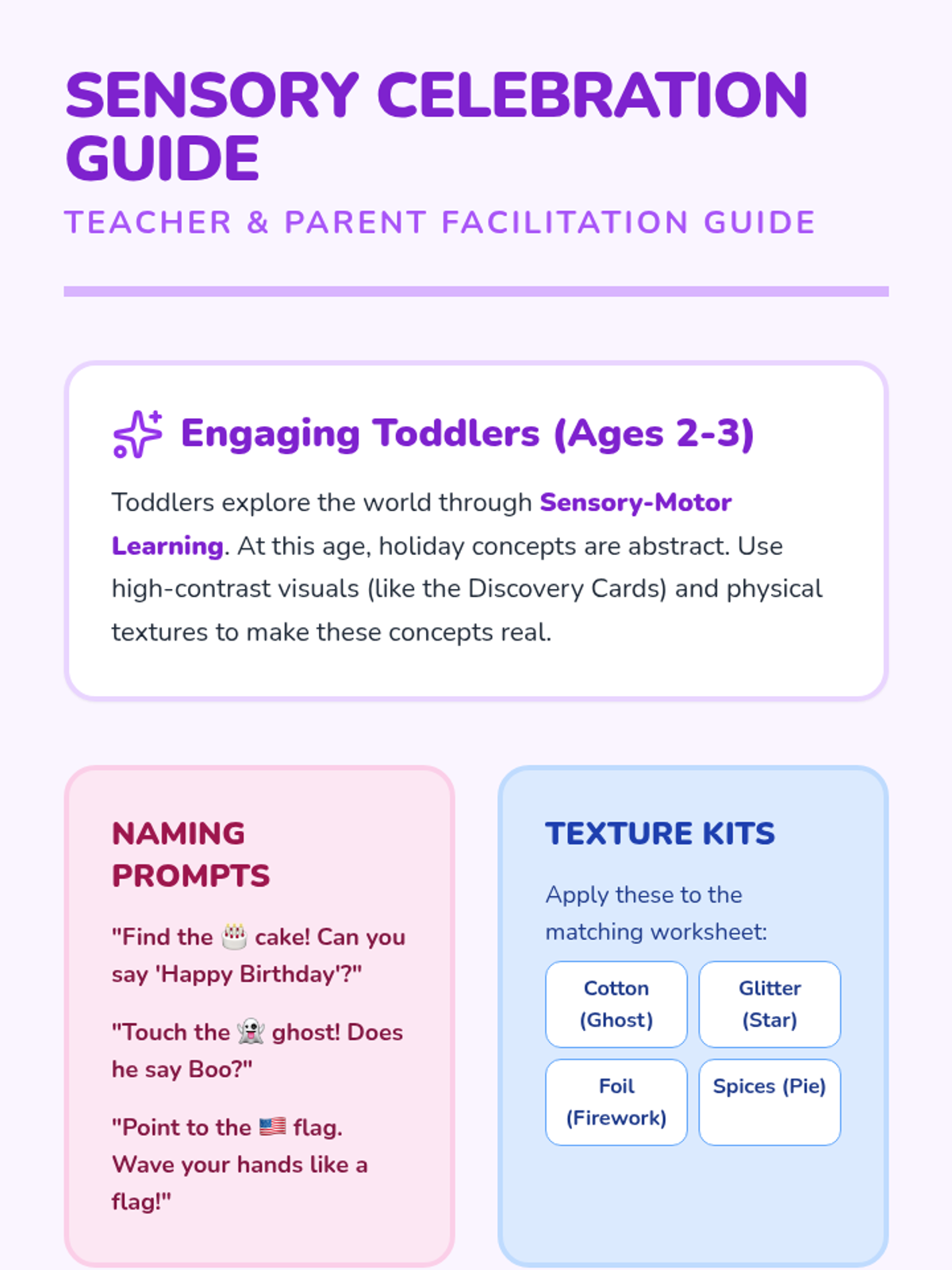
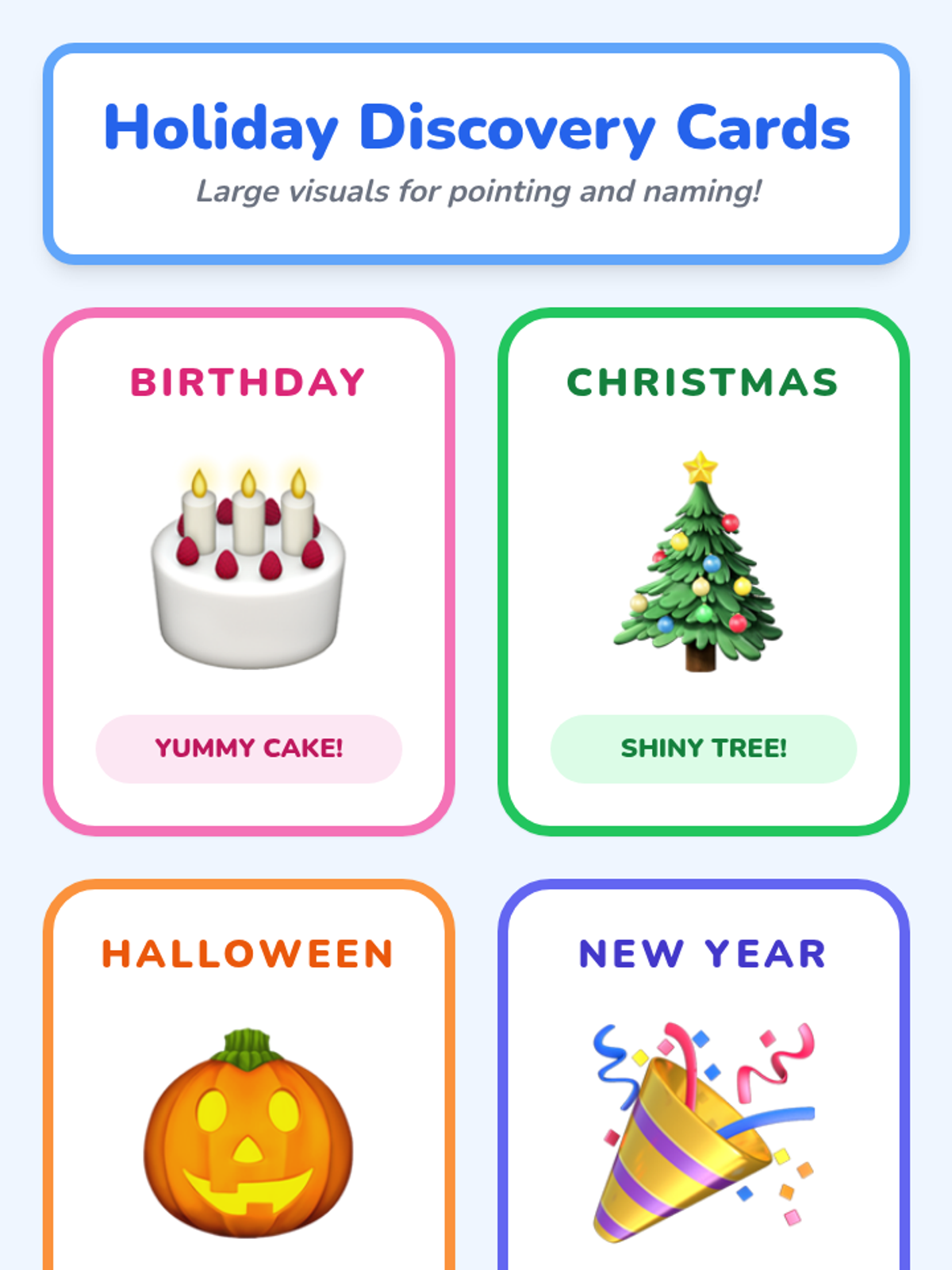
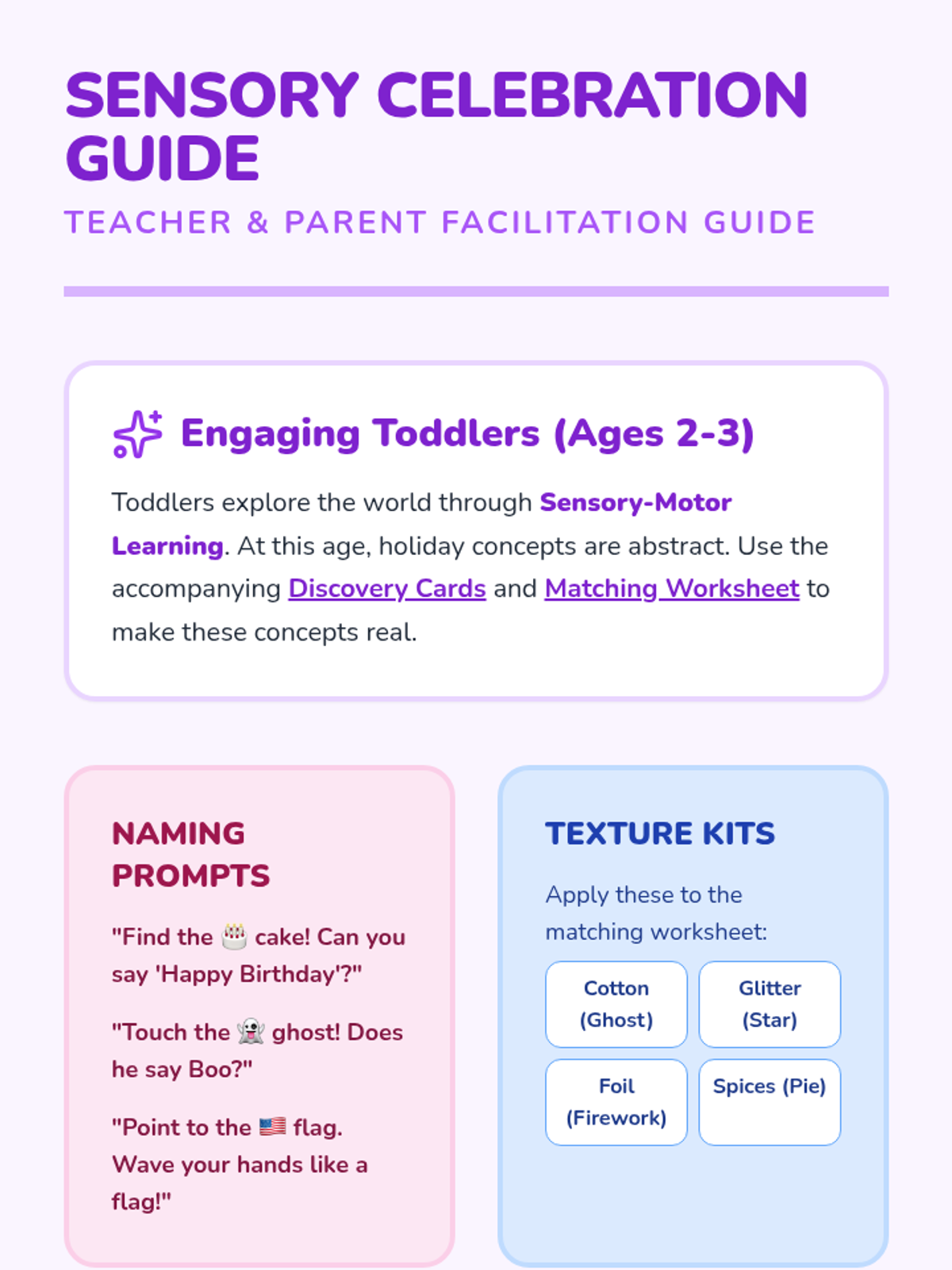
A sensory-focused exploration of major celebrations designed for toddlers, focusing on visual recognition and tactile associations.
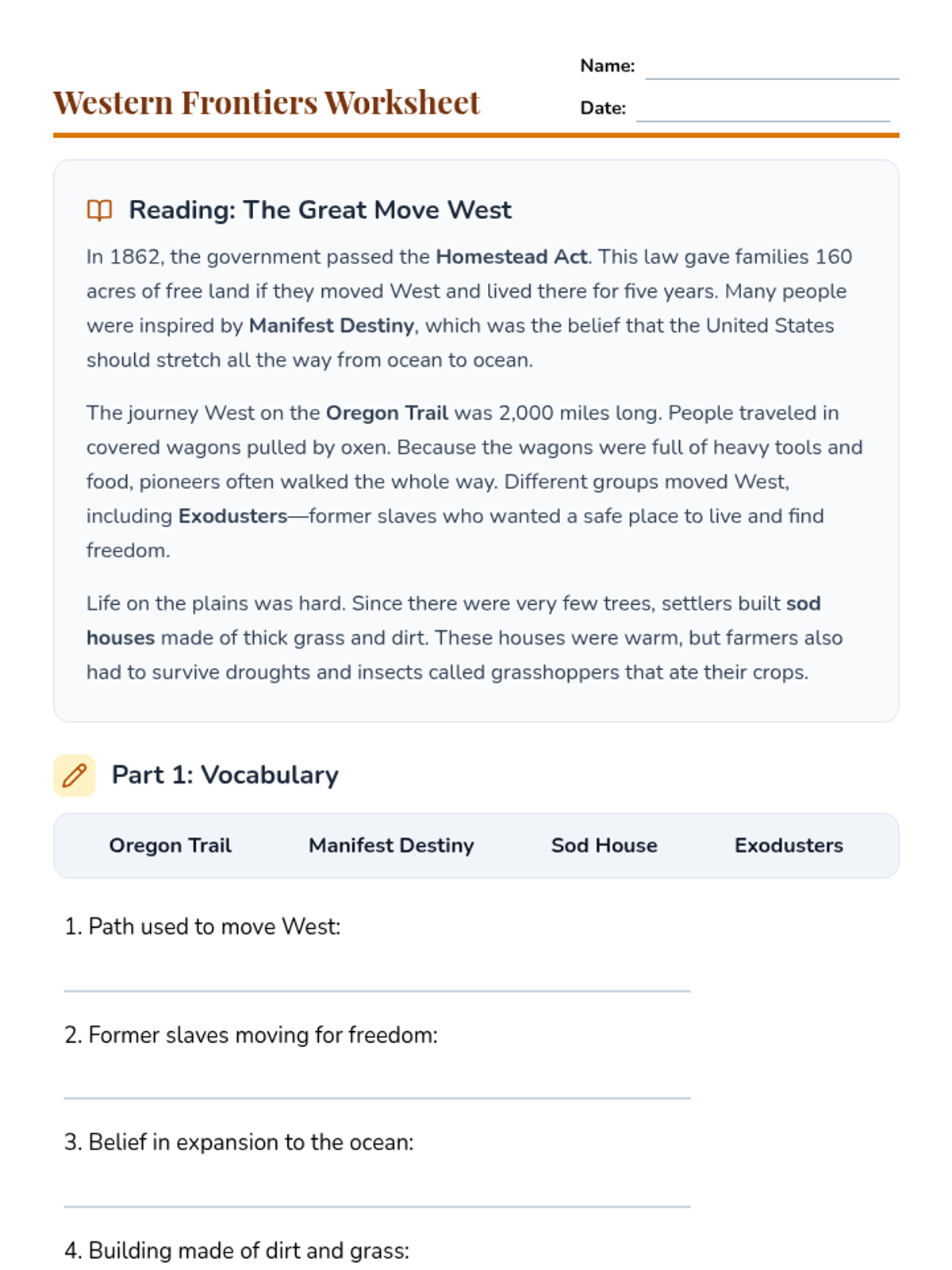
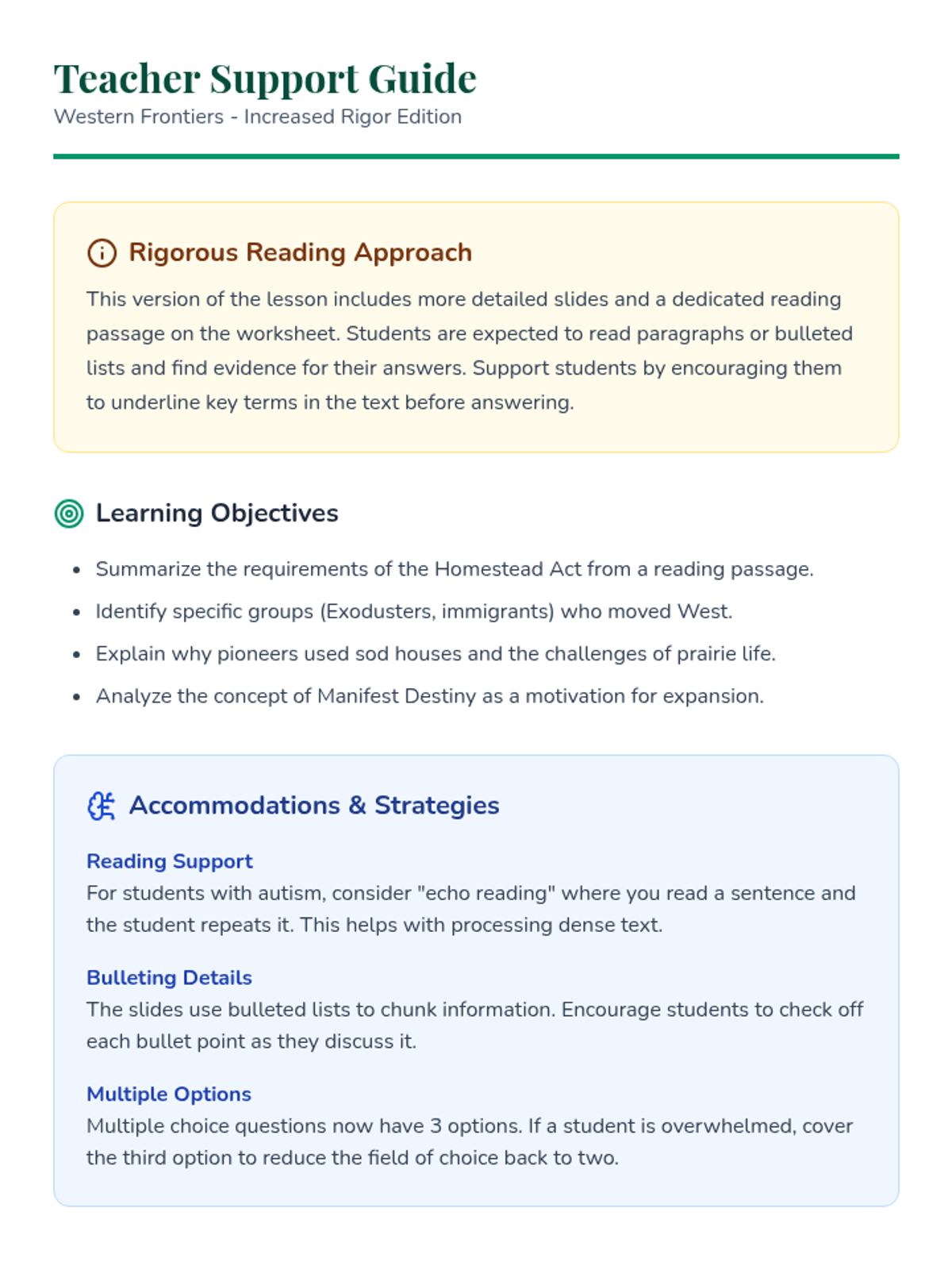
A simplified introduction to the Homestead Act and Westward Expansion, adapted for students with diverse learning needs and focusing on the journey of homesteaders.
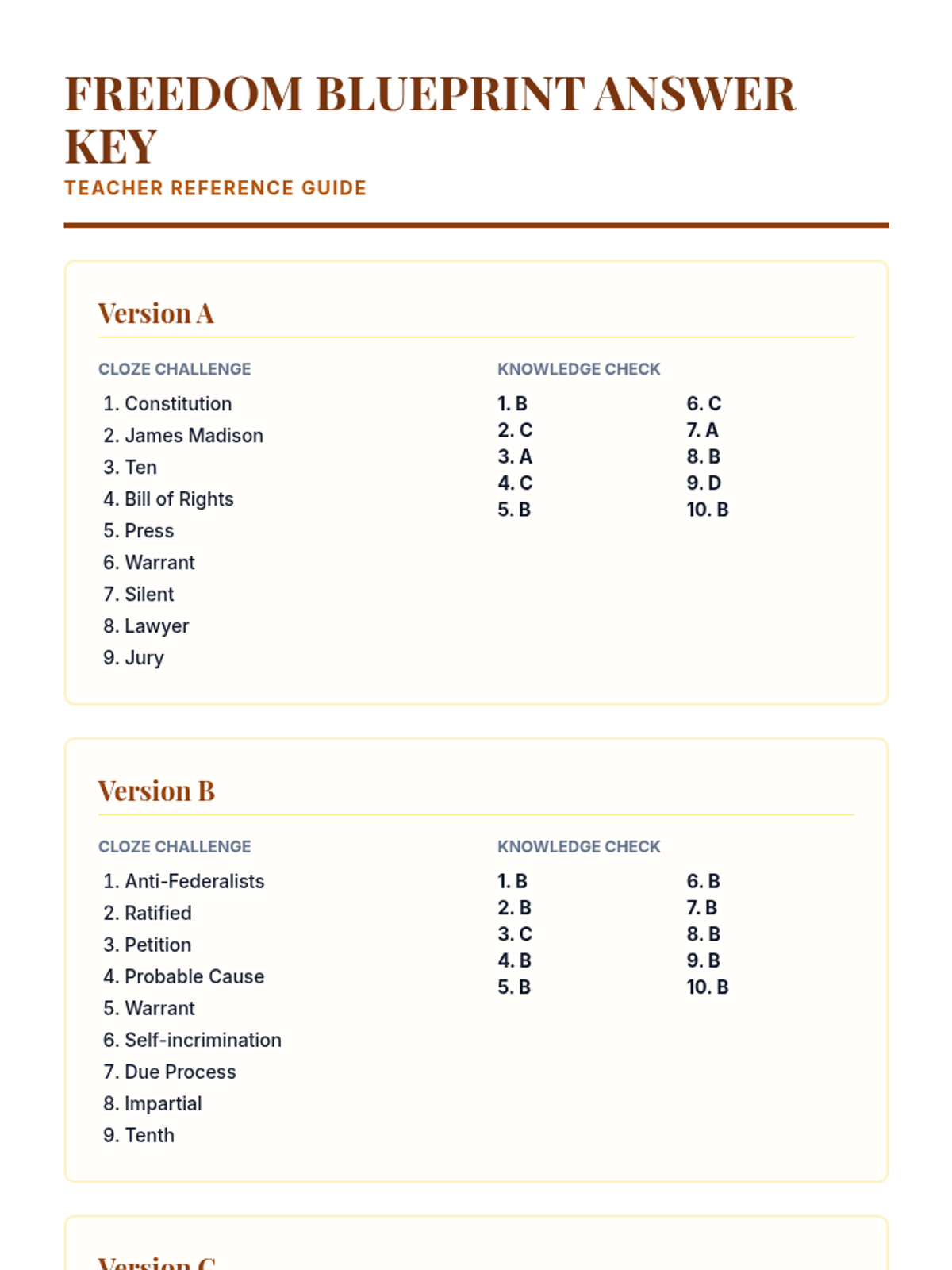
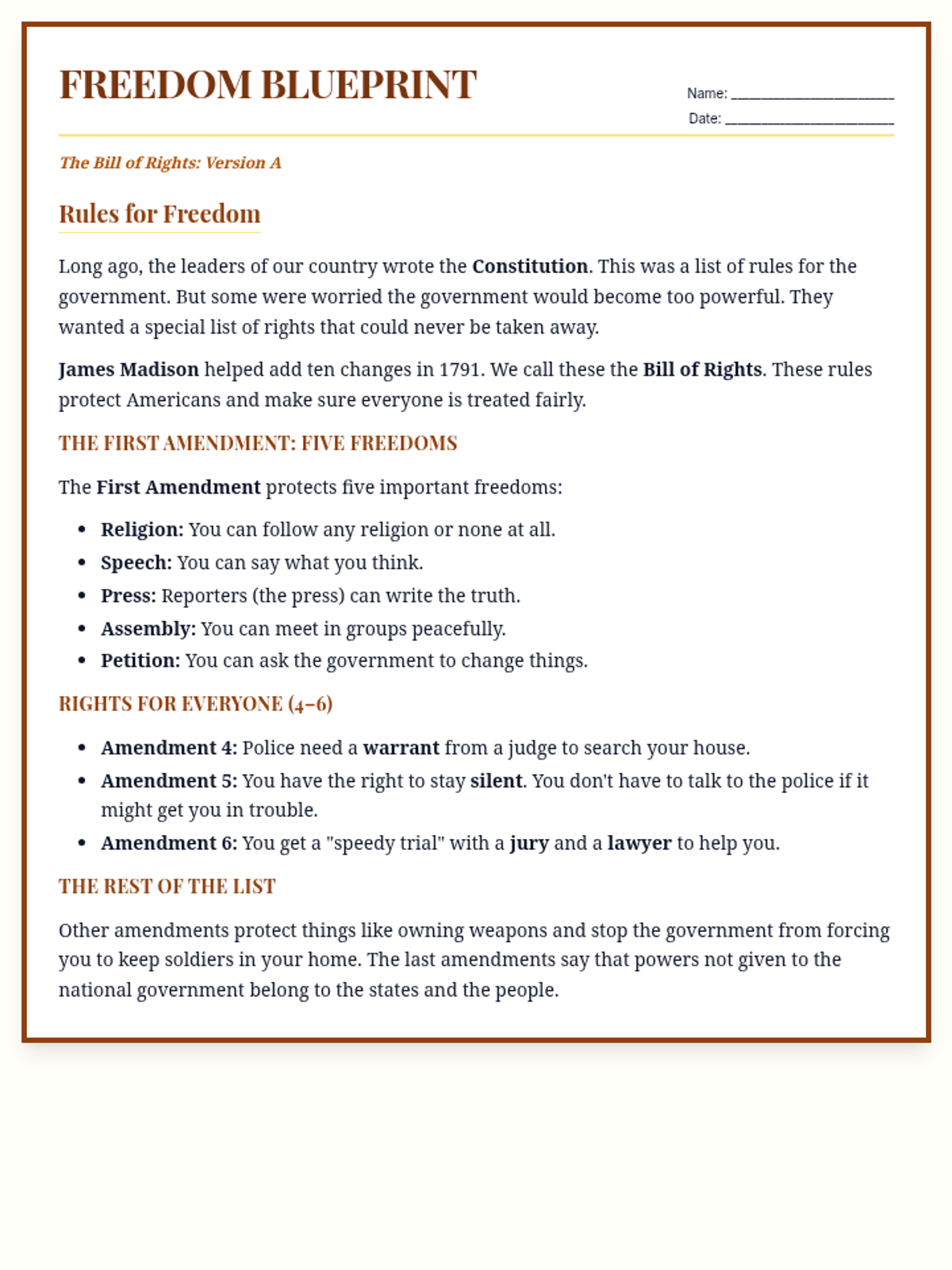
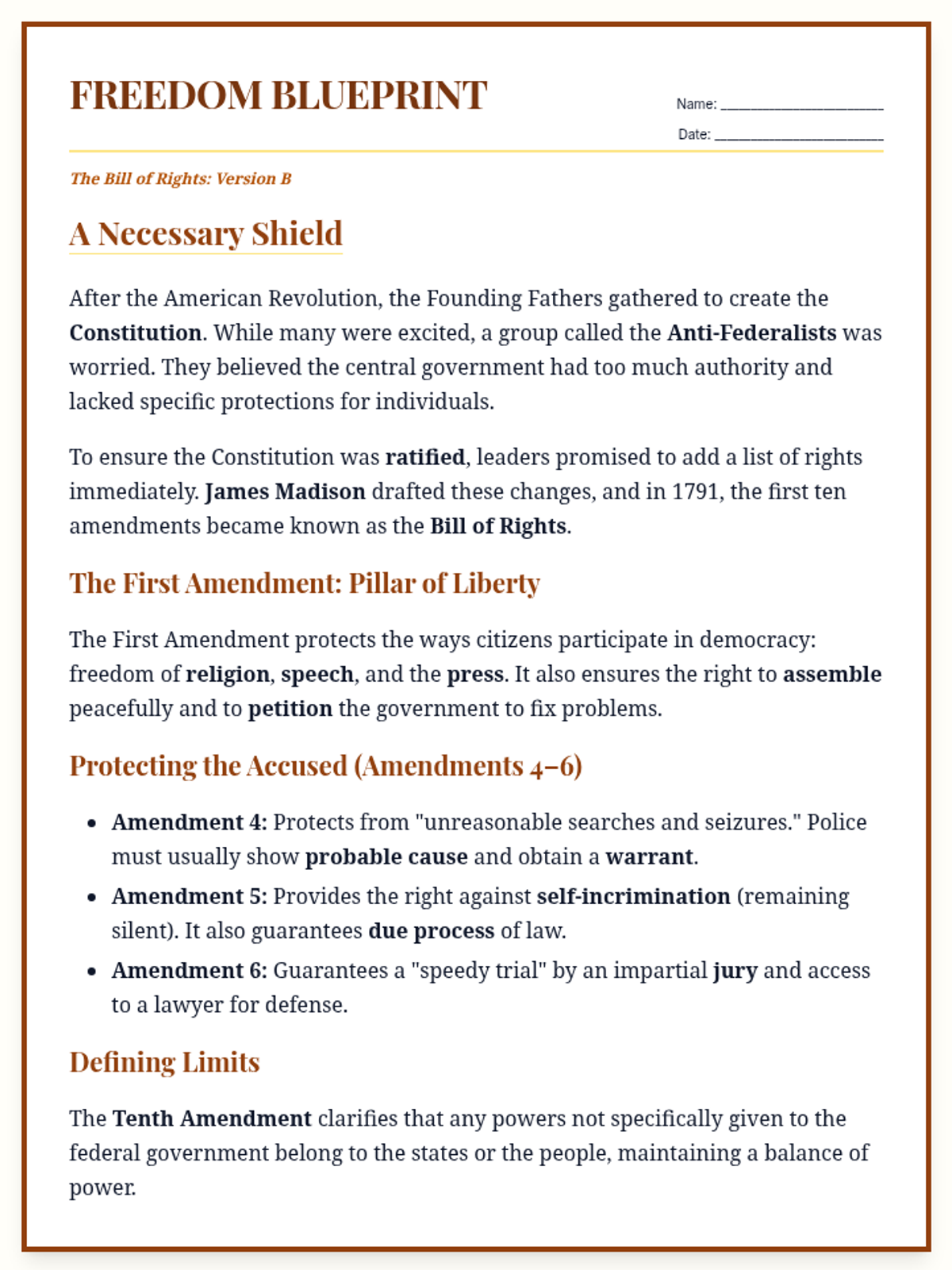
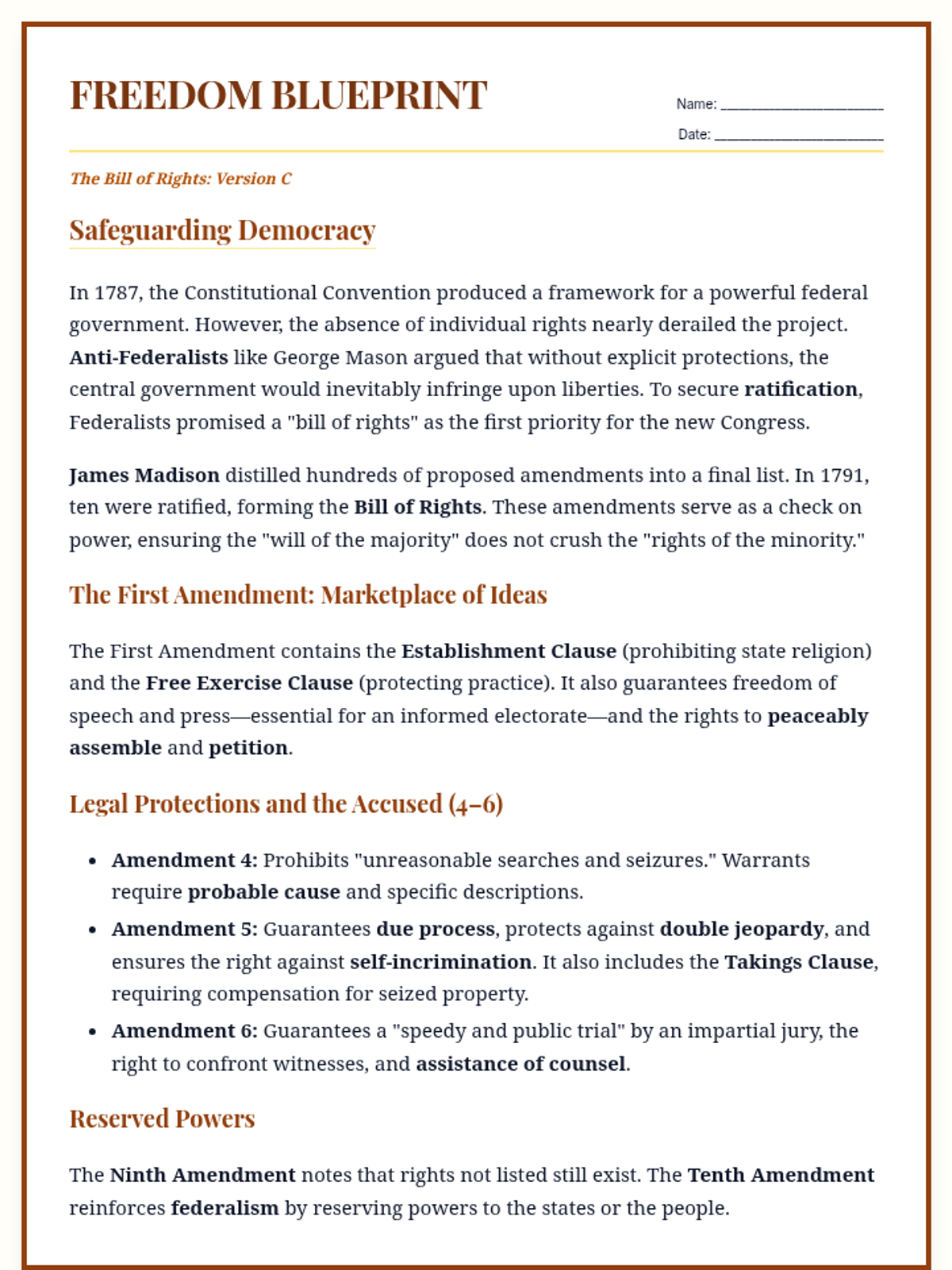
A comprehensive exploration of the Bill of Rights, featuring differentiated reading materials (Versions A, B, and C) covering historical context, the First Amendment, and the rights of the accused.
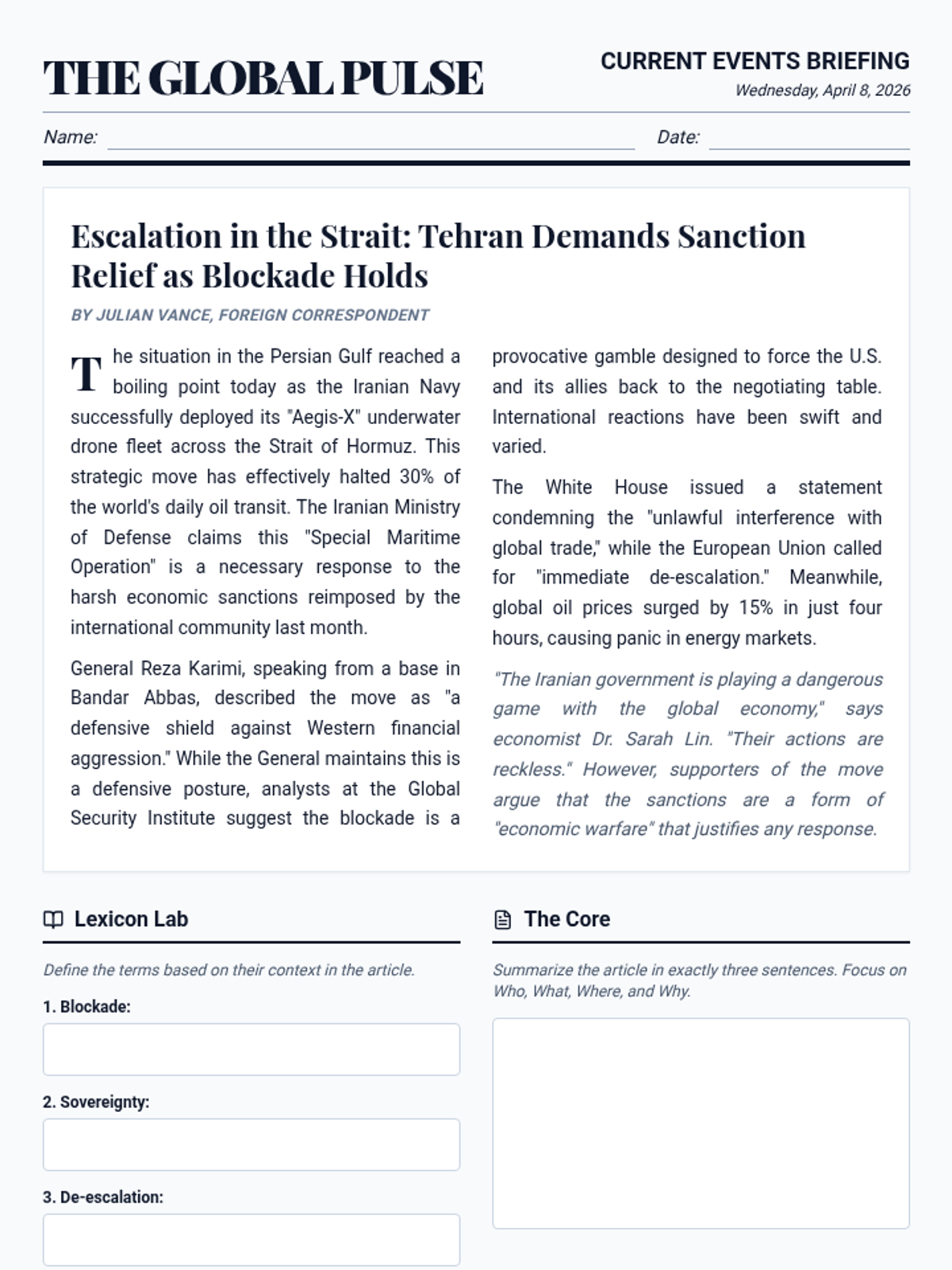
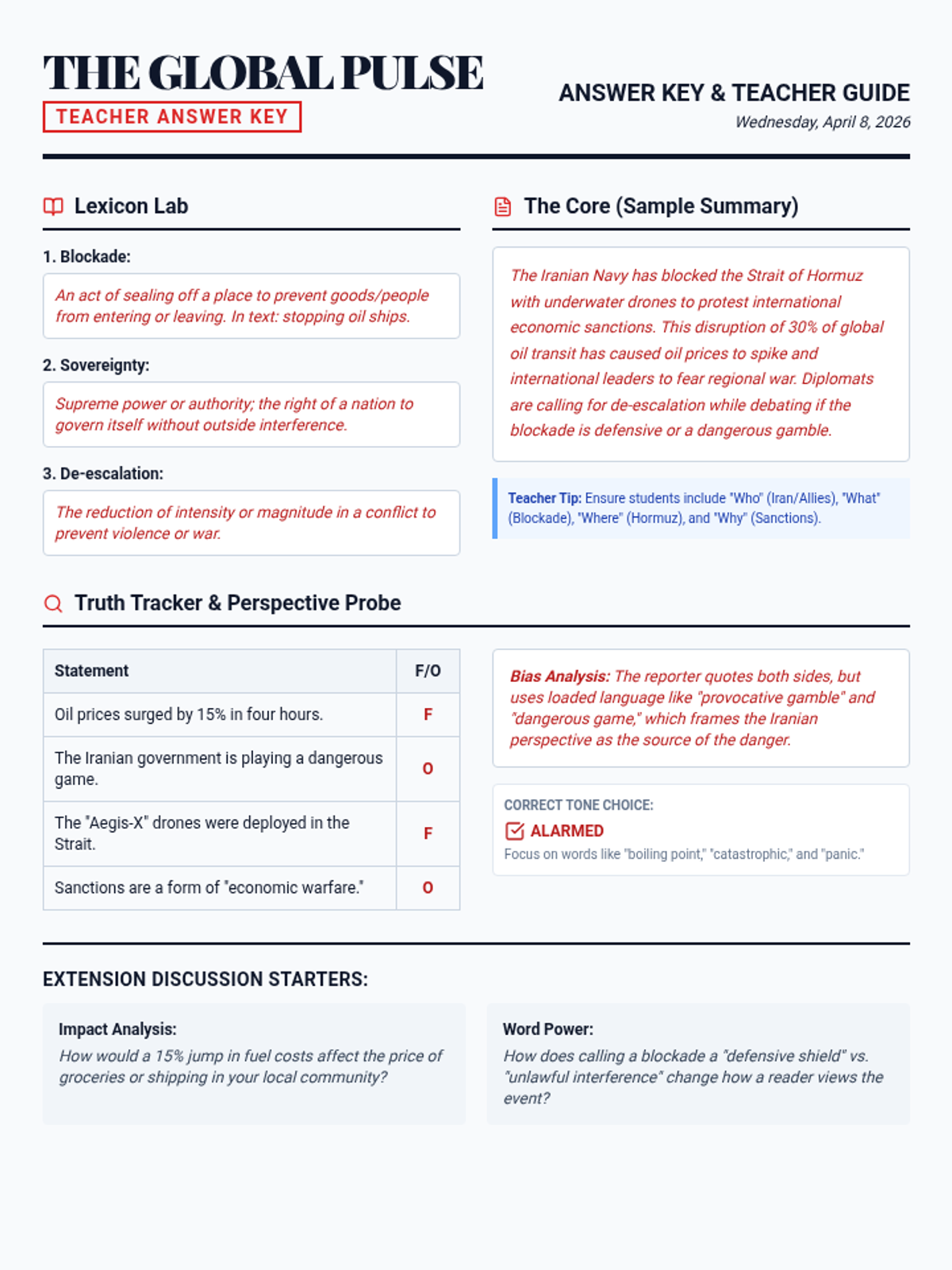
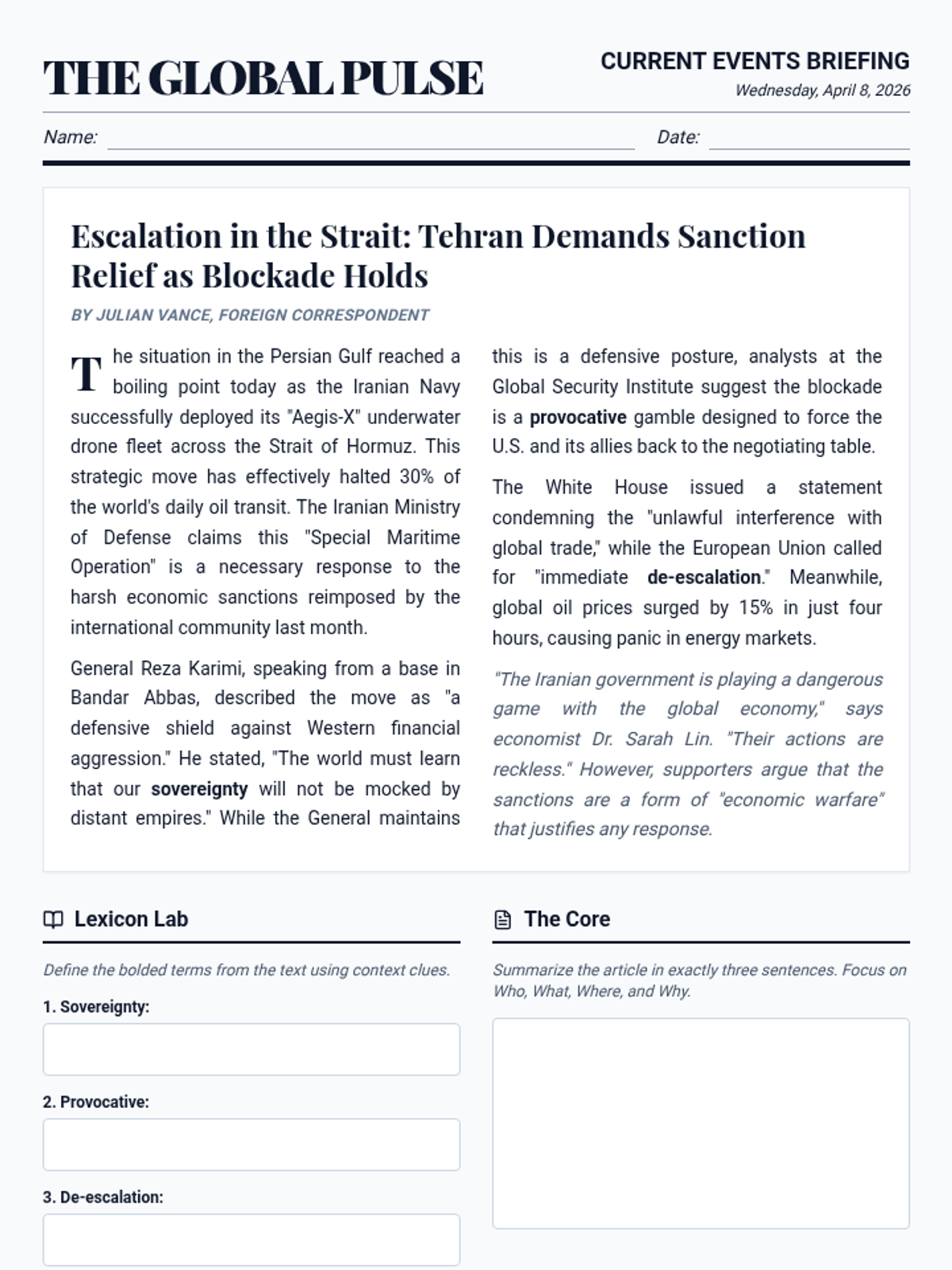
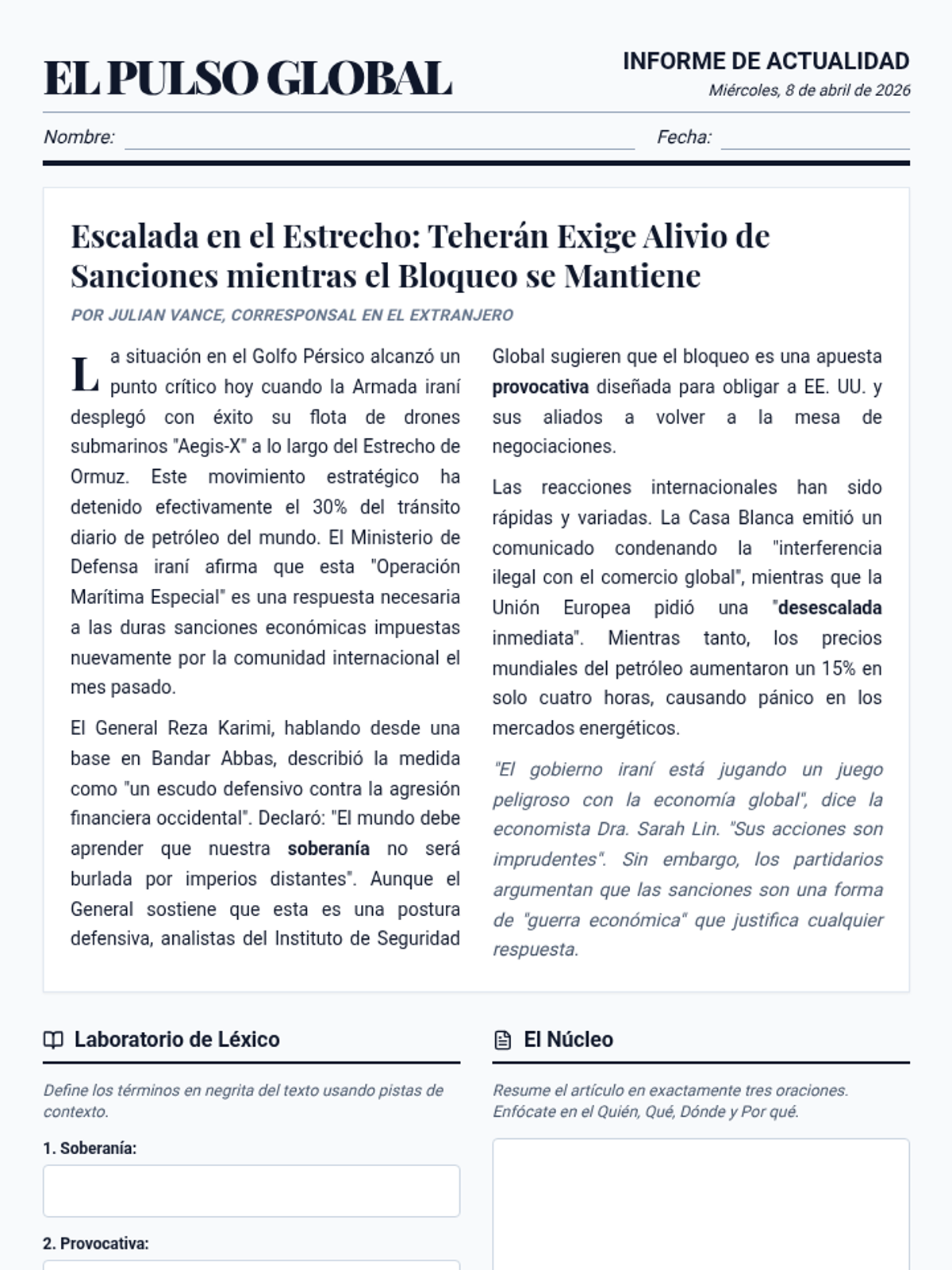
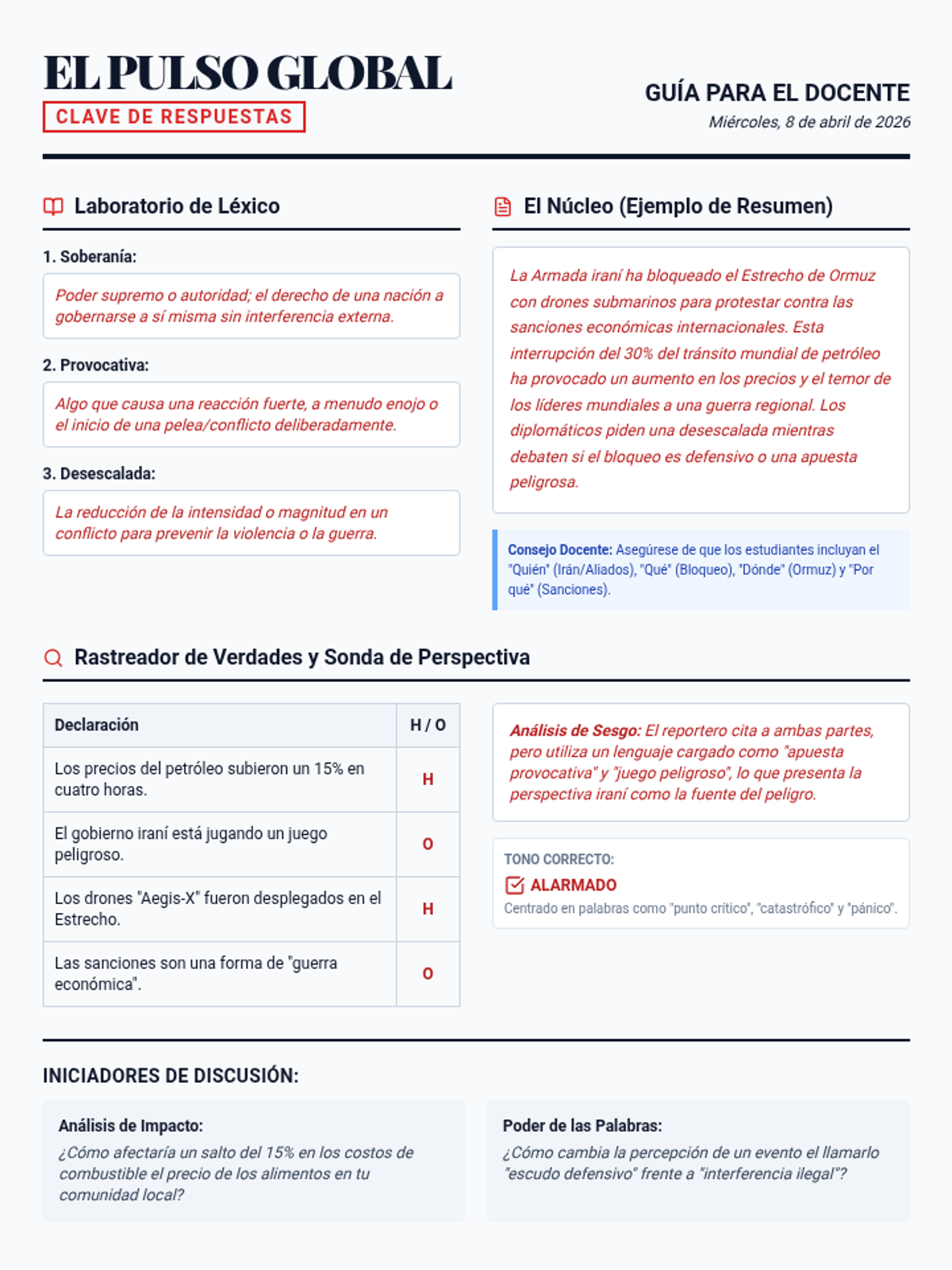
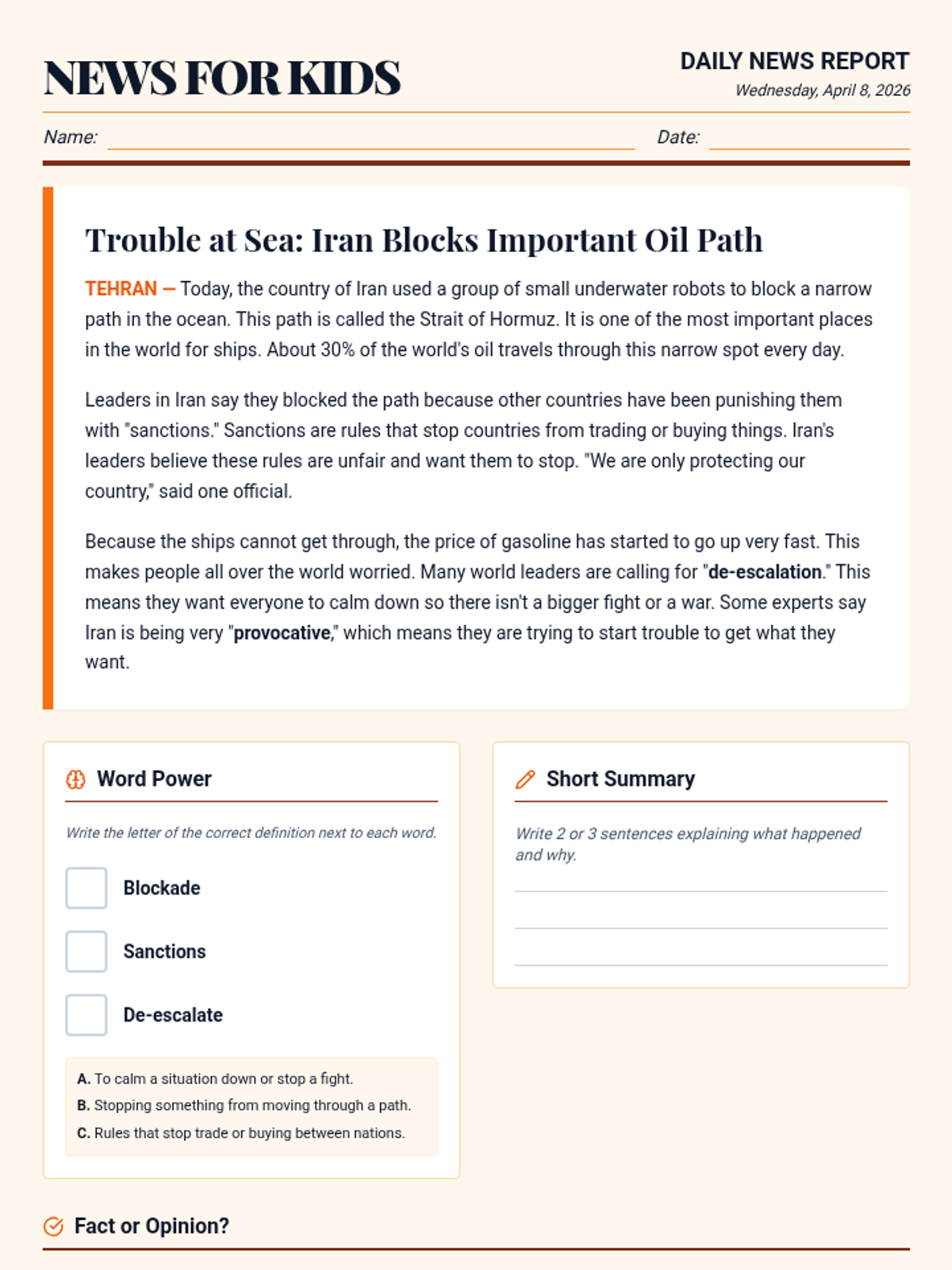
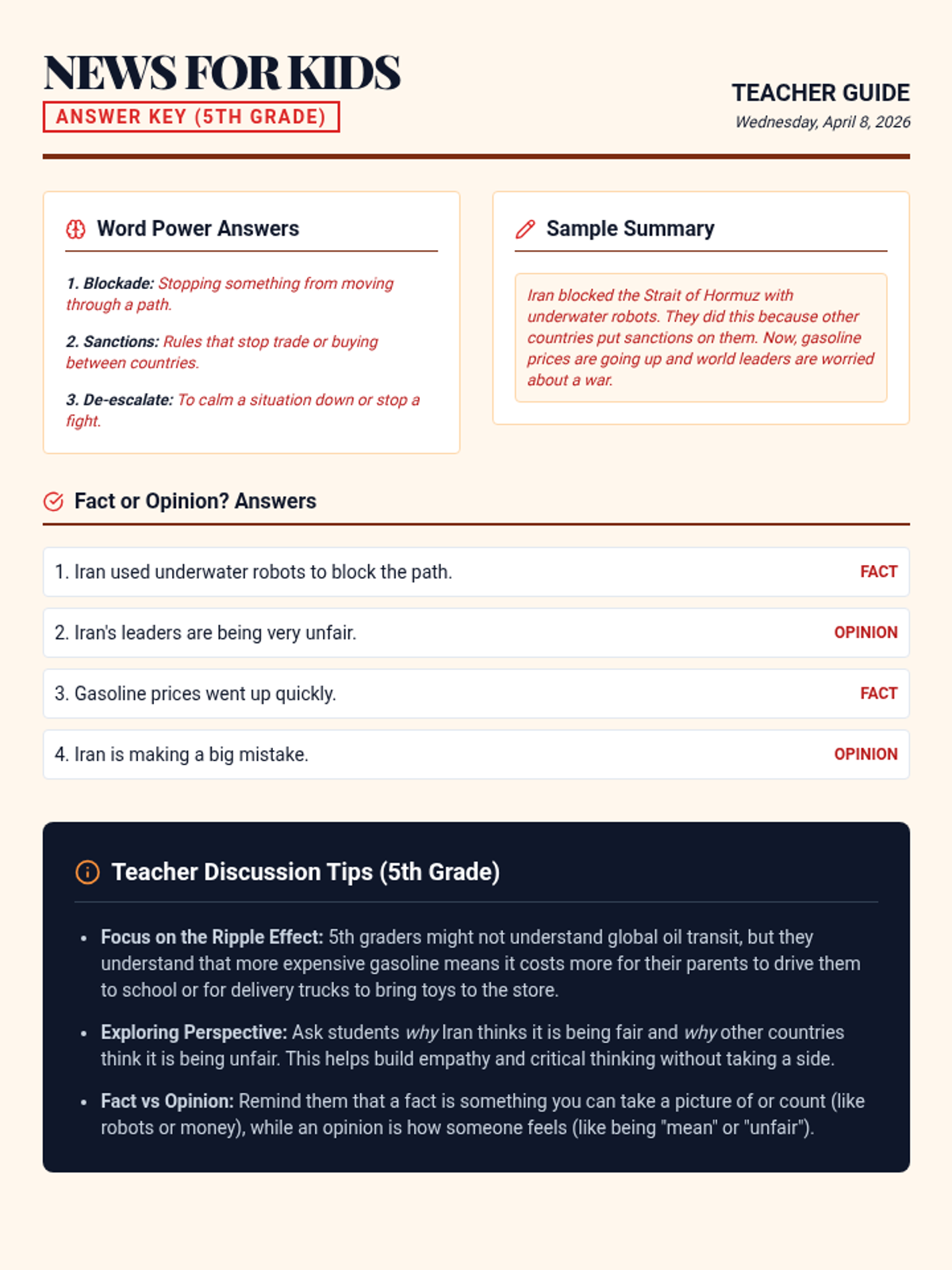
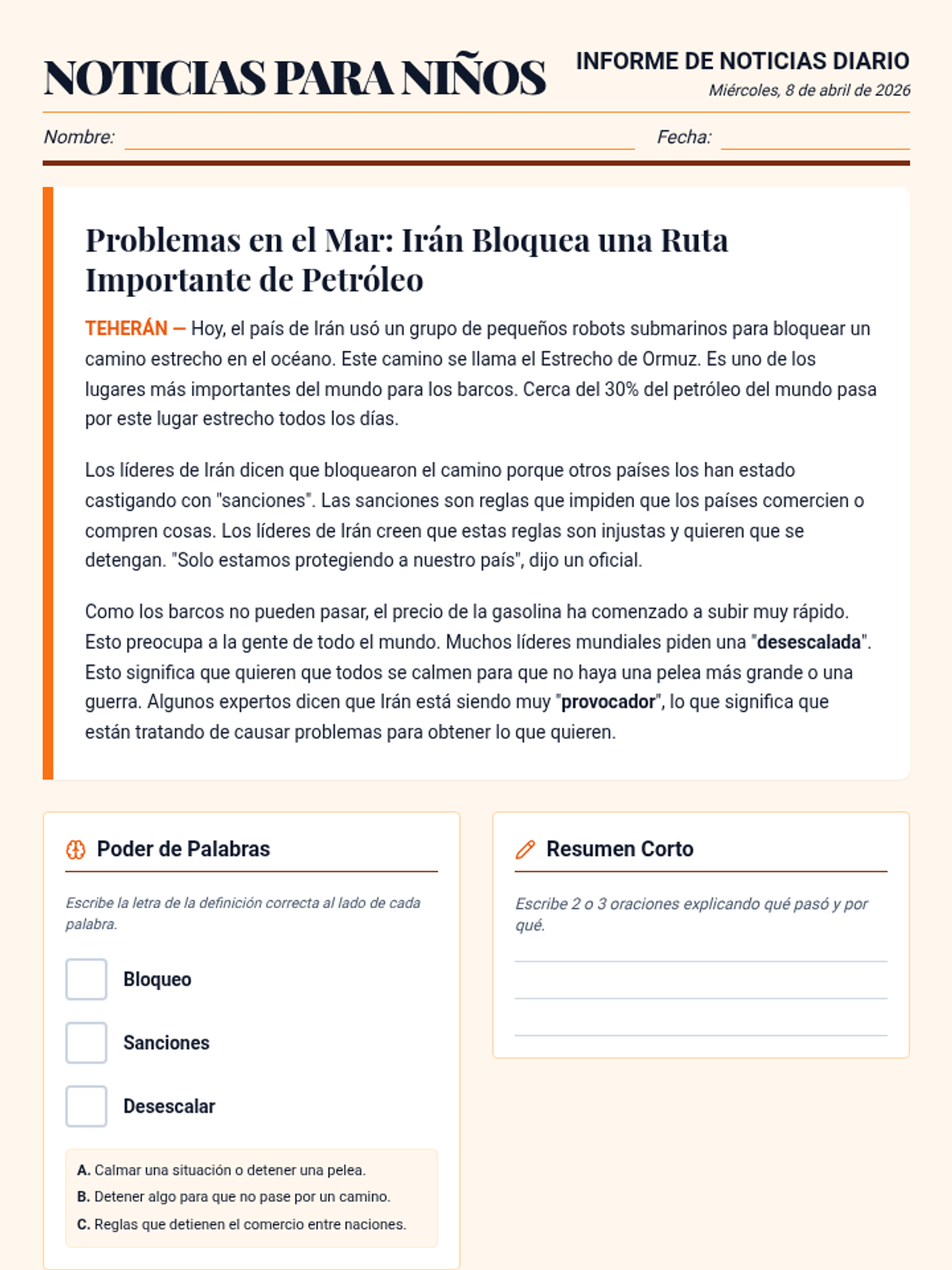
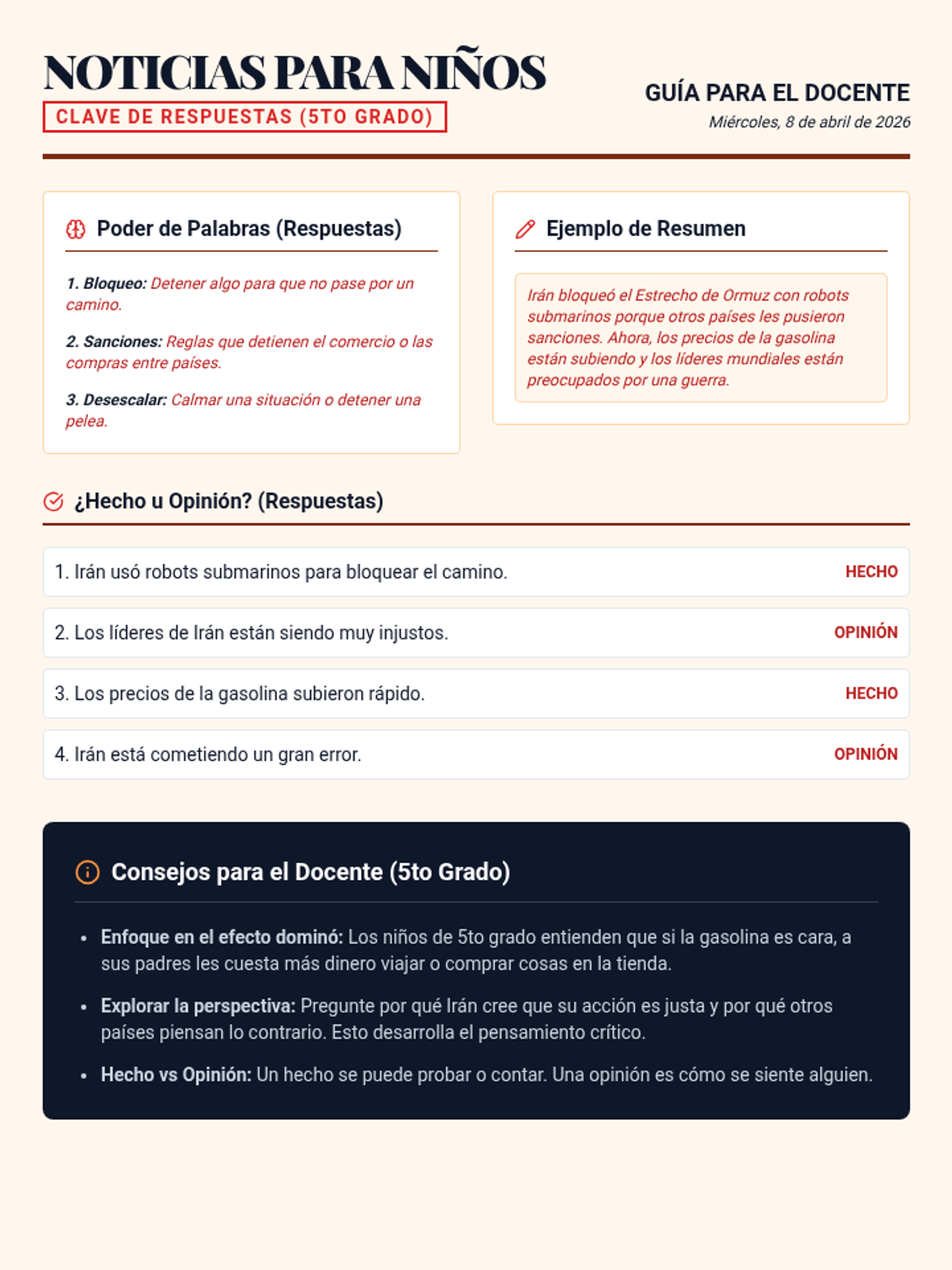
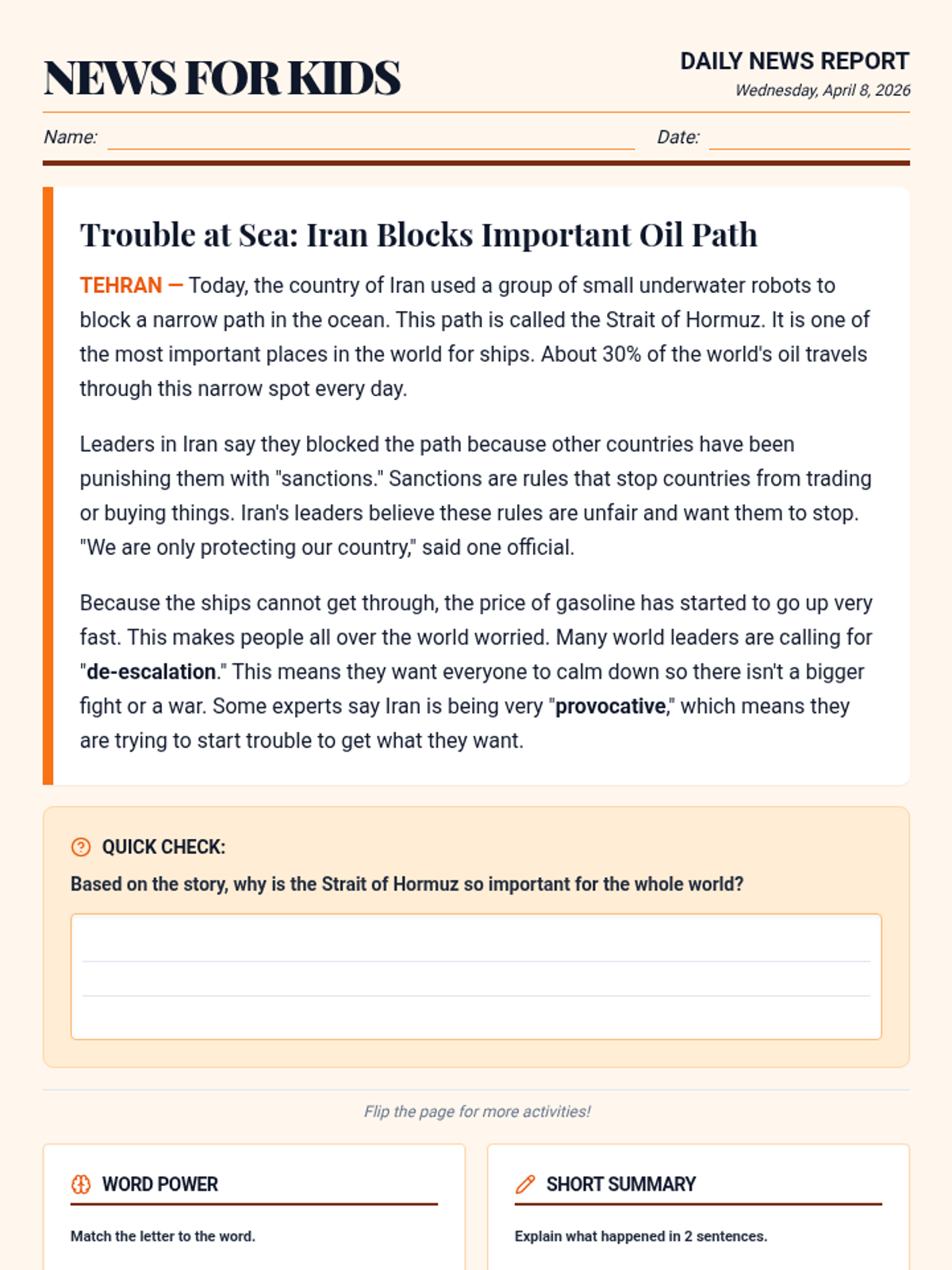
A deep dive into analyzing current events through a fictional 2026 geopolitical conflict, focusing on media literacy skills like bias detection and summarization.
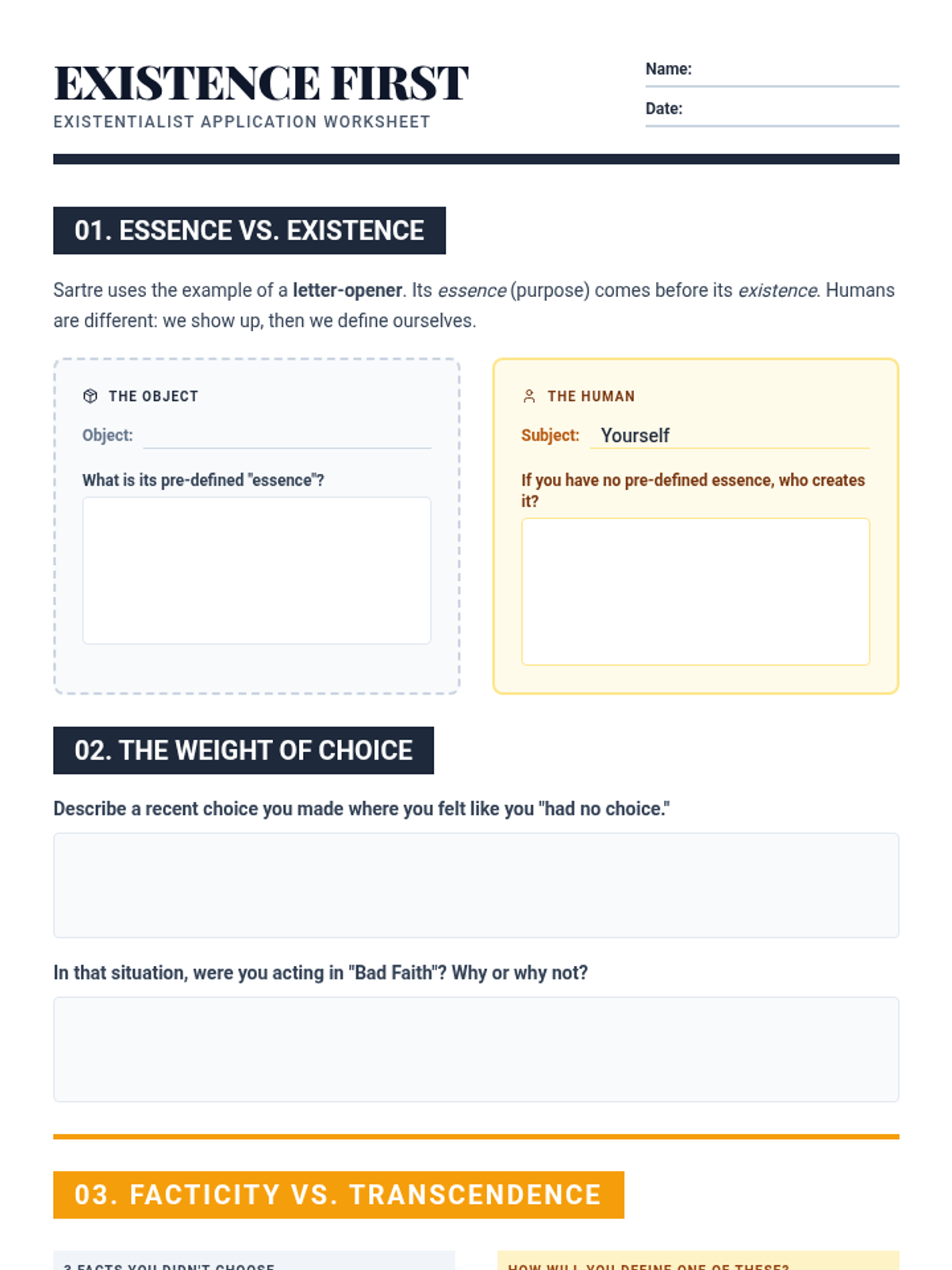
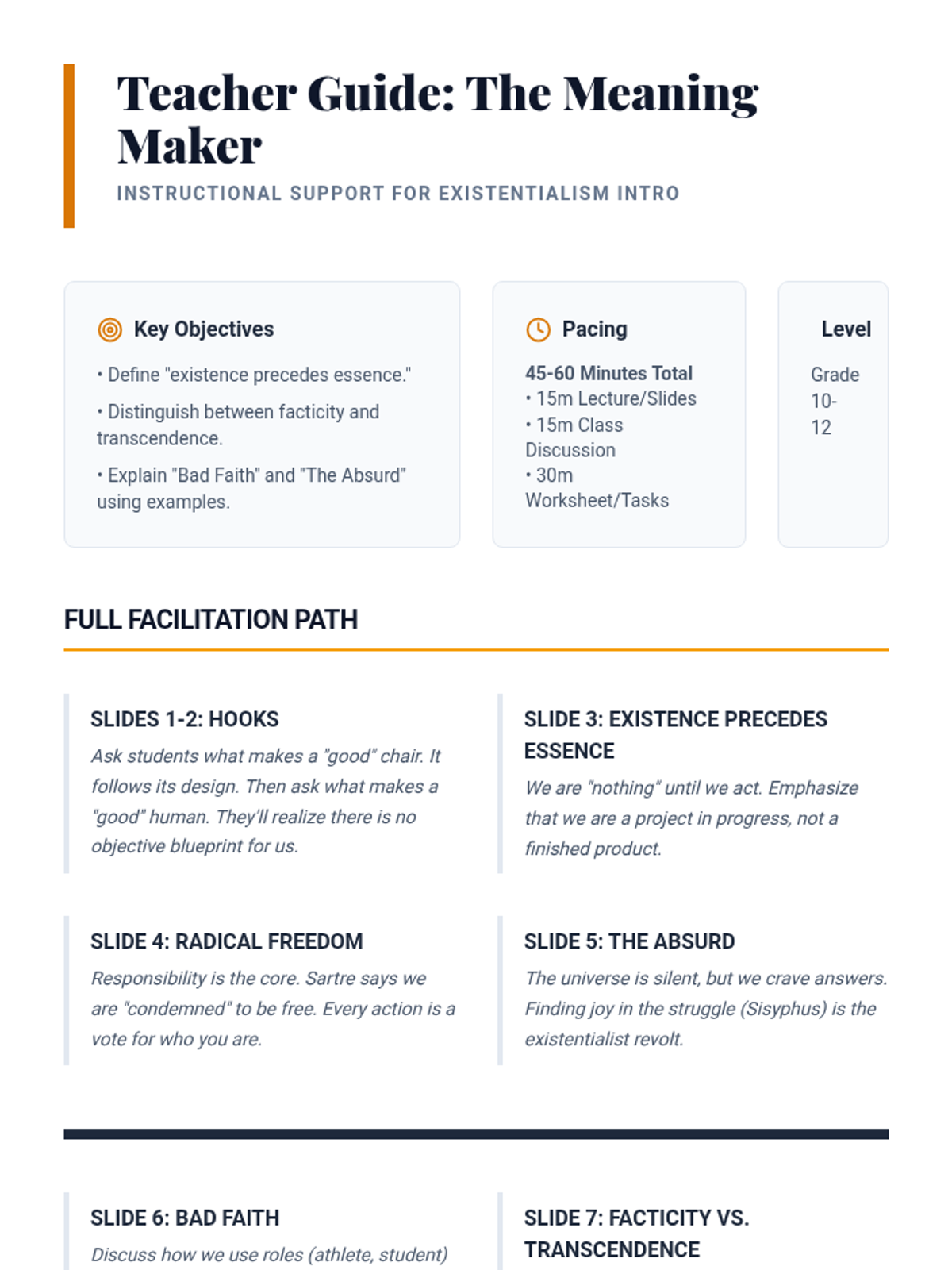
An introductory exploration of existentialist philosophy, focusing on the concepts of radical freedom, existence preceding essence, and the creation of personal meaning in an indifferent universe.
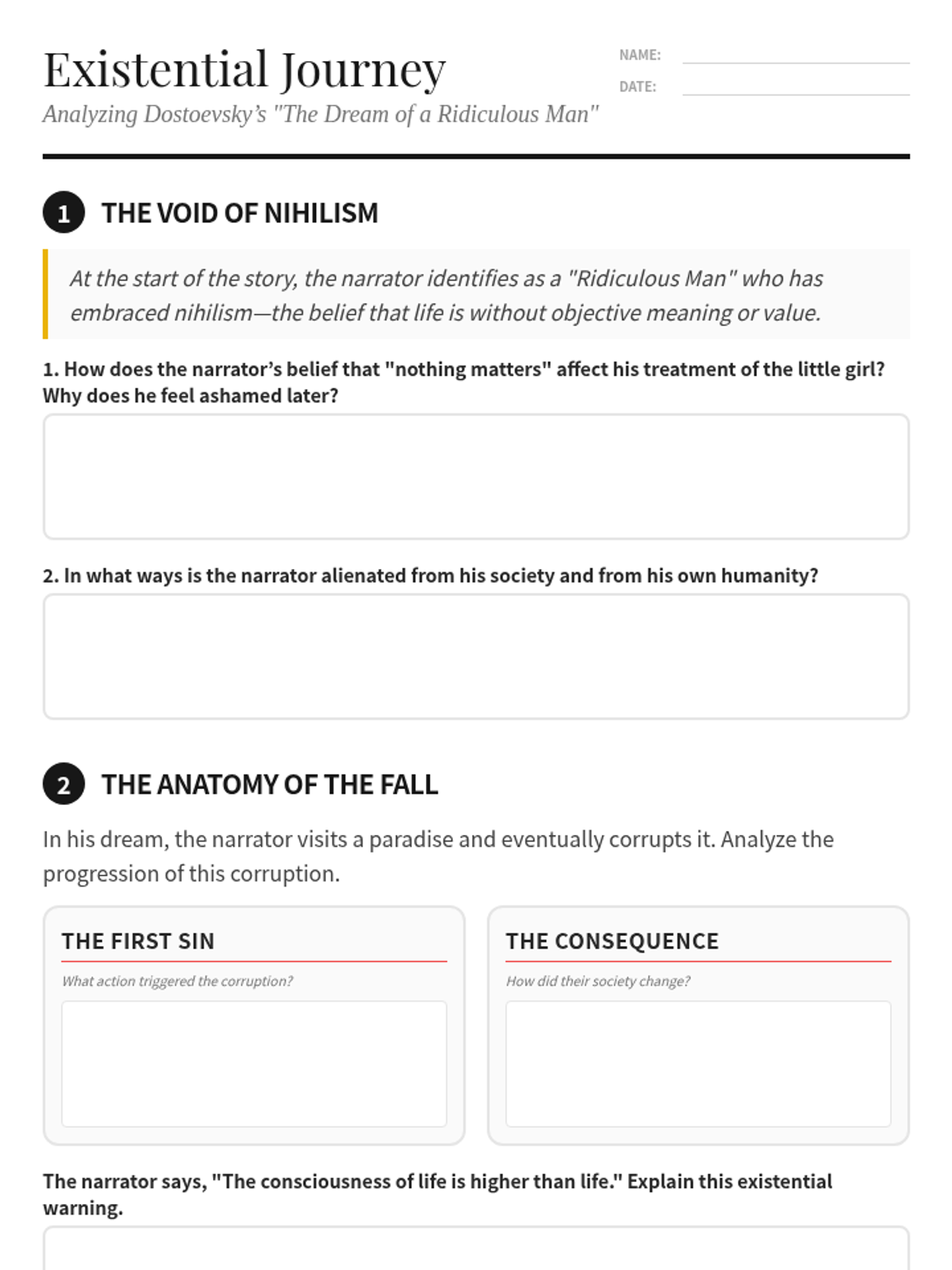
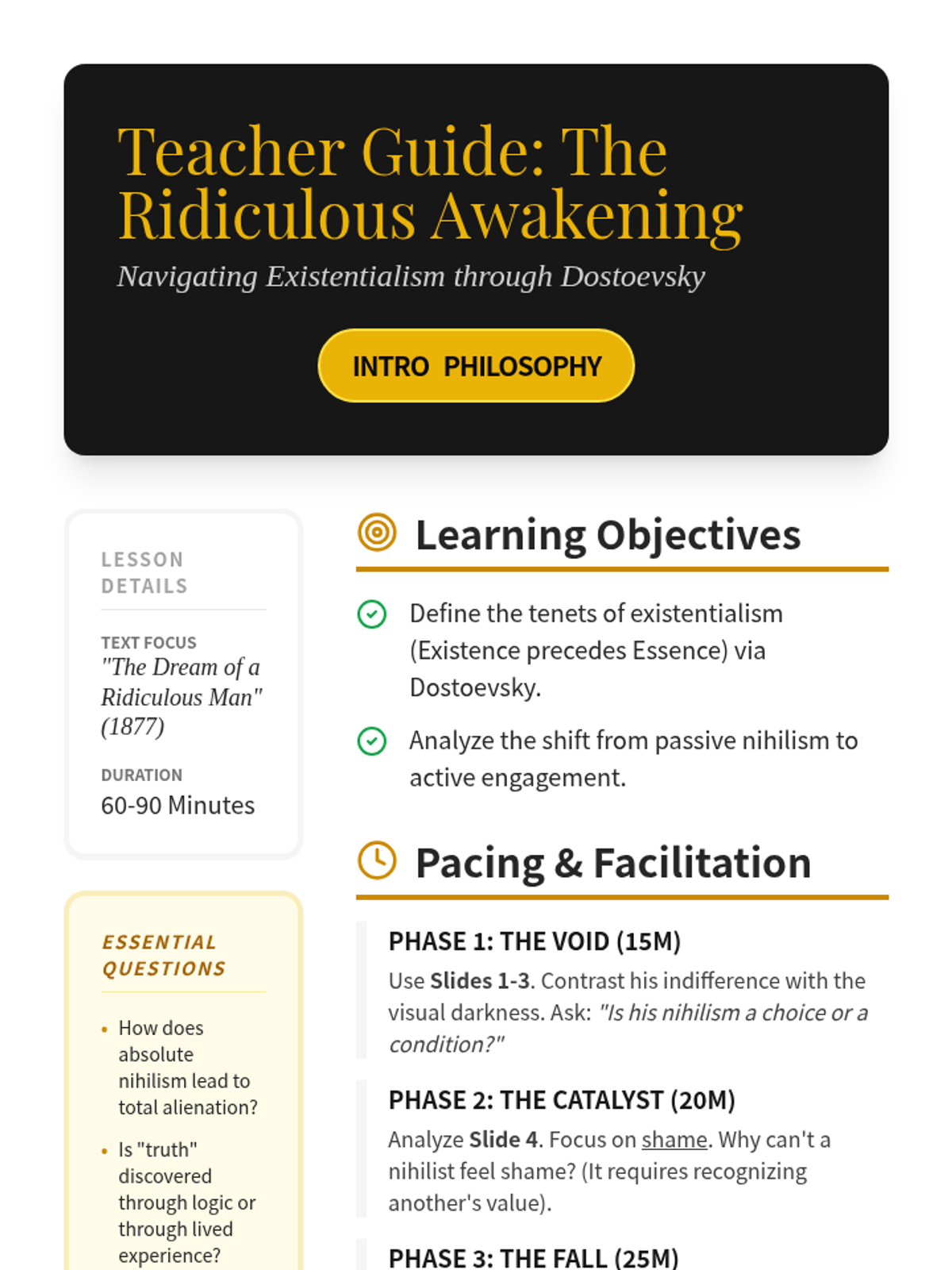
An introductory lesson on existentialist philosophy using Fyodor Dostoevsky's short story 'The Dream of a Ridiculous Man' as a case study. Students explore themes of nihilism, meaning-making, and individual responsibility.
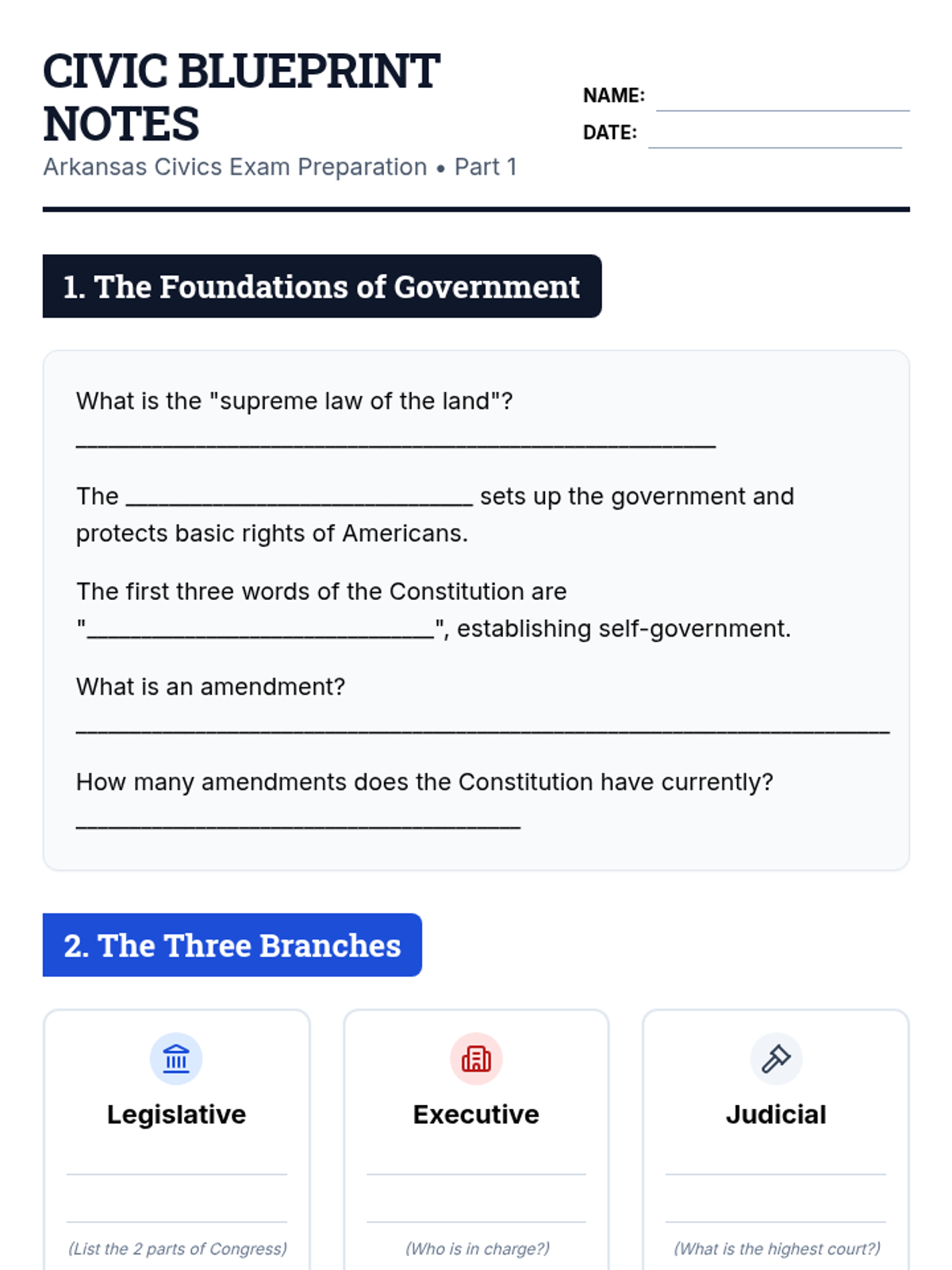
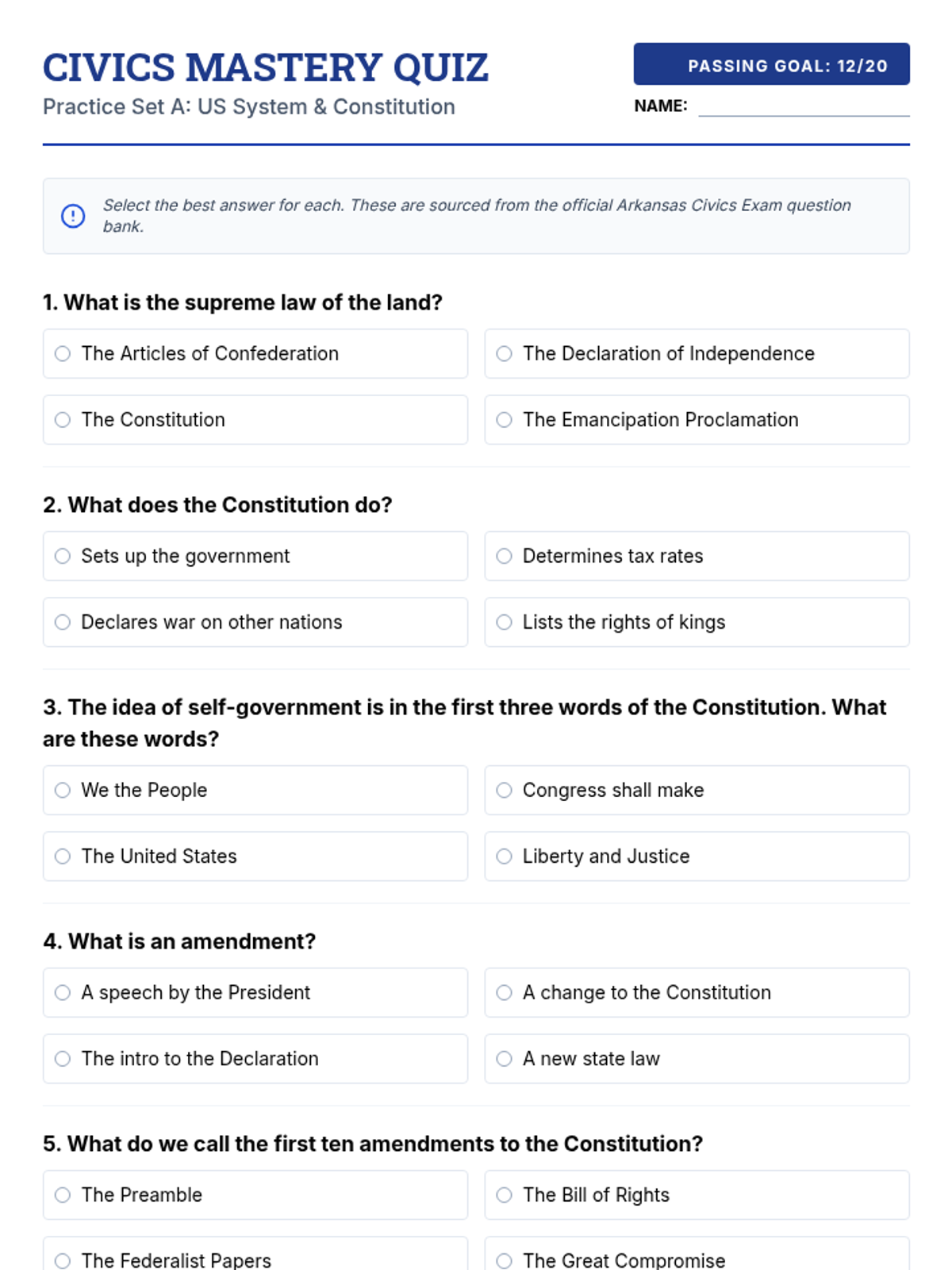
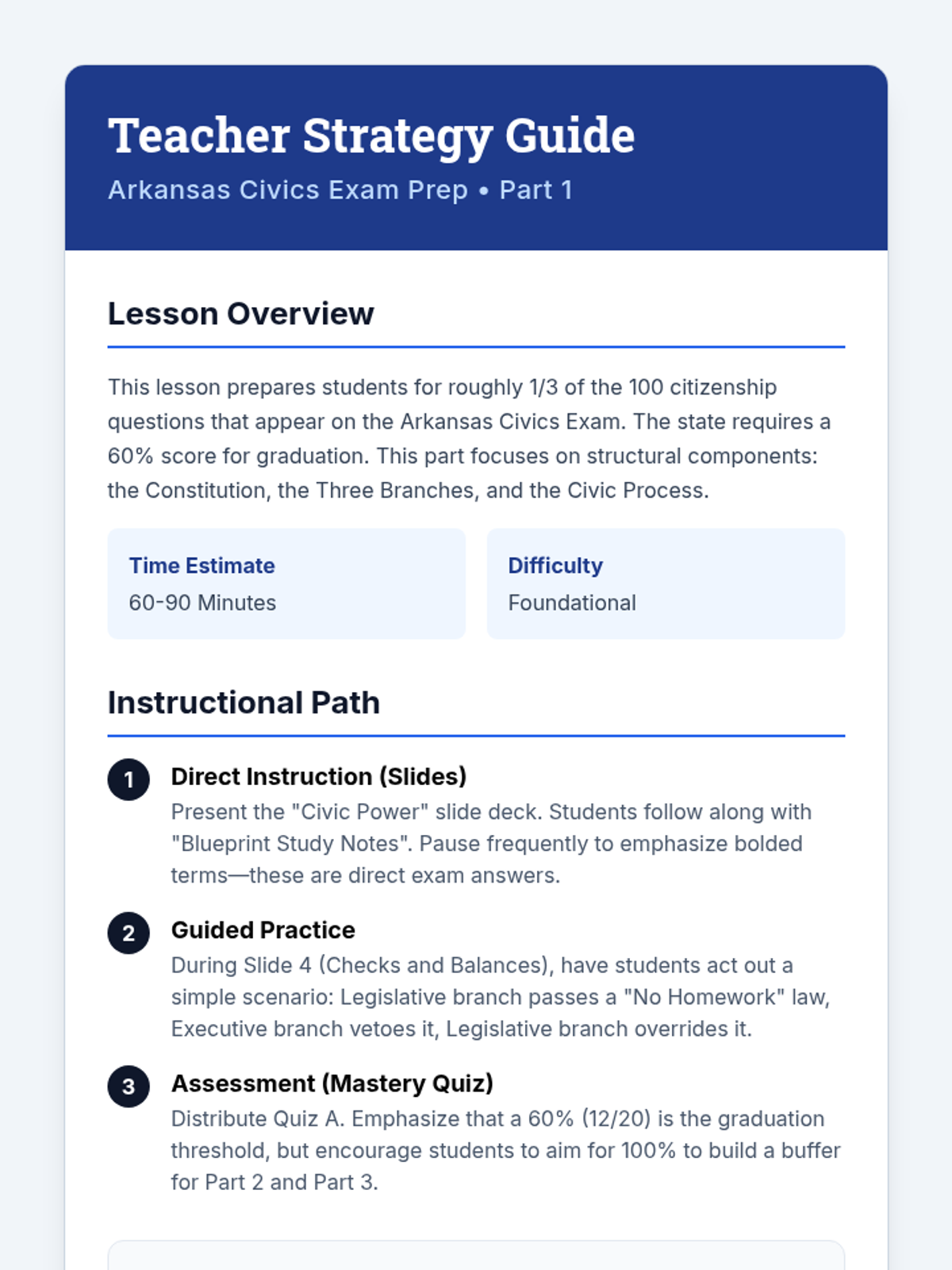
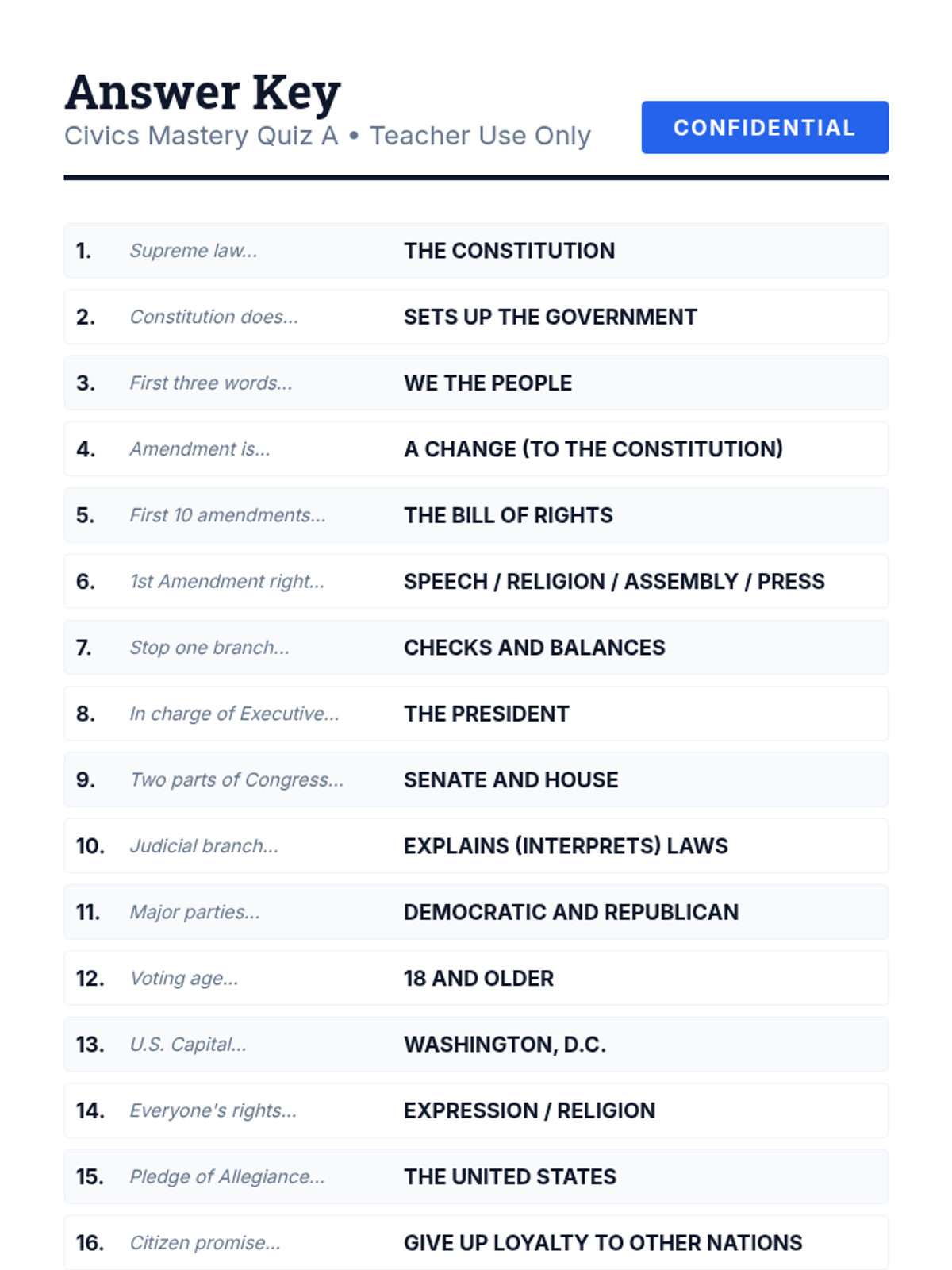
A comprehensive preparation lesson for Part 1 of the Arkansas Civics Exam, focusing on the three branches of government, the Constitution, and the civic process. This lesson equips high school students with the essential knowledge required to meet the state graduation requirement.
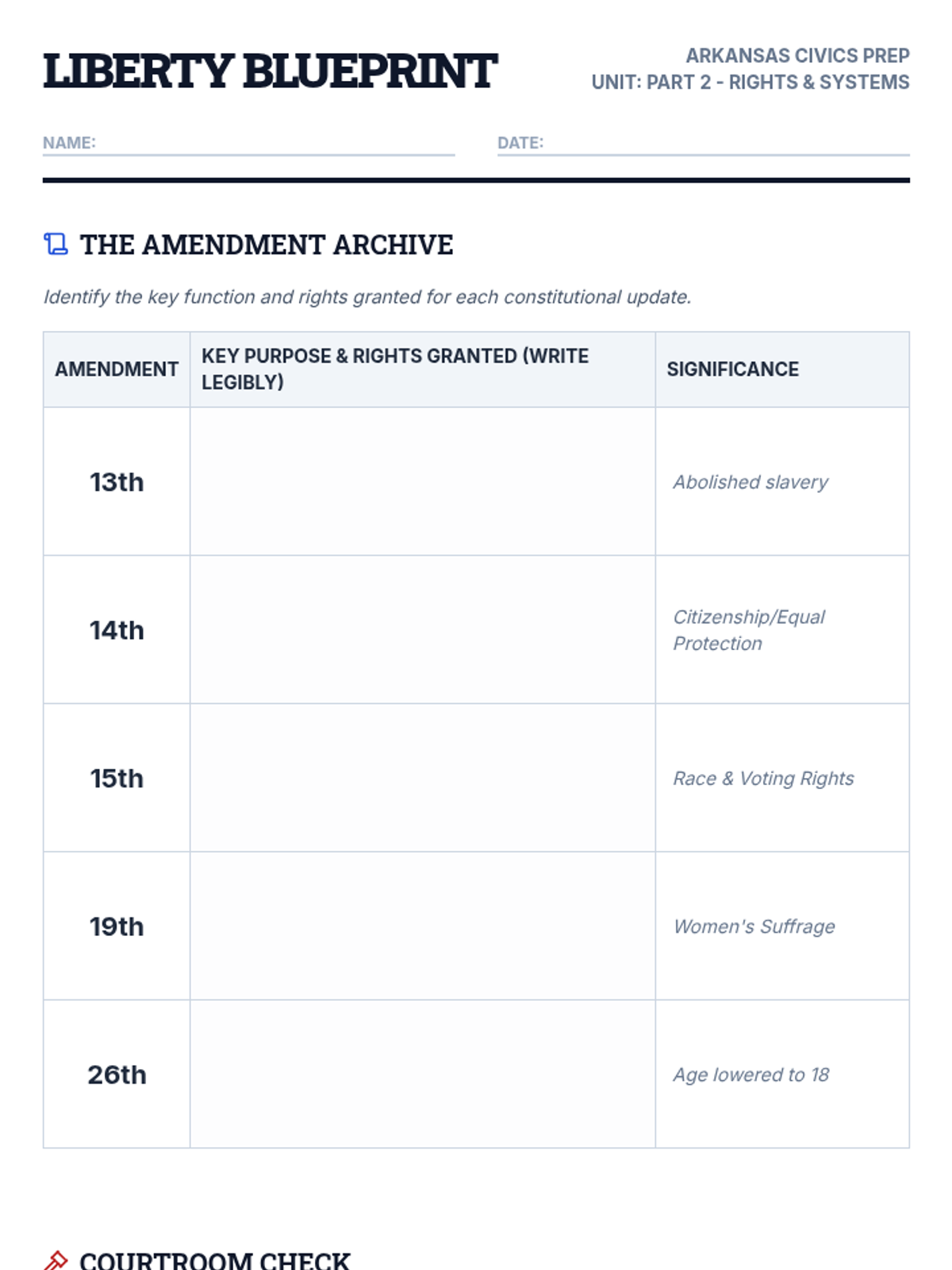
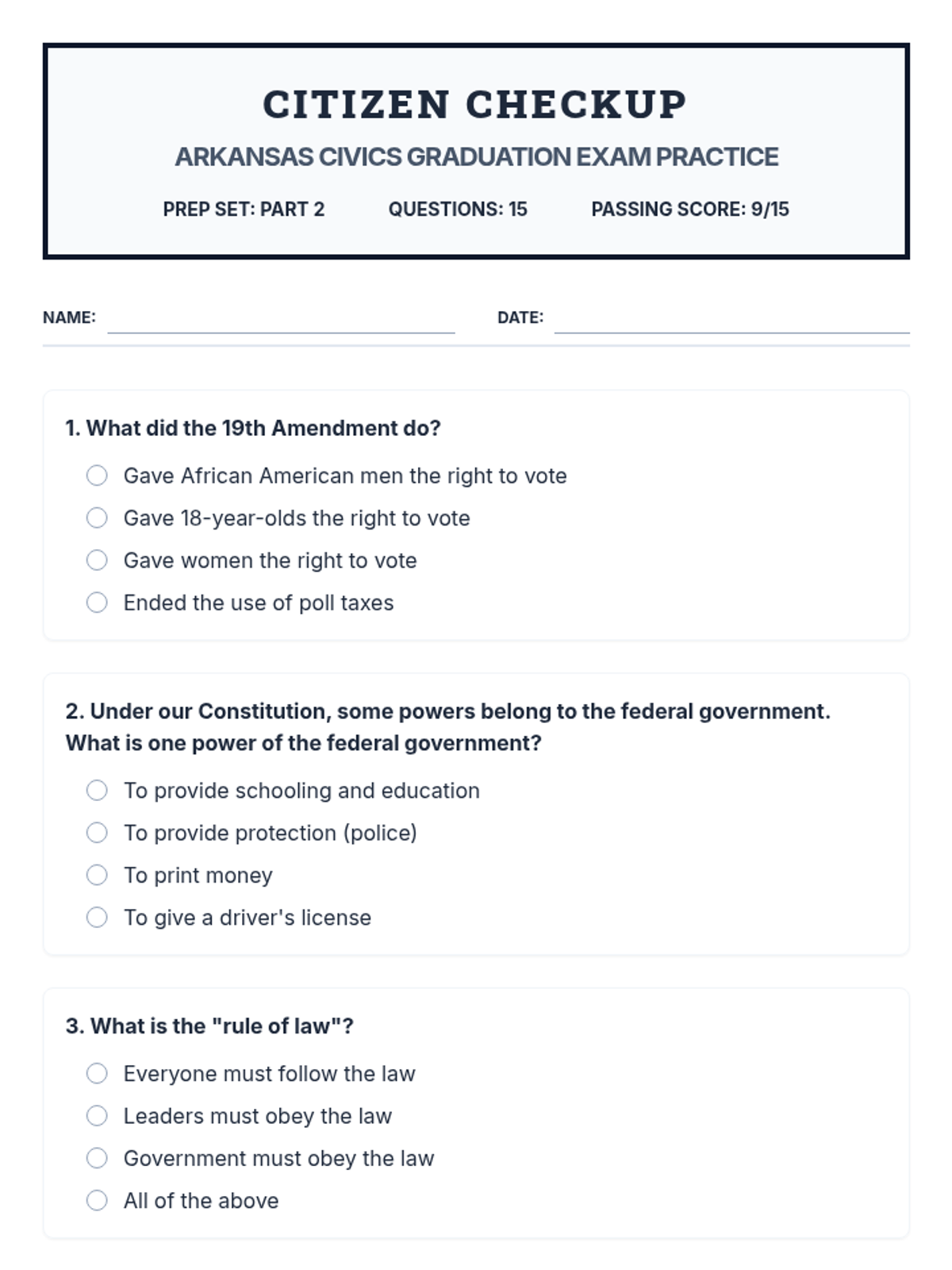
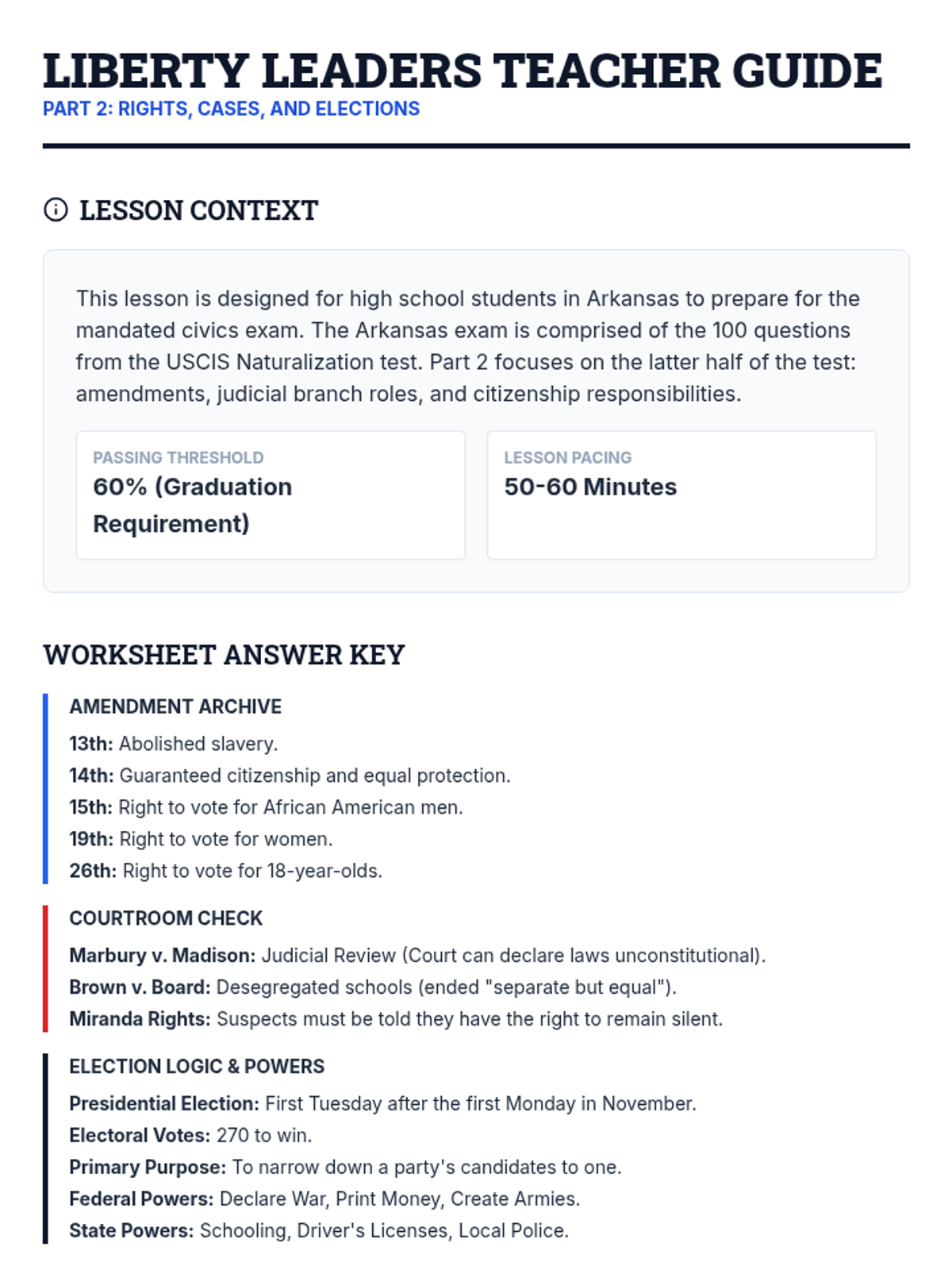
The second part of a comprehensive prep series for the Arkansas Civics Exam, focusing on civil rights, constitutional amendments, landmark court cases, and the electoral process. Designed to help students master the material required for high school graduation.
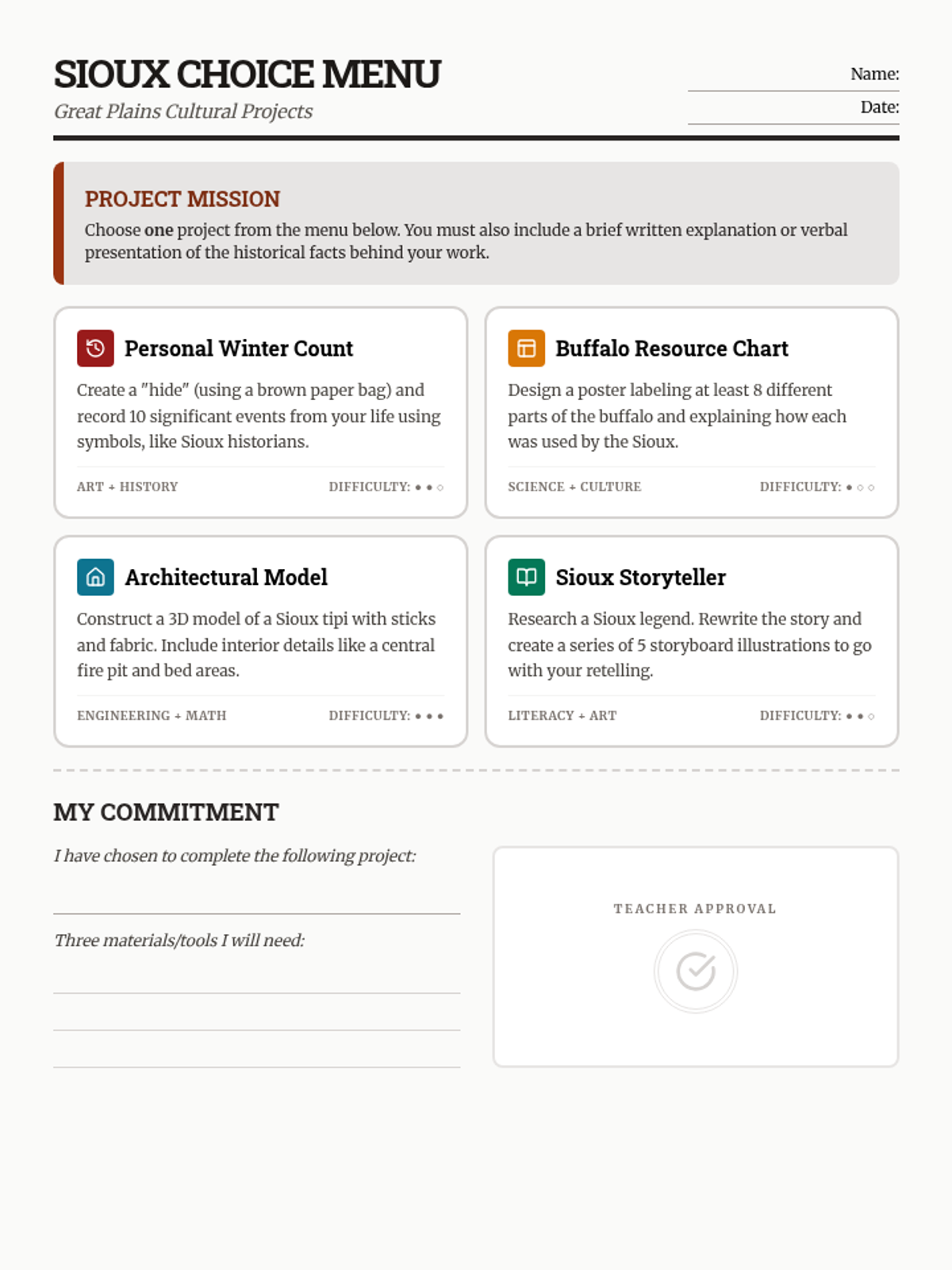
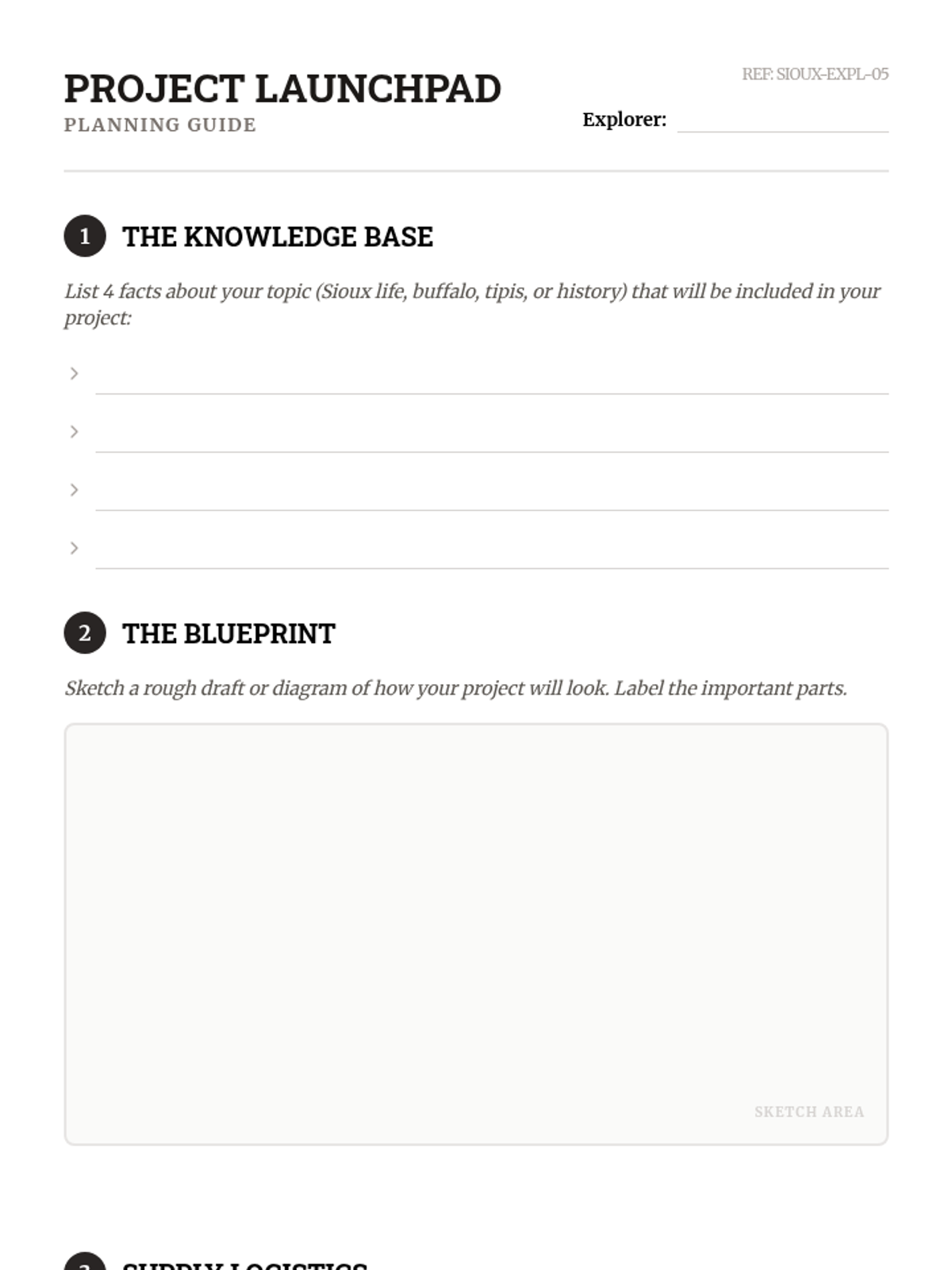
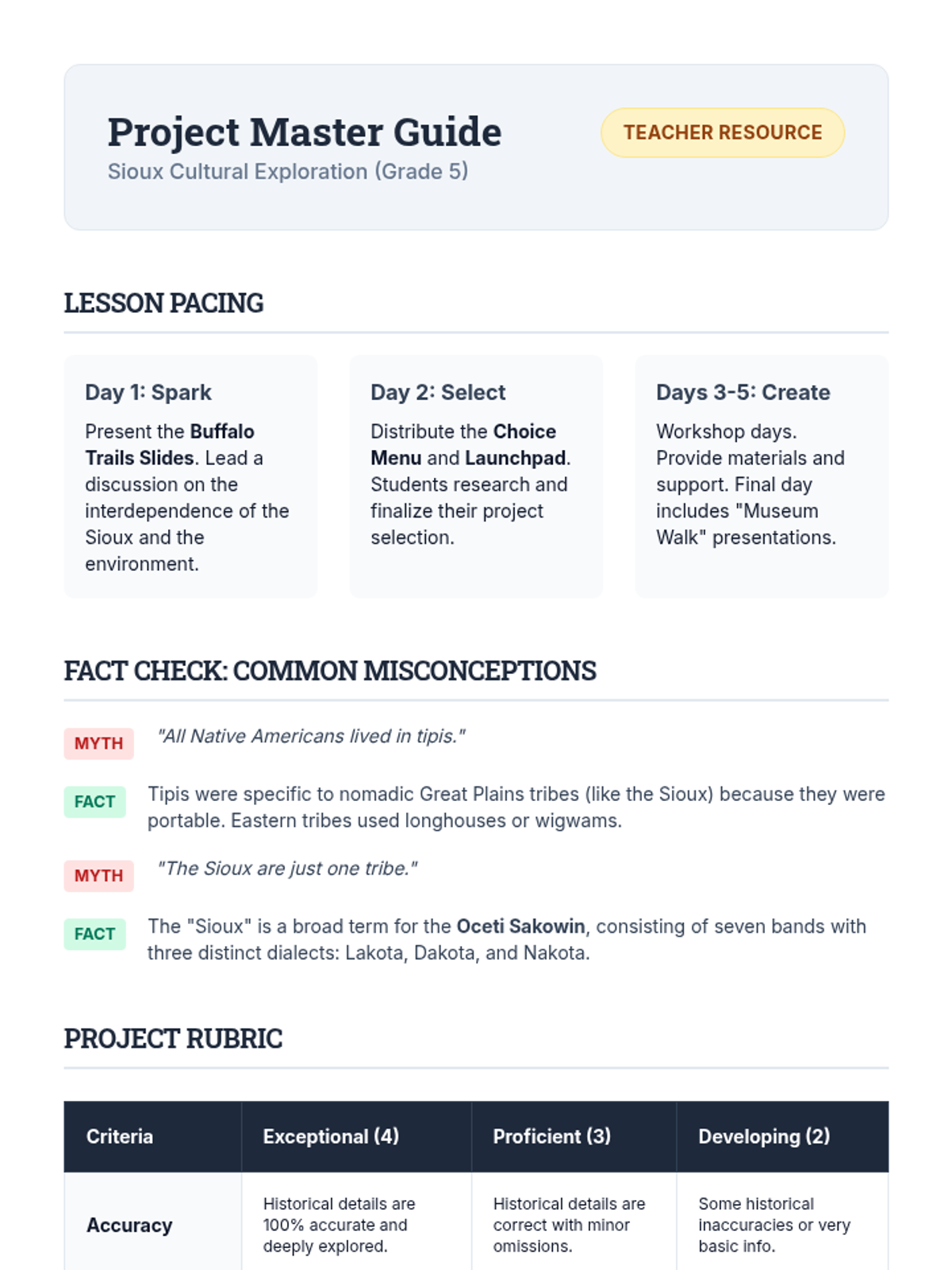
A project-based exploration of the Sioux (Lakota, Dakota, and Nakota) people of the Great Plains, focusing on their relationship with the environment, the buffalo, and their unique traditions. Students will learn about Sioux culture and then choose from a variety of creative projects to demonstrate their understanding.