A 30-35 minute independent exploration of the fundamental differences between Classical and Keynesian economic theories, focusing on their origins, core beliefs about market self-correction, and the role of government intervention.
A deep dive into the economic data of the Great Depression, comparing the US and German experiences through a slow-reveal graph technique to build analytical skills.
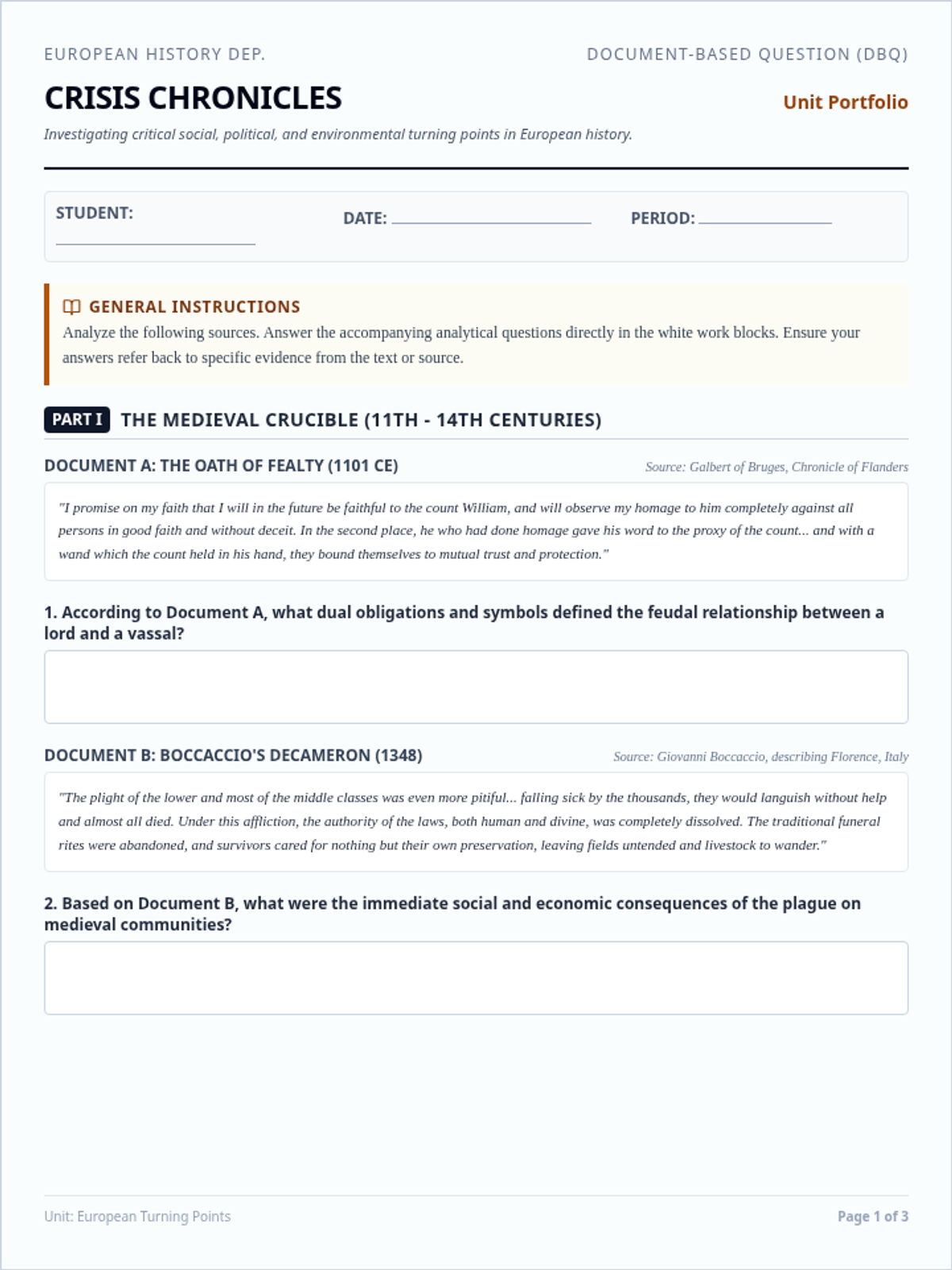
A comprehensive look at medieval Scottish life, covering religious devotion, the impact of the Black Death, the lawless Border Reivers, and the dangerous lives of monarchs.
An interactive exploration of fiscal policy, focusing on the federal budget, debt dynamics, and the specific application of expansionary and contractionary tools to manage the economy.
A focused look at Thomas Jefferson's Embargo Act of 1807, exploring its causes, the economic fallout for New England merchants, and its role in leading to the War of 1812.
A lesson exploring the realities of life in medieval Scotland, from castle luxury to peasant survival, based on historical accounts of clothing, food, and social structure.
A forensic mental health simulation where students or patients analyze a criminal case and competency report for a defendant with Schizoaffective Disorder charged with a felony in Texas.
A comprehensive chapter-by-chapter summary and exploration of the book 'Hidden Figures', focusing on the lives and contributions of Katherine Johnson, Dorothy Vaughan, Mary Jackson, and Christine Darden during the Space Race.
A formal assessment and feedback set for the 2026 Energy Crisis economic analysis essay, including a scored rubric and clear, actionable feedback for the student.
A grading report and feedback sheet based on the Energy Crisis Rubric, providing clear, actionable insights for a student essay on the 2026 Iran War oil shortages.
A lesson focused on analyzing the economic impacts of energy crises, specifically the 2026 Iran War scenario, and providing feedback on student performance.
A lesson focused on evaluating student analysis of the 2026 global energy crisis, with a specific emphasis on applying supply and demand economic principles to real-world shortages.
A lesson focused on analyzing the economic consequences of global conflicts, specifically the 2026 energy crisis, featuring a graded assessment and feedback for students.
A graded feedback report for a student essay on the 2026 energy crisis, providing detailed point deductions and constructive criticism based on the provided rubric.