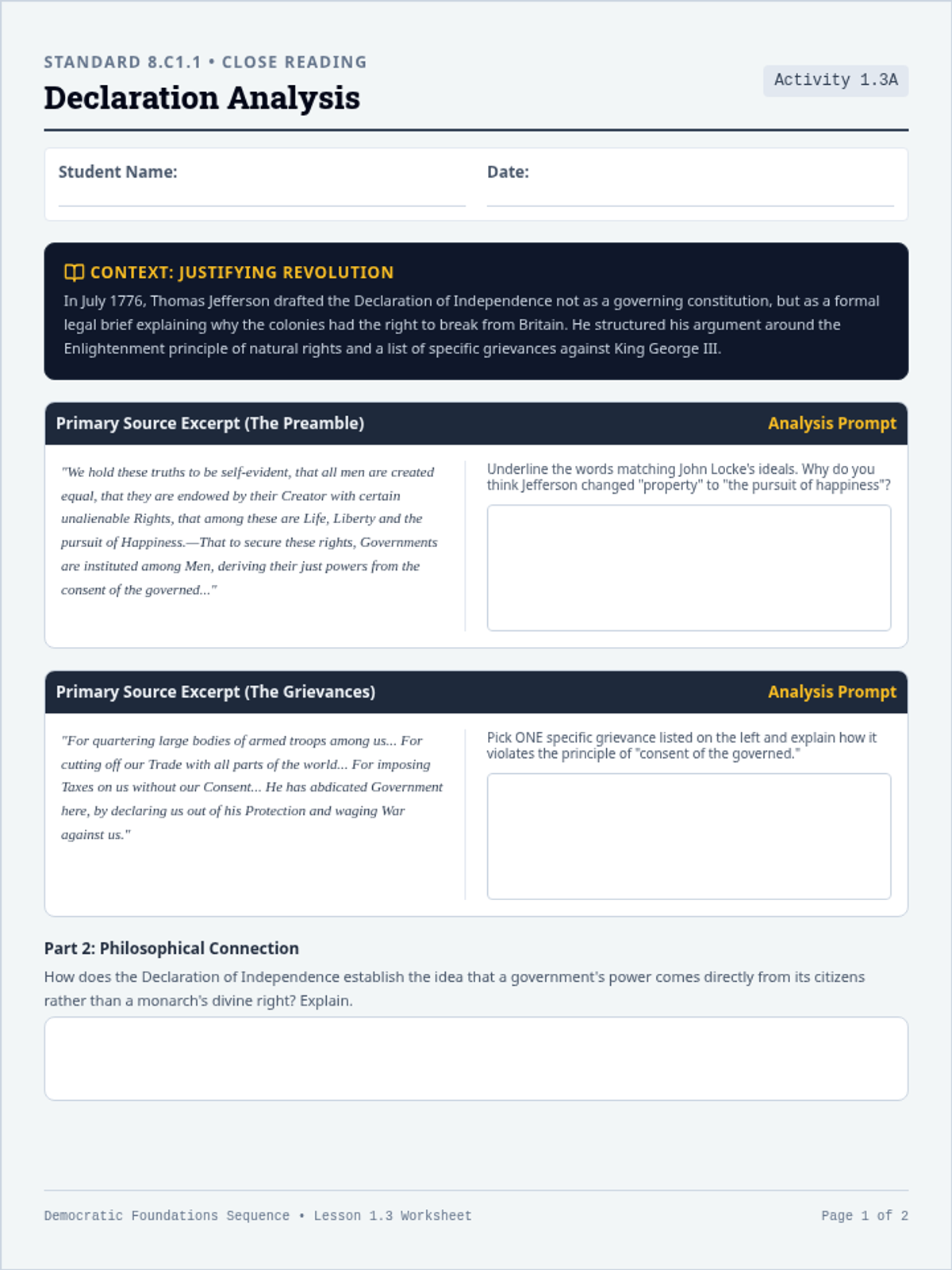
An exploration of how European Enlightenment thinkers like John Locke and Baron de Montesquieu, along with historic English documents like the Magna Carta, shaped early American beliefs about government and individual liberty.
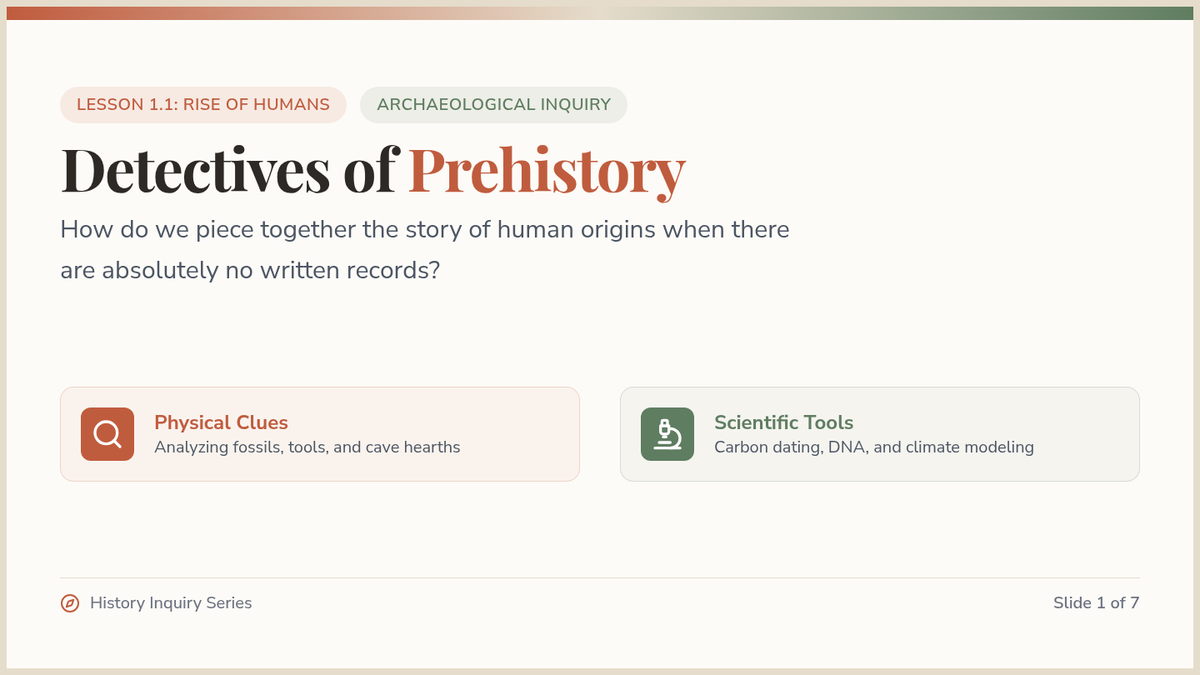
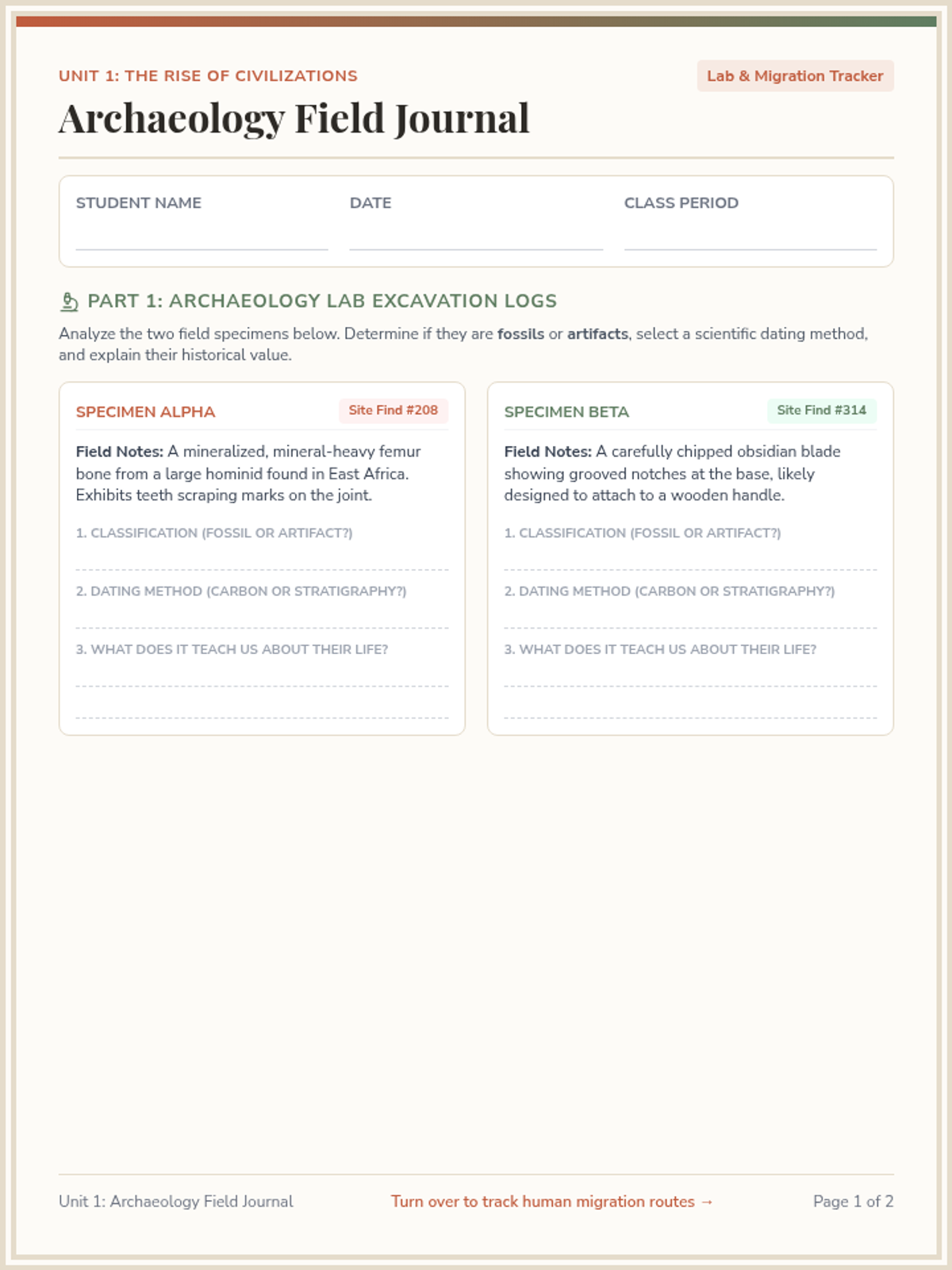
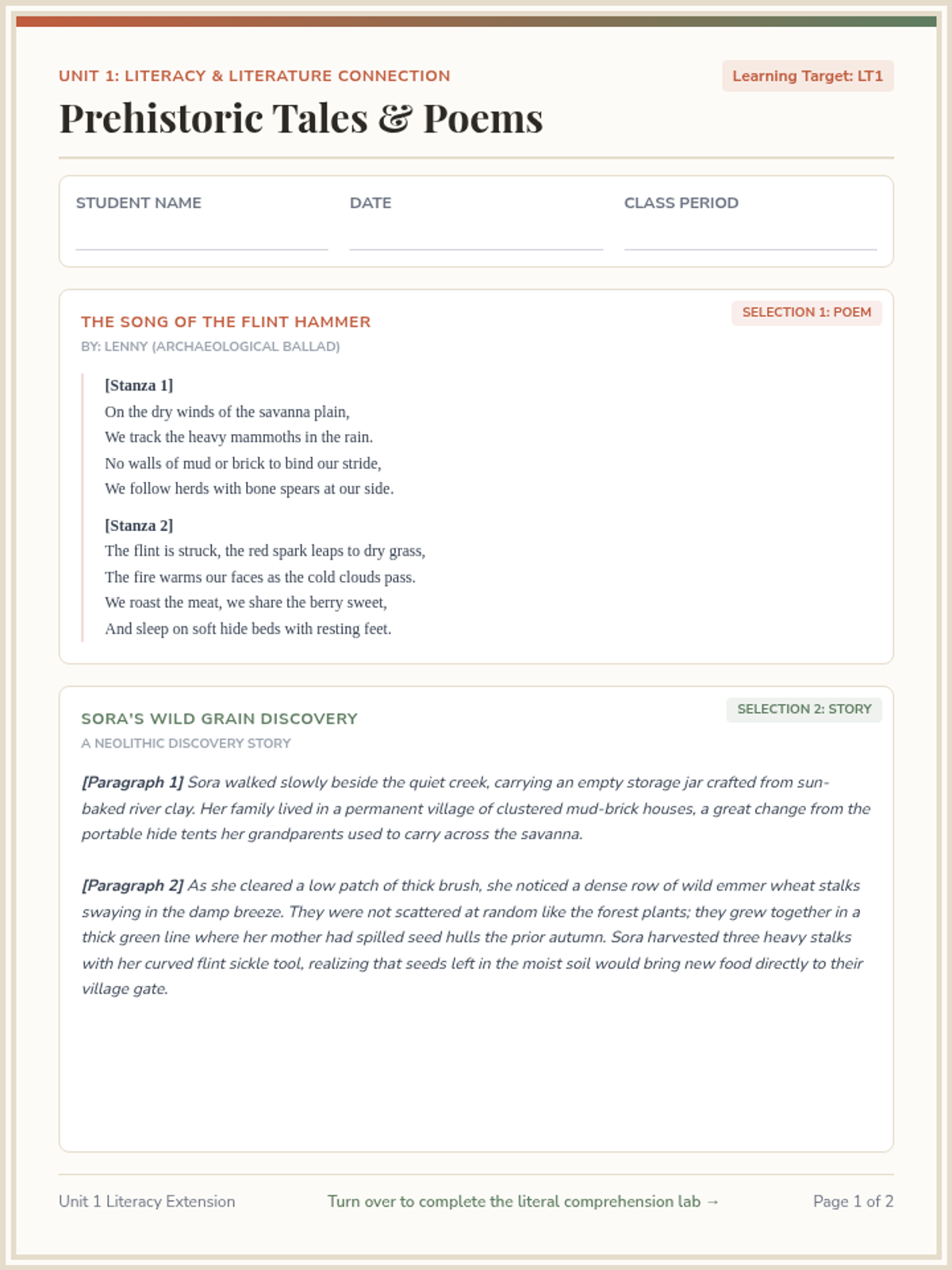
An introductory lesson exploring how archaeologists, paleontologists, and scientists reconstruct prehistoric human society using fossils, scientific testing, and geographical migration tracks.
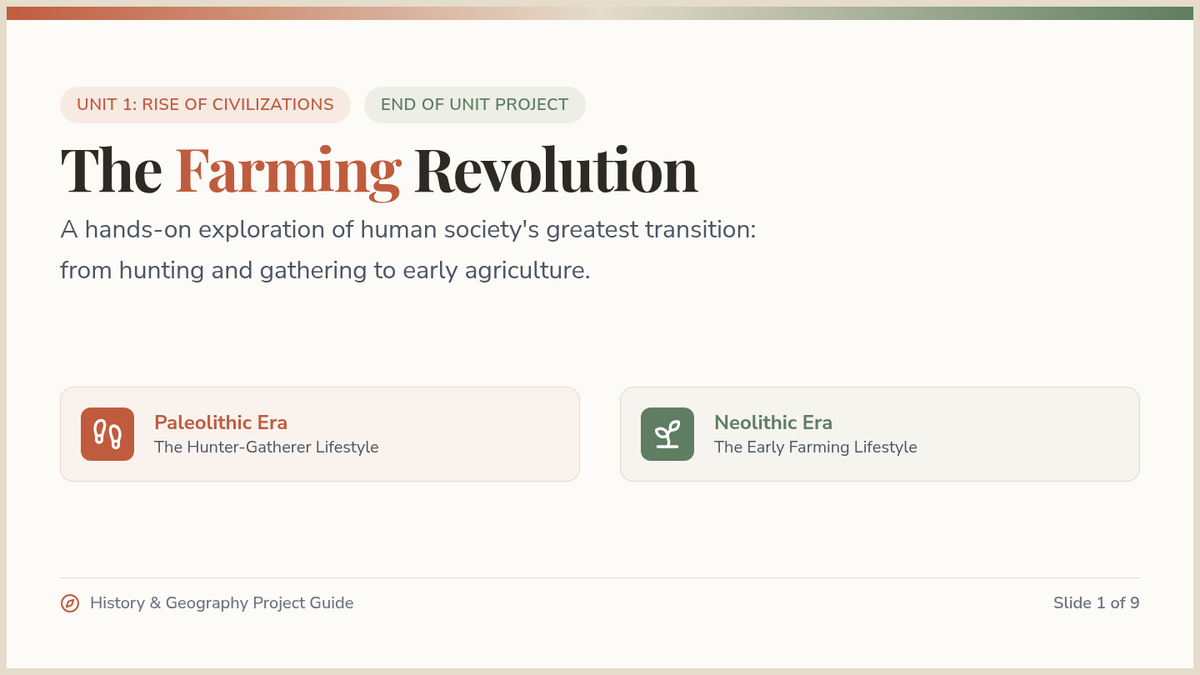
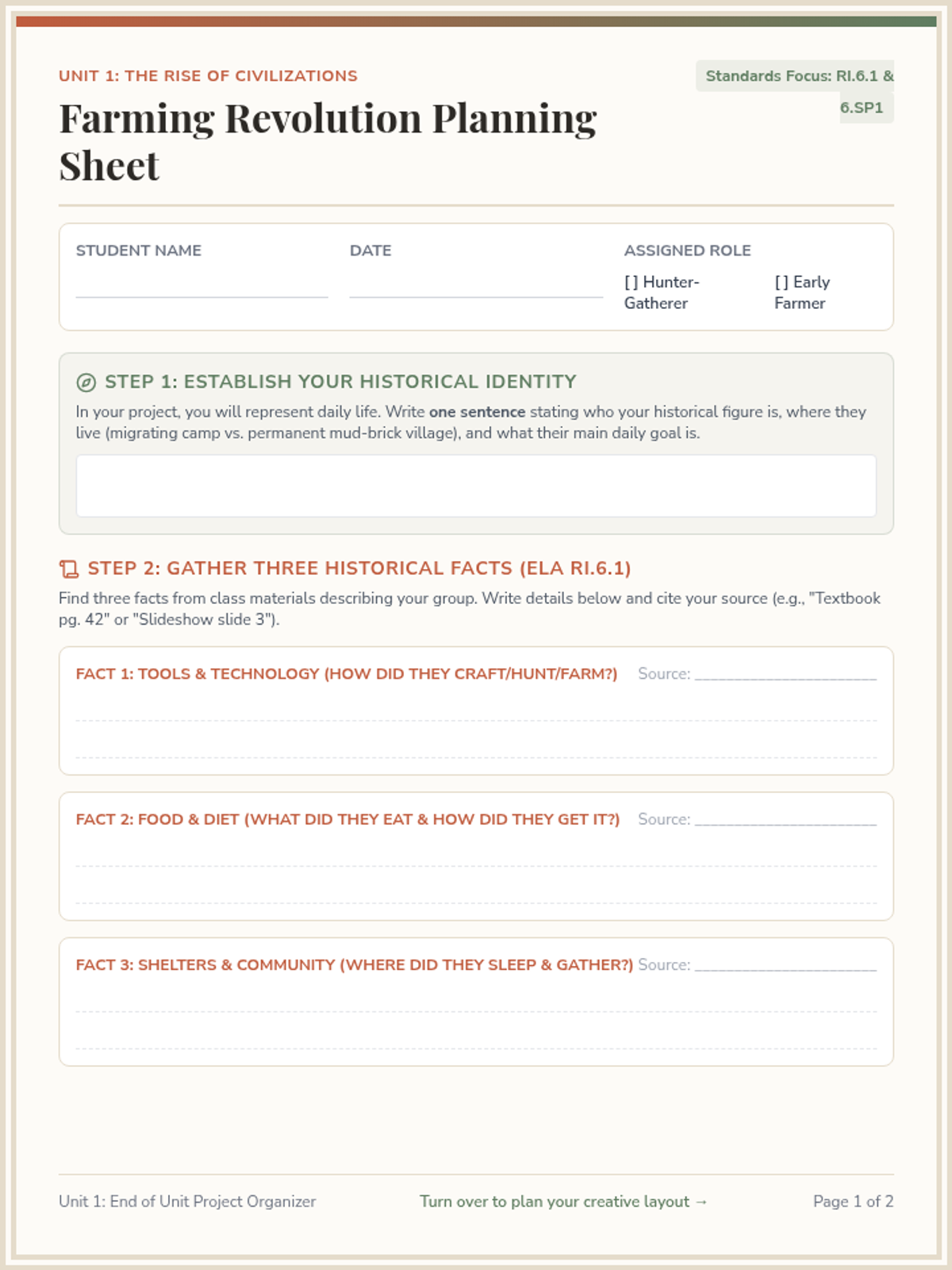
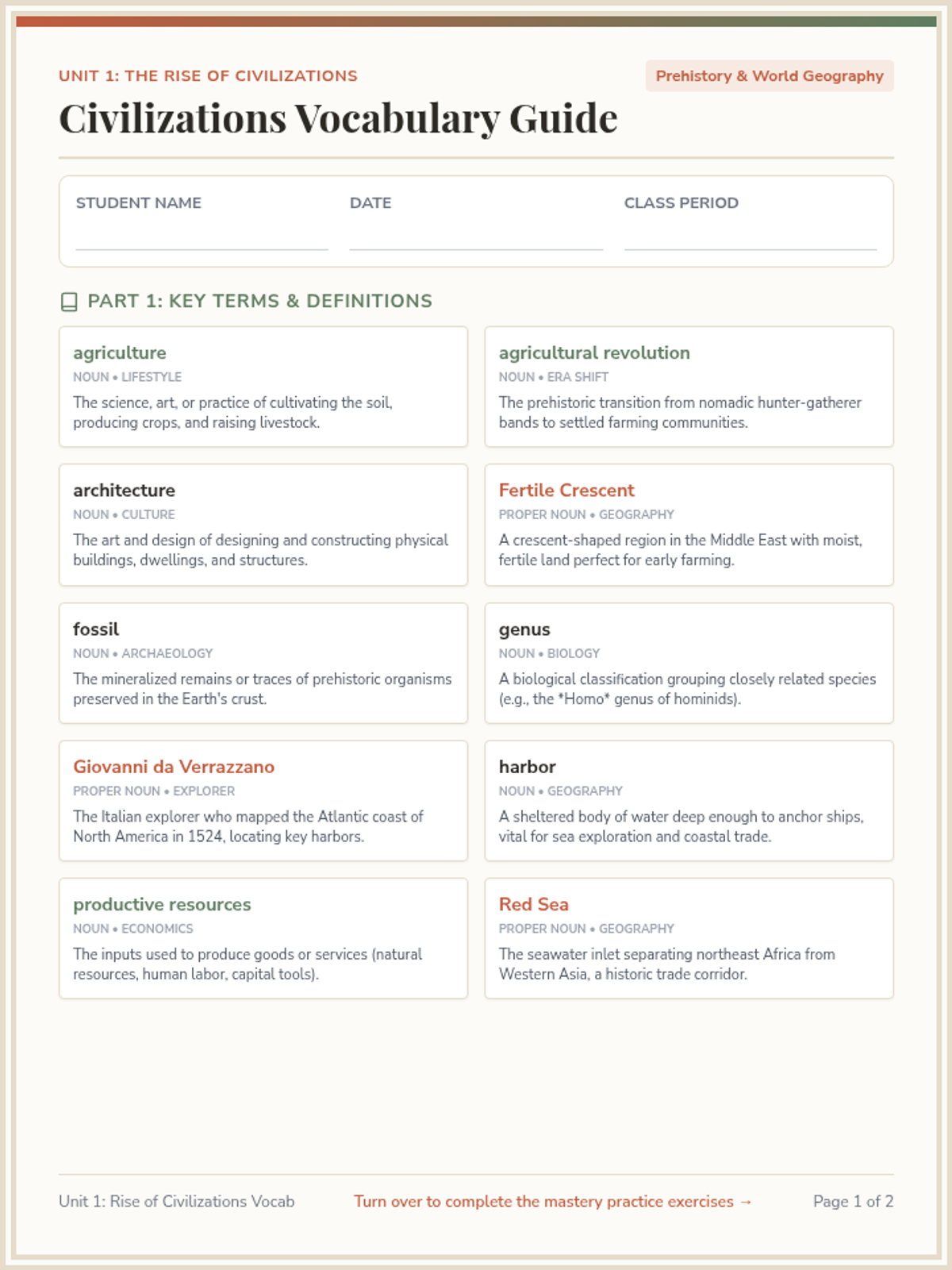
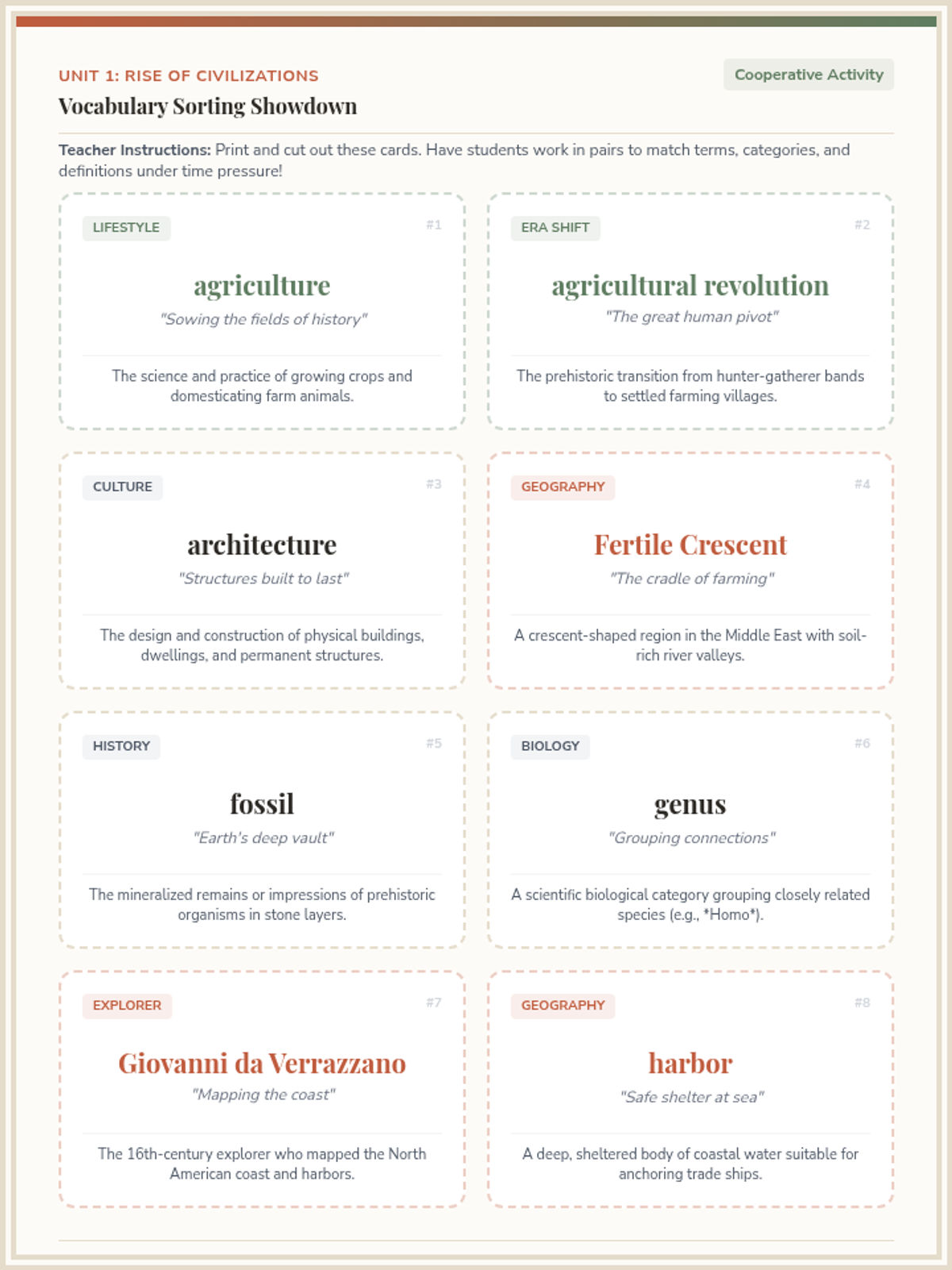
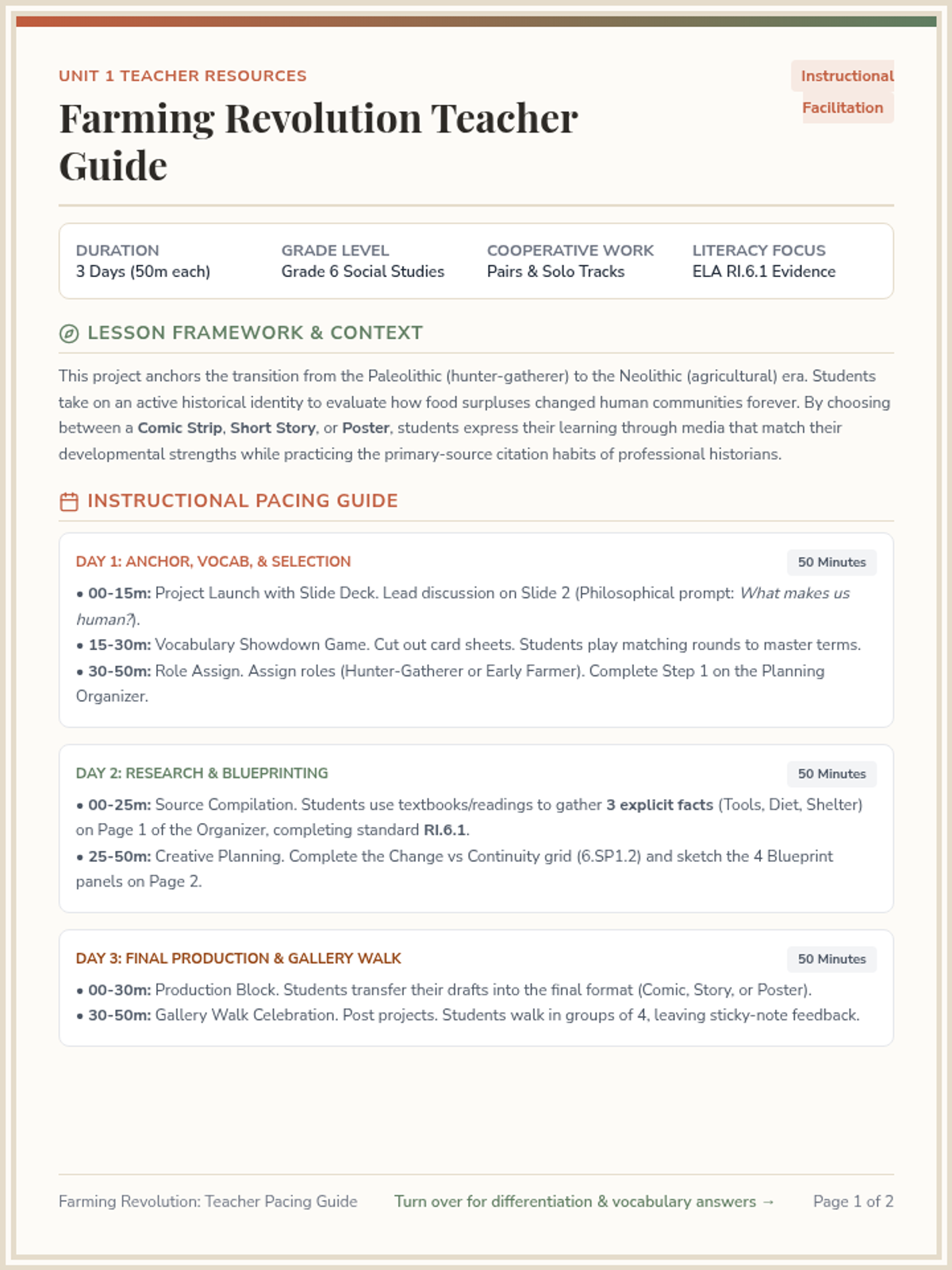
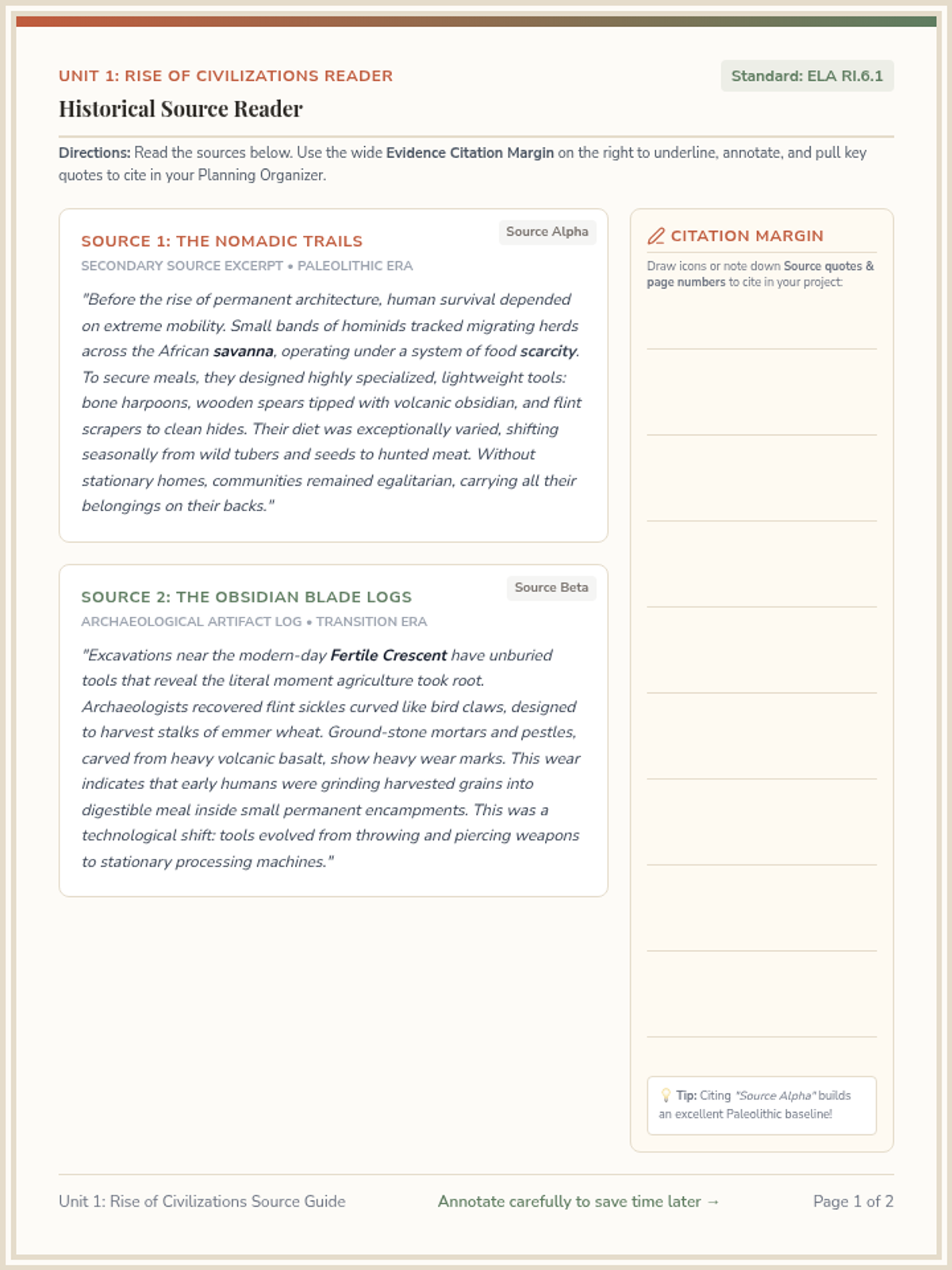
A project-based lesson where students explore the dramatic transition from hunter-gatherer societies to early agricultural communities. Students analyze historical evidence to create a comic, short story, or poster detailing daily life in their assigned era.
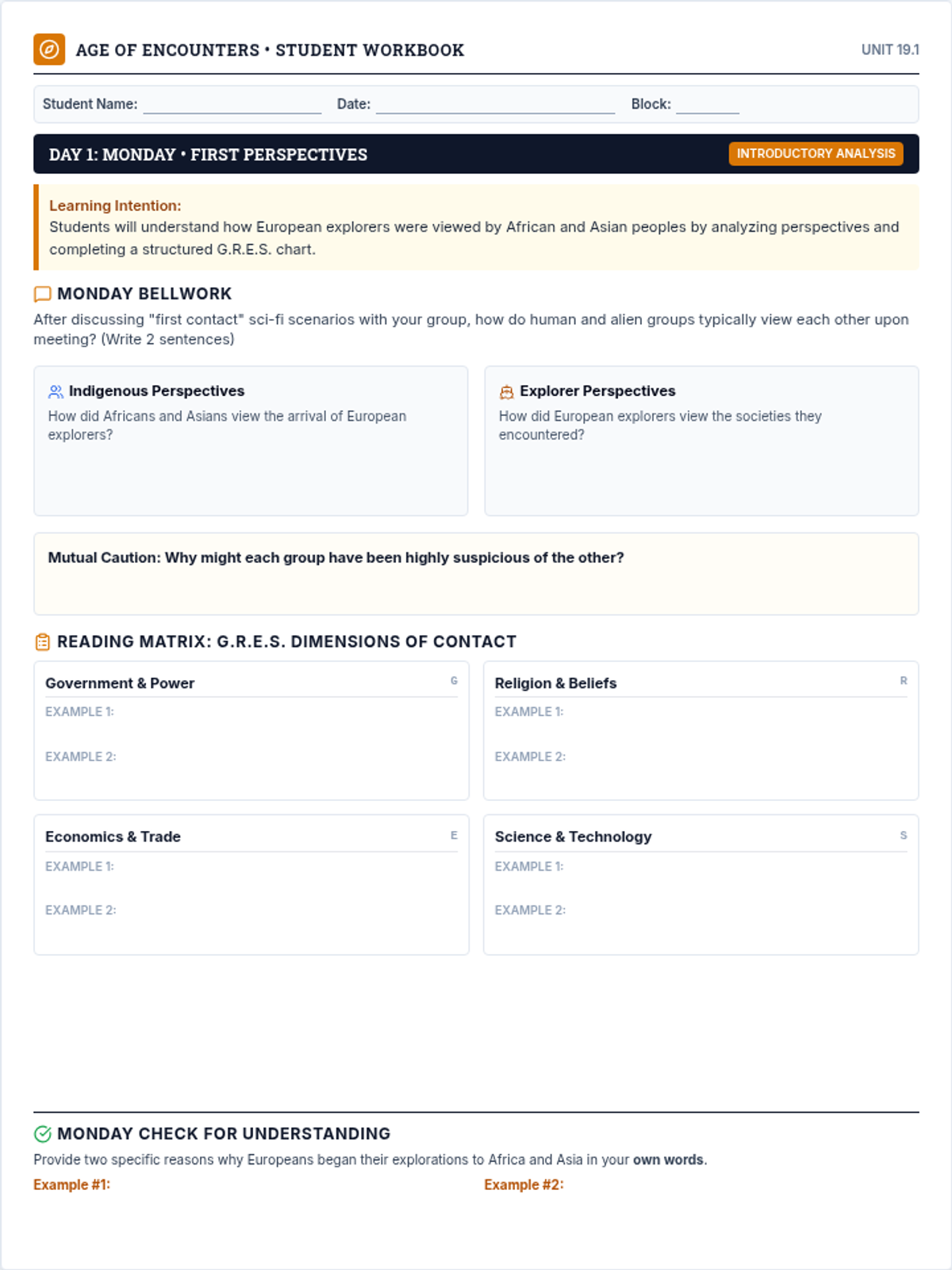
A comprehensive 5-day history unit exploring the Age of Exploration, cultural exchanges, technological innovations in navigation, the Transatlantic Slave Trade, and encounters with East Asian empires.
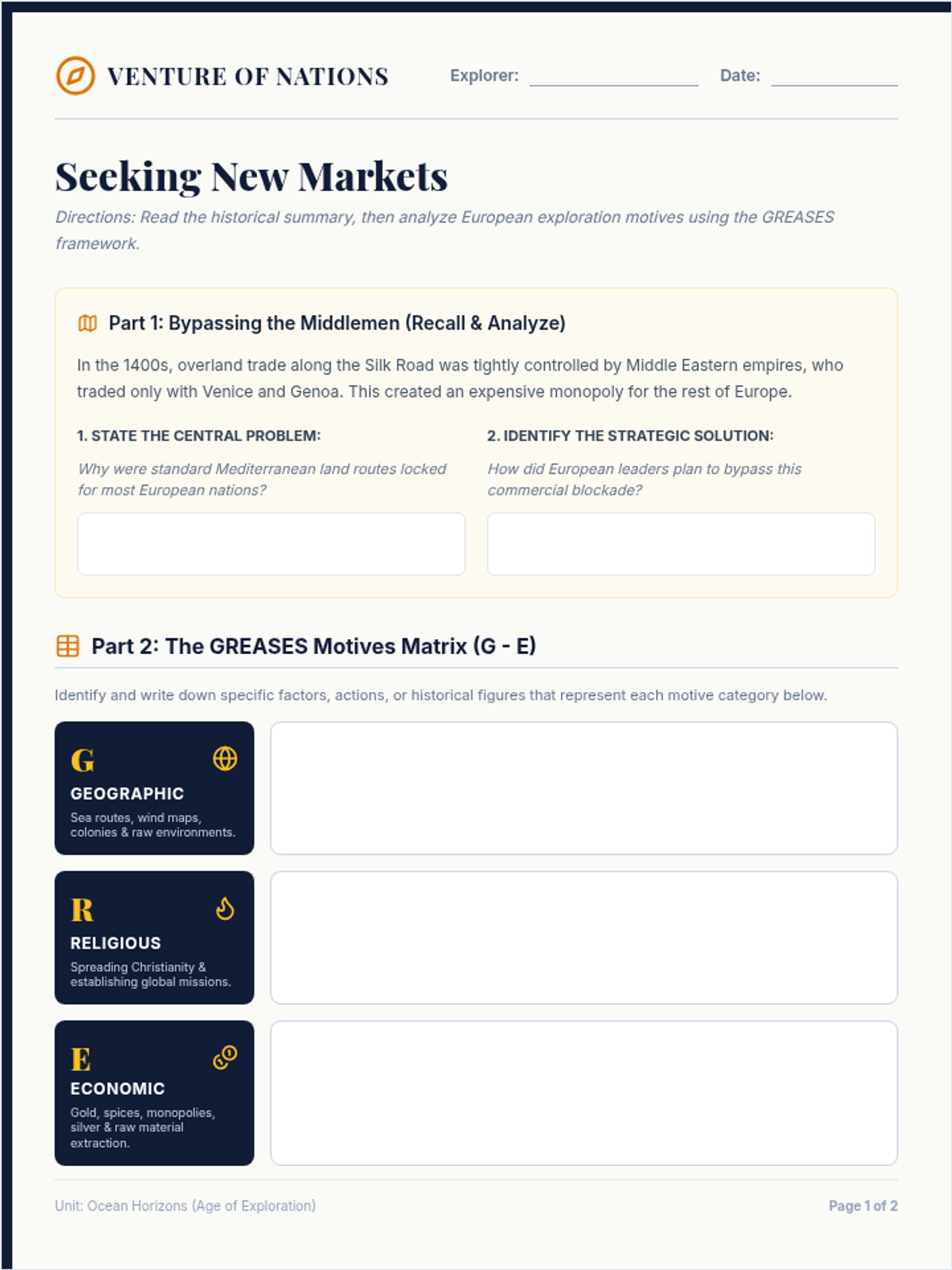
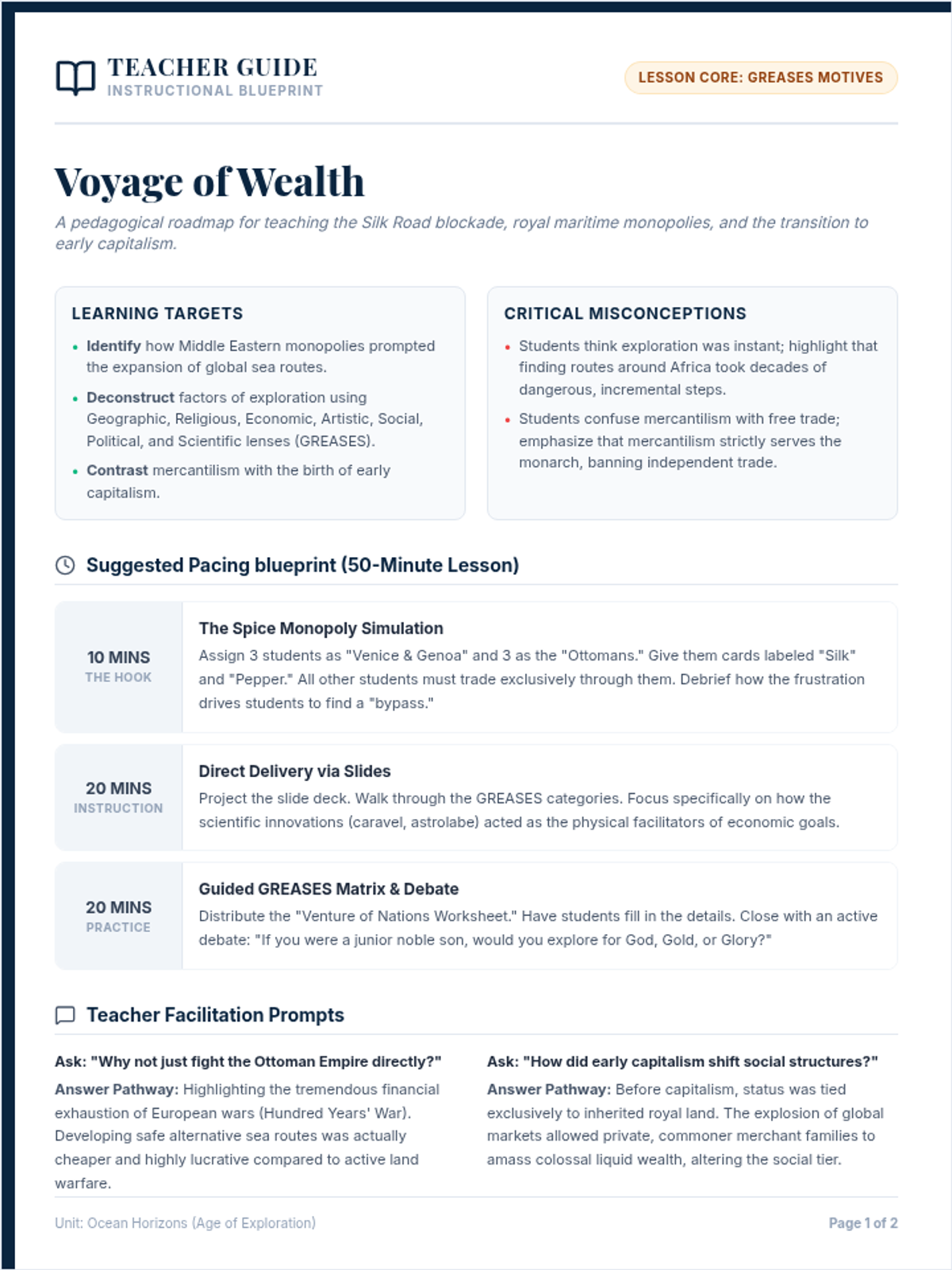
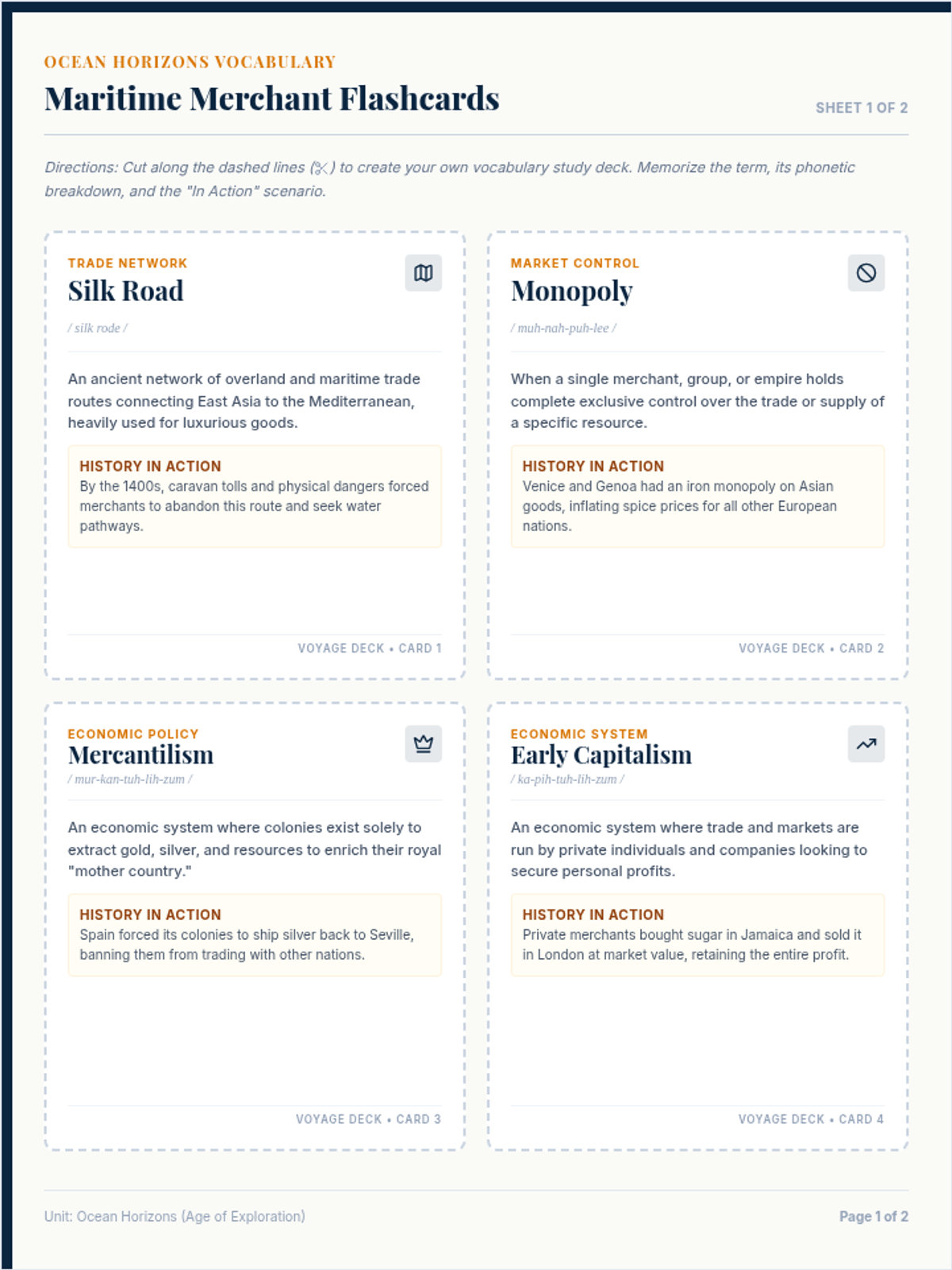
An in-depth exploration of the factors that drove European powers to seek new trade routes, introducing the GREASES framework for historical analysis of global expansion.
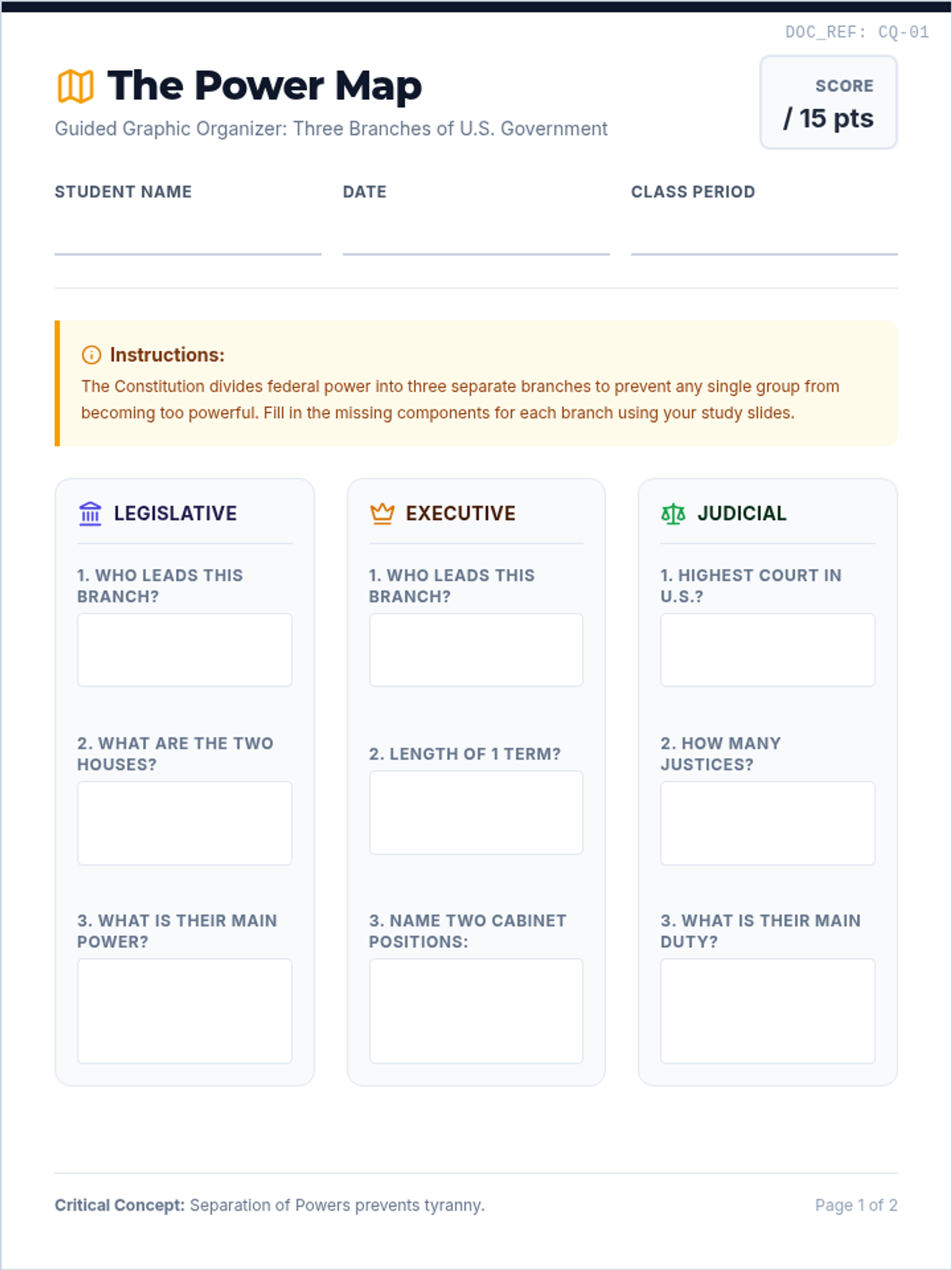
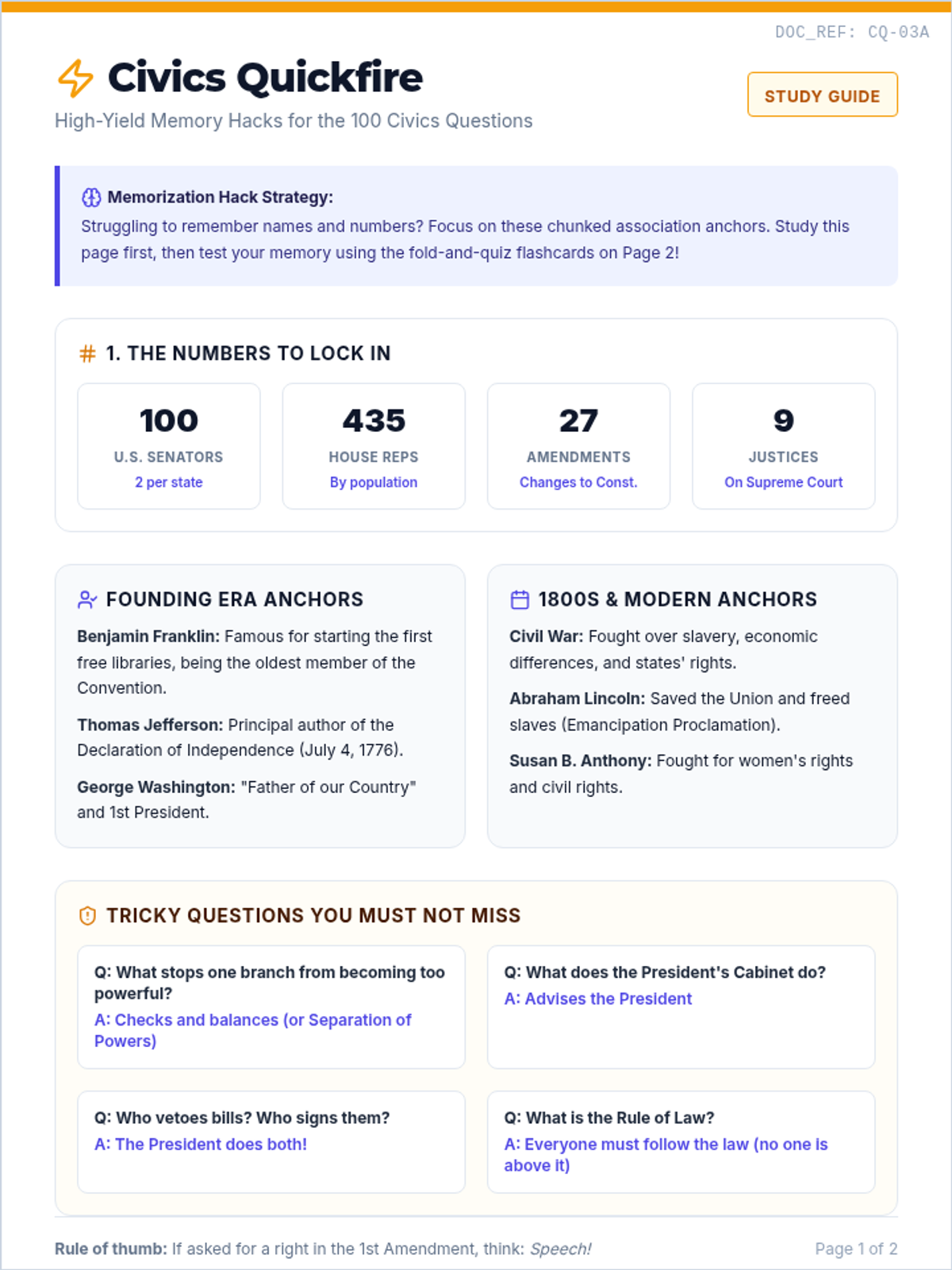
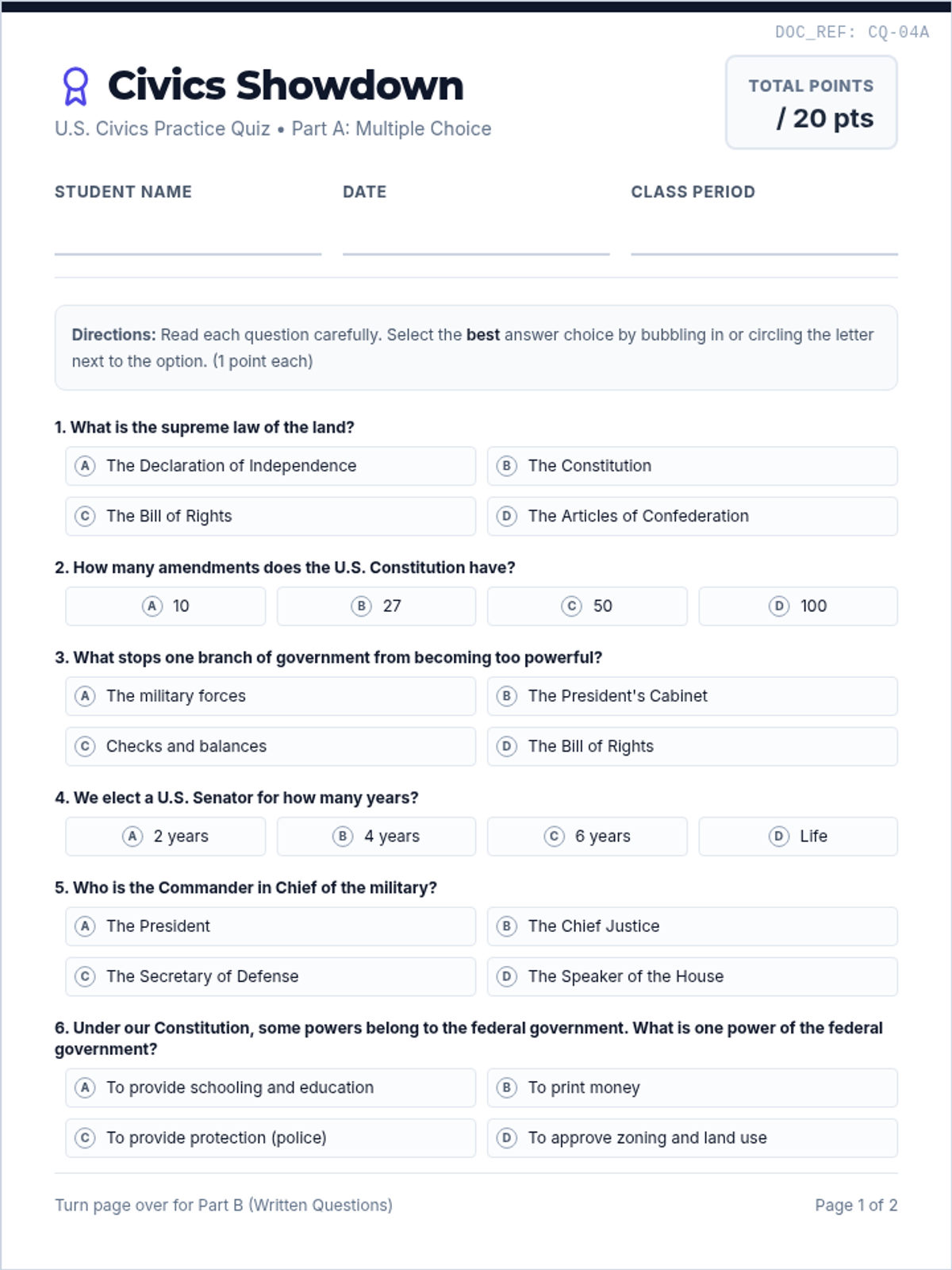
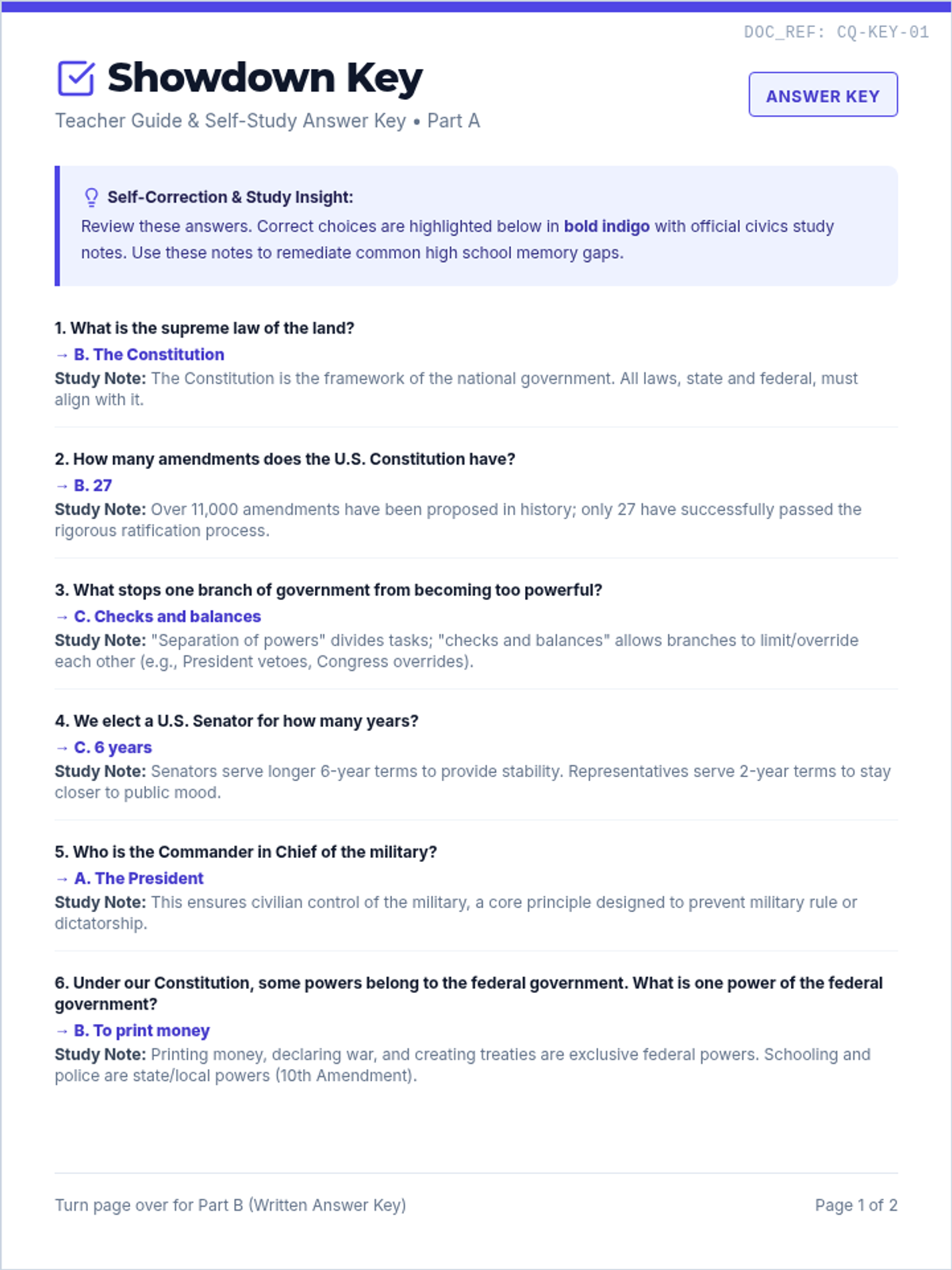
A comprehensive study bundle designed for high school students preparing for the Iowa-required civics exam. The materials use chunked information, visual aids, and scaffolded structures to support rote memorization, quick recall, and structured independent study of the official 100 citizenship questions.
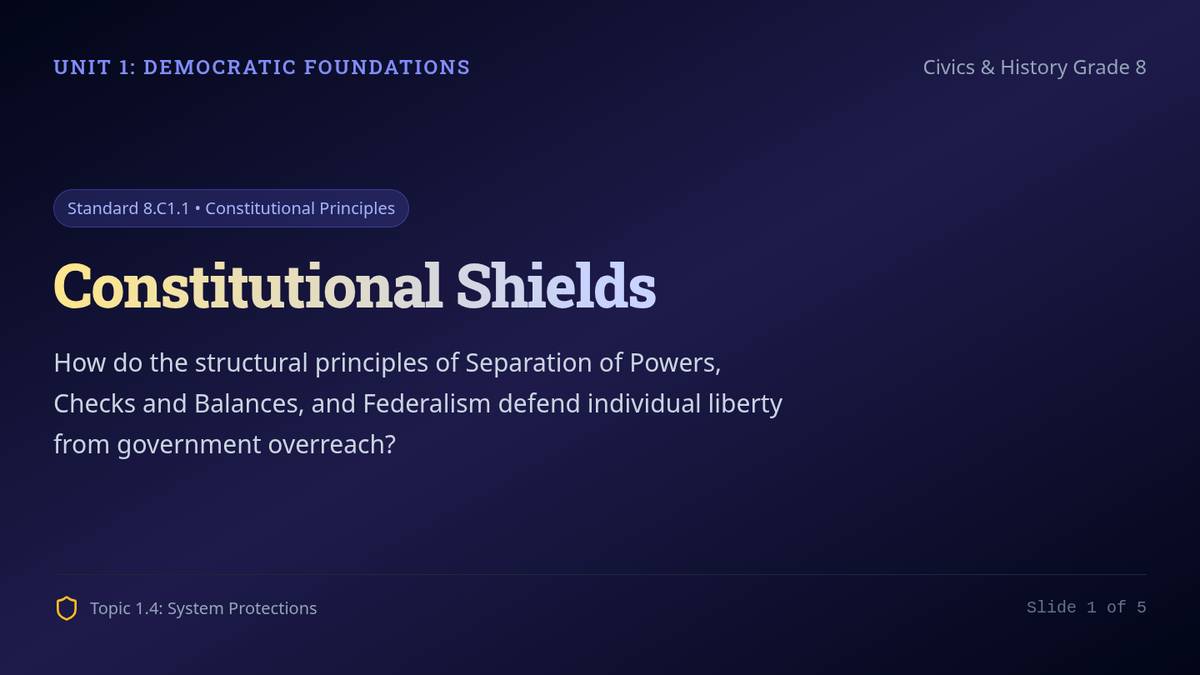
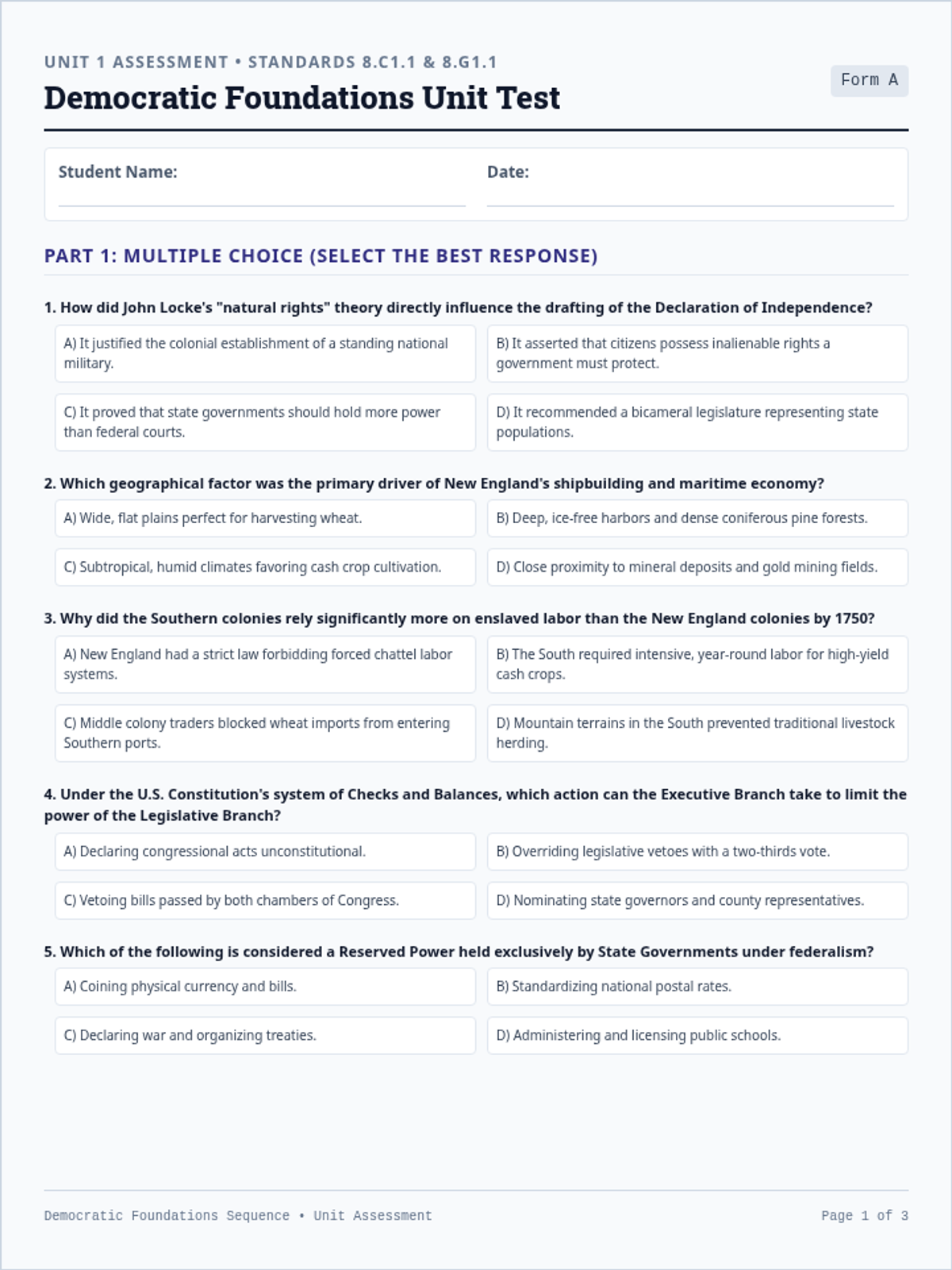
A deep dive into the structural principles of the U.S. Constitution, focusing on separation of powers, checks and balances, and federalism, culminating in a standards-aligned unit assessment.
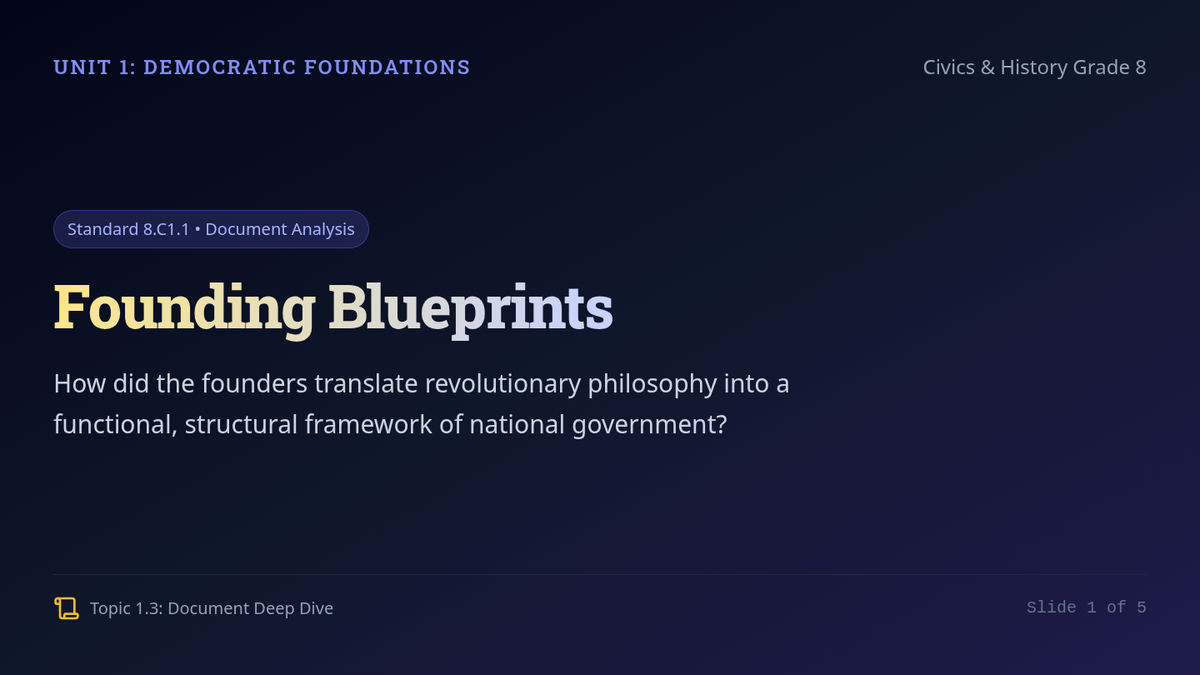
A close analytical reading of the Declaration of Independence and the original United States Constitution, detailing the historical grievances and the structural compromises of early American nation-building.