This lesson explores the arrival of the American Expeditionary Forces in Europe during WWI, focusing on their military contributions, the harsh realities of trench warfare, and their role in the Allied victory.

A research project where students investigate the life and voyages of early European explorers. This lesson provides the tools for students to create an engaging slide presentation and for teachers to assess their work accurately.
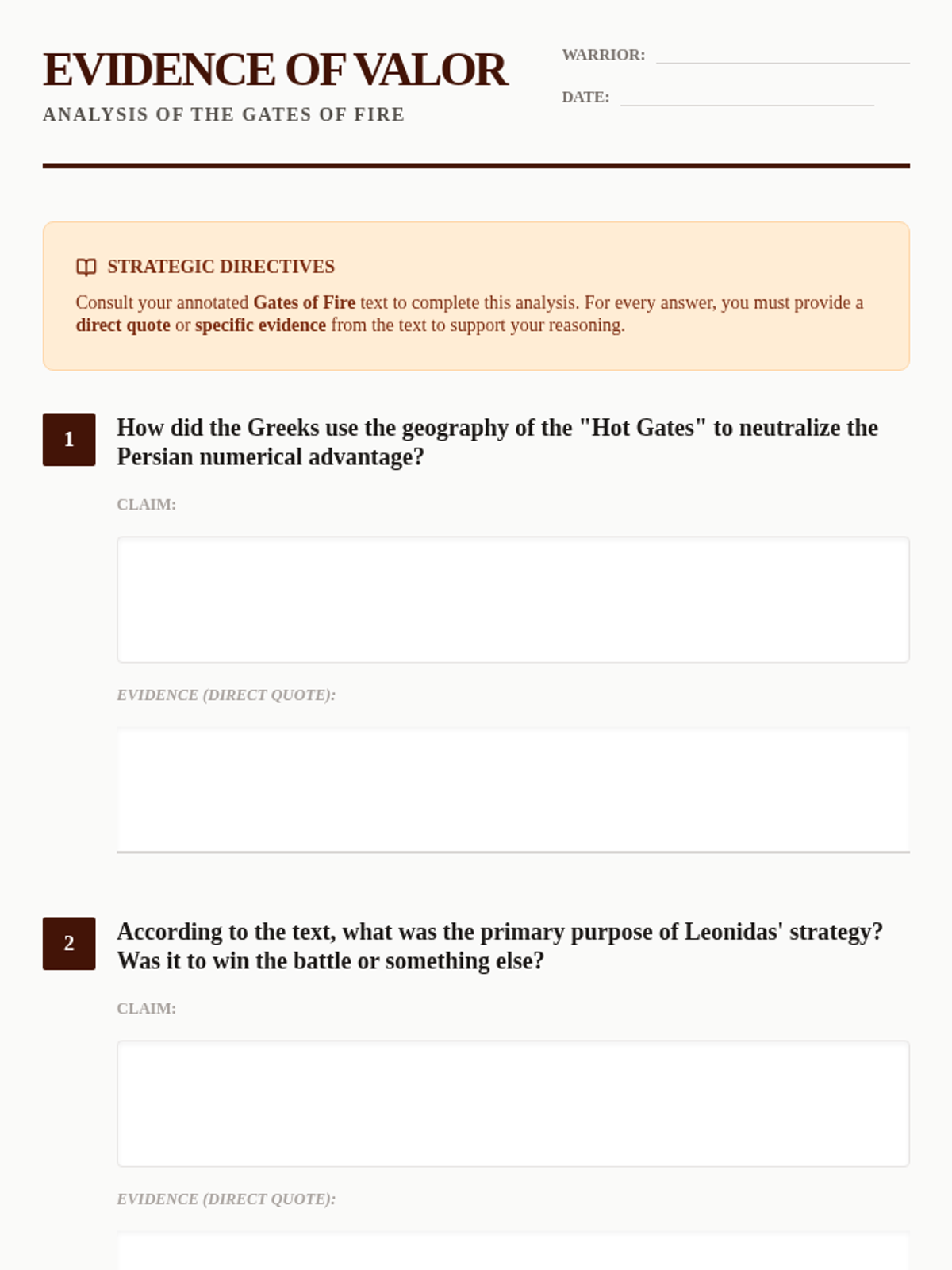
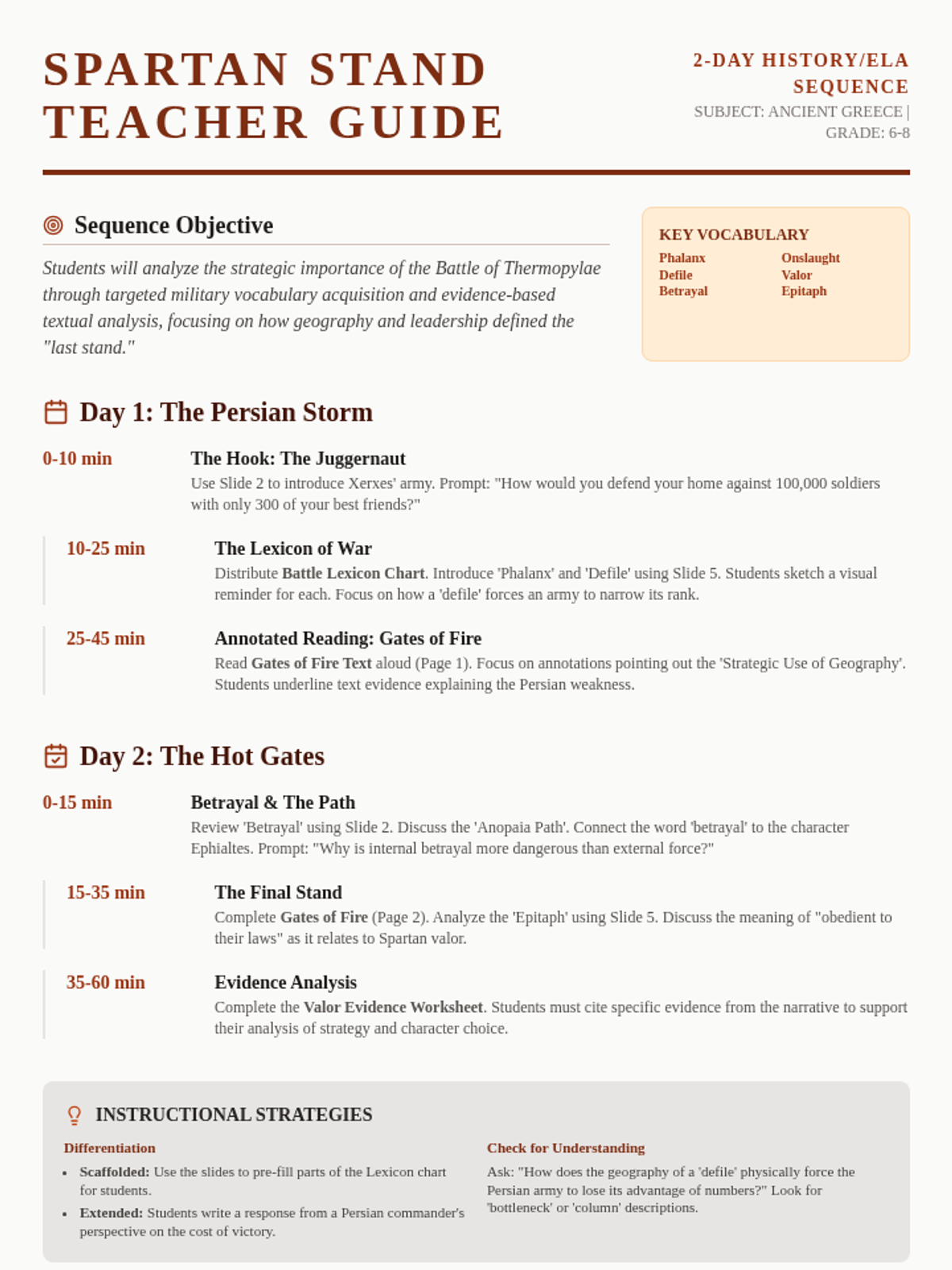
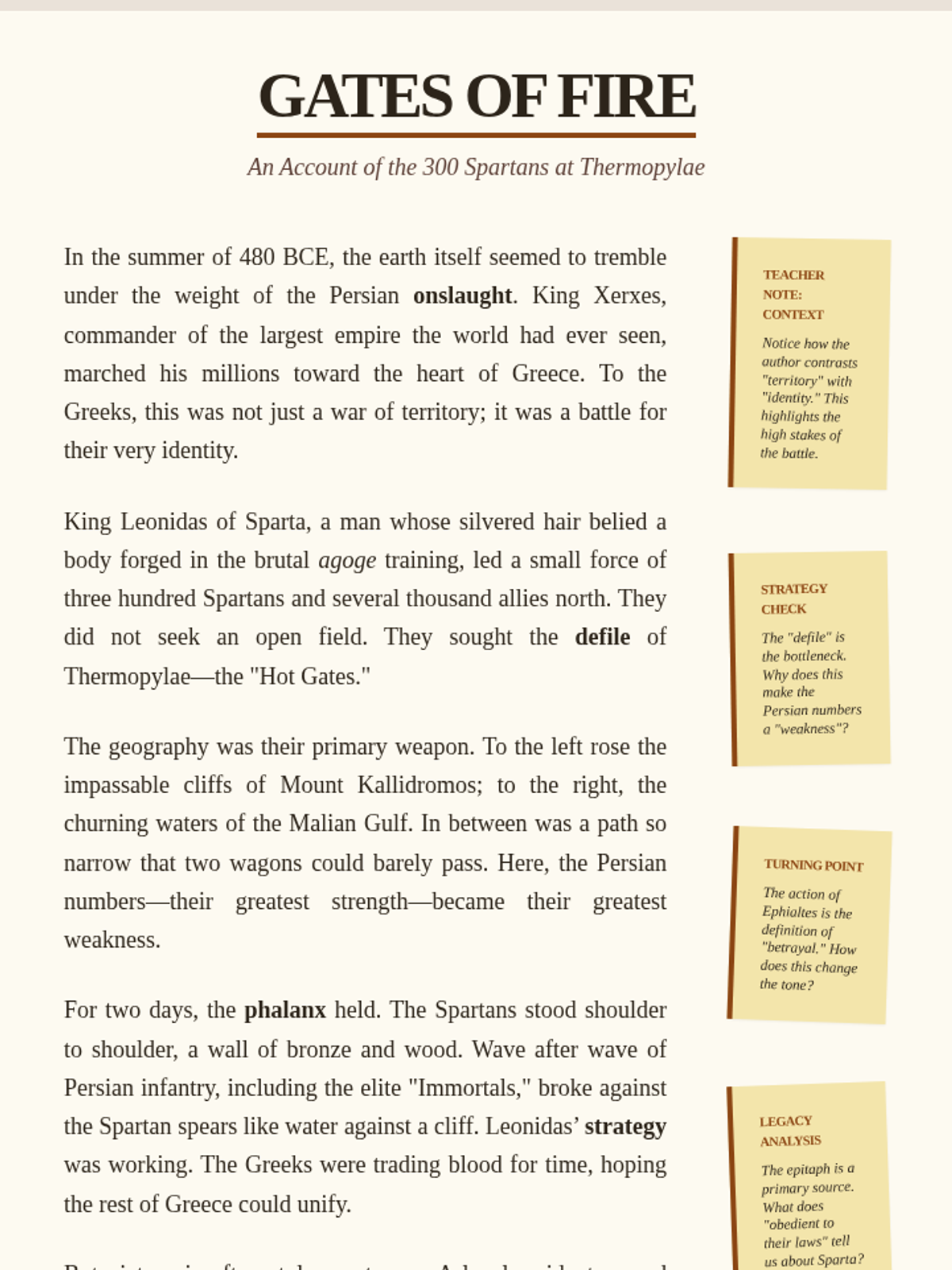
An analysis of the battle's climax, the betrayal at the Anopaia path, and the lasting legacy of the 300 Spartans using evidence-based text analysis.
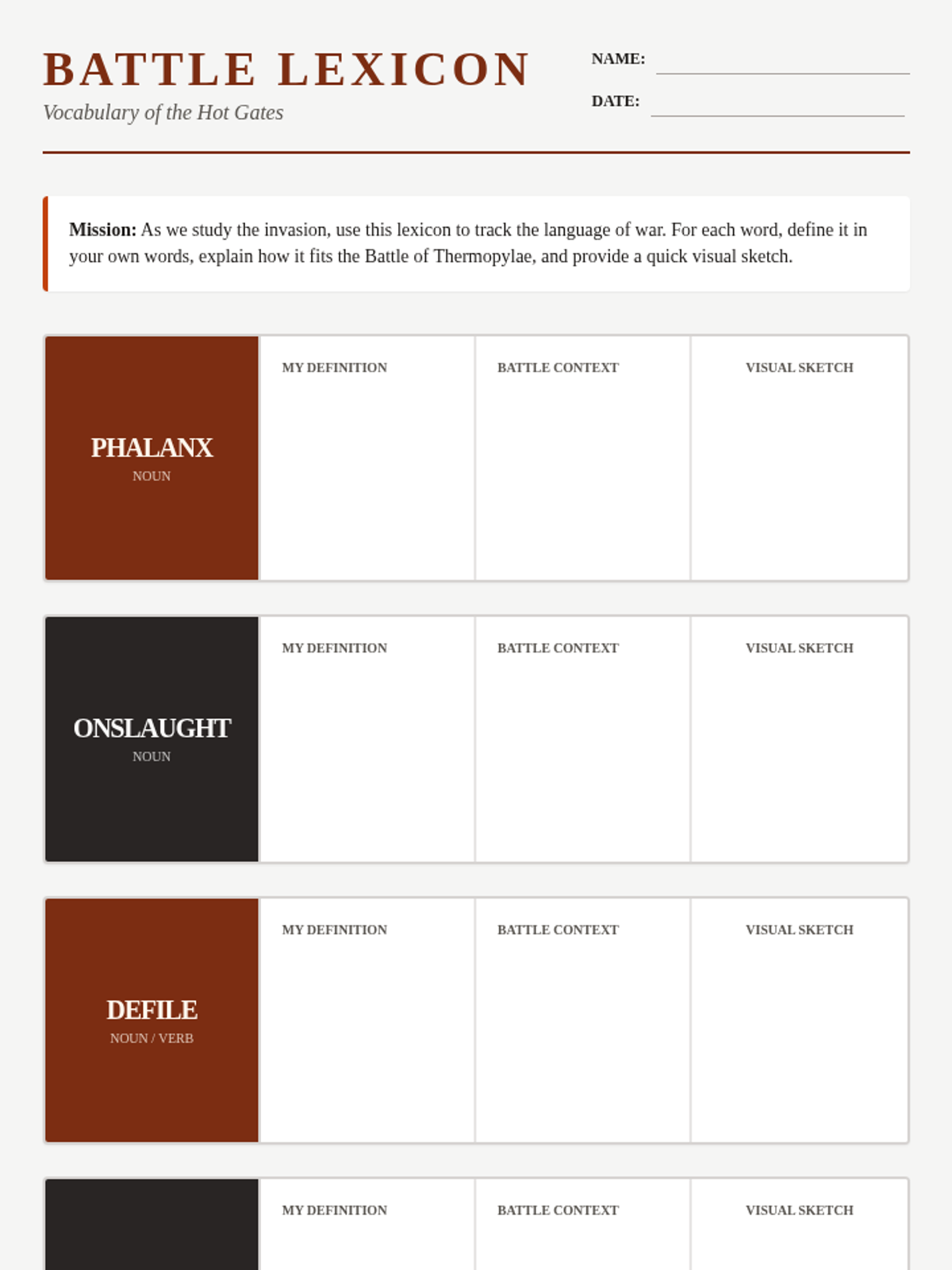
Introduction to the Persian invasion, King Leonidas, and the strategic importance of the "Hot Gates" with a focus on tier-two and tier-three military vocabulary.
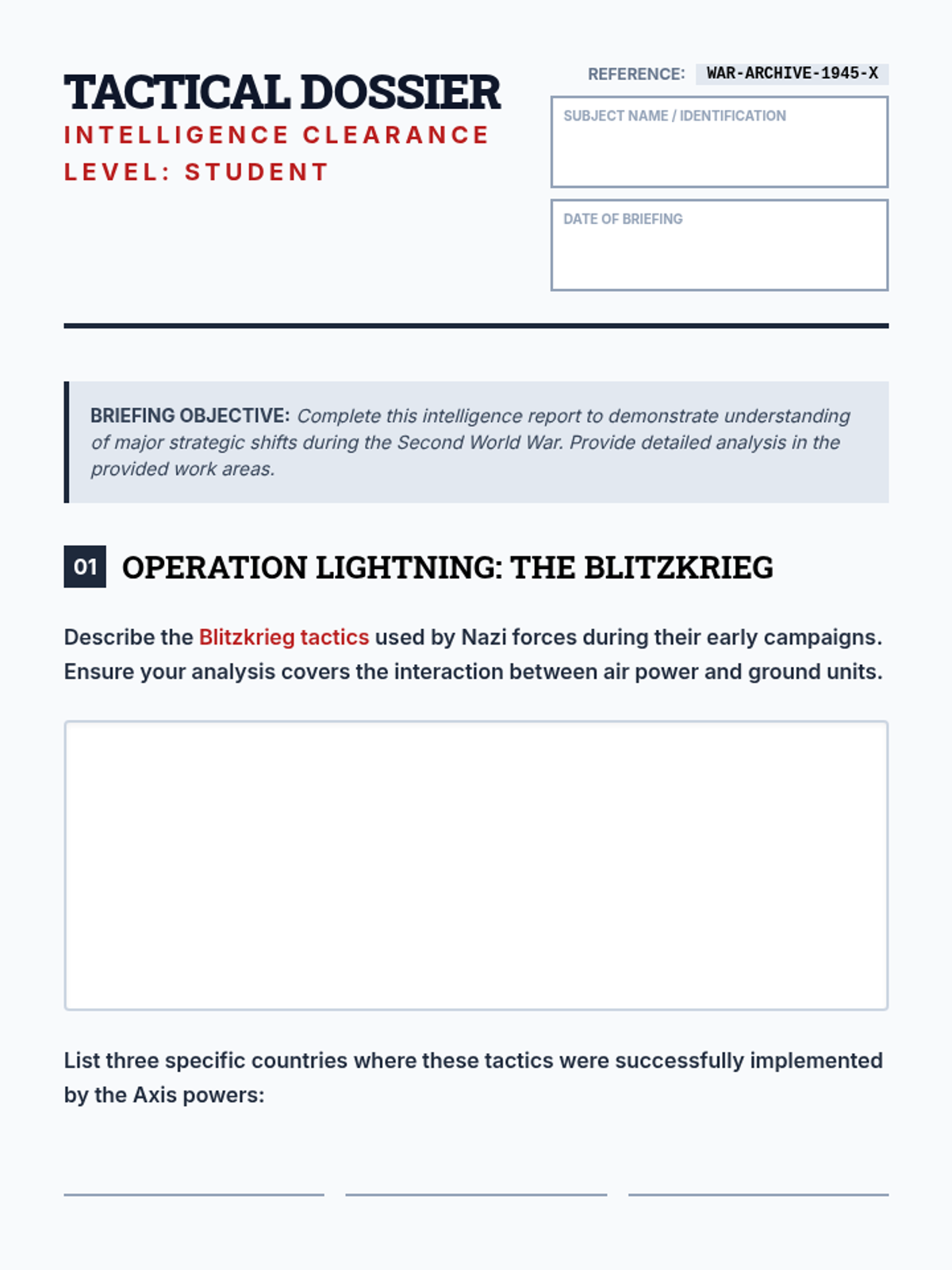
An exploration of two pivotal shifts in WWII strategy: the rapid-fire Blitzkrieg tactics of the Axis powers and the catastrophic decision-making behind the Atomic Bomb.
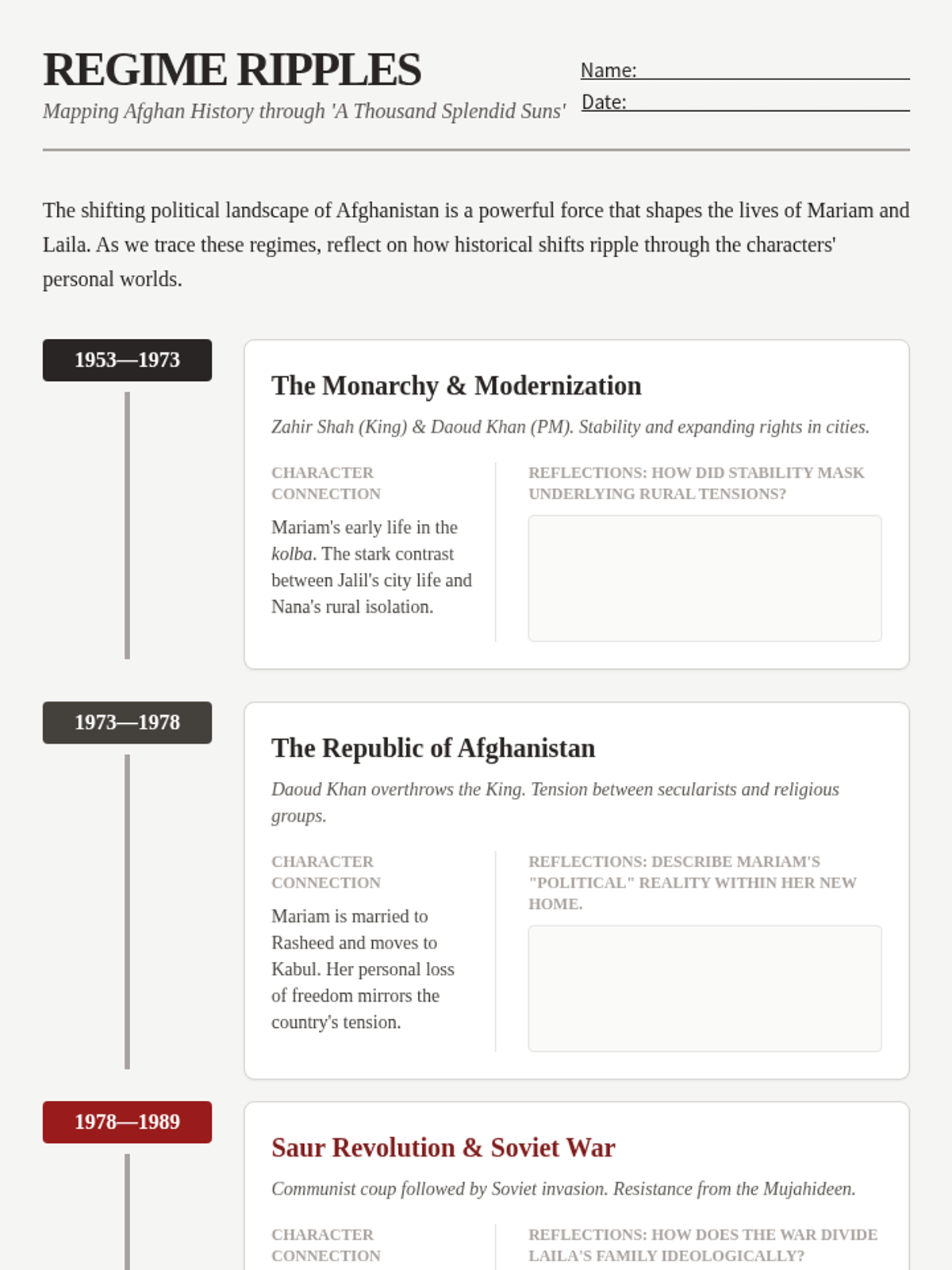
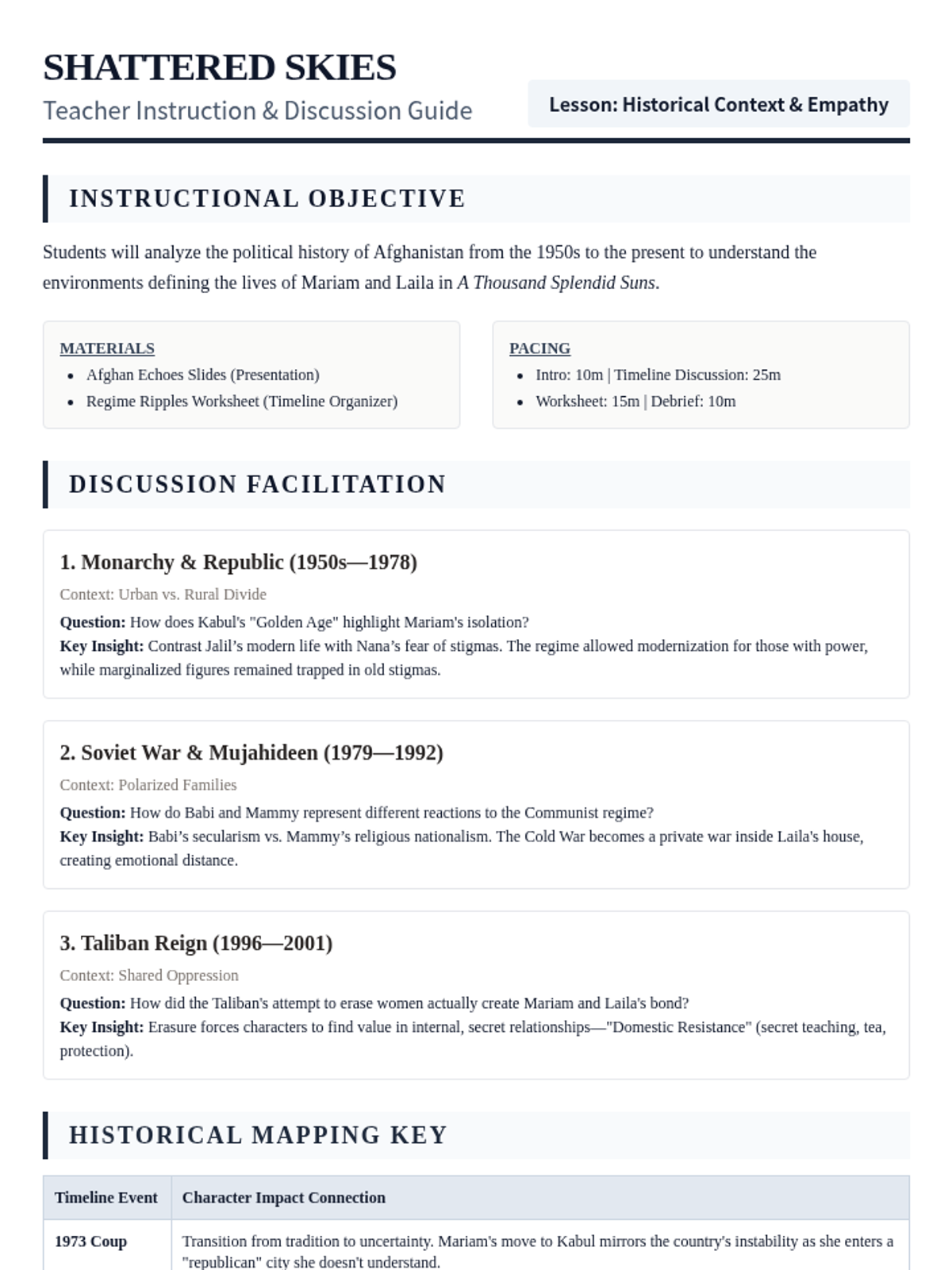
A deep dive into the historical timeline of Afghanistan from the 1950s to the present, mapping political regimes to the narrative arcs of Mariam and Laila to build empathy and historical literacy.
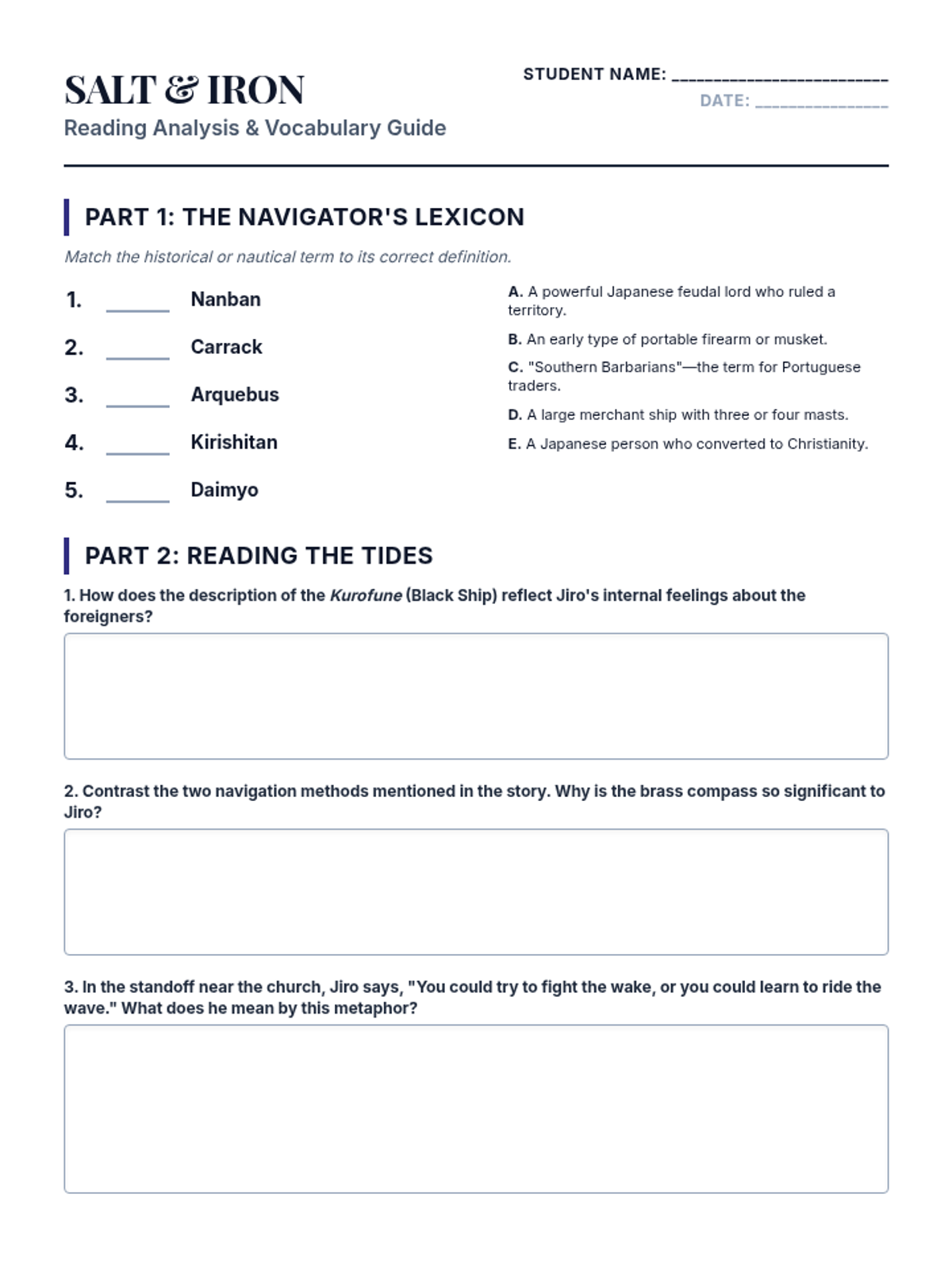
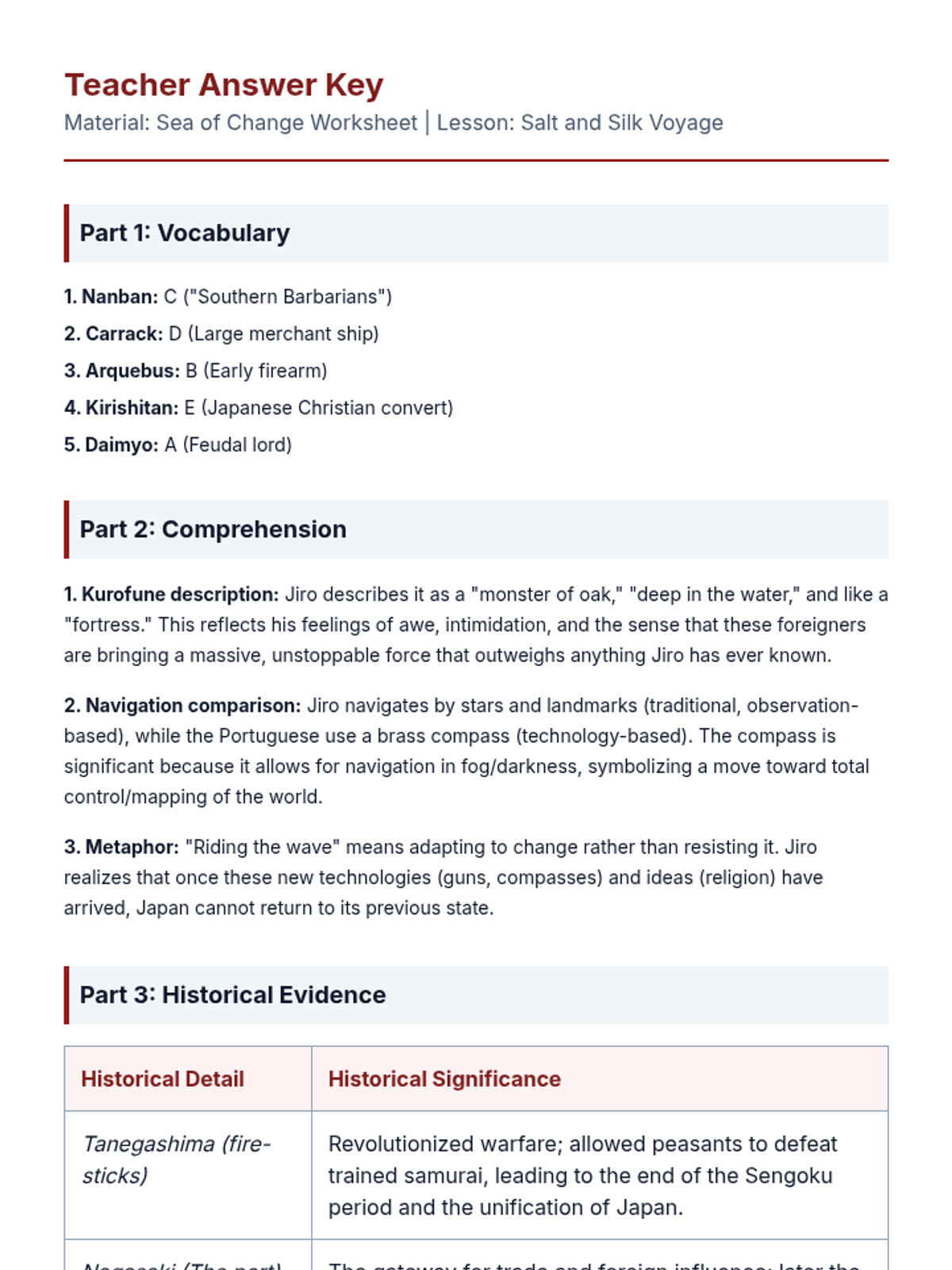
A deep dive into 16th-century Japan during the Nanban trade era through the eyes of a young sailor encountering Portuguese explorers. Students explore historical context, vocabulary, and literary themes of cultural exchange and conflict.
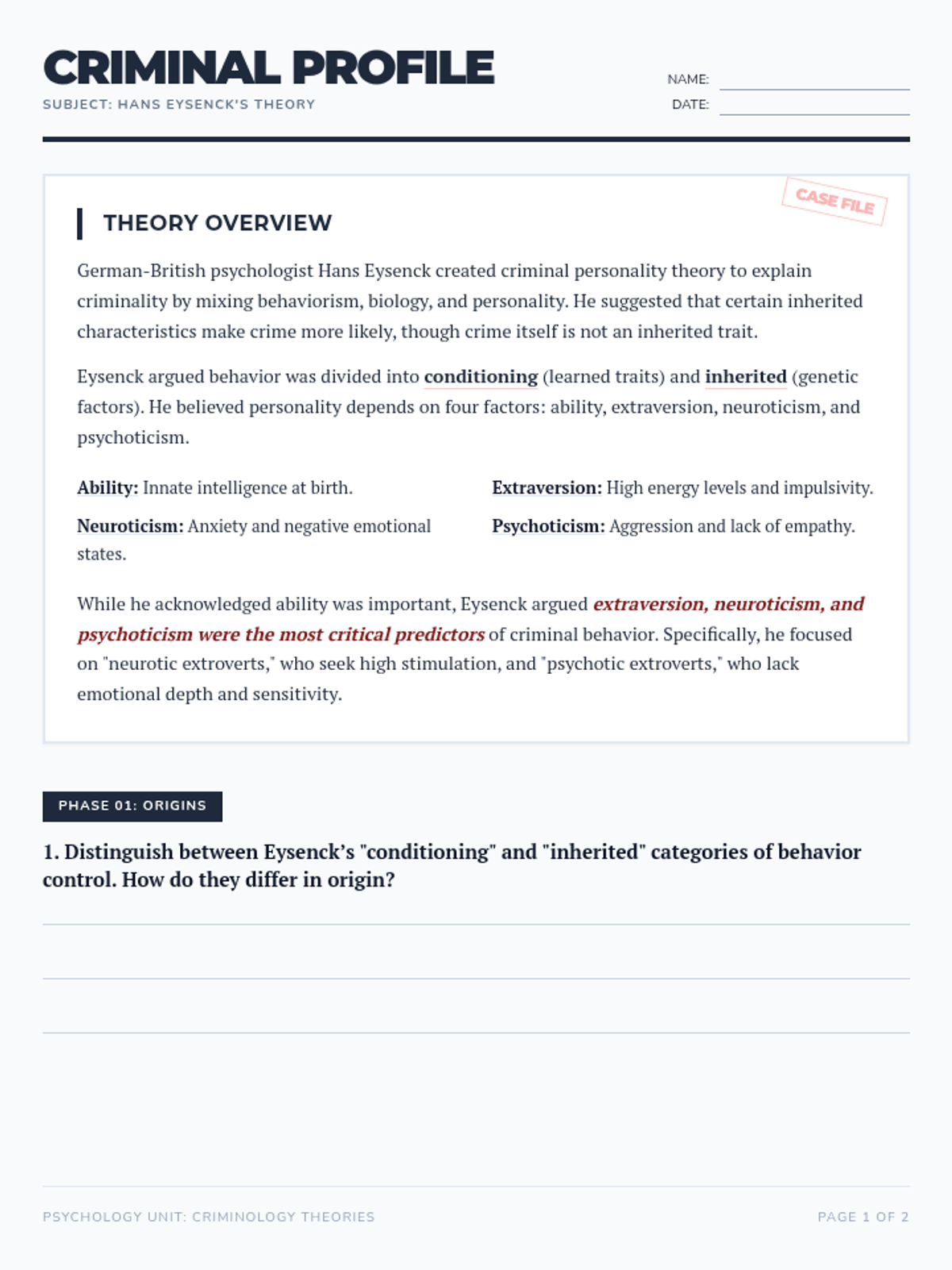
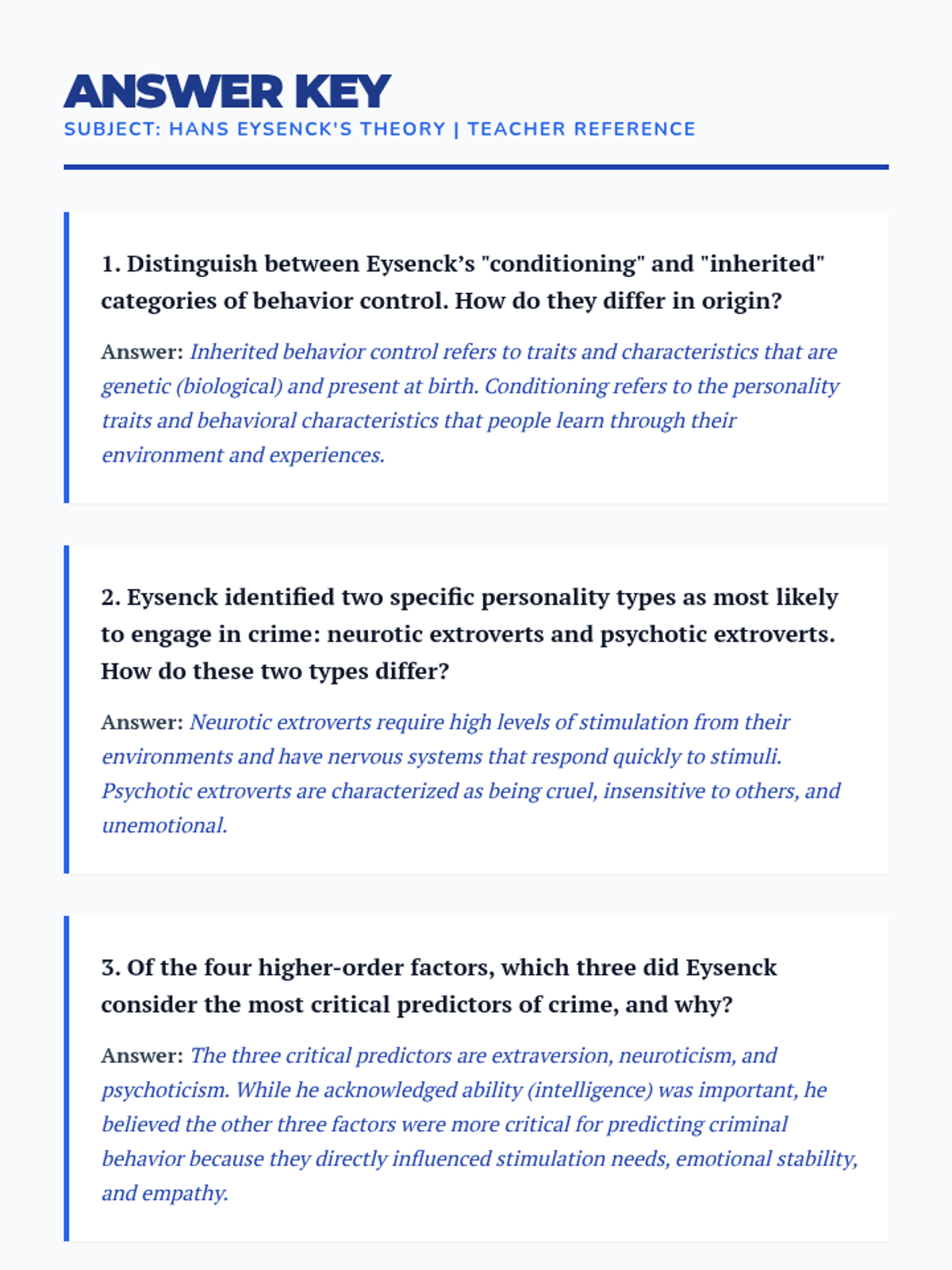
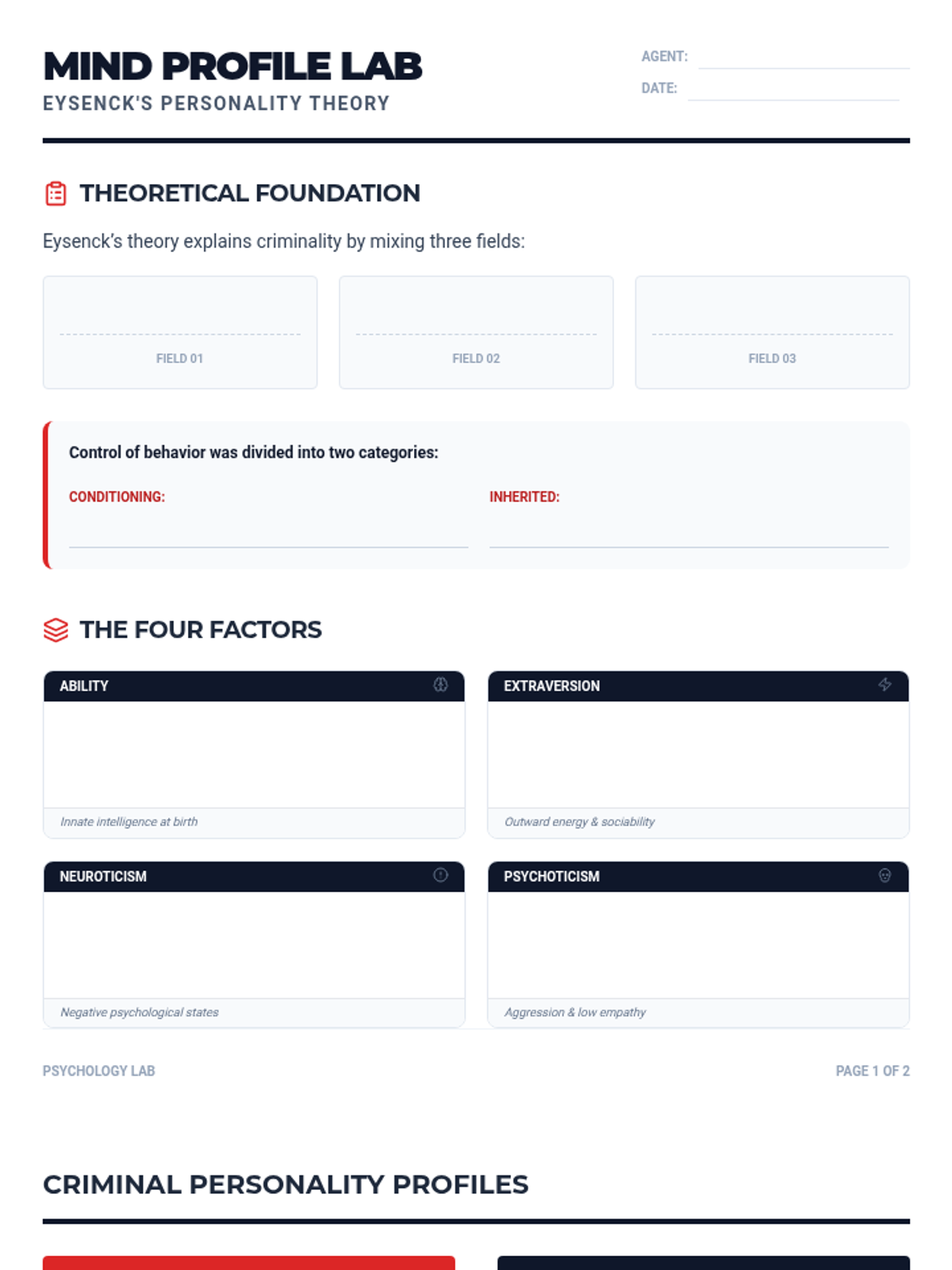
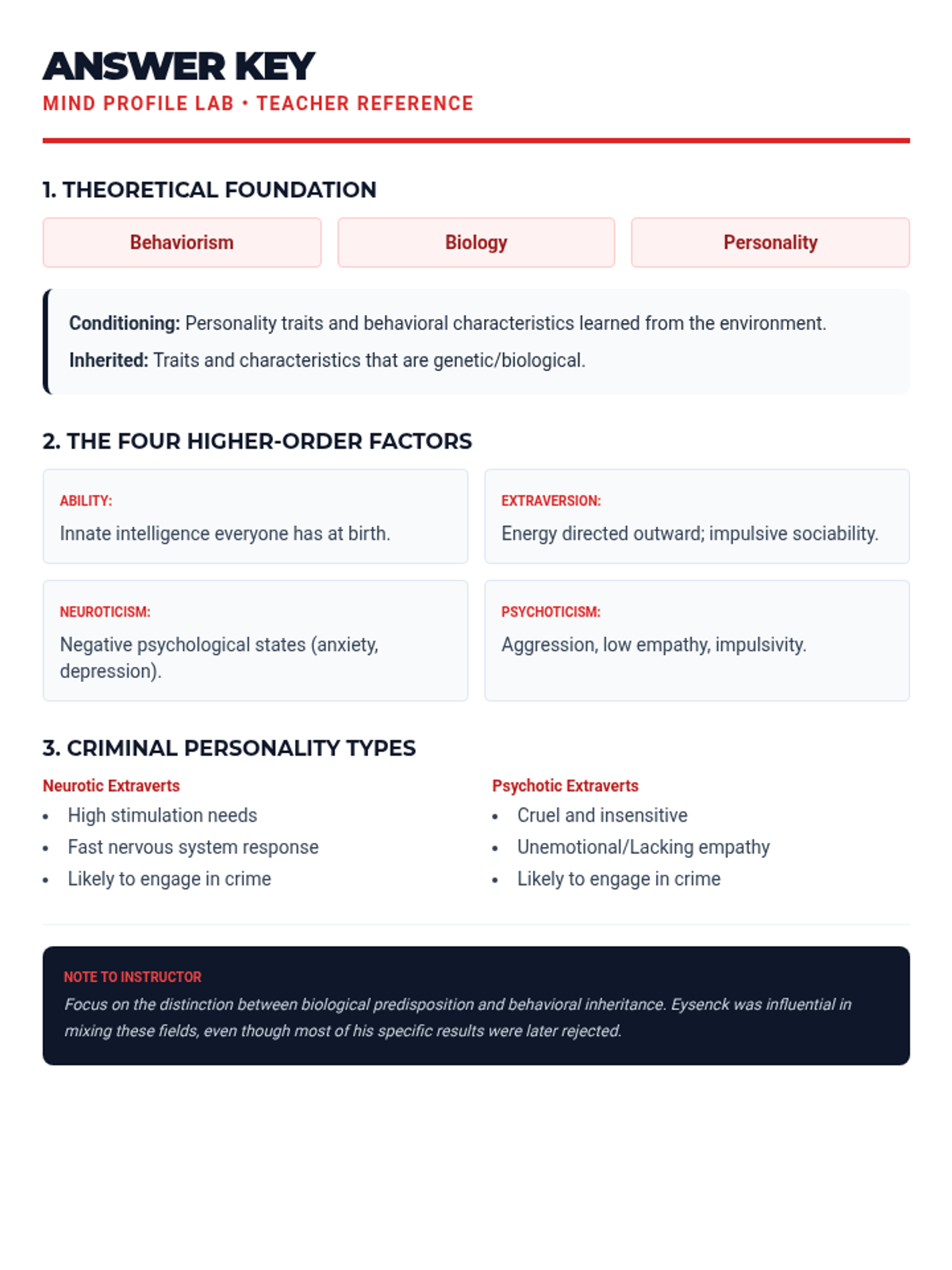
An exploration of Hans Eysenck's criminal personality theory, focusing on the intersection of biology, behaviorism, and personality traits like extraversion and neuroticism.
This lesson explores Hans Eysenck's criminal personality theory, focusing on the biological and environmental factors that contribute to criminal behavior and identifying the four higher-order factors of personality.
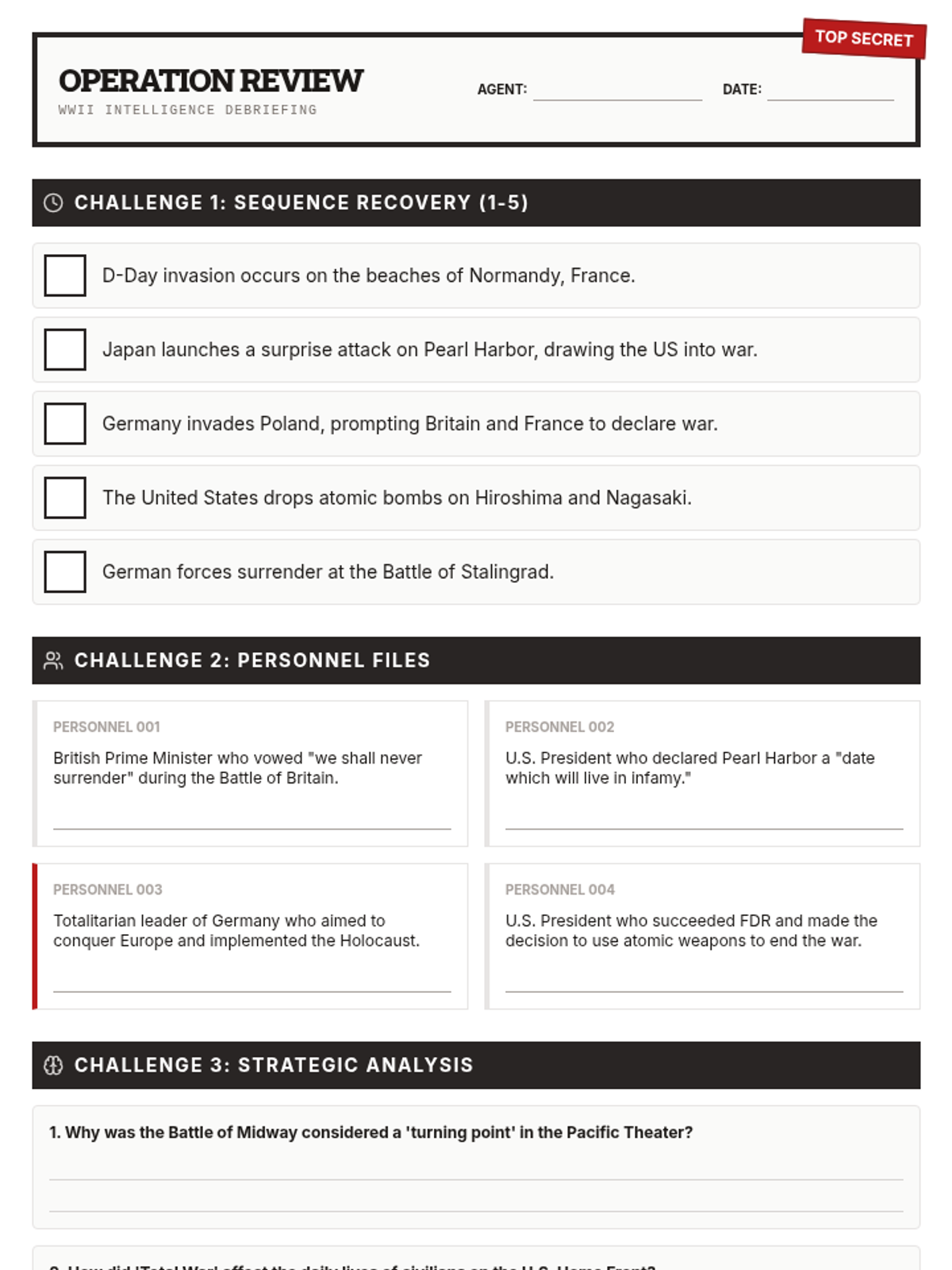
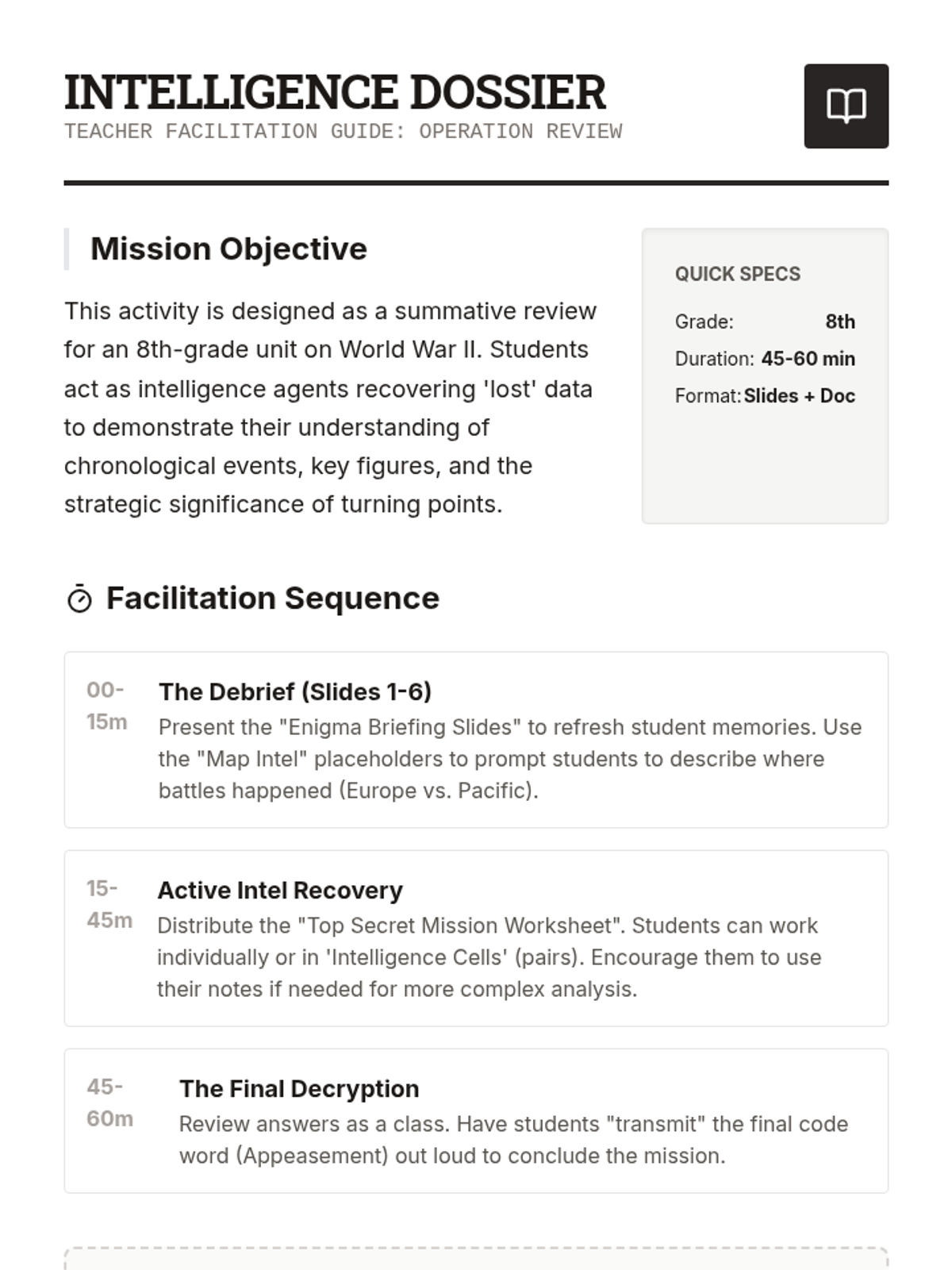
A comprehensive World War II review lesson for 8th-grade students, featuring a 'top-secret intelligence mission' theme. Students will review key events, figures, and turning points through a series of interactive challenges.
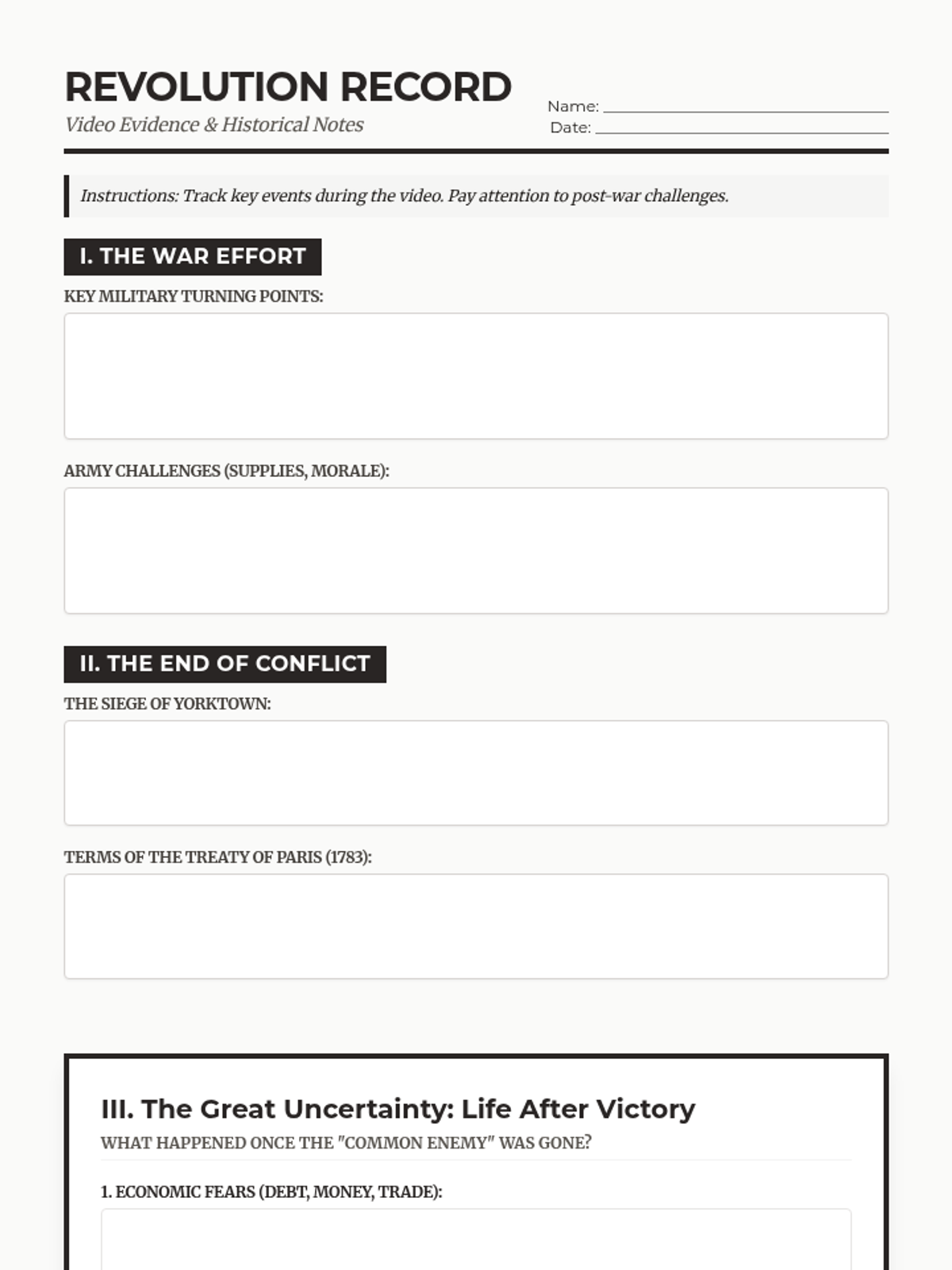
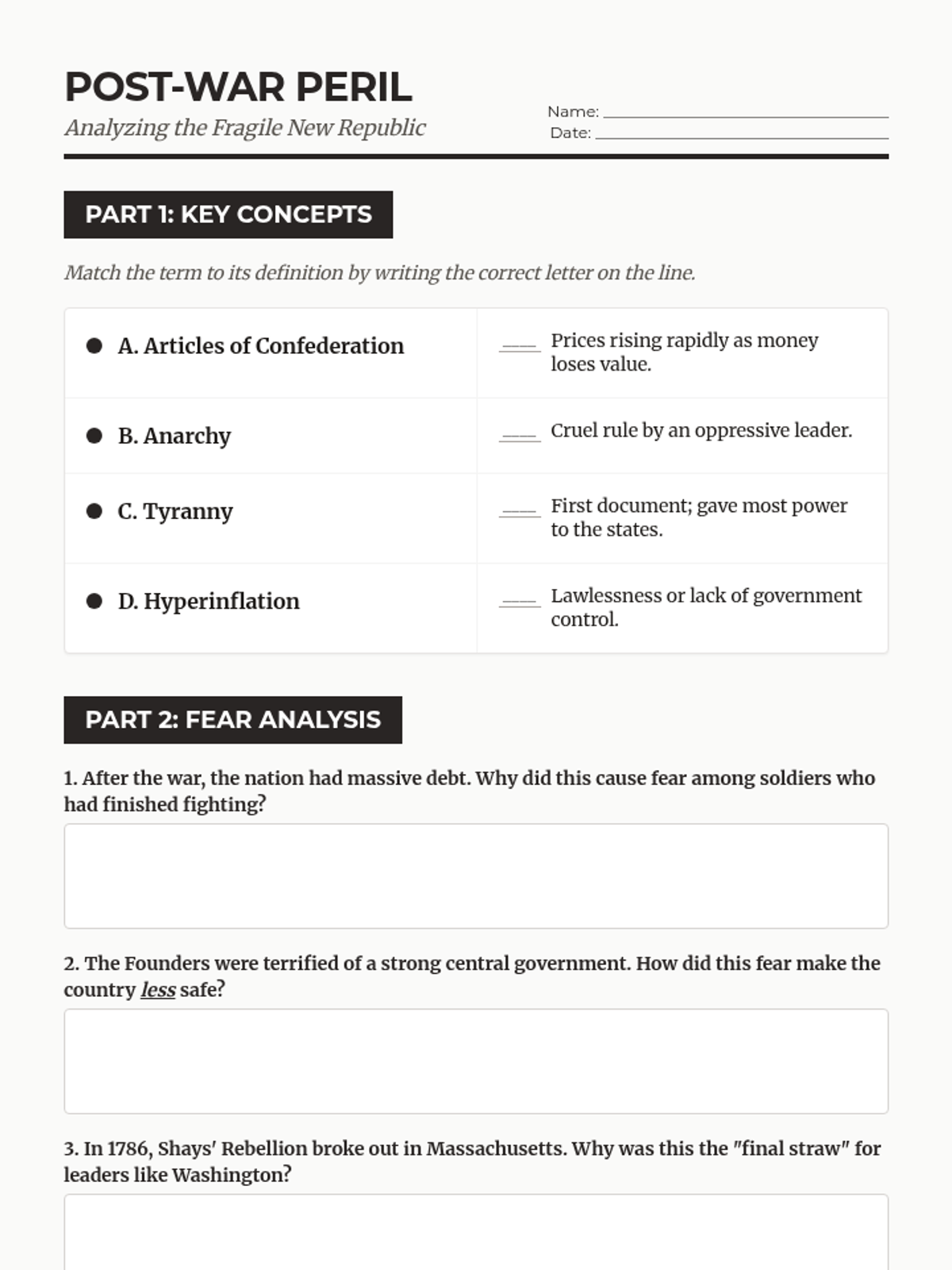
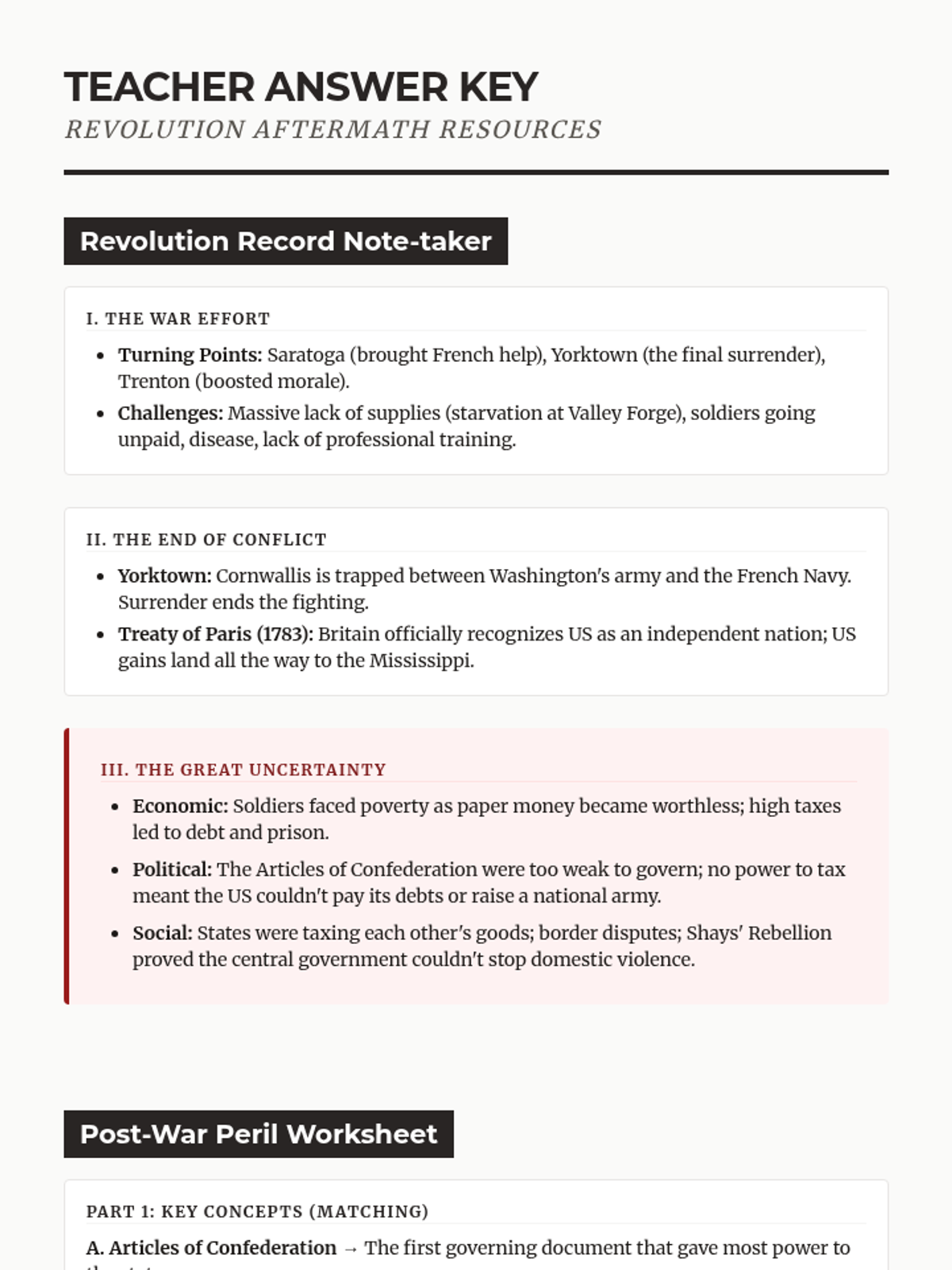
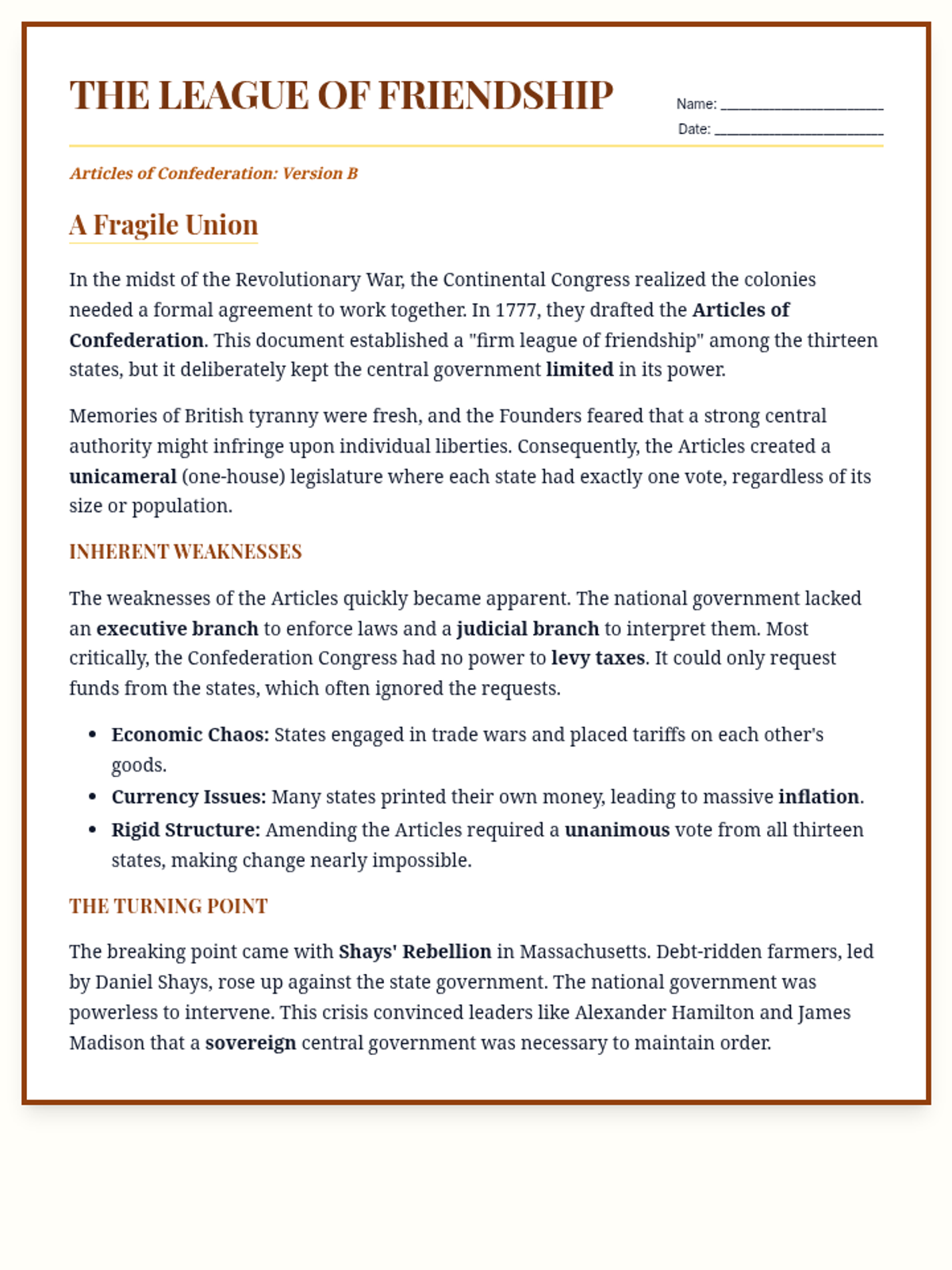
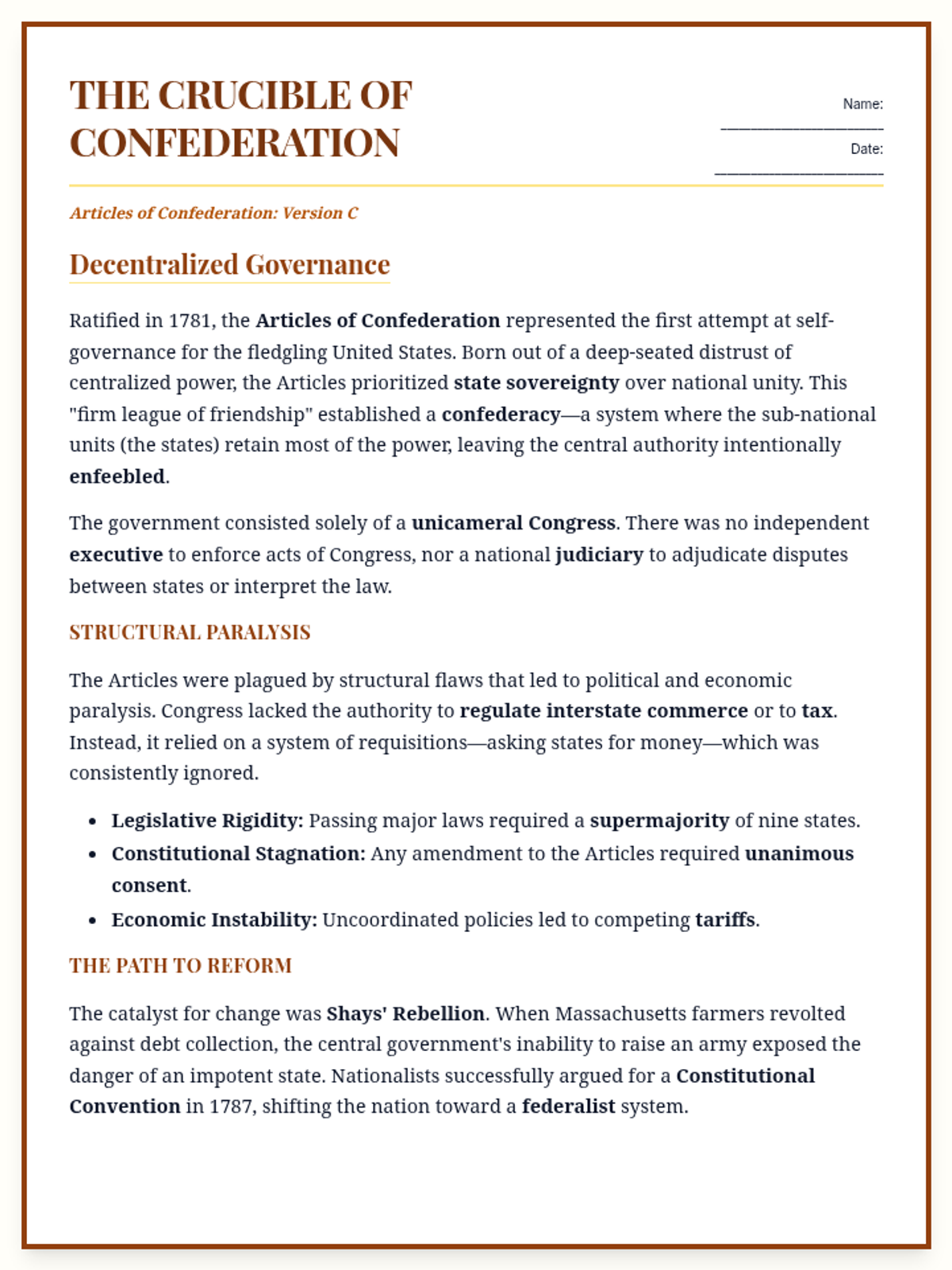
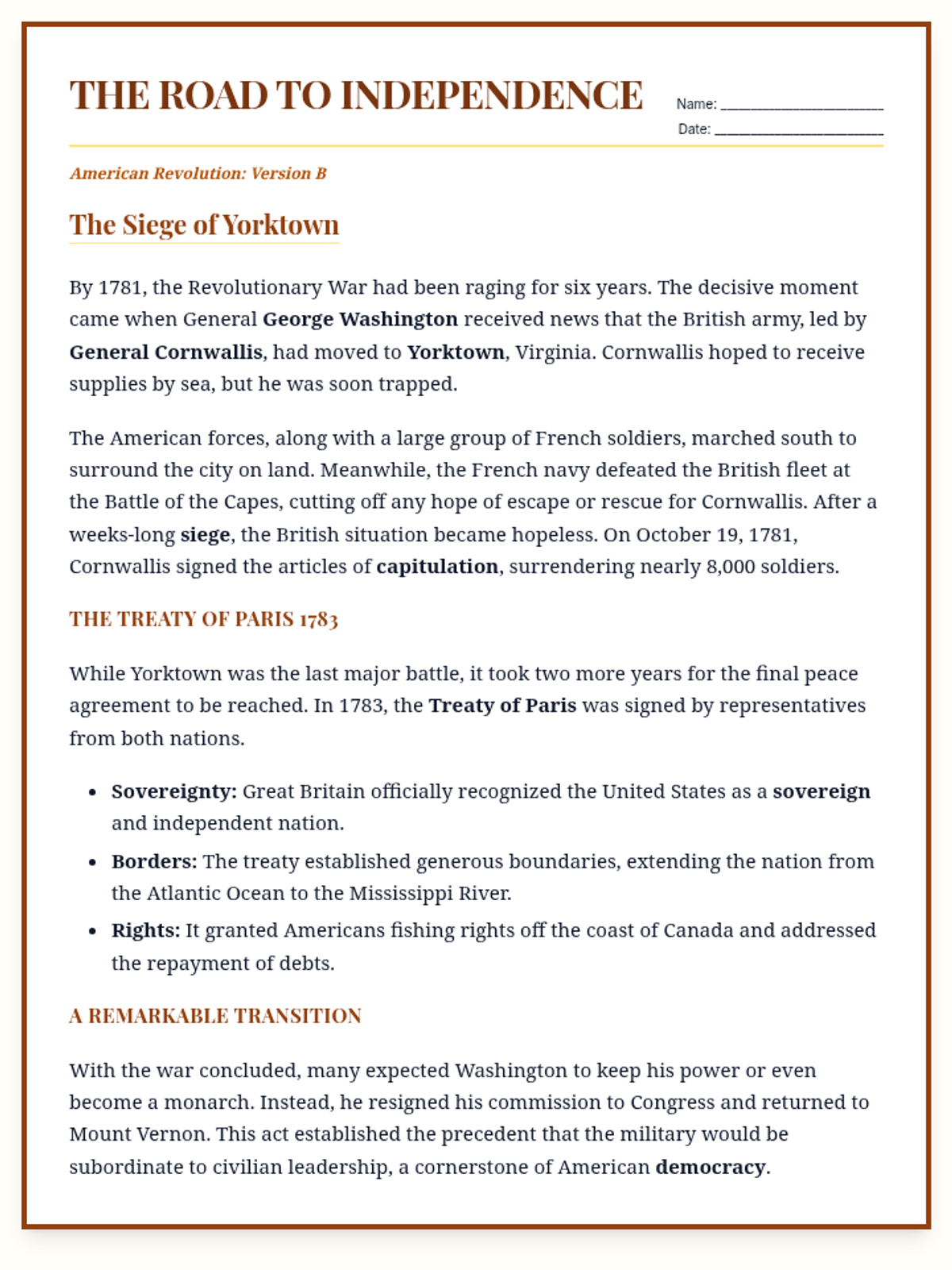
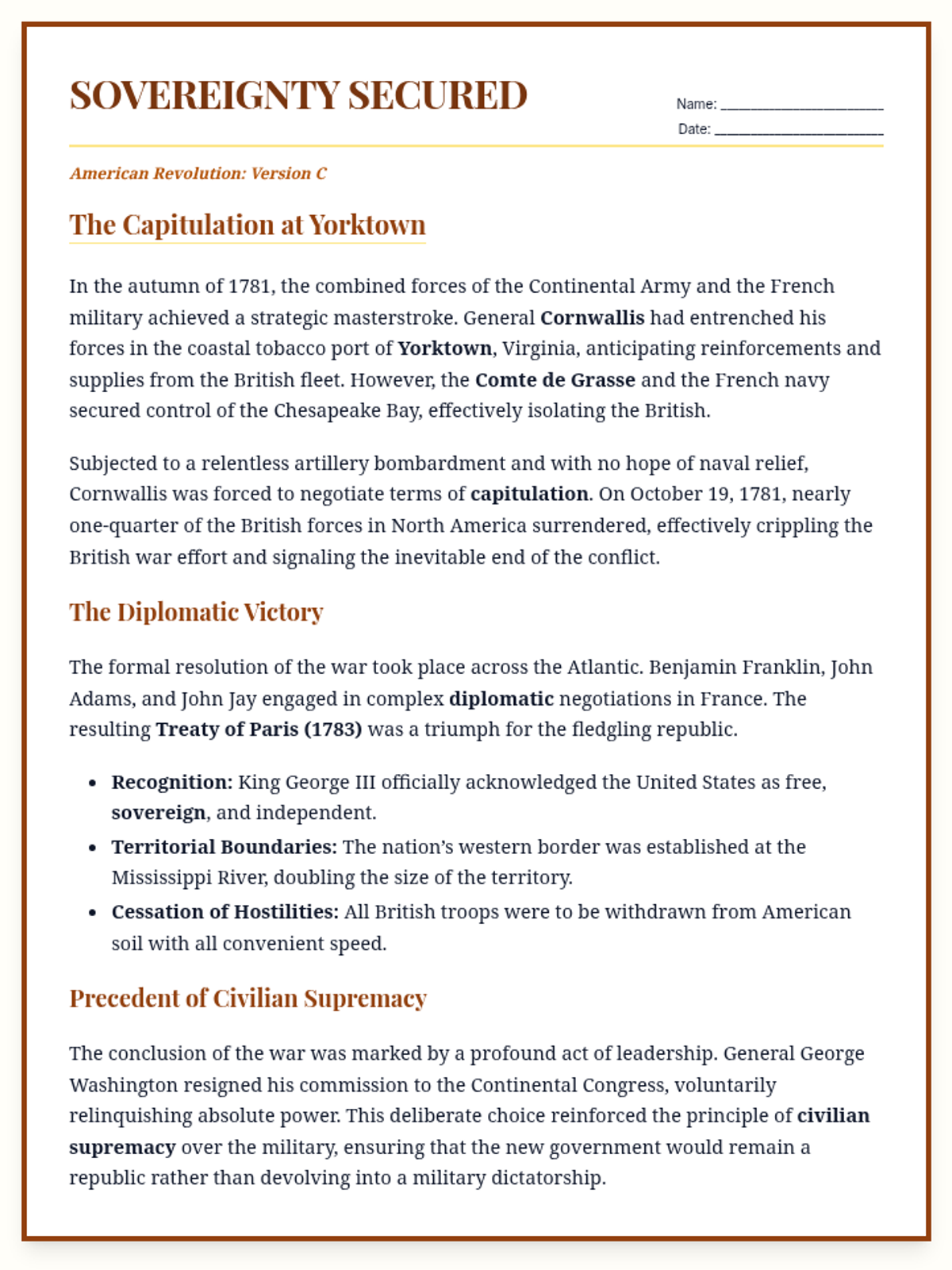
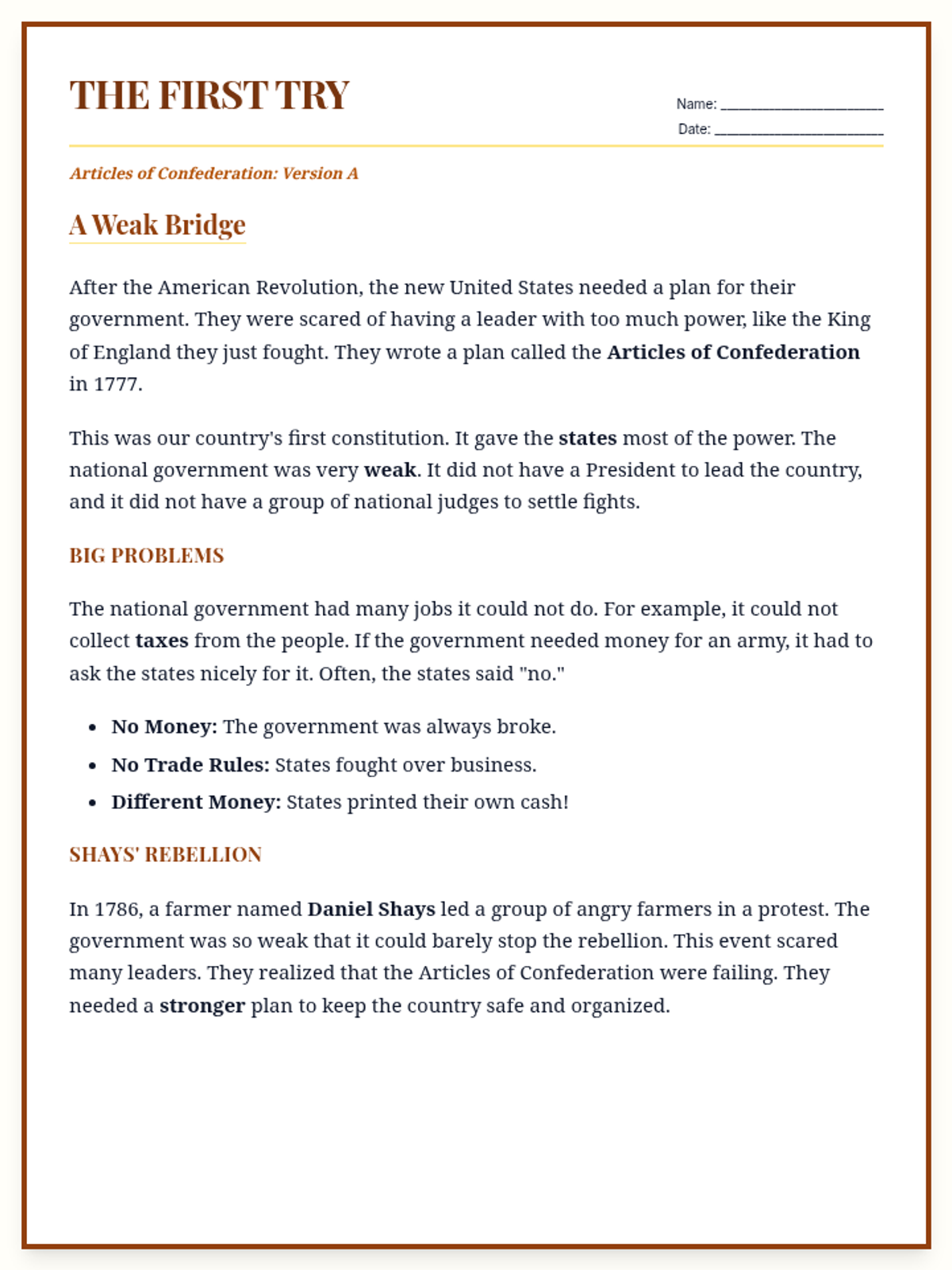
A lesson focused on the aftermath of the American Revolution, exploring the transition from war to a fragile new nation and the deep-seated fears of the Founding Fathers and citizens. Students will use video evidence and critical thinking to analyze post-war instability.
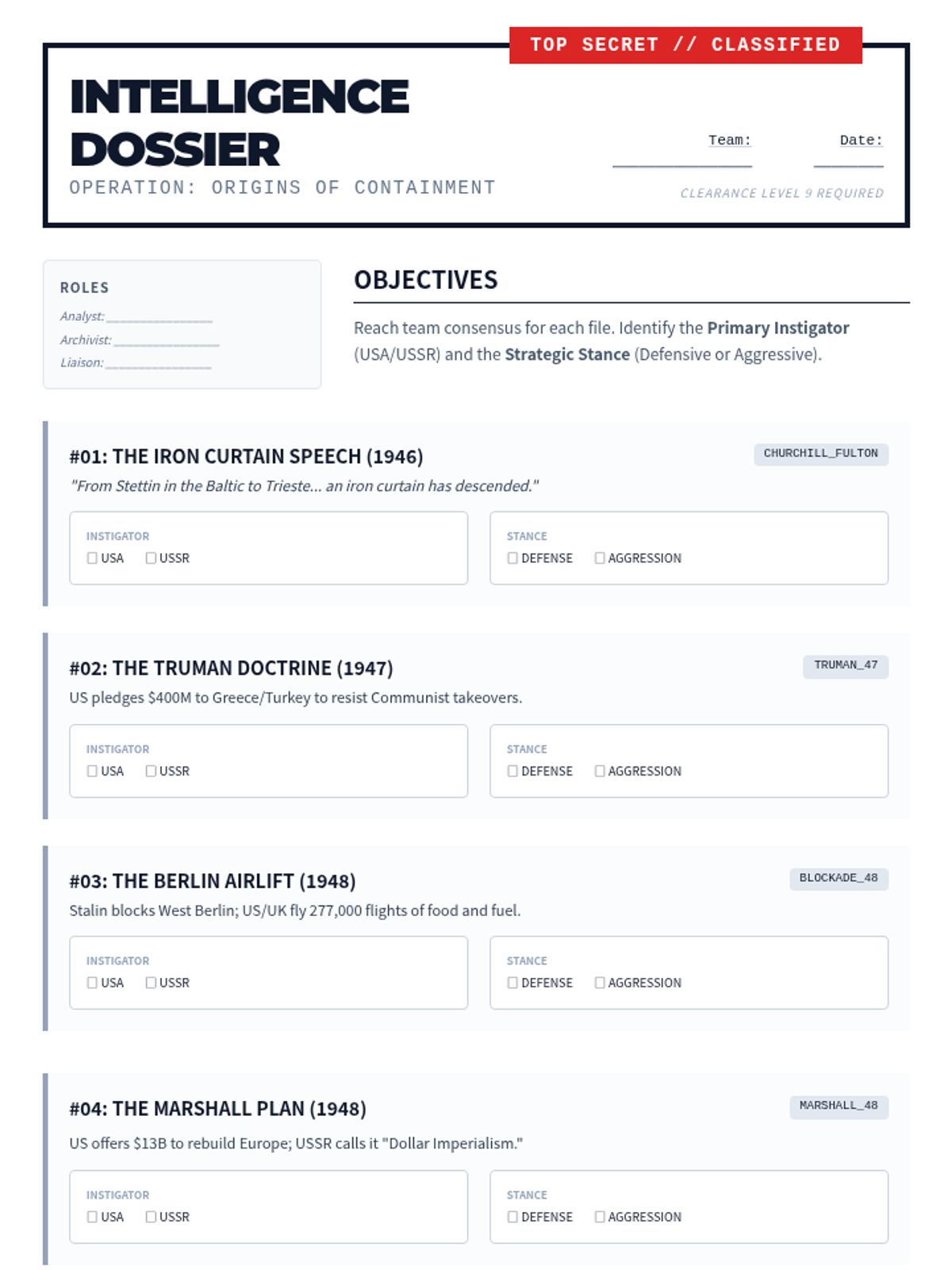
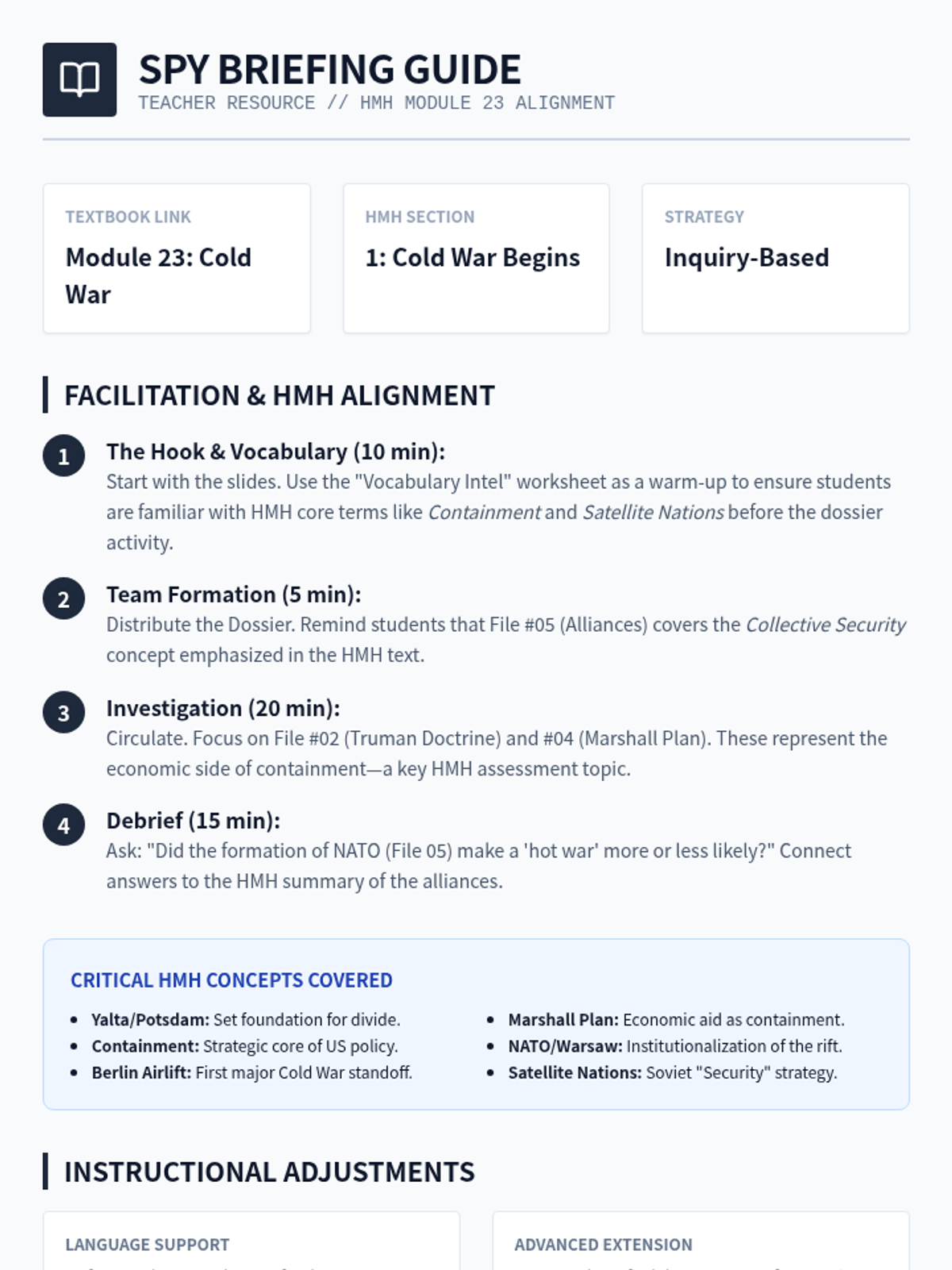
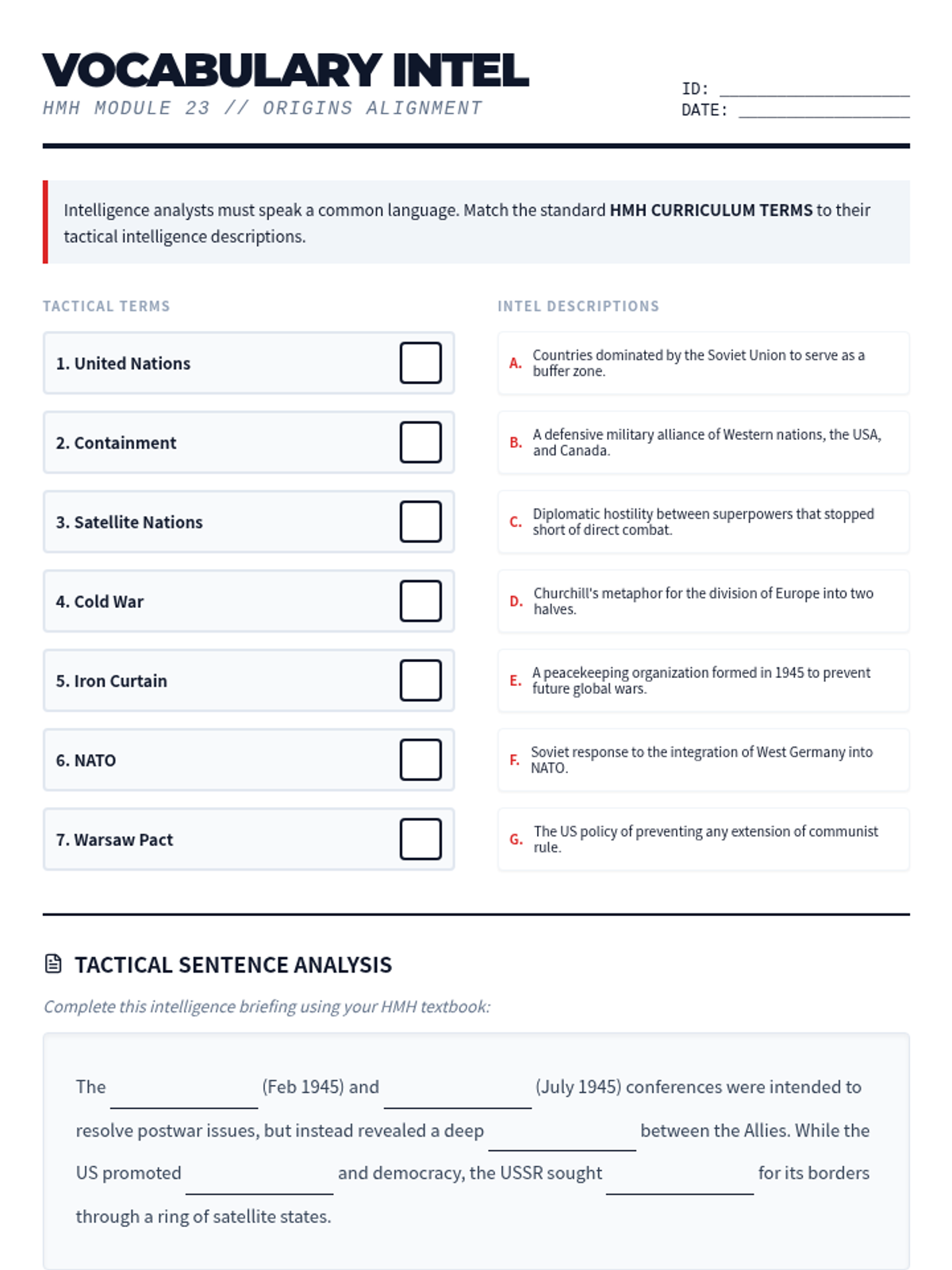
An immersive, cooperative lesson where 9th-grade students act as intelligence analysts to investigate the shifting post-WWII landscape and the origins of the Cold War.
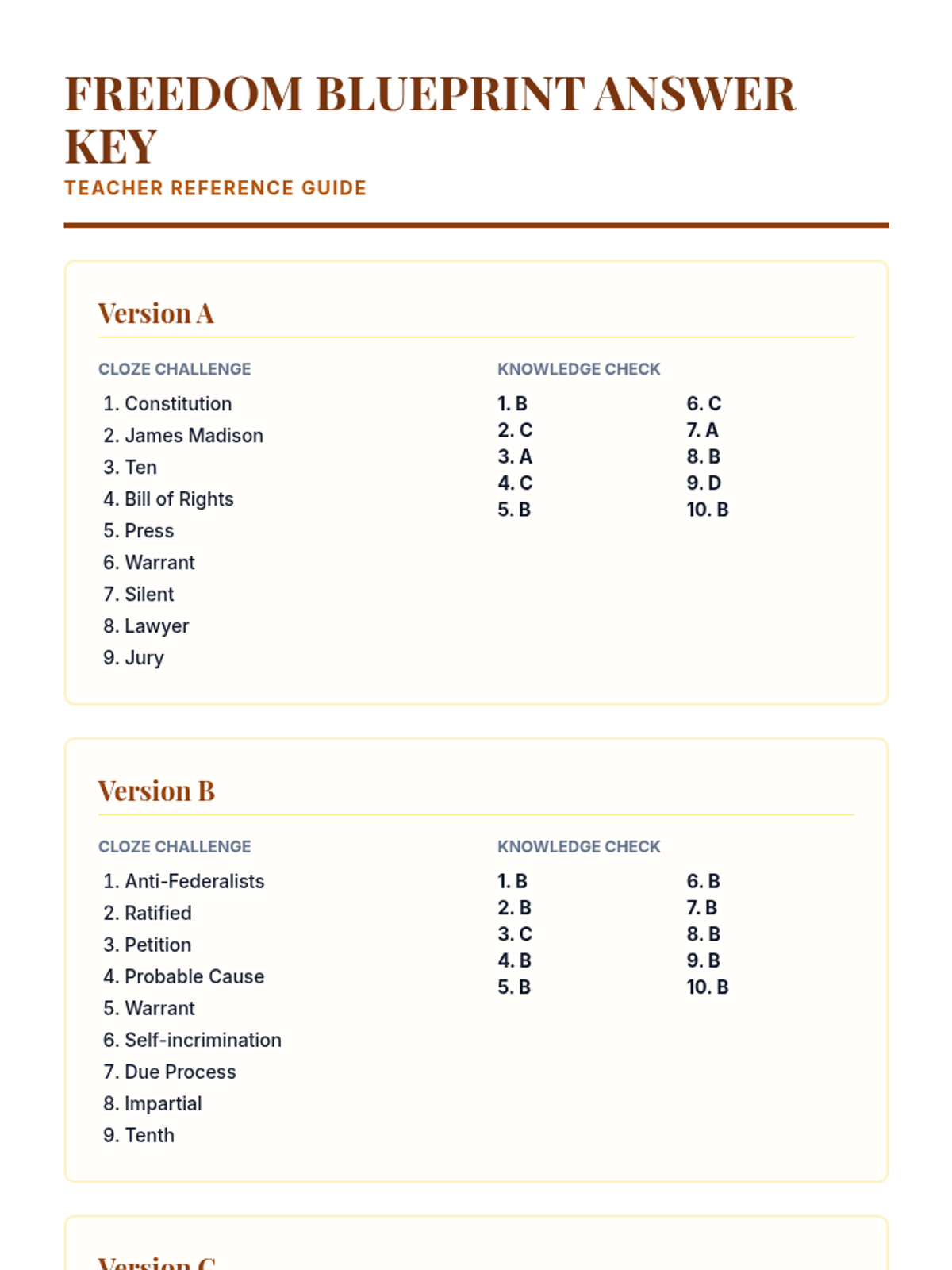
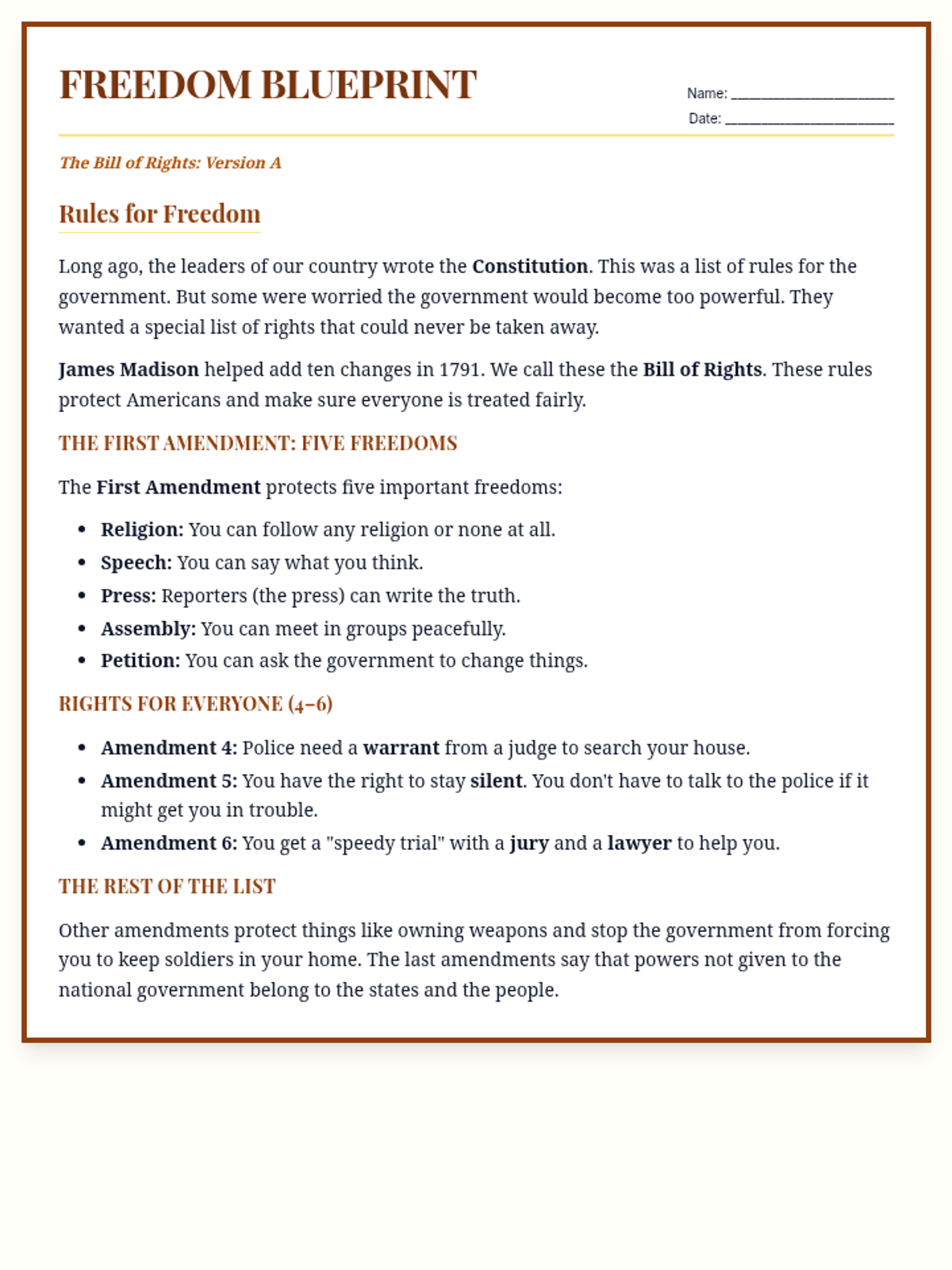
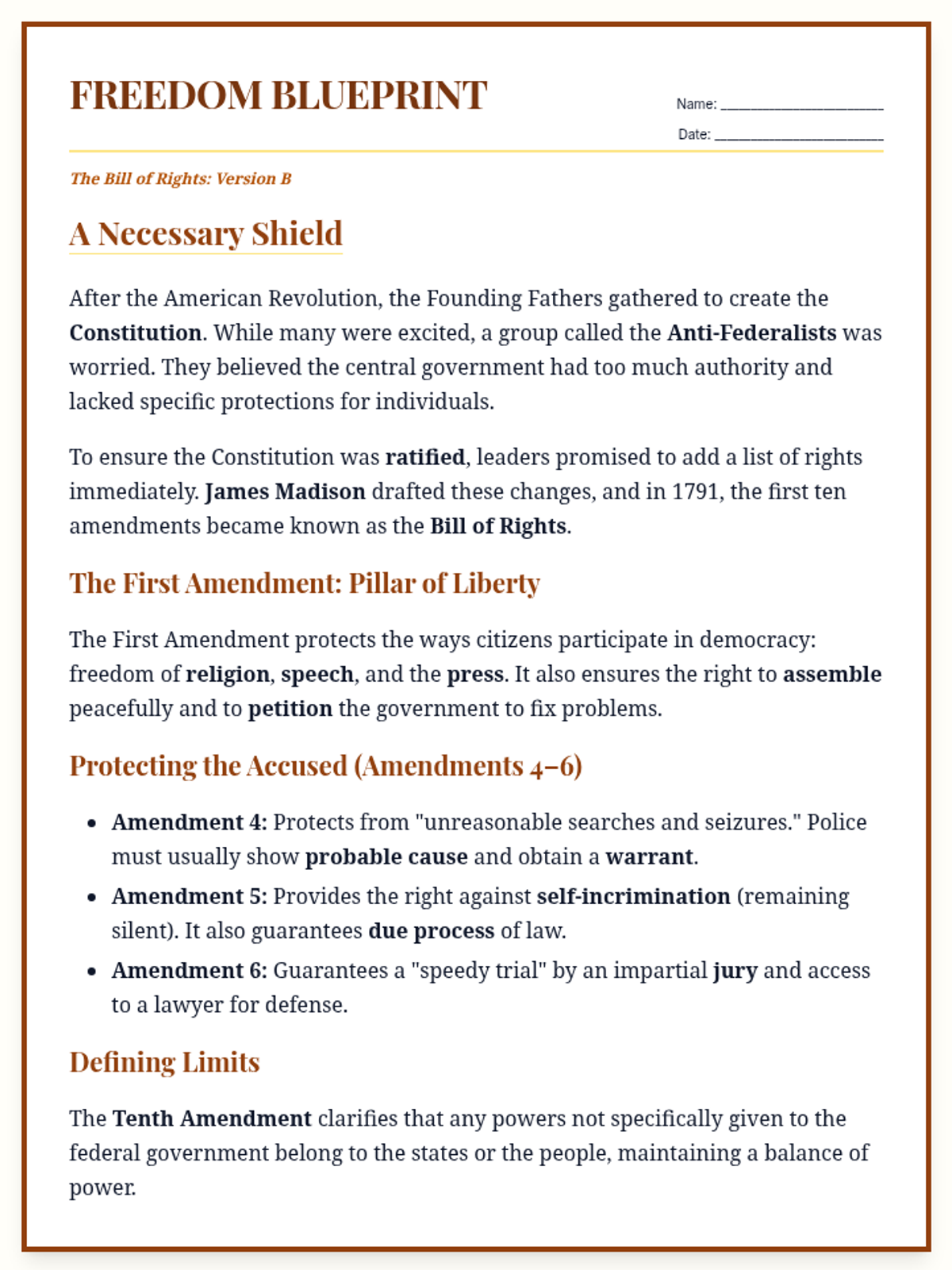
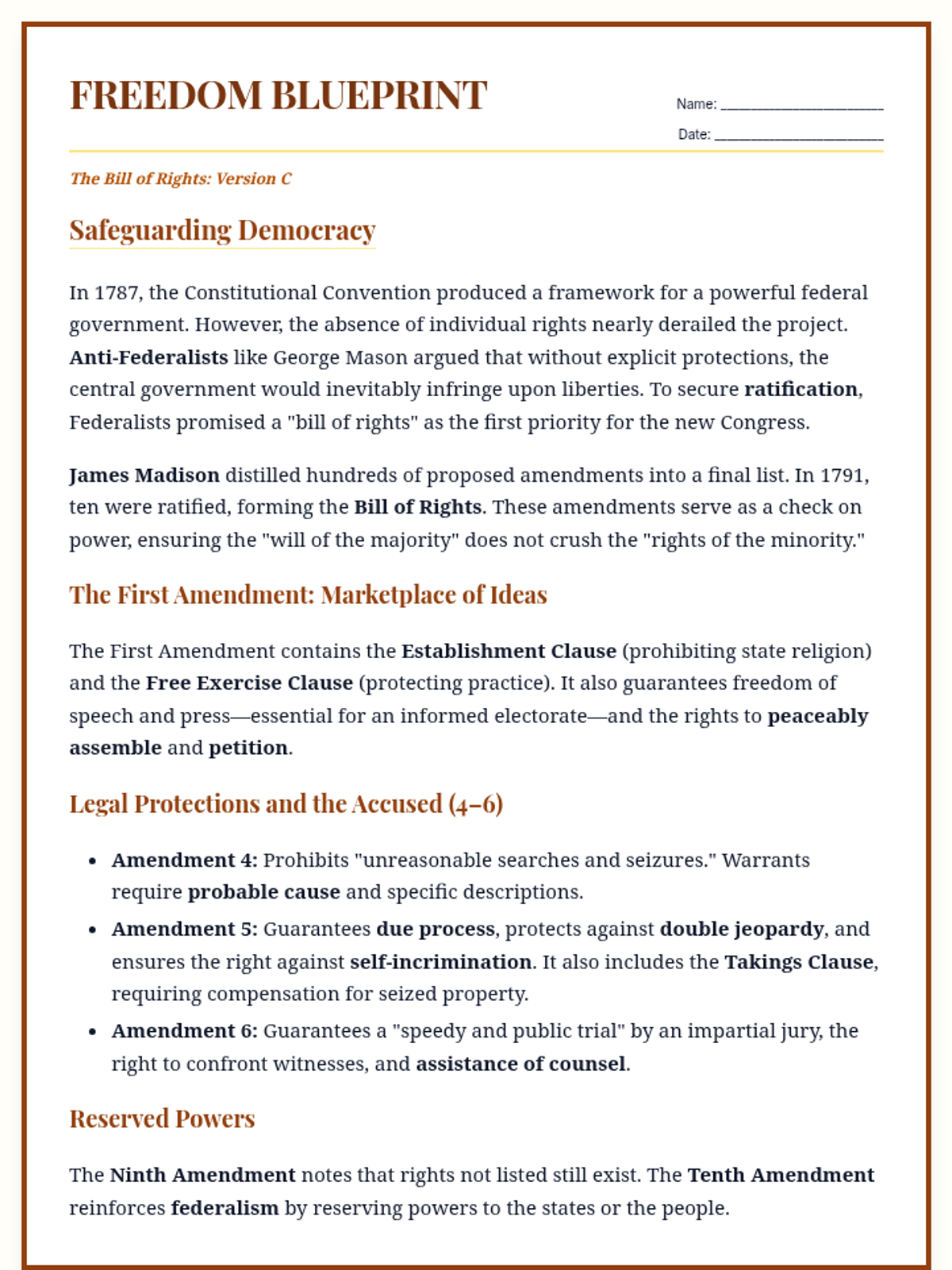
A comprehensive exploration of the Bill of Rights, featuring differentiated reading materials (Versions A, B, and C) covering historical context, the First Amendment, and the rights of the accused.
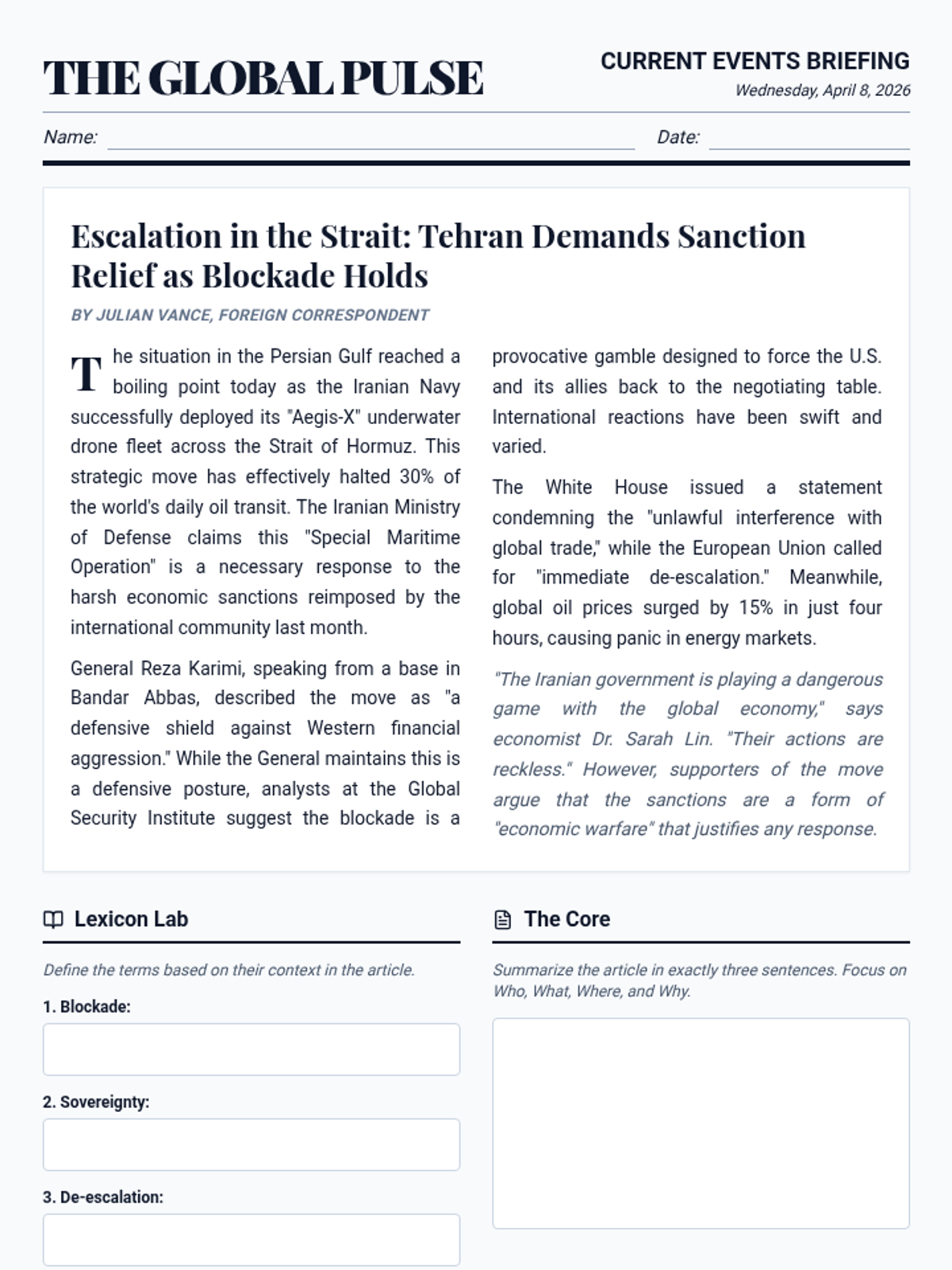
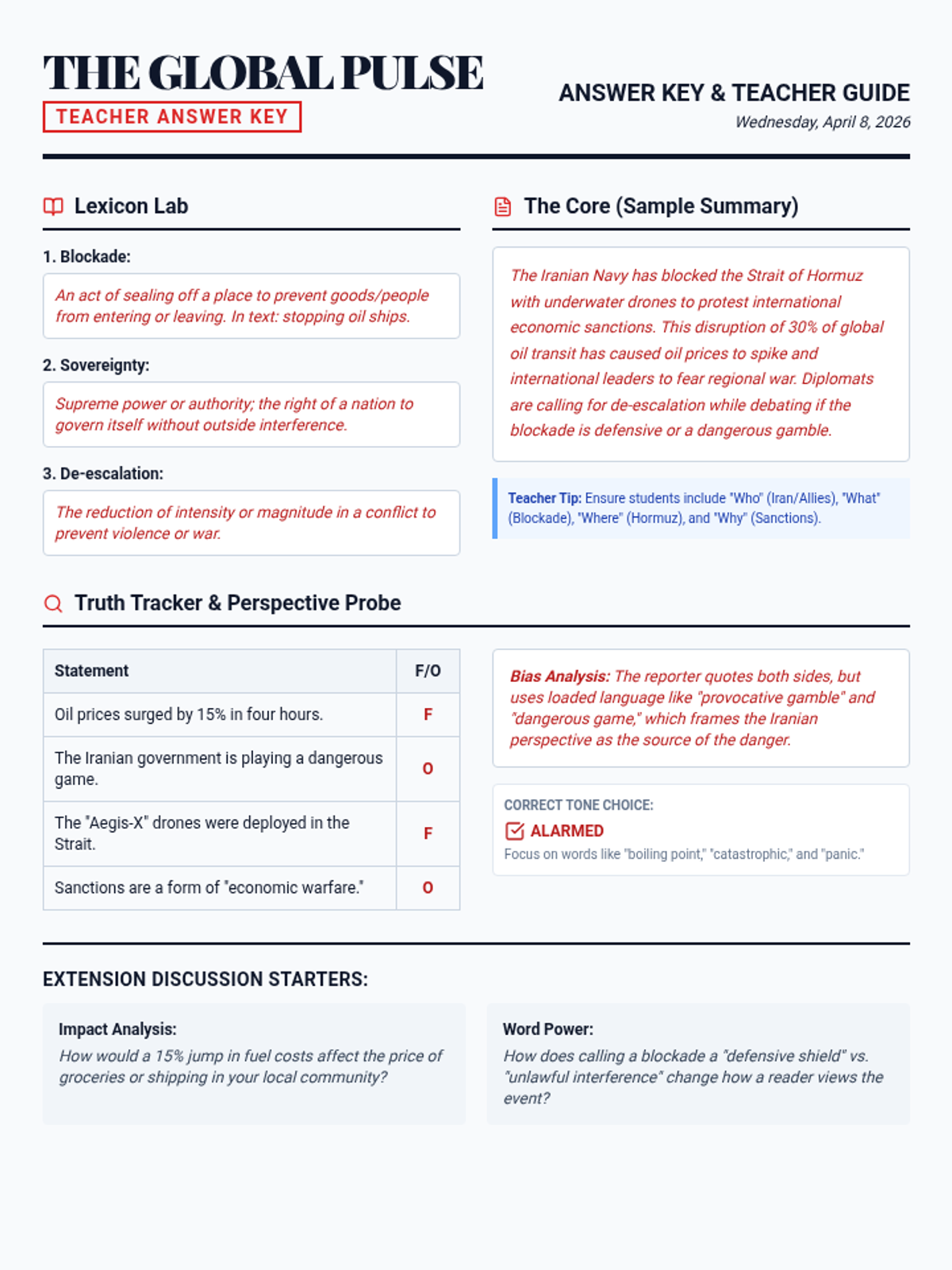
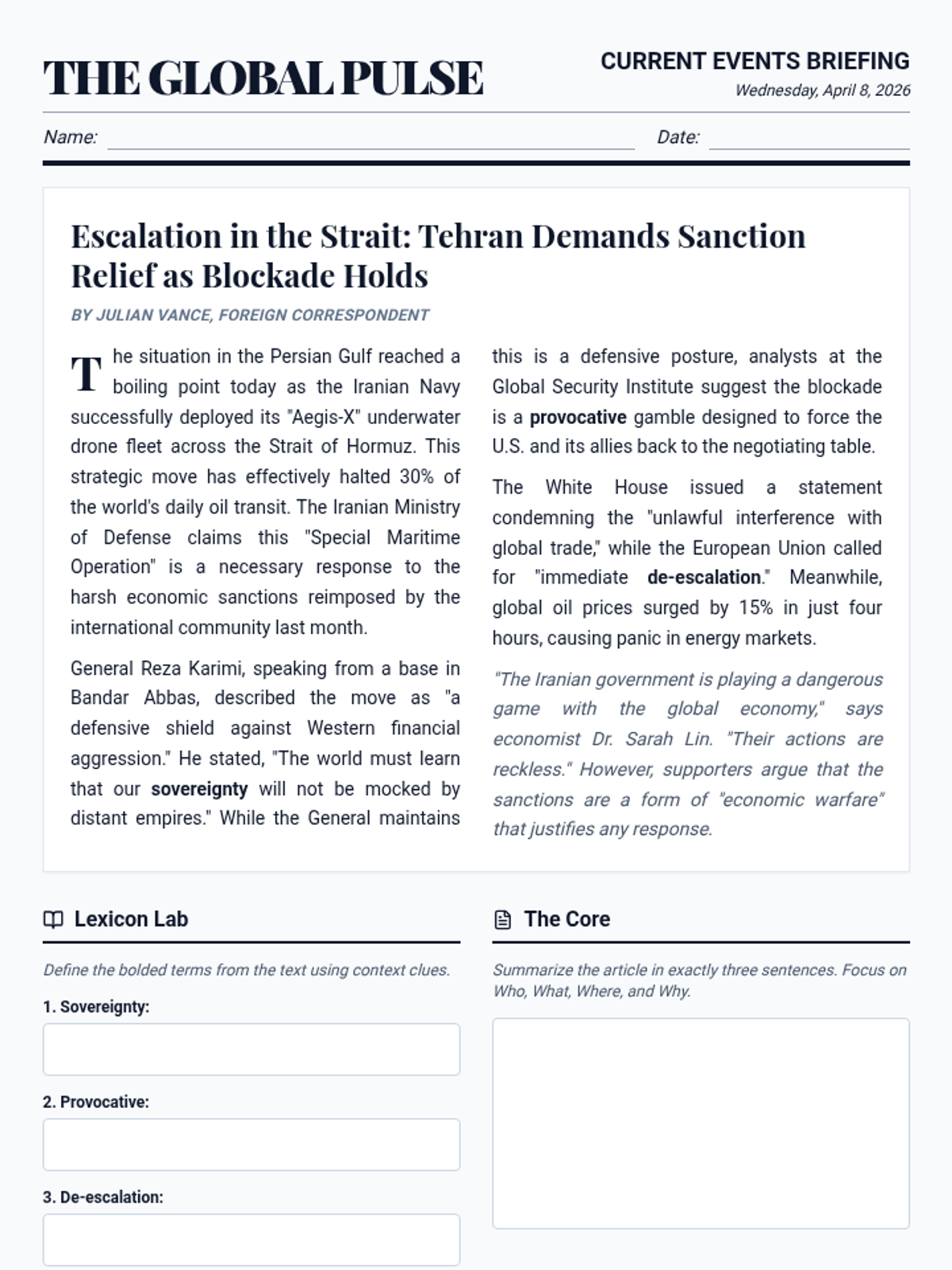
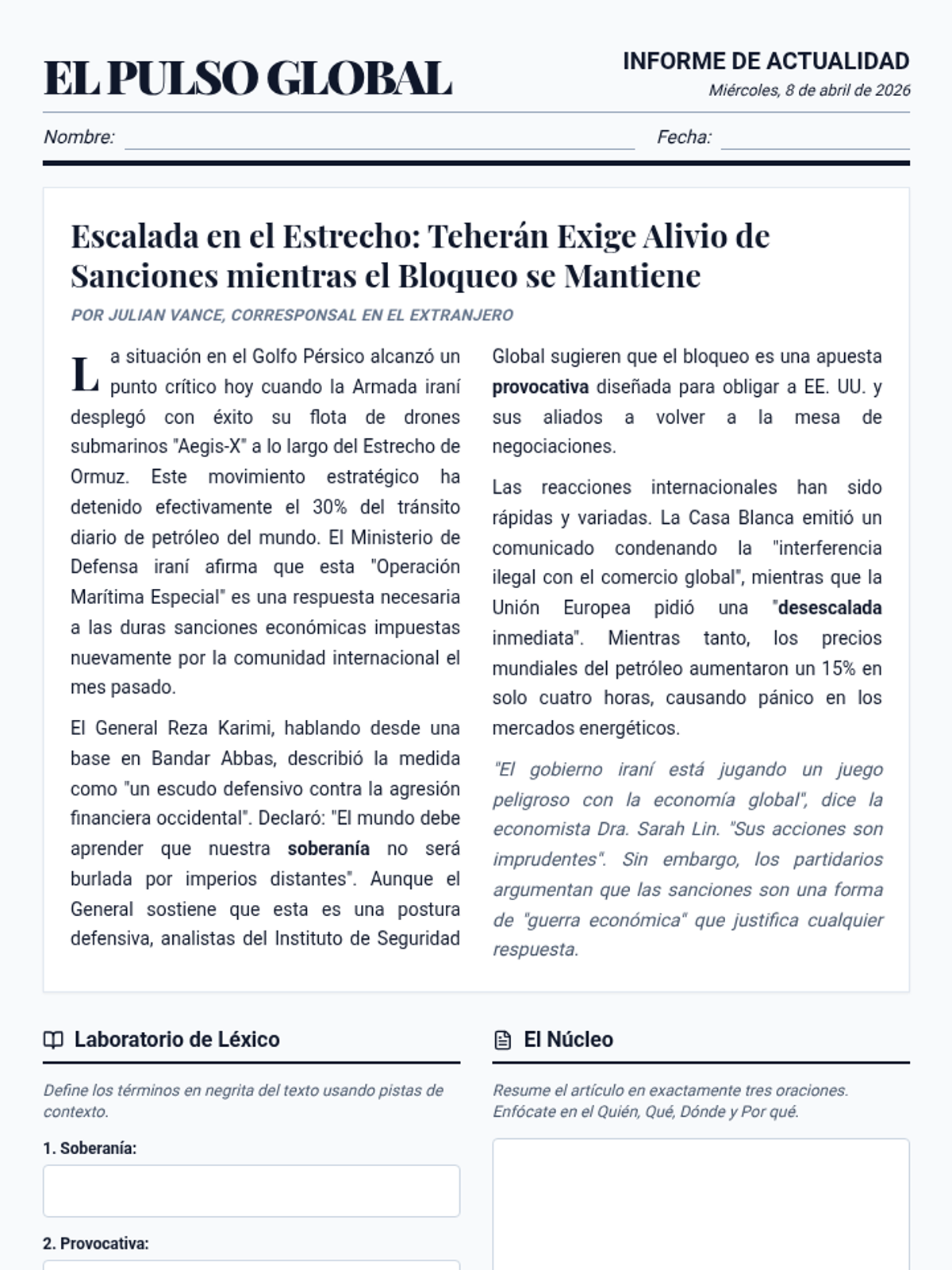
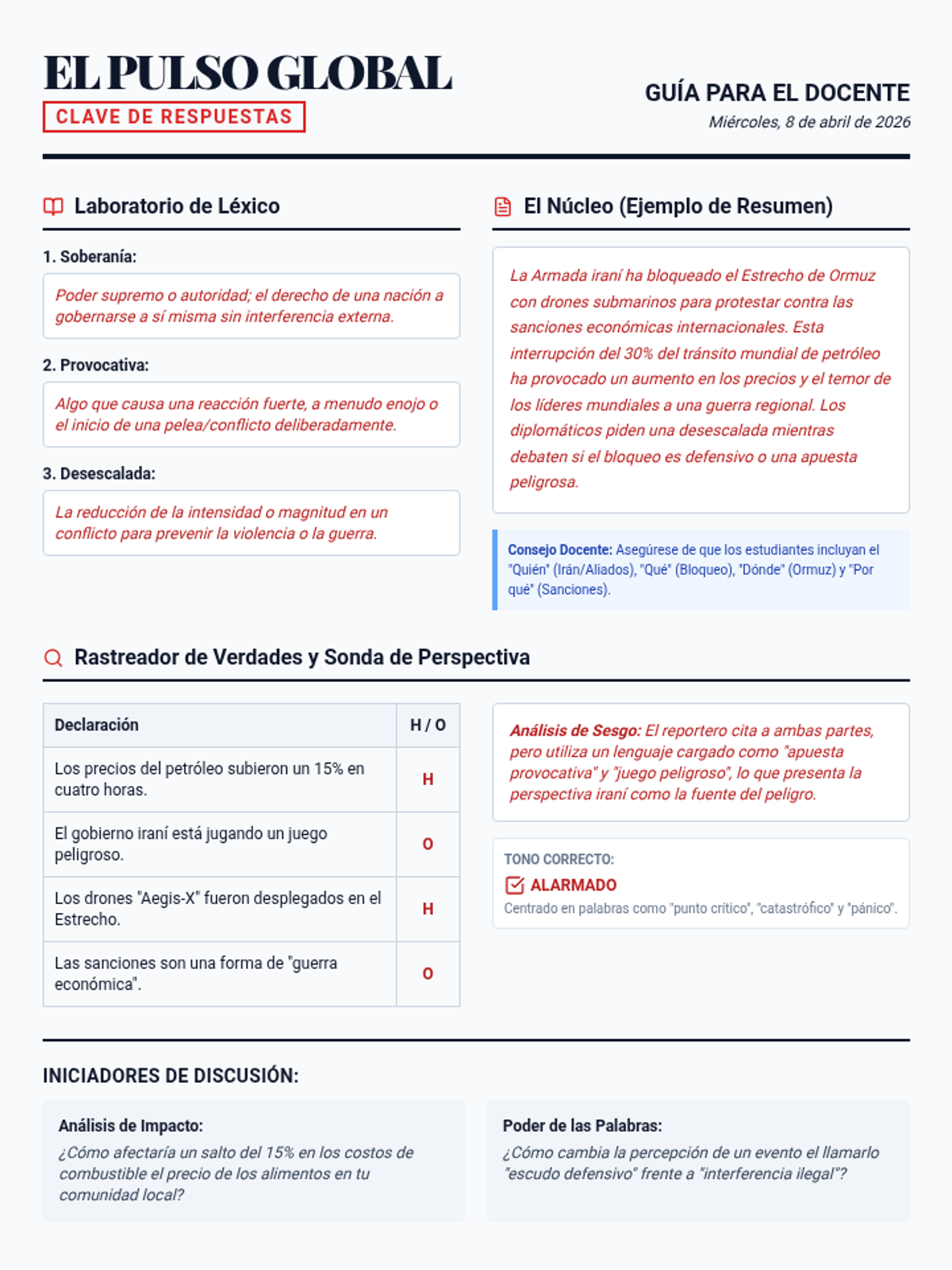
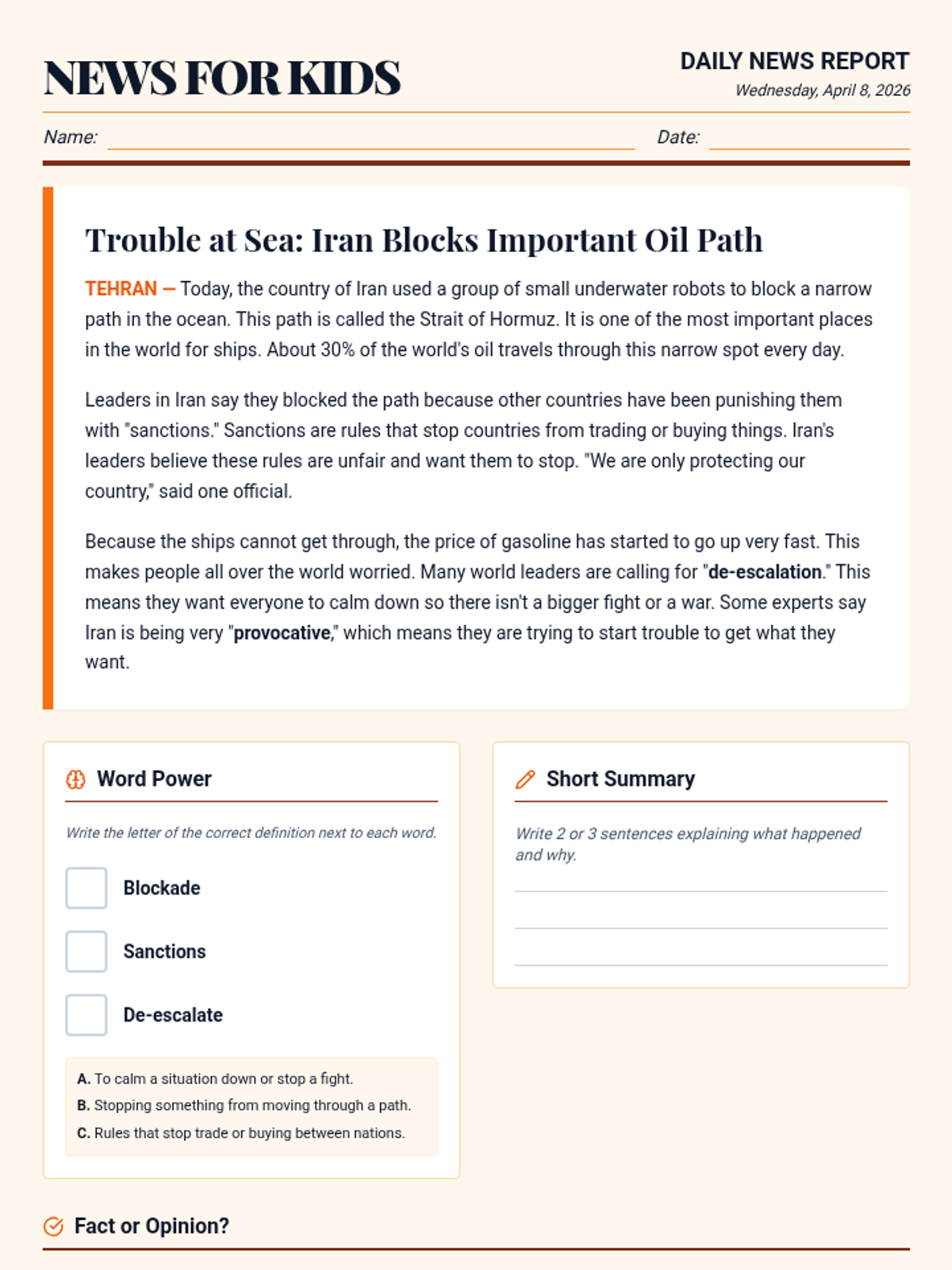
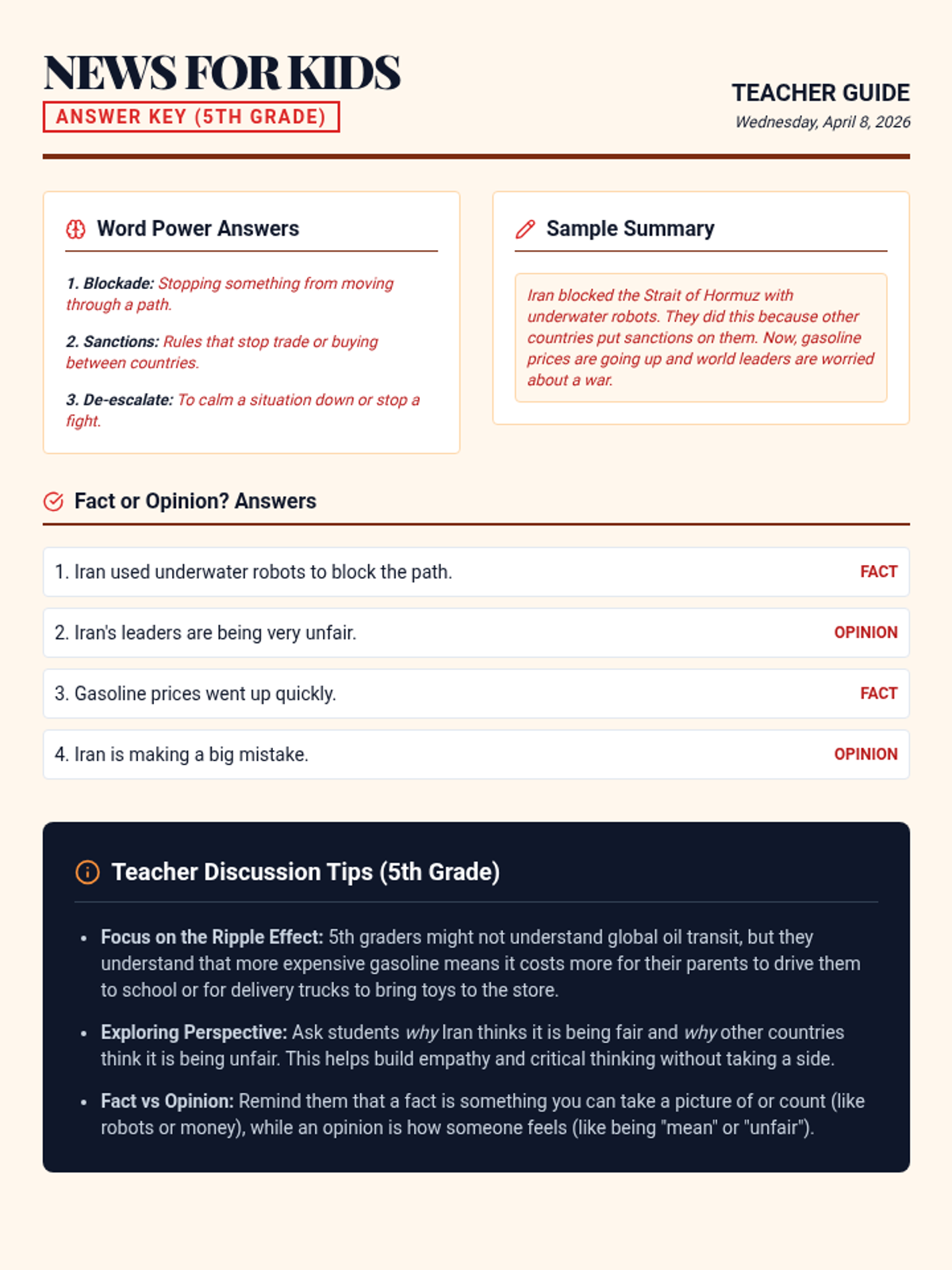
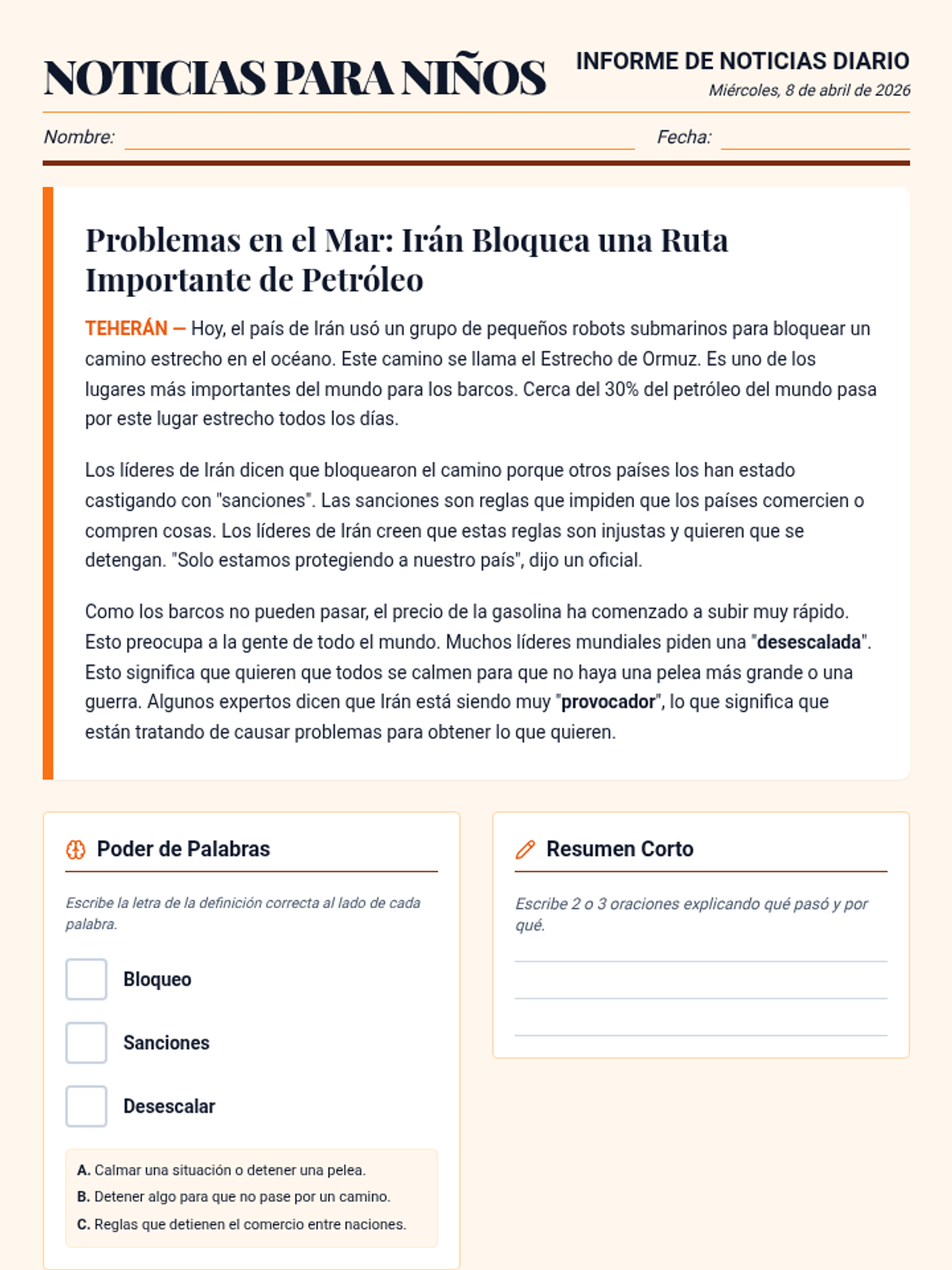
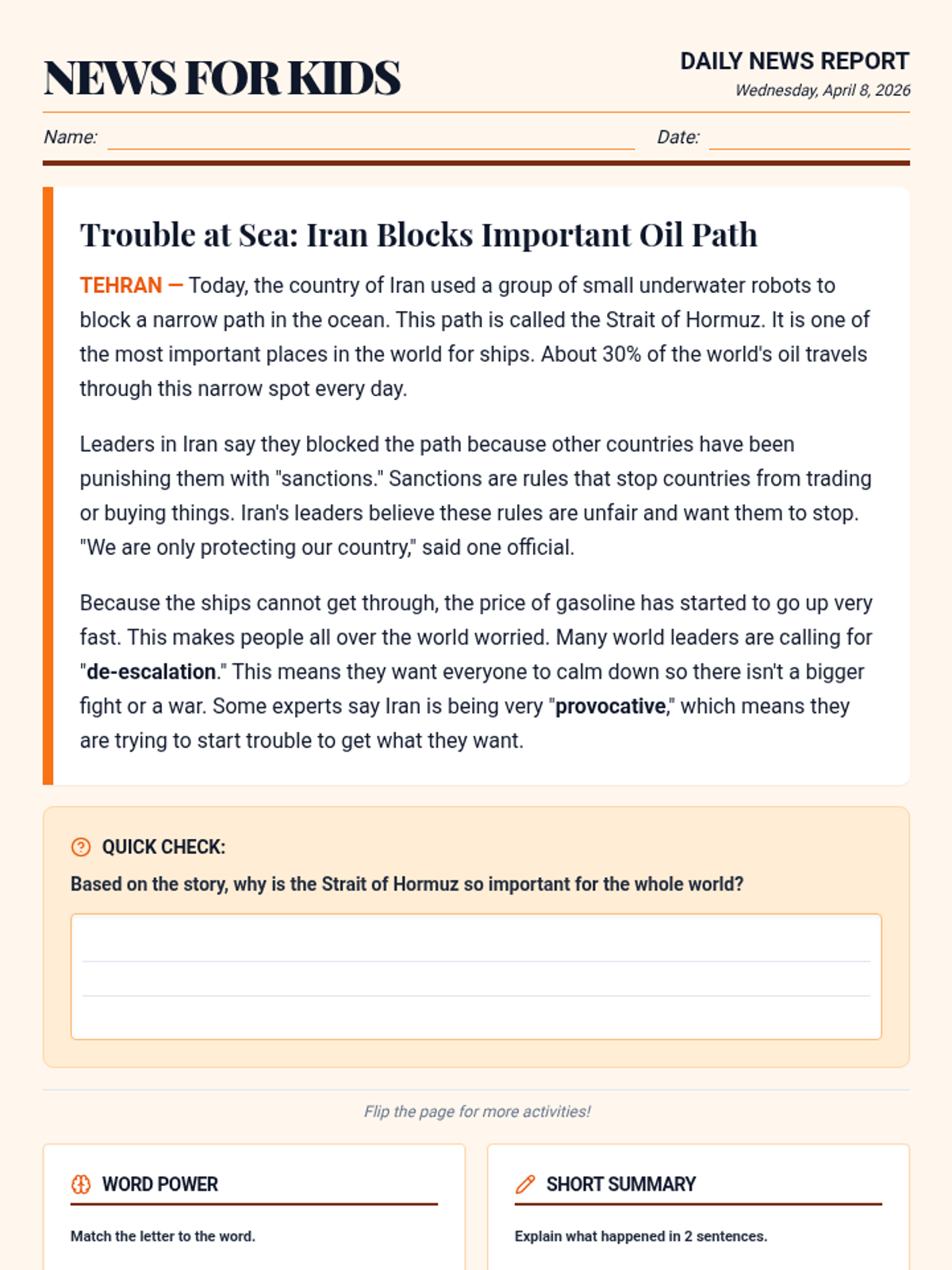
A deep dive into analyzing current events through a fictional 2026 geopolitical conflict, focusing on media literacy skills like bias detection and summarization.
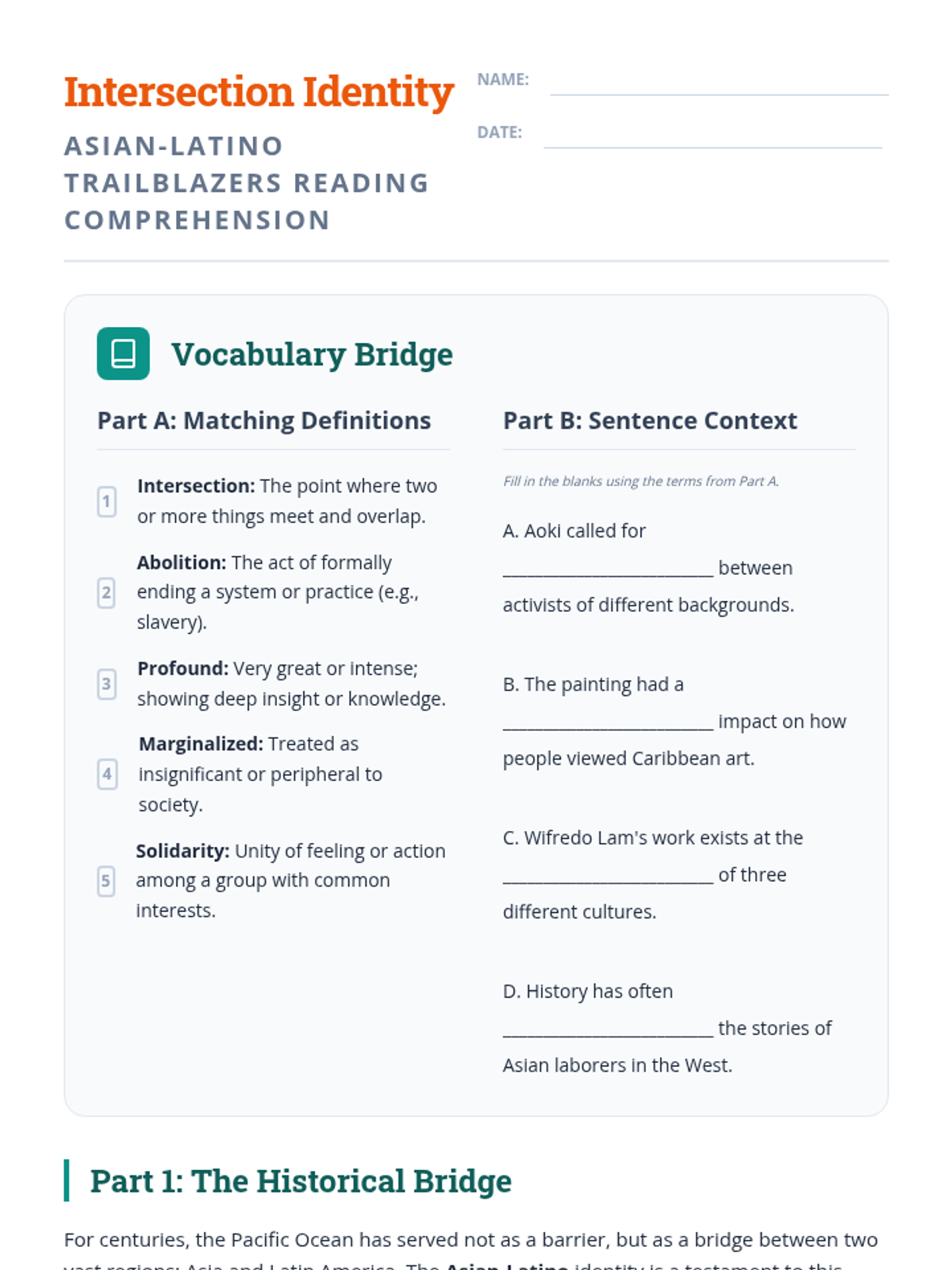
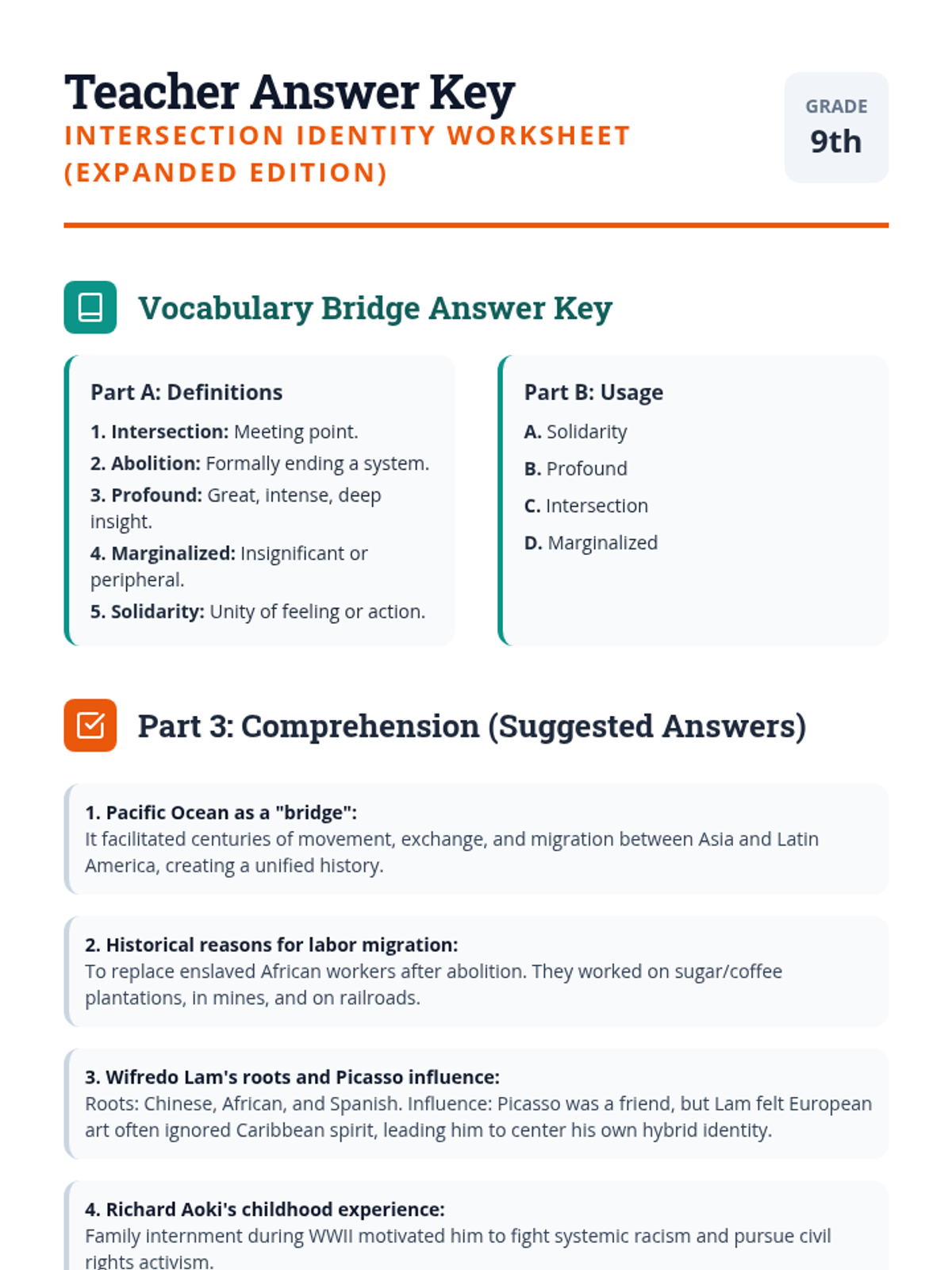
An exploration of Asian-Latino history and contemporary figures, highlighting their unique contributions to global culture and social justice.
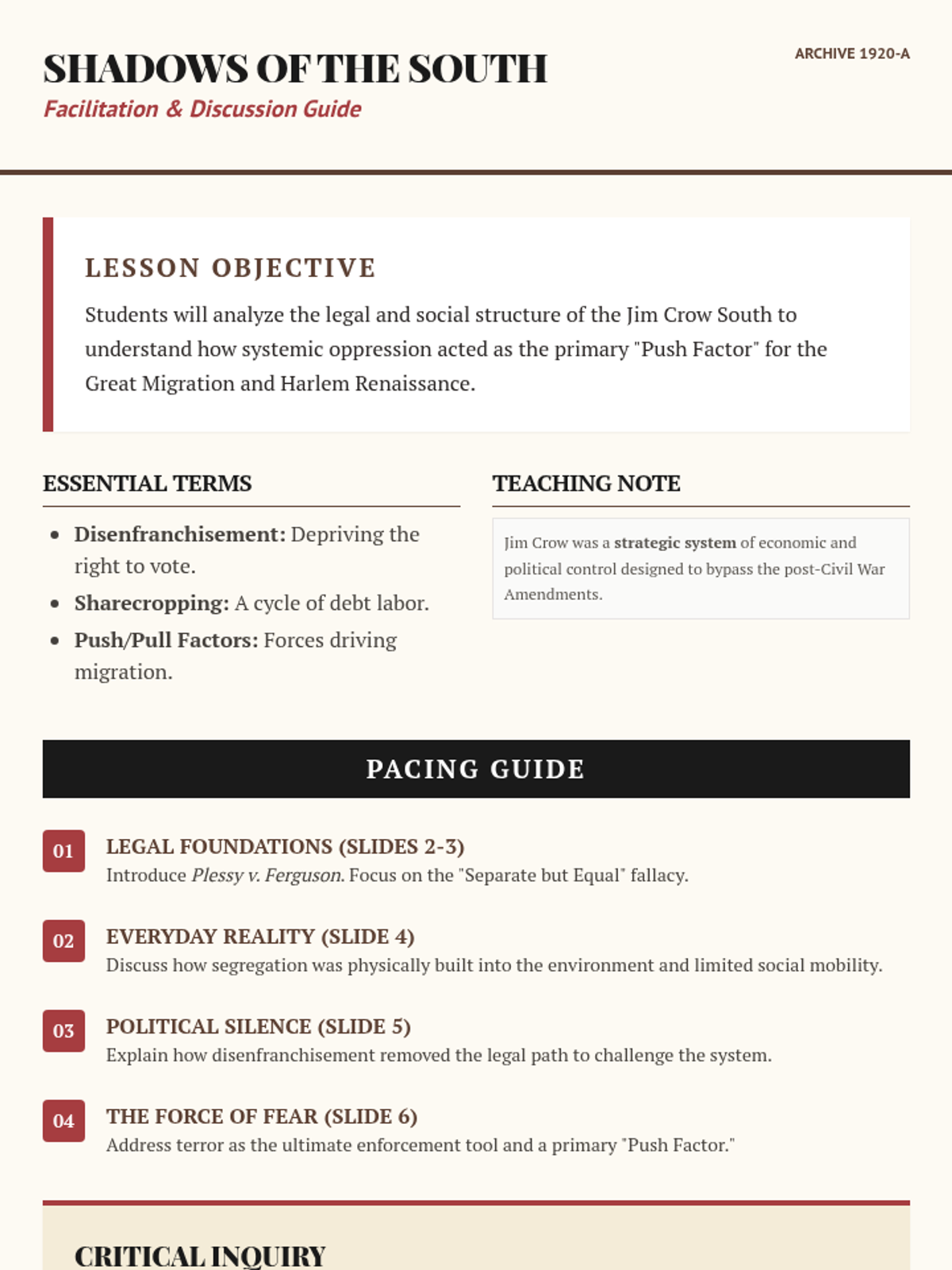
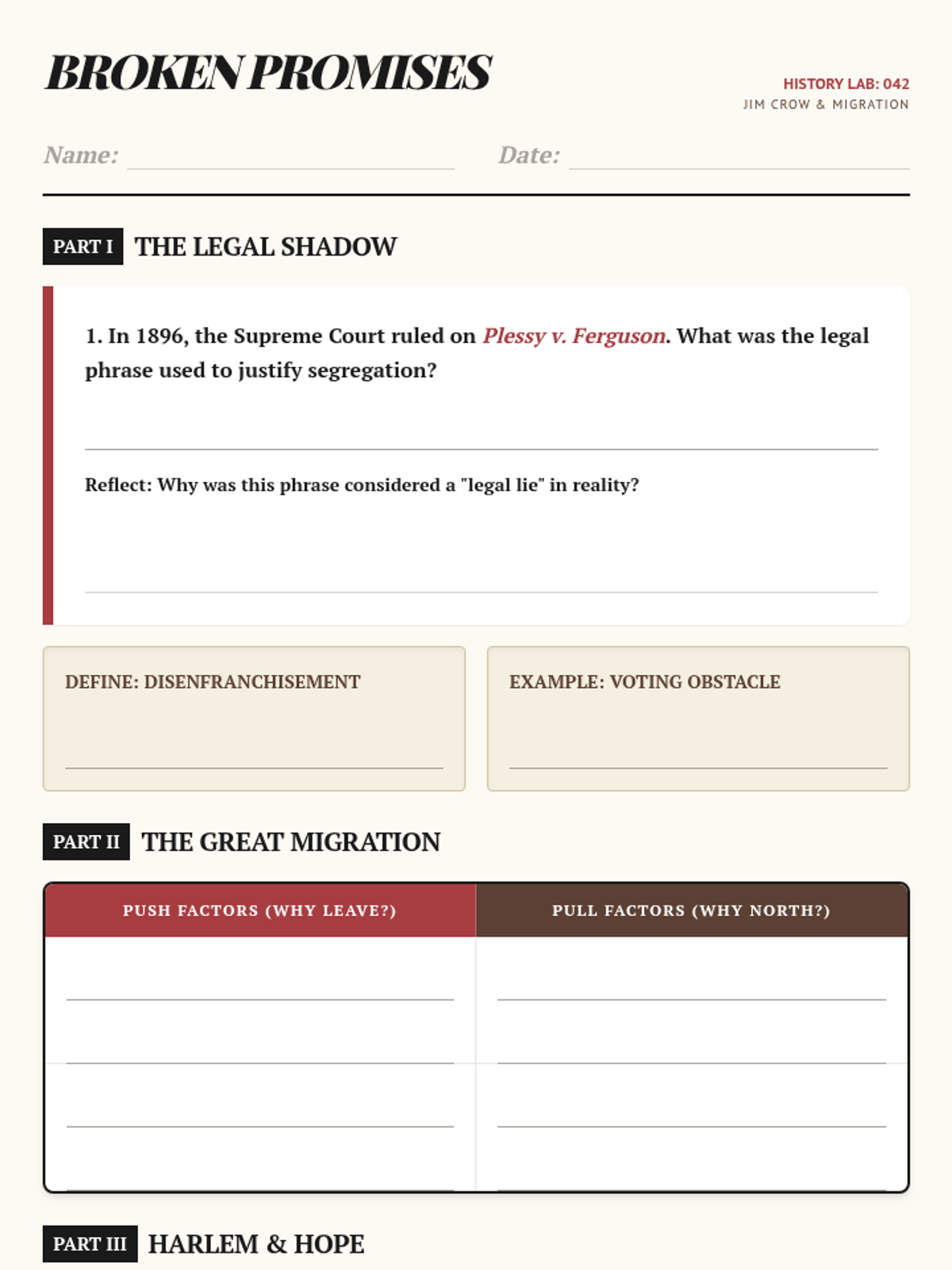
A foundational exploration of Jim Crow laws, their impact on Black American life, and how they served as the primary catalyst for the Great Migration and the Harlem Renaissance.
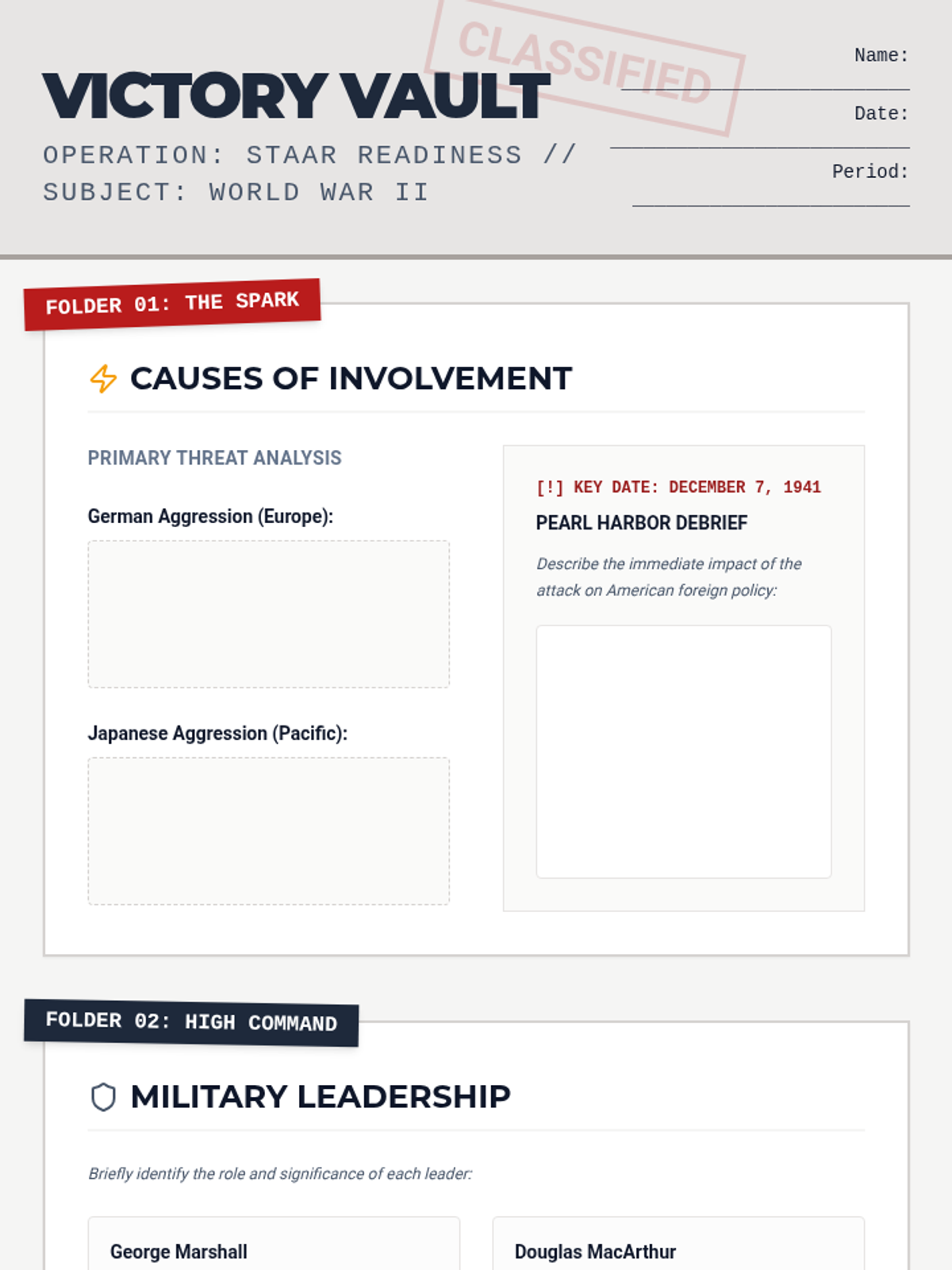
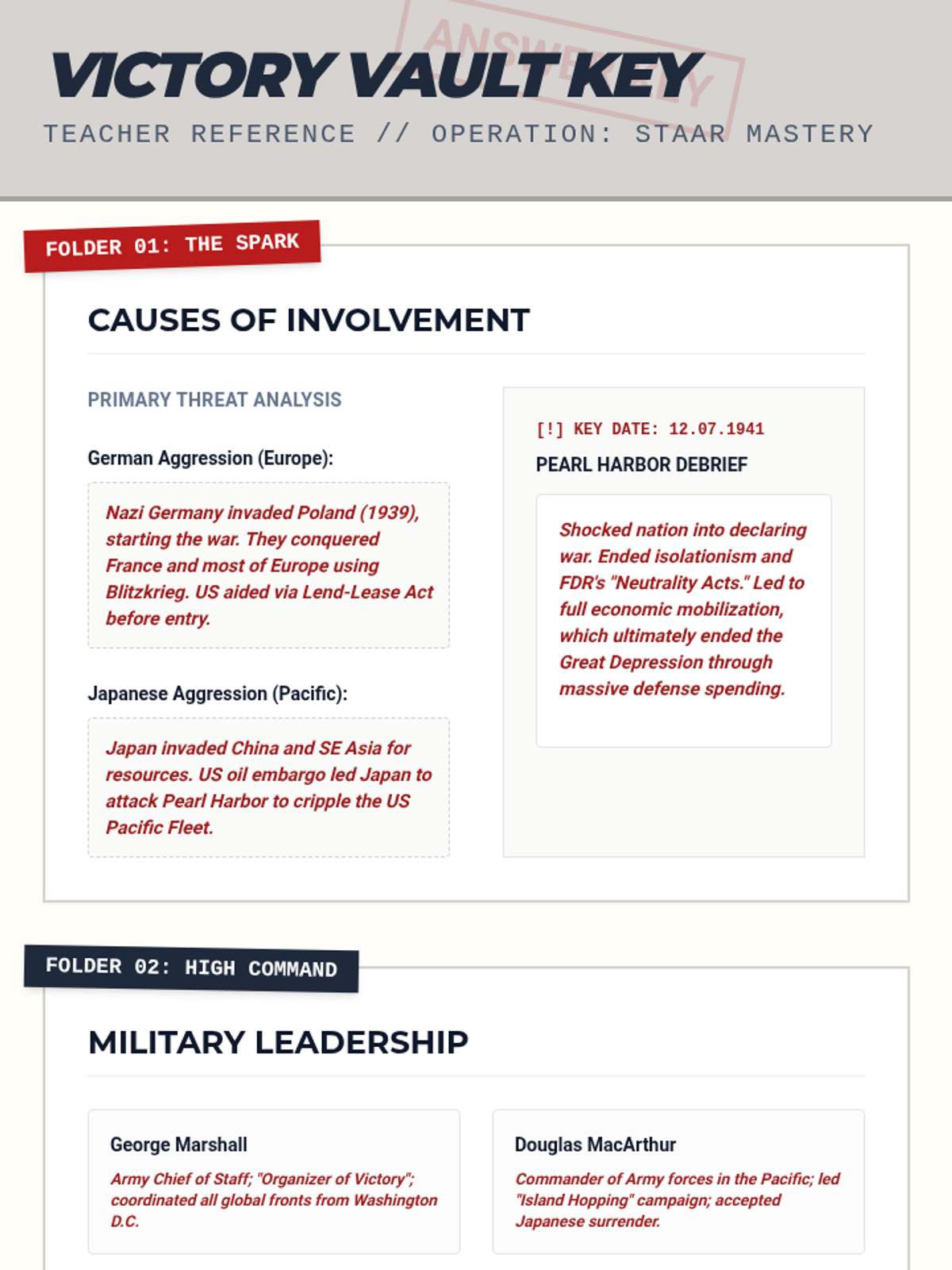
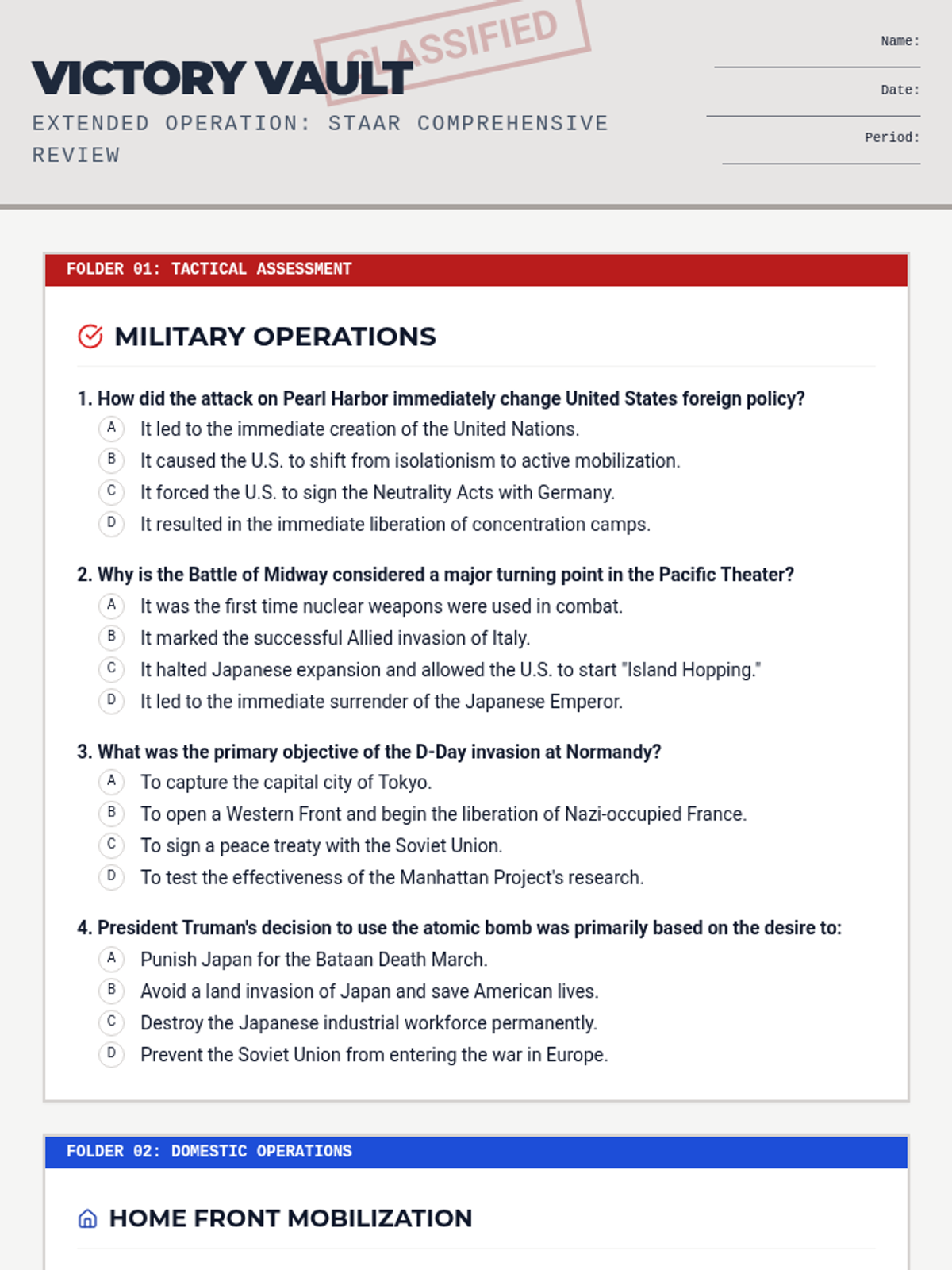
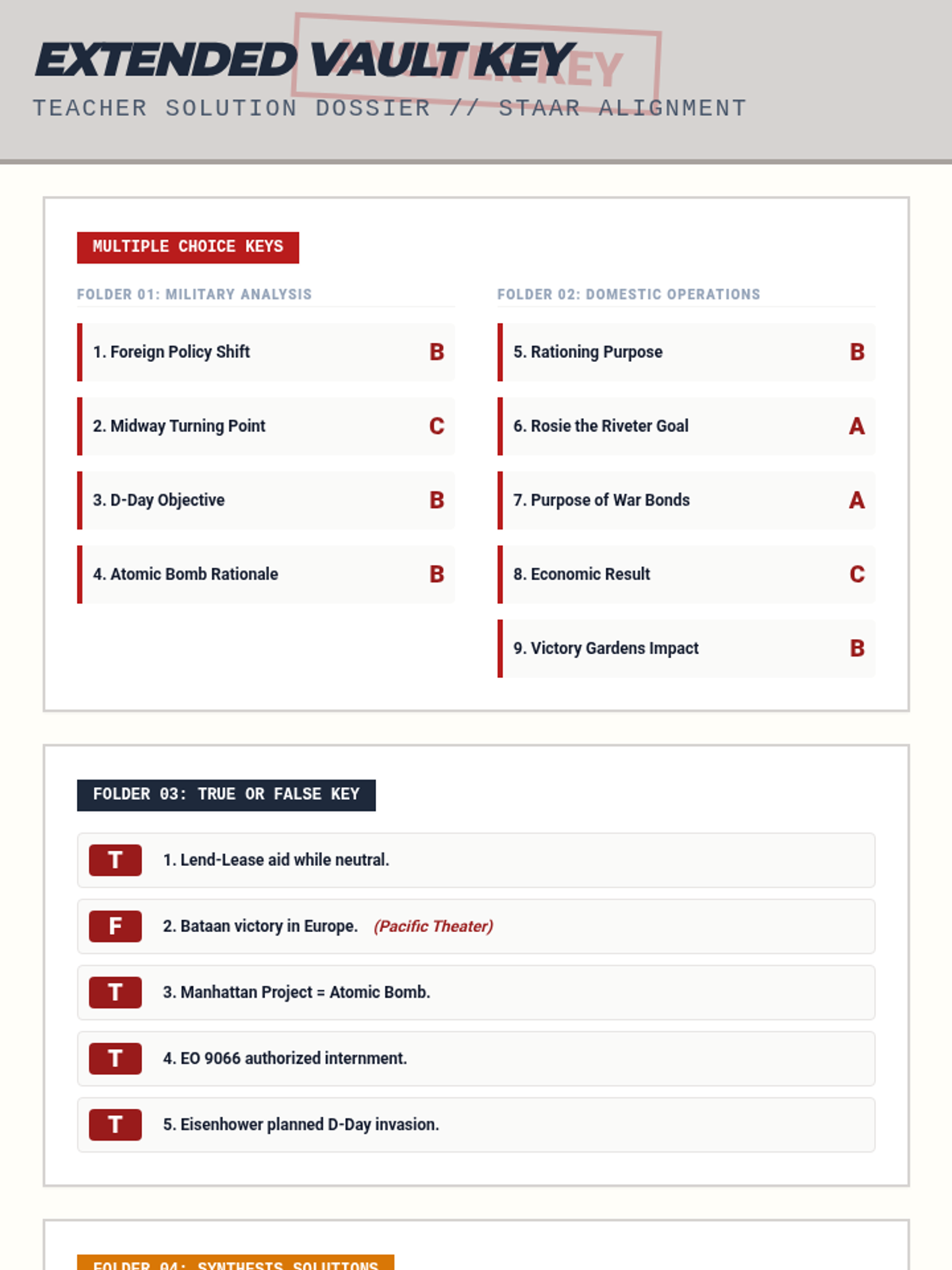
A comprehensive STAAR-aligned review of World War II, structured as a "Top Secret" military dossier. Students will analyze key leaders, turning point battles, and home front mobilization through primary sources and graphic organizers.
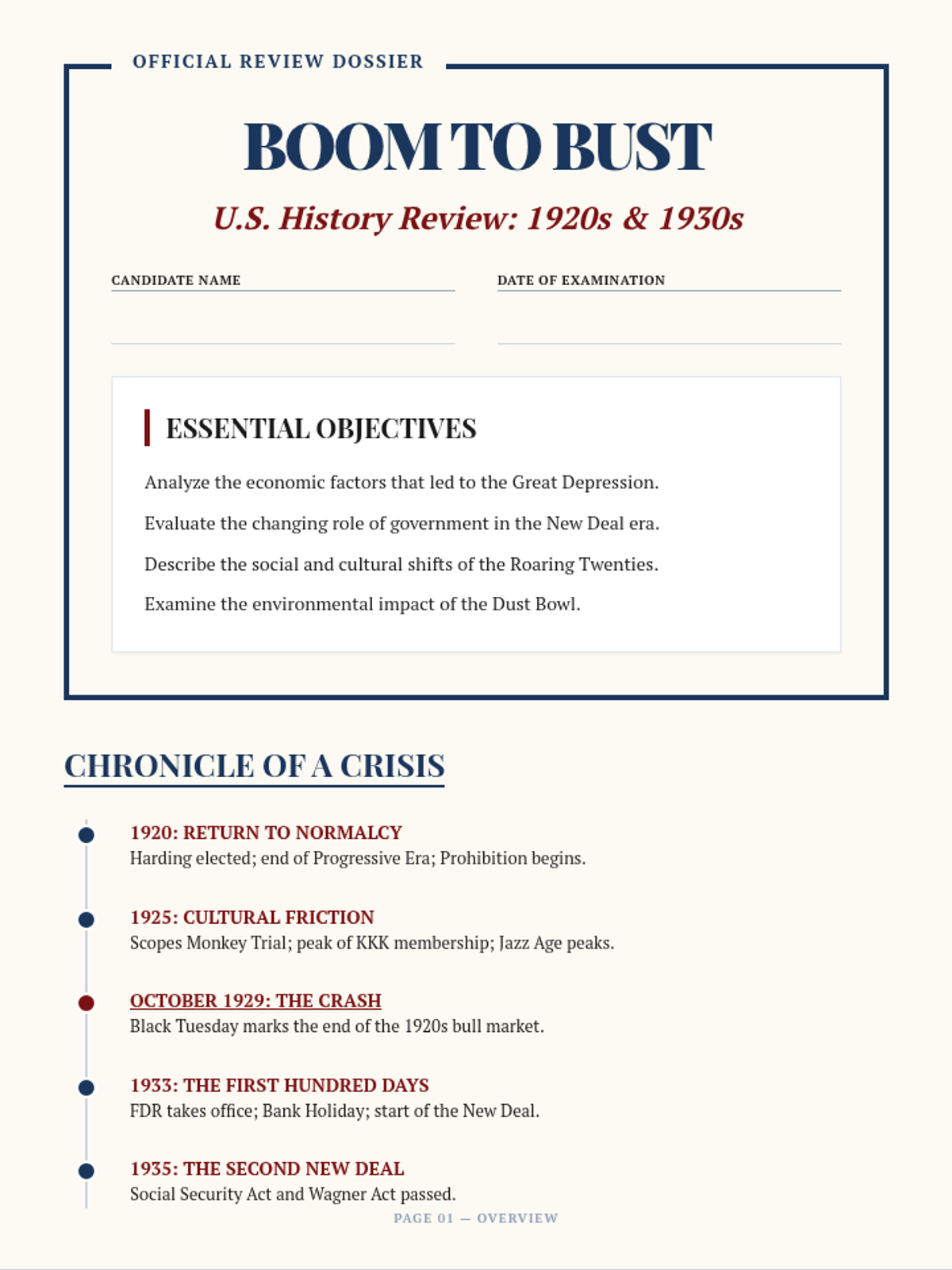
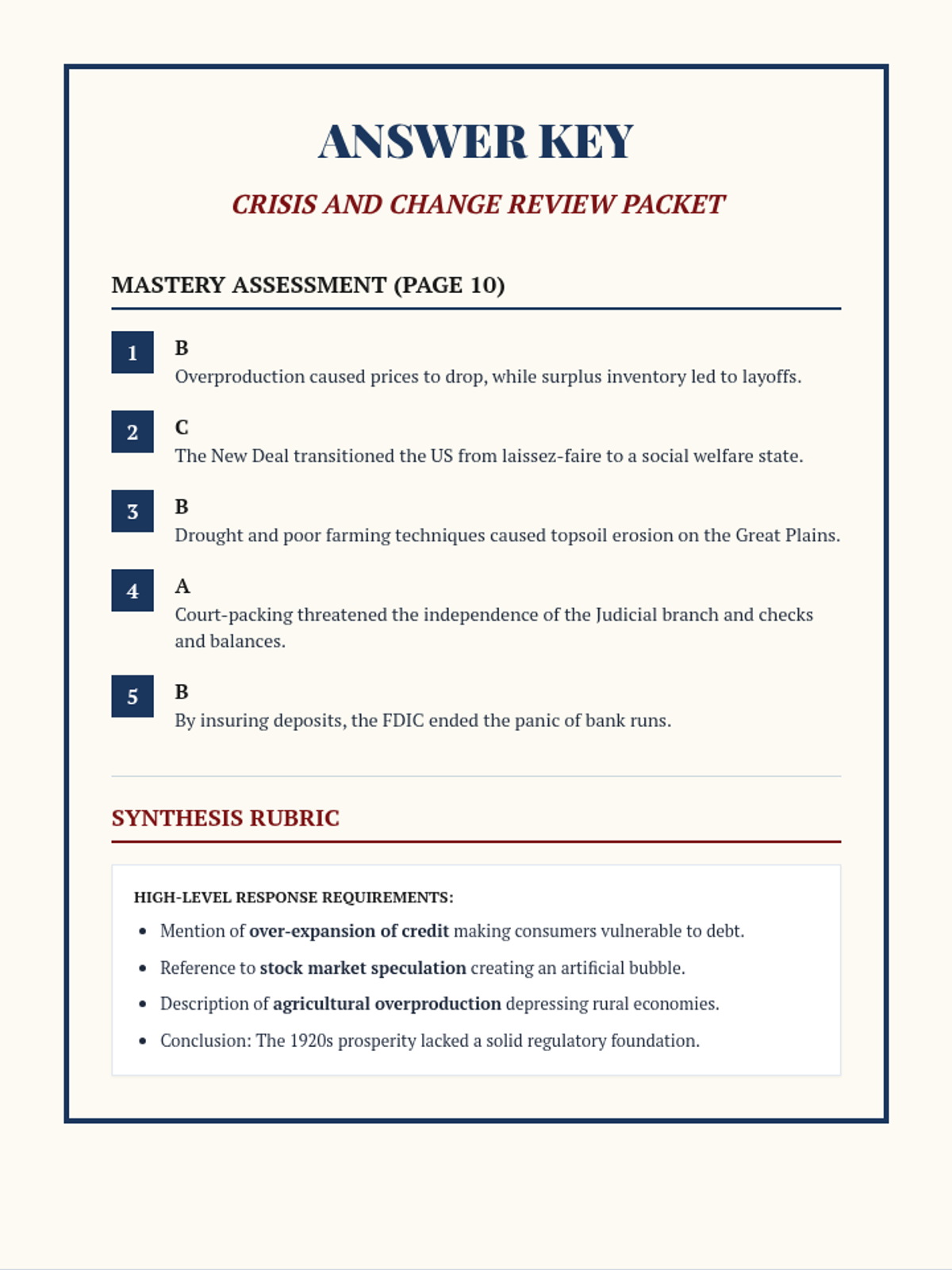
An advanced, 10-page study guide covering the economic and social transformations of the 1920s and 1930s, with a deep dive into the structural causes of the Great Depression and the federal response through the New Deal.
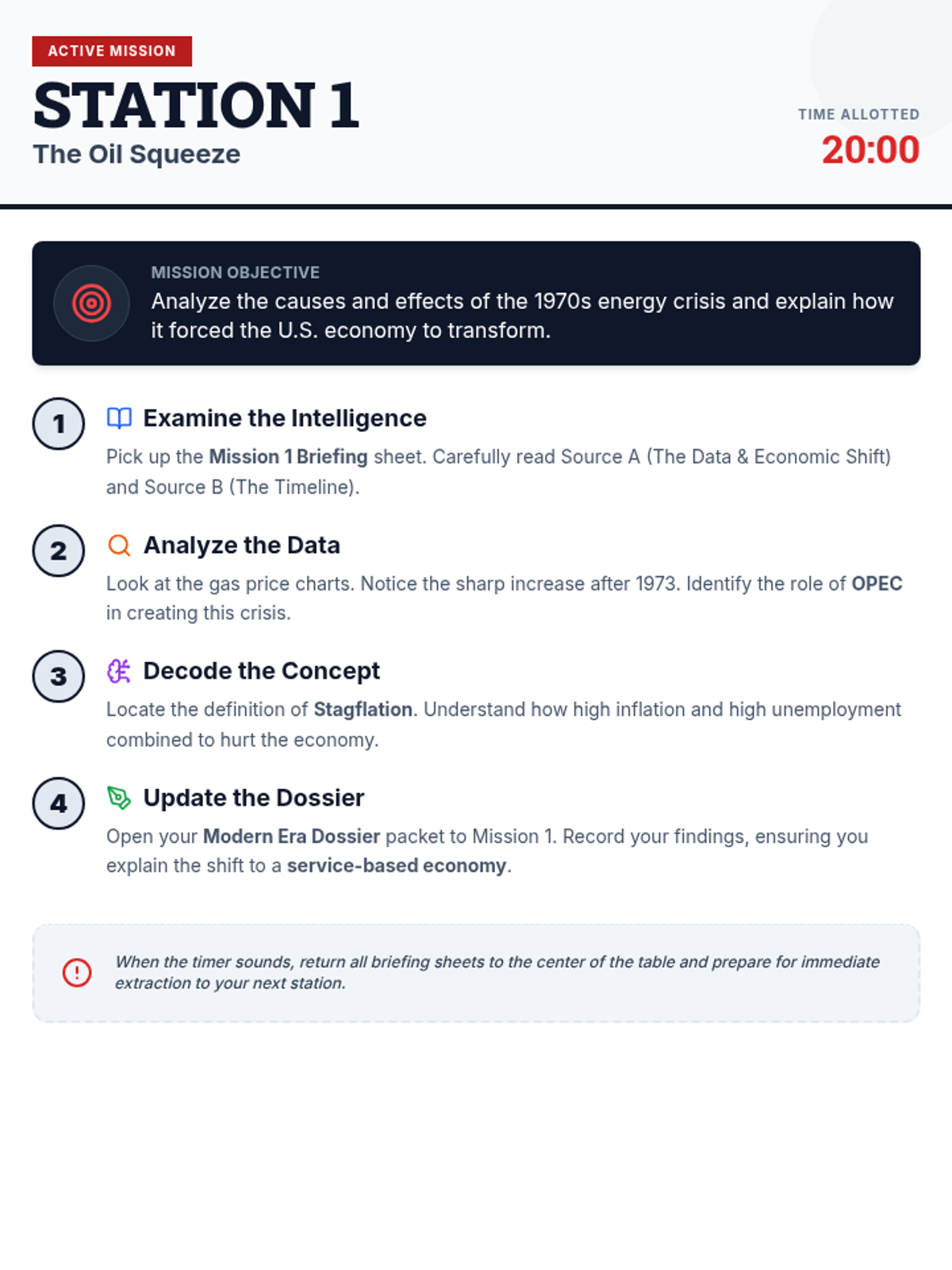
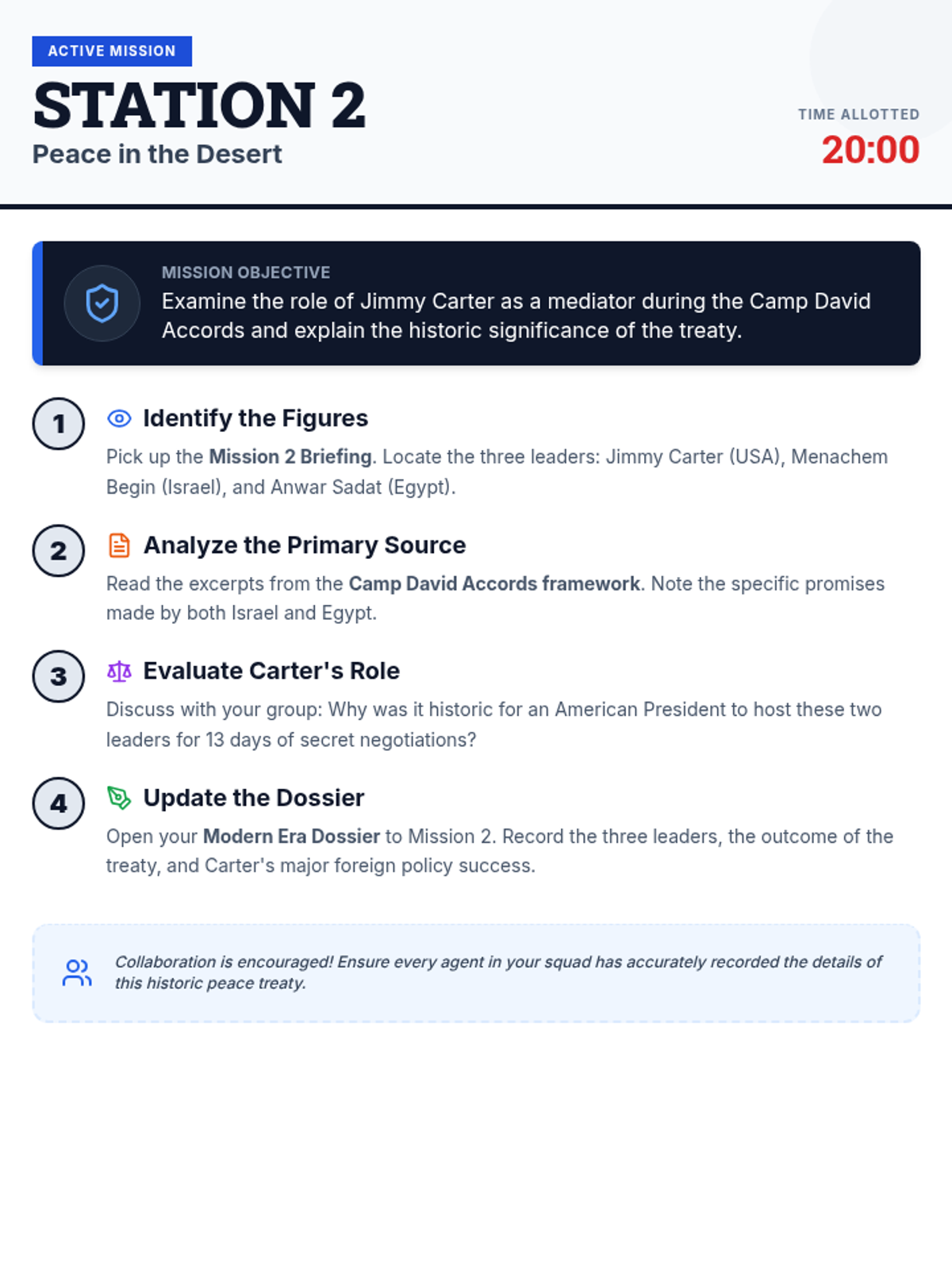
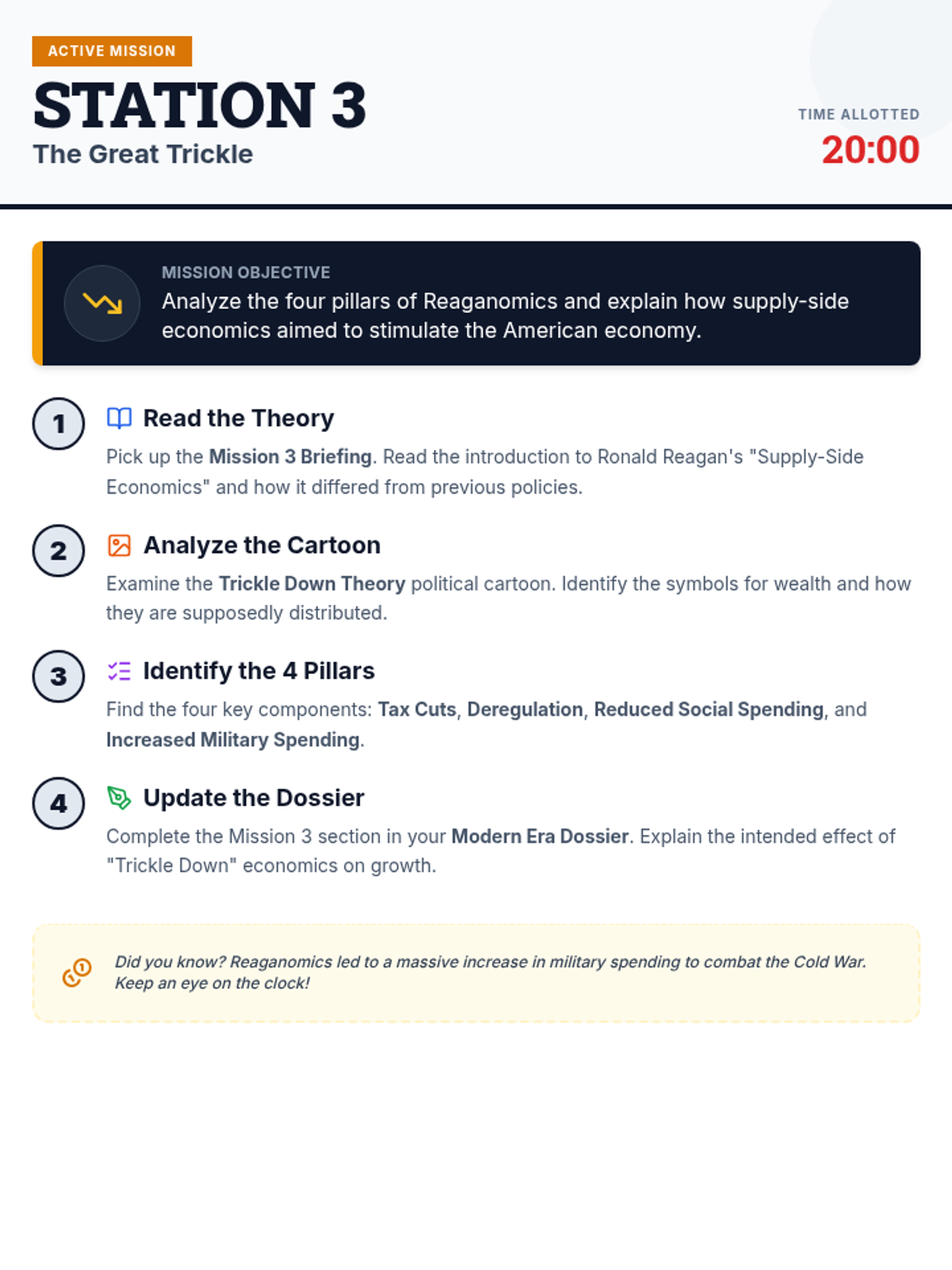
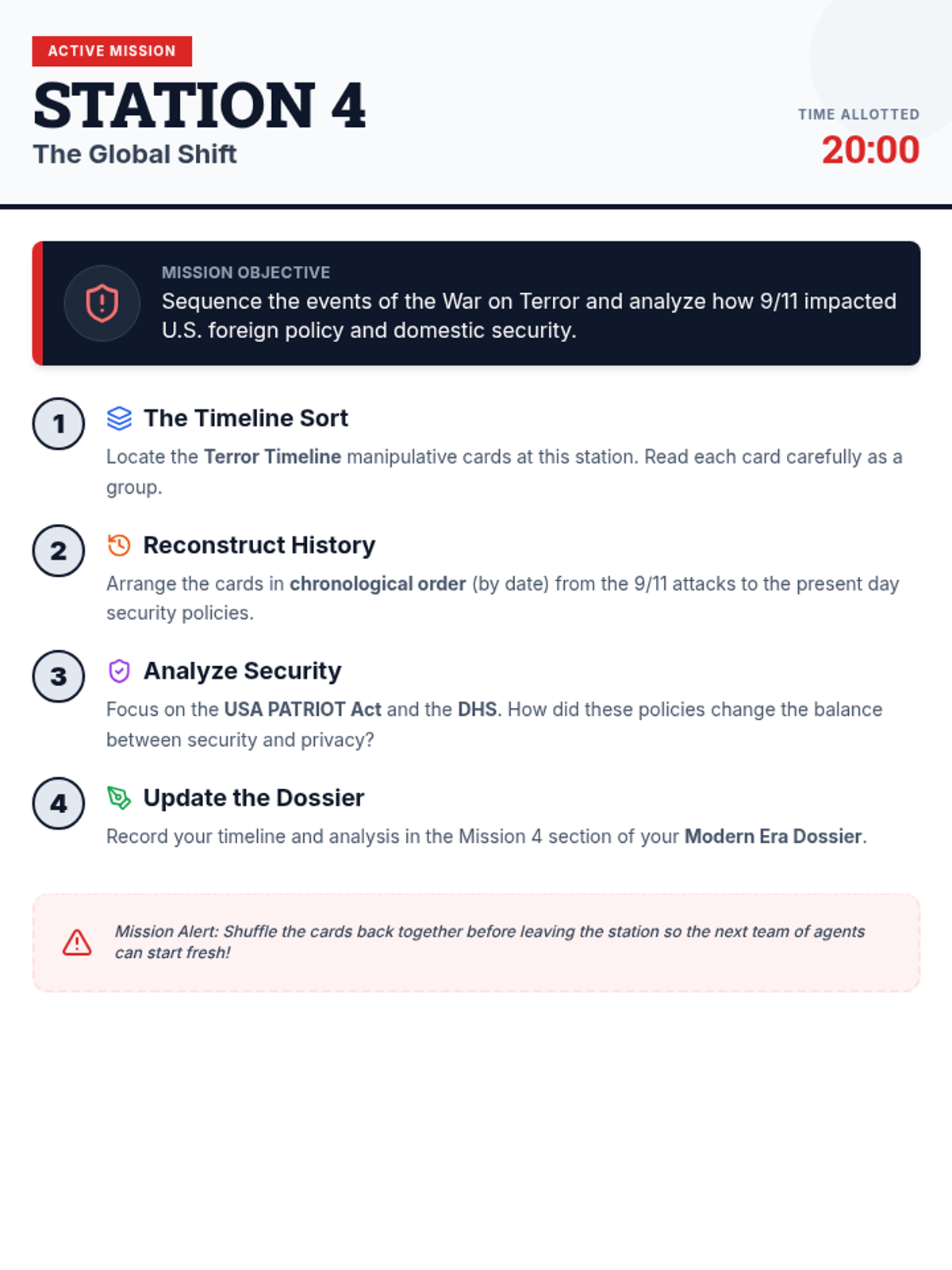
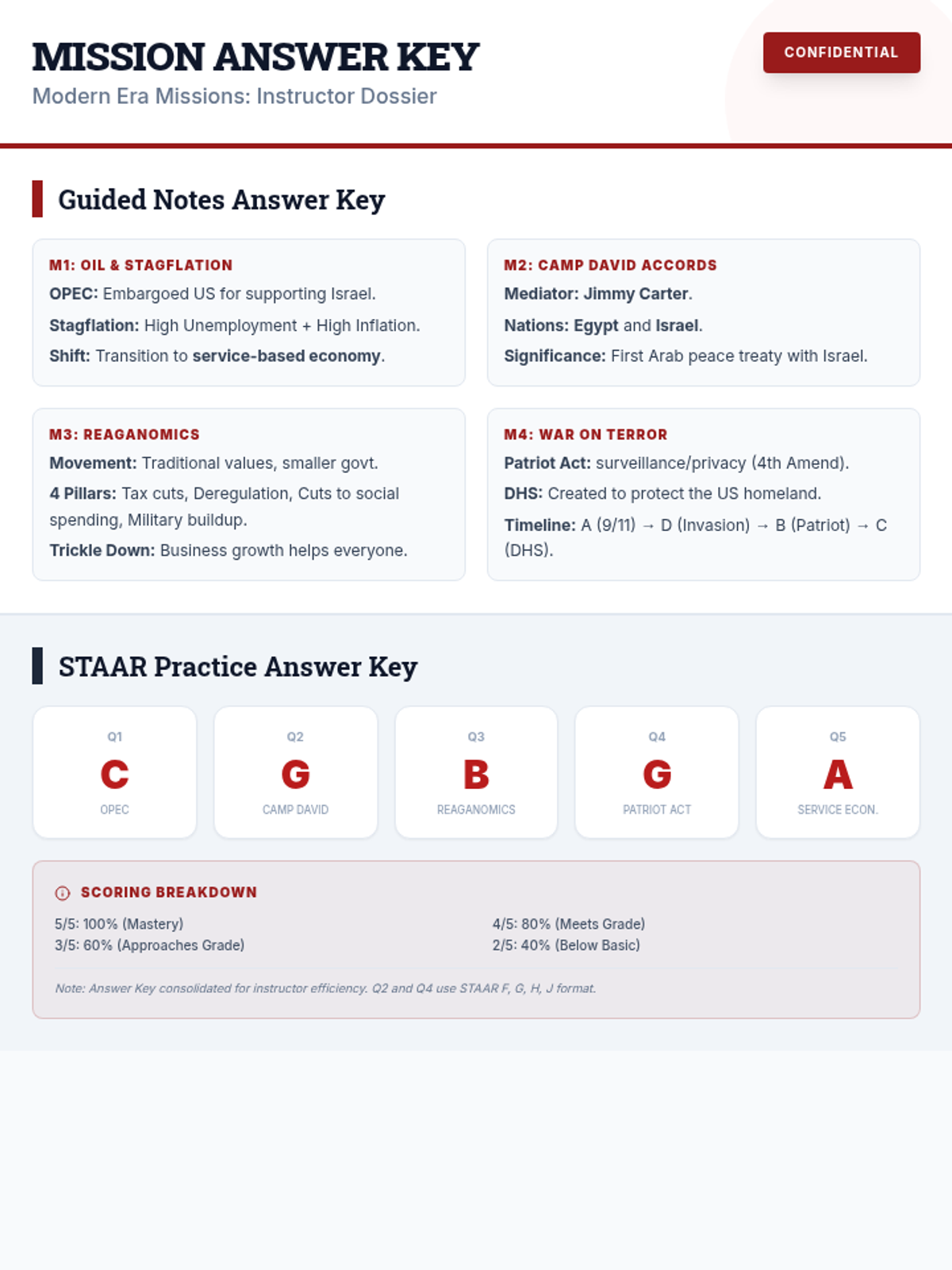
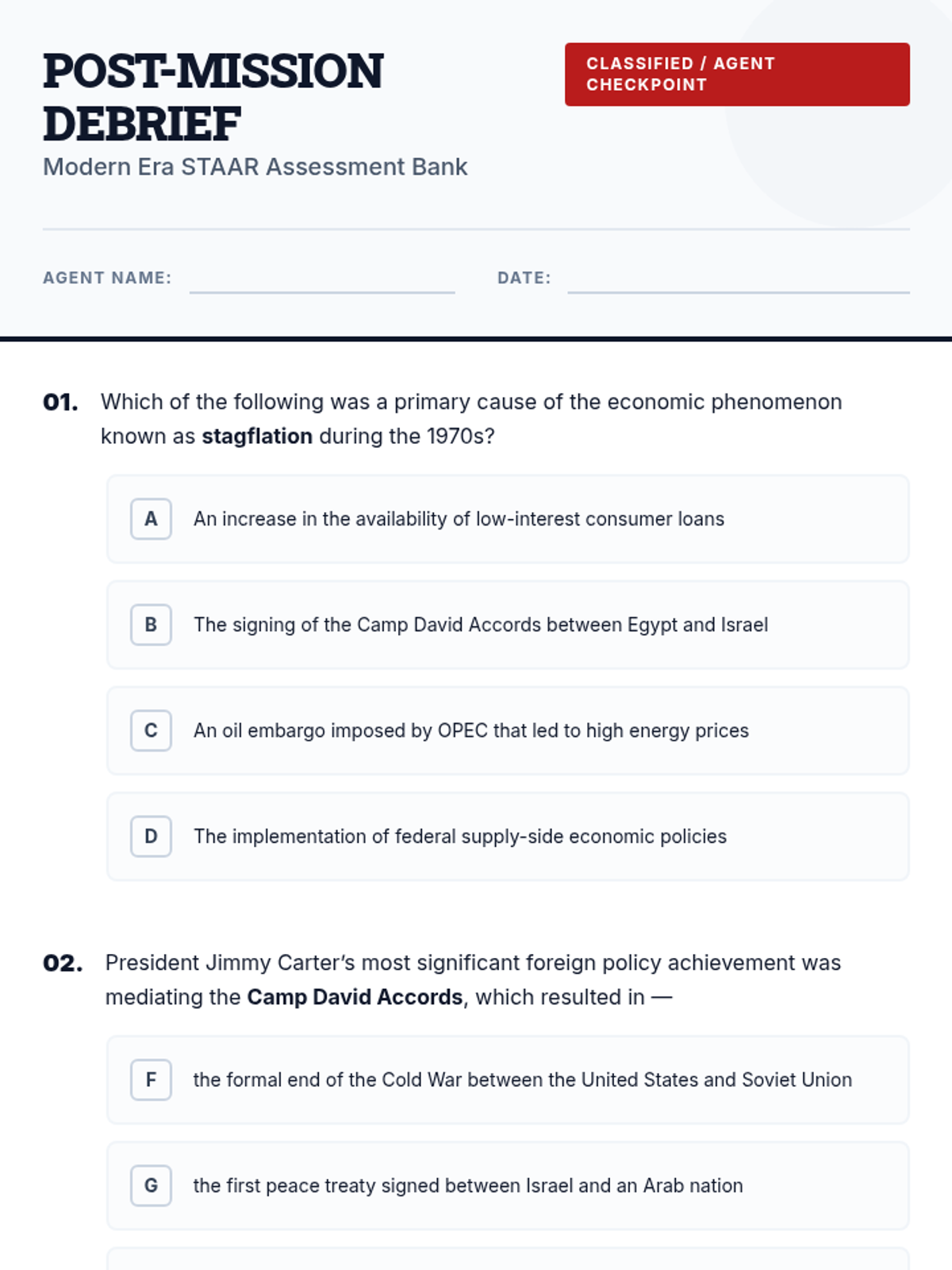
A 100-minute station-based lesson covering pivotal events from the 1970s to the modern era, including Stagflation, the Camp David Accords, Reaganomics, and the War on Terror. Students rotate through four 20-minute missions using primary sources, political cartoons, data mapping, and manipulatives to master STAAR-aligned content.
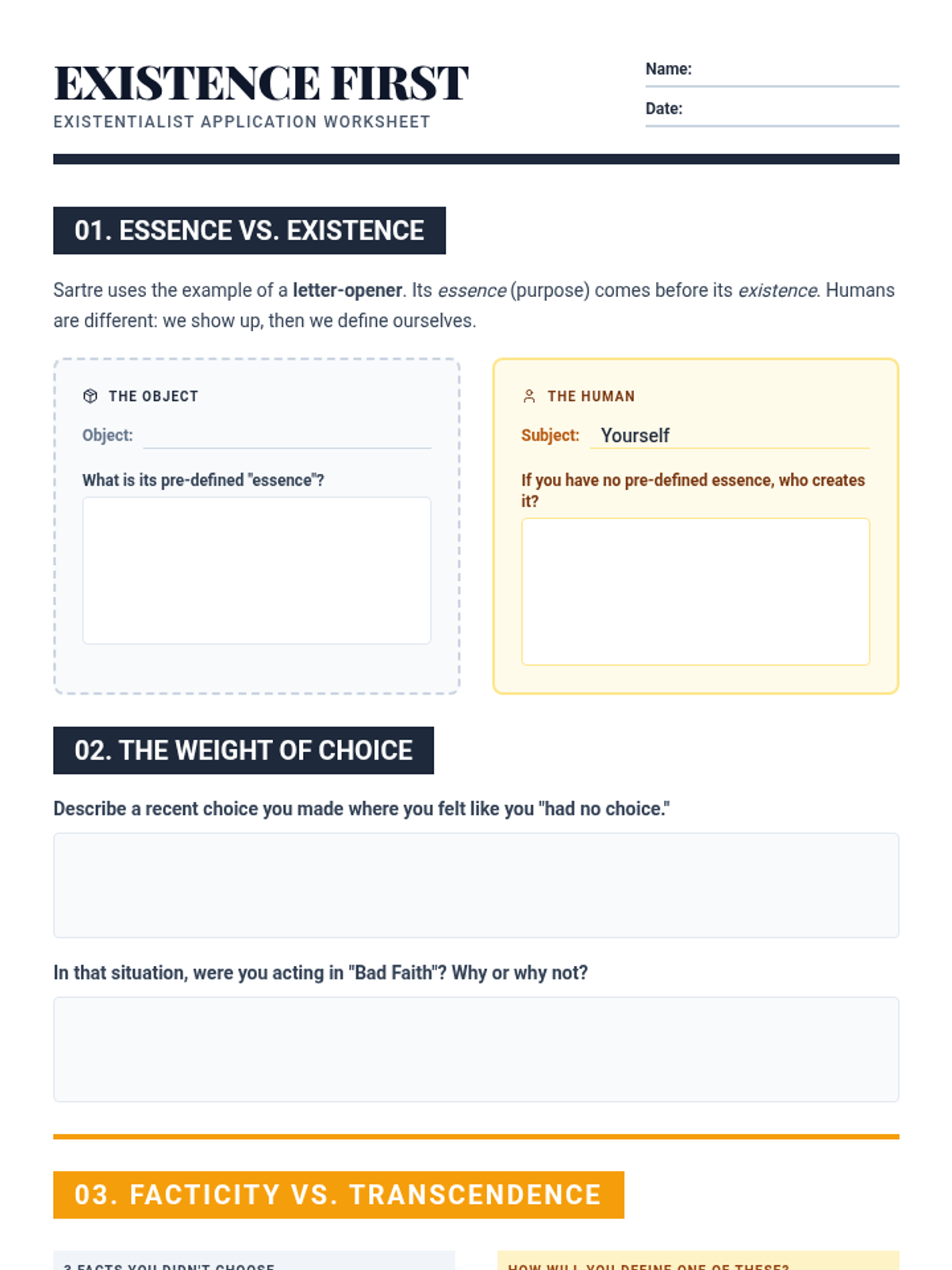
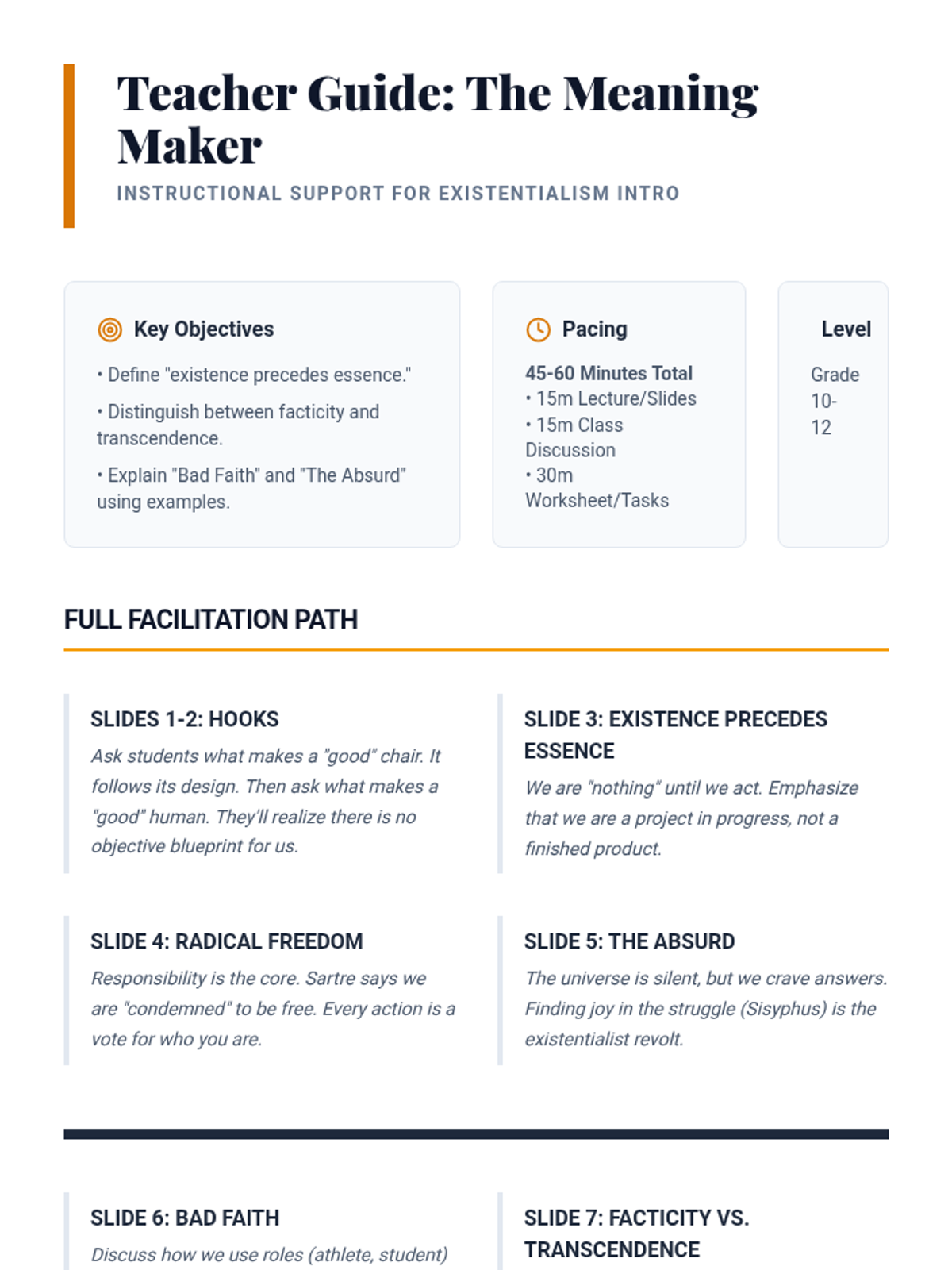
An introductory exploration of existentialist philosophy, focusing on the concepts of radical freedom, existence preceding essence, and the creation of personal meaning in an indifferent universe.
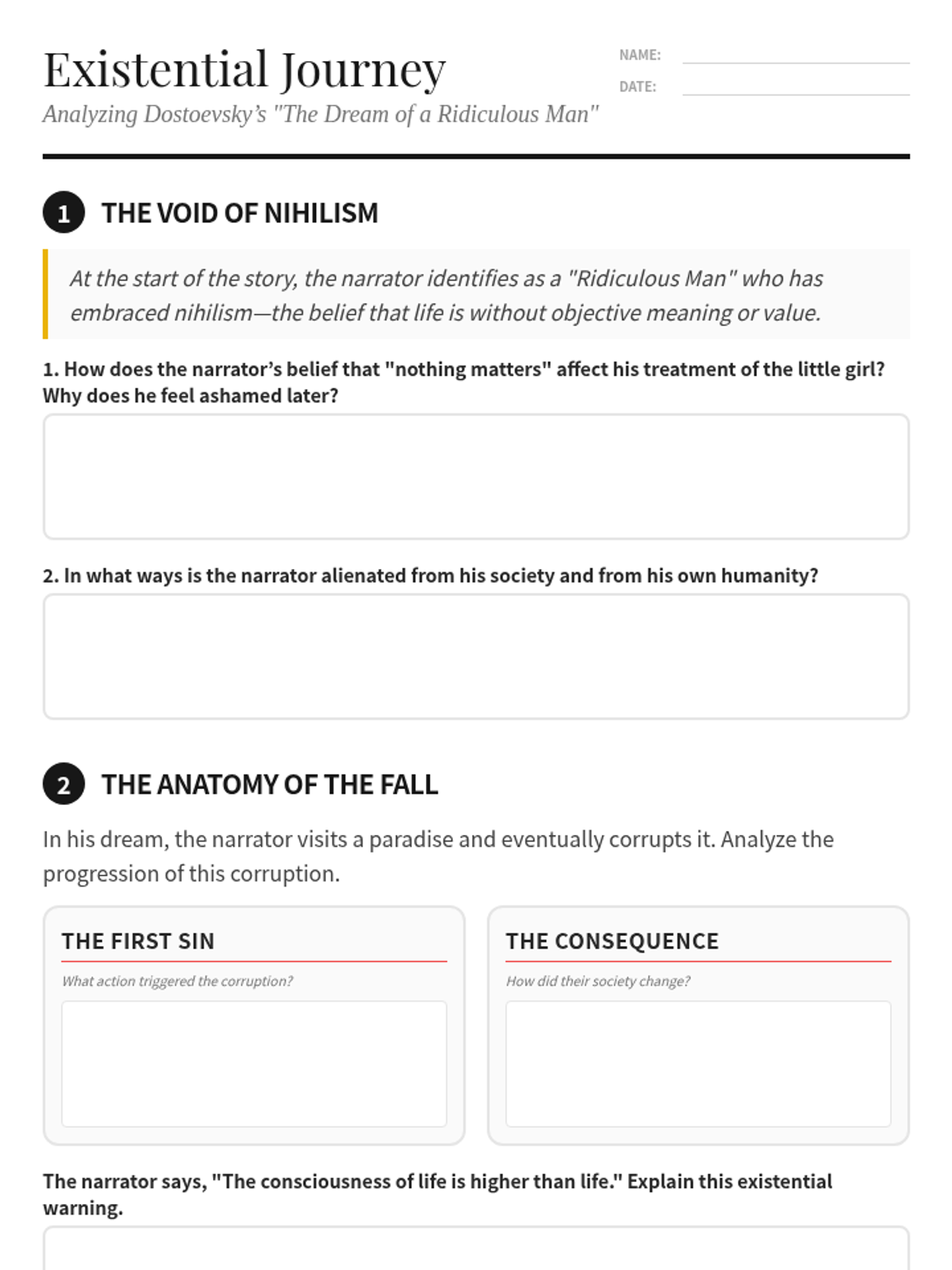
An introductory lesson on existentialist philosophy using Fyodor Dostoevsky's short story 'The Dream of a Ridiculous Man' as a case study. Students explore themes of nihilism, meaning-making, and individual responsibility.
A deep dive into the economic arms race between the US and USSR using a slow-reveal graph routine to build data literacy and historical context.
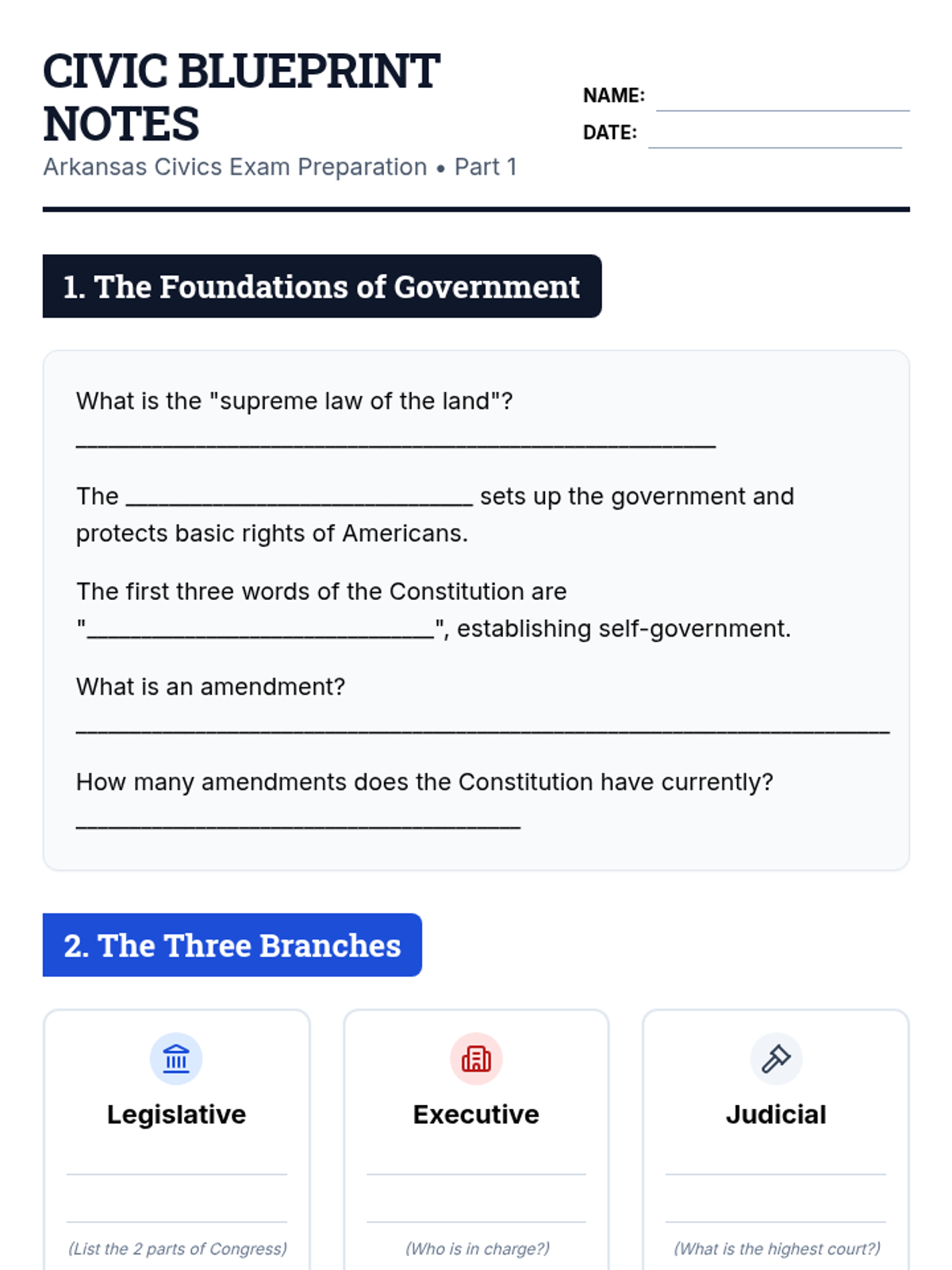
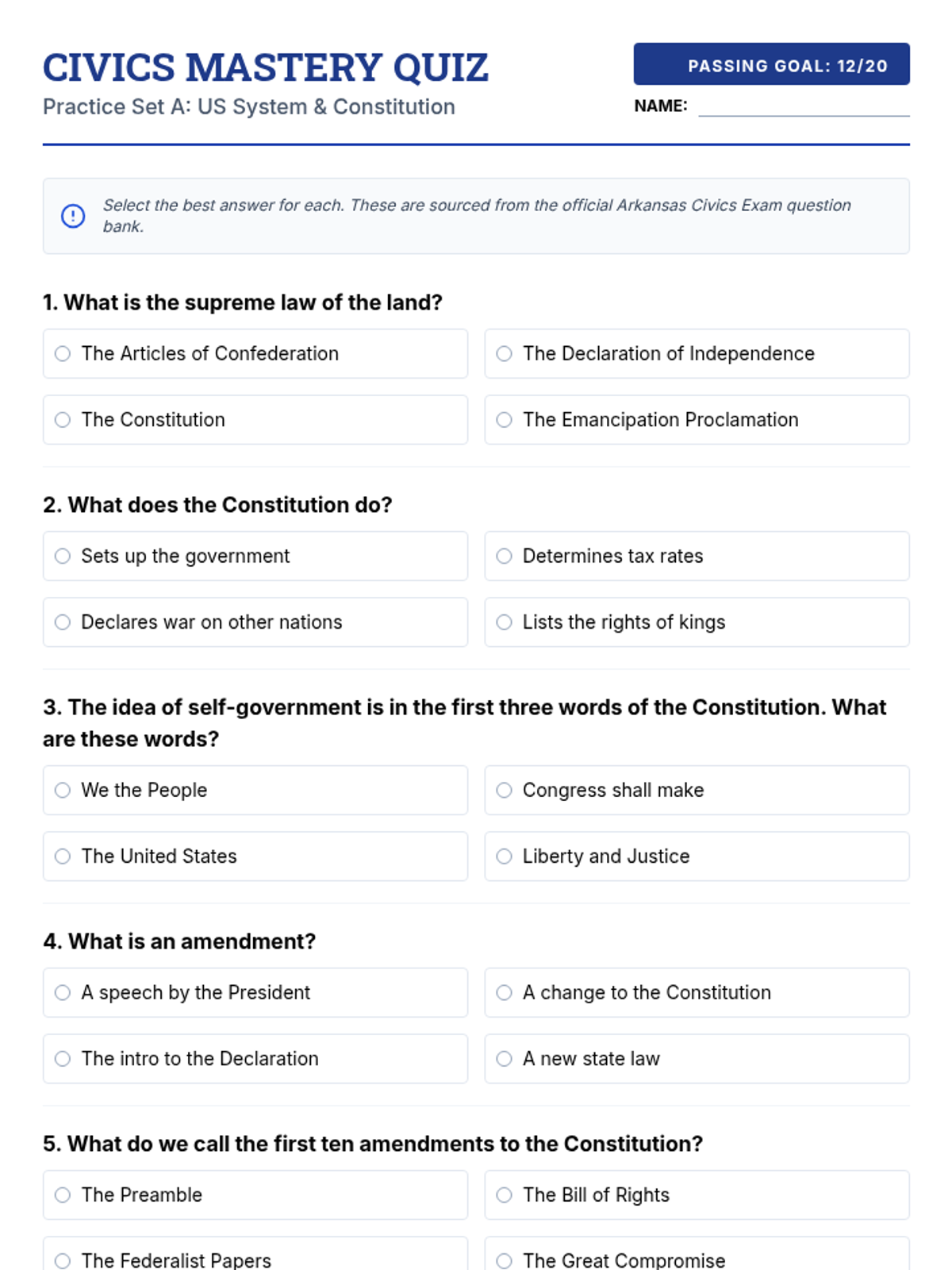
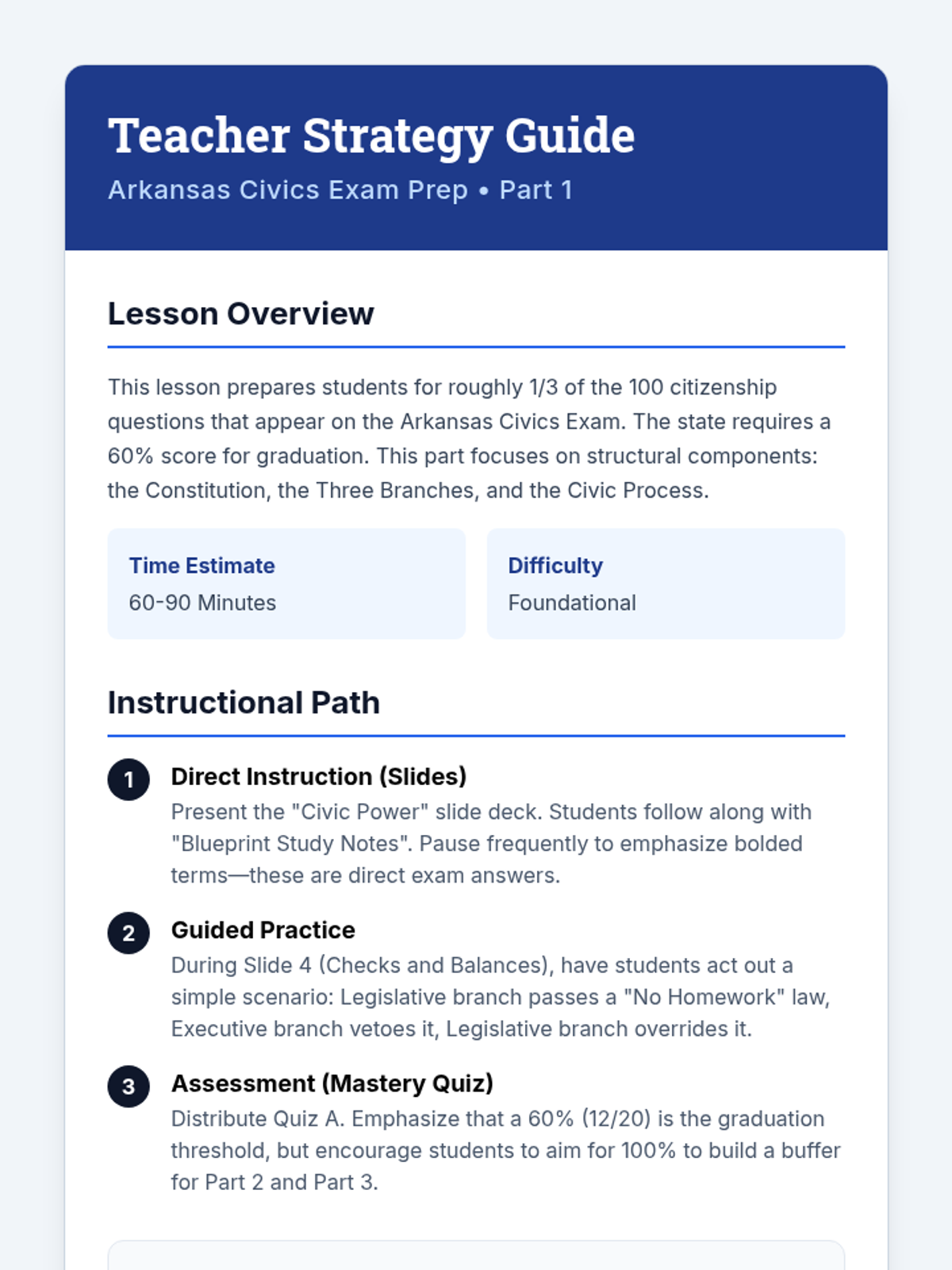
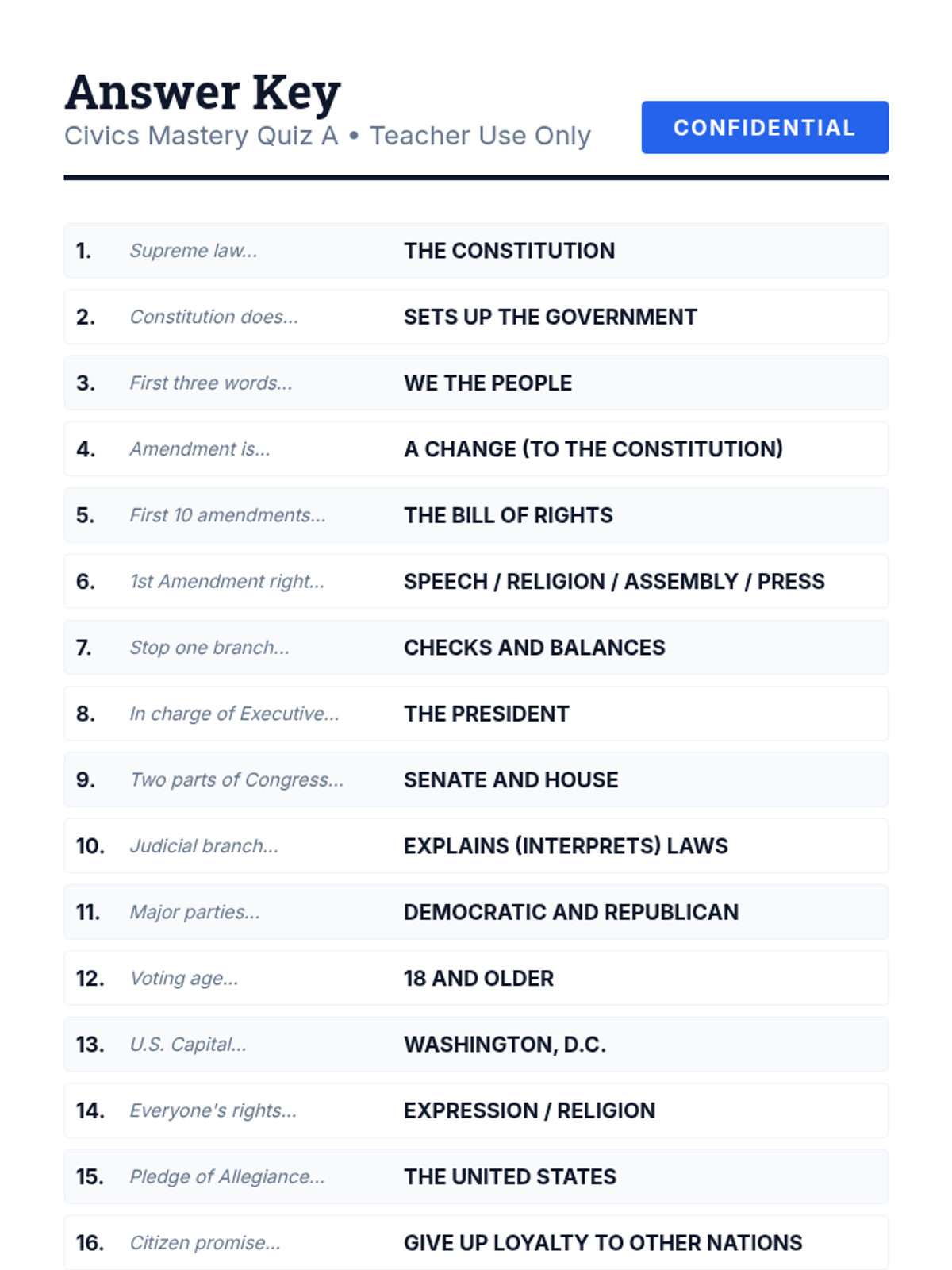
A comprehensive preparation lesson for Part 1 of the Arkansas Civics Exam, focusing on the three branches of government, the Constitution, and the civic process. This lesson equips high school students with the essential knowledge required to meet the state graduation requirement.
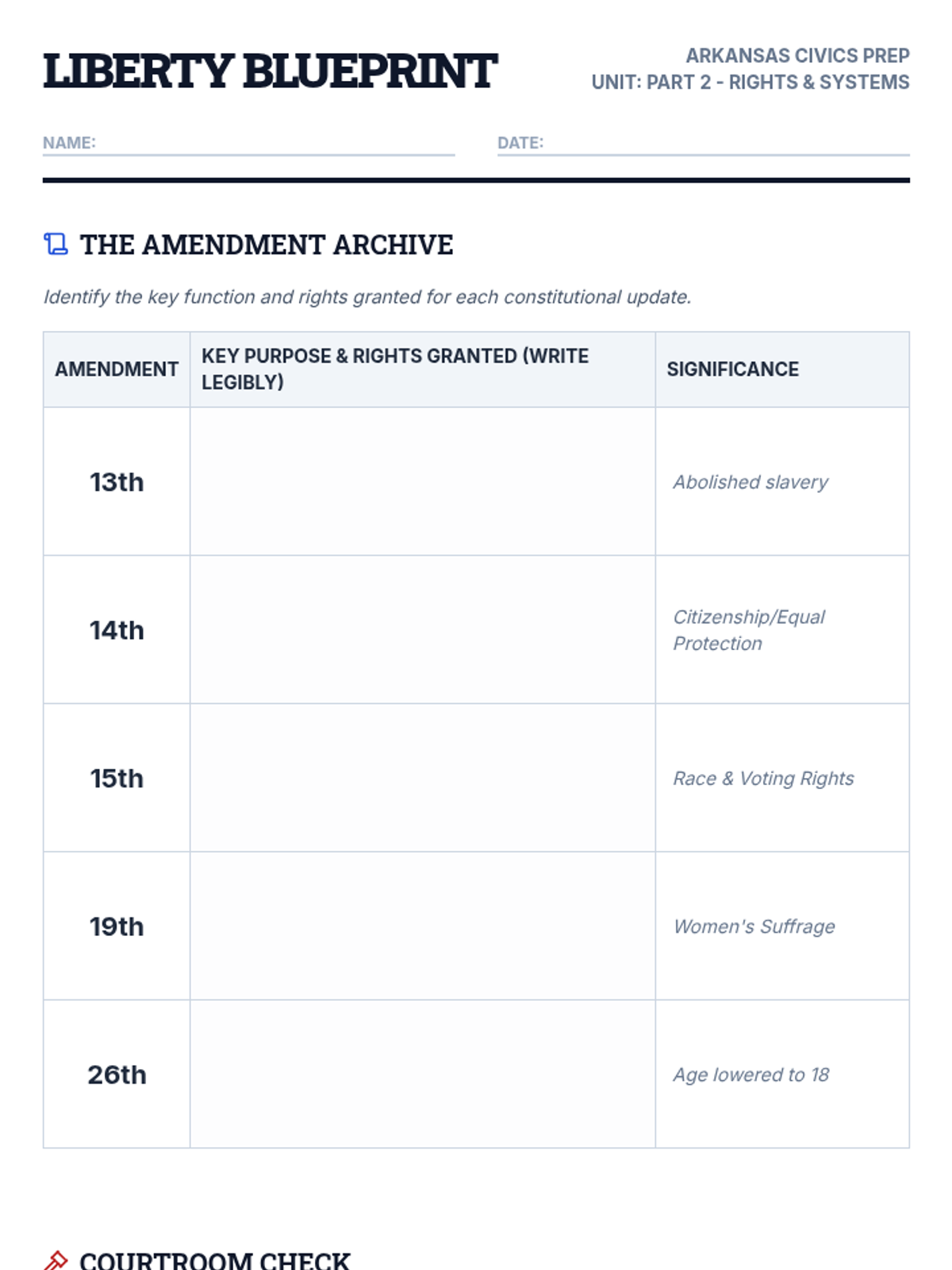
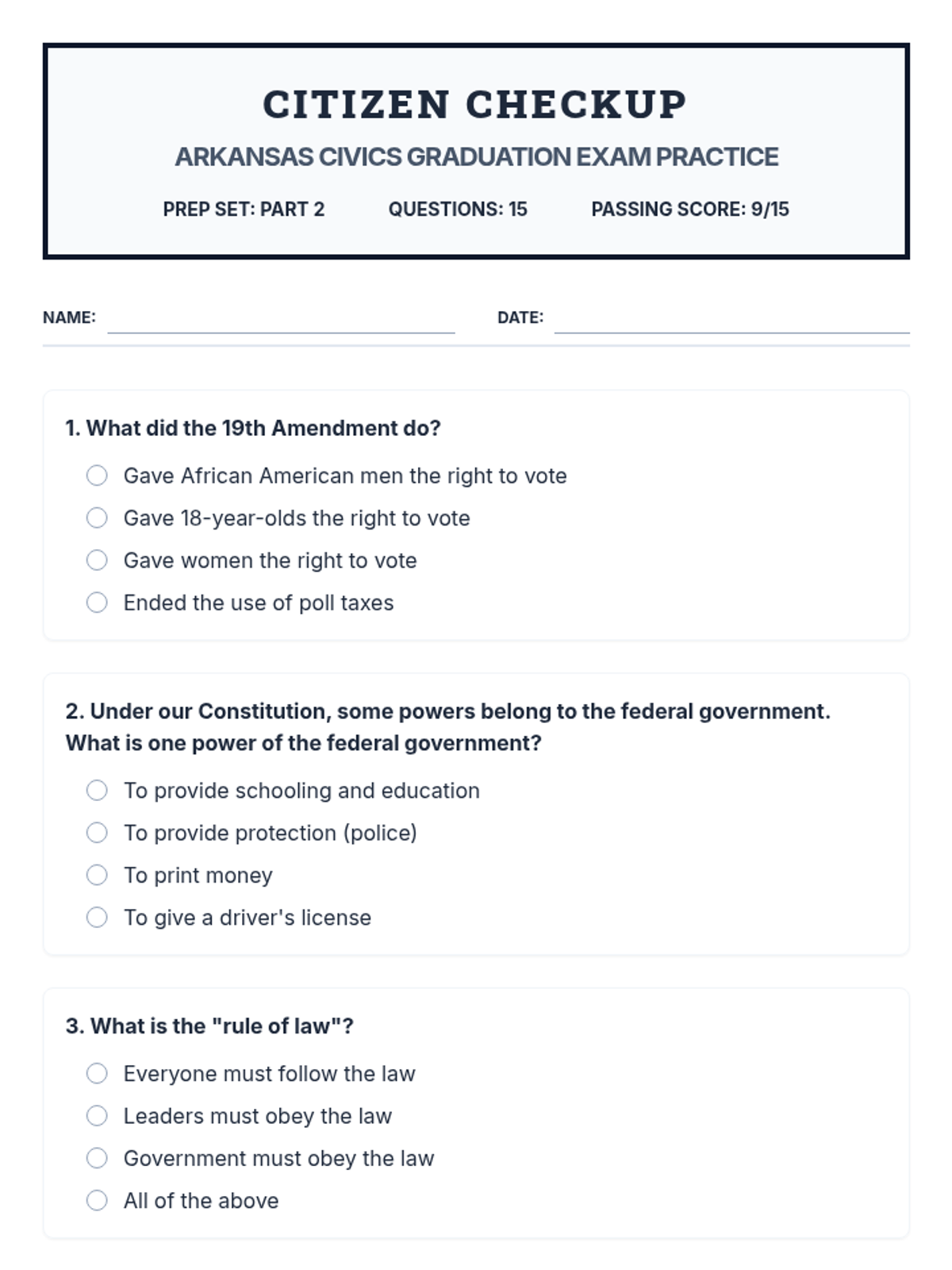
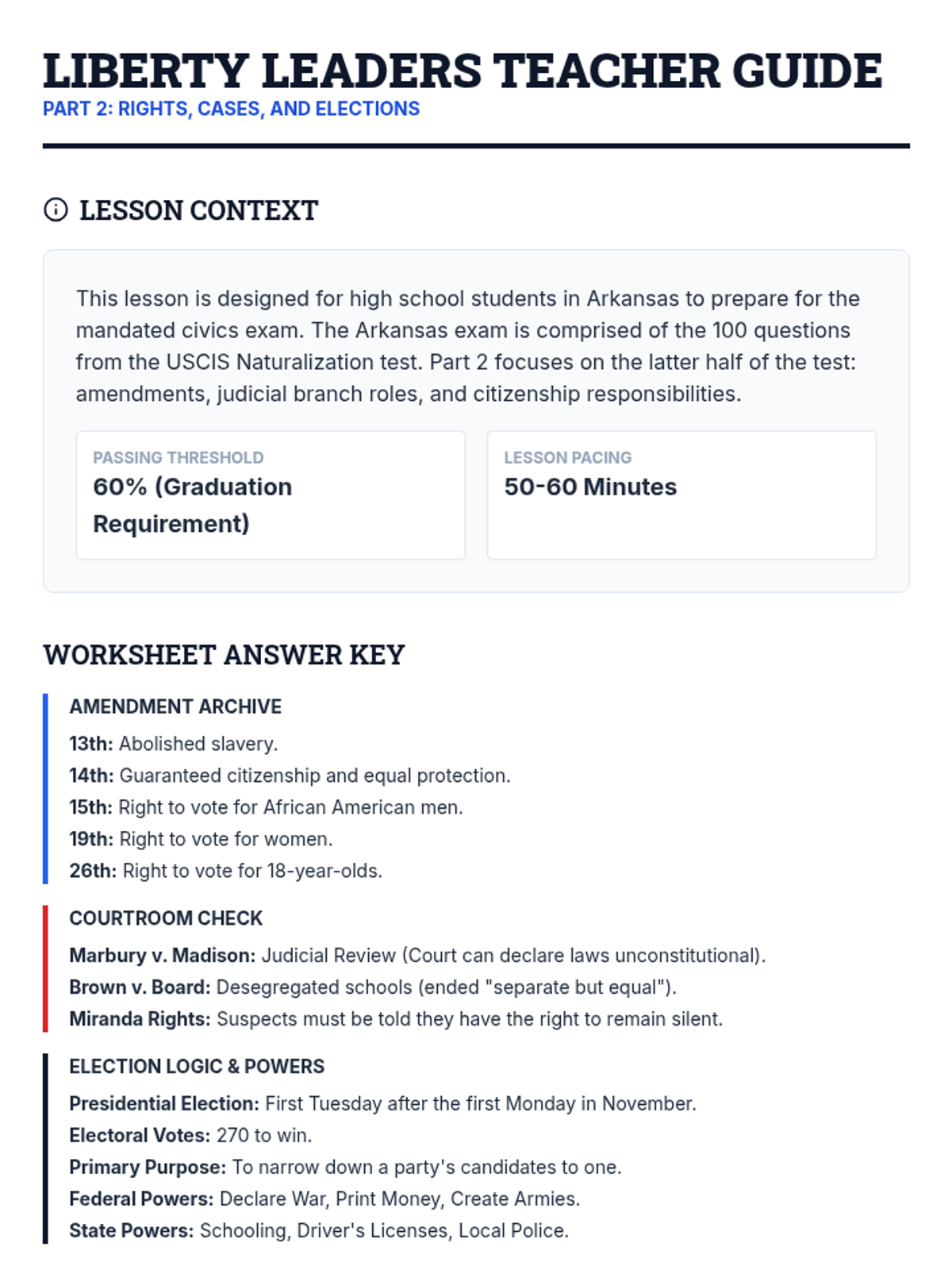
The second part of a comprehensive prep series for the Arkansas Civics Exam, focusing on civil rights, constitutional amendments, landmark court cases, and the electoral process. Designed to help students master the material required for high school graduation.
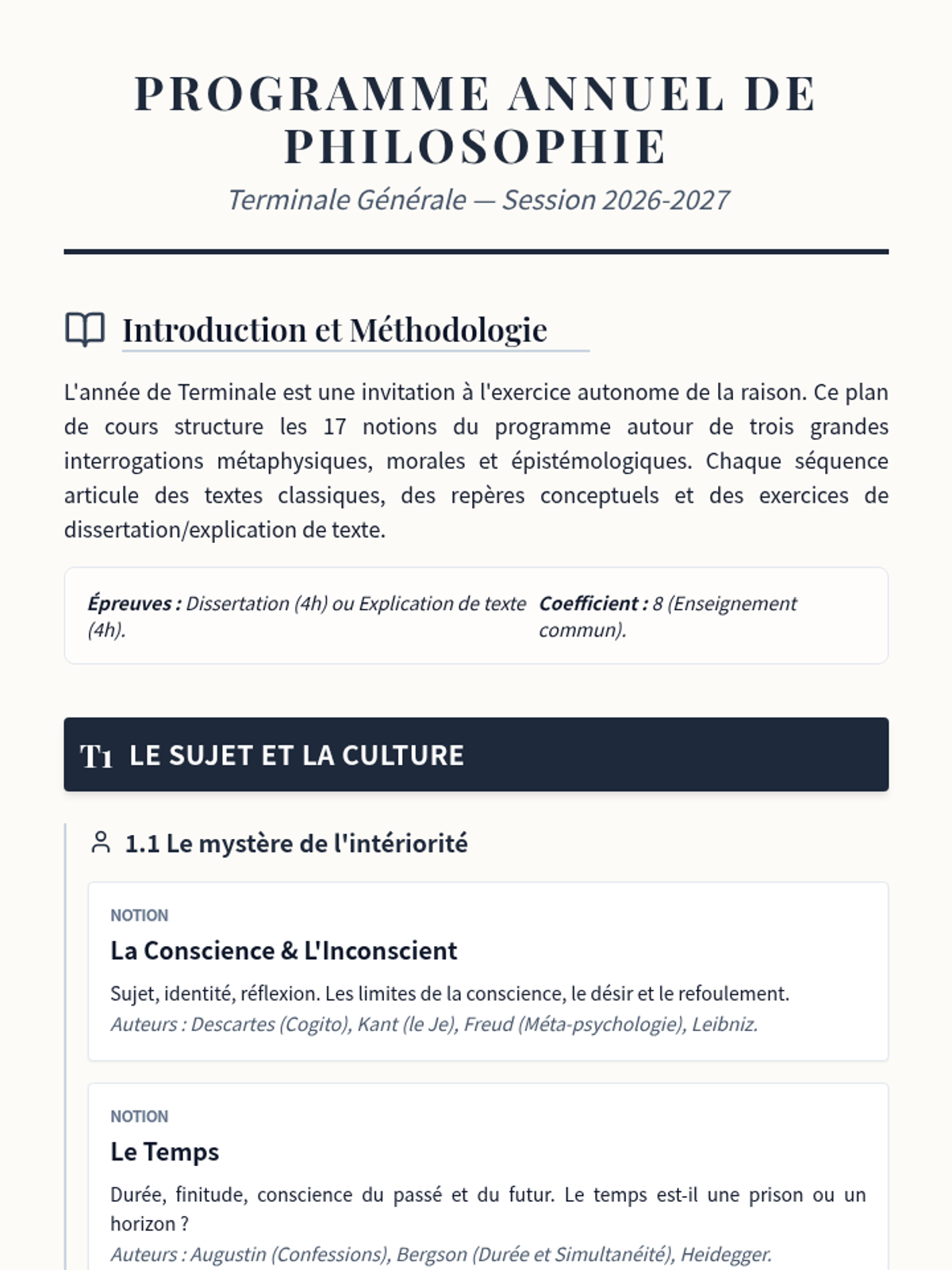
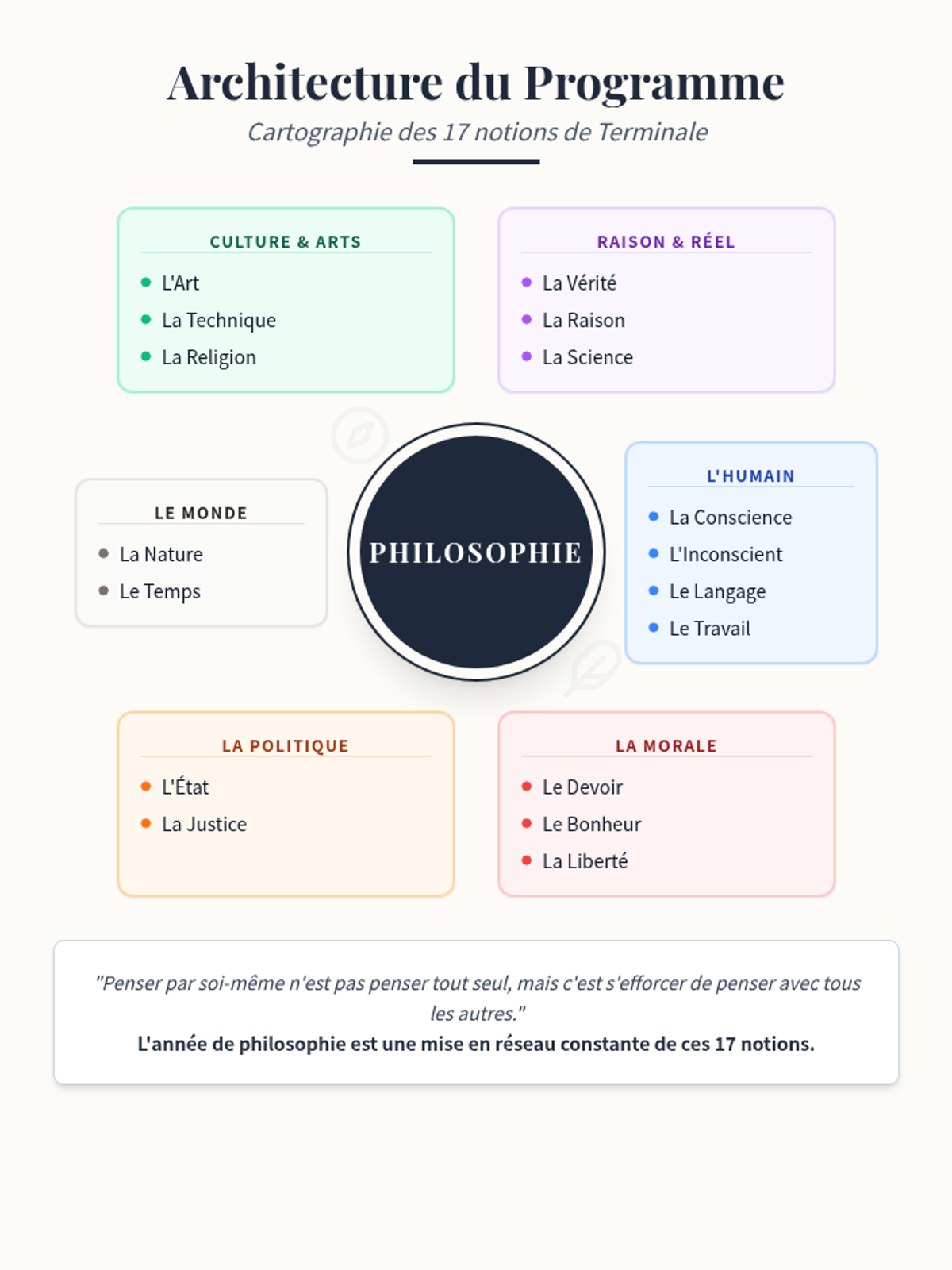
Introduction générale au programme de philosophie et outils de révision globaux.
Interrogation sur les fondements de nos actes et la quête du sens : liberté, devoir et bonheur.
Réflexion sur l'organisation de la cité et les principes de coexistence : l'État et la justice.
Étude des conditions de la connaissance et de notre rapport au monde physique : vérité, raison, science et nature.
Analyse de l'activité humaine transformatrice : langage, art, travail, technique et religion.
Exploration de l'intériorité humaine à travers les notions de conscience, d'inconscient et le rapport au temps.
Documents de référence pour structurer l'année de philosophie, incluant un plan détaillé par trimestres et une carte mentale des interconnexions entre les notions.
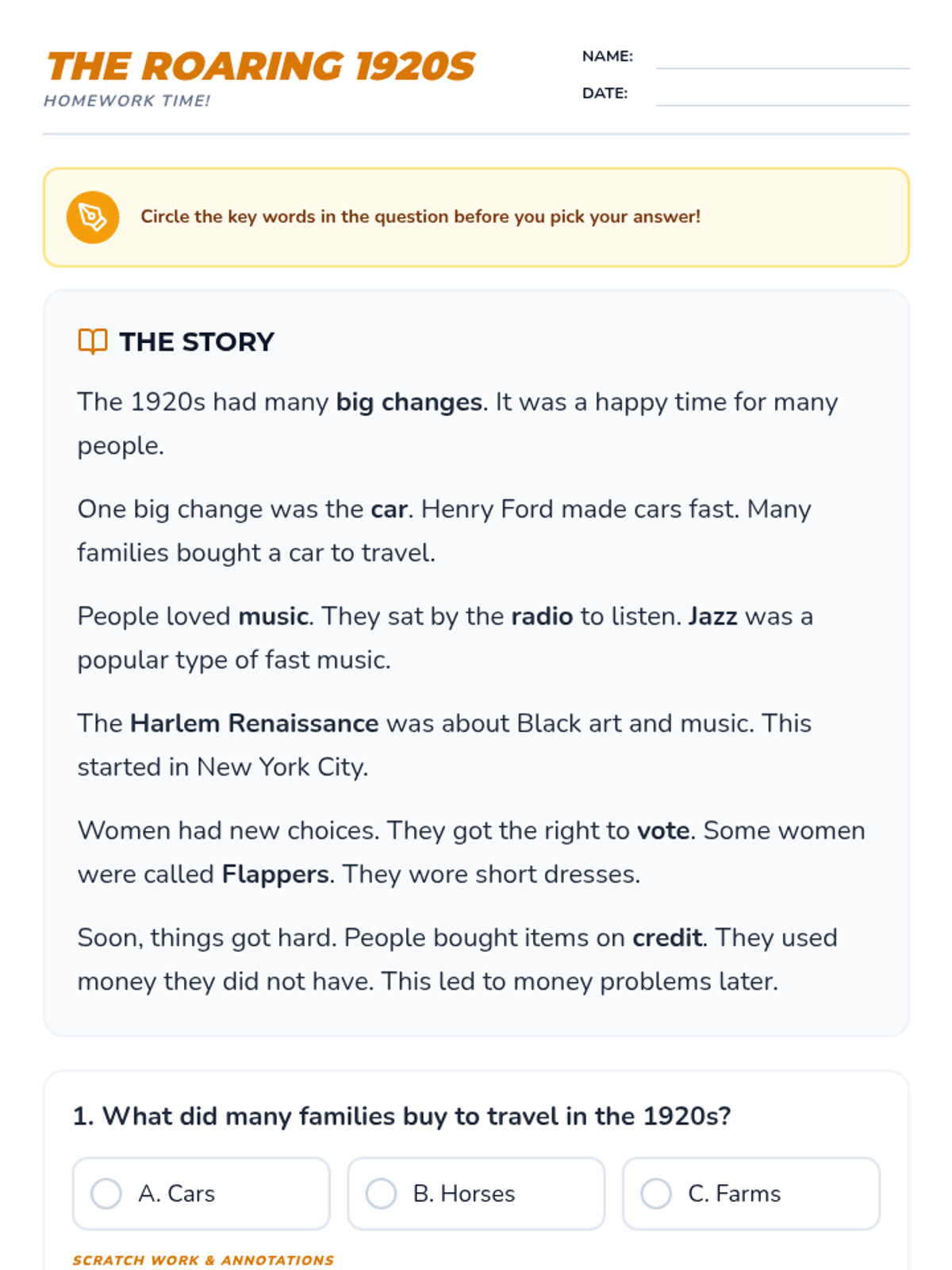
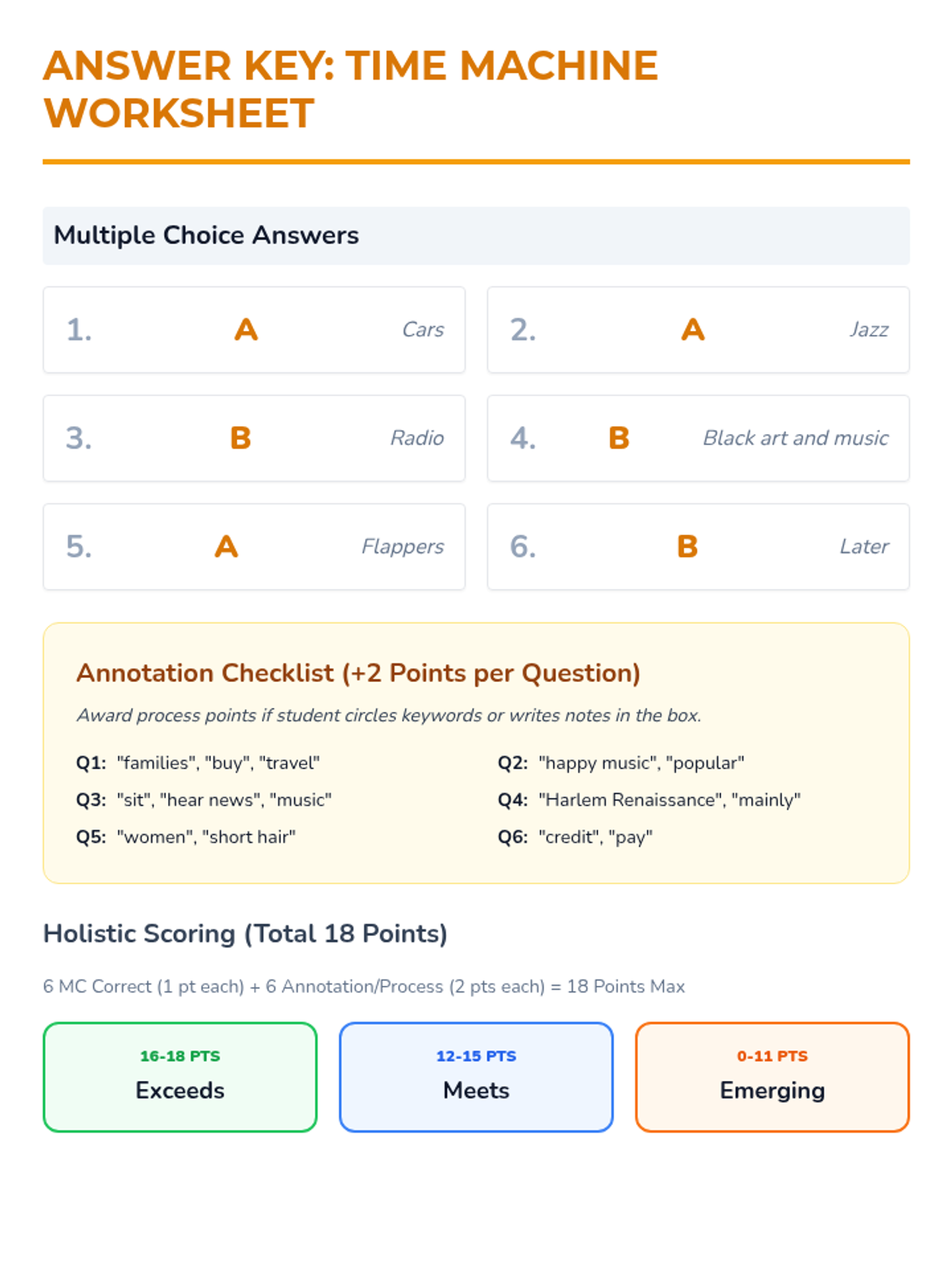
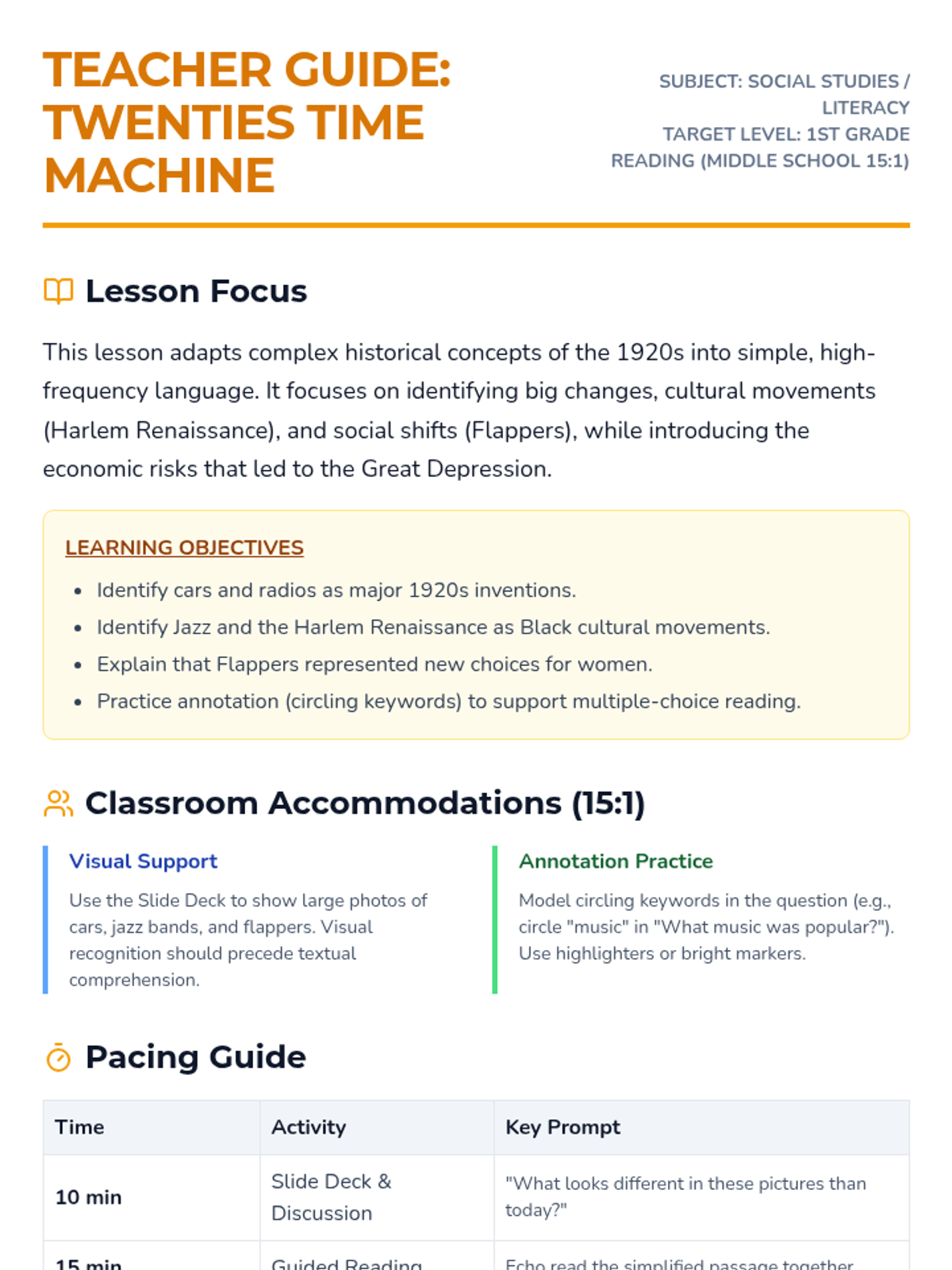
A highly accessible lesson on the Roaring Twenties designed for middle school students reading at a 1st-grade level, focusing on cultural shifts, jazz, and the Harlem Renaissance with scaffolded multiple-choice practice.
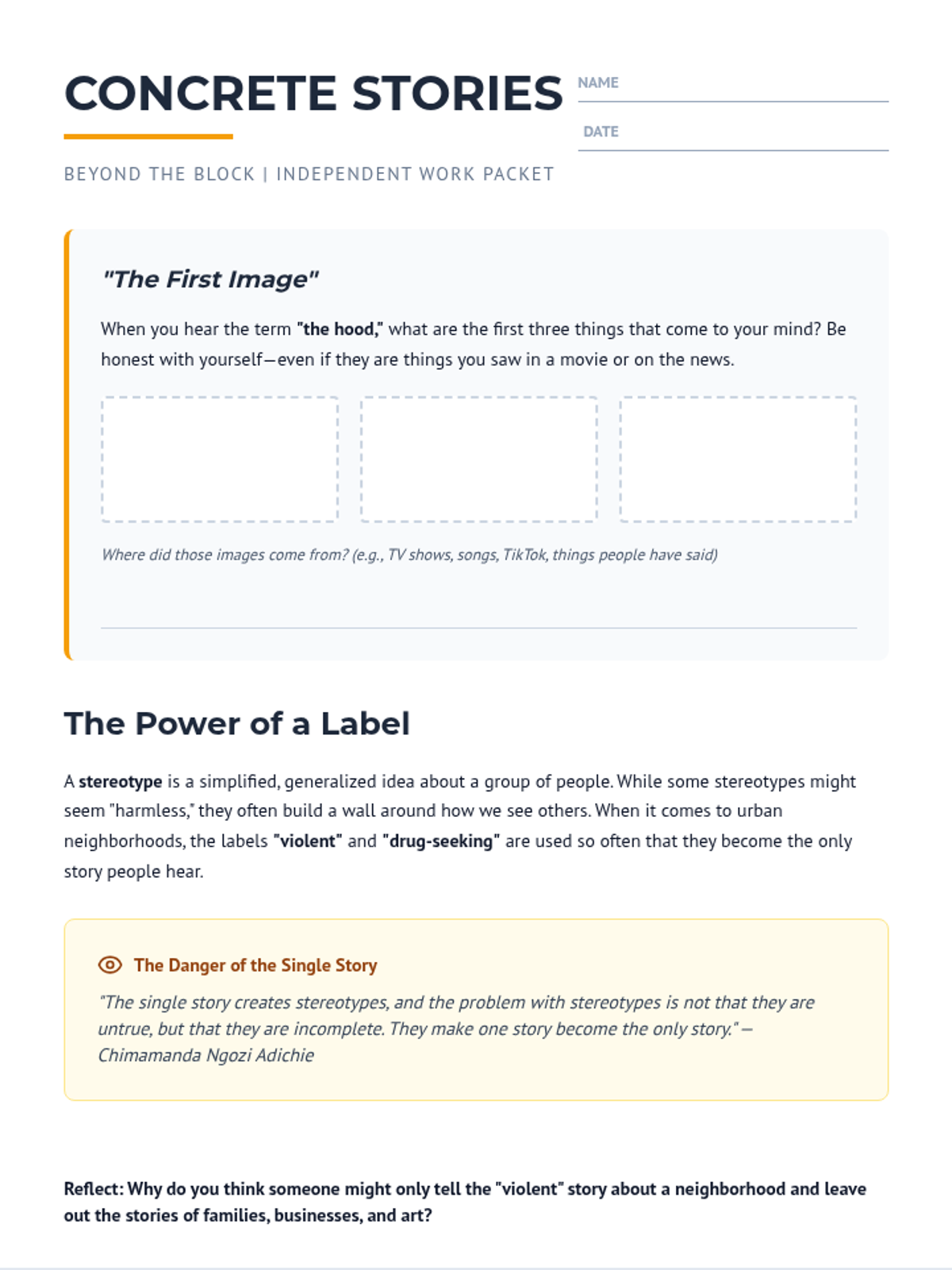
This lesson explores the origins and impacts of urban stereotypes, specifically focusing on the harmful "violent" and "drug-seeking" narratives often applied to marginalized communities. Students will analyze media bias and reflect on the real-world consequences of these single-perspective stories.