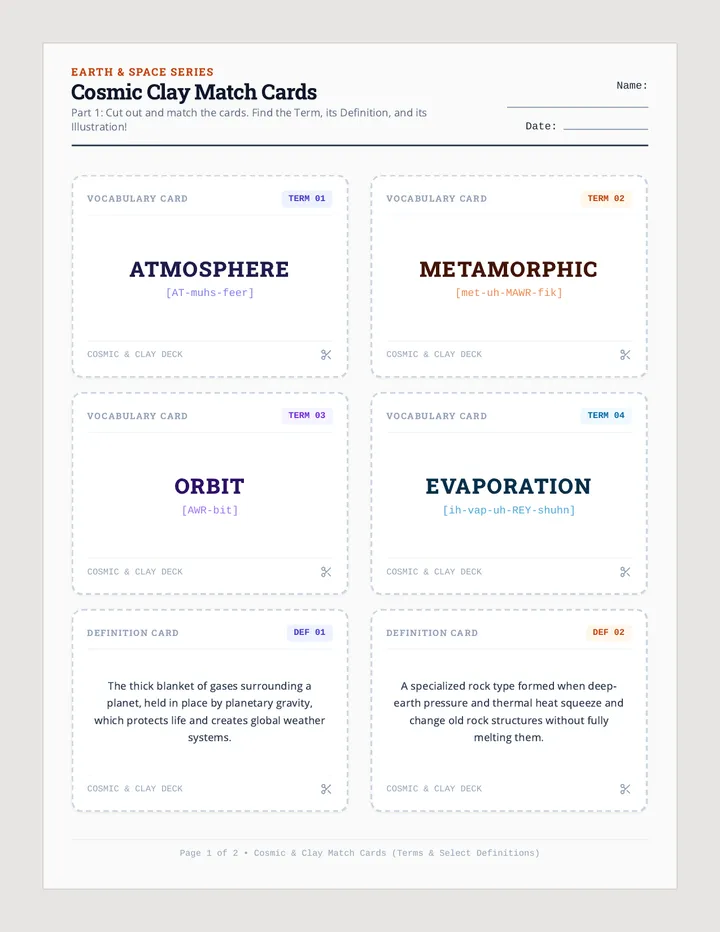
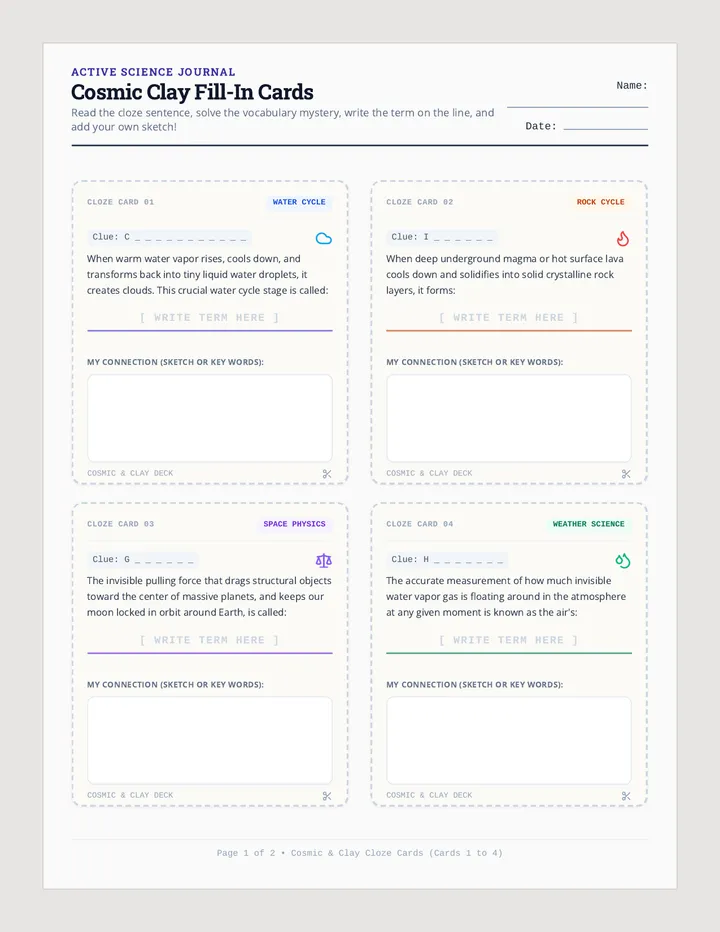
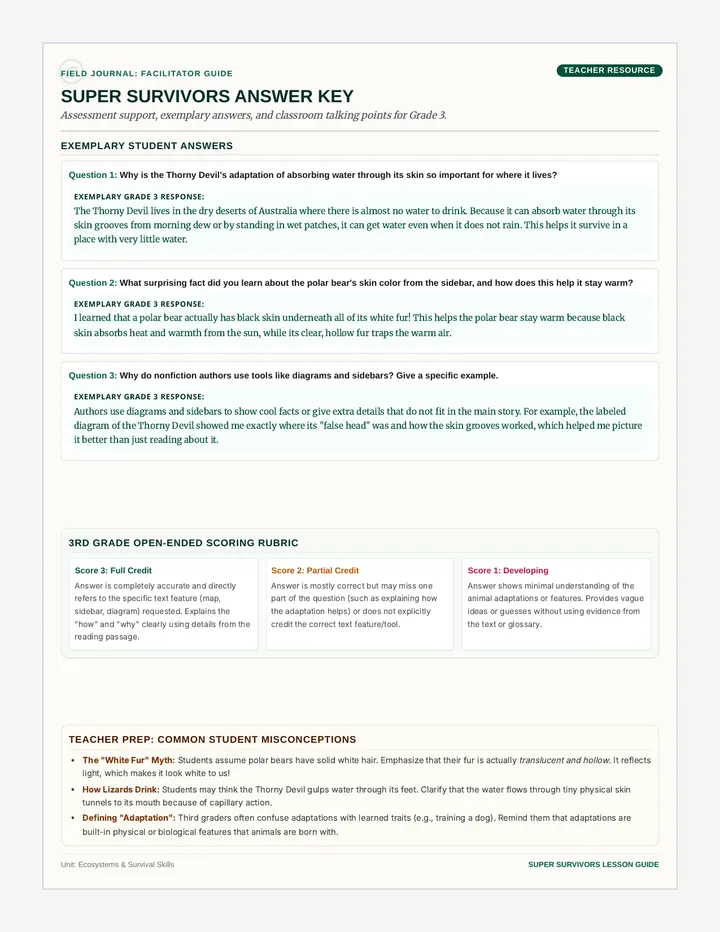
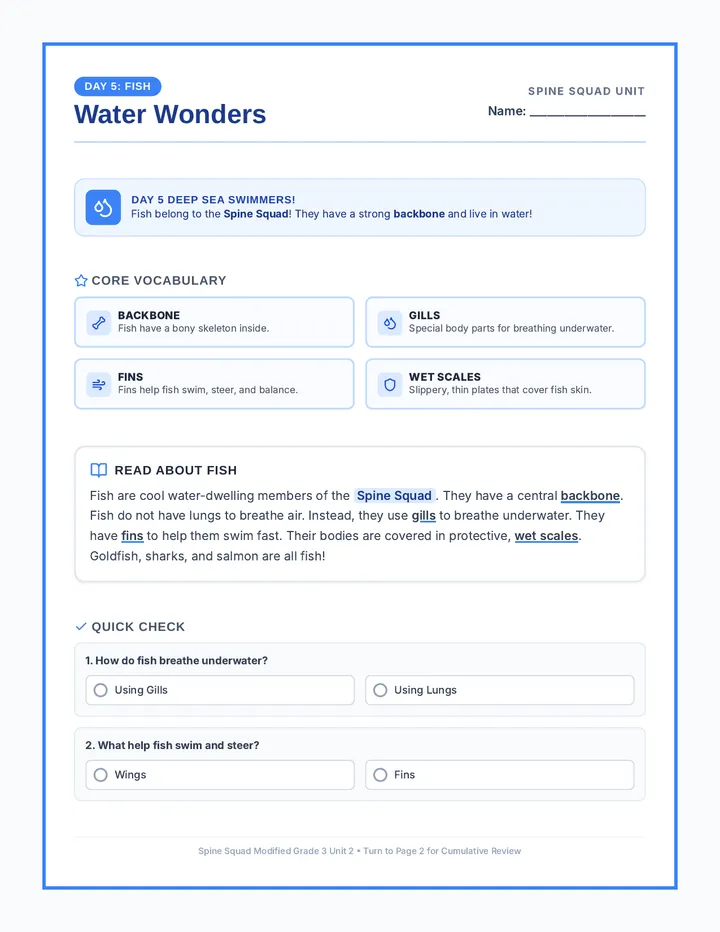
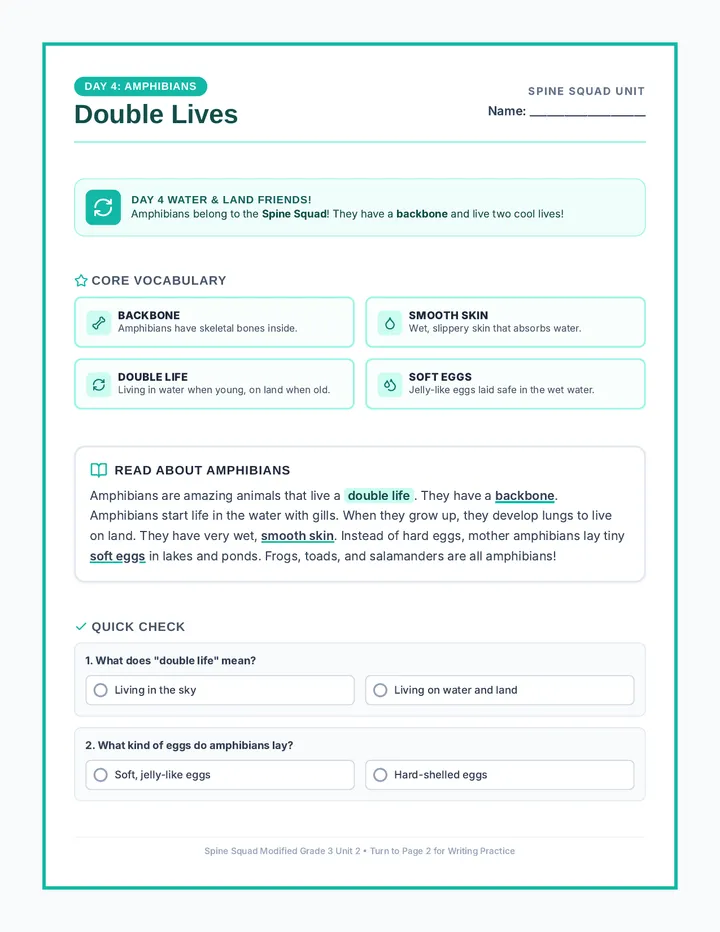
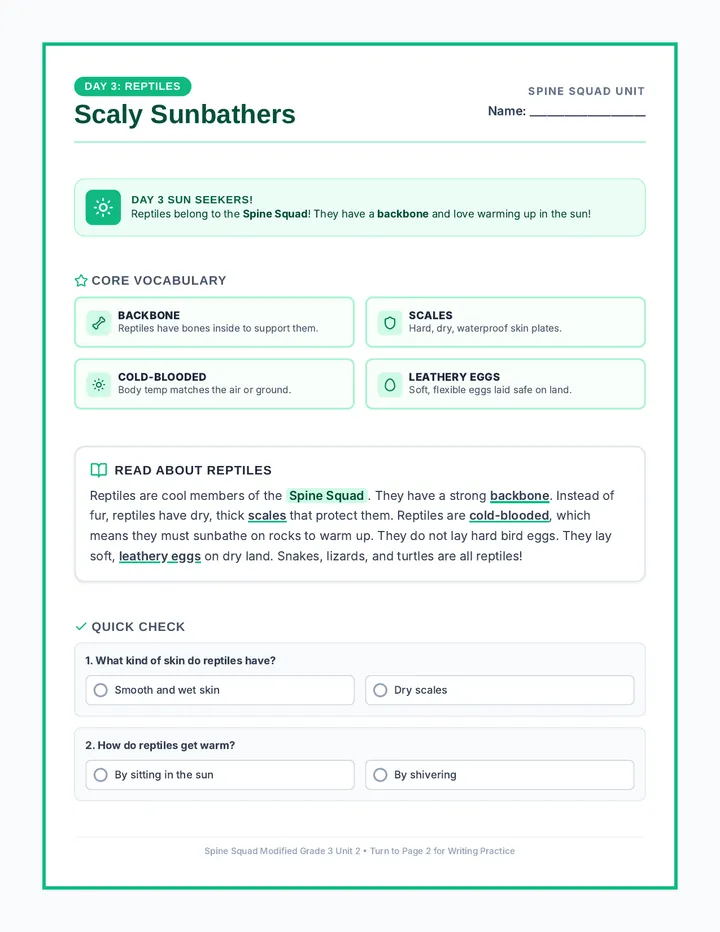
An introductory lesson exploring the origins of rocks and the processes that form them, setting the stage for understanding erosion and Earth's changing landscape.
A follow-up lesson focused on building fluency with mixed digraphs, providing cumulative review and a final progress assessment for sh, ch, th, wh, and ck.
A foundational lesson introducing and practicing common digraphs (sh, ch, th, wh, ck) through multi-sensory activities and differentiated reading tasks using a building-block theme.
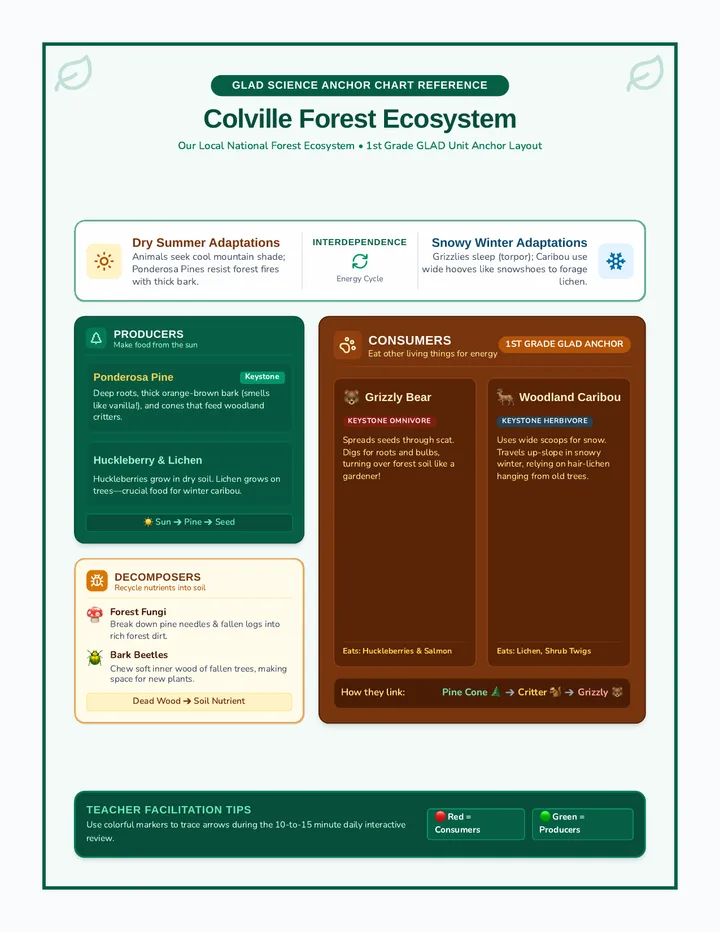
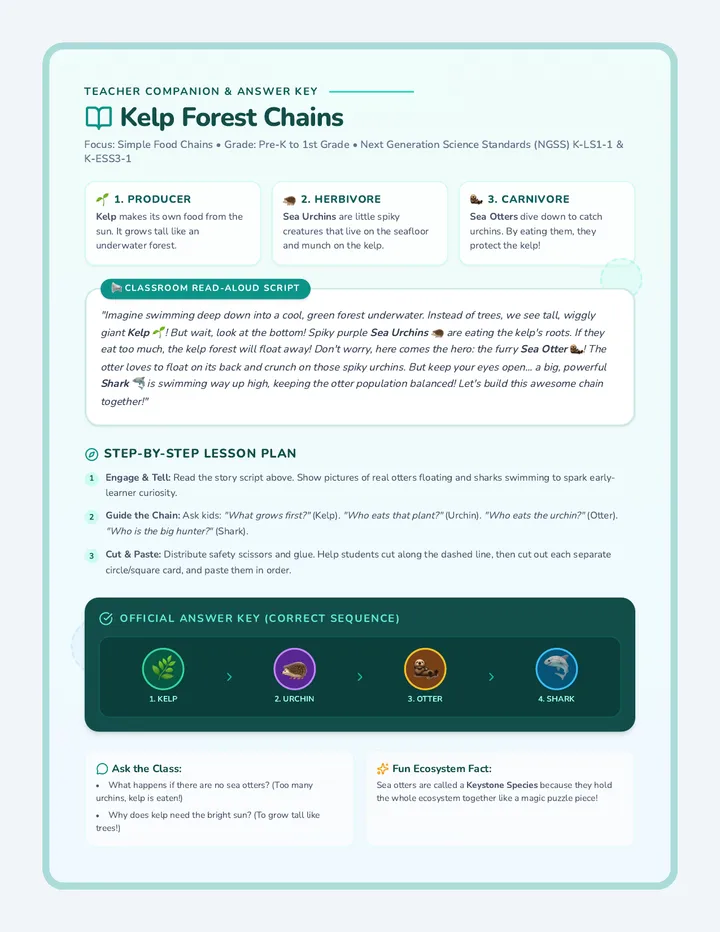
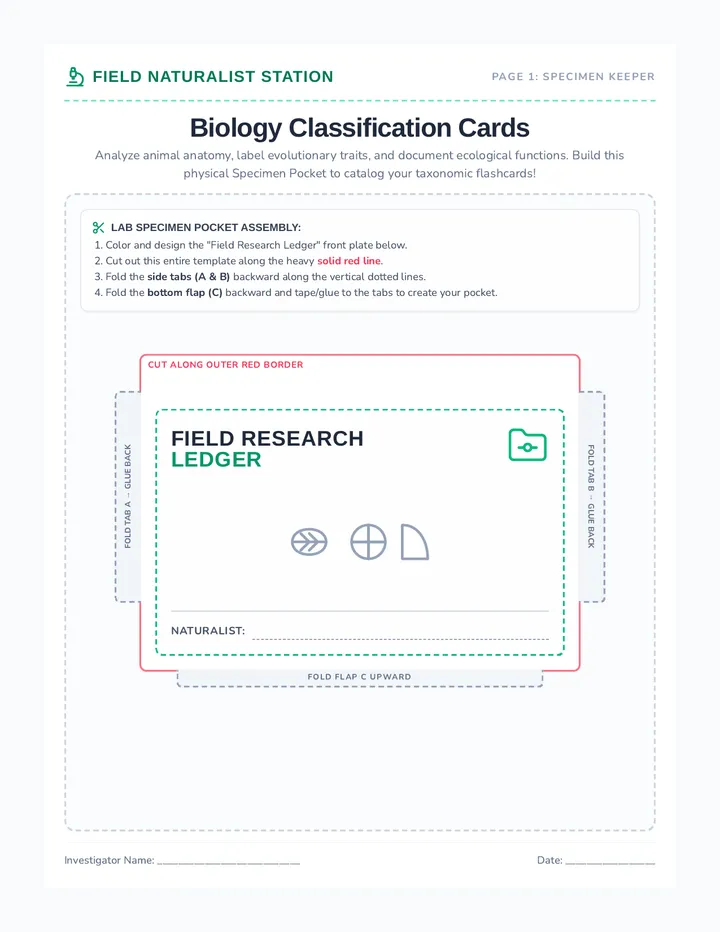
A lesson focused on identifying the roles of producers, consumers, and decomposers within an ecosystem through visual aids and hands-on sorting, designed for MCAS Alt portfolio evidence.
A foundational lesson on cybersecurity for elementary students, focusing on identifying personal information and learning the 'Ask First' rule for online sharing.
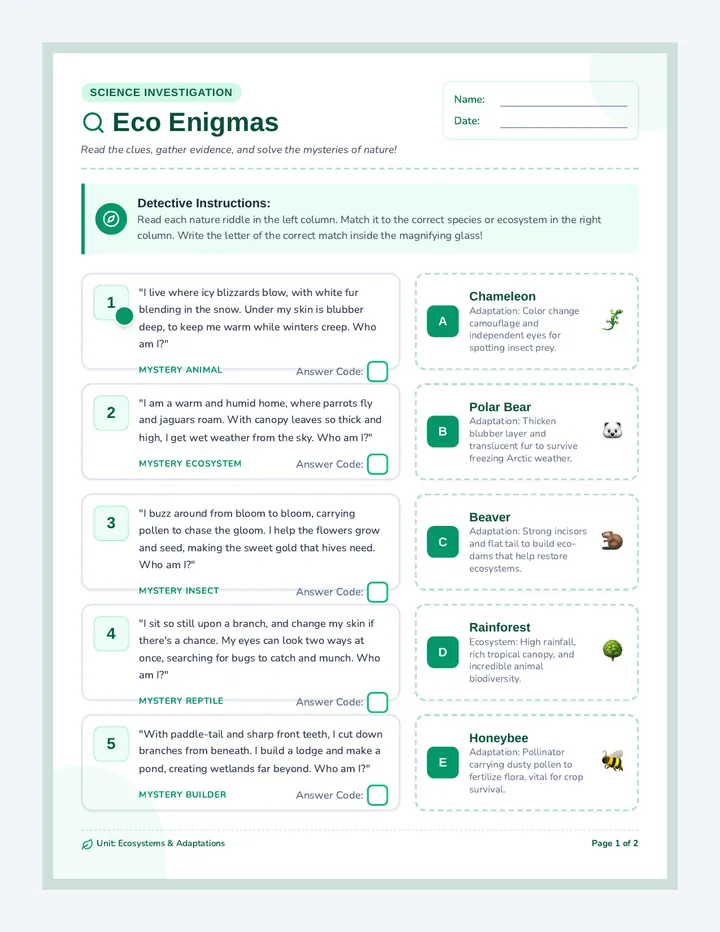
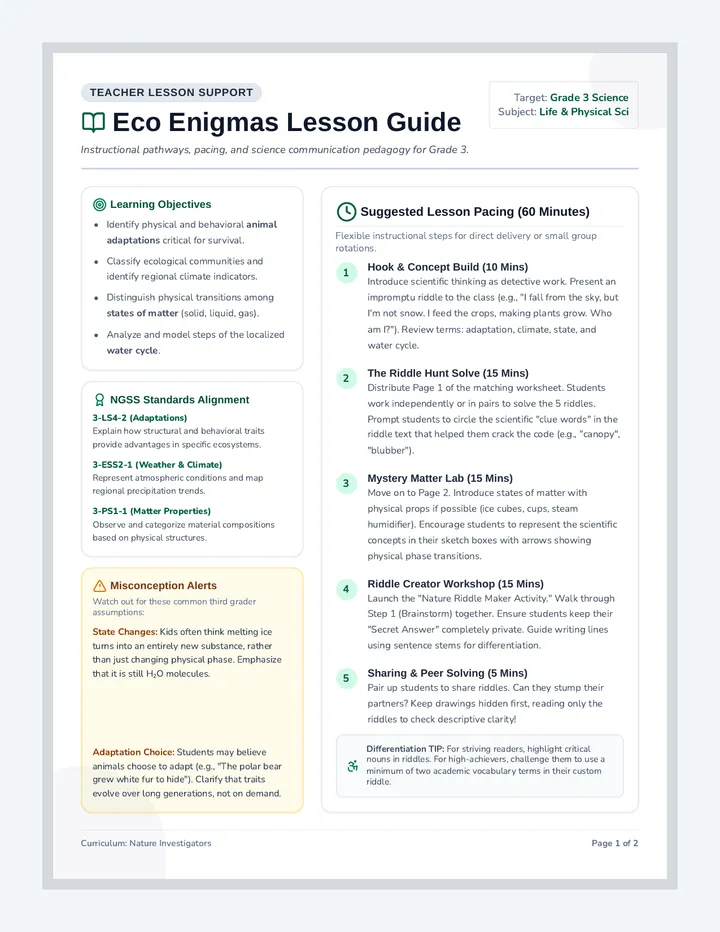
A comprehensive lesson on the water cycle, covering evaporation, condensation, precipitation, runoff, and absorption through visual aids and tiered practice.
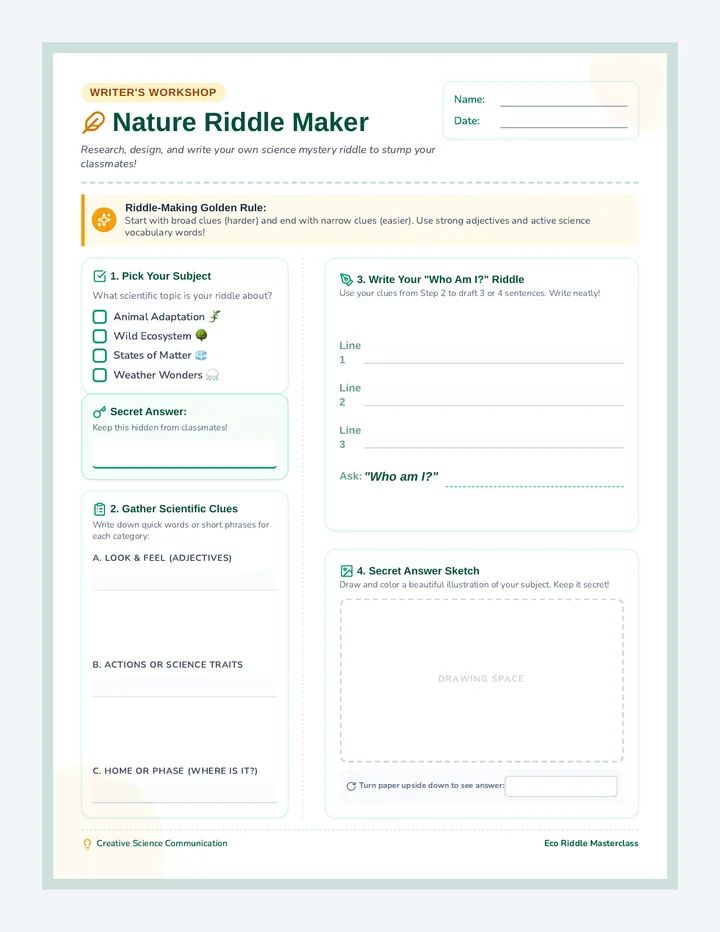
An interactive science lesson for K-3 students exploring the symbiotic relationship between bees and flowering plants through a hands-on pollination simulation.
A hands-on exploration for 2nd and 3rd graders where they identify computer components by comparing them to human body parts. Students learn how hardware supports software through a 'computer dissection' metaphor.
A comprehensive set of writing resources for 2nd grade EL Education Module 3, focusing on the fascinating world of pollinators and their role in nature. Includes teacher guides, student writing templates, and instructional slides.
A science and language arts integration lesson where 2nd grade ESL students learn the water cycle stages while practicing complex sentence structures using 'because' and 'when'.
Students learn how to care for a corn plant and finish the unit by planting their own seeds to take home.
An exploration of how heat transforms corn into popcorn, followed by a classroom popping session.
Students explore the different colors and types of corn seeds and create vibrant mosaic art using dried kernels.
Students discover the history of corn (Maize) and its life cycle before creating traditional hand sweepers from corn husks.
A comprehensive ESL lesson for 2nd graders focused on the water cycle. Students will learn the four main stages while practicing sequencing using complex sentences with 'before' and 'after'.
A collection of resources for tracking student progress, celebrating achievements, and managing the robotics workspace. includes mission logs, certificates, and reference guides.
Explore Marty the Robot using two coding methods: physical color blocks for screenless movement and Scratch-like block coding for more complex behaviors and sensing.
Transition from screenless coding to block coding with Sphero Mini. Students will explore distance, rotation, and loops while programming their robot to complete various challenges in the Sphero Edu app.
Introduce students to screenless coding using Sphero indi and color tiles. This lesson focuses on cause-and-effect and simple sequencing as students lead indi through a series of color-coded missions.
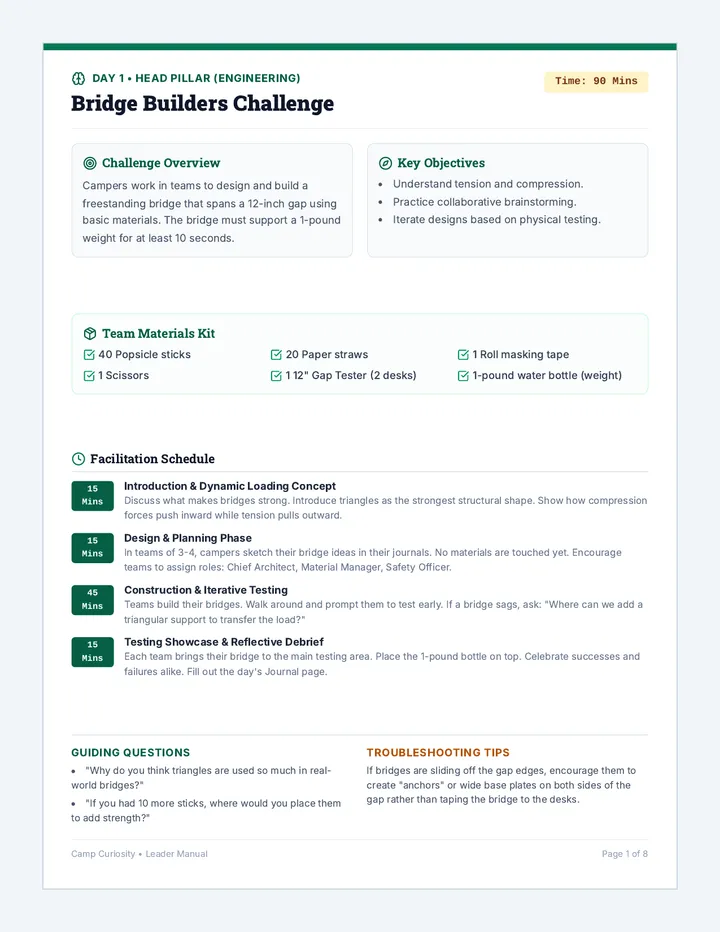
An advanced physics-based engineering unit for grades 4-5. Students take on the role of 'Roller Coaster Tycoons' to design gravity-powered coasters and braking systems, emphasizing variable testing, energy transfer, and safety criteria.
A fun-filled junior engineering lesson for grades 1-3. Students act as 'Thrill Seekers' to design steep, safe slides and sturdy ticket booths for a new amusement park, focusing on surface properties, friction, and structural stability.
An advanced disaster relief engineering unit for grades 4-5. Students design precision supply drop crates to protect medical gear and modular flood barrier systems to save a model town, emphasizing experimental variables and cost-to-performance criteria.
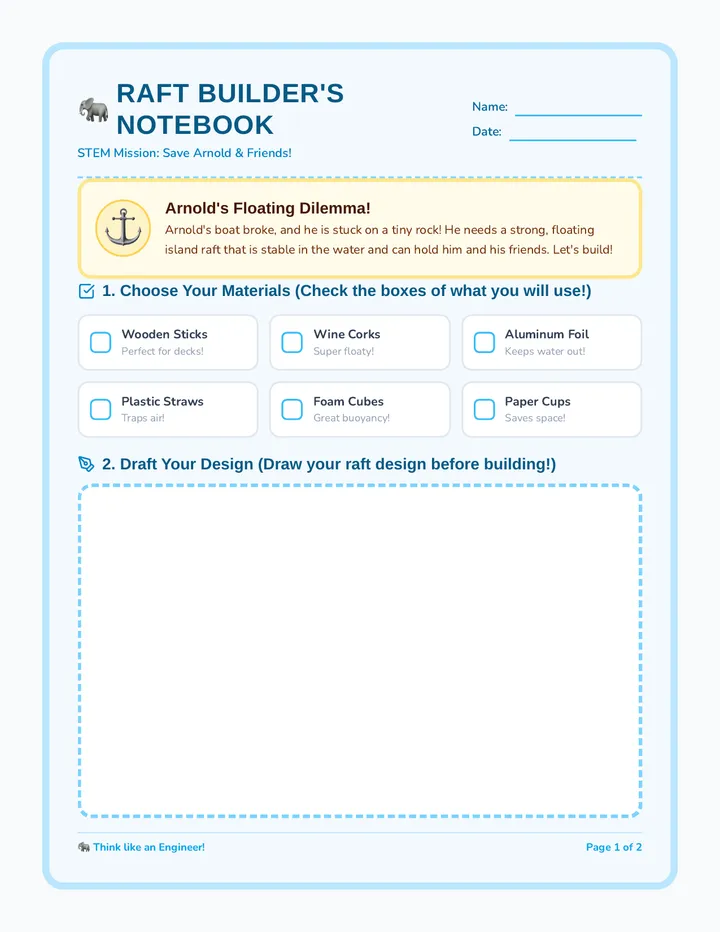
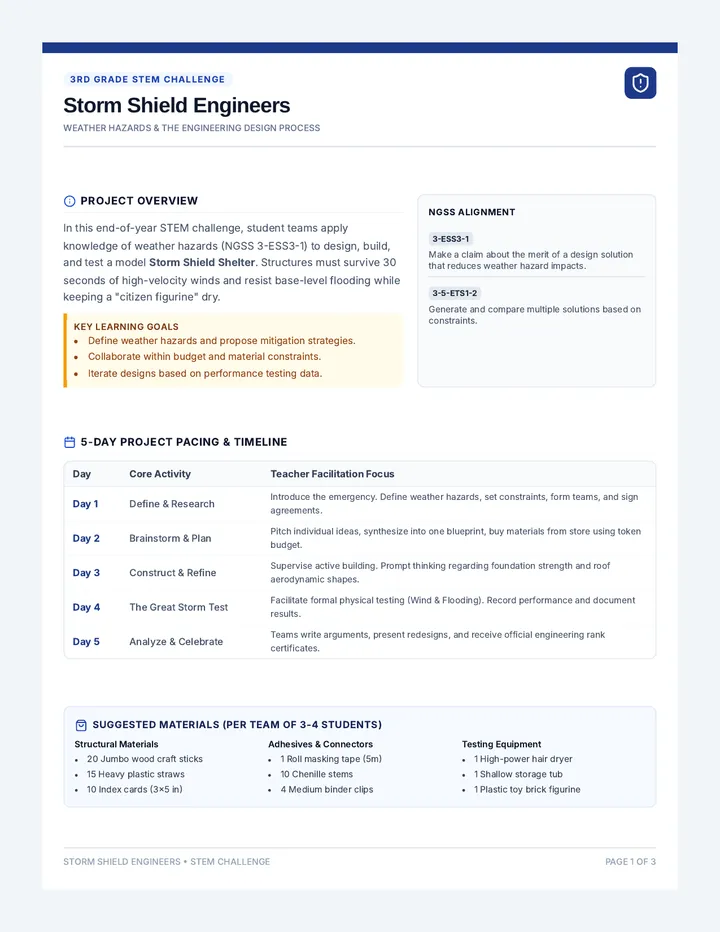
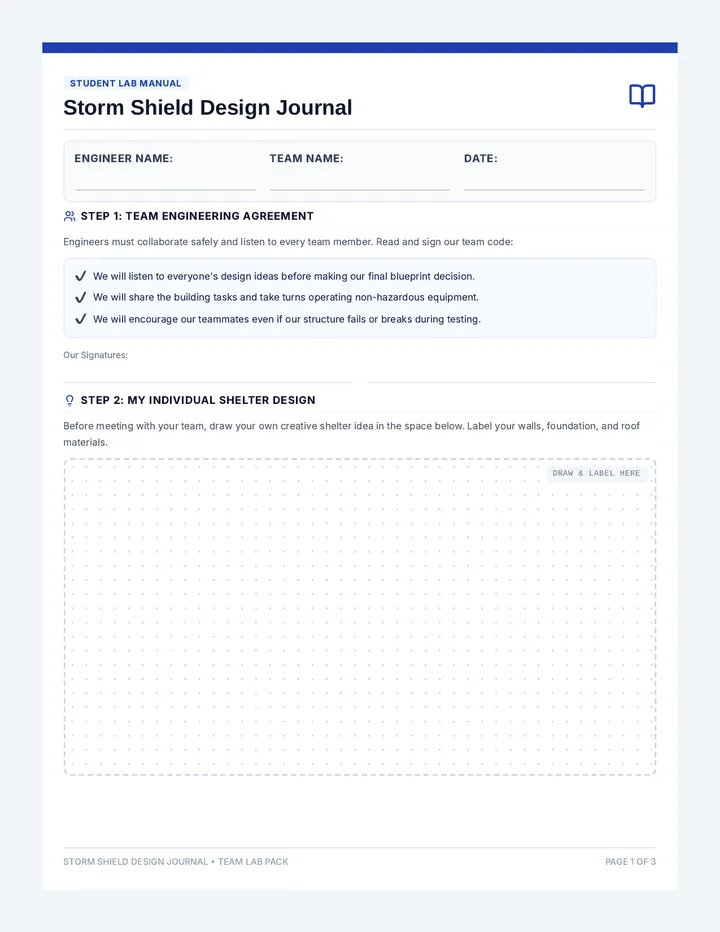
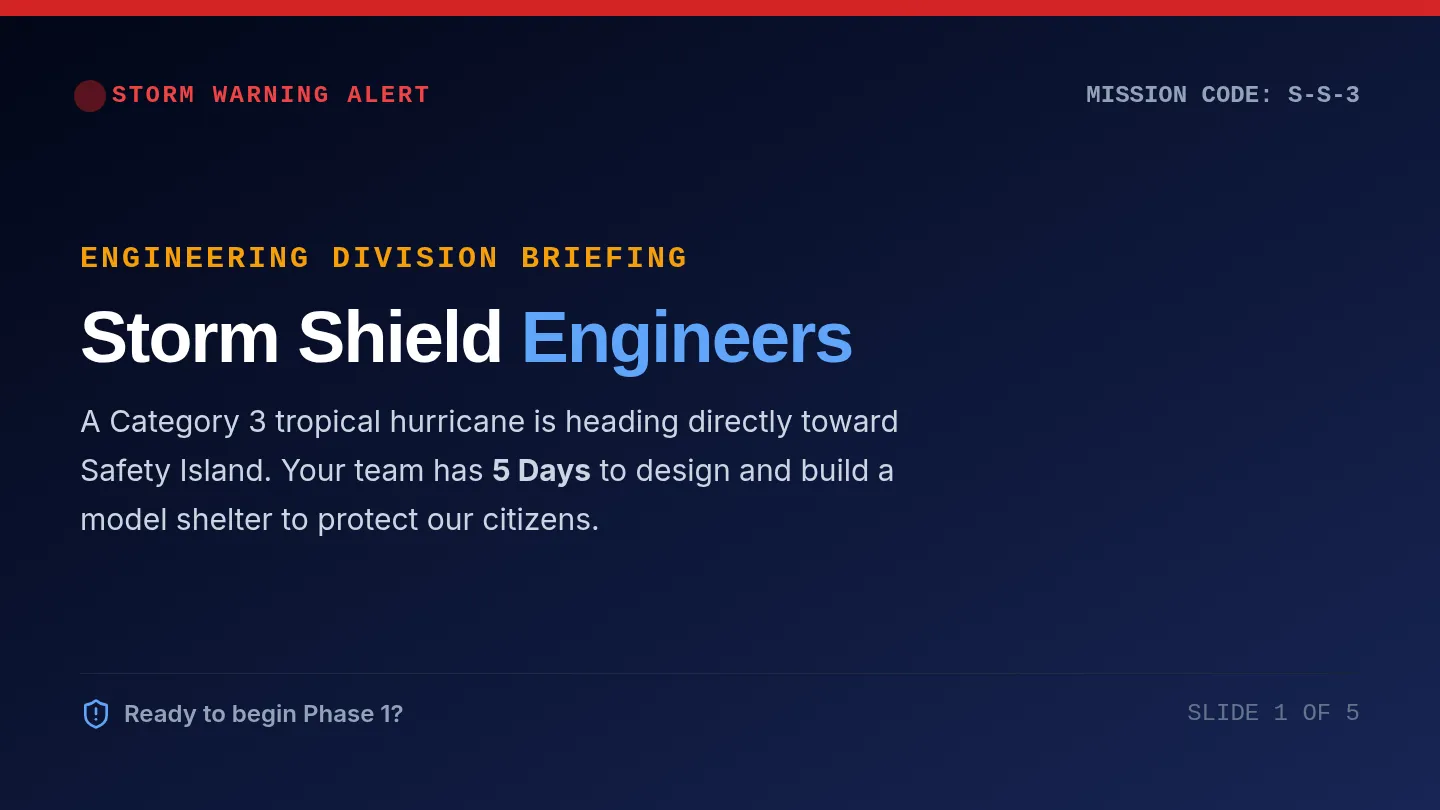
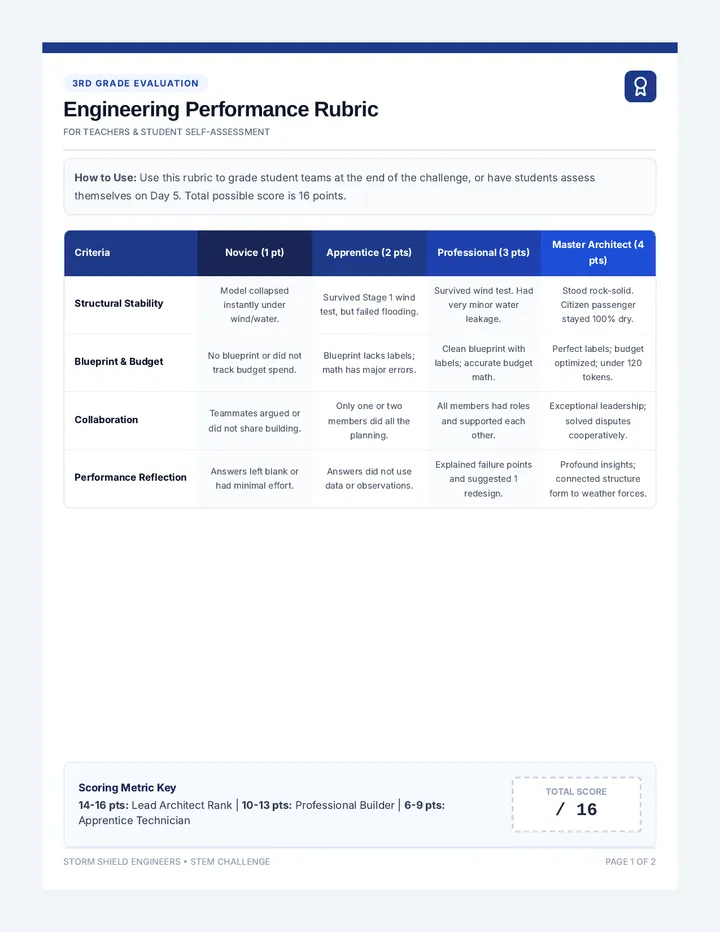
A high-energy junior engineering lesson for grades 1-3. Students join the 'Storm Rescue Team' to design unsinkable rafts for flood rescues and wind-resistant shelters for high-wind emergencies, focusing on material properties and modeling.
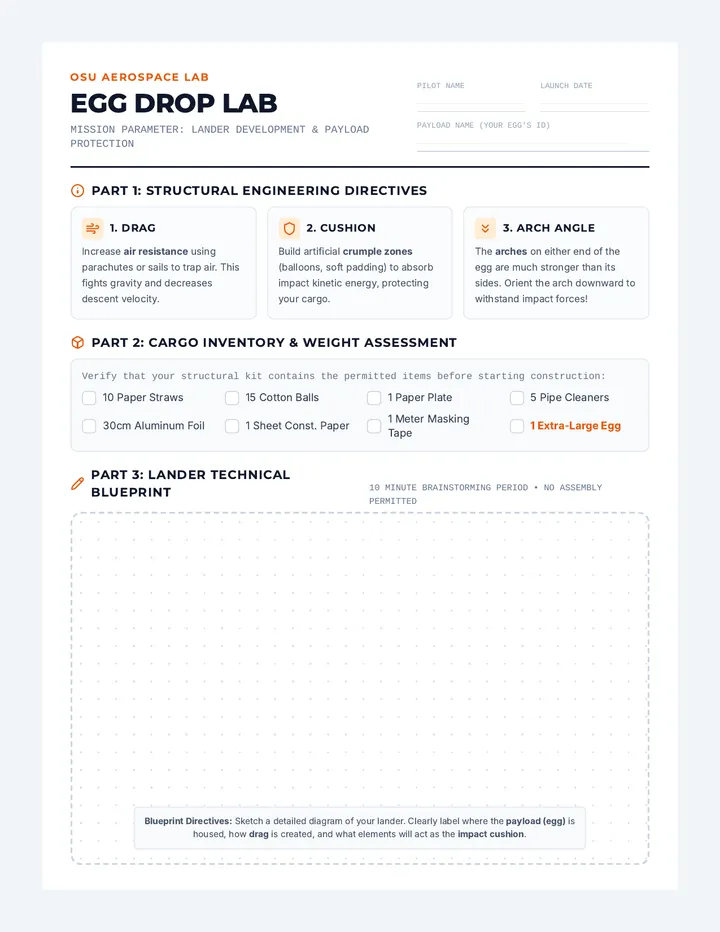
An advanced engineering challenge for grades 4-5 set in a Mars mission context. Students design landing systems to protect rovers and build structures to withstand extreme planetary conditions, focusing on experimental design and prototype evaluation.
A junior engineering lesson for grades 1-3 where students act as zoo designers. They solve real-world animal habitat problems by building waterproof canopies and sturdy bridges, focusing on modeling, tool use, and basic prototyping.
Fifth-grade students explore energy flow and conservation of matter by building wind turbine blades and sorting mixtures of recyclable materials.
Fourth-grade students analyze systems and stability by designing water filtration devices and flood defense systems for the city.
Third-grade students model systems and energy flow by creating habitats for pollinators and using solar energy to heat a habitat.
Second-grade students investigate cause-and-effect and measurement by building thermal insulators and protective packaging for fragile items.
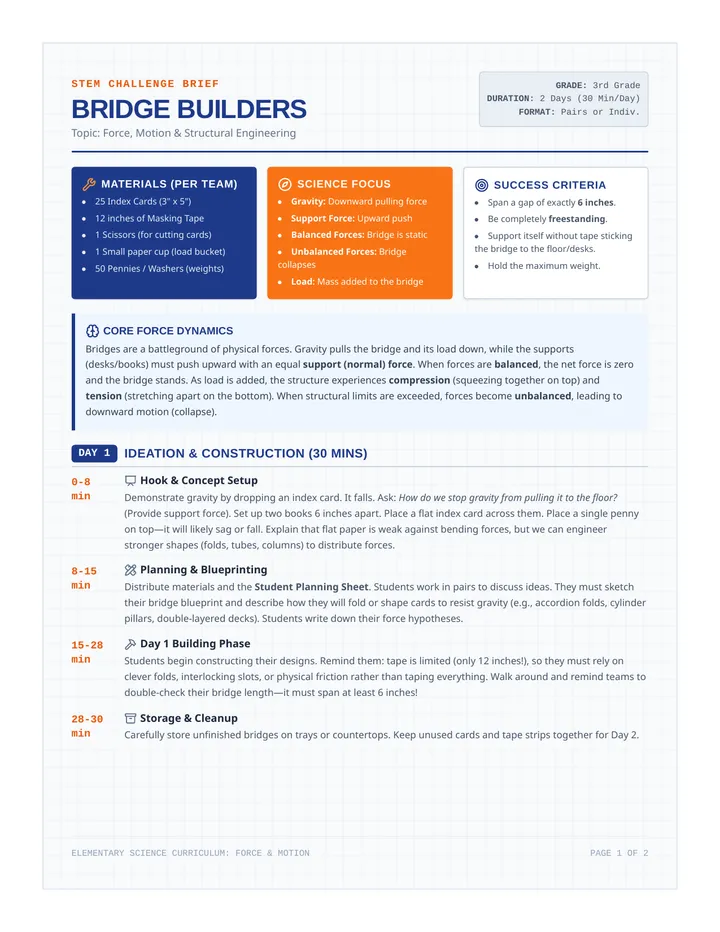
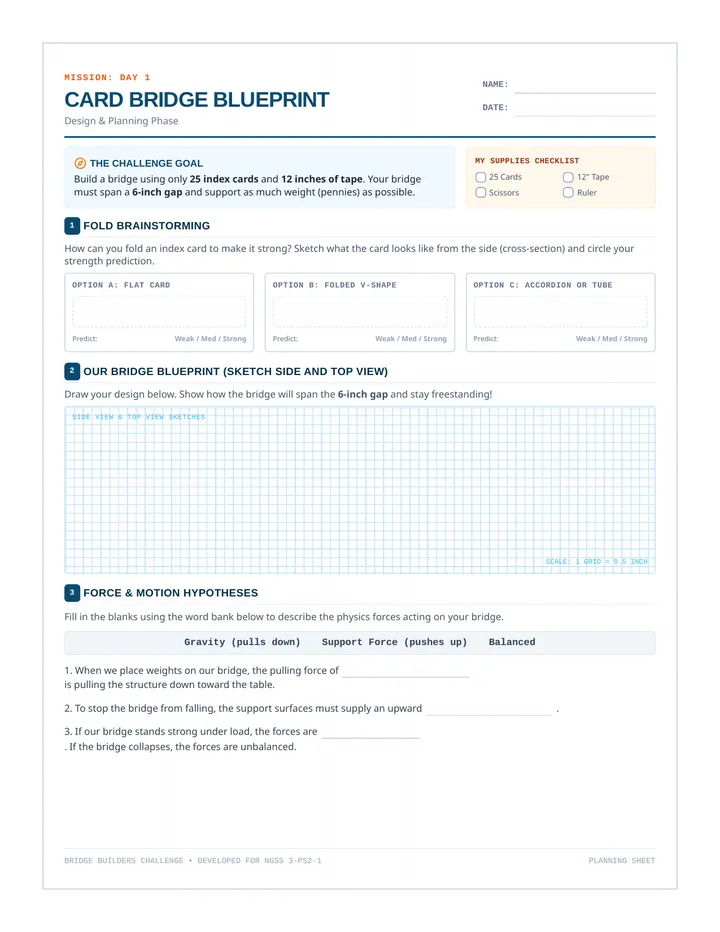
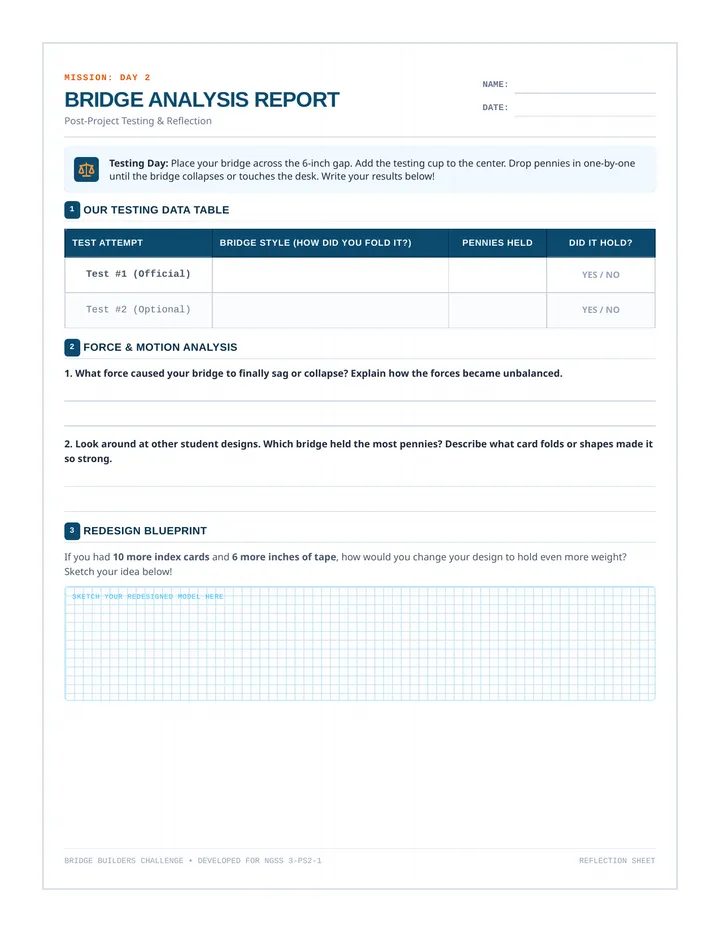
First-grade students explore patterns and structure-function relationships by designing shade structures and bridges for their local park.
Fifth-grade maestros perform advanced testing on conductivity, solubility, and mass to restore power to a science lab. Comprehensive STAAR review and engineering design.
Fourth-grade detectives classify matter using temperature, magnetism, and relative density to solve a water filtration mystery. Includes STAAR-aligned assessment questions.
Third-grade pilots test mass, magnetism, and buoyancy to recover sunken treasure. Explores the properties of solids, liquids, and gases including shape and volume.
Second-grade engineers investigate texture, flexibility, and physical states of matter to design components for an astronaut's spacesuit. Distinguishes between solids and liquids.
First-grade agents classify objects by size, weight, and multiple observable attributes to help a superhero organize their gadget bag. Focuses on heavier vs. lighter and larger vs. smaller.
Kindergarten students explore physical properties like shape, color, texture, and material to help a broken toy factory sort its inventory. Includes hands-on sorting and sensory exploration.
A health-focused lesson on the importance of fruits and vegetables, understanding humans as consumers, and planning balanced, nutritious meals.
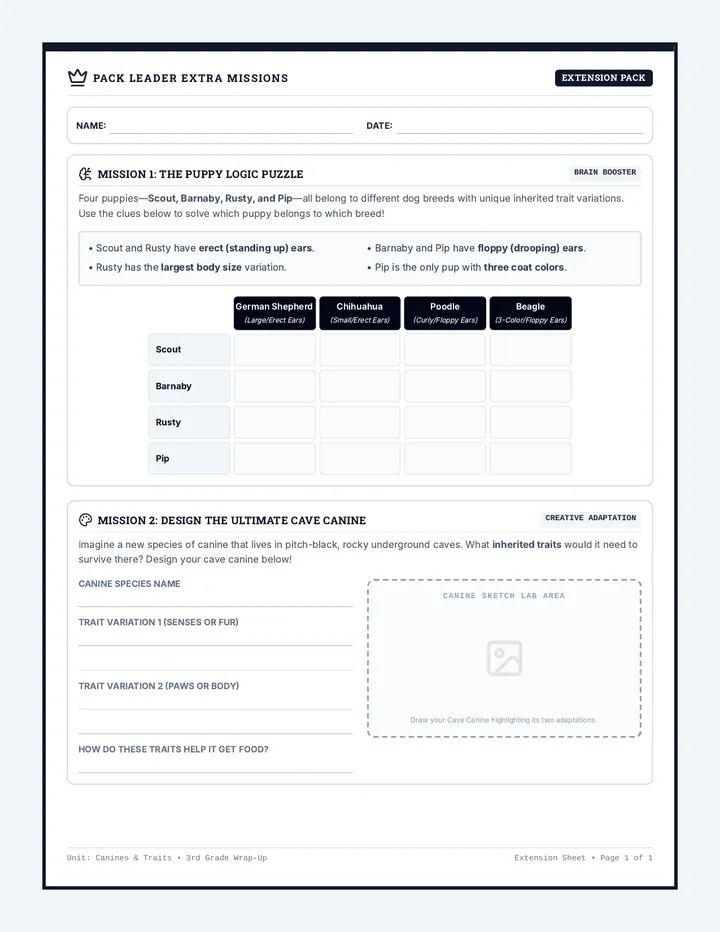
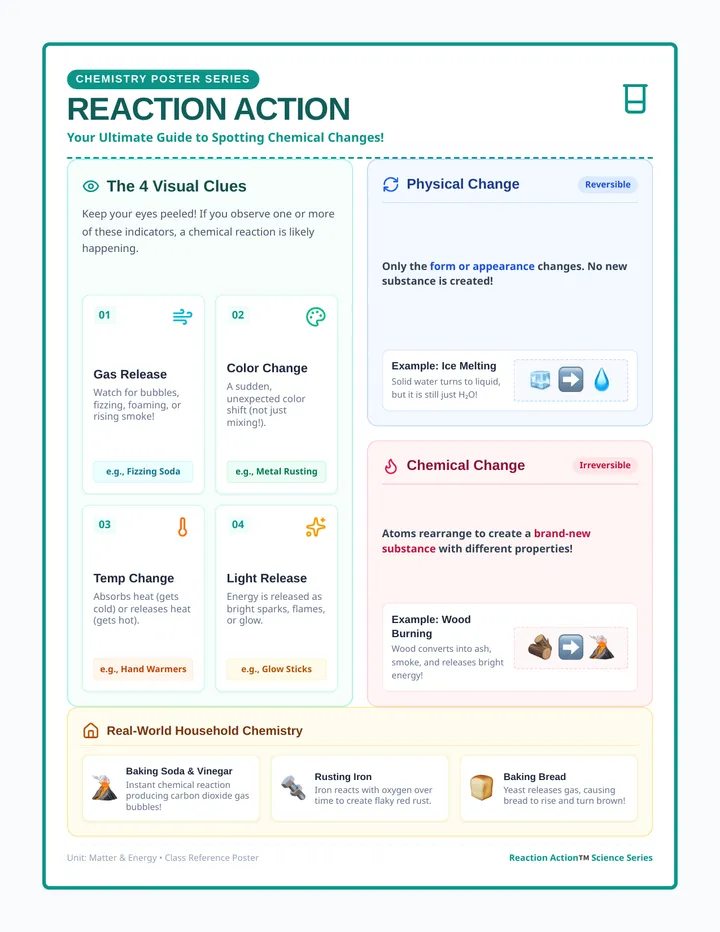
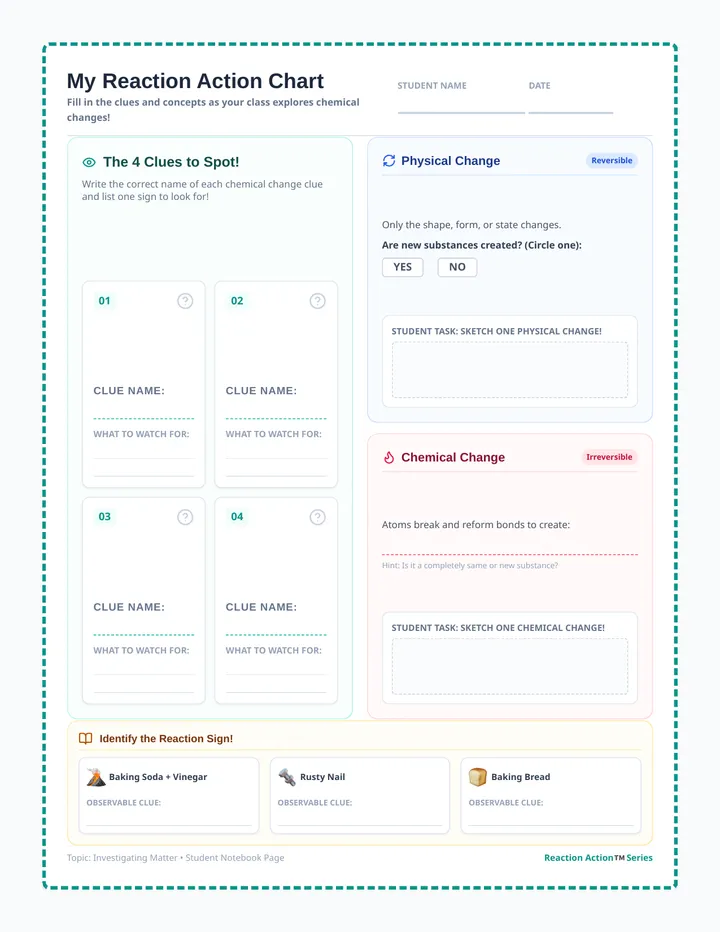
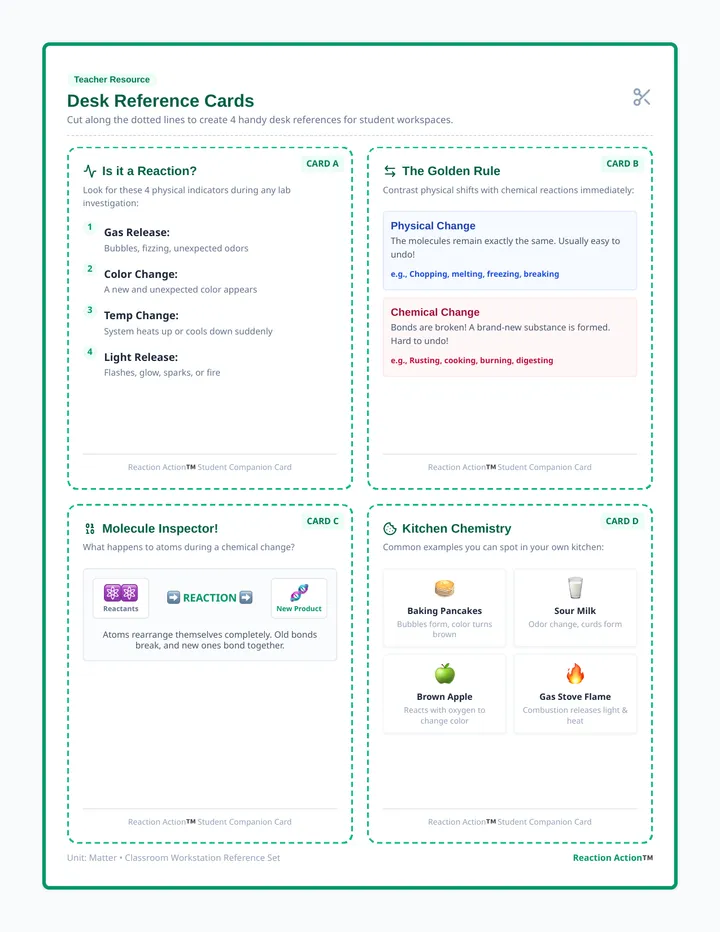
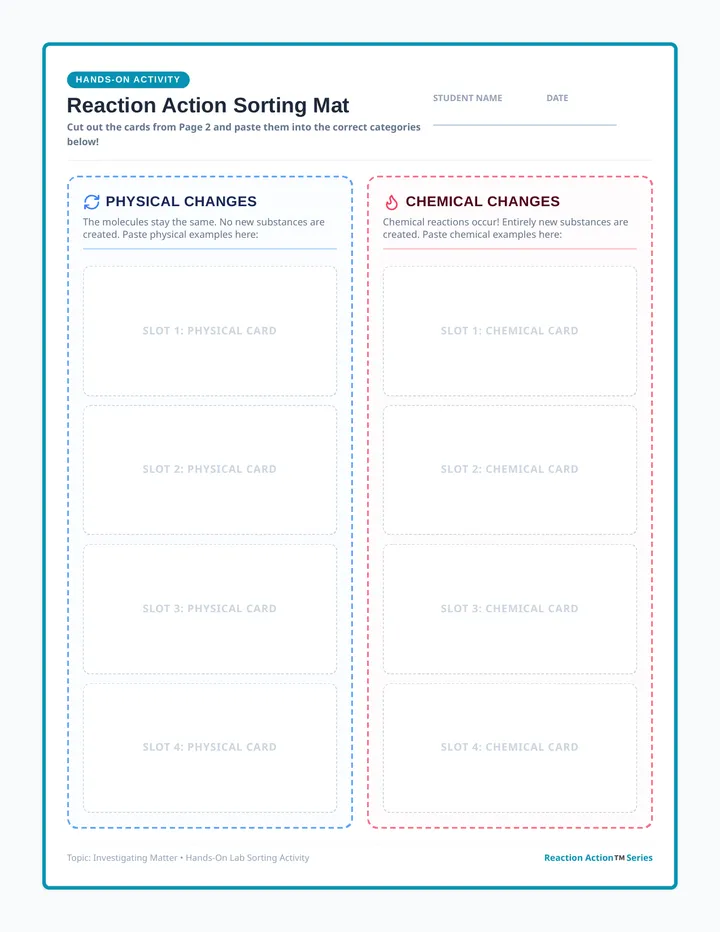
An investigation into the physical properties of matter, including mass, volume, and state changes, through observation and assessment.
Students explore the life cycles of various plants, including flowering plants, vegetables, and trees, while understanding the role of plants as producers in an ecosystem.