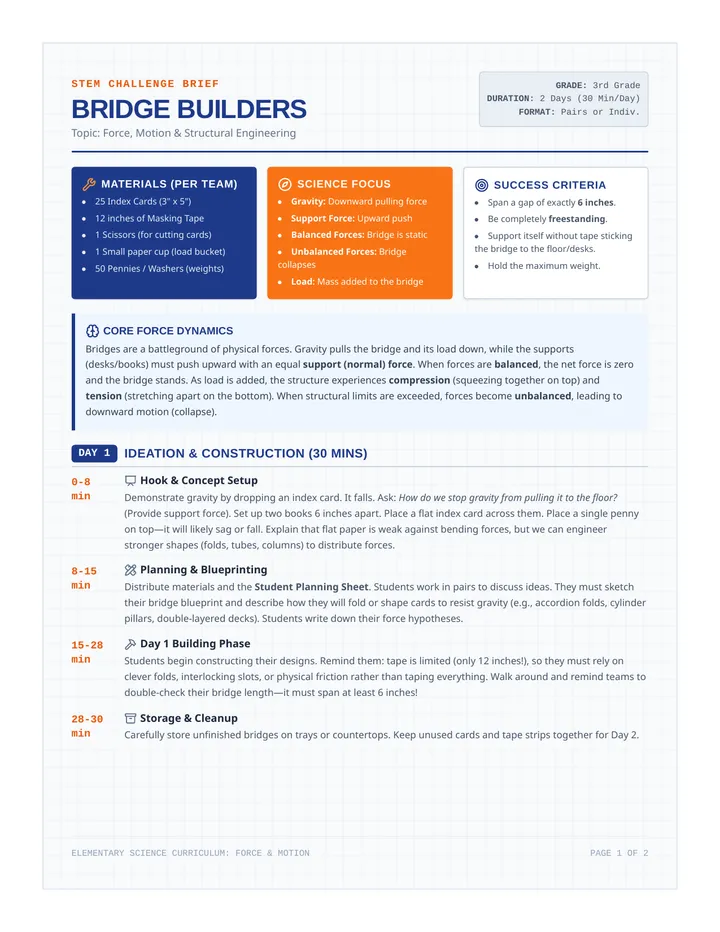
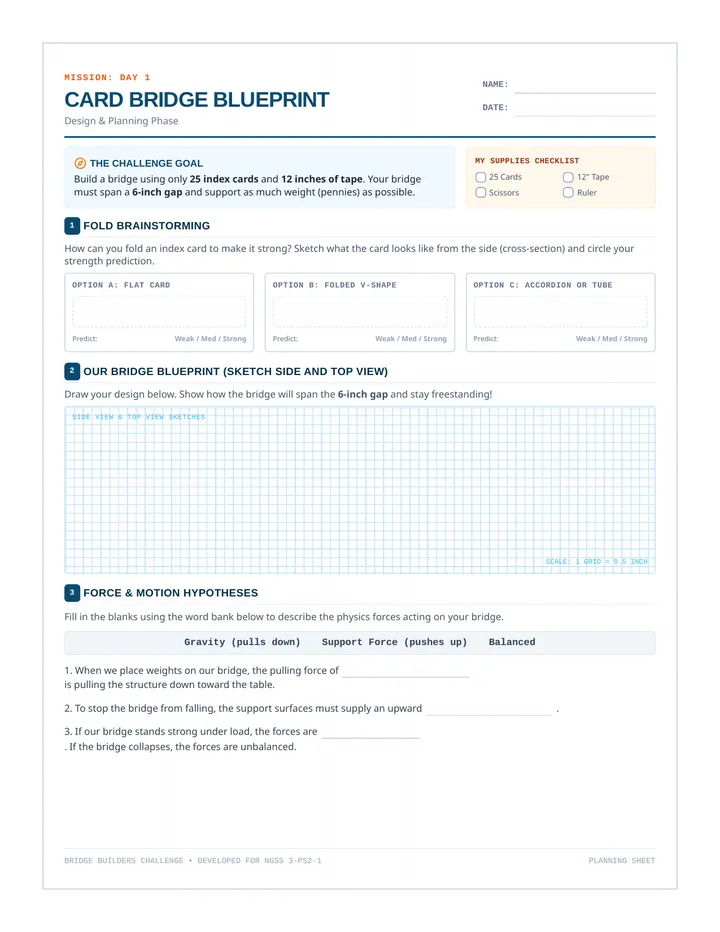
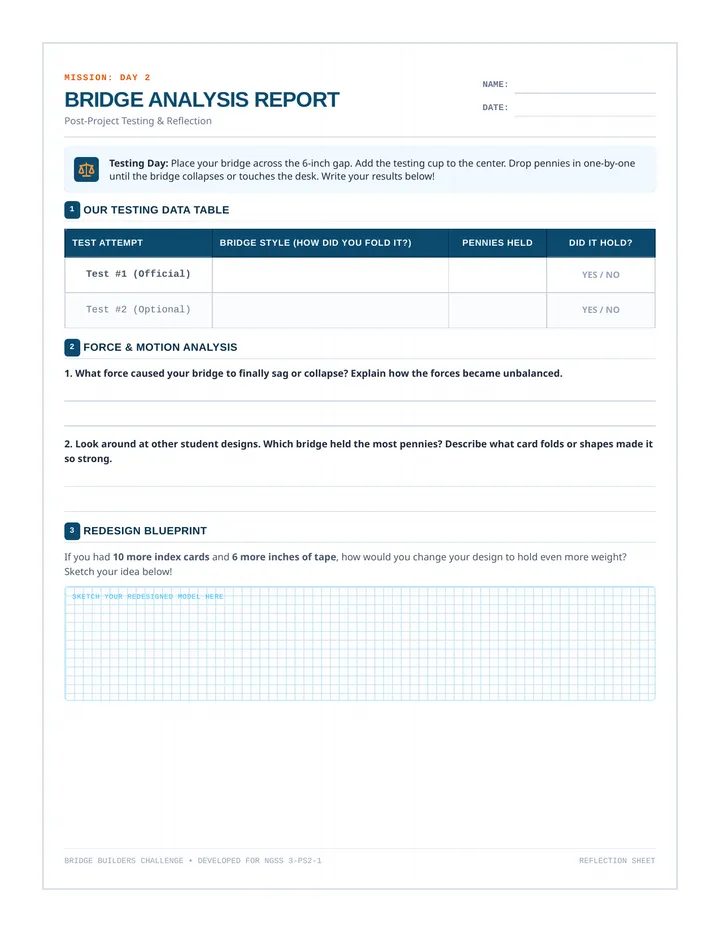
Second-grade students investigate cause-and-effect and measurement by building thermal insulators and protective packaging for fragile items.
An interactive lesson exploring how energy flows through different ecosystems using 3rd-grade appropriate concepts of producers, consumers, and decomposers. Students will identify food chains in eight distinct habitats.
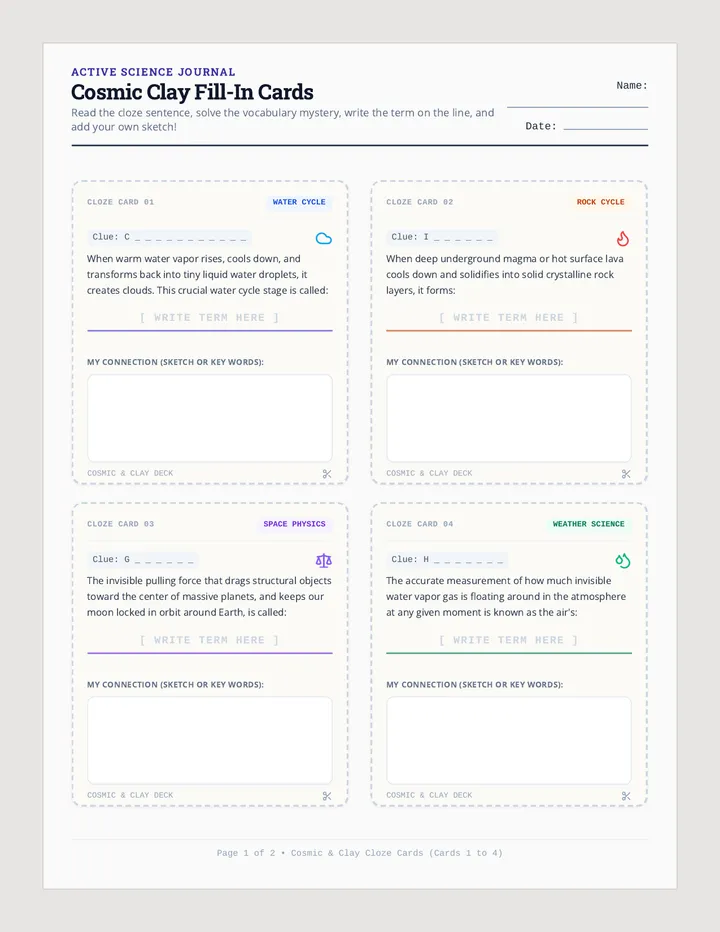
In this lesson, students dive into the water cycle while mastering RI.3.1 by asking and answering 'How' and 'Why' questions. They will explore the continuous journey of water through reading and evidence-based inquiry.
Students explore five major world habitats—Forest, Ocean, Desert, Arctic, and Rainforest—identifying key characteristics and the animals that call them home through visual presentation and hands-on sorting activities.
A creative project where students design and build a 3D biome model in a box, then document their scientific findings.
A lesson focused on the Anglerfish and its bioluminescent trap, designed for early elementary students with IEP supports. Students will learn about deep-sea adaptations through a simple reading passage and structured comprehension activities.
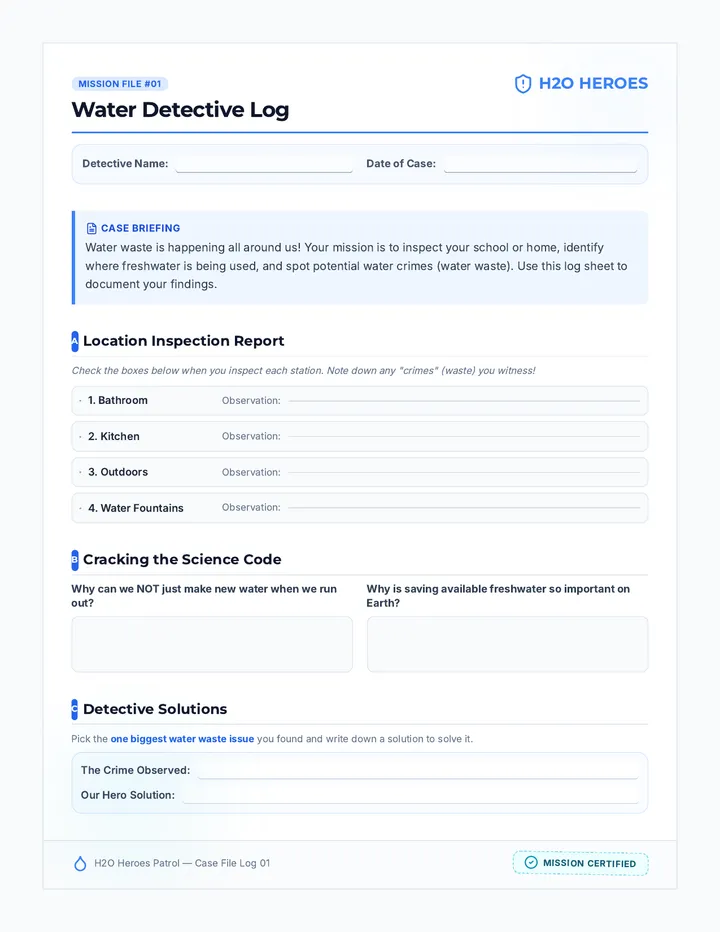
Students explore the essential methods of purifying water through hands-on experimentation. They will learn the roles of physical filtration and phase changes (evaporation) in removing contaminants from water samples.
A lesson exploring the continuous movement of water on Earth through a detailed diagram of the water cycle, focusing on the roles of energy and gravity.
An introductory lesson on waste management and recycling where students practice sorting materials and learning key environmental vocabulary.
A foundational lesson on the Scientific Method, covering definitions, steps, variables, and data collection methods.
A collaborative jigsaw activity where students become experts on different renewable energy sources before teaching their peers and synthesising their knowledge.
A fun, differentiated Earth Day celebration for 2nd-4th graders and life skills students, featuring hands-on missions to protect the planet after a week of testing.
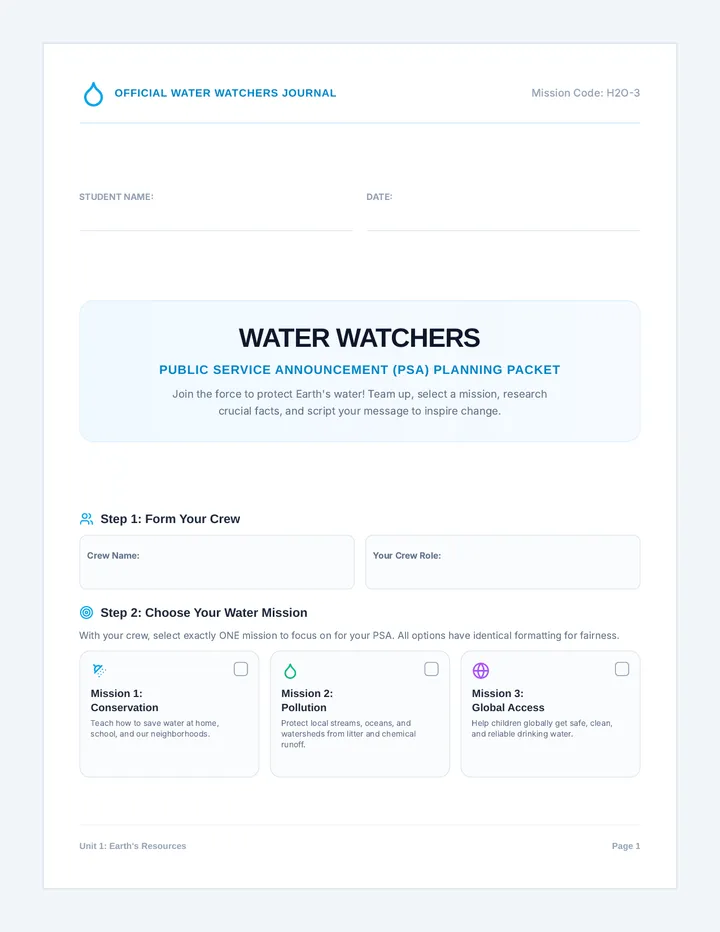
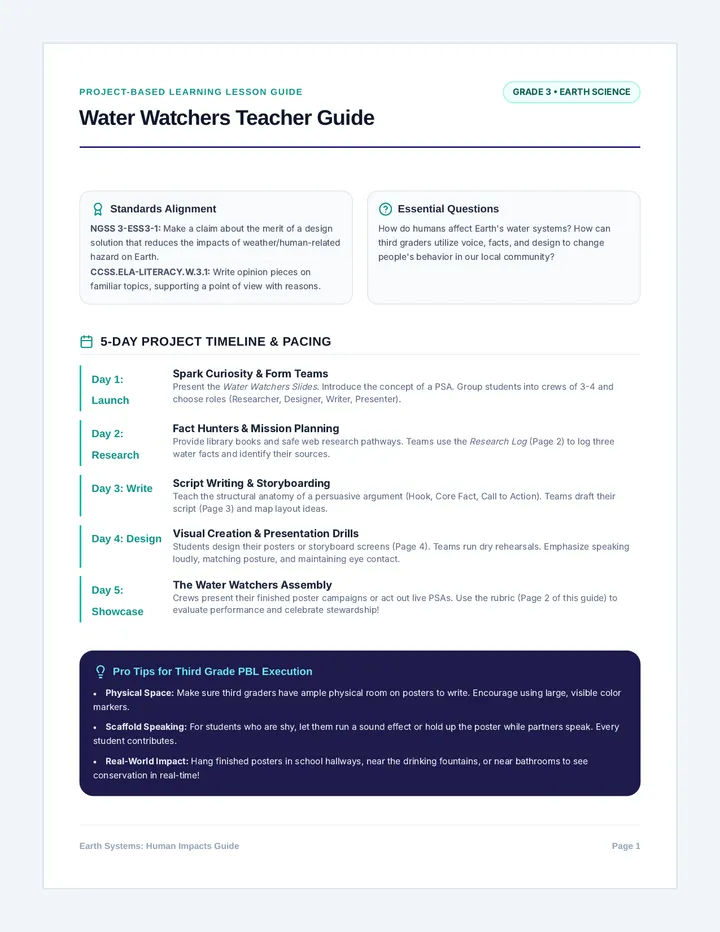
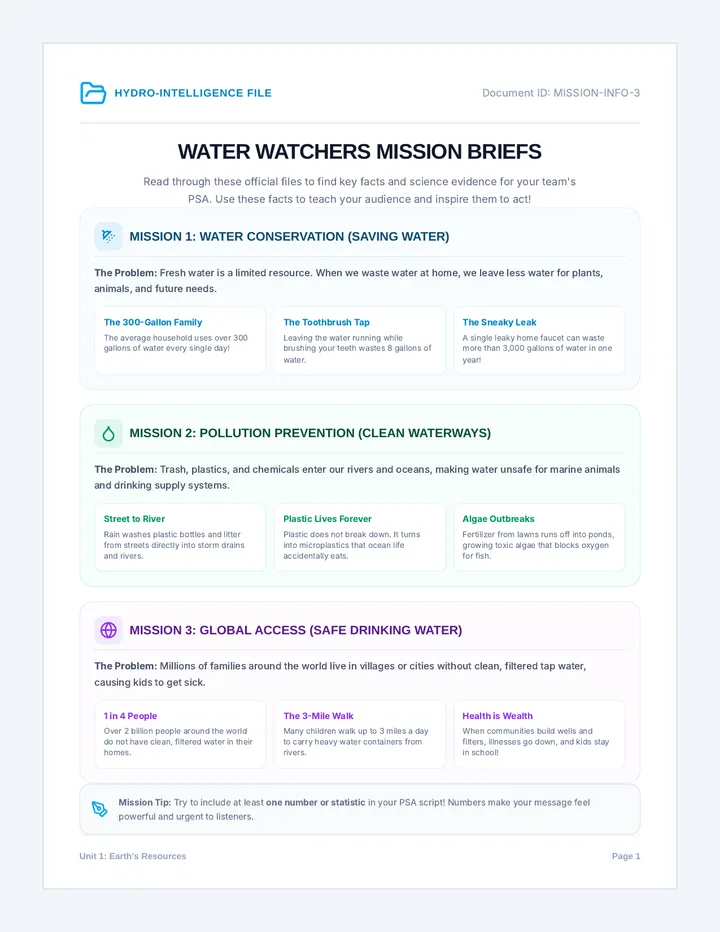
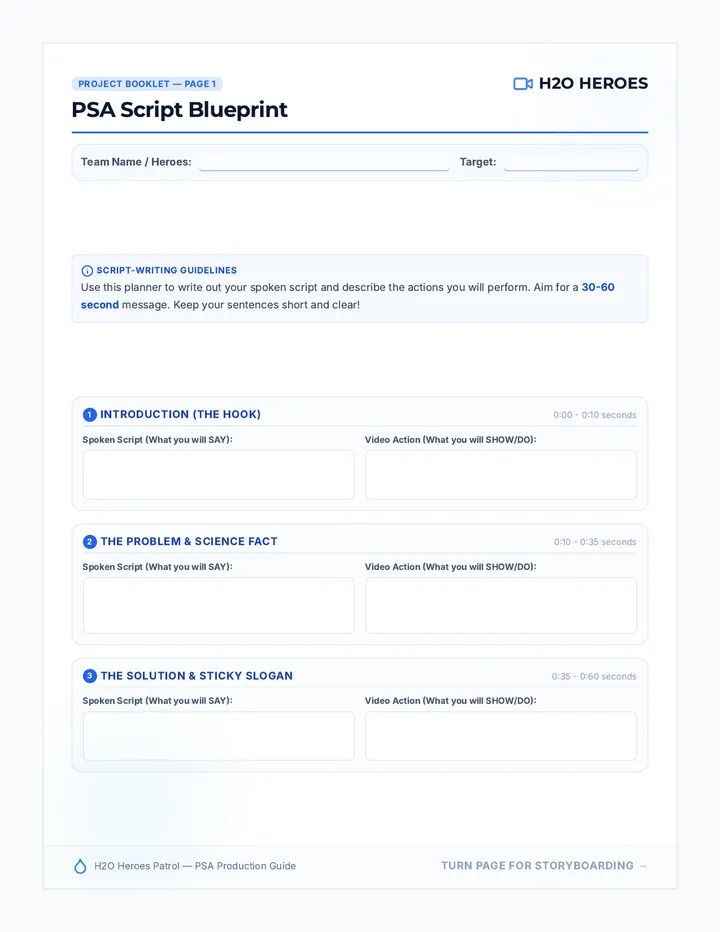
A comprehensive environmental science project broken into manageable phases, from research to final presentation. Students investigate global environmental challenges and propose solutions through a 'mission-based' framework.
Students apply their scientific and mathematical knowledge to create either a Community Garden Design or a Garden Business Plan, culminating in a formal presentation.