First-grade agents classify objects by size, weight, and multiple observable attributes to help a superhero organize their gadget bag. Focuses on heavier vs. lighter and larger vs. smaller.
A collection of resources for tracking student progress, celebrating achievements, and managing the robotics workspace. includes mission logs, certificates, and reference guides.
Explore Marty the Robot using two coding methods: physical color blocks for screenless movement and Scratch-like block coding for more complex behaviors and sensing.
Transition from screenless coding to block coding with Sphero Mini. Students will explore distance, rotation, and loops while programming their robot to complete various challenges in the Sphero Edu app.
Introduce students to screenless coding using Sphero indi and color tiles. This lesson focuses on cause-and-effect and simple sequencing as students lead indi through a series of color-coded missions.
An advanced physics-based engineering unit for grades 4-5. Students take on the role of 'Roller Coaster Tycoons' to design gravity-powered coasters and braking systems, emphasizing variable testing, energy transfer, and safety criteria.
A fun-filled junior engineering lesson for grades 1-3. Students act as 'Thrill Seekers' to design steep, safe slides and sturdy ticket booths for a new amusement park, focusing on surface properties, friction, and structural stability.
An advanced disaster relief engineering unit for grades 4-5. Students design precision supply drop crates to protect medical gear and modular flood barrier systems to save a model town, emphasizing experimental variables and cost-to-performance criteria.
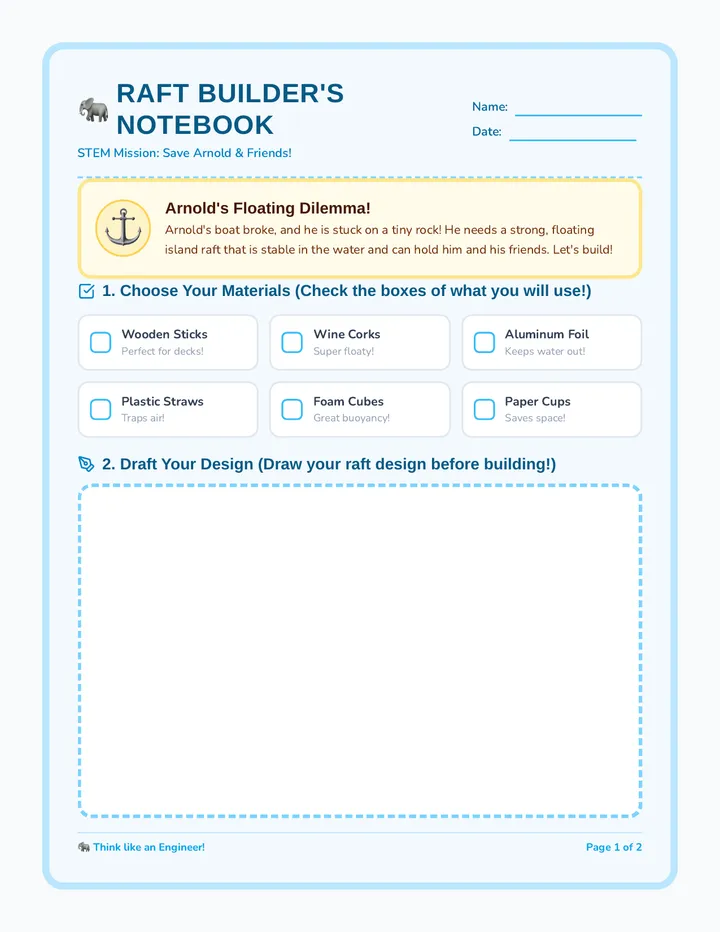
A high-energy junior engineering lesson for grades 1-3. Students join the 'Storm Rescue Team' to design unsinkable rafts for flood rescues and wind-resistant shelters for high-wind emergencies, focusing on material properties and modeling.
An advanced engineering challenge for grades 4-5 set in a Mars mission context. Students design landing systems to protect rovers and build structures to withstand extreme planetary conditions, focusing on experimental design and prototype evaluation.
A junior engineering lesson for grades 1-3 where students act as zoo designers. They solve real-world animal habitat problems by building waterproof canopies and sturdy bridges, focusing on modeling, tool use, and basic prototyping.
Fifth-grade students explore energy flow and conservation of matter by building wind turbine blades and sorting mixtures of recyclable materials.
Fourth-grade students analyze systems and stability by designing water filtration devices and flood defense systems for the city.