A creative project where students design and build a 3D biome model in a box, then document their scientific findings.
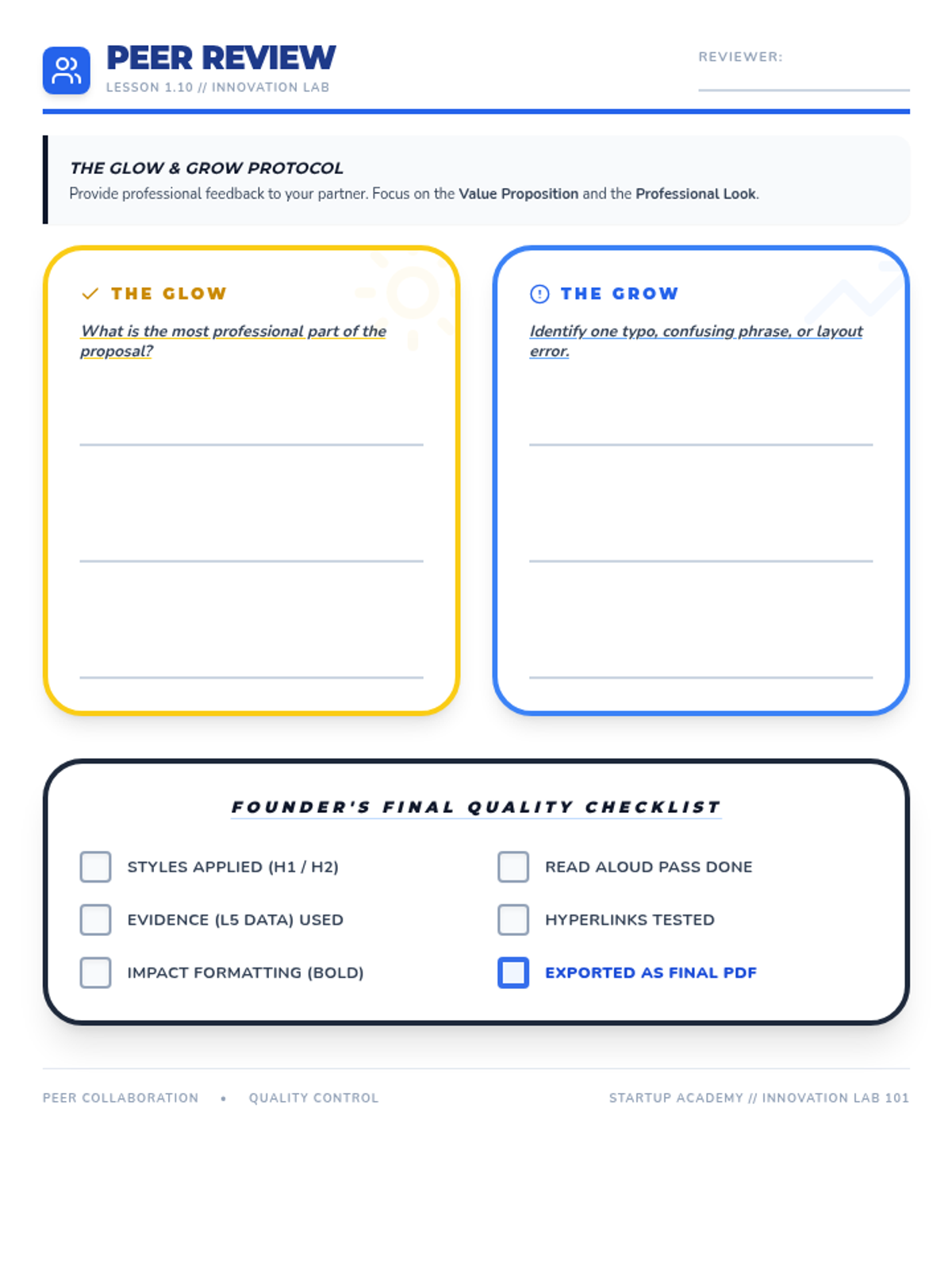
Students perform quality control on their business proposals through peer review, grammar tools, and text-to-speech auditing before exporting their final work as professional PDFs.
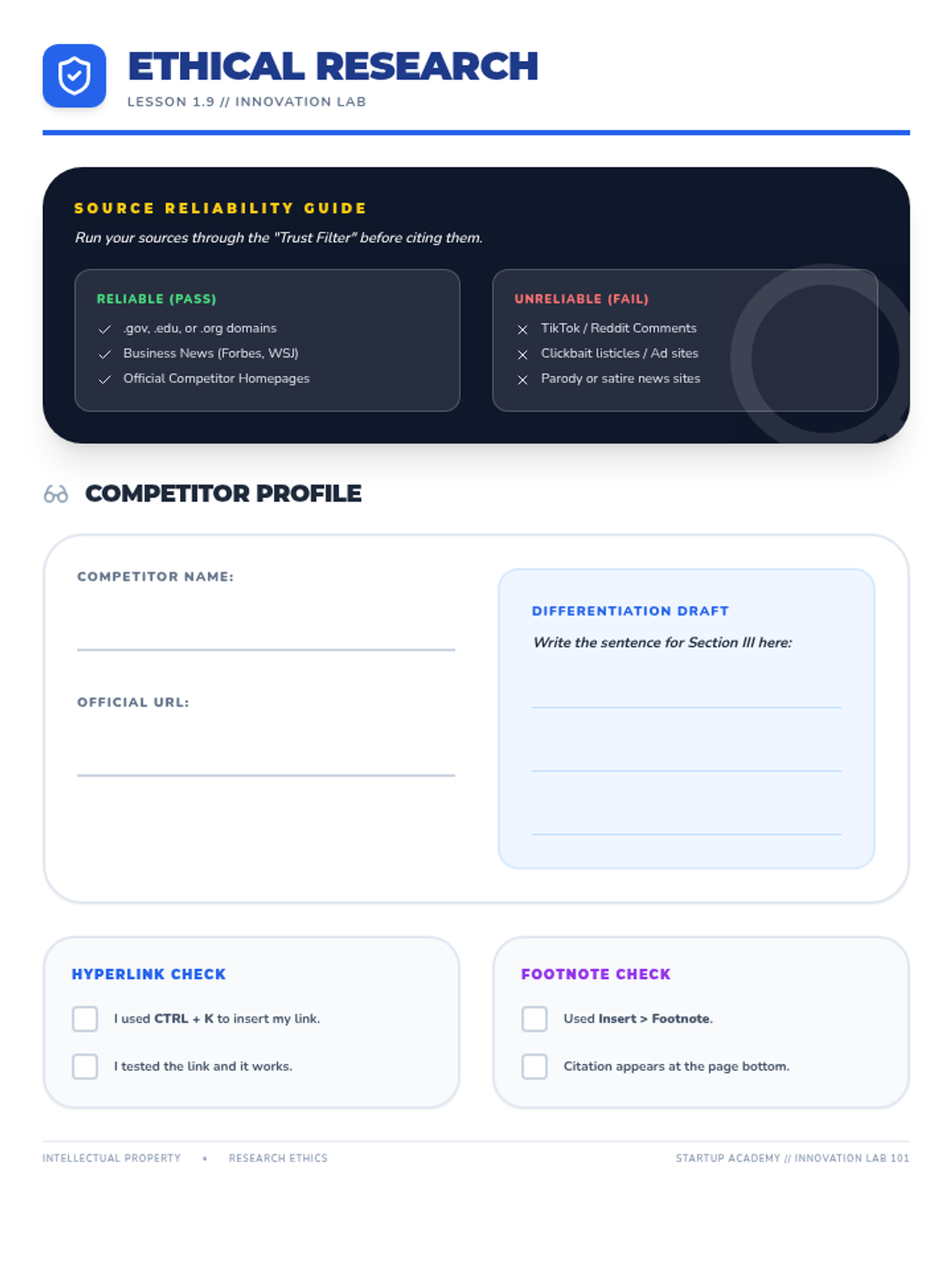
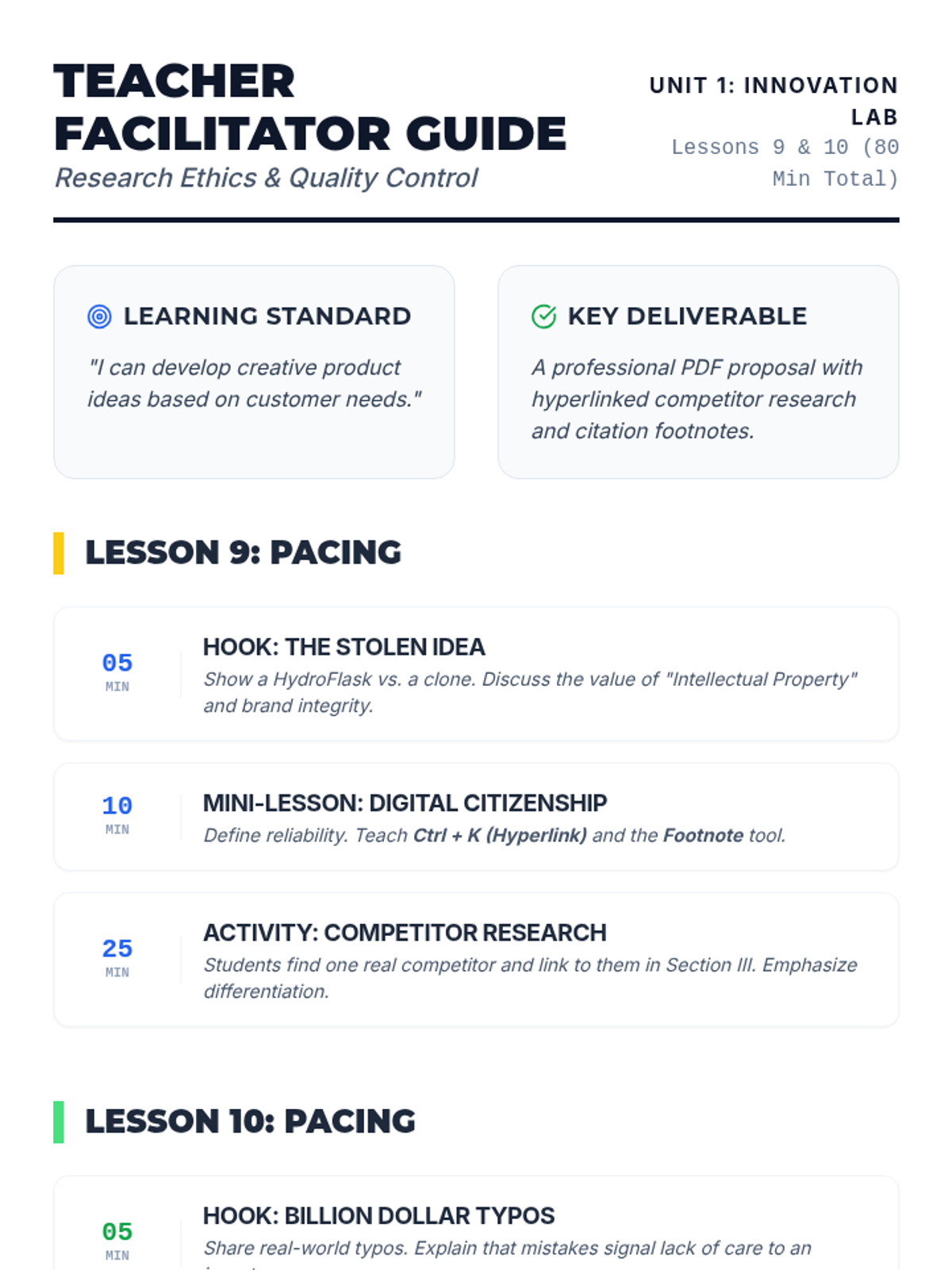
Students learn about intellectual property, source reliability, and technical citation skills like hyperlinking and footnotes to perform ethical competitor research.
Students integrate market research data and customer testimonials into their formal proposals, using evidence to validate their product concepts and finalizing the Solution section.
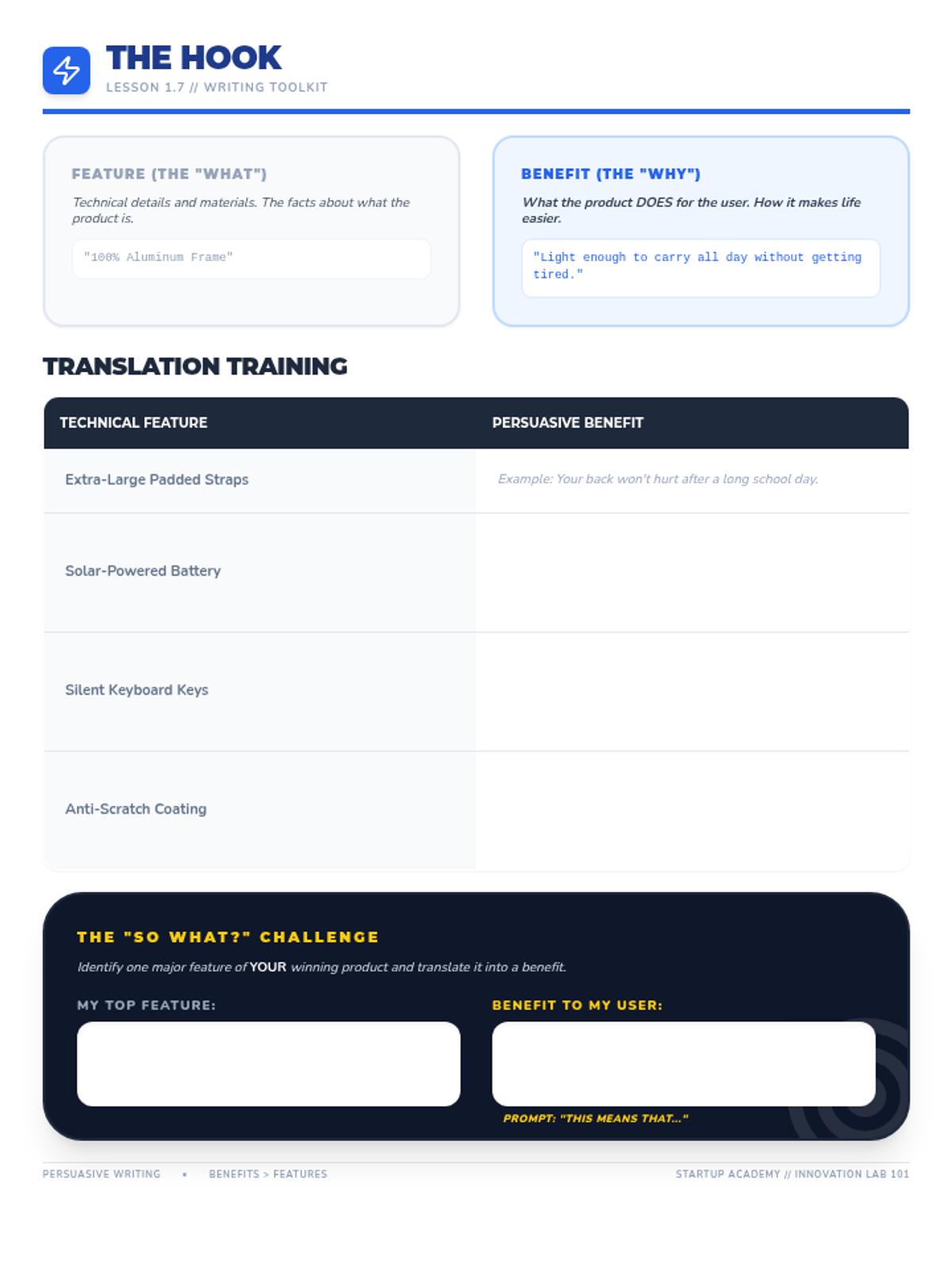
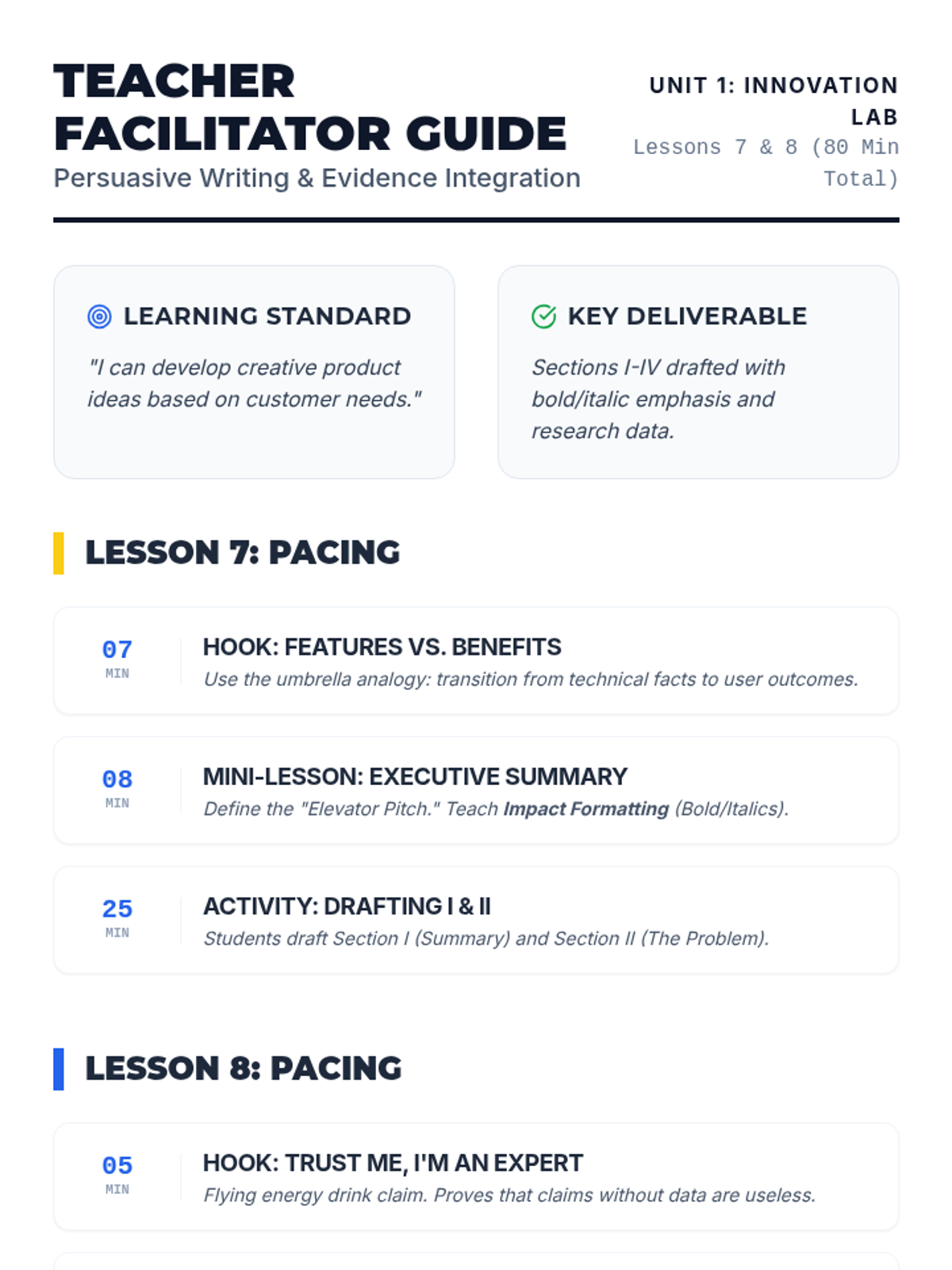
Students learn to distinguish between product features and customer benefits, drafting the Executive Summary and Problem sections of their business proposal using persuasive formatting.
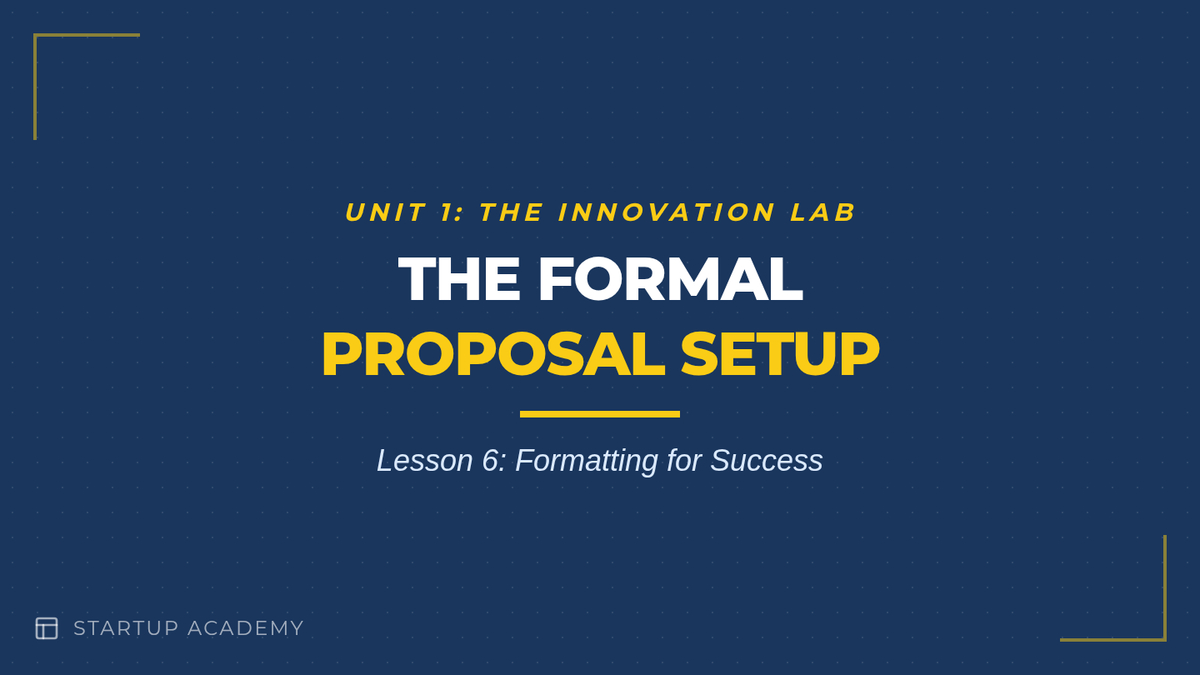
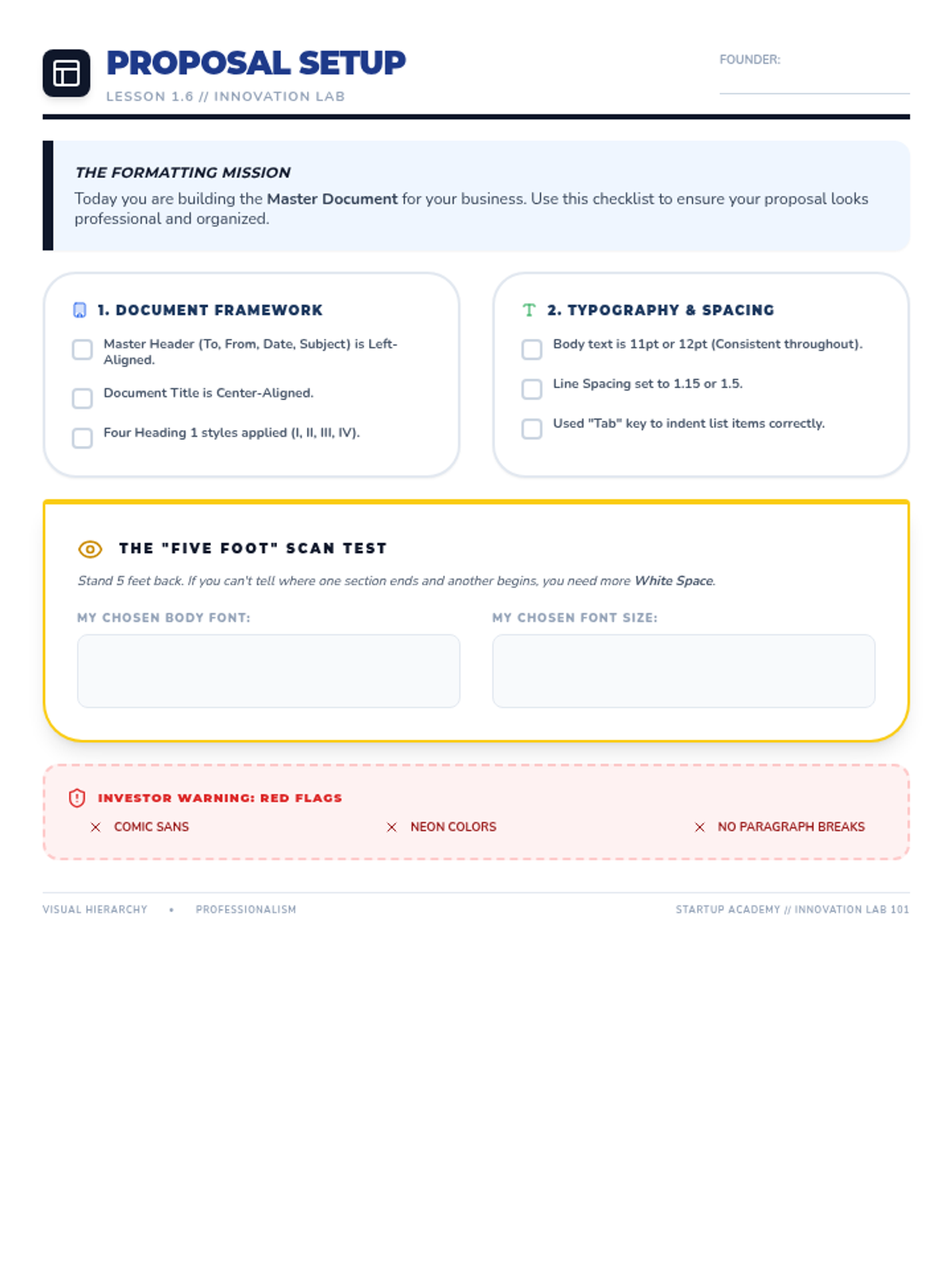
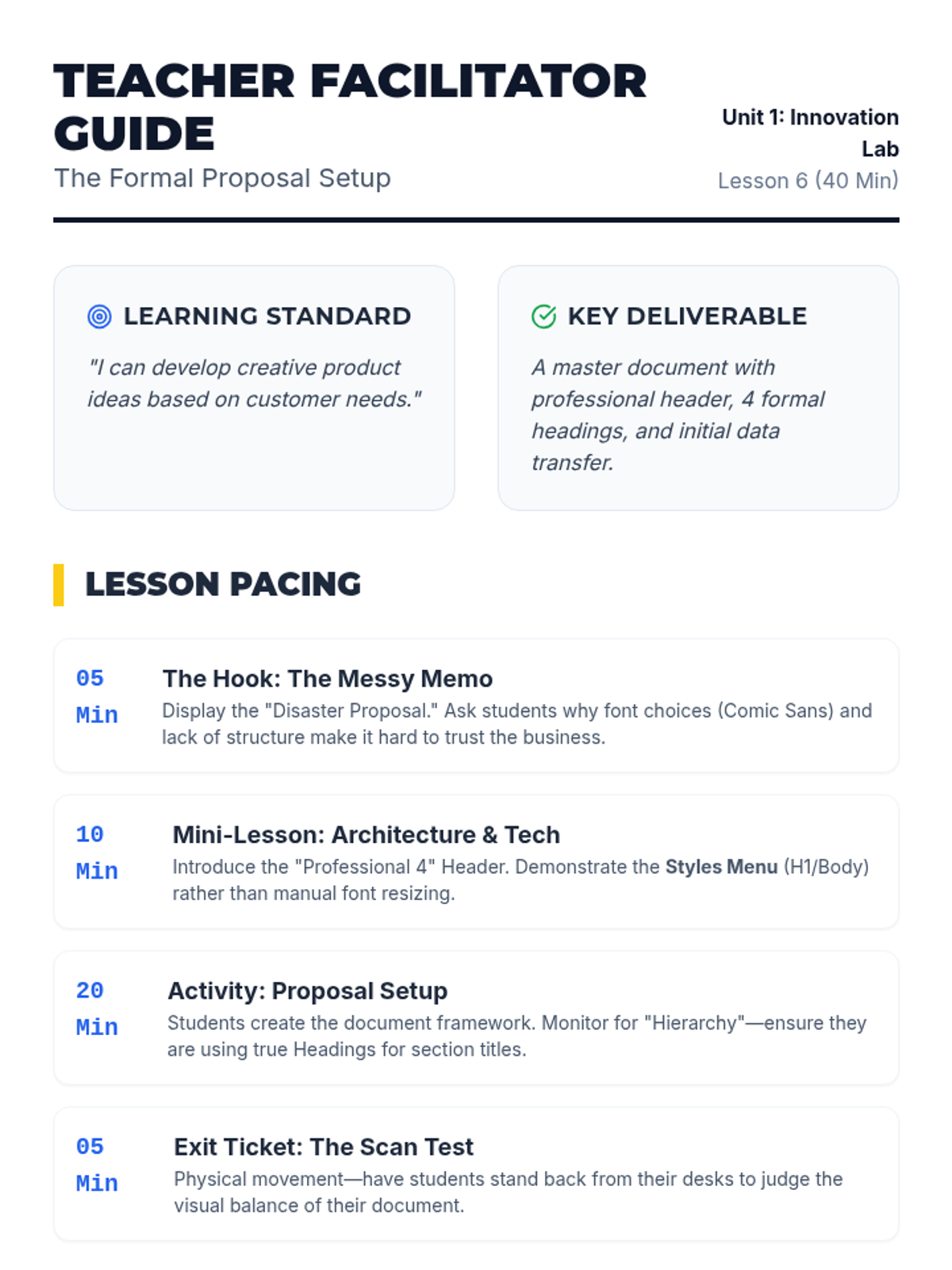
Students learn the importance of professional document formatting and hierarchy, setting up a formal business proposal template with structured headings and standardized typography.
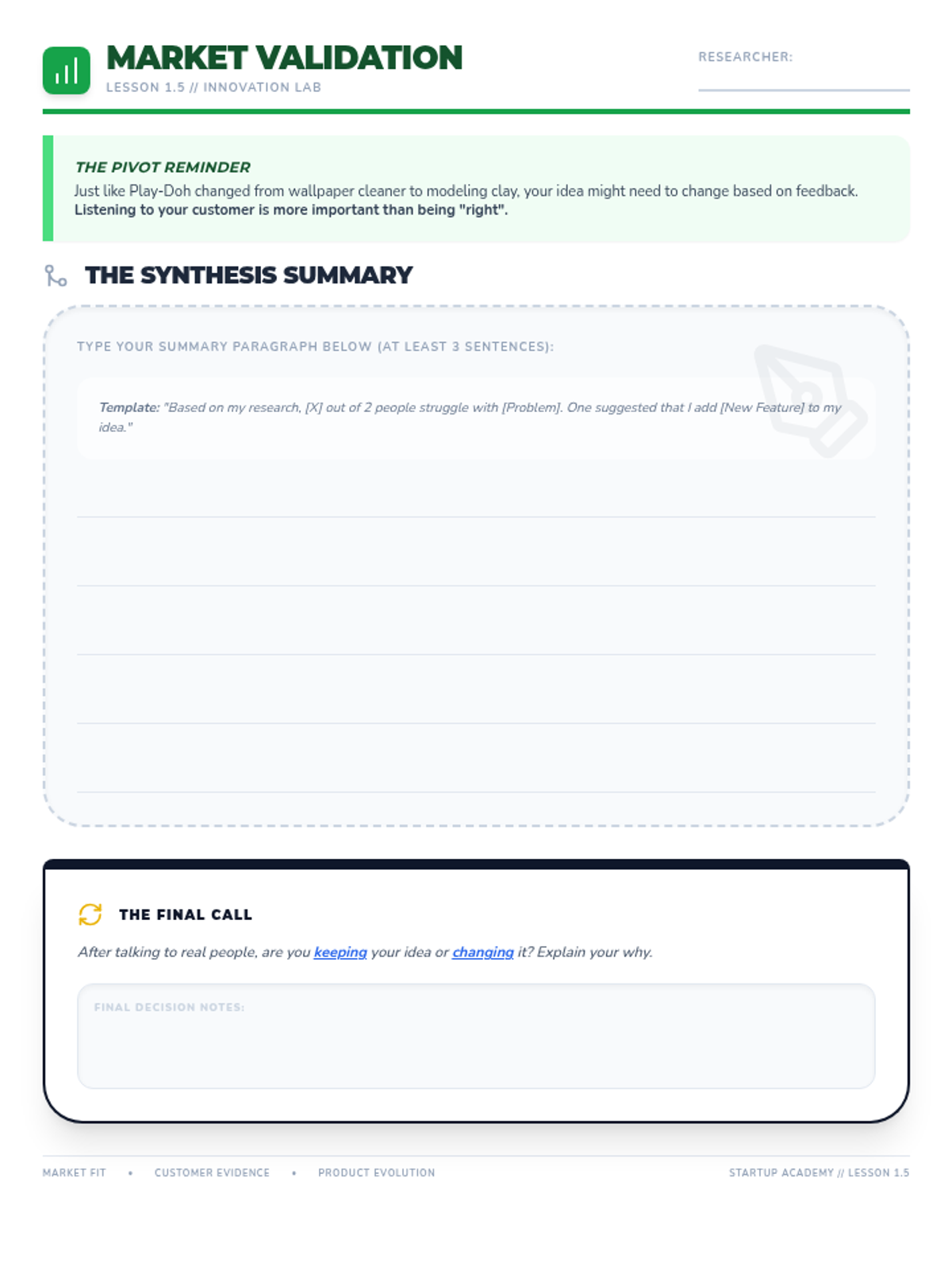
Students conduct a market research sprint, interviewing classmates to validate their product ideas and learning to 'pivot' based on real user feedback and data synthesis.
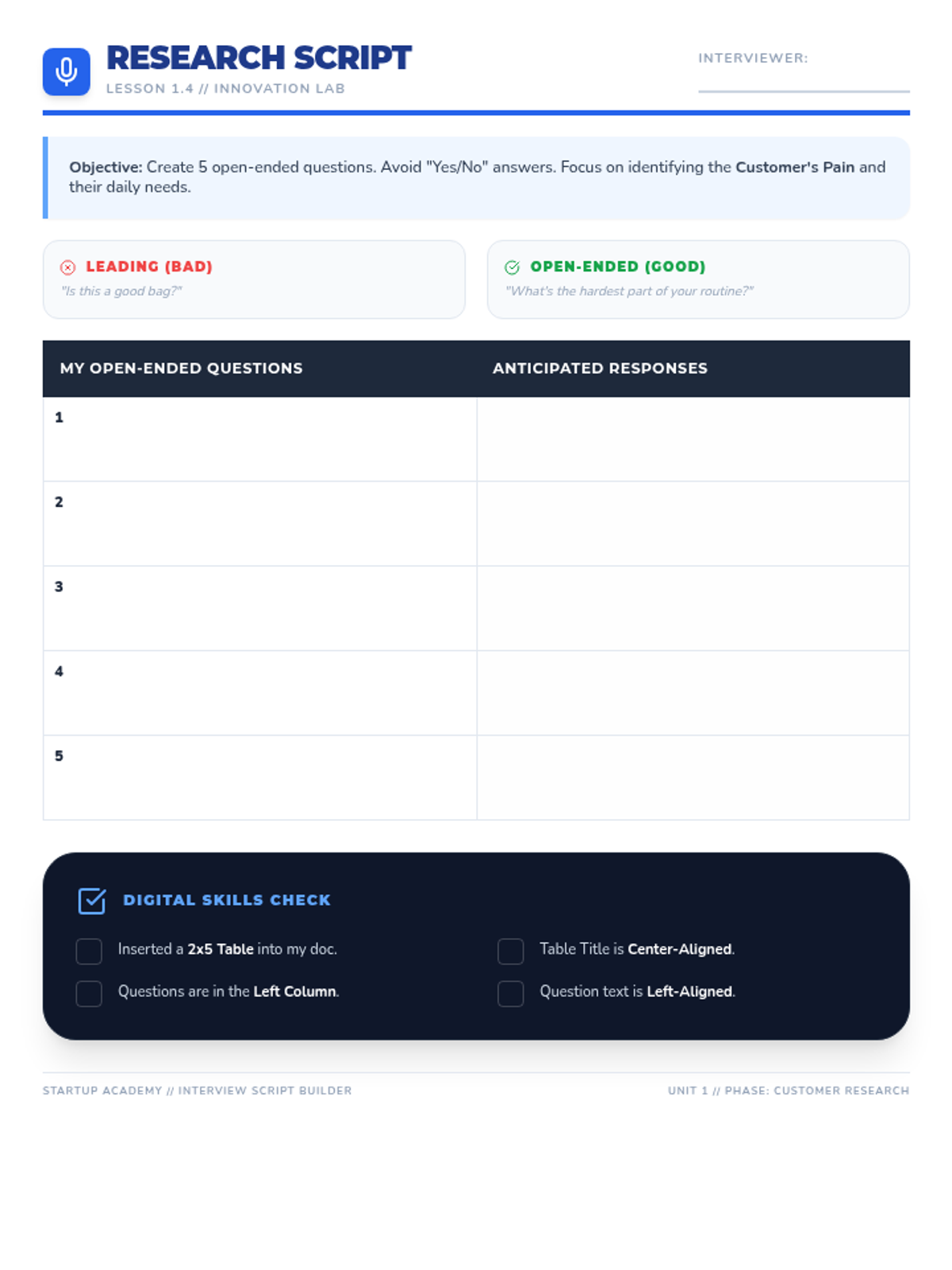
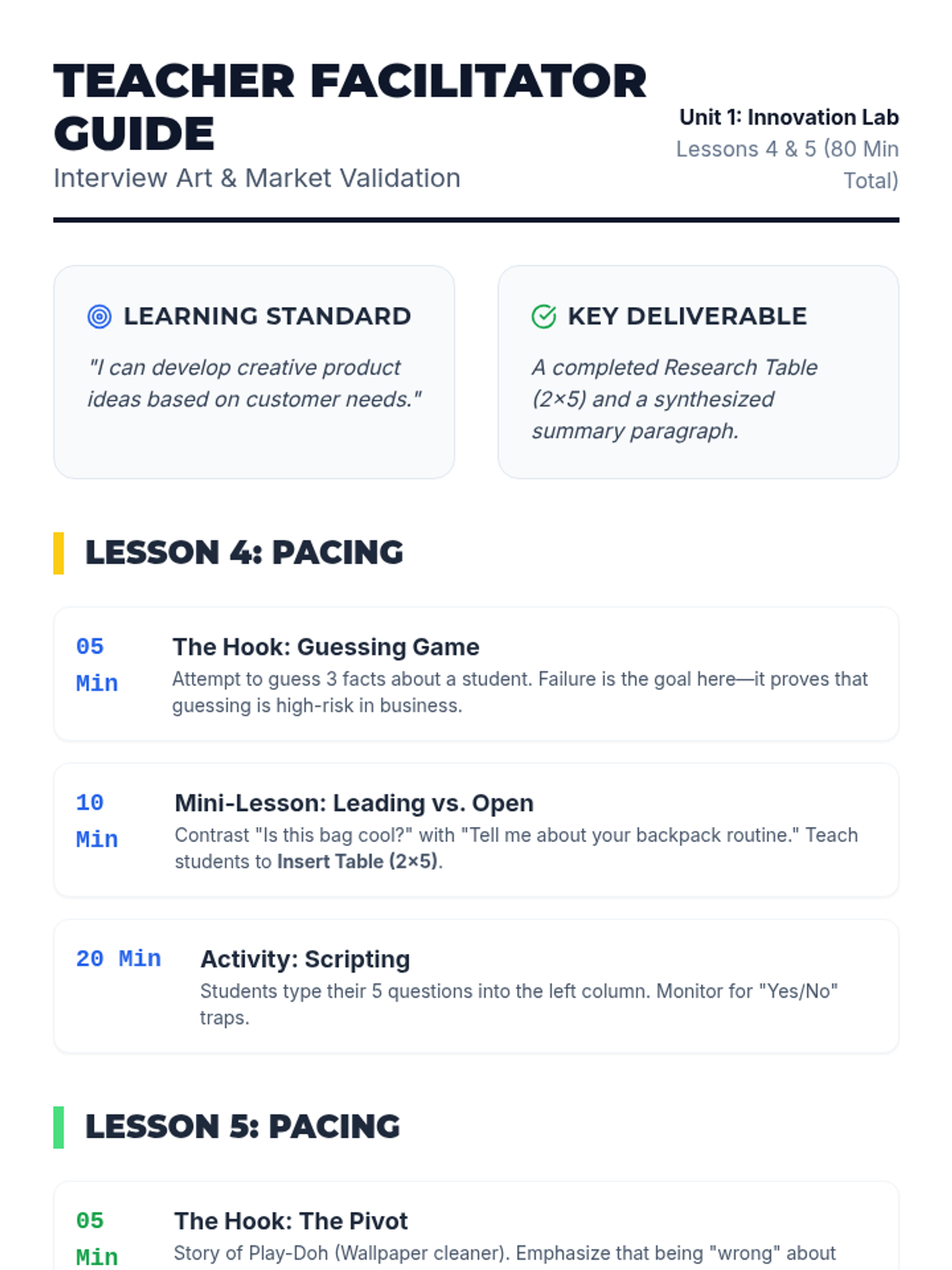
Students learn the difference between leading and open-ended questions, developing a research table and interview script to gather unbiased feedback from potential customers.
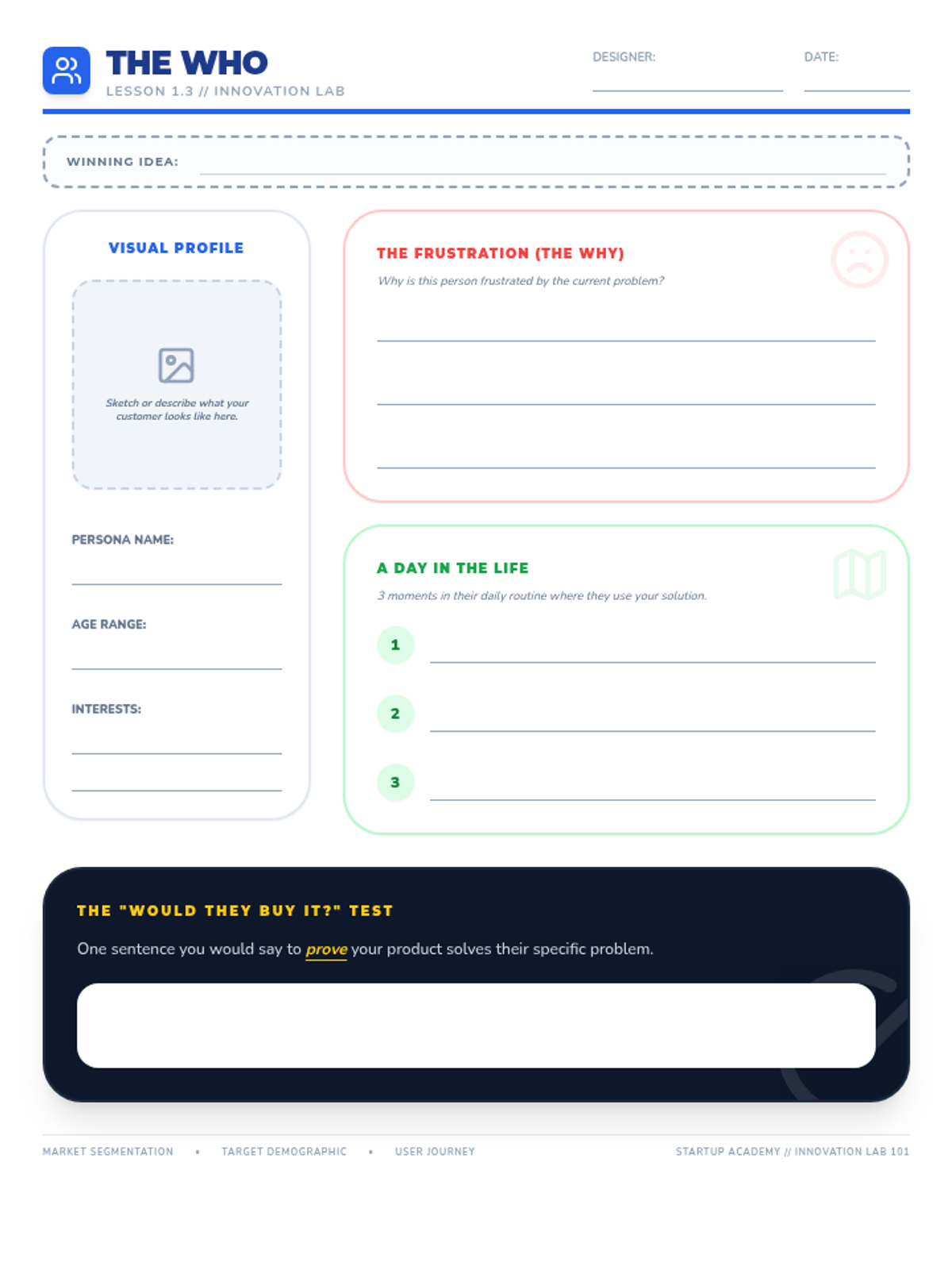
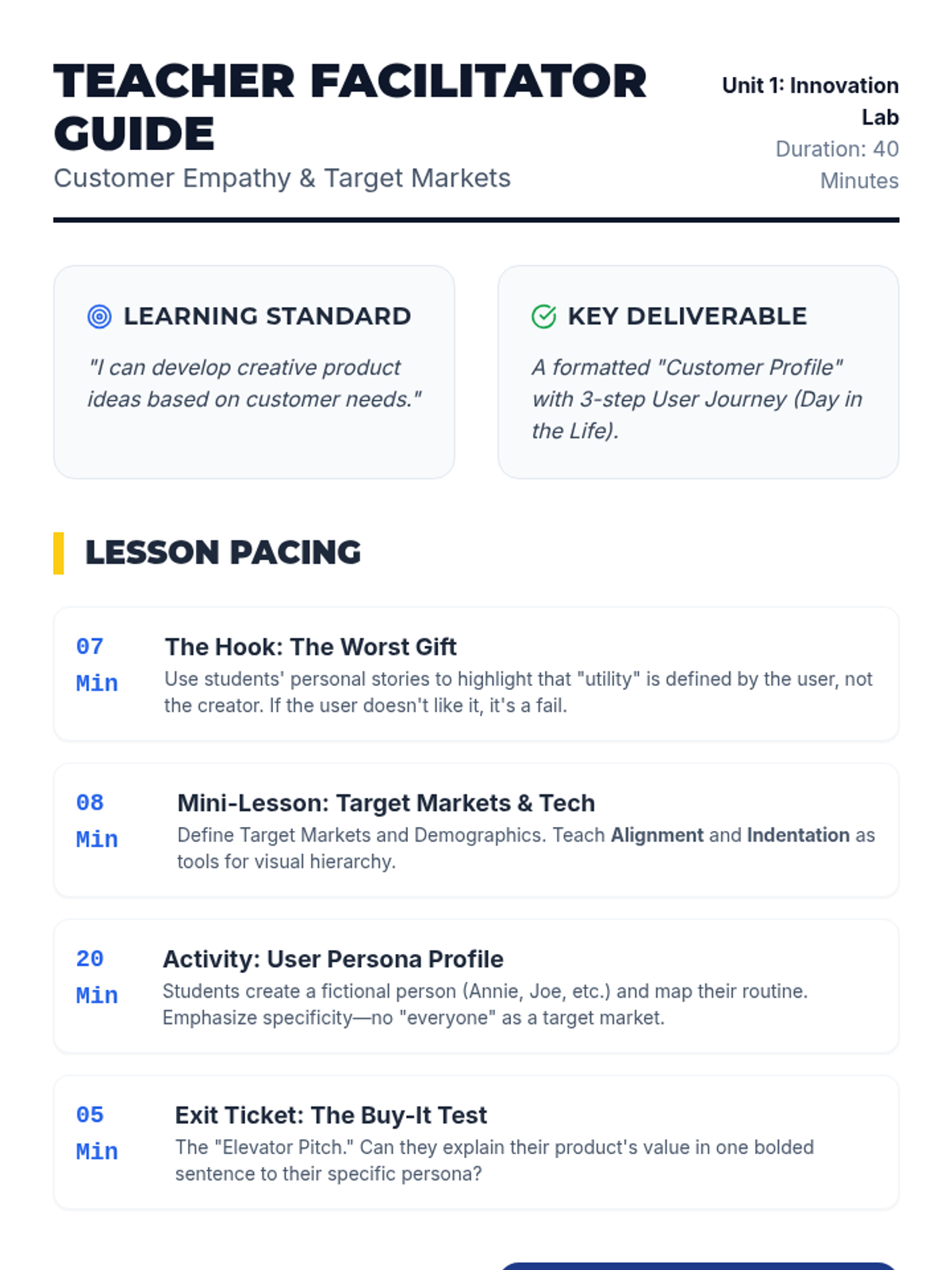
Students explore the concepts of target markets and customer empathy, moving from personal preferences to identifying specific user needs and mapping out a "Day in the Life" for their ideal customer.
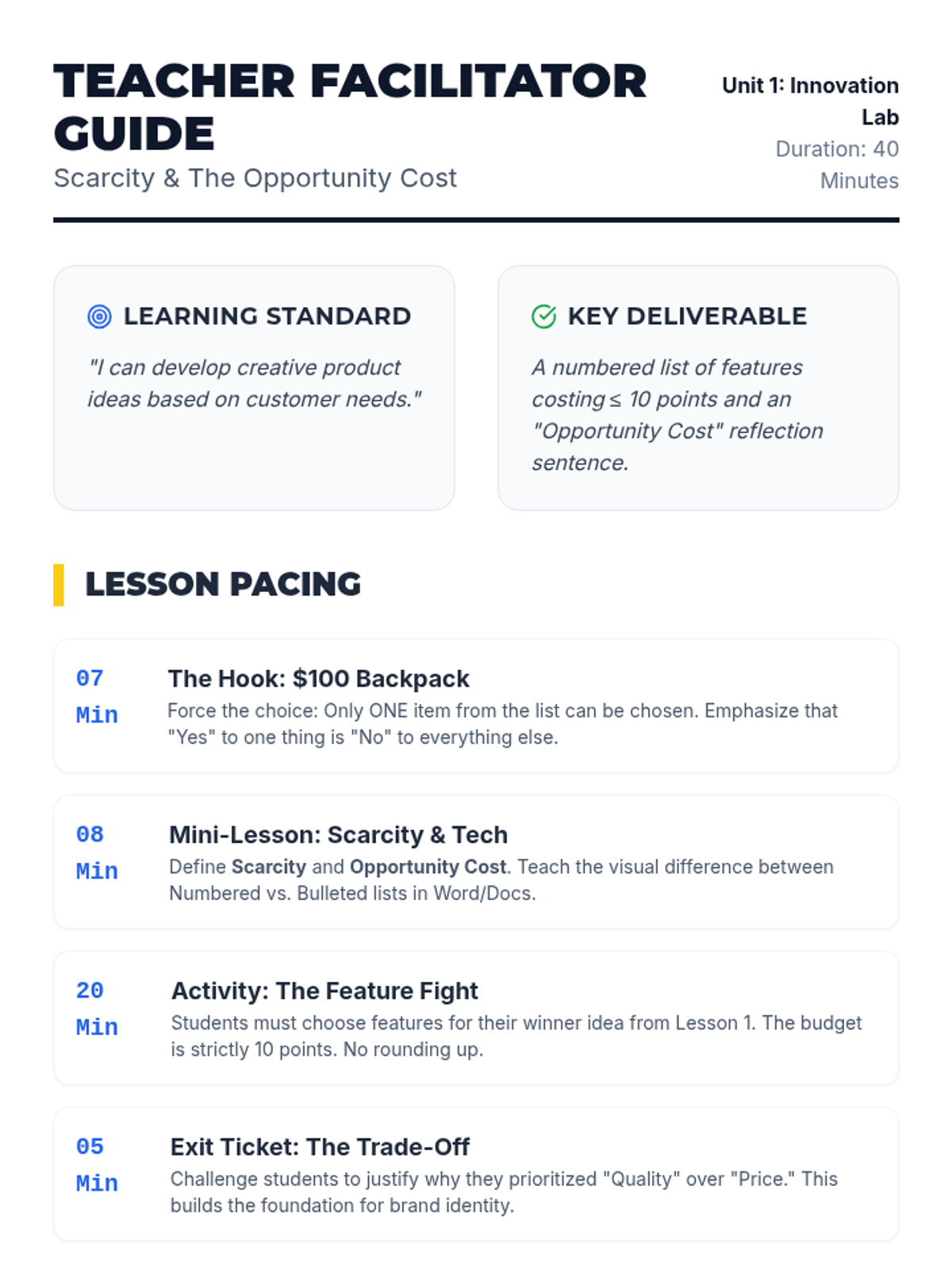
Students explore the fundamental economic concepts of scarcity and opportunity cost, applying them to product development by making difficult trade-offs between competing features within a limited resource budget.
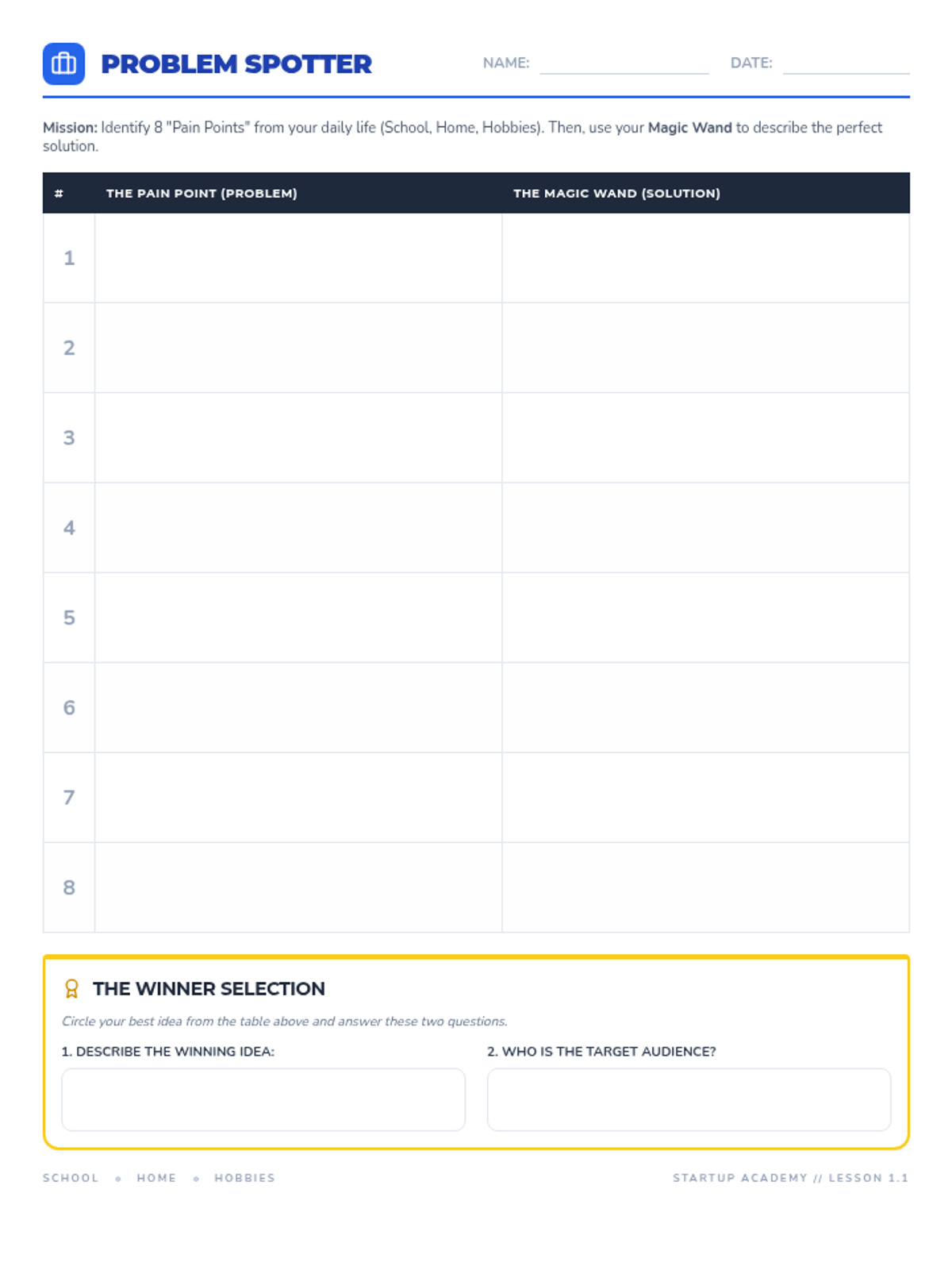
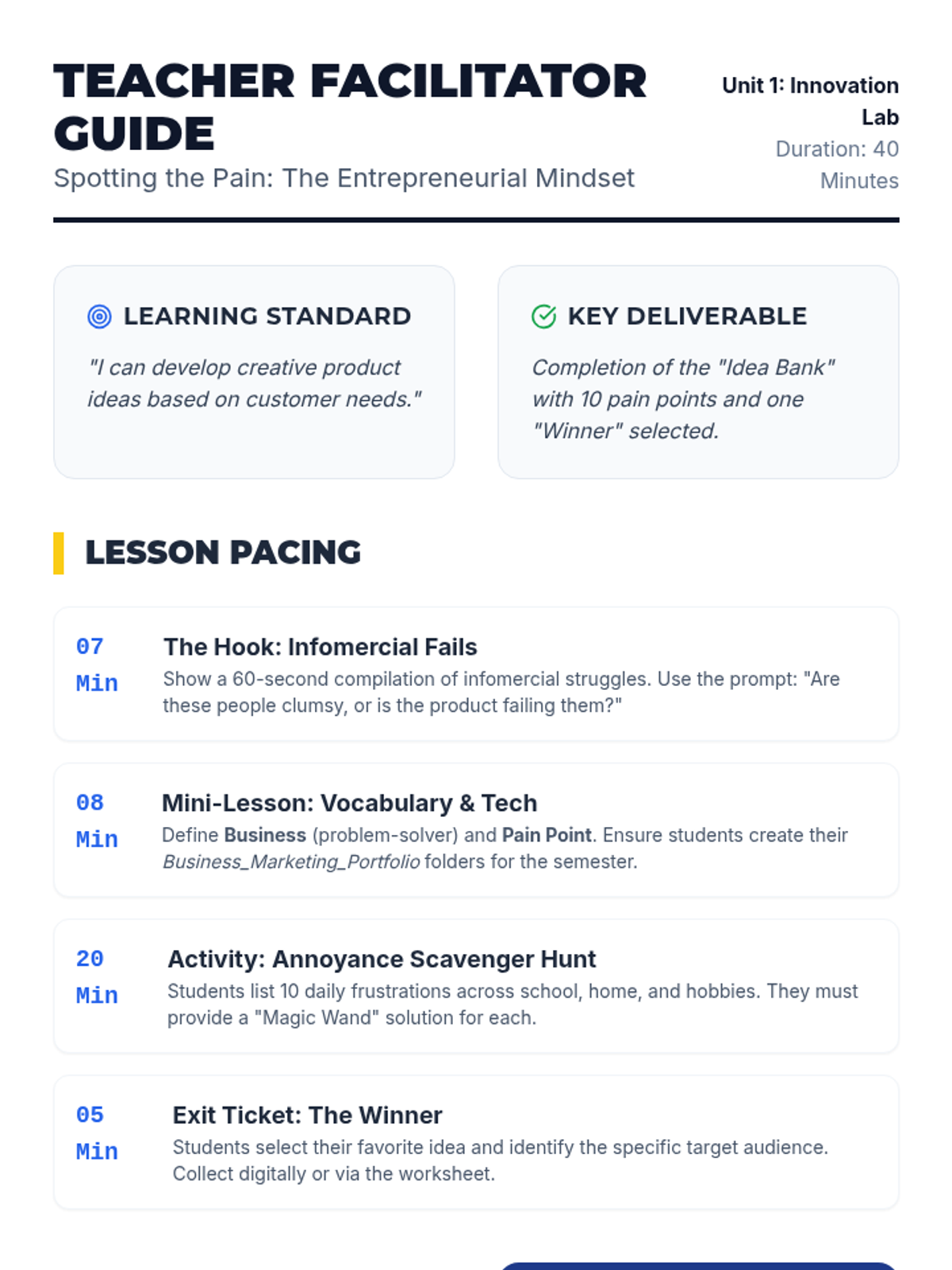
Students learn to identify consumer "pain points" as opportunities for innovation, moving from recognizing everyday frustrations to conceptualizing business solutions.
Students learn to identify 'pain points'—frustrations in daily life—as the foundation for entrepreneurial opportunities and business solutions.
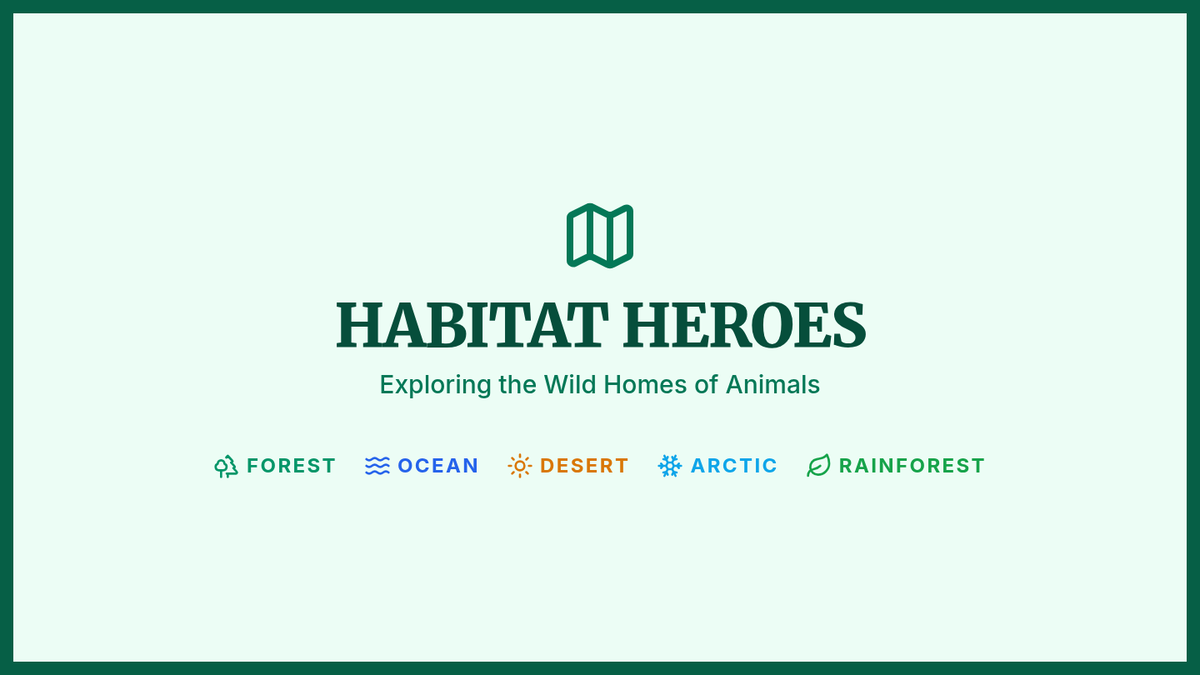
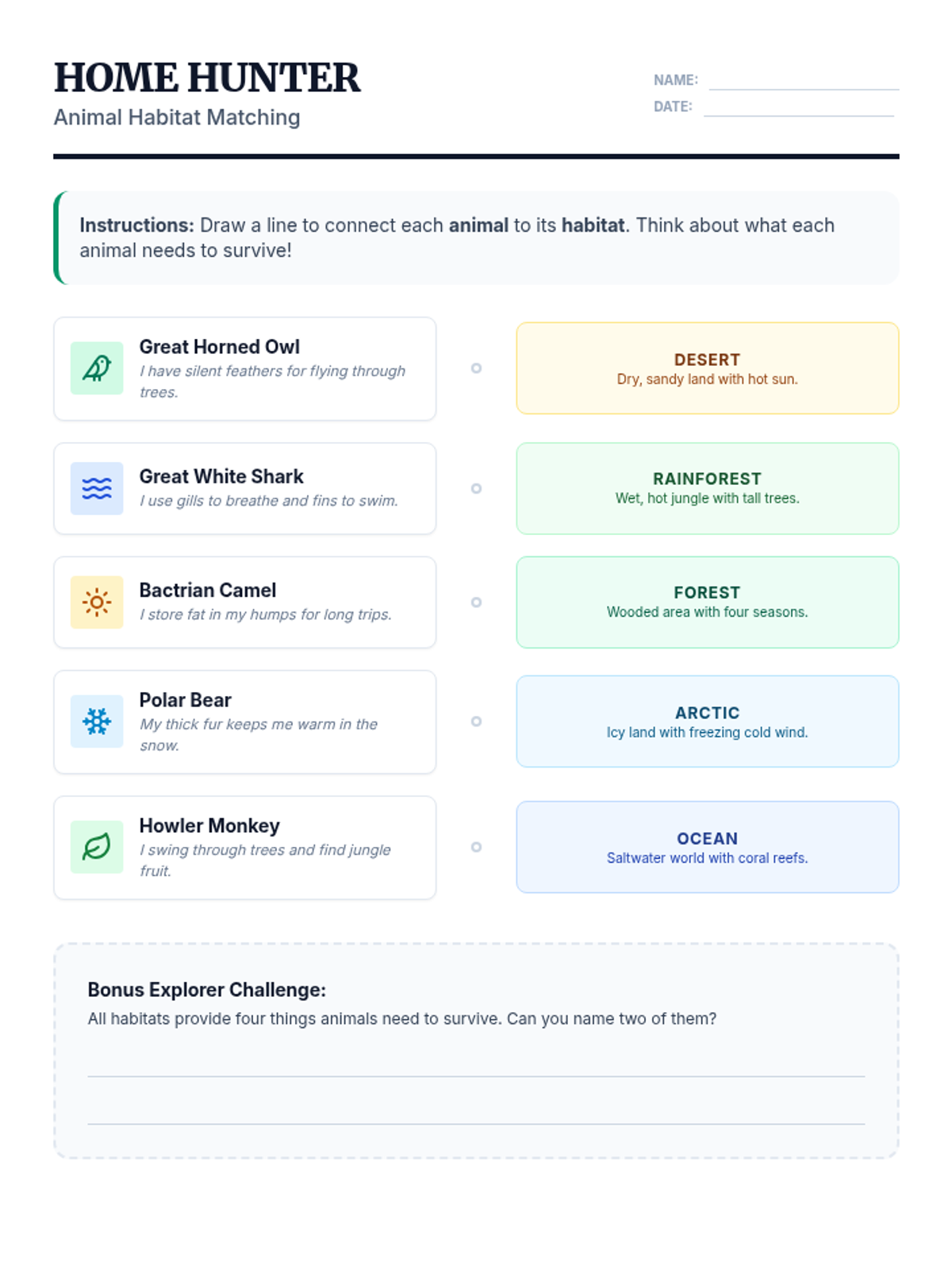
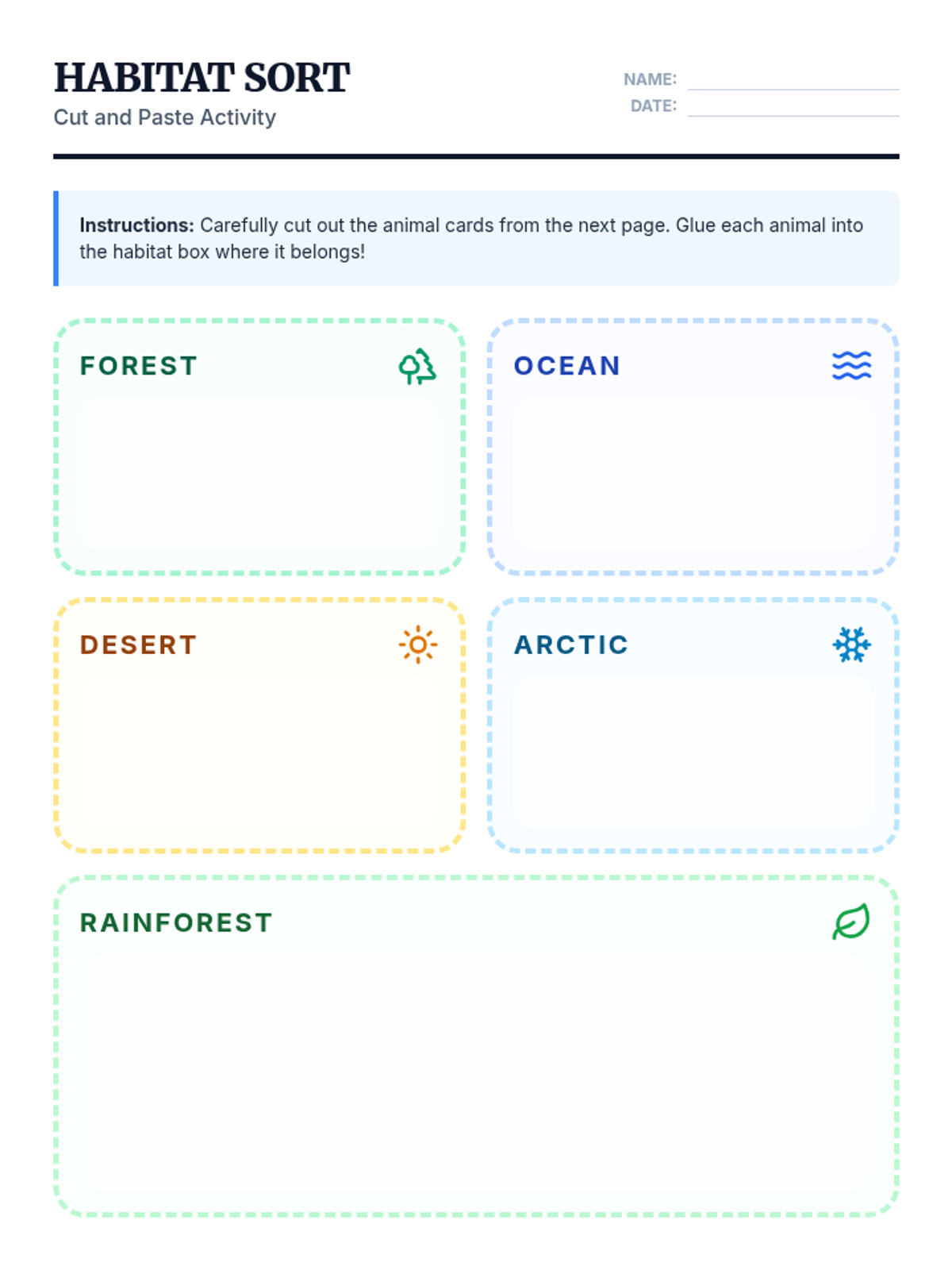
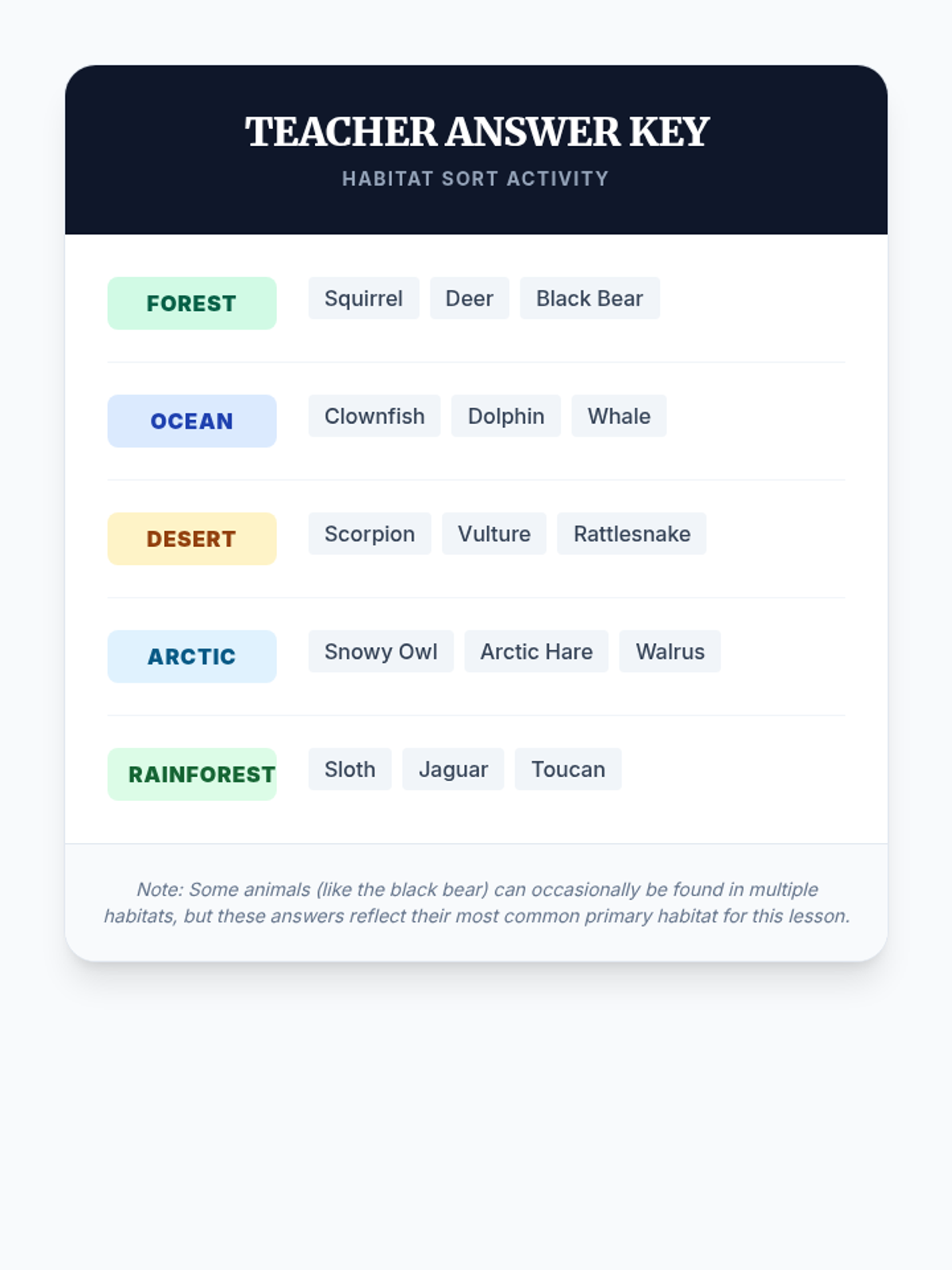
Students explore five major world habitats—Forest, Ocean, Desert, Arctic, and Rainforest—identifying key characteristics and the animals that call them home through visual presentation and hands-on sorting activities.
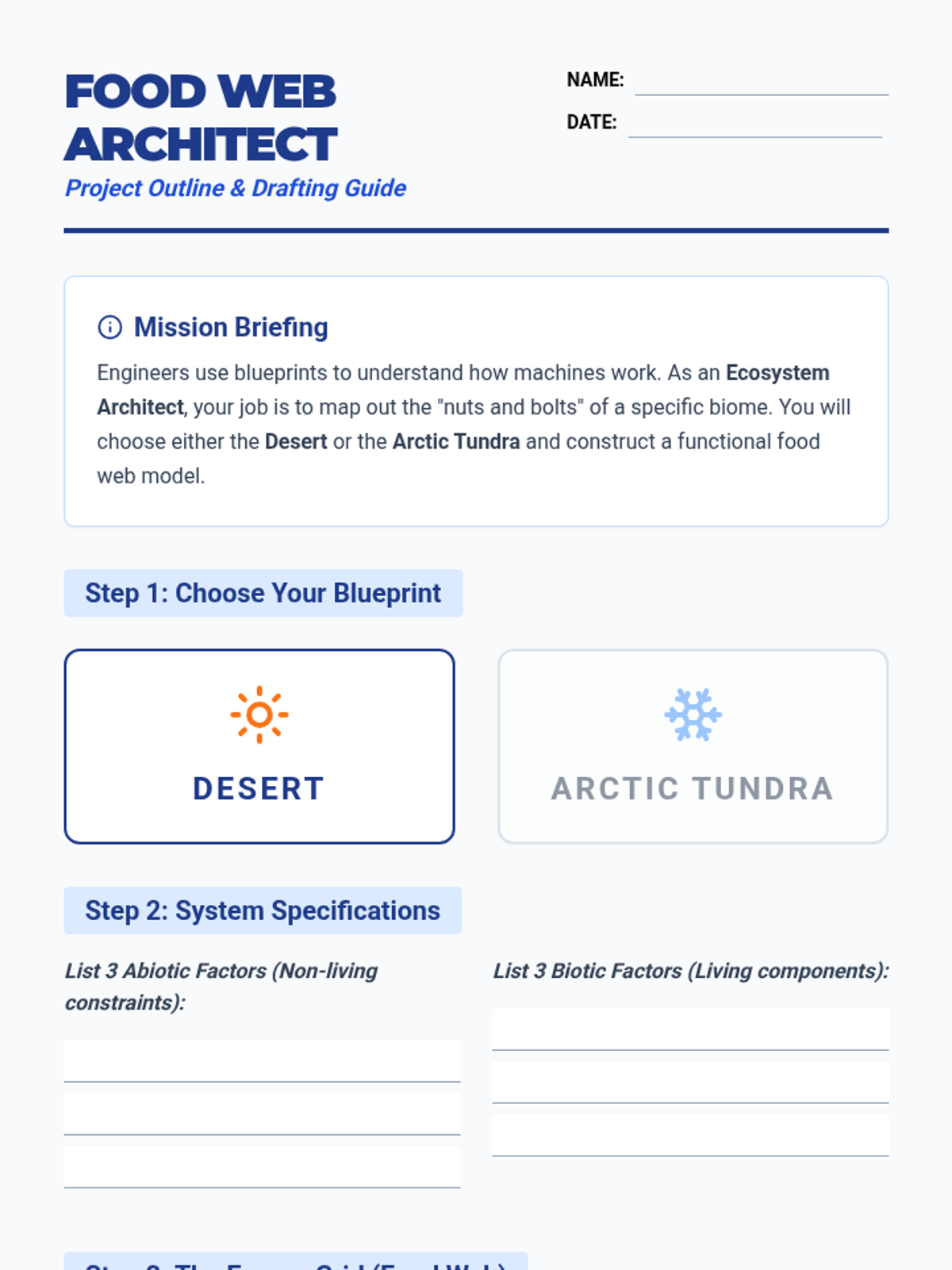
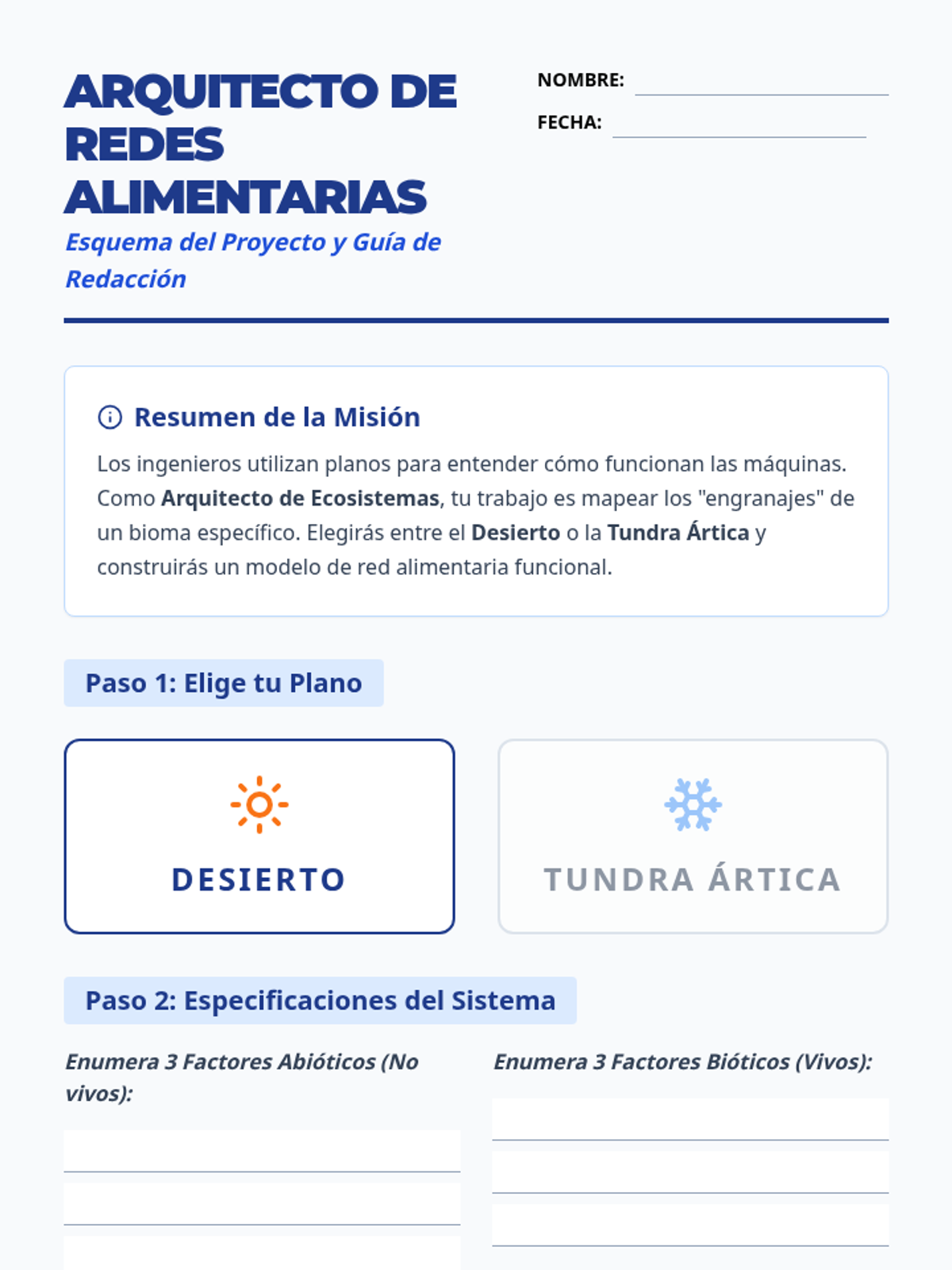
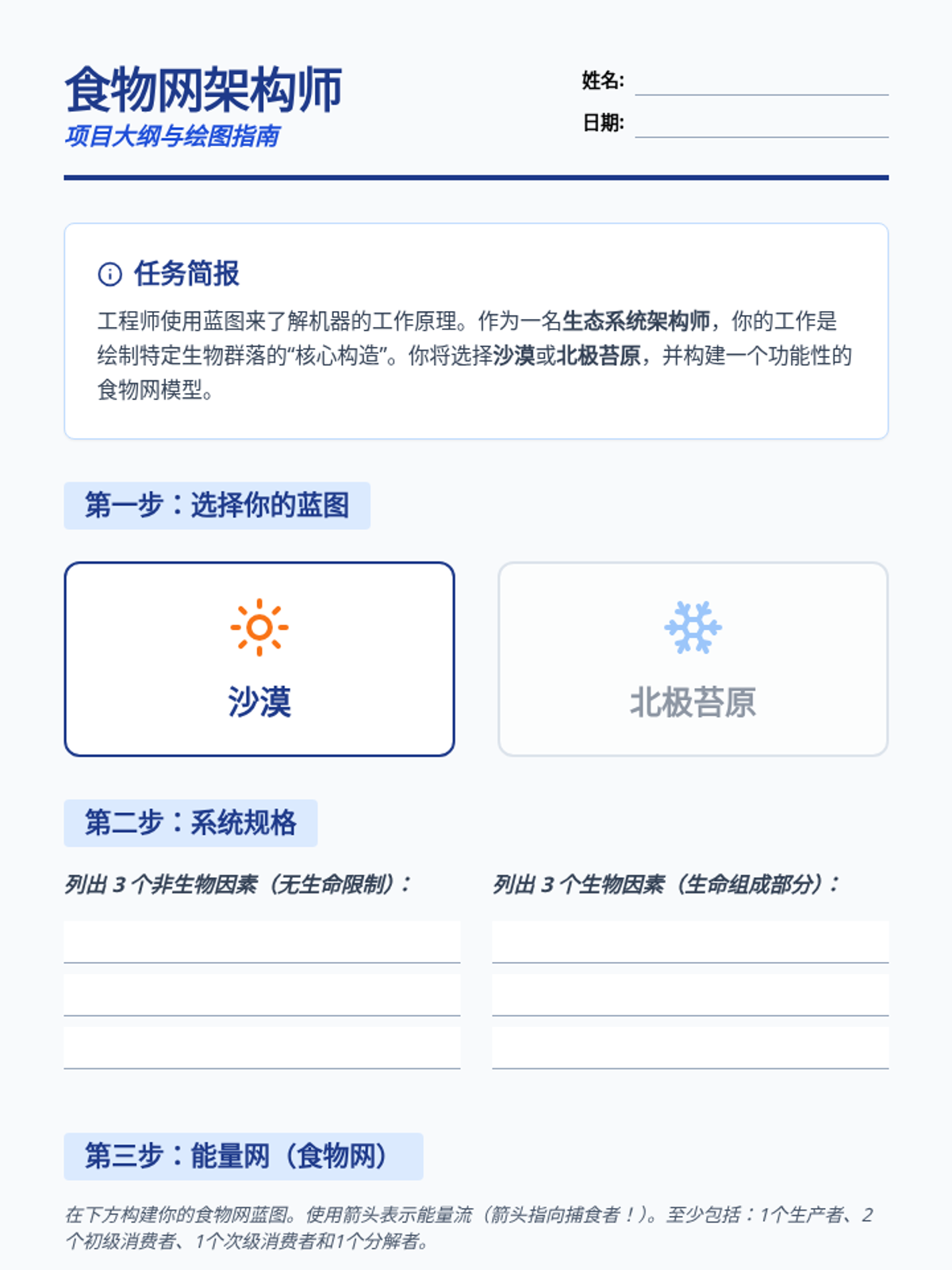
A deep dive into the 'nuts and bolts' of ecosystems, focusing on the contrasting extremes of deserts and the arctic tundra through a 'blueprint' lens. Students explore biotic and abiotic factors, adaptations, and real-world connections before modeling their own food webs.
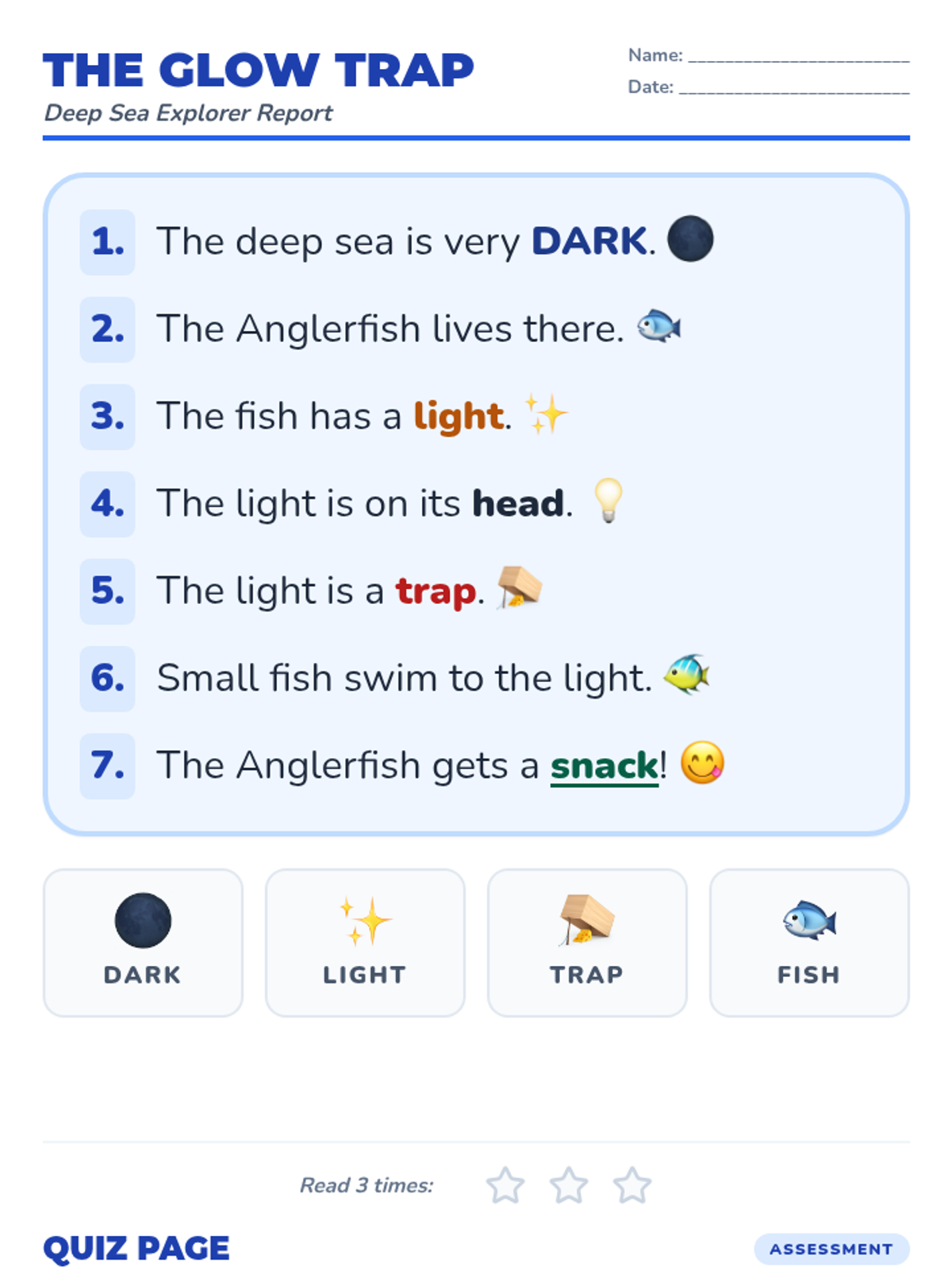
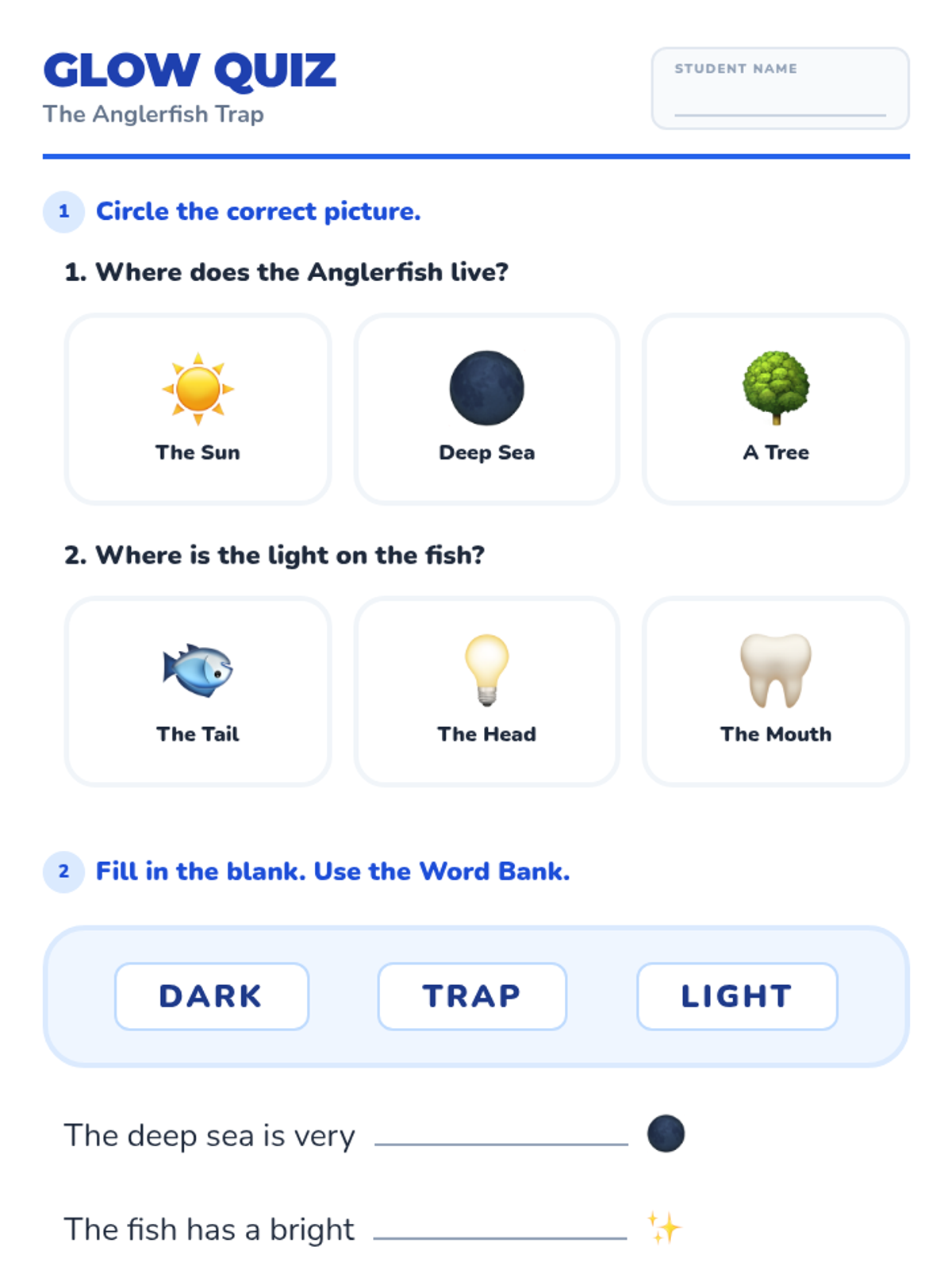
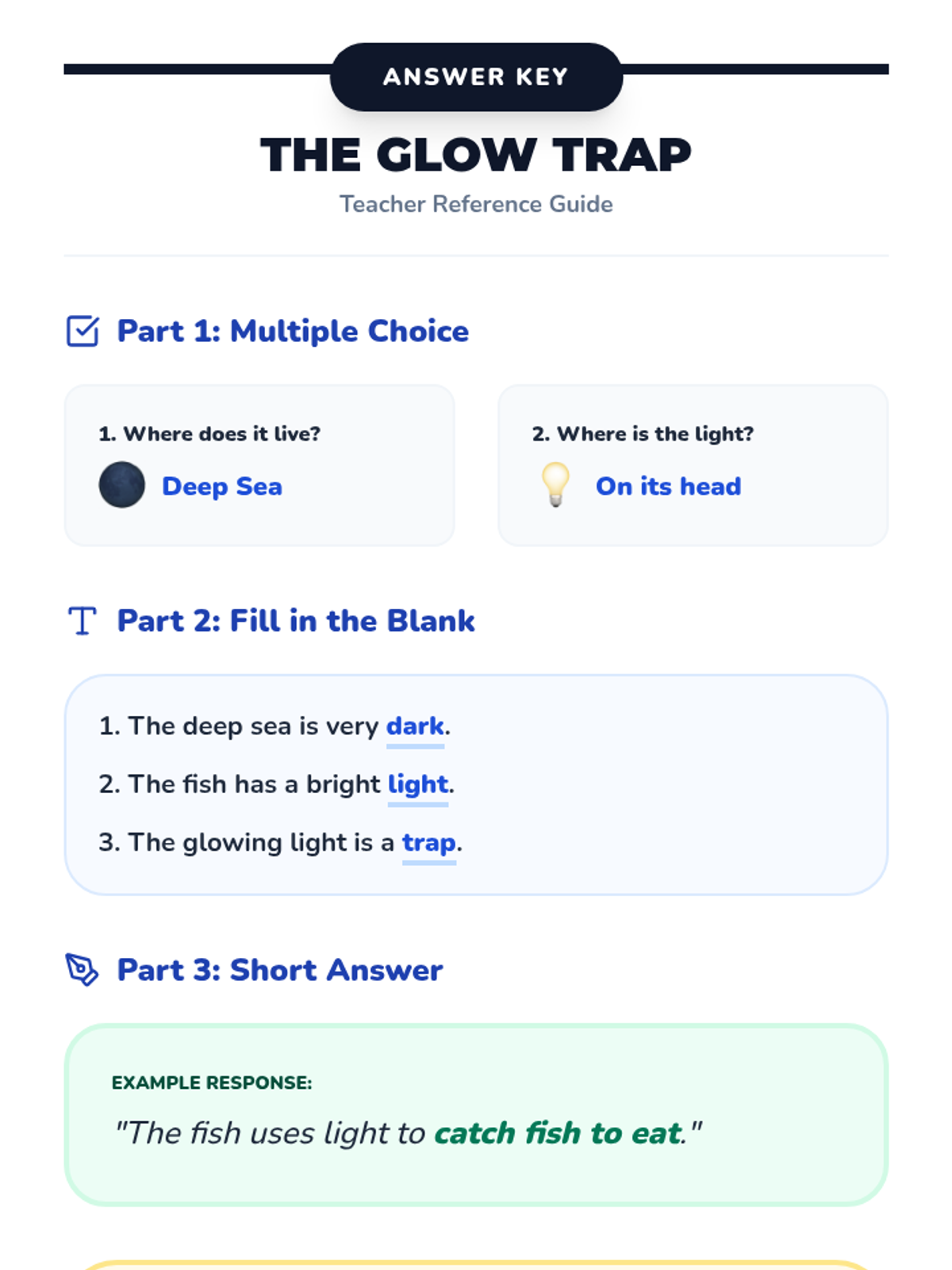
A lesson focused on the Anglerfish and its bioluminescent trap, designed for early elementary students with IEP supports. Students will learn about deep-sea adaptations through a simple reading passage and structured comprehension activities.
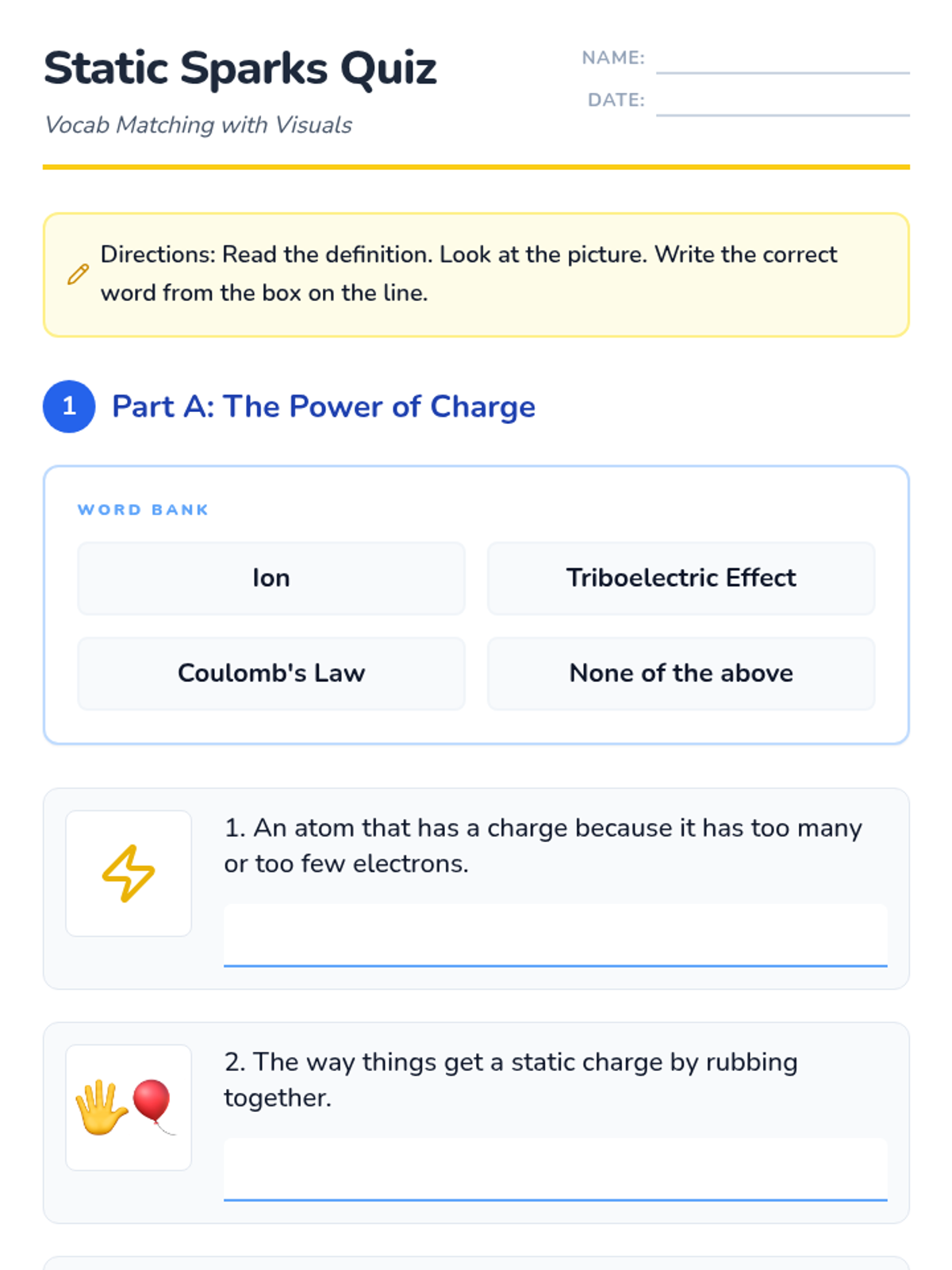
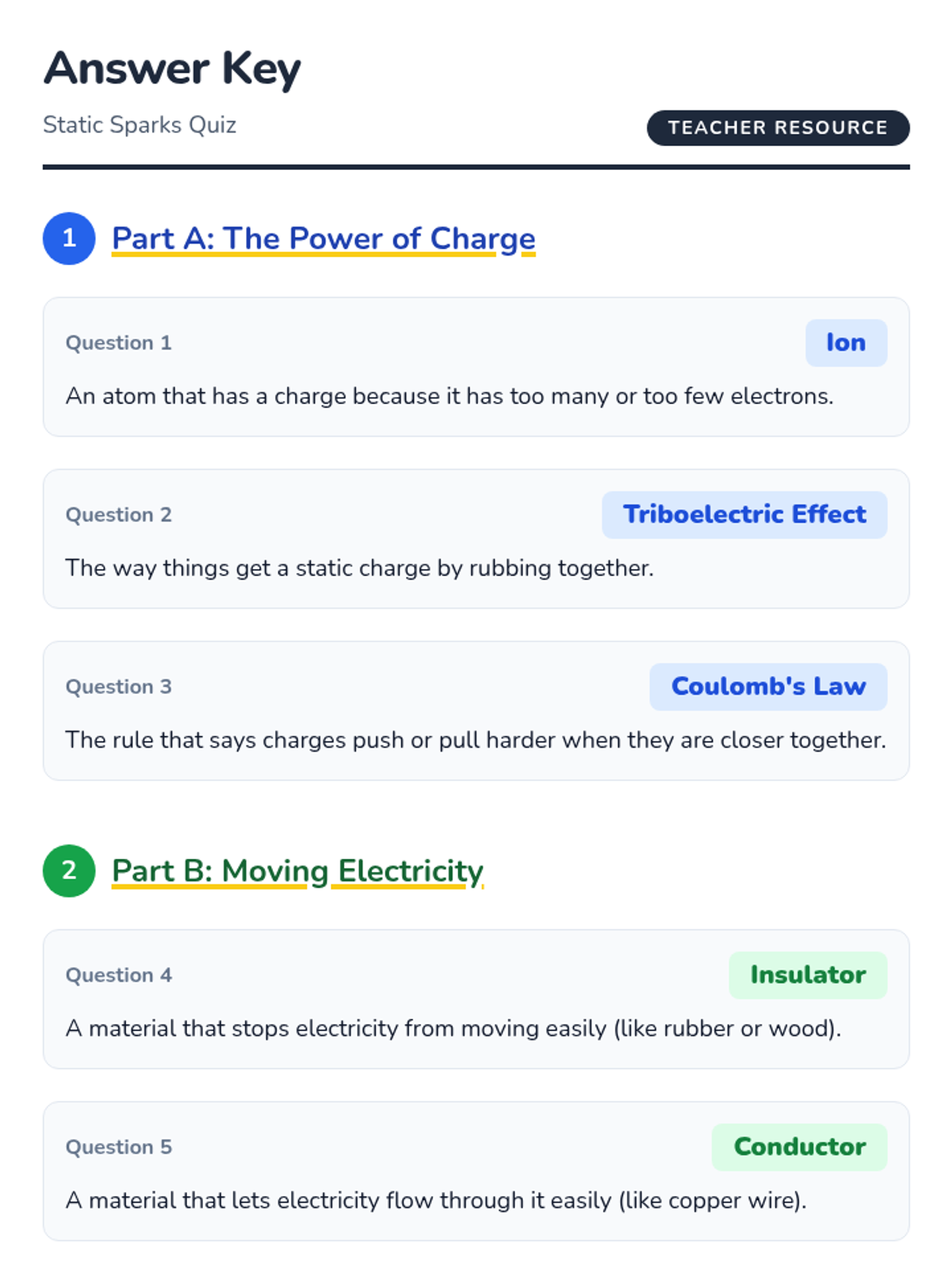
A simplified introduction to electrostatics vocabulary, specifically designed for students requiring symbol support and modified text. The lesson focuses on six key terms through visual matching and clear, concise definitions.
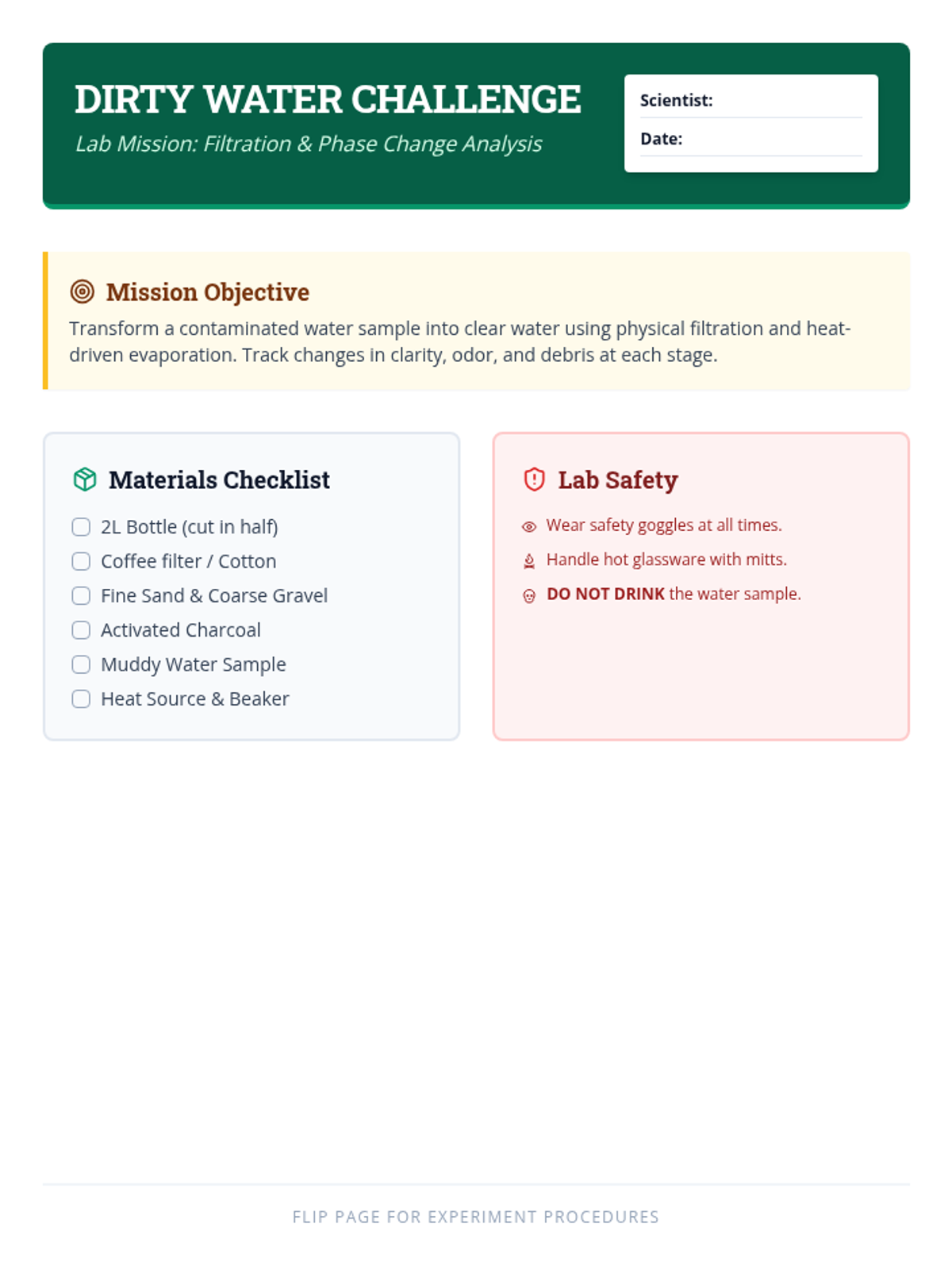
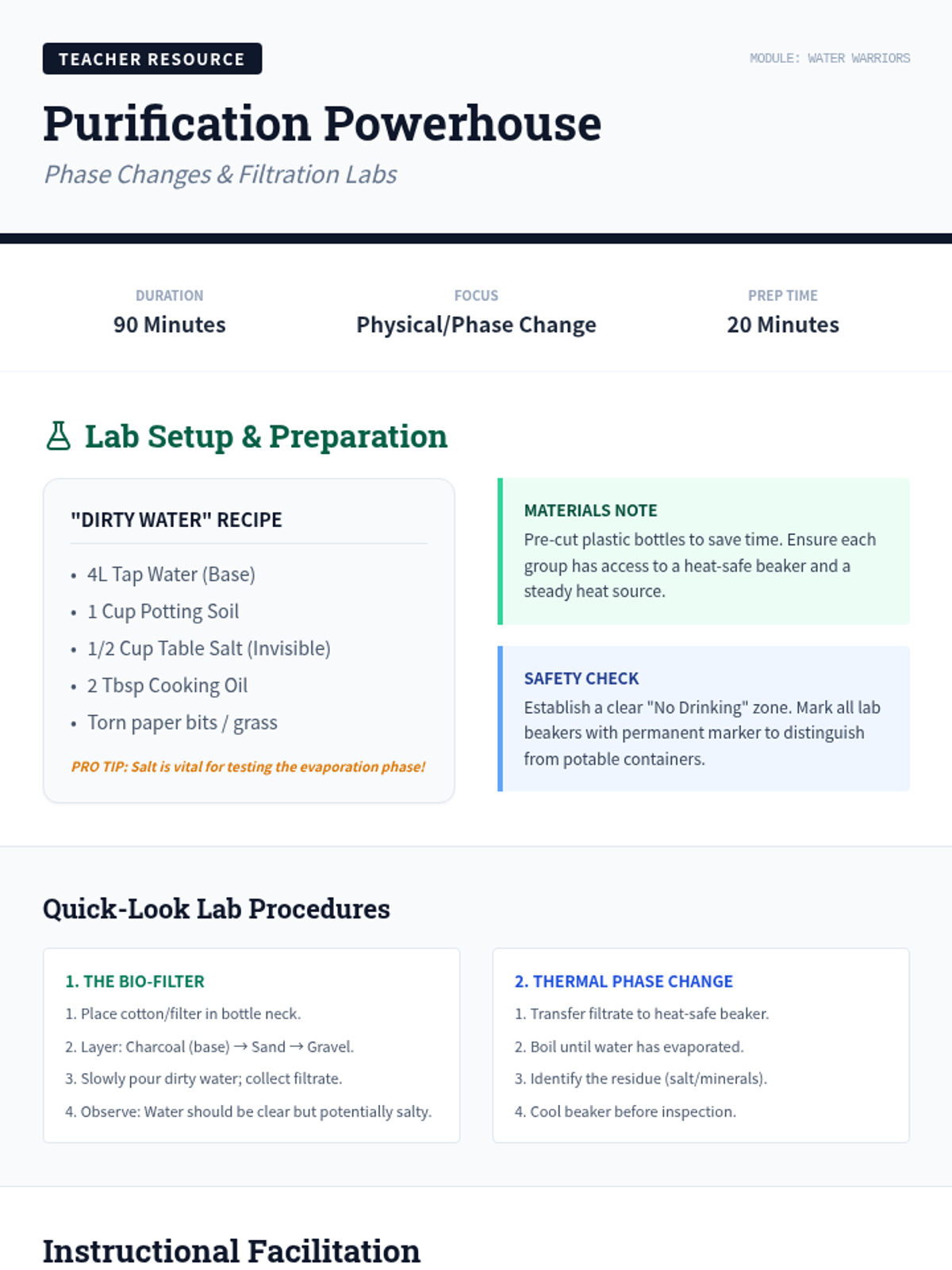
Students explore the essential methods of purifying water through hands-on experimentation. They will learn the roles of physical filtration and phase changes (evaporation) in removing contaminants from water samples.
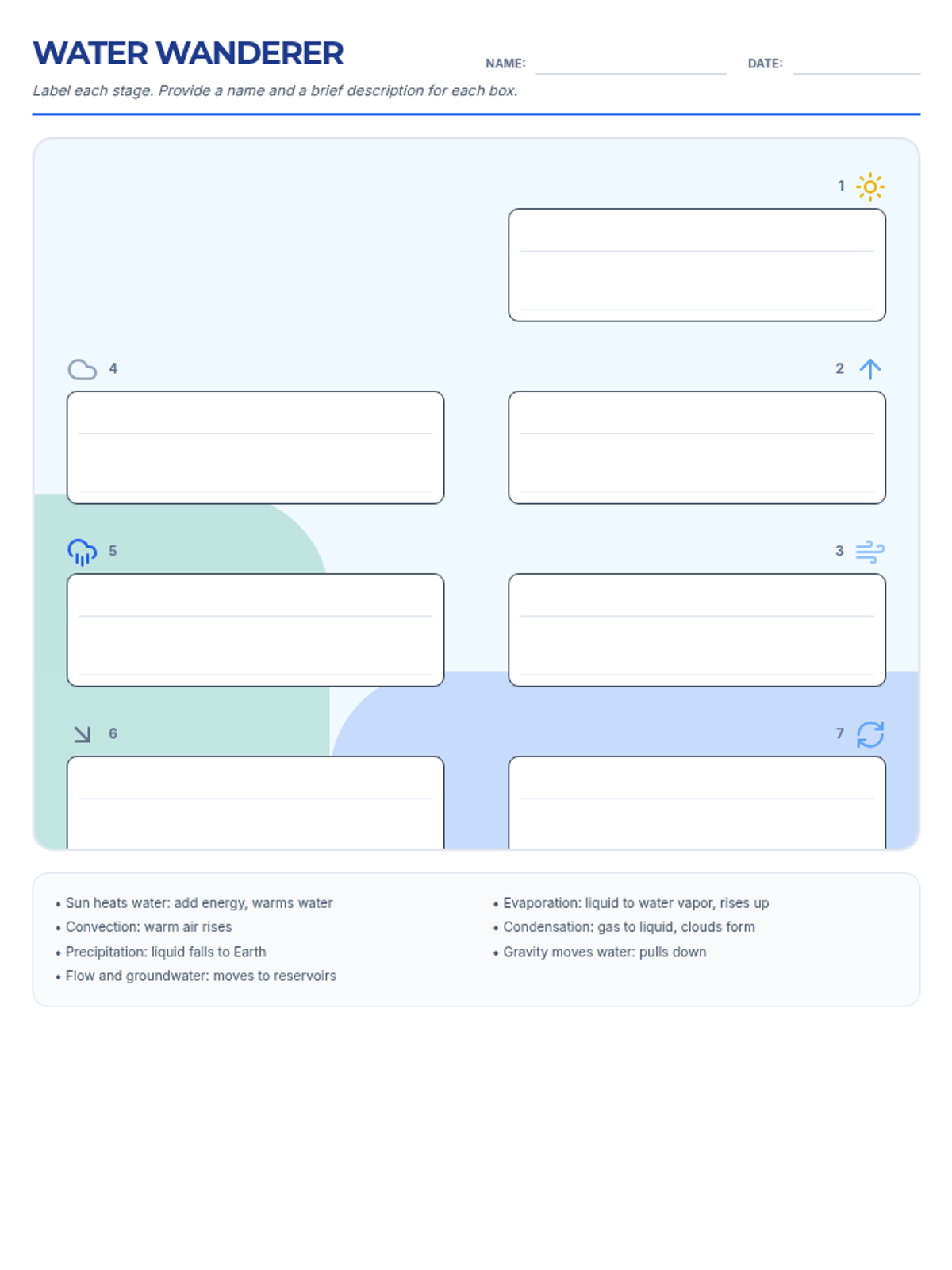
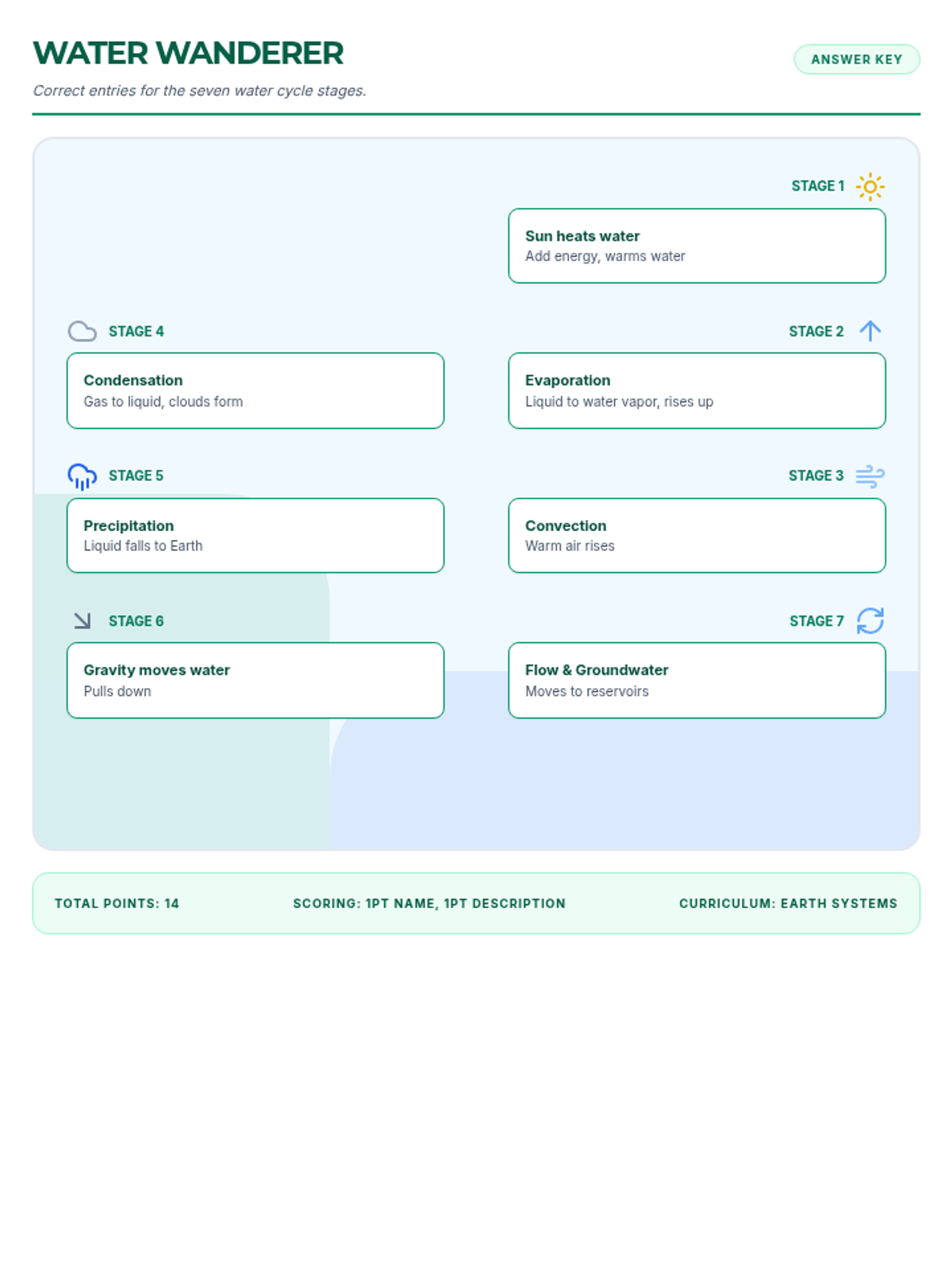
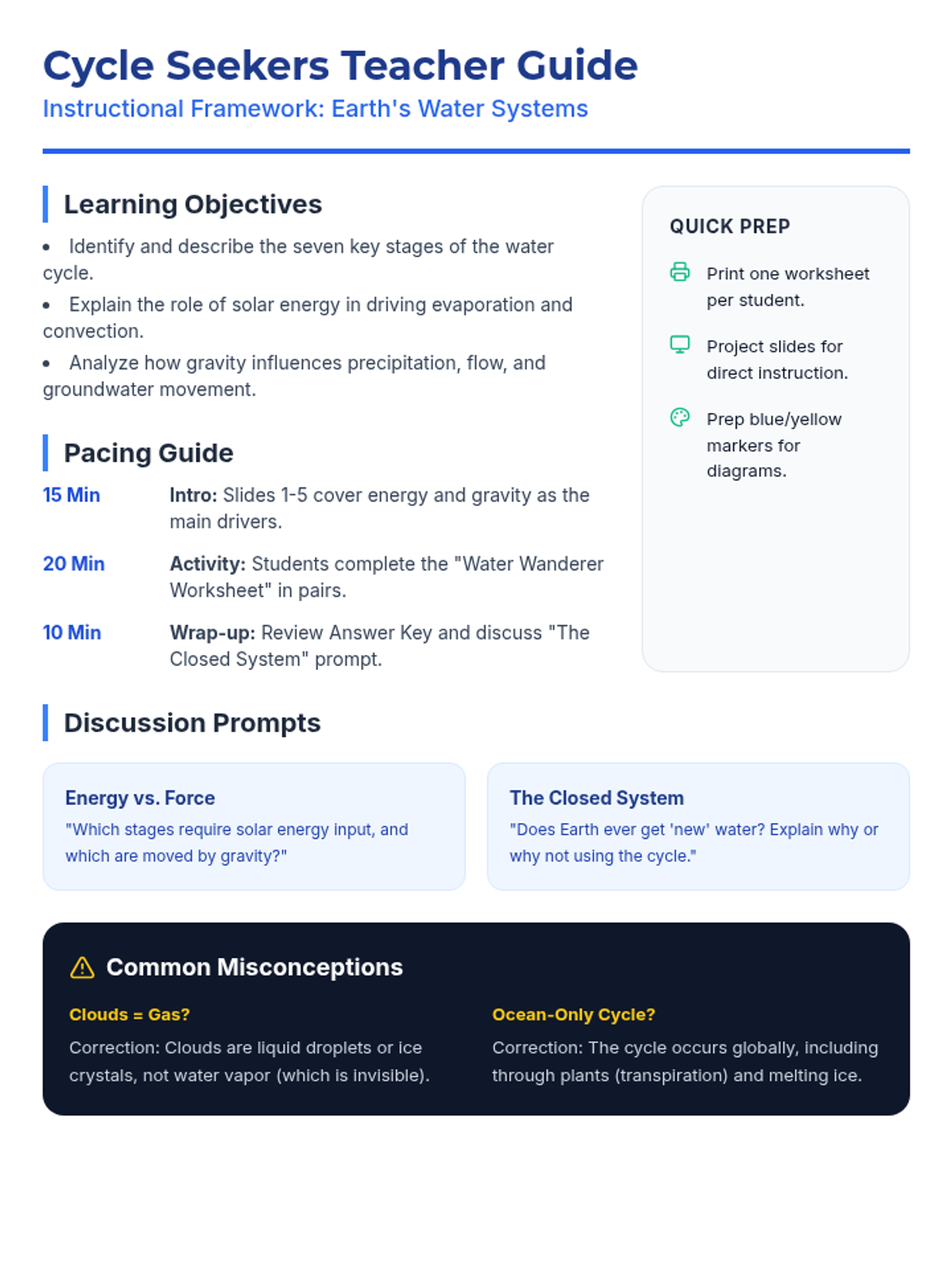
A lesson exploring the continuous movement of water on Earth through a detailed diagram of the water cycle, focusing on the roles of energy and gravity.
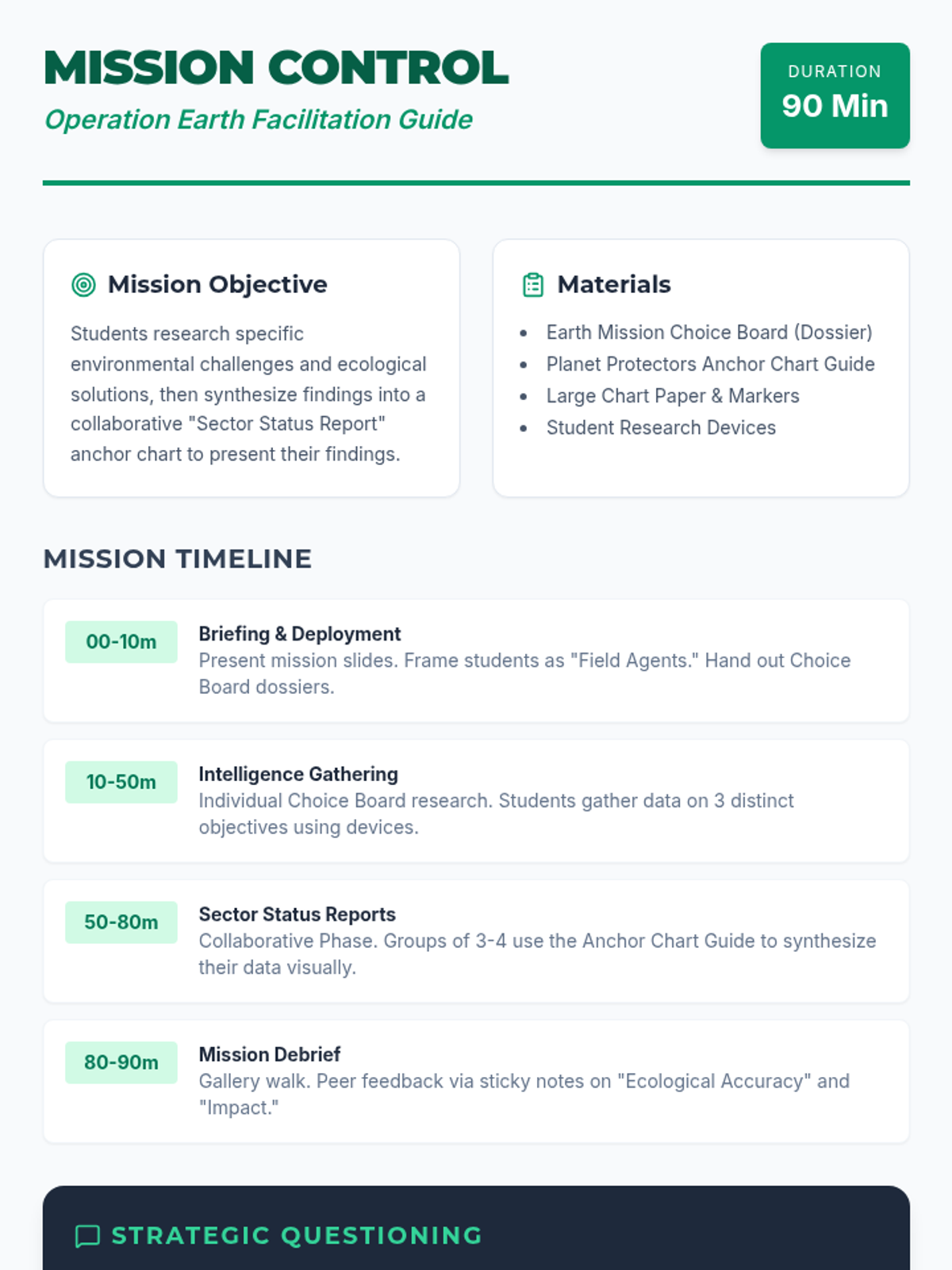
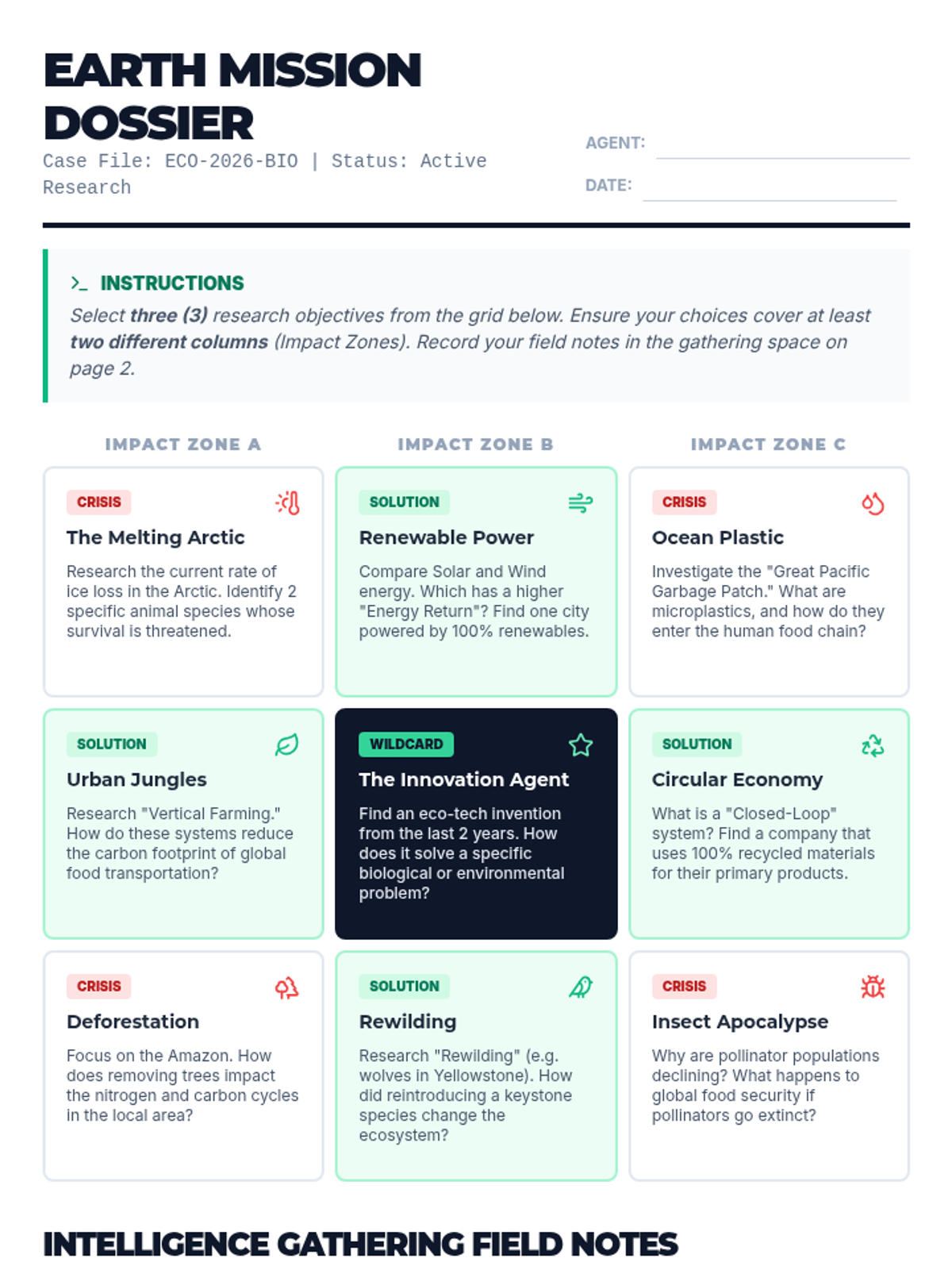
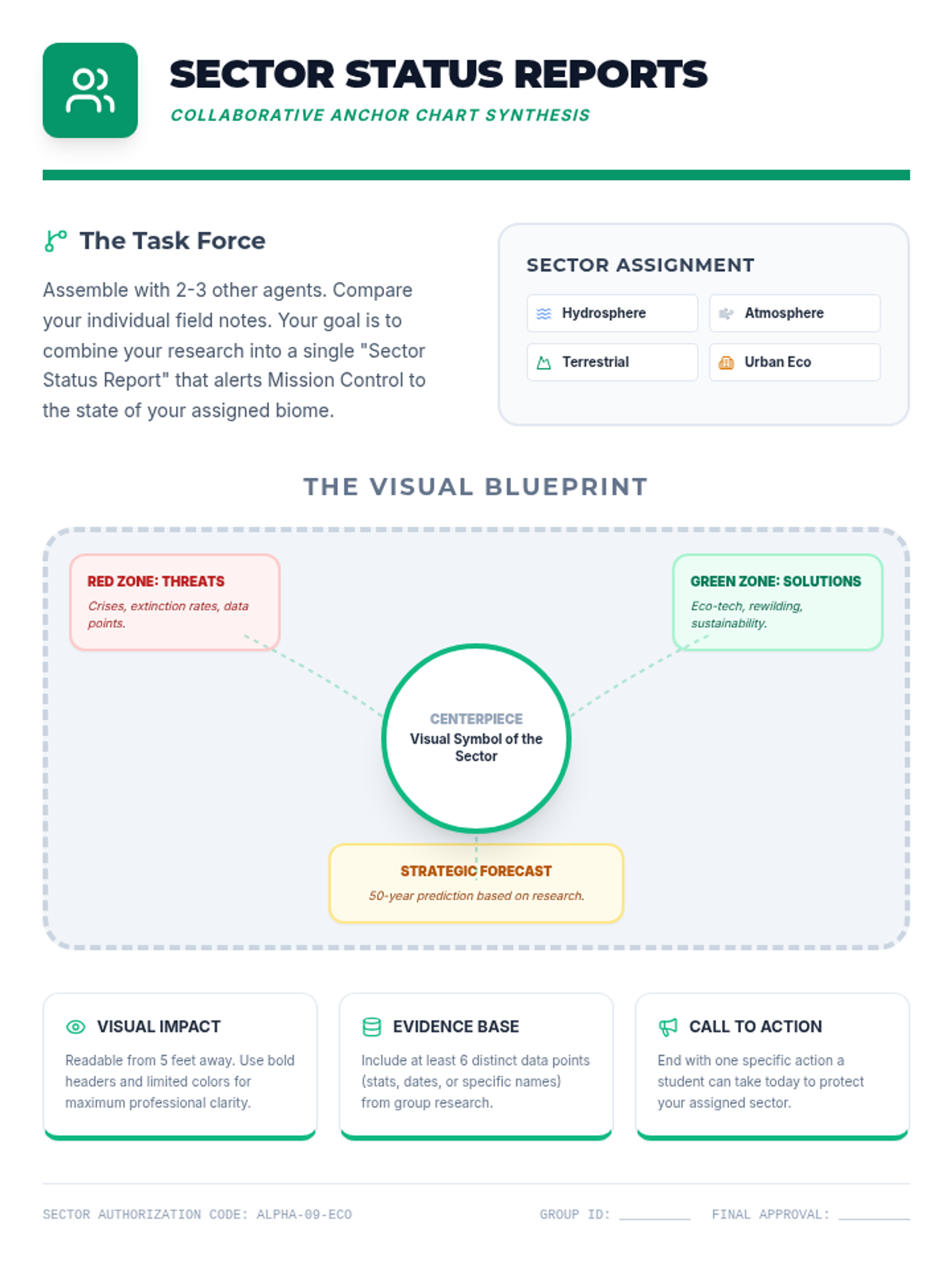
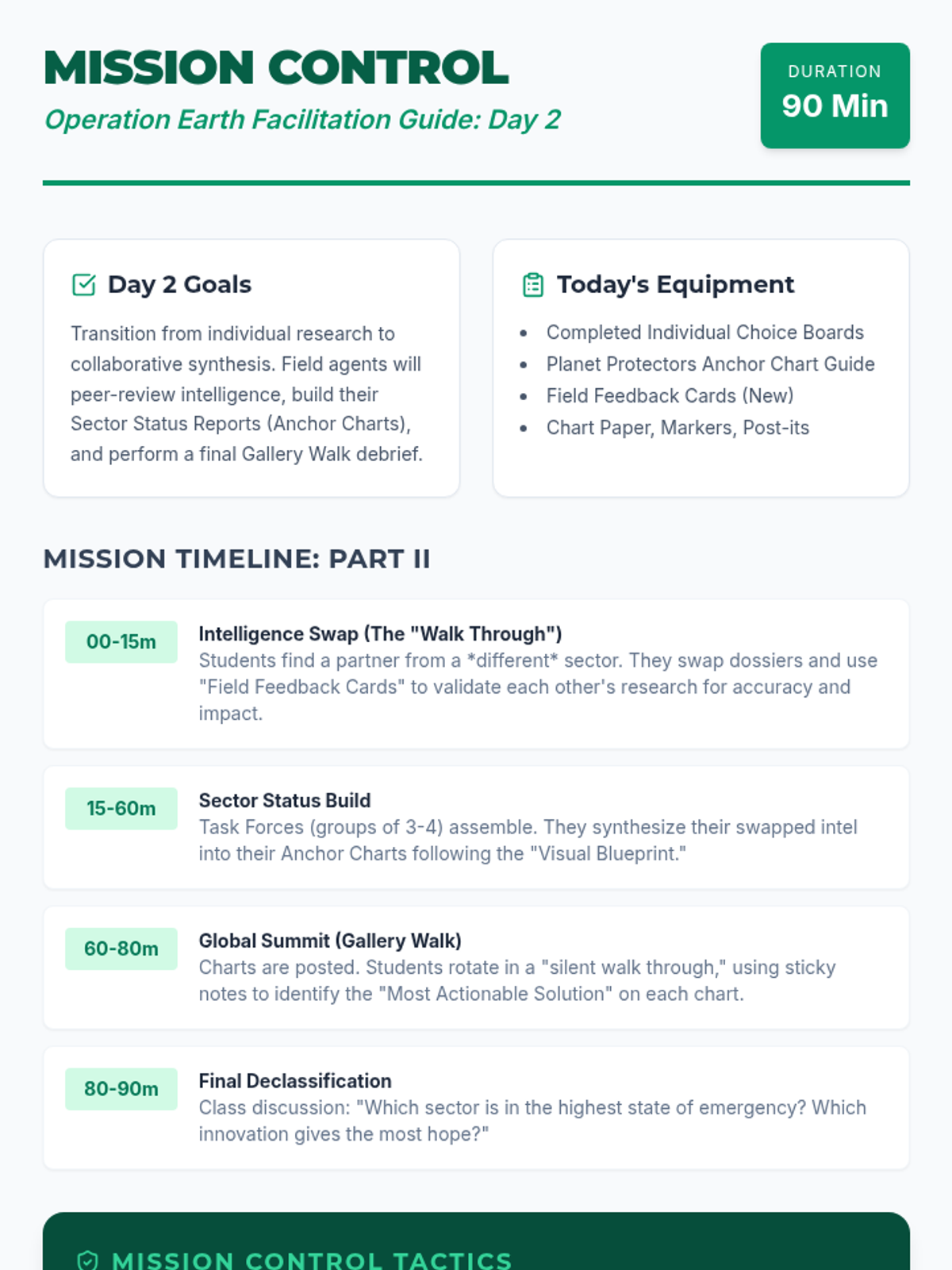
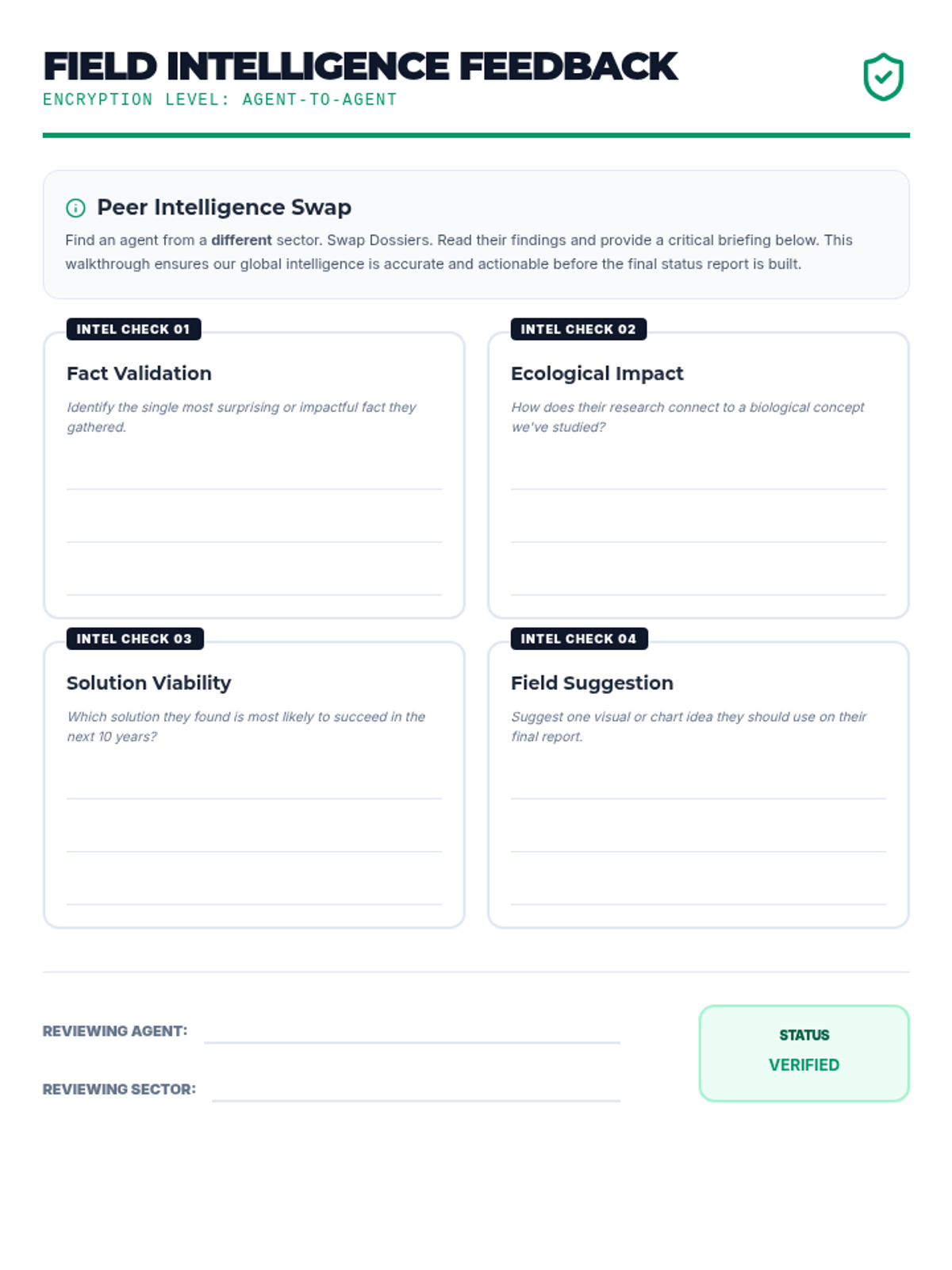
A high-engagement, post-testing biology project focusing on environmental science and ecological impact through choice-based research and collaborative synthesis.
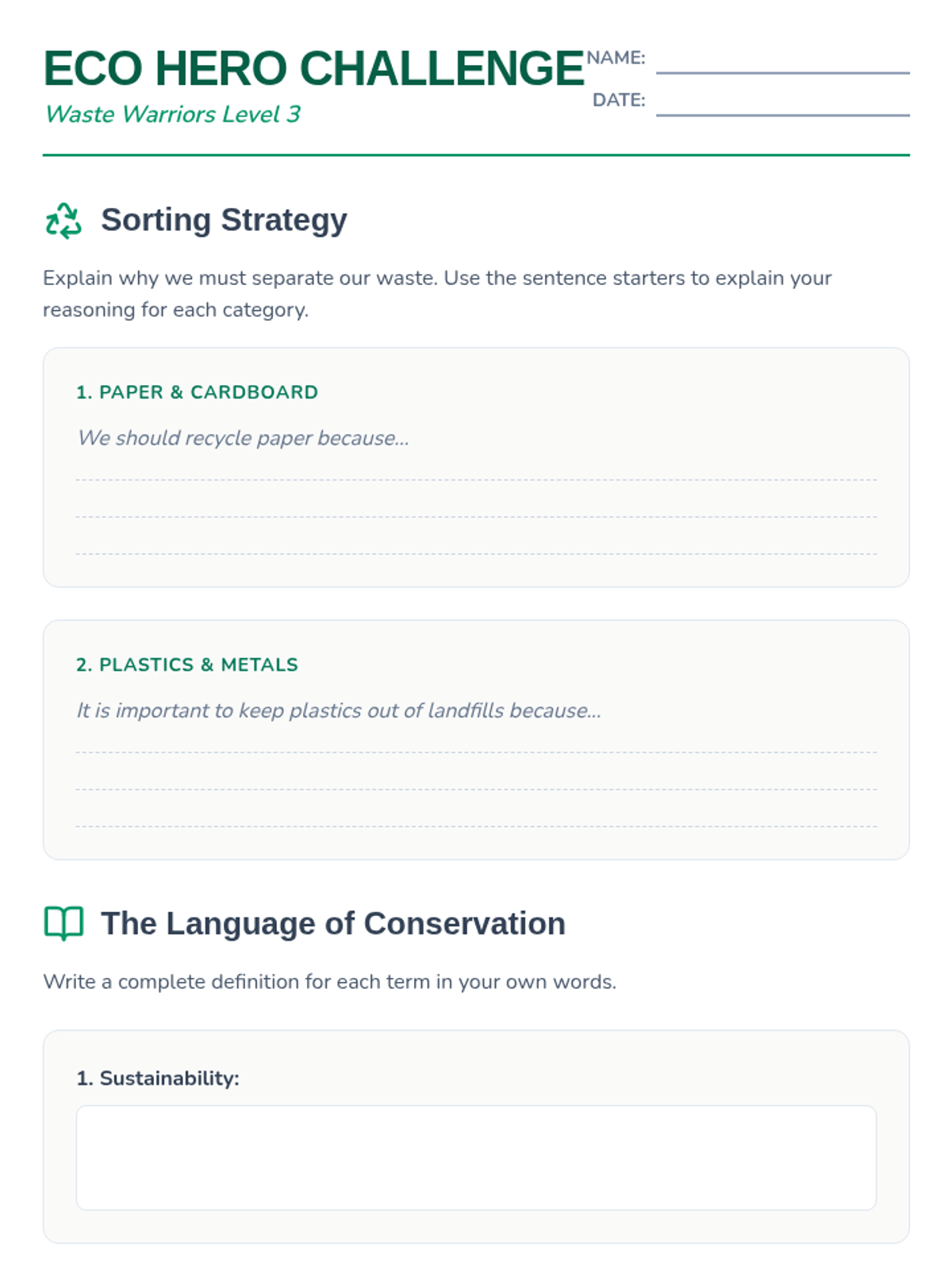
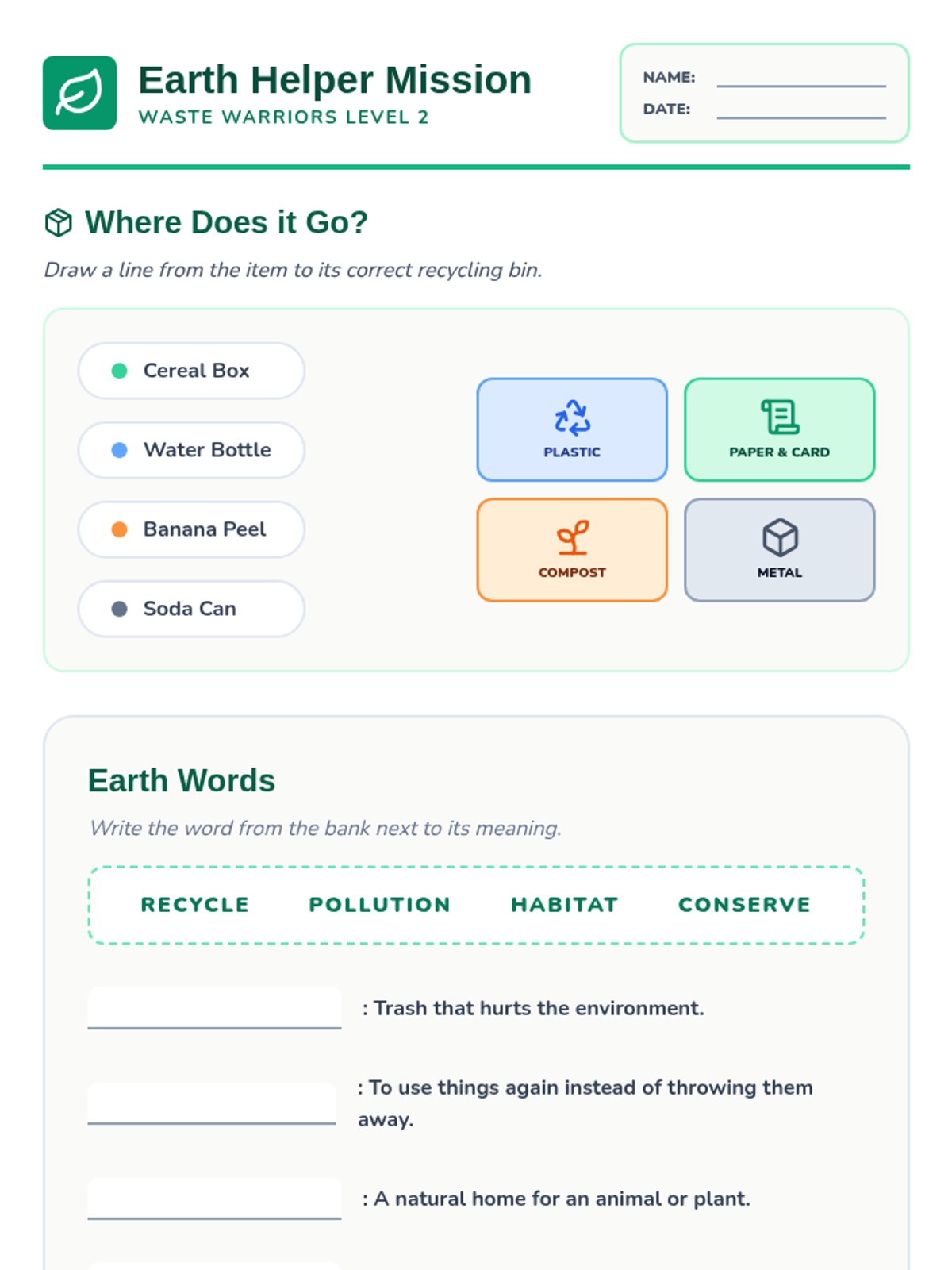
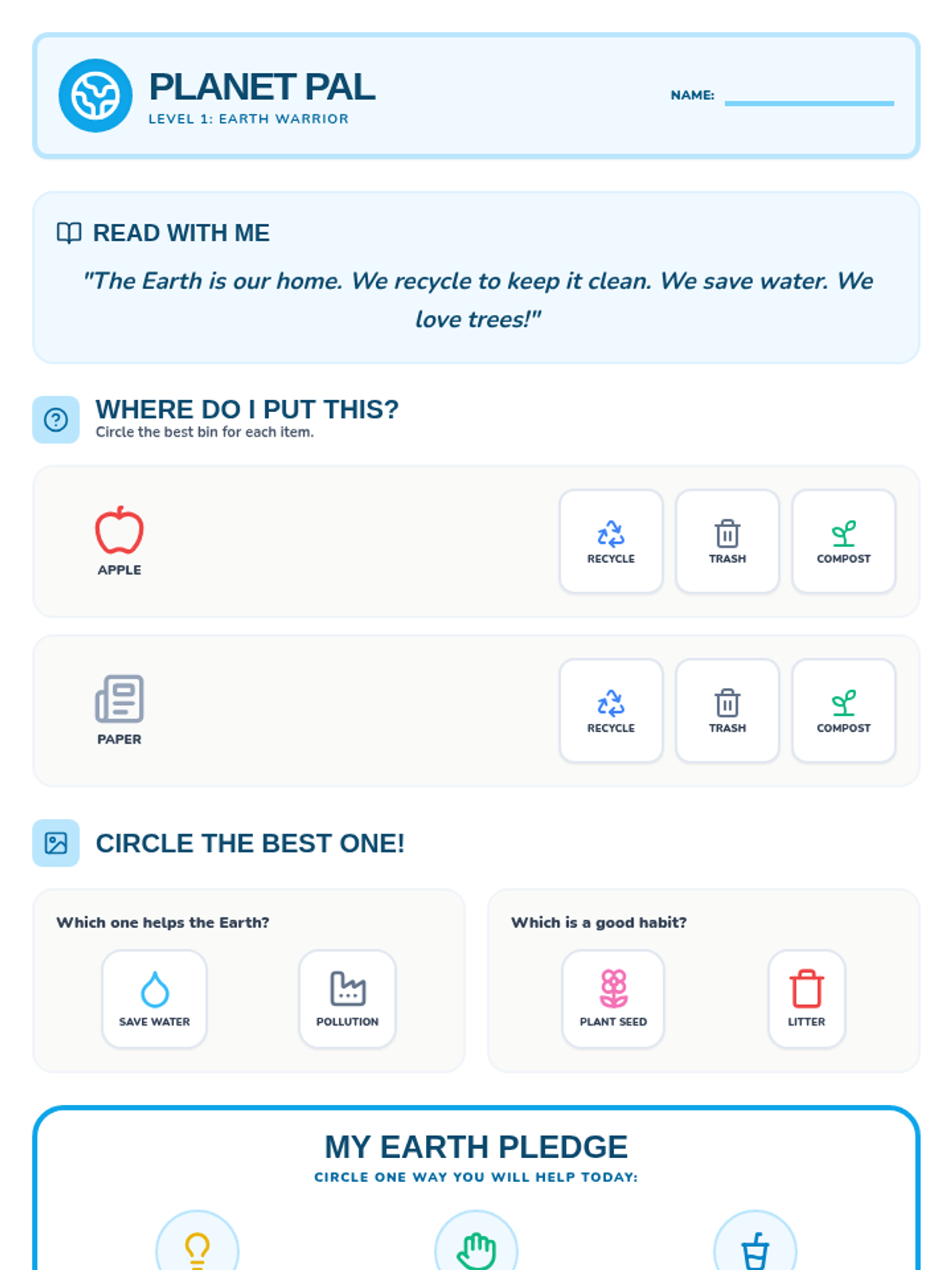
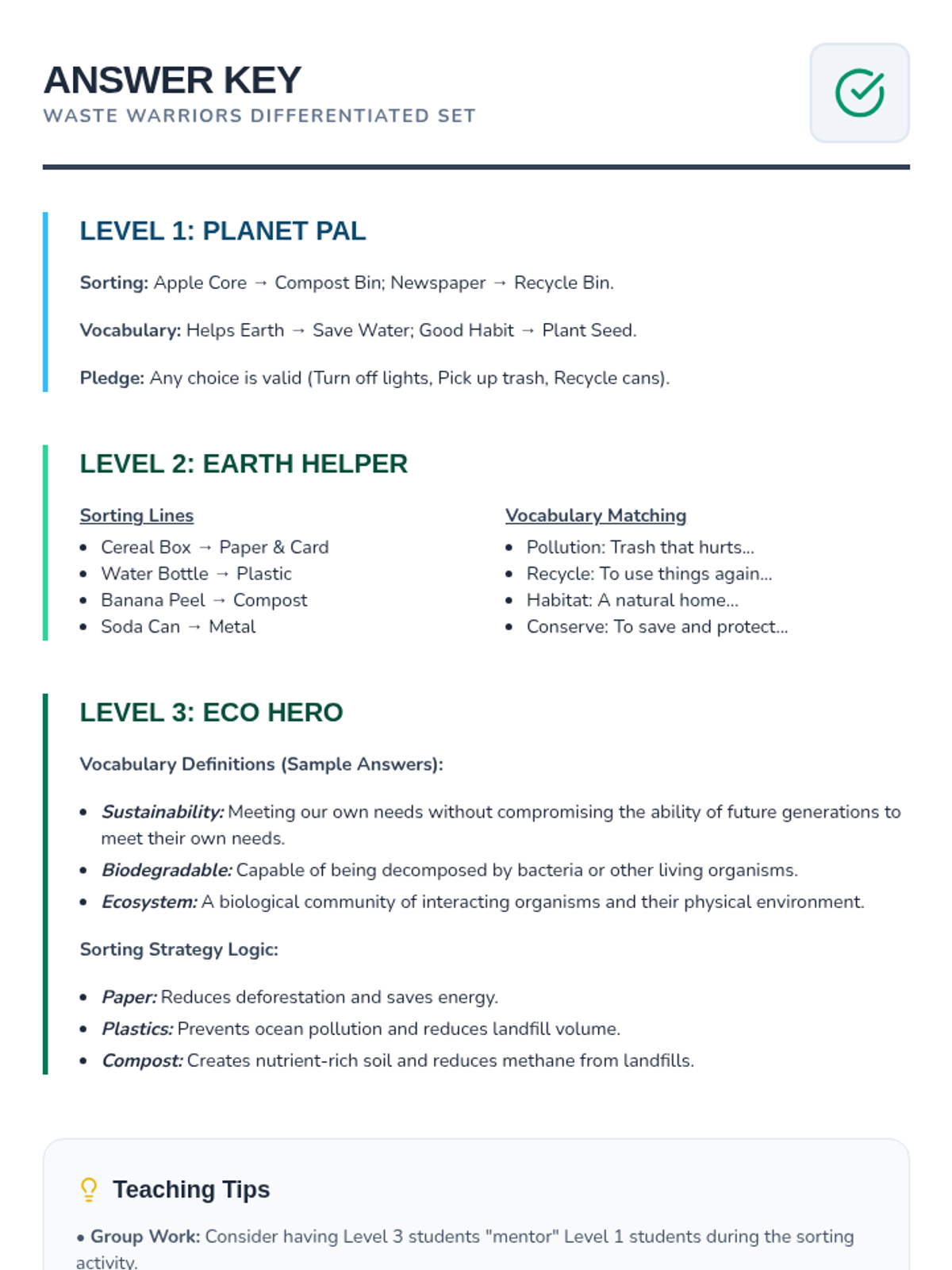
An introductory lesson on waste management and recycling where students practice sorting materials and learning key environmental vocabulary.
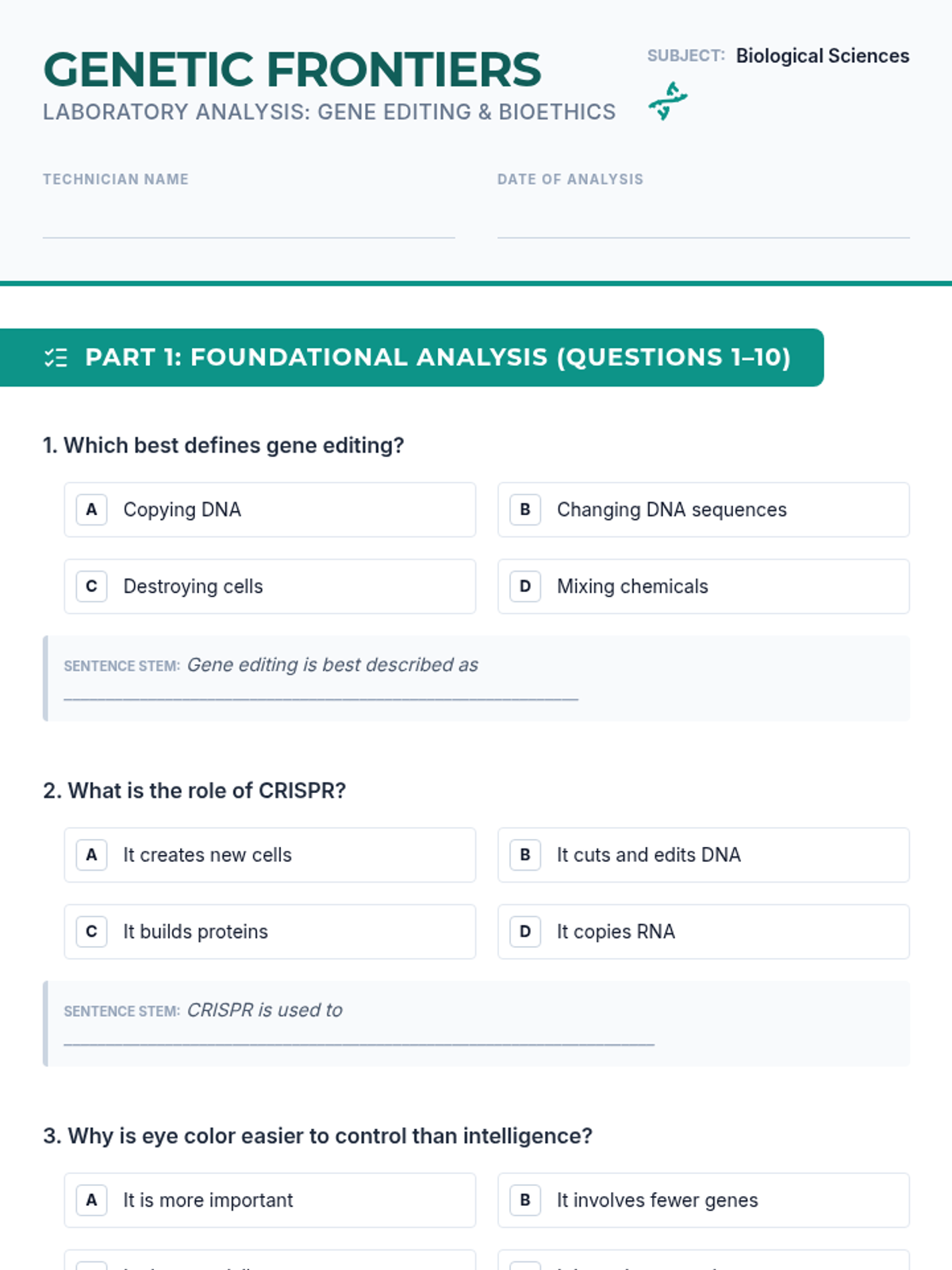
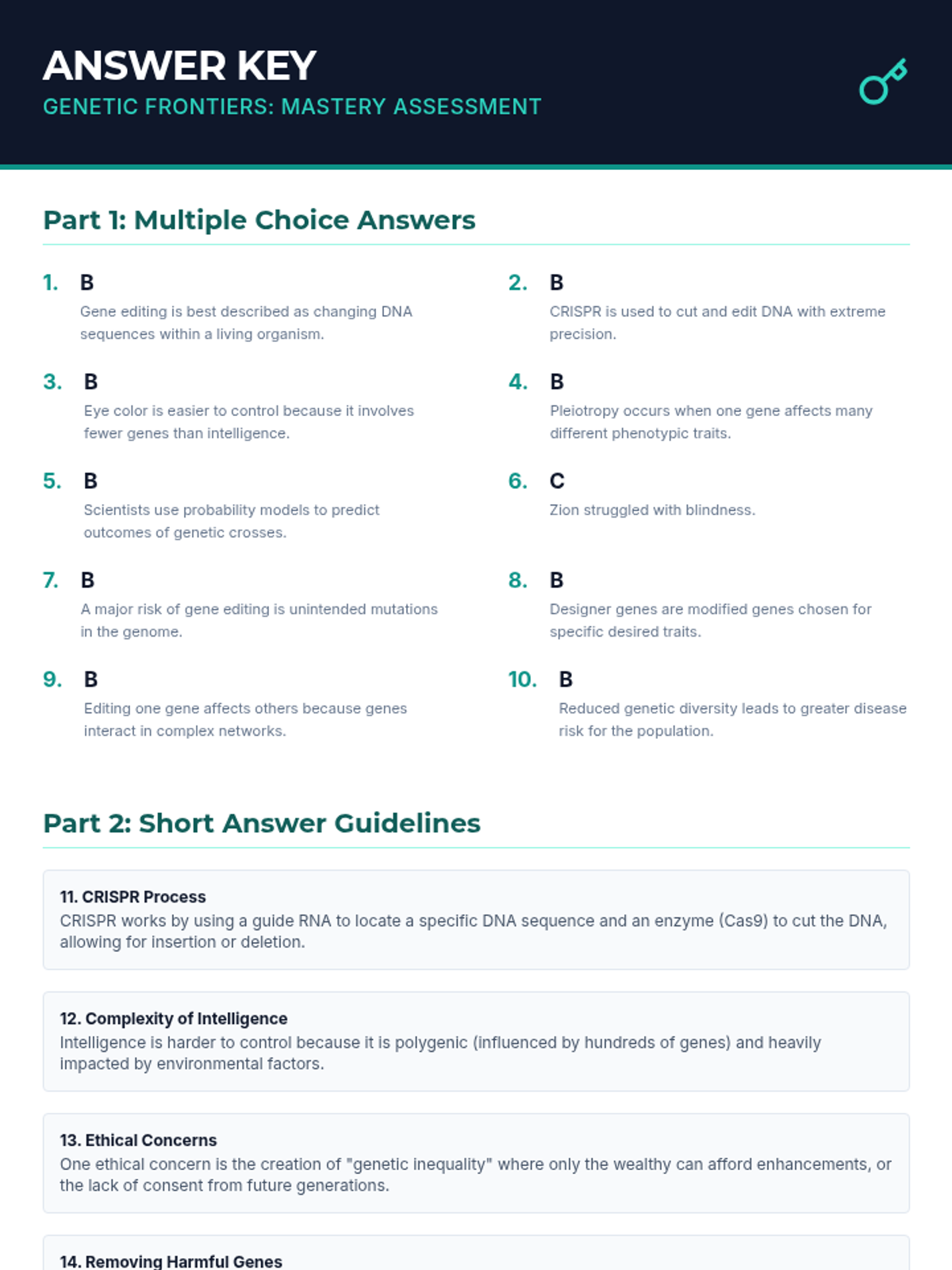
A comprehensive exploration of genetic engineering, focusing on CRISPR technology, the complexities of pleiotropy, and the ethical implications of designer genes. Students analyze the trade-offs between medical advancement and genetic diversity.
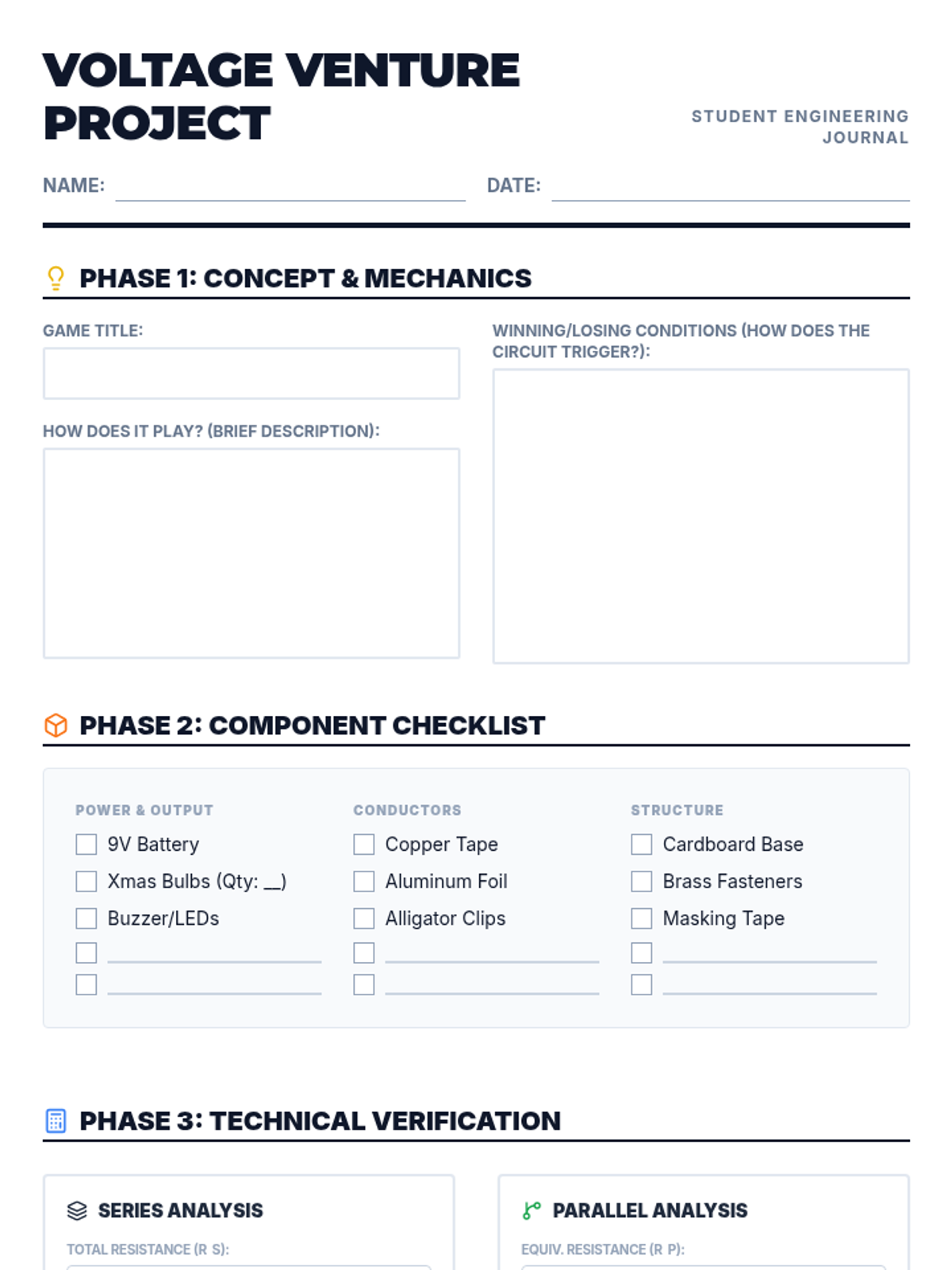
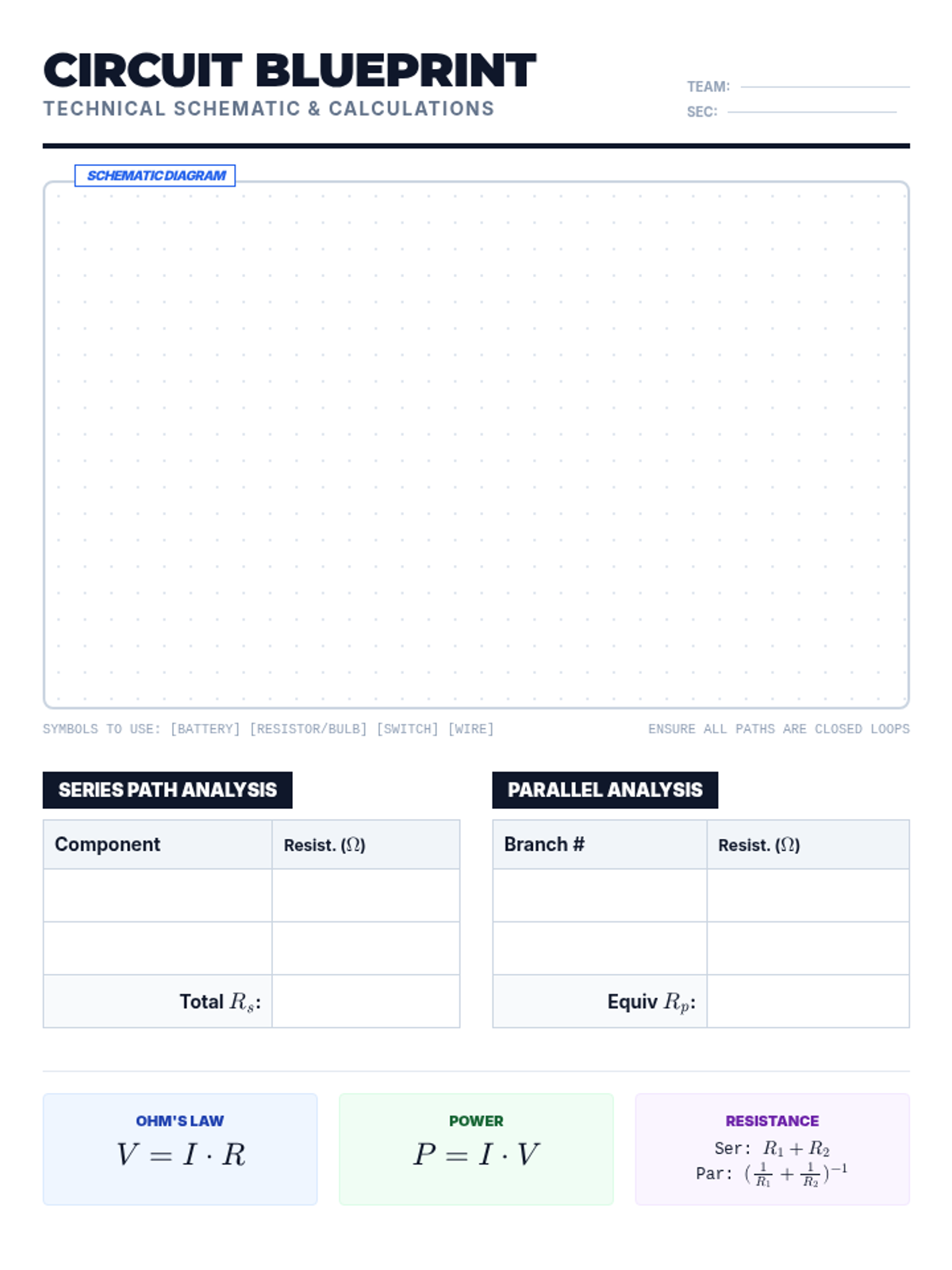
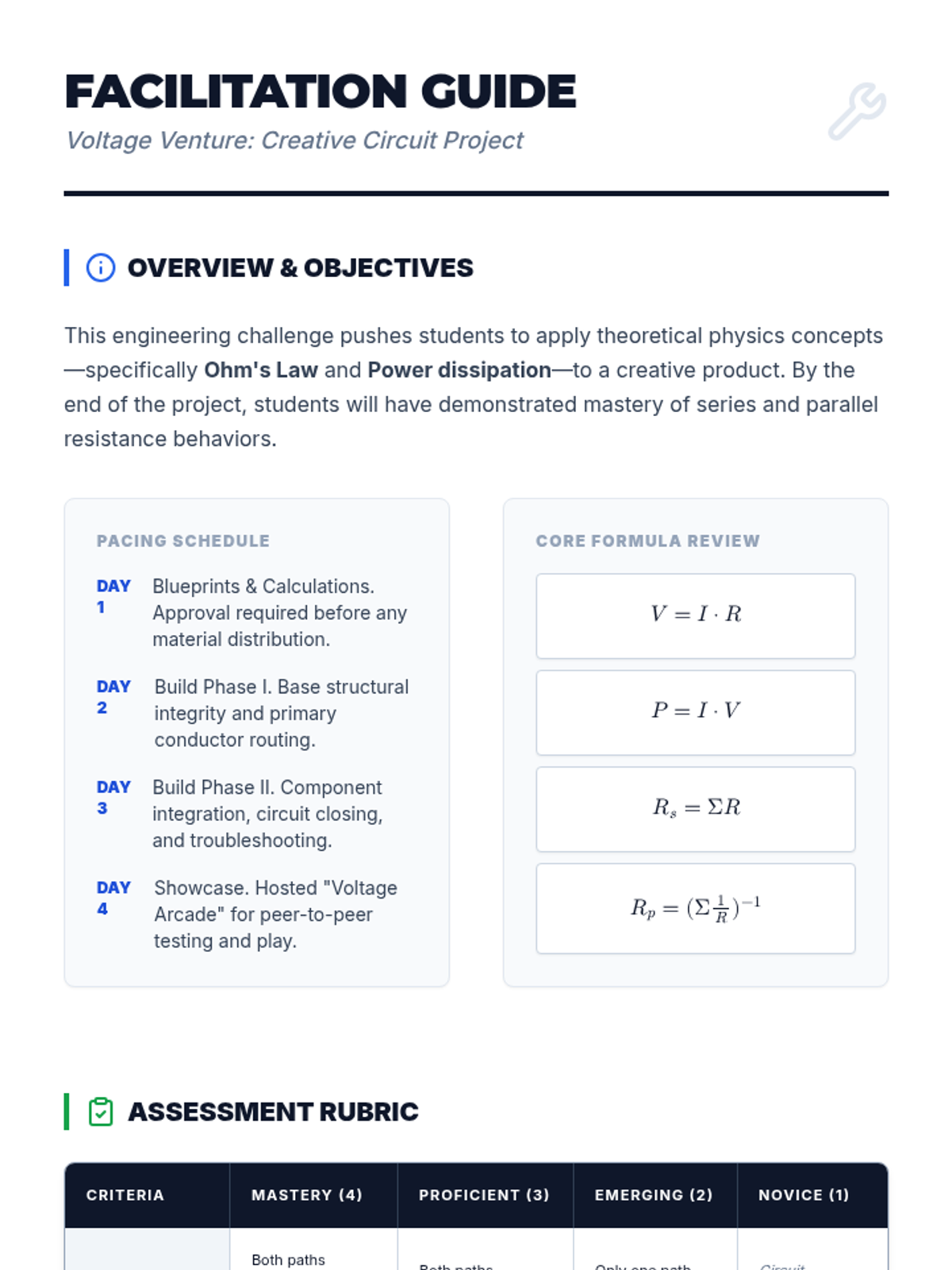
A creative engineering project where students design and build a game that incorporates functional series and parallel circuits, applying principles of Ohm's Law and electric power.
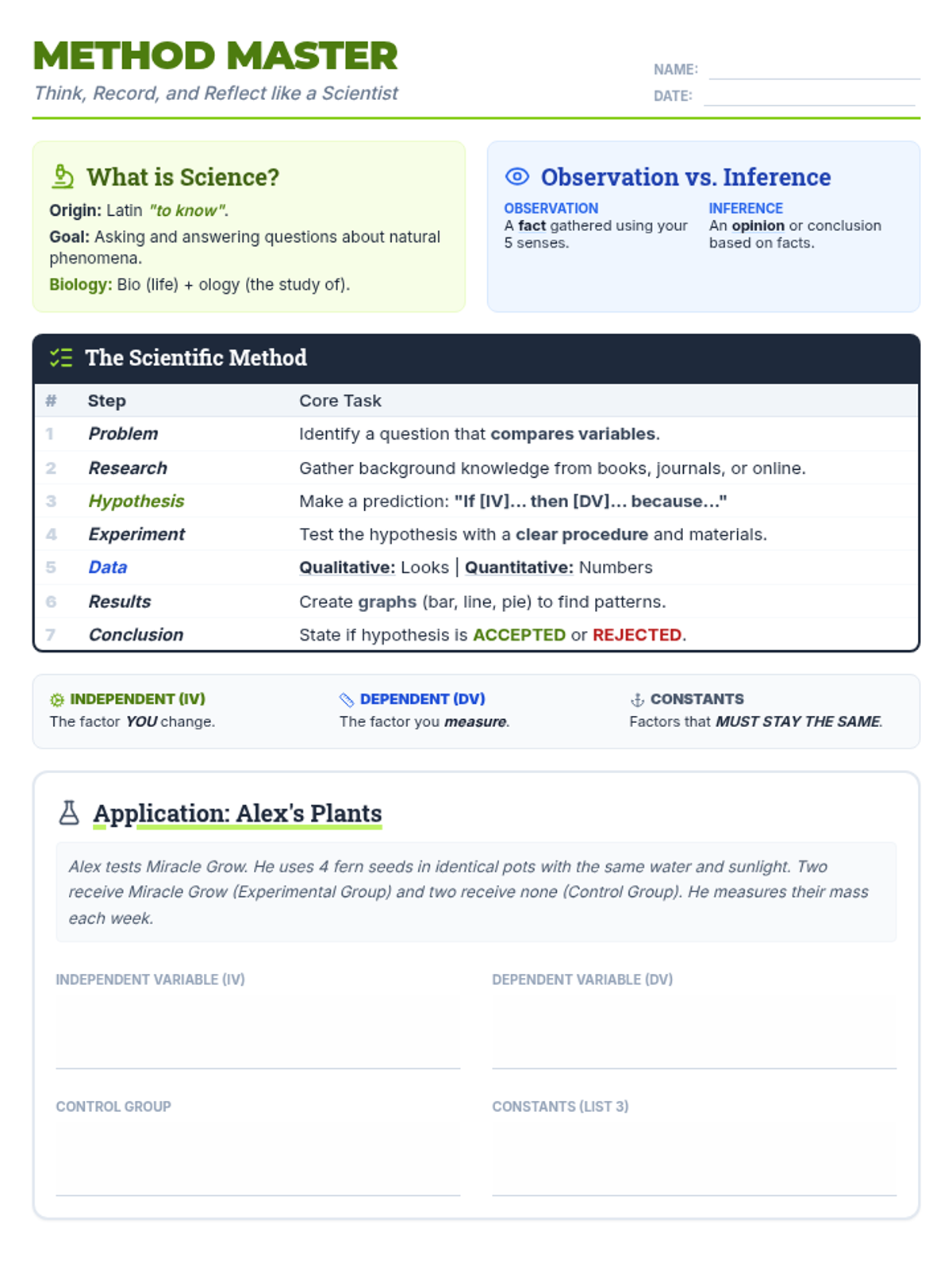
A foundational lesson on the Scientific Method, covering definitions, steps, variables, and data collection methods.