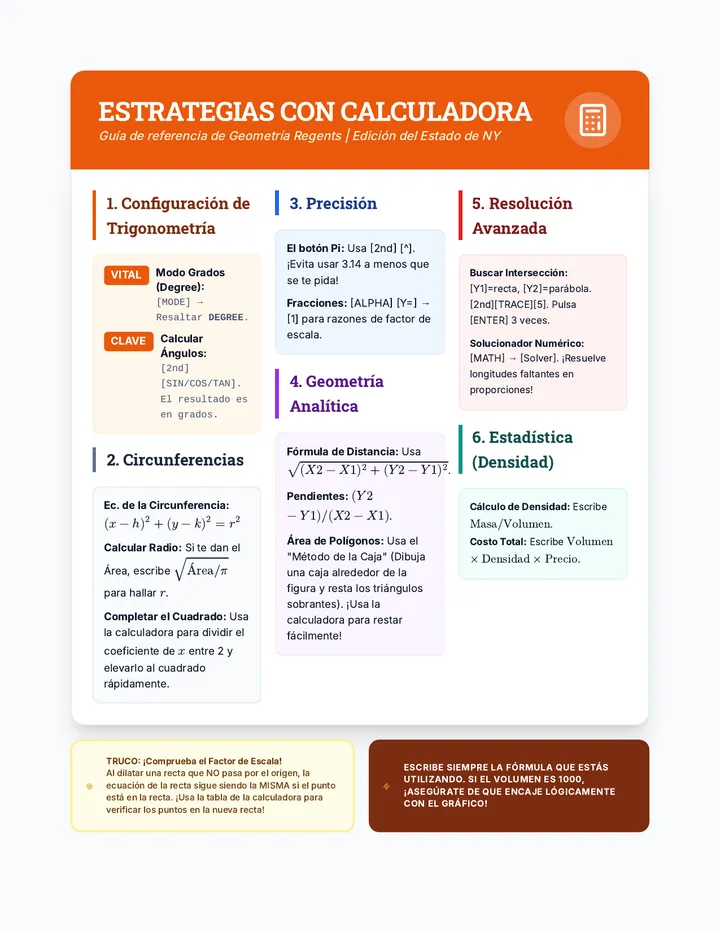
Students will identify and correct common errors in calculating reciprocal trigonometric functions (Cosecant, Secant, and Cotangent) by analyzing a set of 'glitchy' homework problems from Mia the Robot.
Une leçon complète sur les statistiques à une variable, couvrant la collecte de données, l'organisation en tableaux et la représentation graphique à travers divers exercices pratiques et activités d'introduction.
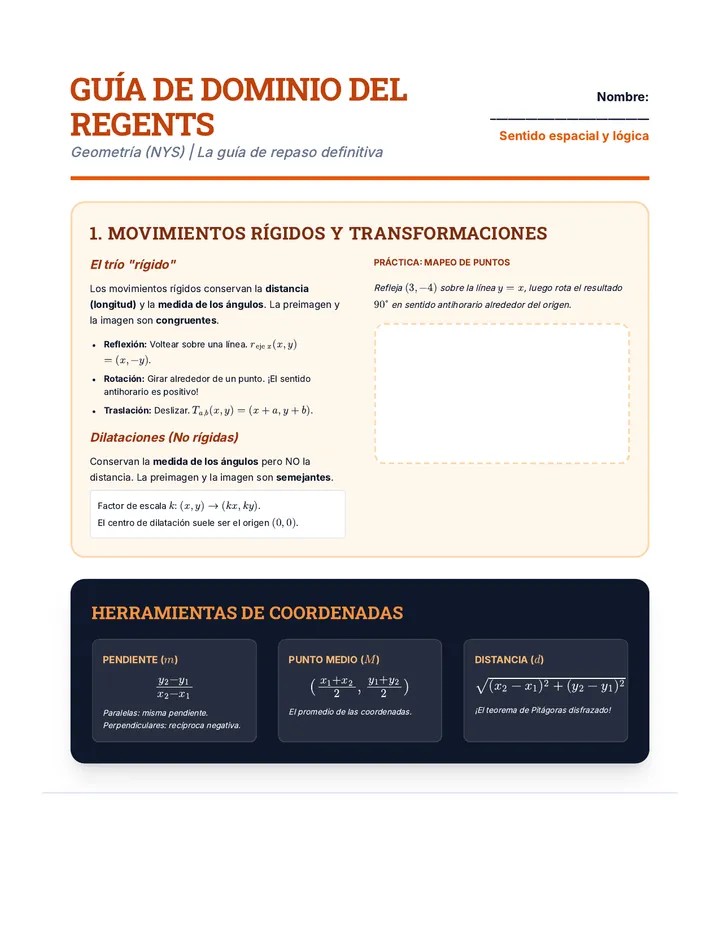
A comprehensive lesson covering geometric transformations (translations, reflections, rotations, and dilations) and the fundamentals of geometric proofs, including logical reasoning and triangle congruence.
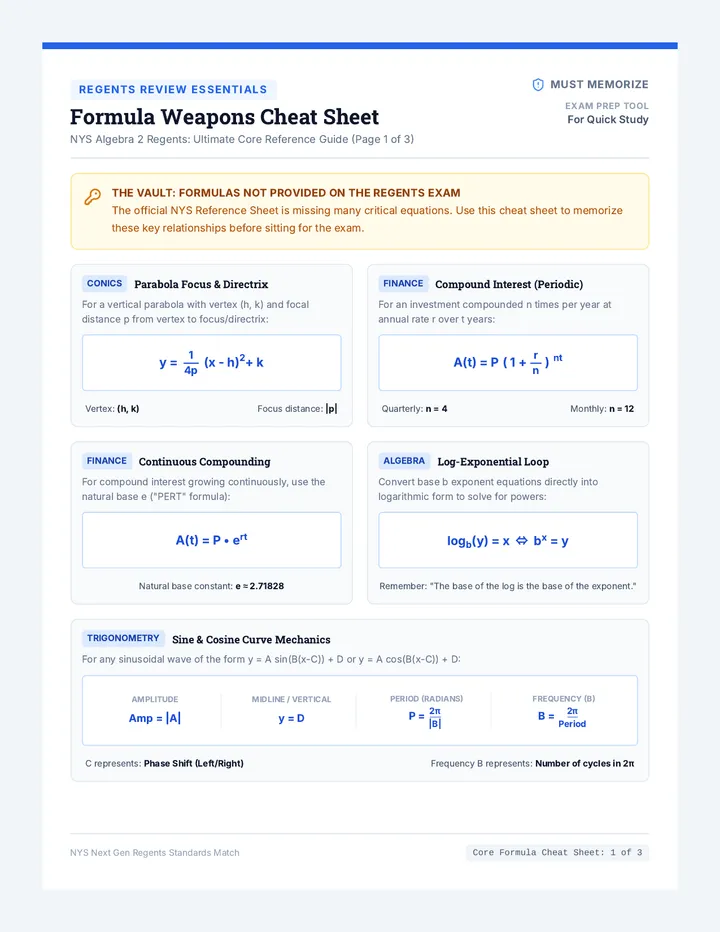
A comprehensive review of exponential and logarithmic functions, focusing on graphing attributes, transformations, inverse relationships, solving equations, and data modeling based on Texas Algebra 2 standards.
A quick assessment focusing on solving quadratic equations that result in complex solutions using the Quadratic Formula and Completing the Square.
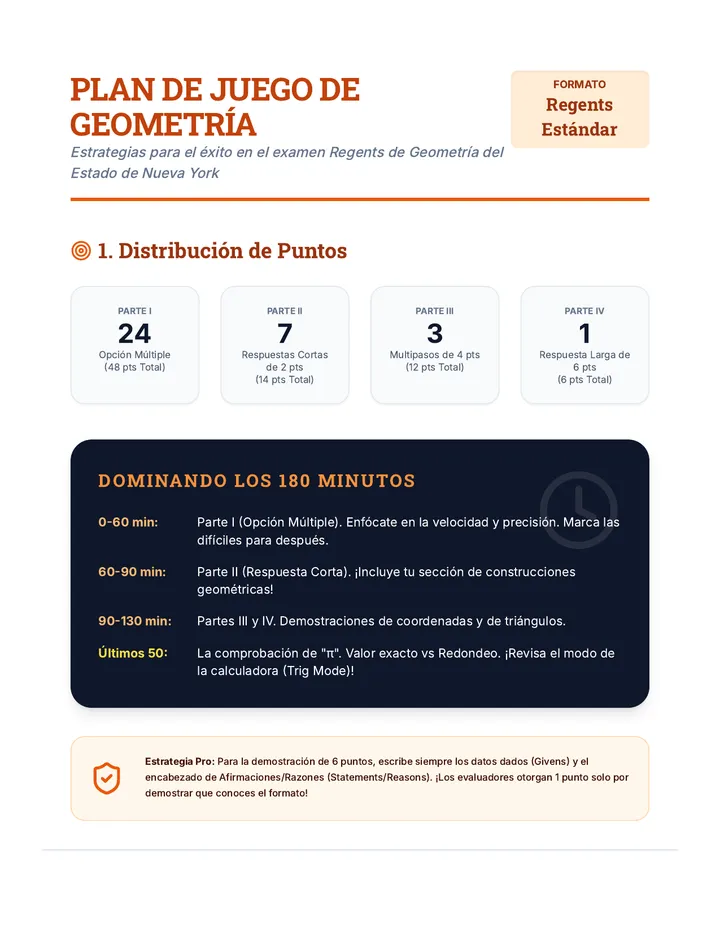
A lesson focusing on the practical application of the Distance Formula and the logical structure of SAS and ASA congruence proofs.
A comprehensive 35-minute lesson on graphing quadratic functions in standard form, covering vertex, axis of symmetry, end behavior, and zeros.
A lesson focused on the product and quotient properties of logarithms, specifically adding and subtracting logs. Designed with heavy scaffolding for a math resource setting.
This lesson introduces exponential growth and decay functions, focusing on modeling real-life situations, identifying growth and decay factors, and analyzing key attributes of exponential models. Students will transition from Algebra 1 foundations to advanced Algebra 2 applications using the standard model \(y = ab^x\).
Summative assessment covering intercepts, vertex, AOS, and solving quadratic equations using various methods.
Comprehensive review of unit targets including graphing features and all solving methods.
Synthesizing solving methods (graphing, factoring, formula) and choosing the most efficient strategy for different quadratic forms.
Using the quadratic formula to solve equations and the discriminant to determine the nature of the roots.
Solving quadratic equations by factoring and identifying x-intercepts using the Zero Product Property.
Finding the vertex, axis of symmetry, and intercepts of quadratic functions from standard form equations and graphs.
A high-speed reconnaissance of basic function families, including linear, quadratic, cubic, quartic, absolute value, and radical parent functions.
A comprehensive review of percentages for HSED learners, covering conversions, visual models, and real-world applications like tipping and discounts.
A high-energy collaborative review day. Students participate in a 'Relay Race' of unit rate tasks, moving through stations that cover whole numbers, fractions, consumer math, and measurement to reinforce skills before the final assessment.
A summative assessment covering the identification of graph features and solving quadratic equations using multiple methods.
A comprehensive review of all three methods (graphing, factoring, formula) and identifying key features to prepare for the unit assessment.
Students use the quadratic formula to solve equations that are not easily factorable, with an emphasis on identifying coefficients and simplifying the result.
Students learn to solve quadratic equations by factoring trinomials and using the Zero Product Property, focusing on real roots and equations in standard form.
Students explore the quadratic parent function, identify key features of parabolas (vertex, axis of symmetry, zeros), and learn to graph by plotting points.
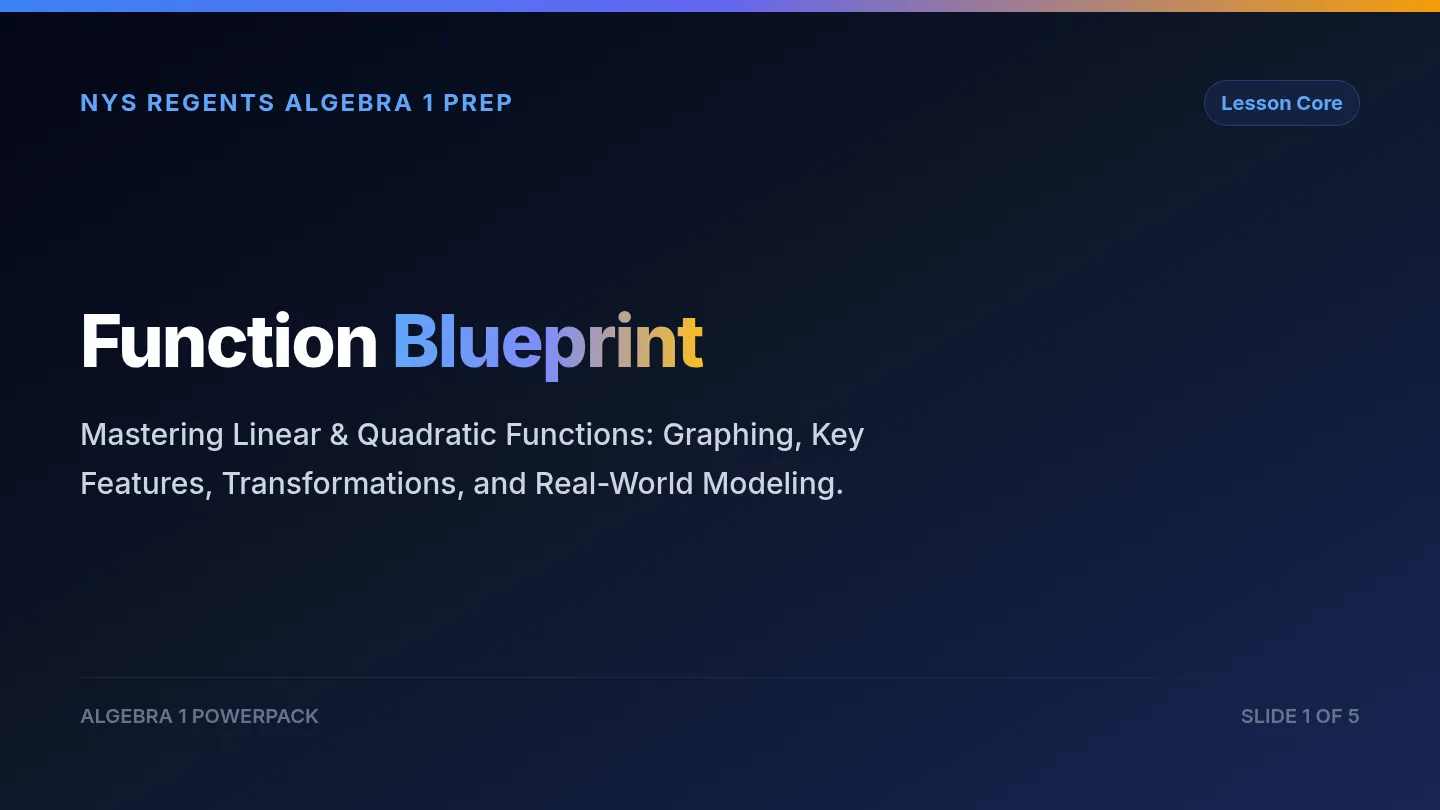
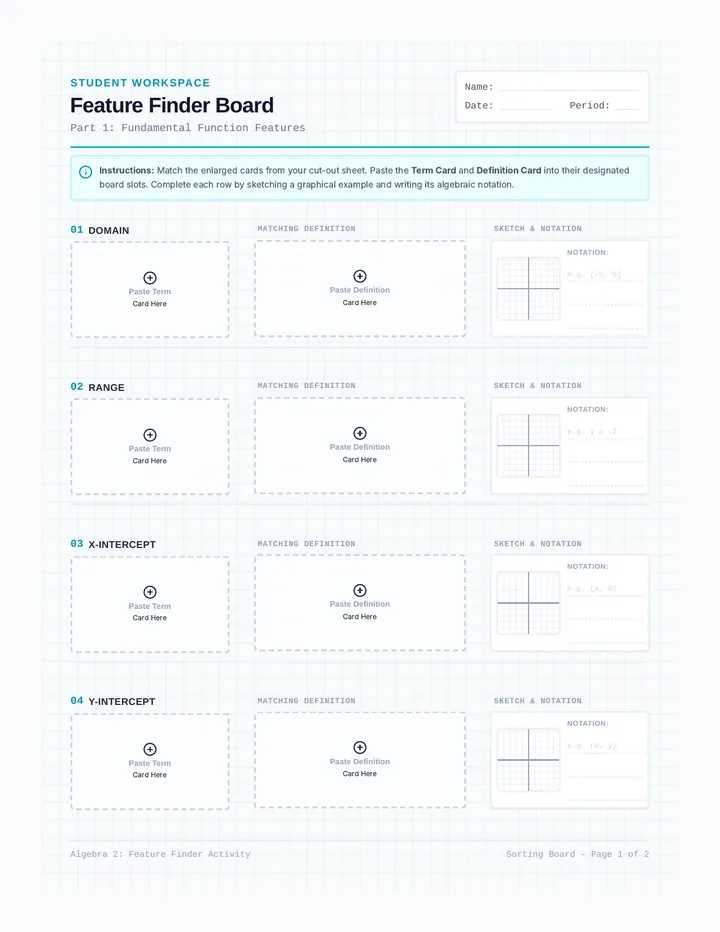
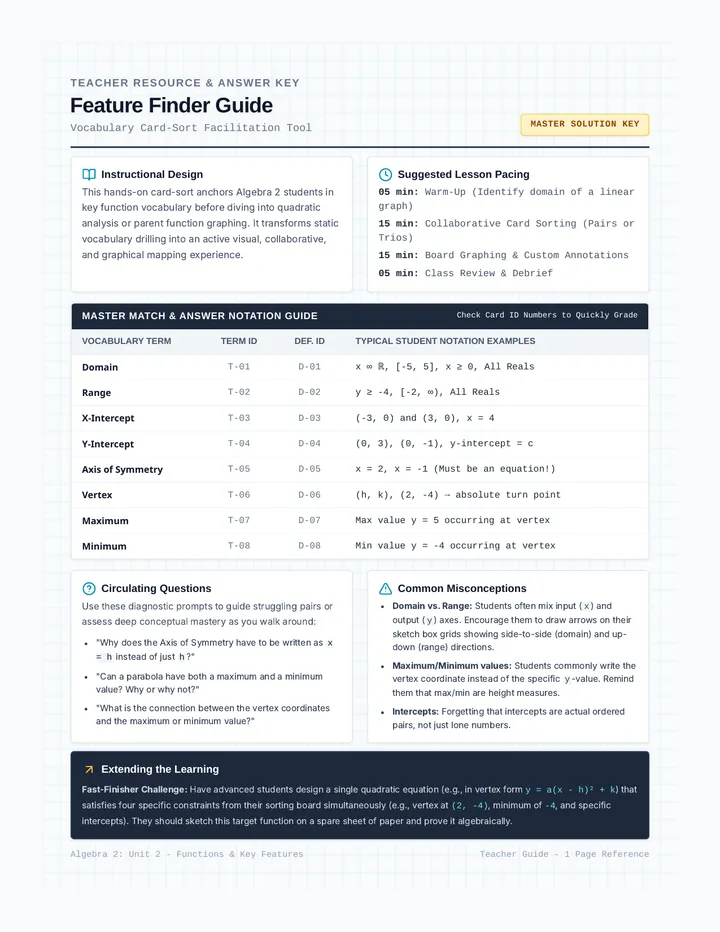
A comprehensive lesson on core parent functions for Algebra 2, focusing on identification, key features, and visual recognition using a blueprint theme.
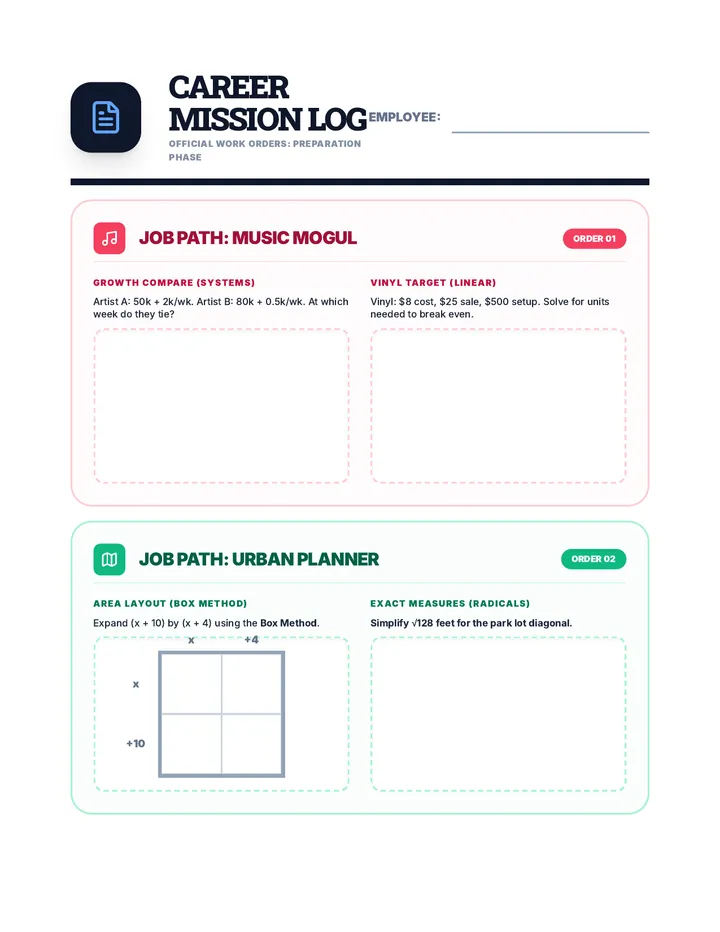
The final day of the unit focuses on students presenting their career research and budget projections to the class, demonstrating their oral communication and technological skills.
Students research a career path, including educational requirements and starting salaries, to build a realistic monthly budget. This lesson includes the summative assessment covering unit concepts.
Students transition from tracking spending to creating forward-looking budget sheets. They practice comparing budgeted amounts to actual expenditures and calculating variances.
Students learn to calculate average monthly expenditures by analyzing spending patterns and categorizing costs. This lesson establishes the foundation for accurate budgeting by looking at historical data.
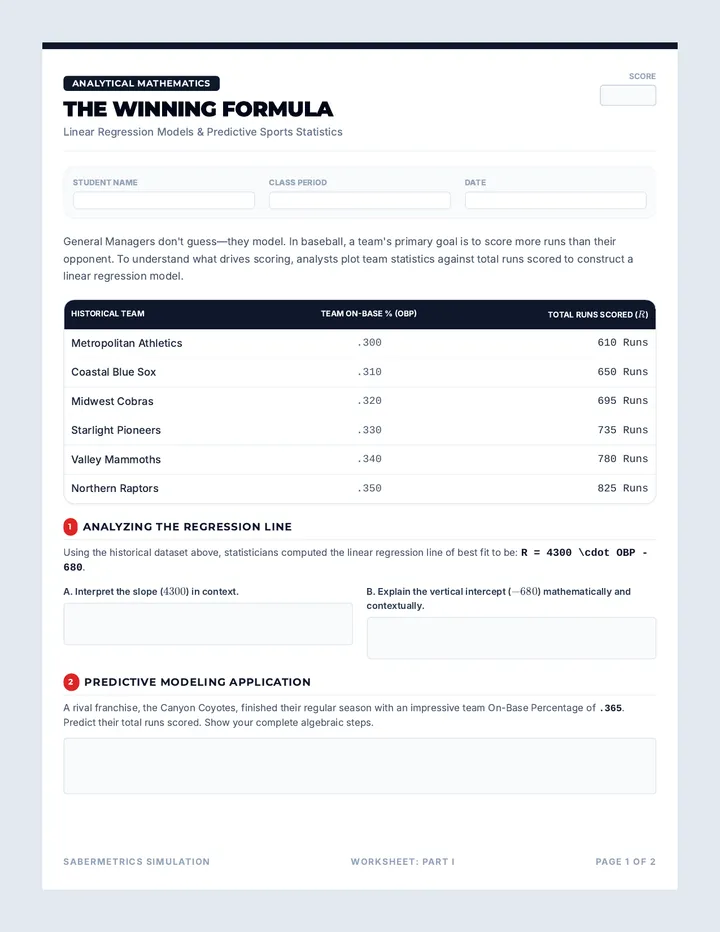
A project-based lesson on performing linear regression analysis using United Nations population and surface area data to test socio-economic theories.
A comprehensive lesson covering probability basics, counting principles, and the binomial distribution, concluding with a summative 30-question mastery exam.
Students apply their knowledge of permutations and combinations to design their own lottery game, calculating the odds of winning and presenting their mathematical findings in a professional format.
A comprehensive examination combining elementary probability theory, counting principles, and binomial distribution problems into a single rigorous assessment.
A lesson focused on identifying and applying special product patterns and factoring techniques for binomials and trinomials, including sum and difference of cubes and perfect square trinomials.
A high-intensity, time-efficient review and assessment unit designed for 30-minute class periods, focusing on core factoring techniques for Algebra 2 credit recovery.
A lesson focused on solving word problems using the binomial probability distribution formula, featuring real-world scenarios and step-by-step calculations.
A comprehensive lesson covering counting techniques, permutations, combinations, and basic probability distributions based on statistical principles.
A lesson covering fundamental counting techniques, random variable classification, and probability distributions based on statistical principles.
A comprehensive lesson on elementary probability theory covering valid probability ranges, compound events, independent and dependent outcomes, and tree diagrams based on textbook problems.
A focused lesson on identifying and comparing the domain and range of quadratic functions and their square root inverses using interval notation and graphical analysis.
A lesson focused on graphing and analyzing inverse relations for absolute value and quadratic functions. Students learn to reflect functions across y=x and evaluate if the resulting relation is a function.
A lesson focused on understanding and calculating inverse functions through multiple representations: numerical tables, algebraic equations, and graphical reflections. Students will practice reversing operations and reflecting functions across the line y=x.
A comprehensive assessment covering discrete random variables, permutations, combinations, and the binomial probability distribution based on real-world statistical data.
A high-energy, investigative lesson where honors students apply the quadratic formula to solve problems with rational and irrational roots to solve a 'case'.
A comprehensive practice set and review presentation for the TSIA2 Math exam, covering Quantitative, Algebraic, Geometric, and Statistical reasoning.
A comprehensive preparation set for the TSIA2 Mathematics assessment, featuring a full-length practice test, detailed step-by-step solutions, and a strategic review presentation.
A lesson focused on applying binomial distribution concepts to real-world scenarios through a creative coloring activity. Students translate narrative word problems into mathematical models to calculate probabilities, means, and variances.
The final week of the TSIA2 Math Marathon, reviewing complex problems and multi-step reasoning.
The second week of the TSIA2 Math Marathon, expanding into geometric and statistical reasoning.
The first week of the TSIA2 Math Marathon, focusing on foundational algebraic and quantitative reasoning.
A functional math lesson focused on calculating elapsed time for real-world scenarios, designed for high school students developing life skills.
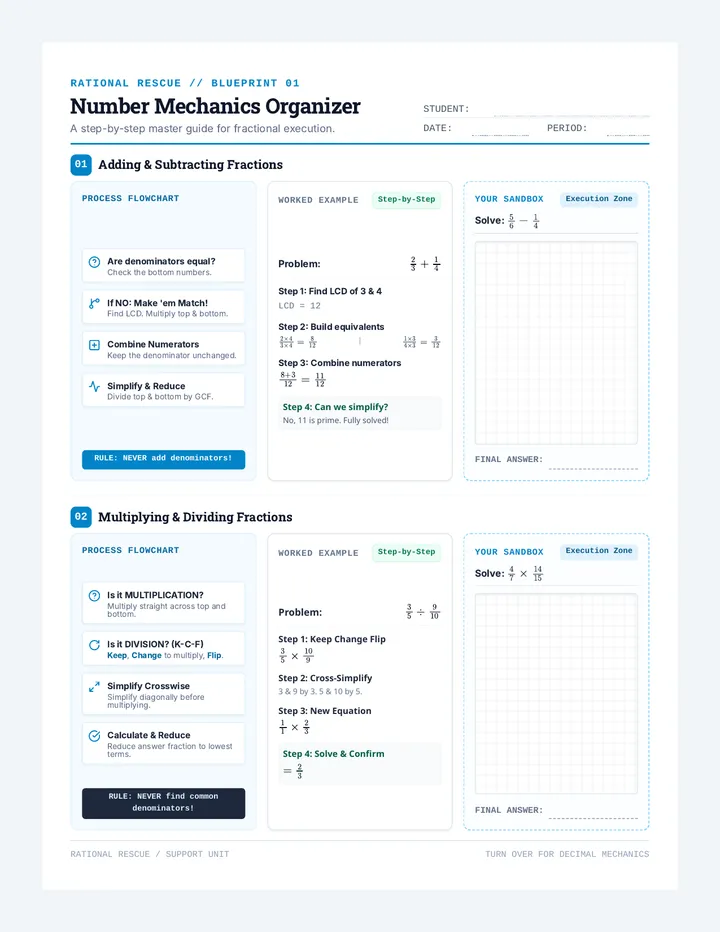
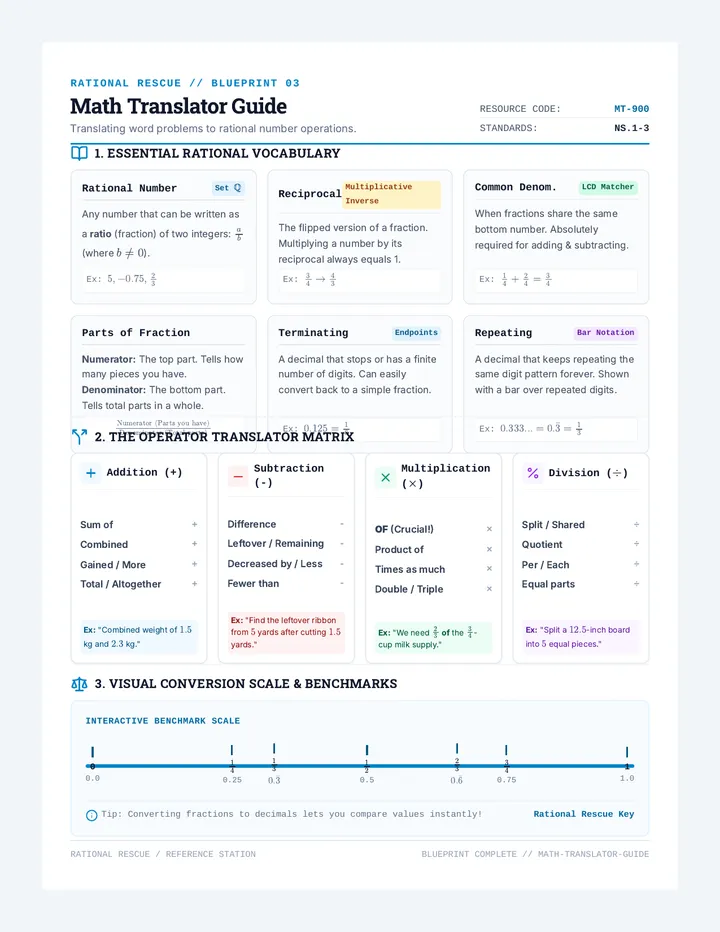
Master complex fractions and high-precision decimal operations through the lens of algebraic manipulation and real-world mathematical modeling.