Conduct technical assessments of infrastructure deficits and compare centralized utility models with decentralized solutions.
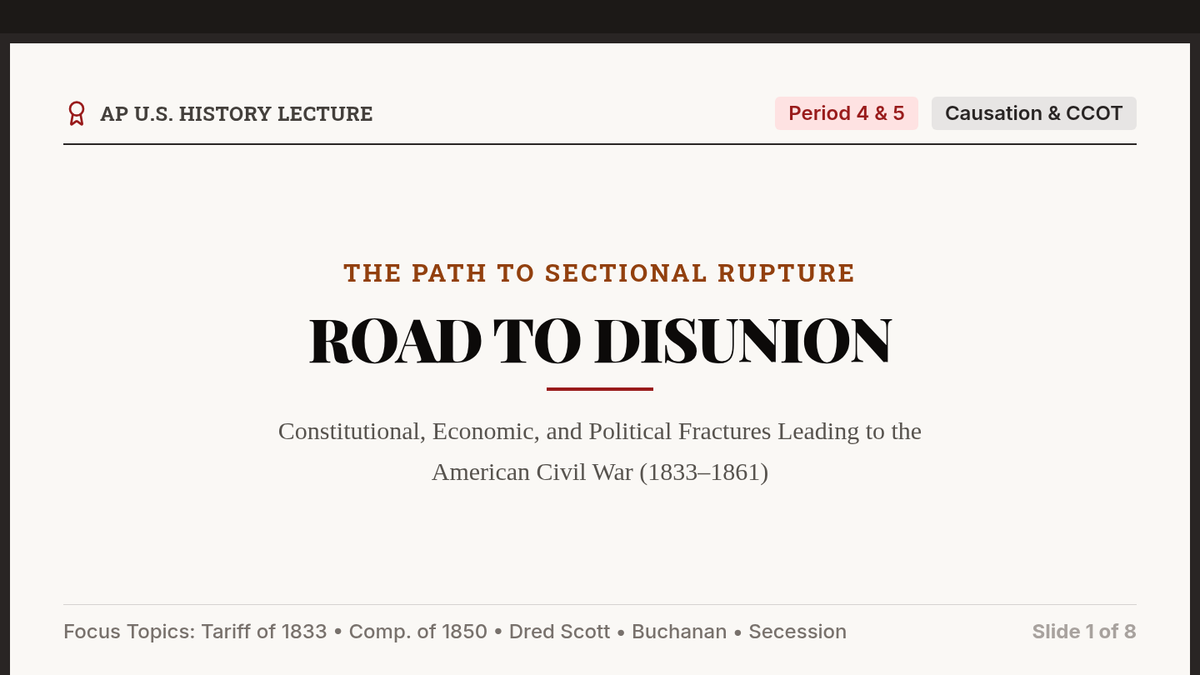
An advanced AP US History lecture series exploring the constitutional, economic, and political crises that fractured the United States between 1833 and 1861. This lesson highlights key legislative compromises, executive decisions, and judicial rulings that made sectional conflict and the Civil War inevitable.
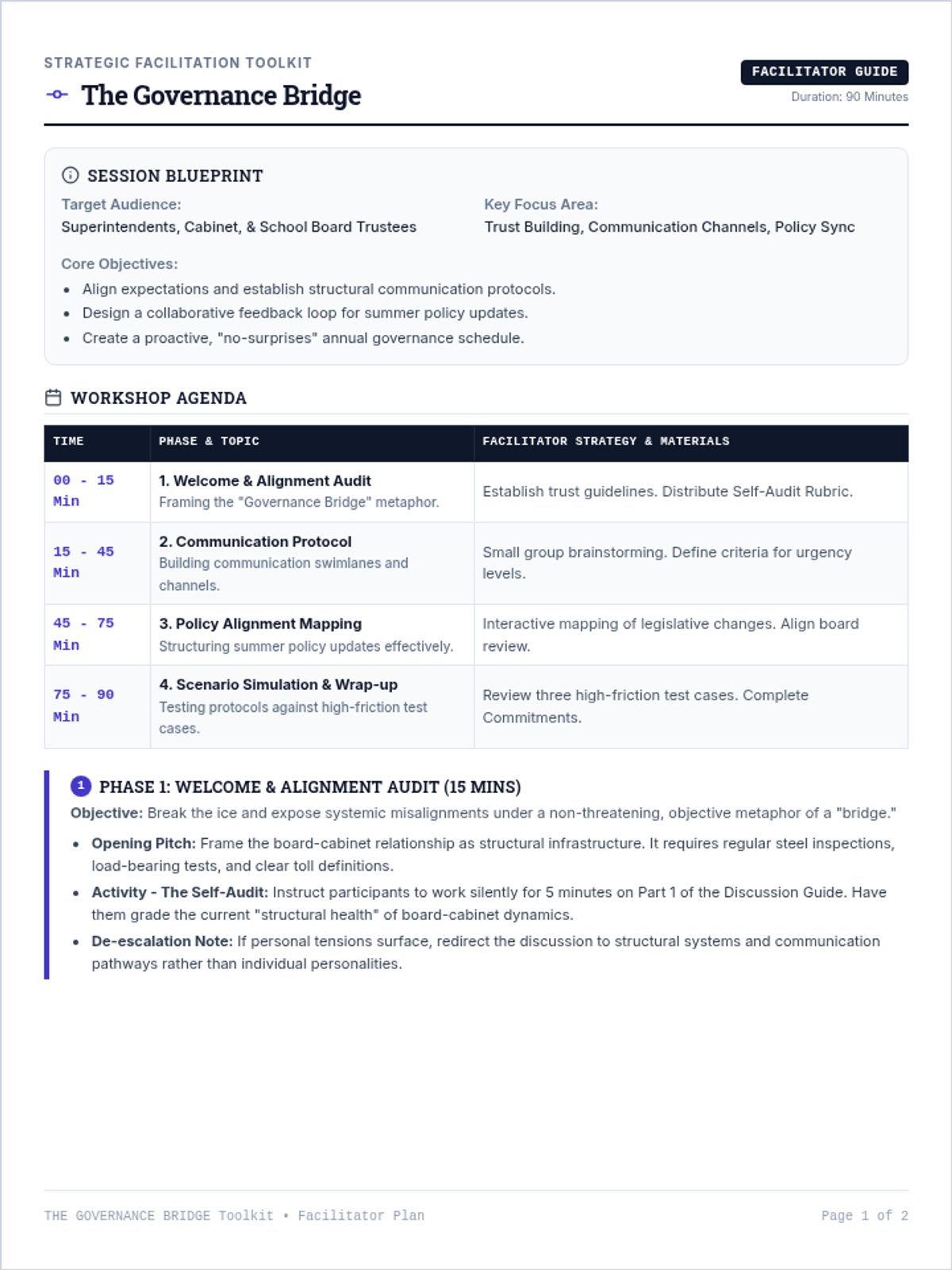
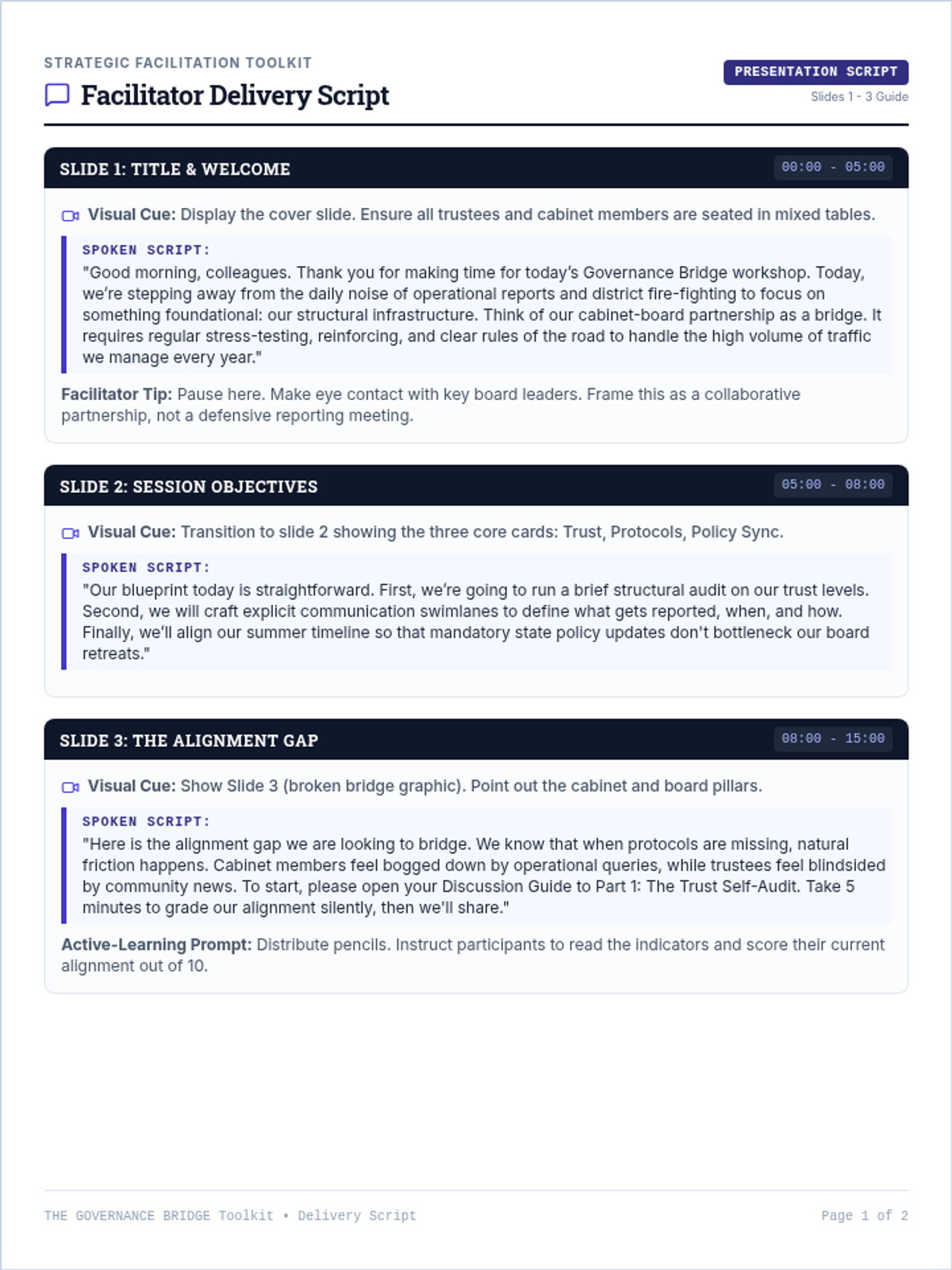
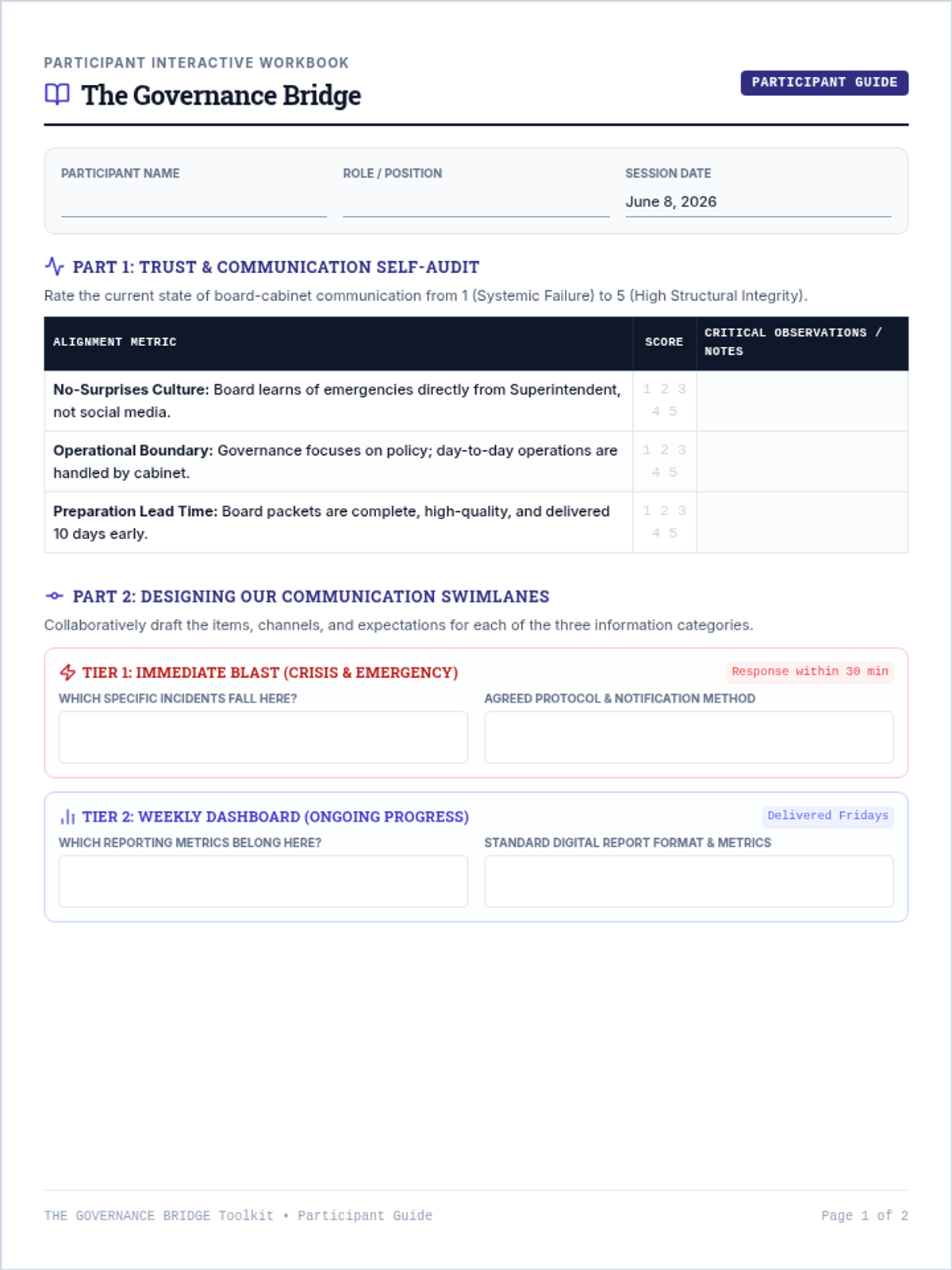
A comprehensive facilitation toolkit designed for superintendents, cabinets, and school boards to establish robust communication, align expectations, and streamline summer policy updates.
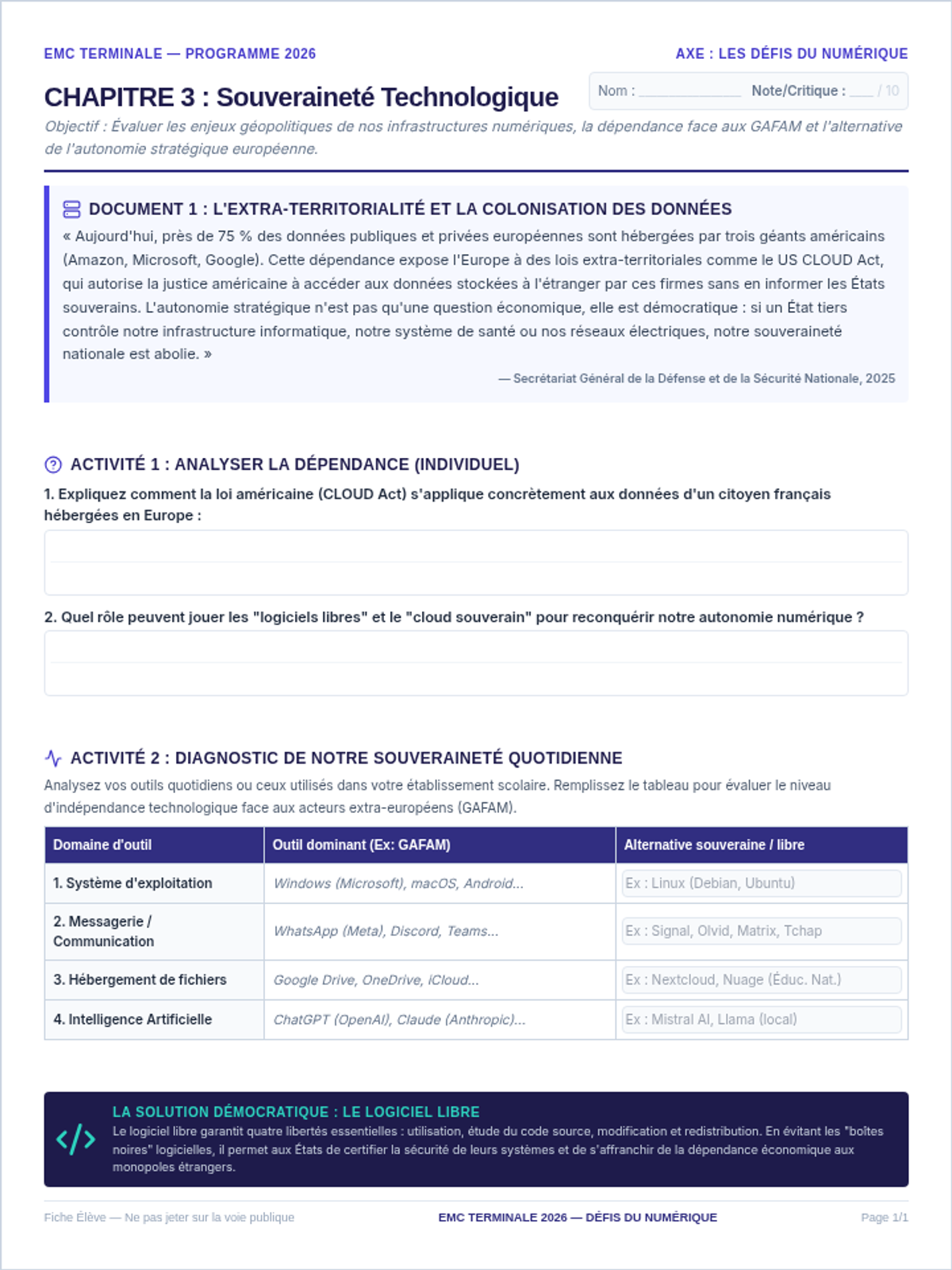
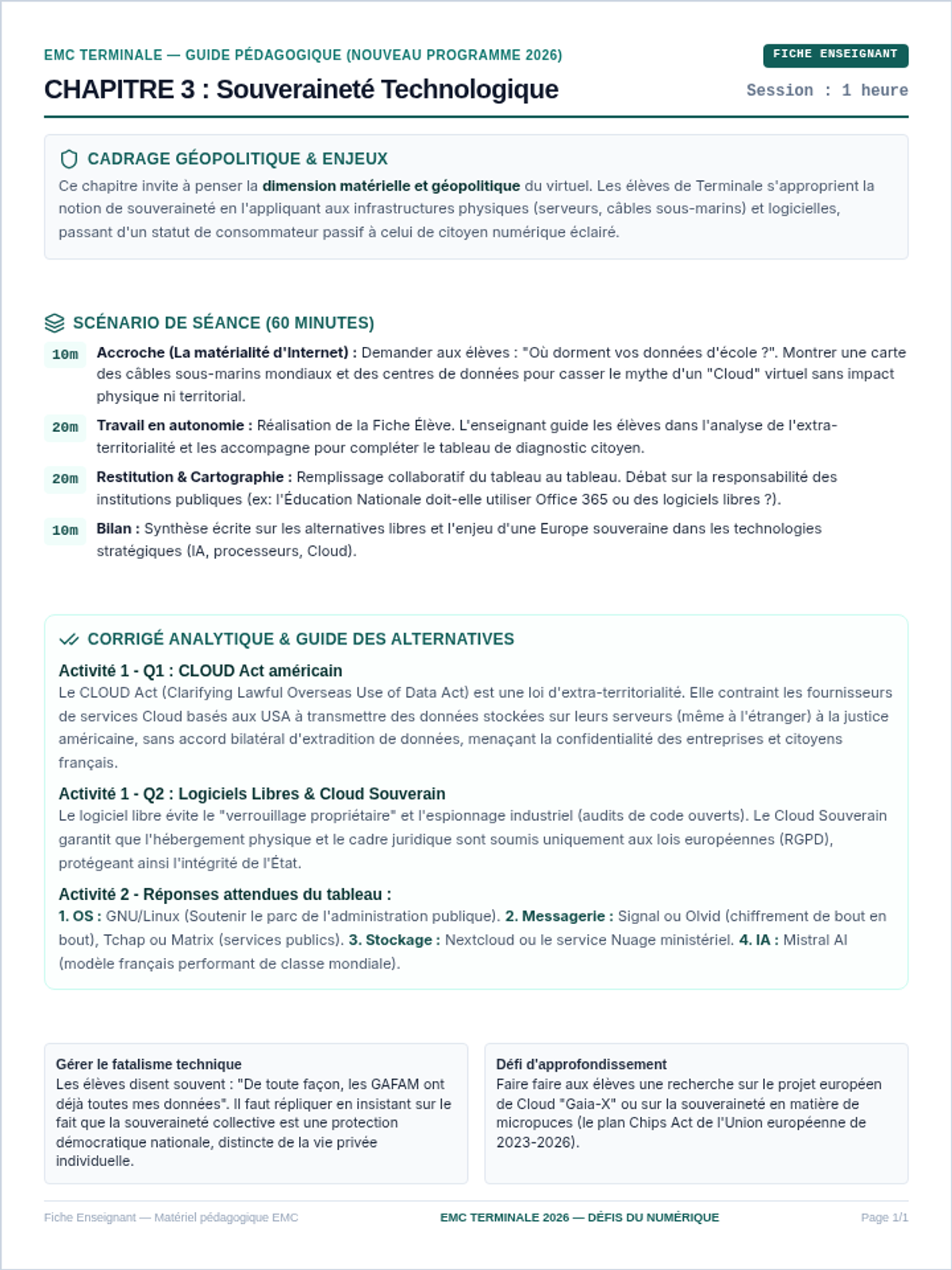
Ce troisième chapitre interroge la dimension géopolitique et économique du numérique : le rôle et l'influence des GAFAM et des géants de l'IA, la souveraineté des données citoyennes, le cloud souverain et l'alternative du logiciel libre pour l'indépendance nationale et européenne.
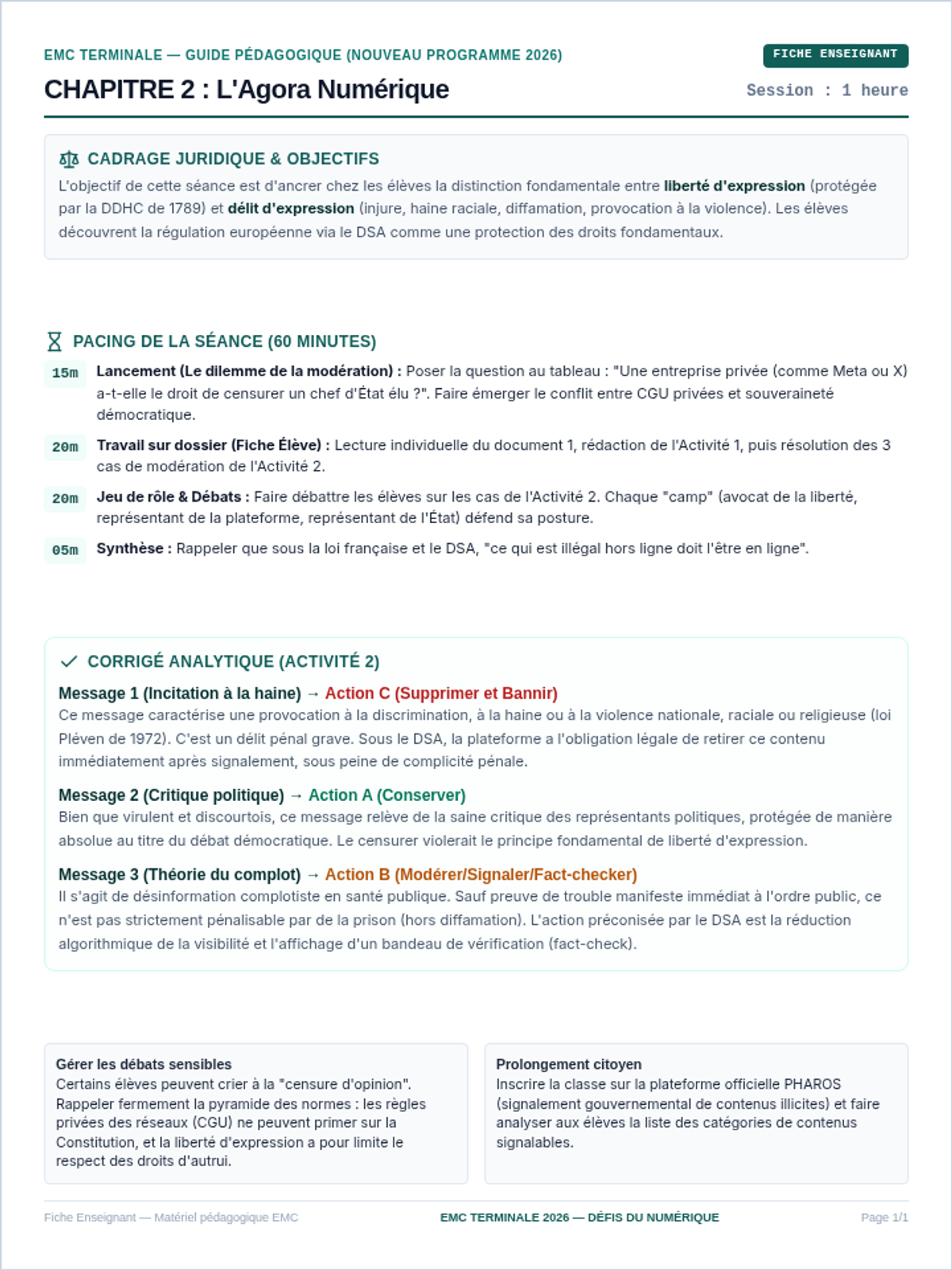
Ce deuxième chapitre traite de la structure de l'espace public numérique, en abordant la polarisation des débats sur les réseaux sociaux, les bulles de filtres, la liberté d'expression face à la modération et la haine en ligne, ainsi que la citoyenneté numérique active.
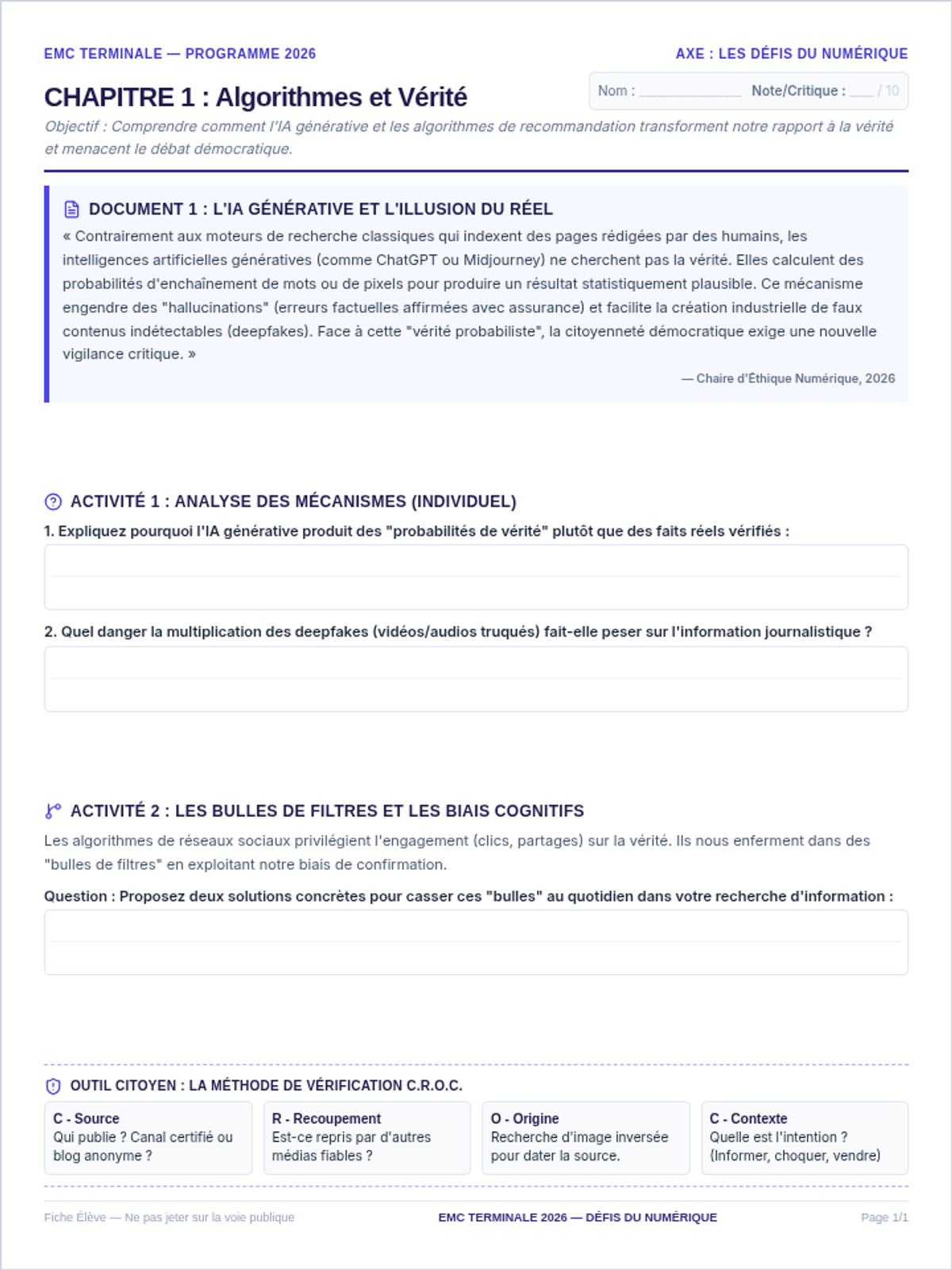
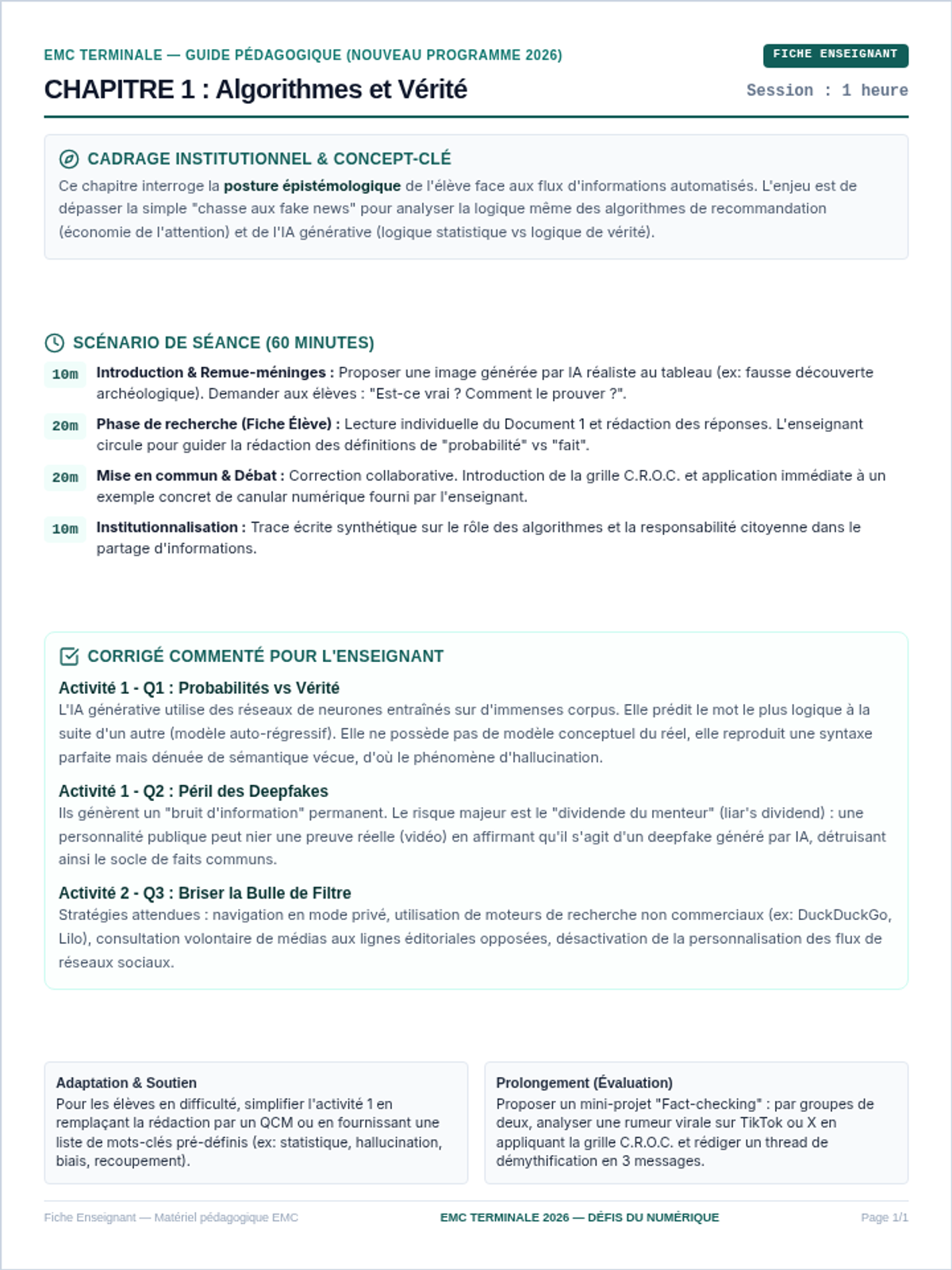
Ce premier chapitre explore l'impact de l'intelligence artificielle générative et des algorithmes de recommandation sur la vérité historique, scientifique et journalistique. Les élèves analysent la notion de désinformation, les deepfakes et l'importance de l'épistémologie critique.
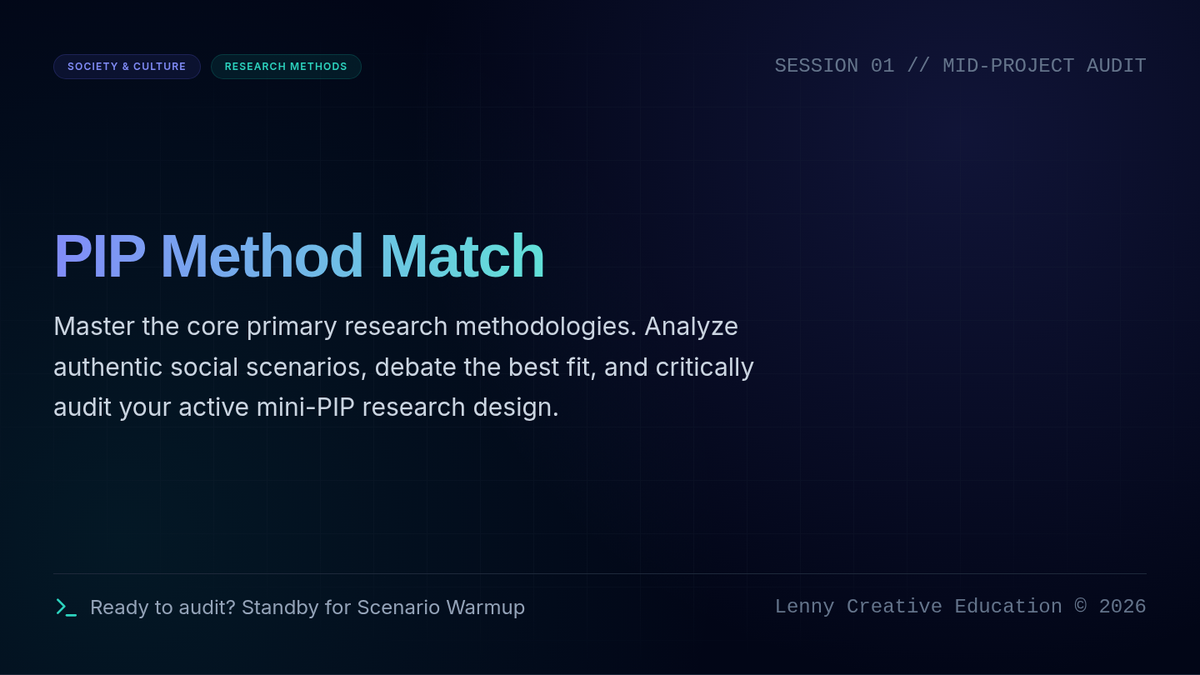
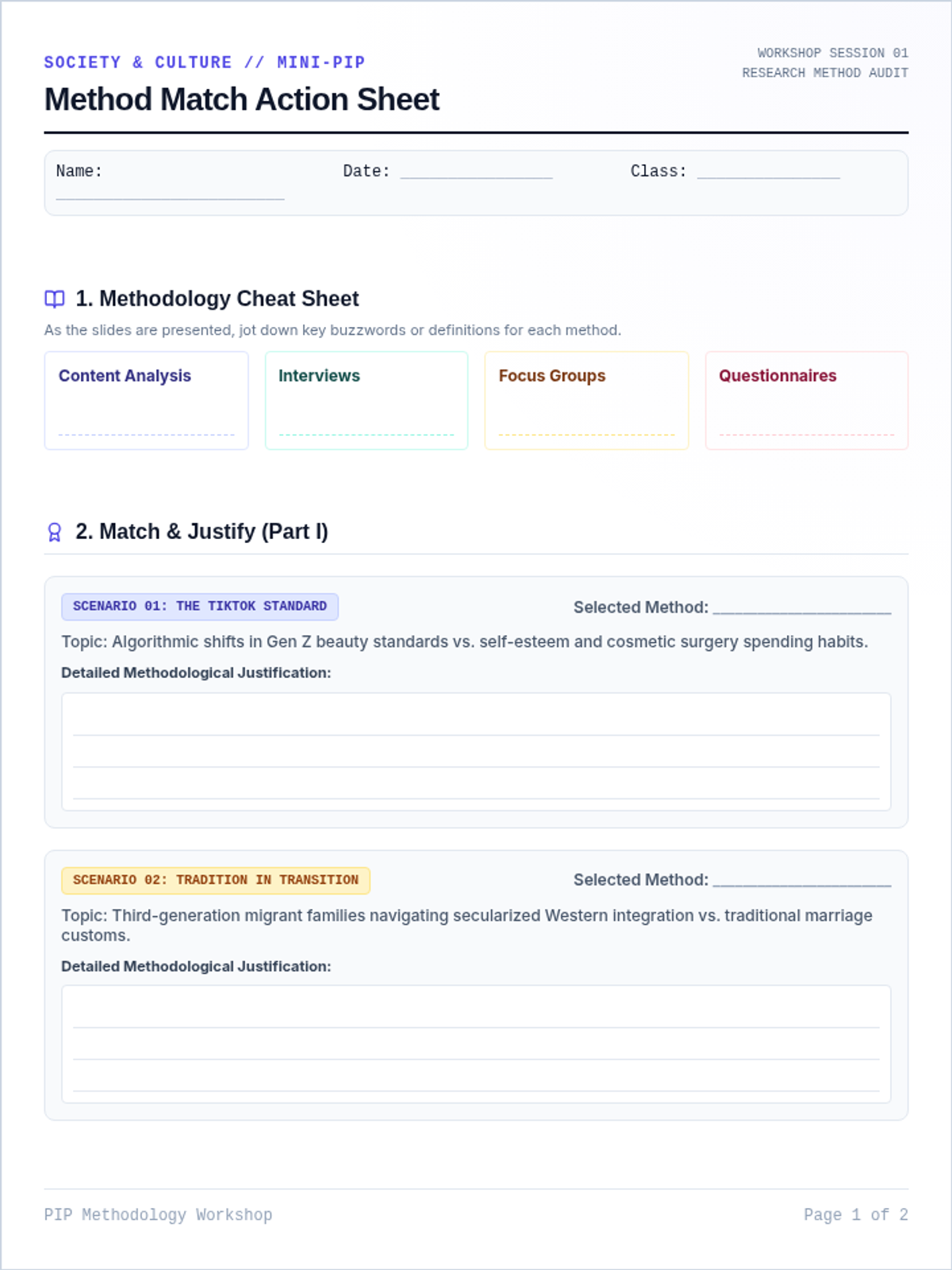
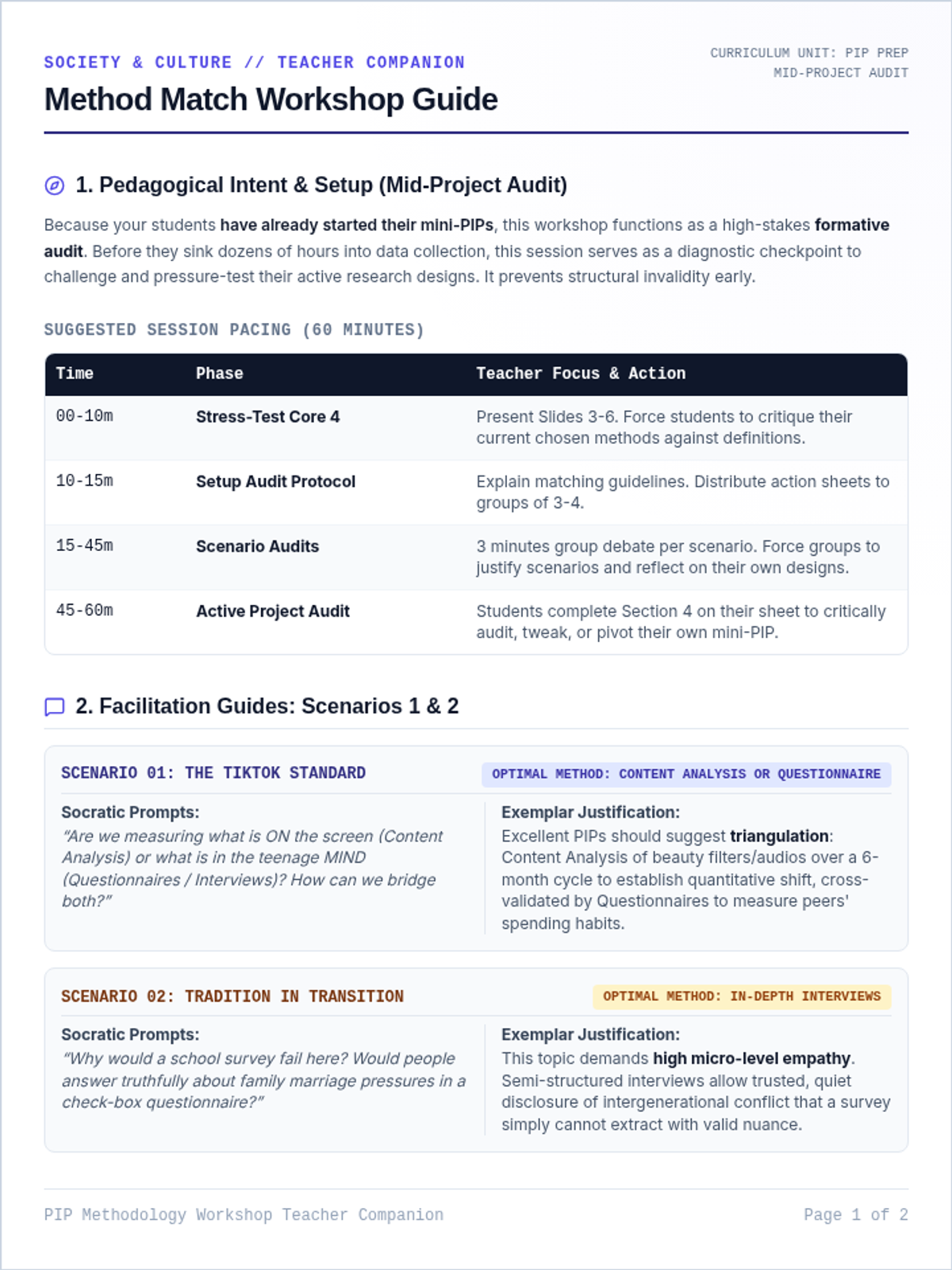
A hands-on workshop designed to introduce Society and Culture students to key research methodologies (Content Analysis, Interviews, Focus Groups, and Questionnaires) for their Personal Interest Projects (PIPs). Students analyze authentic research scenarios and justify the best methodological fit for each PIP topic.
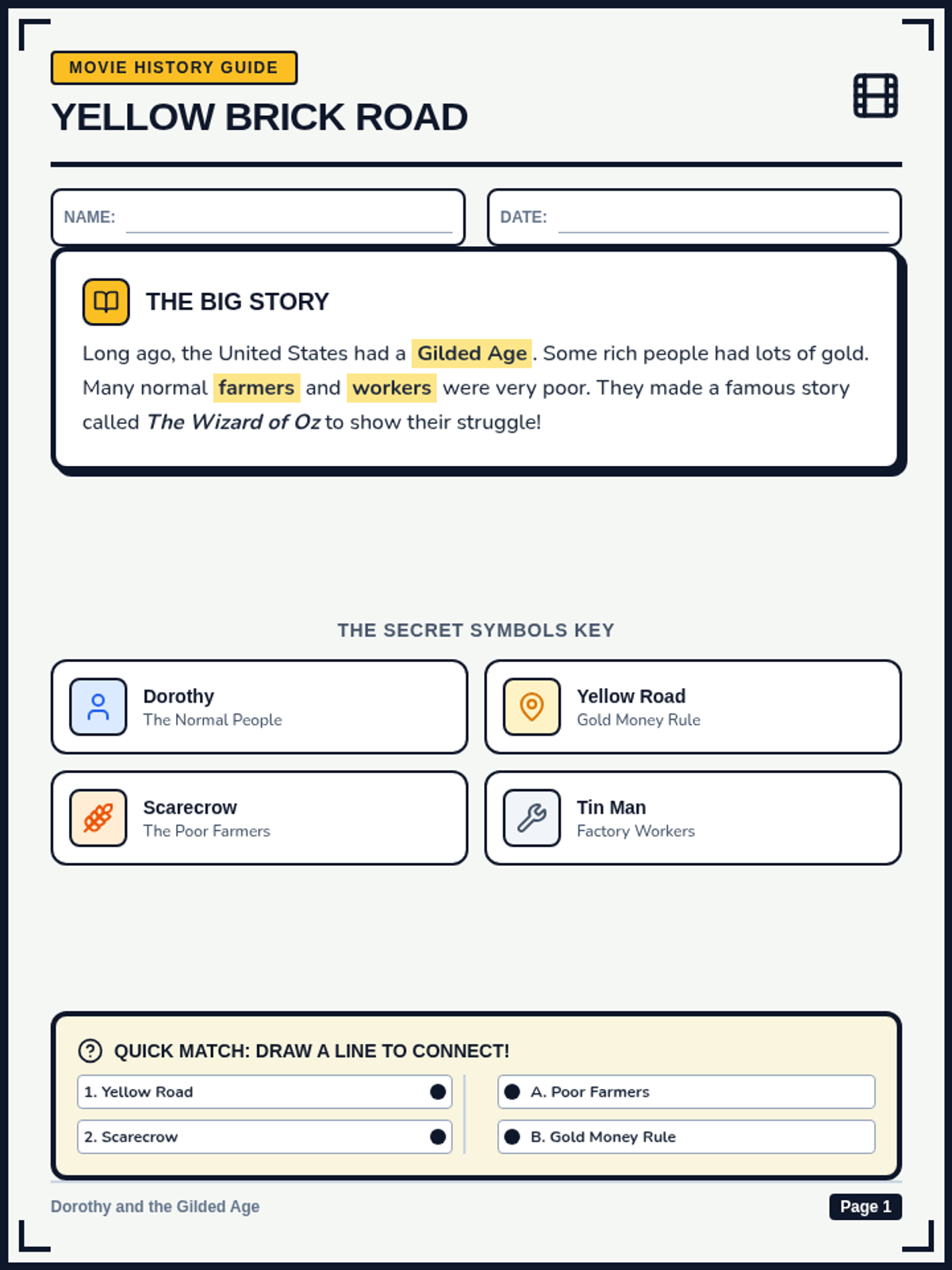
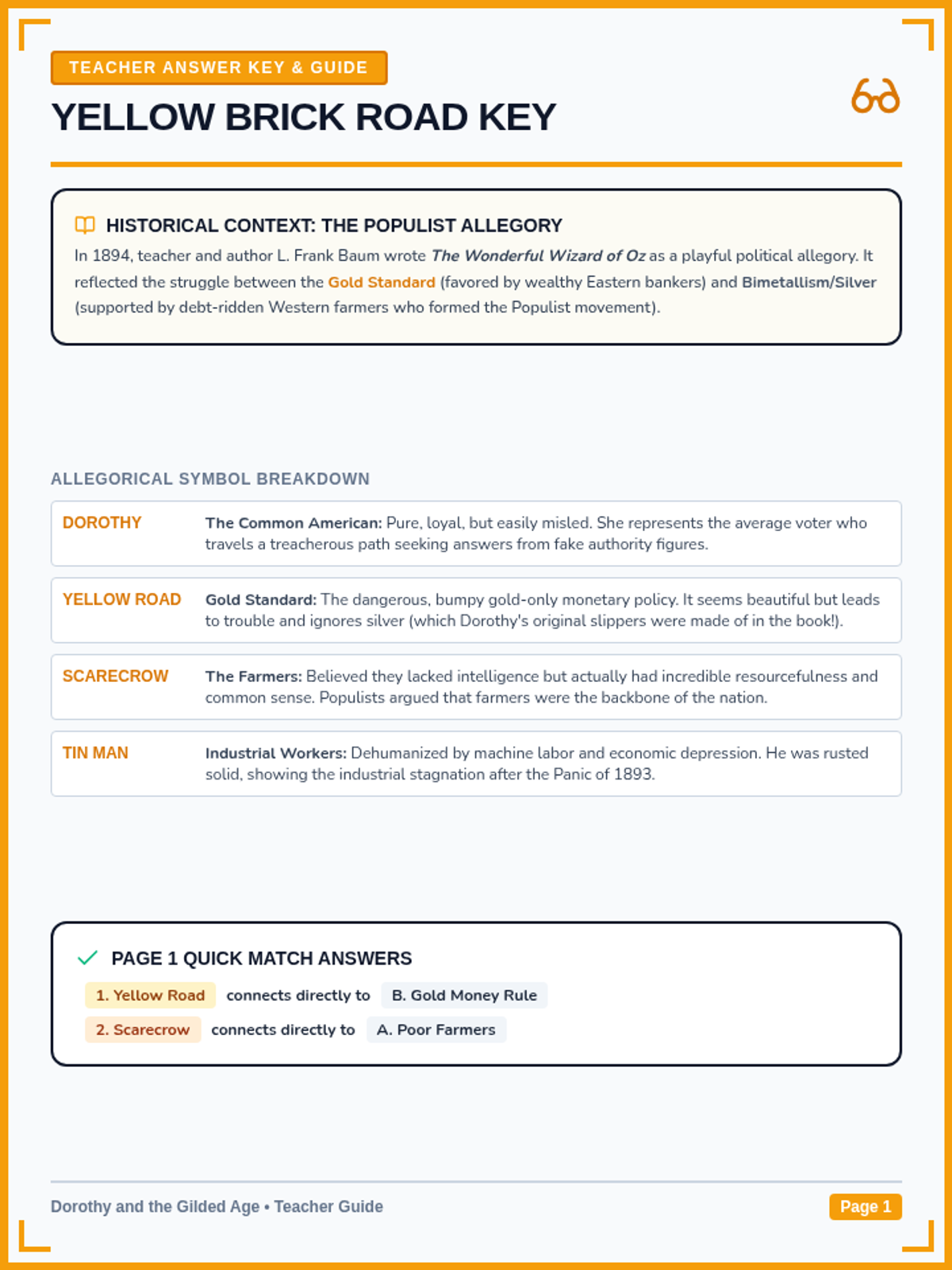
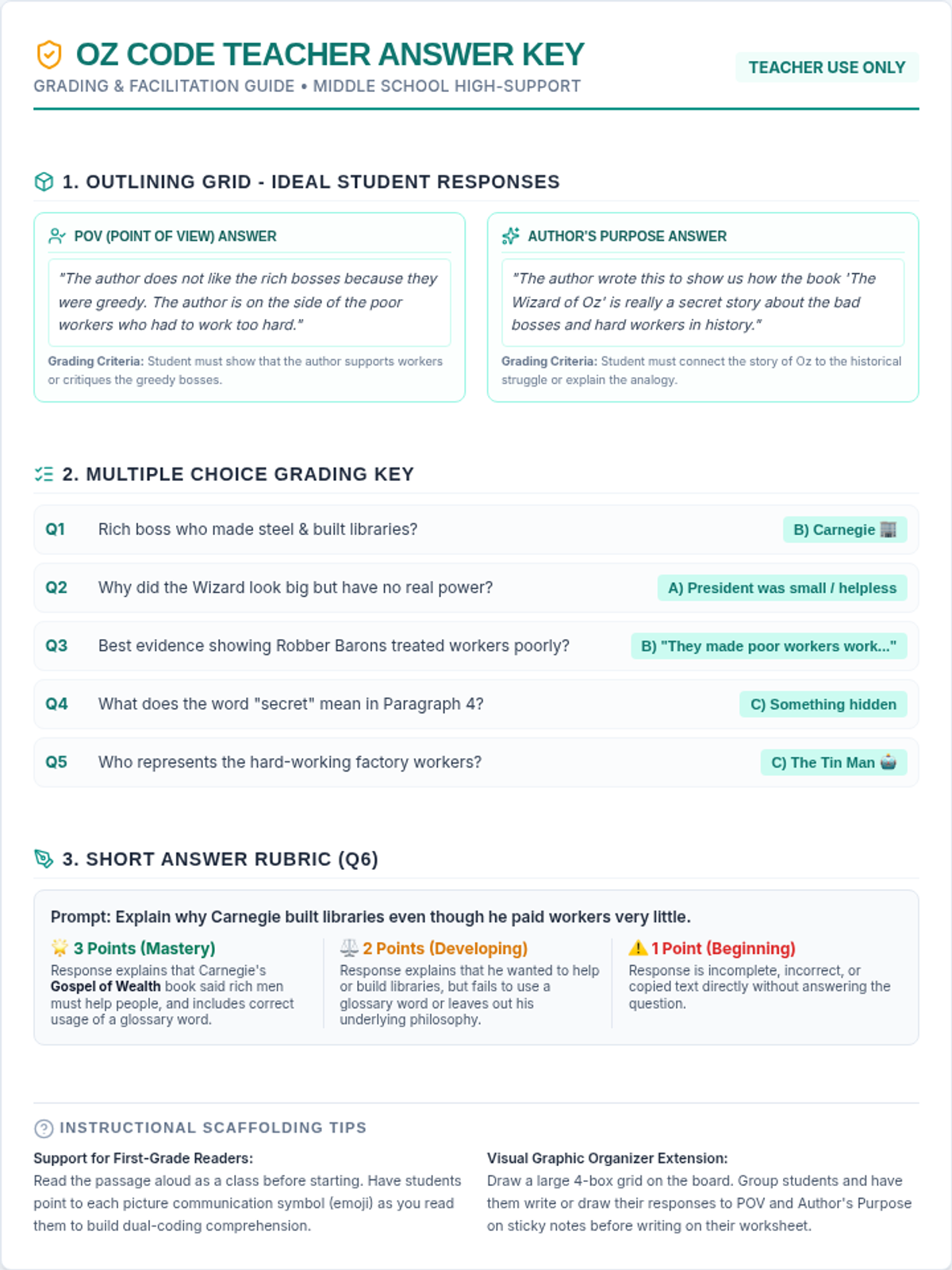
A highly accessible watch guide lesson linking The Wizard of Oz (1939) to Gilded Age politics (Populism, the Gold Standard, and industrial workers), designed specifically for middle school students reading at a 1st-grade level using visual matching, word banks, and literal multiple-choice questions.
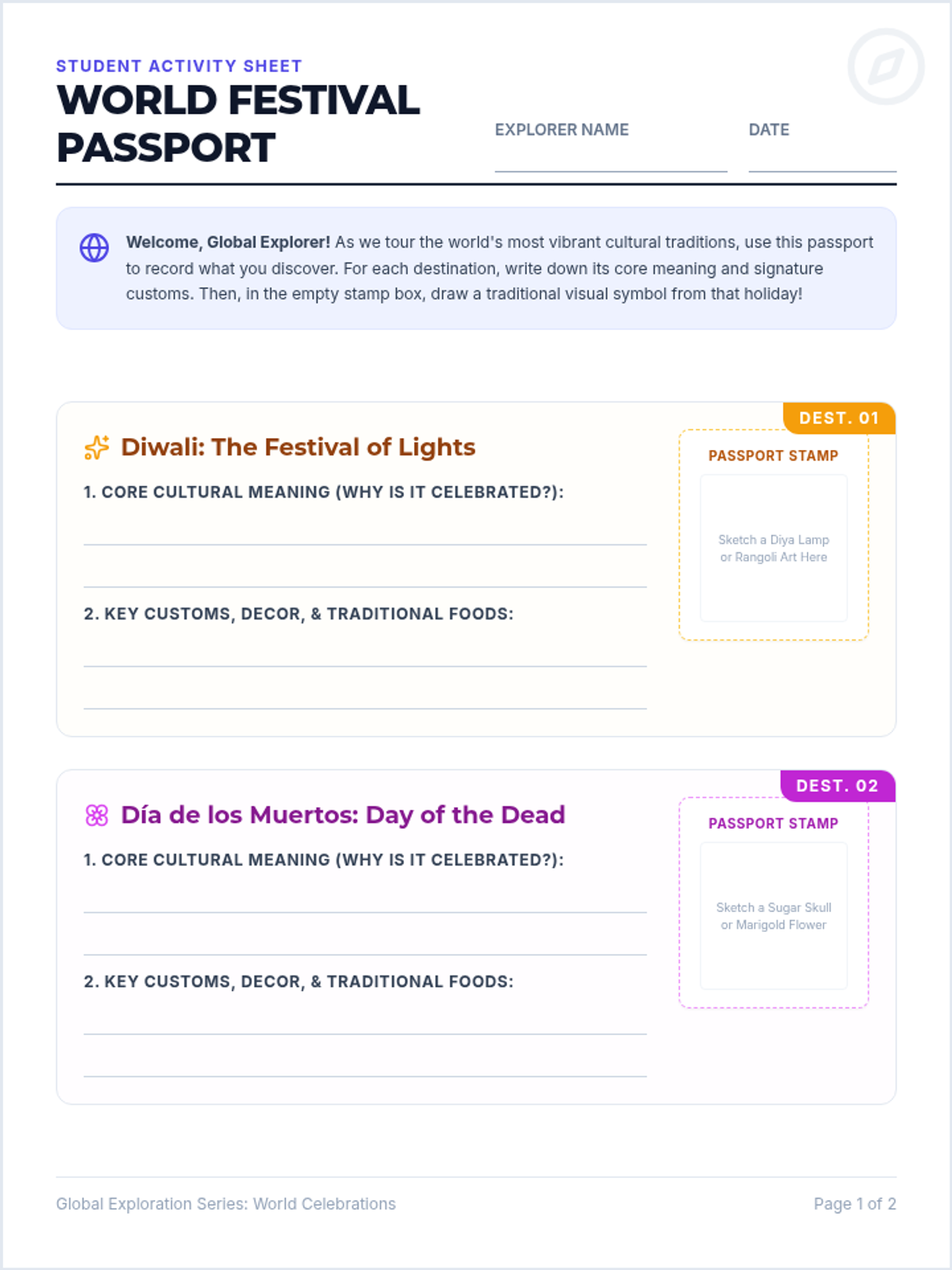
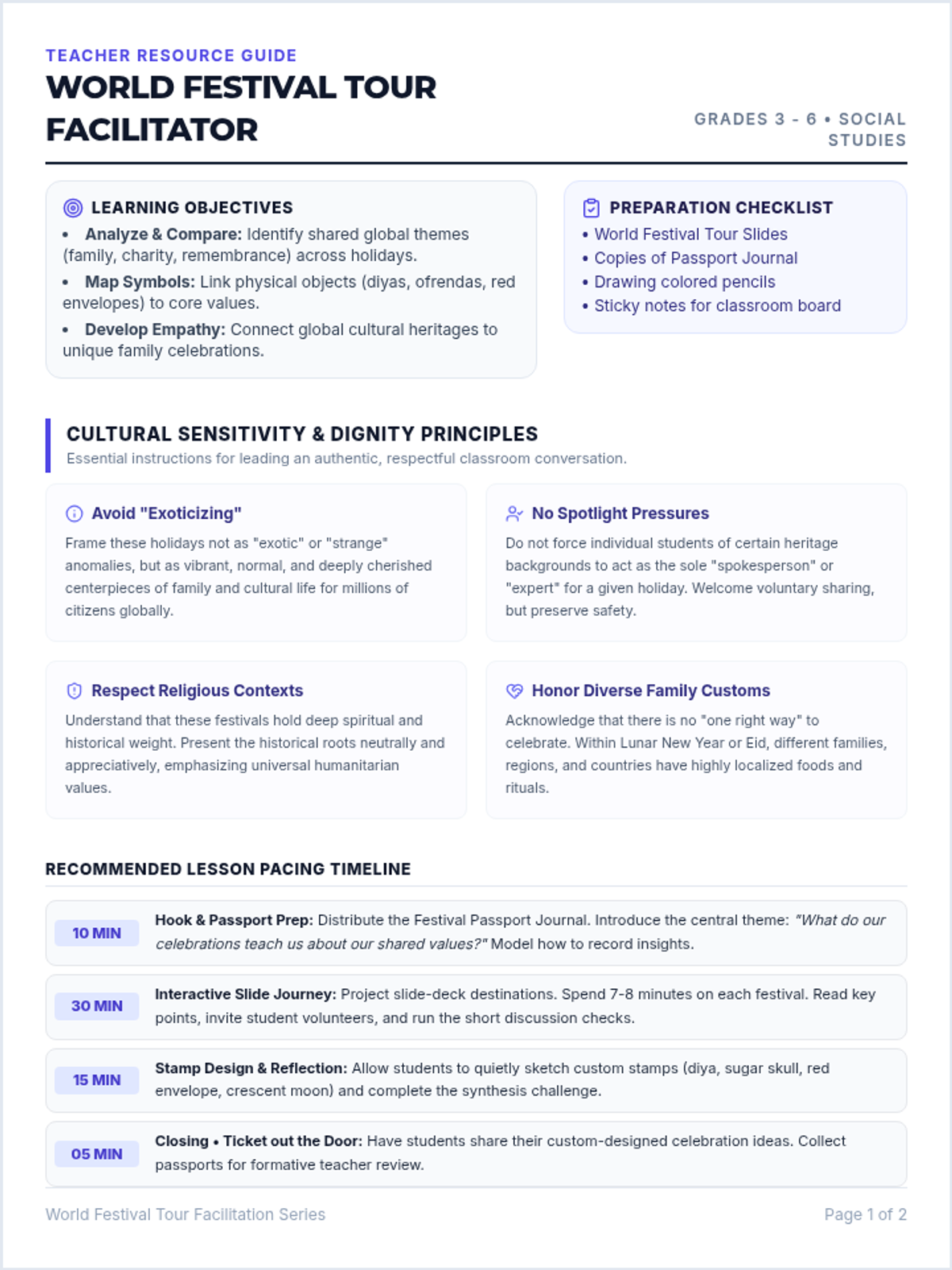
An engaging, multicultural lesson introducing students to four rich global celebrations: Diwali, Día de los Muertos, Lunar New Year, and Eid al-Fitr. The lesson explores cultural significance, seasonal customs, symbols, and values, supporting global citizenship and empathy.
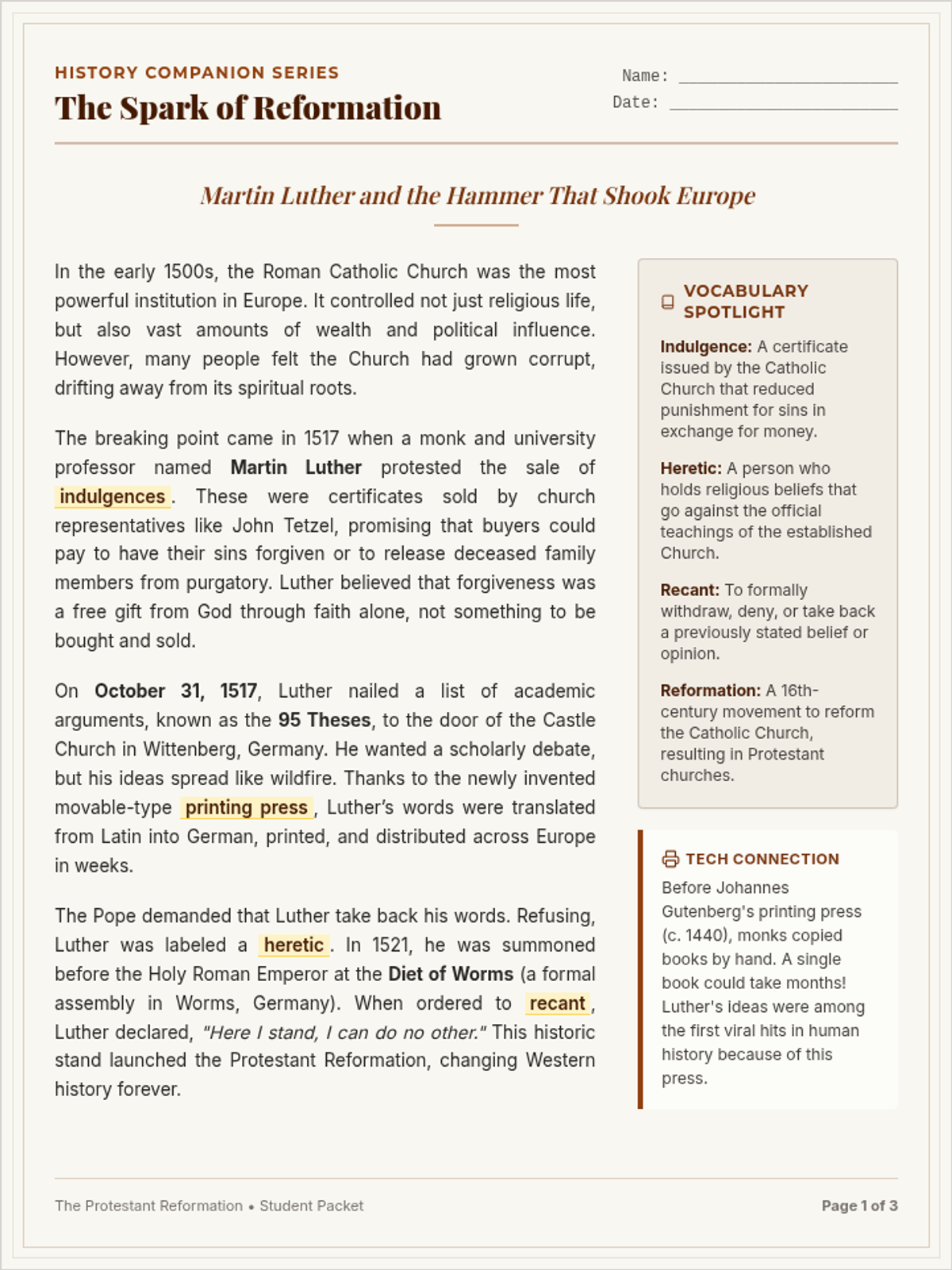
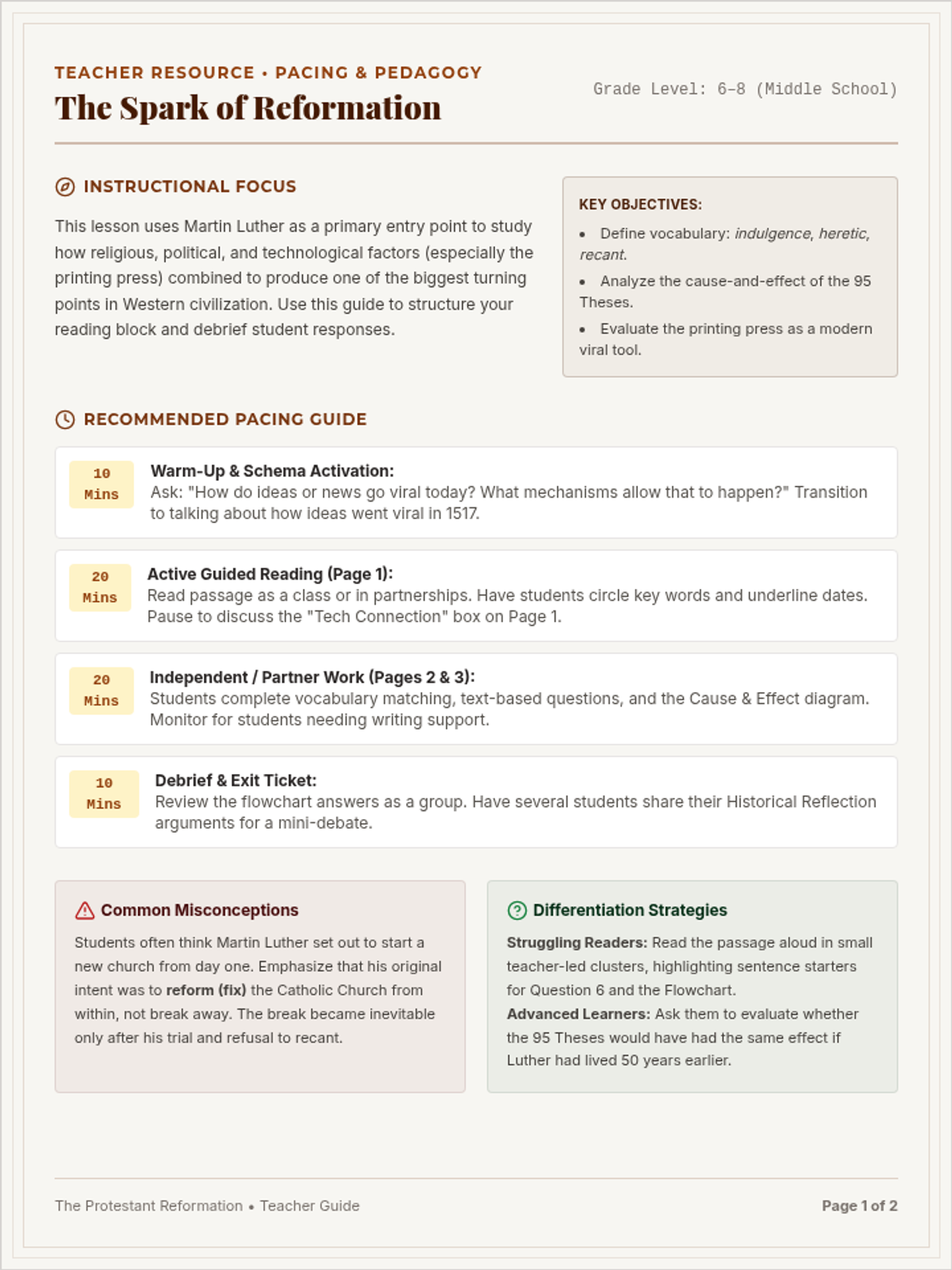
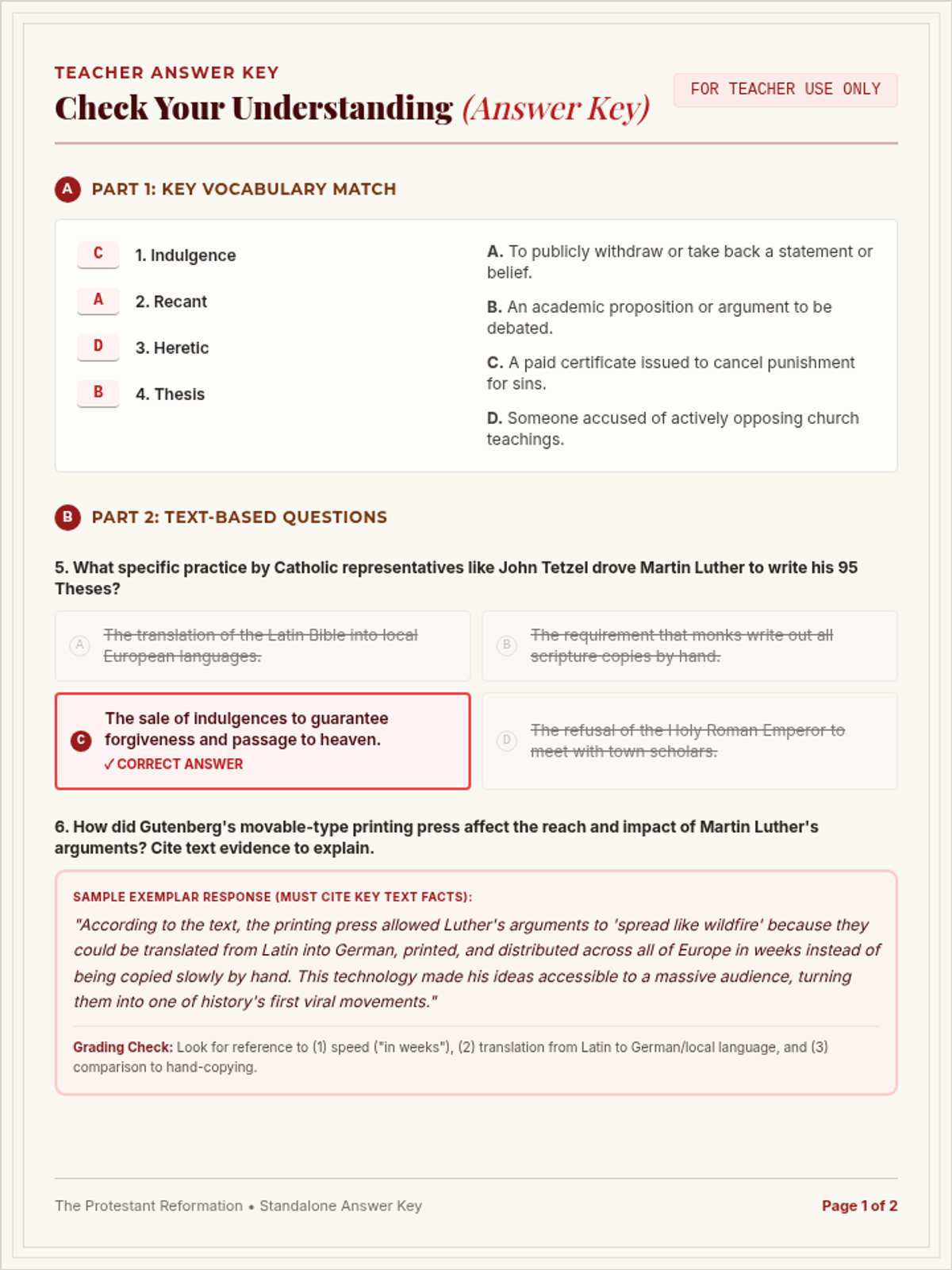
A middle school history lesson exploring Martin Luther's role in the Protestant Reformation, focusing on key biographical events, critical vocabulary, and cause-and-effect historical analysis.
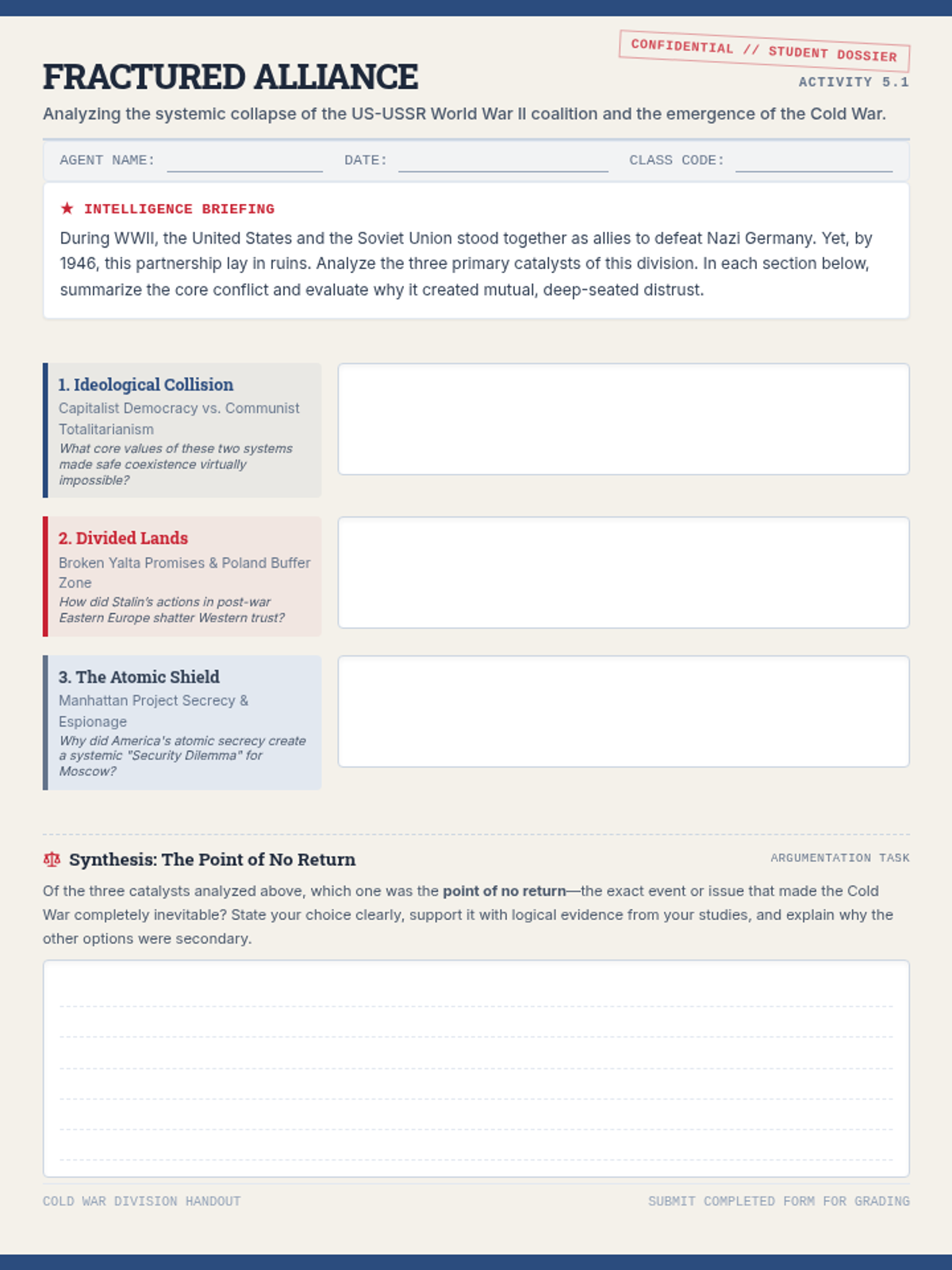
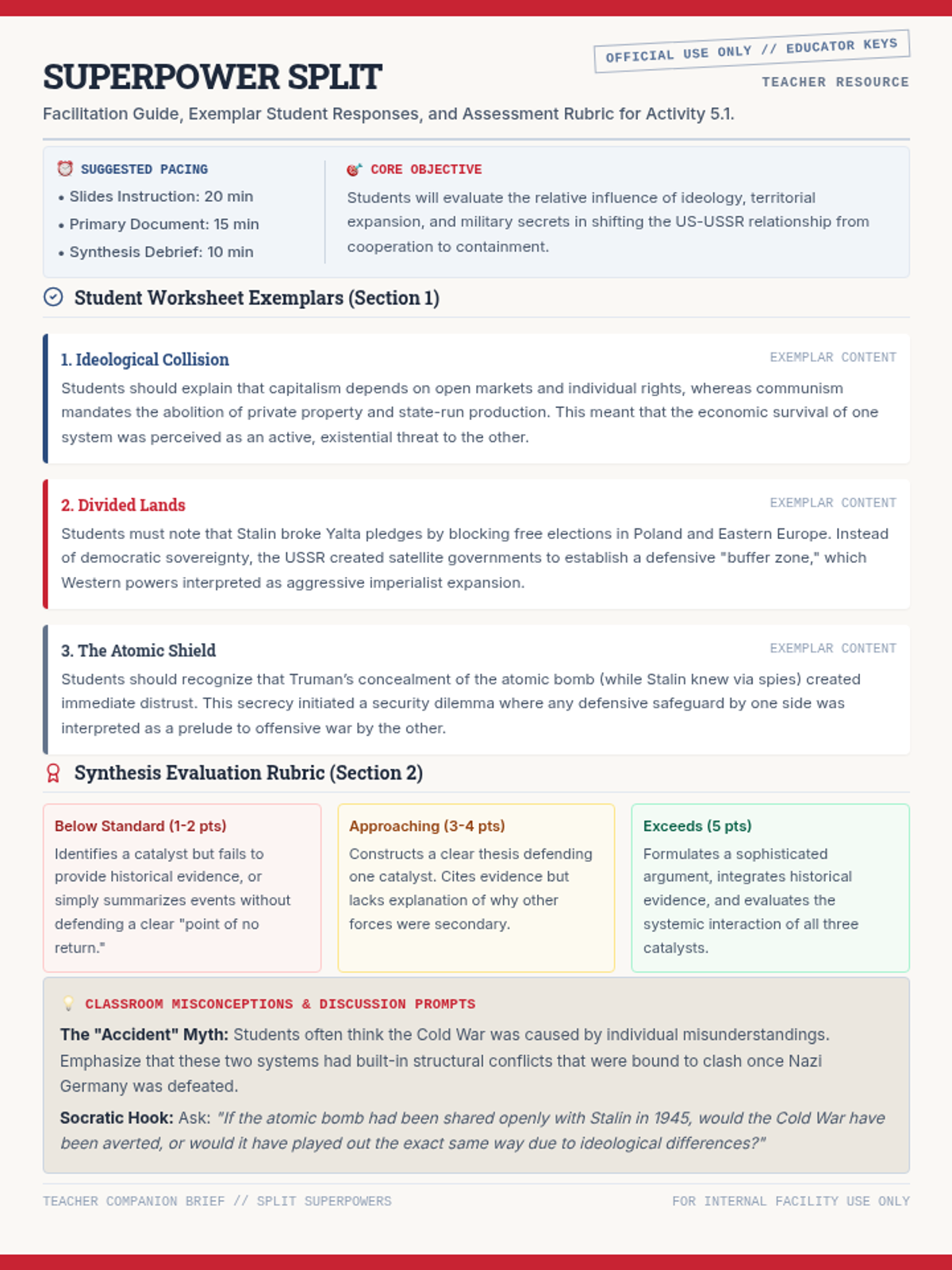
An instructional lesson exploring how the United States and the Soviet Union shifted from World War II allies to Cold War adversaries. The lesson outlines the core ideological, geopolitical, and military reasons behind this historical pivot.
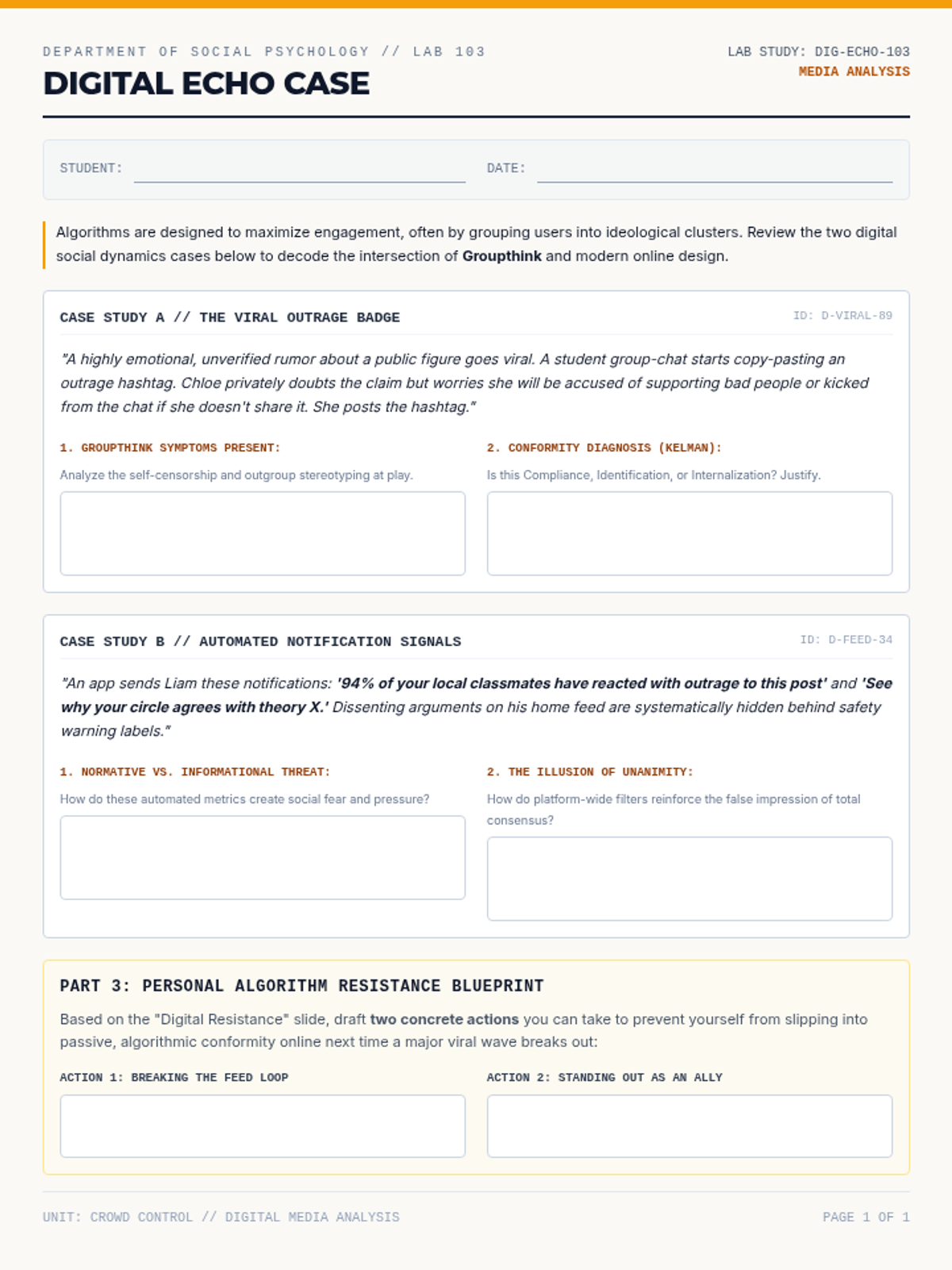
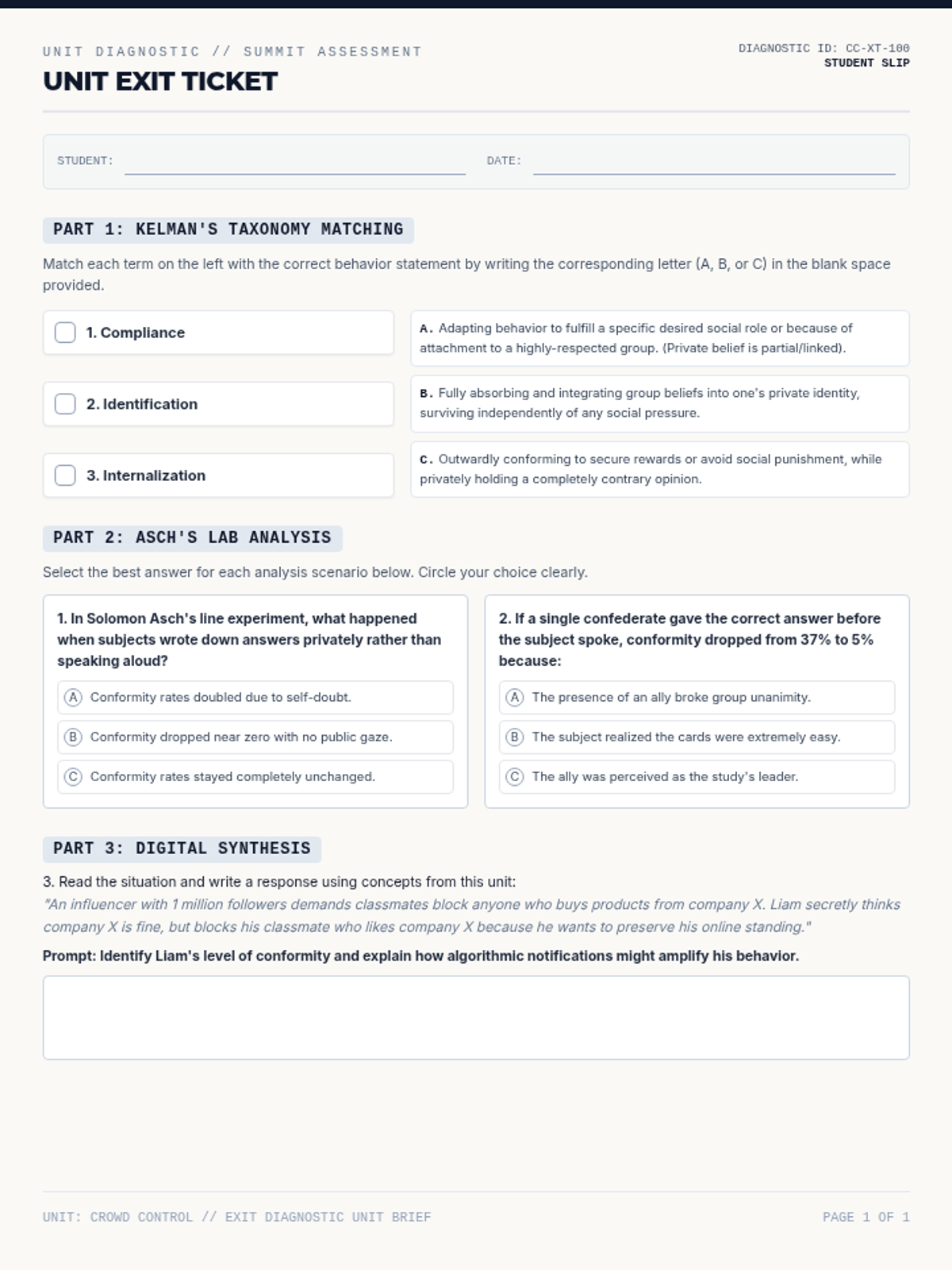
Explores groupthink, social media algorithms, and peer pressure. Students analyze how online spaces amplify conformity and complete an exit ticket to assess their understanding across the unit.
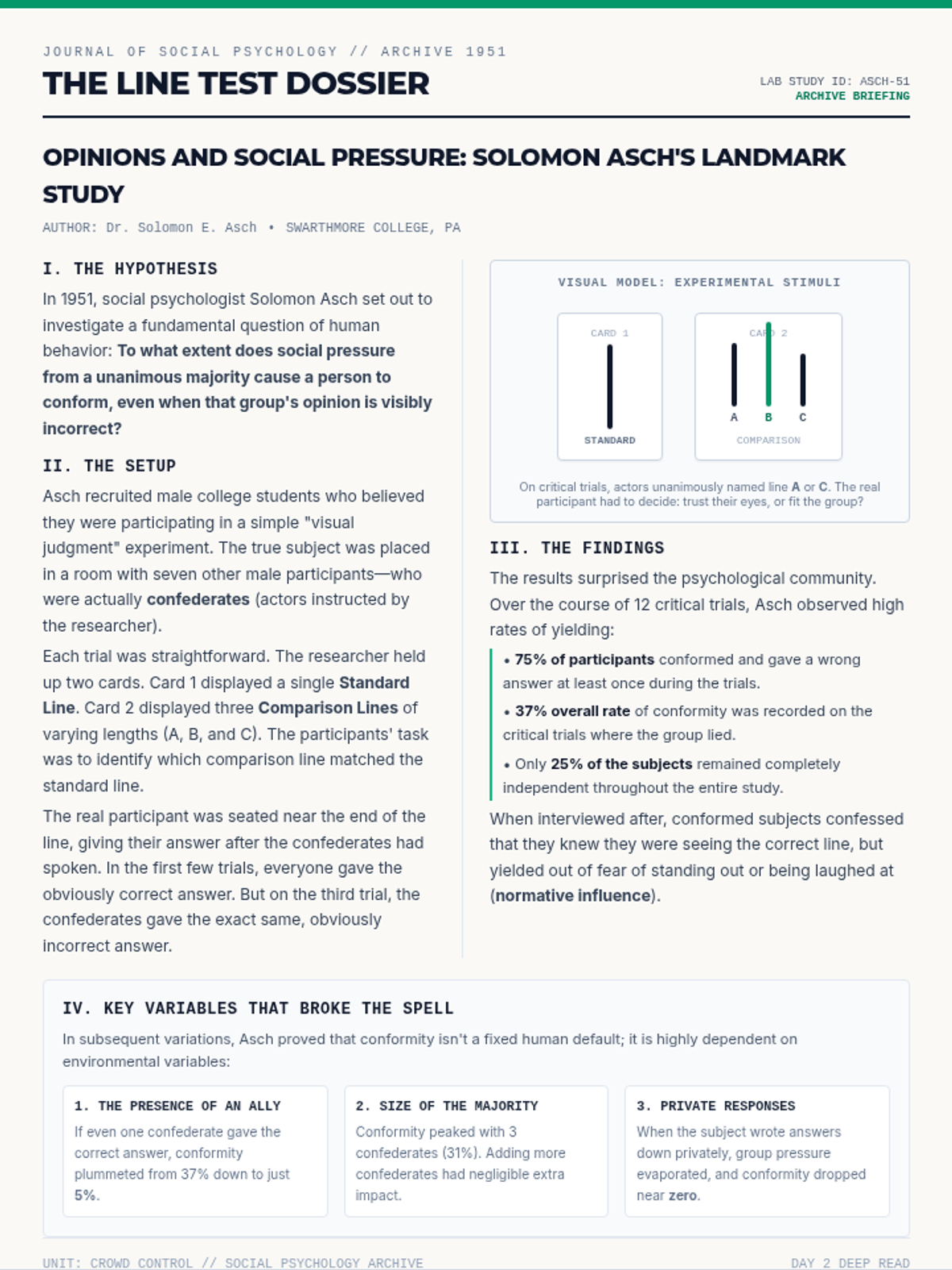
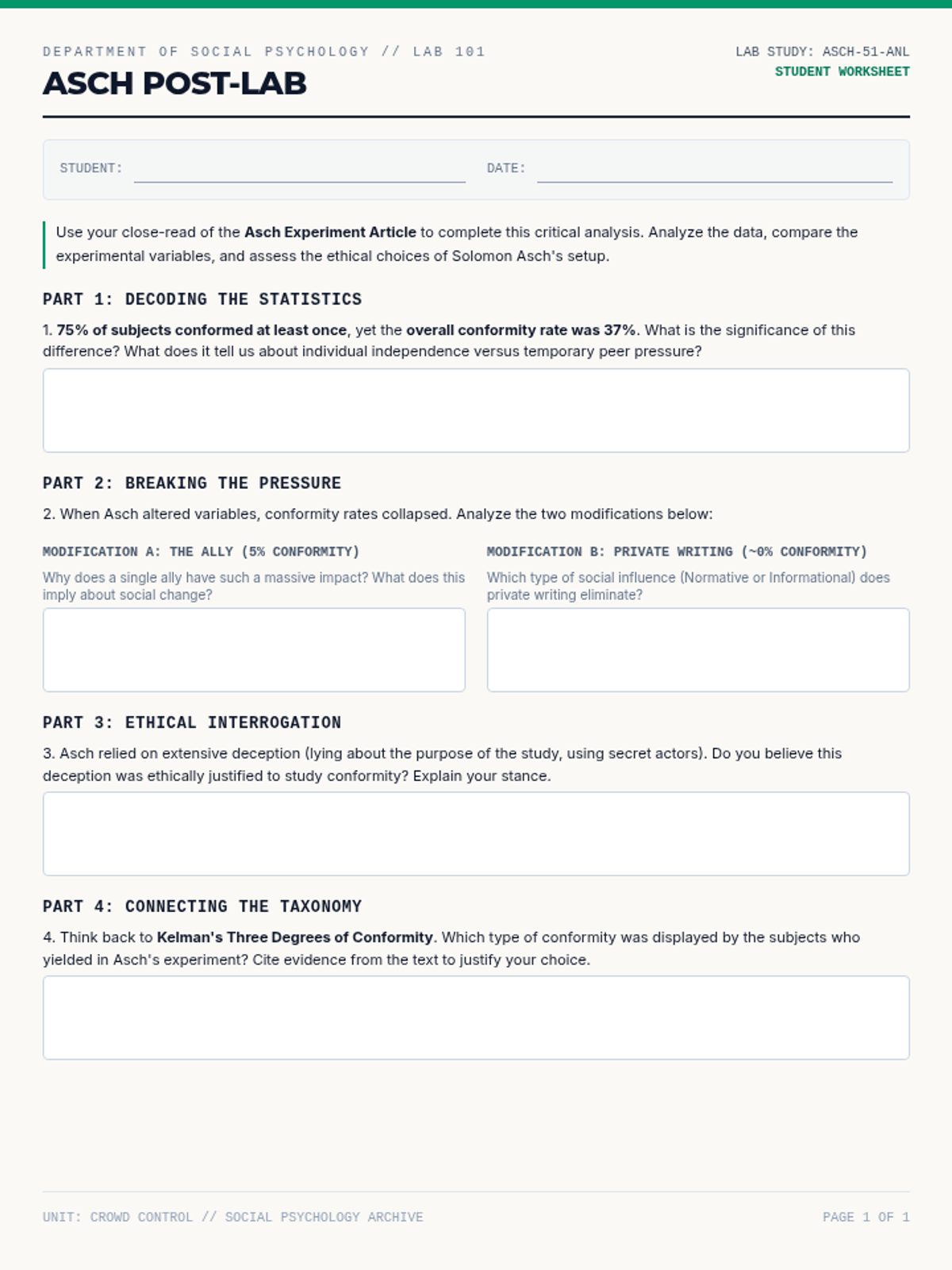
Focuses on Solomon Asch's landmark 1951 conformity experiment. Students close-read an informational text about the study's design, results, and ethical implications, and answer critical thinking questions.
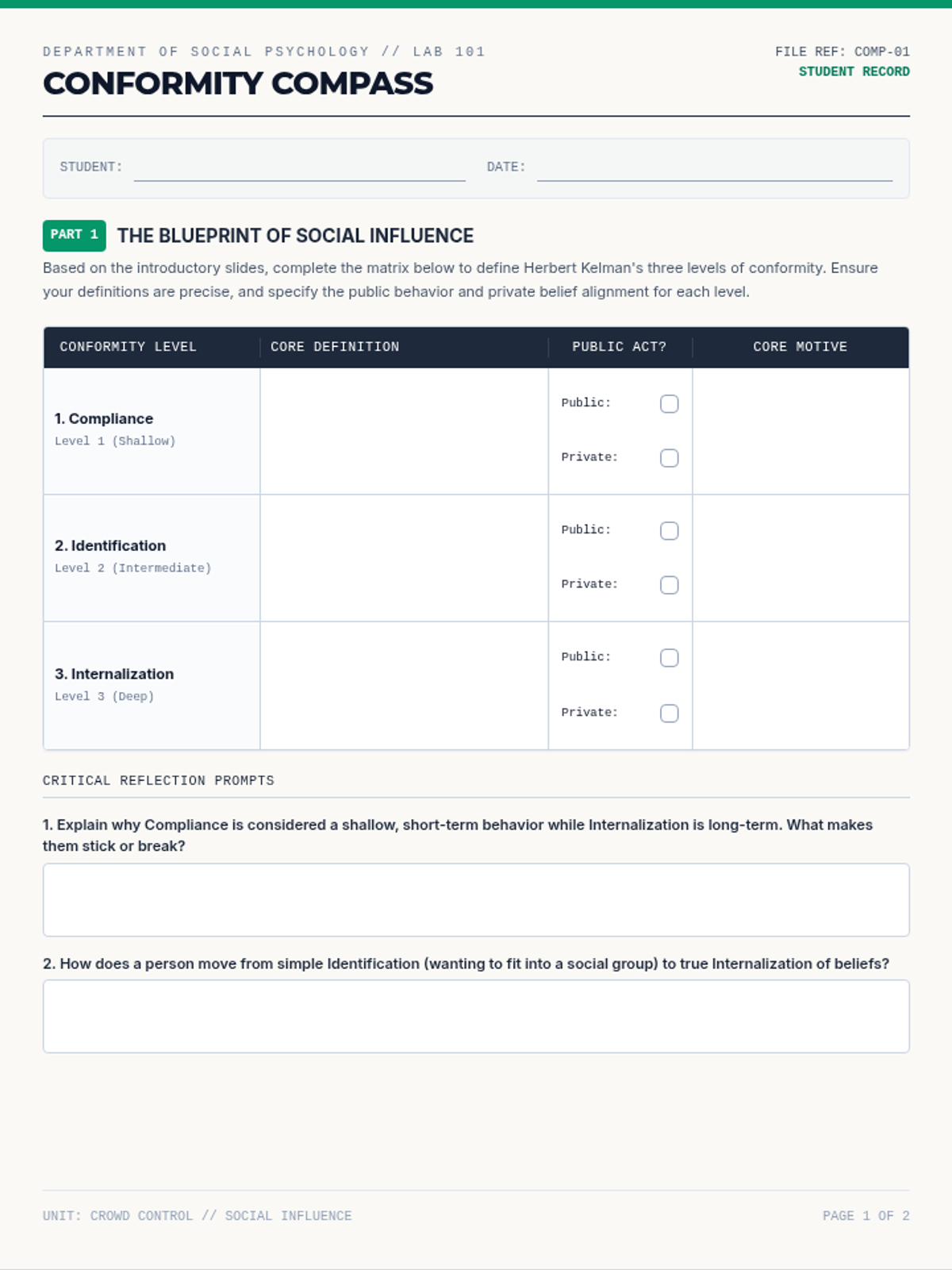
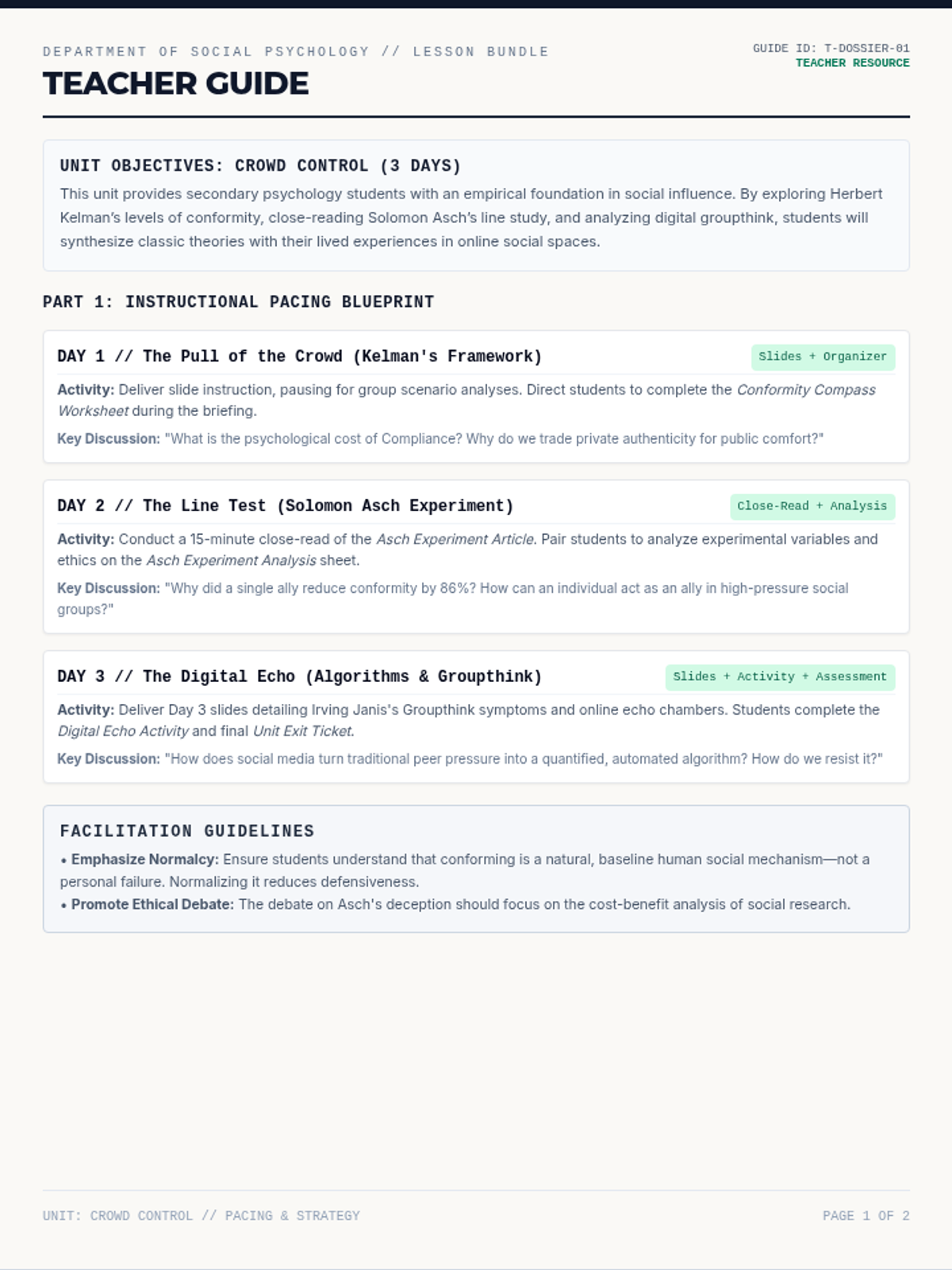
Introduces the social psychology of conformity, focusing on Herbert Kelman's three types: compliance, identification, and internalization. Students analyze real-world scenarios and map definitions on a graphic organizer.
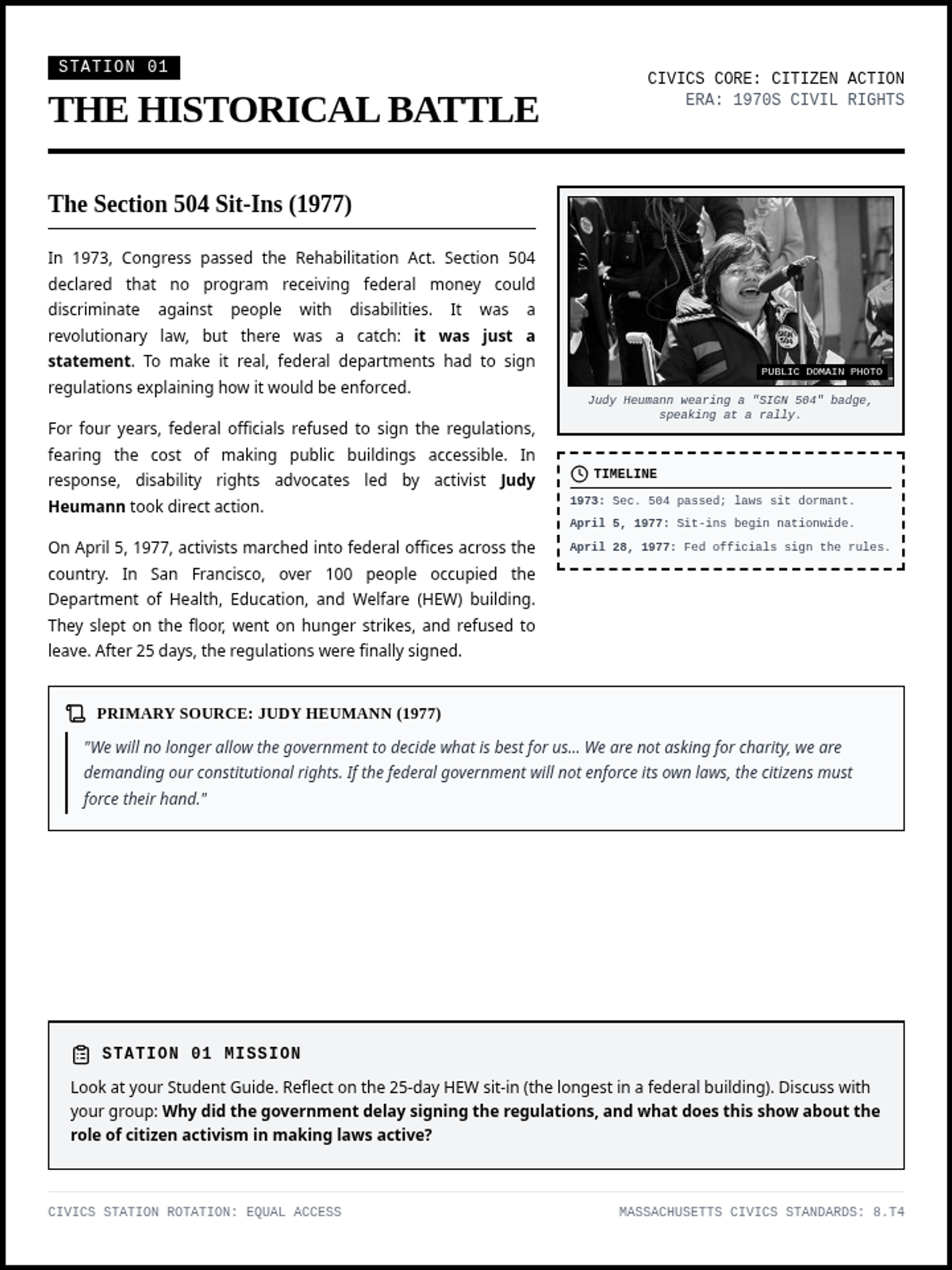
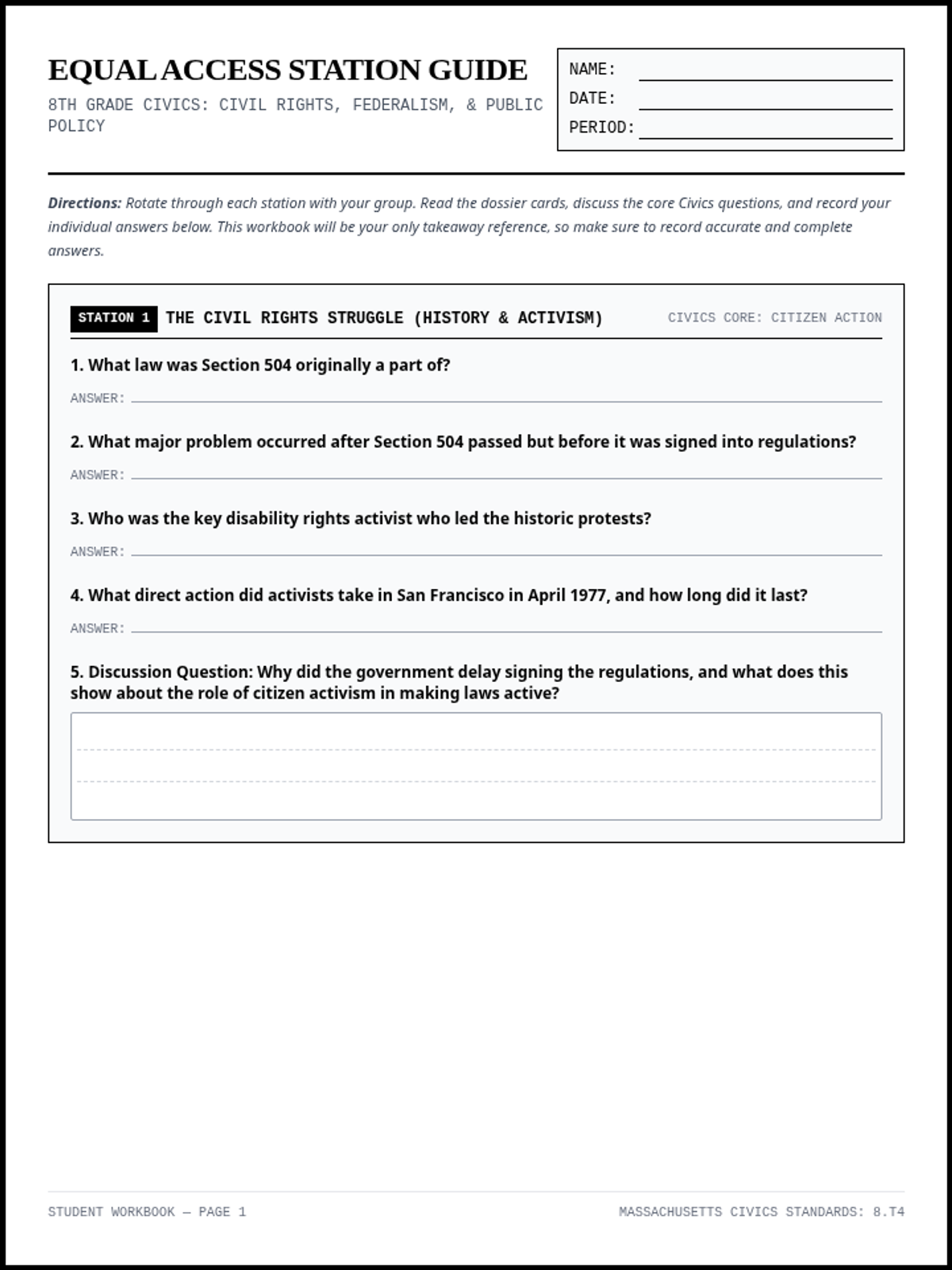
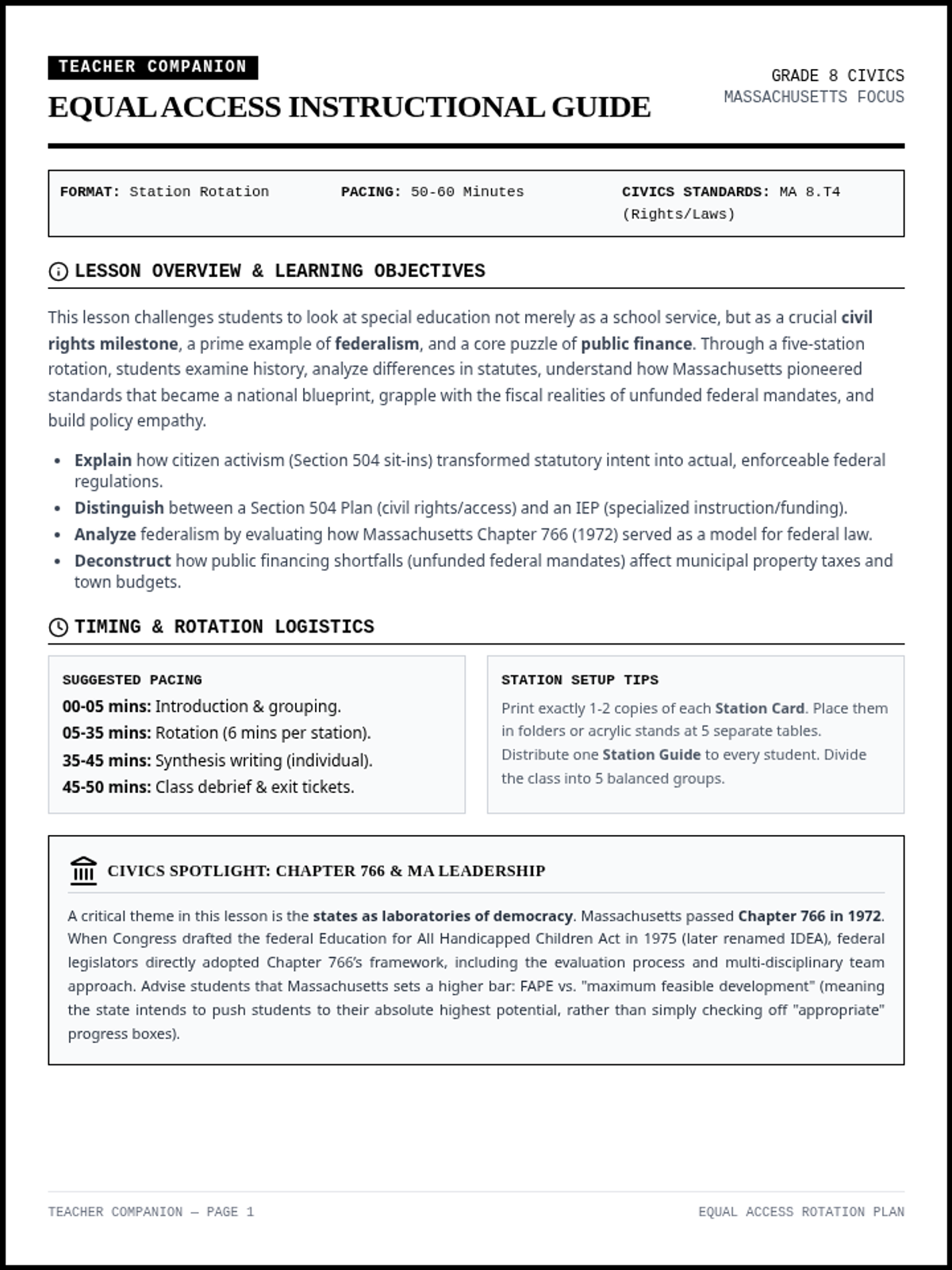
An 8th-grade Civics station rotation lesson exploring the history, laws, funding, and federalism of 504 and IEP services, comparing federal mandates with Massachusetts state standards.
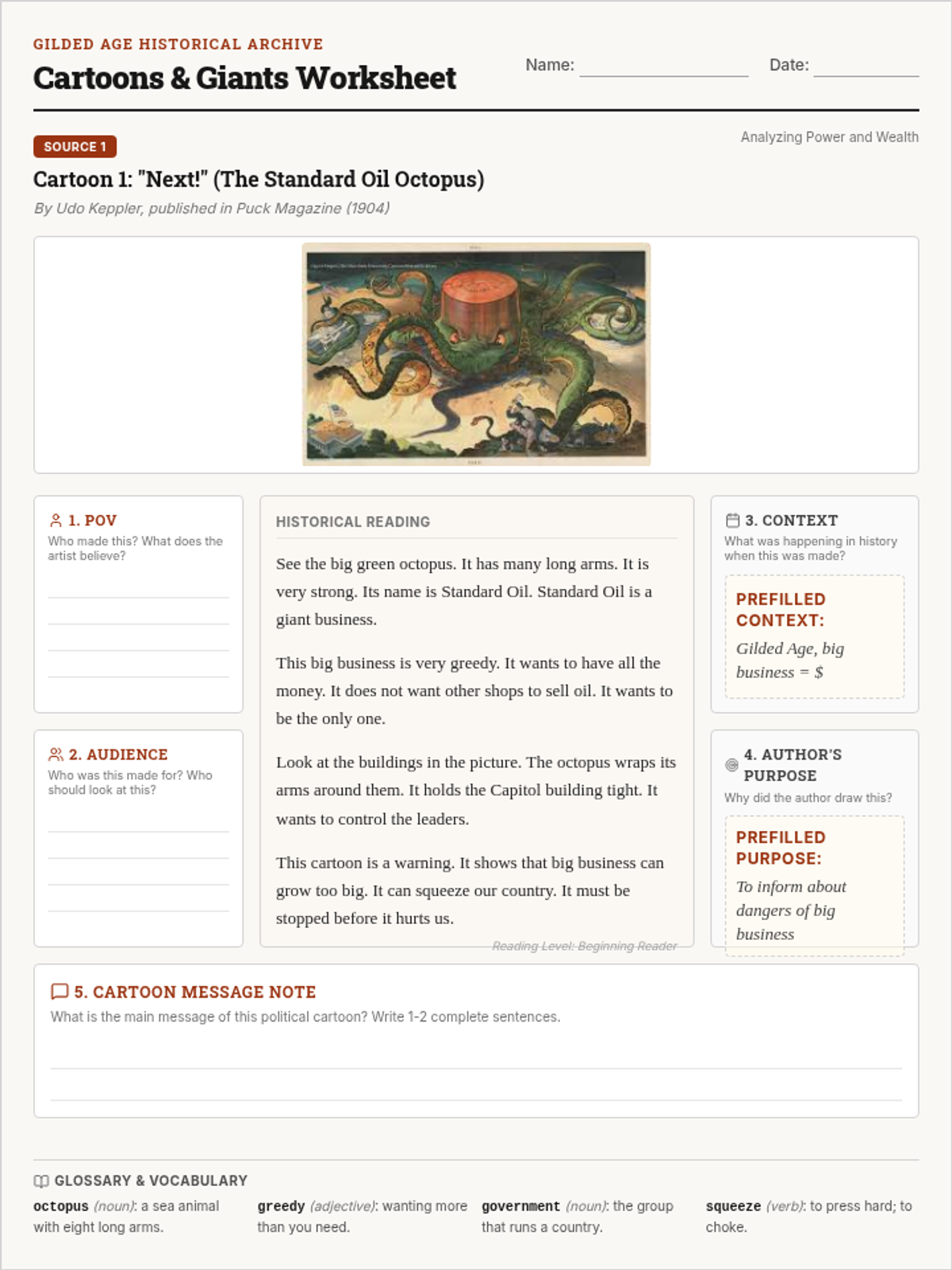
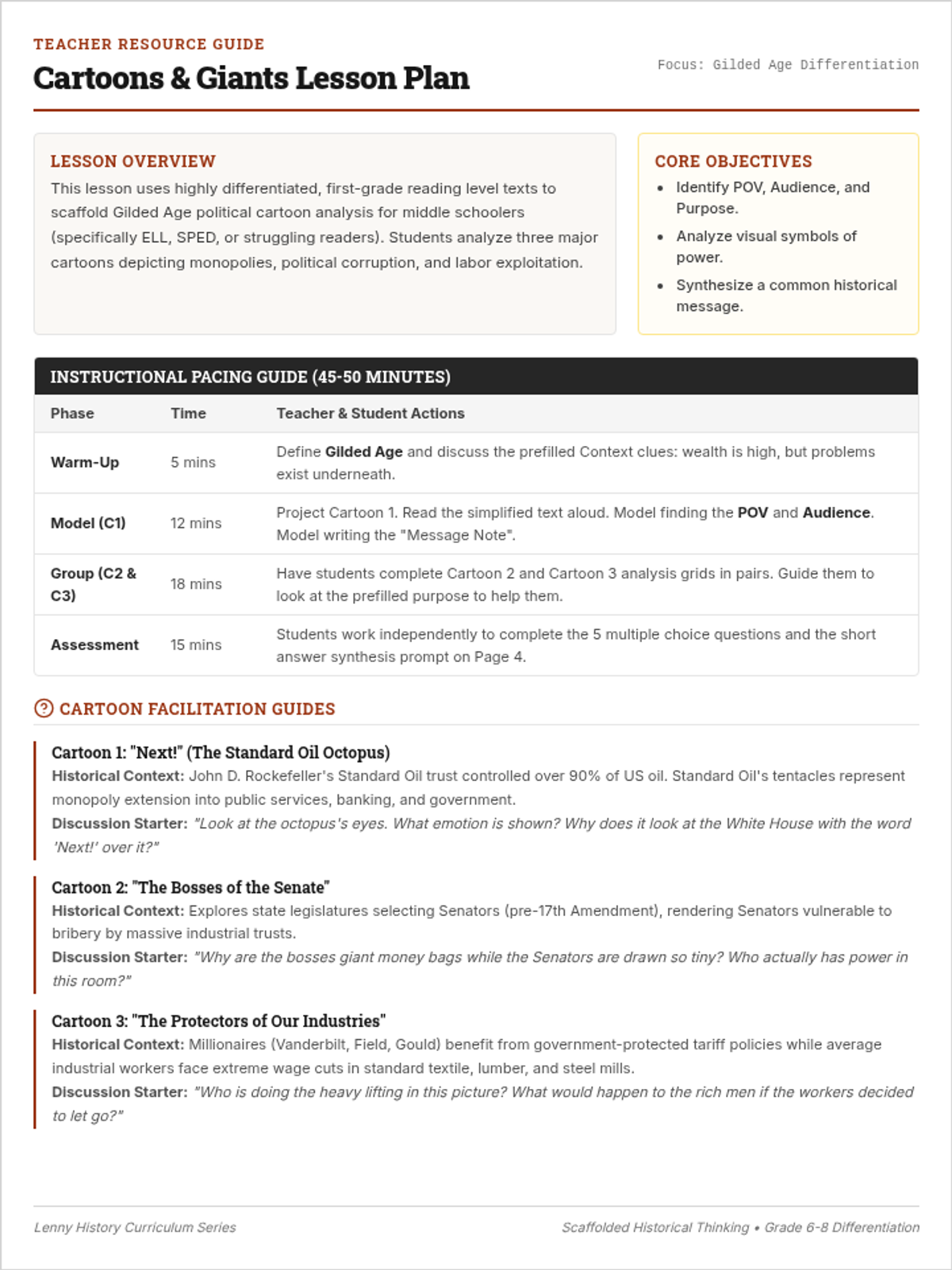
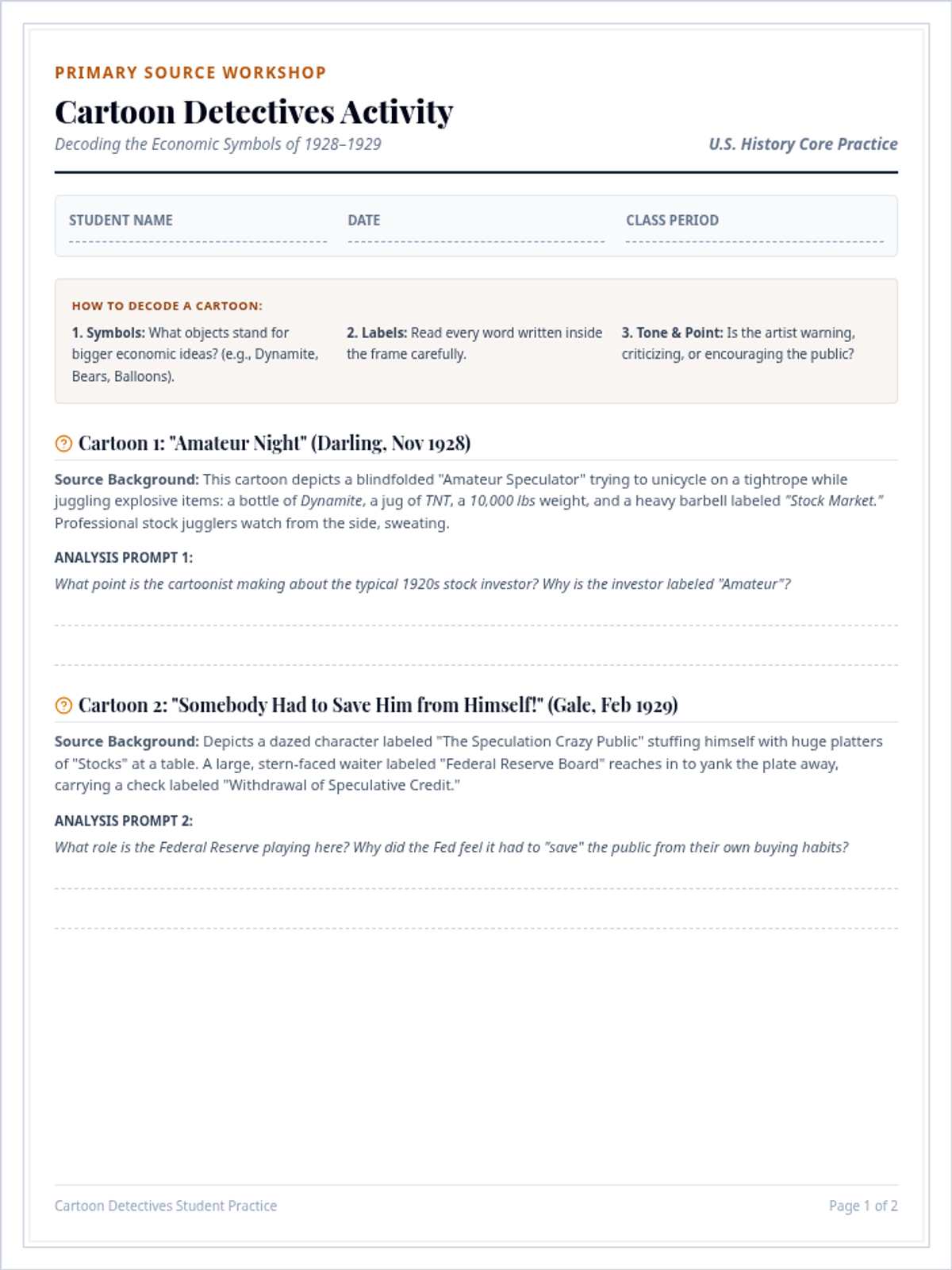
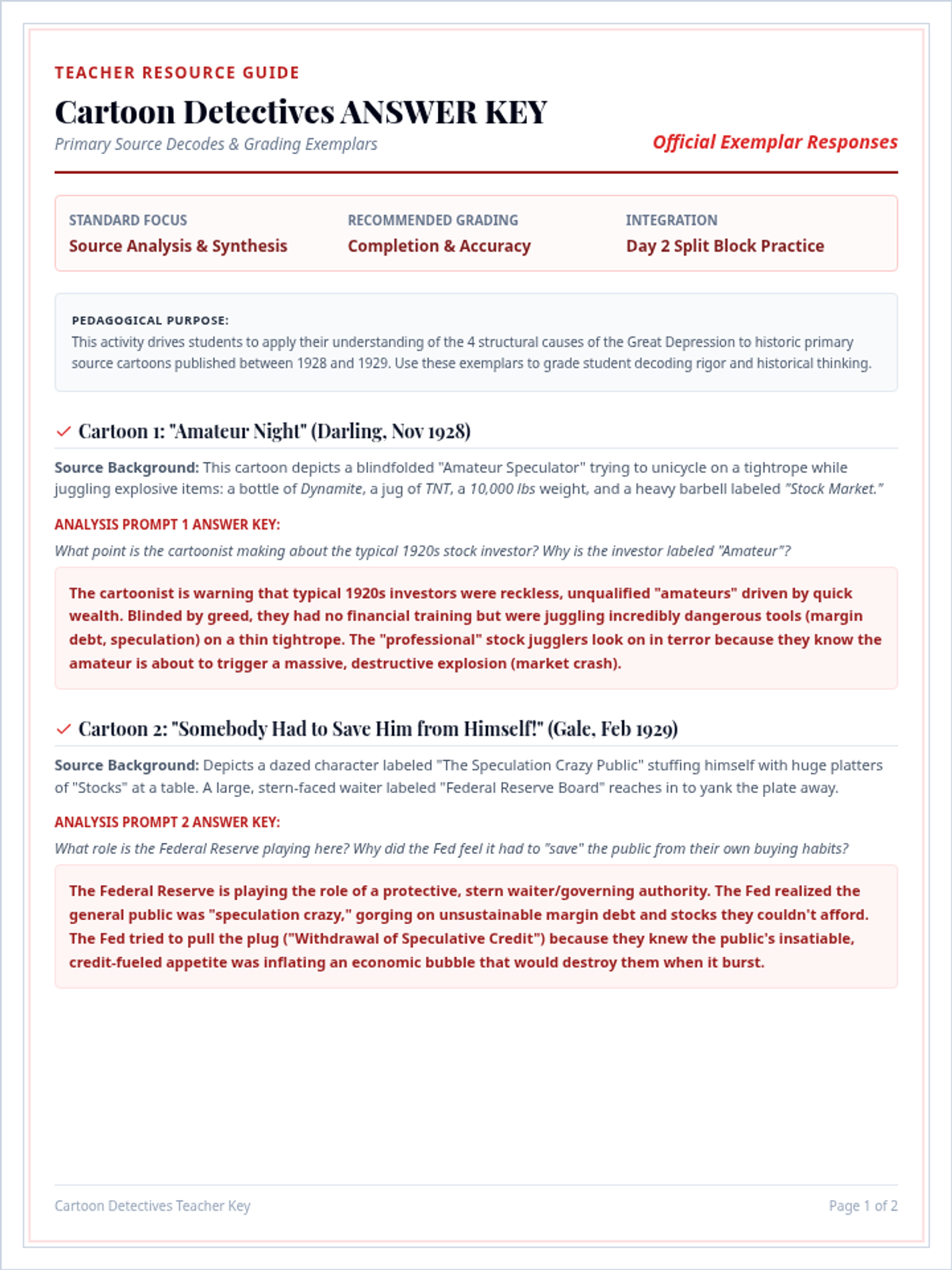
A differentiated history lesson analyzing three major Gilded Age political cartoons. It features student-facing worksheets with low-readability texts, visual analysis grids, a synthesis assessment, and a comprehensive teacher guide with full solutions.
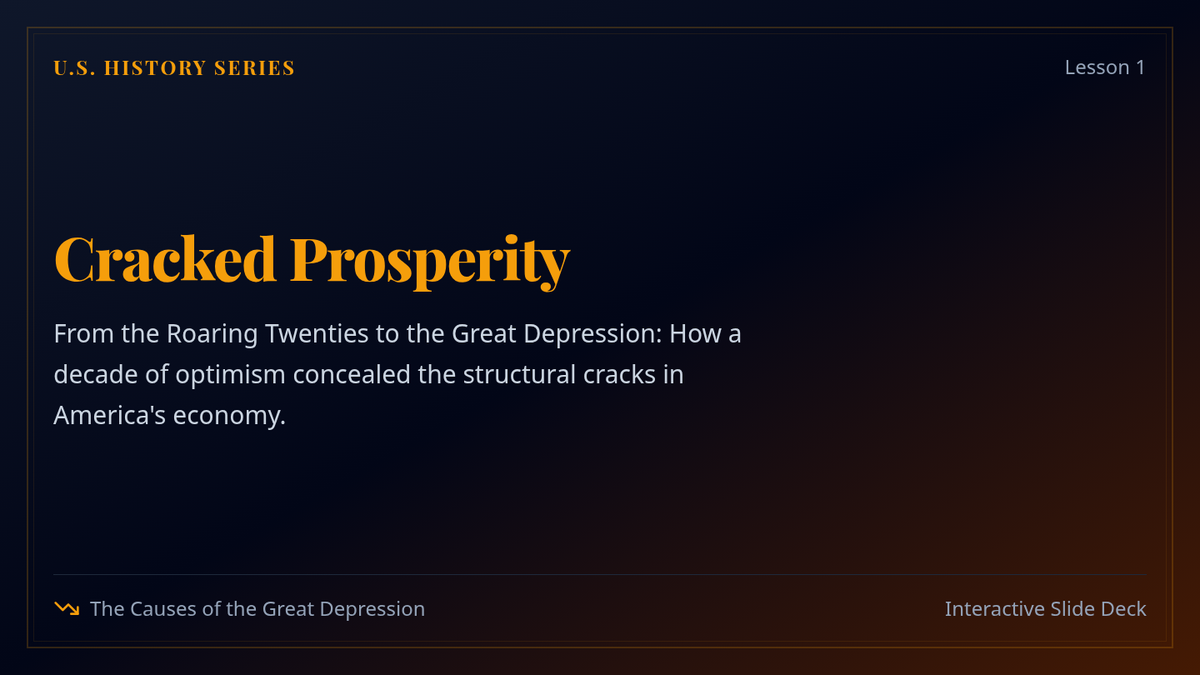
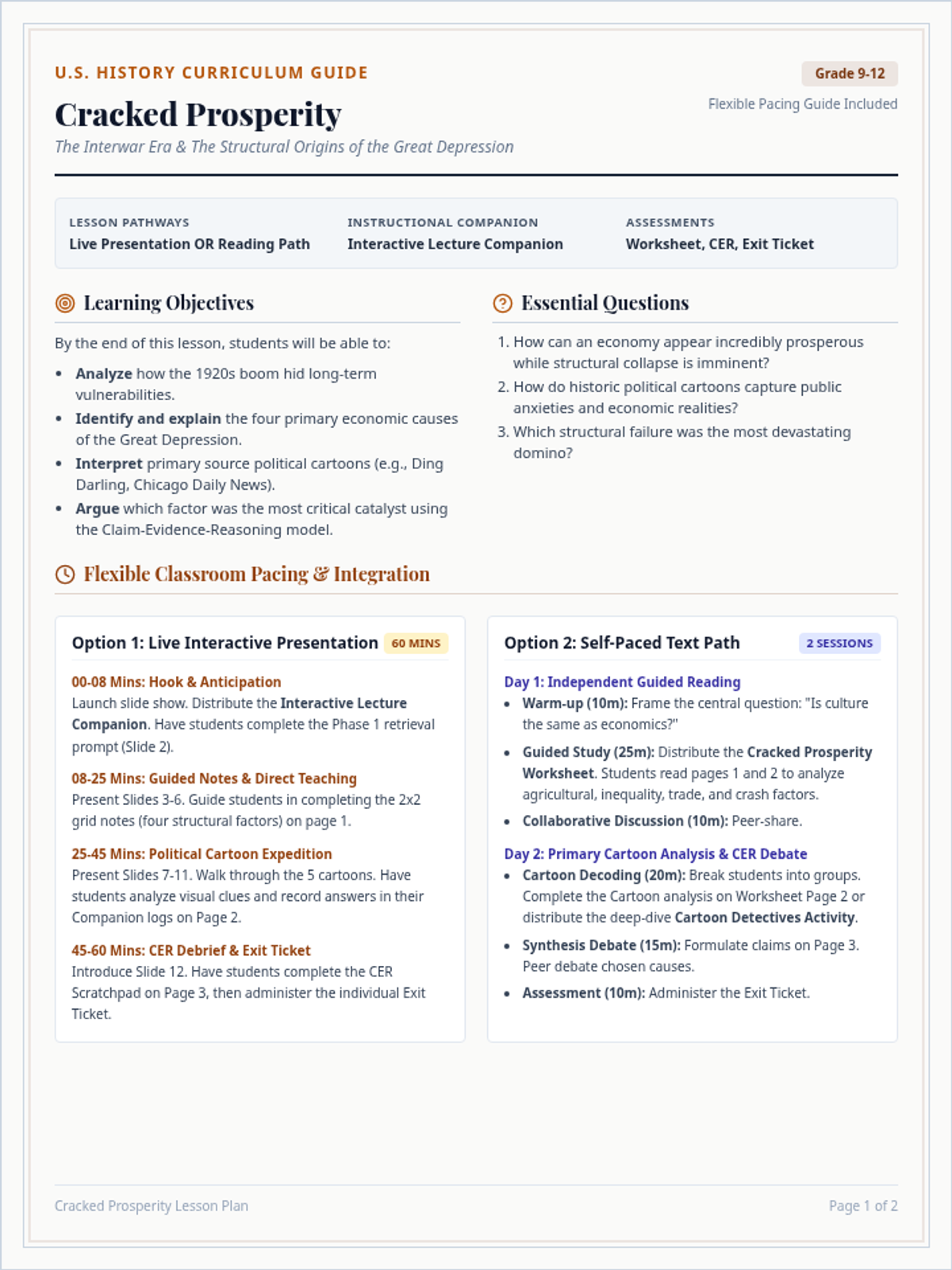
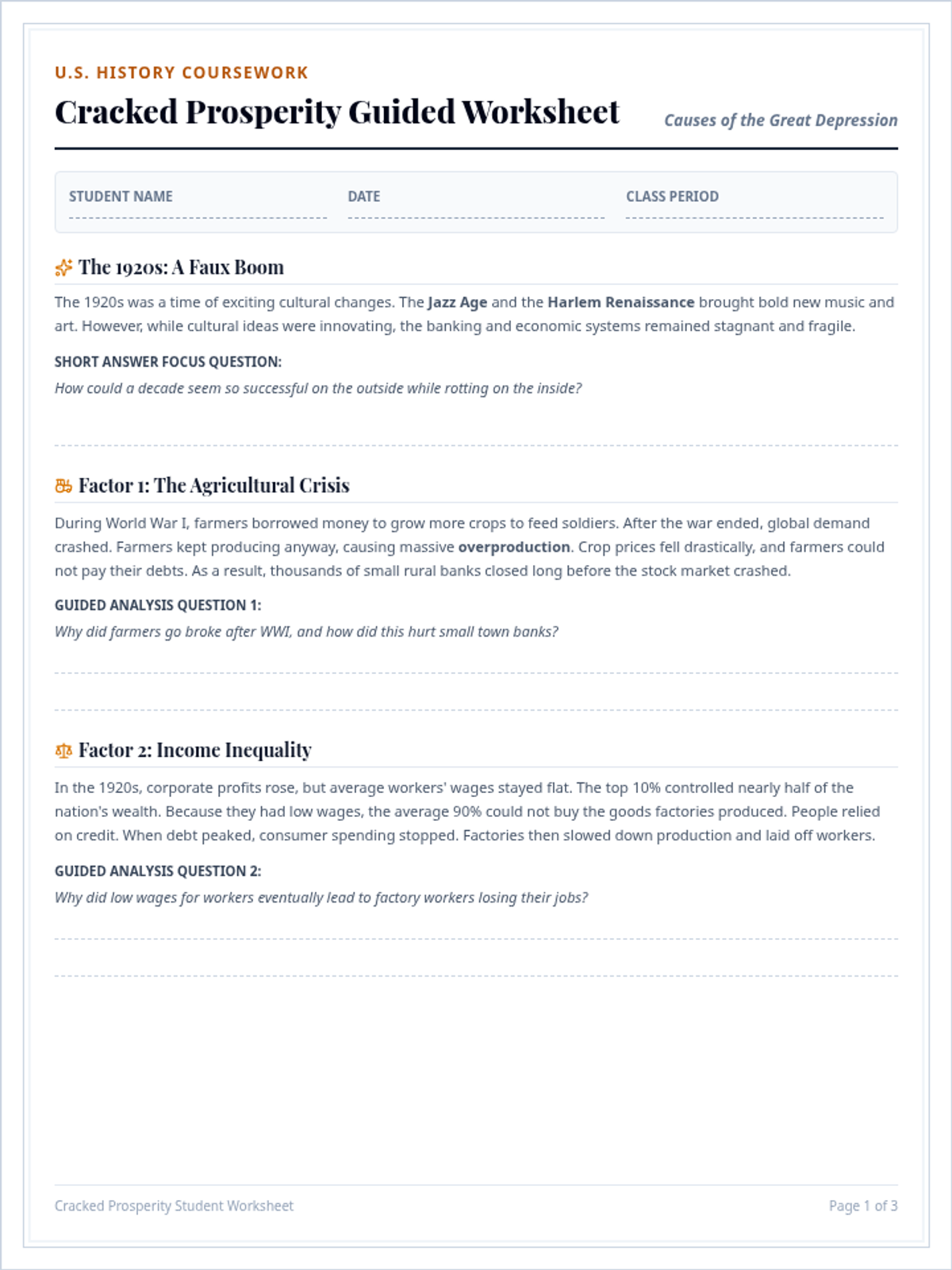
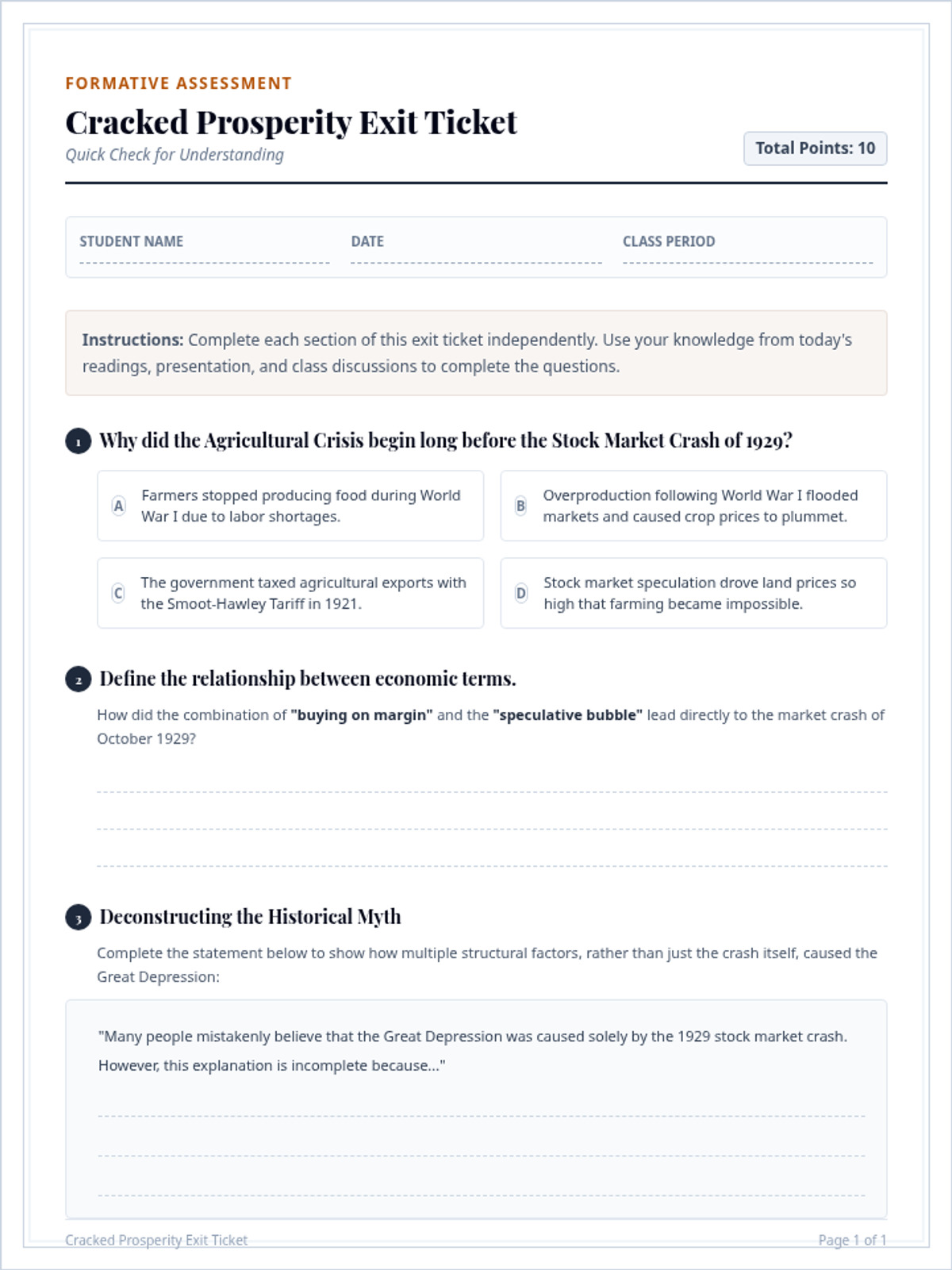
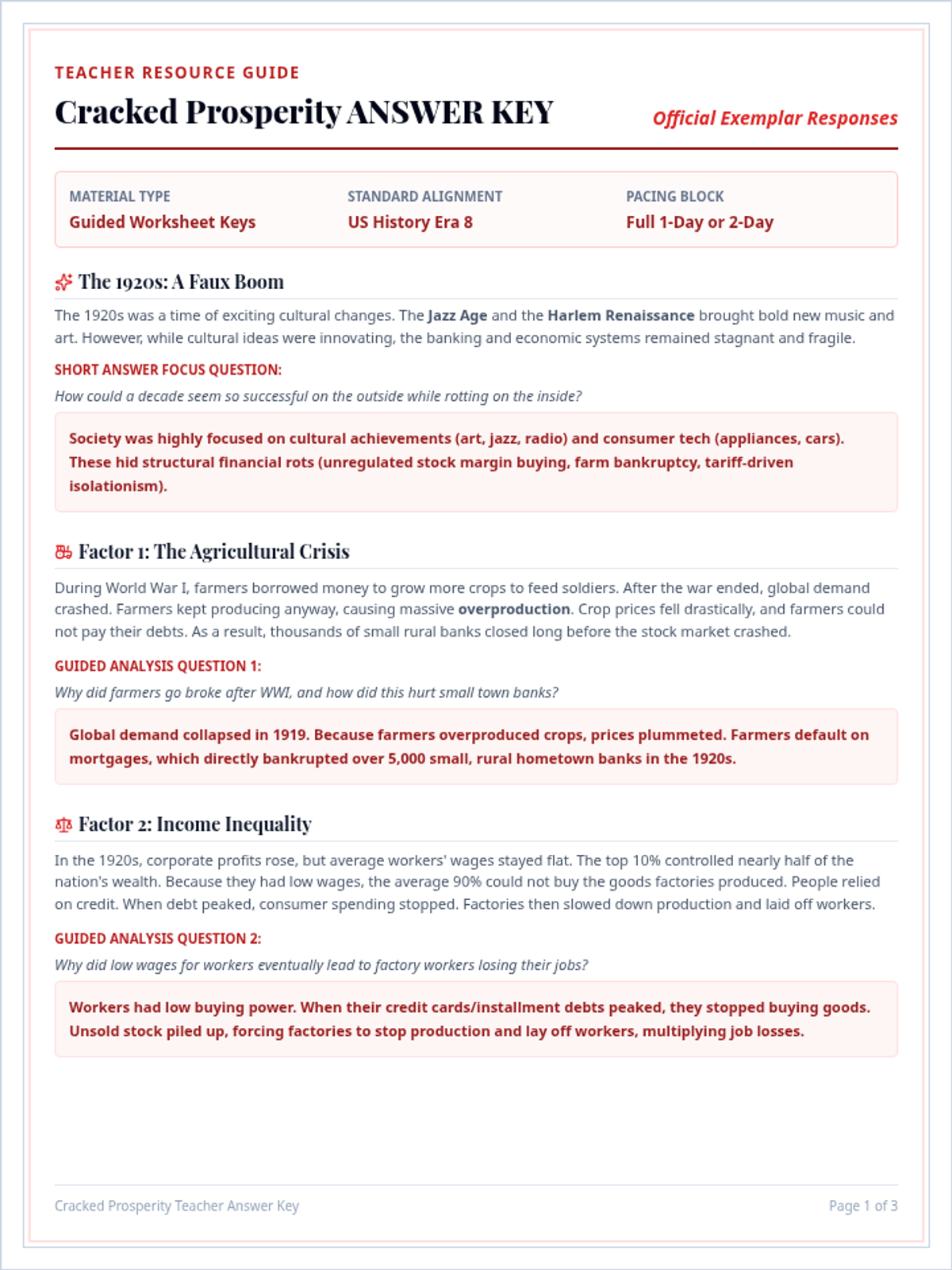
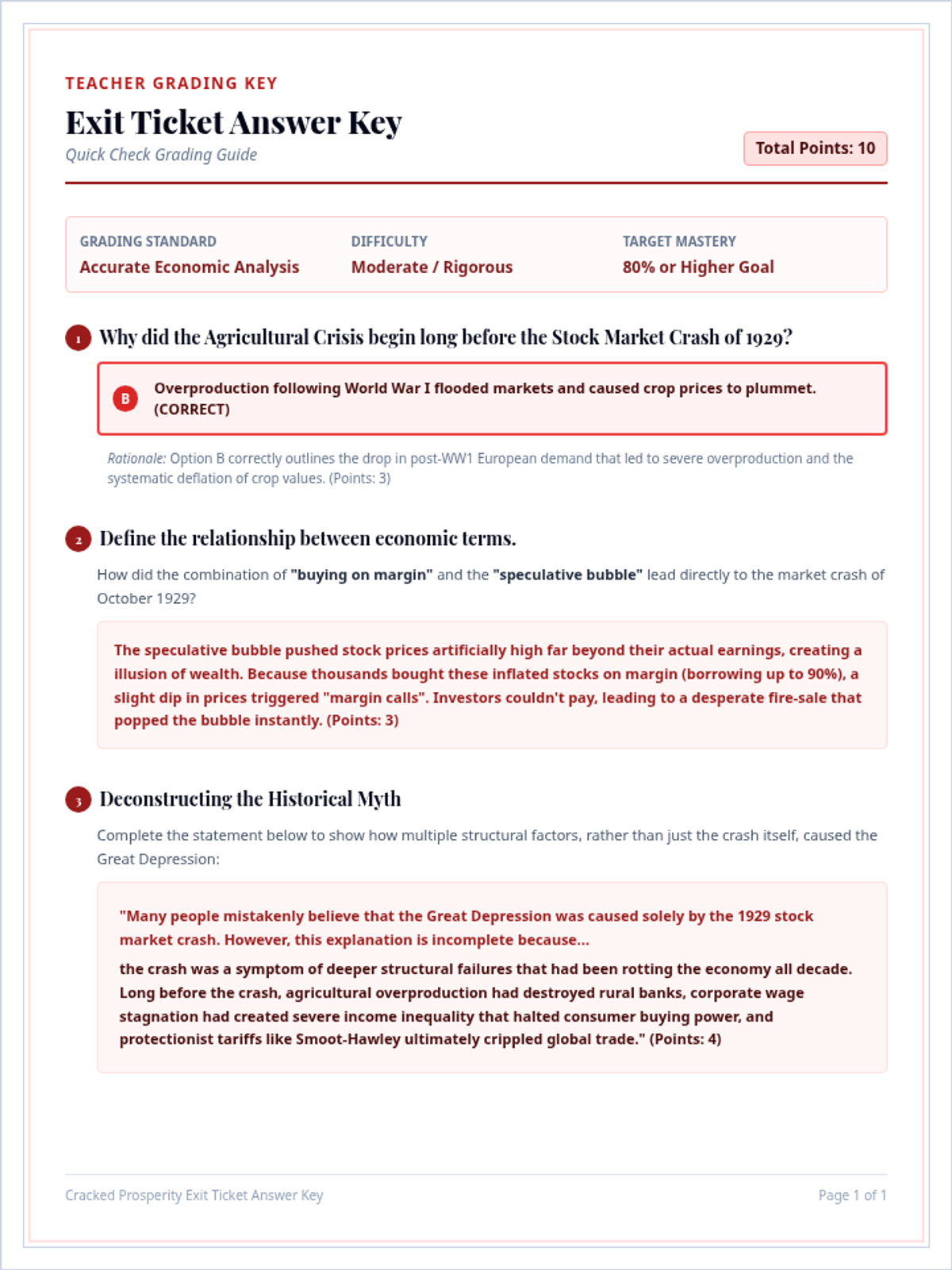
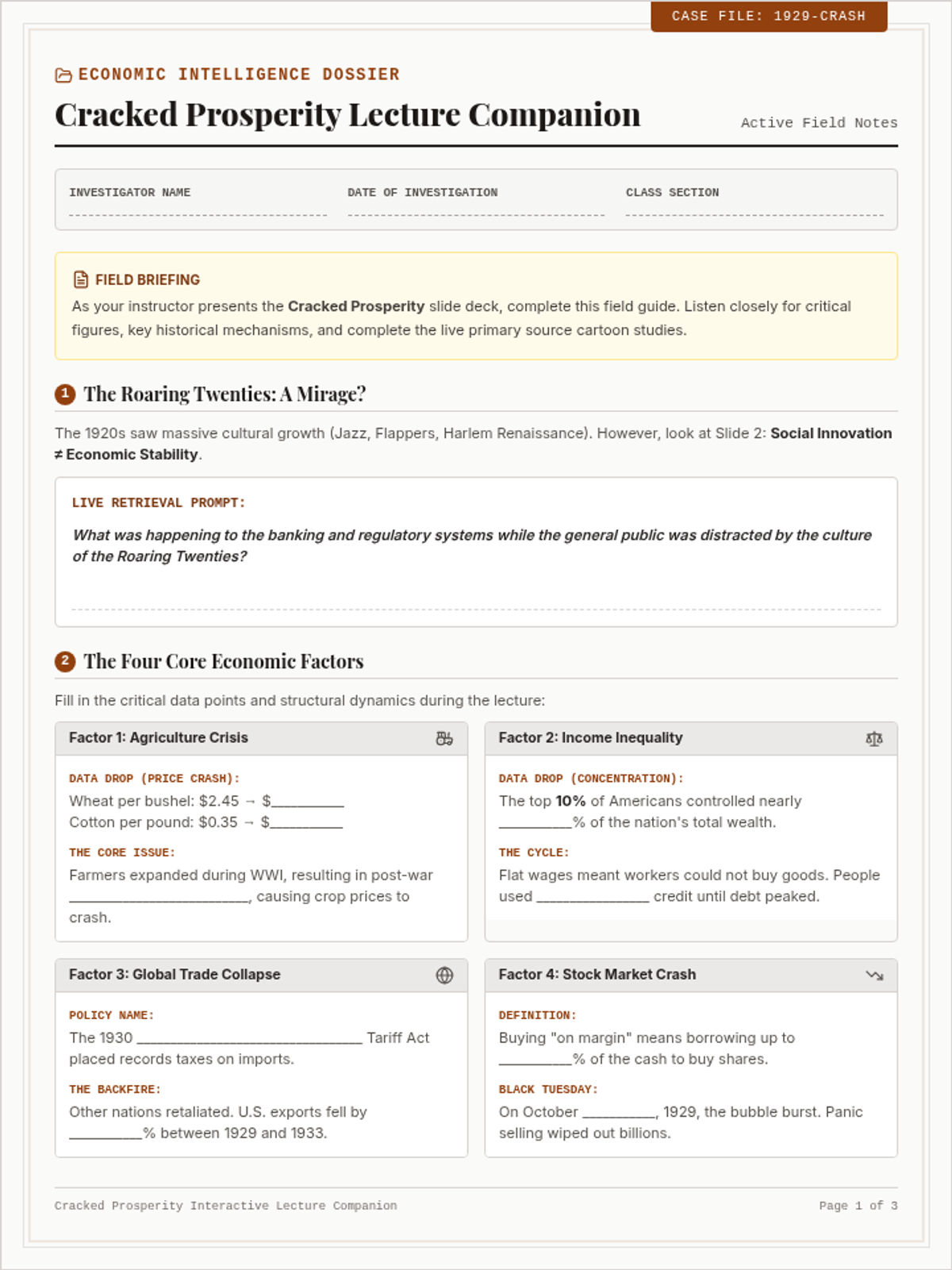
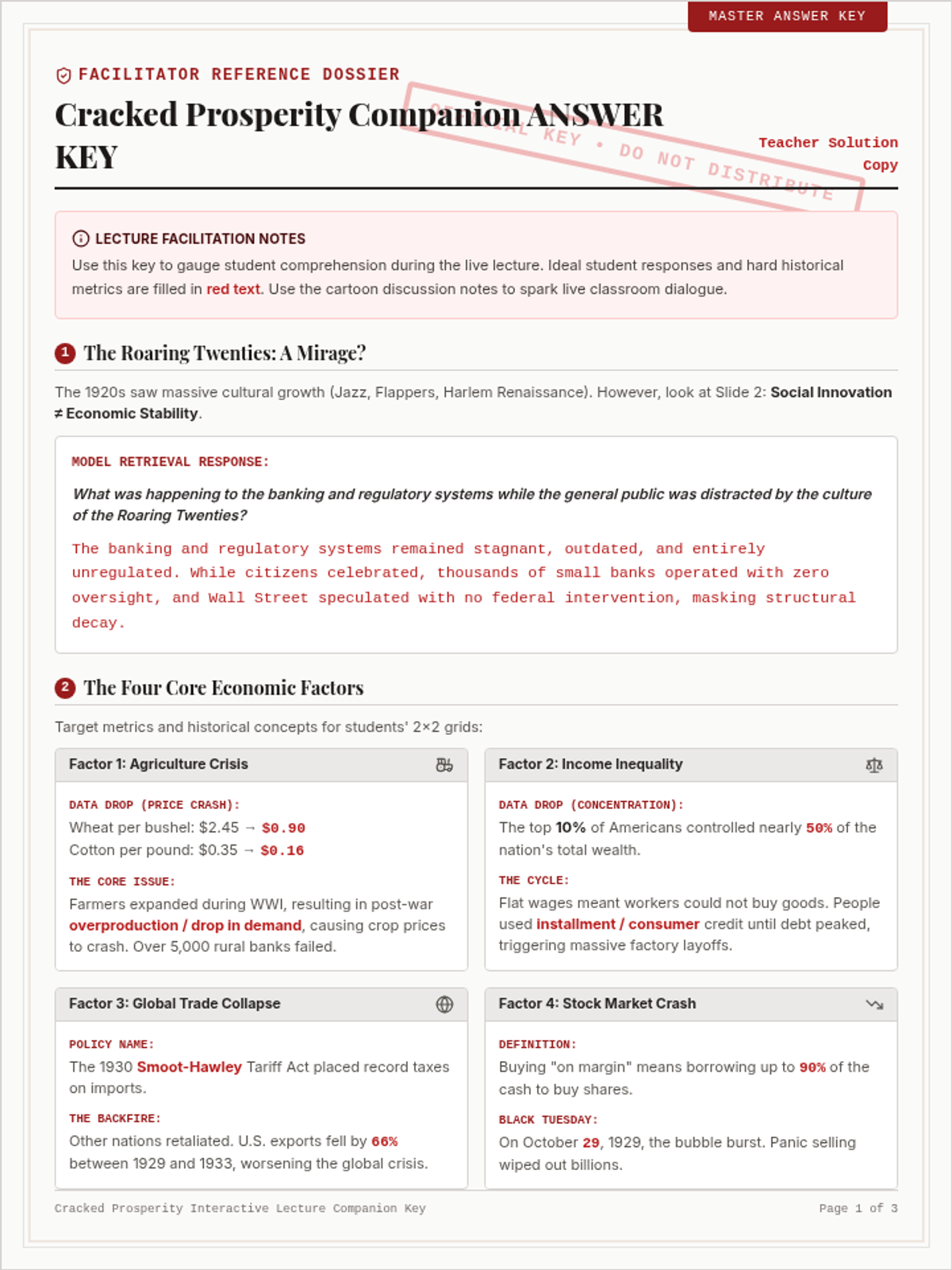
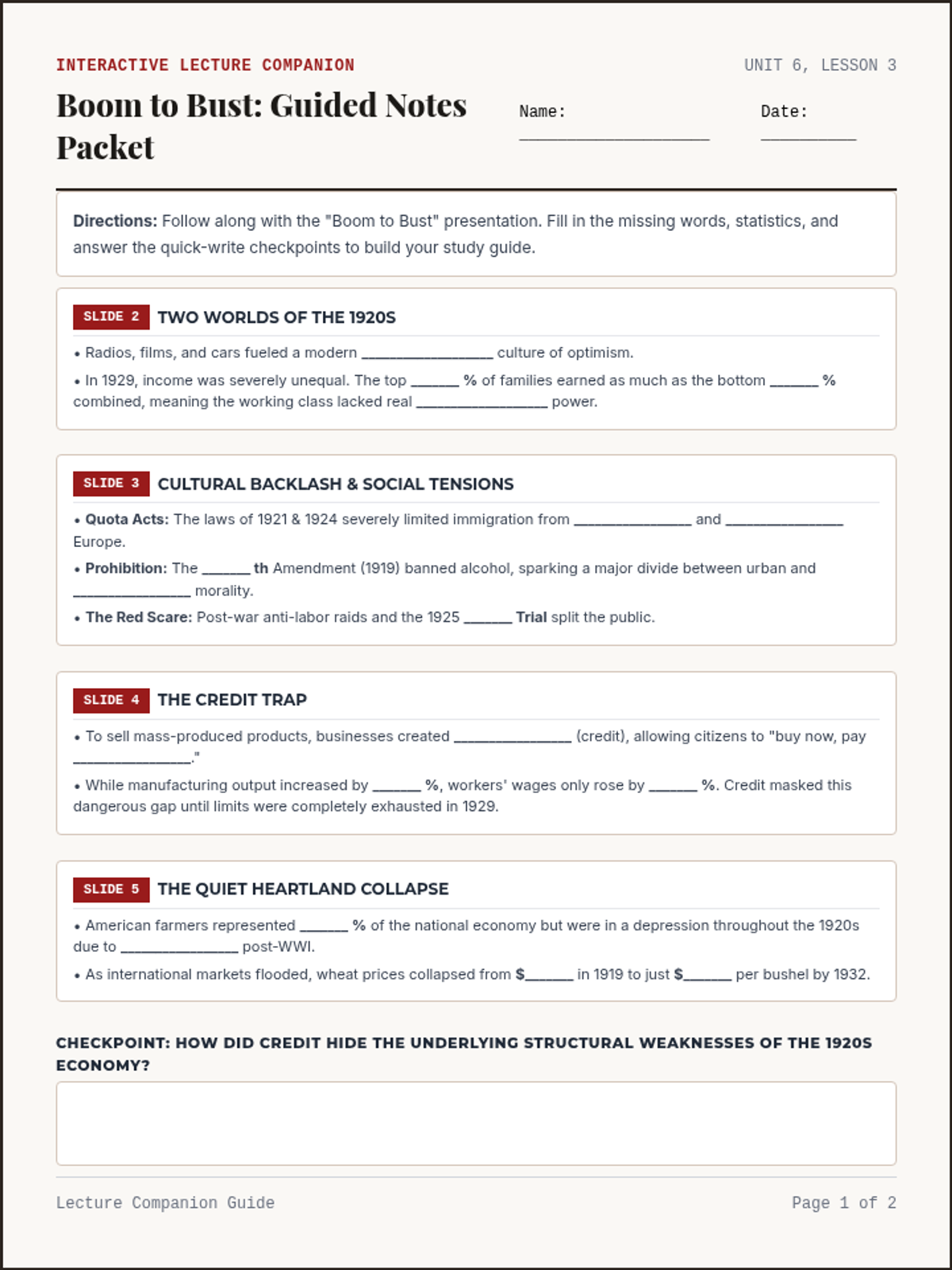
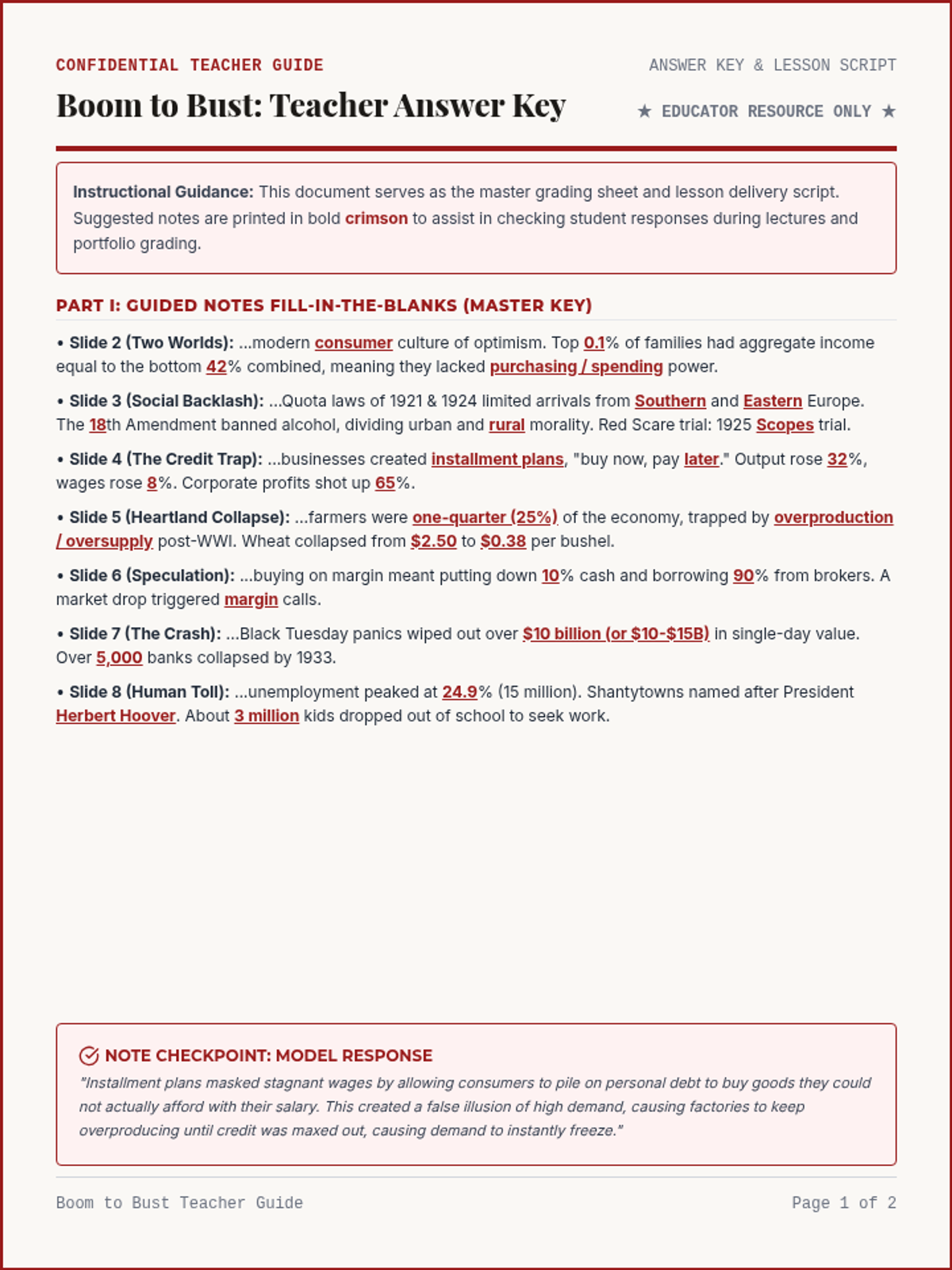
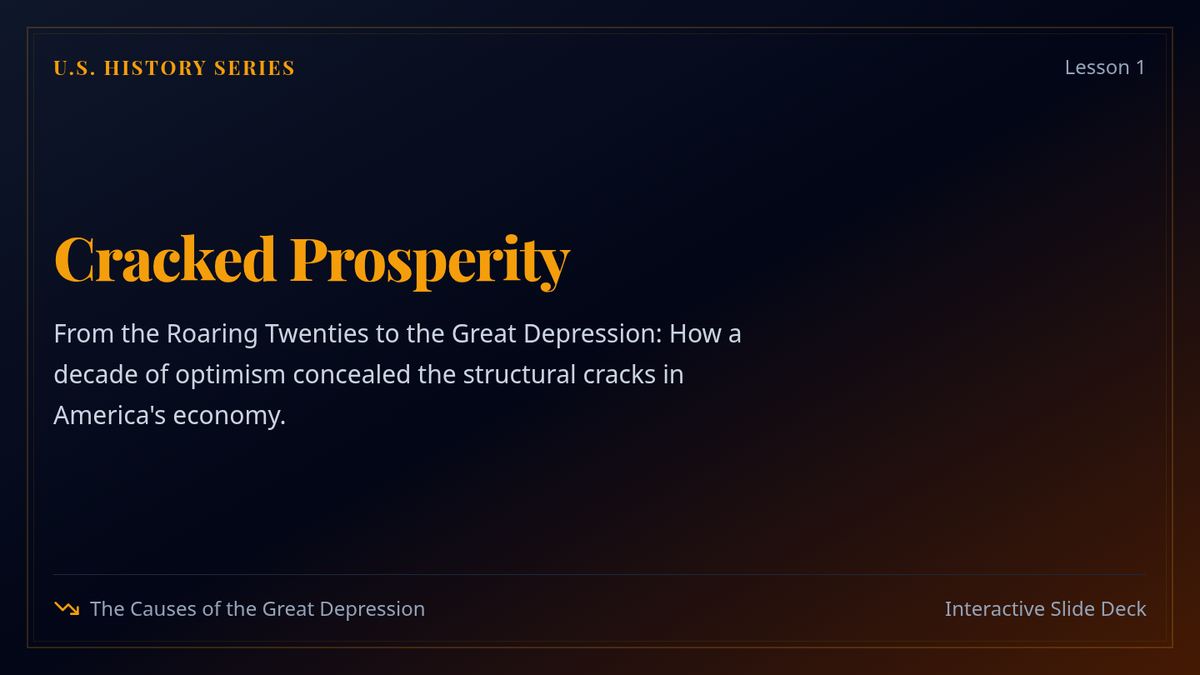
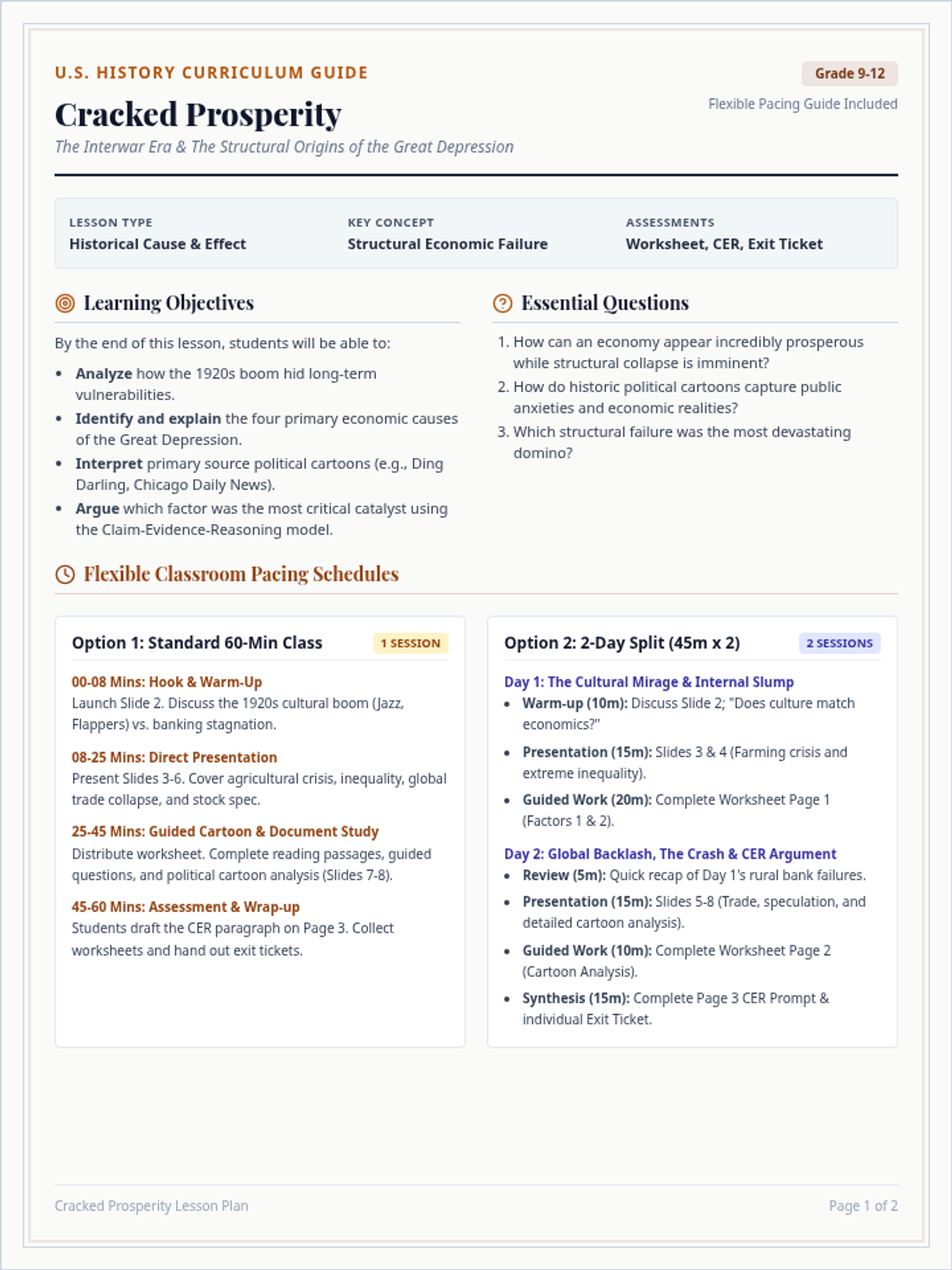
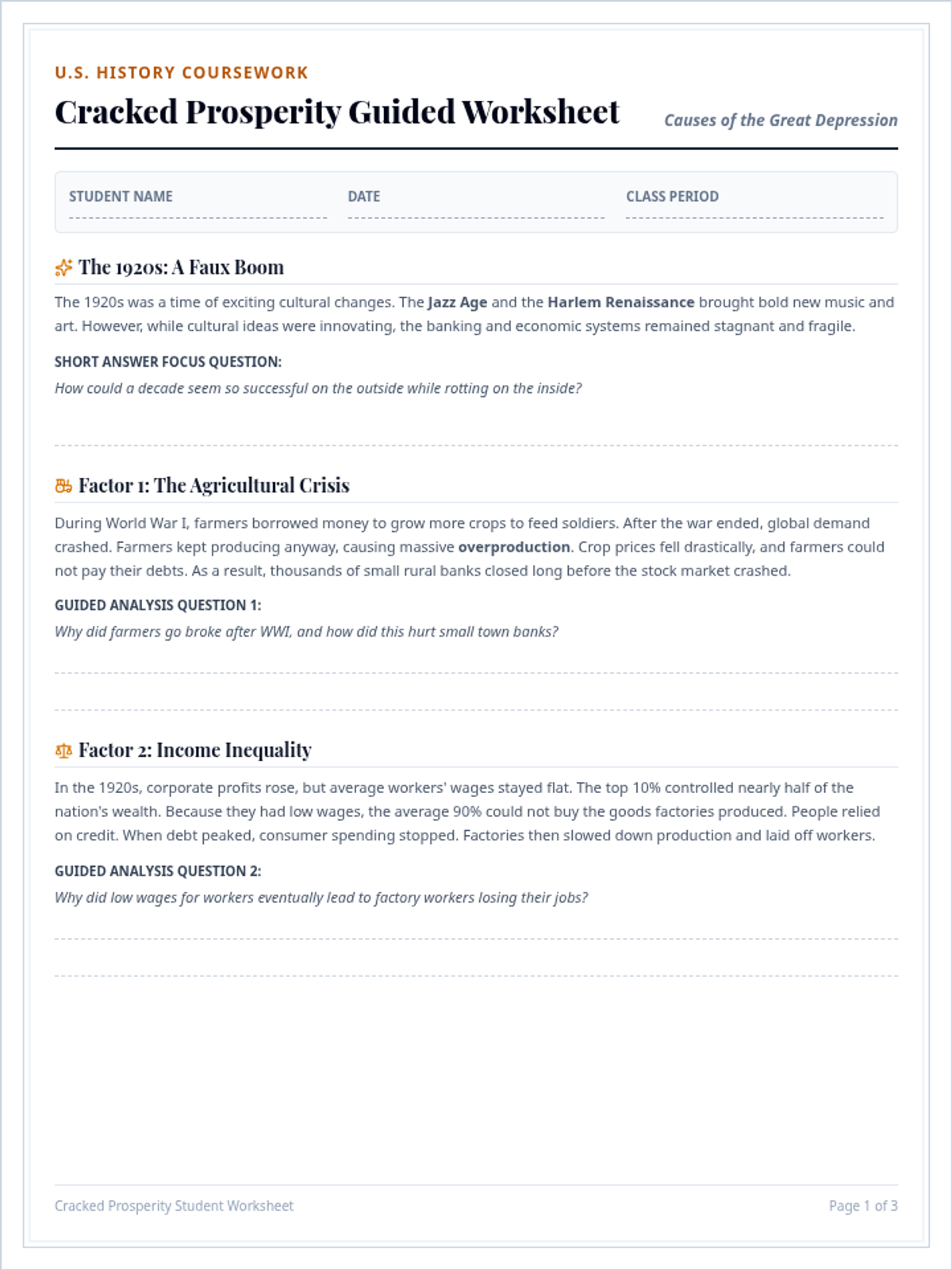
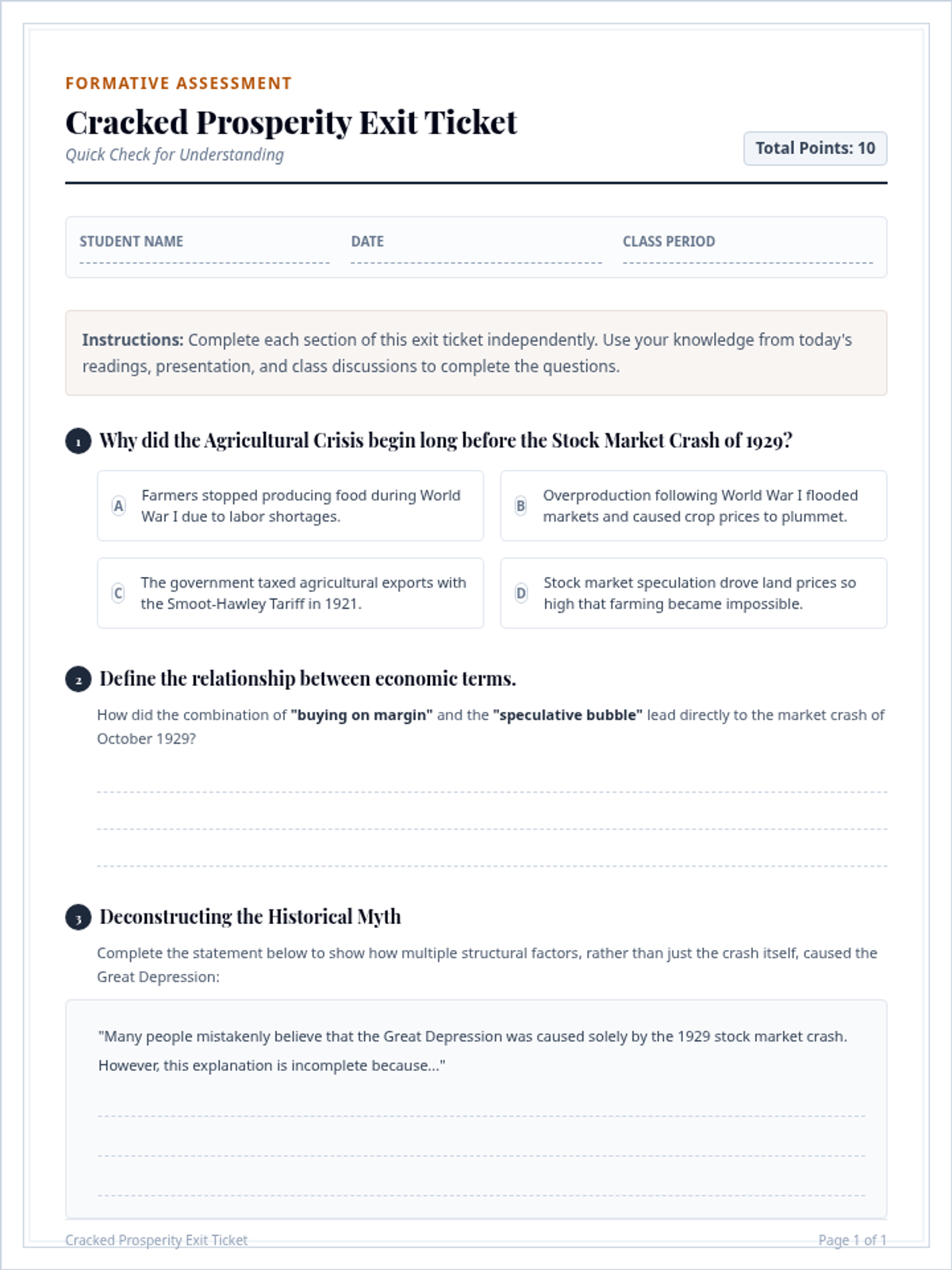
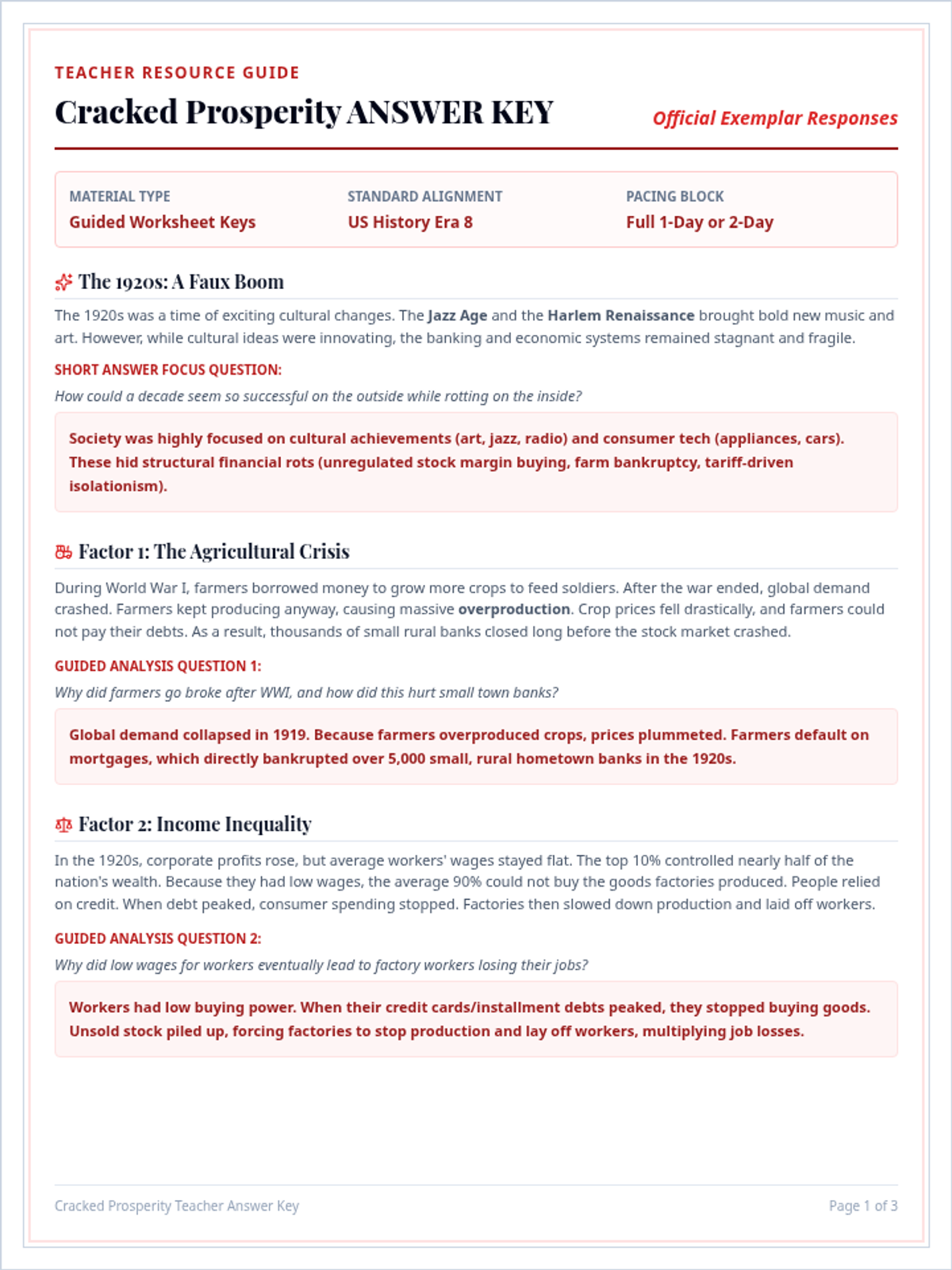
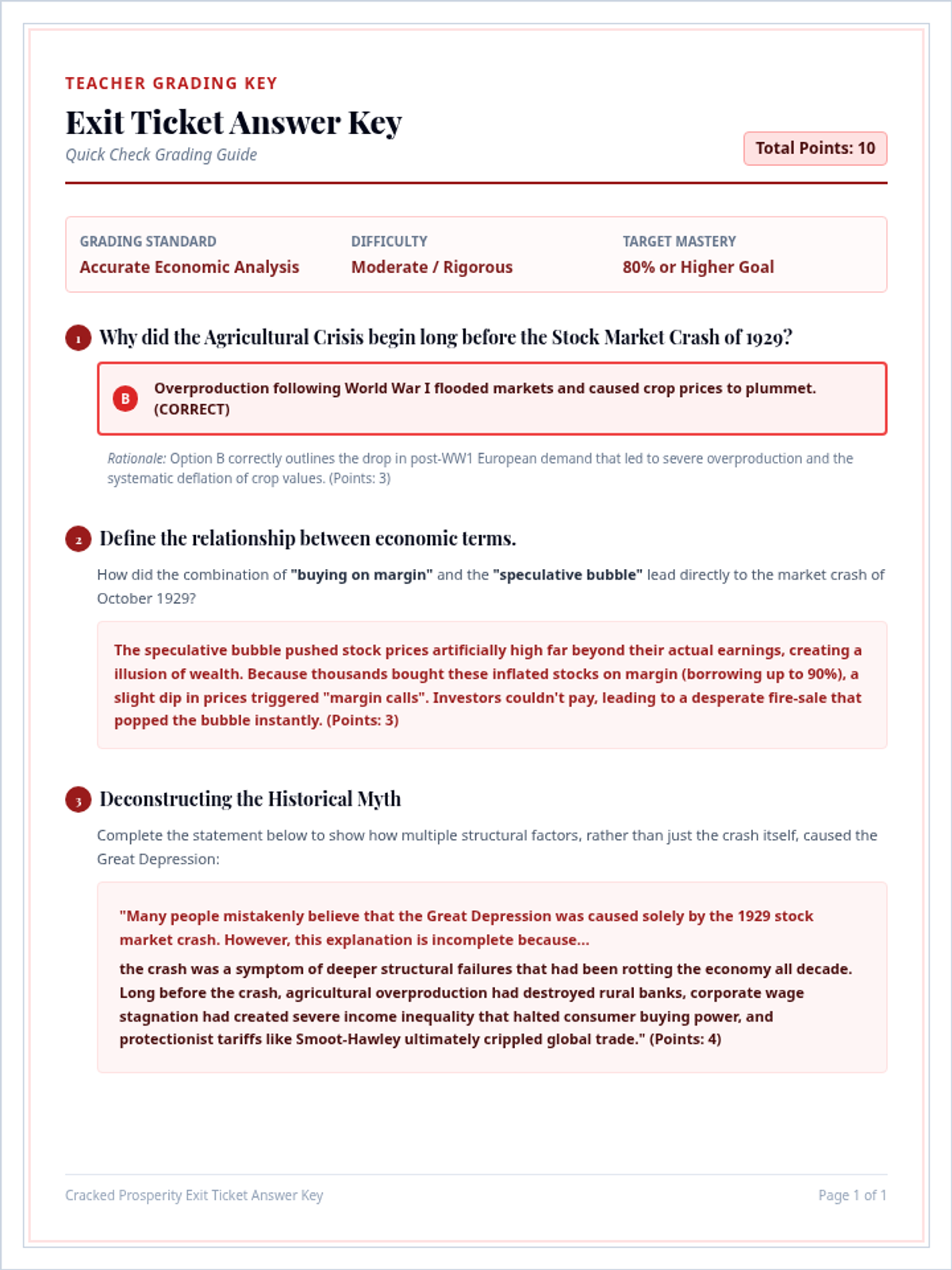
A comprehensive lesson exploring the transition from the roaring optimism of the 1920s to the structural causes of the Great Depression, including the agricultural crisis, income inequality, global trade collapse, and the 1929 stock market crash.
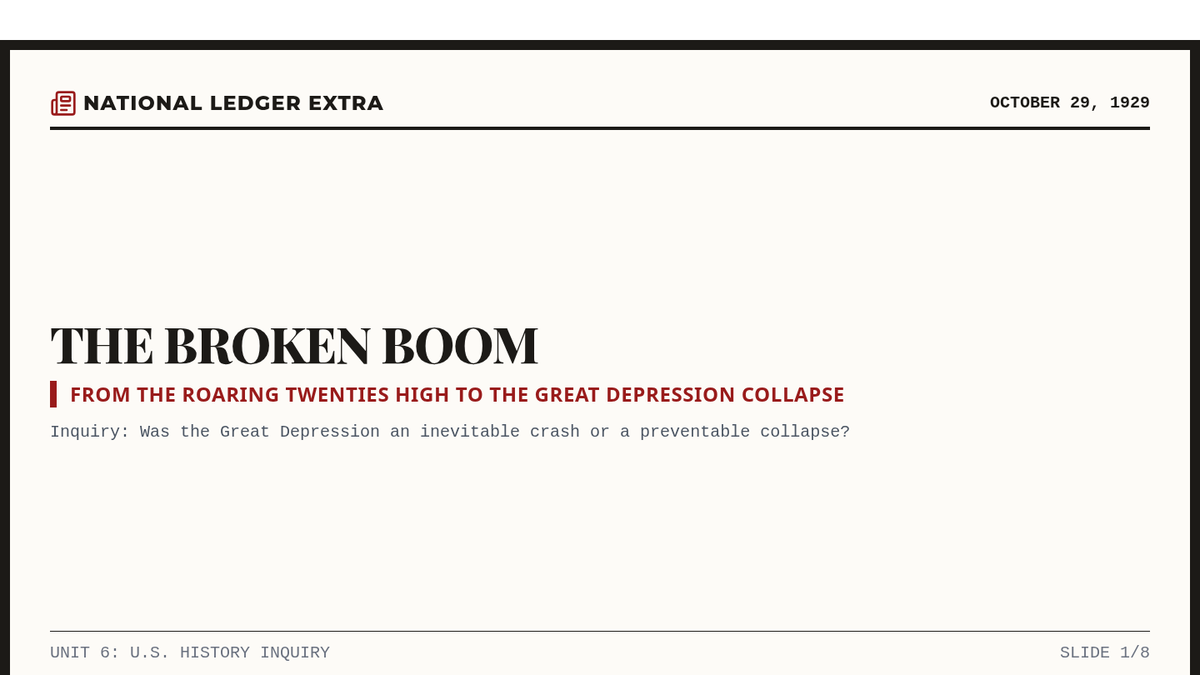
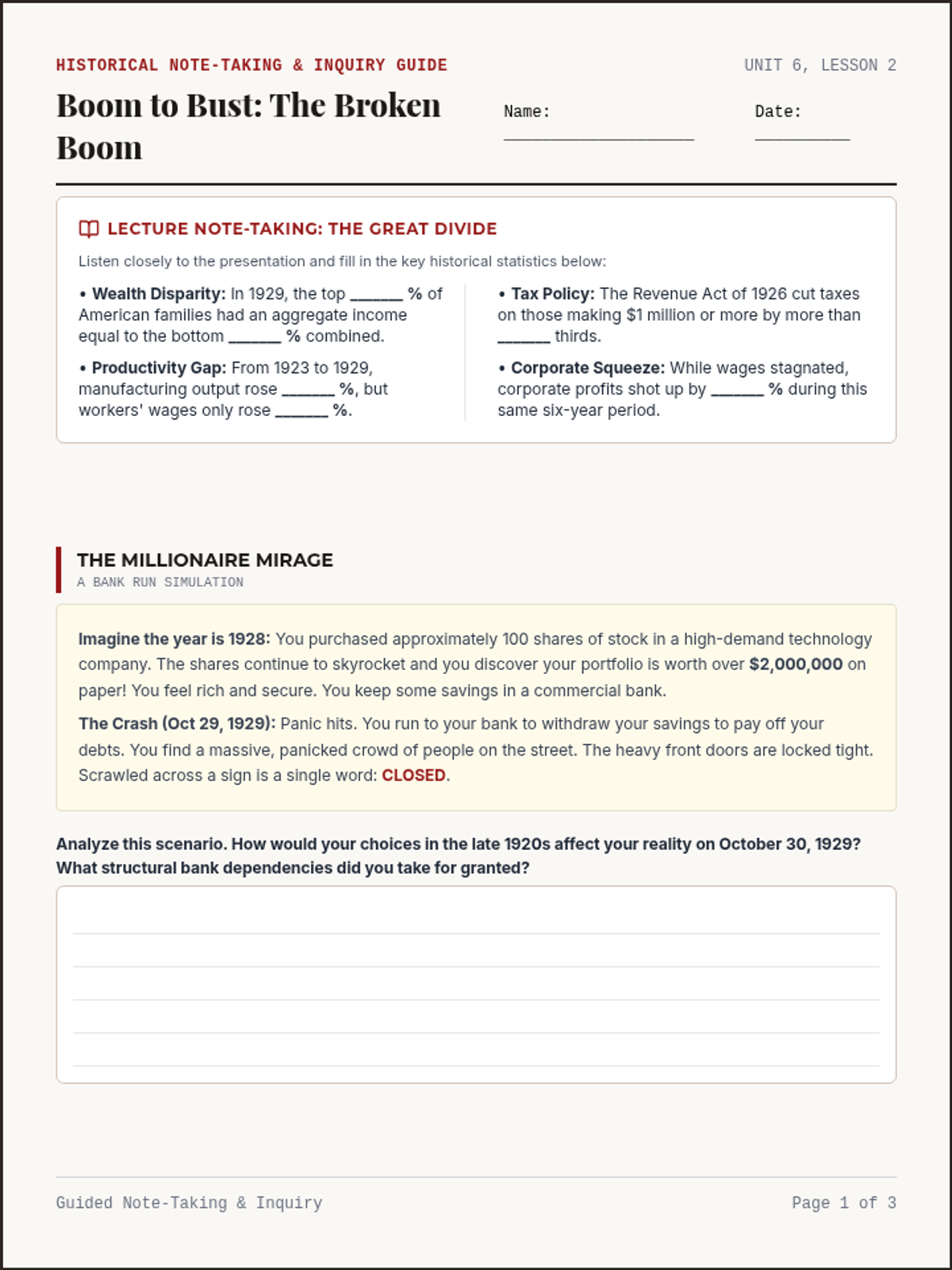
An inquiry-based lesson investigating the transition from the roaring 1920s to the Great Depression. Students analyze how economic policies, consumer credit, and social tensions fueled a cultural boom that ended in systemic collapse.
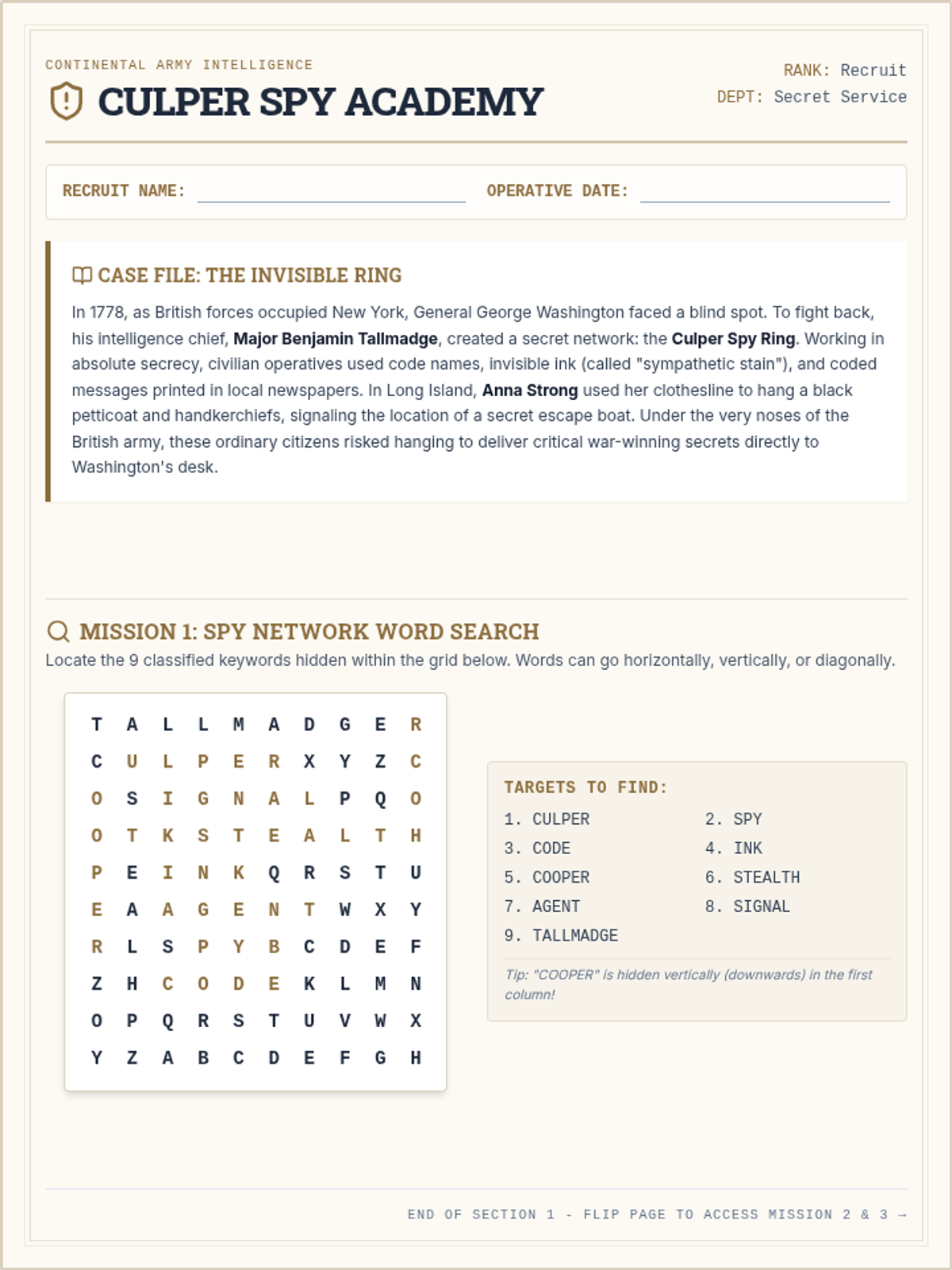
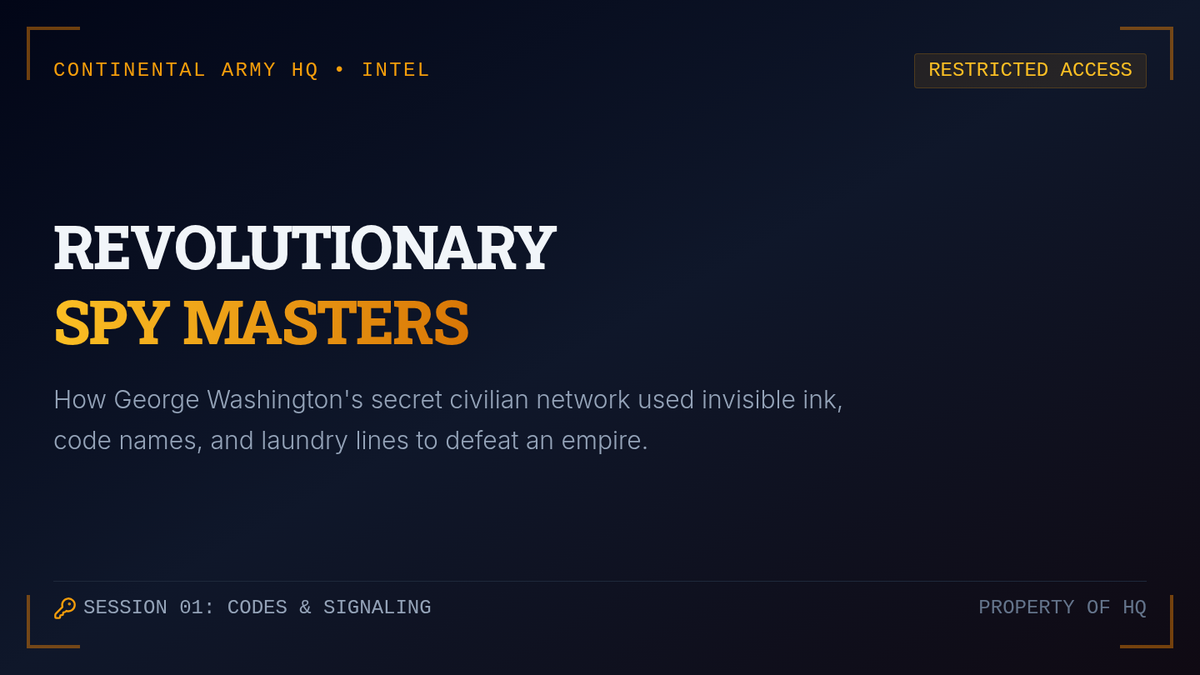
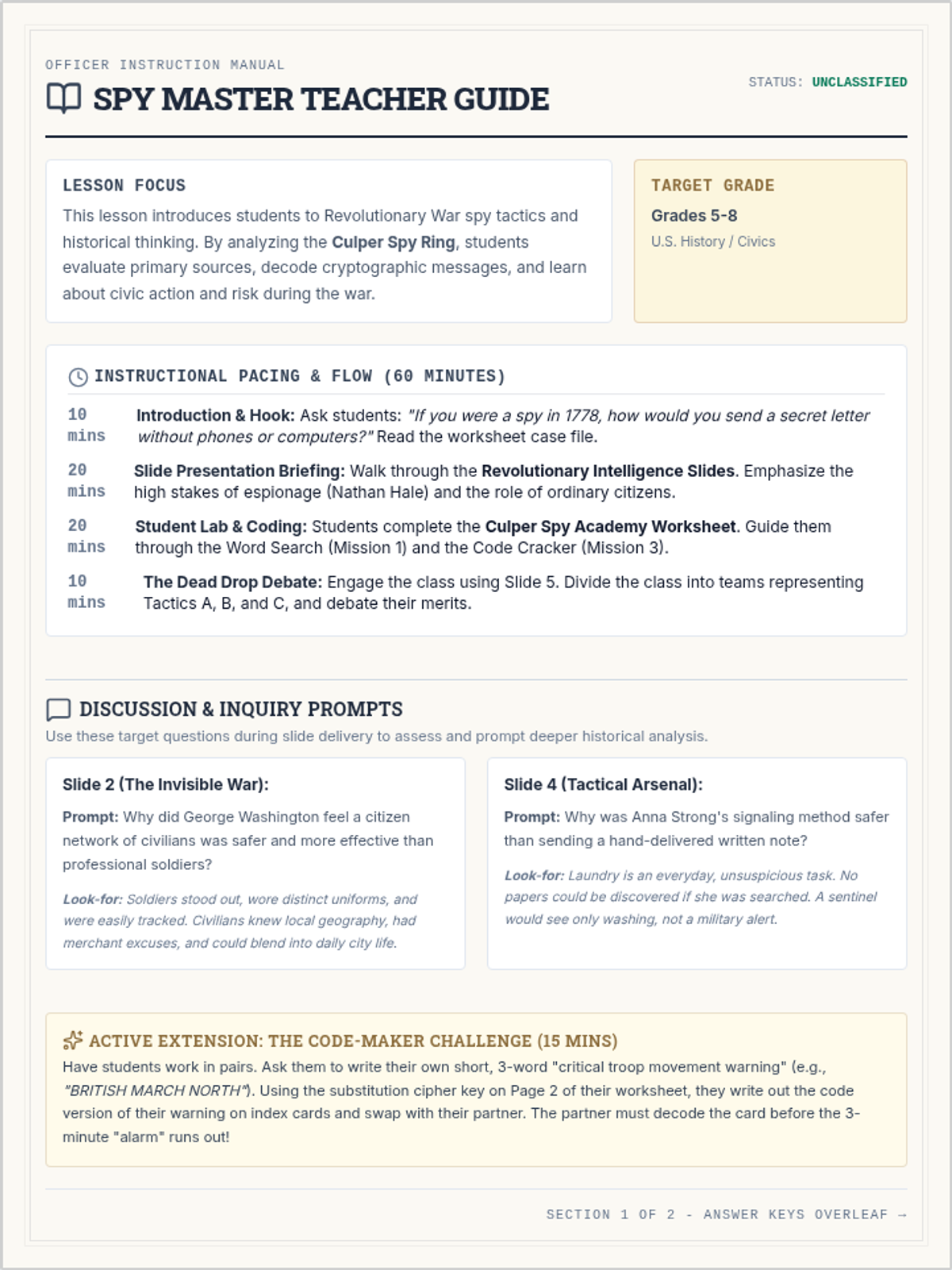
An engaging introductory lesson on American Revolution espionage, focusing on the Culper Spy Ring, secret codes, and stealthy tactics used by George Washington's network. Students learn historical analysis through code-breaking, word puzzles, and critical thinking challenges.
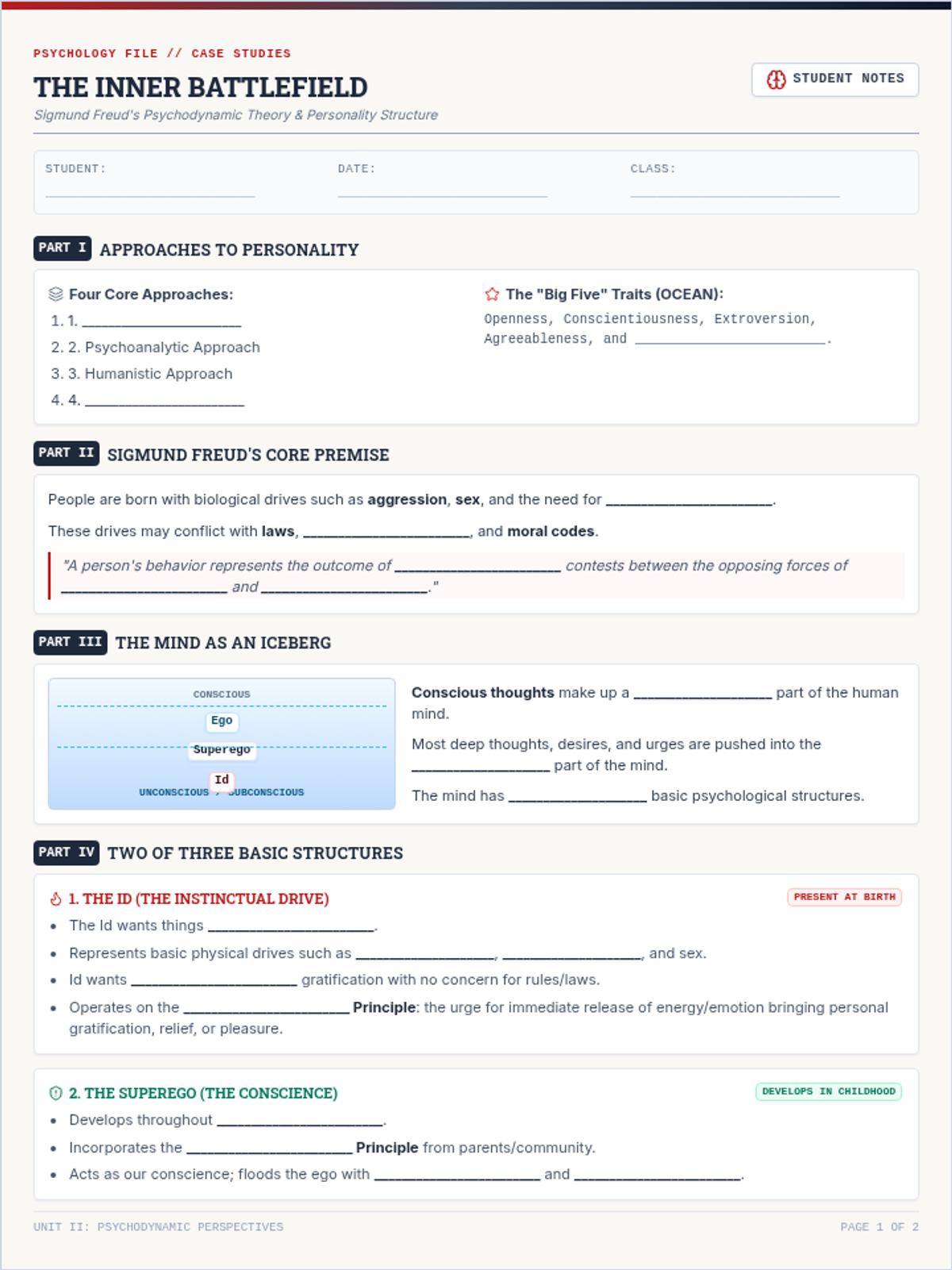
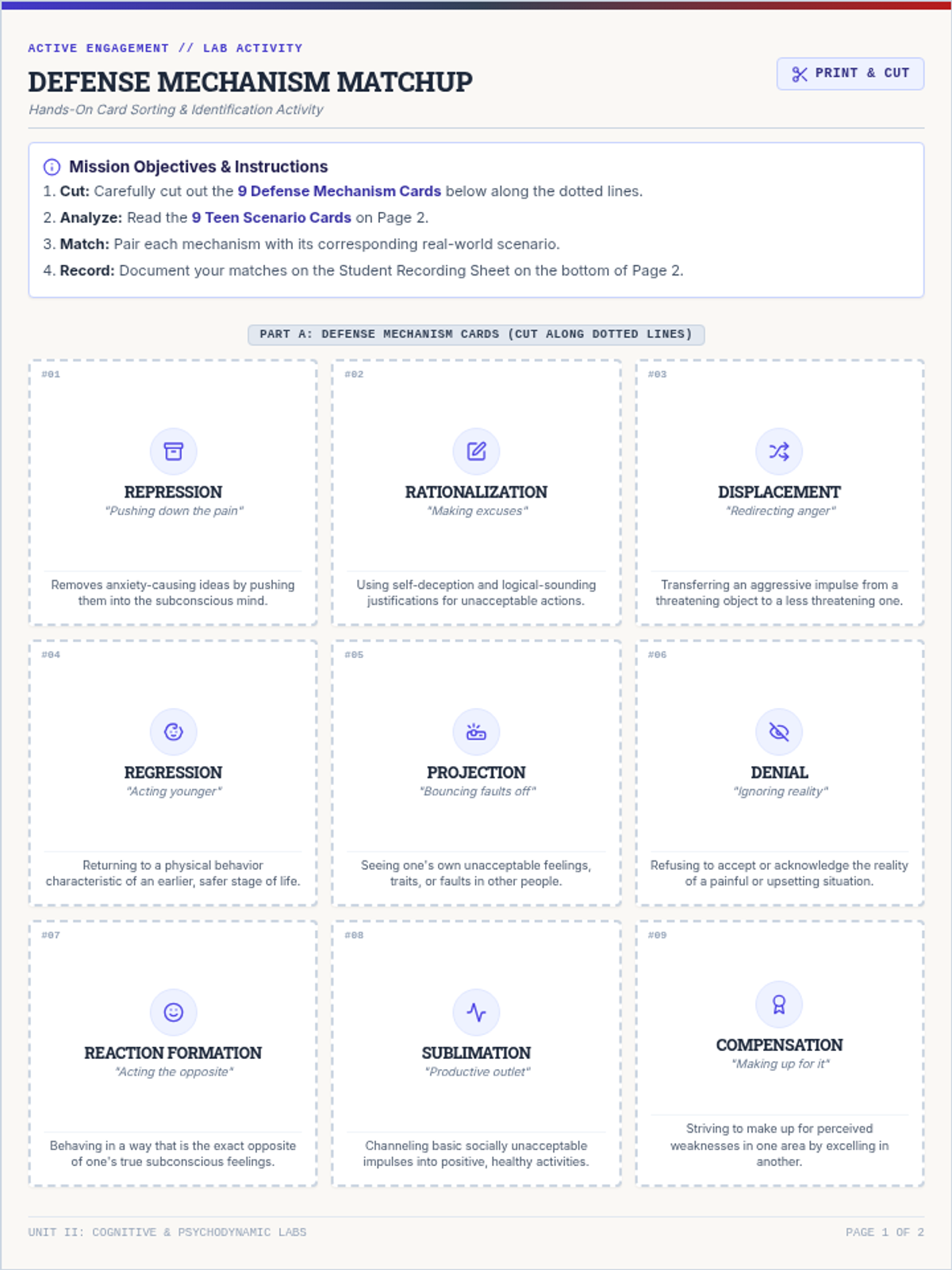
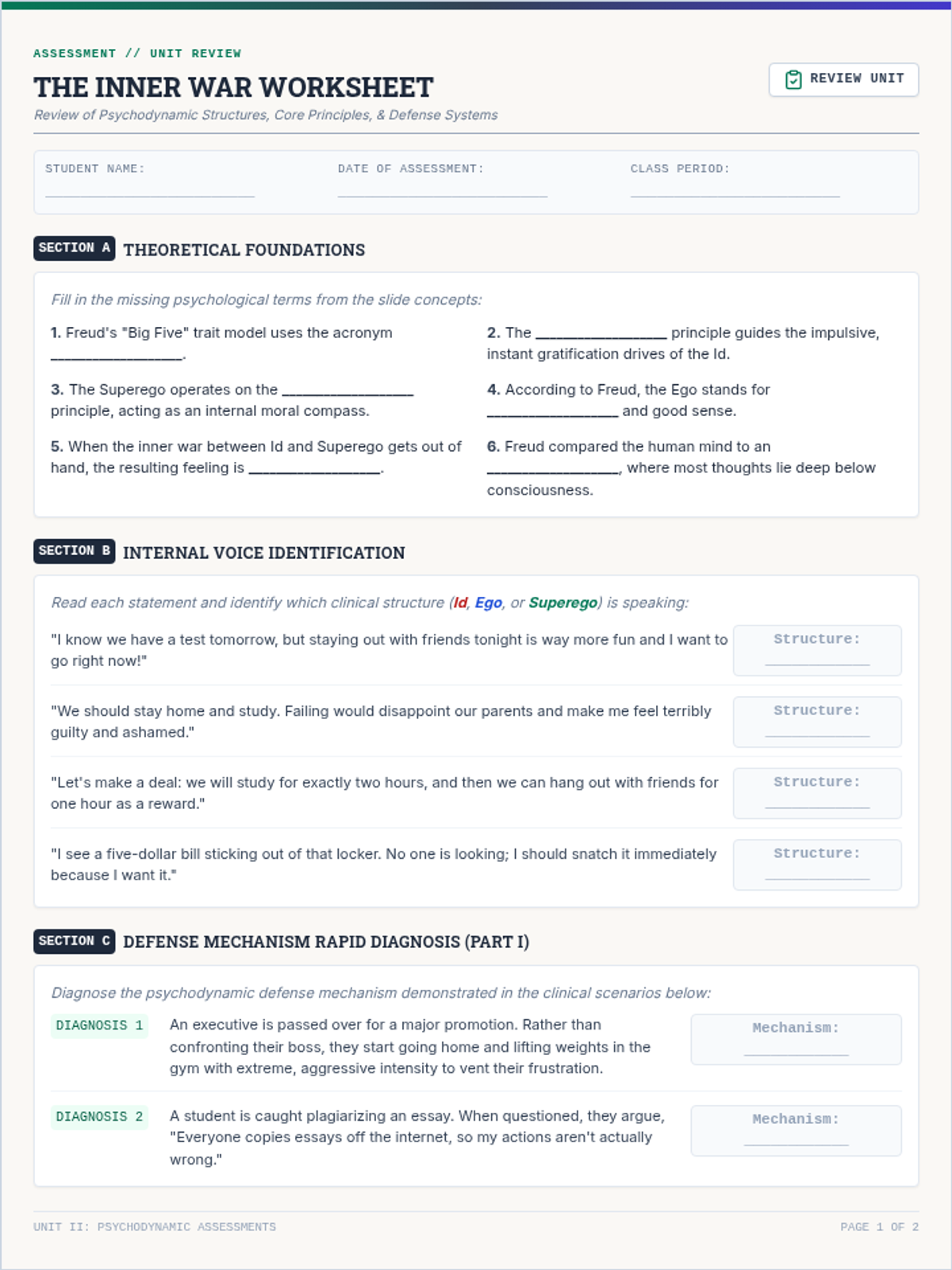
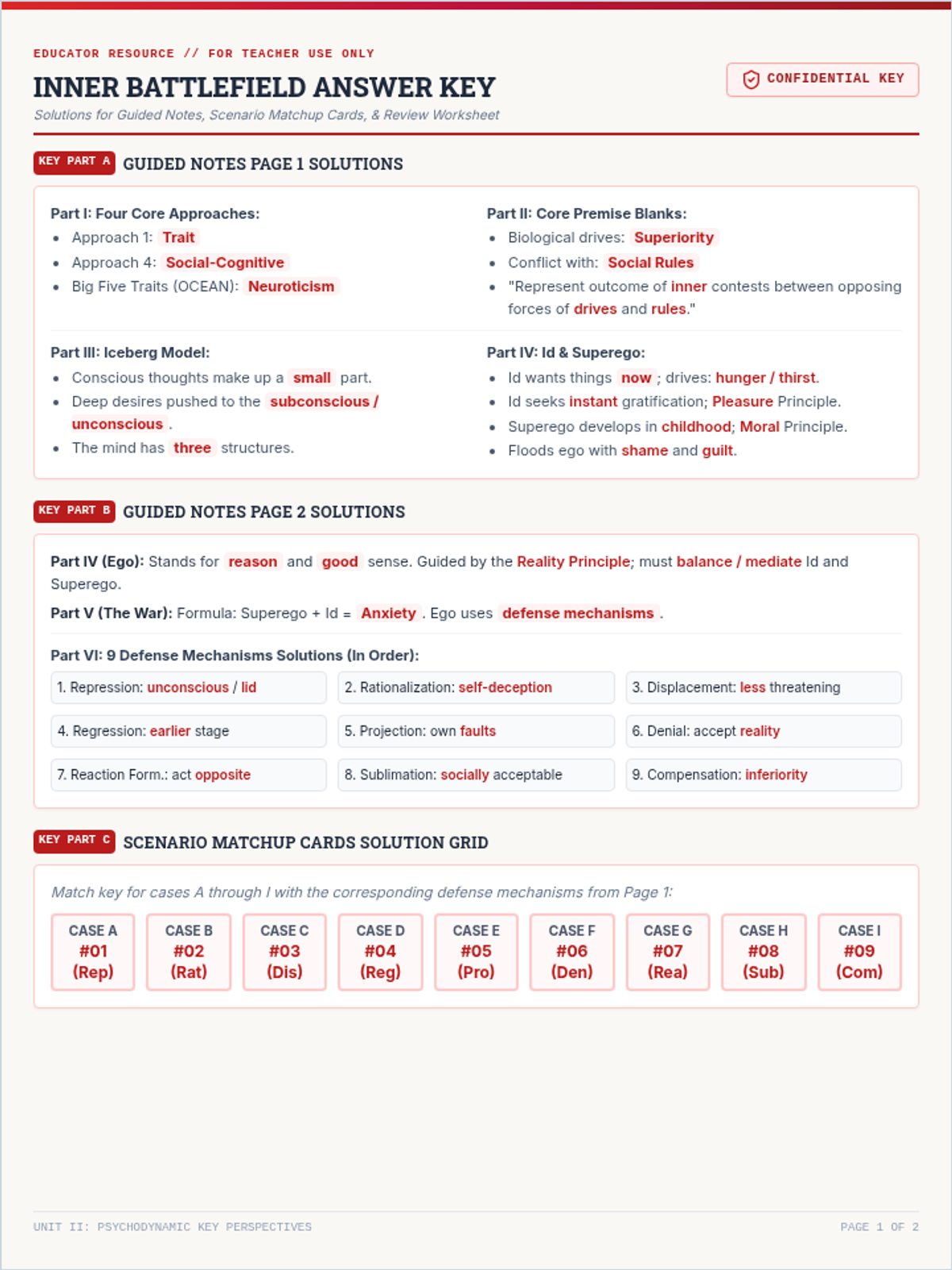
An exploration of Sigmund Freud's psychodynamic approach to personality, focusing on the dynamic conflict between the Id, Ego, and Superego, and the defense mechanisms the mind uses to cope with resulting anxiety.
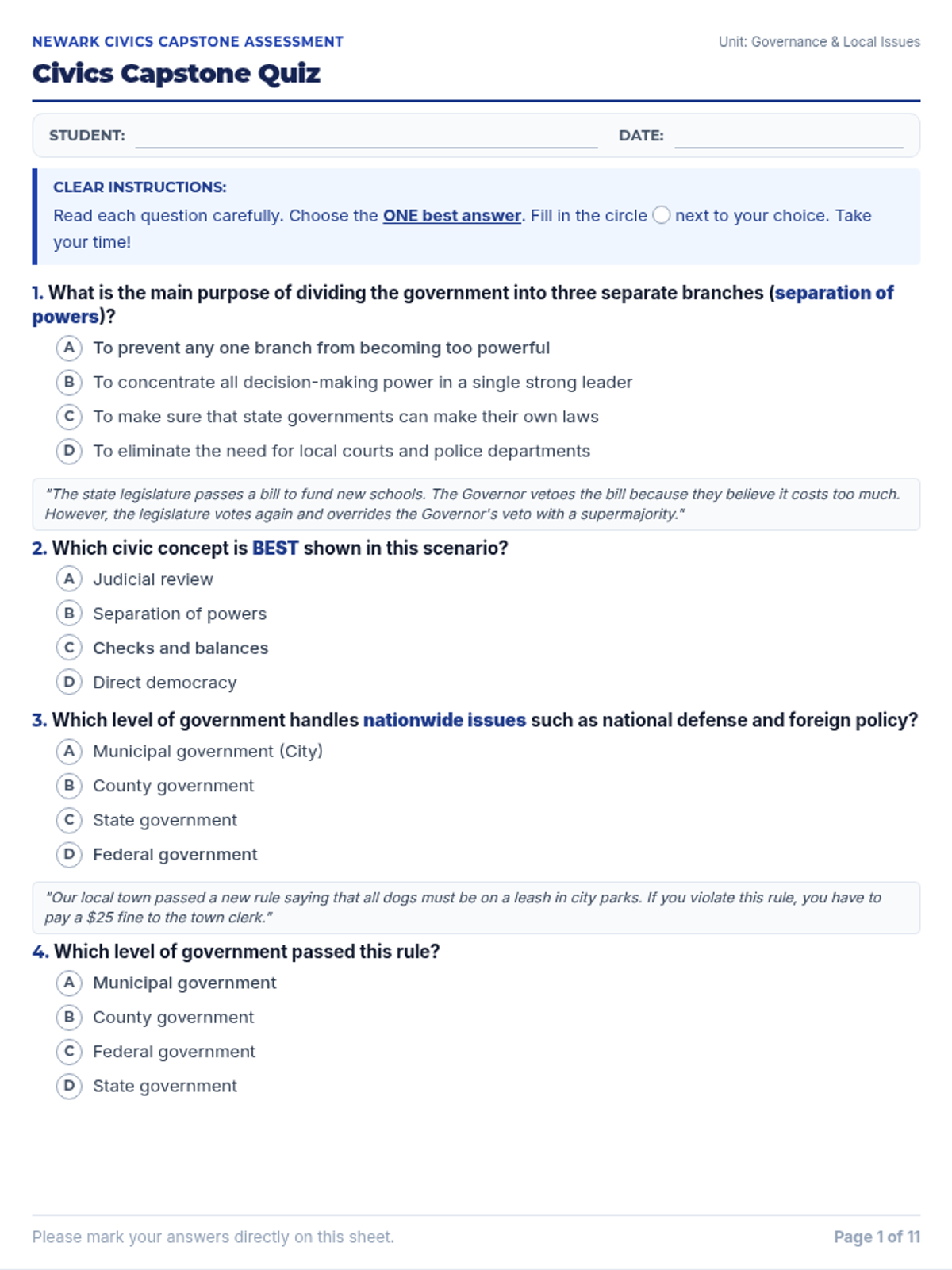
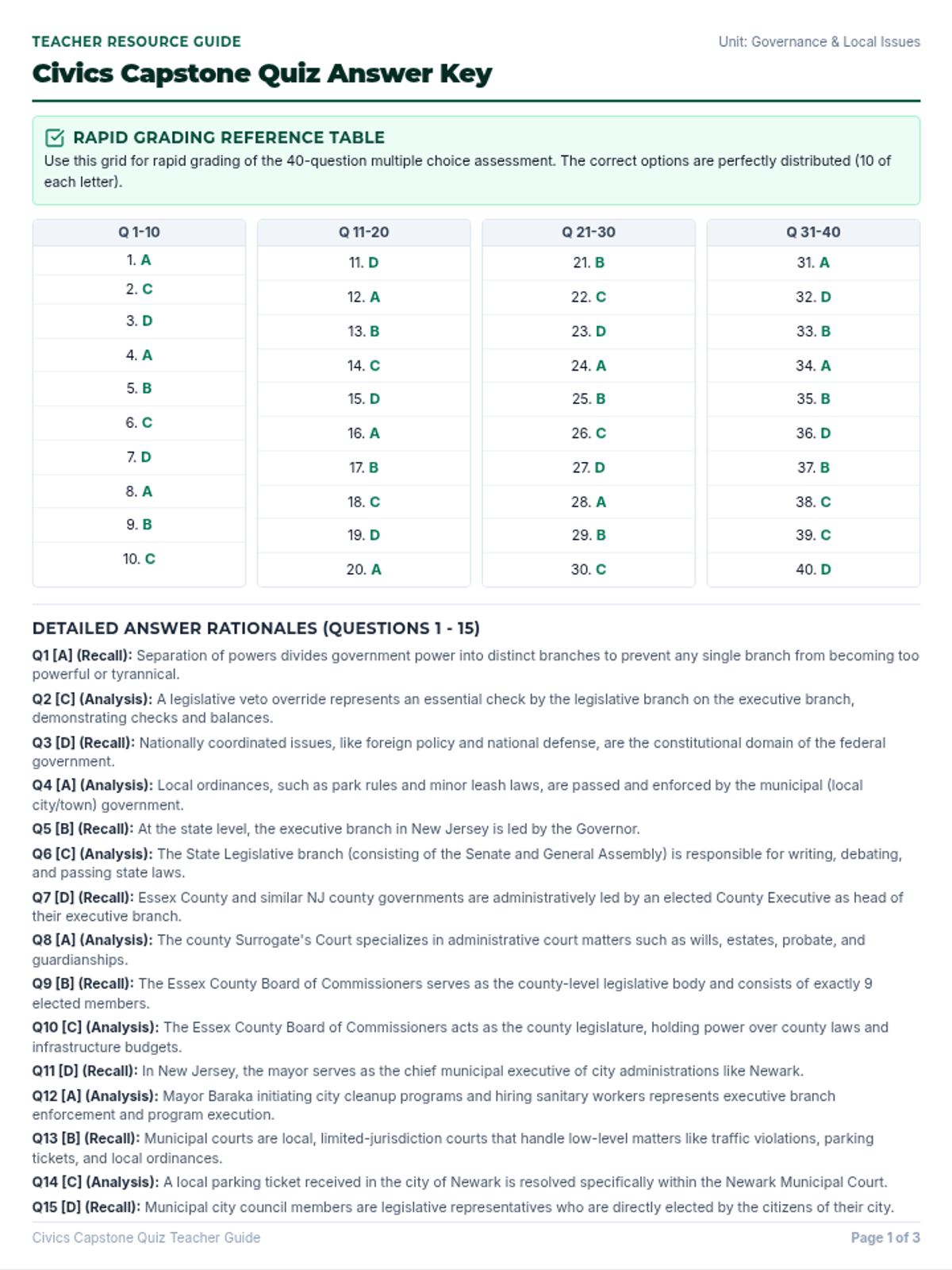
A comprehensive assessment unit for high school civics, covering separation of powers, municipal and county government levels, and local social issues such as homelessness and food deserts in New Jersey.
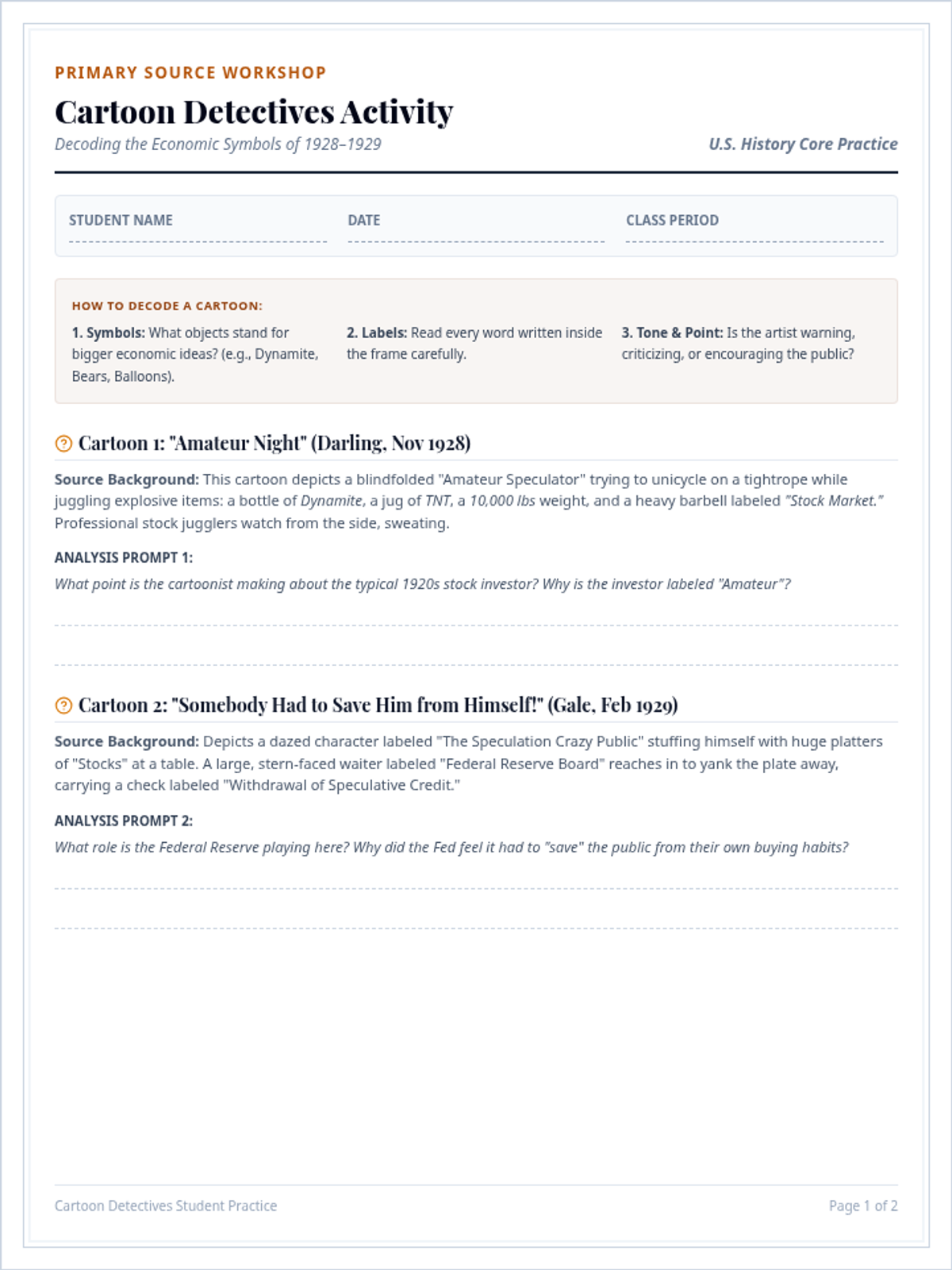
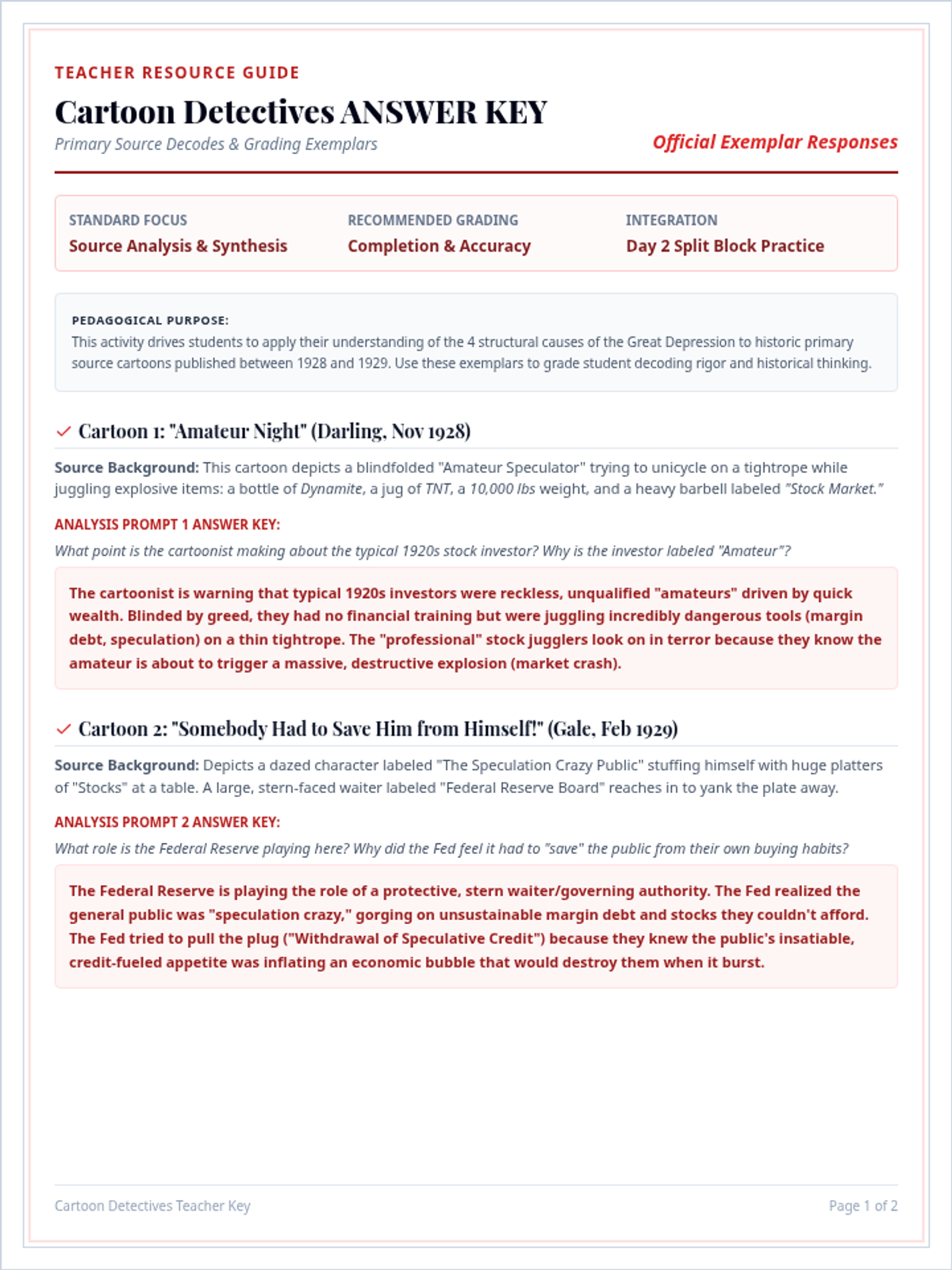
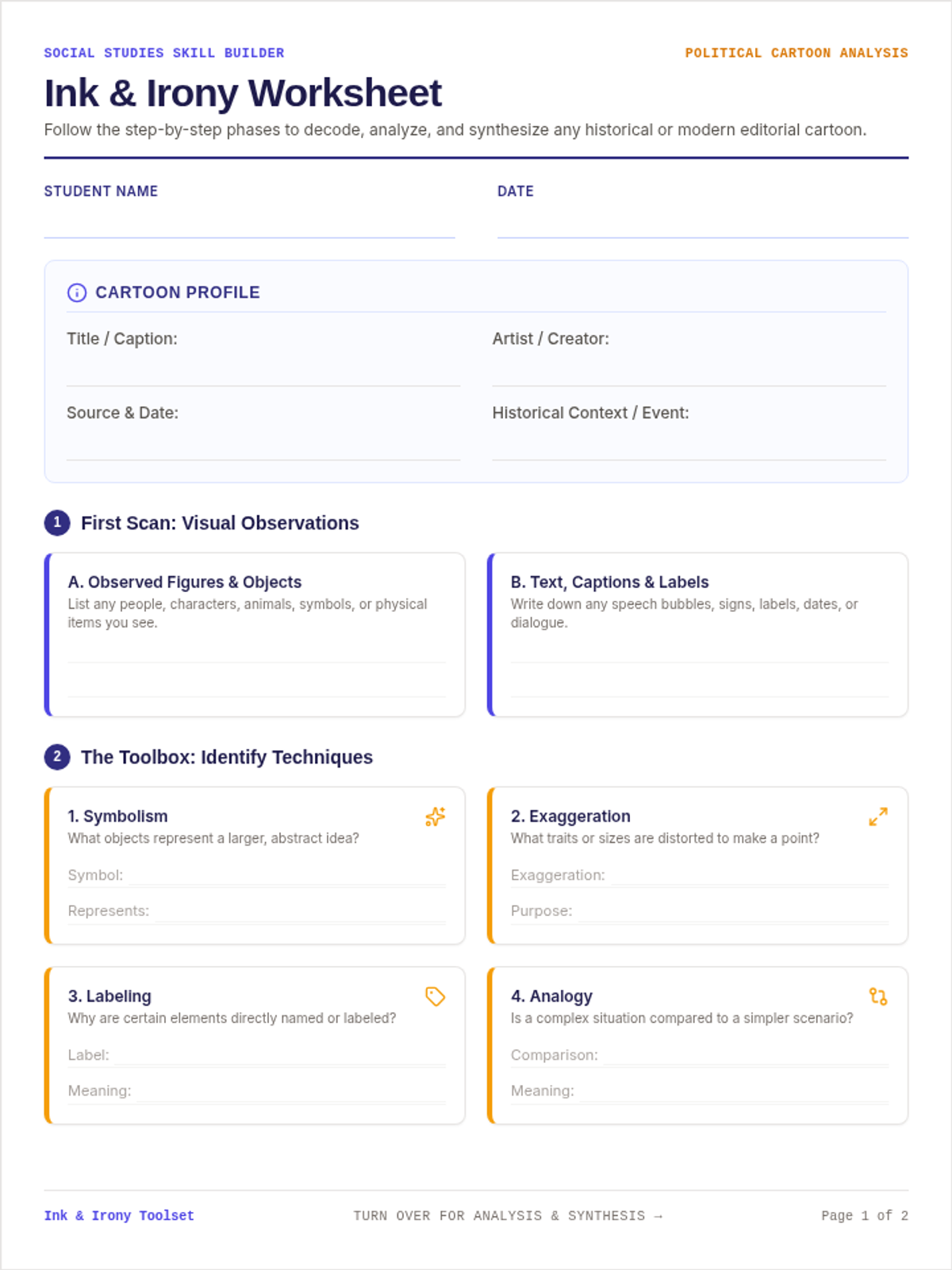
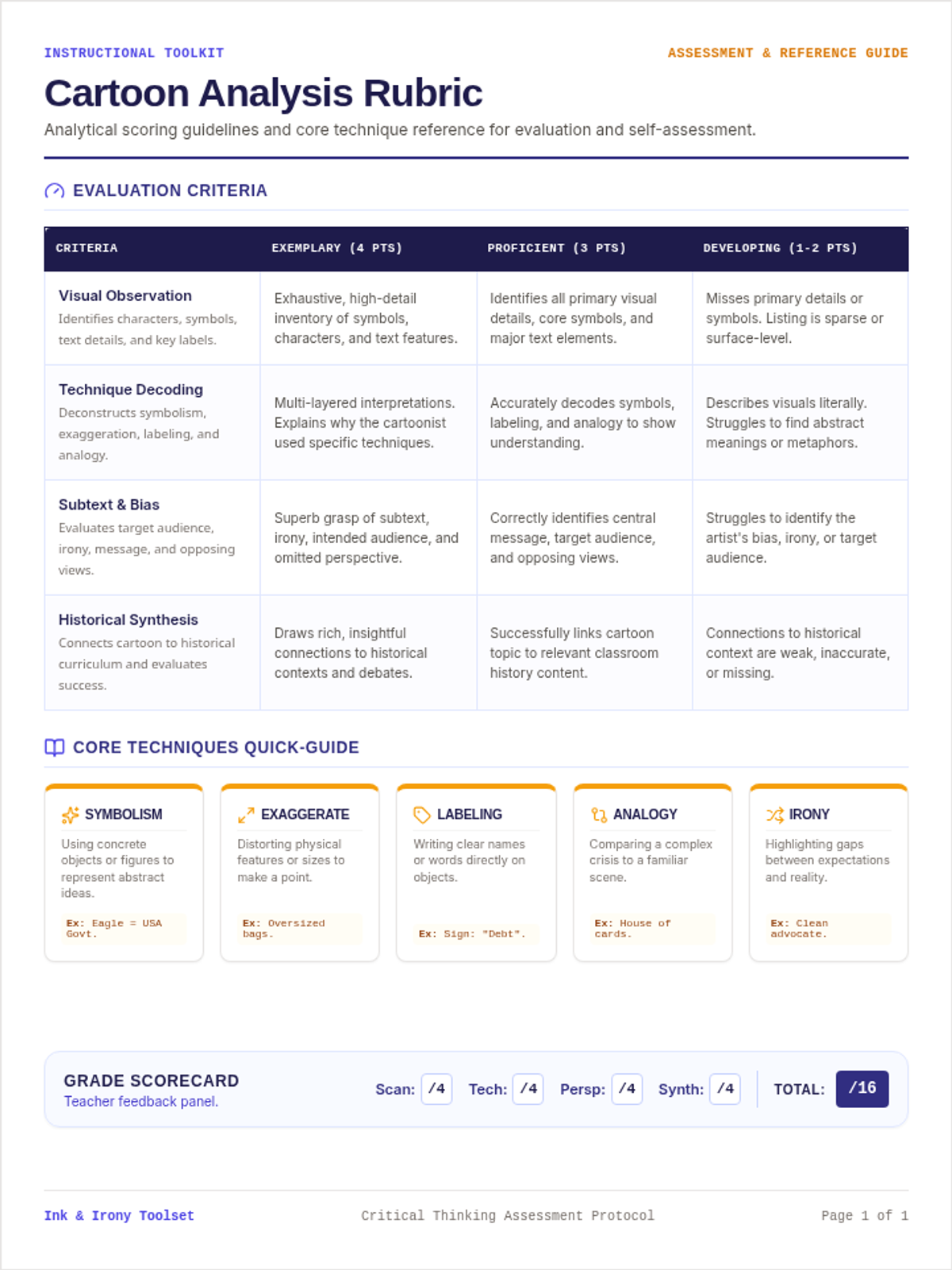
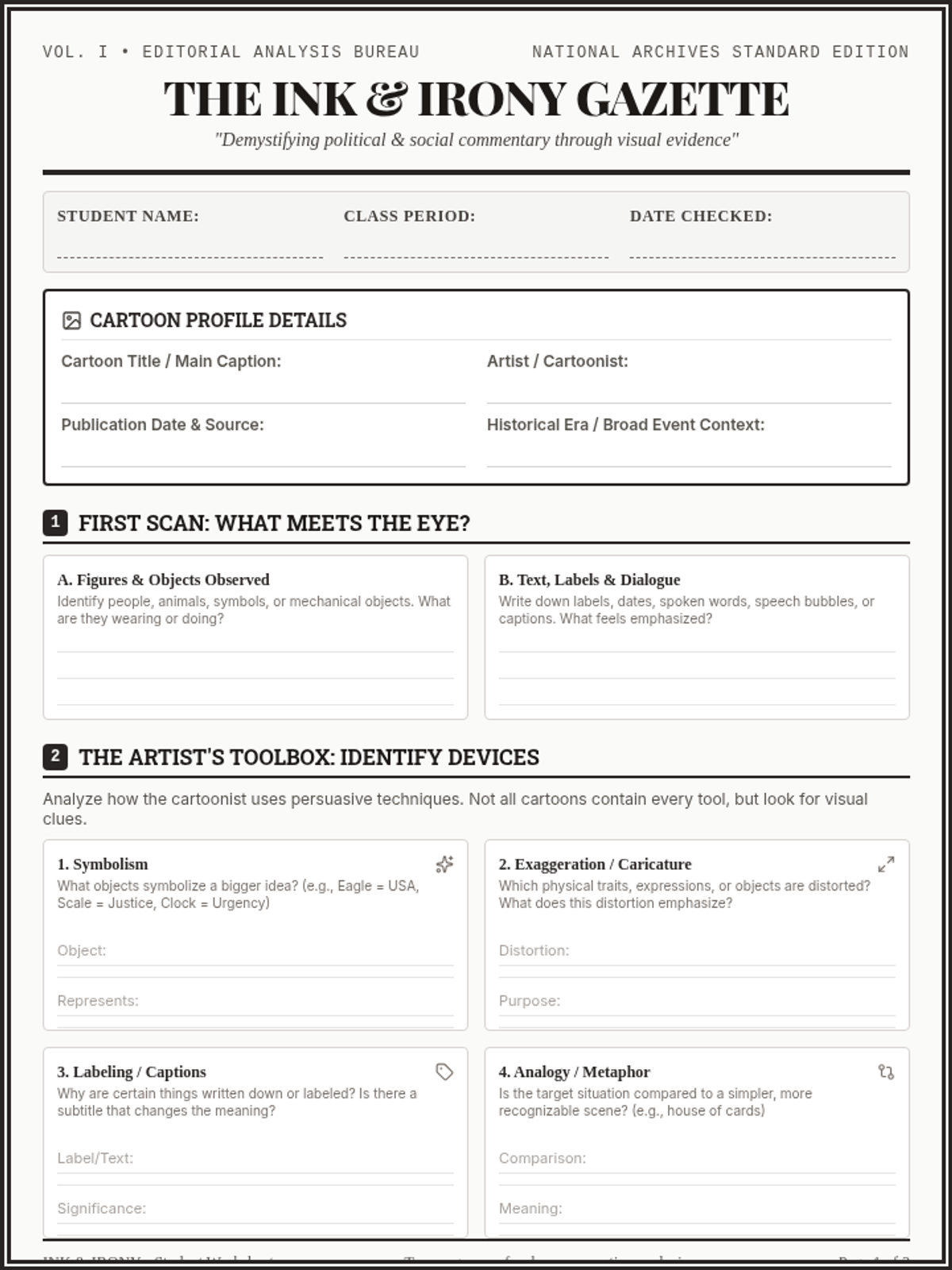
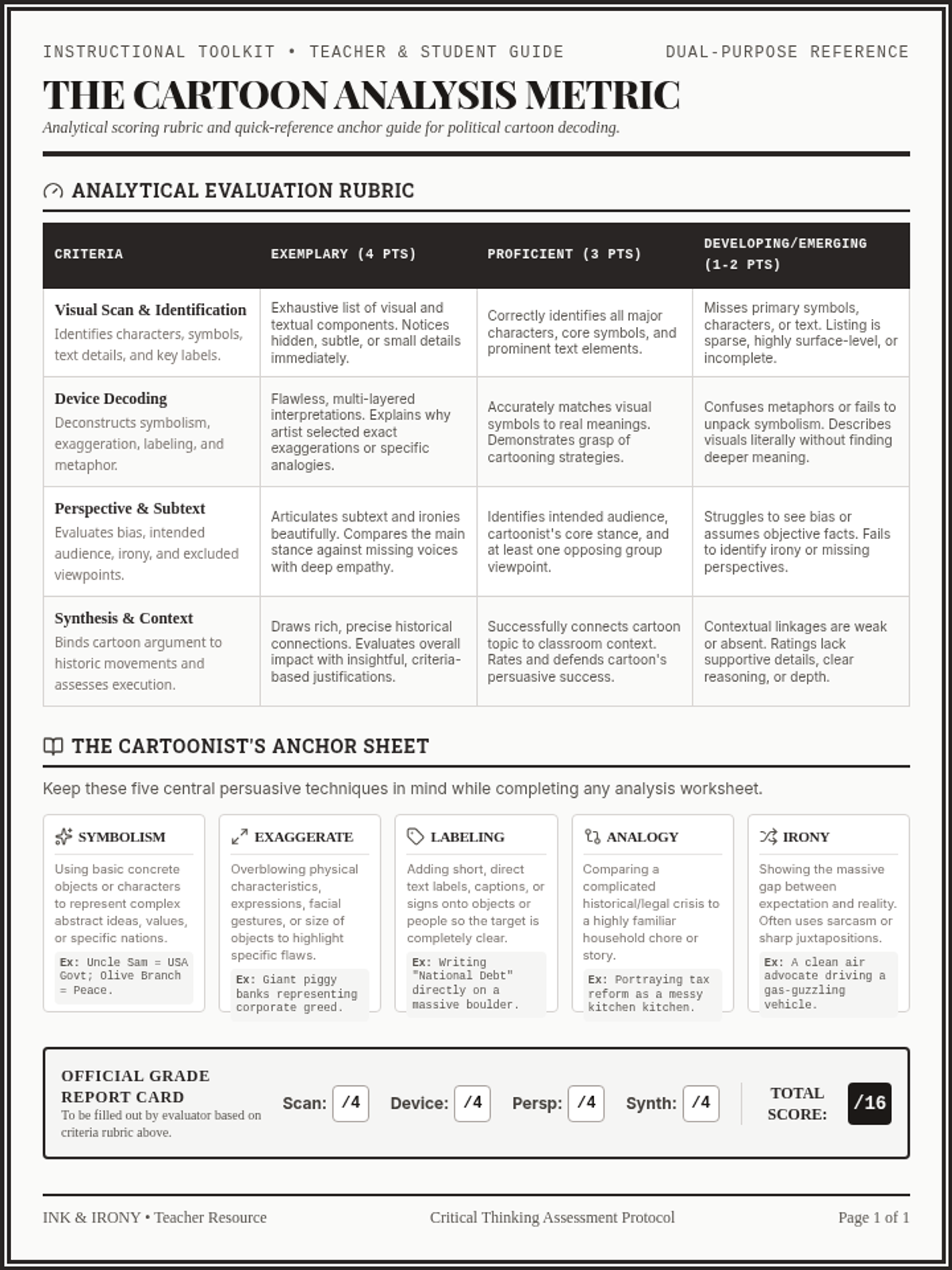
A comprehensive instructional toolkit for analyzing editorial and political cartoons. Features a versatile double-page graphic organizer and a structured assessment rubric adaptable to any historical era.
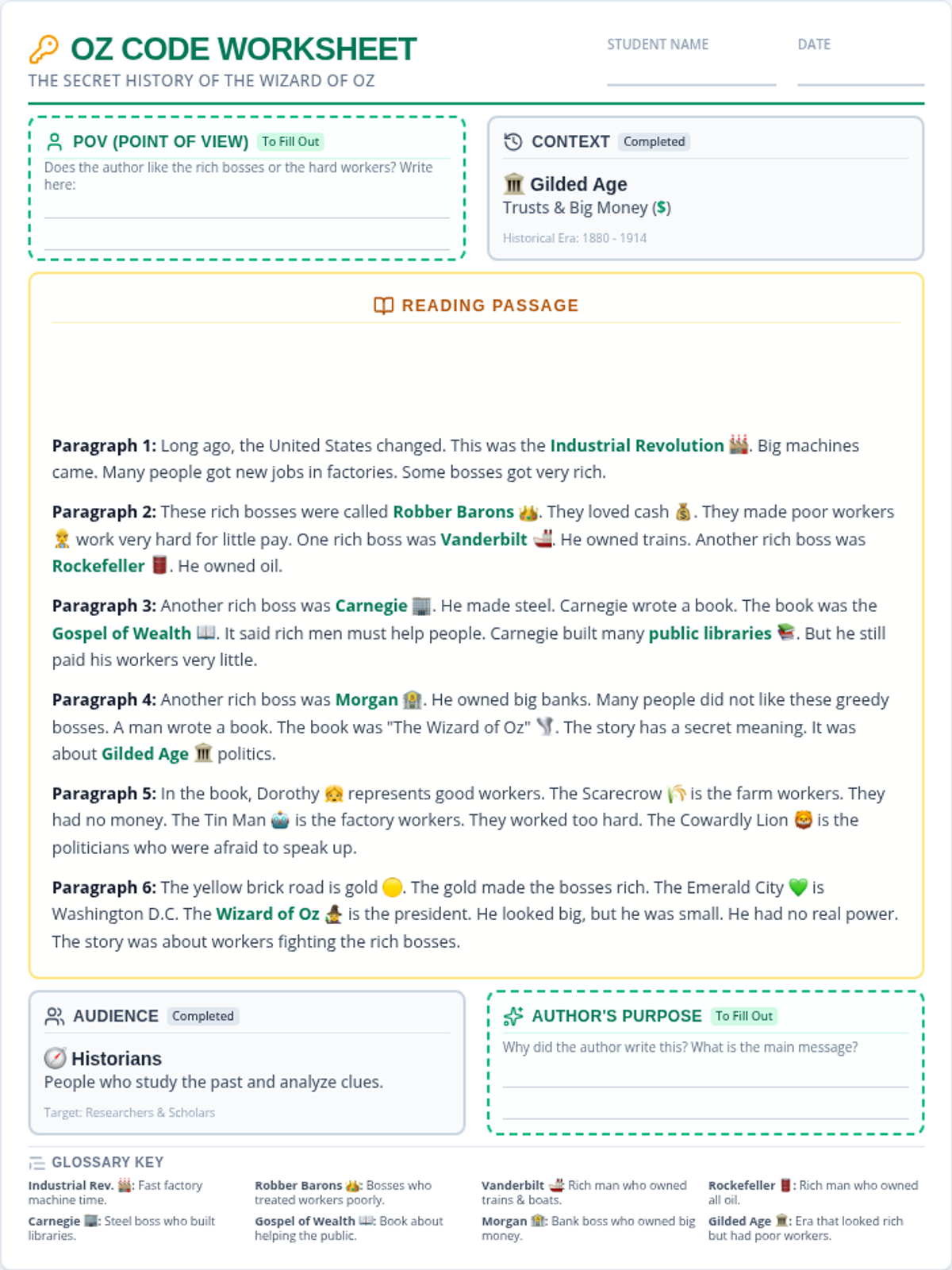
A lesson on the Gilded Age, the Industrial Revolution, robber barons, and their symbolic representation in L. Frank Baum's 'The Wizard of Oz'. Designed with high-support scaffolding for middle schoolers reading at a first-grade level.
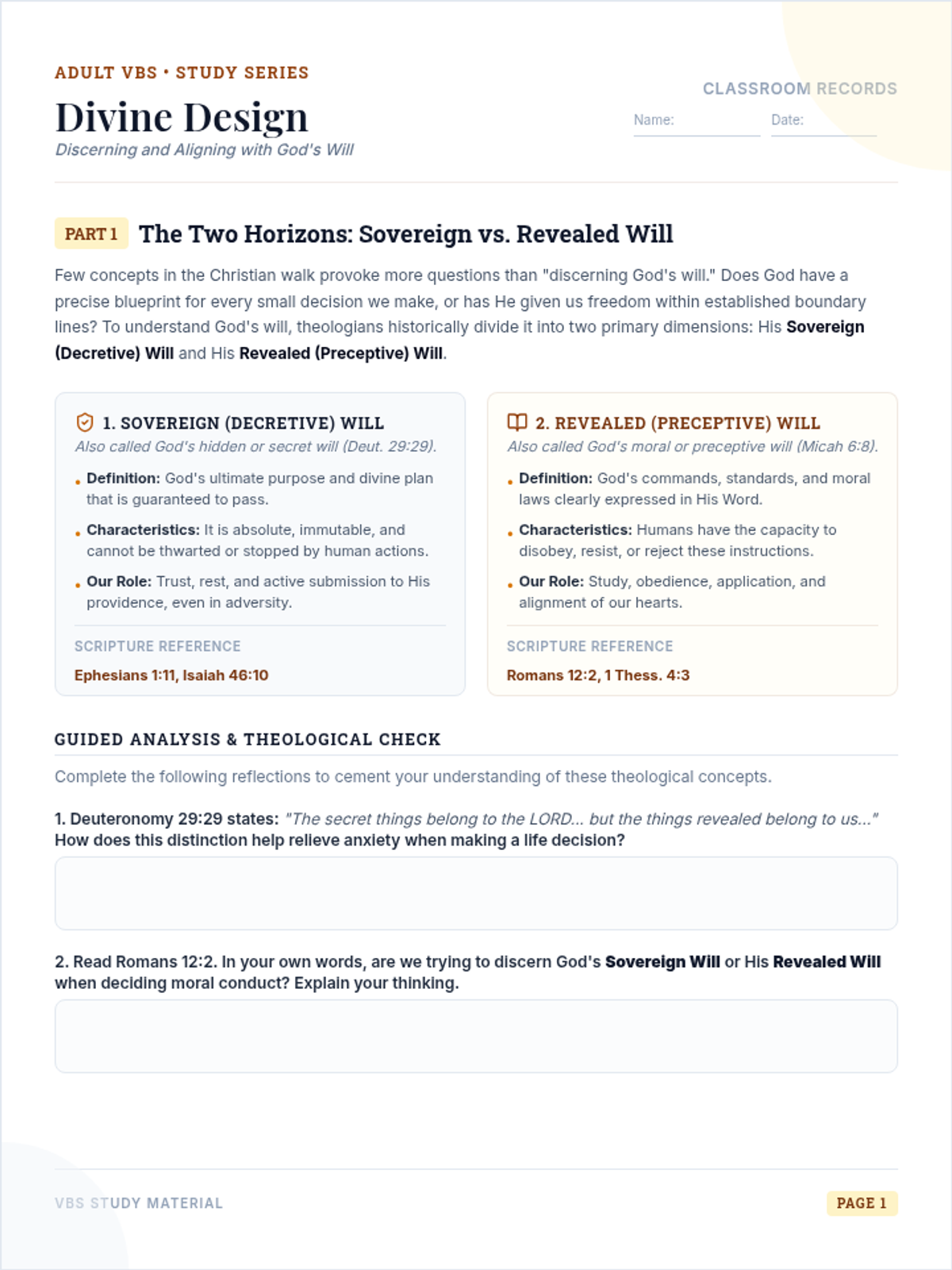
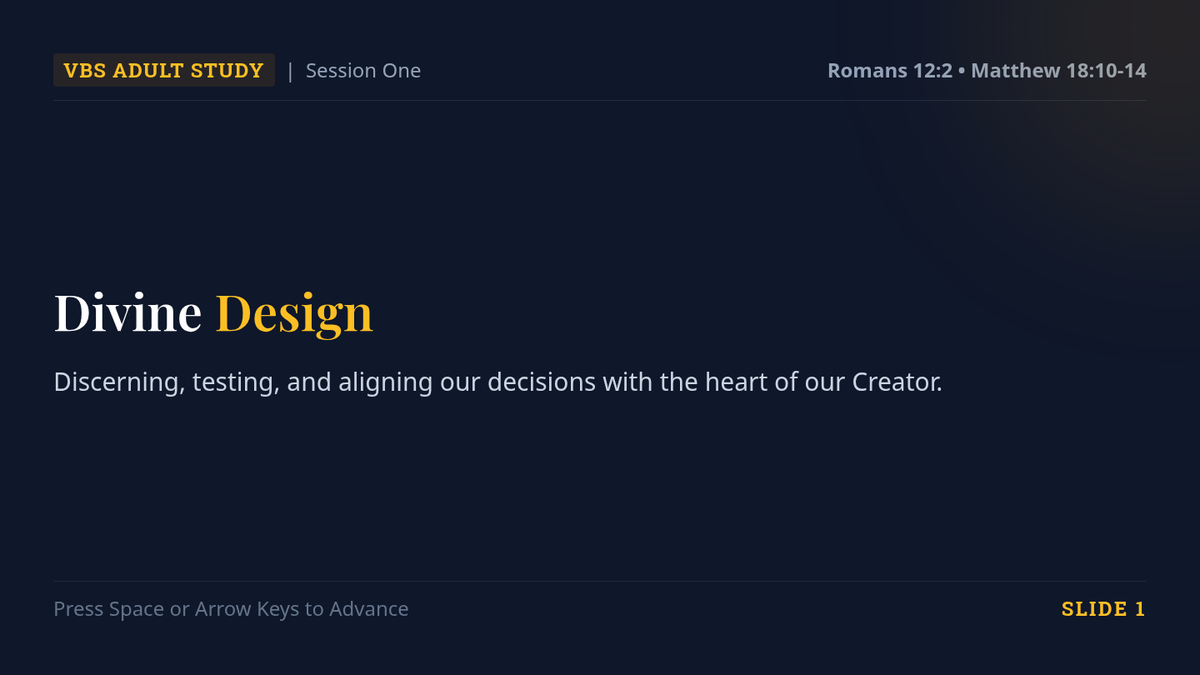
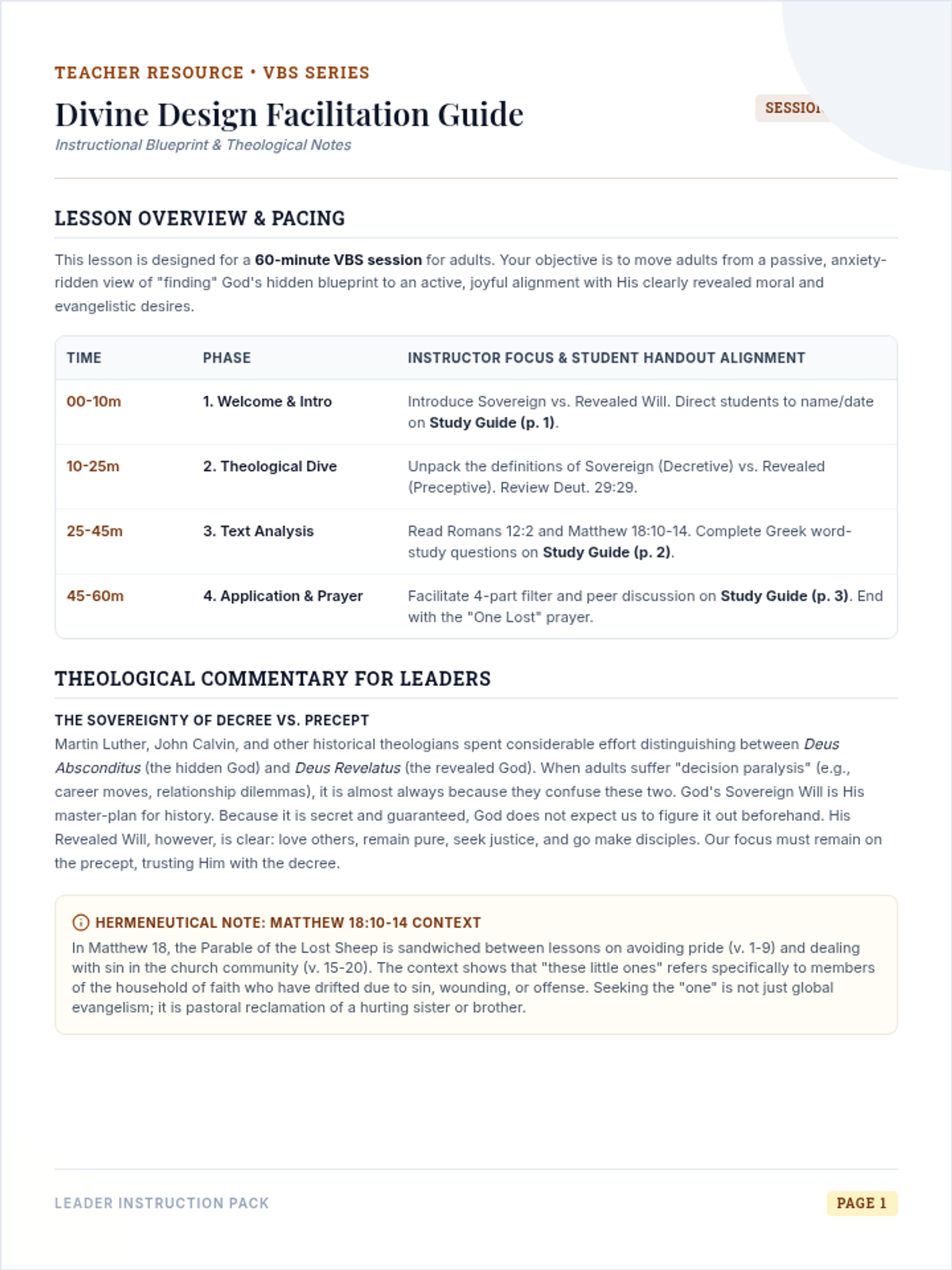
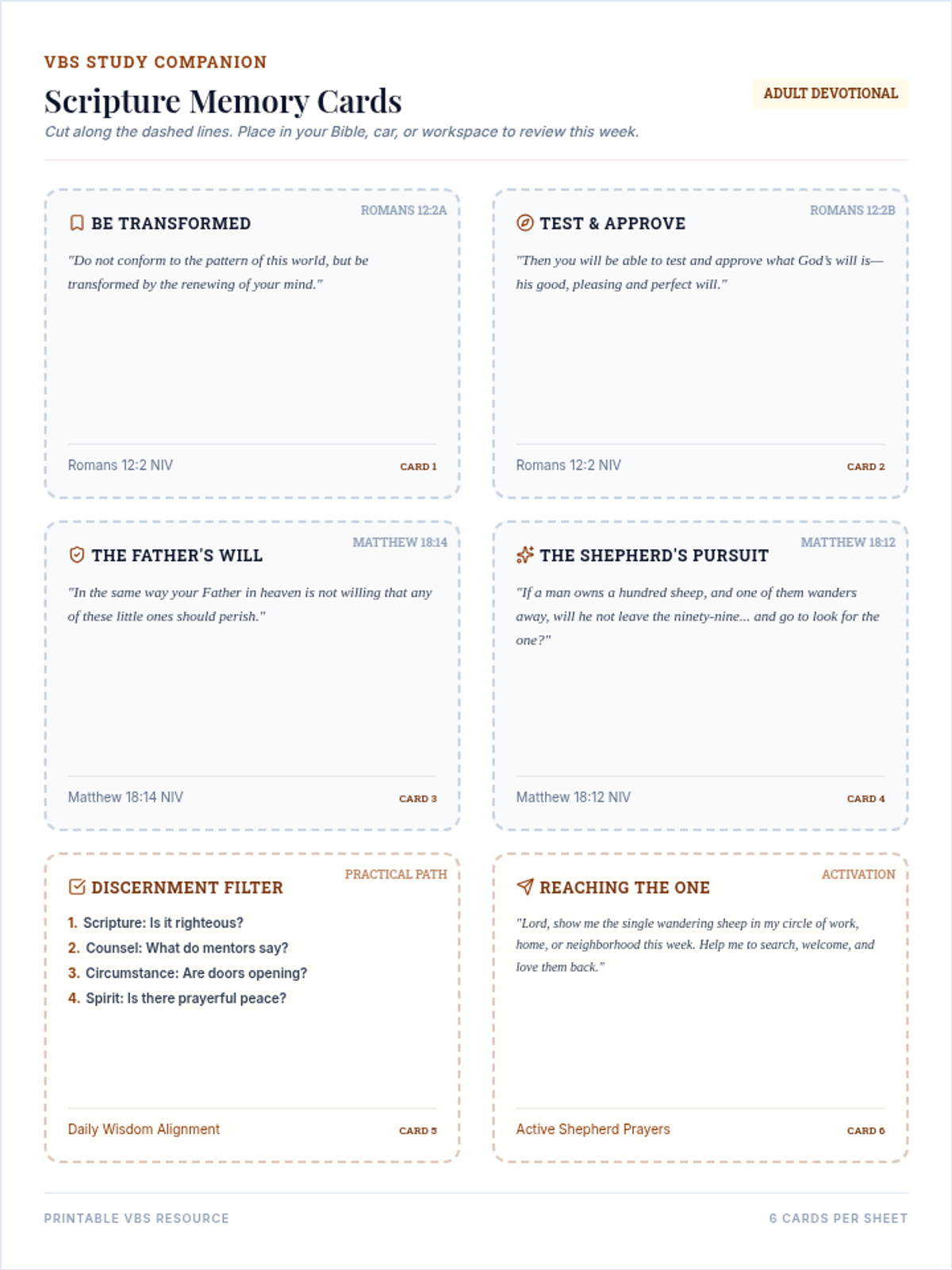
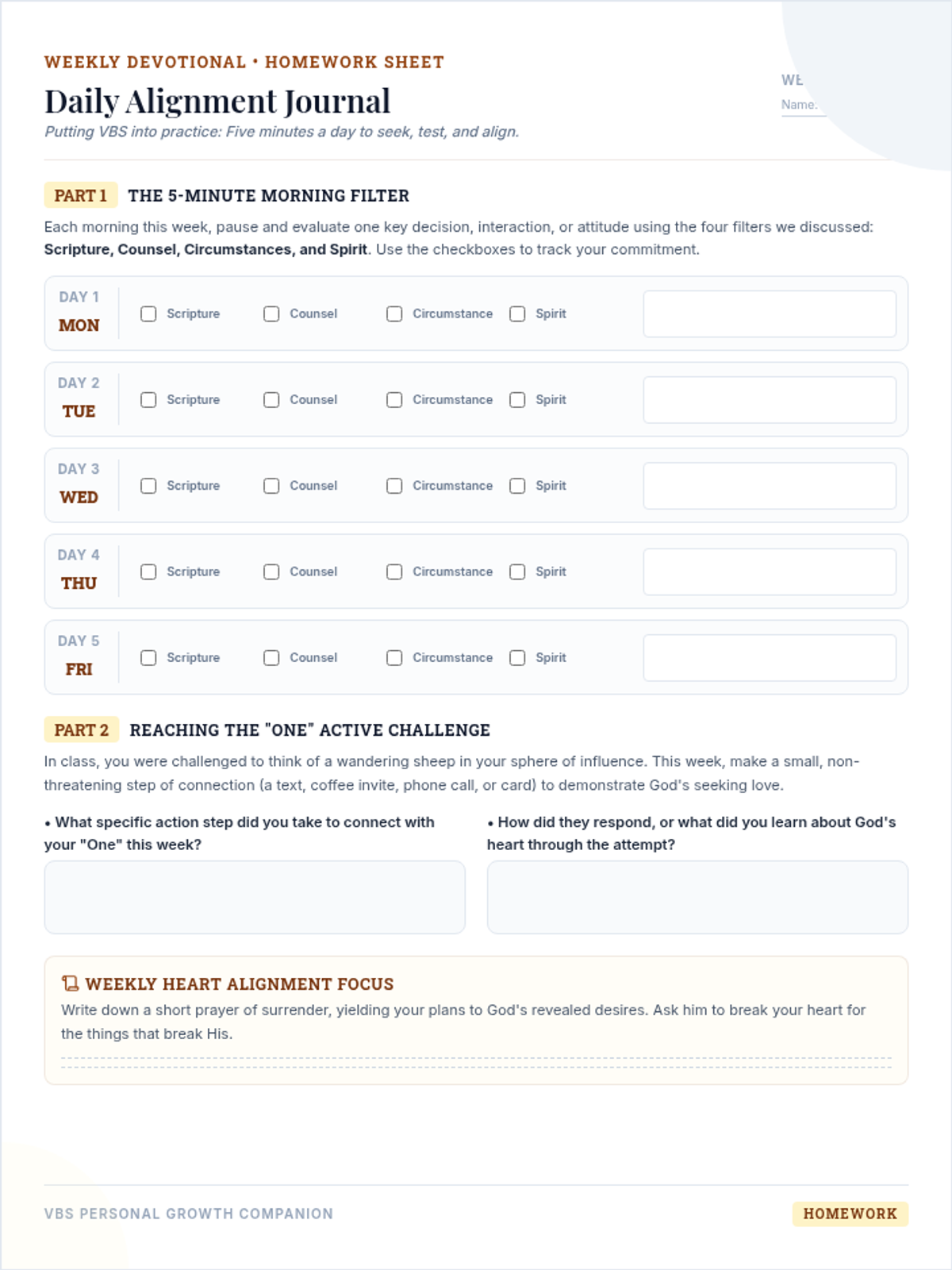
An adult Vacation Bible School (VBS) lesson focusing on discerning and aligning with God's will. Through Romans 12:2 and Matthew 18:10-14, adults will define God's will (Sovereign vs. Revealed), understand His design that none should be lost, and discover practical paths to daily discernment and evangelism.
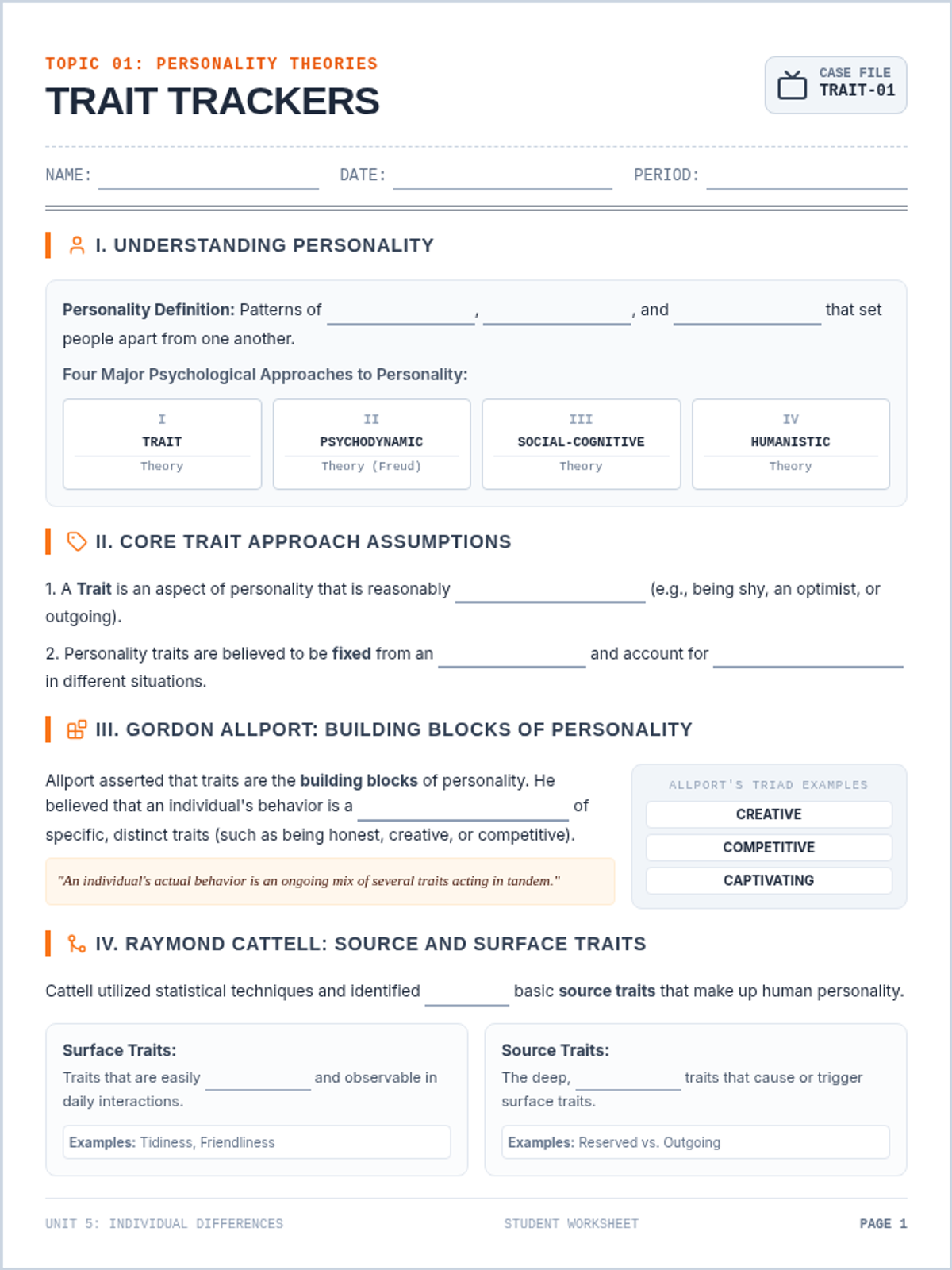
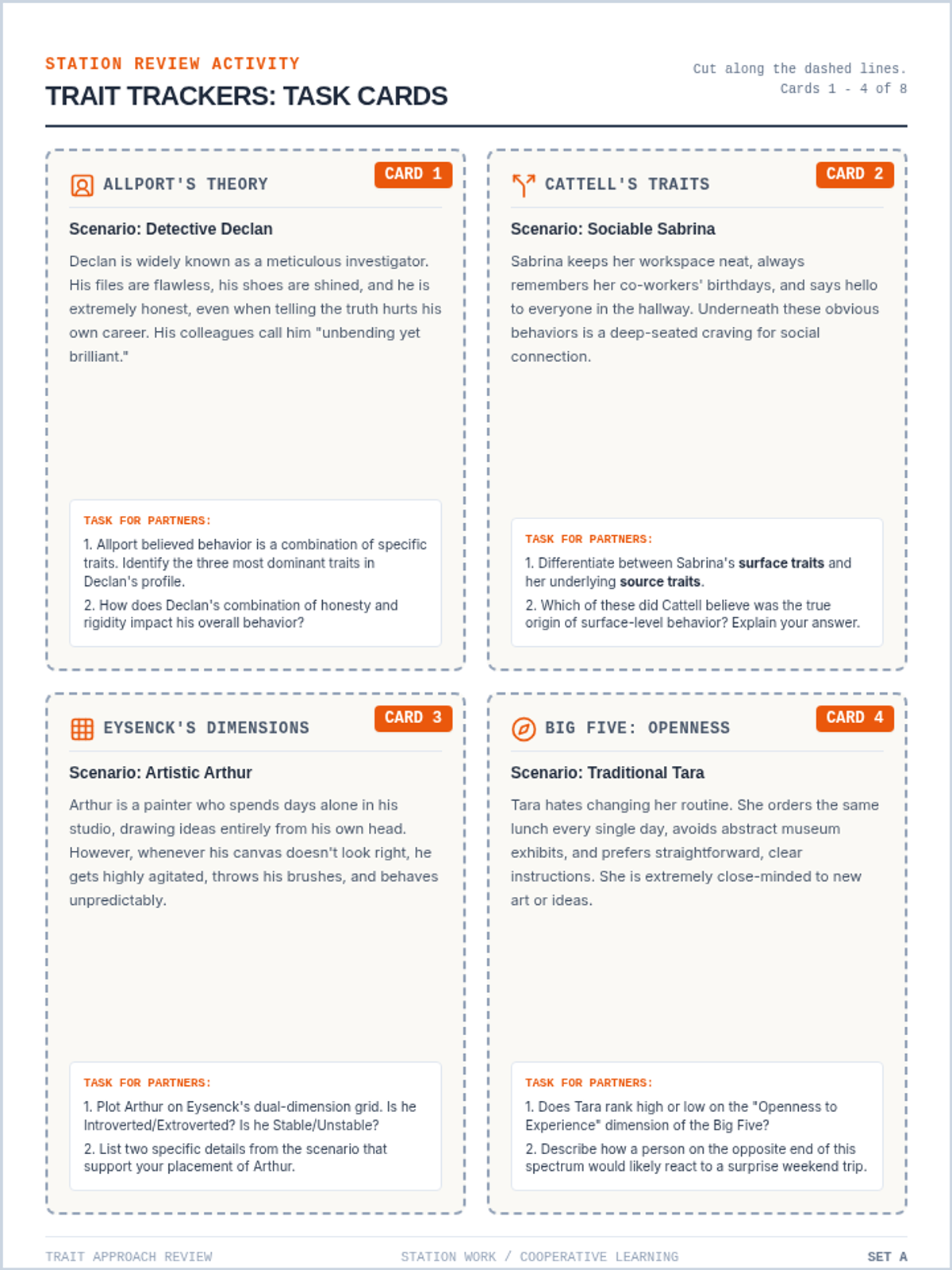
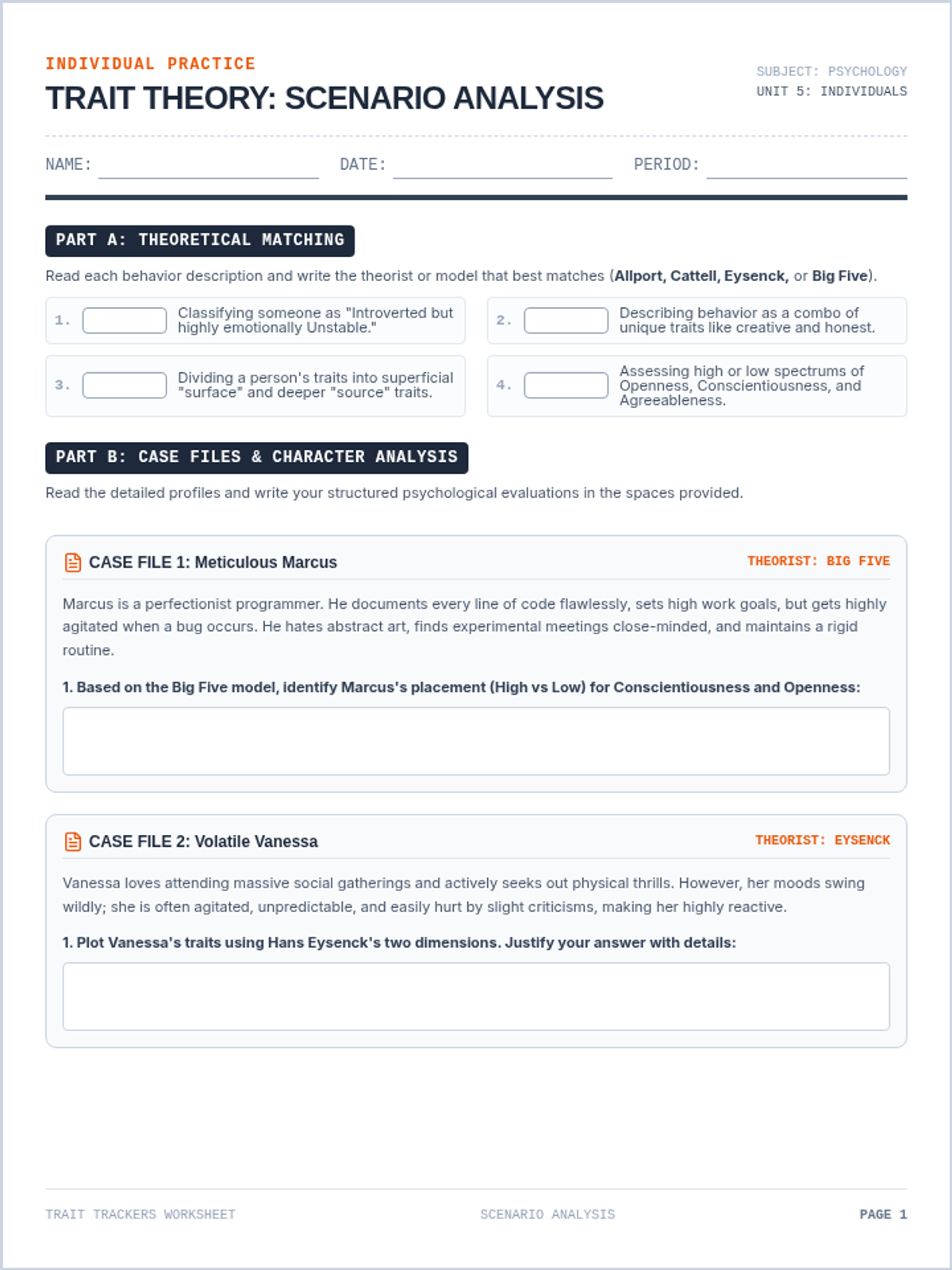
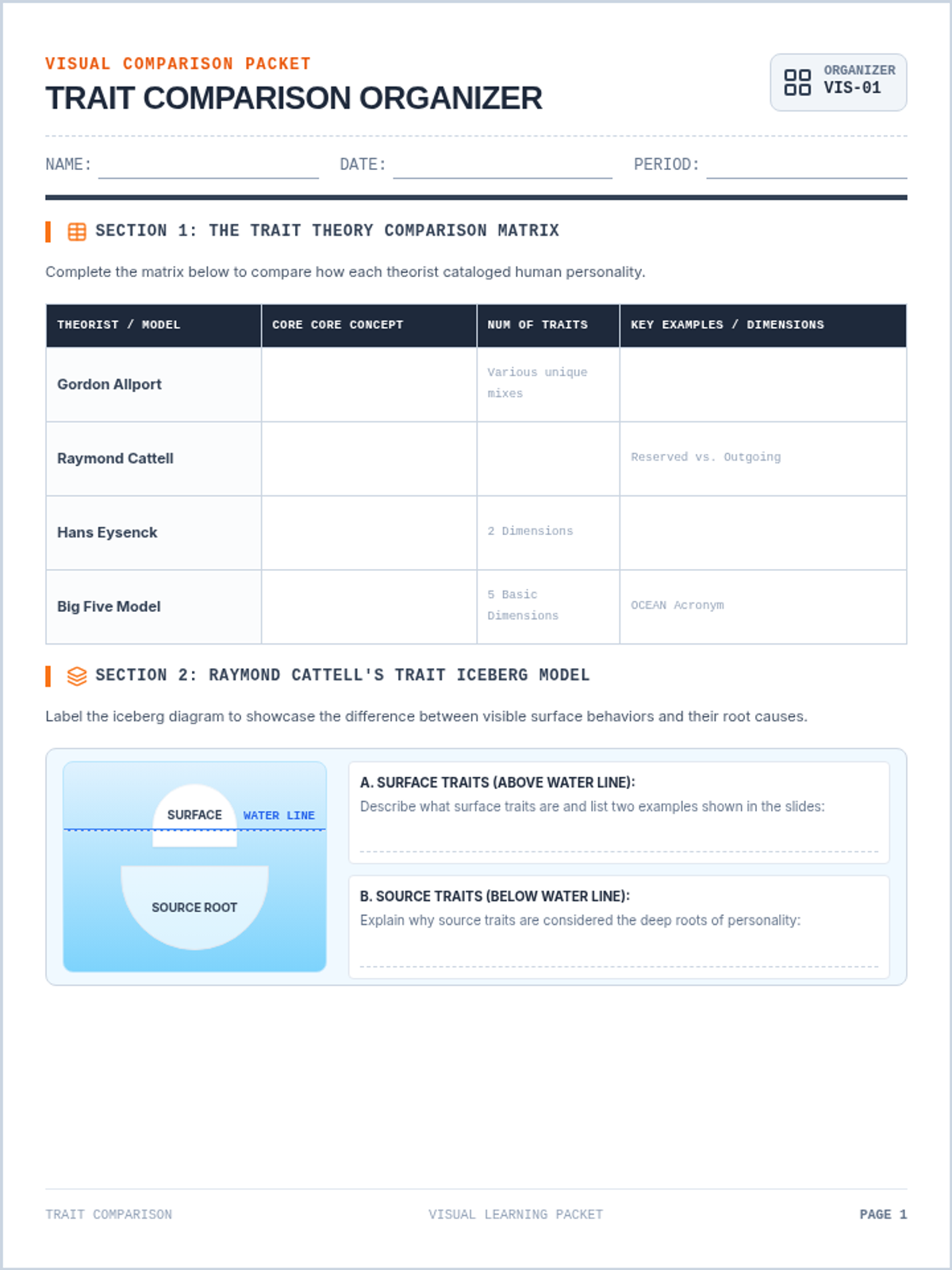
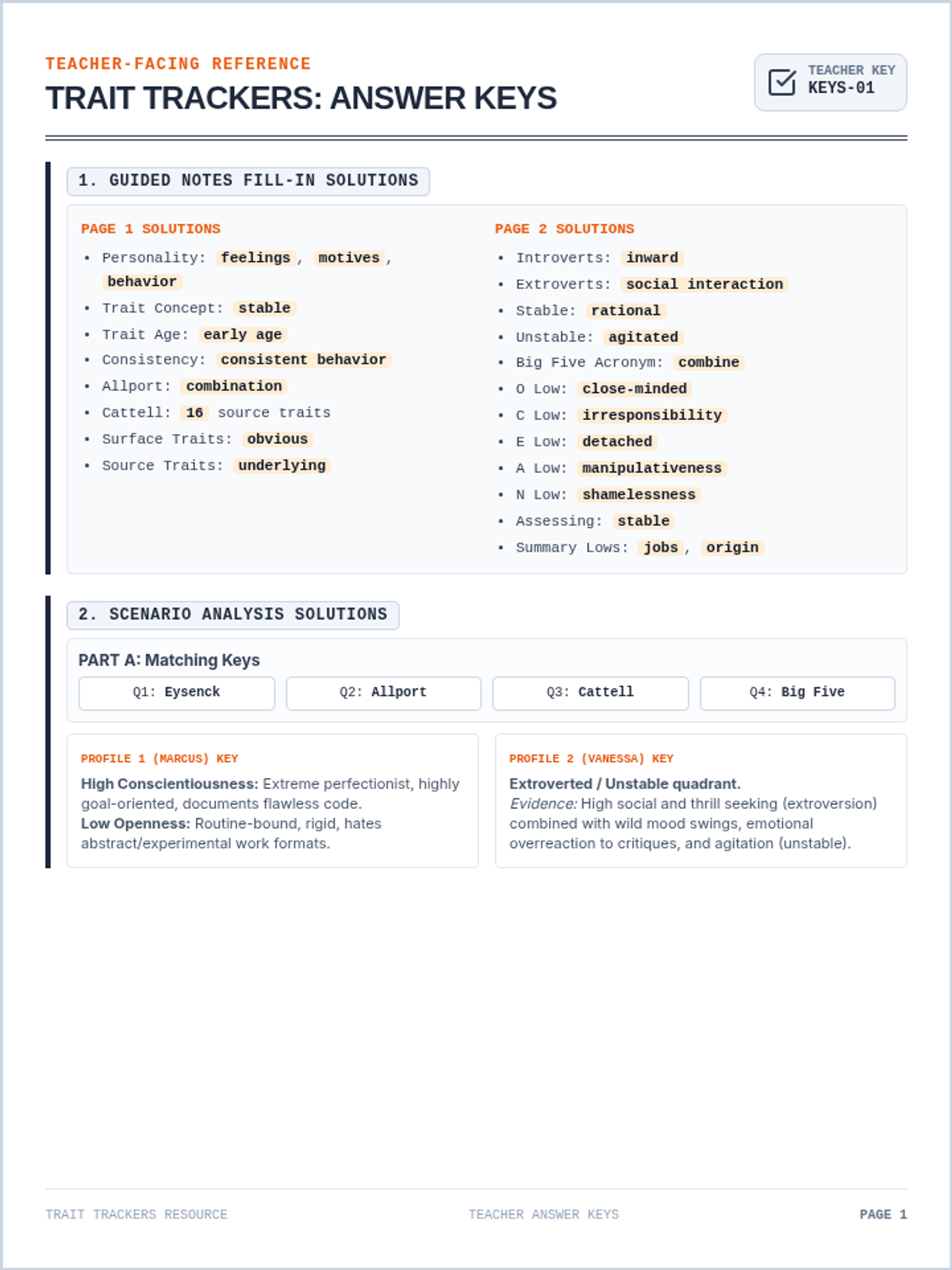
An introductory lesson on the Trait Approach to personality, guiding students through key definitions, major theorists (Allport, Cattell, Eysenck), the Big Five model, and the real-world applications and limitations of trait theory.
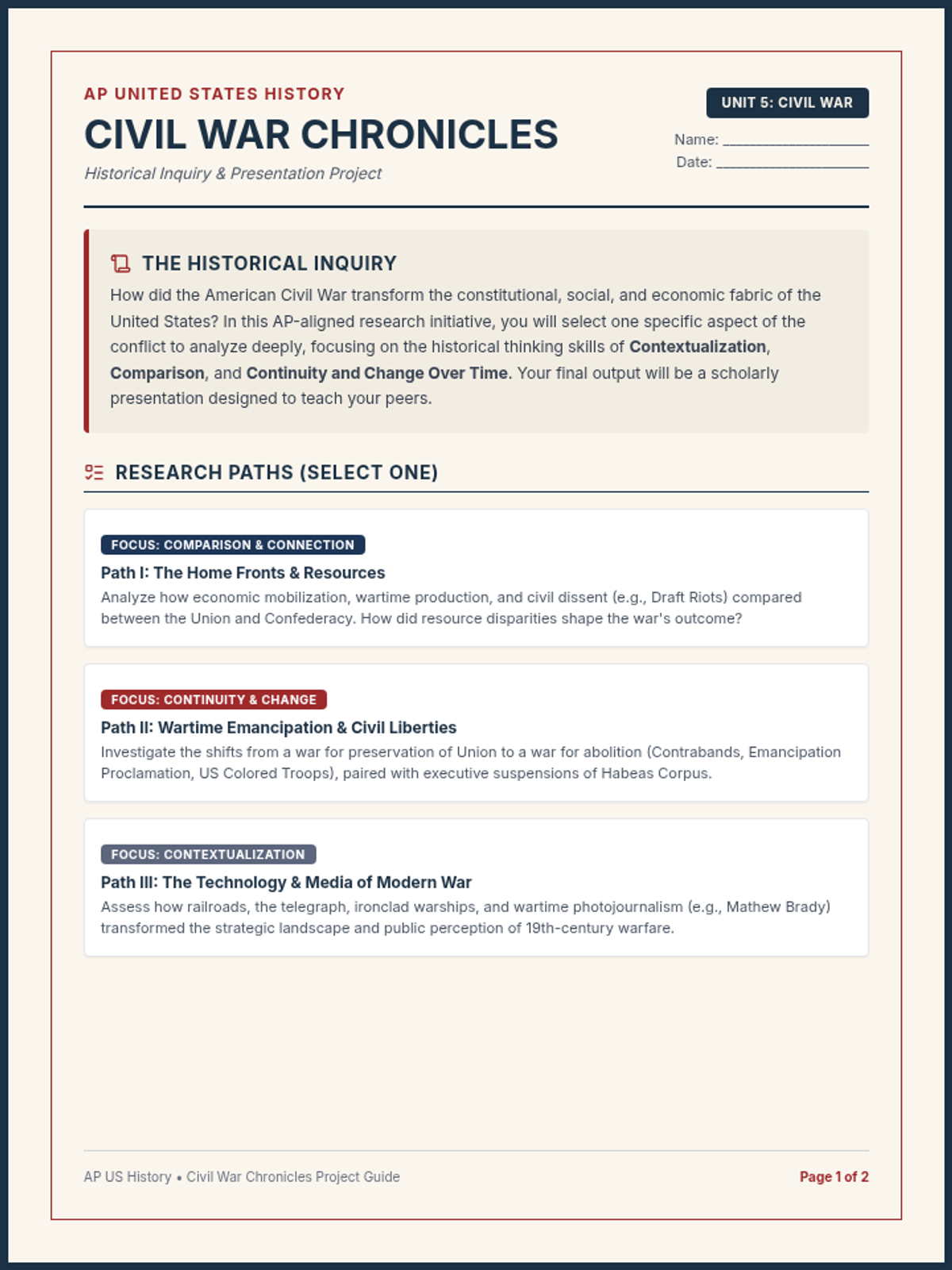
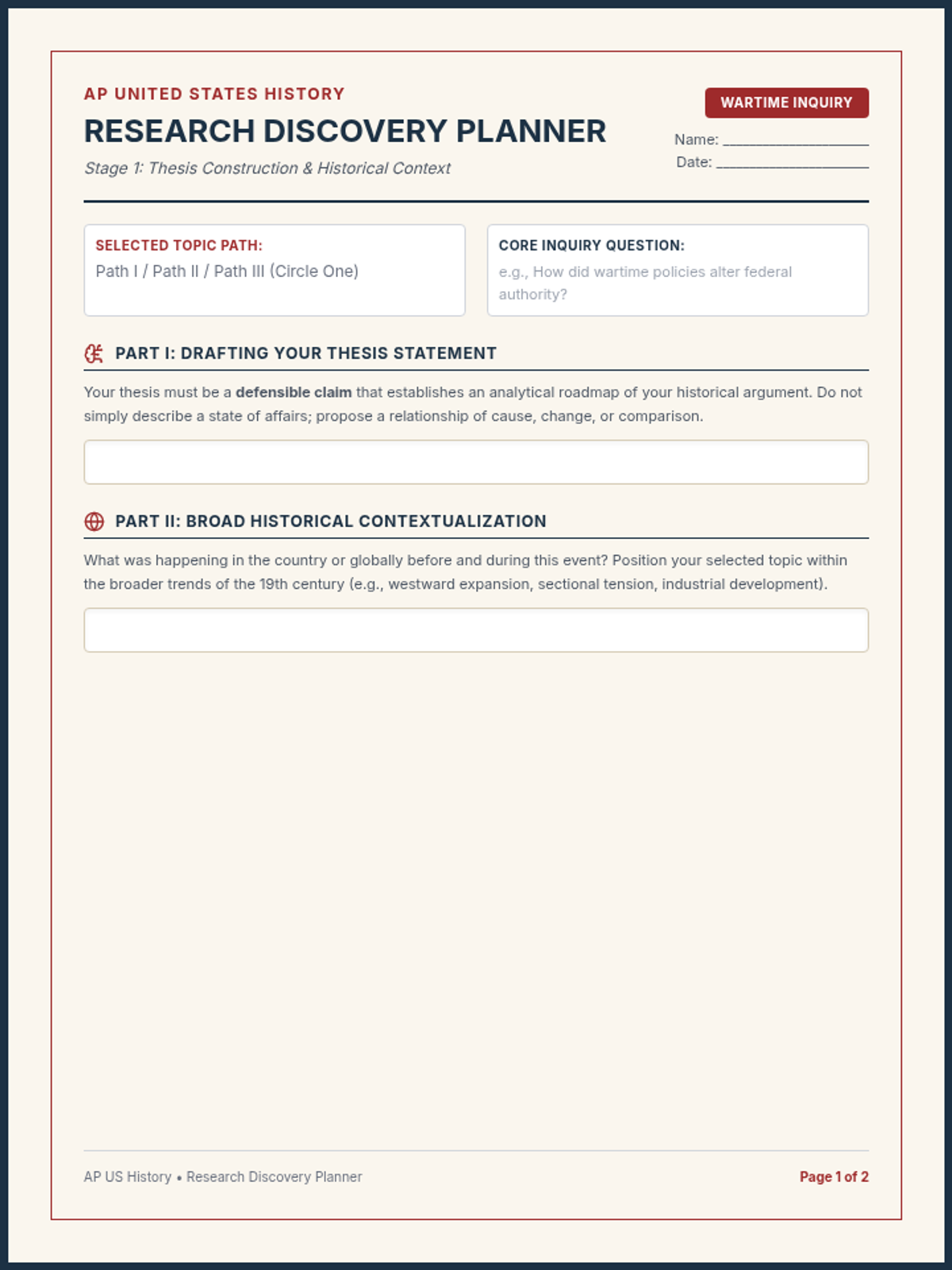
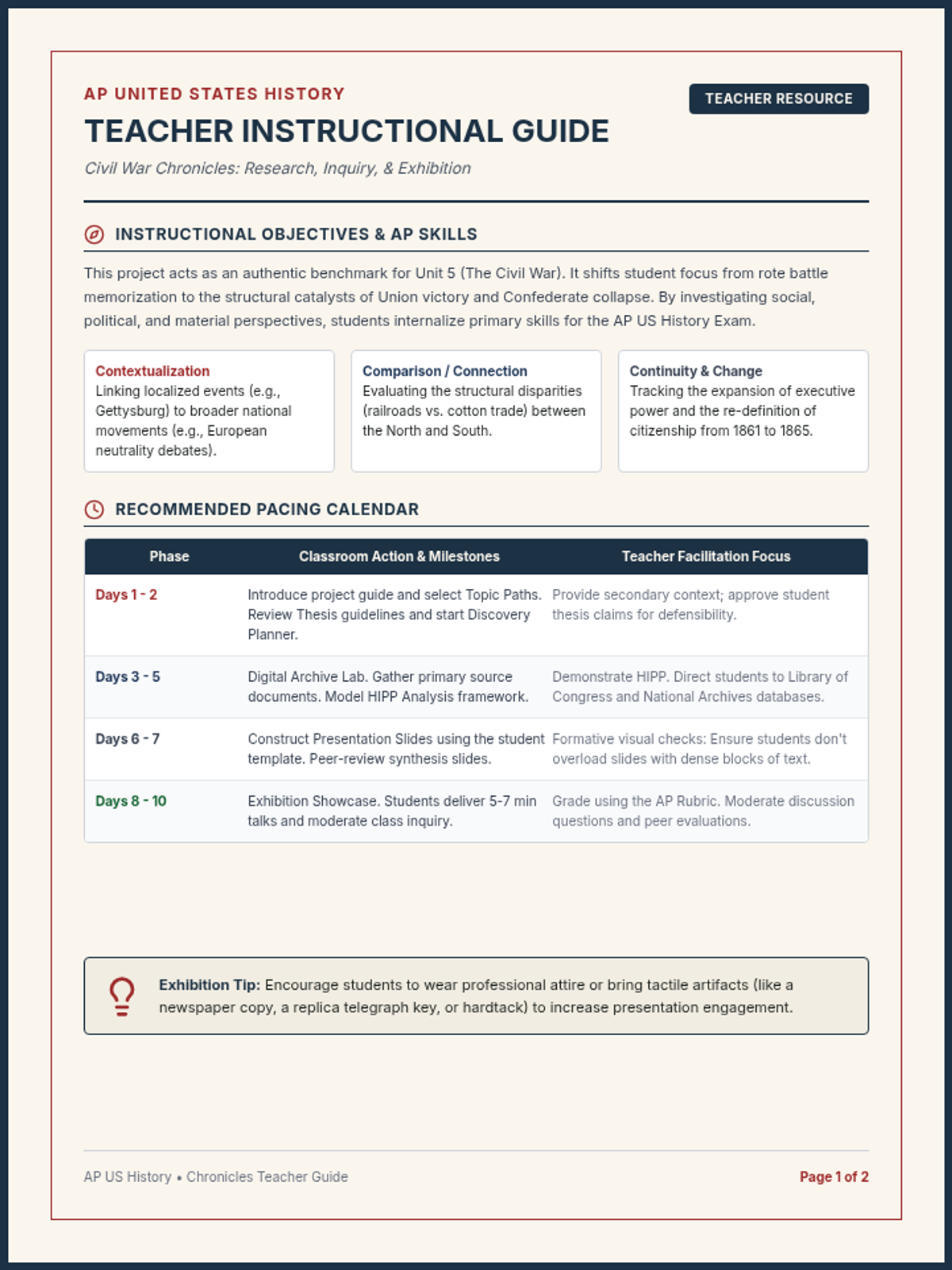
A comprehensive AP US History research and presentation project exploring the Civil War. Students engage in deep historical inquiry using AP-aligned skills including contextualization, comparative analysis, and continuity and change over time.
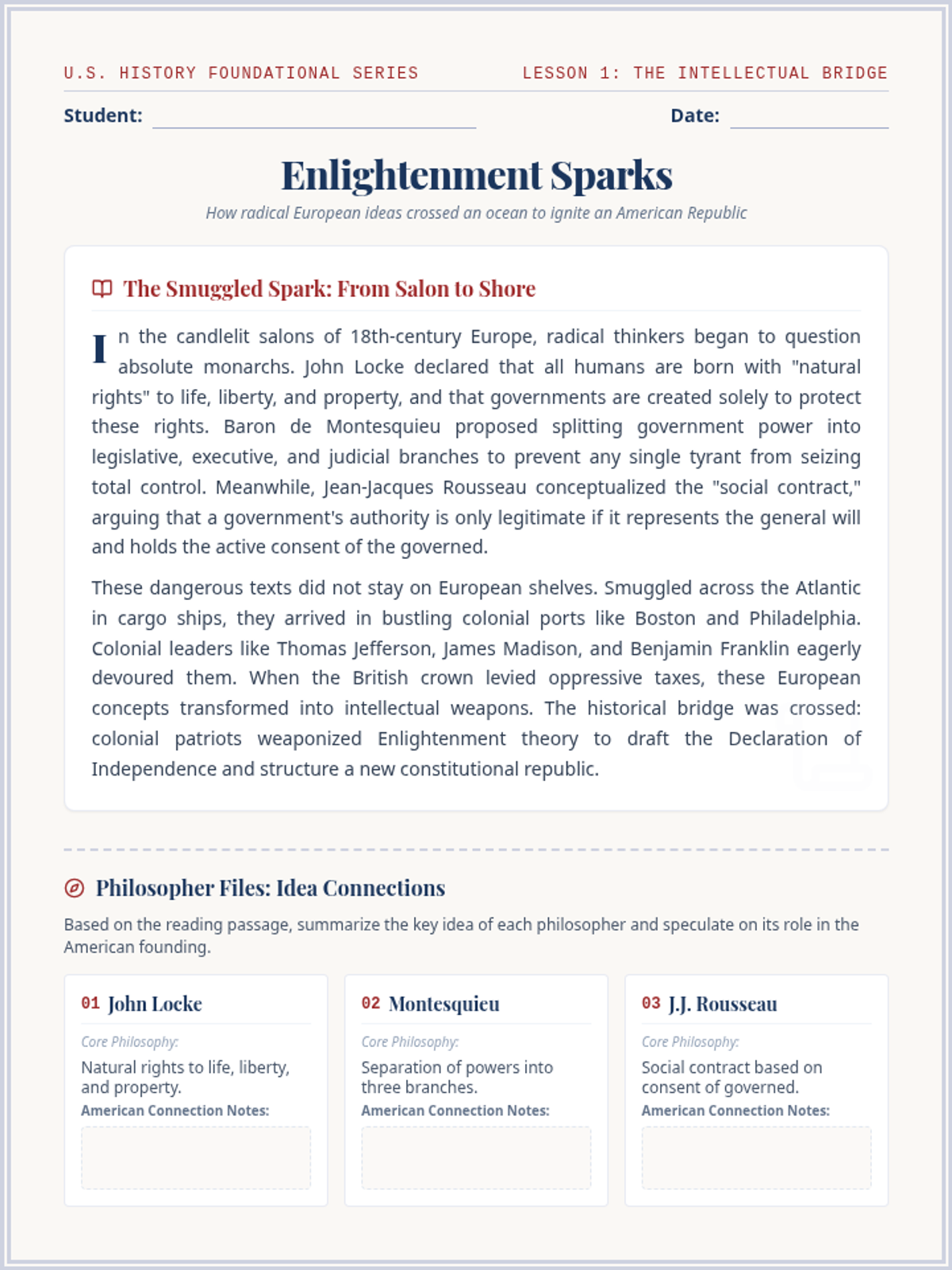
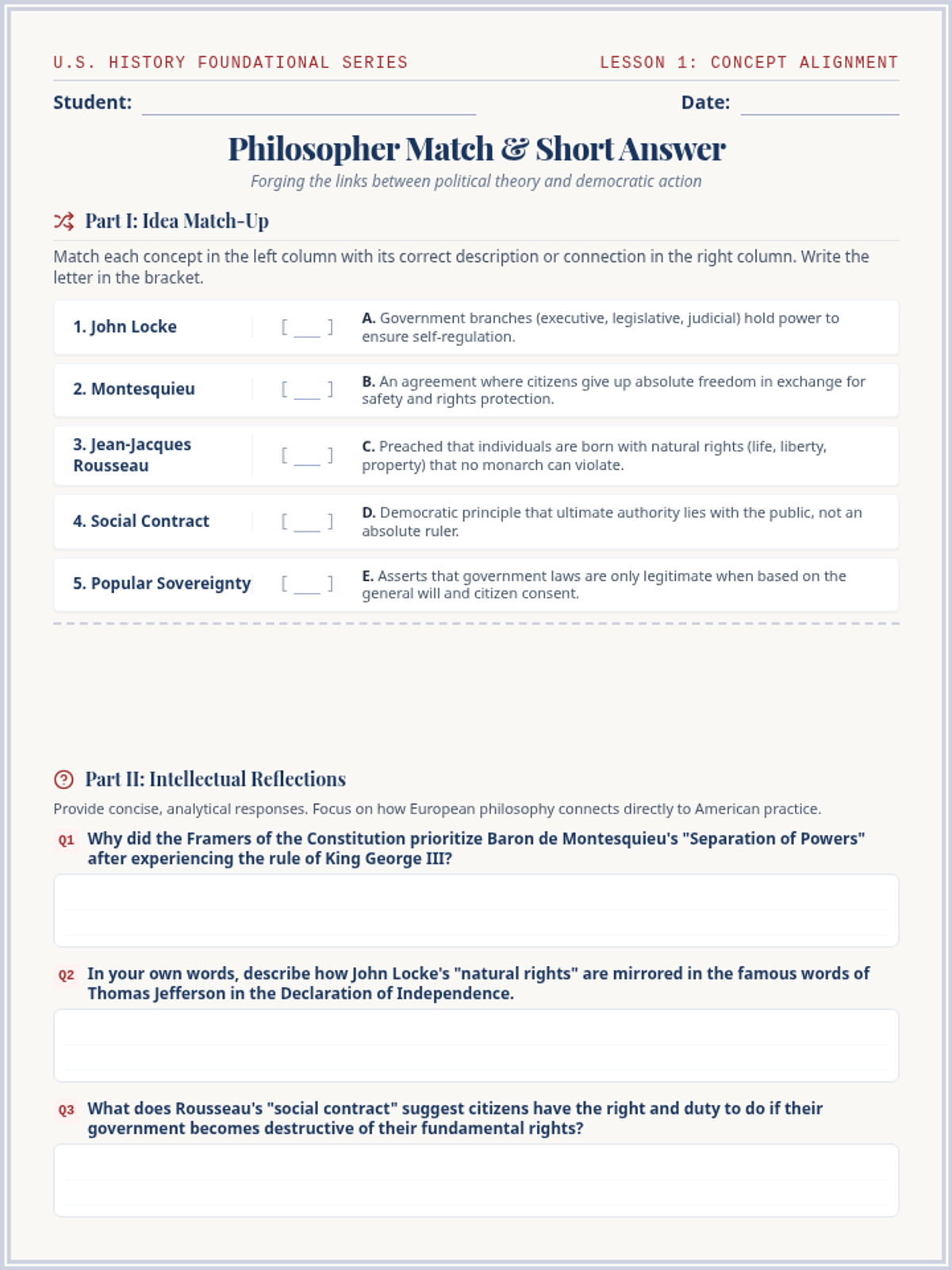
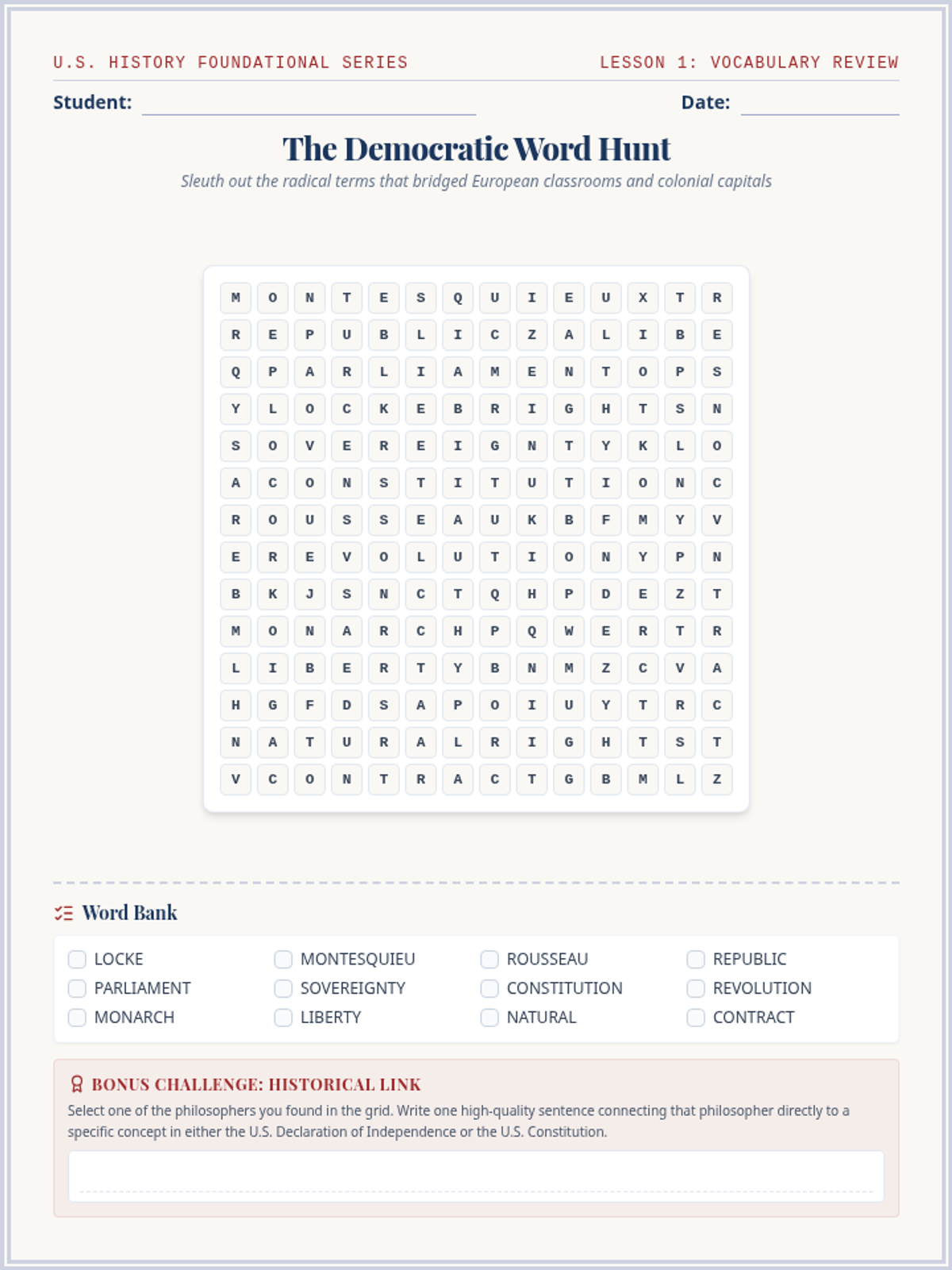
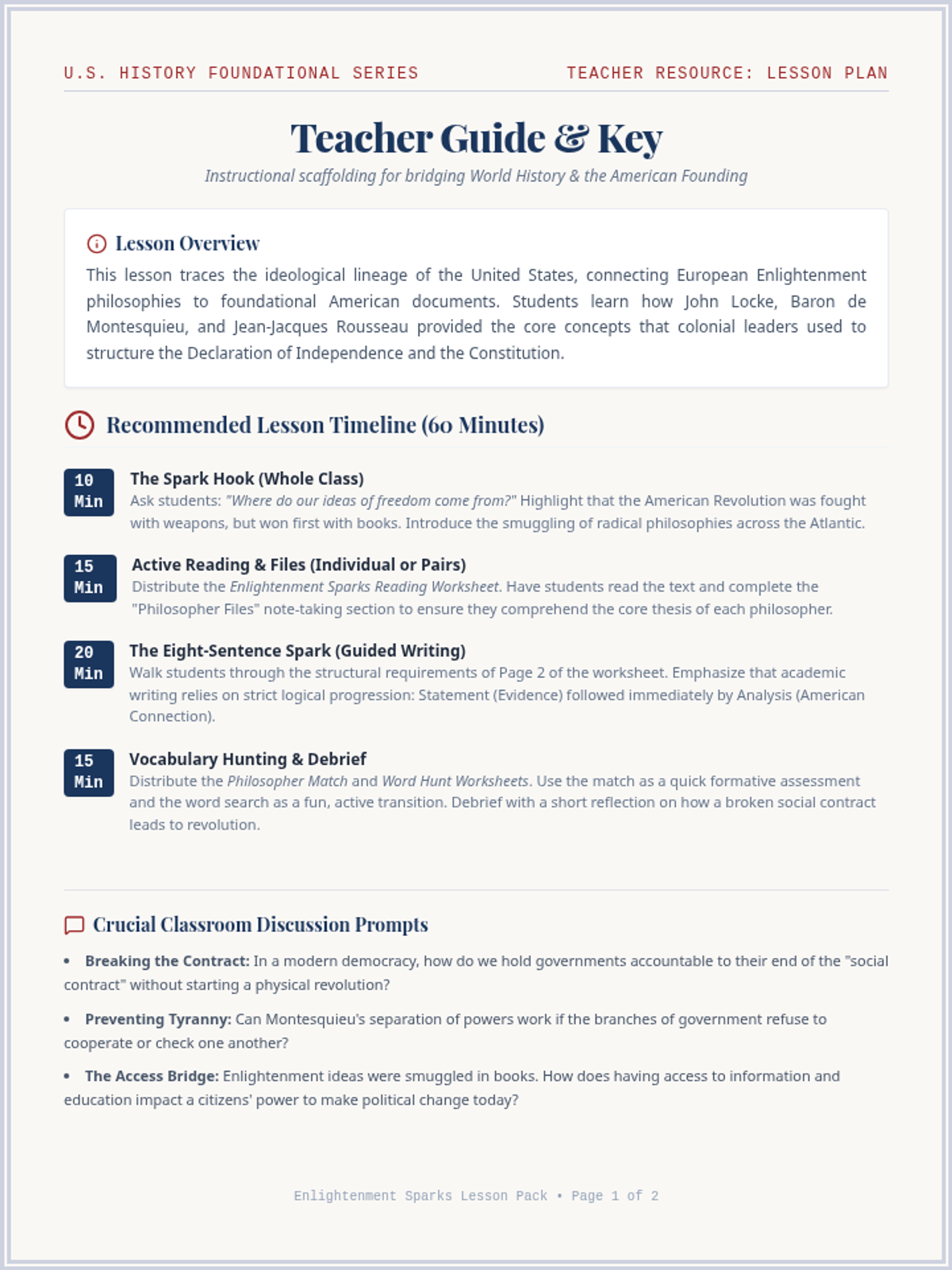
An introductory US History lesson bridging the World History Age of Enlightenment with the founding of the United States. Students explore how radical European ideas crossed the Atlantic to spark a constitutional republic through a historical narrative, text-based writing, matching, short-answer questions, and a thematic word hunt.
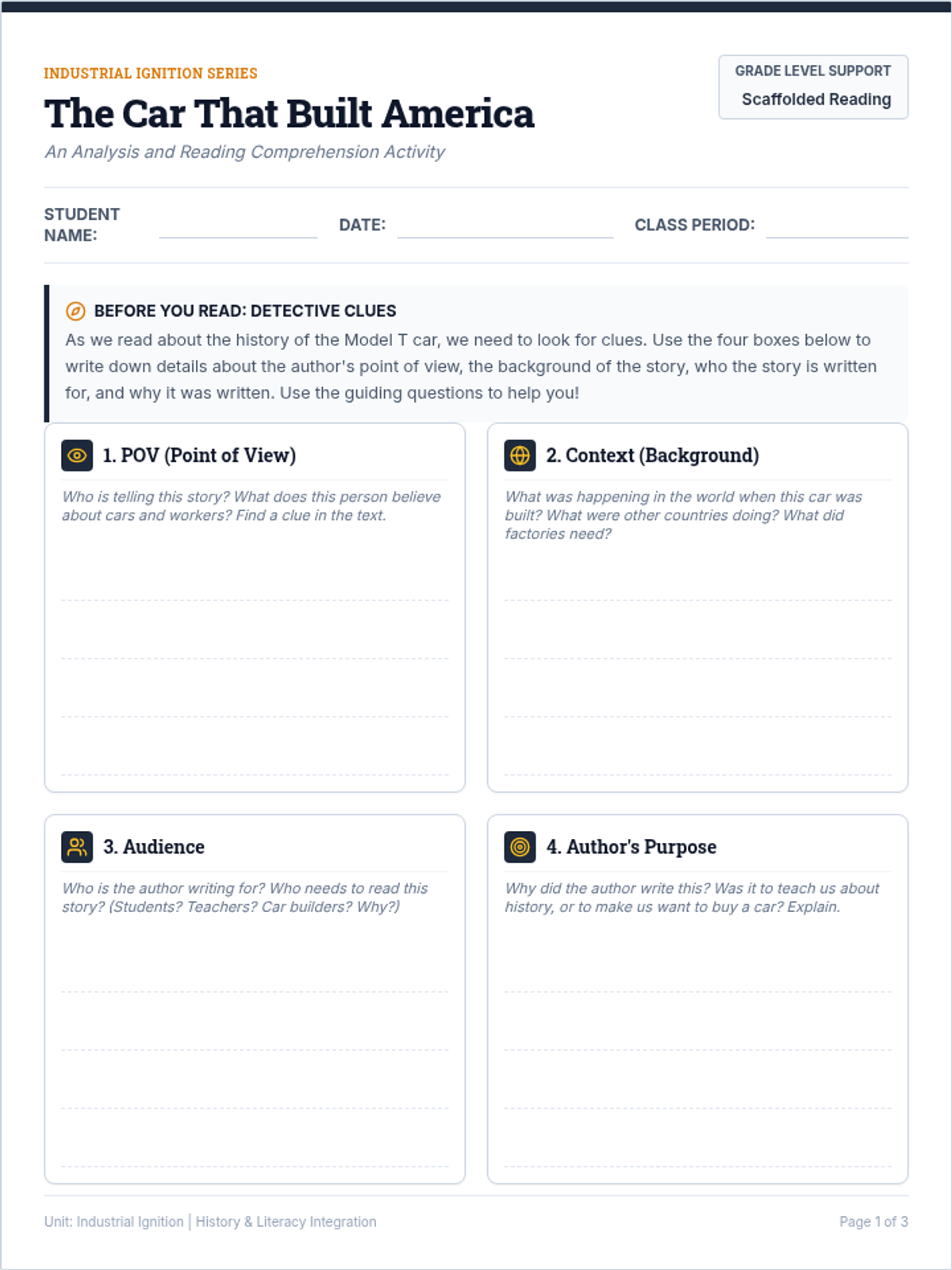
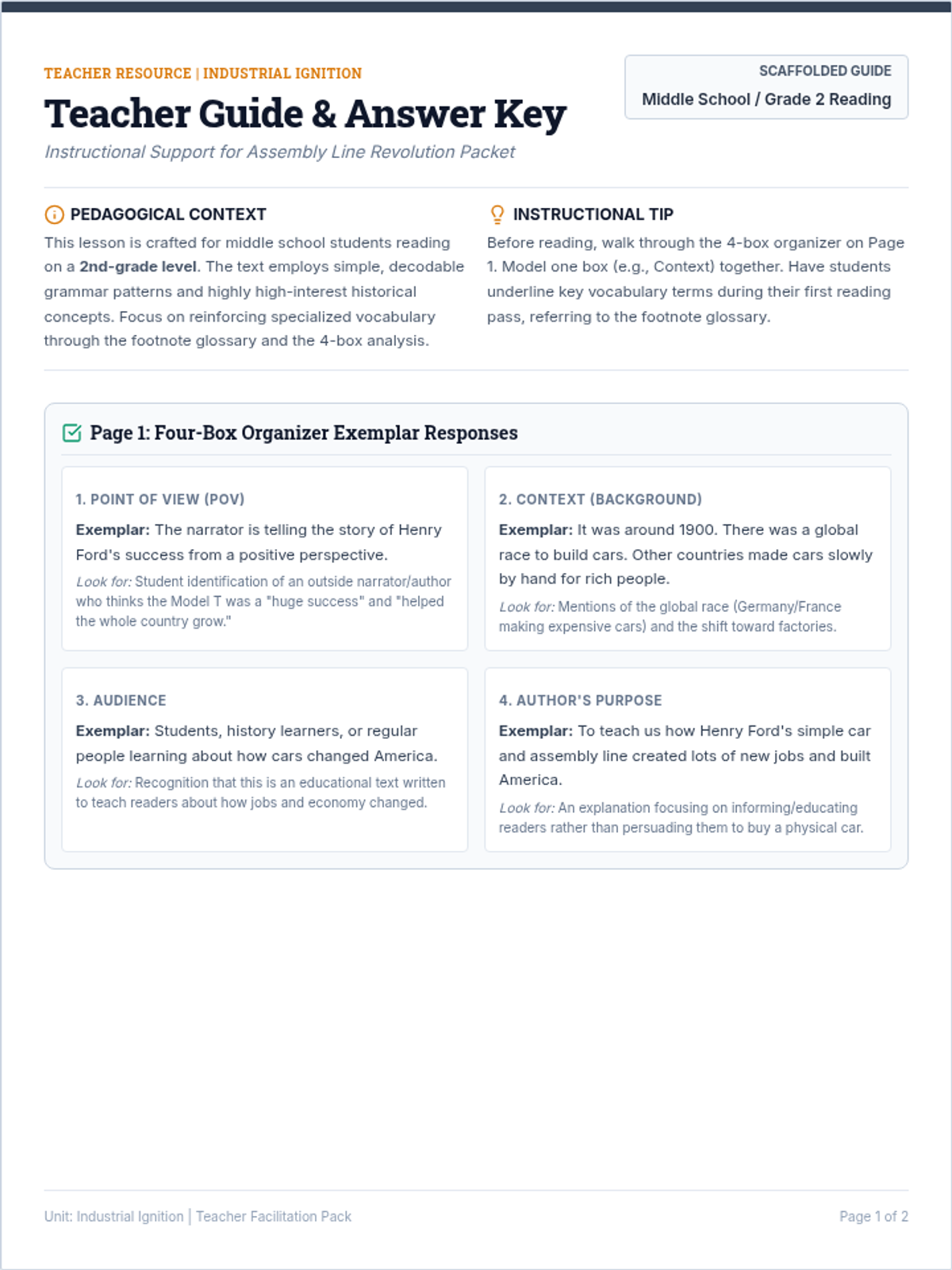
A history and reading comprehension lesson centered on how Henry Ford's Model T and industrial innovations transformed the American economy and labor market.