Students learn the requirements for the Price Patrol project and begin planning their grocery catalog, including selecting categories, items, and pricing strategies.
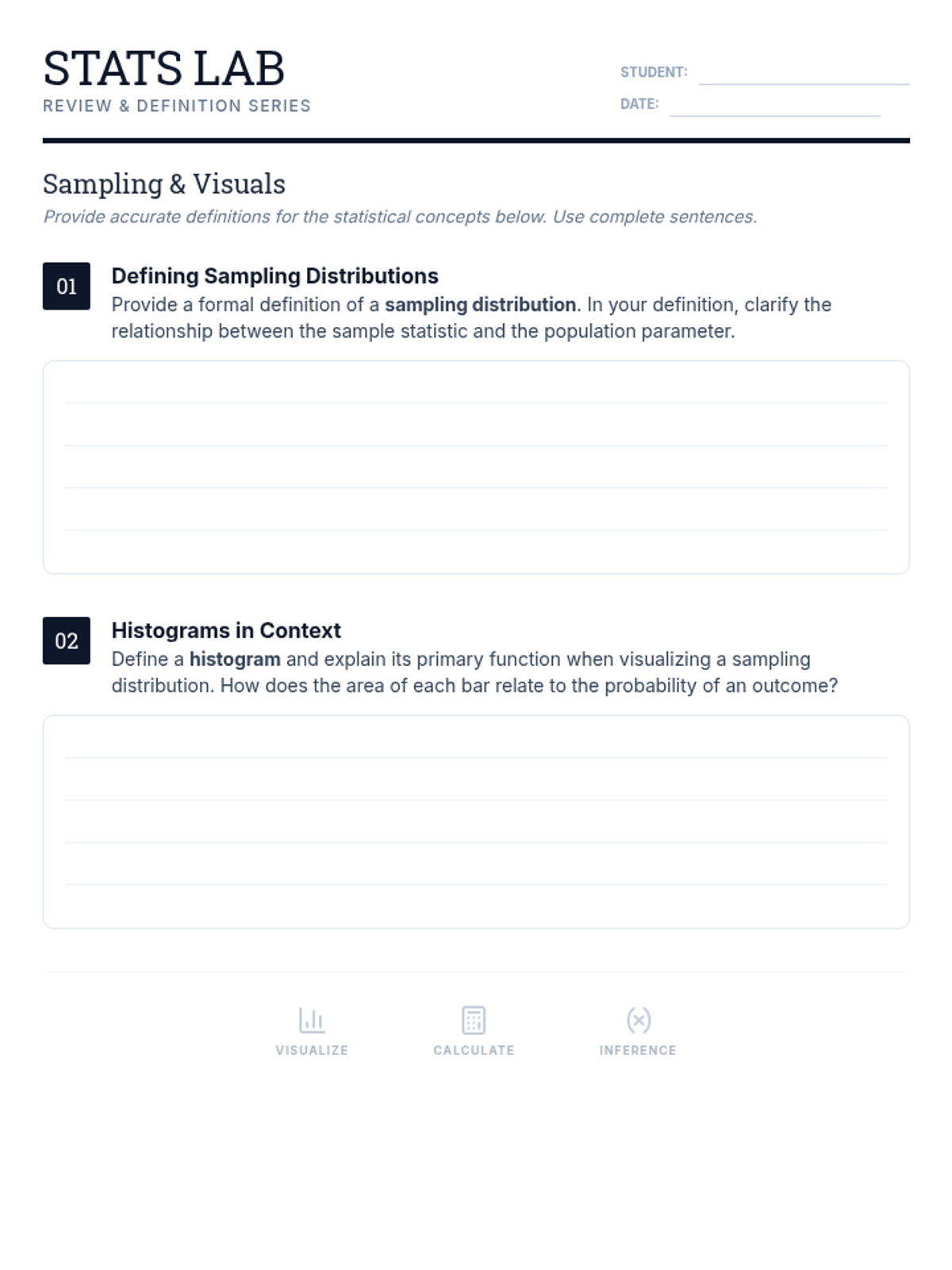
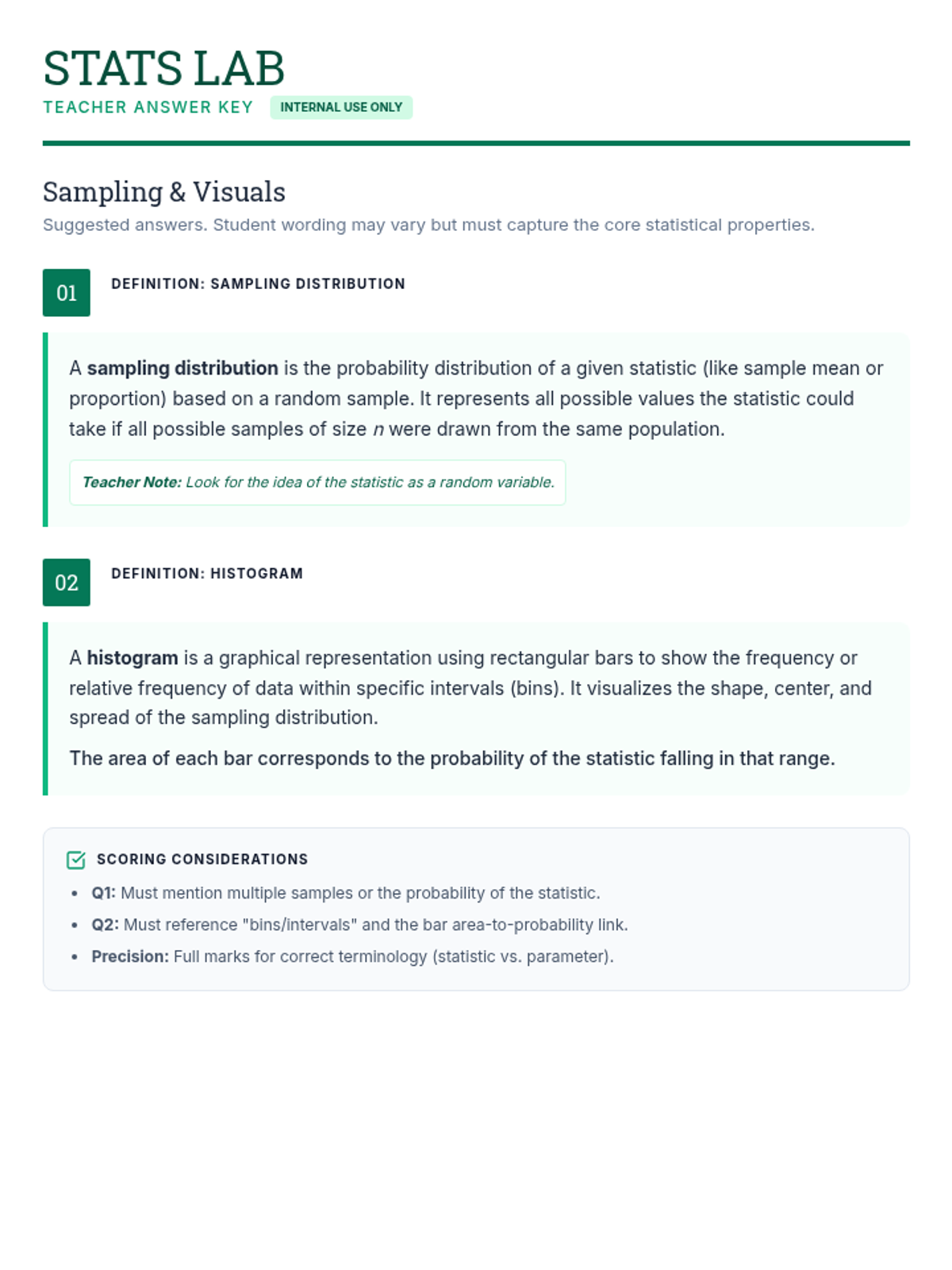
A lesson focused on fundamental statistical concepts including sampling distributions and the visual representation of data using histograms.
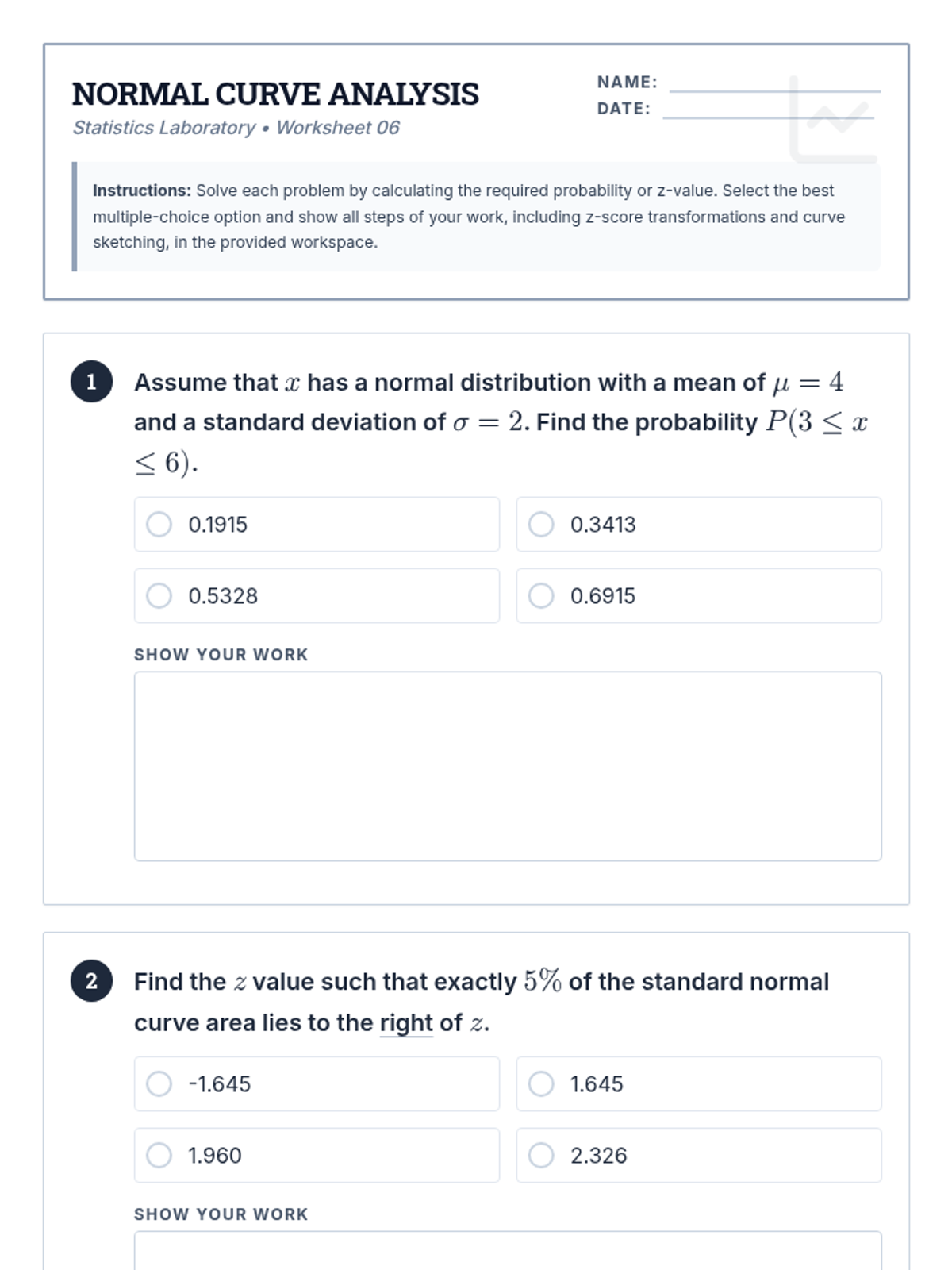
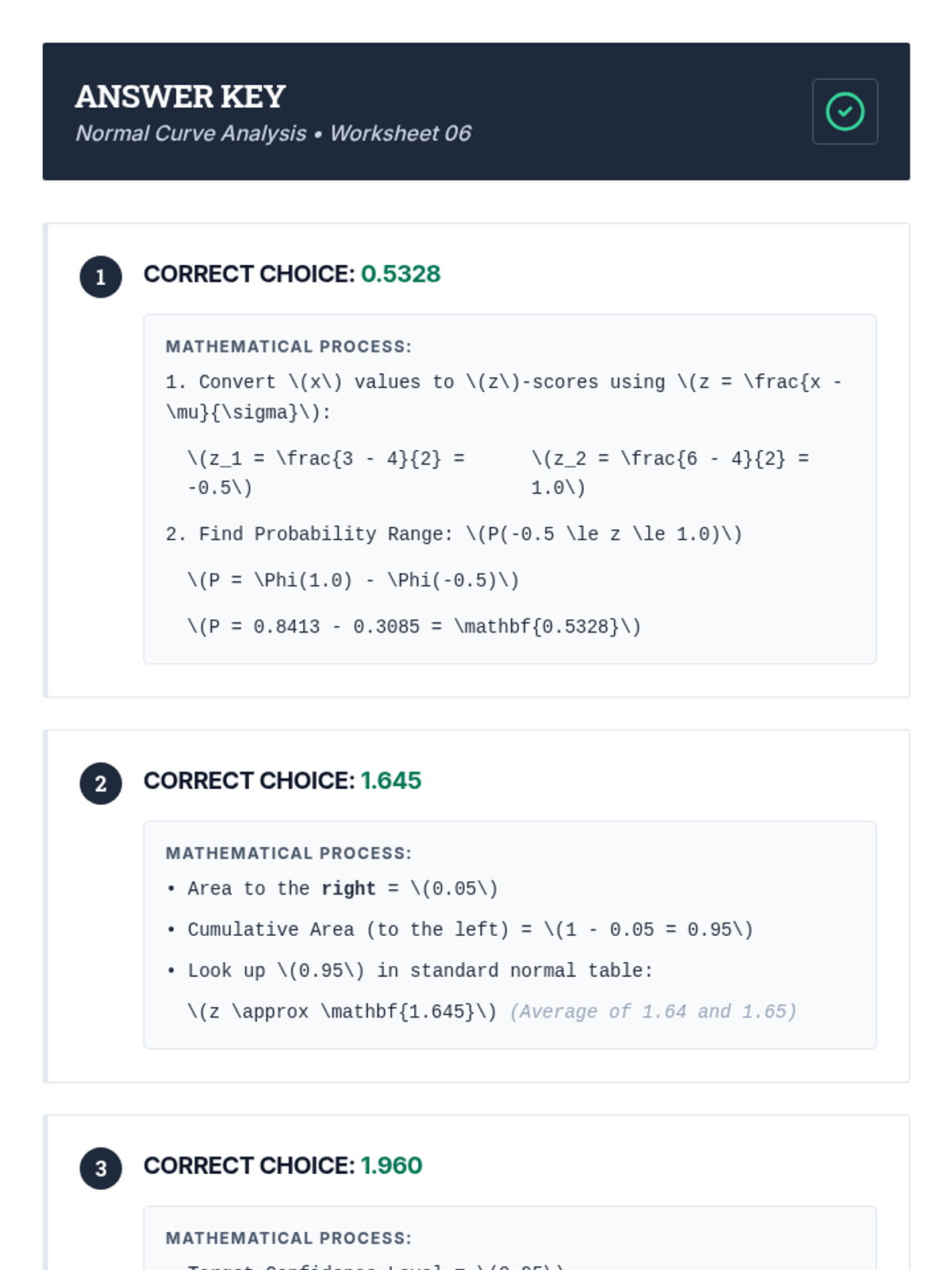
A focused practice session on calculating probabilities and z-values for normal distributions, based on medical and abstract data.
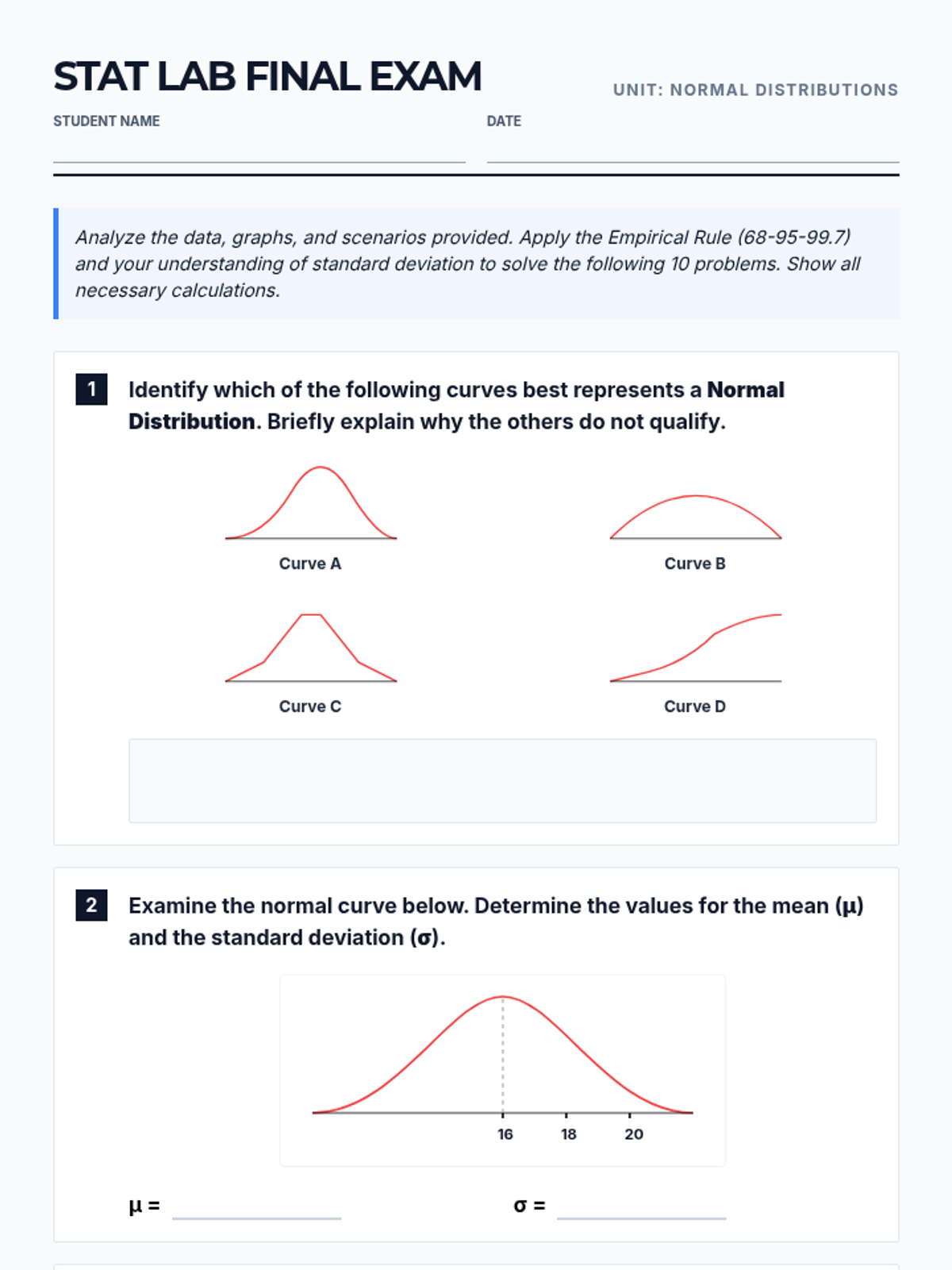
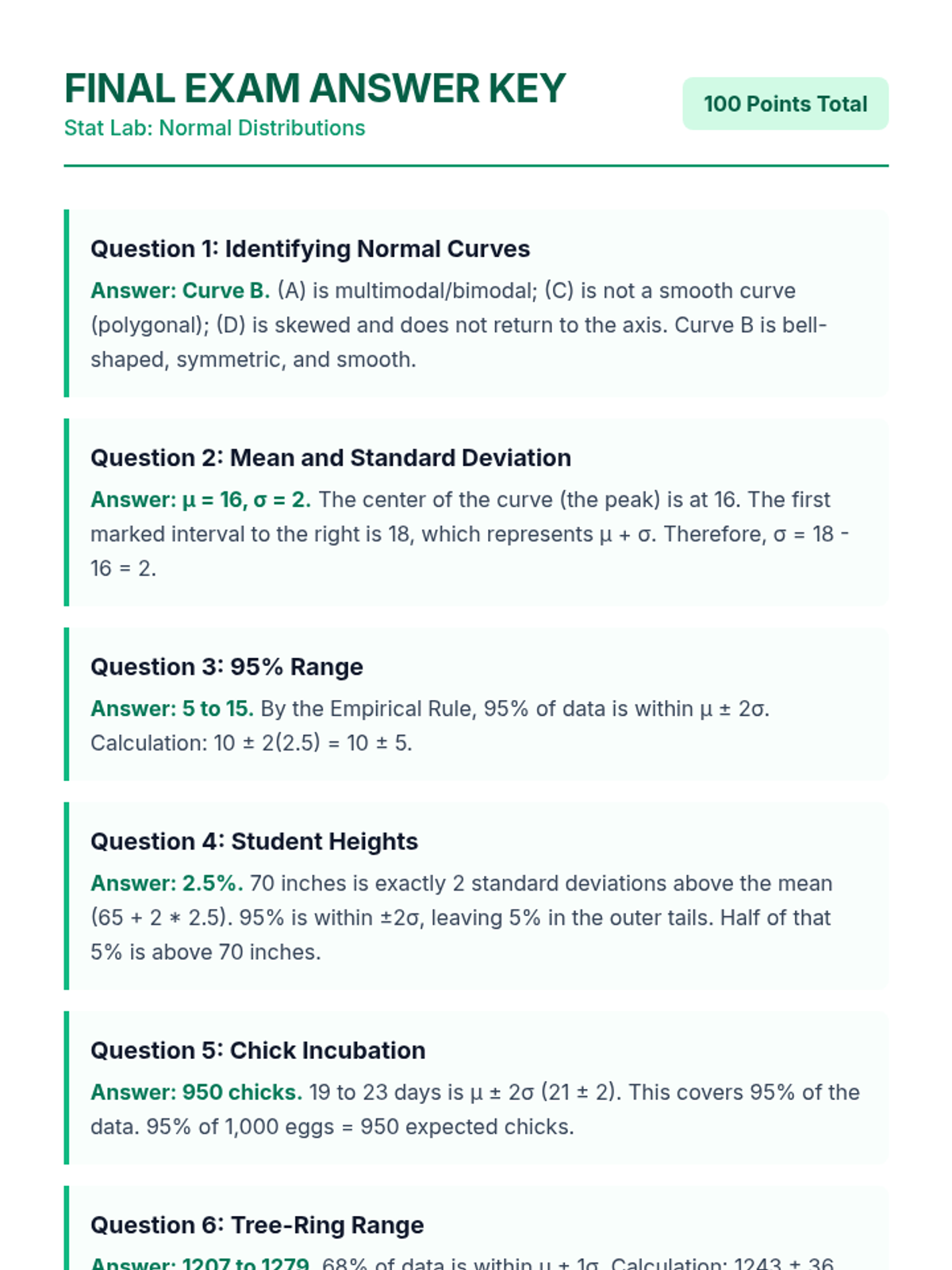
This lesson covers the fundamentals of normal distributions, including identifying bell curves, applying the empirical rule, and interpreting control charts for real-world data analysis.
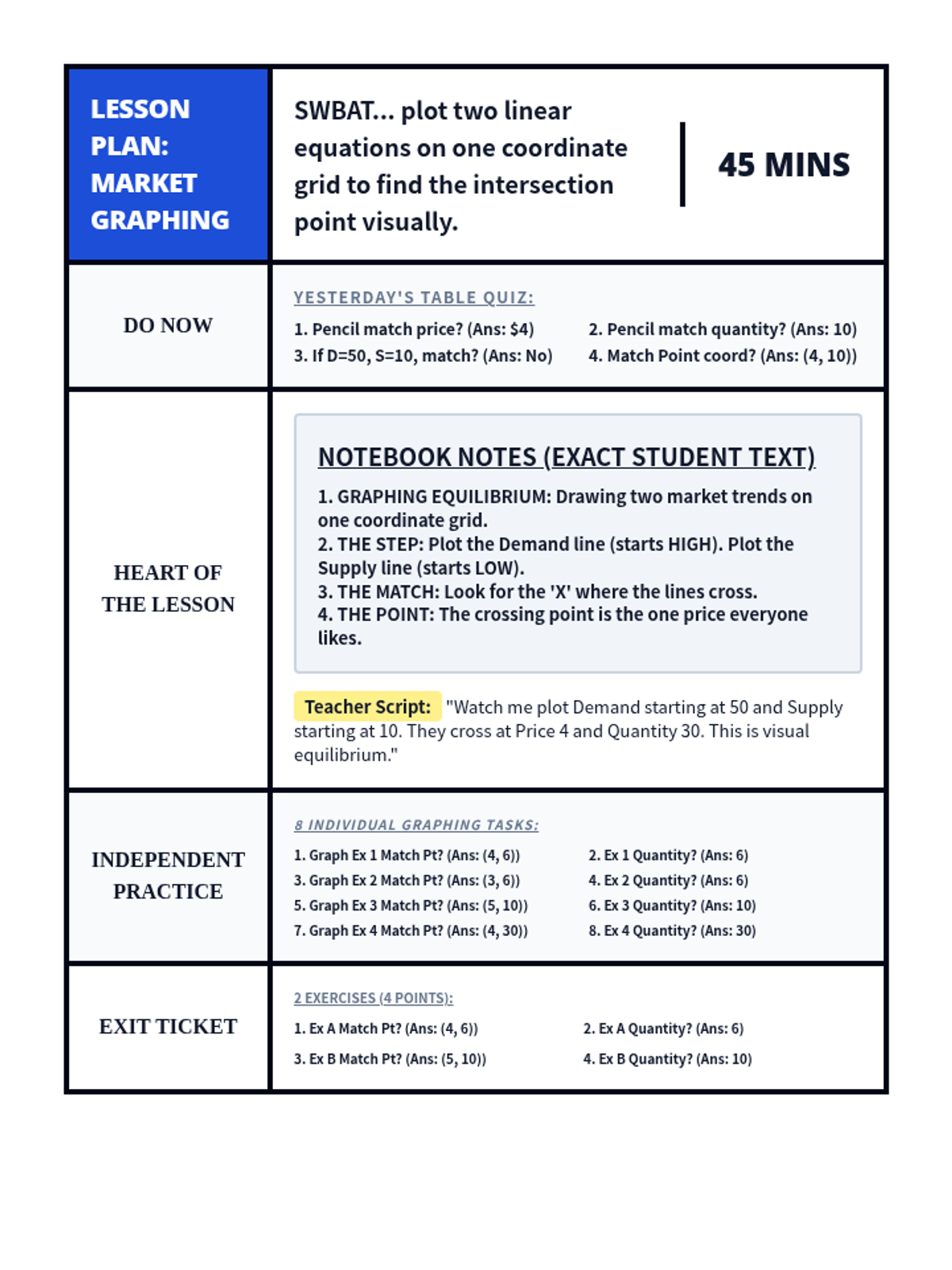
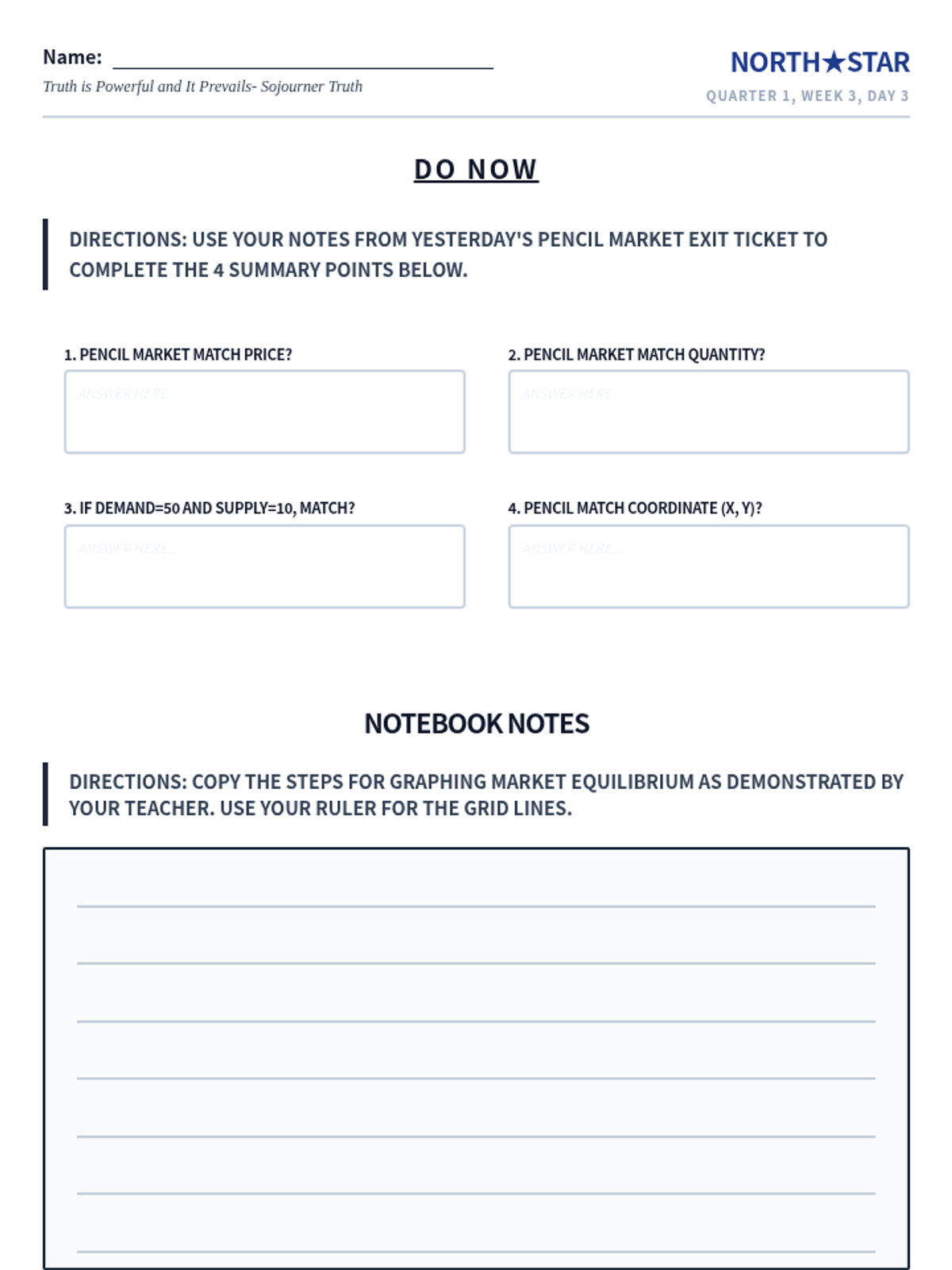
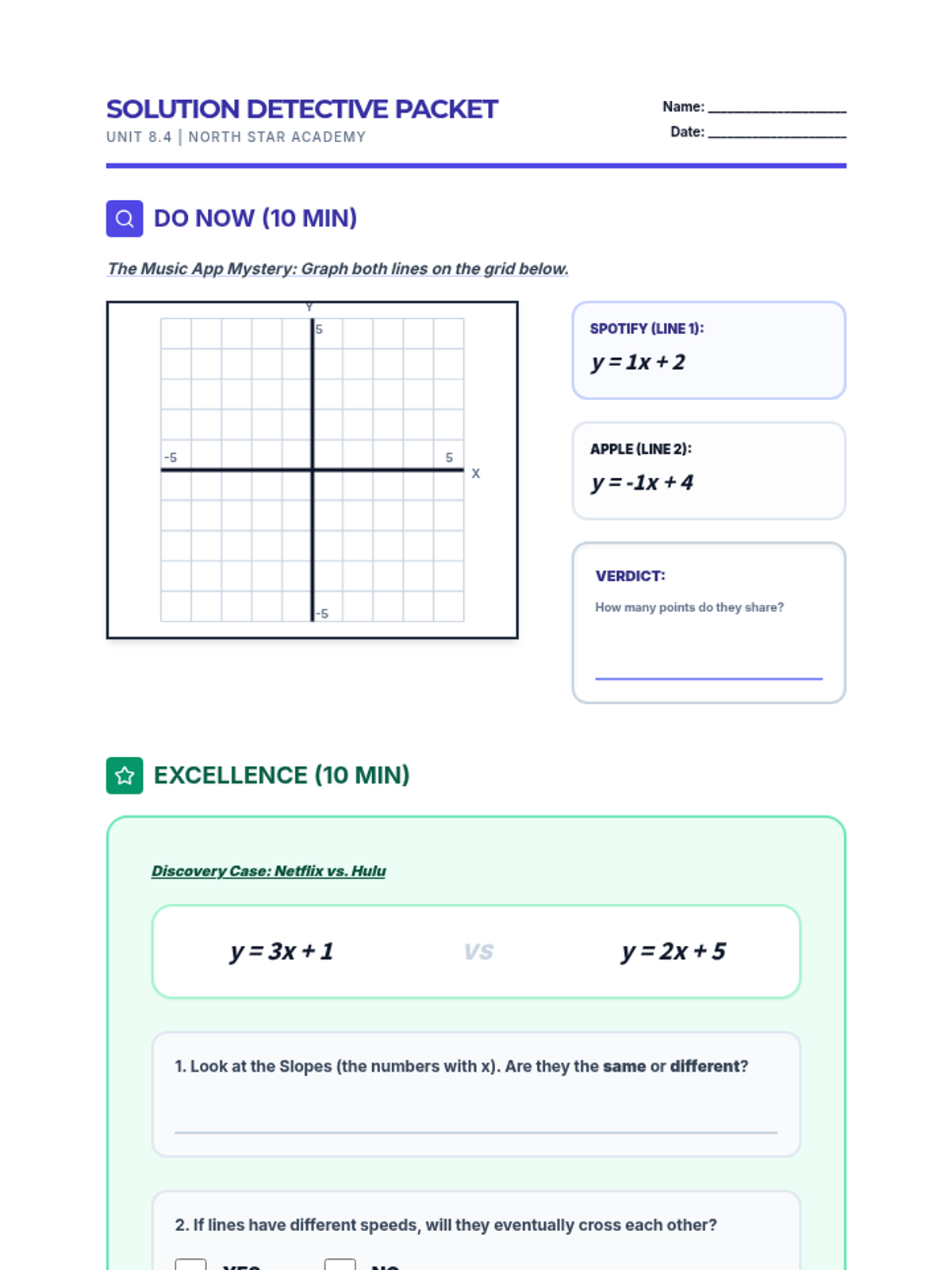
Students plot two linear equations on a single coordinate plane to find the point of intersection and identify the equilibrium price and quantity visually.
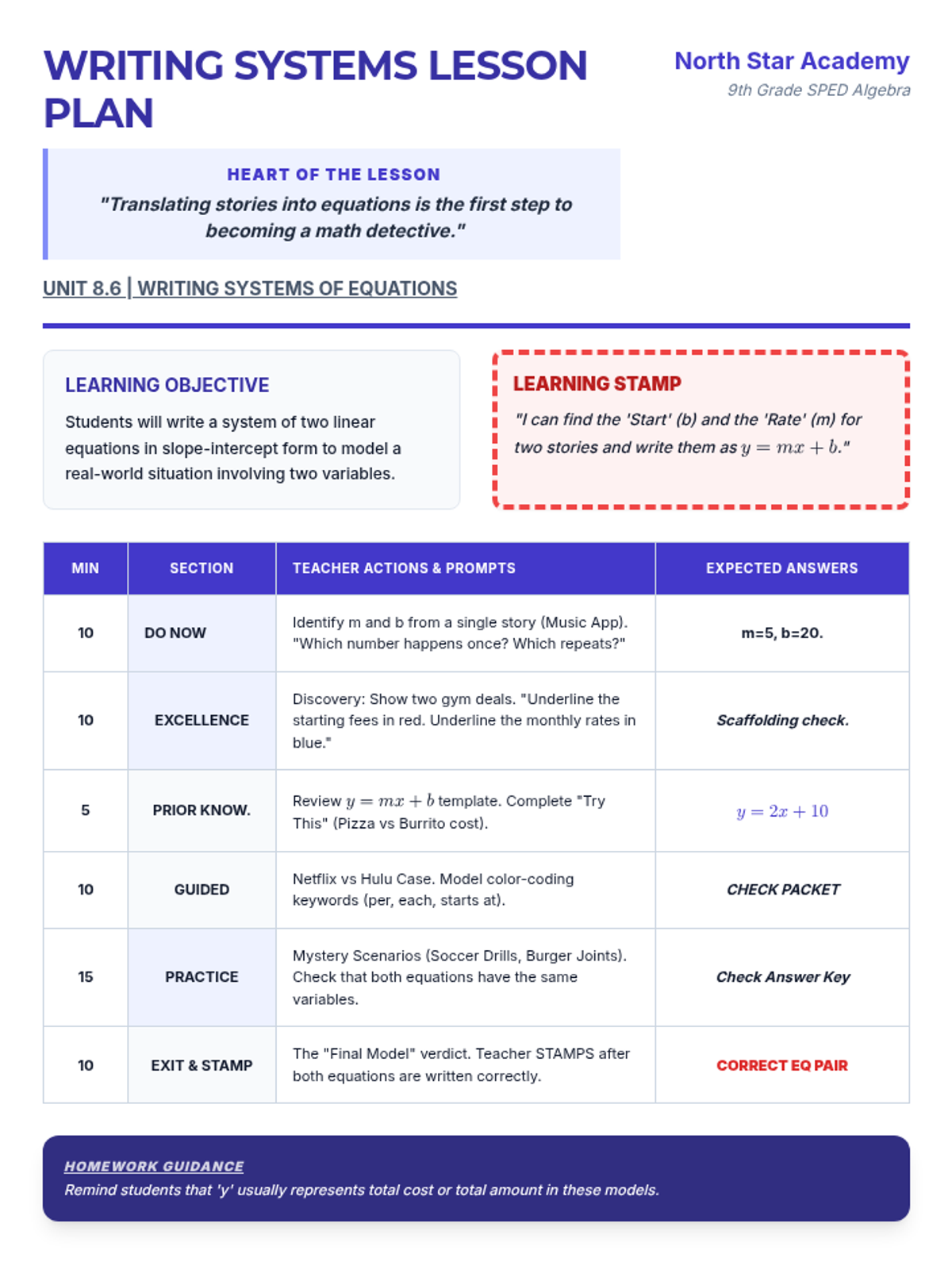
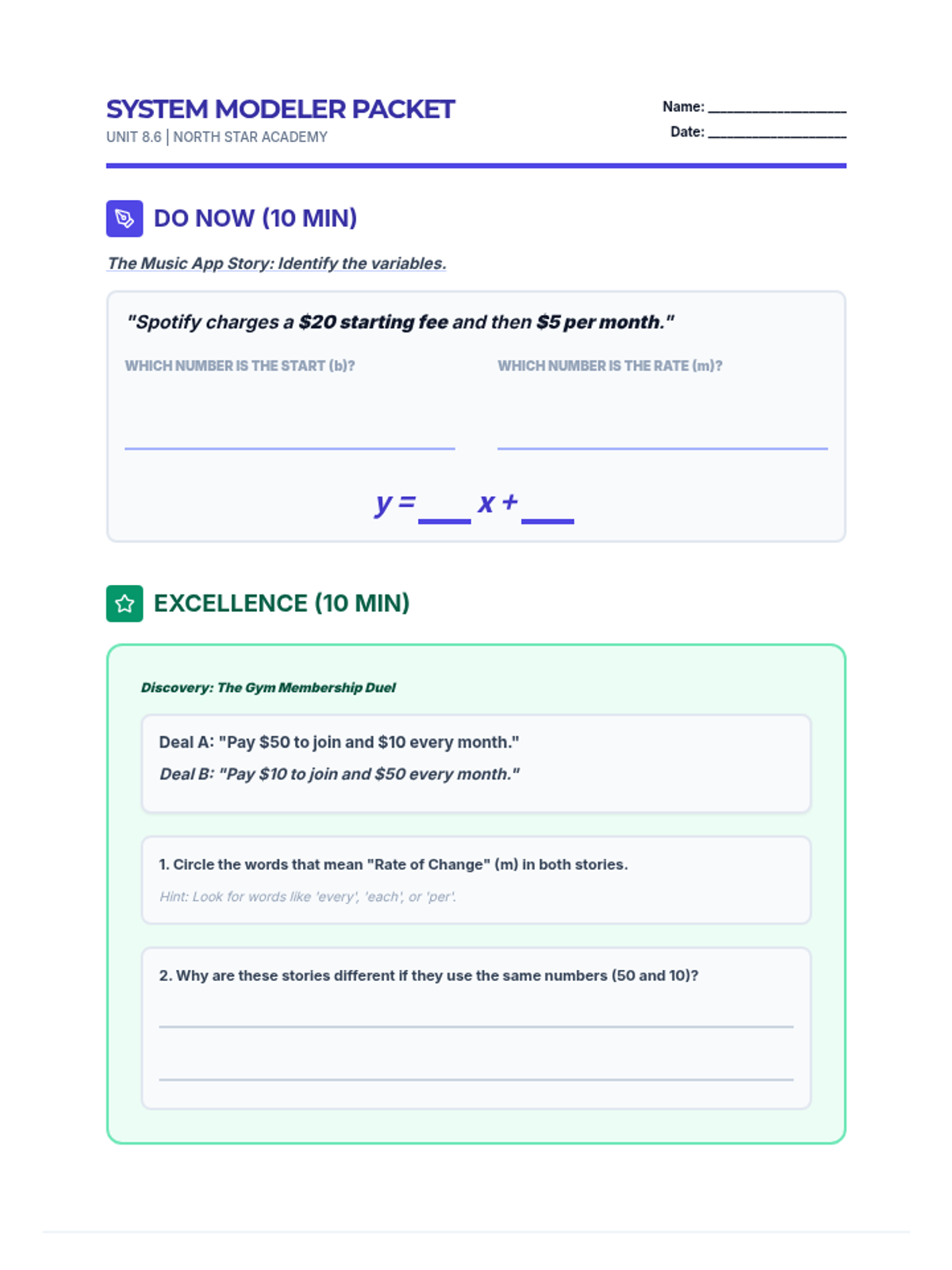
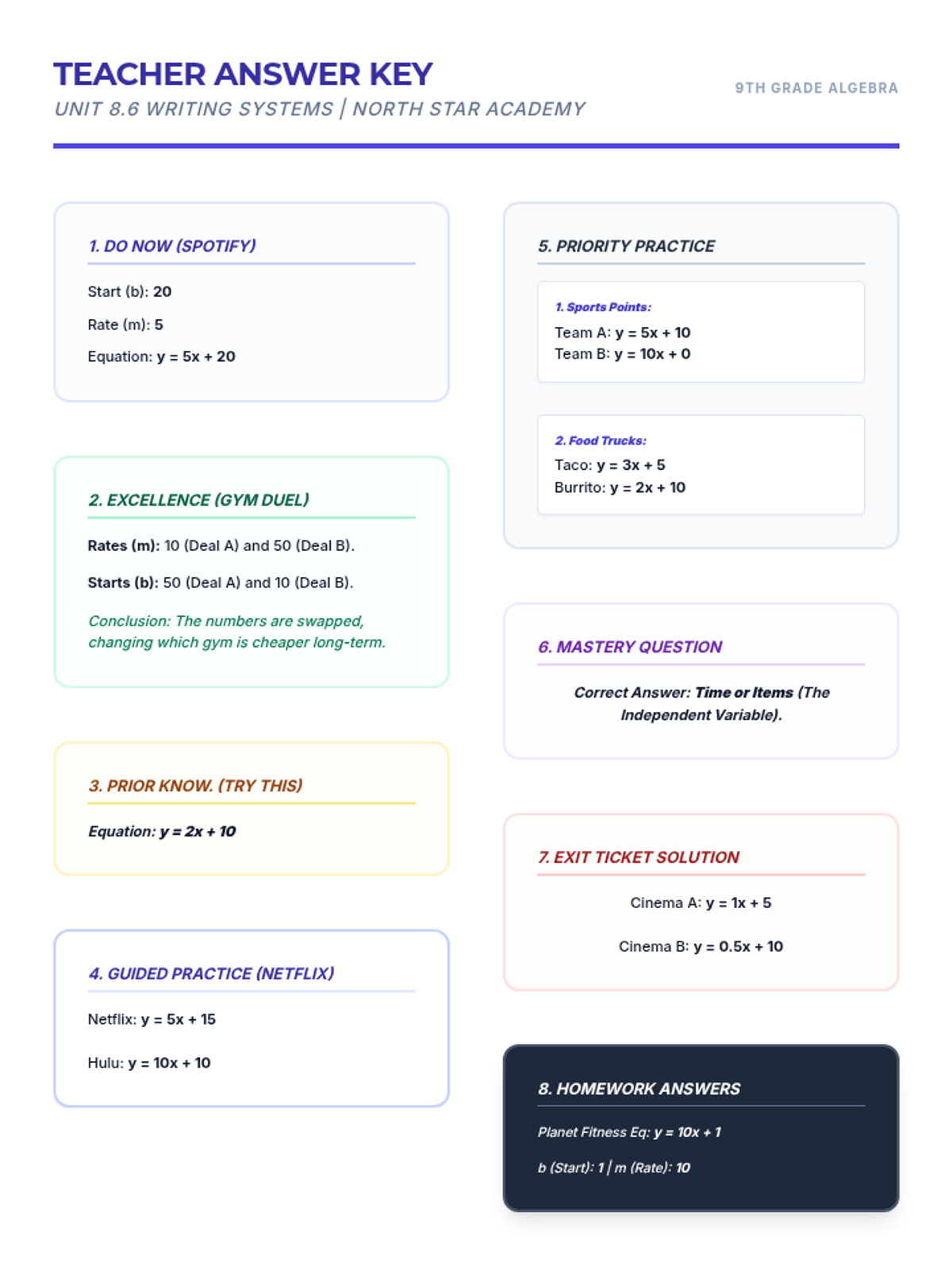
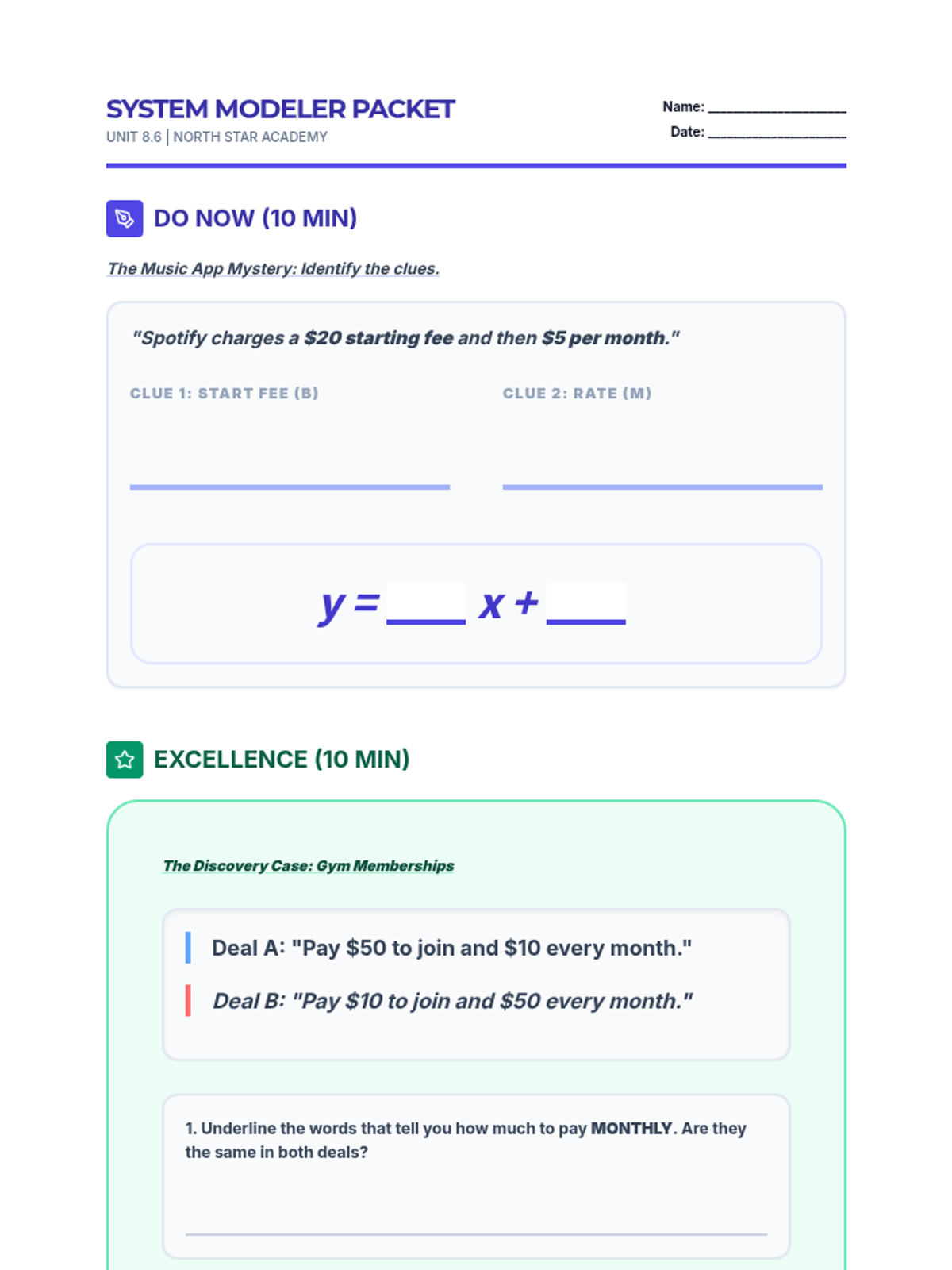
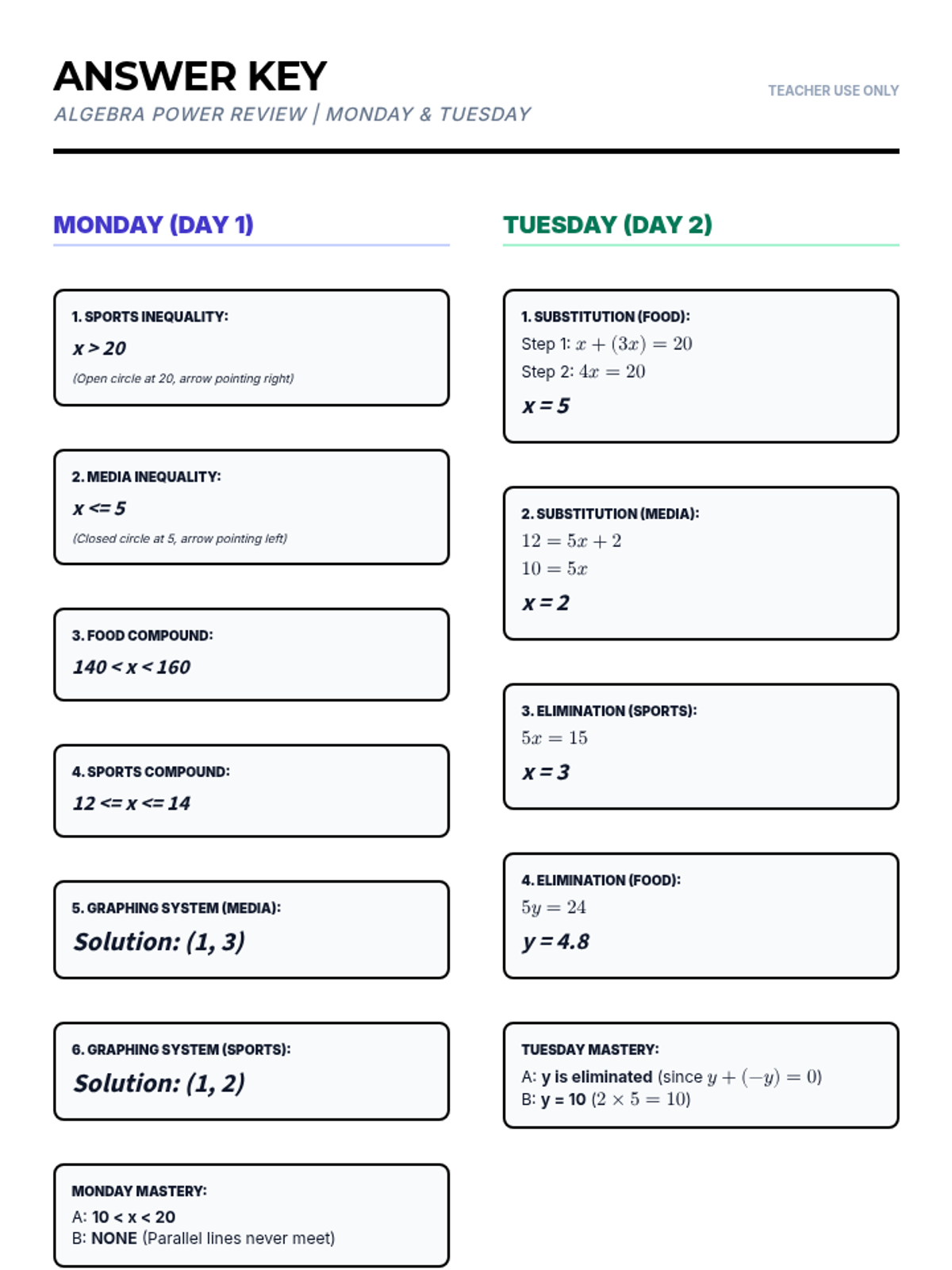
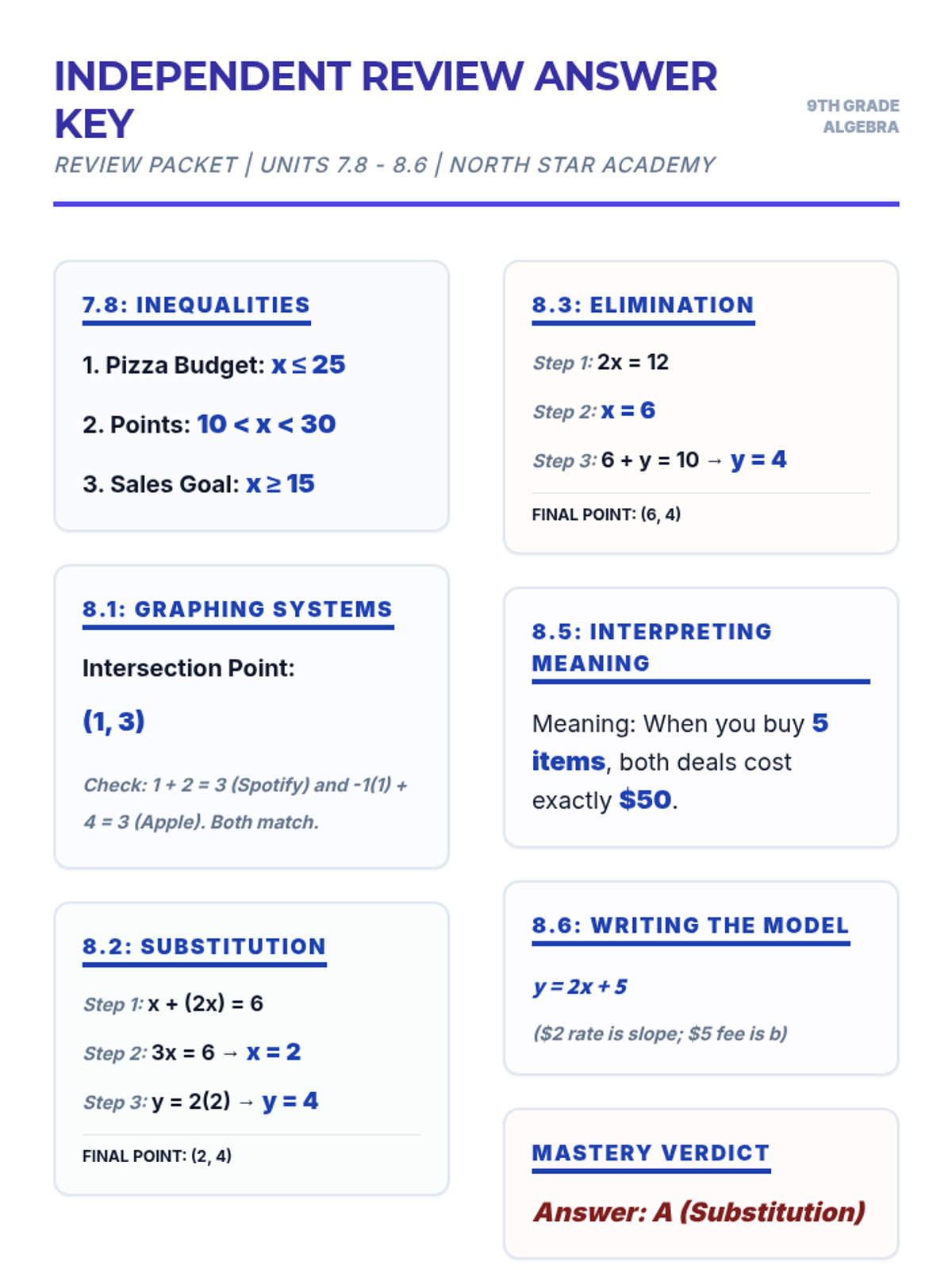
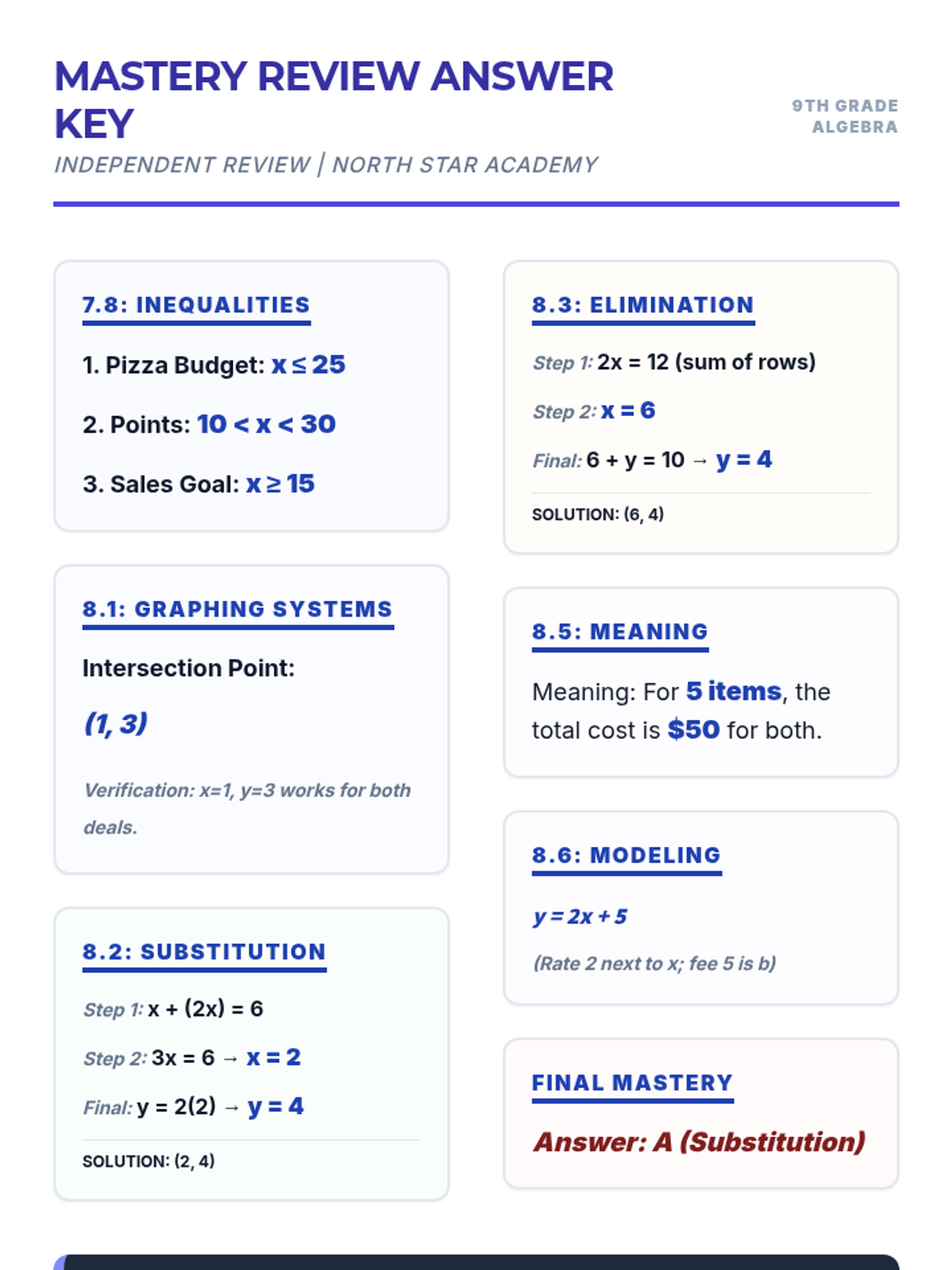
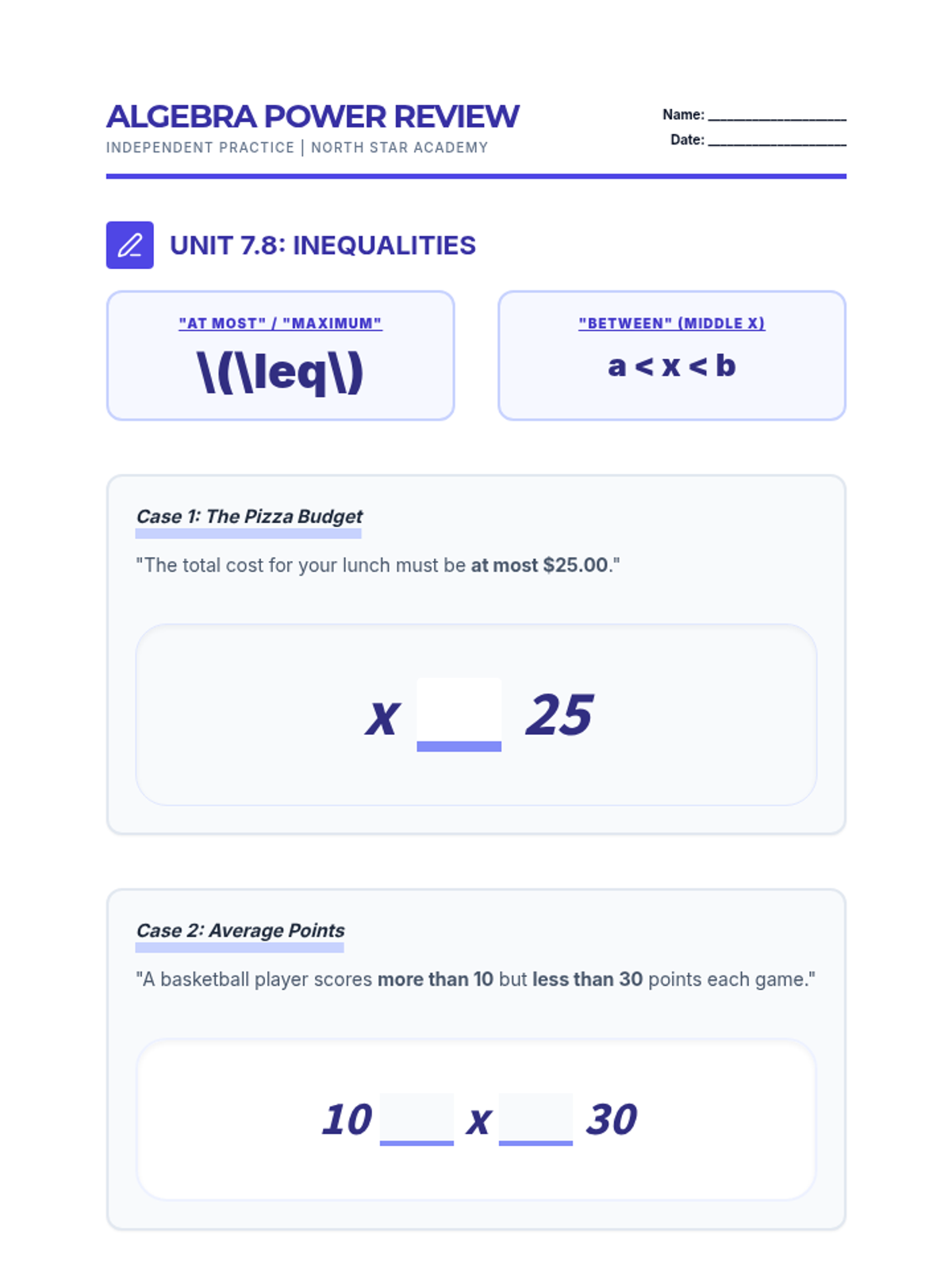
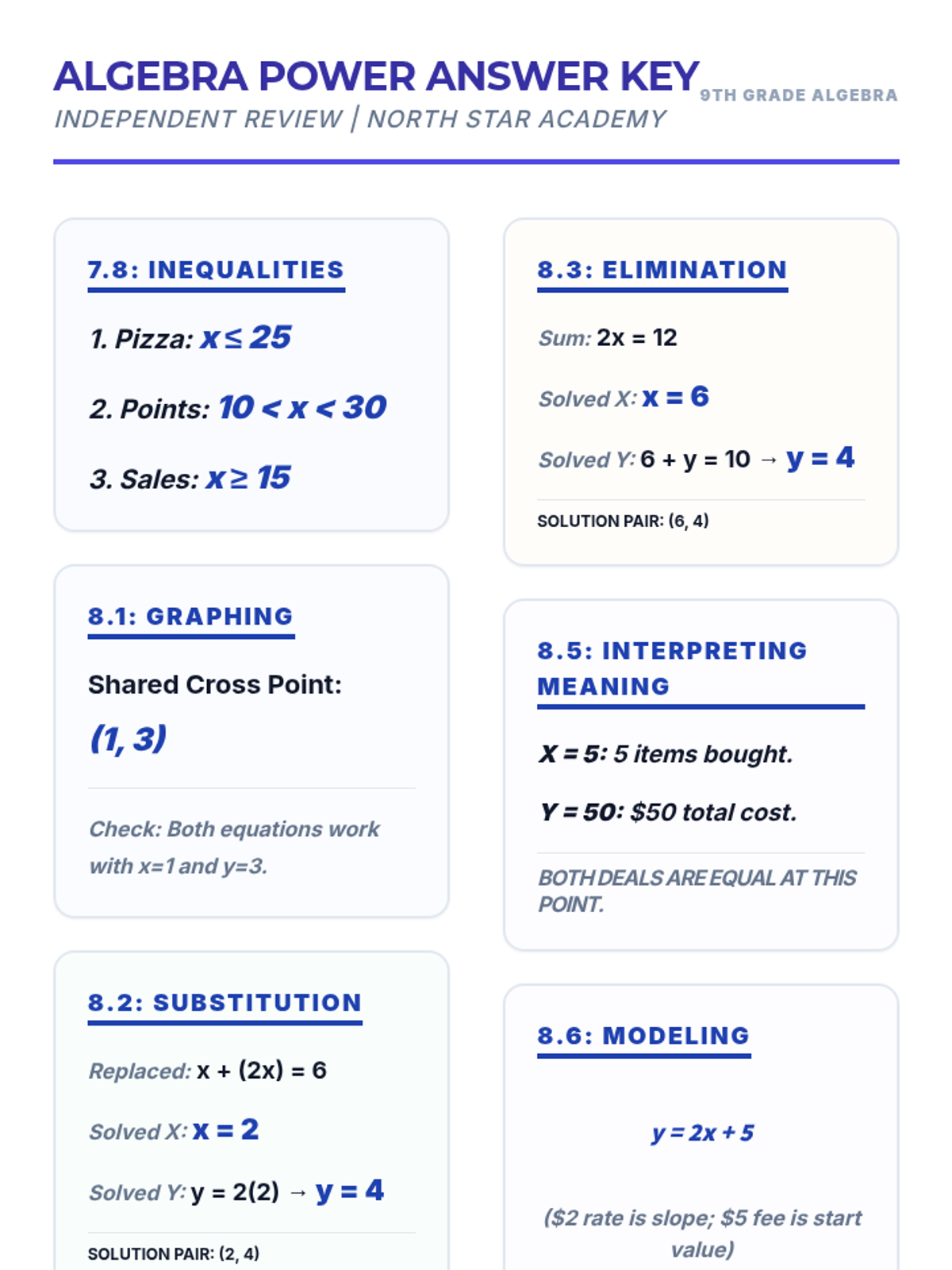
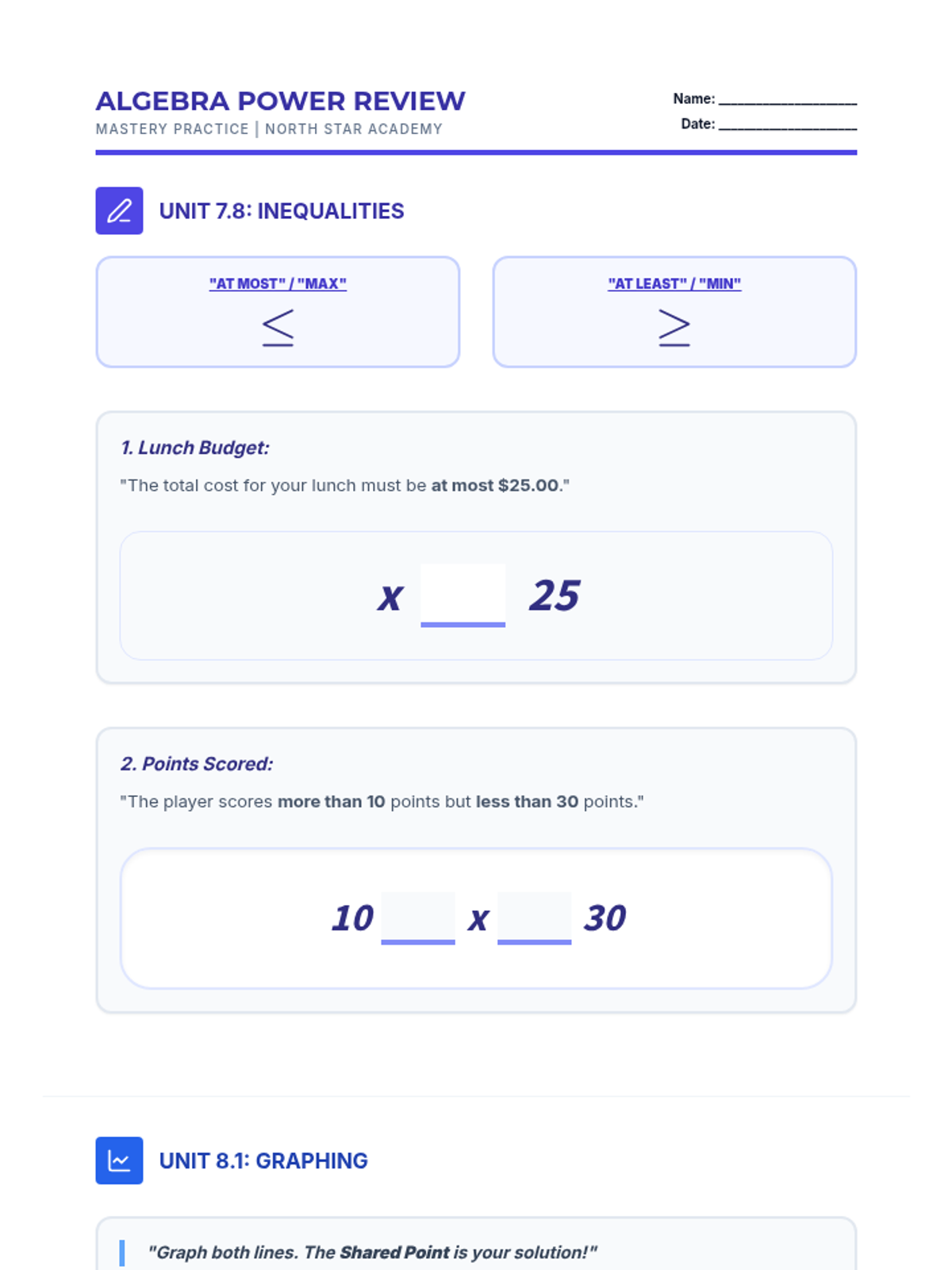
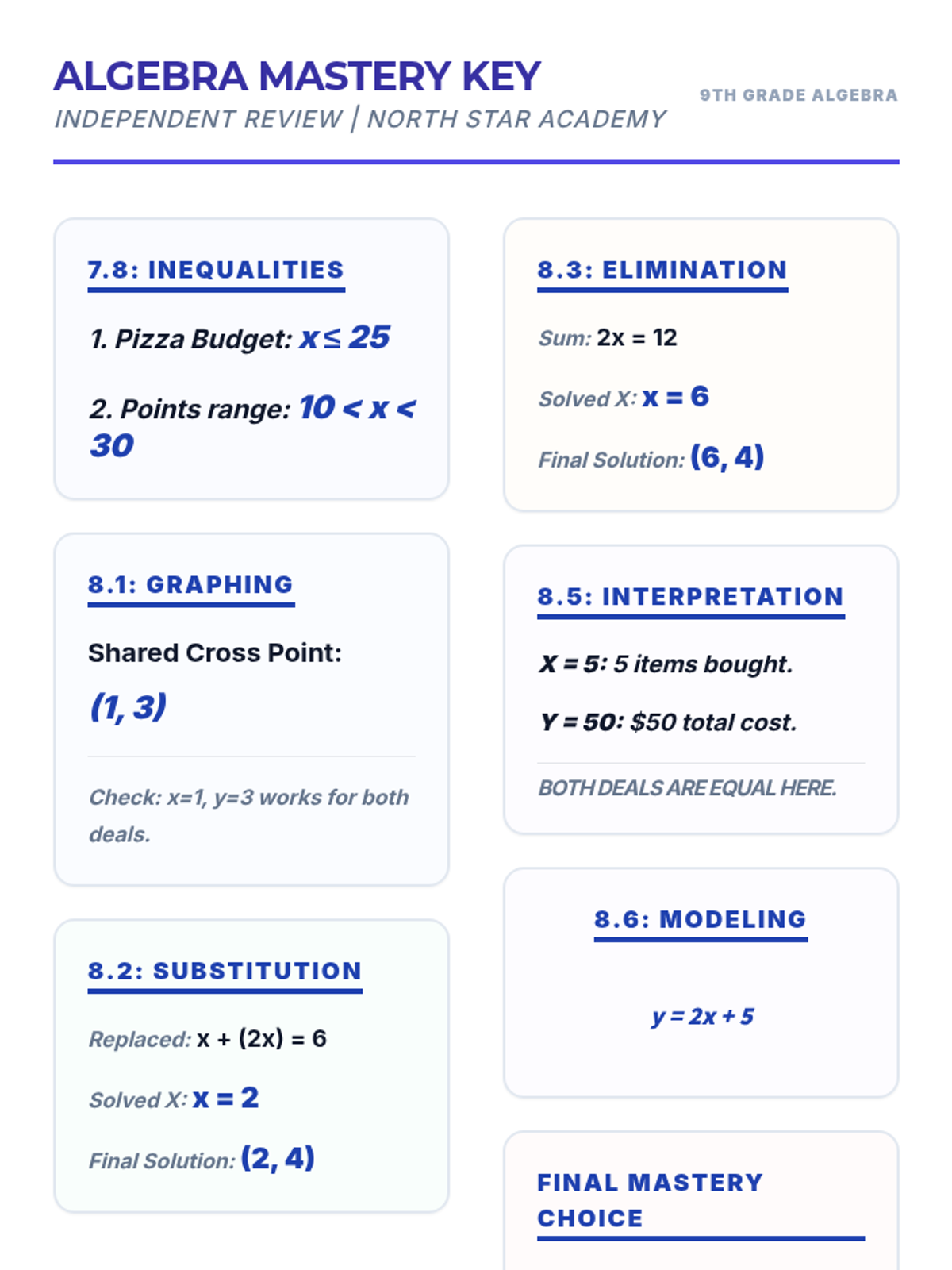
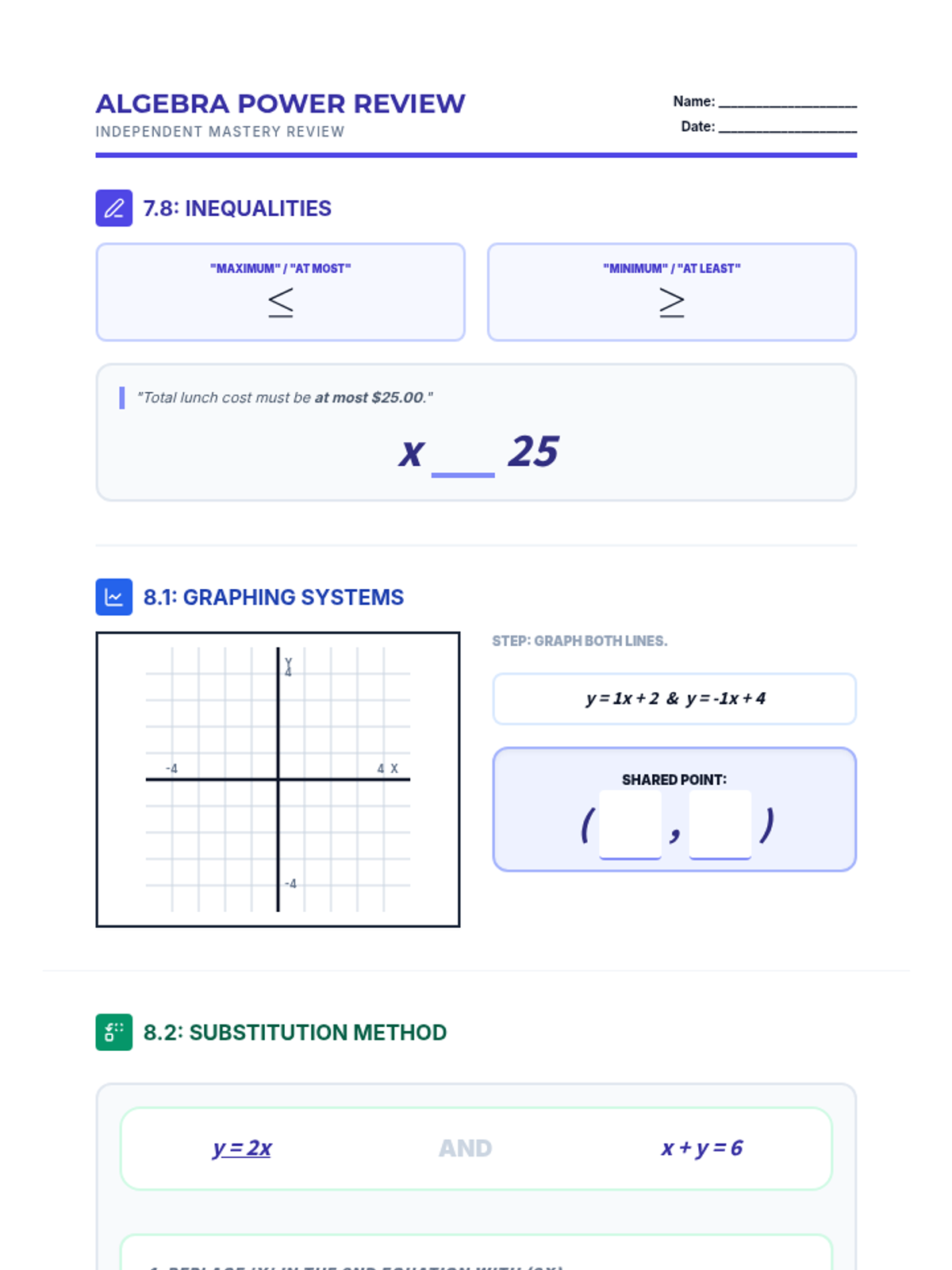
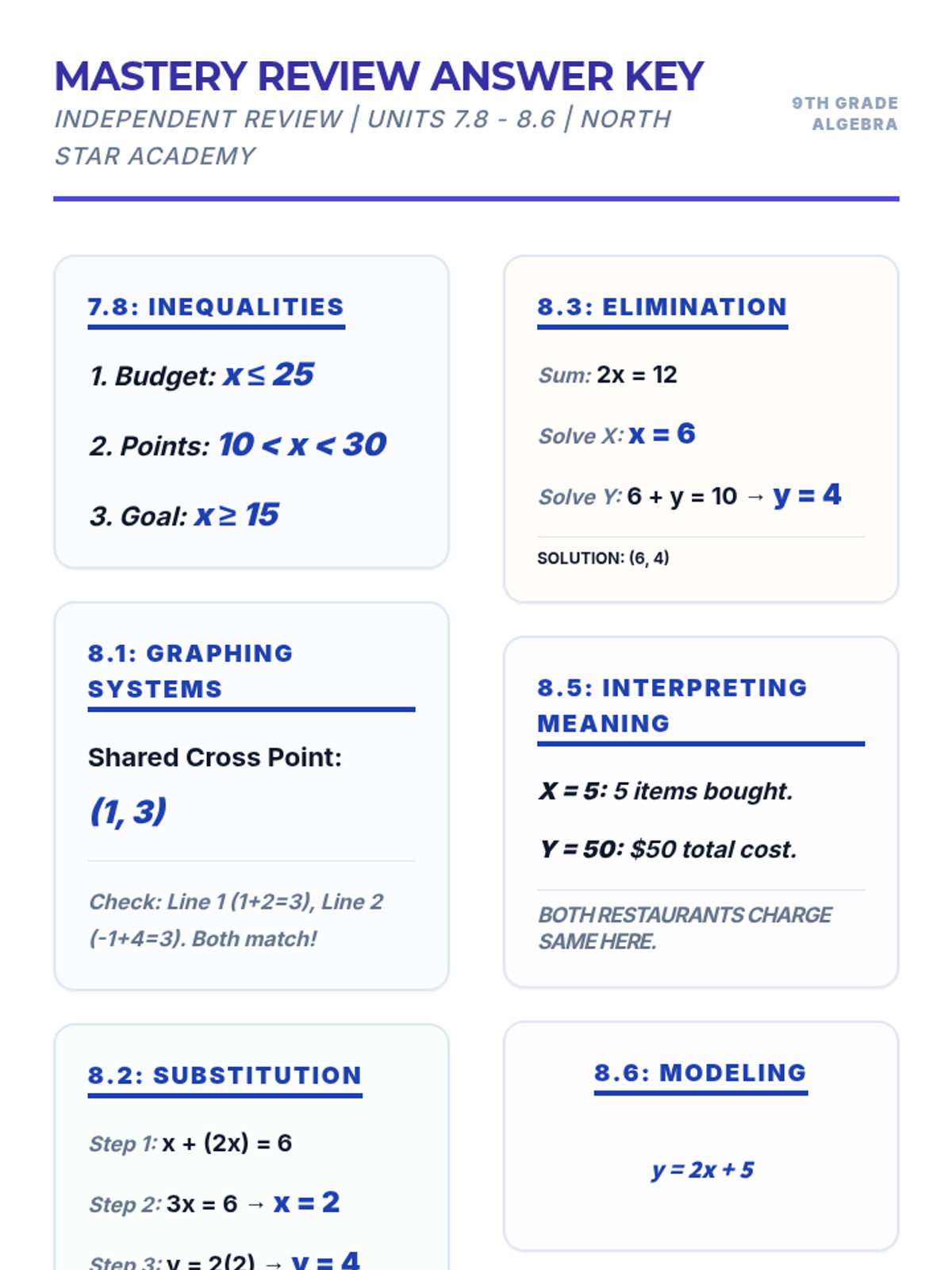
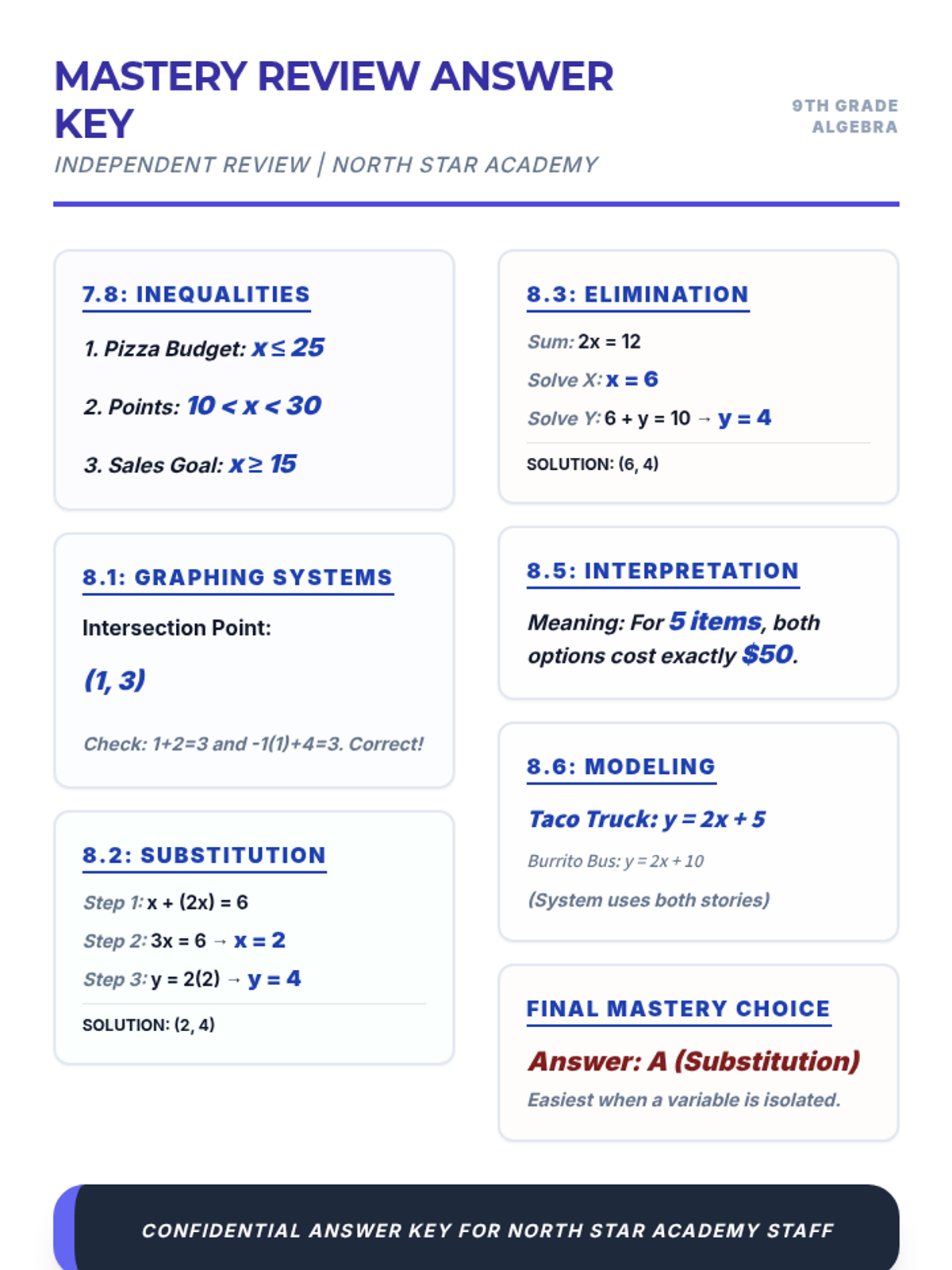
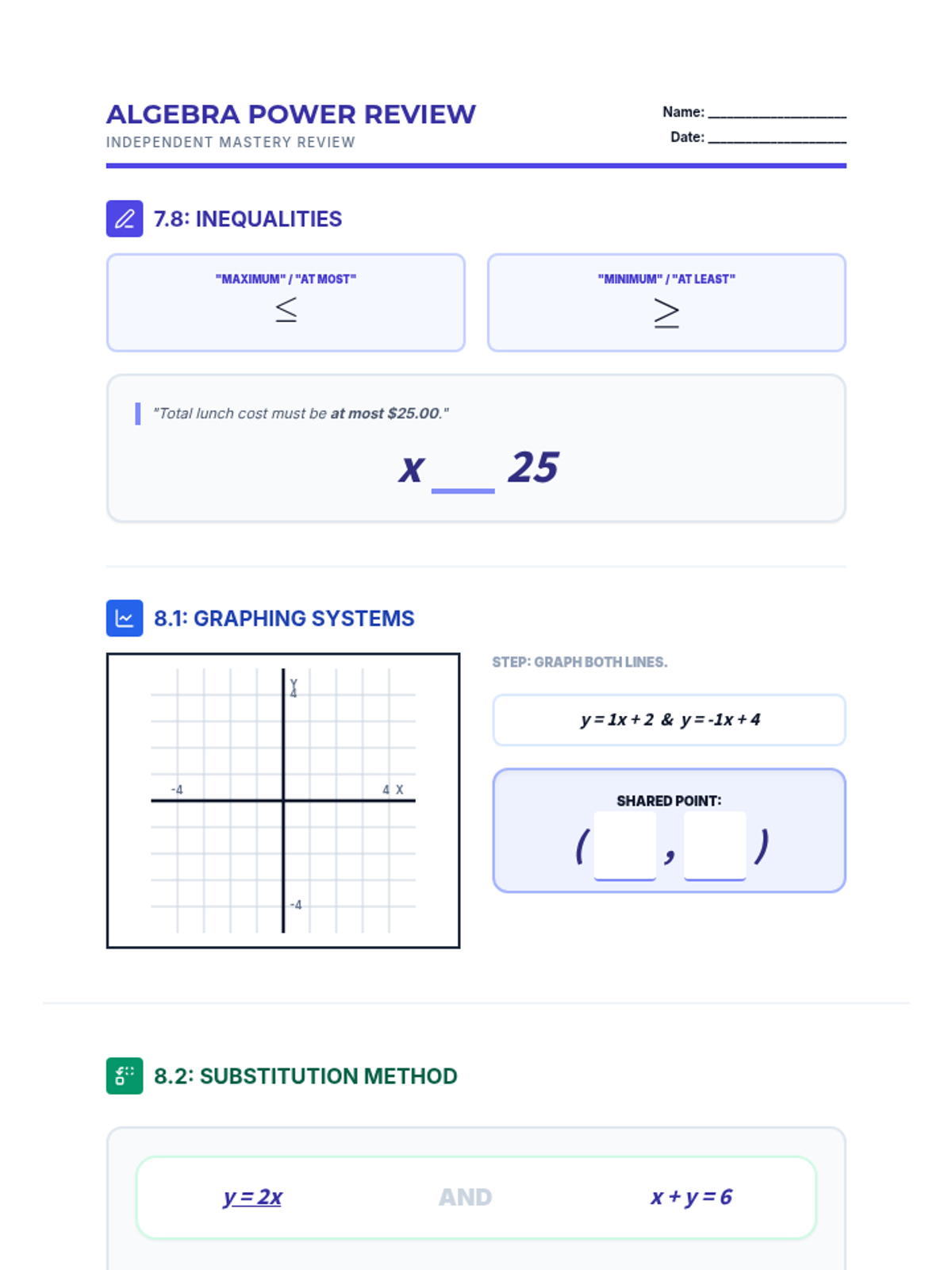
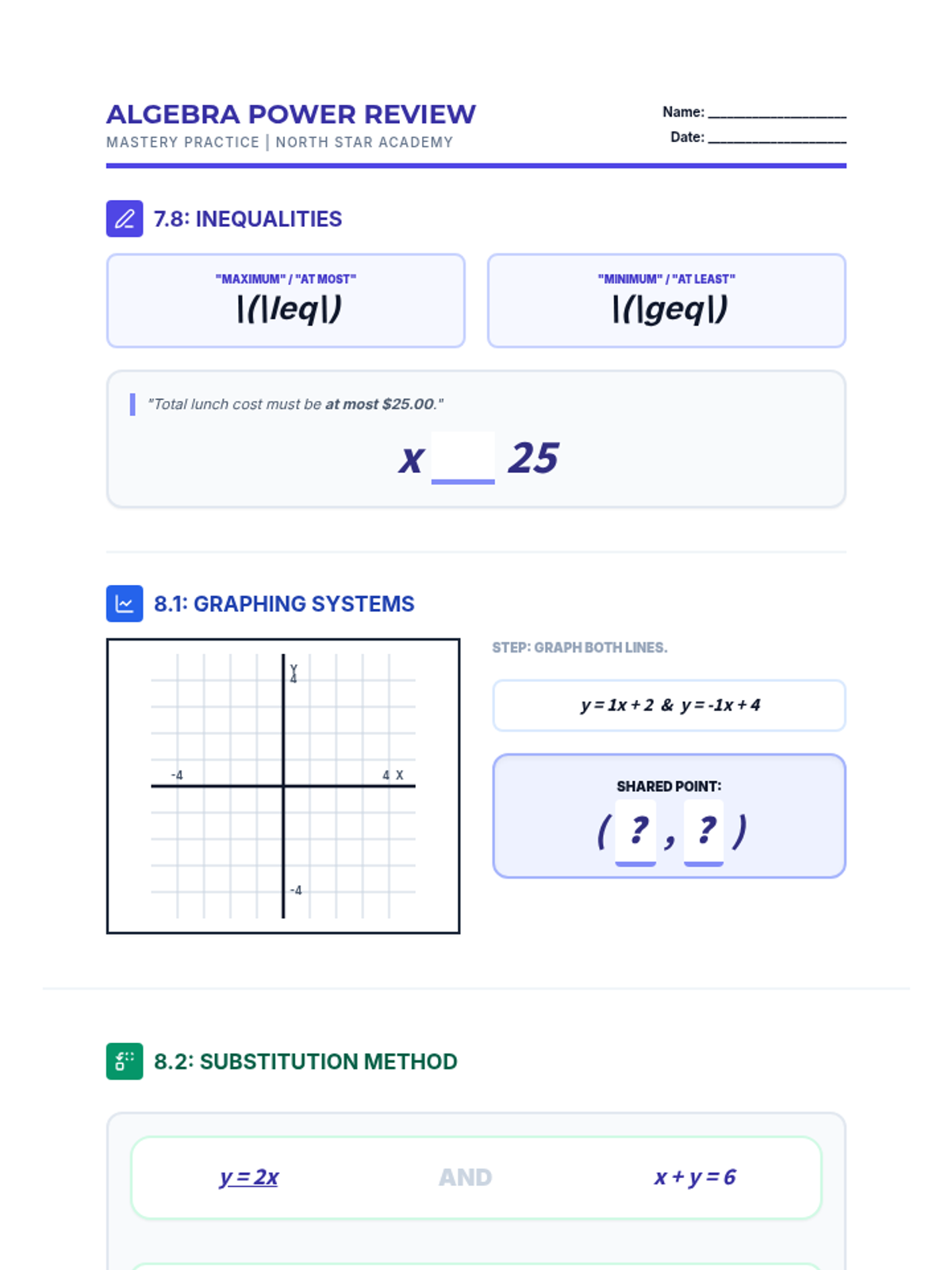
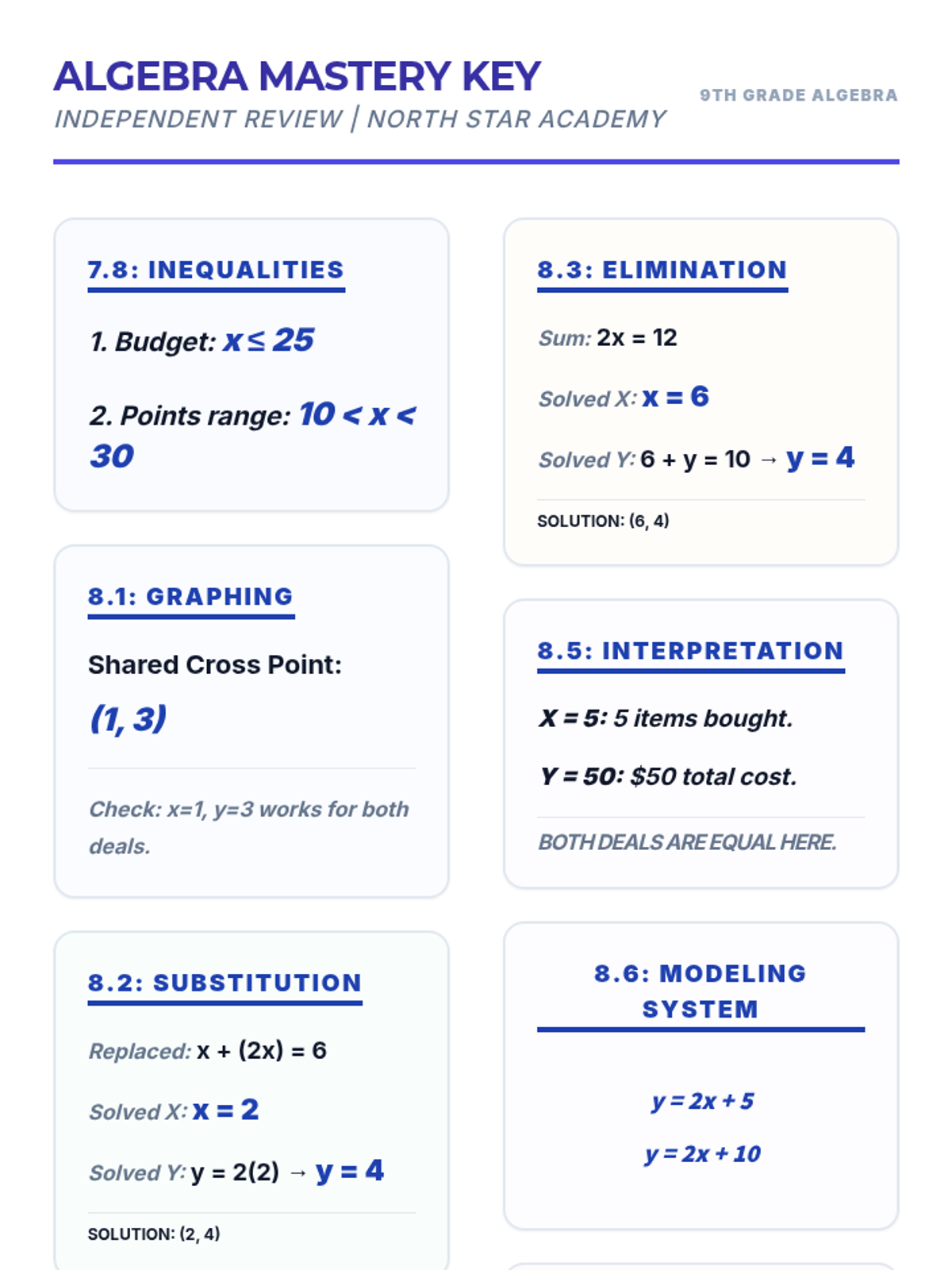
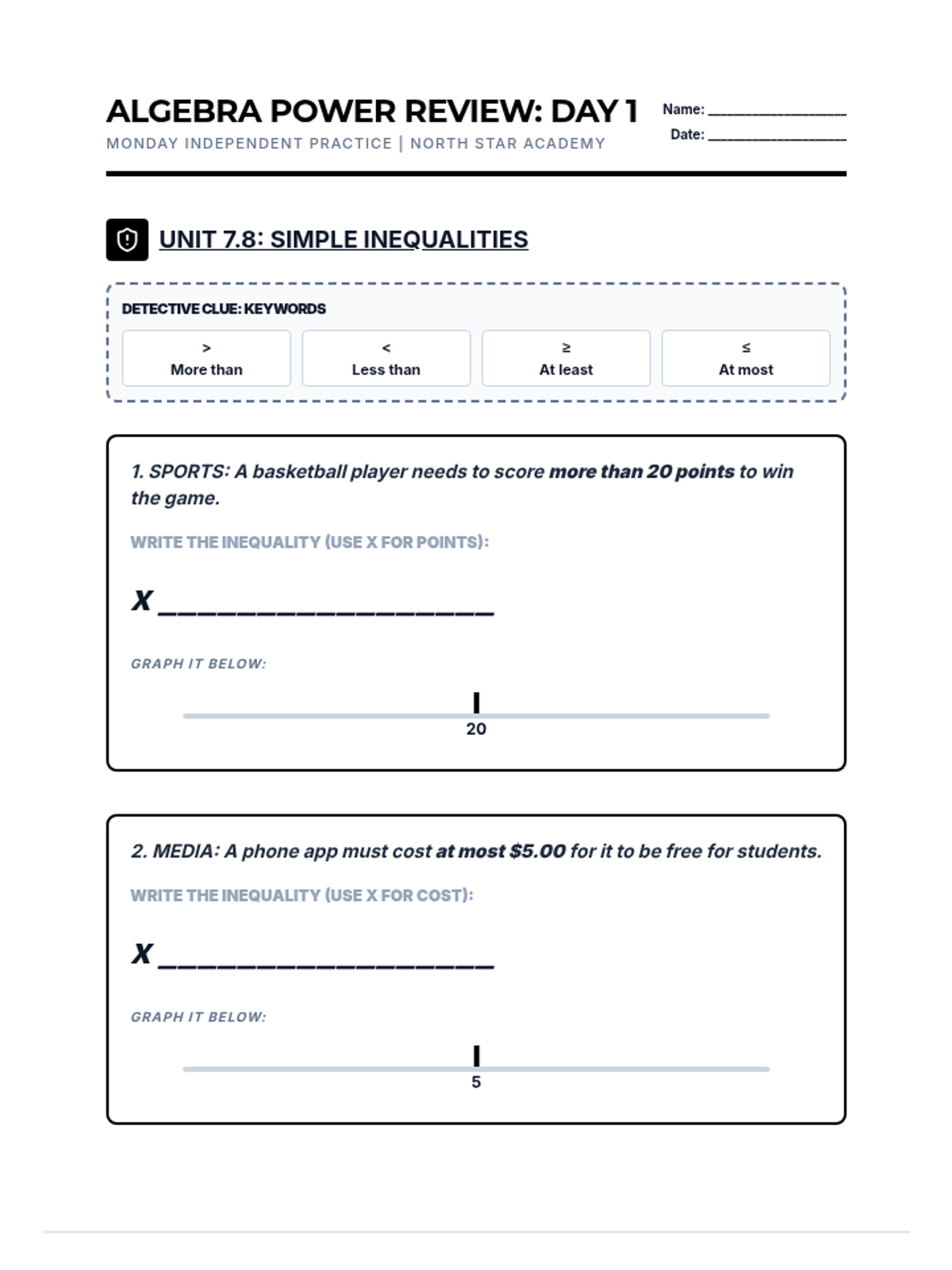
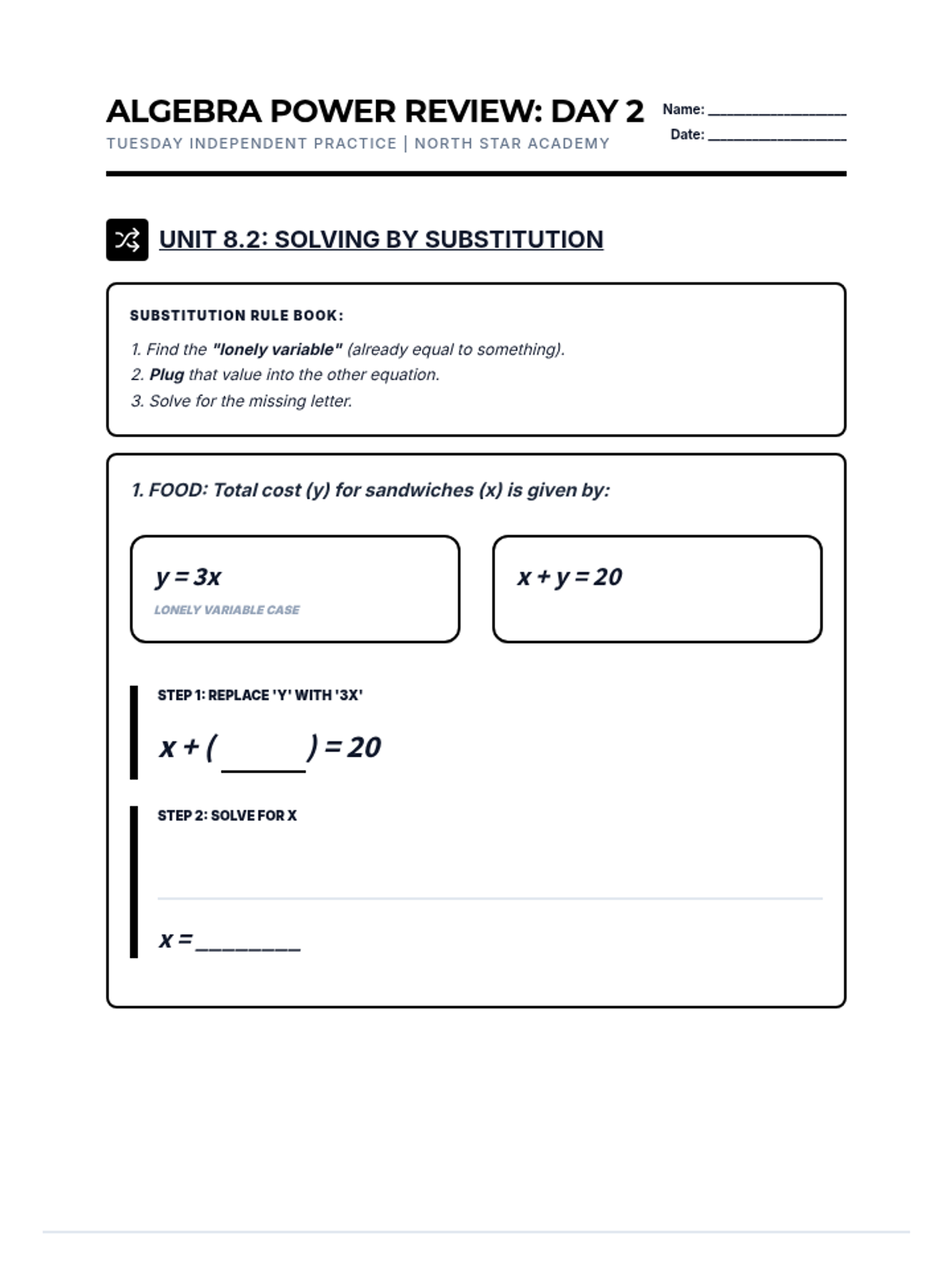
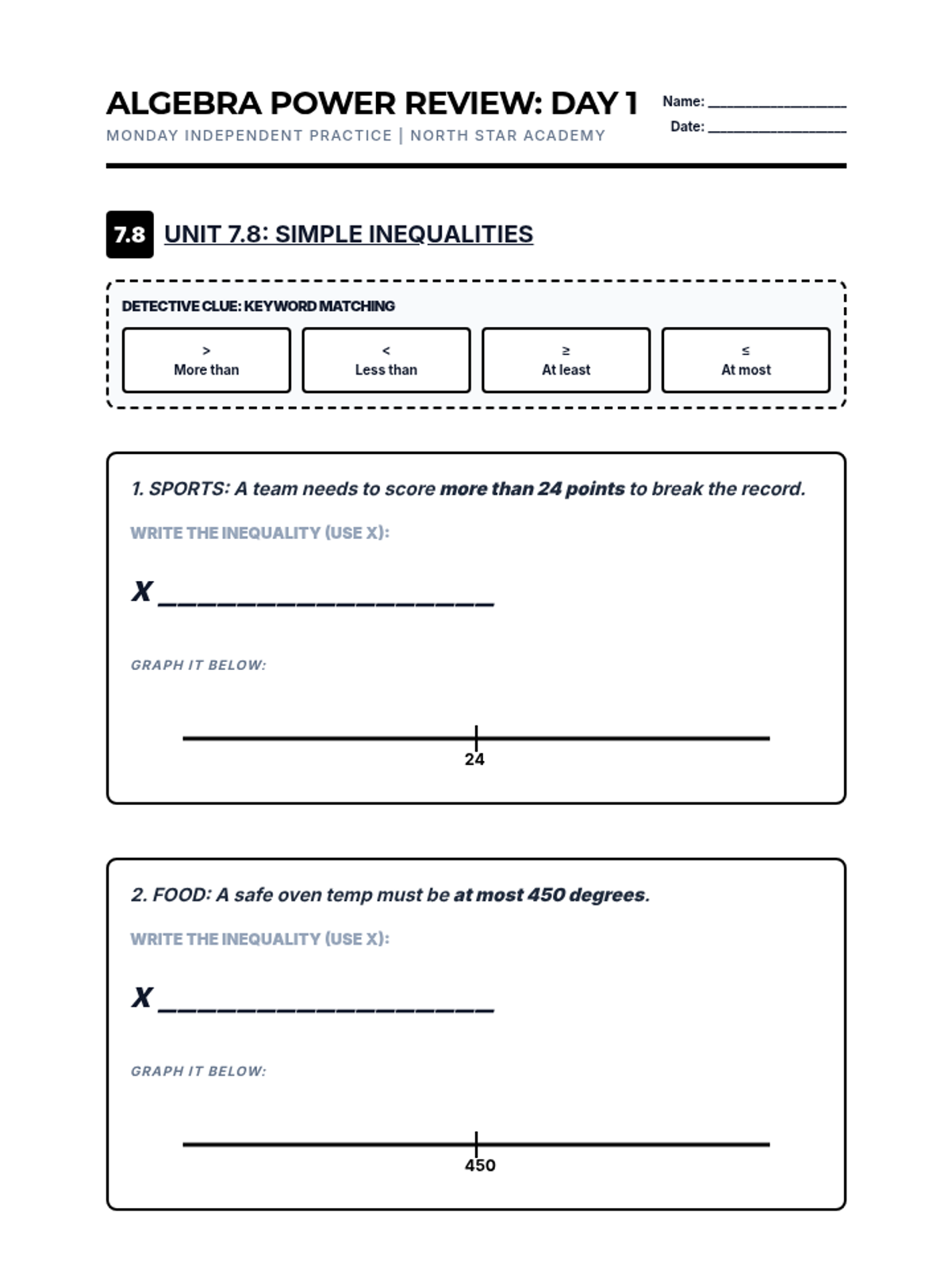
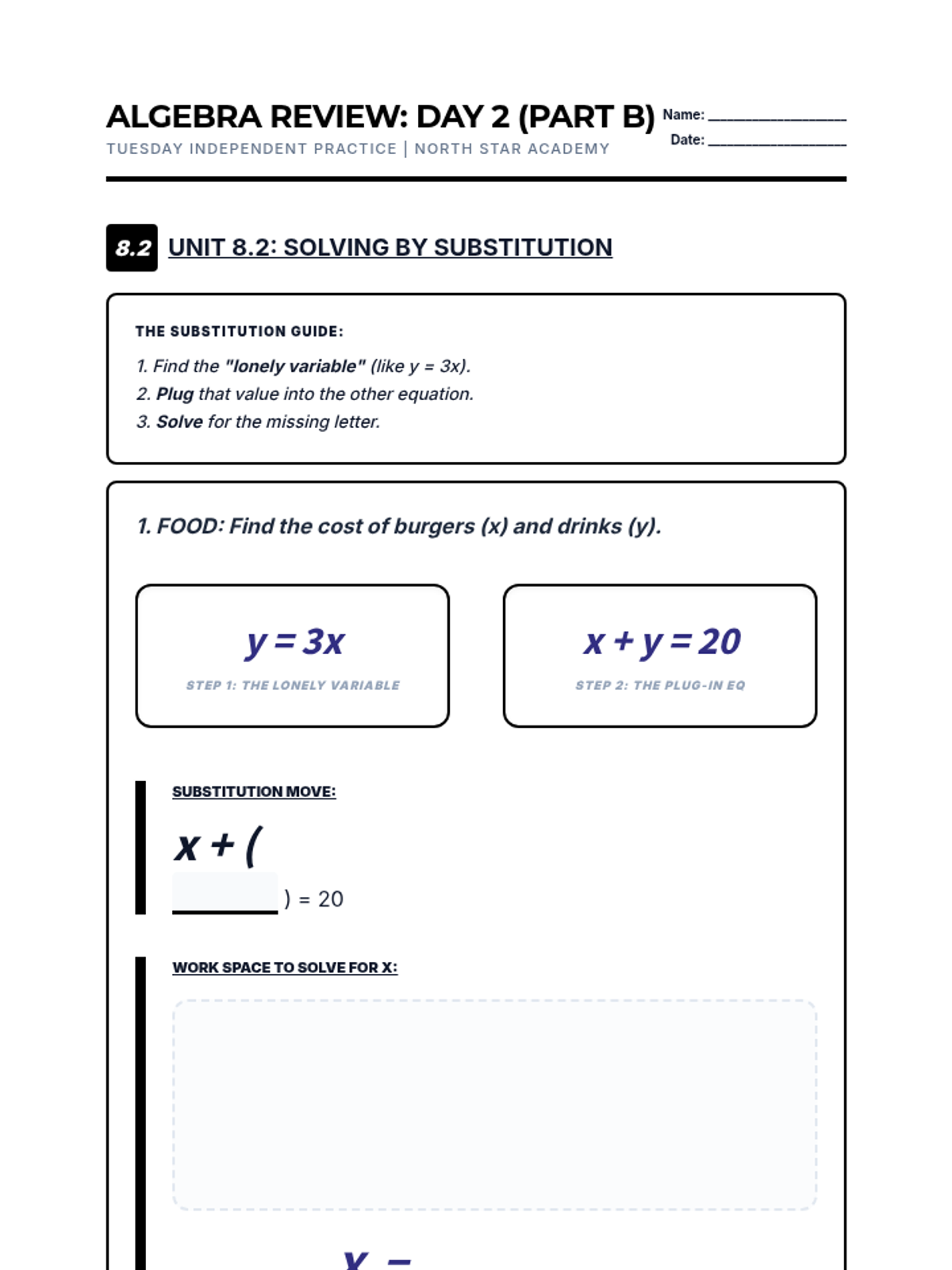
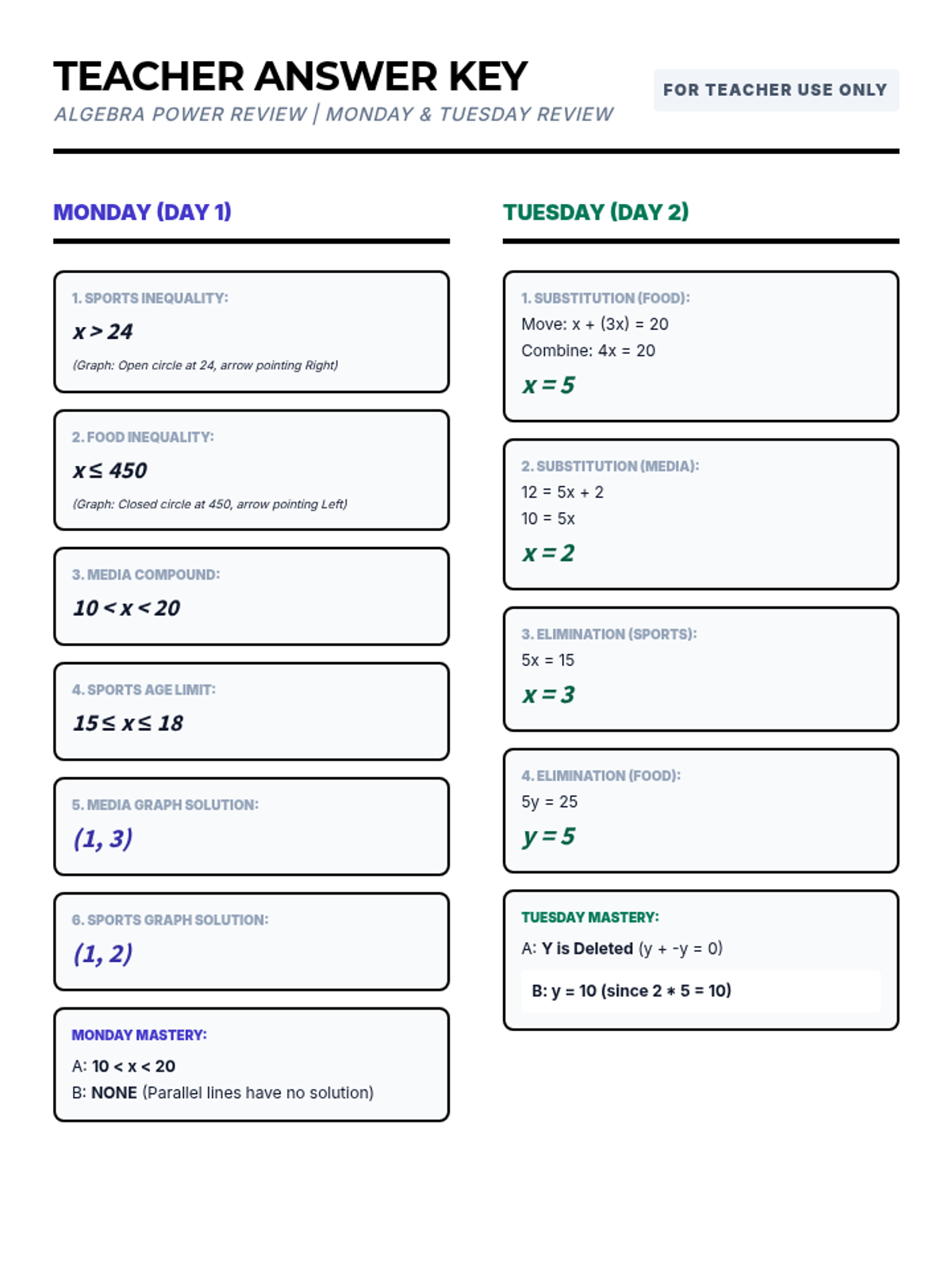
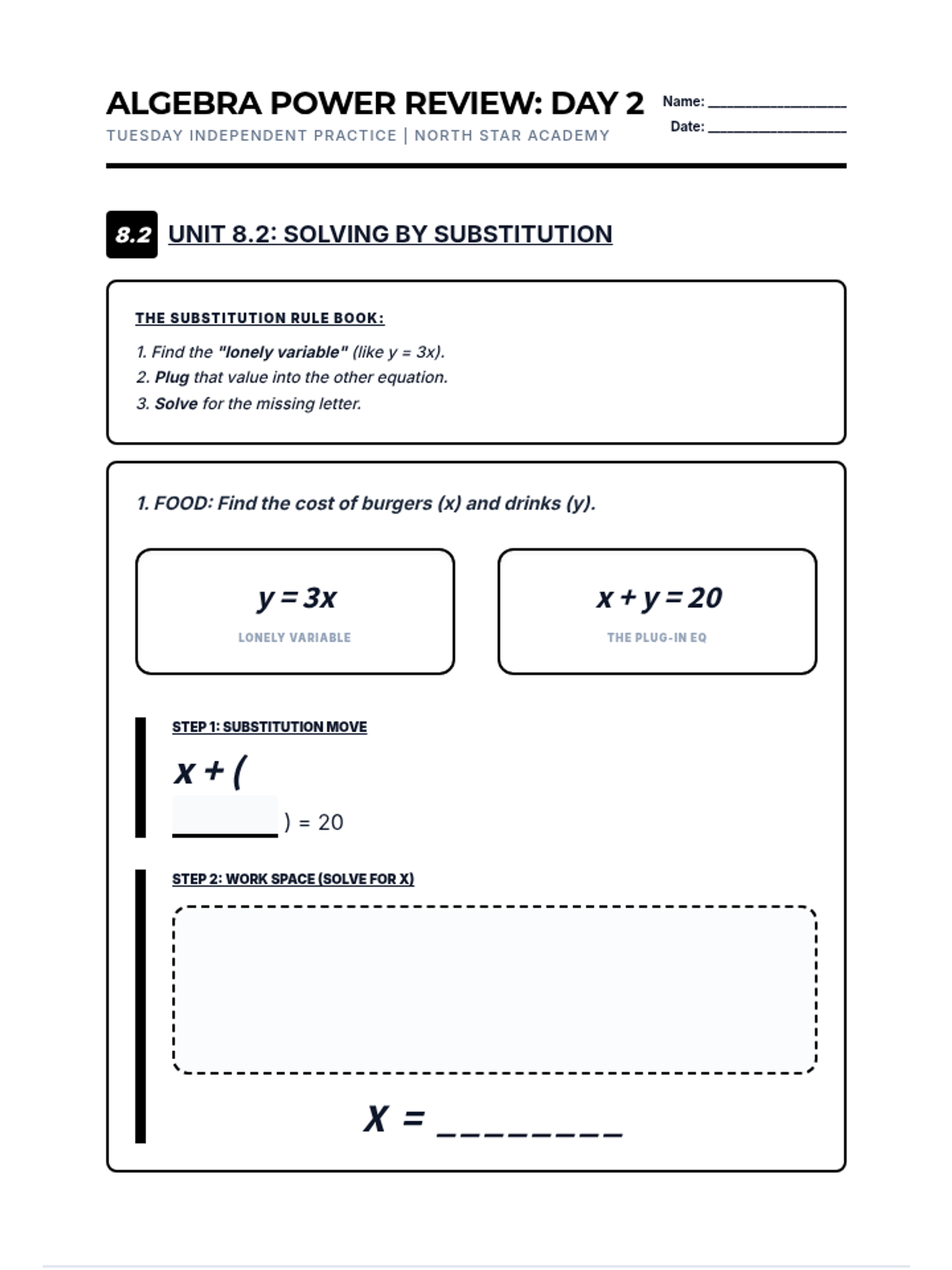
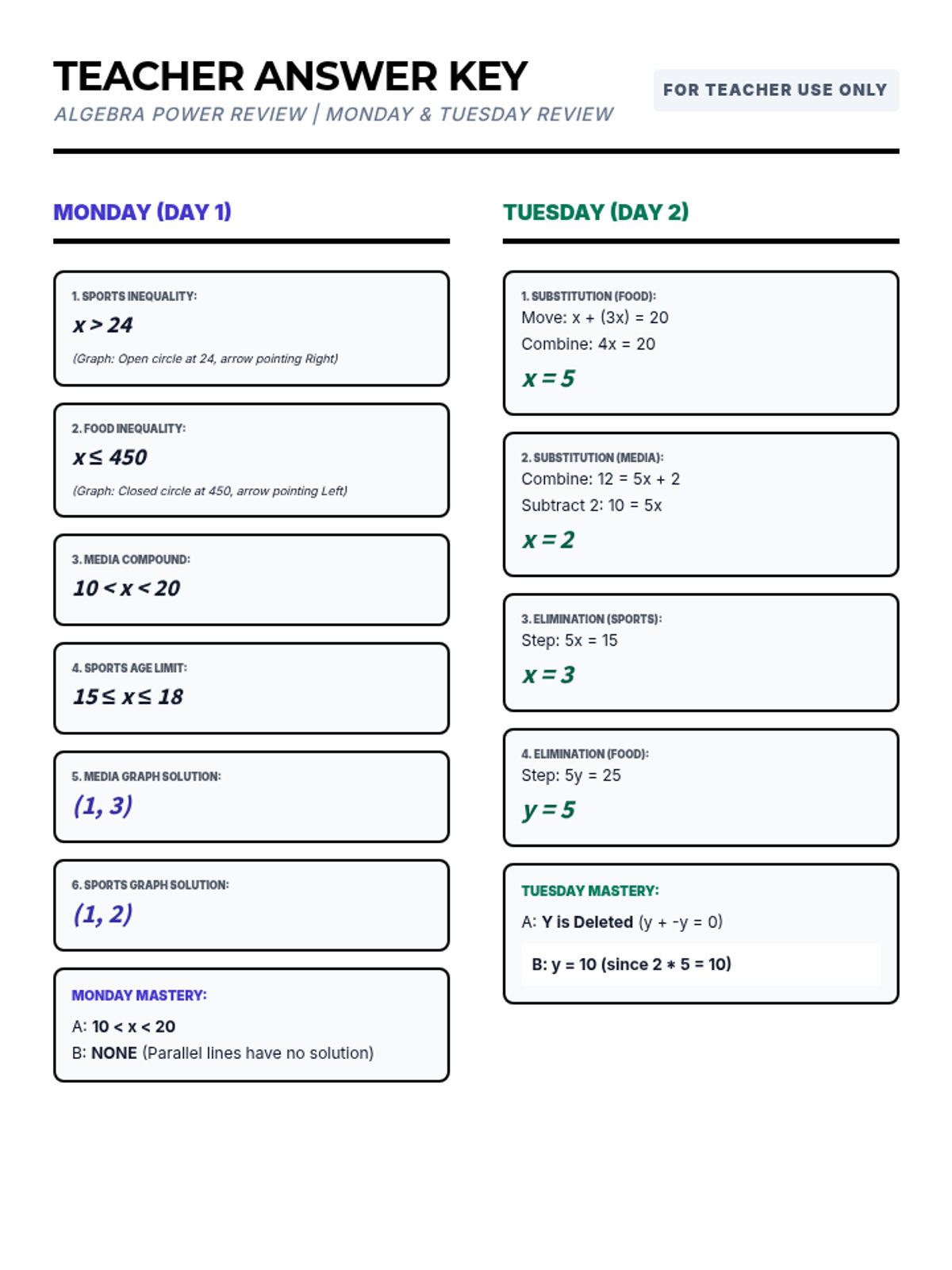
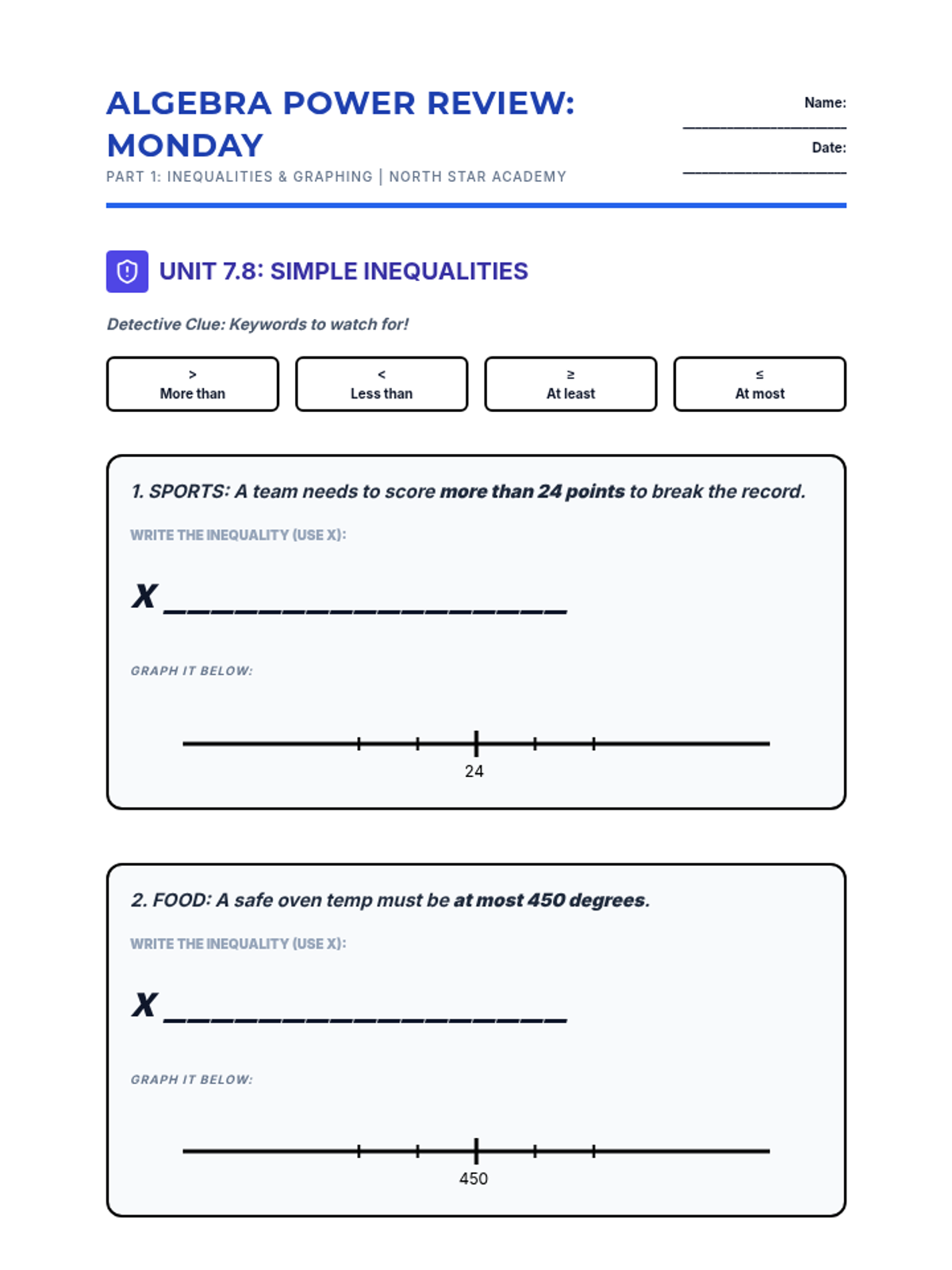
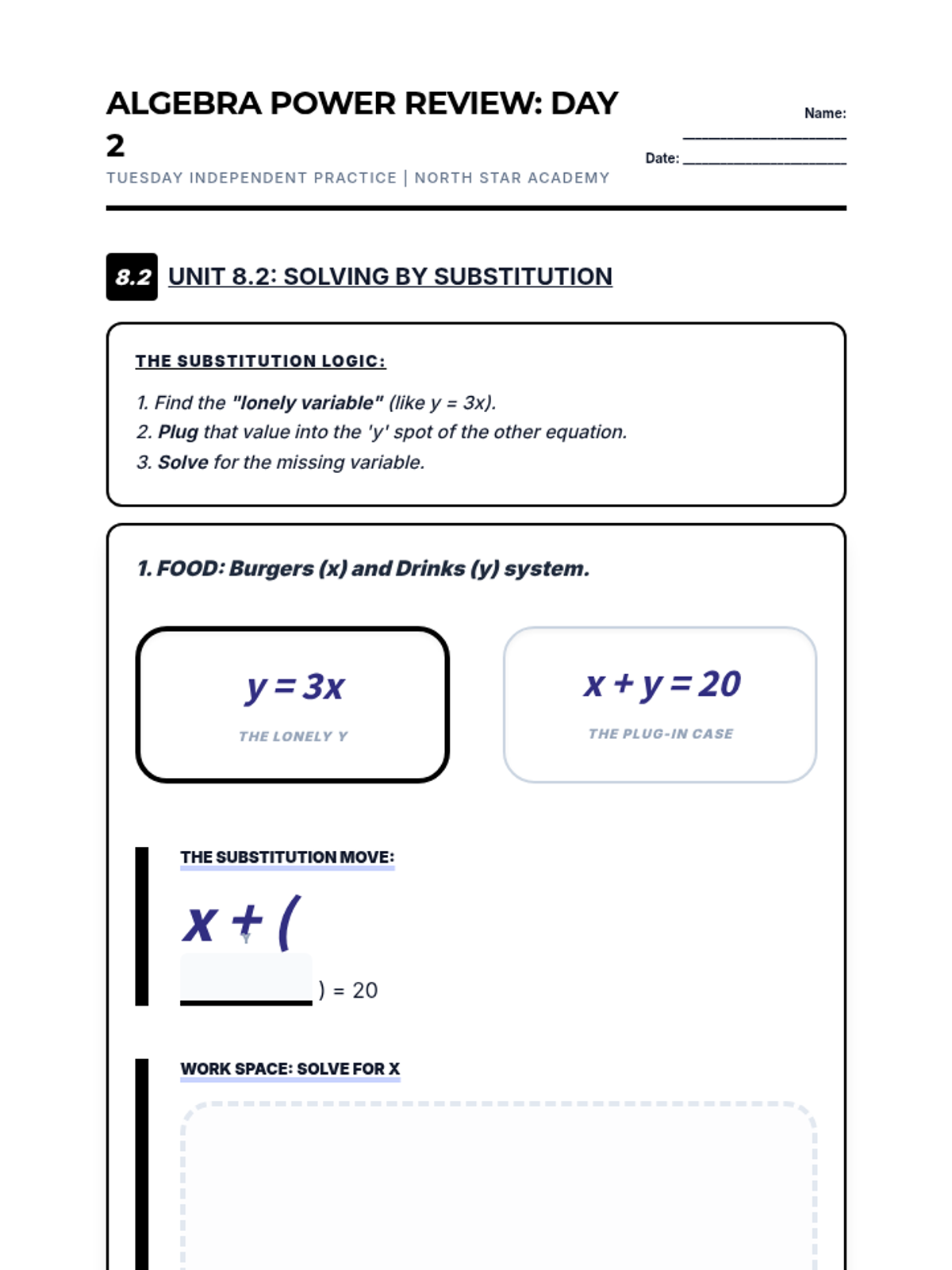
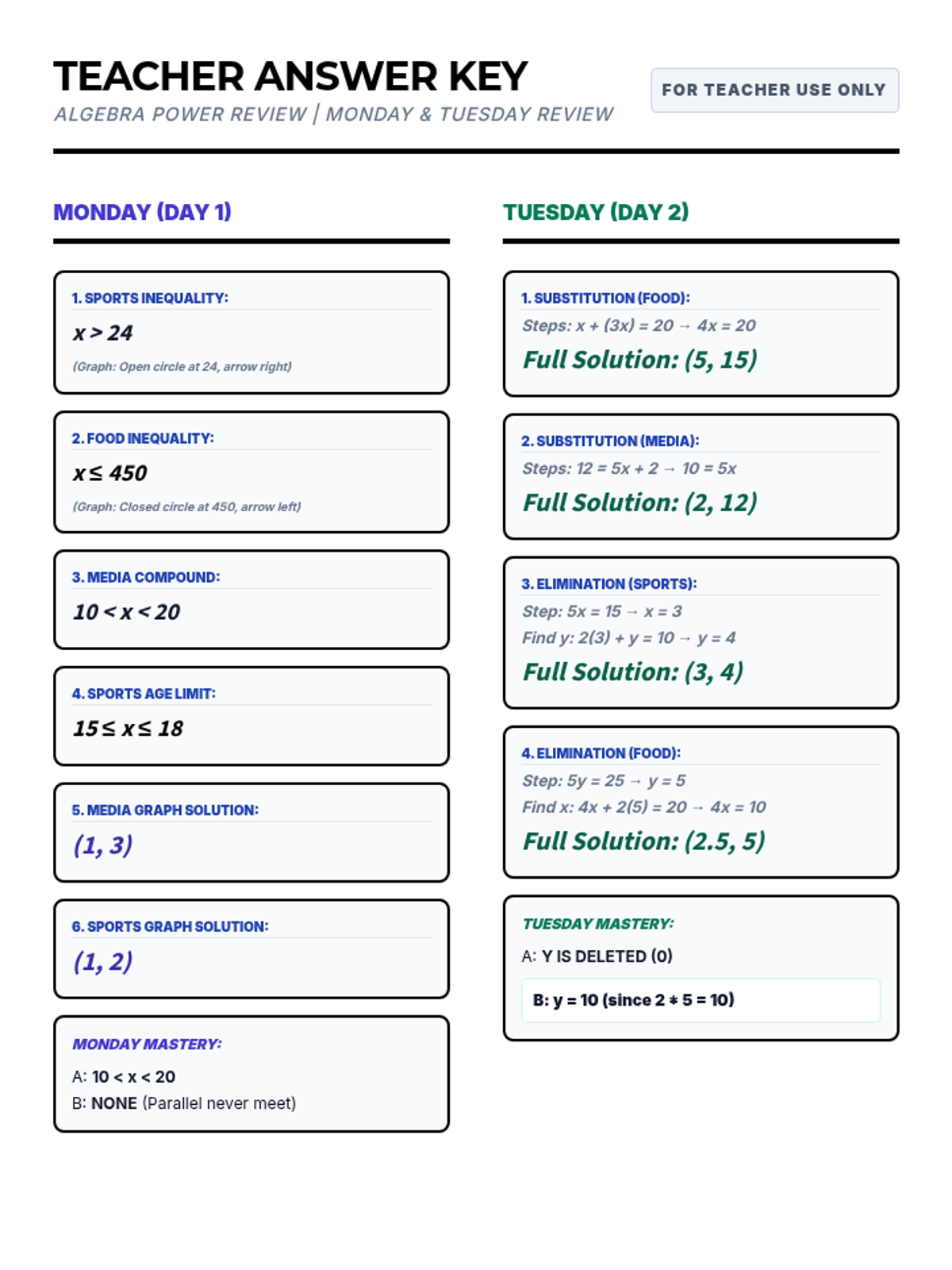
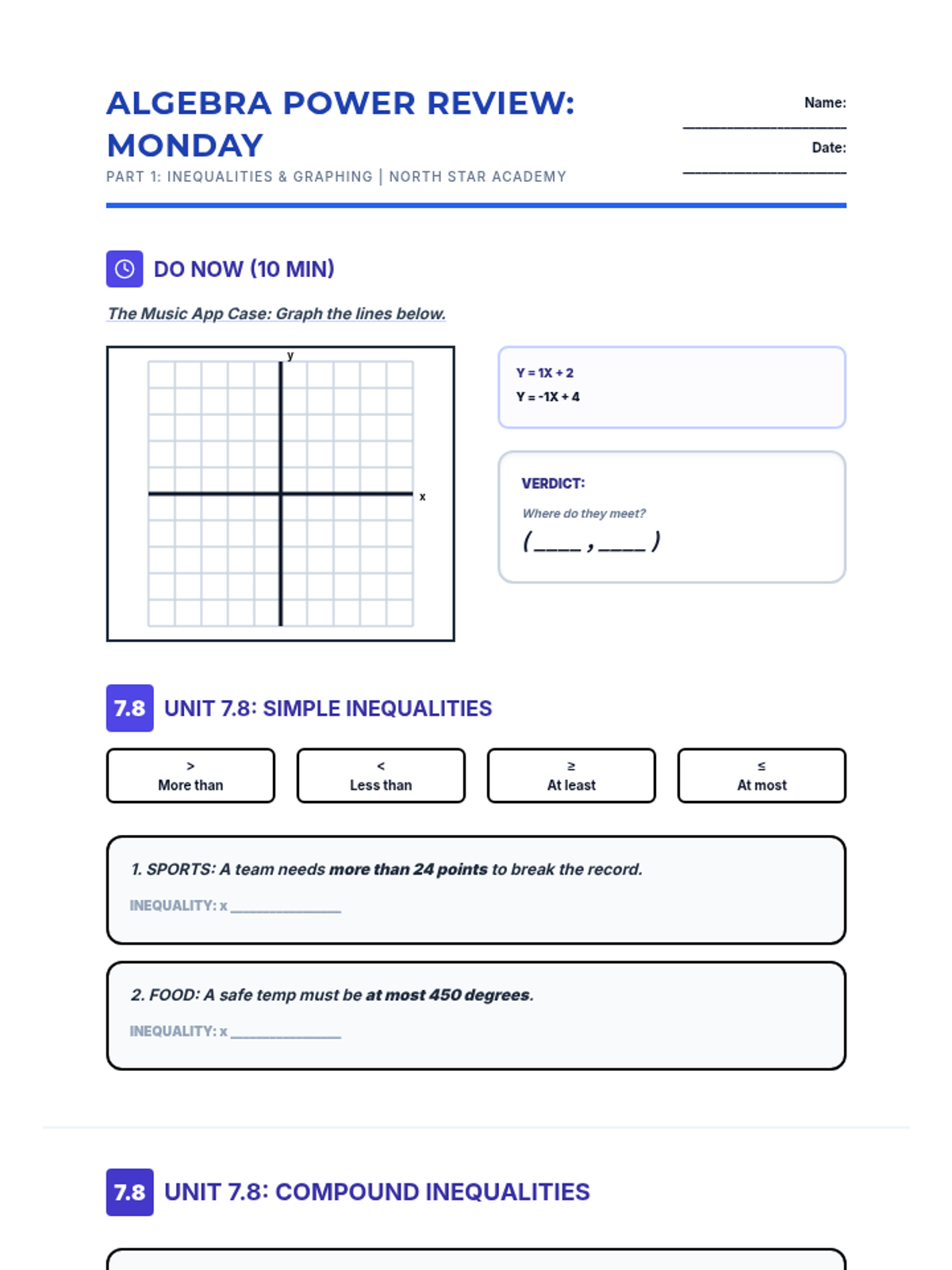
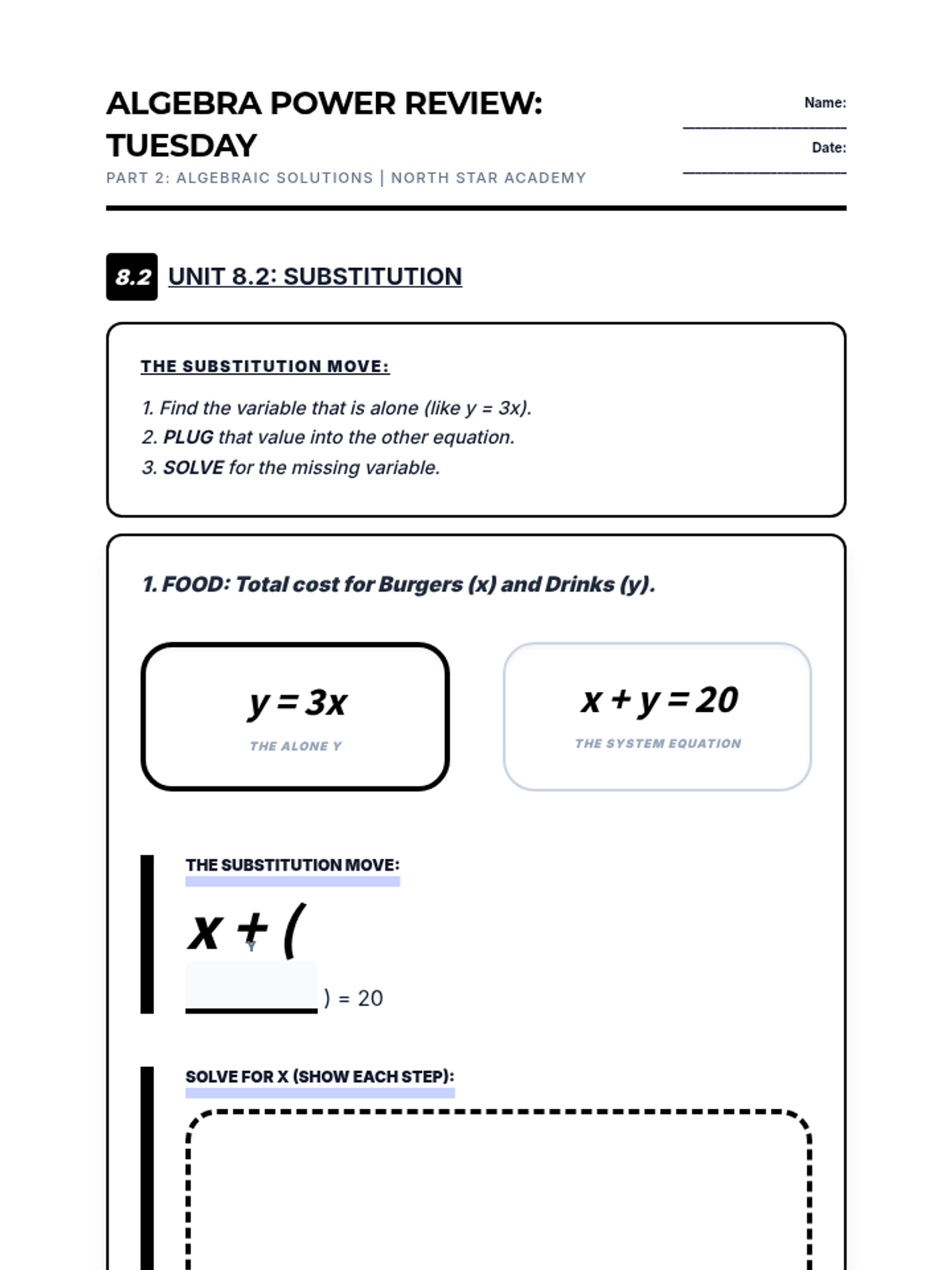
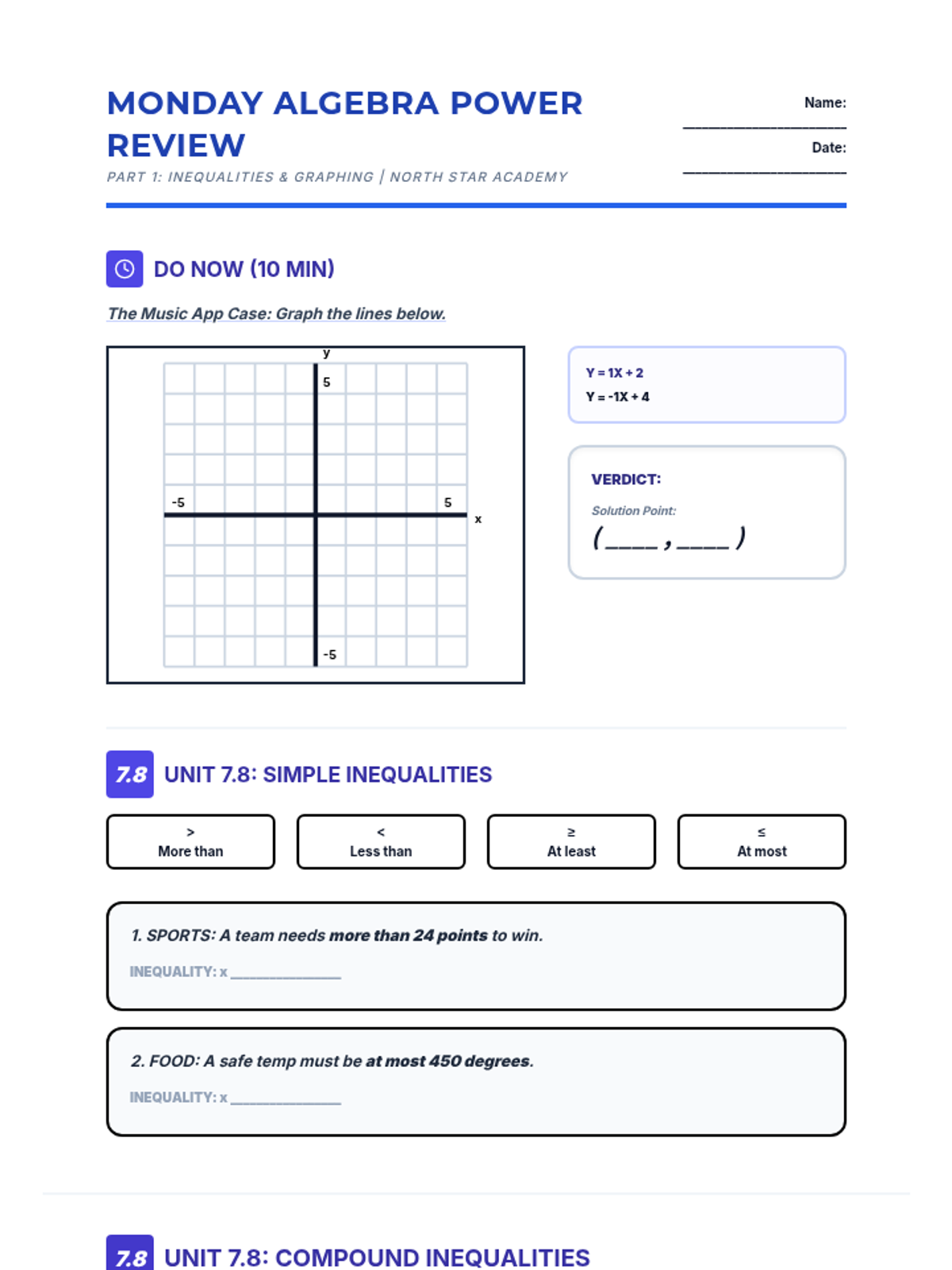
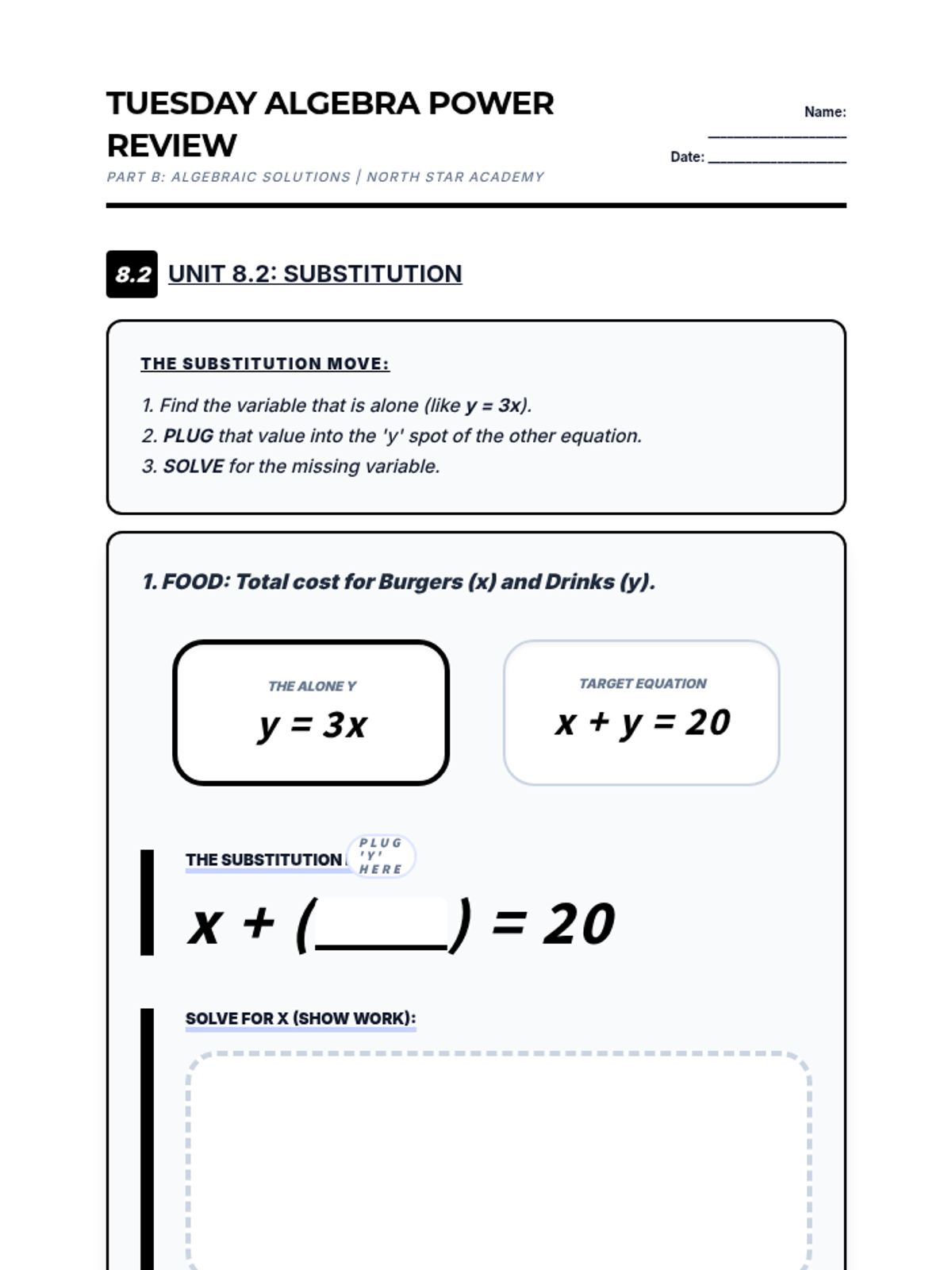
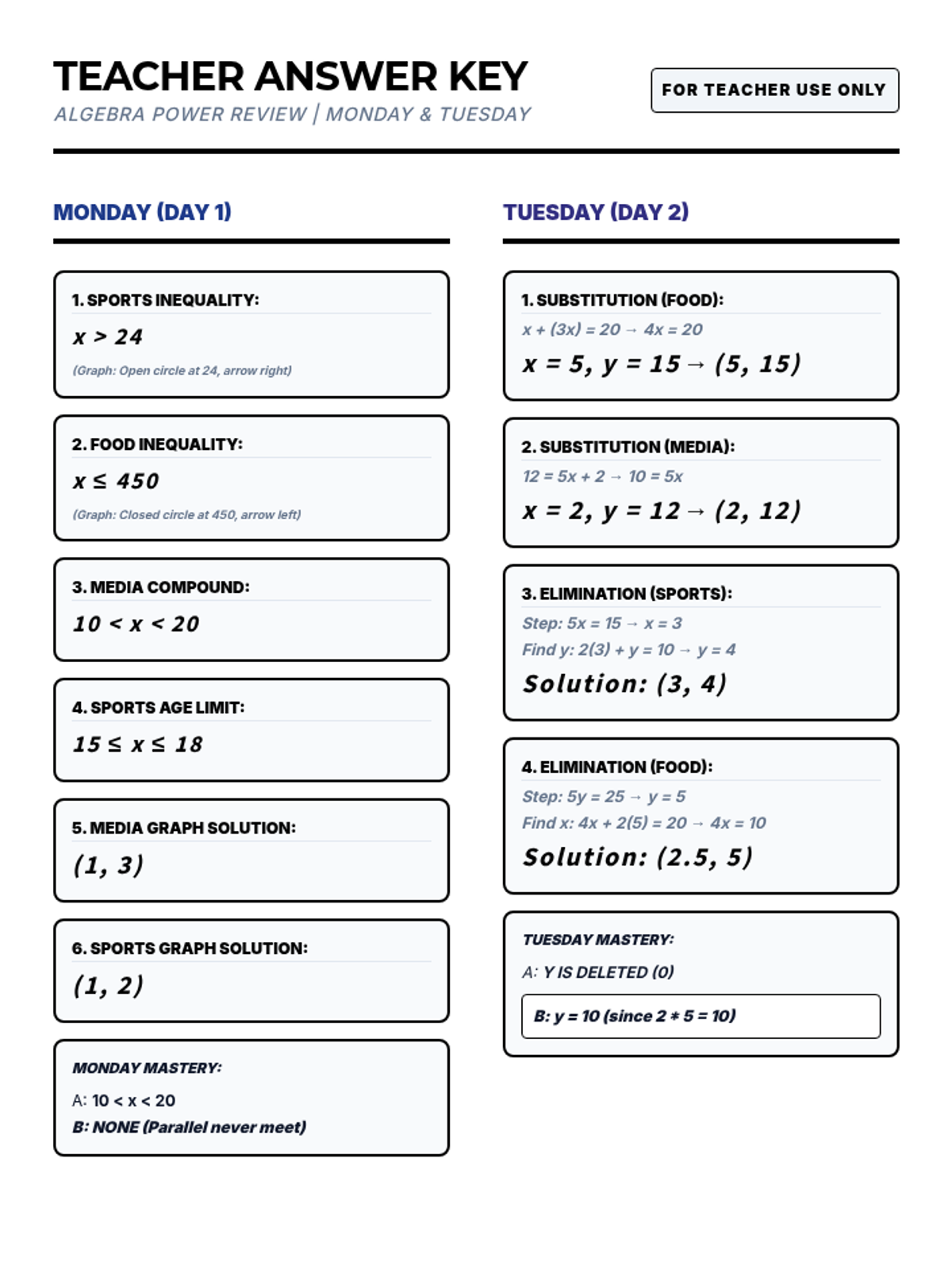
A 9th grade Algebra lesson focused on translating real-world scenarios (media, sports, food) into a system of two linear equations, specifically designed for Special Education students with IEP supports.
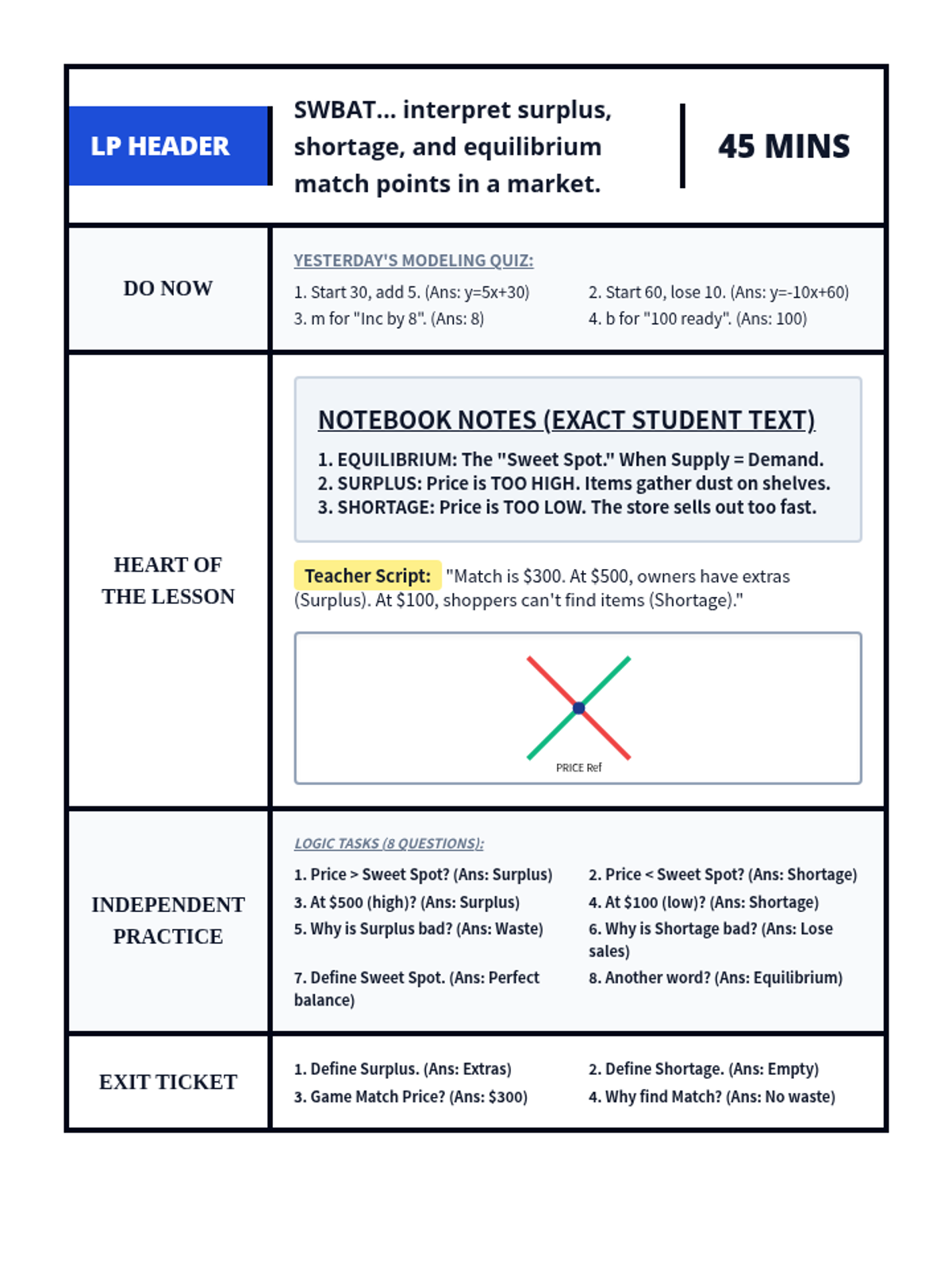
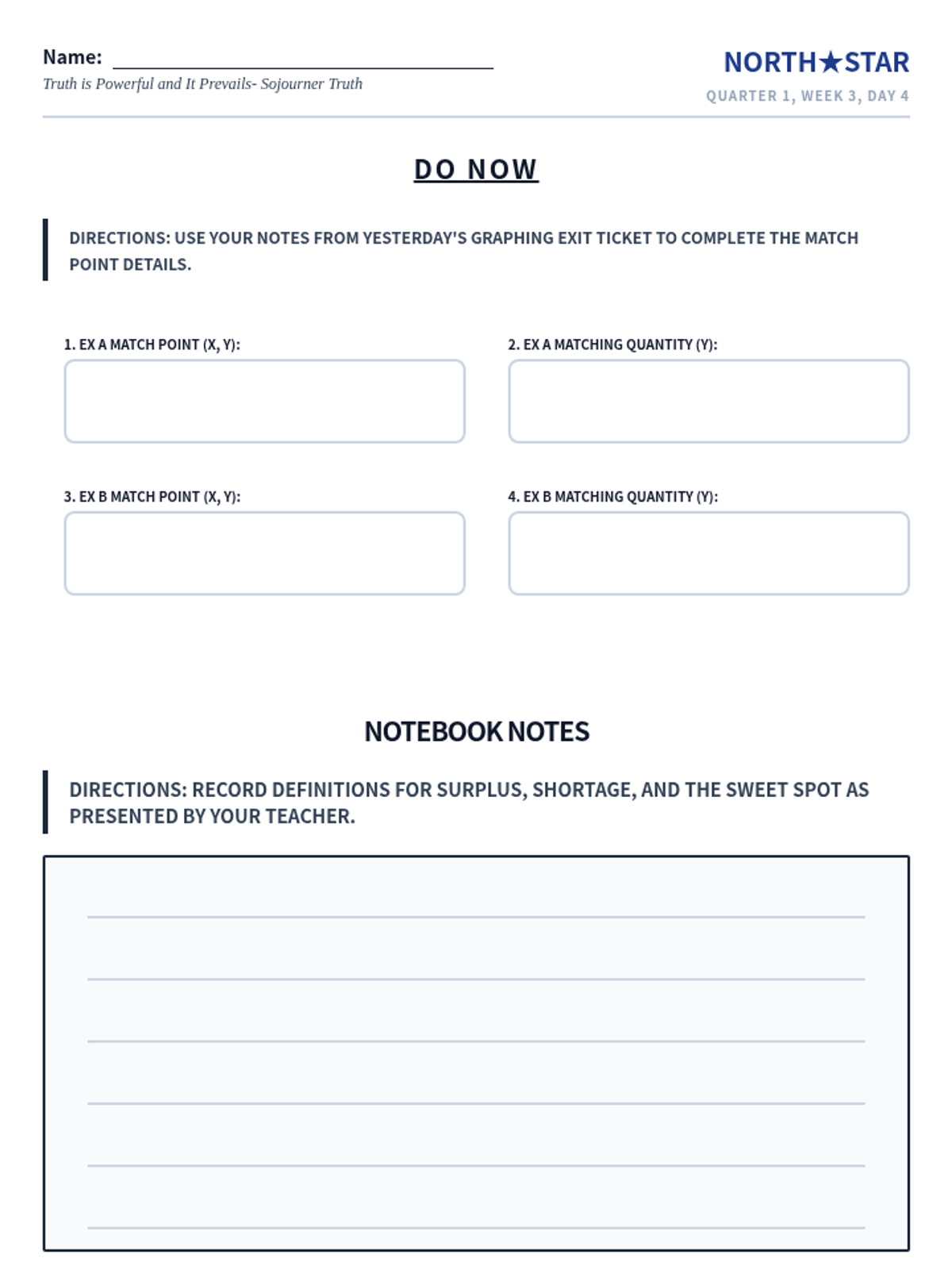
Students interpret the meaning of the point of intersection, surplus, and shortage in the context of a real-world market.
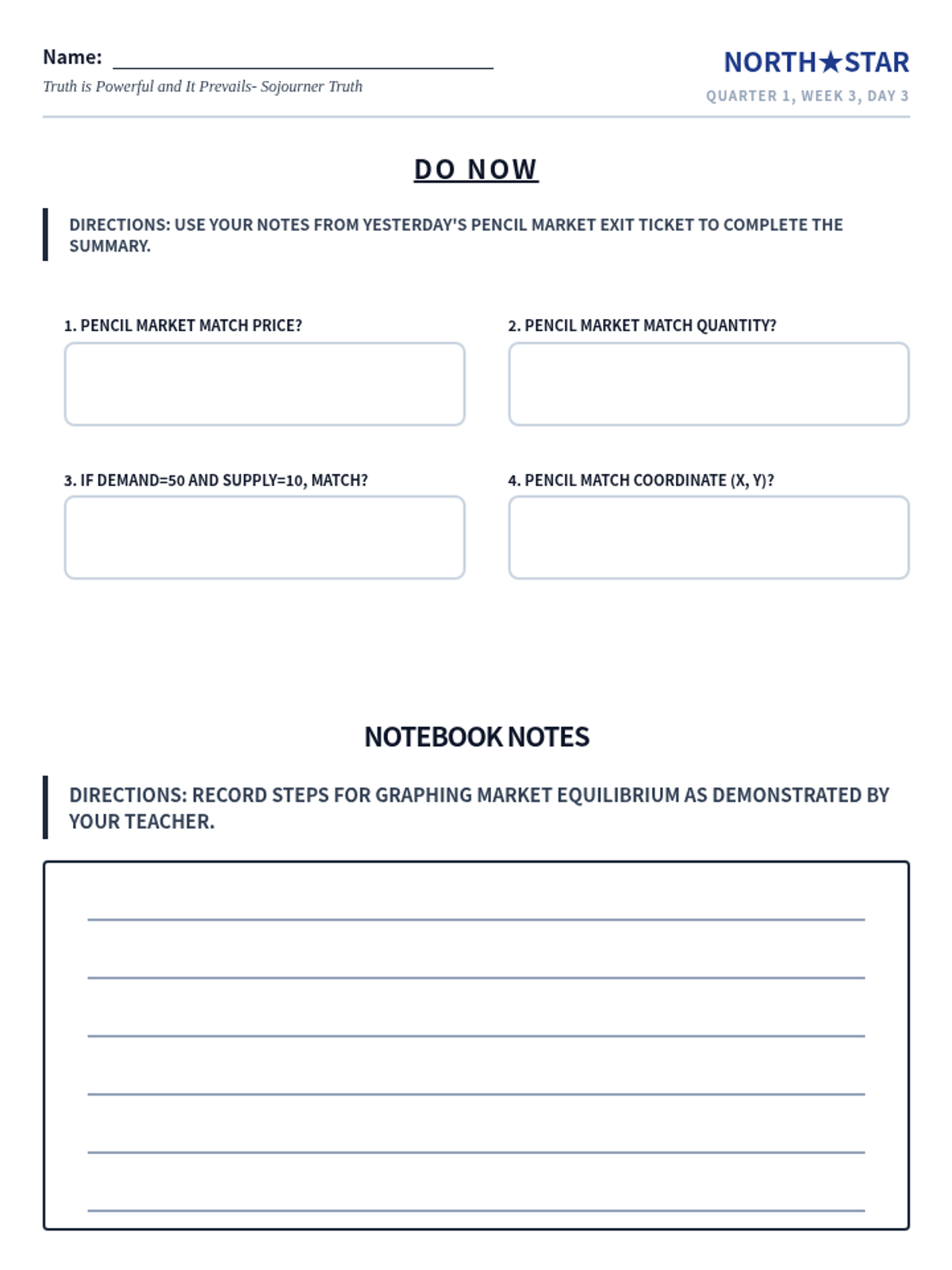
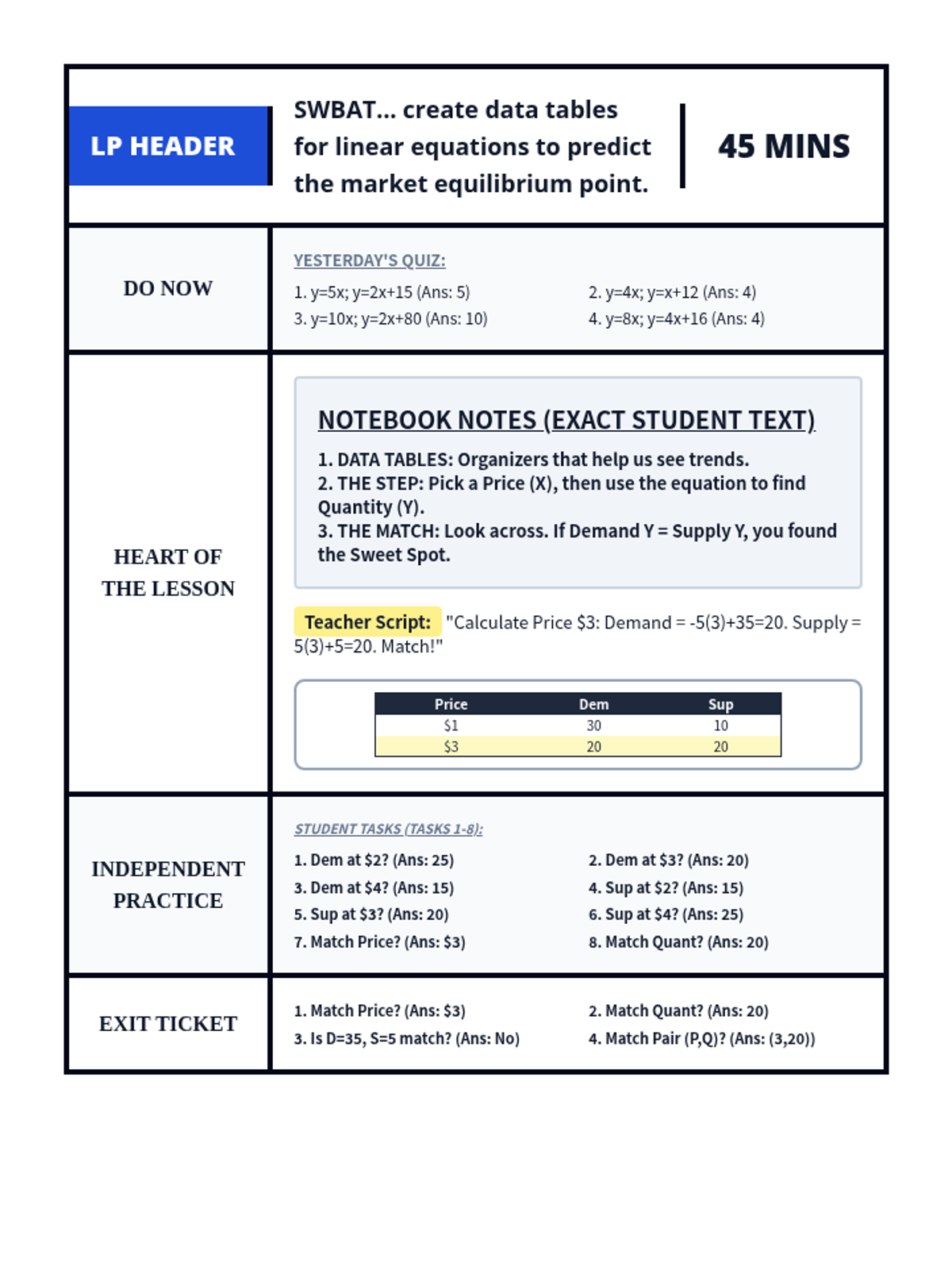
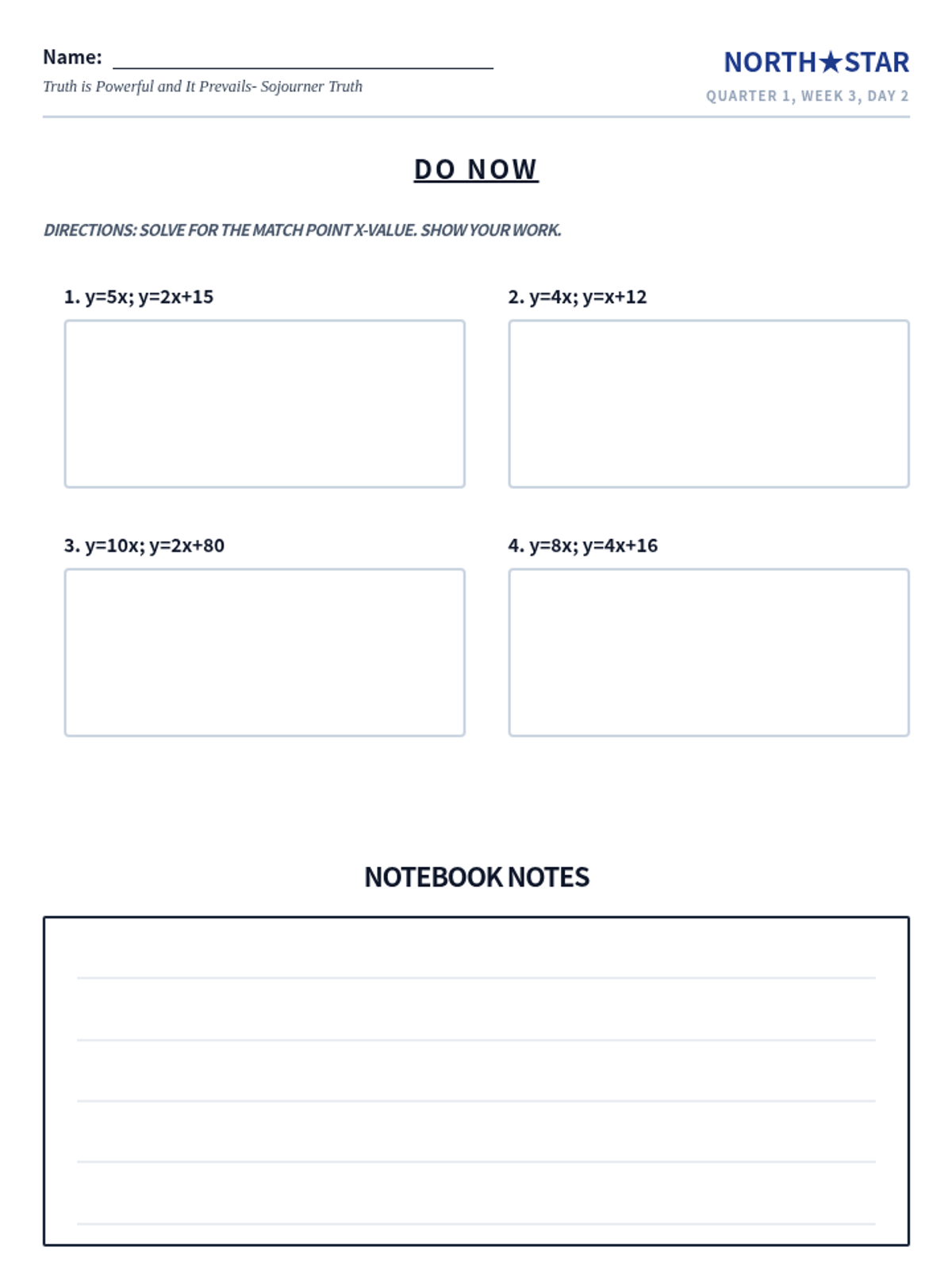
Students create and compare multiple sets of data tables for supply and demand to identify the market equilibrium price where quantities match.
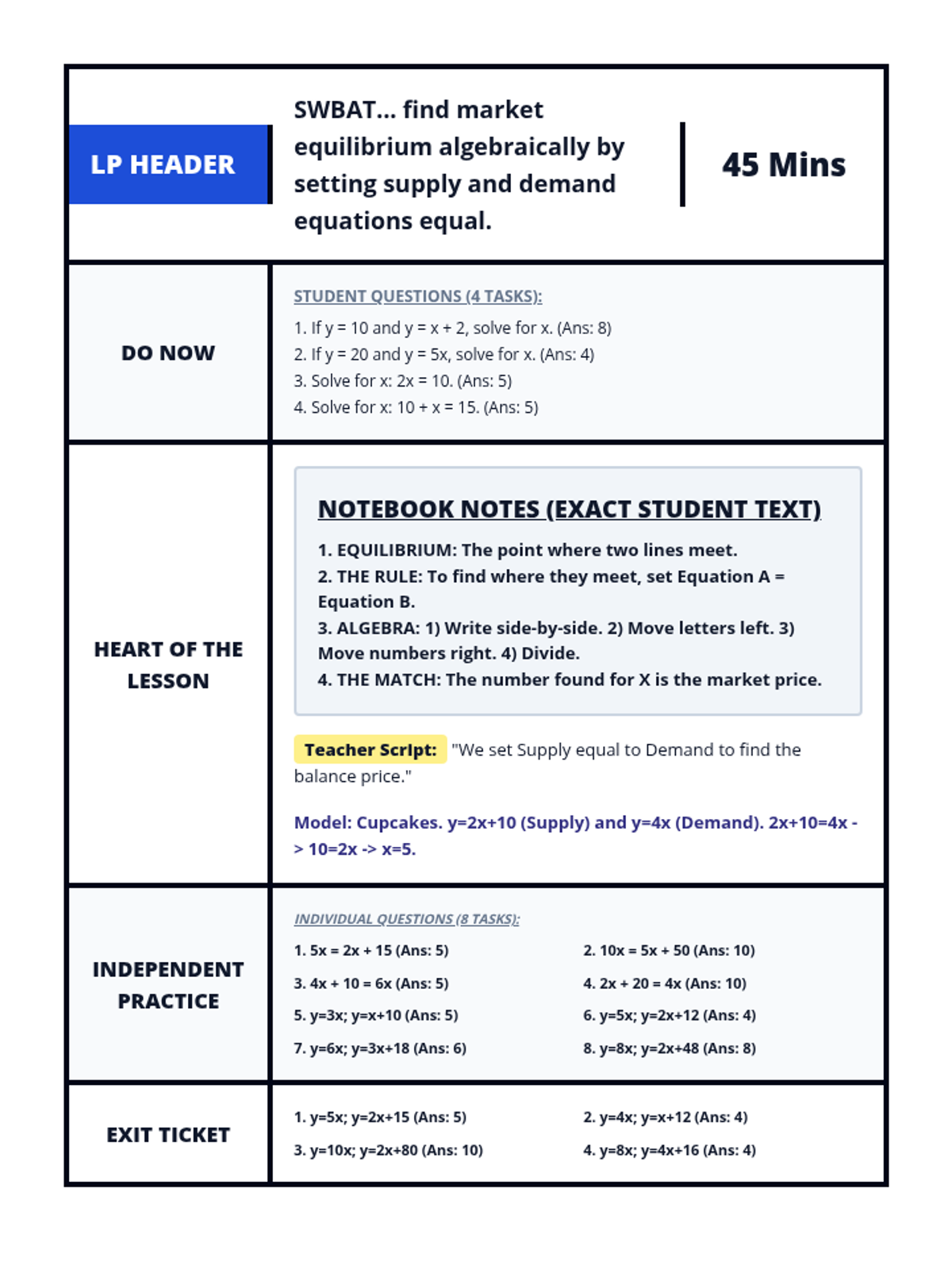
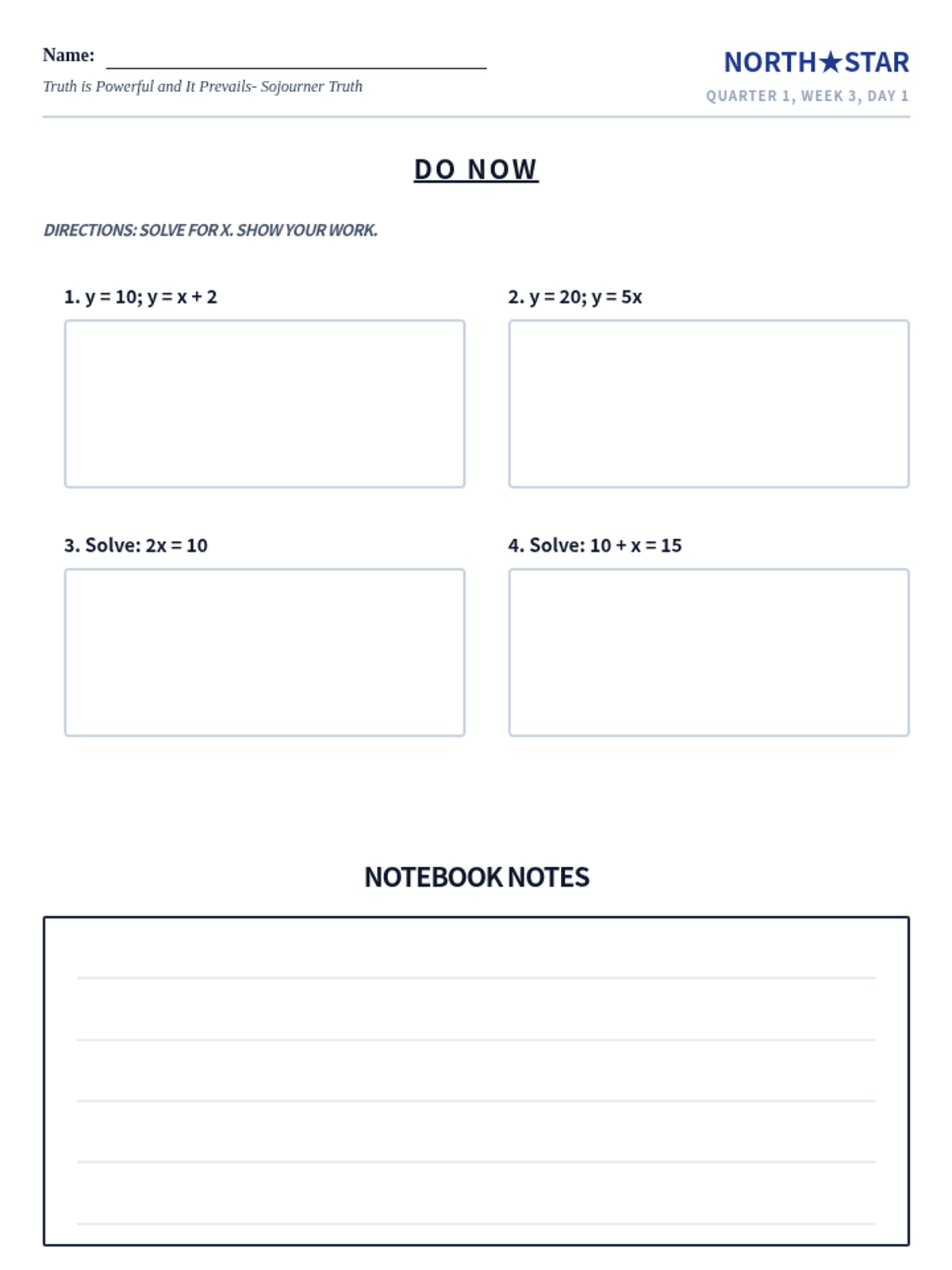
Students define supply and demand and learn to solve for the point of intersection algebraically by setting equations equal.
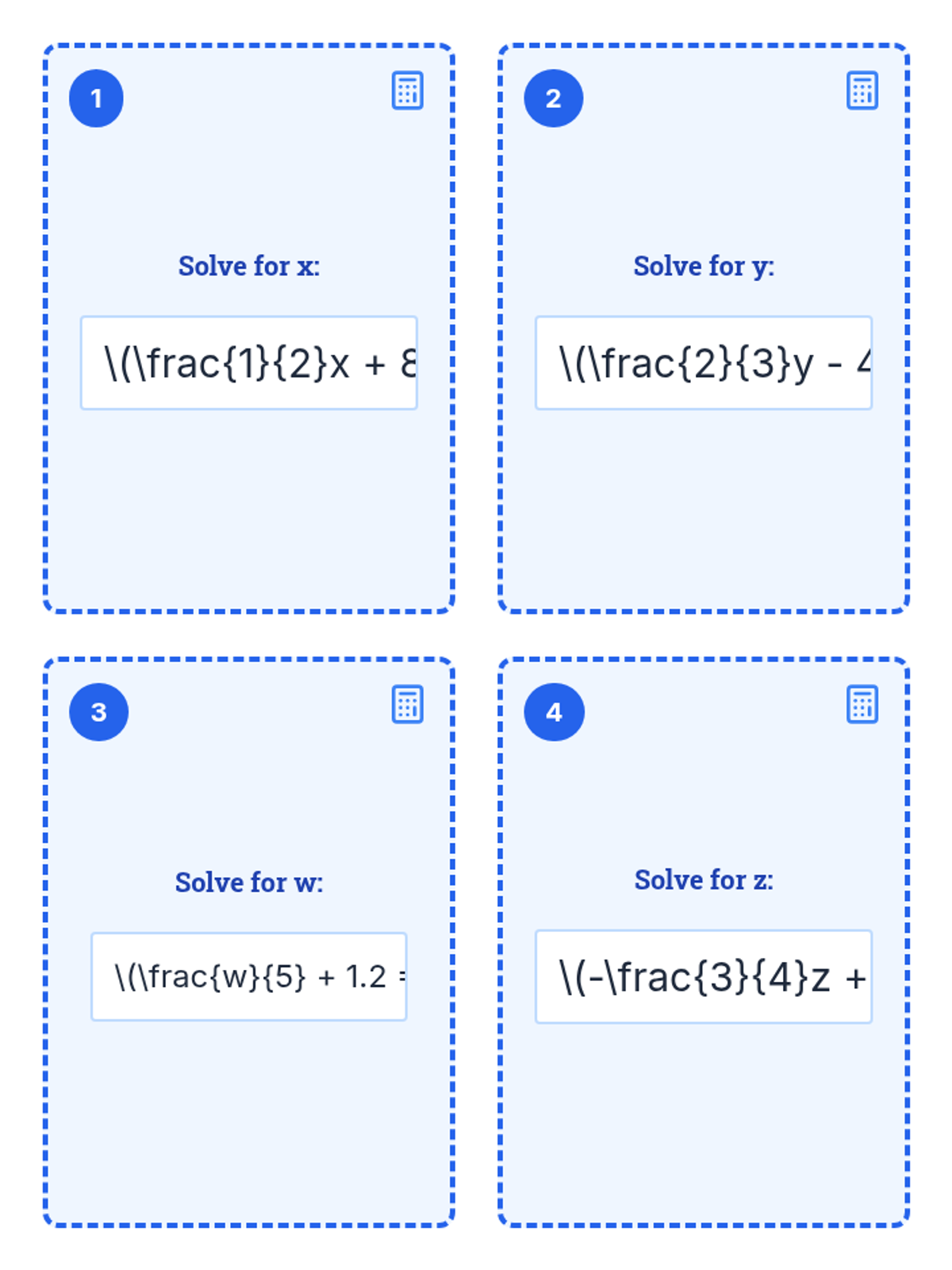
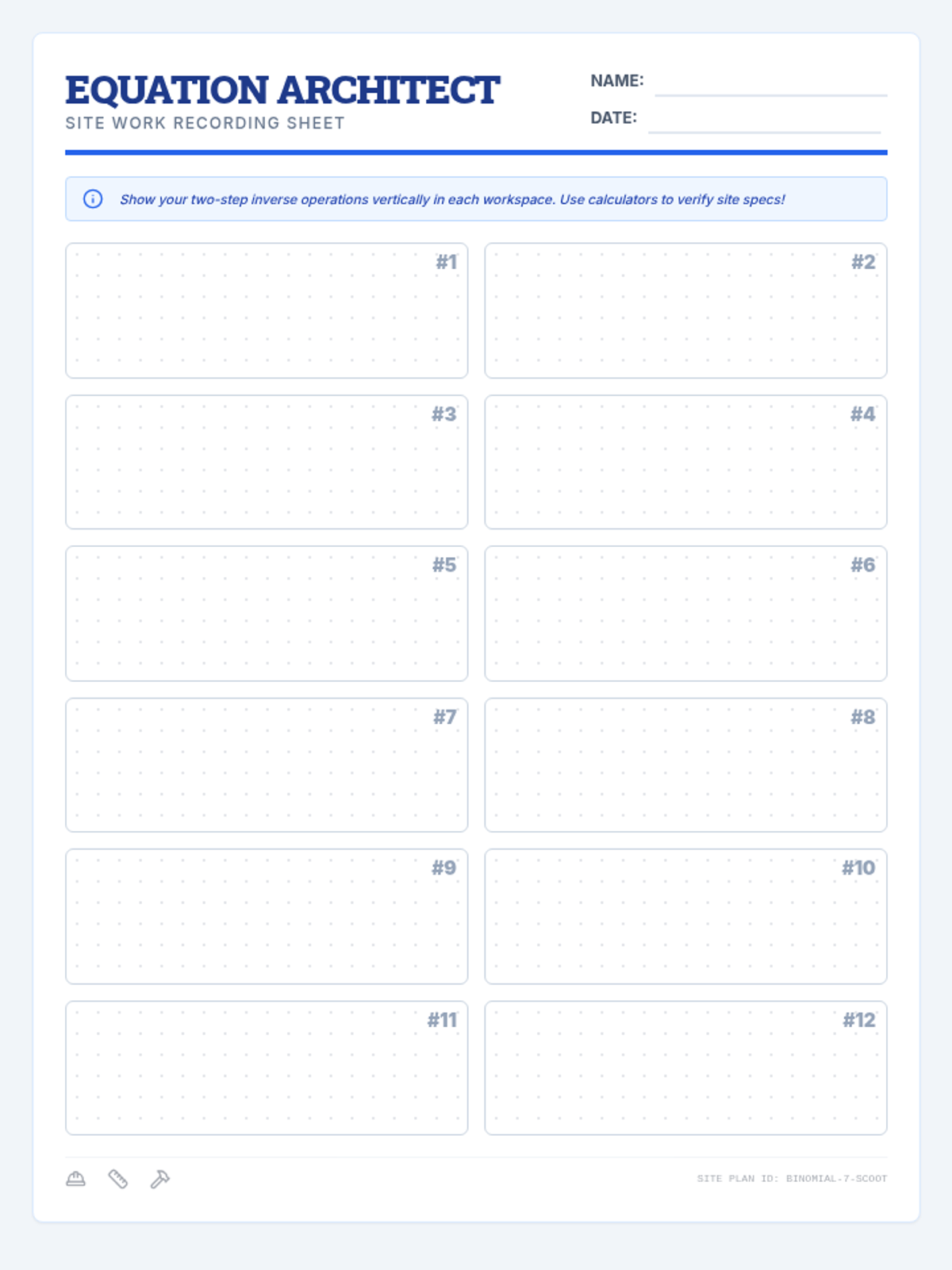
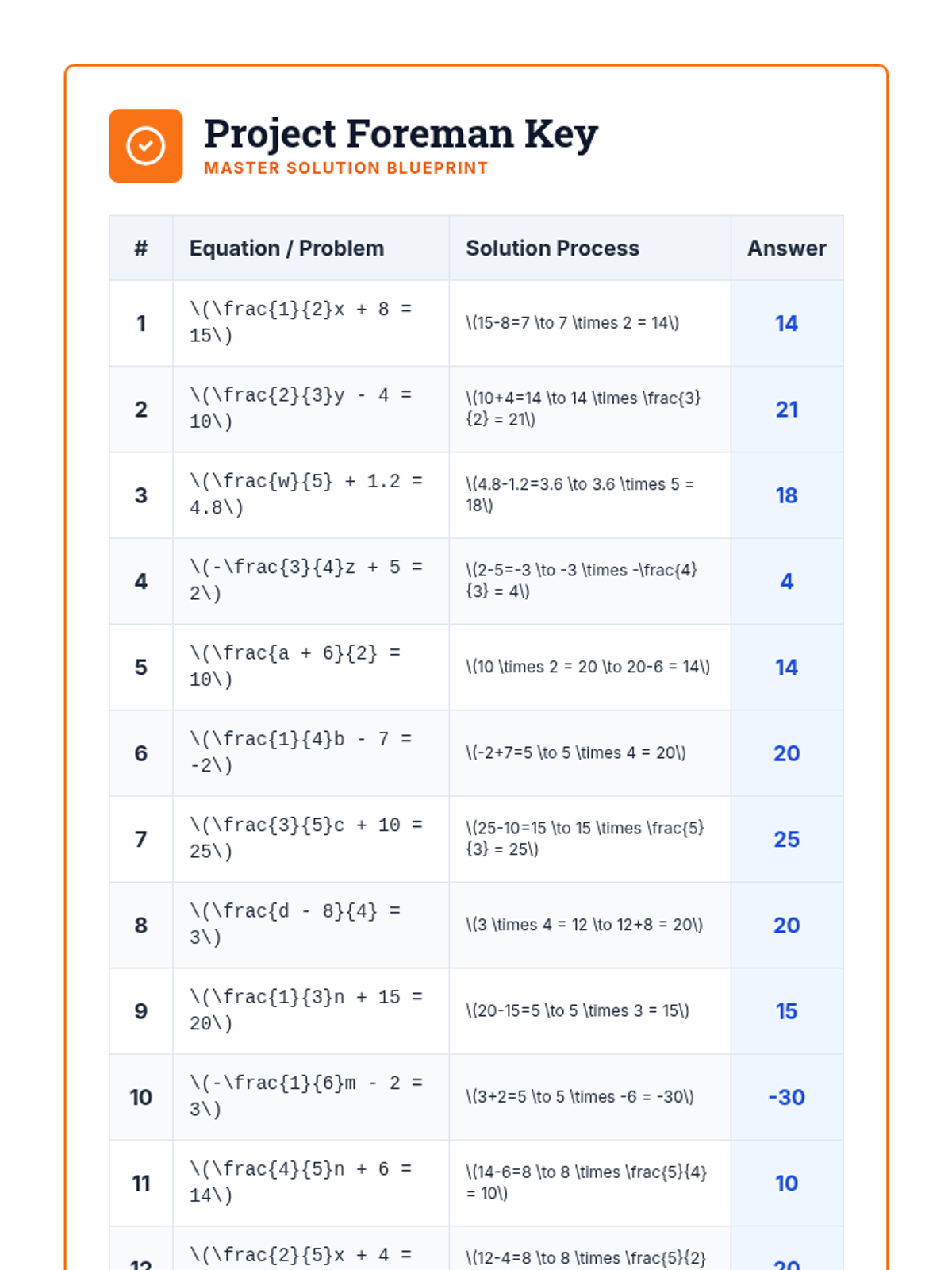
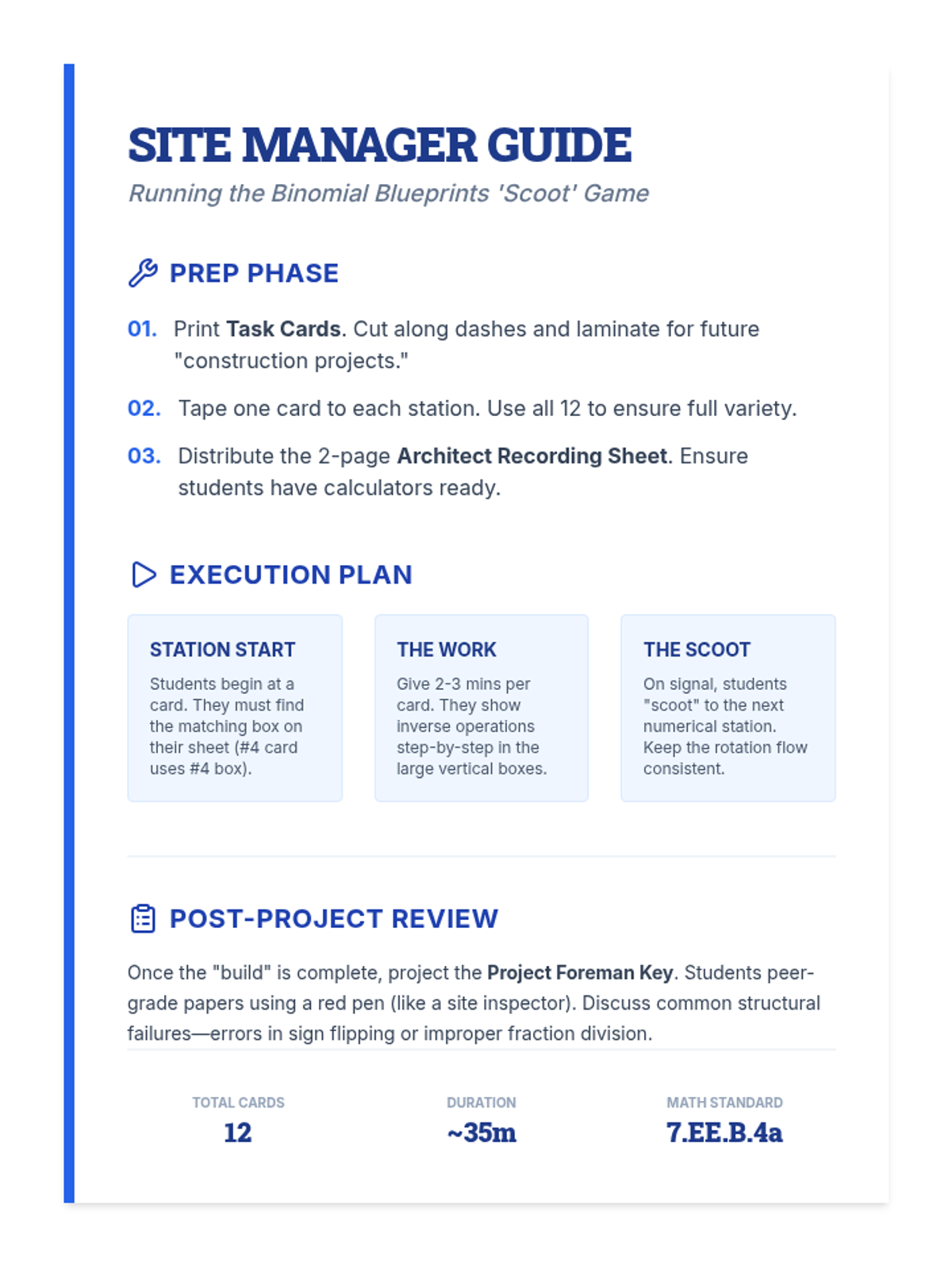
A high-energy 'Scoot' game where students solve two-step equations with fractional coefficients, using a construction-blueprint theme to build algebraic fluency.
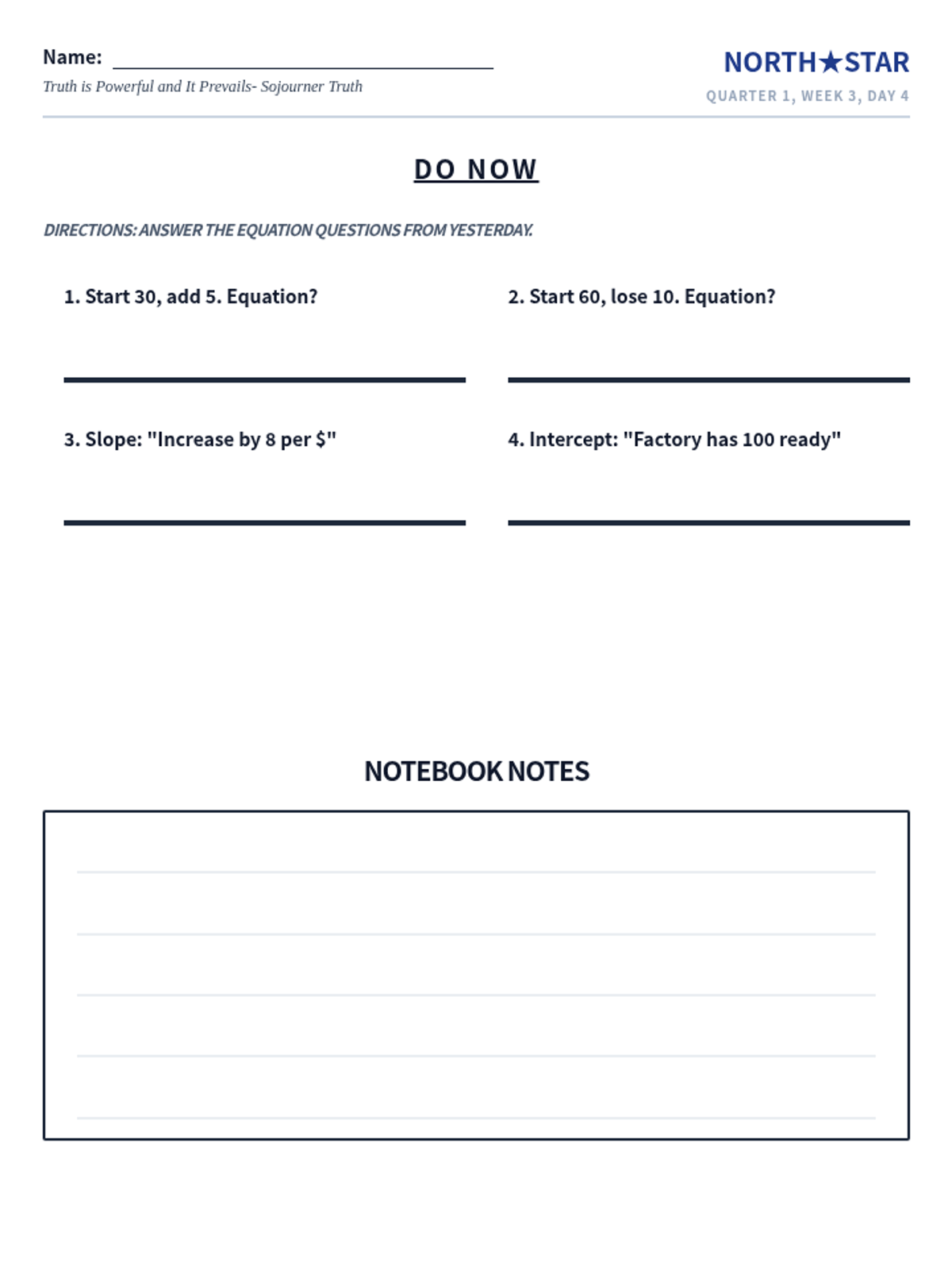
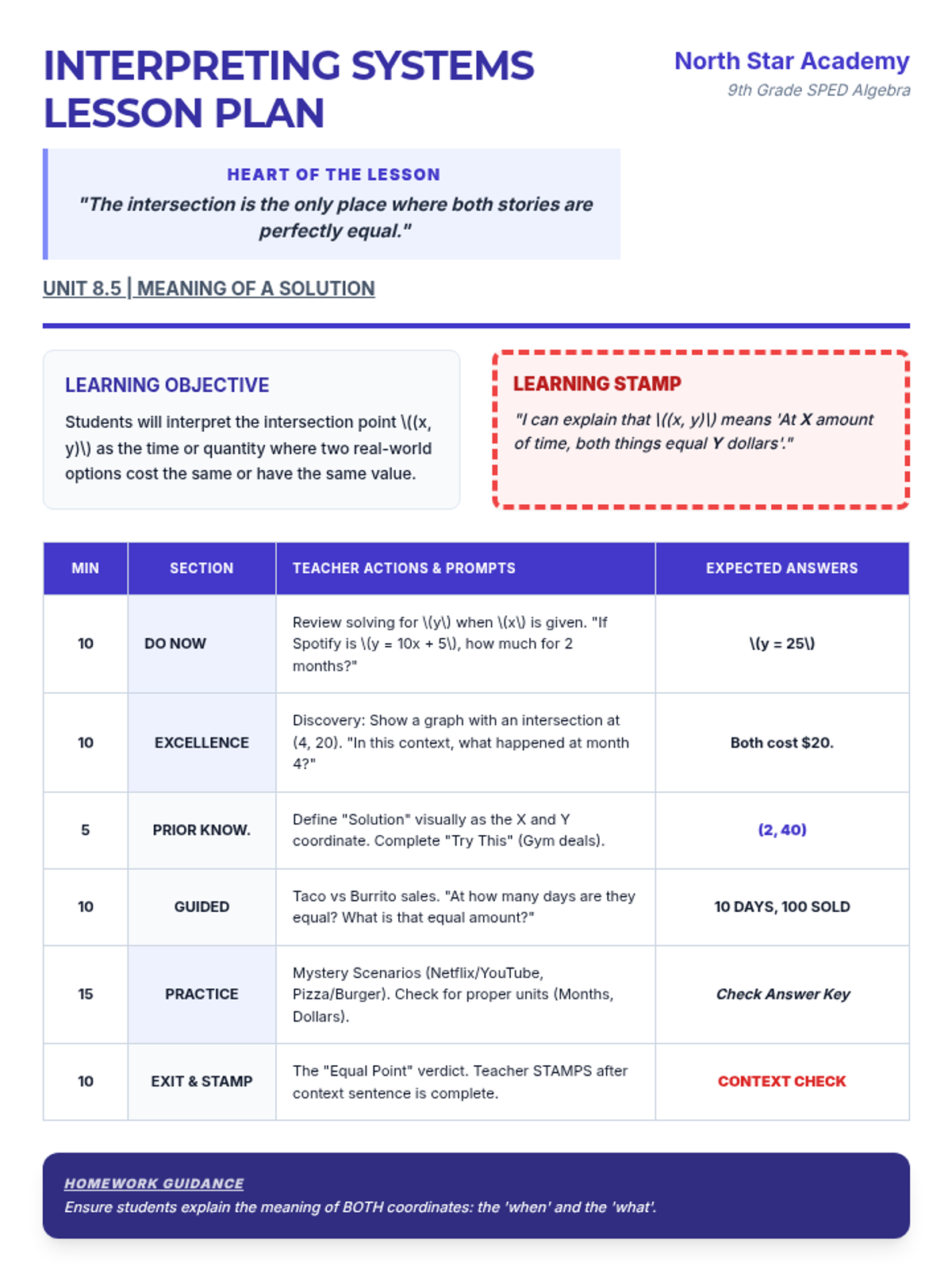
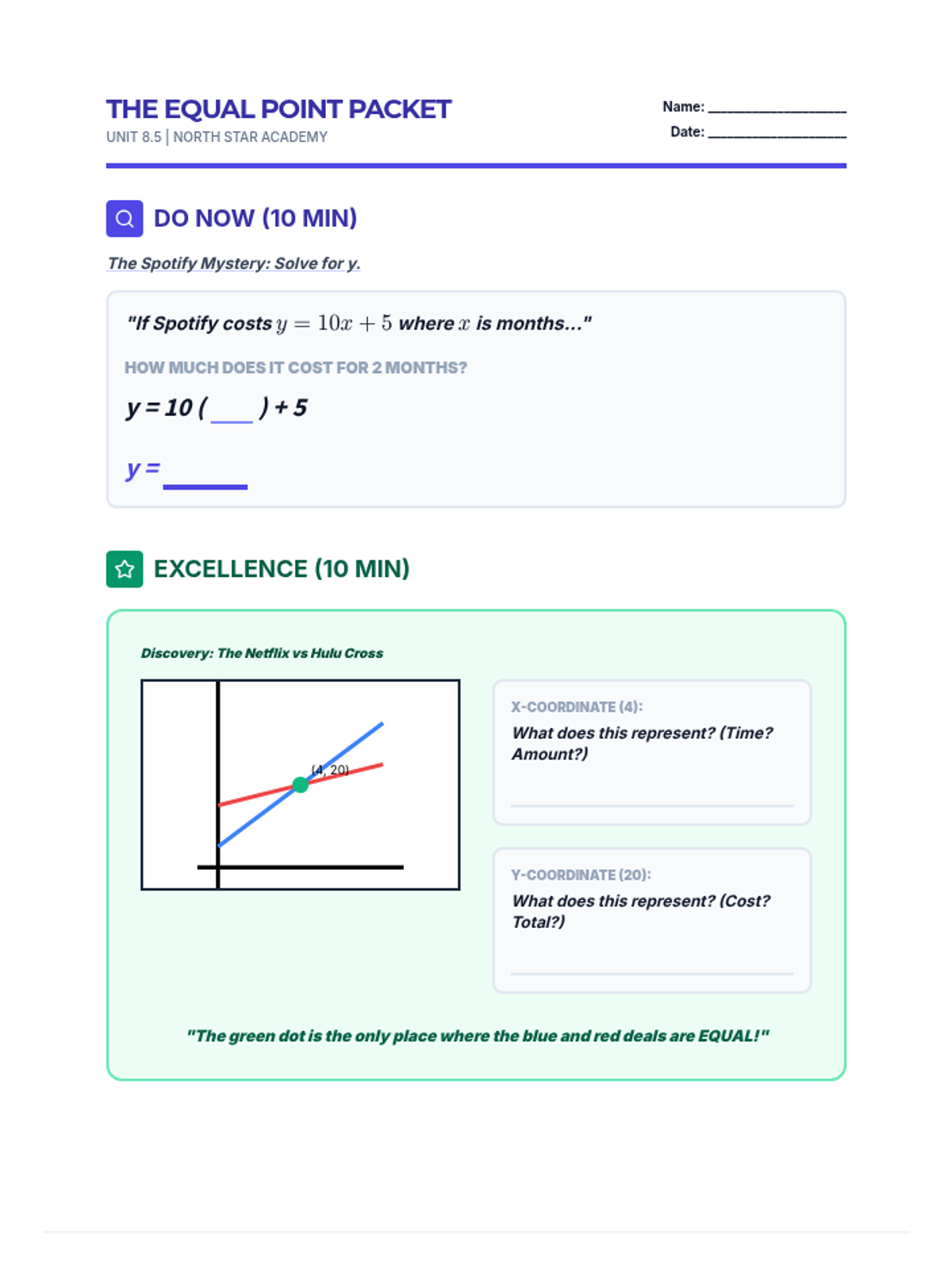
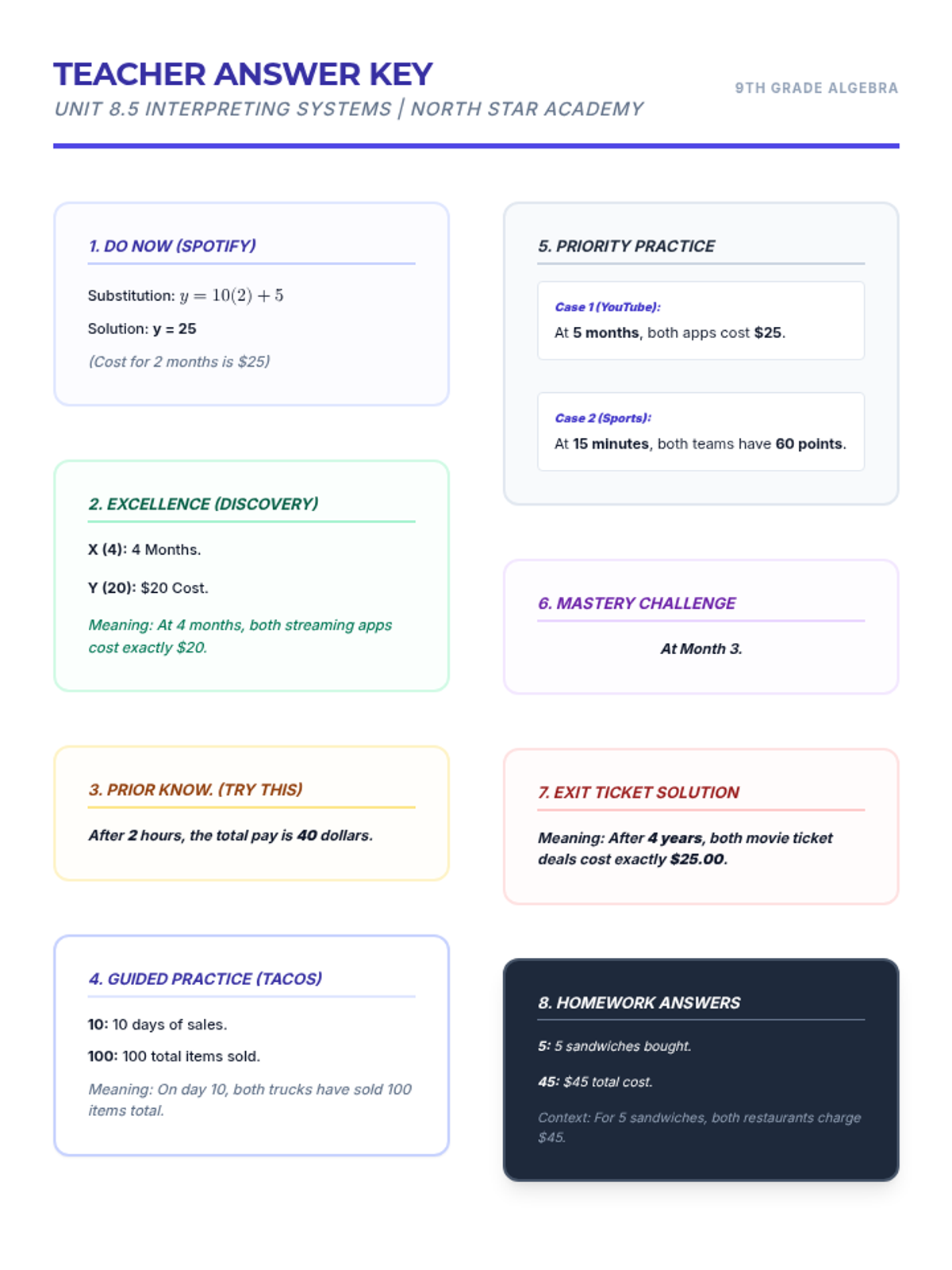
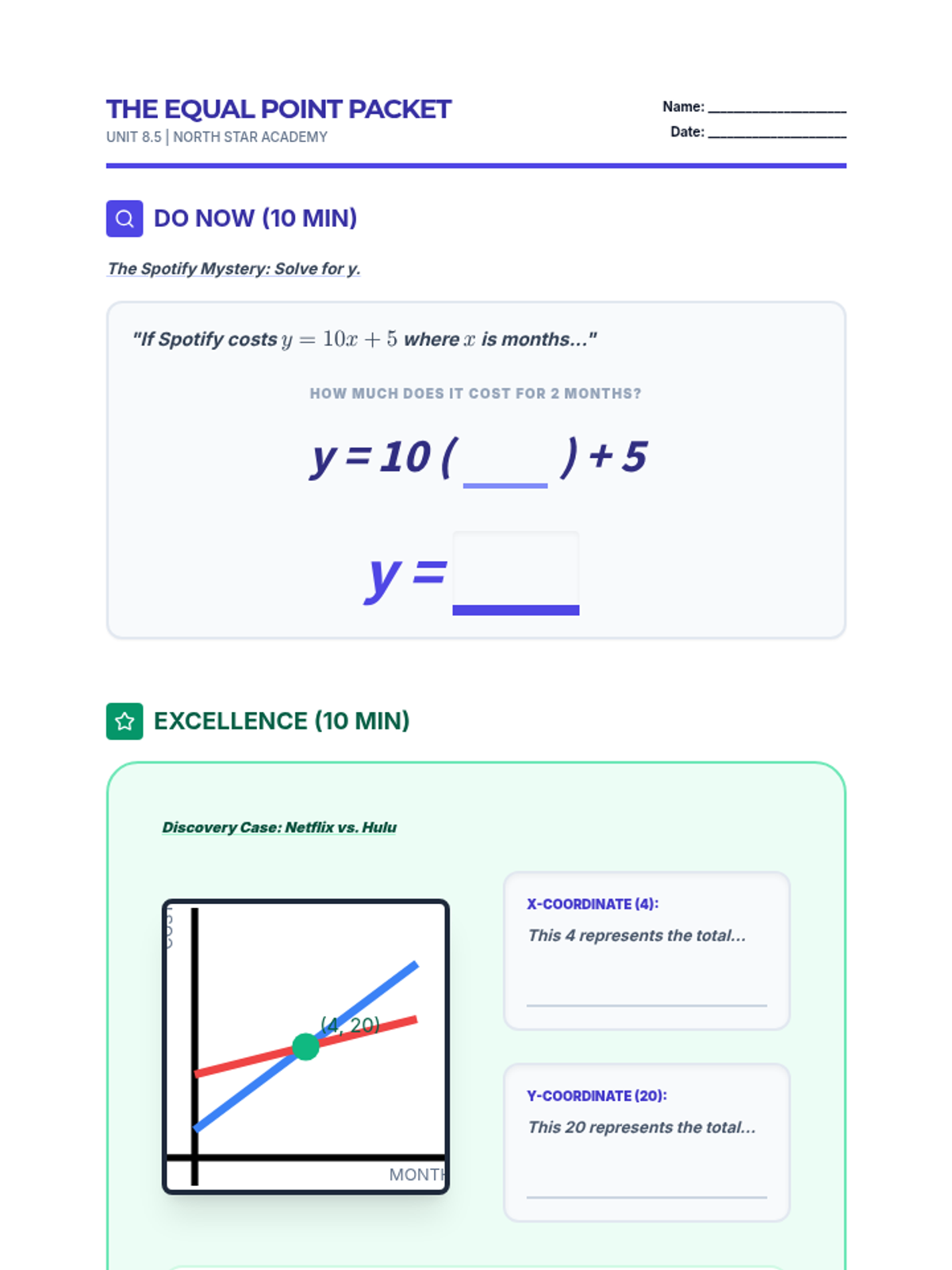
A 9th grade Algebra lesson focused on interpreting the intersection point of a system of equations in a real-world context (media, sports, food), specifically designed for Special Education students with IEP supports.
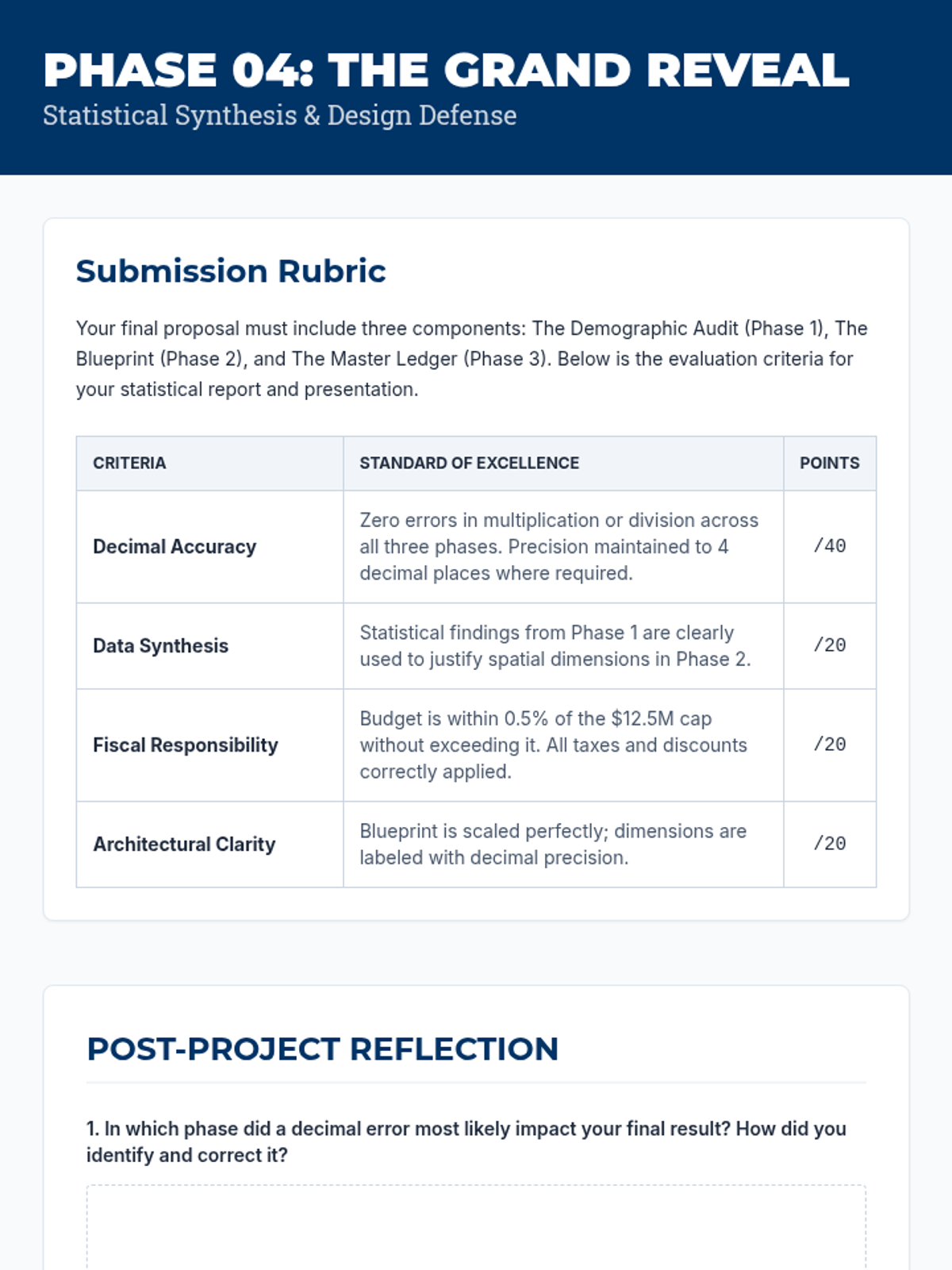
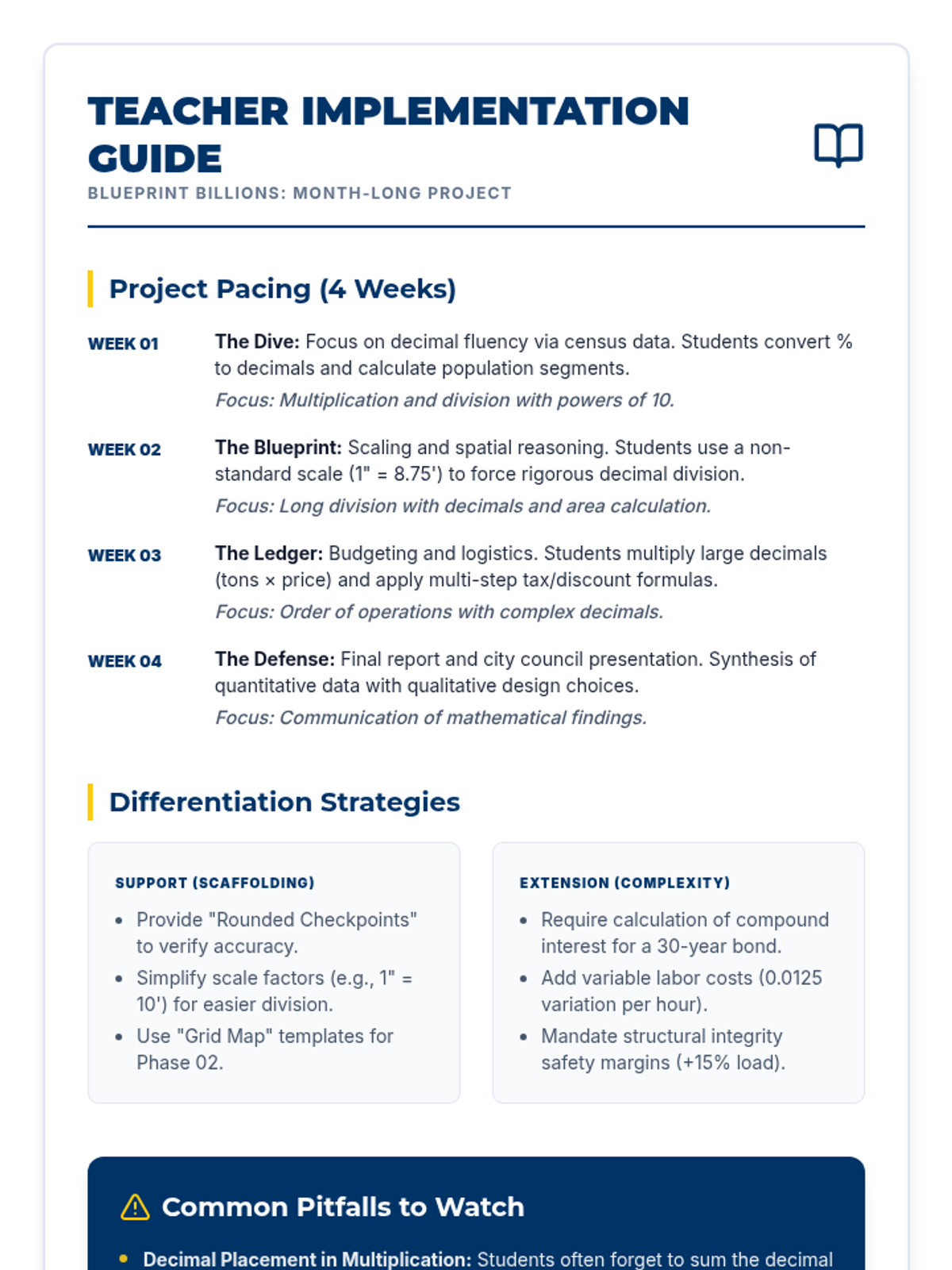
Students synthesize their design and financial data into a final statistical report and presentation for a hypothetical city council.
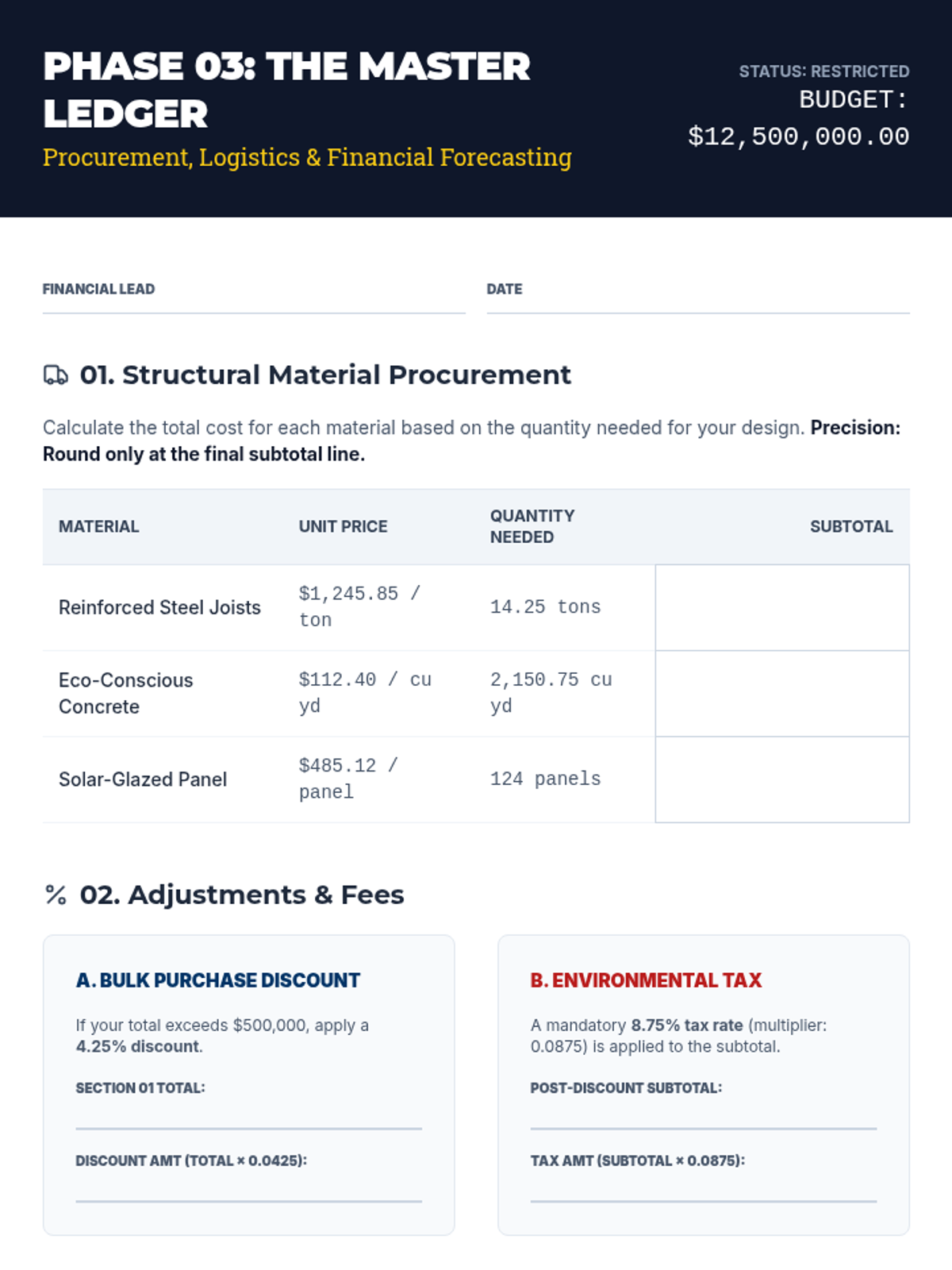
Focusing on procurement, students manage a complex budget using multi-step decimal operations for material costs, labor, and taxes.
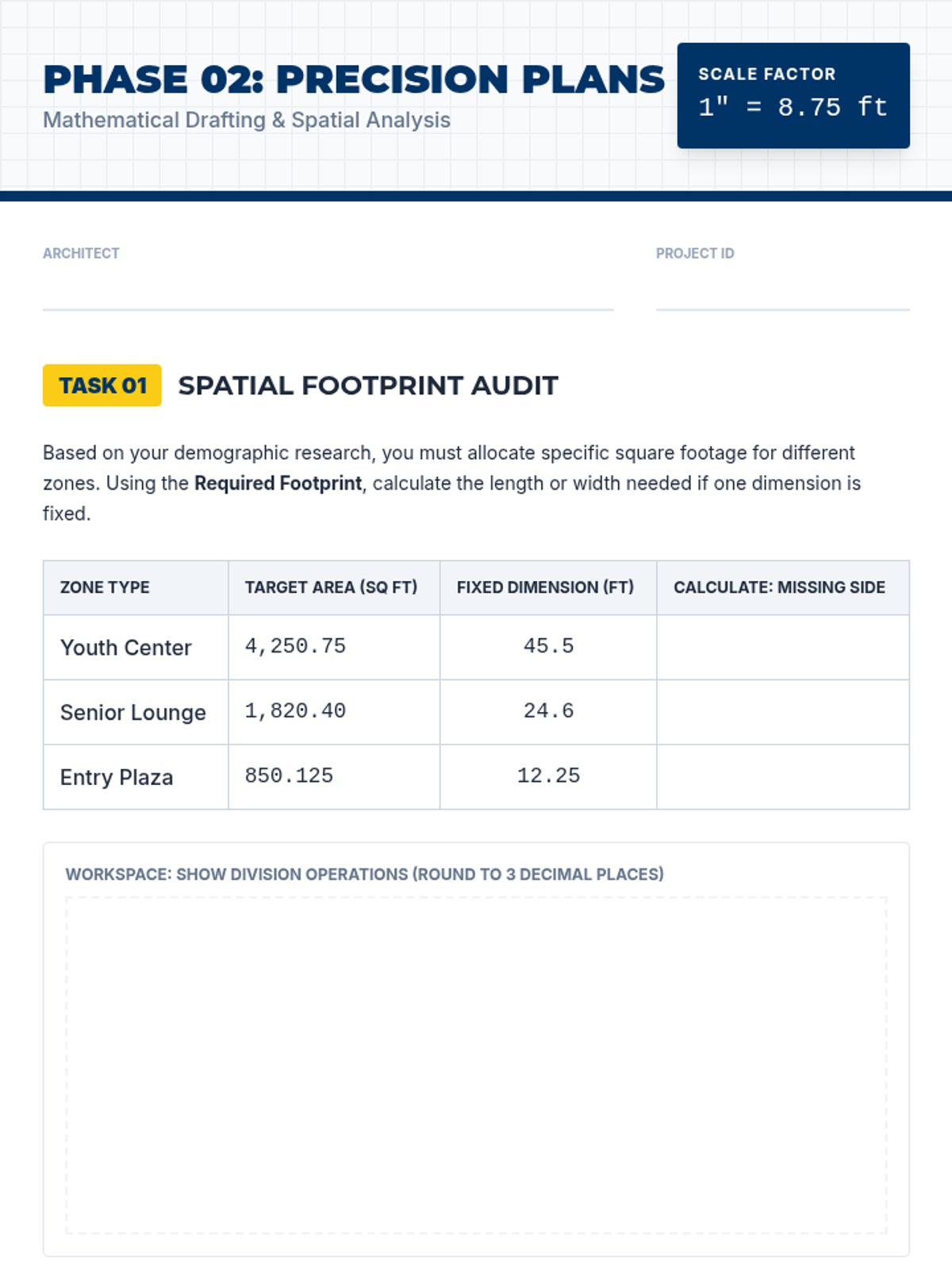
Students translate statistical findings into physical dimensions, applying decimal multiplication and division to manage scale and area calculations.
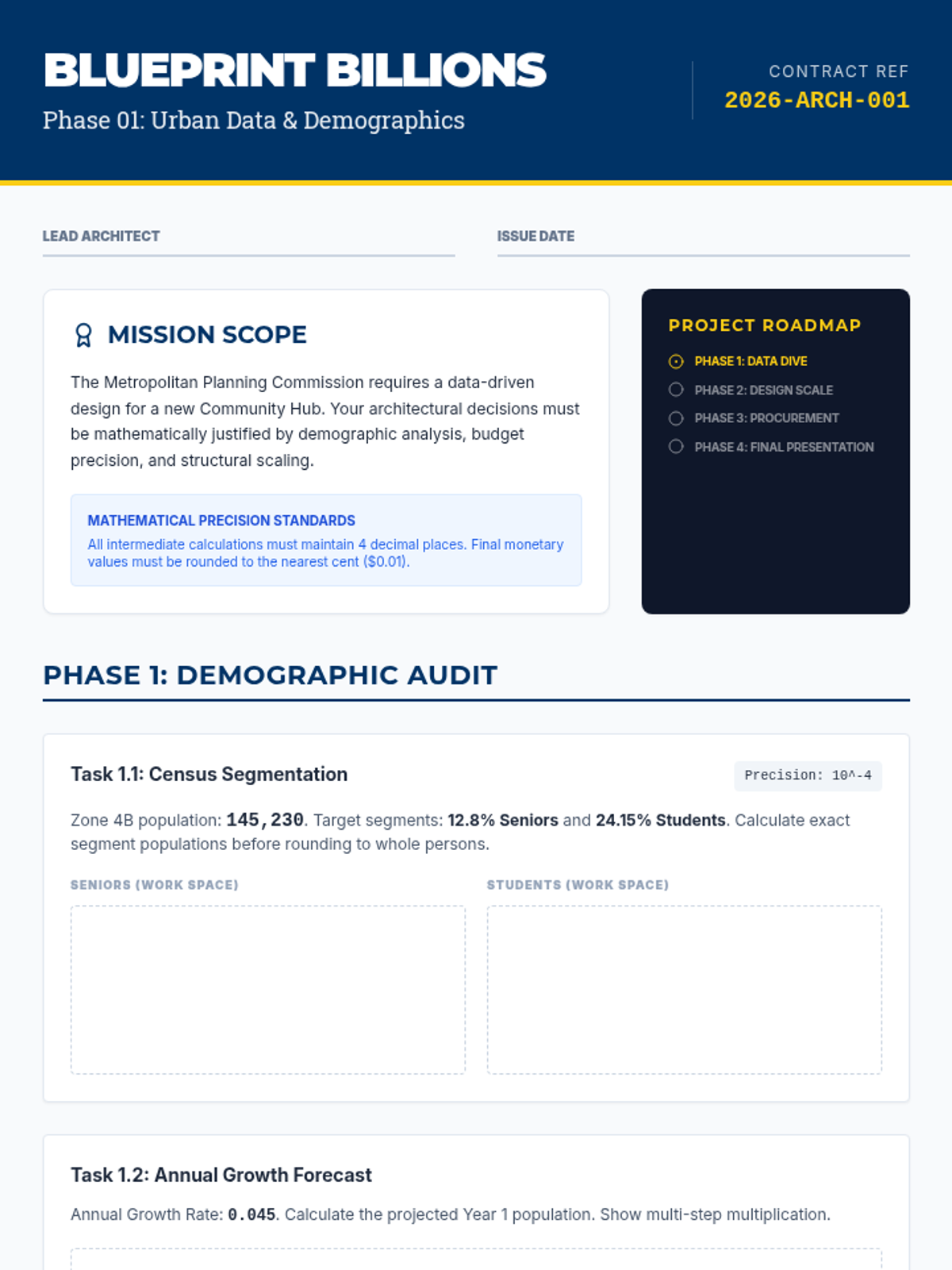
Students launch the project by analyzing demographic data using decimal operations to identify community needs for their architectural design.
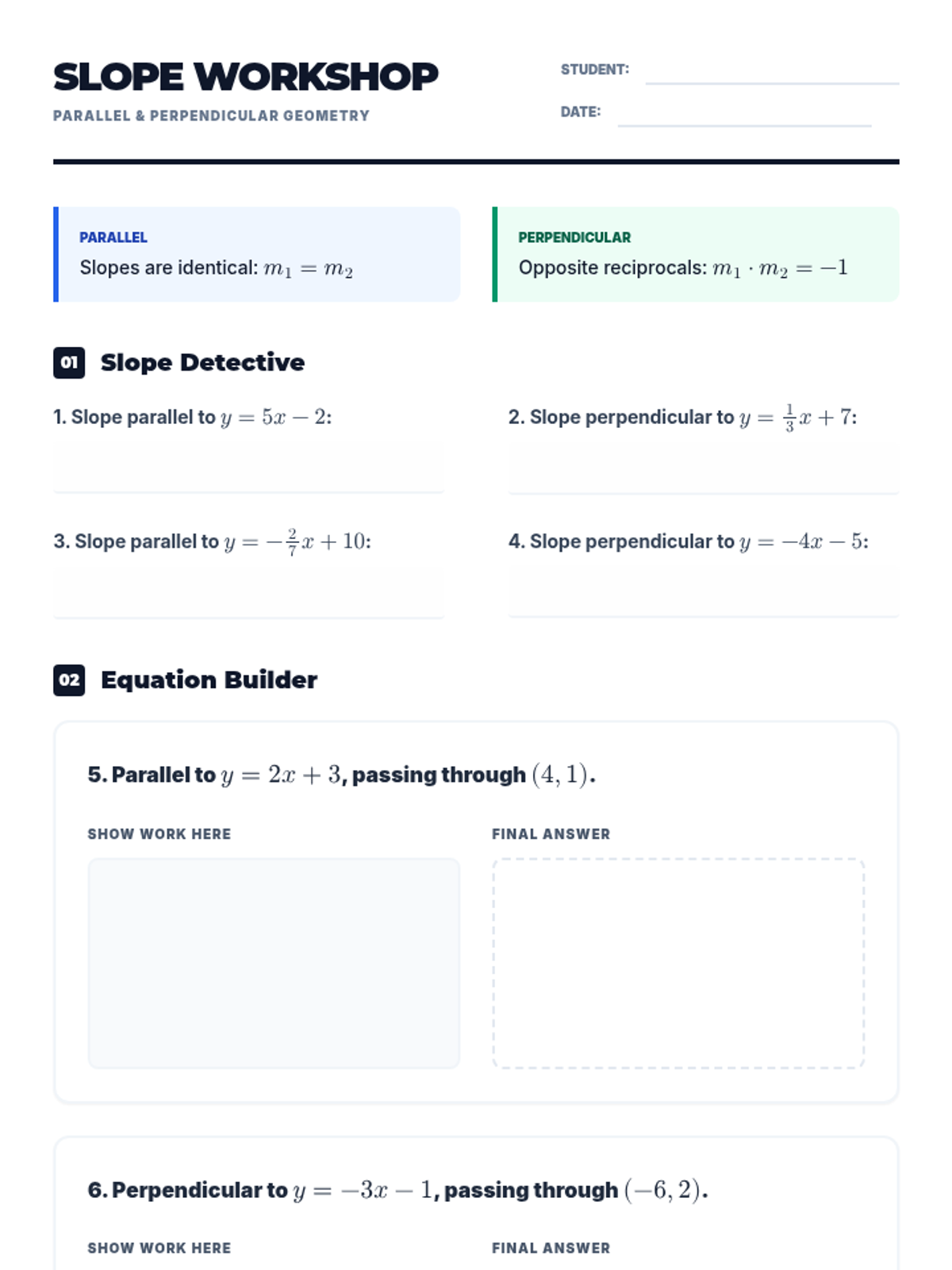
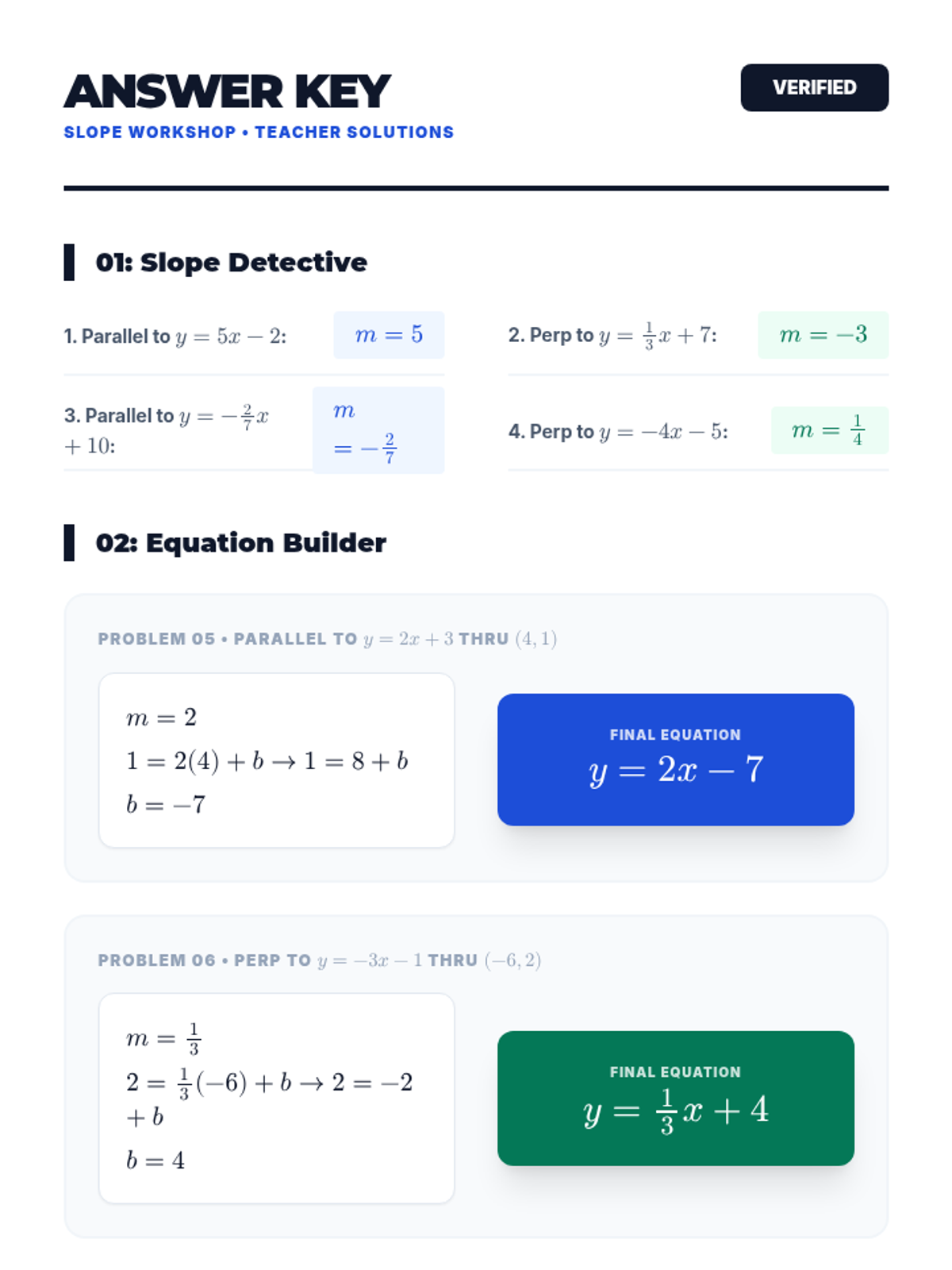
A clear, step-by-step lesson on writing equations for parallel and perpendicular lines in slope-intercept form, featuring visual guides and structured practice.
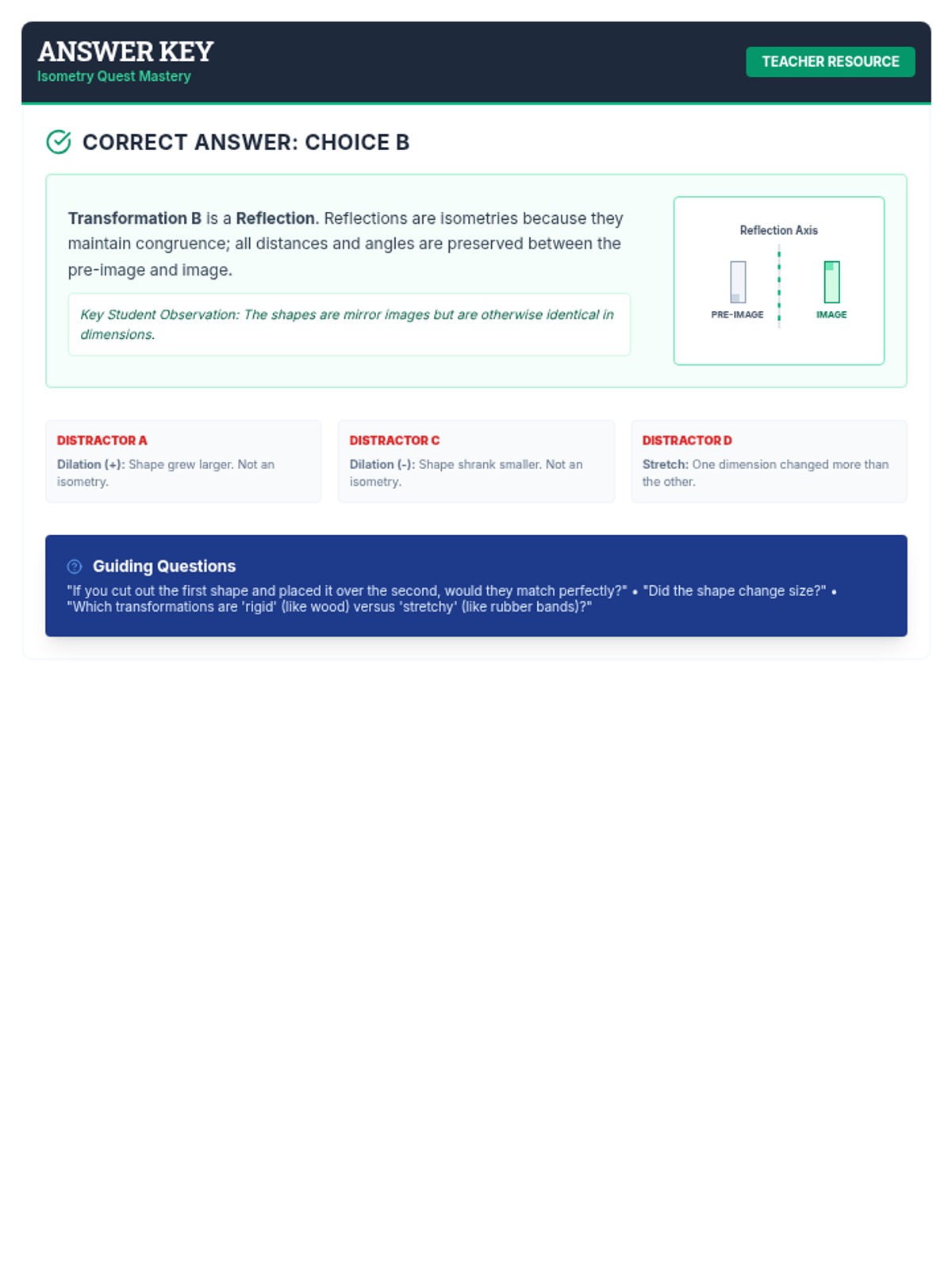
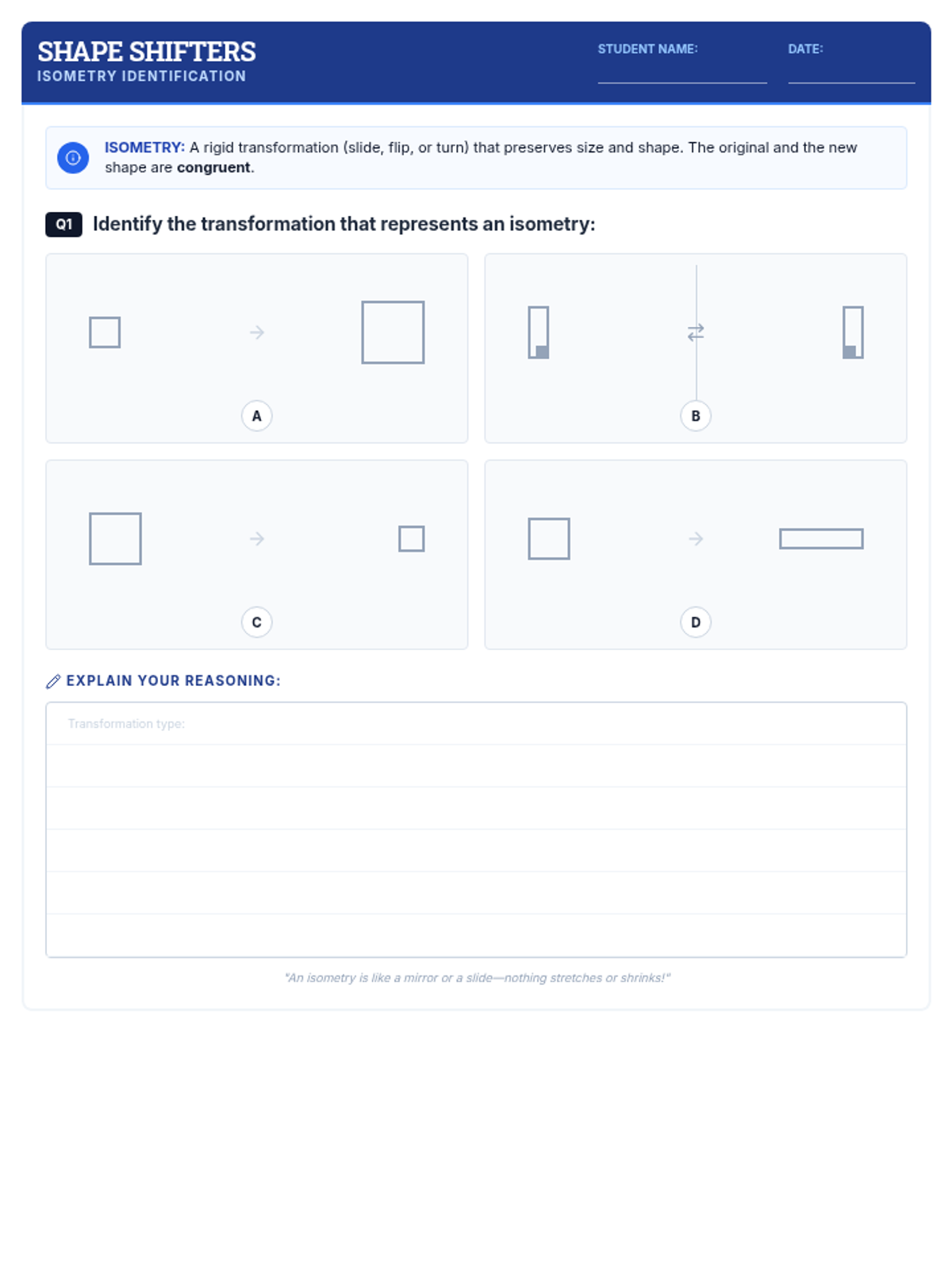
A lesson focused on distinguishing between rigid transformations (isometries) and non-rigid transformations (dilations) using visual diagrams and geometric properties.
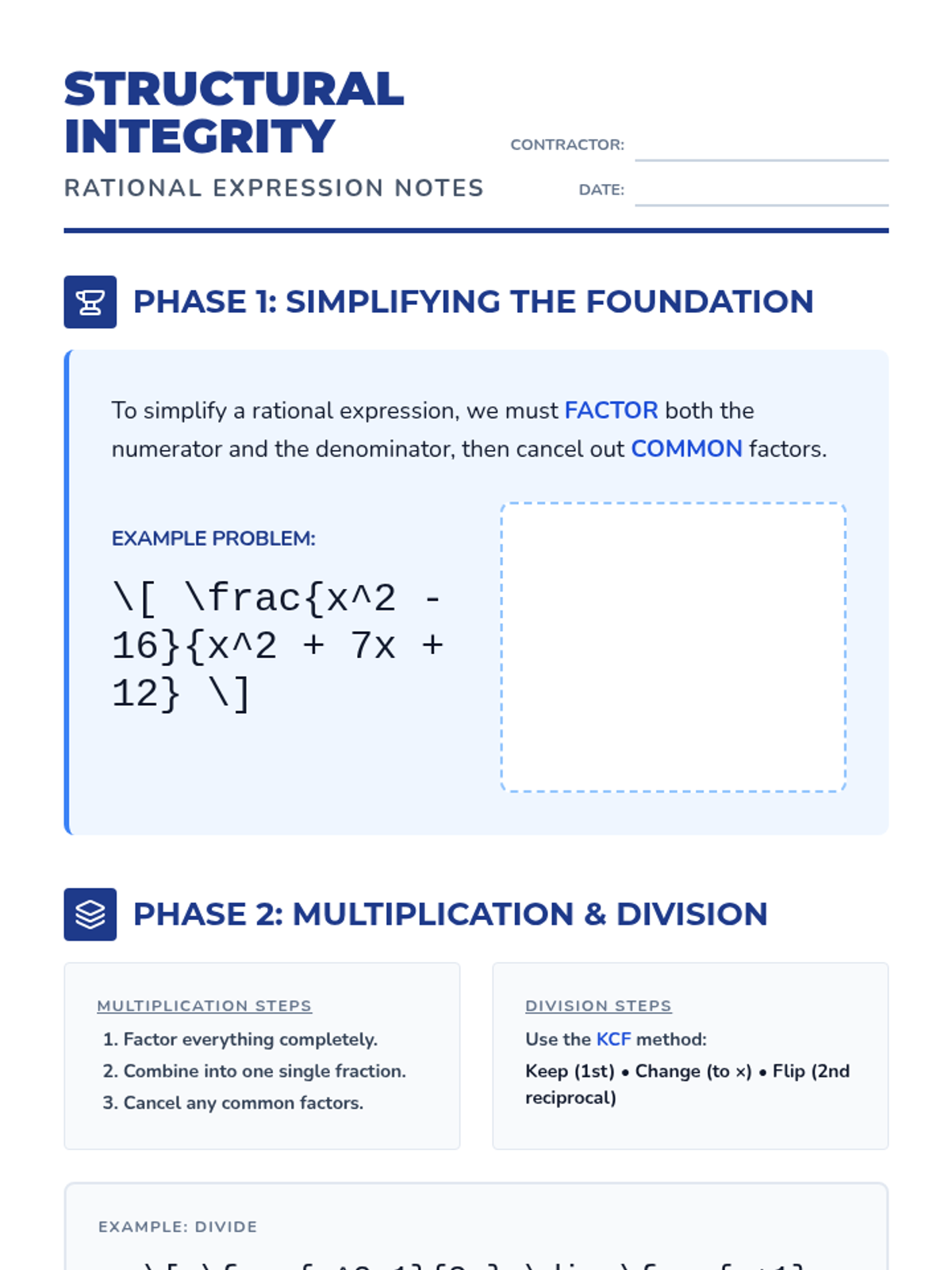
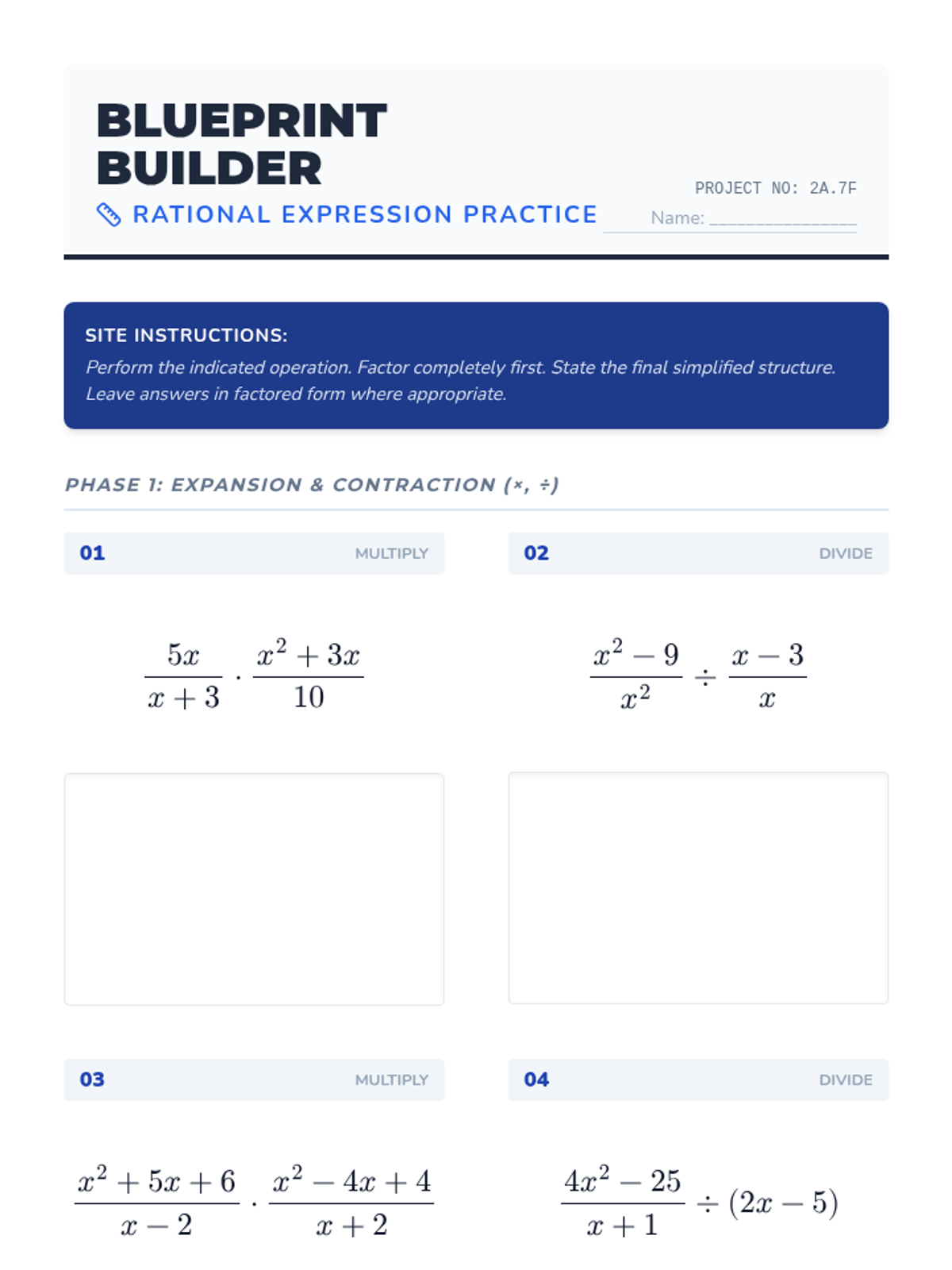
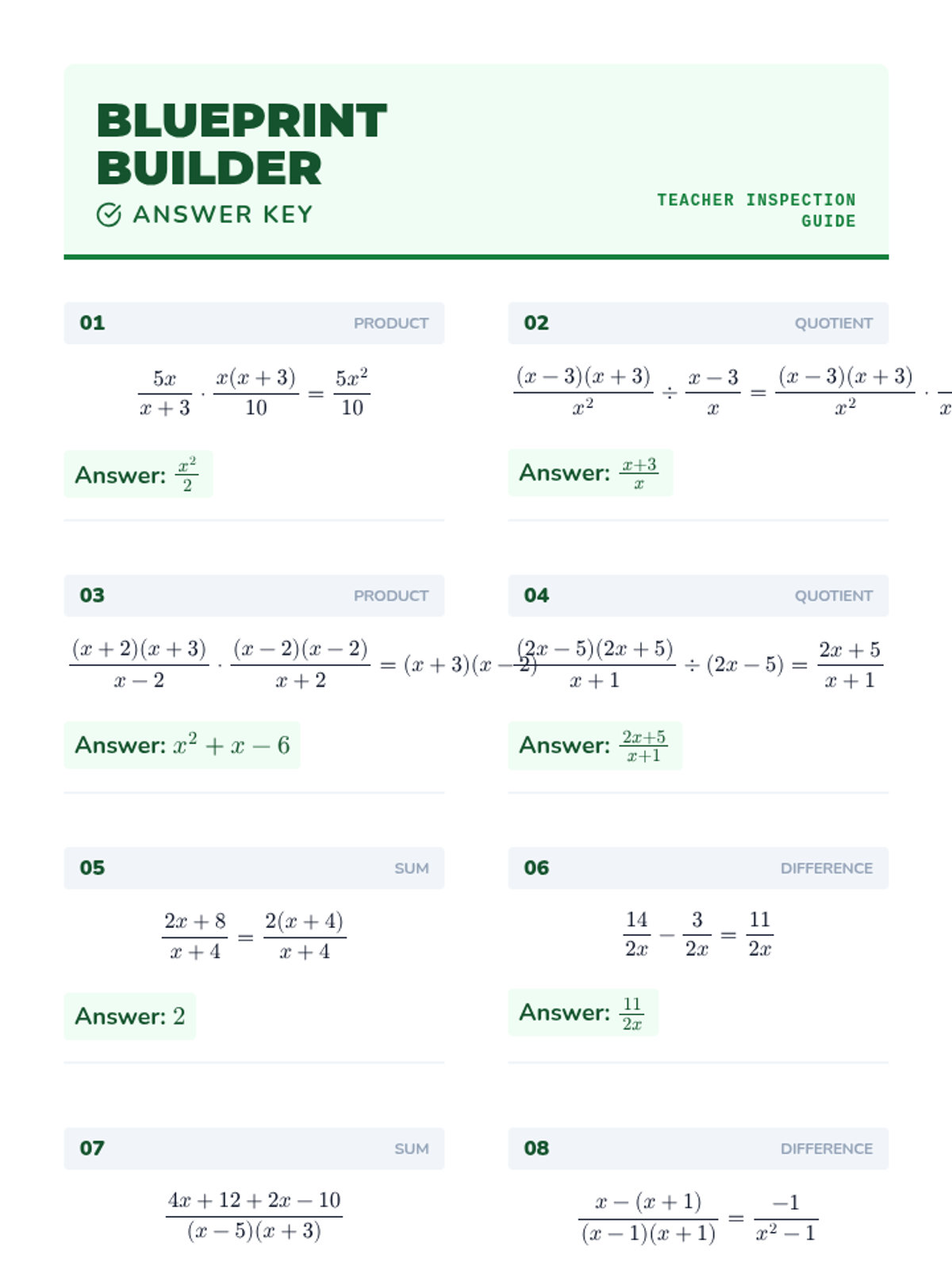
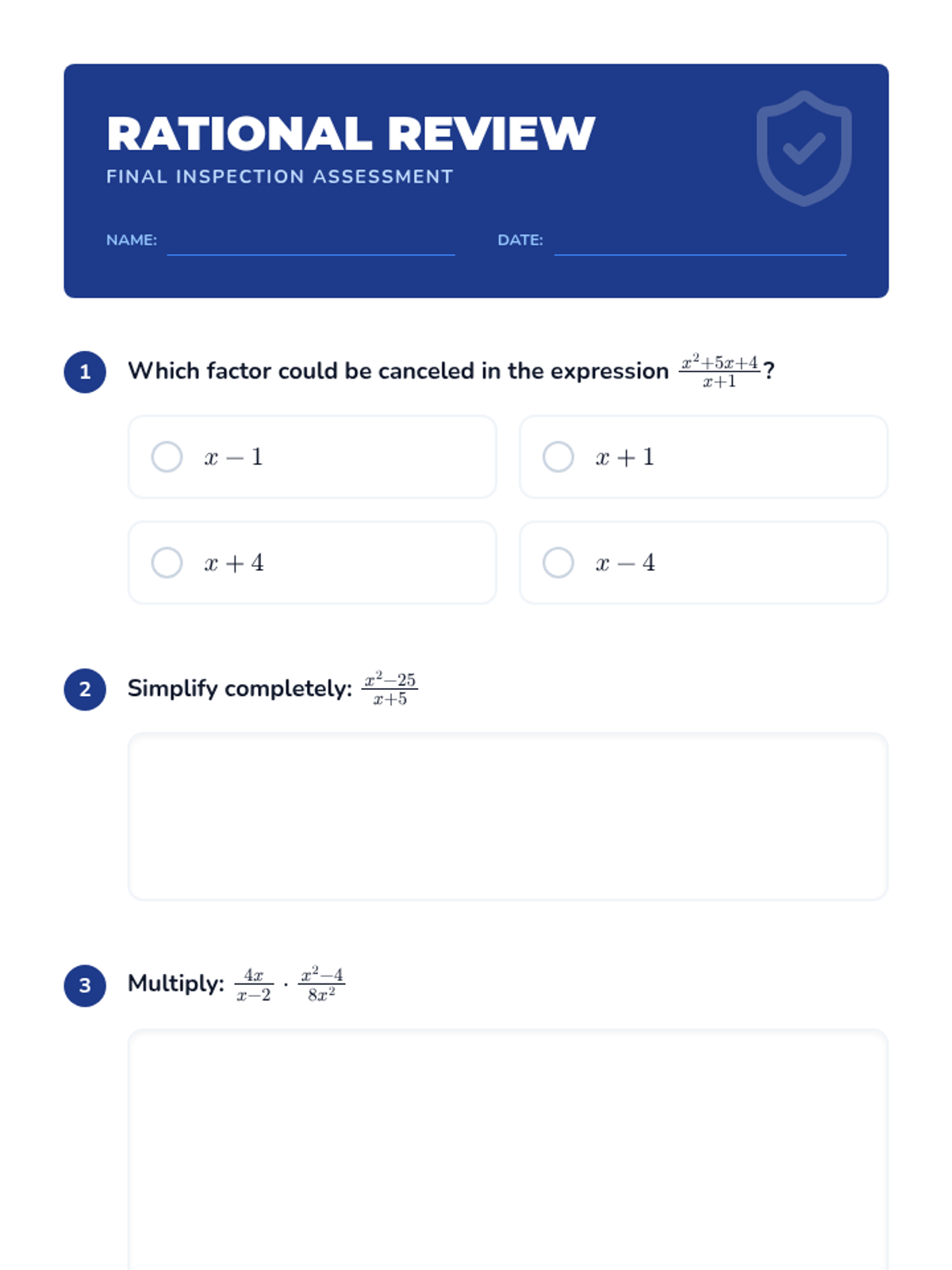
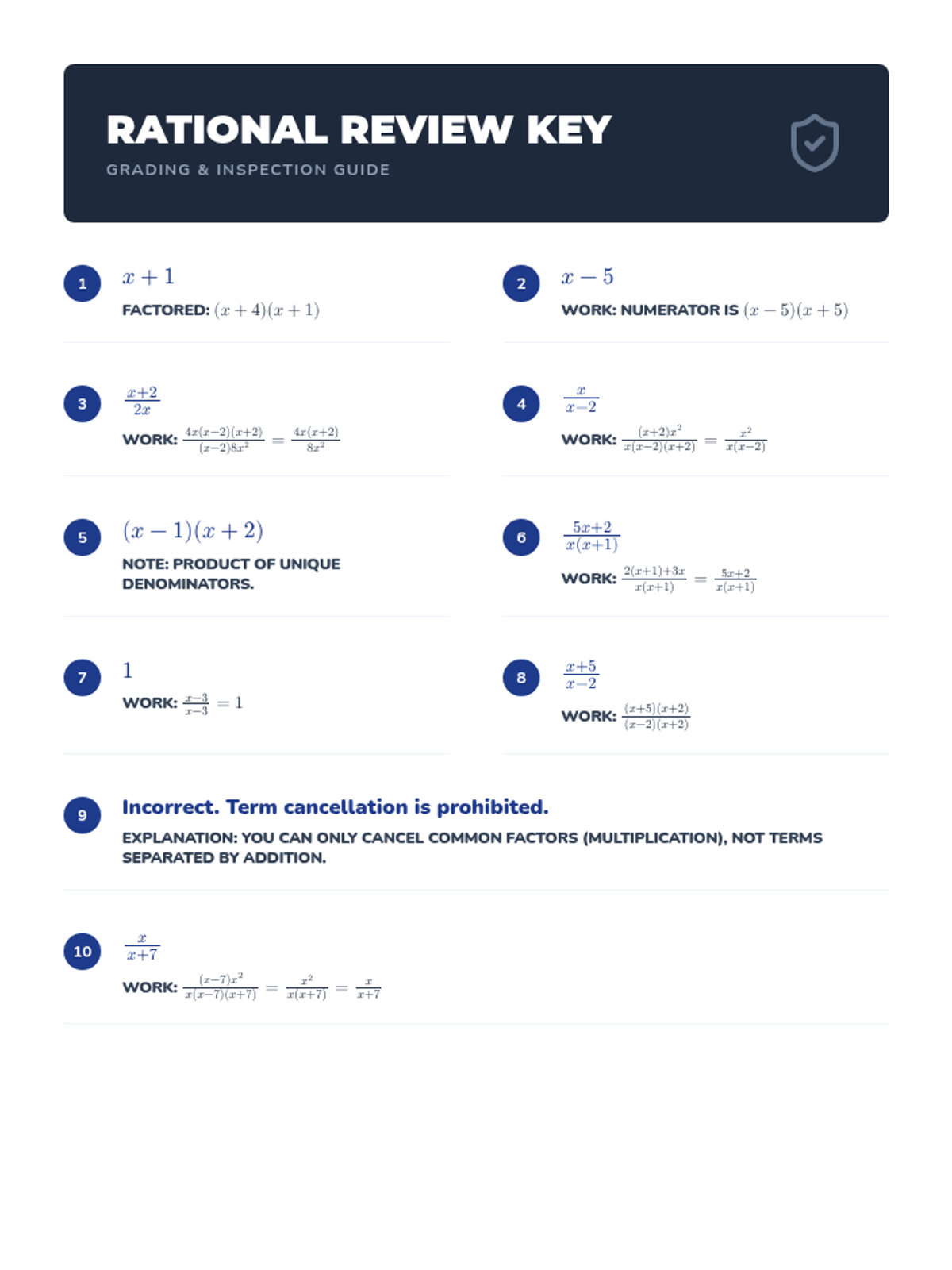
A comprehensive lesson on adding, subtracting, multiplying, and dividing rational expressions with linear and quadratic terms, themed around structural engineering and blueprints.
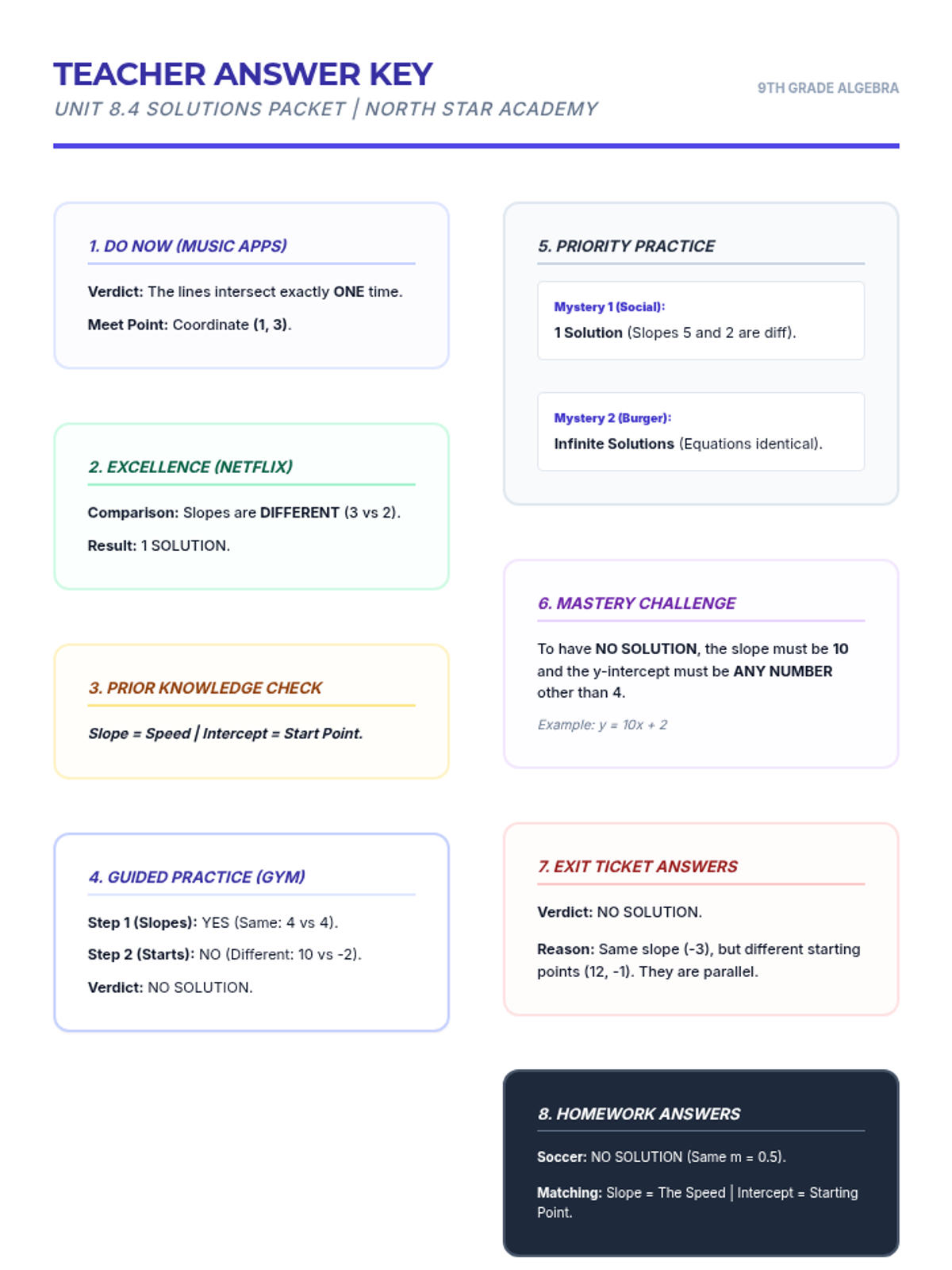
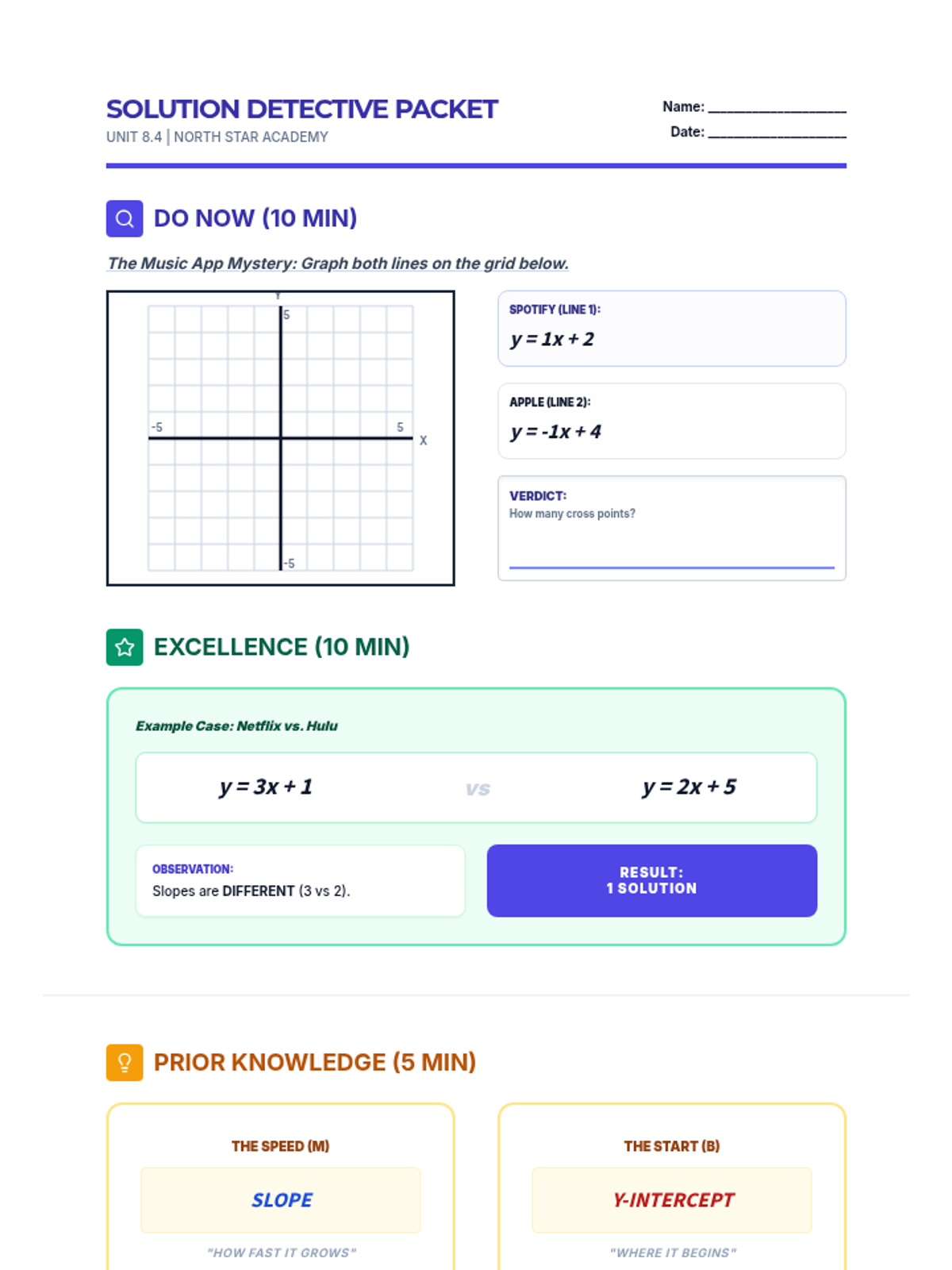
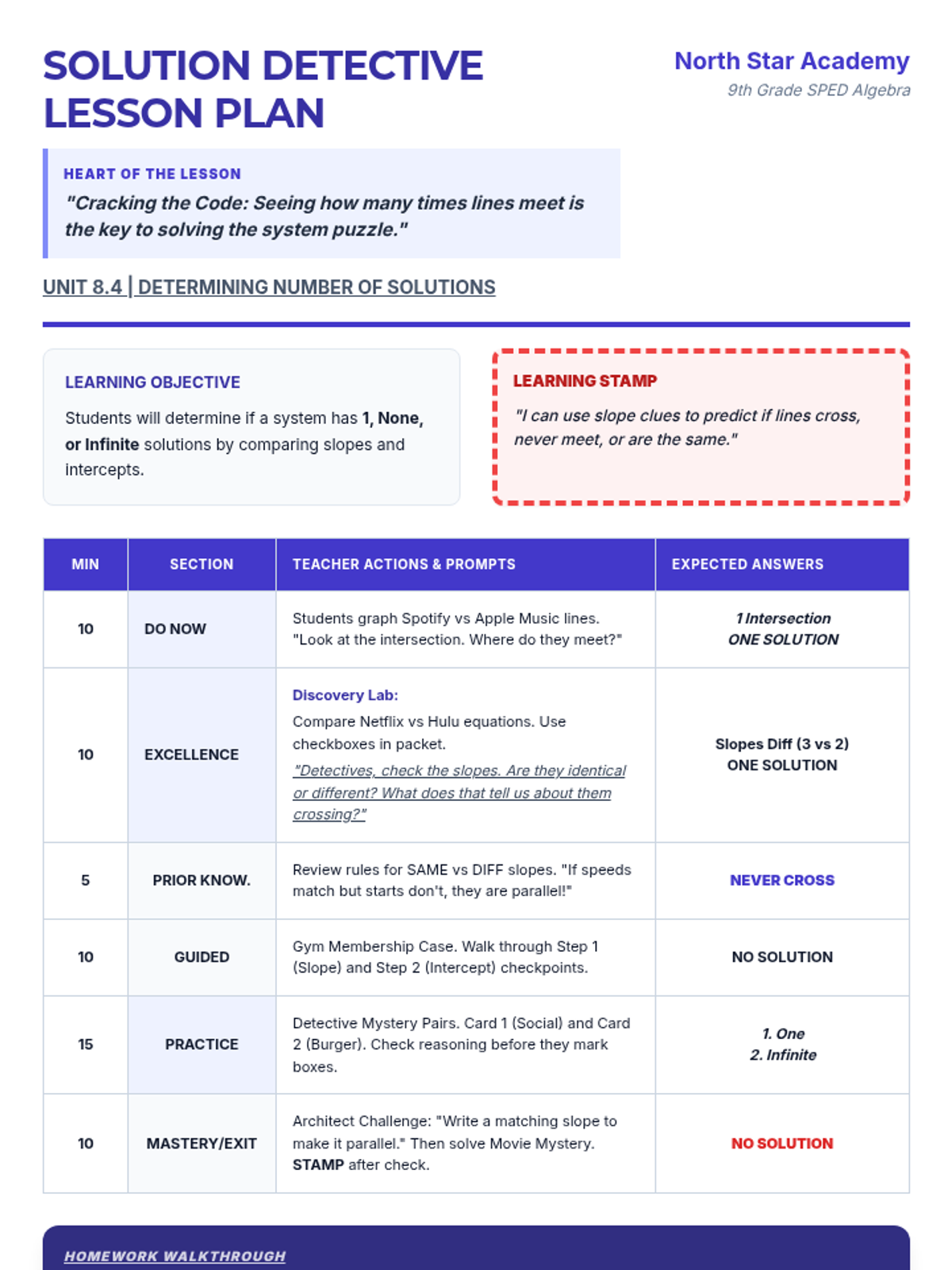
A 9th grade Algebra lesson focused on identifying the number of solutions in a system of linear equations (one, none, or infinite), specifically designed for Special Education students with IEP supports.
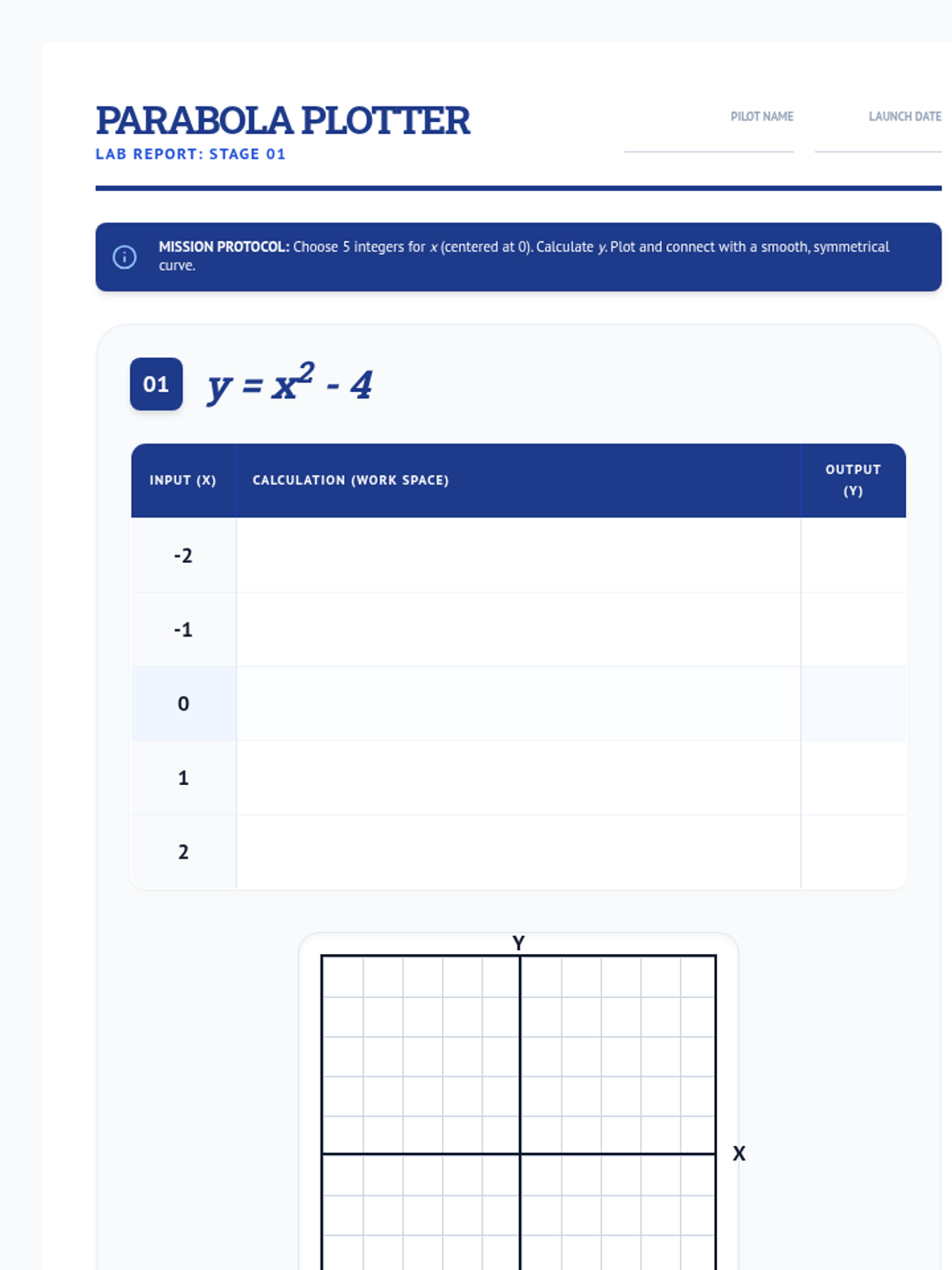
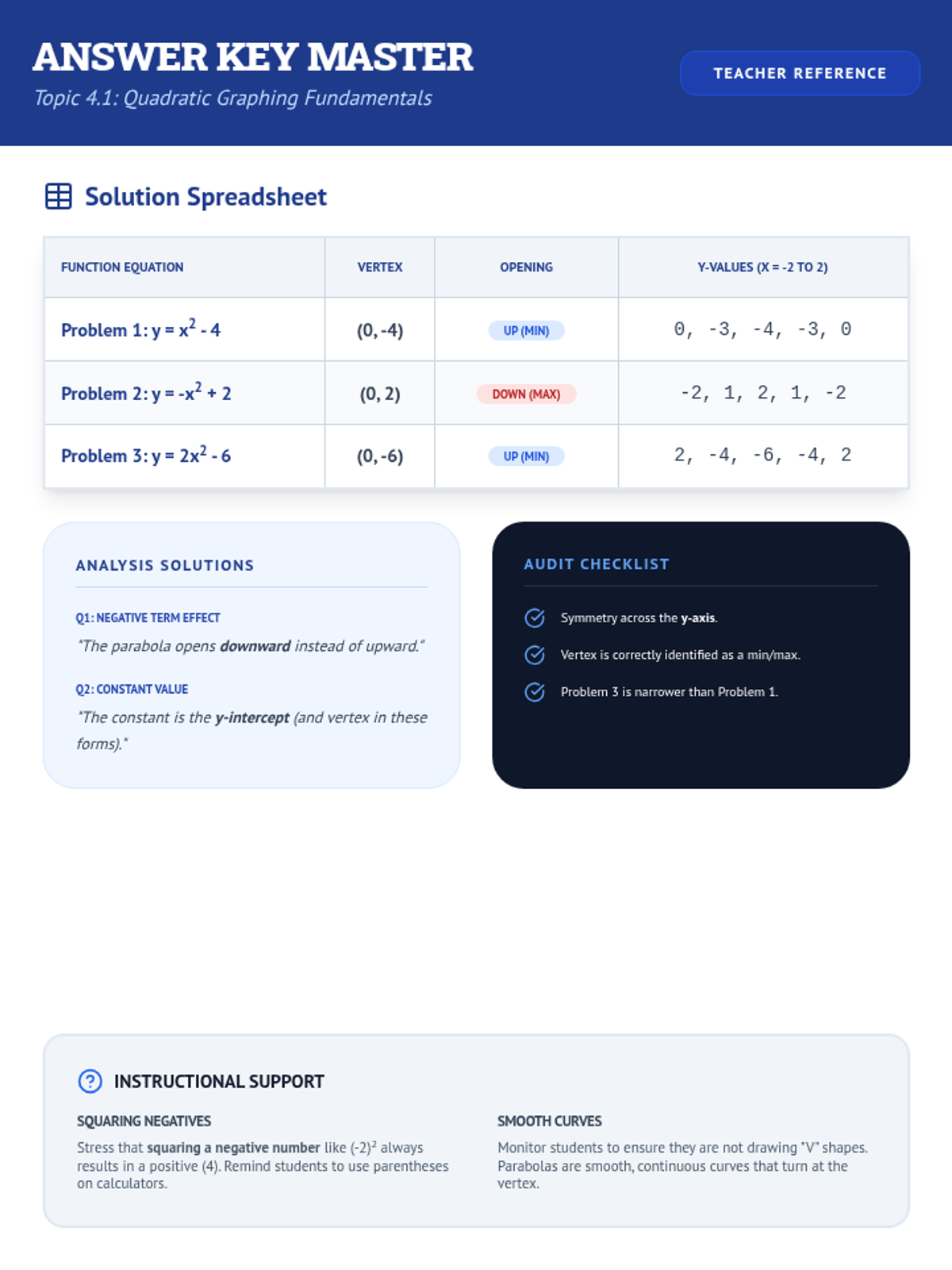
A comprehensive introduction to graphing quadratic functions using tables of values and identifying key features like the vertex and axis of symmetry.
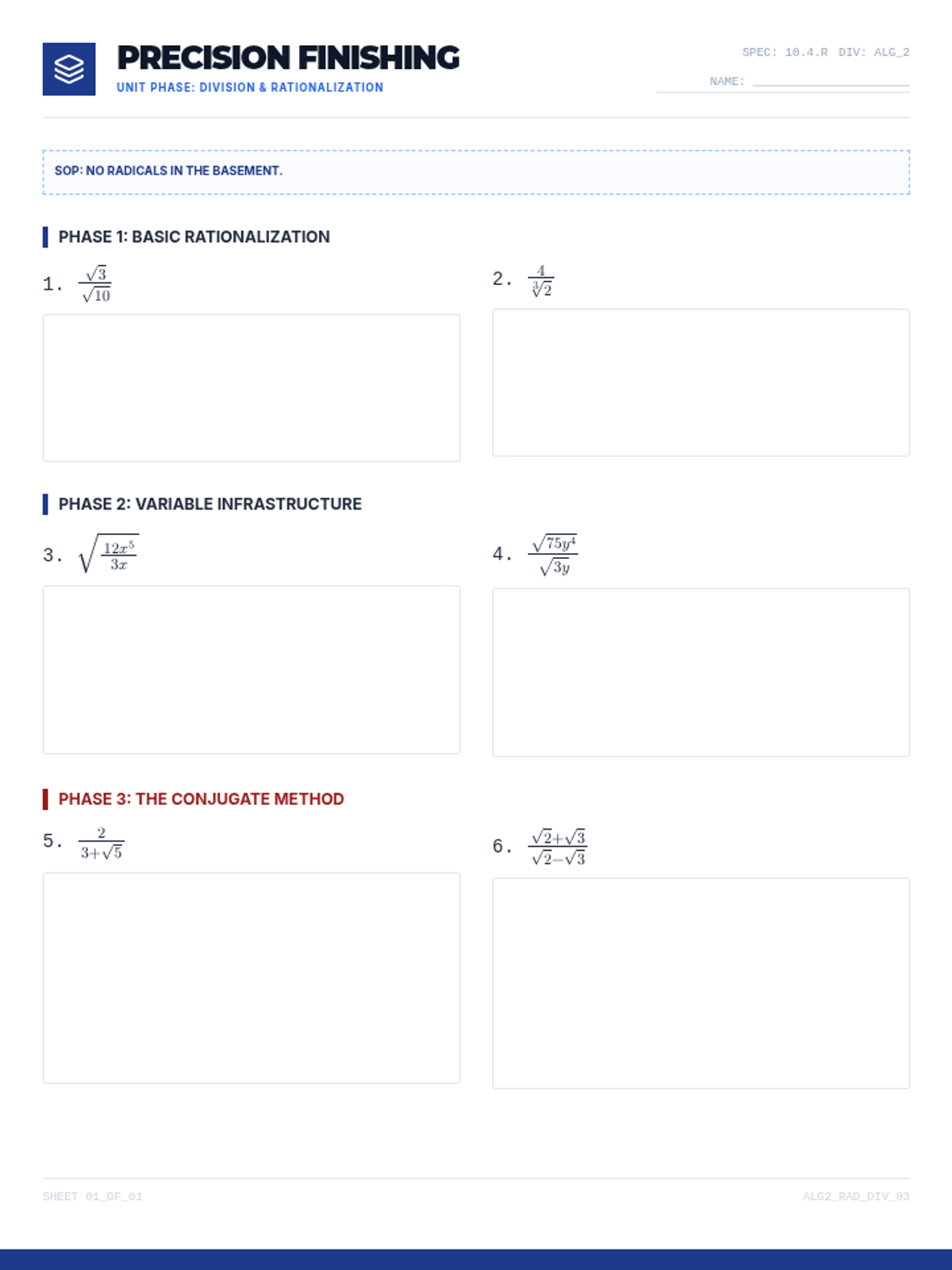
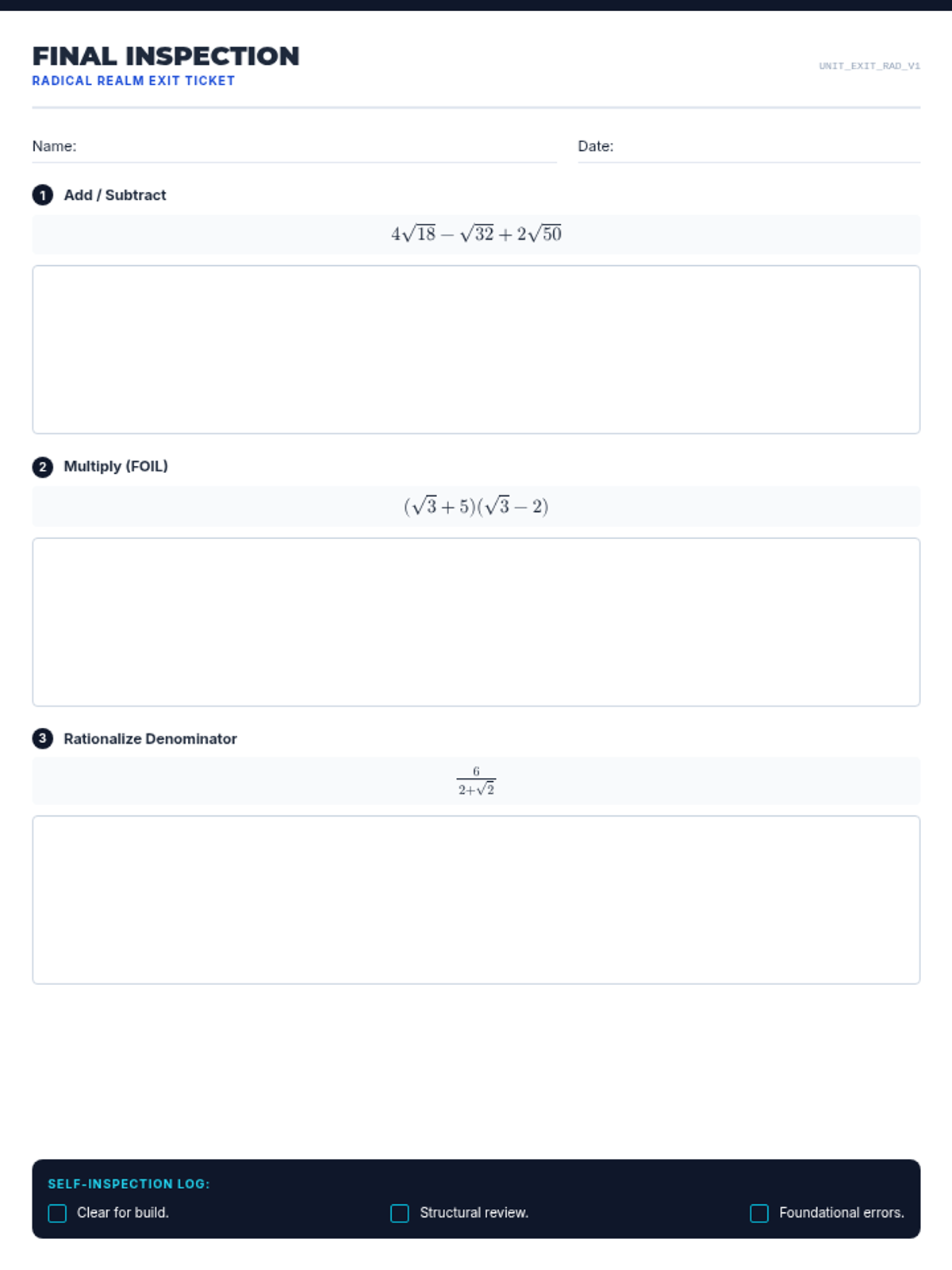
Covers division of radicals and the essential skill of rationalizing denominators using both monomial and binomial (conjugate) methods.
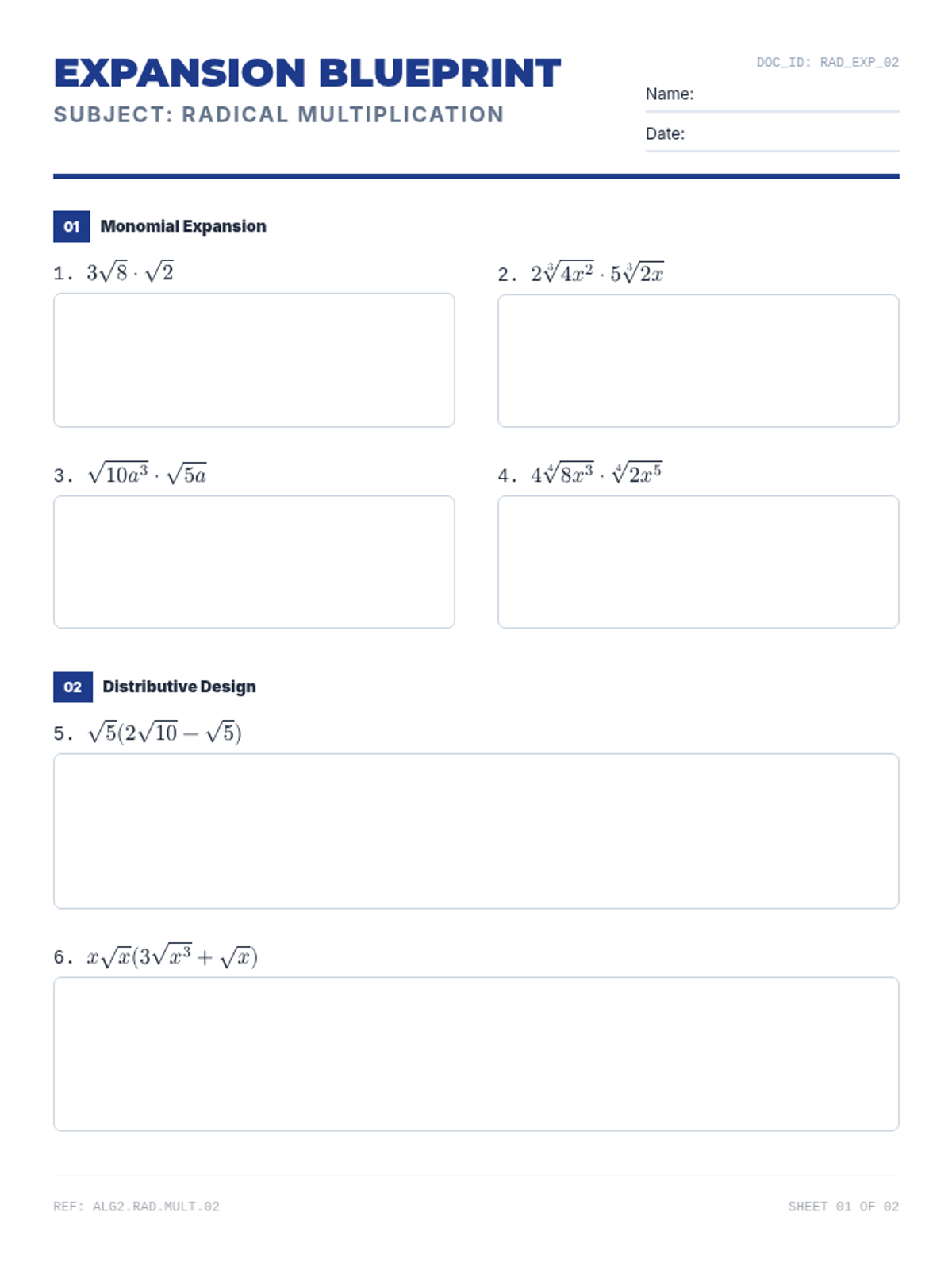
Focuses on the multiplication of radical expressions, including the distributive property and FOIL with binomial radicals.
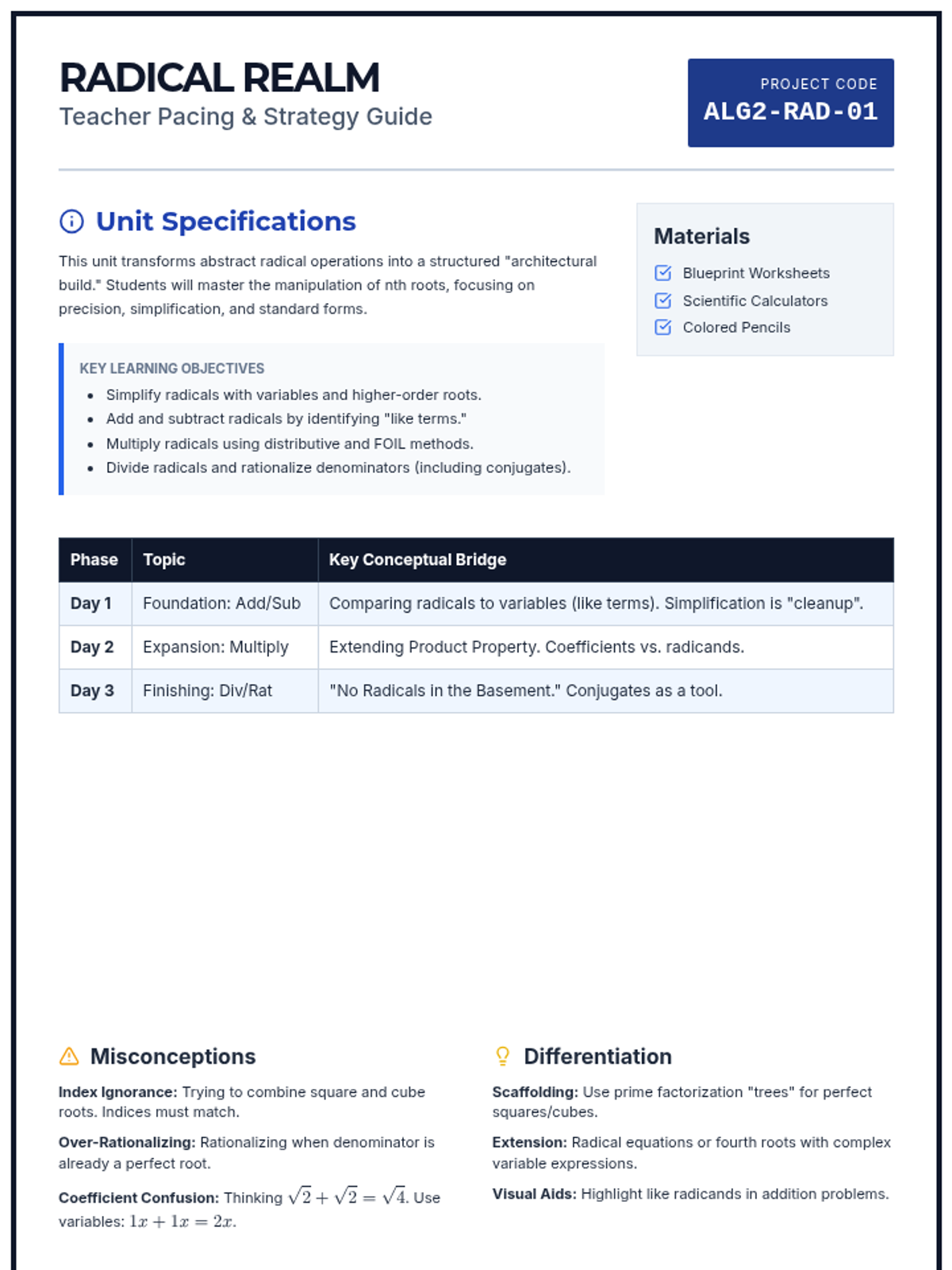
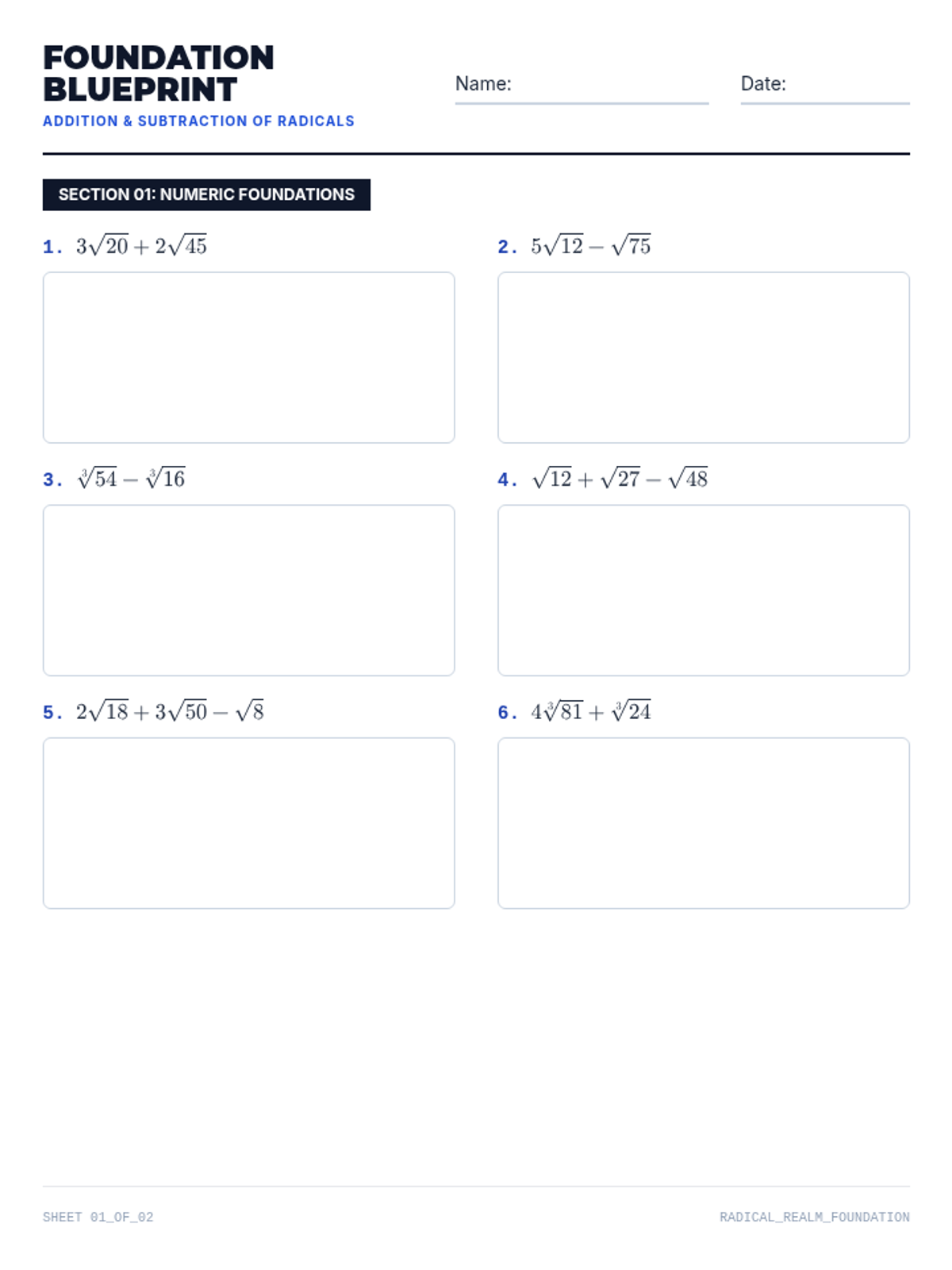
Covers the fundamentals of simplifying radical expressions and performing addition and subtraction with like radicals, including variables and higher-order roots.
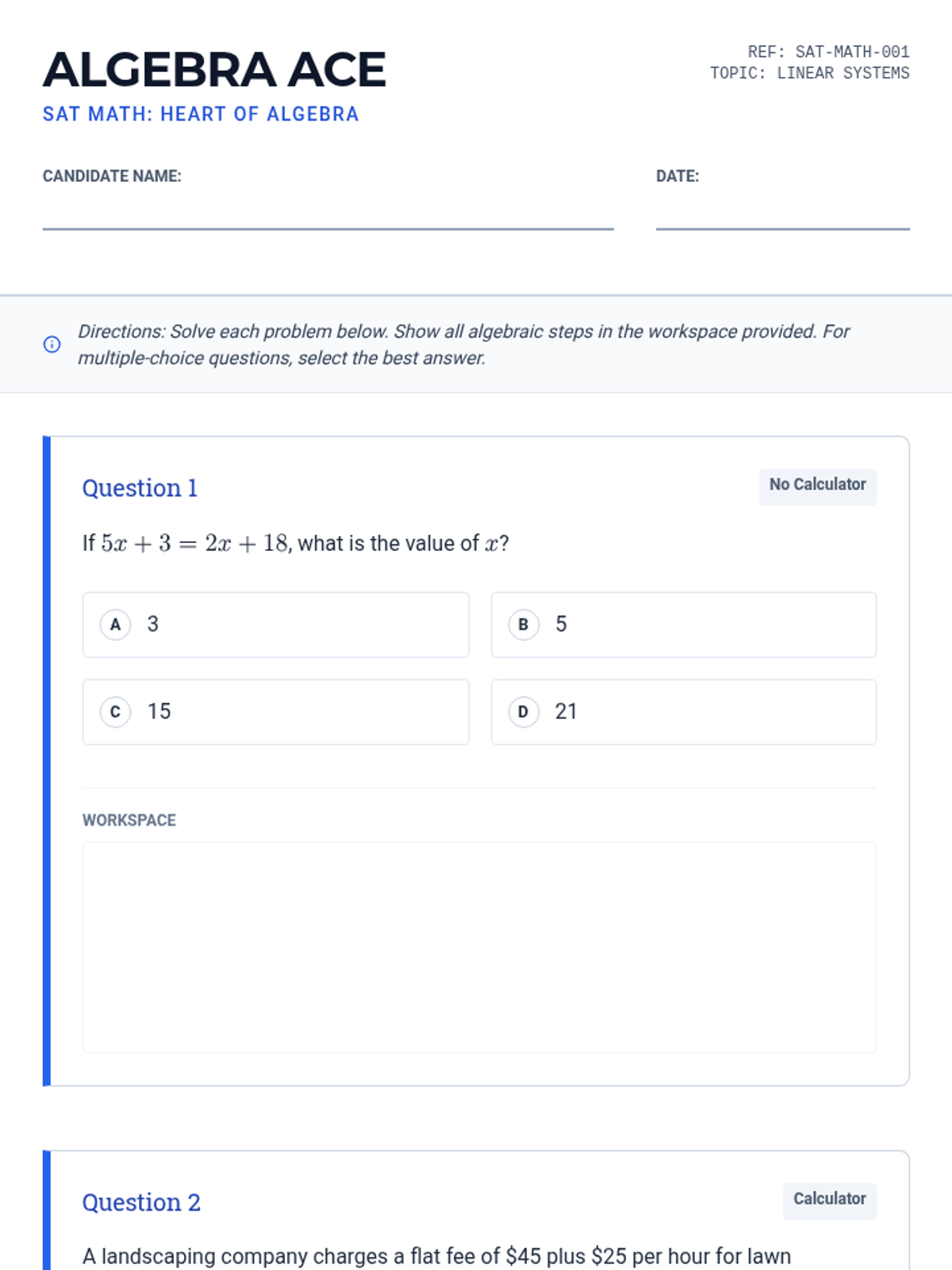
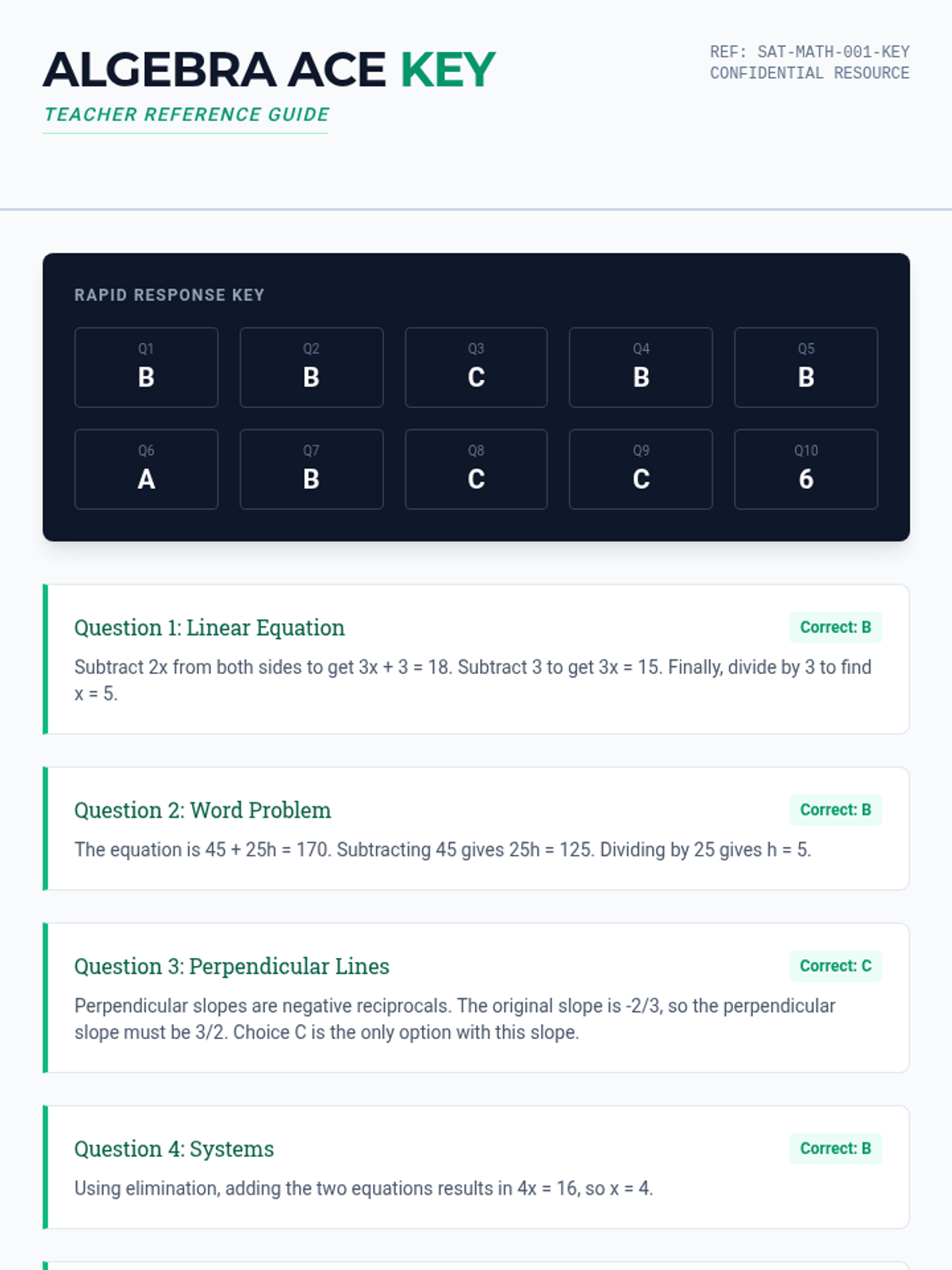
A targeted practice session focusing on SAT Math's Heart of Algebra section, covering linear equations, systems, and inequalities.
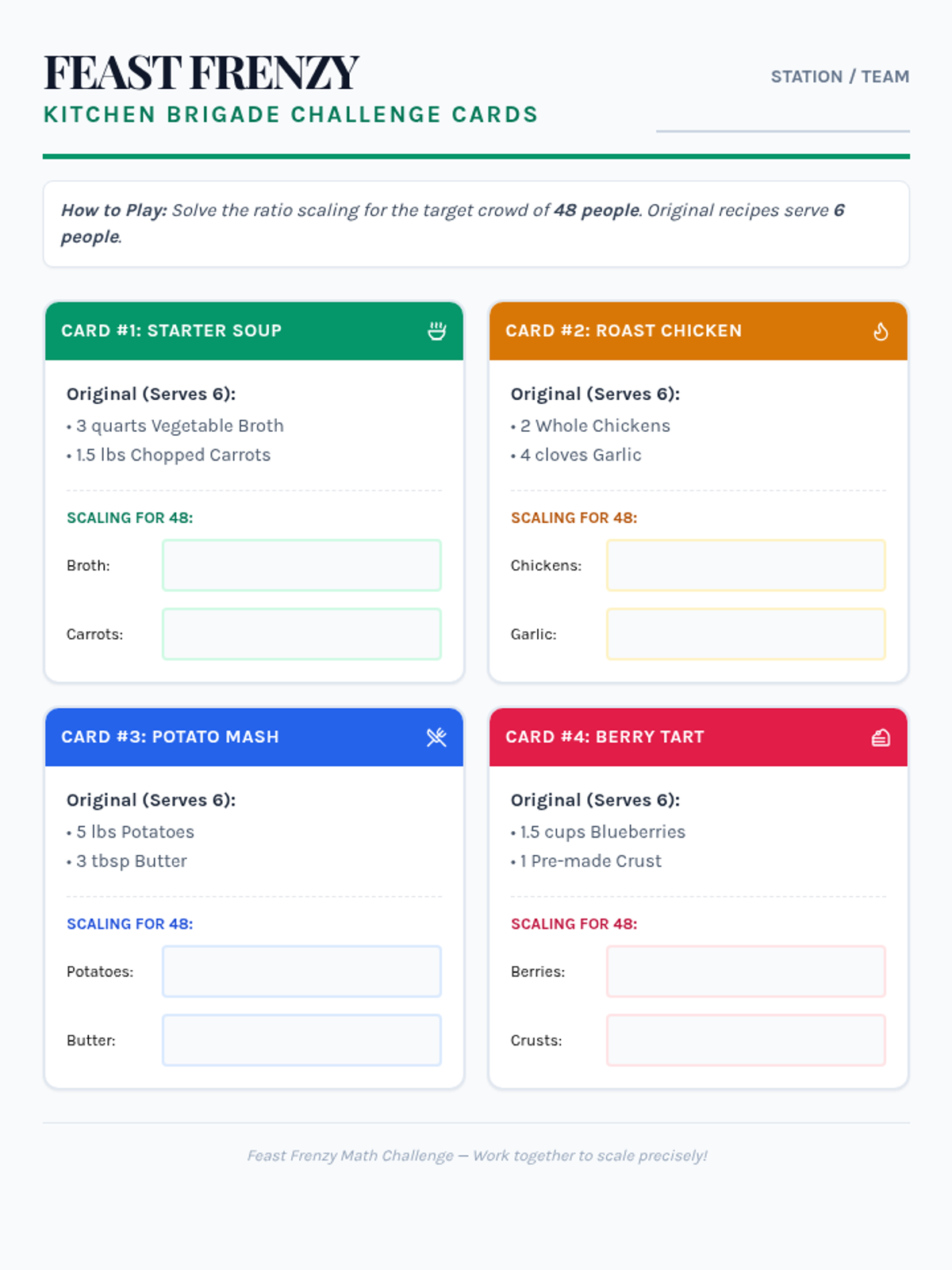
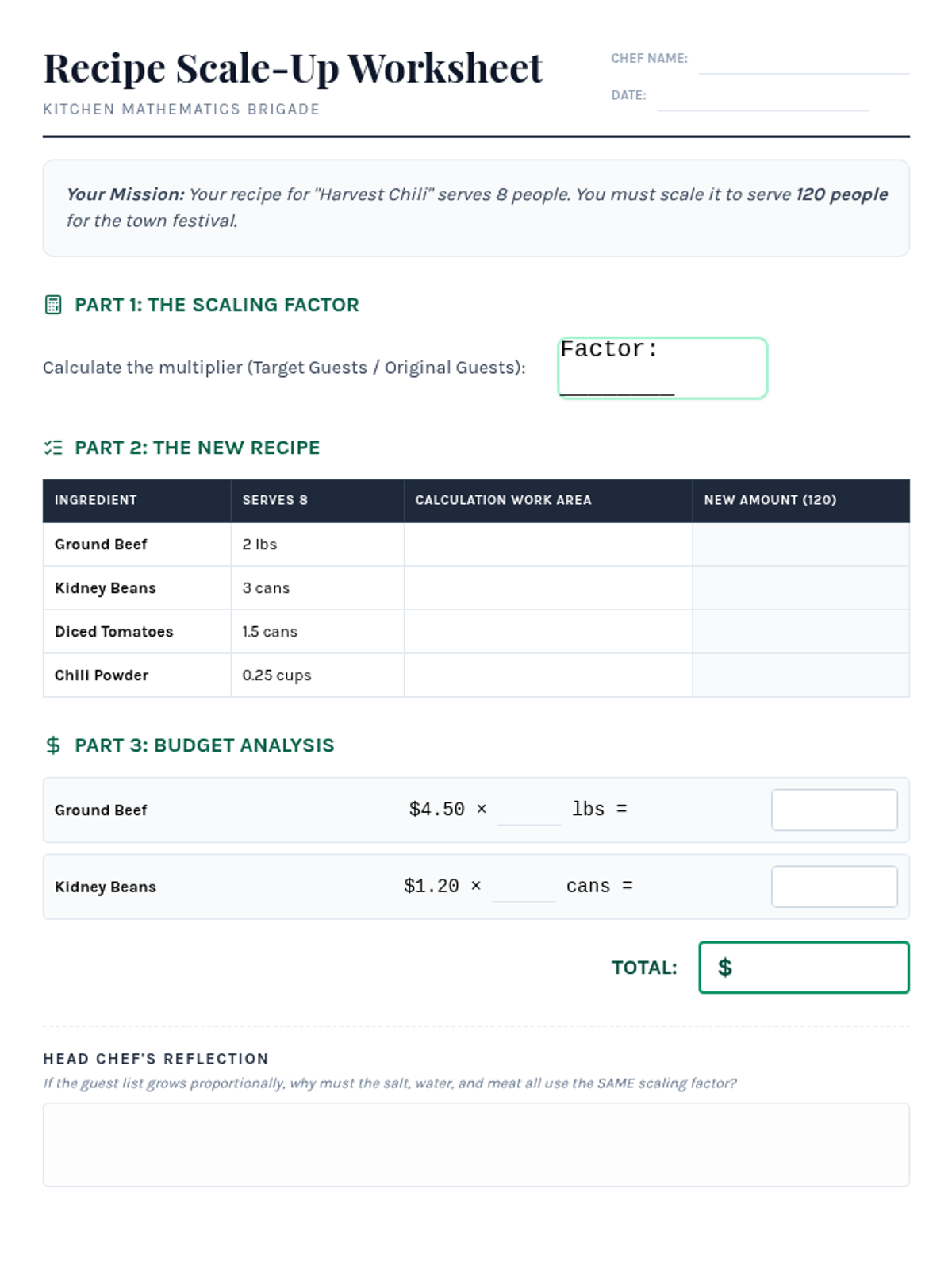
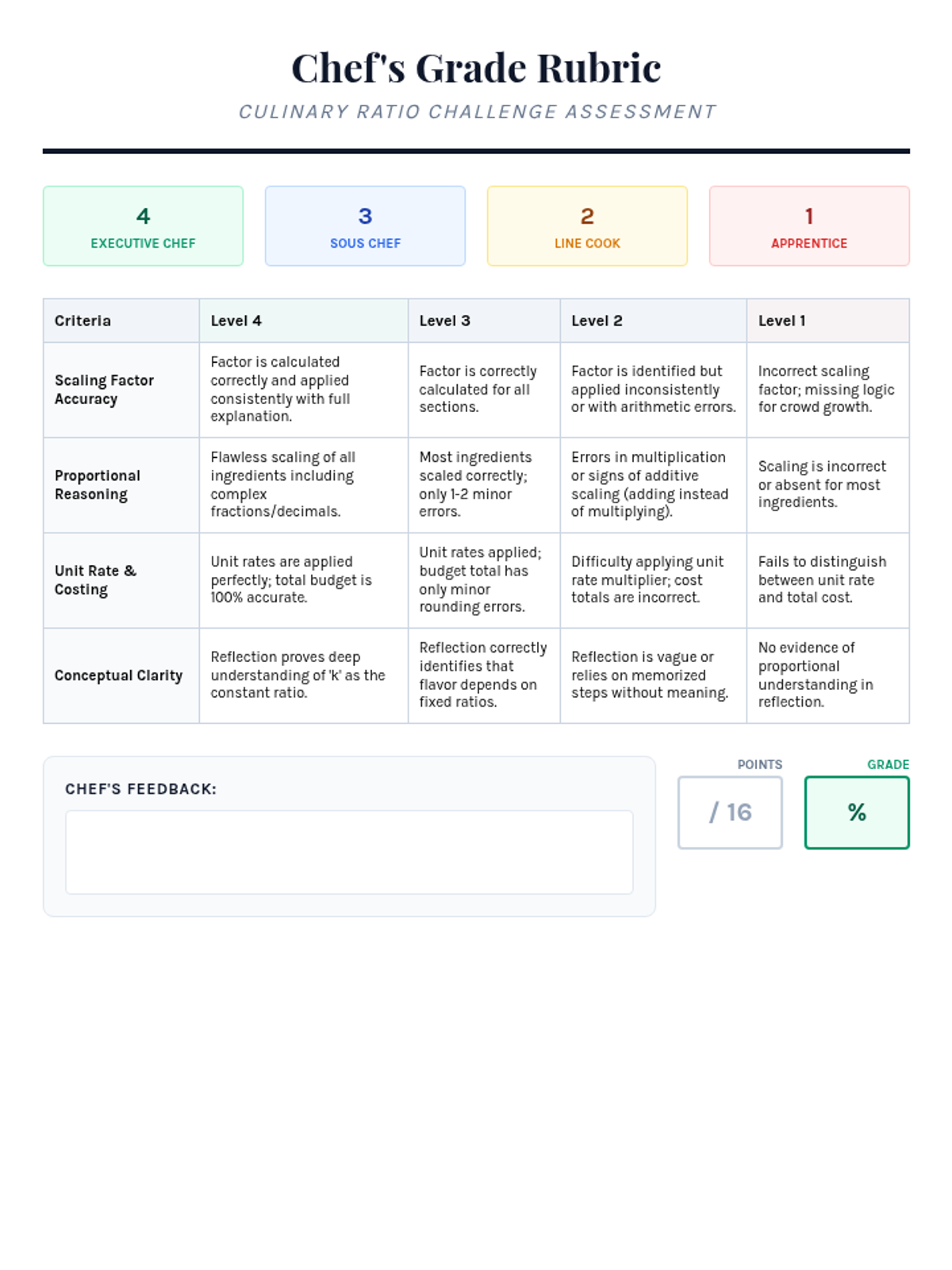
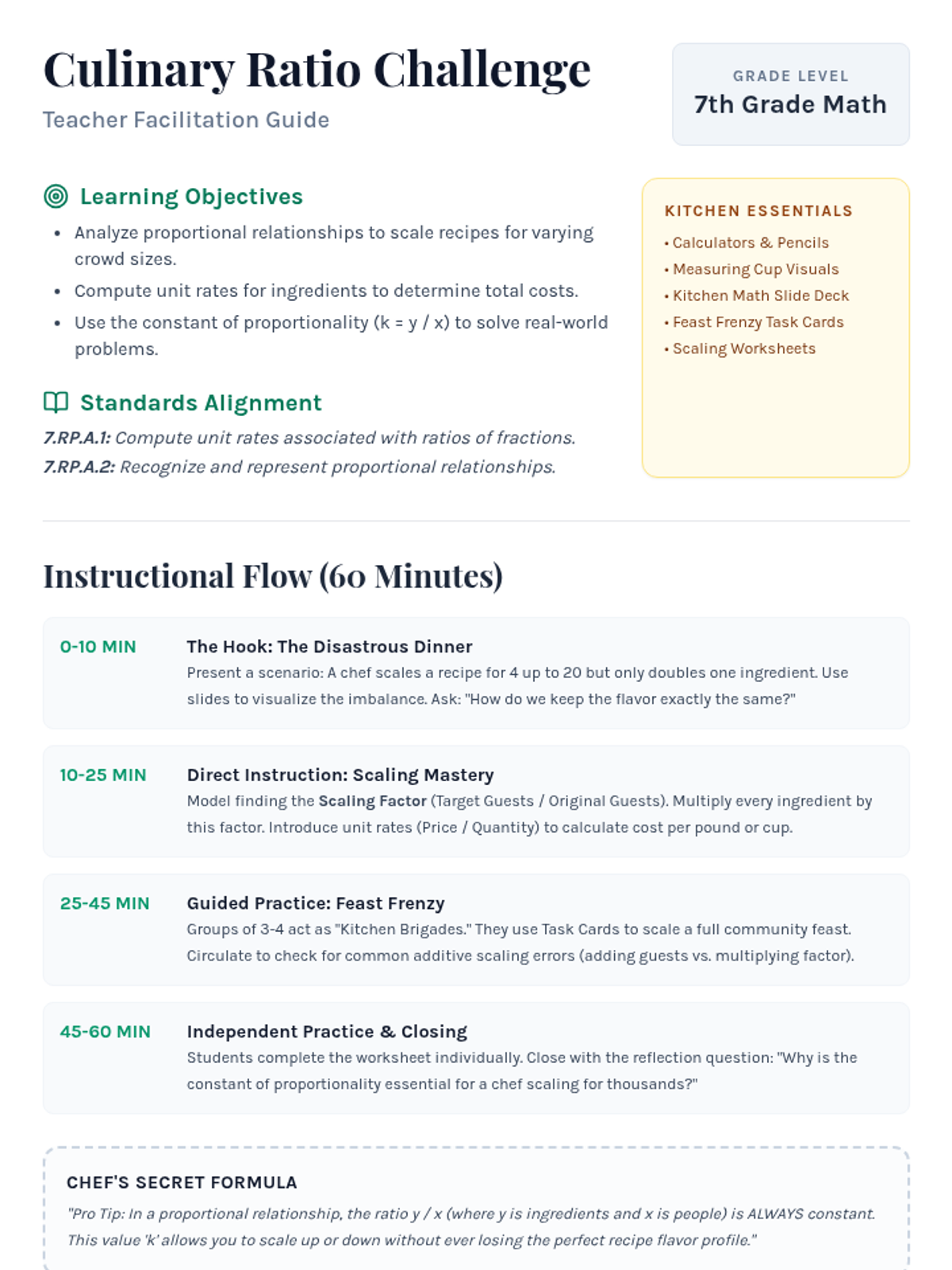
Students master ratios and proportions by scaling recipes for a community feast, applying unit rates to calculate costs and manage kitchen logistics.
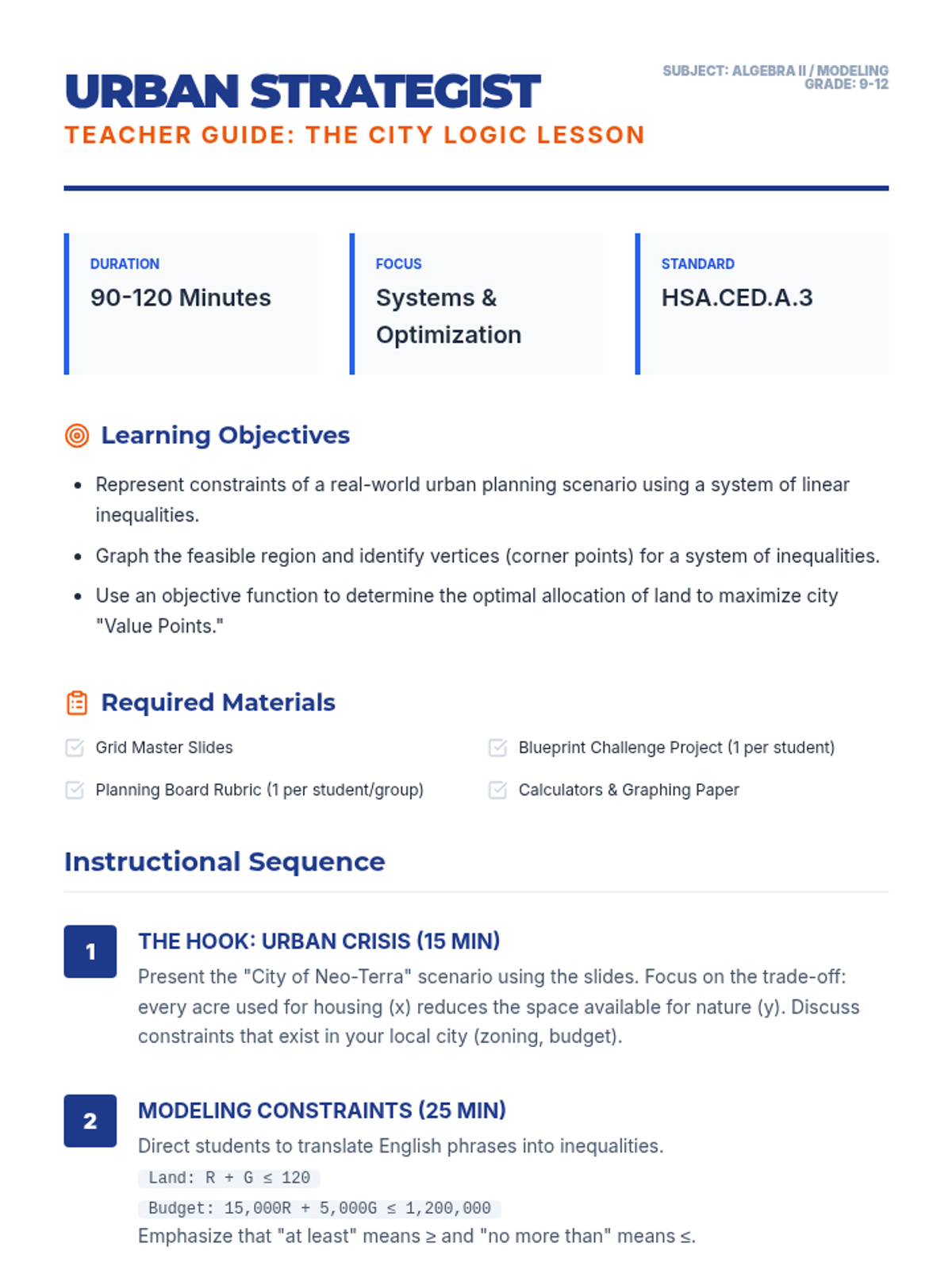
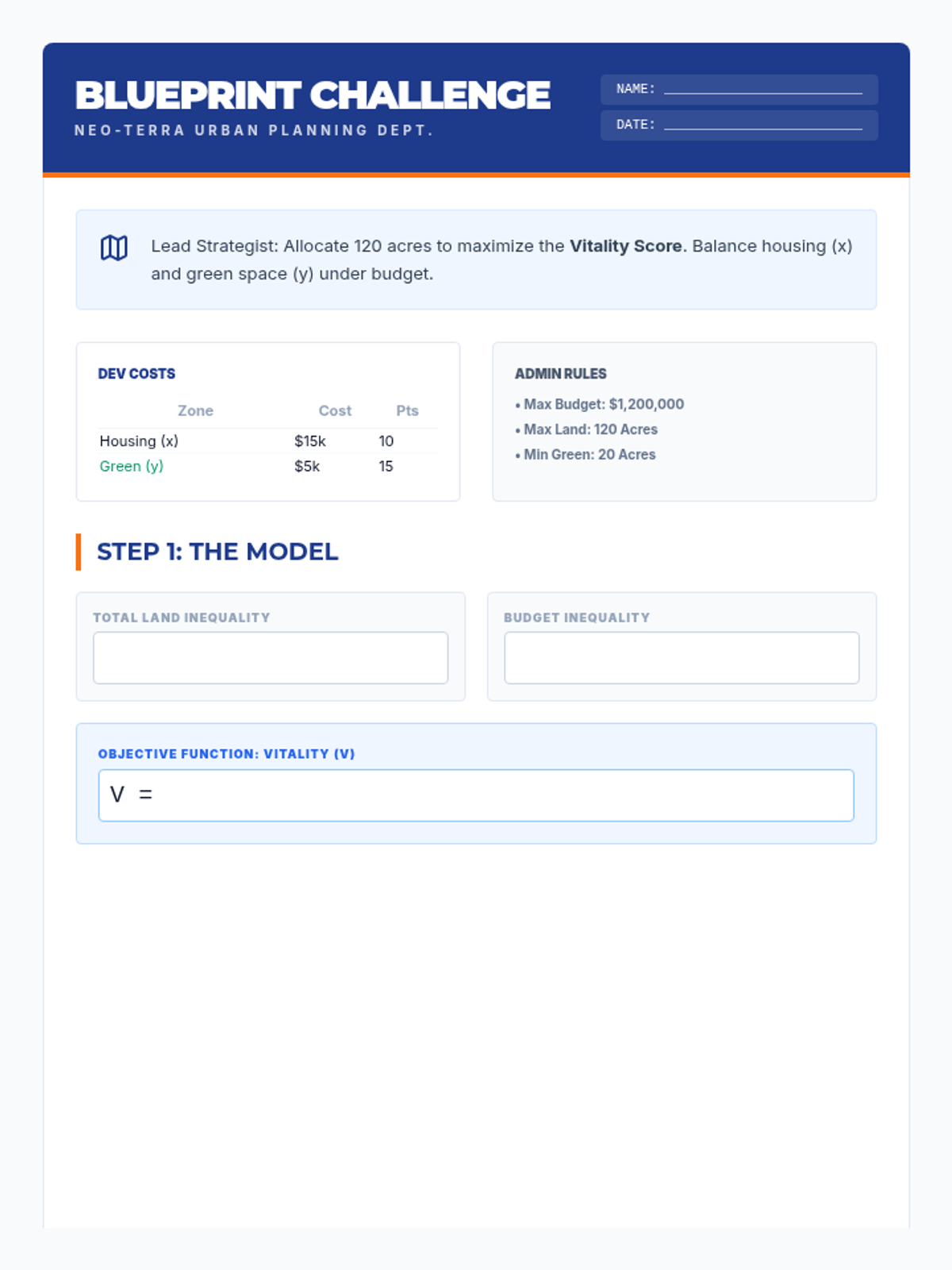
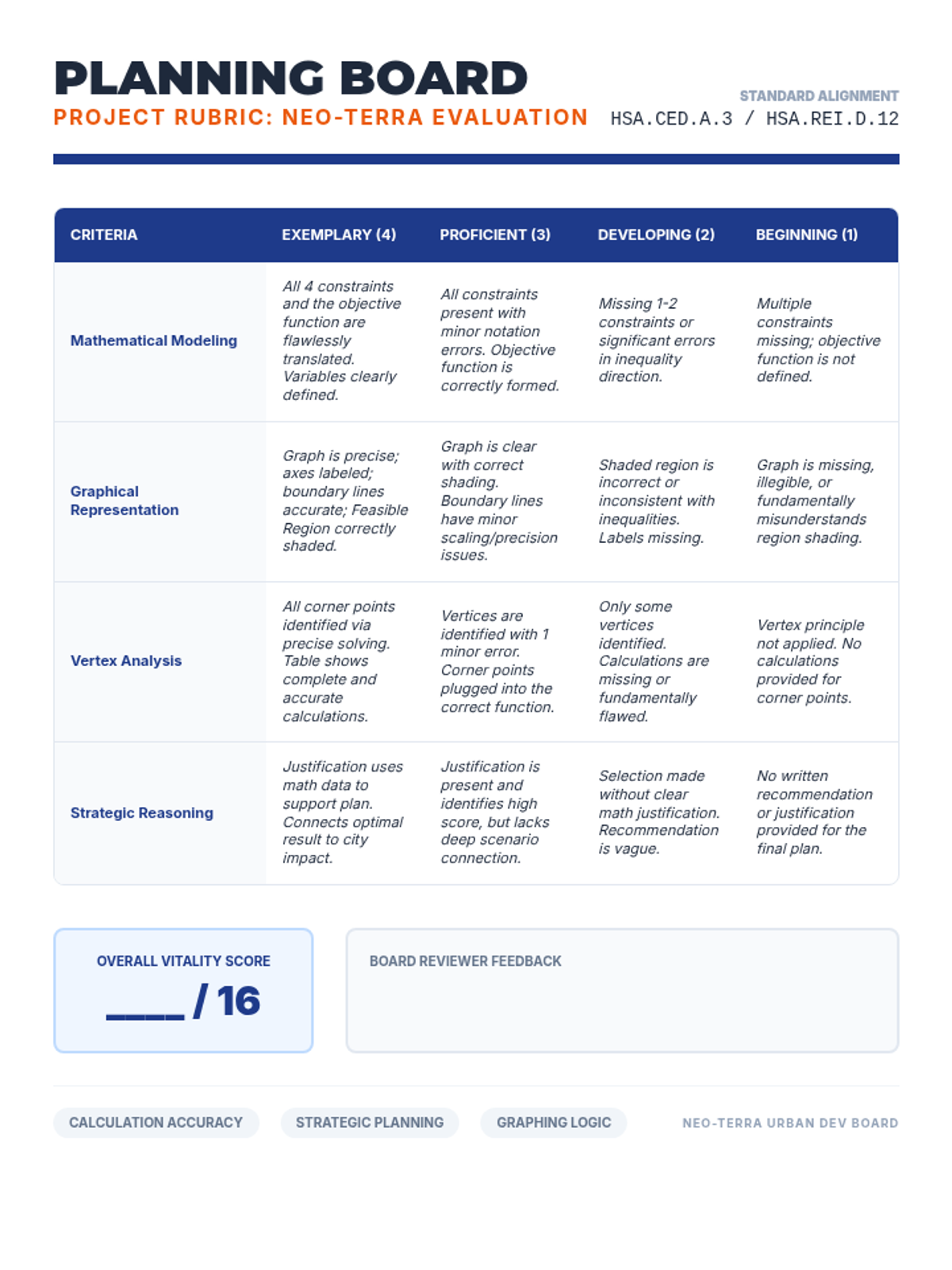
Students act as urban planners using systems of linear inequalities and area optimization to design a sustainable city grid. This project-based lesson bridges algebra and real-world infrastructure planning.
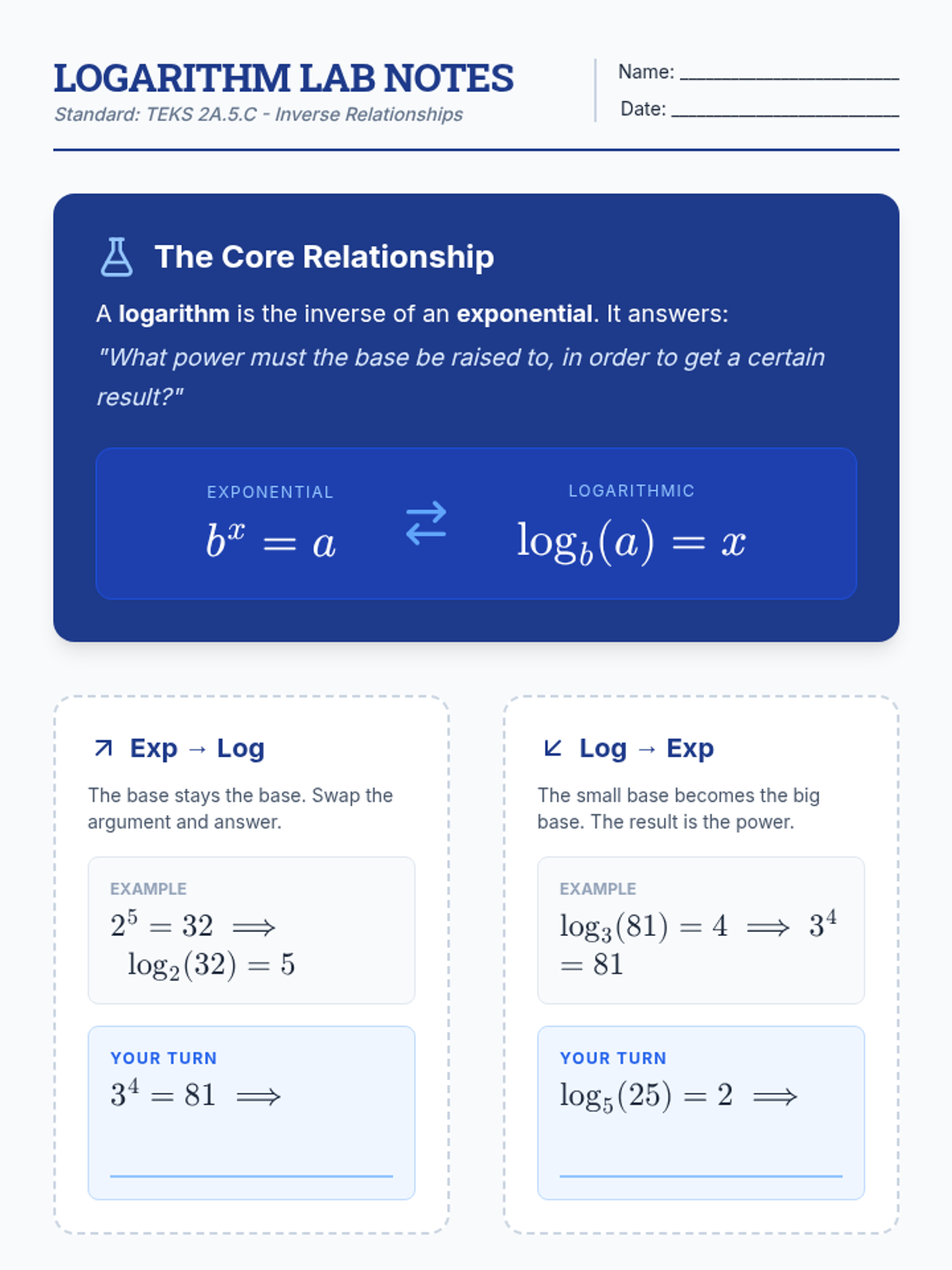
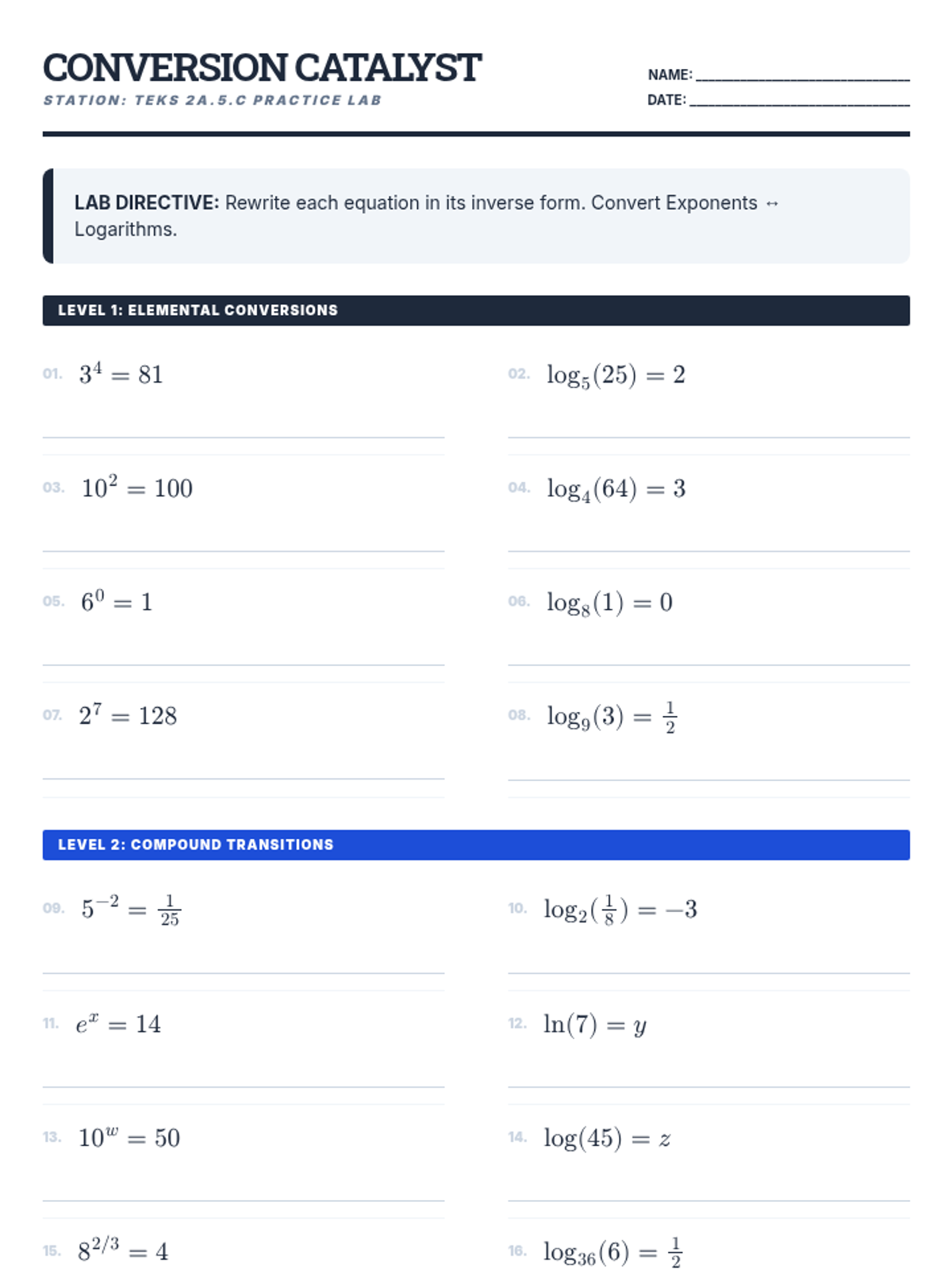
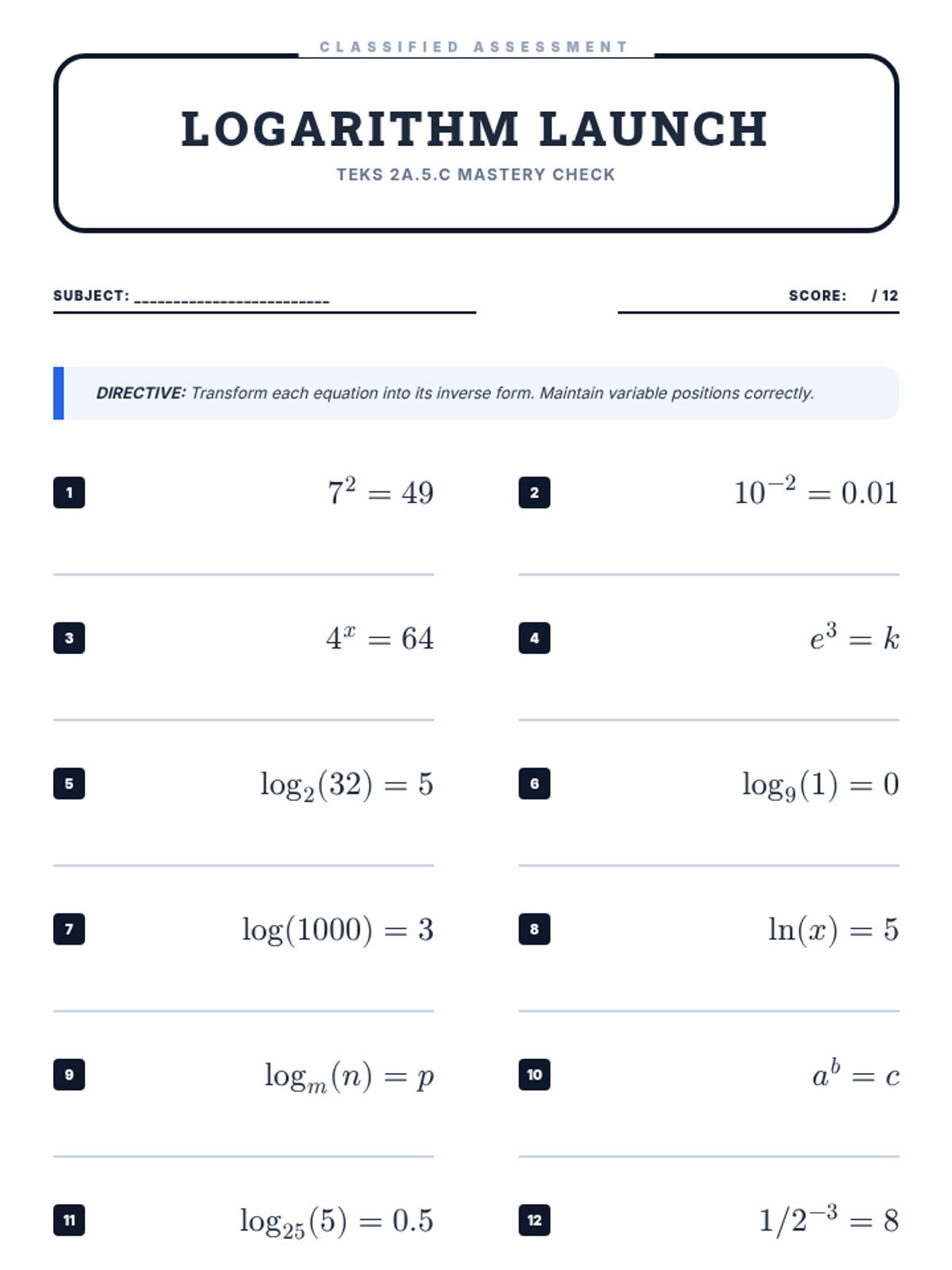
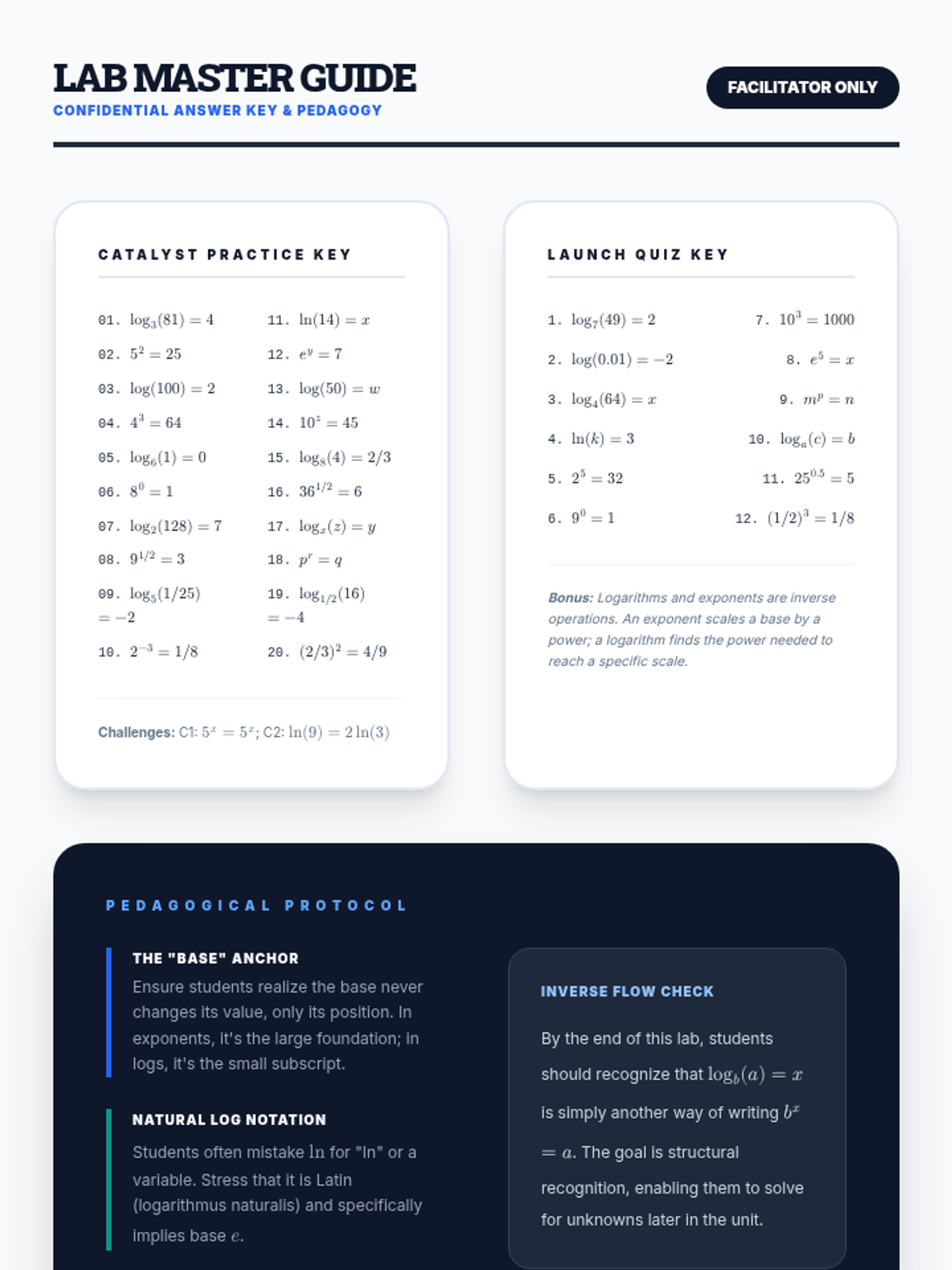
A comprehensive introduction to converting between exponential and logarithmic forms, aligned with Texas TEKS 2A.5.C. Students will explore the inverse relationship through guided notes, scaffolded practice, and a formal assessment.