Students synthesize their design and financial data into a final statistical report and presentation for a hypothetical city council.
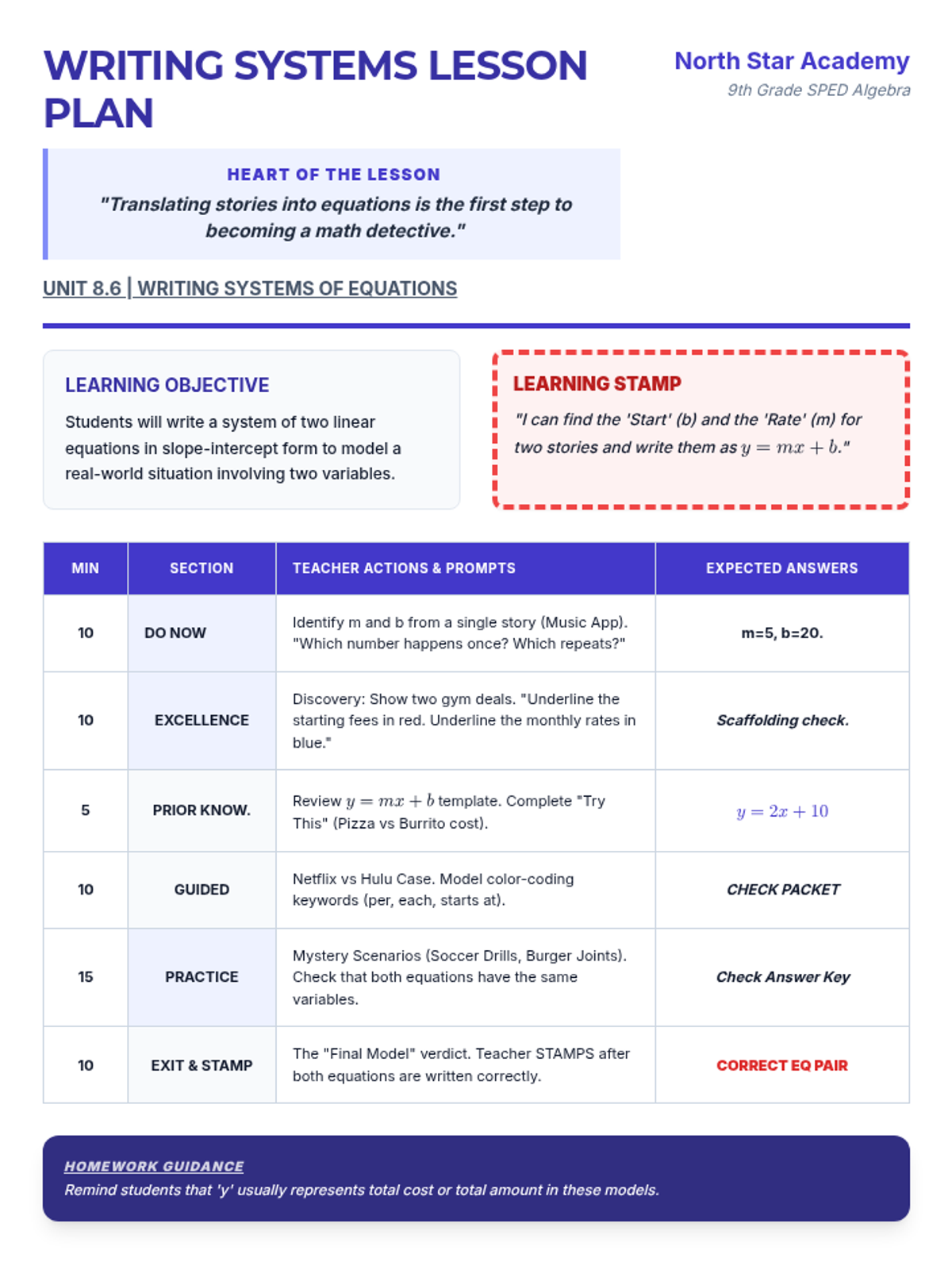
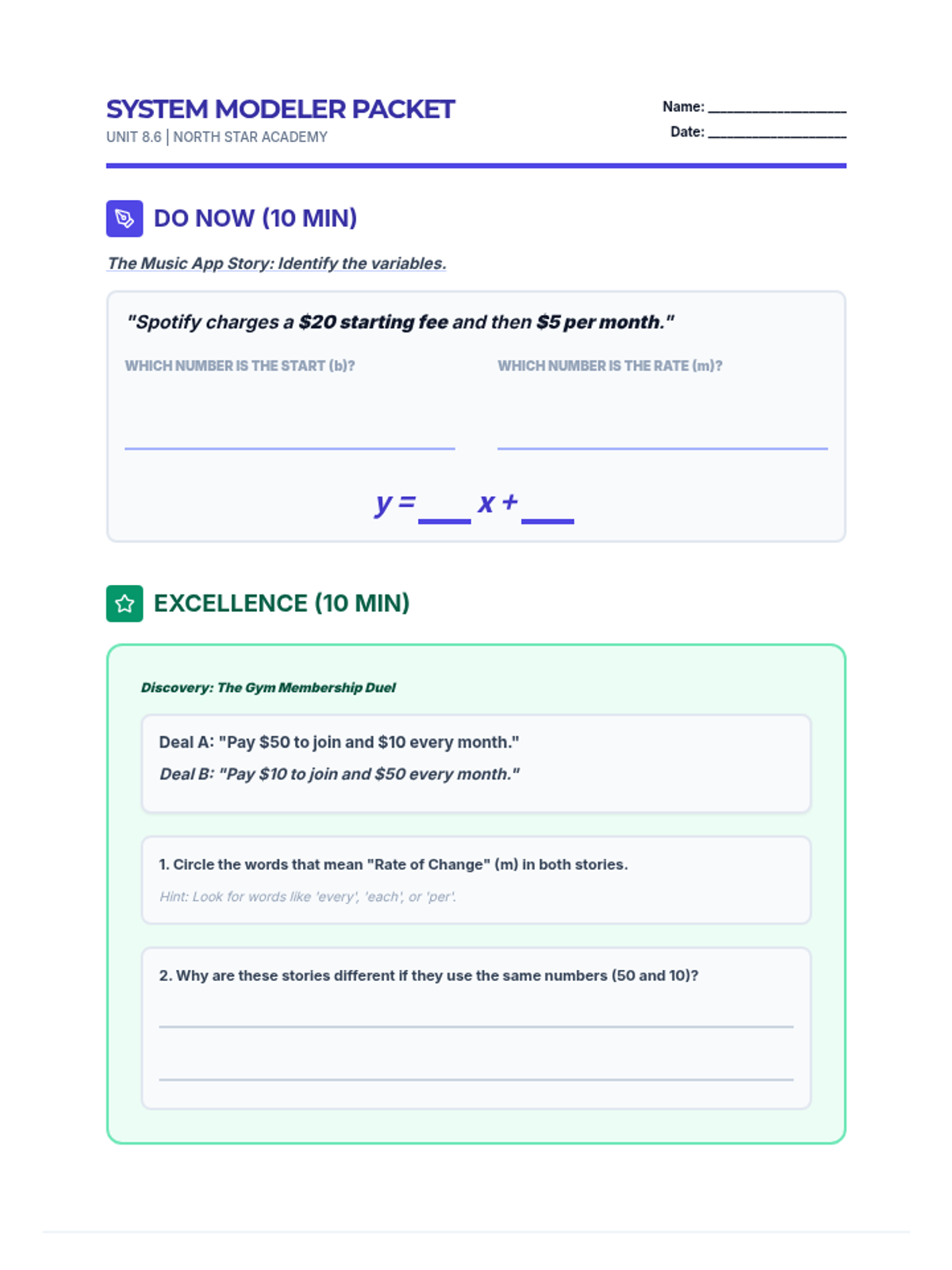
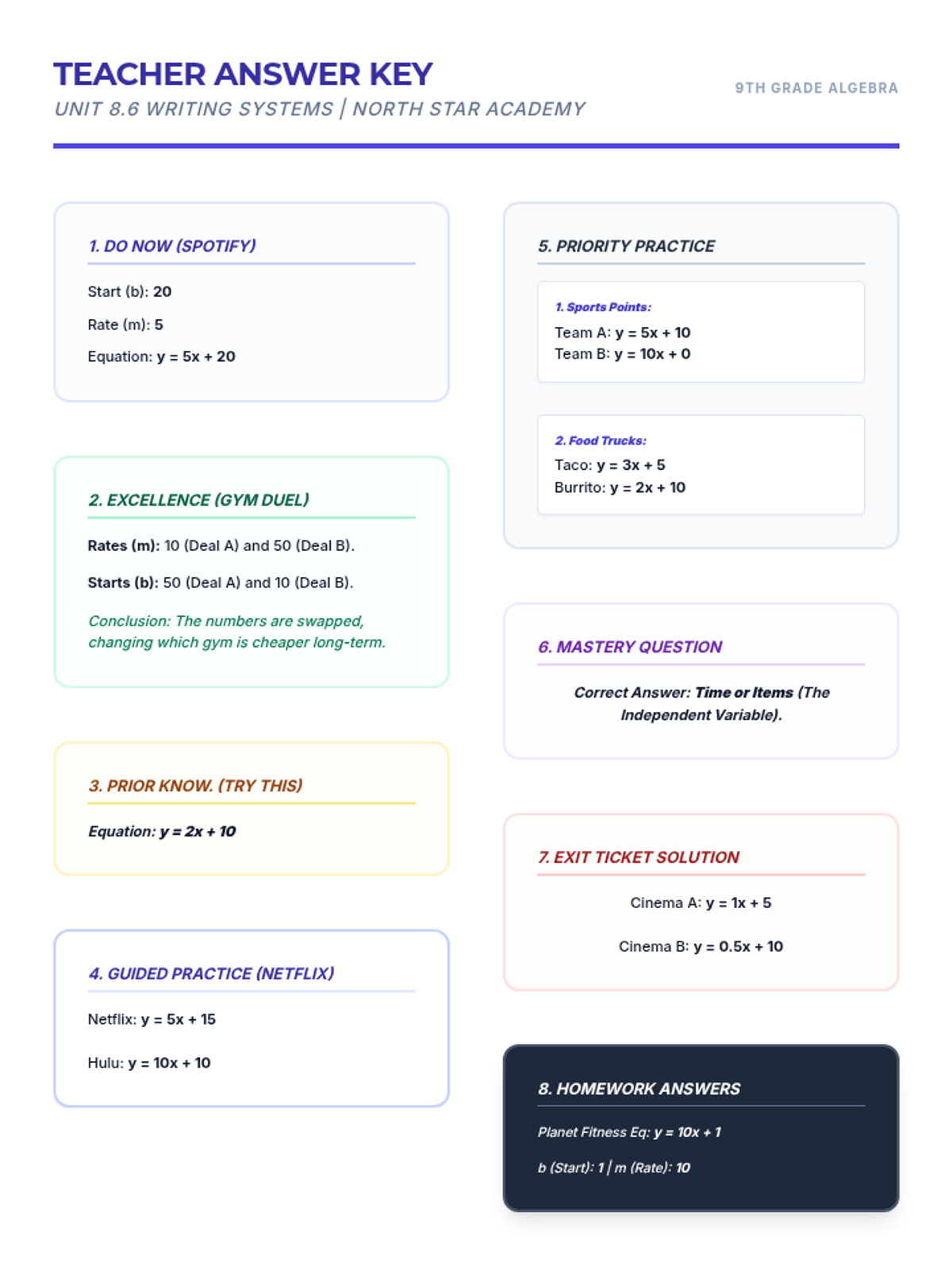
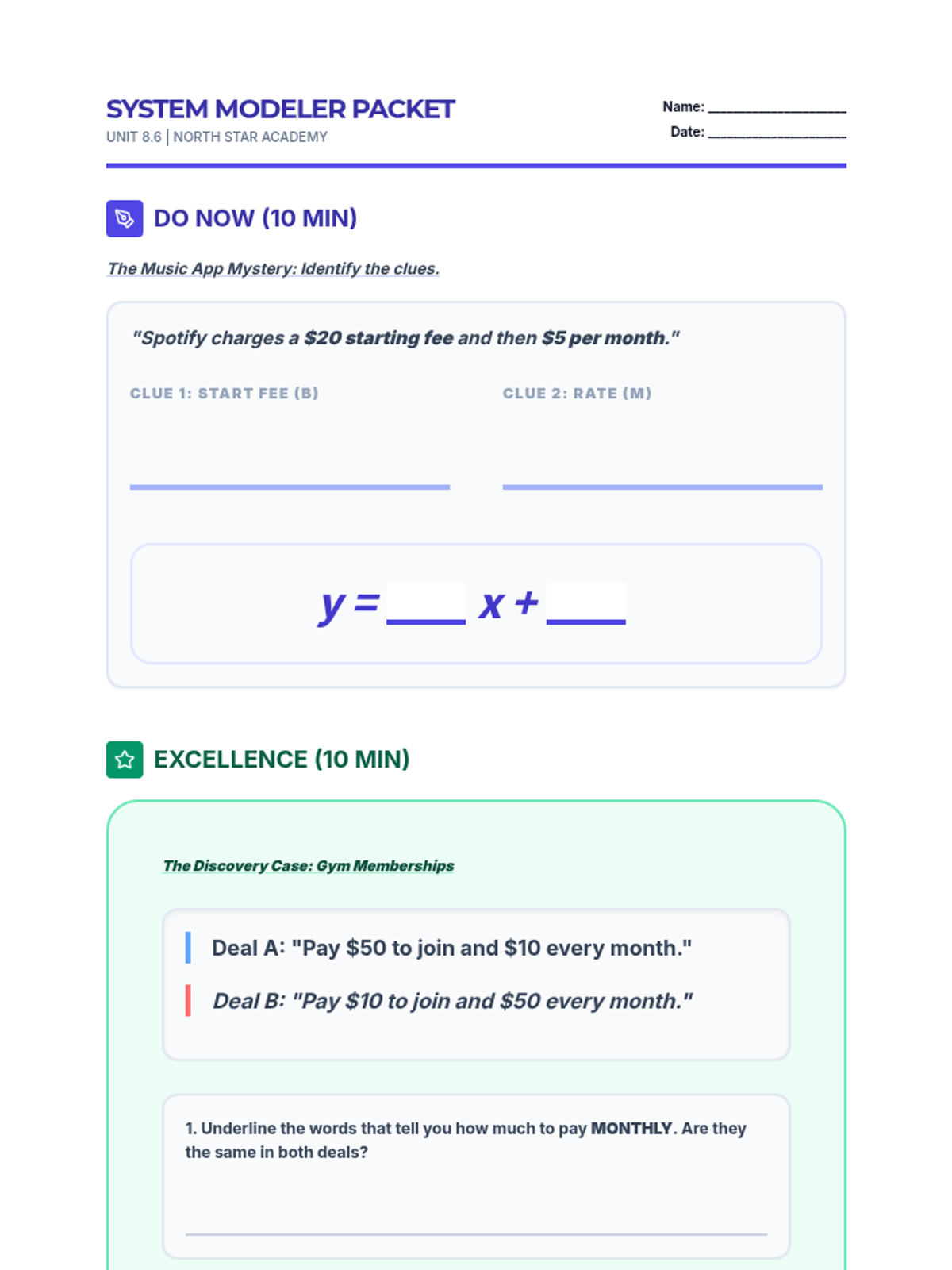
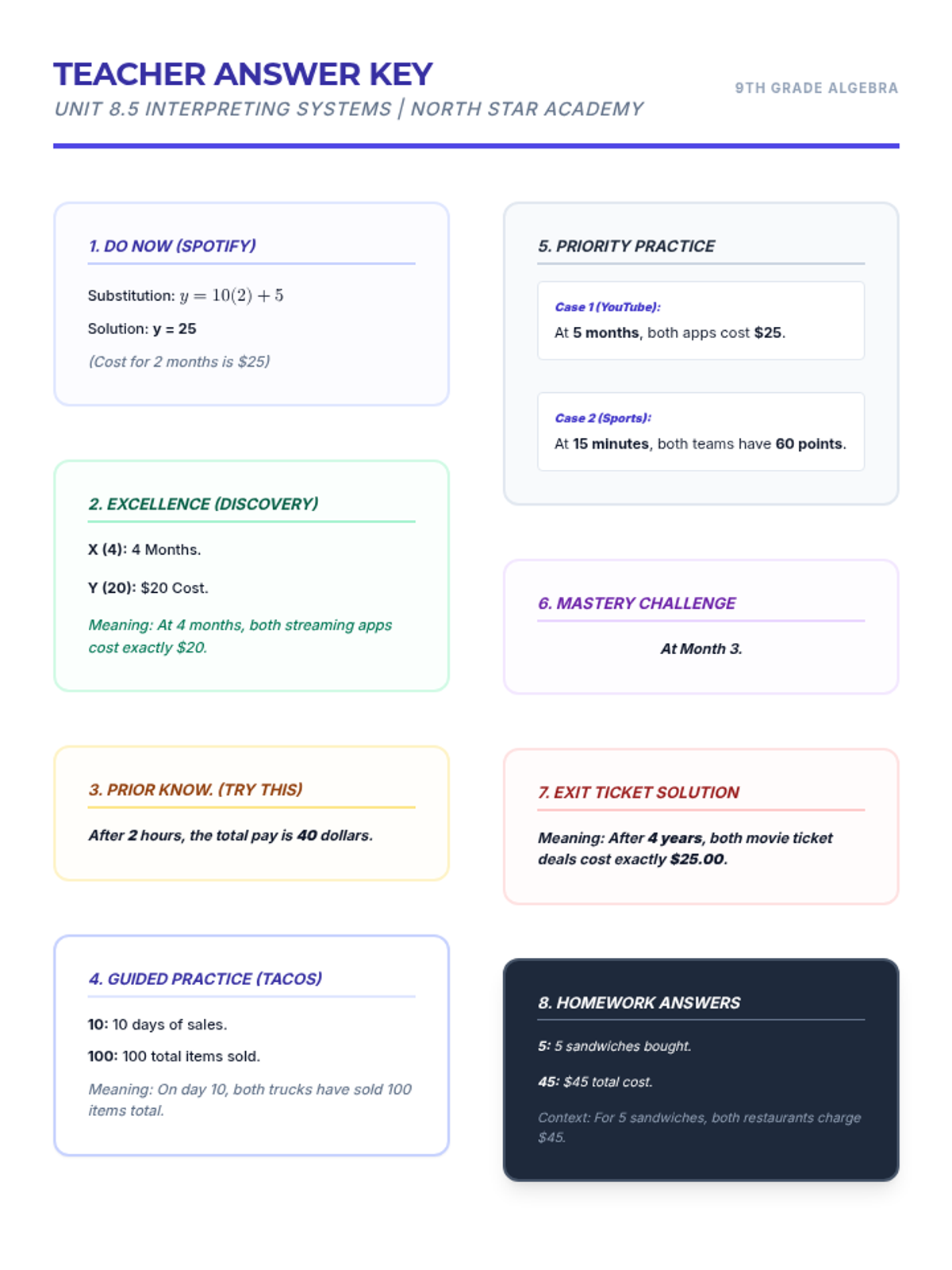
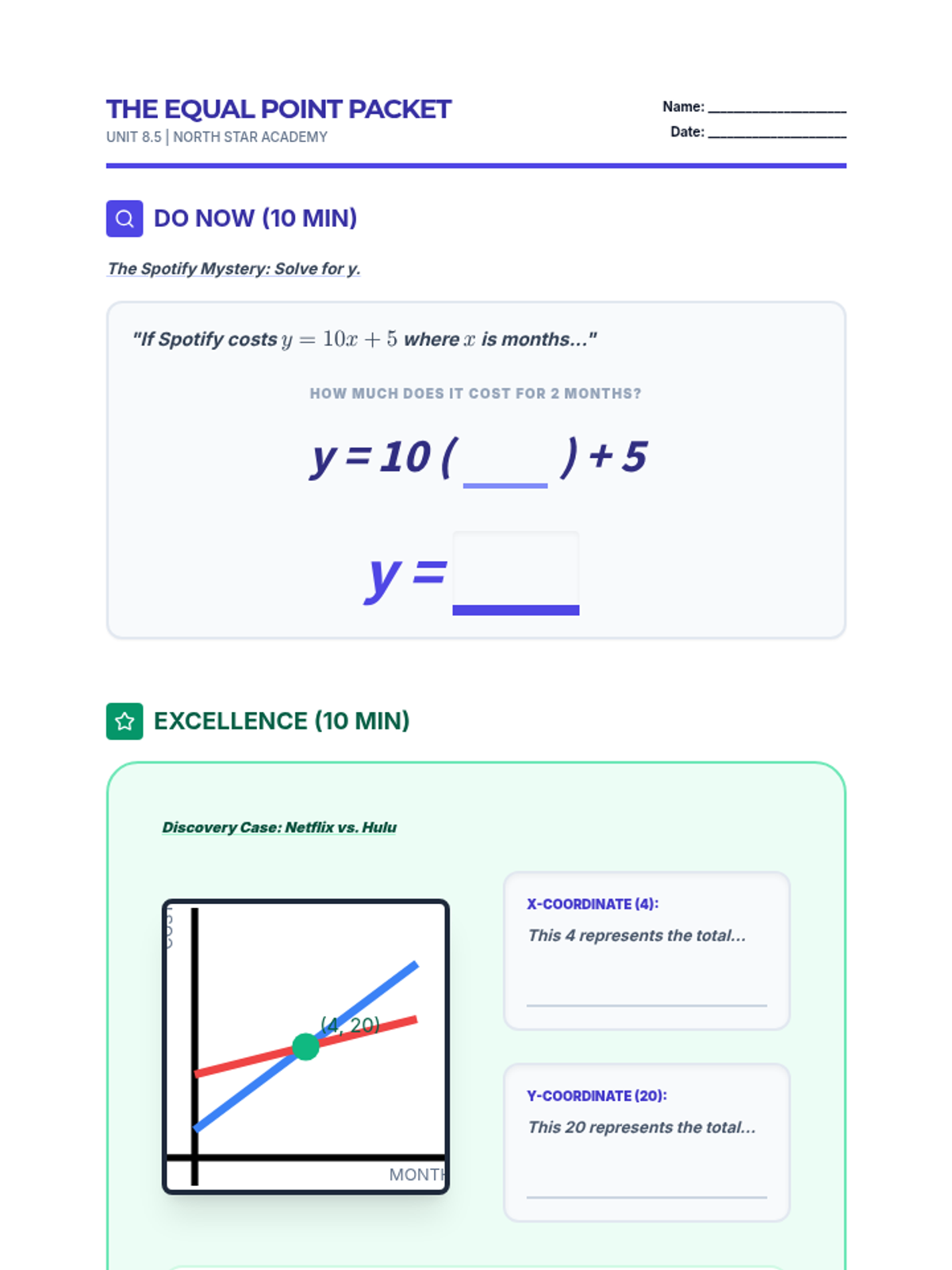
A 9th grade Algebra lesson focused on translating real-world scenarios (media, sports, food) into a system of two linear equations, specifically designed for Special Education students with IEP supports.
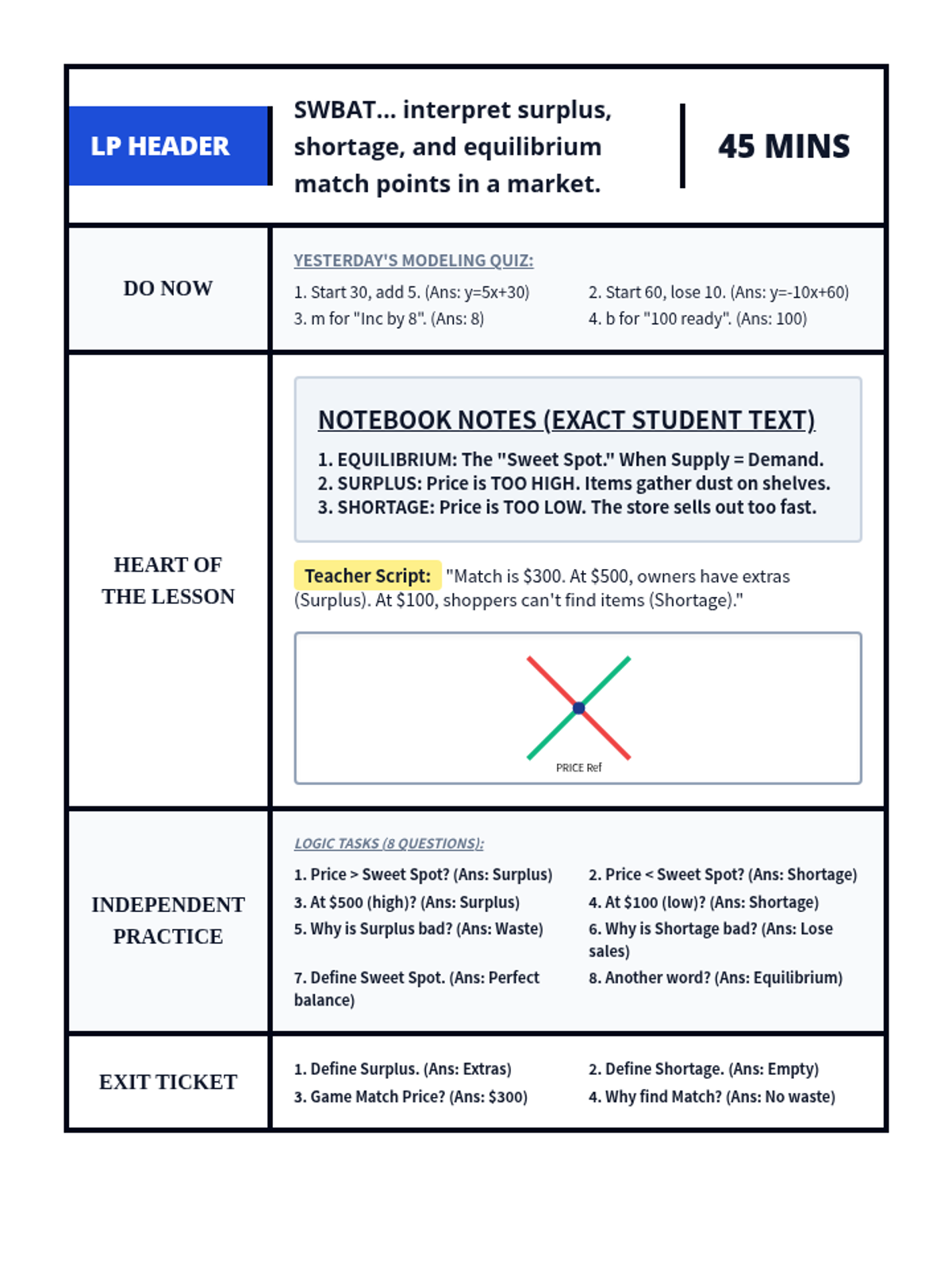
Students interpret the meaning of the point of intersection, surplus, and shortage in the context of a real-world market.
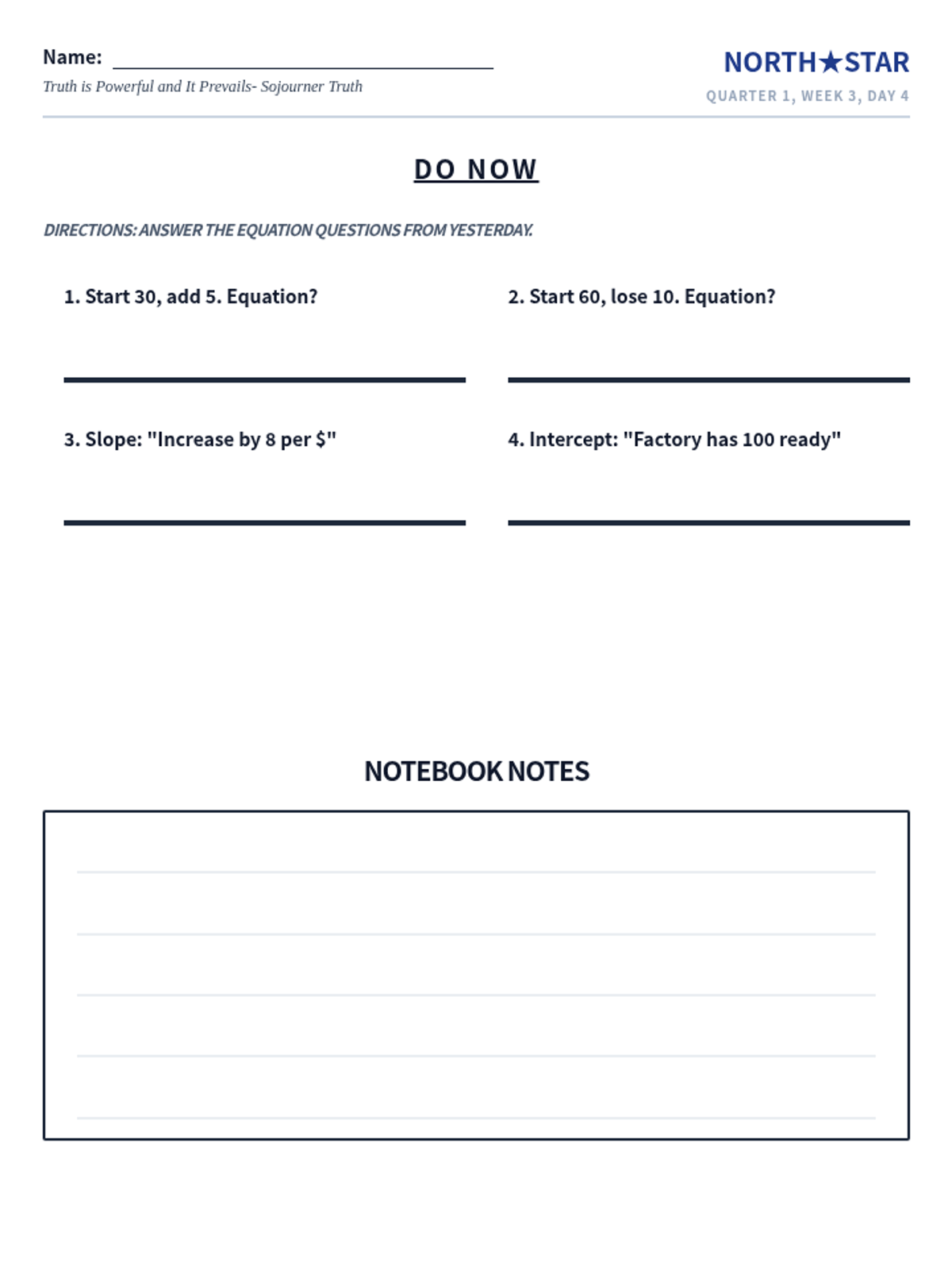
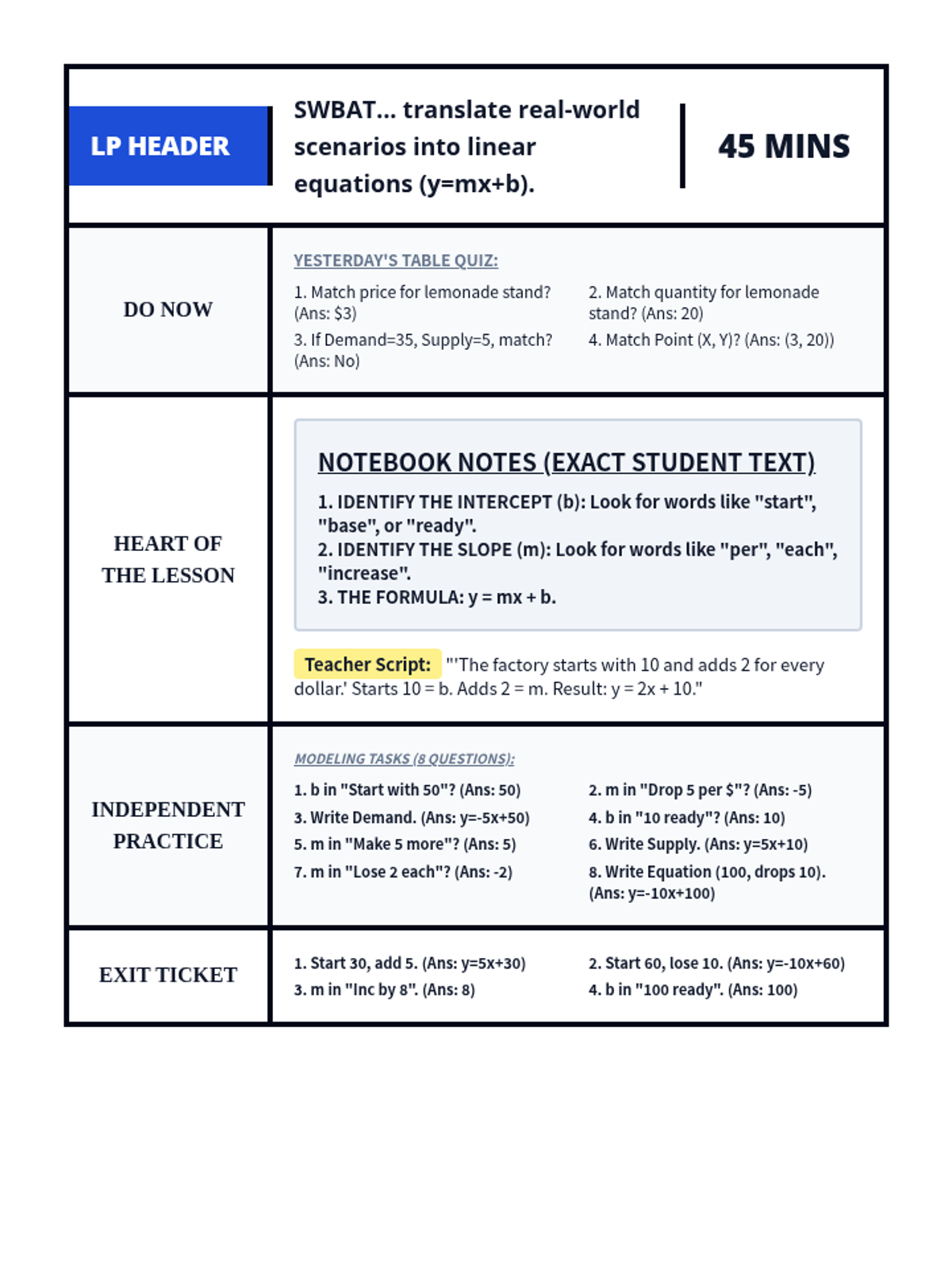
Students translate real-world supply and demand scenarios into linear equations (y=mx+b) by identifying key terms.
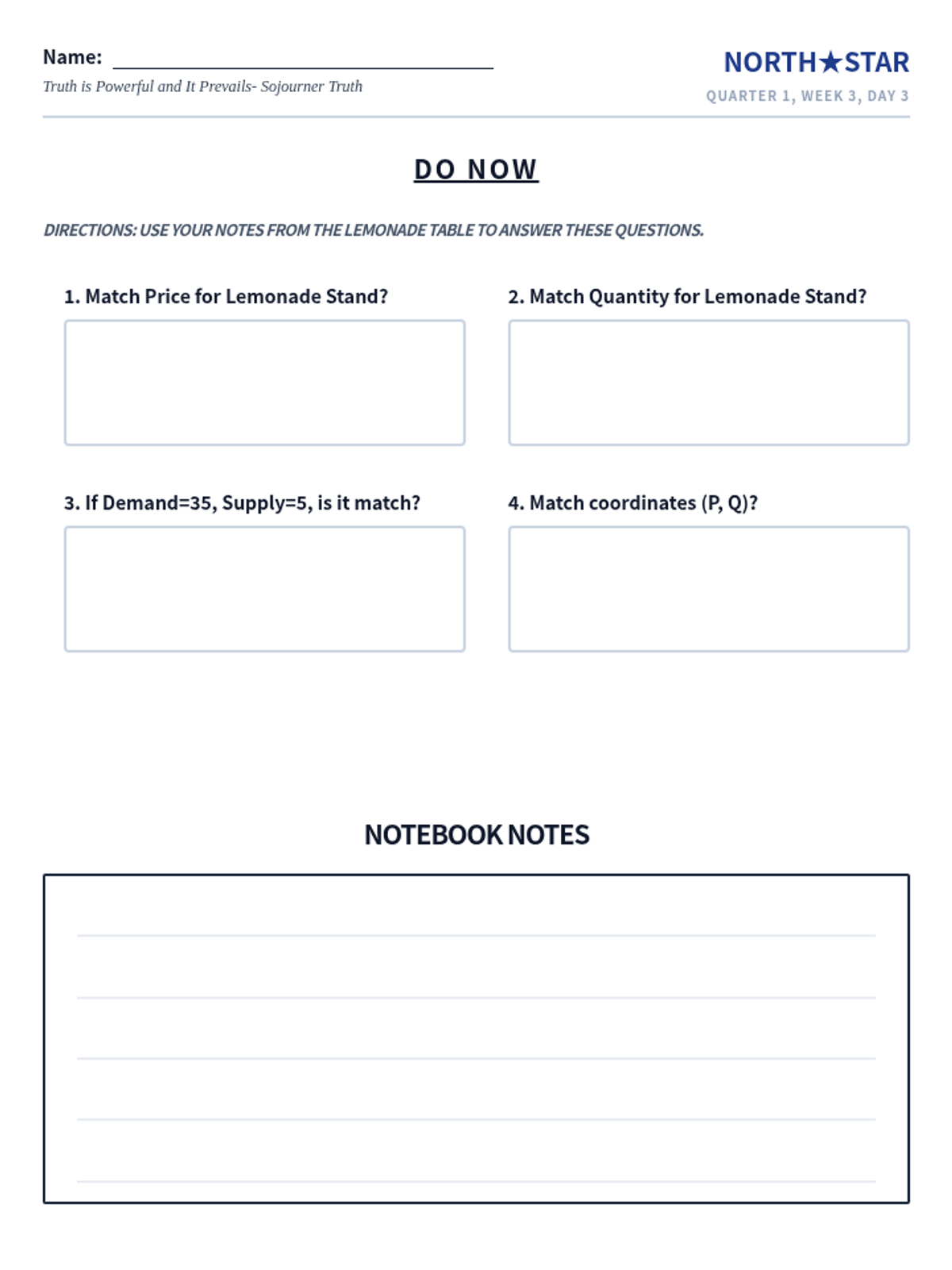
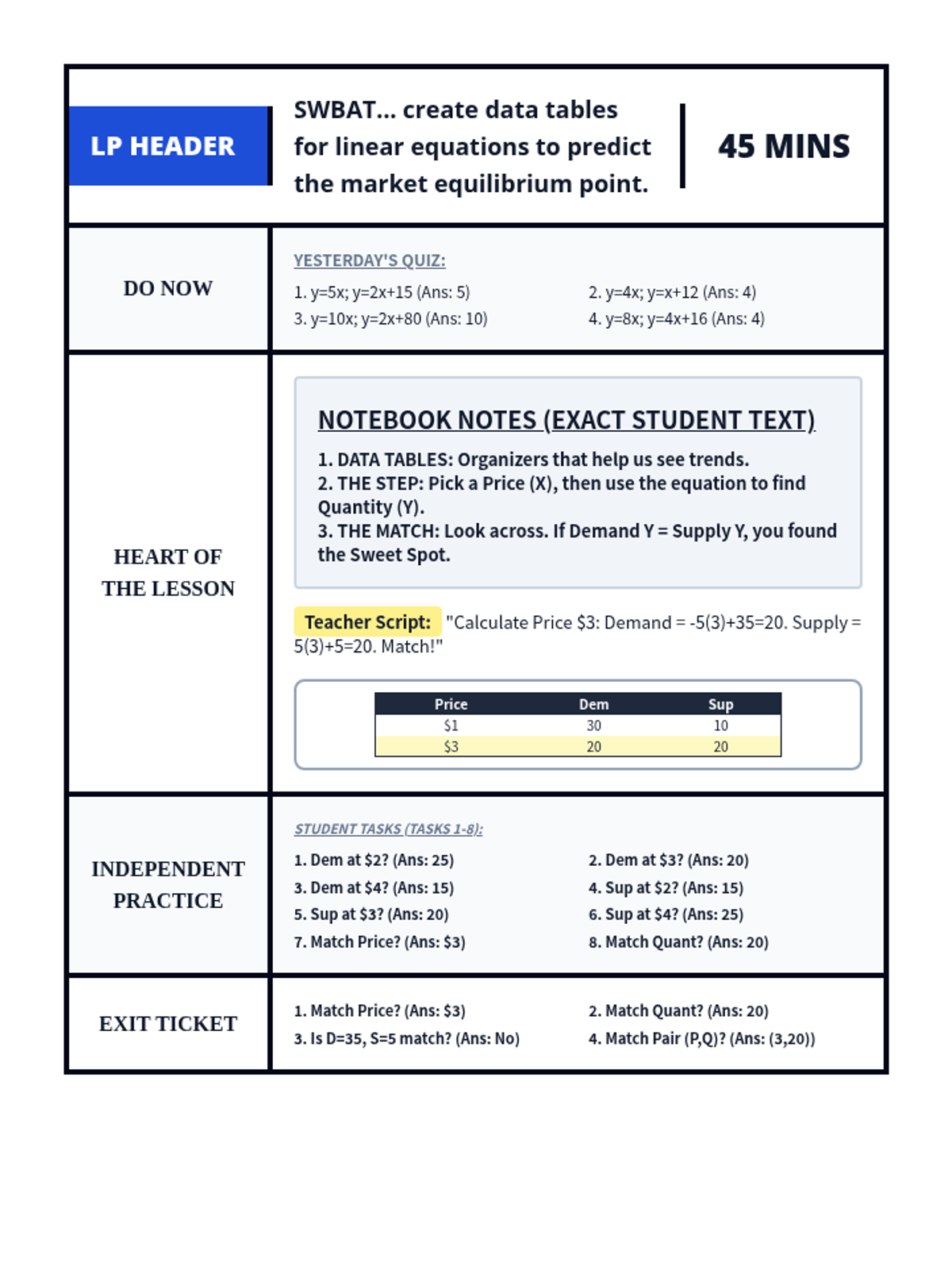
Students create and compare multiple sets of data tables for supply and demand to identify the market equilibrium price where quantities match.
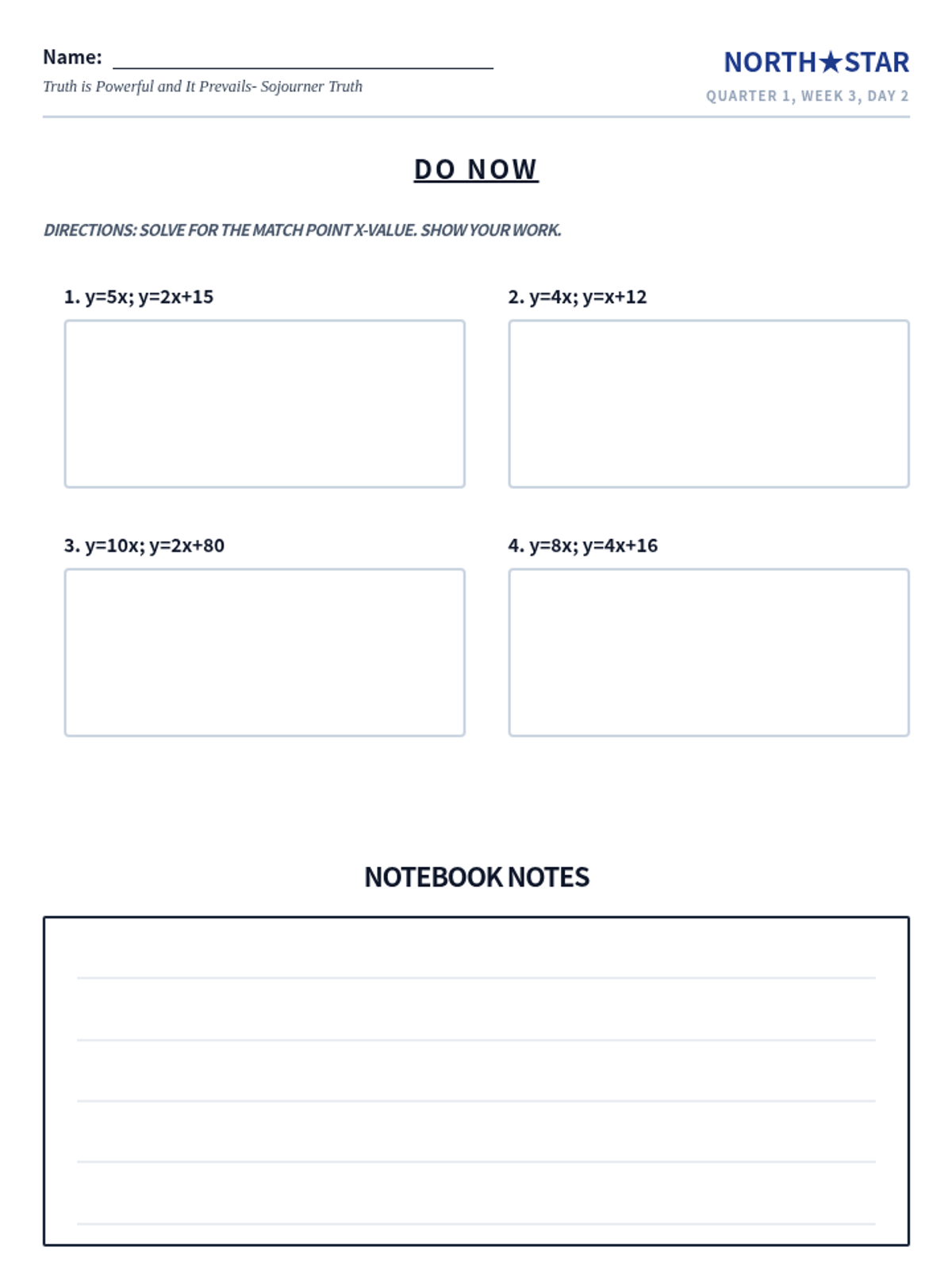
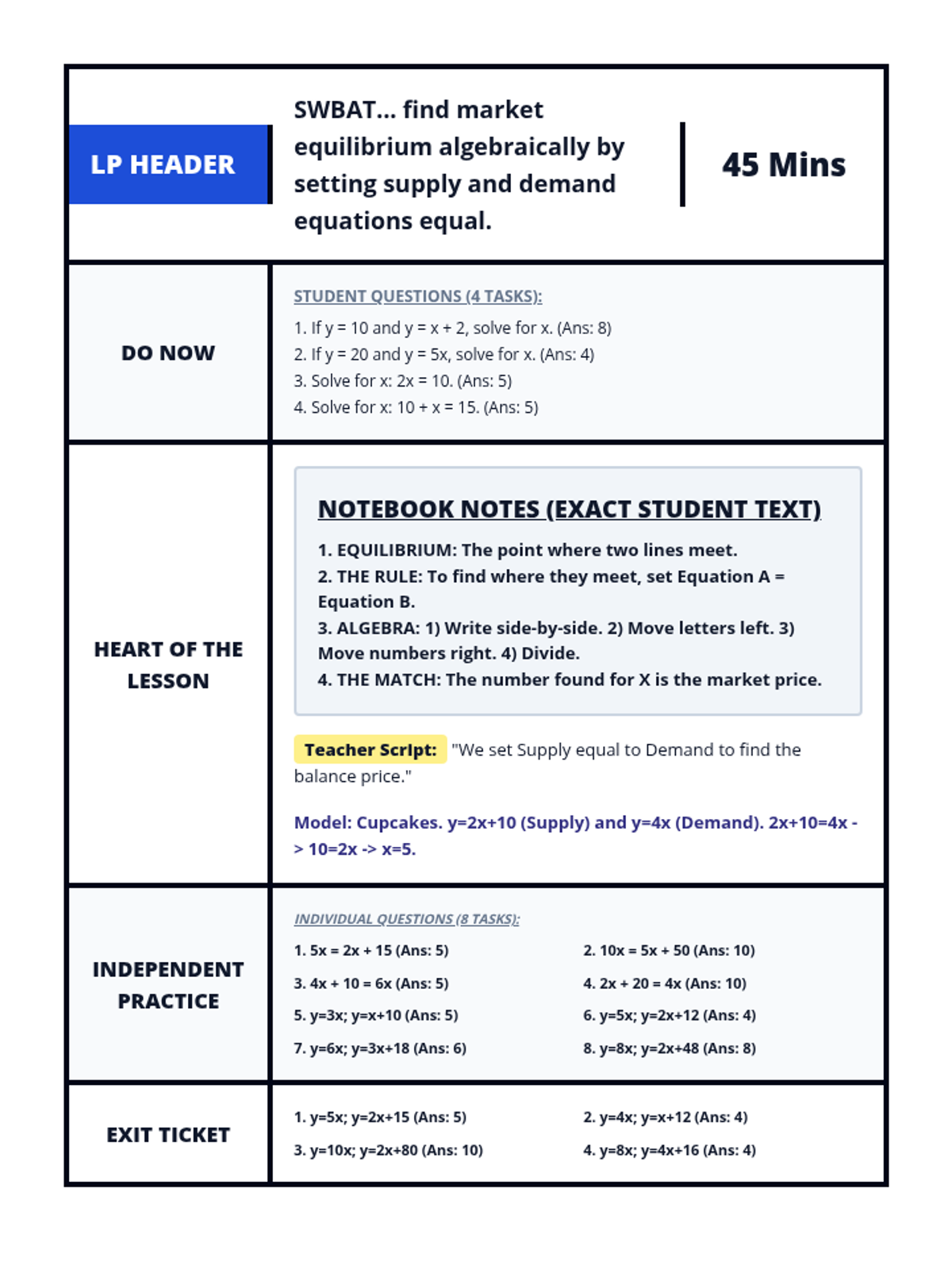
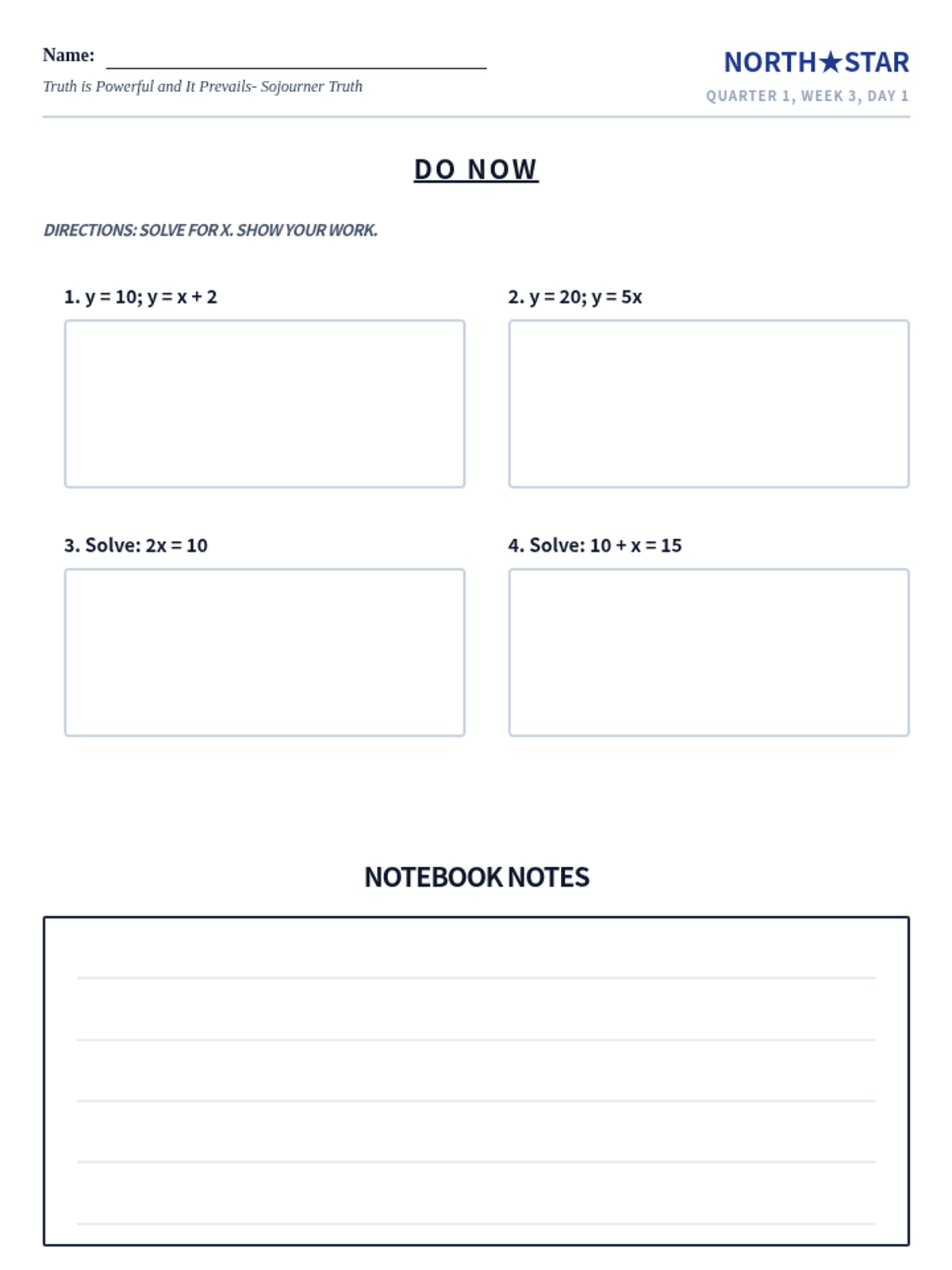
Students define supply and demand and learn to solve for the point of intersection algebraically by setting equations equal.
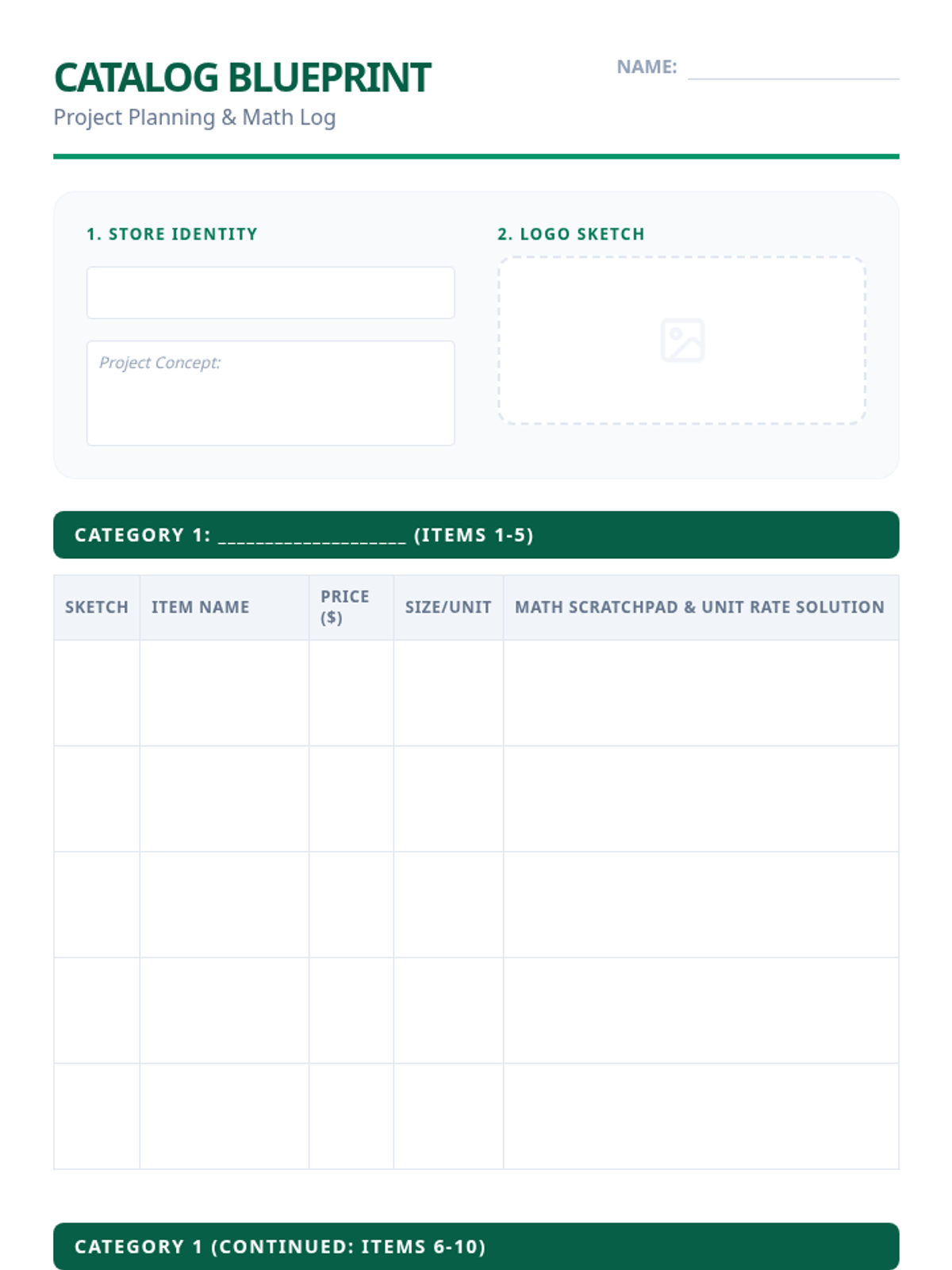
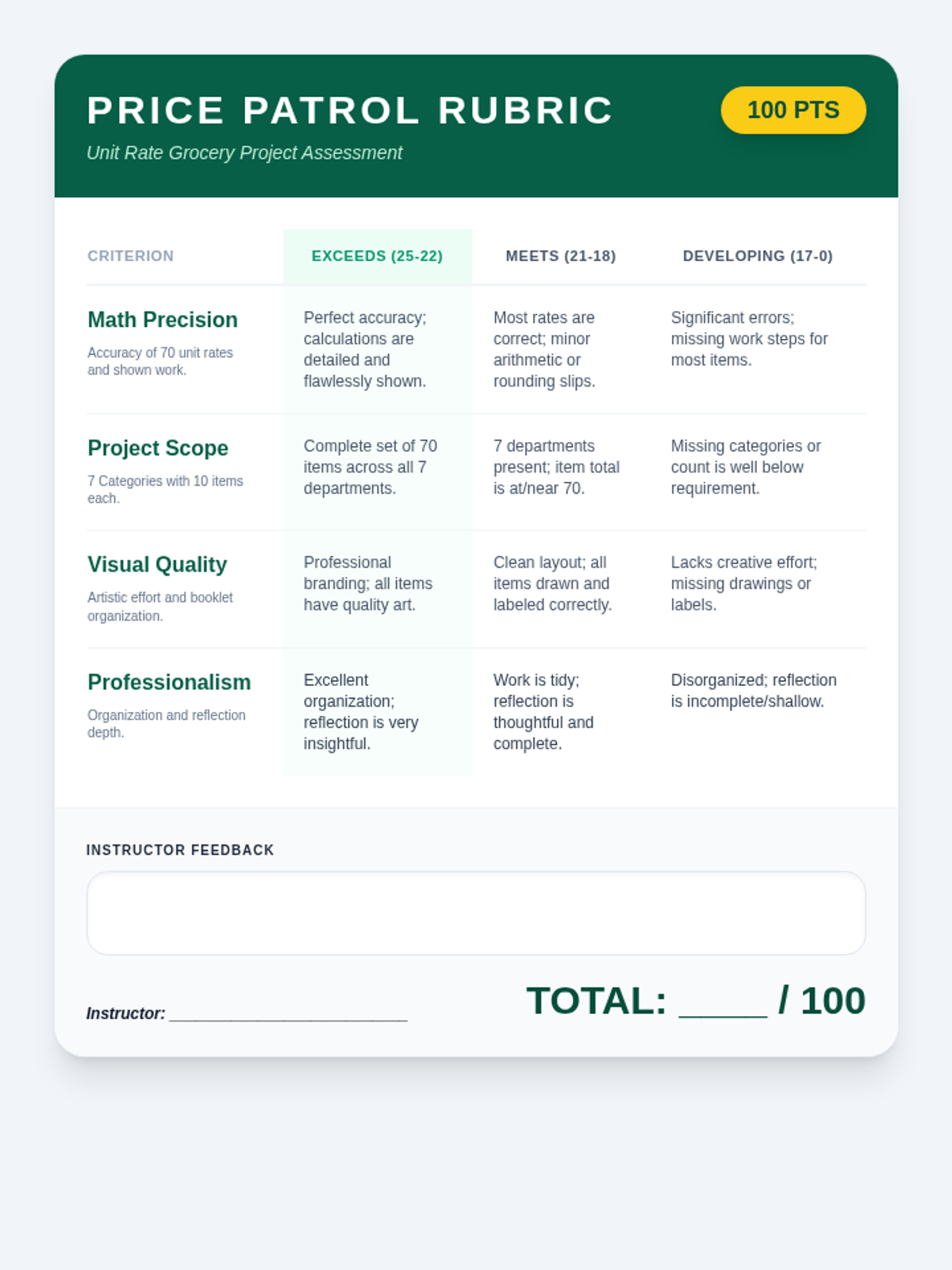
Students learn the requirements for the Price Patrol project and begin planning their grocery catalog, including selecting categories, items, and pricing strategies.
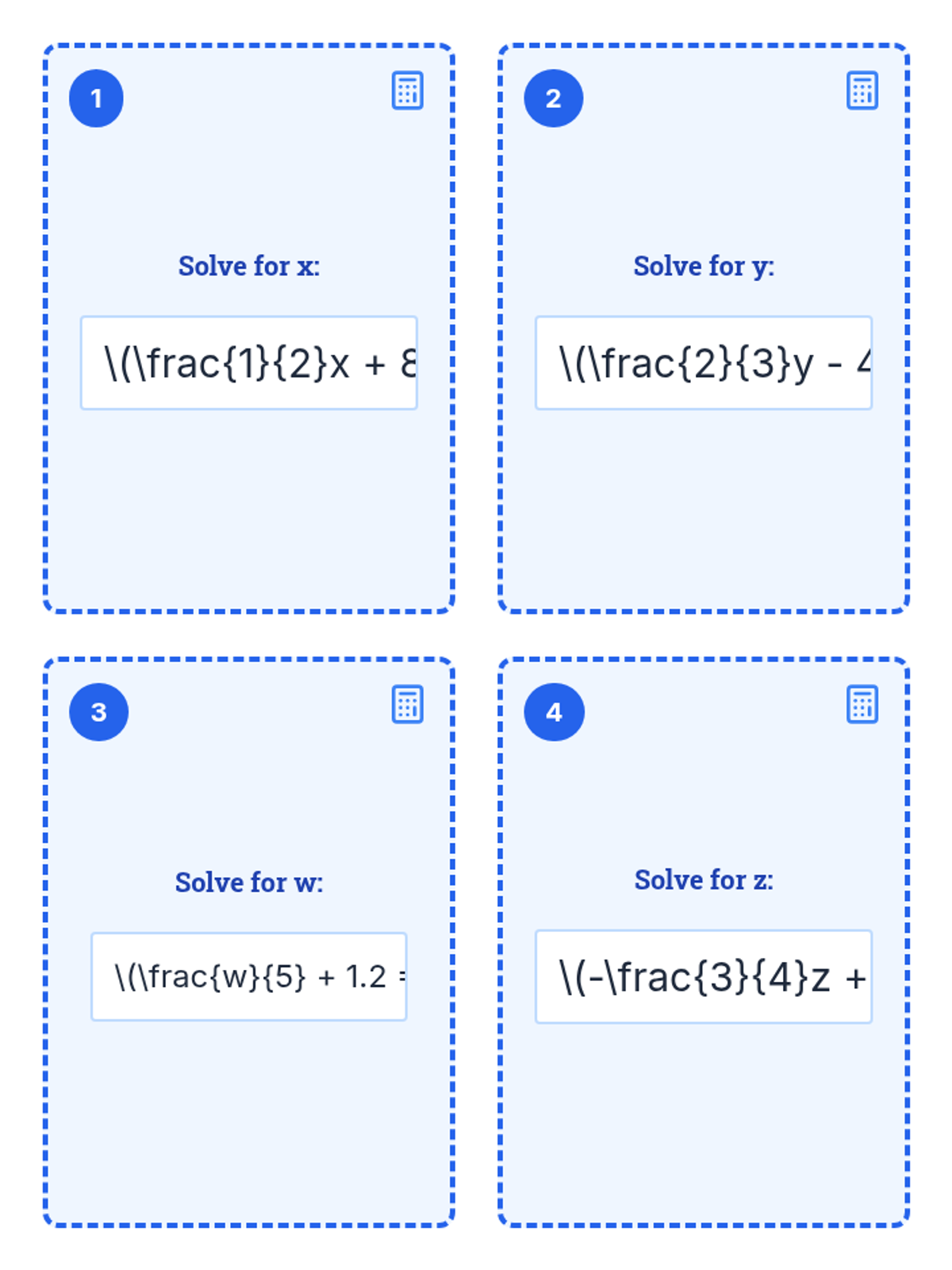
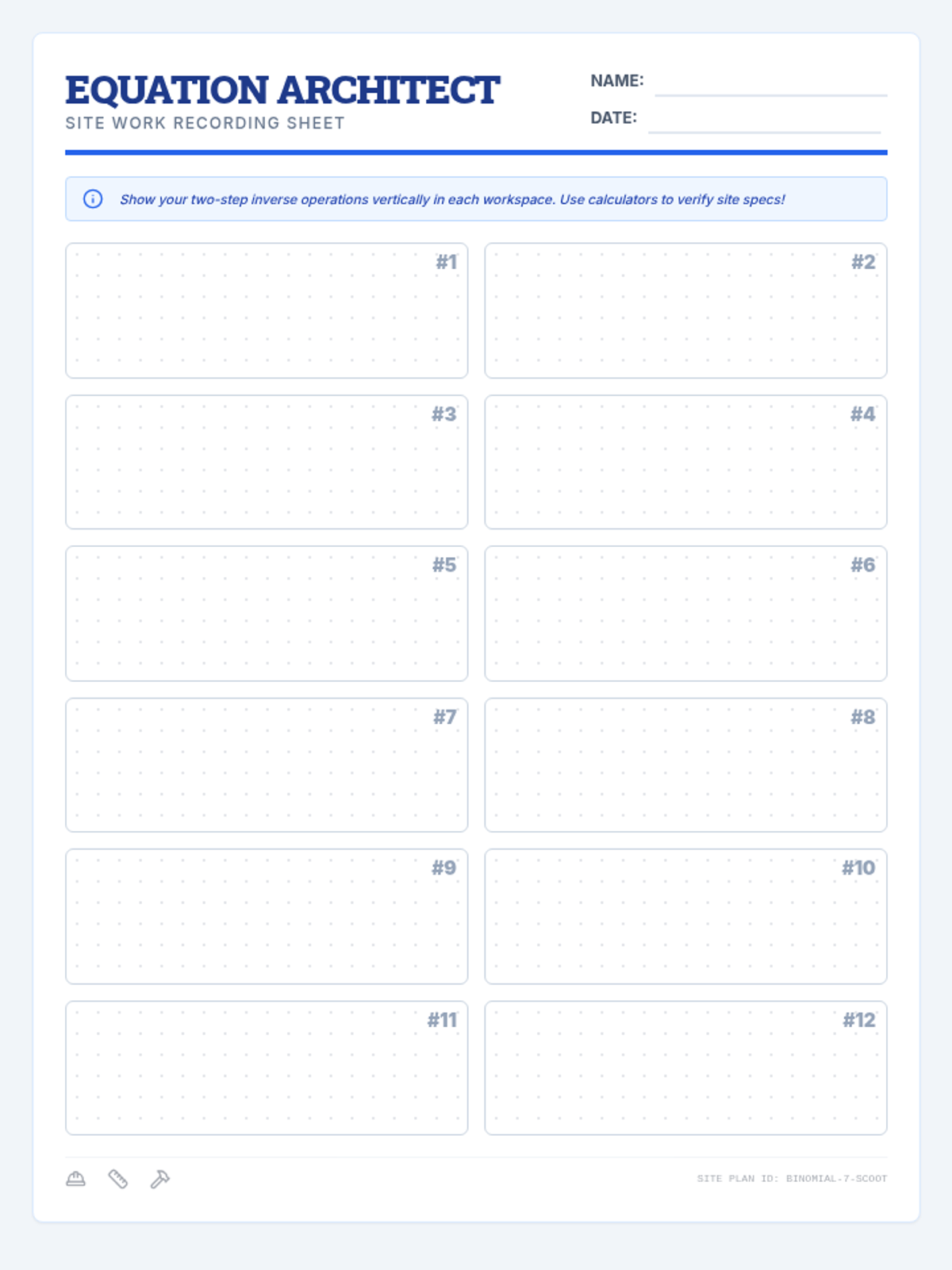
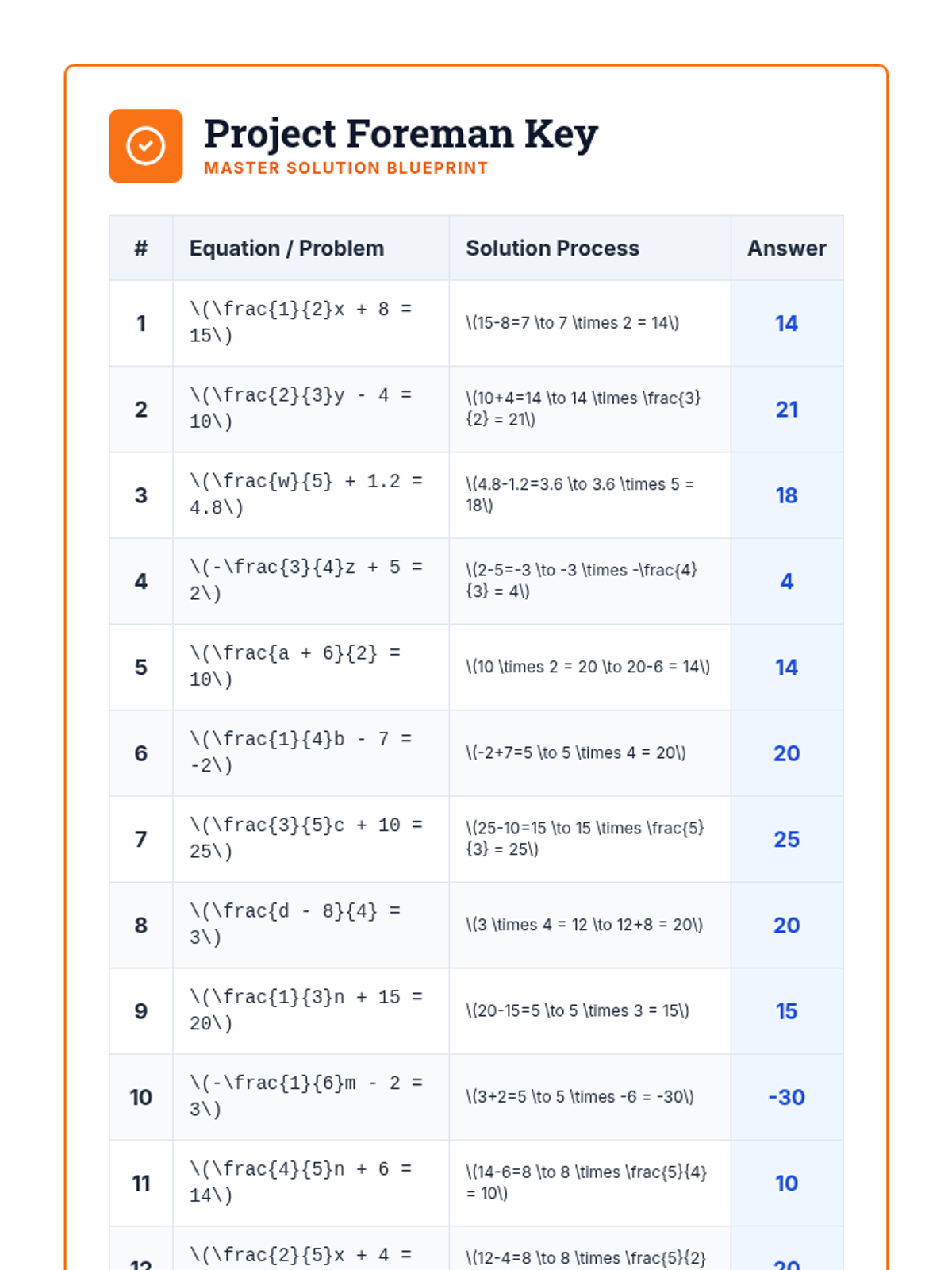
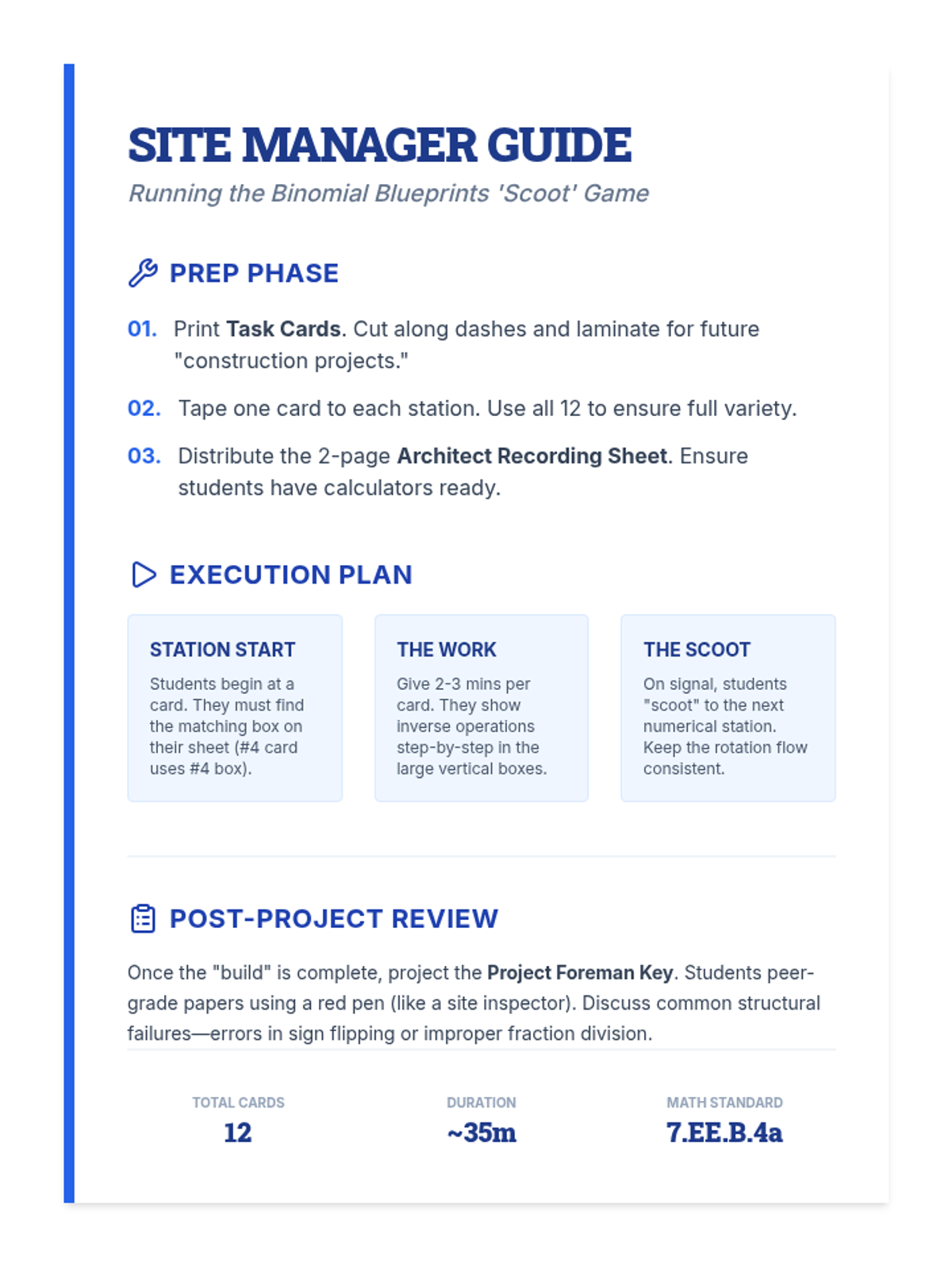
A high-energy 'Scoot' game where students solve two-step equations with fractional coefficients, using a construction-blueprint theme to build algebraic fluency.
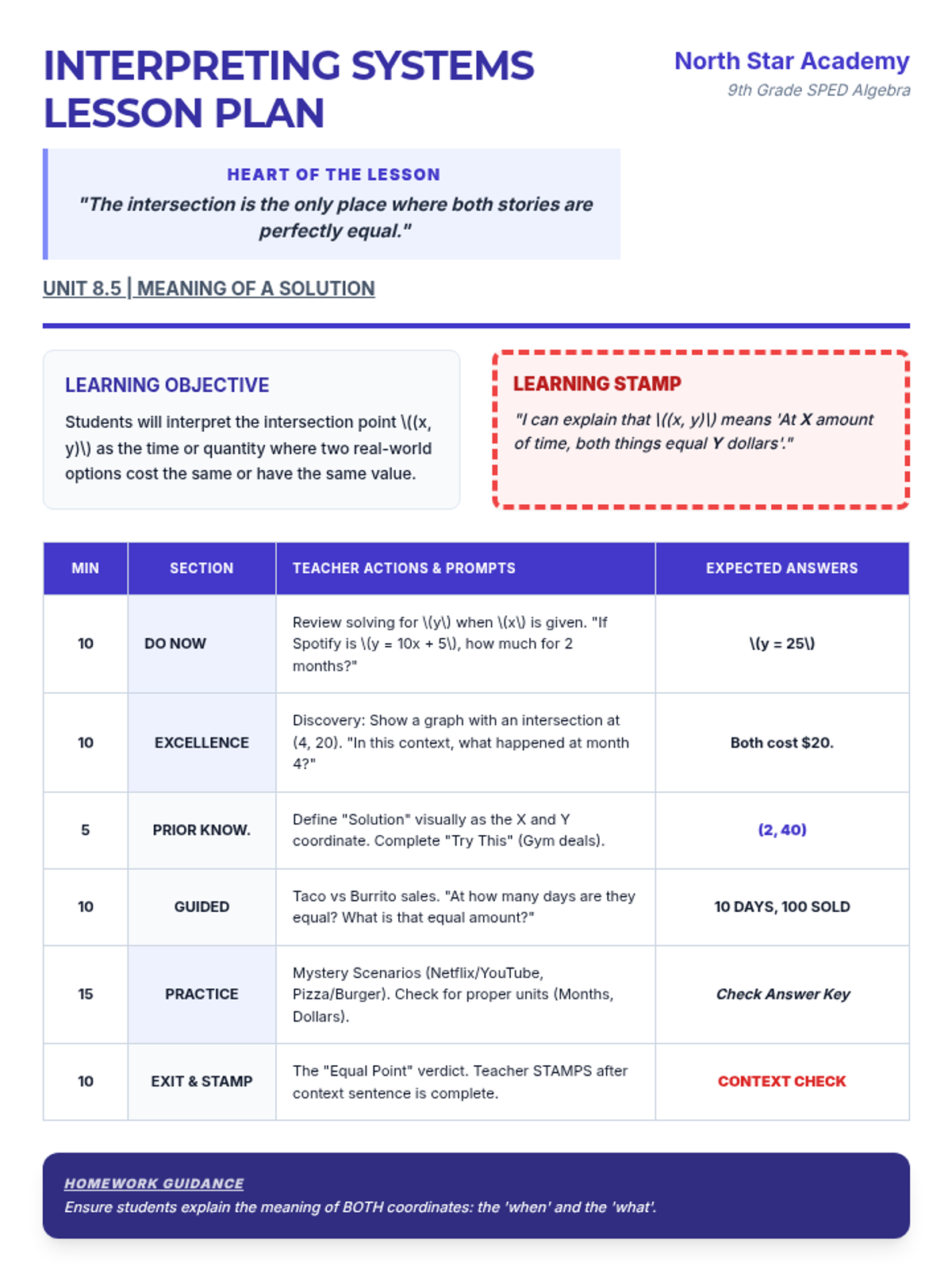
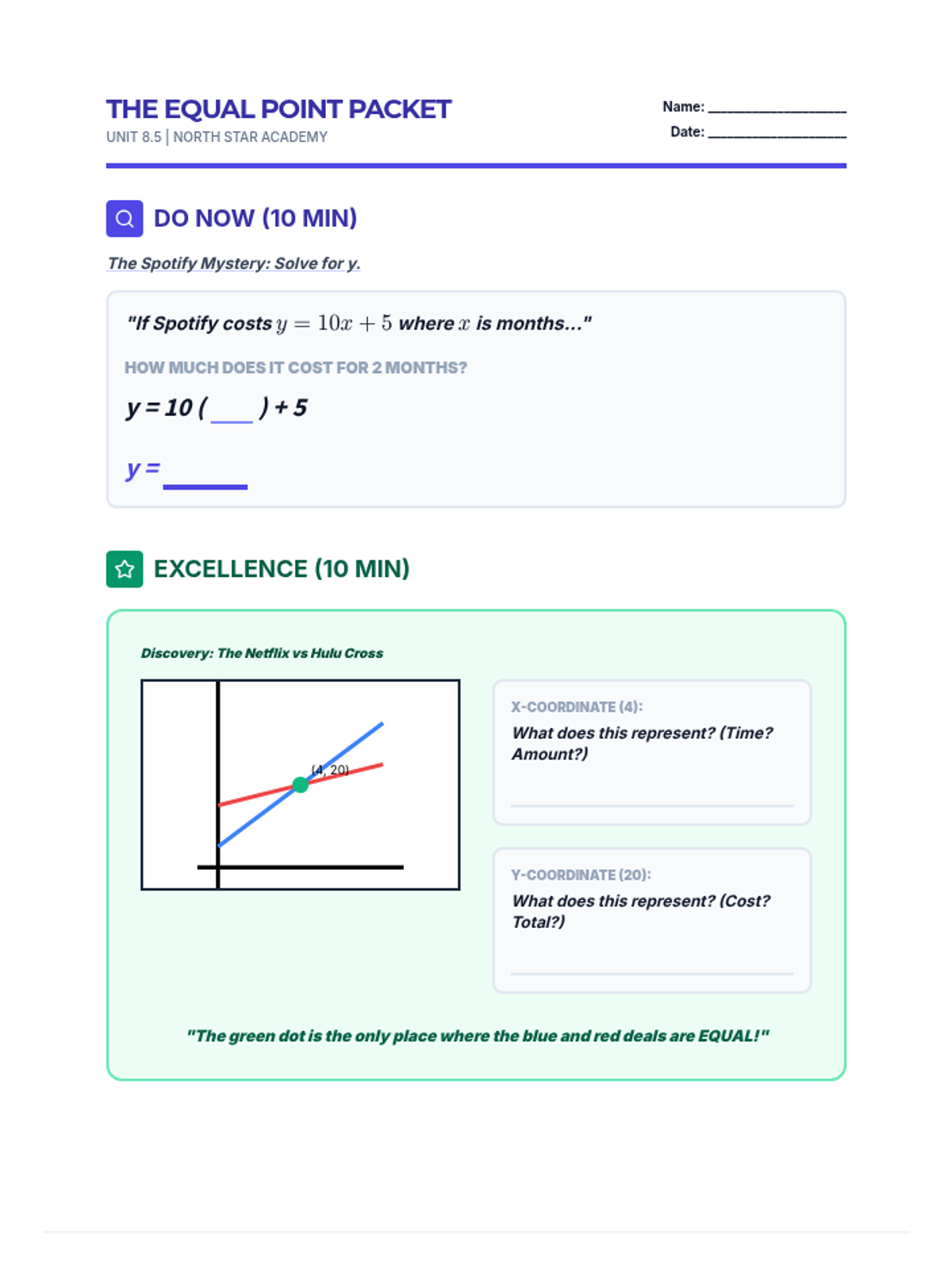
A 9th grade Algebra lesson focused on interpreting the intersection point of a system of equations in a real-world context (media, sports, food), specifically designed for Special Education students with IEP supports.
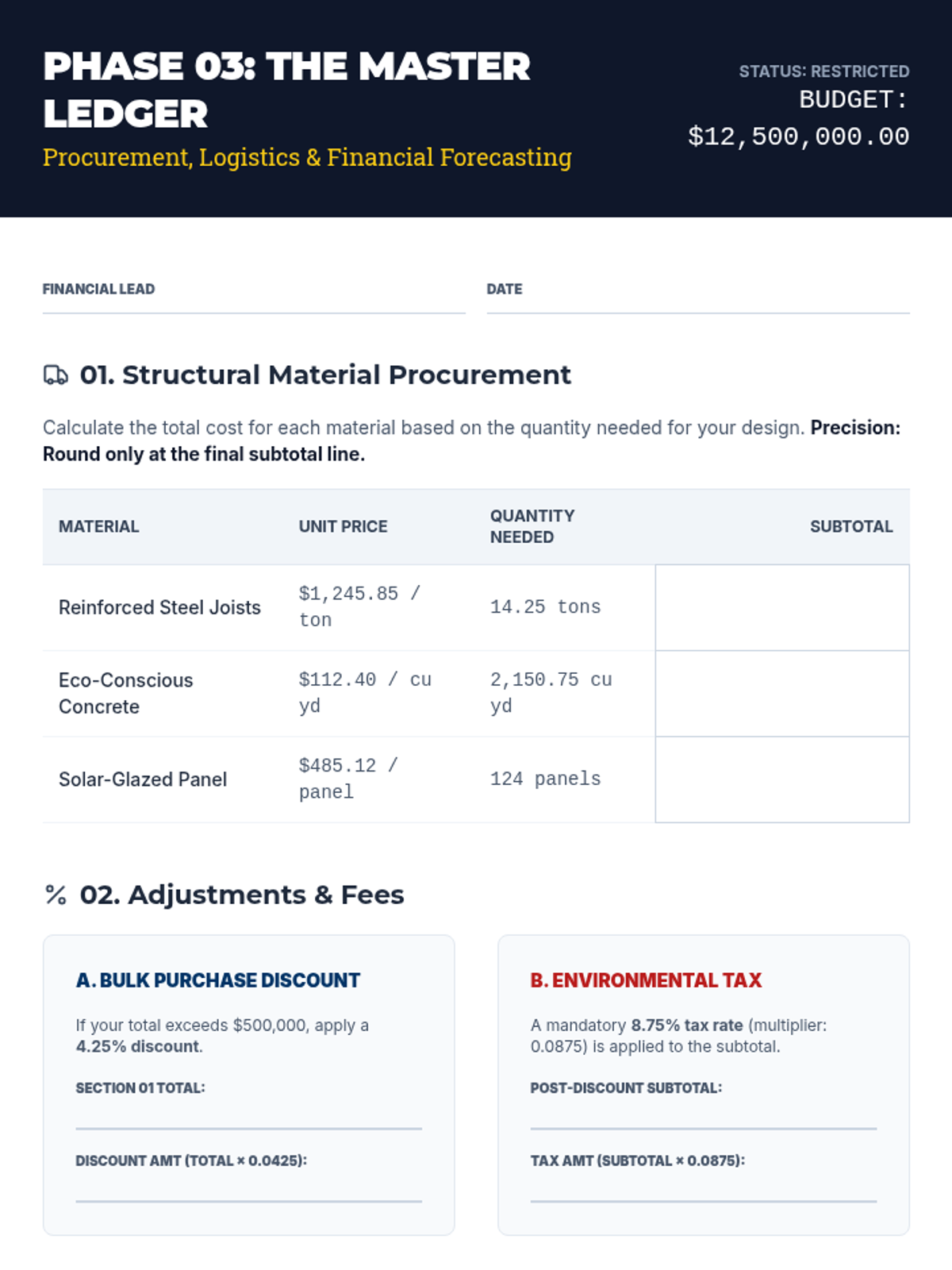
Focusing on procurement, students manage a complex budget using multi-step decimal operations for material costs, labor, and taxes.
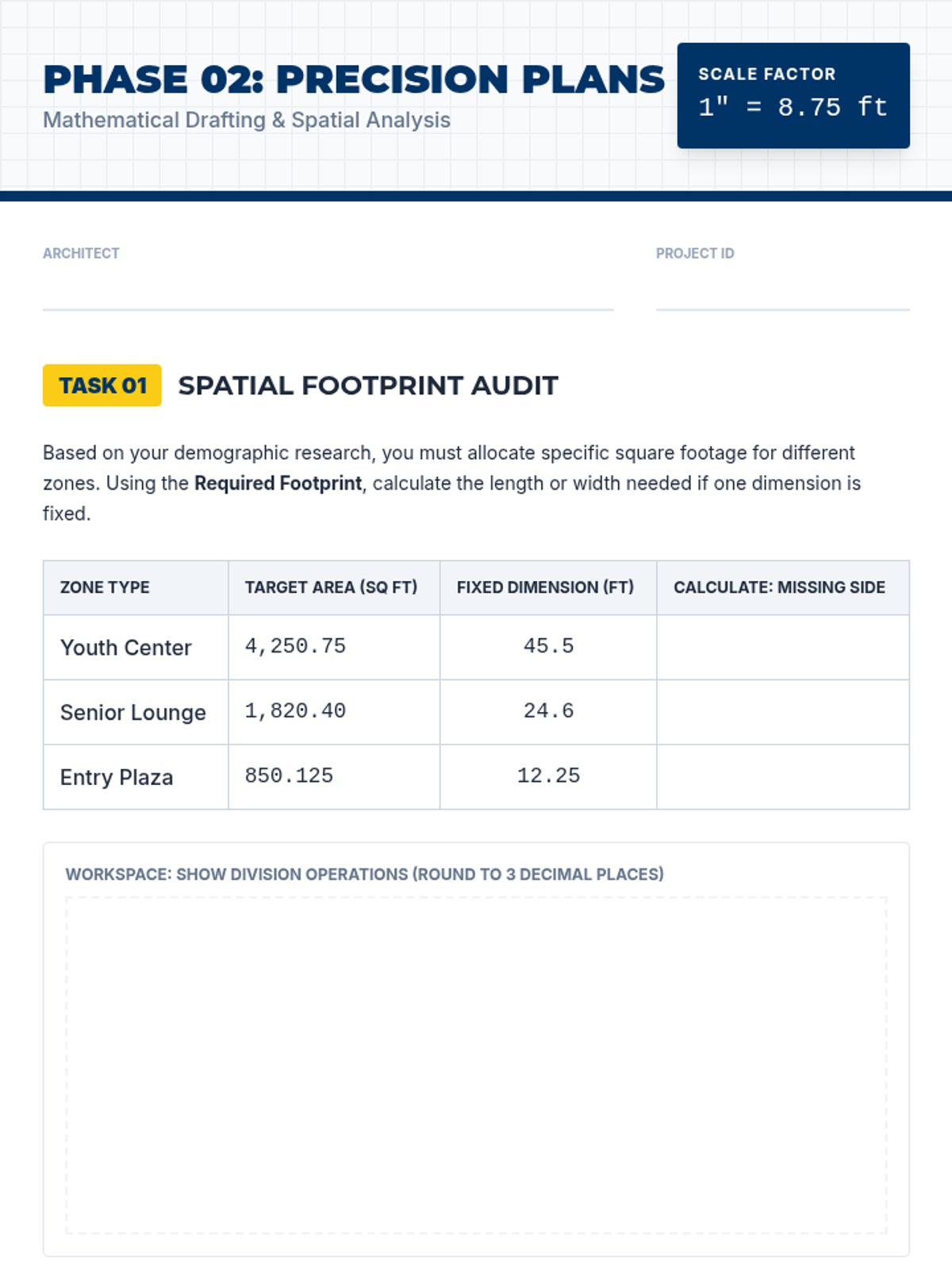
Students translate statistical findings into physical dimensions, applying decimal multiplication and division to manage scale and area calculations.