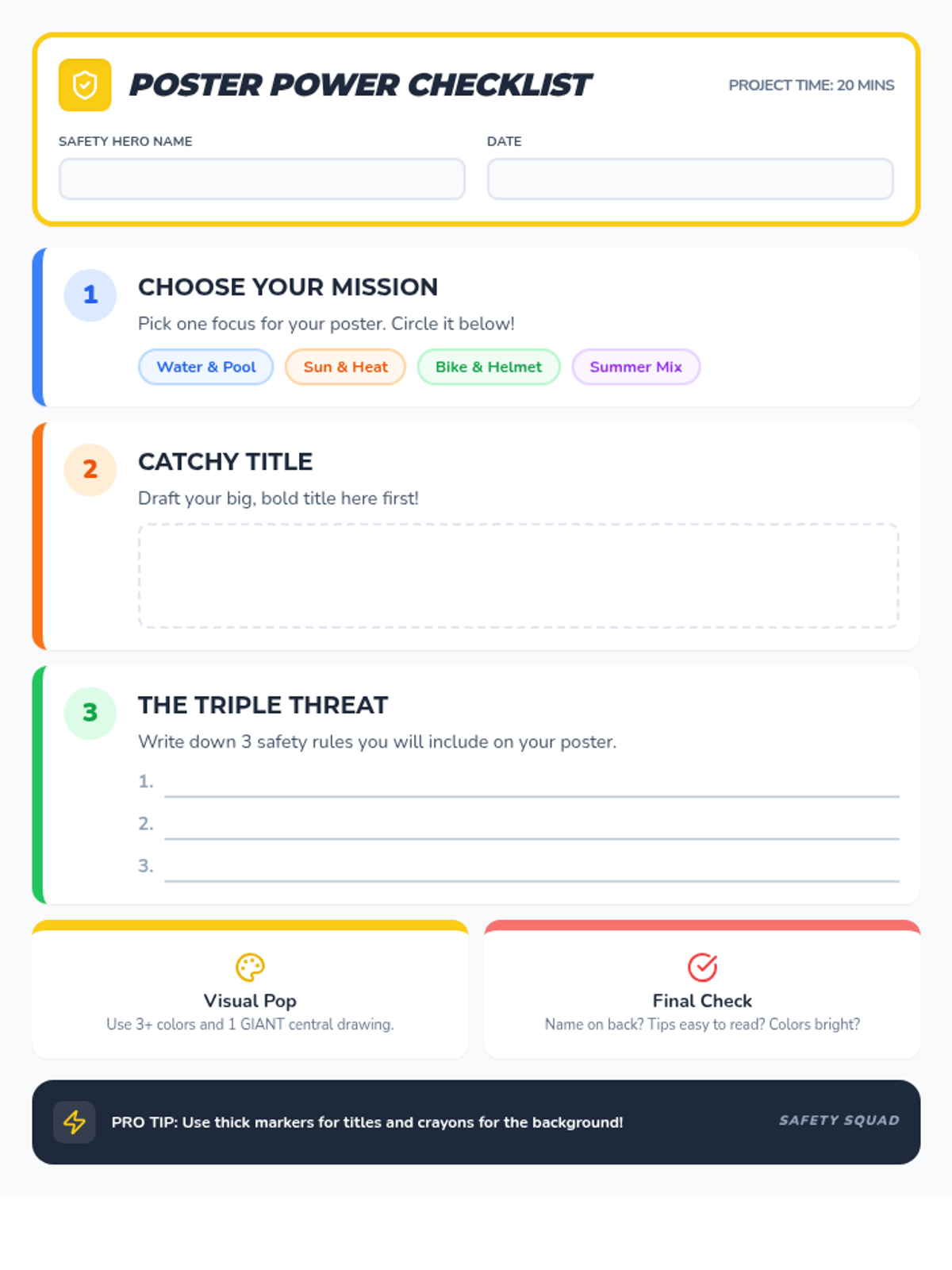
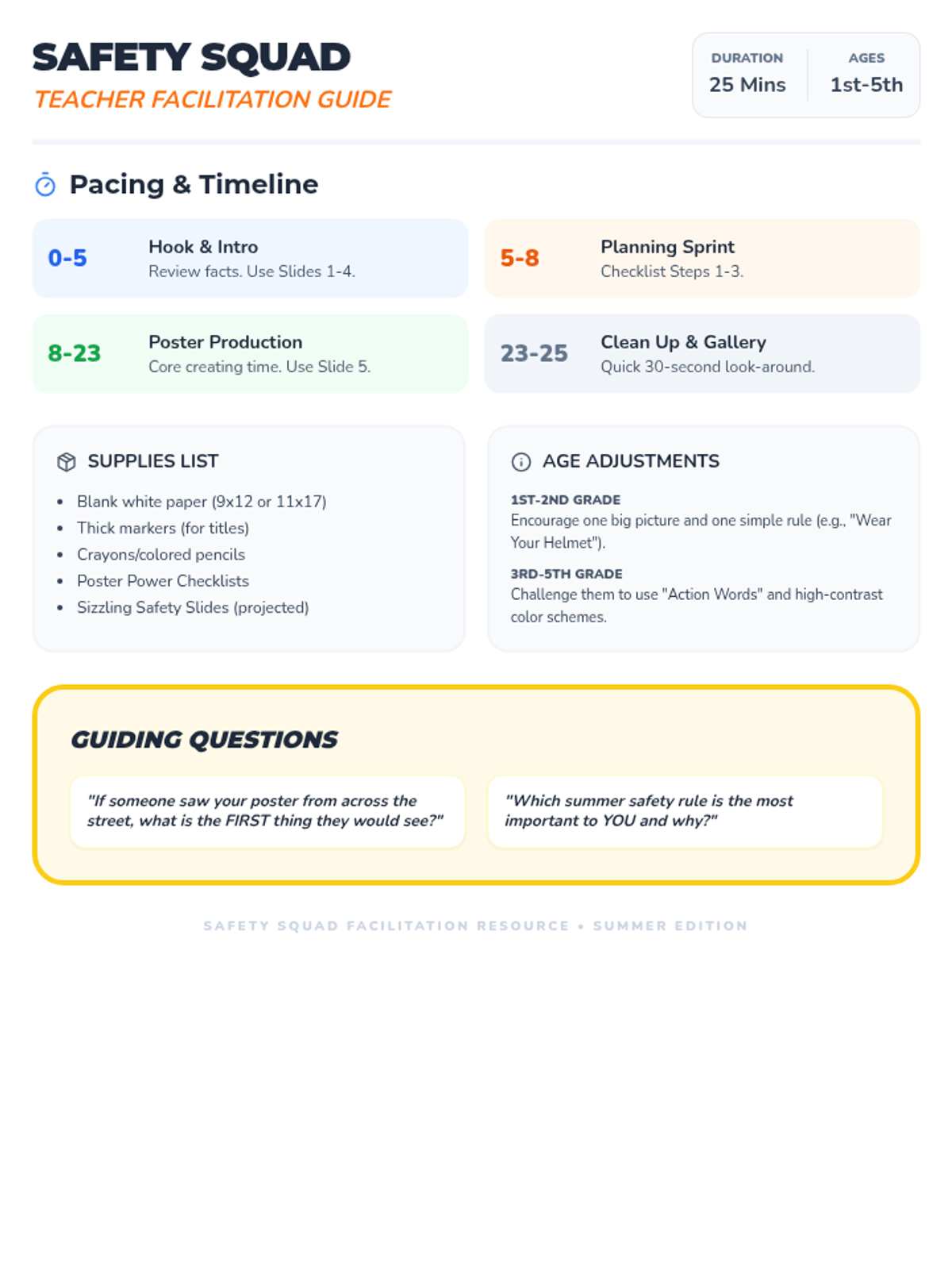
A lesson and set of resources designed to monitor and promote positive sportsmanship and safe play during recess for upper elementary students.
A comprehensive PE lesson focused on the FITT principle (Frequency, Intensity, Time, Type), helping students design personalized fitness routines using minimal equipment while meeting SHAPE America standards.
A 45-minute introductory lesson on cardiovascular fitness where students learn to define CV health, measure their heart rate, and identify heart-pumping activities through a hands-on 'Pulse Patrol' mission. Includes specific supports for ELL and mixed-ability learners.
A reflective lesson designed for students to evaluate the health risks of vaping and the social pressures that lead to it, focusing on long-term consequences and personal agency.
Students develop essential teamwork skills through a high-stakes physical challenge. By transporting a delicate 'energy core' using only a multi-stringed ring, teams must synchronize their movements and communicate clearly to succeed.
Une séance de 60 minutes pour les élèves de 6ème axée sur l'amélioration du crawl (propulsion et respiration) et l'initiation au plongeon, utilisant des méthodes ludiques et variées.
A 30-minute lesson empowering students to understand body autonomy, practice consent, and identify trusted adults using the "Boundary Boss" framework. Aligned with Ontario Health & Physical Education curriculum.
A comprehensive lesson for 5th graders on personal hygiene, covering dental care, body odor management, and overall self-care routines during the transition to puberty.
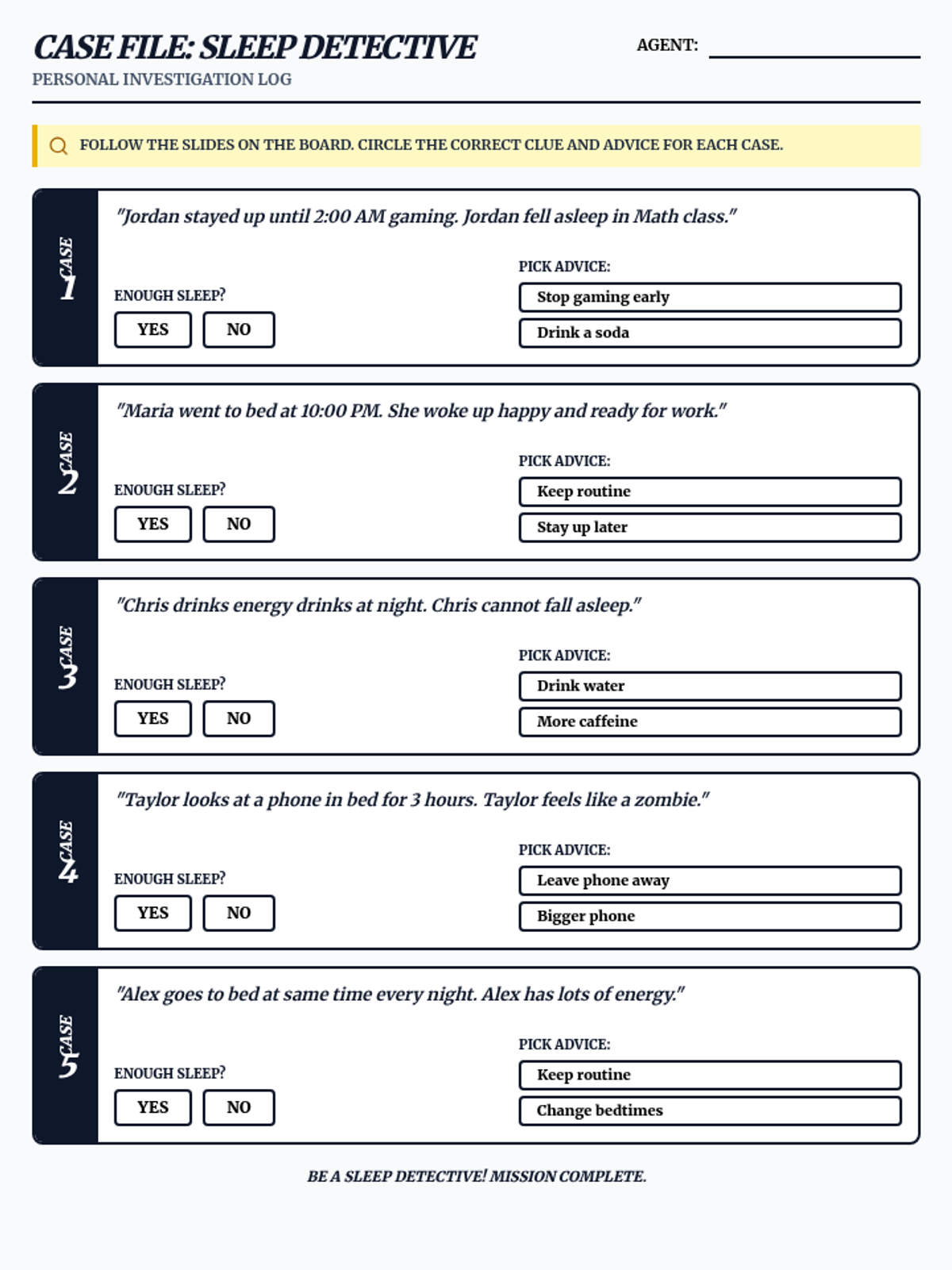
A lesson focused on understanding and implementing stress management techniques to improve sleep quality and hygiene.
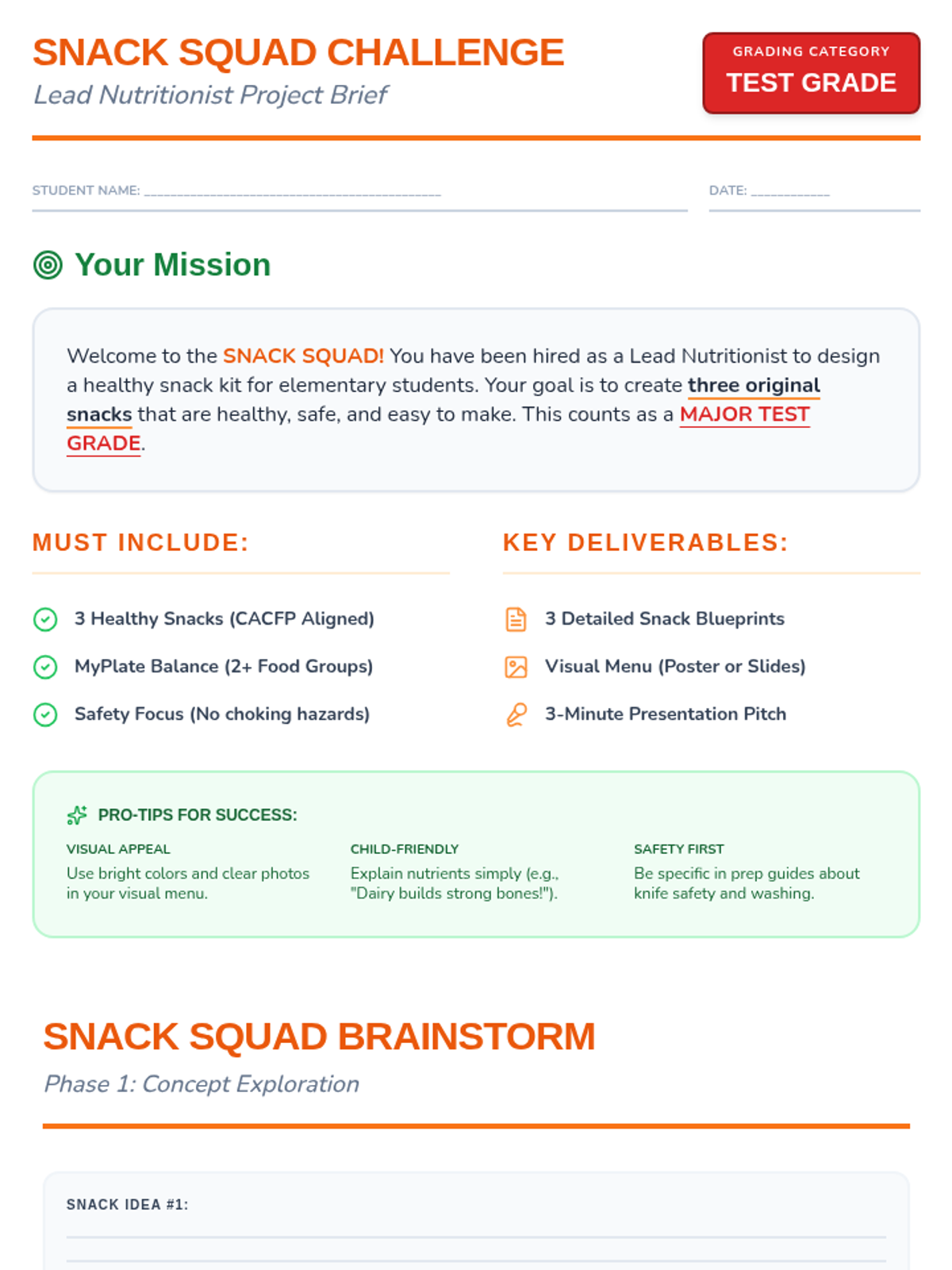
Students follow a visual recipe to create no-bake energy bites, focusing on sequencing, measuring, and independent living skills.
Students learn the essential rules of kitchen safety and identify common measuring tools and kitchen equipment.
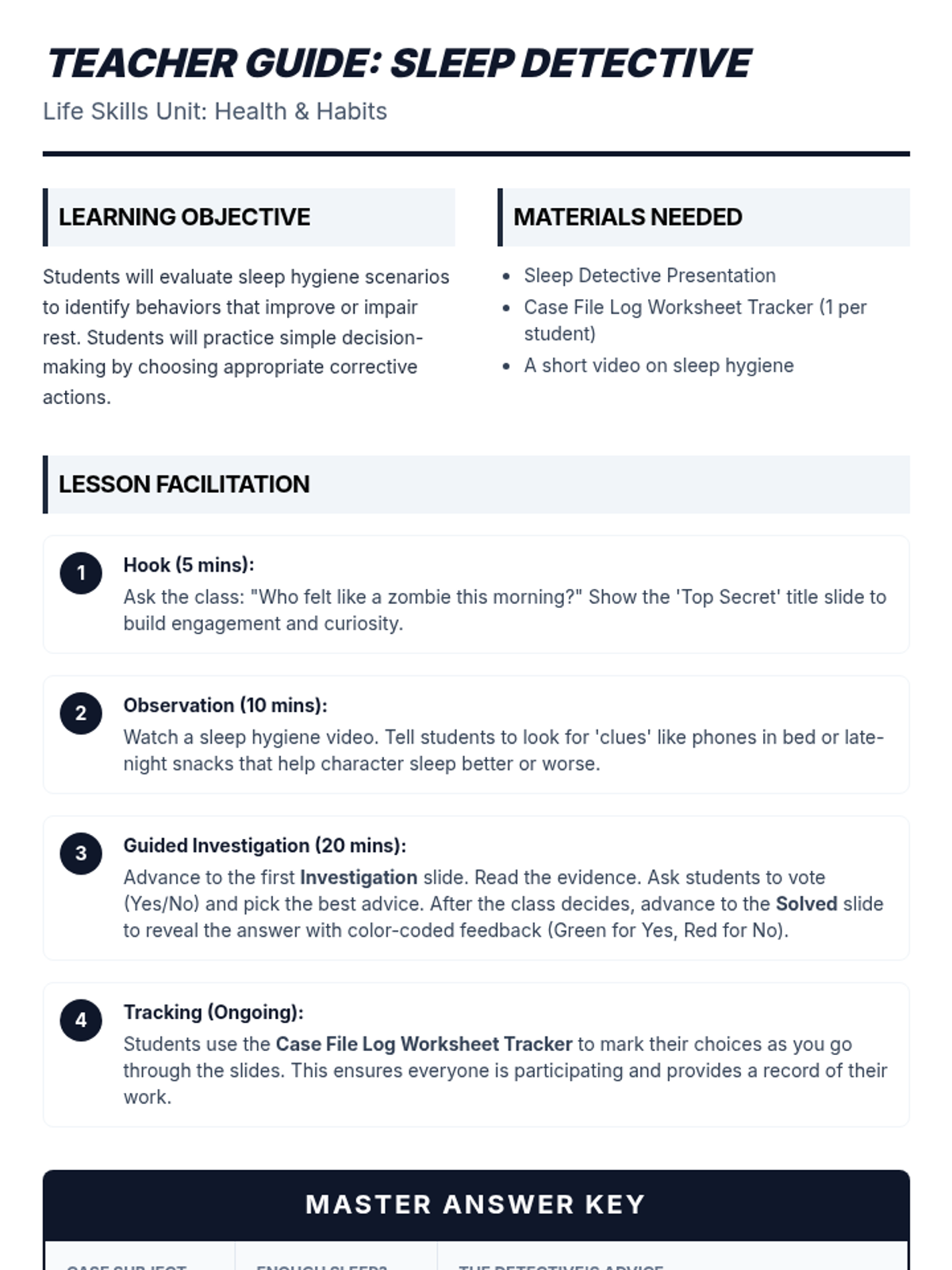
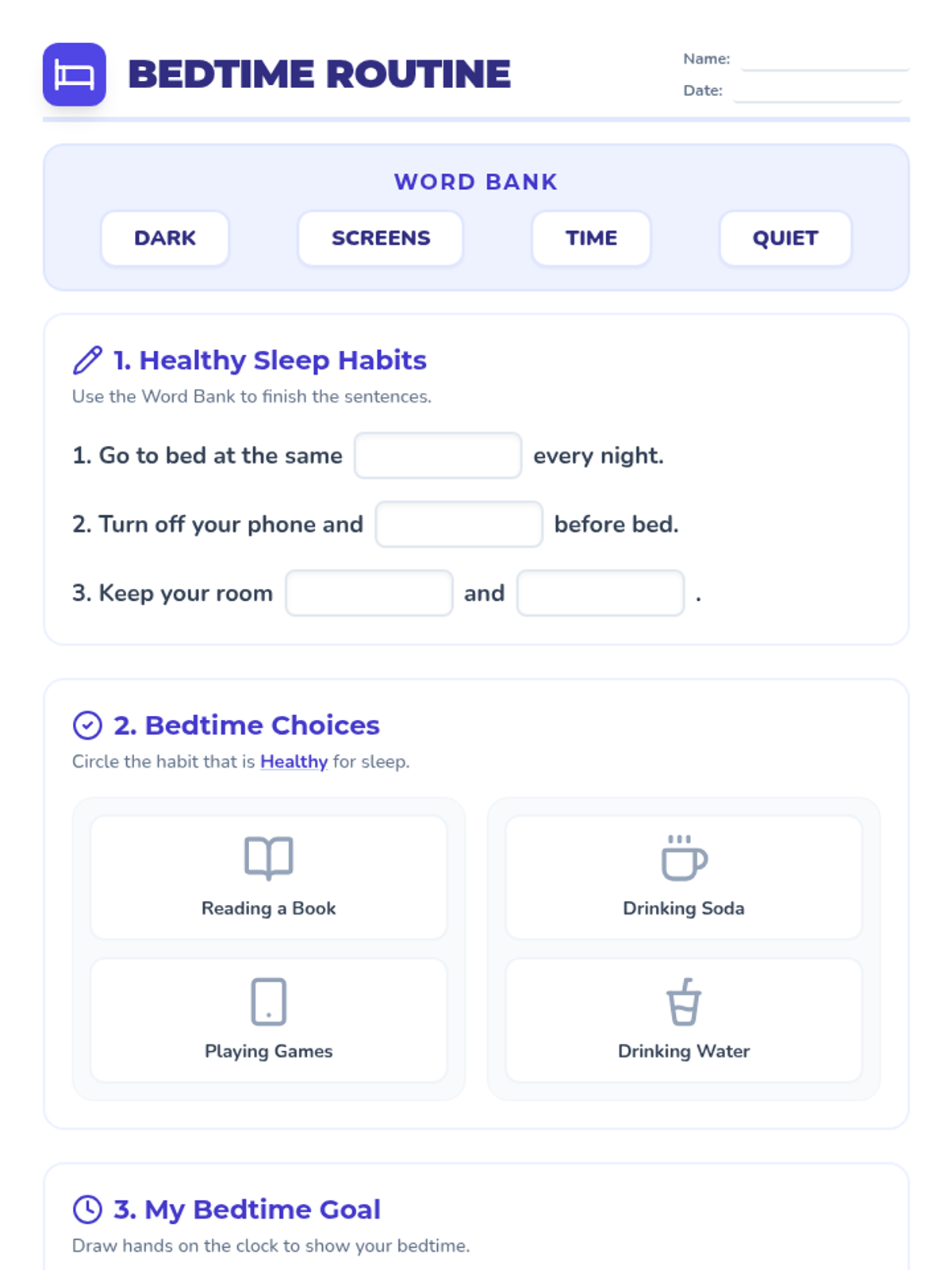
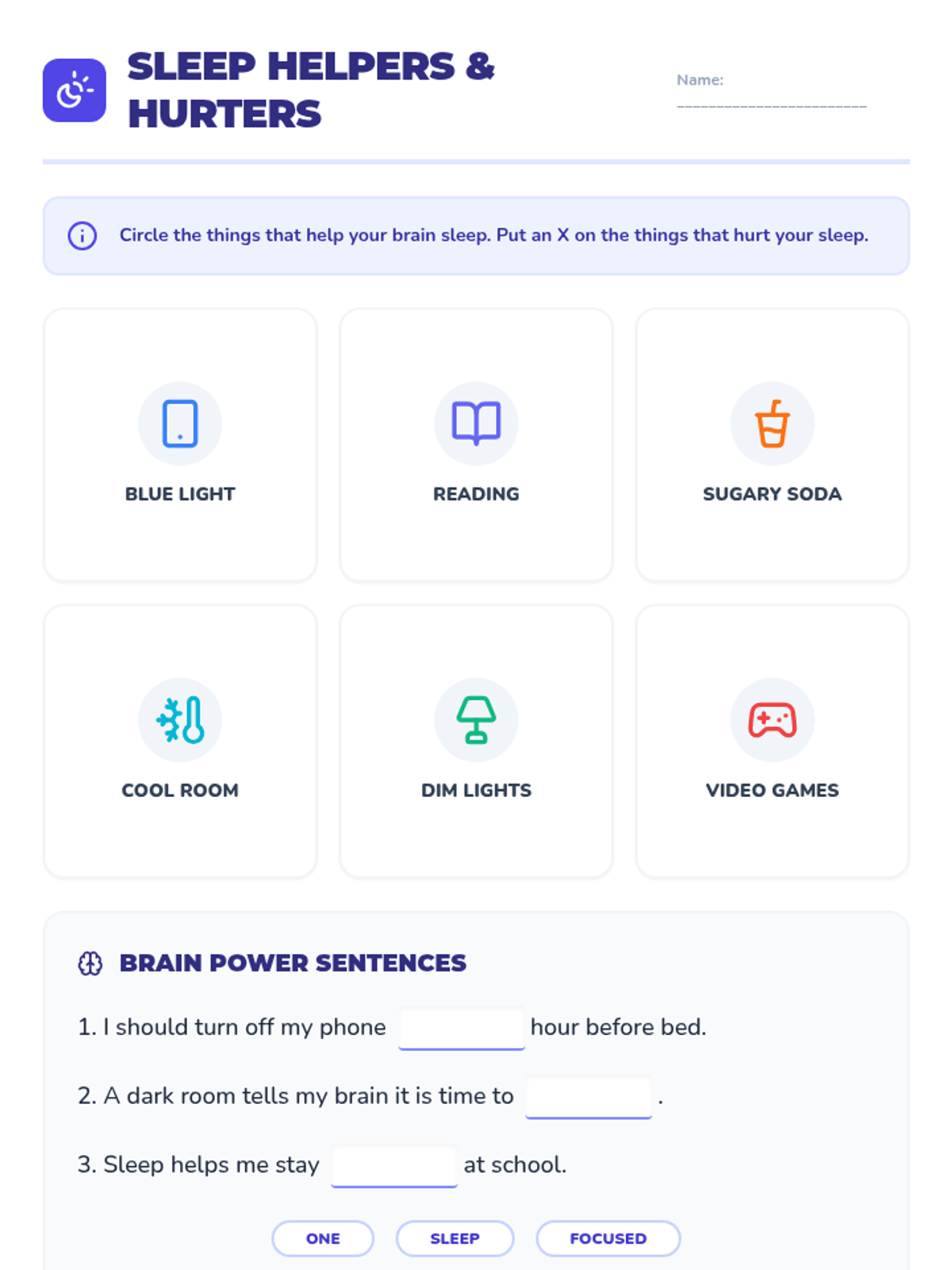
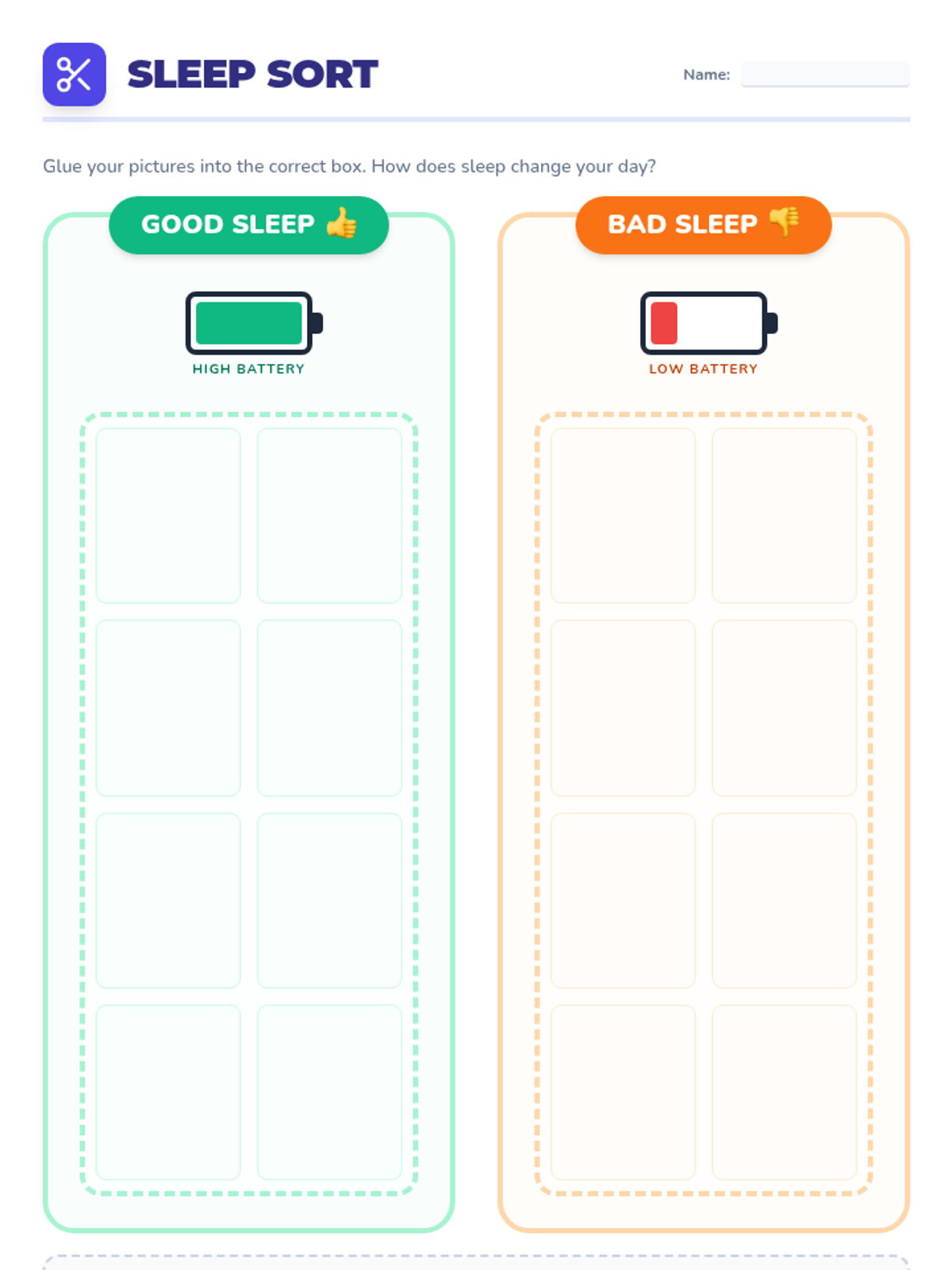
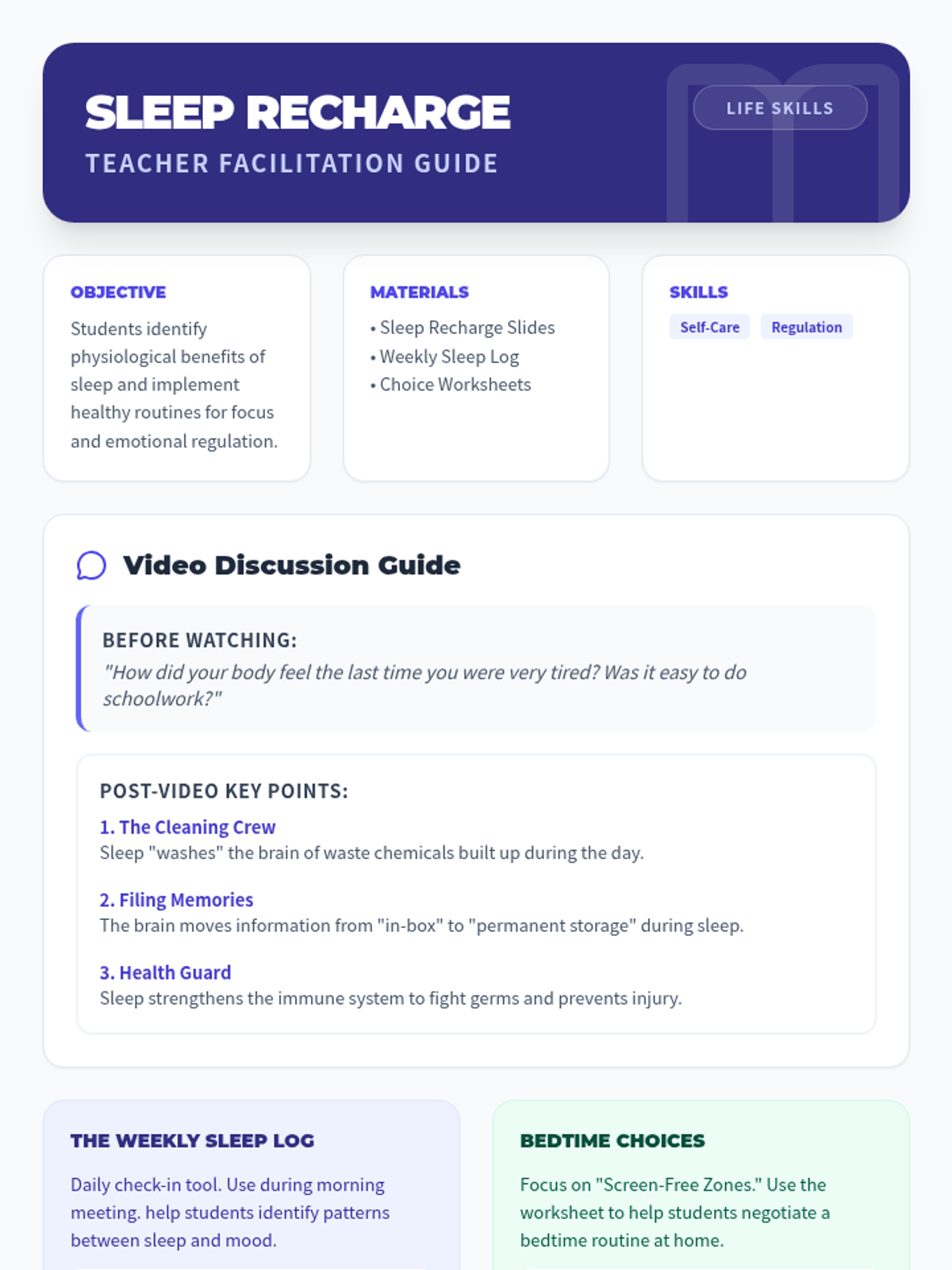
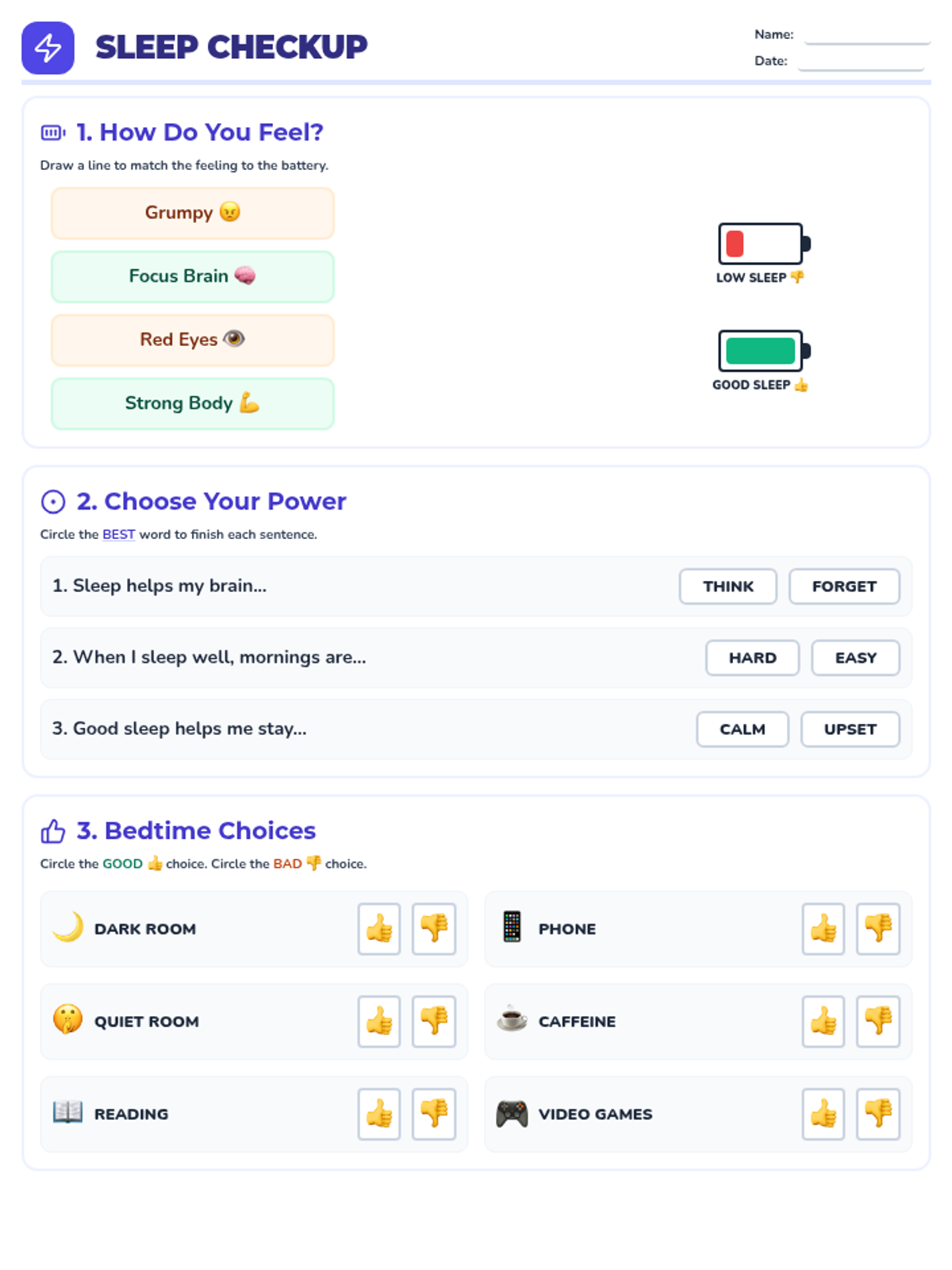
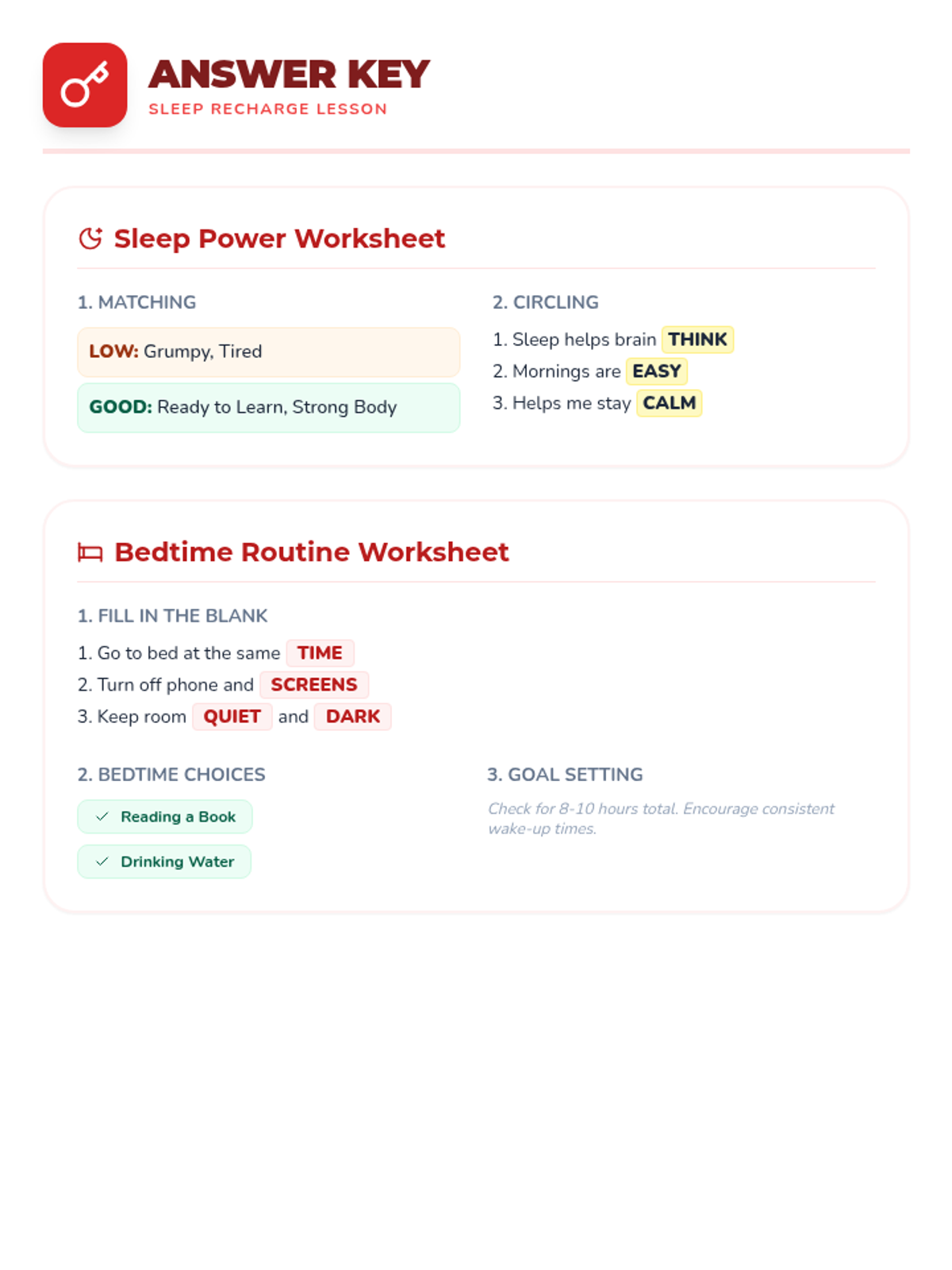
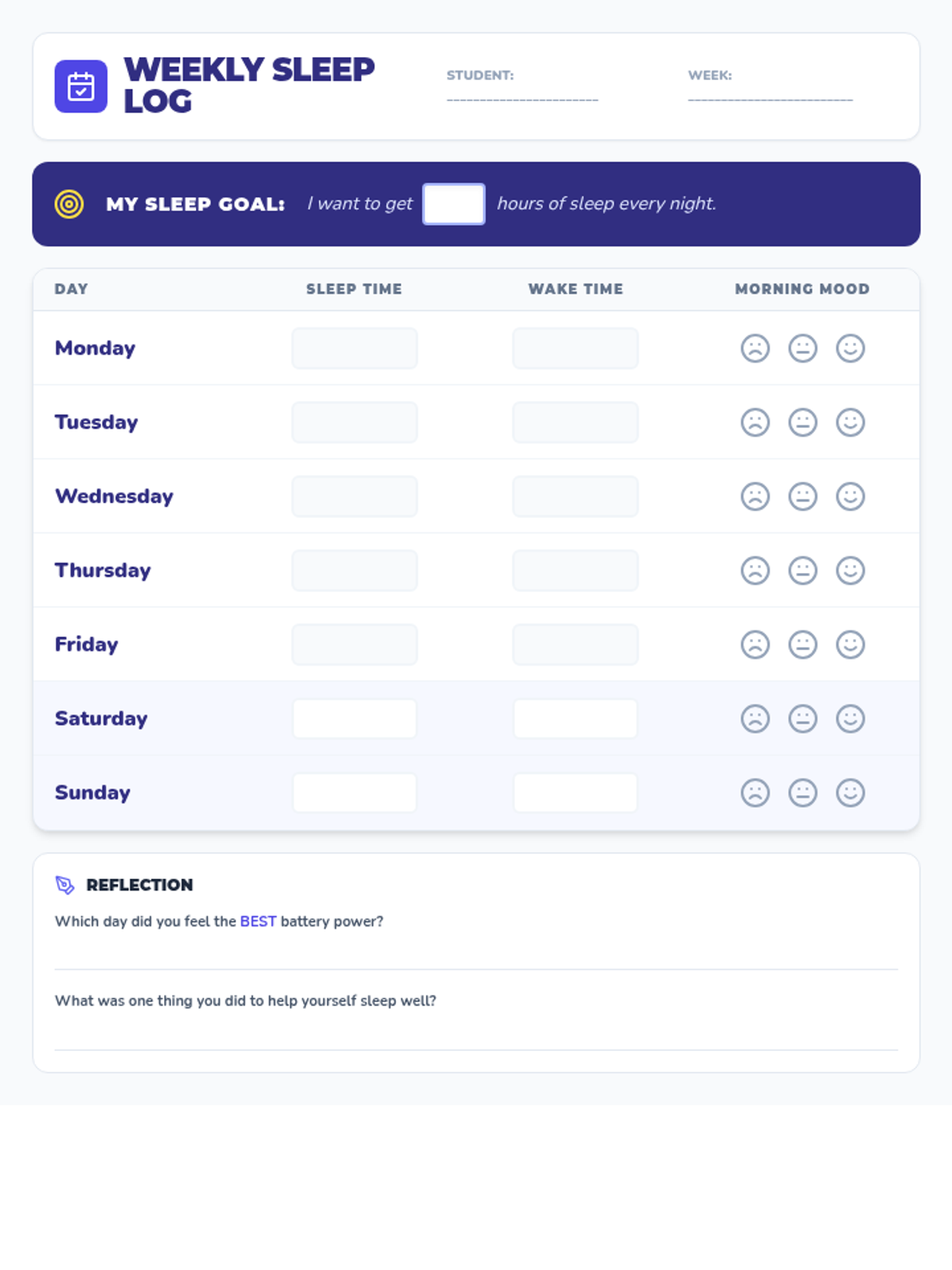
This lesson explores the biological necessity of sleep, the stages of the sleep cycle, and how rest impacts cognitive function and emotional regulation. Students will analyze their own sleep hygiene and develop a 'bedtime blueprint' to improve their quality of rest.
This lesson transforms students into Sleep Scientists to explore the biological necessity of rest. Students will learn about the four stages of sleep, the brain's "cleaning" process during the night, and the direct link between sleep hygiene and emotional/cognitive performance. The lesson culminates in students designing a personalized 'Bedtime Blueprint' to optimize their own recovery.