This lesson introduces the three types of resources: natural, human, and capital. Students participate in a 'Product Deconstruction' workshop where they analyze everyday objects to identify the resources required to create them.
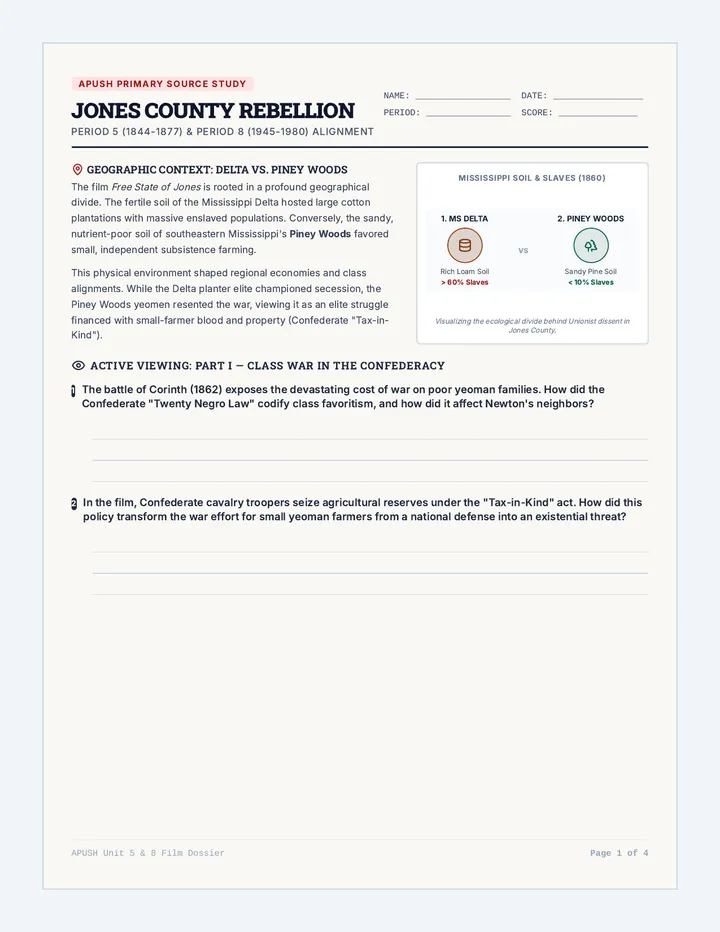
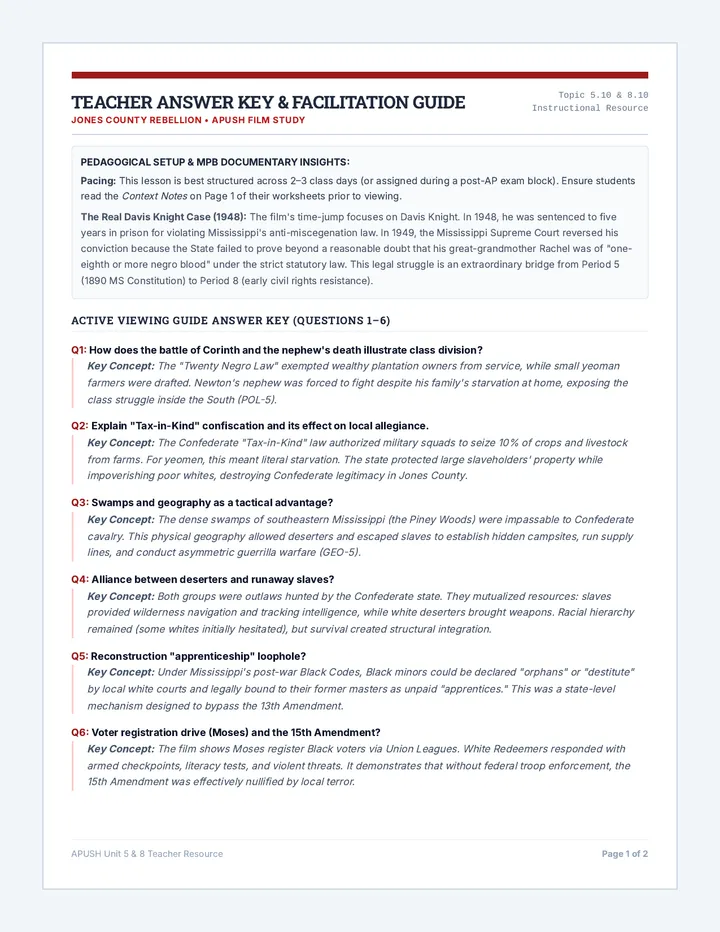
An AP U.S. History film study lesson on 'Free State of Jones' exploring Civil War dissent, Reconstruction failures (Period 5), and their long-term legacy in 20th-century Jim Crow courts (Period 8).
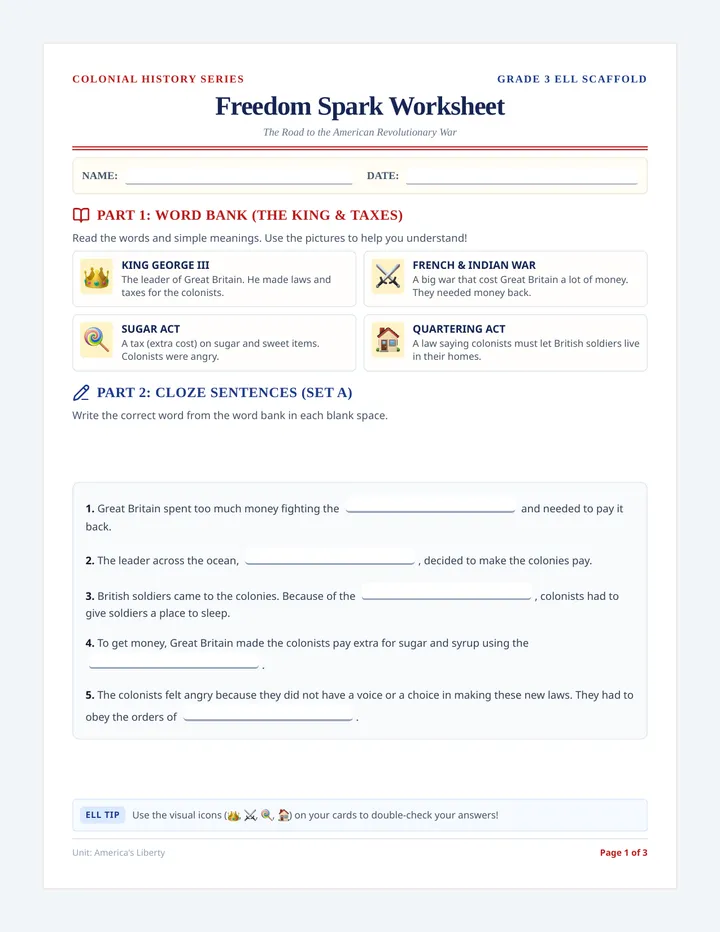
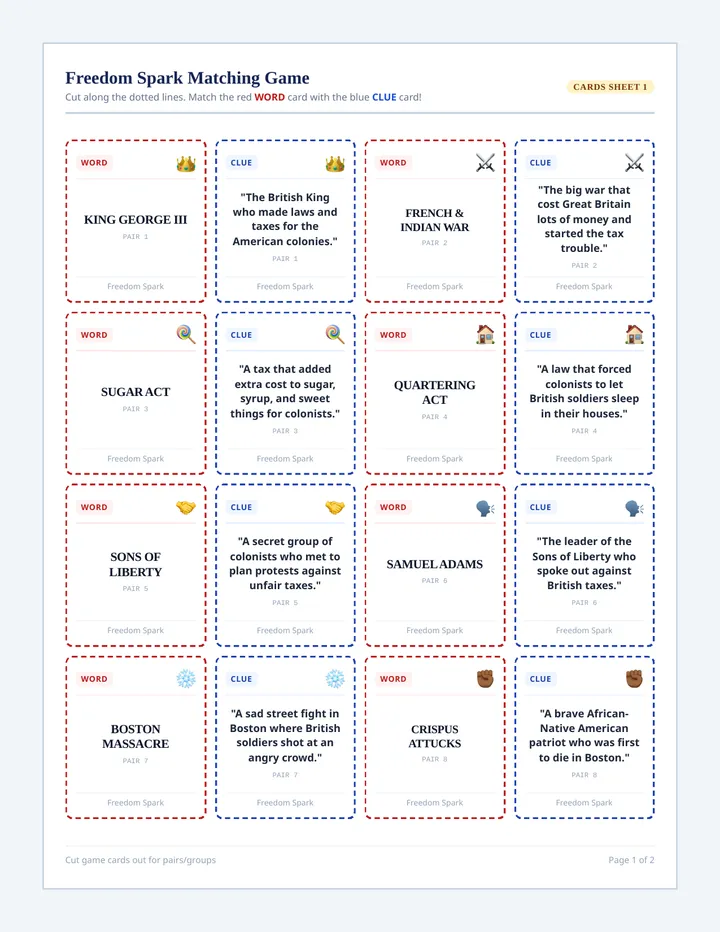
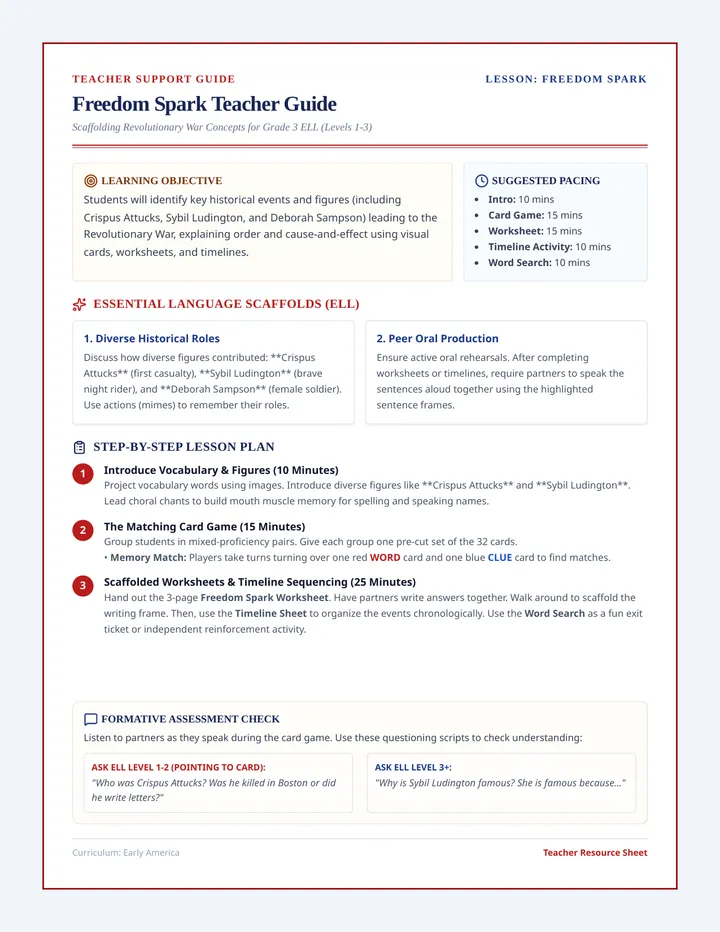
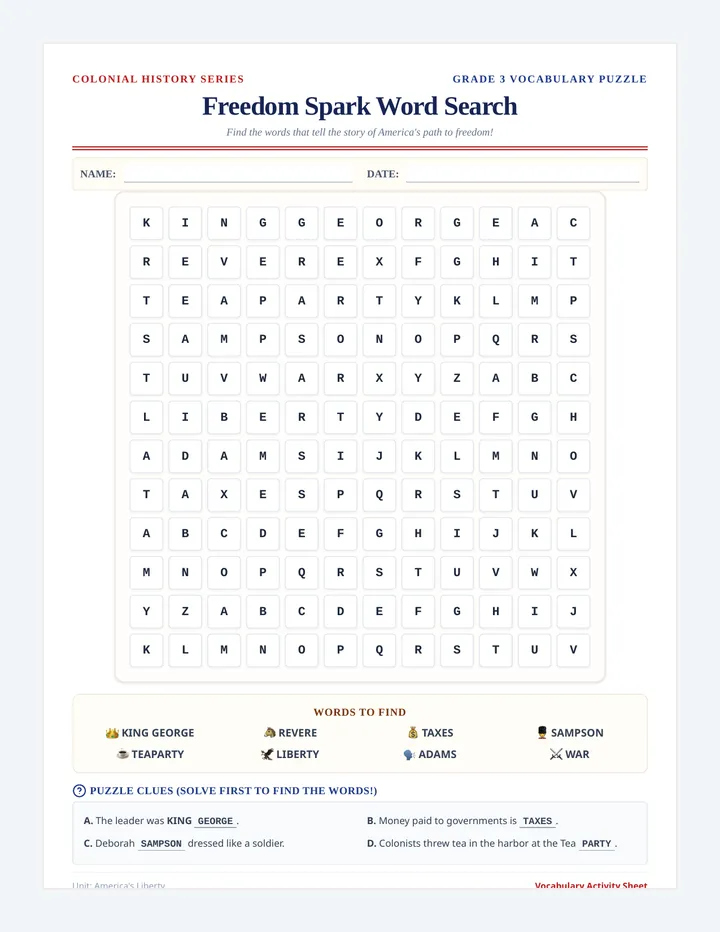
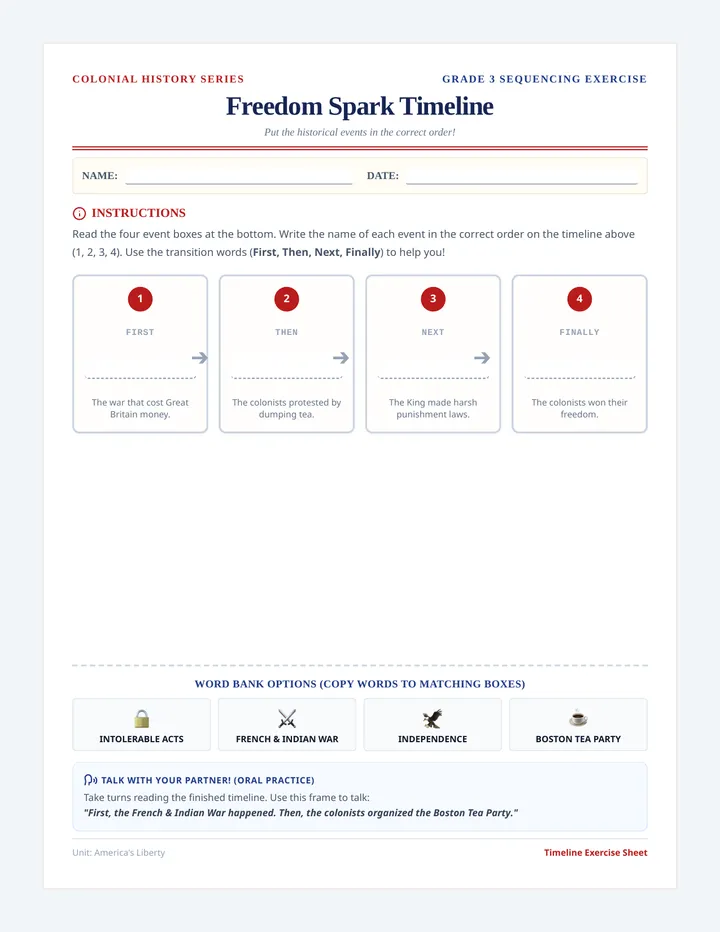
An introductory history lesson on the key events leading to the American Revolutionary War, designed specifically for third-grade English Language Learners (ELL). It includes a visual vocabulary cloze worksheet, interactive matching cards for learning events, and a comprehensive facilitation guide for teachers.
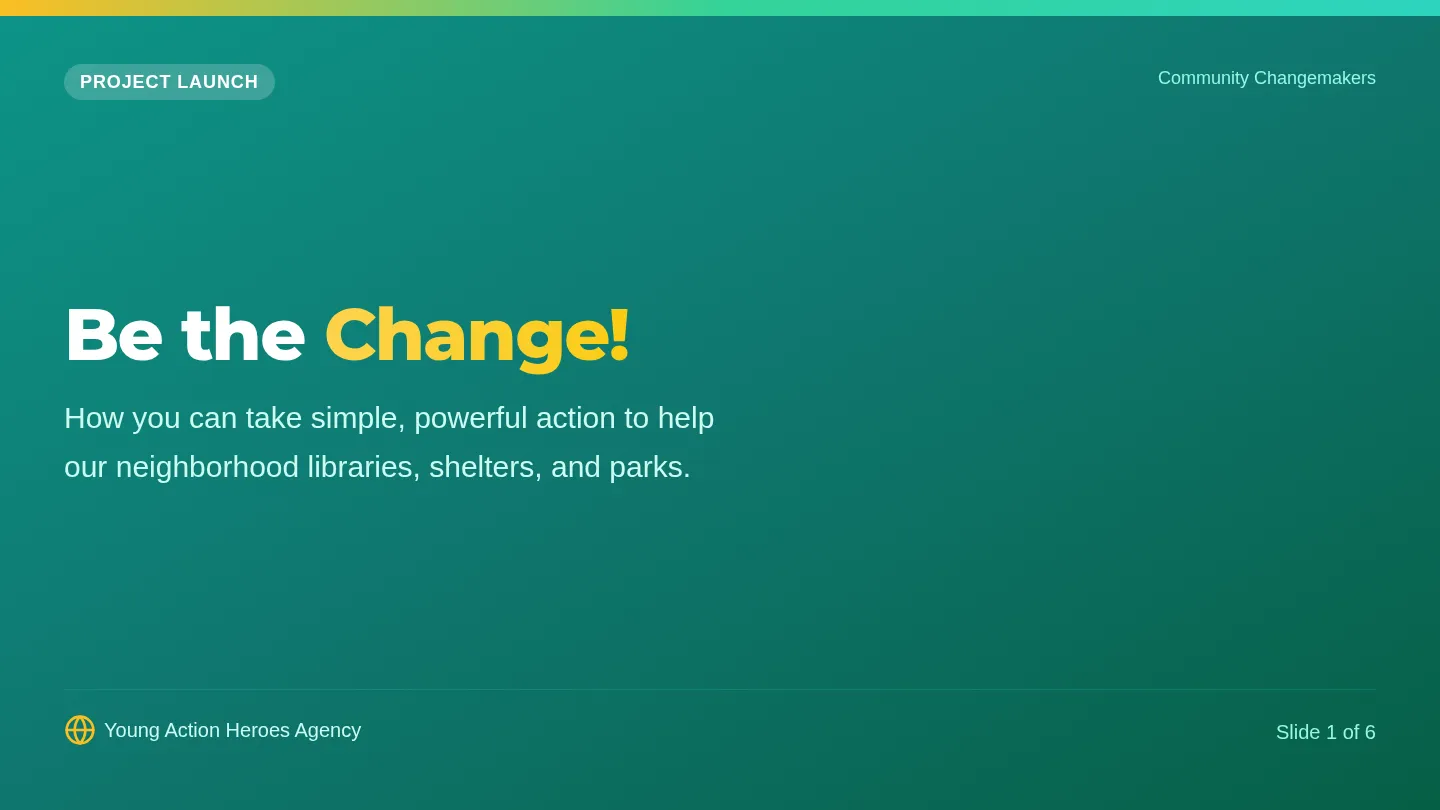
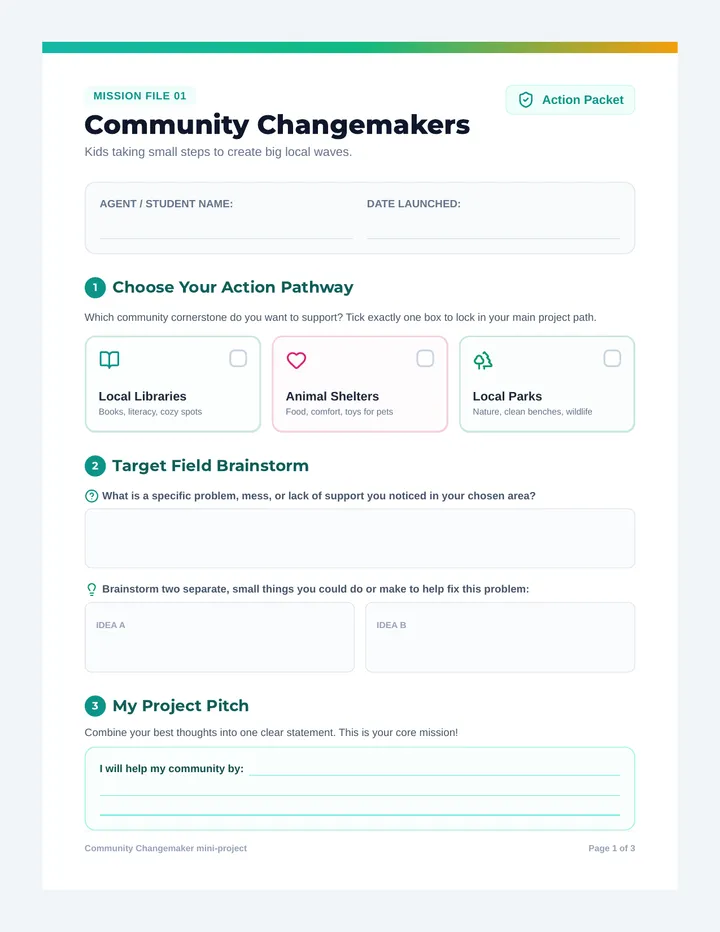
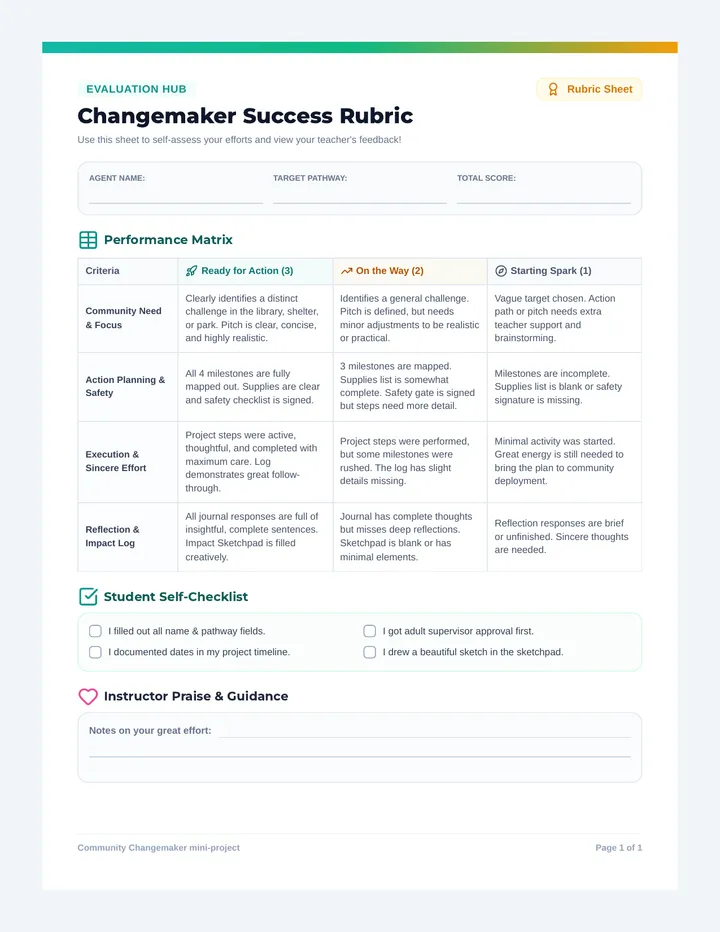
A mini-project curriculum designed to empower young students to become local community changemakers. It guides them through brainstorming, planning, and executing simple, impactful action projects for local libraries, animal shelters, or parks.
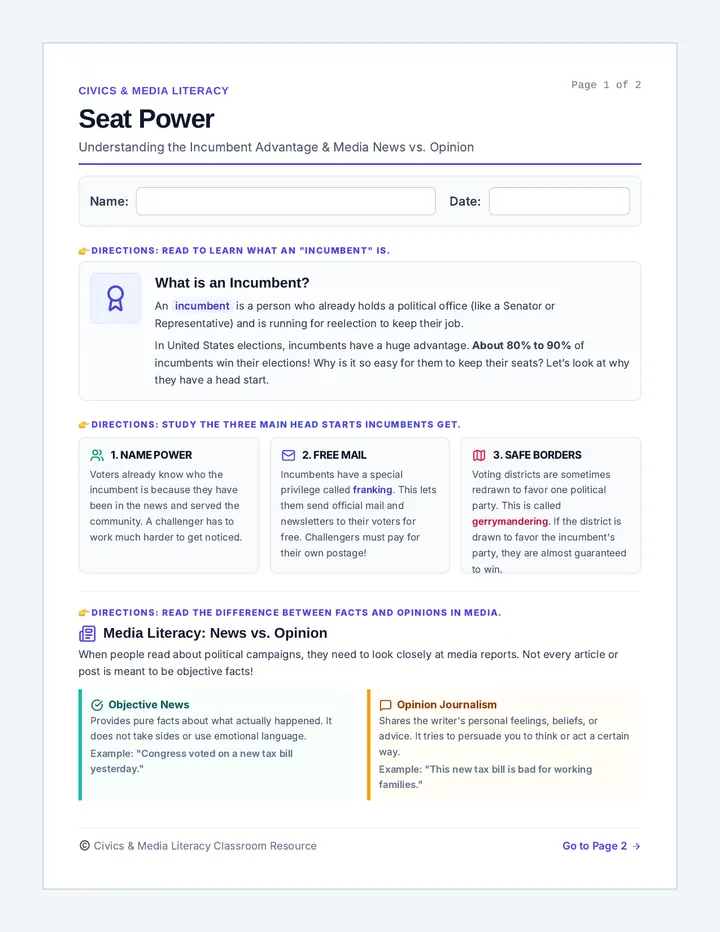
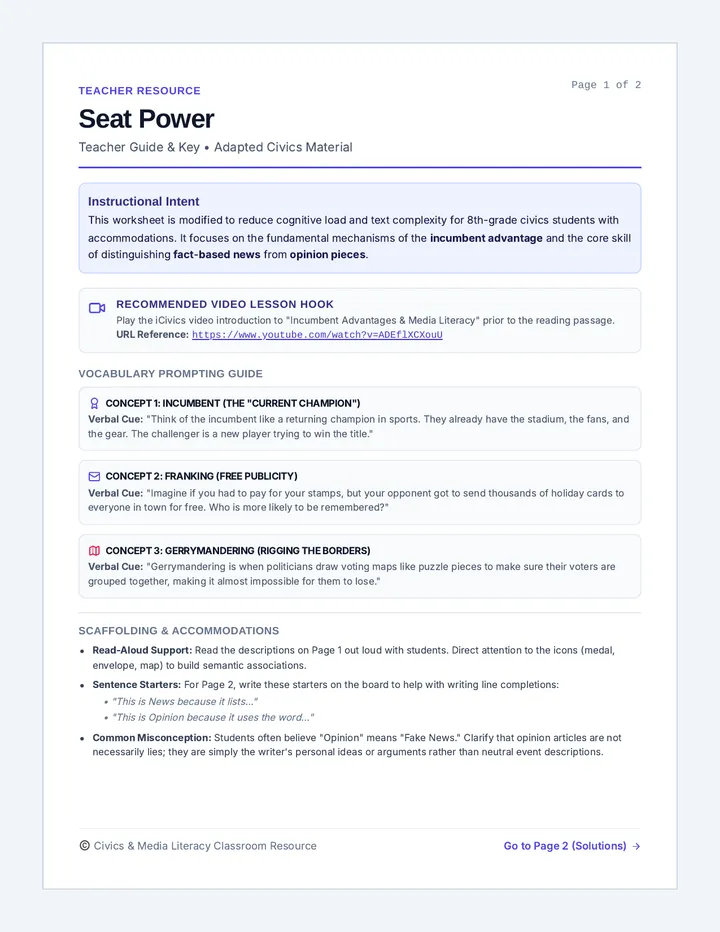
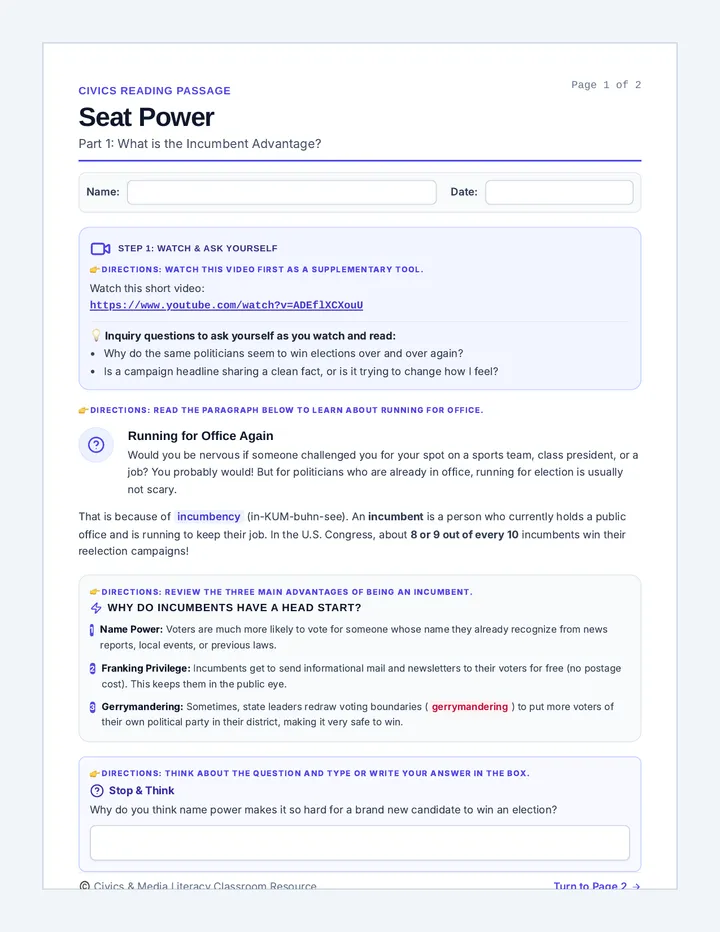
A foundational civics lesson on incumbency, electoral advantages, and media literacy. Students explore why current politicians usually win reelection and learn to distinguish between objective news reports and opinion articles.
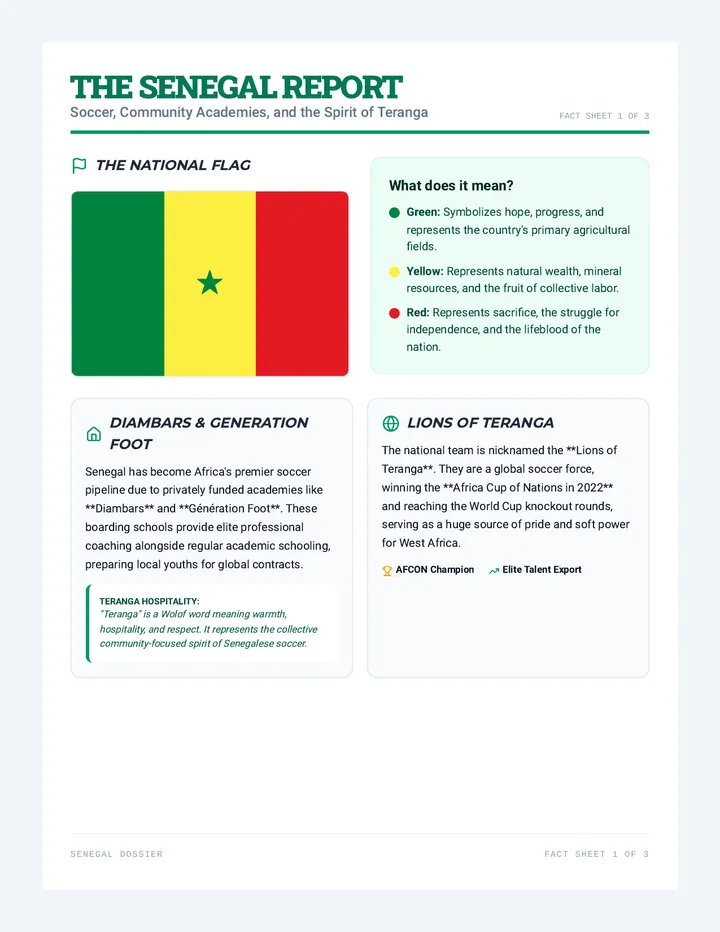
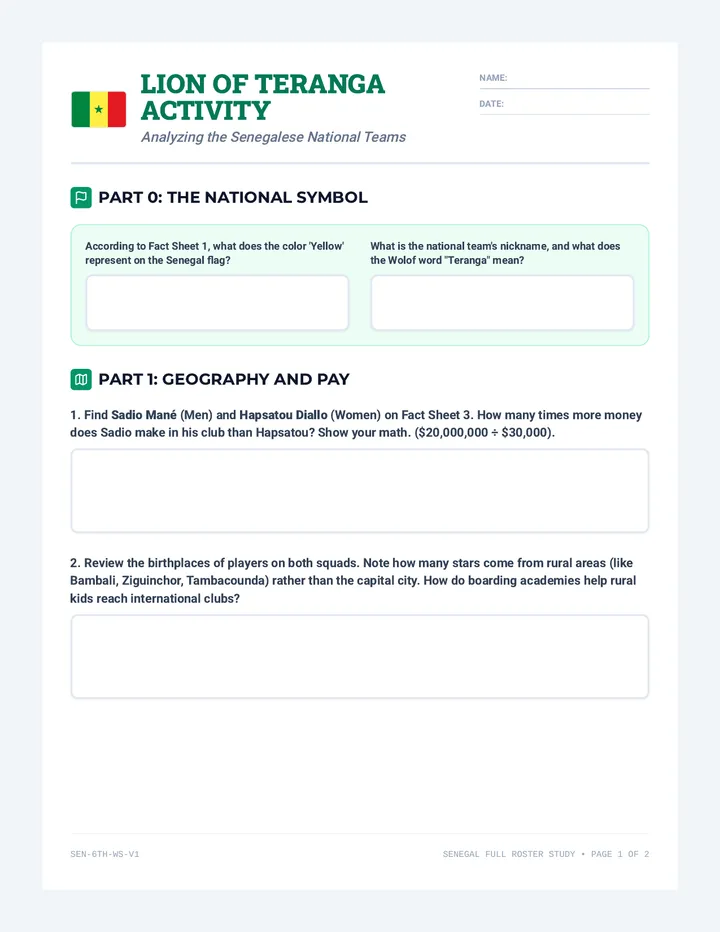
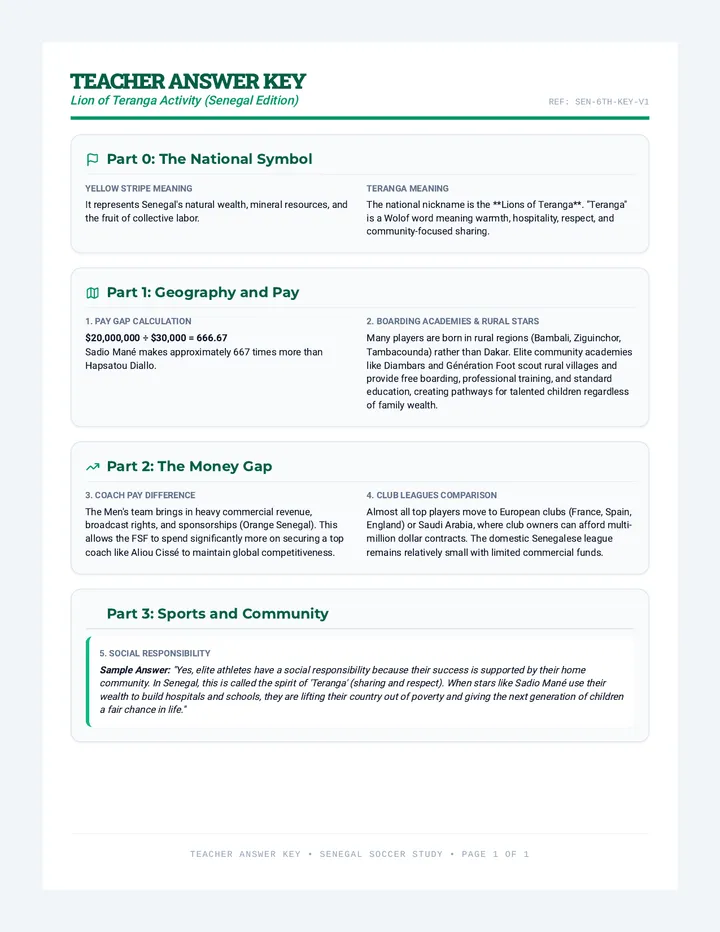
An investigation of Senegal's national soccer program (Lions of Teranga), French-African economic ties, and community soccer academies.
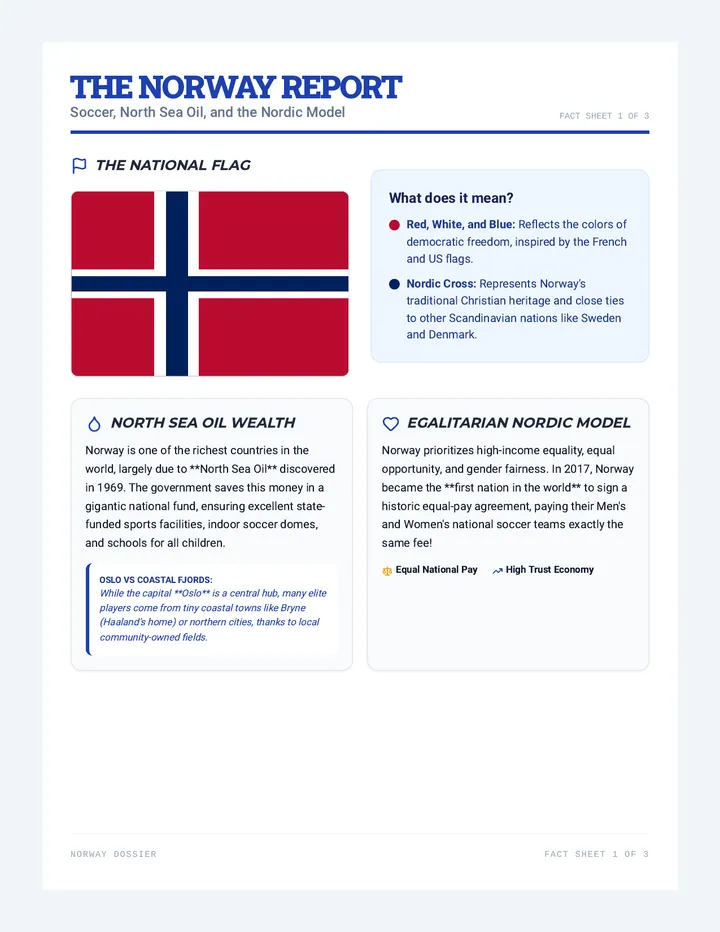
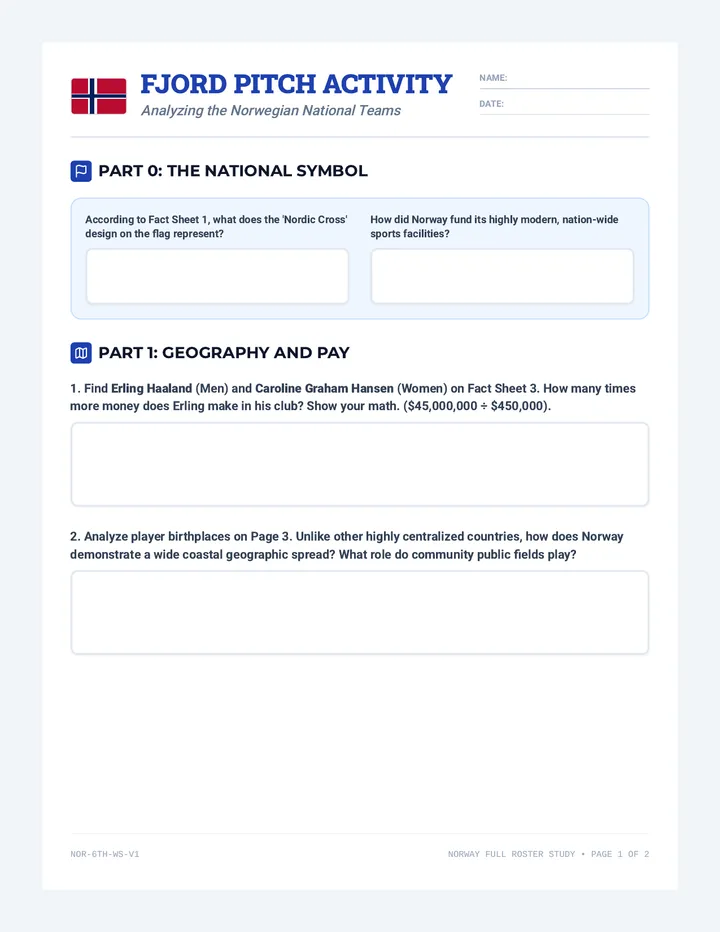
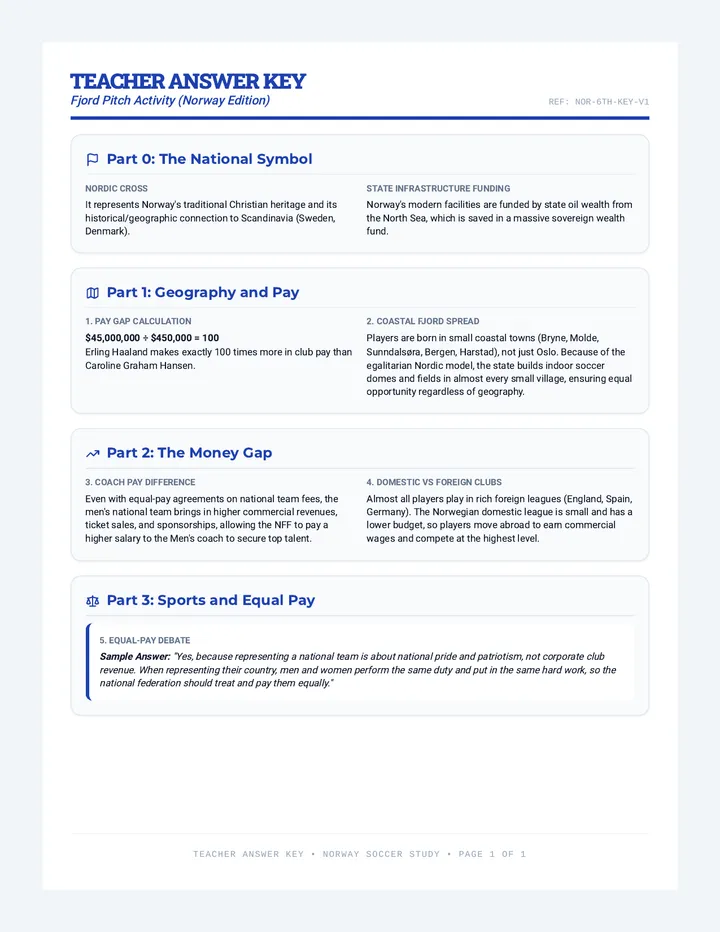
An exploration of Norway's soccer renaissance, wealth from North Sea oil, and its high-income equality model in professional sports.
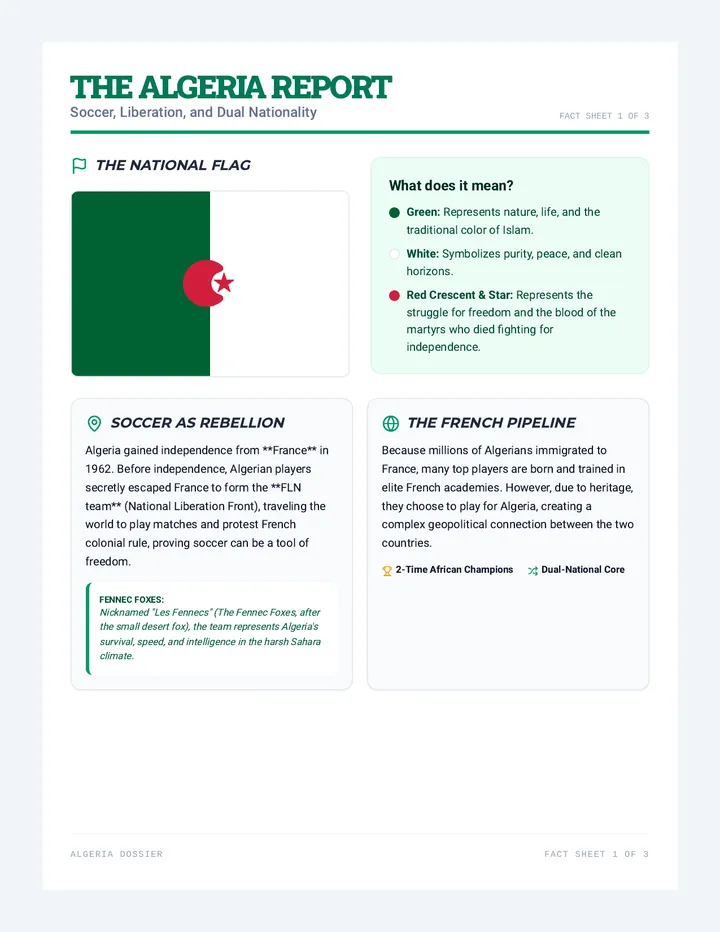
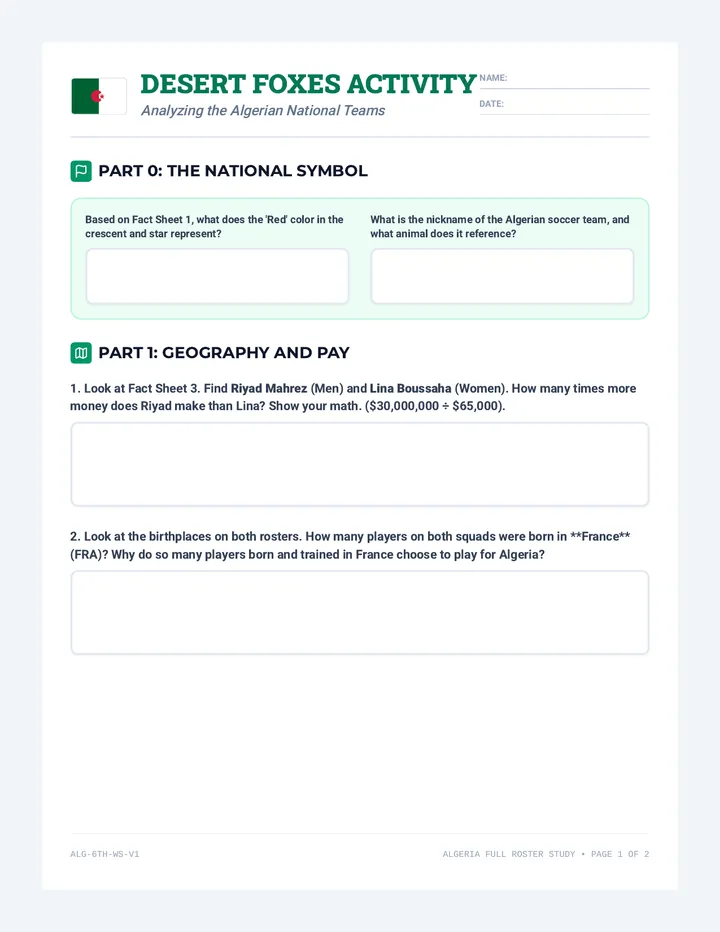
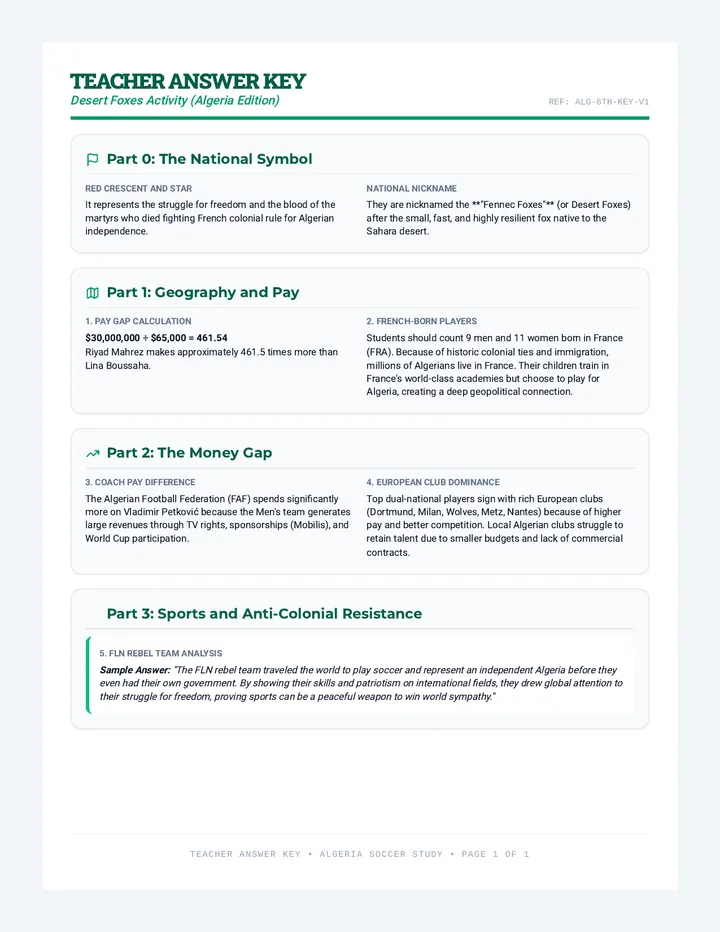
An investigation of Algerian soccer (Fennec Foxes), the geopolitics of French-Algerian dual citizenship, and soccer as a historic symbol of anti-colonial resistance.
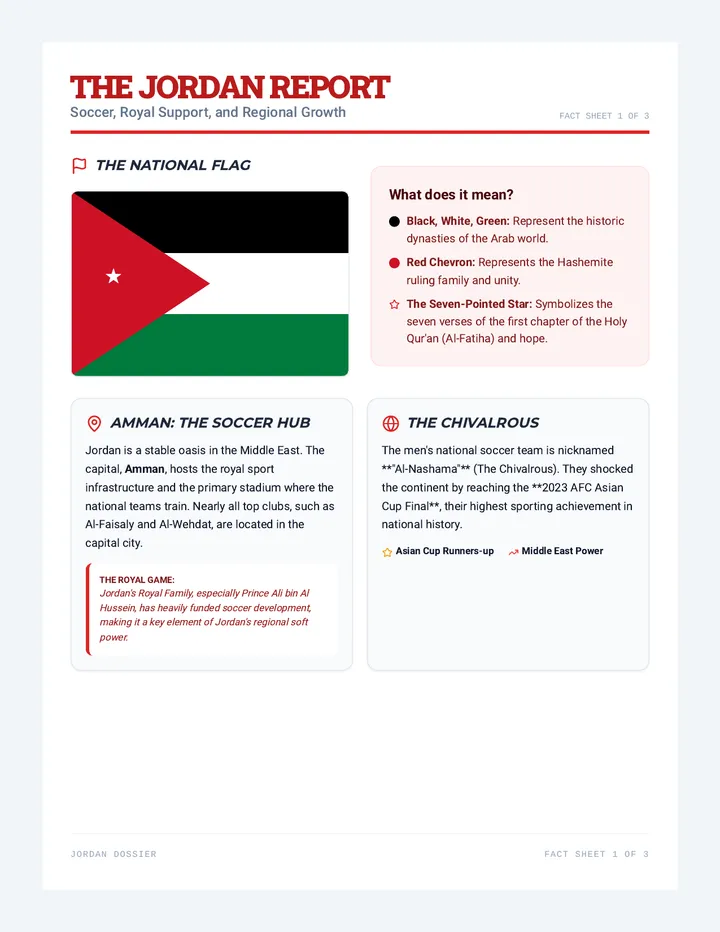
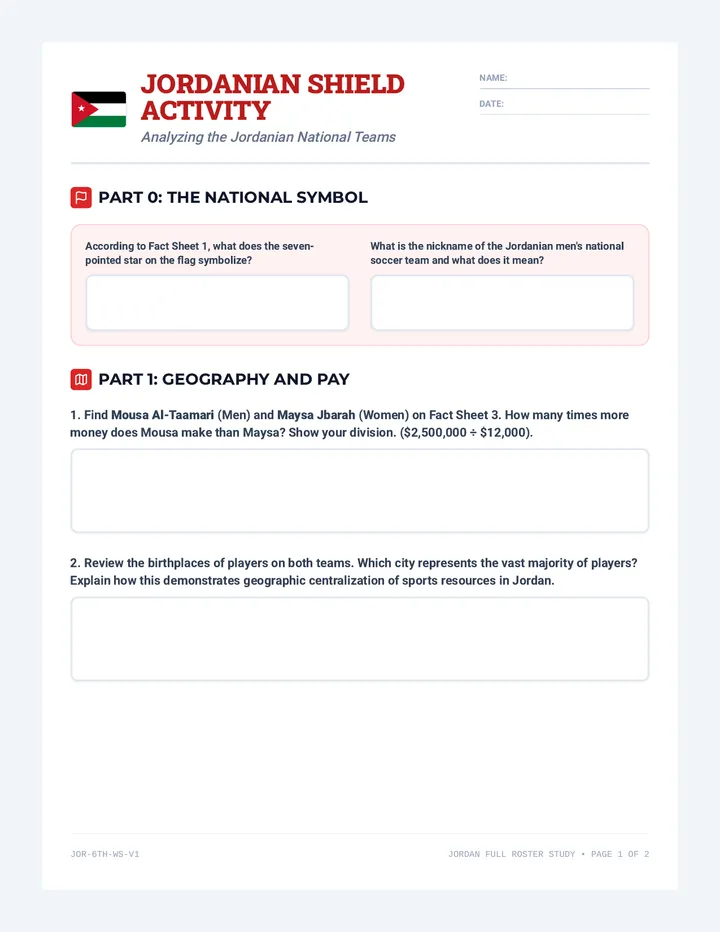
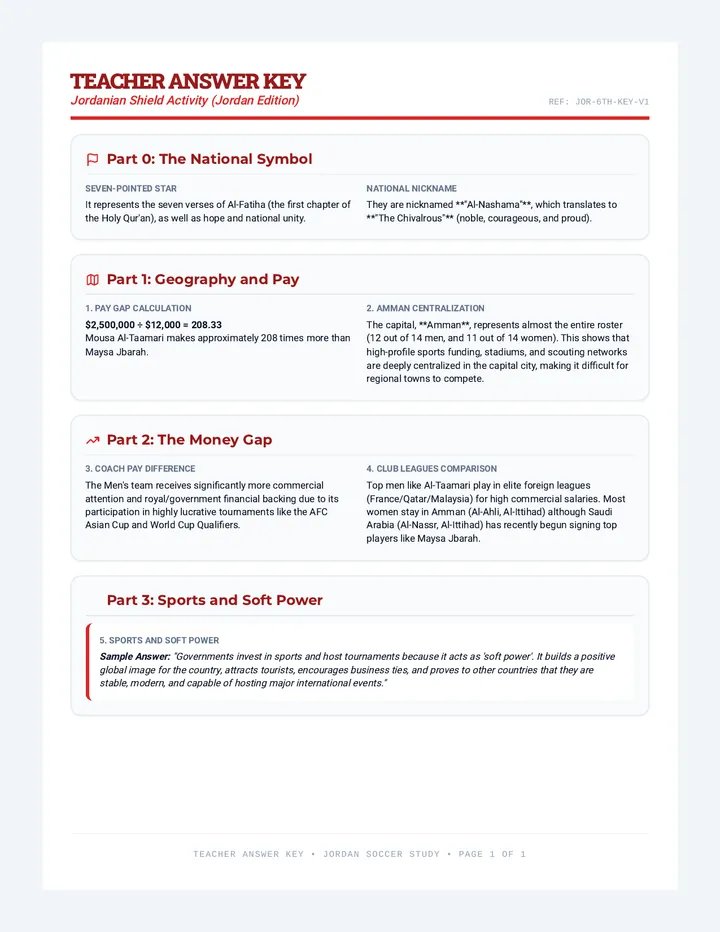
An exploration of Jordan's rise in Asian soccer, regional development, and the geopolitical role of sports infrastructure in the Middle East.
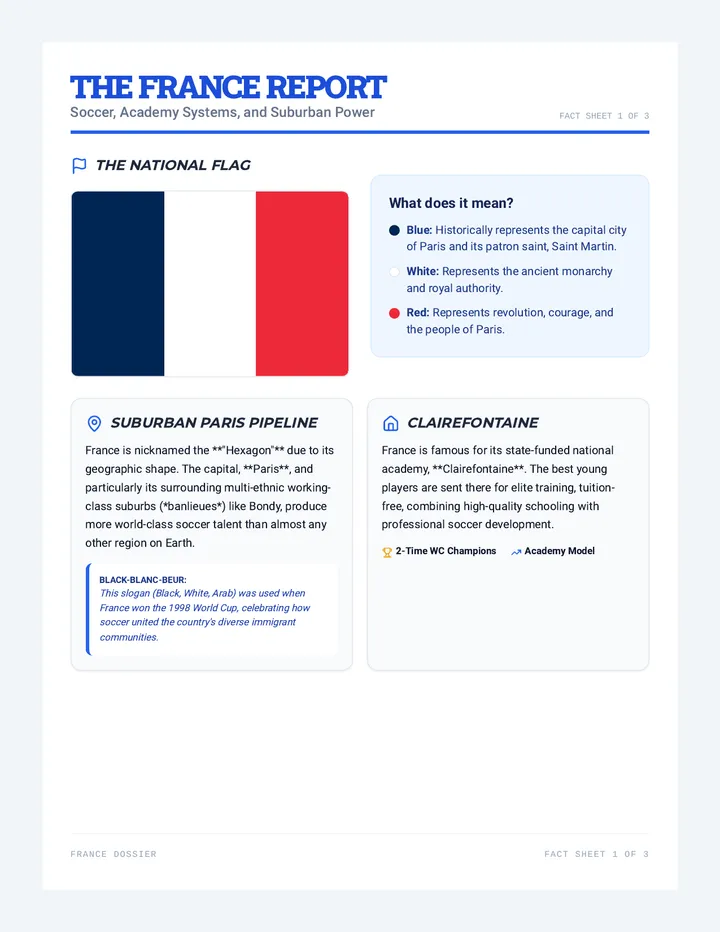
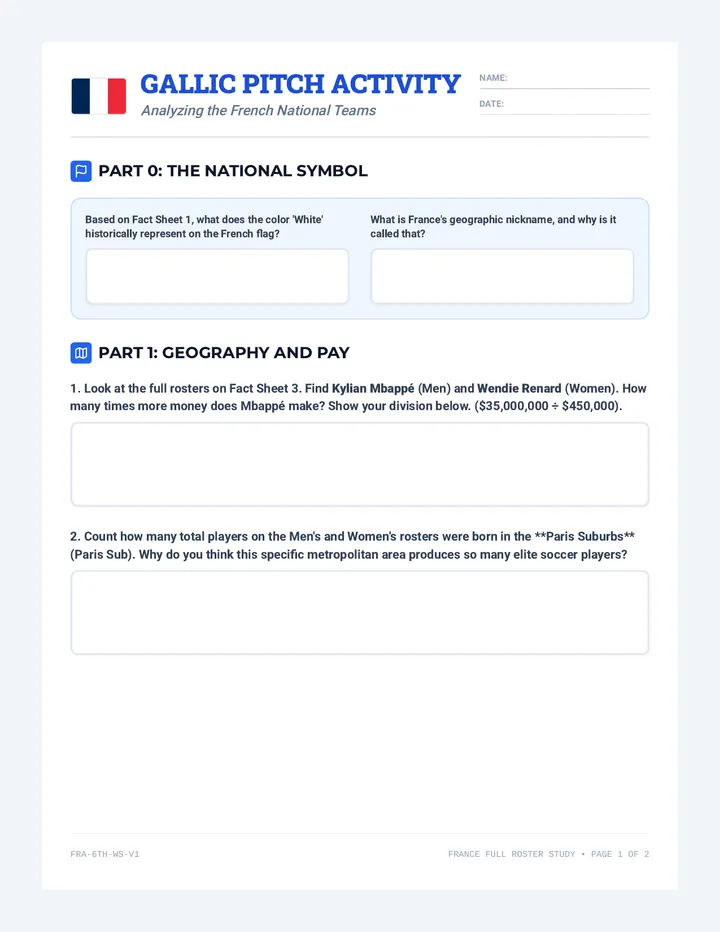
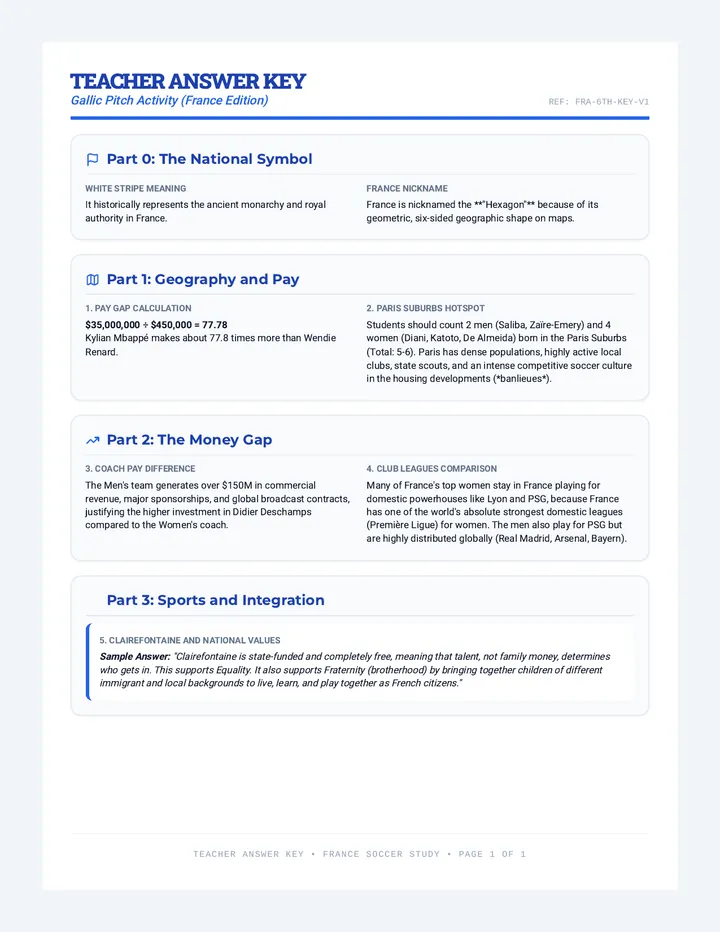
An investigation of France's elite soccer academies, the economics of Ligue 1, and the geopolitics of suburban Paris soccer.
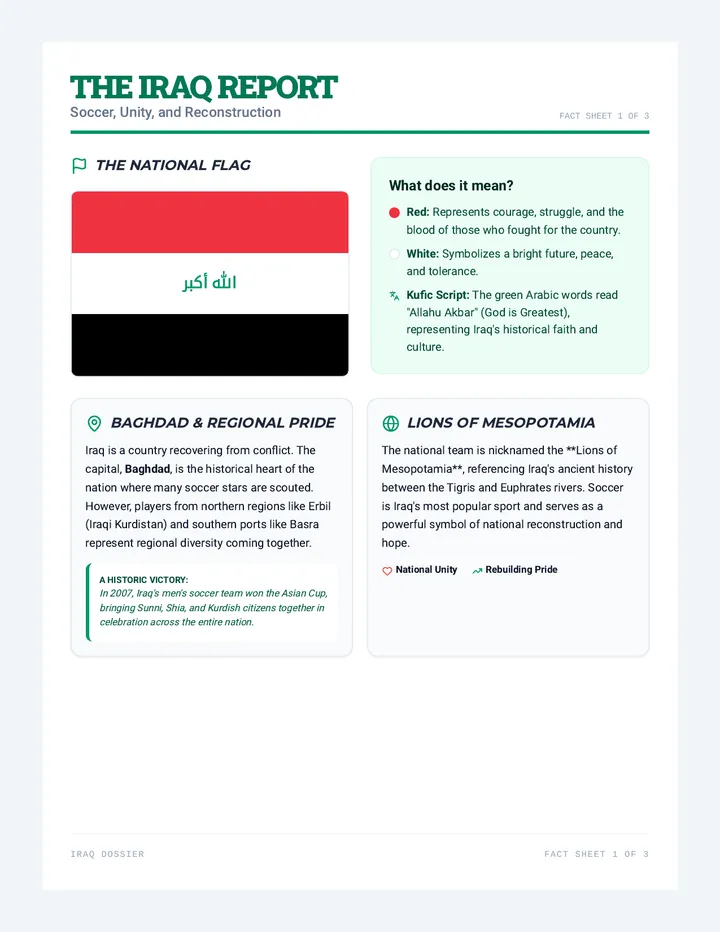
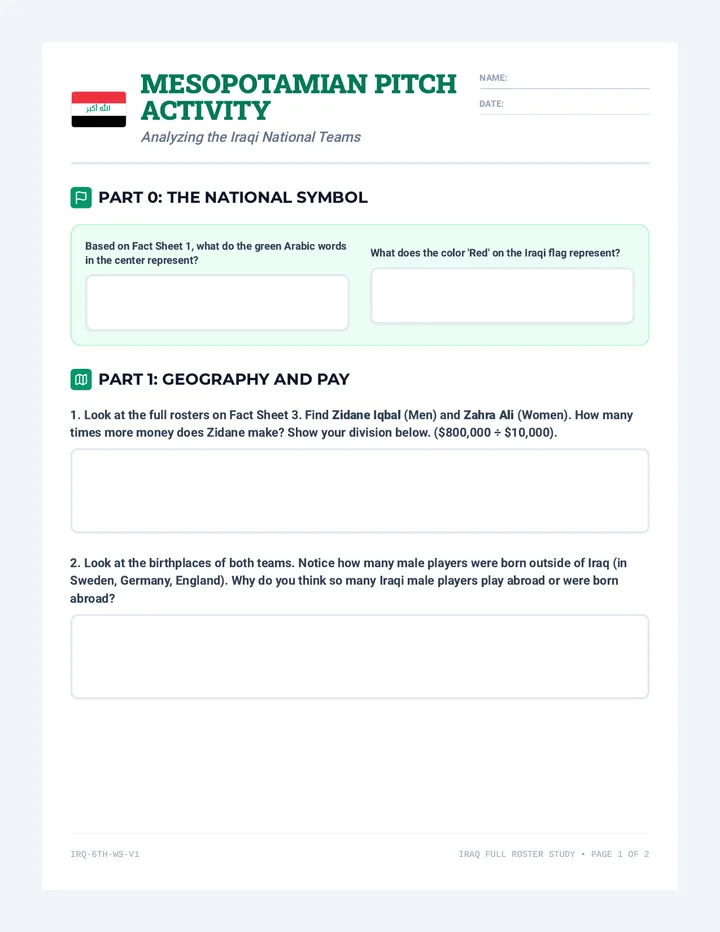
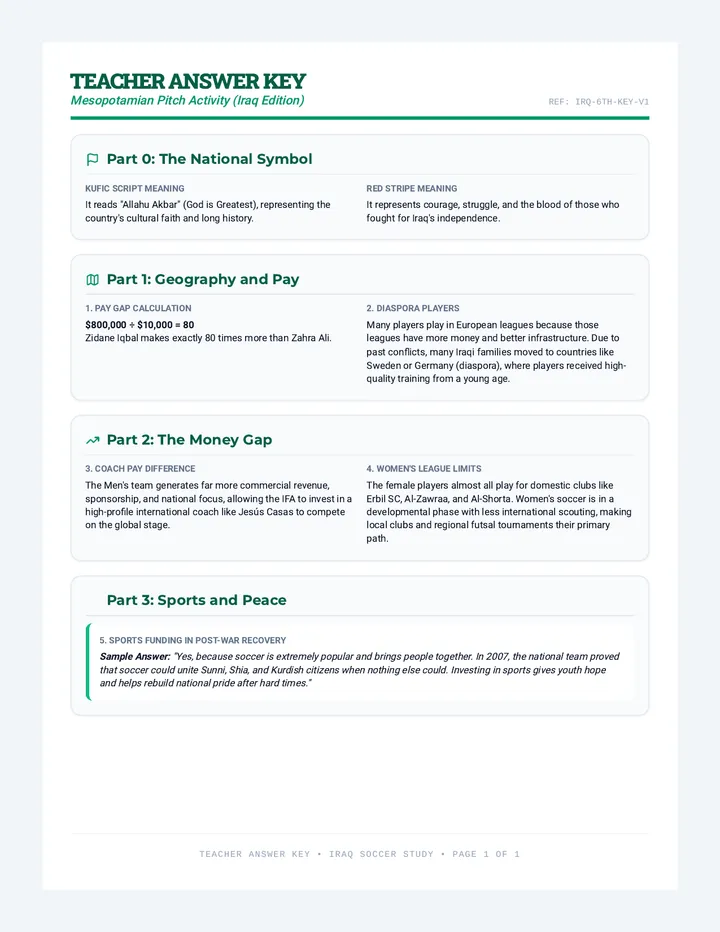
An exploration of soccer, national identity, and post-war reconstruction in Iraq, analyzing the Lions of Mesopotamia national soccer program.
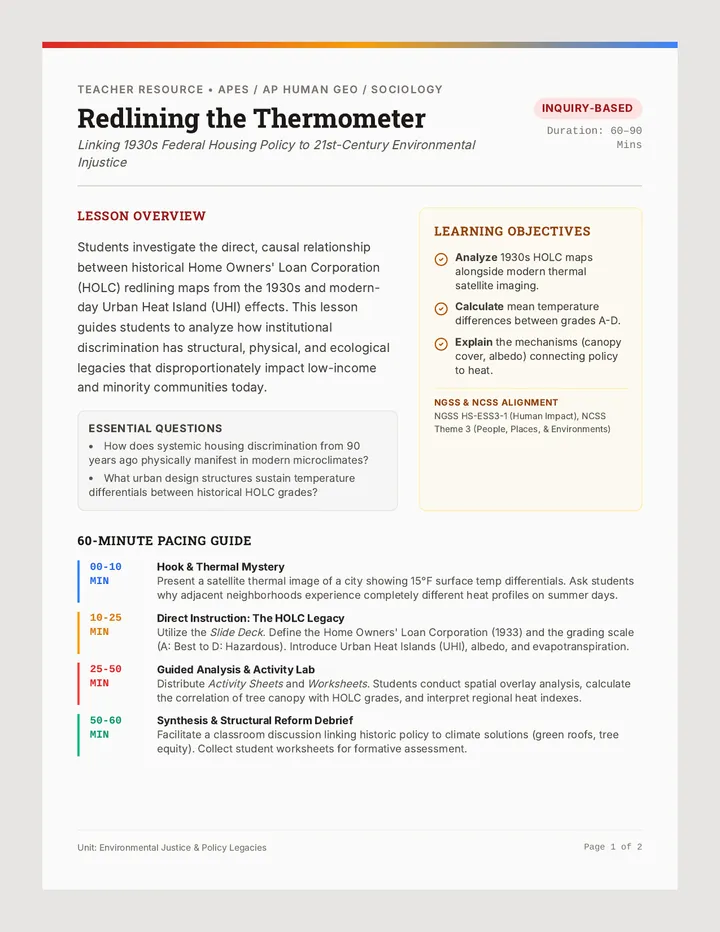
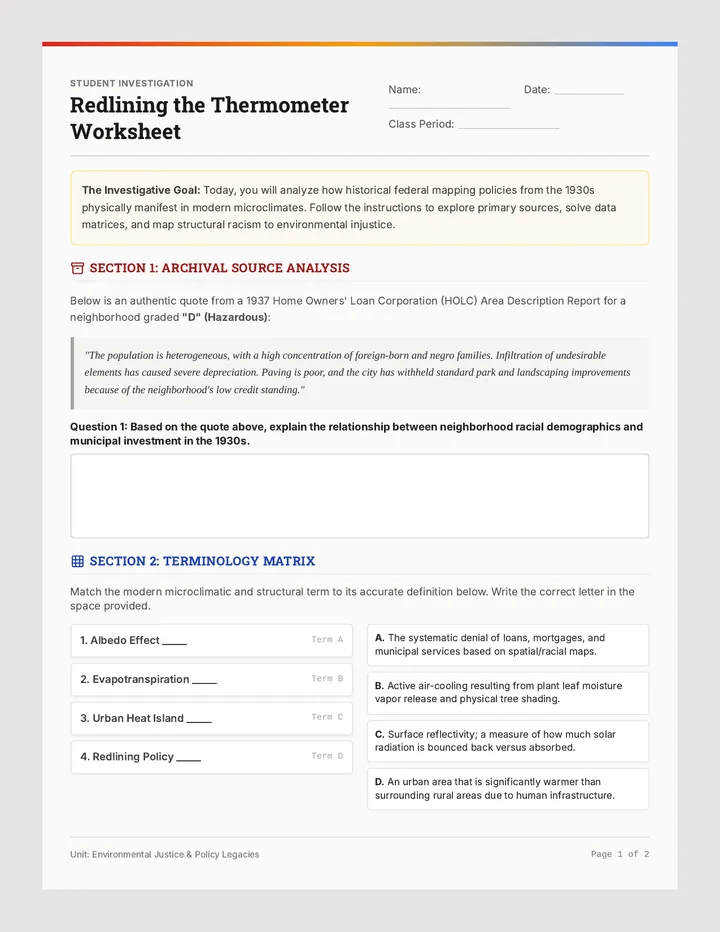
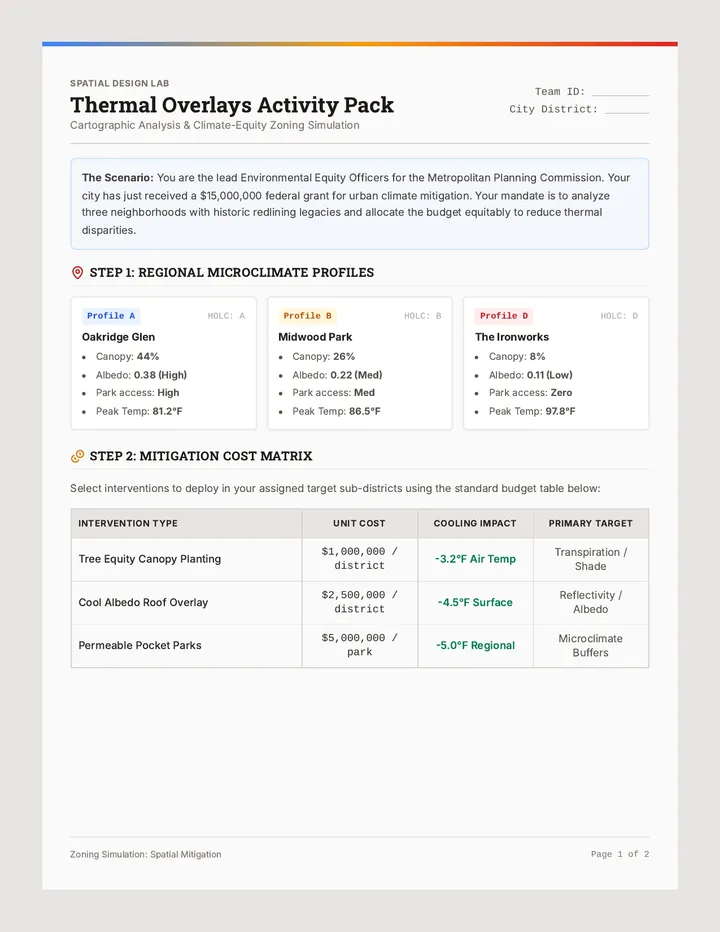
An advanced, interdisciplinary lesson for high school and undergraduate students exploring the causal relationship between 1930s Home Owners' Loan Corporation (HOLC) redlining maps and modern-day urban heat island (UHI) effects, analyzing systemic racism and environmental injustice.
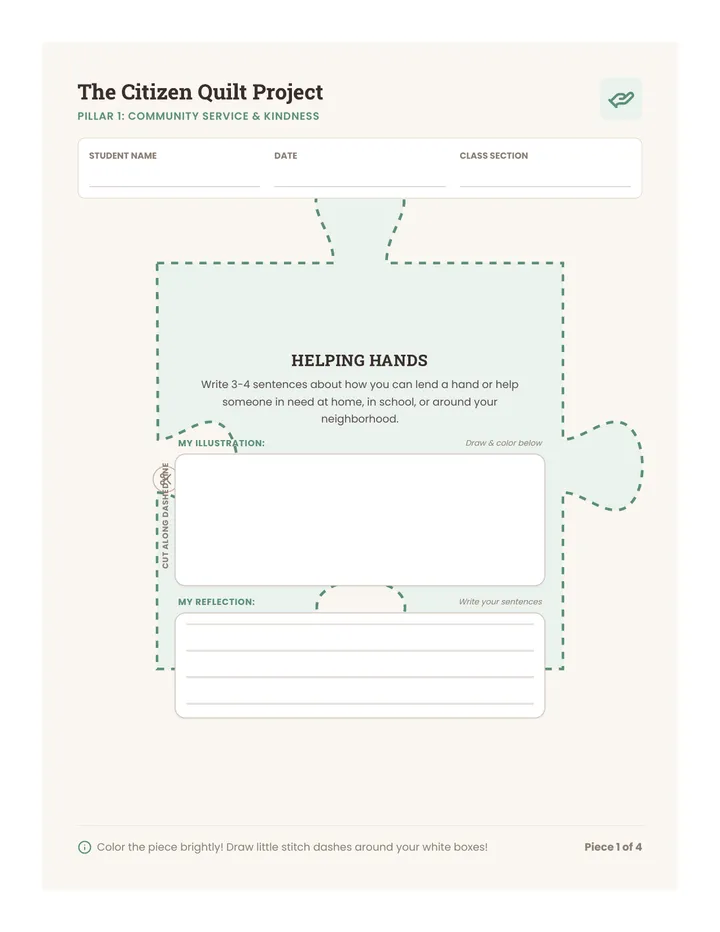
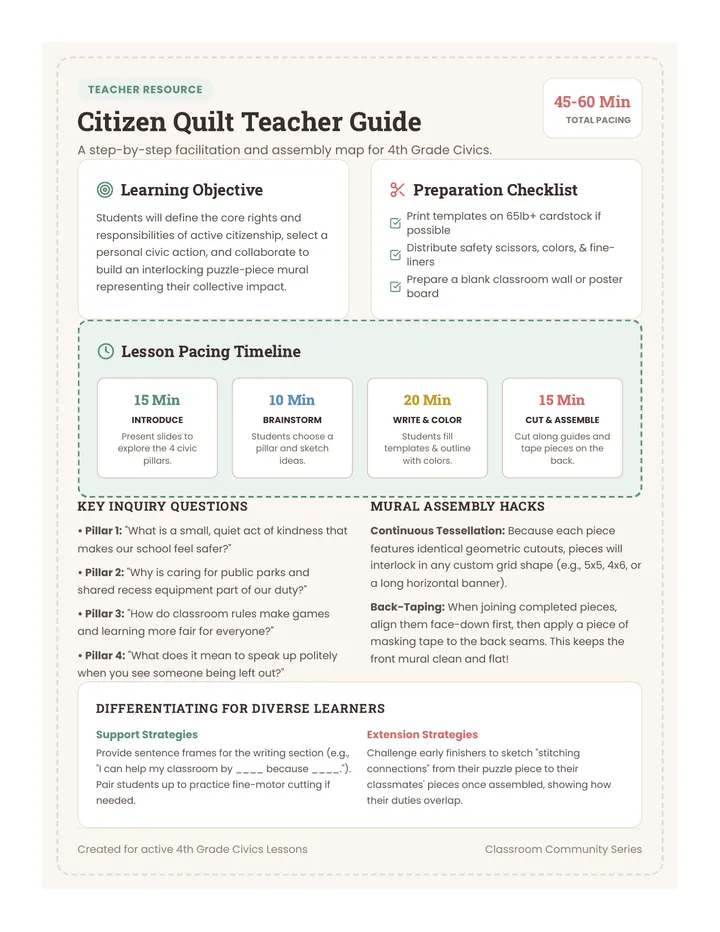
A collaborative civics lesson where 4th-grade students explore the core pillars of good citizenship and create individual, interlocking puzzle-piece templates to assemble into a colorful community mural quilt.
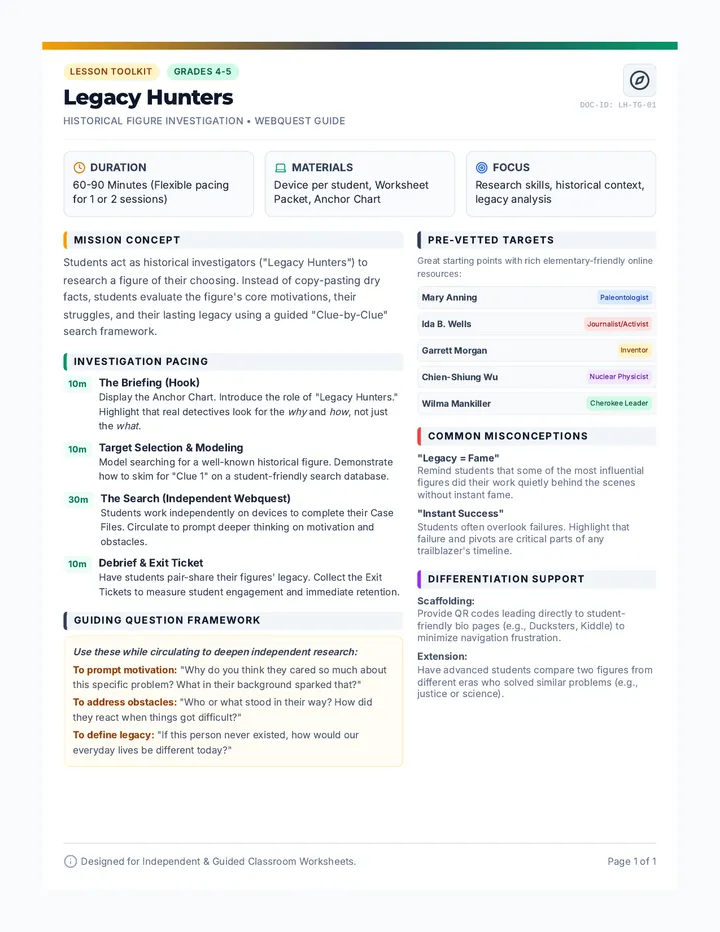
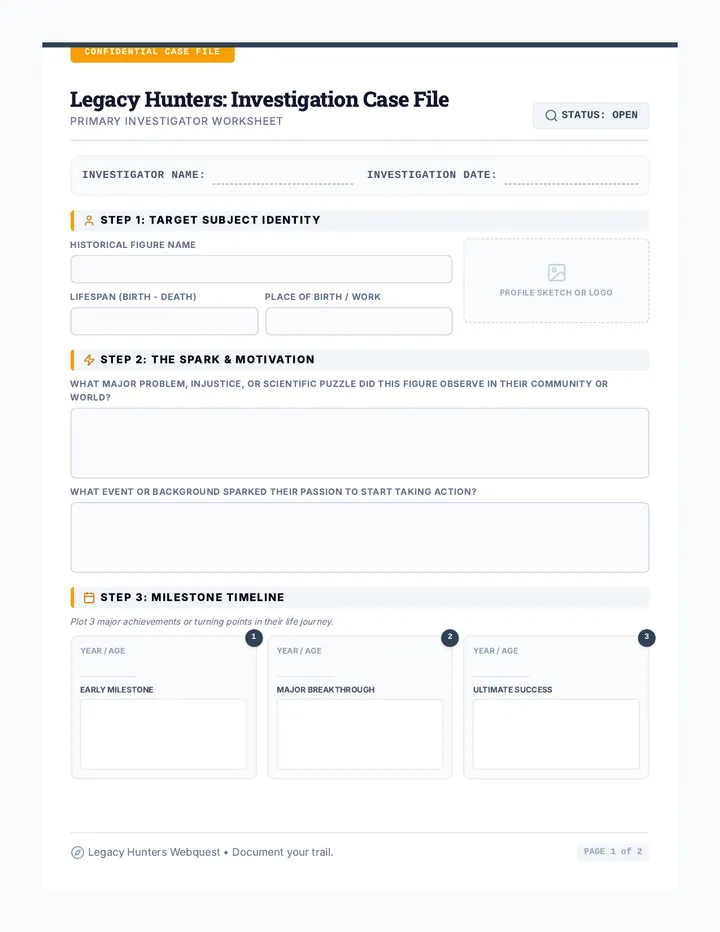
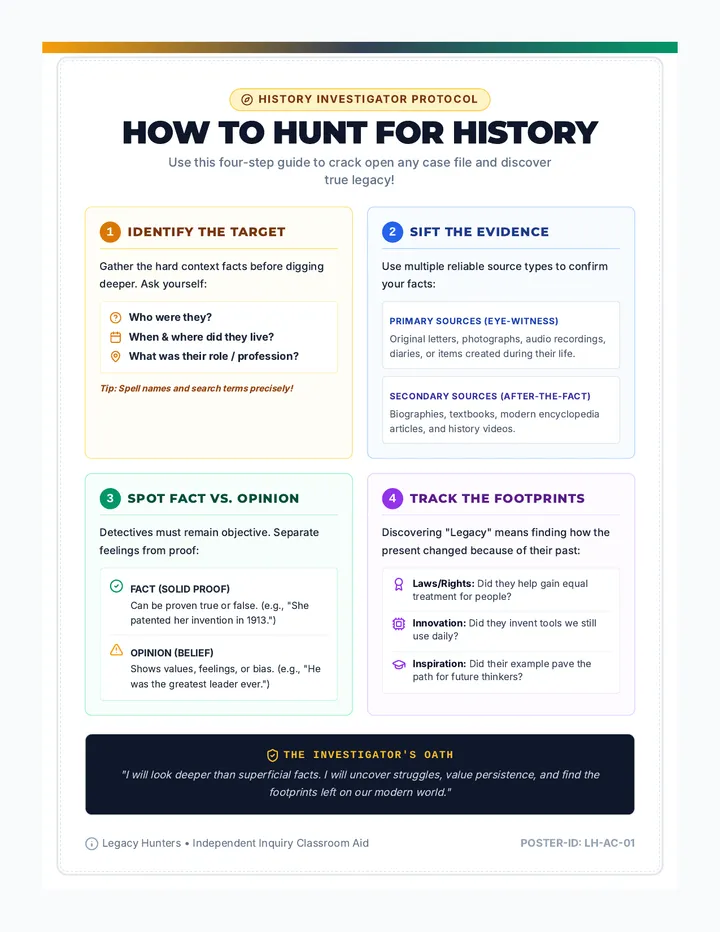
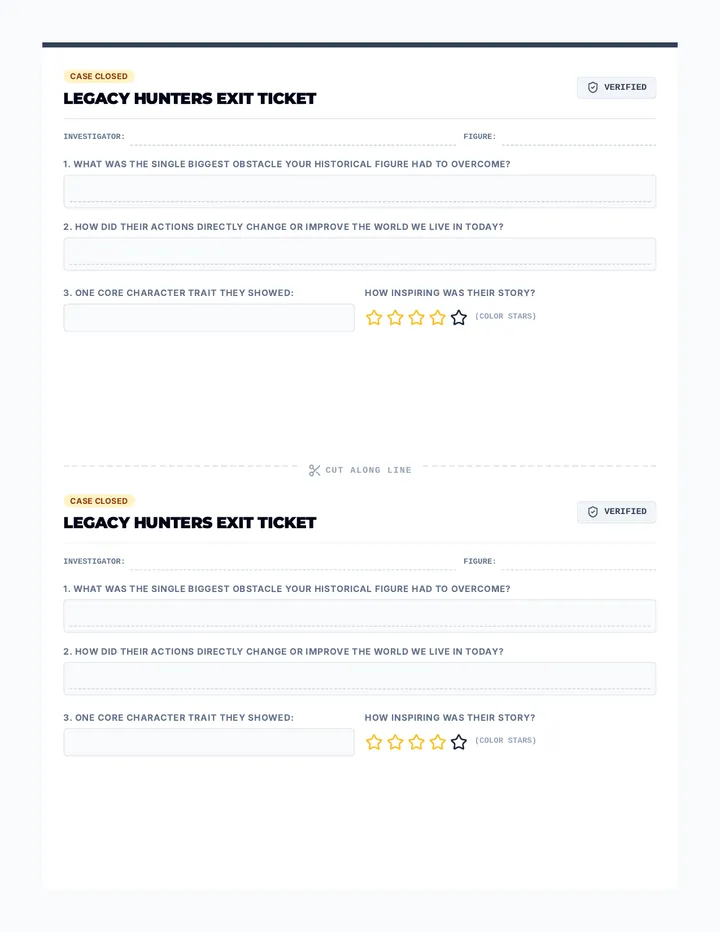
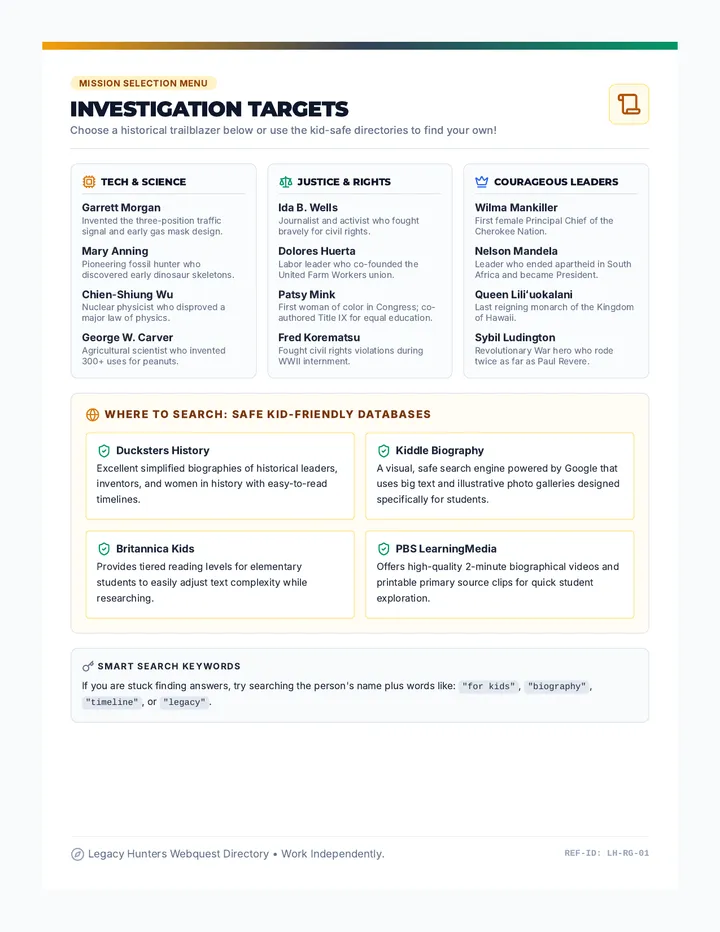
A complete history webquest lesson bundle designed for late elementary students to independently research diverse historical figures. Students act as research detectives to discover the lives, struggles, and lasting legacies of inventors, activists, and leaders.
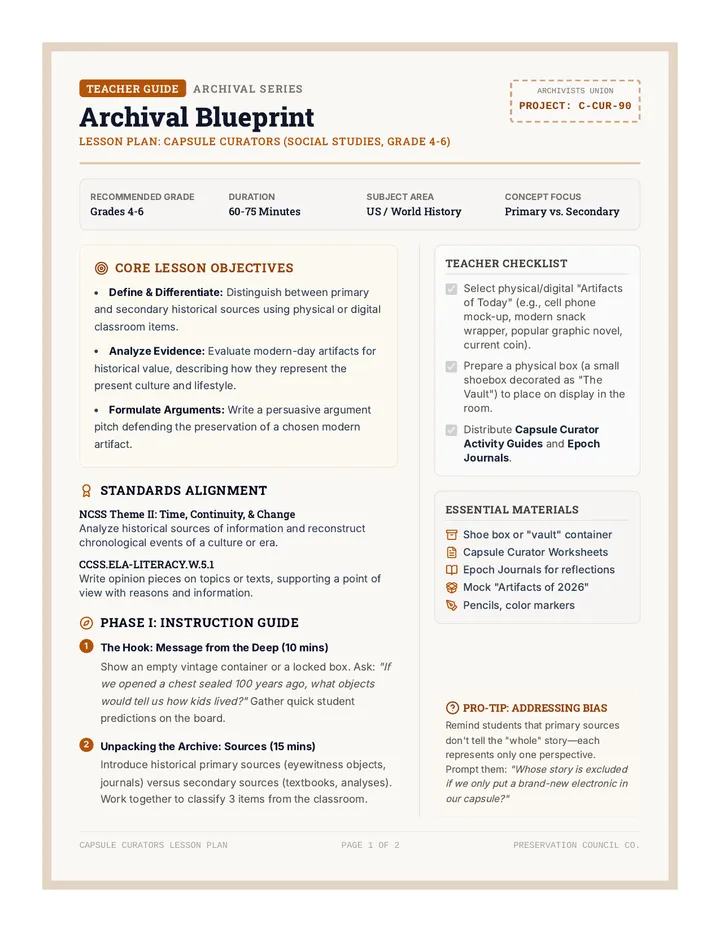
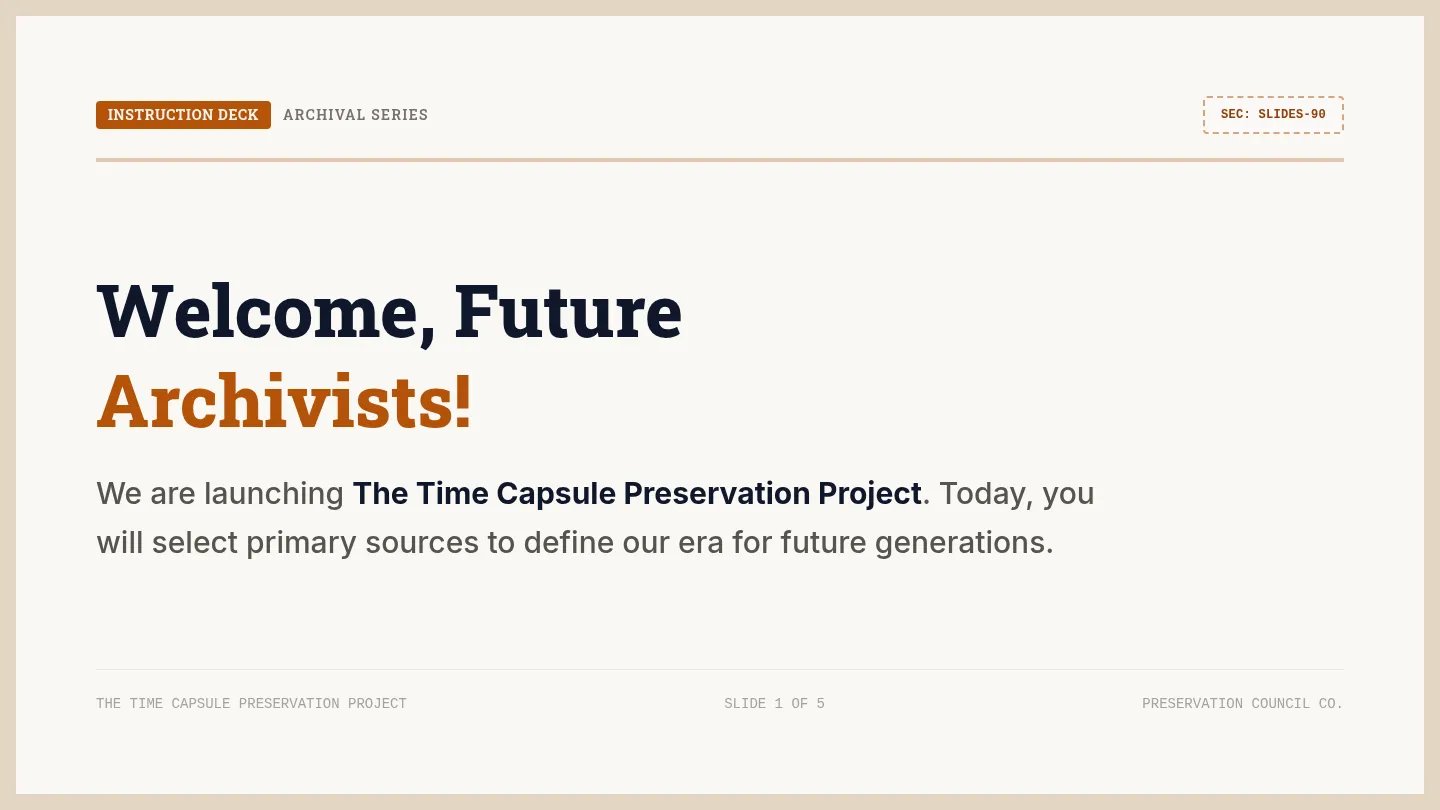
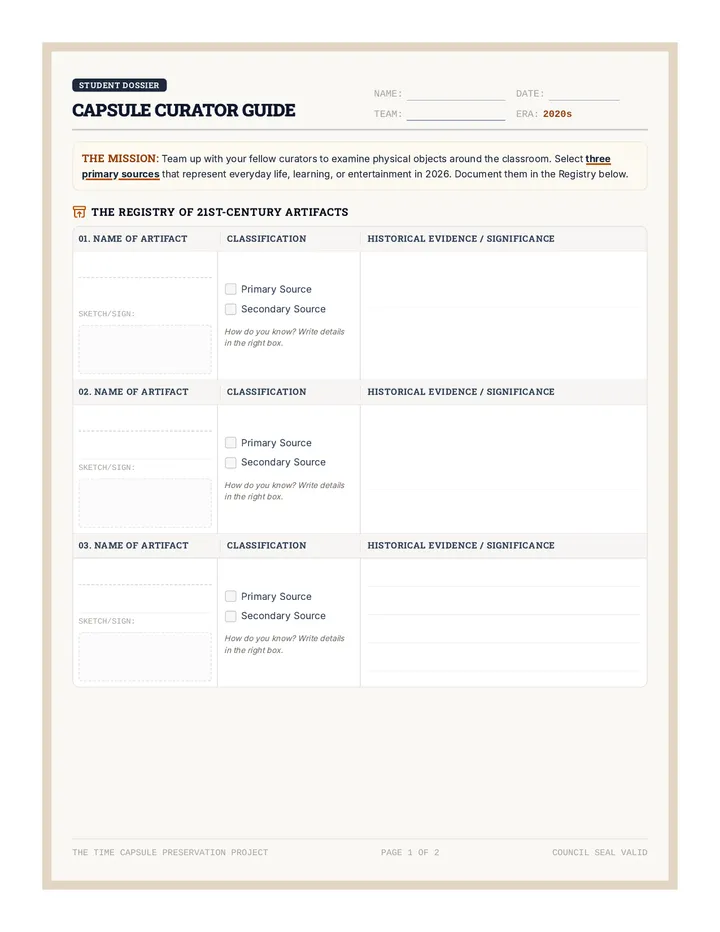
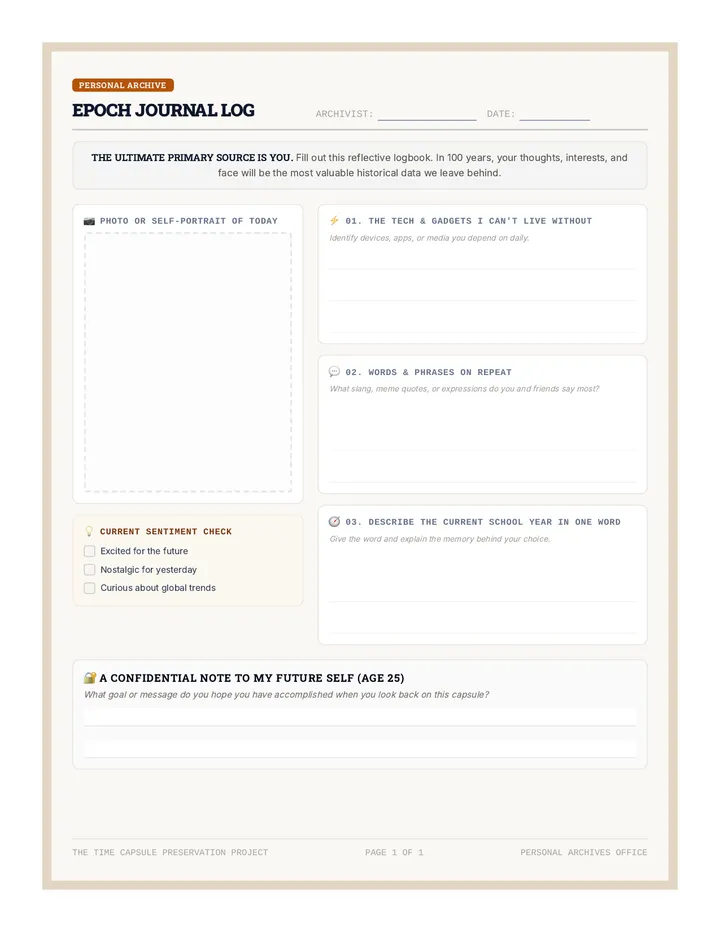
An inquiry-based social studies lesson where students explore primary and secondary sources by curating a classroom time capsule. Students analyze modern artifacts, select items representing their epoch, and write persuasive letters to future historians.
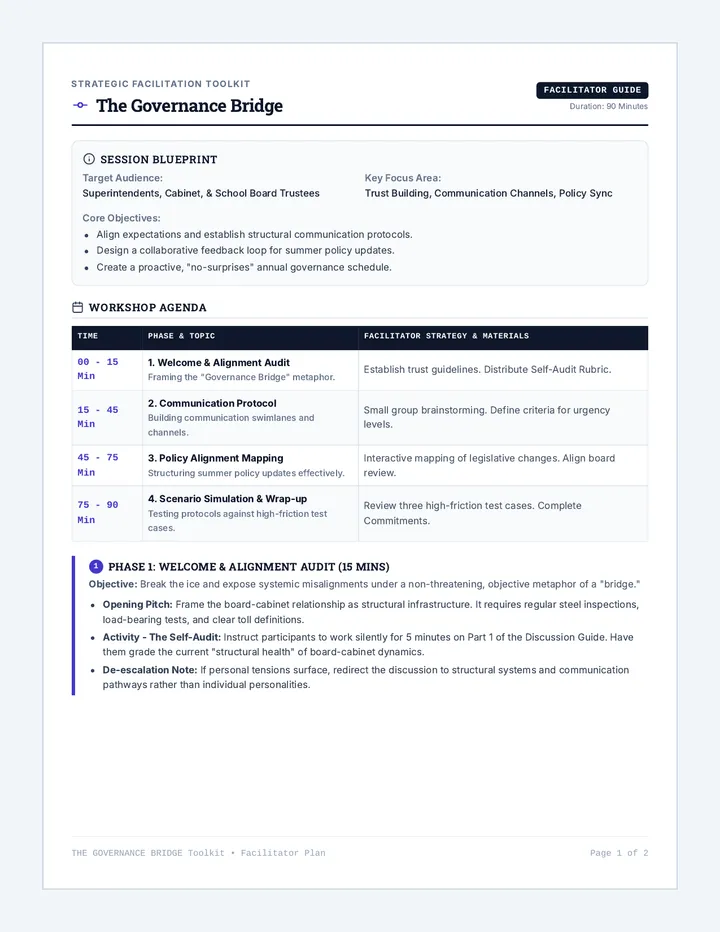
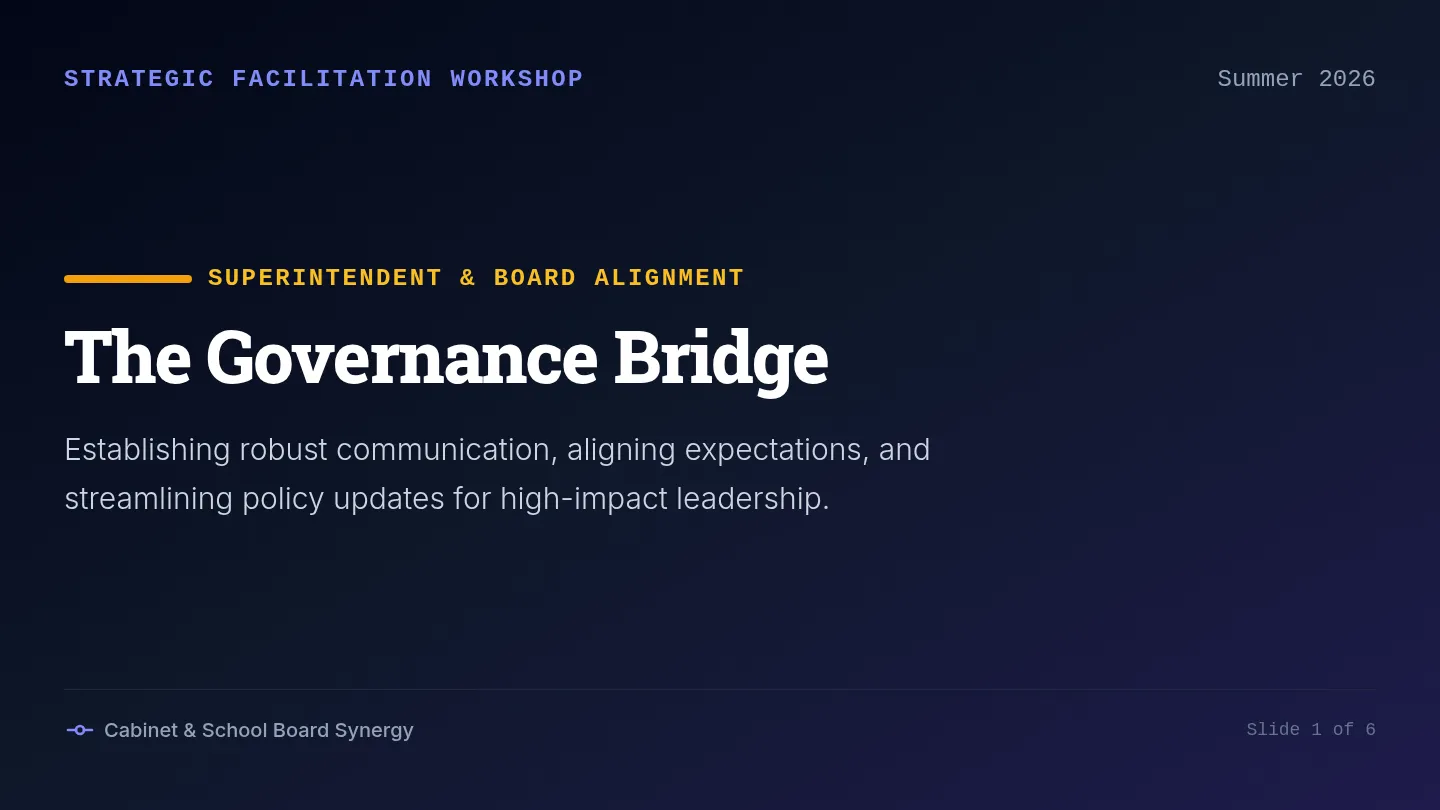
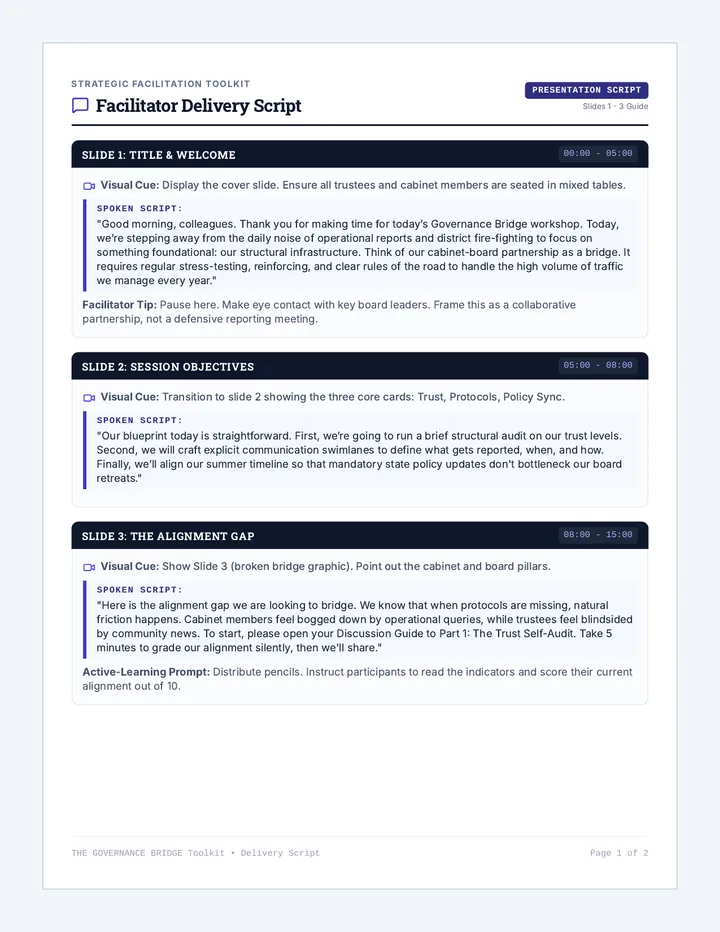
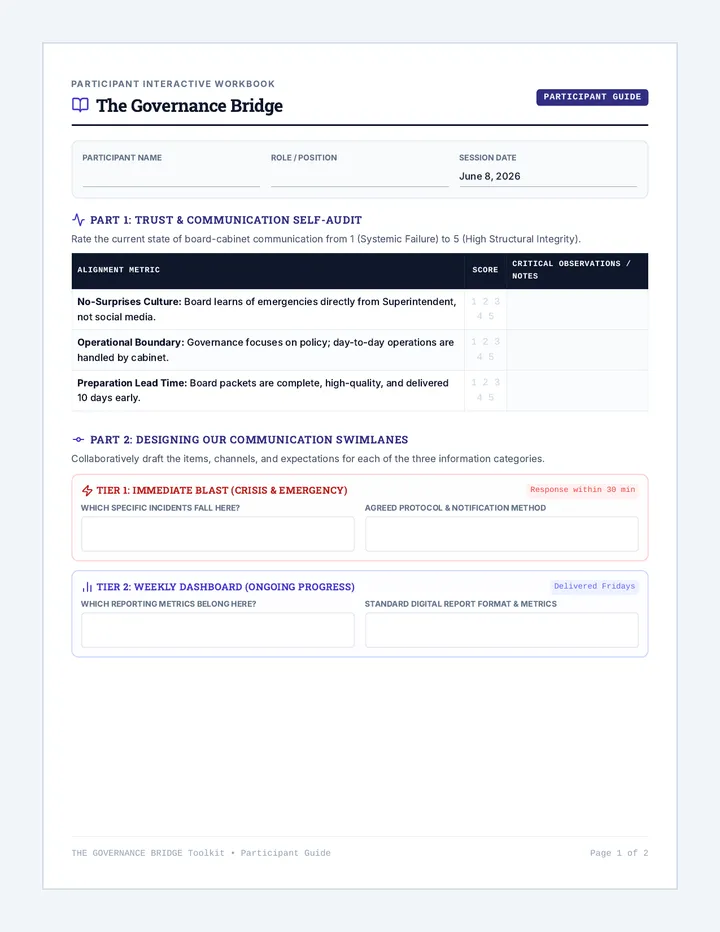
A comprehensive facilitation toolkit designed for superintendents, cabinets, and school boards to establish robust communication, align expectations, and streamline summer policy updates.
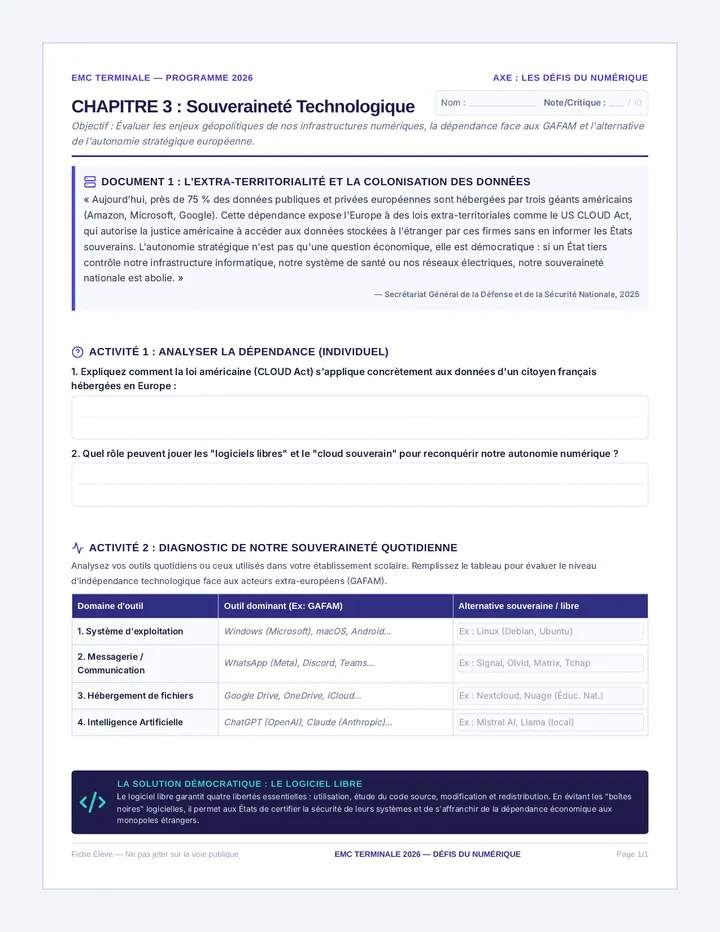
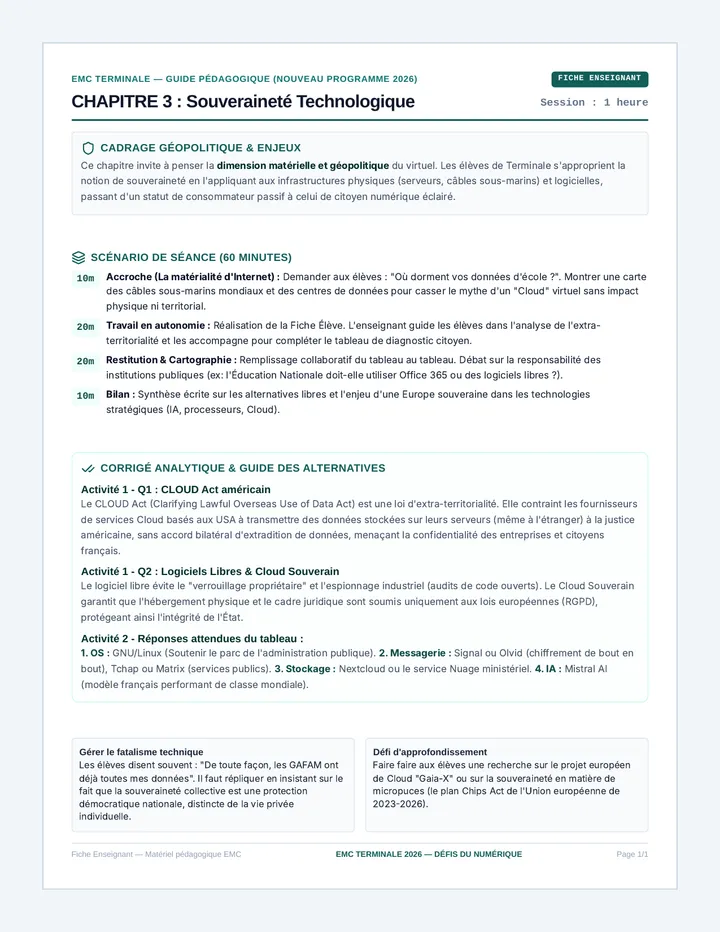
Ce troisième chapitre interroge la dimension géopolitique et économique du numérique : le rôle et l'influence des GAFAM et des géants de l'IA, la souveraineté des données citoyennes, le cloud souverain et l'alternative du logiciel libre pour l'indépendance nationale et européenne.
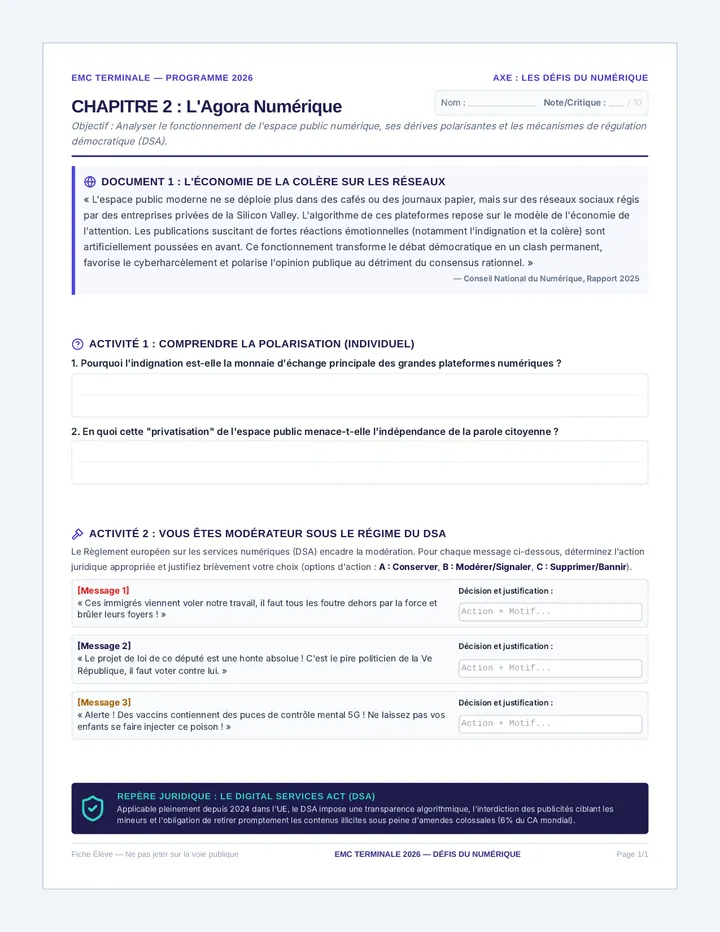
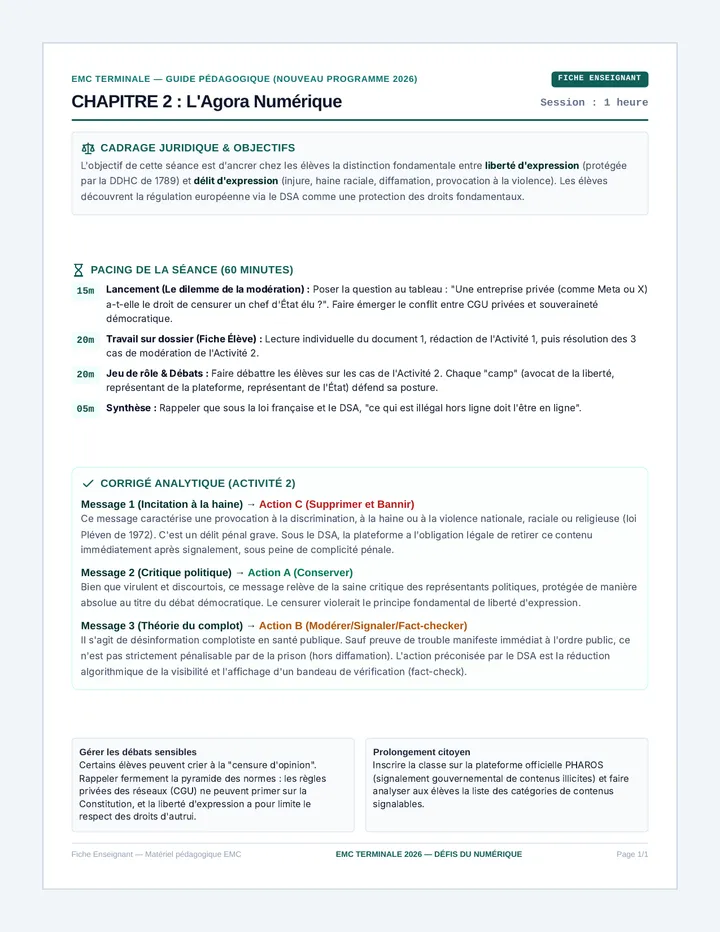
Ce deuxième chapitre traite de la structure de l'espace public numérique, en abordant la polarisation des débats sur les réseaux sociaux, les bulles de filtres, la liberté d'expression face à la modération et la haine en ligne, ainsi que la citoyenneté numérique active.
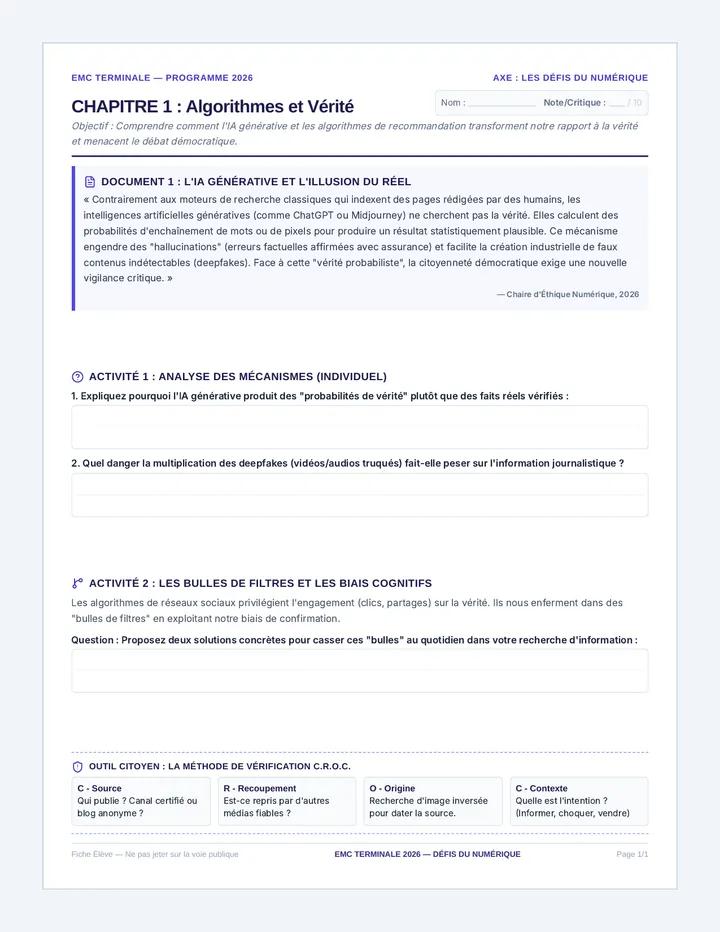
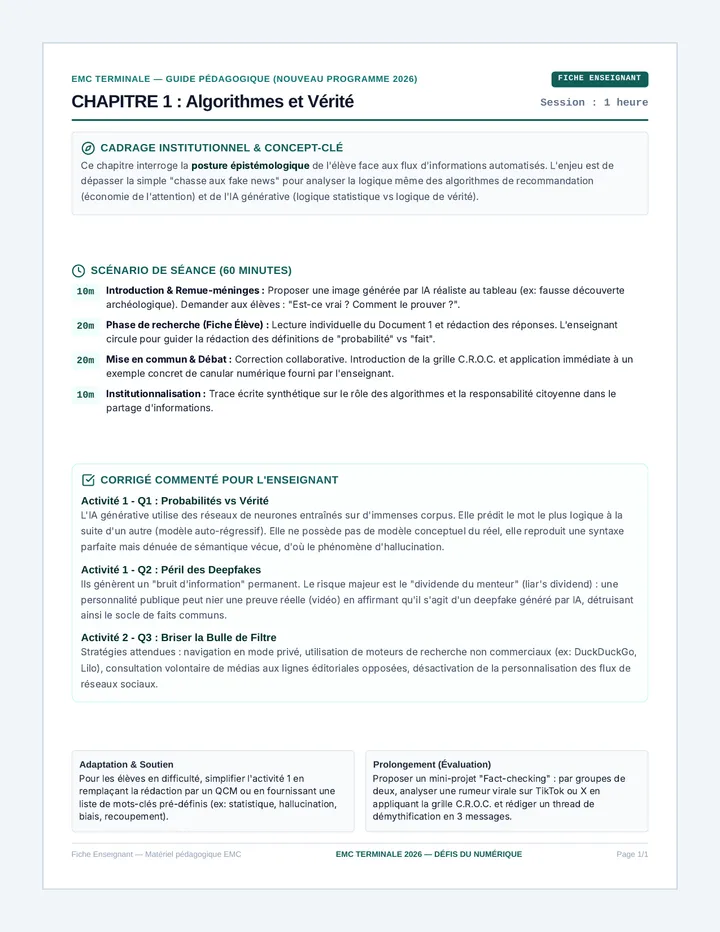
Ce premier chapitre explore l'impact de l'intelligence artificielle générative et des algorithmes de recommandation sur la vérité historique, scientifique et journalistique. Les élèves analysent la notion de désinformation, les deepfakes et l'importance de l'épistémologie critique.
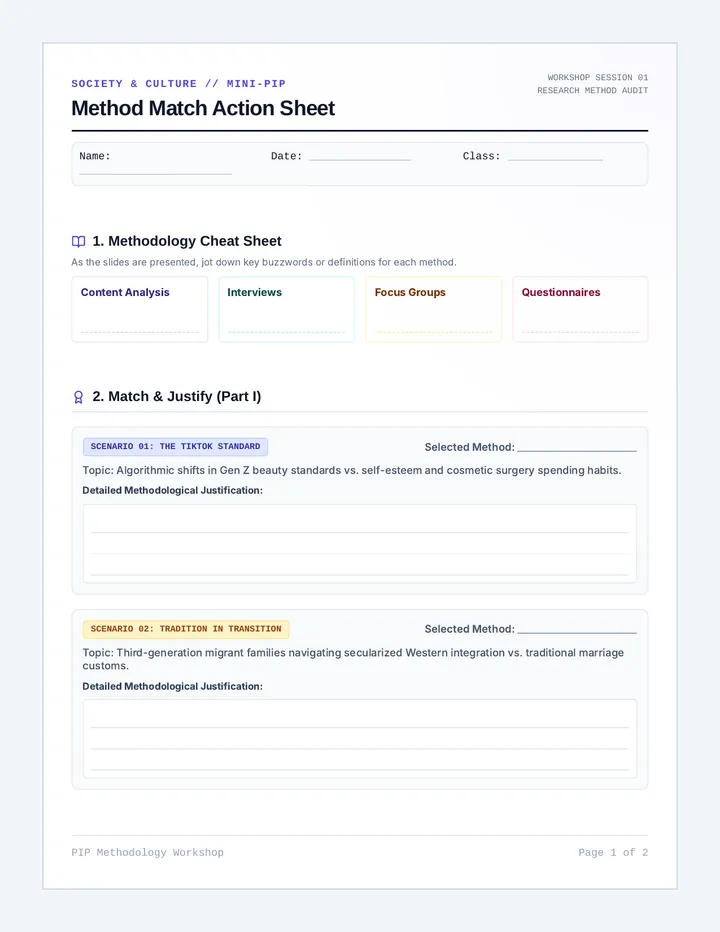
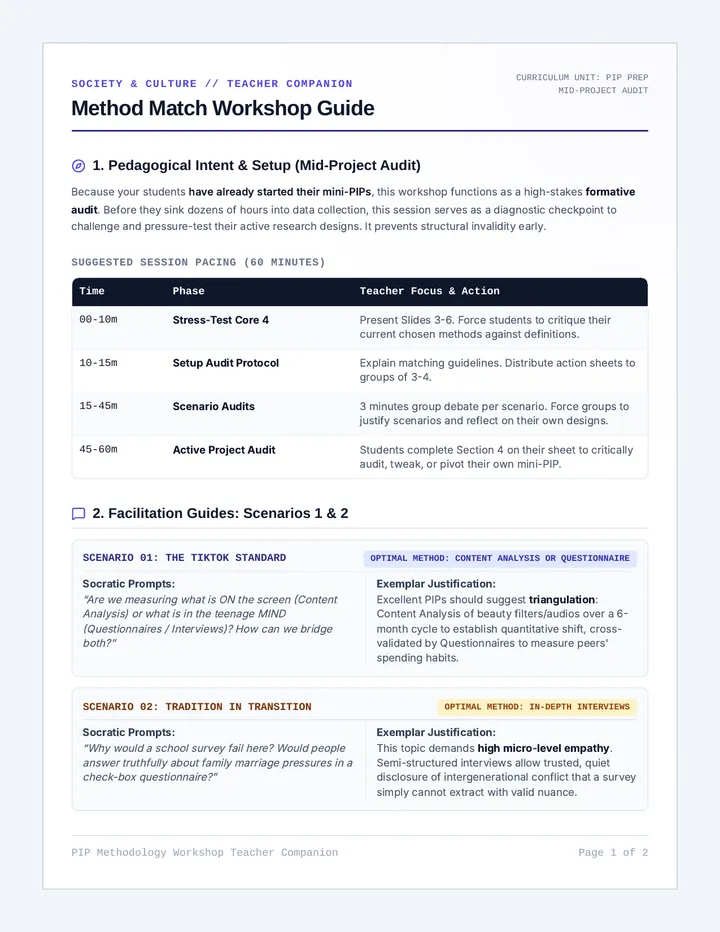
A hands-on workshop designed to introduce Society and Culture students to key research methodologies (Content Analysis, Interviews, Focus Groups, and Questionnaires) for their Personal Interest Projects (PIPs). Students analyze authentic research scenarios and justify the best methodological fit for each PIP topic.
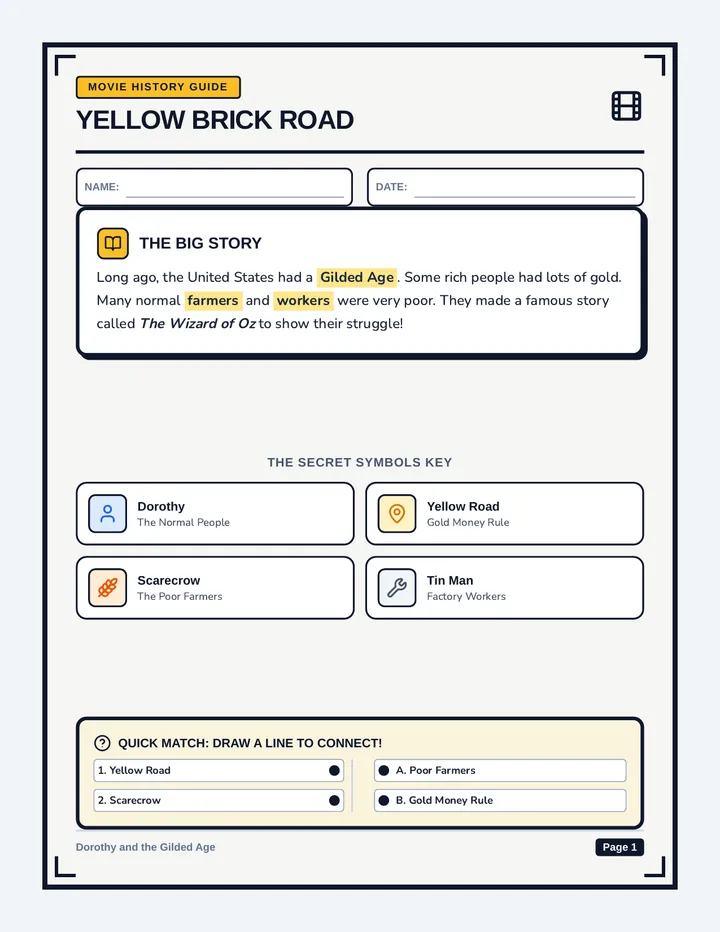
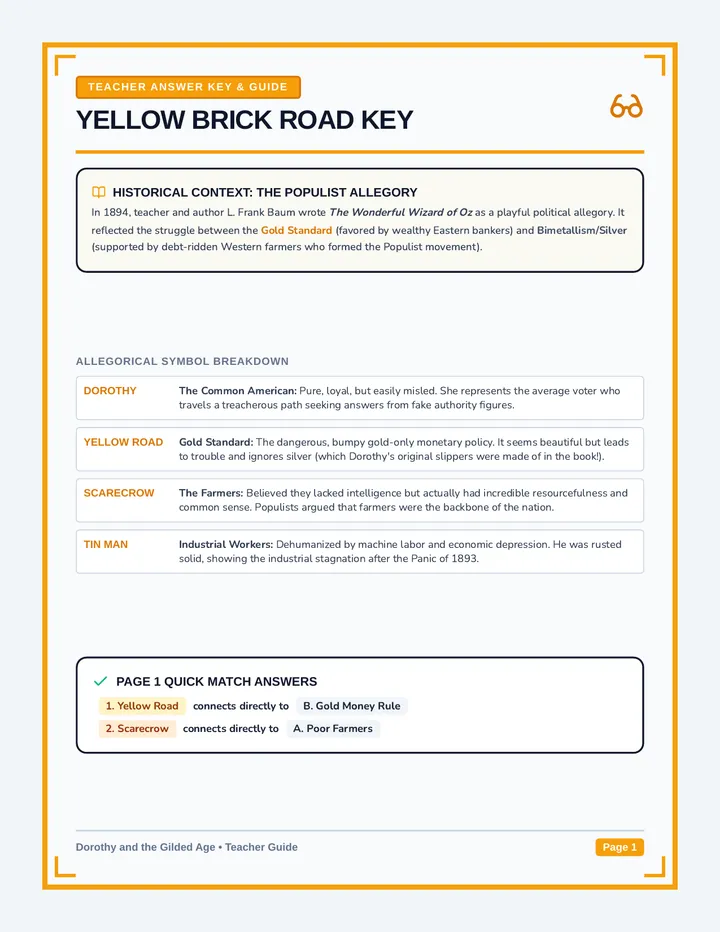
A highly accessible watch guide lesson linking The Wizard of Oz (1939) to Gilded Age politics (Populism, the Gold Standard, and industrial workers), designed specifically for middle school students reading at a 1st-grade level using visual matching, word banks, and literal multiple-choice questions.
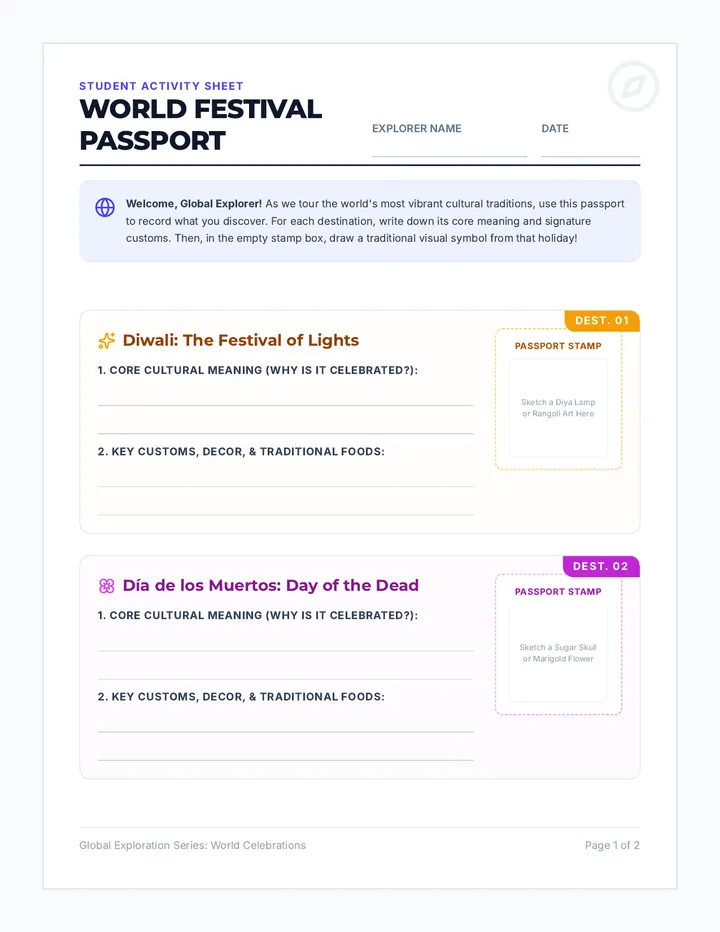
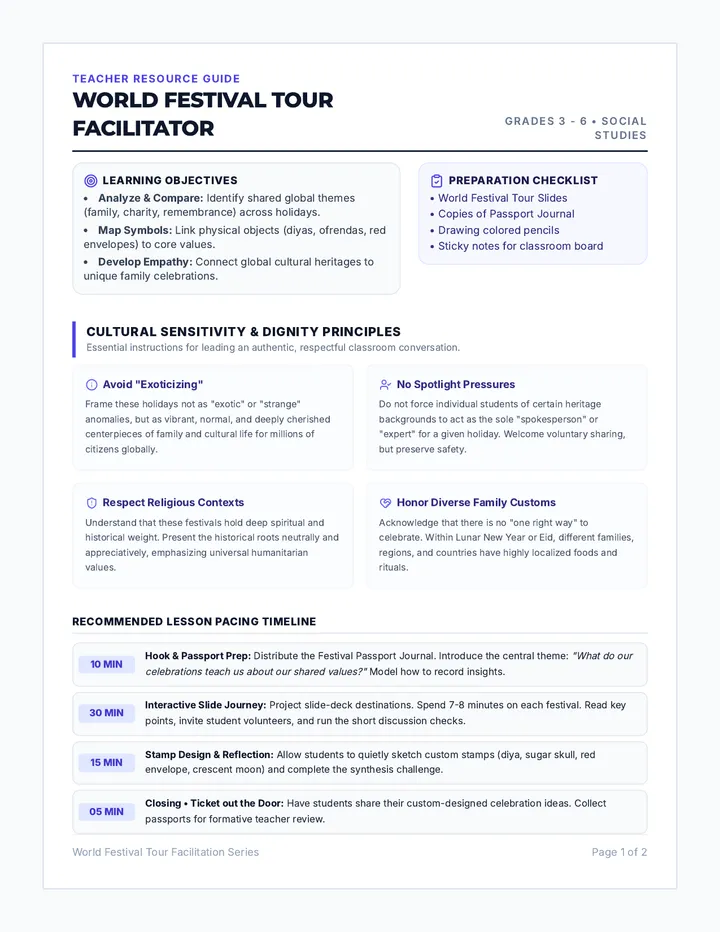
An engaging, multicultural lesson introducing students to four rich global celebrations: Diwali, Día de los Muertos, Lunar New Year, and Eid al-Fitr. The lesson explores cultural significance, seasonal customs, symbols, and values, supporting global citizenship and empathy.
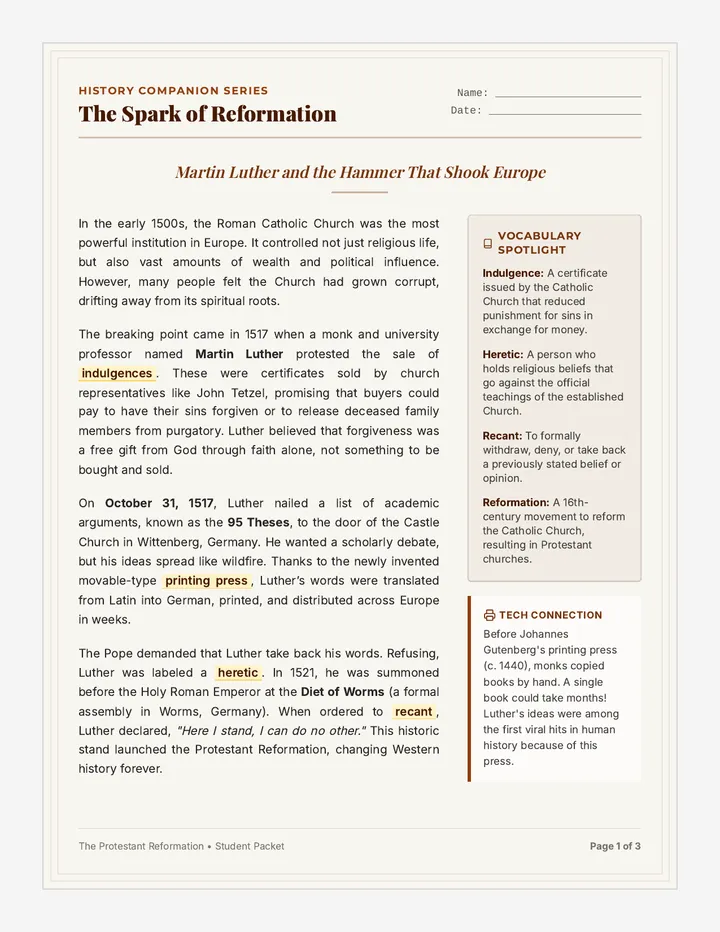
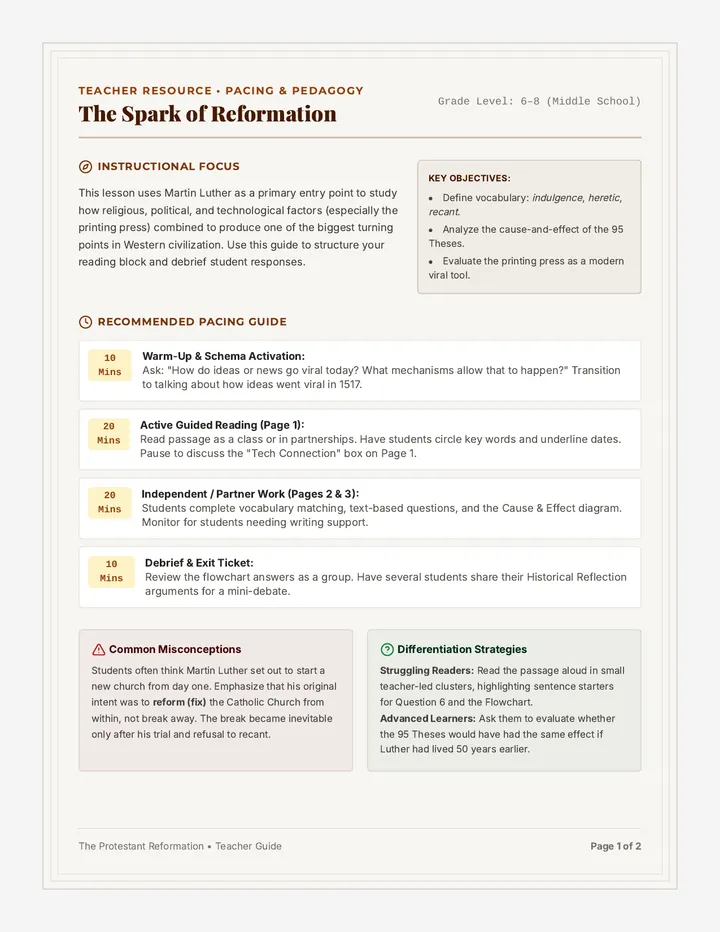
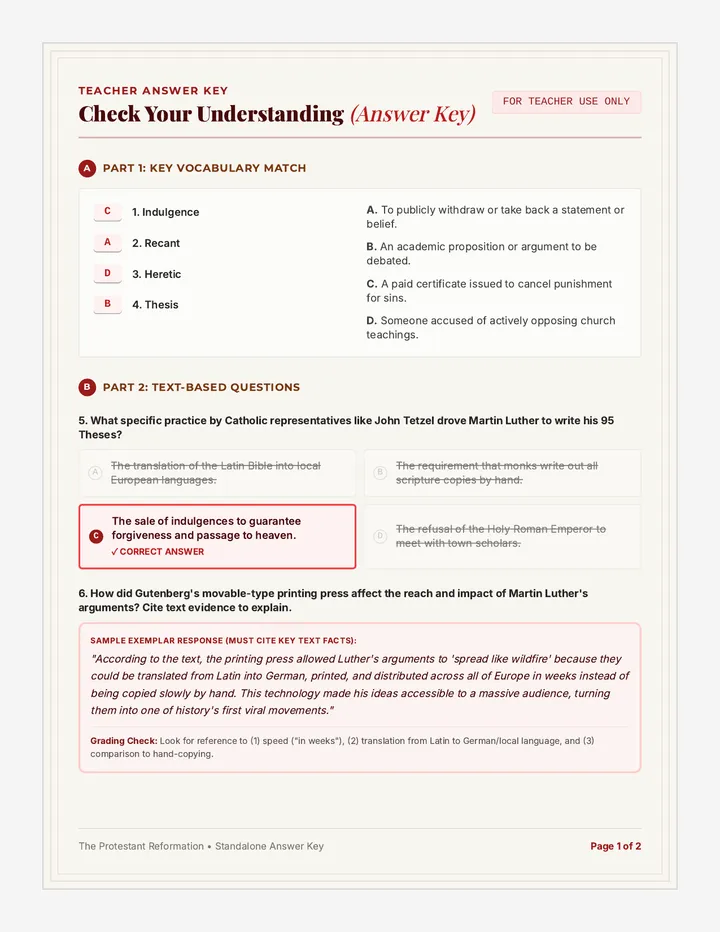
A middle school history lesson exploring Martin Luther's role in the Protestant Reformation, focusing on key biographical events, critical vocabulary, and cause-and-effect historical analysis.
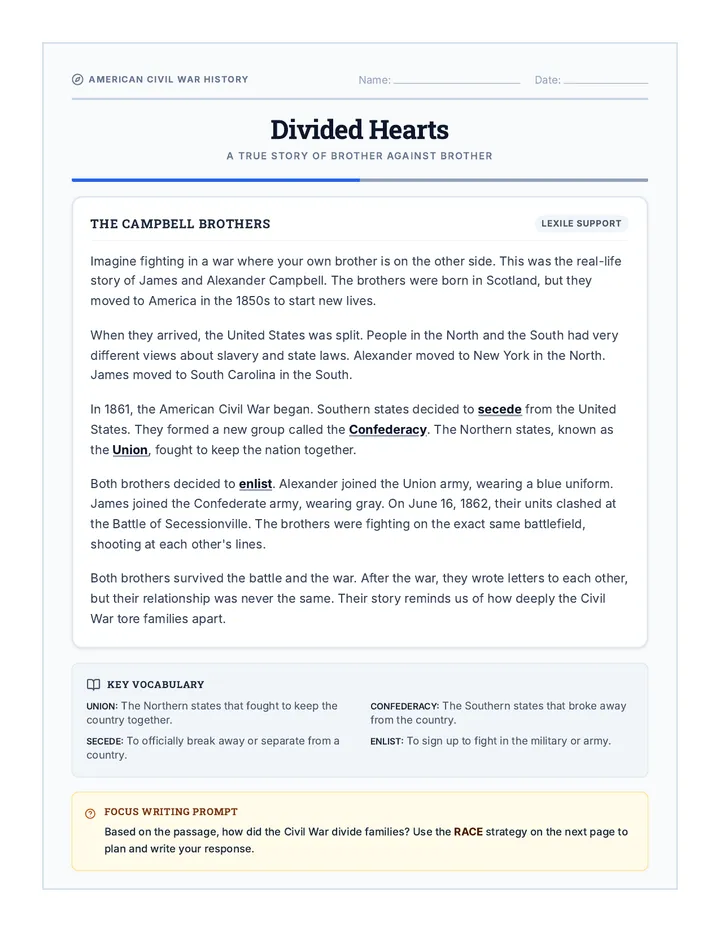
A lesson focused on the division of families during the American Civil War. It includes a simplified reading passage detailing the true story of the Campbell brothers and a structured RACE (Restate, Answer, Cite, Explain) response graphic organizer with student writing lines.
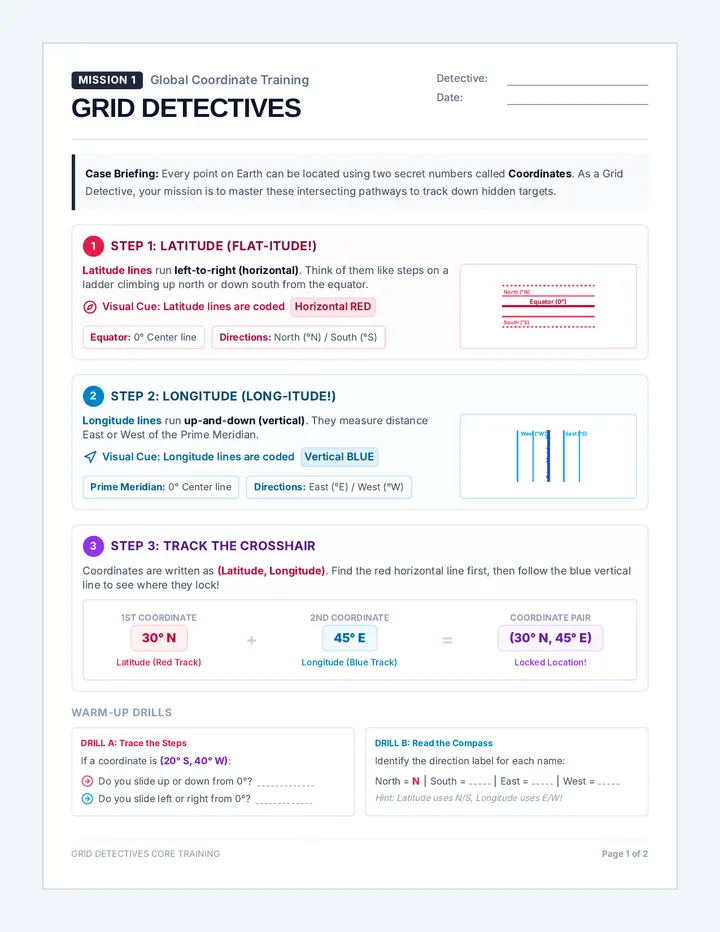
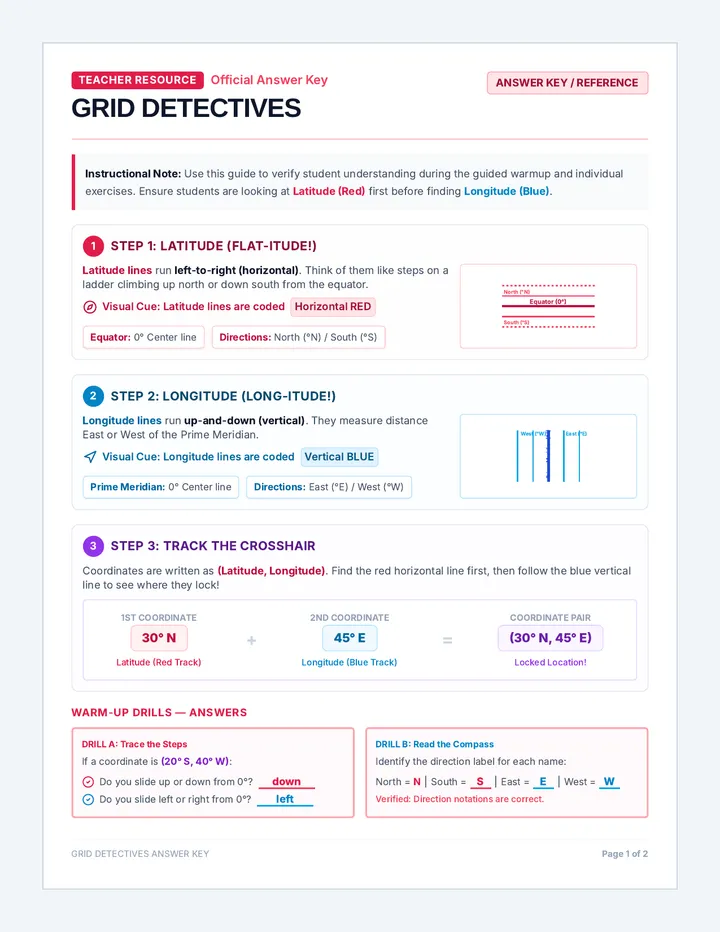
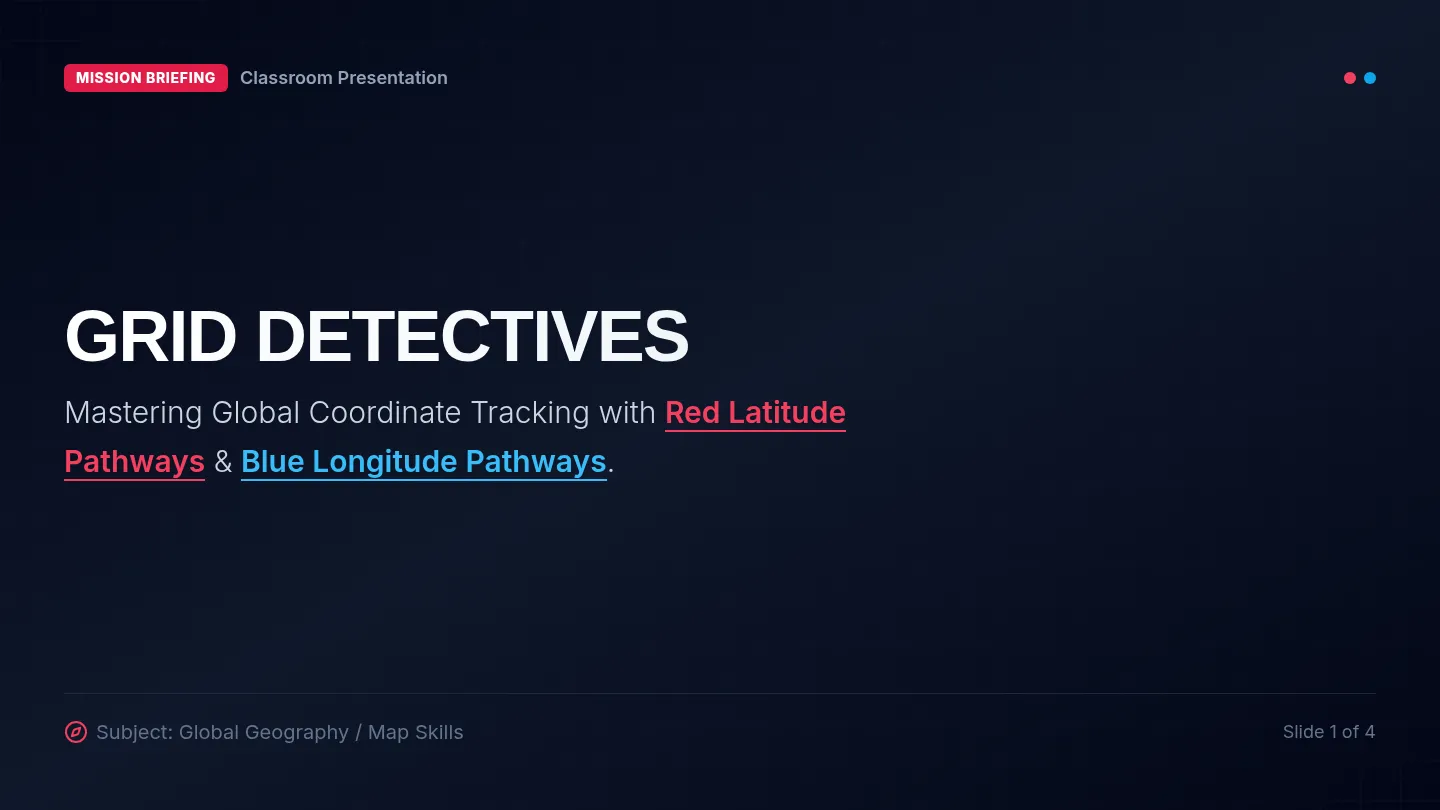
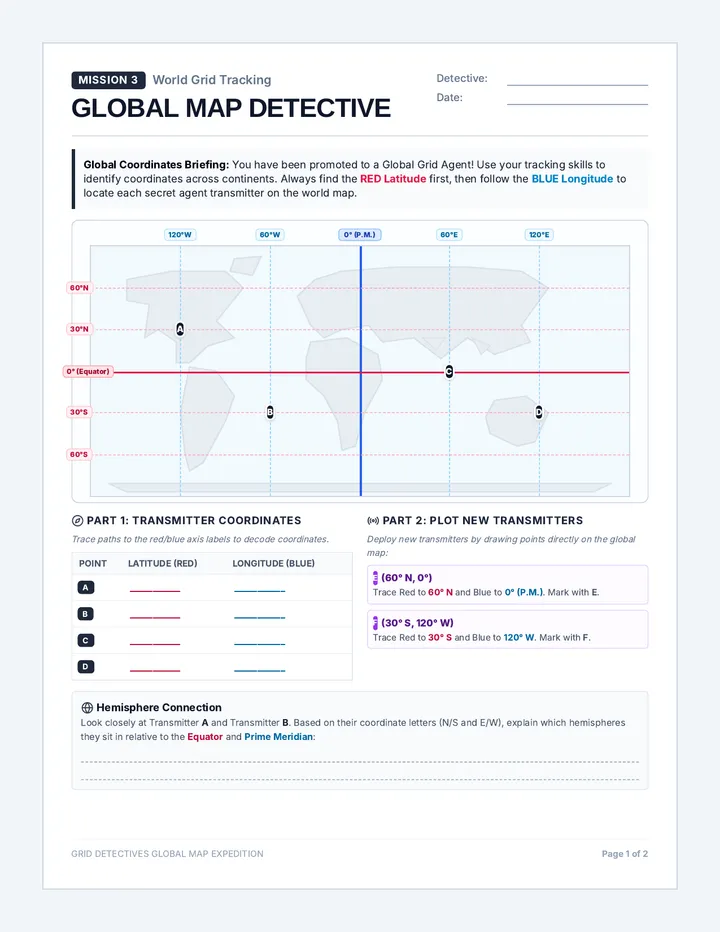
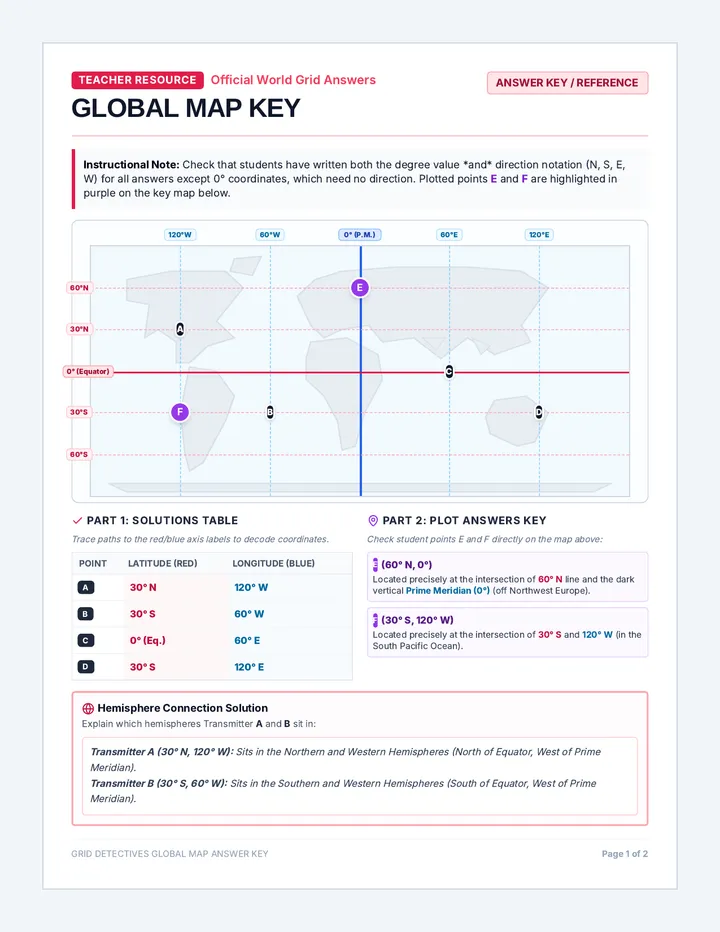
A guided lesson on latitude and longitude using structured, color-coded pathways. Students master horizontal latitude (red) and vertical longitude (blue) through step-by-step visual scaffolds and targeted practice.
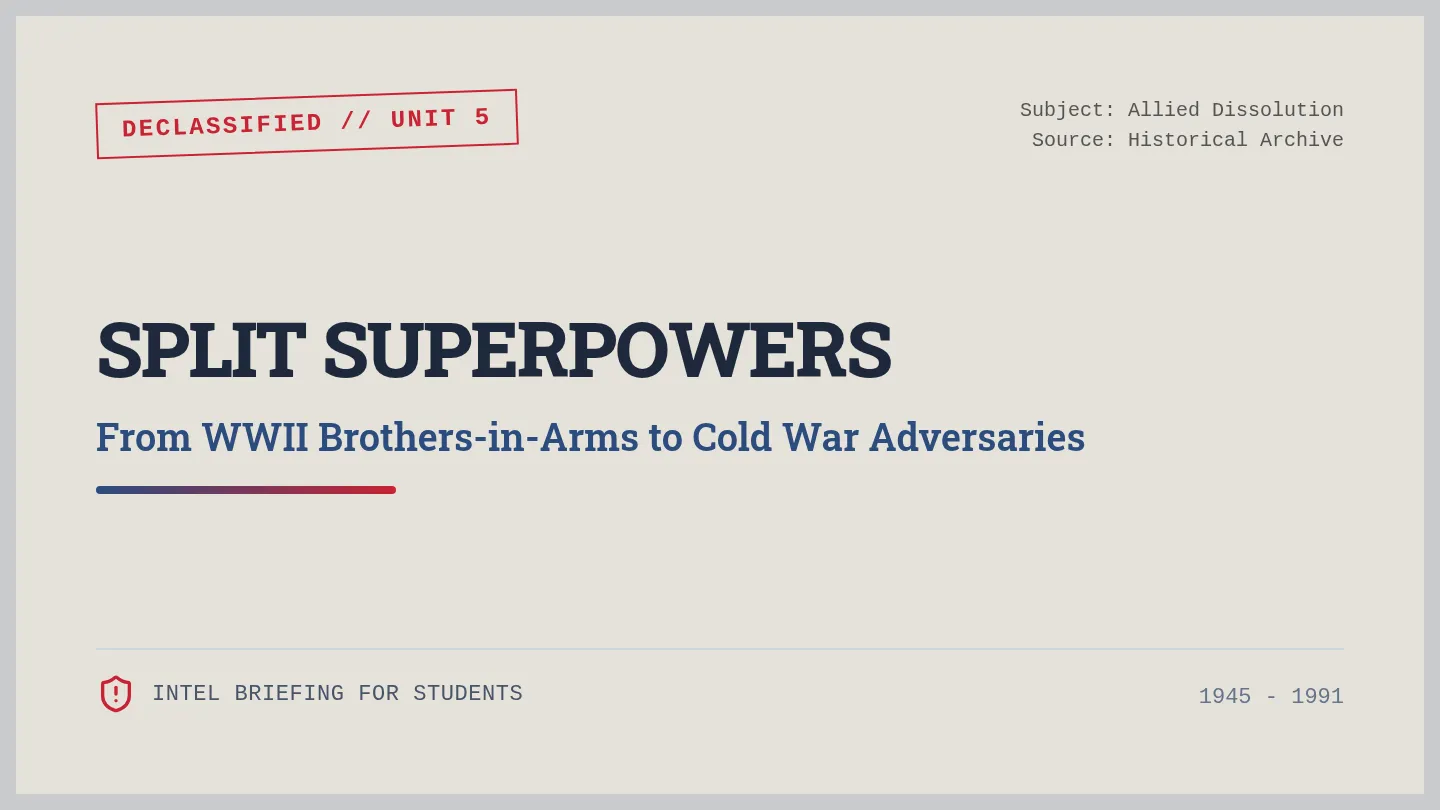
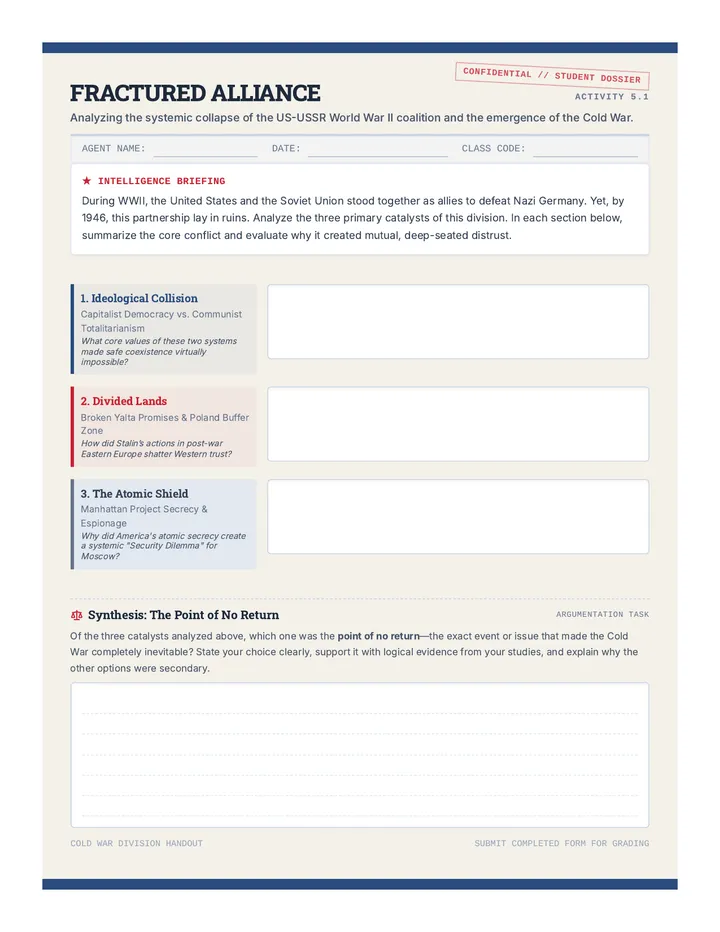
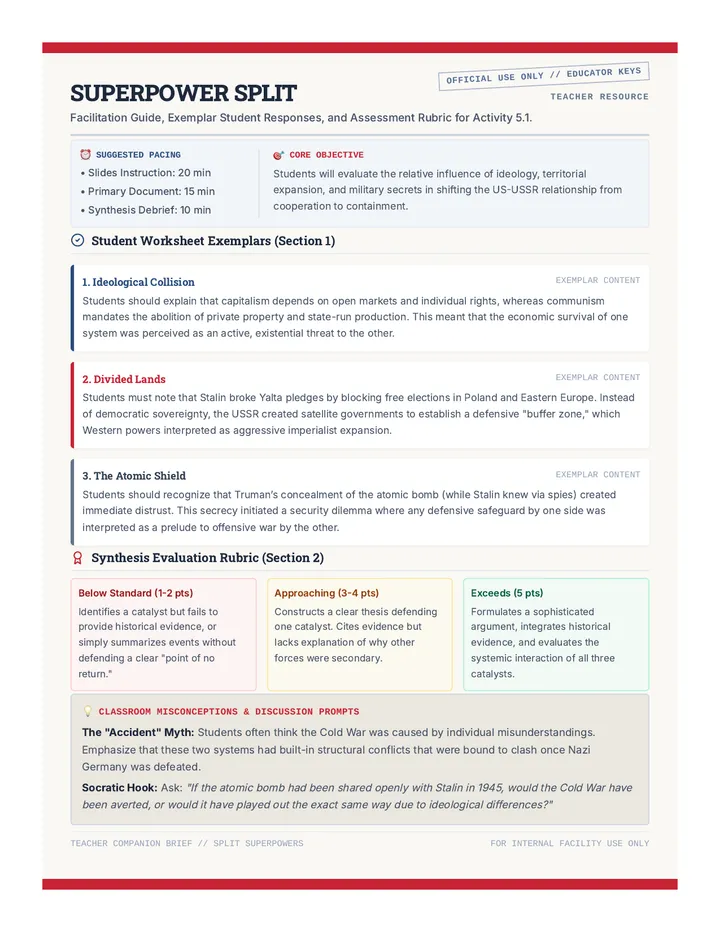
An instructional lesson exploring how the United States and the Soviet Union shifted from World War II allies to Cold War adversaries. The lesson outlines the core ideological, geopolitical, and military reasons behind this historical pivot.
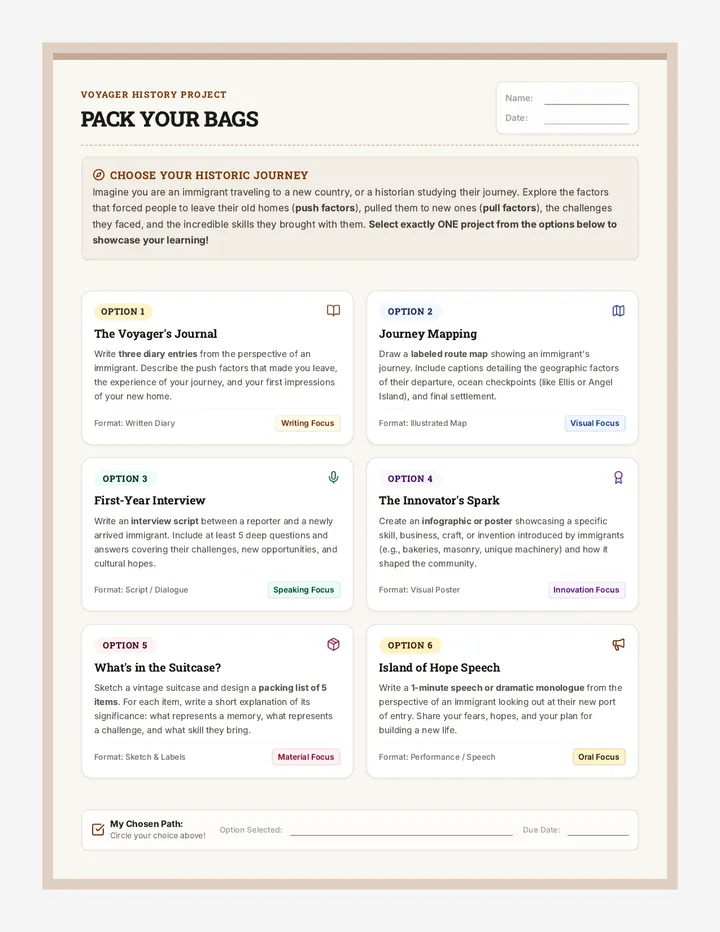
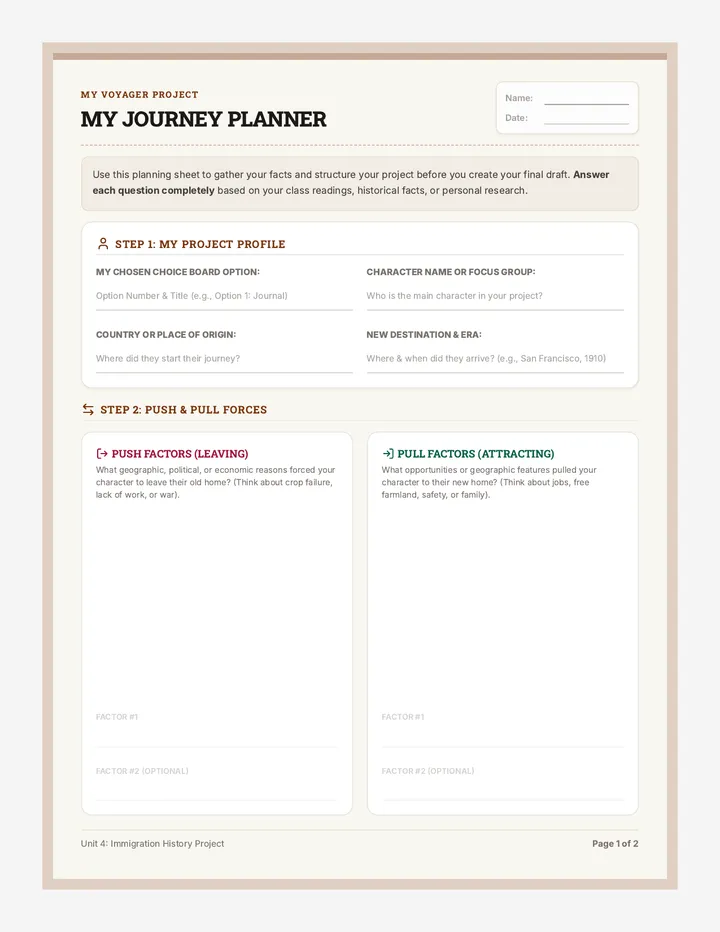
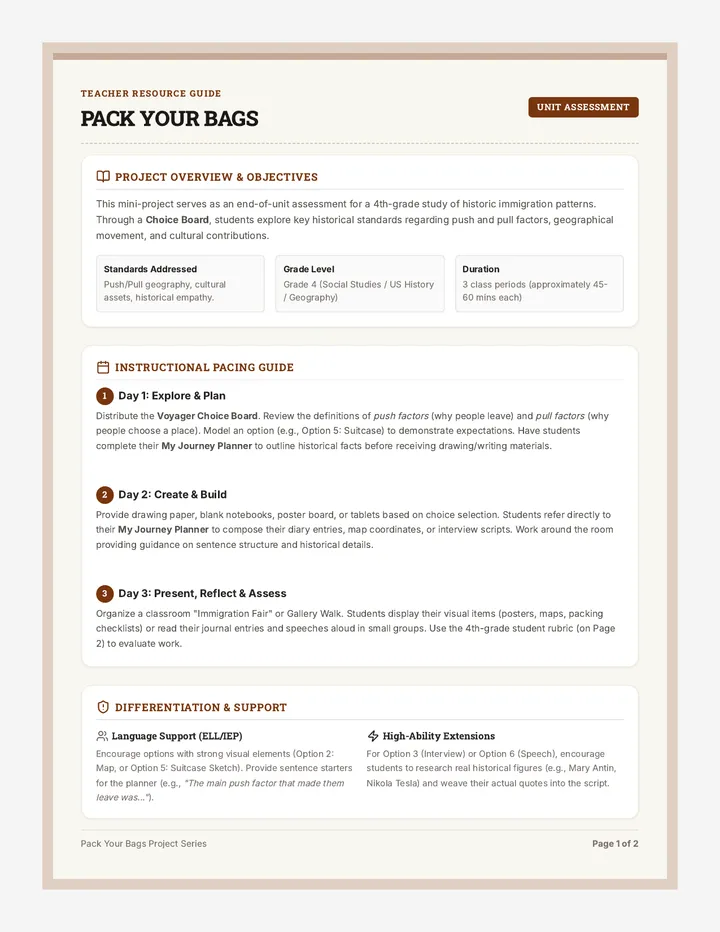
An immigration end-of-unit mini-project lesson for fourth graders, built around a creative Choice Board. Students explore push and pull factors, challenges and opportunities, and the skills or inventions immigrants brought to their new homes.
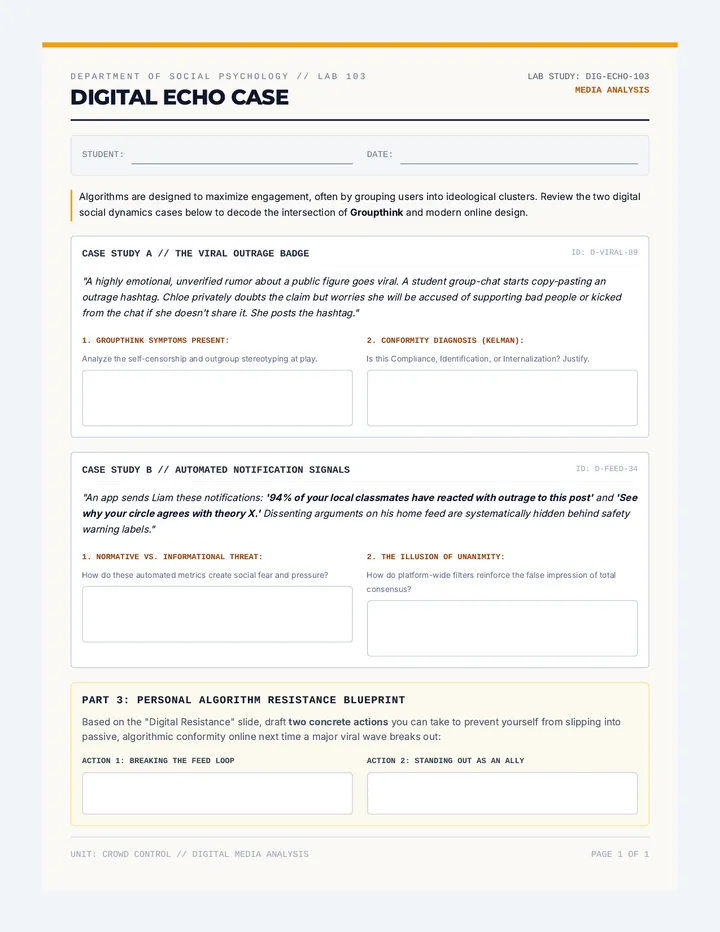
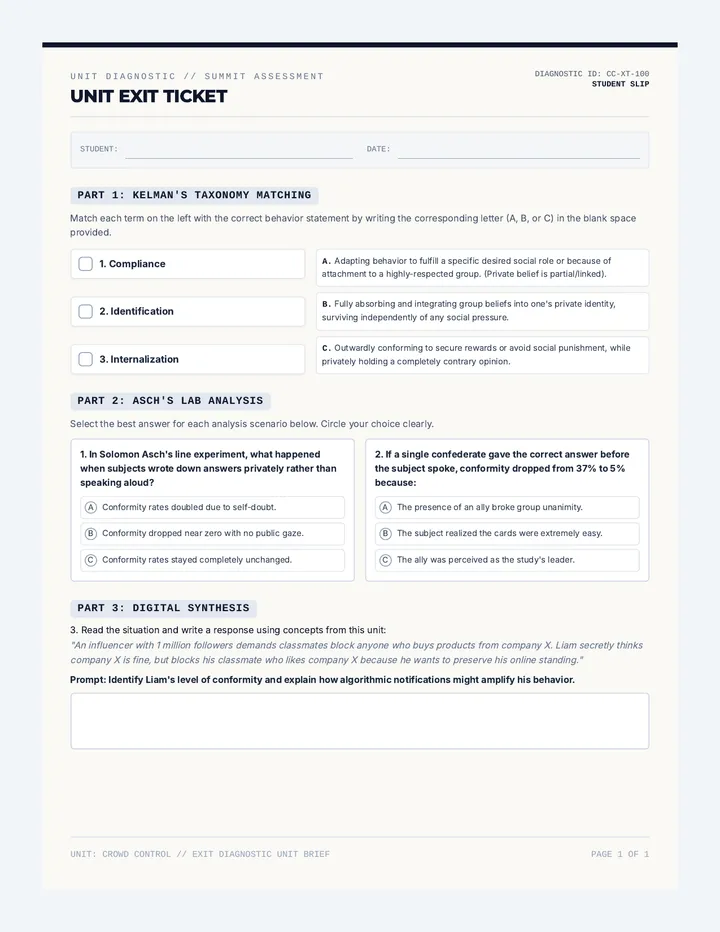
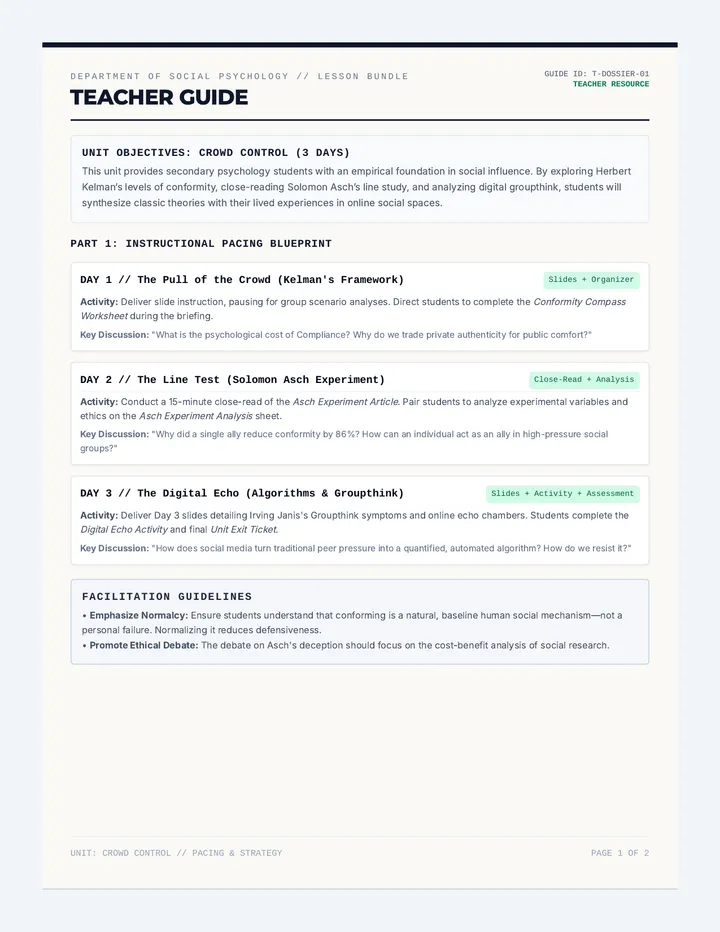
Explores groupthink, social media algorithms, and peer pressure. Students analyze how online spaces amplify conformity and complete an exit ticket to assess their understanding across the unit.
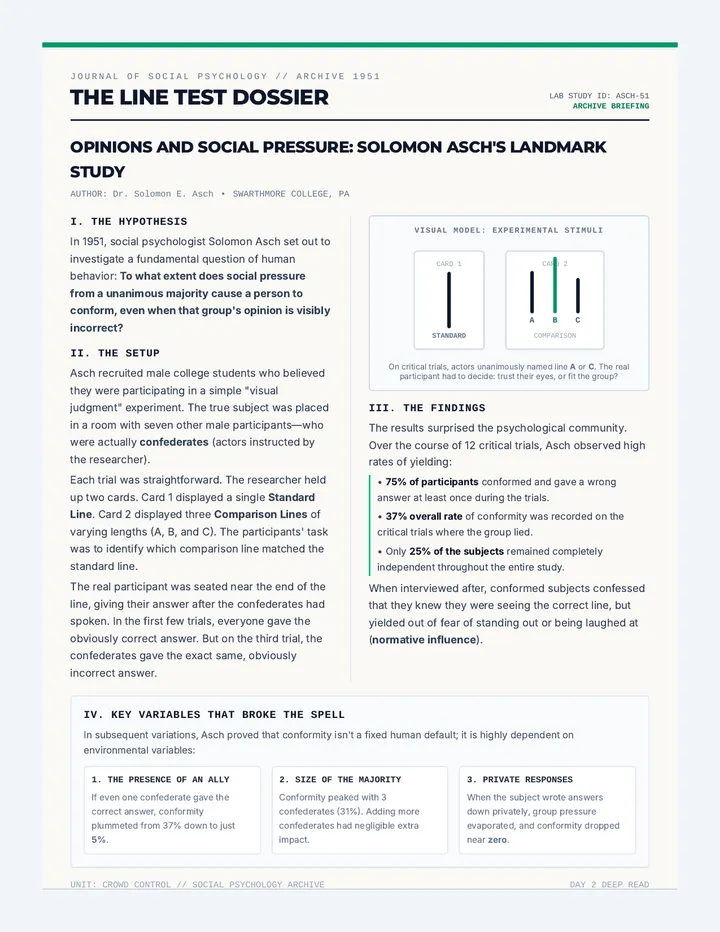
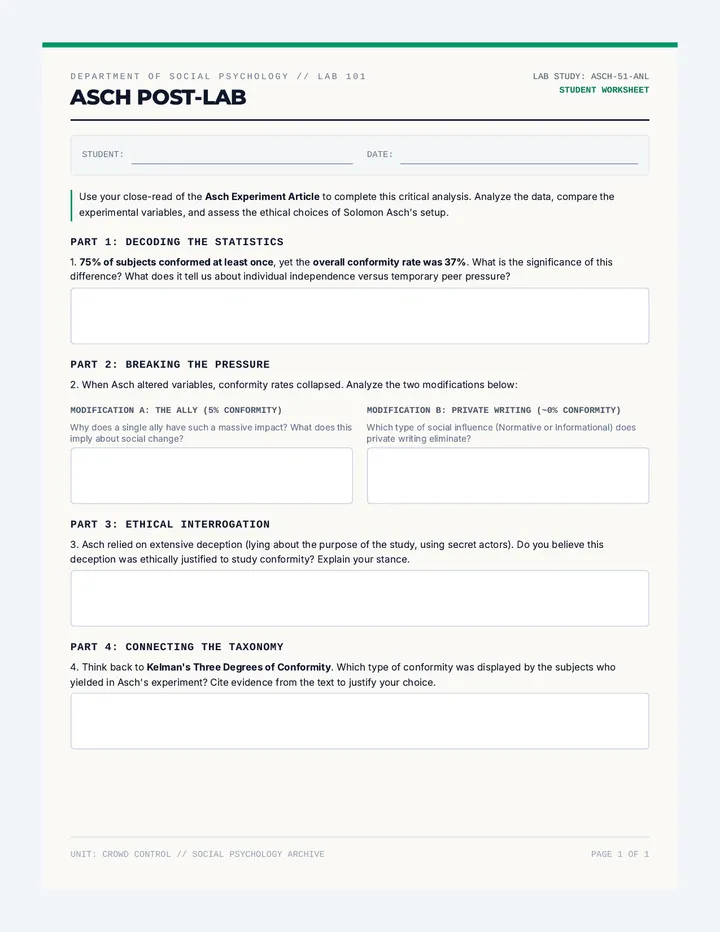
Focuses on Solomon Asch's landmark 1951 conformity experiment. Students close-read an informational text about the study's design, results, and ethical implications, and answer critical thinking questions.
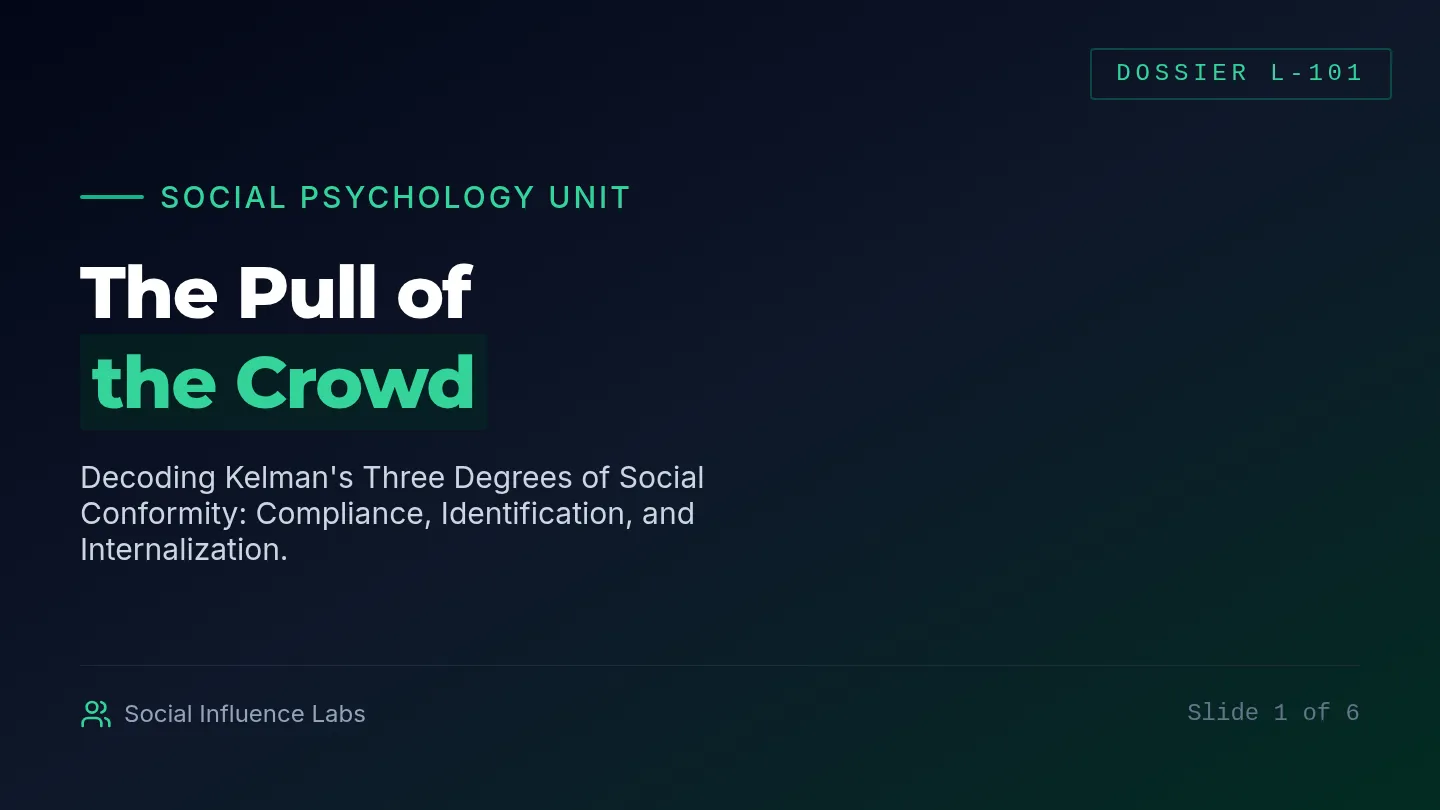
Introduces the social psychology of conformity, focusing on Herbert Kelman's three types: compliance, identification, and internalization. Students analyze real-world scenarios and map definitions on a graphic organizer.
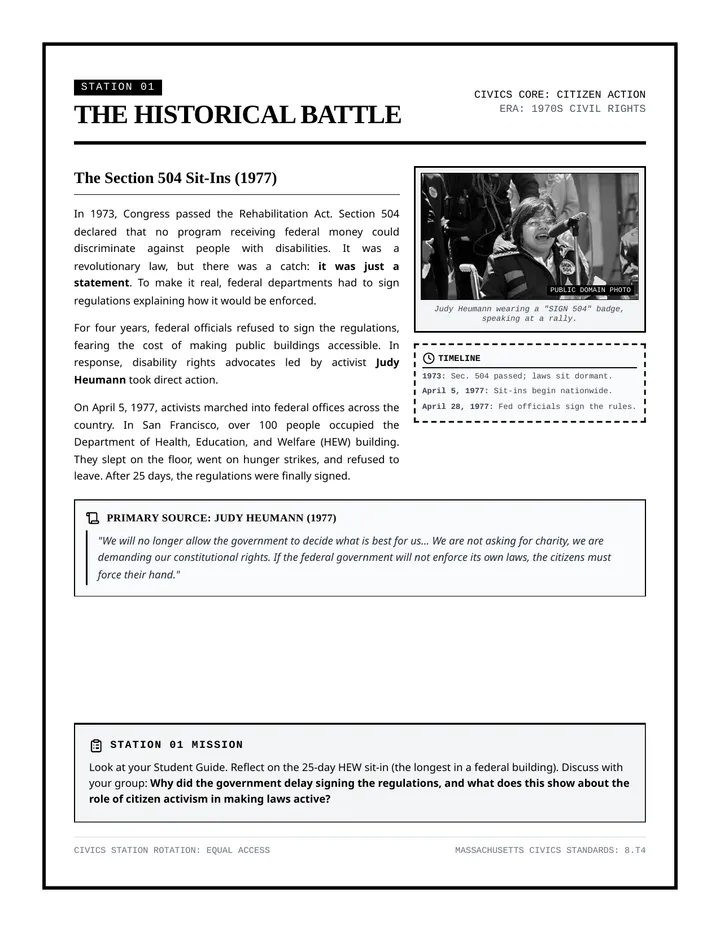
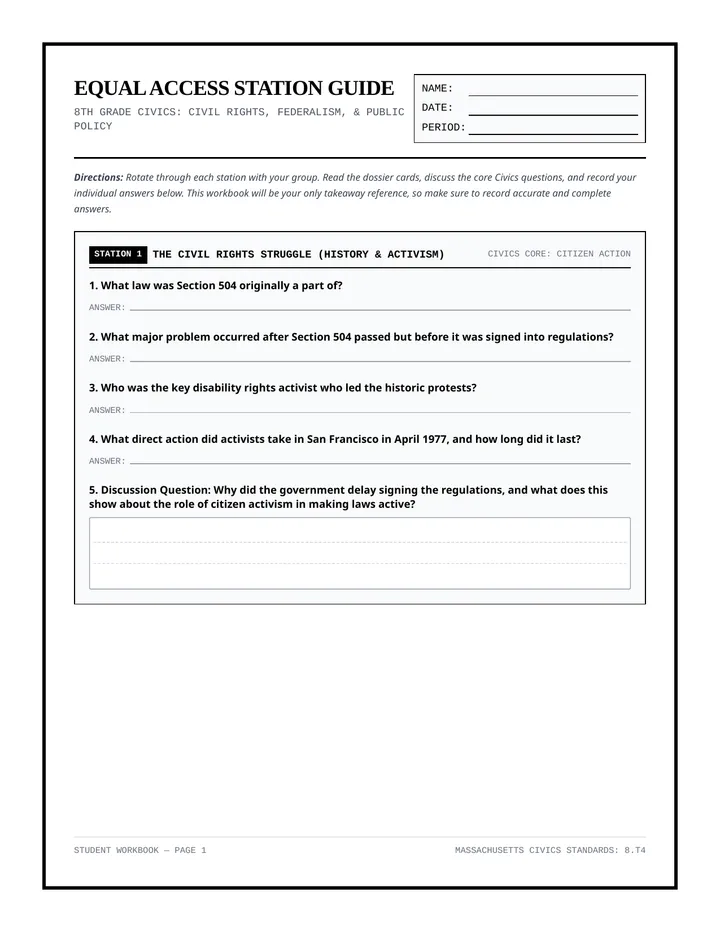
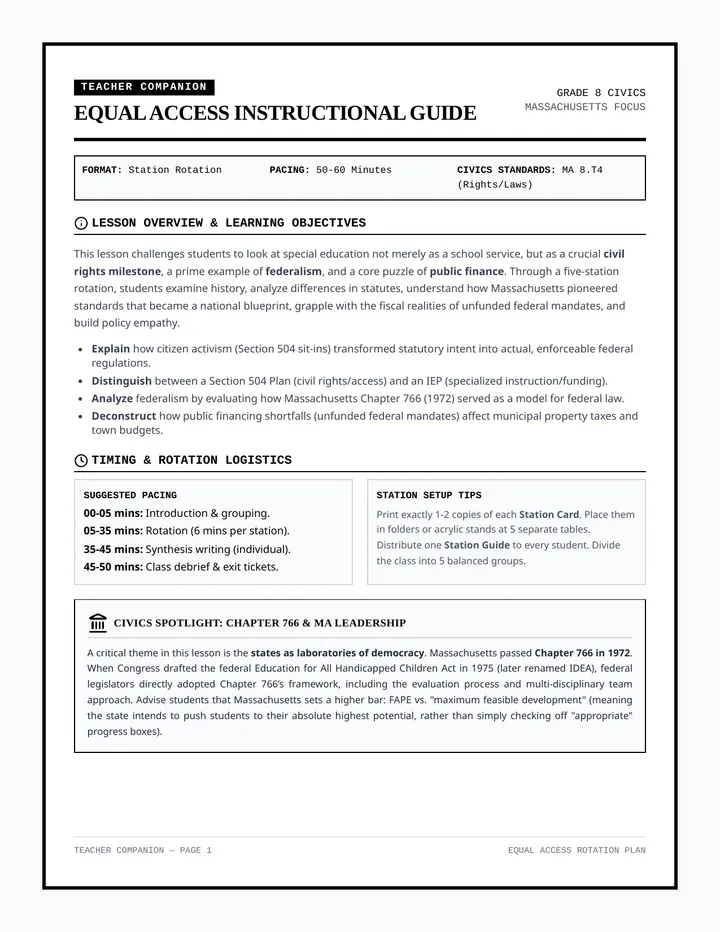
An 8th-grade Civics station rotation lesson exploring the history, laws, funding, and federalism of 504 and IEP services, comparing federal mandates with Massachusetts state standards.
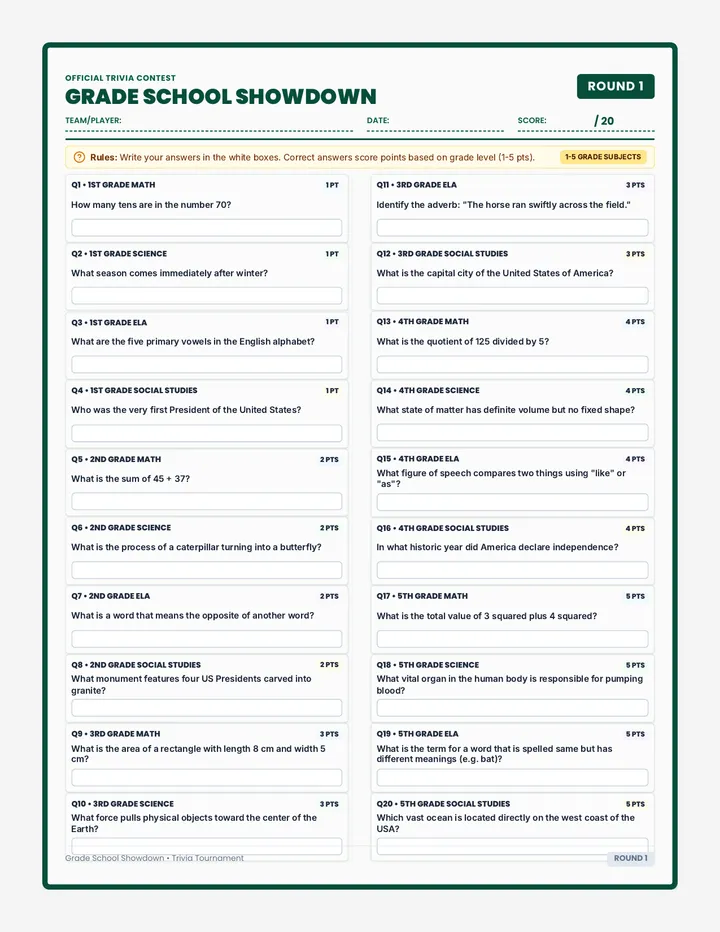
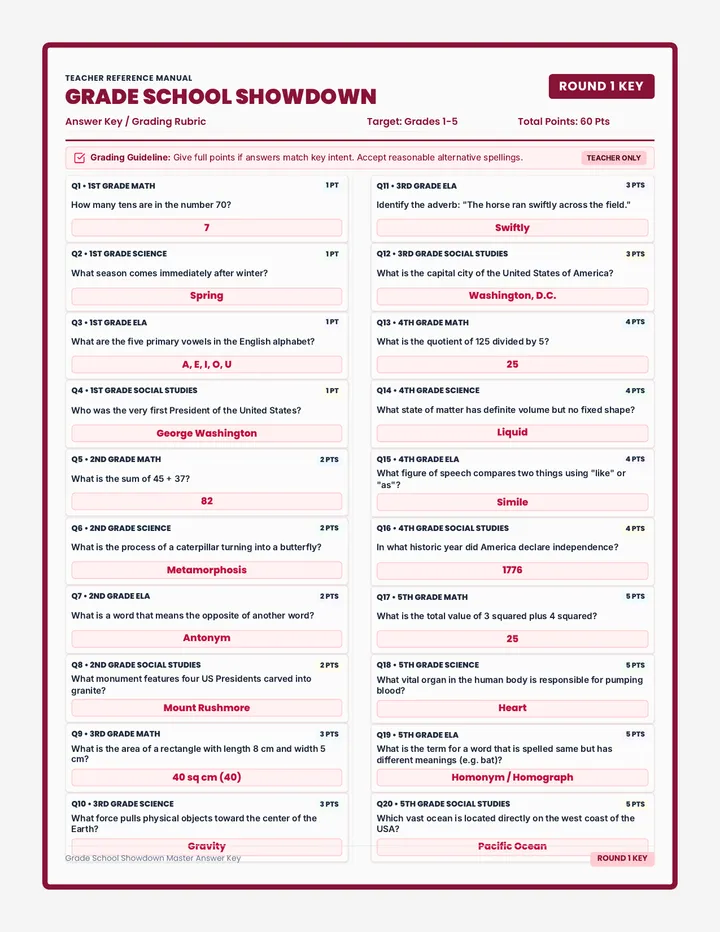
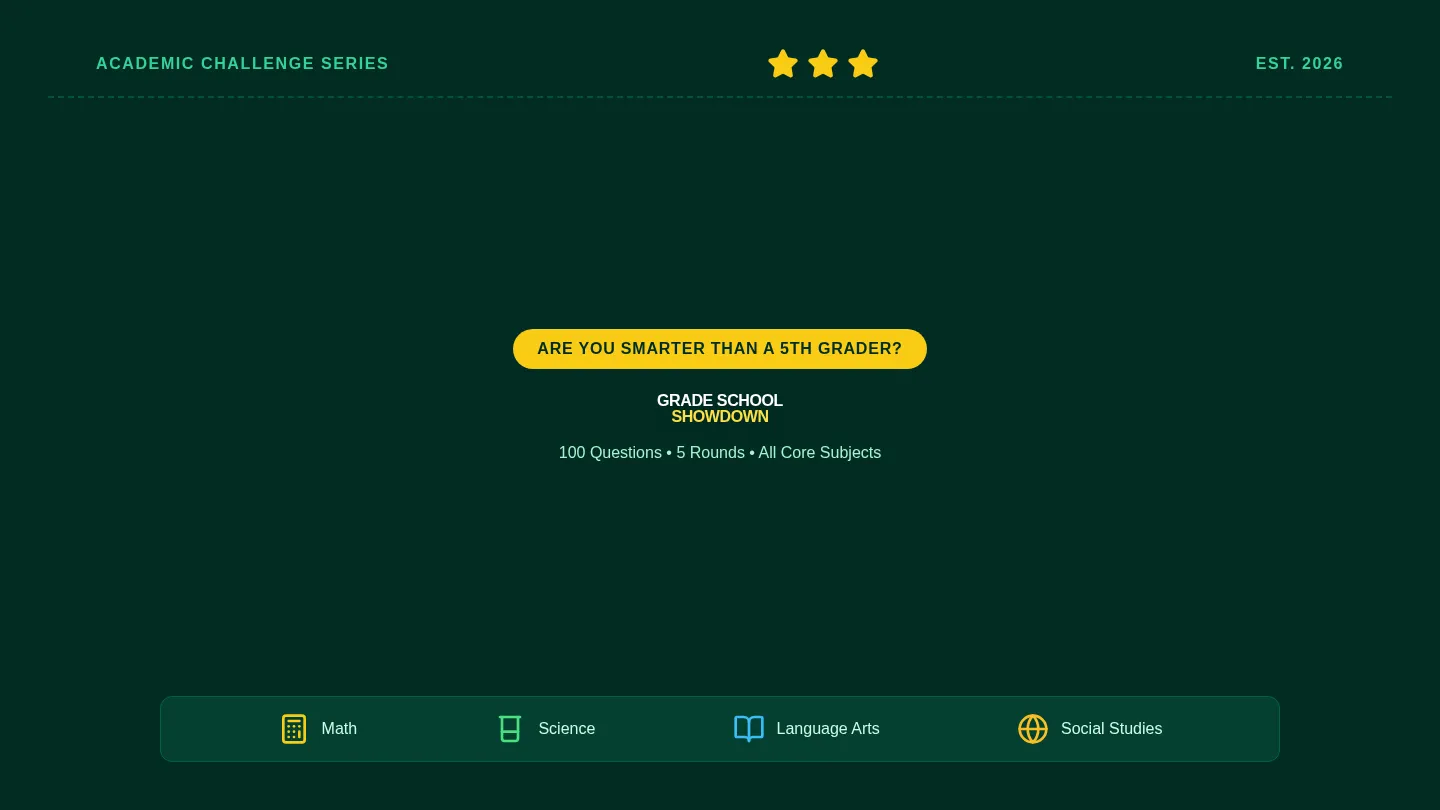
An engaging academic trivia game based on "Are You Smarter Than a 5th Grader?". Includes five comprehensive rounds of questions across five grade levels, complete with an interactive presentation, a print-ready student booklet, and a teacher's answer guide.
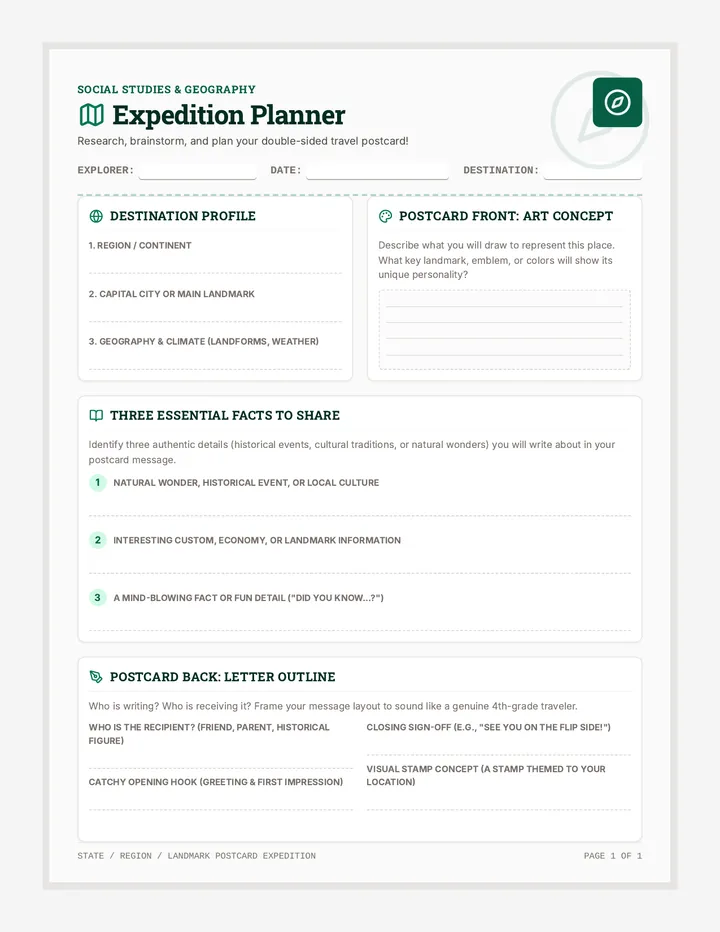
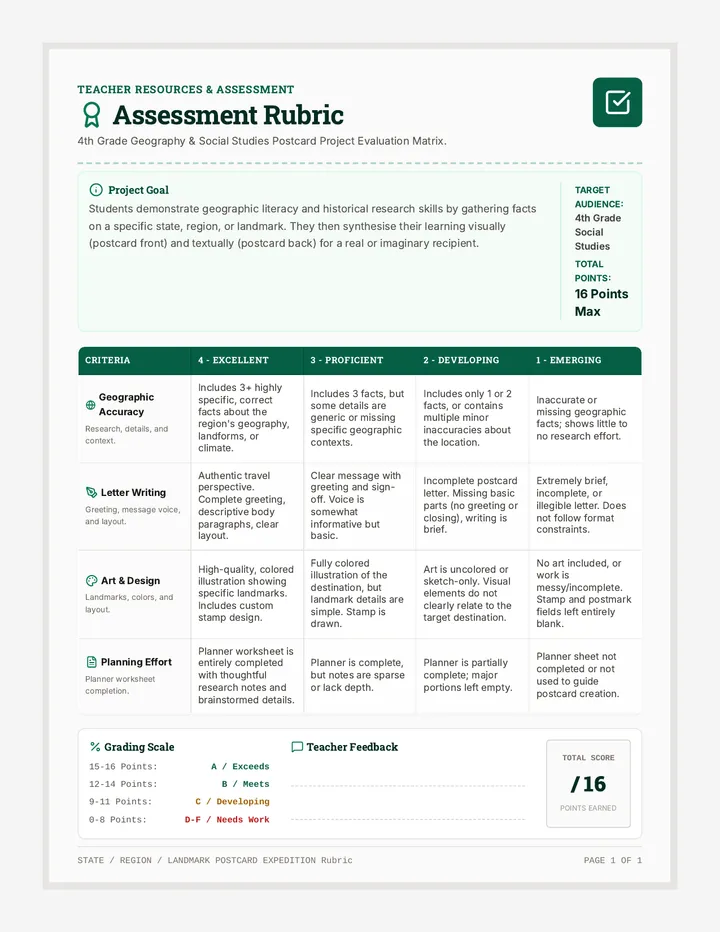
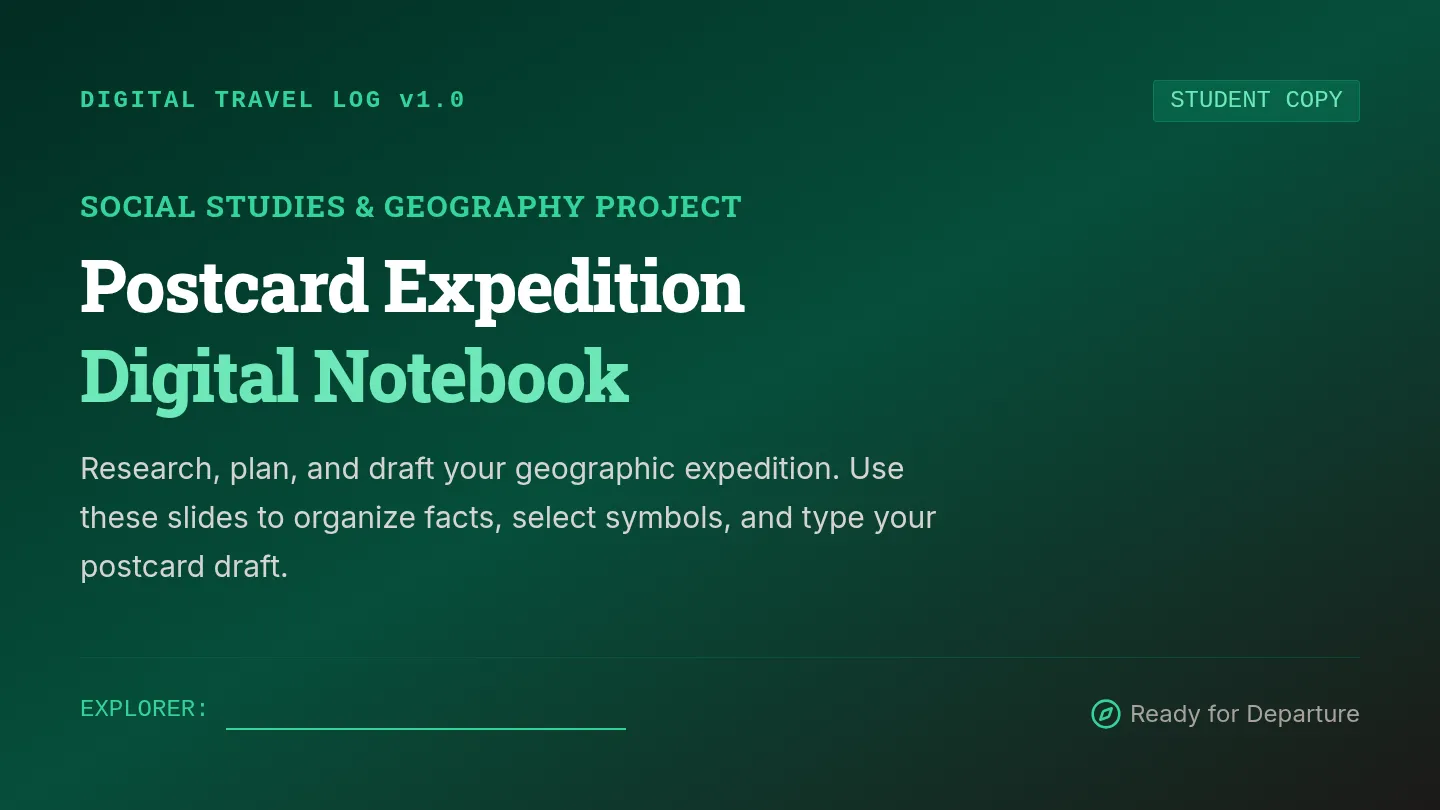
An immersive geography and social studies project where fourth-grade students research a state, region, landmark, or historical era and showcase their learning through a double-sided creative postcard, complete with an expedition planning sheet and a complete grading rubric.
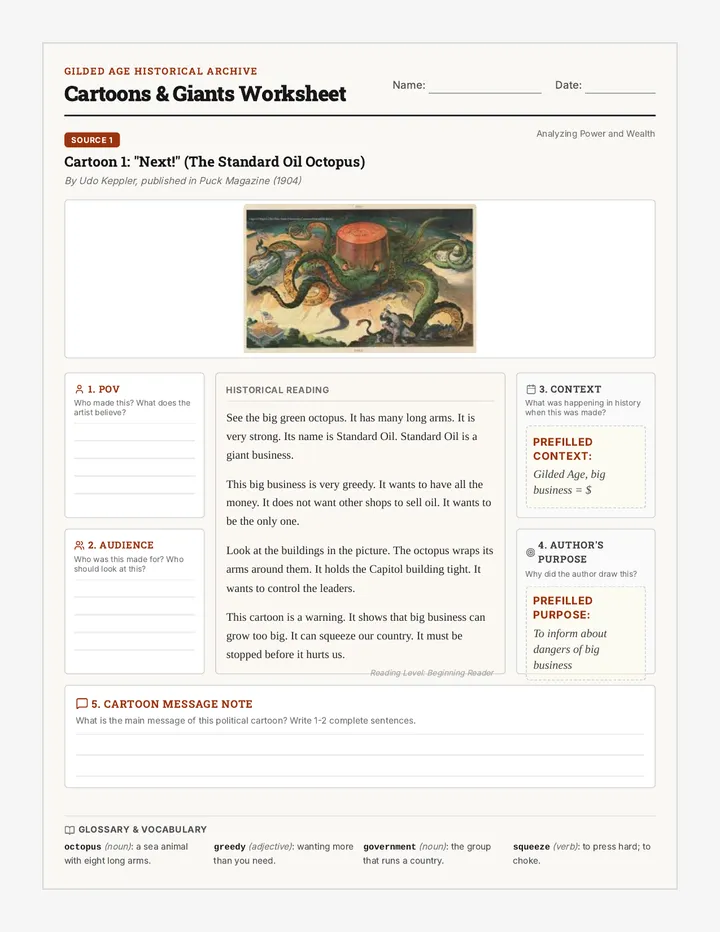
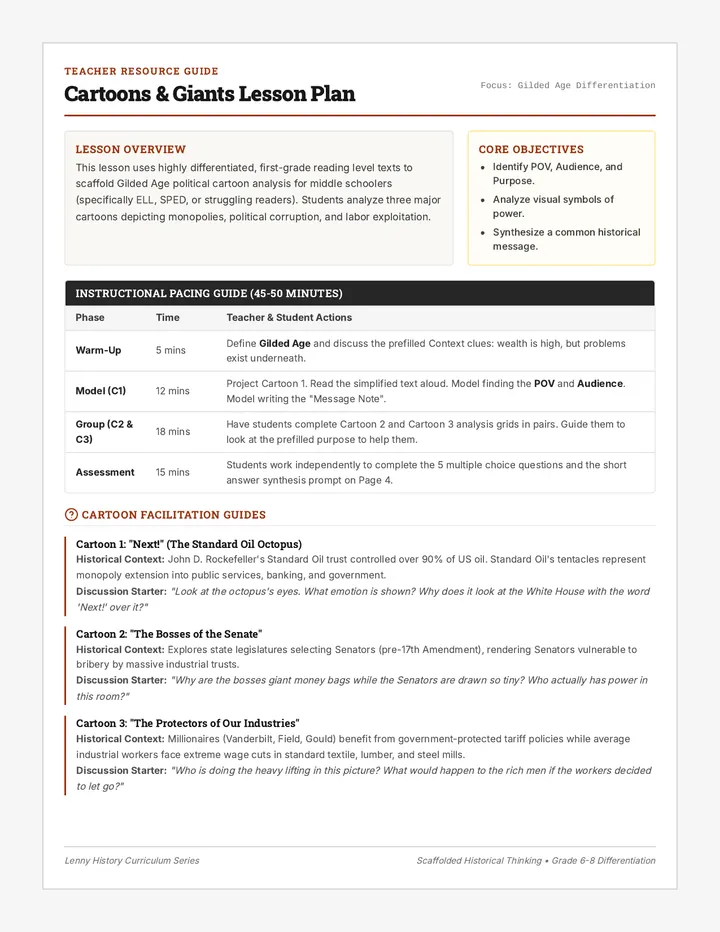
A differentiated history lesson analyzing three major Gilded Age political cartoons. It features student-facing worksheets with low-readability texts, visual analysis grids, a synthesis assessment, and a comprehensive teacher guide with full solutions.
A comprehensive lesson exploring the transition from the roaring optimism of the 1920s to the structural causes of the Great Depression, including the agricultural crisis, income inequality, global trade collapse, and the 1929 stock market crash.
An inquiry-based lesson investigating the transition from the roaring 1920s to the Great Depression. Students analyze how economic policies, consumer credit, and social tensions fueled a cultural boom that ended in systemic collapse.
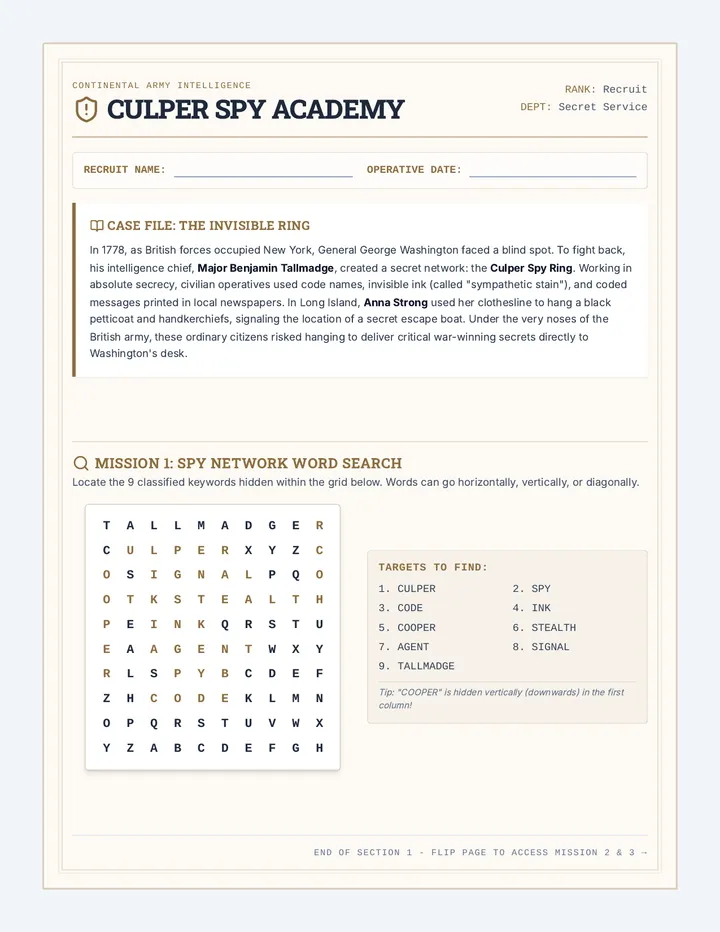
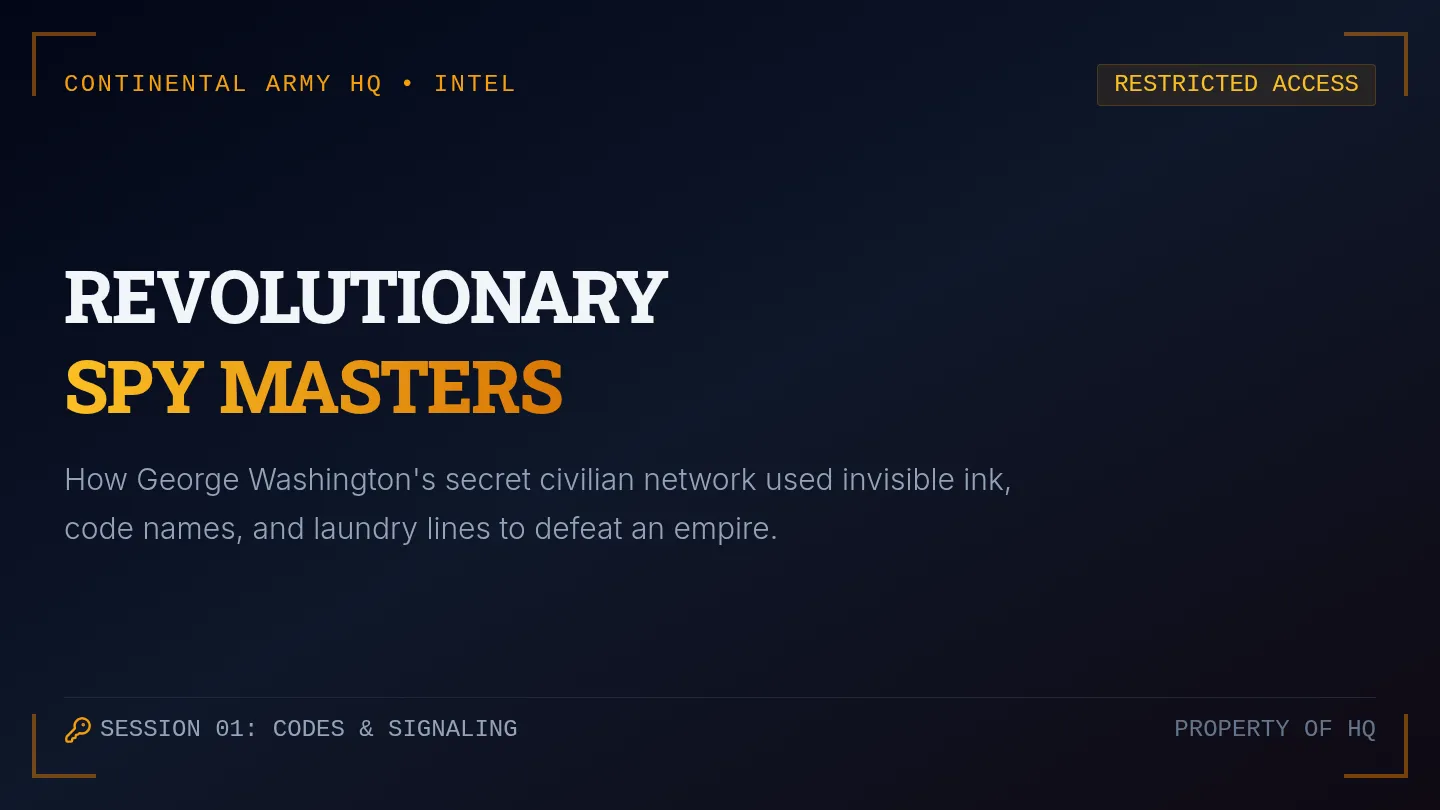
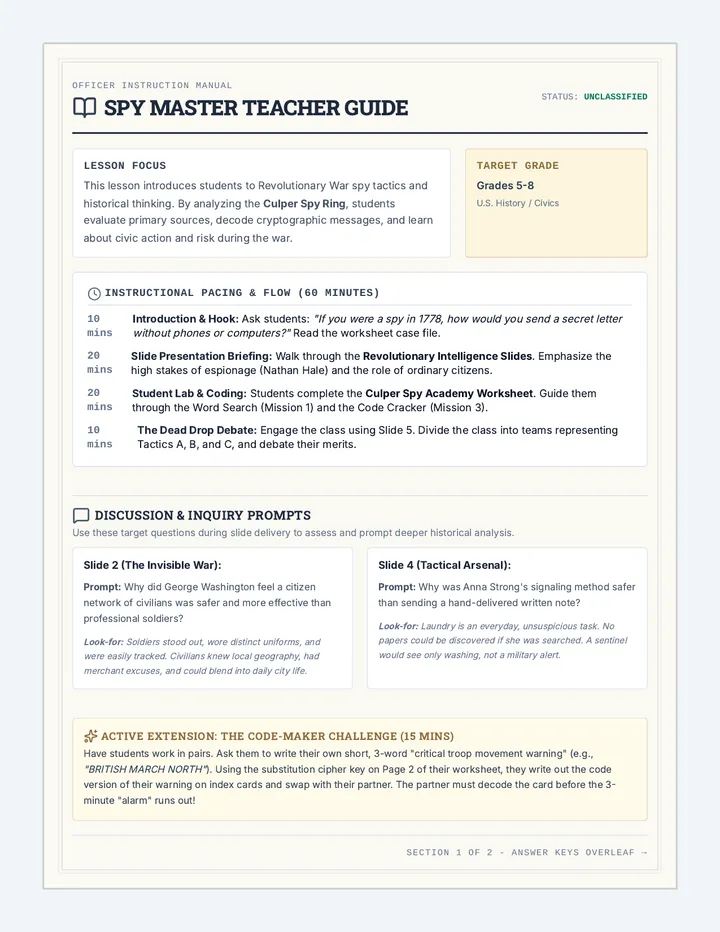
An engaging introductory lesson on American Revolution espionage, focusing on the Culper Spy Ring, secret codes, and stealthy tactics used by George Washington's network. Students learn historical analysis through code-breaking, word puzzles, and critical thinking challenges.
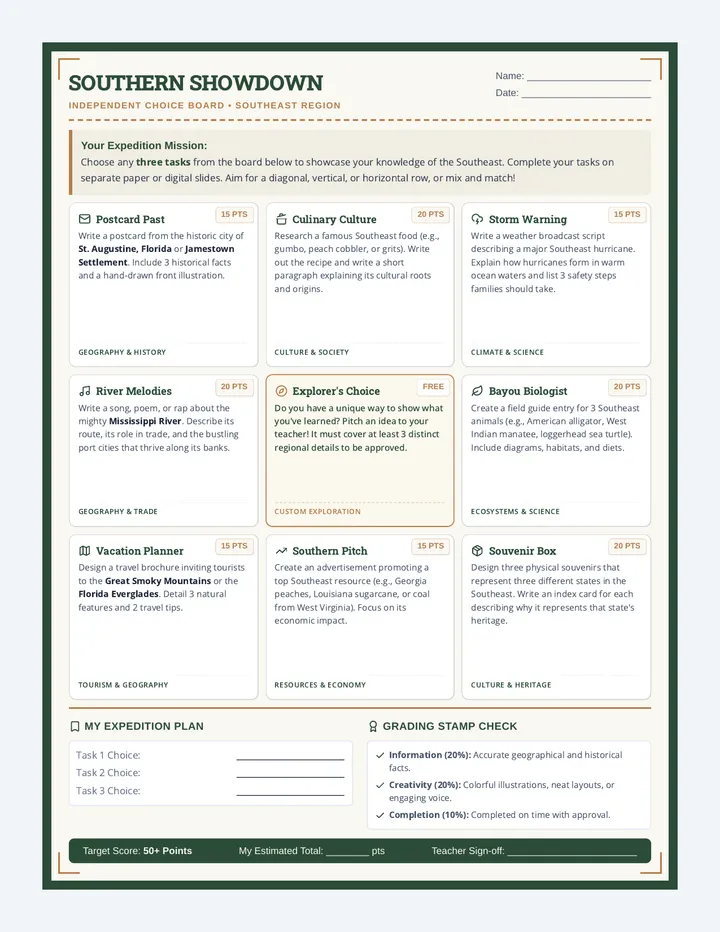
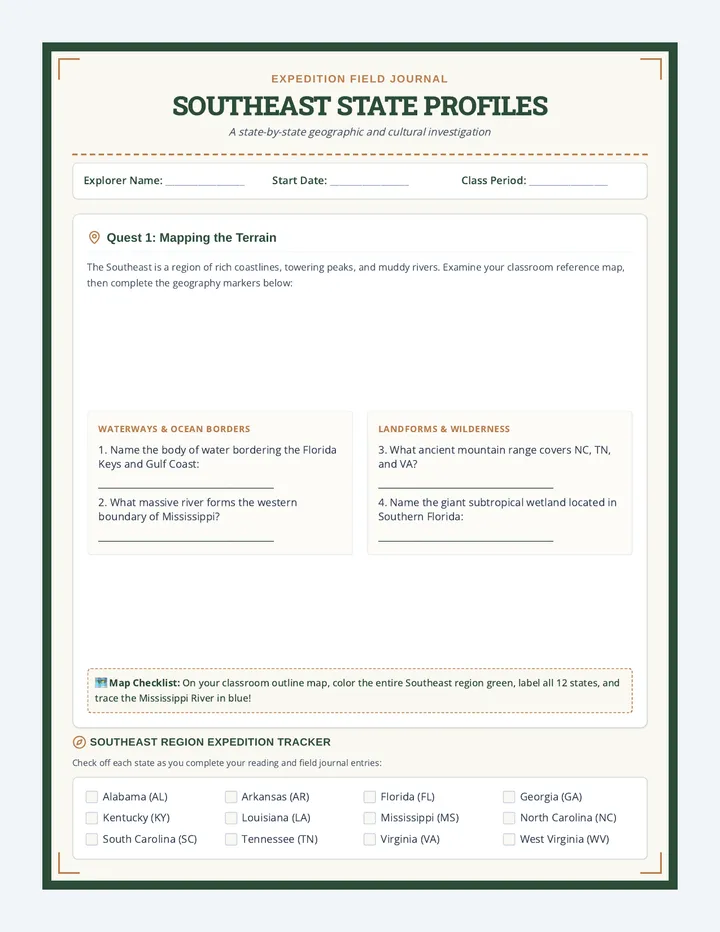
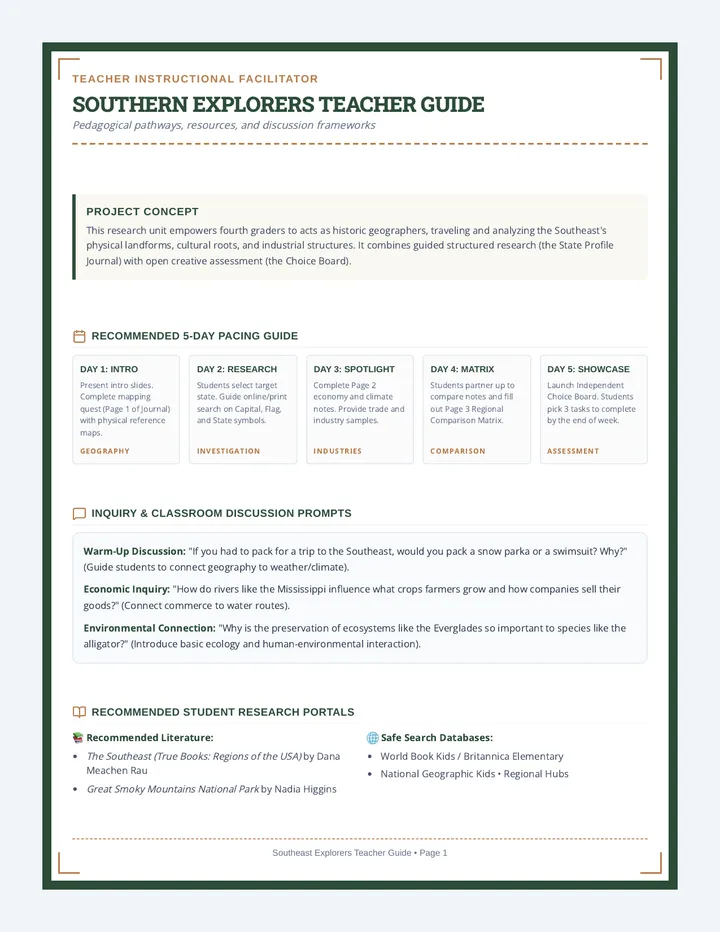
An immersive fourth-grade social studies research project focusing on the Southeast region of the United States. Students explore geography, history, and culture through guided state-by-state profiles and a creative choice board.