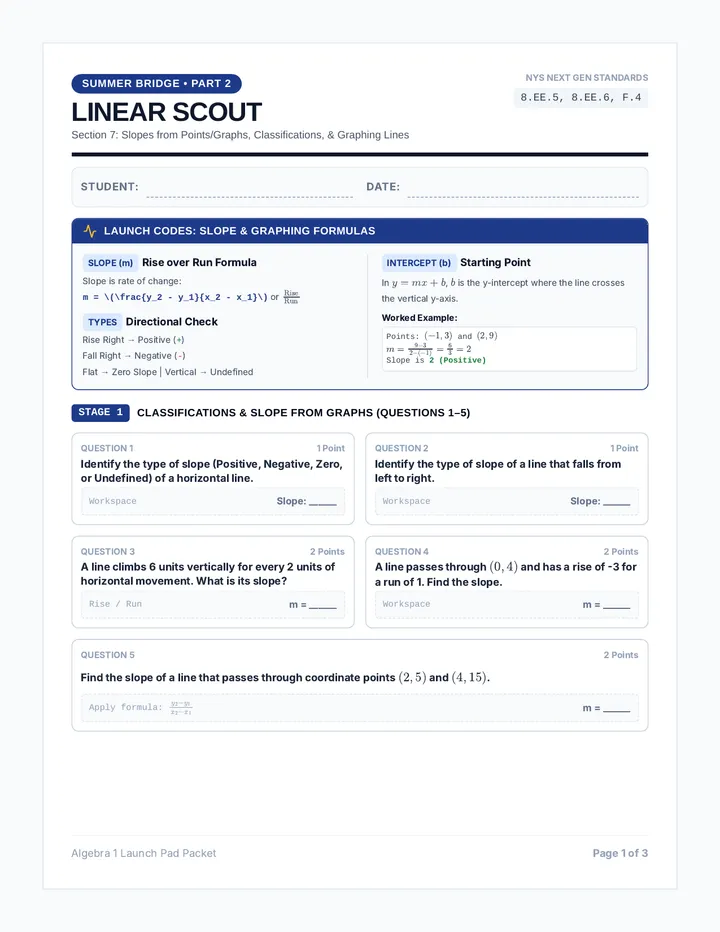
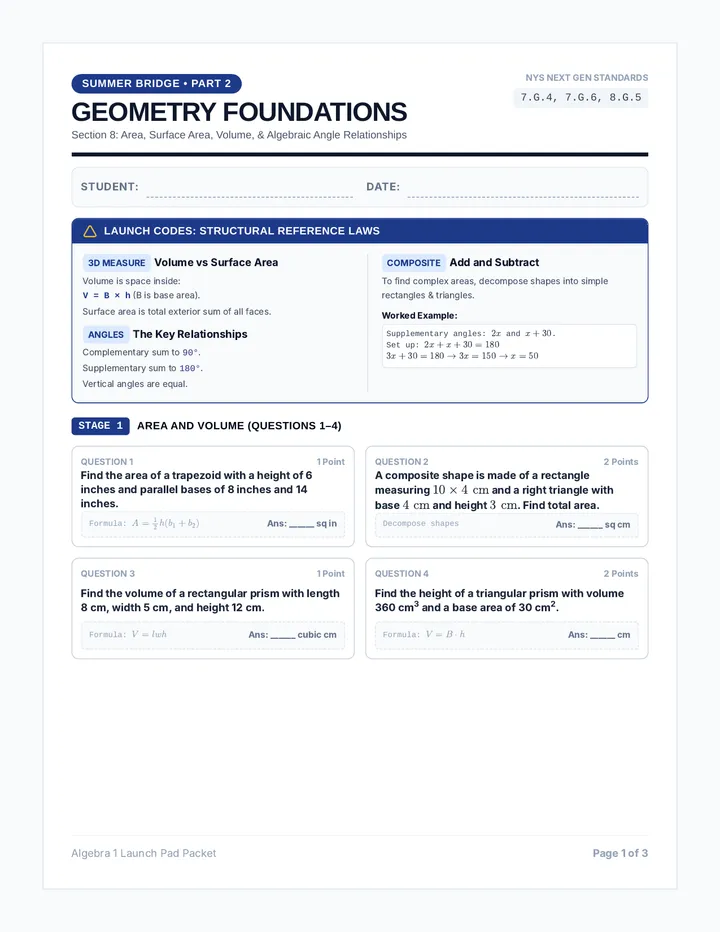
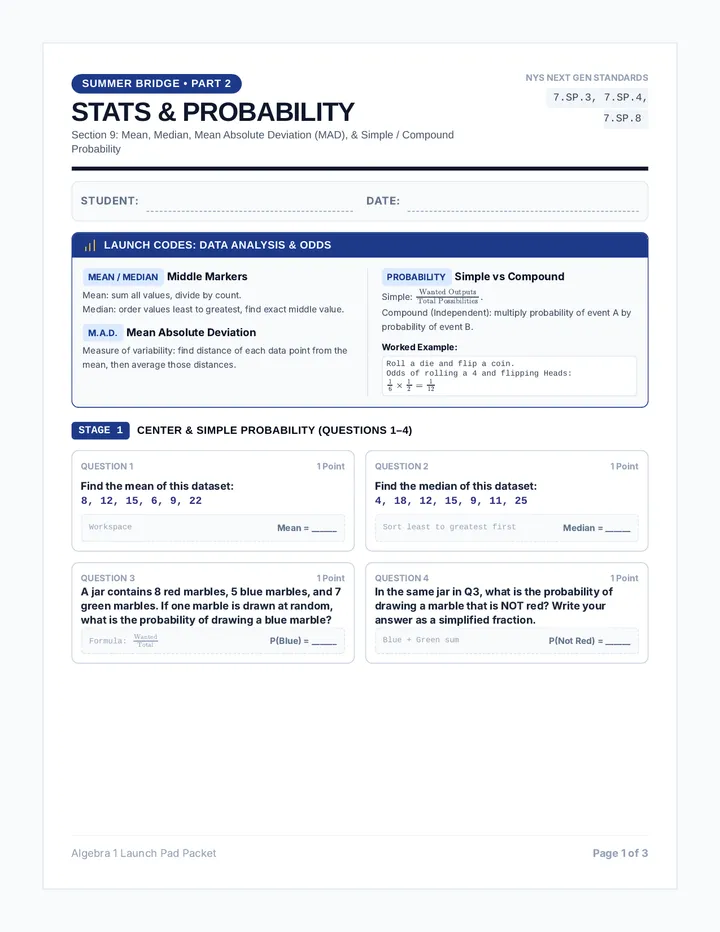
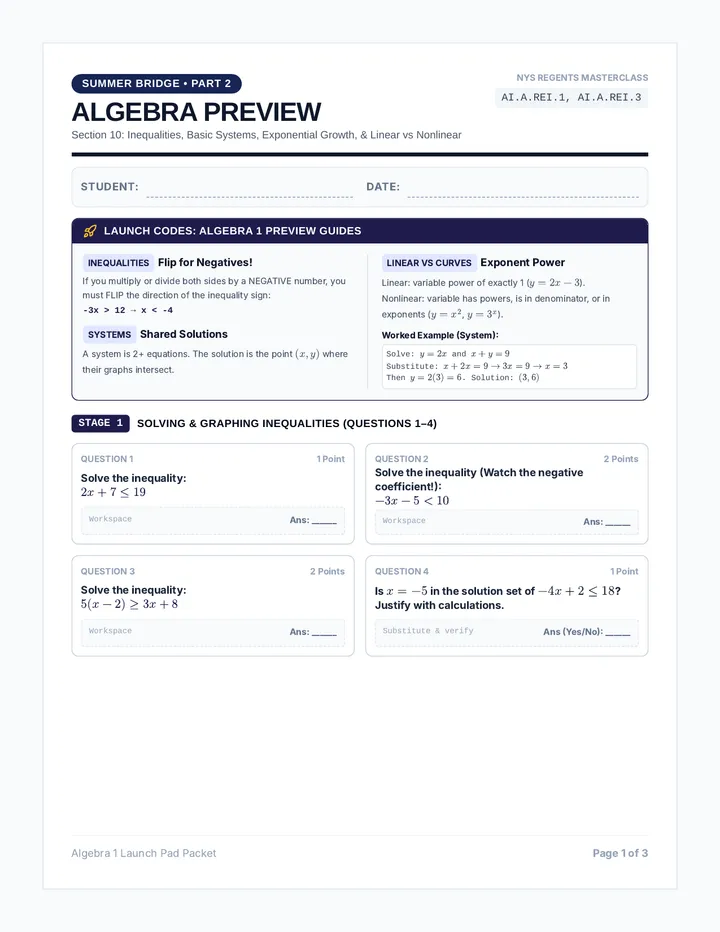
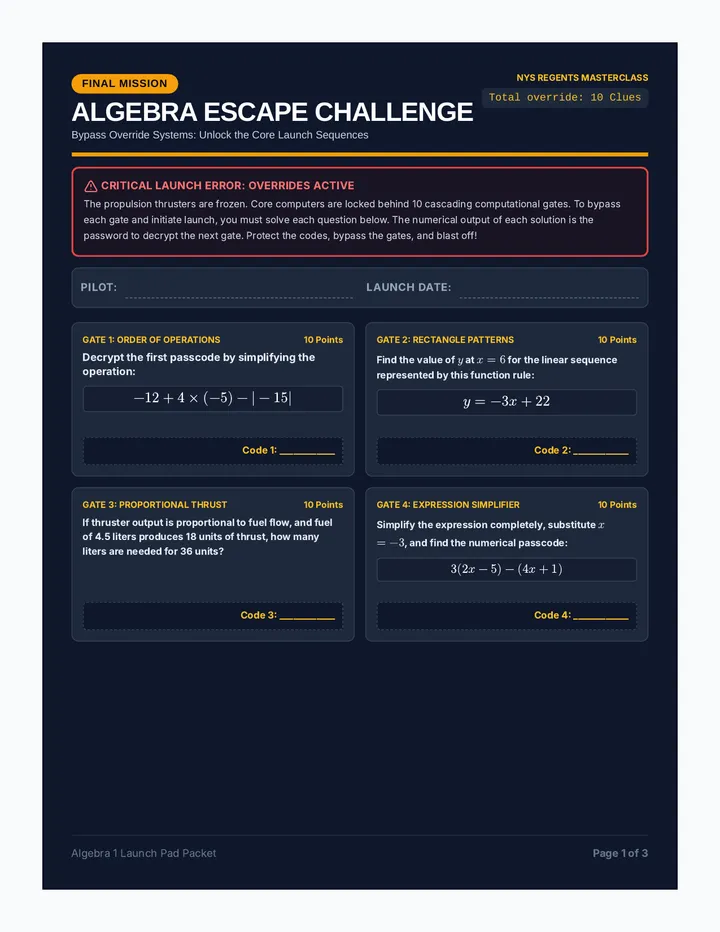
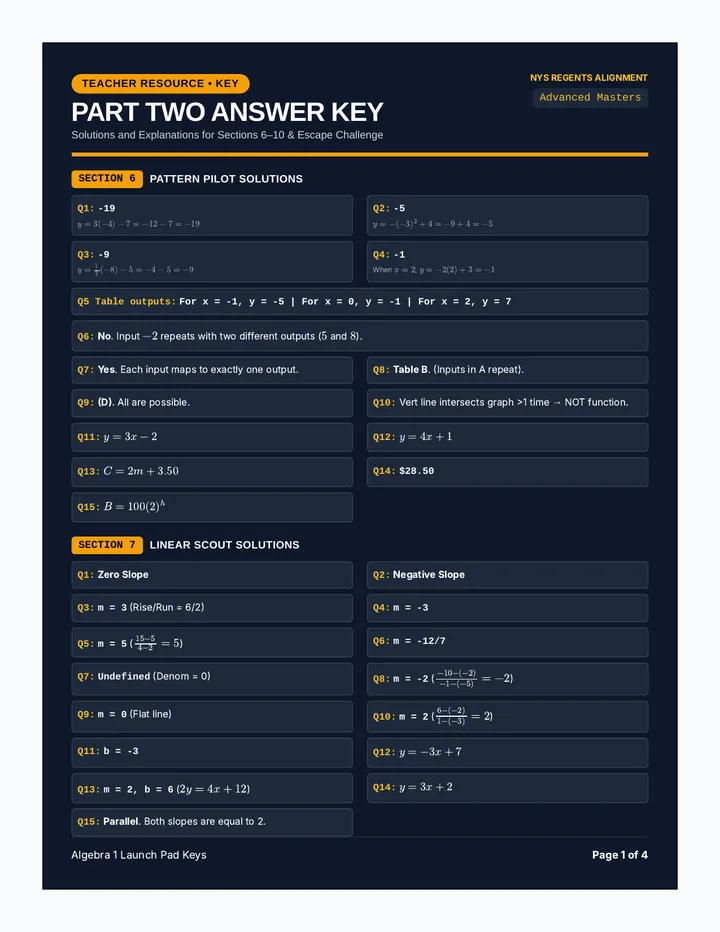
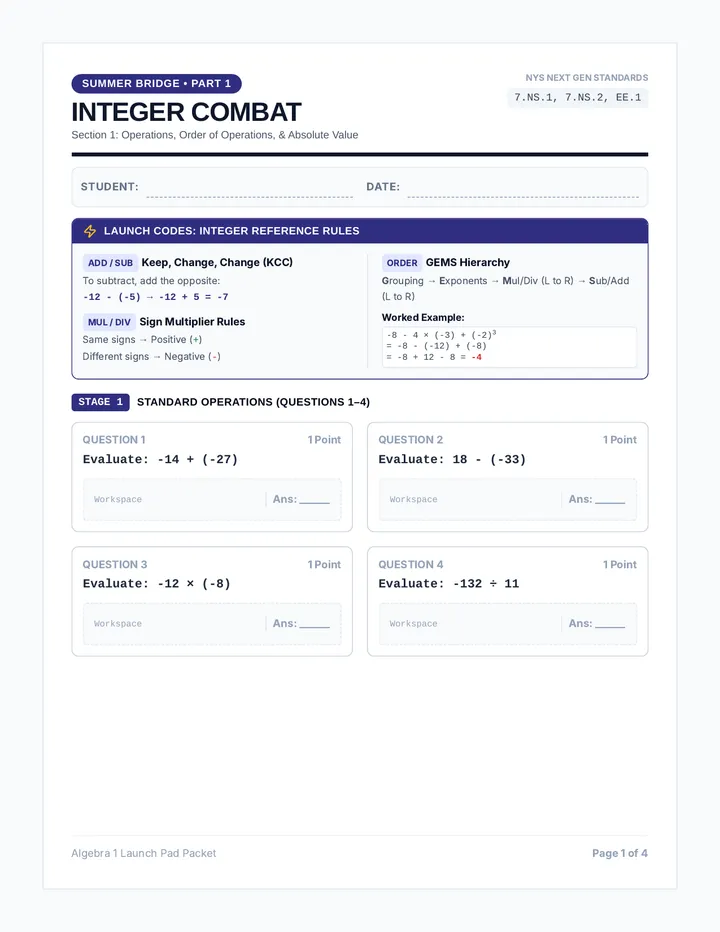
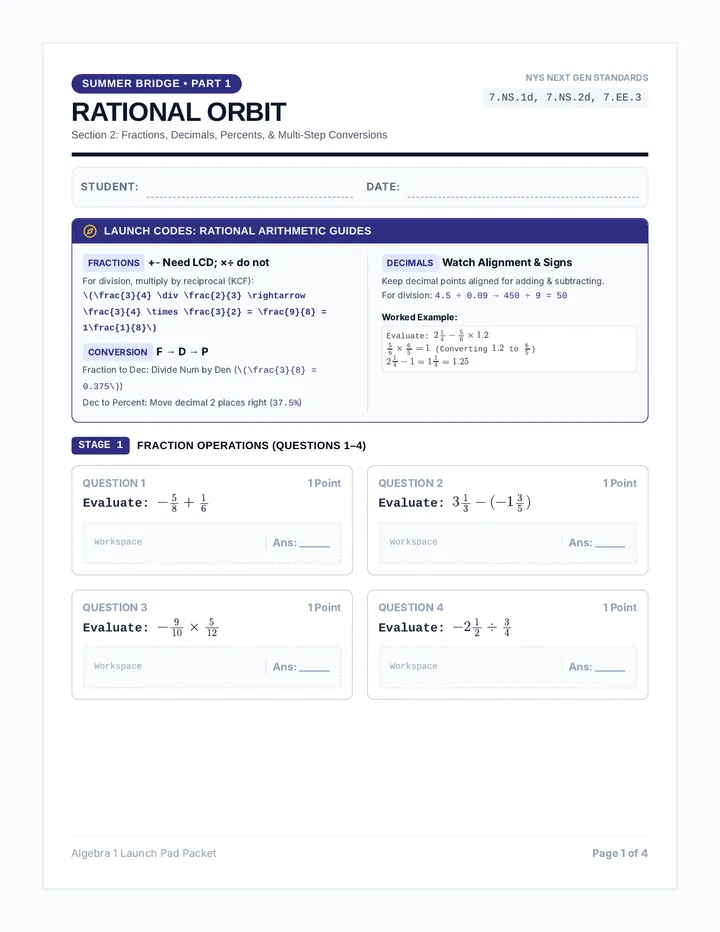
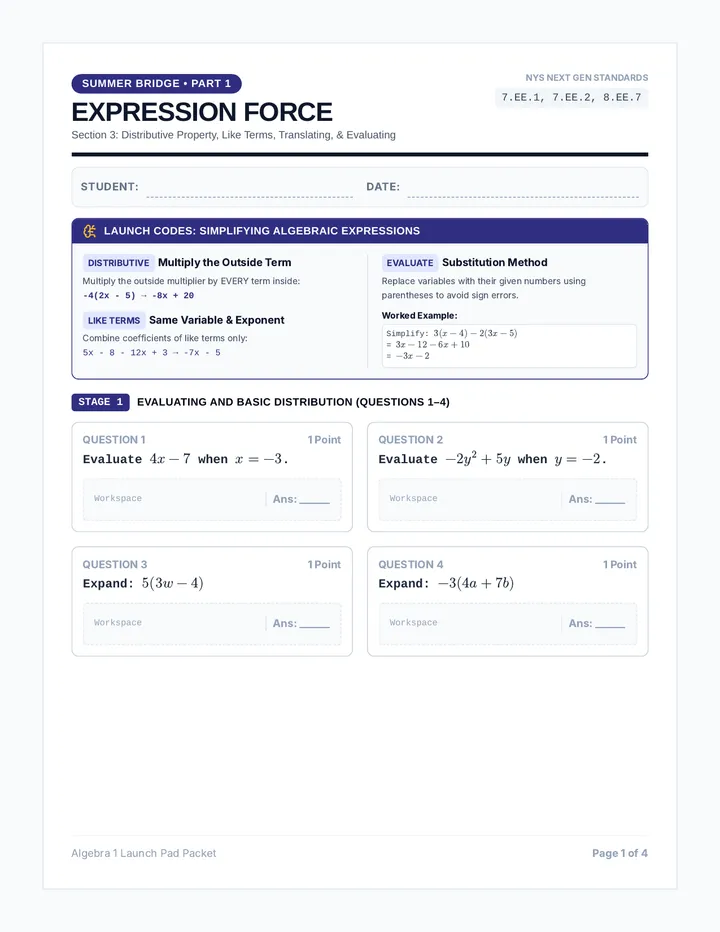
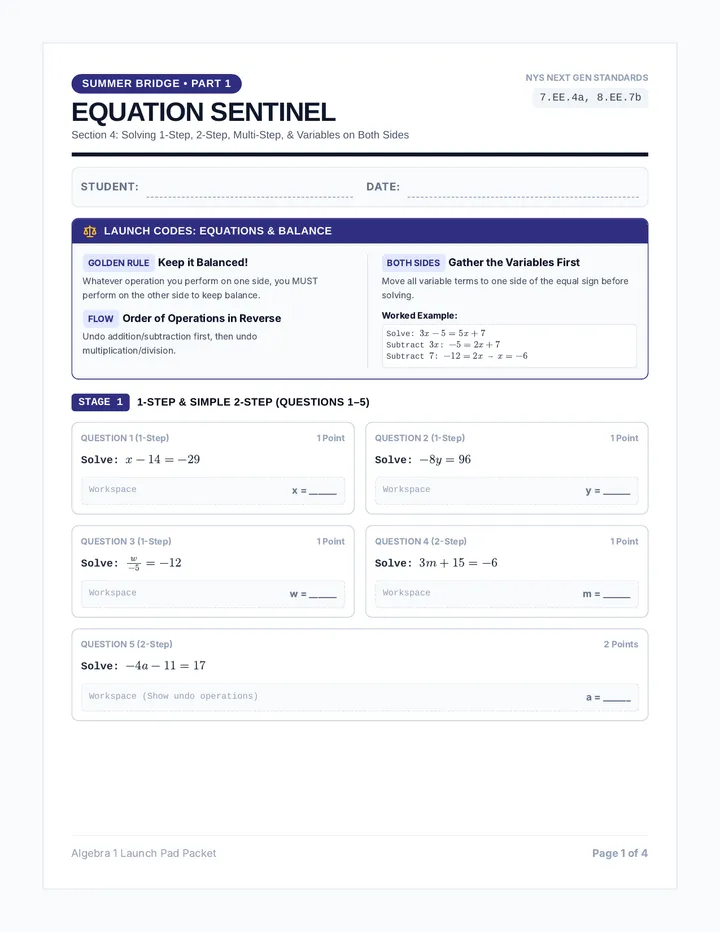
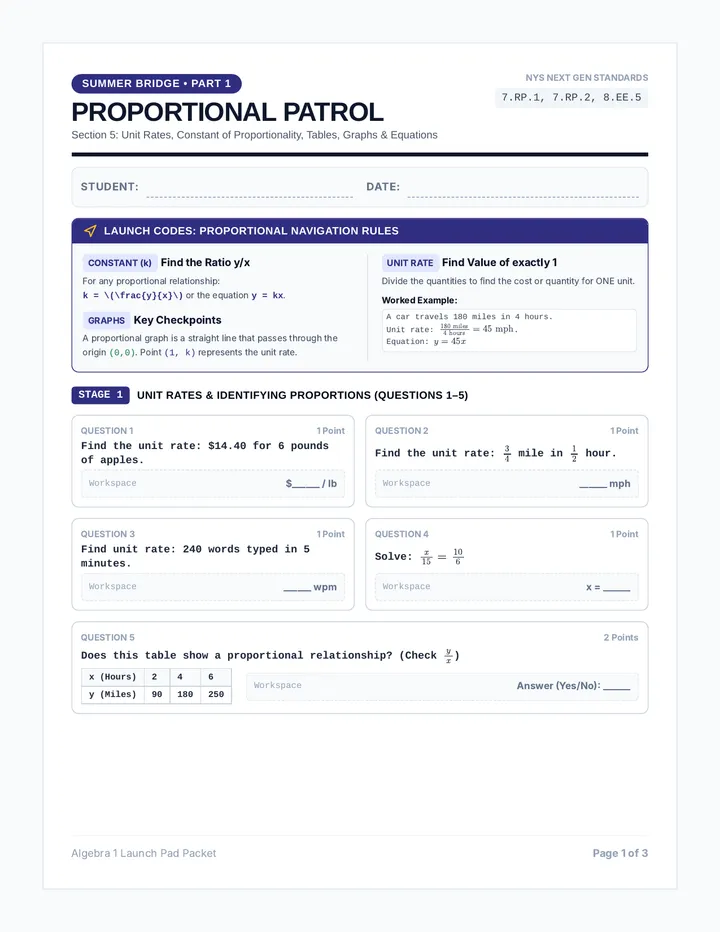
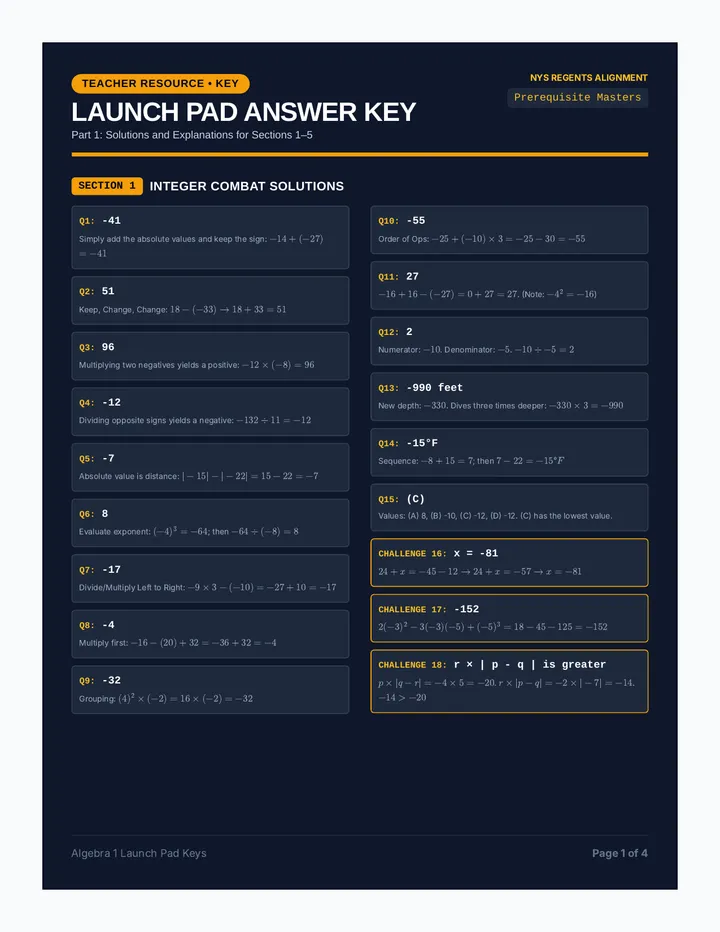
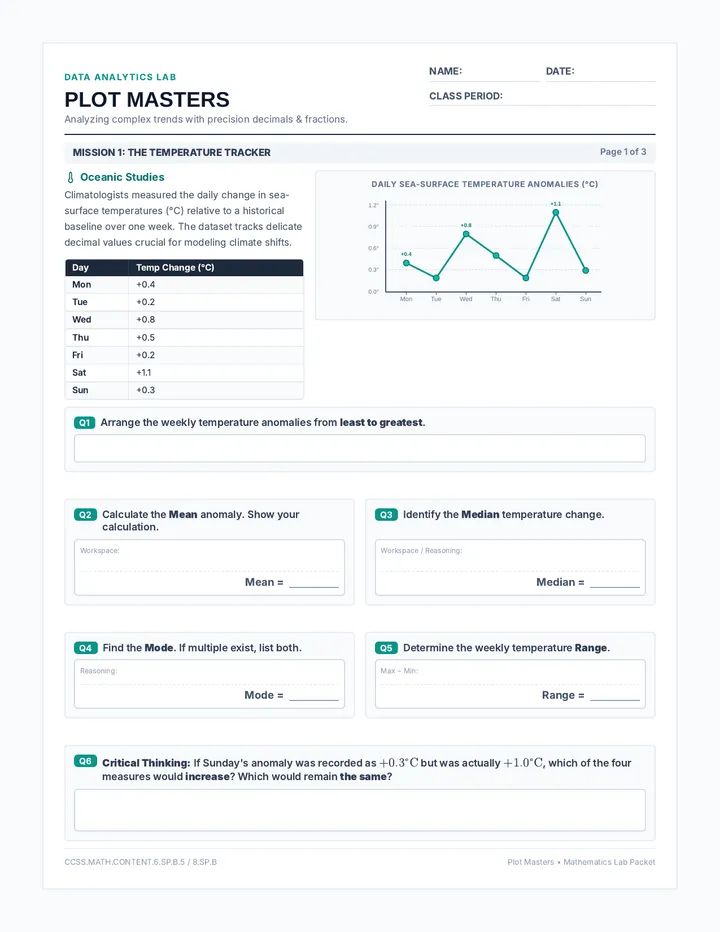
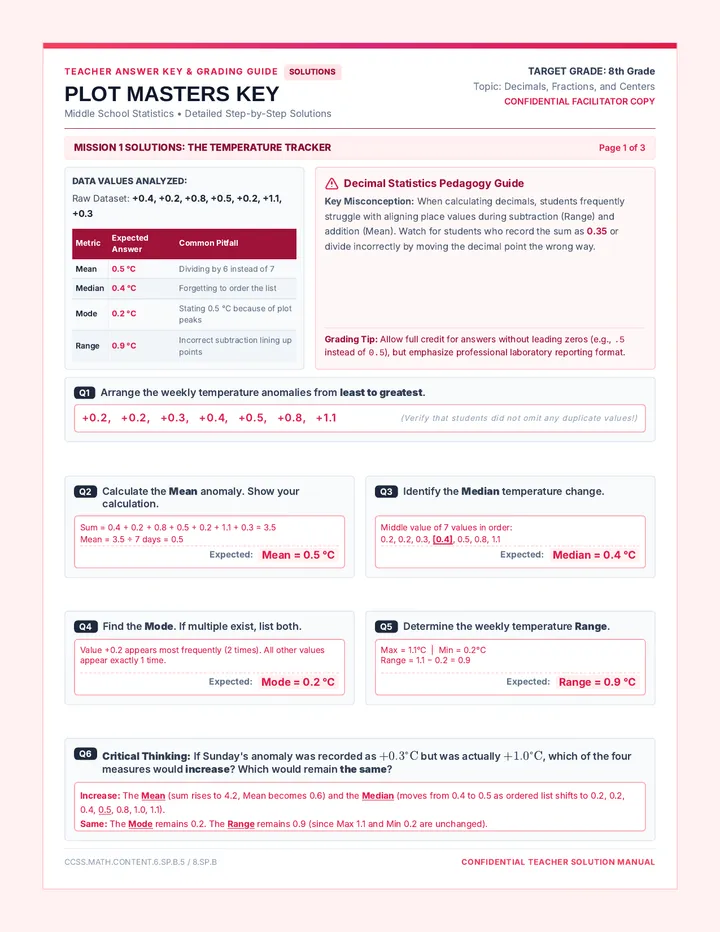
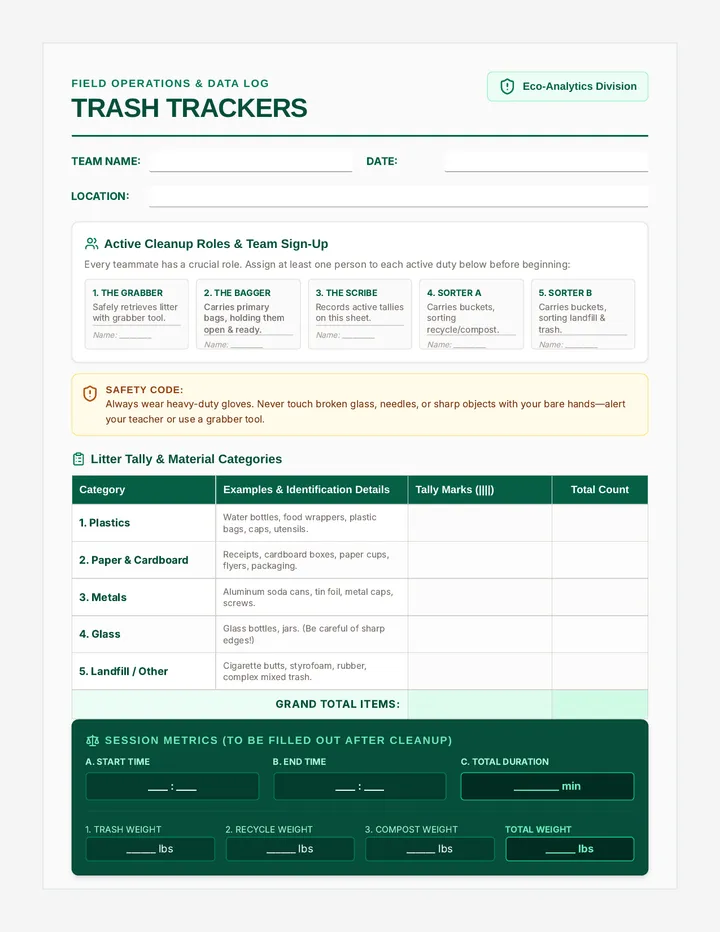
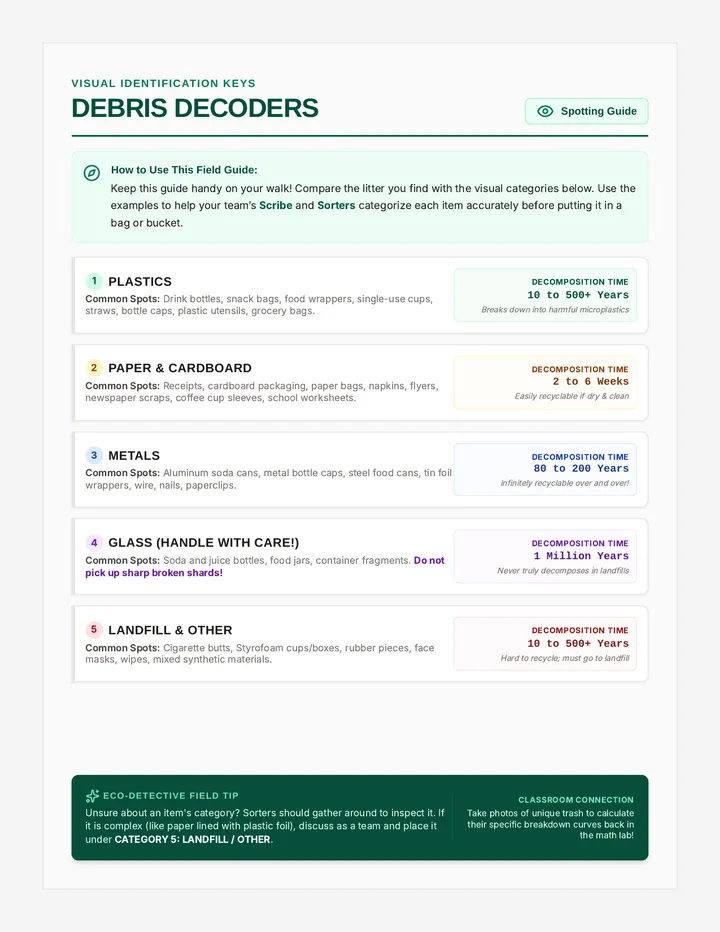
This lesson focuses on the structural difference between terms (added/subtracted) and factors (multiplied), using sorting activities to reinforce the hierarchy of operations.
A lesson focused on the geometric and algebraic relationships of parallel and perpendicular lines, teaching students how to identify slopes and write new equations using a technical blueprint aesthetic.
A comprehensive lesson covering geometric transformations (translations, reflections, rotations, and dilations) and the fundamentals of geometric proofs, including logical reasoning and triangle congruence.
A comprehensive math lesson focused on solving one-step addition and subtraction equations using a secret agent 'Operation Equation' theme, specifically designed for middle school SPED students with heavy visual scaffolding.
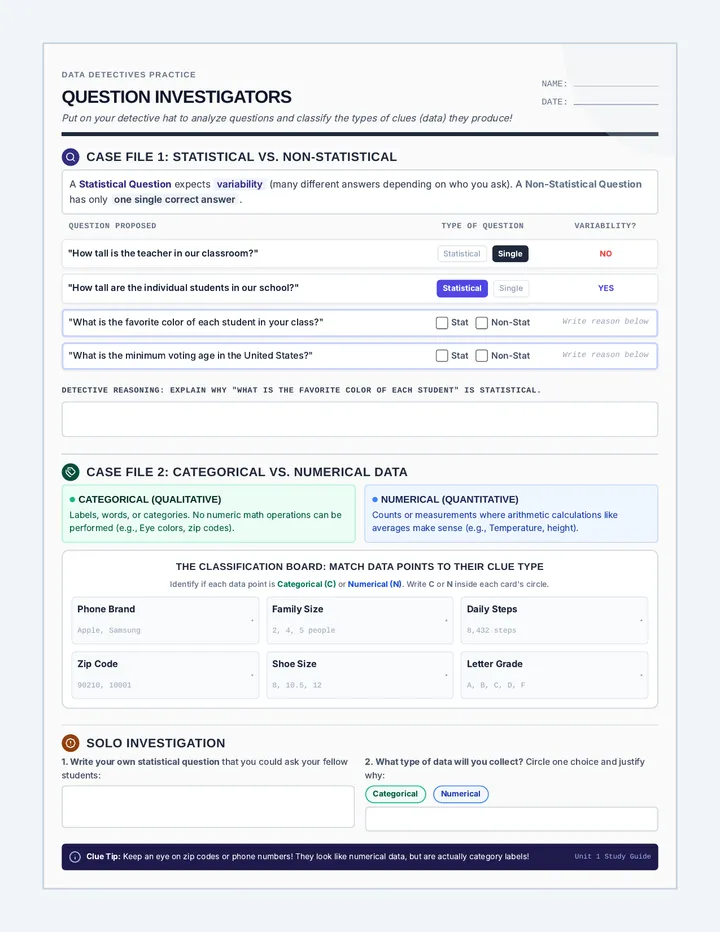
A comprehensive 90-minute math lesson focused on organizing data into intervals and creating/interpreting histograms using test score data. Students act as 'Data Detectives' to uncover trends in numerical information.
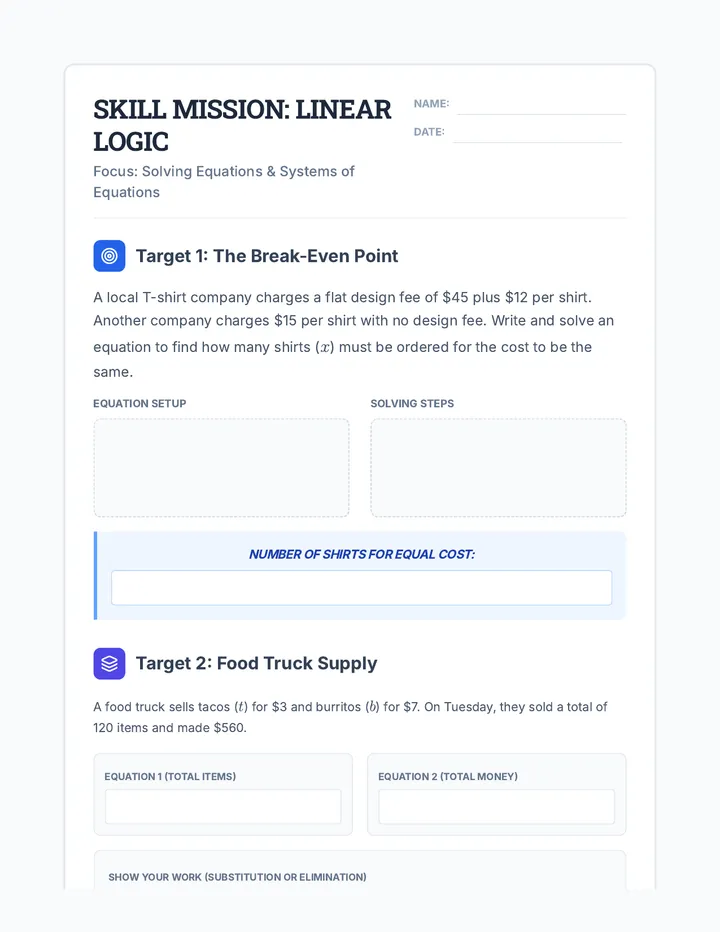
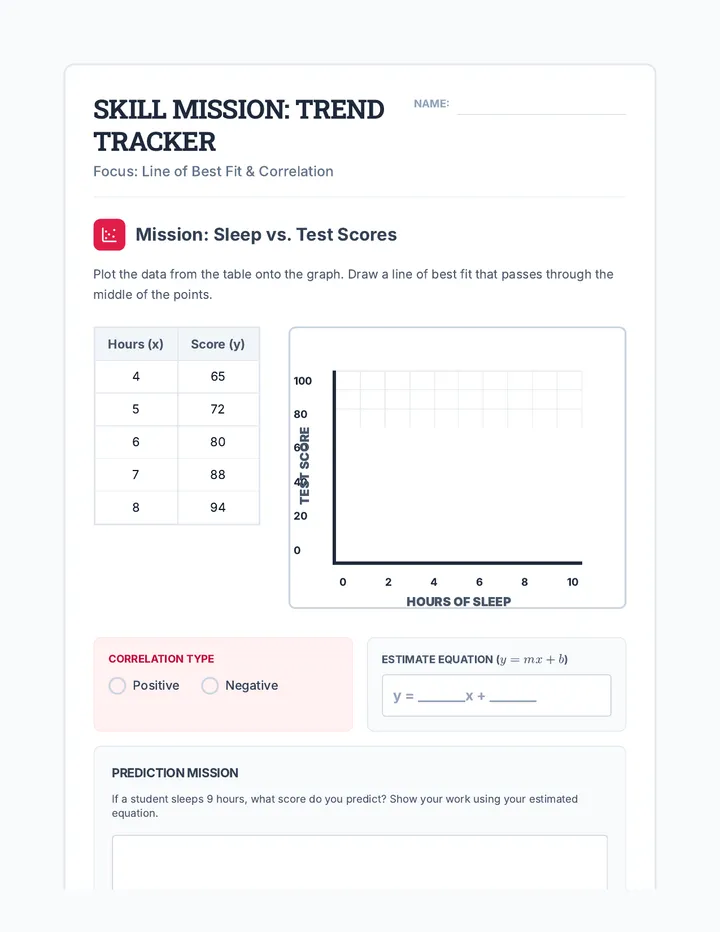
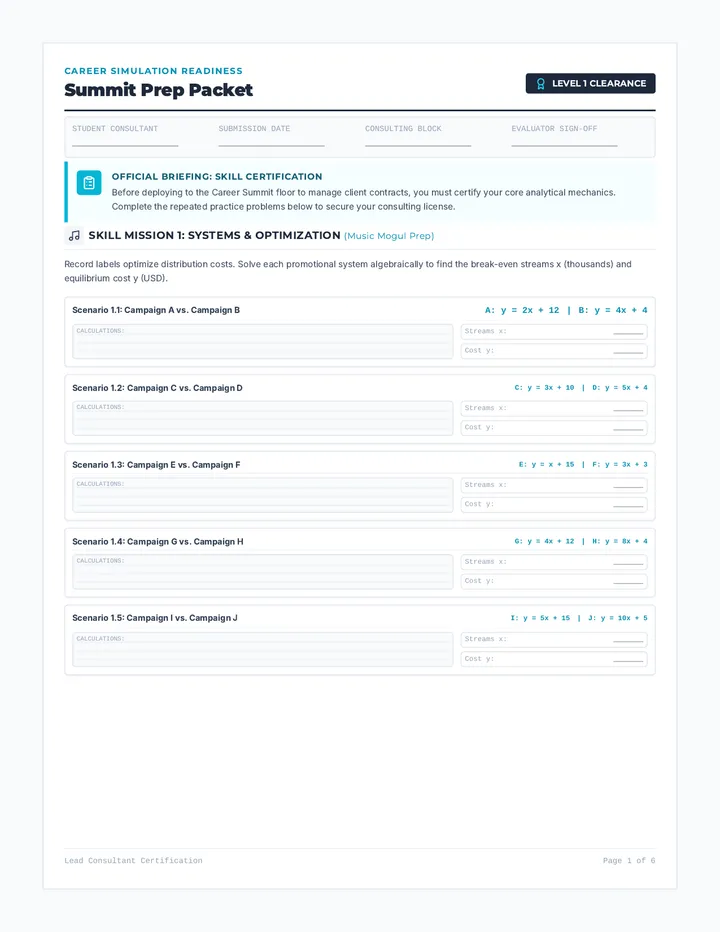
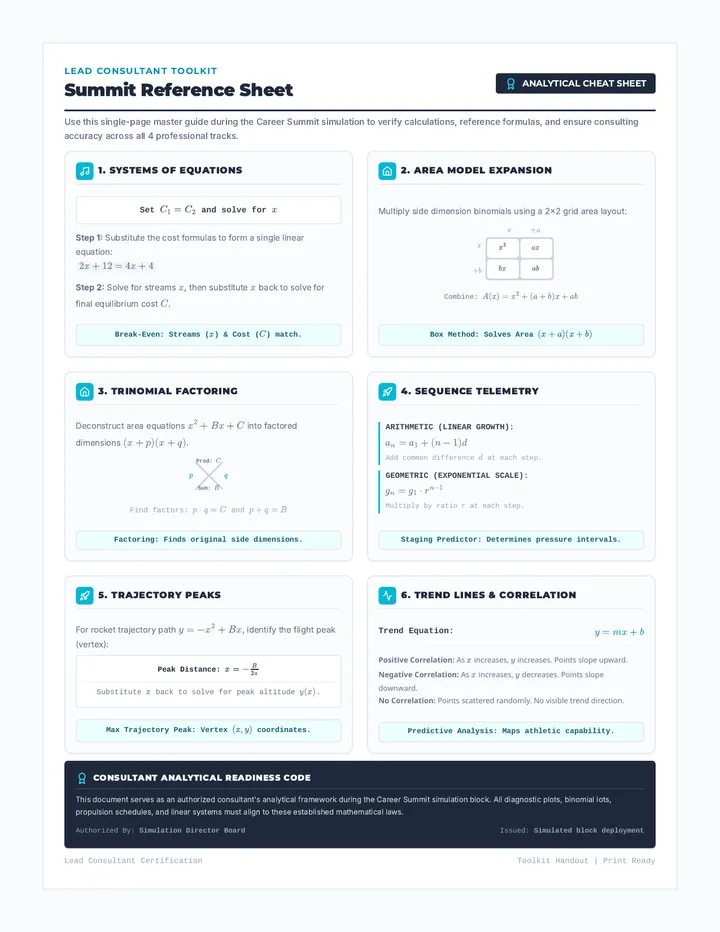
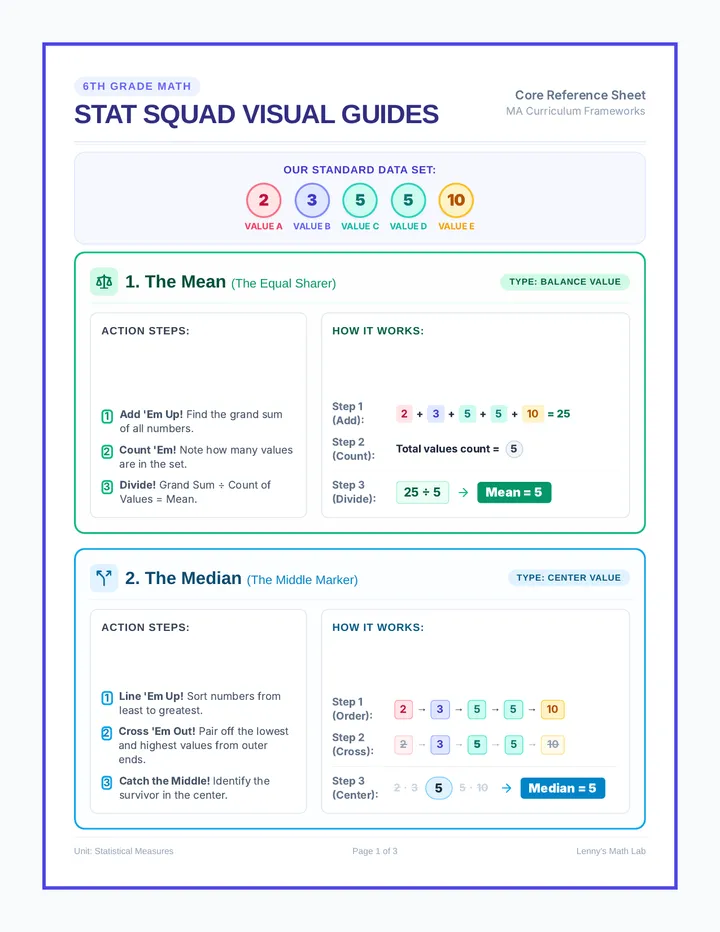
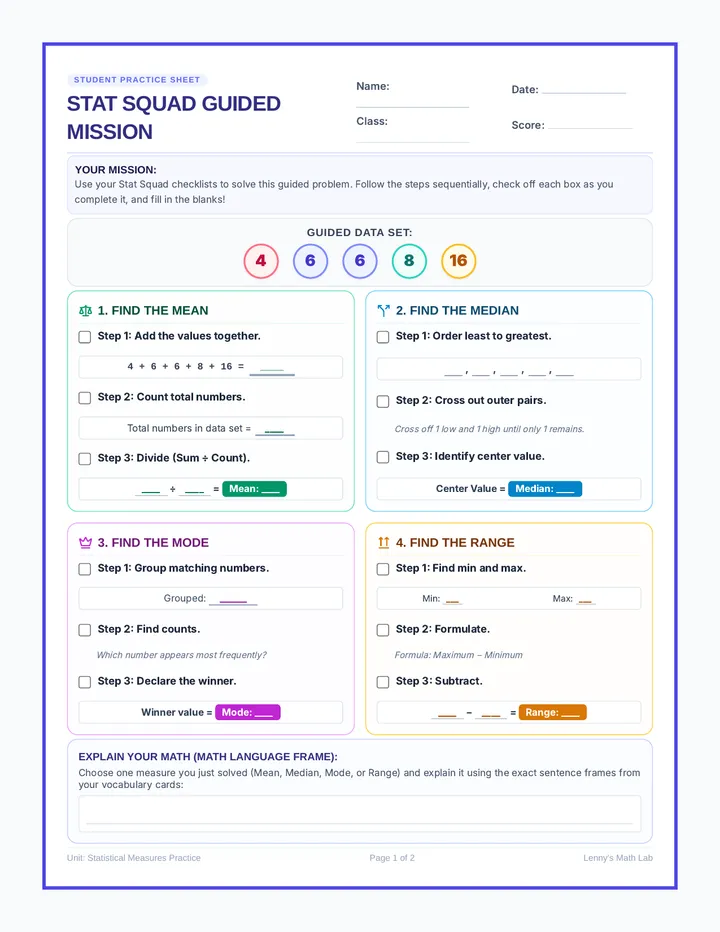
An all-in-one review lesson covering the five major 6th-grade math domains. Designed for IEP support with visual scaffolds and simplified 2-option choices.
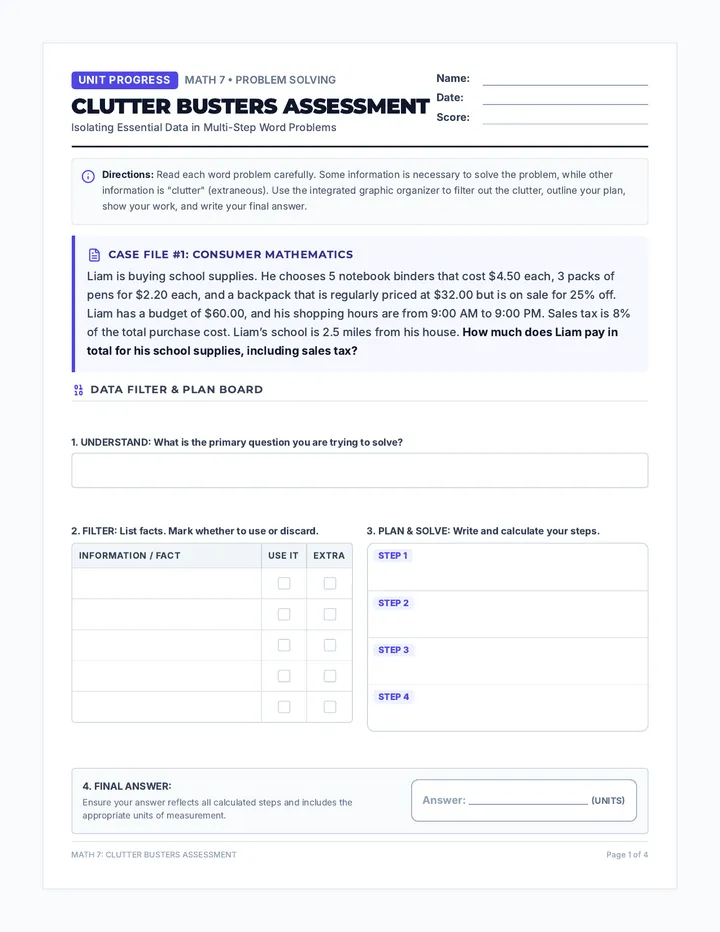
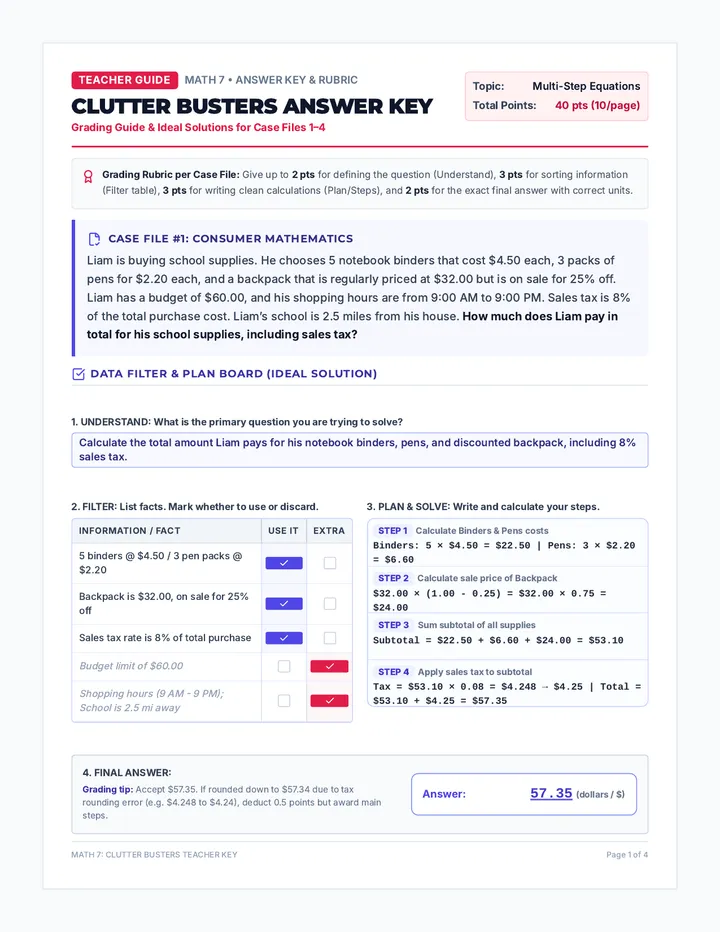
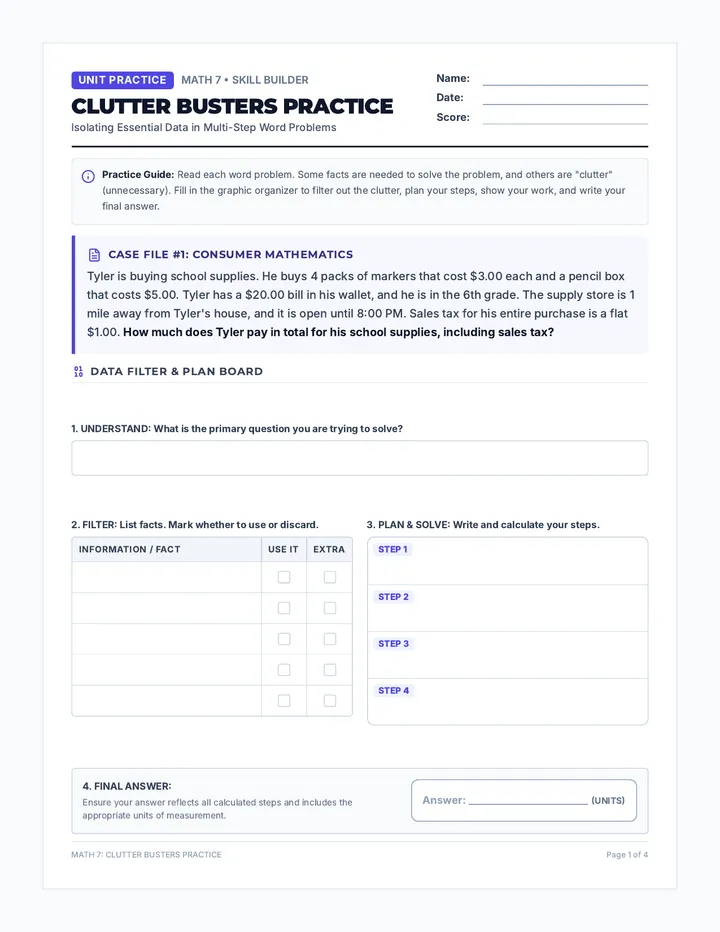
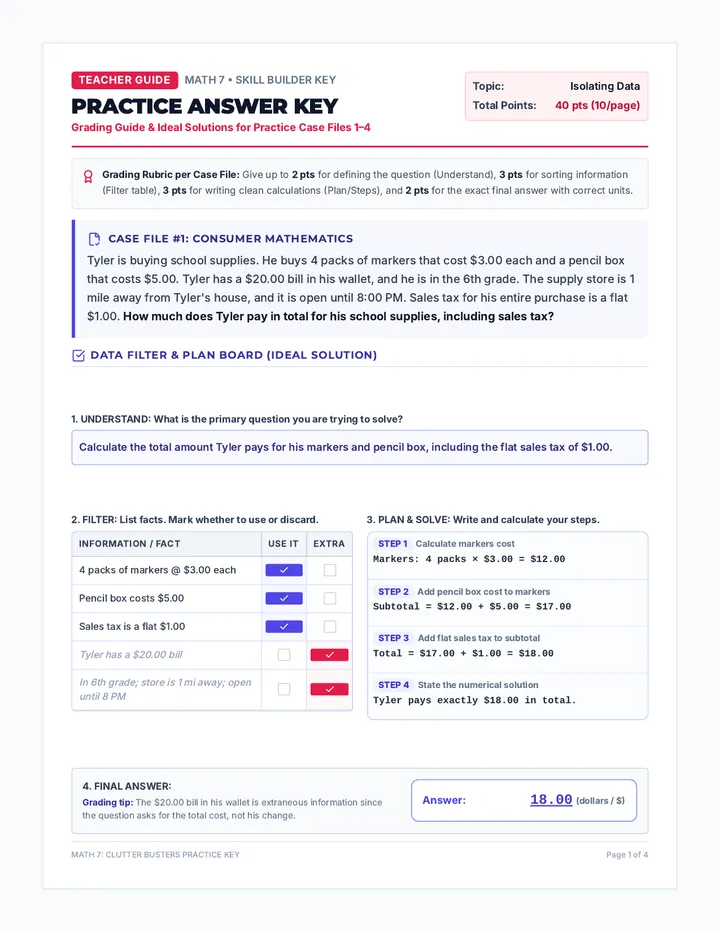
A math assessment focusing on basic exponent rules and real-world percentage applications involving sales tax and discounts.
A deep dive into the fundamental properties of operations, focusing on the distributive, commutative, associative, identity, and inverse properties through a comprehensive 35-question extra credit challenge.
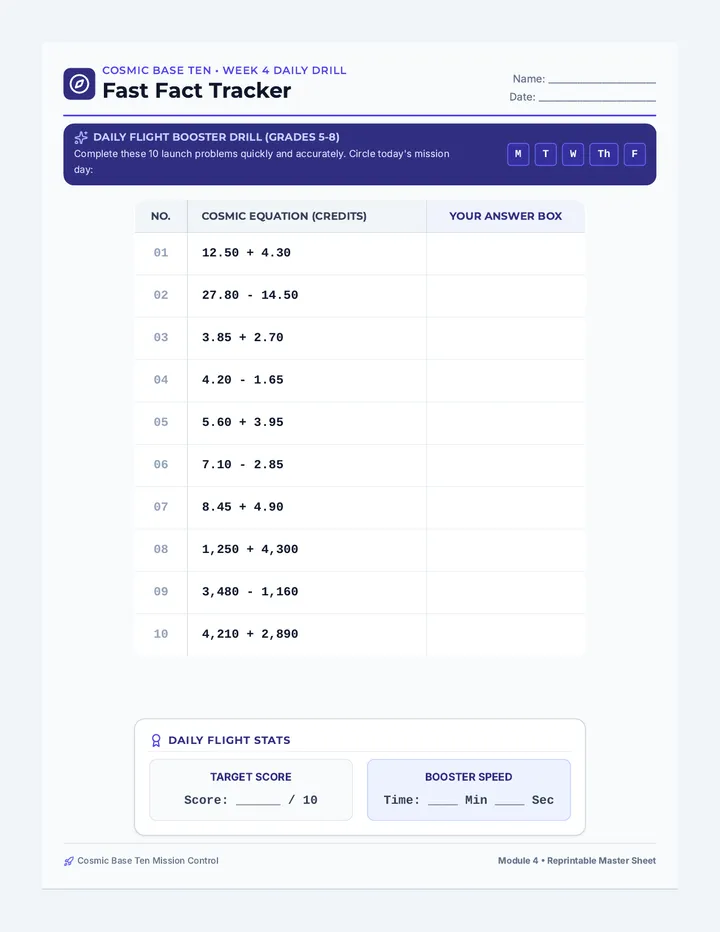
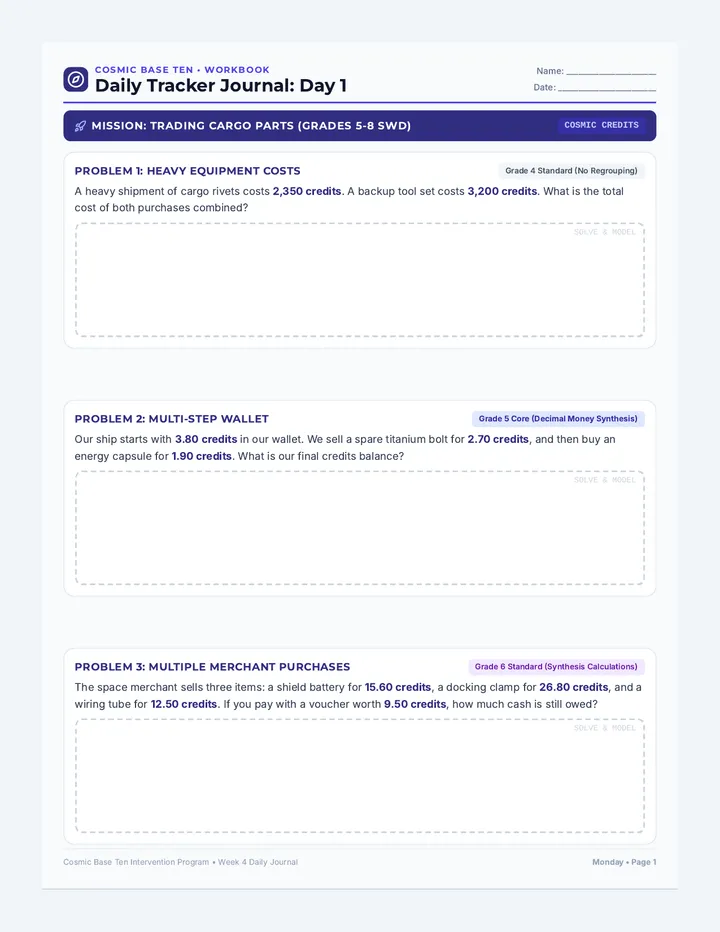
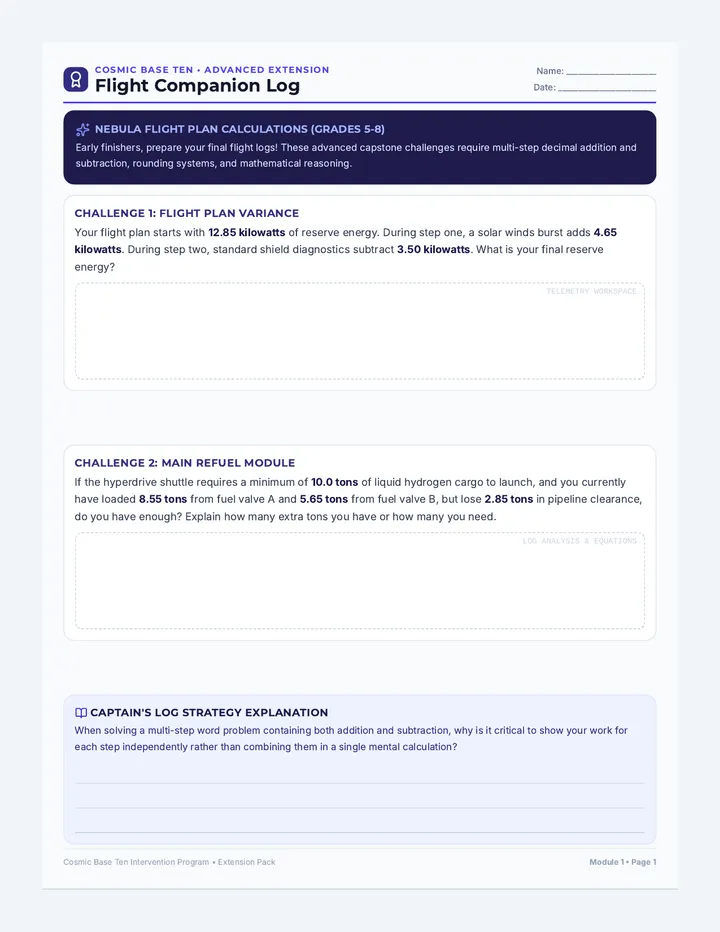
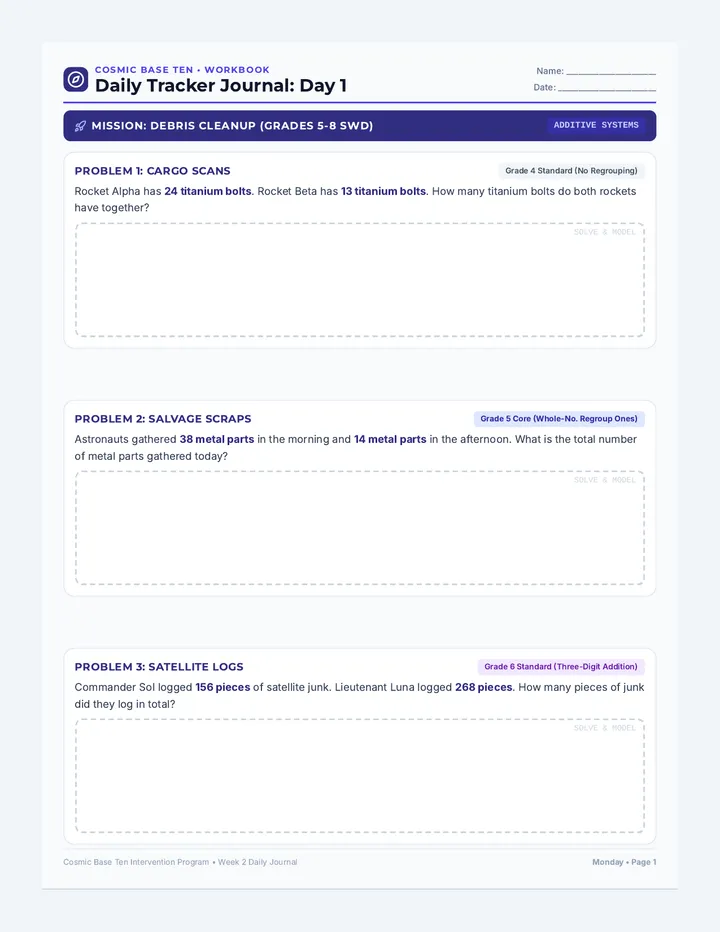
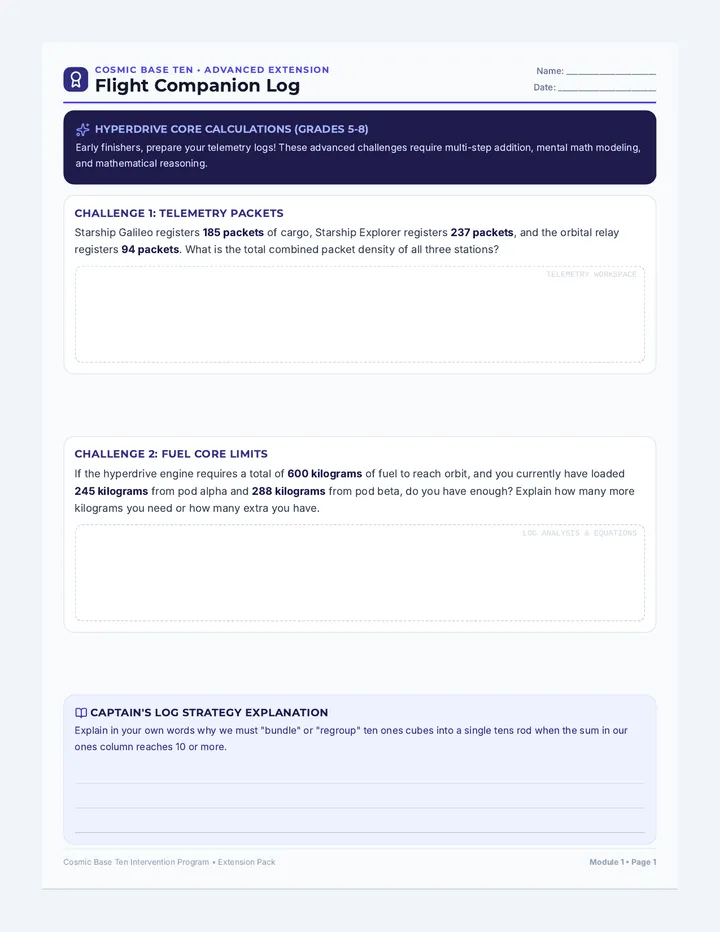
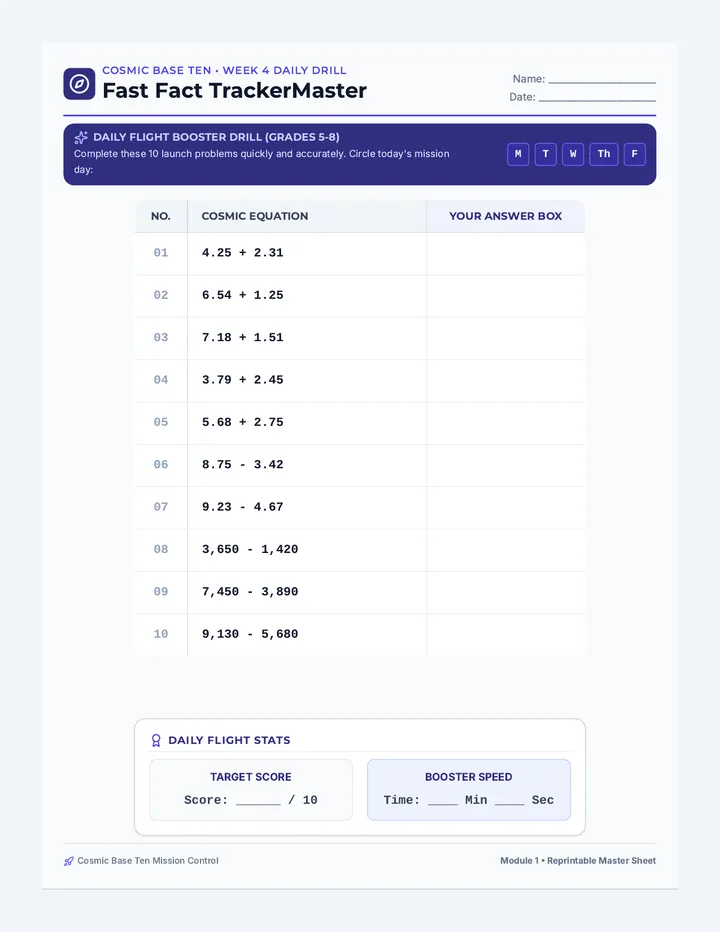
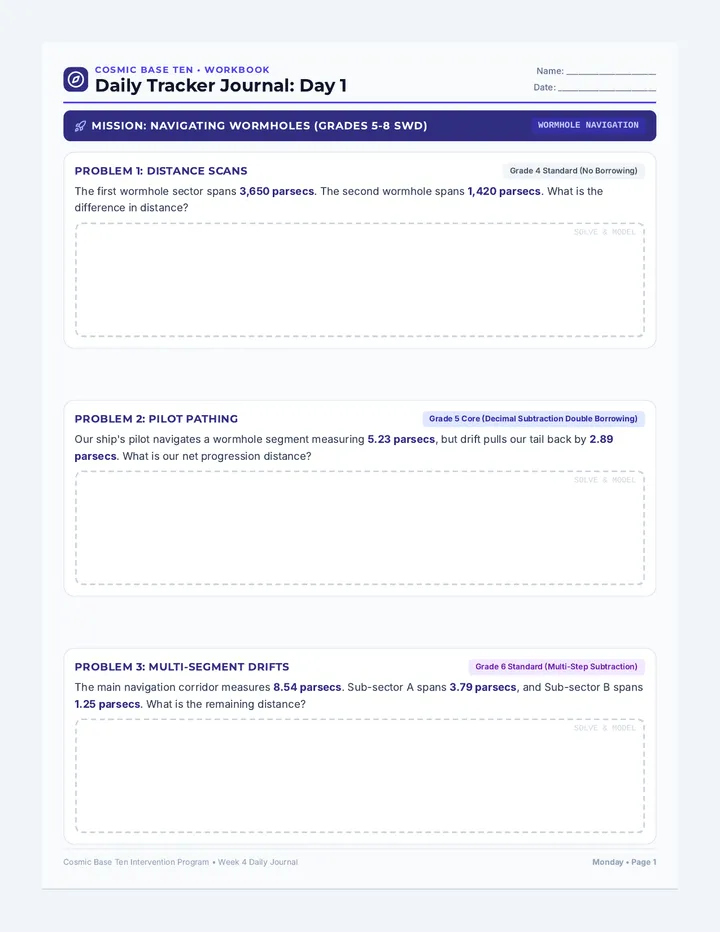
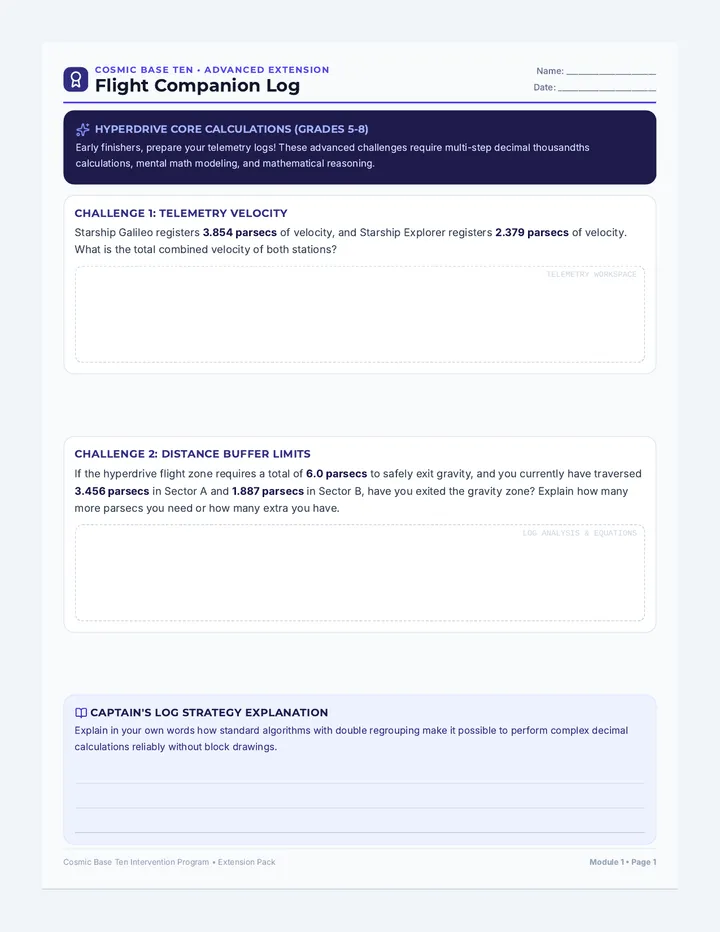
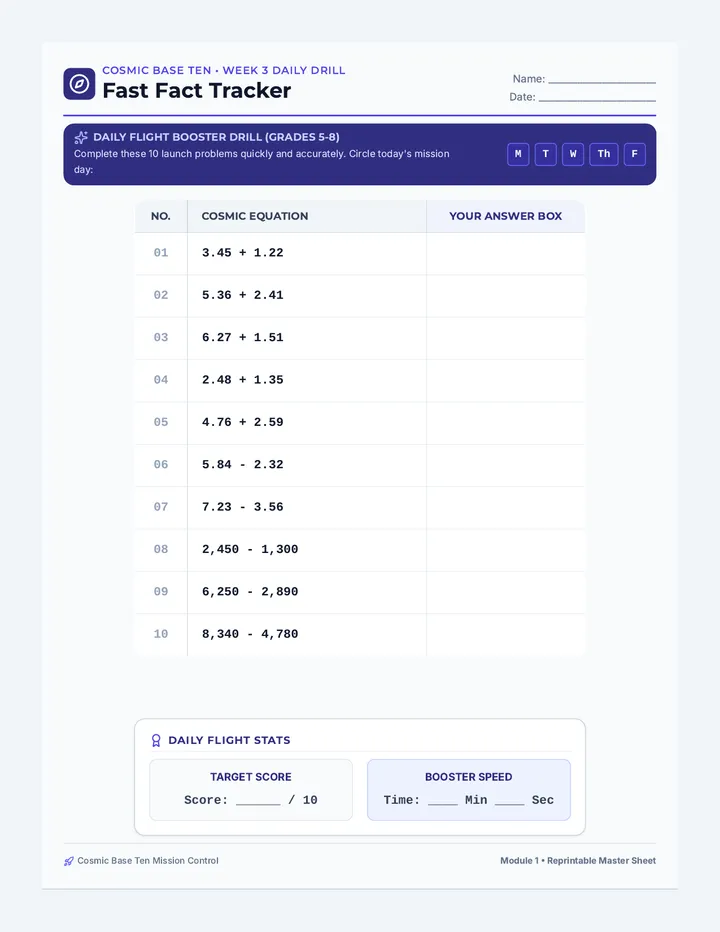
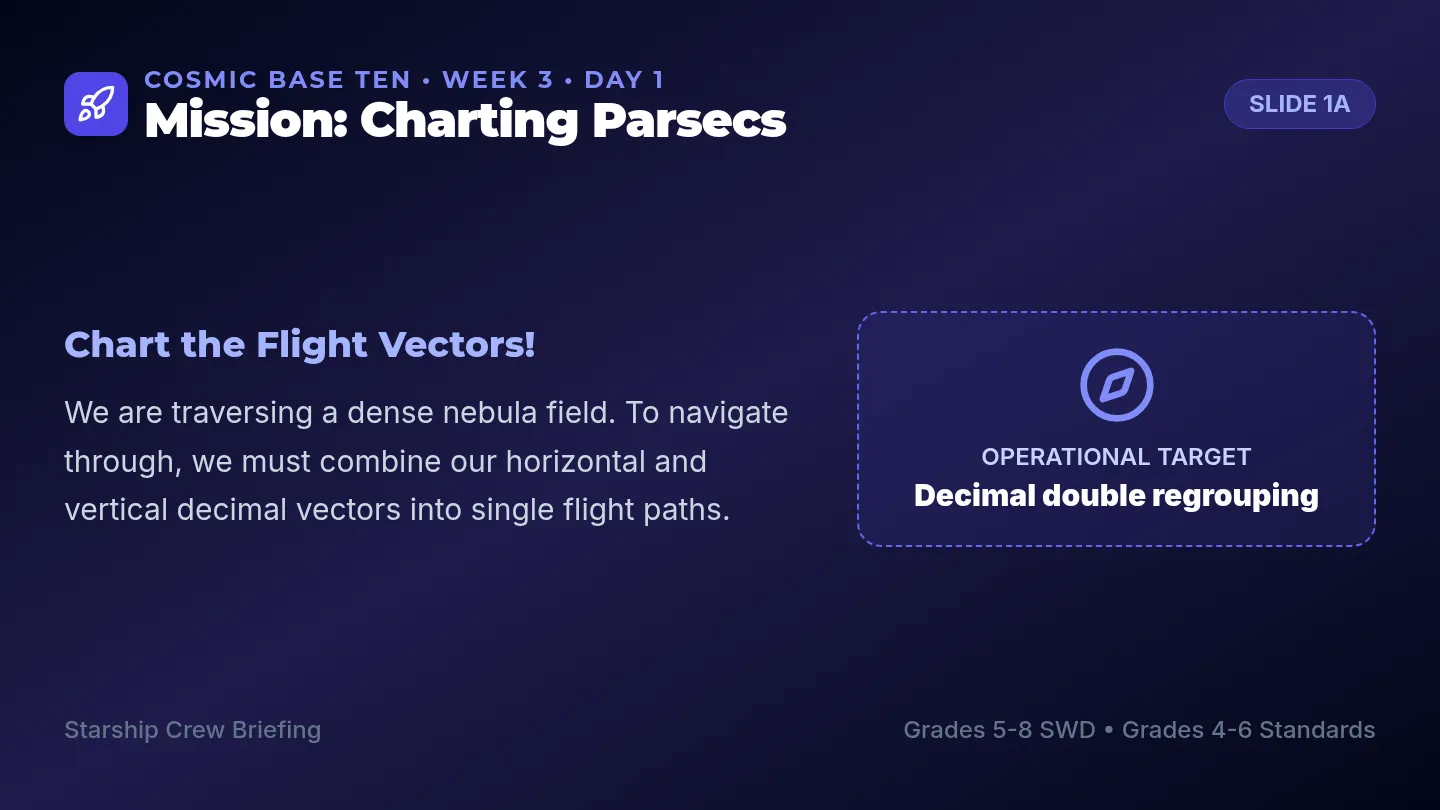
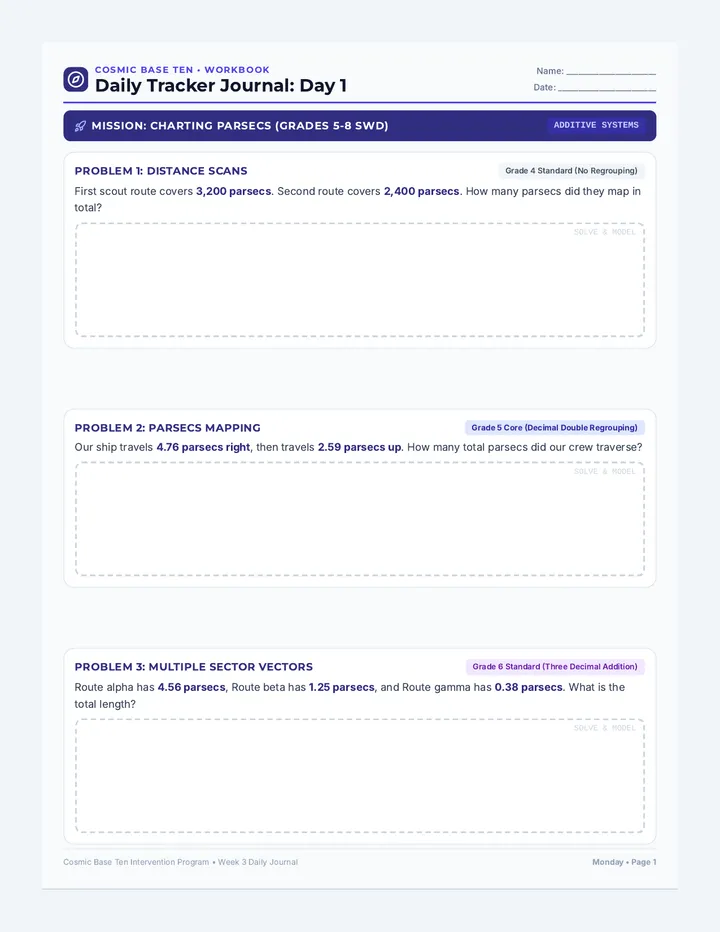
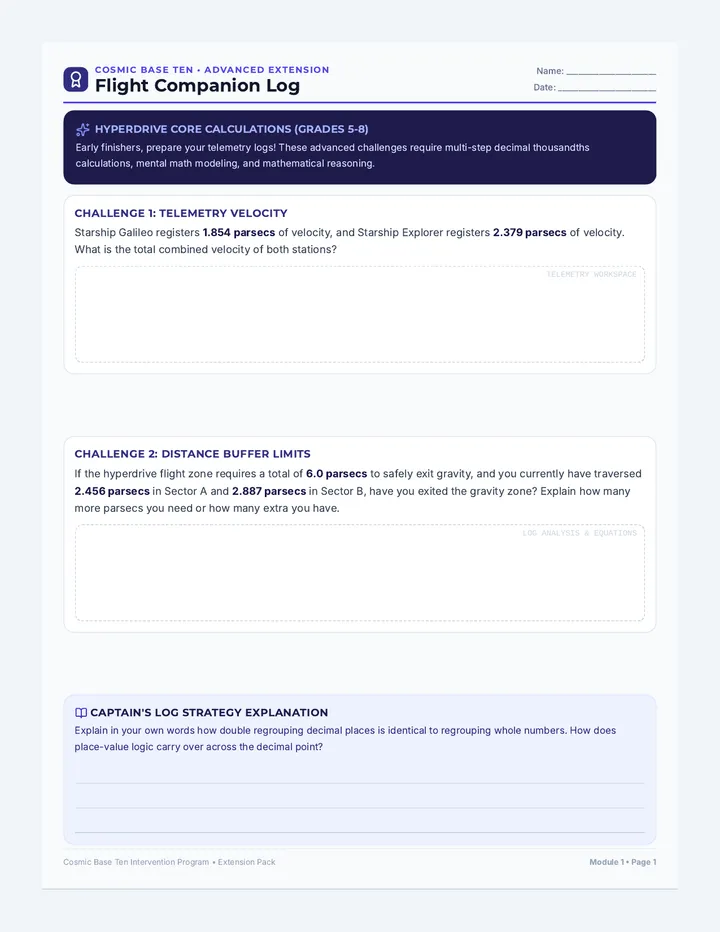
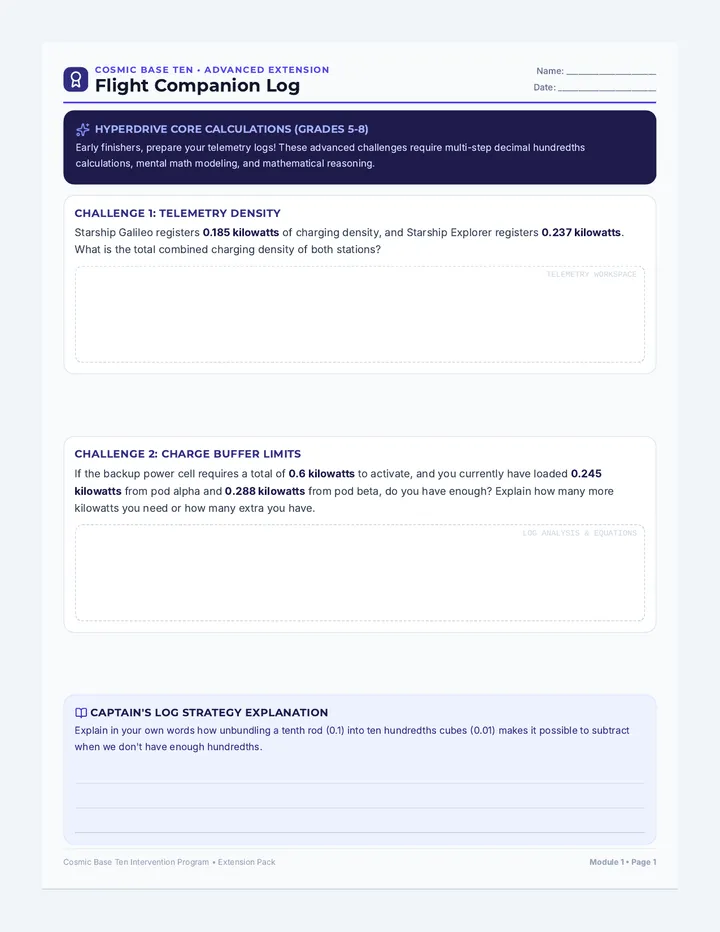
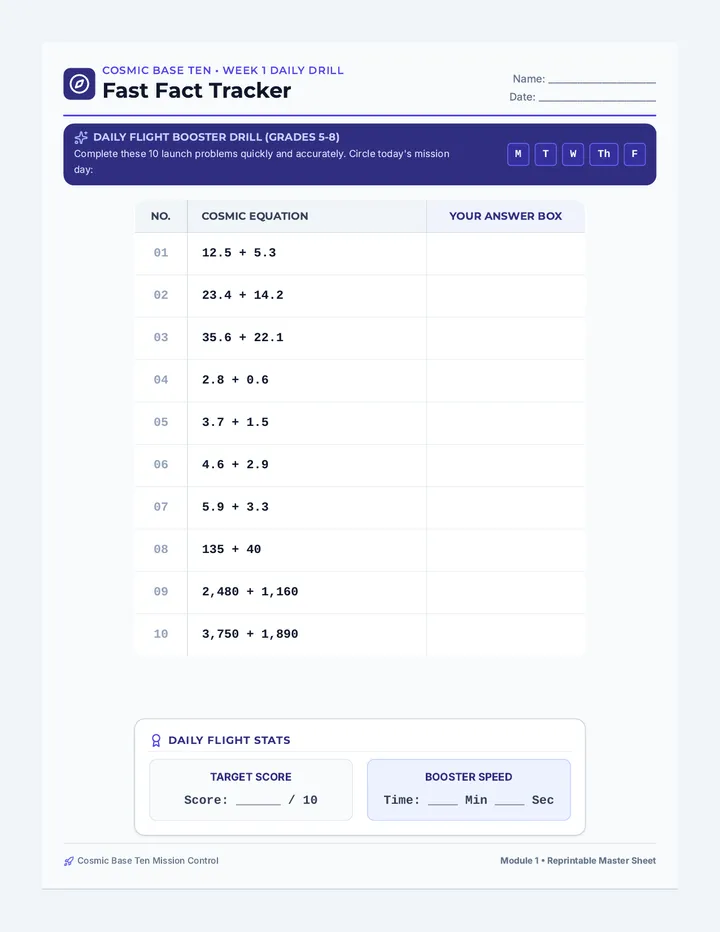
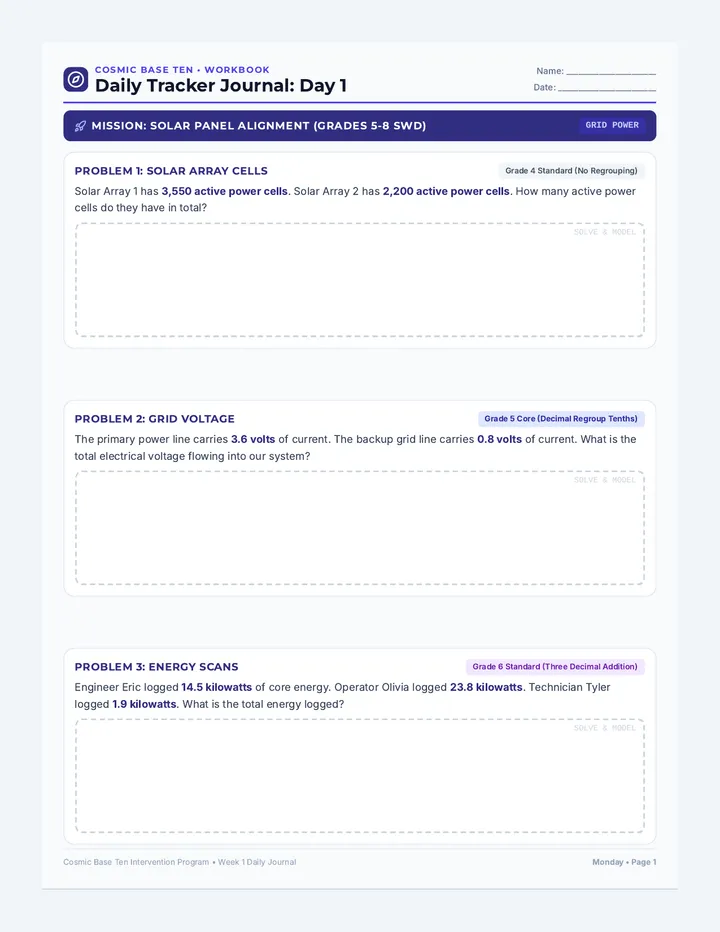
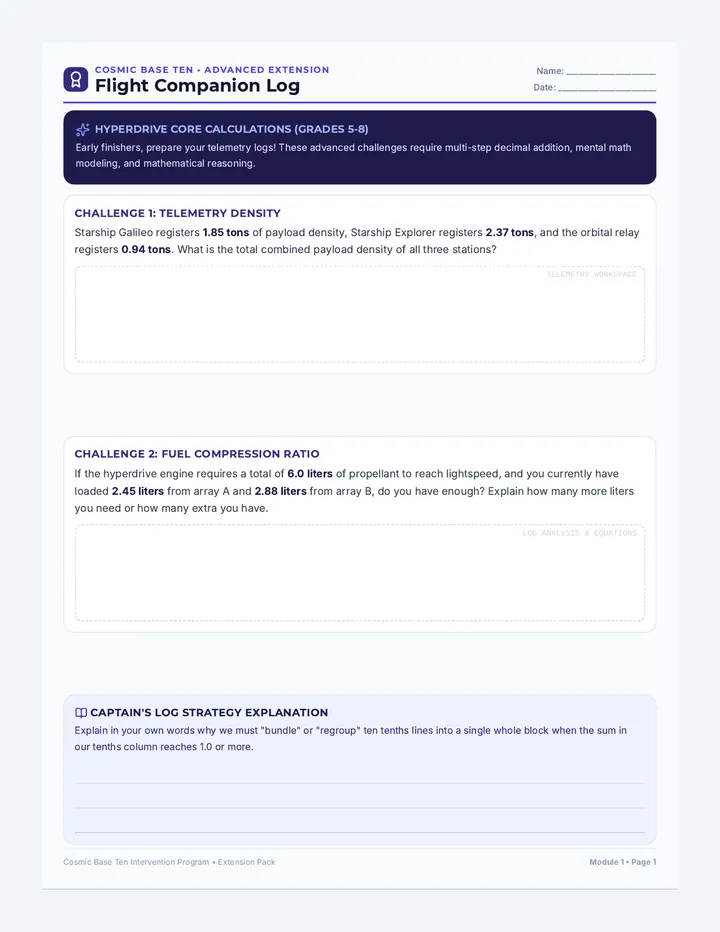
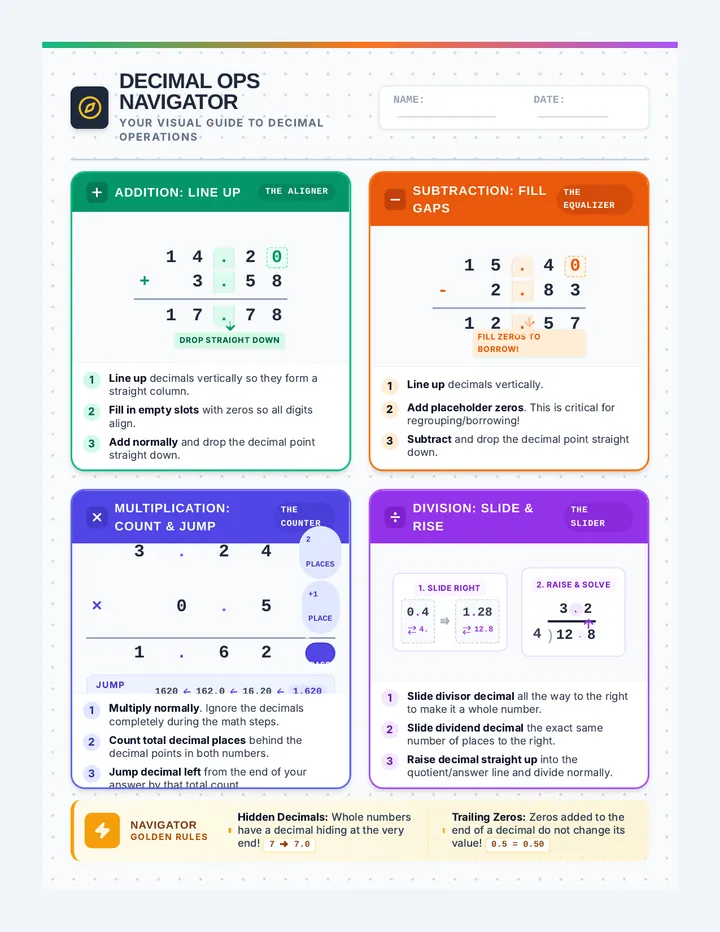
A collection of four diverse decimal practice activities covering addition, subtraction, comparison, rounding, and word problems for 7th-grade math students.
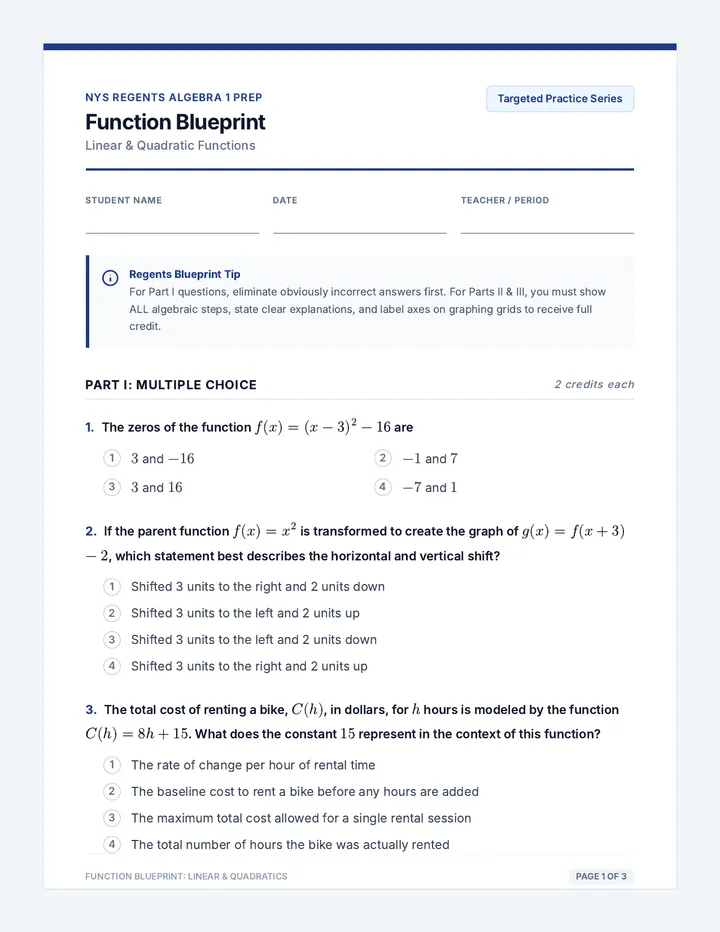
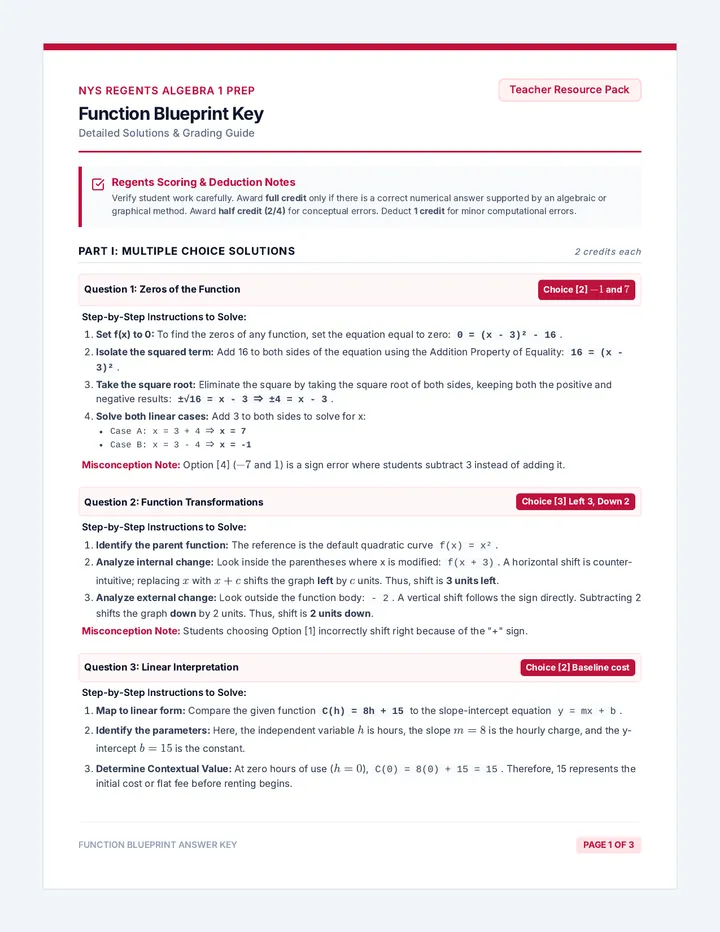
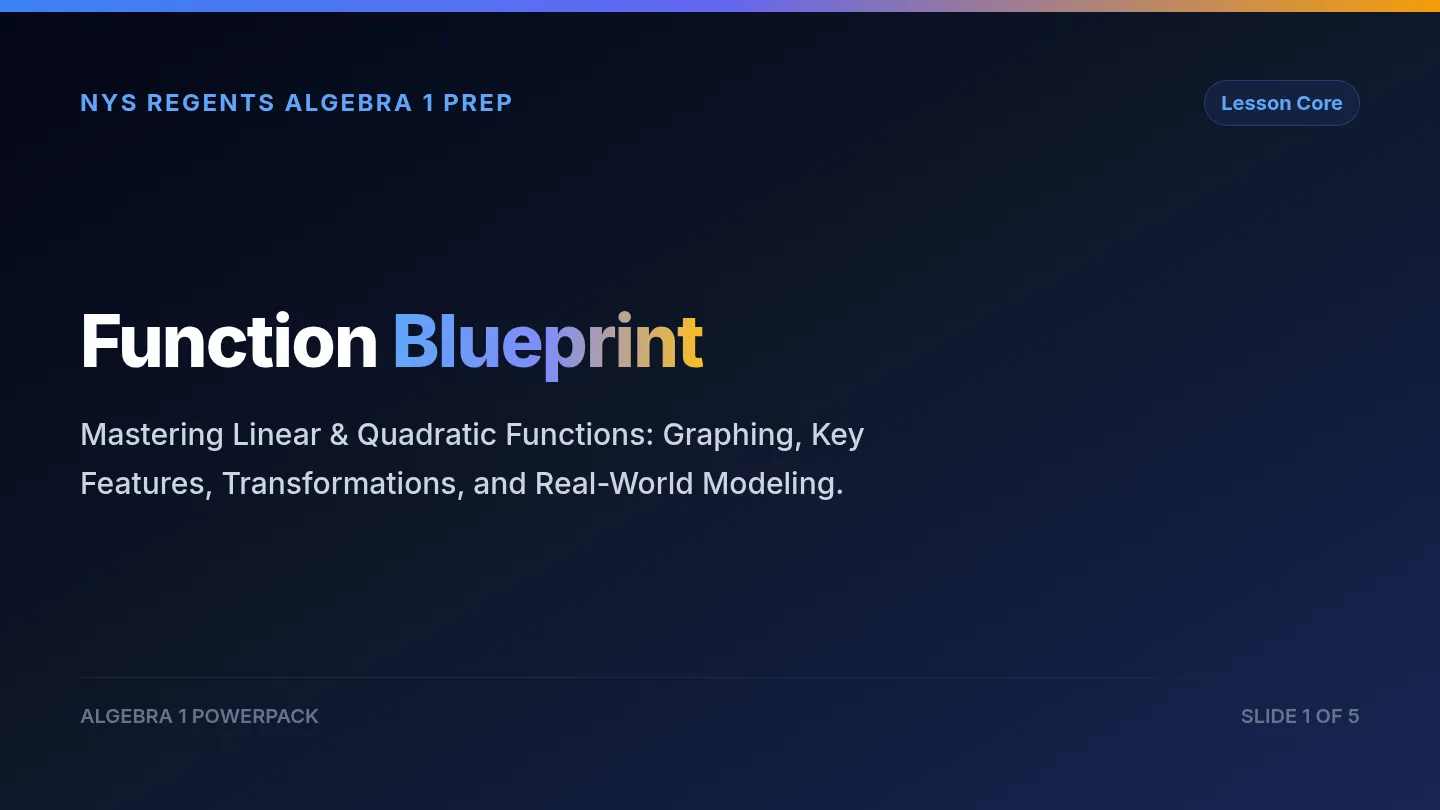
A comprehensive 35-minute lesson on graphing quadratic functions in standard form, covering vertex, axis of symmetry, end behavior, and zeros.
Review and assessment of literal equation mastery through multi-step problems.
A stations-based exploration of physics formulas like force, velocity, and Ohm's law.
Applying formula manipulation to geometric formulas for area, perimeter, and volume.
Introduction to literal equations by connecting the logic of solving standard equations to rearranging variables.
Comprehensive assessment of ratio and proportion skills, covering all algebraic complexities introduced in the unit.
Advanced proportion solving involving the distributive property and variables on both sides. Contexts include business comparisons and mixture problems. (Task 3)
Solving proportions that result in two-step equations. Focuses on contexts like construction, currency conversion, and wage calculations. (Task 2)
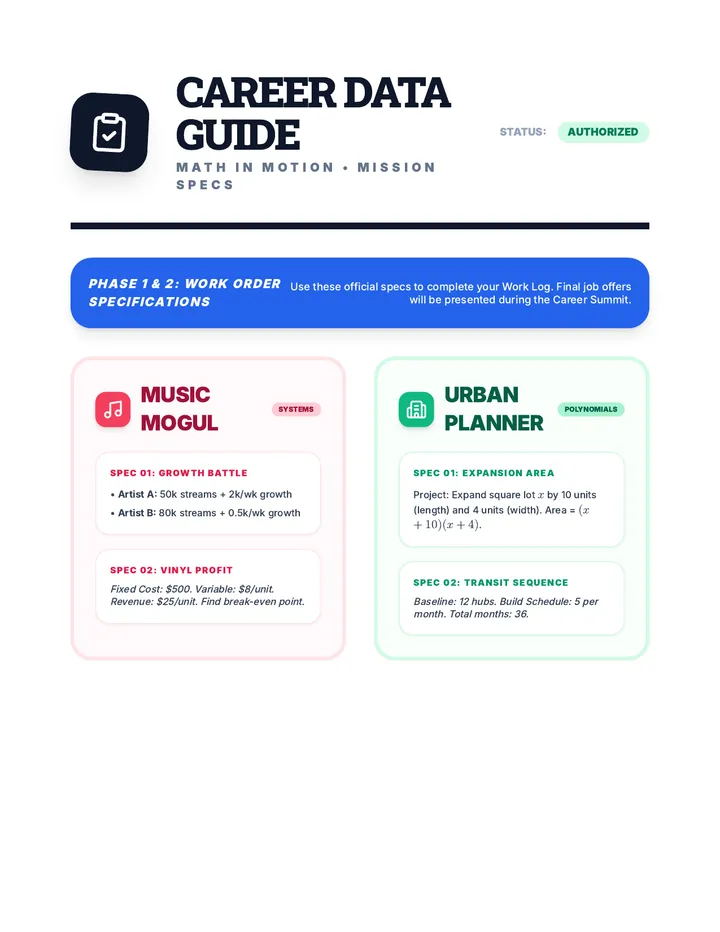
Introduction to proportions and solving one-step equations through cross-multiplication. Real-world contexts include recipe scaling and unit rates. (Task 1)
A scaffolded introduction to the four-quadrant coordinate plane, using a navigation theme to help students master plotting points with visual aids and step-by-step guides.
A comprehensive lesson on plotting points across all four quadrants of the coordinate plane, progressing from basic identification to complex shape creation.
A comprehensive assessment covering circle geometry, including angle relationships, arc measures, and circle components. Students will identify circle parts, calculate angle and arc measures using various theorems, and determine circumference and arc length.
A comprehensive lesson on circles covering radius, diameter, circumference, and area through a visual slide deck and a summative assessment.
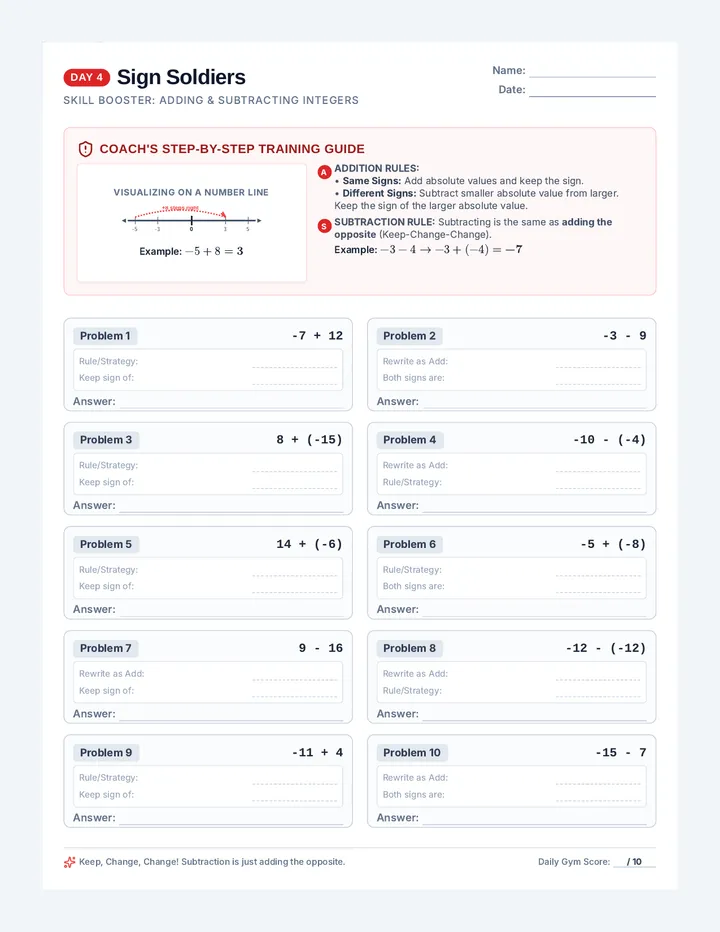
A comprehensive review of integer operations (addition, subtraction, multiplication, and division) using a BINGO game and a classroom scavenger hunt. Designed for minimal prep with student-generated boards and multi-use task cards.
A math exploration into the world of round objects, focusing on calculating circumference using radius and diameter through real-world scenarios including food, wheels, and timepieces.