A comprehensive lesson on calculating the area and circumference of circles using the radius, featuring blueprint-themed instructional materials and practice.
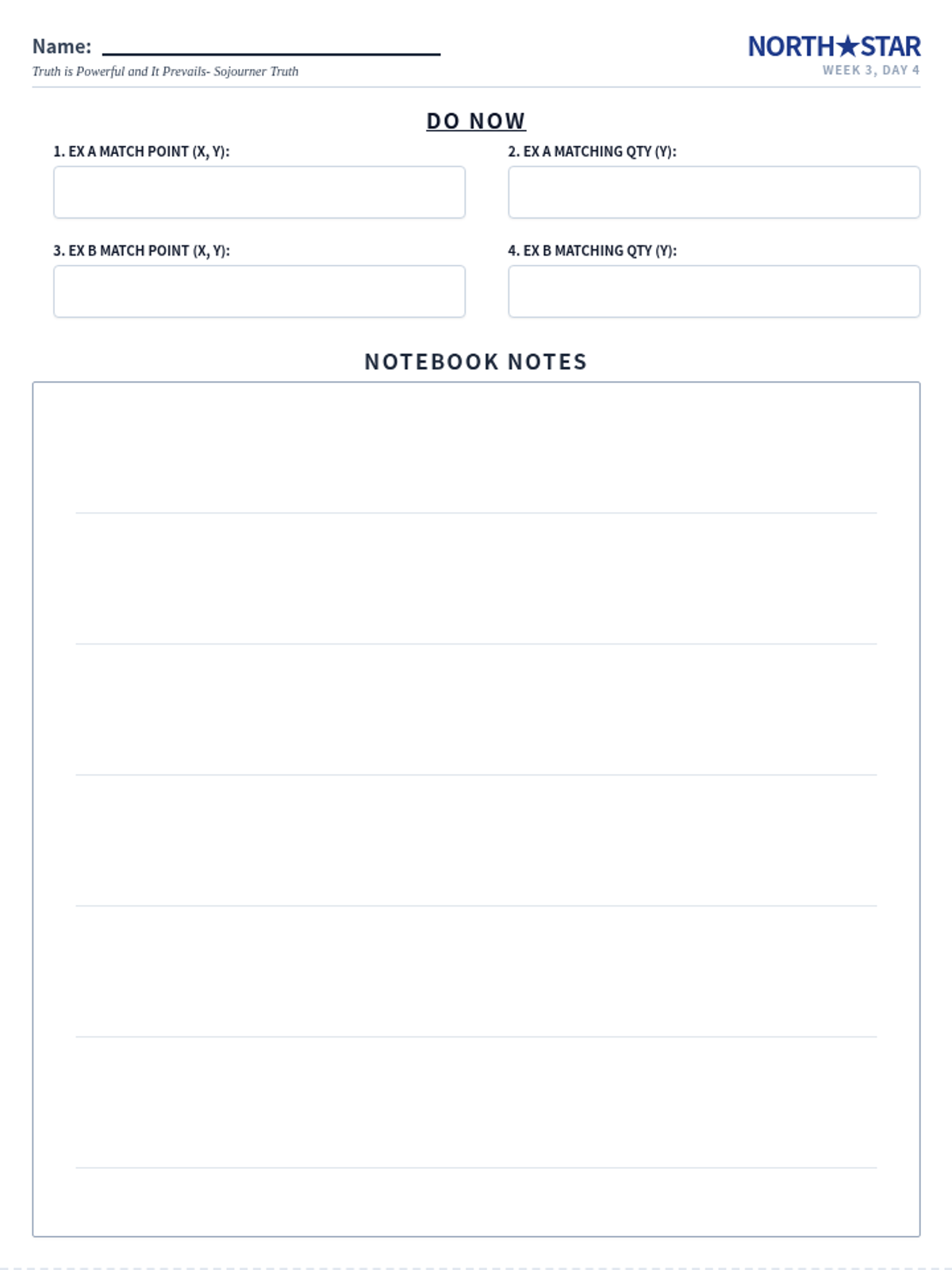
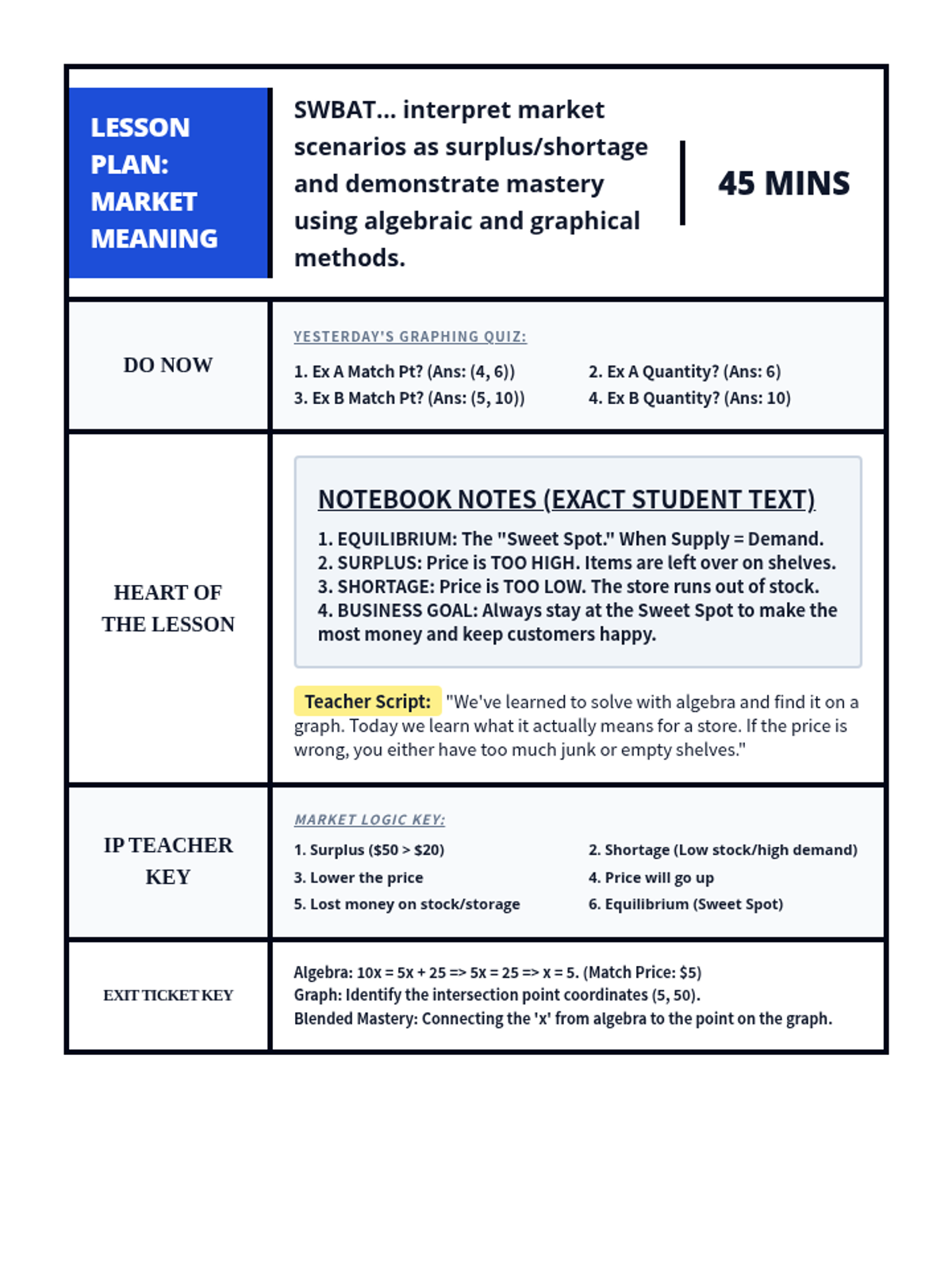
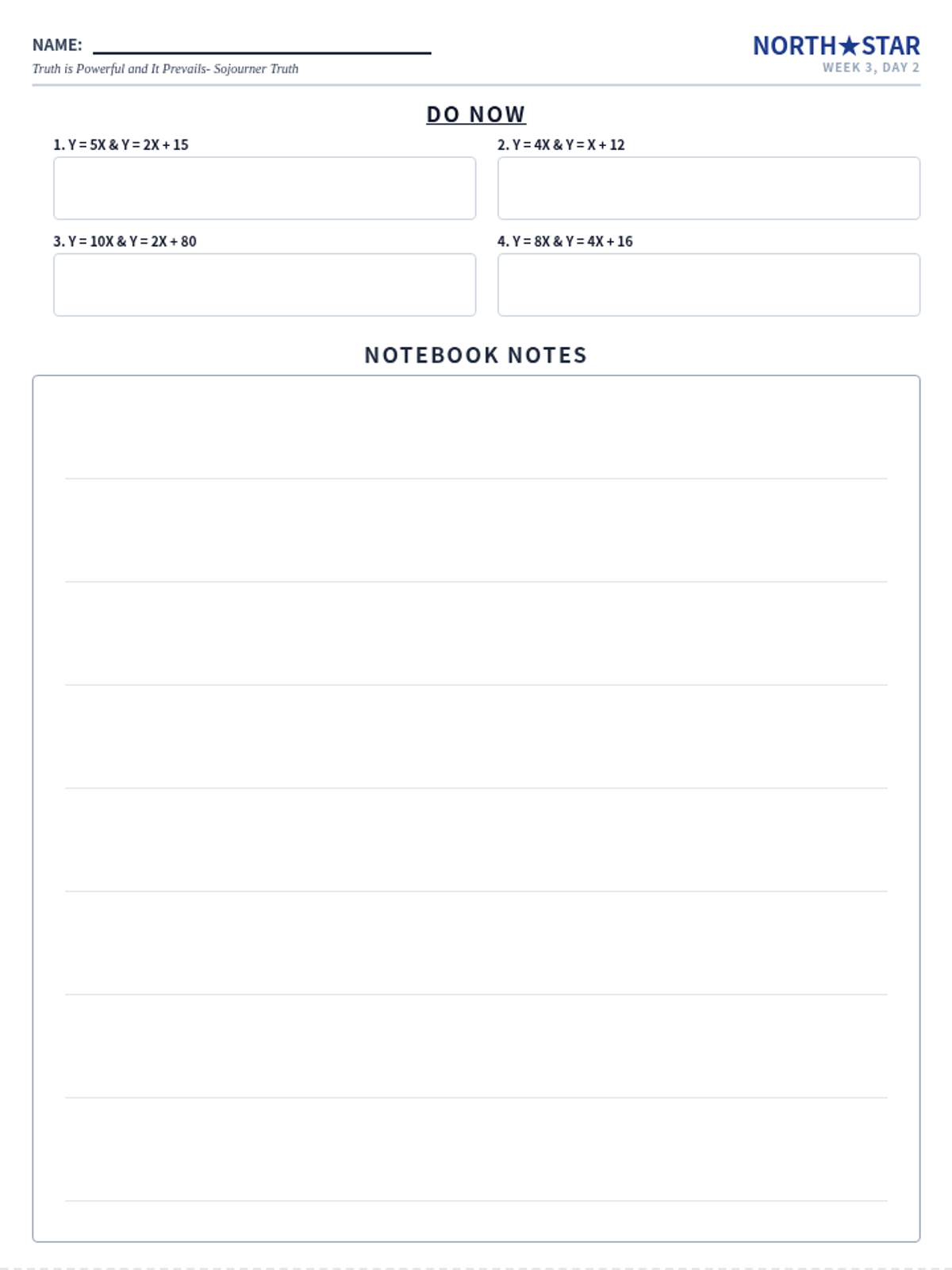
Students interpret the meaning of the point of intersection, surplus, and shortage in the context of a real-world market.
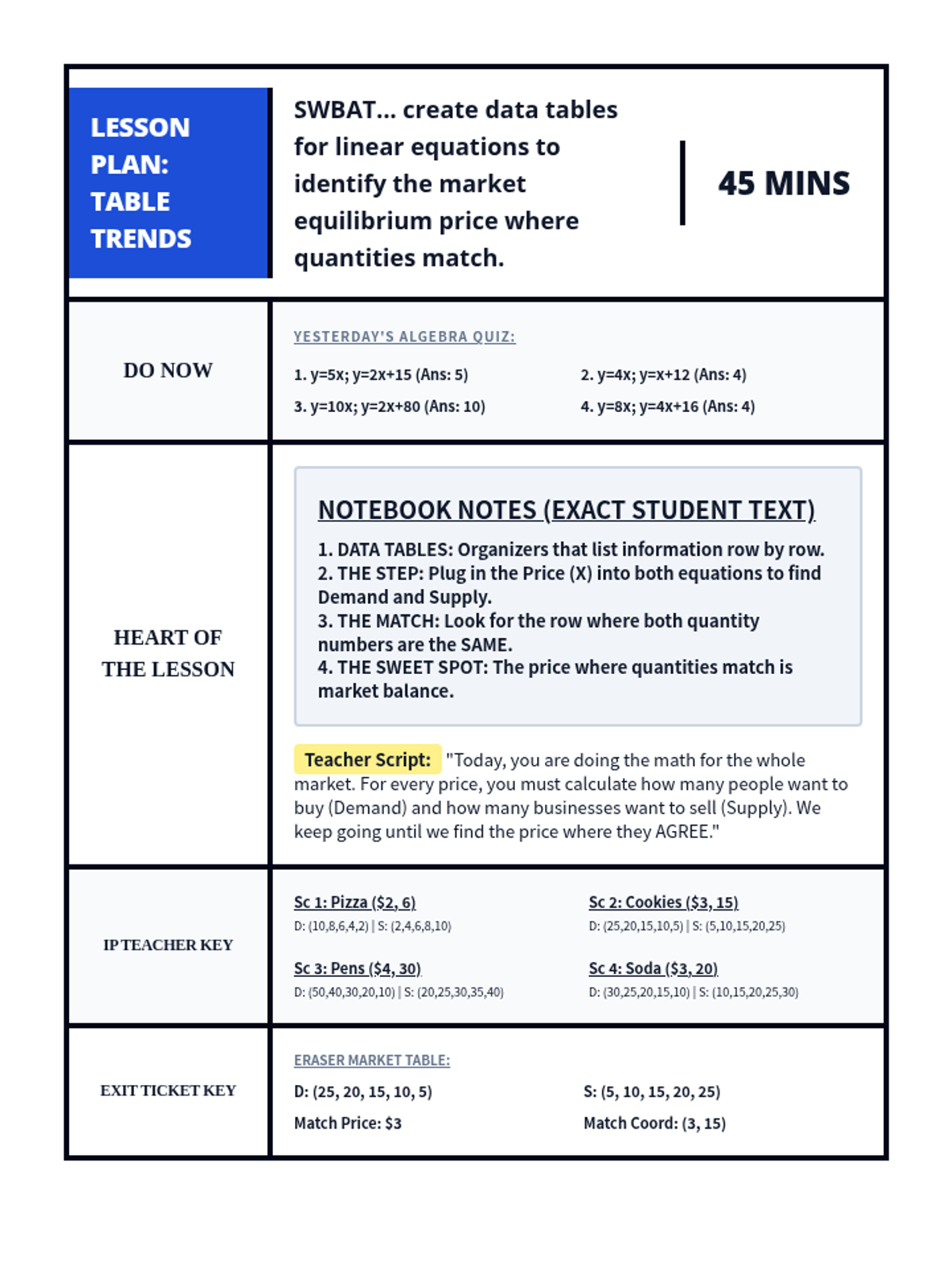
Students create and compare multiple sets of data tables for supply and demand to identify the market equilibrium price where quantities match.
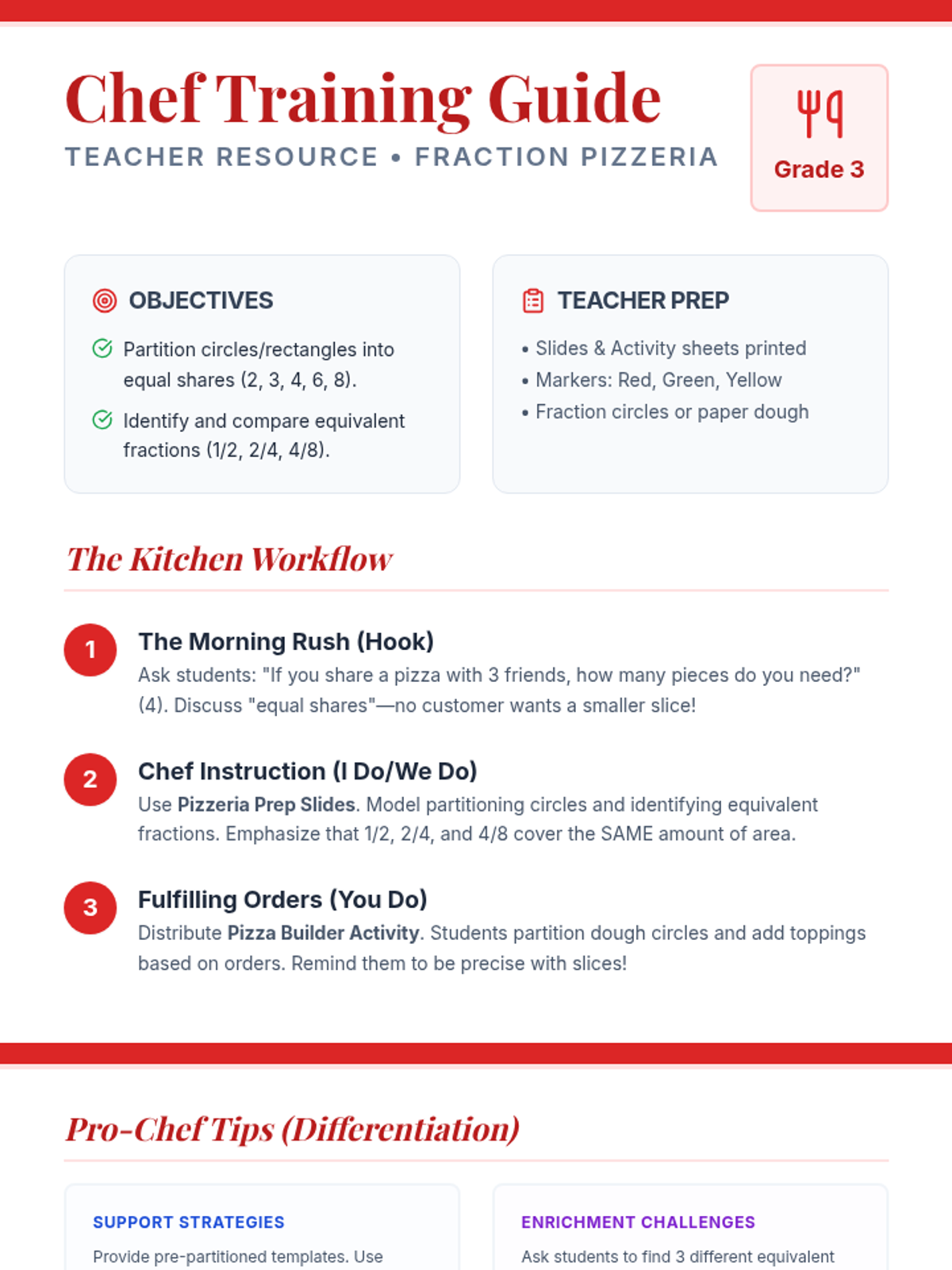
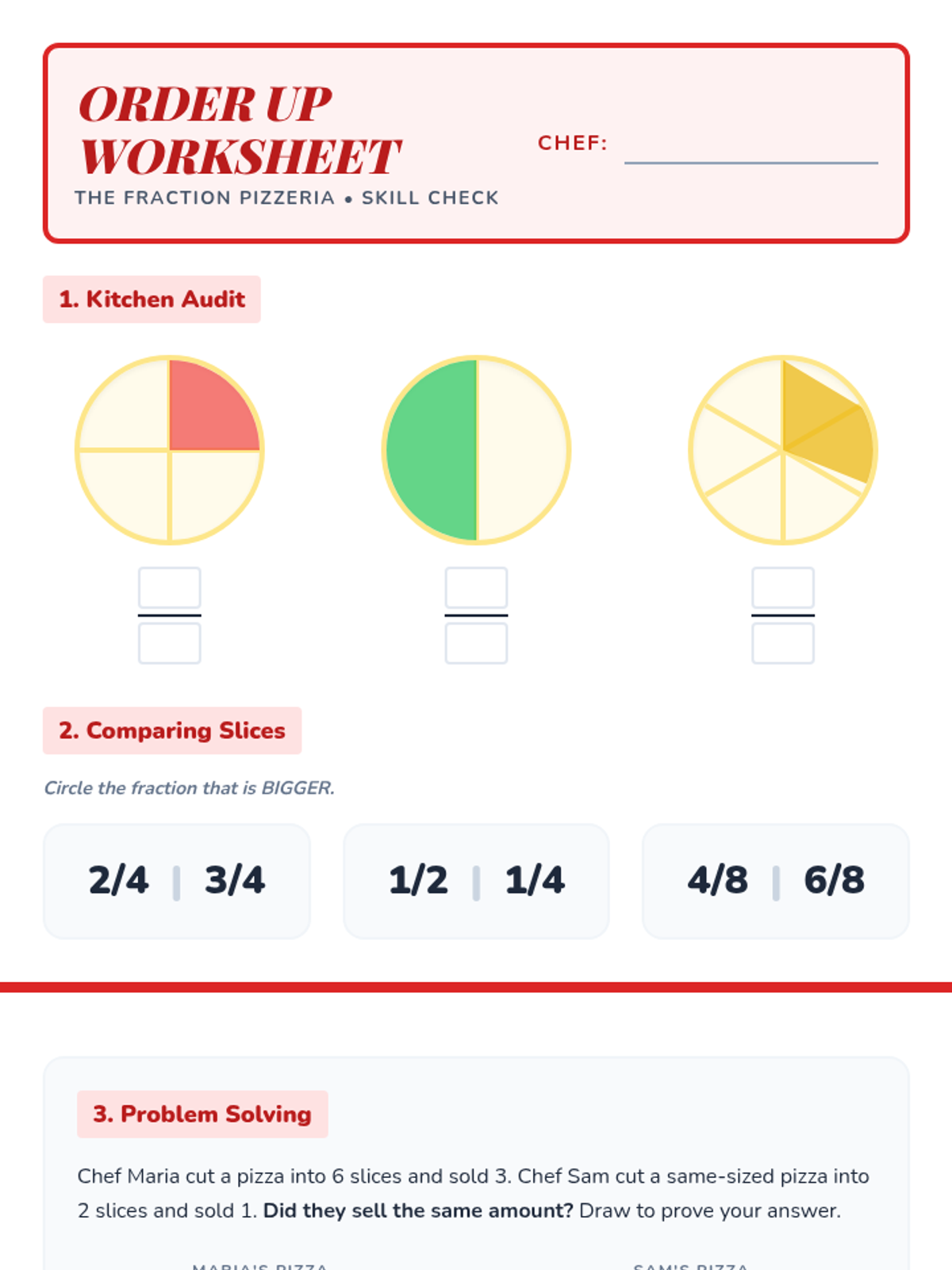
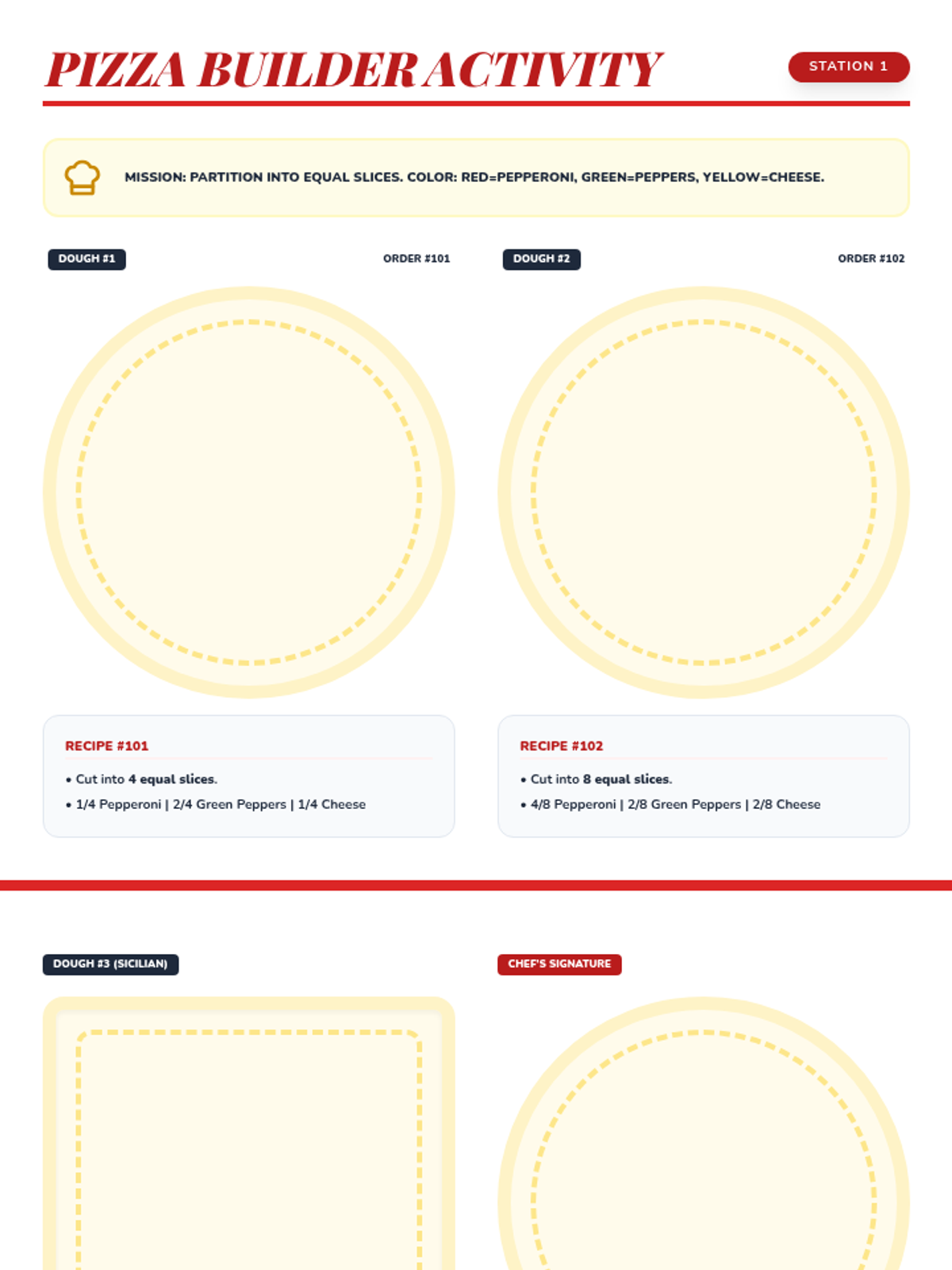
In this hands-on simulation, third graders become pizza chefs to master equivalent fractions and partitioning. Students will fulfill custom orders, compare topping amounts, and visualize fractions as parts of a delicious whole.
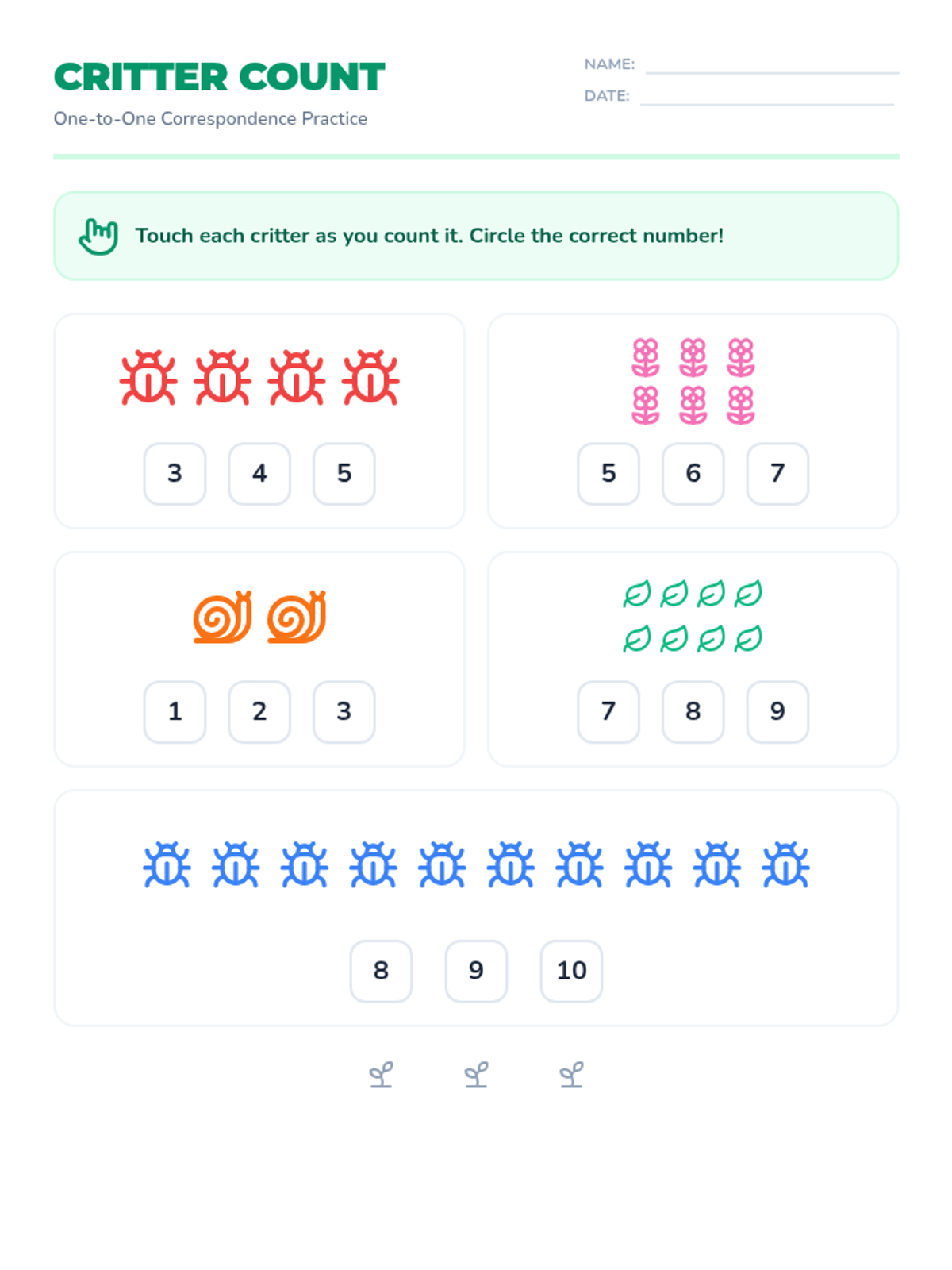
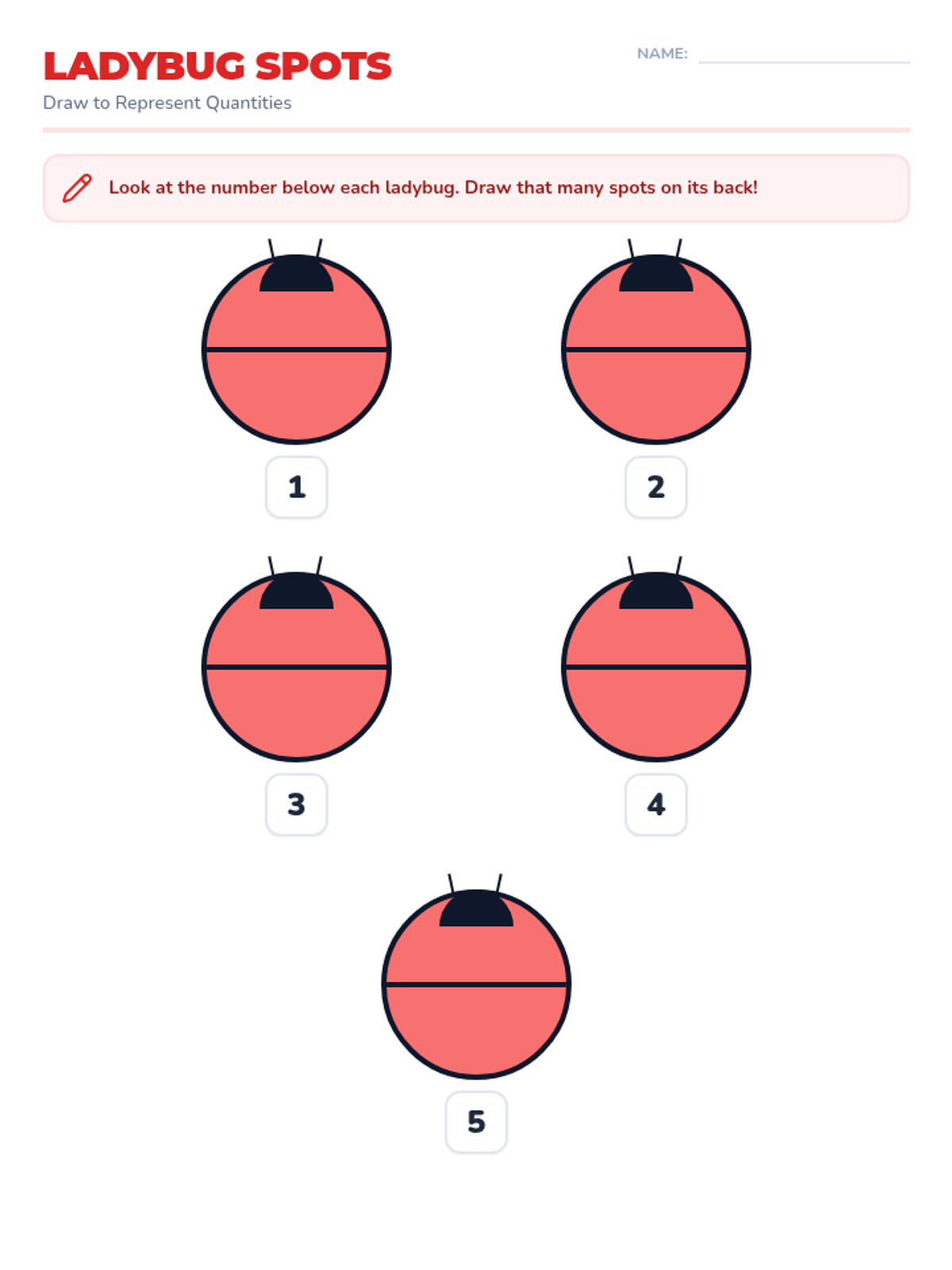
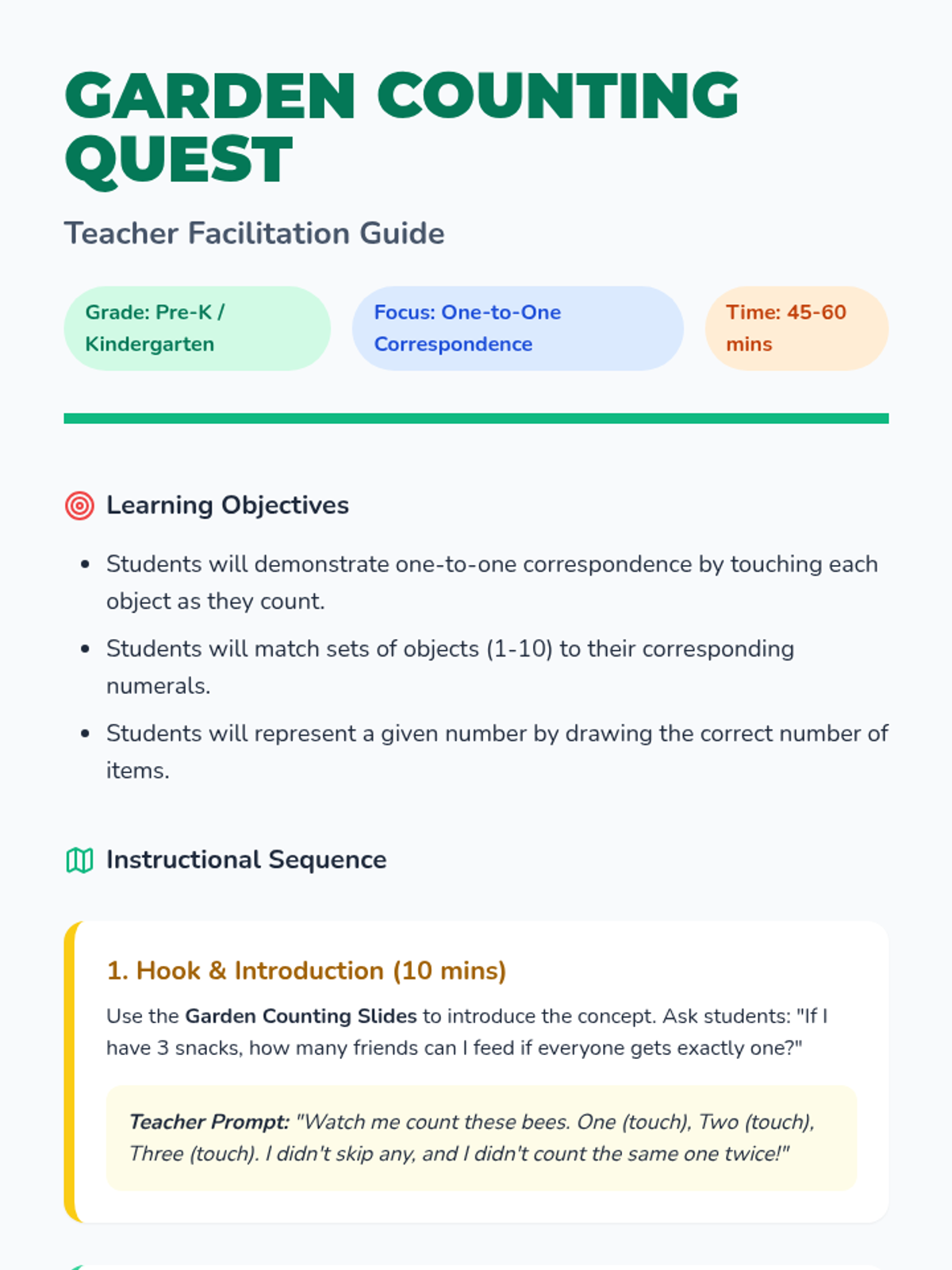
A comprehensive introduction to one-to-one correspondence for numbers 1-10 using a friendly garden theme. Students will practice matching, counting, and representing quantities through visual aids and hands-on worksheets.
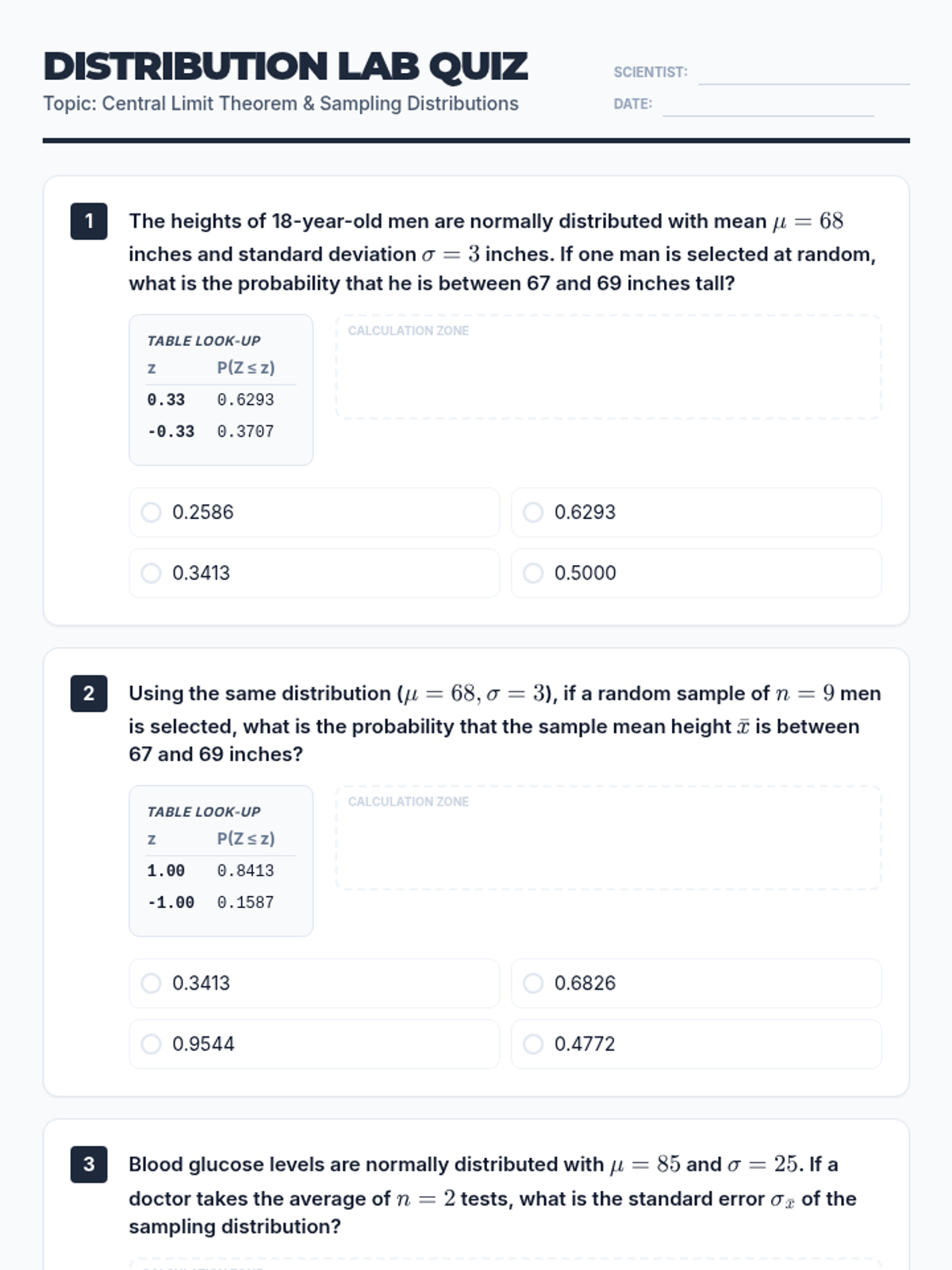
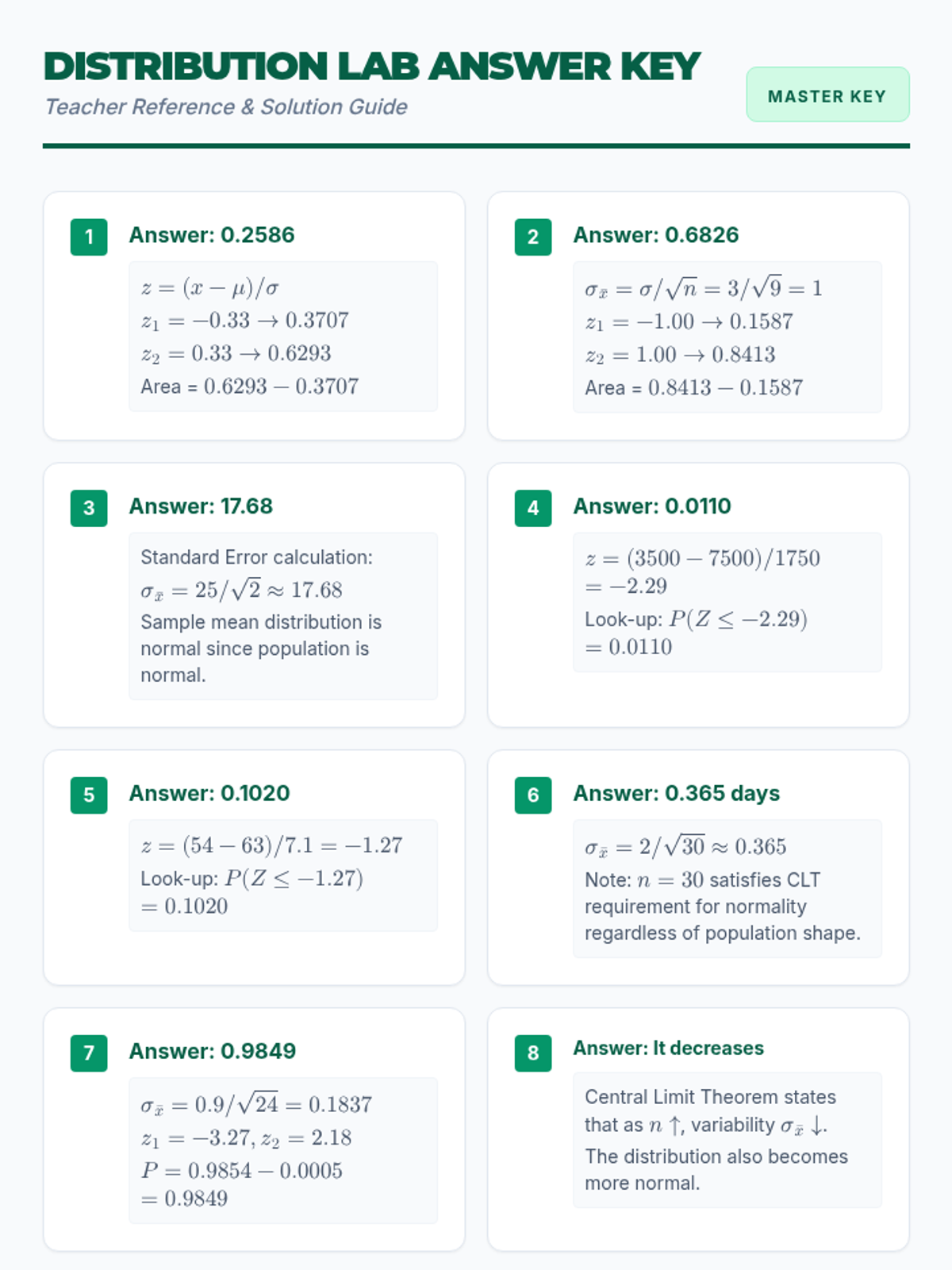
A focused lesson on the Central Limit Theorem (CLT) and its application to real-world datasets. Students practice calculating Z-scores for sample means and using Z-tables to determine probabilities.
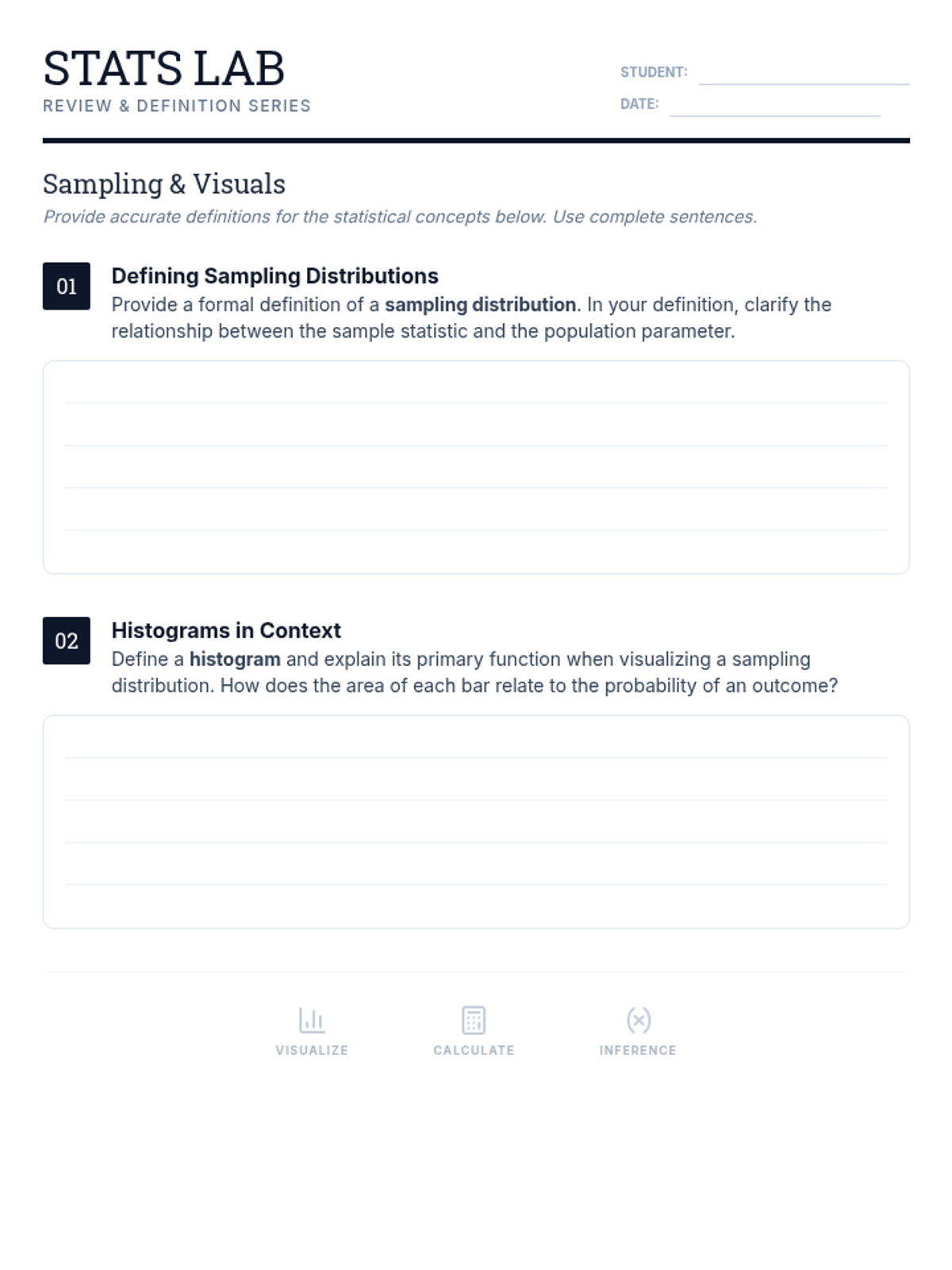
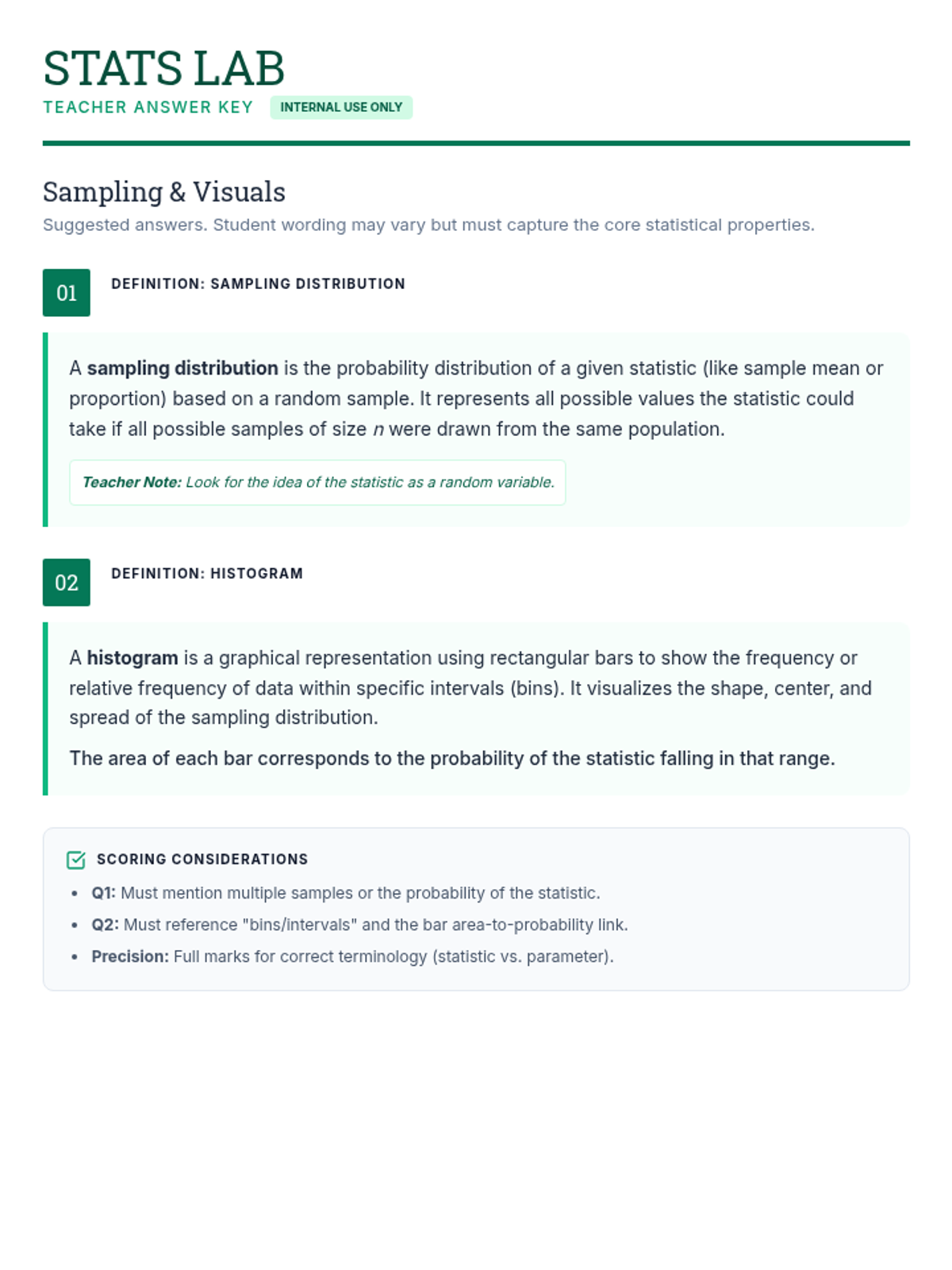
A lesson focused on fundamental statistical concepts including sampling distributions and the visual representation of data using histograms.
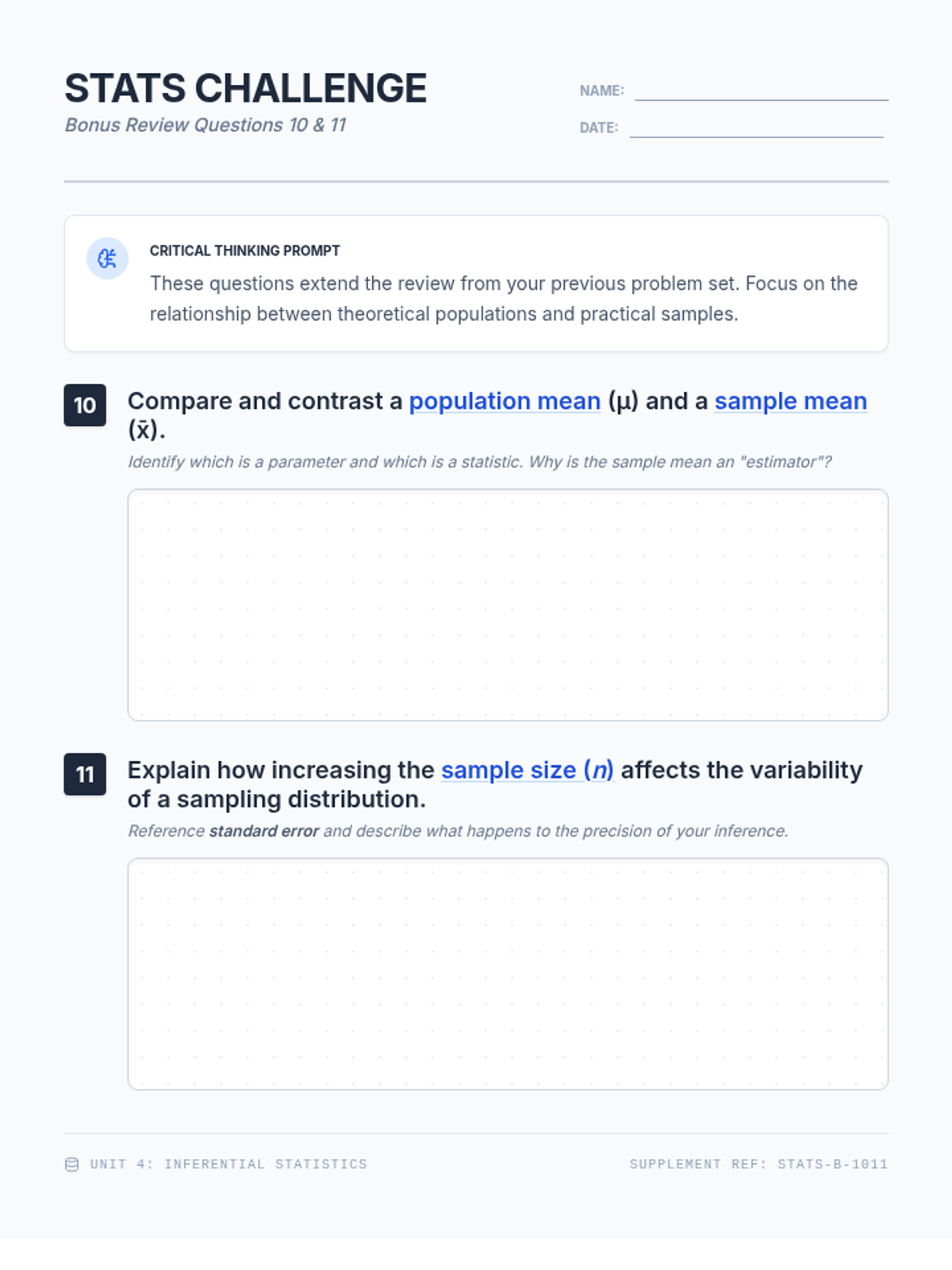
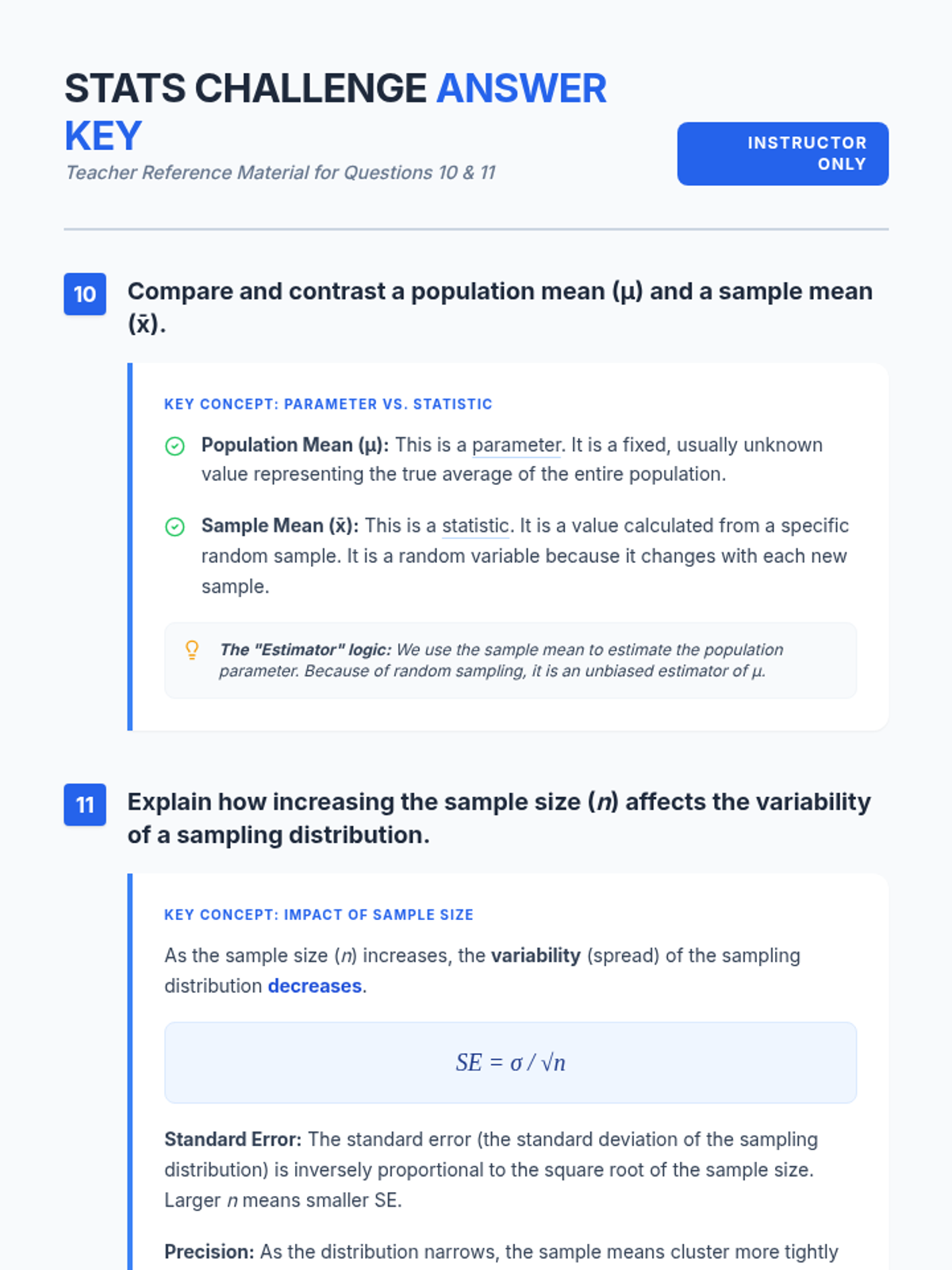
A concise lesson reviewing advanced statistical concepts including population parameters, sample statistics, and the behavior of sampling distributions.
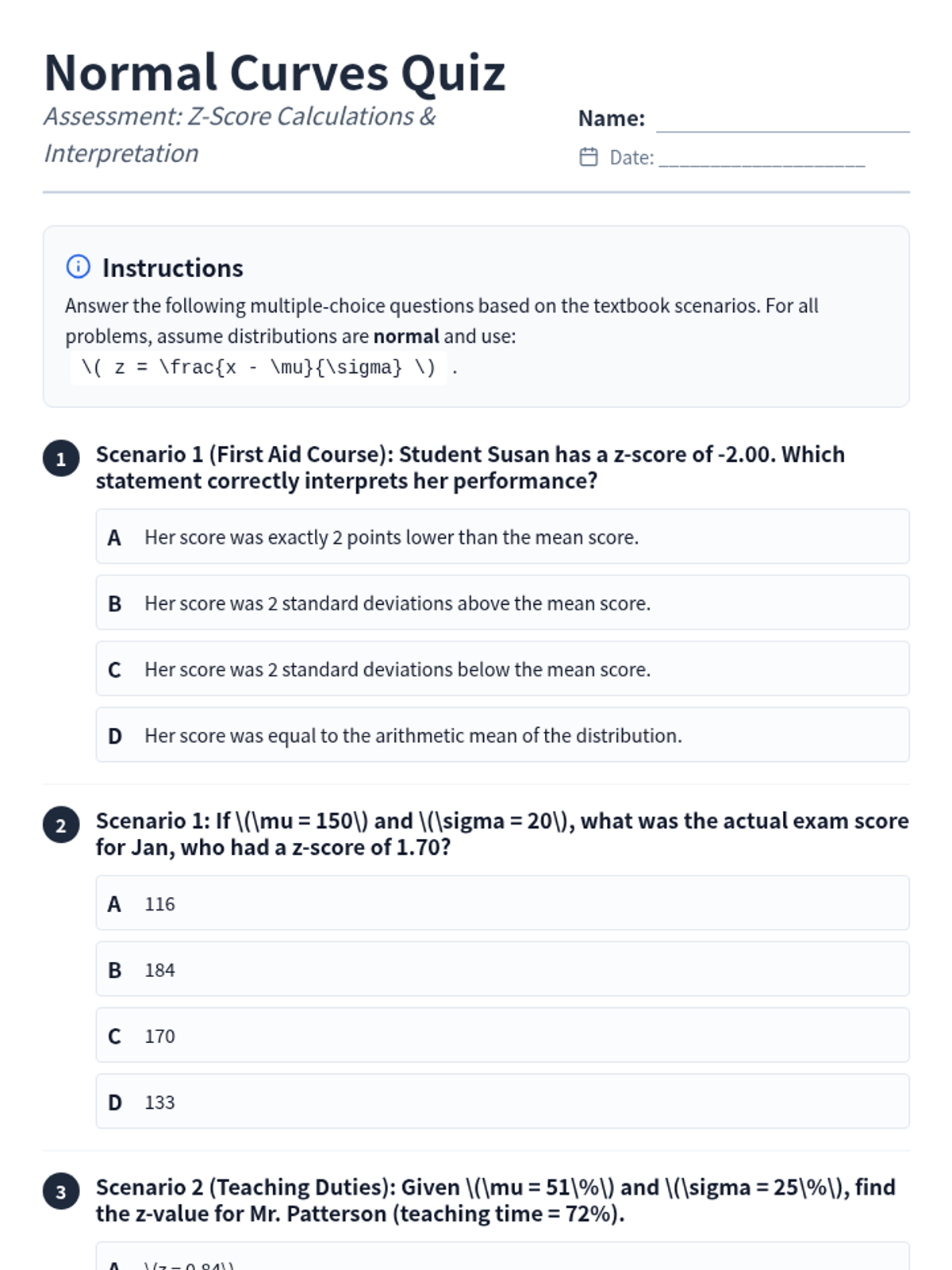
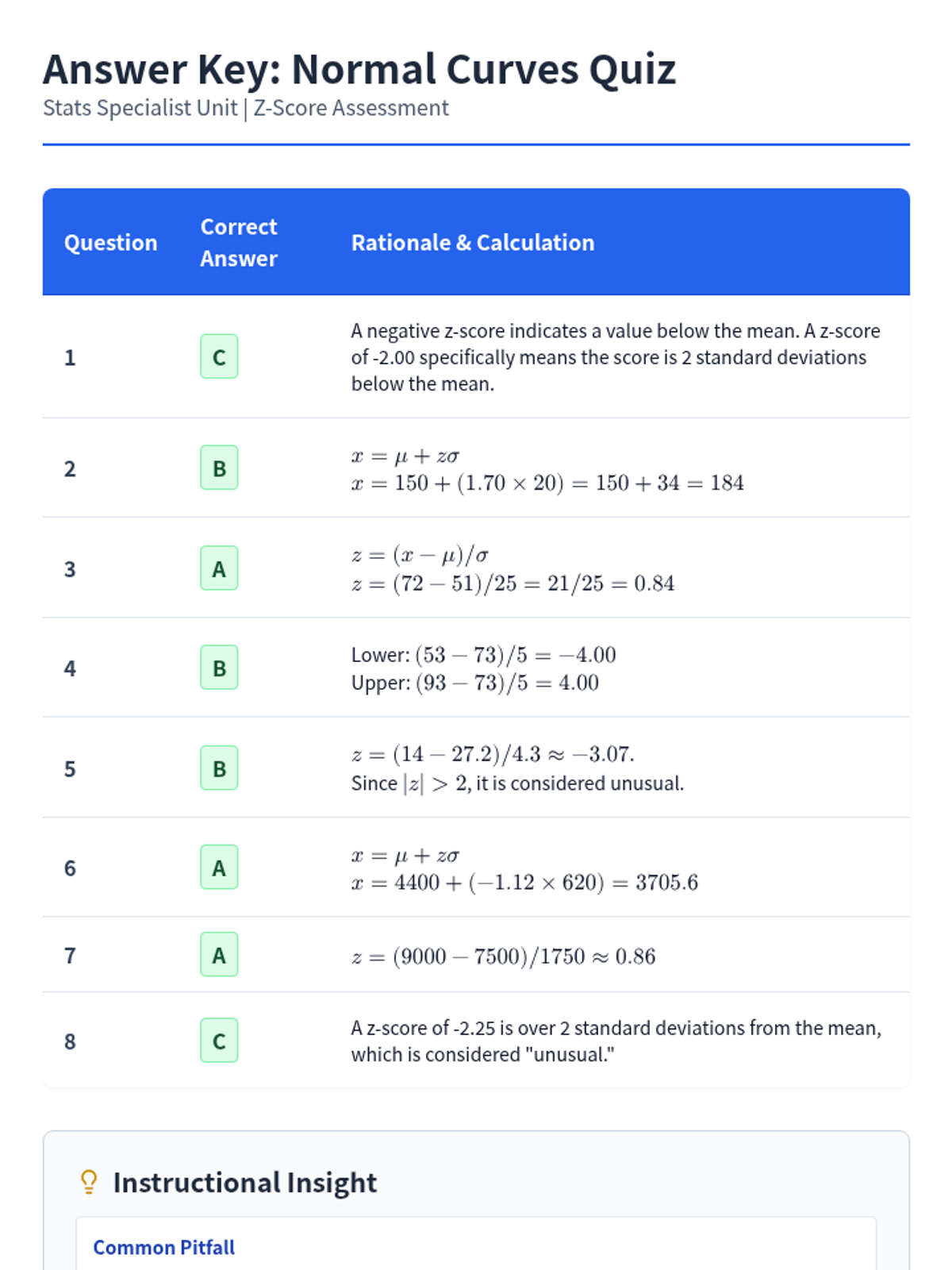
A focused lesson on calculating and interpreting z-scores and normal distributions using real-world scenarios from the textbook. Students will practice converting between raw scores and z-scores and determine the "unusualness" of specific data points.
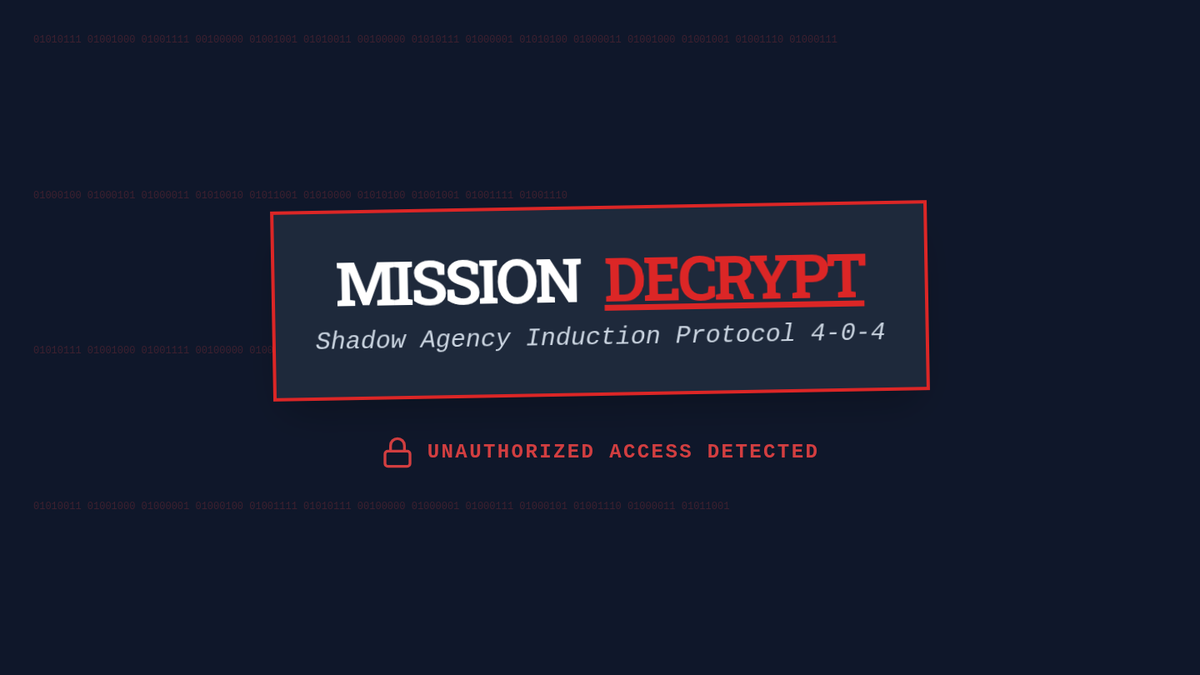
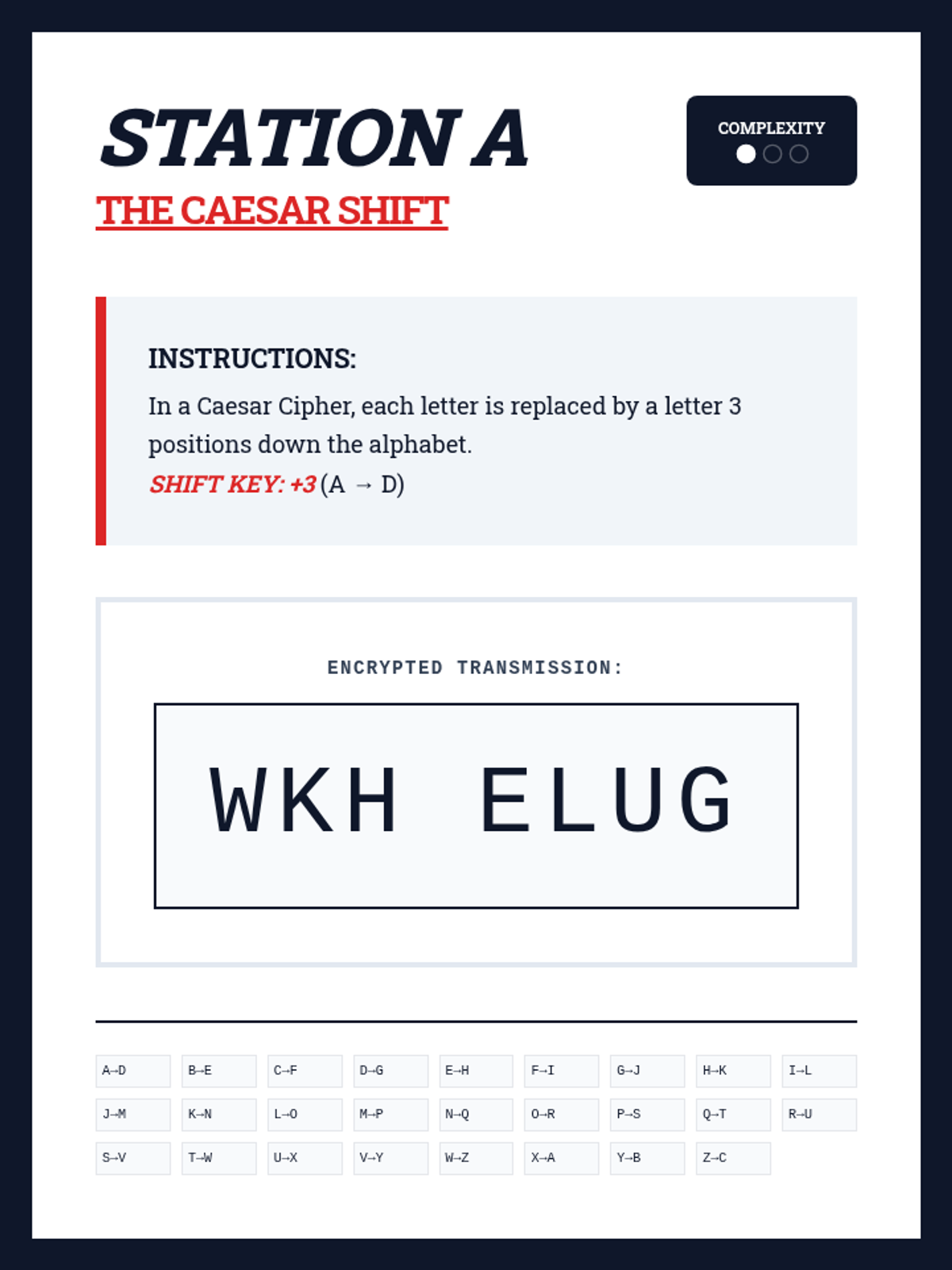
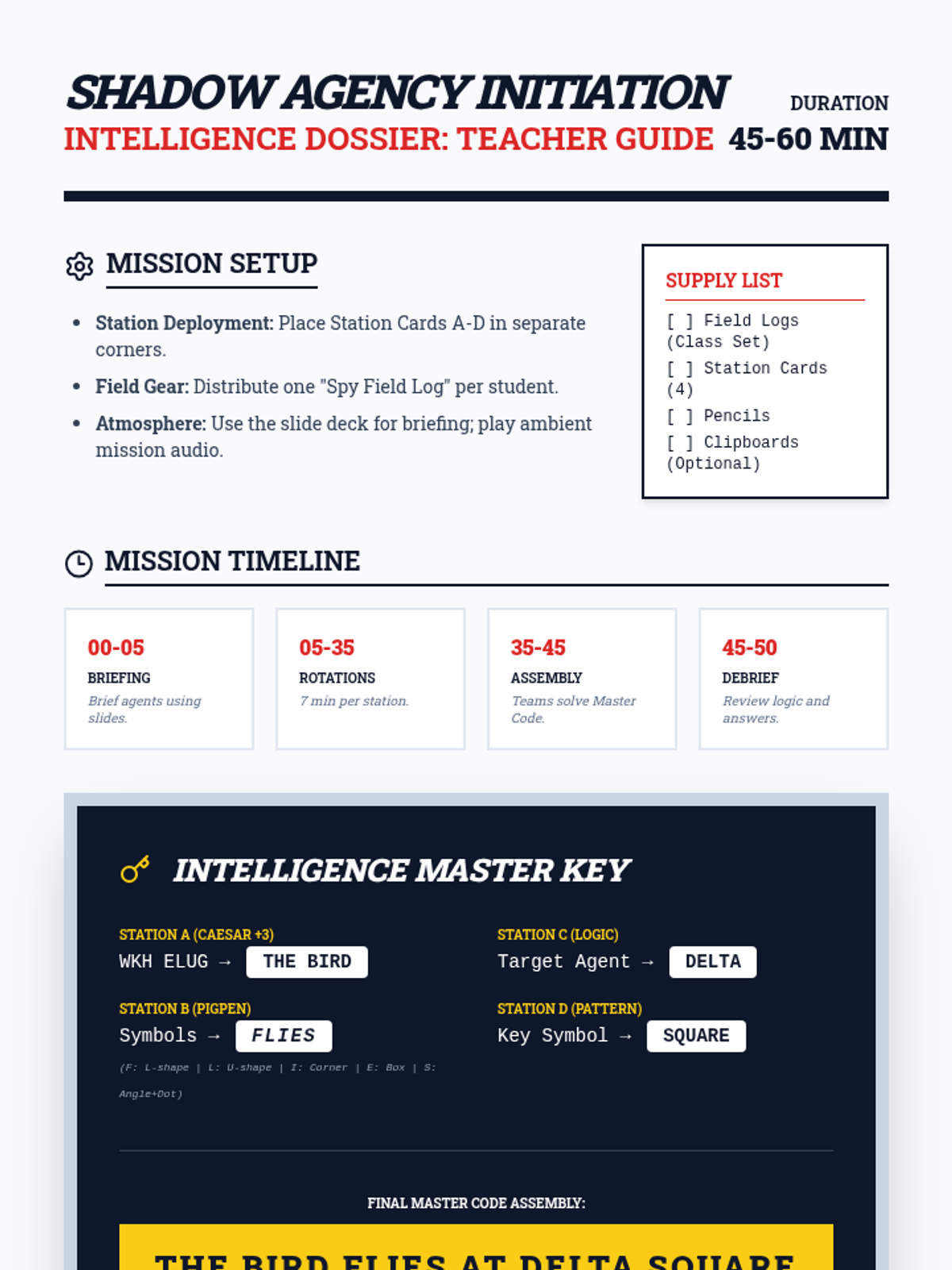
An immersive, station-based experience where students rotate through various cryptographic challenges, using letter ciphers, symbol keys, and logic puzzles to earn their 'Shadow Agent' status.
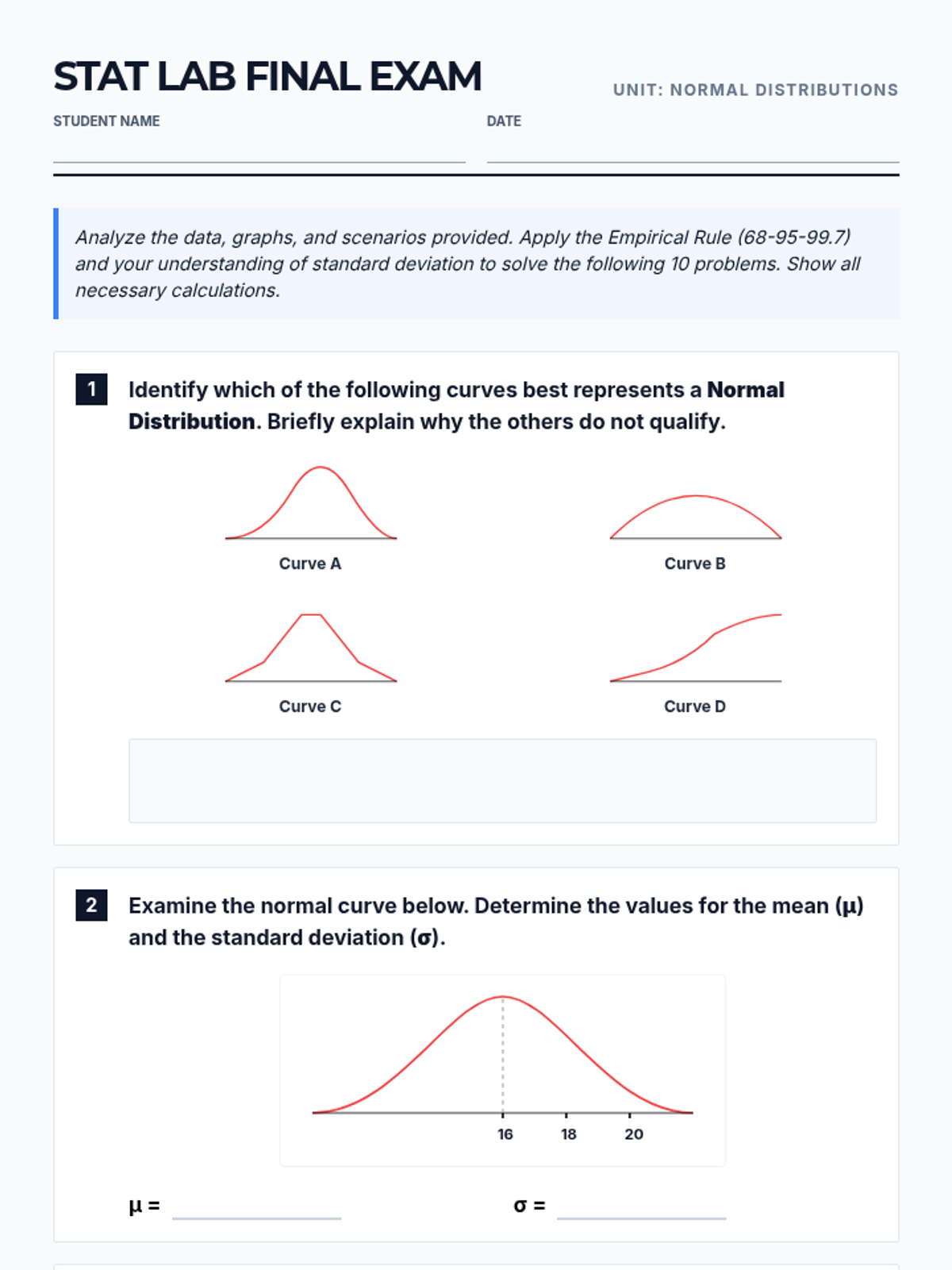
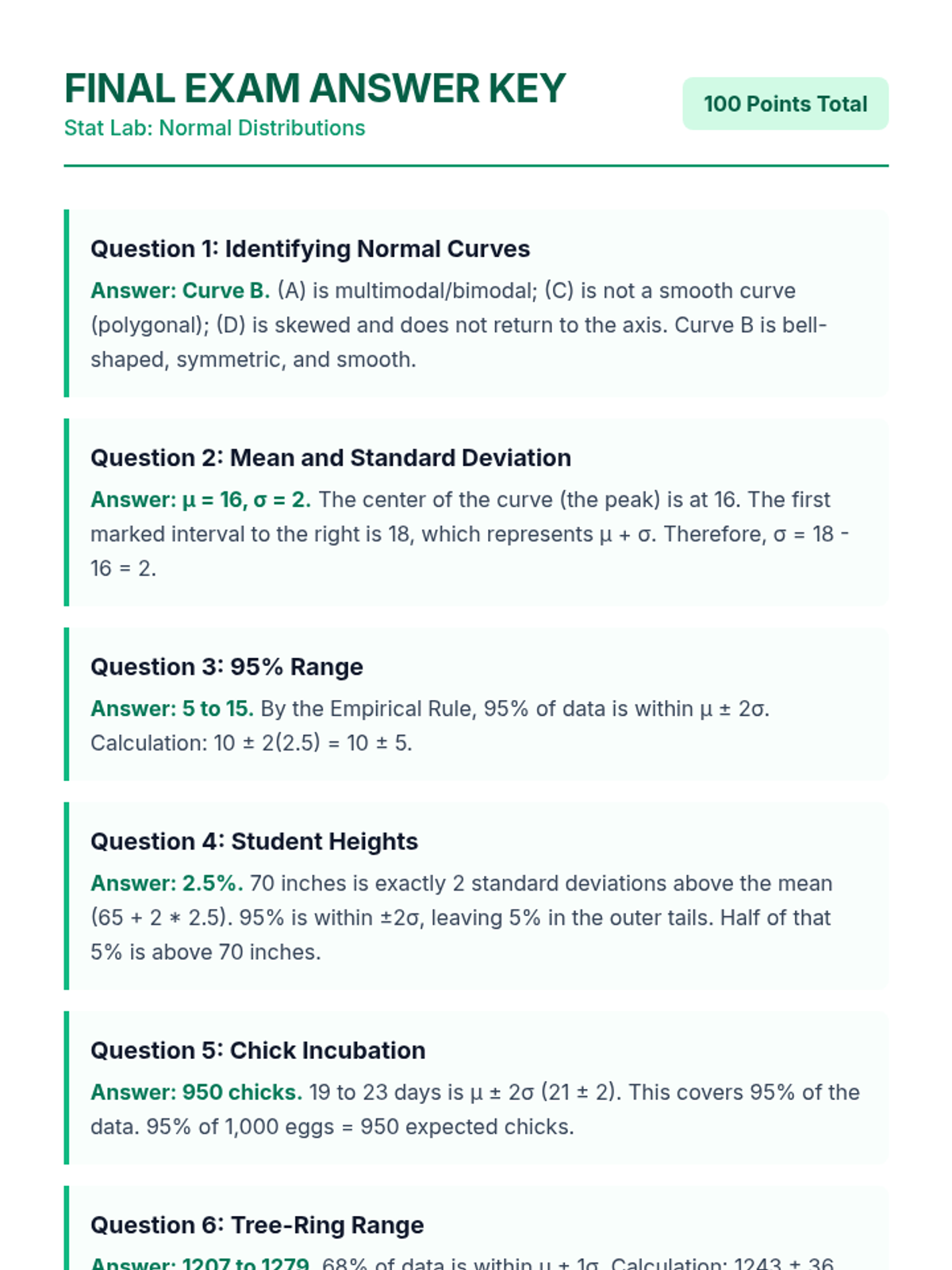
This lesson covers the fundamentals of normal distributions, including identifying bell curves, applying the empirical rule, and interpreting control charts for real-world data analysis.
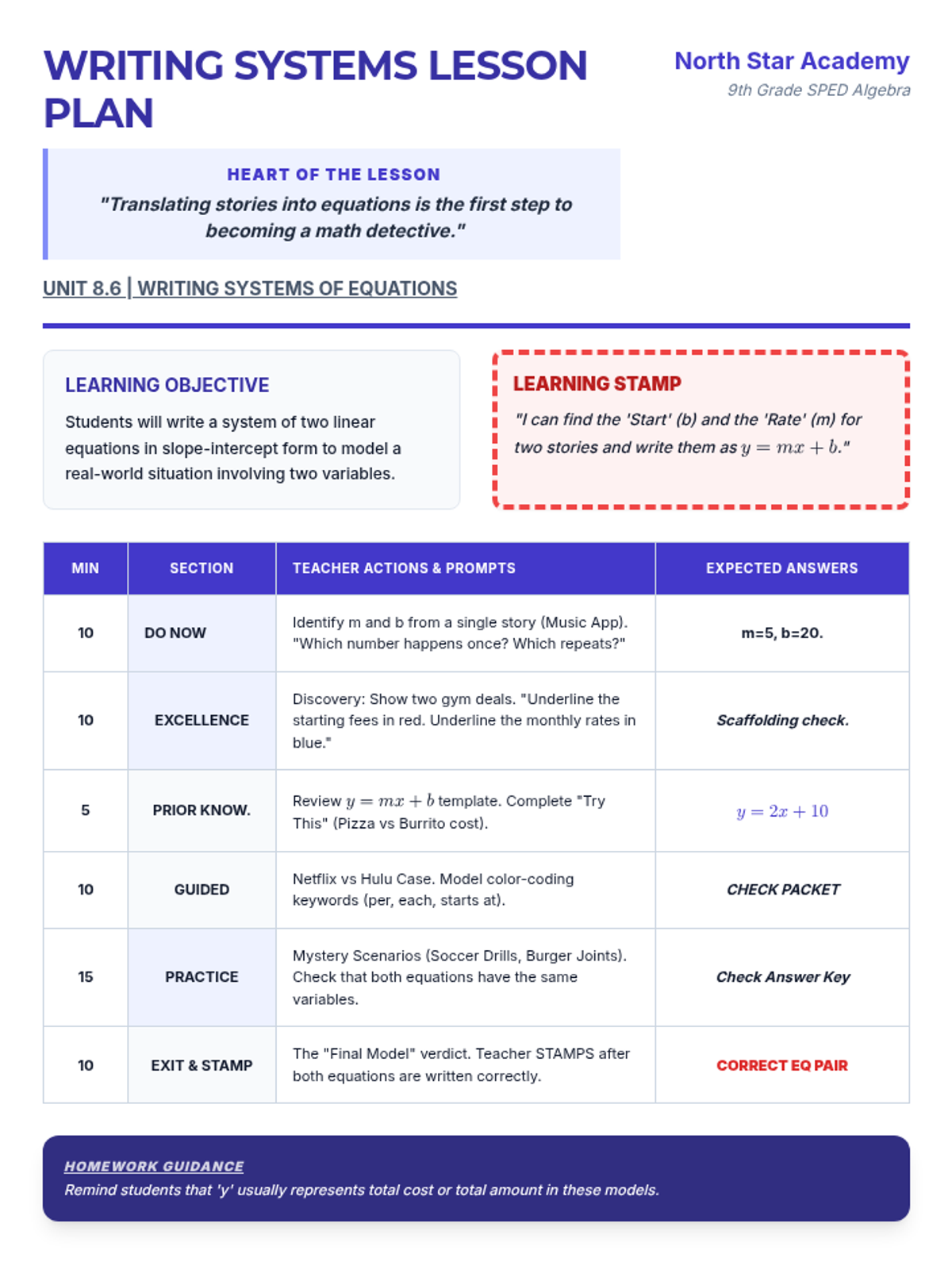
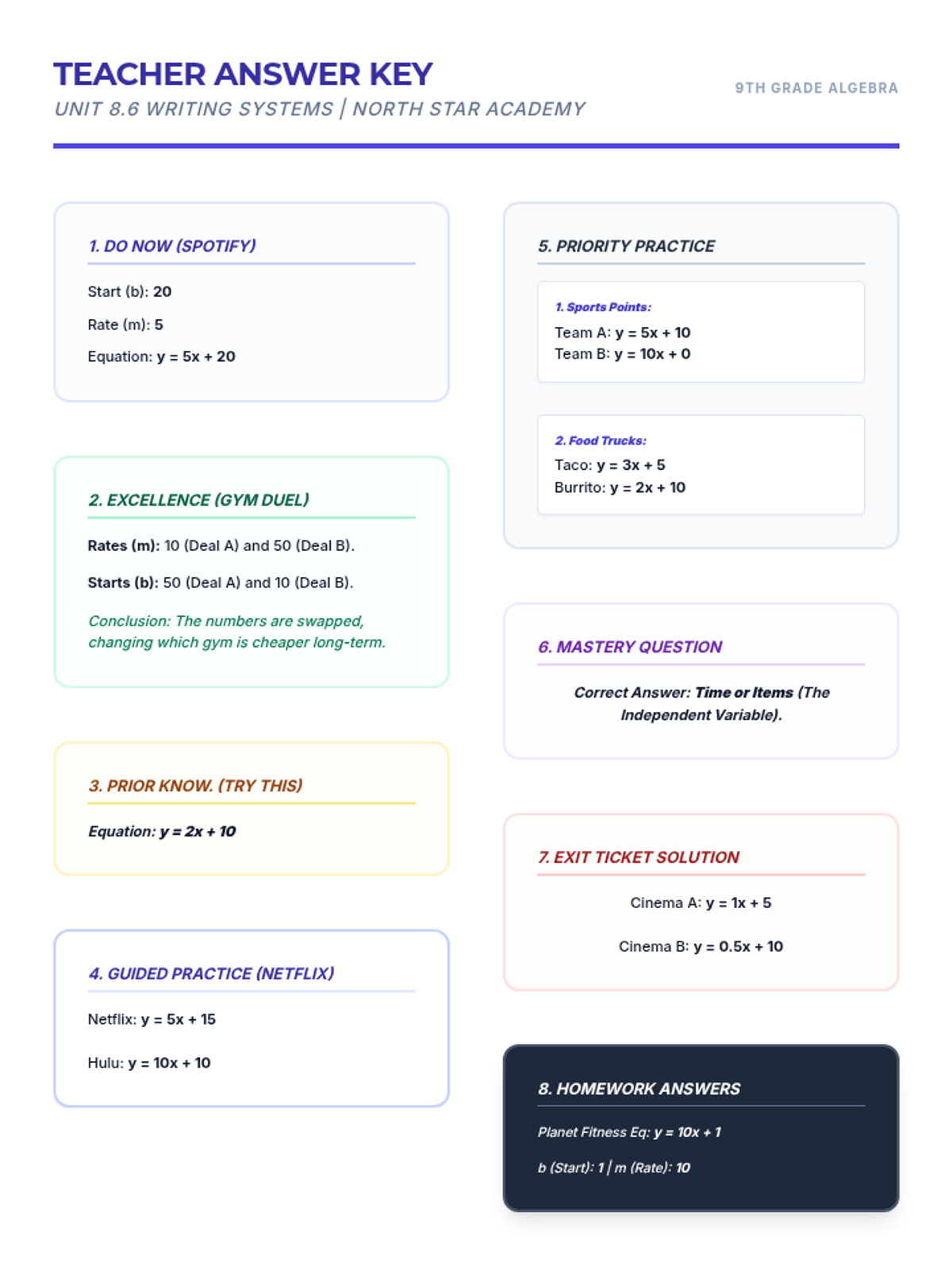
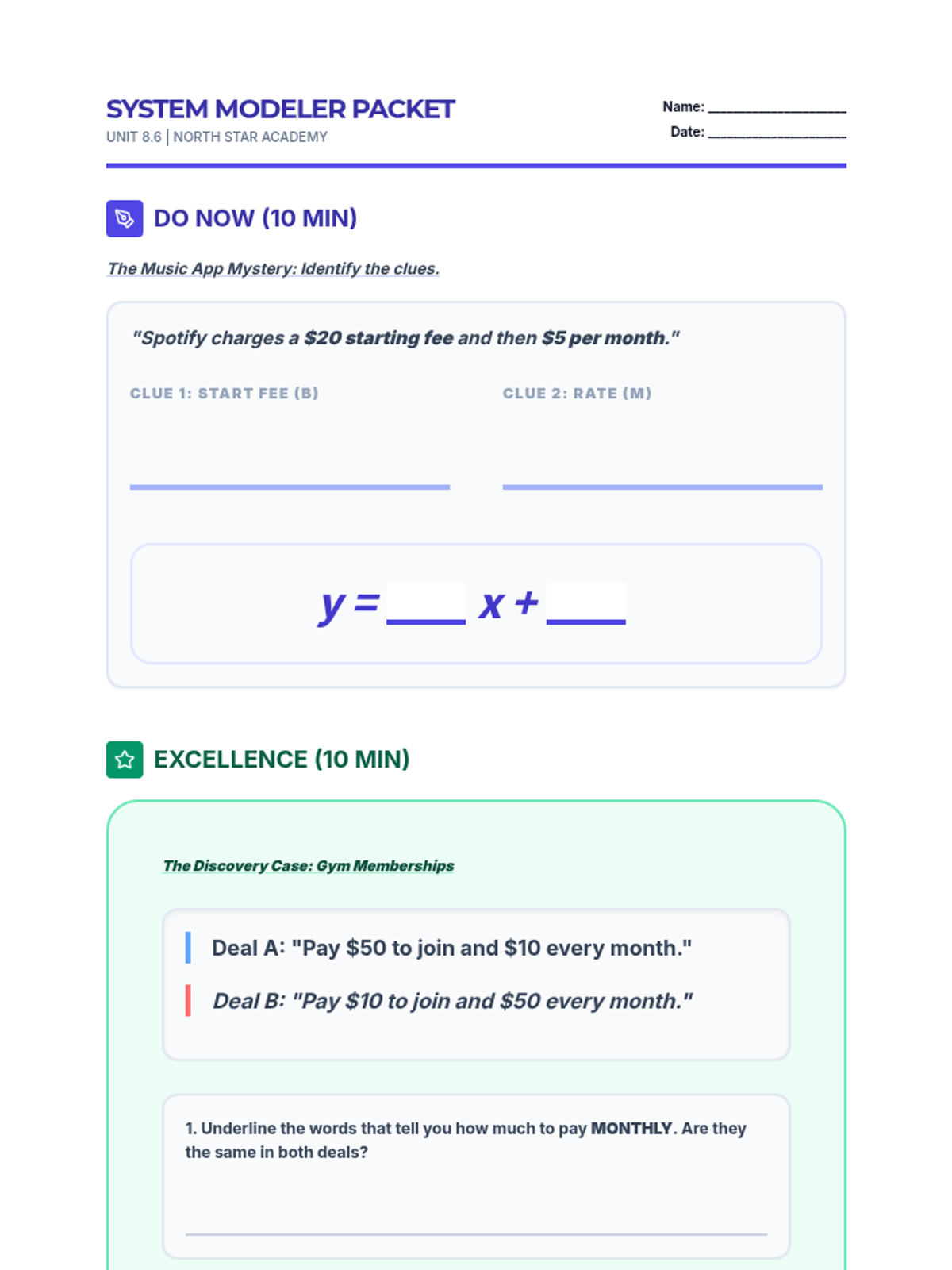
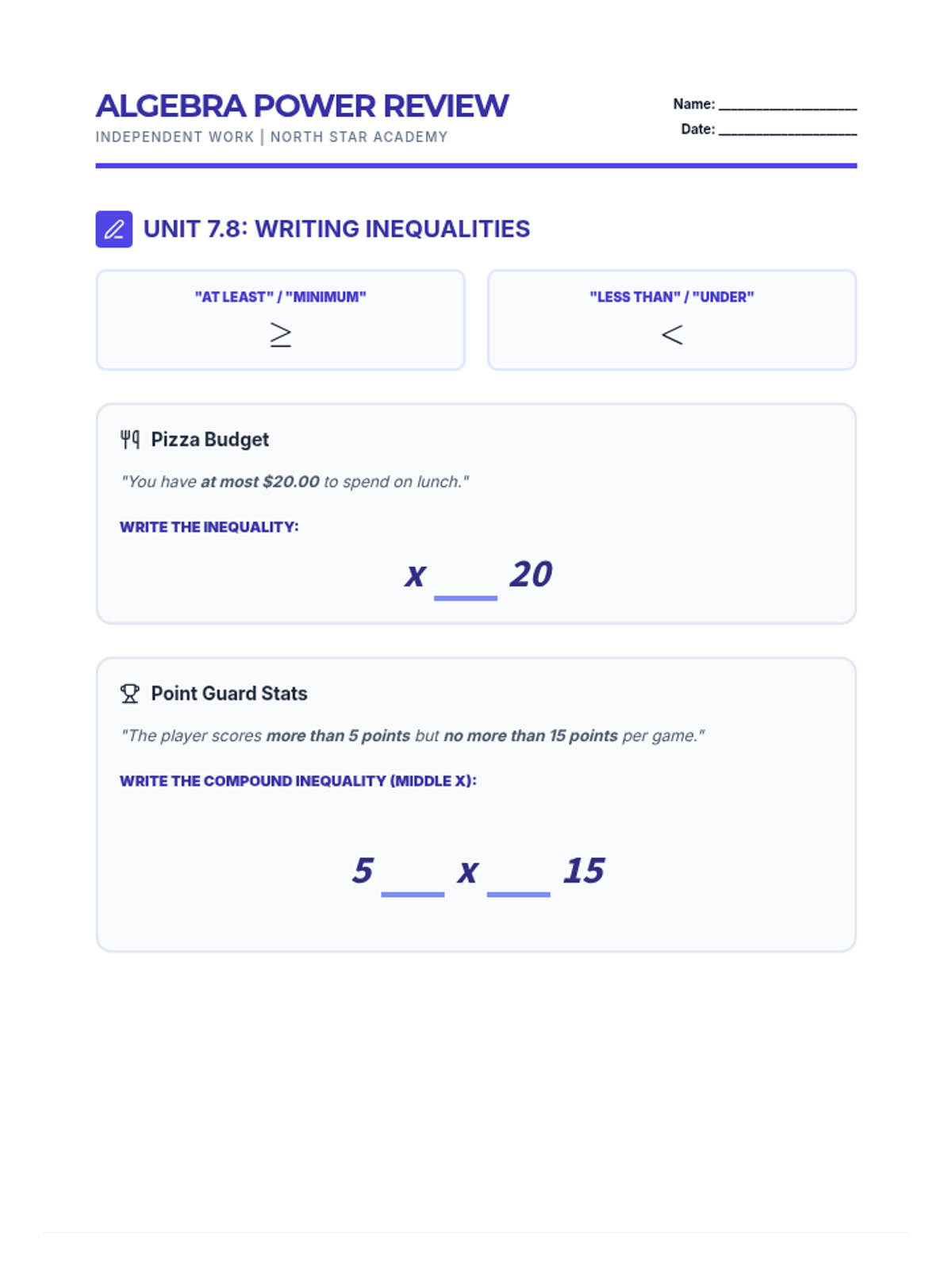
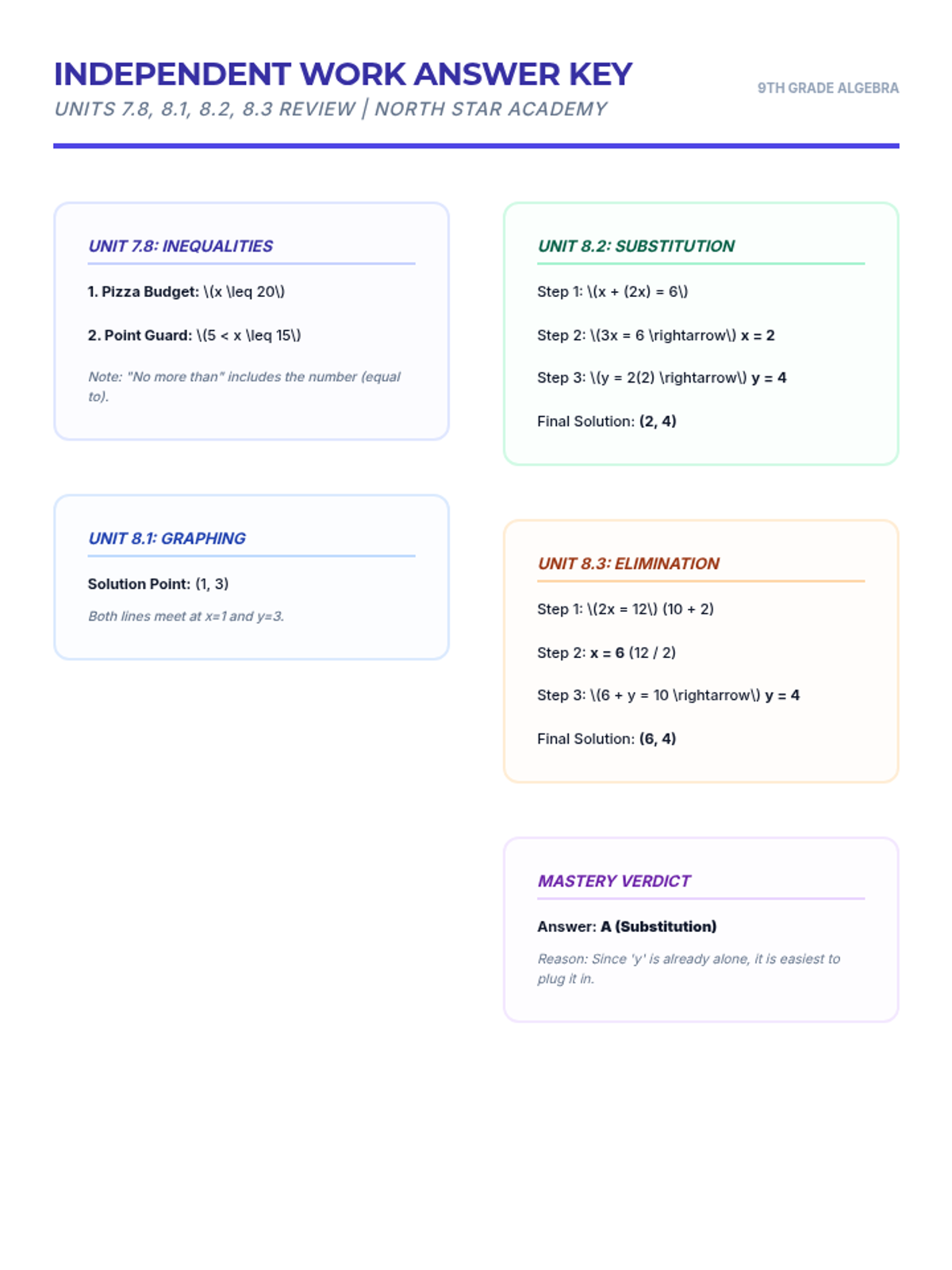
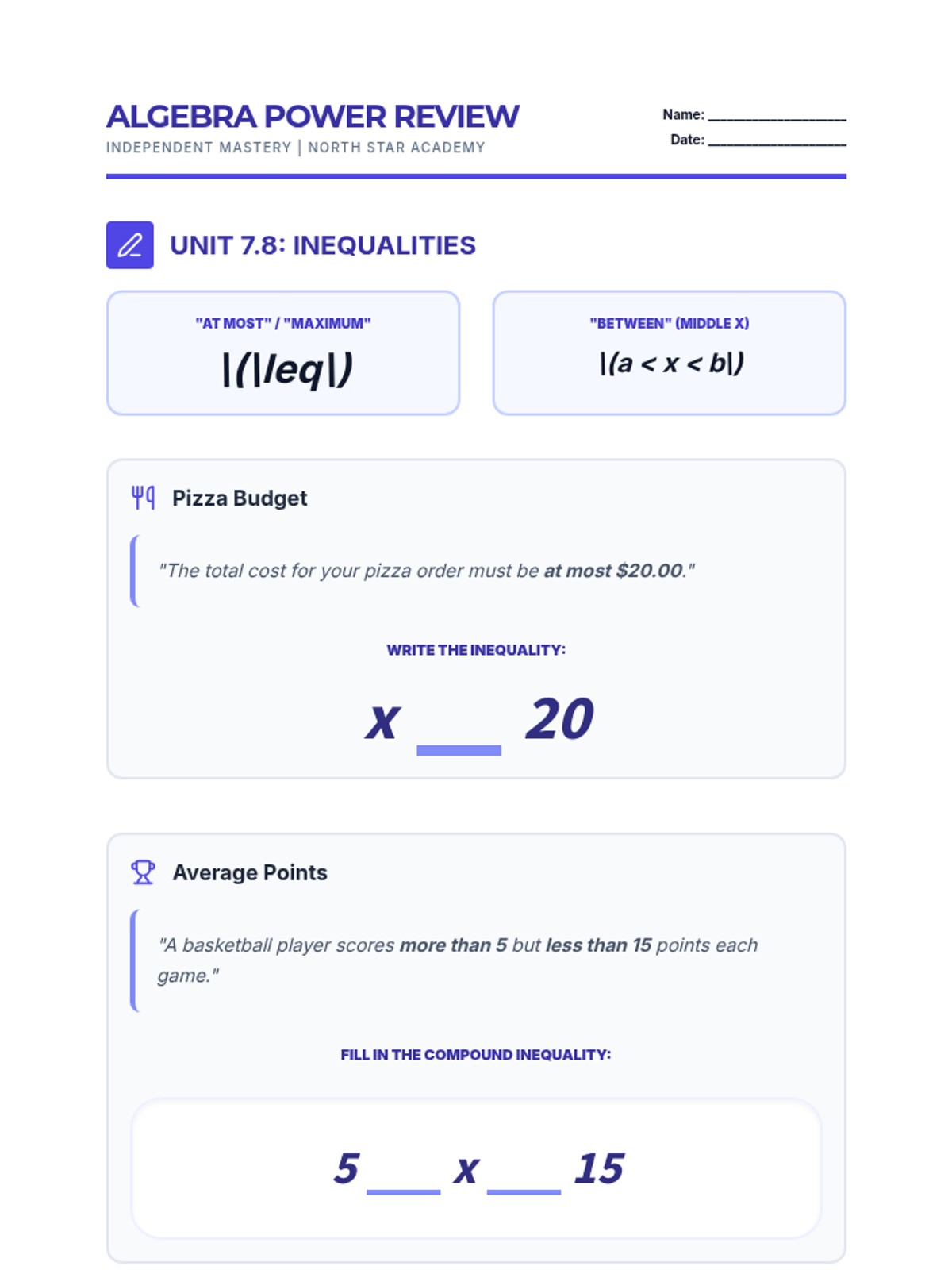
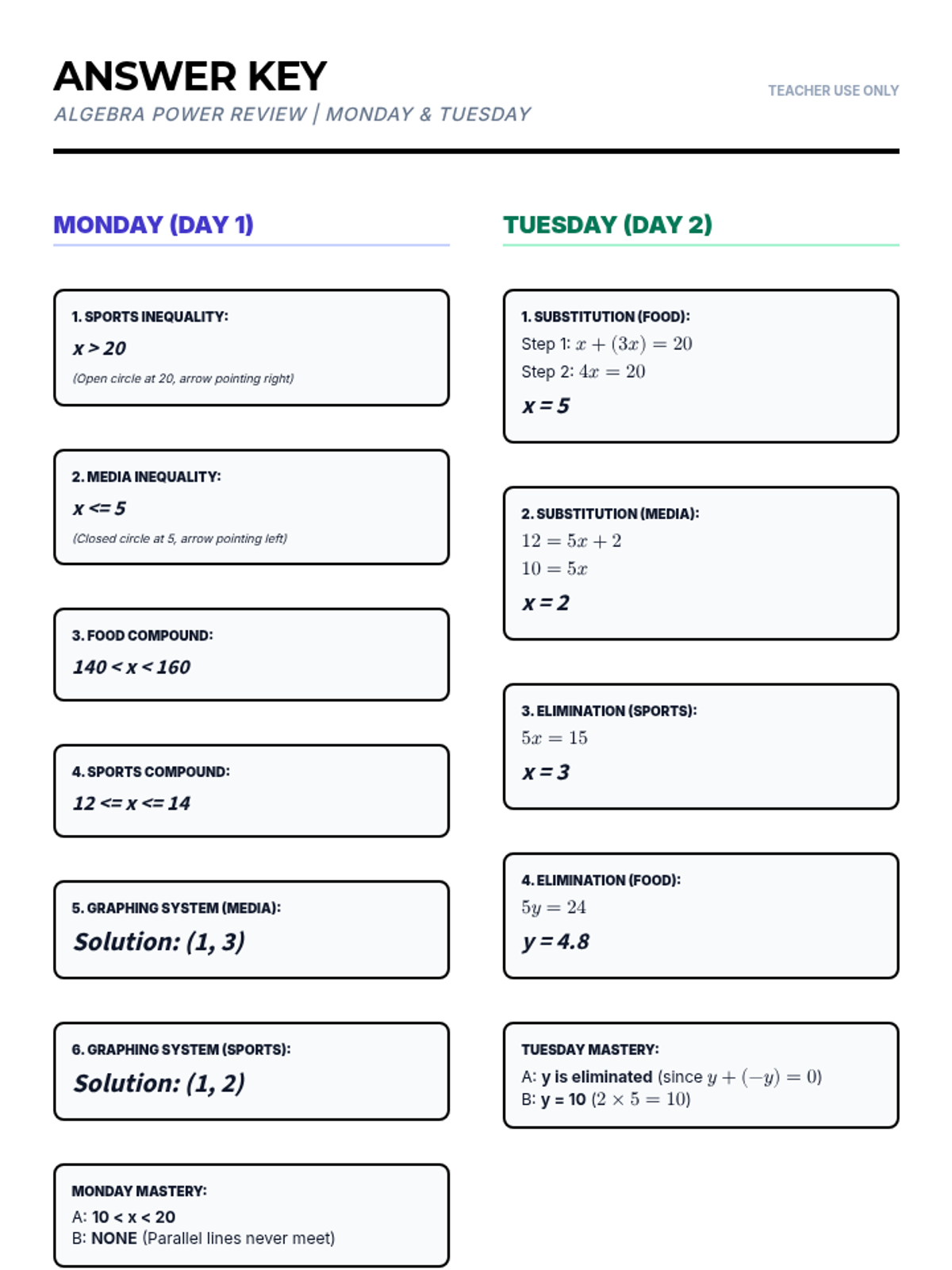
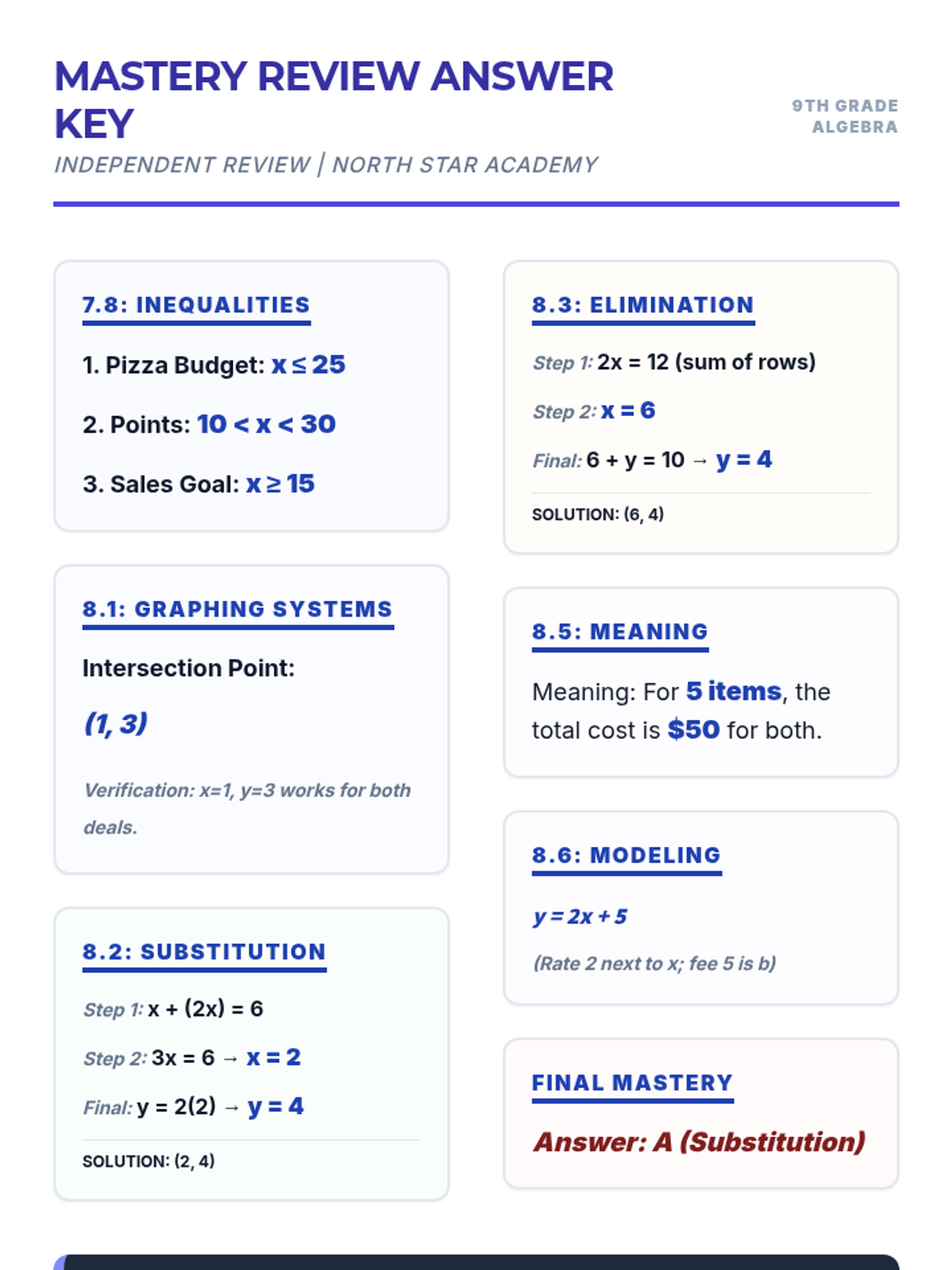
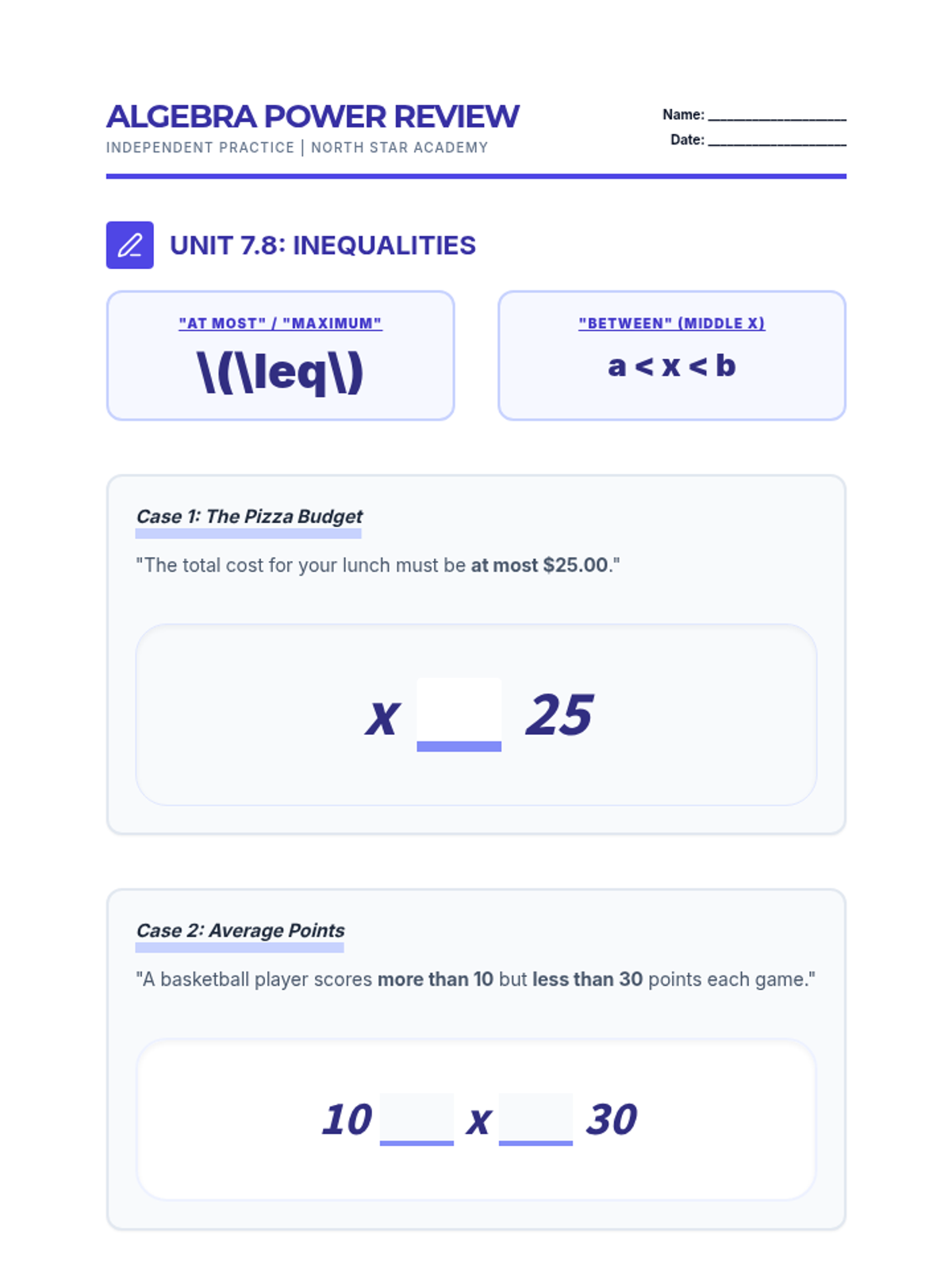
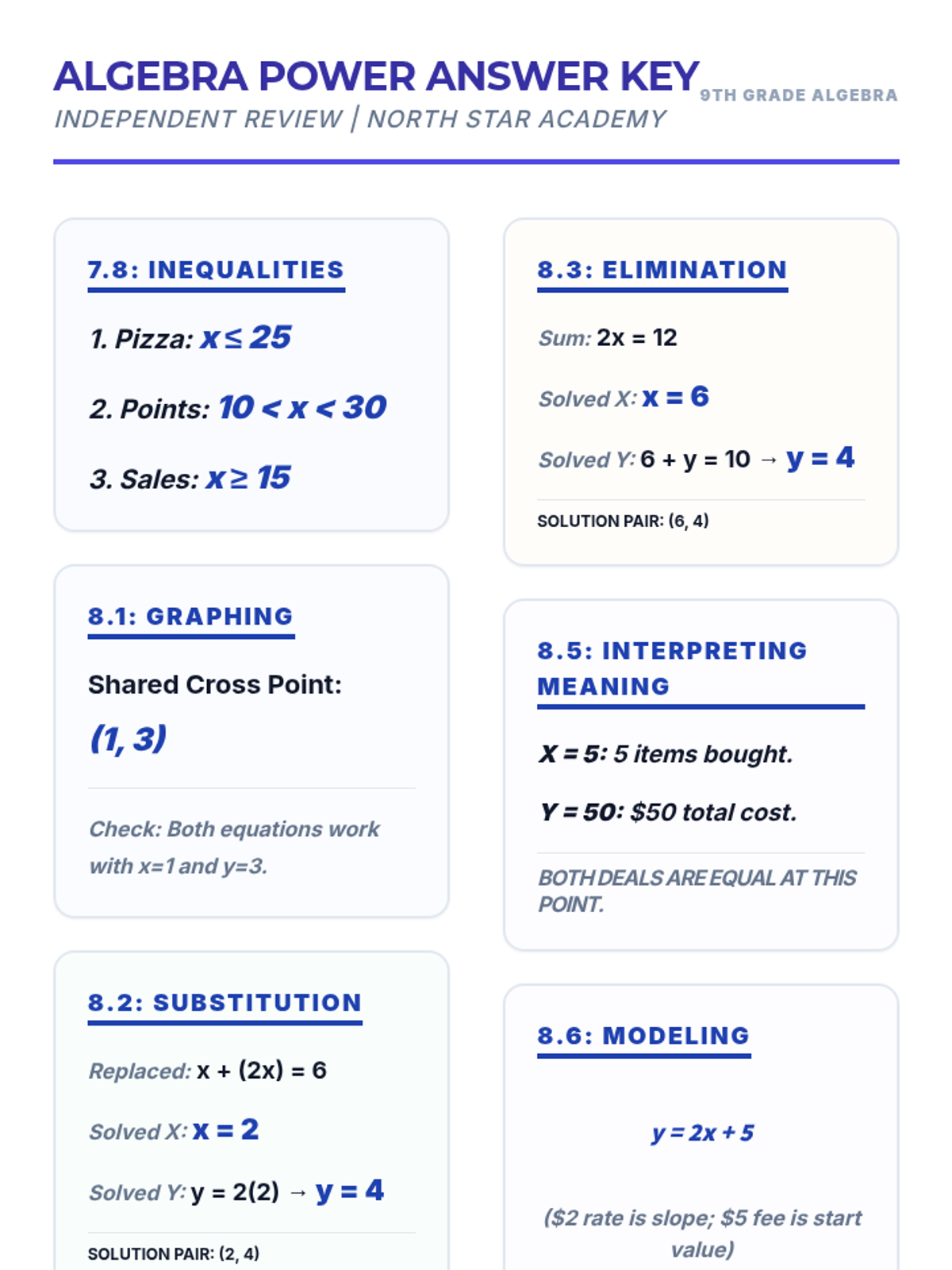
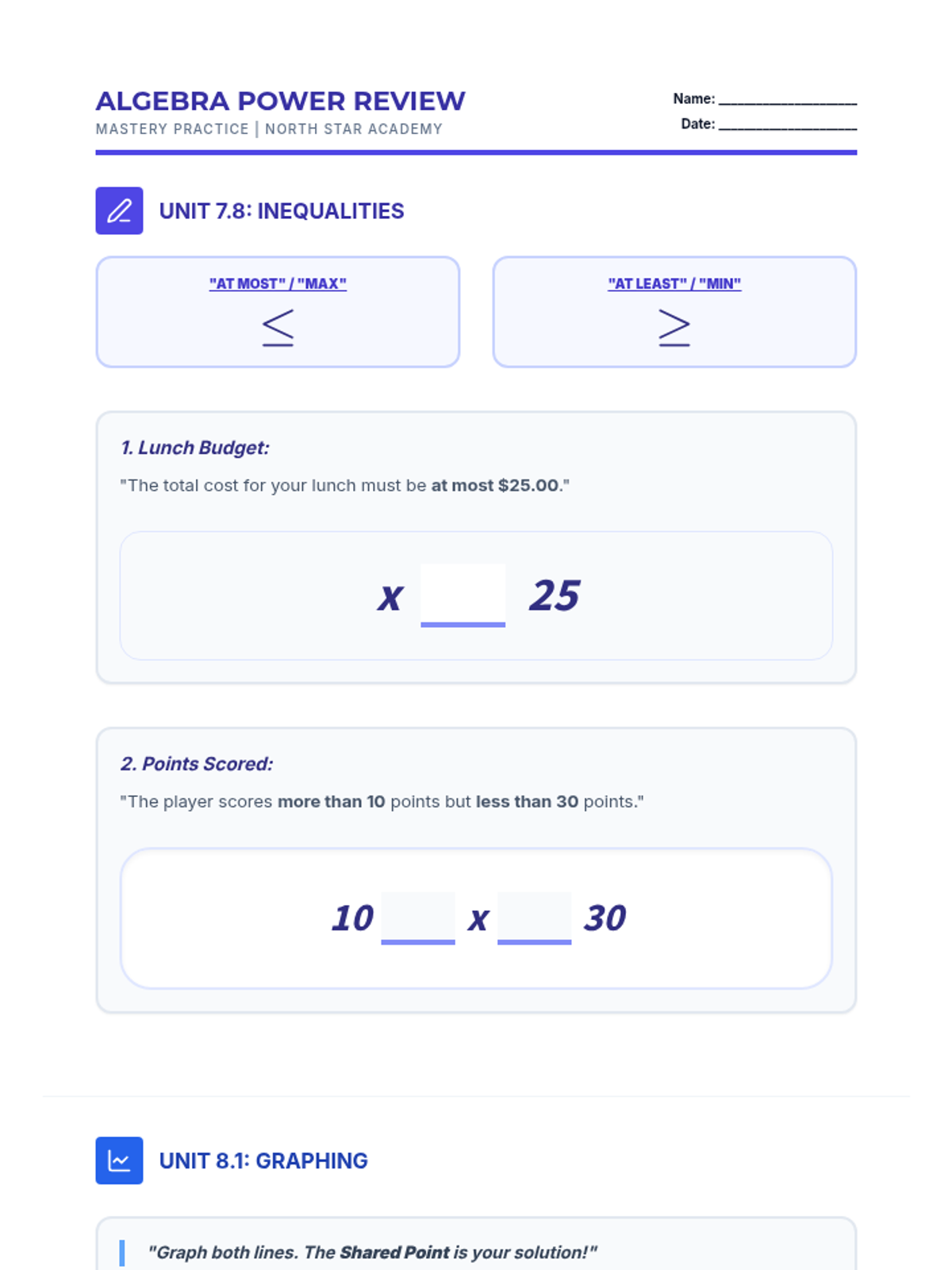
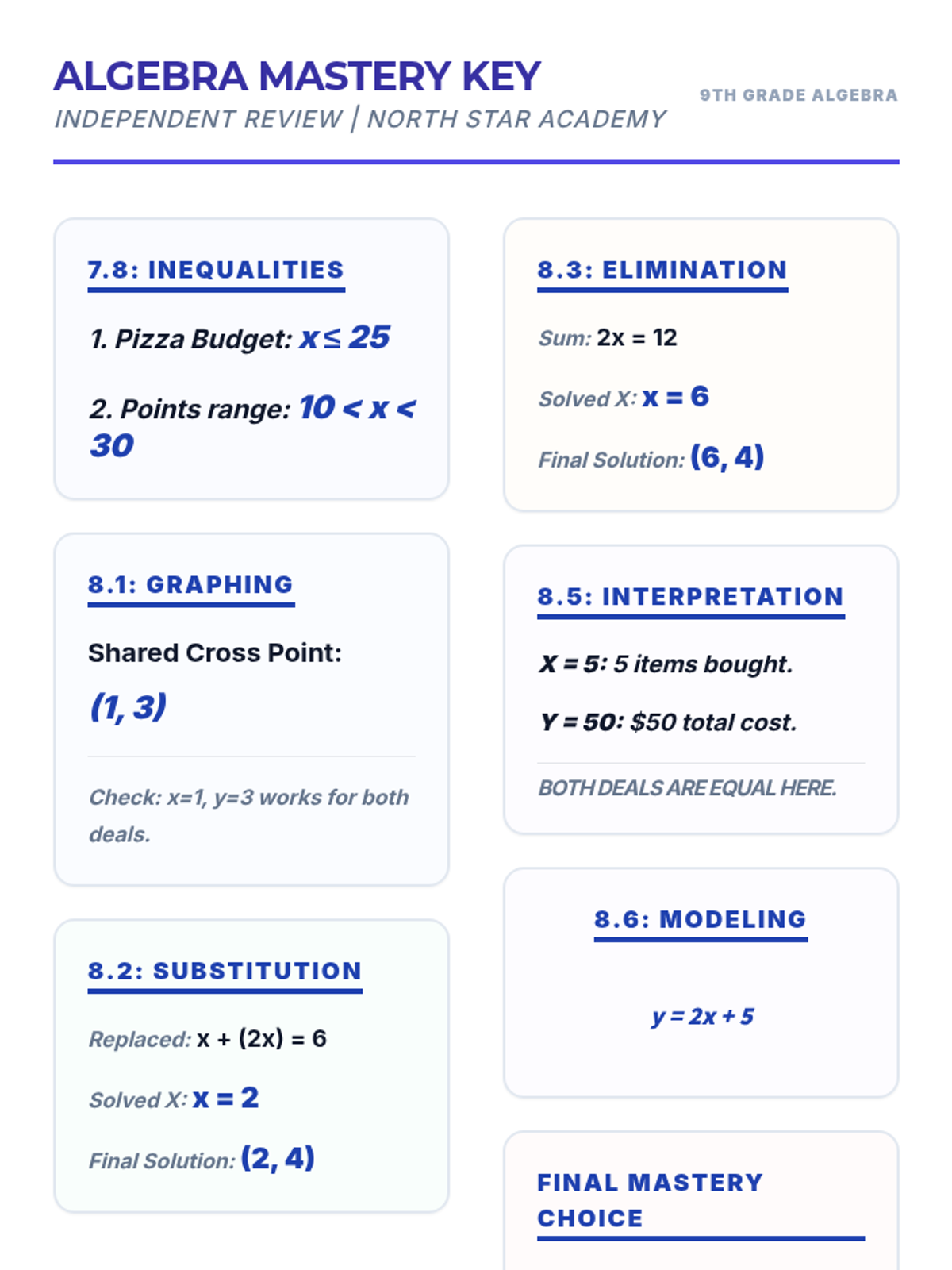
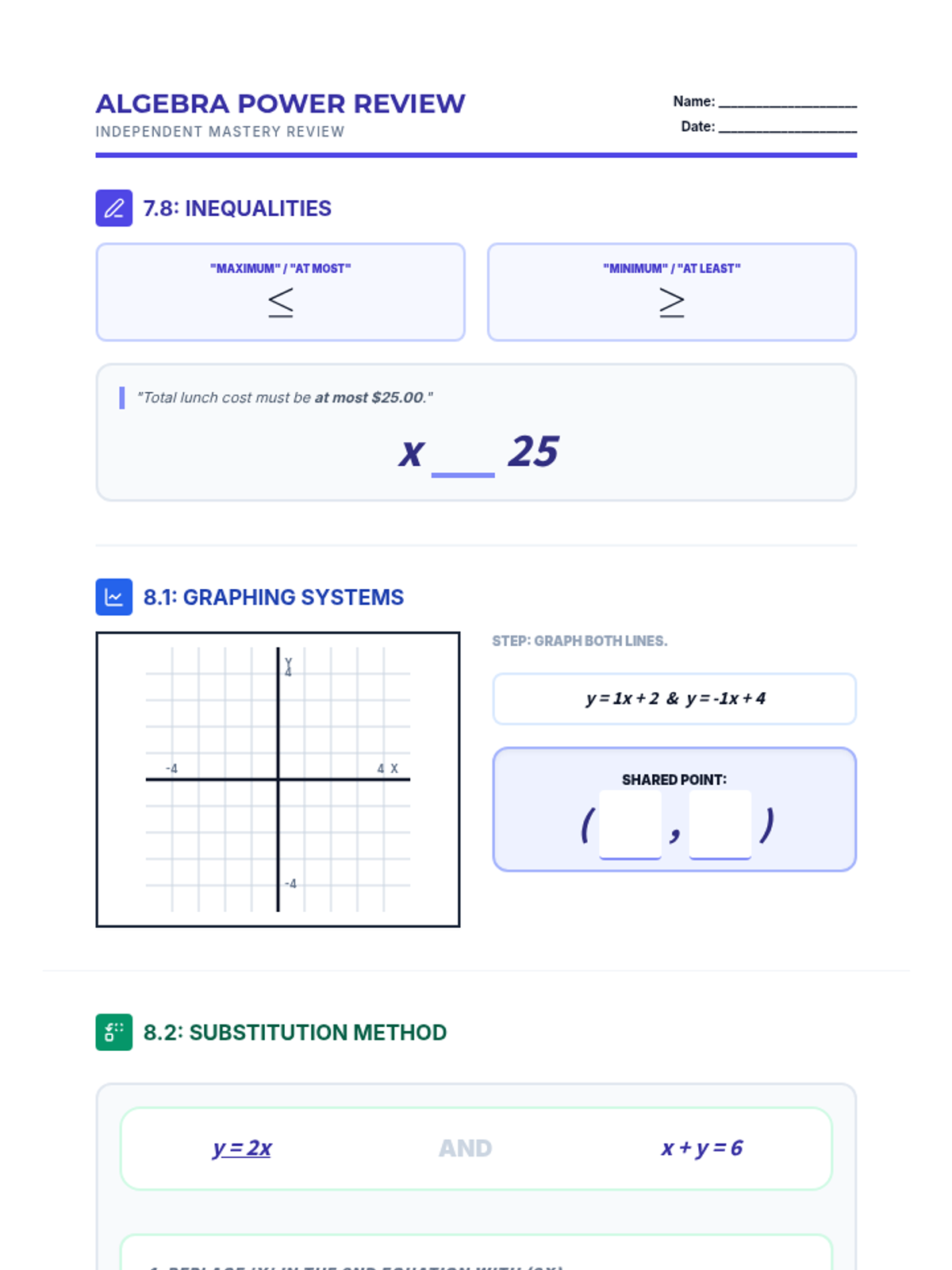
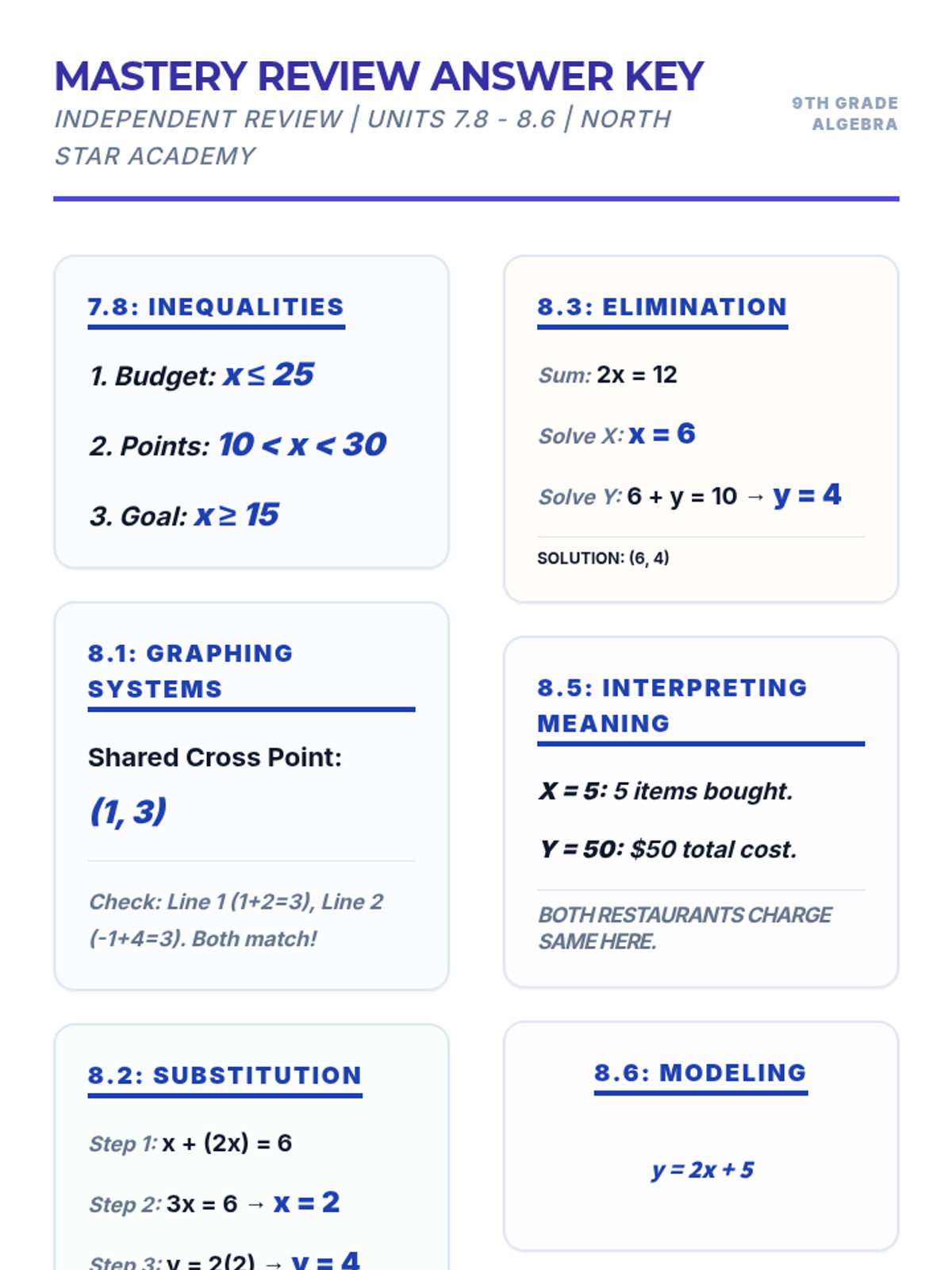
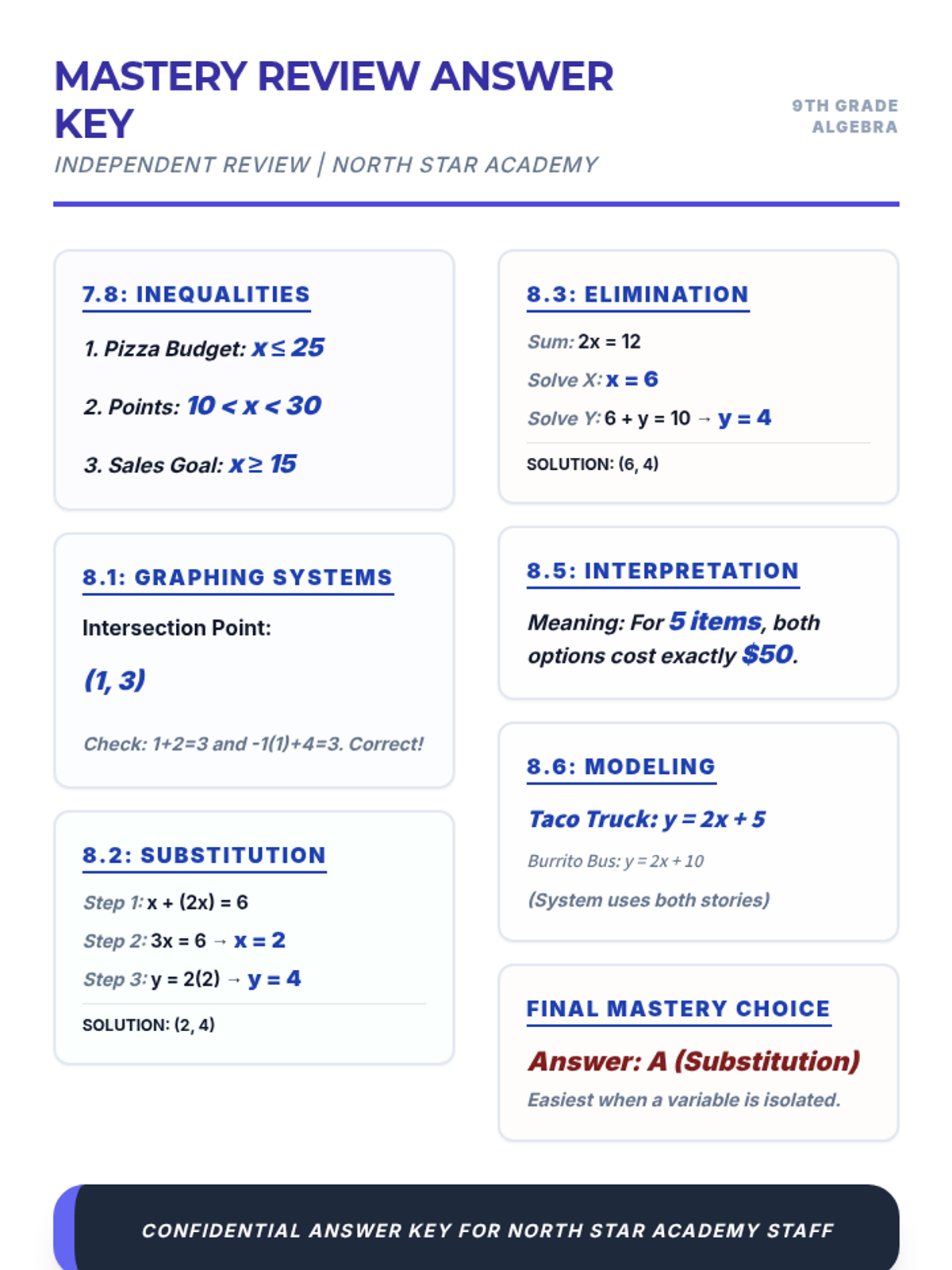
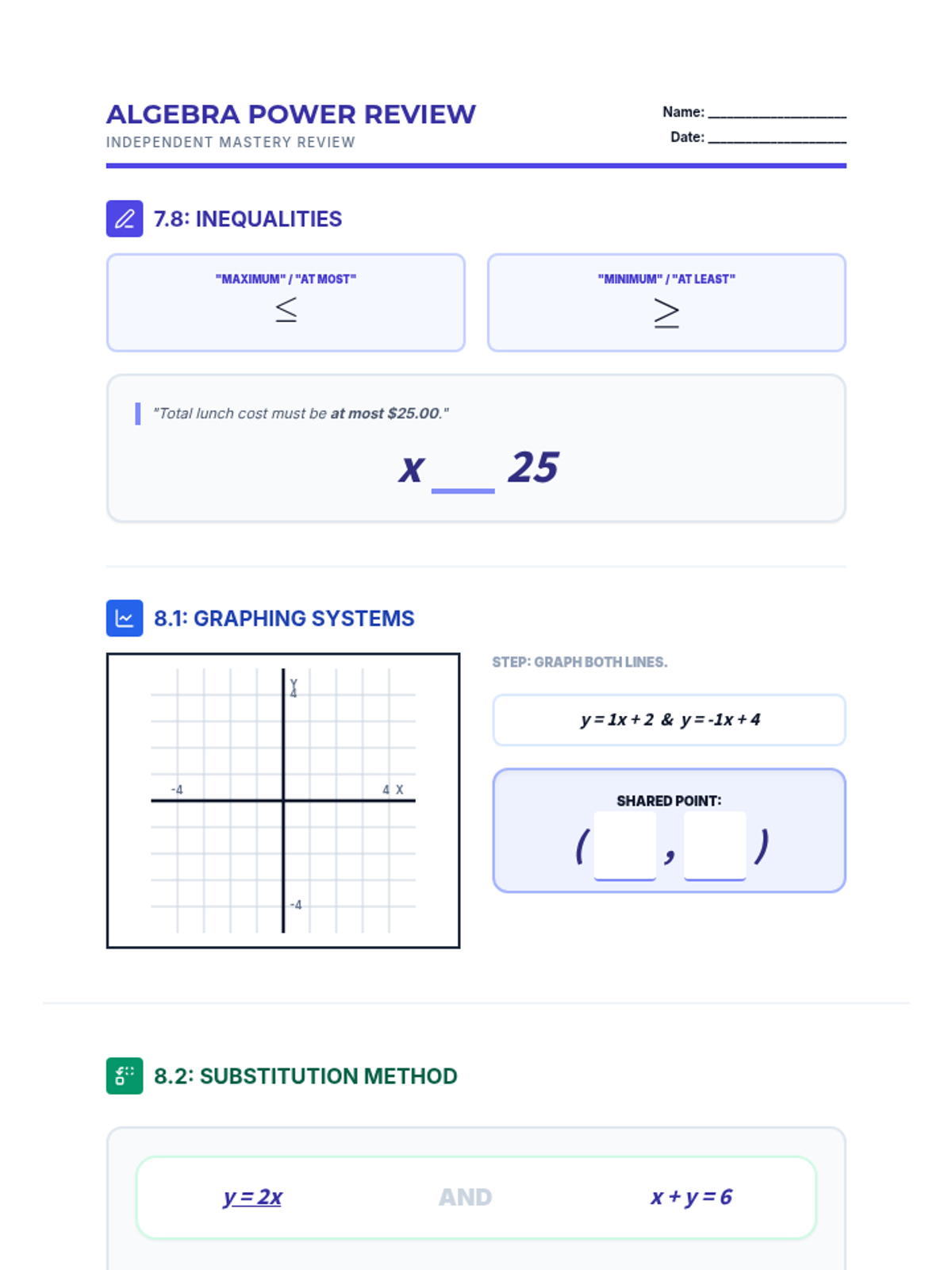
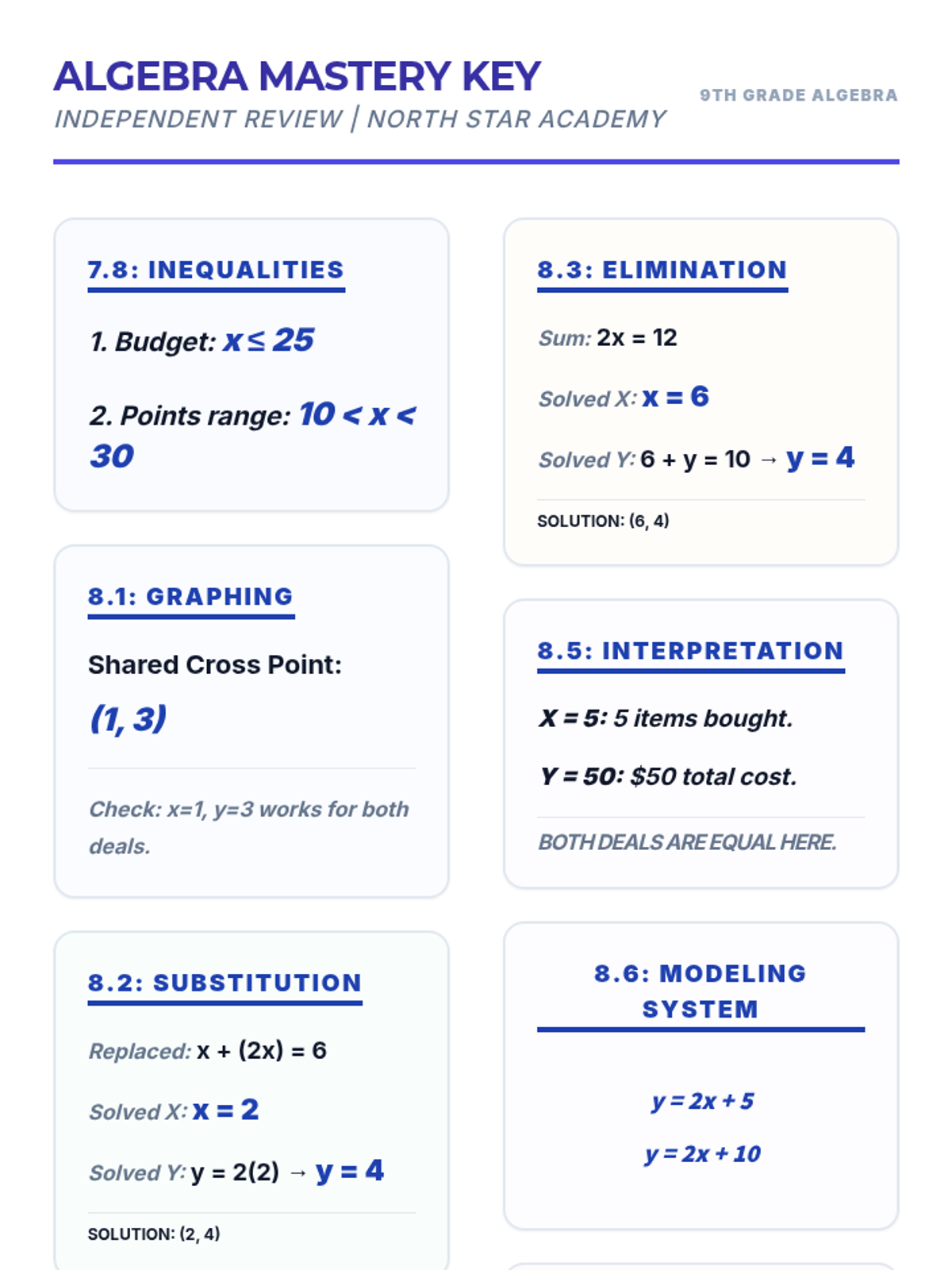
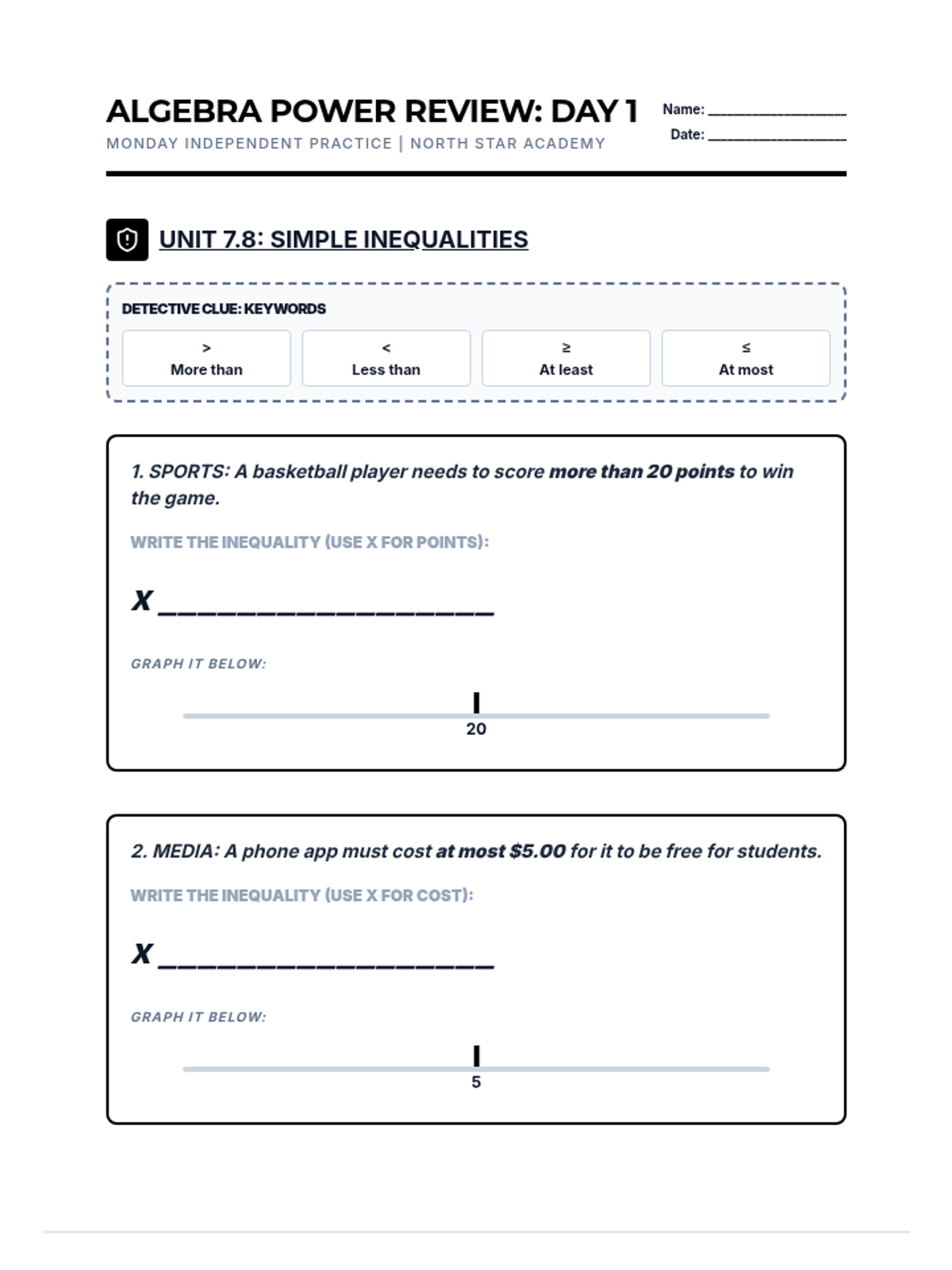
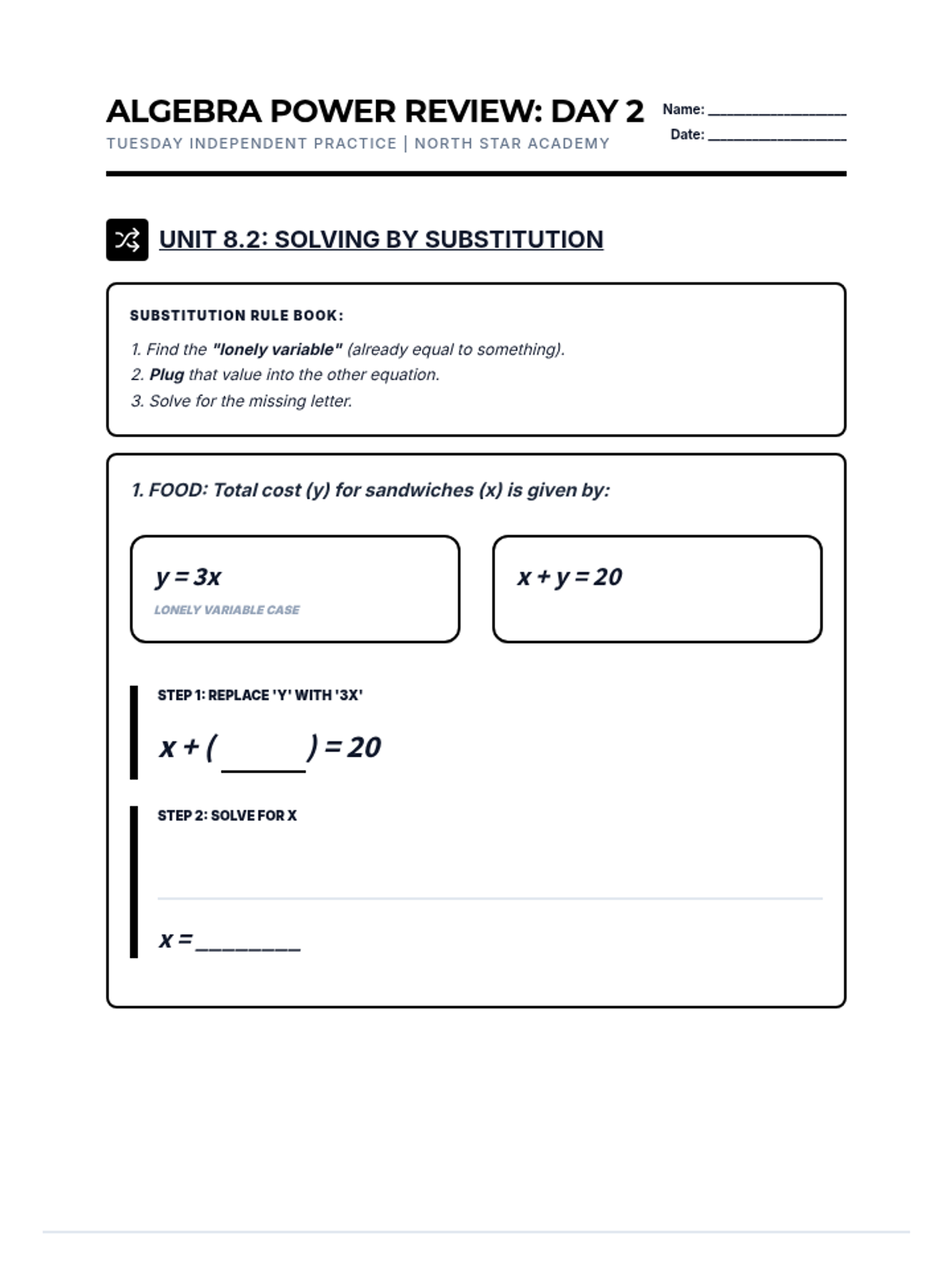
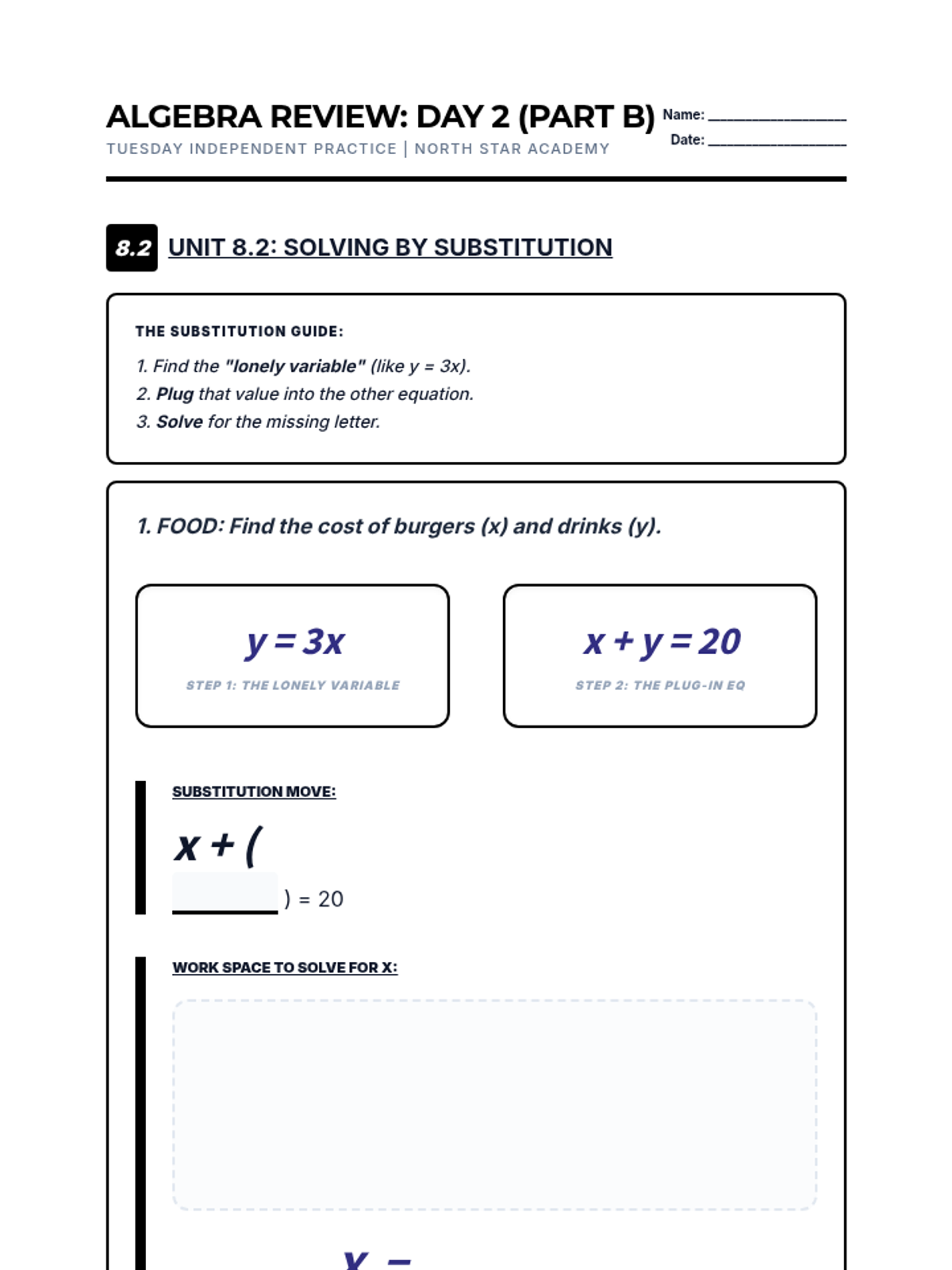
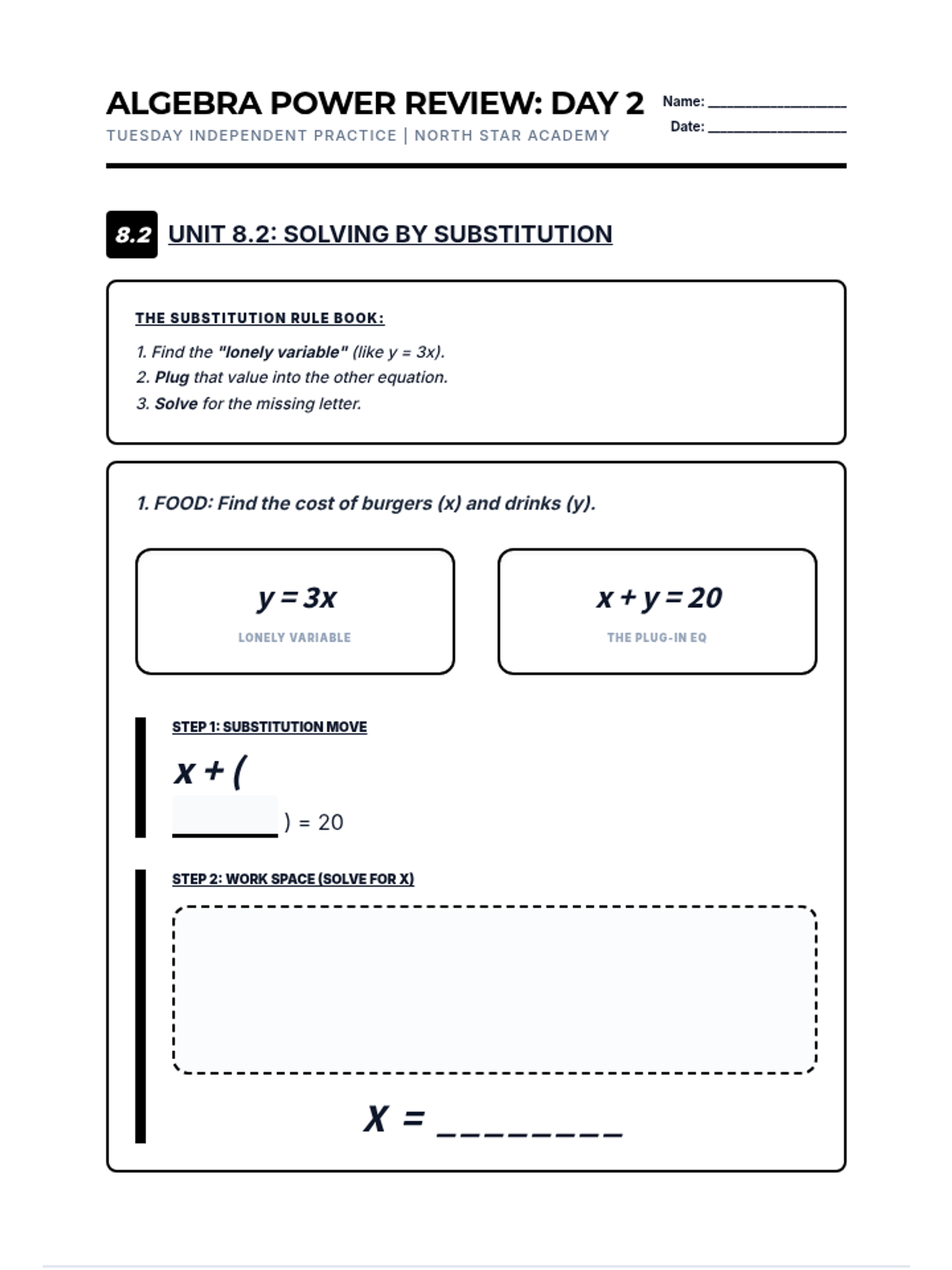
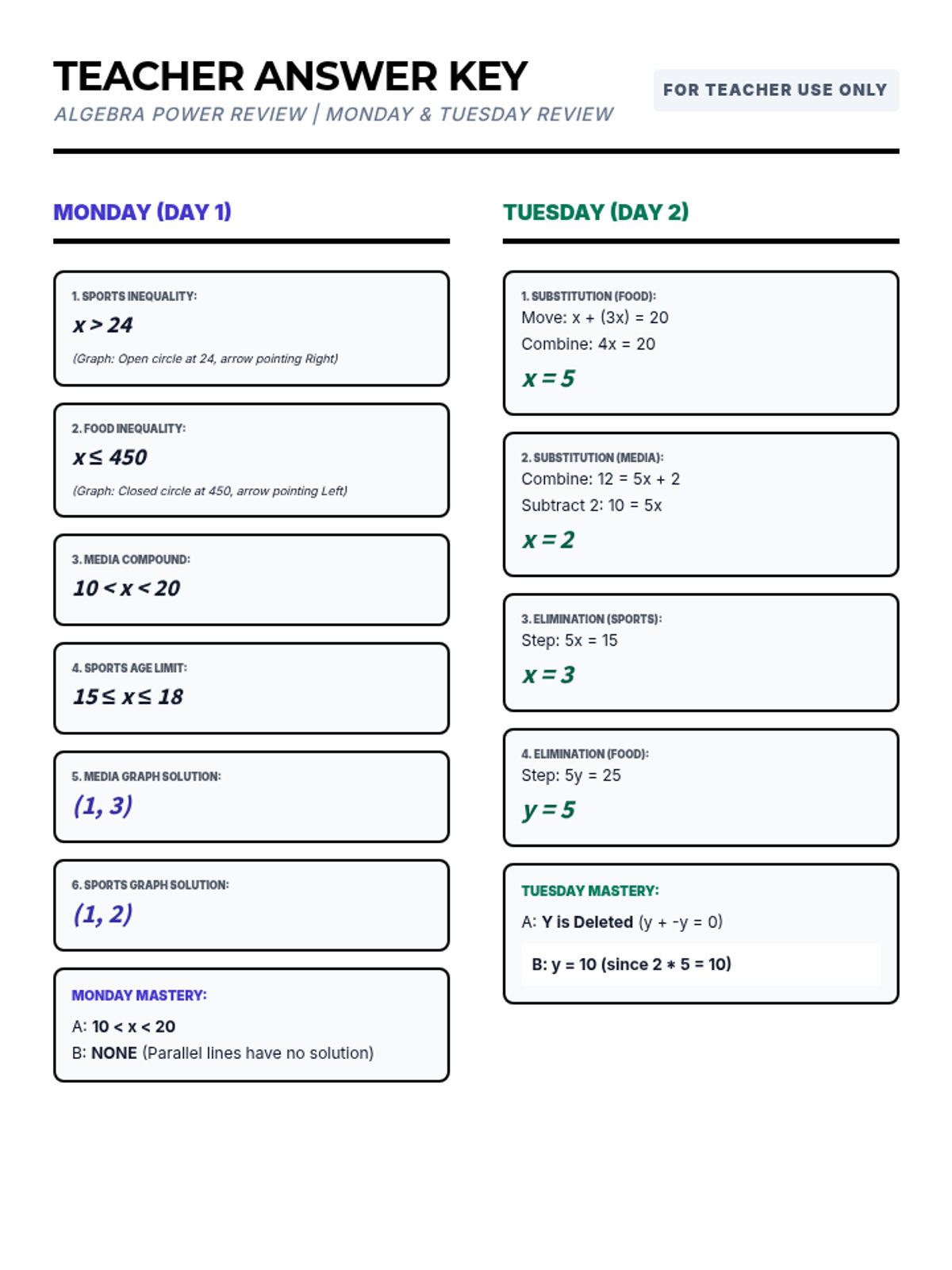
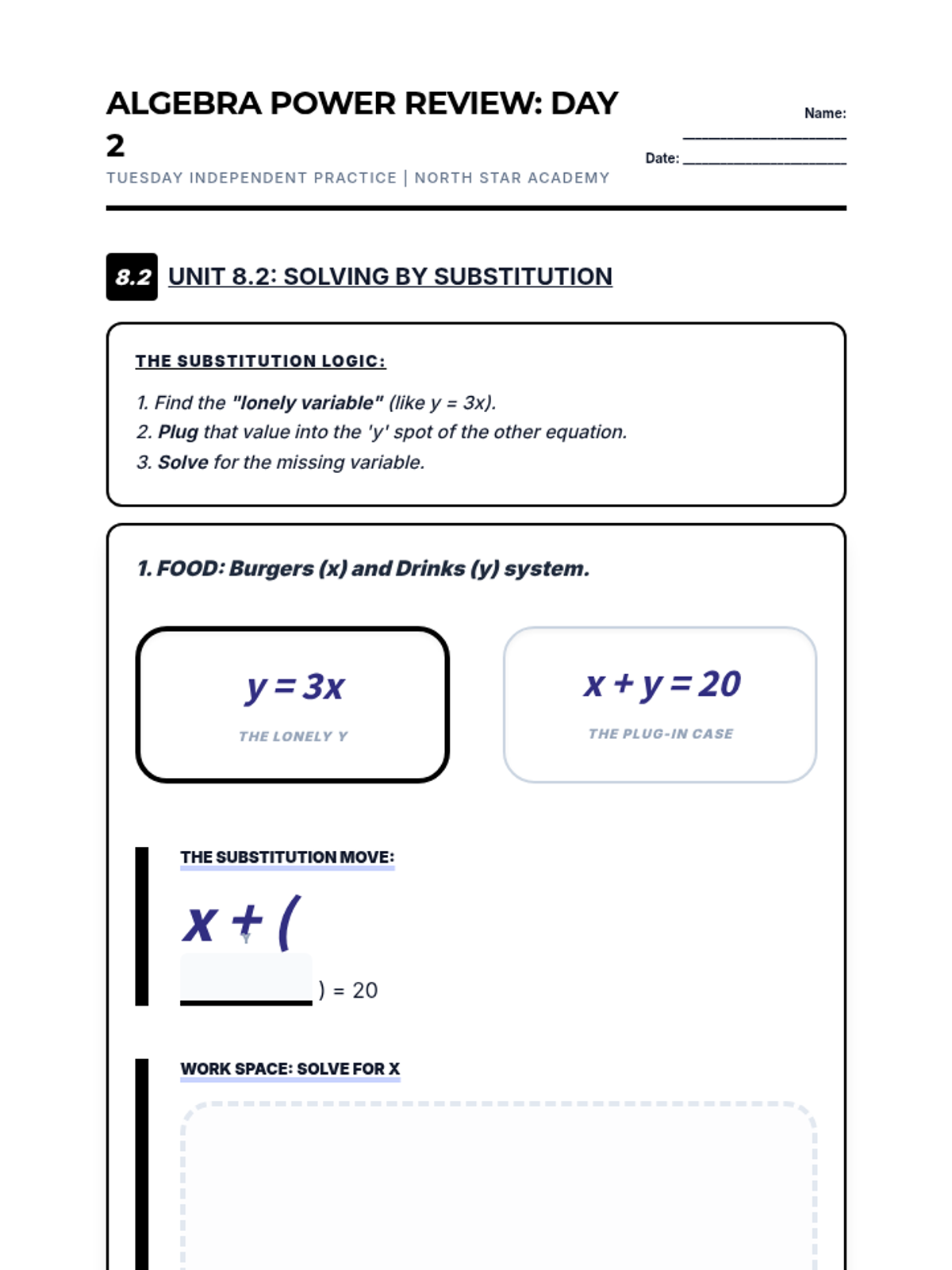
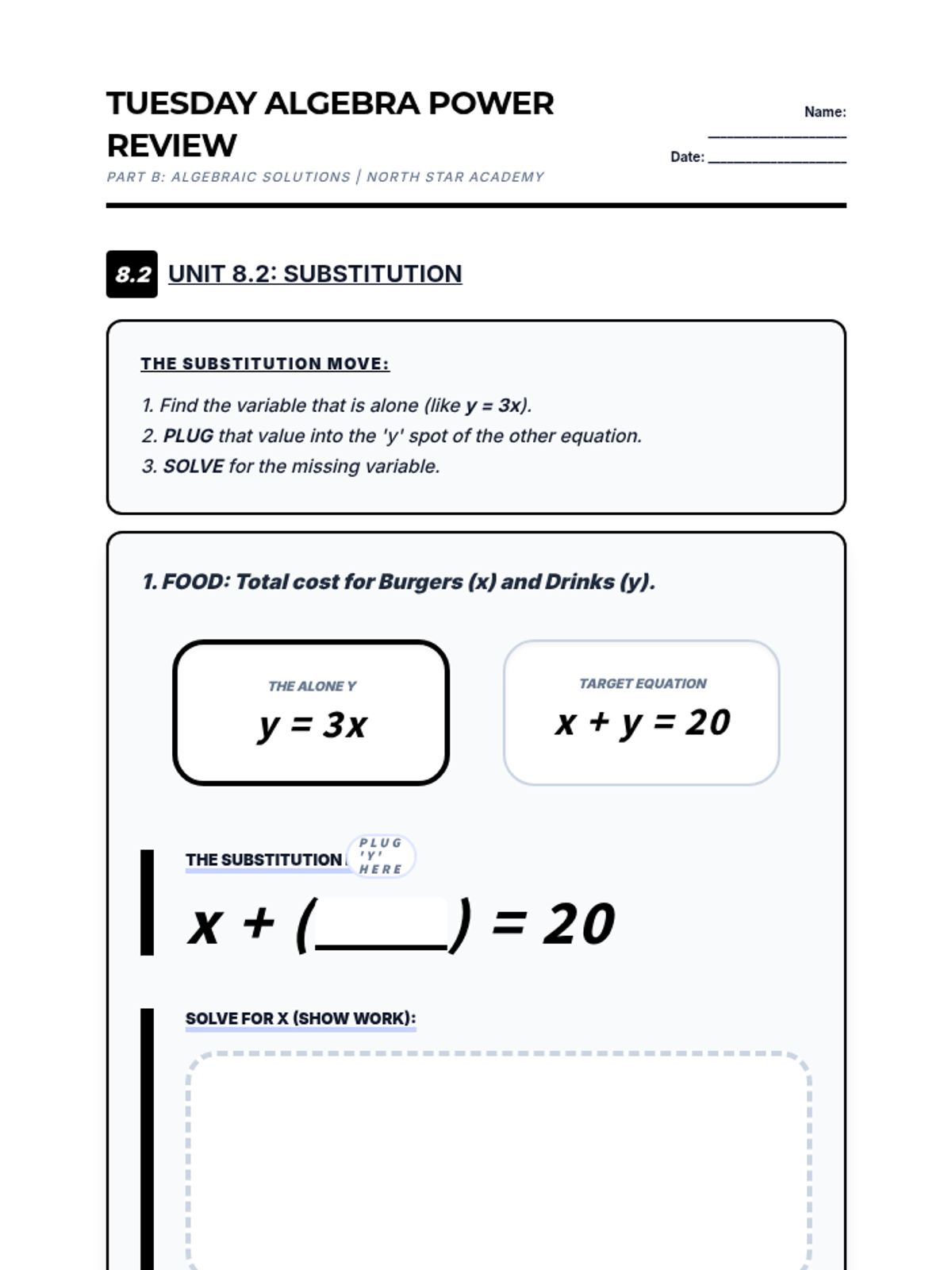
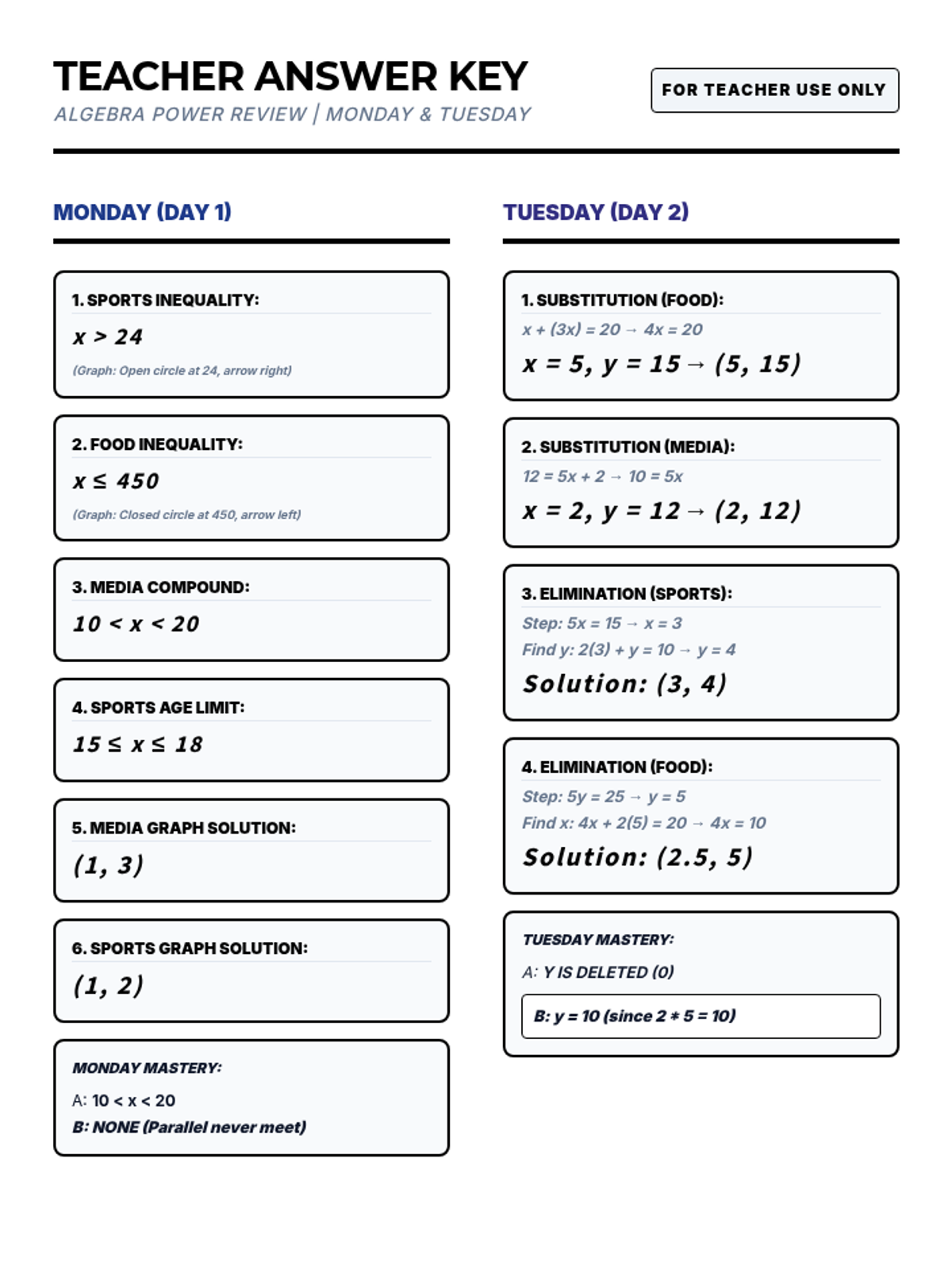
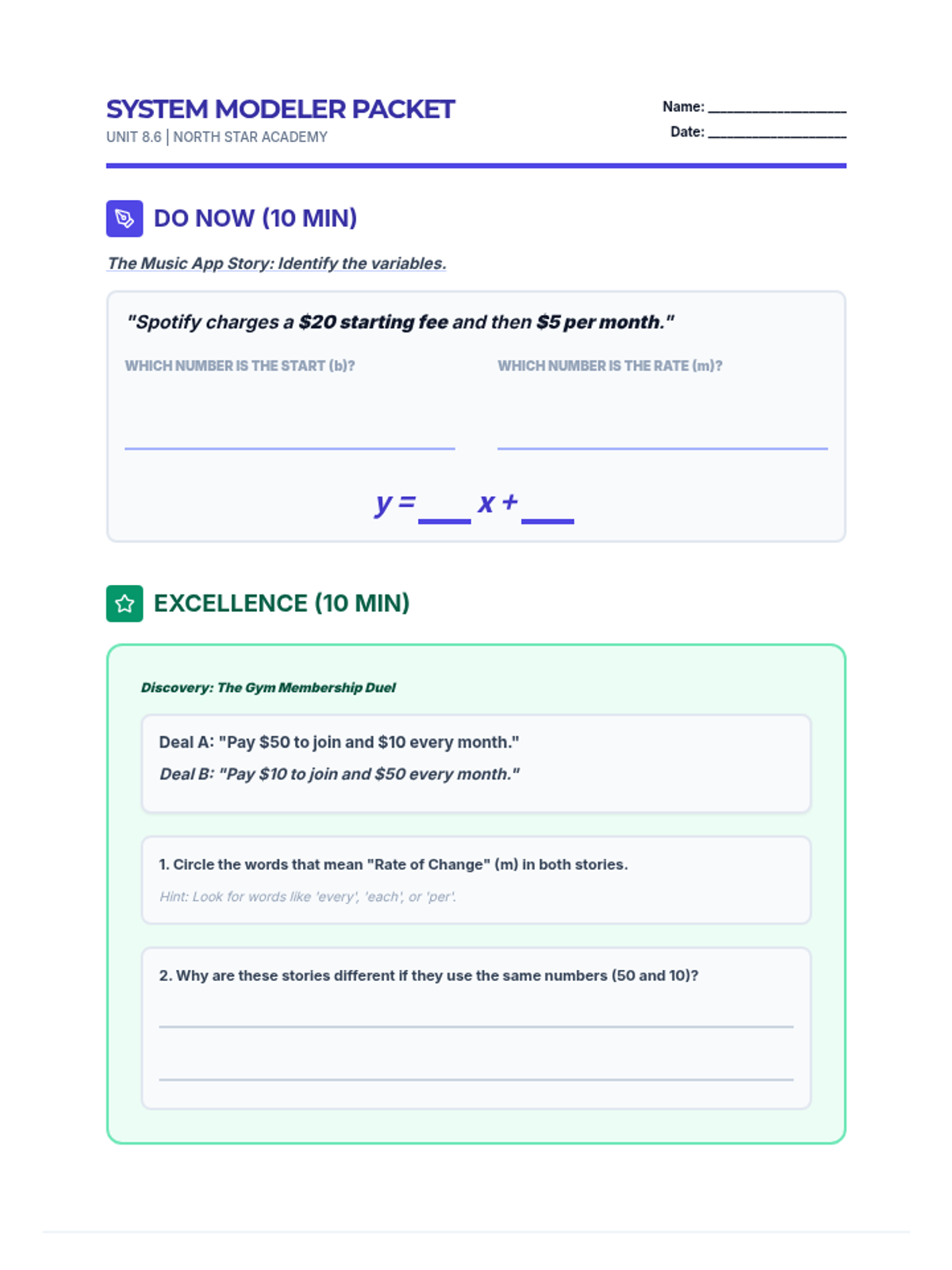
A 9th grade Algebra lesson focused on translating real-world scenarios (media, sports, food) into a system of two linear equations, specifically designed for Special Education students with IEP supports.
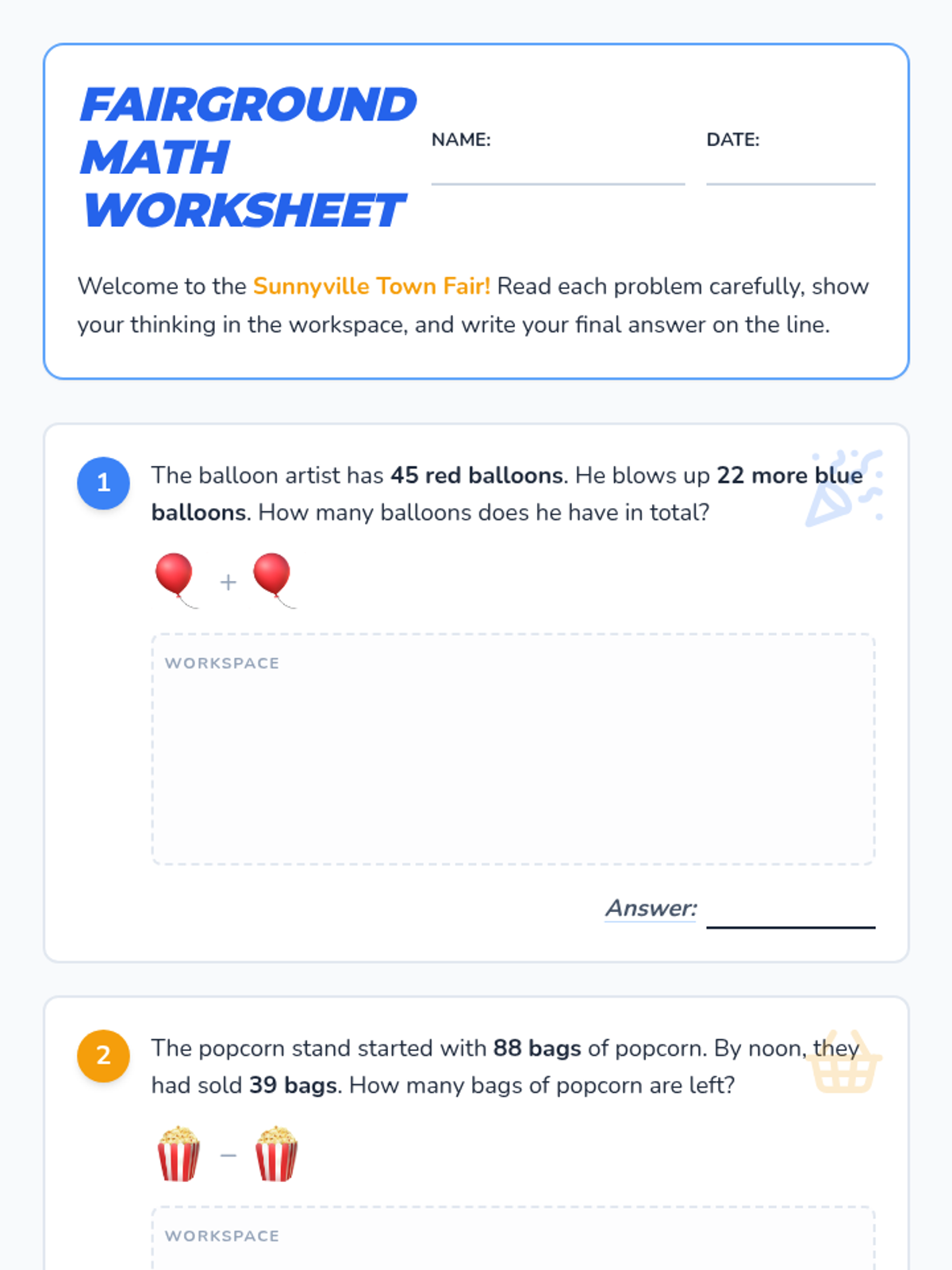
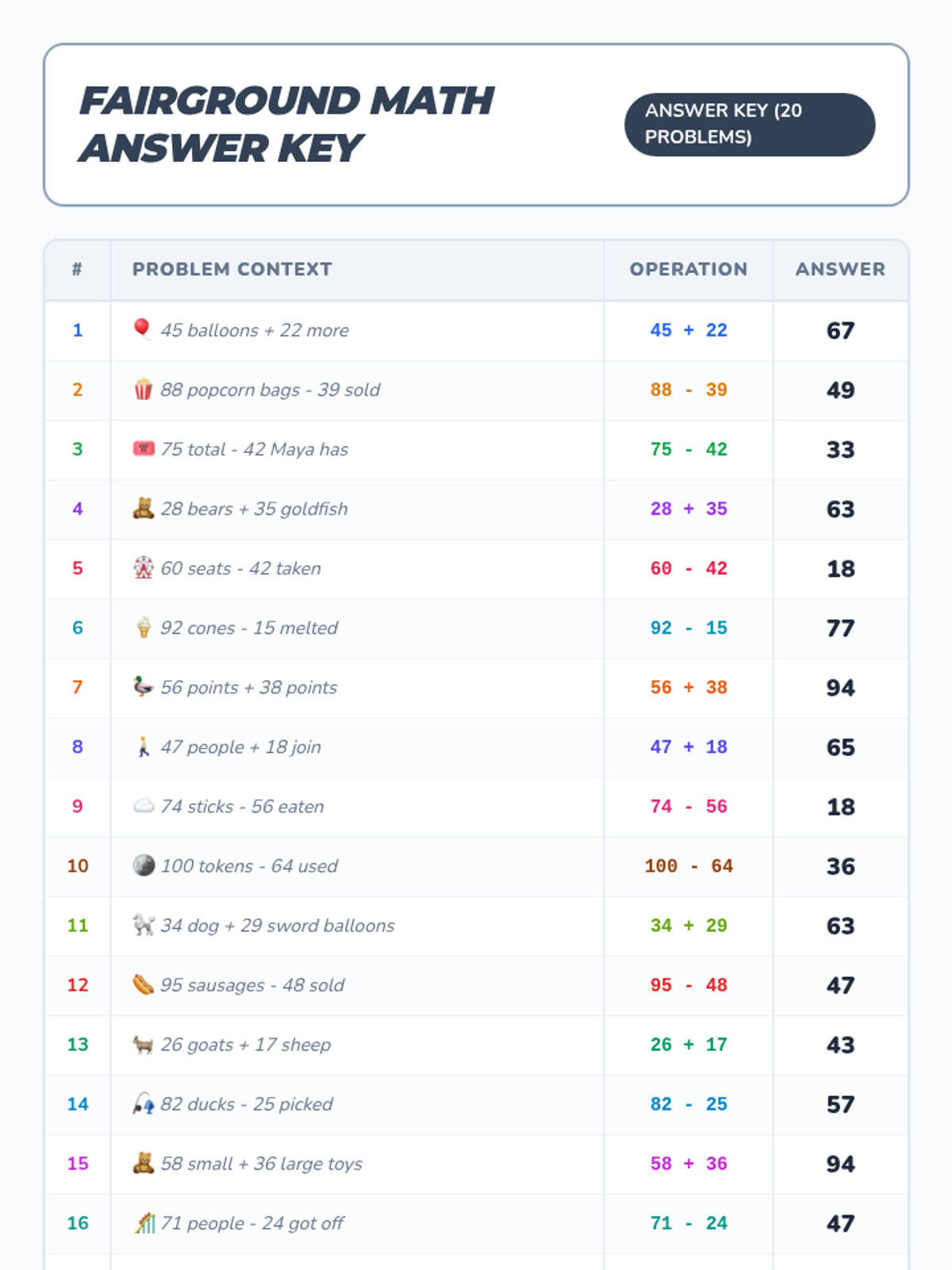
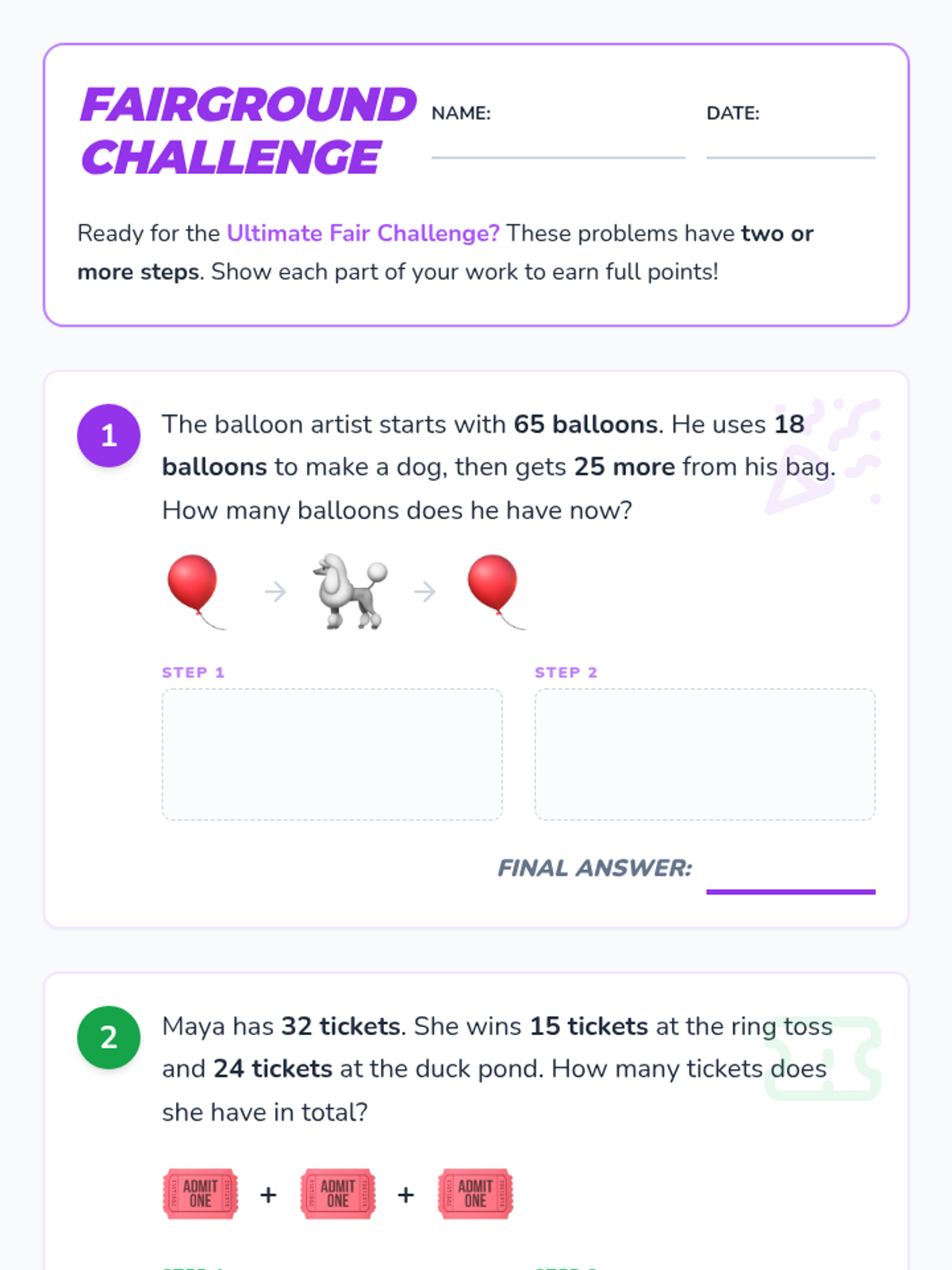
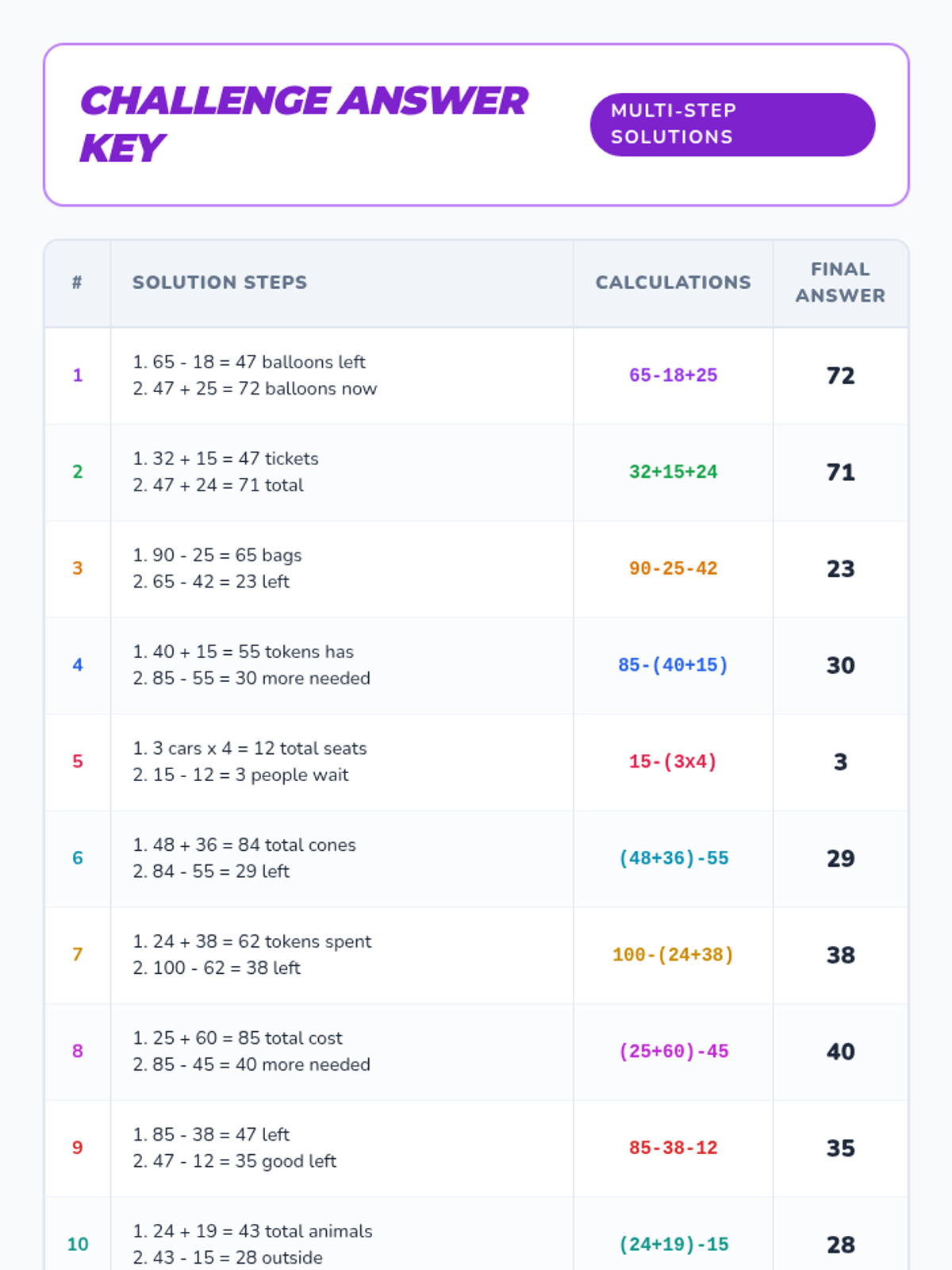
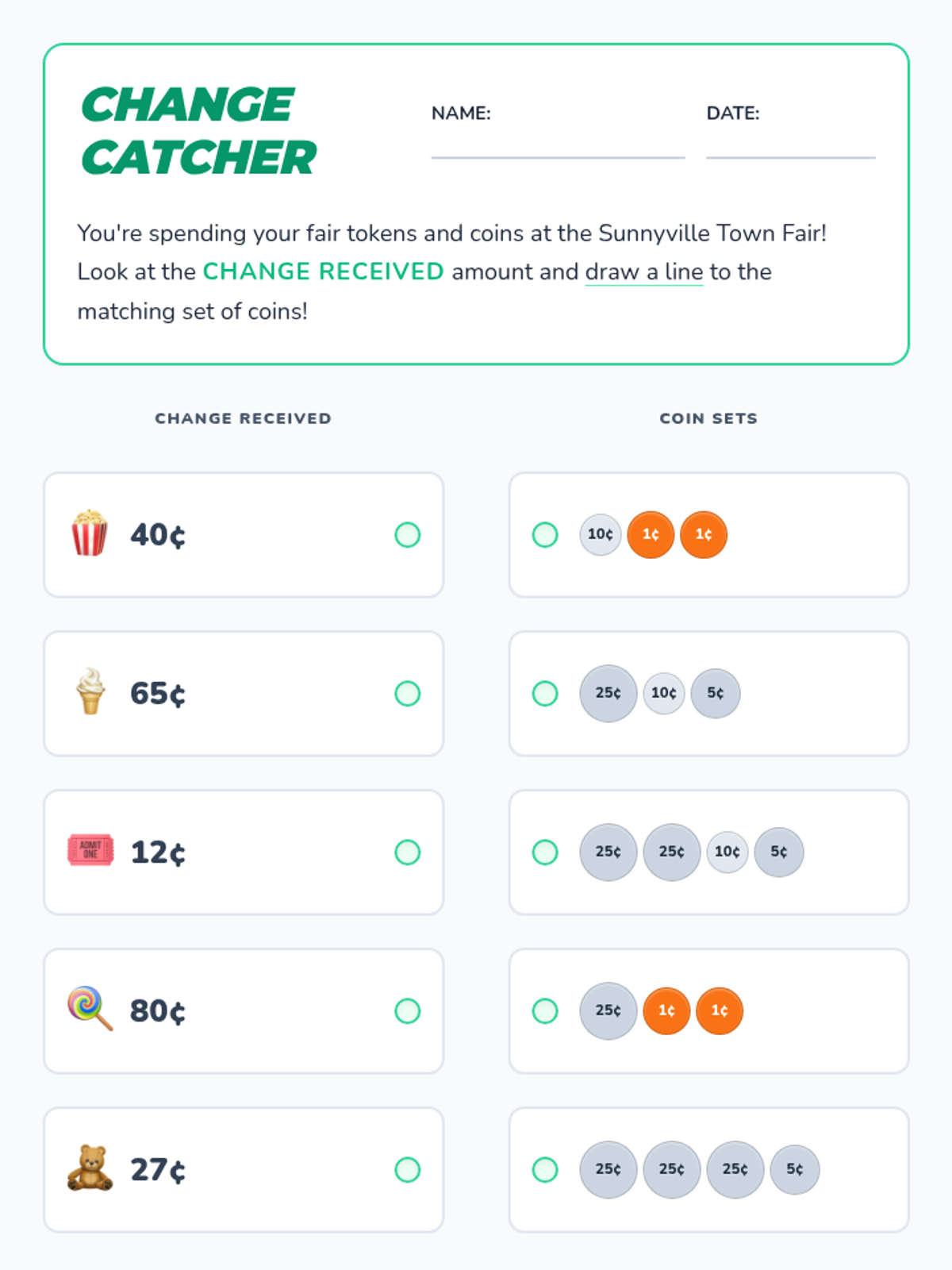
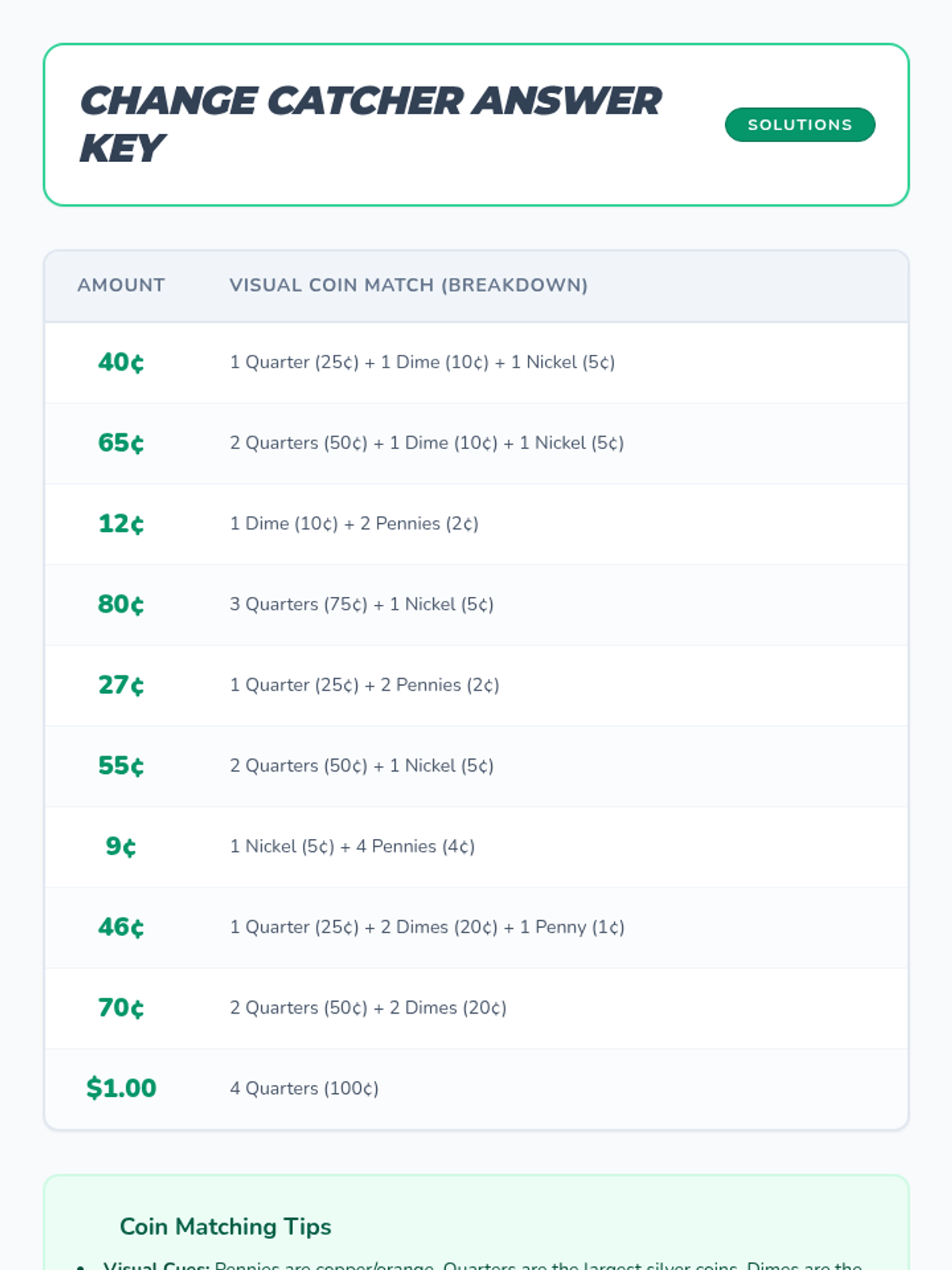
A collection of addition and subtraction word problems themed around a local town fair. Includes one-step practice and multi-step challenge problems designed for 3rd-grade students to build fluency with regrouping and logical reasoning up to 100.
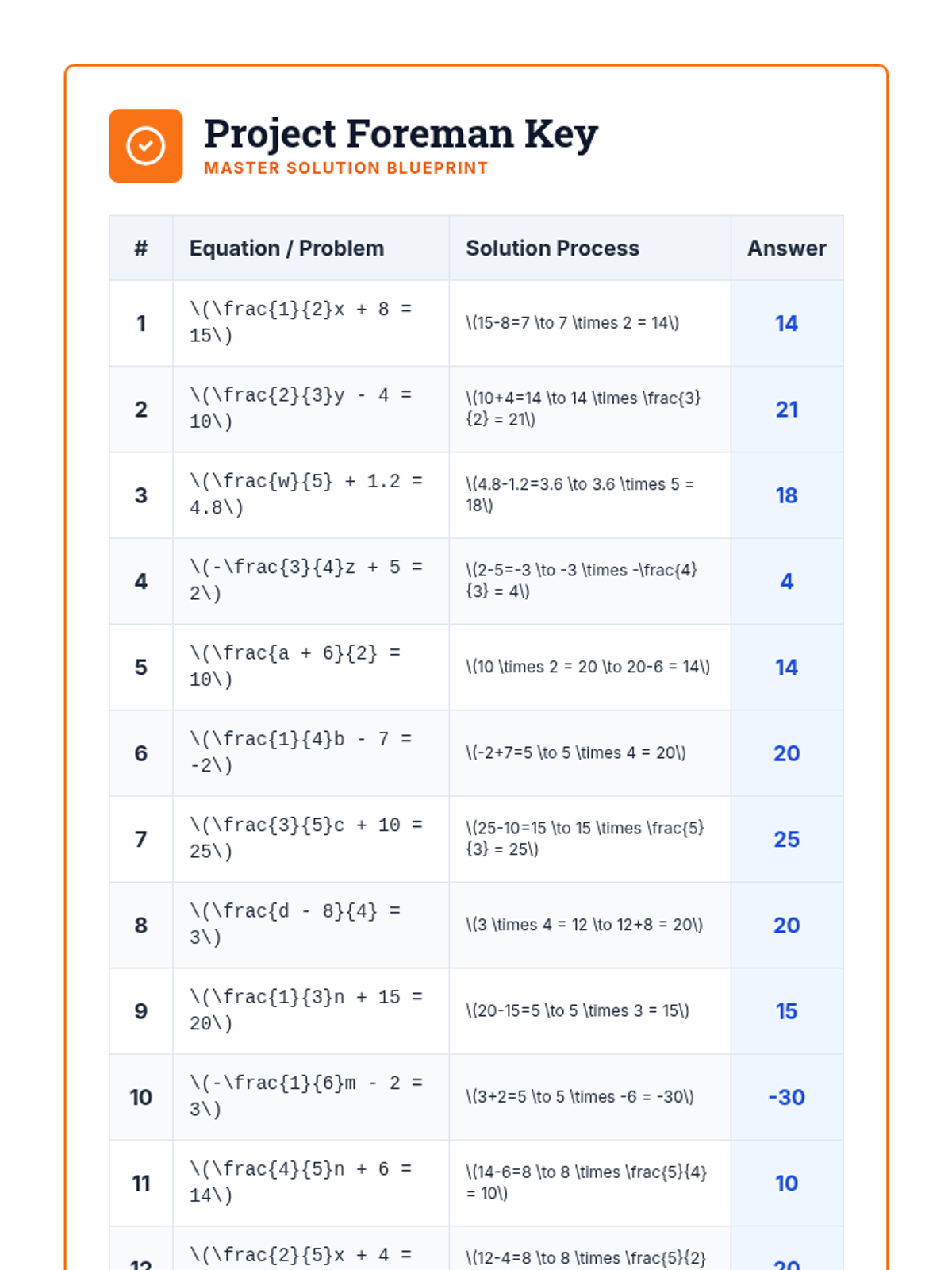
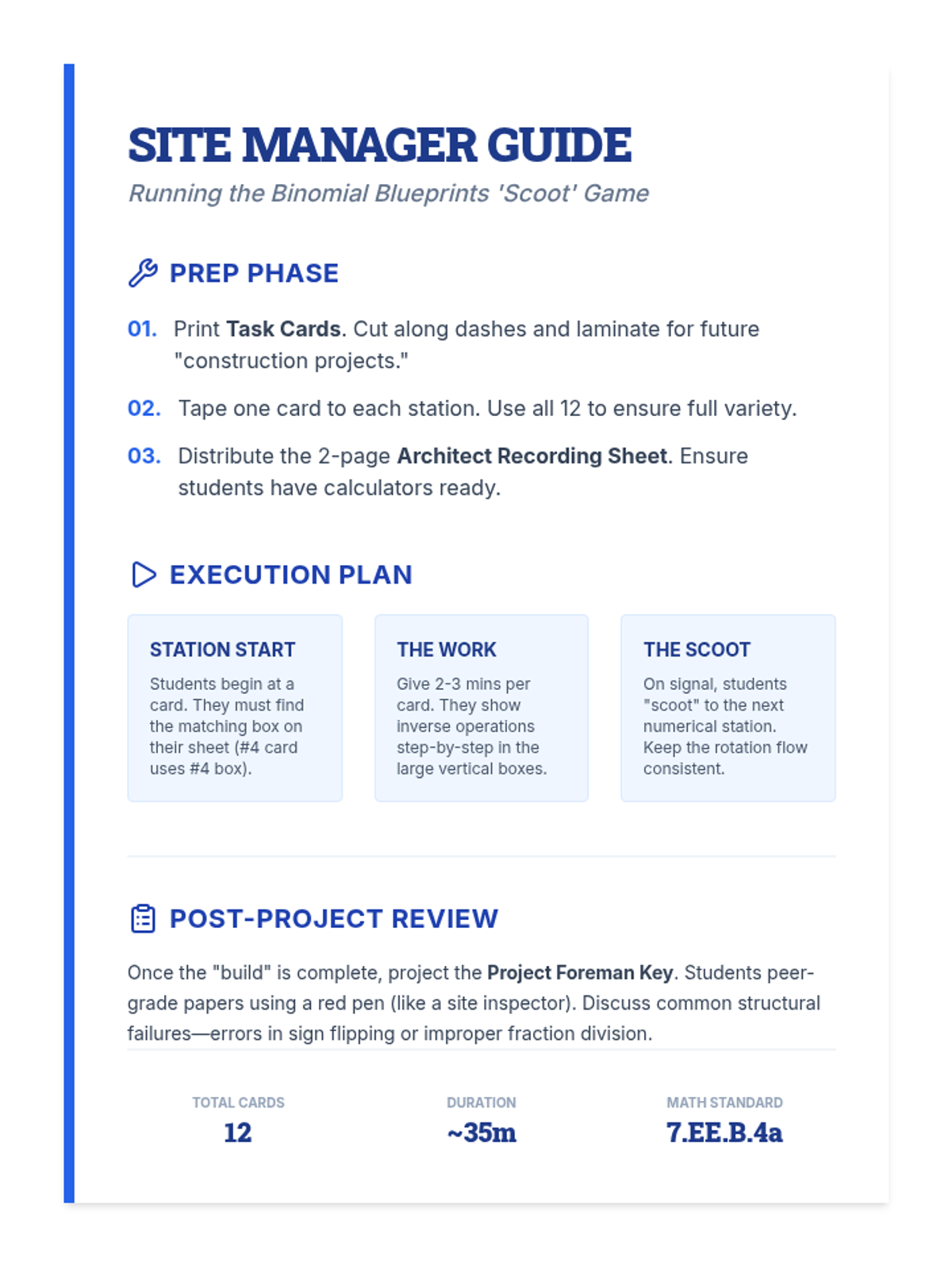
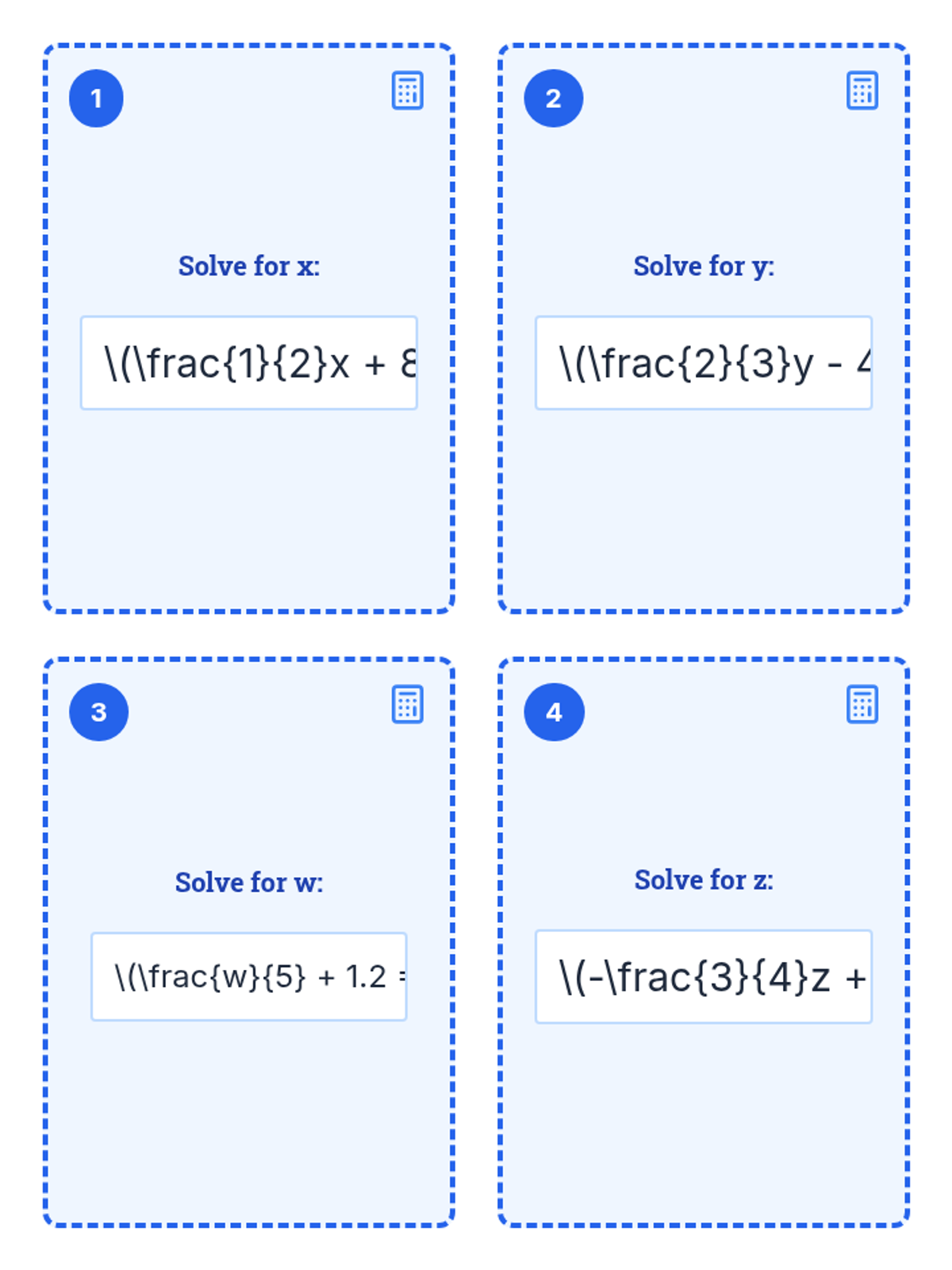
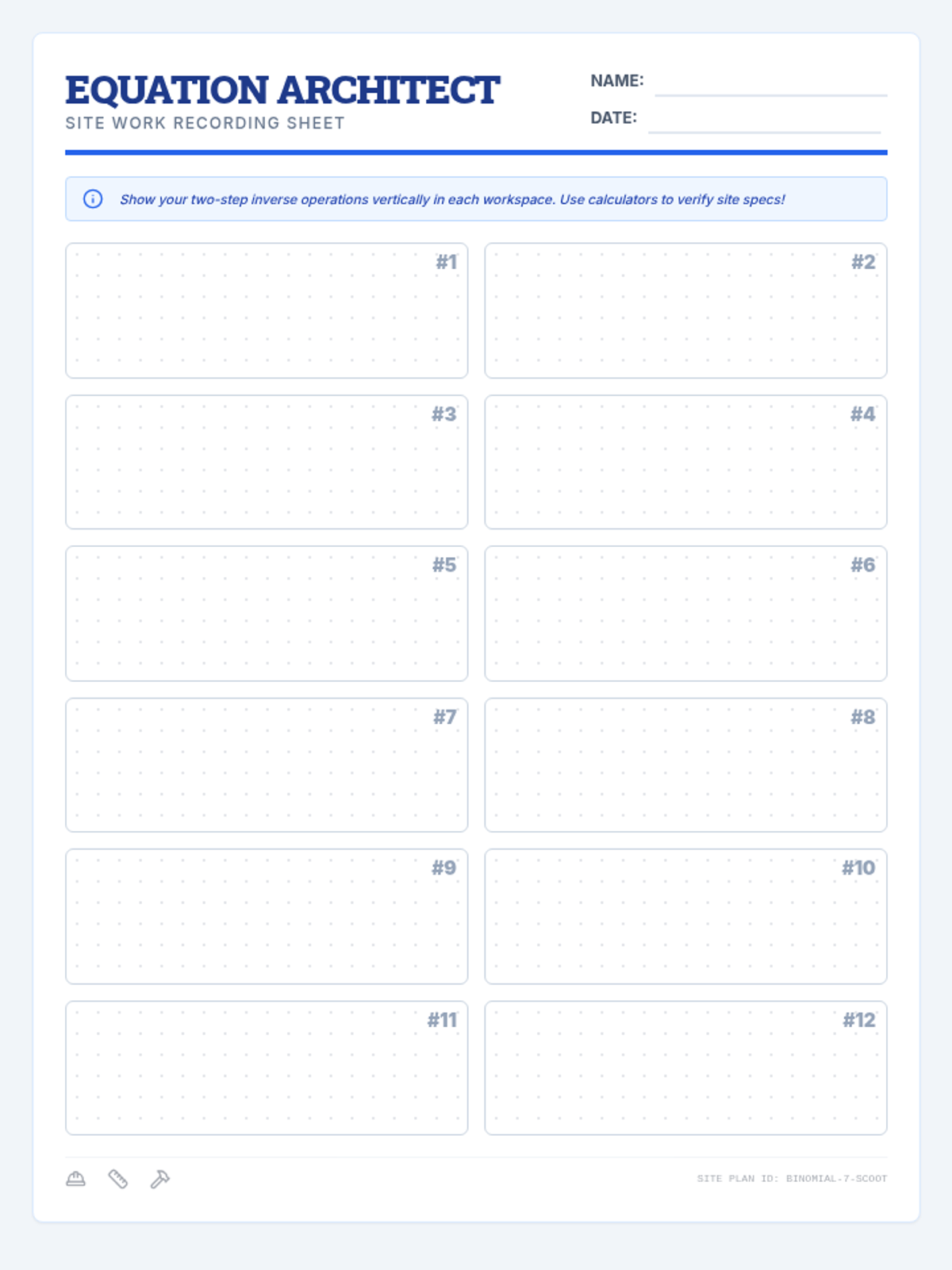
A high-energy 'Scoot' game where students solve two-step equations with fractional coefficients, using a construction-blueprint theme to build algebraic fluency.
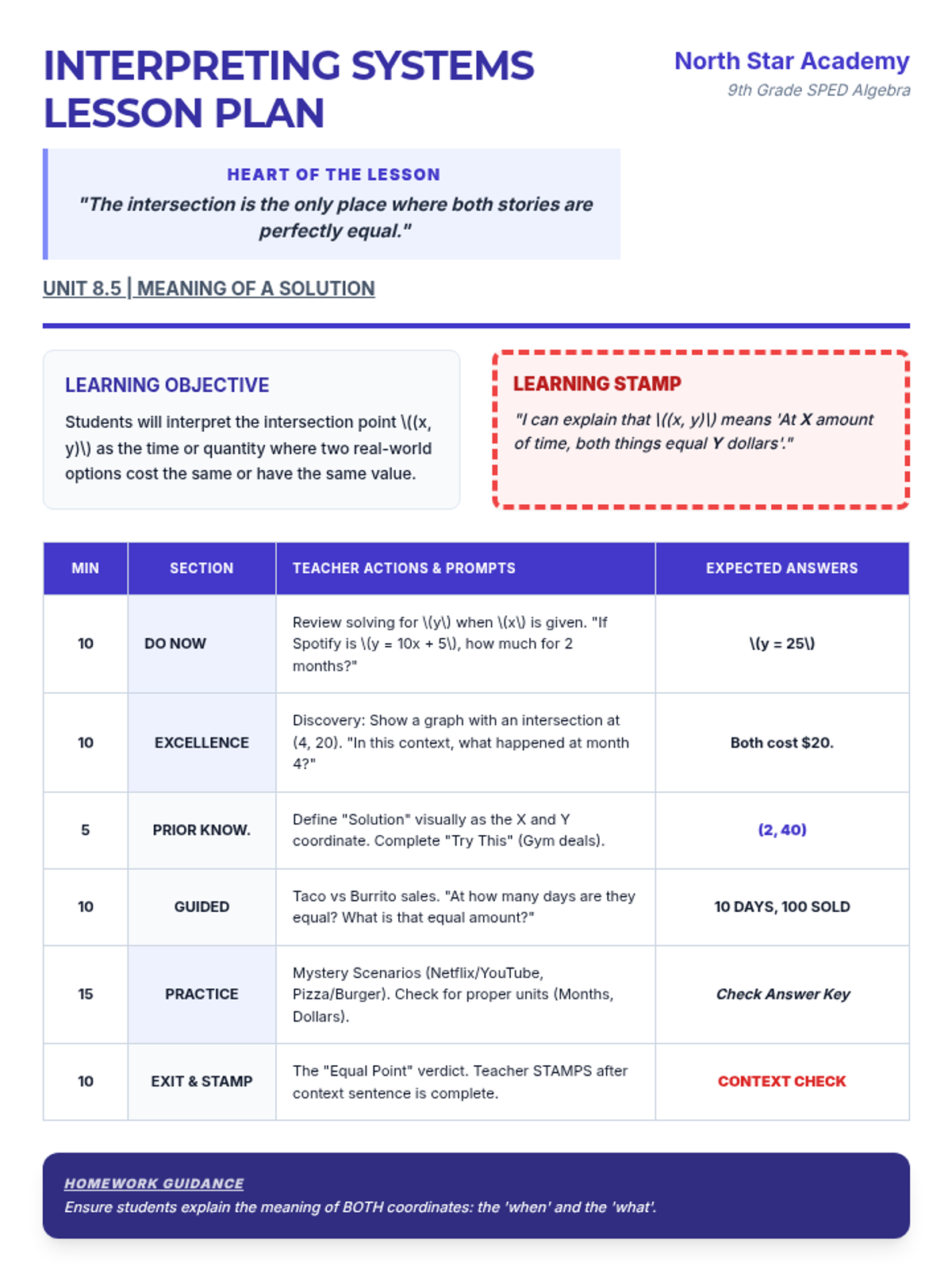
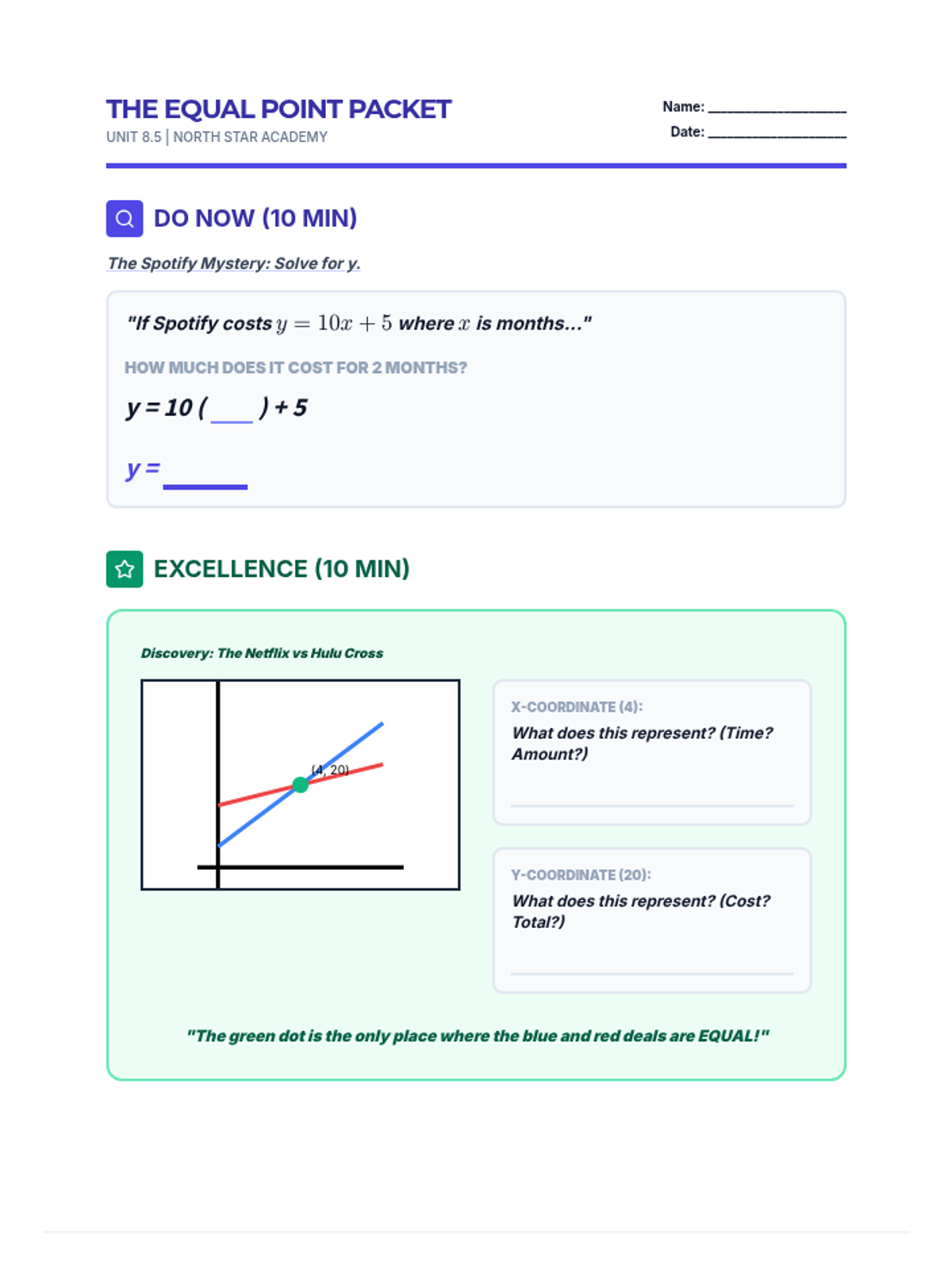
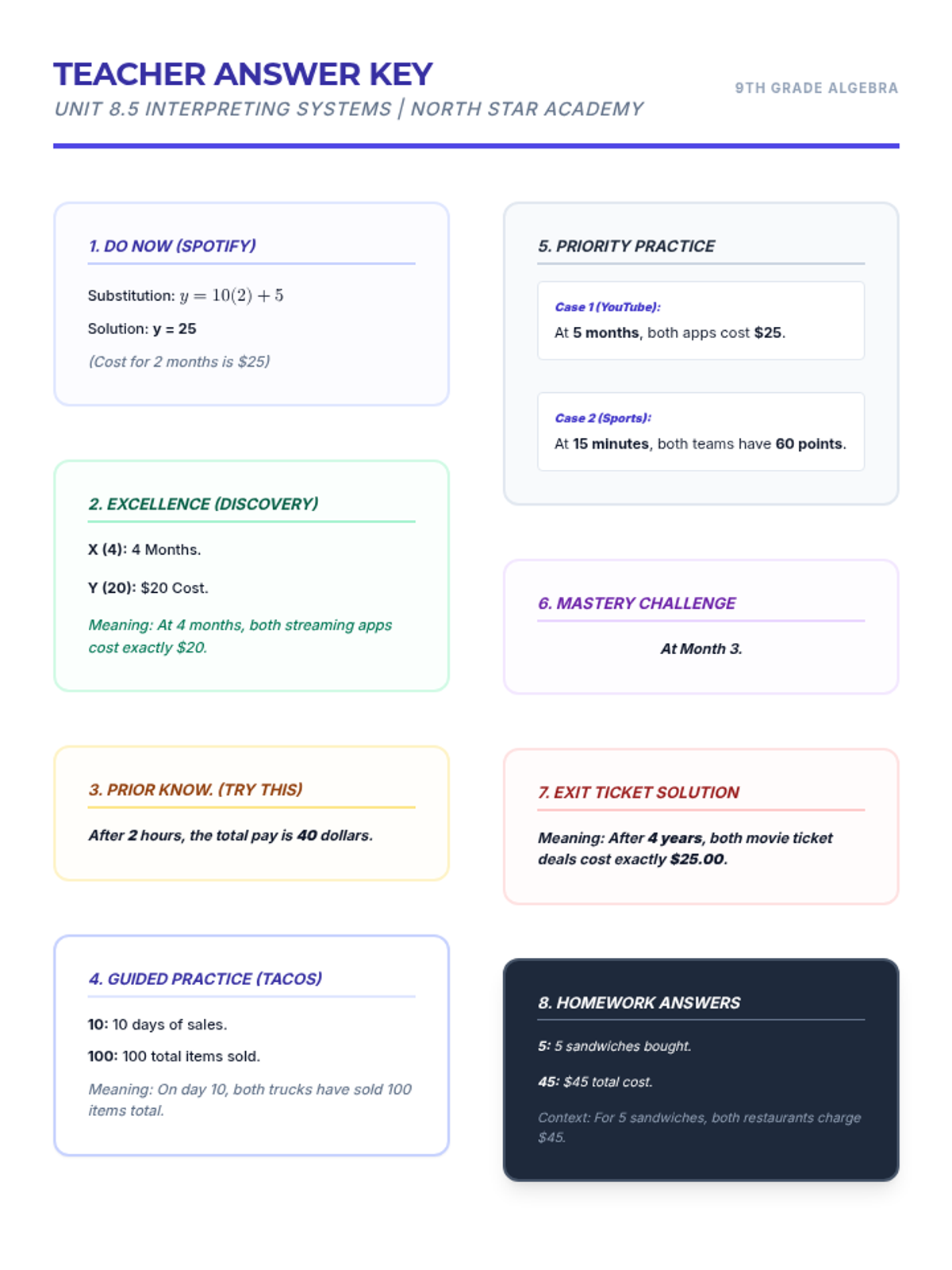
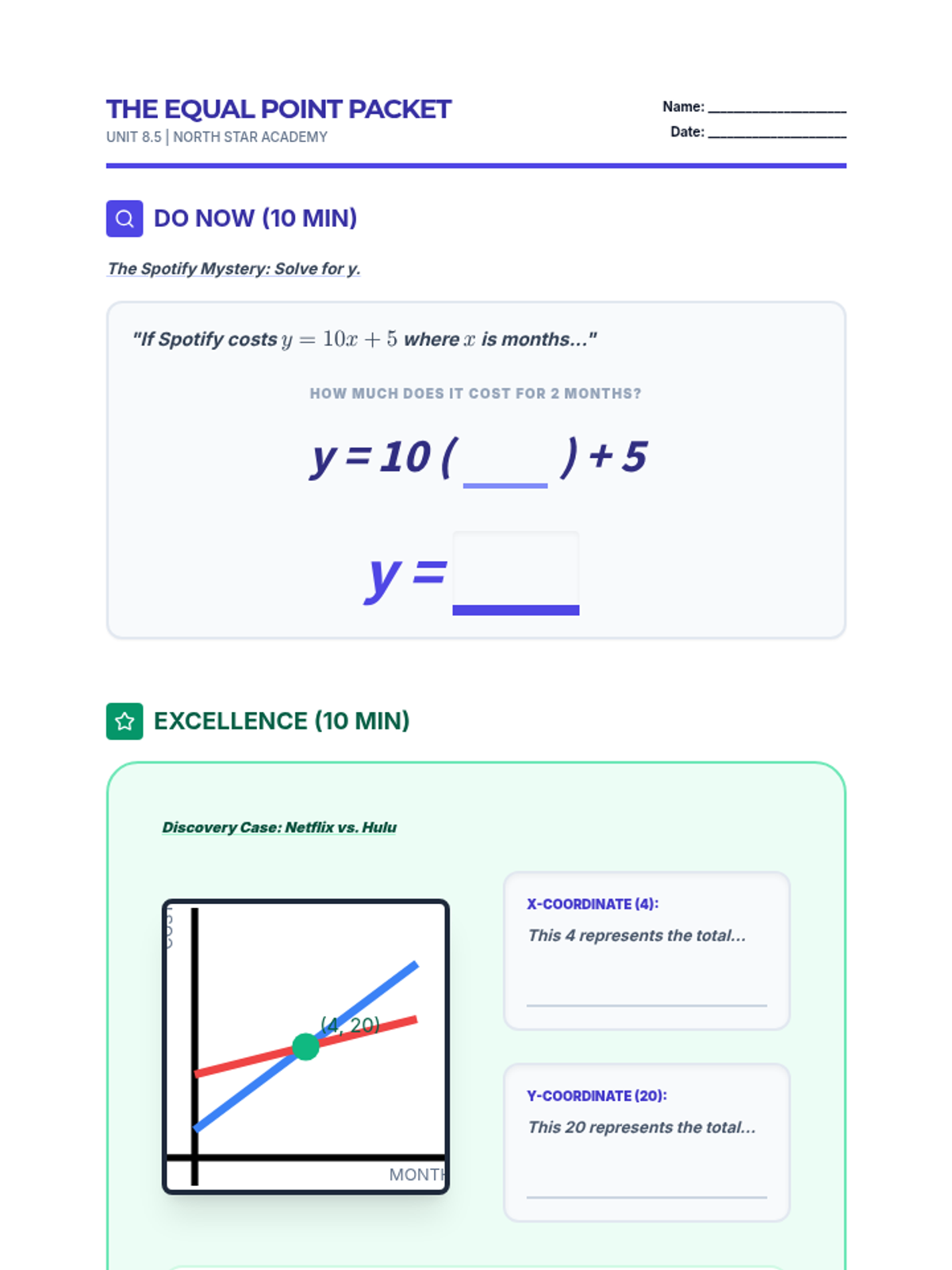
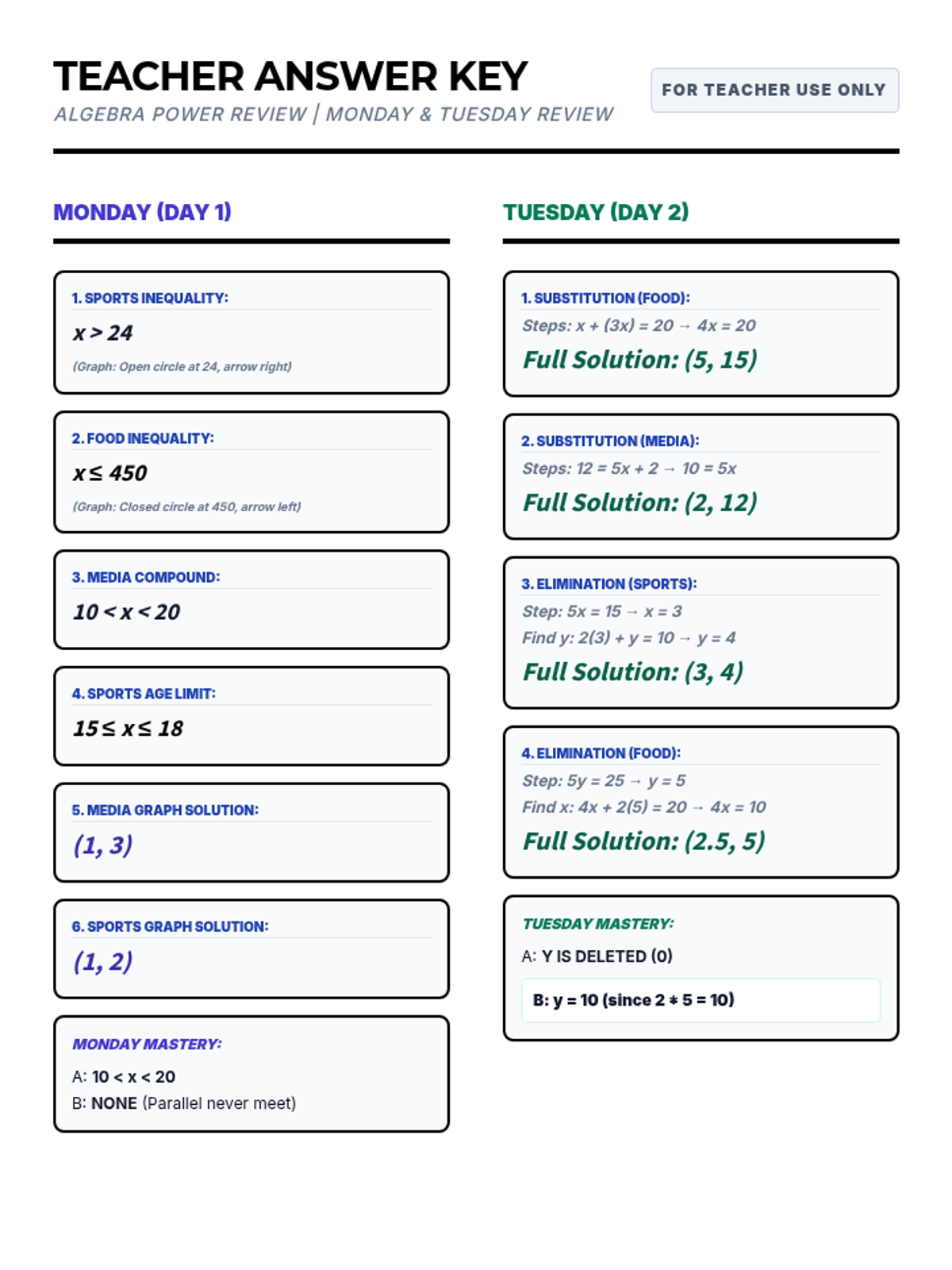
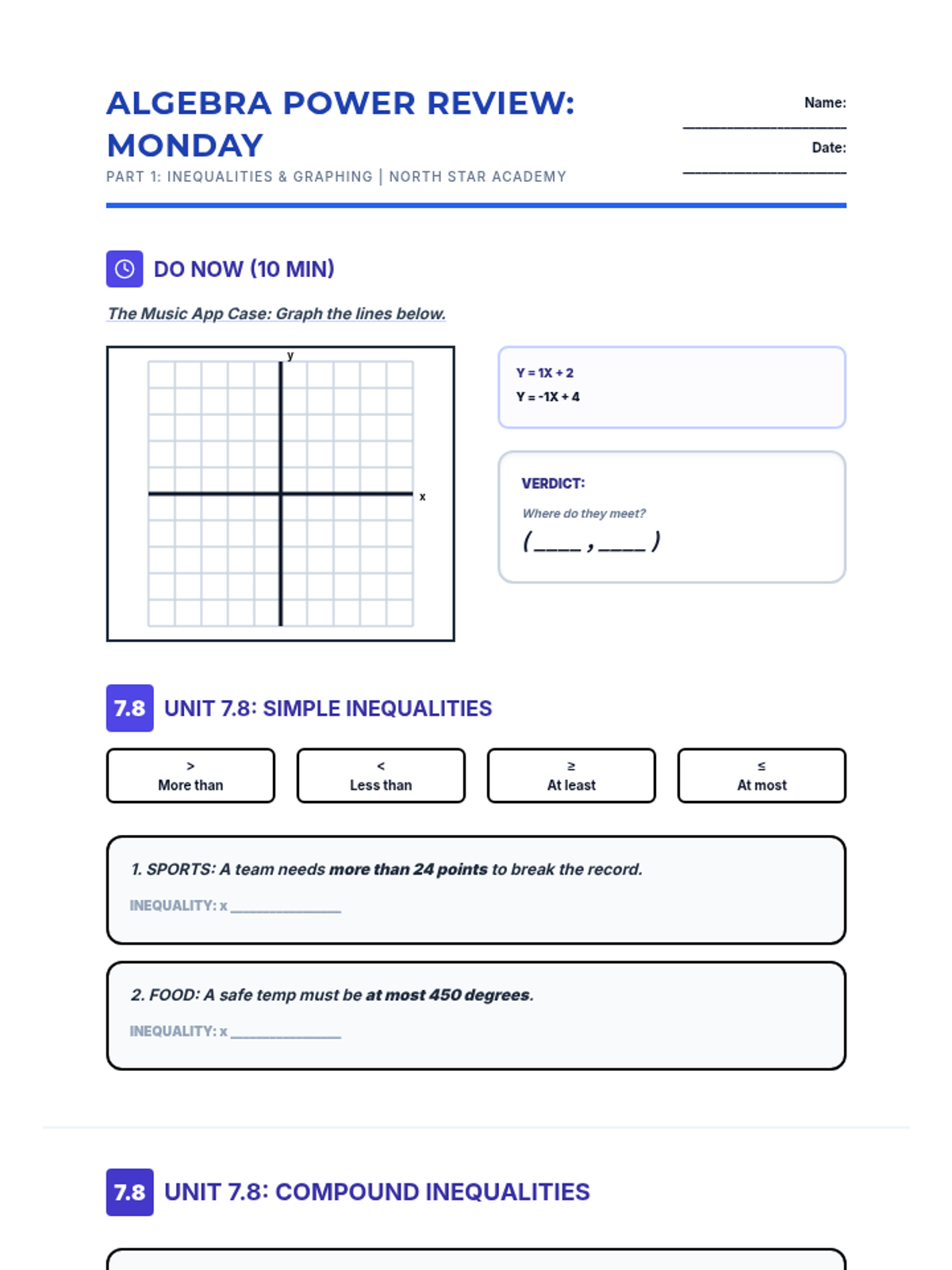
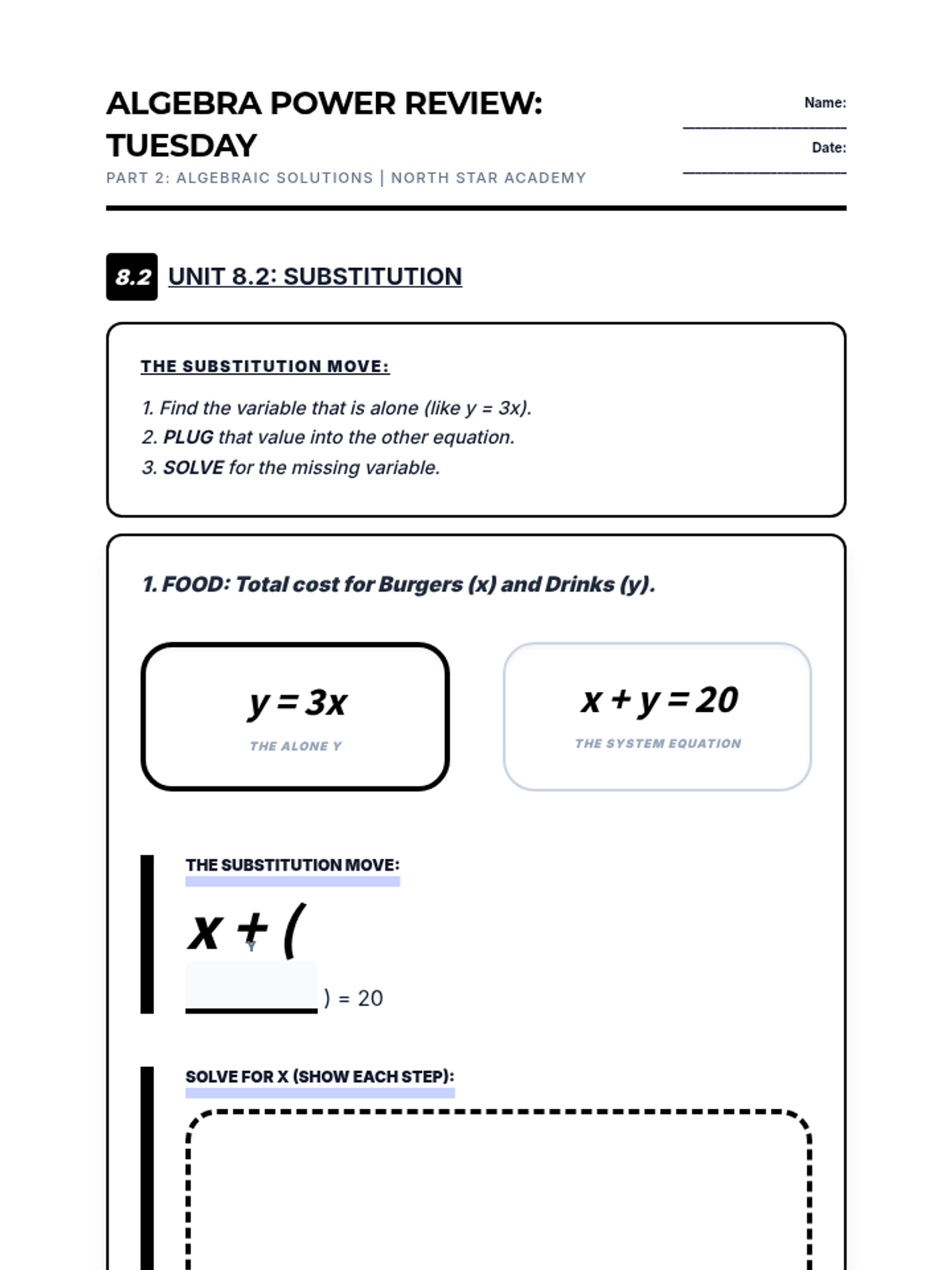
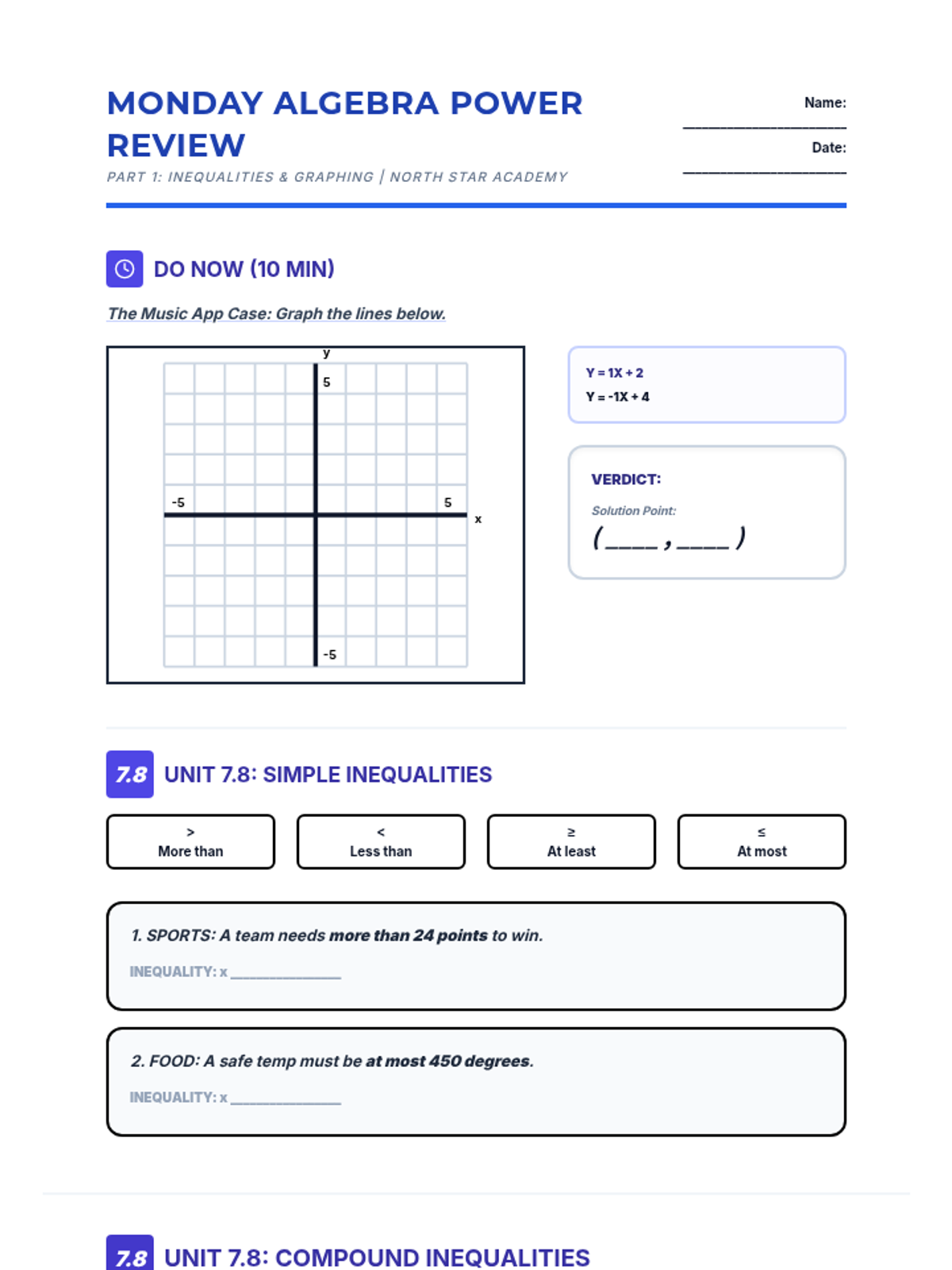
A 9th grade Algebra lesson focused on interpreting the intersection point of a system of equations in a real-world context (media, sports, food), specifically designed for Special Education students with IEP supports.
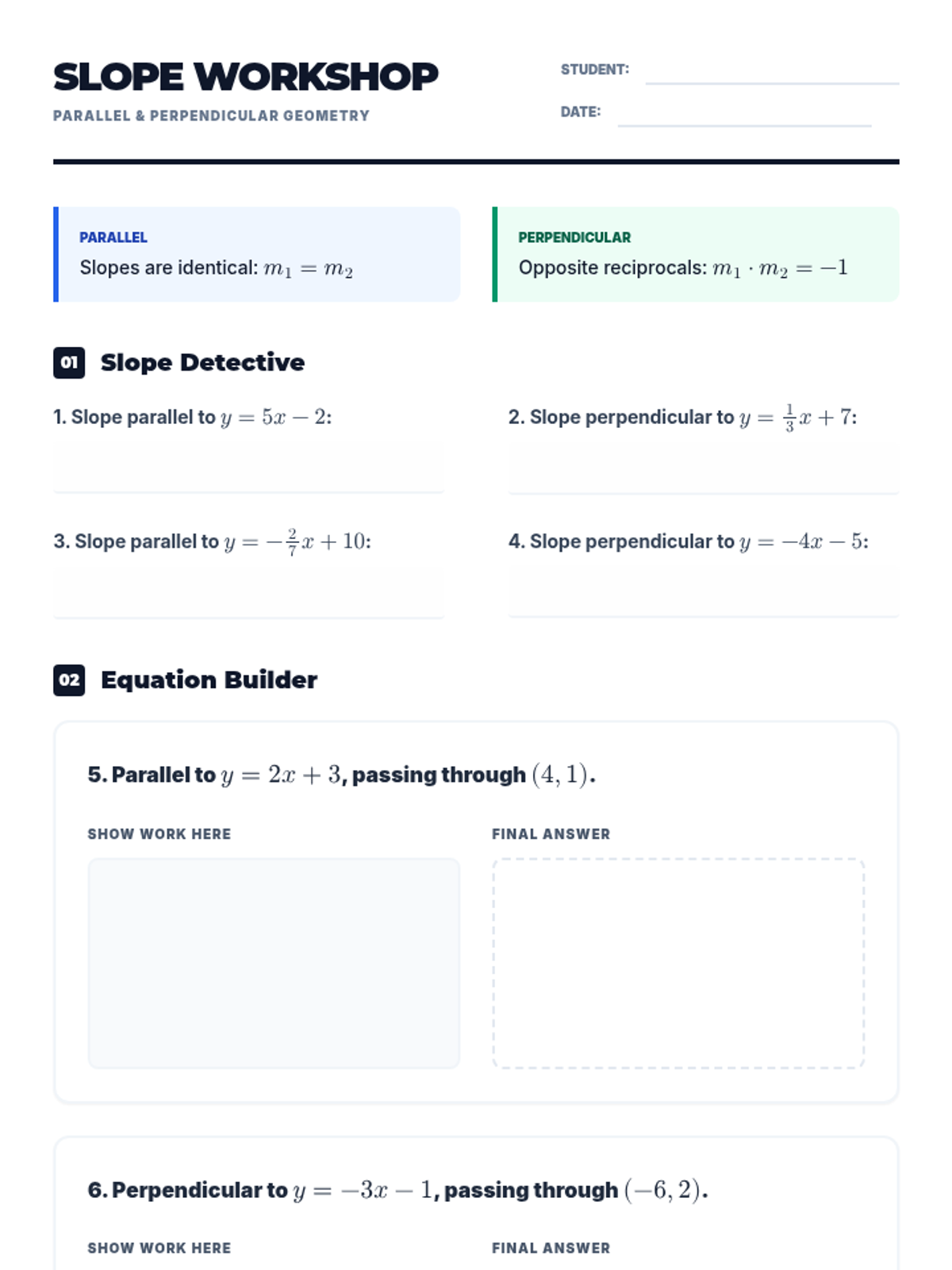
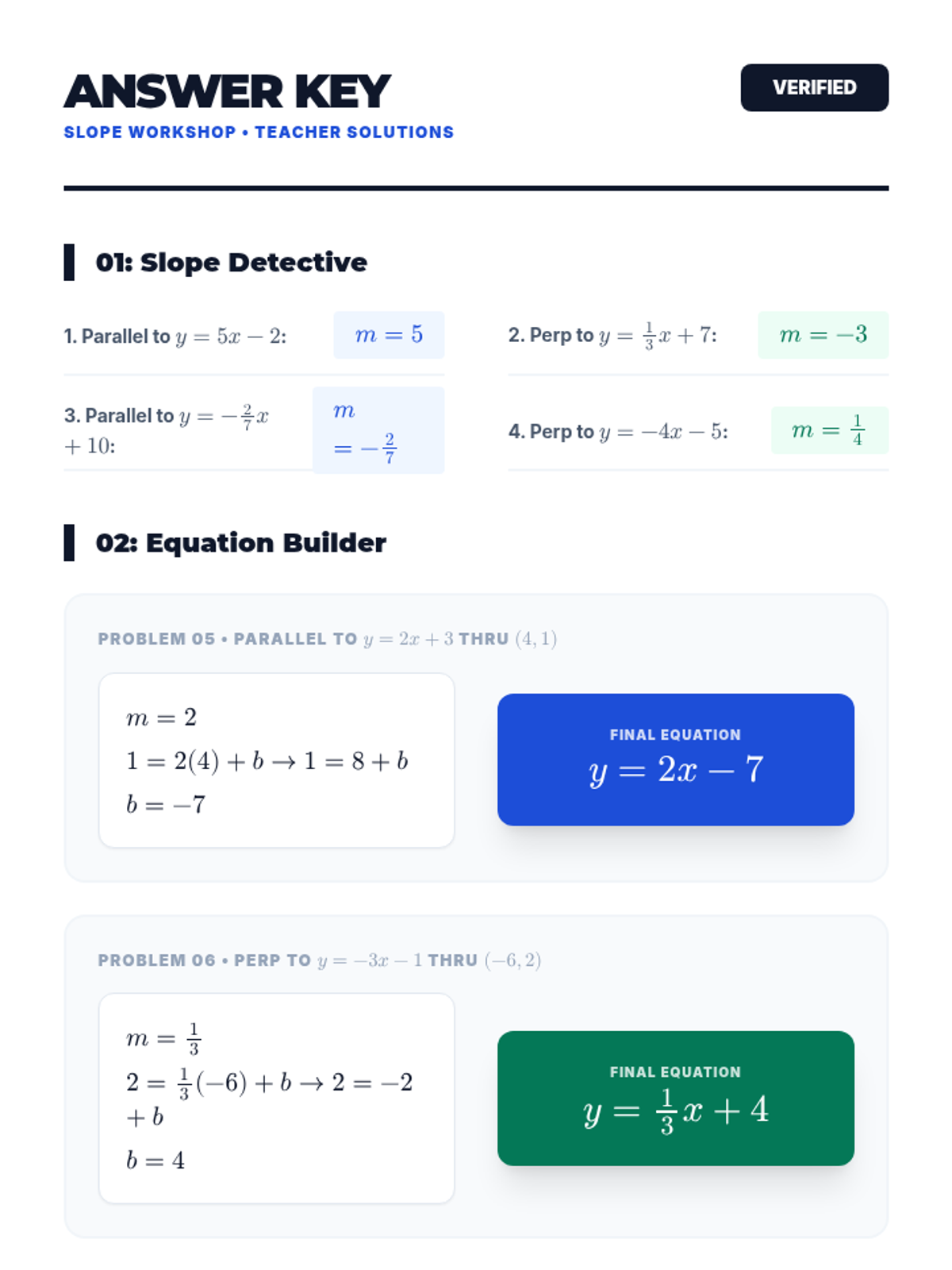
A clear, step-by-step lesson on writing equations for parallel and perpendicular lines in slope-intercept form, featuring visual guides and structured practice.
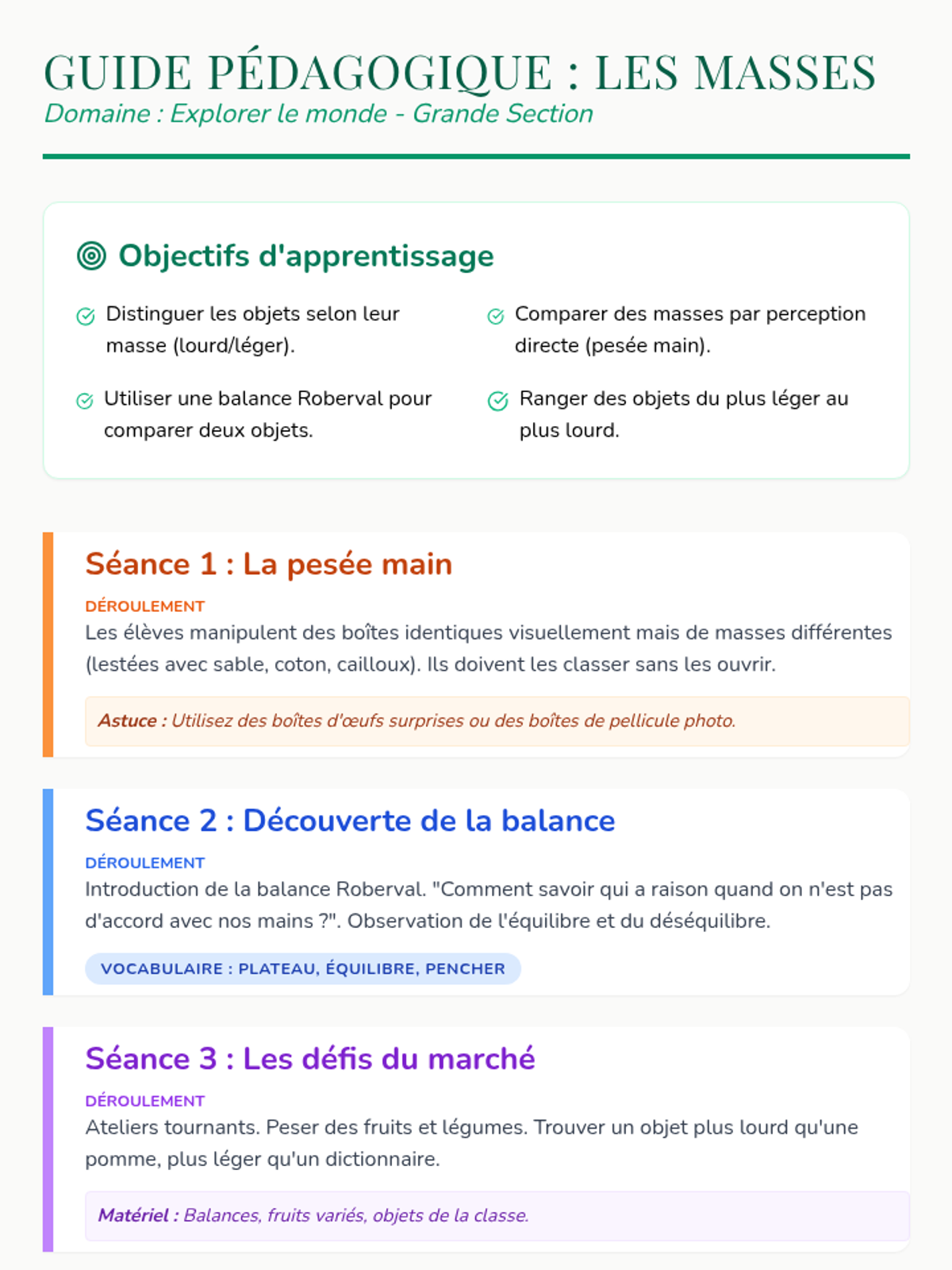
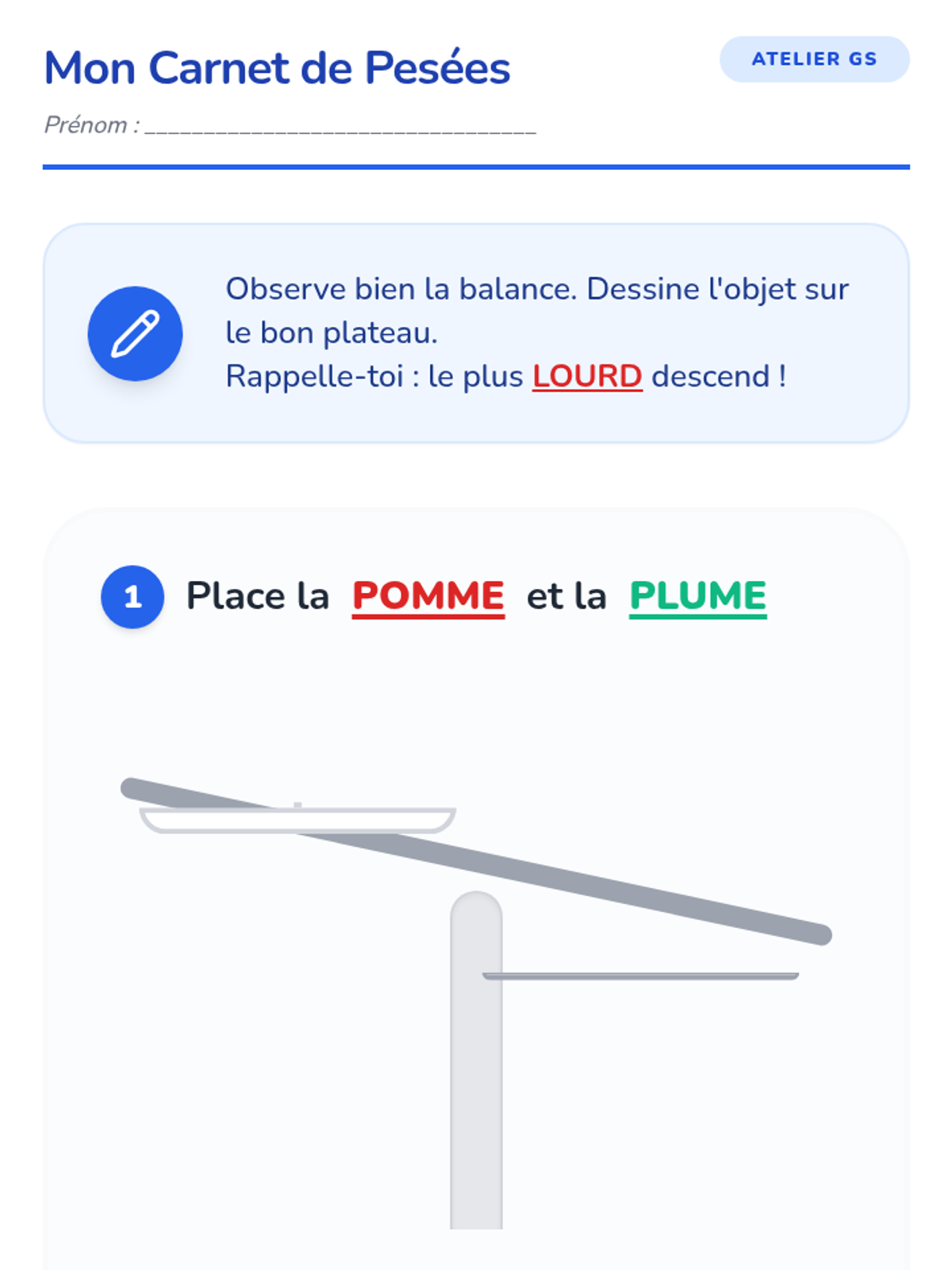
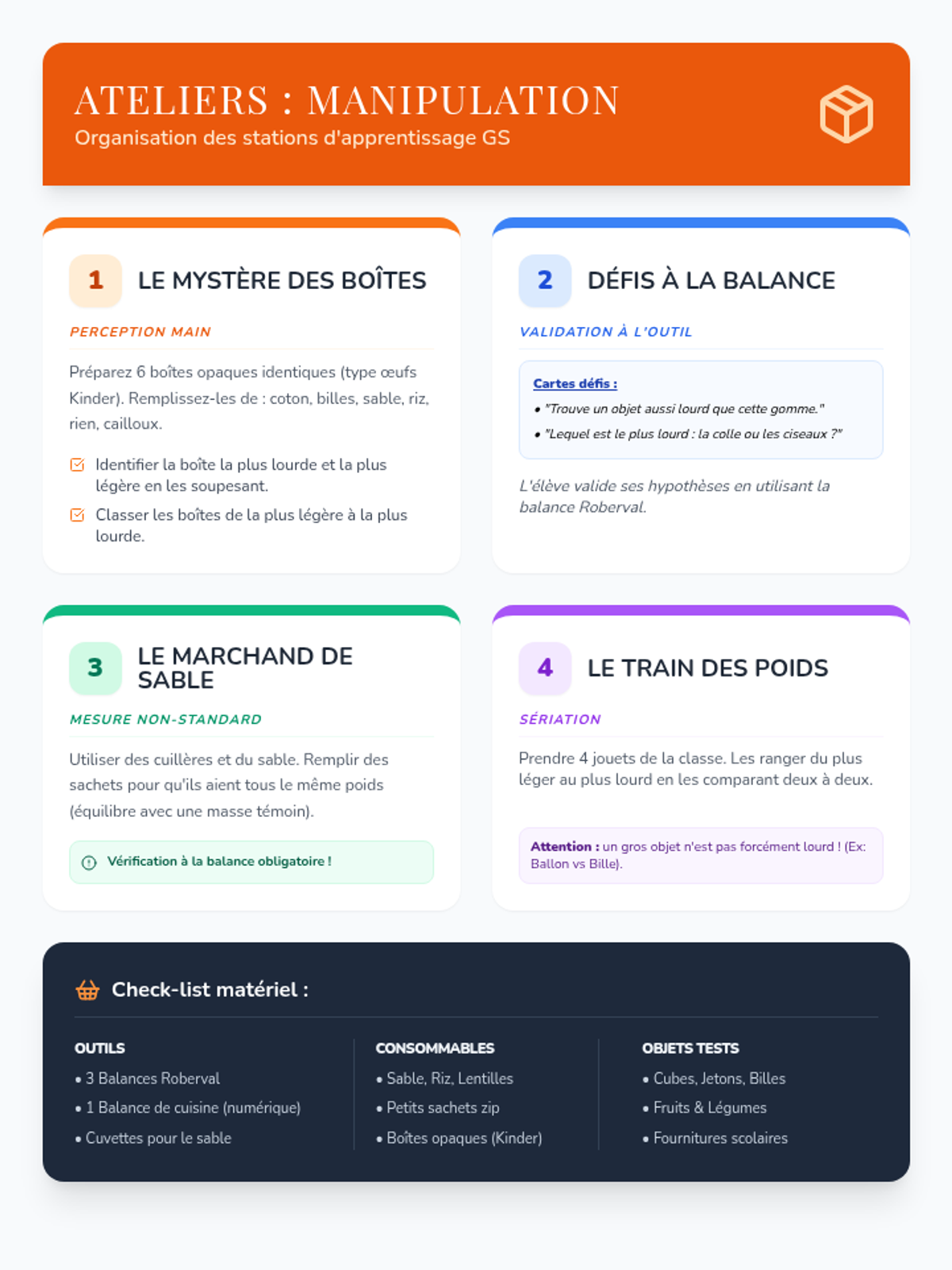
Une série de séances progressives pour explorer, comparer et mesurer les masses à l'aide de manipulations directes et d'outils de mesure.
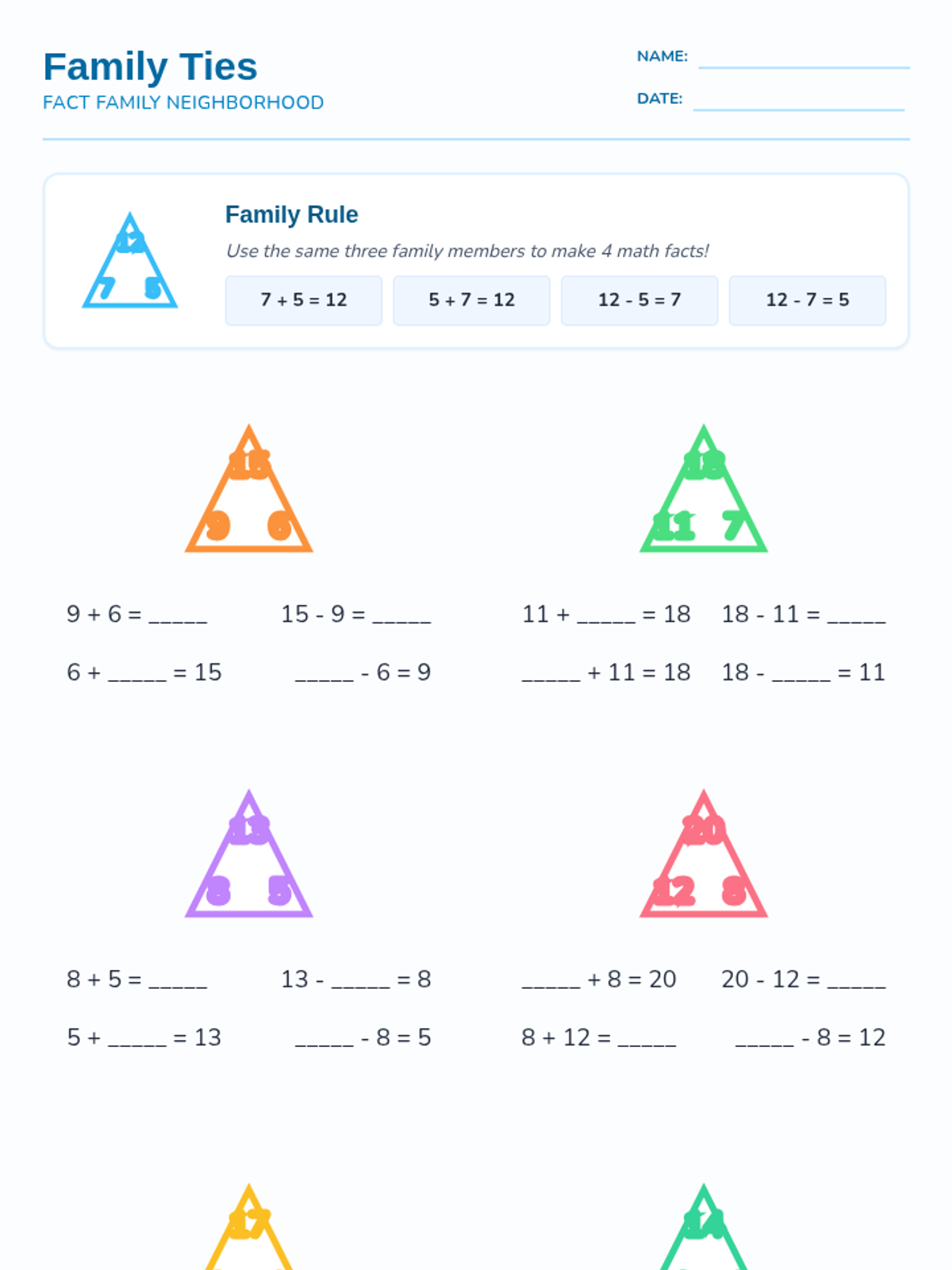
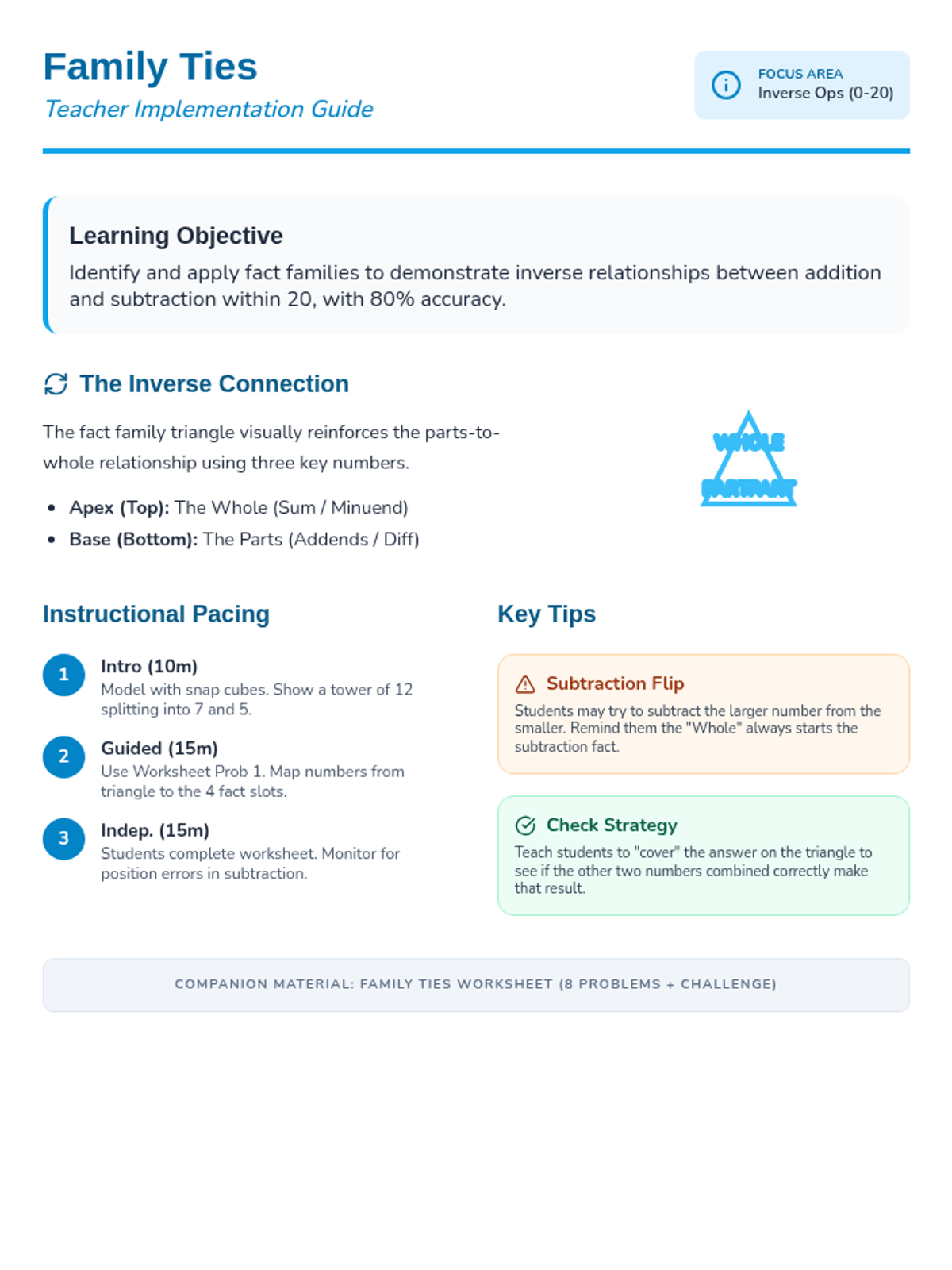
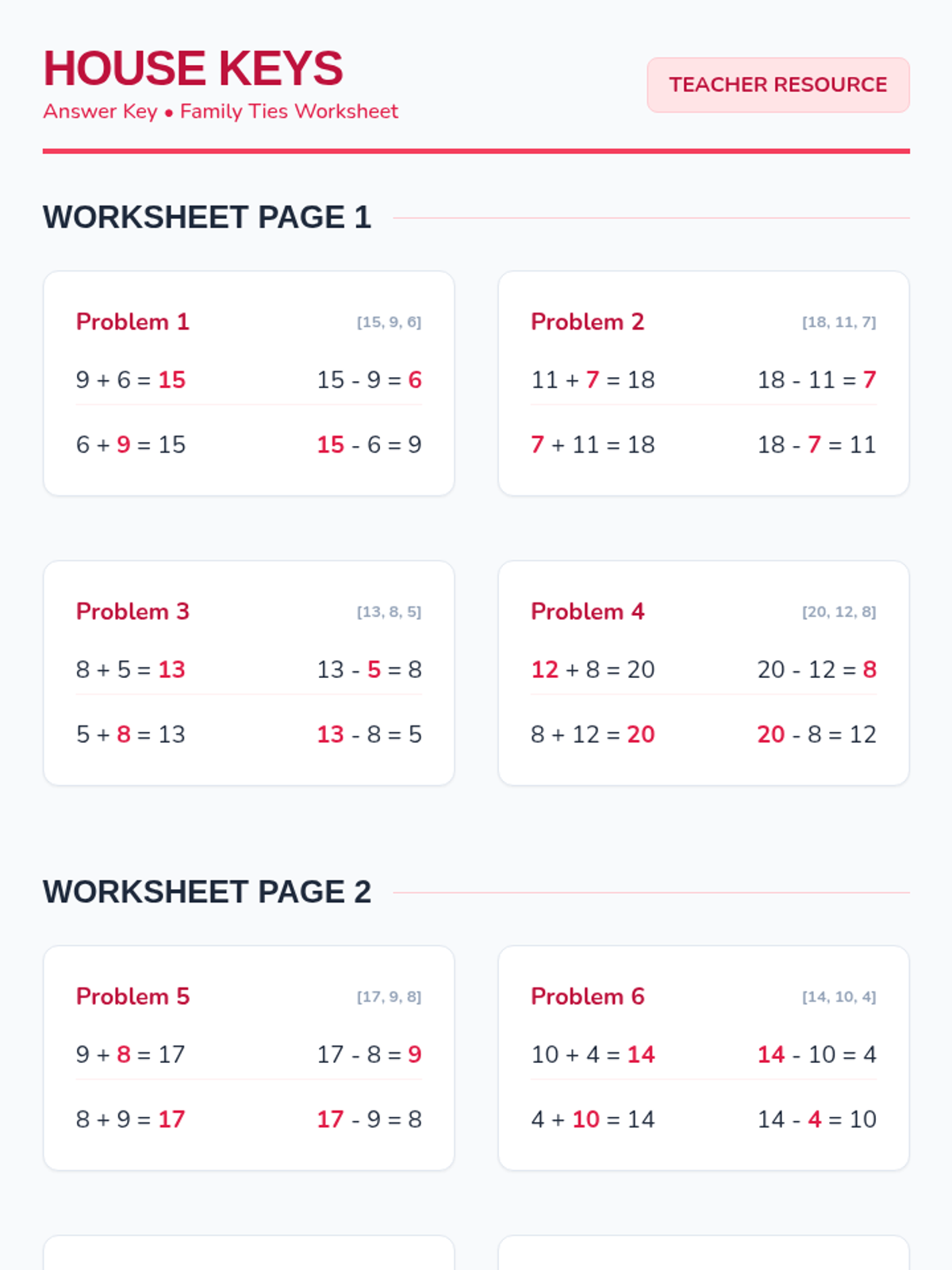
A lesson exploring the inverse relationship between addition and subtraction through fact family triangles within 20. Students will use partially filled equations to master the connection between these operations.
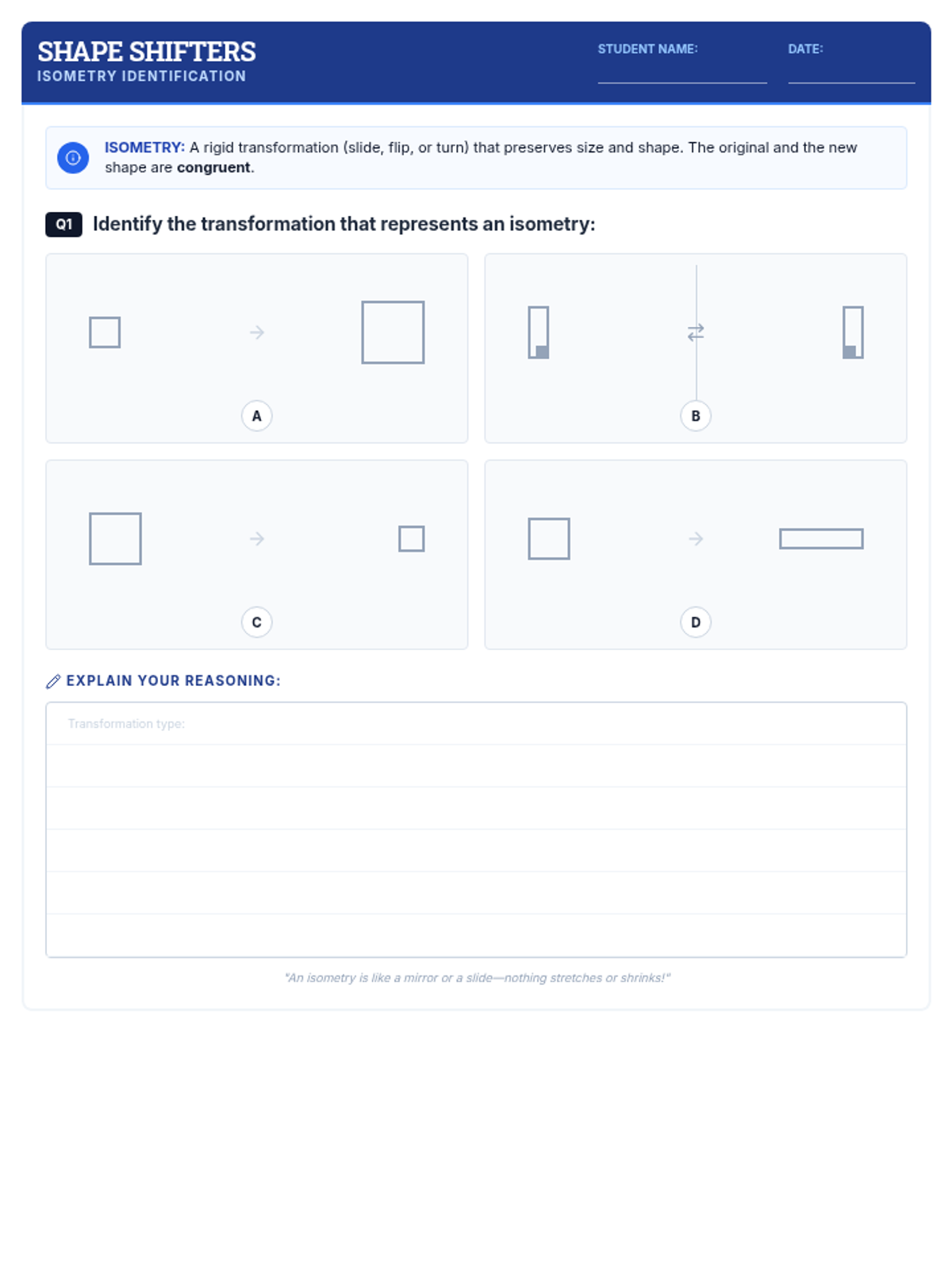
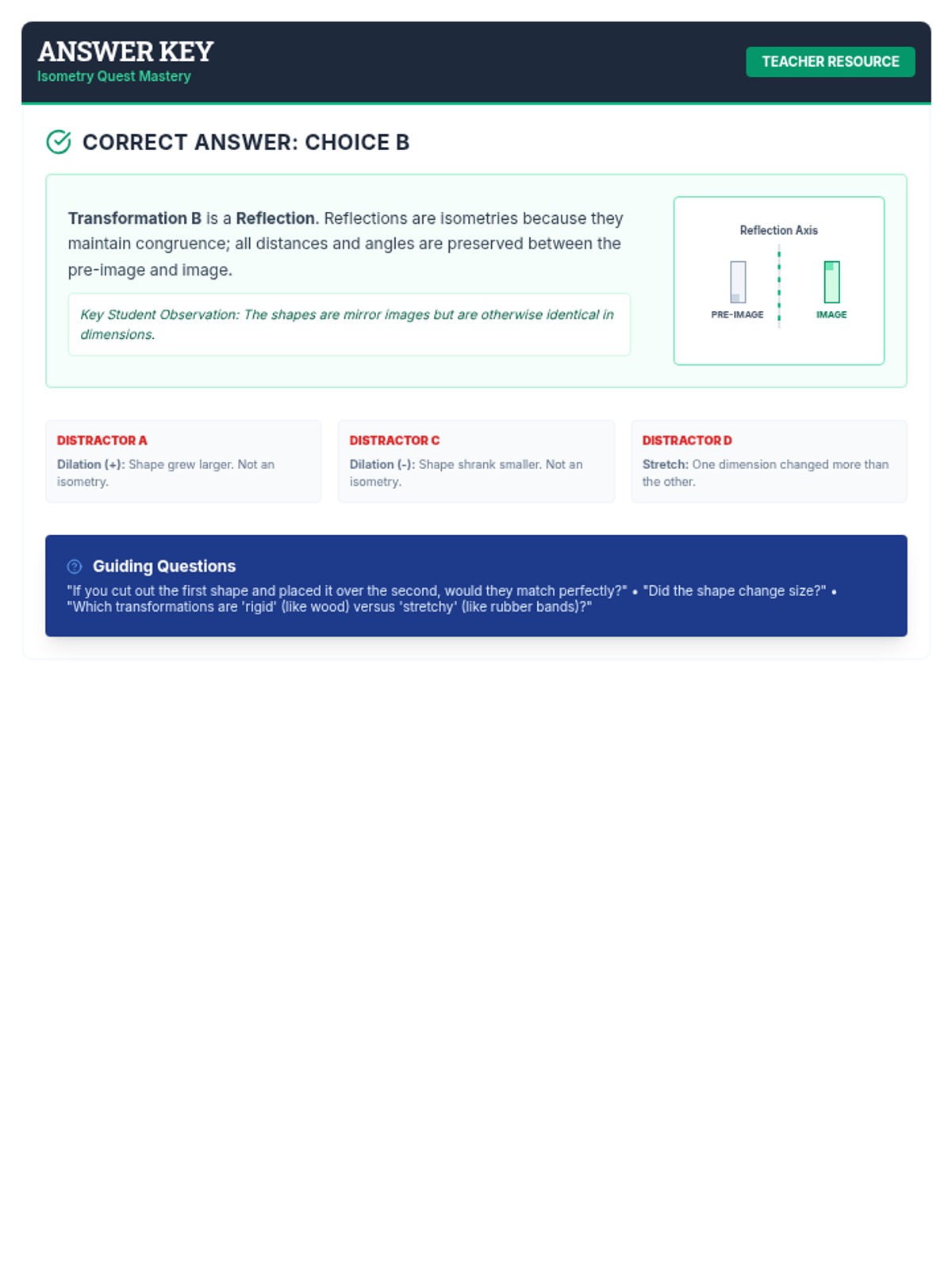
A lesson focused on distinguishing between rigid transformations (isometries) and non-rigid transformations (dilations) using visual diagrams and geometric properties.
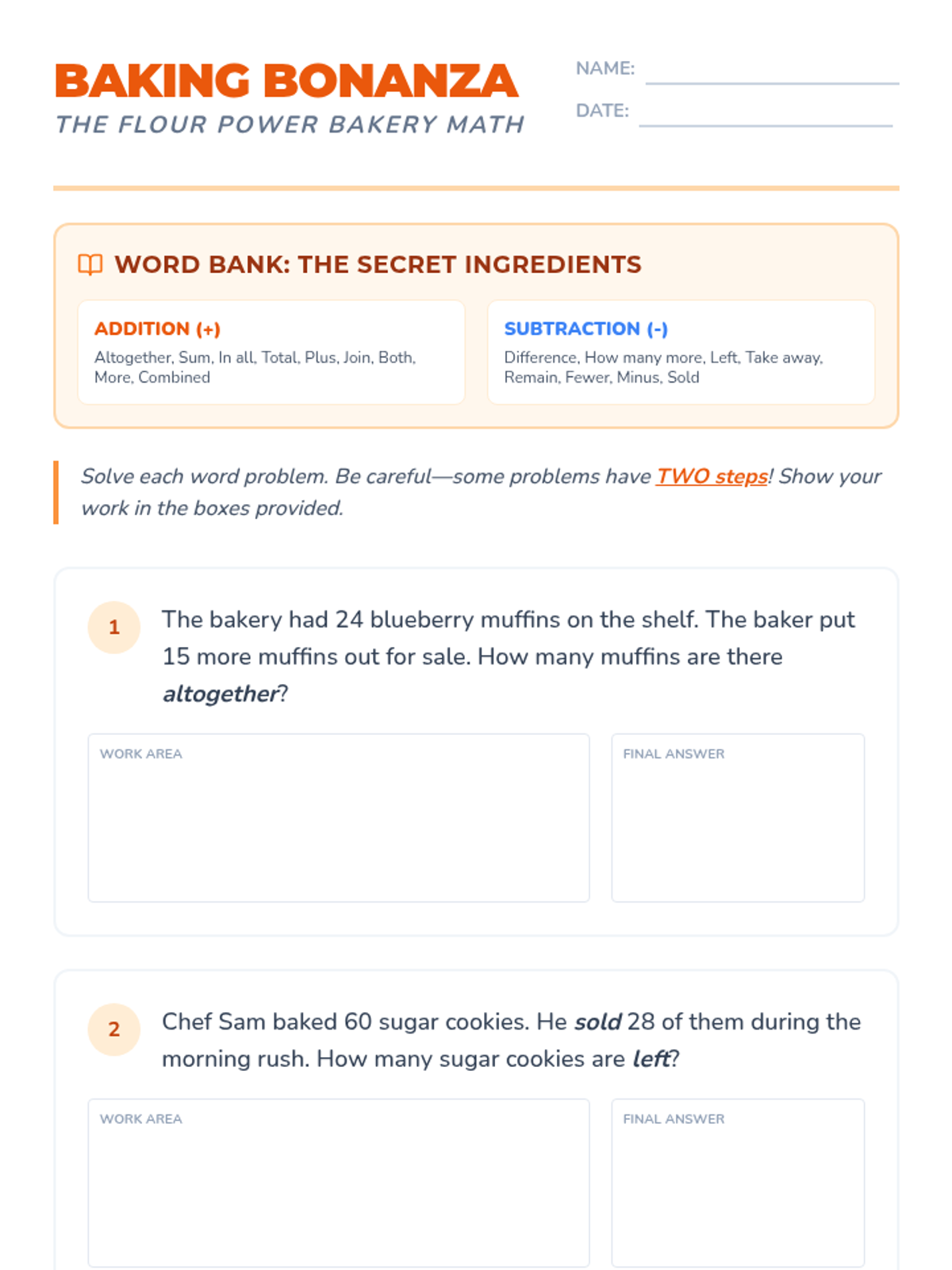
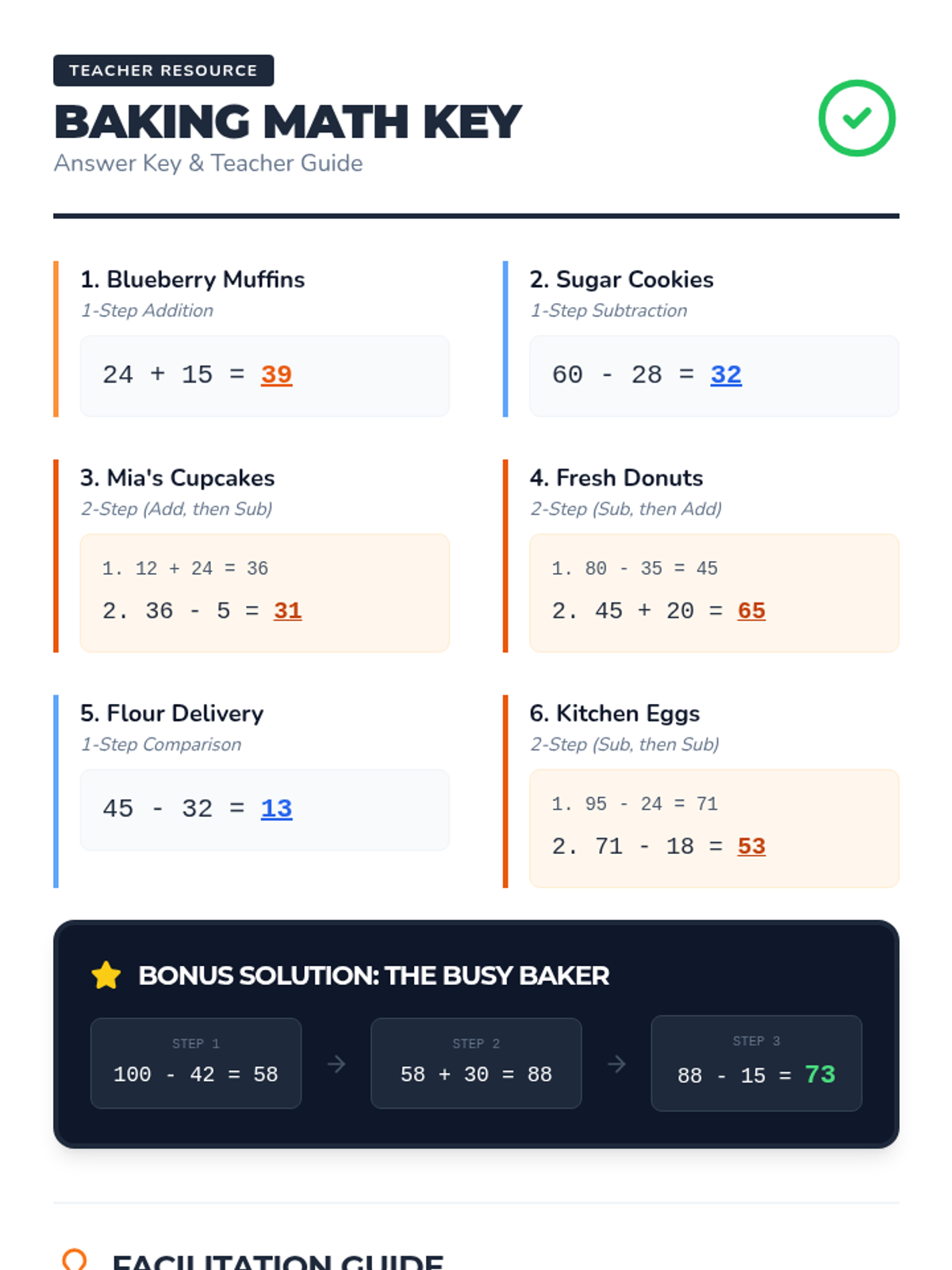
A lesson focused on solving 1- and 2-step word problems involving addition and subtraction within 100, set in a whimsical bakery environment. Students will identify keywords and use strategies to solve multi-step challenges.
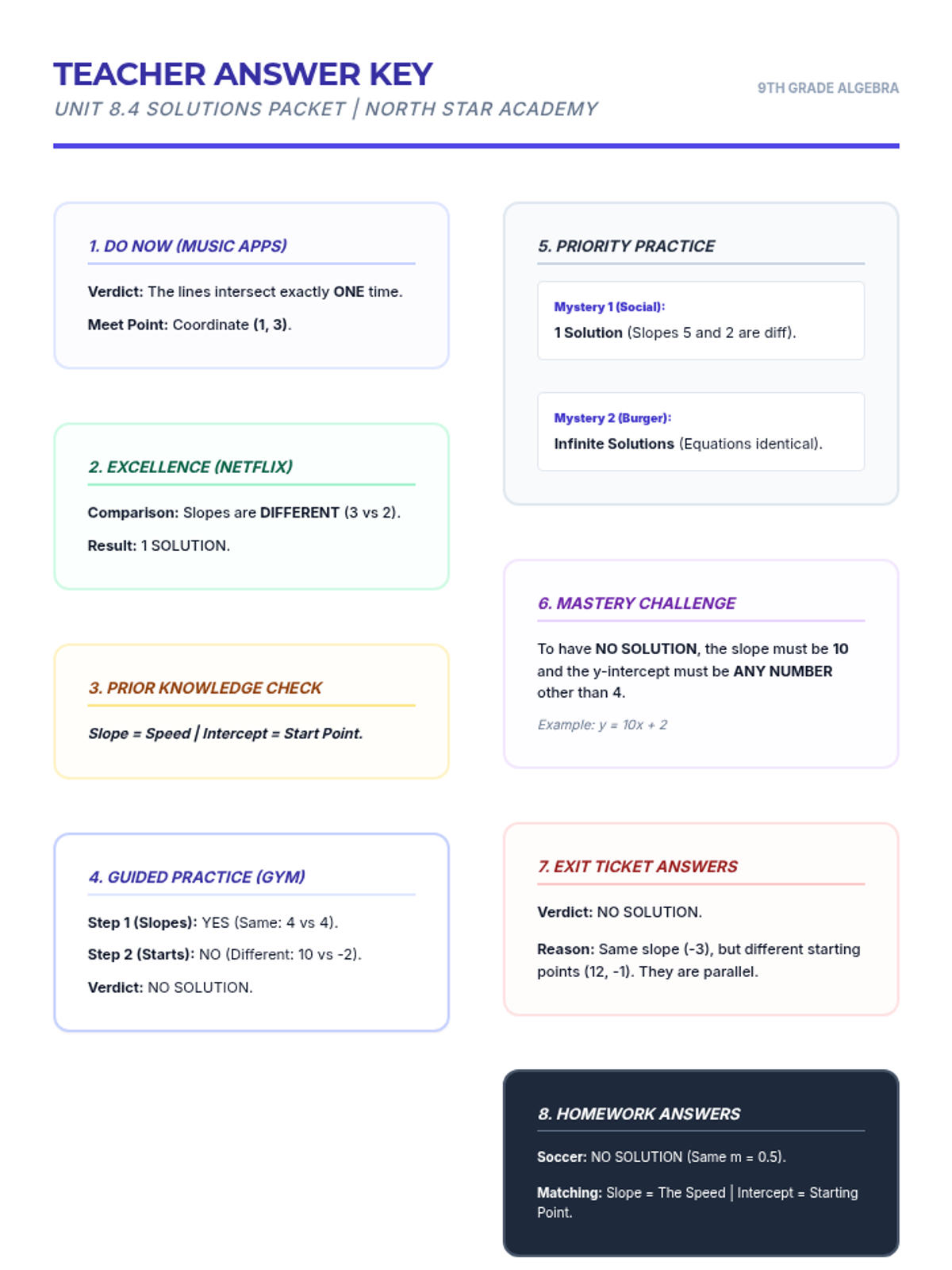
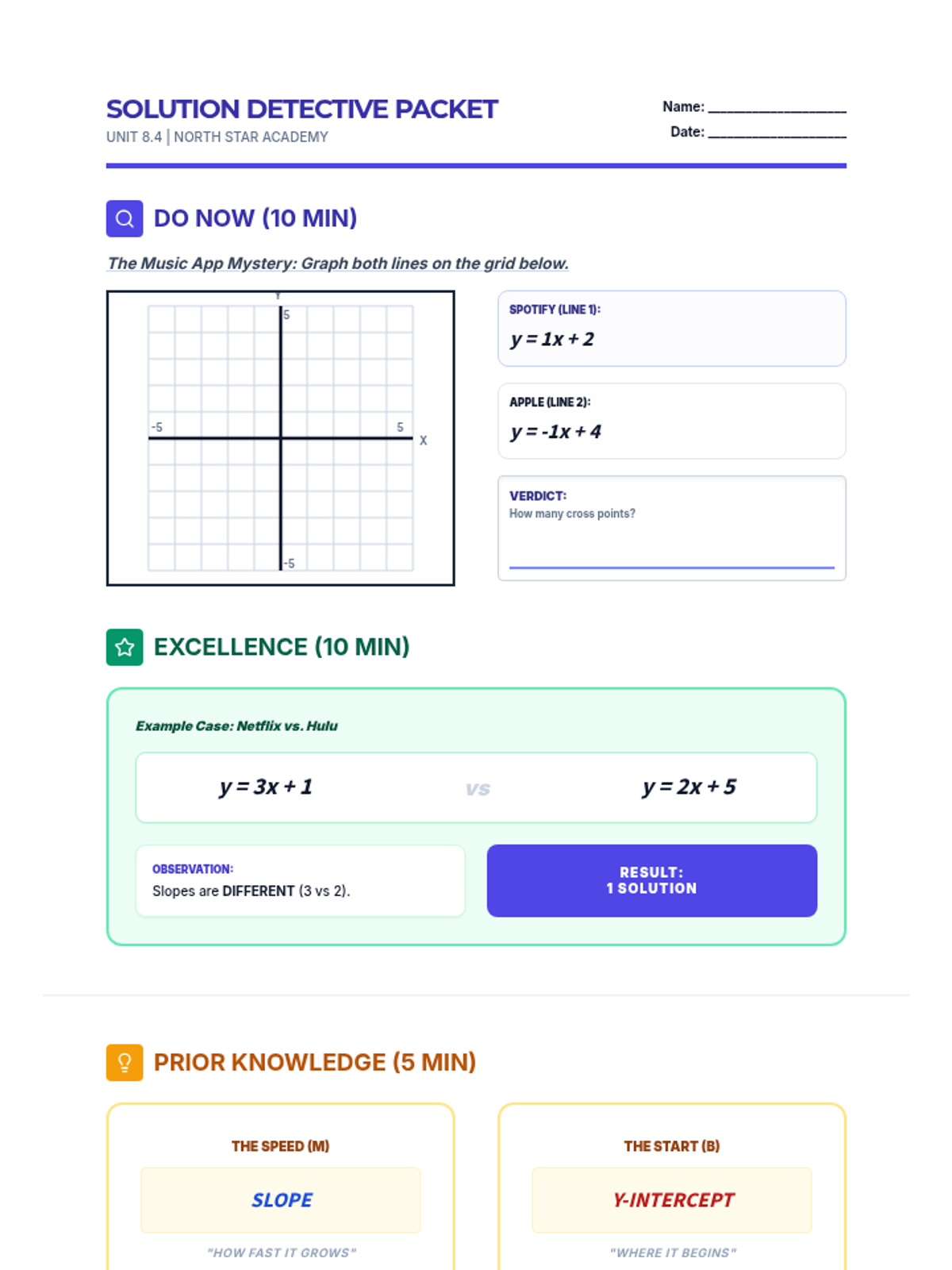
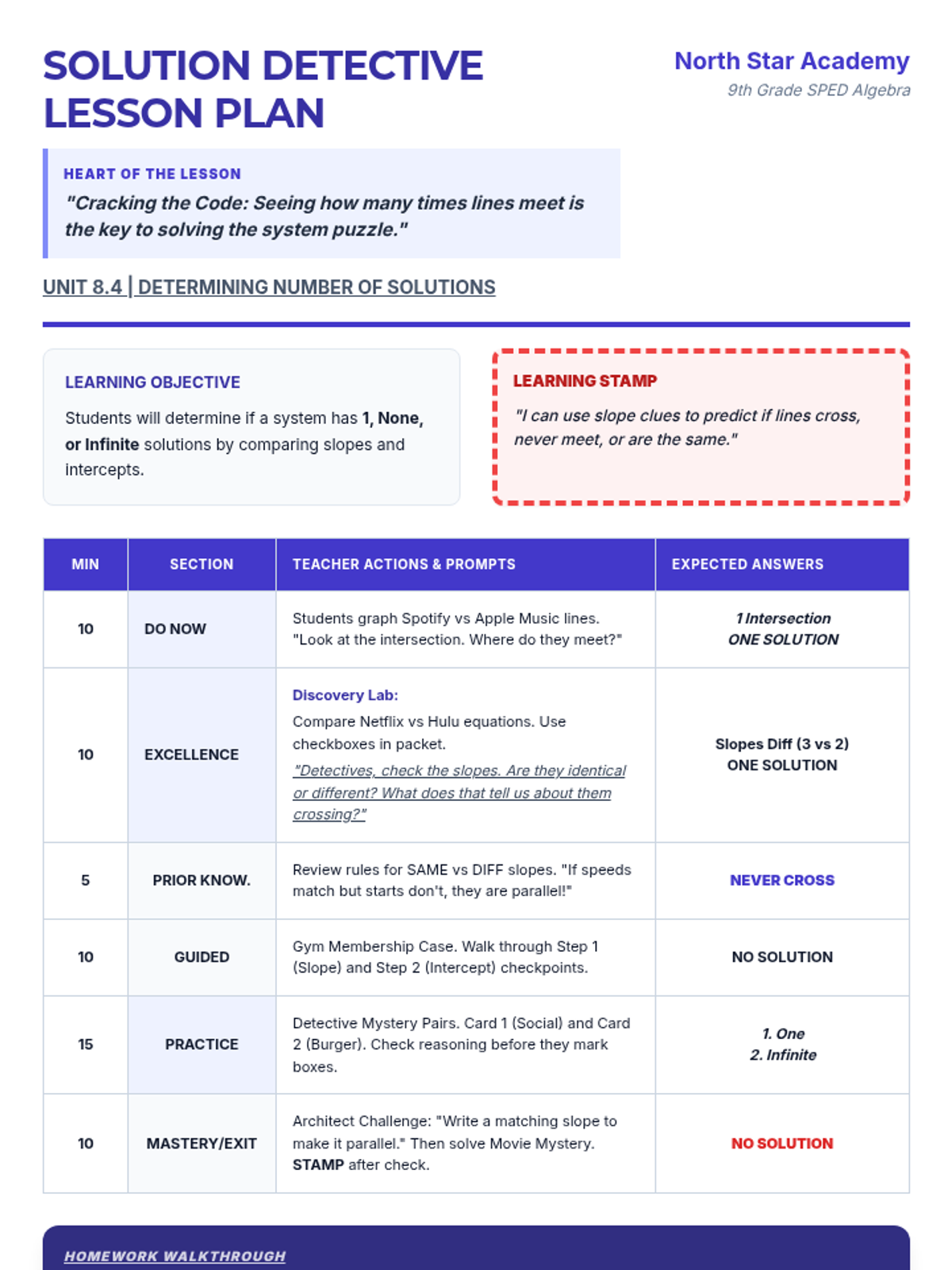
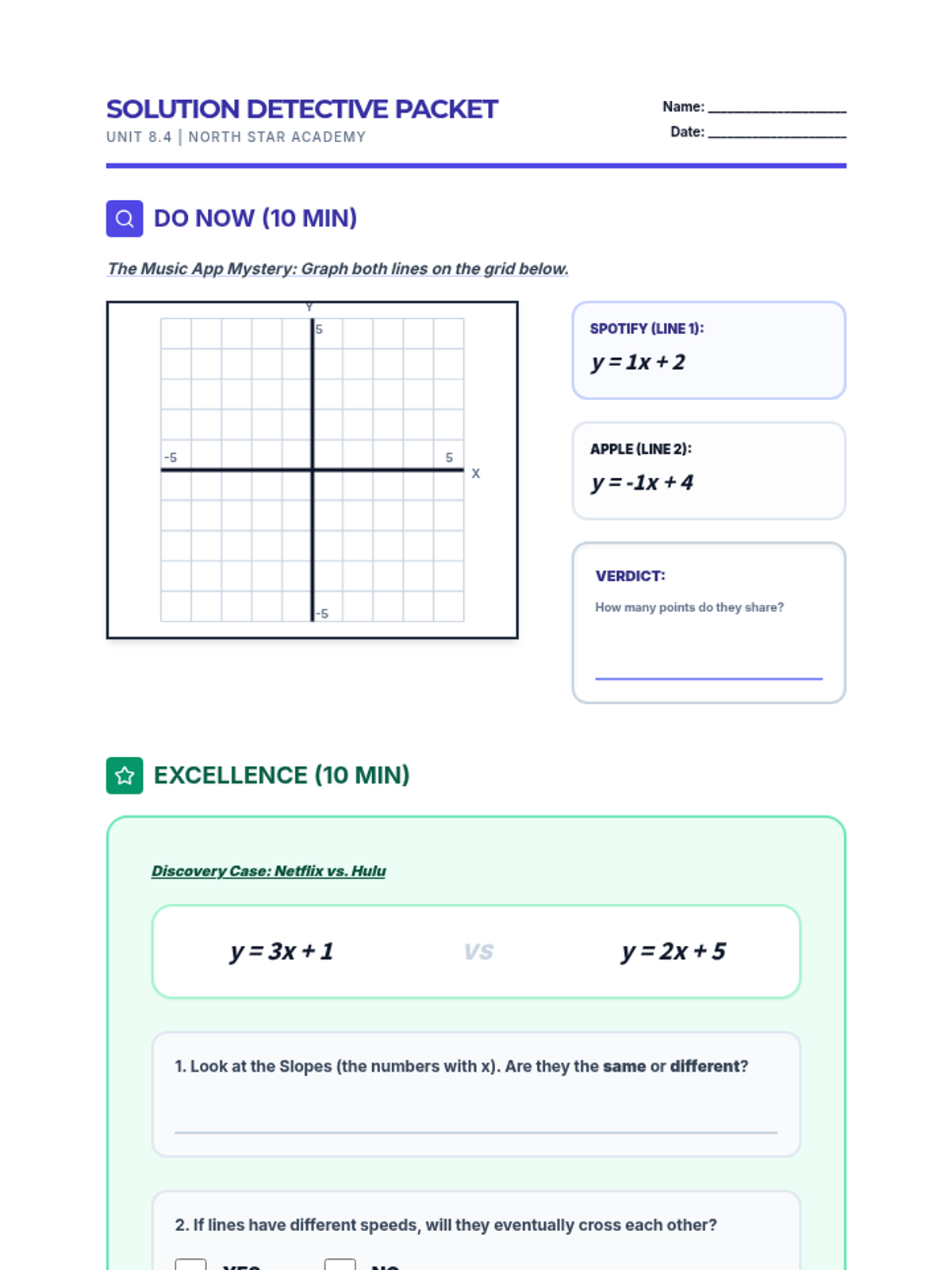
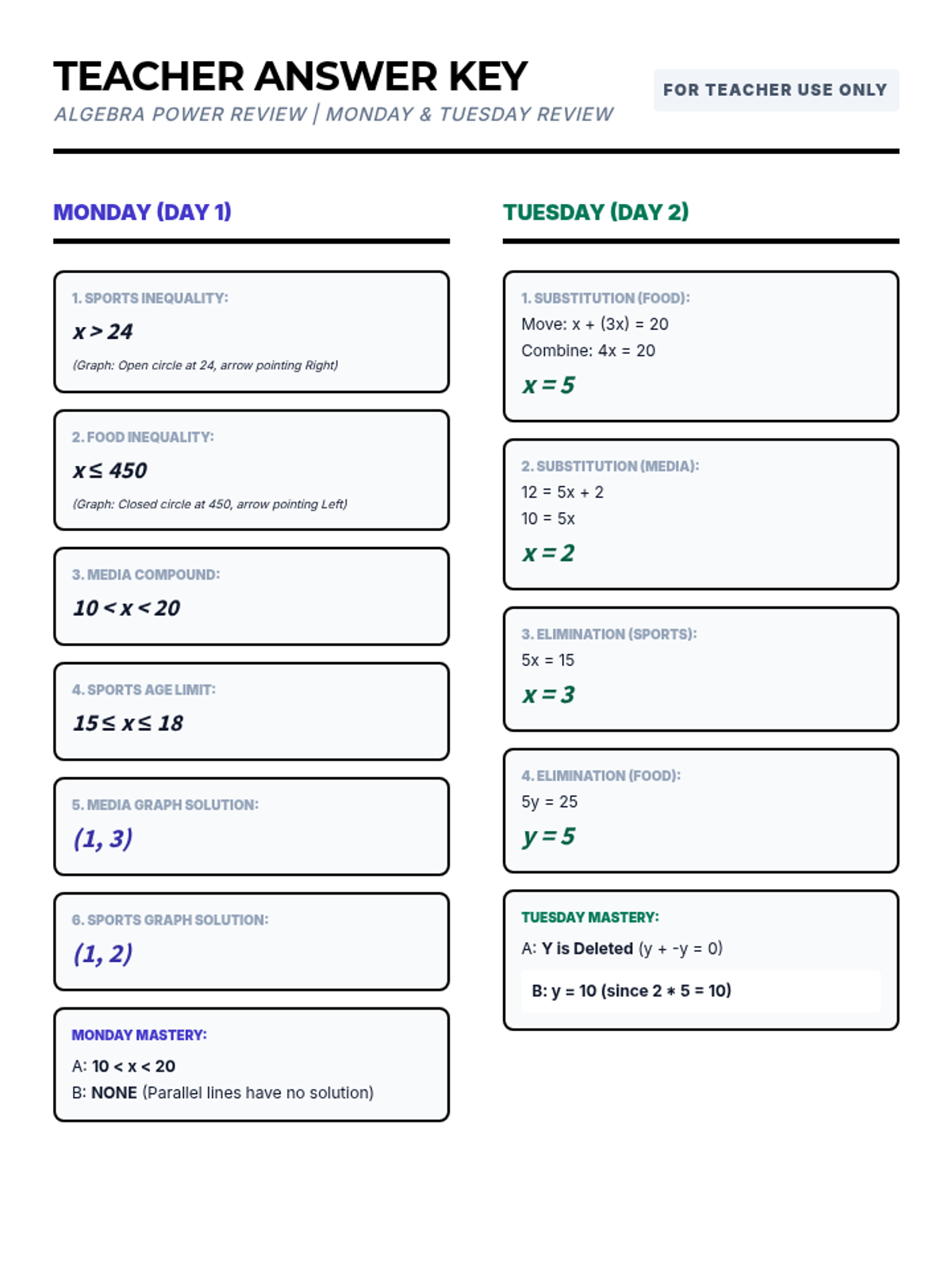
A 9th grade Algebra lesson focused on identifying the number of solutions in a system of linear equations (one, none, or infinite), specifically designed for Special Education students with IEP supports.
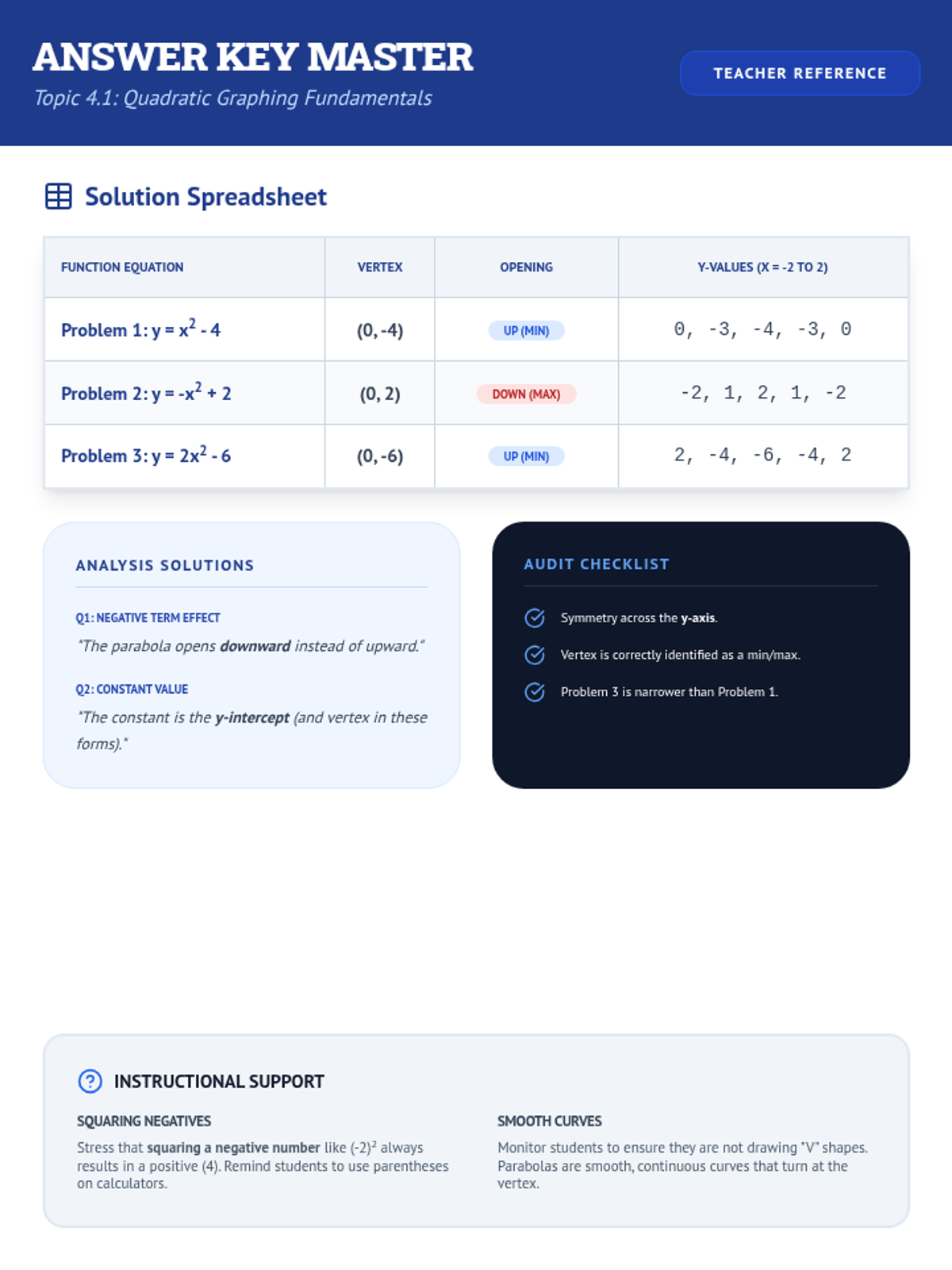
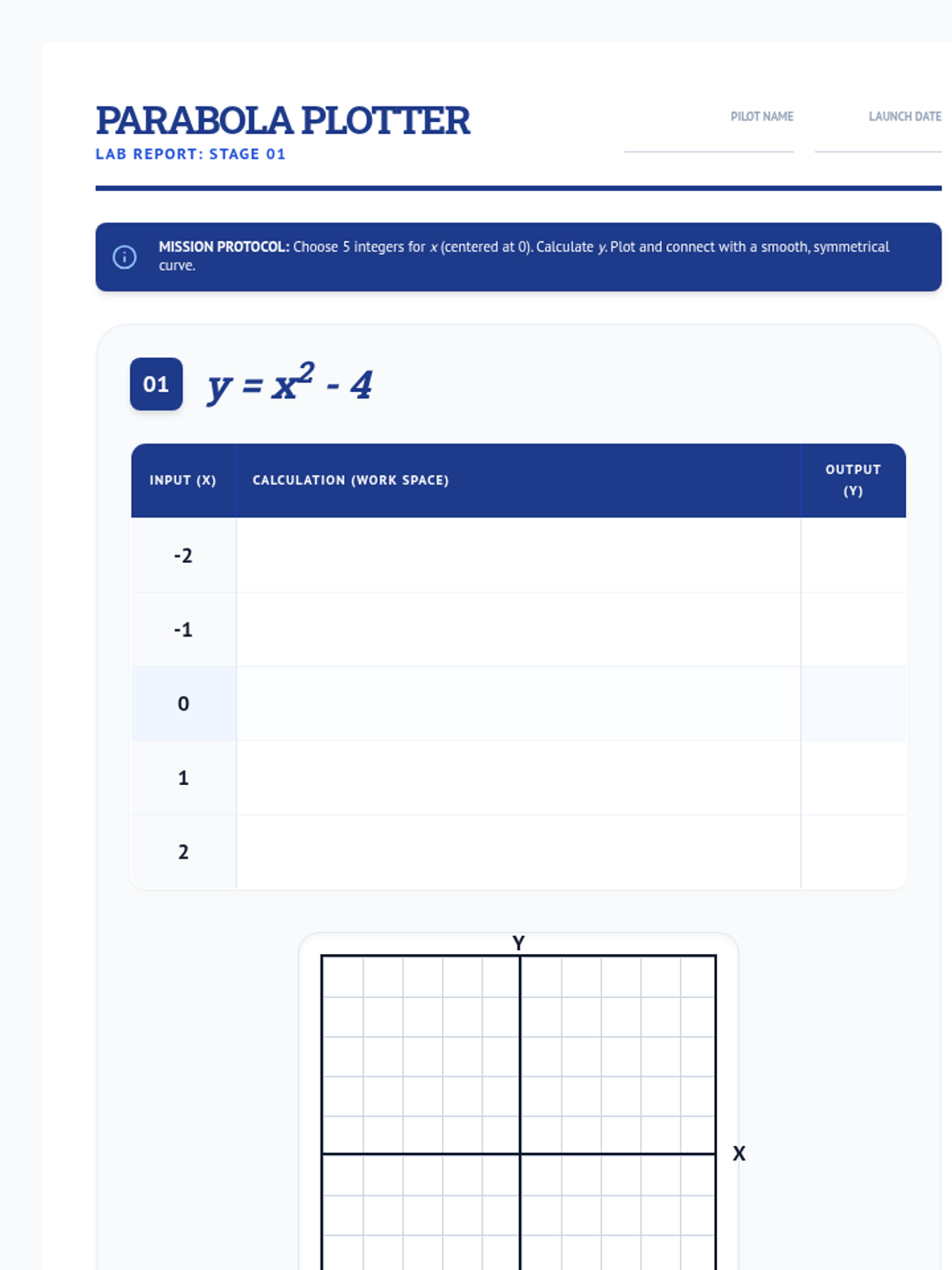
A comprehensive introduction to graphing quadratic functions using tables of values and identifying key features like the vertex and axis of symmetry.
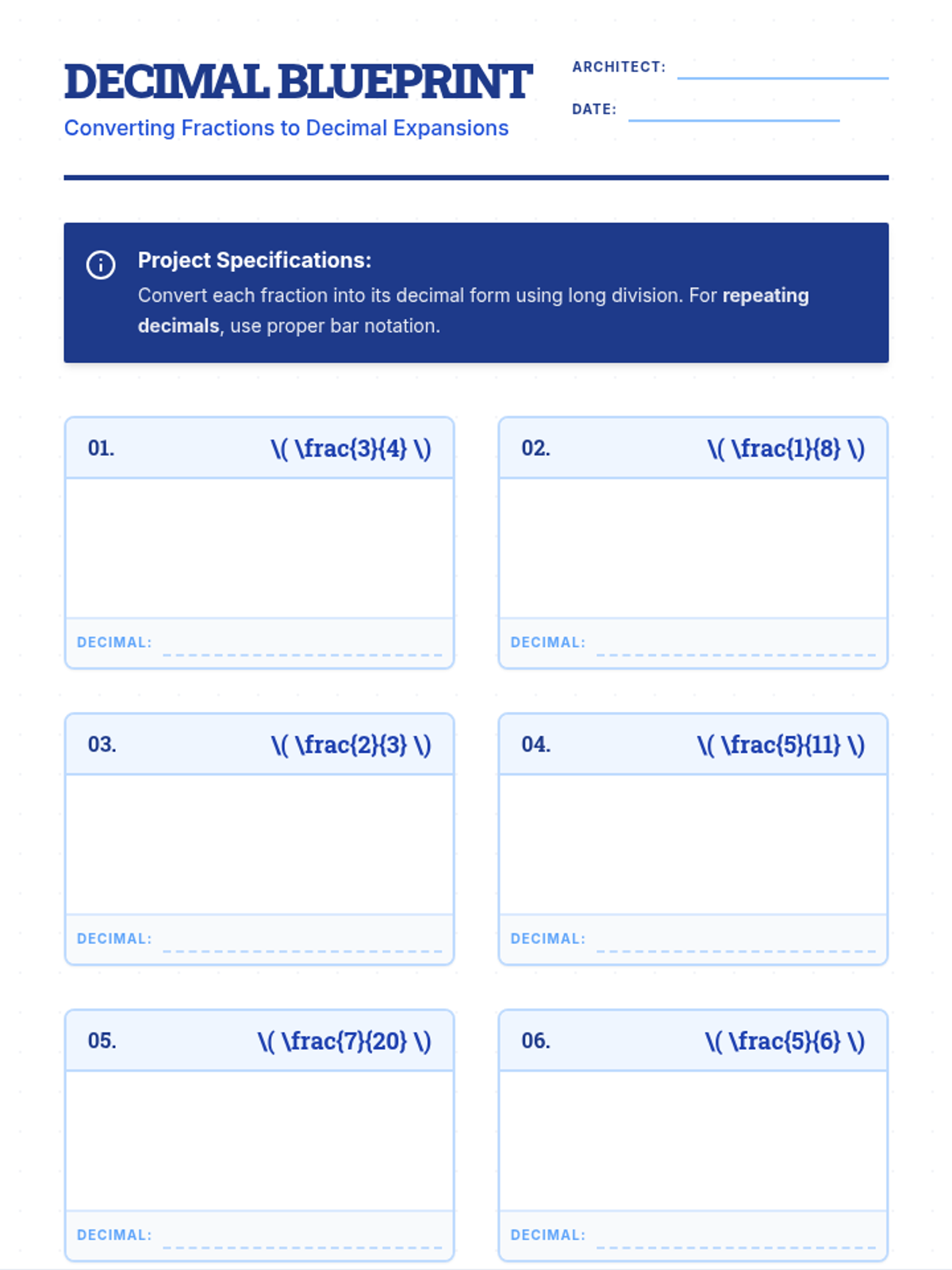
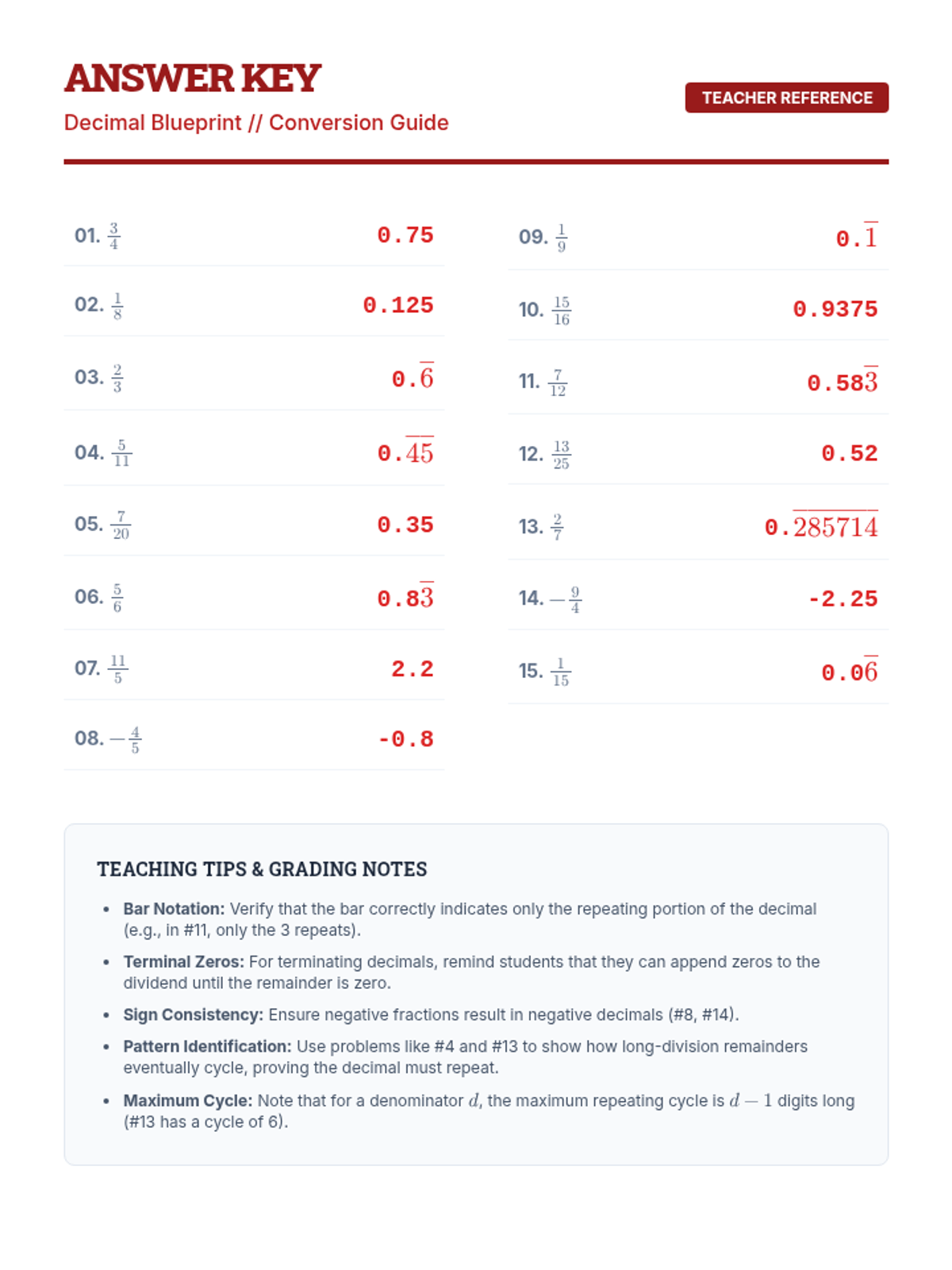
A focused lesson on converting rational numbers from fractions to their decimal expansions, including both terminating and repeating decimals. Students will use long division to discover patterns and represent repeating decimals using bar notation.
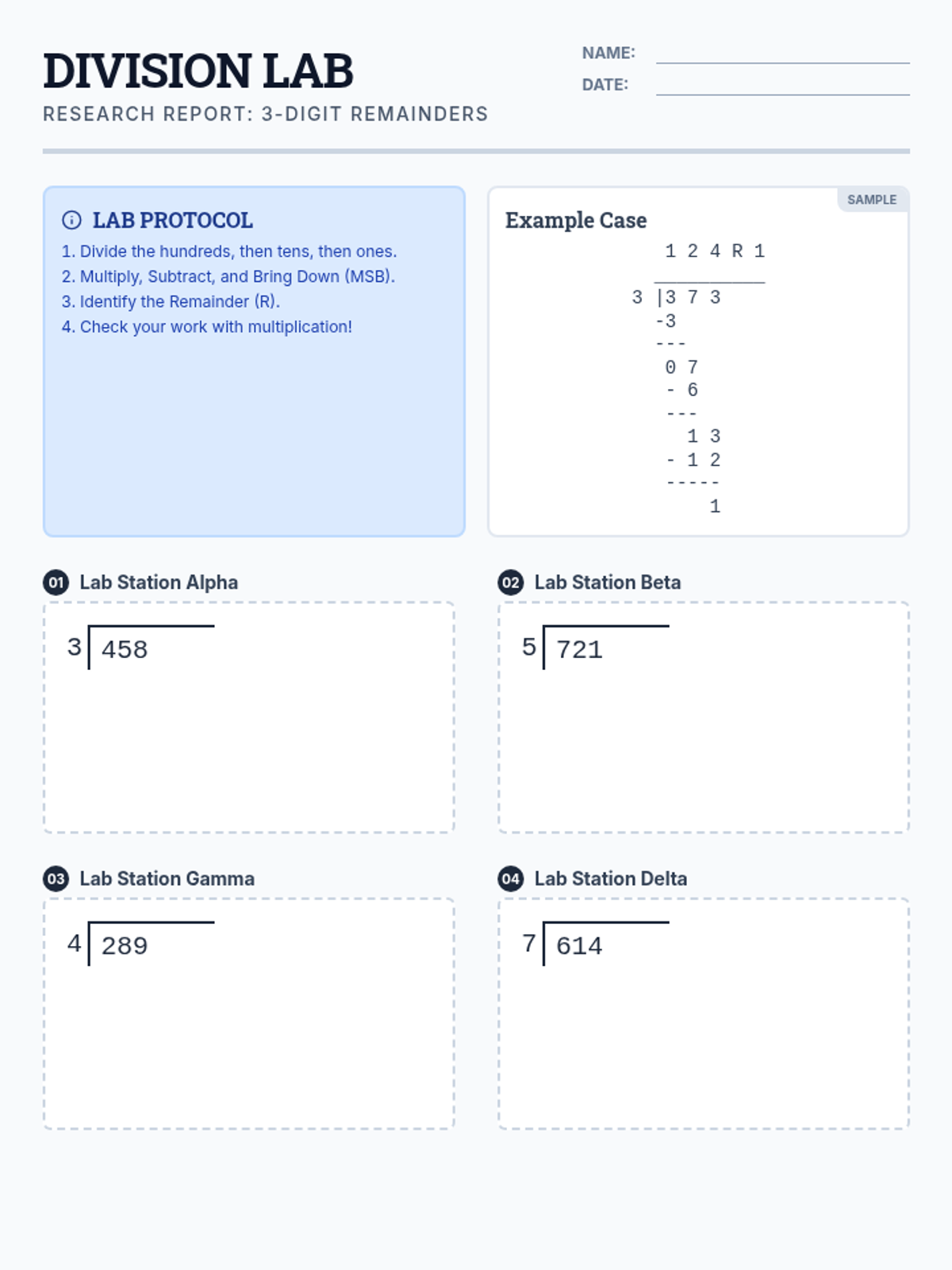
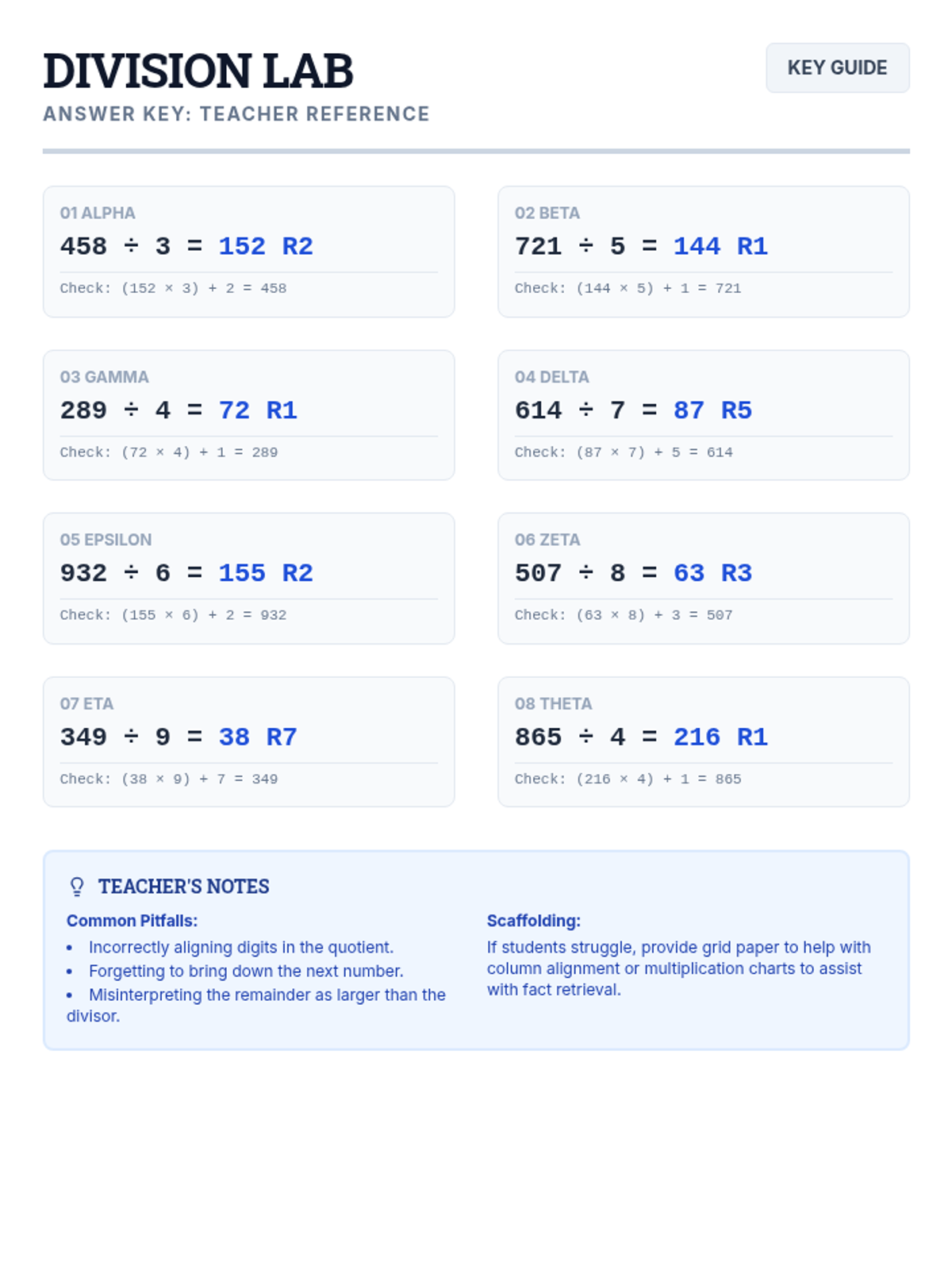
A lesson focused on mastering 3-digit by 1-digit long division with remainders through step-by-step practice and problem-solving.
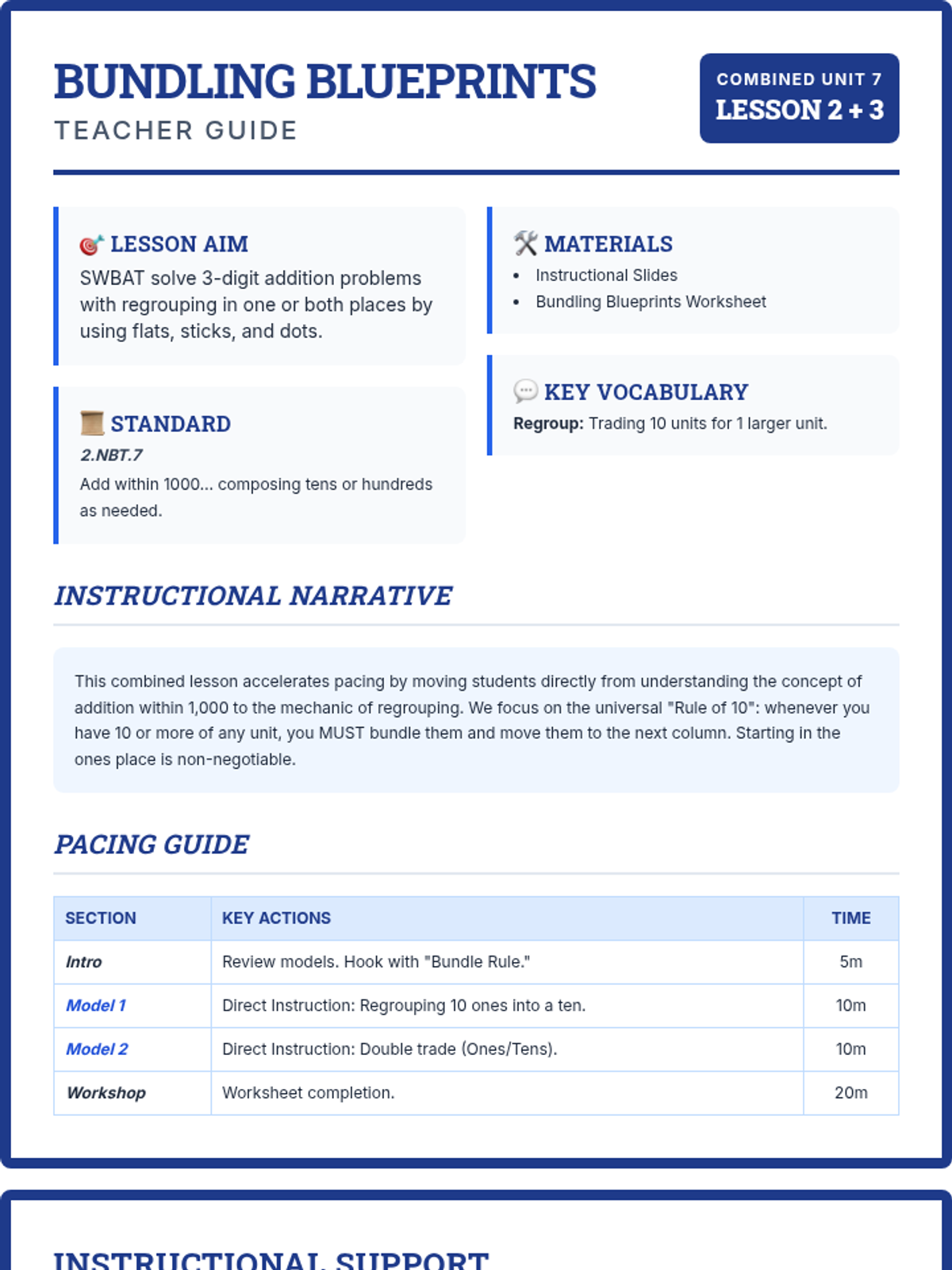
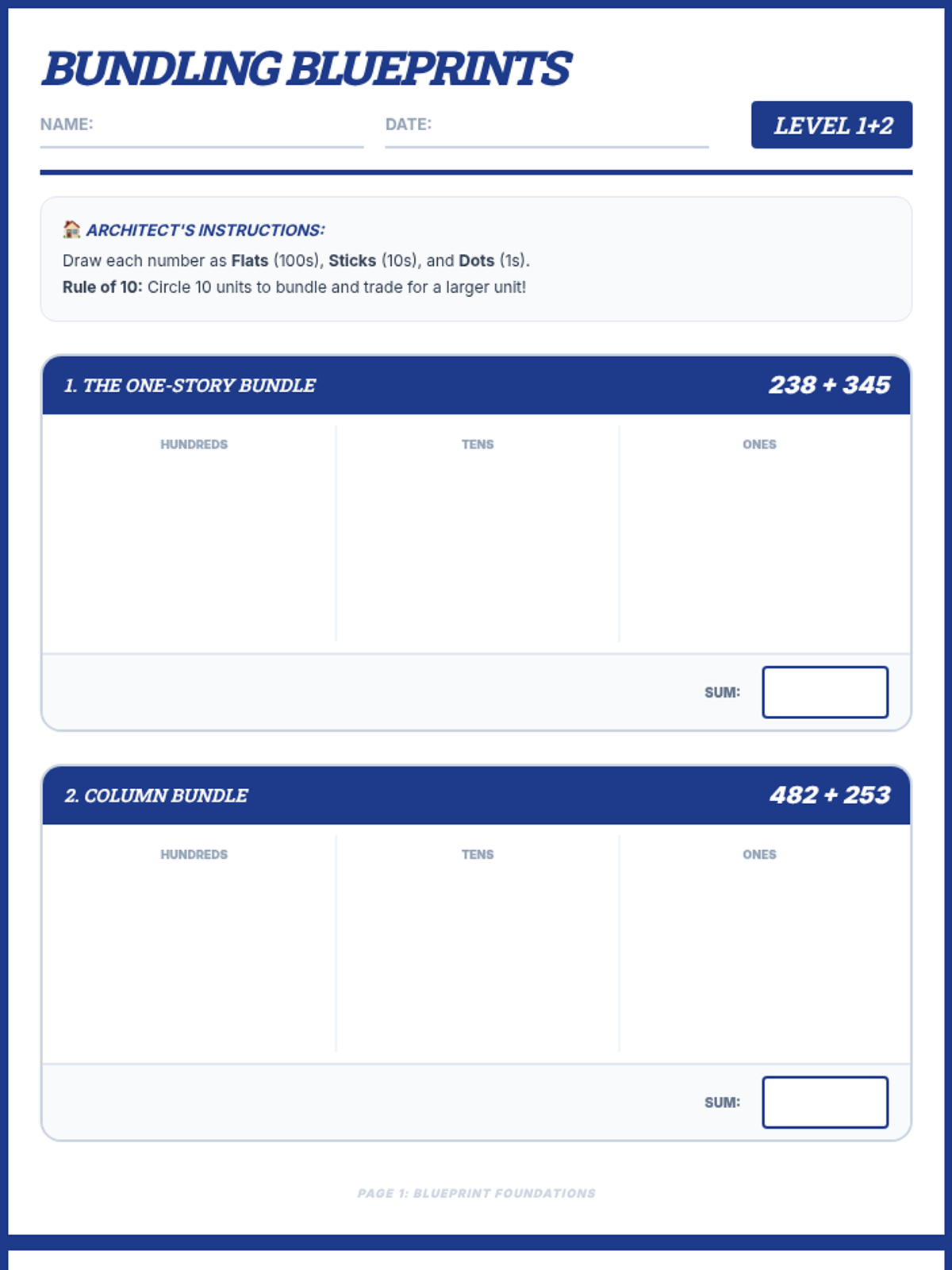
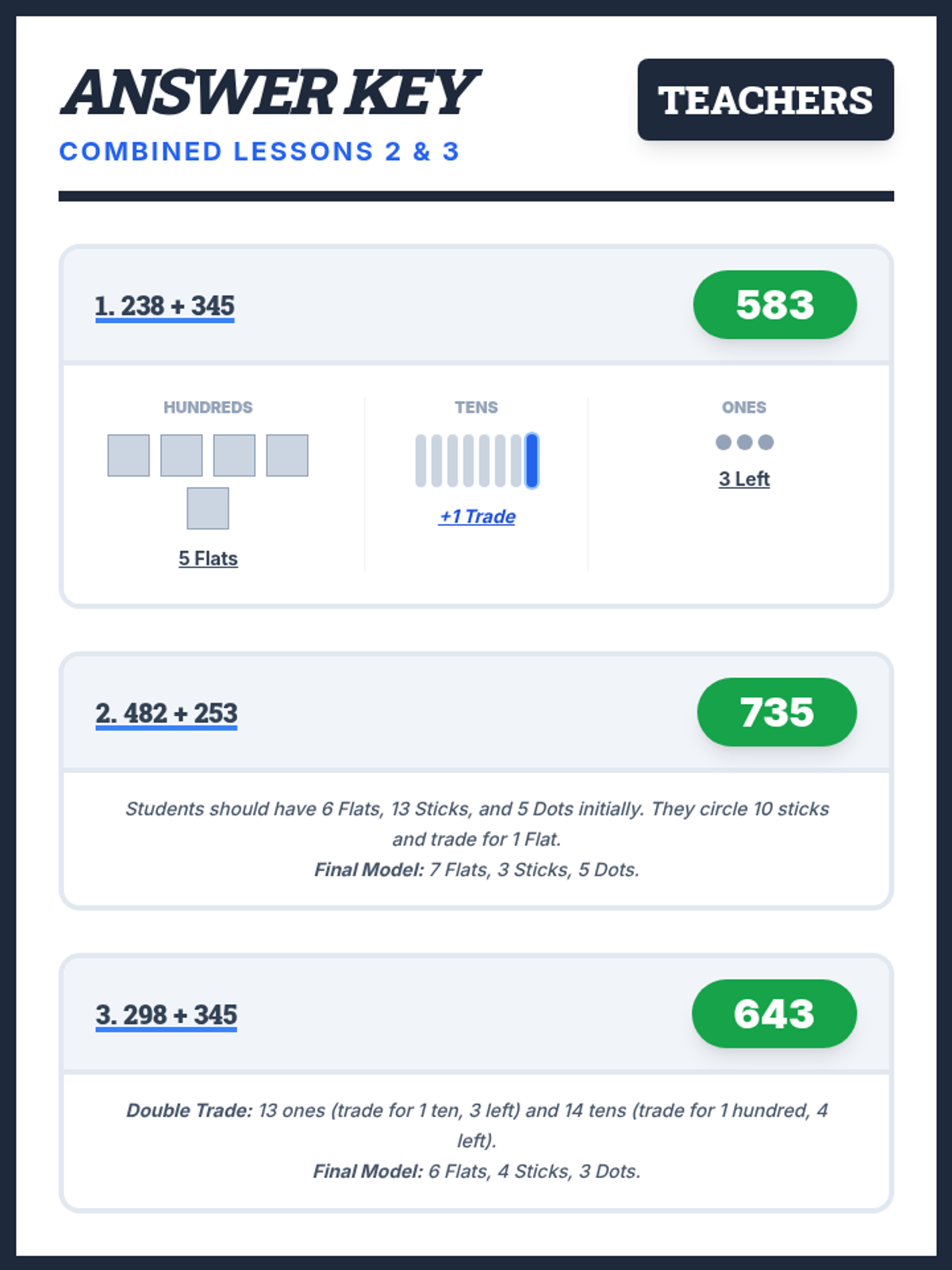
A combined lesson merging LEAP Unit 7 Lessons 2 and 3, focusing on 3-digit addition with regrouping in one or both places using flats, sticks, and dots. Designed for efficiency and ease of use for new teachers.
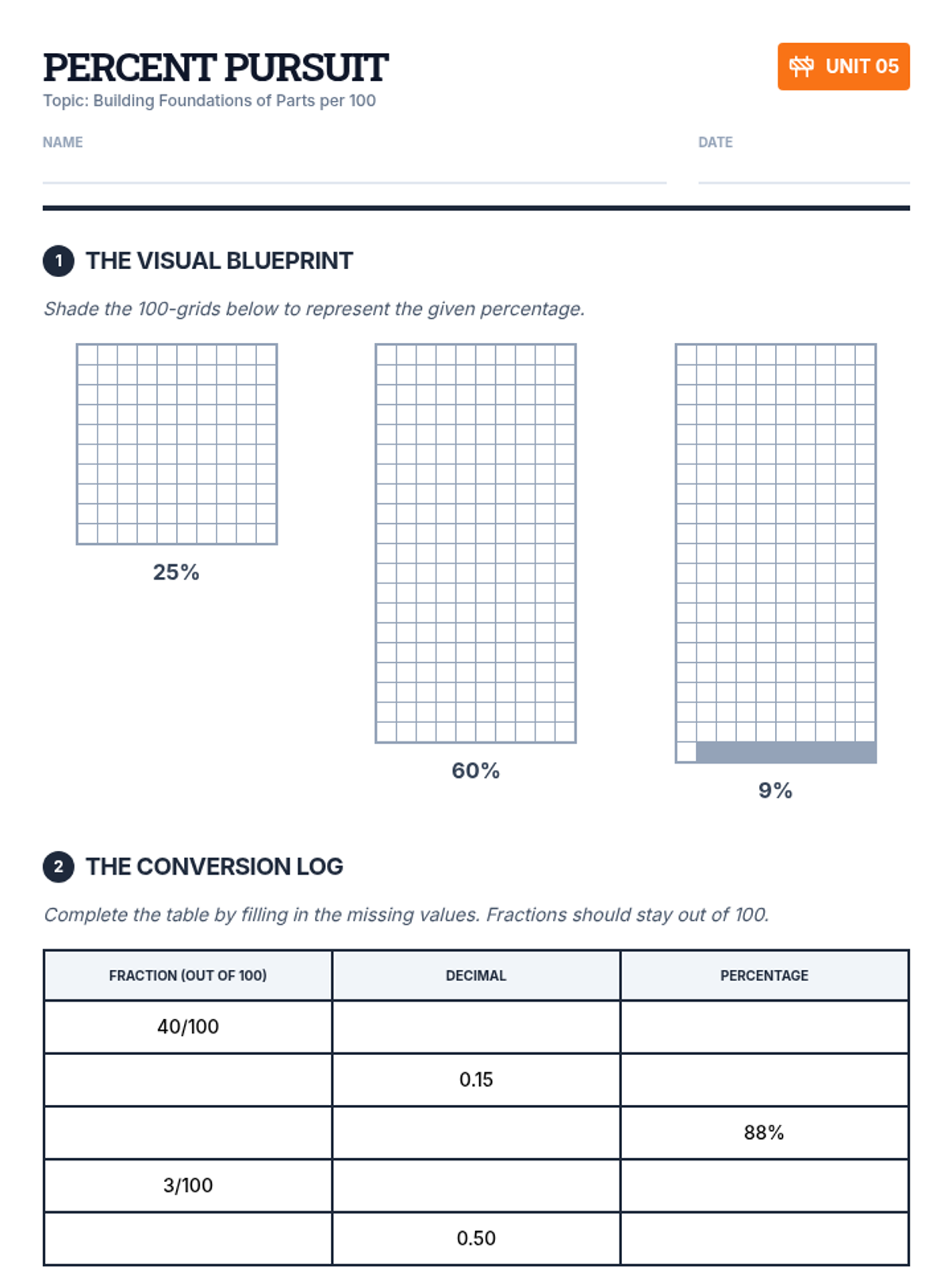
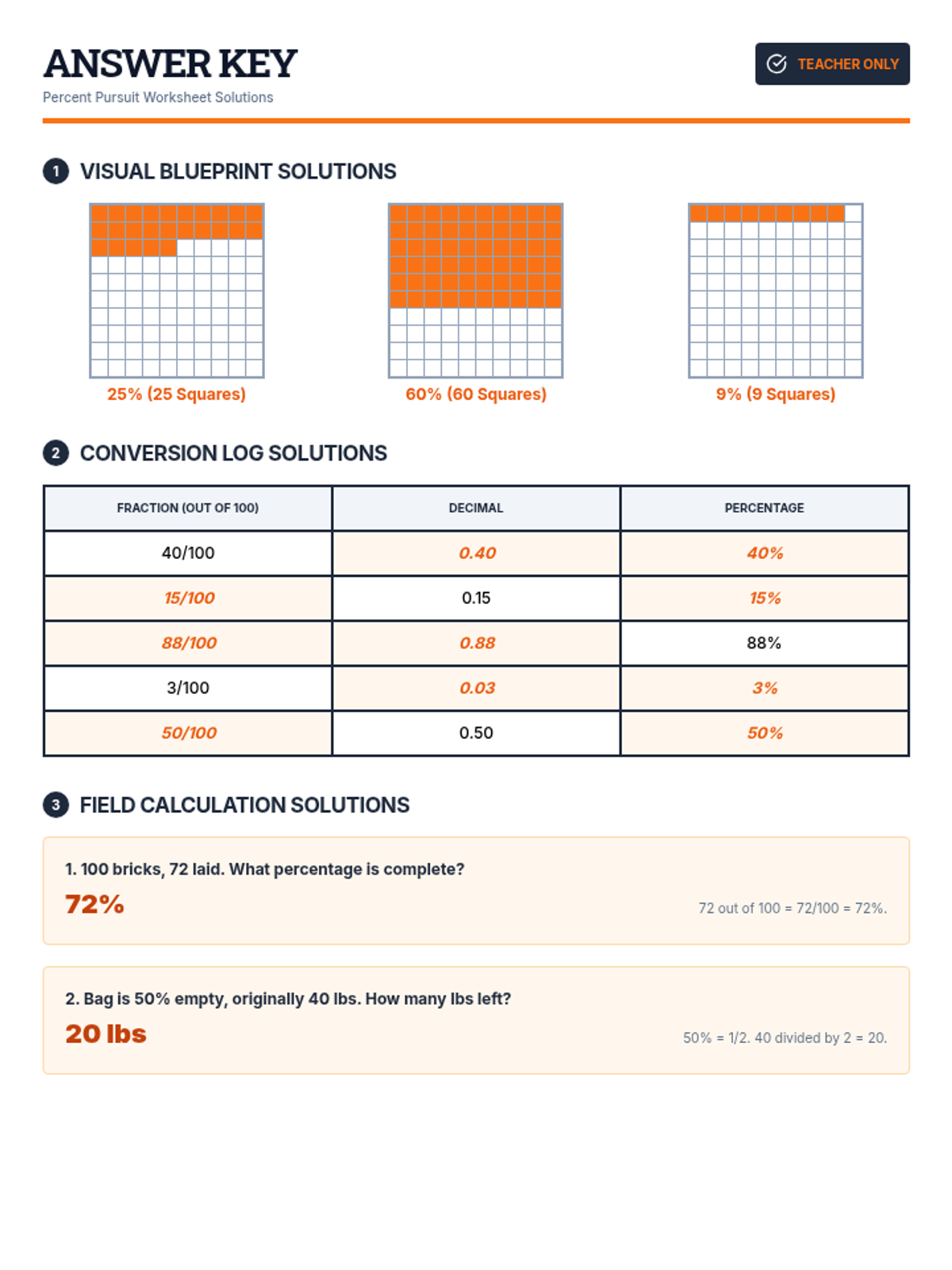
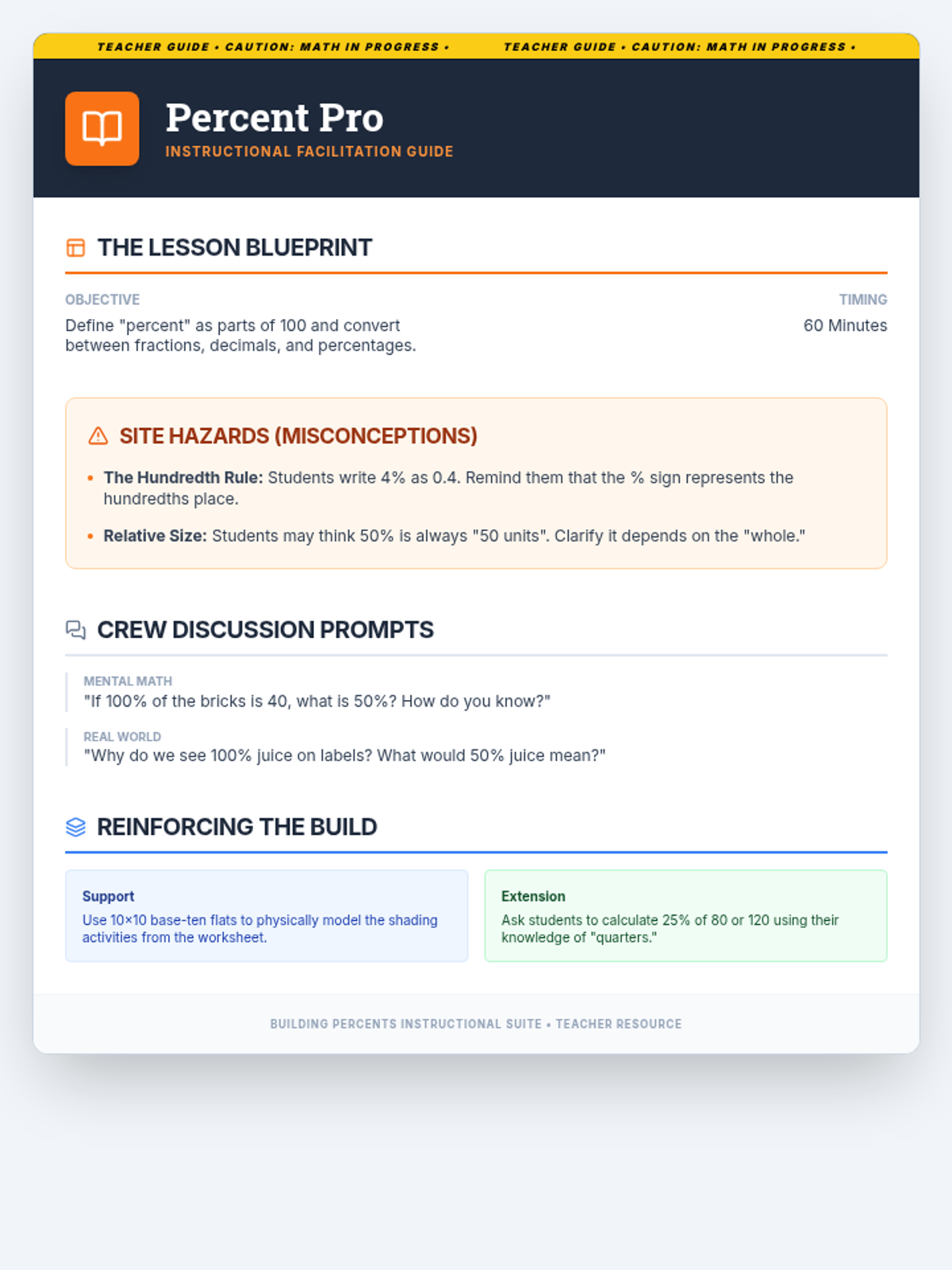
A foundational lesson on percentages for 5th graders, focusing on visualizing percents as parts of a hundred and converting between fractions, decimals, and percentages.
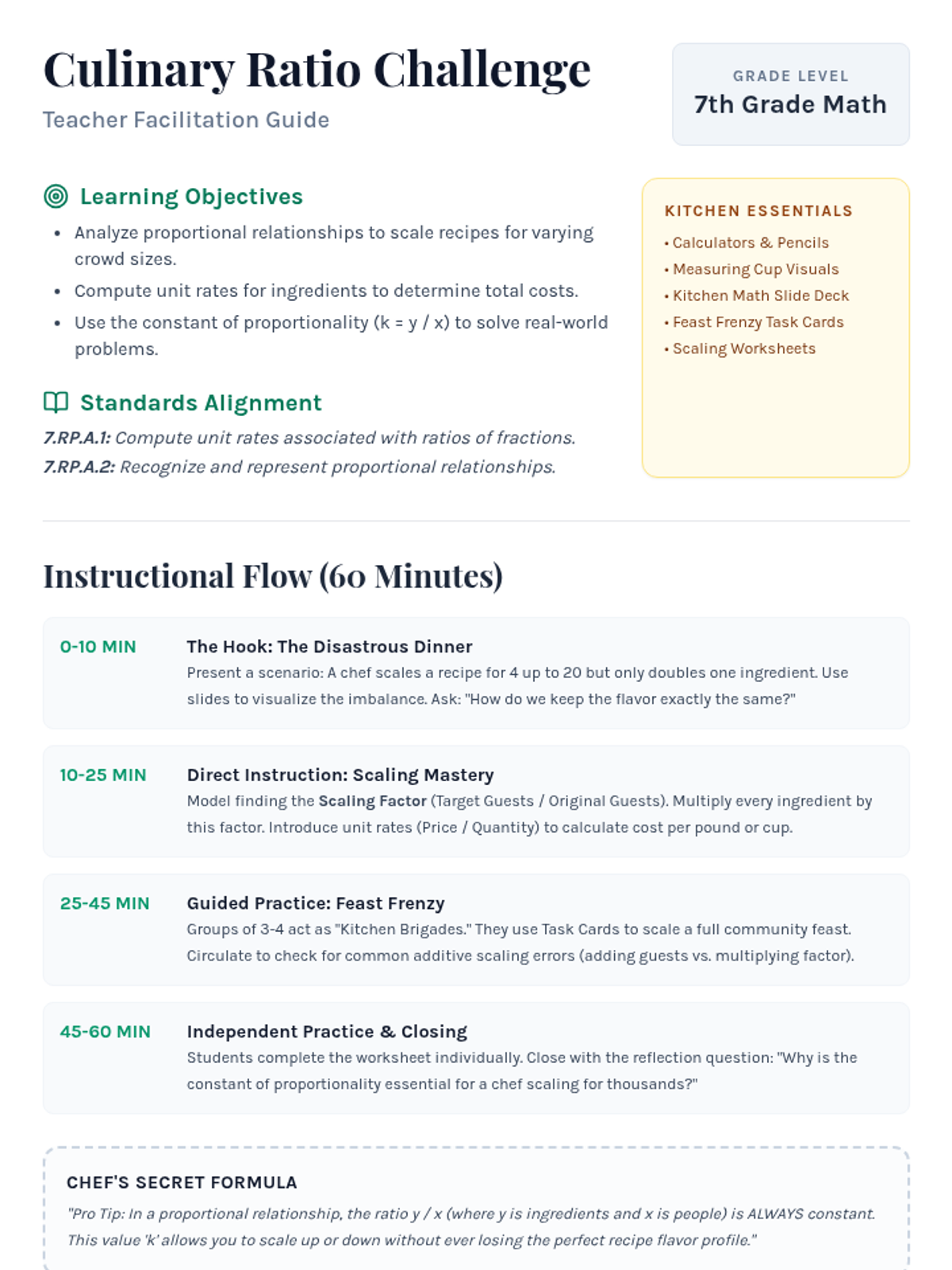
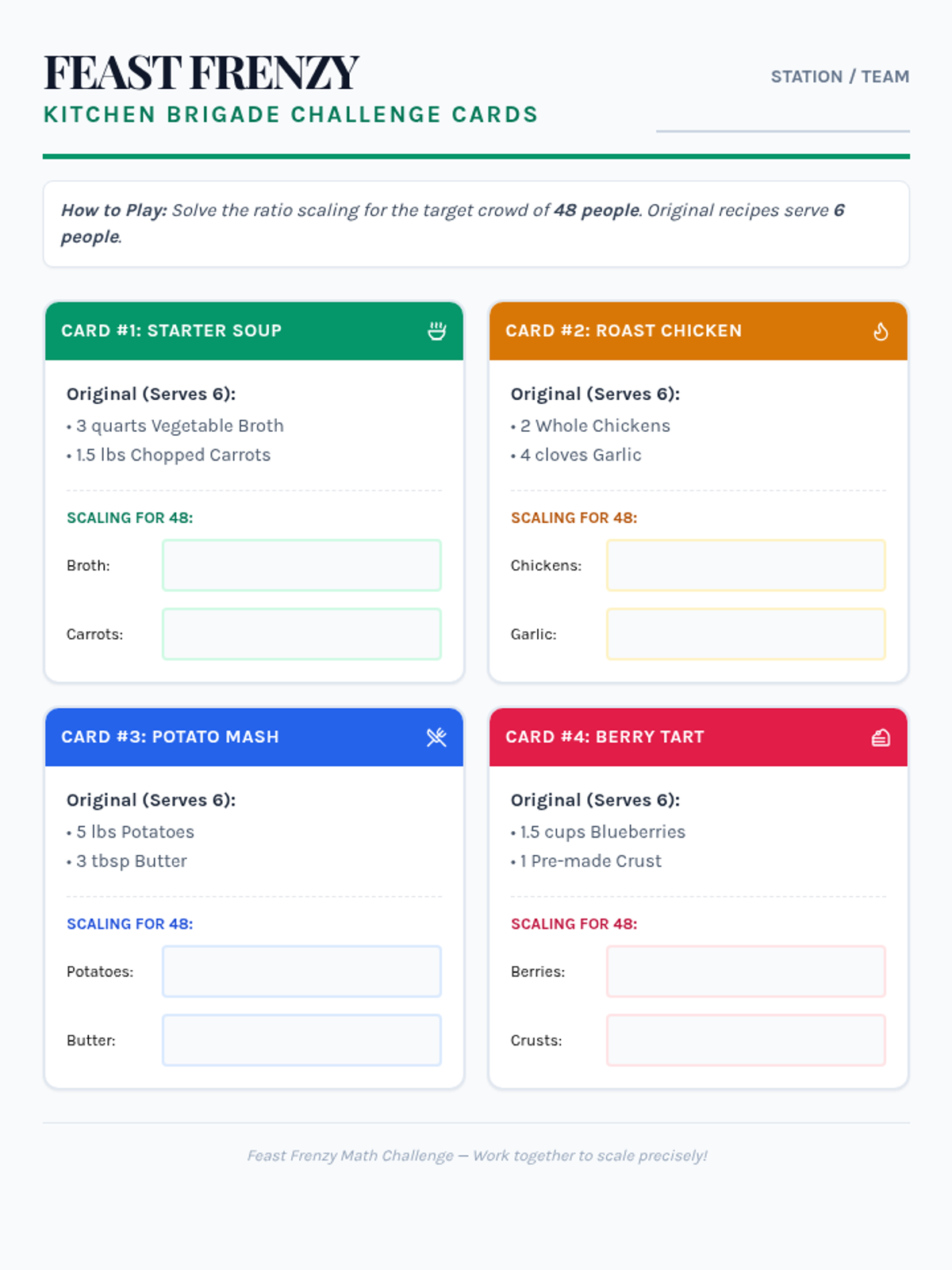
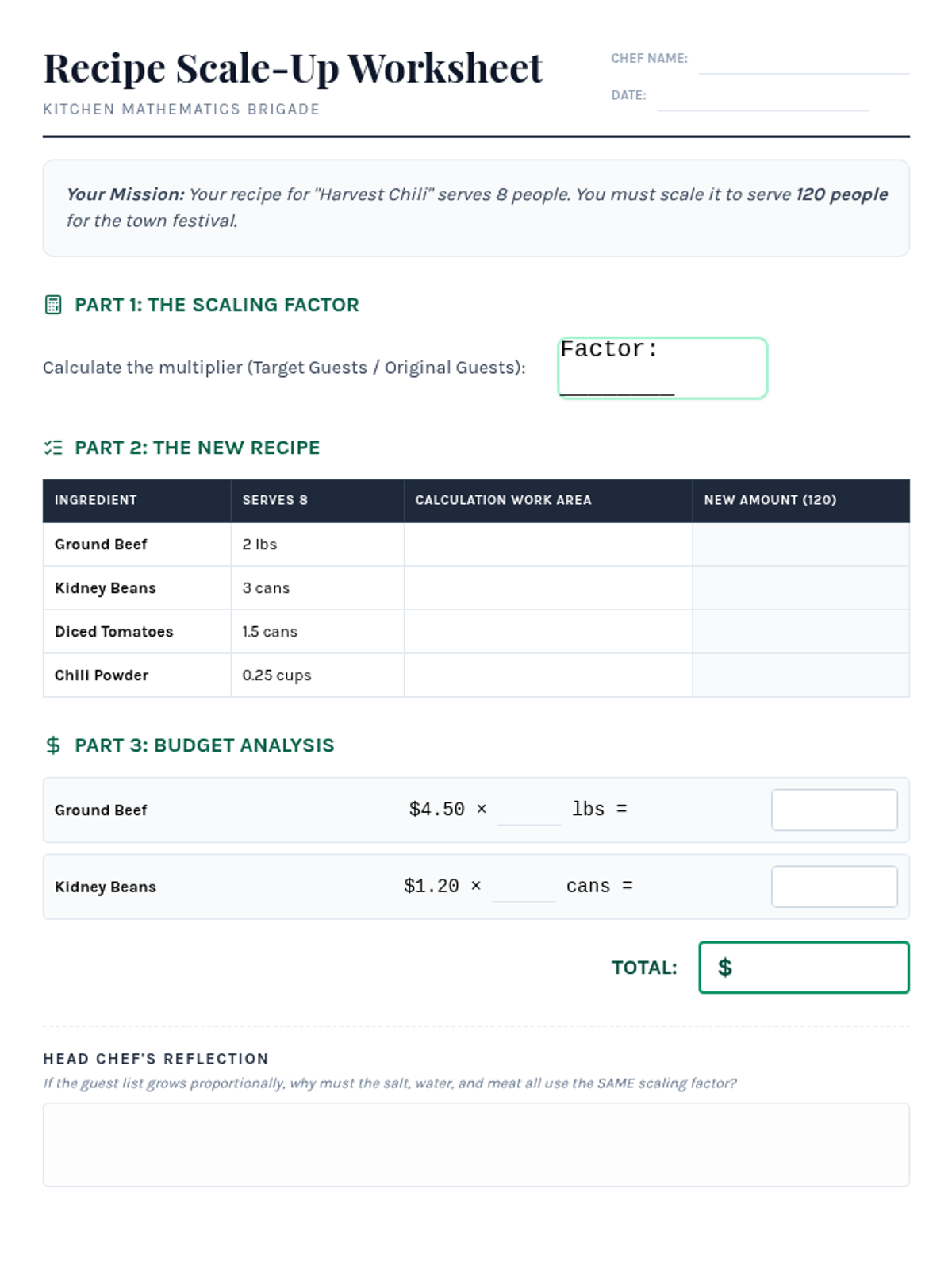
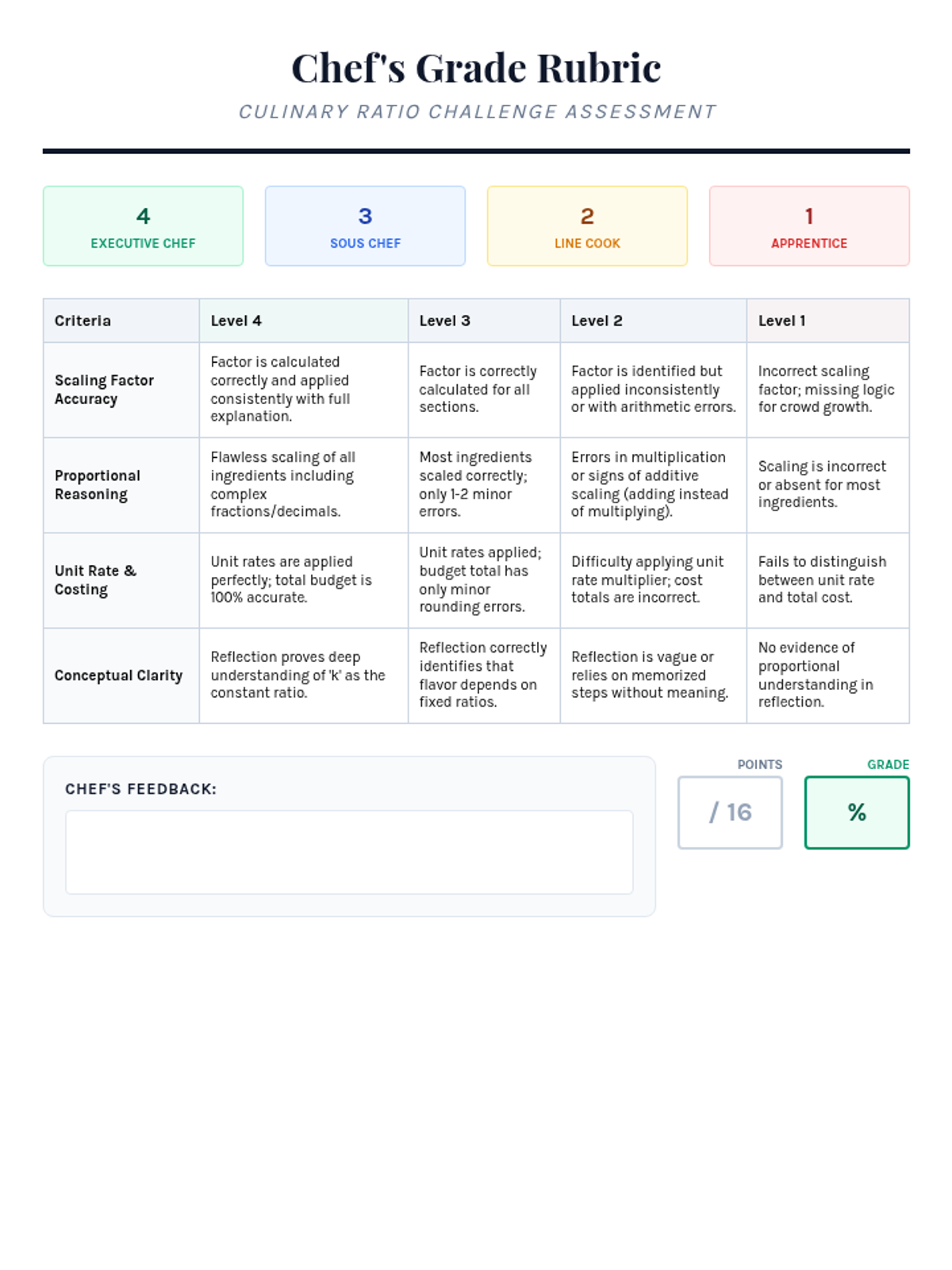
Students master ratios and proportions by scaling recipes for a community feast, applying unit rates to calculate costs and manage kitchen logistics.
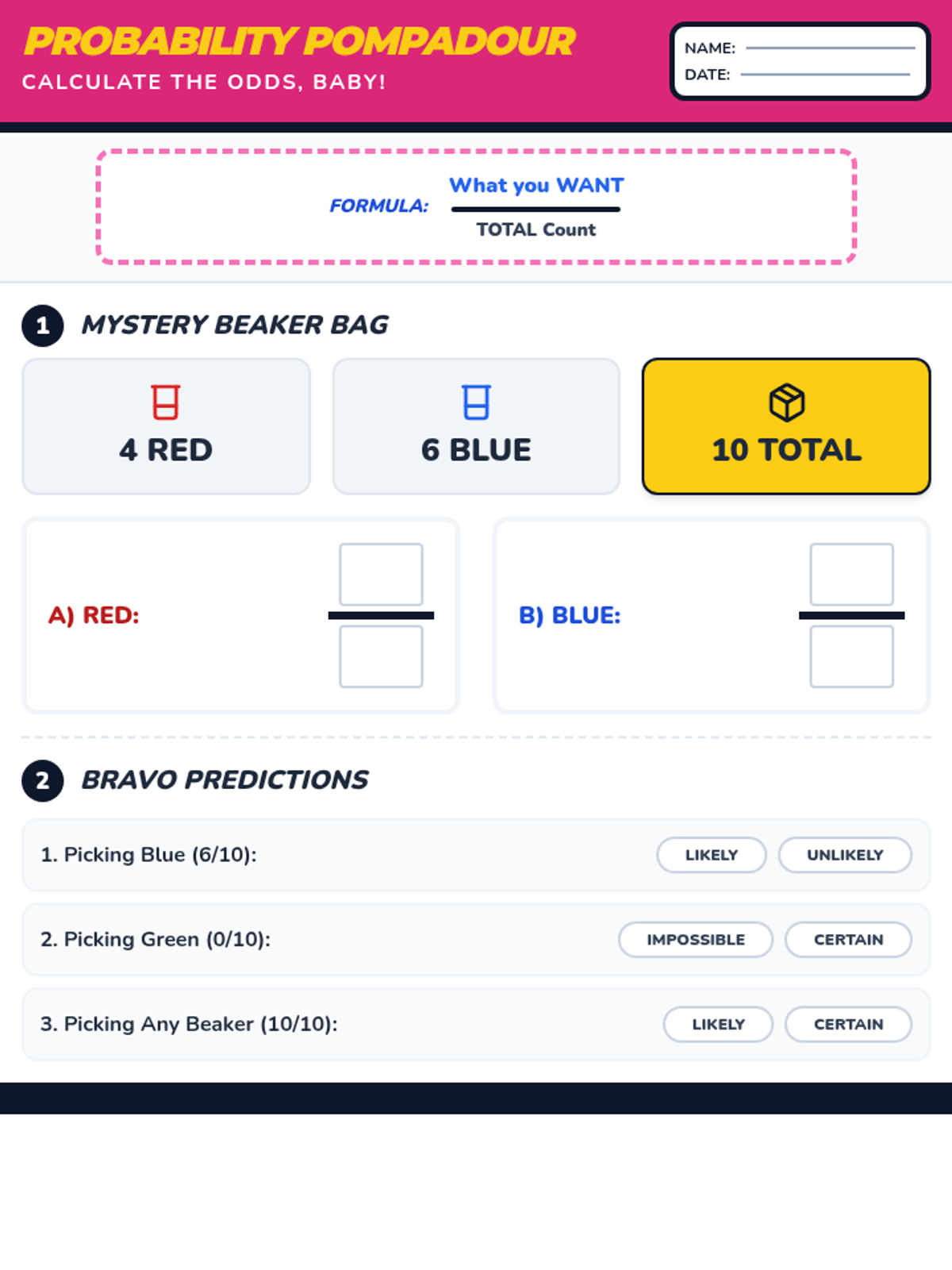
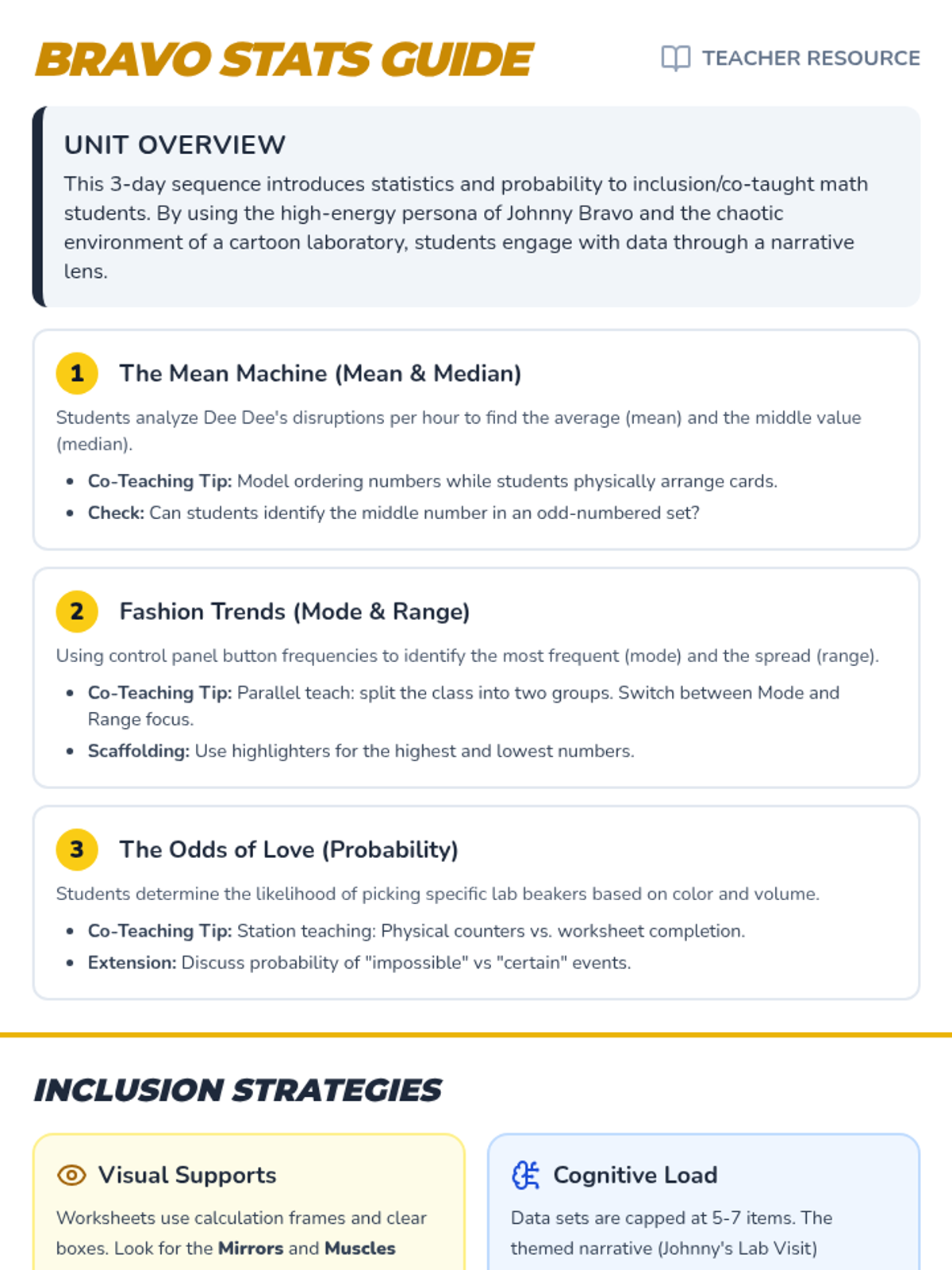
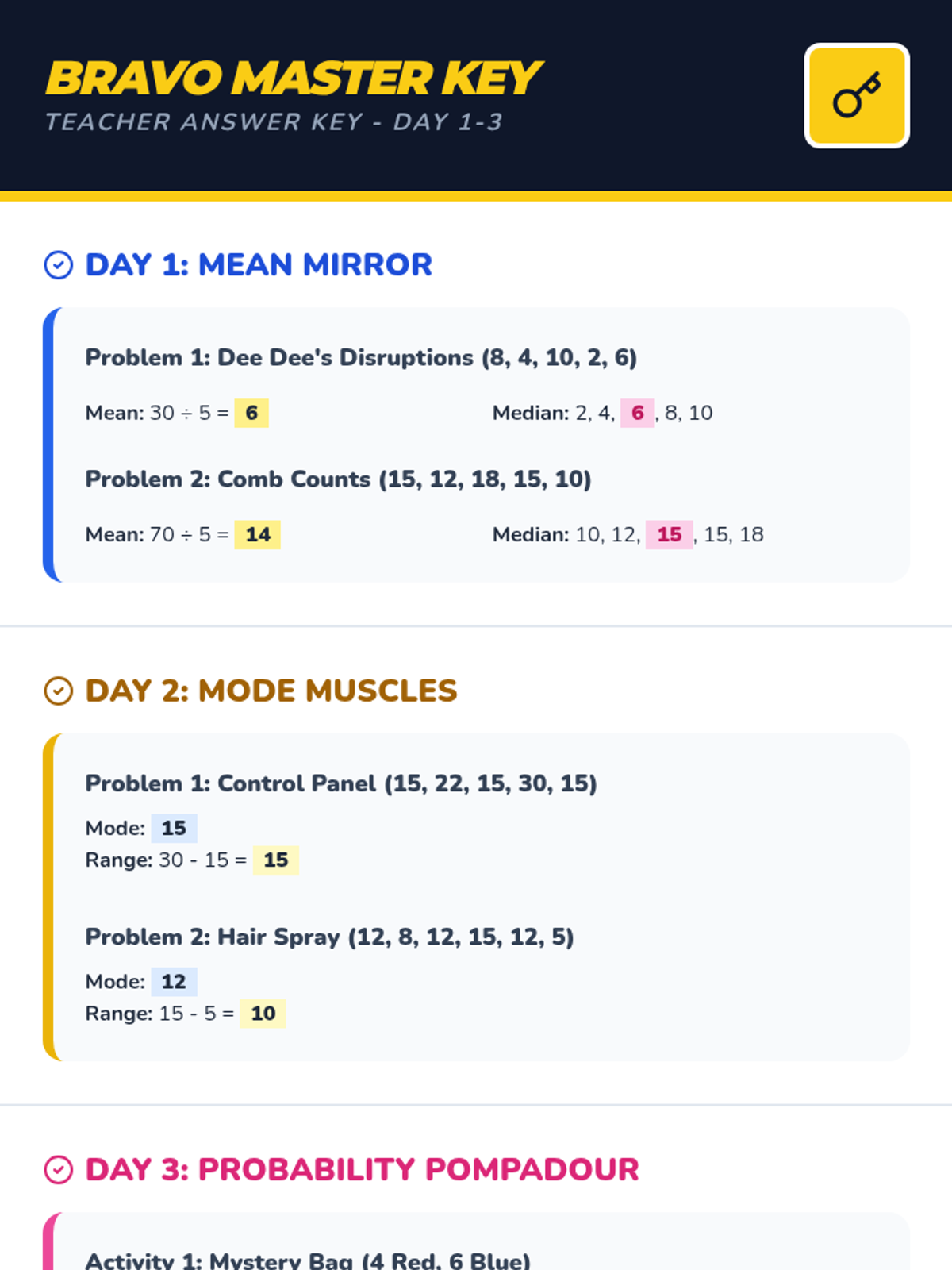
An introduction to basic probability using beaker volumes and colors. Students calculate the likelihood of specific events occurring in the lab.
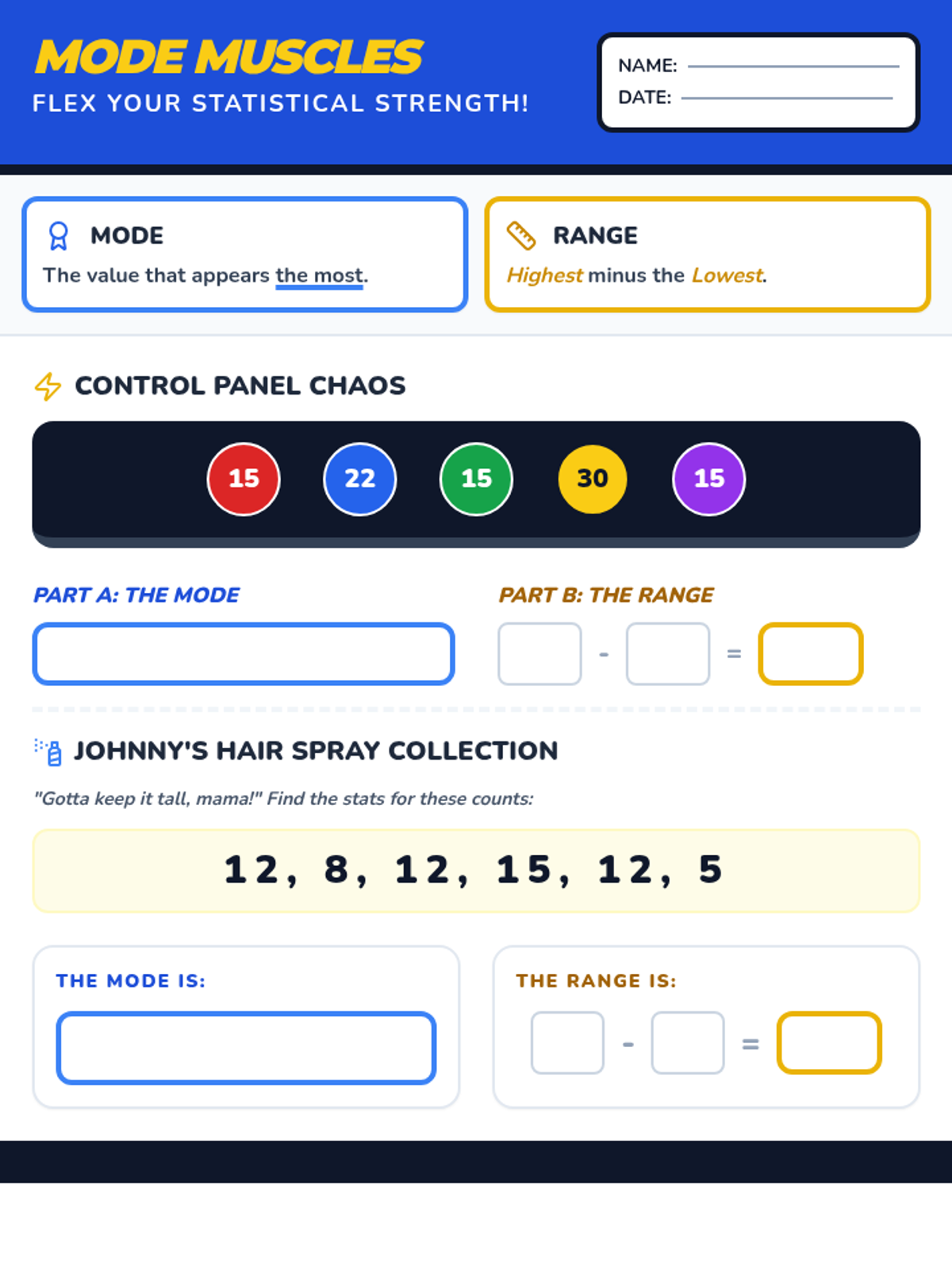
Students explore mode and range by analyzing the frequency of control panel button presses. This lesson focuses on identifying the most common data point and the spread of the data.
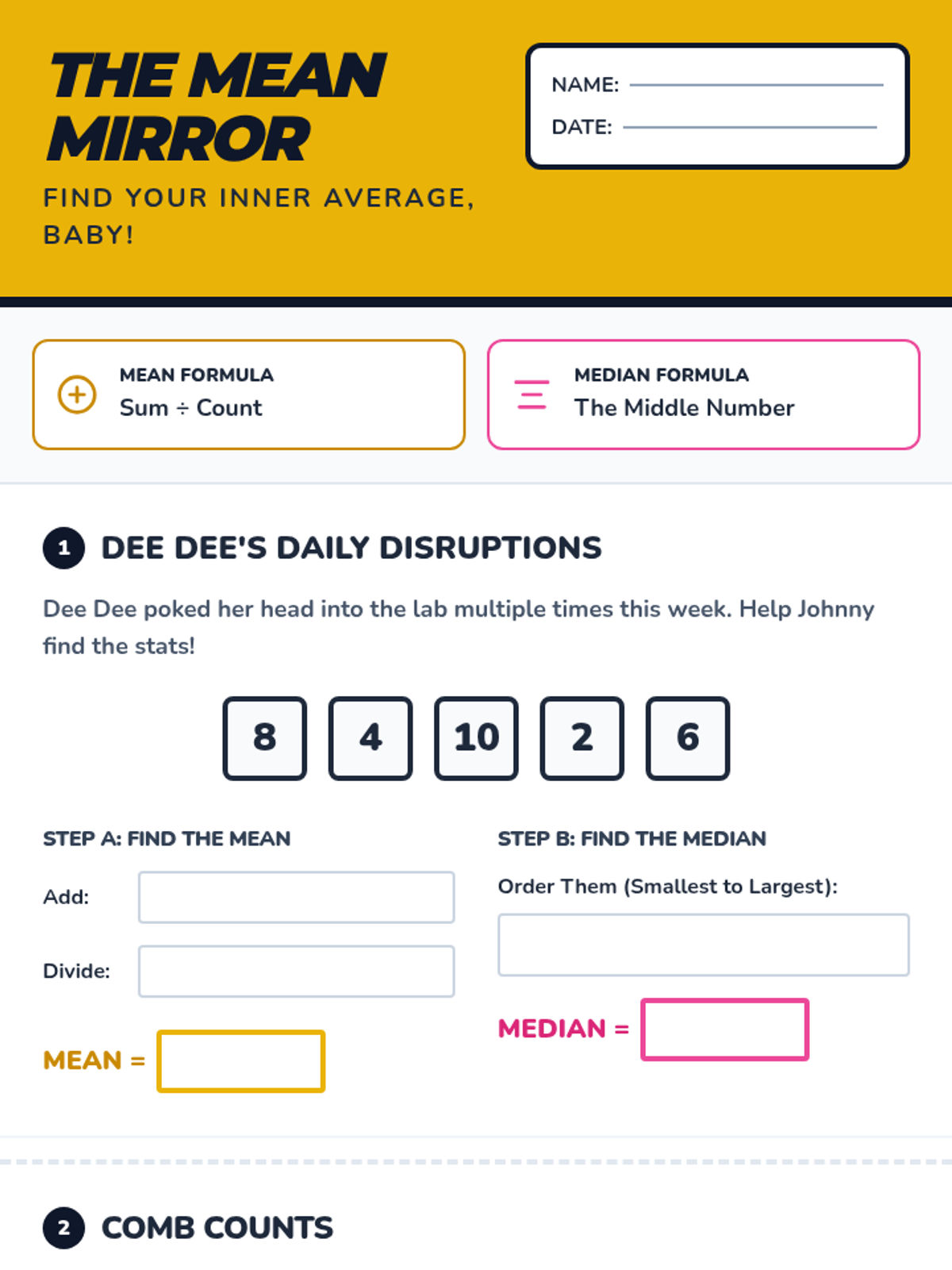
Introduction to finding the mean and median using data from Dee Dee's disruptions in the laboratory. Students learn to calculate averages and identify the middle value in a set of data.
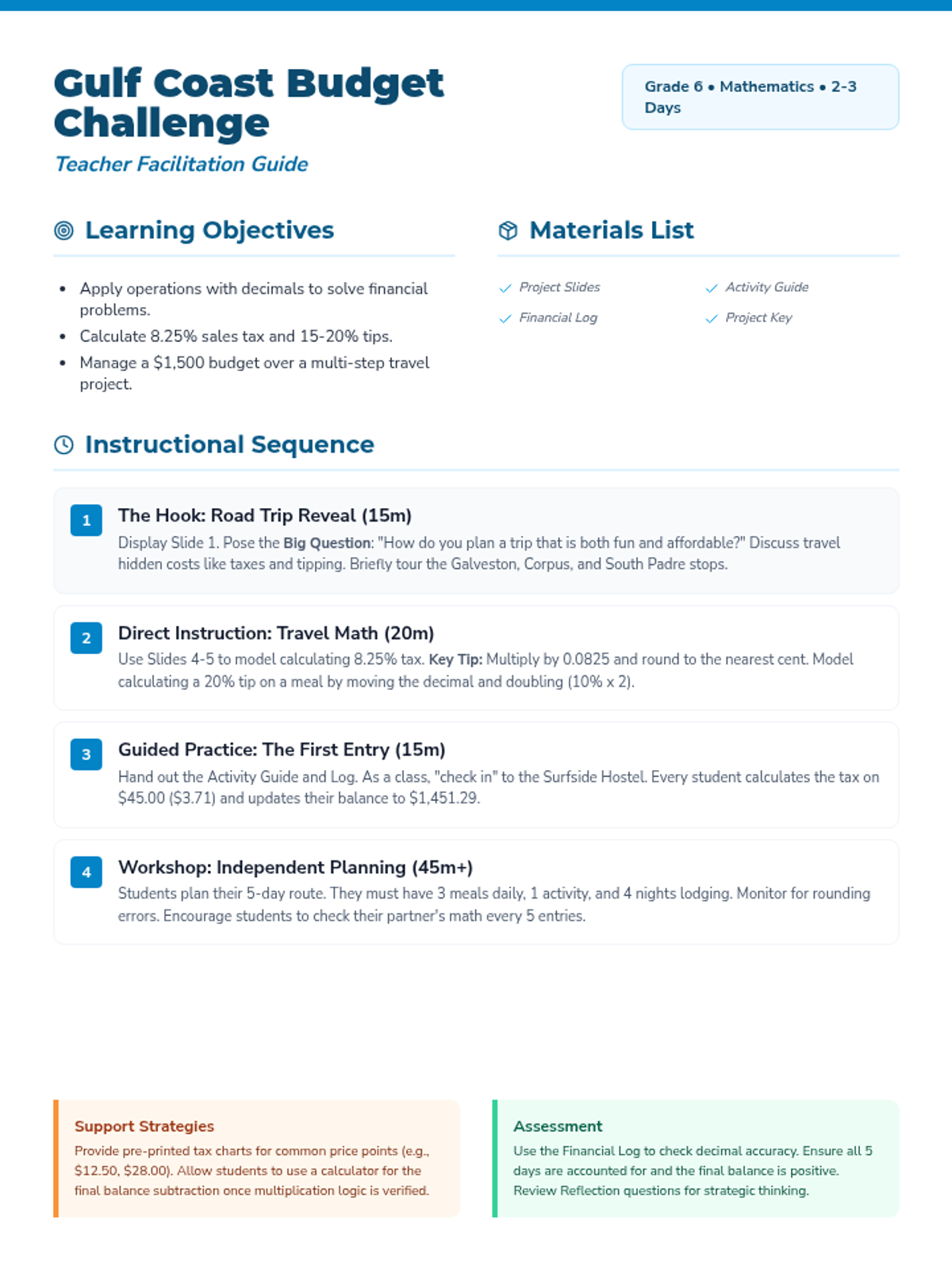
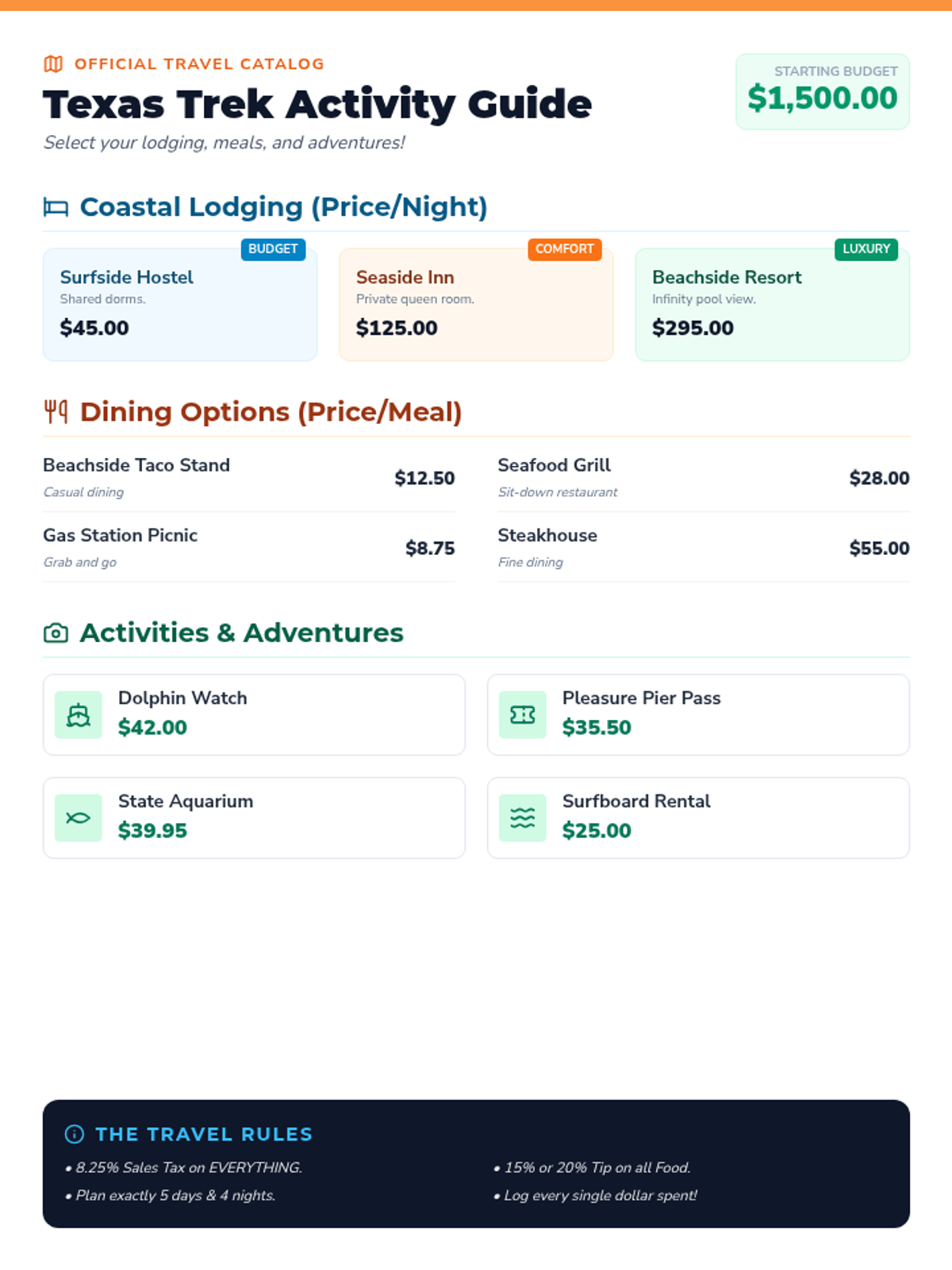
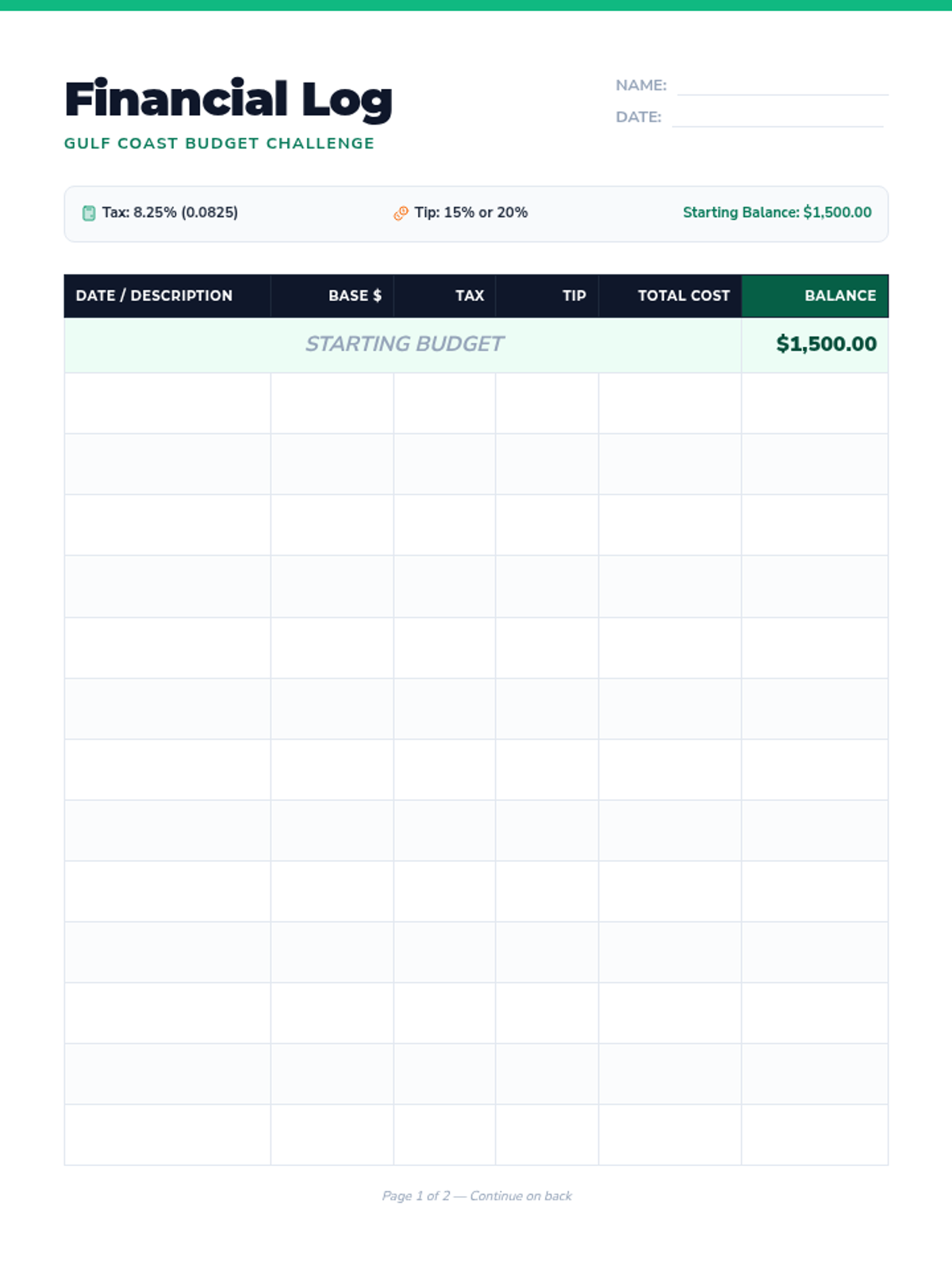
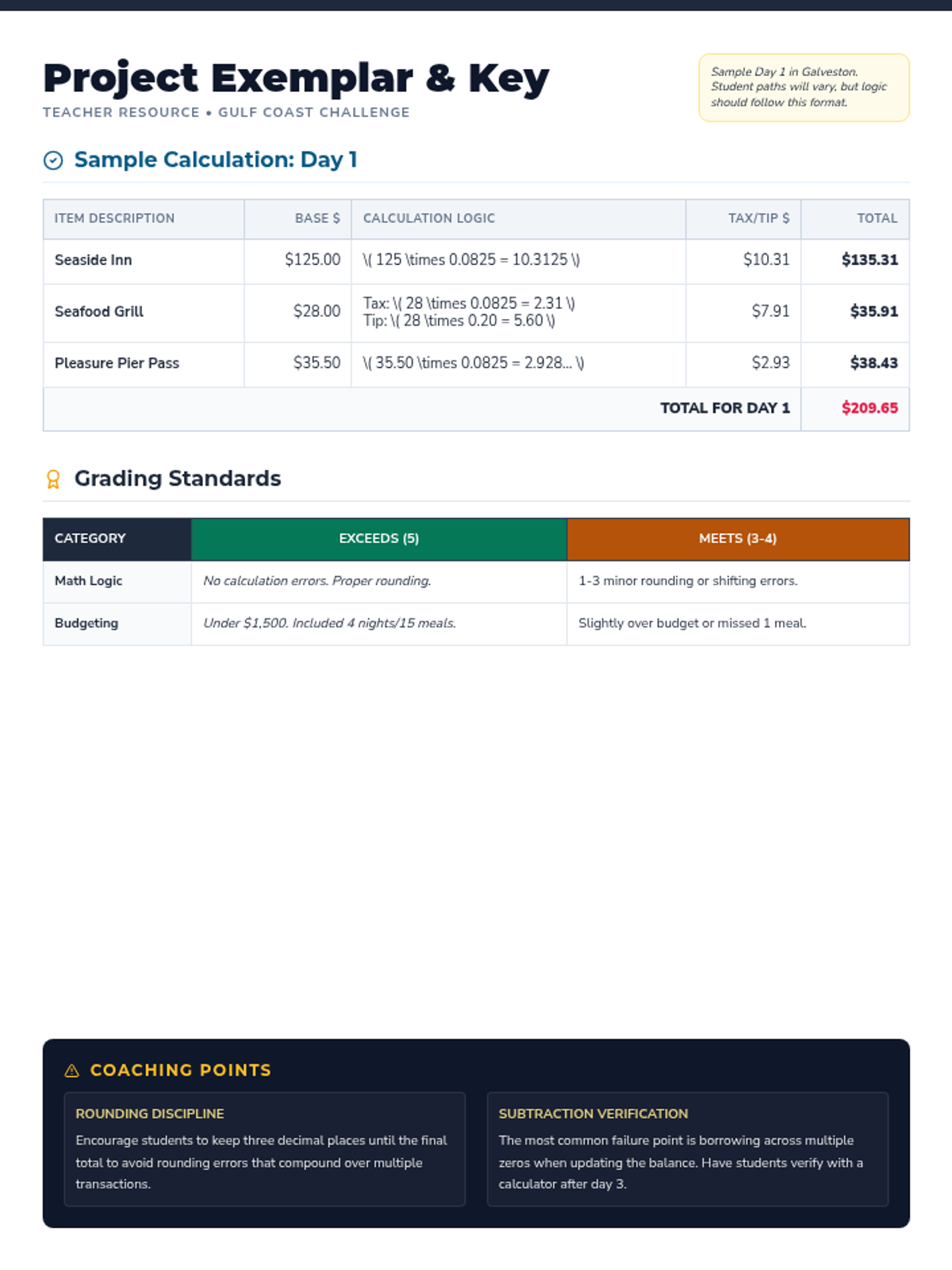
A project-based lesson where 6th-grade students apply decimal operations and percentage calculations to plan a week-long trip along the Texas Gulf Coast while staying within a strict budget.