A lesson focused on mastering 3-digit by 1-digit long division with remainders through step-by-step practice and problem-solving.
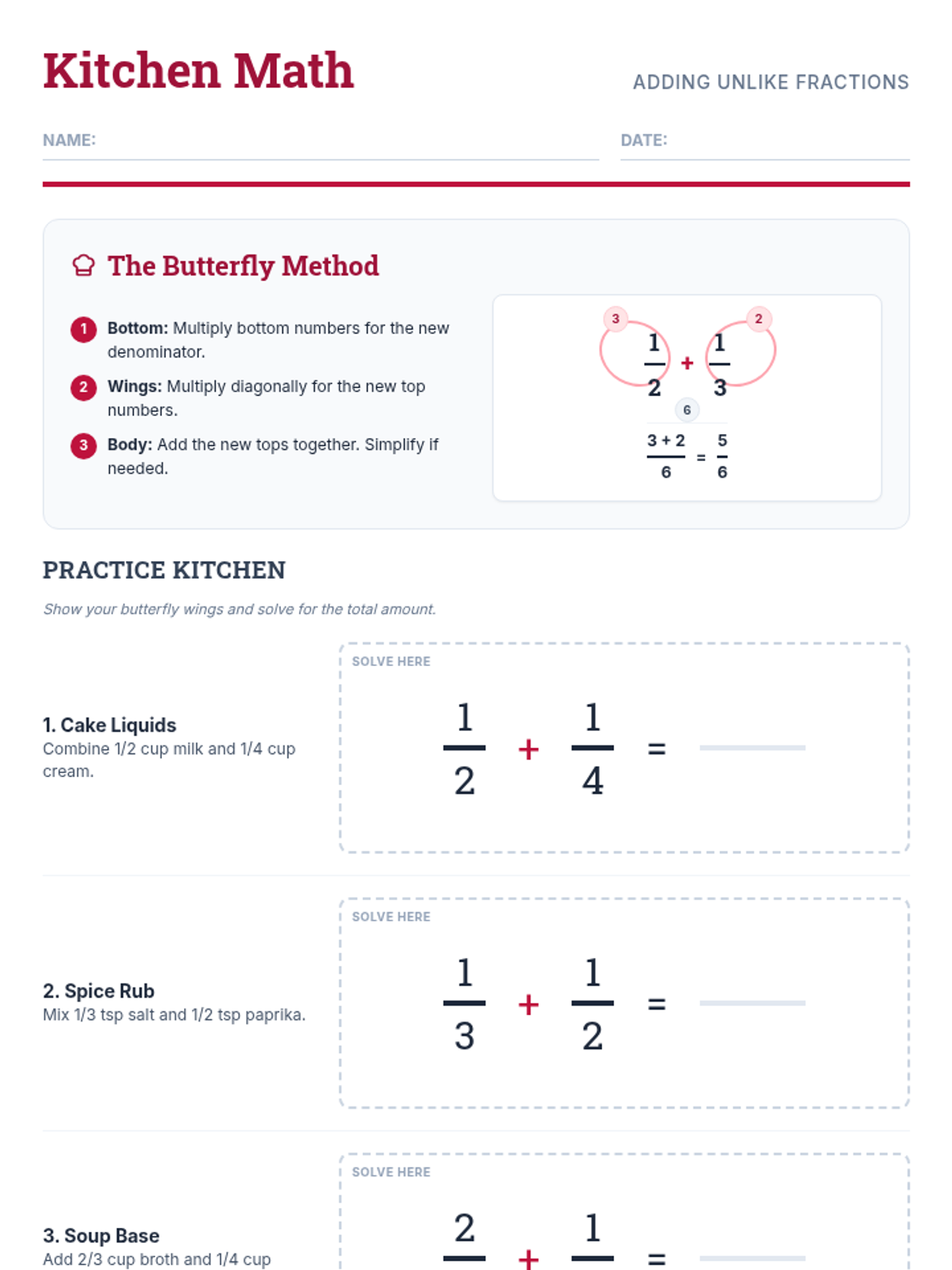
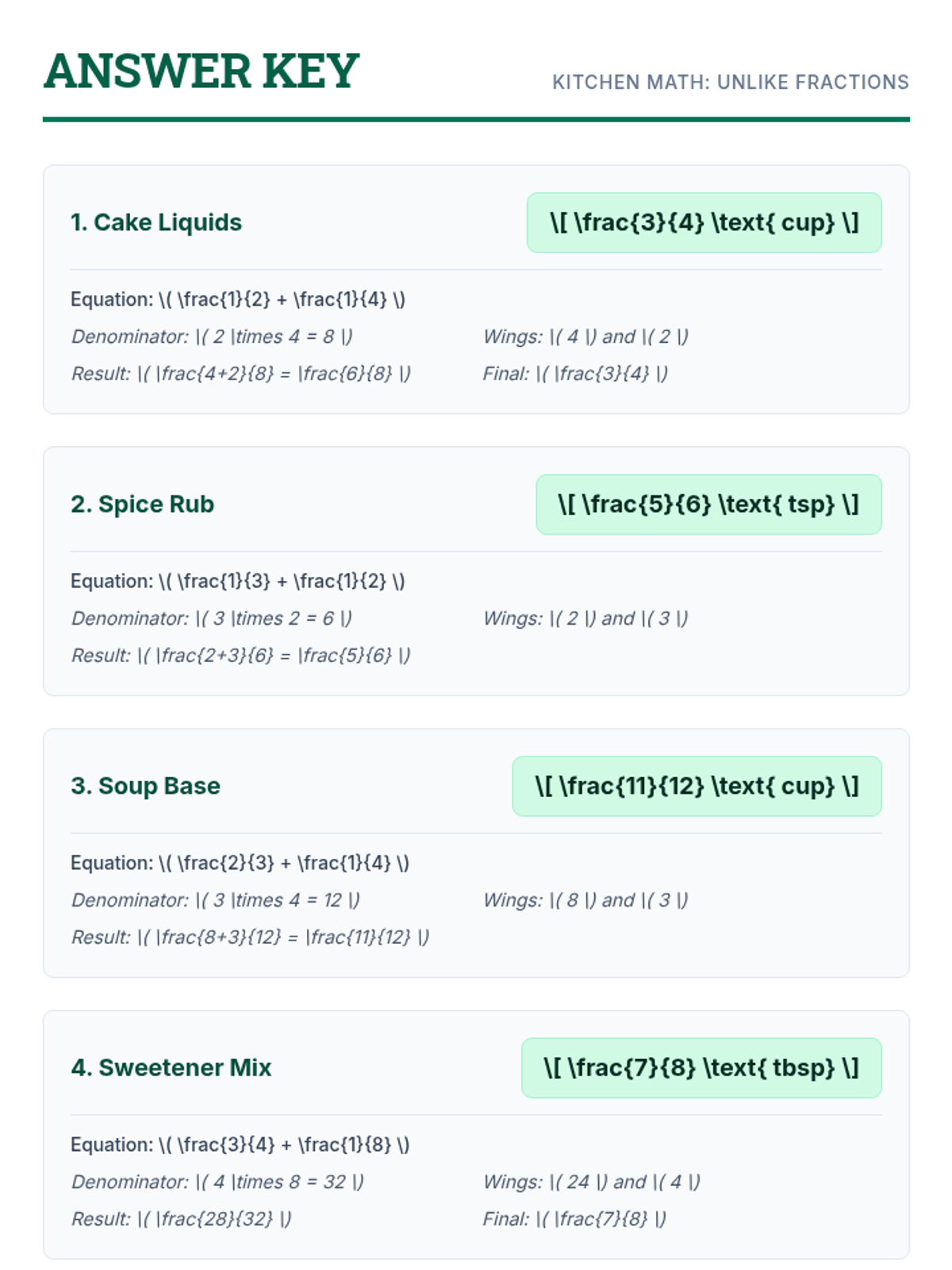
A lesson for adult learners on adding fractions with unlike denominators using the Butterfly Method, set within the practical context of cooking measurements.
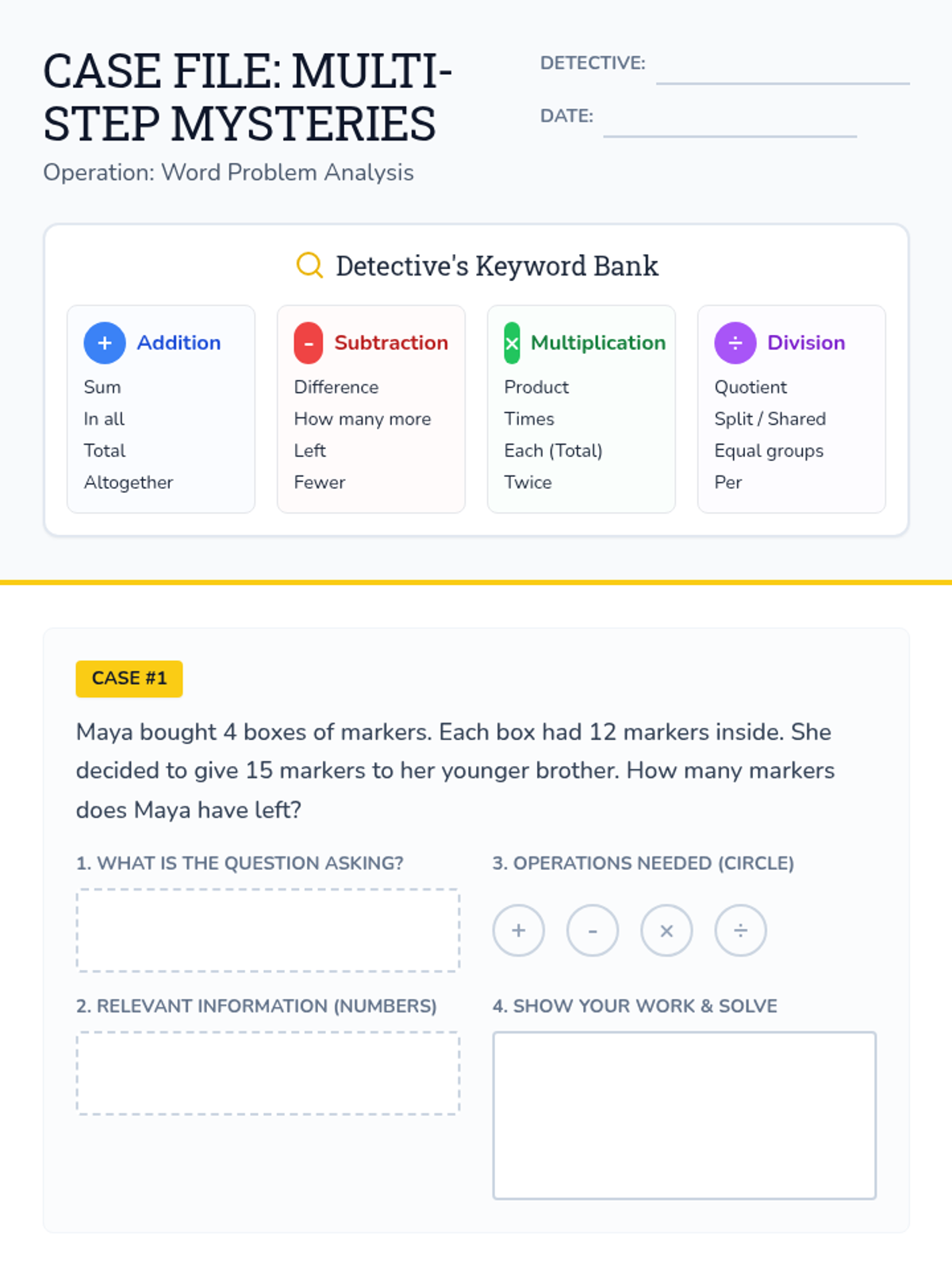
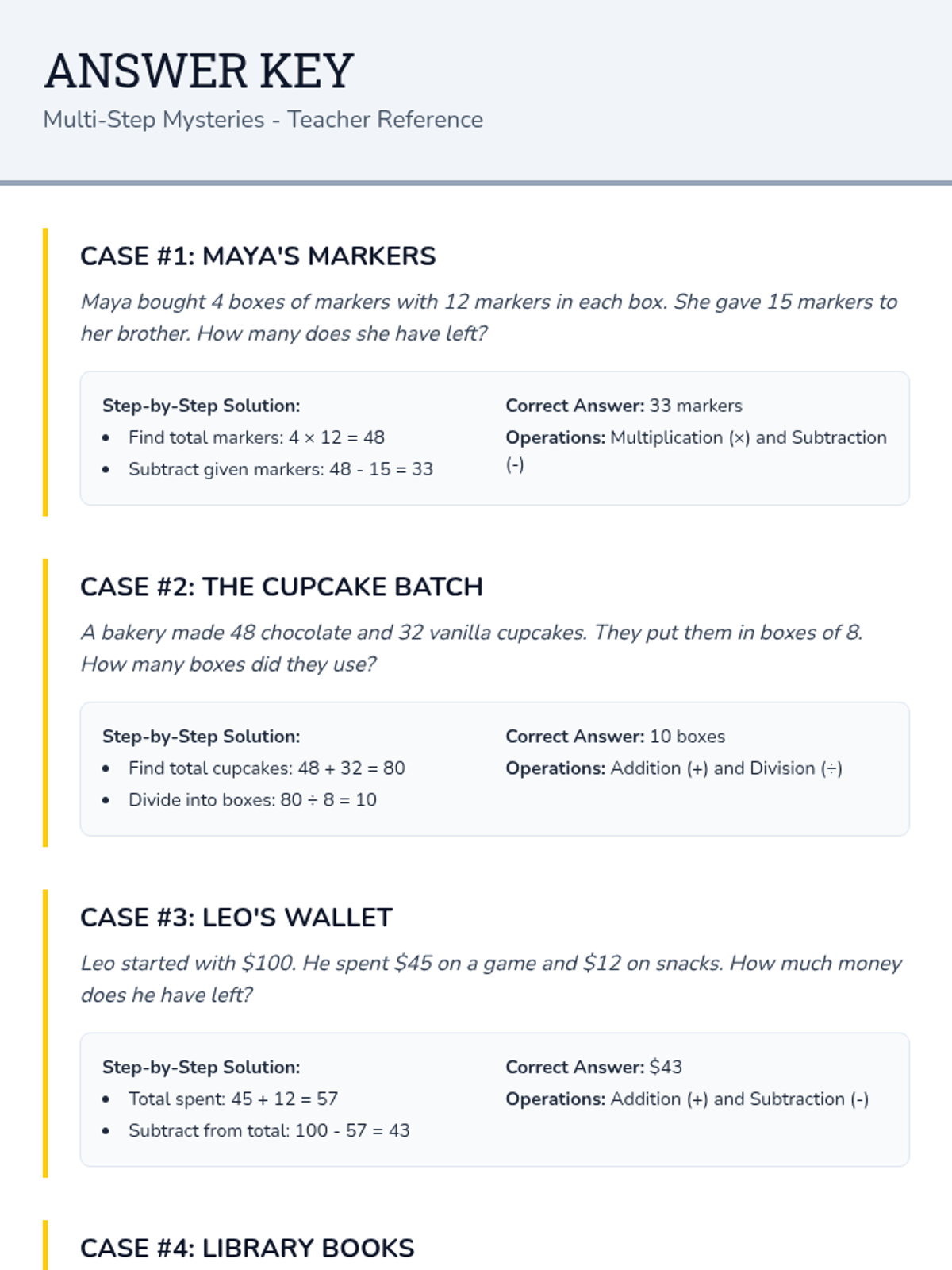
A math lesson focused on breaking down multi-step word problems using all four operations with visual supports and a keyword bank.
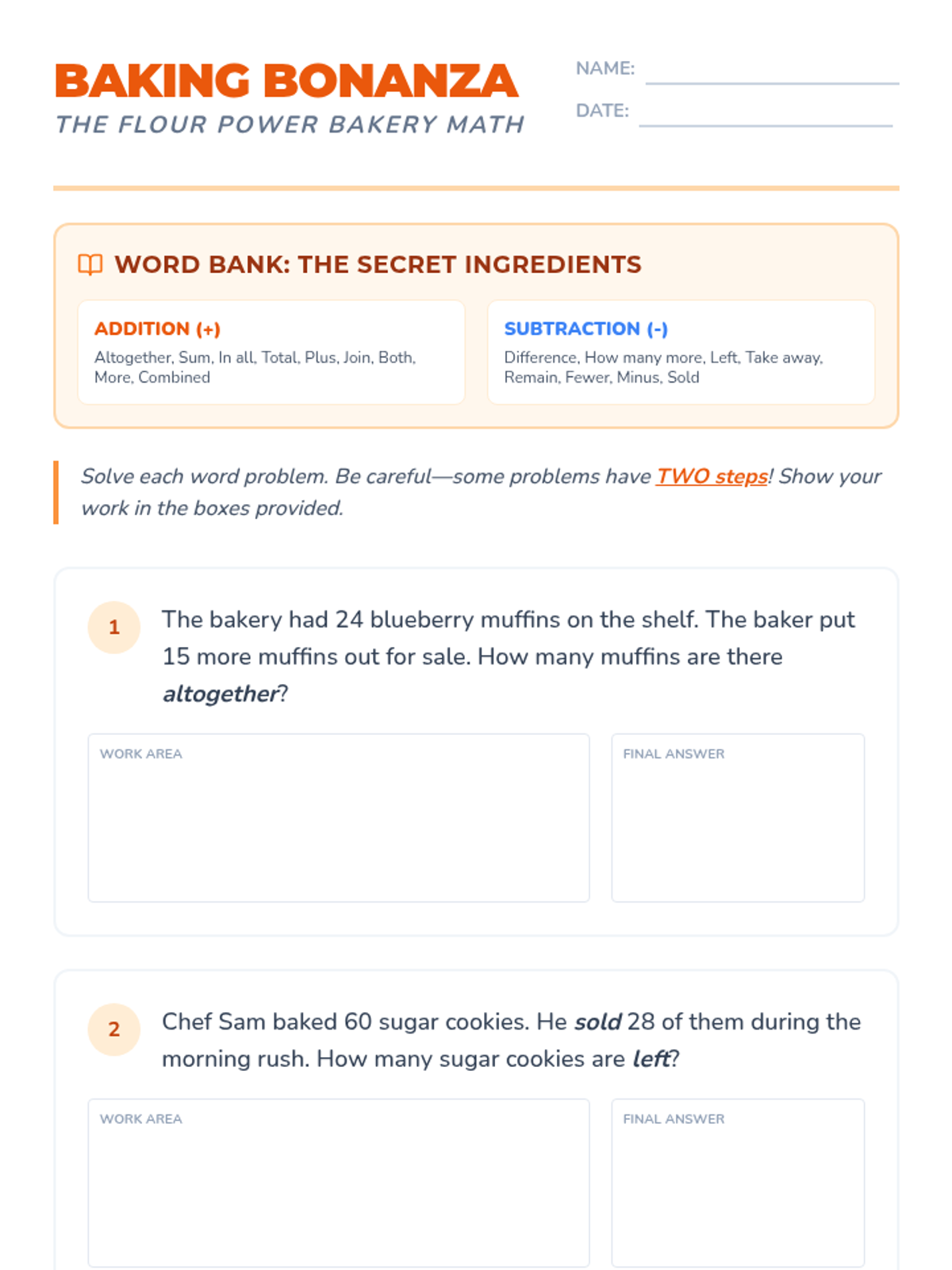
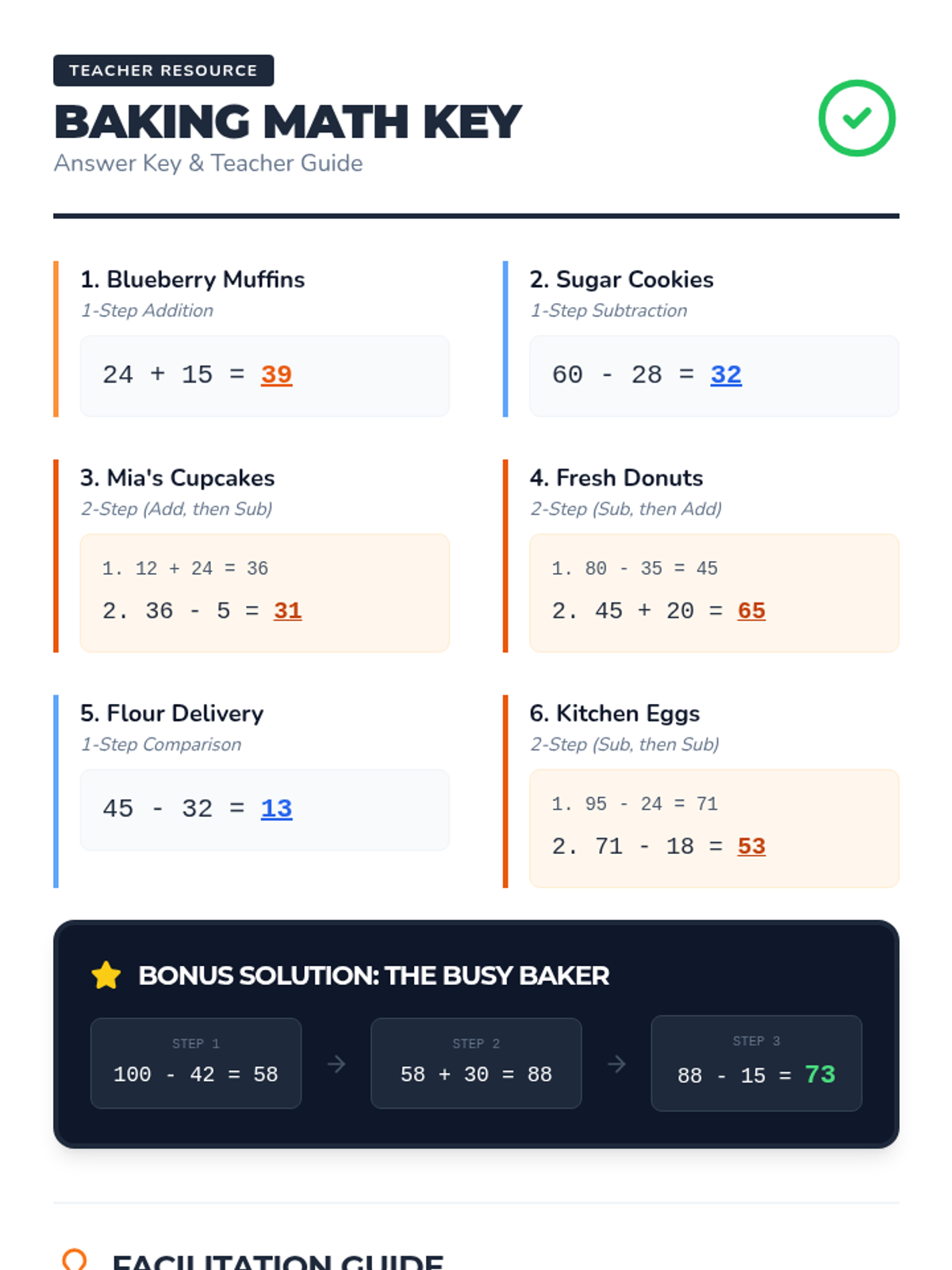
A lesson focused on solving 1- and 2-step word problems involving addition and subtraction within 100, set in a whimsical bakery environment. Students will identify keywords and use strategies to solve multi-step challenges.
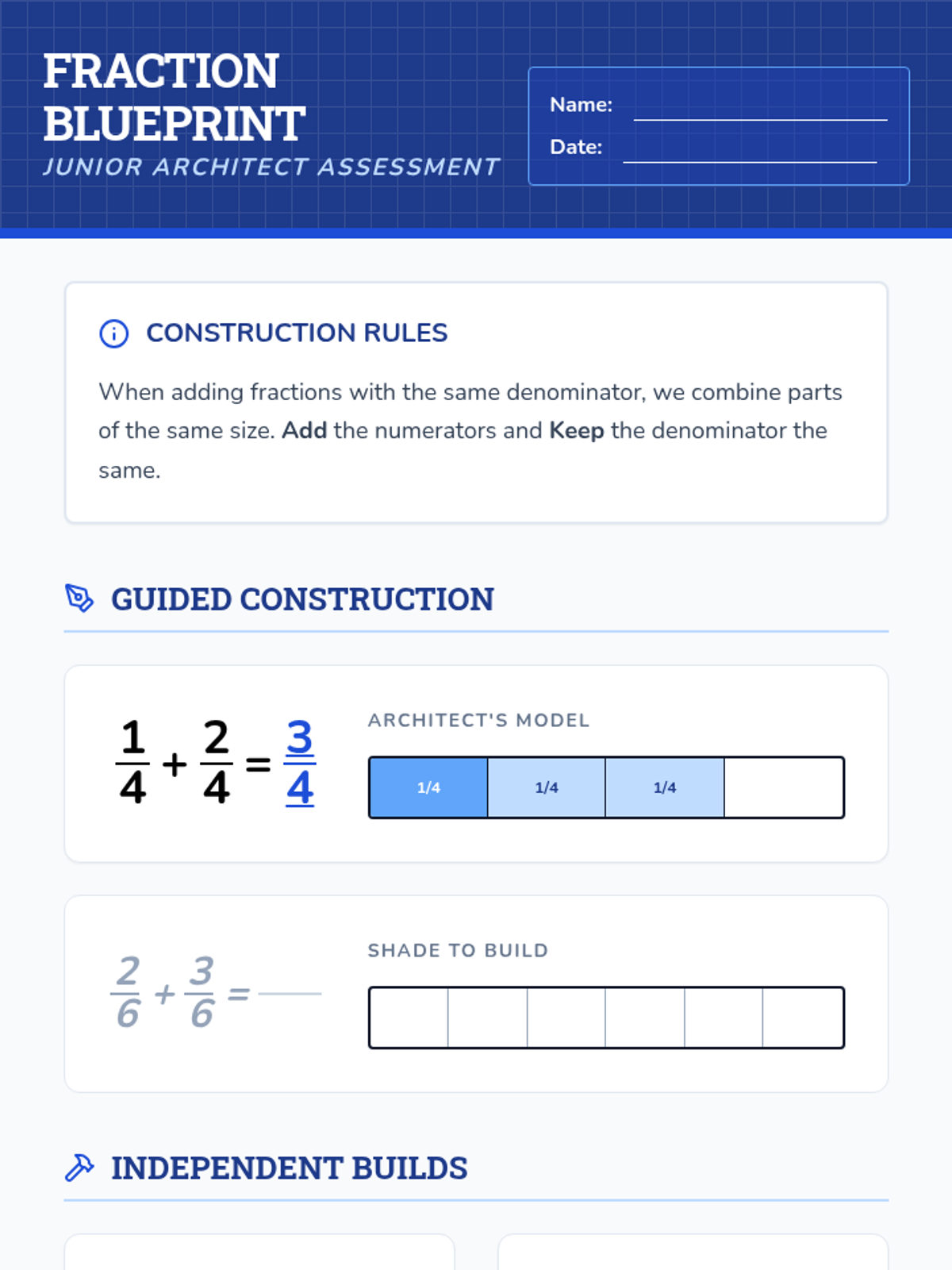
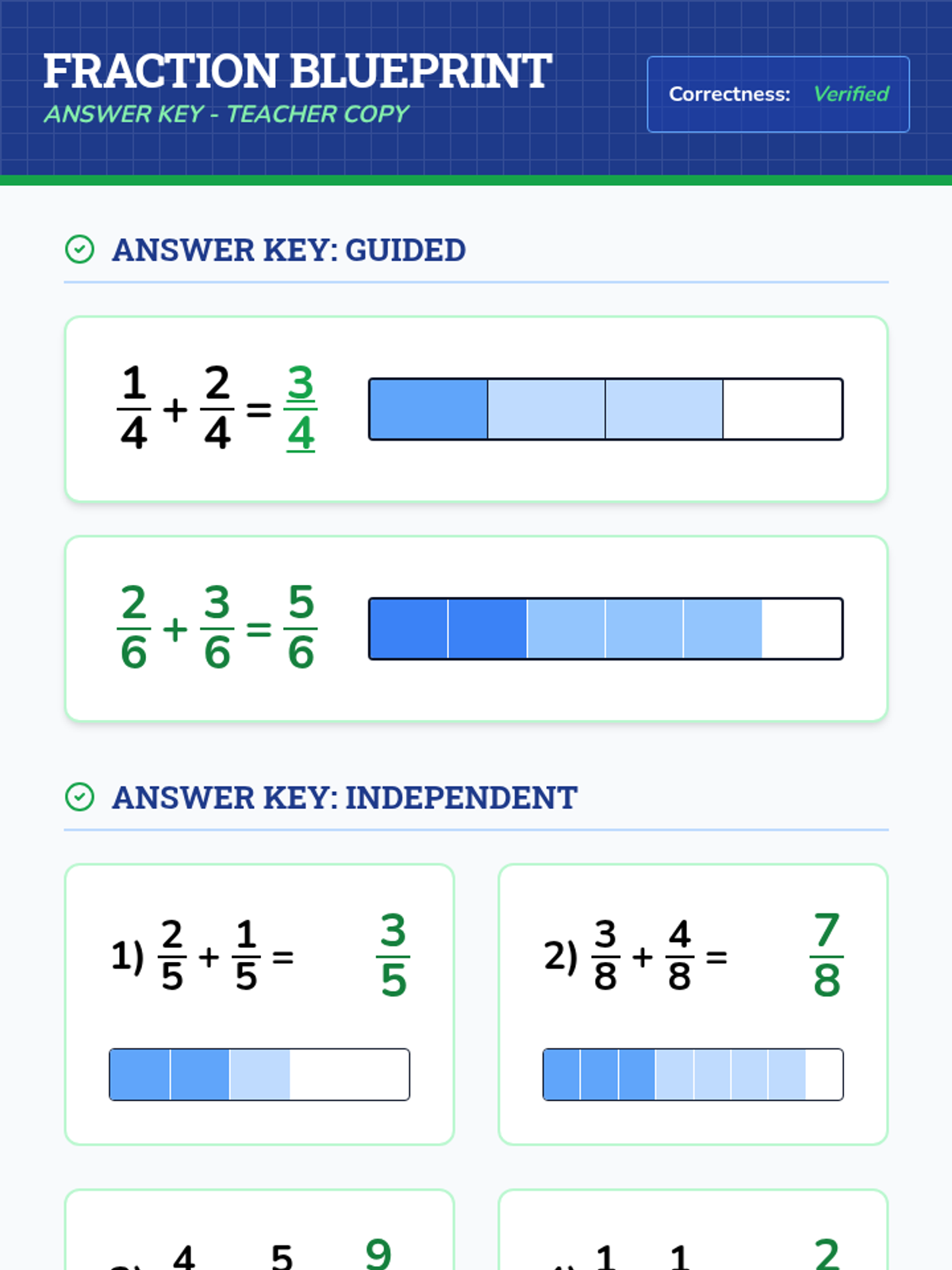
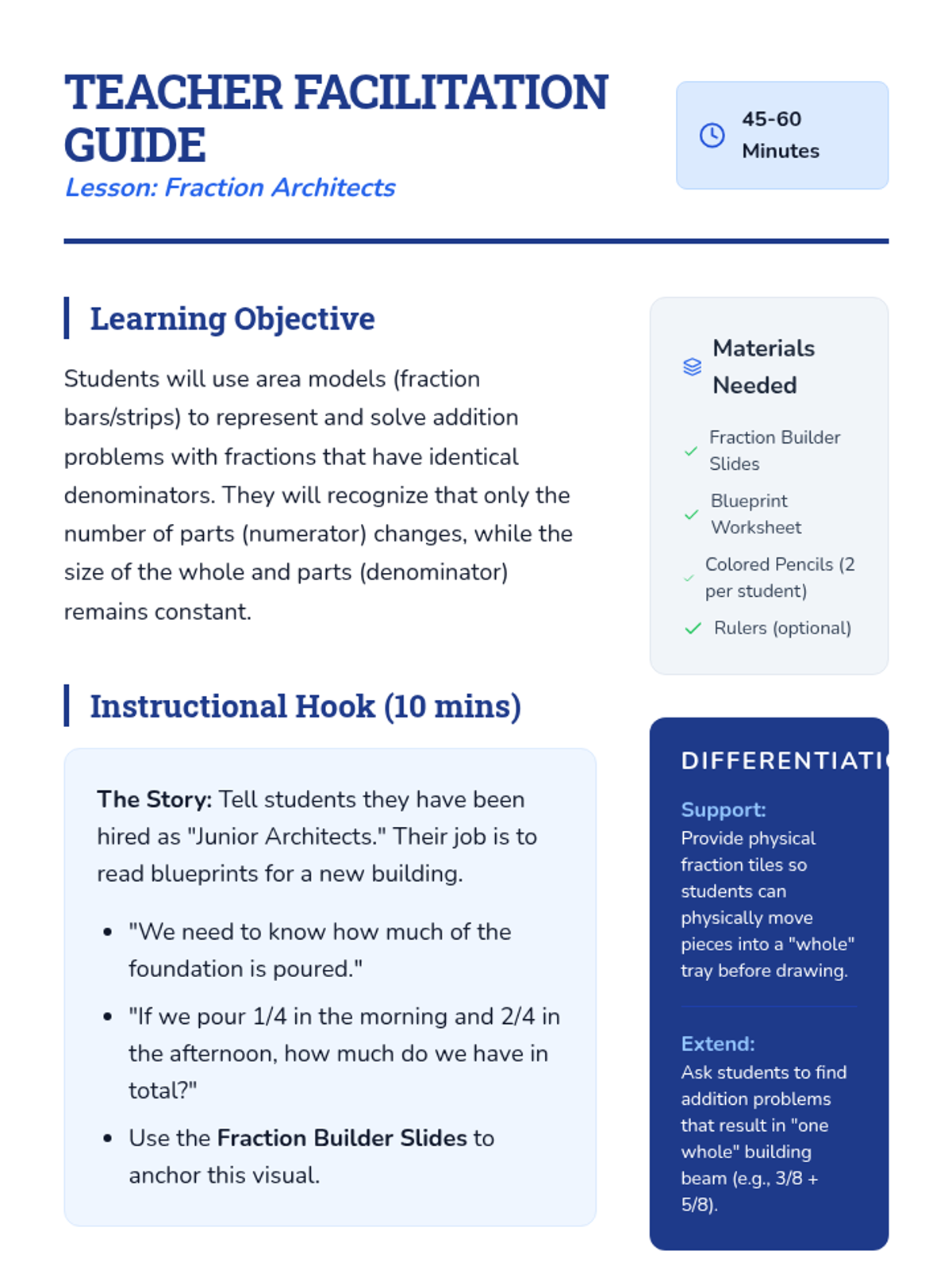
Students will learn to add fractions with like denominators using visual models like fraction bars and strips. This lesson uses a 'blueprint' theme to help students visualize fractions as building blocks.
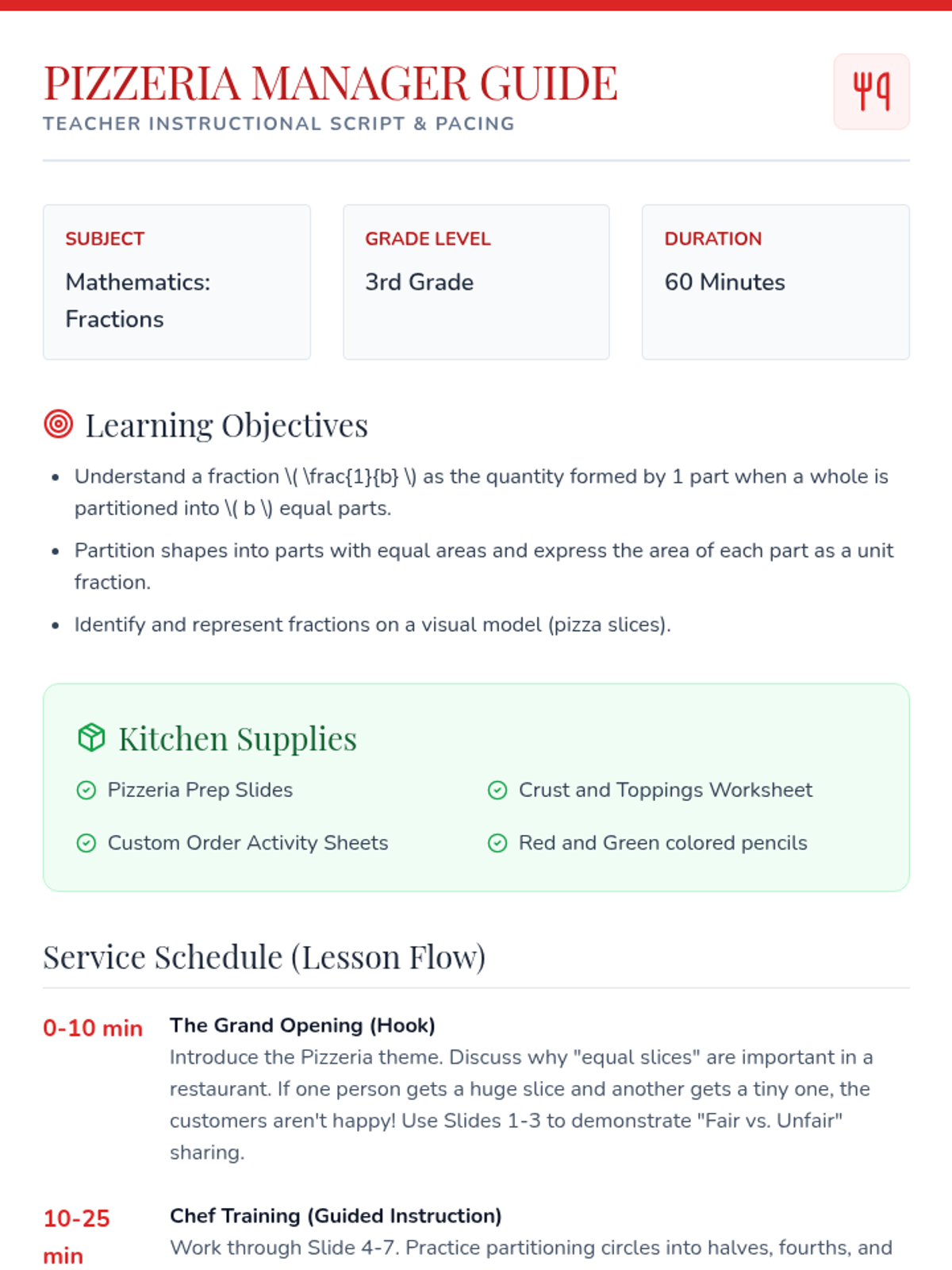
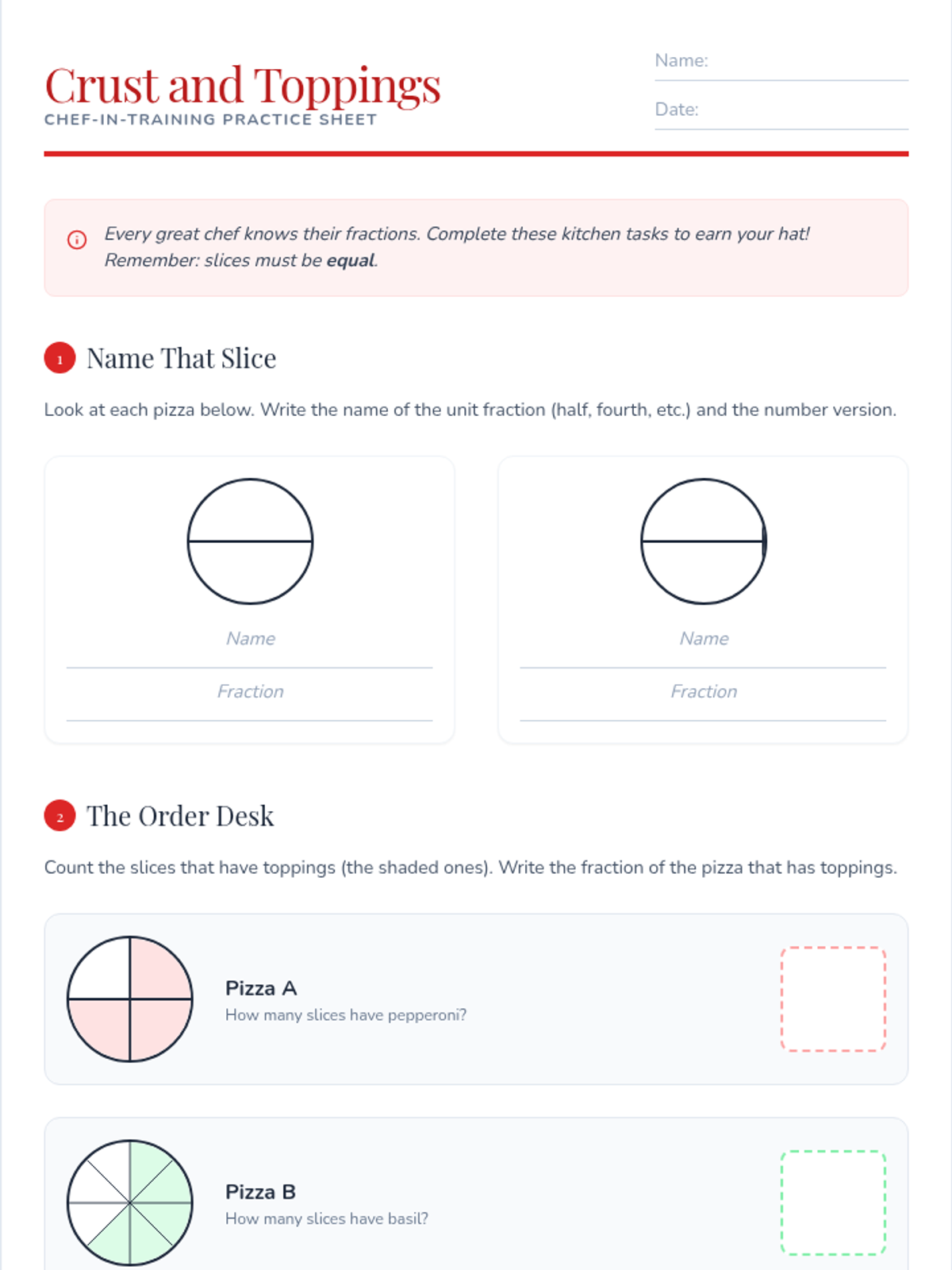
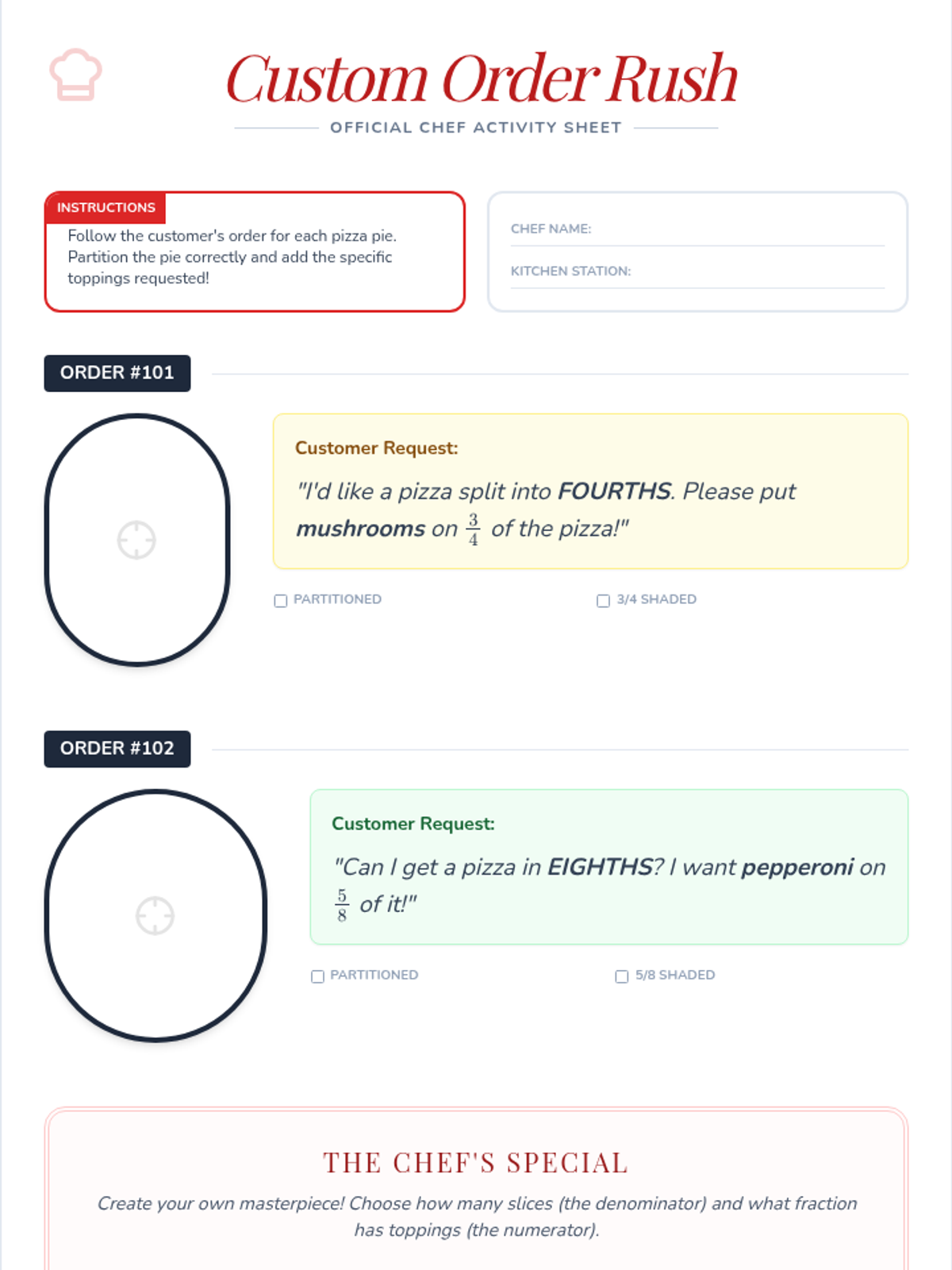
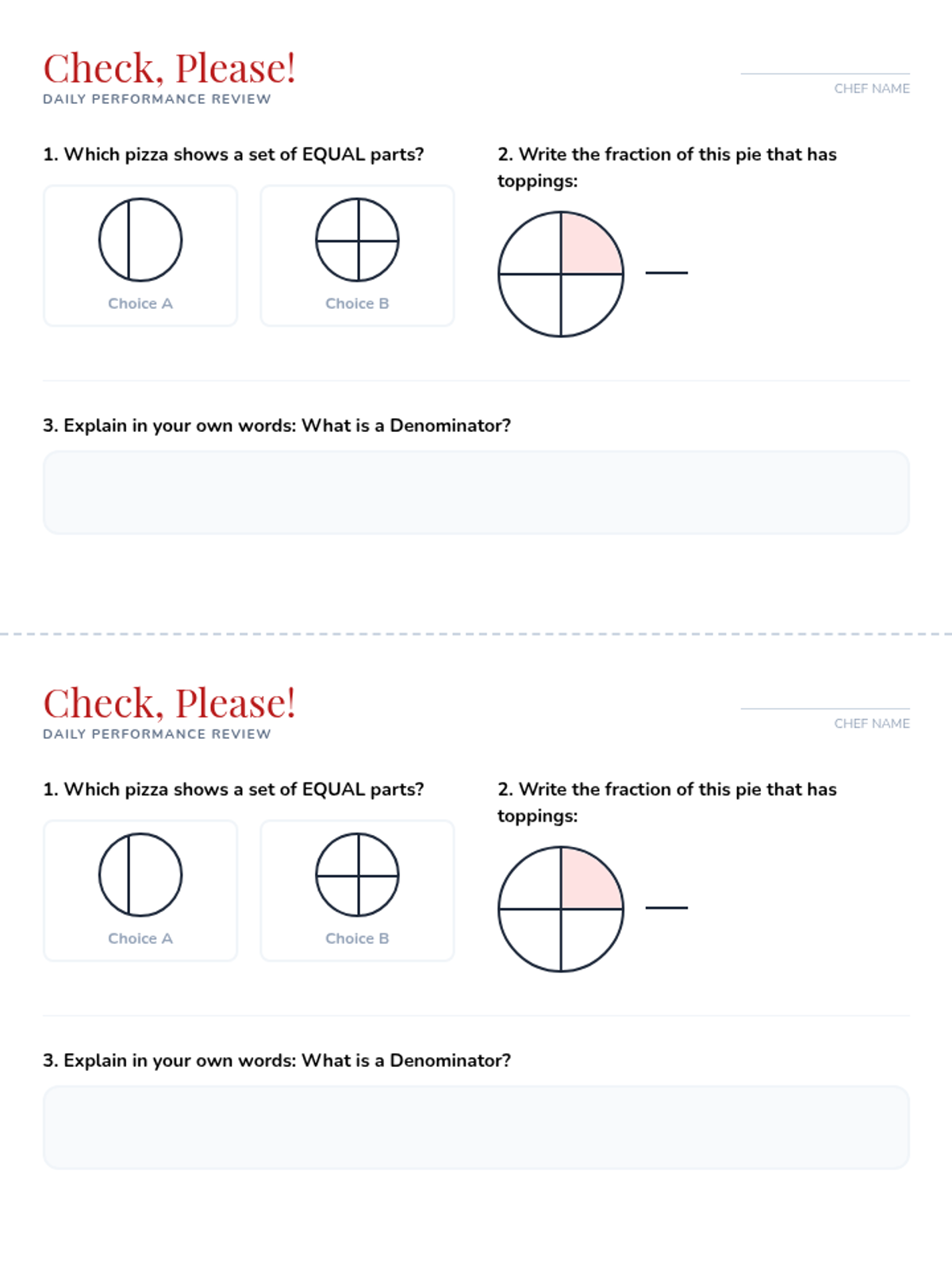
A delicious dive into fractions where students become chefs, partitioning pizzas and managing custom orders to master parts of a whole and equivalent fractions.
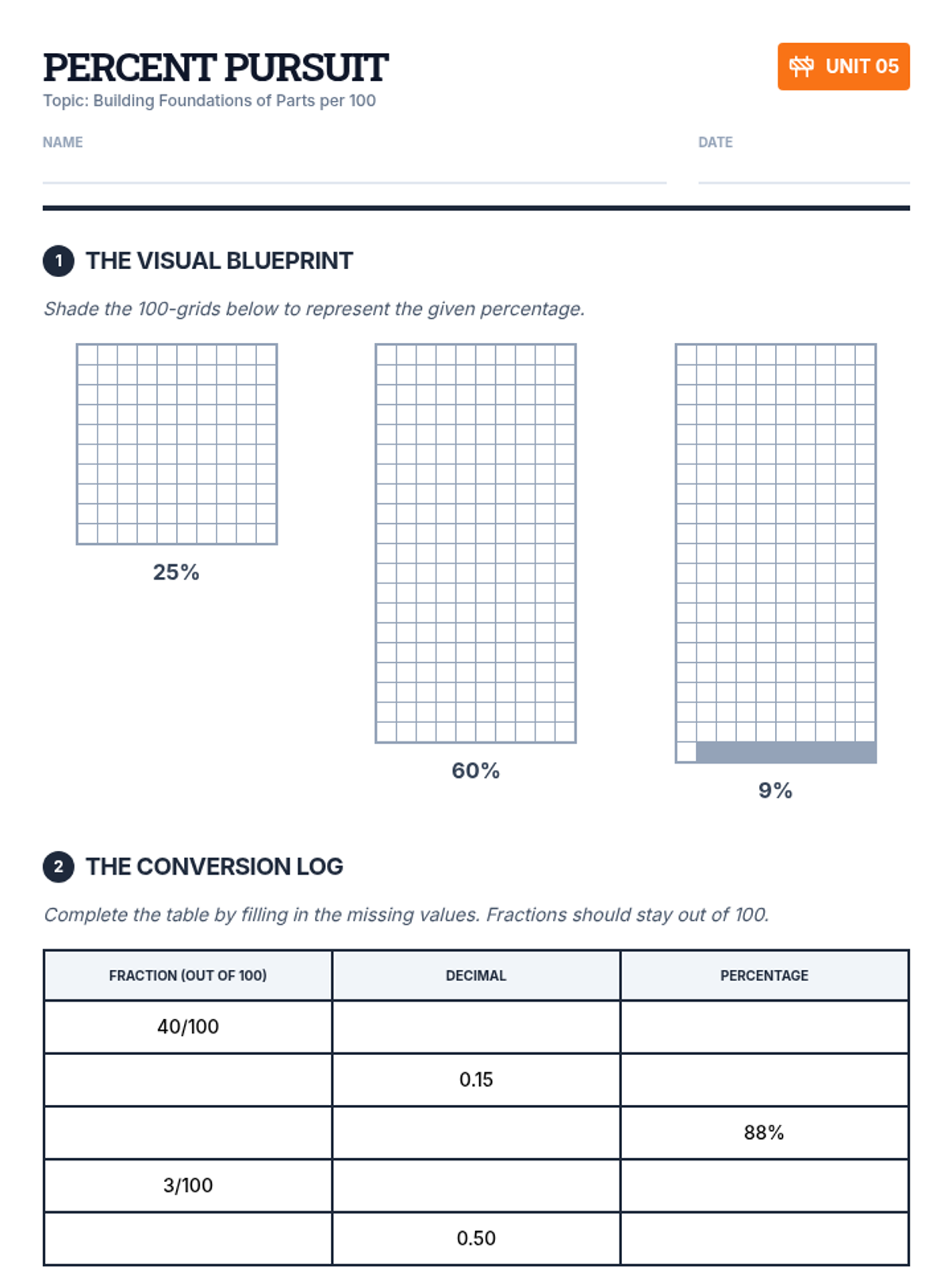
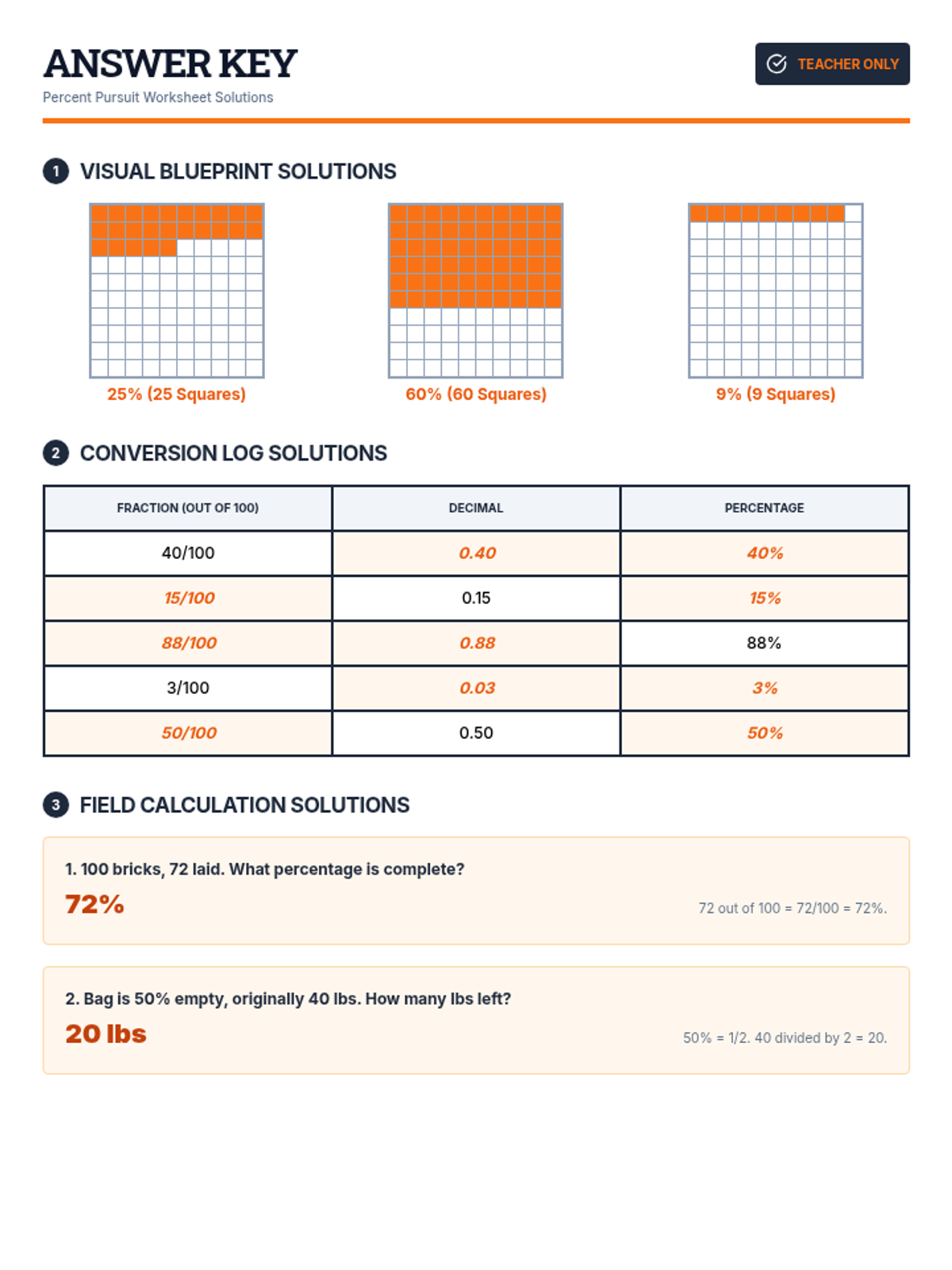
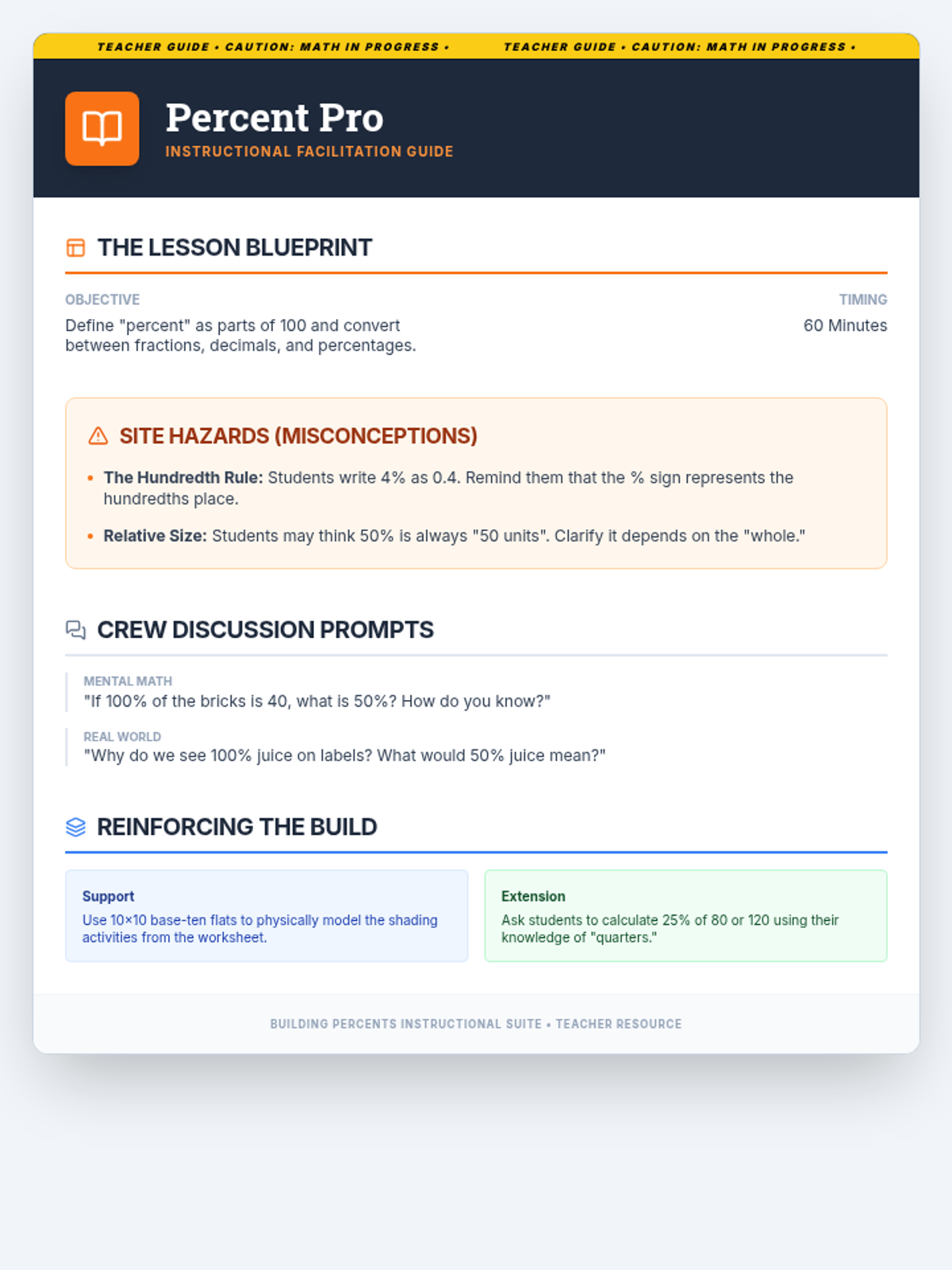
A foundational lesson on percentages for 5th graders, focusing on visualizing percents as parts of a hundred and converting between fractions, decimals, and percentages.
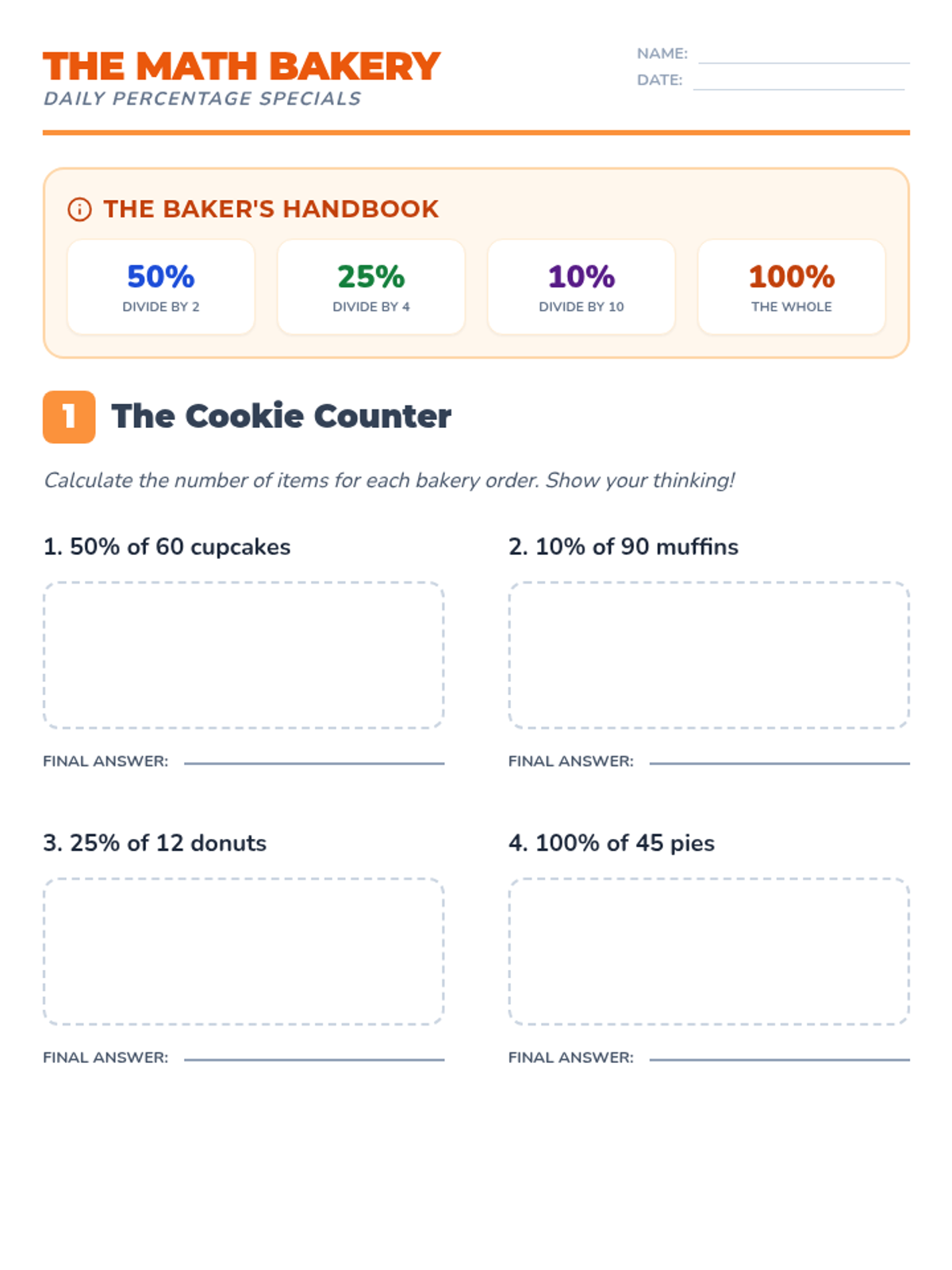
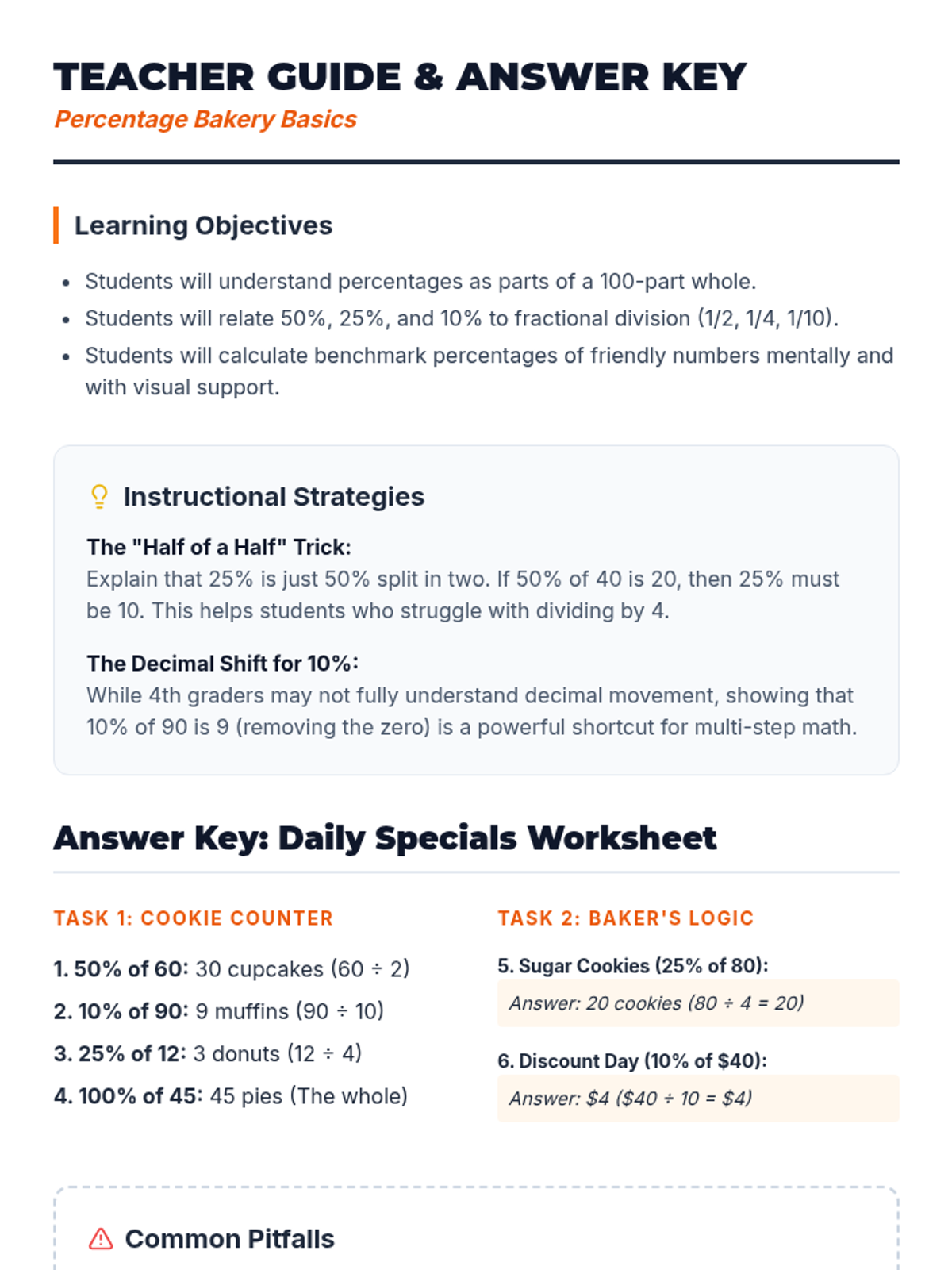
This lesson introduces 4th-grade students to the concept of percentages using benchmark values like 50%, 25%, and 10%. Students will learn to relate percentages to fractions and apply them to real-world bakery-themed problems.
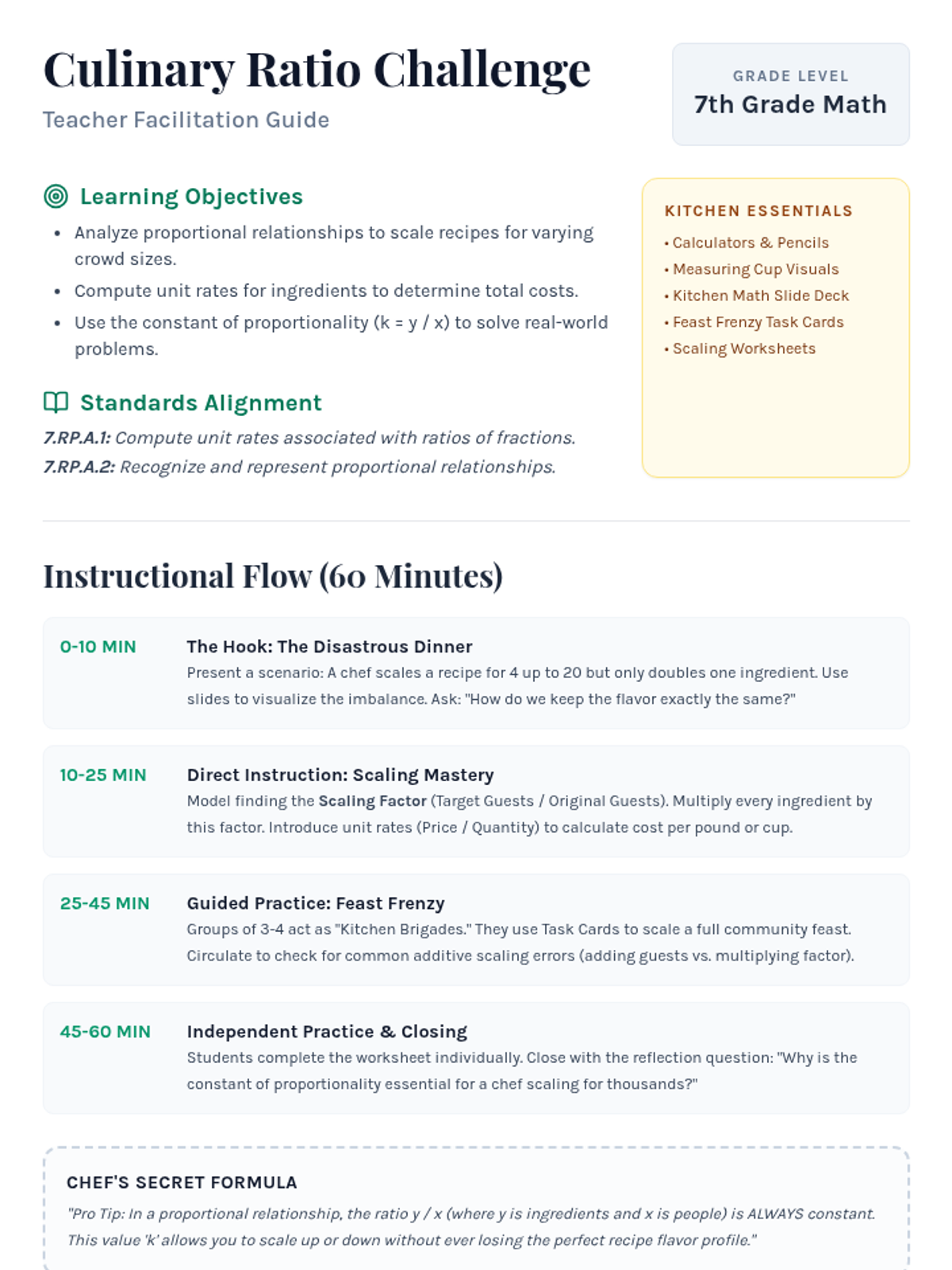
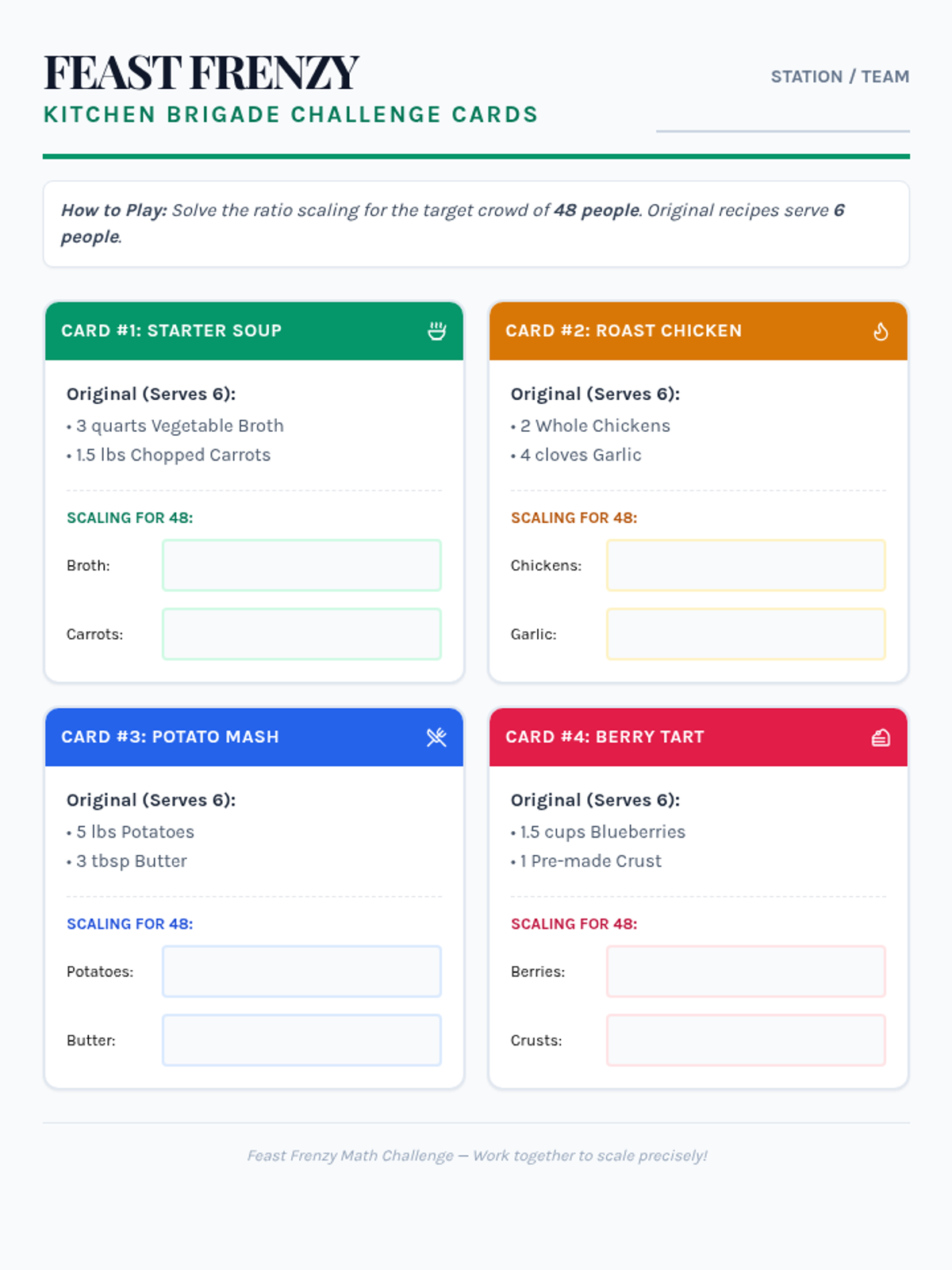
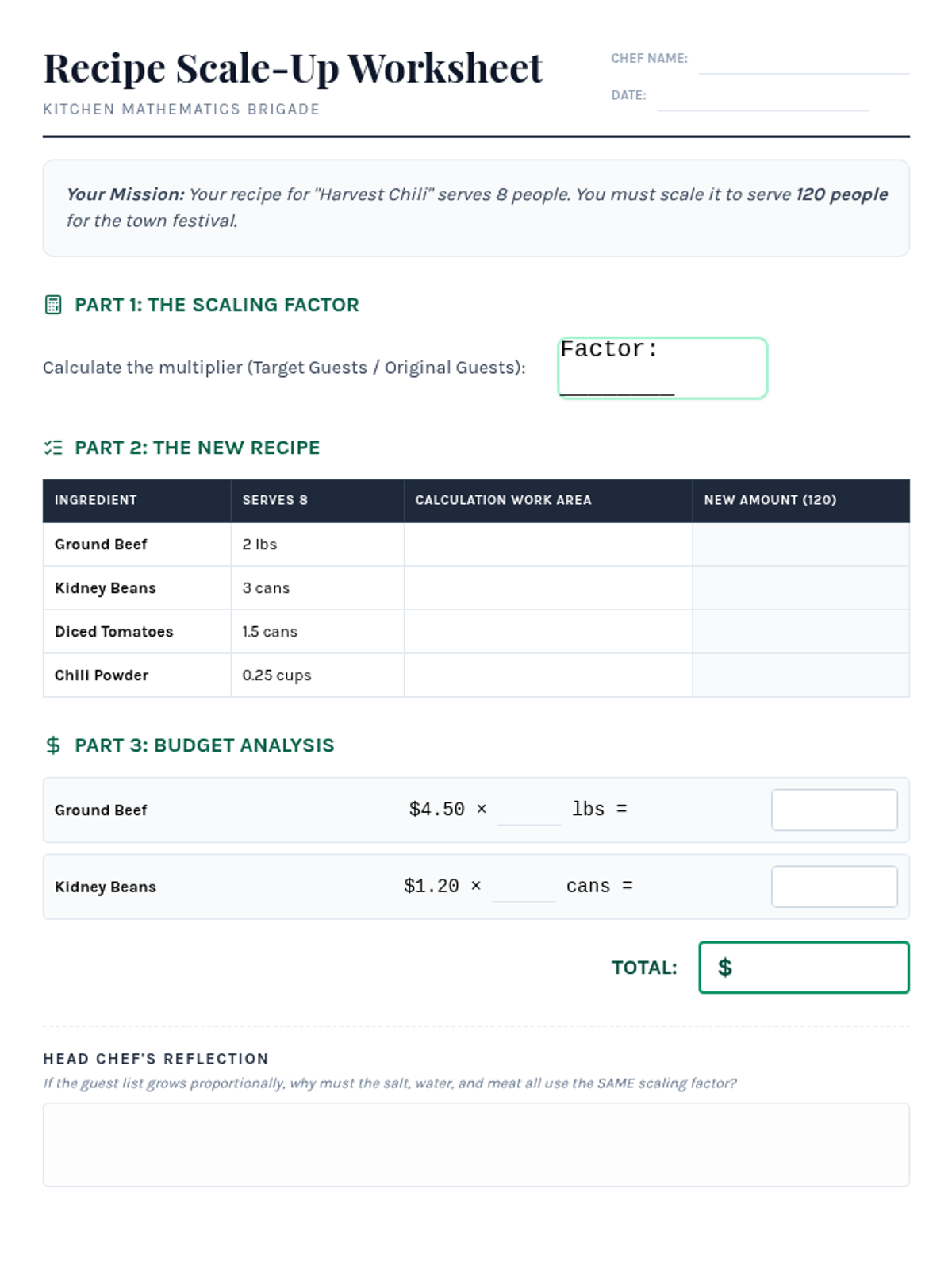
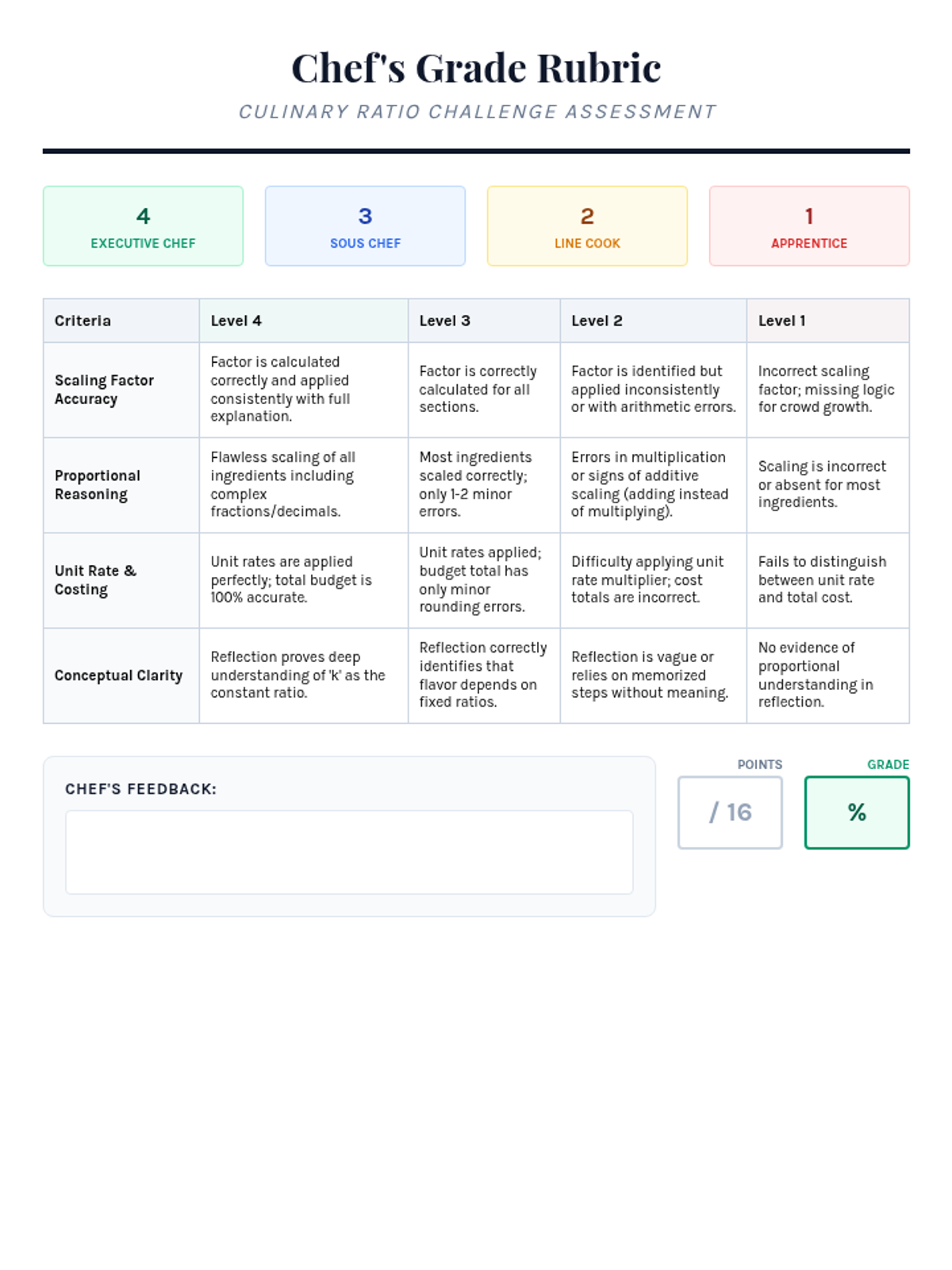
Students master ratios and proportions by scaling recipes for a community feast, applying unit rates to calculate costs and manage kitchen logistics.
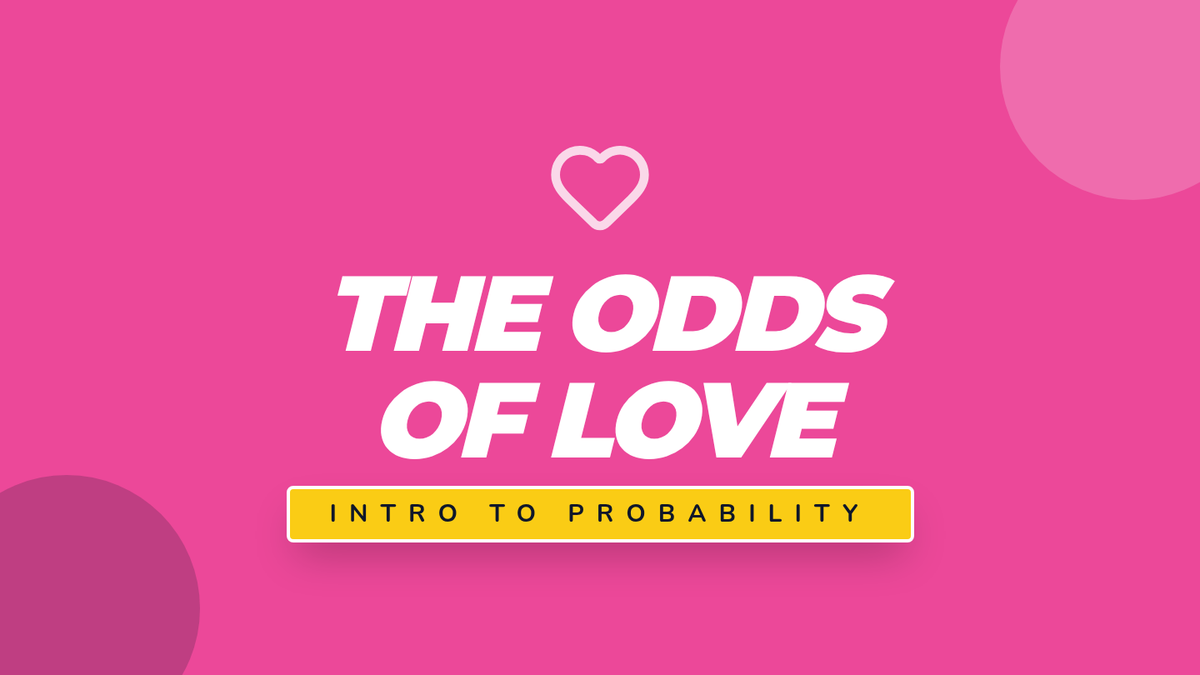
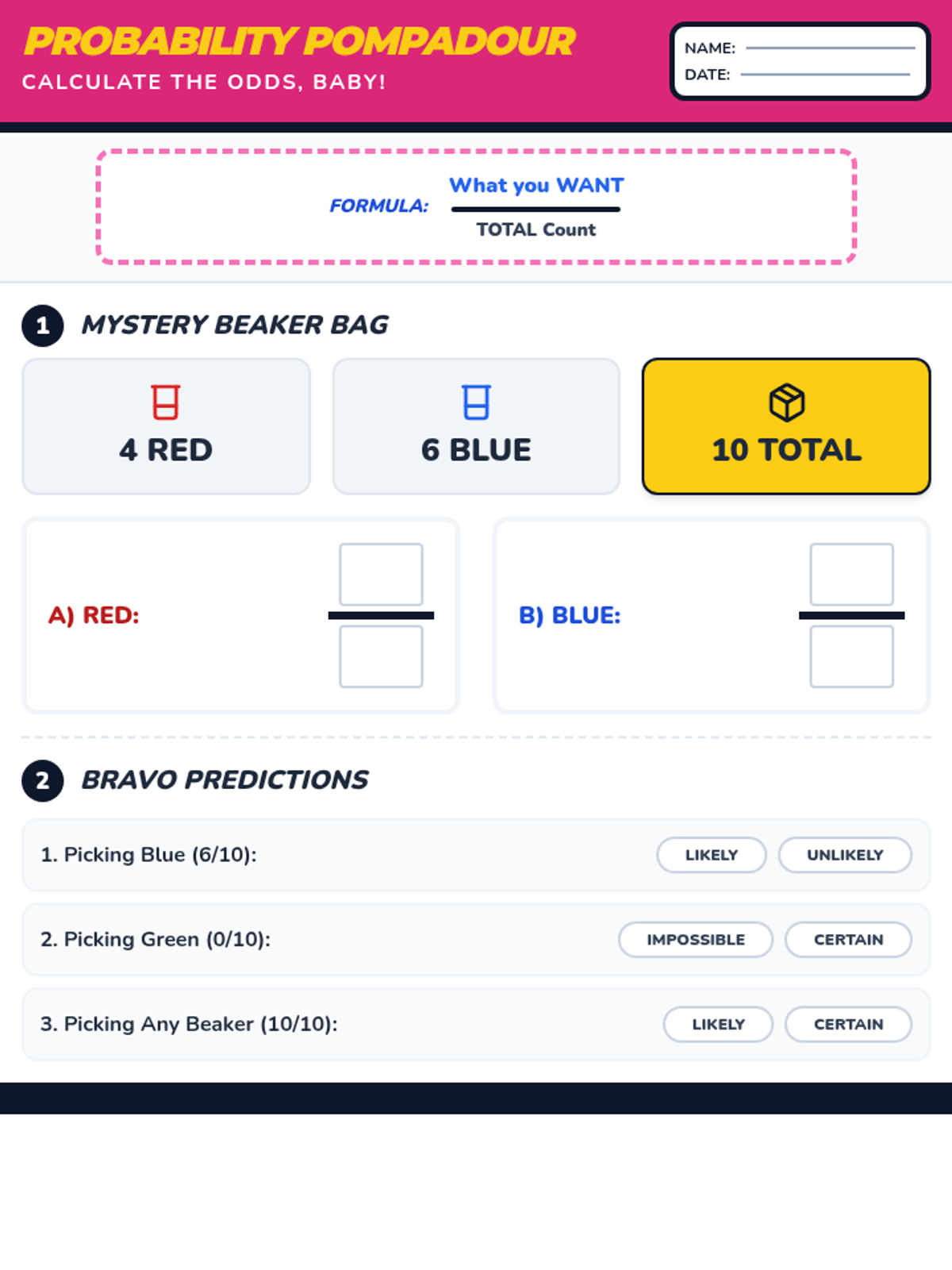
An introduction to basic probability using beaker volumes and colors. Students calculate the likelihood of specific events occurring in the lab.
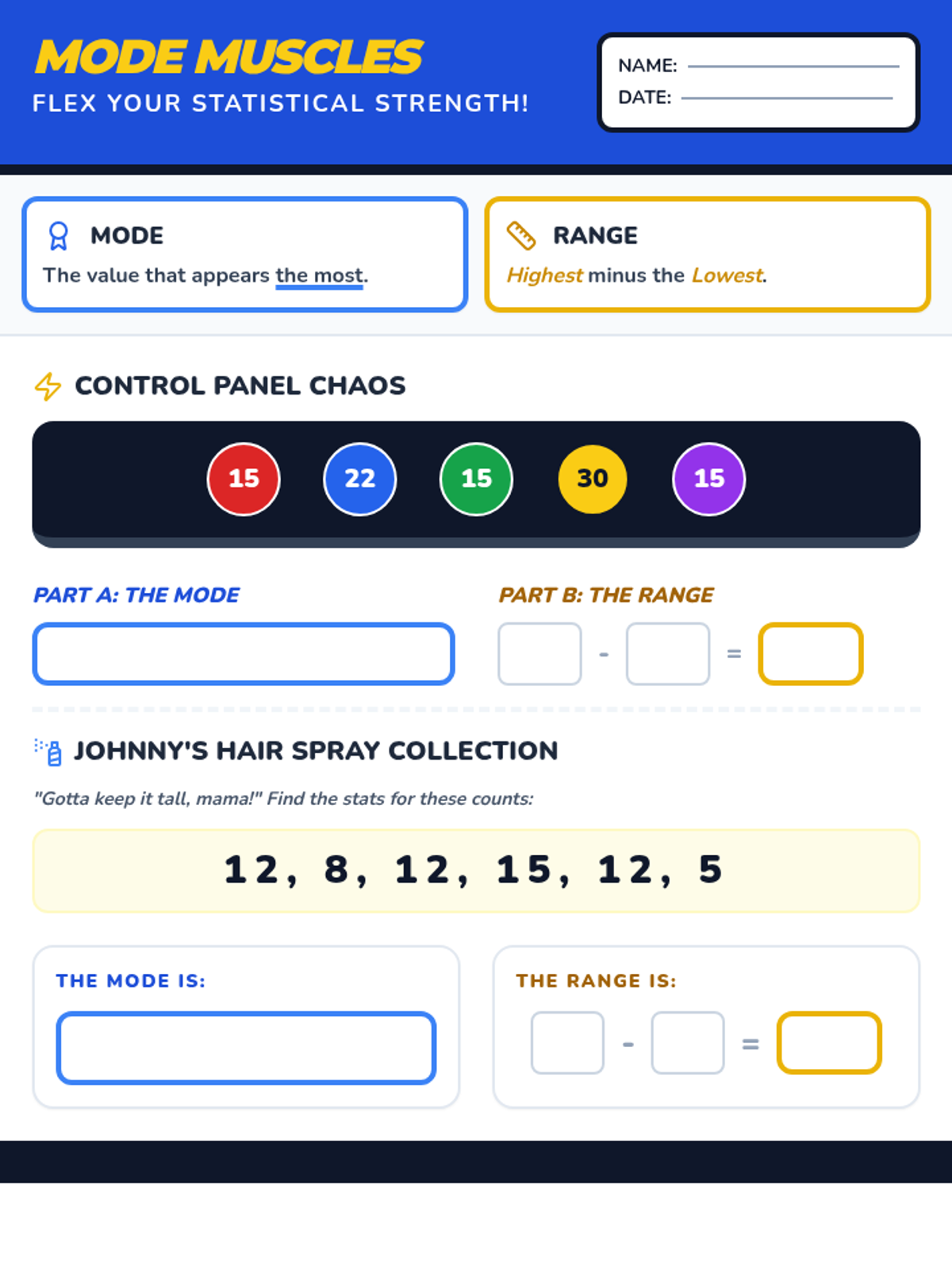
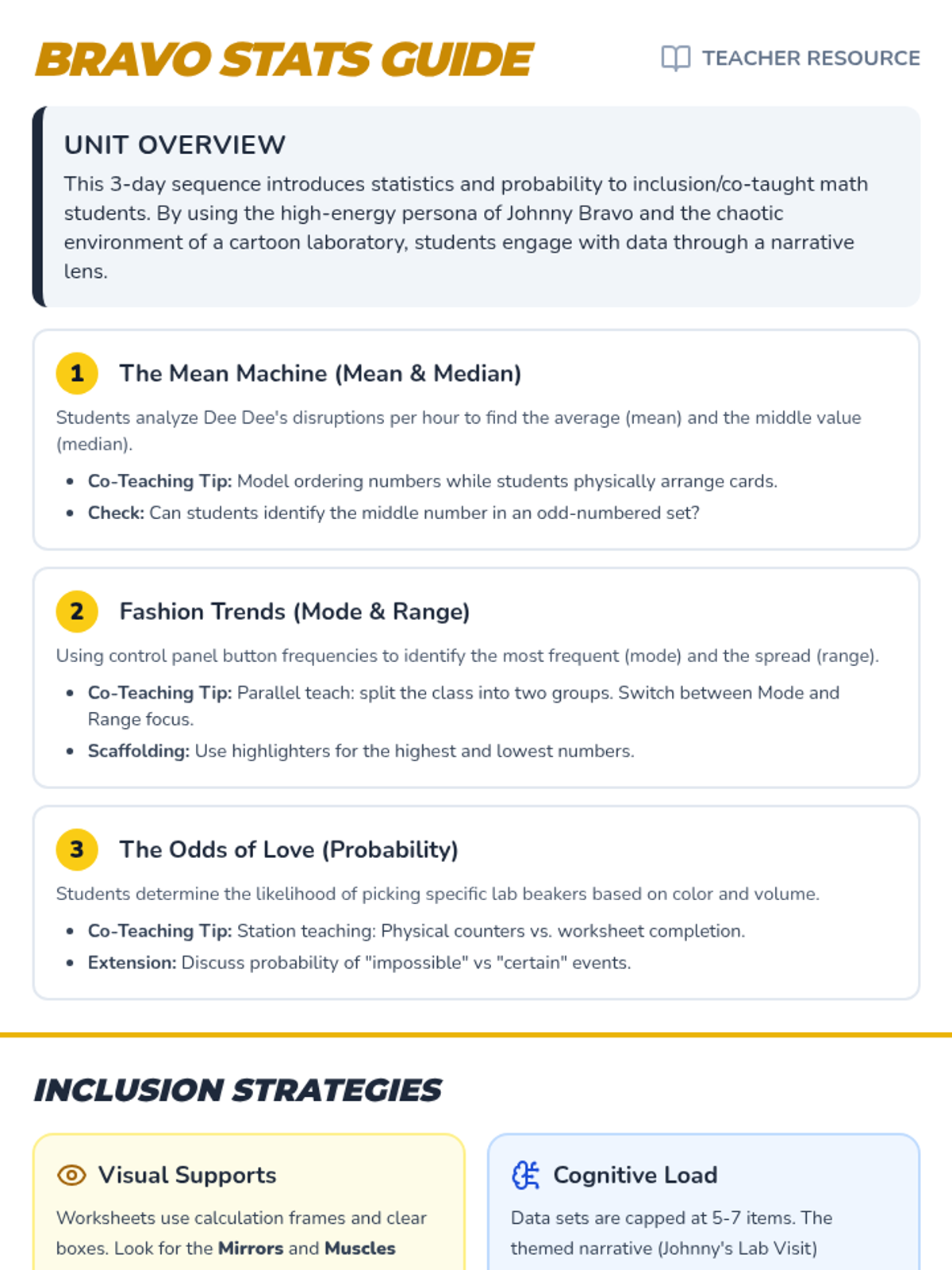
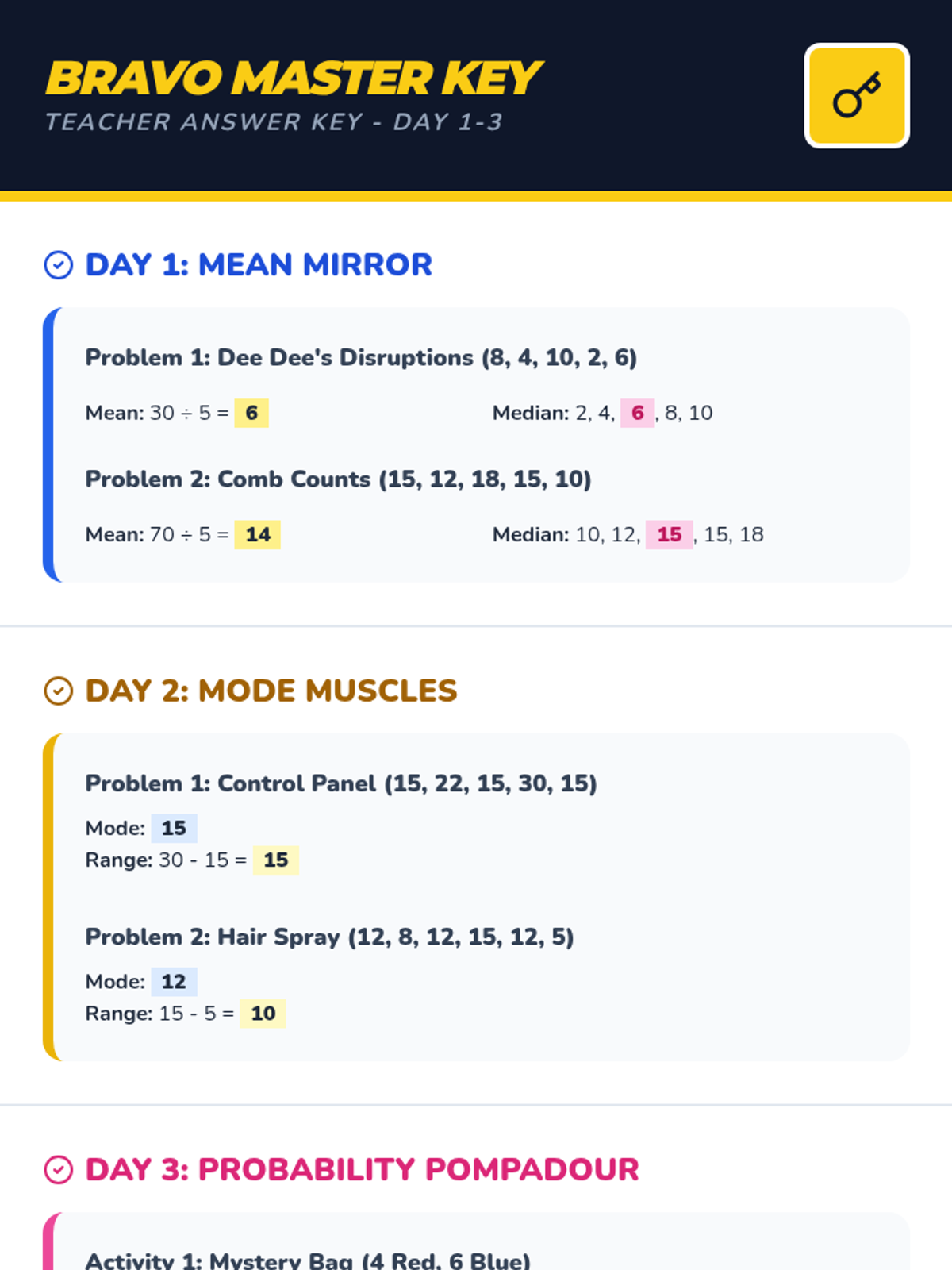
Students explore mode and range by analyzing the frequency of control panel button presses. This lesson focuses on identifying the most common data point and the spread of the data.
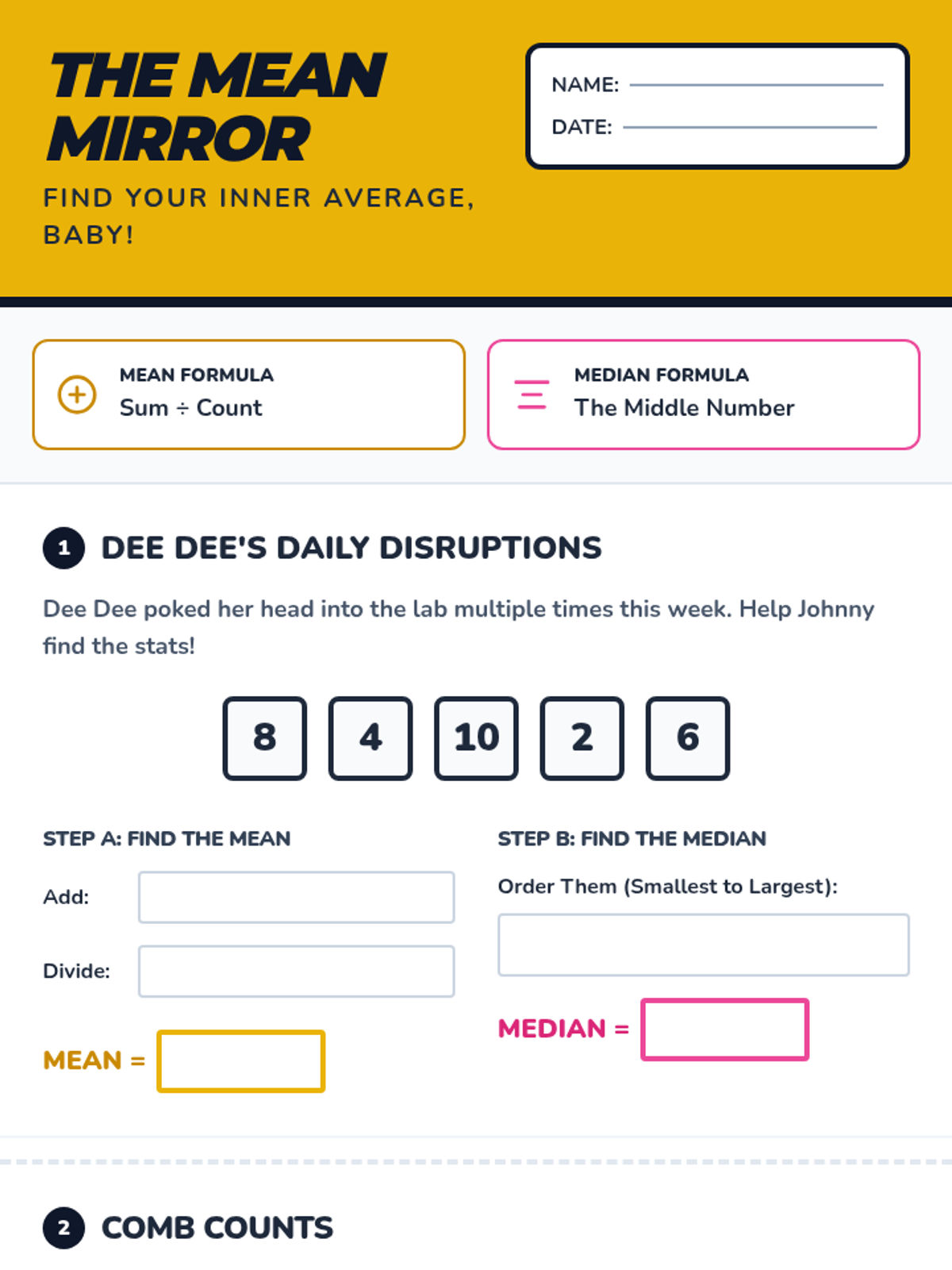
Introduction to finding the mean and median using data from Dee Dee's disruptions in the laboratory. Students learn to calculate averages and identify the middle value in a set of data.
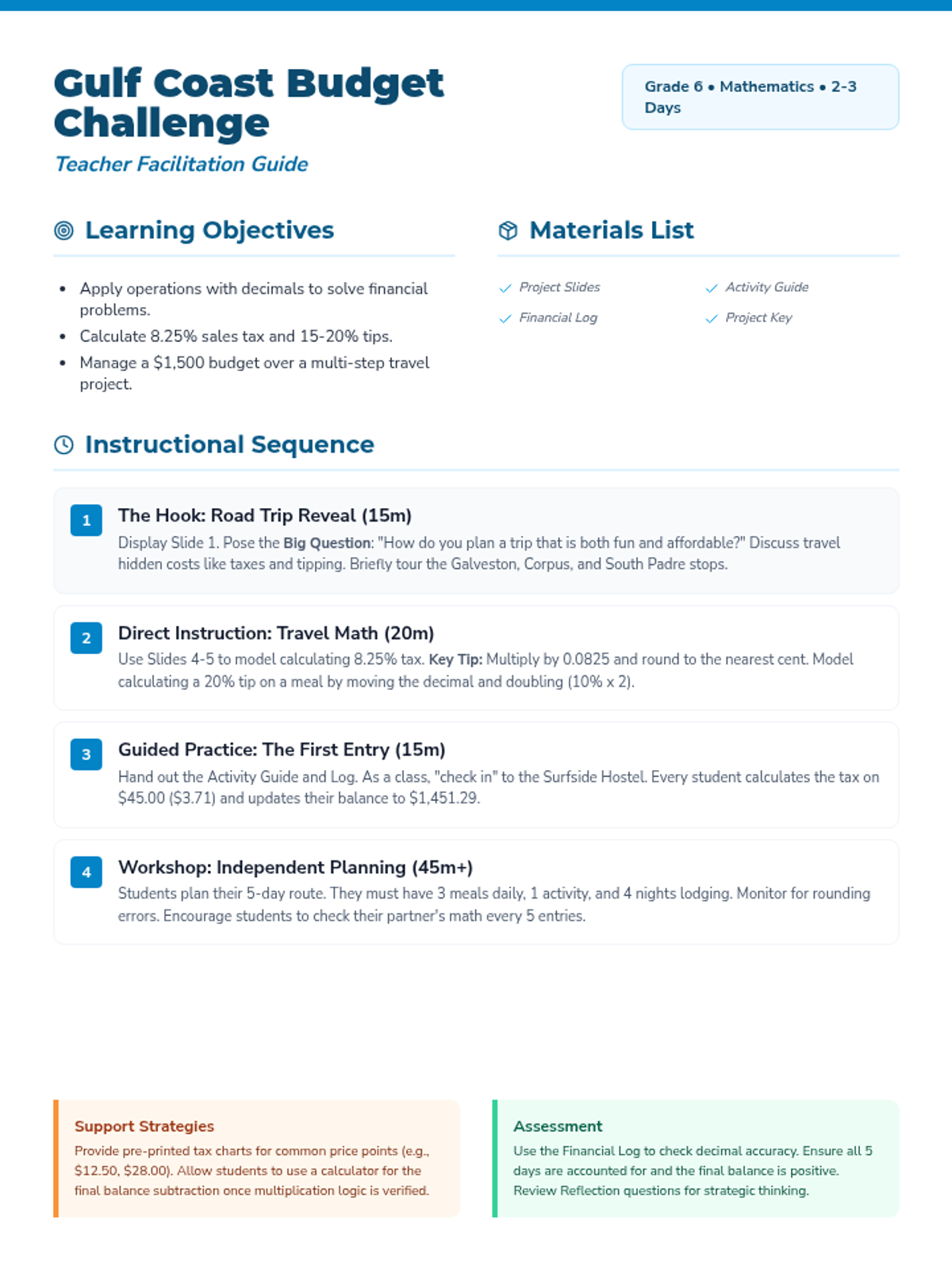
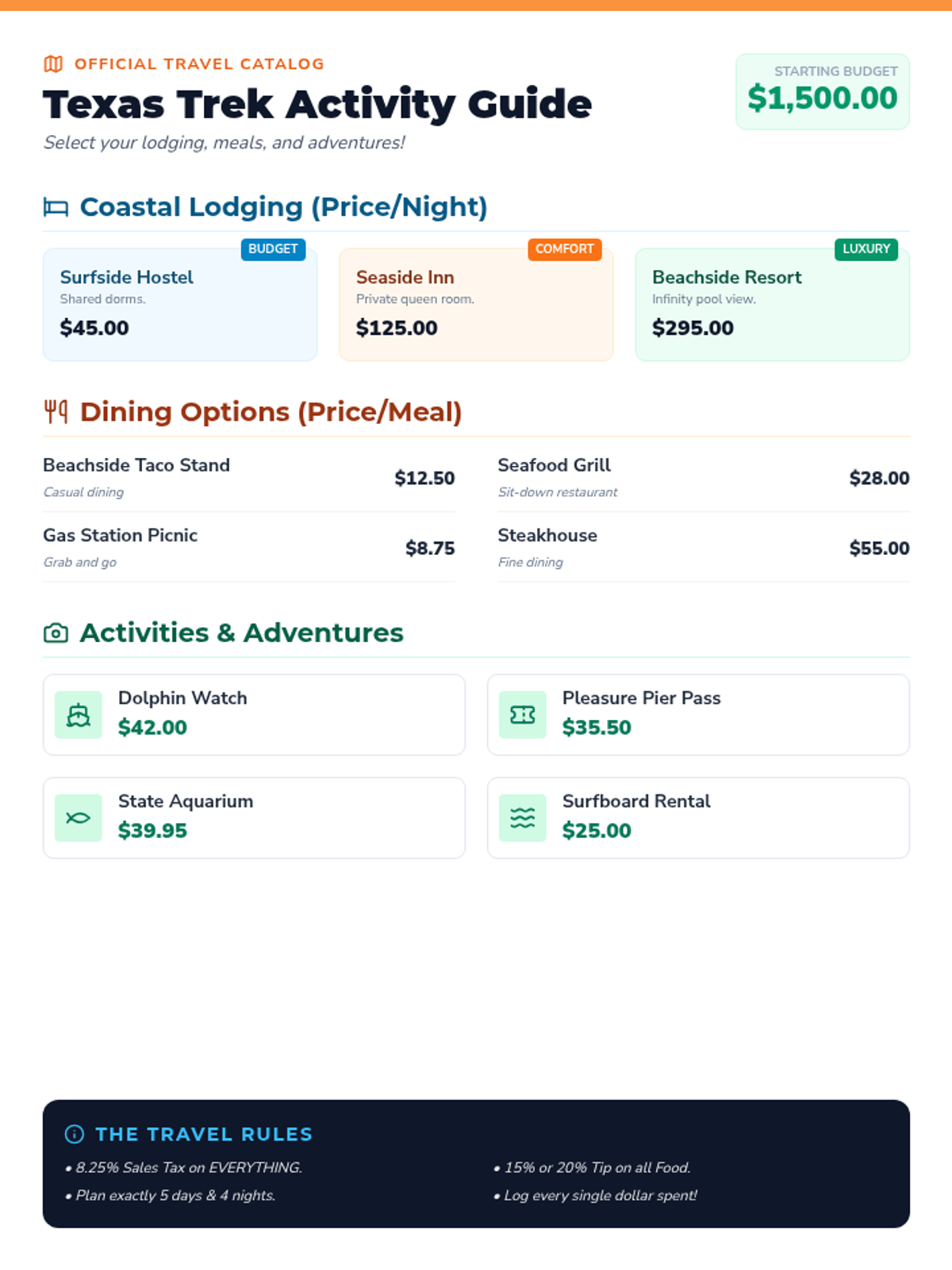
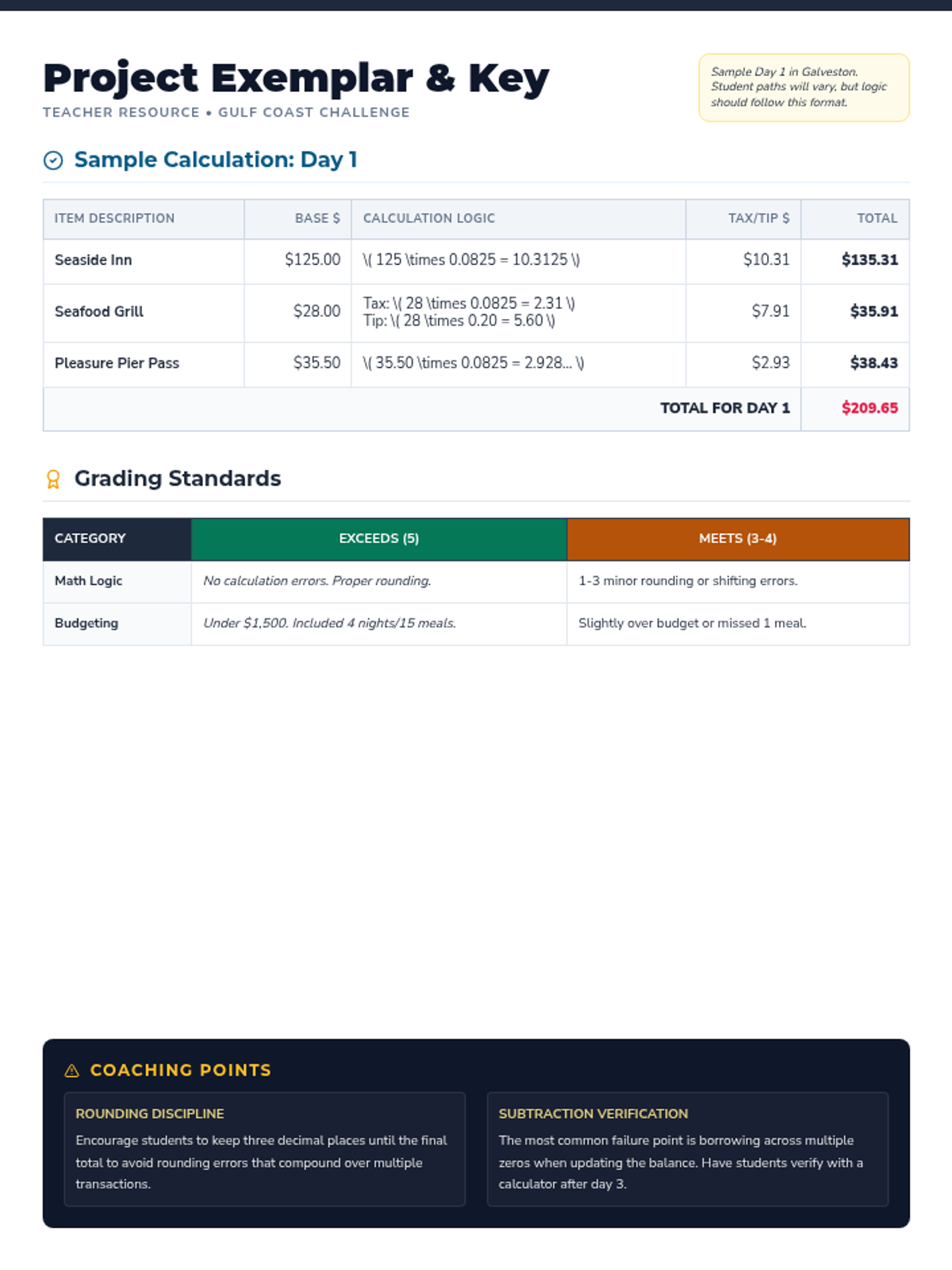
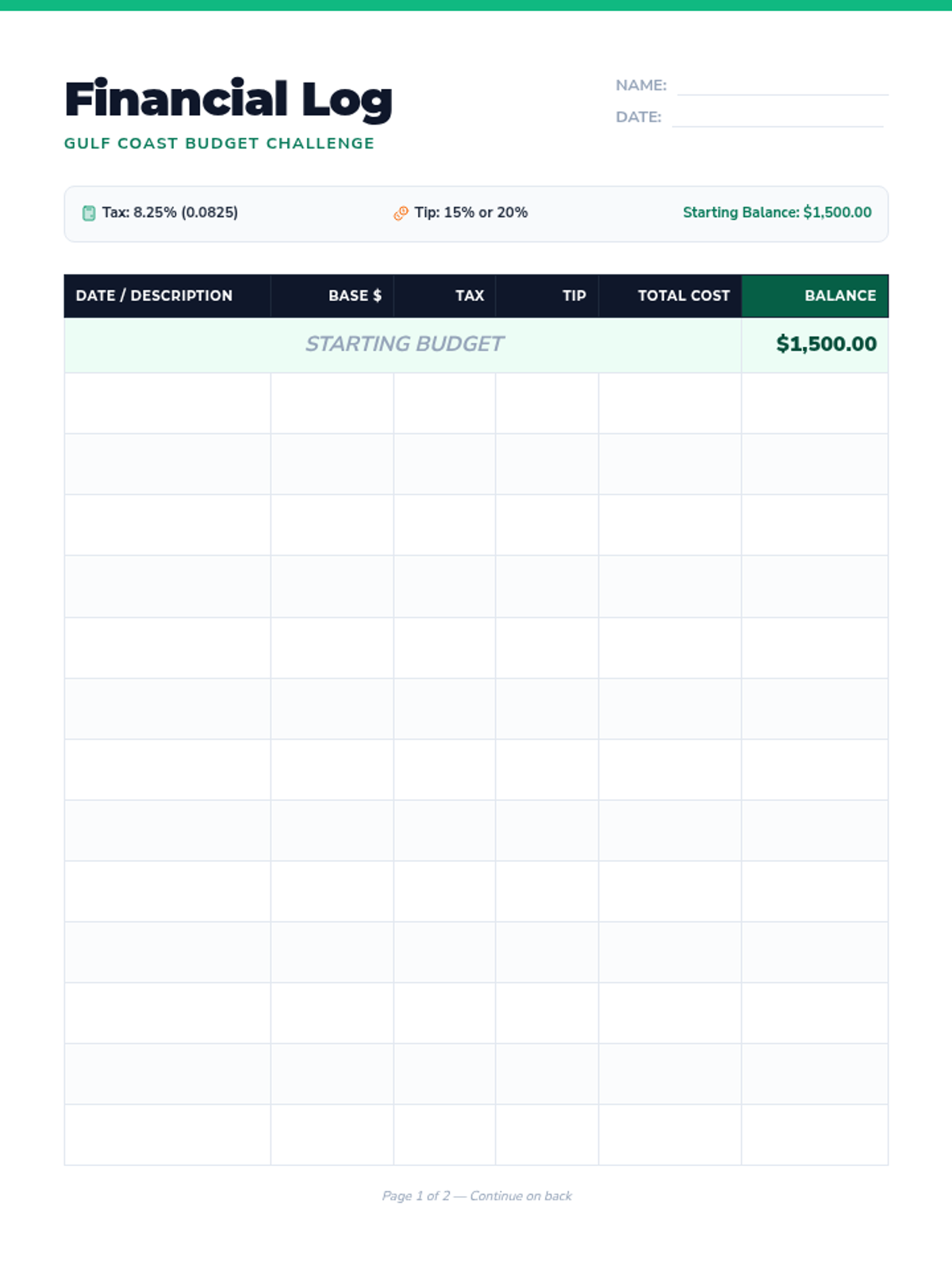
A project-based lesson where 6th-grade students apply decimal operations and percentage calculations to plan a week-long trip along the Texas Gulf Coast while staying within a strict budget.
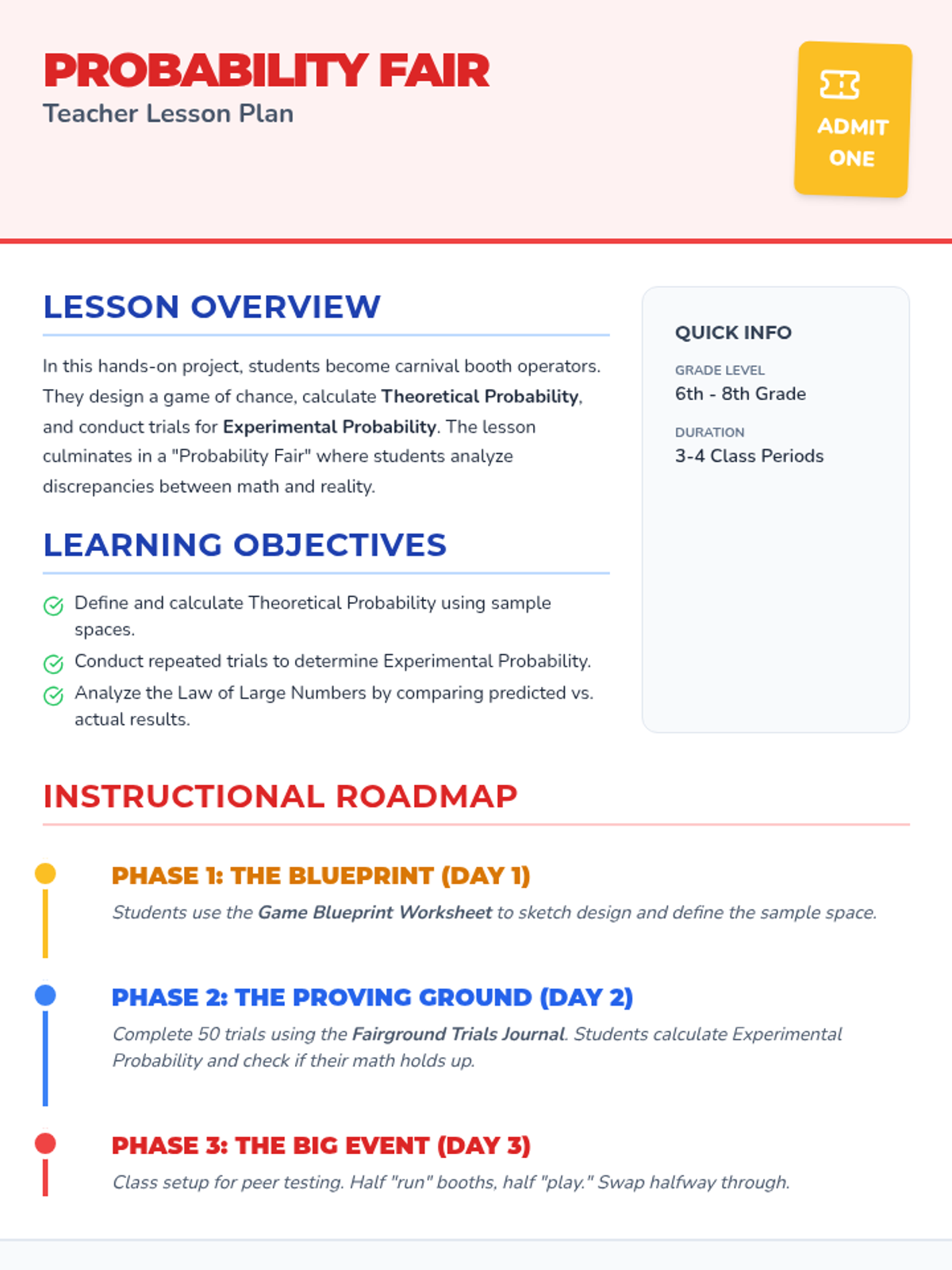
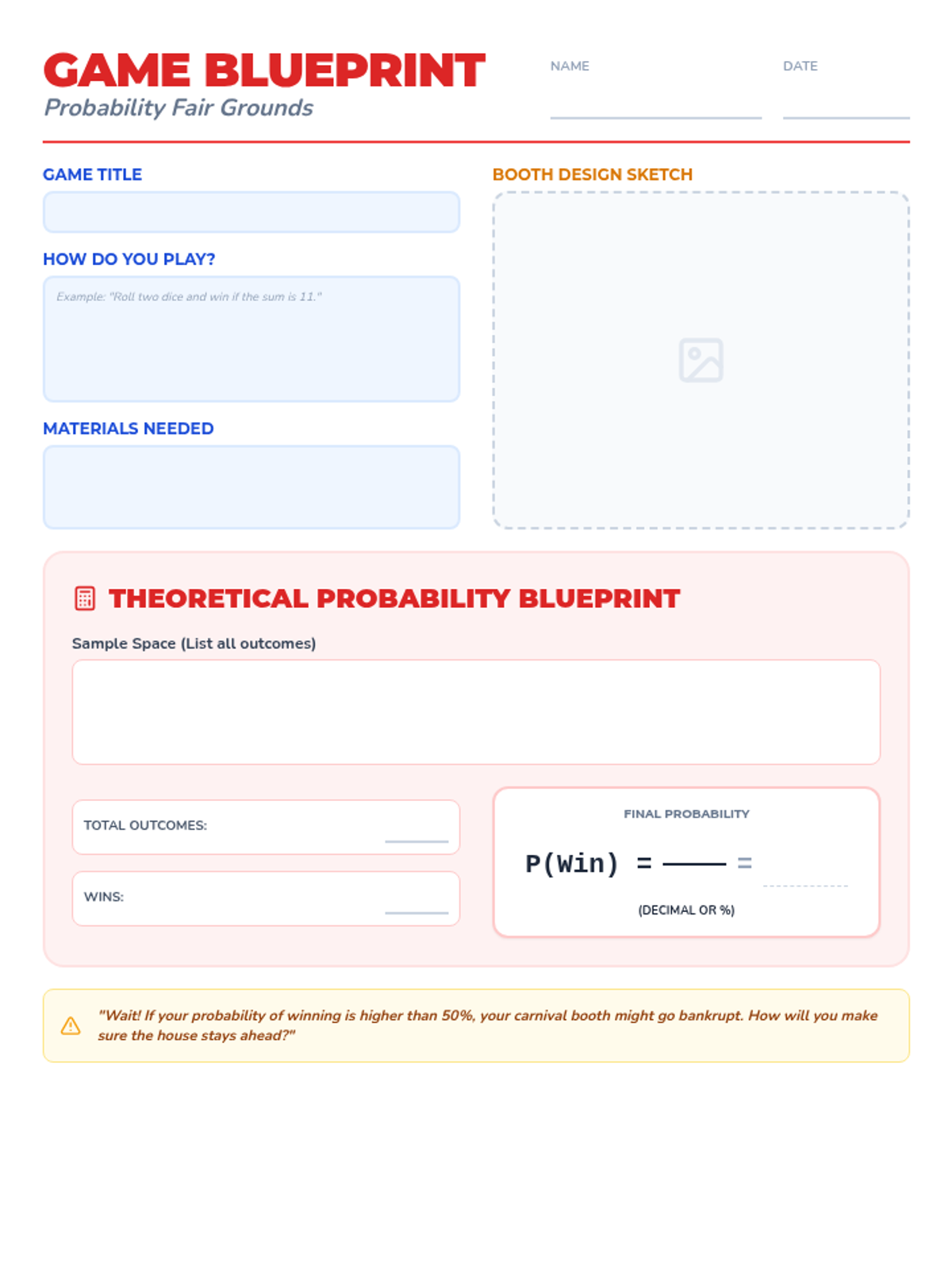
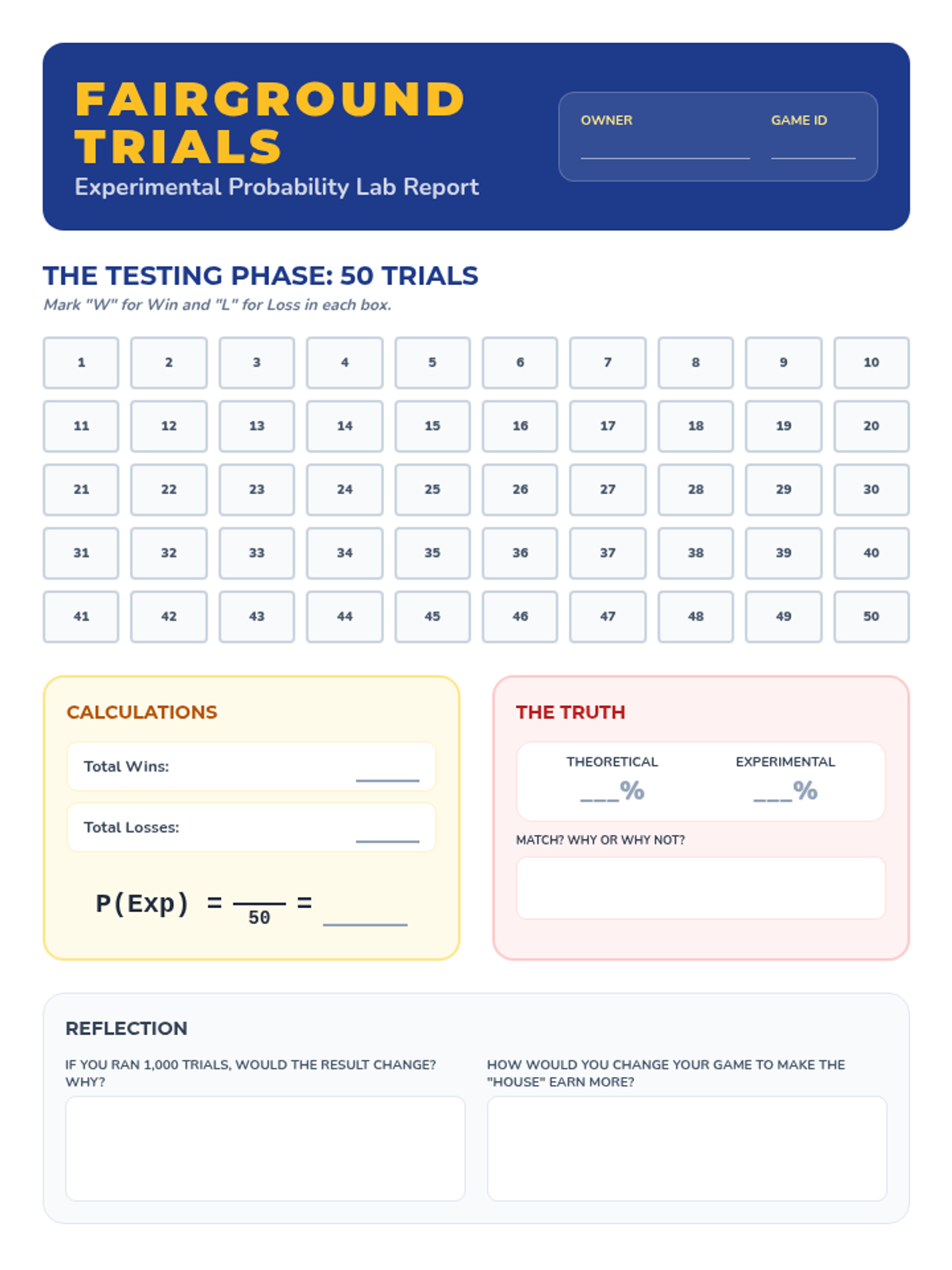
Students step into the roles of carnival game designers to explore data analysis and statistics. They calculate theoretical probability, conduct trials to find experimental probability, and analyze their results in a festive, hands-on environment.
A hands-on lesson focusing on practical money skills: identifying the next dollar up for purchases and calculating change from $5 and $10 bills using a fun snack shack theme.
Students synthesize their knowledge of central tendency and probability to complete a final laboratory assessment.
Students use station rotations to explore probability and frequency through lab beaker measurements and control panel button analysis.
Students collect data on DeeDee's disruptions to learn and calculate the mean, median, and mode of a dataset.
A quick practice session for students to master area and perimeter of simple rectangles using a drafting-themed layout.
Students take on the role of landscape architects to design a community garden, applying their knowledge of area, perimeter, and symmetry with fractional dimensions.
In this lesson, students become packaging engineers for a modern logistics company. They apply 3D geometry concepts—specifically surface area and volume of rectangular prisms—to design efficient shipping containers that minimize material waste and maximize storage capacity.
A colorful, interactive introduction to basic statistics using the theme of a gumball machine. Students learn to collect data, calculate measures of central tendency, and determine probability through guided and independent practice.
Students explore dividing unit fractions by whole numbers and vice versa by portioning dough and serving individual slices.
Students apply multiplication strategies to determine ingredient amounts and calculate the area of rectangular baking sheets.
Students learn to interpret fractions as division by sharing pizzas and loaves of bread equally among friends and customers.
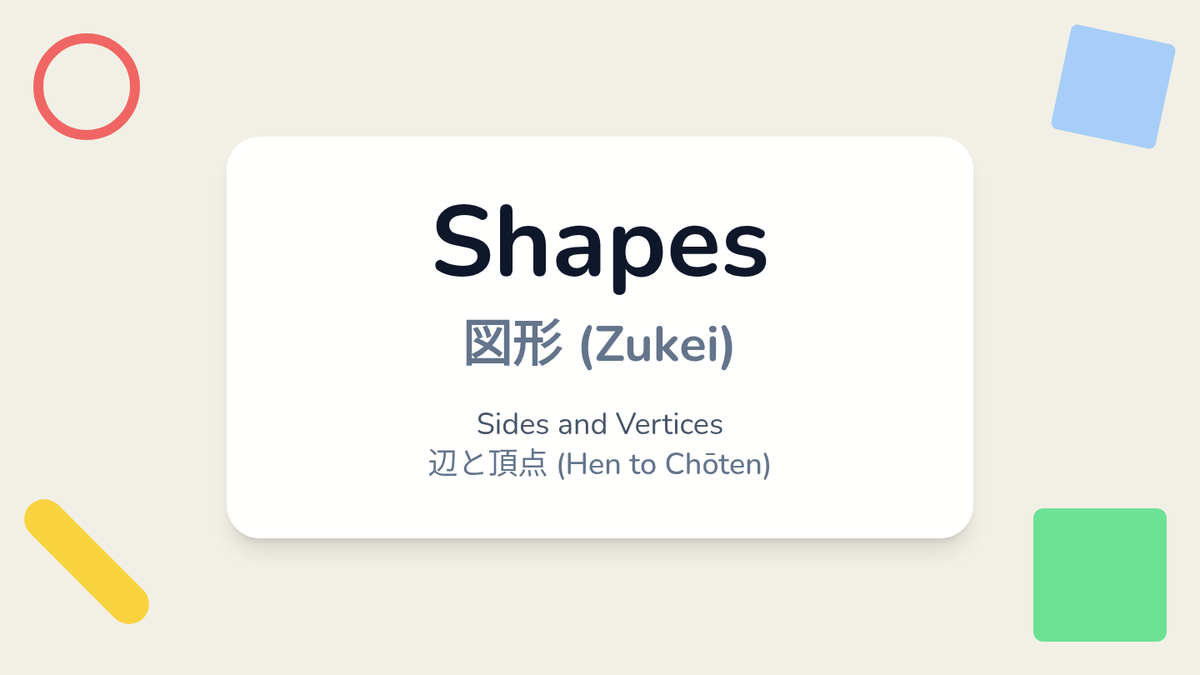
A lesson on reasoning with shapes, focusing on identifying sides, vertices, and attributes in both English and Japanese.
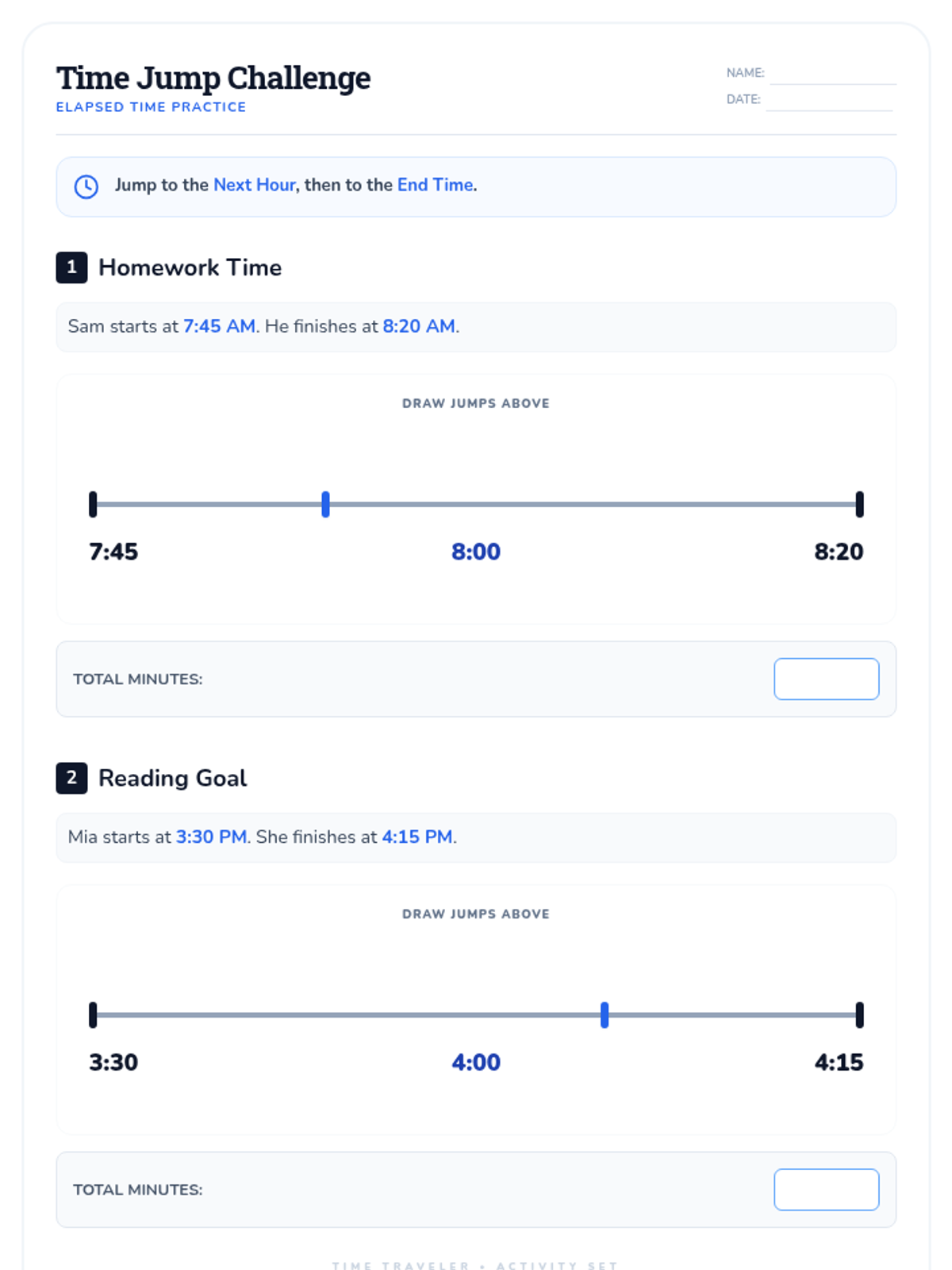
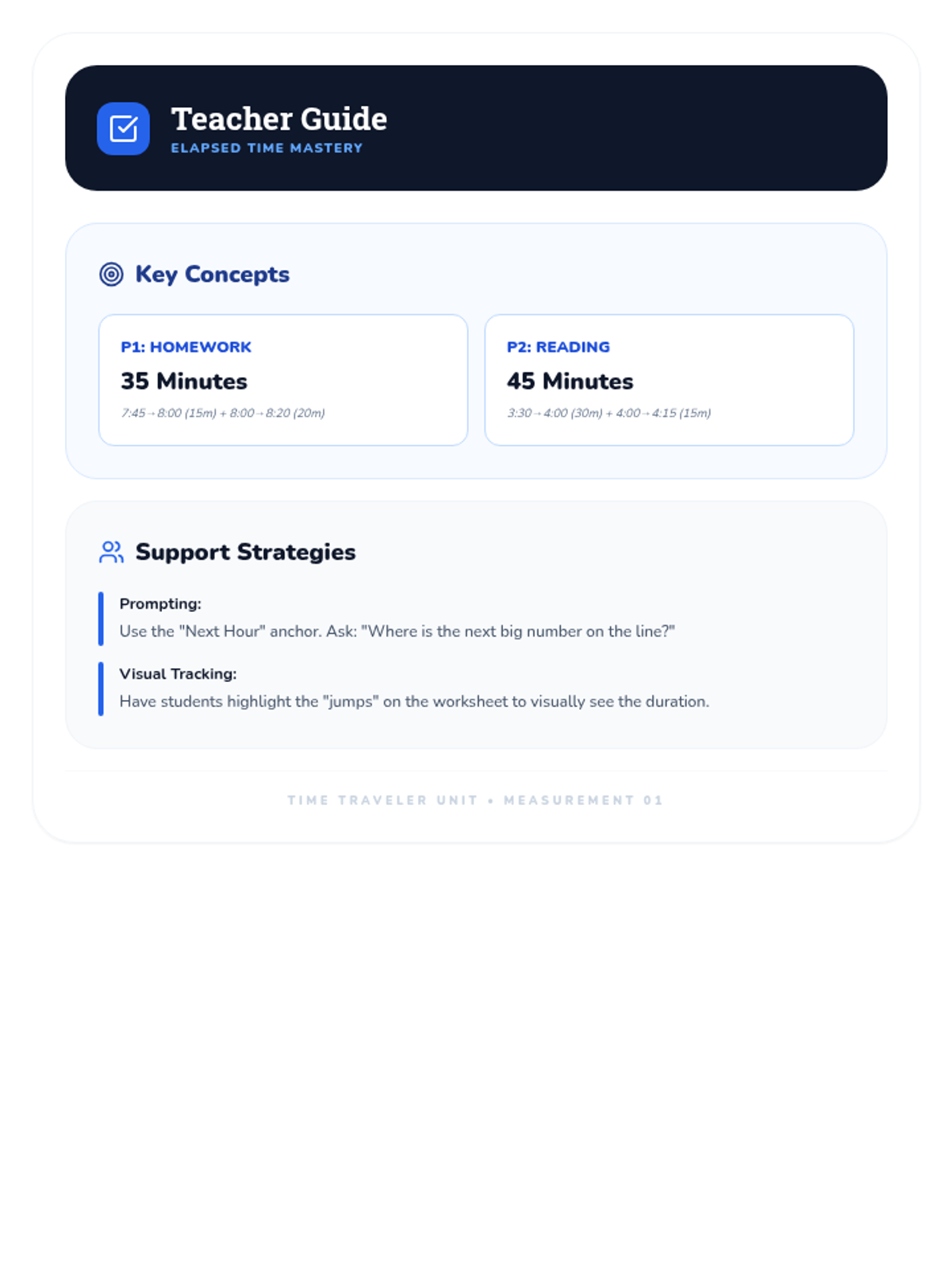
A lesson focused on solving multi-step real-world elapsed time problems using visual number lines, specifically designed for students requiring visual supports.
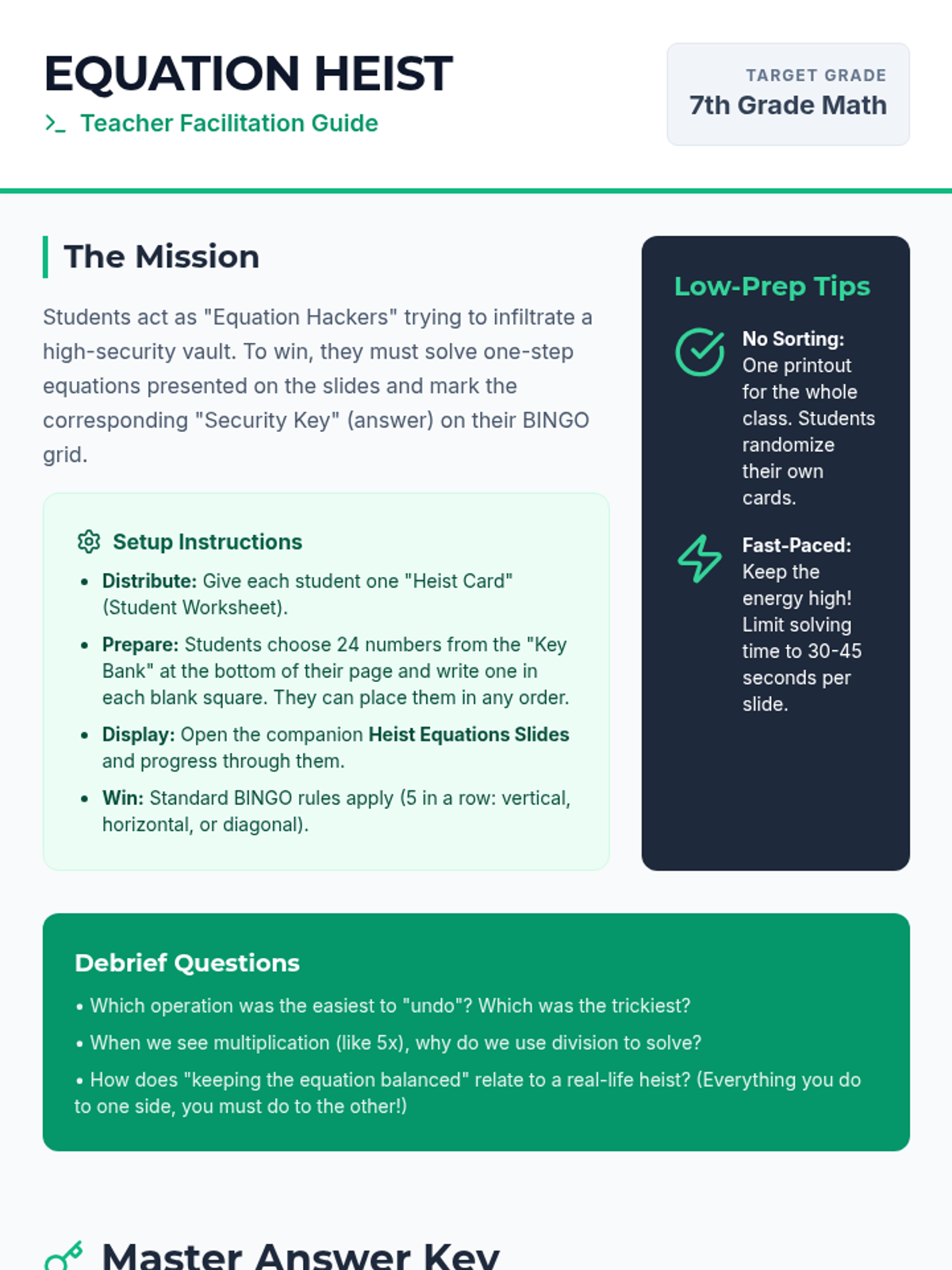
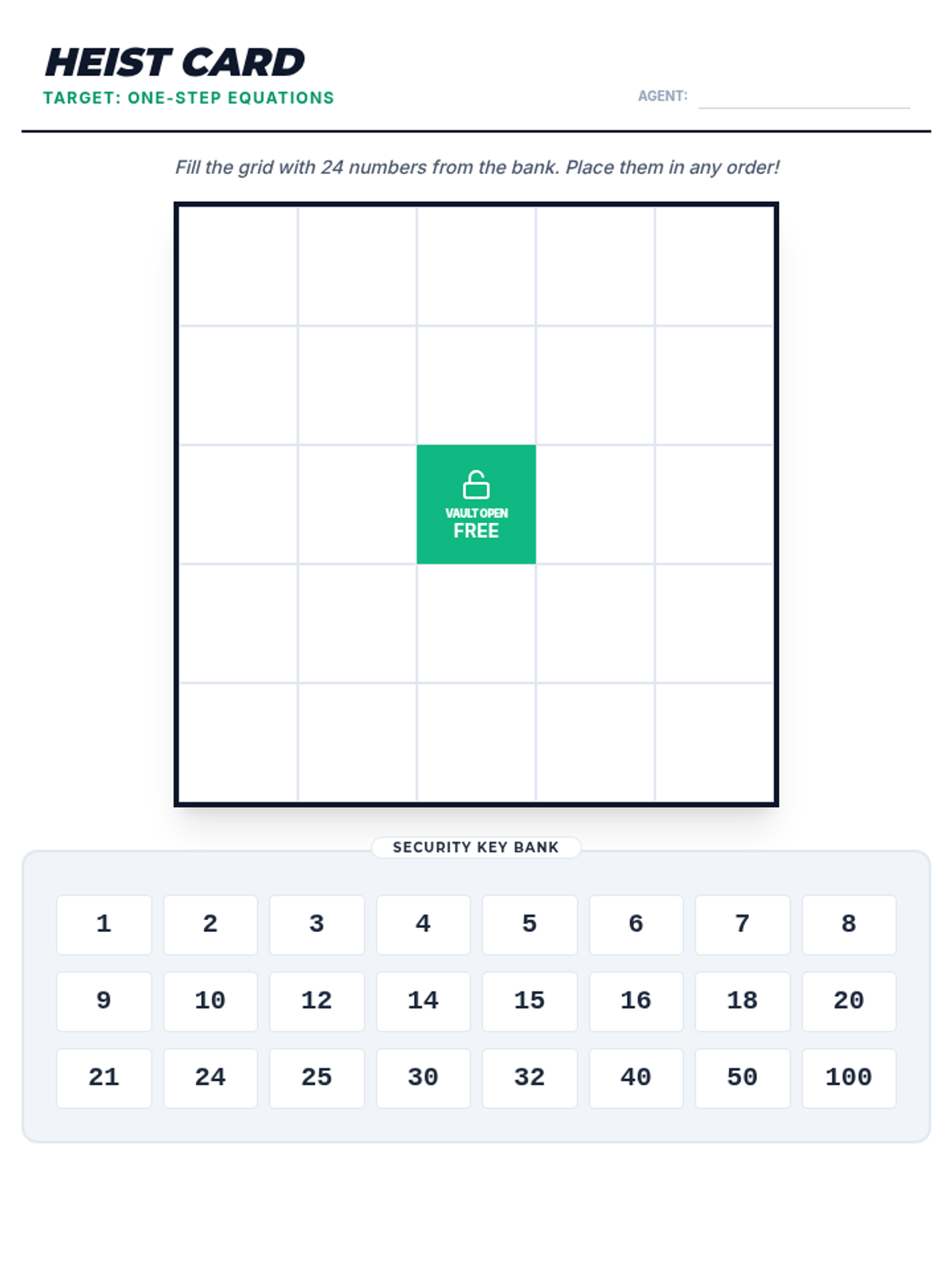
A high-energy, low-prep Math BINGO game where students solve one-step equations to crack codes and win. Includes a slide presentation for game delivery, a student bingo sheet with answer bank, and a teacher answer key.
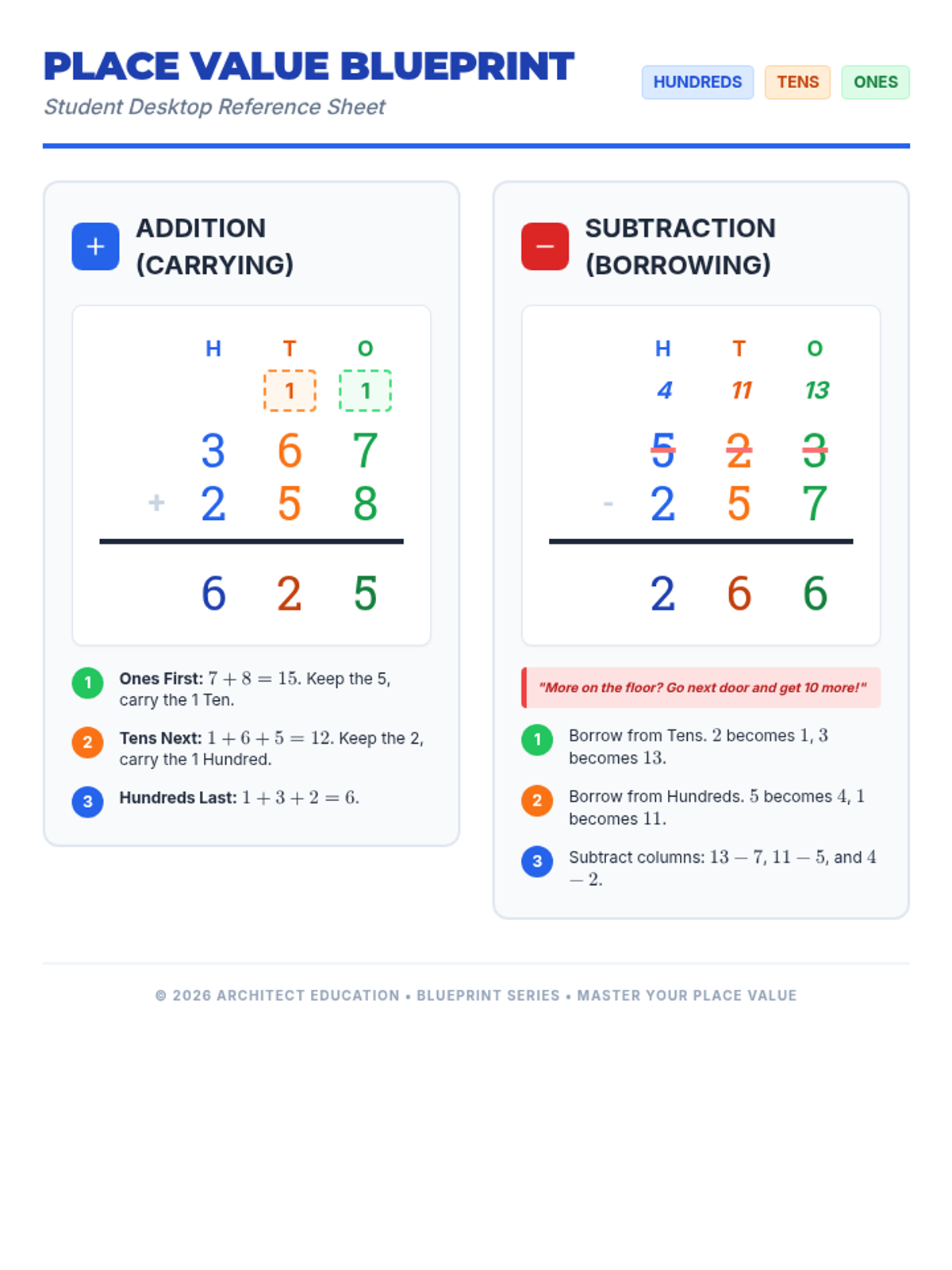
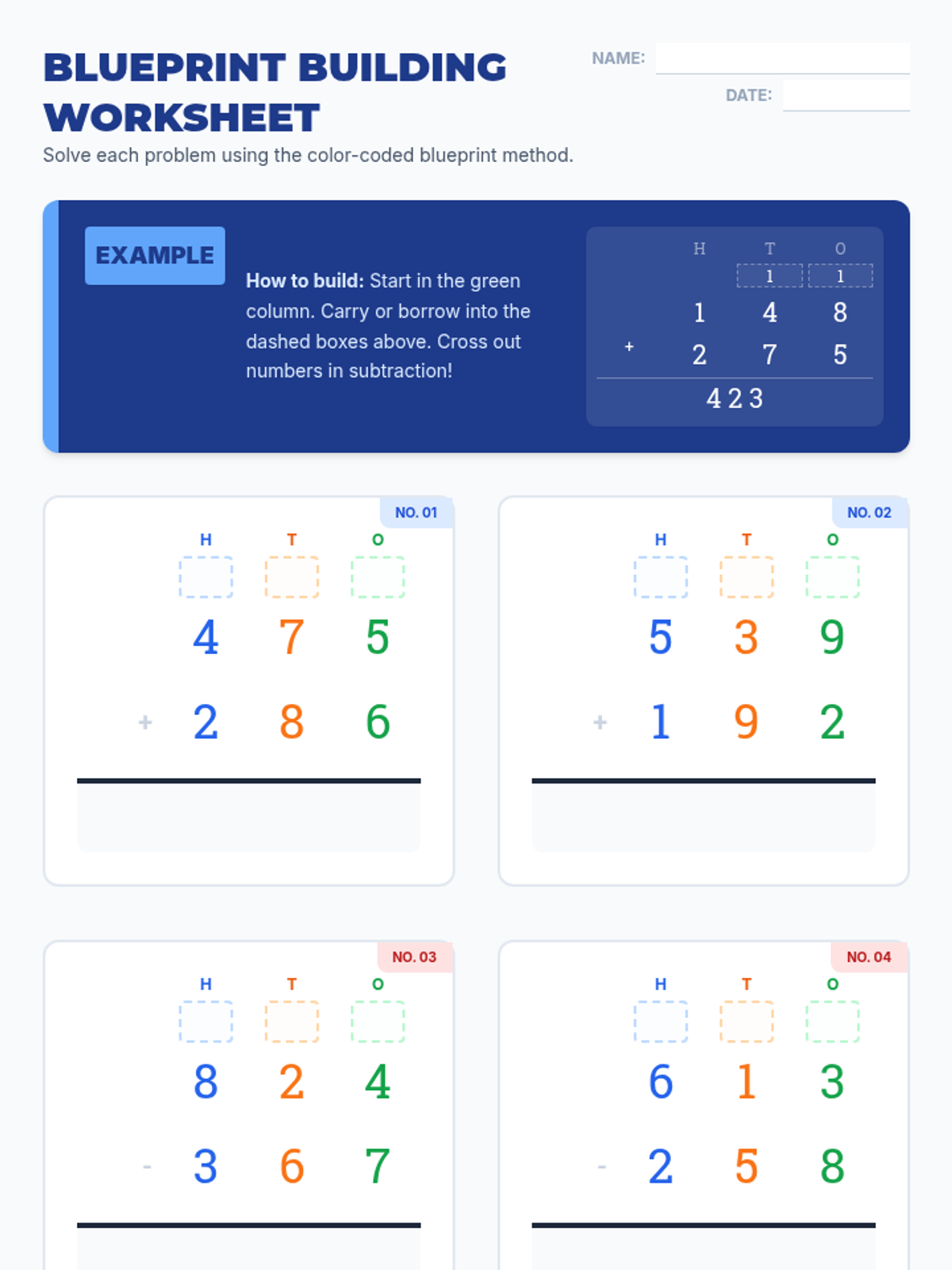
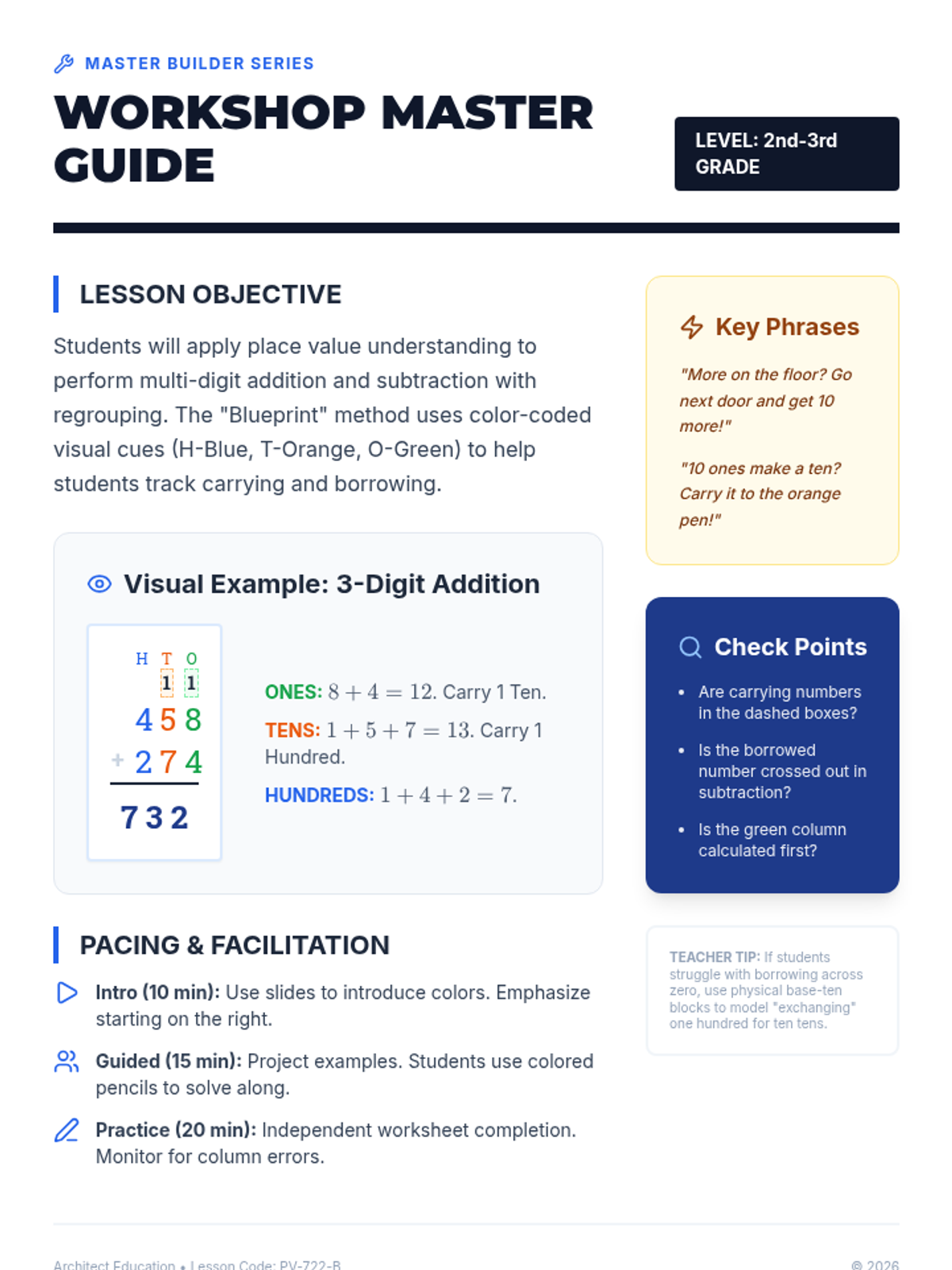
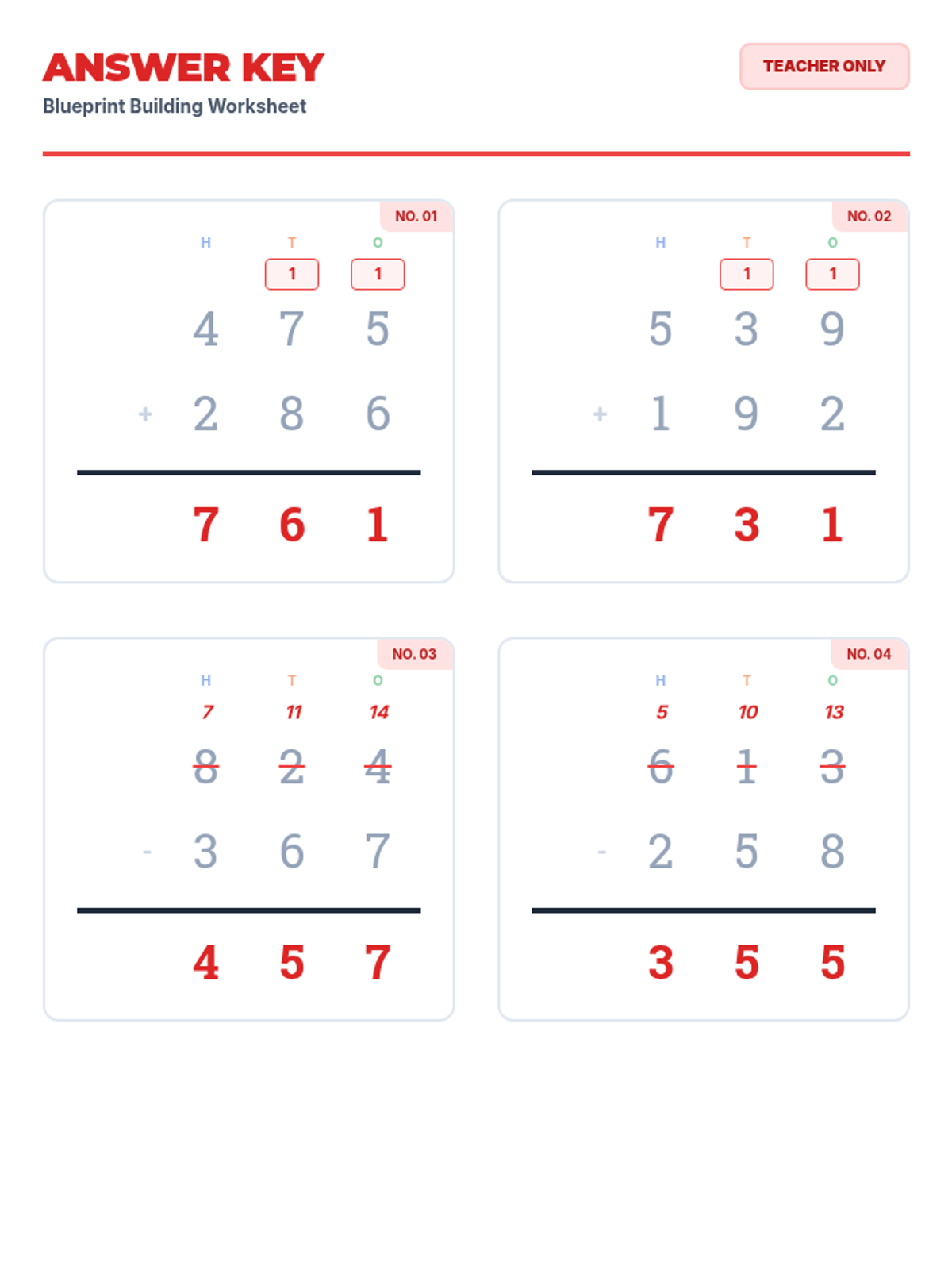
A comprehensive guide to mastering double and triple-digit addition and subtraction using color-coded place value columns and regrouping strategies. Students use 'blueprints' to visualize carrying and borrowing across place values.
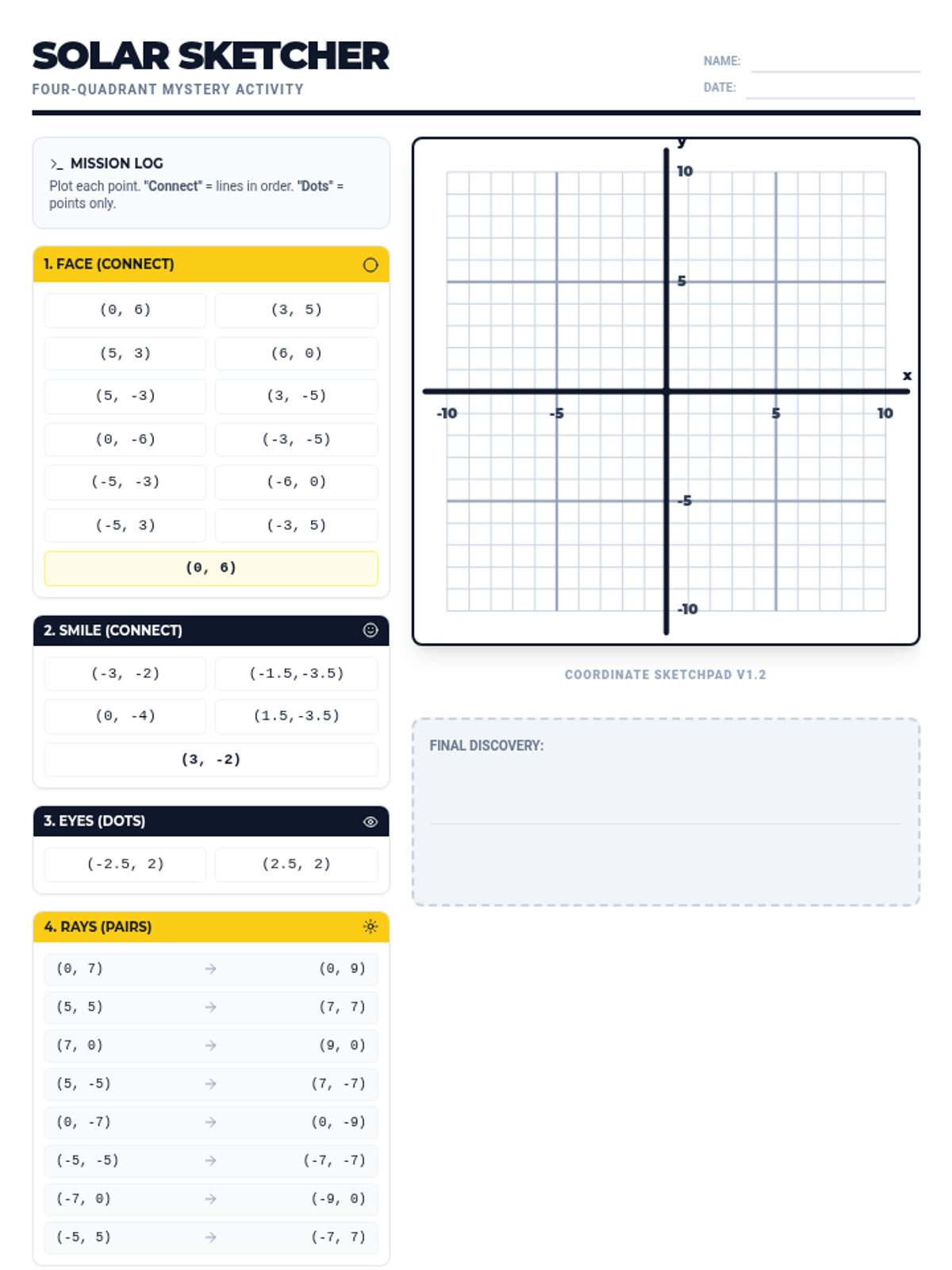
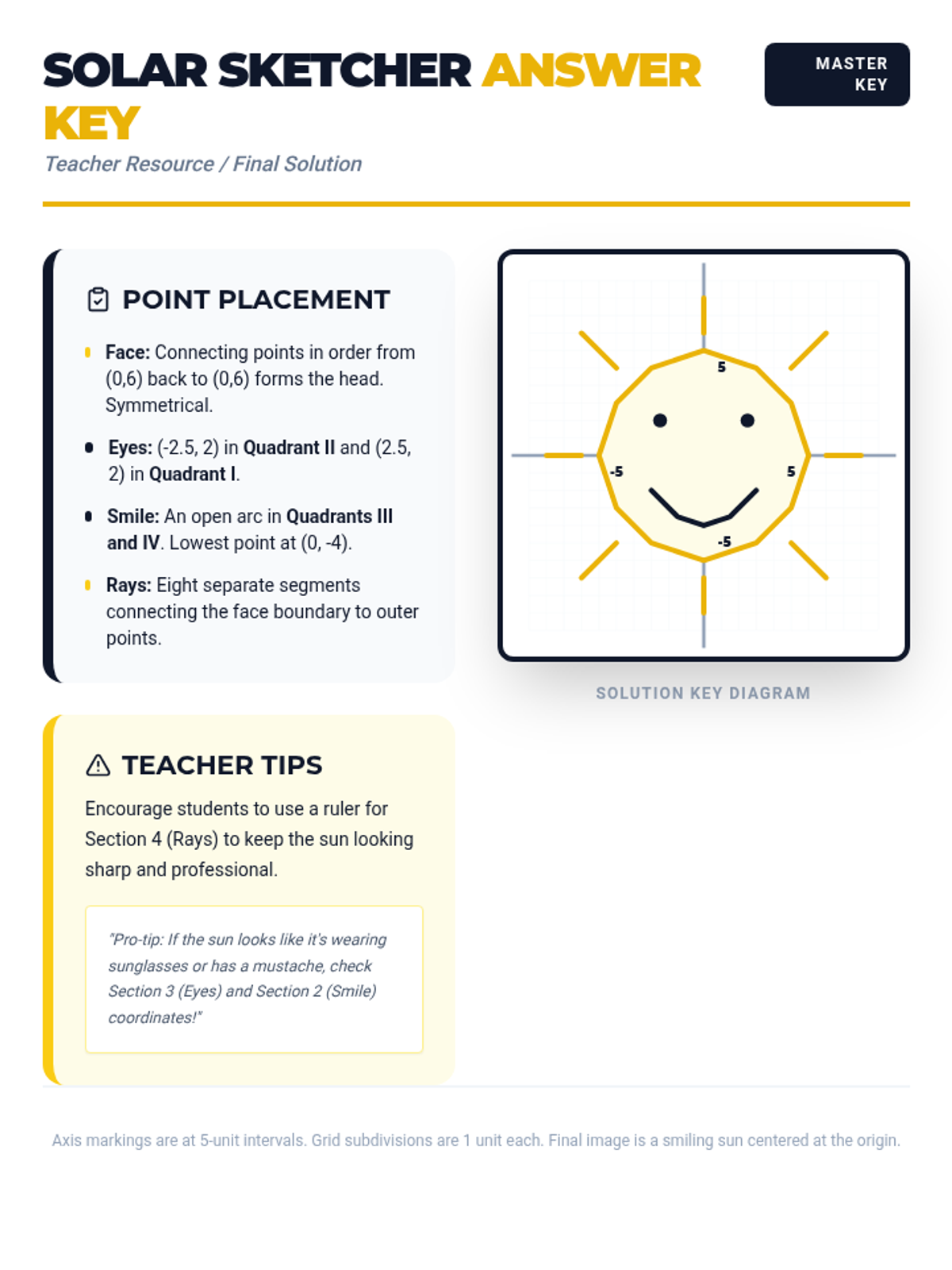
A math lesson focused on graphing ordered pairs in all four quadrants of the coordinate plane to reveal a hidden picture of a smiling sun.
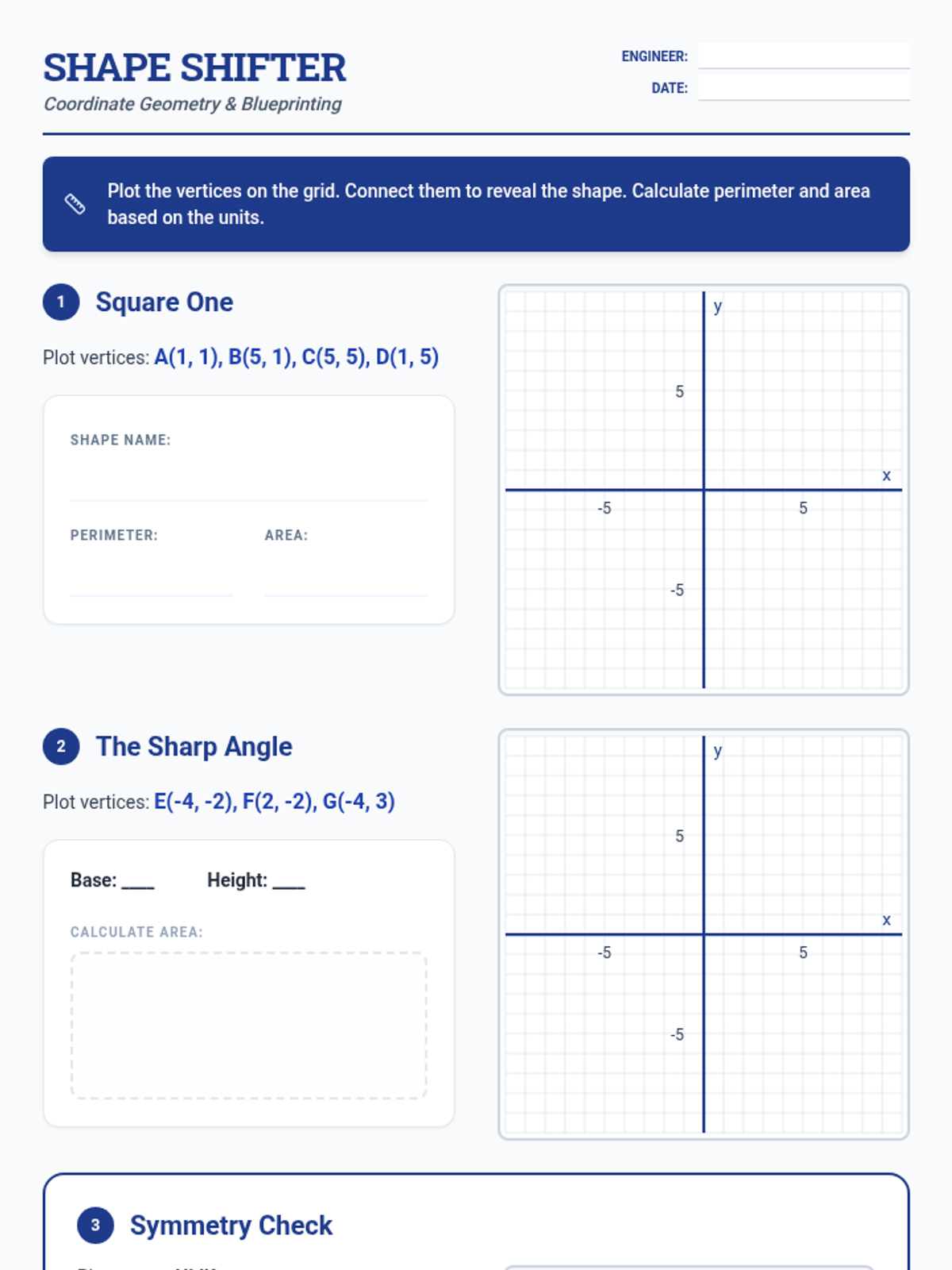
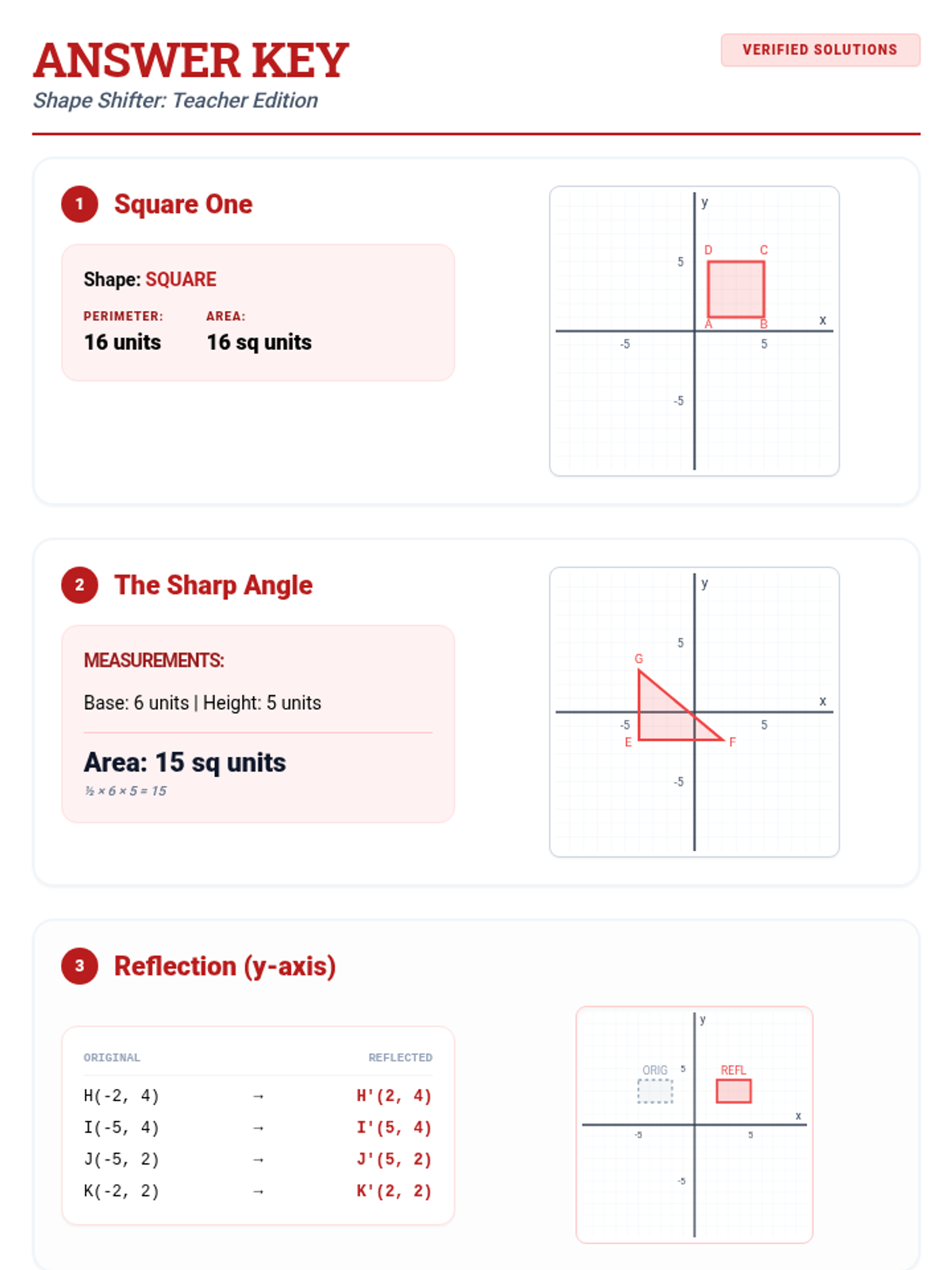
In this lesson, students will learn to plot points on a coordinate plane to create geometric shapes. They will calculate side lengths and area based on the plotted vertices, focusing on polygons in all four quadrants.
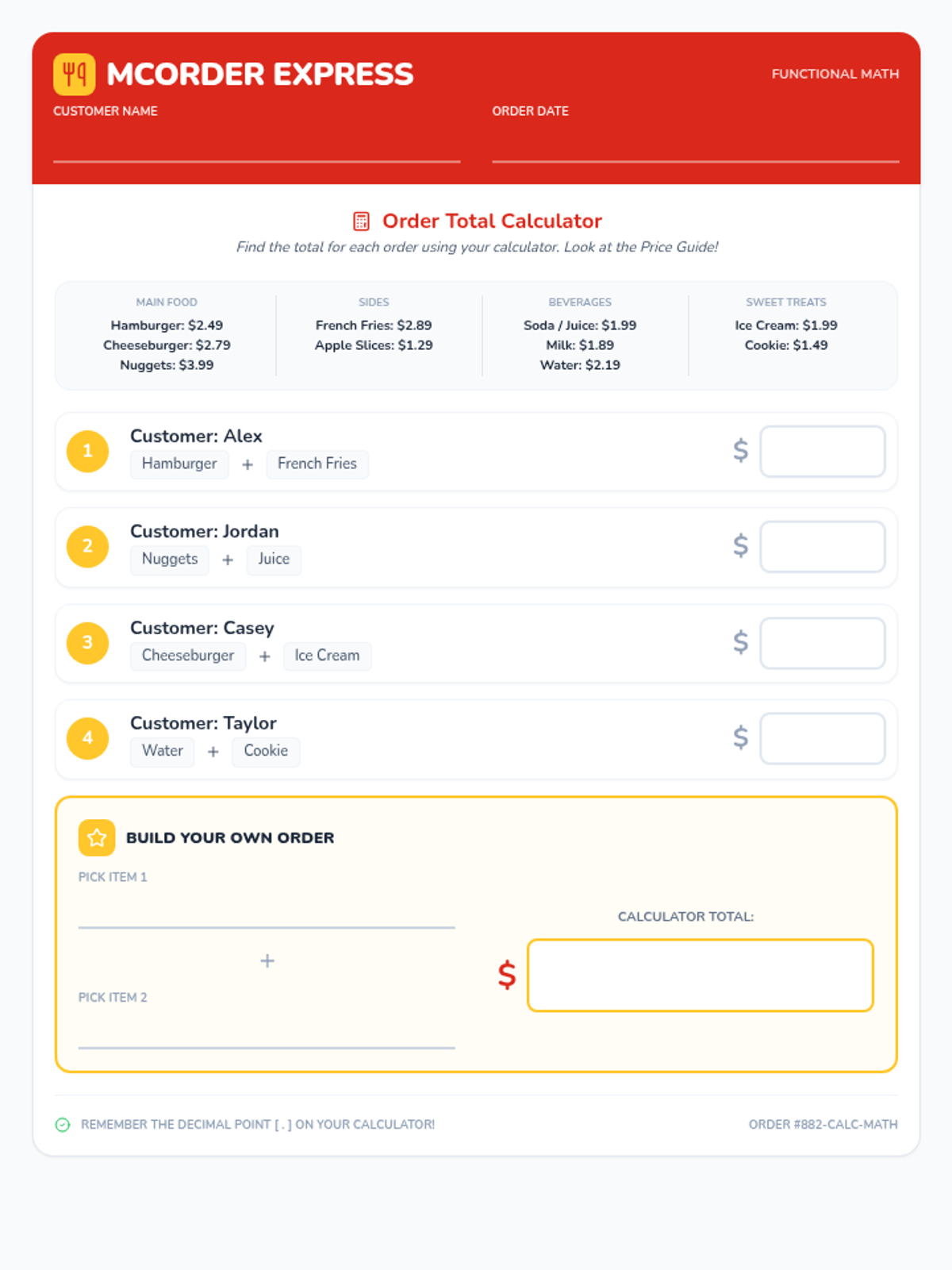
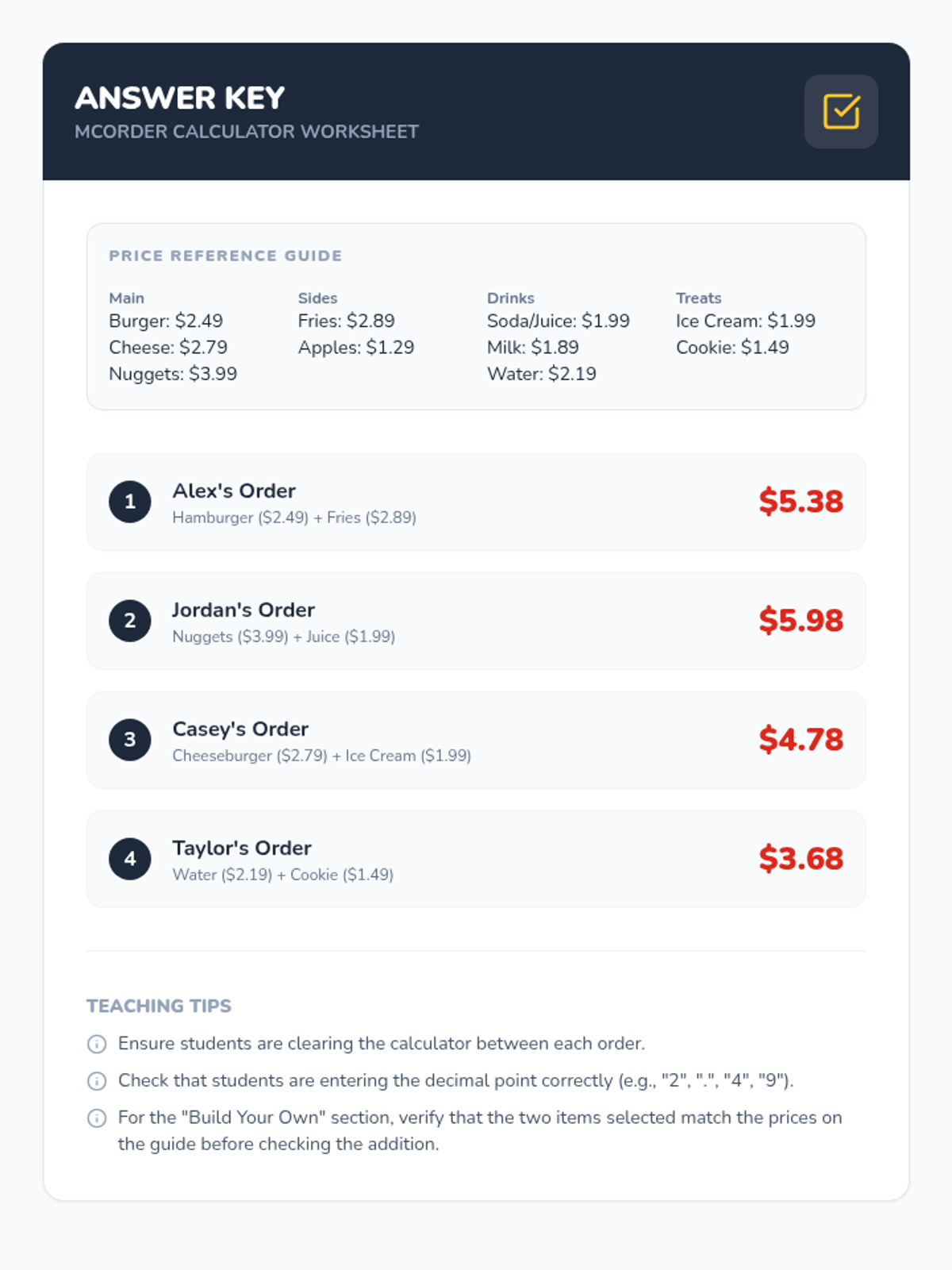
A functional math lesson focused on adding two menu items using a calculator within the context of a digital fast food ordering app. Students practice selecting items from a McDonald's-themed menu and totaling their purchases.