A photography sequence for 3rd graders focused on composition, framing, and intentional image-making. Students progress from basic camera handling to advanced concepts like the Rule of Thirds and perspective.
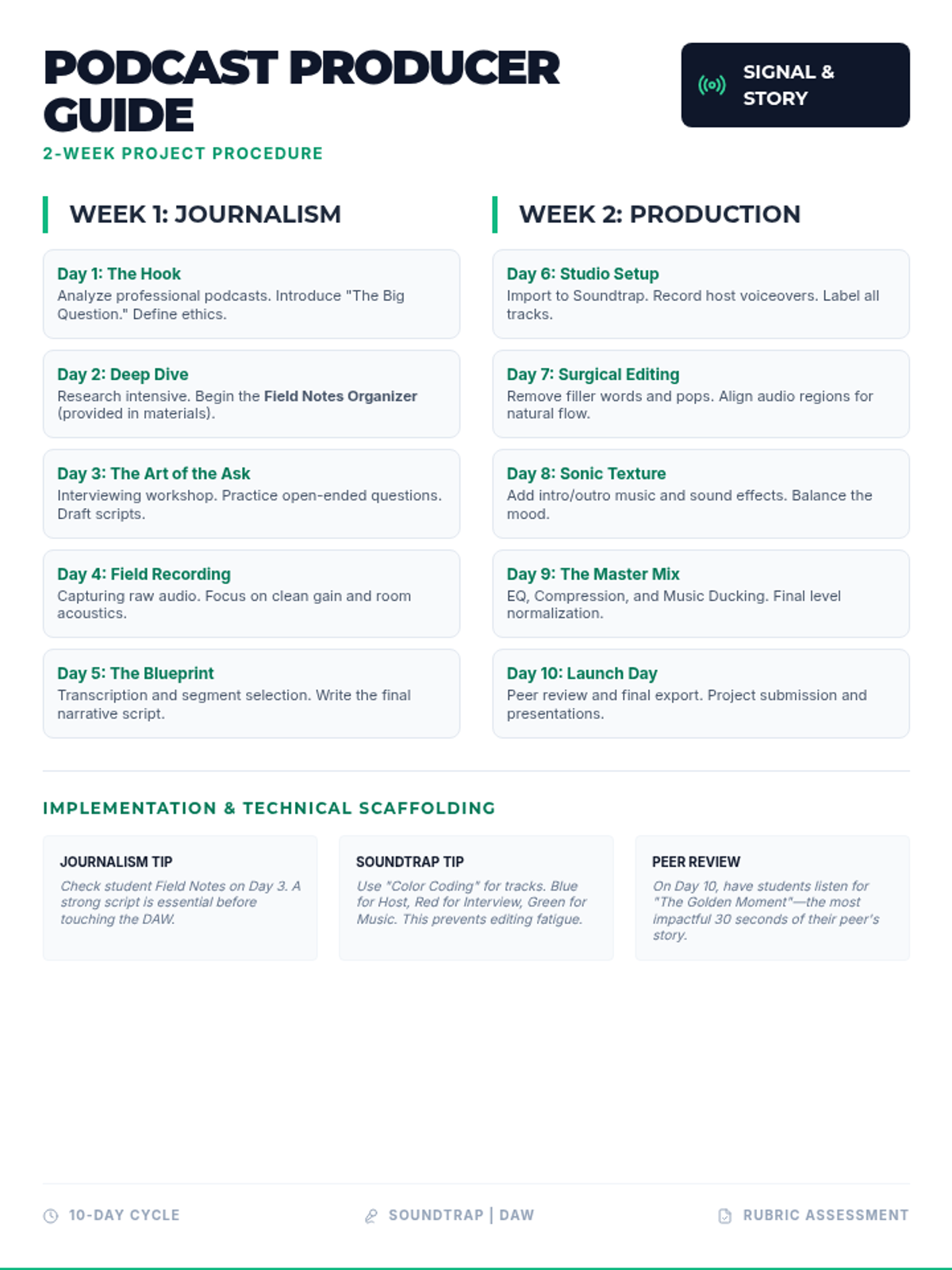
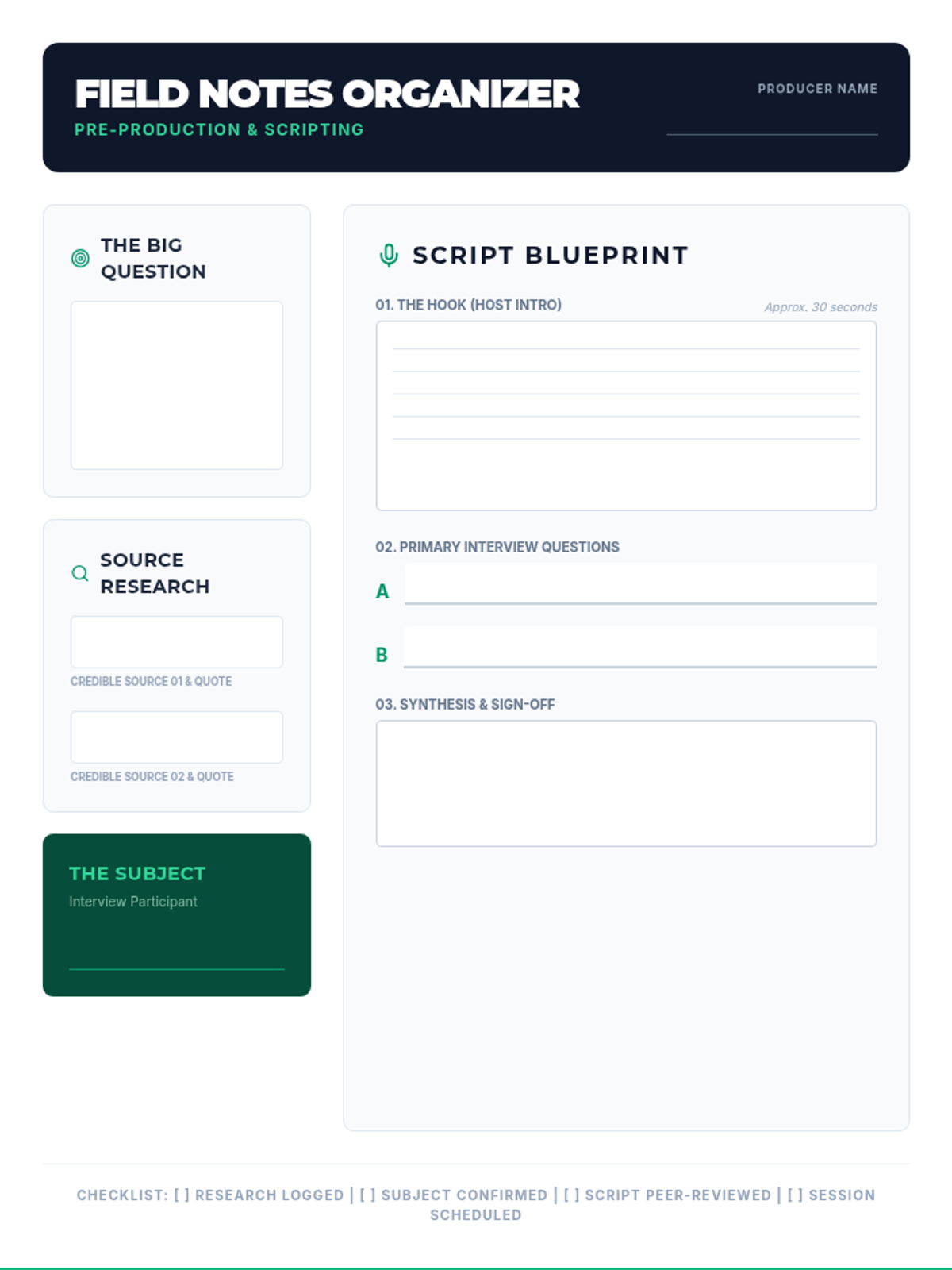
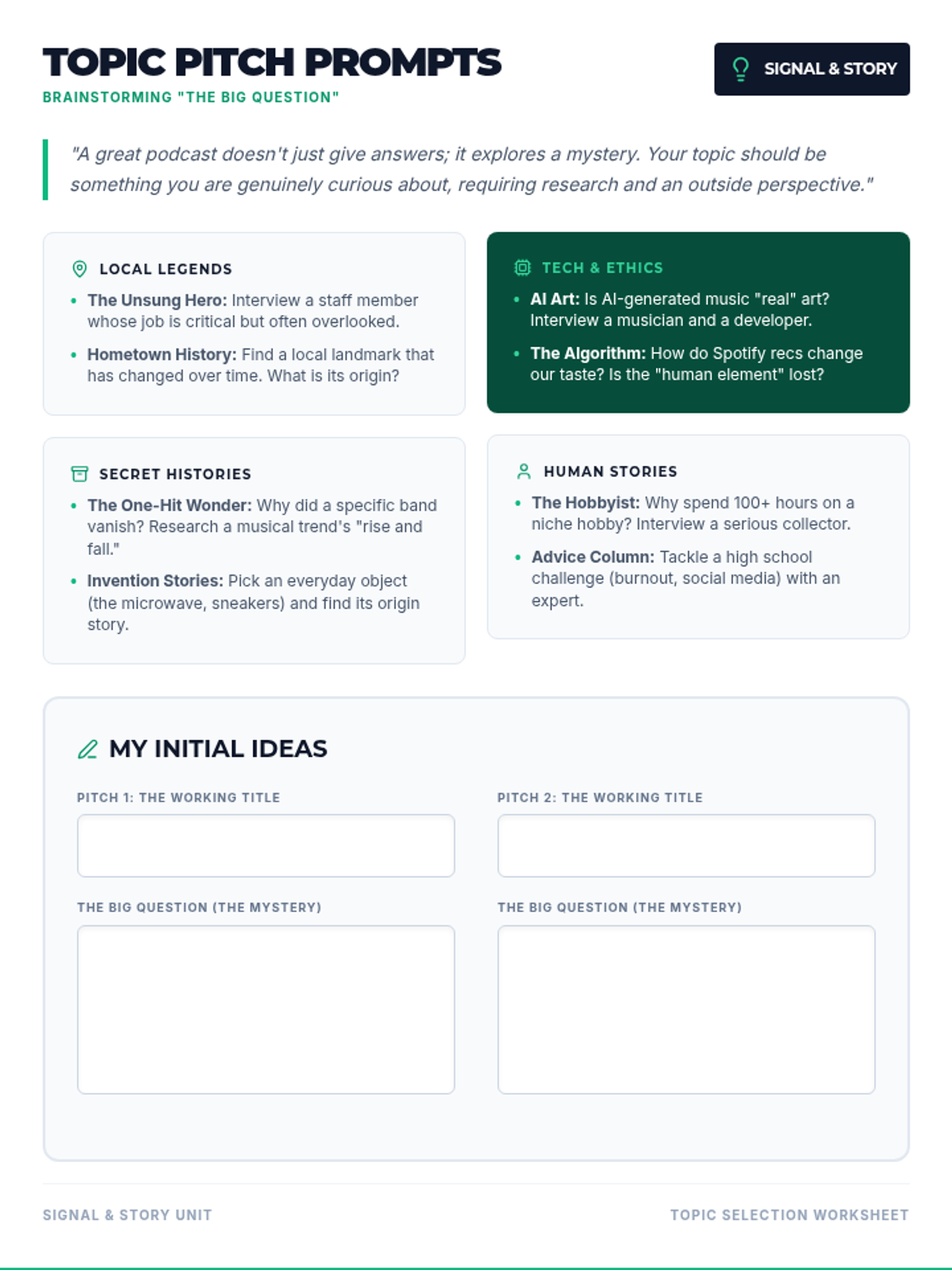
A 2-week comprehensive unit on podcast production, focusing on the intersection of journalistic research, interviewing, and technical audio mixing using Soundtrap. Students learn to craft compelling stories through sound while mastering professional digital audio workstation (DAW) workflows.
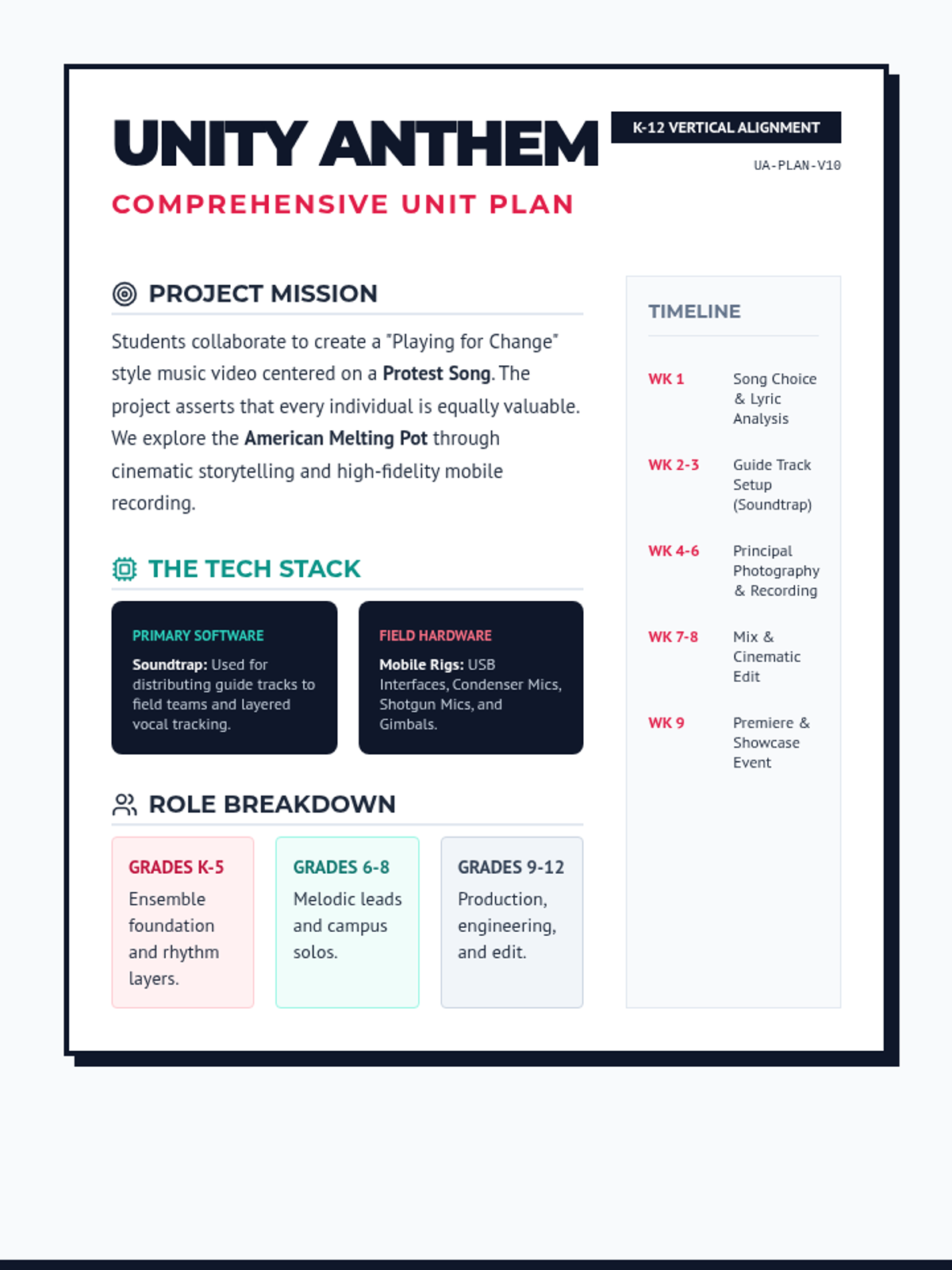
A K-12 collaborative music video project where students across all grade levels work together to produce a 'Playing for Change' style cover of a protest song centered on equality and cultural identity. High school students lead production, while K-8 students provide the musical and visual heart of the performance.
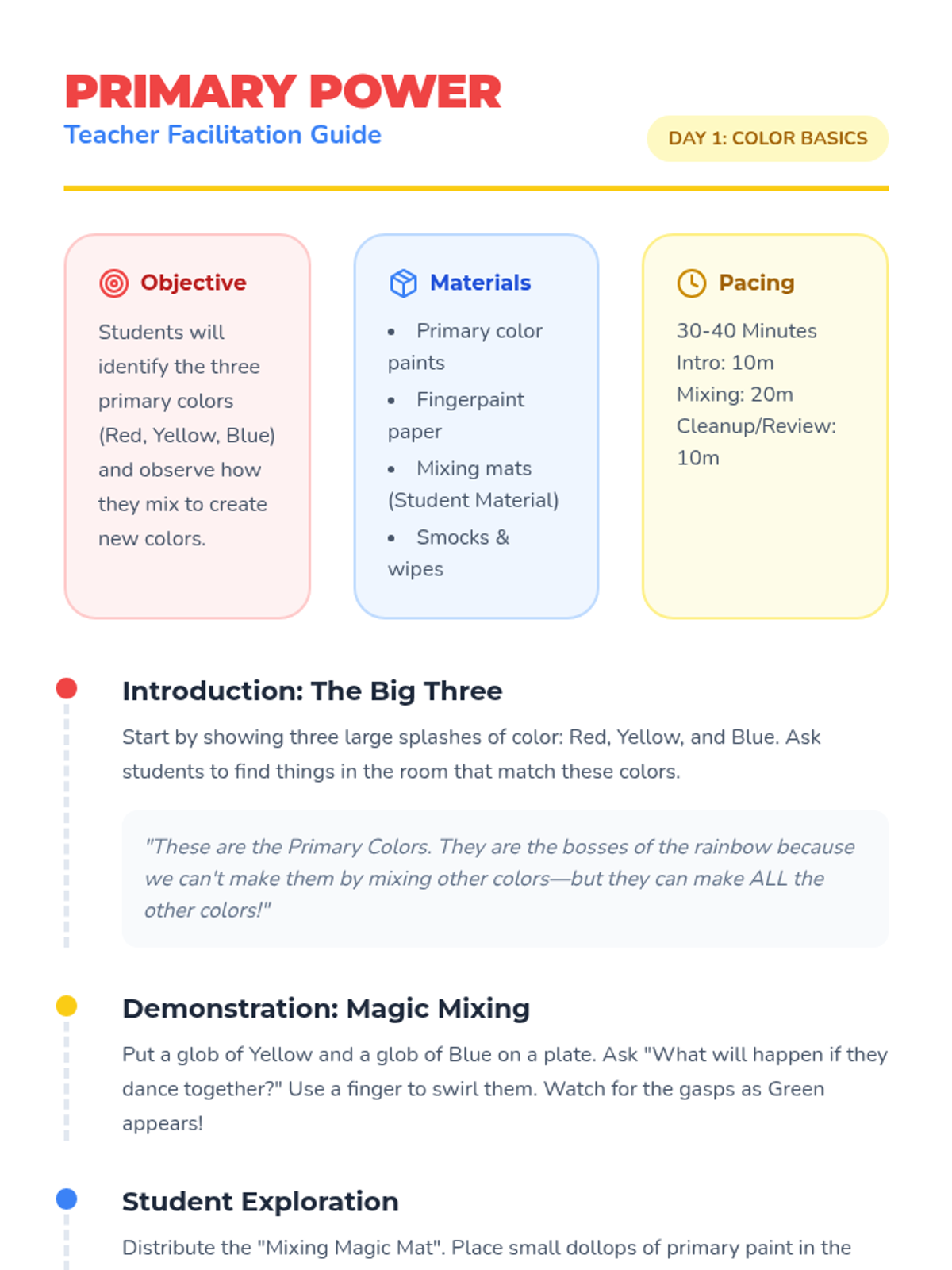
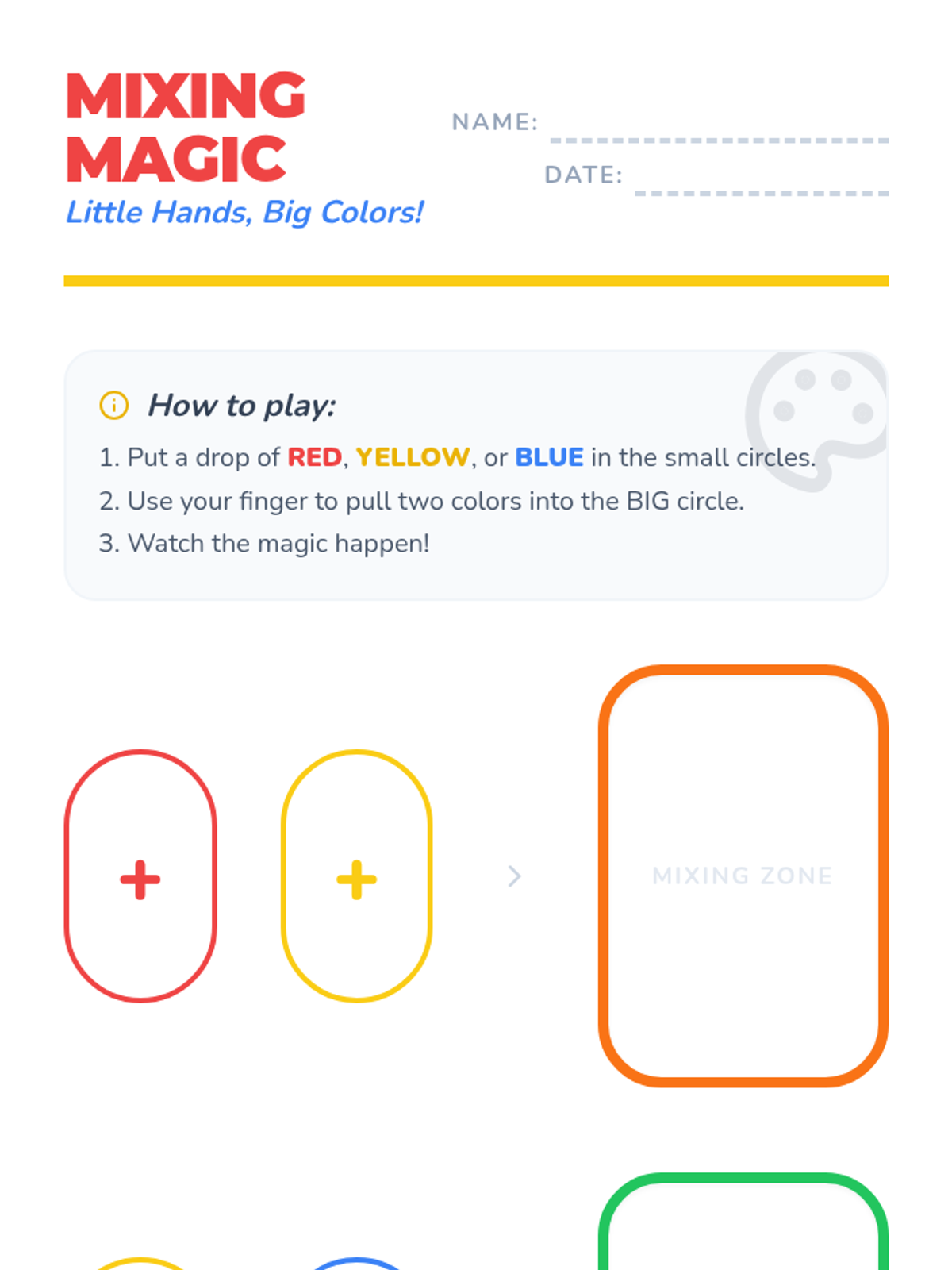
A week-long exploration of visual arts and painting for preschool students, focusing on primary colors, textures, shapes, emotions, and exhibition.
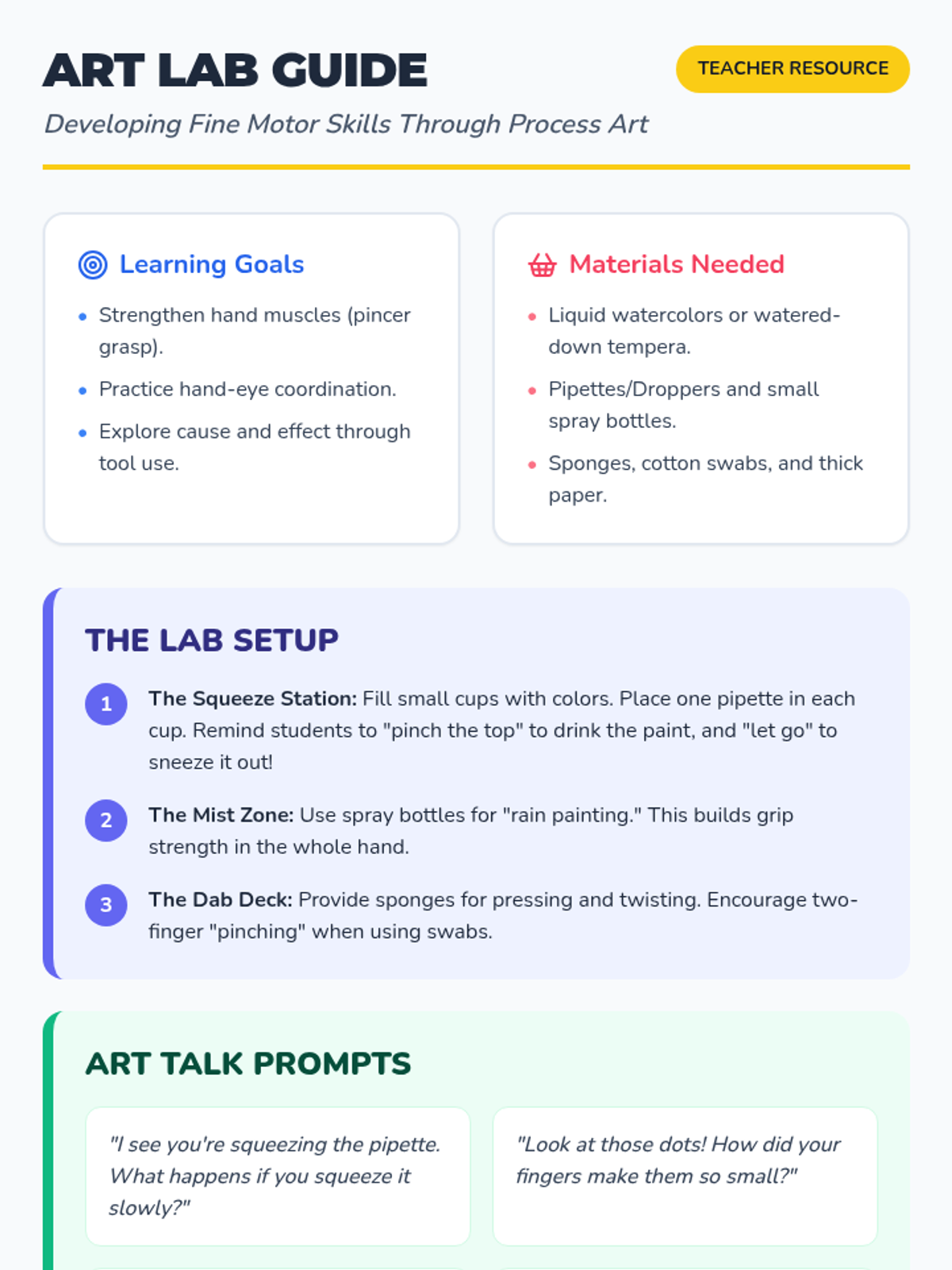
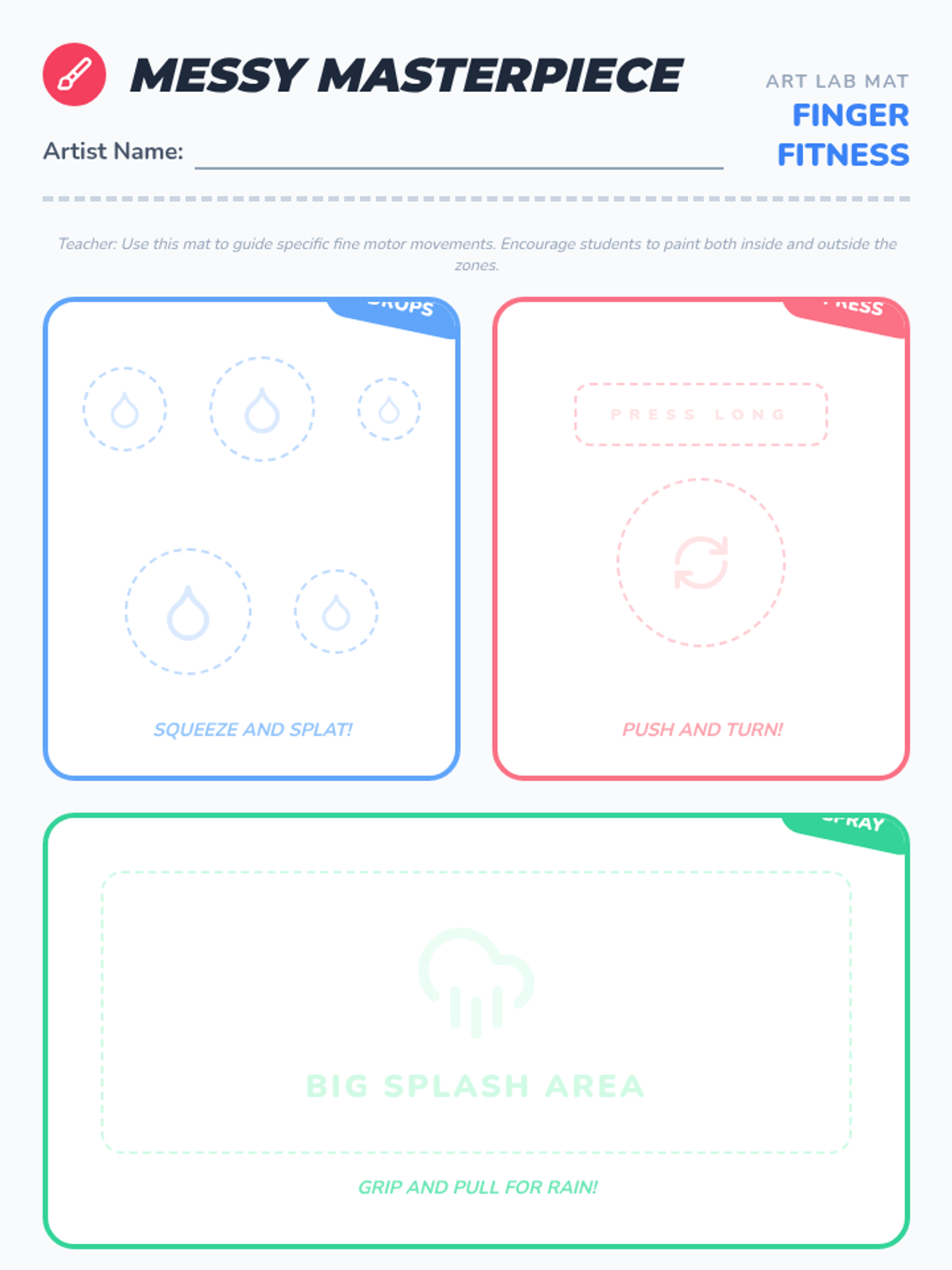
A preschool fine arts unit focused on process art and fine motor development, where students explore different textures, tools, and movements to create without the pressure of a final product.
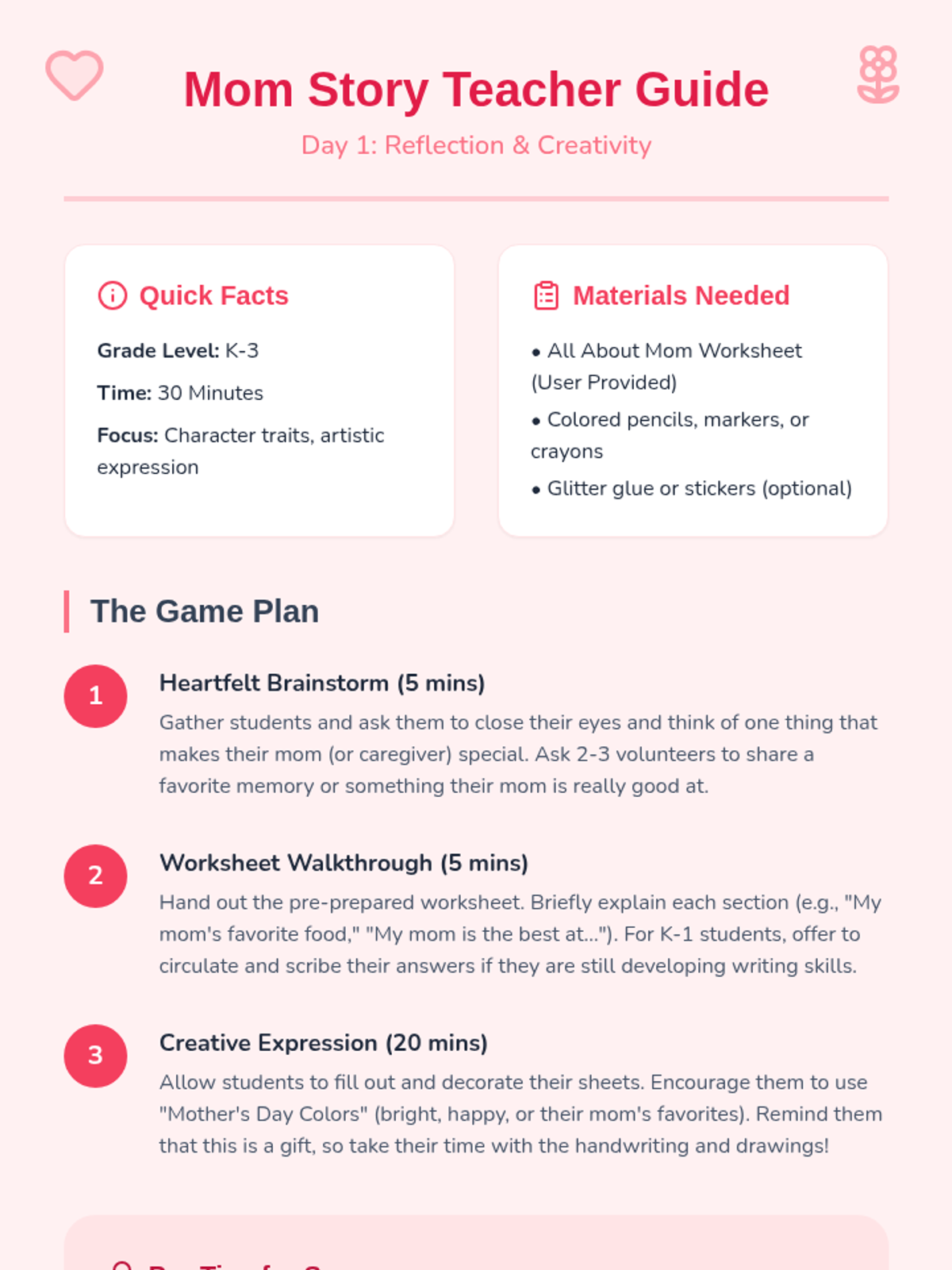
A four-day Mother's Day gift-making unit for grades K-3. Students will complete a worksheet, sculpt and paint clay keepsakes, and create custom gift packaging with optional beaded jewelry.
A creative exploration of graphic novel elements, focusing on visual storytelling, character depth, and symbolic representation.
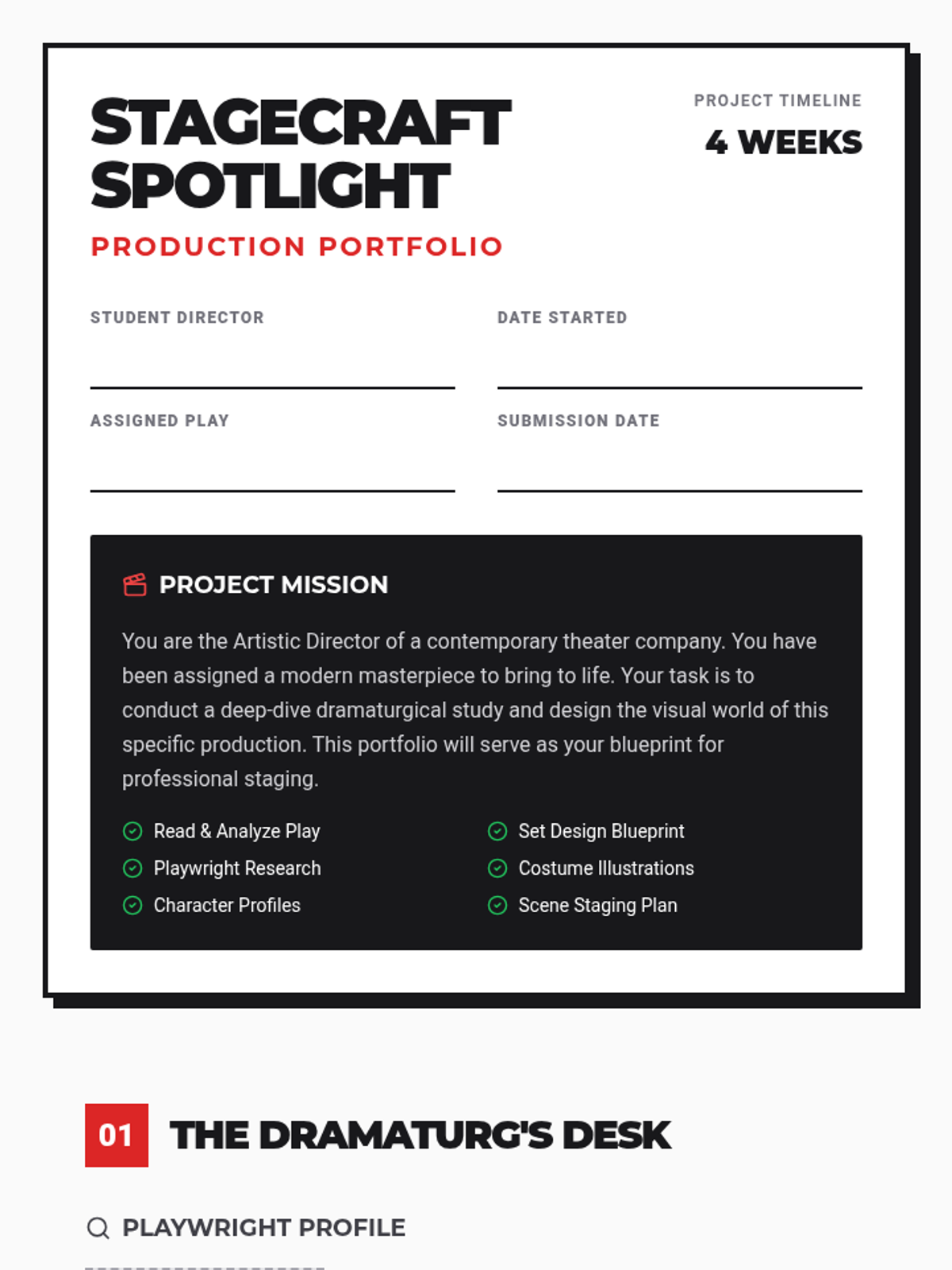
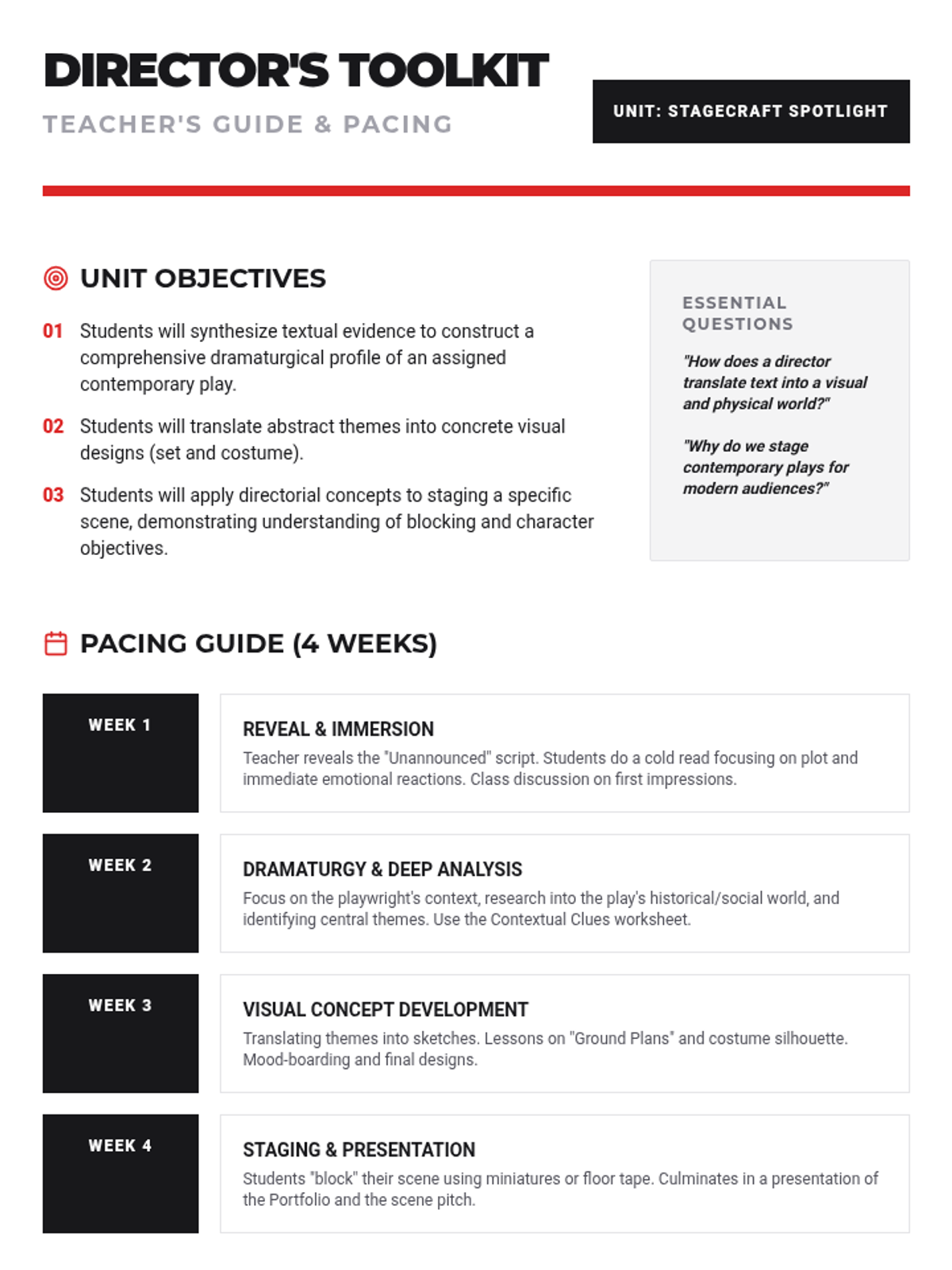
A comprehensive four-week unit and independent study guide for contemporary drama. Students analyze scripts, research playwrights, design technical elements, and stage scenes for a final production portfolio.
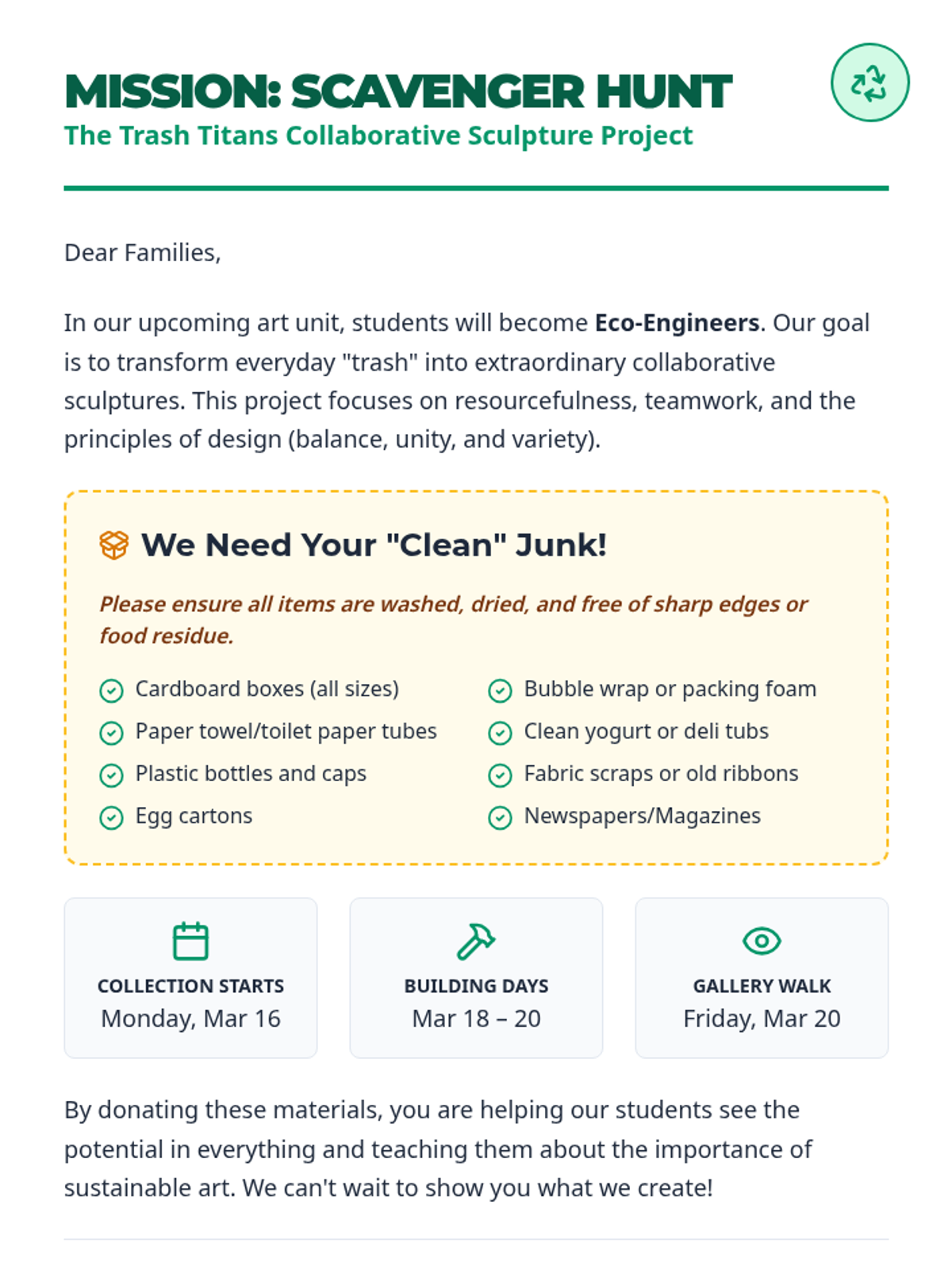
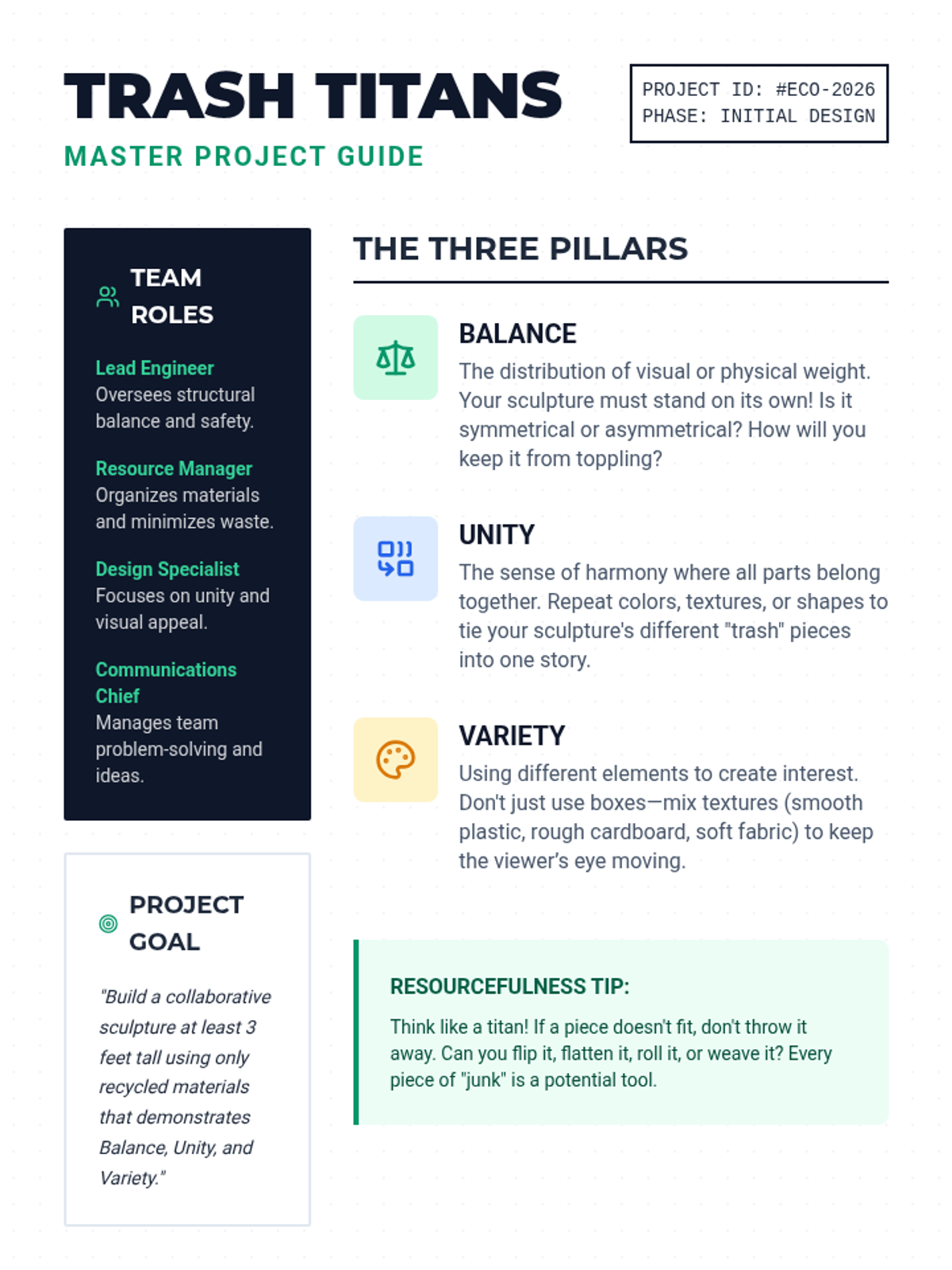
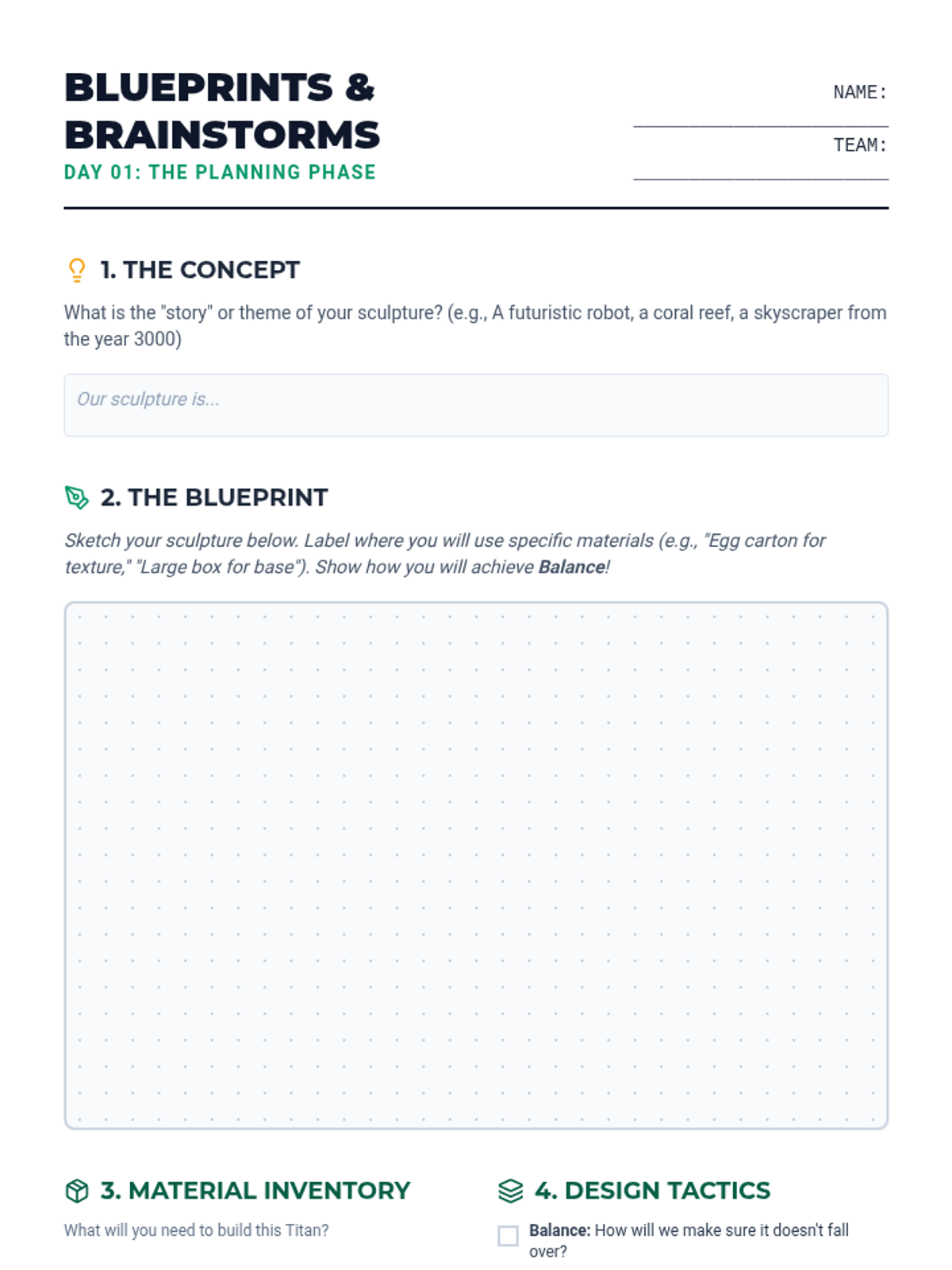
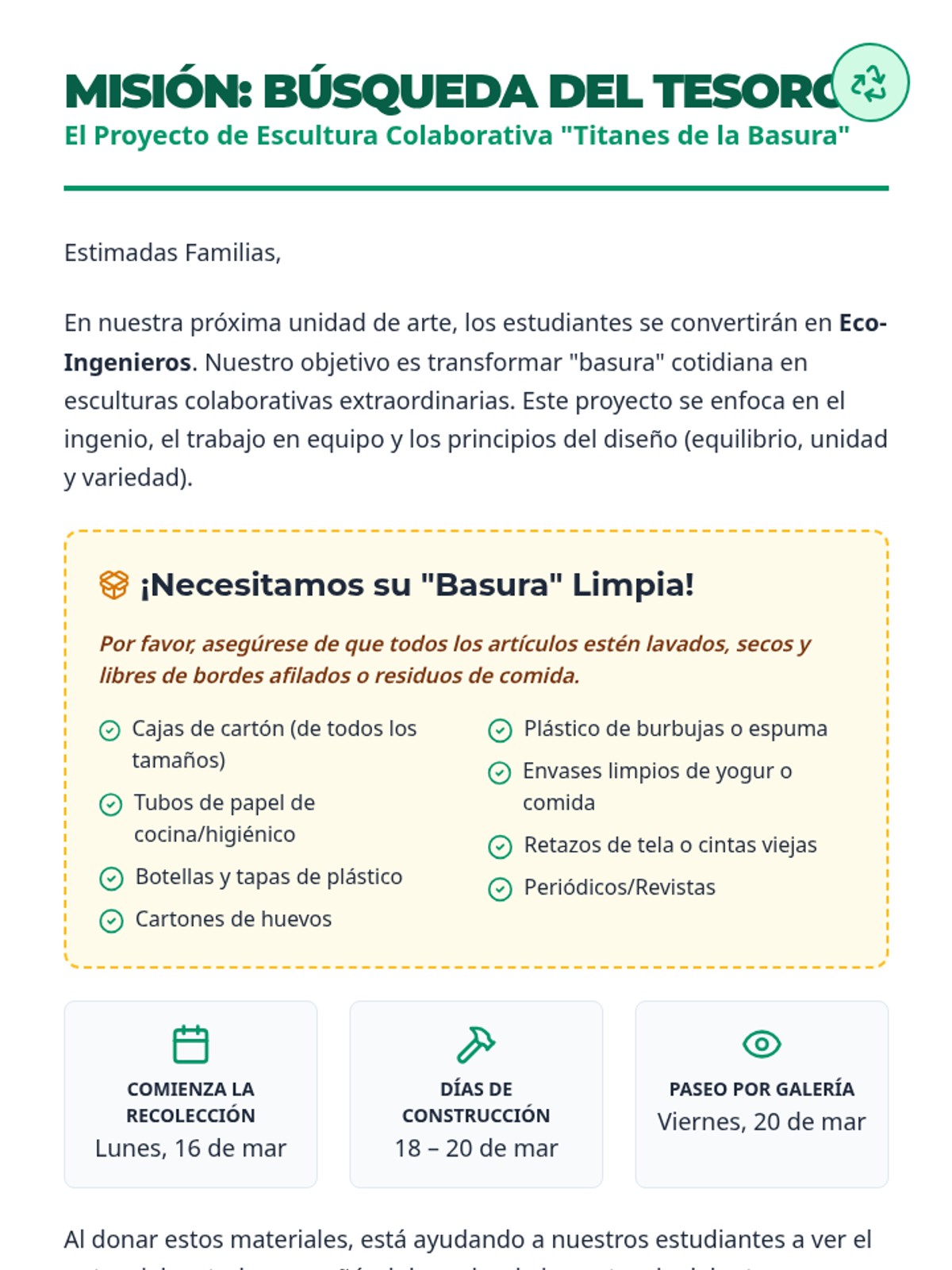
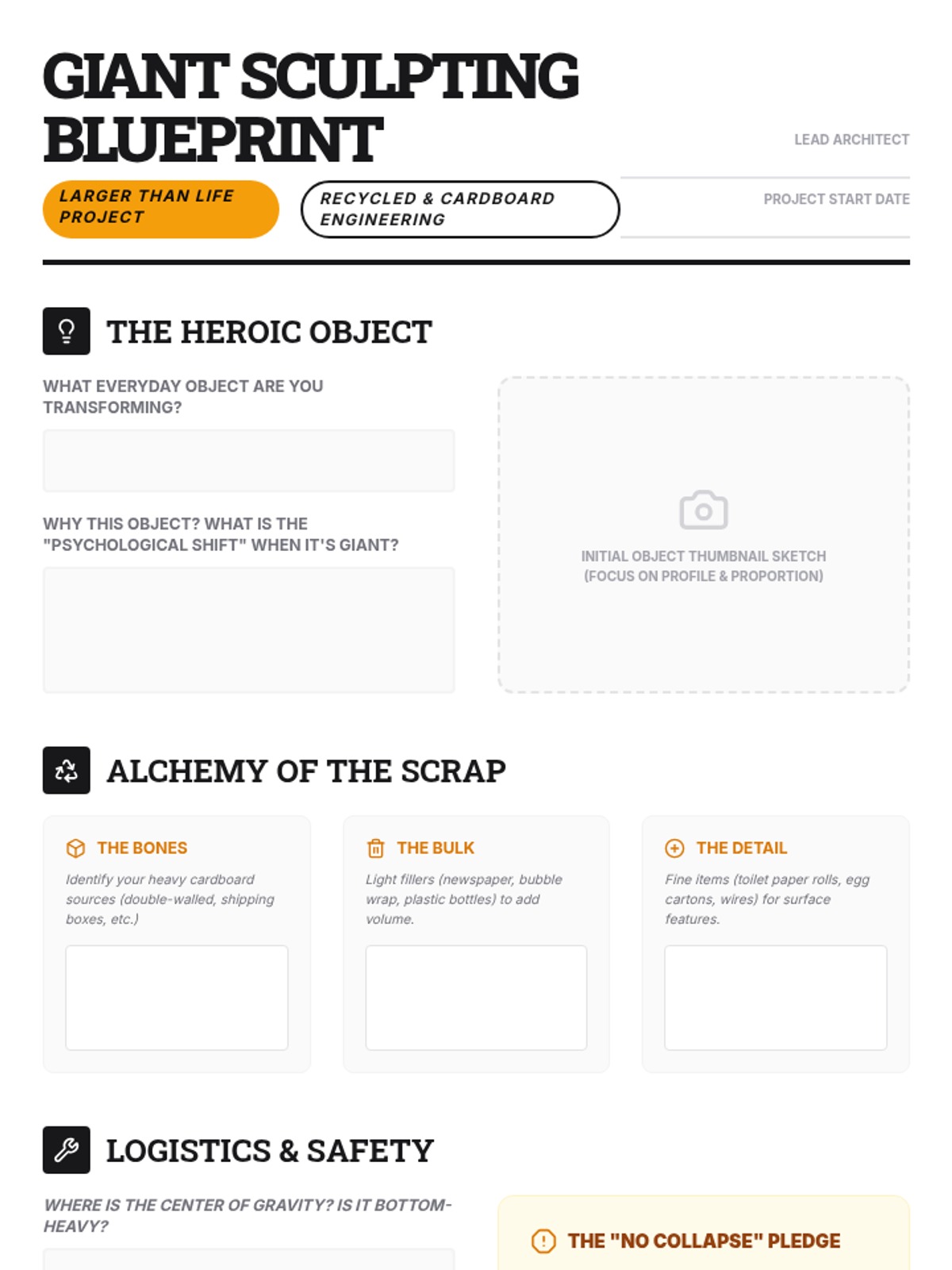
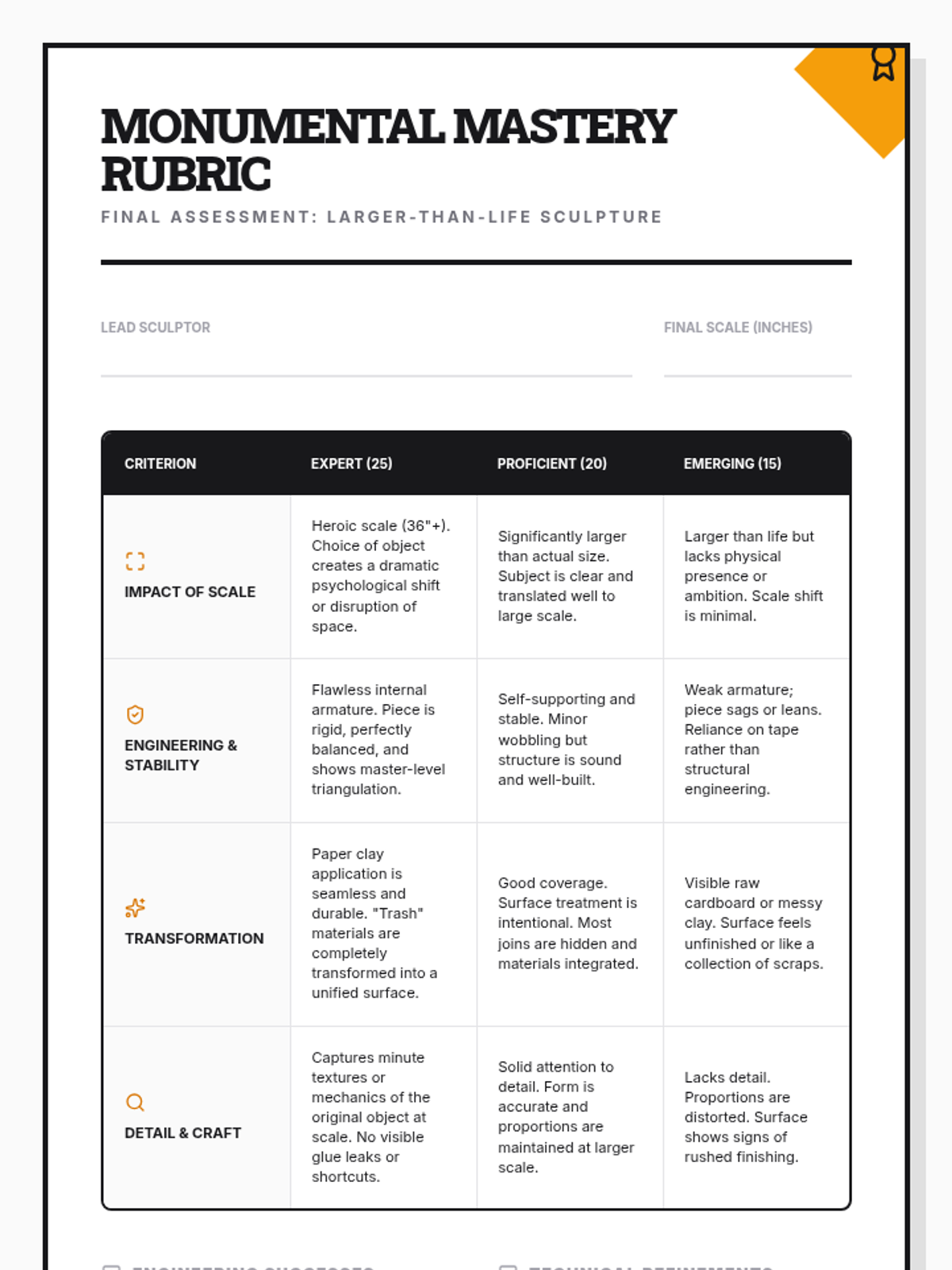
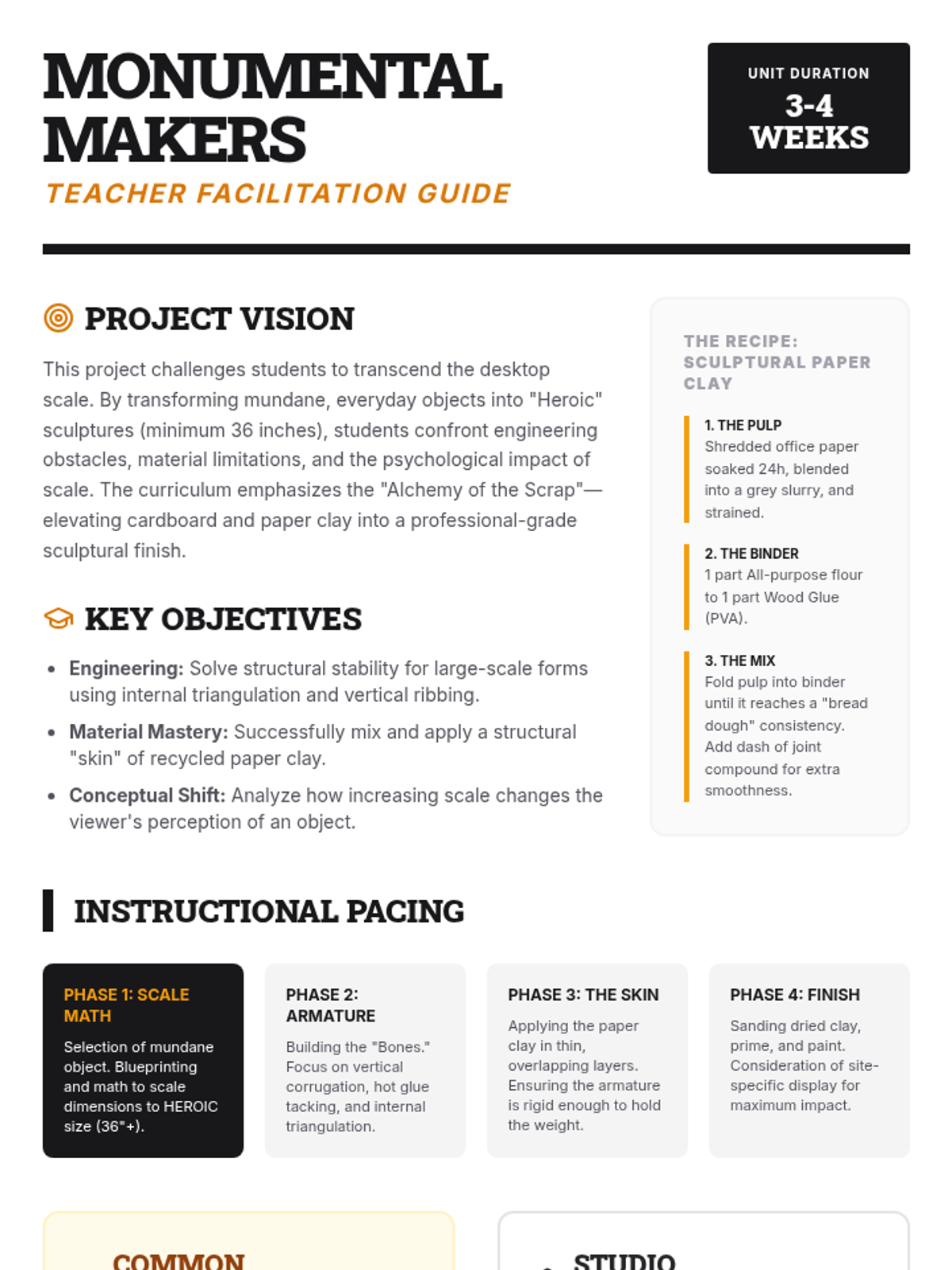
A 3-day collaborative art project where students transform recycled materials into large-scale sculptures while applying principles of design and creative problem-solving.
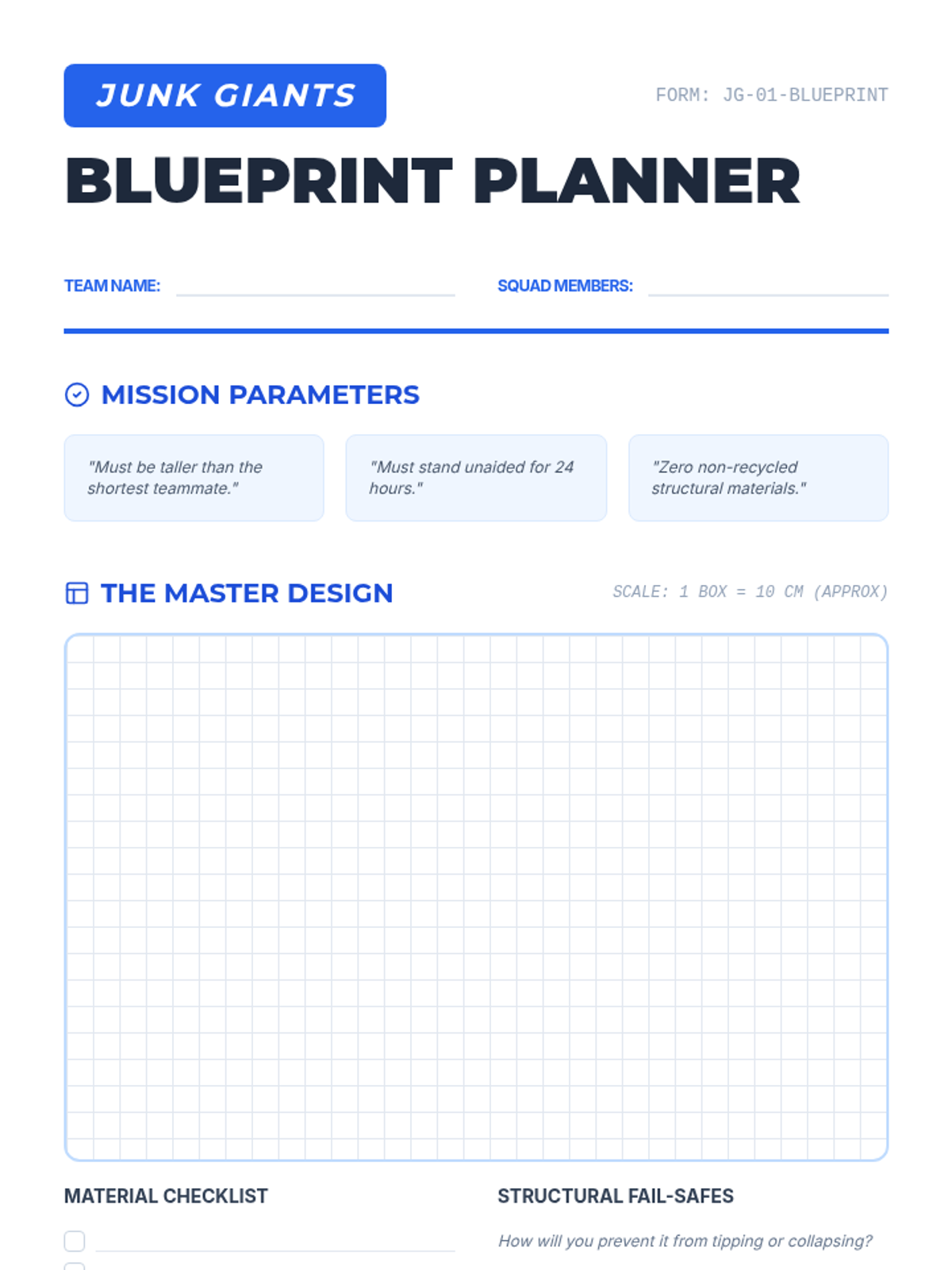
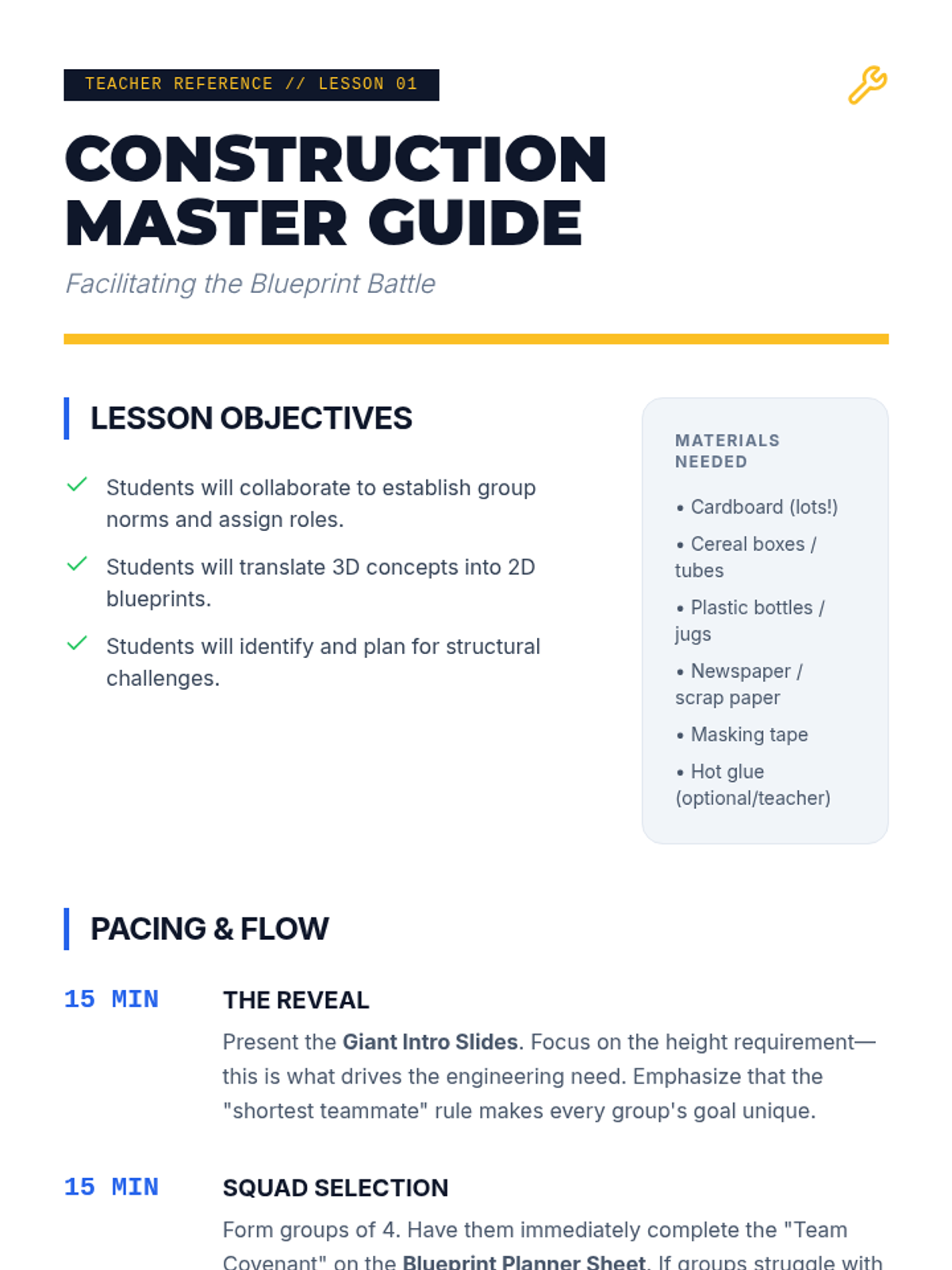
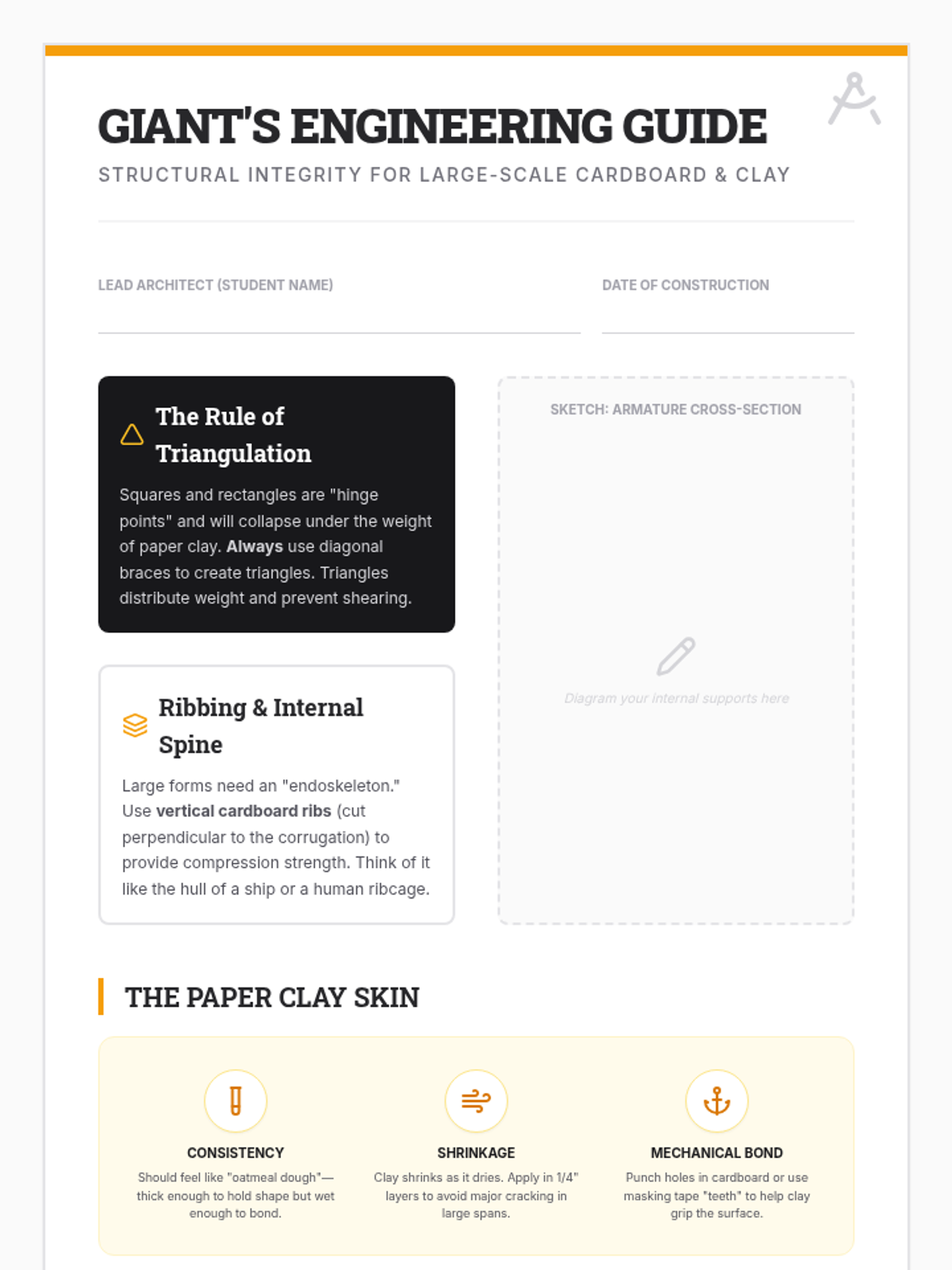
A 3-day collaborative sculpture project where students transform recycled materials into massive structures while overcoming engineering challenges.
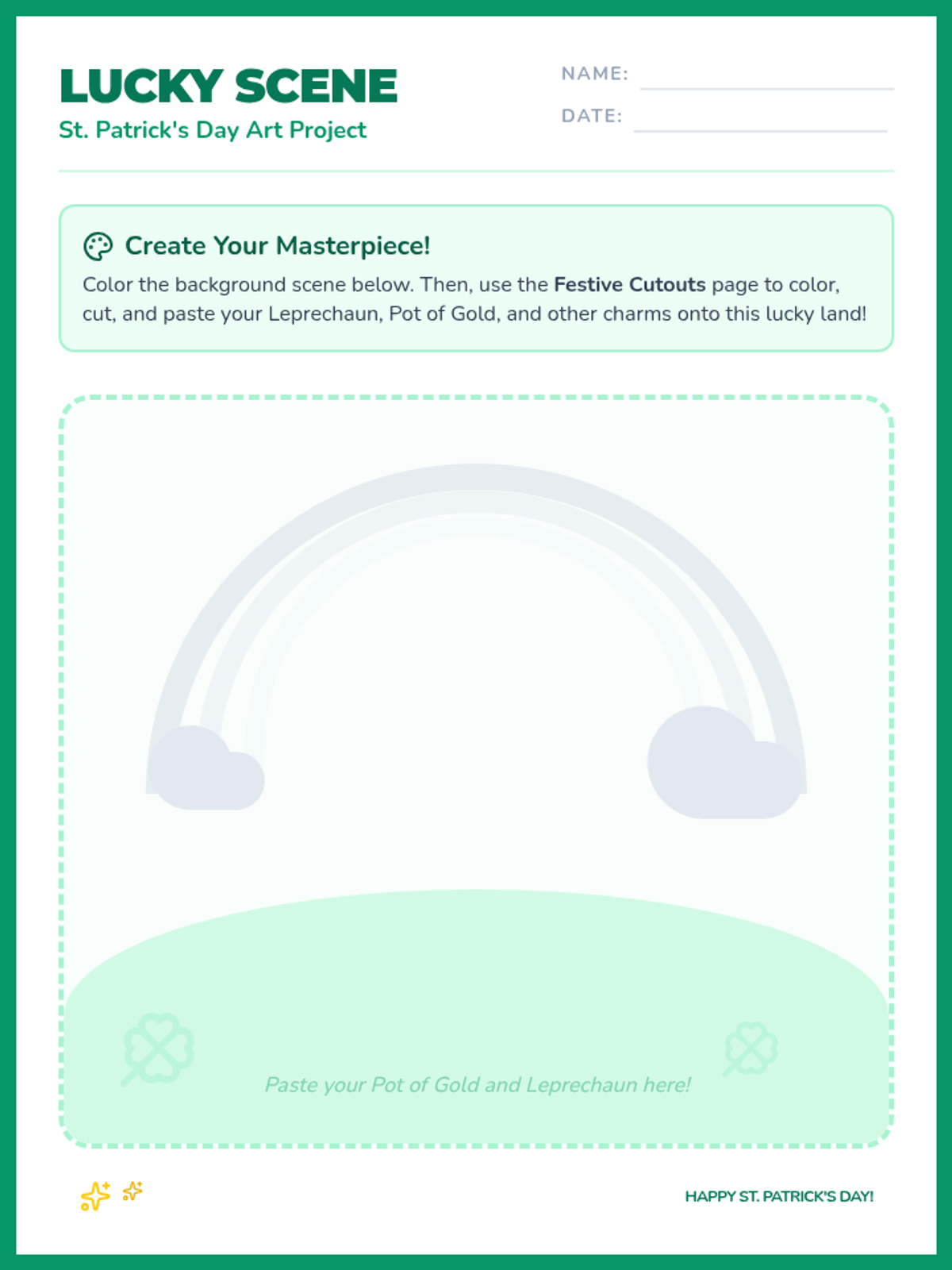
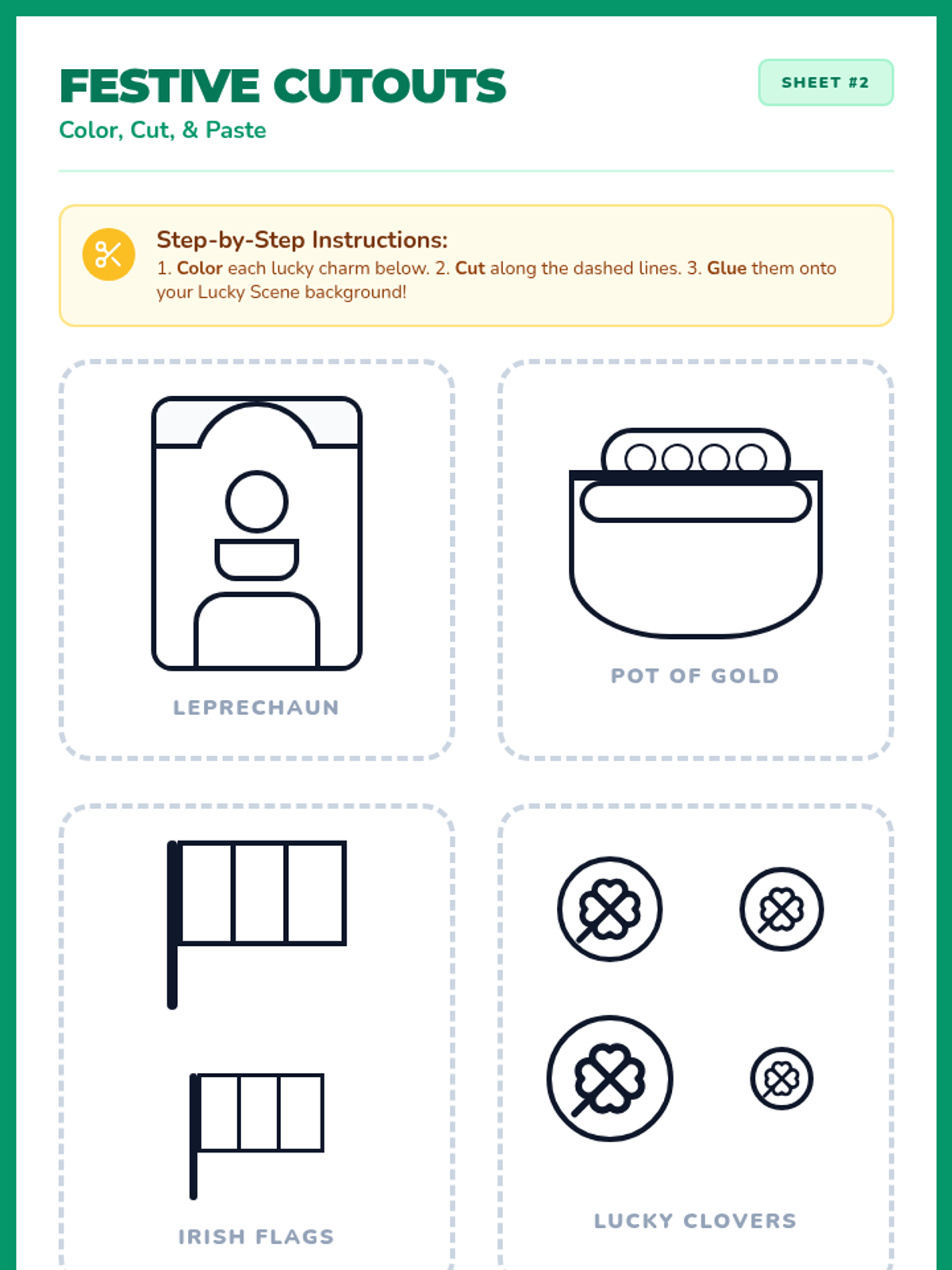
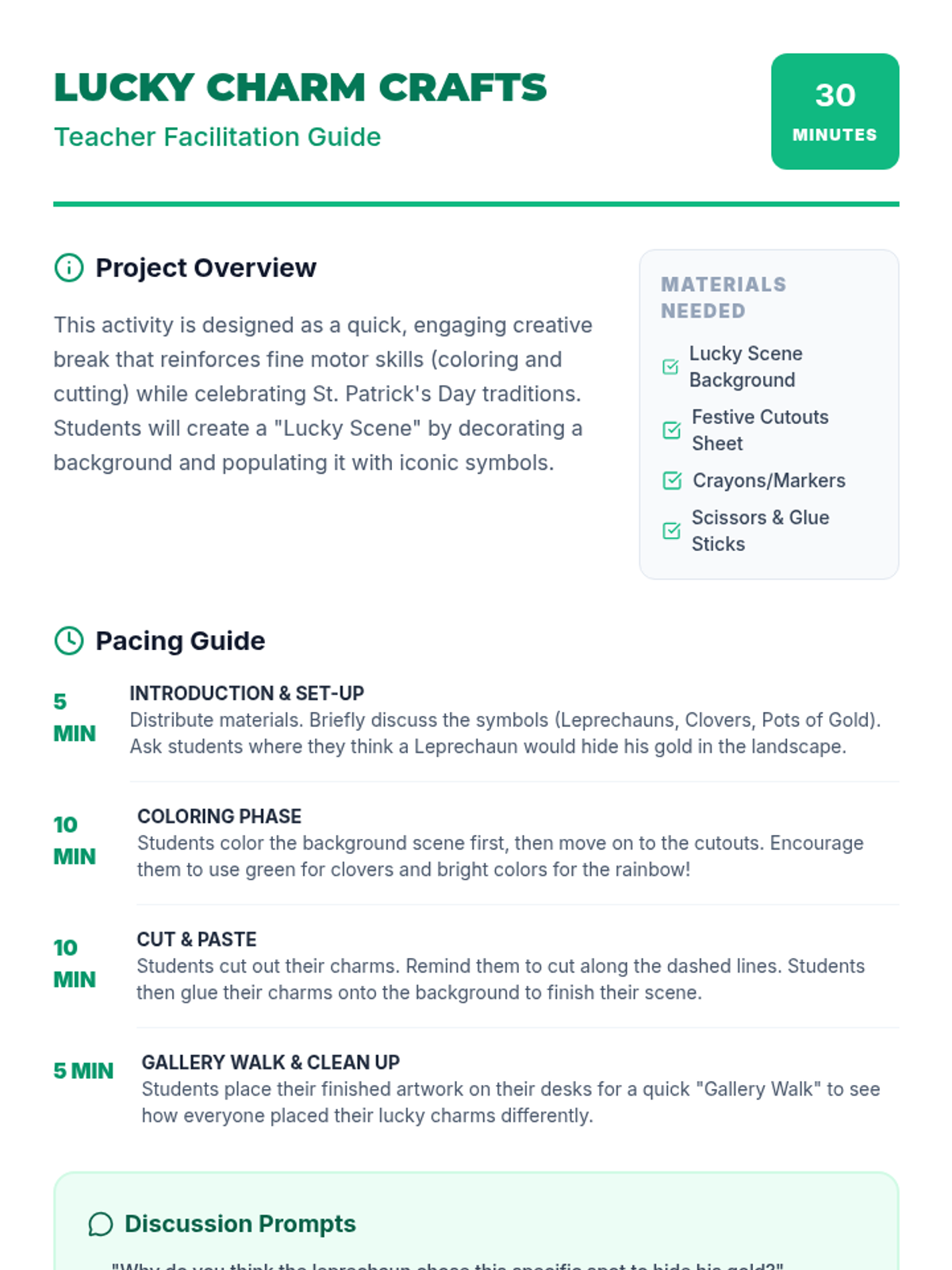
A festive art and culture sequence centered around St. Patrick's Day traditions and symbols.
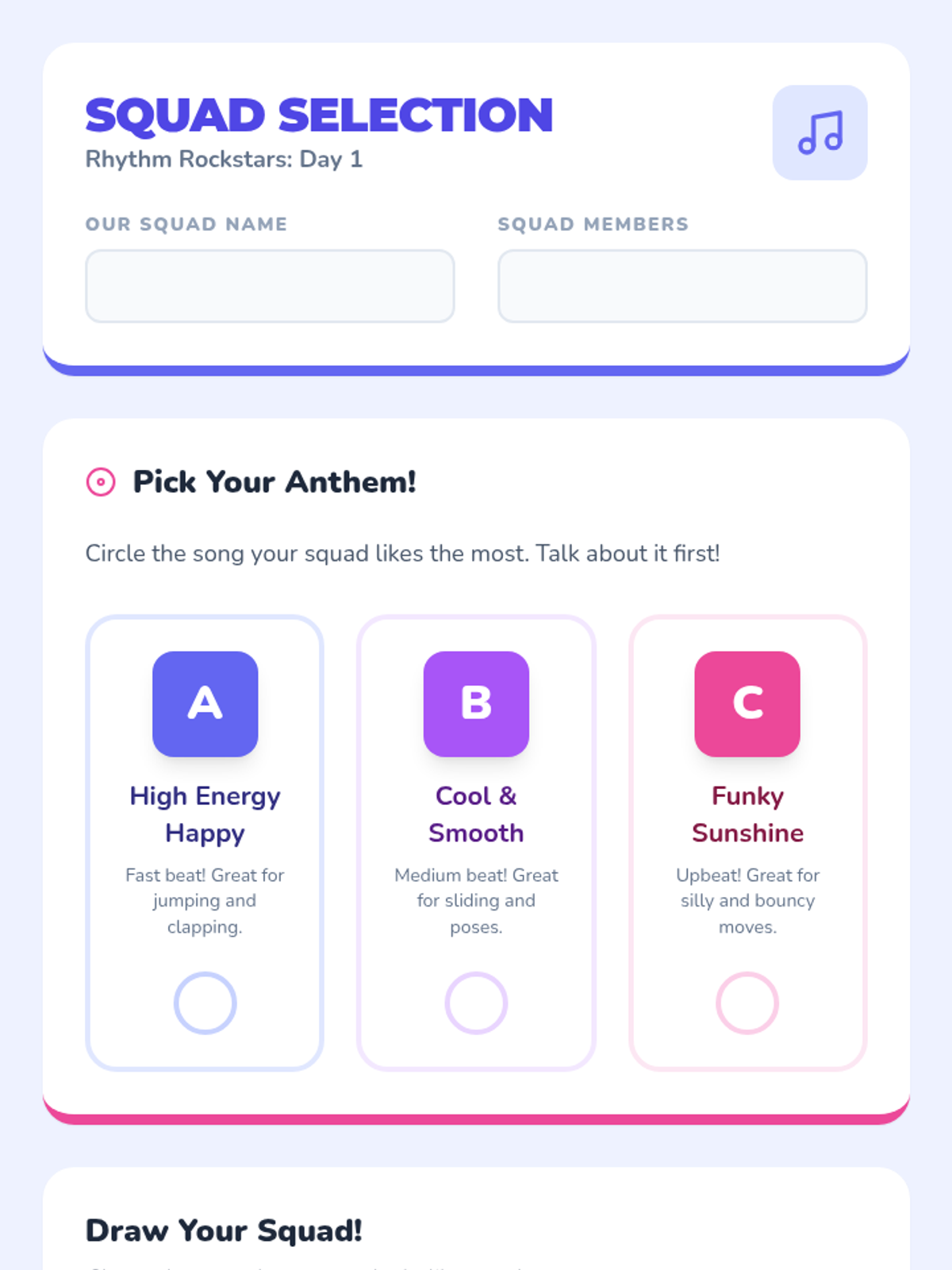
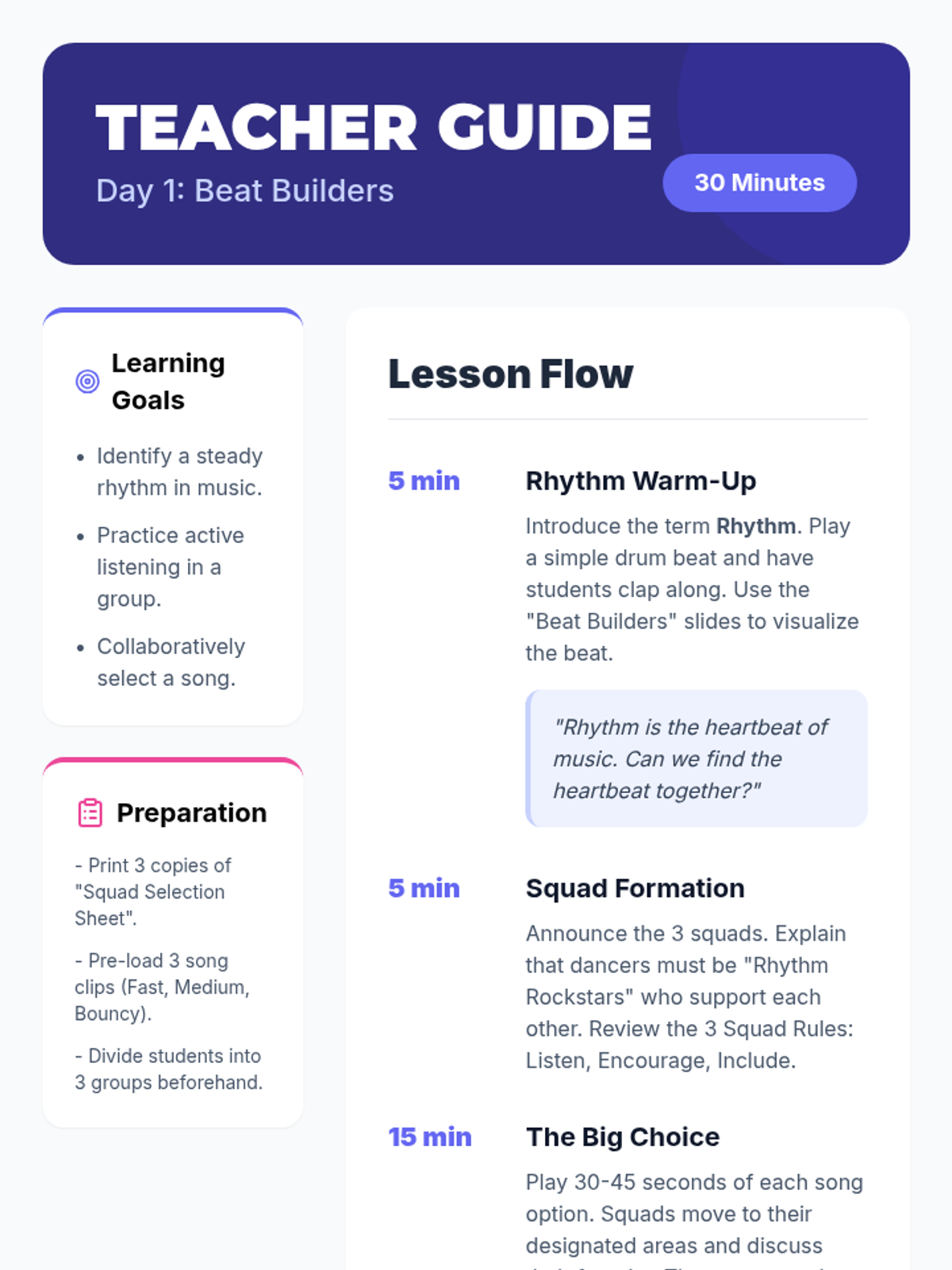
A four-day music and movement unit for K-3 students focused on collaboration, rhythm, and creative choreography. Groups work together to select songs and build original dance routines.
A comprehensive 3D art unit that guides students from transforming recycled materials to mastering monumental scale, combining fine arts history with engineering and technical skill.
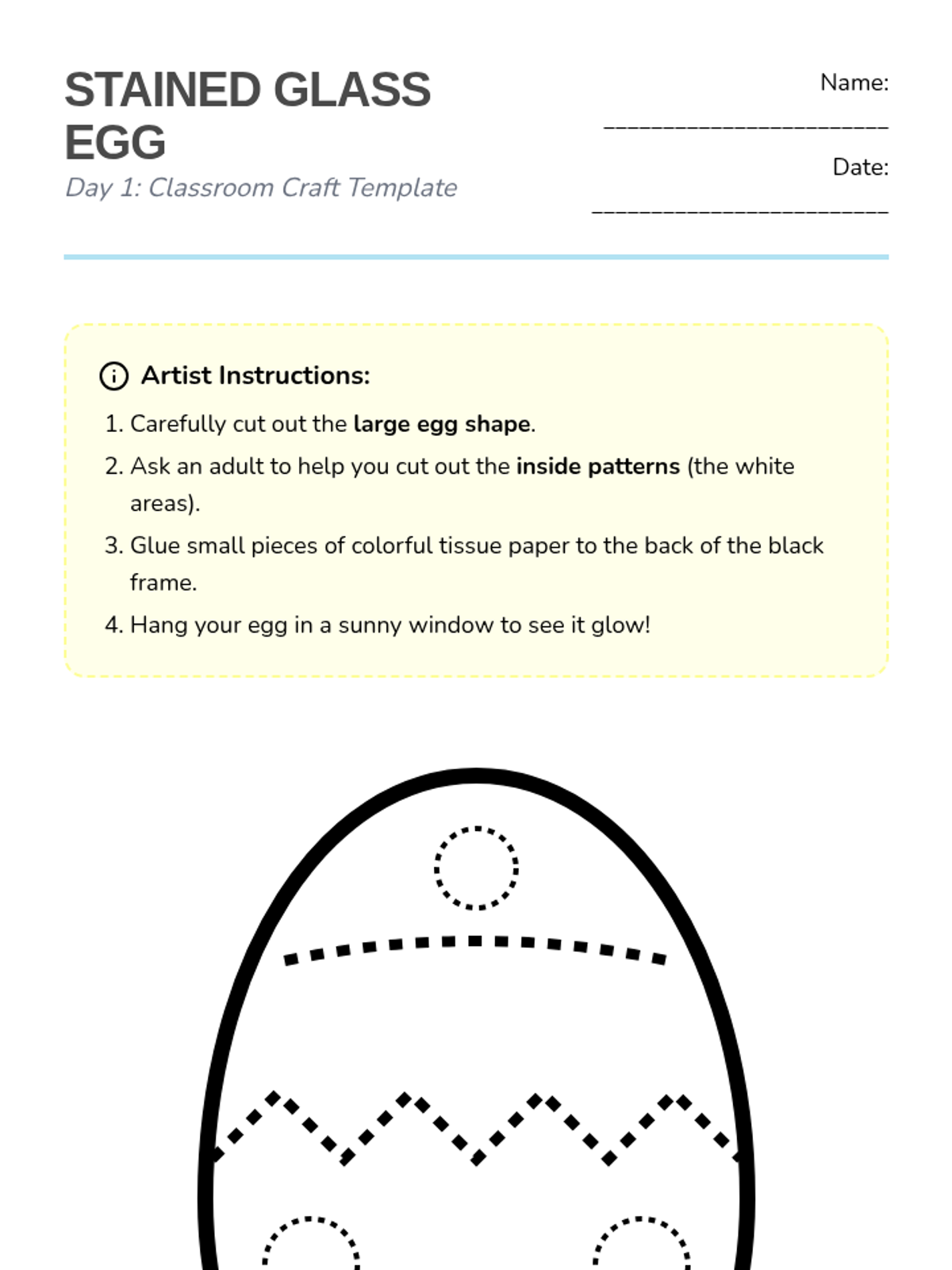
A four-day Easter unit for K-3 students exploring the history and symbols of Easter through hands-on crafts and outdoor movement activities. Each day focuses on a different tradition: eggs, bunnies, flowers, and community celebration.
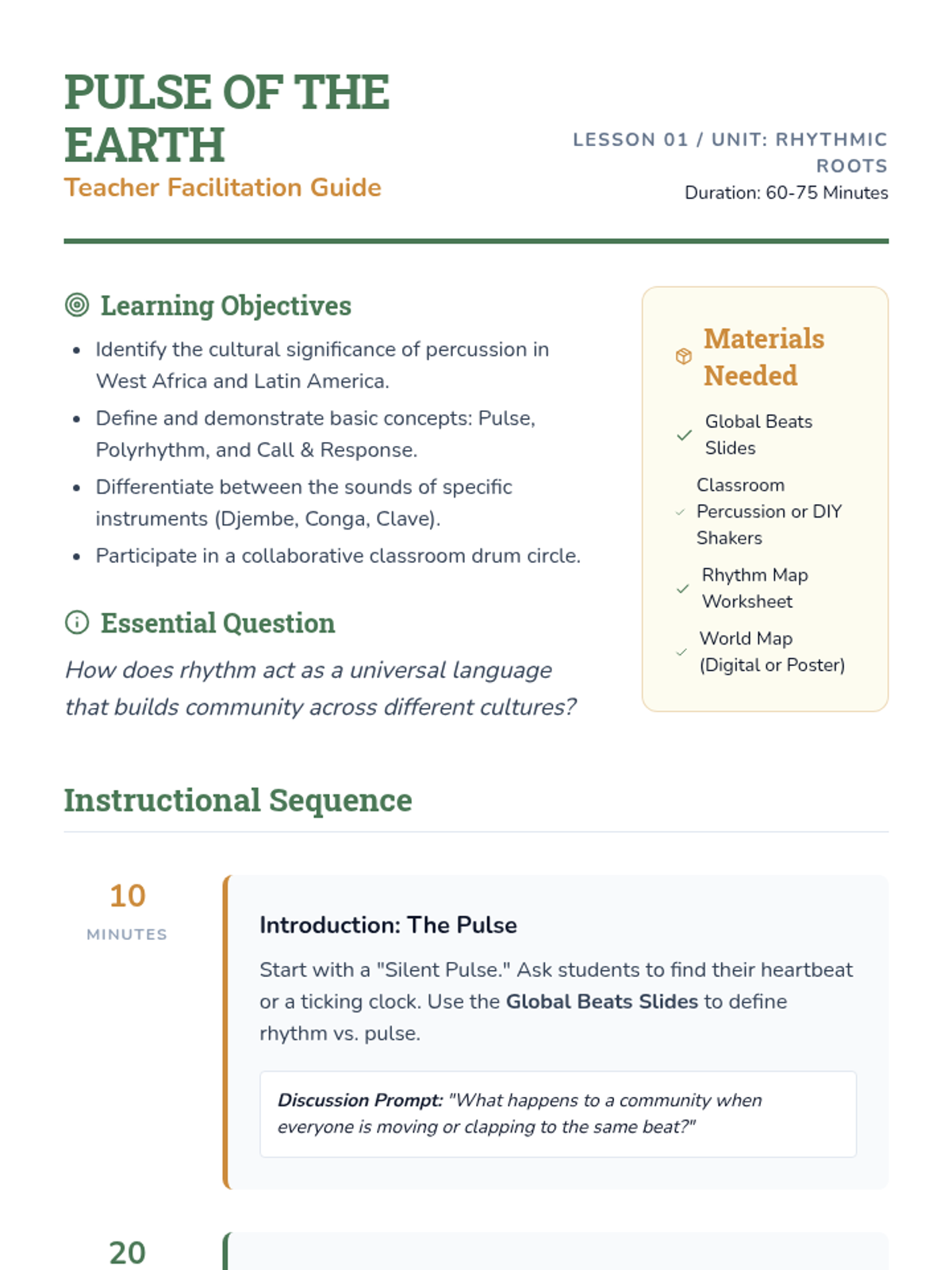
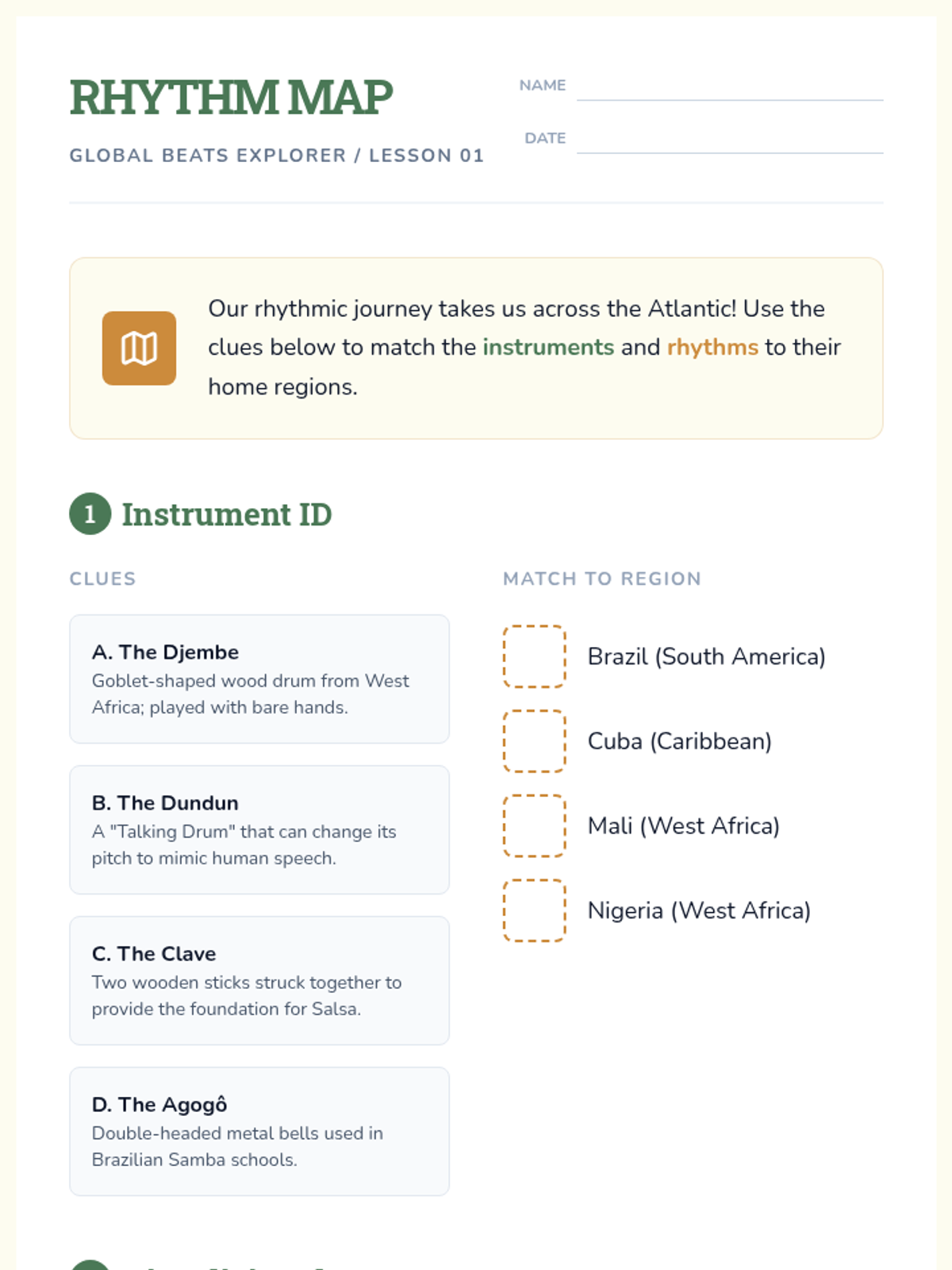
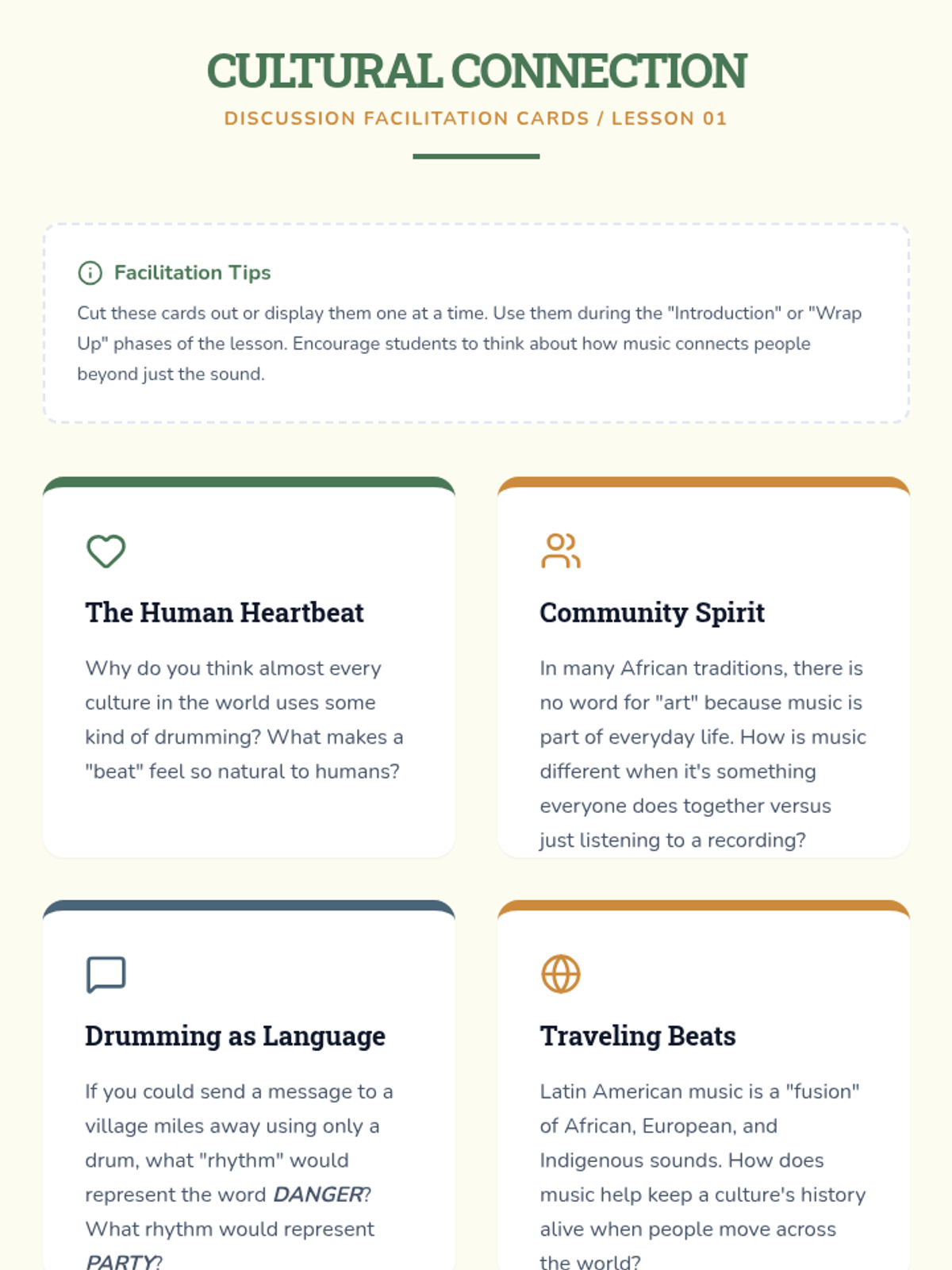
A comprehensive exploration of world music and dance, focusing on cultural heritage, musical elements, and creative expression through drumming, melody, and global fusion.
A foundational music education series designed for early elementary students, covering rhythm, movement, note reading, dynamics, and music history.
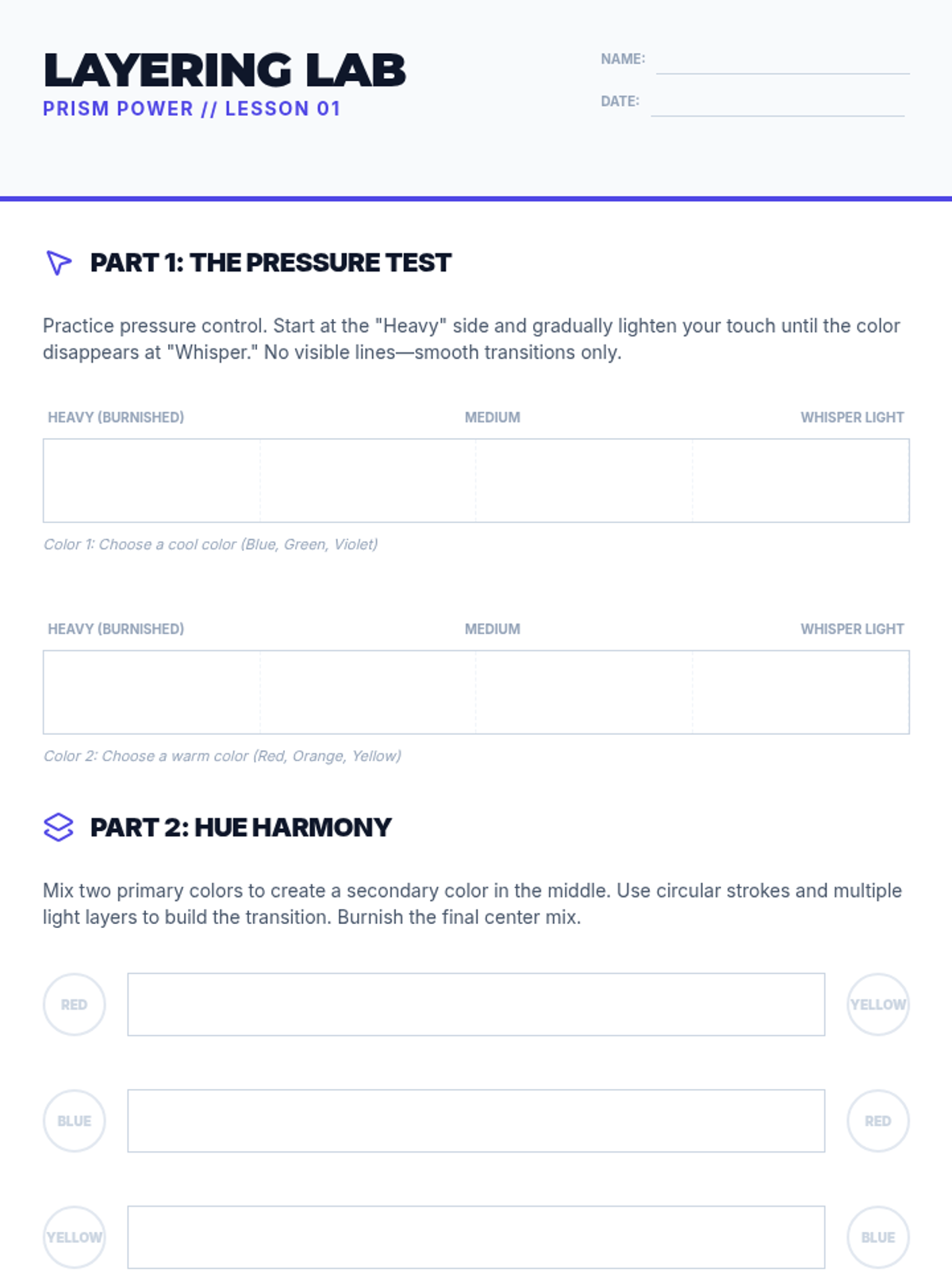
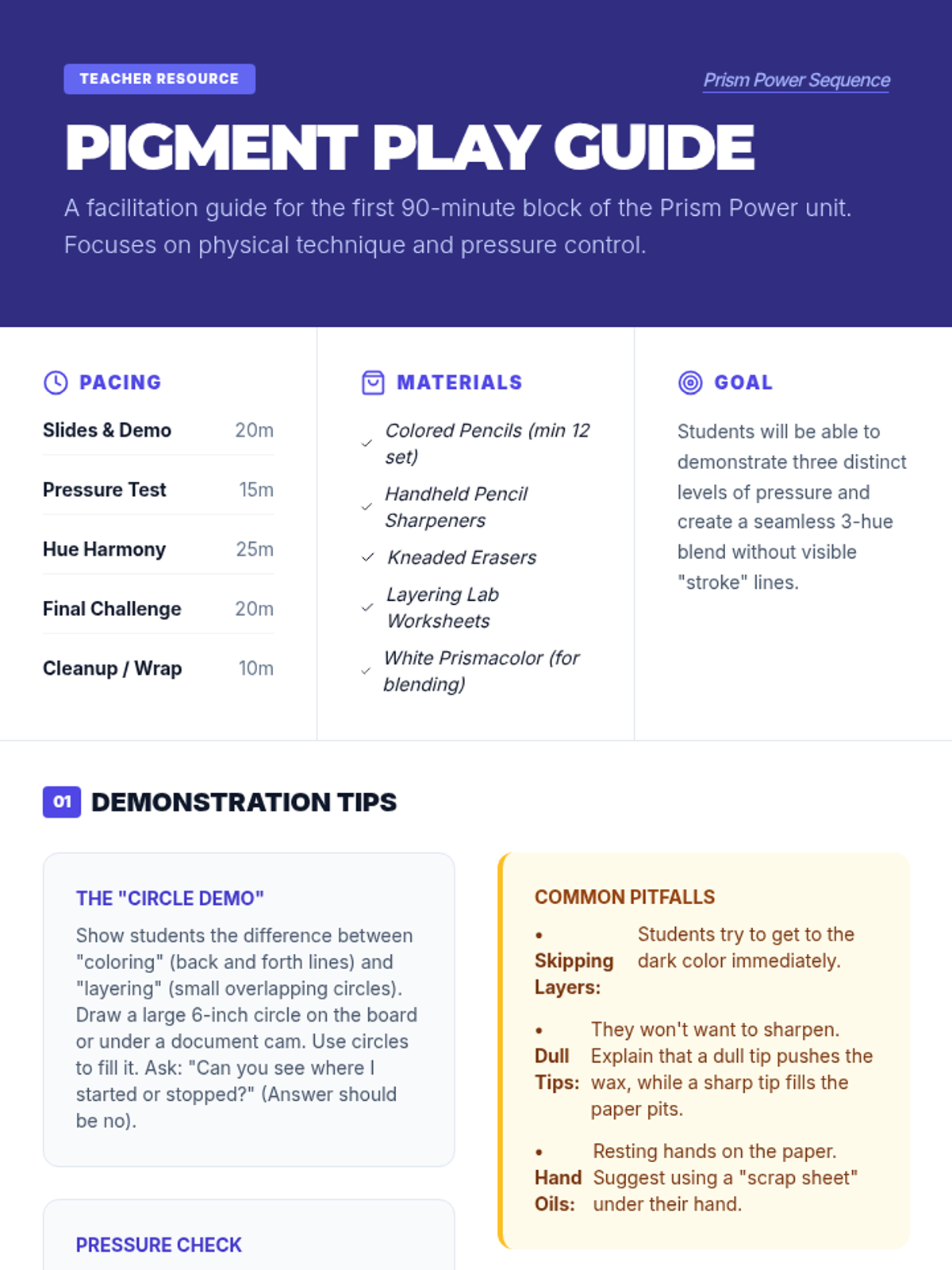
A high school visual arts sequence focusing on mastering colored pencil techniques, specifically layering, blending, and creating three-dimensional value. Students will progress from basic mechanics to rendering realistic forms with depth and vibrancy.
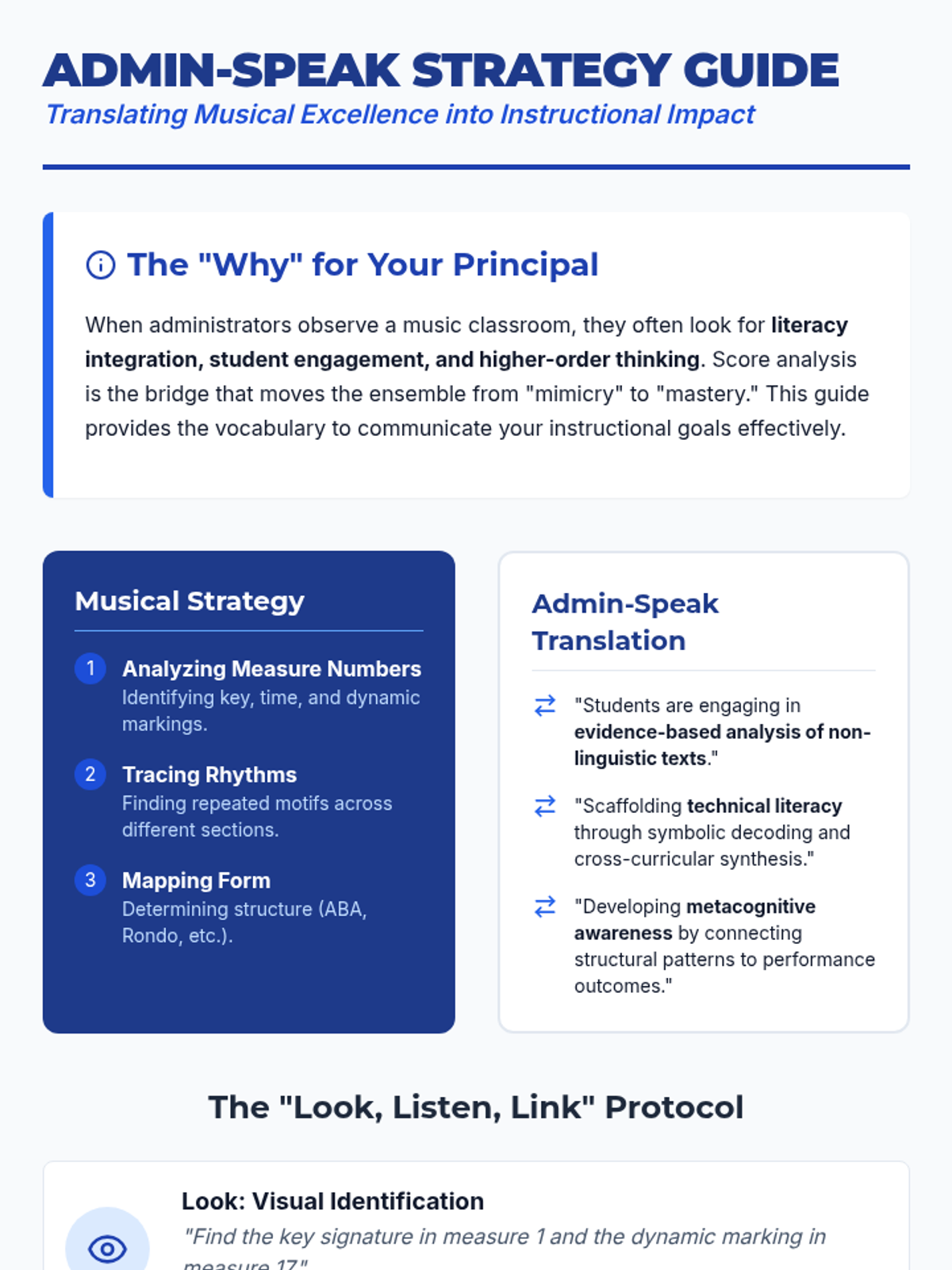
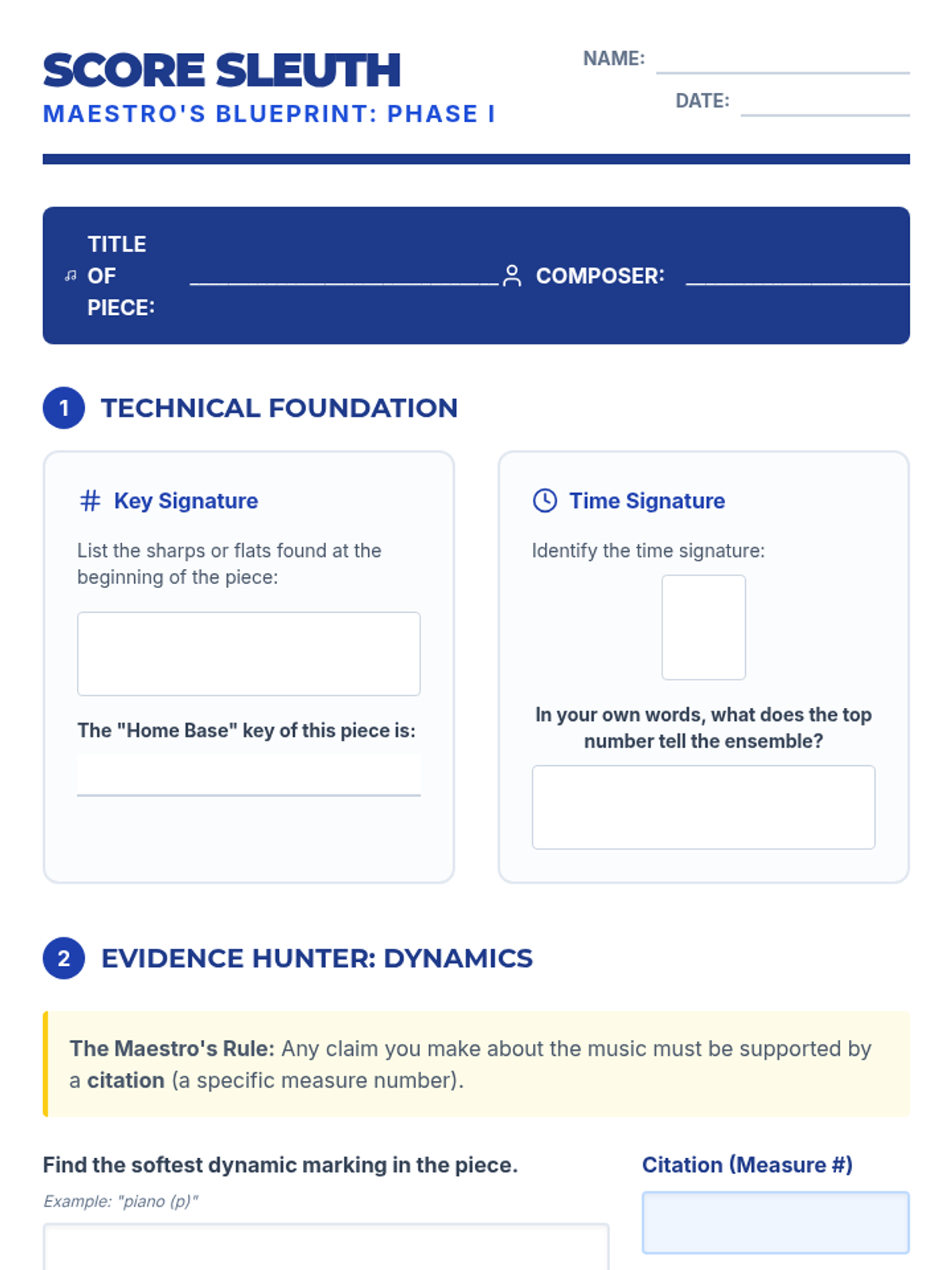
A comprehensive score analysis framework for middle school band and choir ensembles that integrates music literacy with text-based evidence and academic rigor. Students learn to 'read' a musical score as a primary source document, identifying technical elements and structural patterns while providing specific citations for their findings.
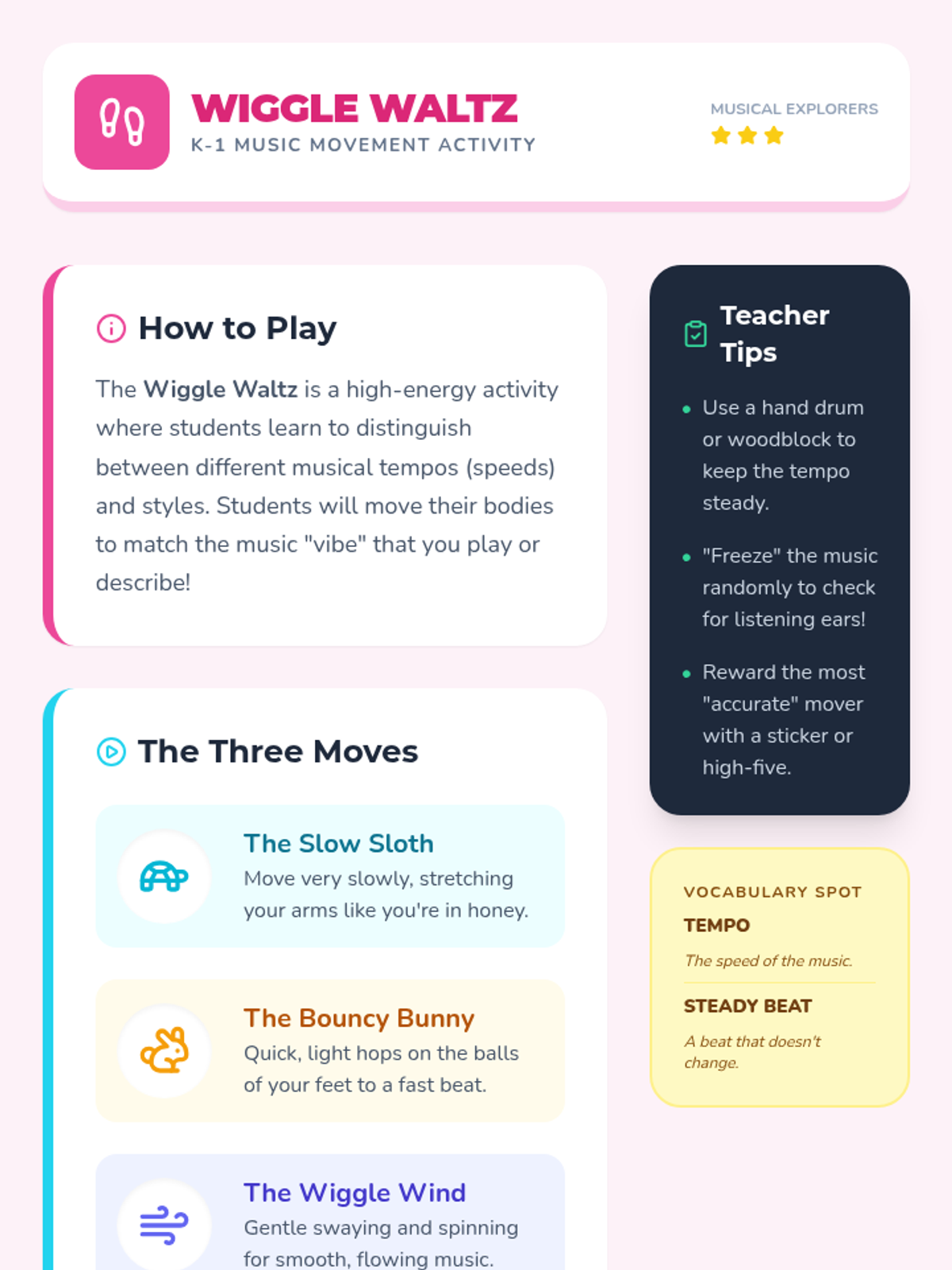
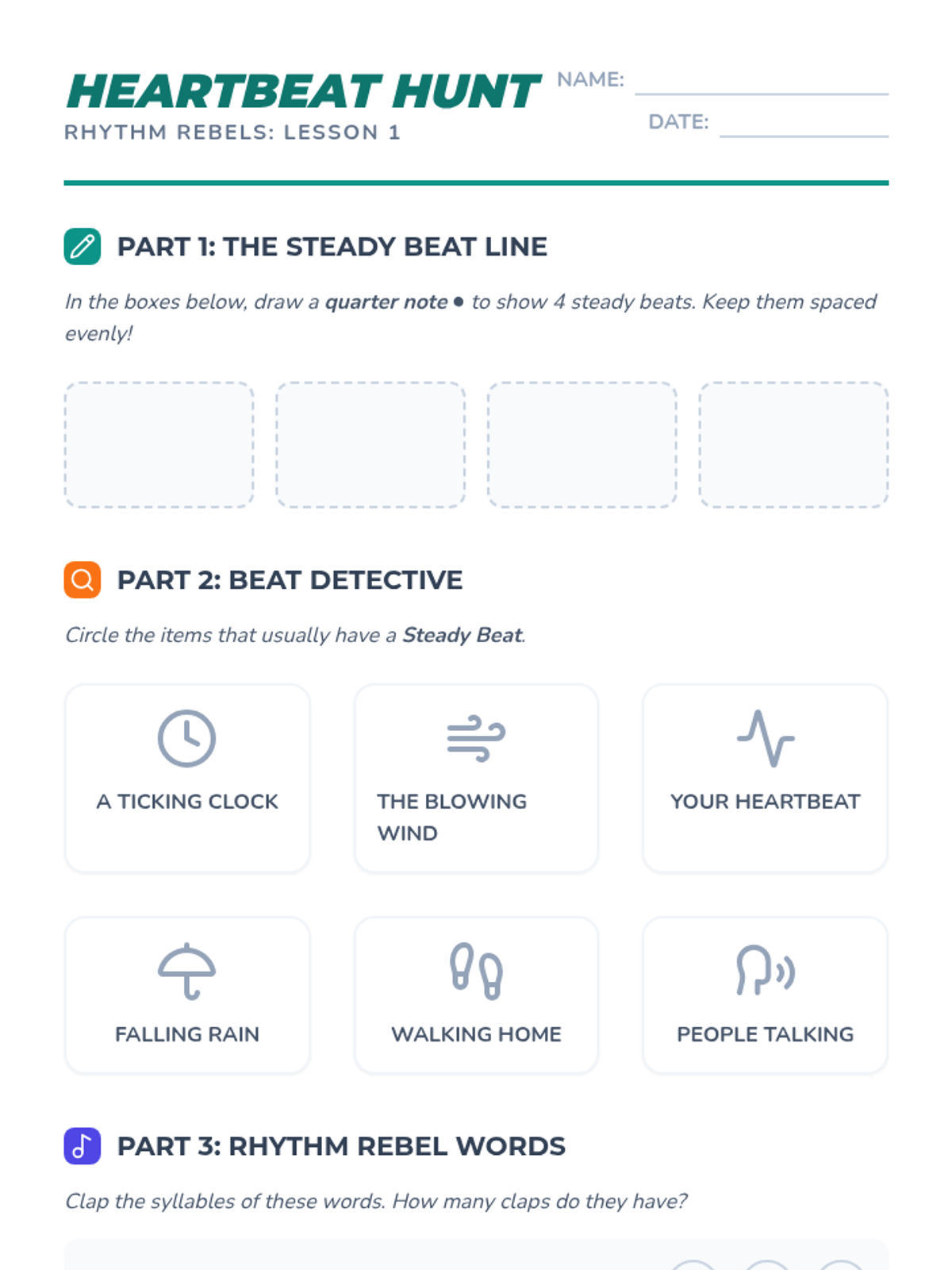
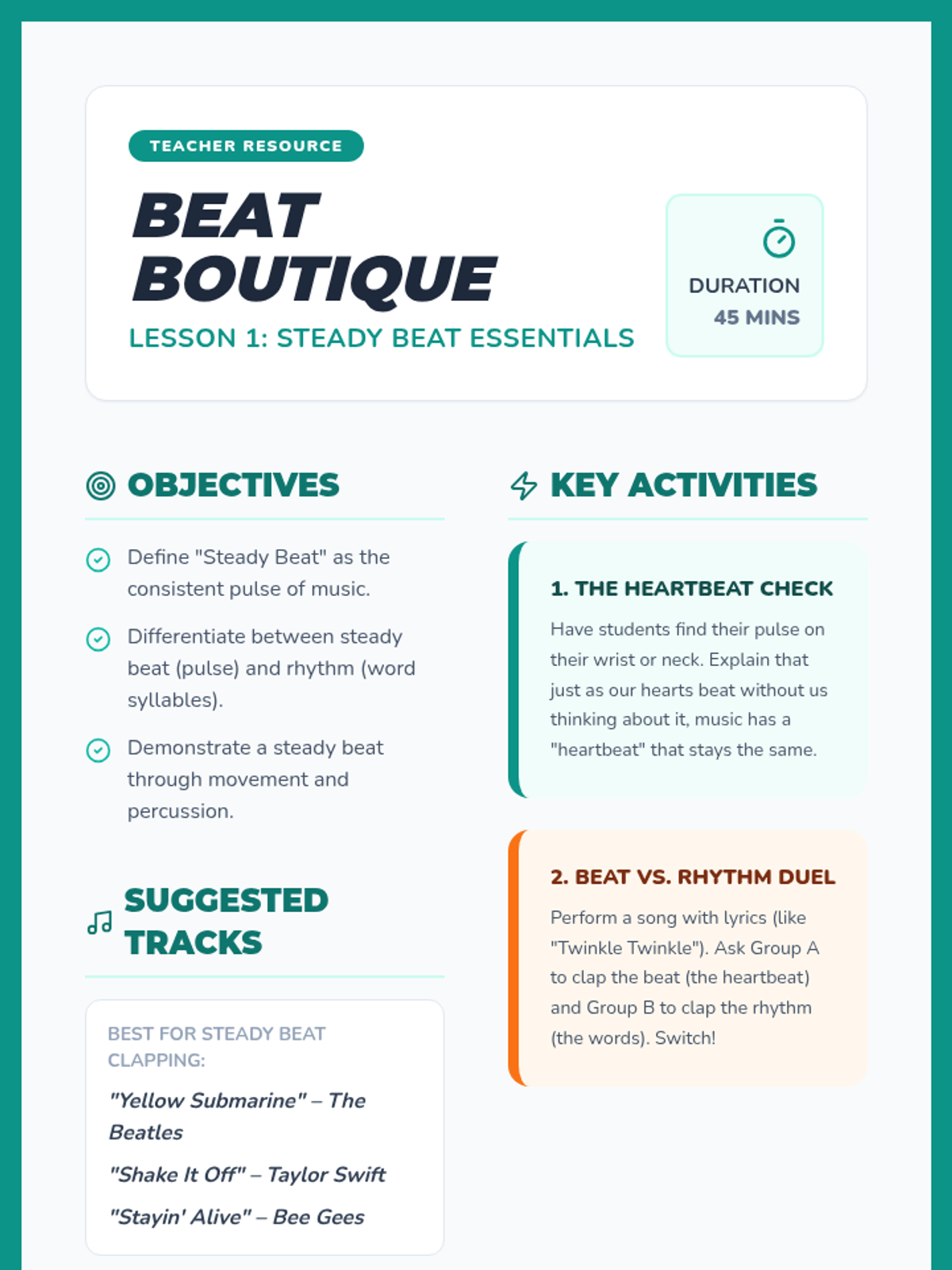
A high-energy elementary music unit focusing on the fundamentals of steady beat, tempo variations, and rhythmic patterns through interactive play-alongs and movement.
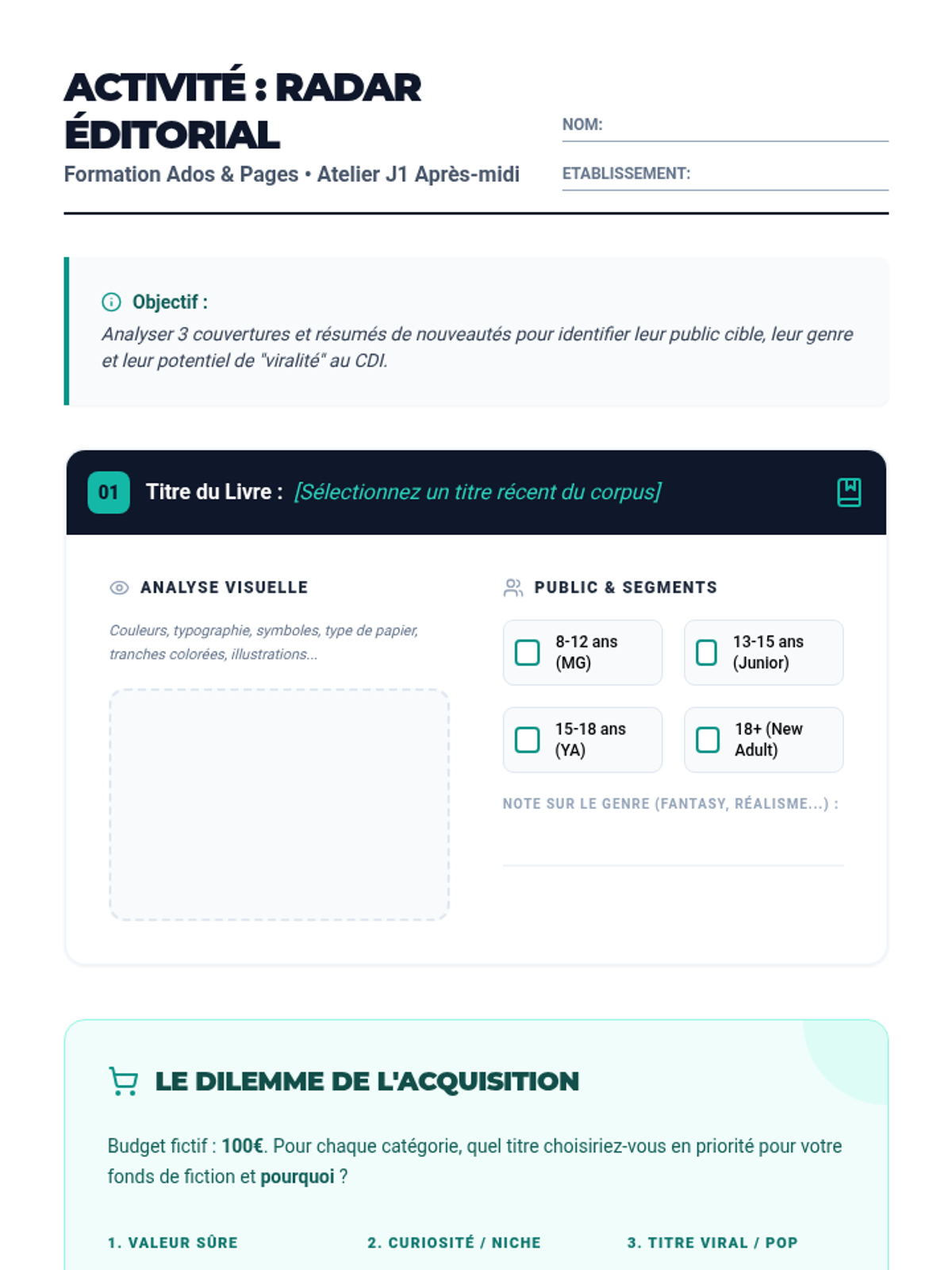
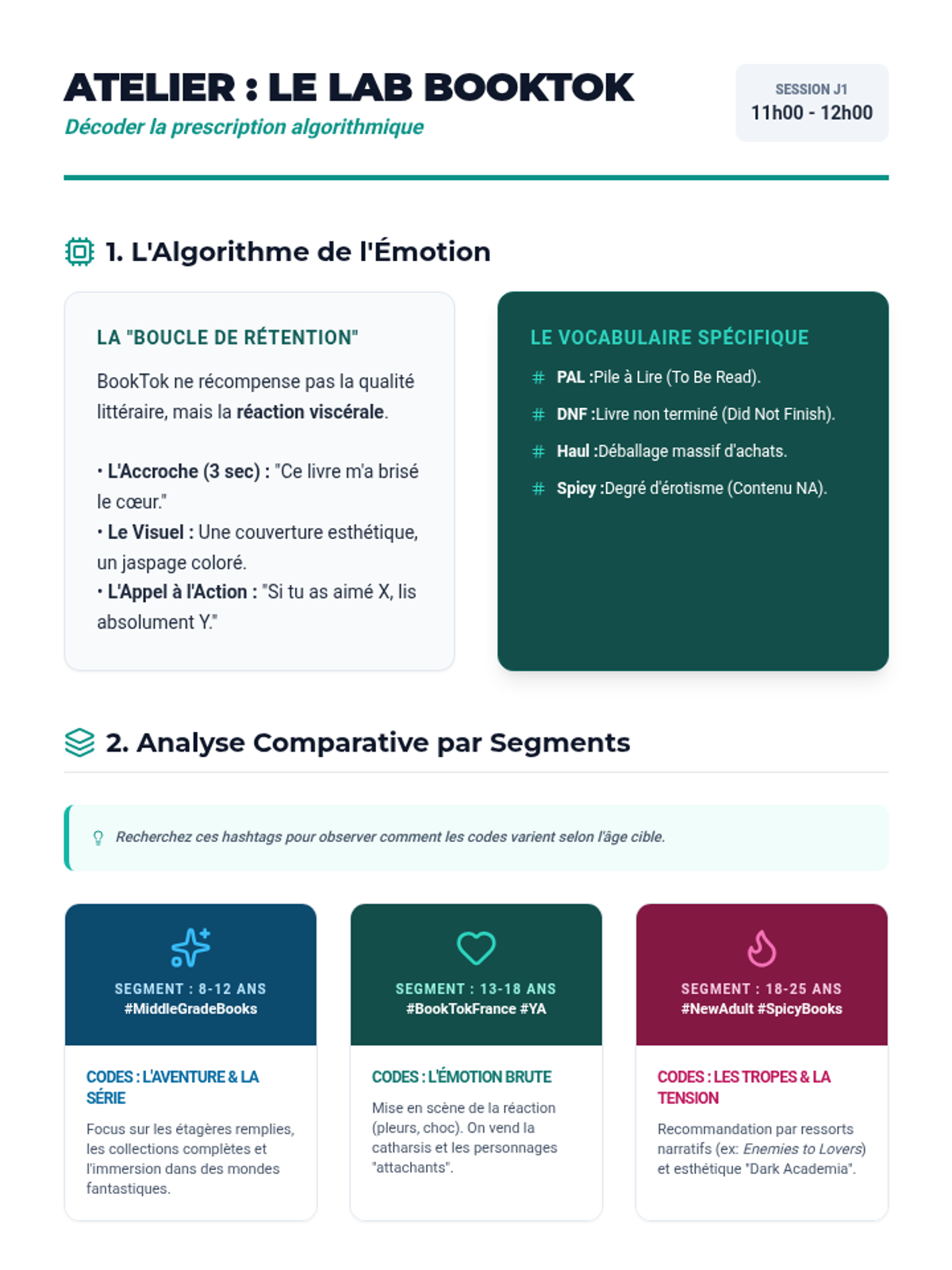
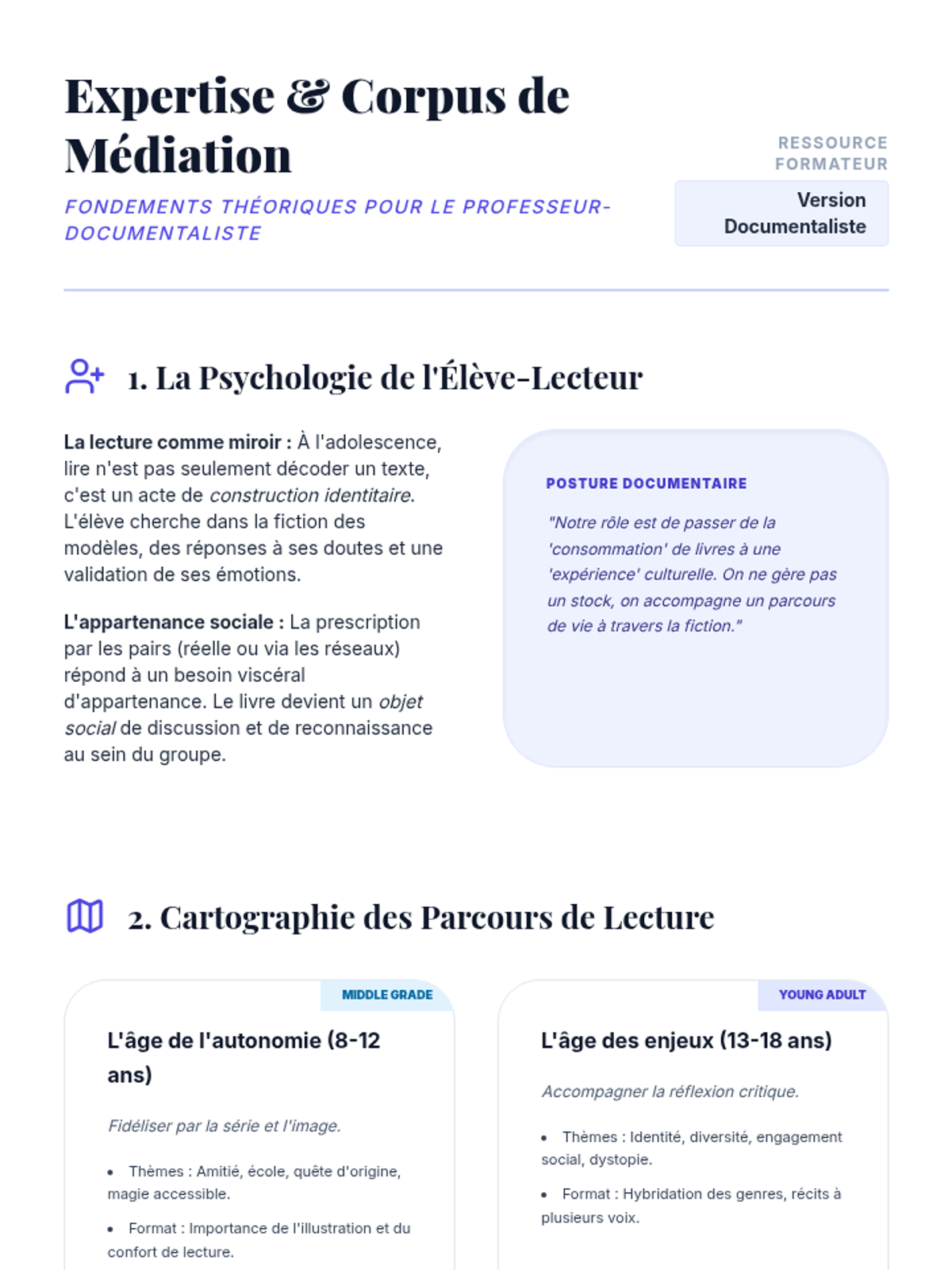
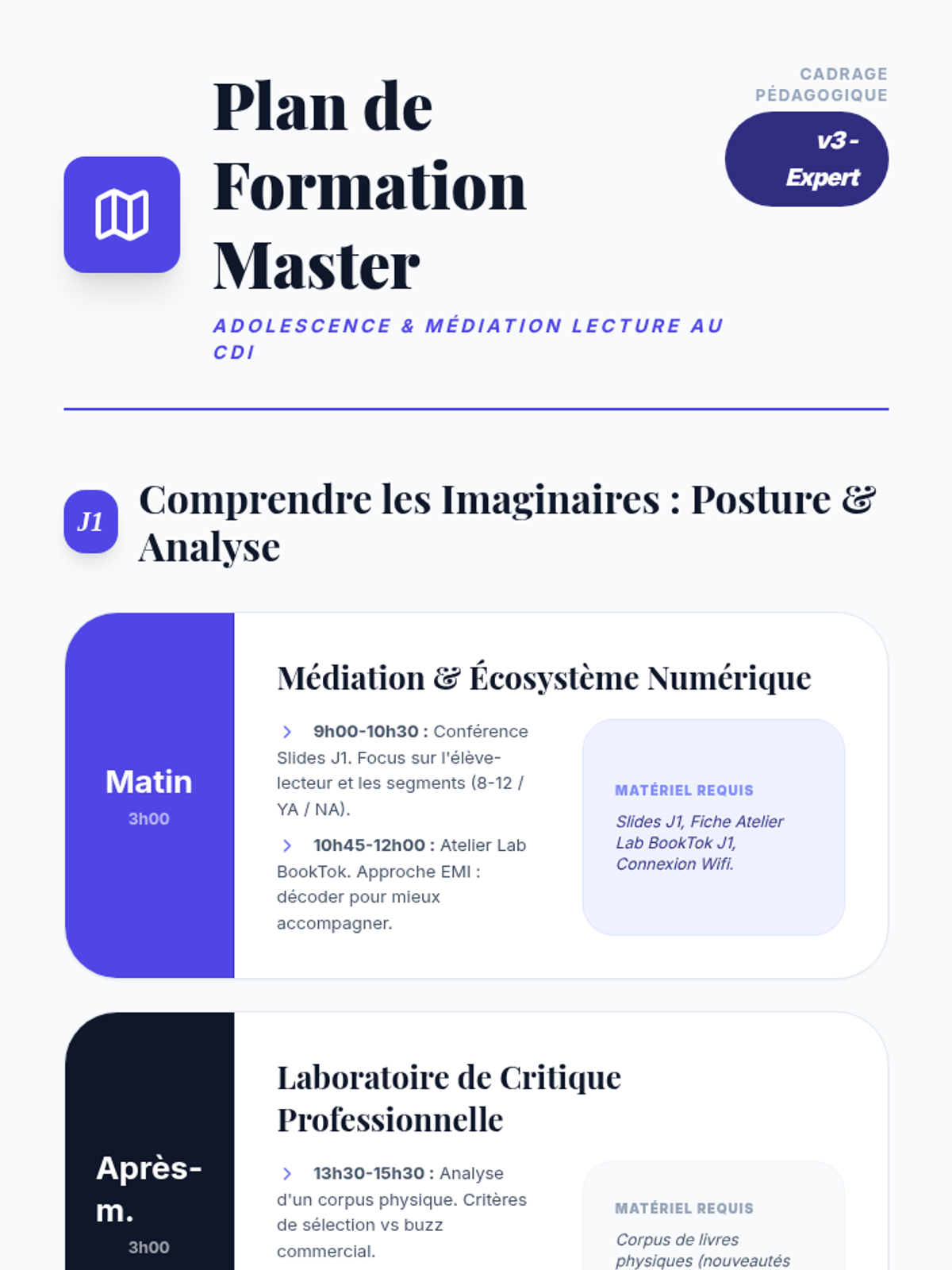
Une formation pour les professeurs-documentalistes centrée sur la médiation culturelle et l'accompagnement des pratiques de lecture des adolescents. L'objectif est de concilier la réalité de l'édition actuelle avec les missions pédagogiques du CDI.
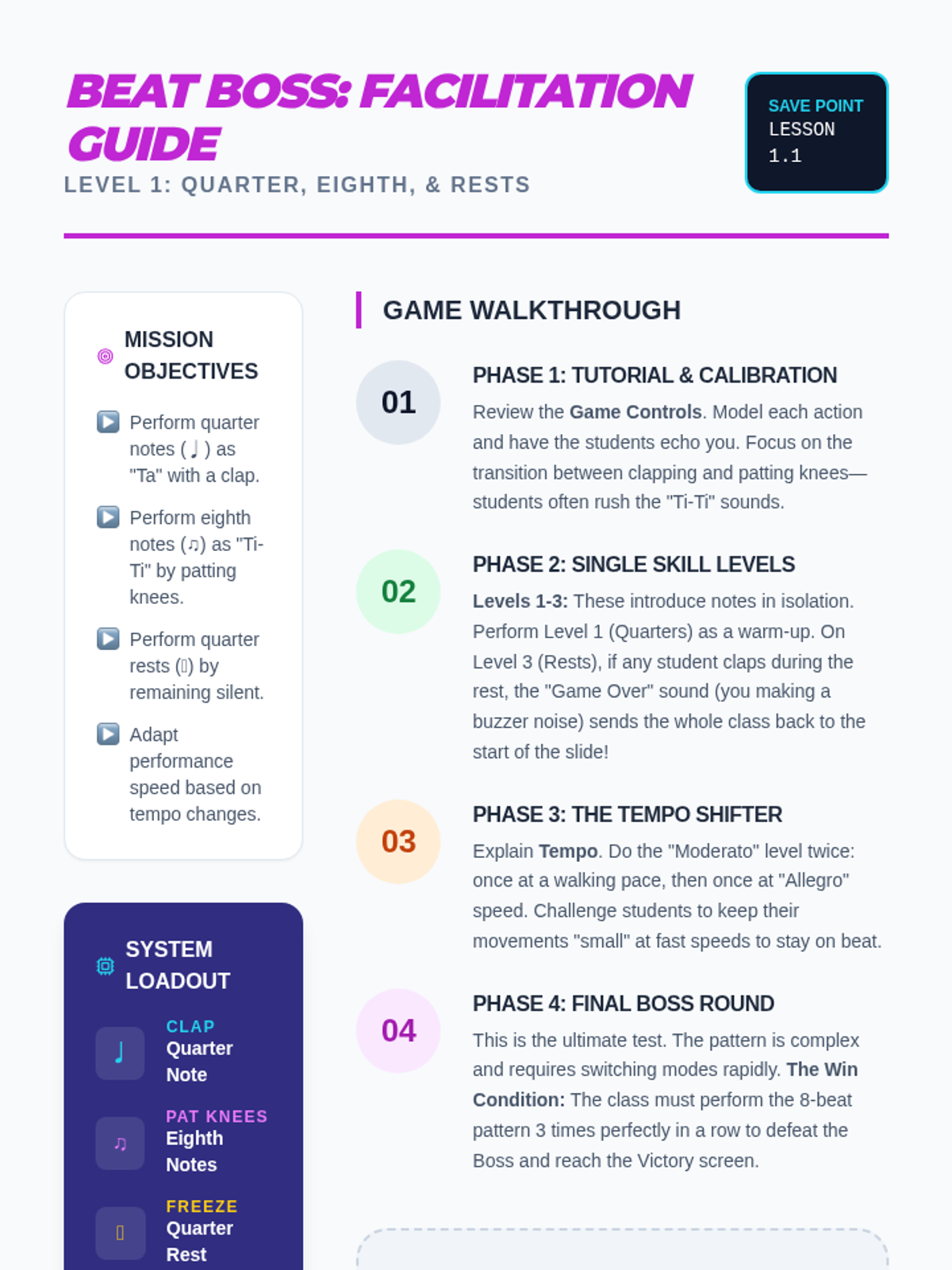
A high-energy, interactive unit focused on mastering rhythm and tempo through digital gameplay and body percussion, designed specifically for paperless classrooms.
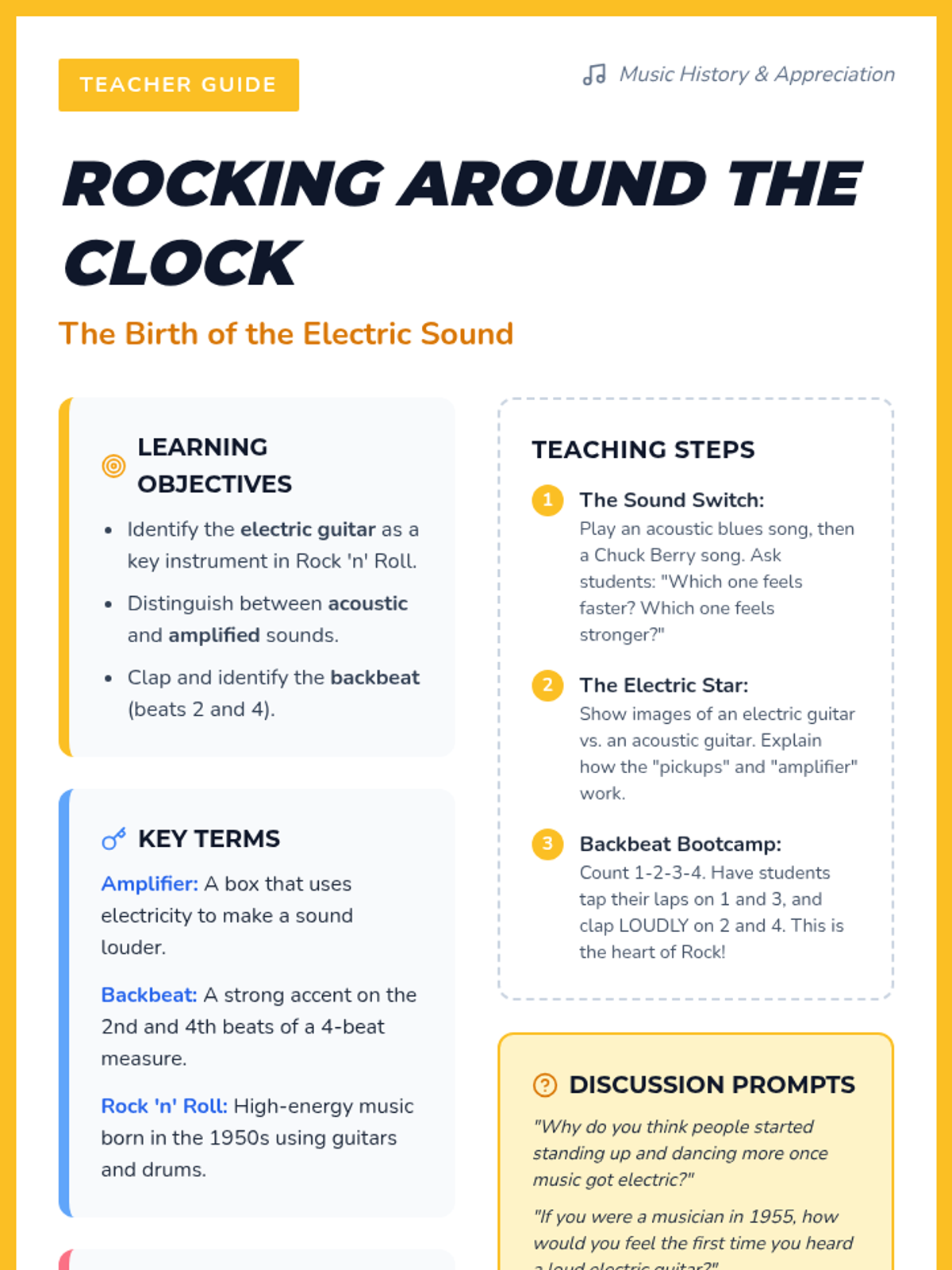
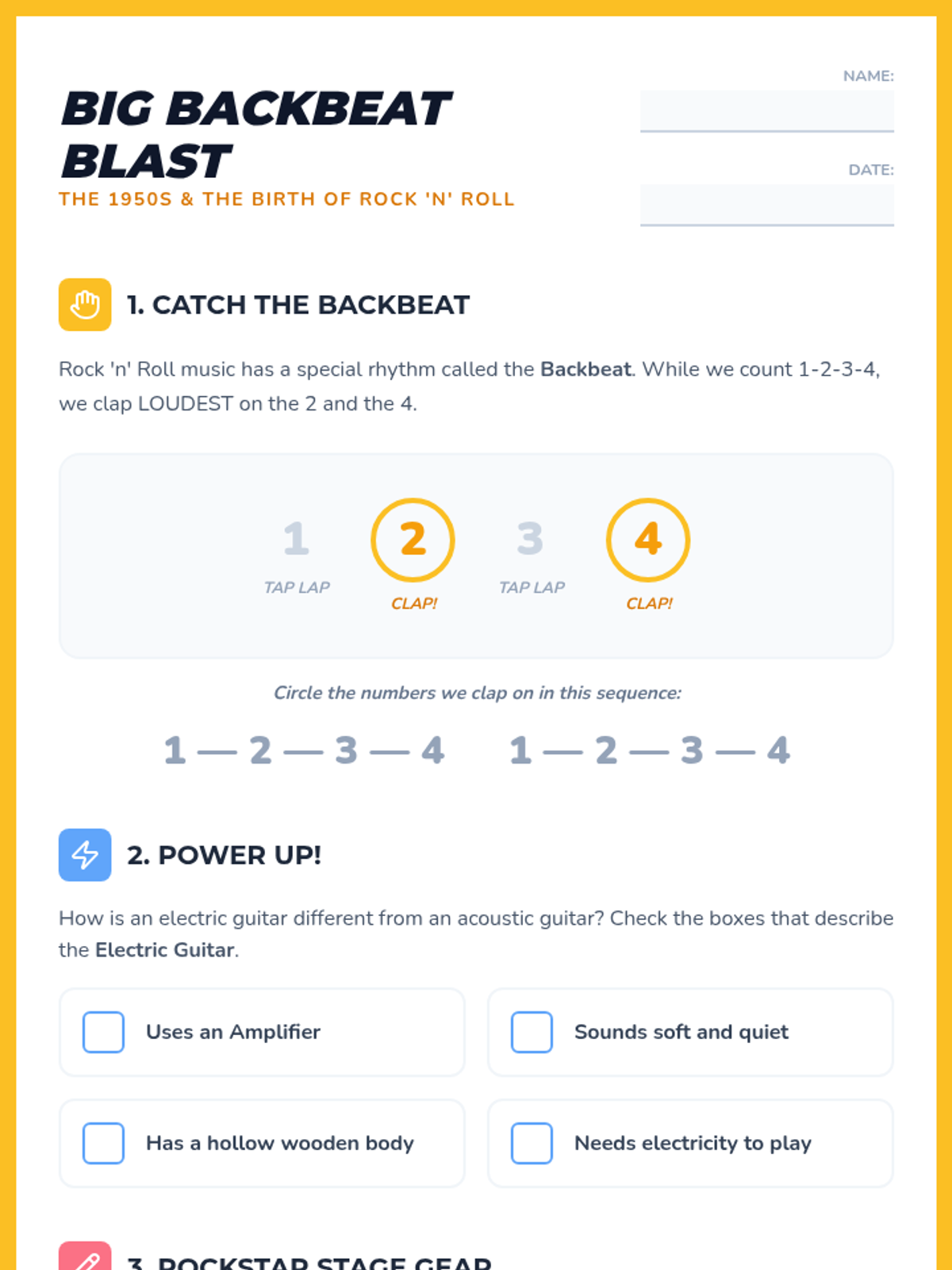
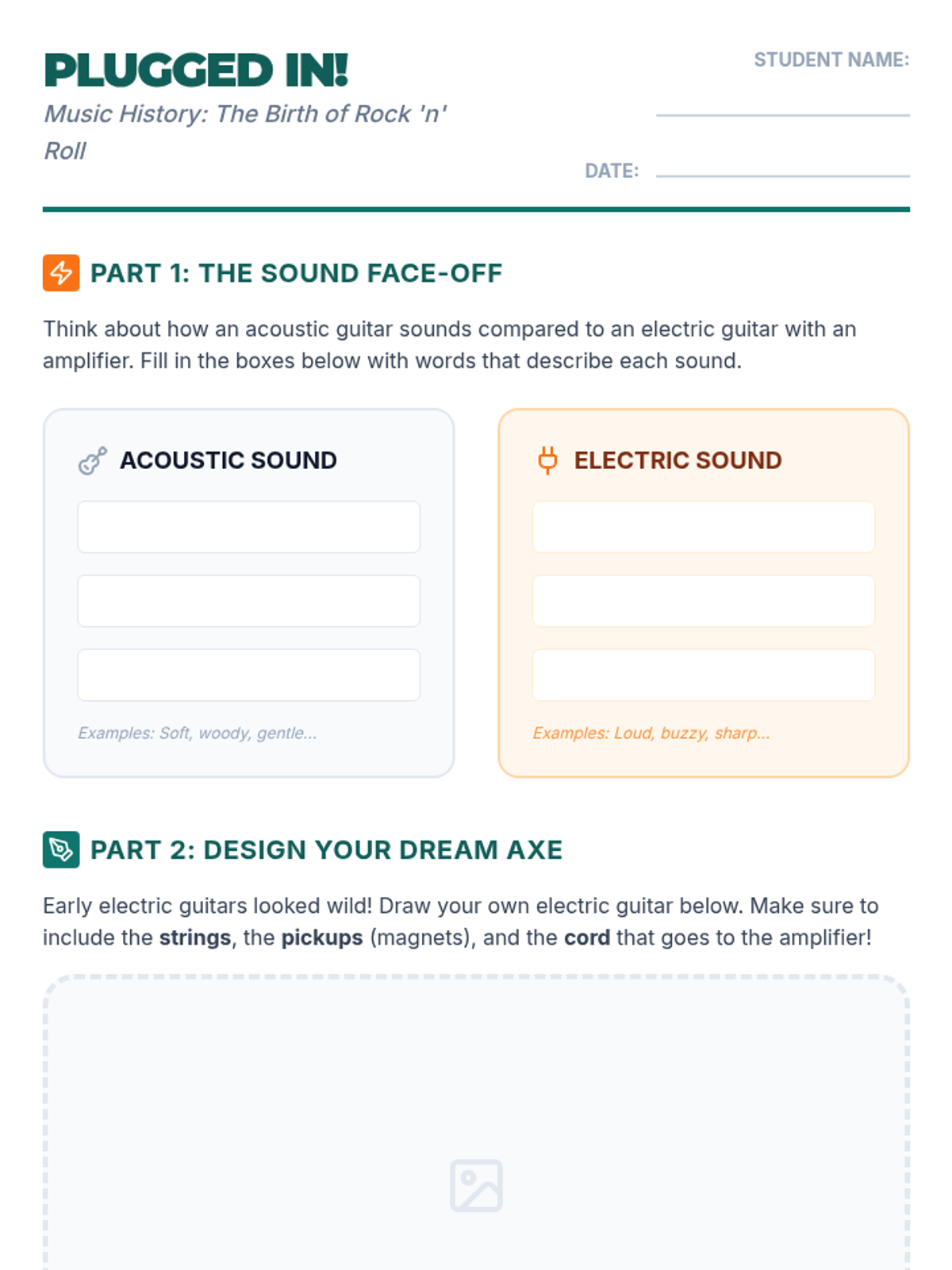
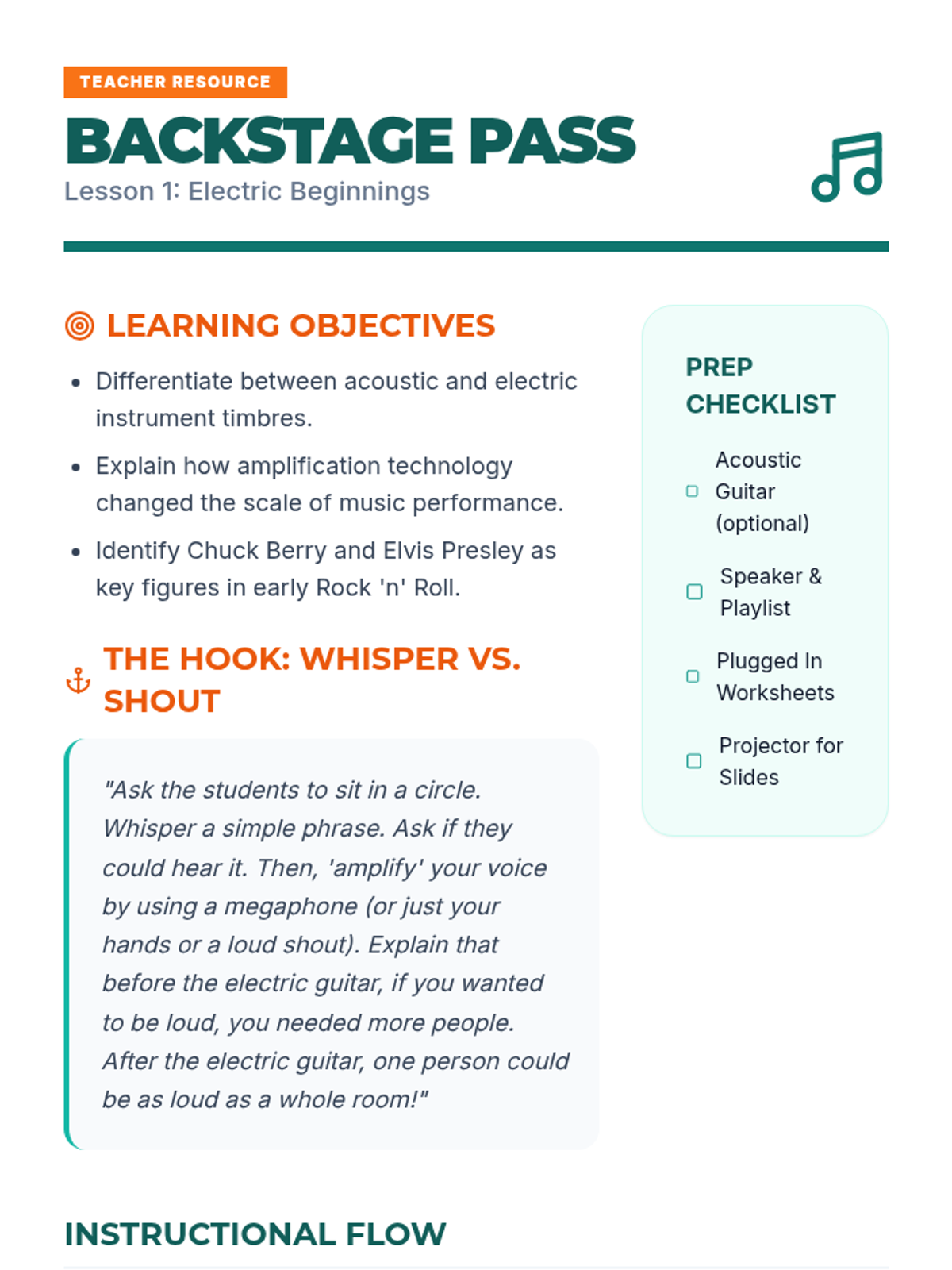
A journey through the 20th and 21st centuries, exploring how technology like electric guitars and synthesizers shaped genres from Rock 'n' Roll to Pop. Students analyze rhythm, structure, and sound to build a chronological timeline of musical evolution.
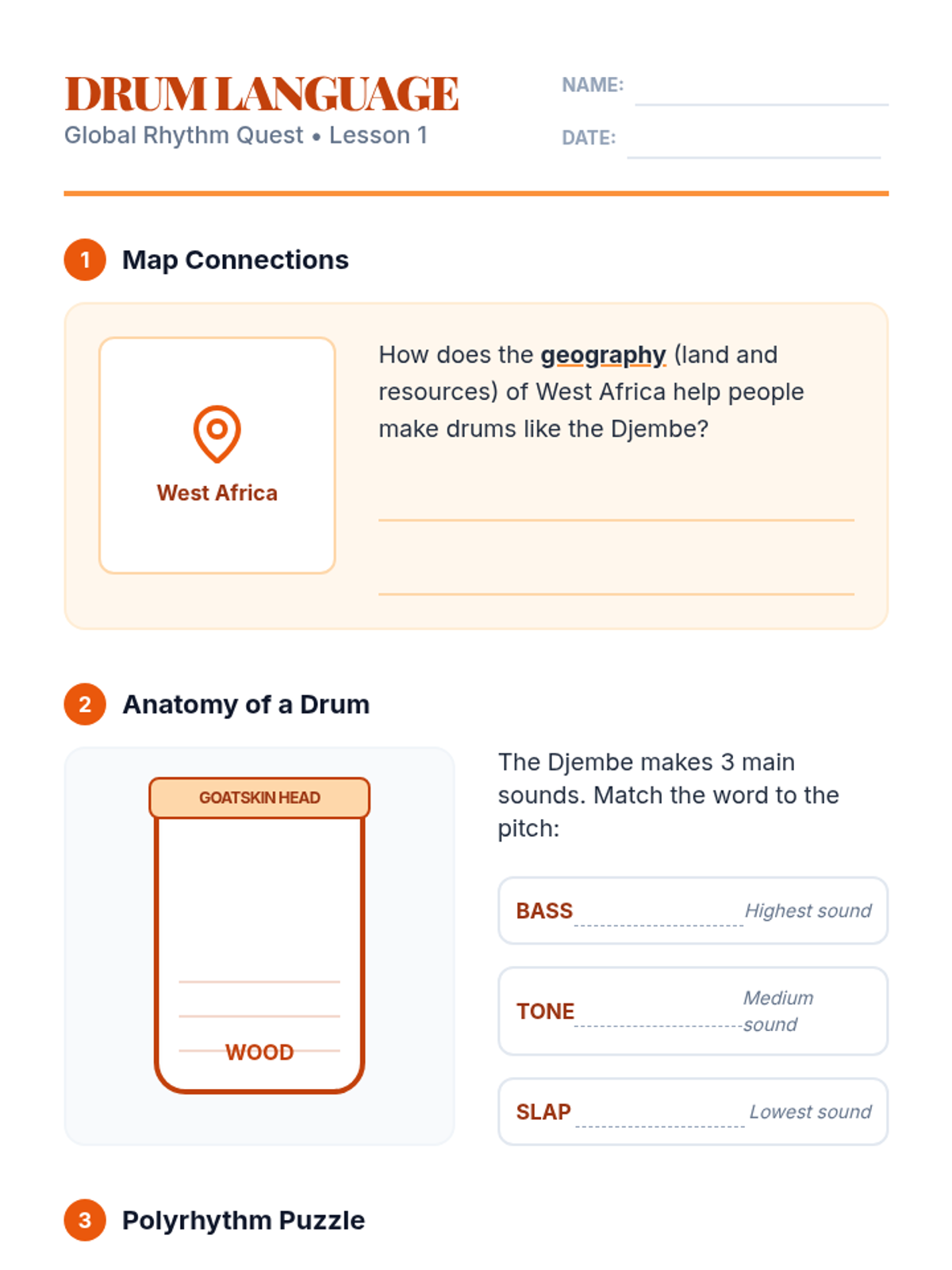
A 5-lesson sequence for 3rd graders exploring the music and instruments of West Africa, Asia, the Andes, and North America, focusing on how geography and culture shape sound.
This sequence explores how technology—from the electric guitar to digital software—transformed music from the mid-20th century to today, focusing on genre evolution, song structure, and production.
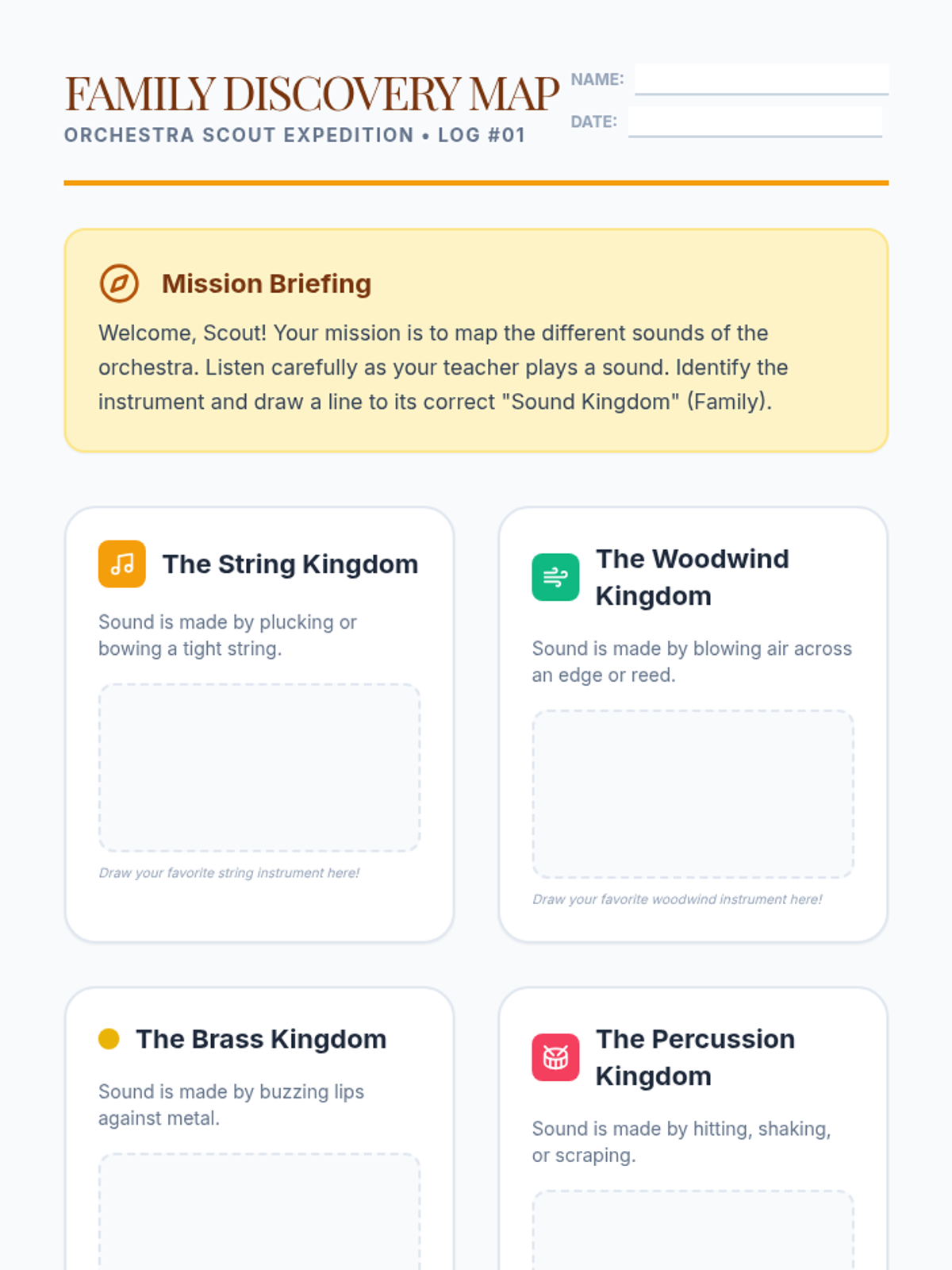
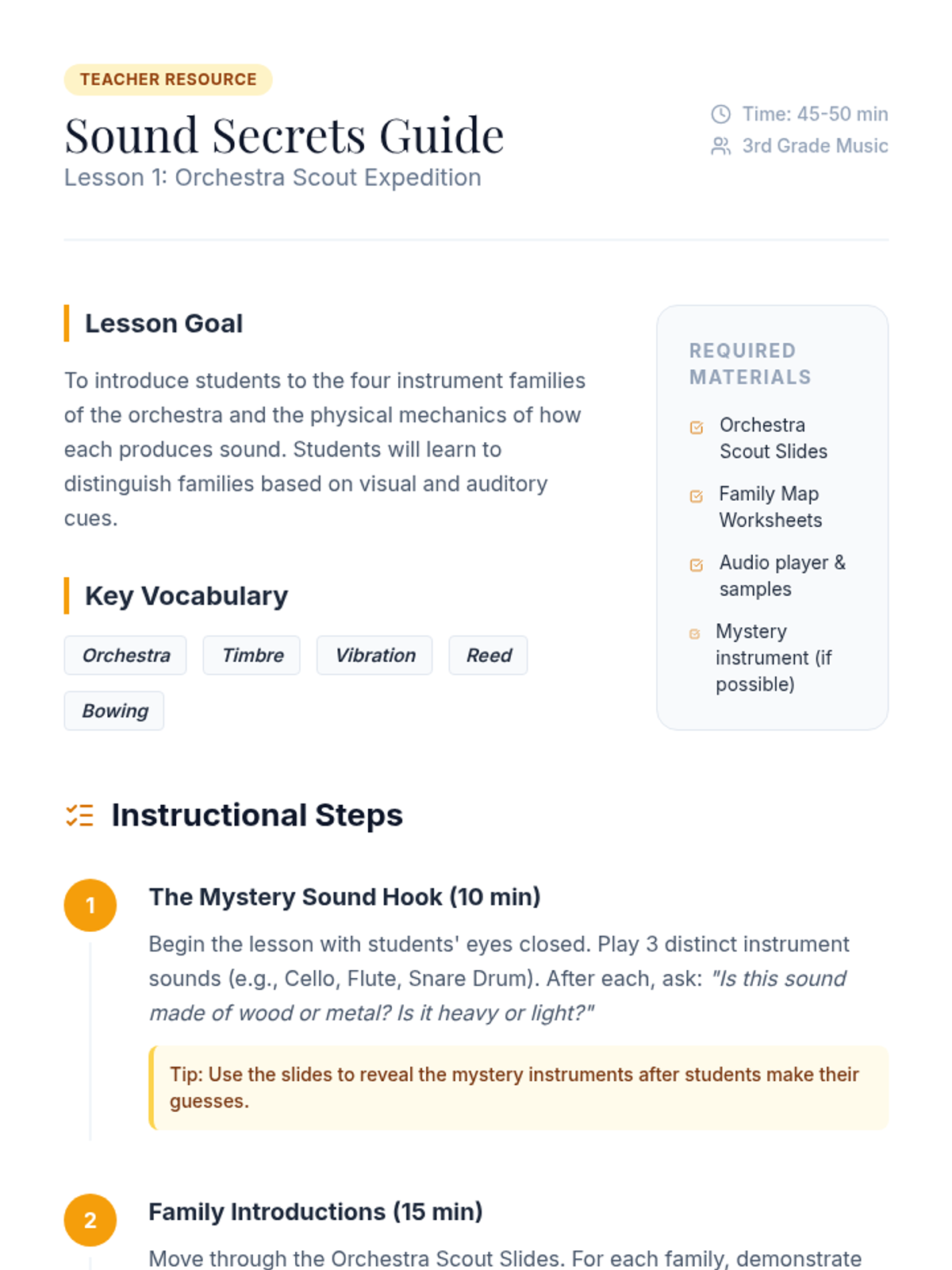
A comprehensive introduction to the orchestra and the Classical era for 3rd graders, covering instrument families, specific sections, key composers (Mozart and Beethoven), and the art of conducting.
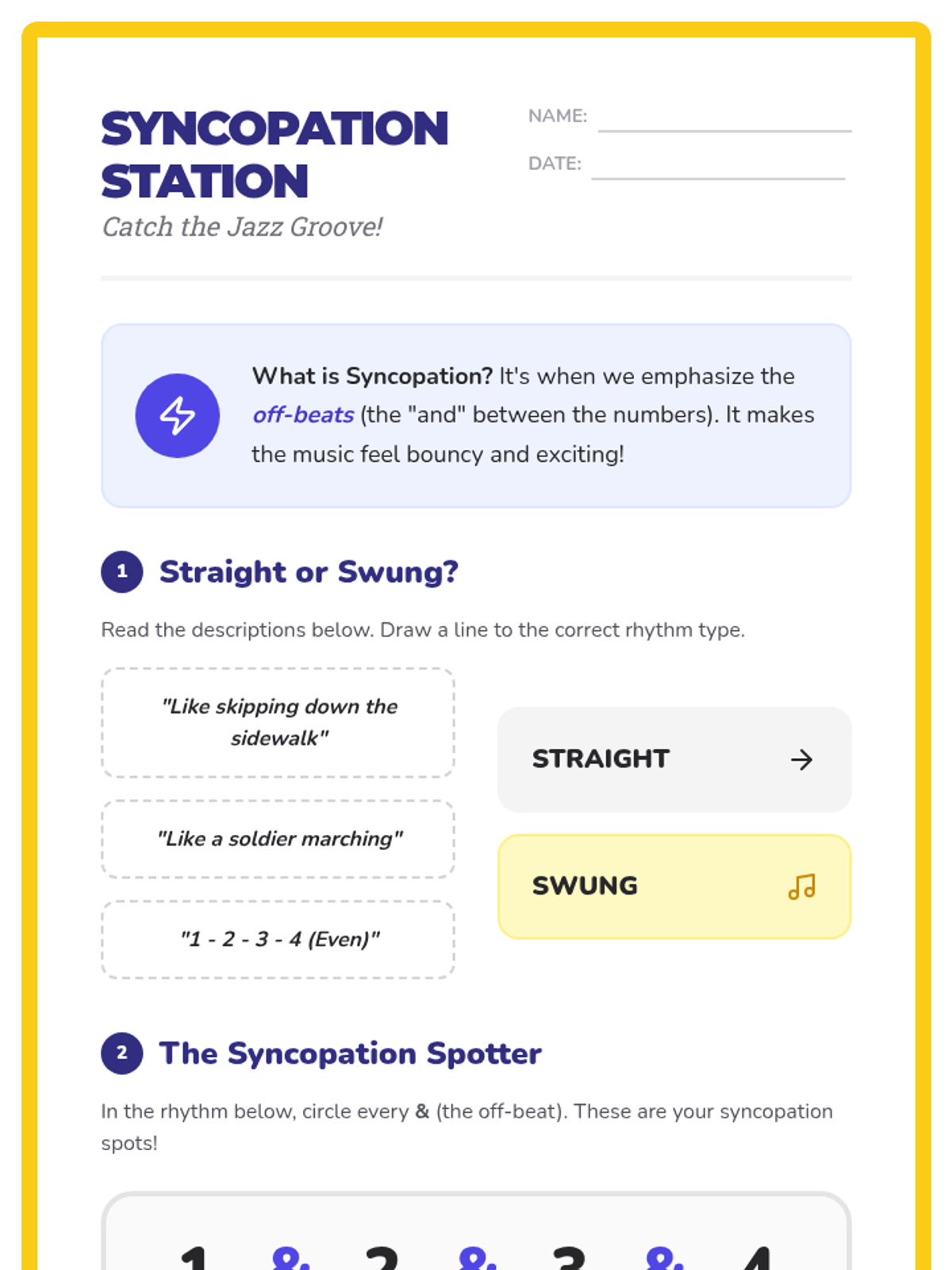
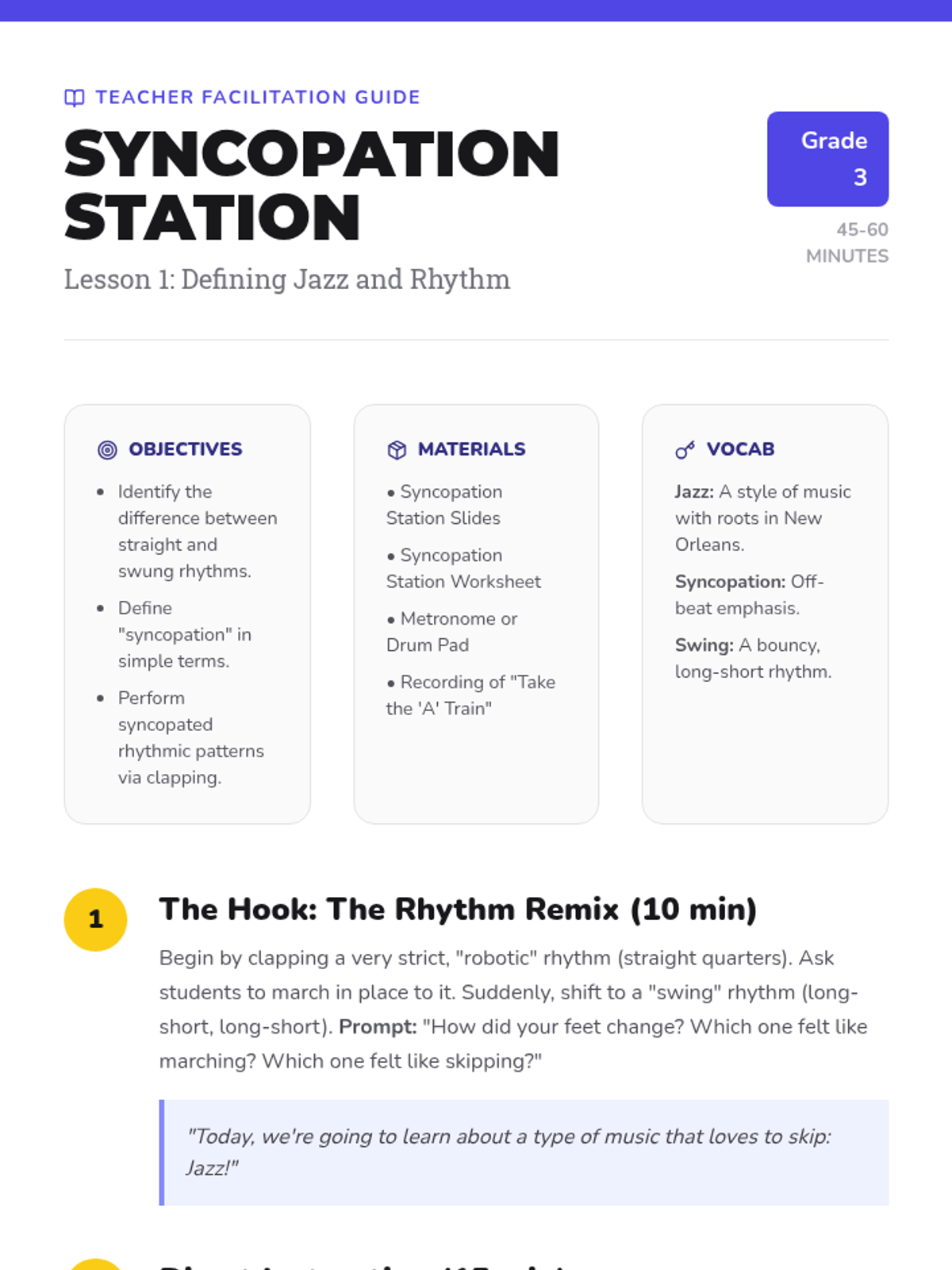
Students explore the world of Jazz through rhythm, syncopation, and improvisation. They'll meet legends like Louis Armstrong and Ella Fitzgerald while learning to find their own musical voice through 'swing' and scat singing.
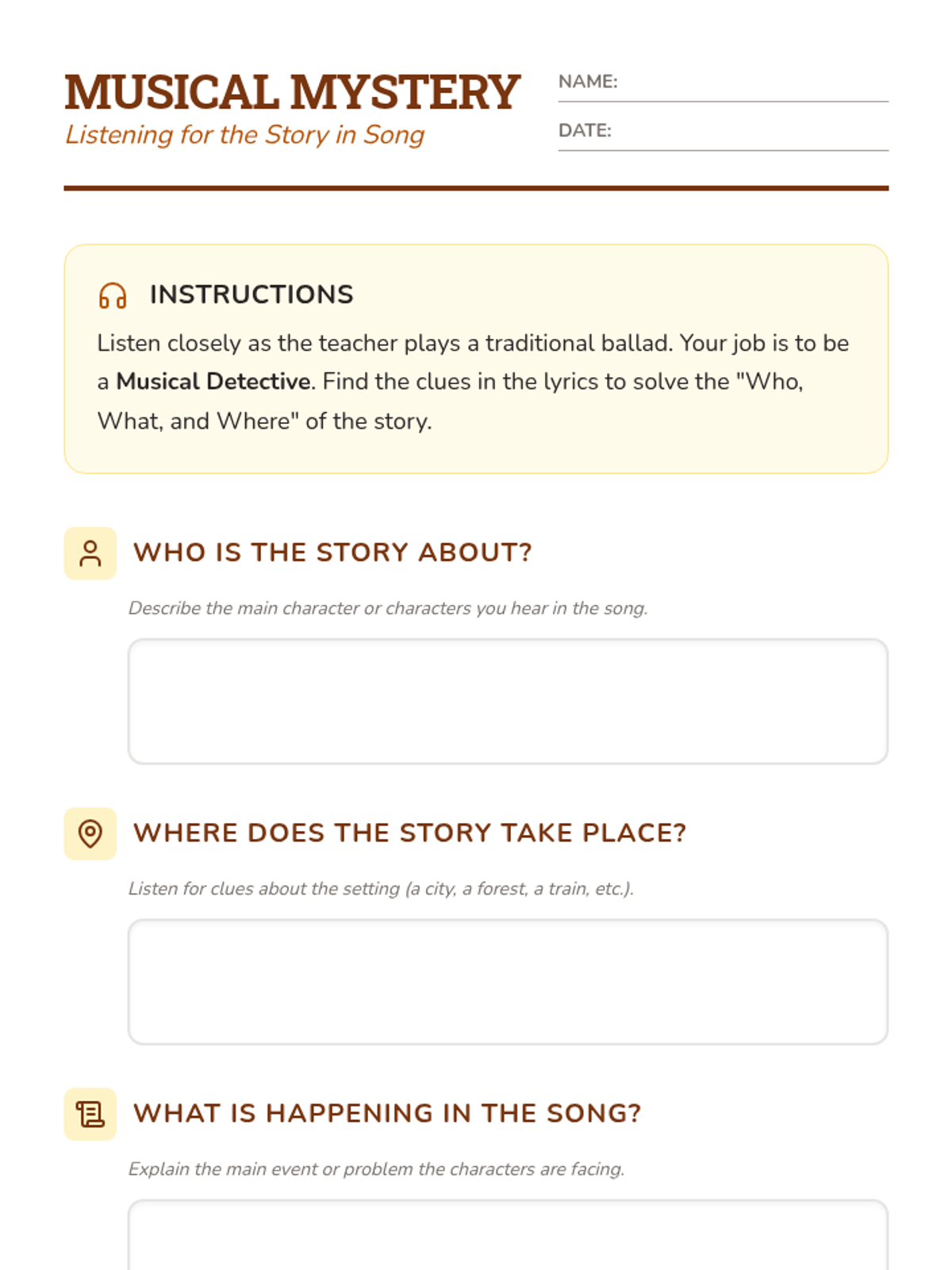
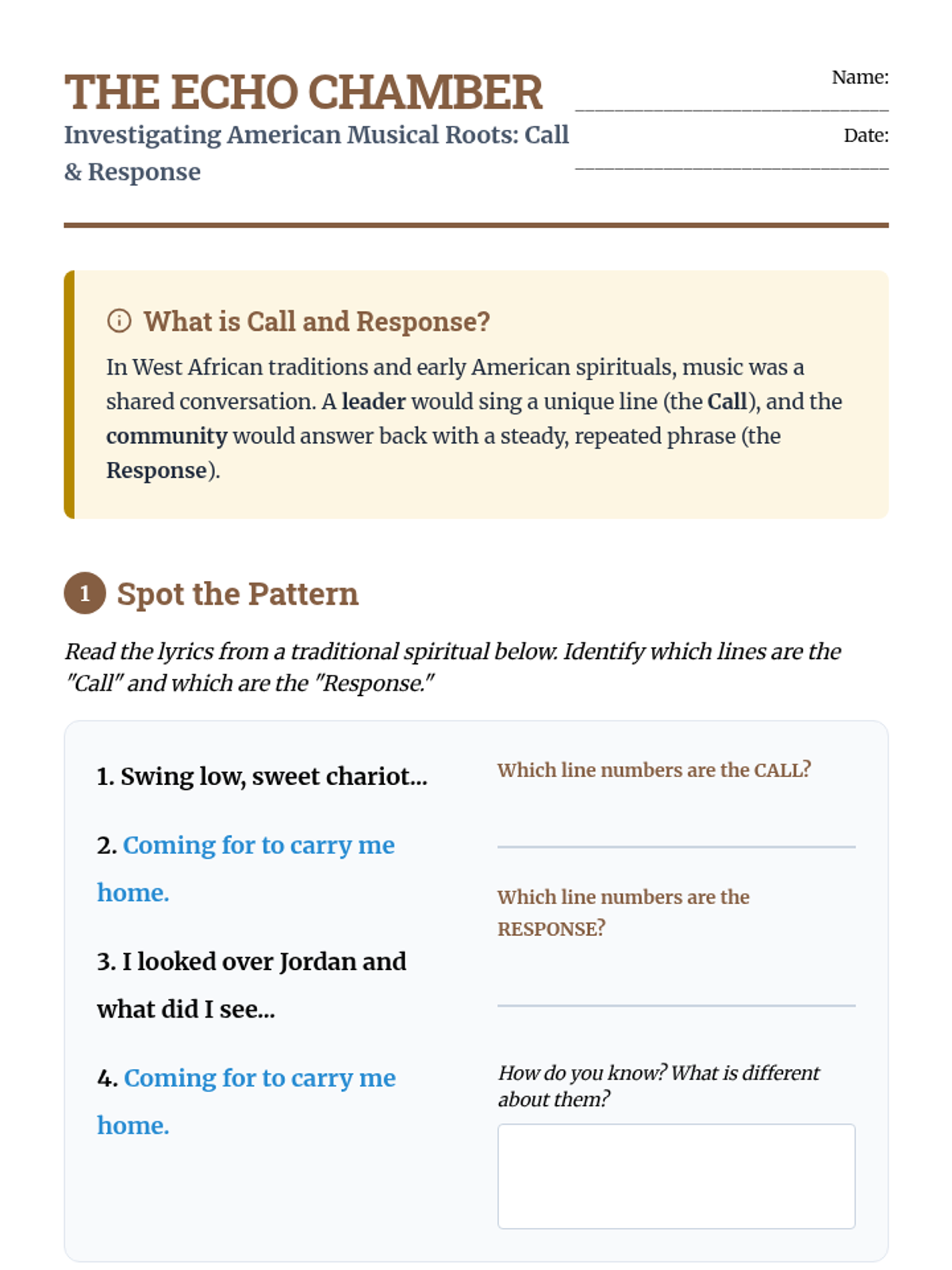
A 3rd-grade music history and appreciation unit exploring the roots of American folk and blues music, focusing on oral traditions, storytelling, and musical structures like call-and-response and the AAB blues form.
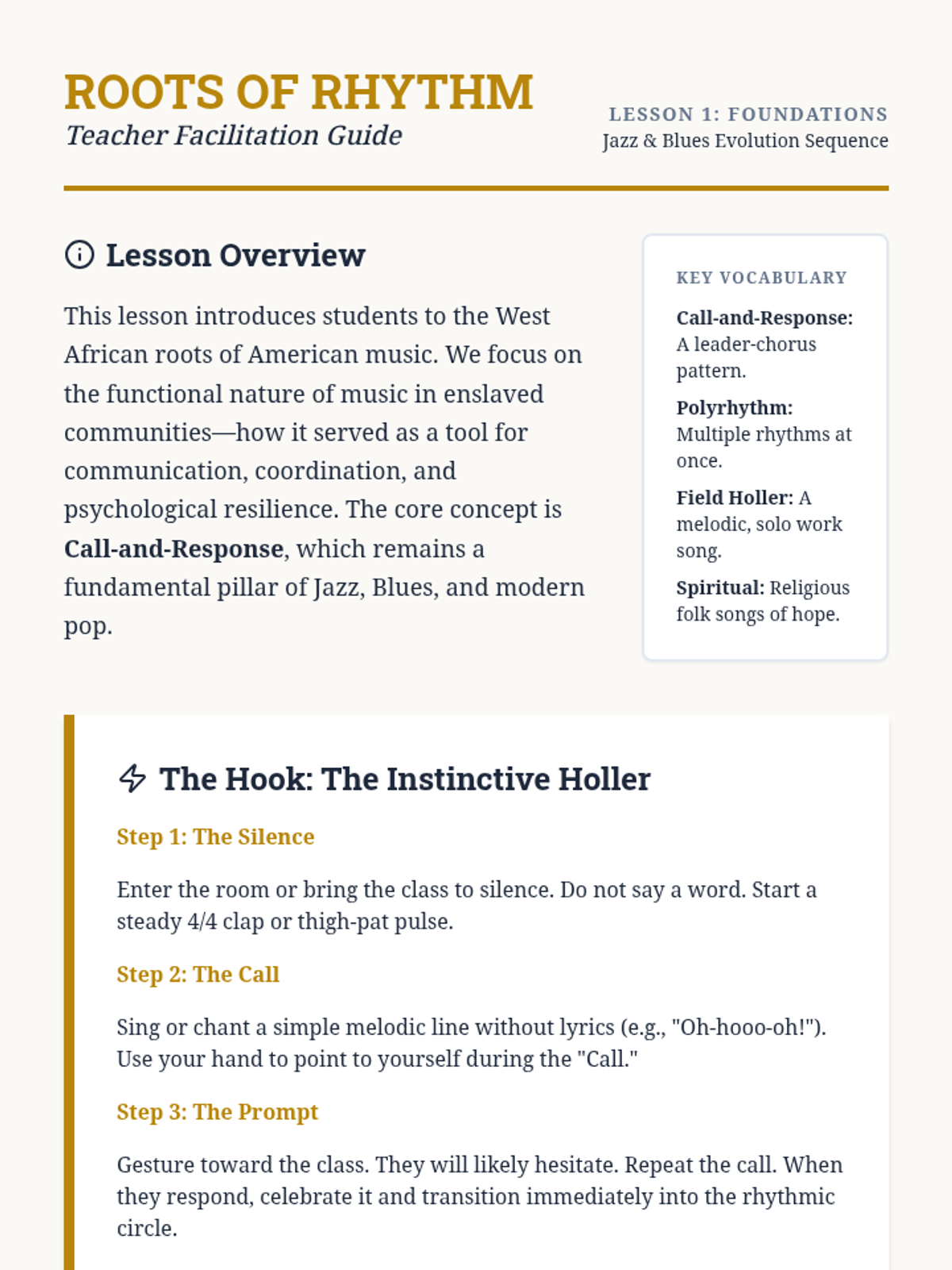
A 5th-grade music history sequence exploring the development of Jazz and Blues, from African call-and-response roots to the birth of Rock n' Roll. Students investigate structural forms like the 12-bar blues, concepts like syncopation and improvisation, and the cultural resilience behind the music.
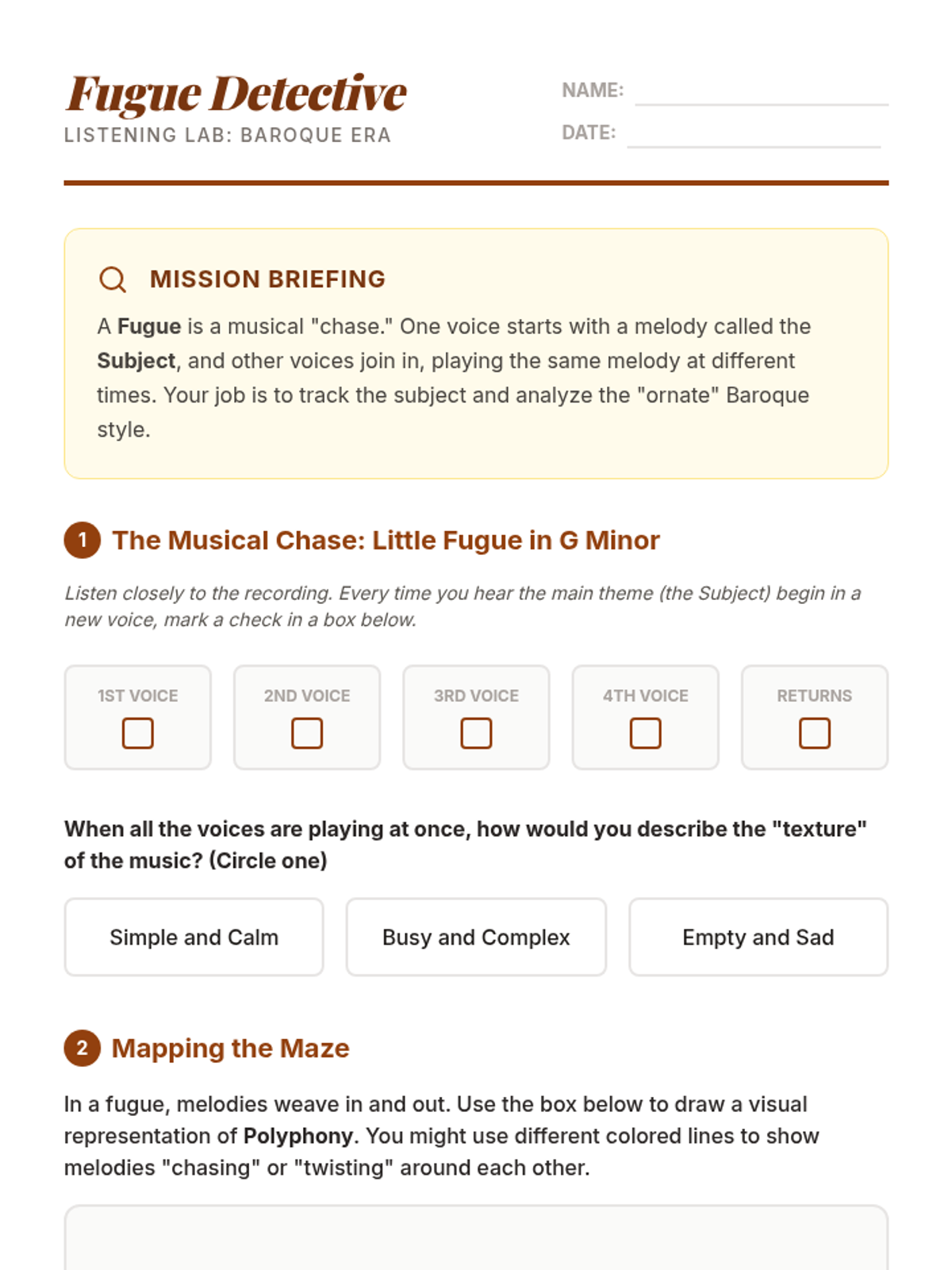
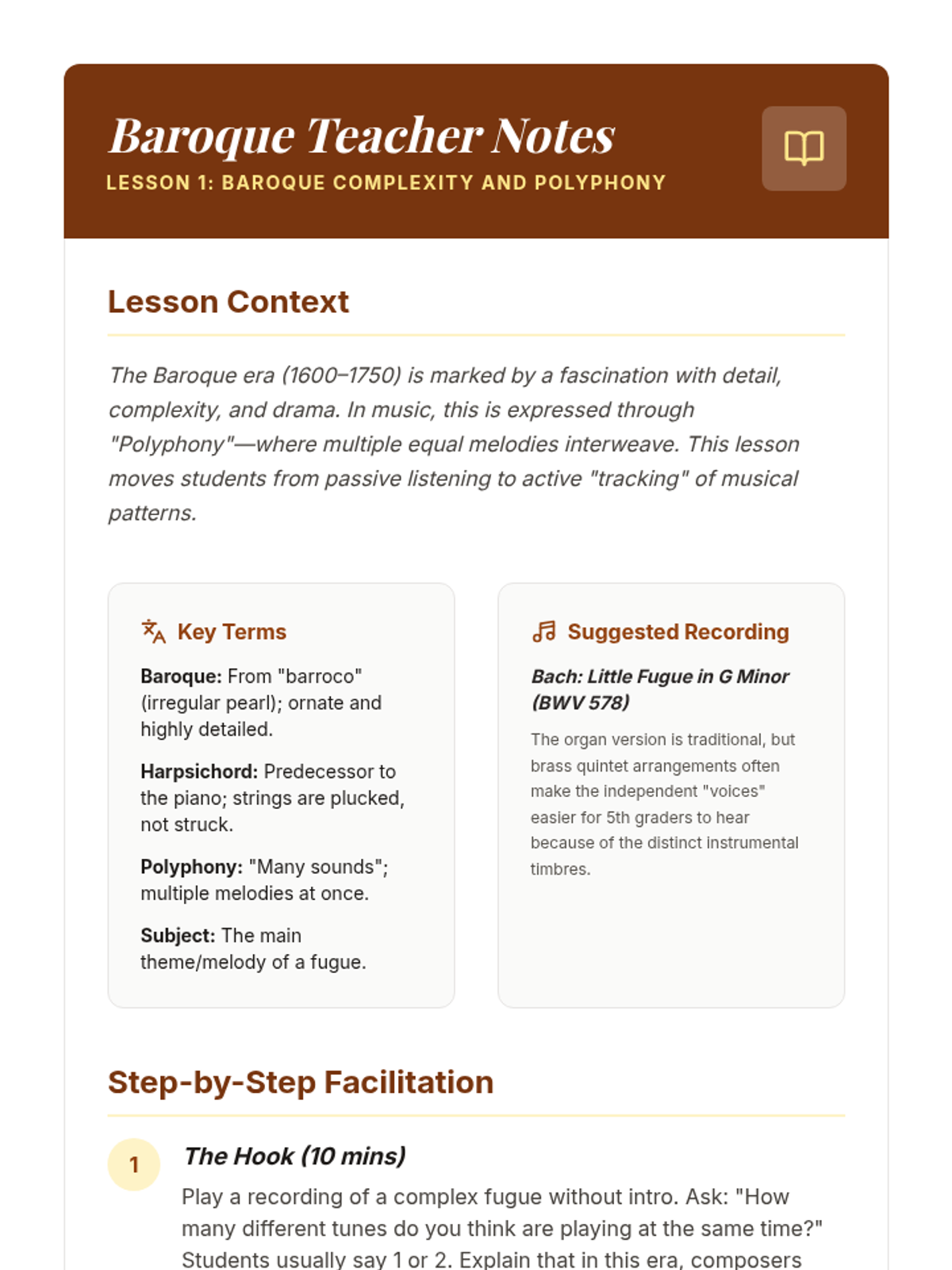
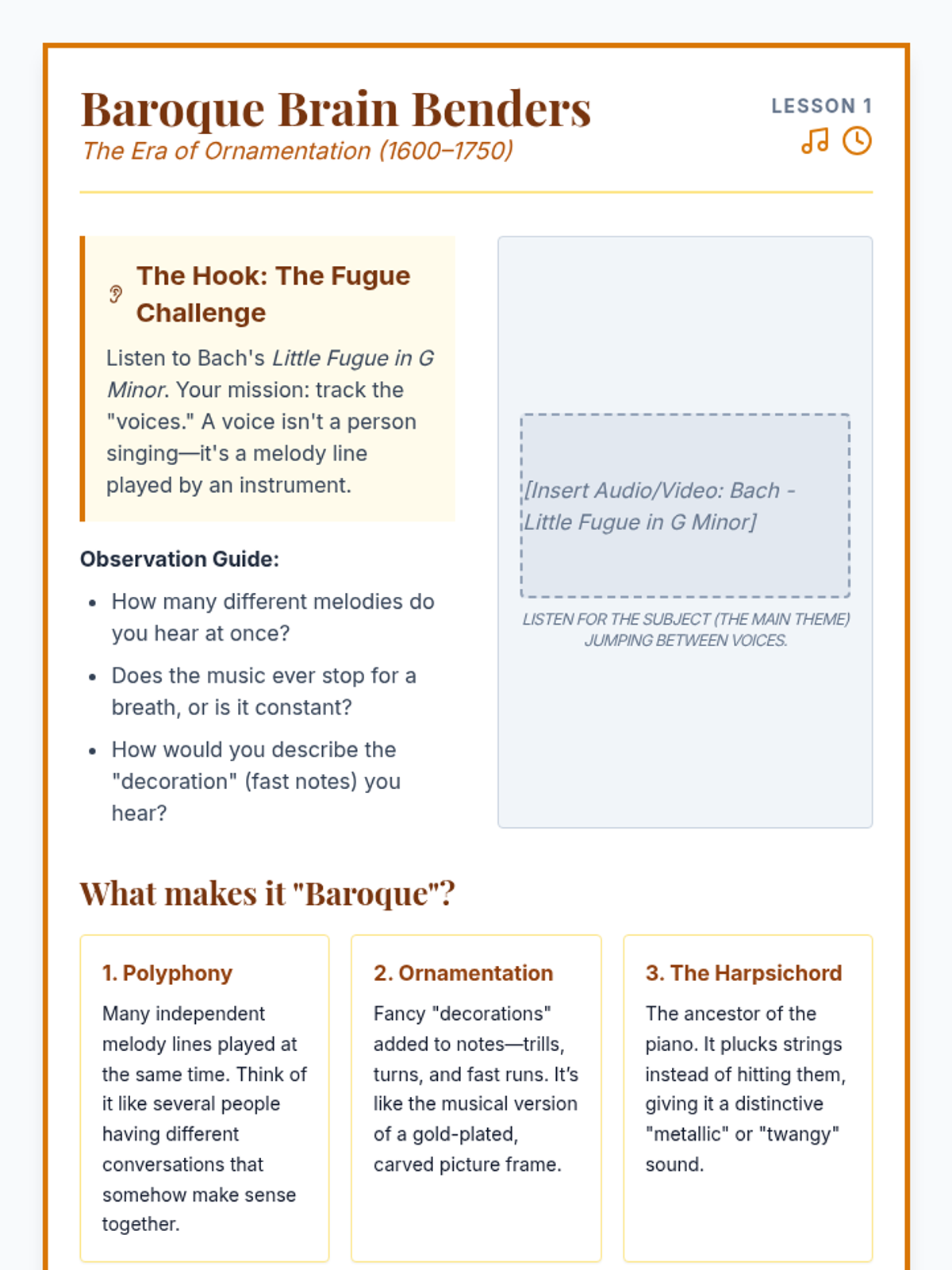
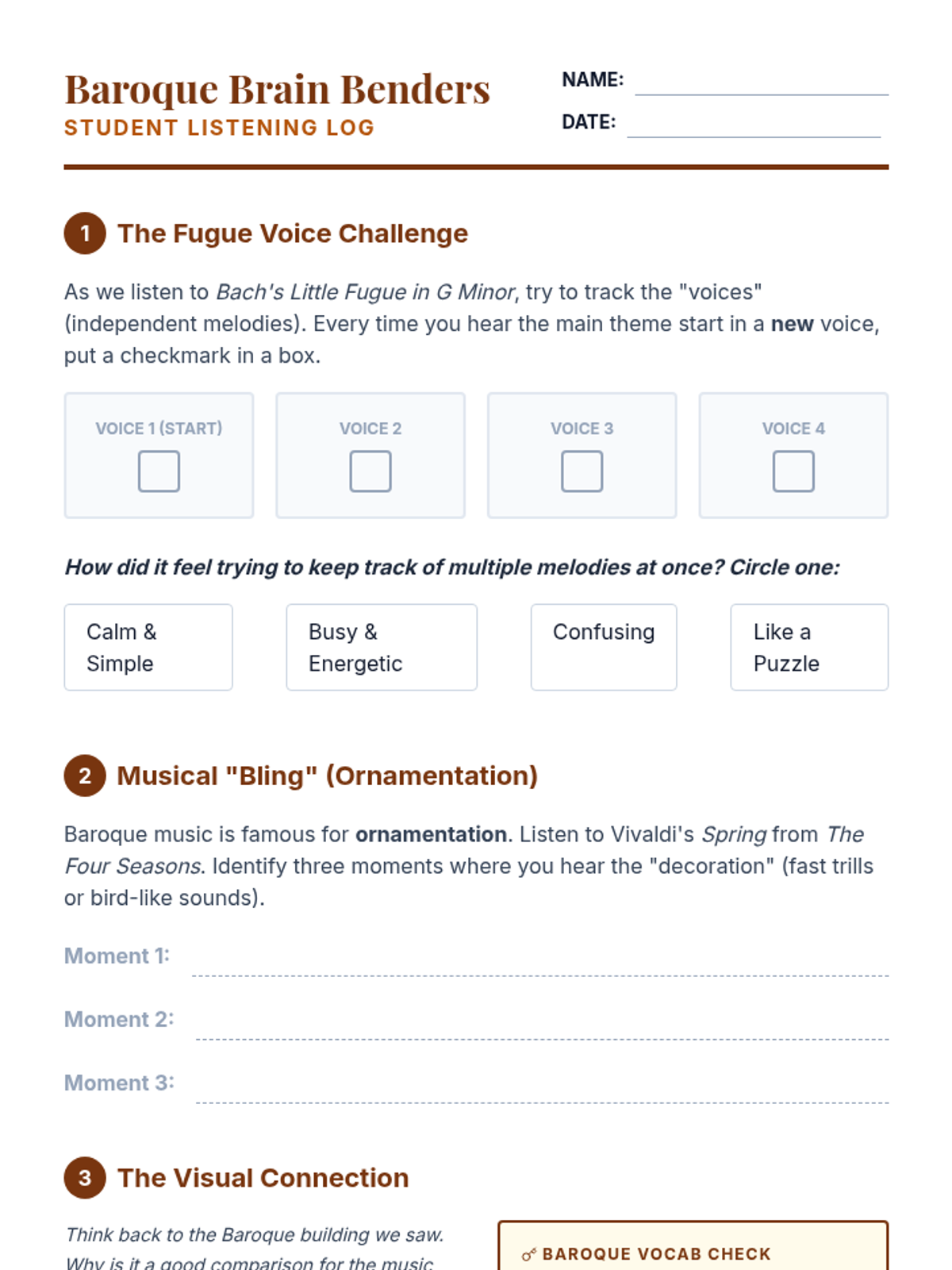
This sequence guides 5th-grade students through the evolution of Western Classical music from the Baroque period to the 20th century. Students will explore how societal shifts influenced orchestral size, musical texture, and form through active listening and analytical activities.
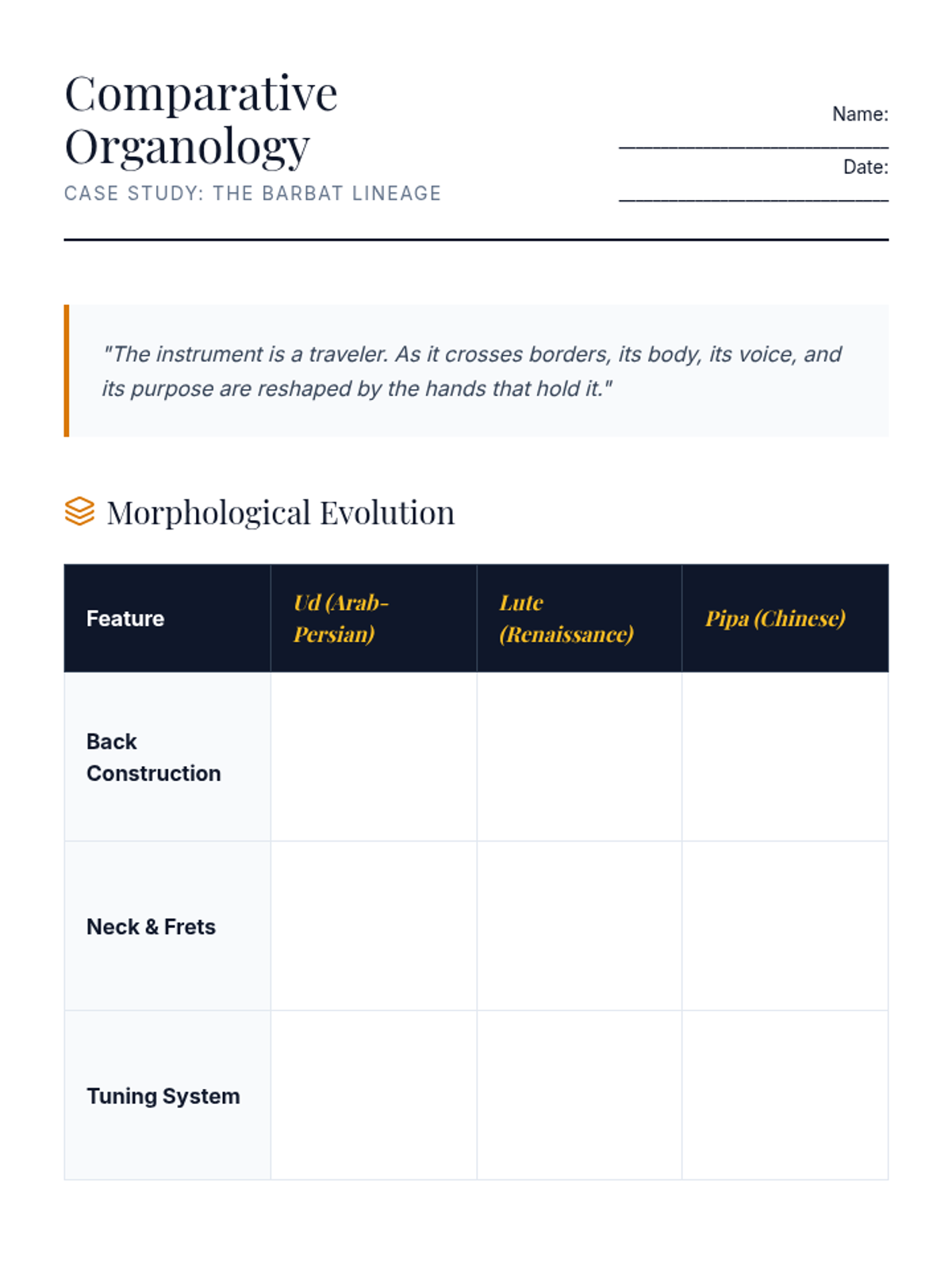
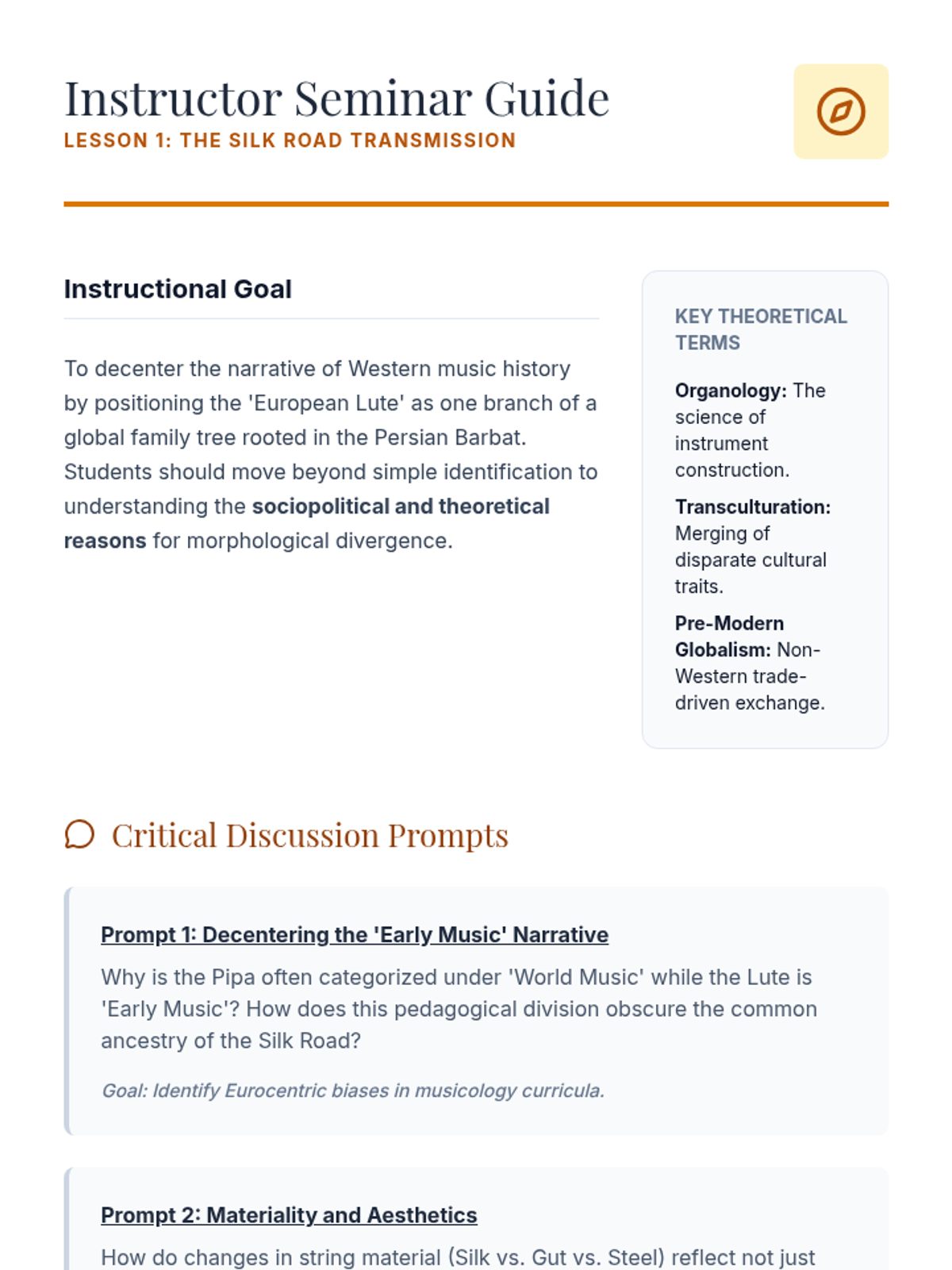
A graduate-level exploration of music history through the lenses of migration, diaspora, and cultural hybridity, moving beyond Western-centric narratives to examine how global movement shapes musical evolution.
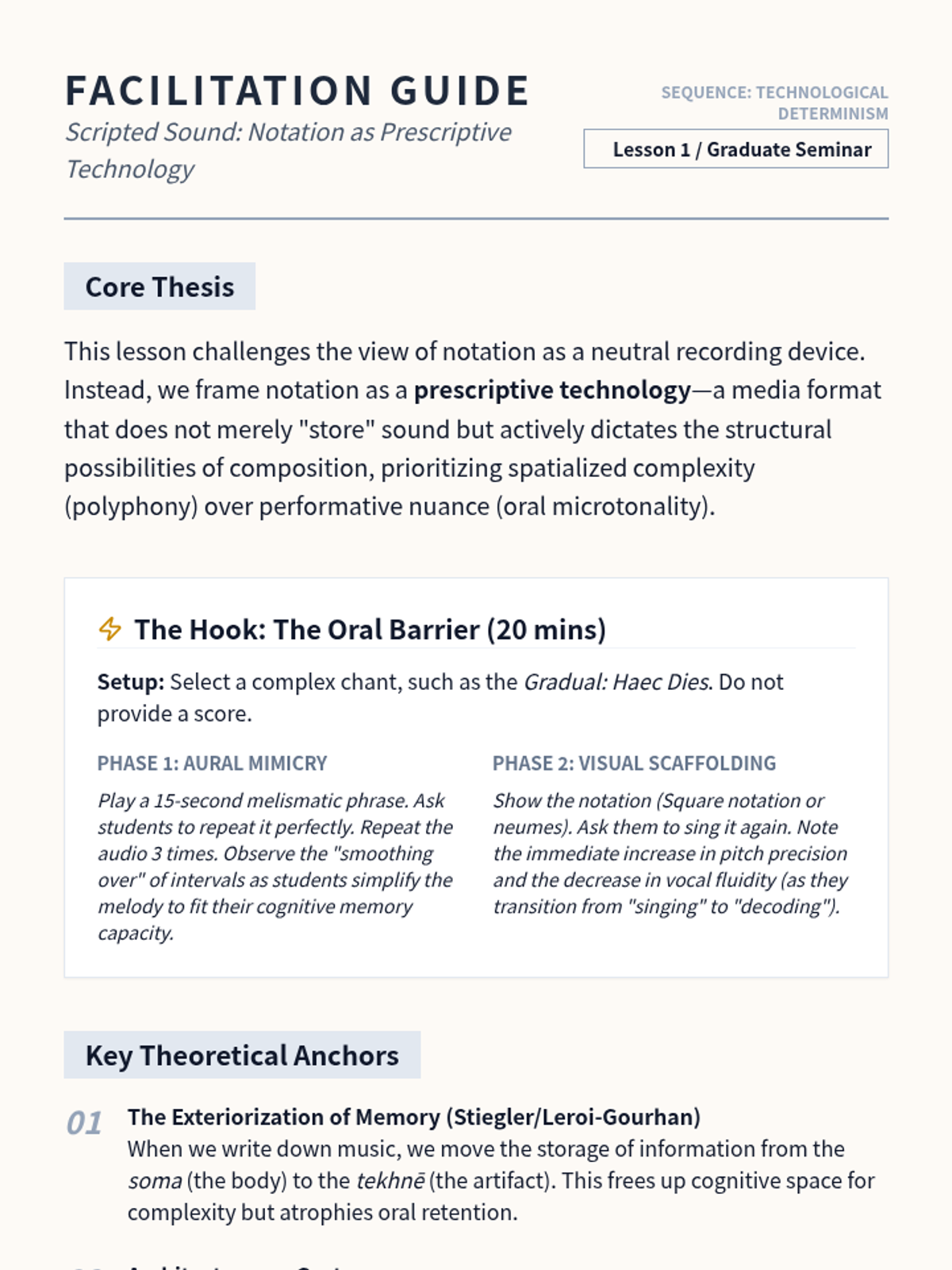
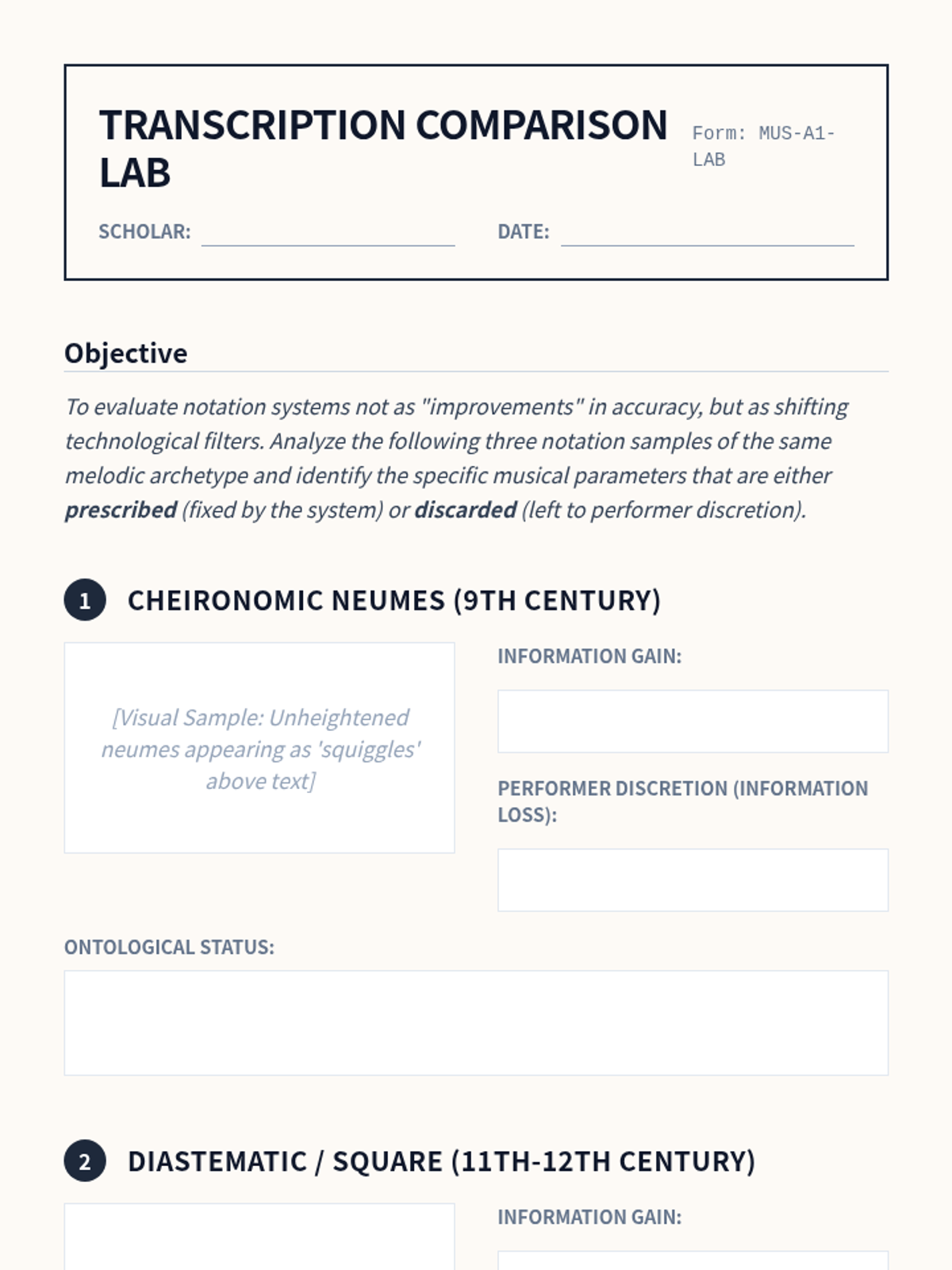
A graduate-level exploration of how technological advancement (from notation to algorithms) acts as a primary driver of musical aesthetics and evolution. Students analyze the reciprocal relationship between material culture and musical expression using media theory and organology.
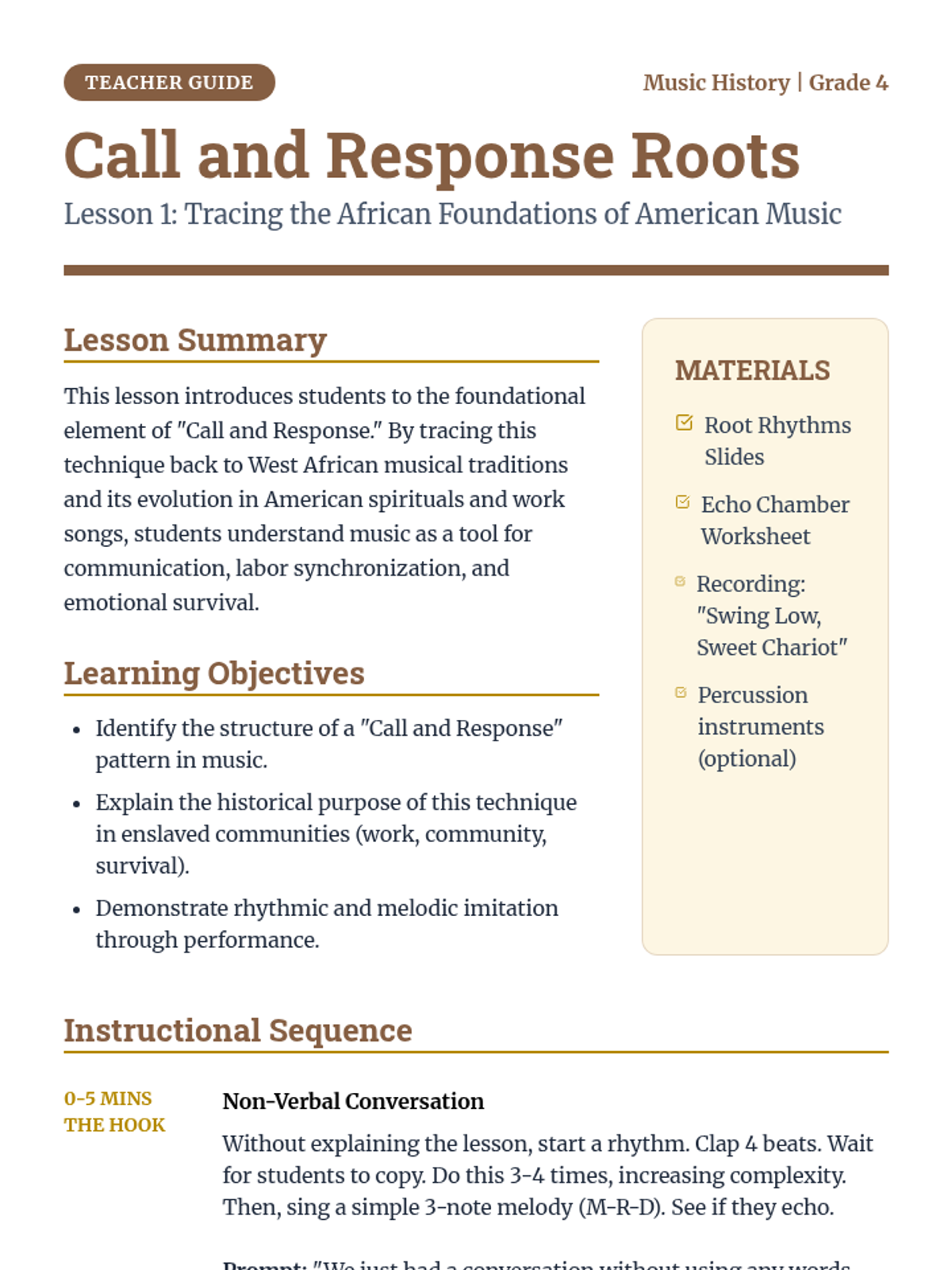
This 4th-grade music history sequence explores the evolution of American music from African roots to Jazz. Students investigate how historical context, community struggle, and cultural migration shaped genres like Spirituals, Blues, Ragtime, and Jazz through active listening, writing, and performance.
A chronological journey through the Baroque, Classical, Romantic, and Modern eras of Western Art Music, focusing on critical listening and historical context.
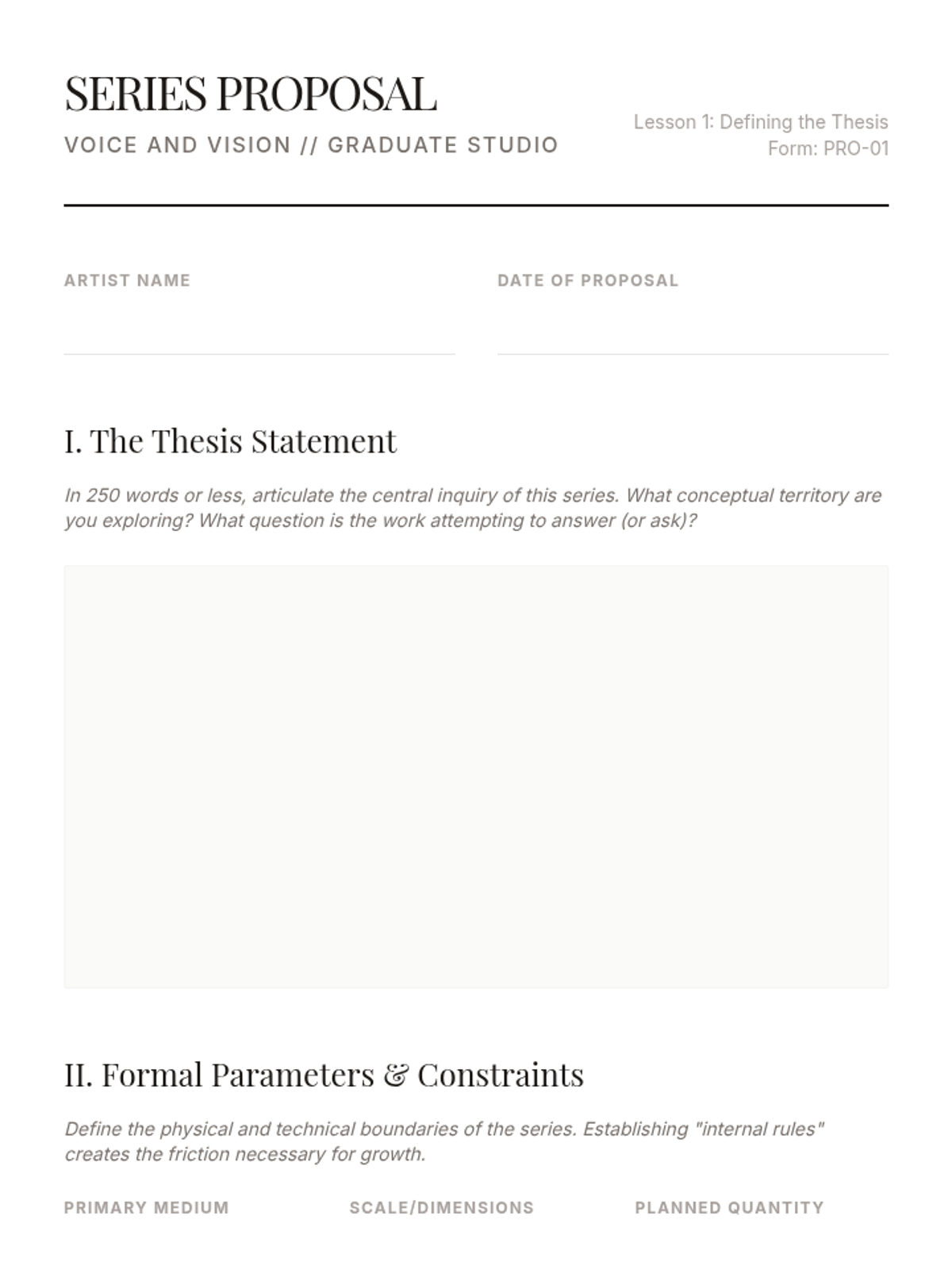
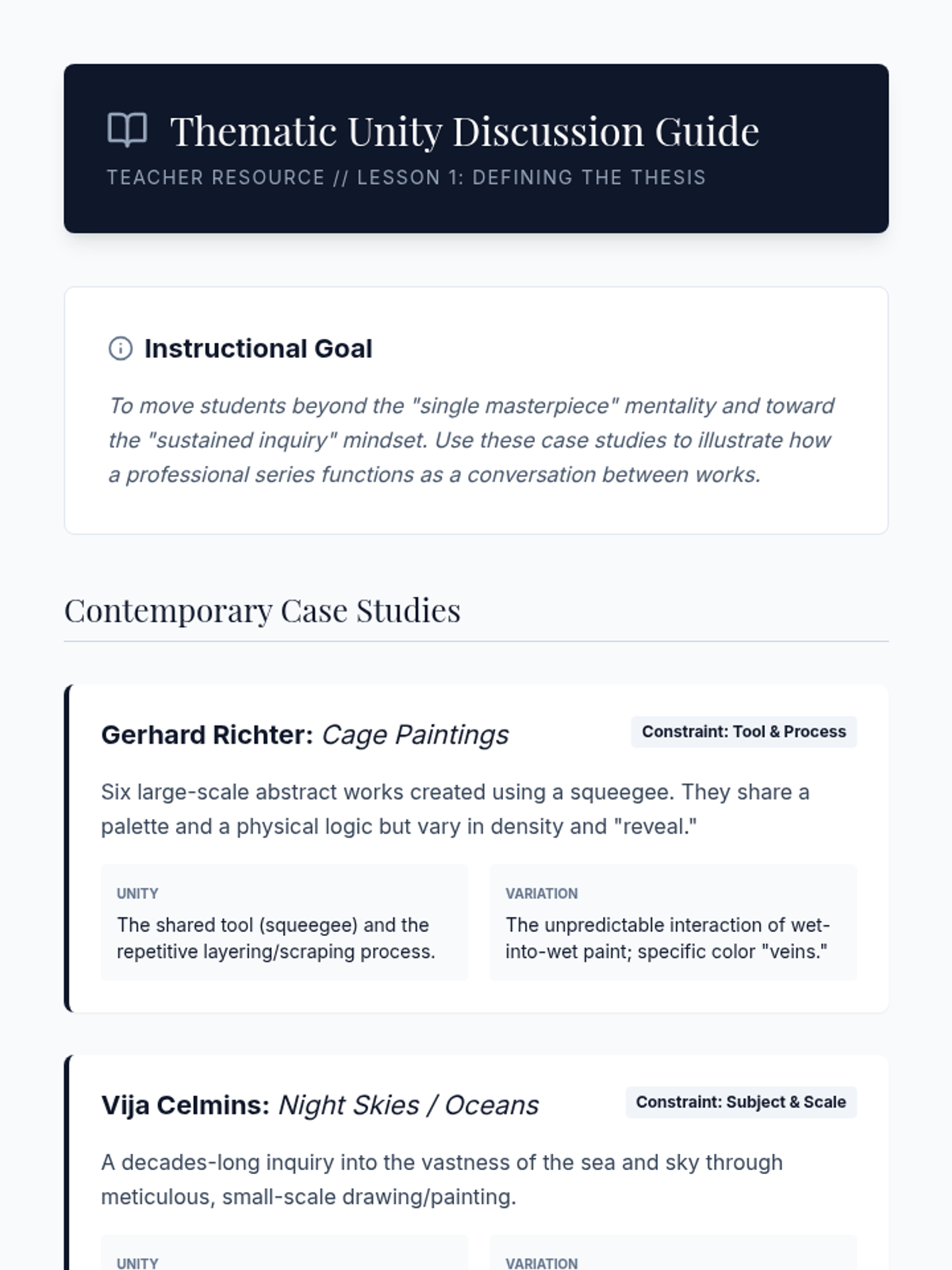
A graduate-level studio sequence focused on the transition from technical exercises to a cohesive, professional body of work. Students develop a thematic series, tackle the challenges of large-scale execution, engage in rigorous formal critiques, and curate a final presentation.
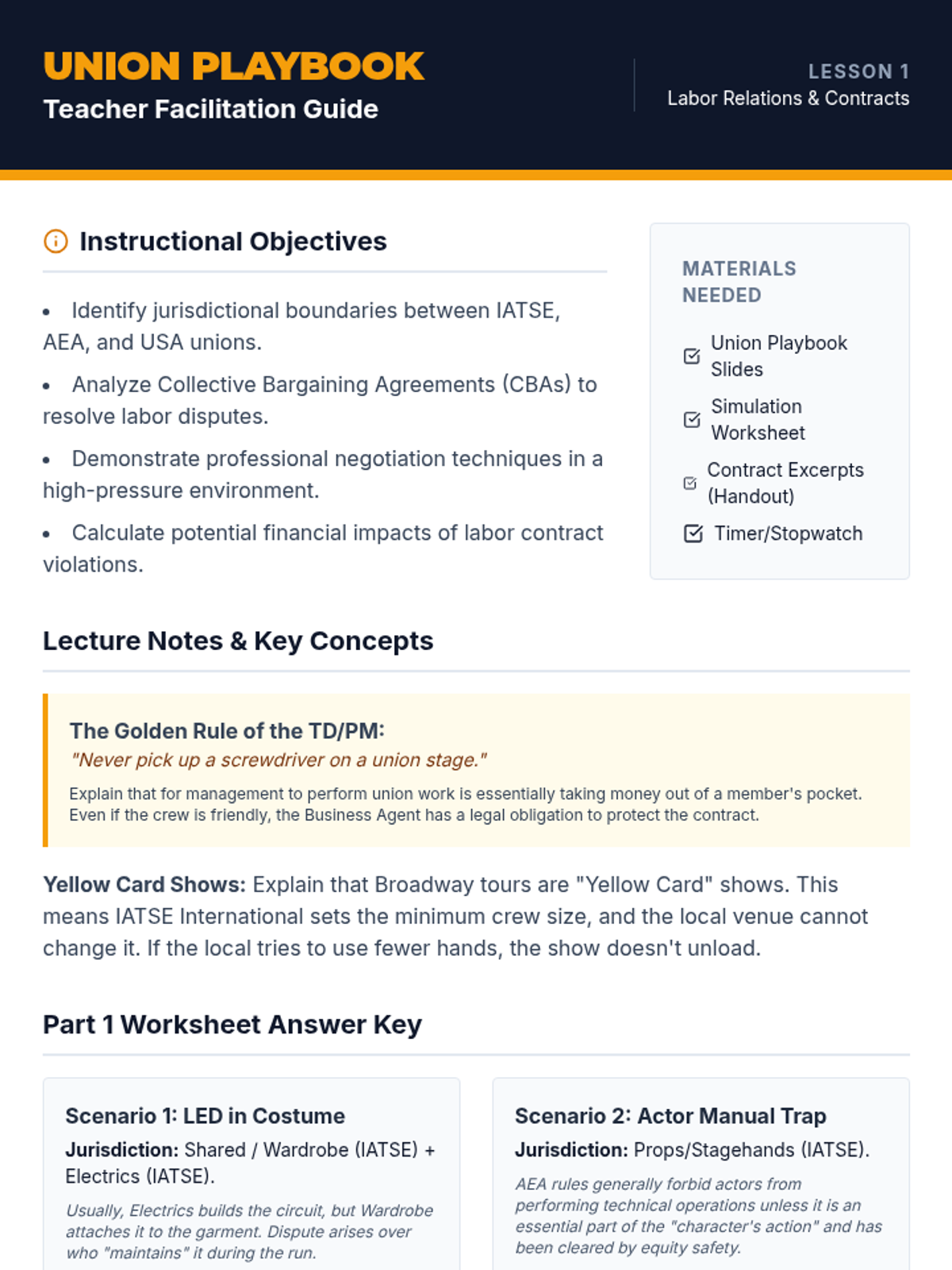
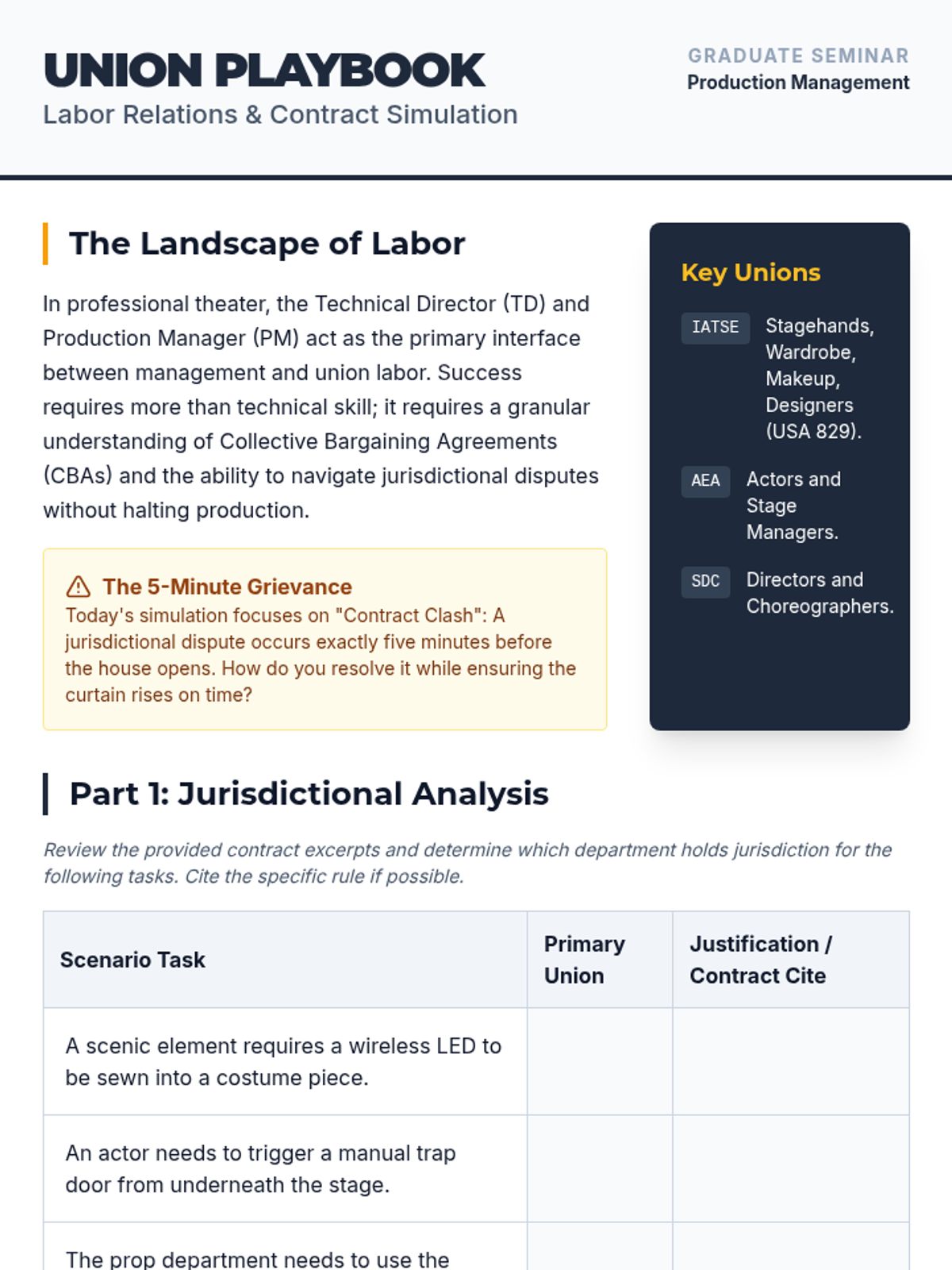
This graduate-level sequence explores the intersection of labor law, fiscal strategy, safety protocols, and crisis management within professional theater production. Students develop the leadership skills necessary to navigate union environments and high-stakes technical environments.
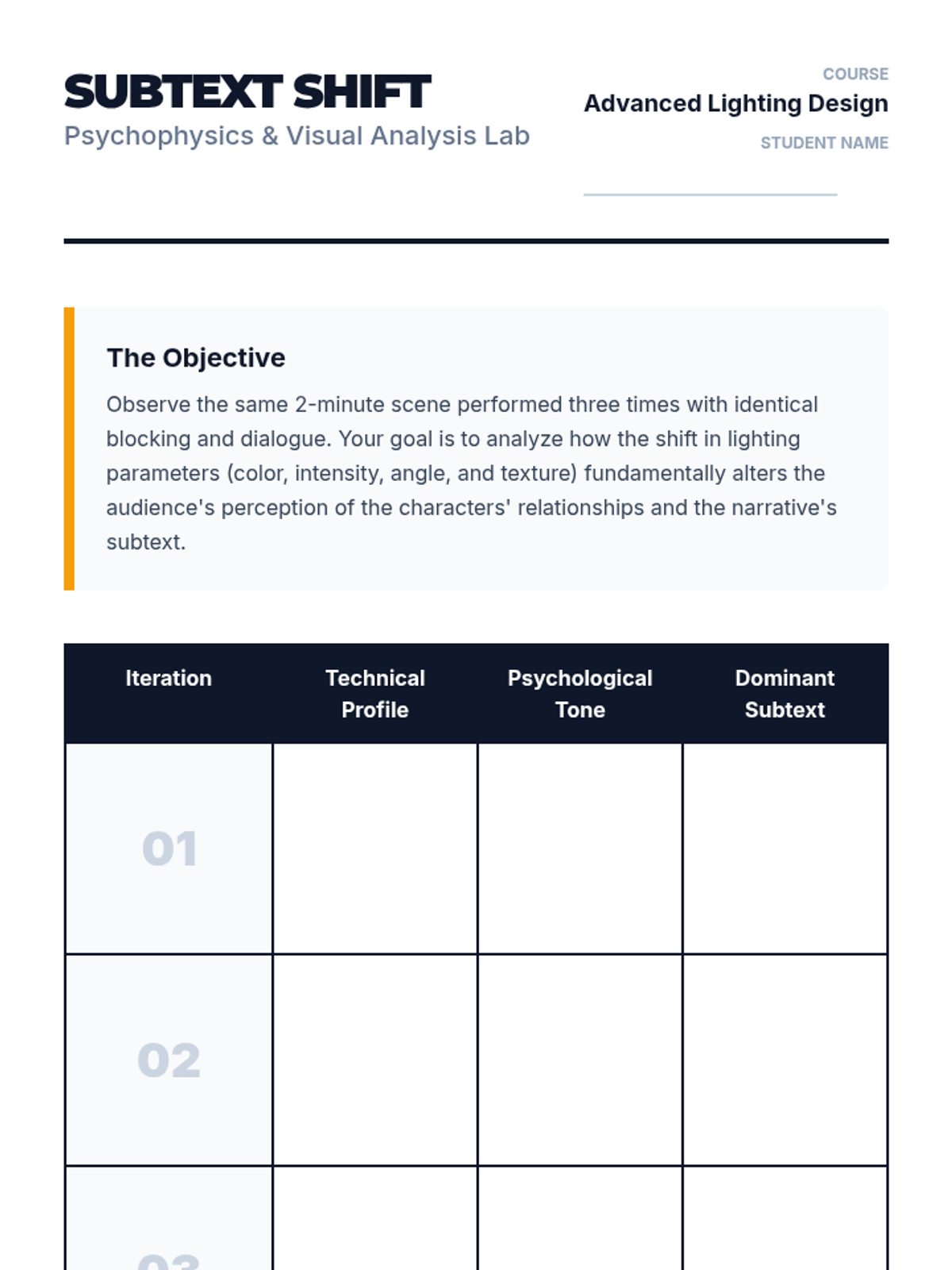
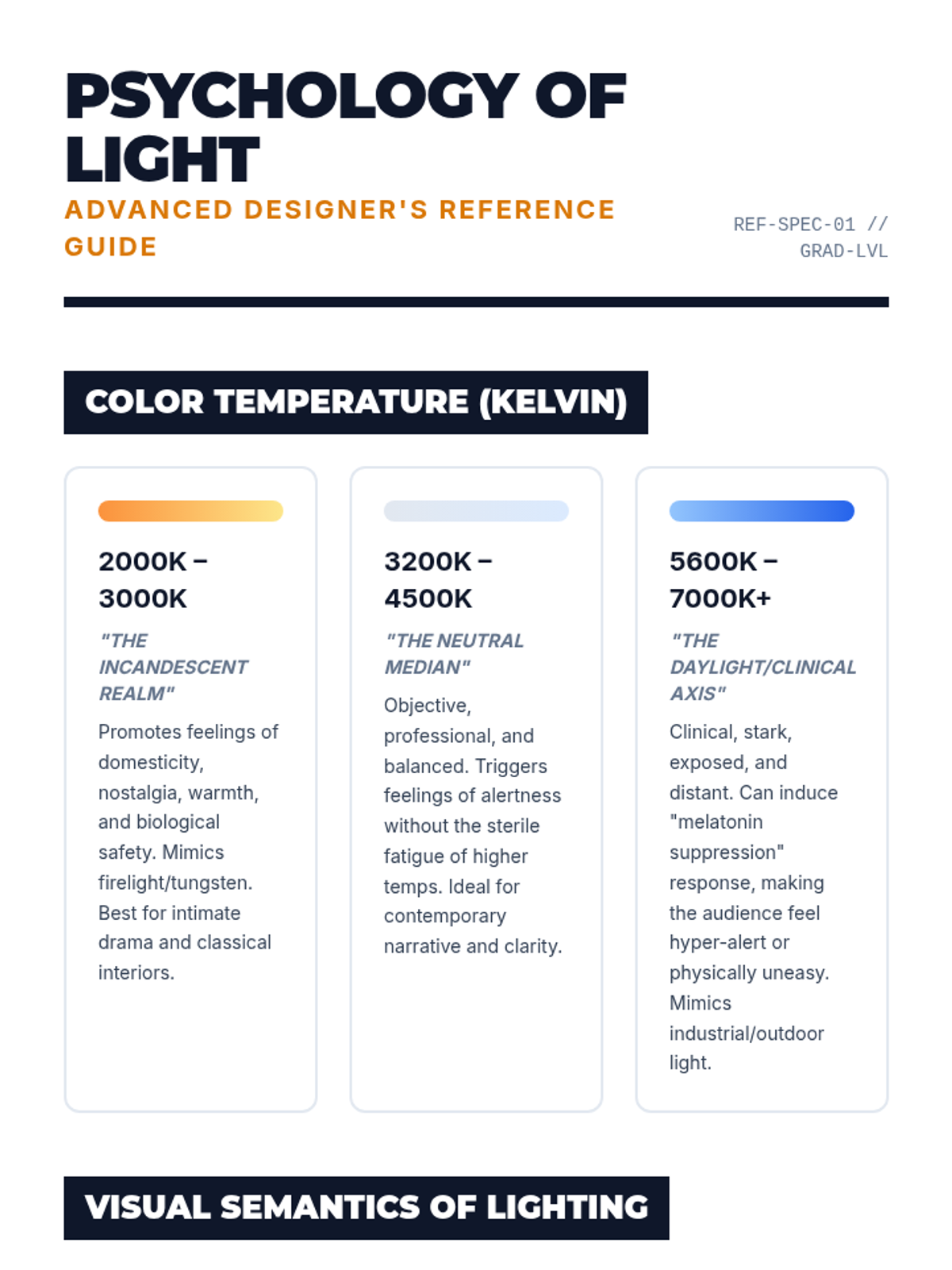
An advanced technical theater sequence for graduate students exploring the intersection of light physics, human perception, and visual storytelling. Students move from the biological mechanics of the eye to high-level system integration and dramaturgy.
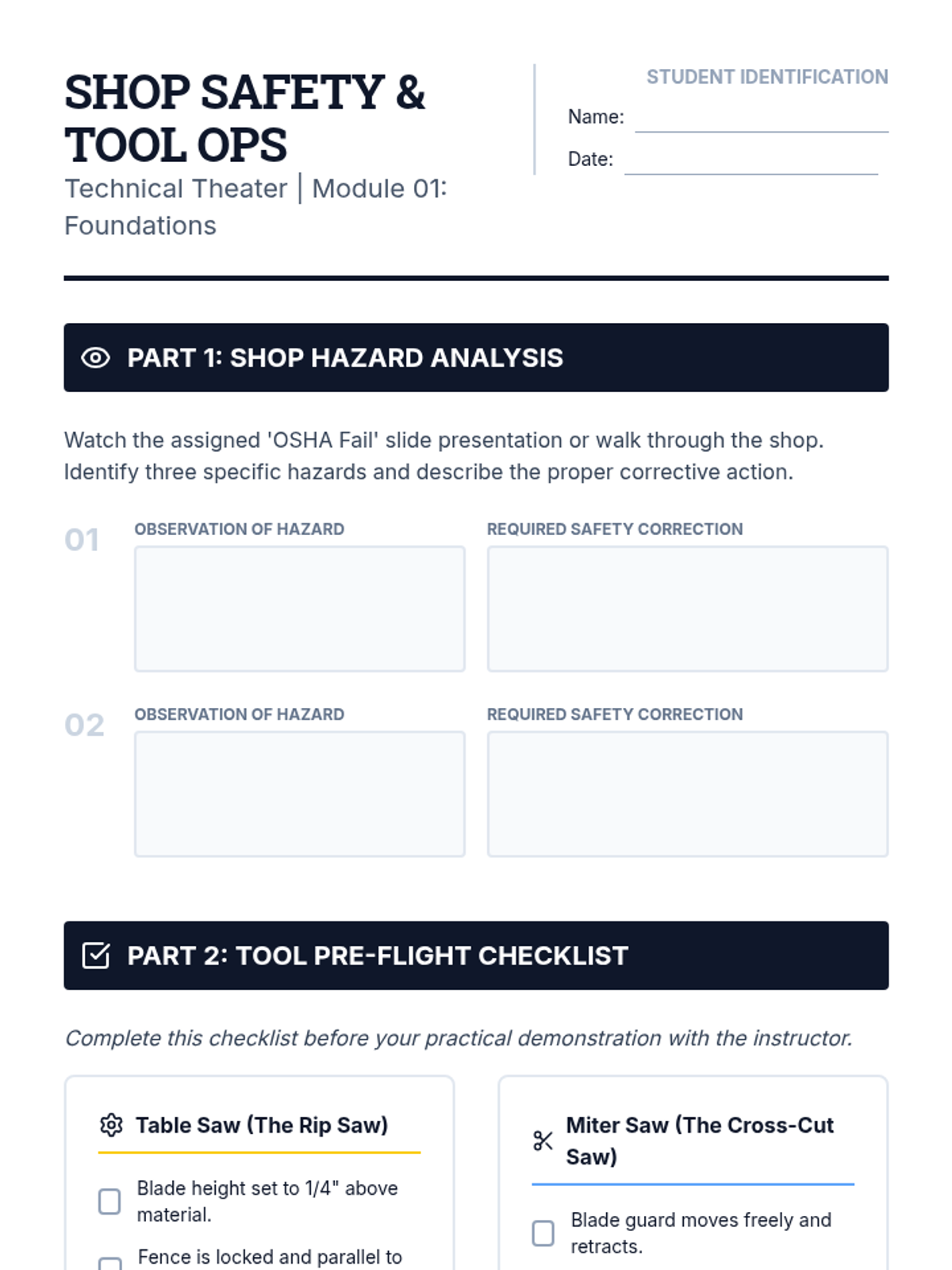
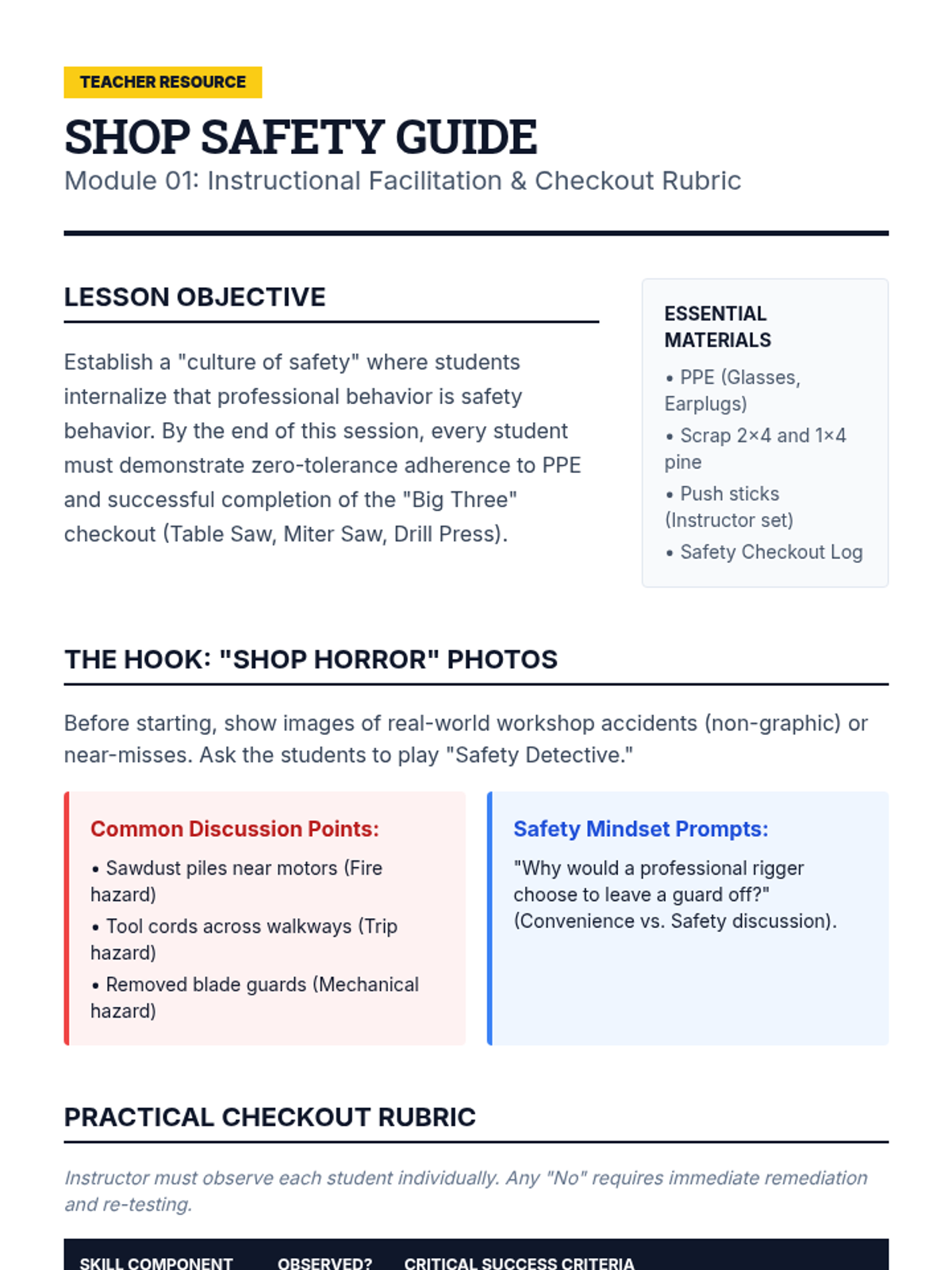
A comprehensive undergraduate-level sequence on the fundamentals of theatrical scenery construction and rigging. Students progress from safety certification to constructing flats and platforms, culminating in rigging mechanics and installation/strike protocols.
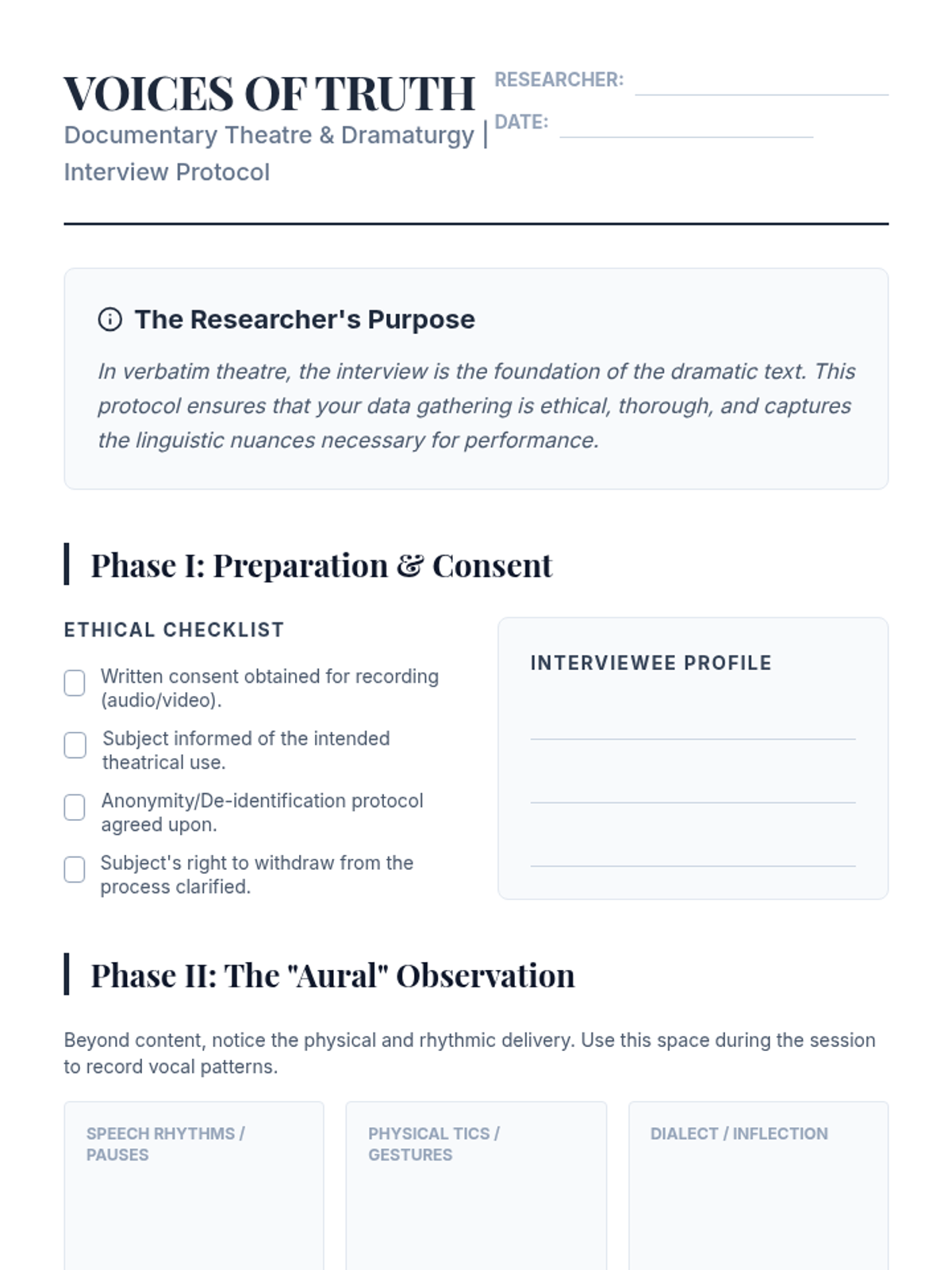
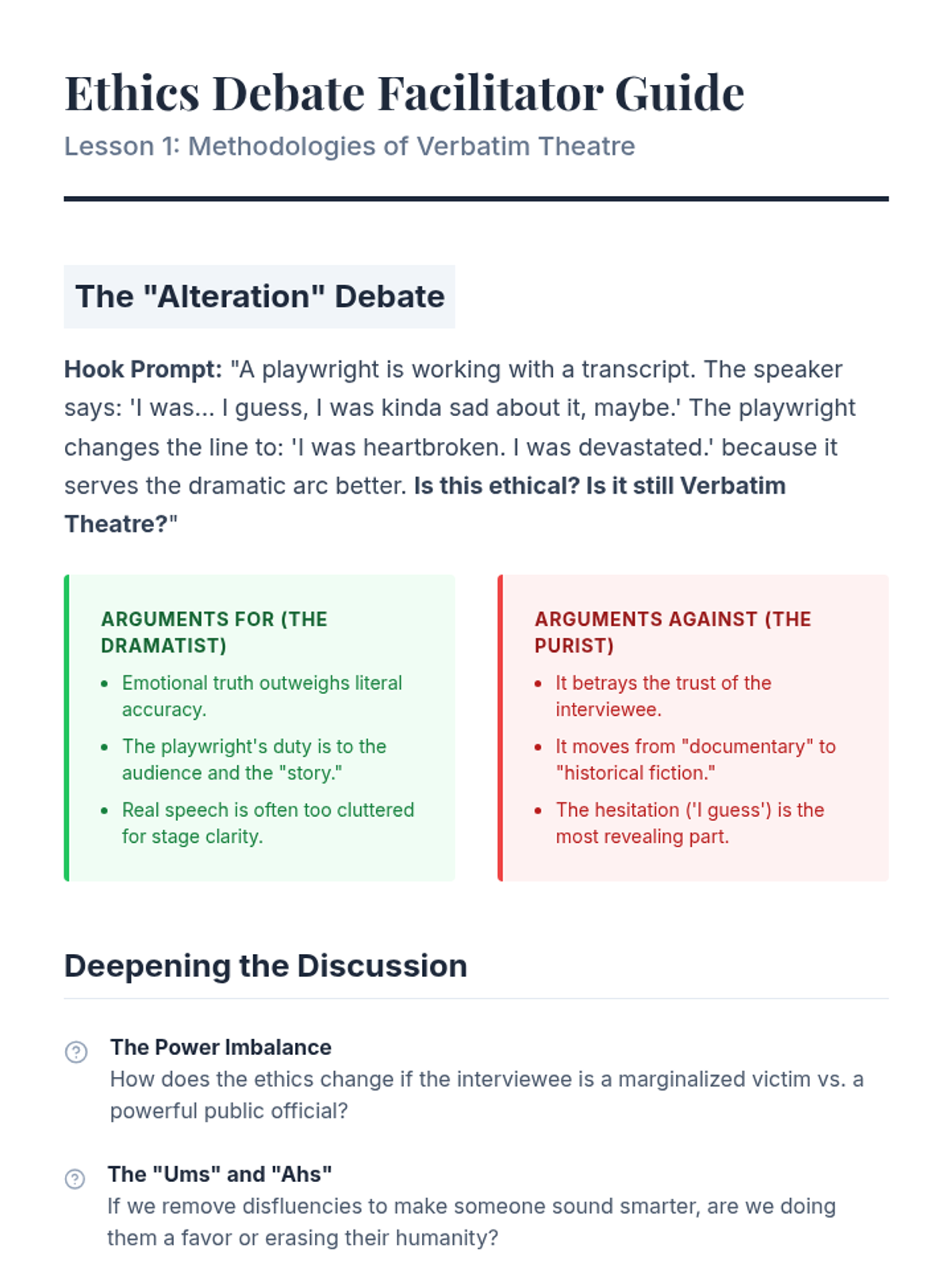
A comprehensive graduate-level exploration of Documentary and Verbatim Theatre, covering ethical research, archival mining, speech editing, character synthesis, and theatrical staging. Students transition from researchers to dramatists, producing original documentary works based on real-world testimony and historical records.
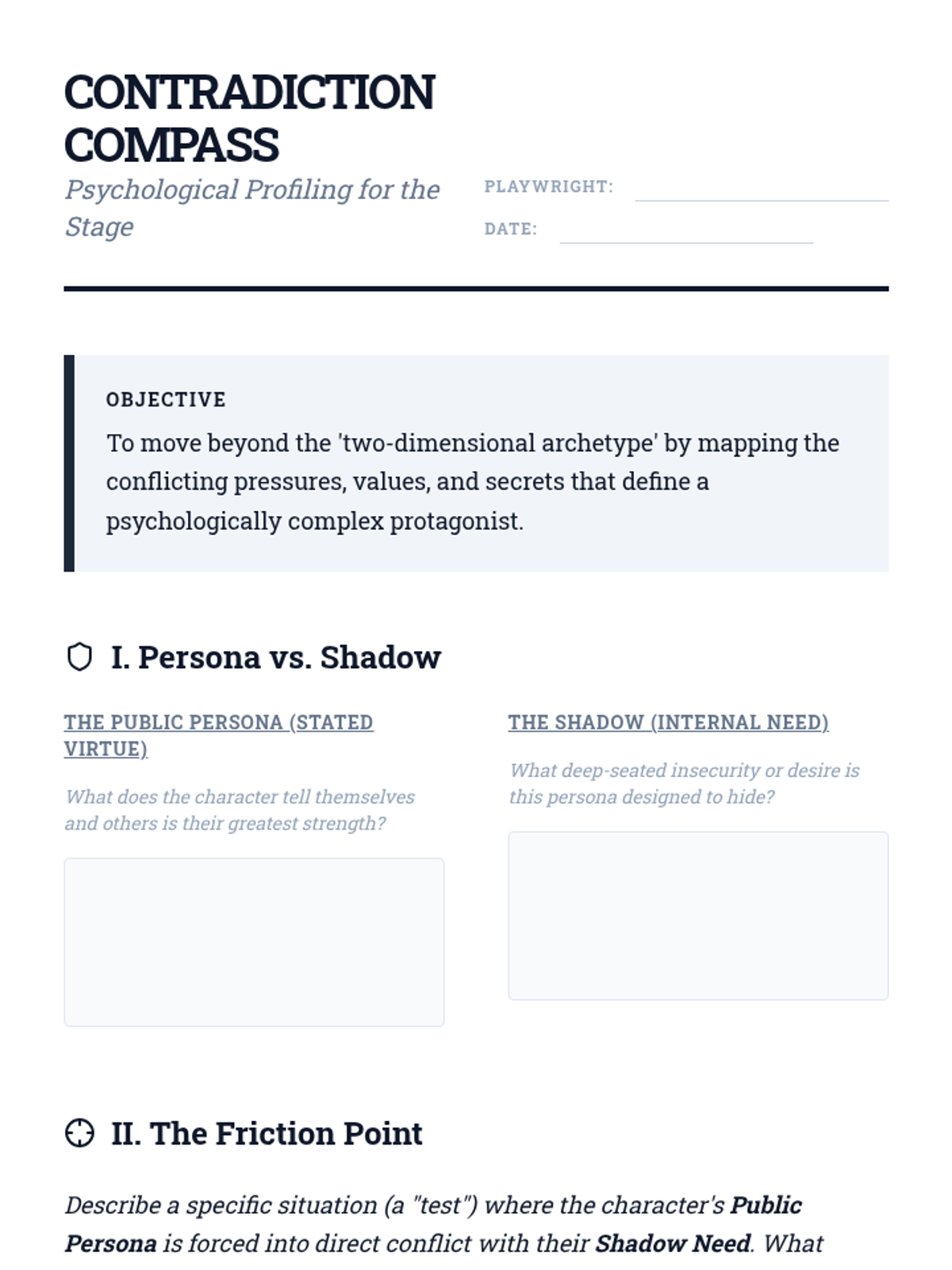
An advanced playwriting sequence for graduate students focusing on the psychological architecture of dramatic characters, subtextual dialogue, and character-driven narrative structures. Students progress from deconstructing archetypes to writing a one-act draft grounded in behavioral truth and internal contradiction.
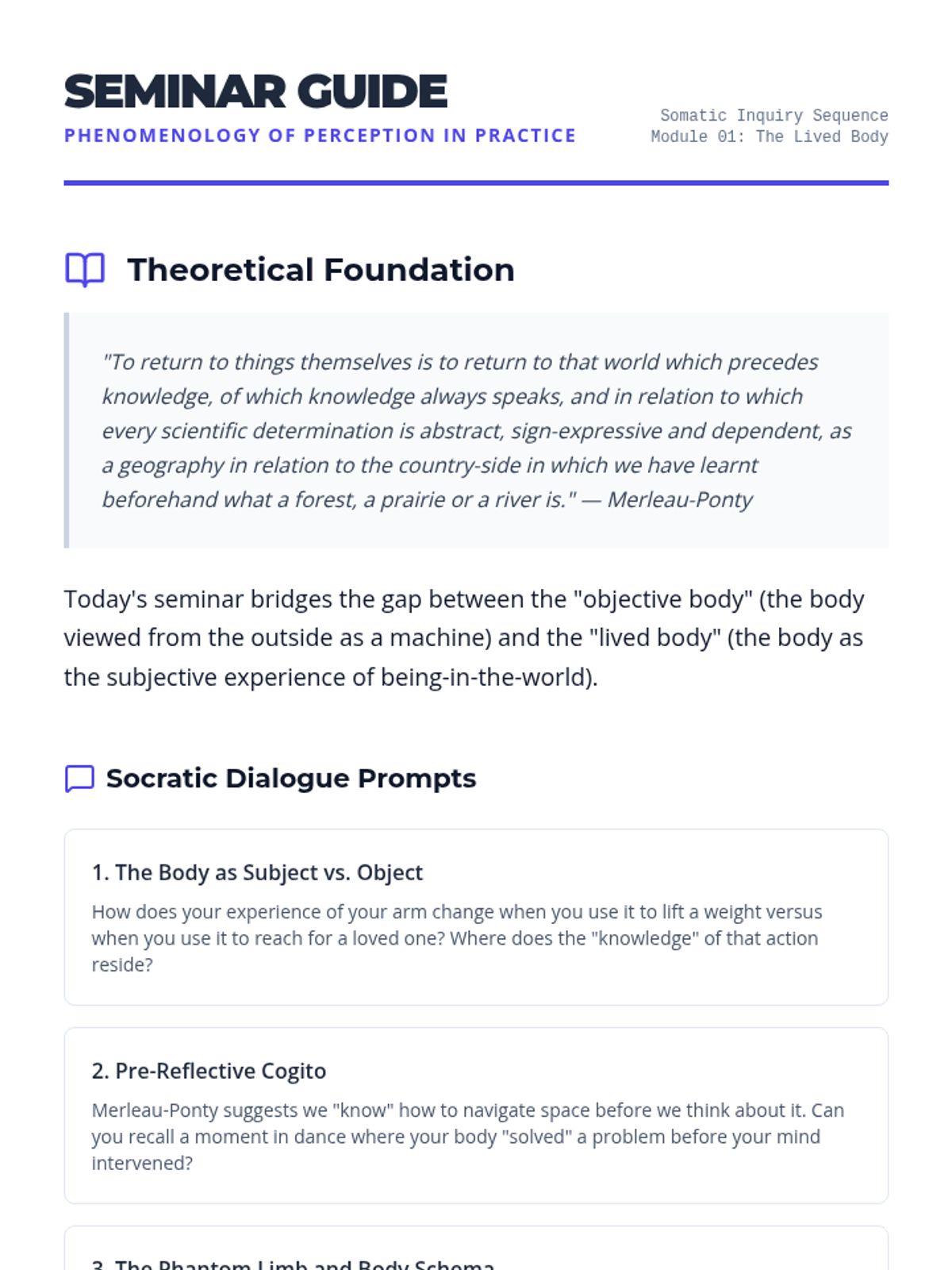
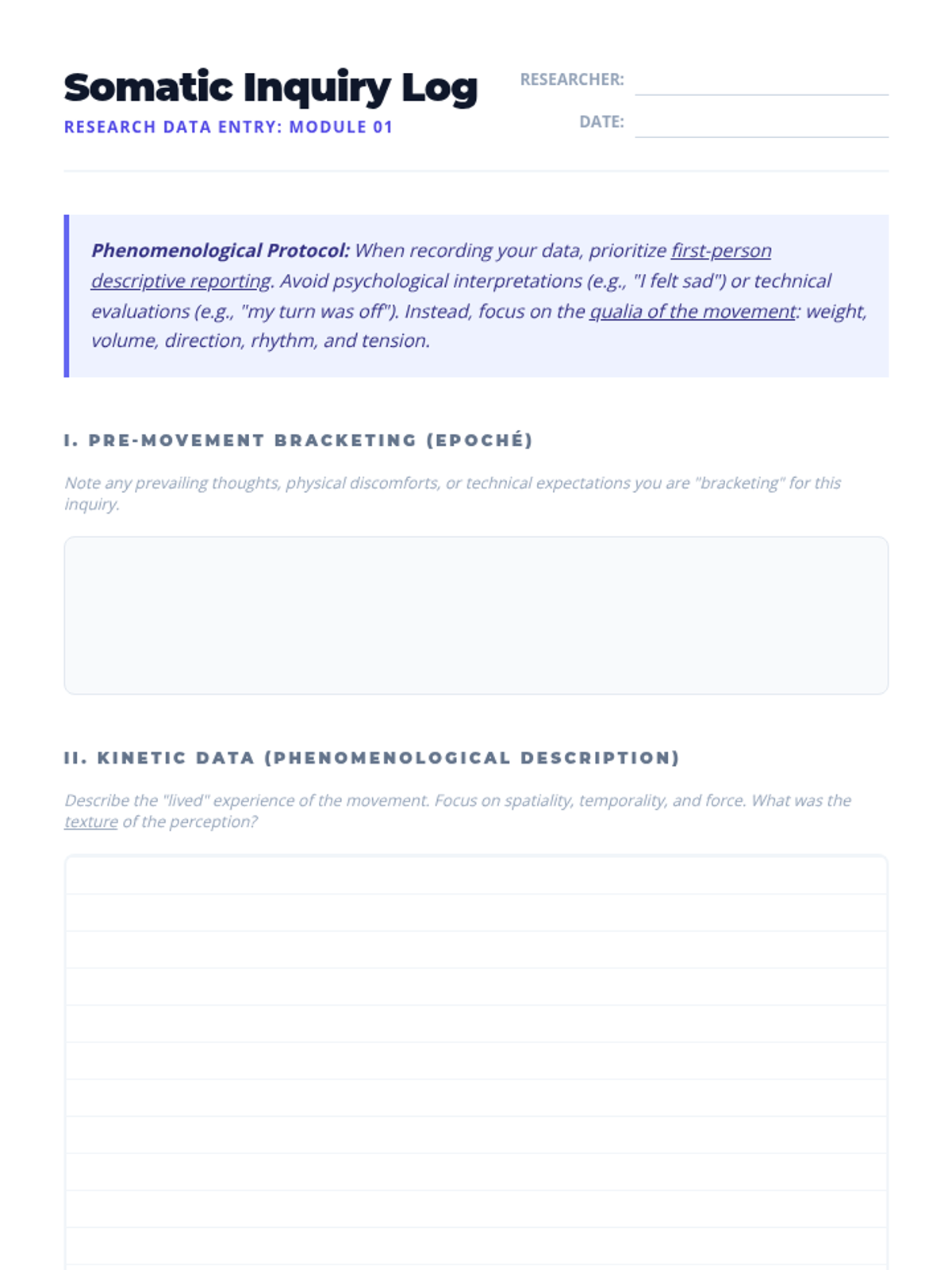
A graduate-level sequence exploring creative movement as a rigorous Practice-as-Research (PaR) methodology. It bridges phenomenological philosophy and somatic practice to investigate academic questions through the body.
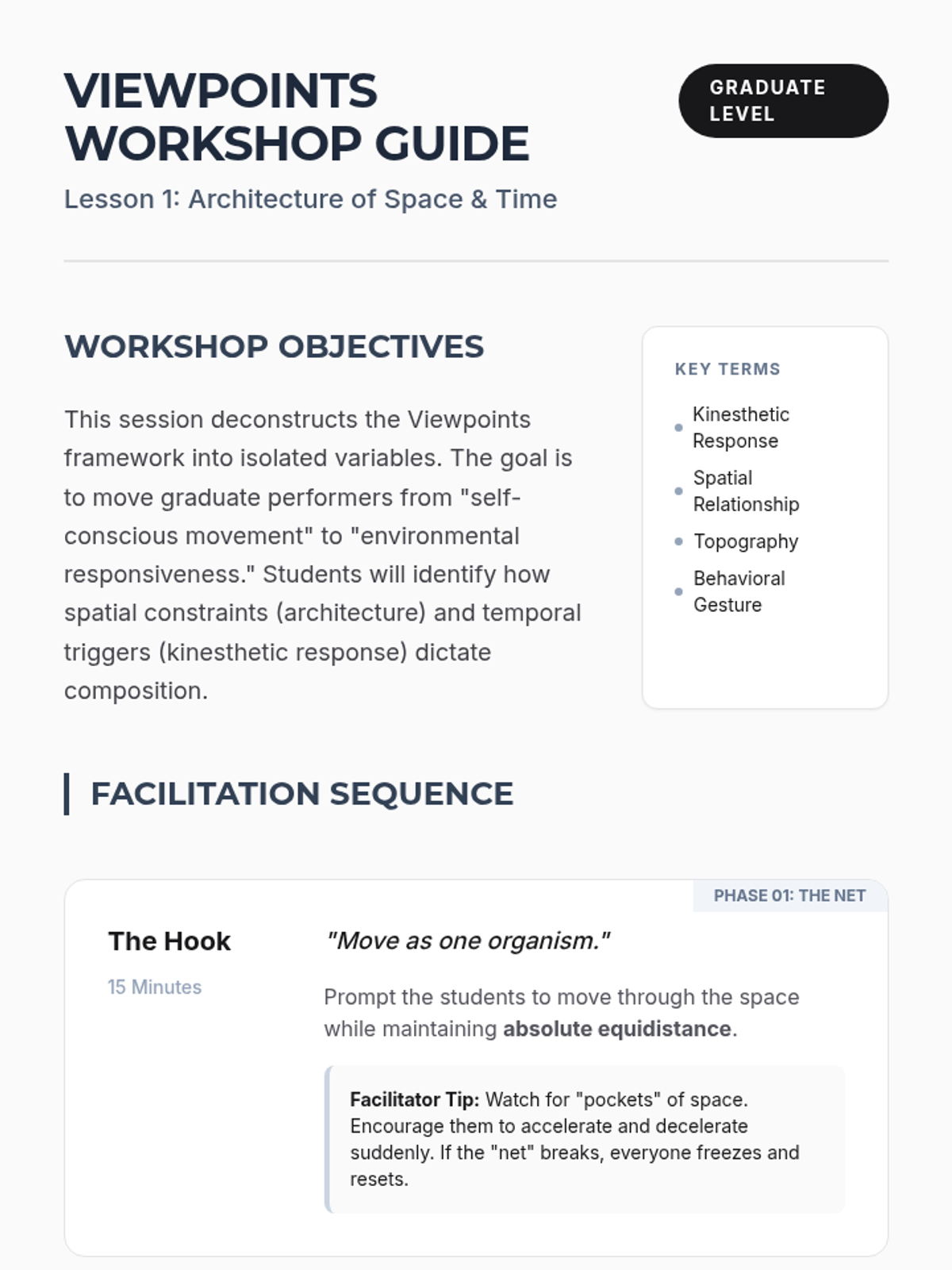
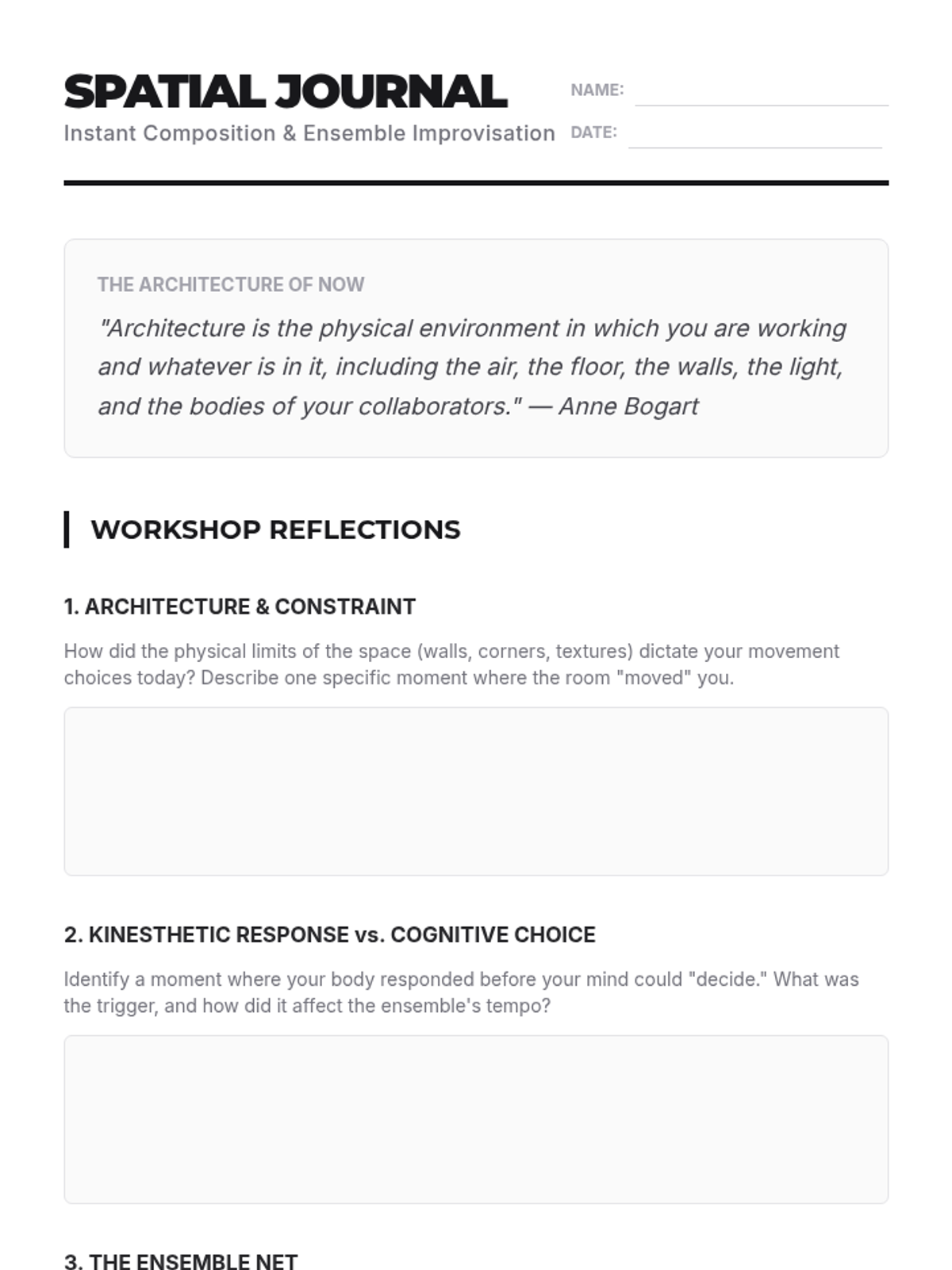
A high-level graduate sequence exploring the transition from solo improvisation to complex ensemble instant composition, utilizing Viewpoints, Contact Improvisation, and indeterminate scoring.
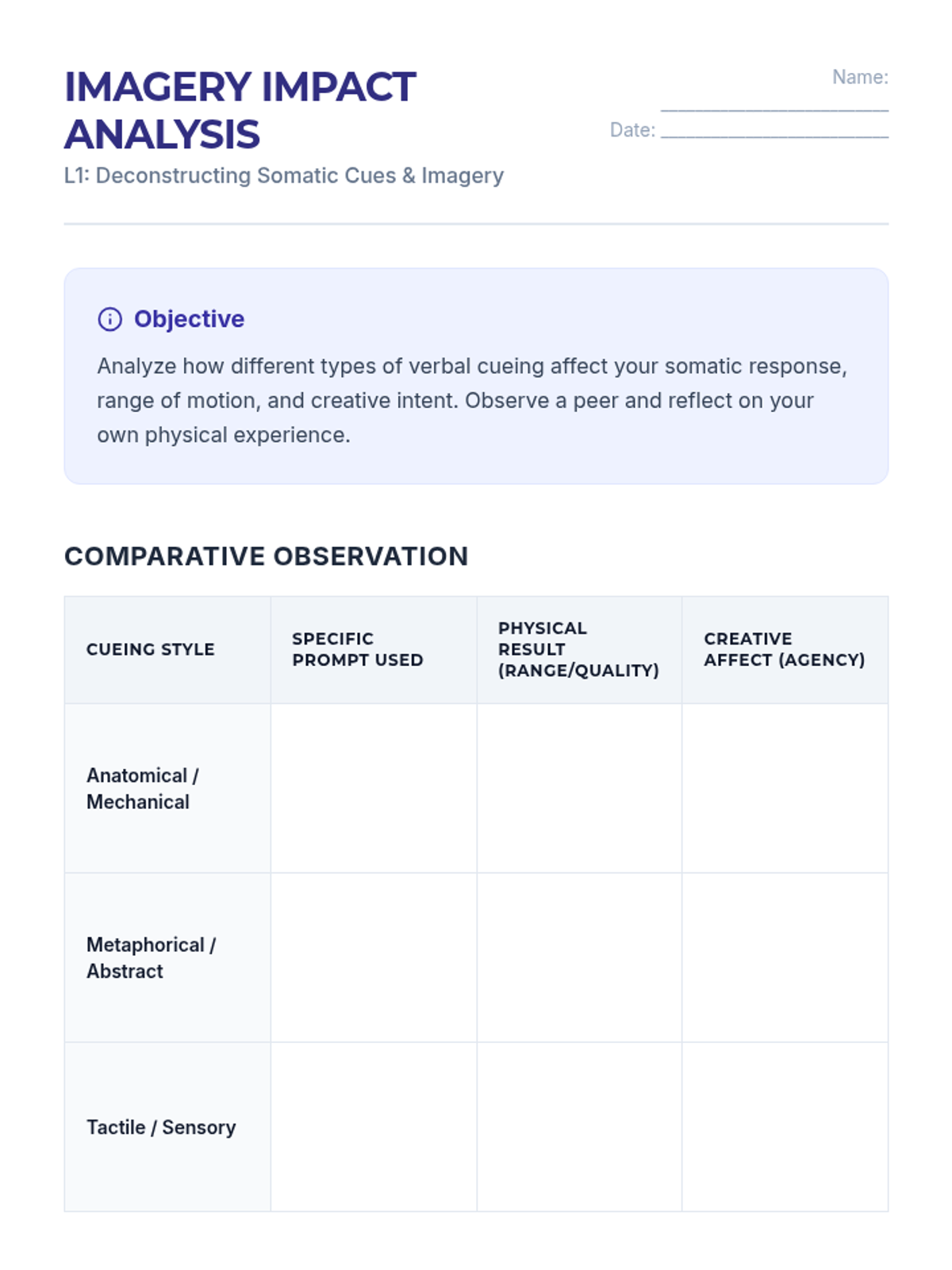
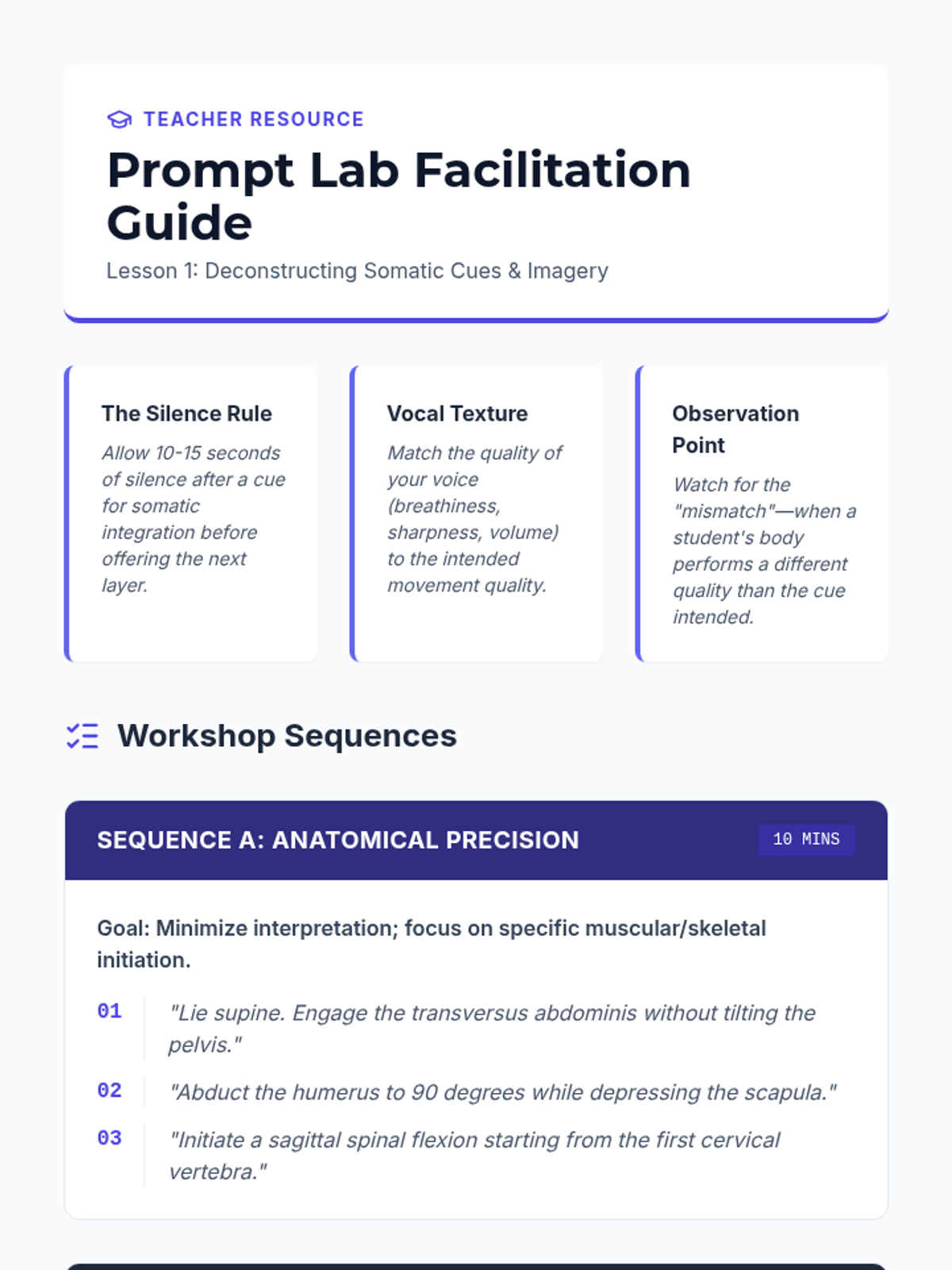
A graduate-level sequence exploring advanced pedagogical frameworks for creative movement facilitation. Students deconstruct somatic cues, developmental patterns, trauma-informed practices, and neurodiverse scaffolding to design inclusive and effective movement workshops.
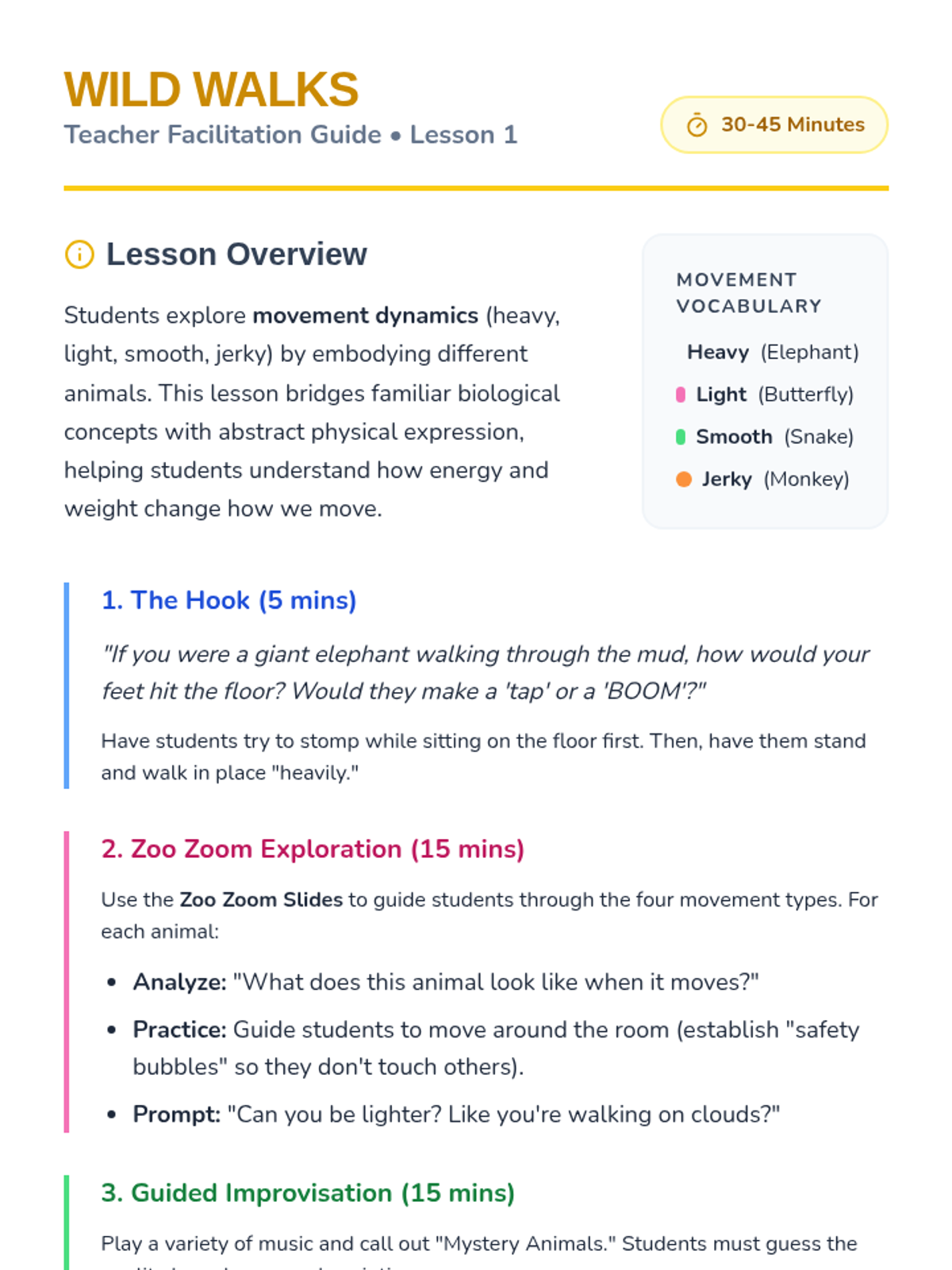
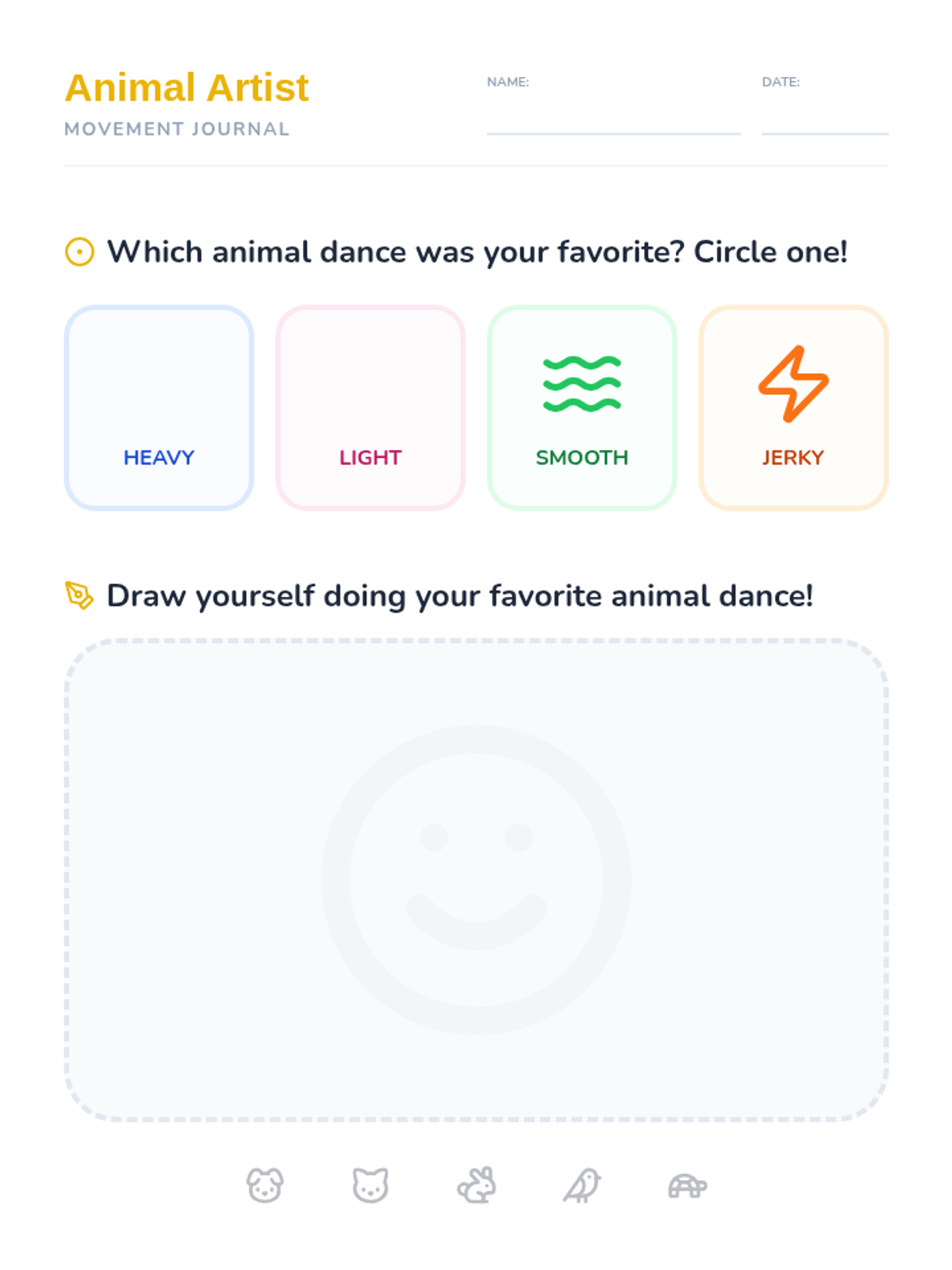
This sequence introduces Pre-K students to the expressive power of creative movement. Students learn to use their bodies to communicate animals, weather, emotions, and stories, developing physical empathy and creative confidence through guided improvisation and play.
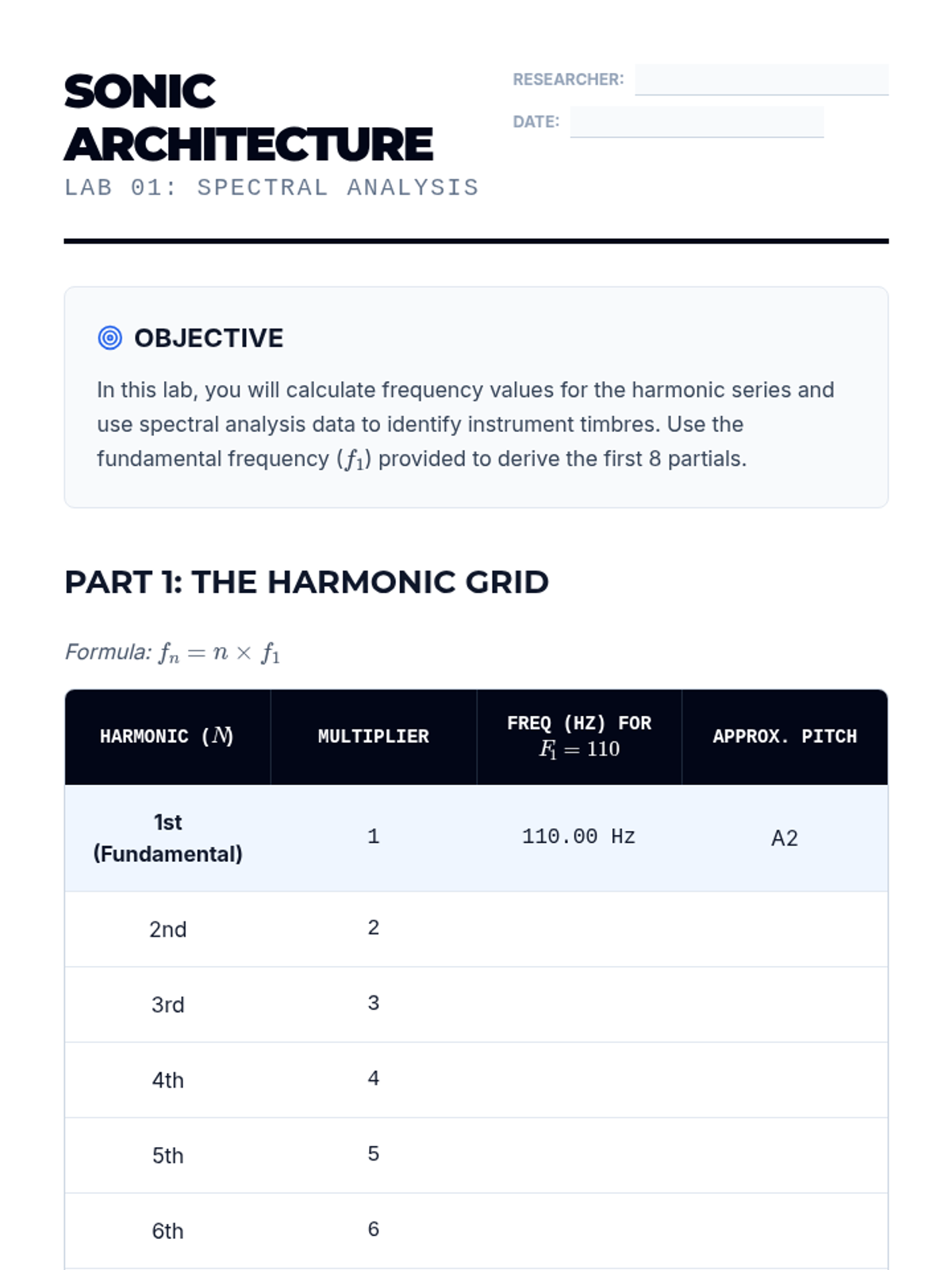
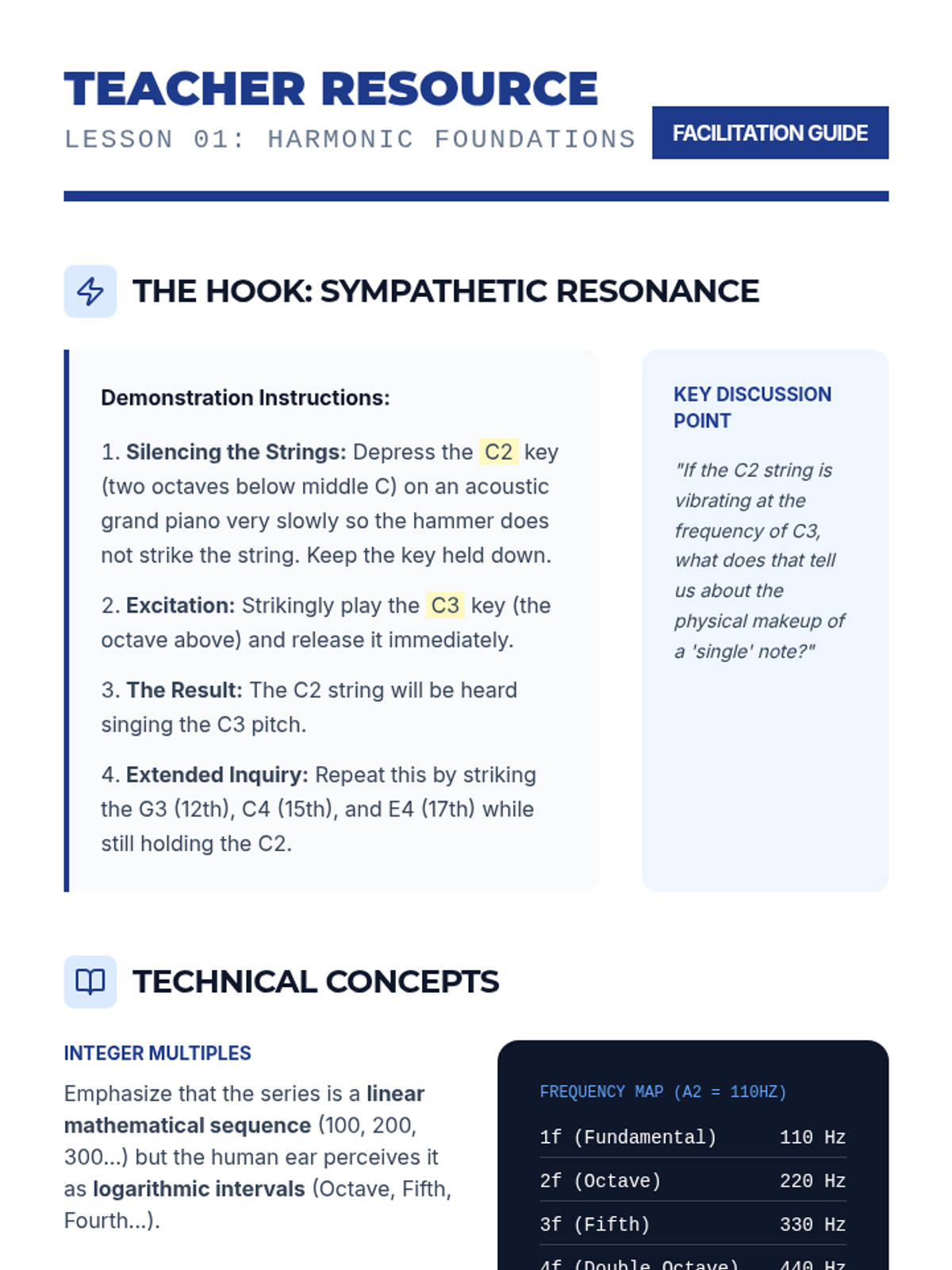
A graduate-level exploration of music fundamentals through the lens of acoustics, psychoacoustics, and tuning systems. Students investigate the physics of sound, frequency ratios, and the historical evolution of scales from Pythagorean to Equal Temperament.
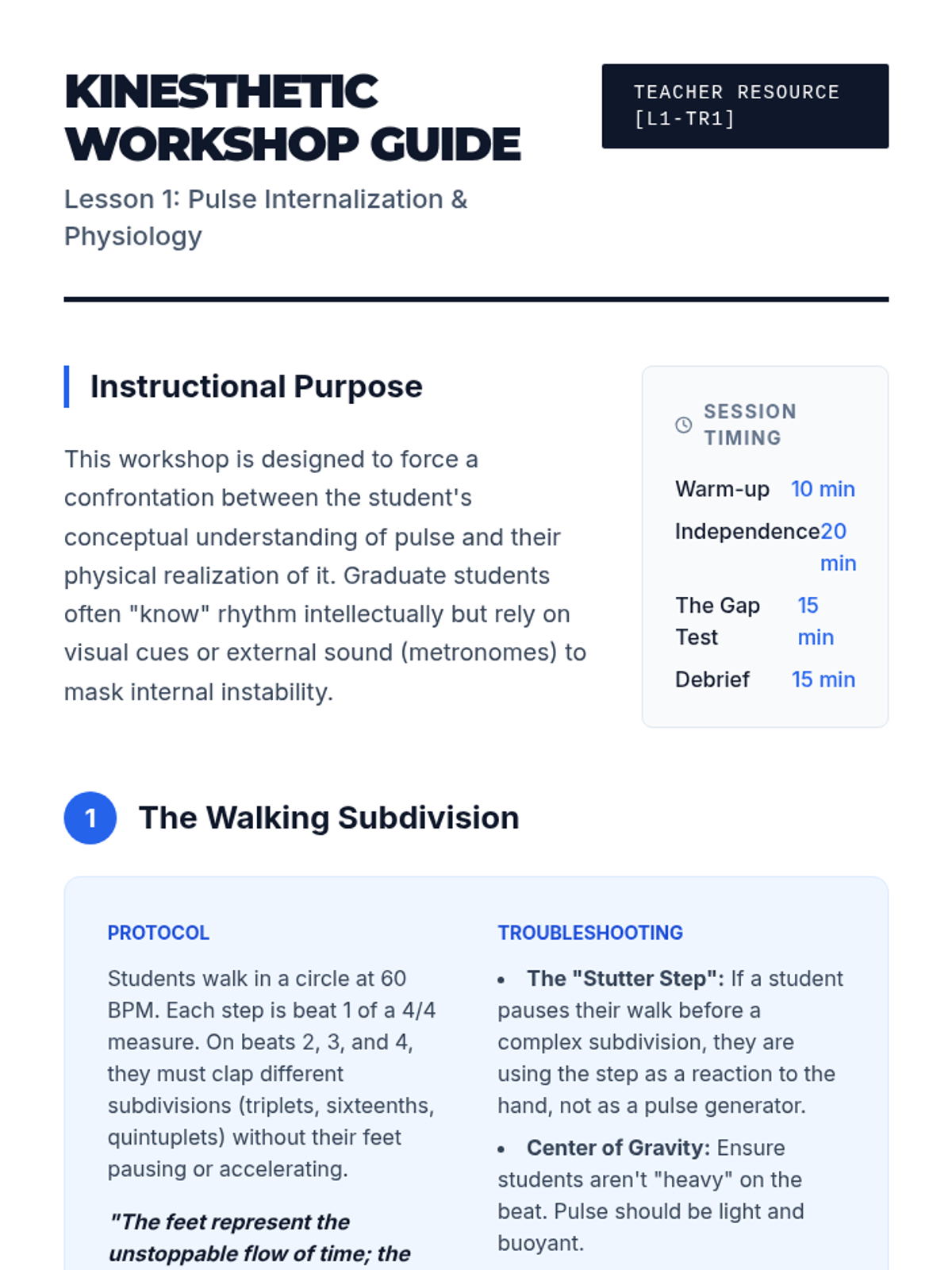
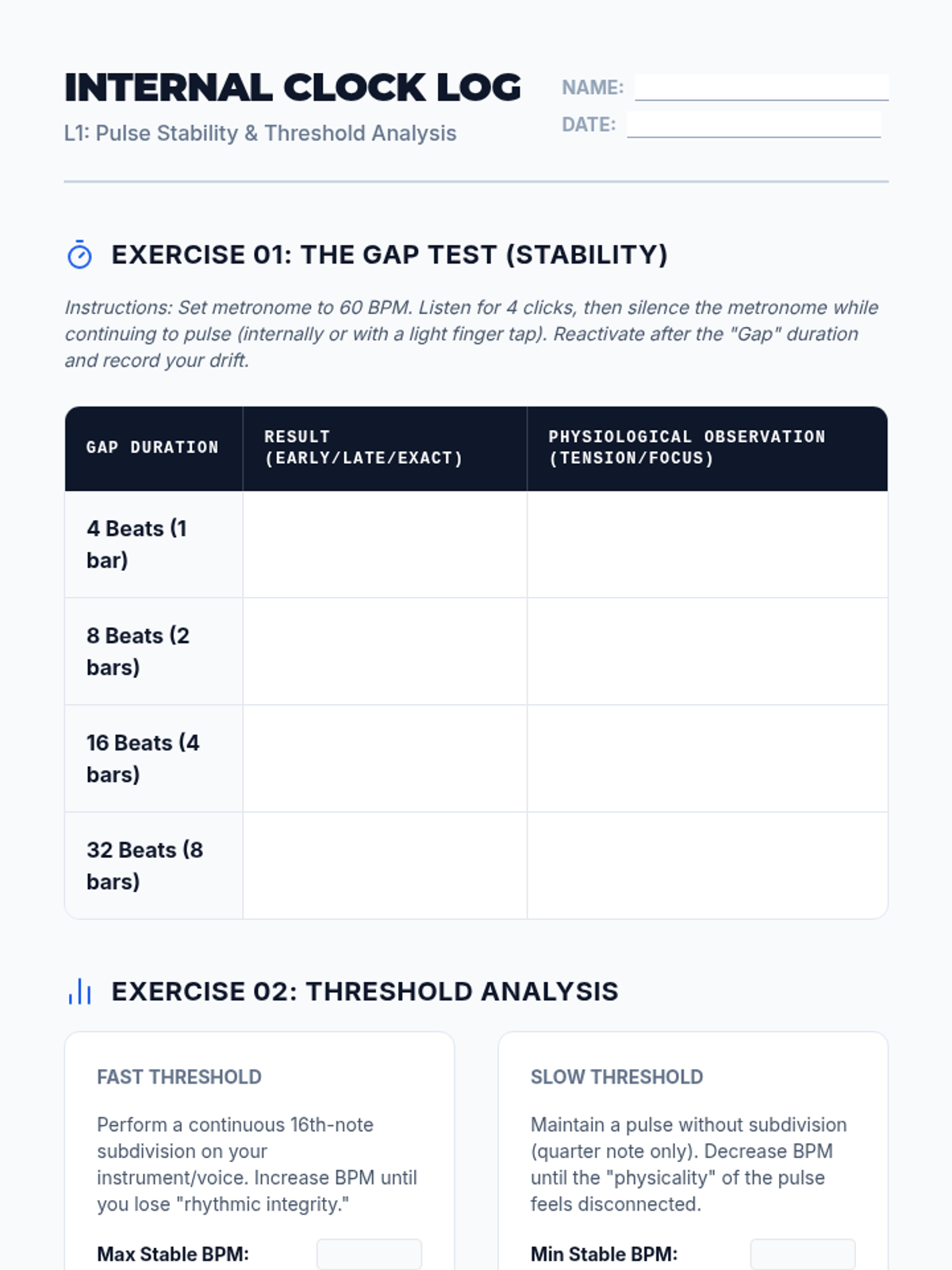
A rigorous workshop-based sequence for graduate music students exploring advanced rhythmic perception, meter architecture, asymmetrical rhythms, polyrhythms, and metric modulation. The course emphasizes both the mathematical calculation and the physical internalization of complex temporal structures.
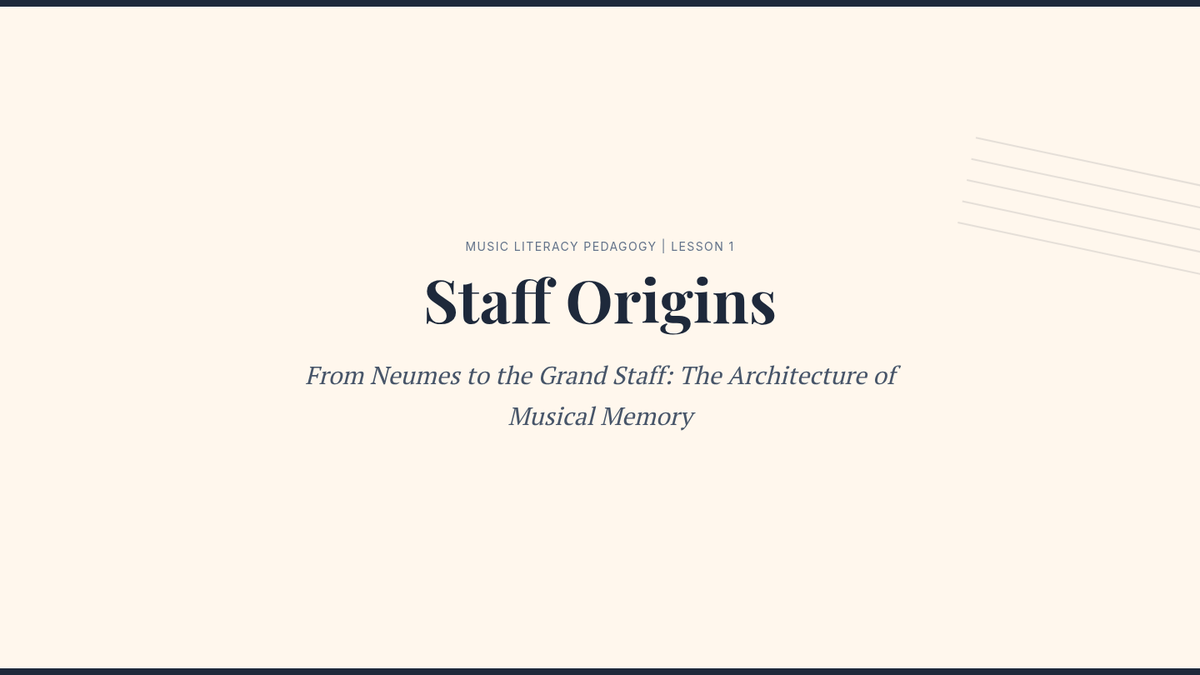
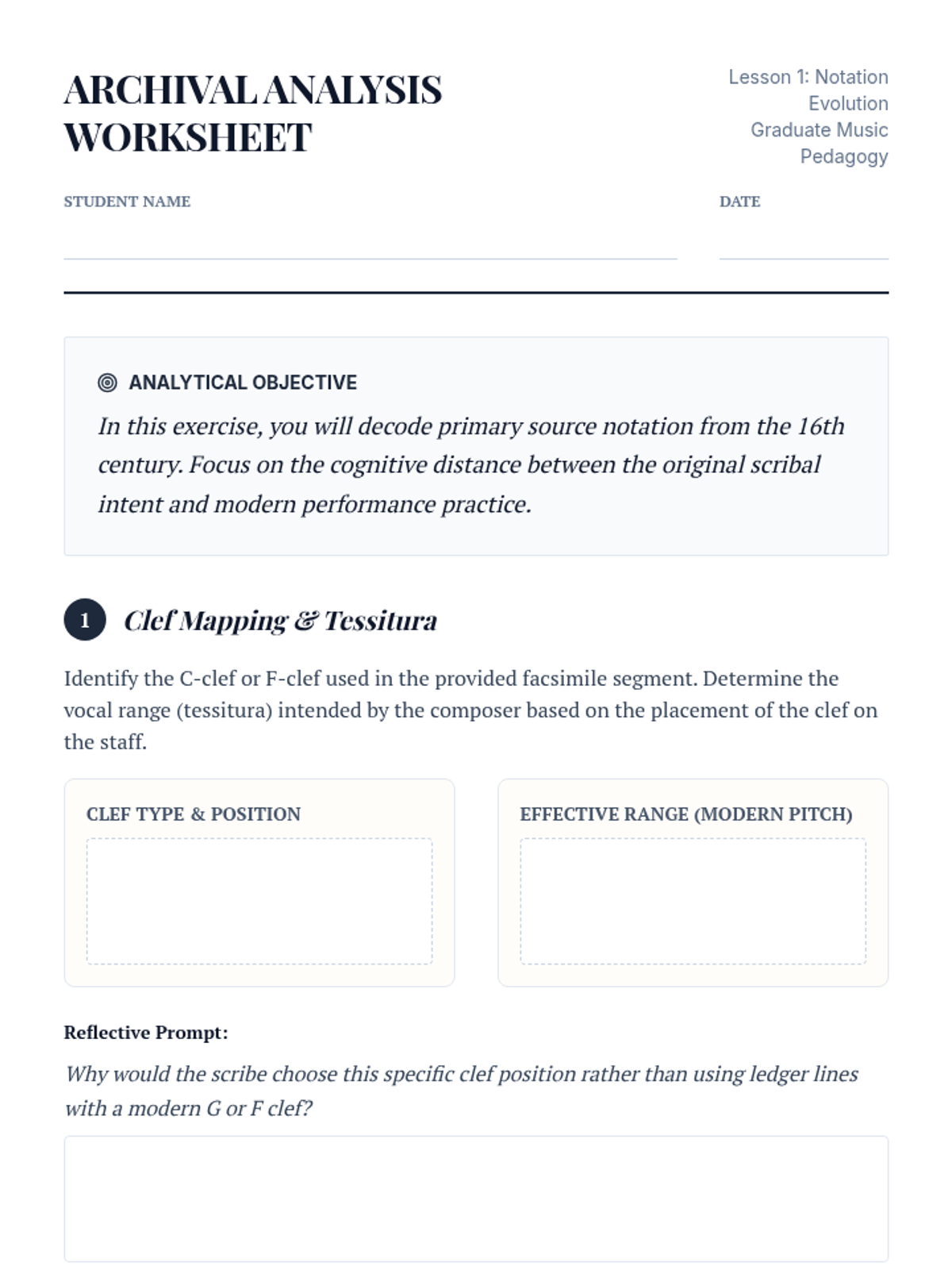
This sequence examines the evolution and cognitive mechanics of Western musical notation, designed for graduate students focusing on music education or musicology. Students will analyze the historical development of the staff, clefs, and accidentals, while simultaneously evaluating various pedagogical methodologies used to teach music literacy.
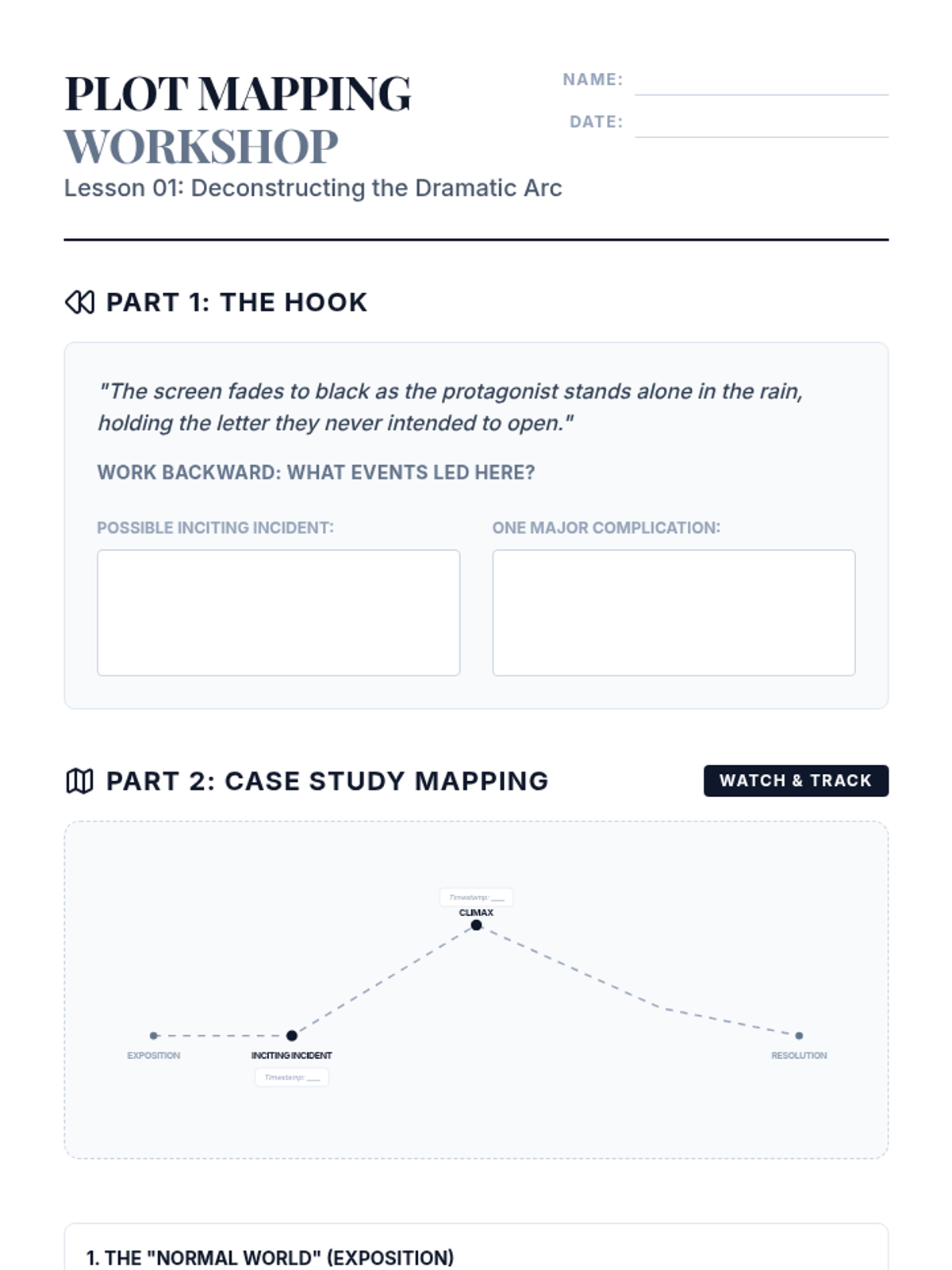
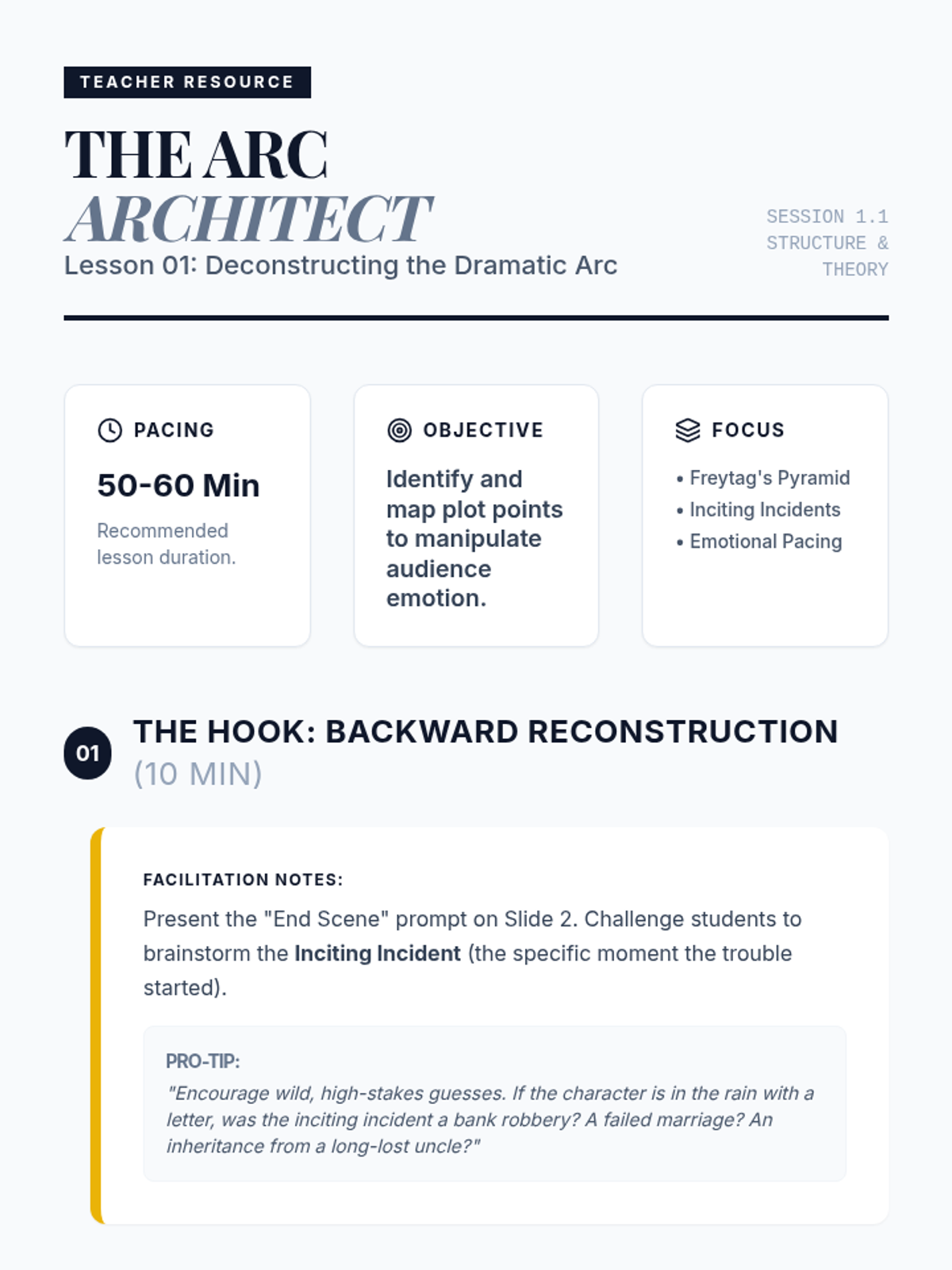
This project-based sequence guides students through the structural engineering of a narrative, moving from a raw premise to a developed one-act play. Students analyze the dramatic arc and apply these concepts to their own original scripts, focusing on pacing, high-stakes storytelling, and professional formatting.
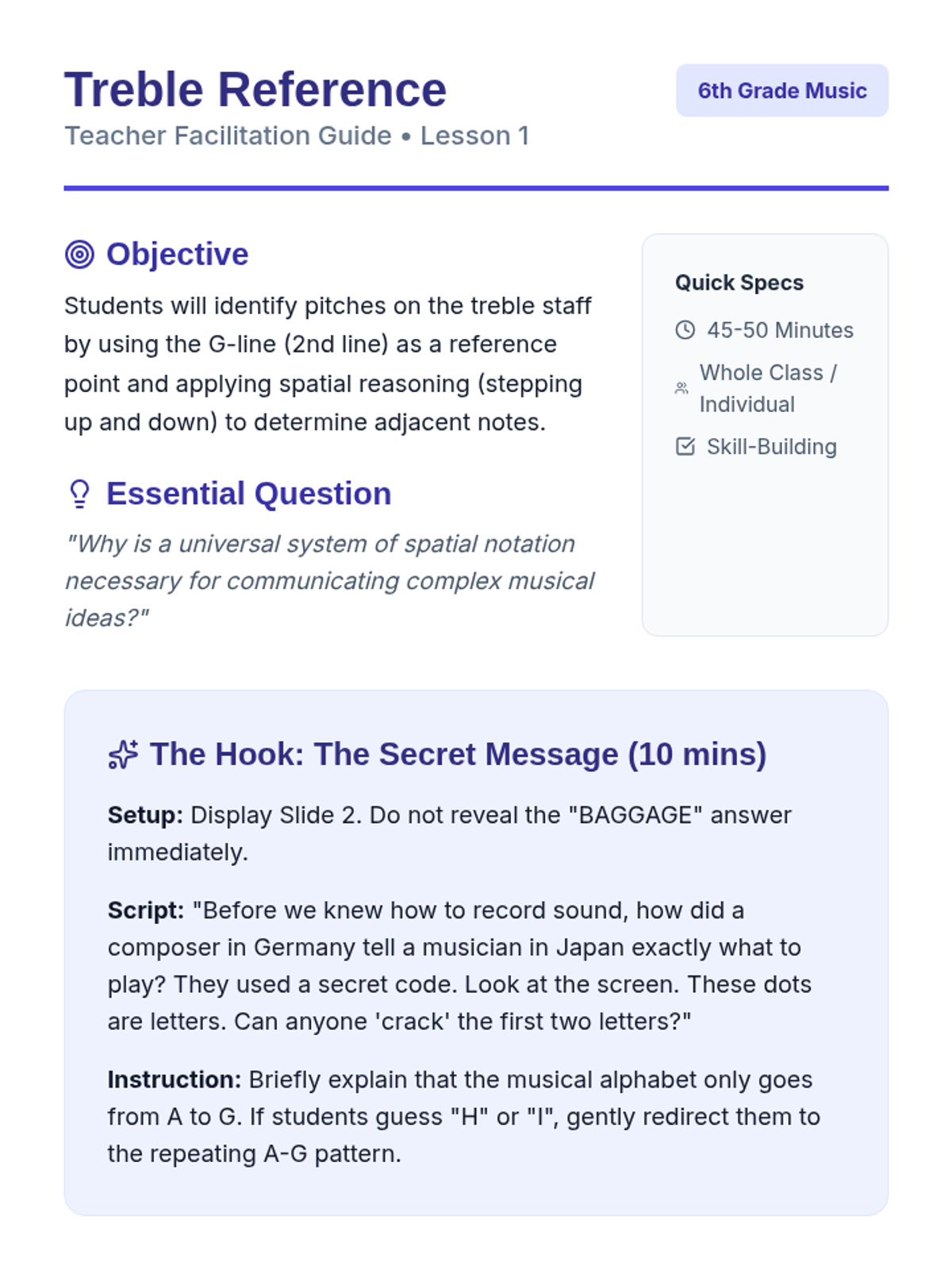
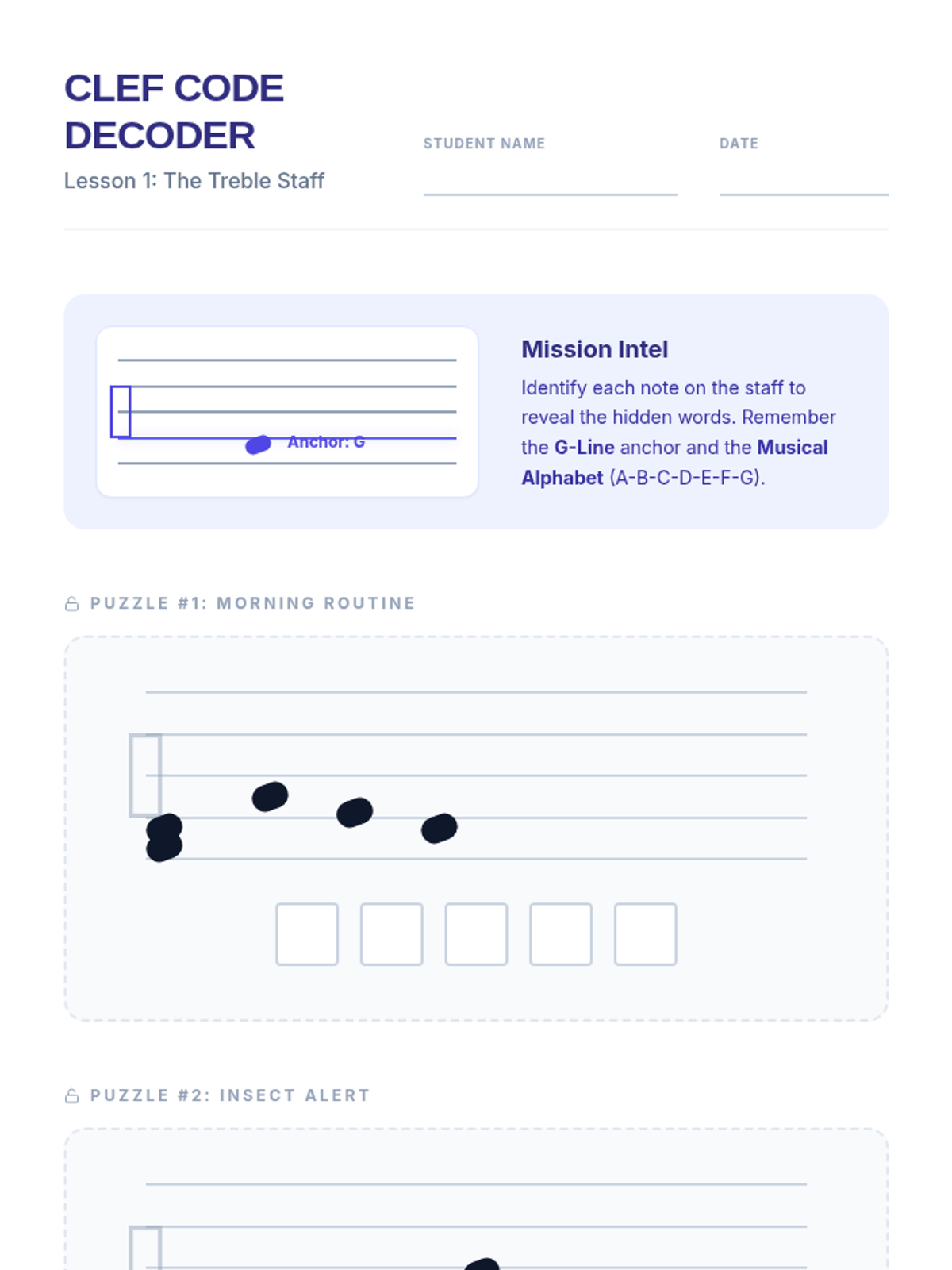
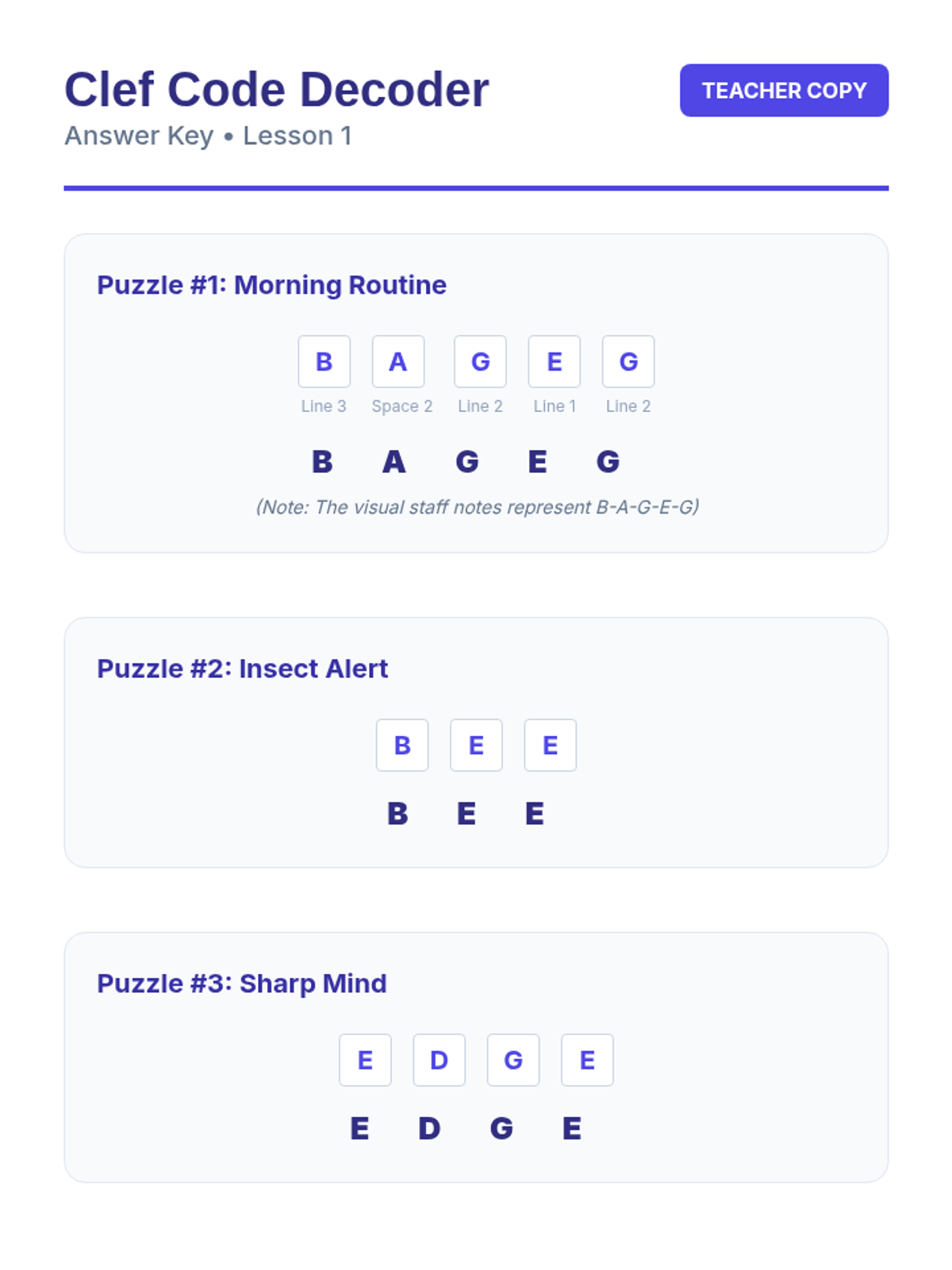
A comprehensive sequence for 6th-grade students to master the Grand Staff, covering treble and bass clefs, ledger lines, accidentals, and basic melodic transcription through a mastery-based approach.
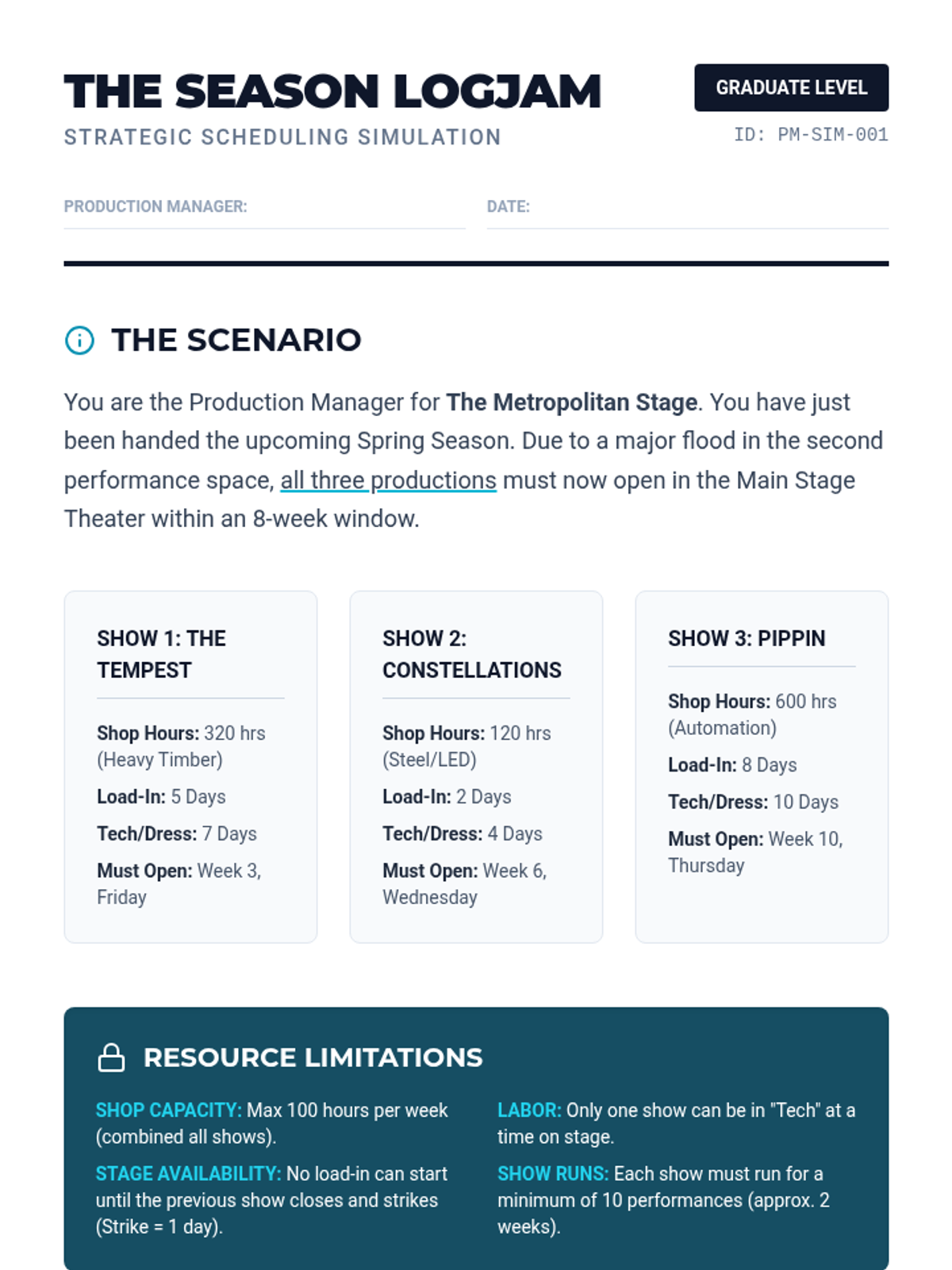
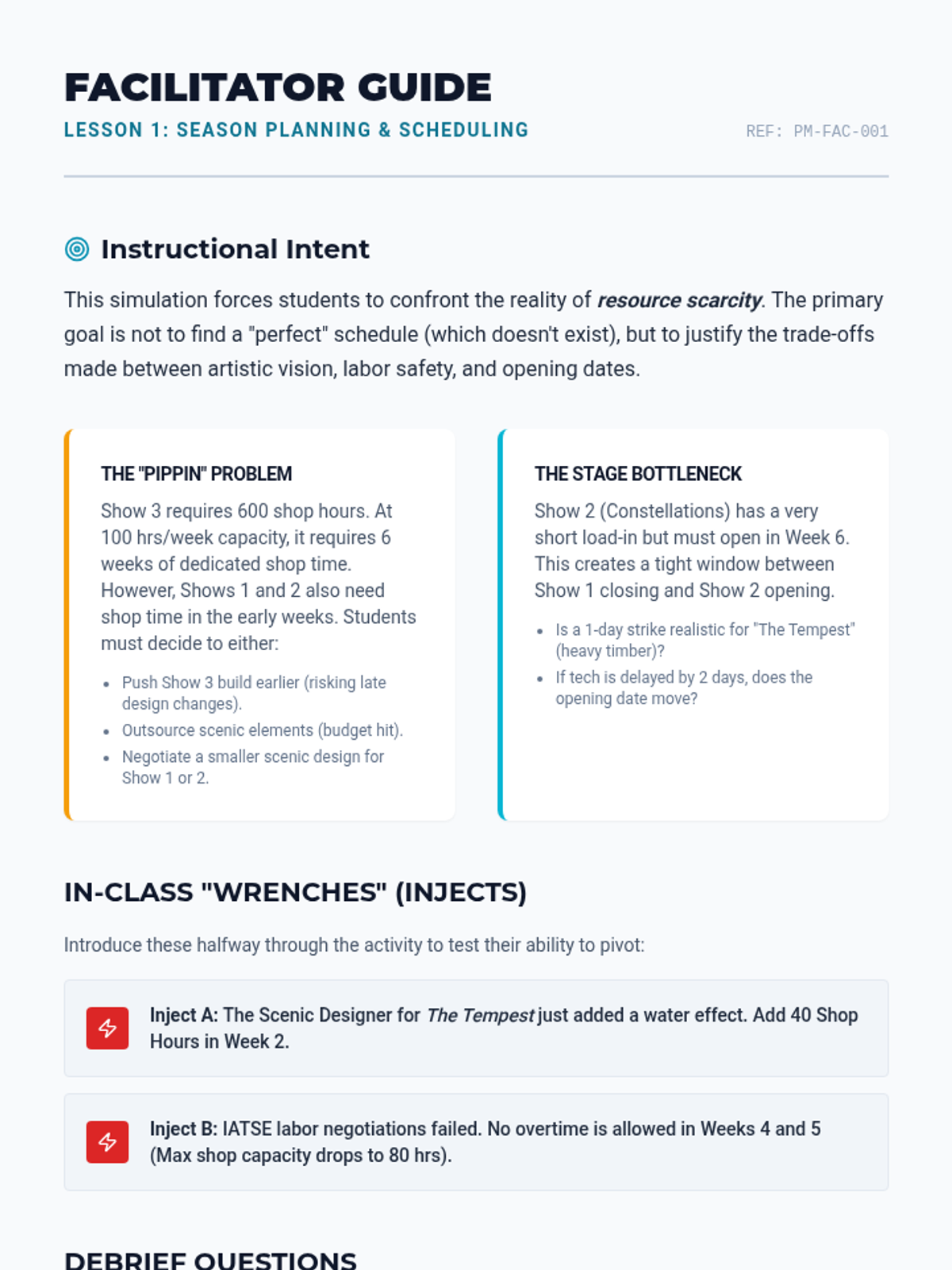
A graduate-level exploration of the macro-level logistics of theatrical production management, focusing on strategic planning, financial oversight, human resources, and facility management to balance artistic vision with finite resources.
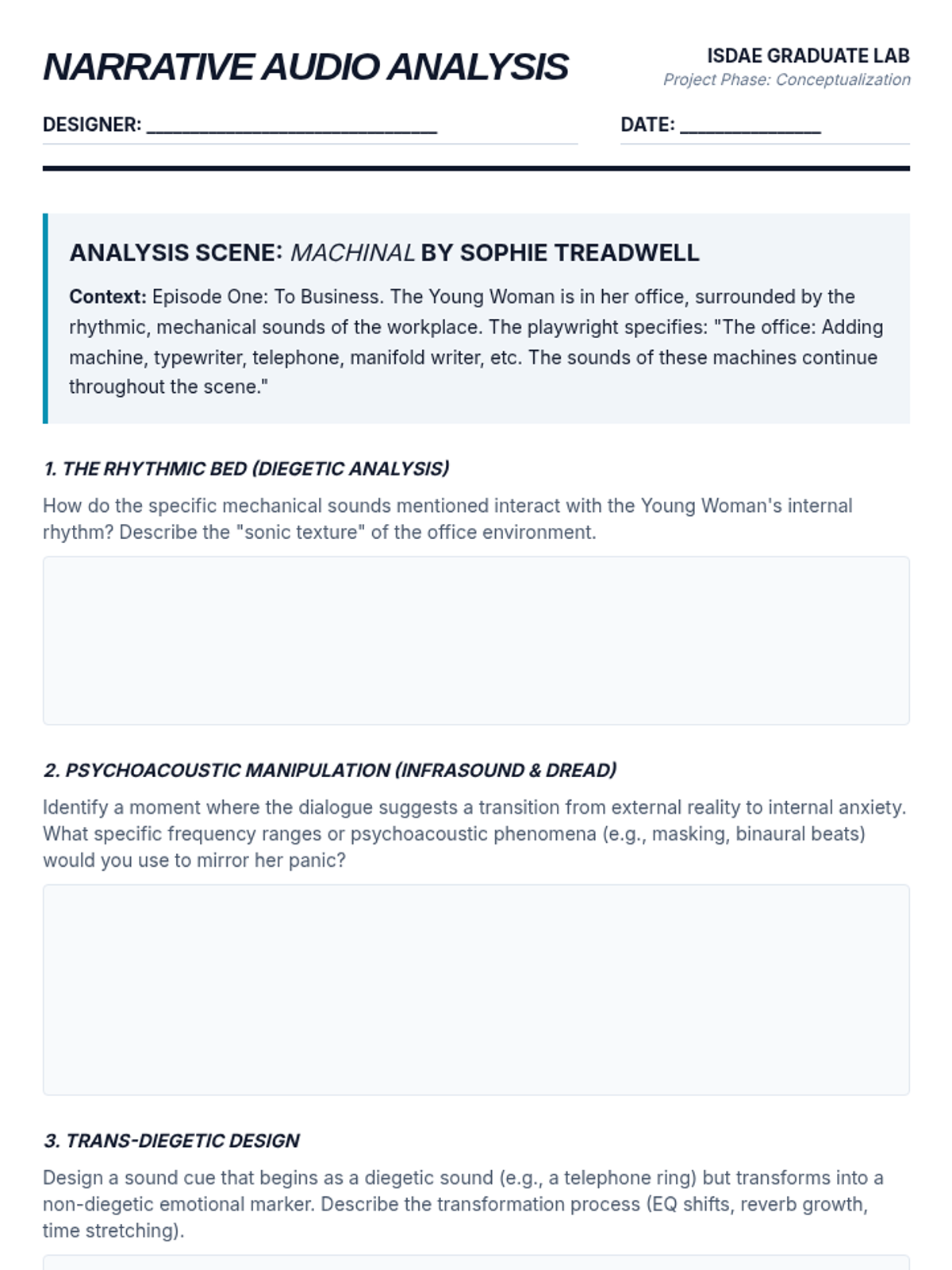
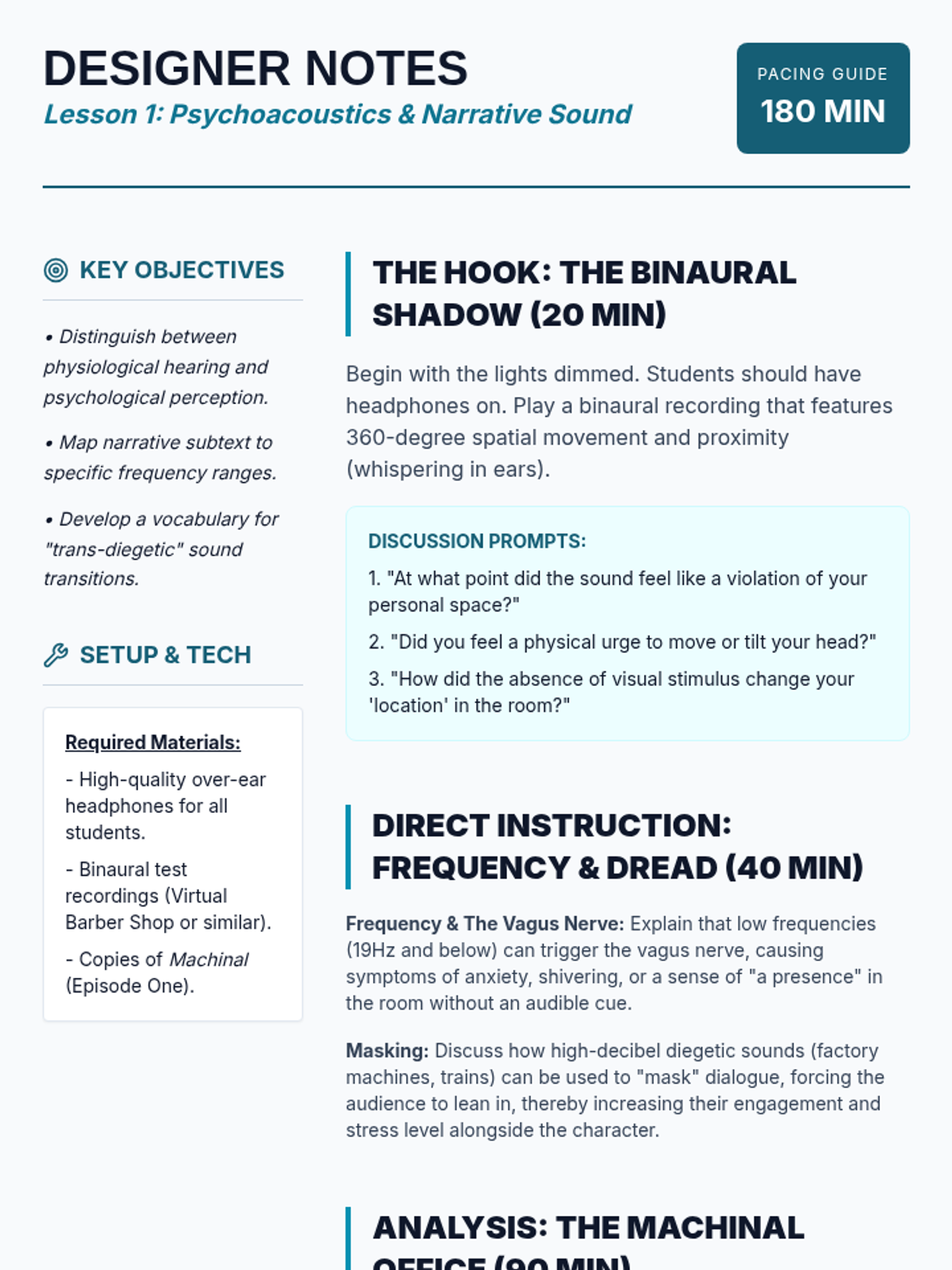
A graduate-level exploration of sound design as a primary narrative tool, covering psychoacoustics, technical system engineering, advanced show control with QLab, spatial audio mixing, and live reinforcement for musical theater.