A comprehensive unit on lines of symmetry, exploring identification, drawing, and real-world applications through geometric and organic forms. Students will develop a deep understanding of balance and reflection.
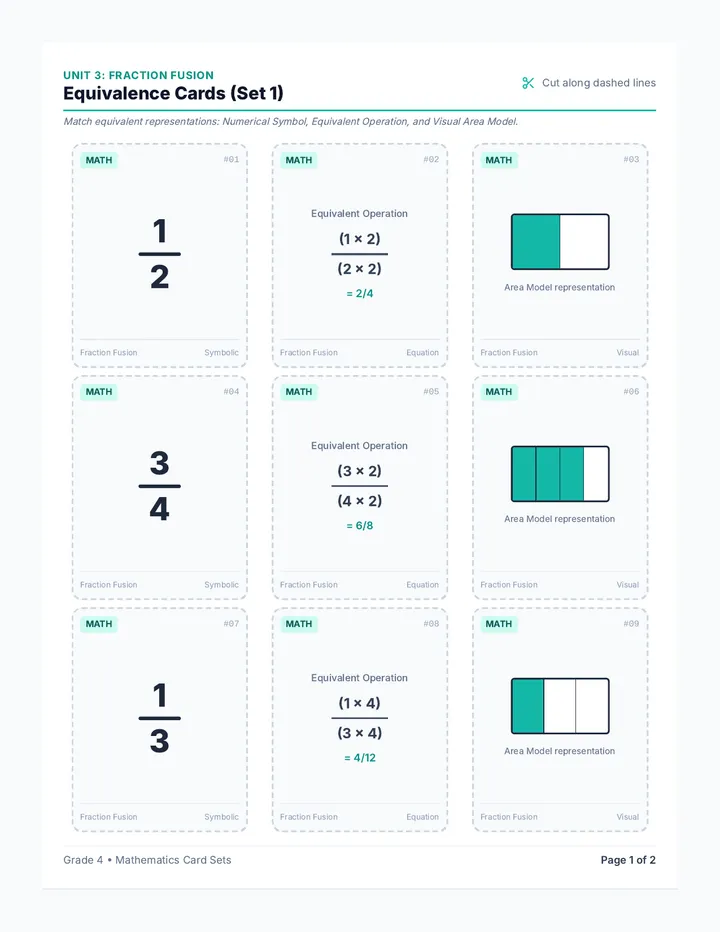
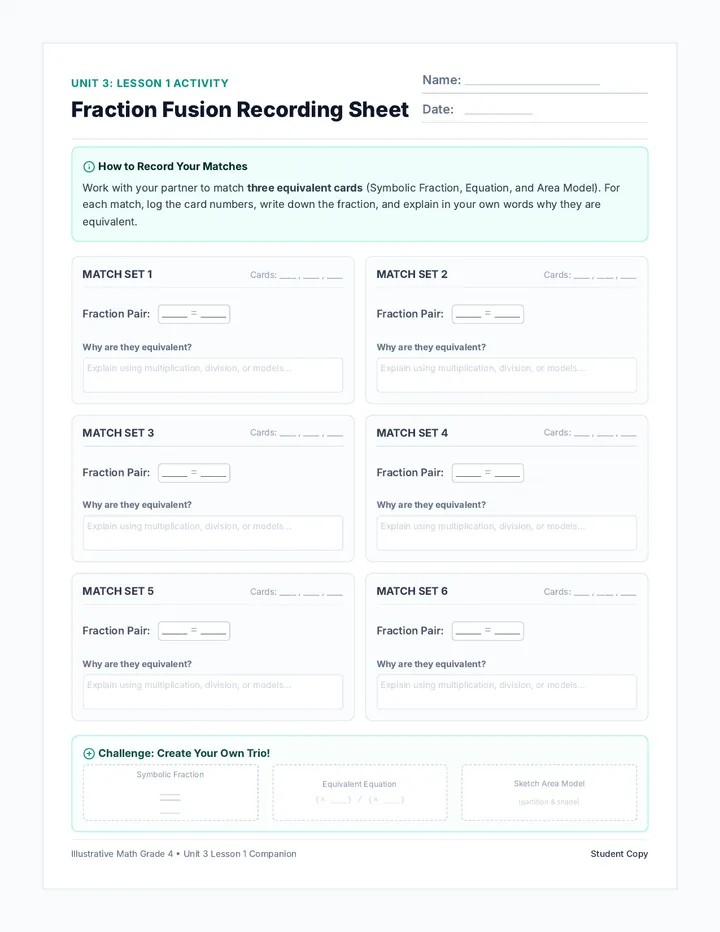
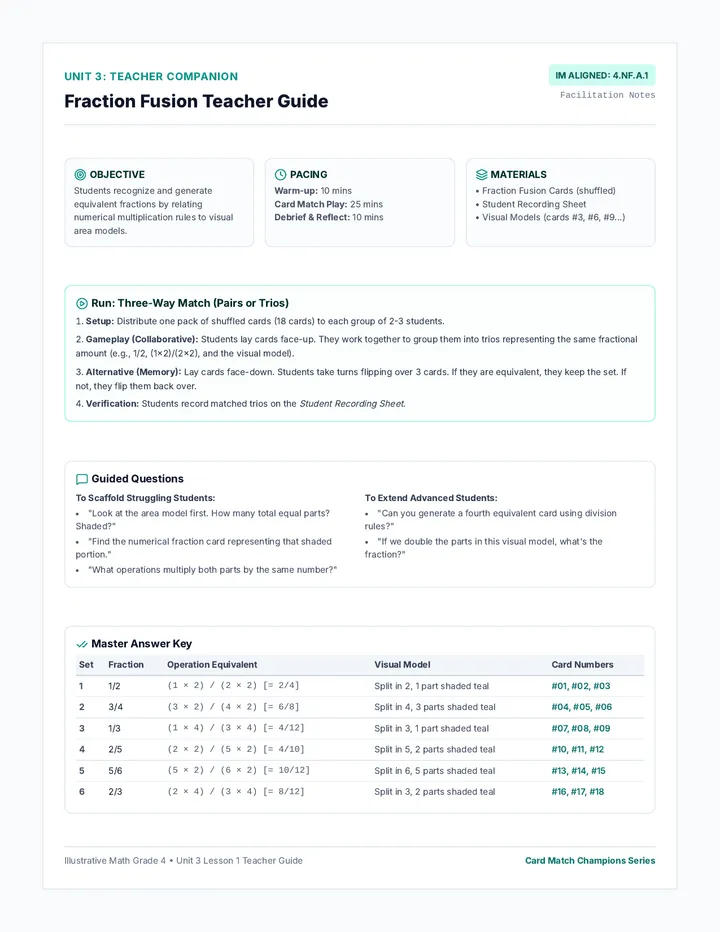
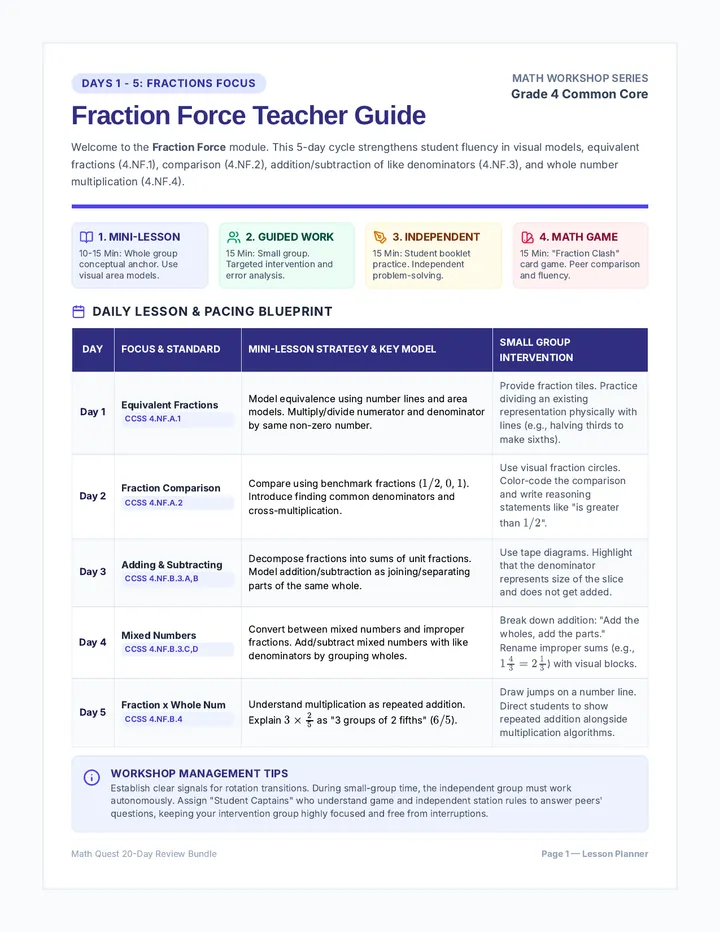
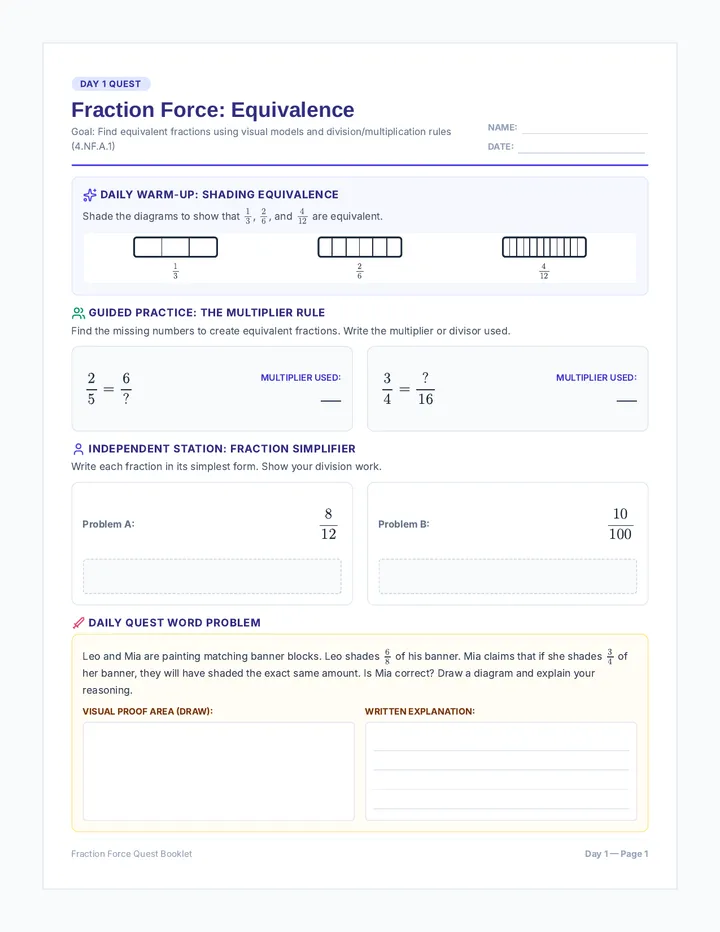
A comprehensive unit on fractions covering identification, decomposition with tape diagrams, equivalent fractions, and representing fractions on a number line. Students act as 'Factory Engineers' to build and analyze numerical parts.
A high-intensity, evidence-based intervention designed for students needing foundational number sense support. Focuses on subitizing, 1:1 correspondence, place value, and decomposition using a CRA (Concrete-Representational-Abstract) approach.
A comprehensive set of multiplication fact fluency quizzes covering facts from 0 to 12, including individual fact sprints and mixed reviews. Each material is designed as a half-page "sprint" to save paper and allow for quick daily practice.
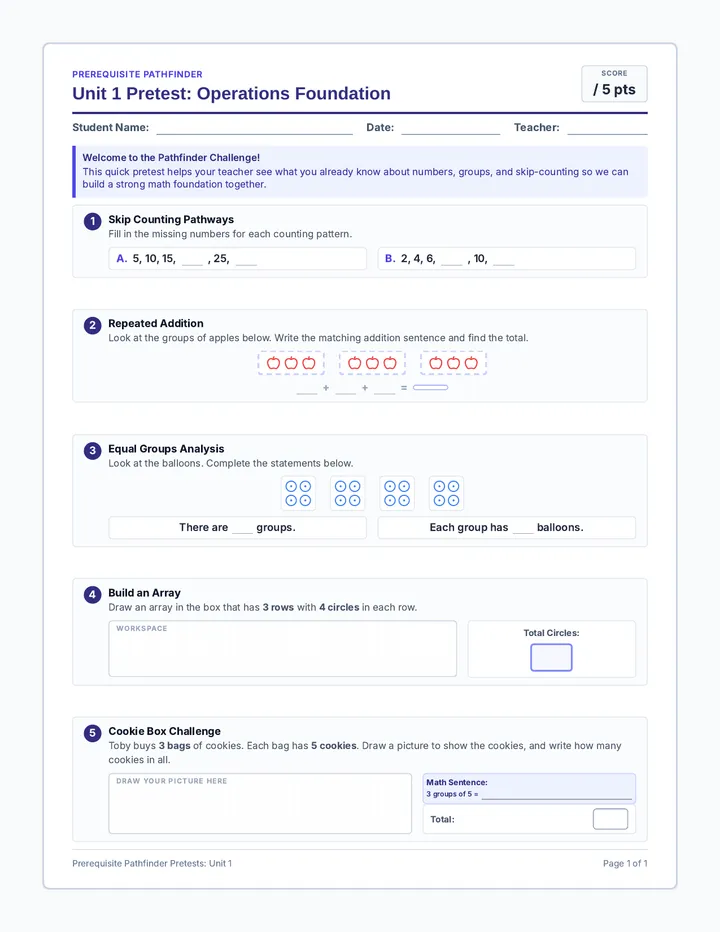
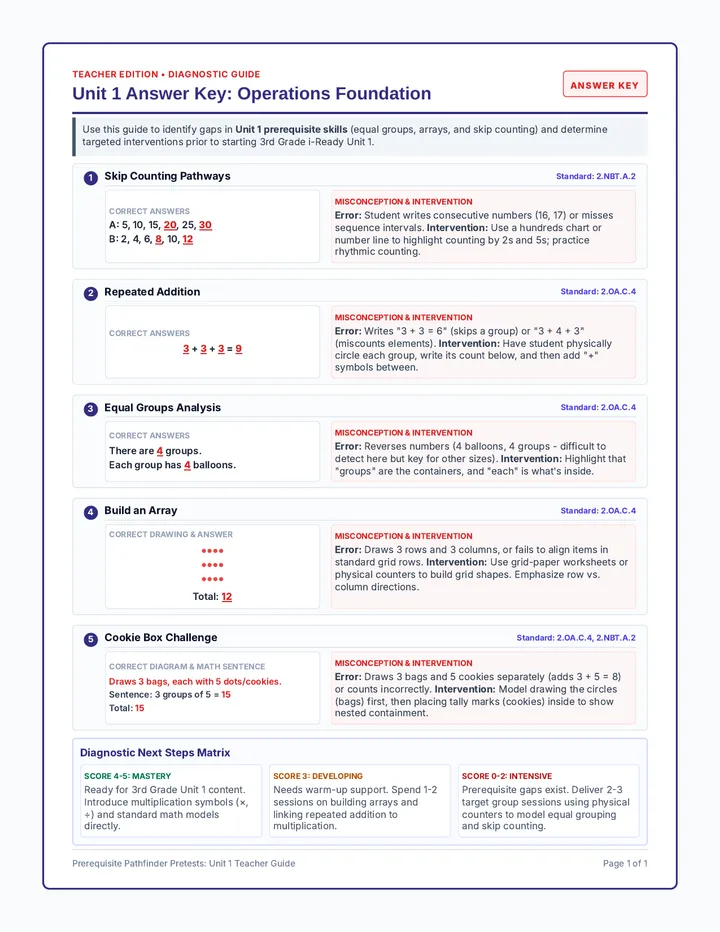
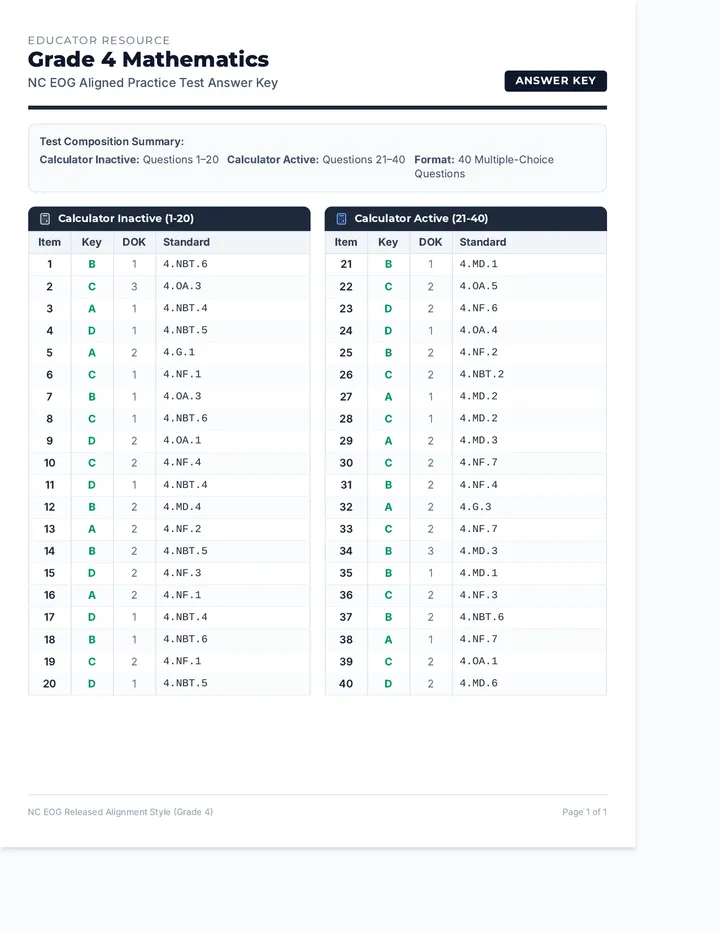
A comprehensive diagnostic suite for grades 2-5 designed to identify specific skill gaps in foundational math domains aligned to the Iowa Core standards. This series helps educators pinpoint exactly where students have discrepancies in place value, arithmetic, and early rational numbers.
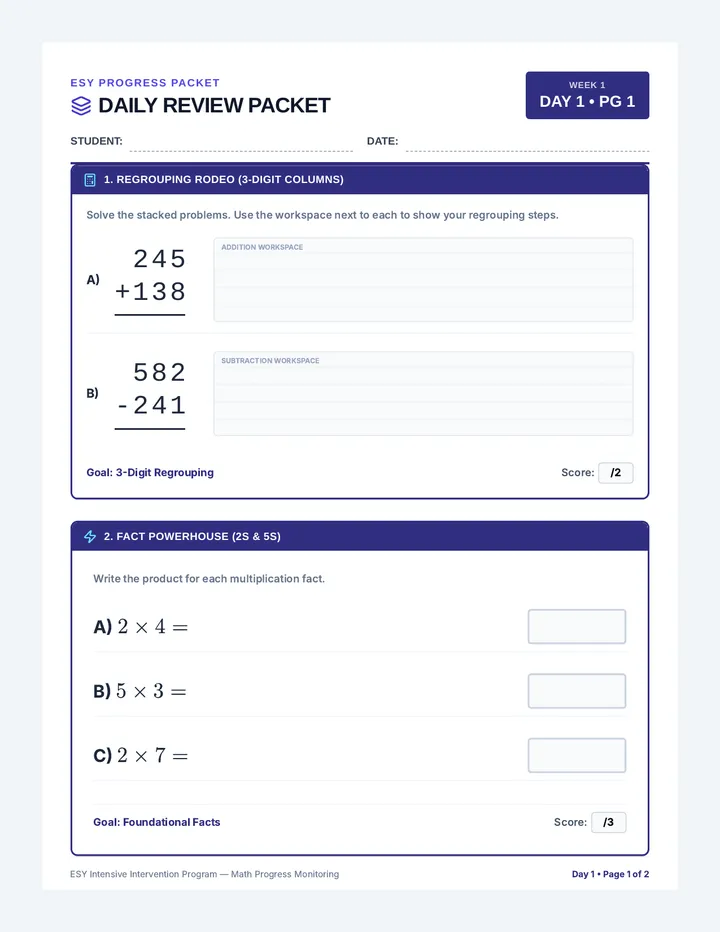
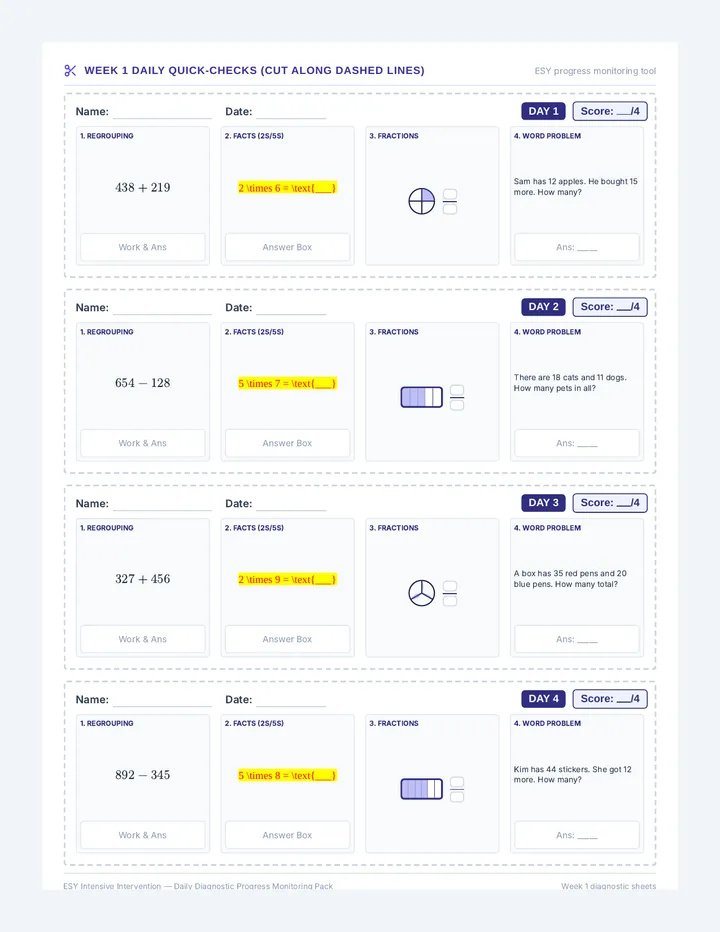
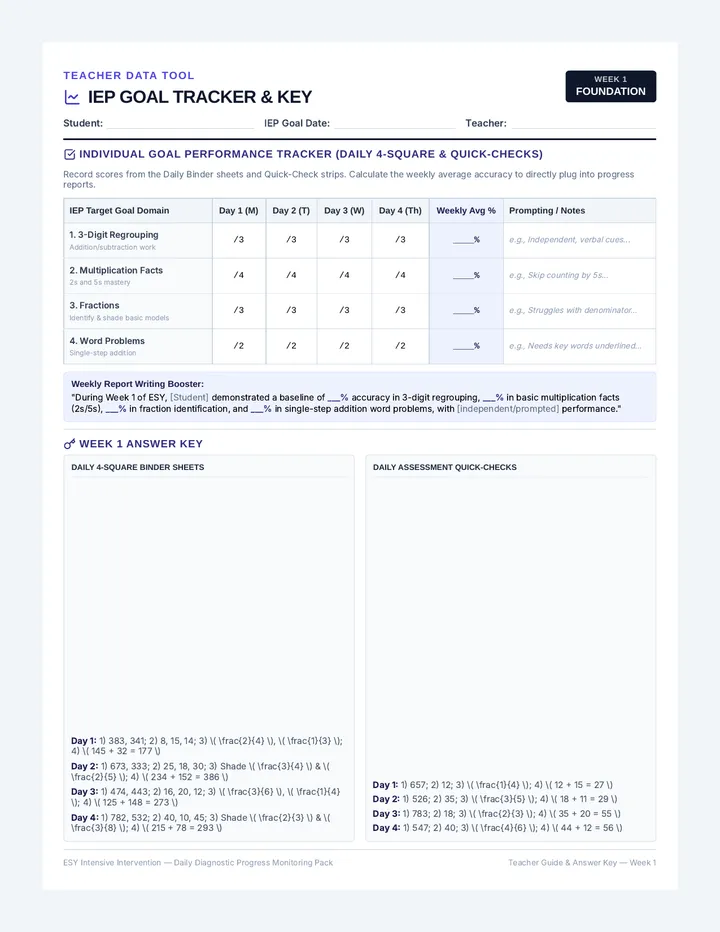
A comprehensive set of progress monitoring probes focused on 2nd and 3rd-grade number sense and fractions for 4th-grade students working on foundational skills.
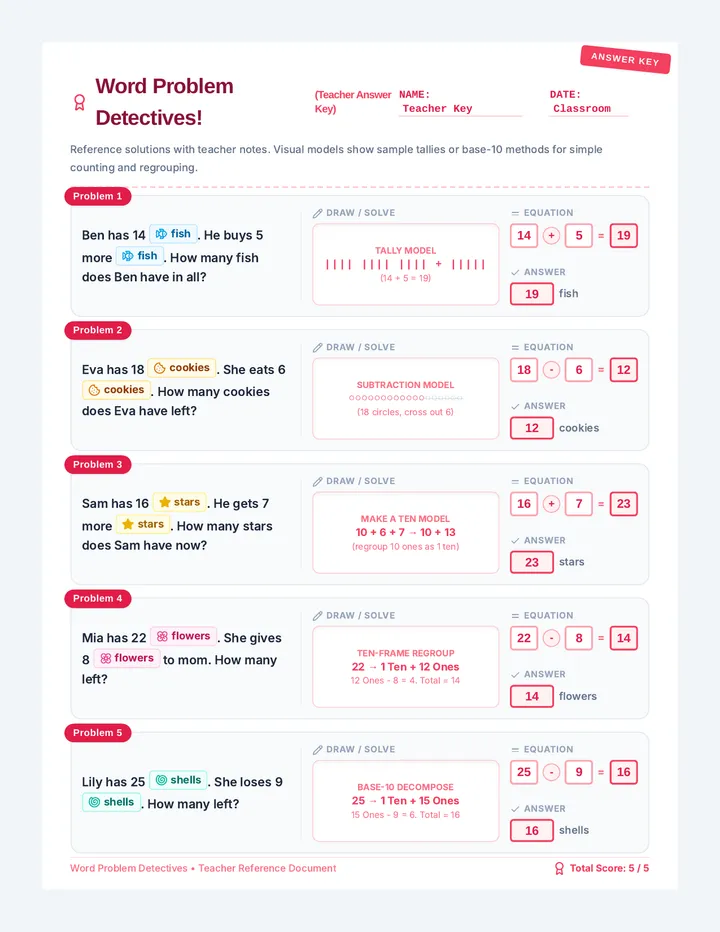
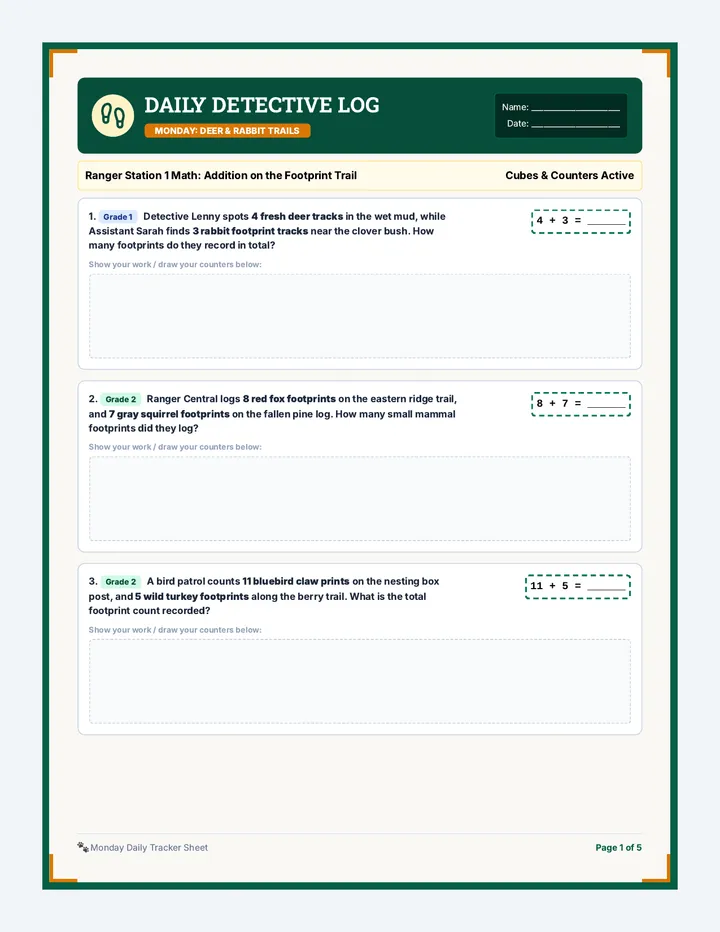
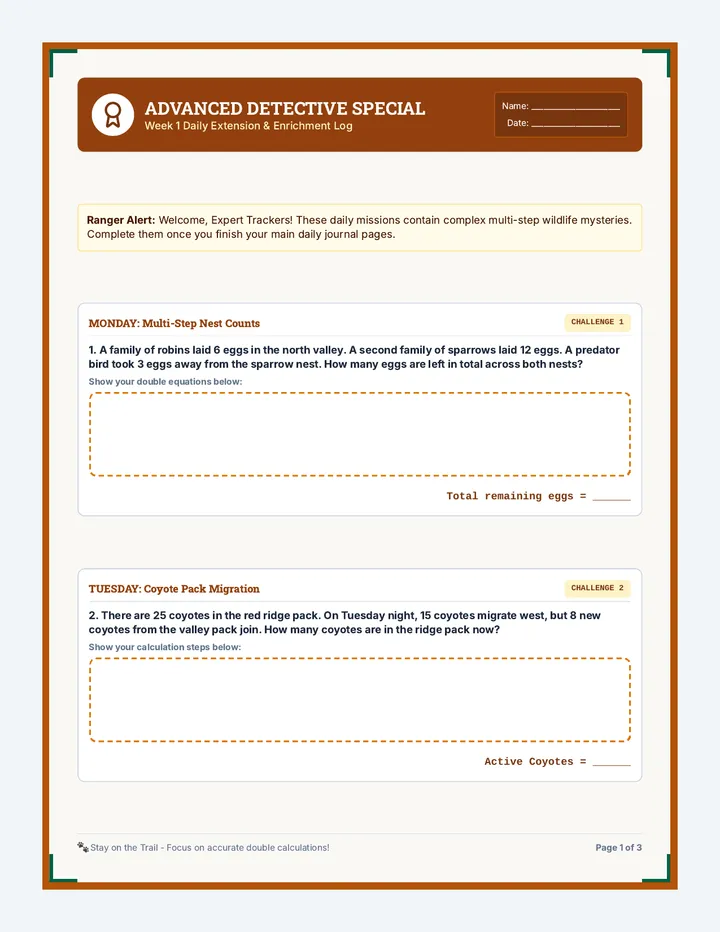
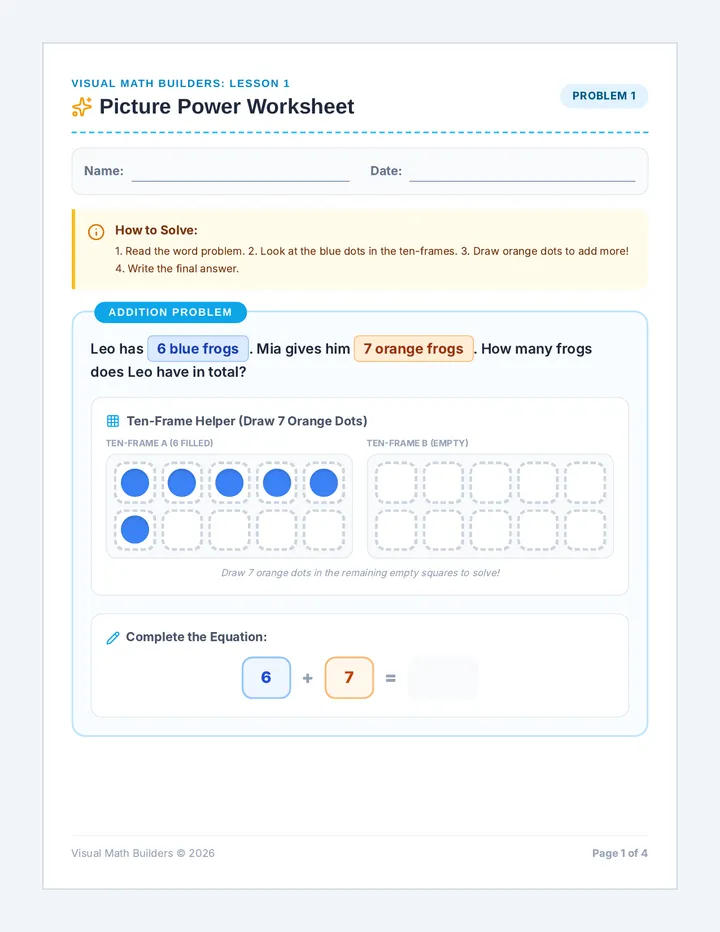
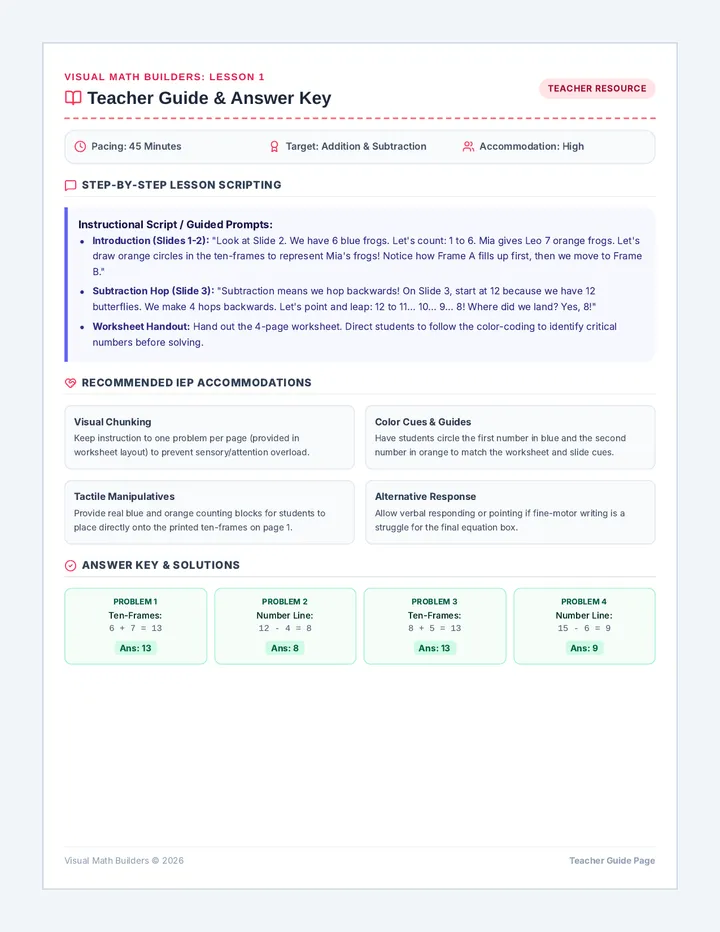
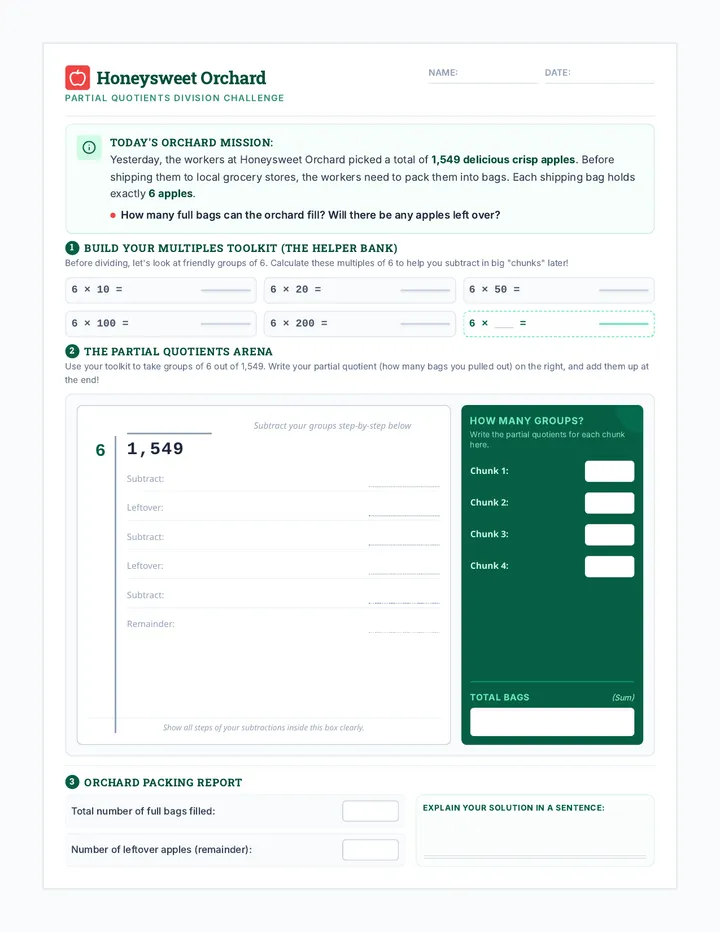
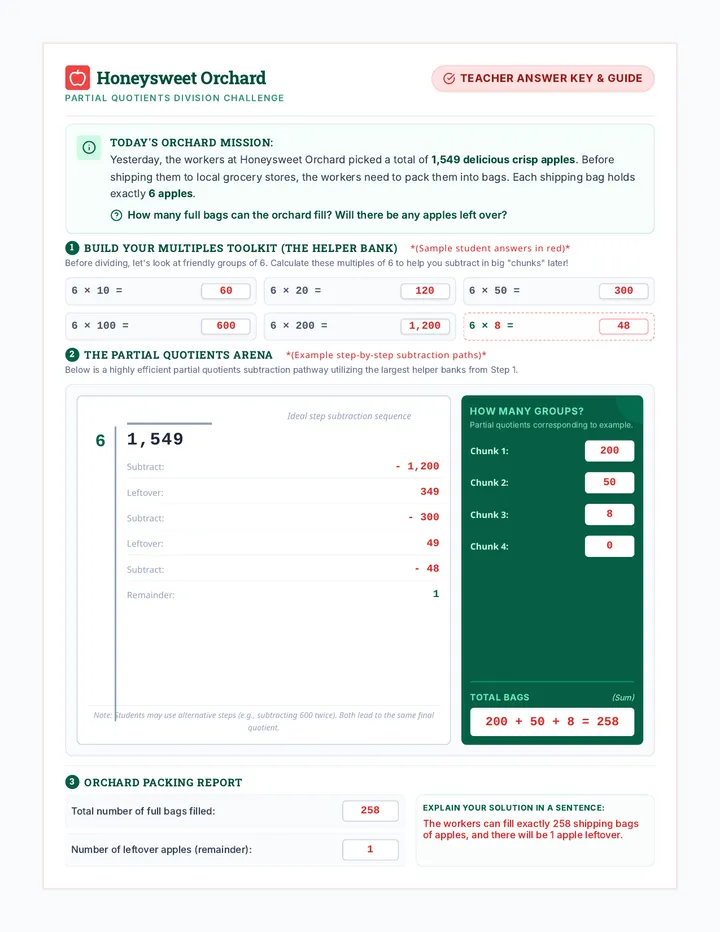
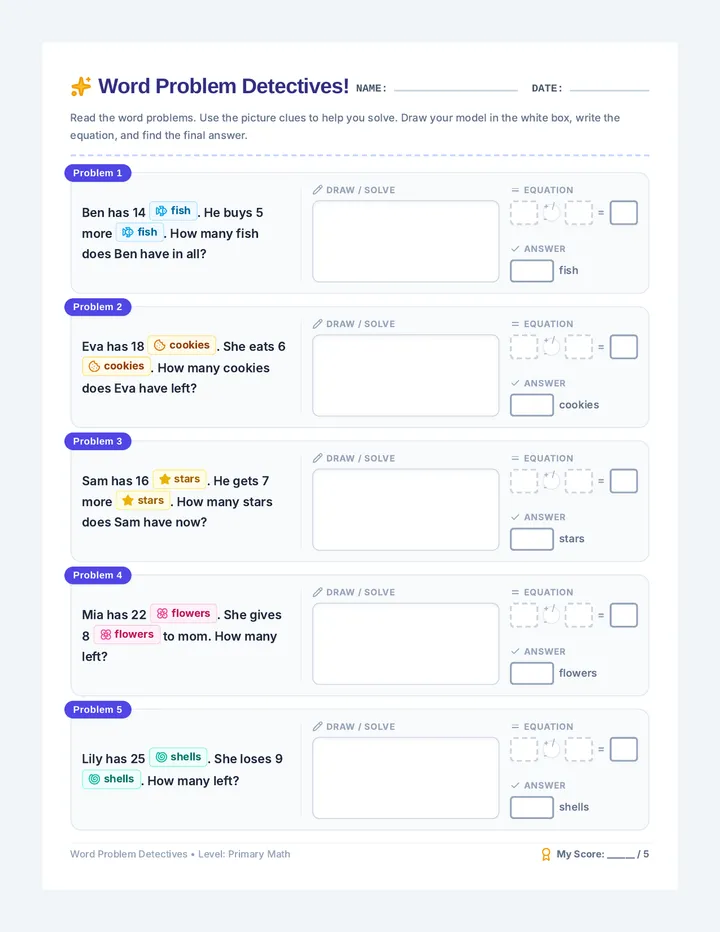
A tiered math adventure sequence where students tackle word problems of increasing complexity, ranging from basic addition and subtraction within 10 to multi-step challenges involving four-digit numbers and basic multiplication and division.
A Tier 2 evidence-based intervention sequence designed to improve multiplication fact fluency (0-12) for 4th grade students using strategies like Cover-Copy-Compare and Explicit Timing.
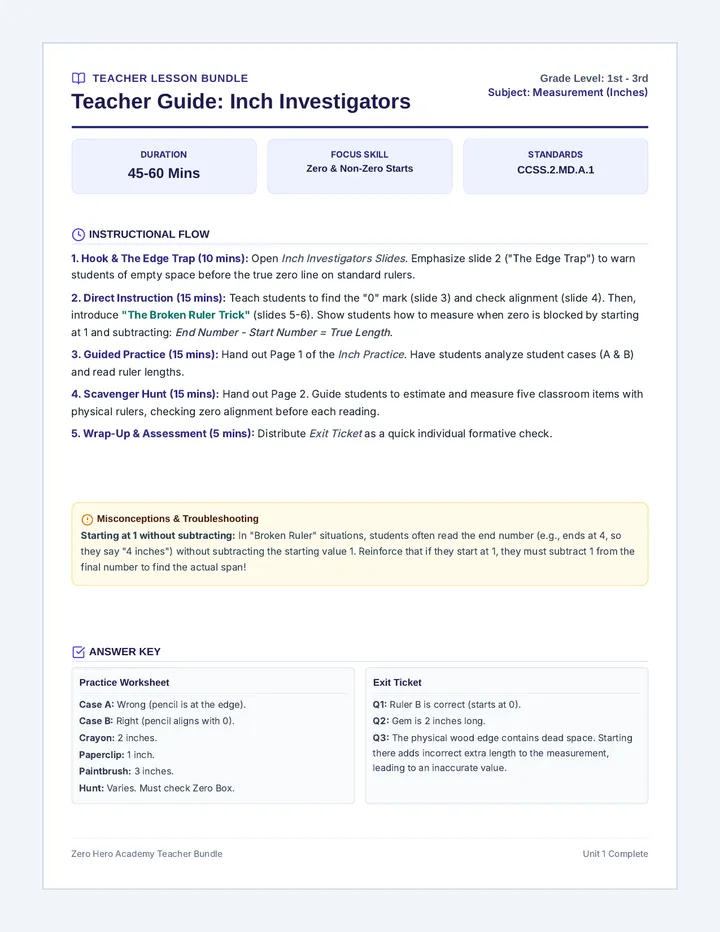
A comprehensive sequence focusing on linear measurement conversions, providing step-by-step visual guides and practice for converting between inches, feet, yards, and miles.
A 6-week program of daily two-step math word problems featuring everyday life, animals, fantasy, and seasonal themes. Each week includes a worksheet, a slide deck for daily projection, and an answer key.
A deep dive into geometric transformations, starting with the foundational concepts of symmetry and reflection through hands-on exploration and visual practice.
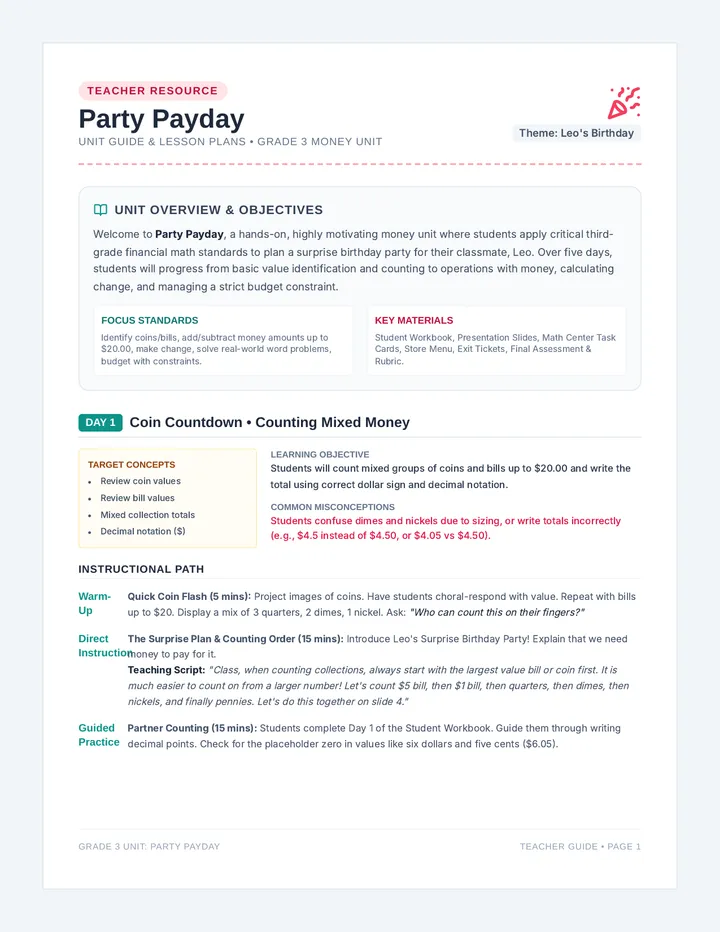
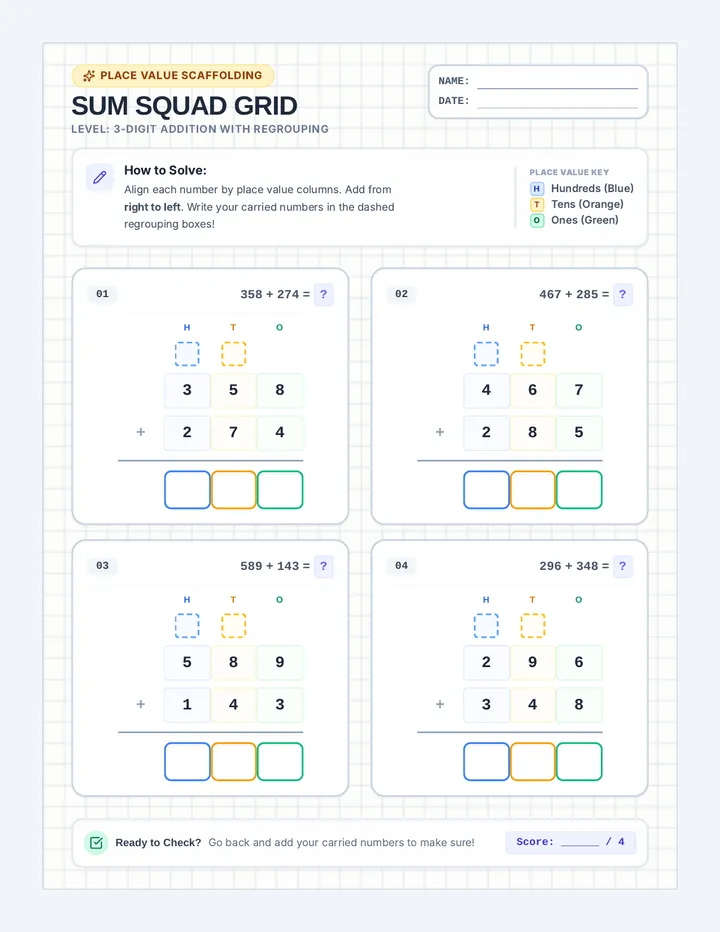
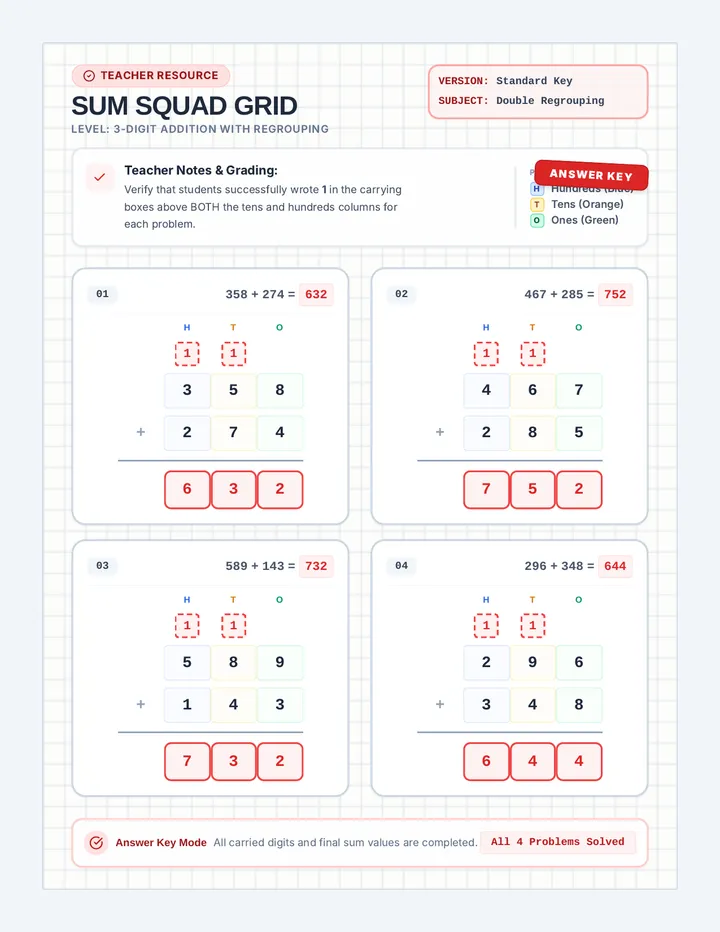
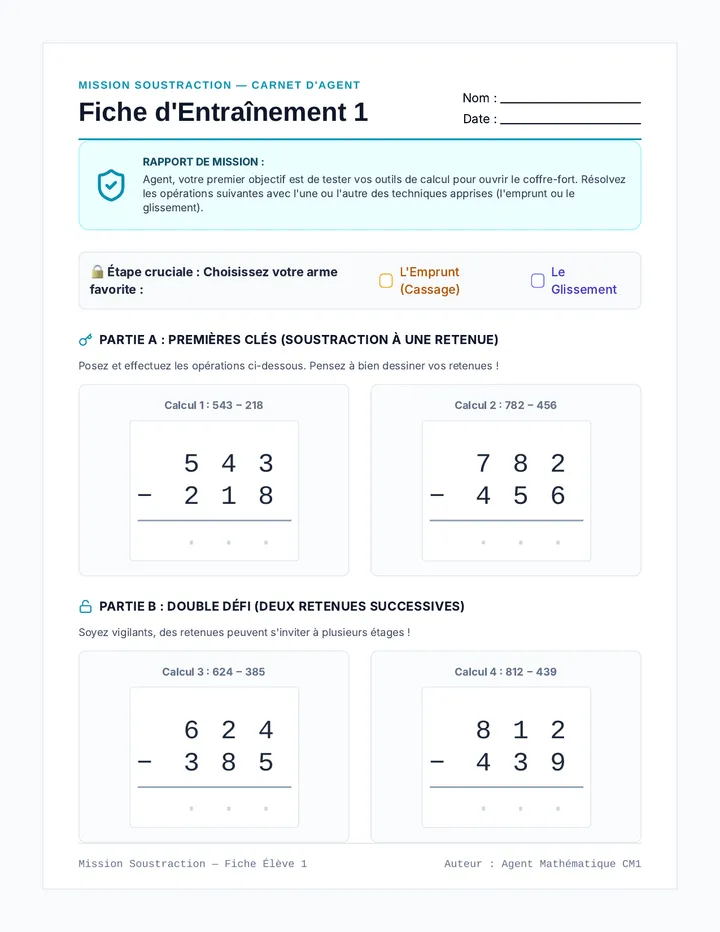
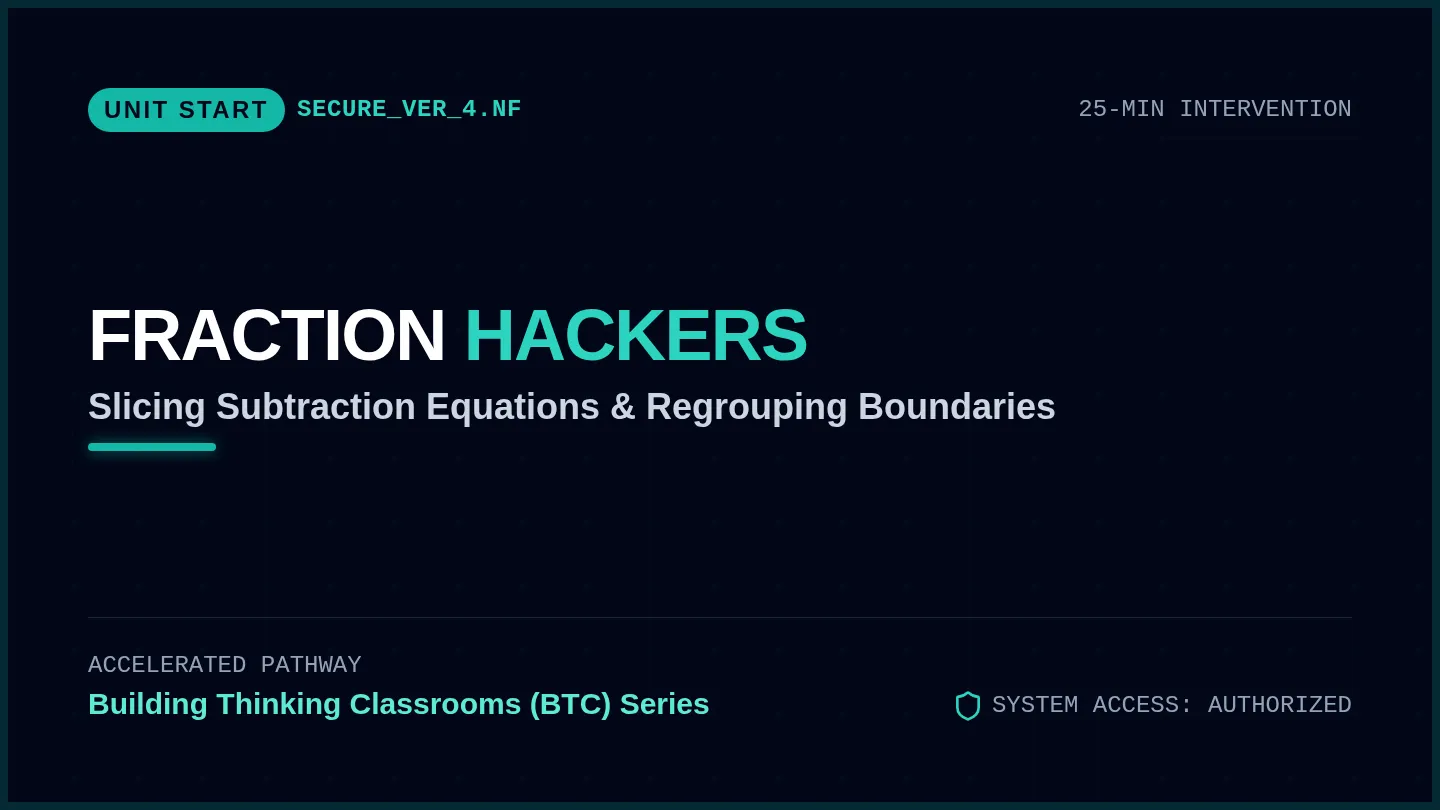
A foundational math unit focused on mastering multi-digit addition and subtraction with regrouping through a fun martial arts theme. Students progress through various 'belts' as they demonstrate proficiency in core arithmetic skills.
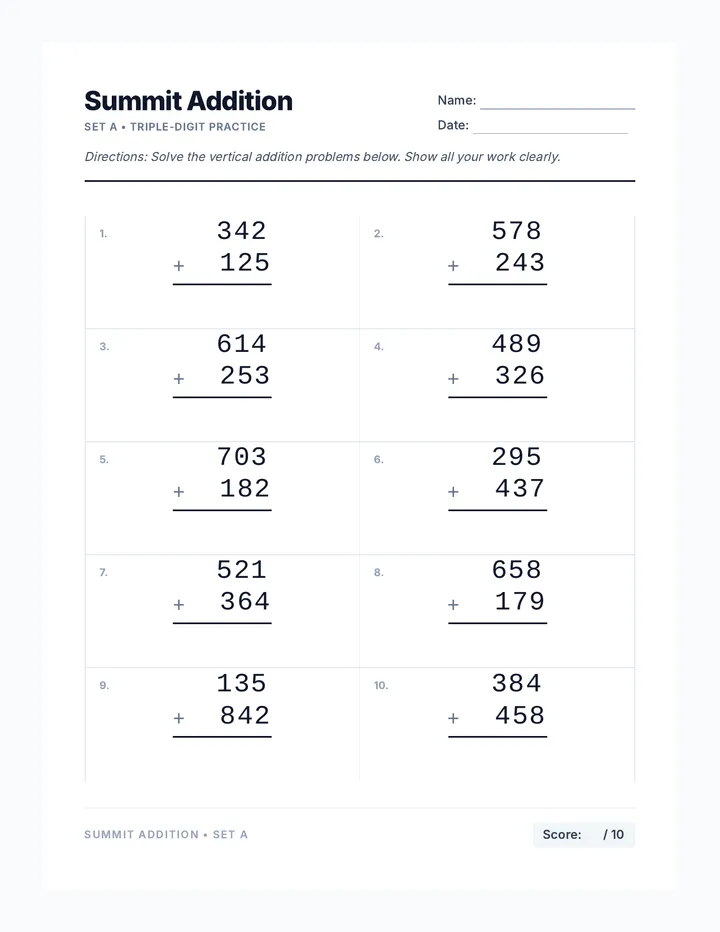
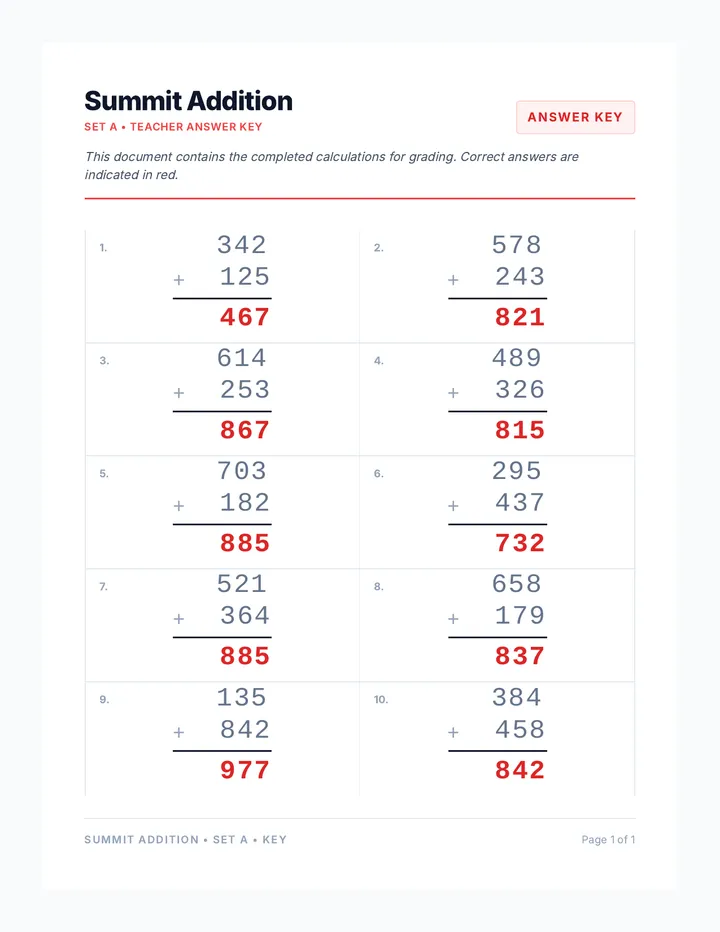
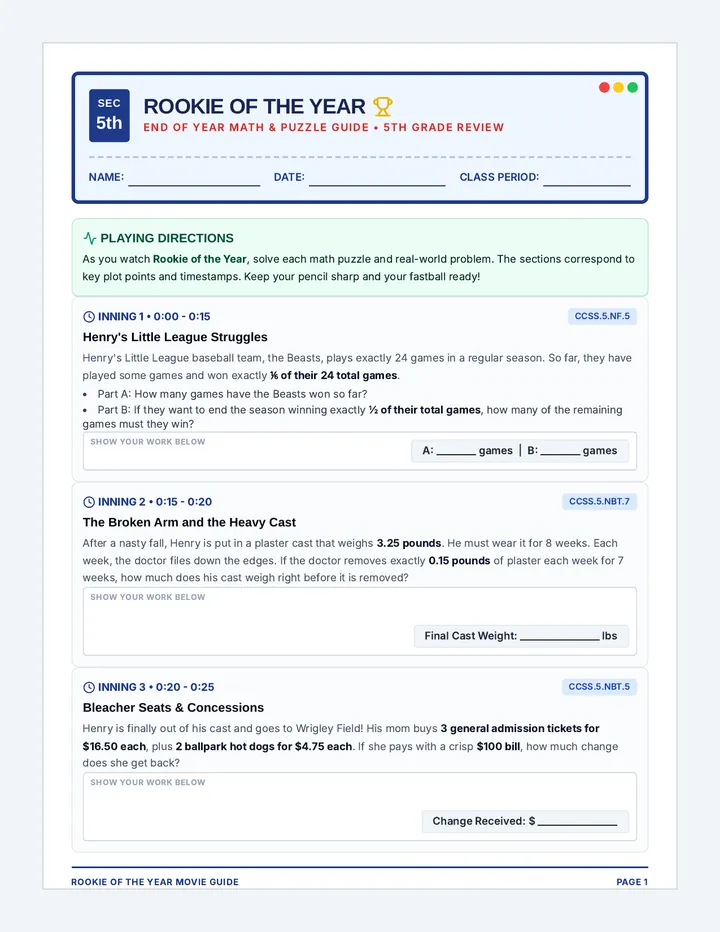
A diverse collection of high-quality math resources spanning grades 2 through 5, focusing on core arithmetic, fractions, and place value concepts.
An engaging, fair-themed unit where students explore fractions through interactive games, visual models, and hands-on activities. Students will learn to identify, represent, and compare fractions like halves, thirds, and fourths.
A vibrant, carnival-themed unit where students explore fractions through fair games and treats. Students will identify, represent, compare, and order fractions using visual models and hands-on activities.
A carnival-themed math unit where students explore fractions through fair games and attractions. Students learn to identify, represent, compare, and order fractions using visual models like tickets, snacks, and prizes.
A fair-themed math unit where students explore fractions through interactive carnival games and activities, focusing on identifying, representing, and comparing parts of a whole.
A growing 180-day morning work volume for 3rd grade. Month 1: Basic ops & 2-8x facts. Month 2: 0,1,9,11x facts & intro fractions. Month 3: Equiv. fractions, perimeter, & 12x facts. Month 4: Area basics, 2-step word problems, and self-awareness.
A multi-day math unit on complex rectilinear figures, progressing from finding area with all labels to identifying missing side lengths and solving multi-step problems.
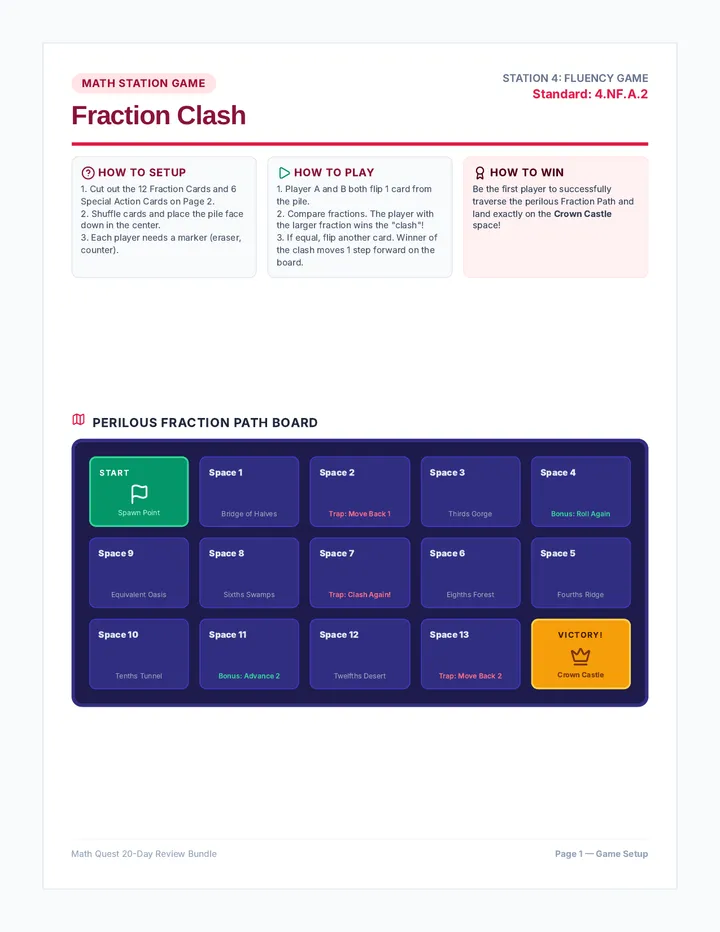
A prehistoric racing-themed series that combines foundational math facts with CVCE word fluency through competitive board games and flashcard challenges.
A comprehensive math sequence for grades 3-5 focused on comparing and ordering fractions with unlike denominators through visual models, number lines, and hands-on bakery-themed activities.
A comprehensive unit focused on measuring, estimating, and calculating liquid volumes in liters and masses in grams and kilograms. Students engage in hands-on lab activities and word problem challenges.
A 5-day small group intervention sequence designed to help 3rd-grade students master expressing whole numbers as fractions and recognizing equivalent whole number fractions through a "Fraction Detective" theme.
A four-day intensive unit on decomposing rectilinear figures to find total area, progressing from basic strategies to complex real-world architectural challenges. Students act as 'Blueprint Builders' to master vertical cuts, horizontal cuts, and additive/subtractive methods.
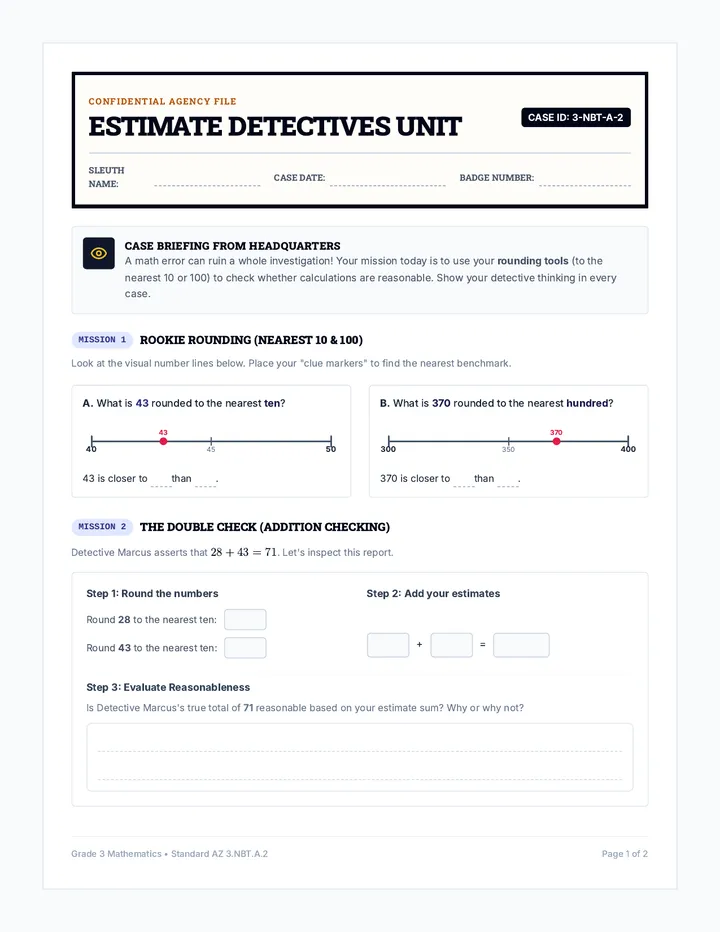
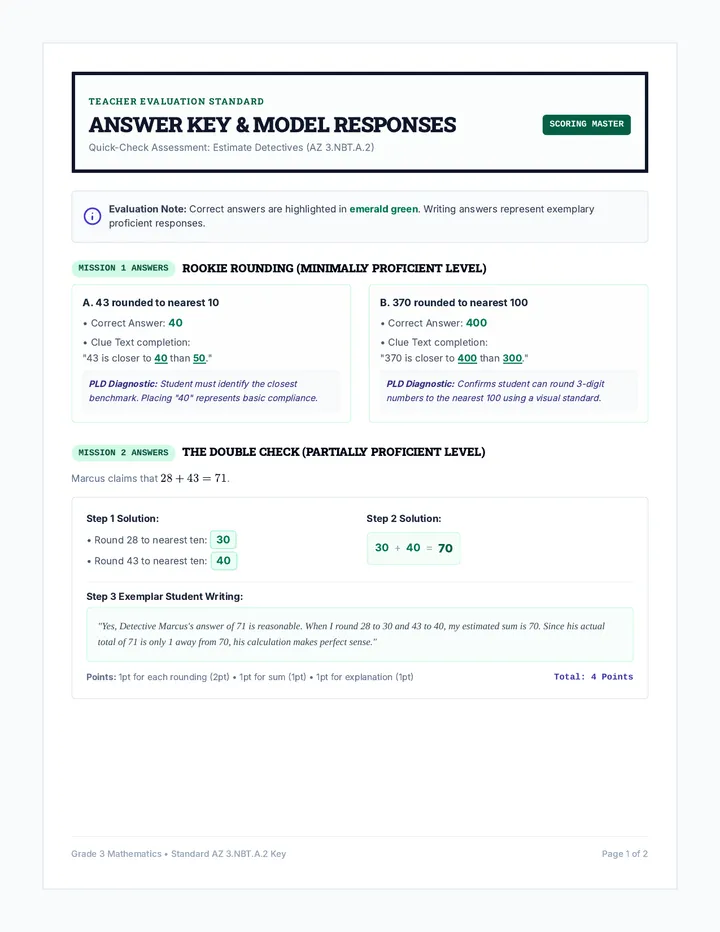
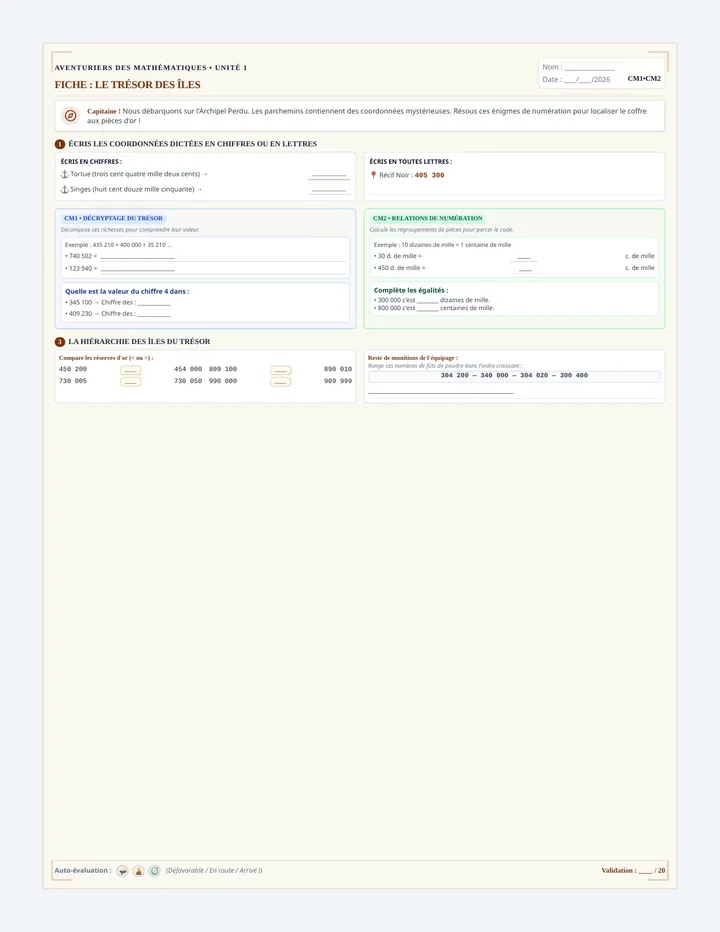
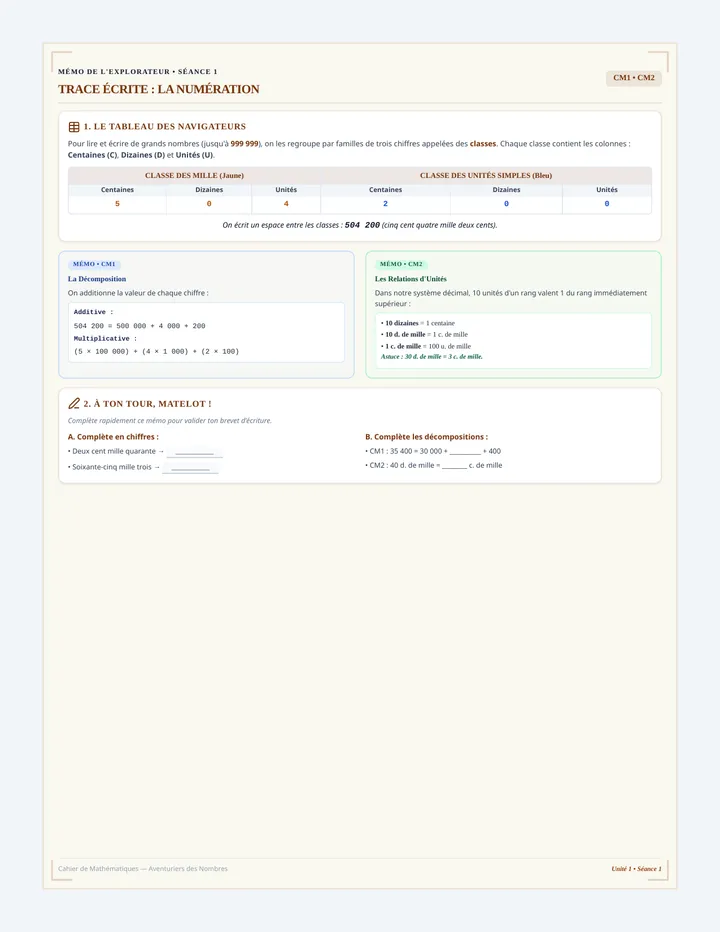
A comprehensive 5-week Tier 3 intervention for grades 4-6 focusing on foundational place value concepts from grades 1-4. The sequence uses a 'Digit Detectives' mystery theme to engage students in mastering place value relationships, large numbers, comparison, rounding, and number patterns.
A math sequence focusing on introductory fraction concepts for 4th-grade students, specifically designed for special education settings with differentiated tasks ranging from 3rd to 4th-grade levels.
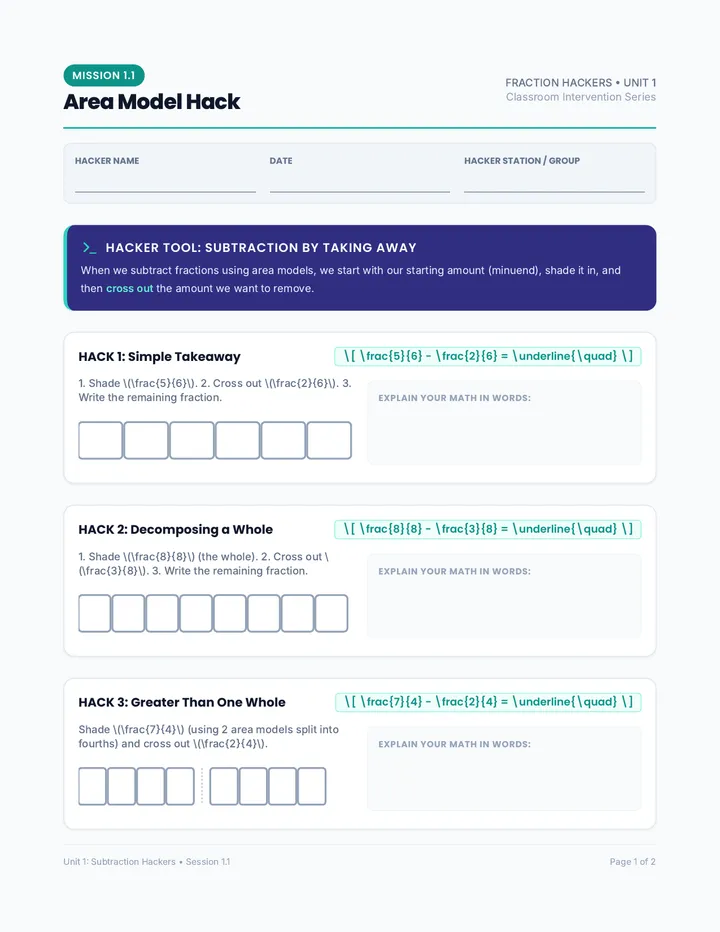
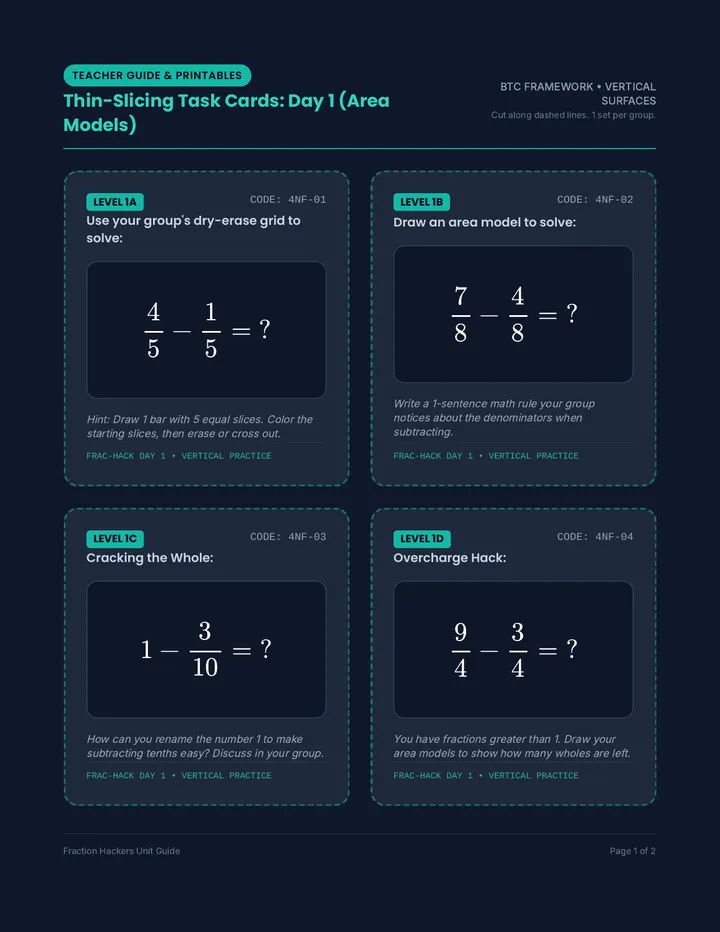
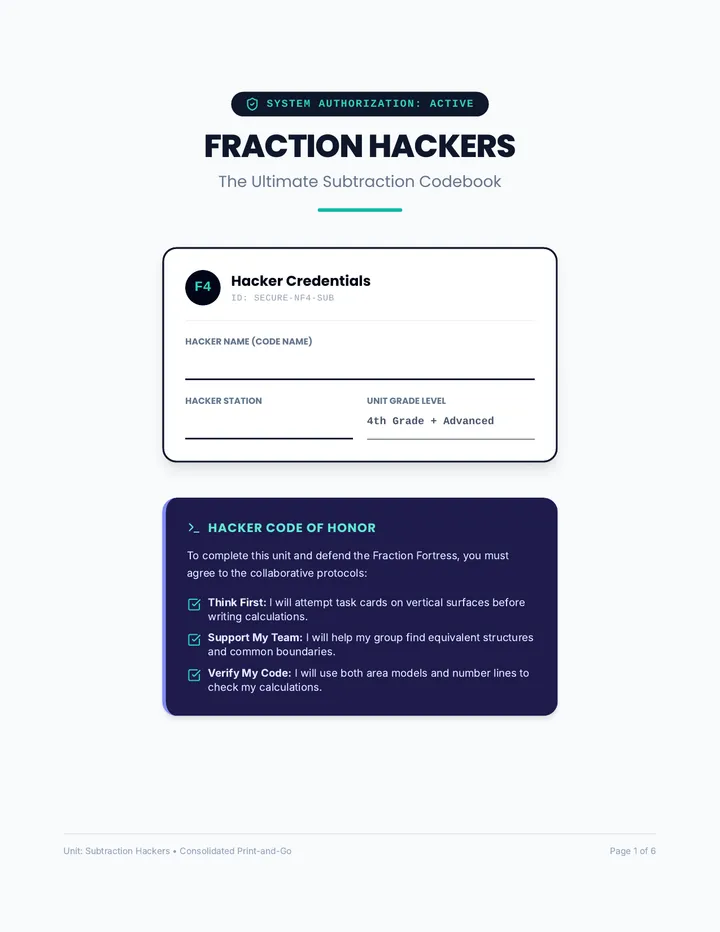
A 20-lesson subtraction fluency unit for primary students, explicitly organized by mental math strategies: Counting Up, Number Lines, Making 10, Pretend 10, and Close to Doubles, all with Winter Olympic themes.
A comprehensive 16-lesson unit focusing on mental math strategies for subtraction within 20, themed around Team USA's journey to gold in the Winter Olympics.
A 5-day unit exploring area through the lens of architectural design. Students move from physical tiling to multiplication and finally to decomposing complex rectilinear shapes, aligned with Arizona 3.MD.C.7 standards.
A 9-day morning work series. Days 1-4 focus on RI.3.9 and 3.OA.A.3. Days 5-9 focus on RL.3.4/RI.3.4 (word meaning) and 3.NF.A.3 (equivalent fractions). Each day features a unique theme and mission-style layout.
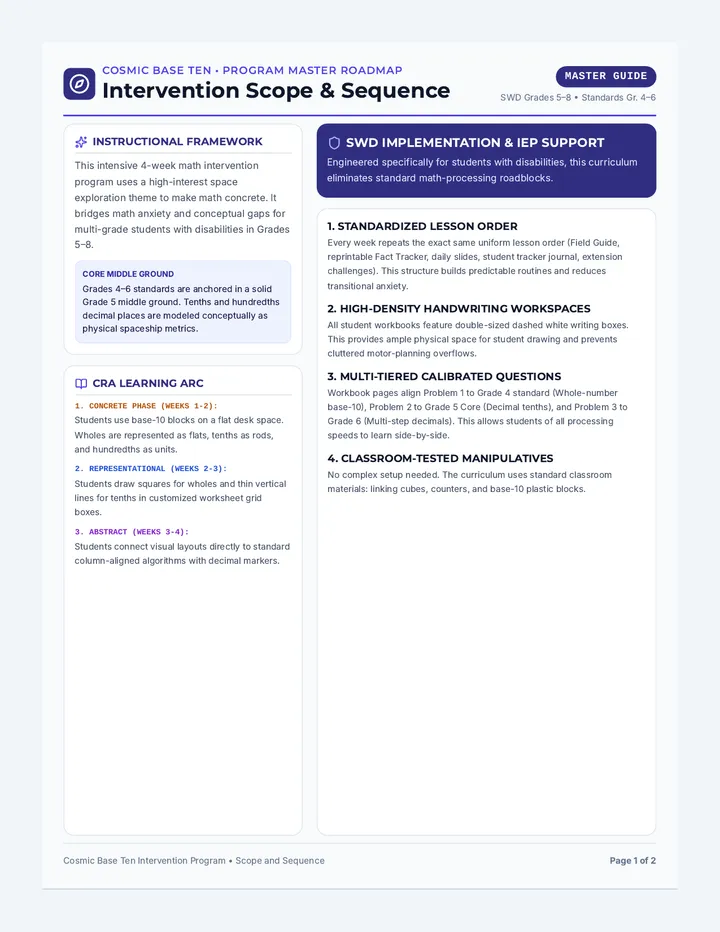
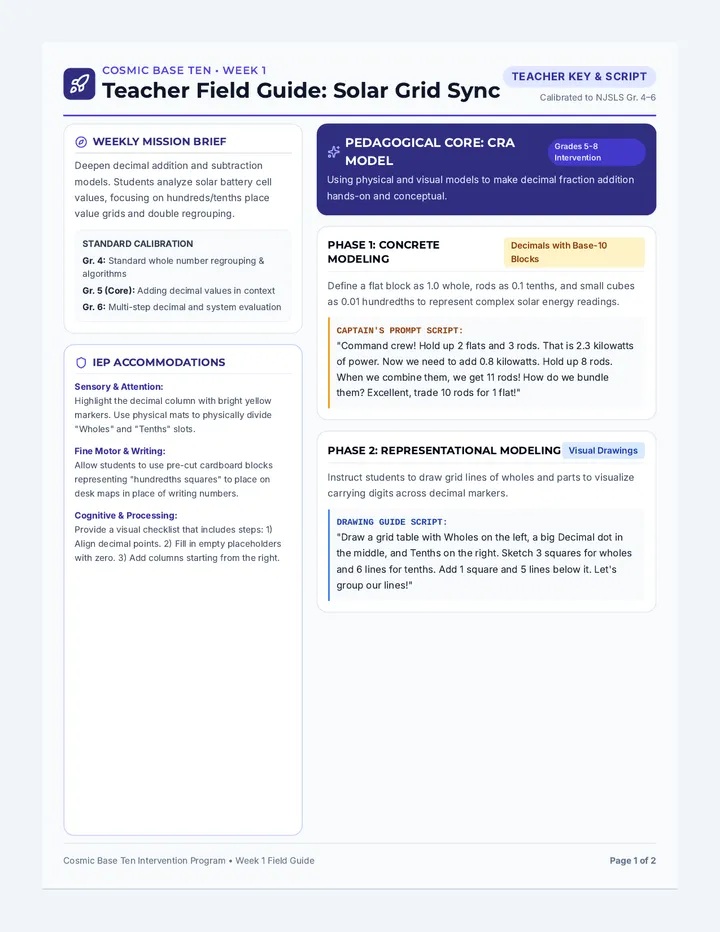
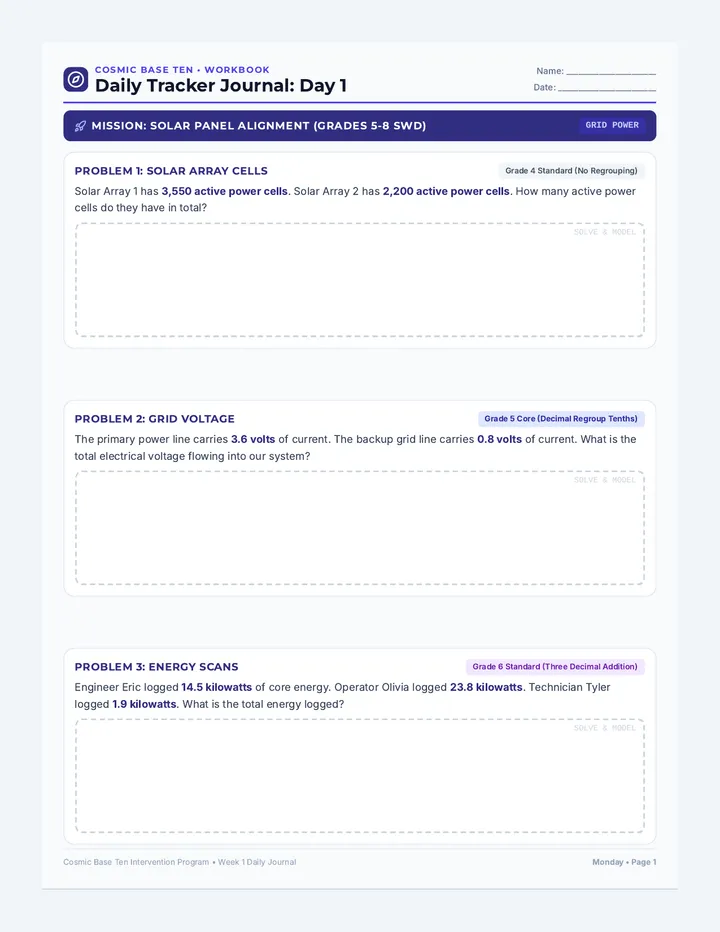
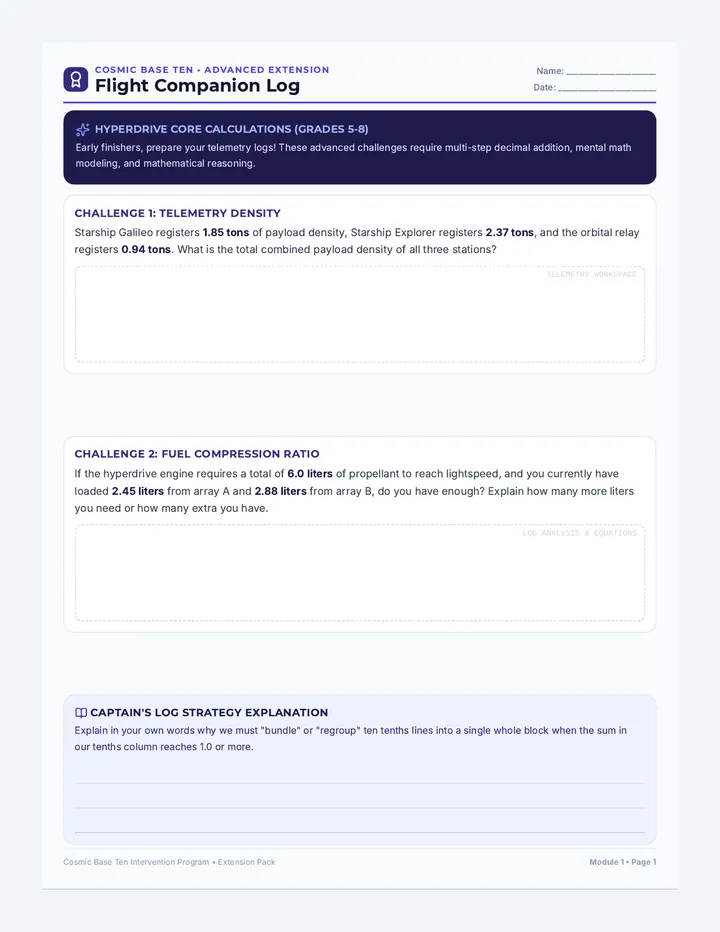
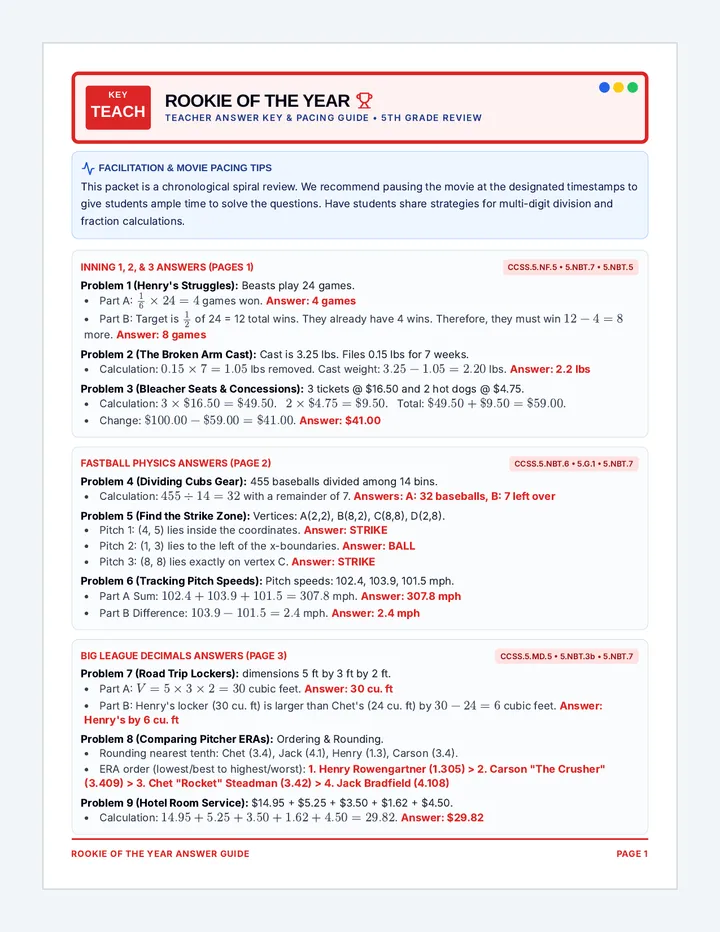
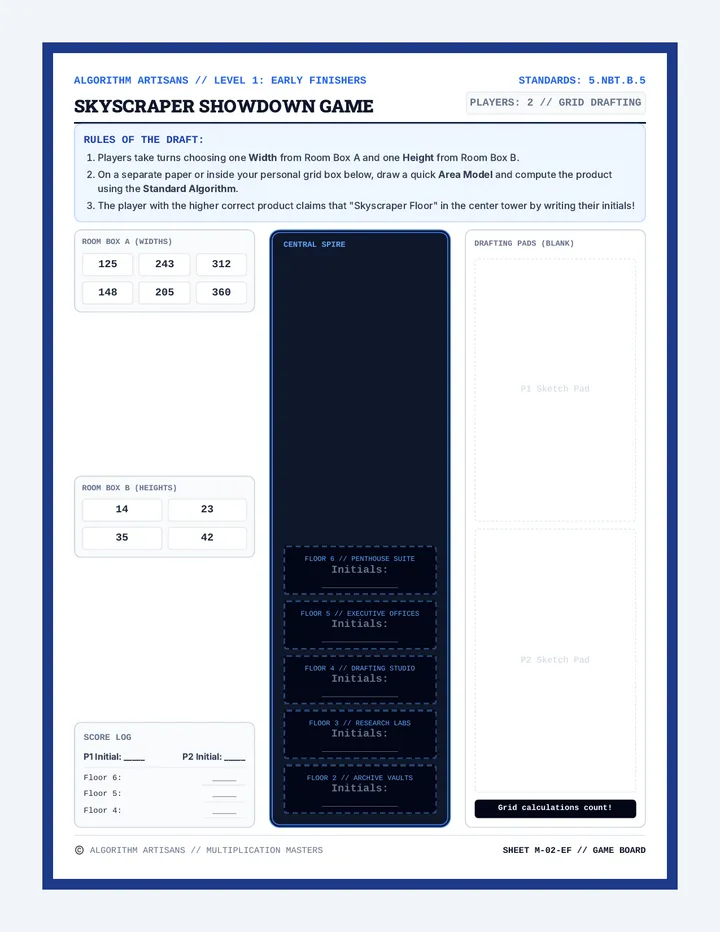
A 4-day small group reteach sequence for 5th-grade students focusing on decimal multiplication and division. The sequence uses hands-on strategies, place value relationships, and pictorial models to solve real-world mathematical discoveries.
A sequence focused on mastering the fundamental properties of mathematical operations, including commutative, associative, and distributive properties, and understanding why they don't apply to subtraction and division.
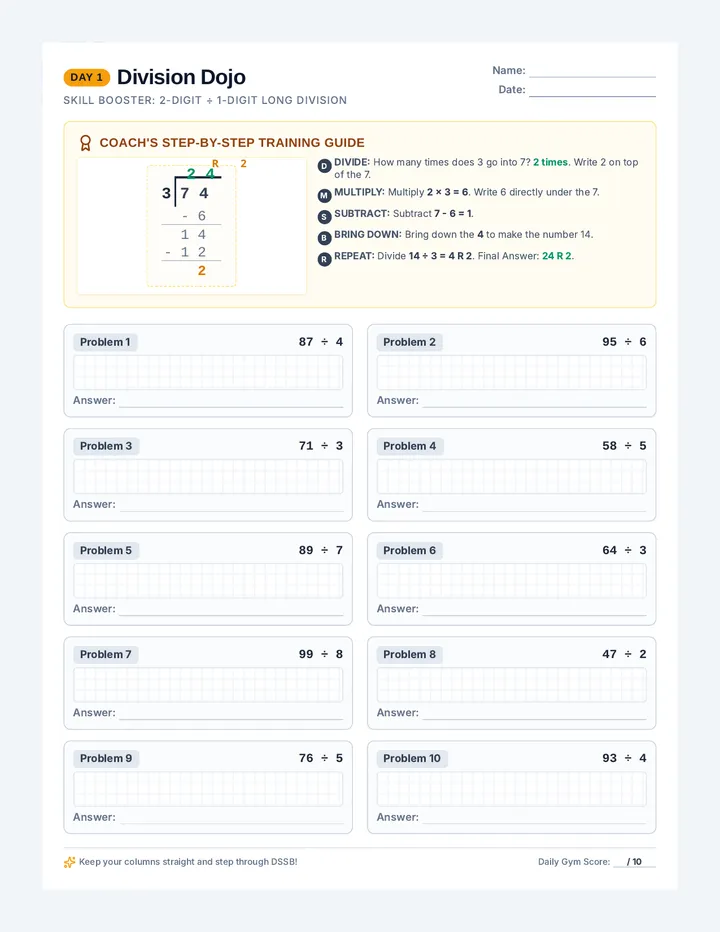
A 4-day intensive STAAR math review focused on multiplication and division standards for 4th grade. The unit uses a 'Math Mission' theme to engage students while covering complex multi-step problems and standard algorithms.
A high-impact, 25-minute small group intervention focused on TEKS 3.5D. This single-session "Operation Unknown" mission guides students through finding missing numbers in multiplication and division equations using fact families, symbols, and STAAR-aligned question formats.
A 5-day intensive reteach sequence focused on converting measurements within metric and customary systems and solving real-world measurement word problems using the four operations.
A series of three targeted small-group lessons designed to master TEKS 3.4E. Students will explore and represent multiplication facts through equal groups, arrays, area models, and number lines, all while practicing with STAAR-aligned questioning.
A three-day intensive math unit focused on TEKS 5.3(K), where students manage the budget and logistics for a 'Grand Gala' event. Students practice multi-step addition and subtraction of decimals and fractions through realistic planning scenarios.
A two-day small group instructional sequence focused on Arizona standard 3.NF.A.1, introducing unit fractions and building non-unit fractions from those parts using a bakery-themed 'Fraction Foundry' aesthetic.
A comprehensive unit where students become architects in the 'Pattern Palace', learning to identify, extend, and create complex shape and number patterns. Students develop algebraic thinking through hands-on tiling activities, visual challenges, and numerical sequences.