This sequence explores spatial visualization through the study of cross-sections and solids of revolution. Students learn to translate between 2D and 3D representations, a critical skill for engineering, physics, and advanced mathematics.
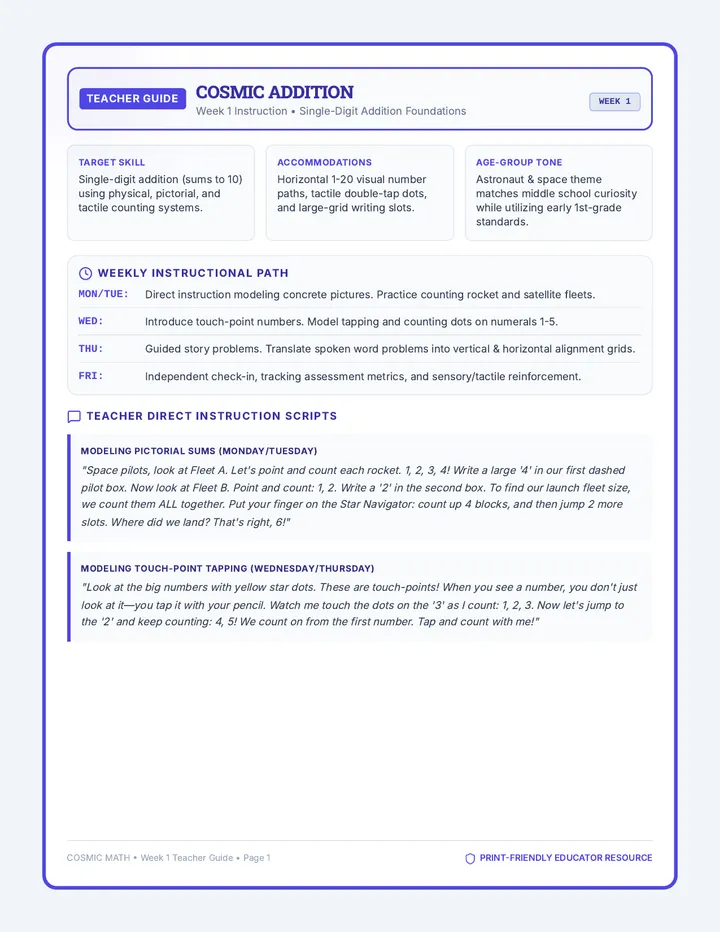
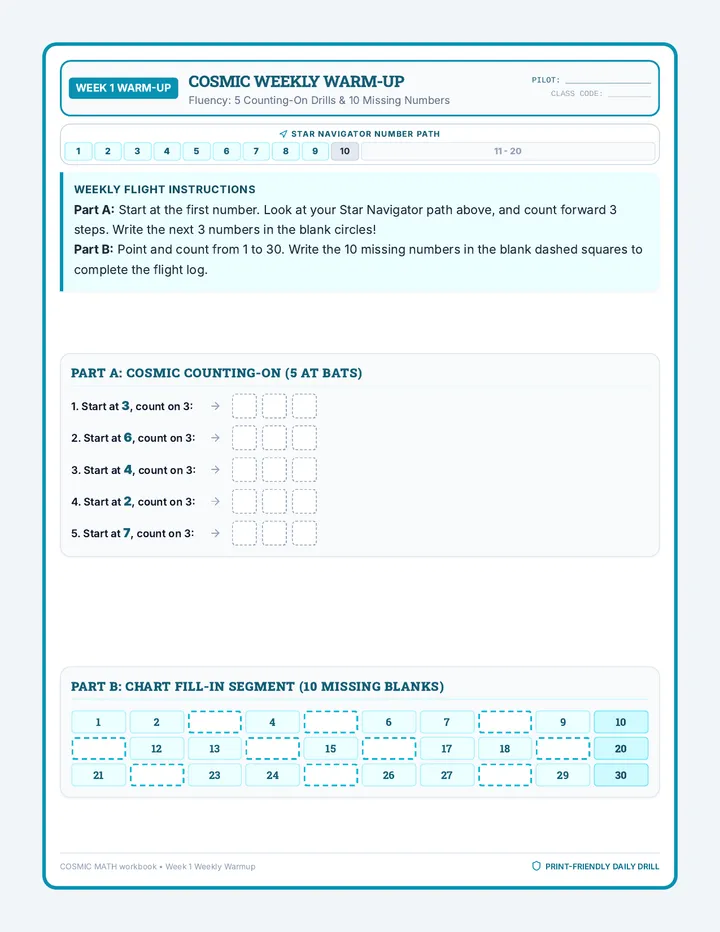
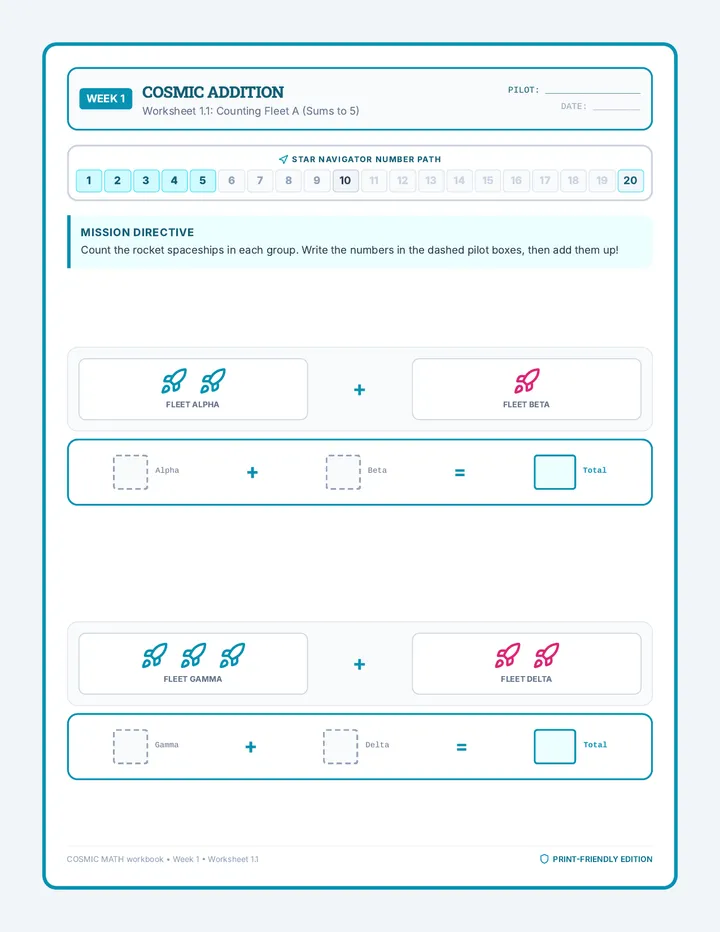
A 4-week math workbook and instructional sequence themed around outer space exploration, specifically designed for middle school students with disabilities (SWDs) working at an early 1st-grade level. Features embedded touch-points, base-ten icons, visual number paths, and age-appropriate space exploration visuals to teach single-digit operations, place value, and patterns.
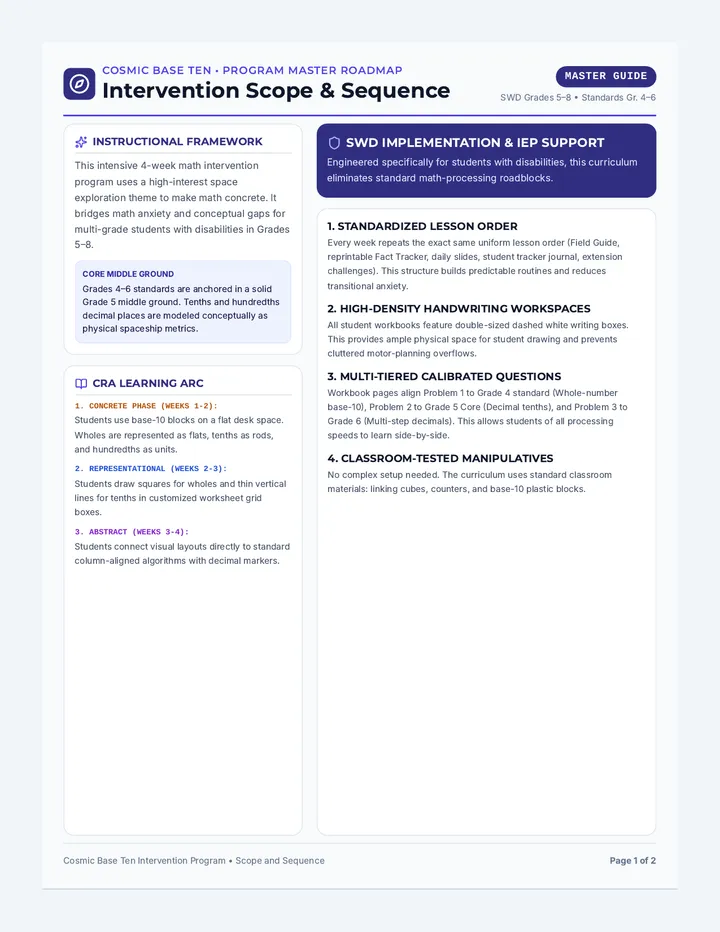
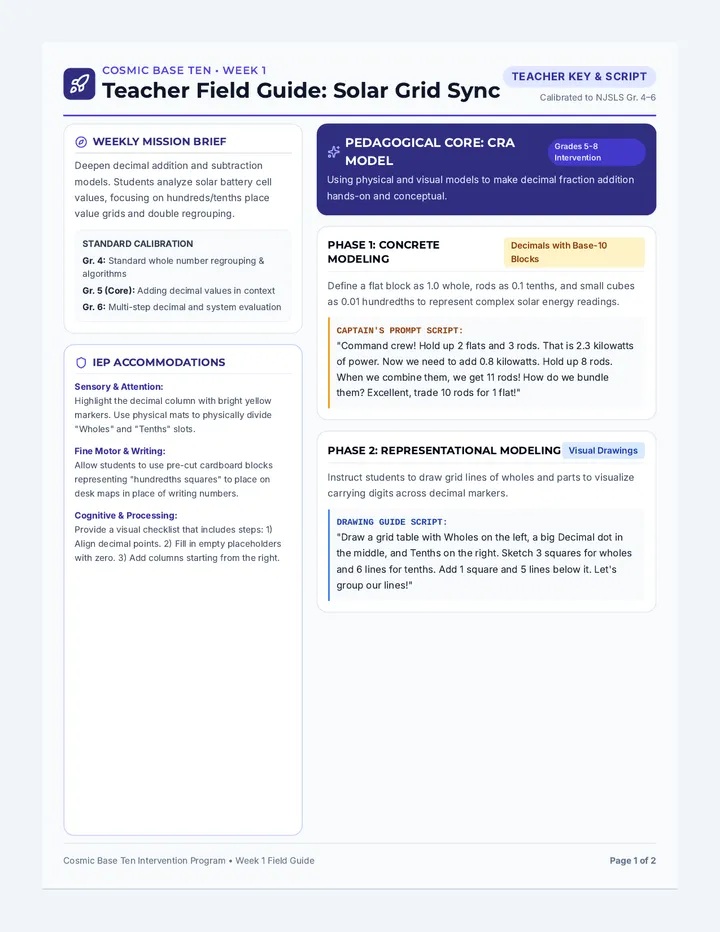
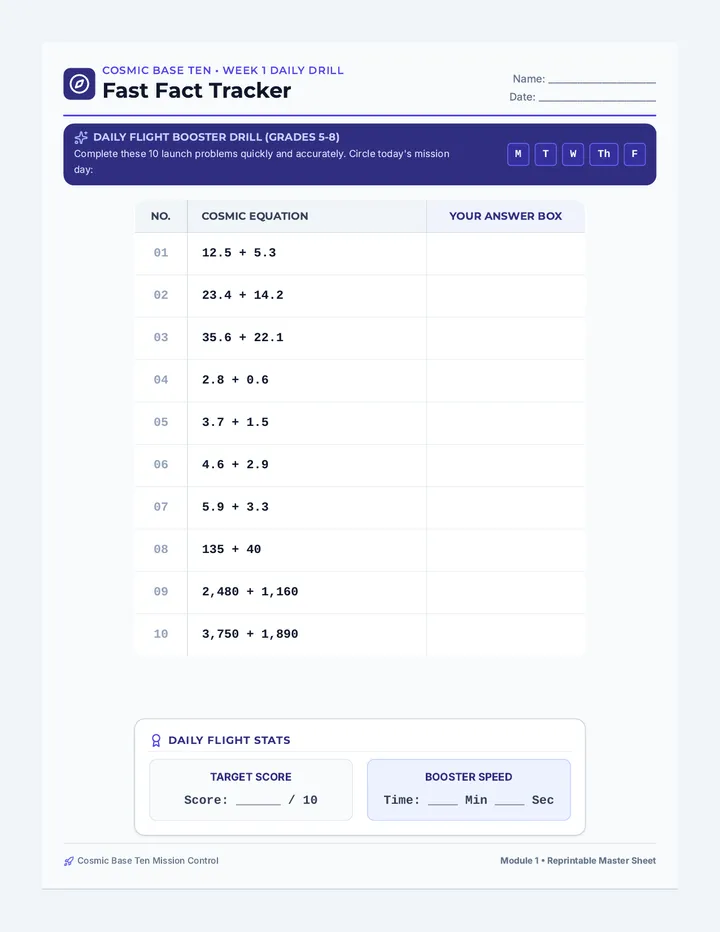
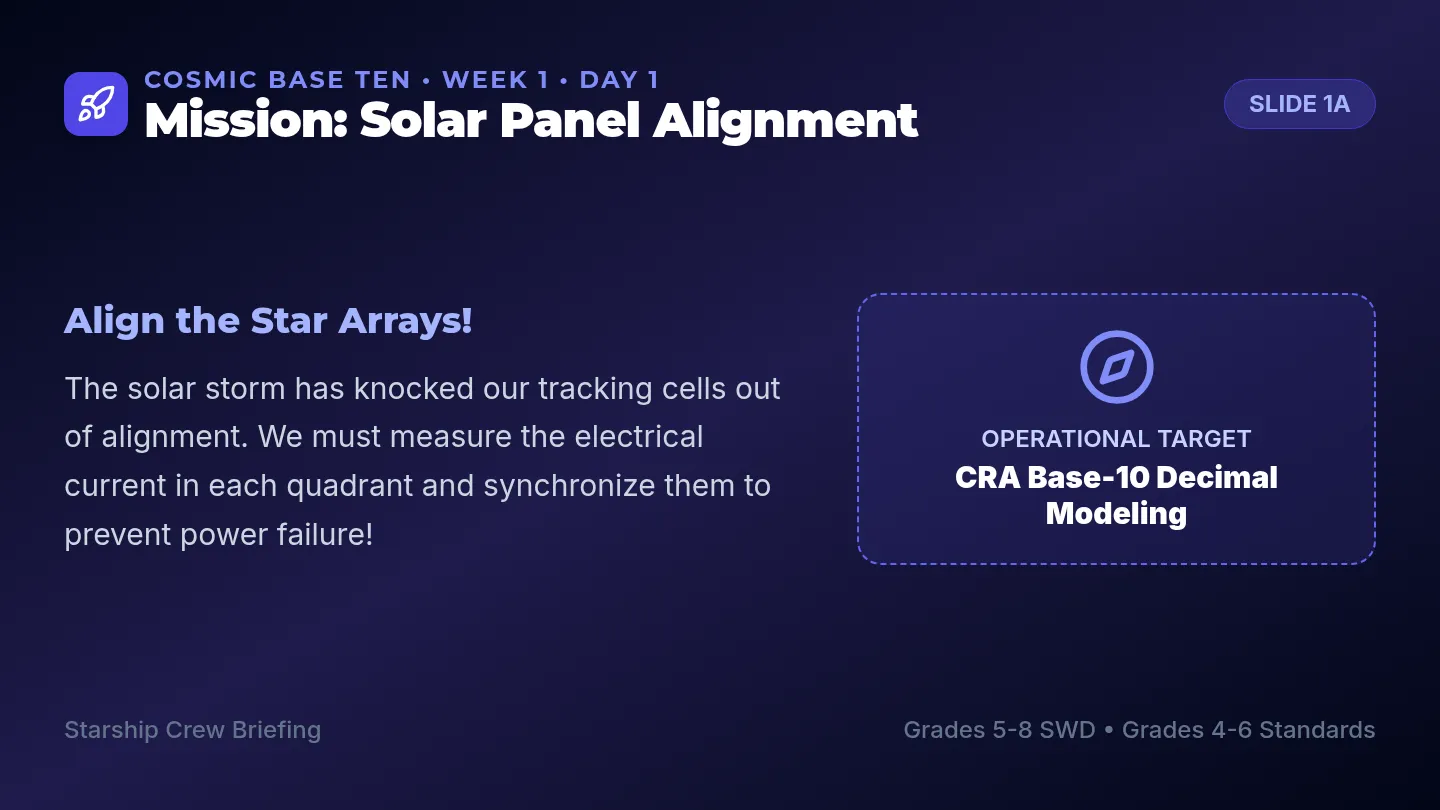
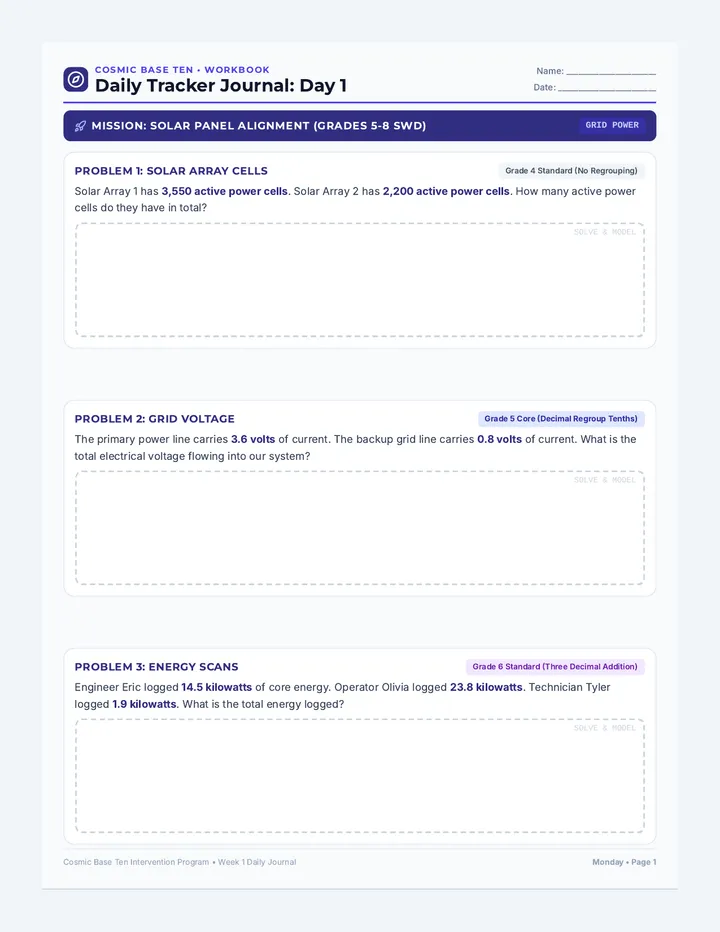
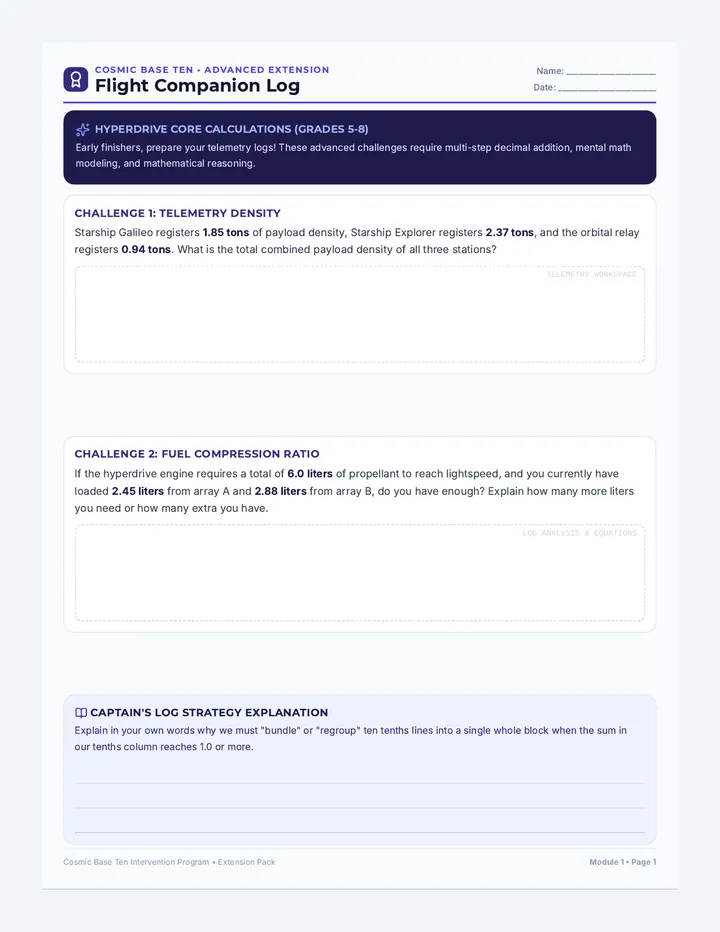
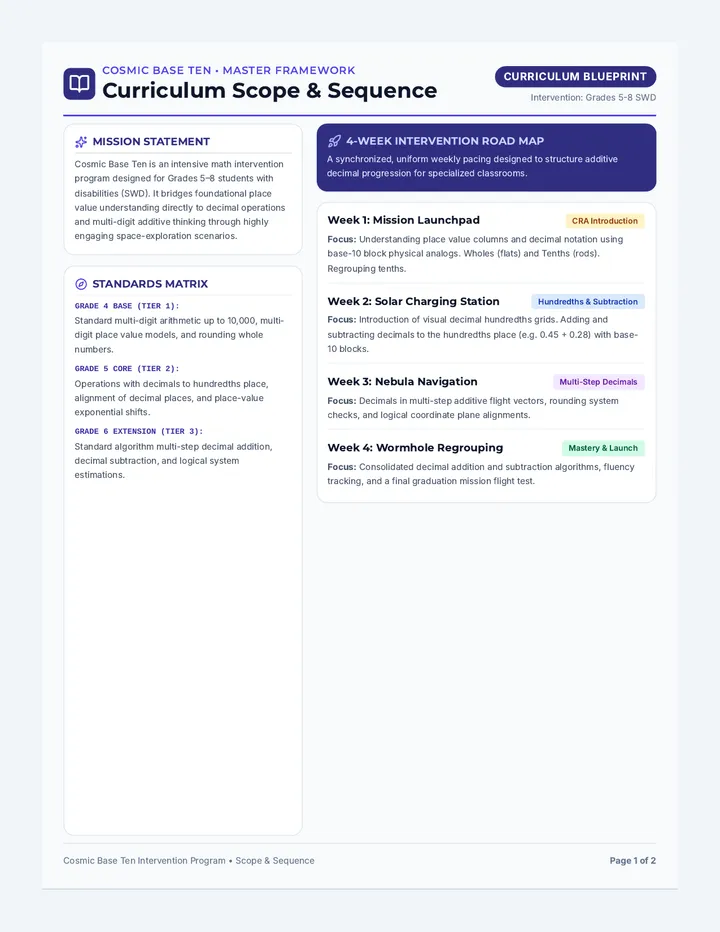
A 4-week intensive math intervention program set in a space exploration universe, designed for multi-grade students with disabilities in Grades 5–8. It covers additive thinking, place value, and decimal regrouping, anchored in Grades 4–6 standards with a Grade 5 core middle ground.
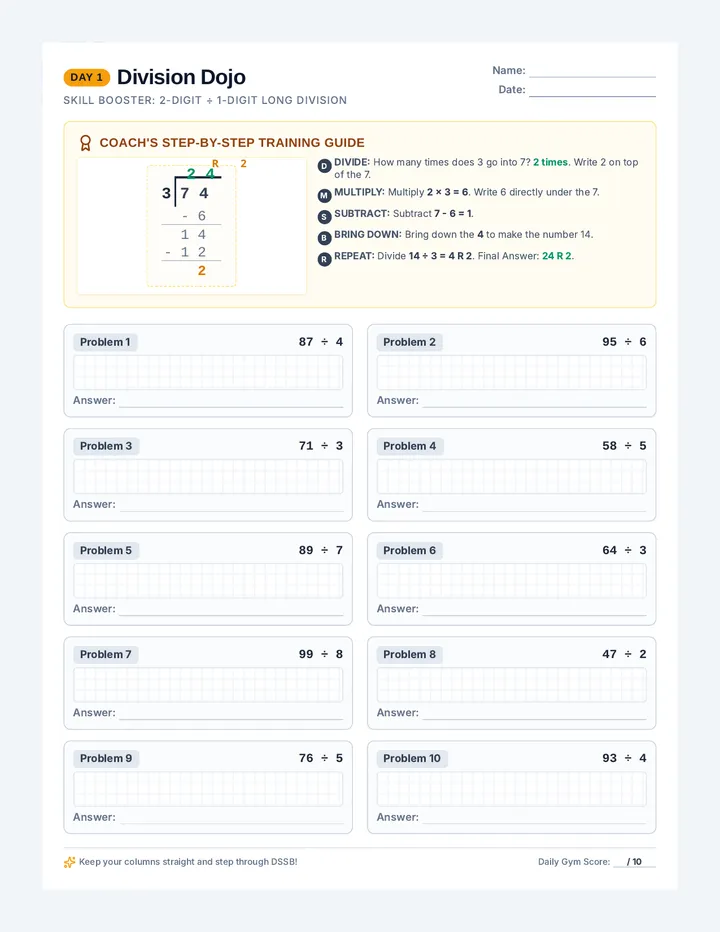
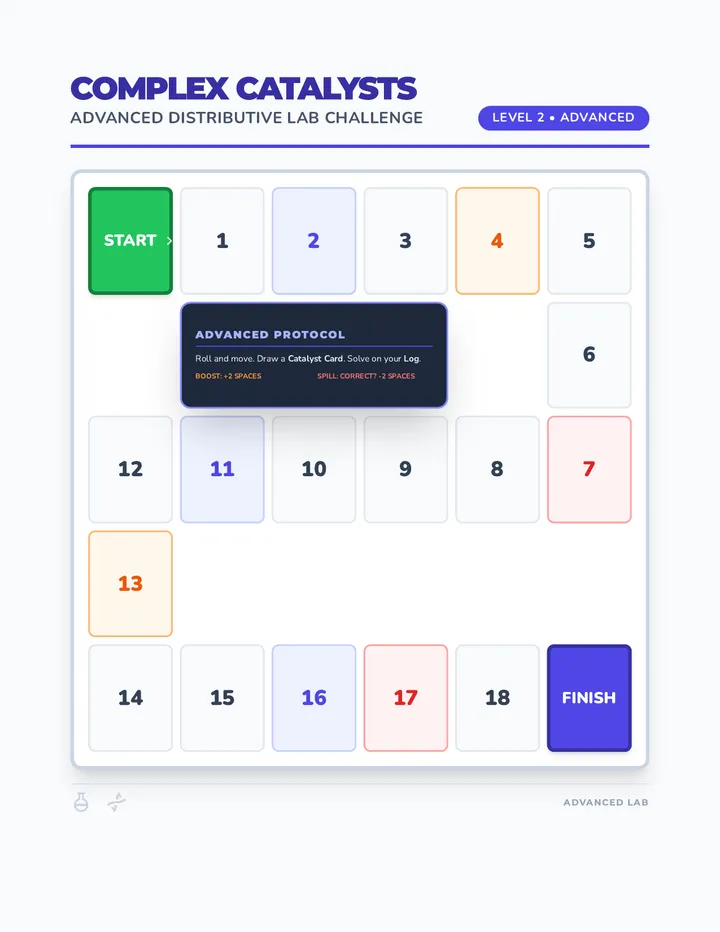
A six-day targeted daily practice series designed to reinforce critical middle school math skills. Each single-page worksheet features a scaffolded, step-by-step solved example followed by 10 targeted practice problems with dedicated workspace.
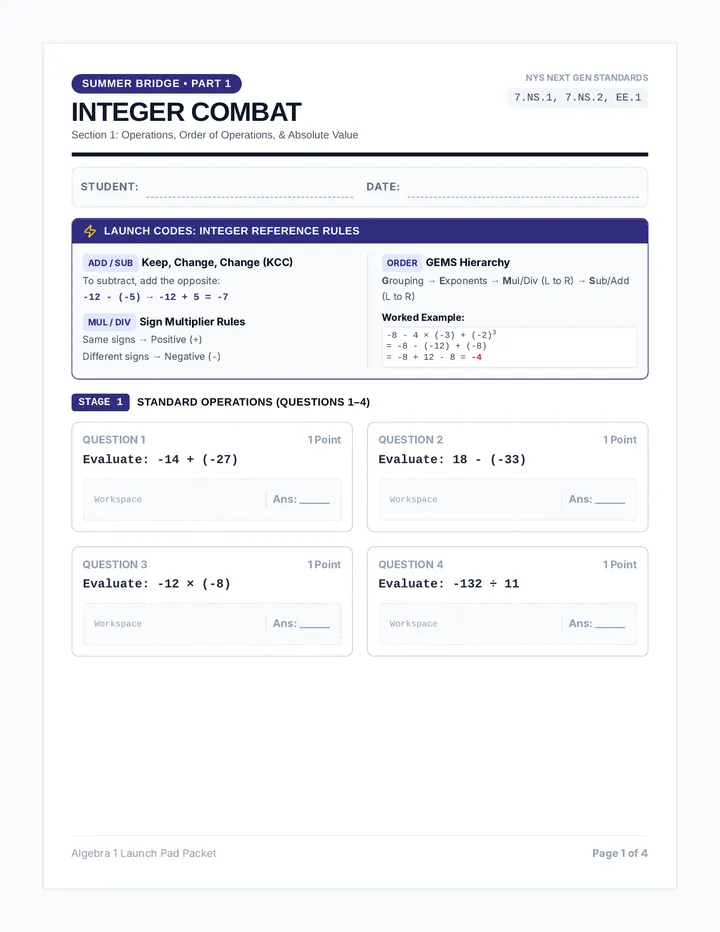
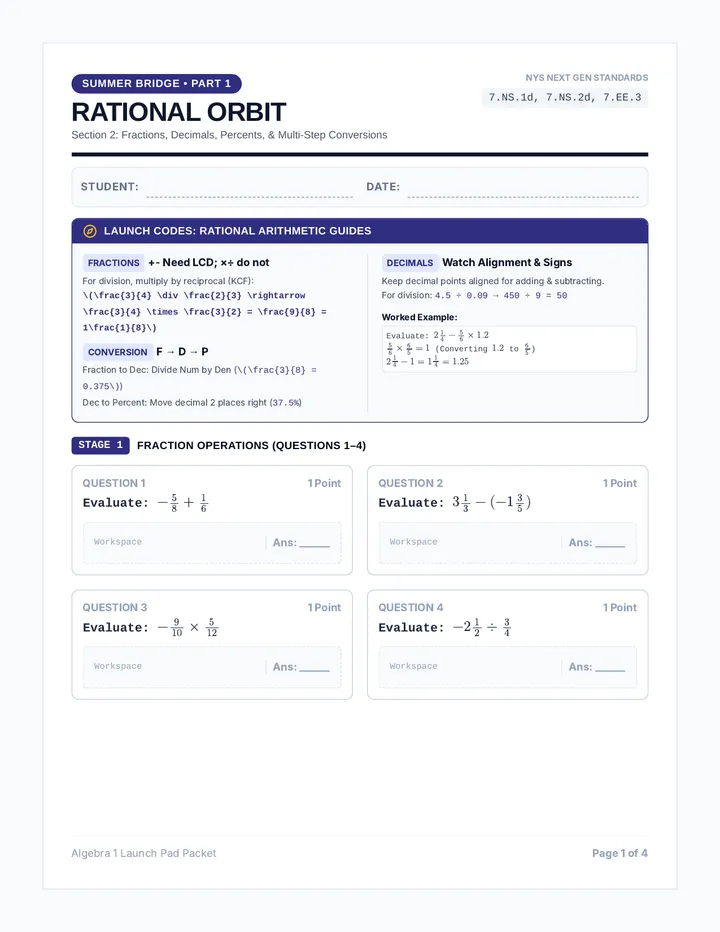
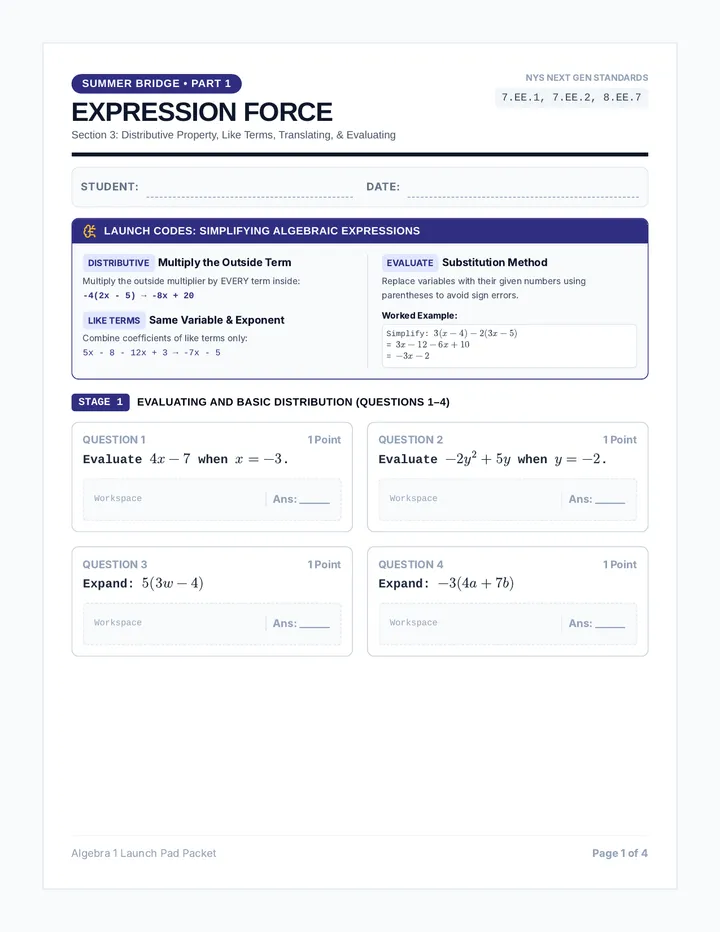
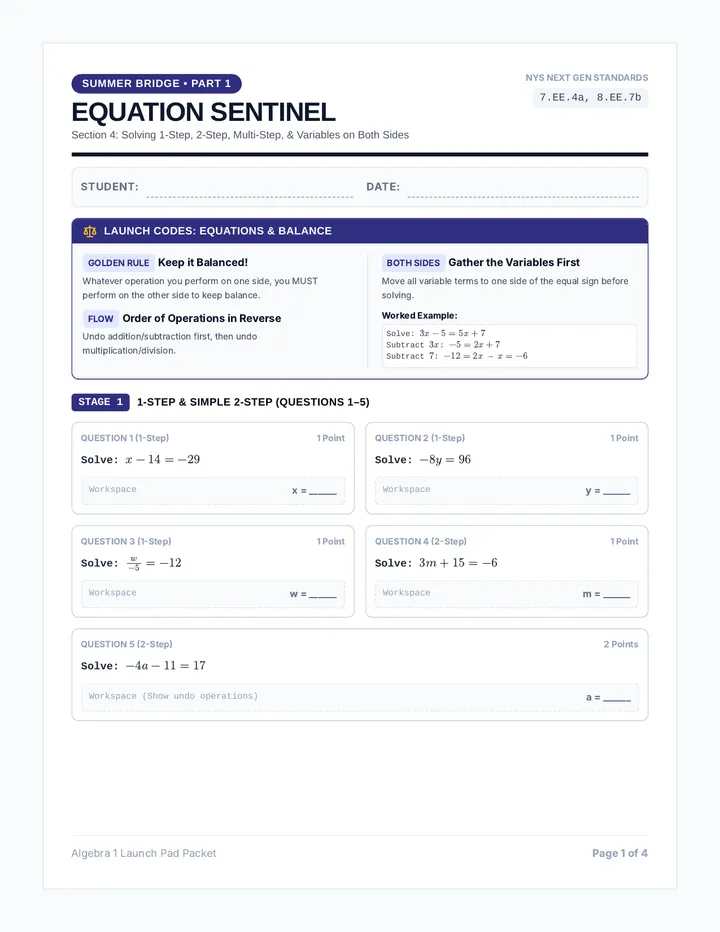
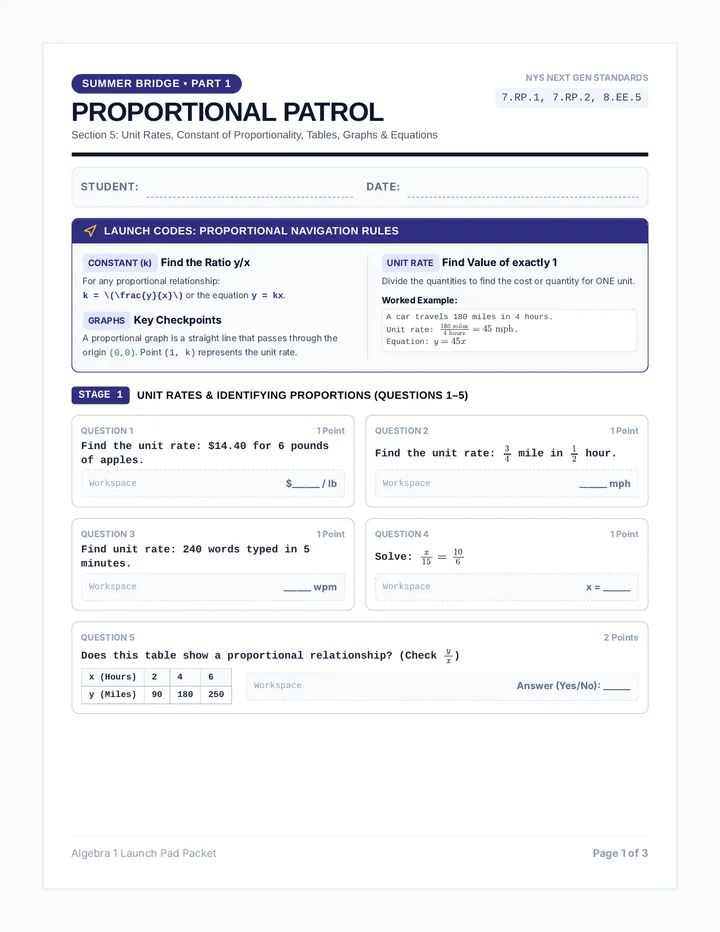
A comprehensive summer bridge workbook for rising 8th graders transitioning to Algebra 1. Contains review of prerequisite topics, advanced pre-algebra skills, real-world application, and an Algebra Escape Challenge.
A curriculum sequence combining math, art, and drafting to explore geometric scale, spatial relationships, and coordinate systems in design.
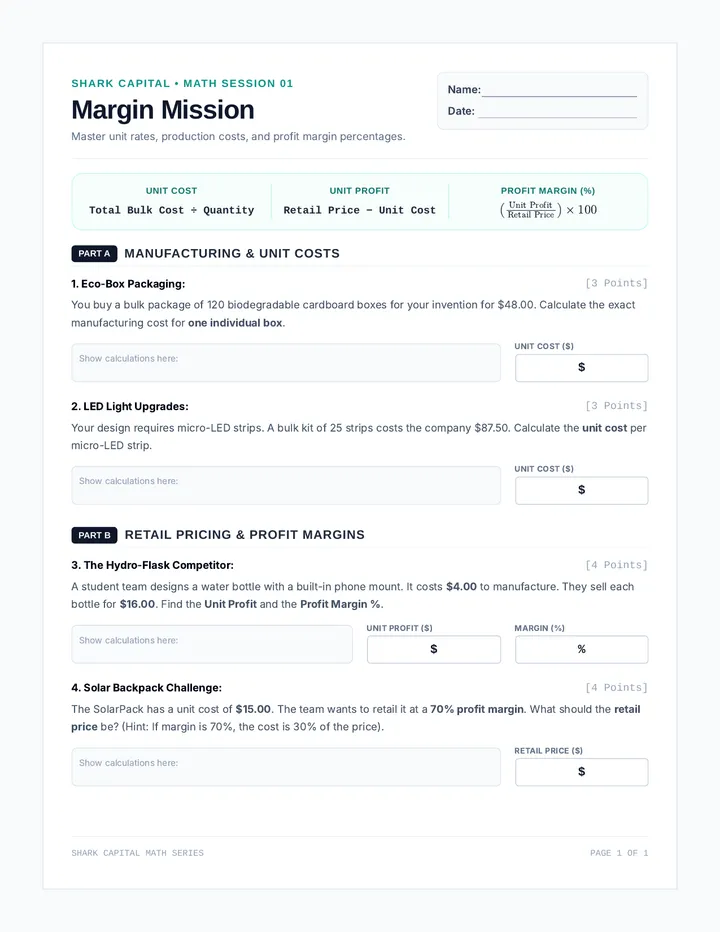
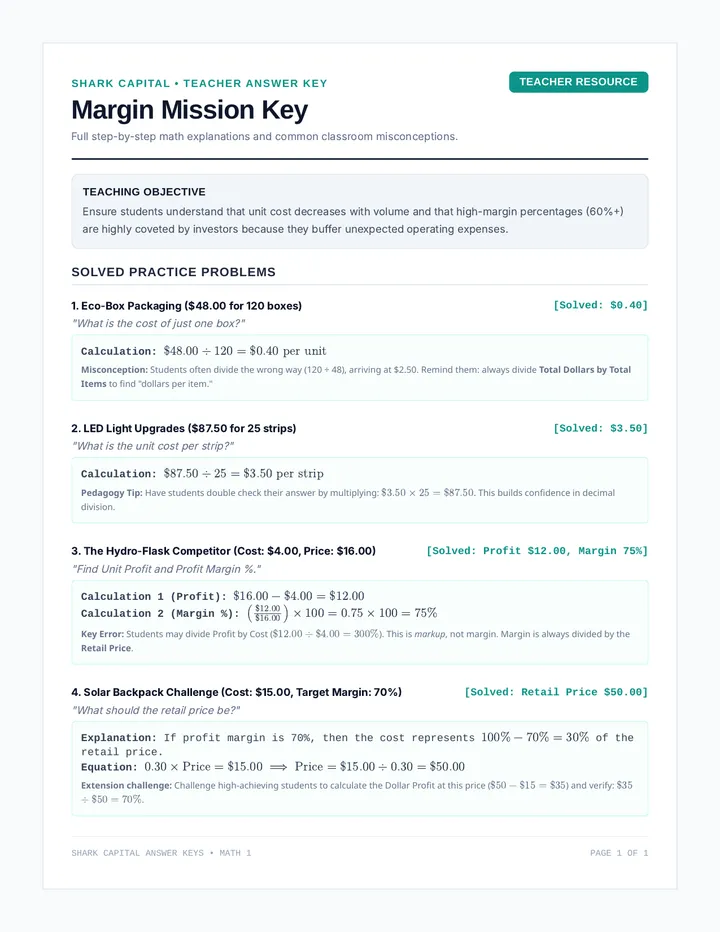
A multi-day, highly engaging math sequence that teaches students the financial mechanics of a venture capital pitch. Students learn to calculate unit profit, retail markups, margin percentages, company valuation, and equity offers to prepare their own Shark Tank-style pitches.
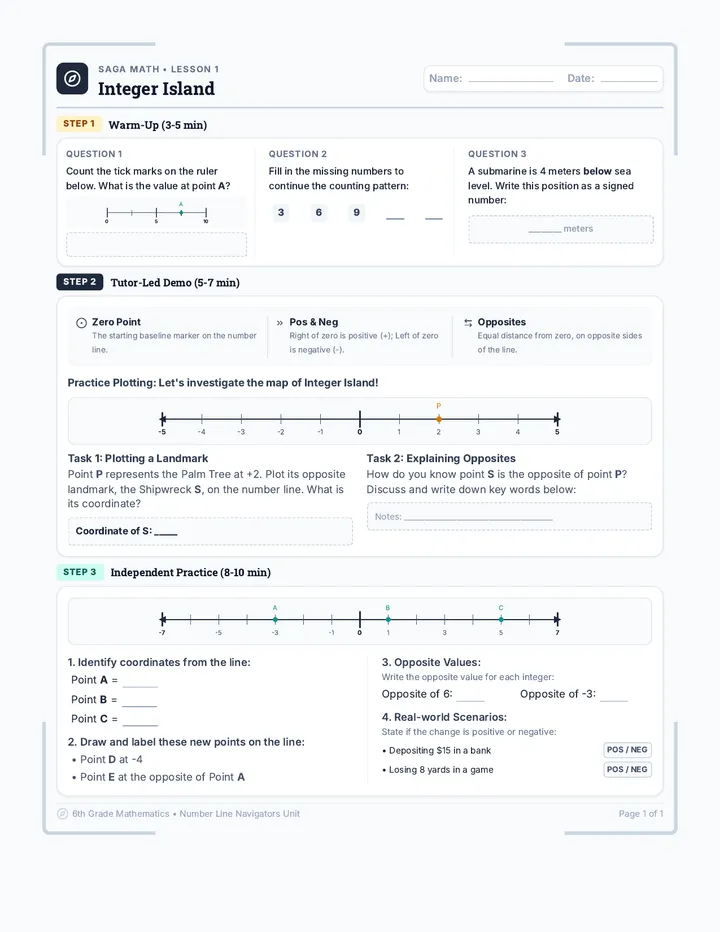
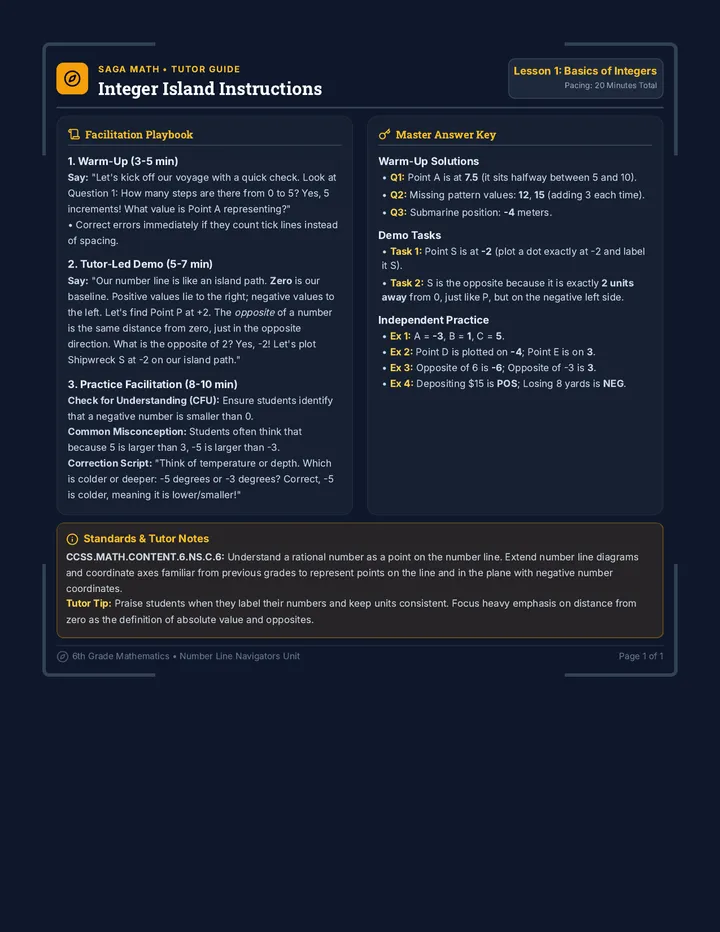
A 4-part lesson sequence on reading, partitioning, and plotting positive and negative rational numbers on a number line, specifically designed for SAGA Math tutoring format.
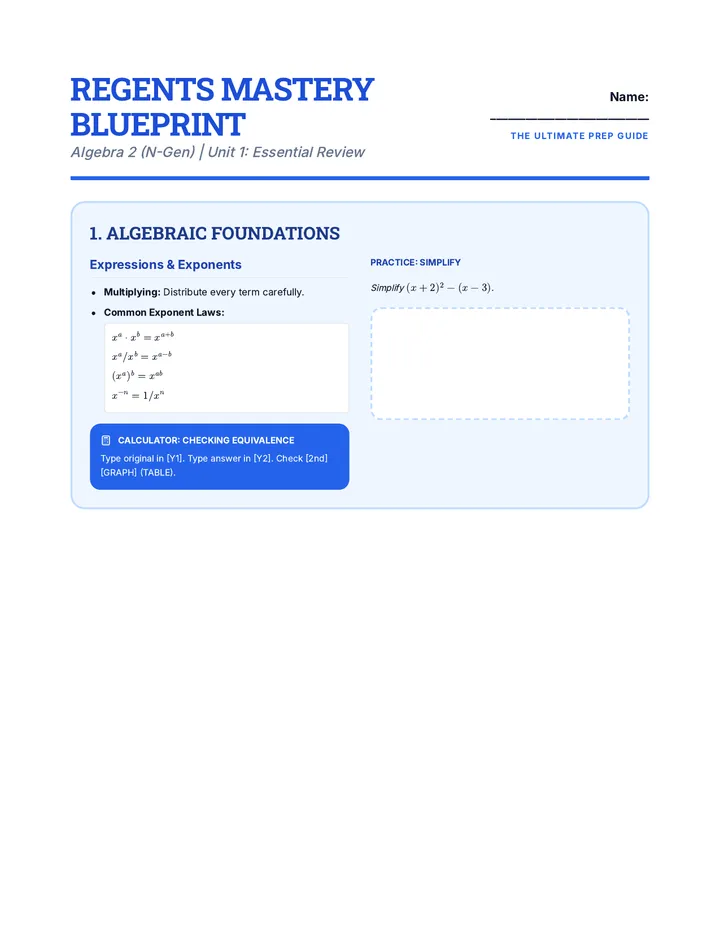
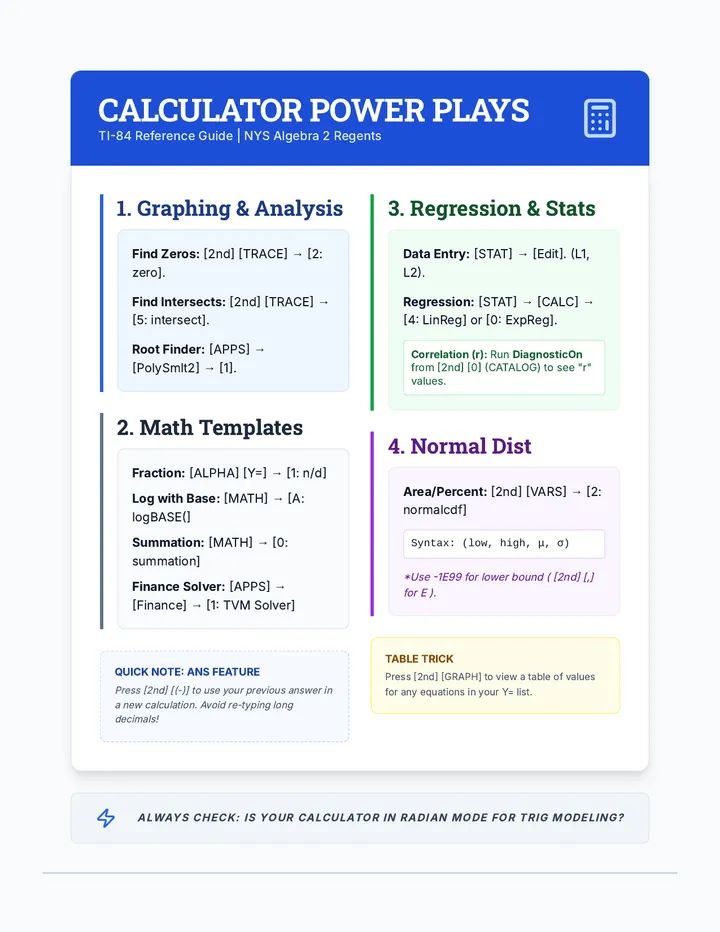
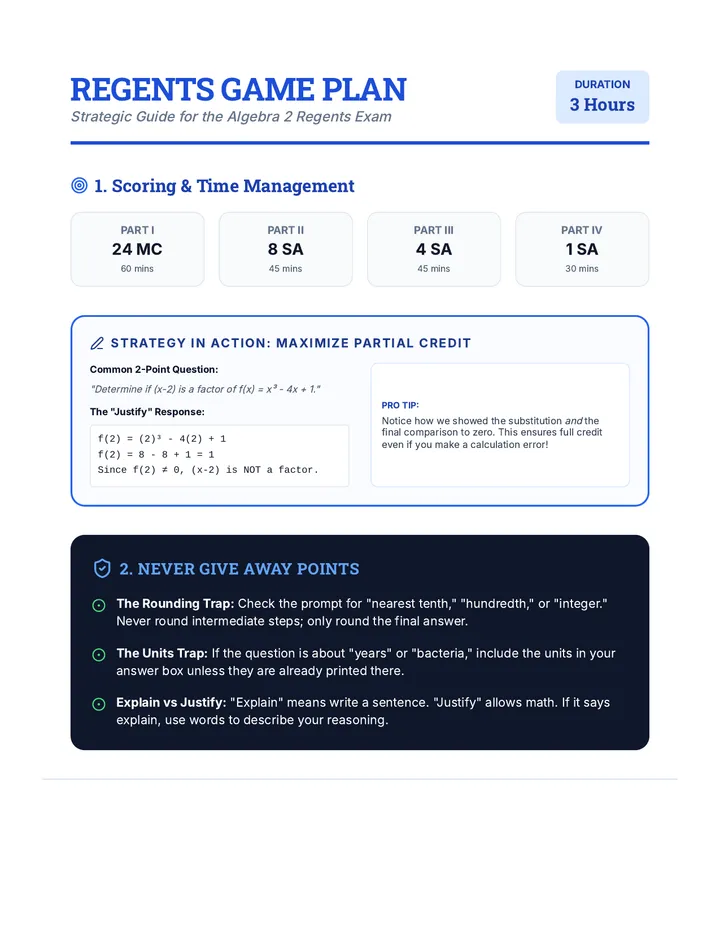
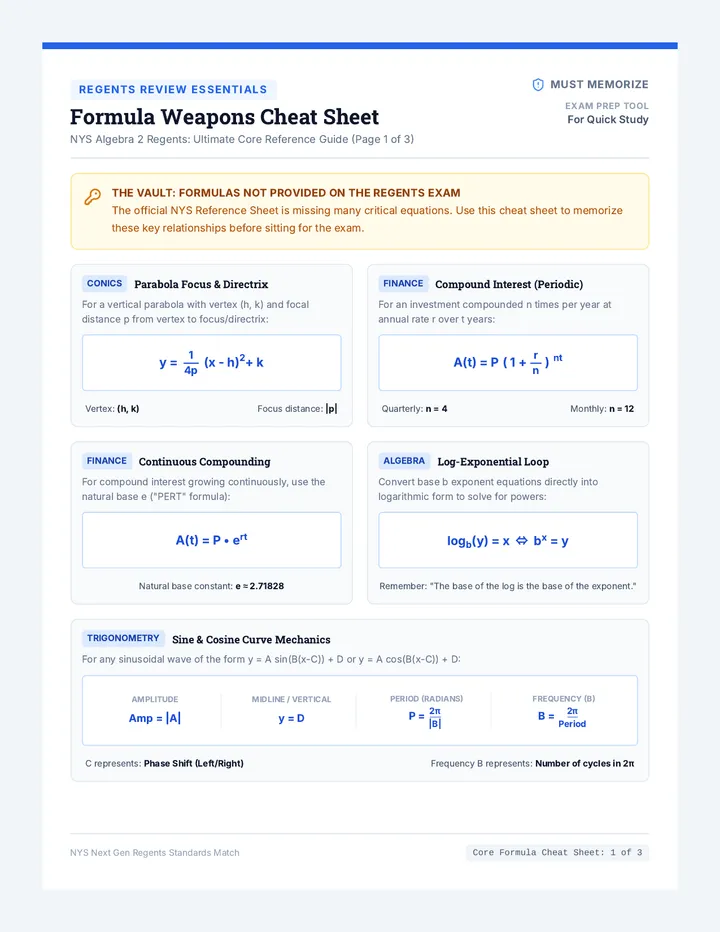
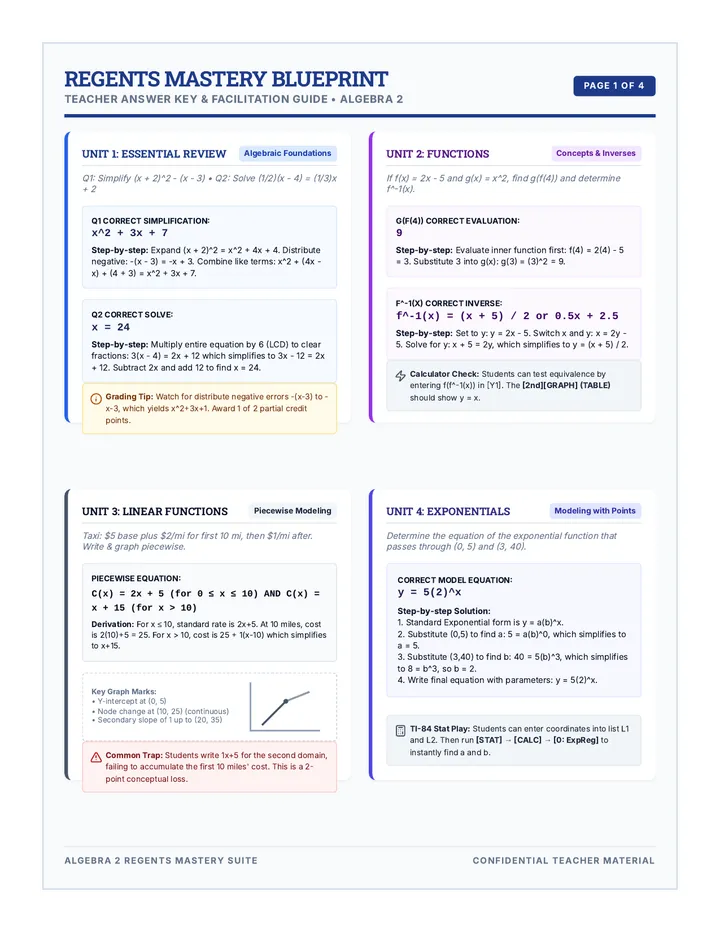
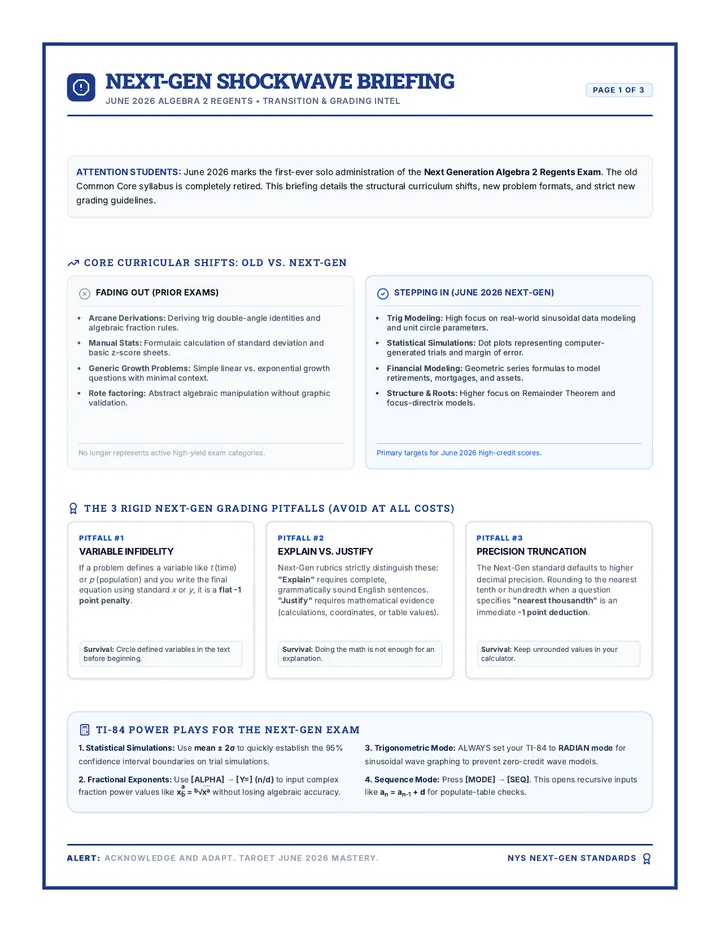
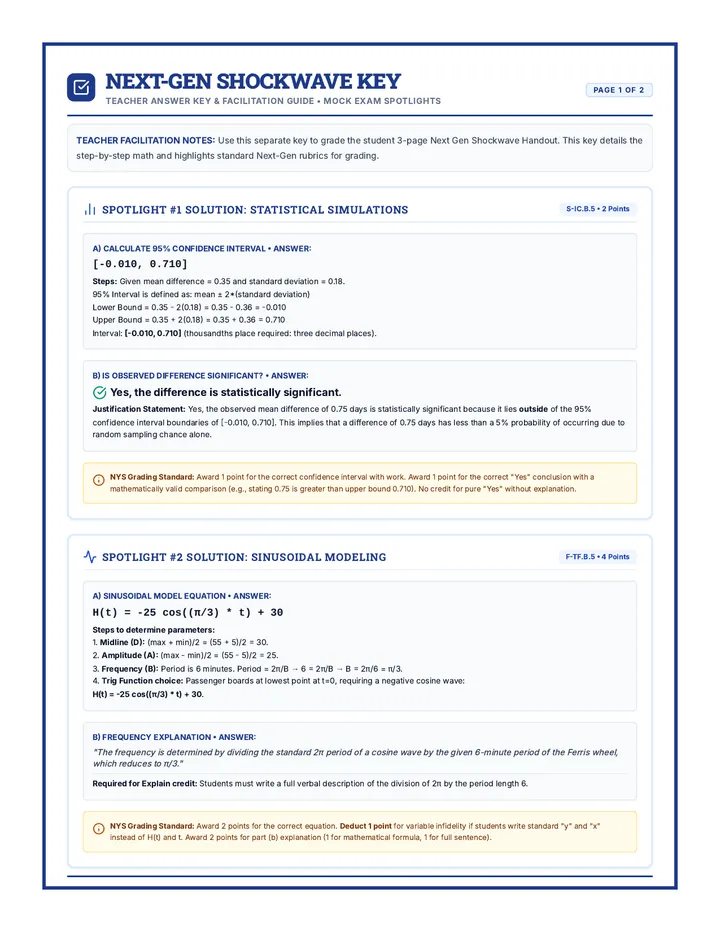
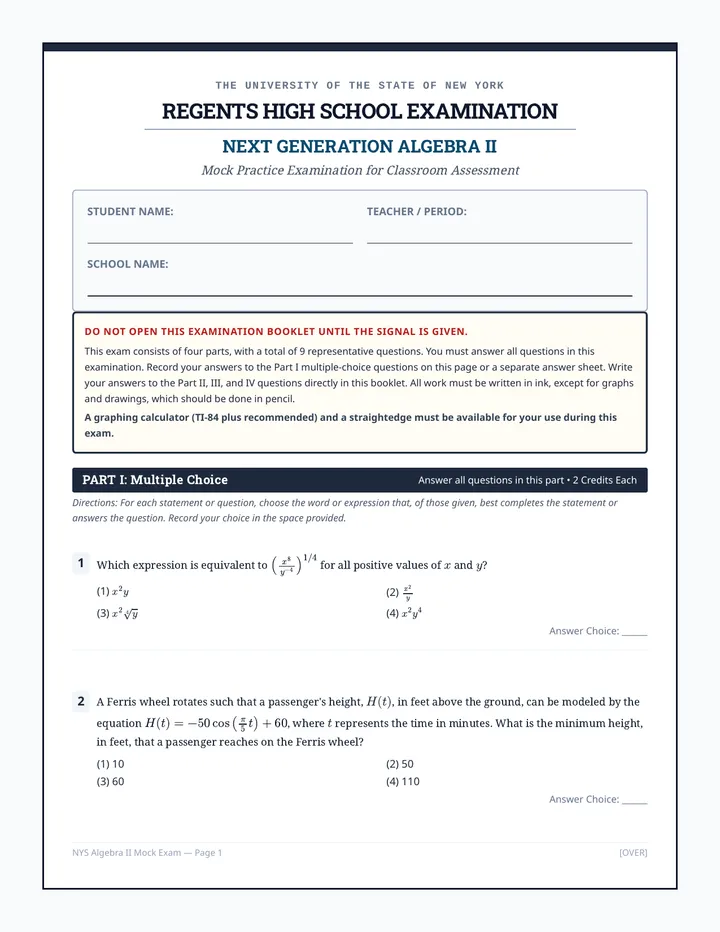
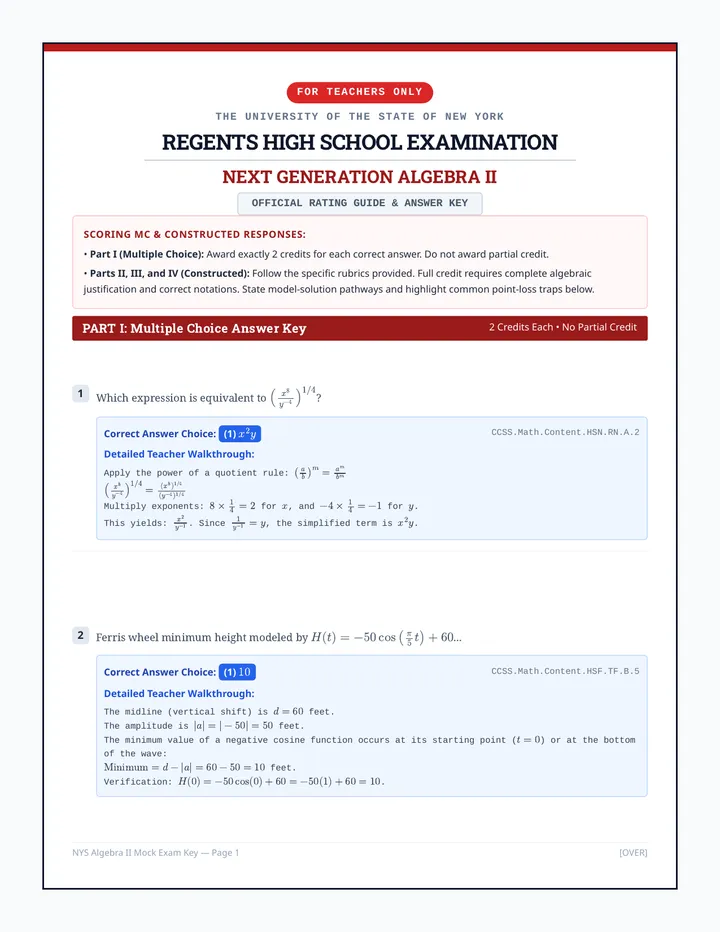
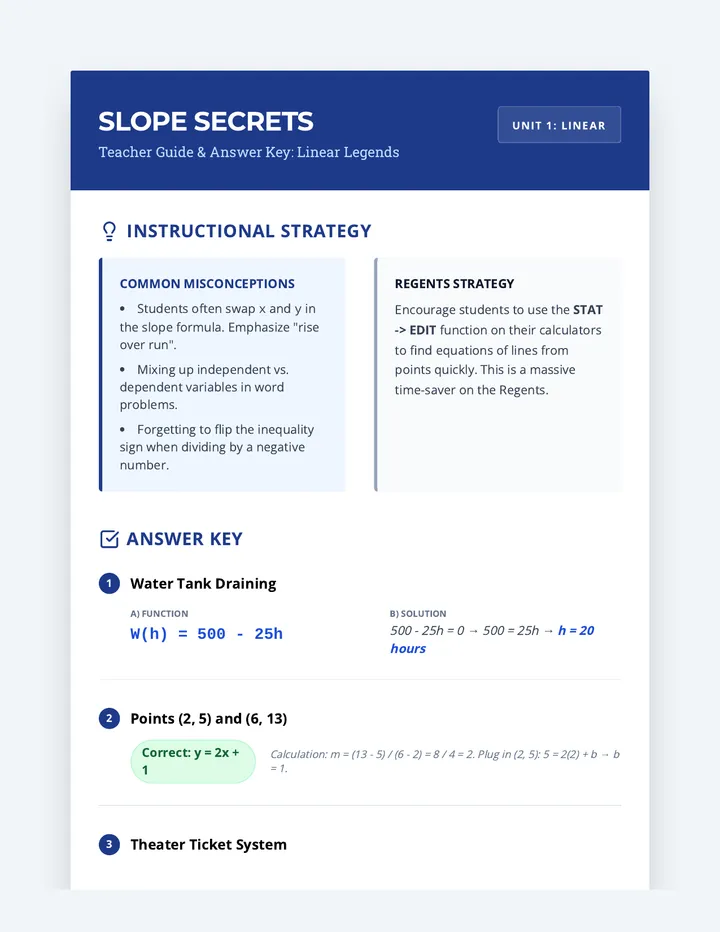
A comprehensive review suite for the New York State Mathematics Regents exams, including Algebra 1, Geometry, and Algebra 2, featuring mastery blueprints, calculator strategies, and exam-taking tips.
A comprehensive Algebra 1 Regents review sequence covering Linear Functions, Polynomials, Quadratics, and Statistics. Designed to build student confidence and mastery through structured practice and a architectural blueprint theme.
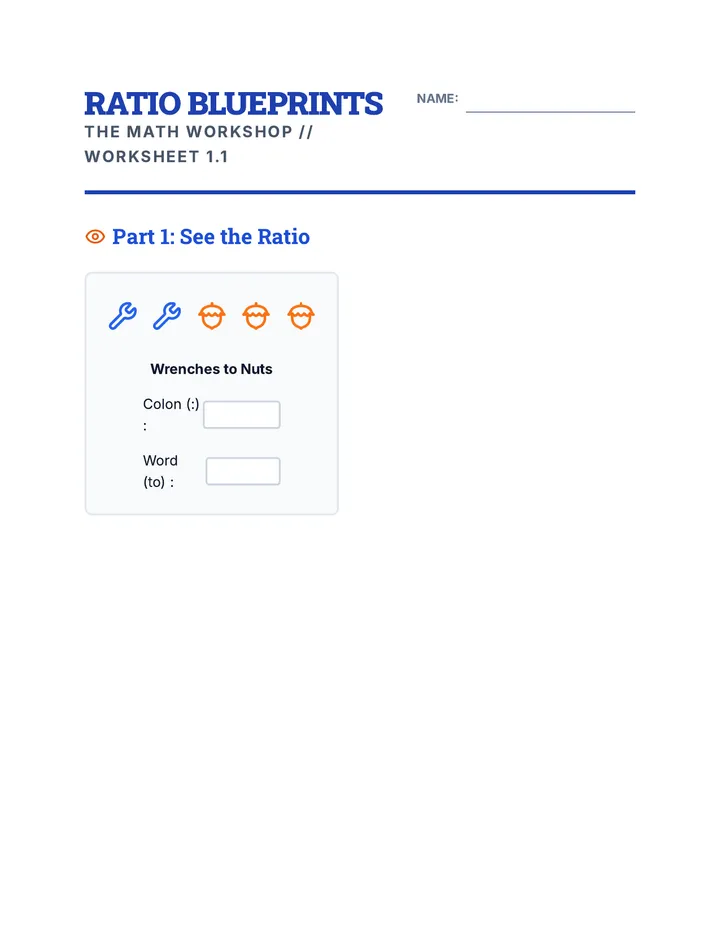
A foundational math sequence designed for remedial support, focusing on ratios, proportions, percents, probability, and algebraic thinking through visual models and scaffolded practice.
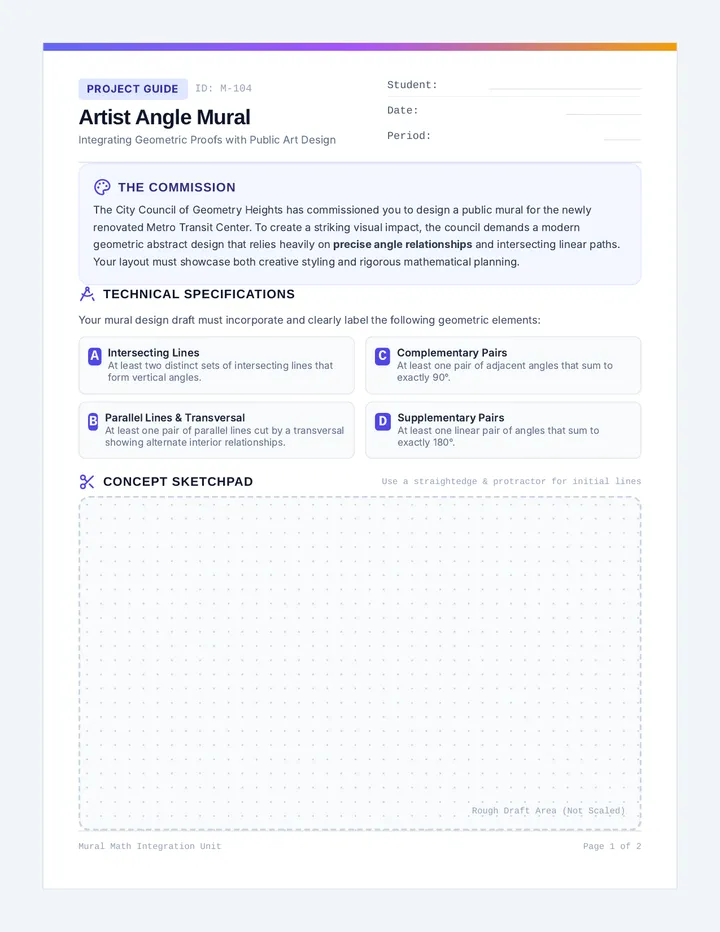
A comprehensive unit covering 7th-grade geometry standards, focusing on scale drawings, geometric constructions, 3D cross-sections, angle relationships, and solving real-world area, volume, and surface area problems.
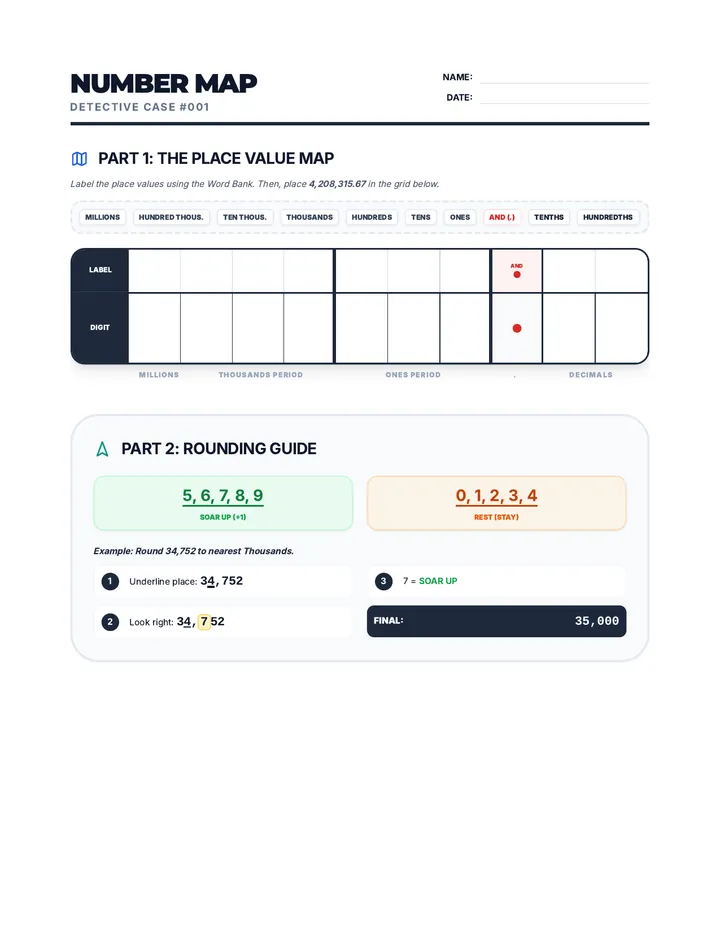
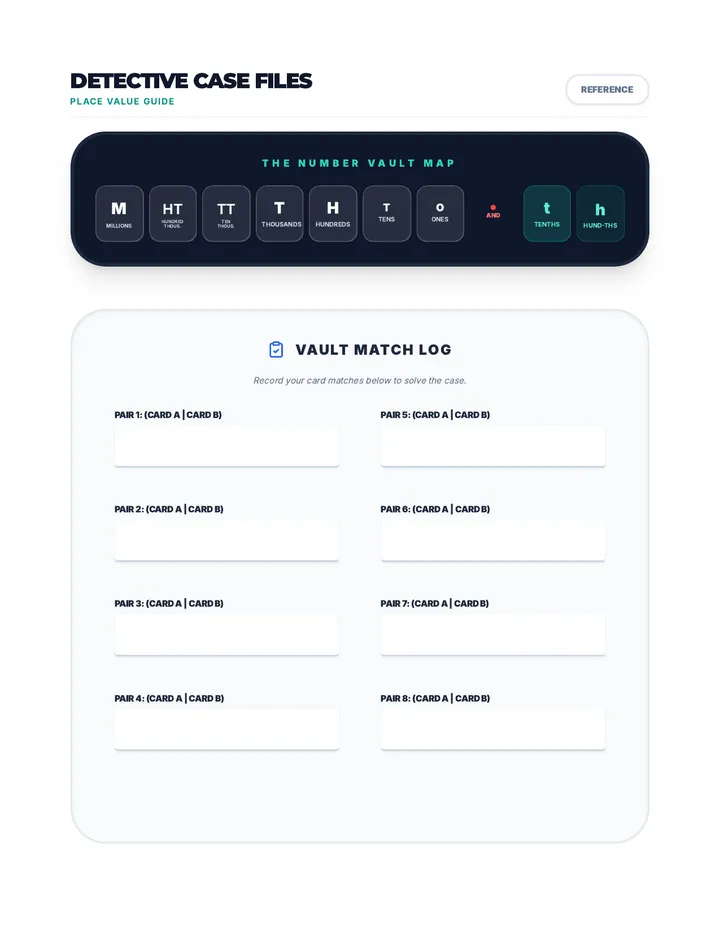
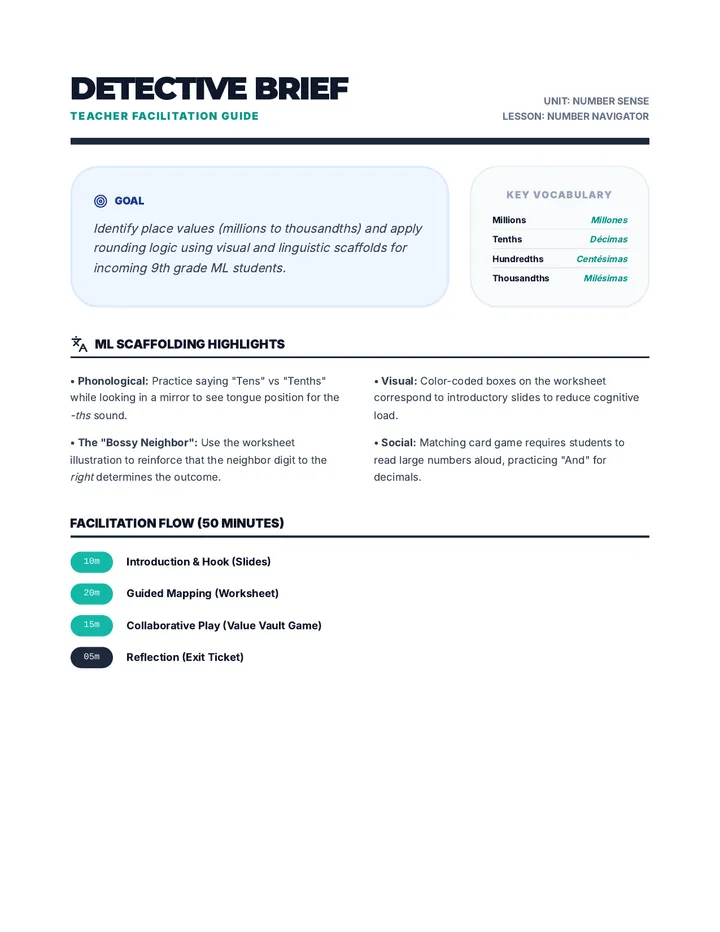
A comprehensive unit designed for incoming 9th-grade multilingual learners to master place value from millions to thousandths and refine their rounding skills through visual scaffolding and collaborative play.
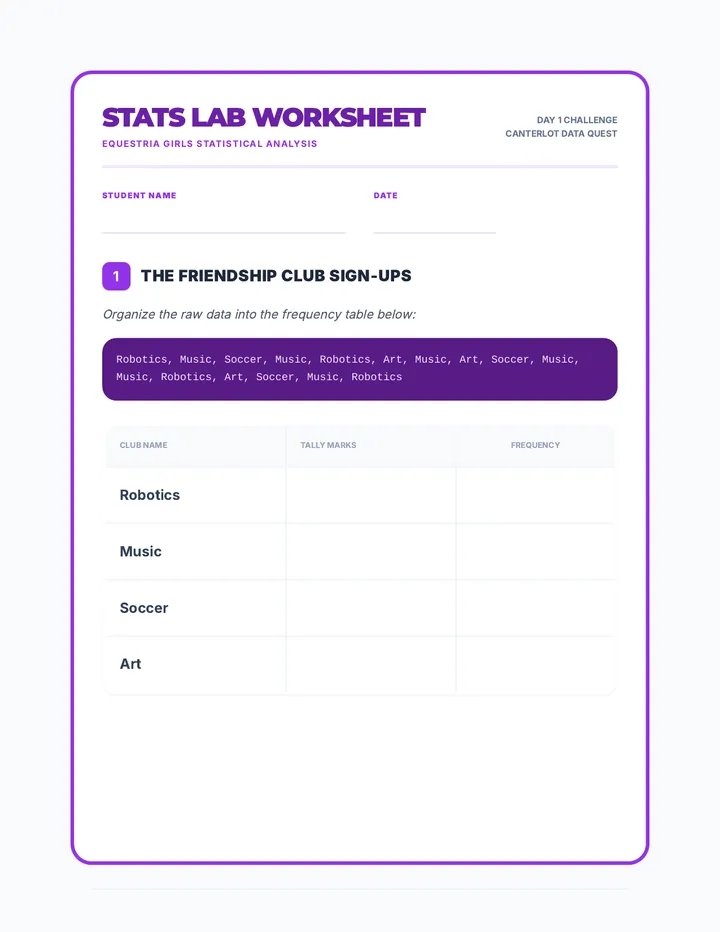
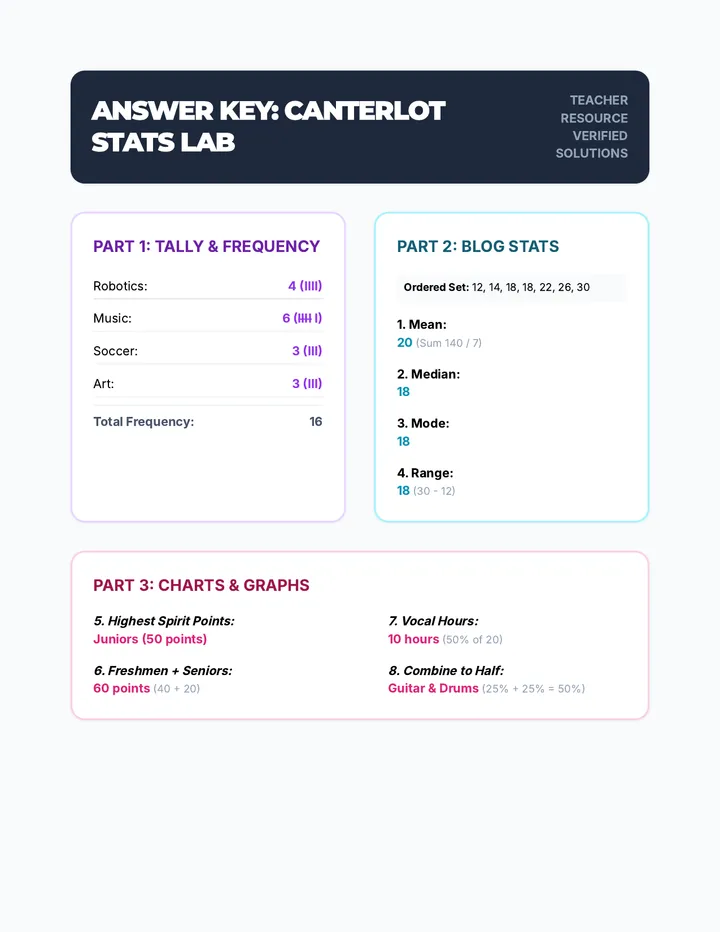
A week-long immersive statistics unit themed around Canterlot High and the Equestria Girls. Students master data analysis, visualization, and probability through daily challenges and a cumulative review packet.
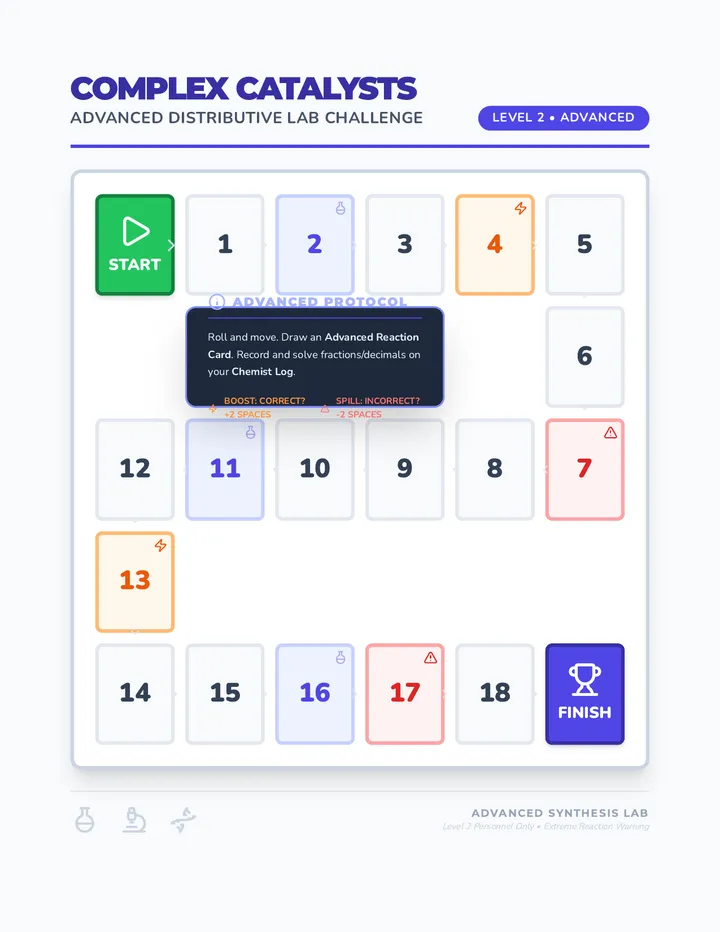
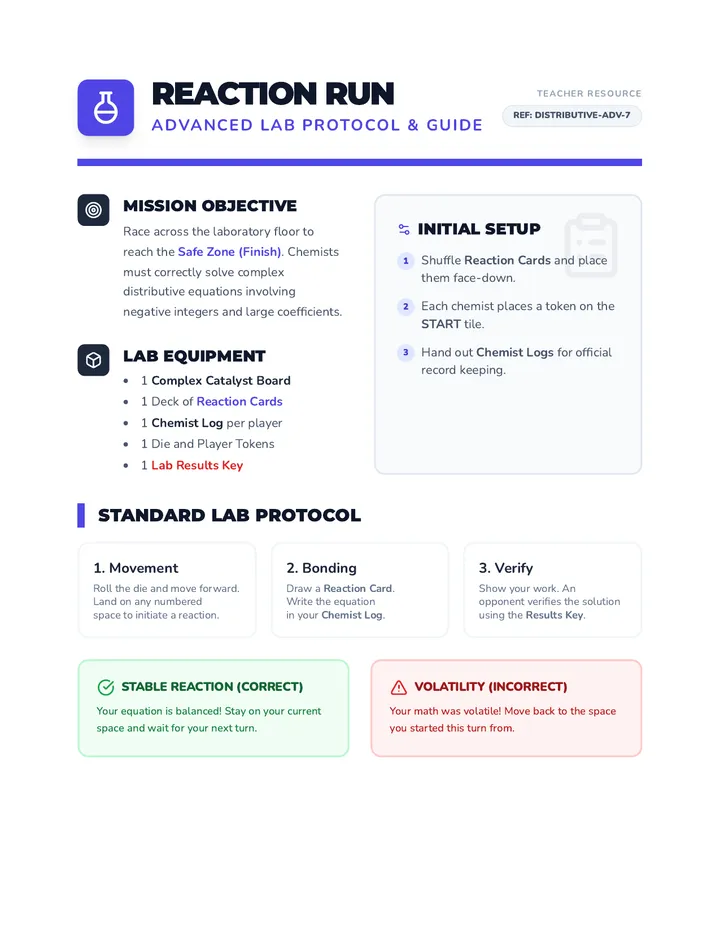
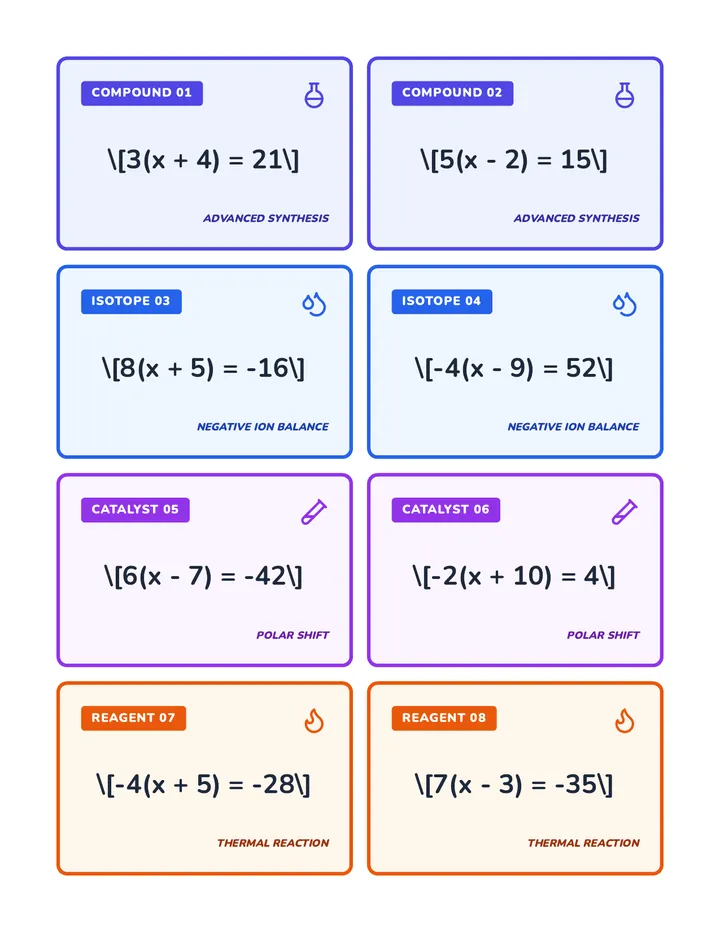
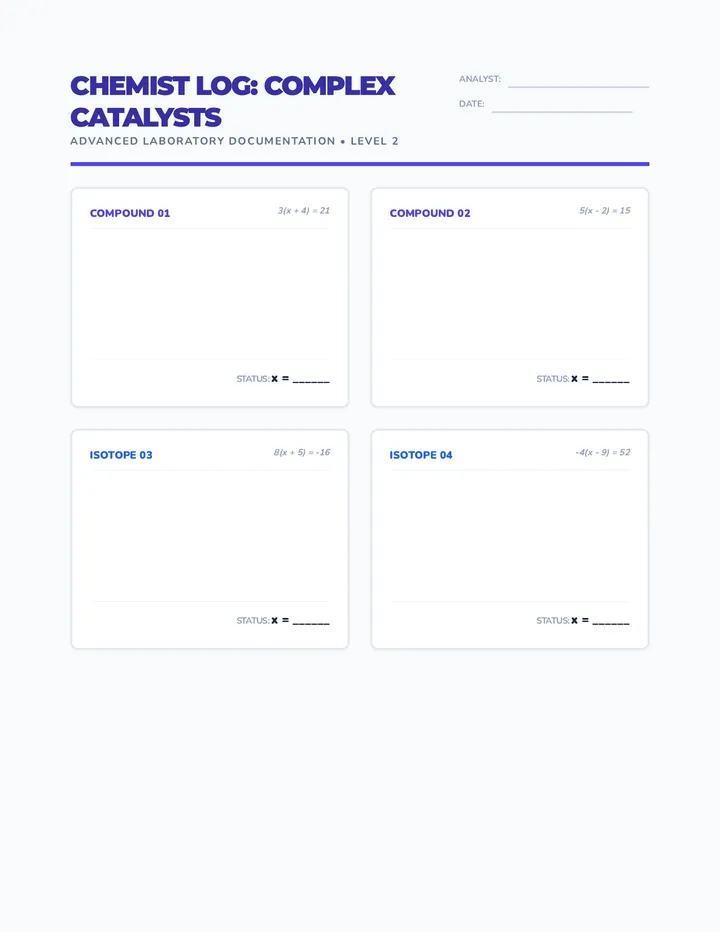
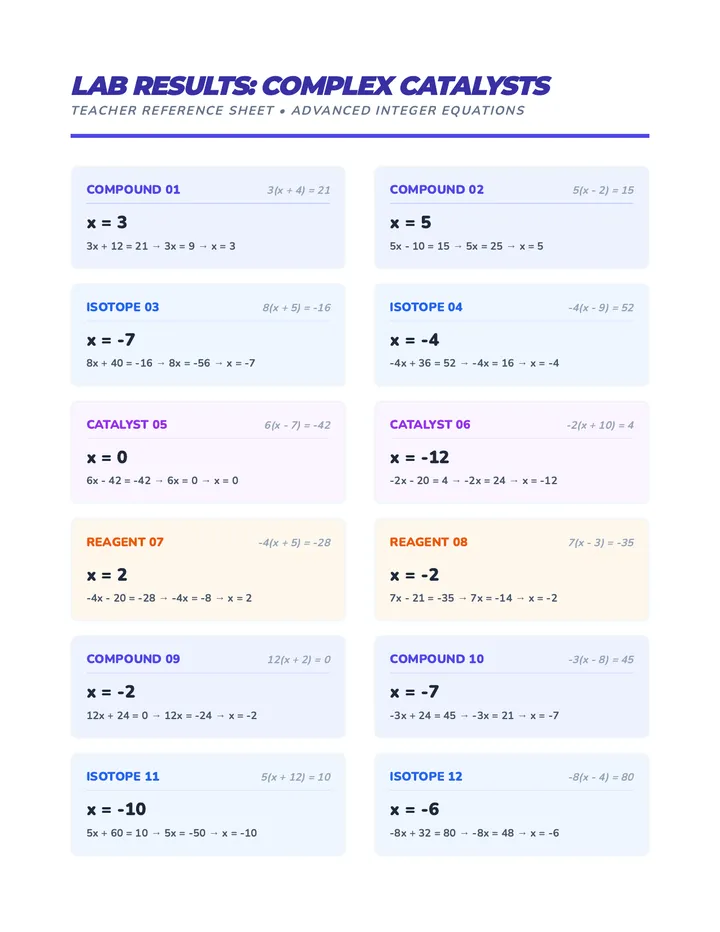
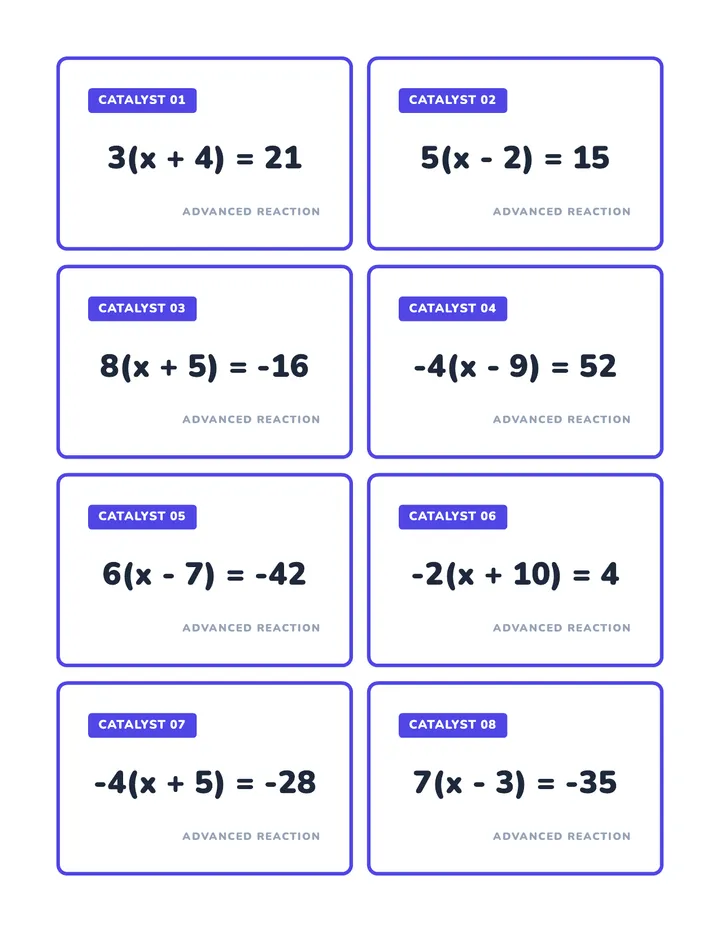
A two-part unit on solving binomial equations using the distributive property, progressing from foundational integer equations to more challenging scenarios involving negative solutions and larger coefficients.
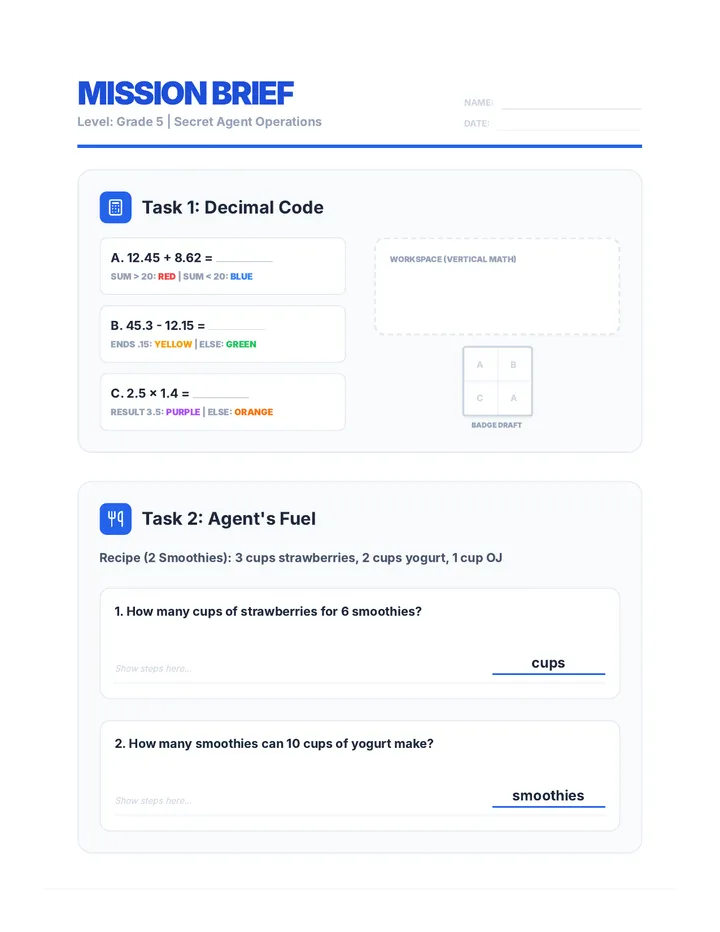
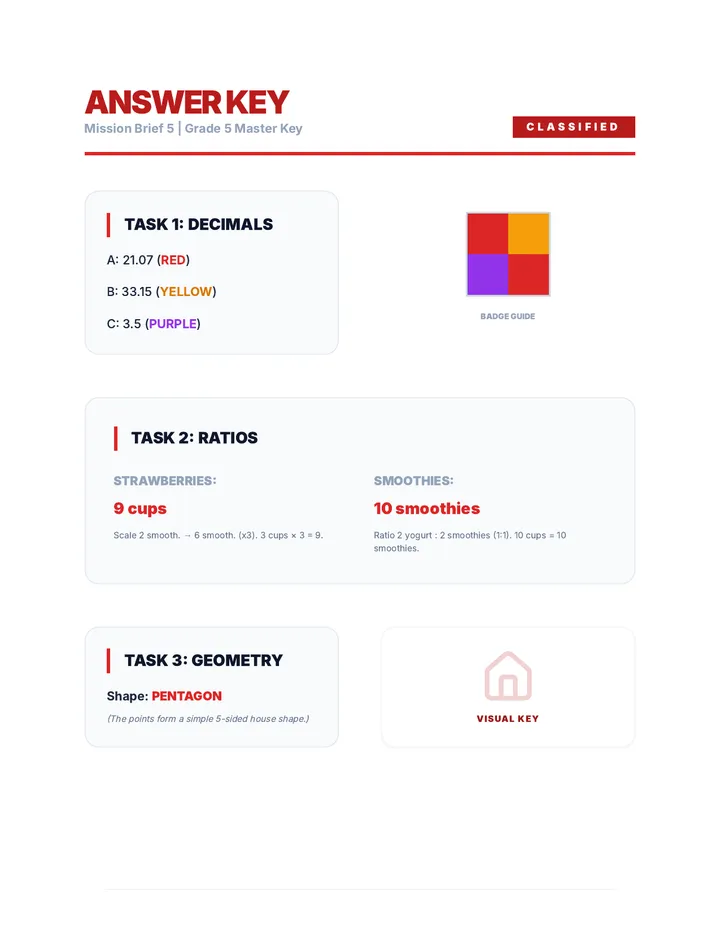
A dual-grade math activity sequence focusing on geometry, decimals, ratios, and algebra through engaging puzzles and real-world challenges.
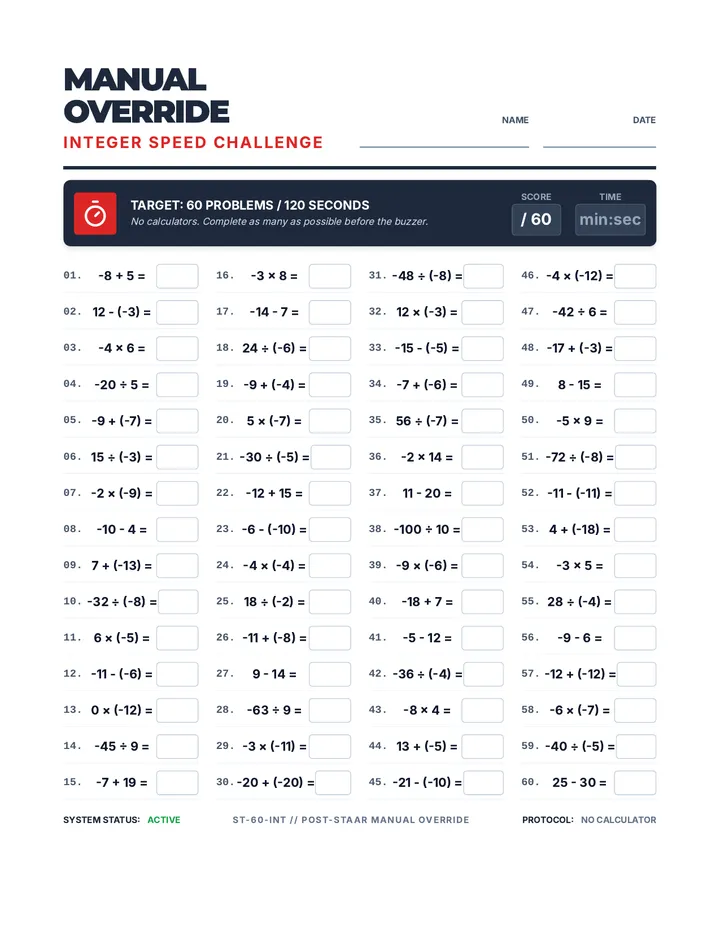
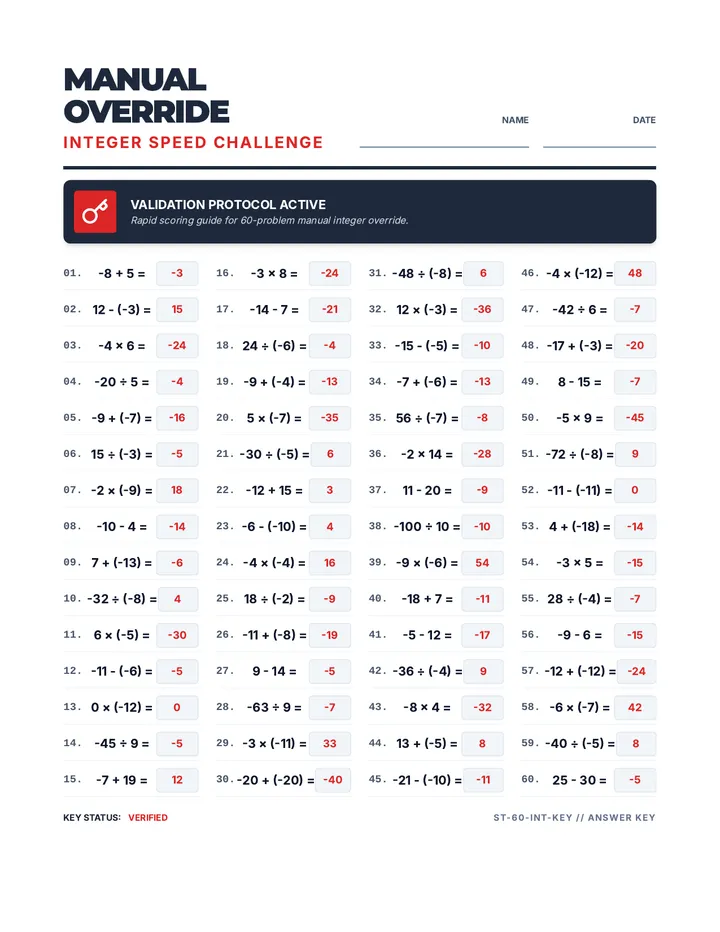
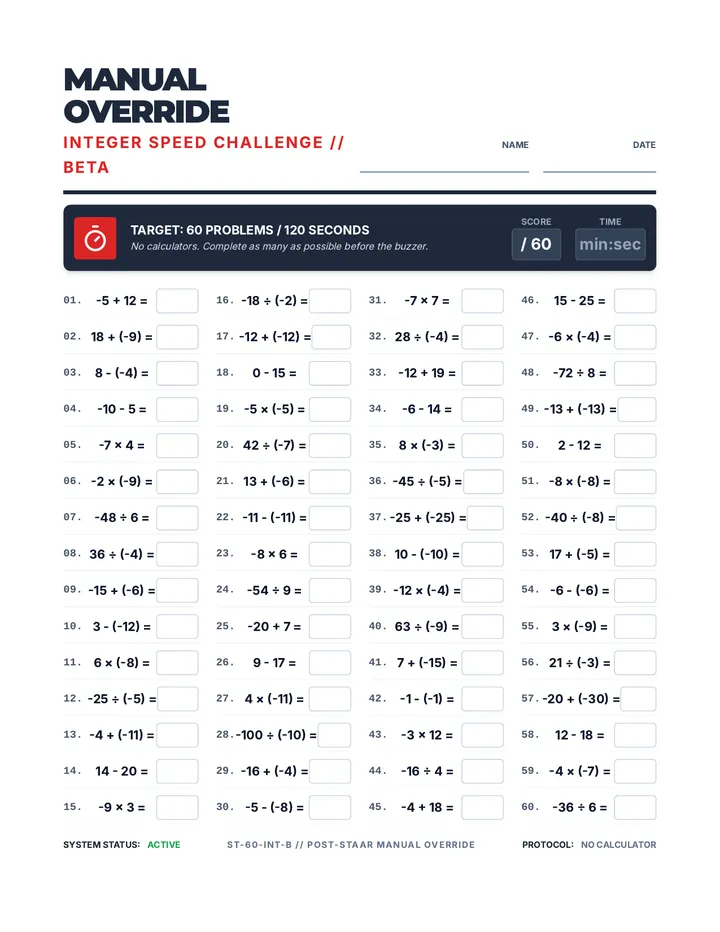
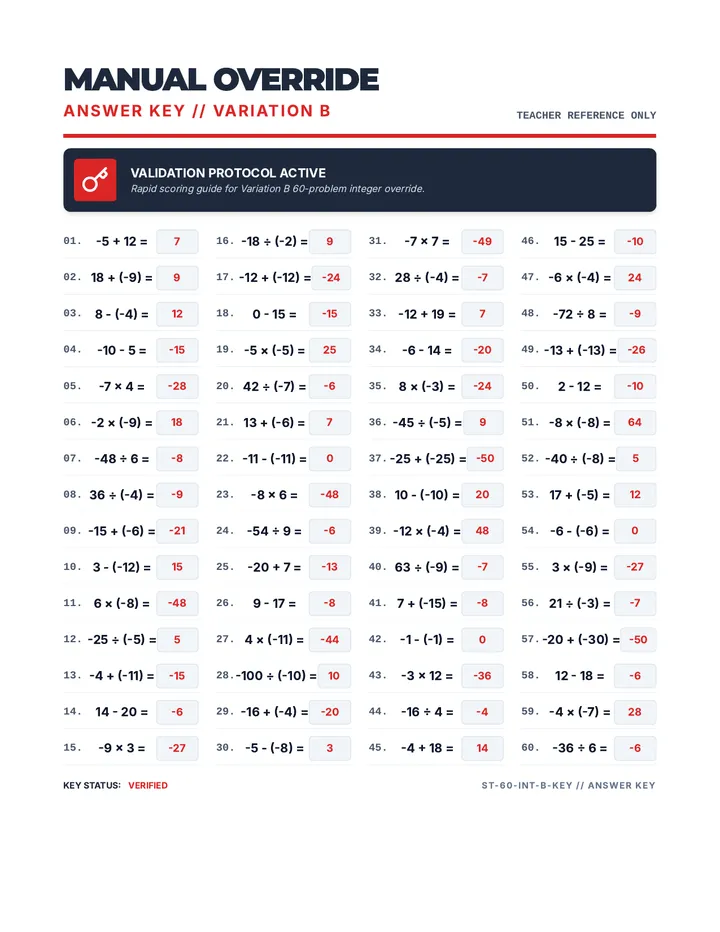
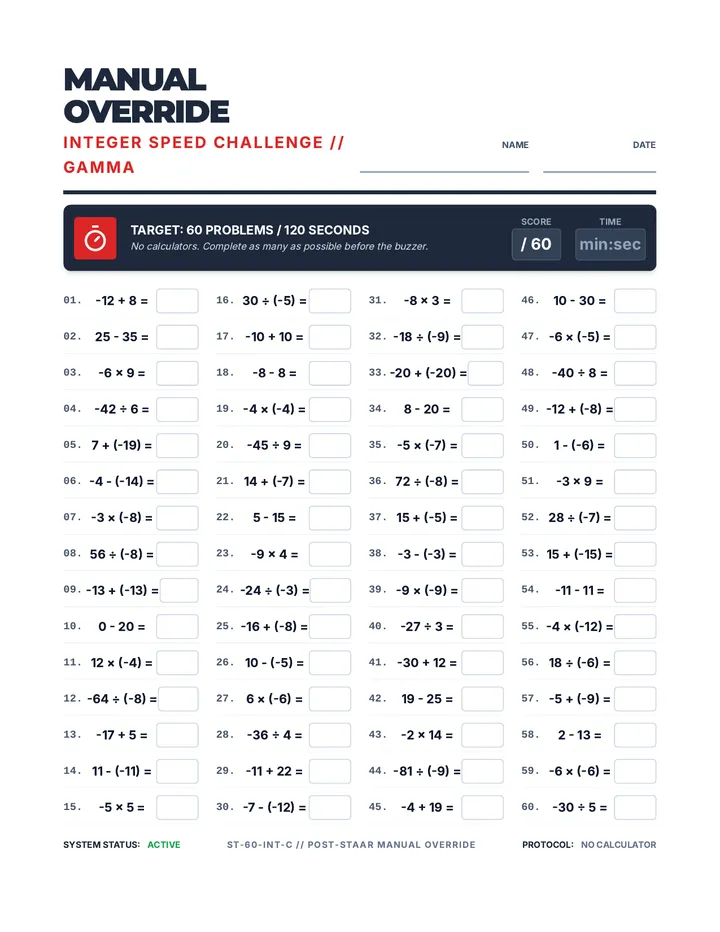
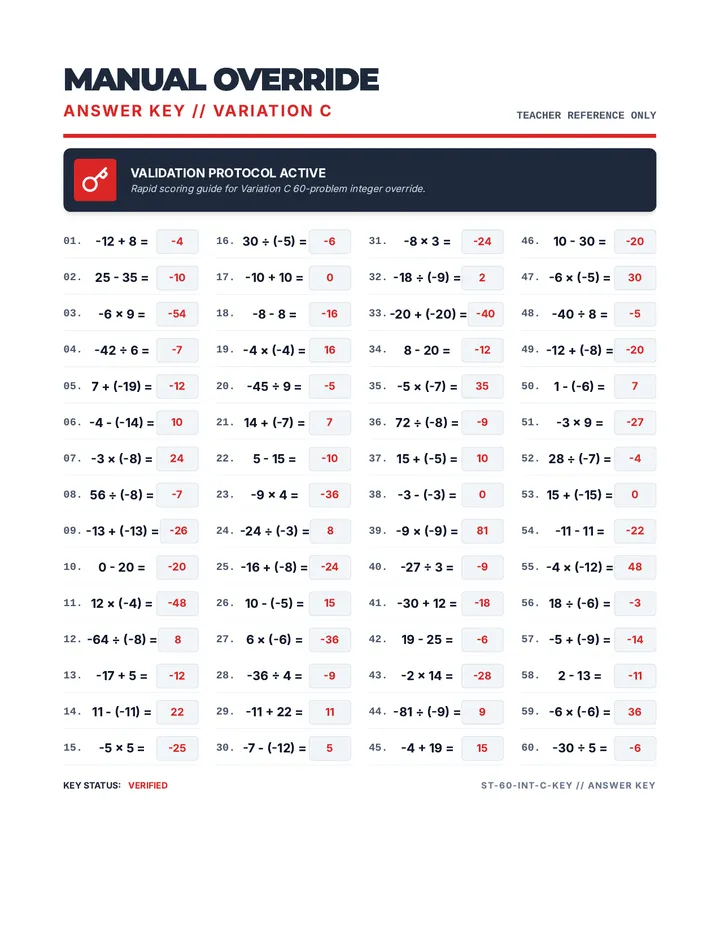
A transition from mental math fluency to algebraic modeling, focusing on integer arithmetic and solving linear equations with visual tools.
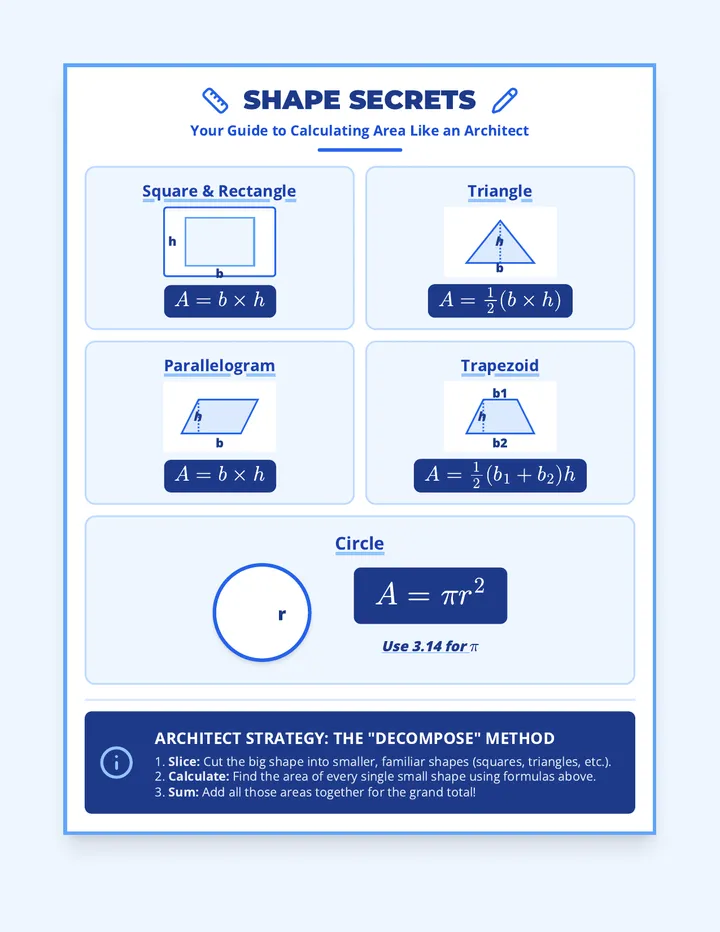
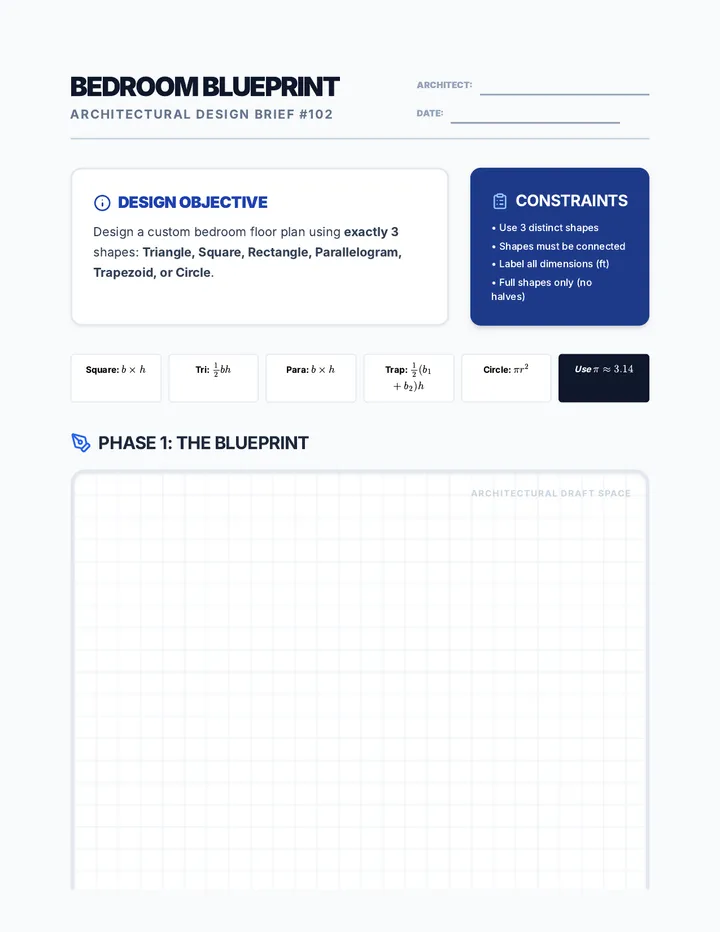
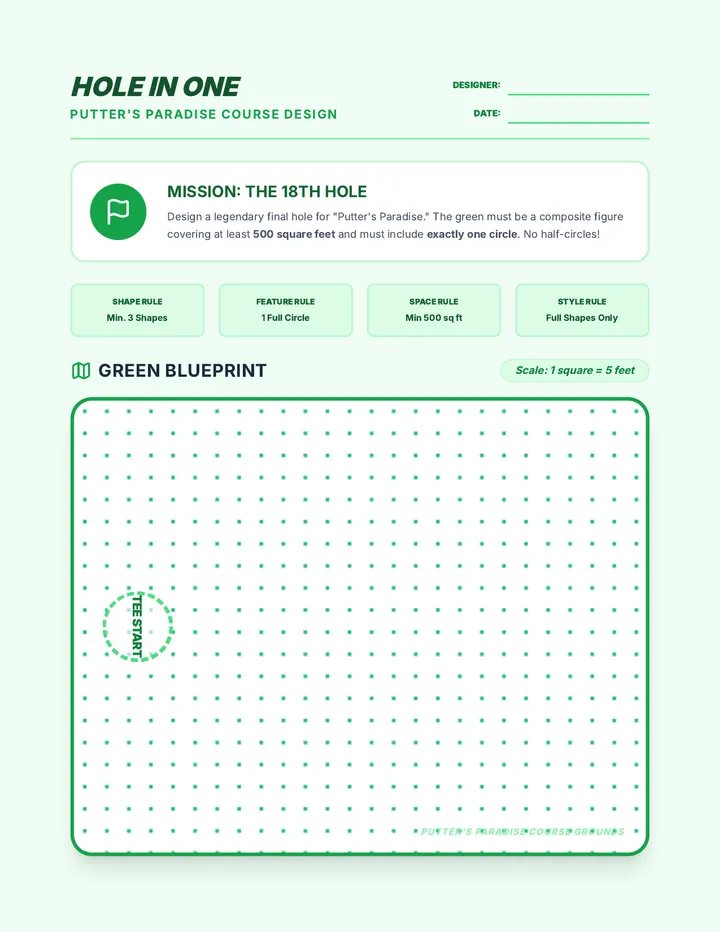
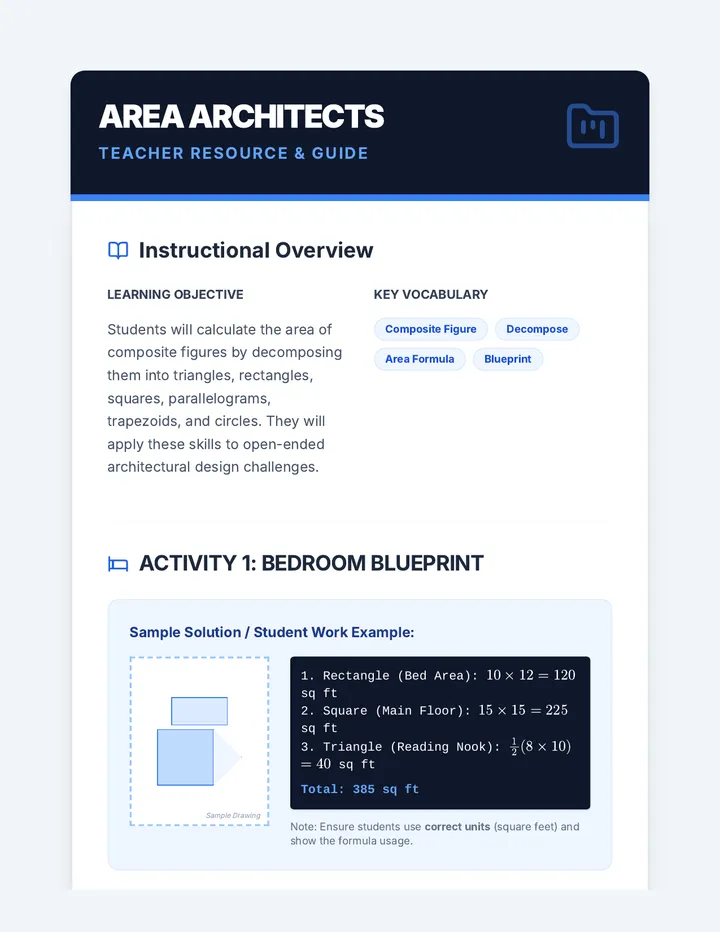
A hands-on geometry unit where students apply area formulas for various polygons and circles to design real-world spaces, including custom bedrooms and mini-golf holes.
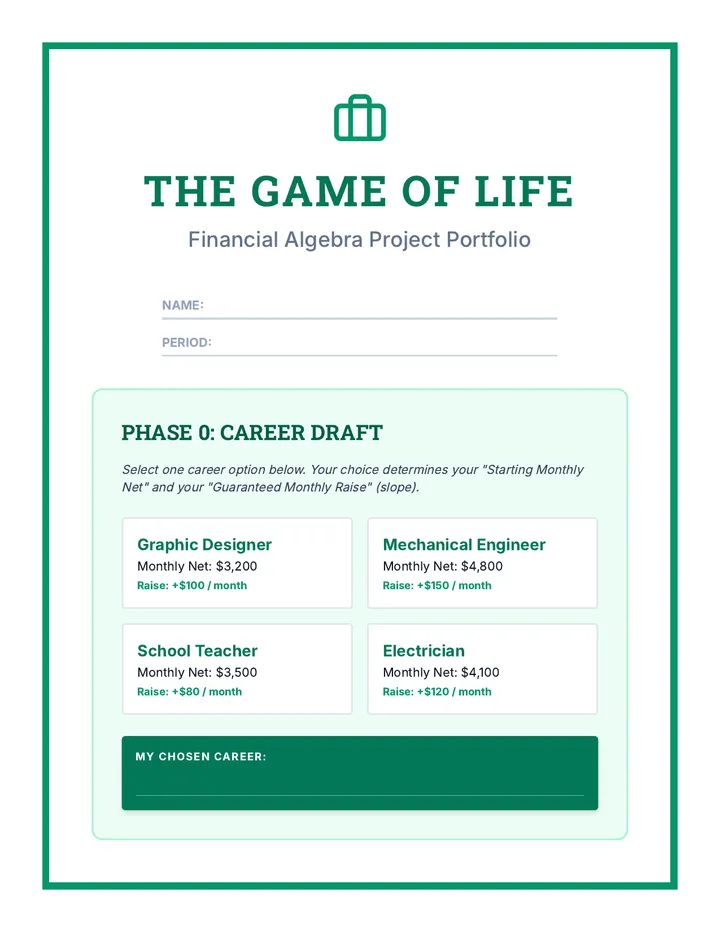
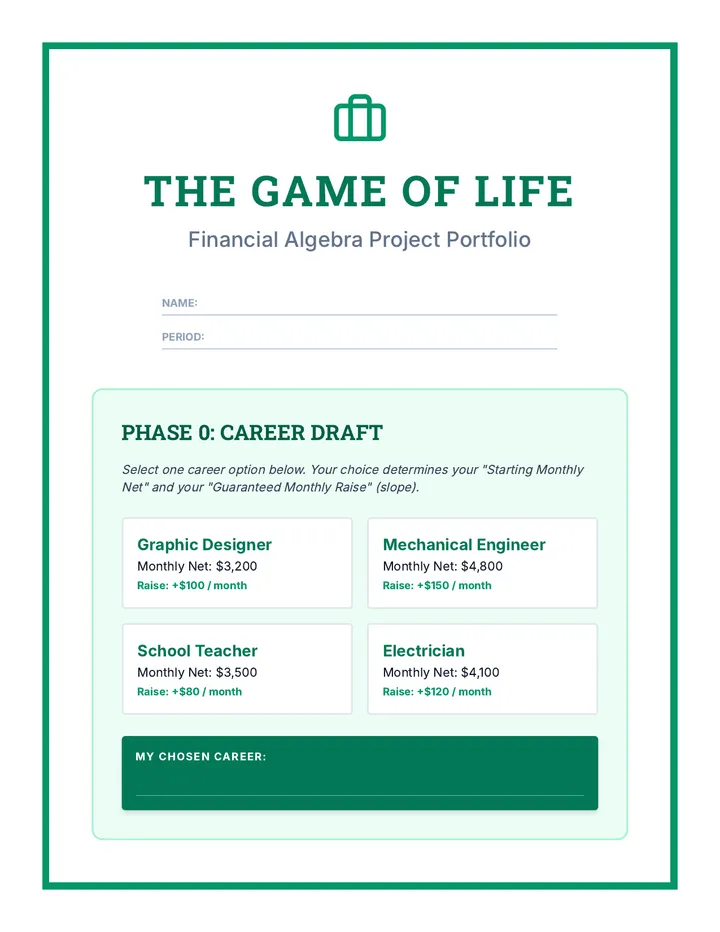
A comprehensive 8-day financial algebra project where 8th-grade students navigate adulthood, managing salaries, housing, transportation, and debt using linear and exponential models.
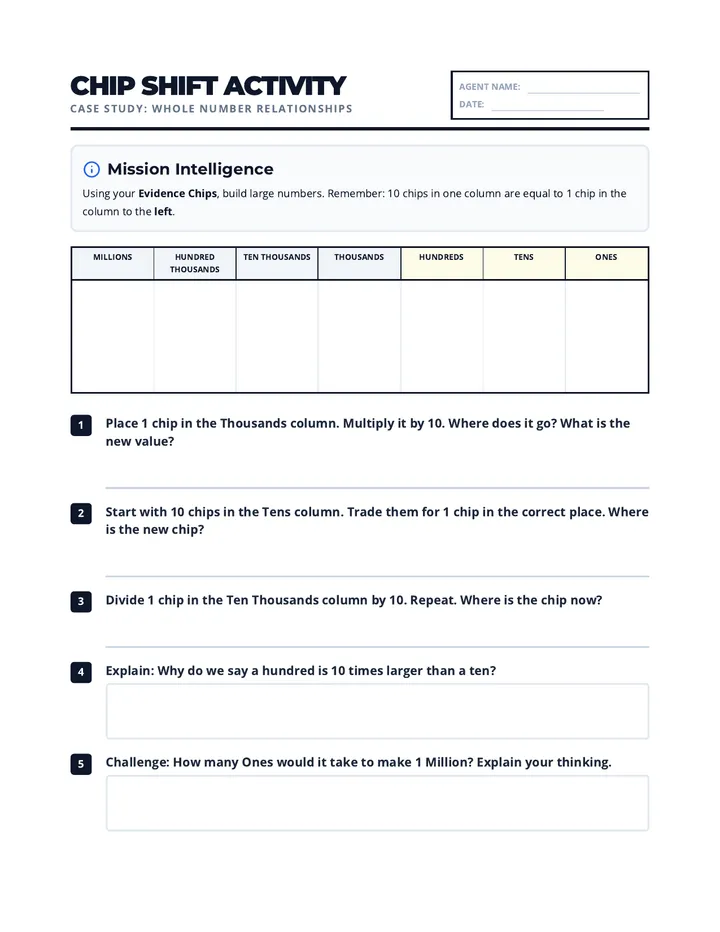
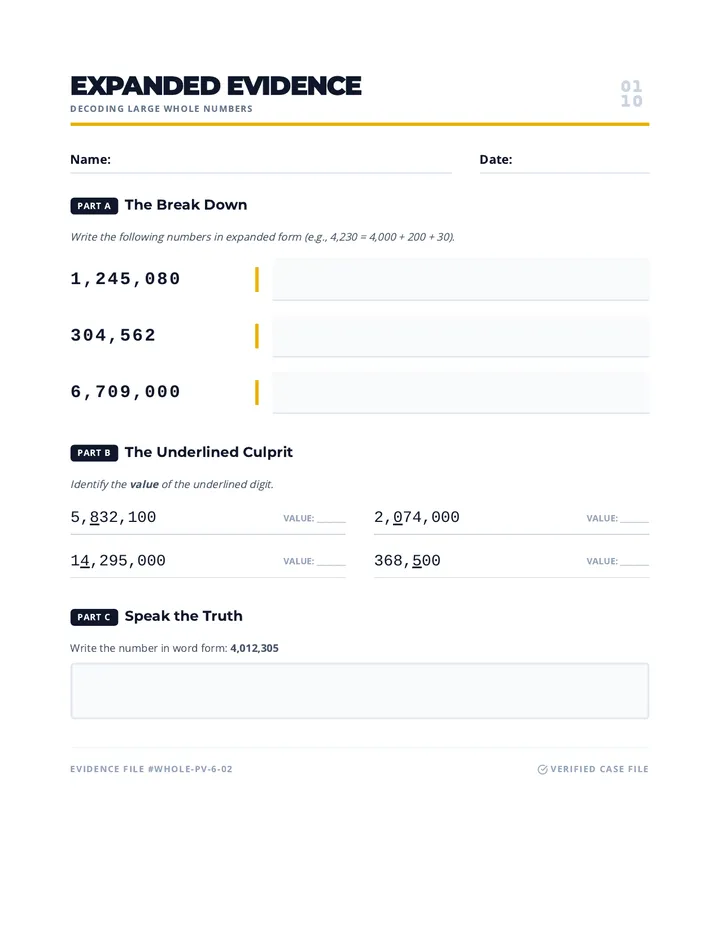
A two-lesson unit for 6th-grade students focusing on whole number place value relationships from ones to millions, emphasizing the base-ten structure through hands-on detective-themed activities.
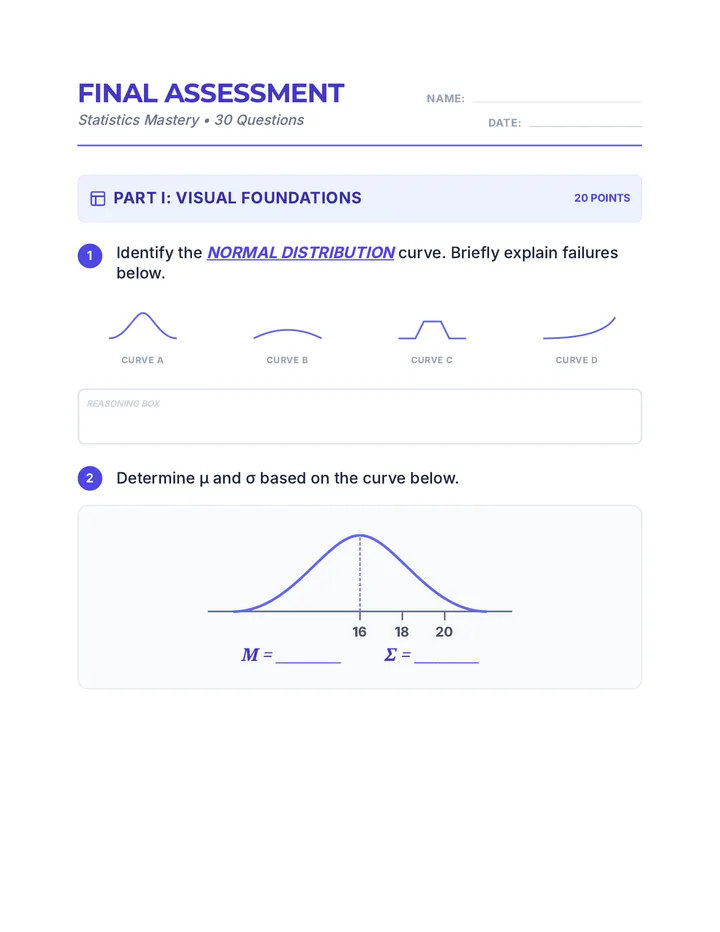
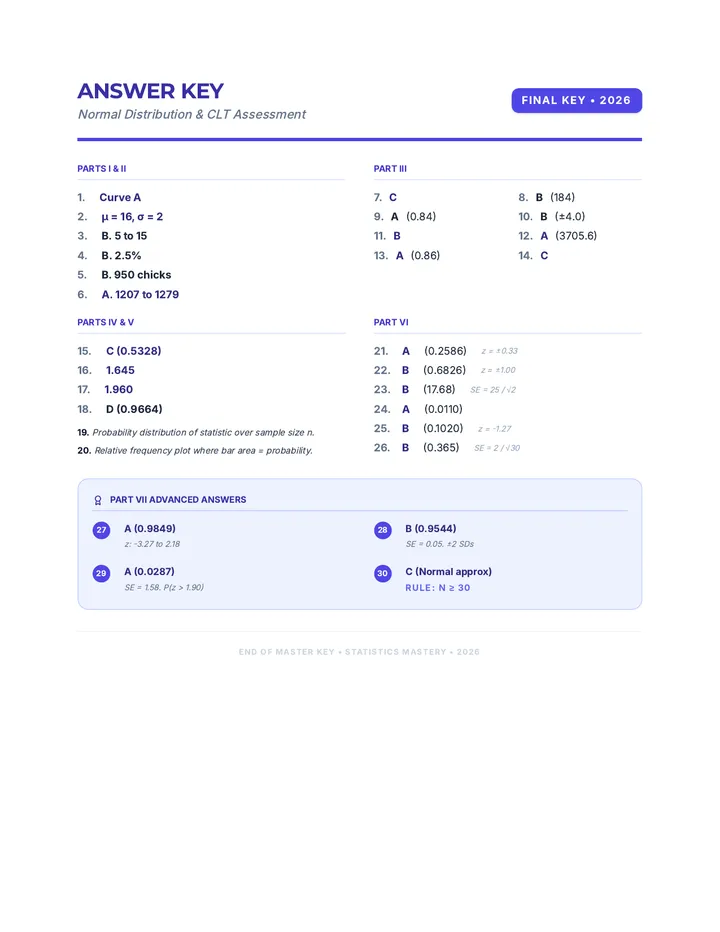
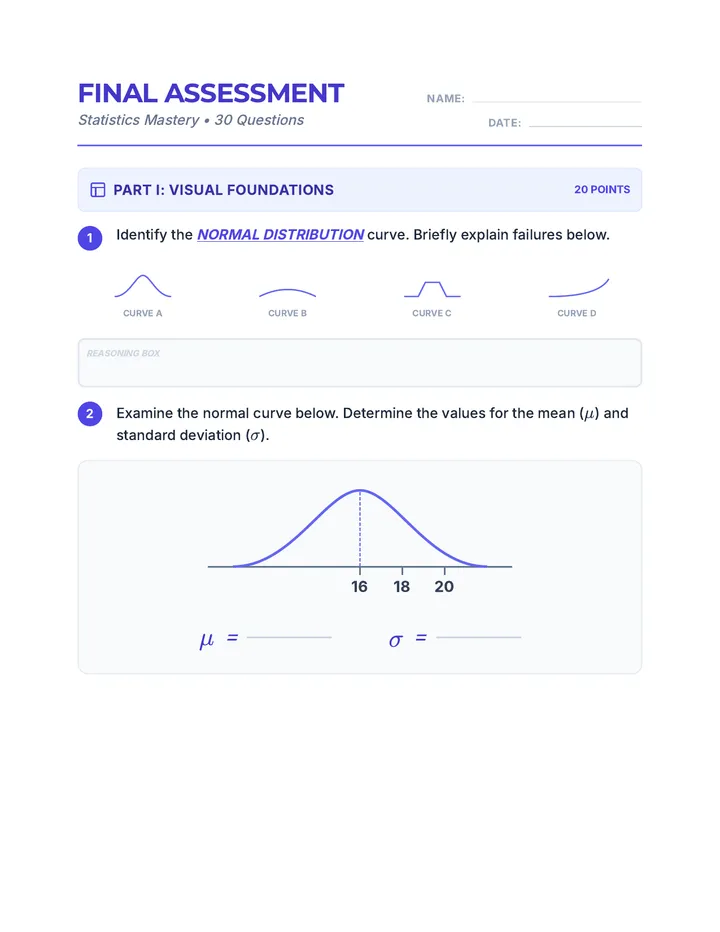
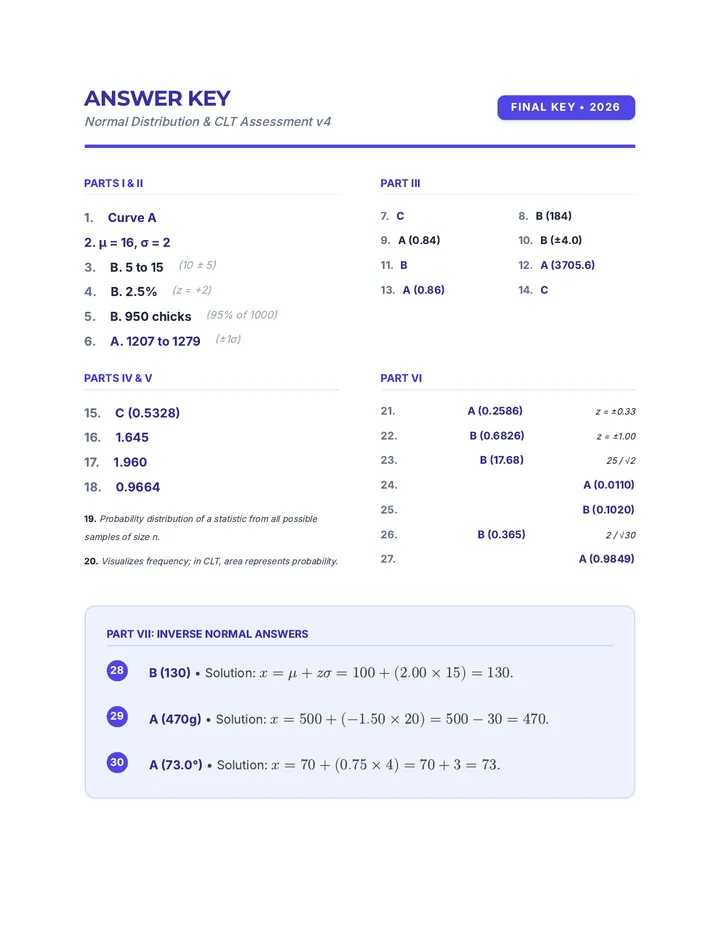
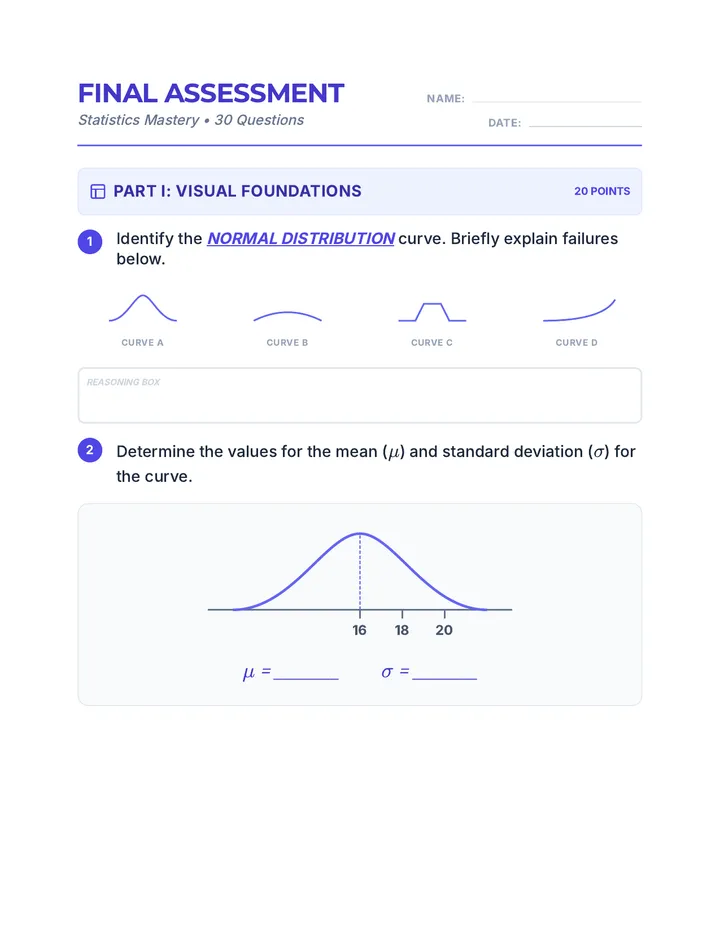
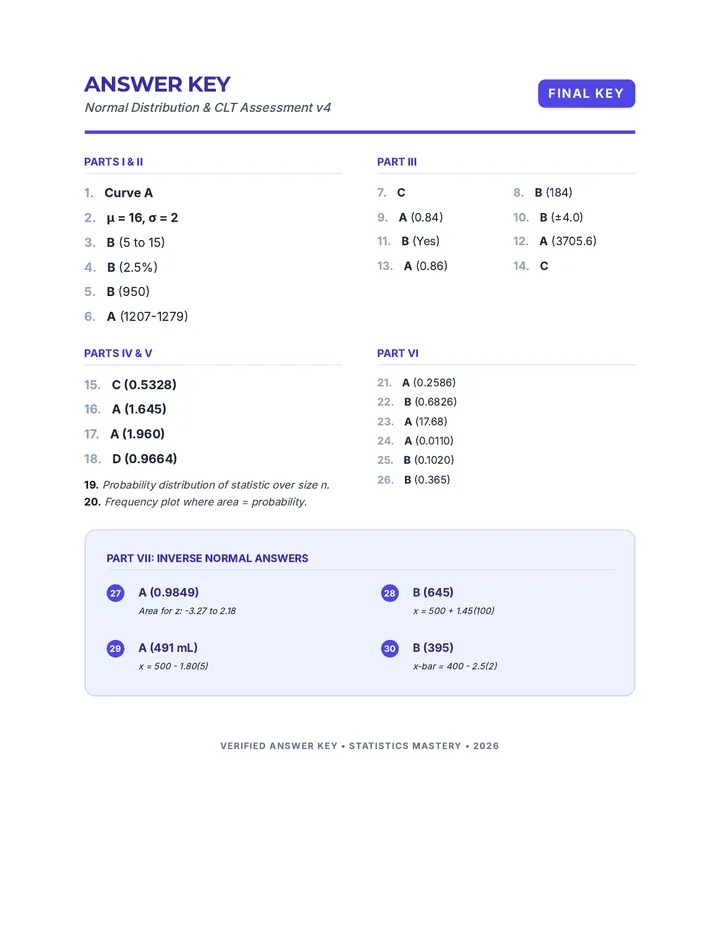
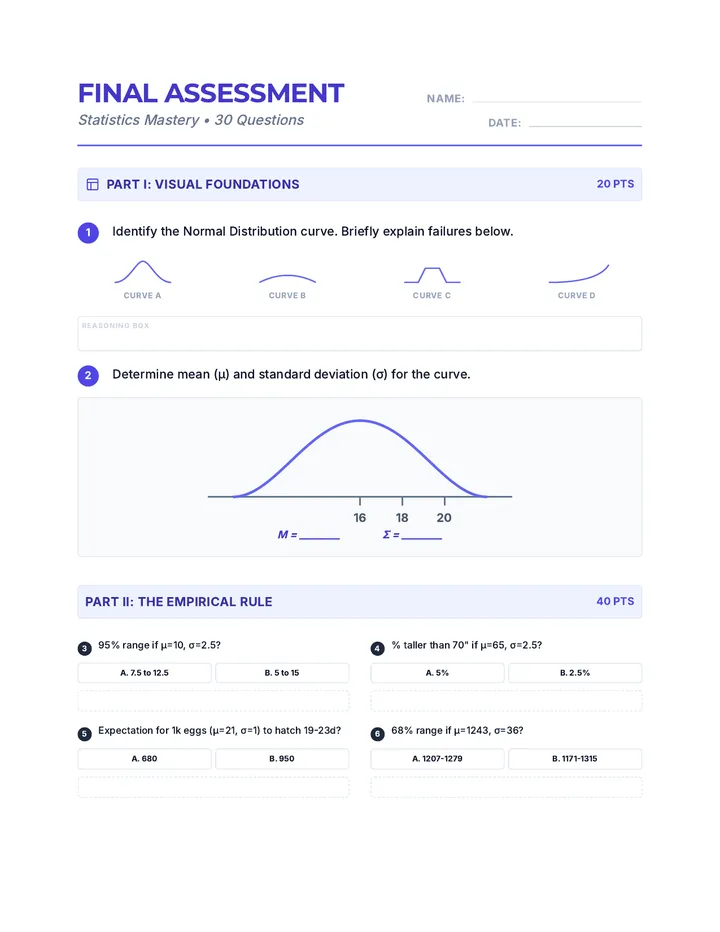
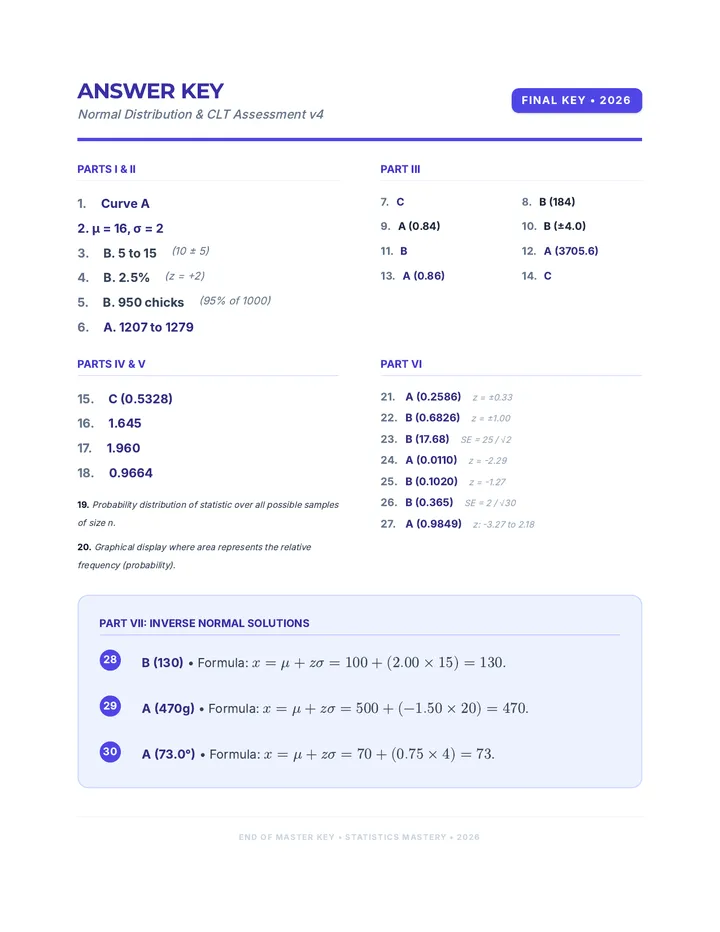
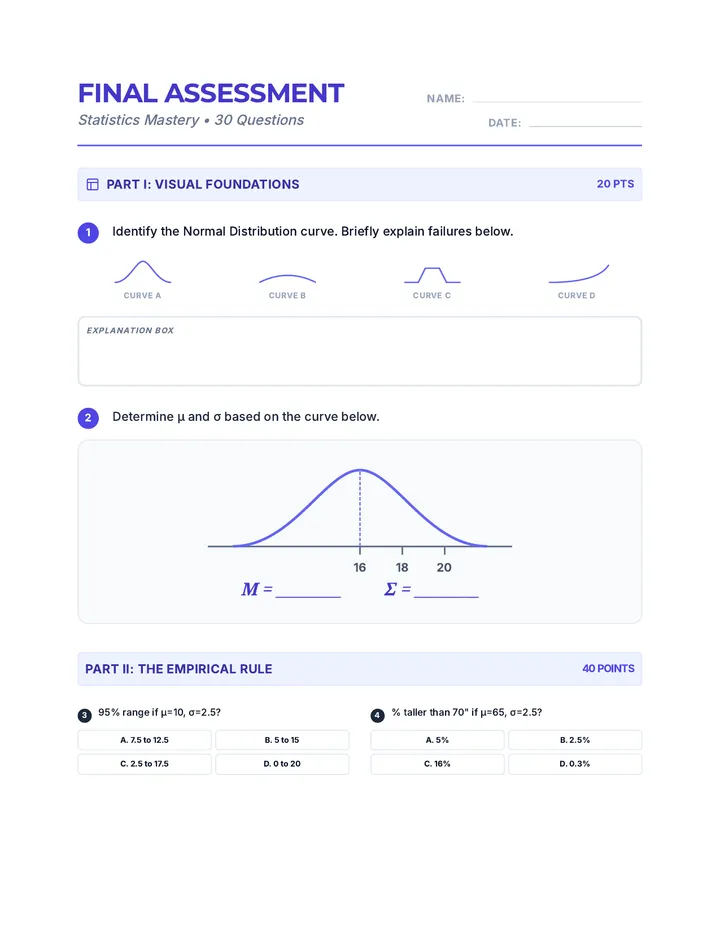
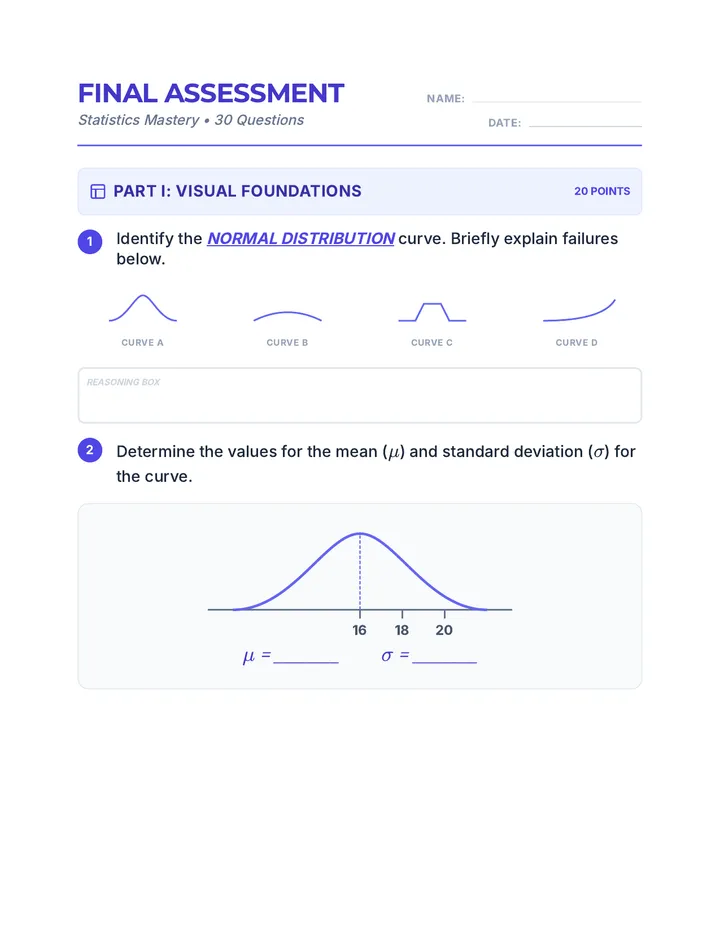
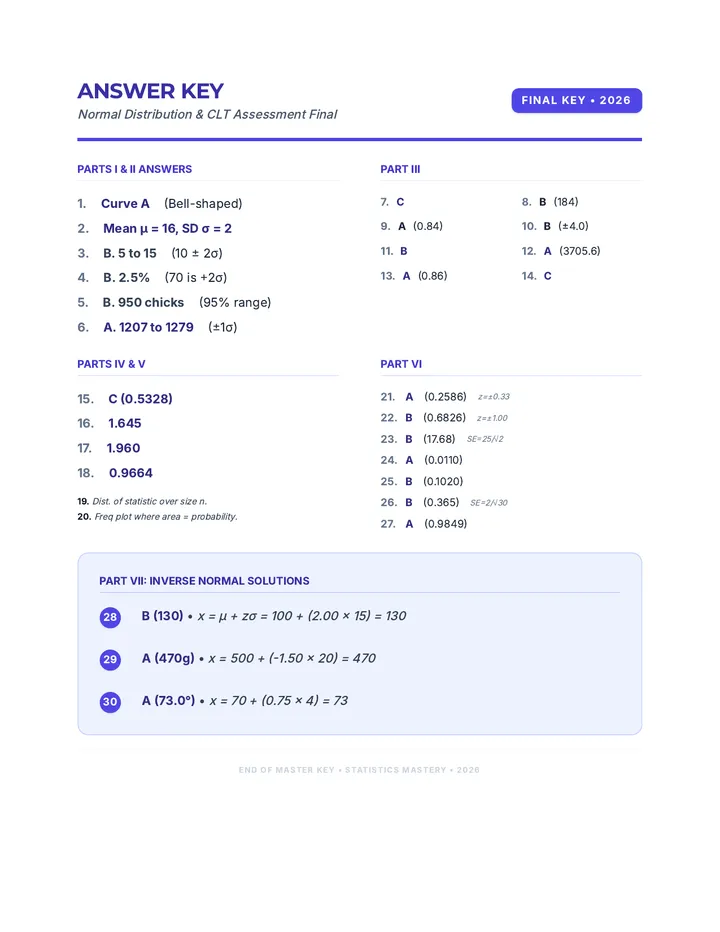
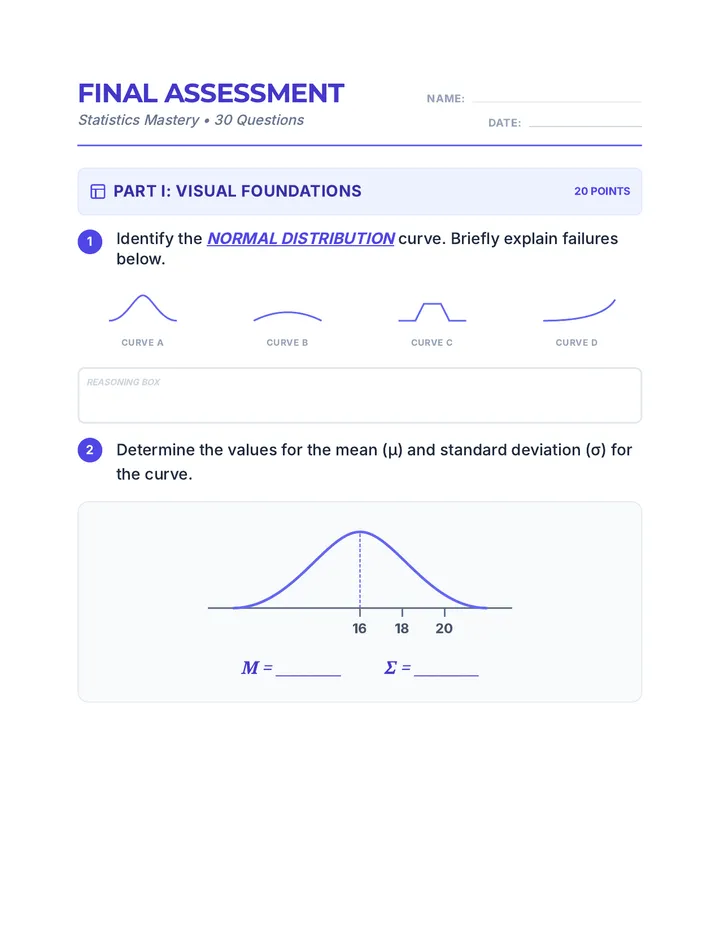
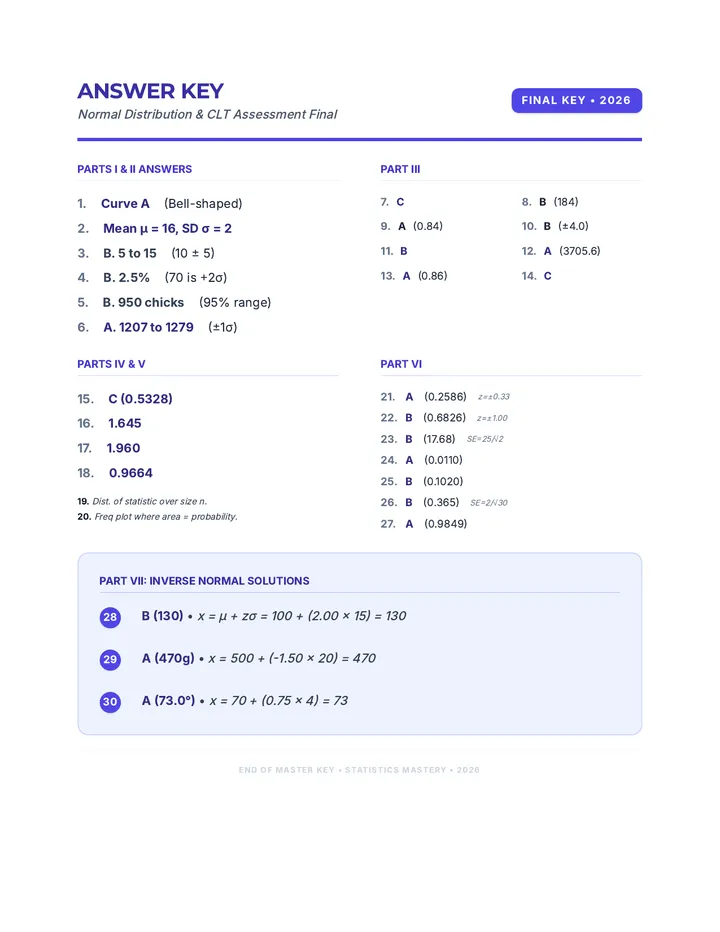
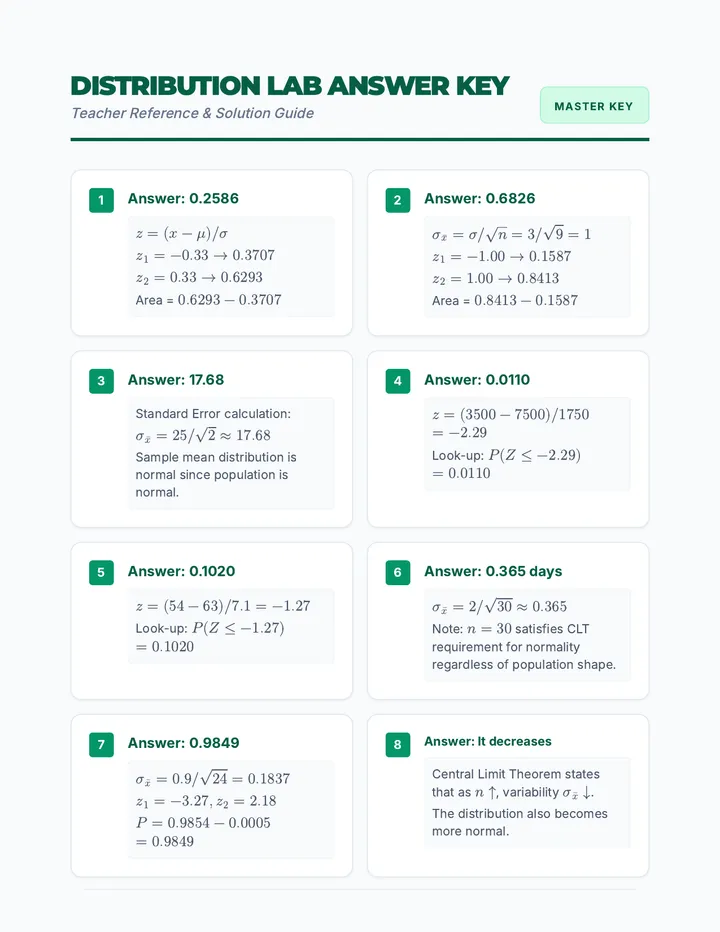
A comprehensive assessment sequence covering Normal Distributions, Z-scores, and the Central Limit Theorem.
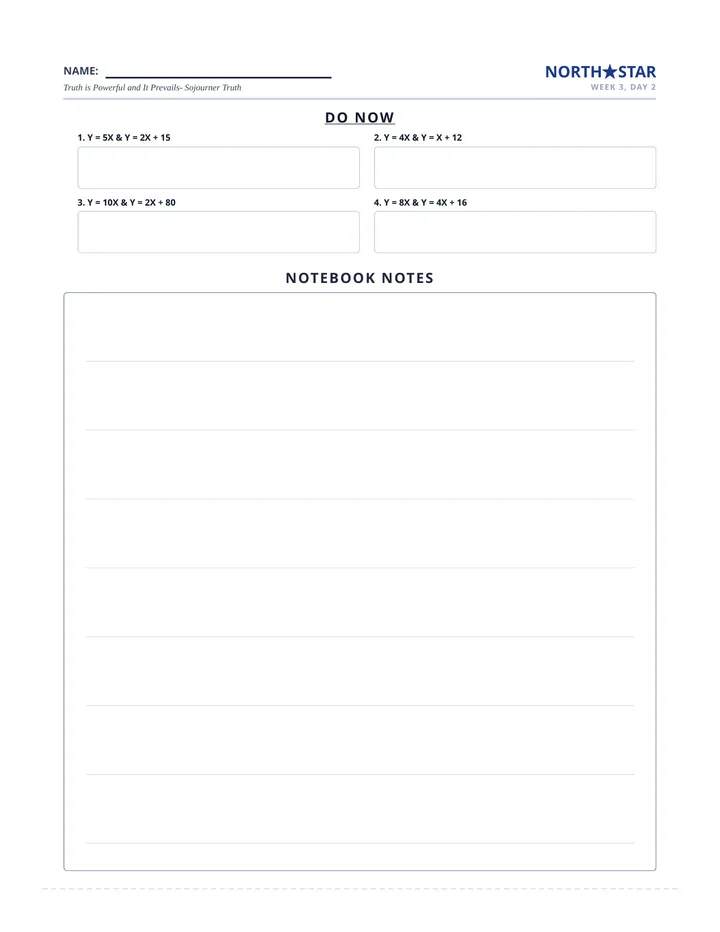
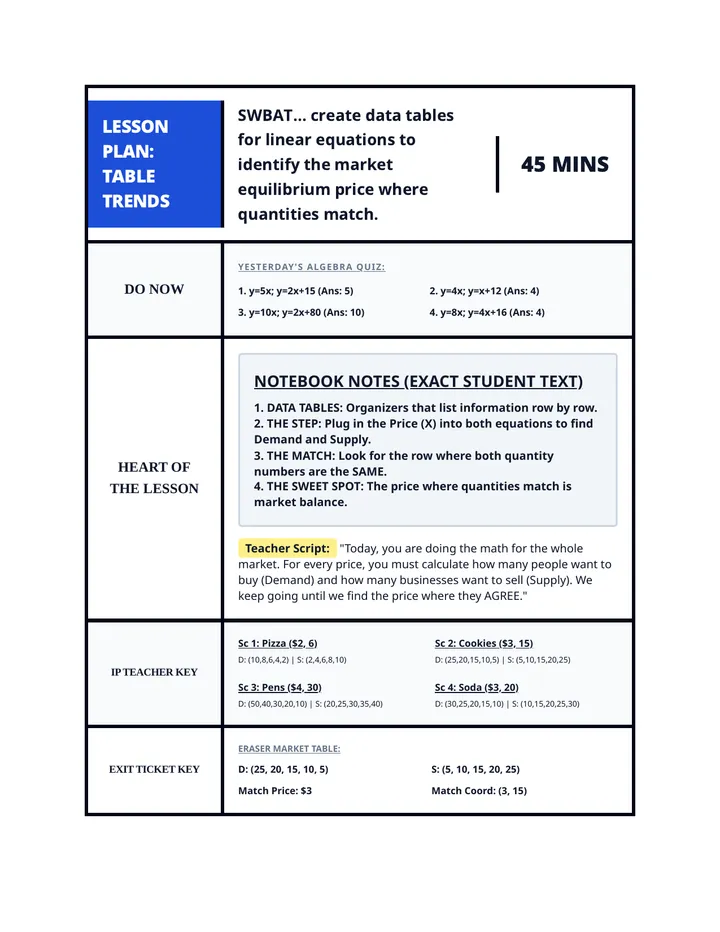
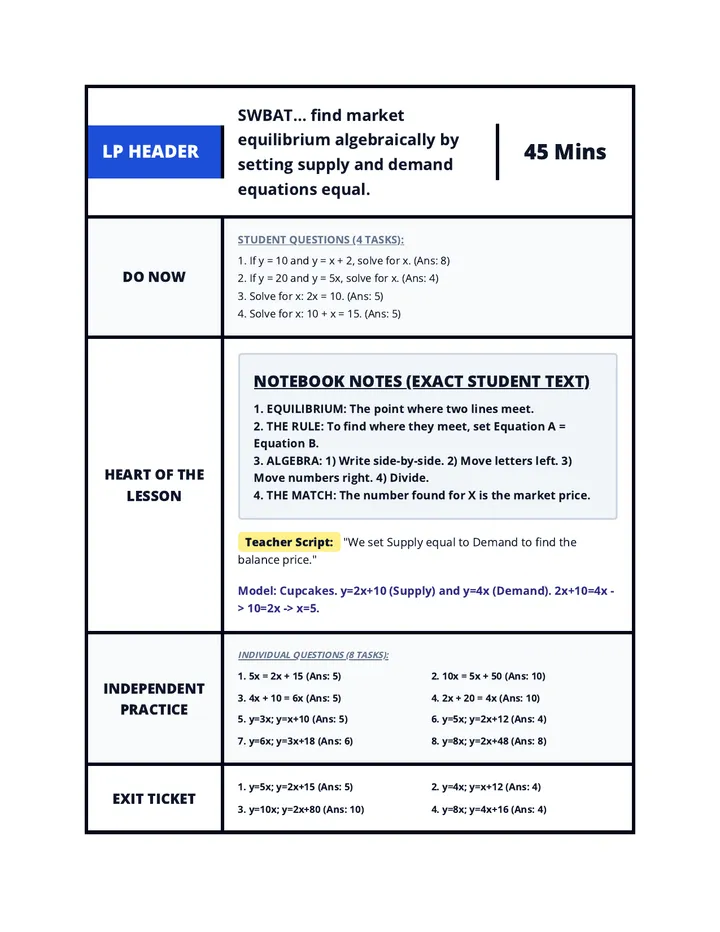
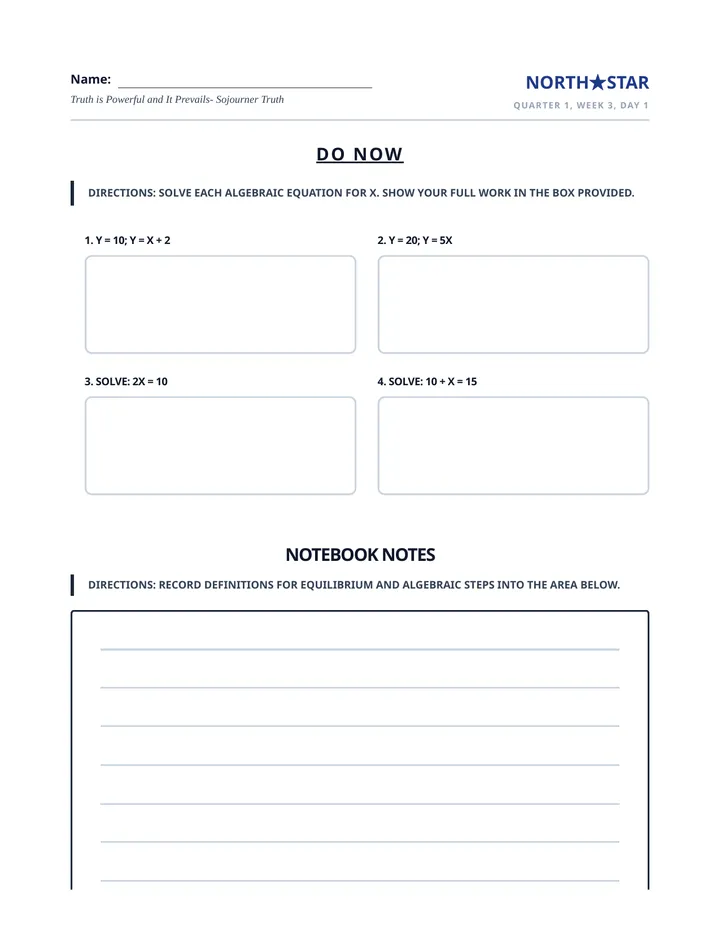
A 4-lesson economics sequence for Special Education students. Lessons progress from solving for market equilibrium algebraically, to using data tables, to graphing intersections, and finally interpreting the real-world meaning of surplus, shortage, and the 'sweet spot'.
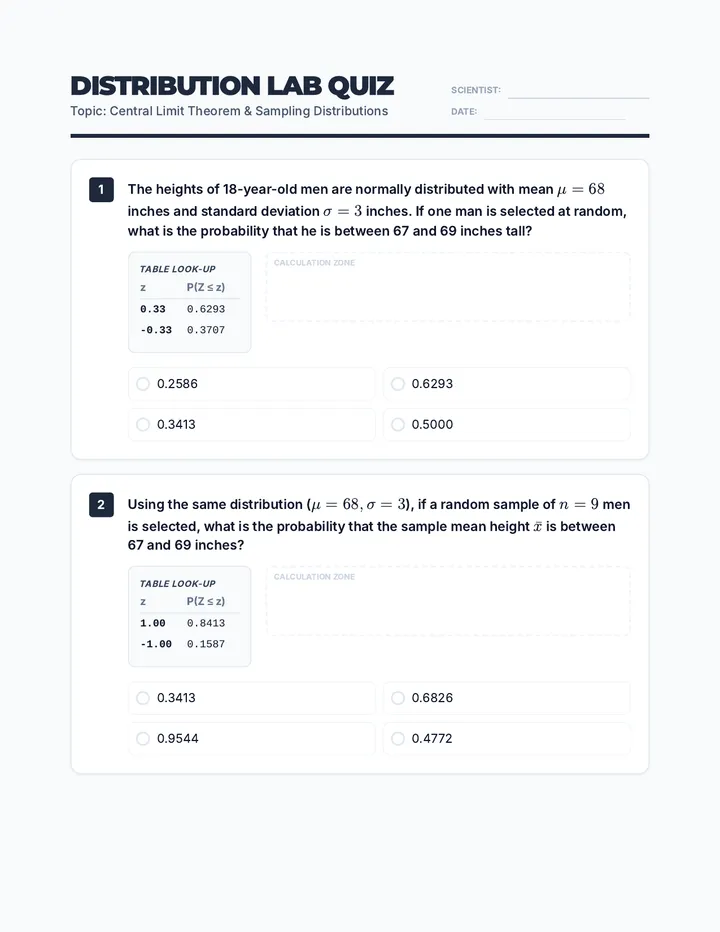
A comprehensive sequence on the Central Limit Theorem and sampling distributions, focusing on practical applications in medicine, biology, and finance. Students learn to calculate probabilities for both individual data points and sample means.
A math project where students design their own grocery store catalog to master unit rates. Students select items, set prices, and calculate the cost per unit for a variety of food categories.
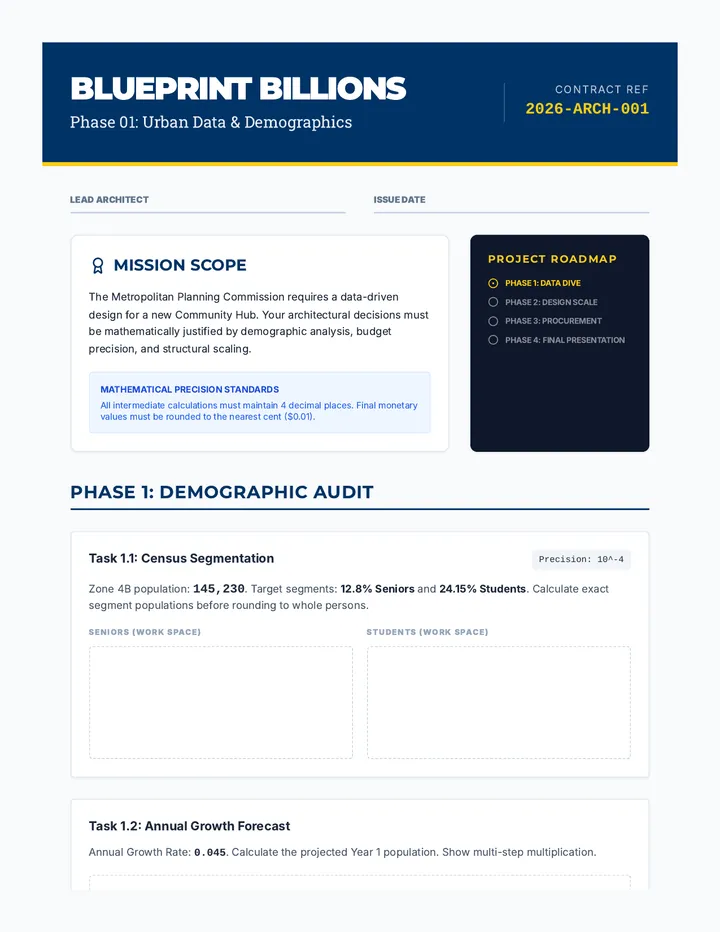
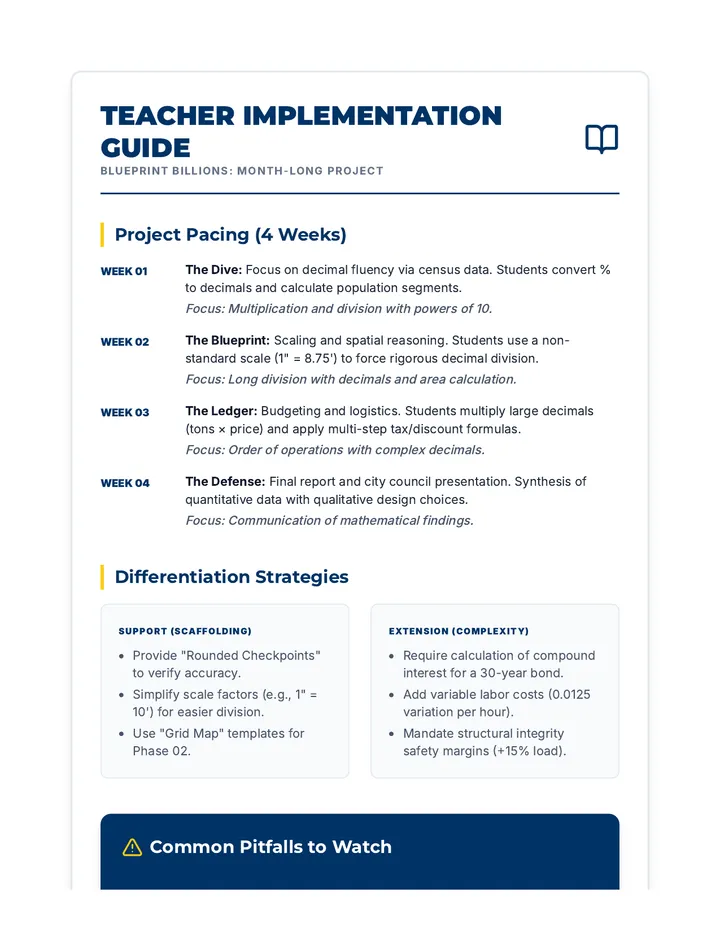
A month-long architectural design and statistical analysis project for high school students, focusing on precision decimal operations through real-world urban planning, budgeting, and data synthesis.
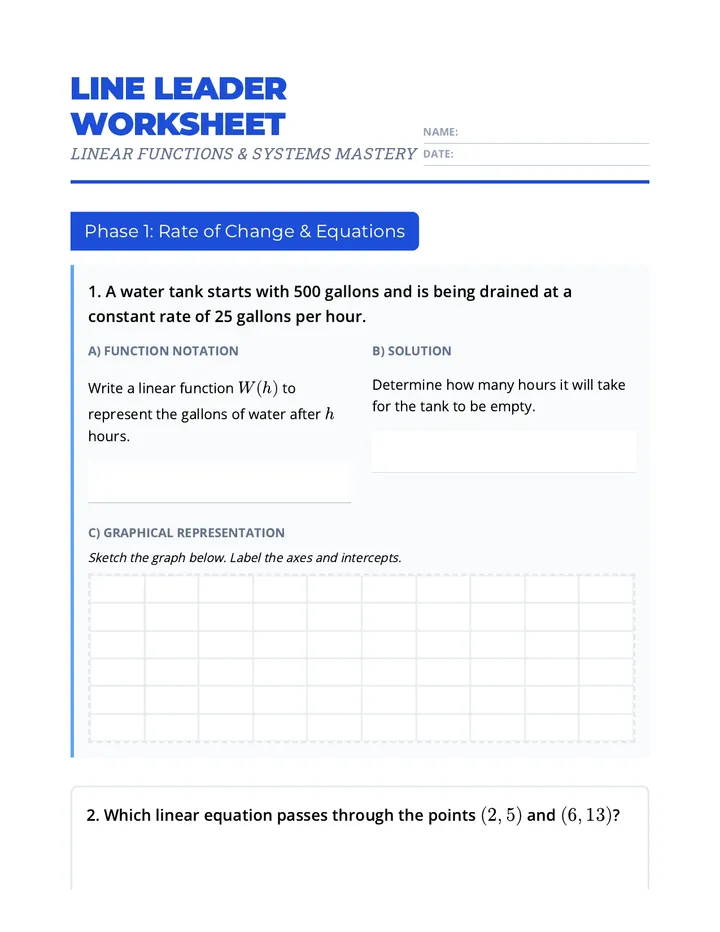
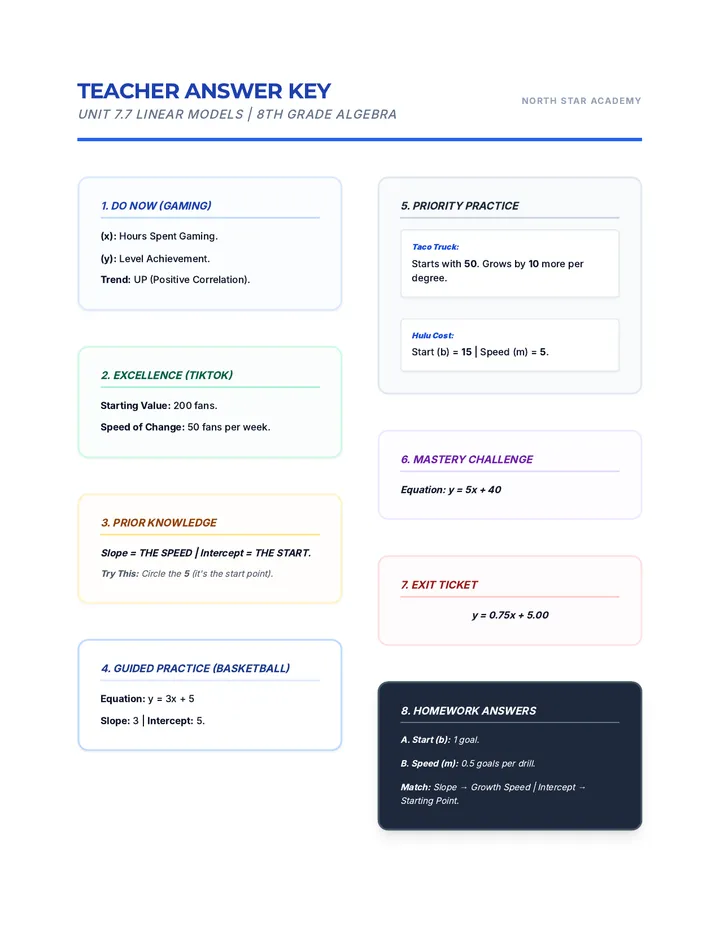
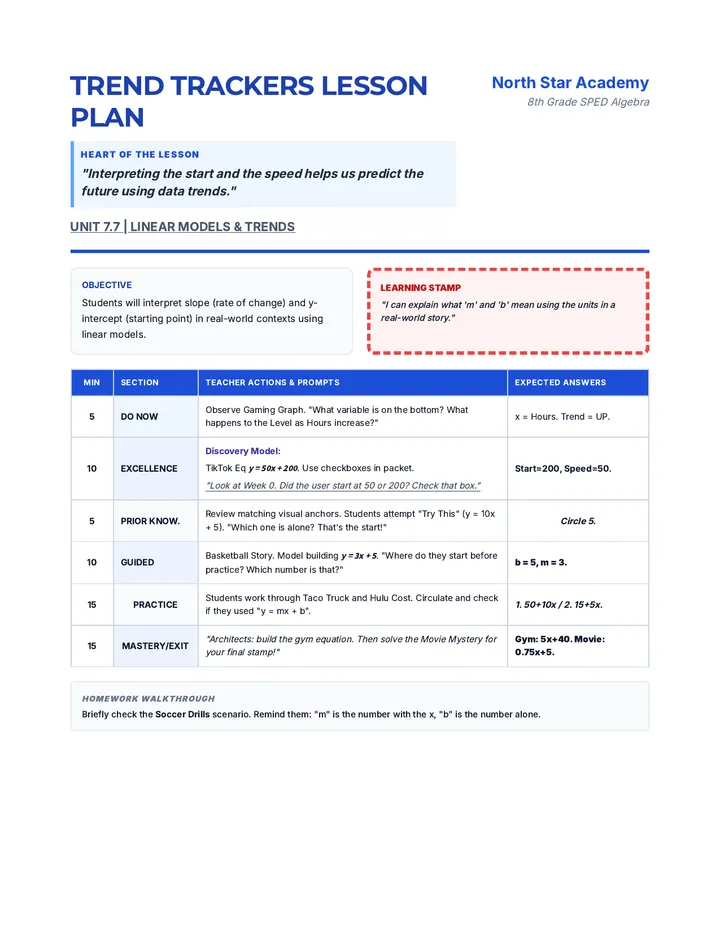
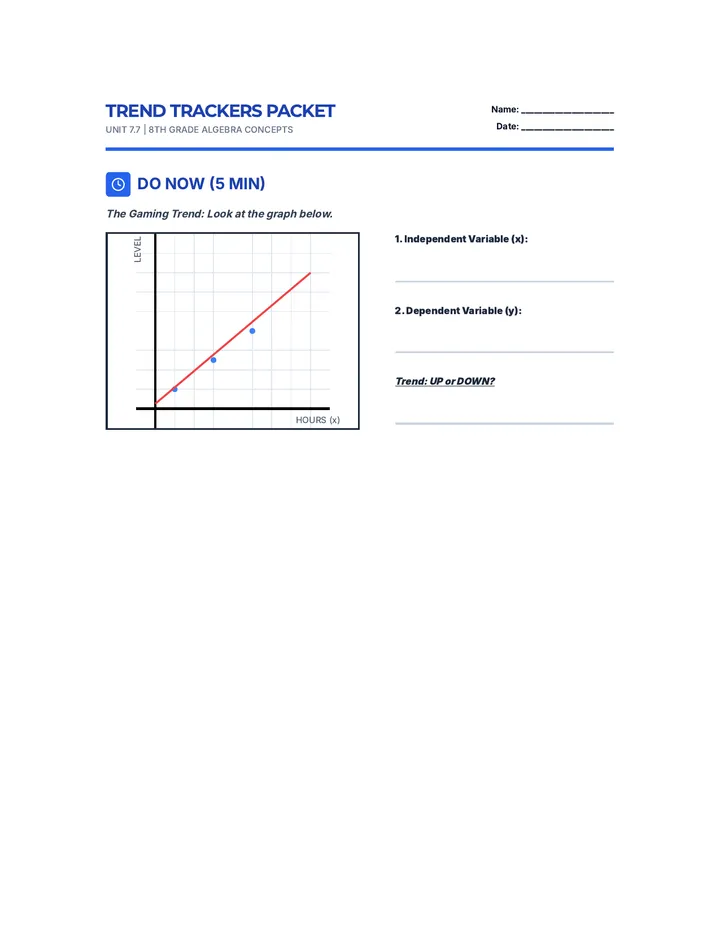
A series of 8th and 9th grade Algebra lessons focused on linear relationships and systems of equations, with a focus on SPED/IEP support.
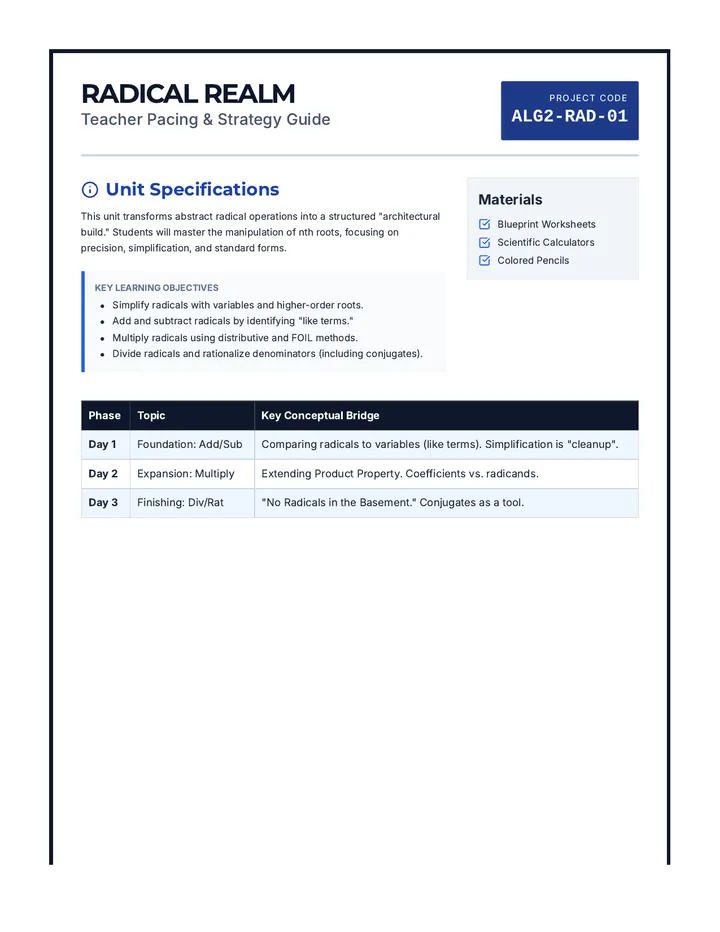
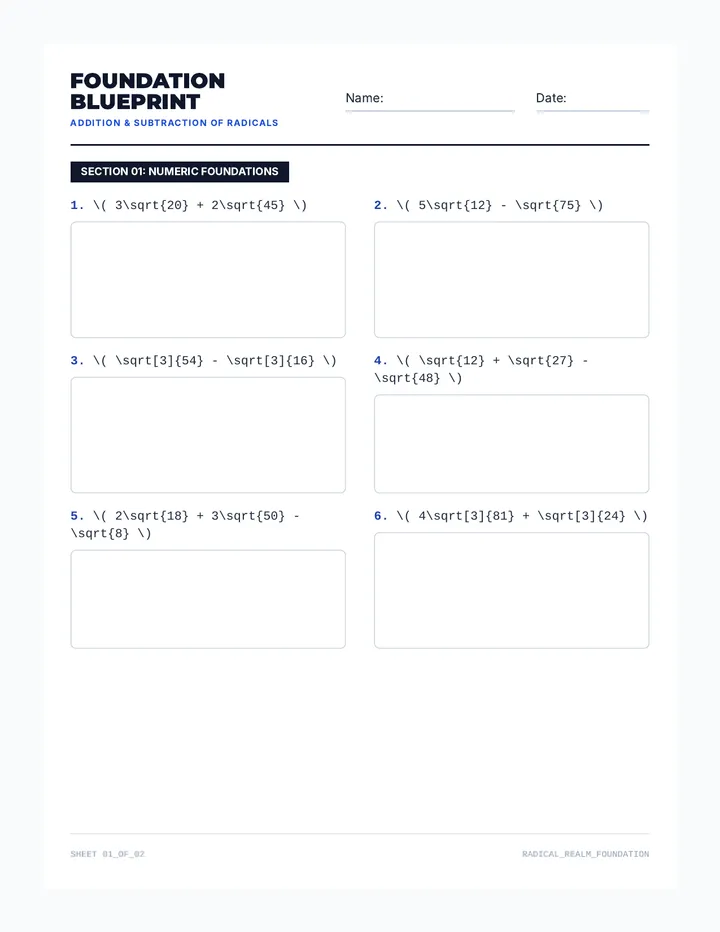
A comprehensive multi-day Algebra 2 unit on simplifying radical expressions. Covers addition, subtraction, multiplication, and division (including rationalizing denominators) with an architectural blueprint theme.
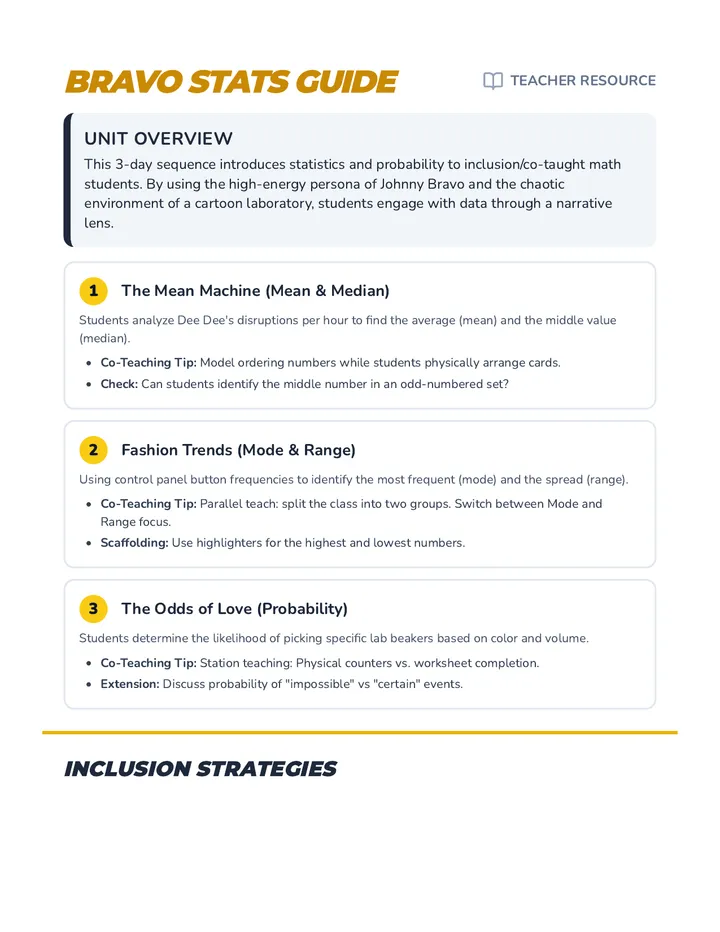
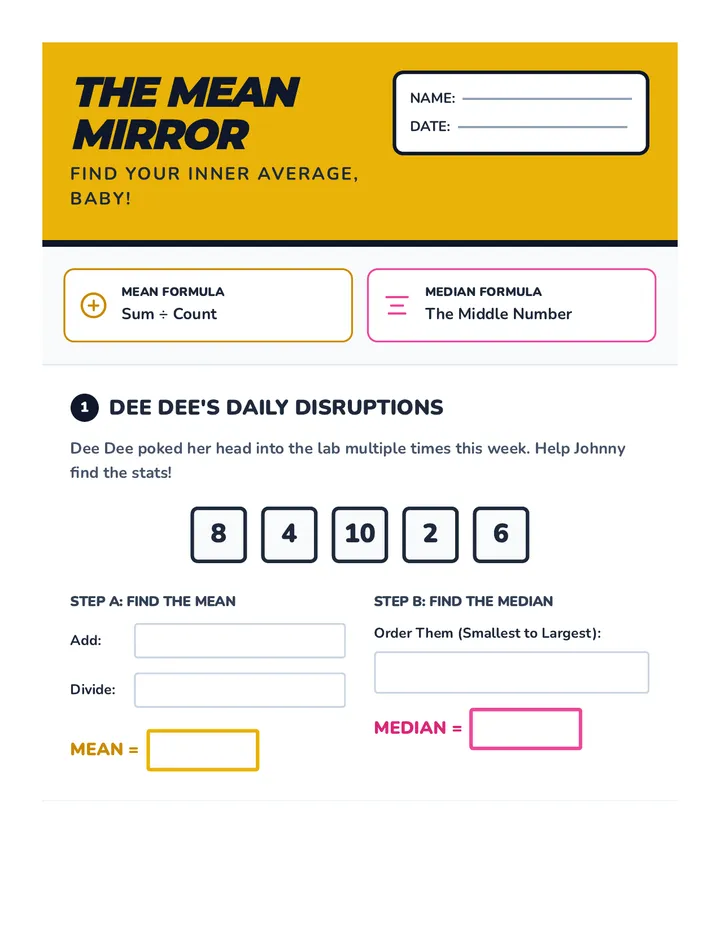
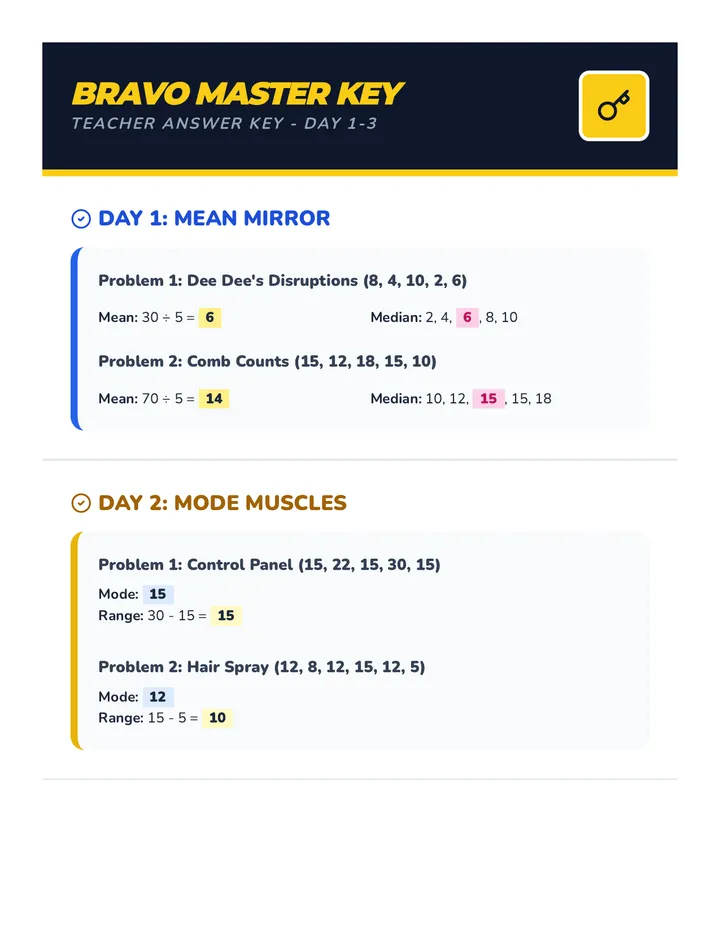
A 3-day introductory unit on statistics and probability themed around Johnny Bravo. Students learn mean, median, mode, range, and basic probability through data related to laboratory disruptions and button frequencies.
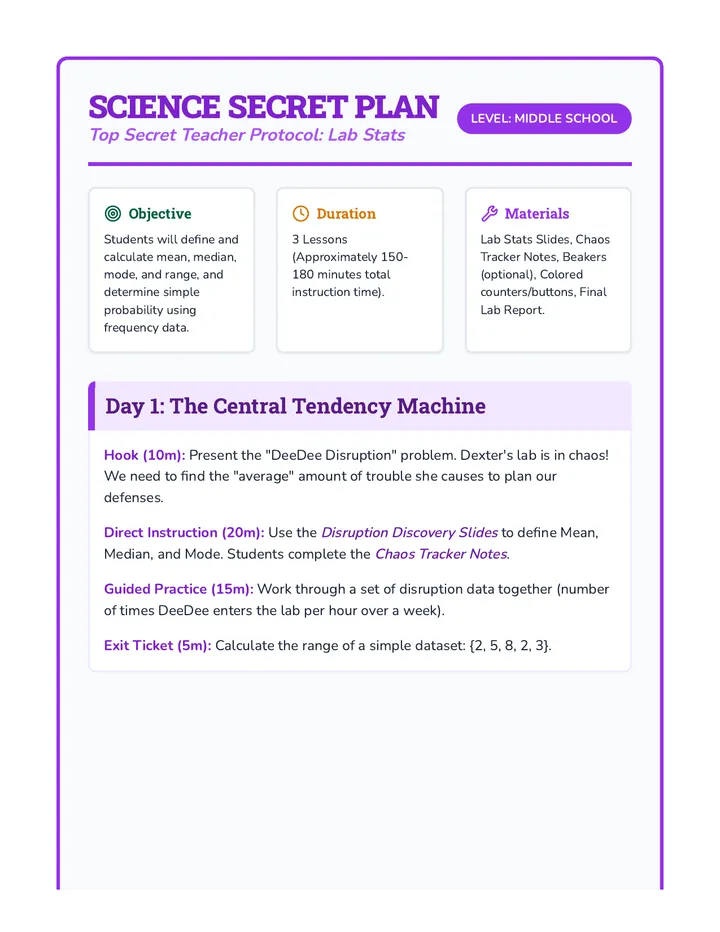
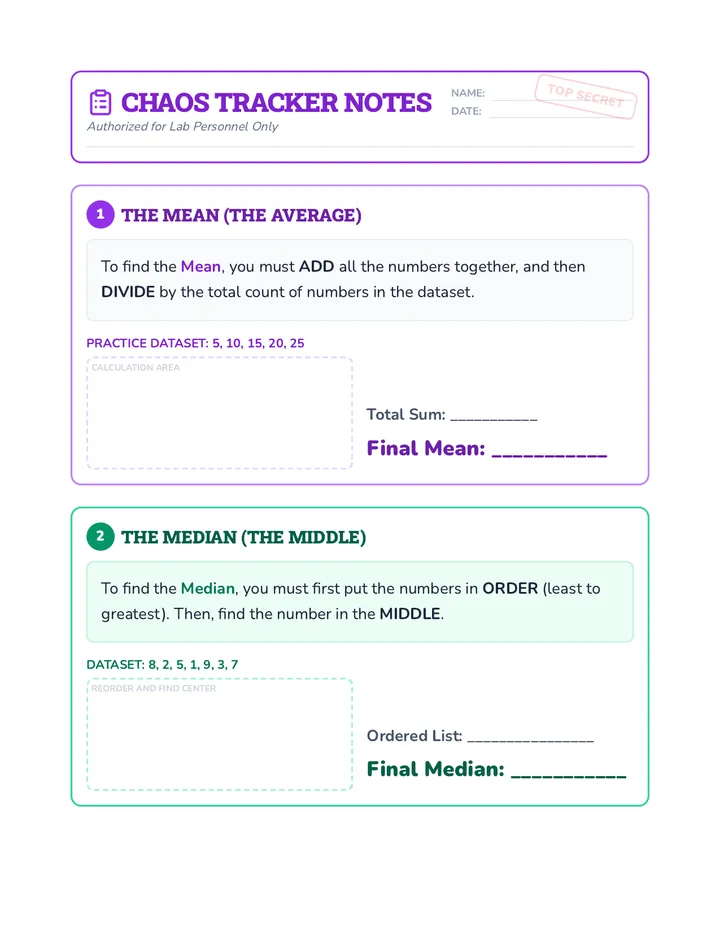
A 3-day introduction to statistics and probability themed around Dexter's Laboratory. Students analyze DeeDee's disruptions, beaker volumes, and control panel button frequencies to master mean, median, mode, and basic probability.
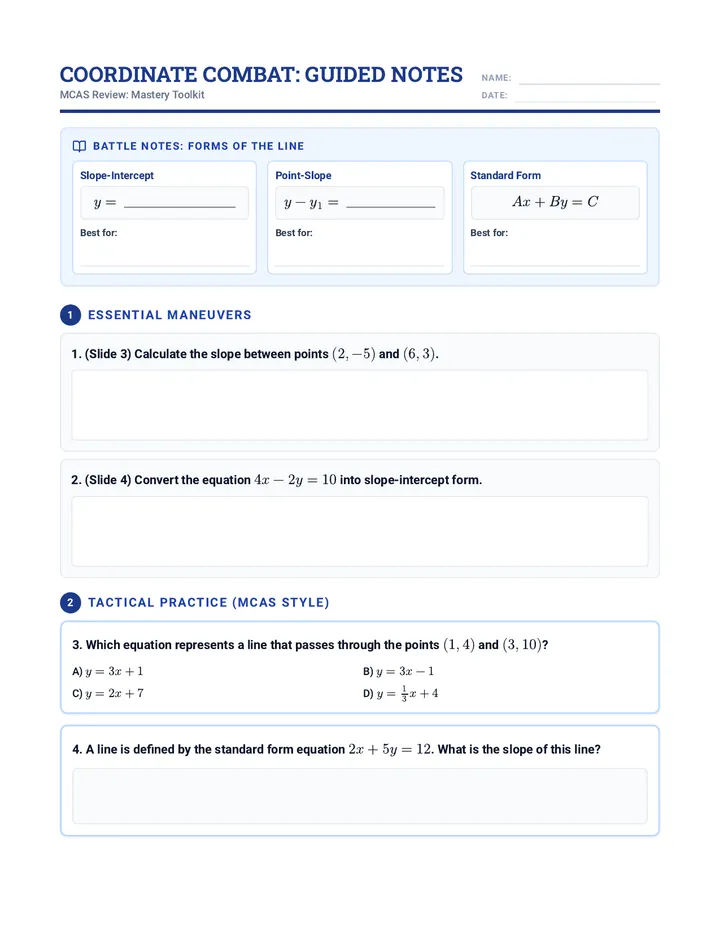
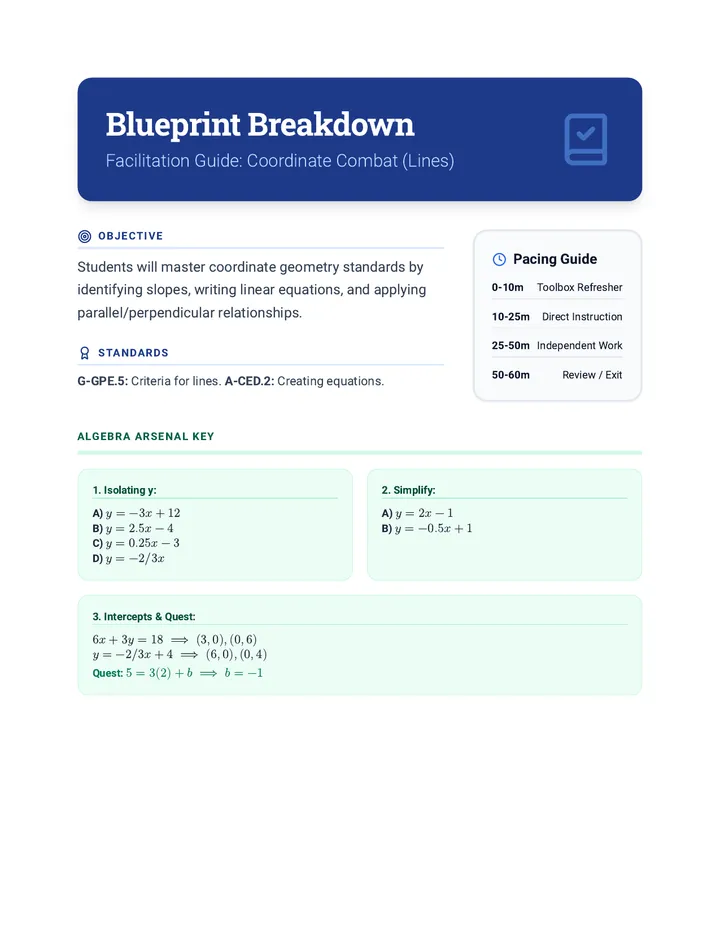
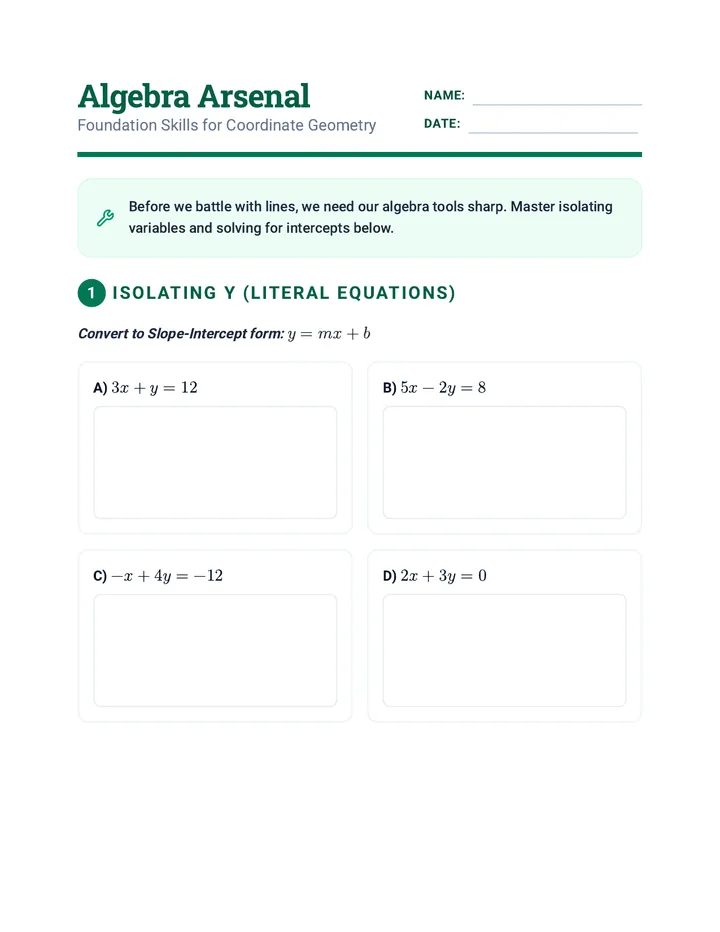
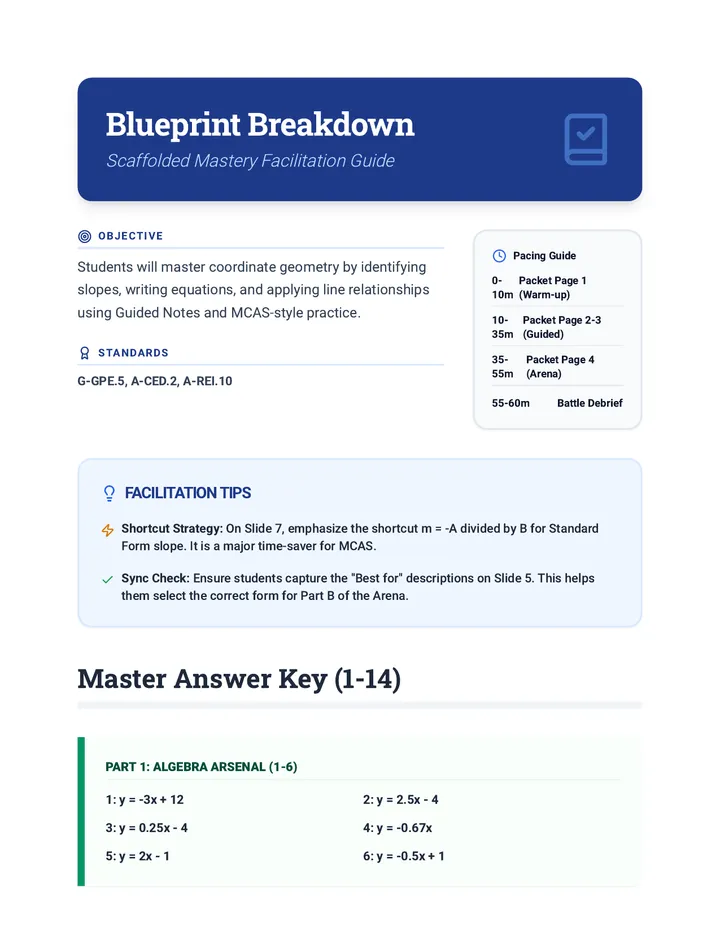
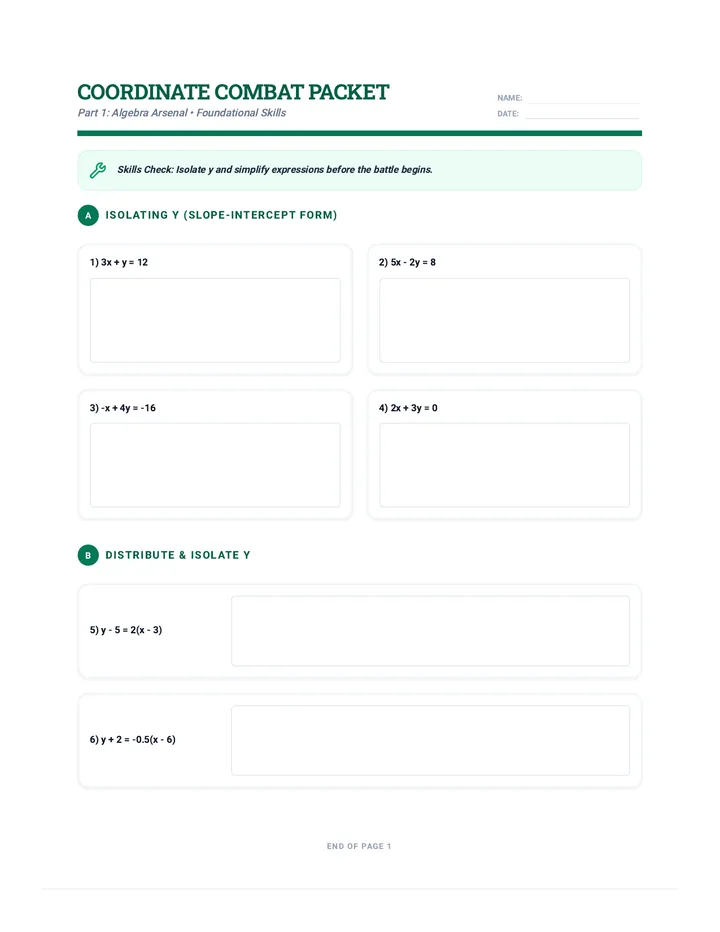
A comprehensive review series designed to prepare 10th-grade students for the MCAS Geometry exam, focusing on high-frequency coordinate geometry standards.
A unit on statistics for freshman students themed around Tom and Jerry, covering central tendency, data visualization, and probability.