A comprehensive unit designed for incoming 9th-grade multilingual learners to master place value from millions to thousandths and refine their rounding skills through visual scaffolding and collaborative play.
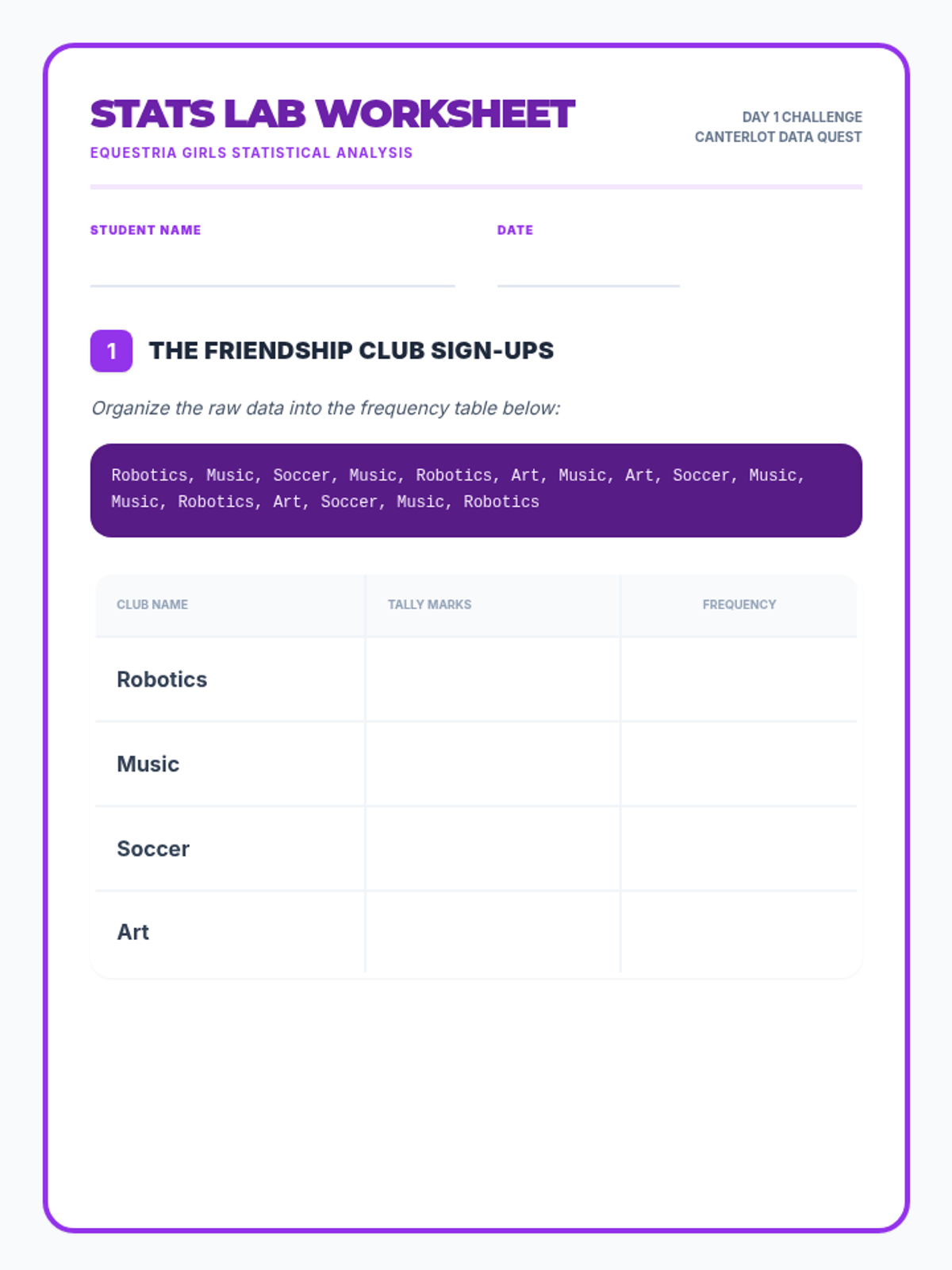
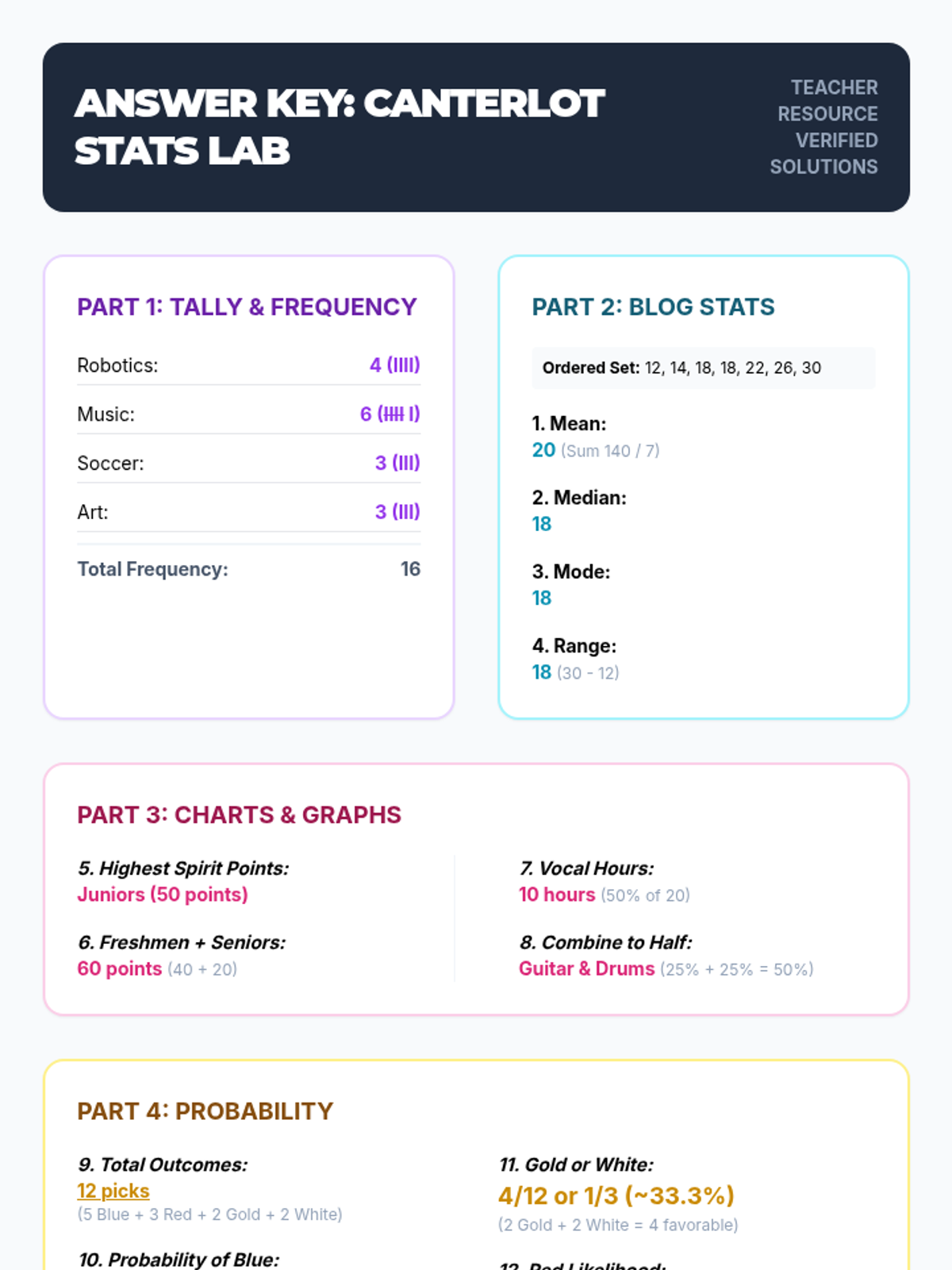
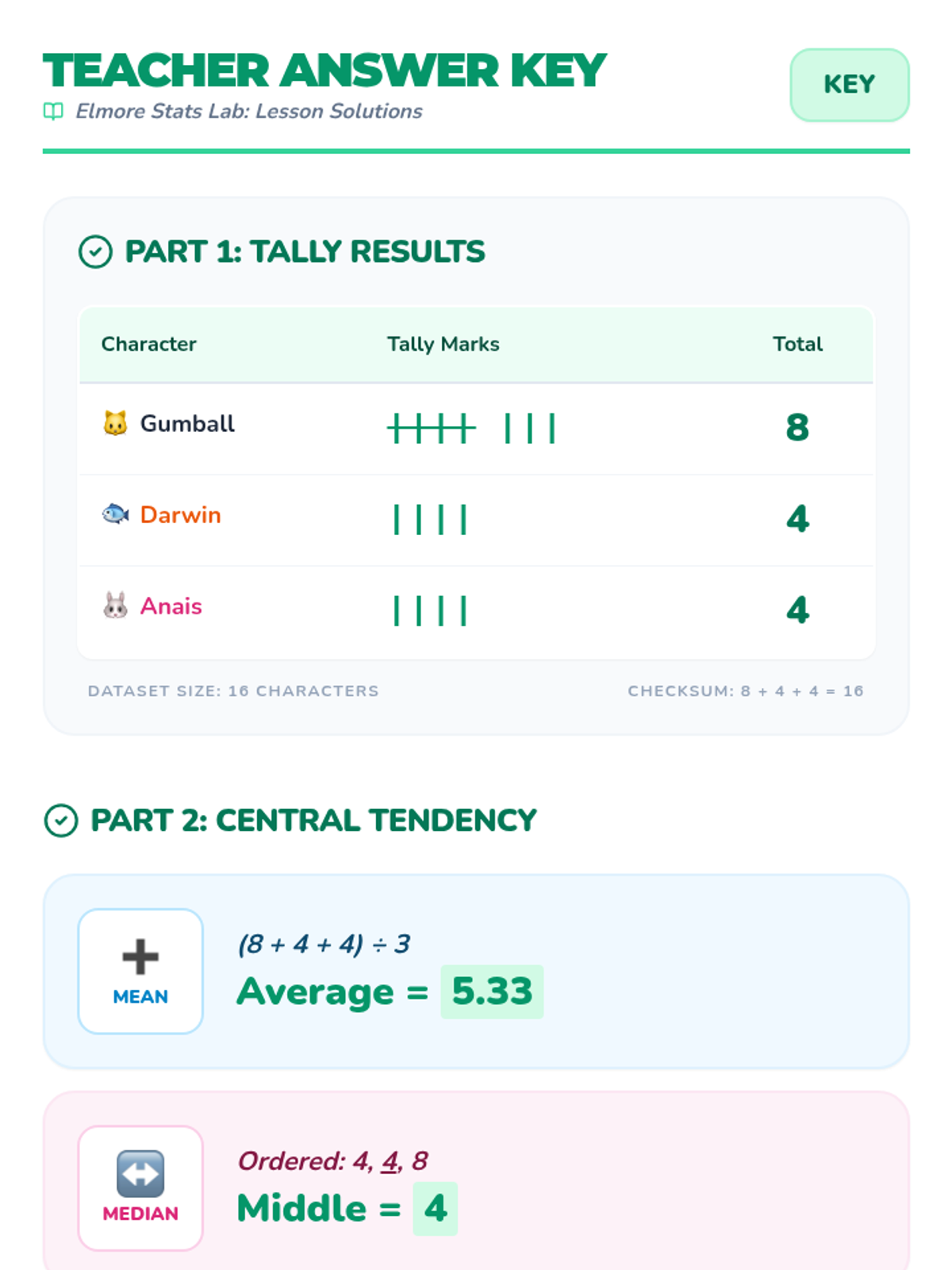
A week-long immersive statistics unit themed around Canterlot High and the Equestria Girls. Students master data analysis, visualization, and probability through daily challenges and a cumulative review packet.
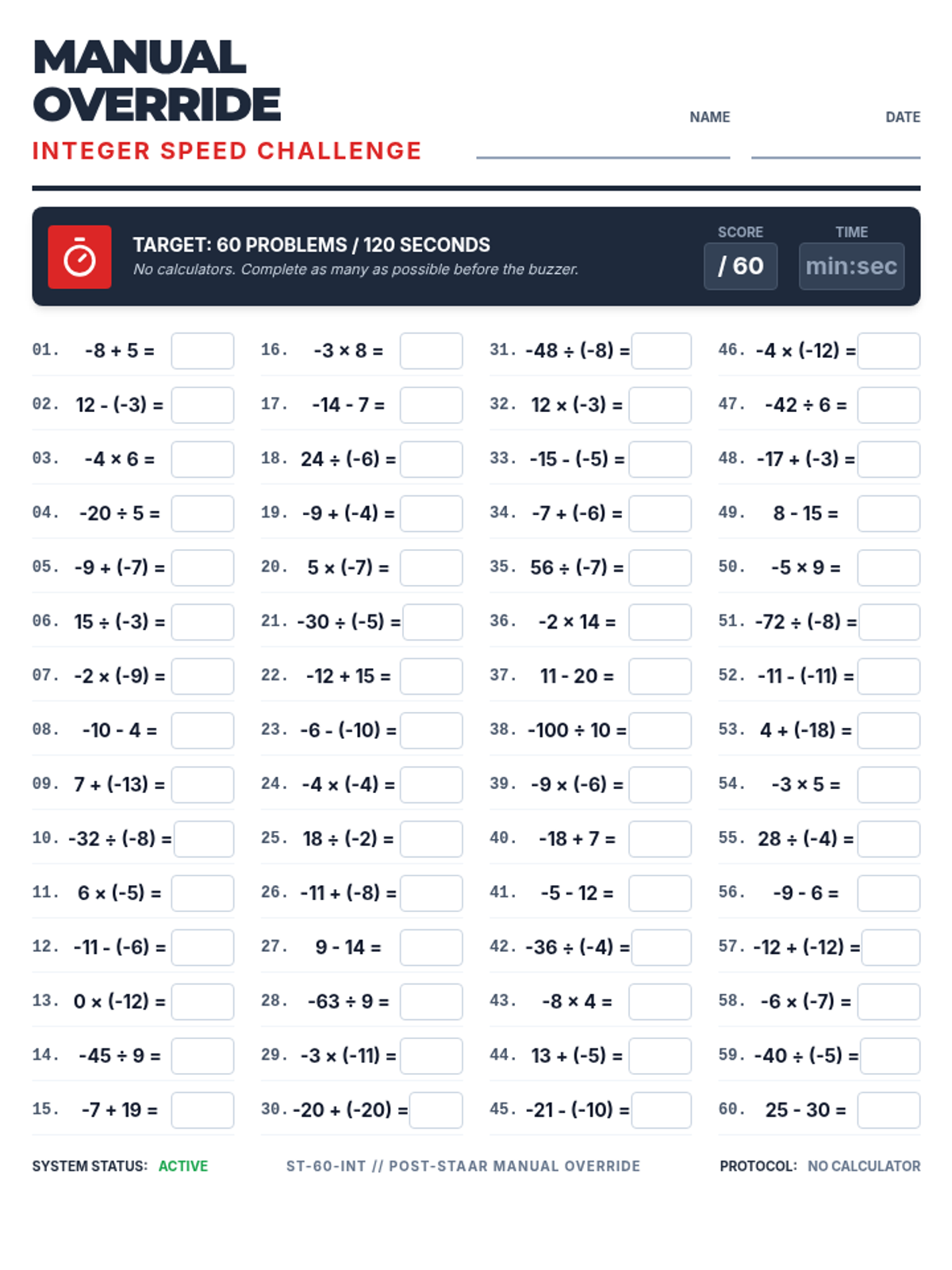
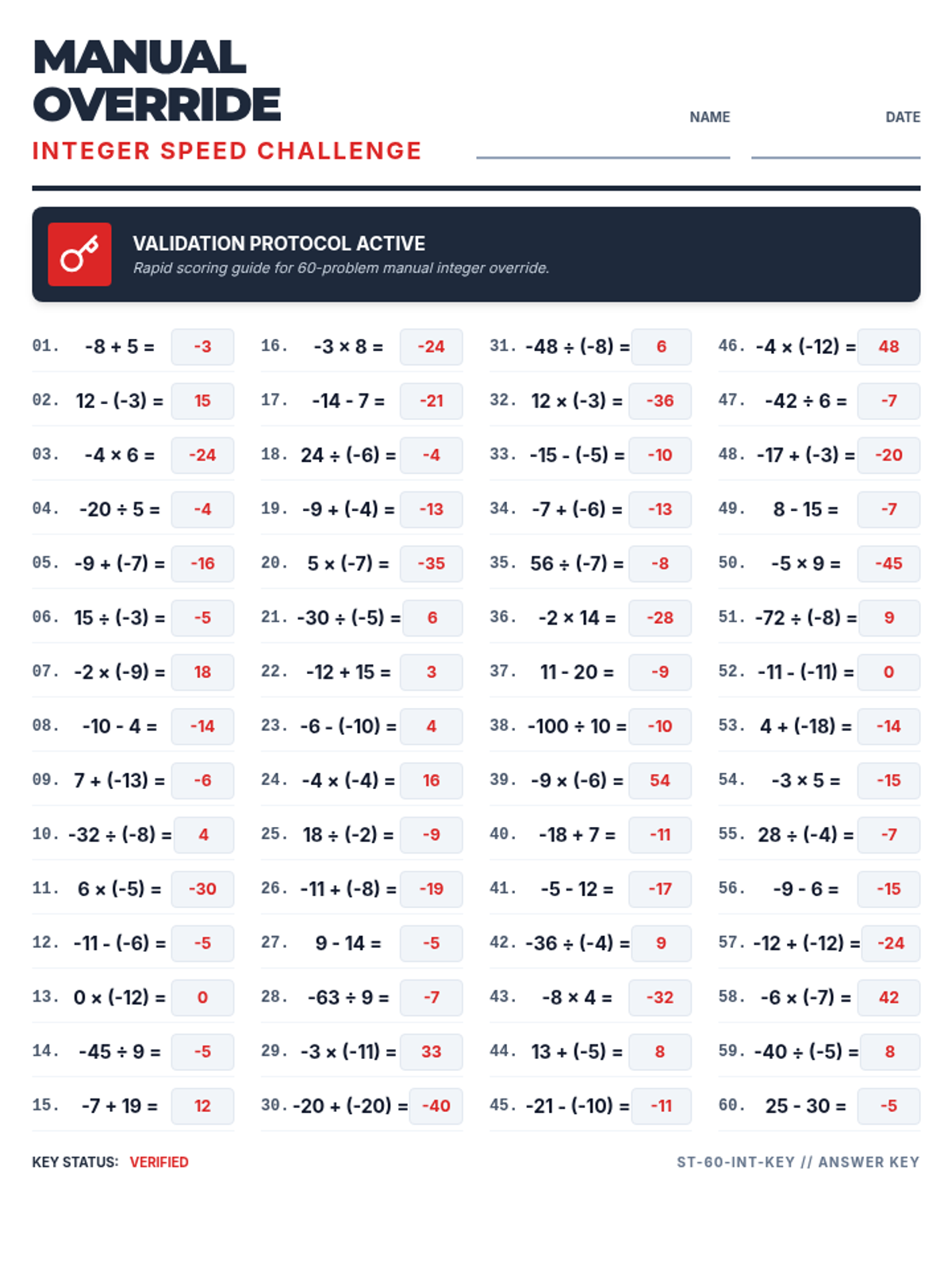
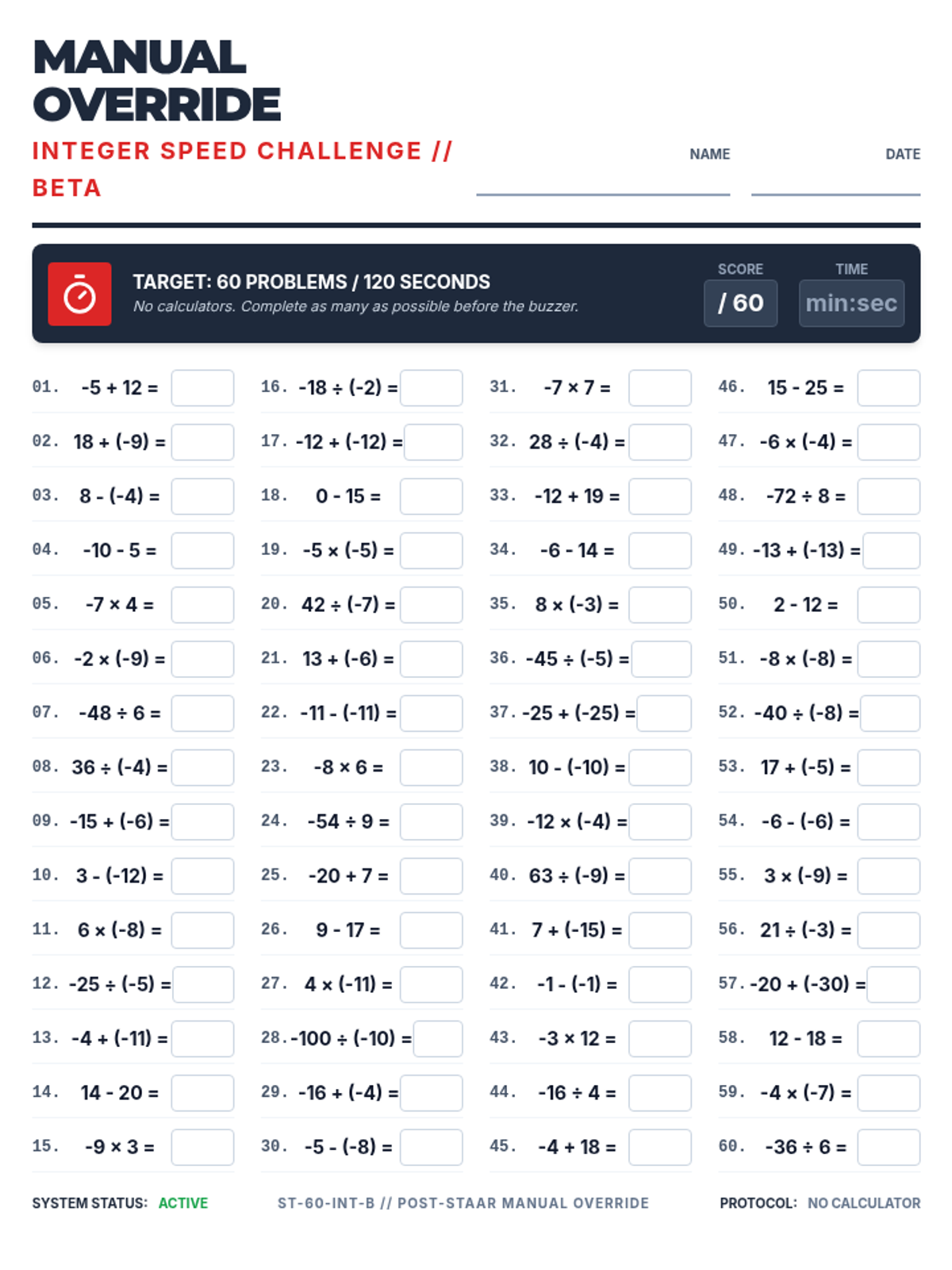
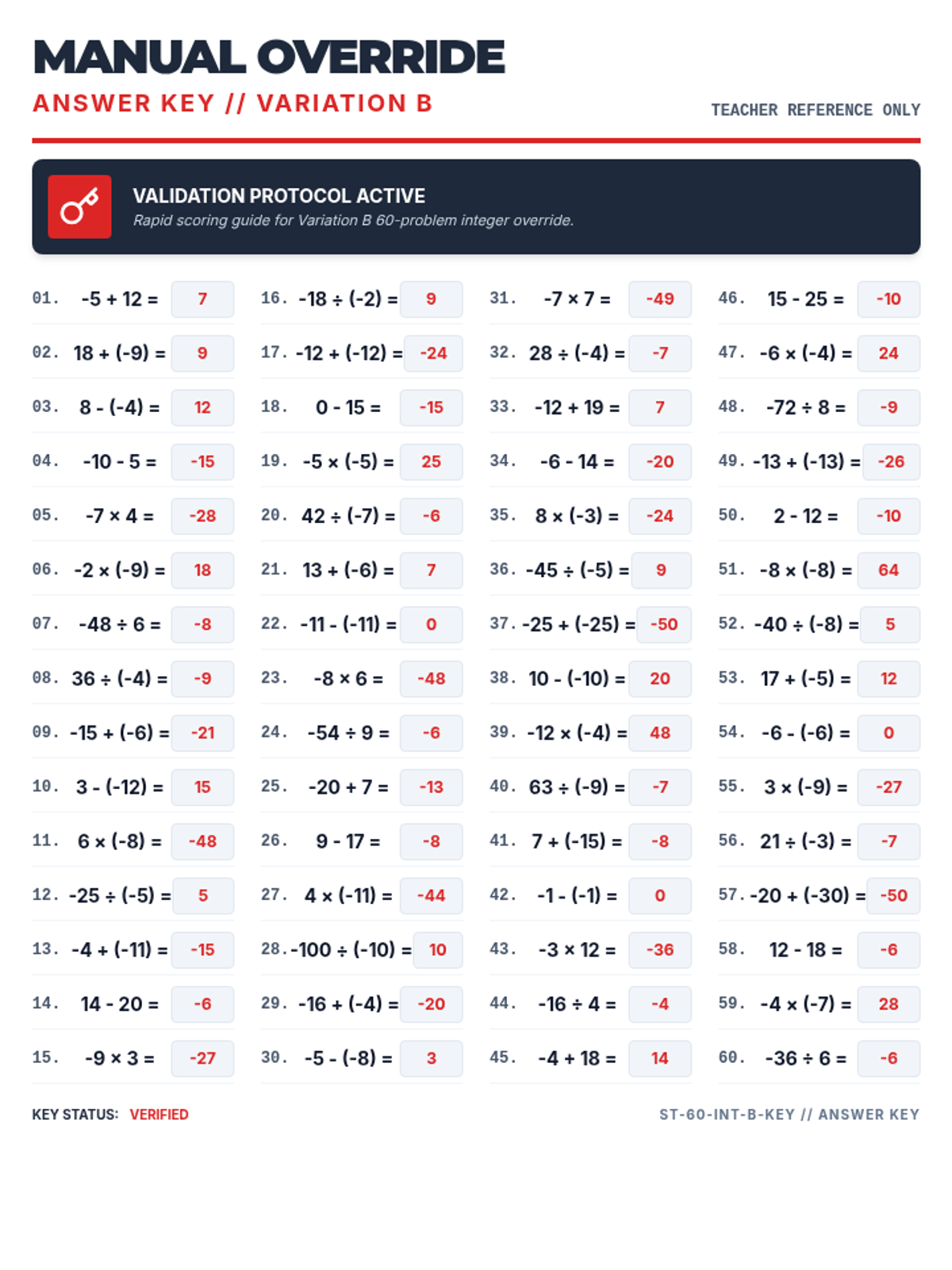
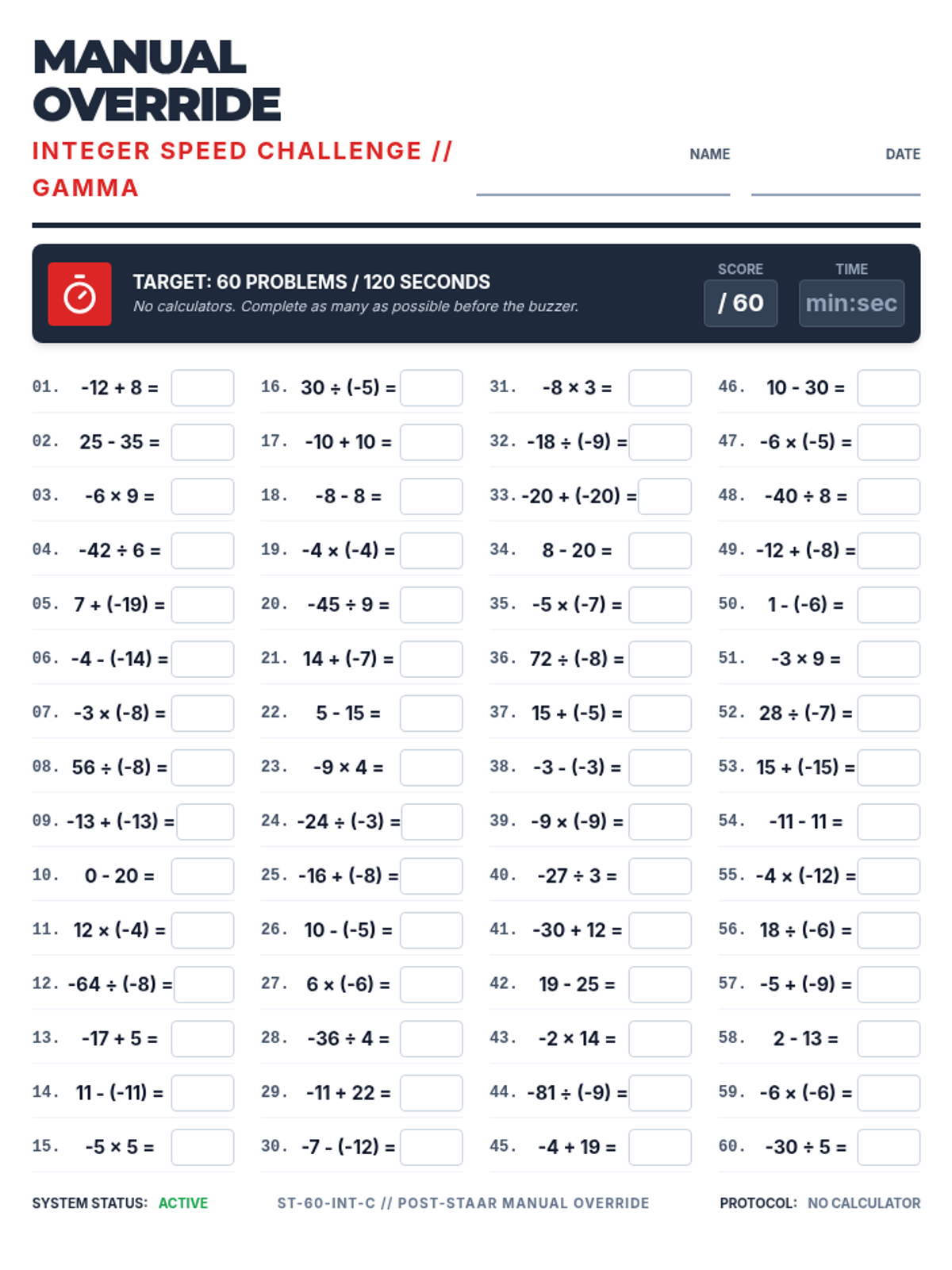
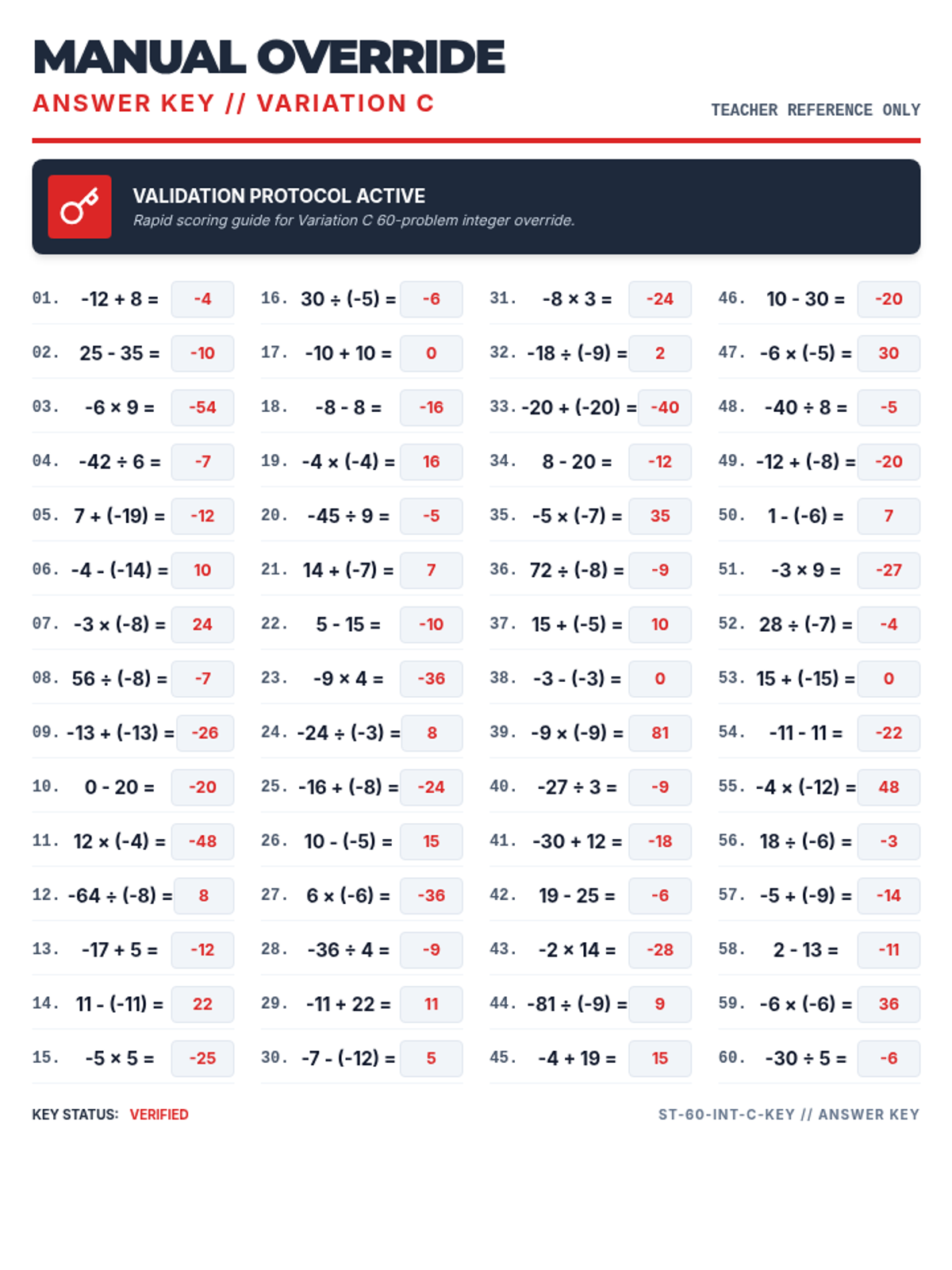
A transition from mental math fluency to algebraic modeling, focusing on integer arithmetic and solving linear equations with visual tools.
A comprehensive 8-day financial algebra project where 8th-grade students navigate adulthood, managing salaries, housing, transportation, and debt using linear and exponential models.
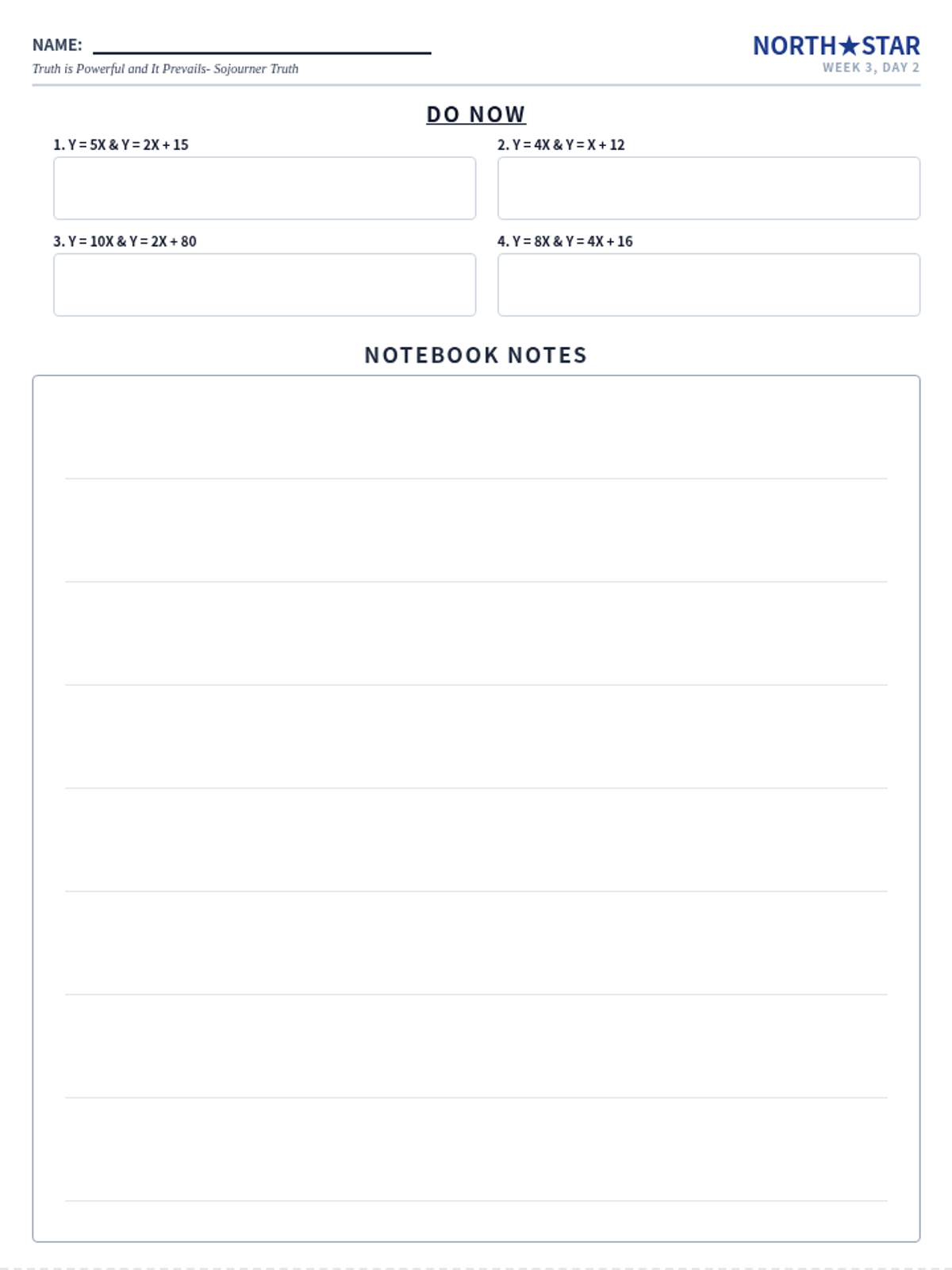
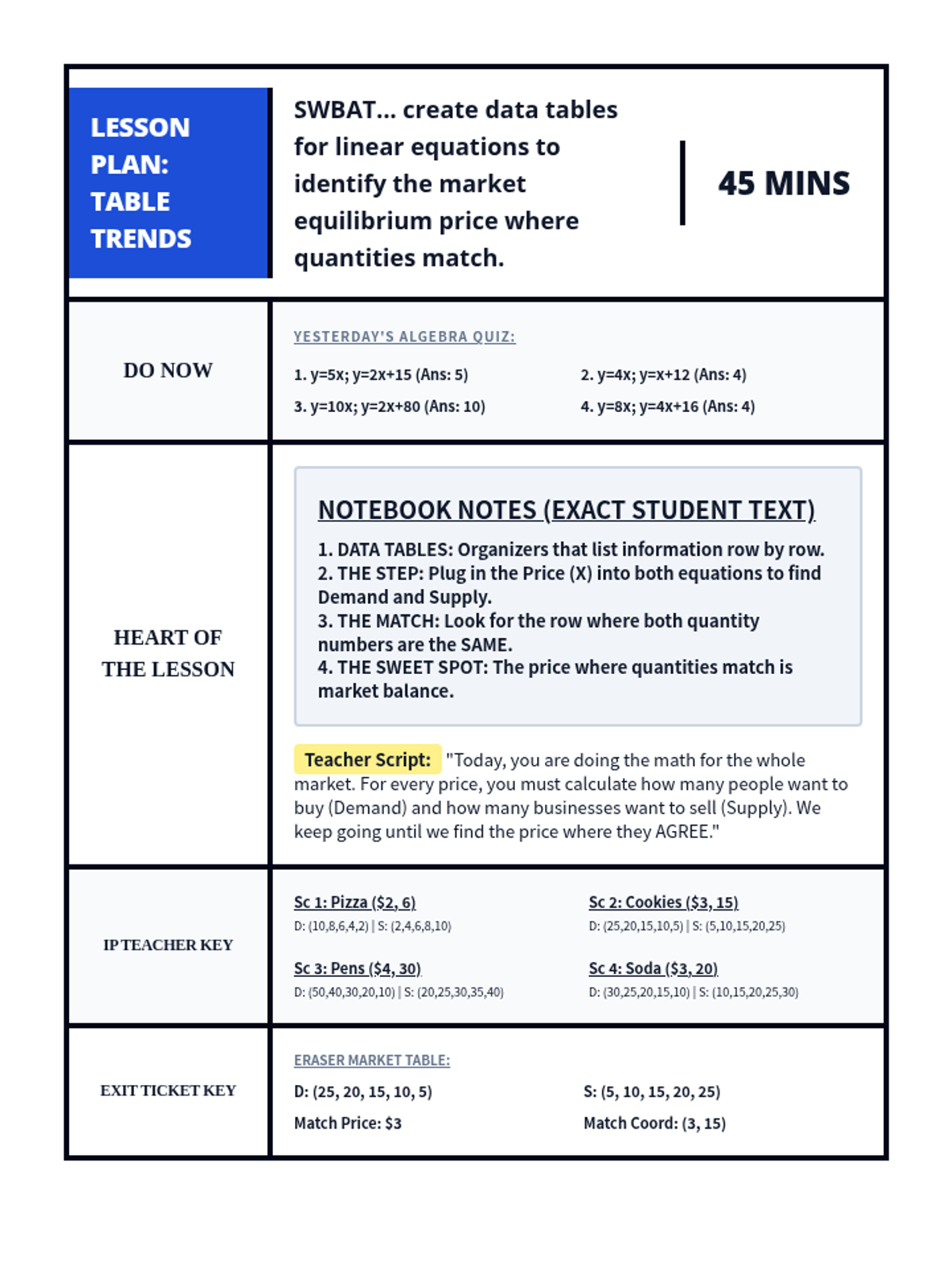
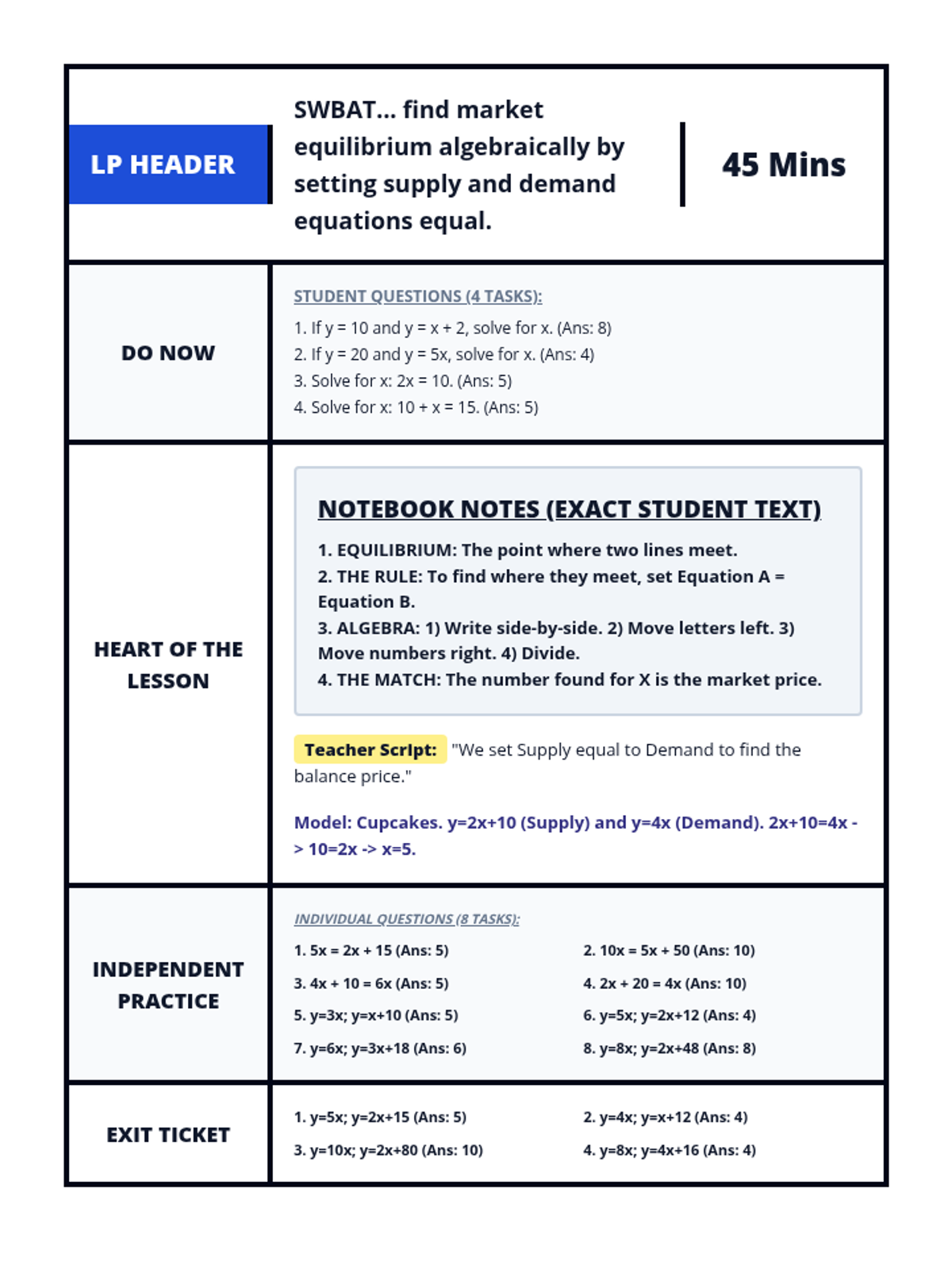
A 4-lesson economics sequence for Special Education students. Lessons progress from solving for market equilibrium algebraically, to using data tables, to graphing intersections, and finally interpreting the real-world meaning of surplus, shortage, and the 'sweet spot'.
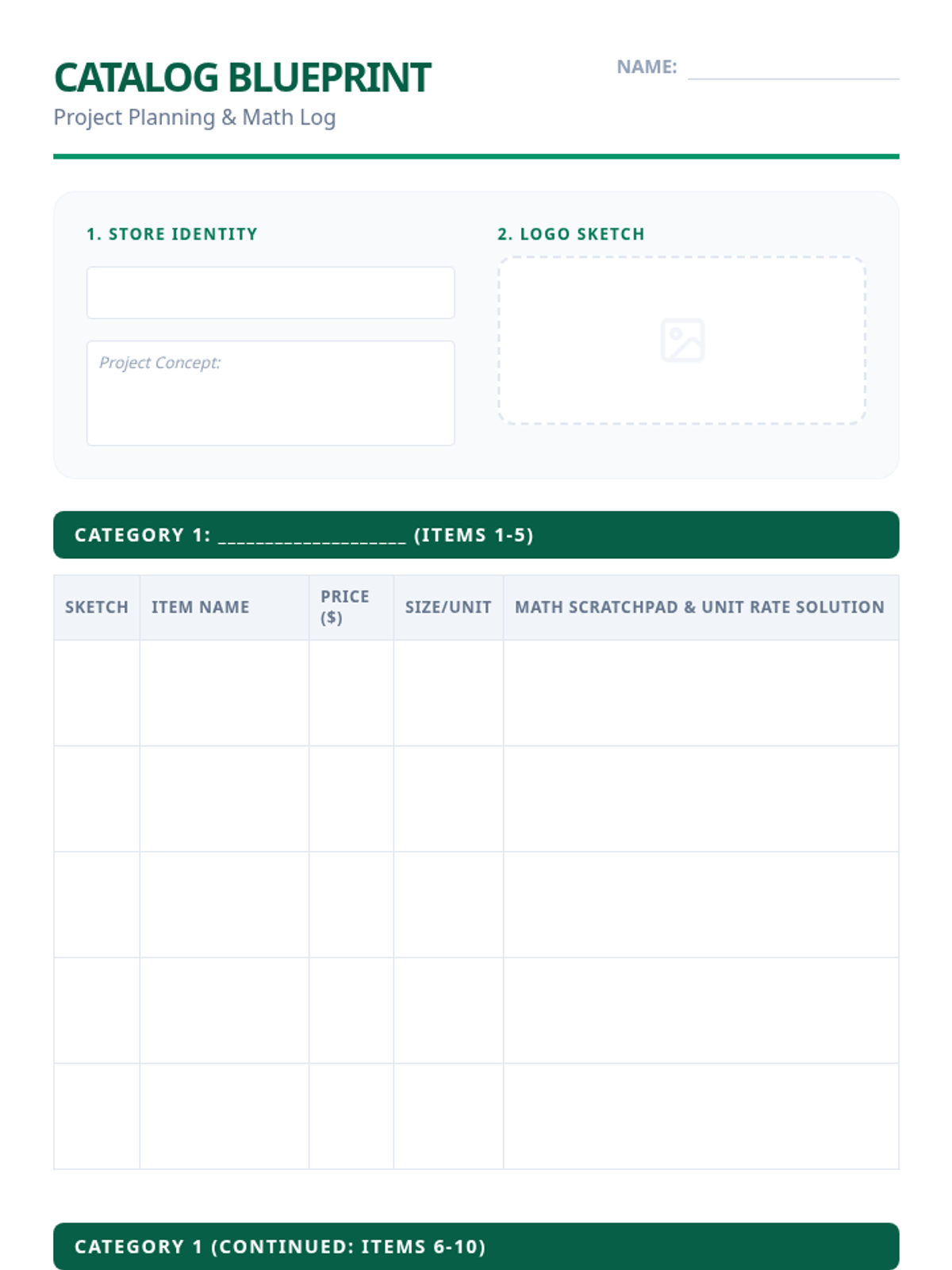
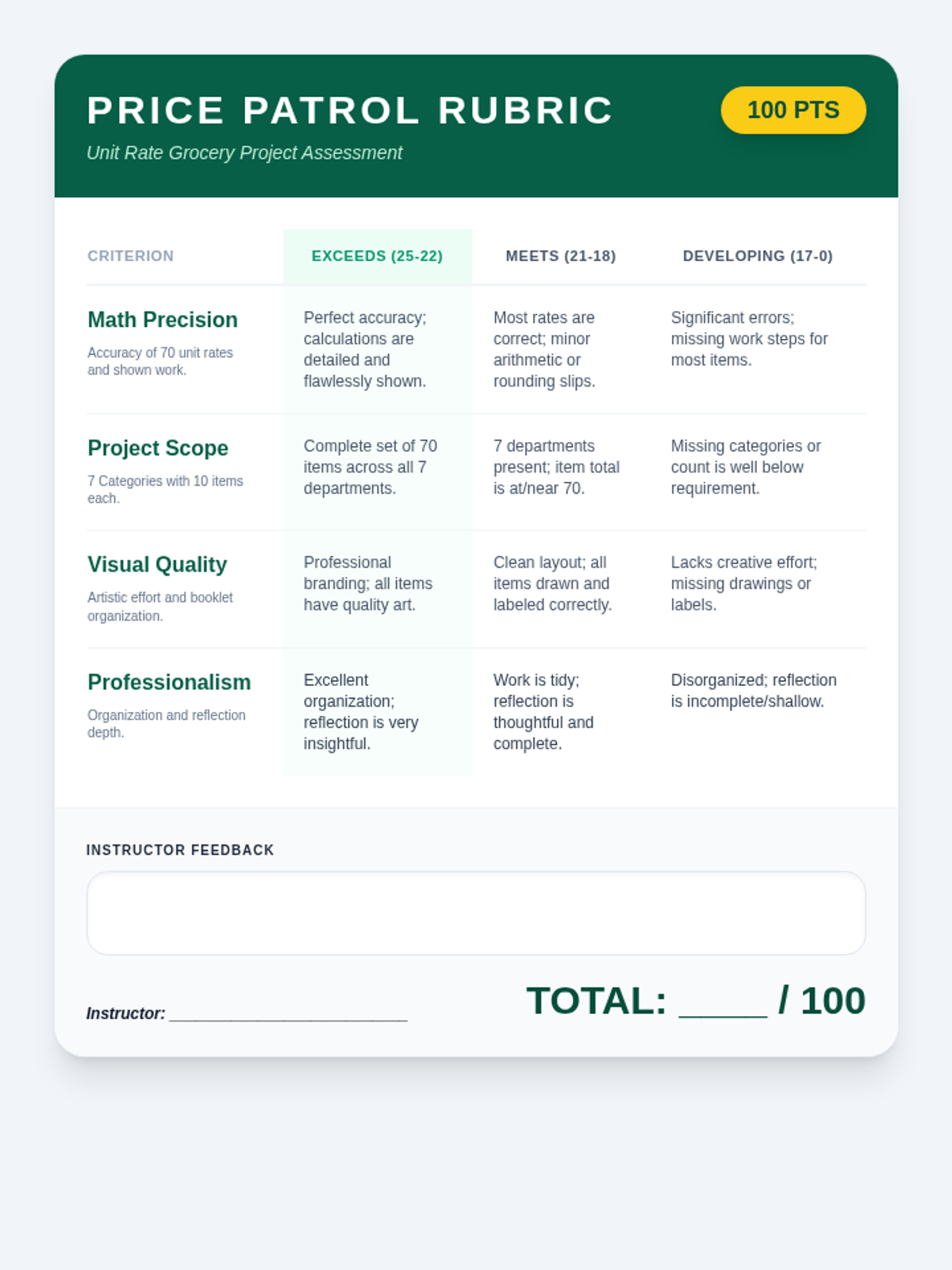
A math project where students design their own grocery store catalog to master unit rates. Students select items, set prices, and calculate the cost per unit for a variety of food categories.
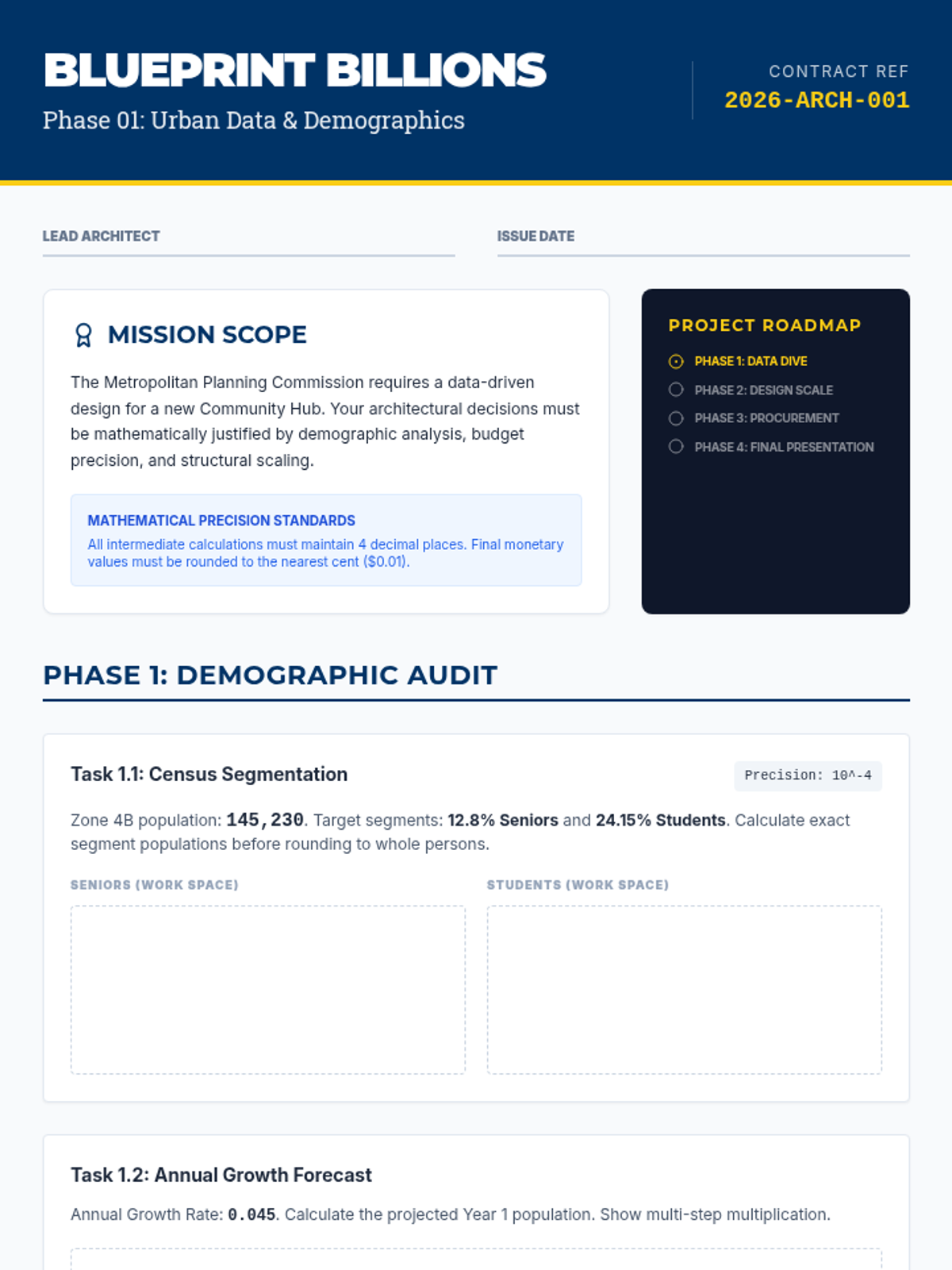
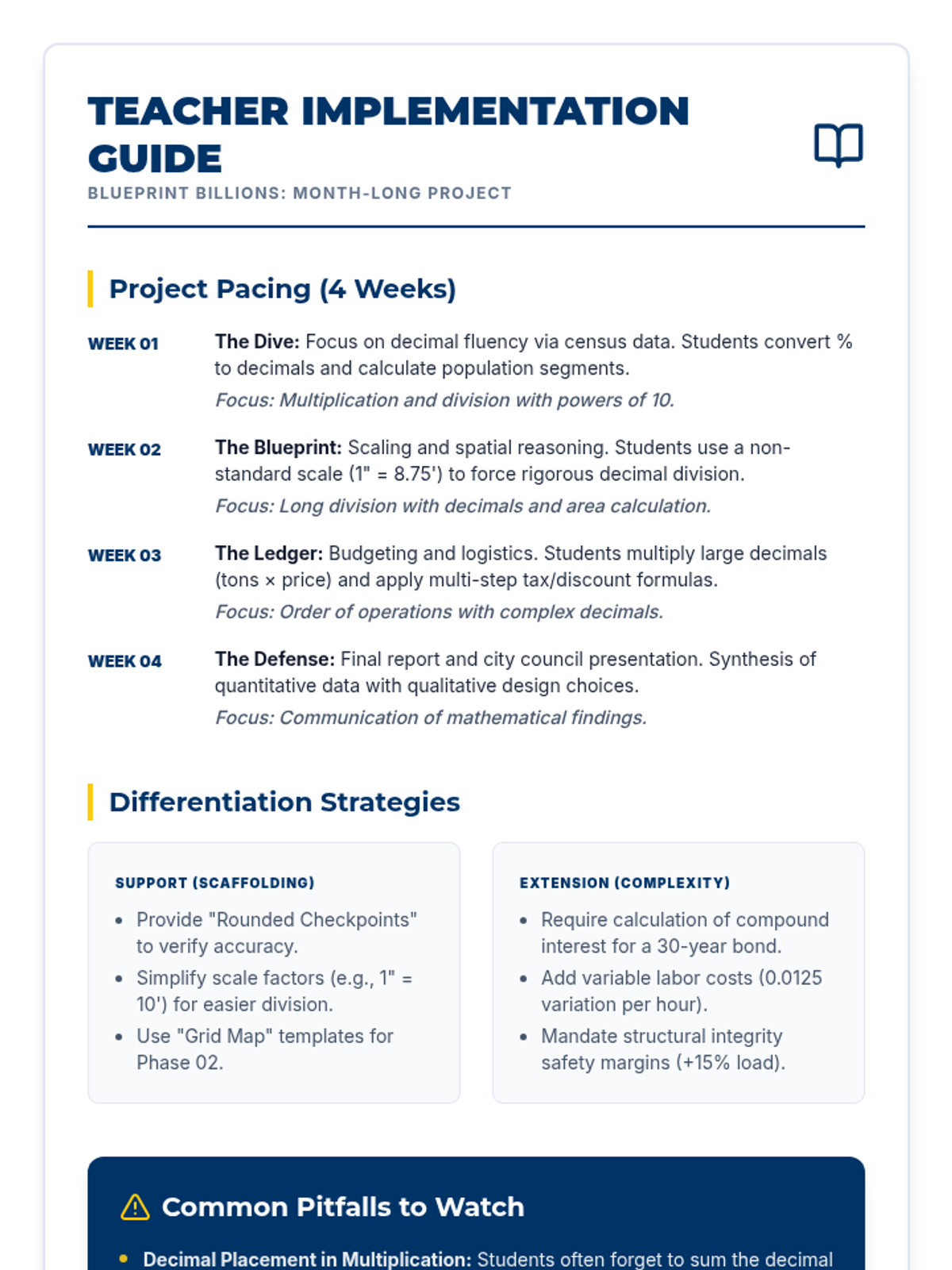
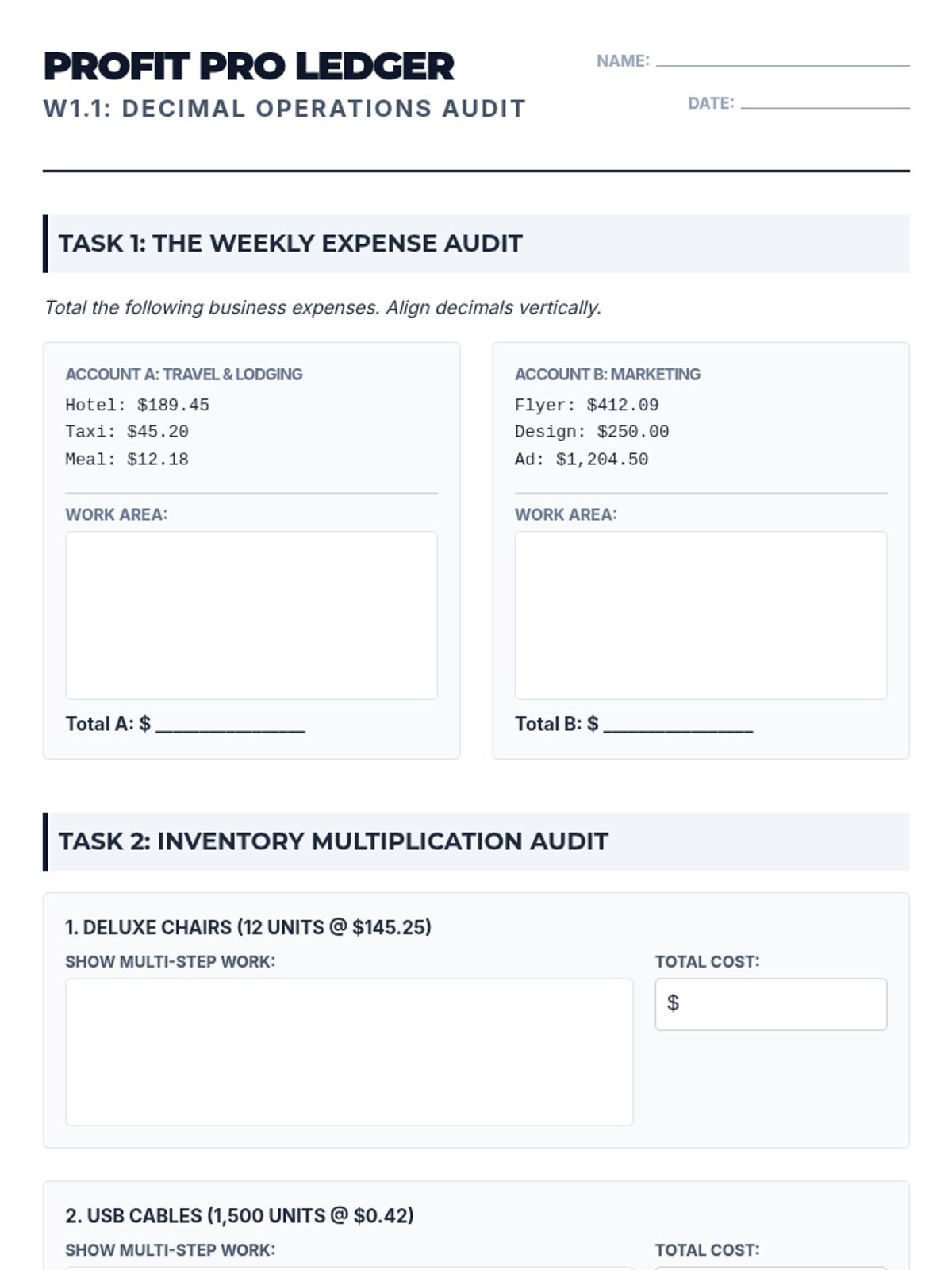
A month-long architectural design and statistical analysis project for high school students, focusing on precision decimal operations through real-world urban planning, budgeting, and data synthesis.
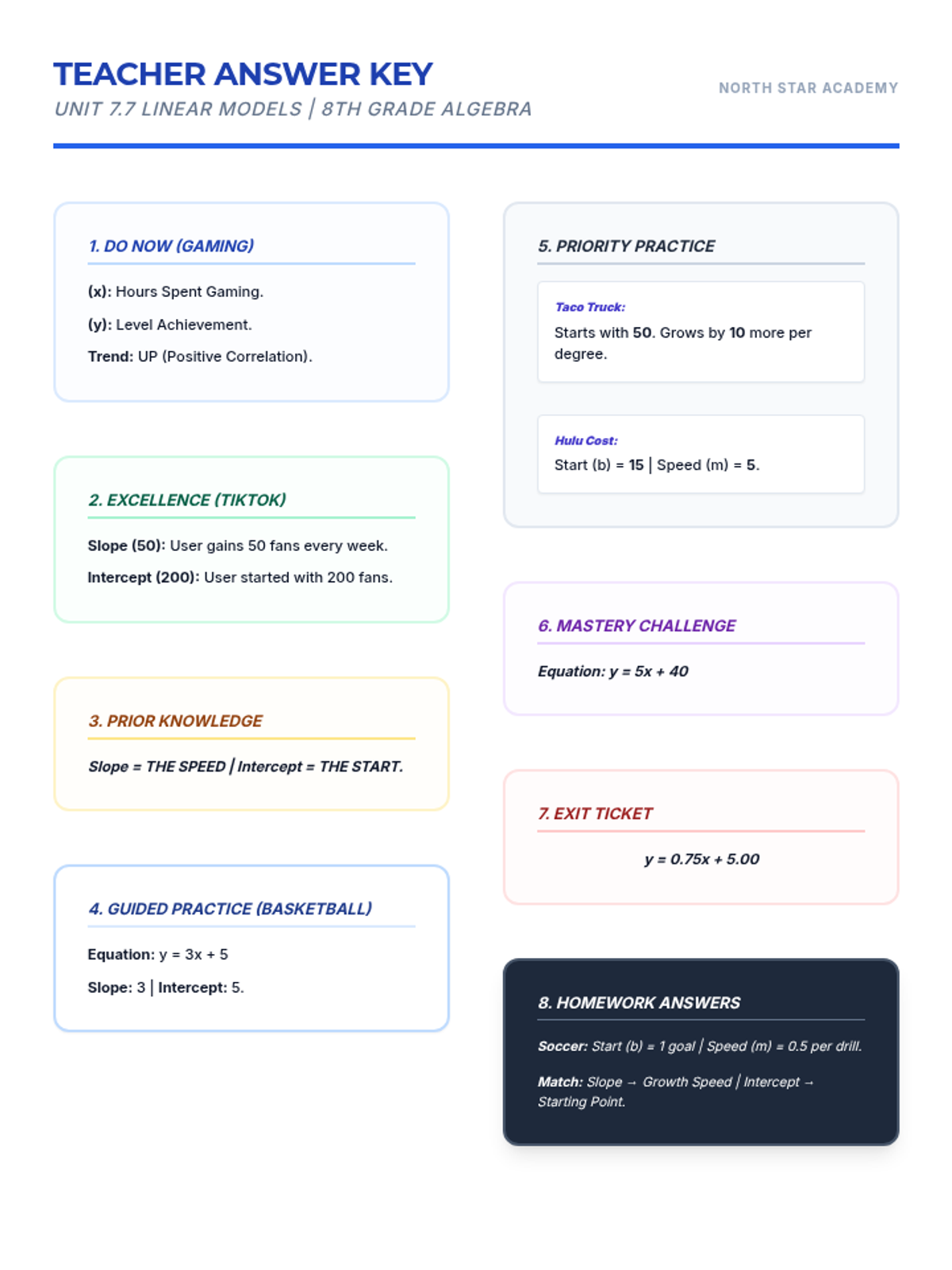
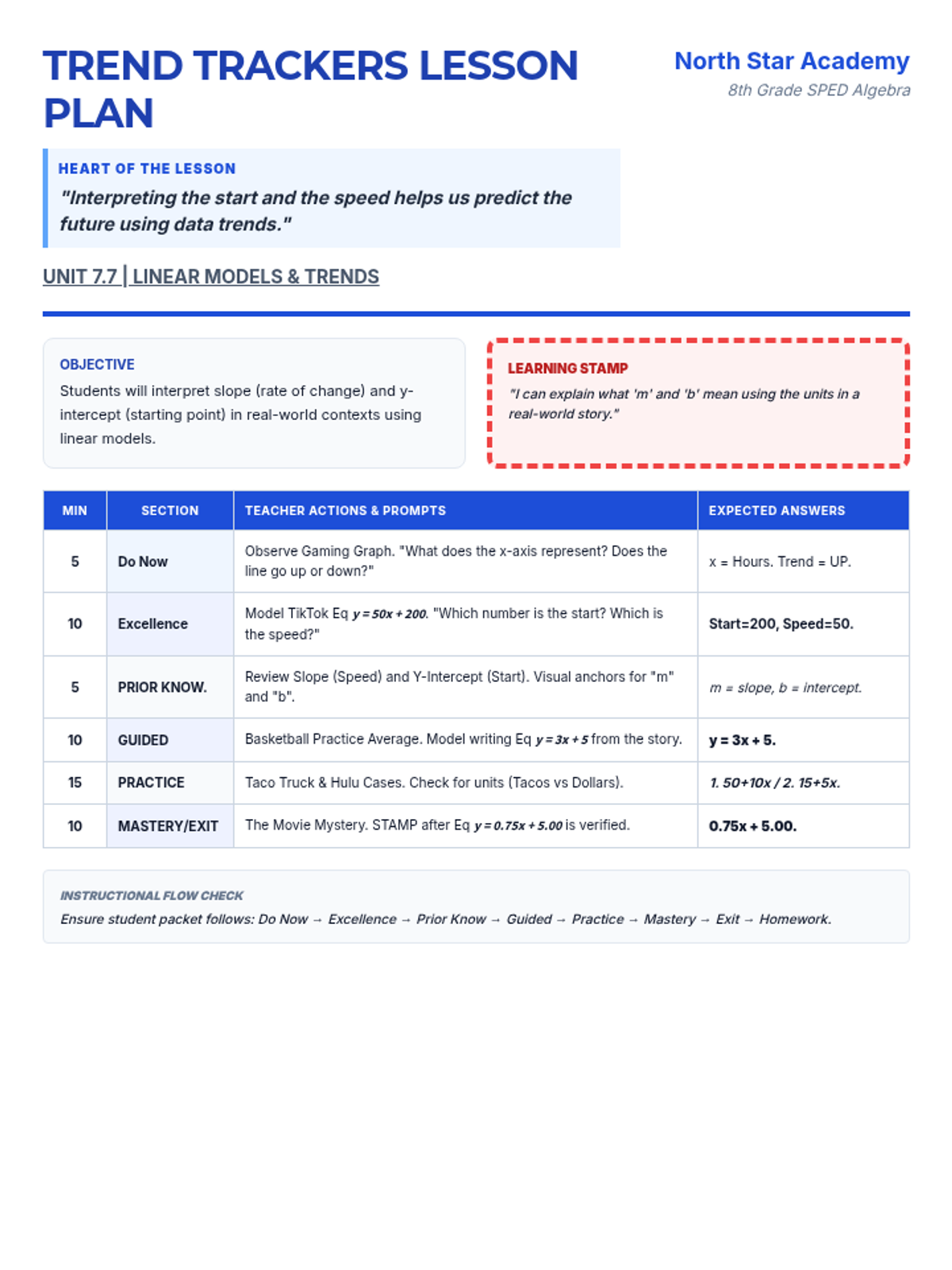
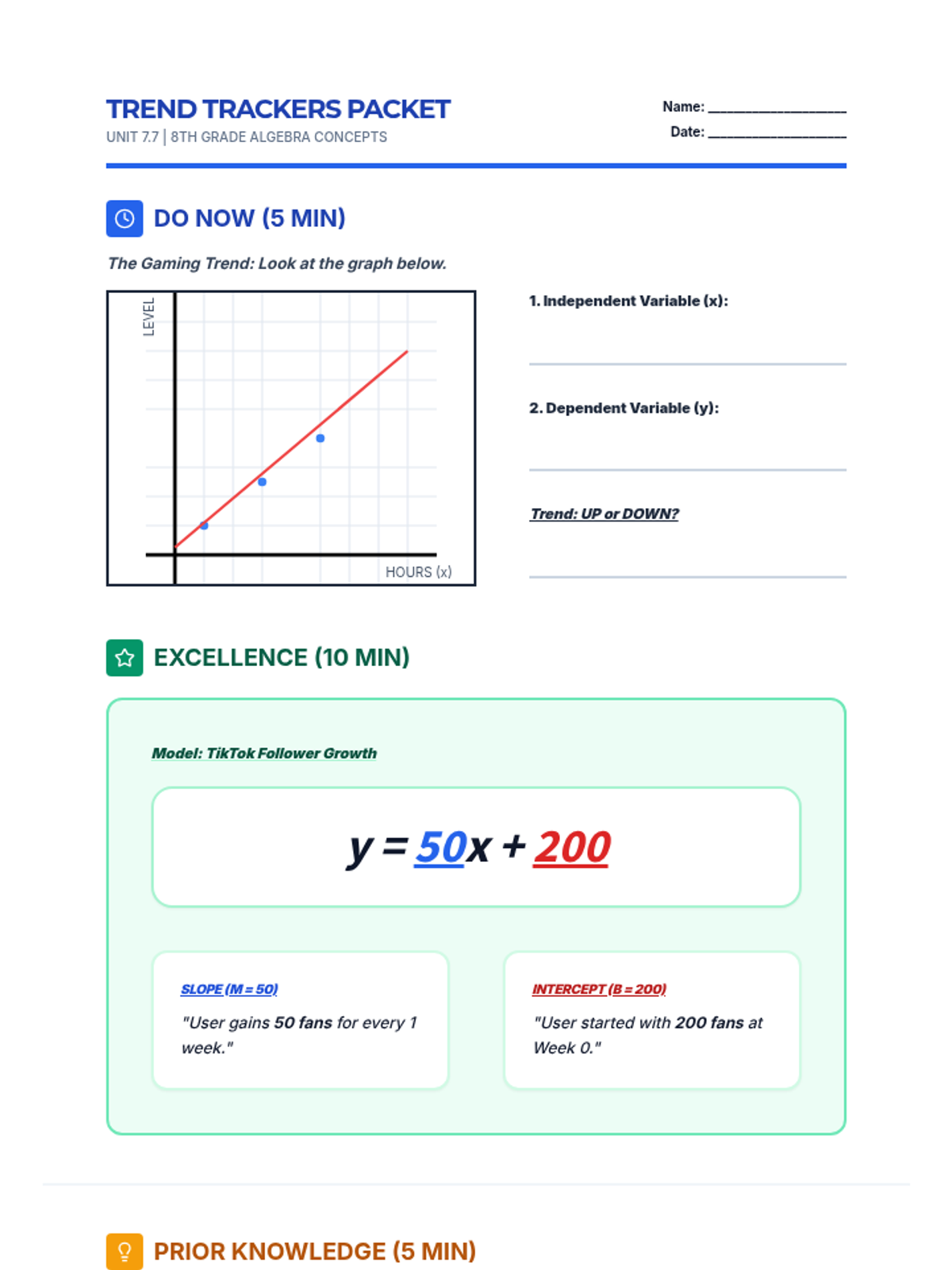
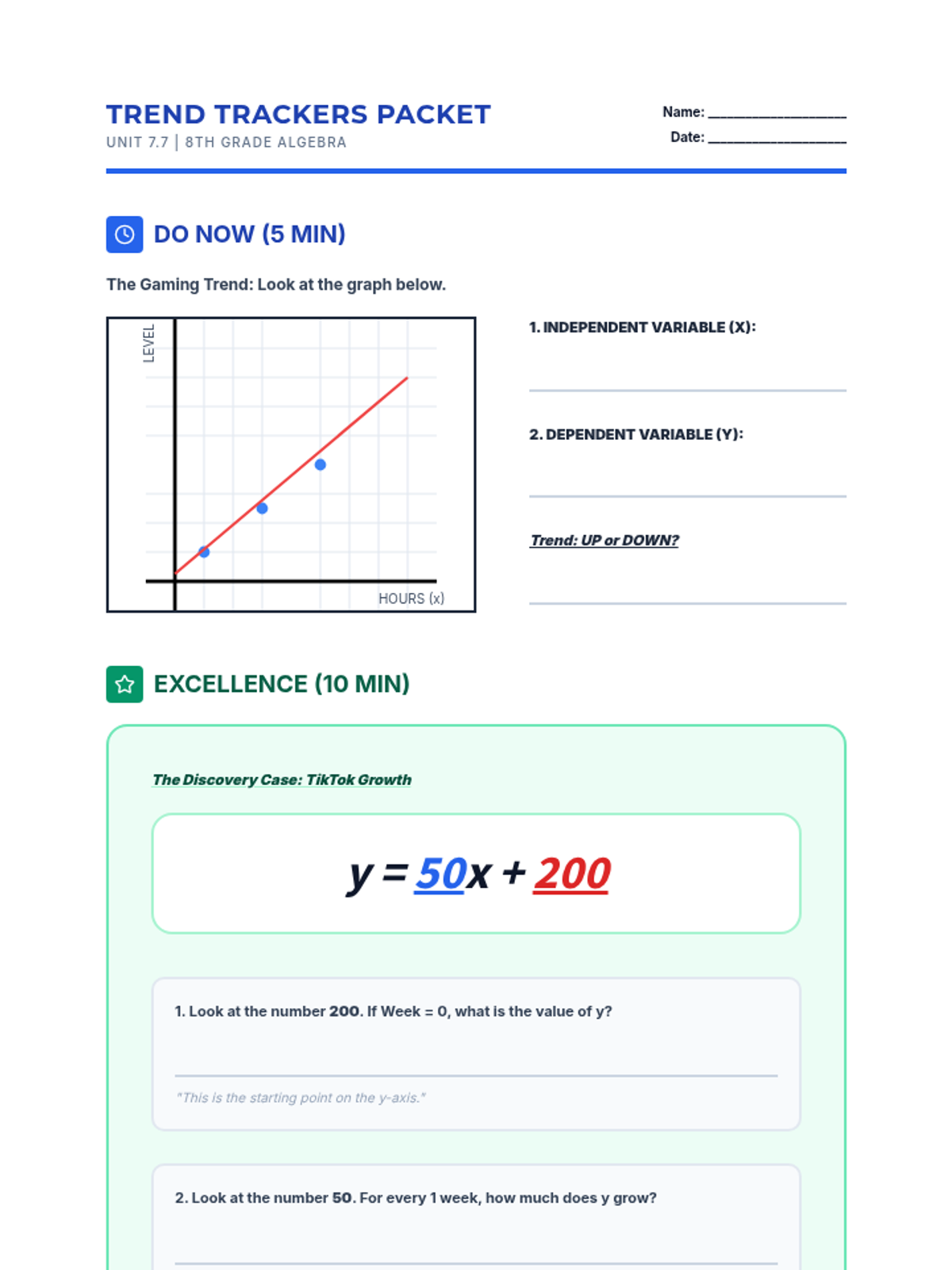
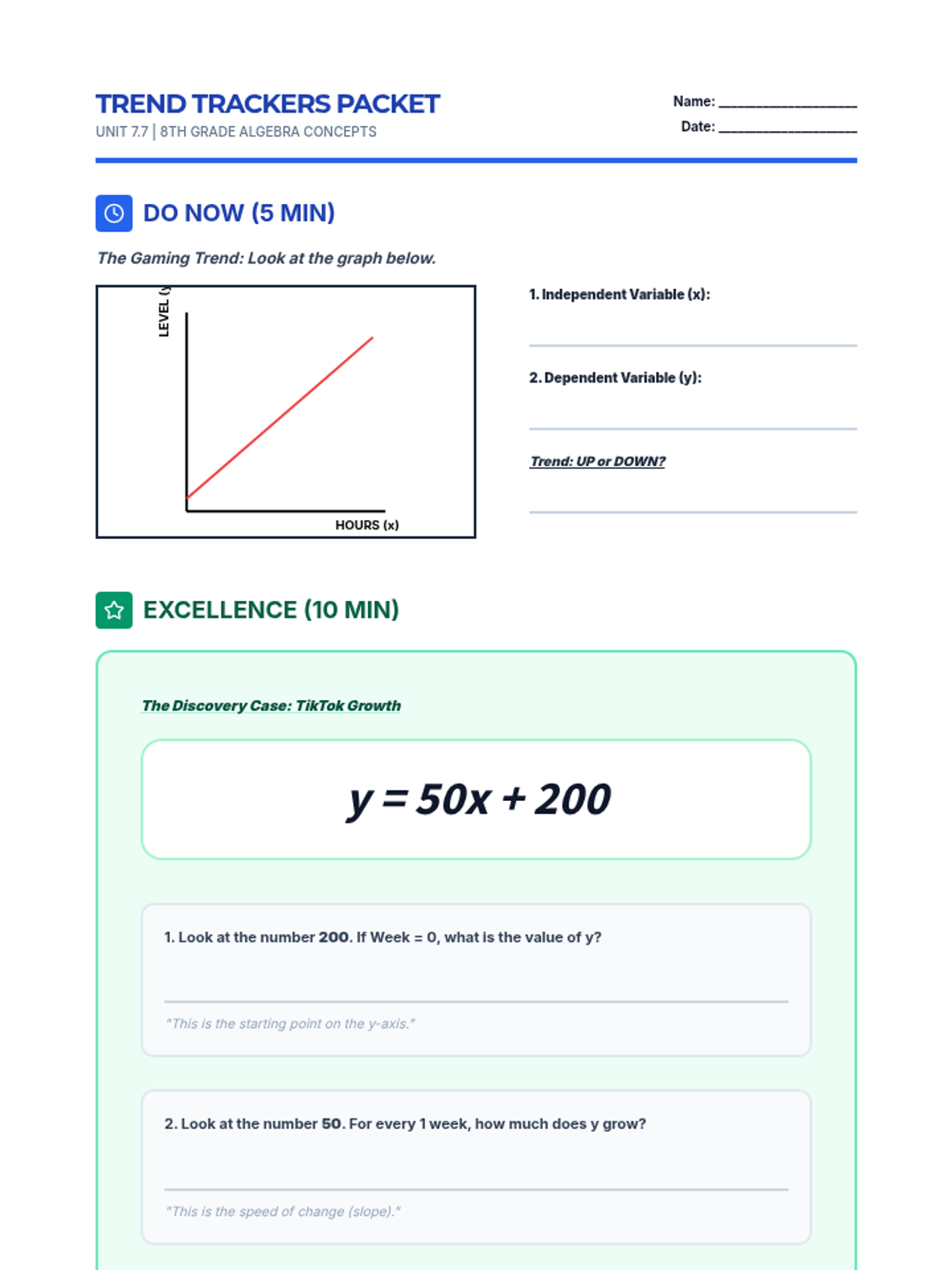
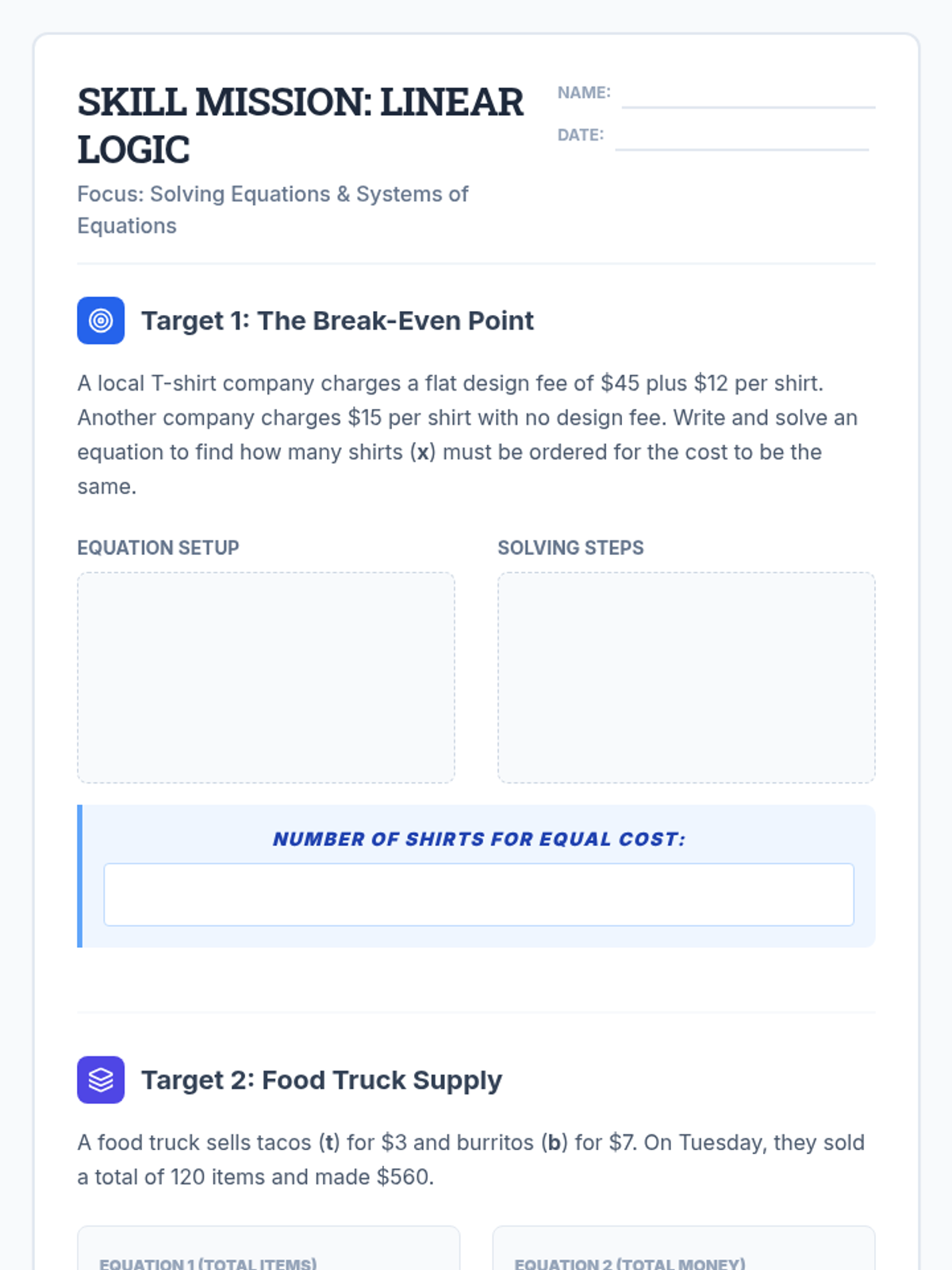
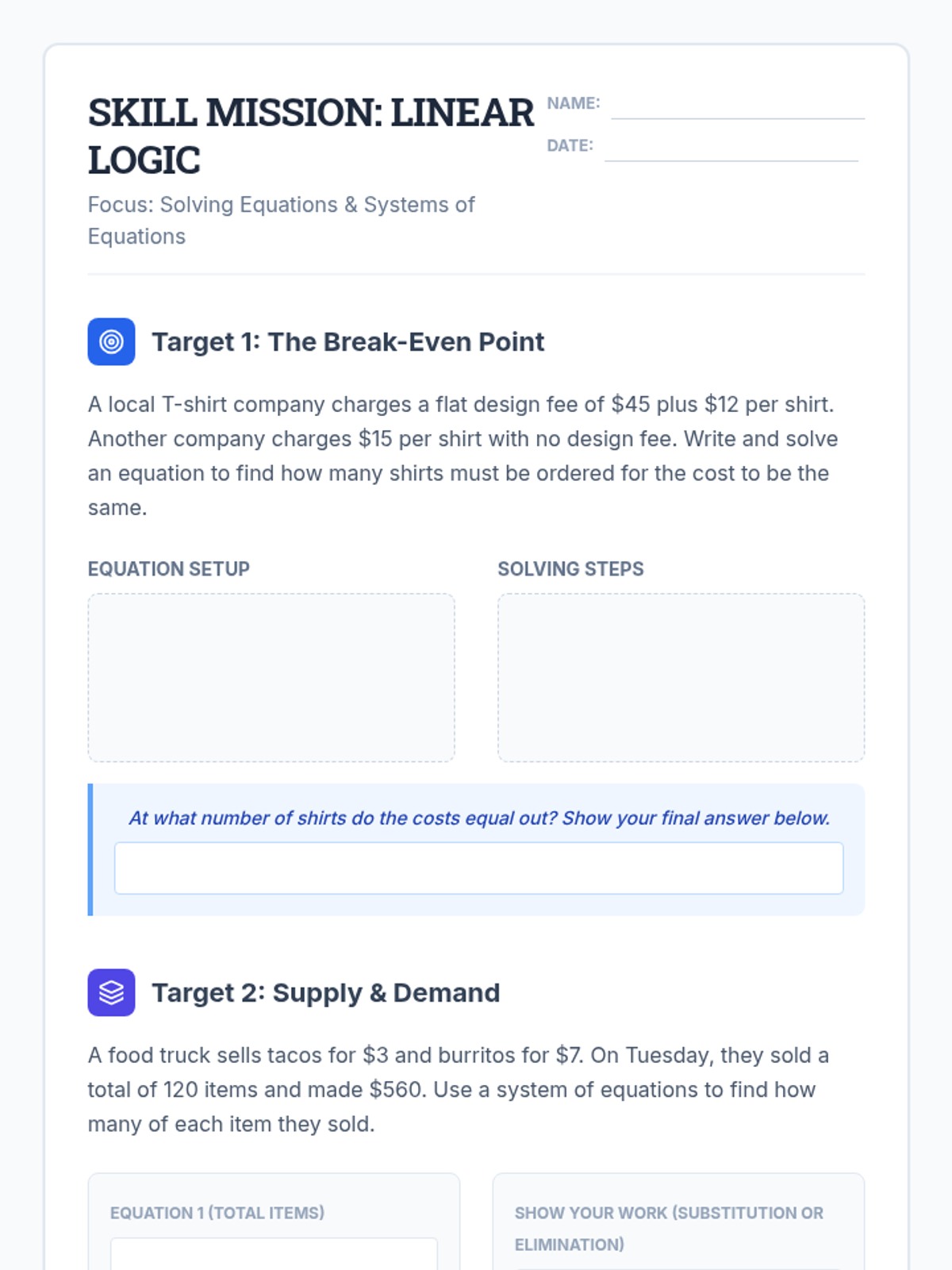
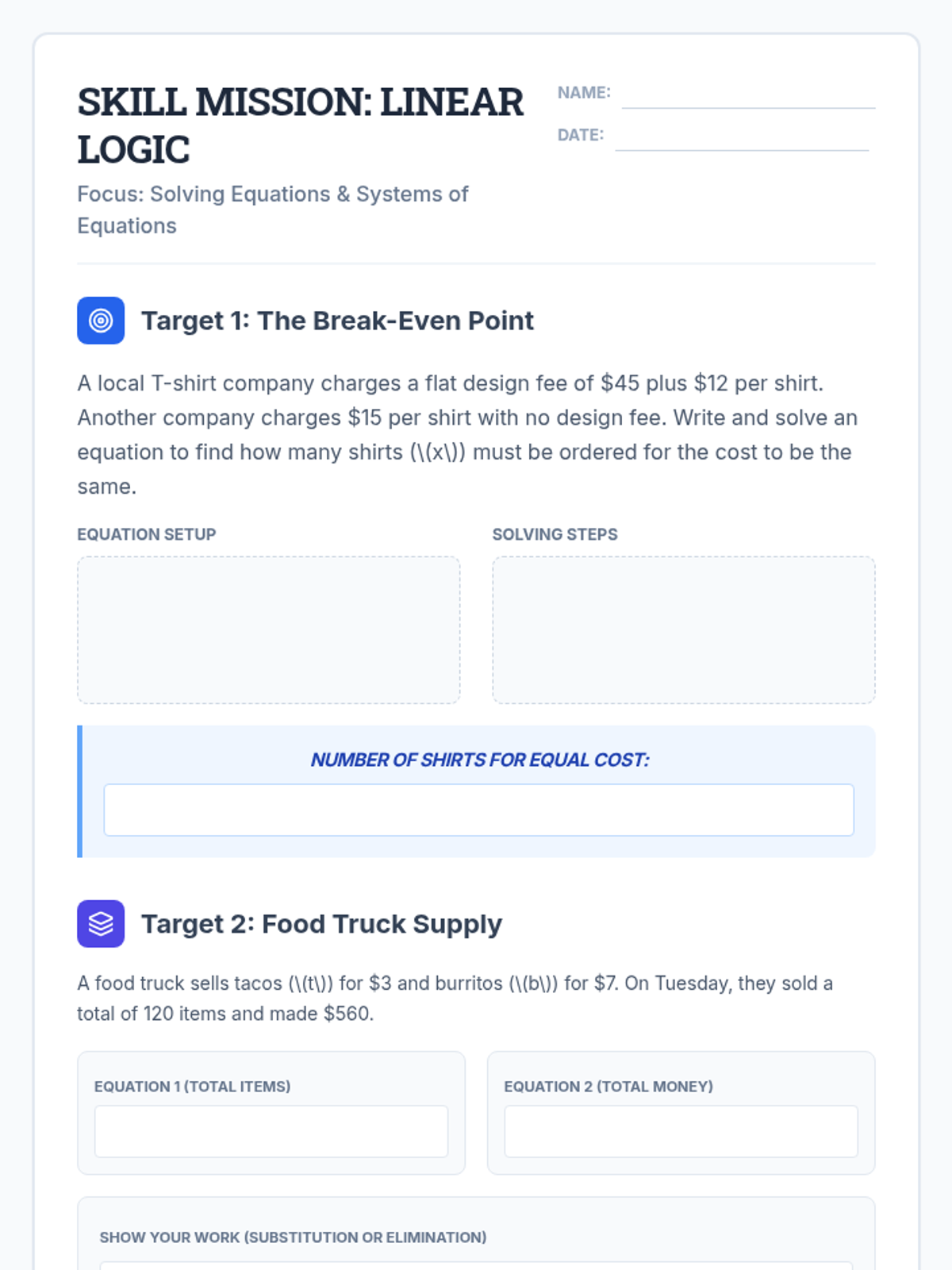
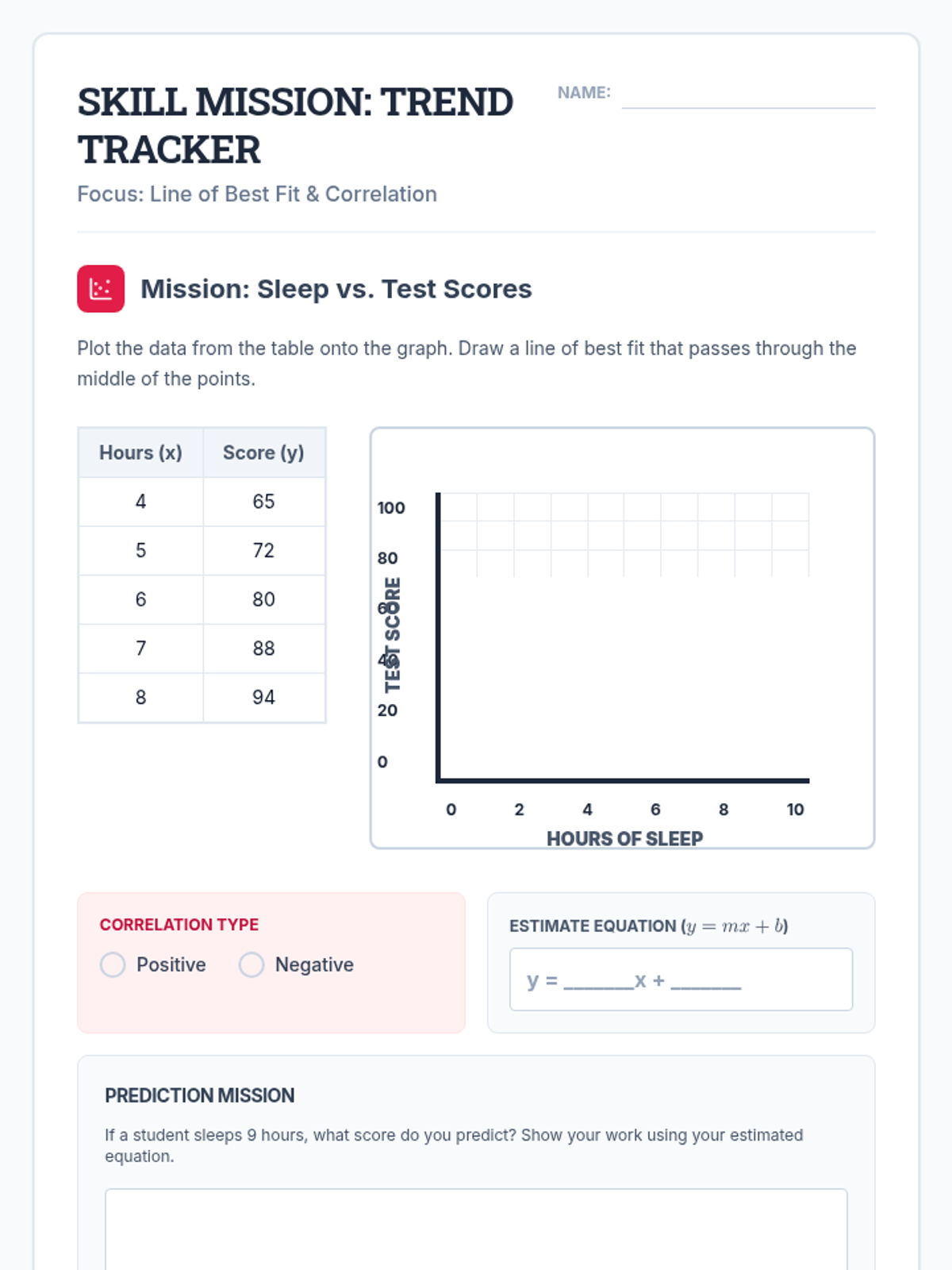
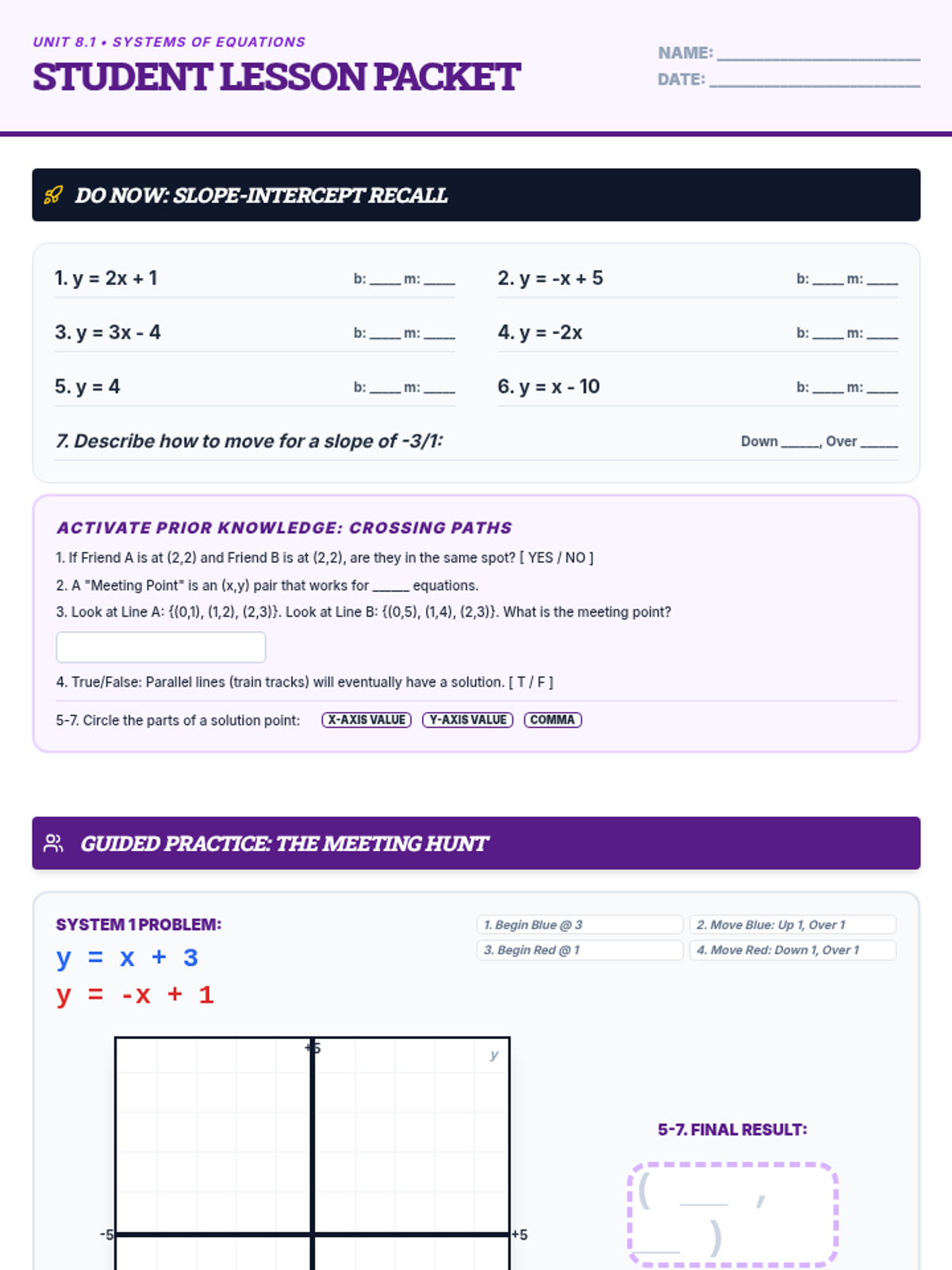
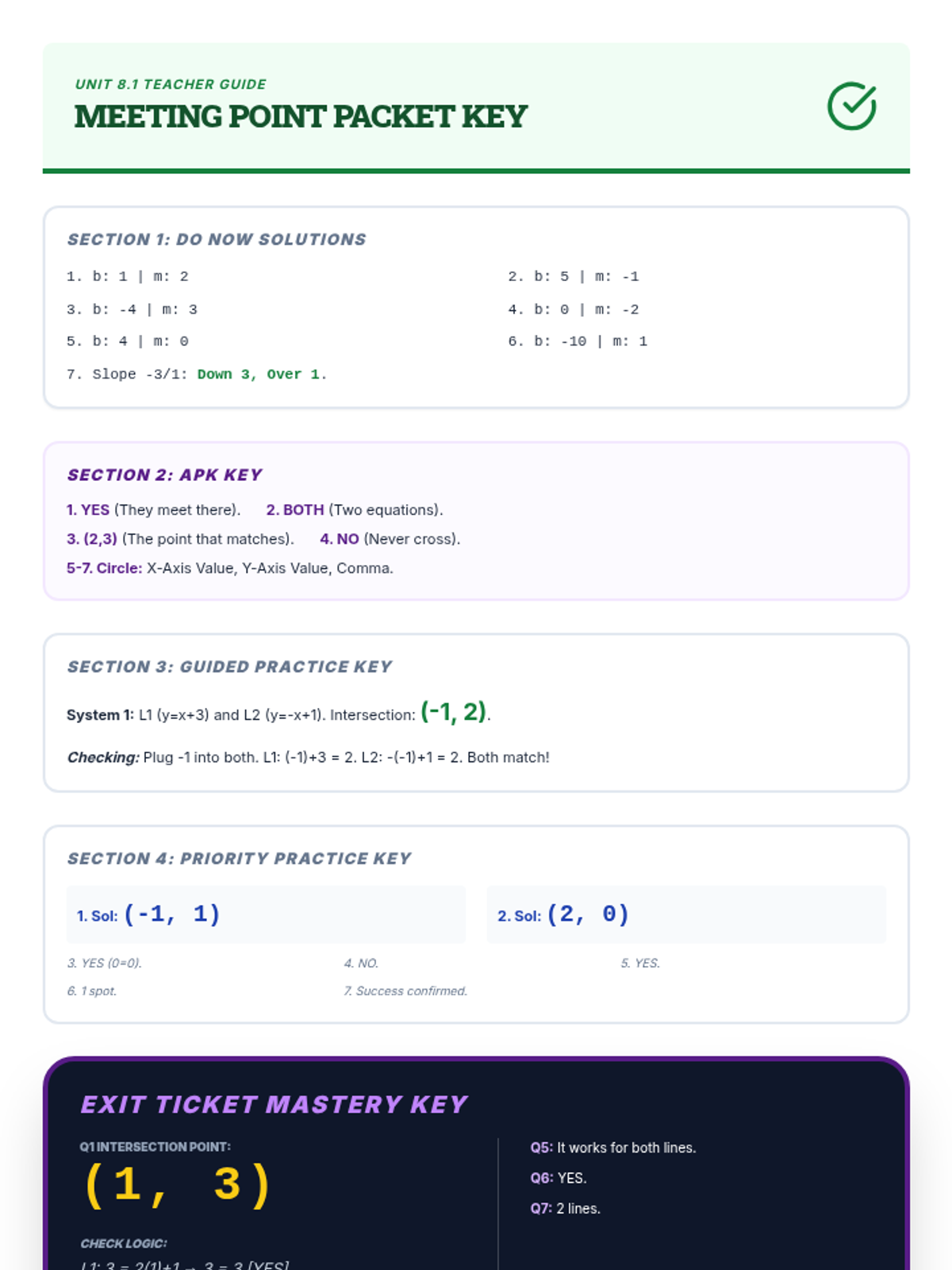
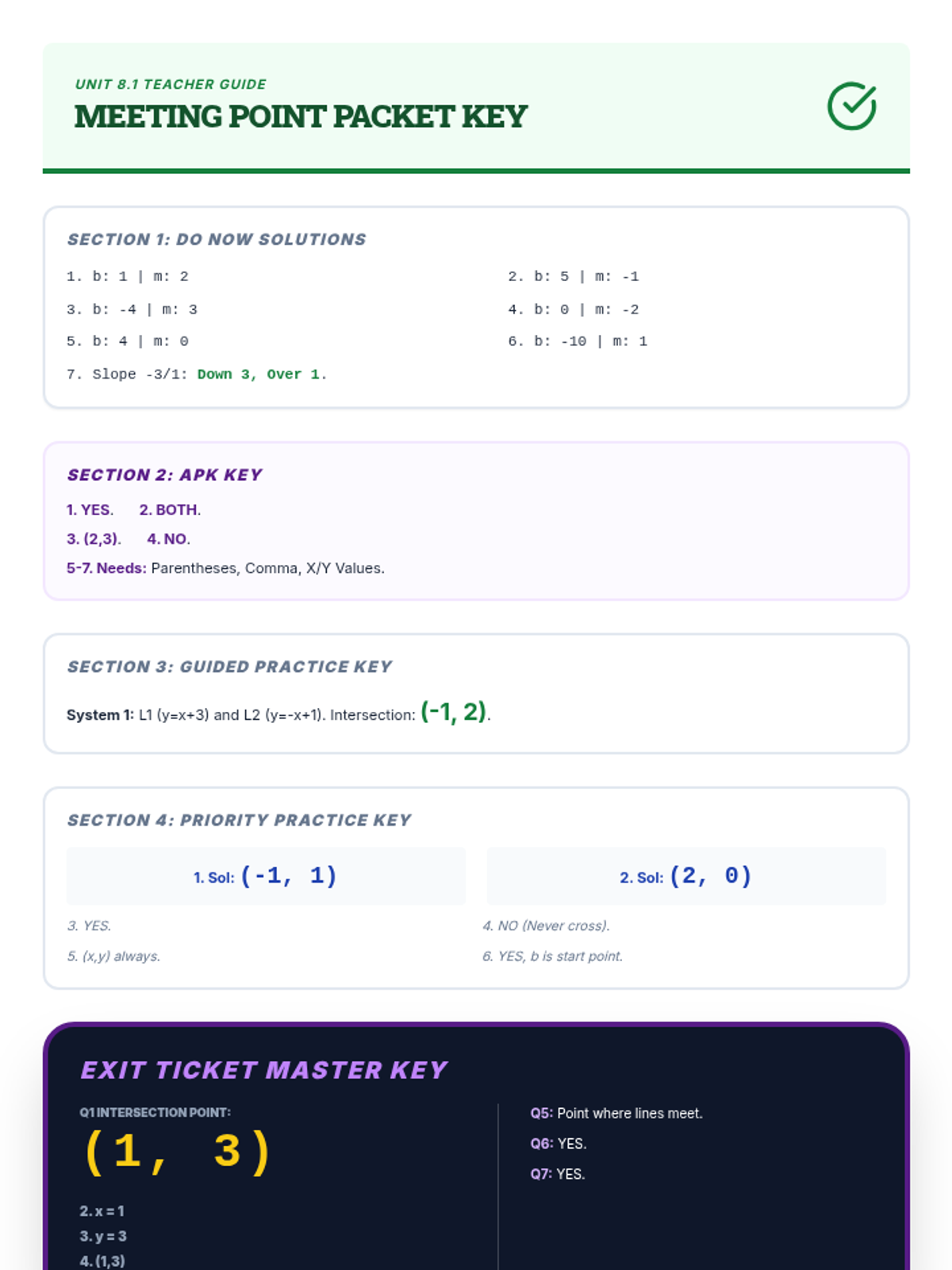
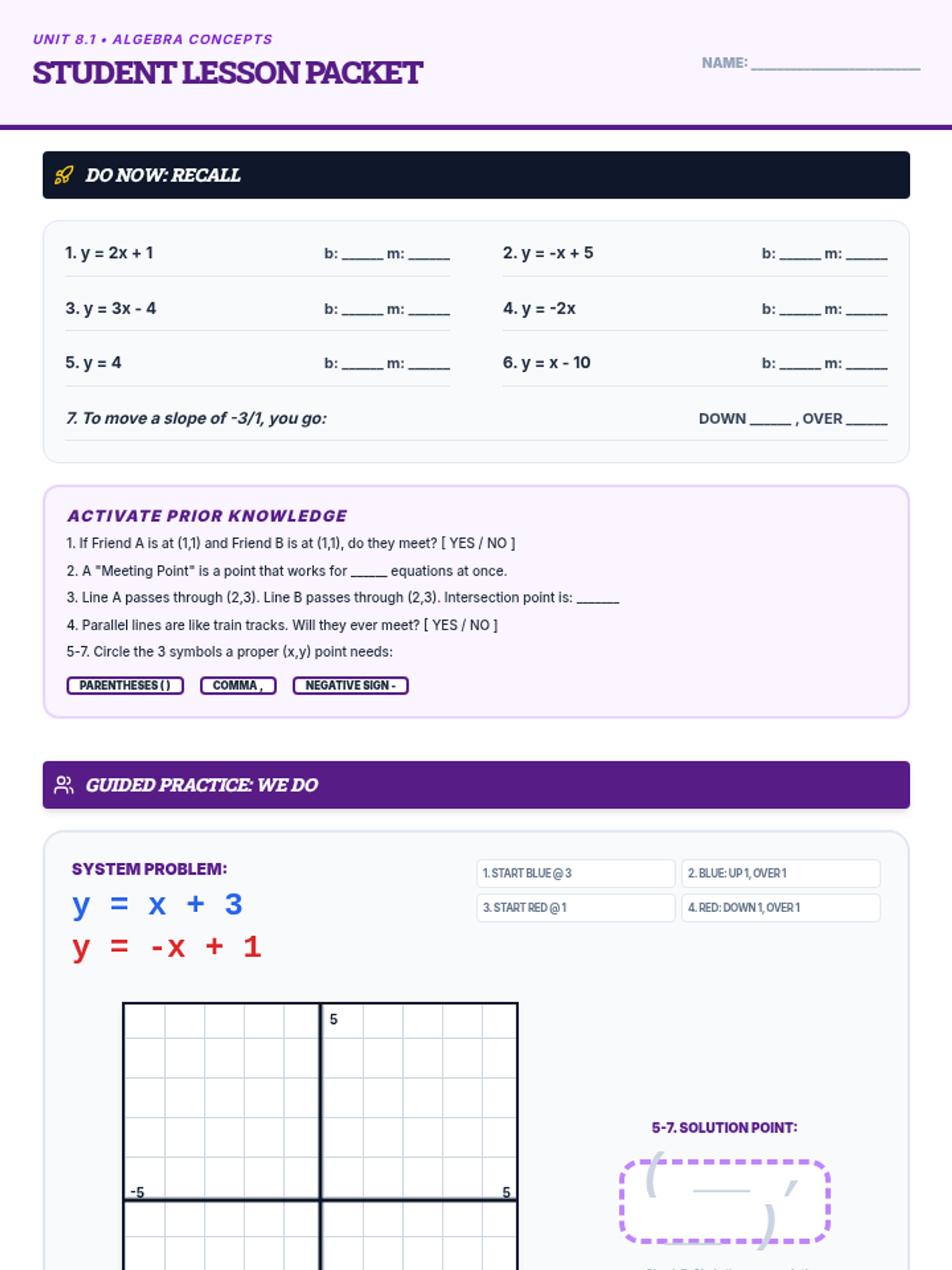
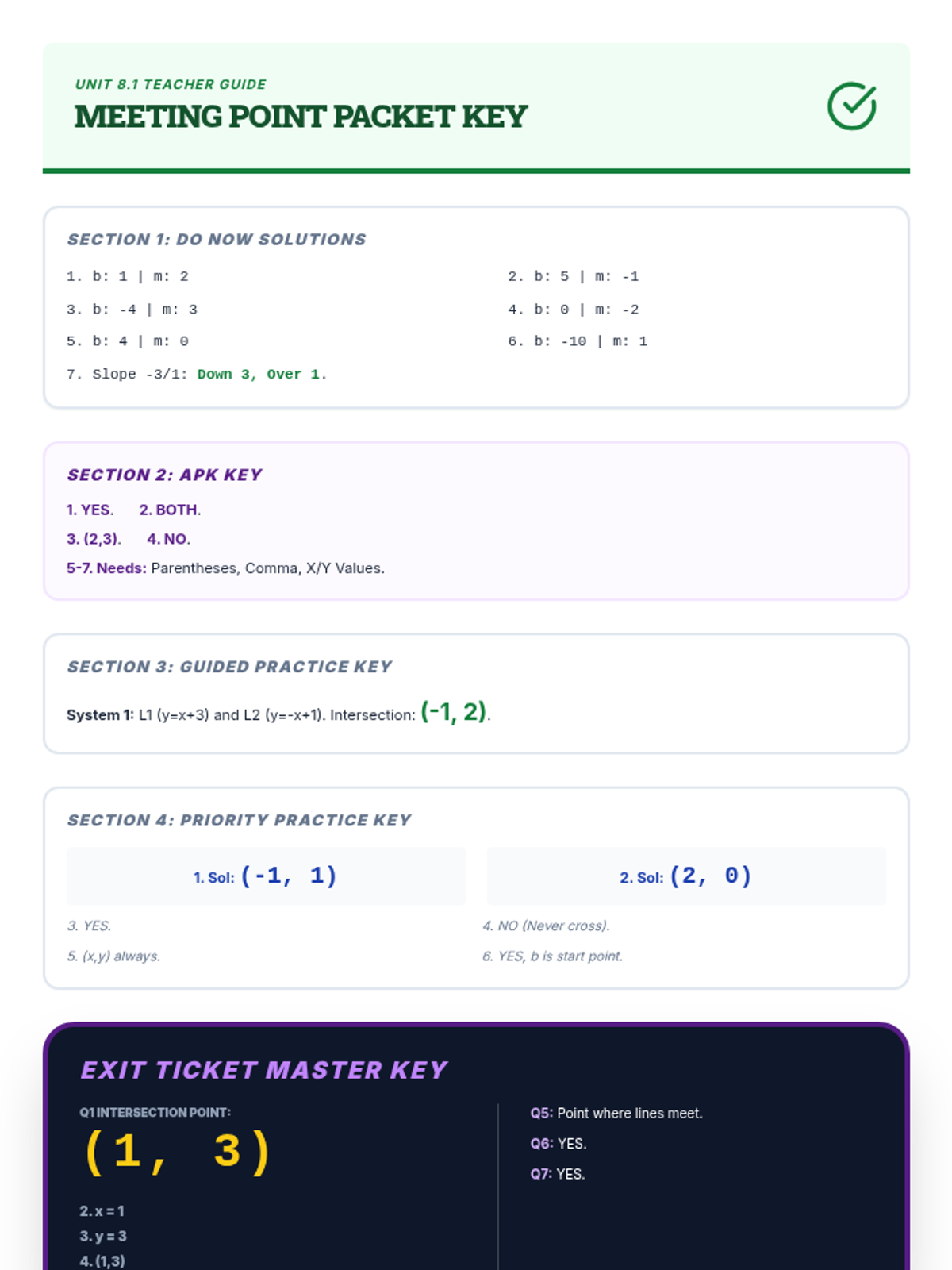
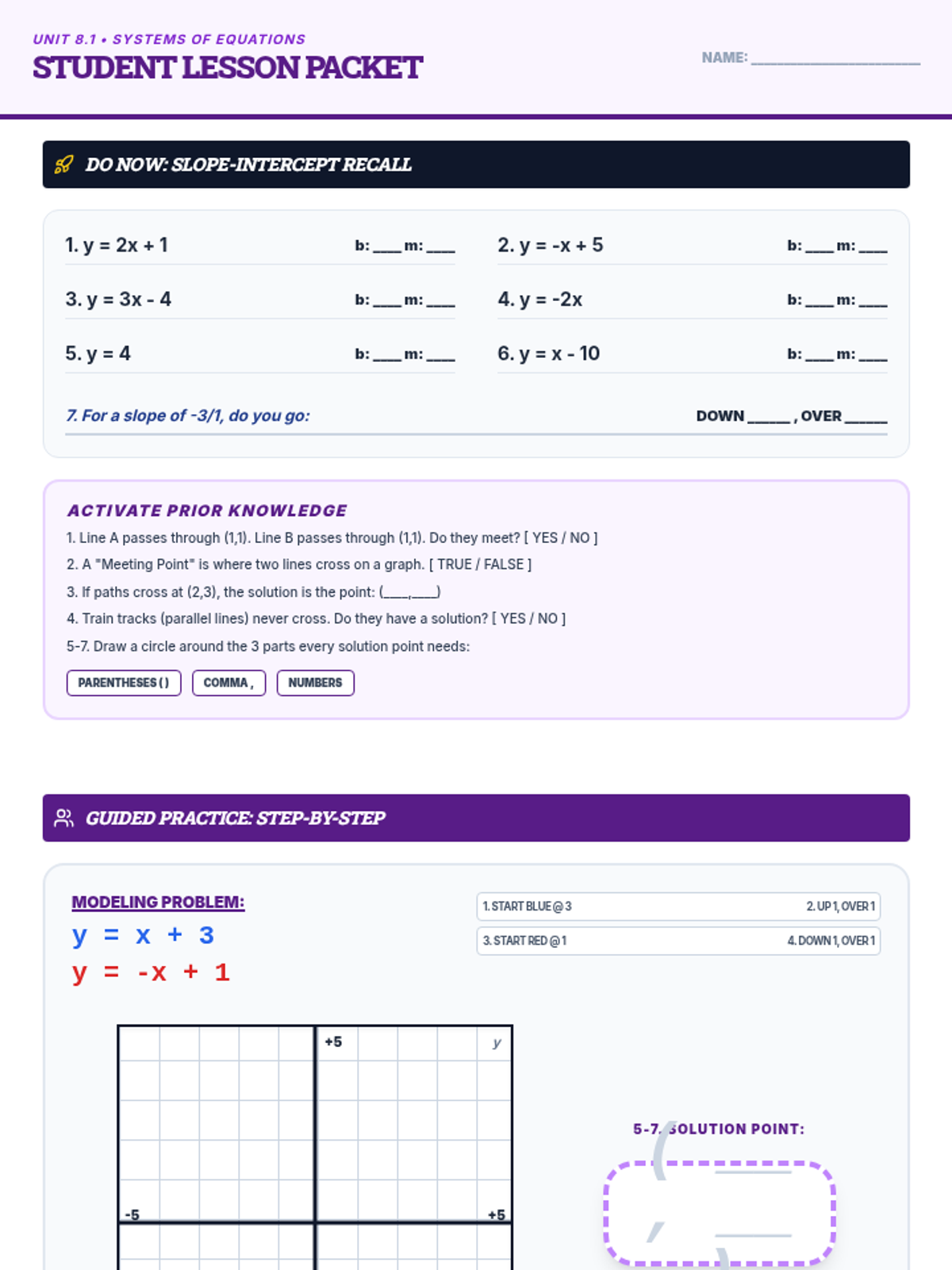
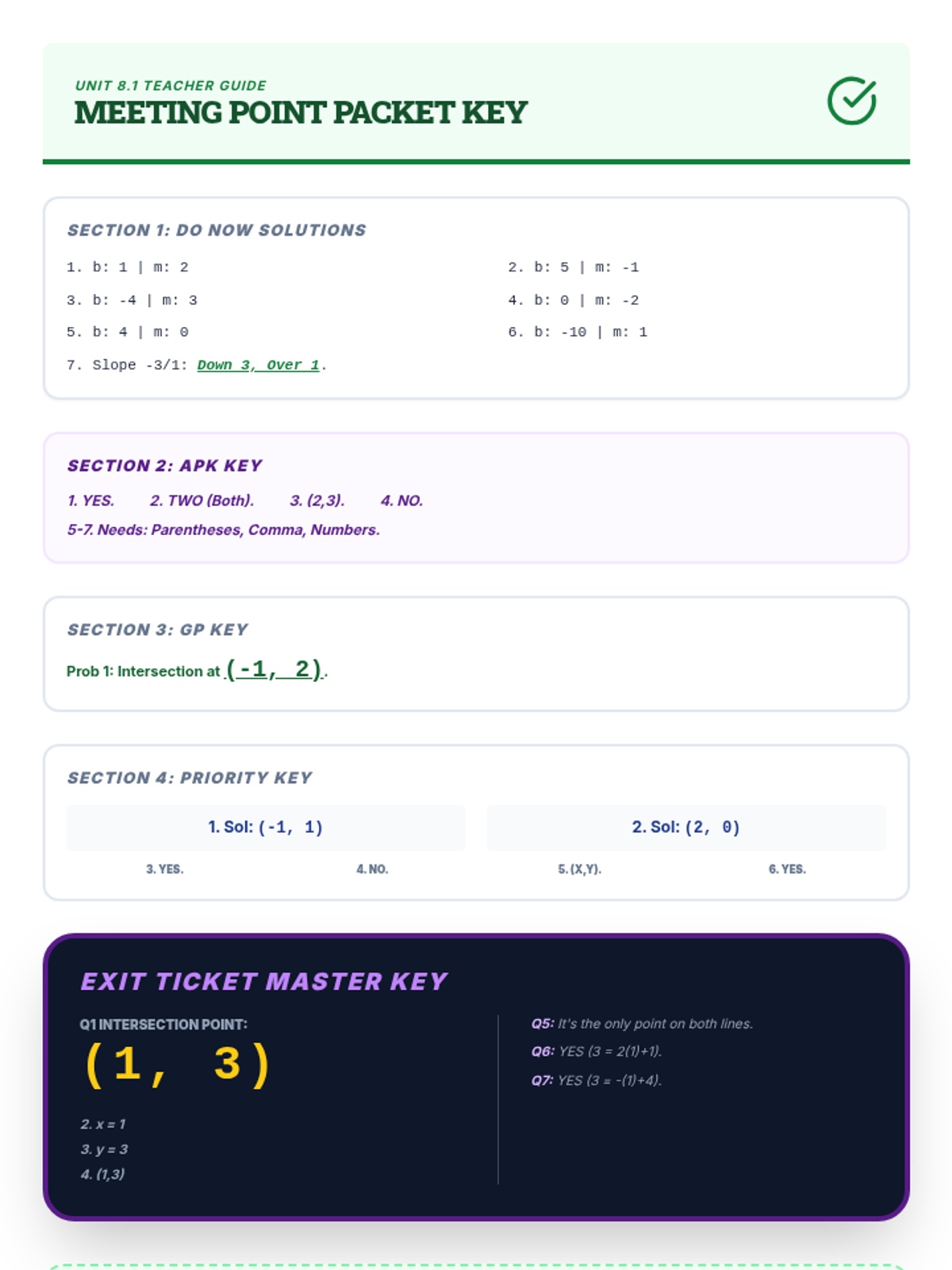
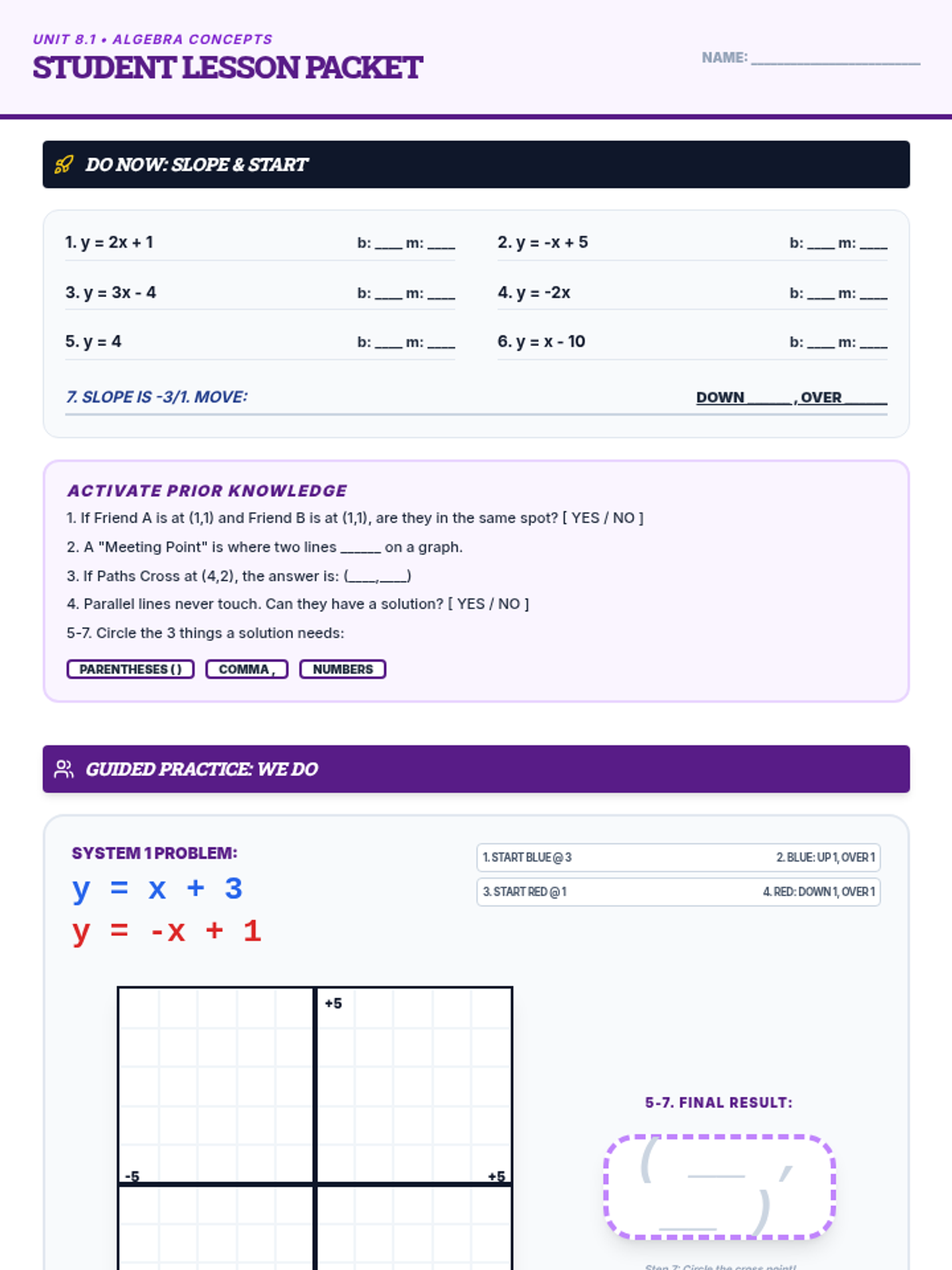
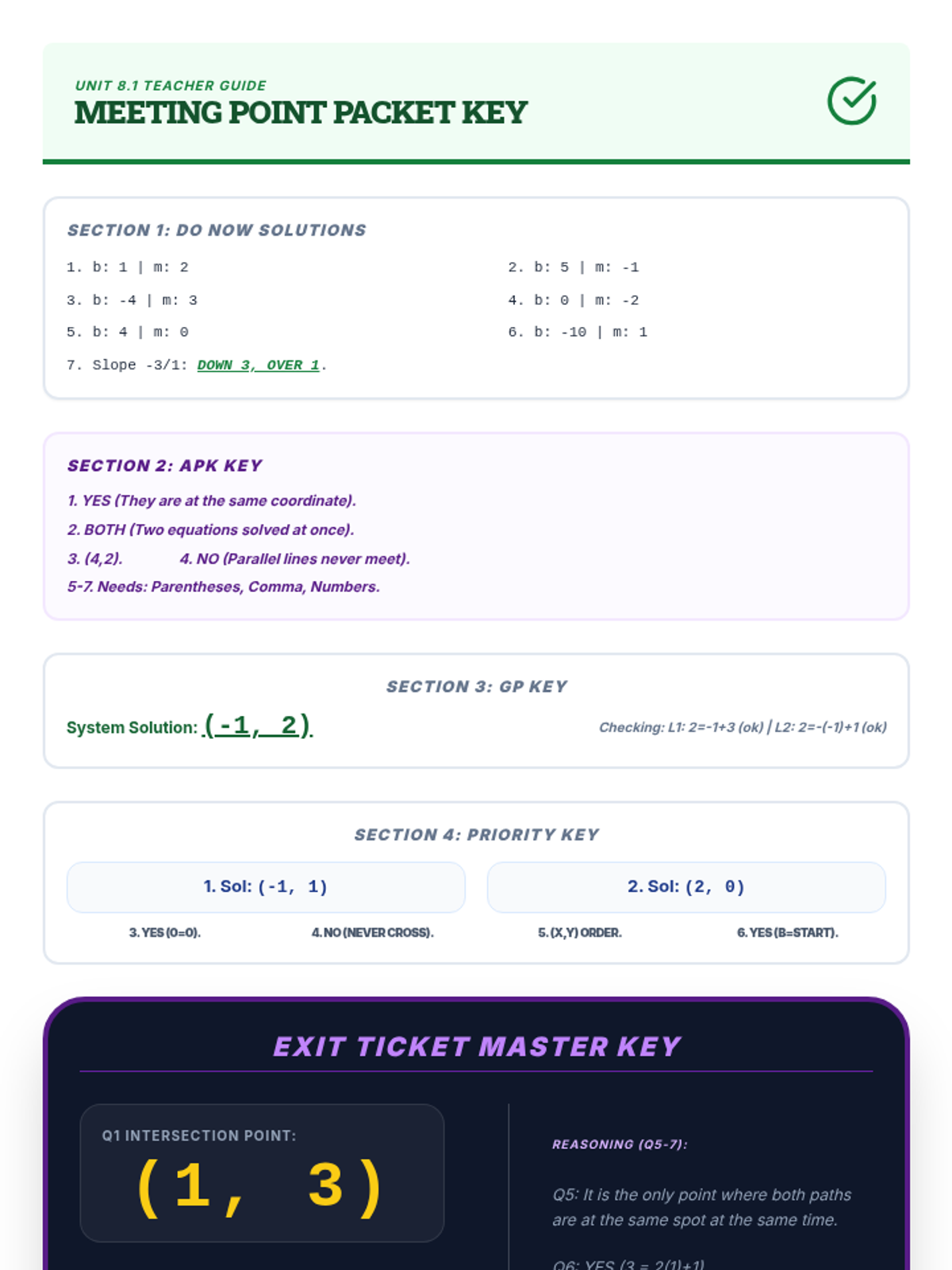
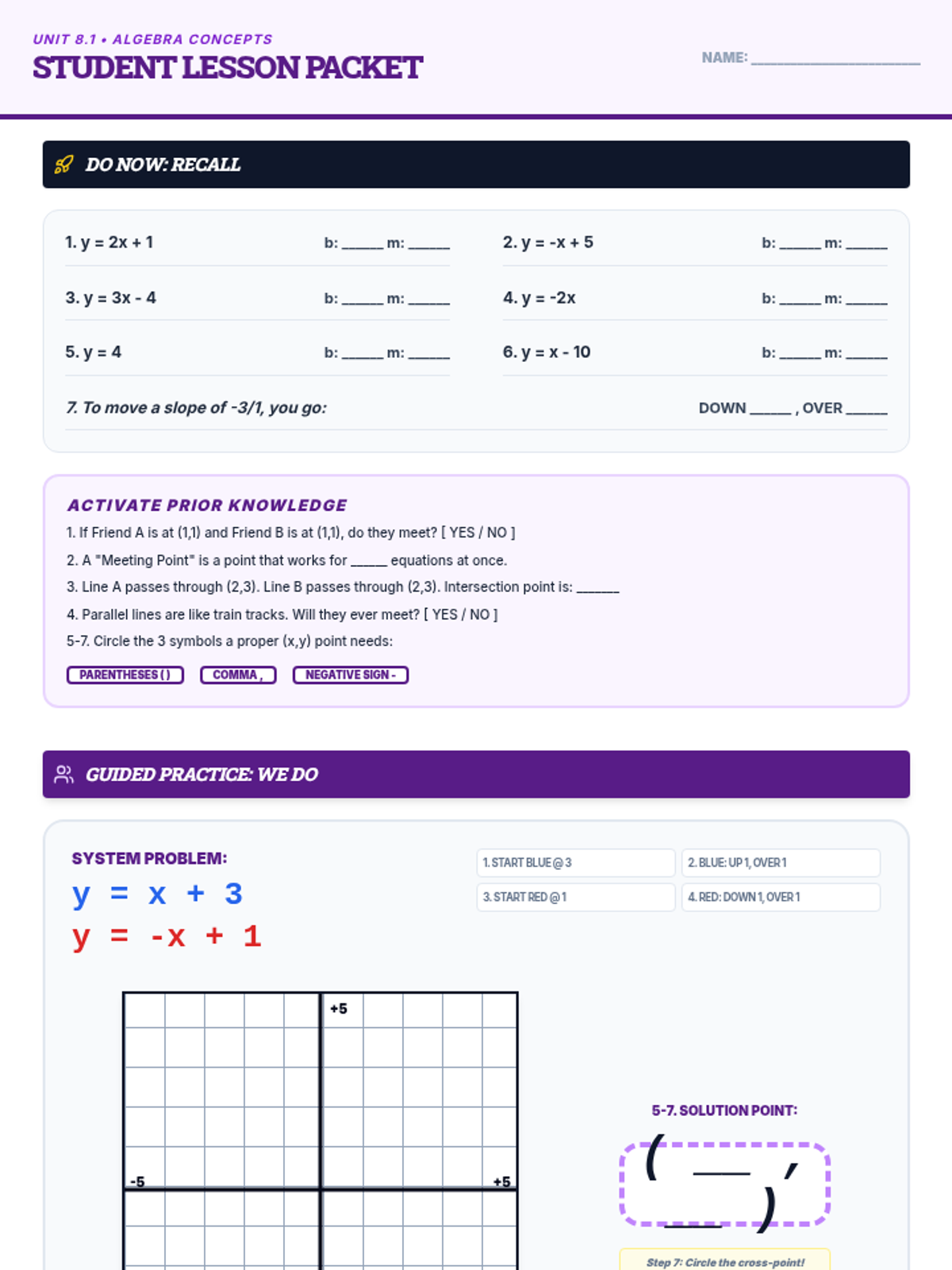
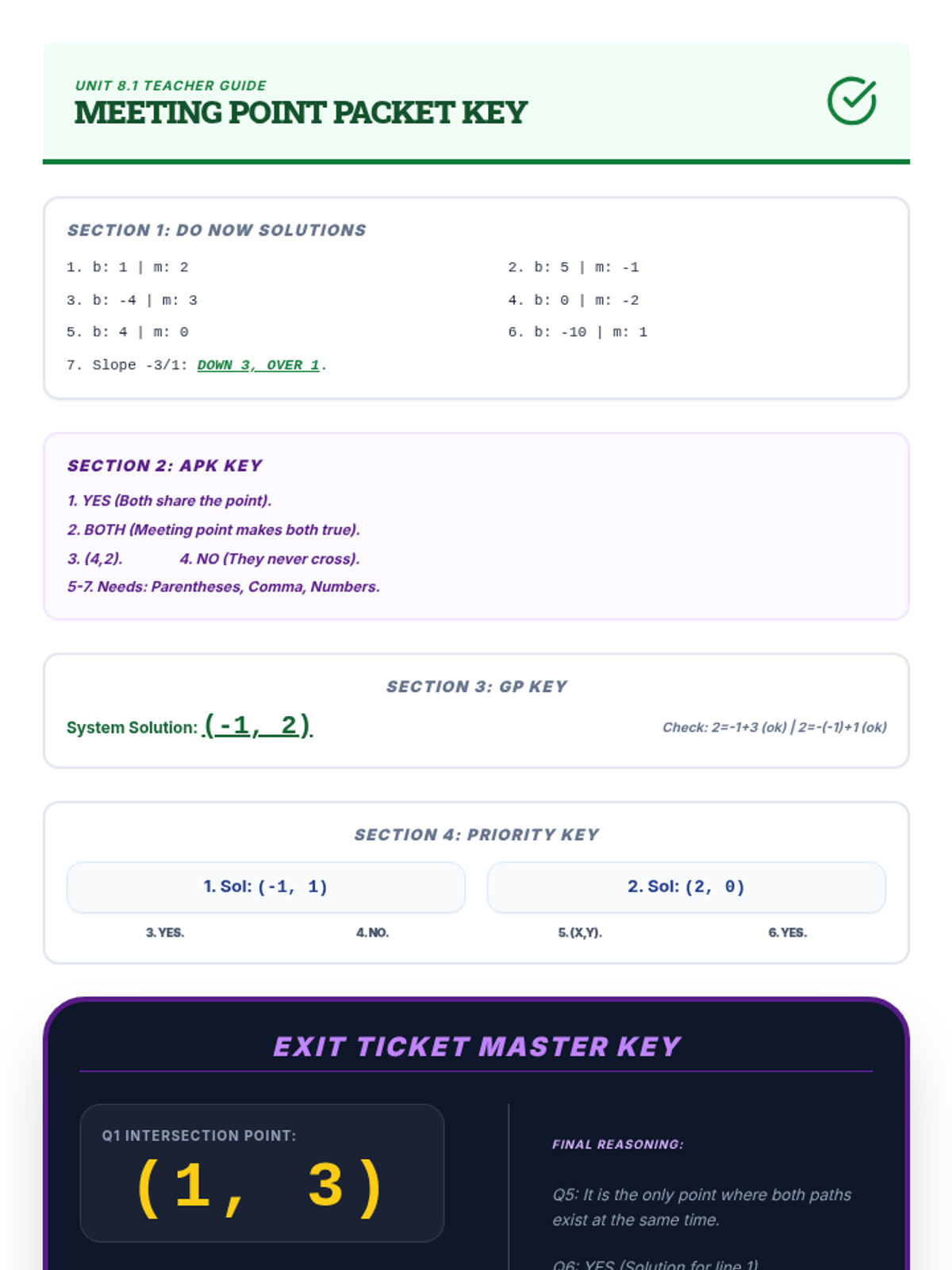
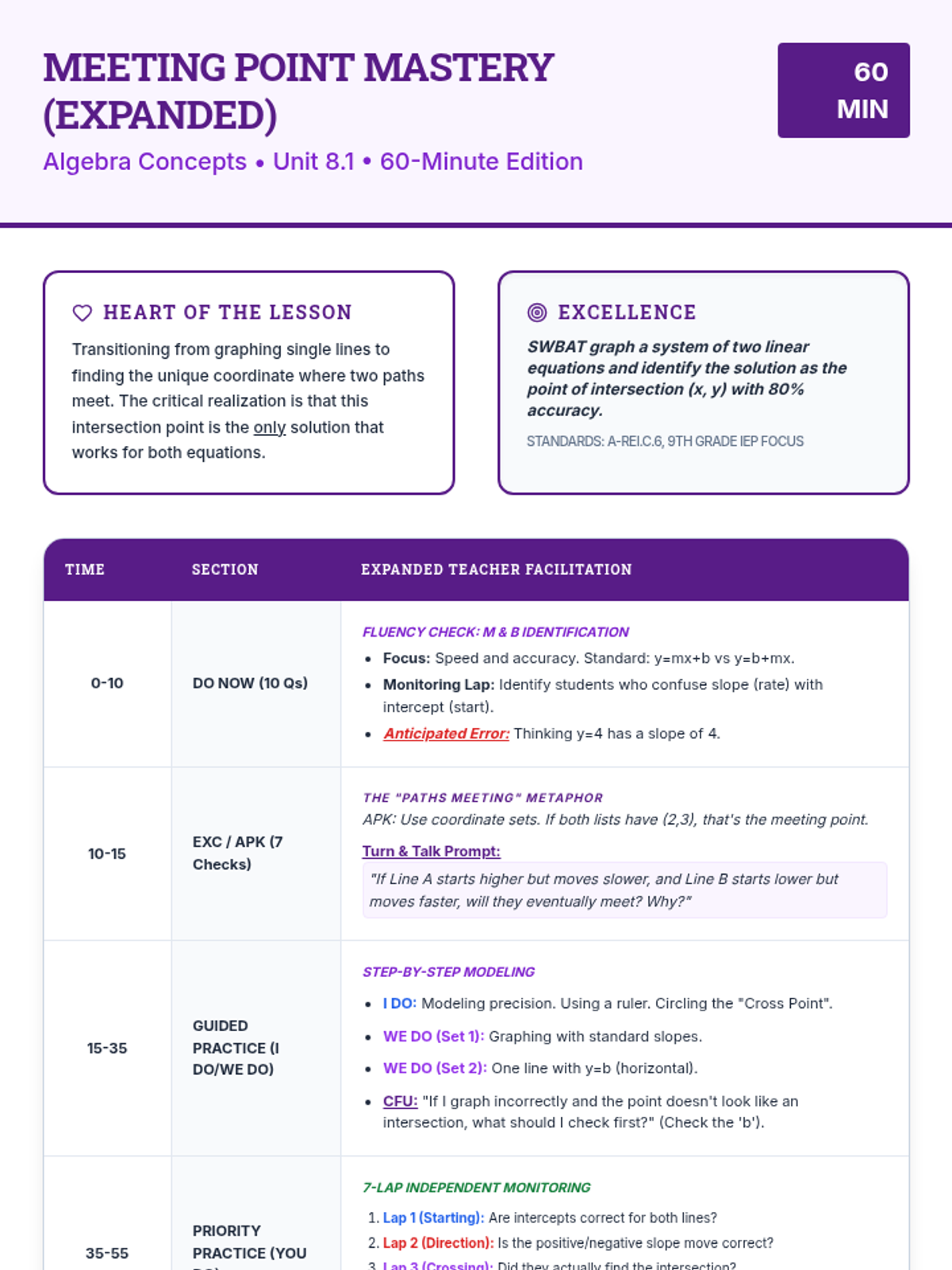
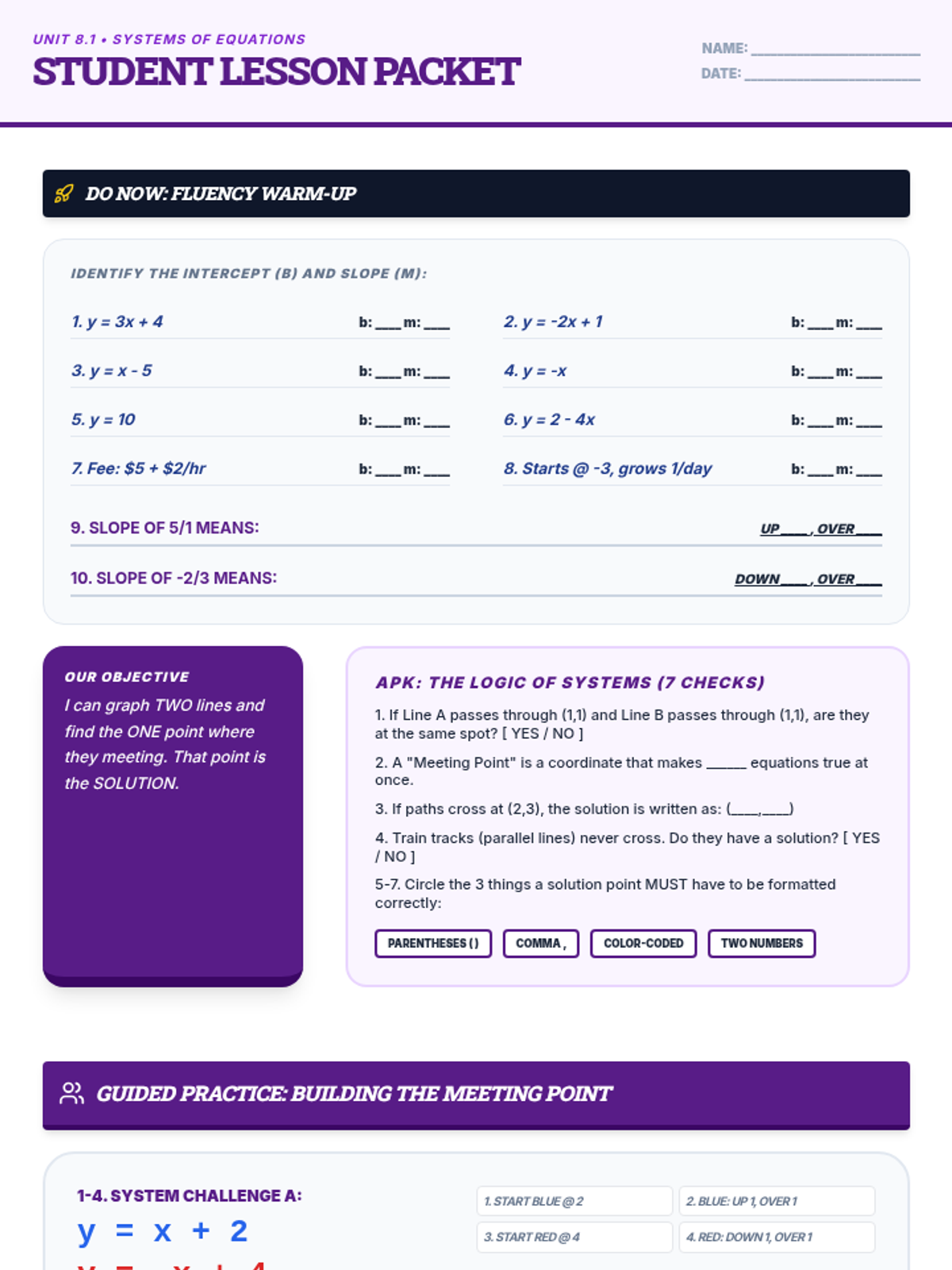
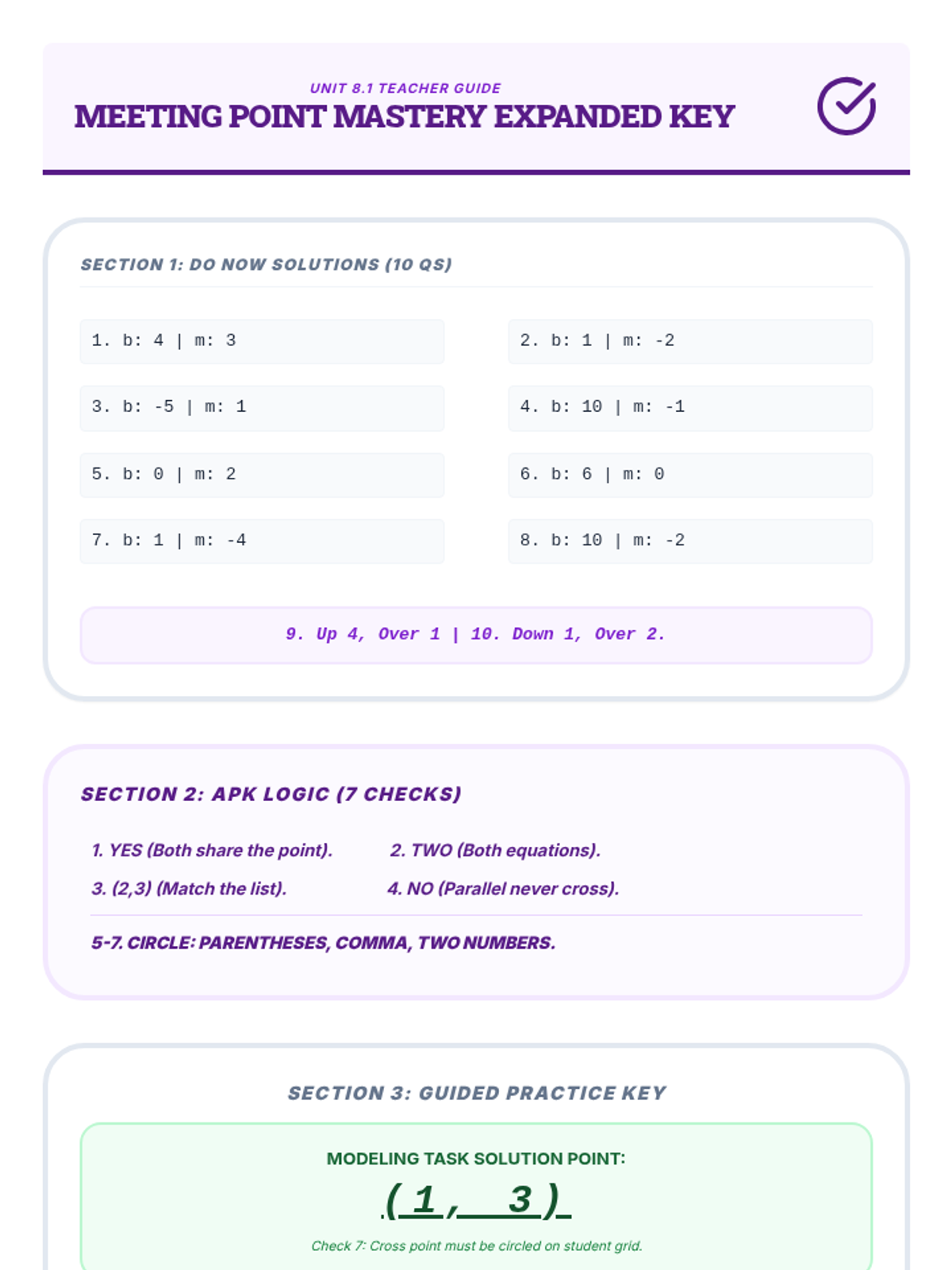
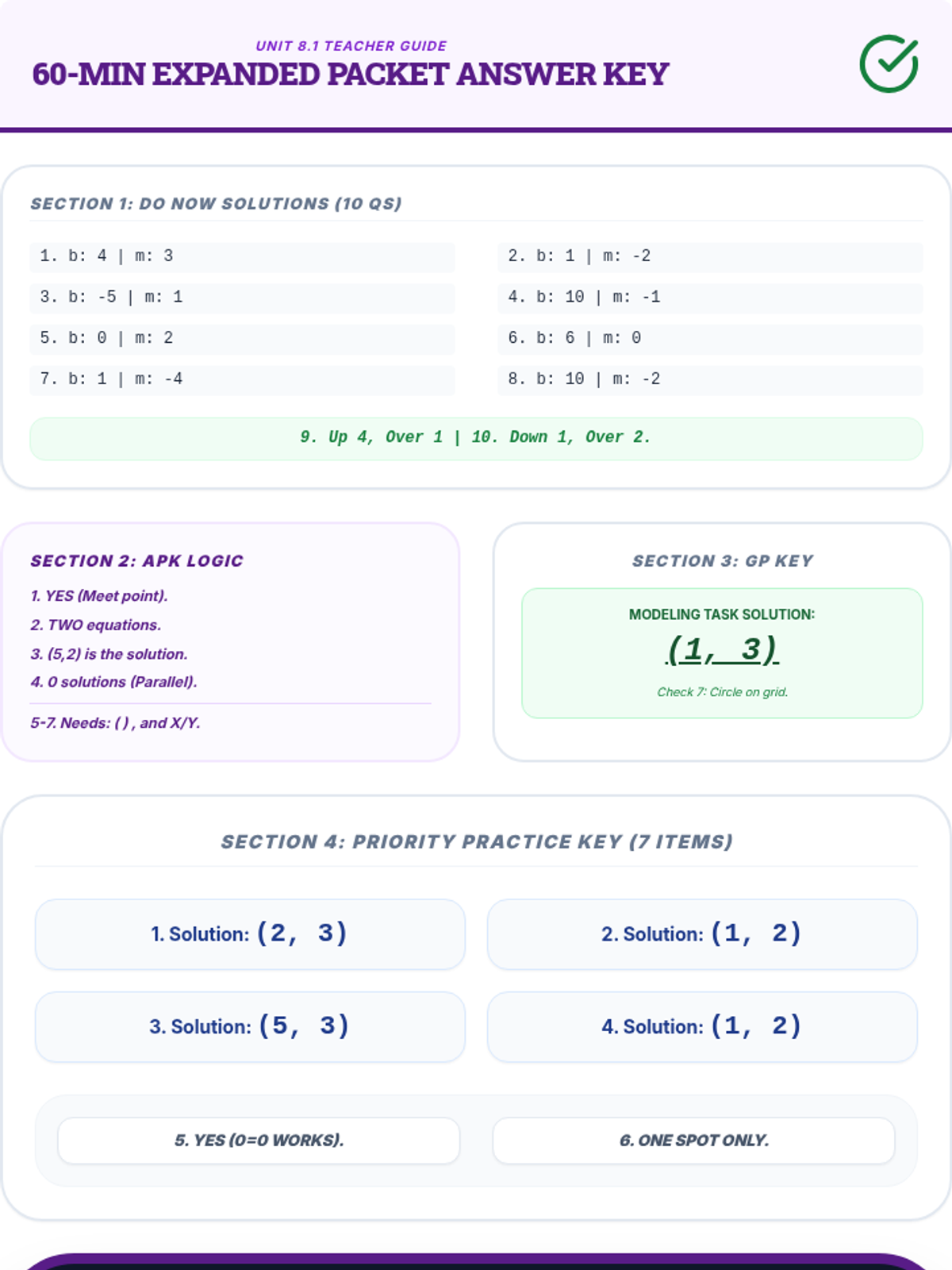
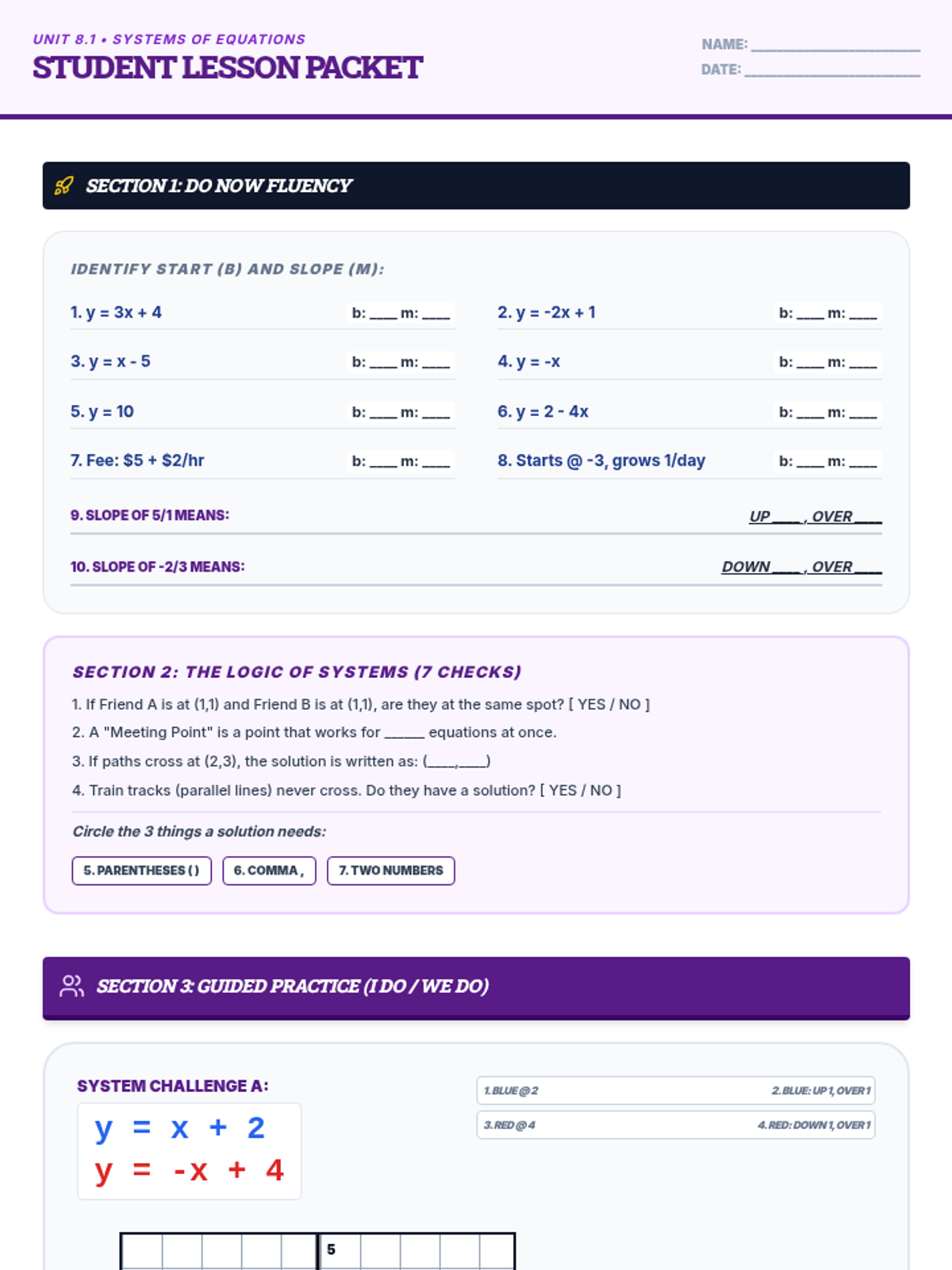
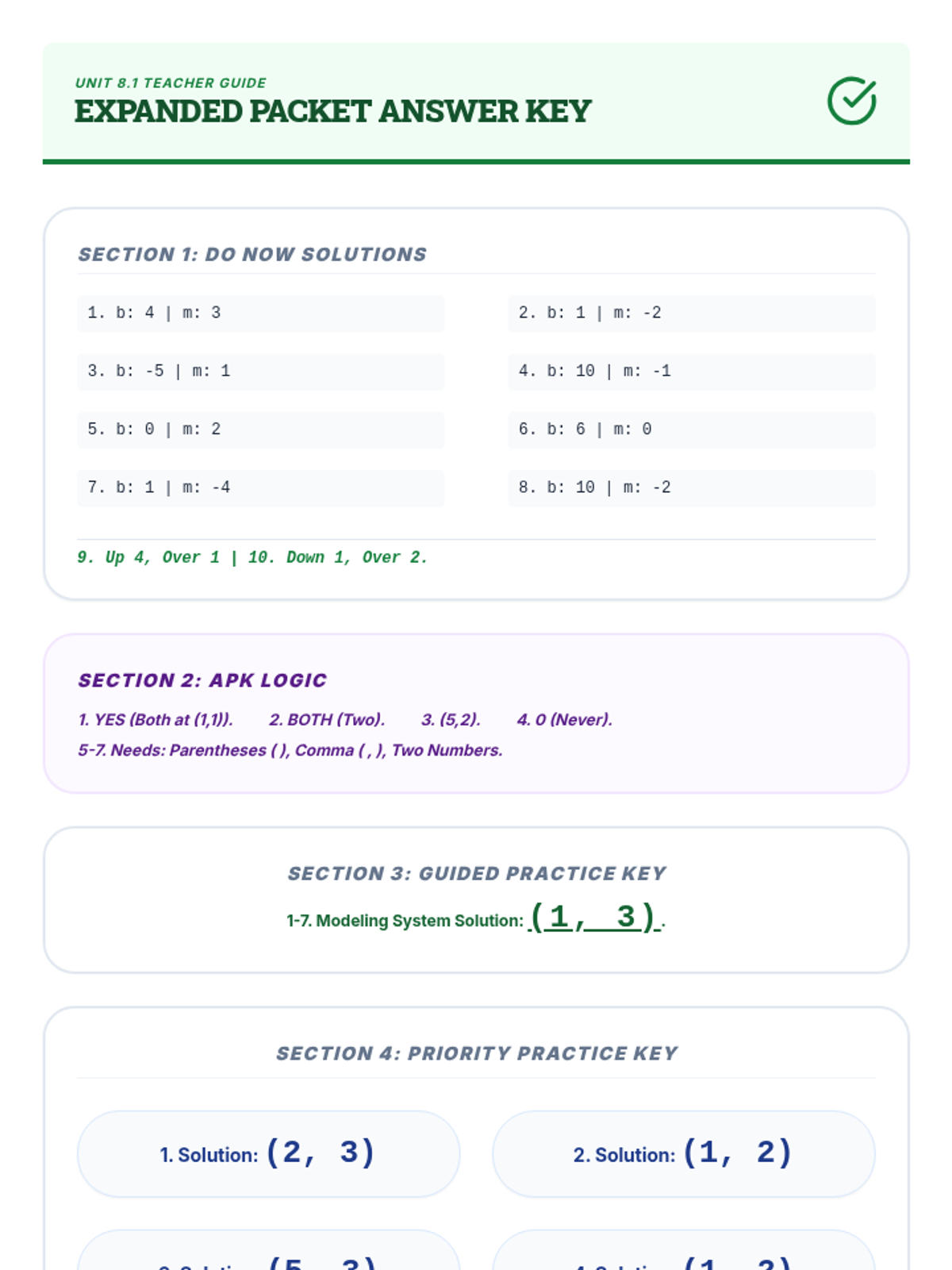
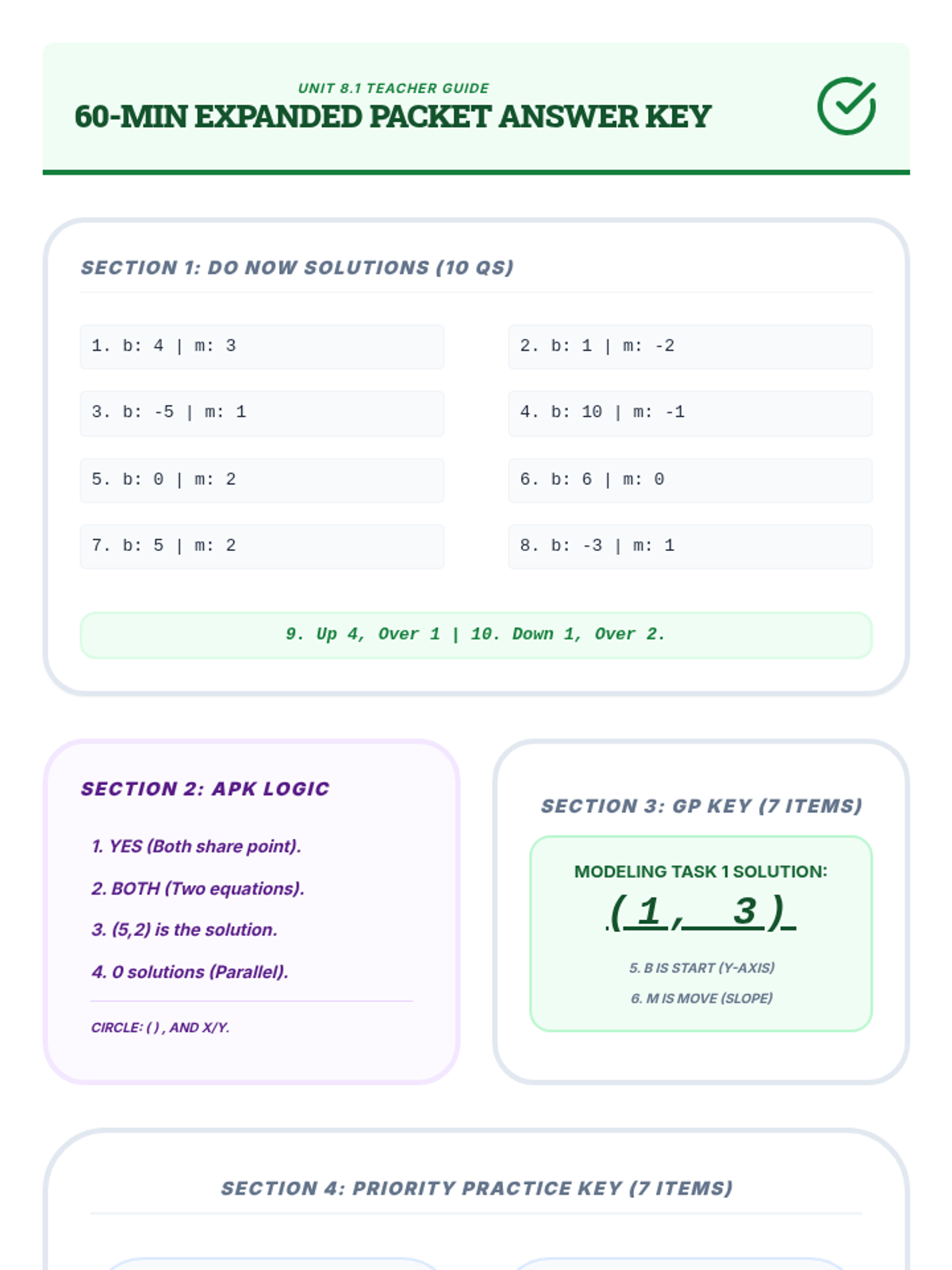
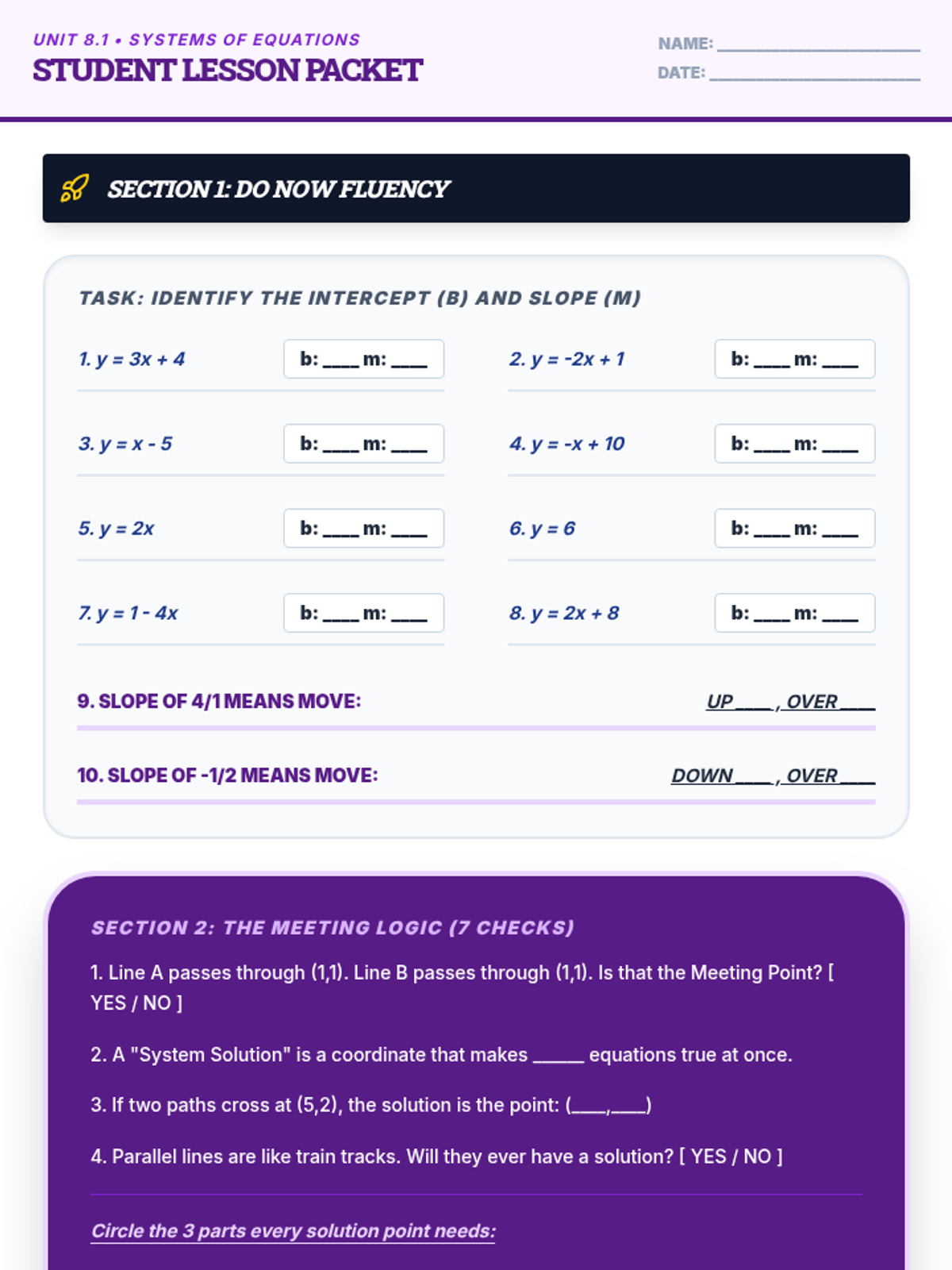
A series of 8th and 9th grade Algebra lessons focused on linear relationships and systems of equations, with a focus on SPED/IEP support.
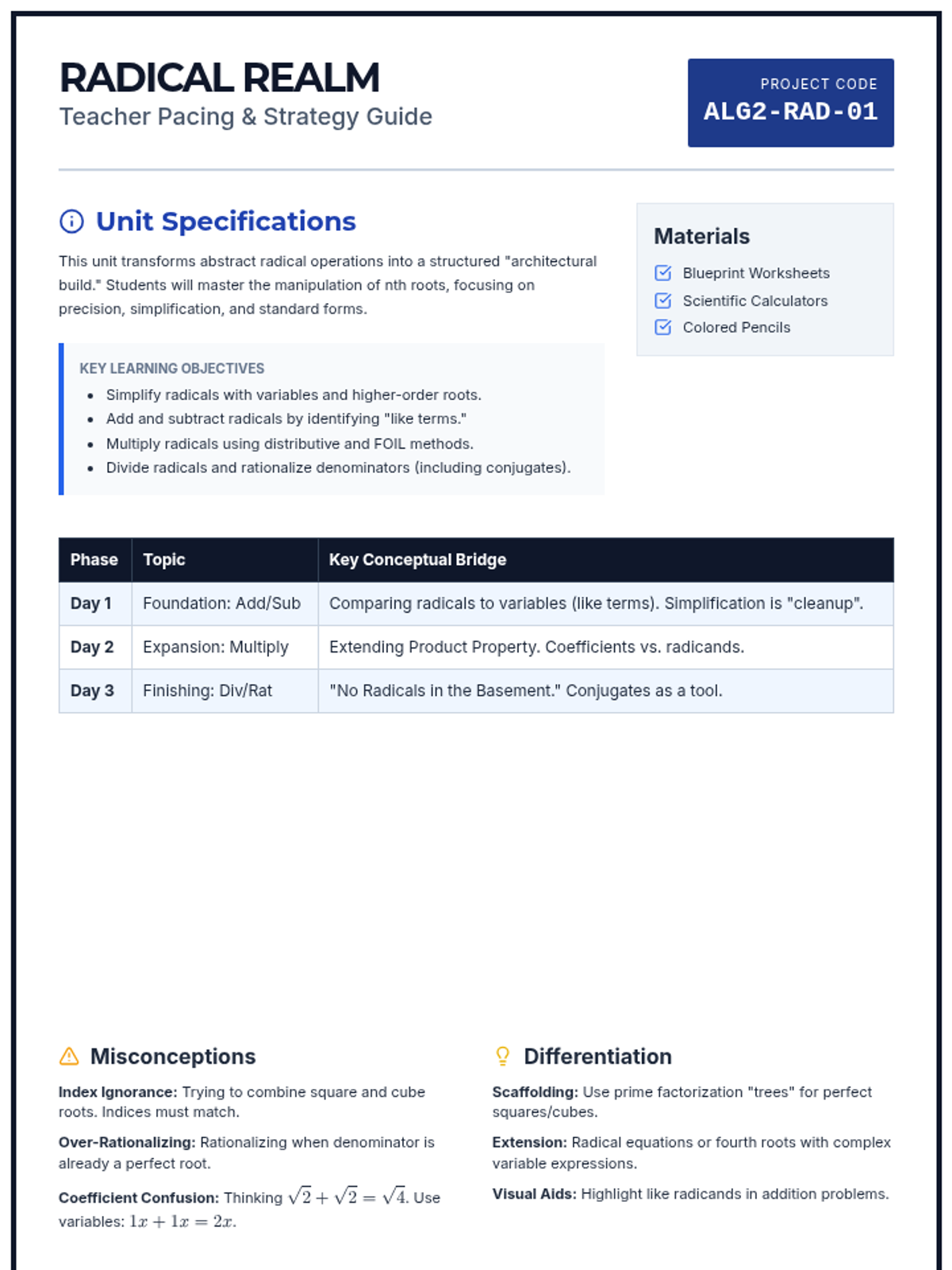
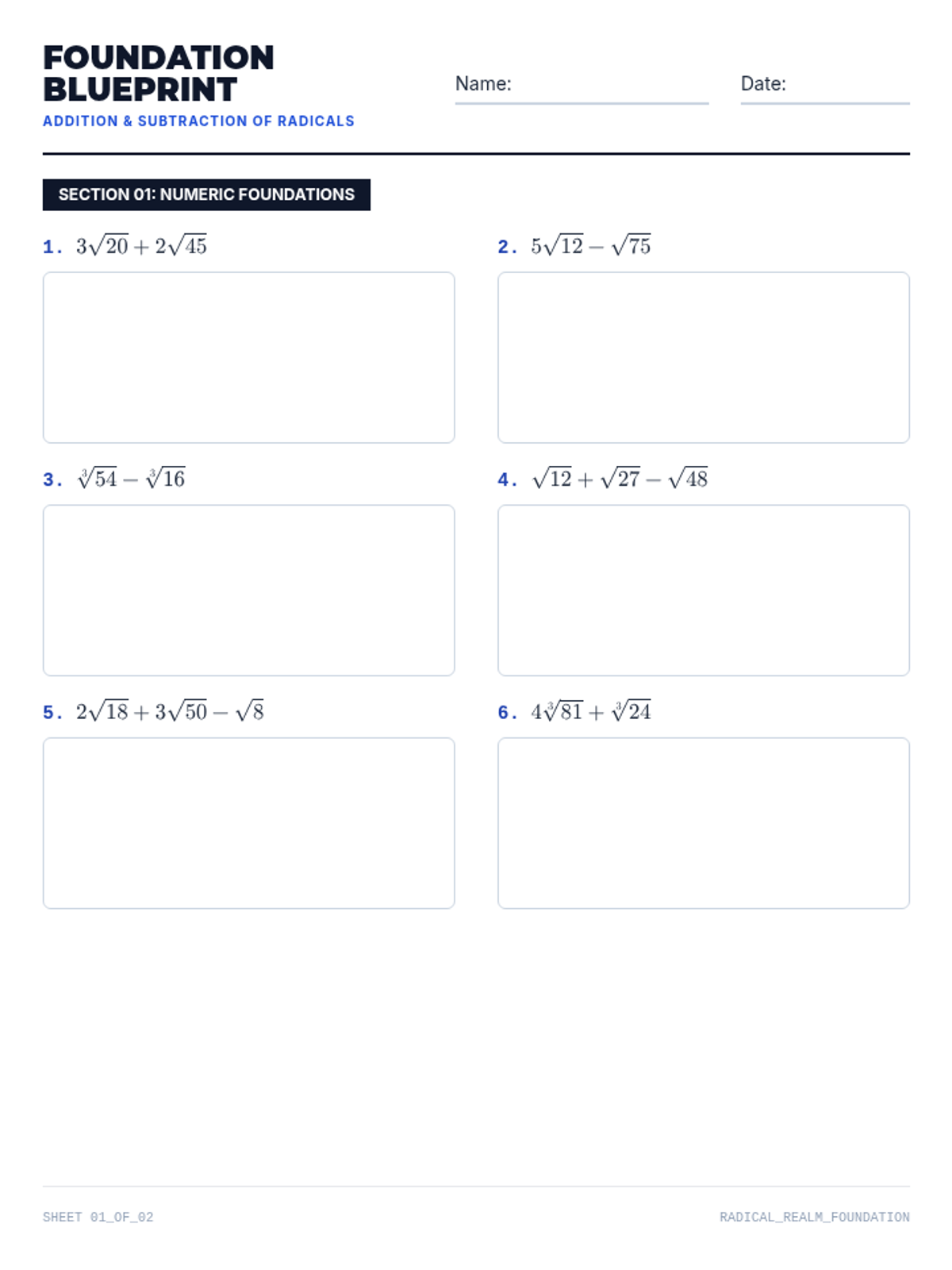
A comprehensive multi-day Algebra 2 unit on simplifying radical expressions. Covers addition, subtraction, multiplication, and division (including rationalizing denominators) with an architectural blueprint theme.
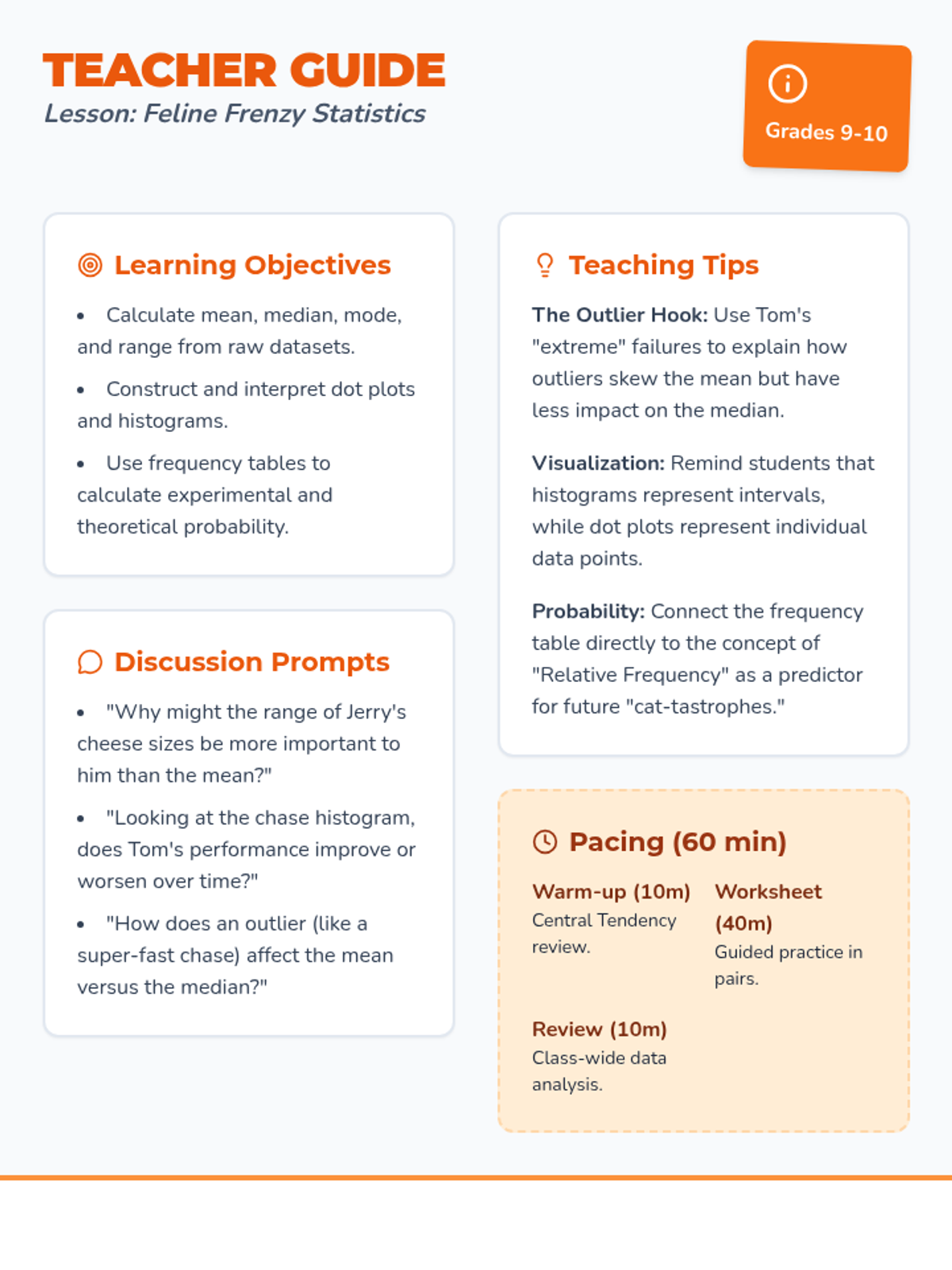
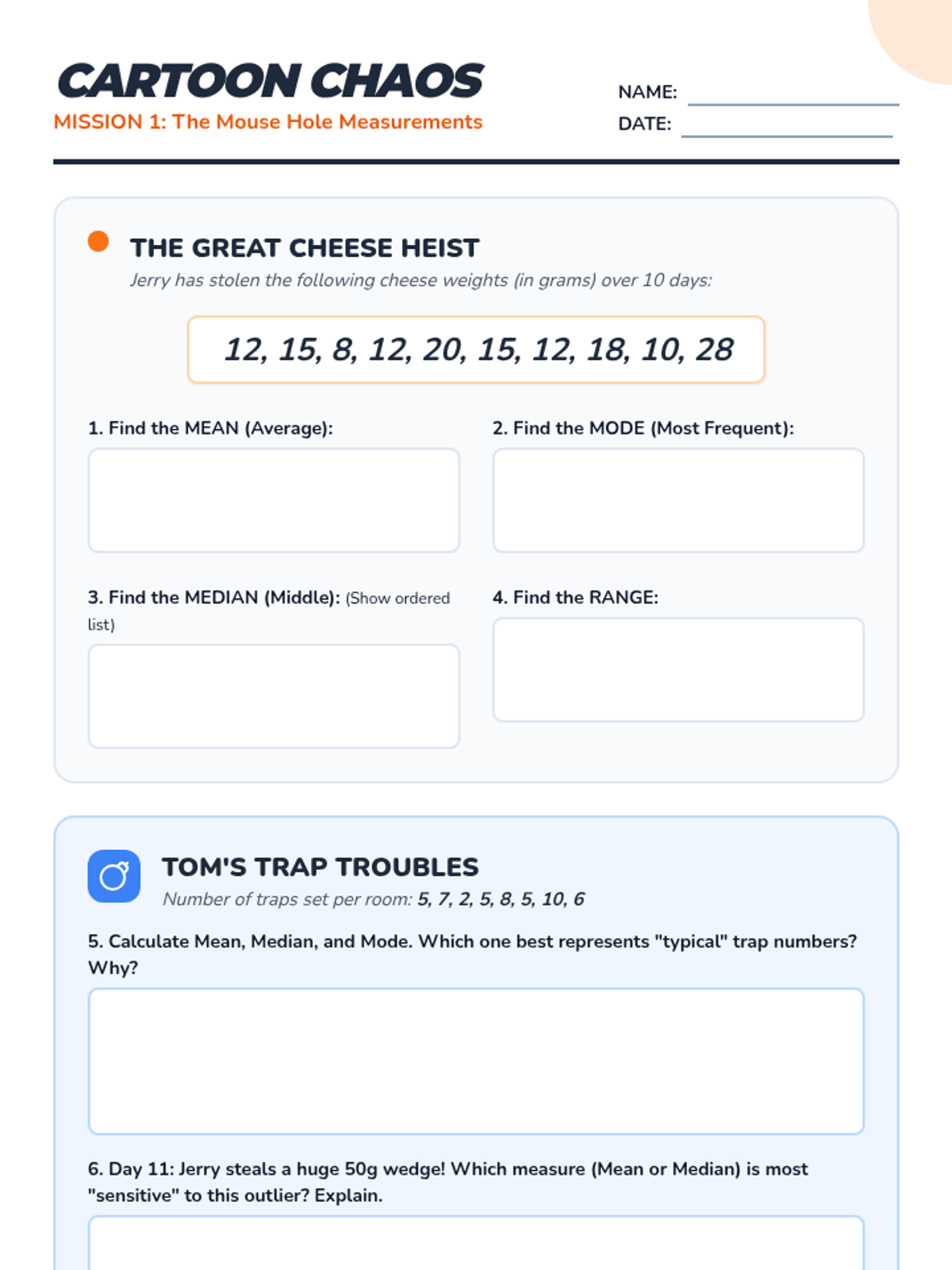
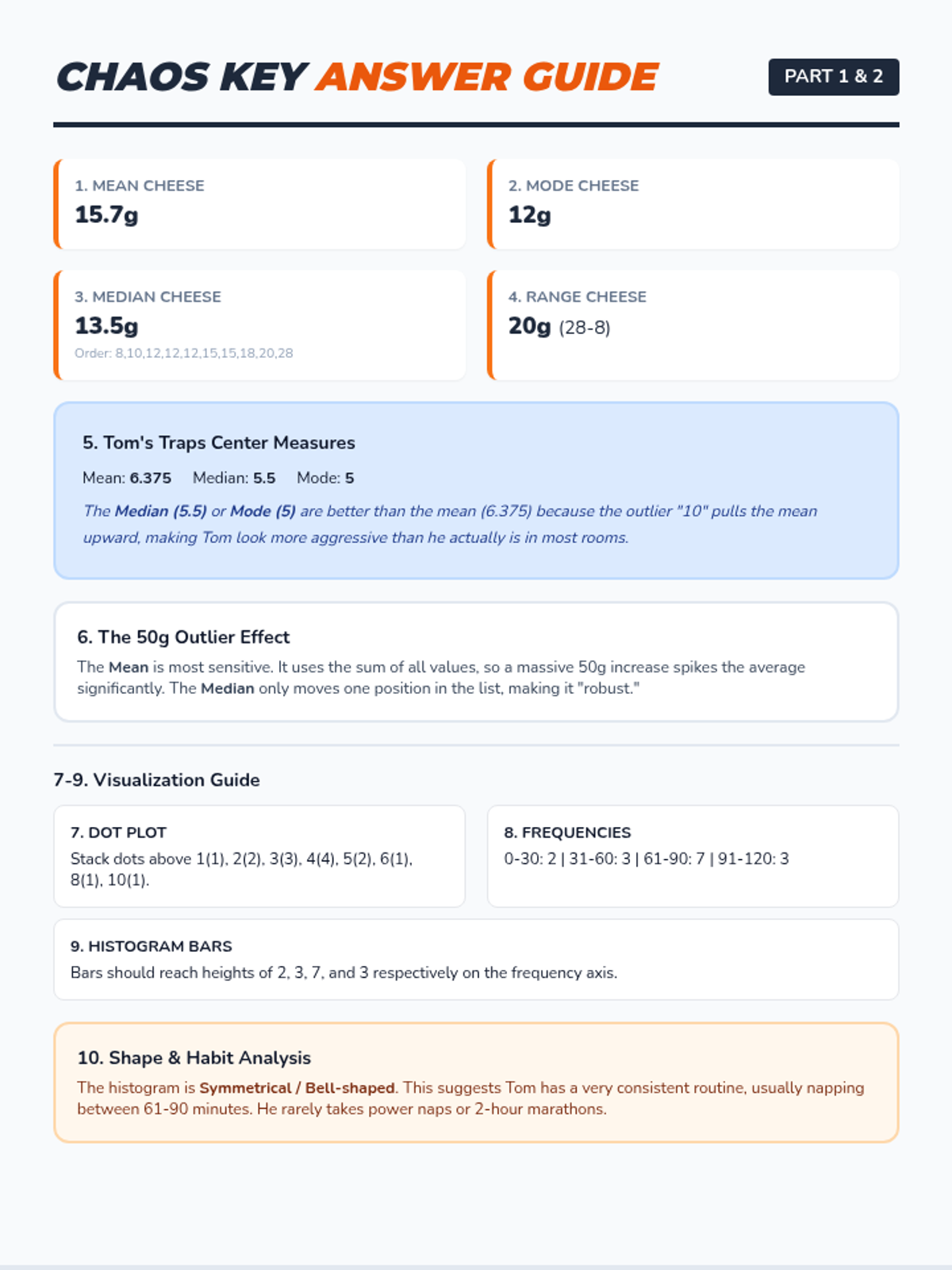
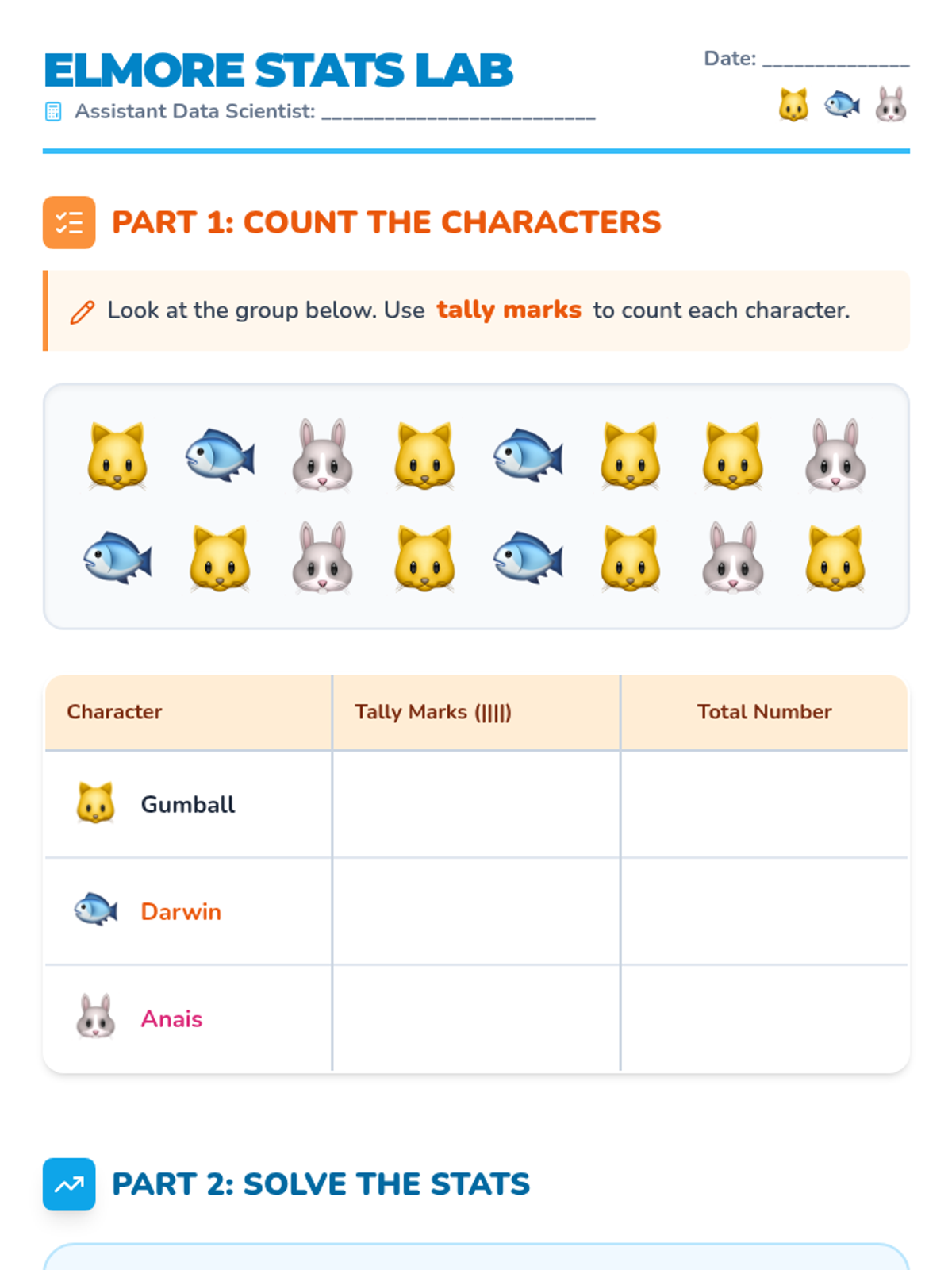
A unit on statistics for freshman students themed around Tom and Jerry, covering central tendency, data visualization, and probability.
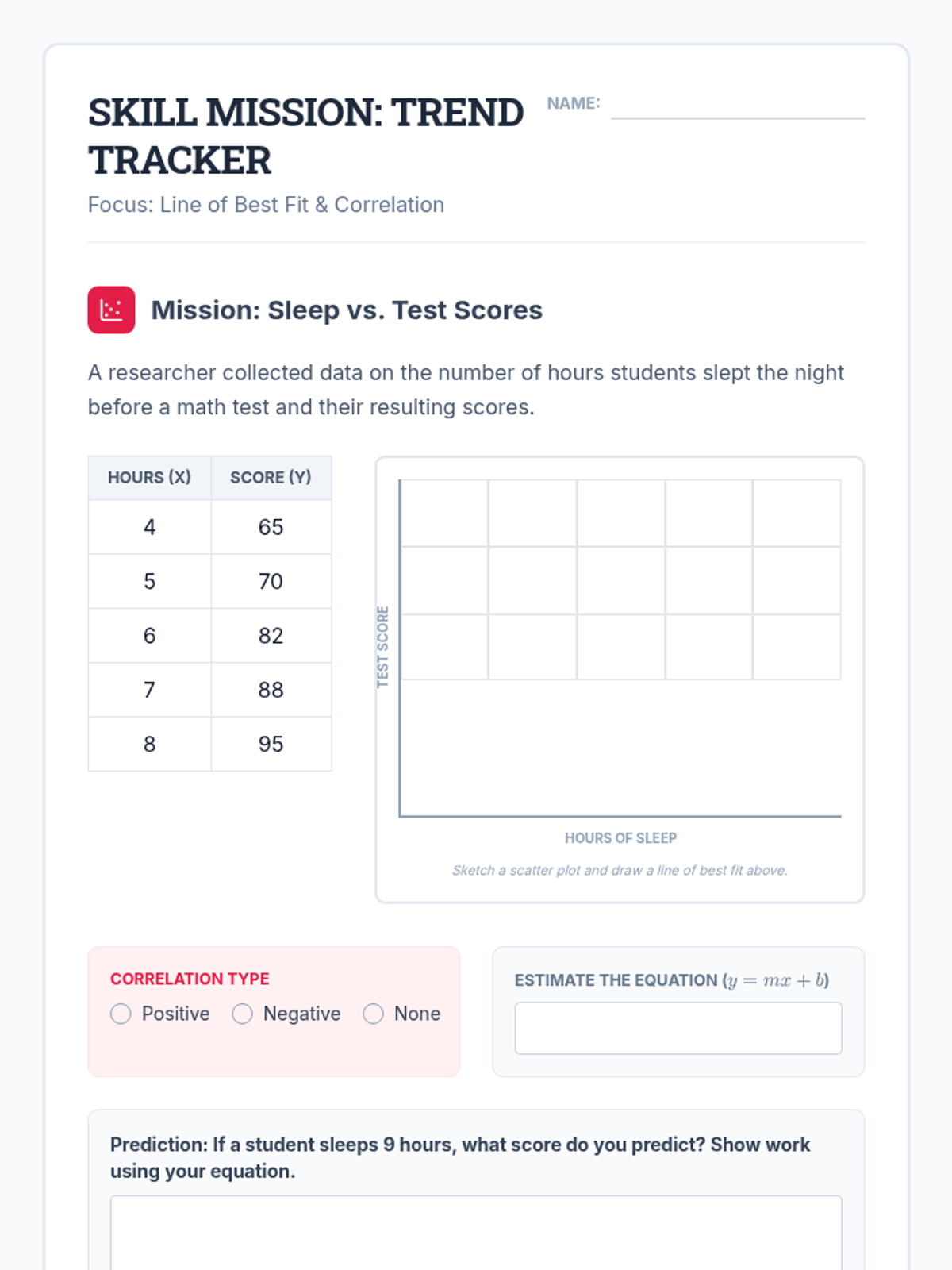
A high-intensity, 120-minute math simulation. Students act as lead consultants, completing a high-speed skill warmup before selecting a professional sector (Music, Urban Planning, Rocket Science, or Sports Analytics) to solve a series of complex work orders.
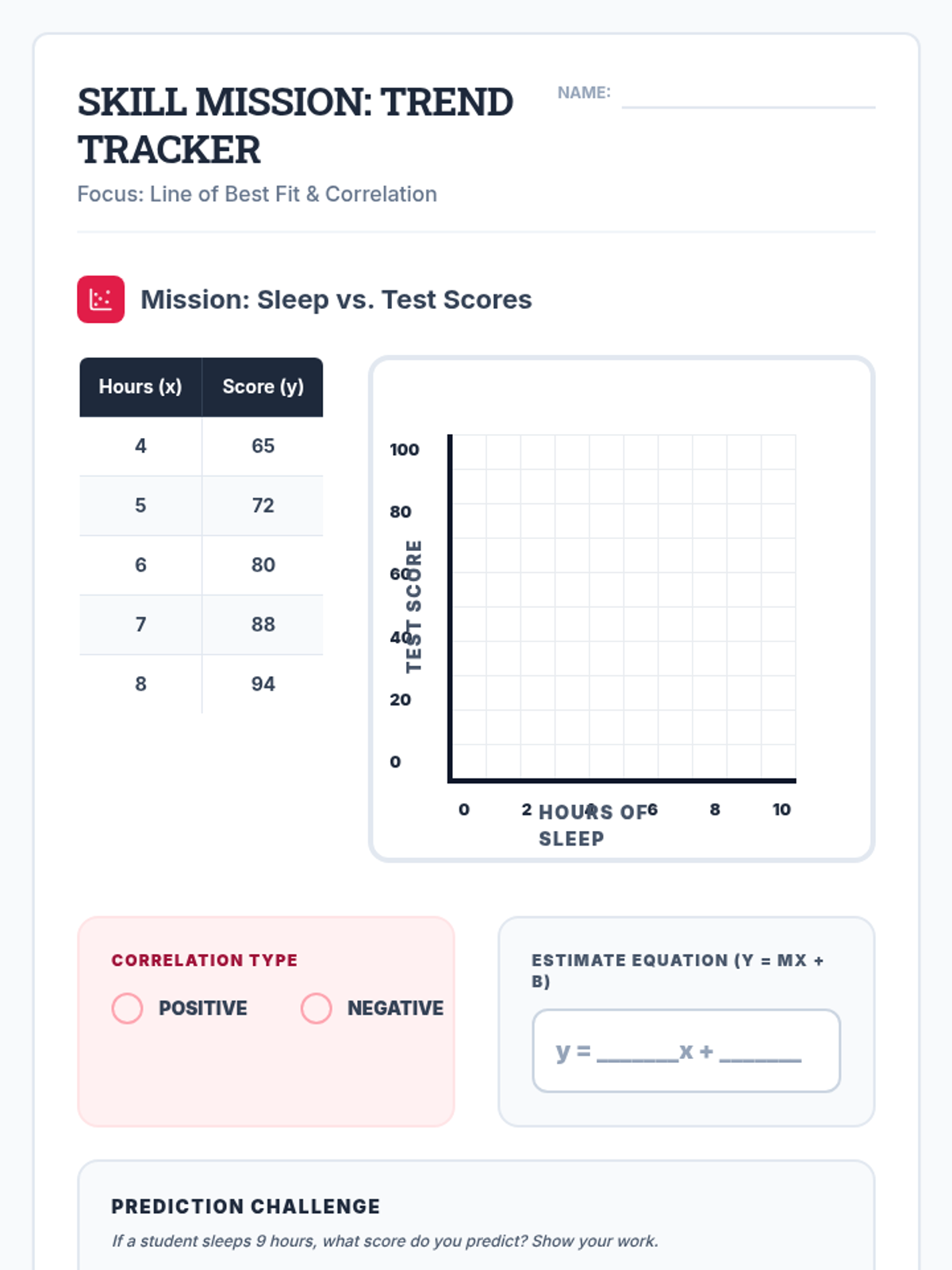
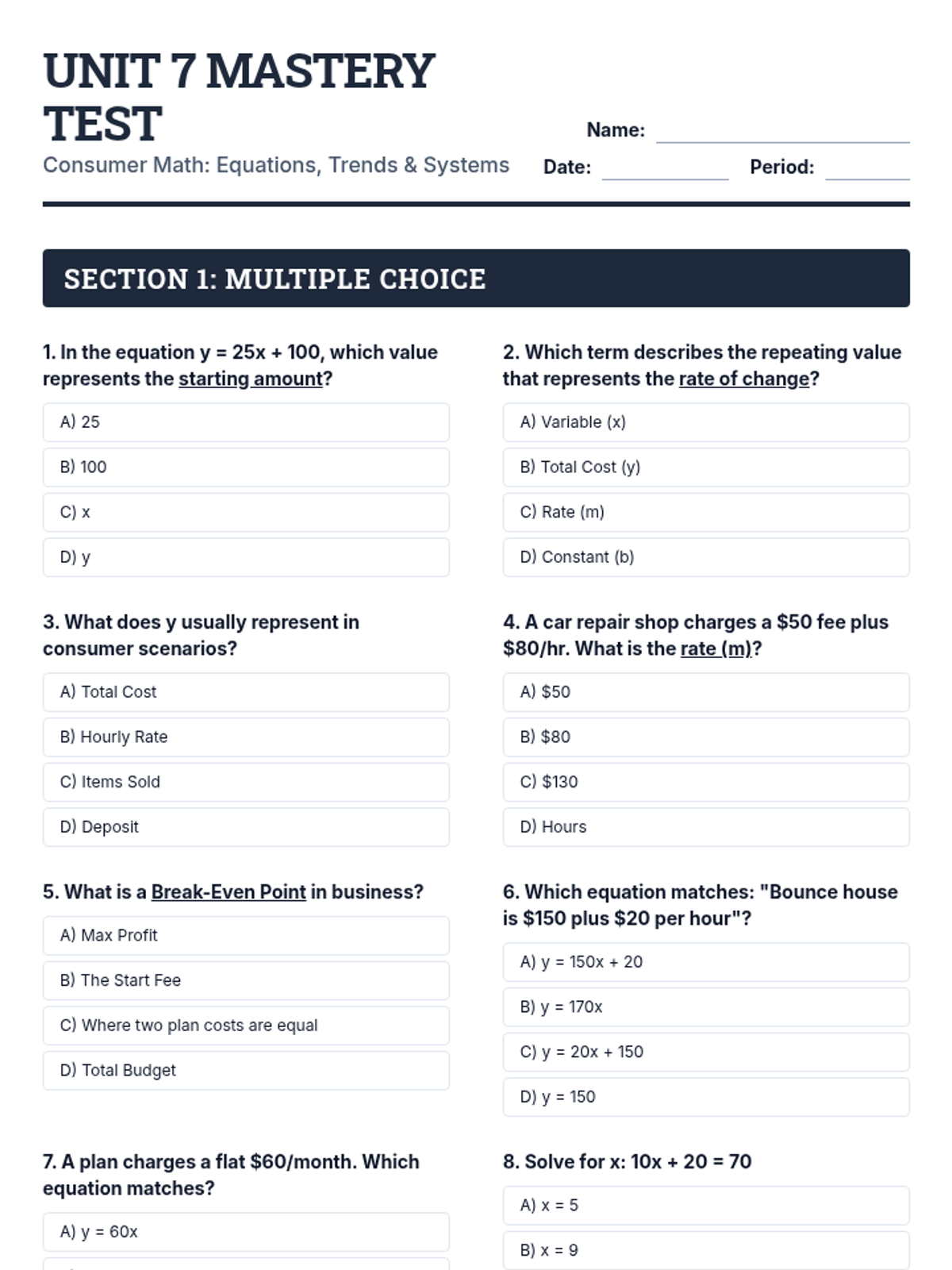
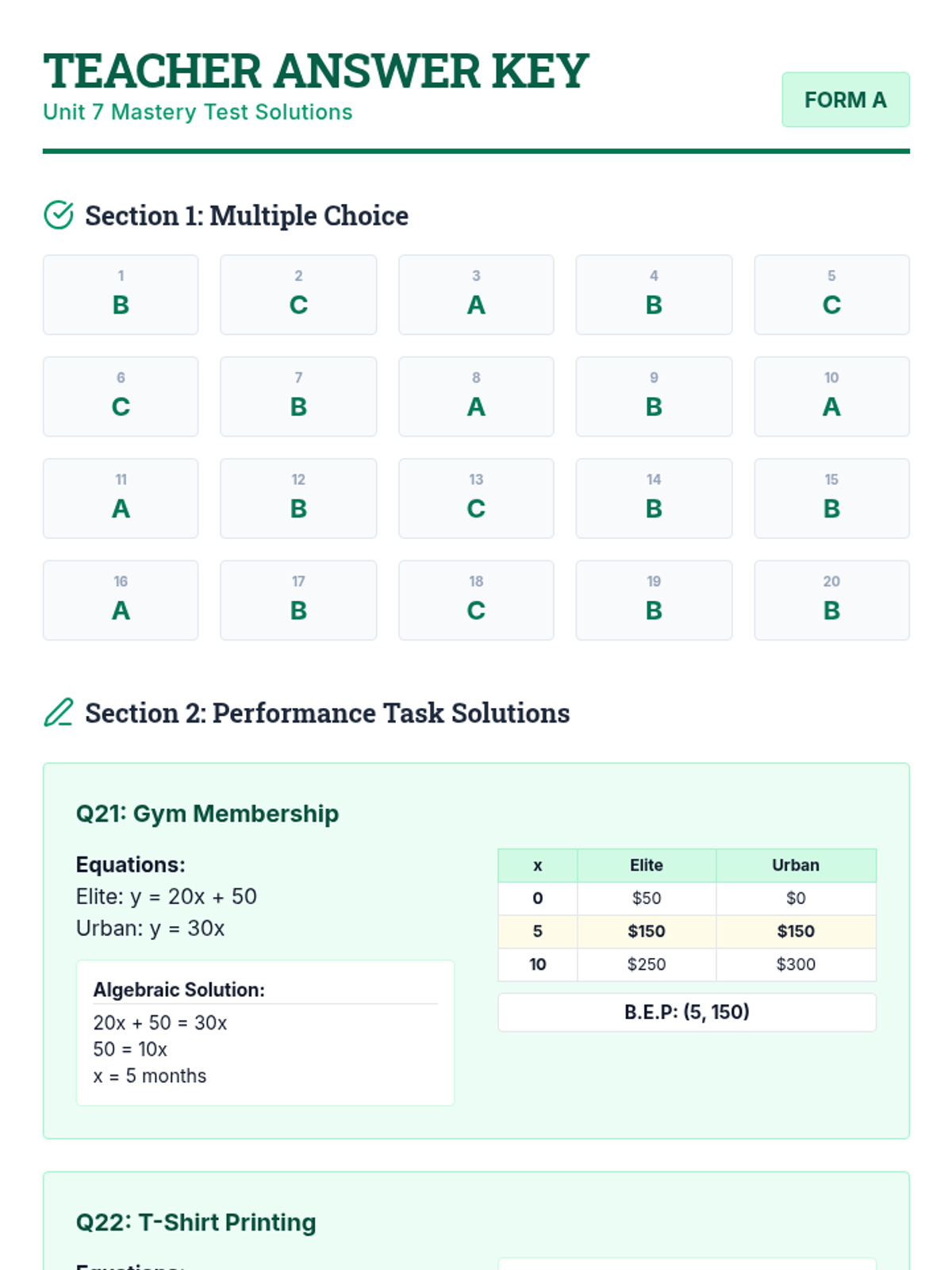
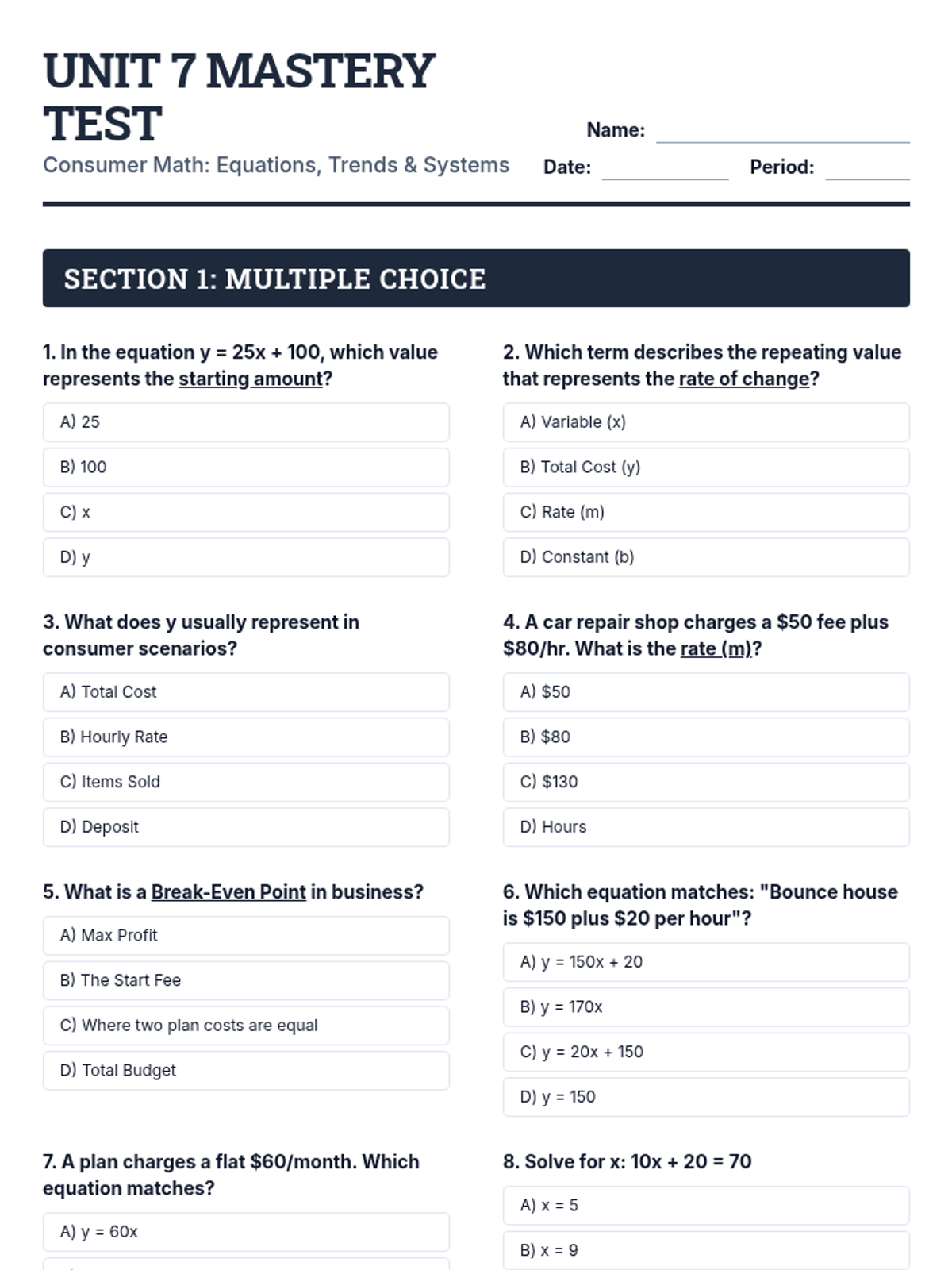
A comprehensive assessment sequence focused on consumer mathematics, linear equations, and systems of equations through the lens of real-world scenarios like business comparisons and service fees.
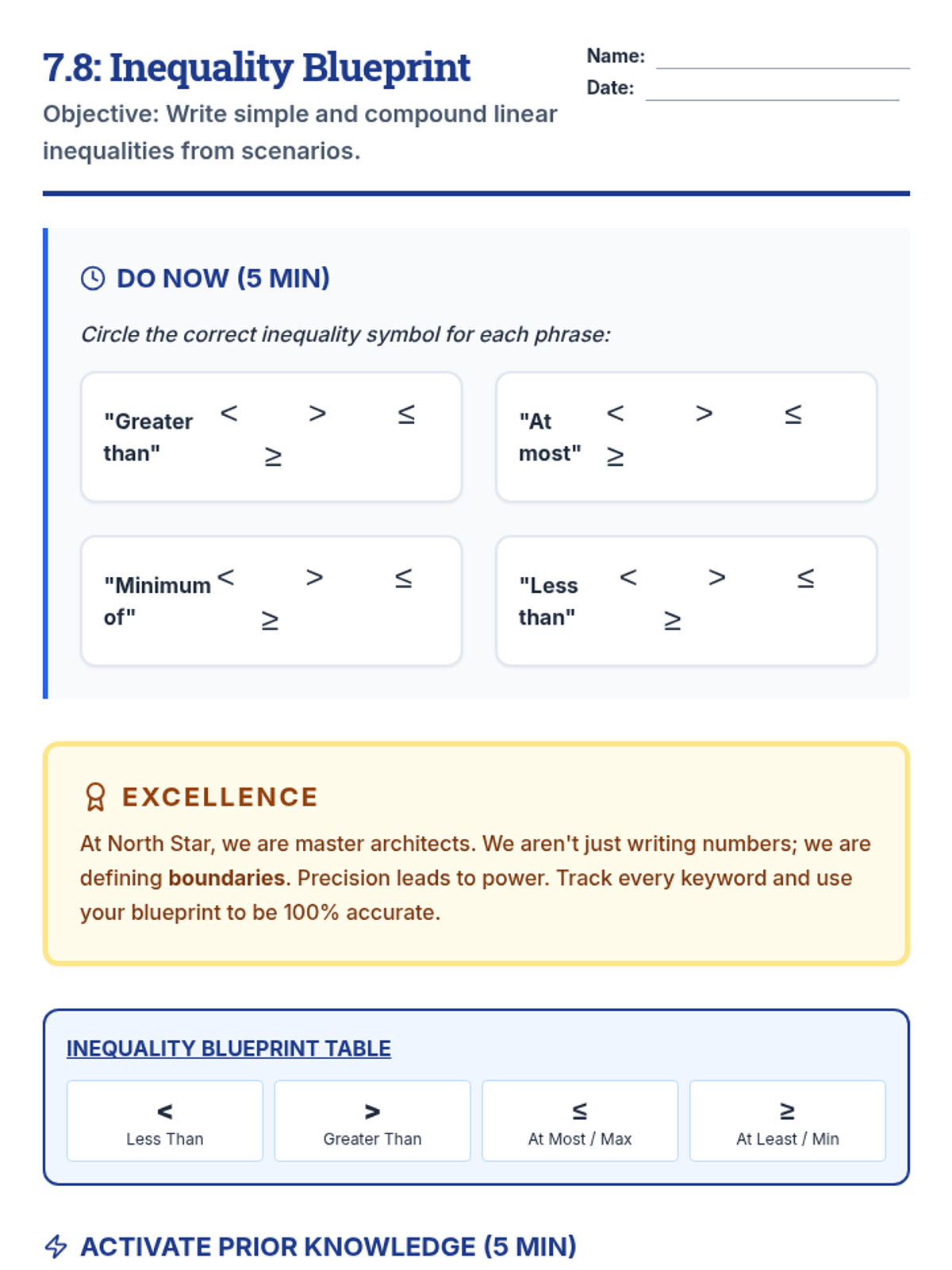
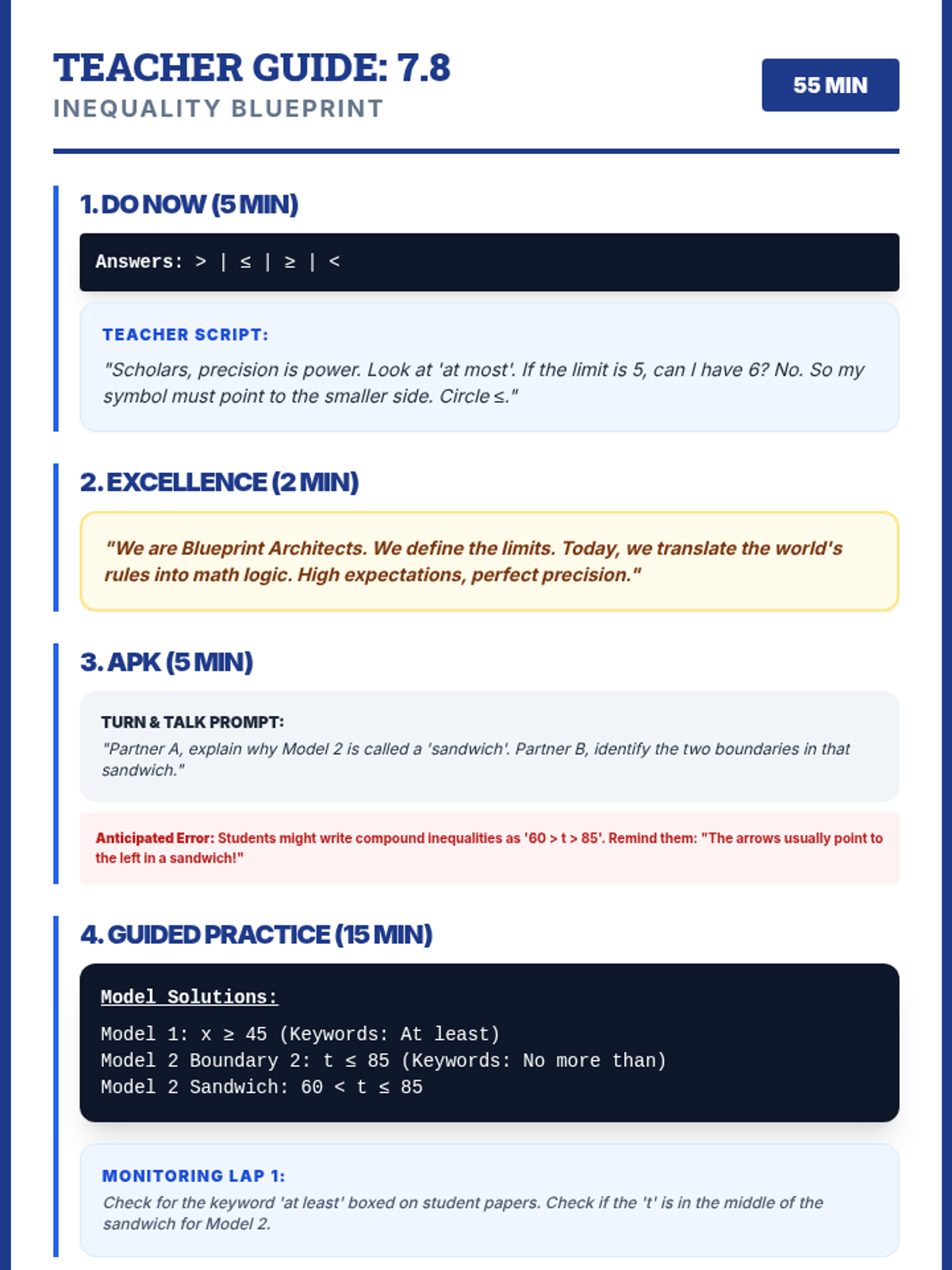
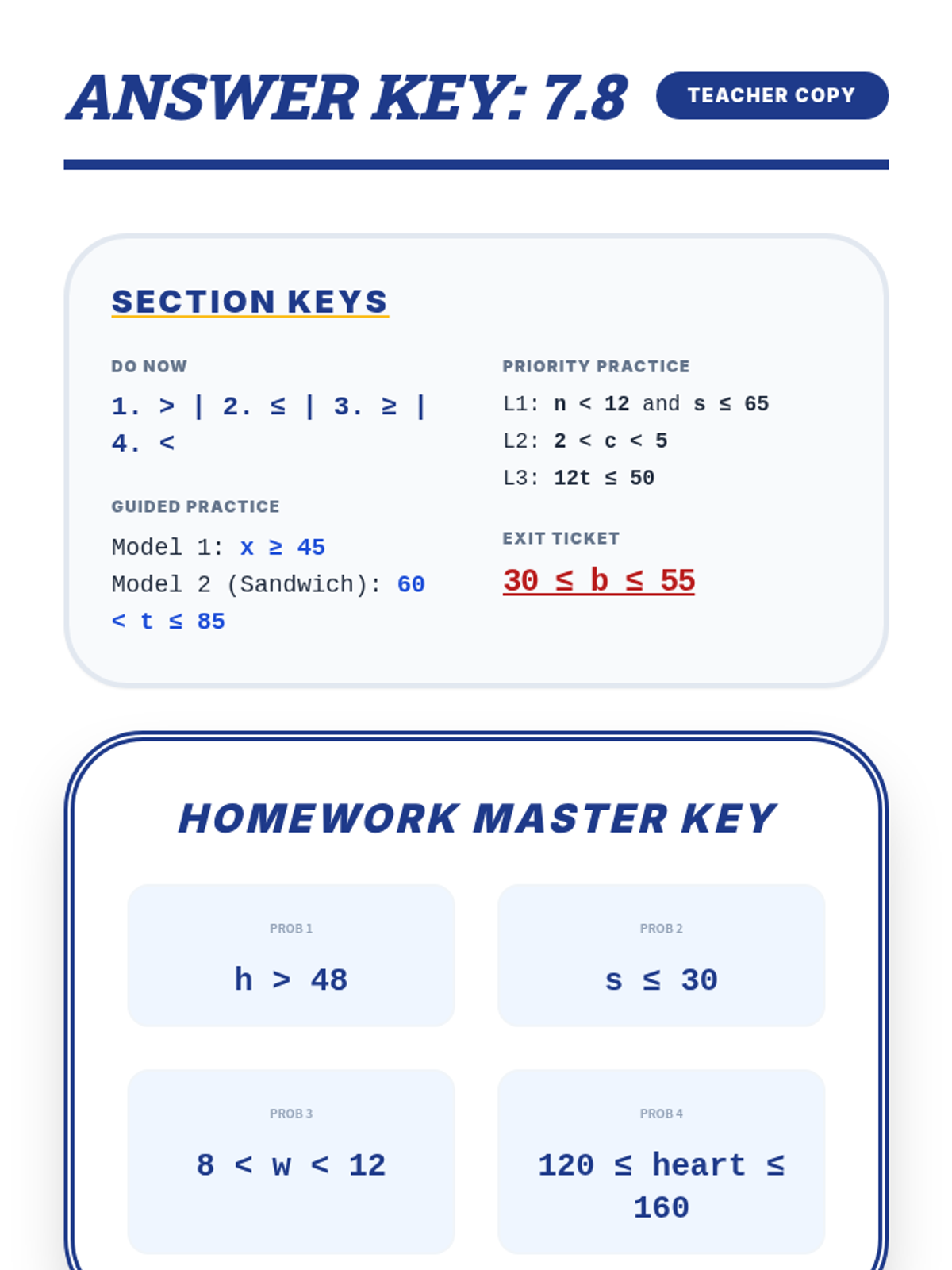
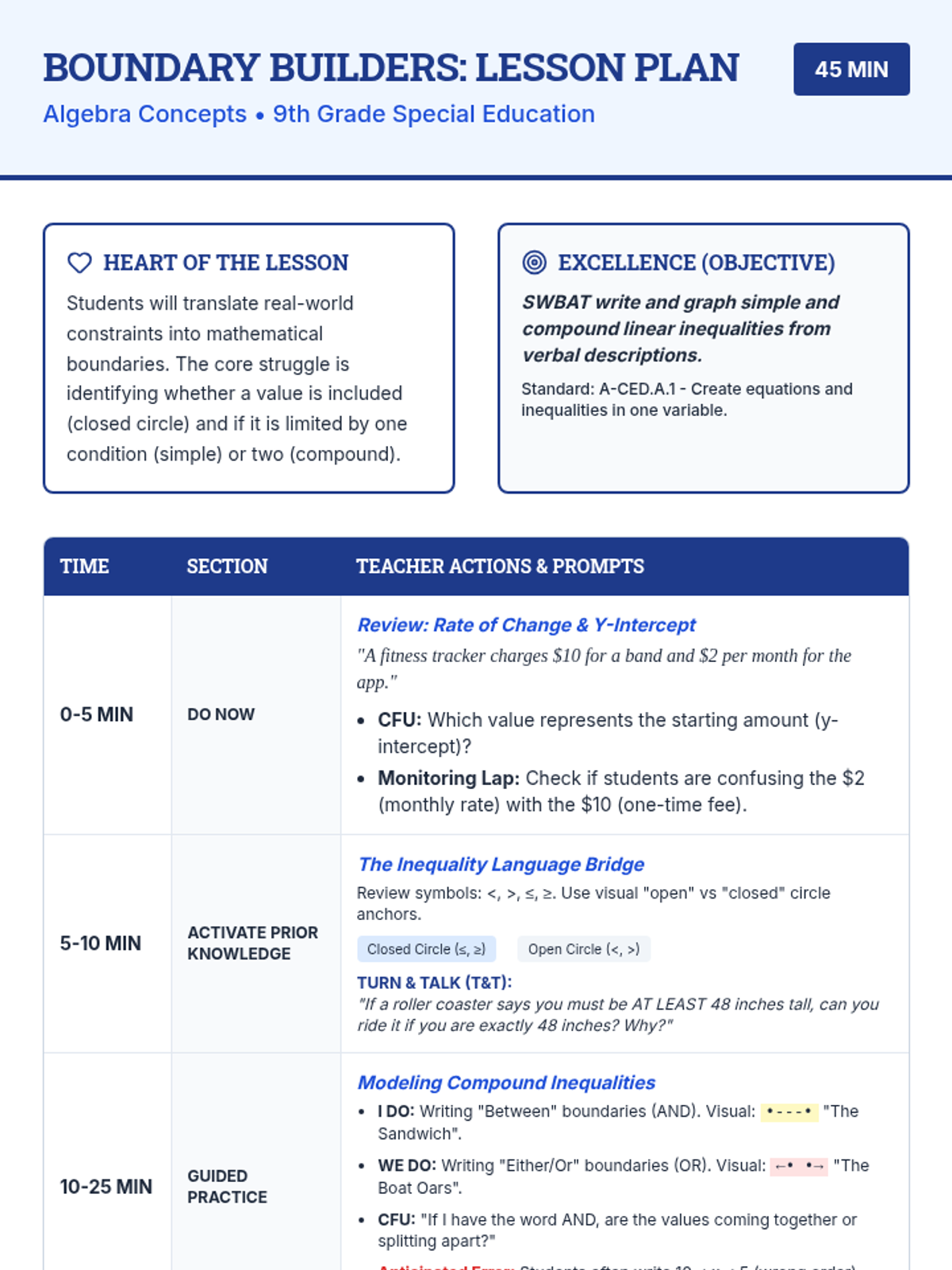
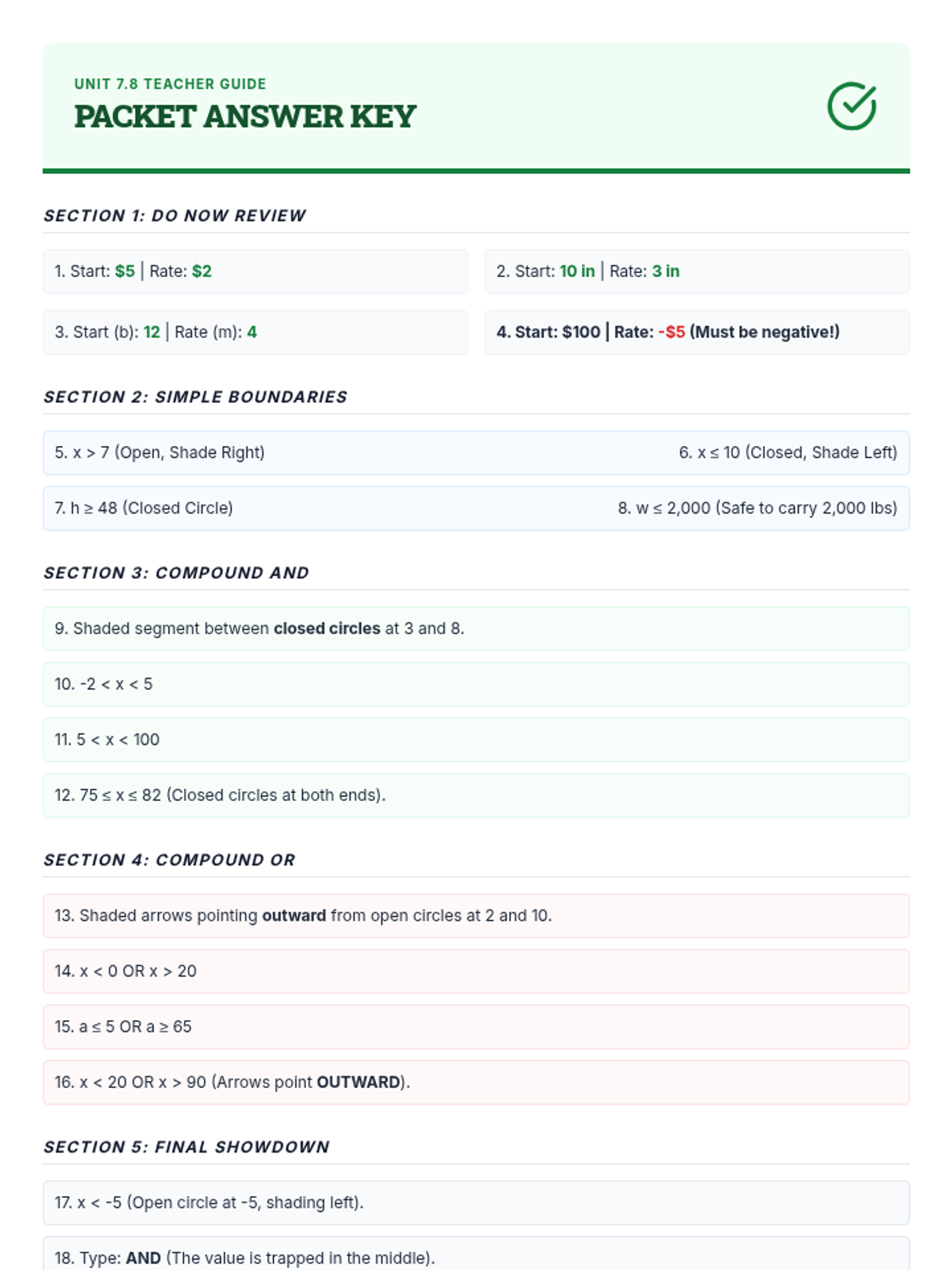
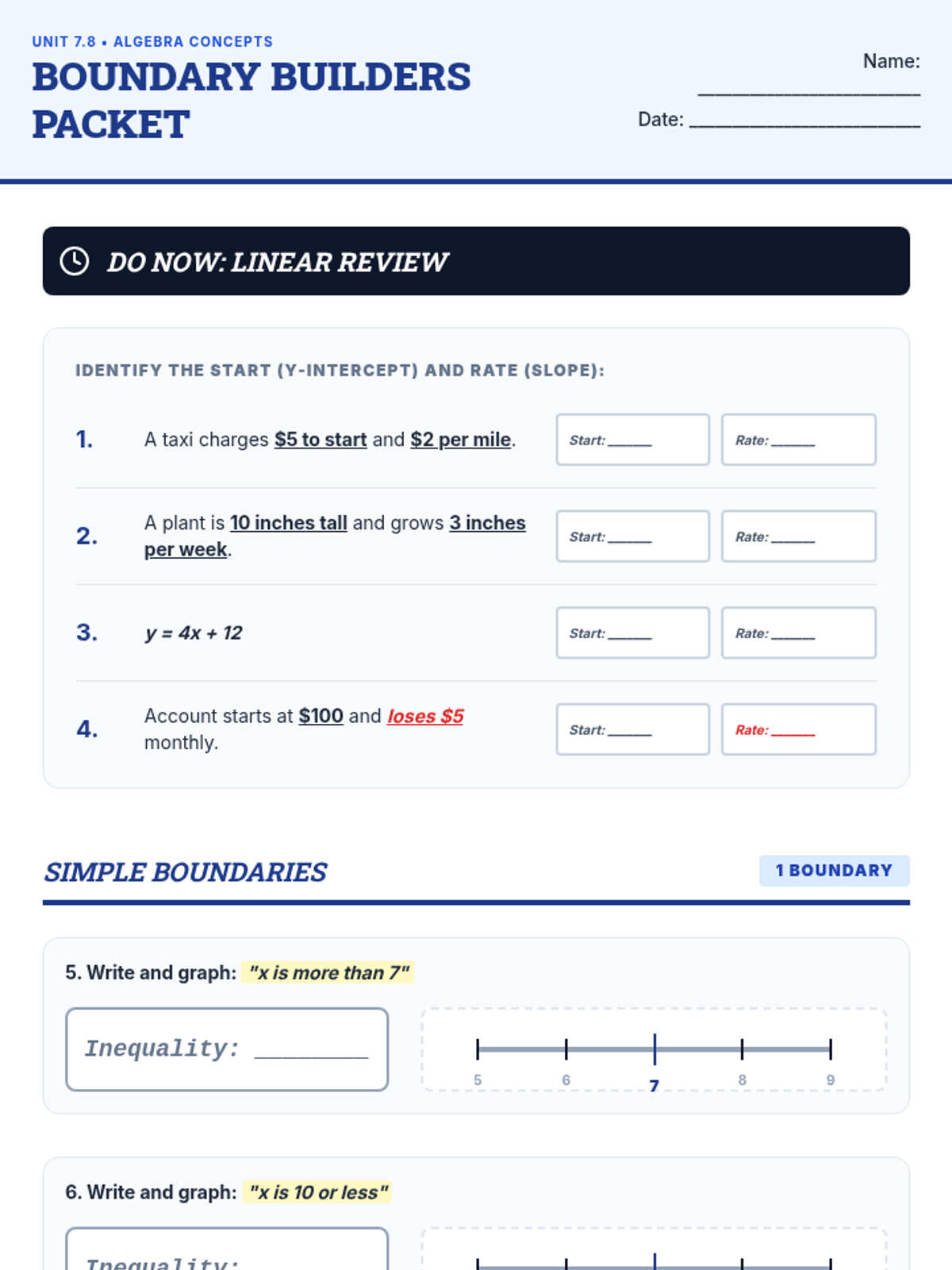
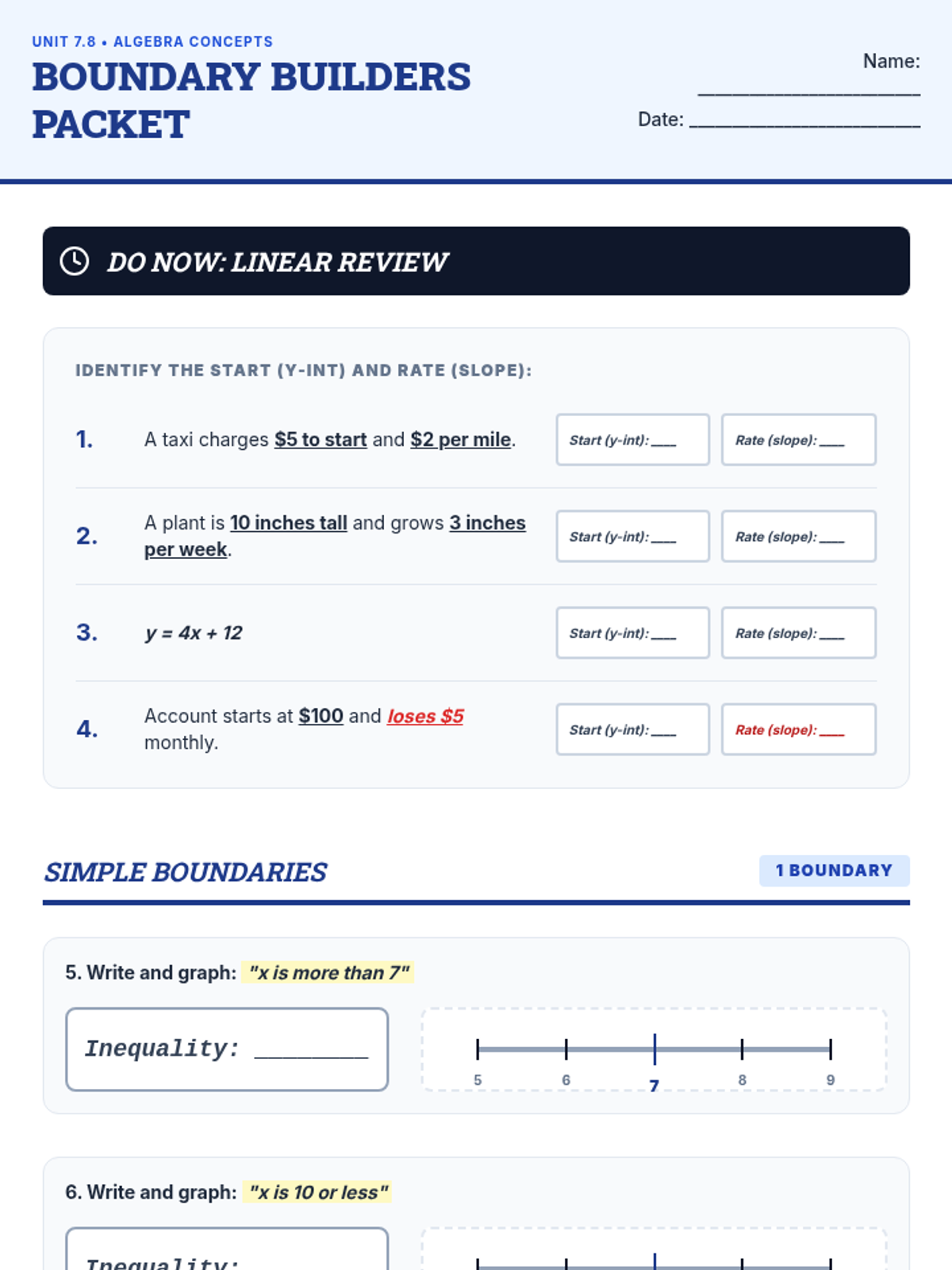
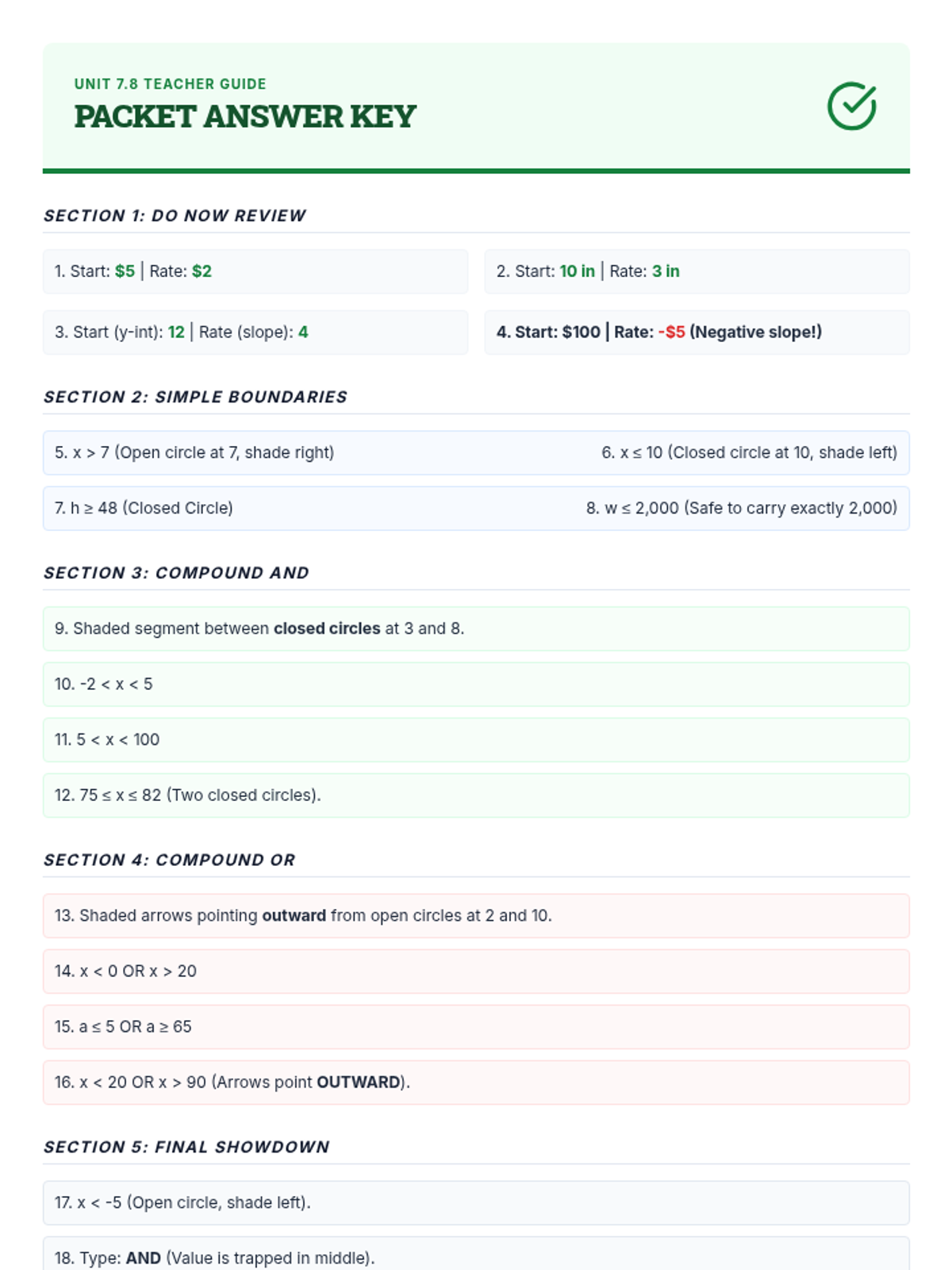
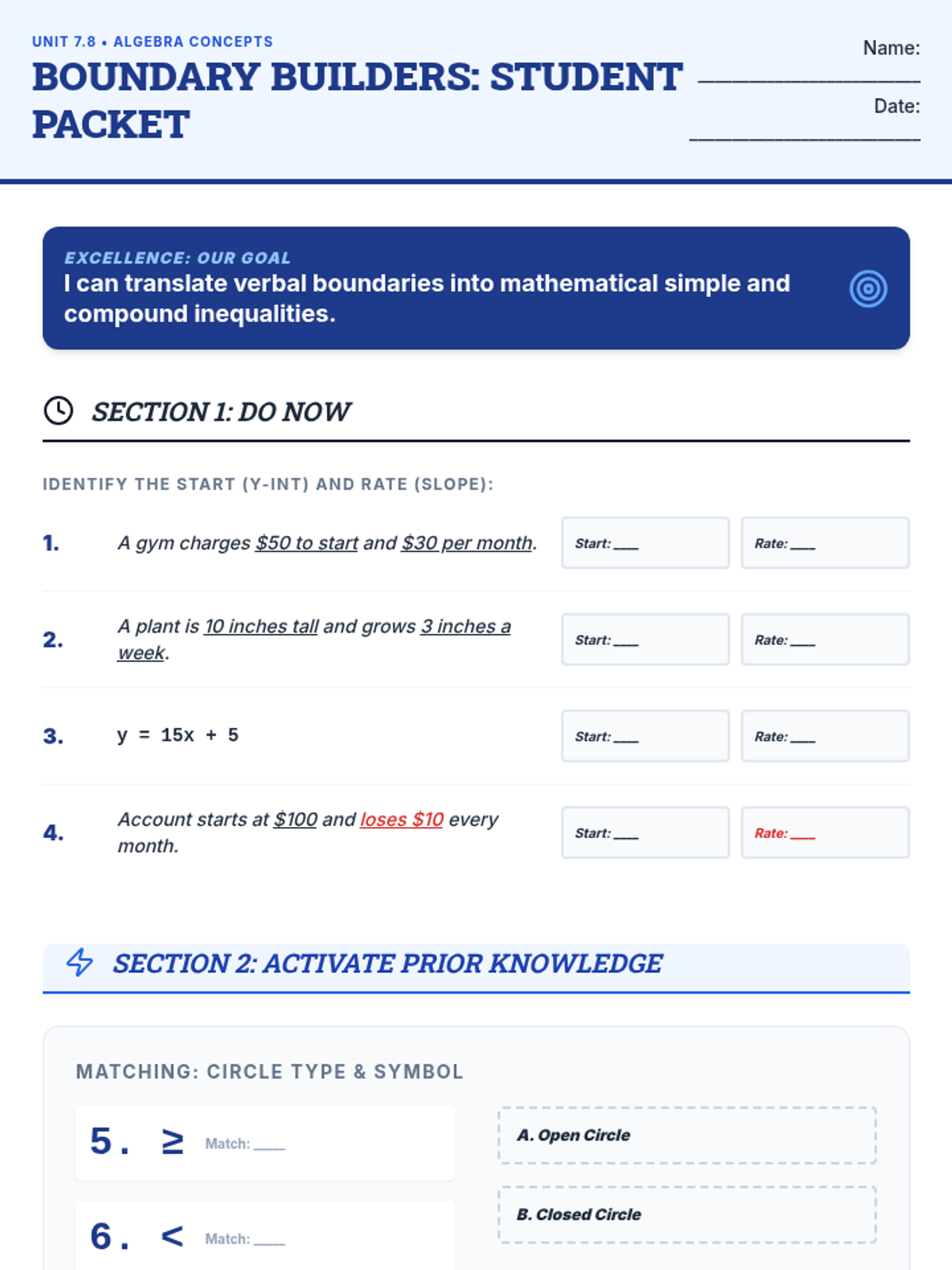
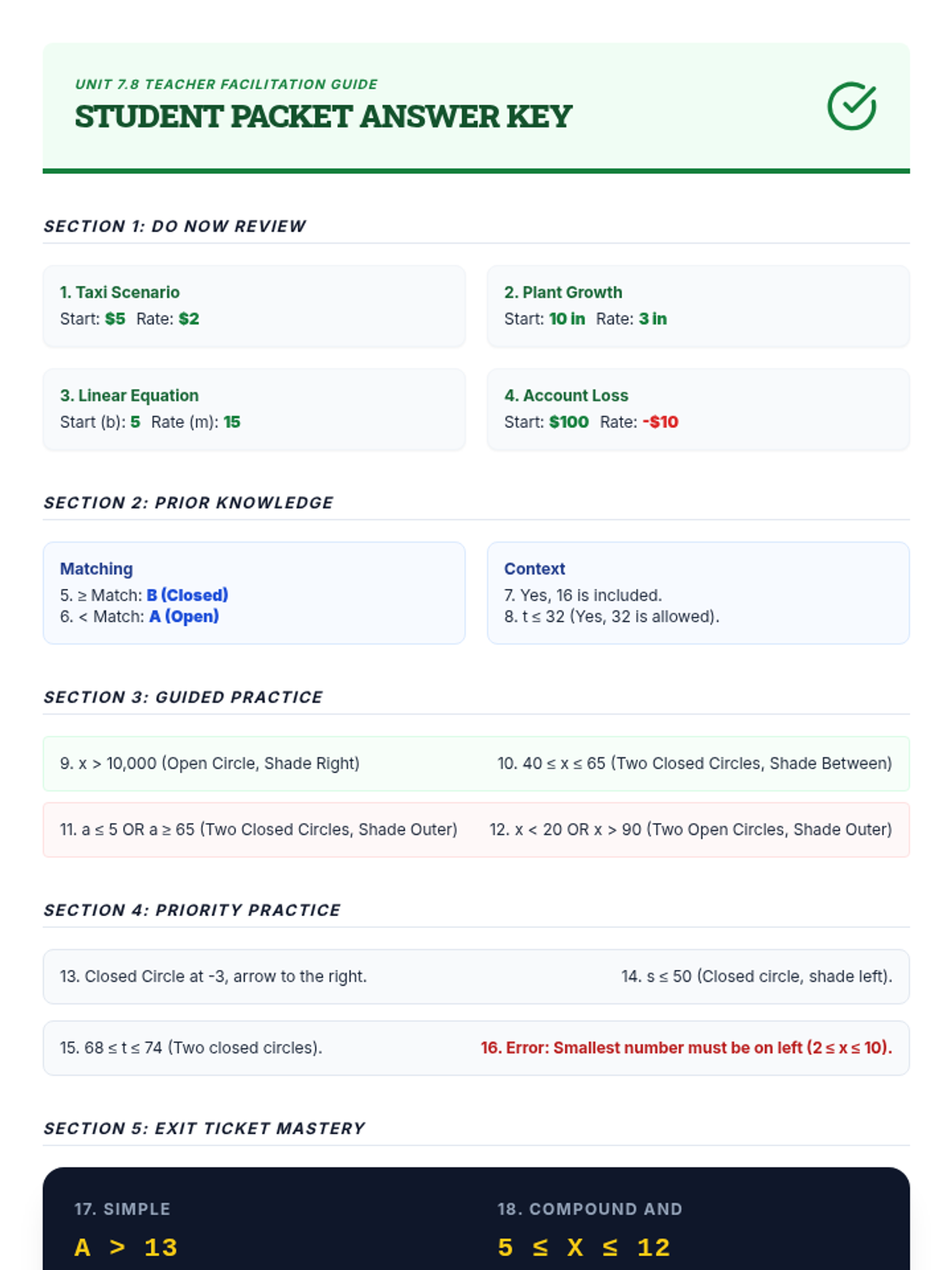
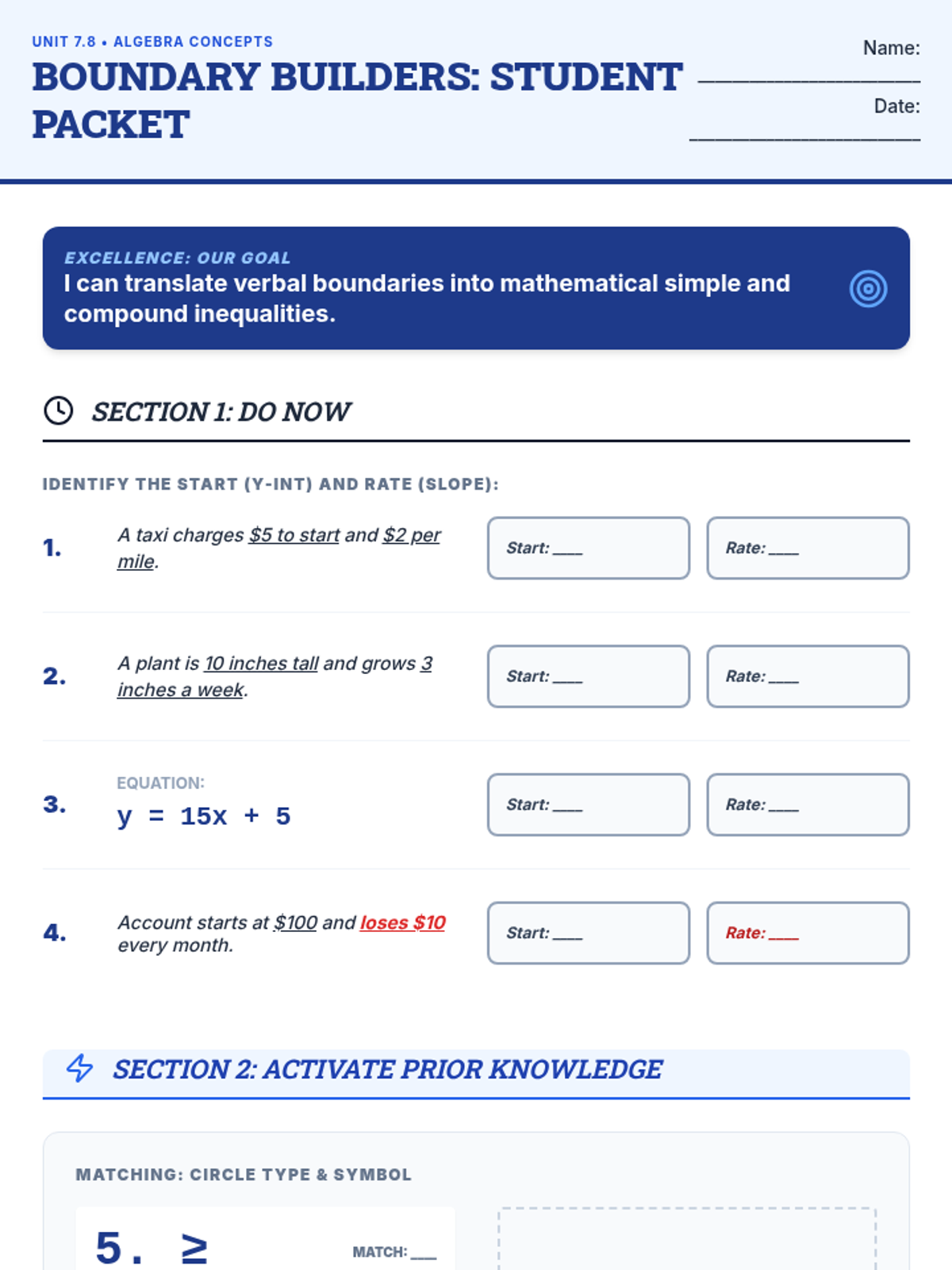
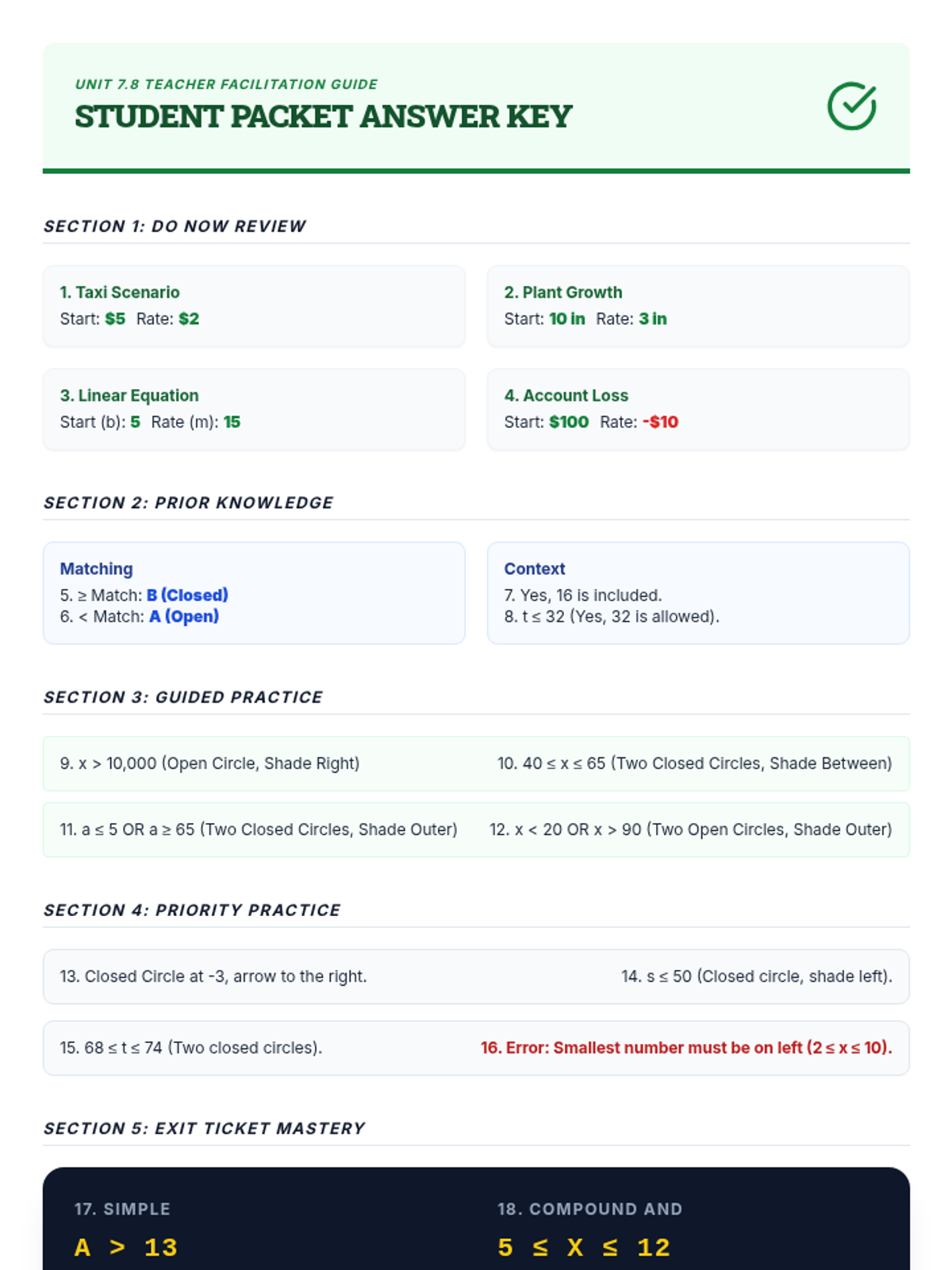
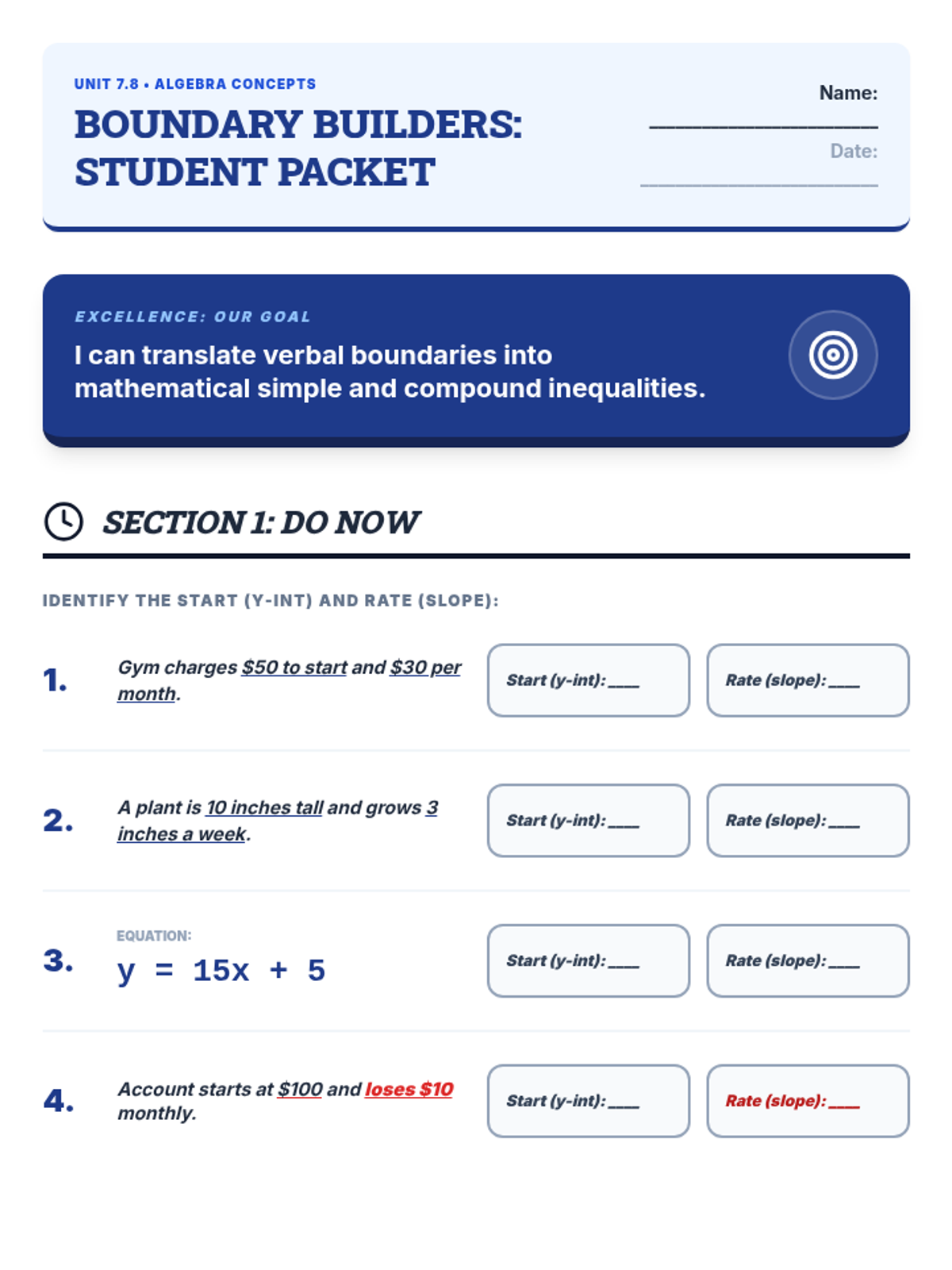
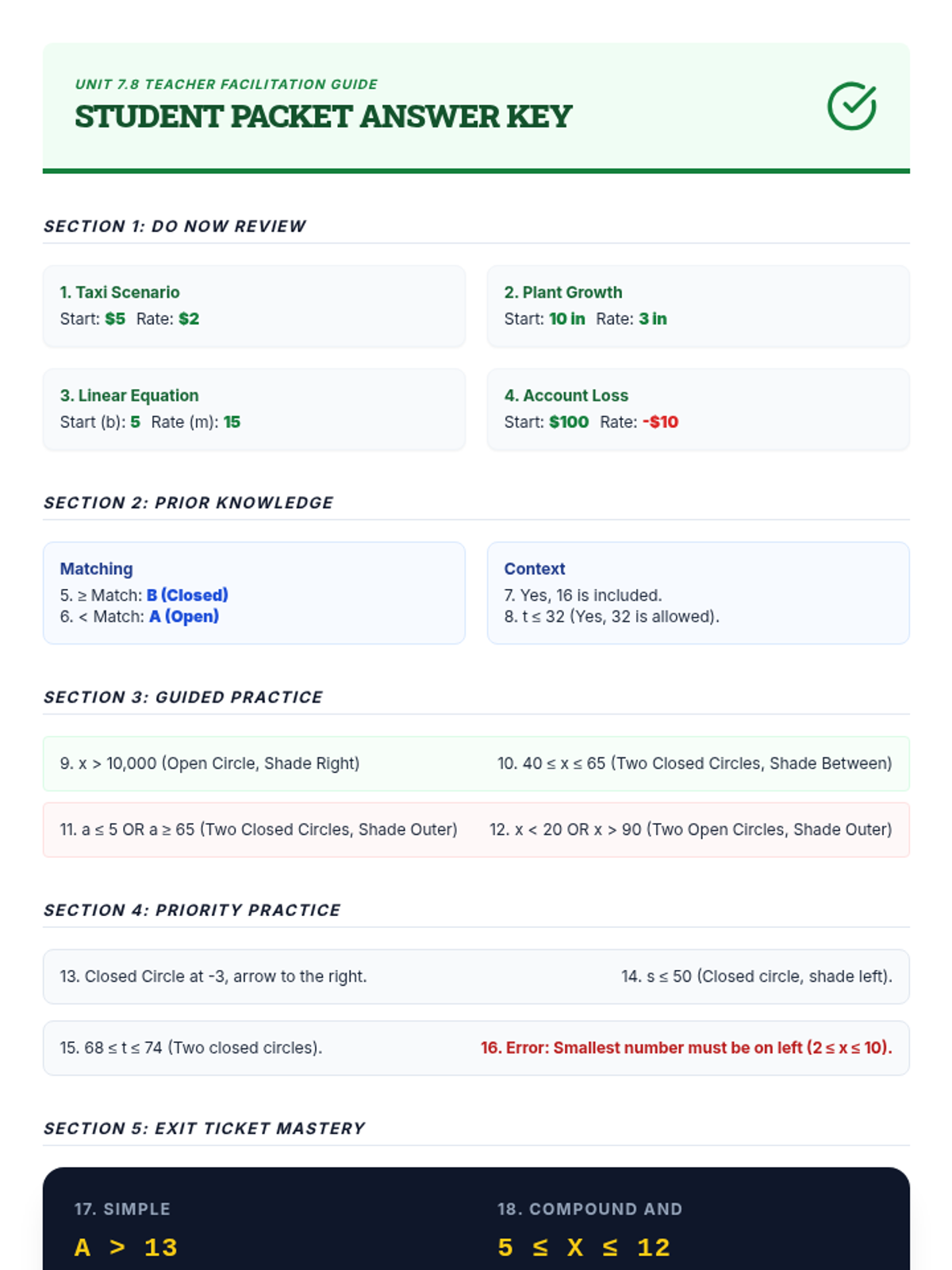
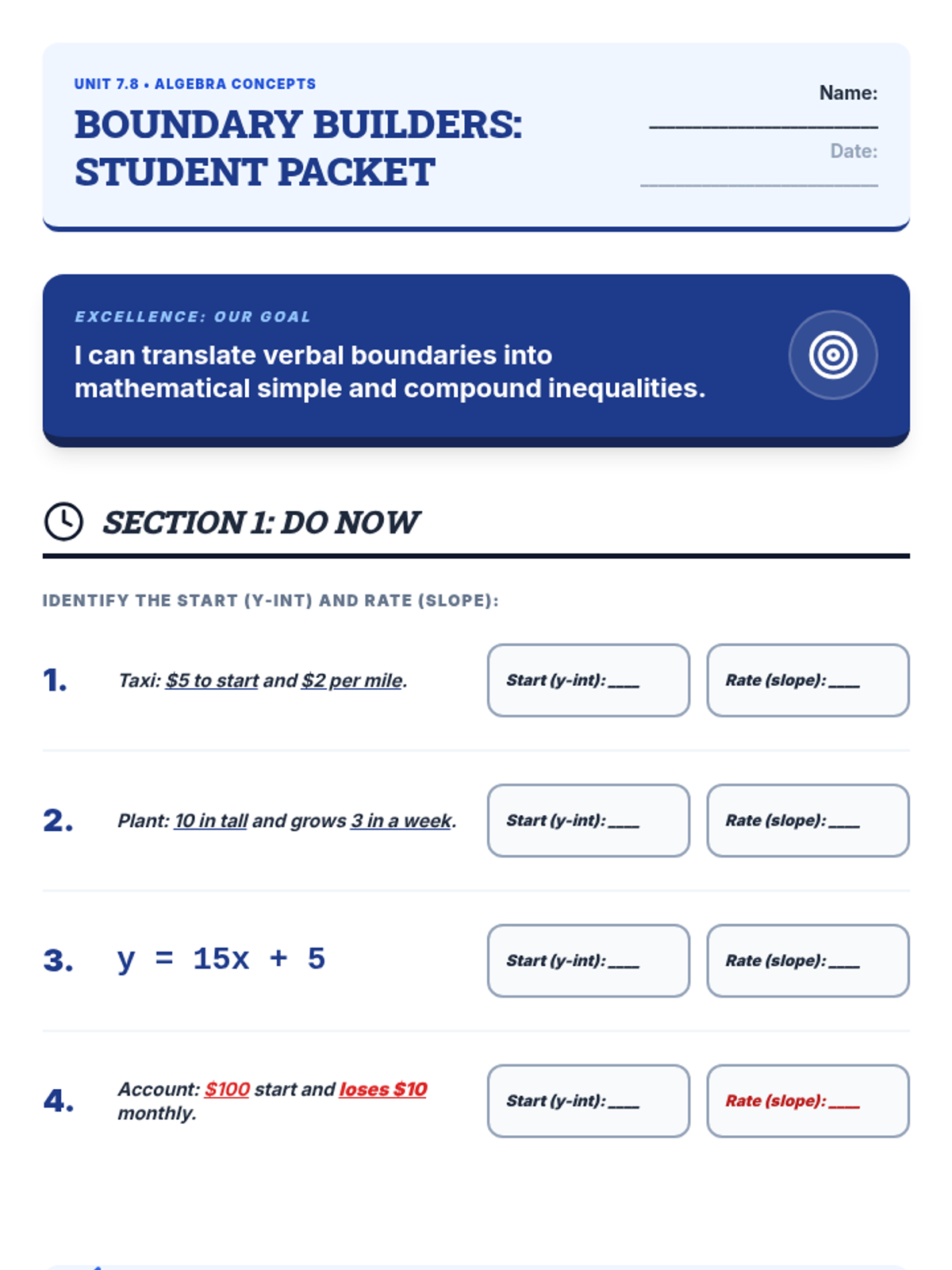
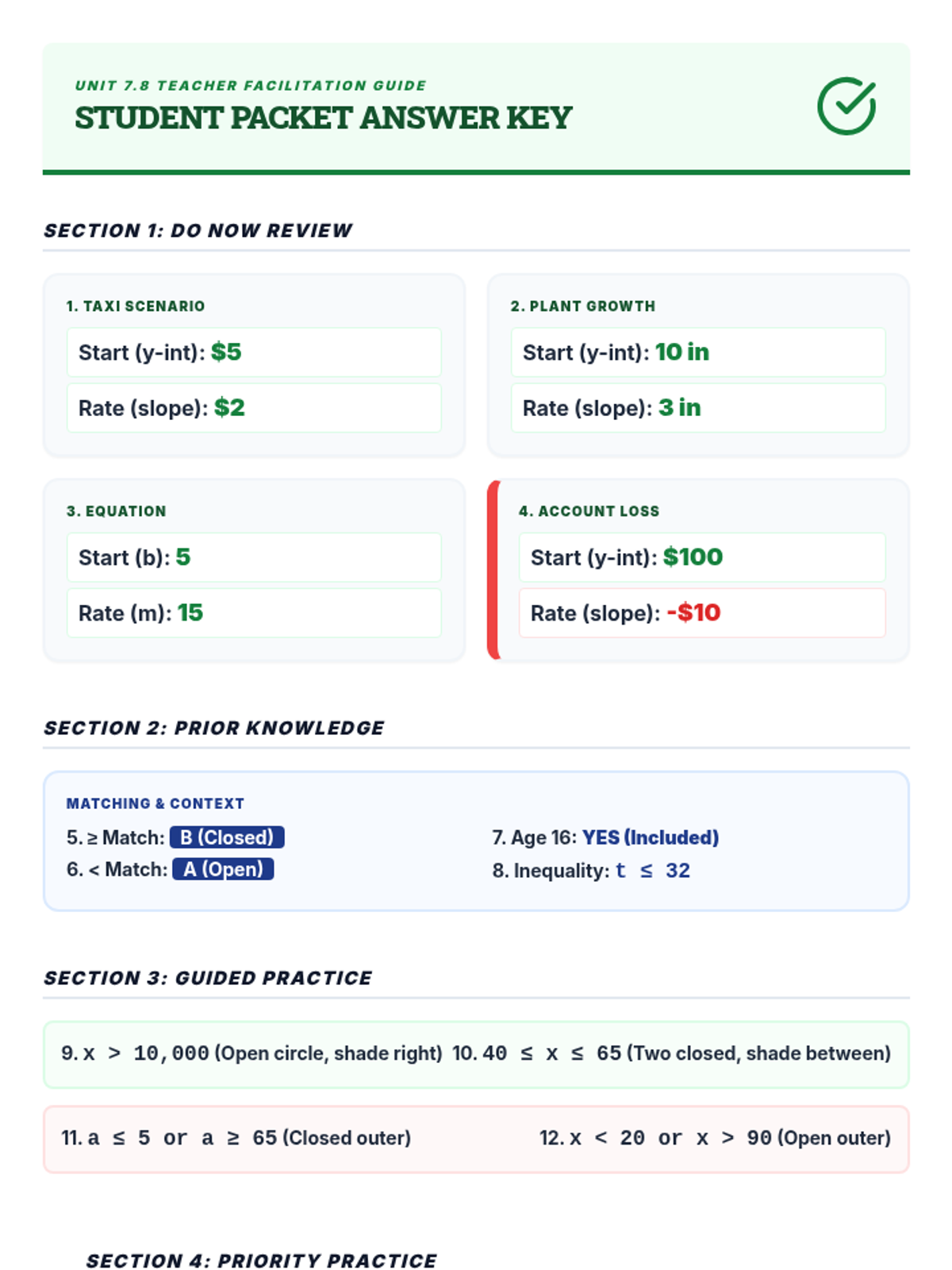
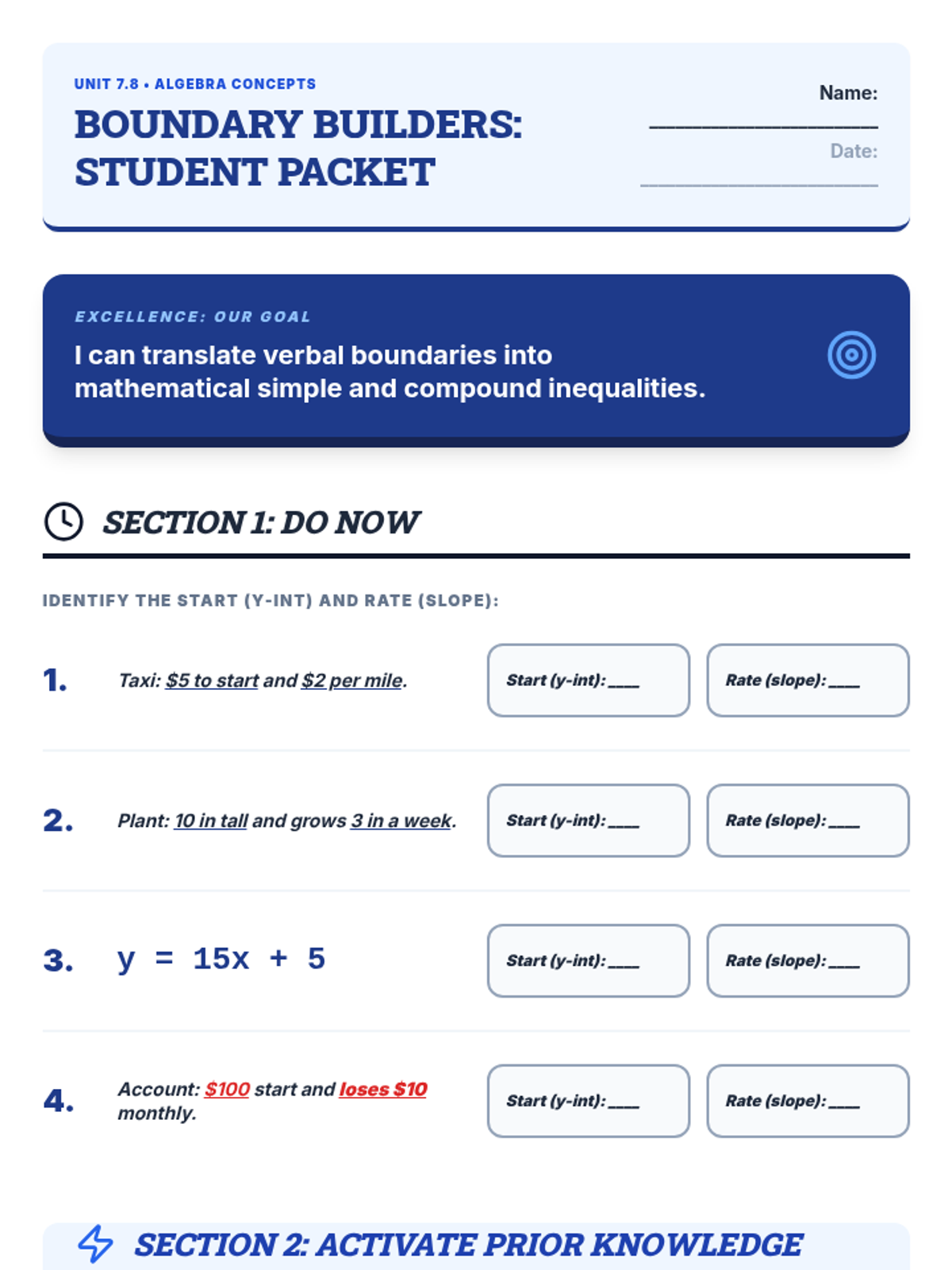
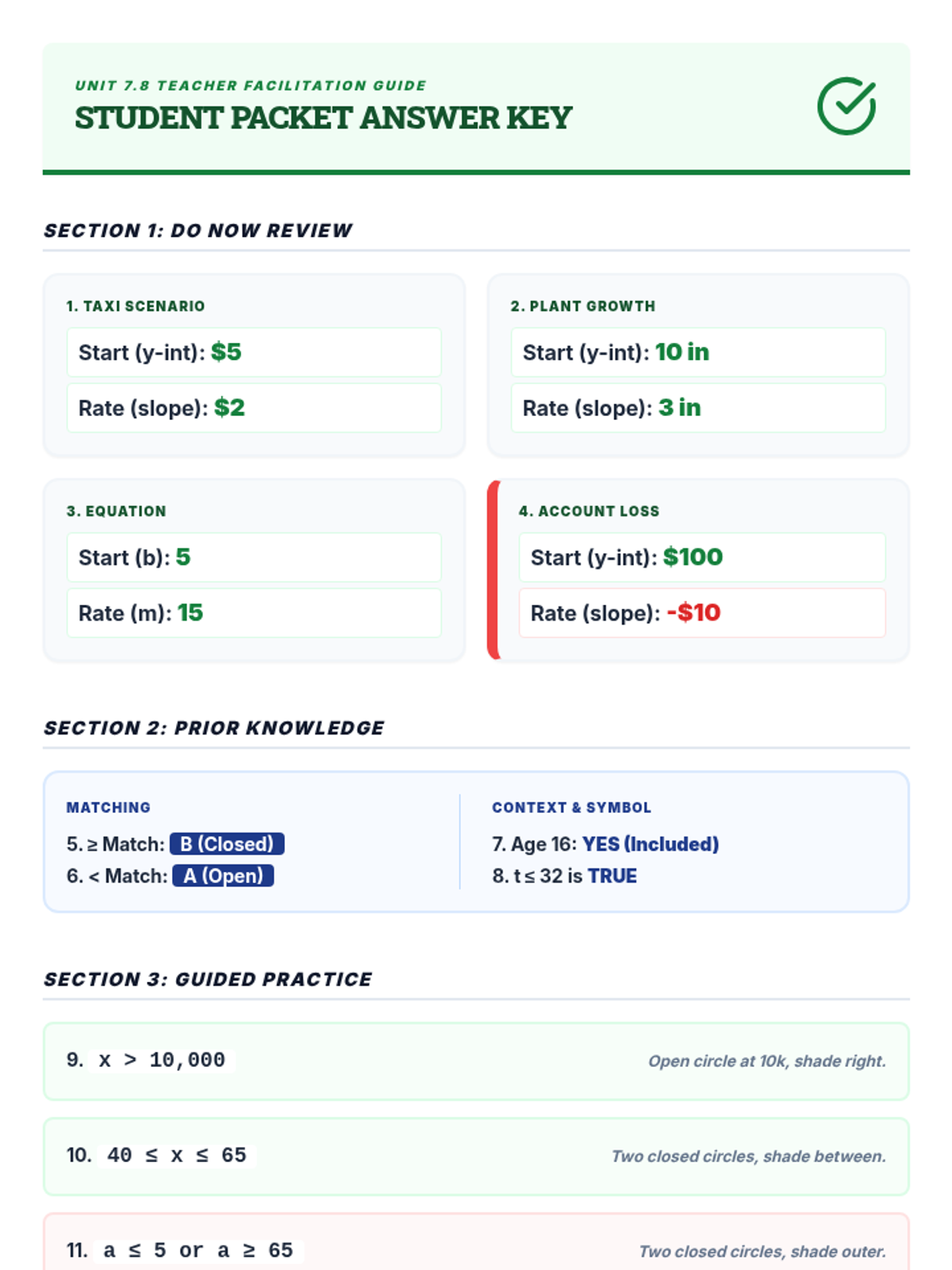
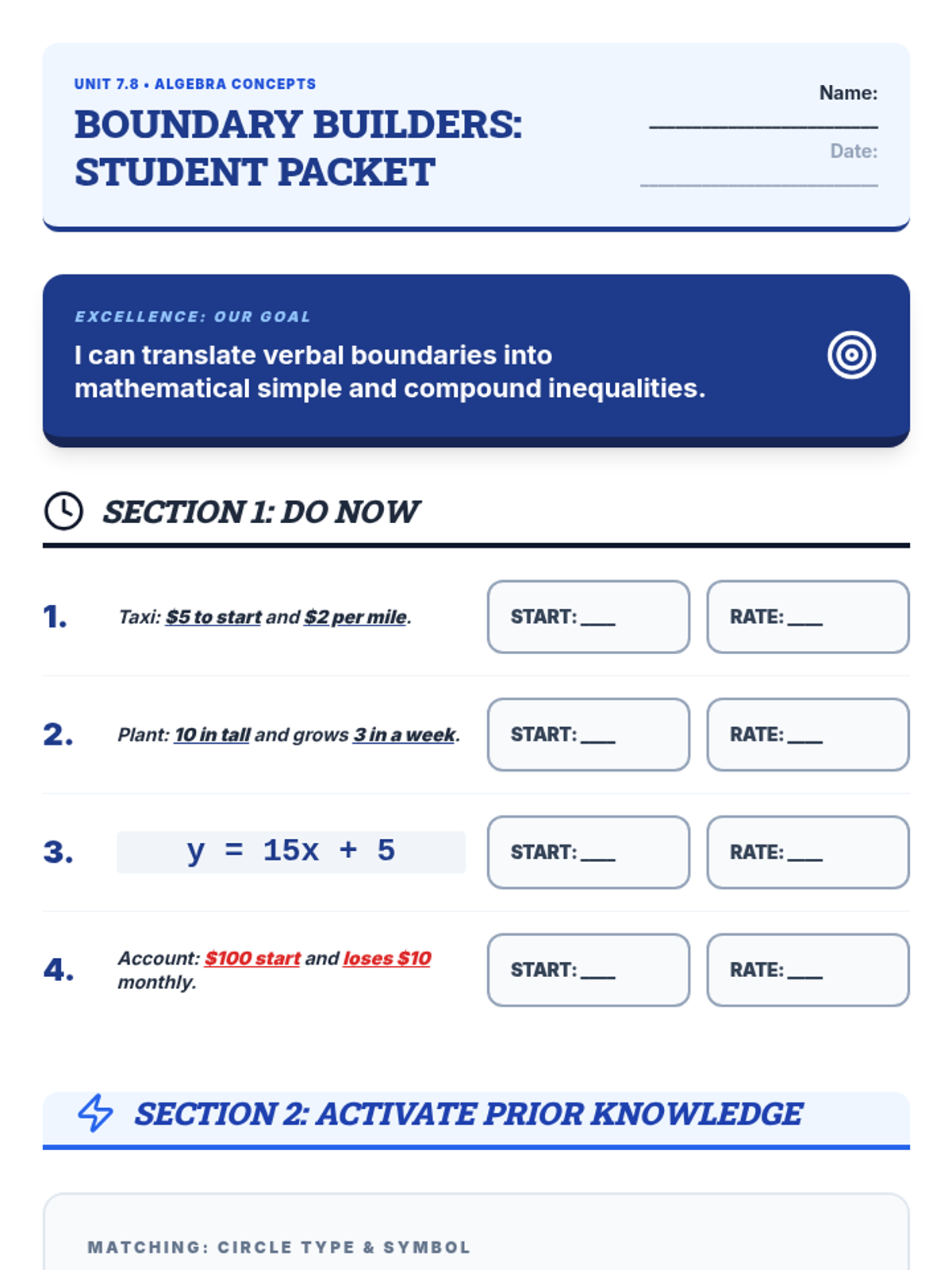
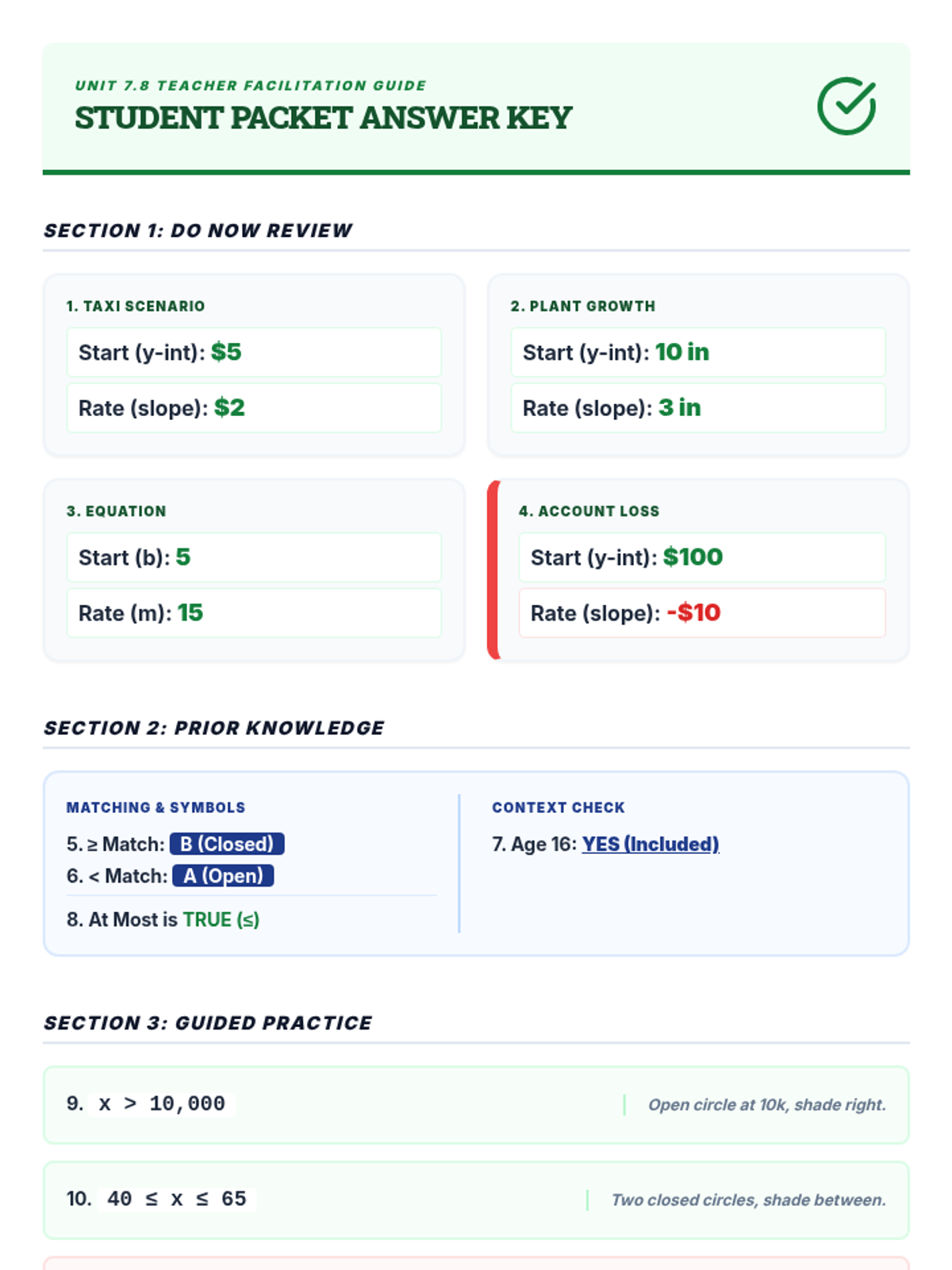
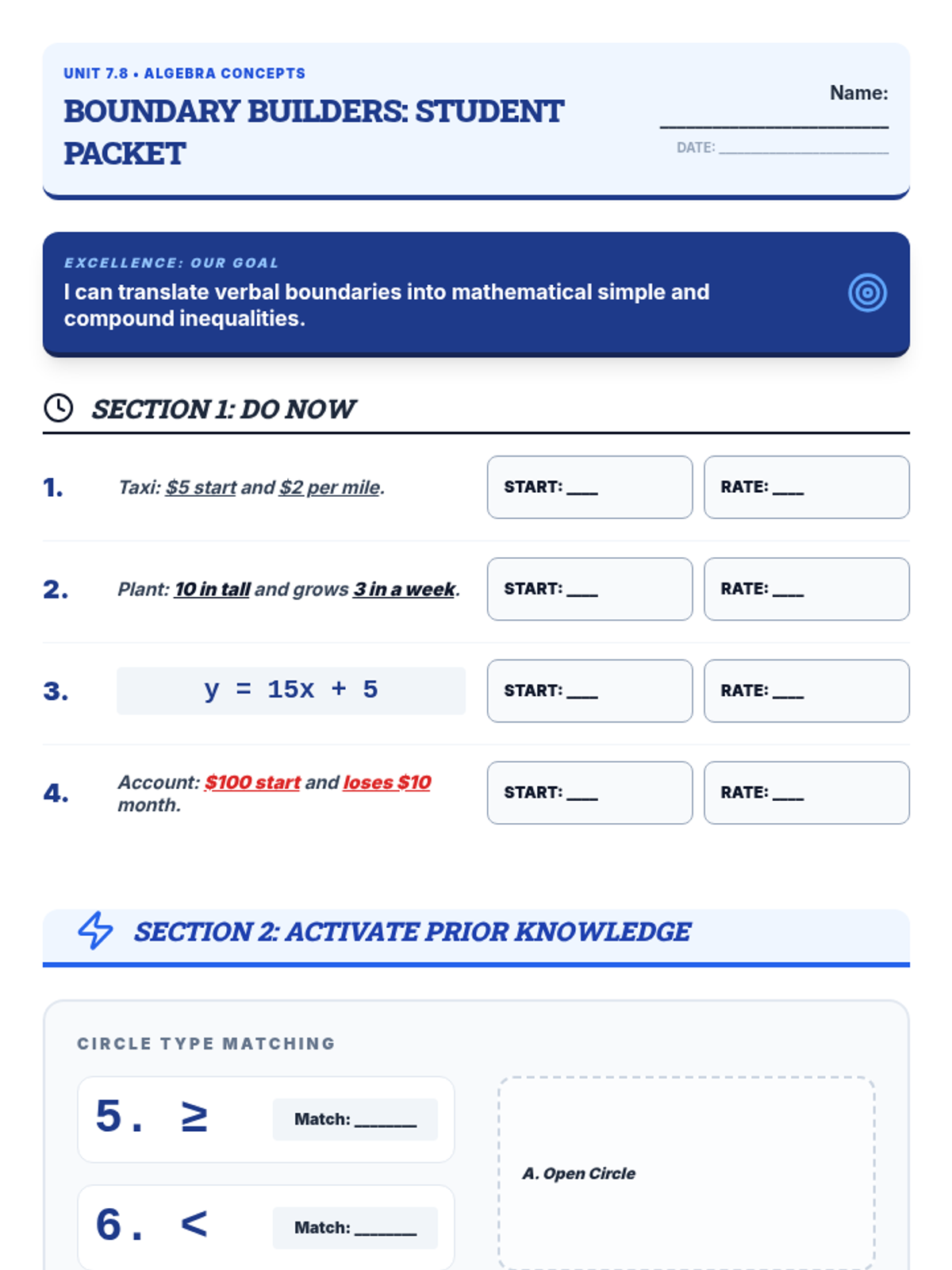
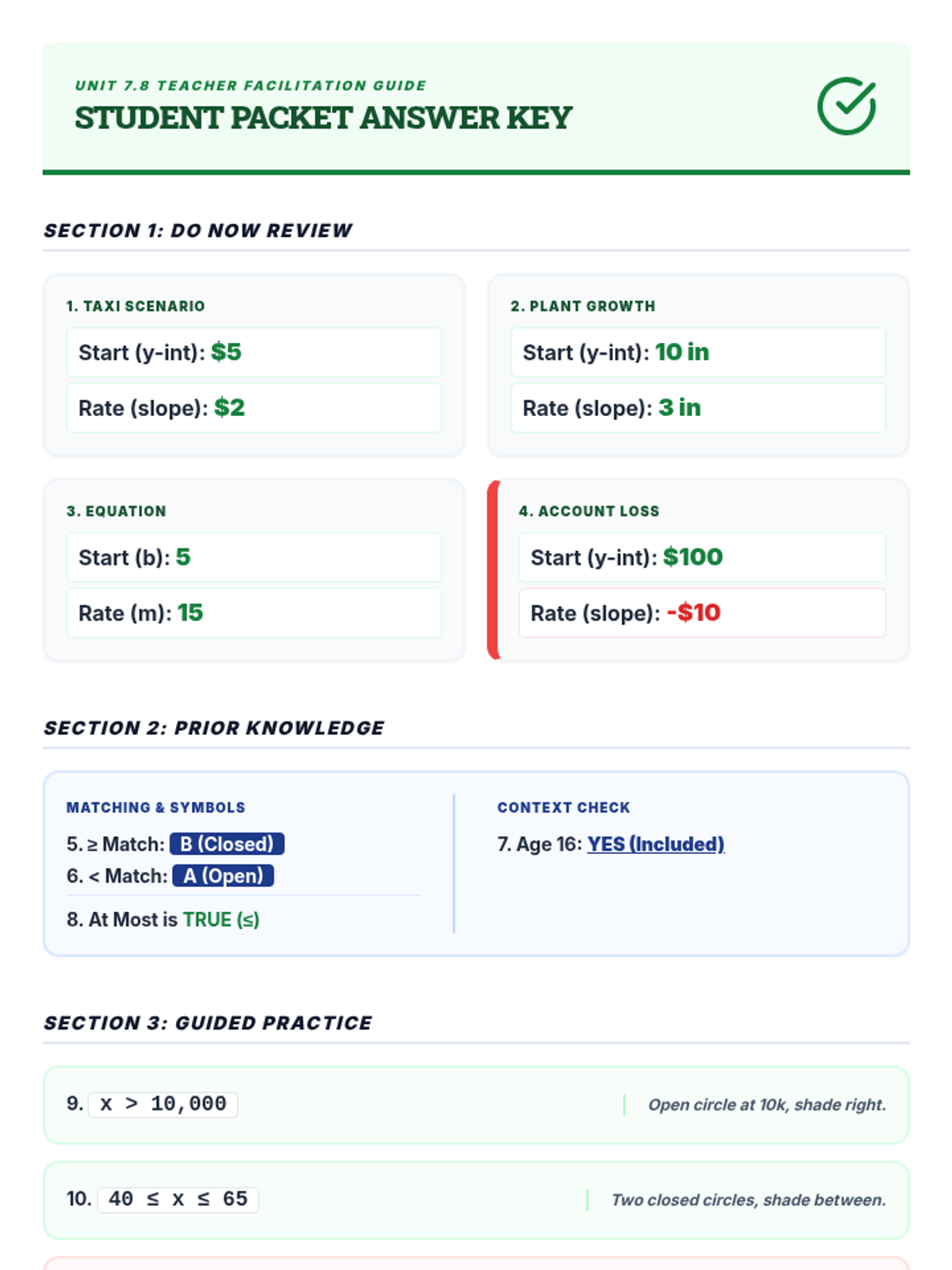
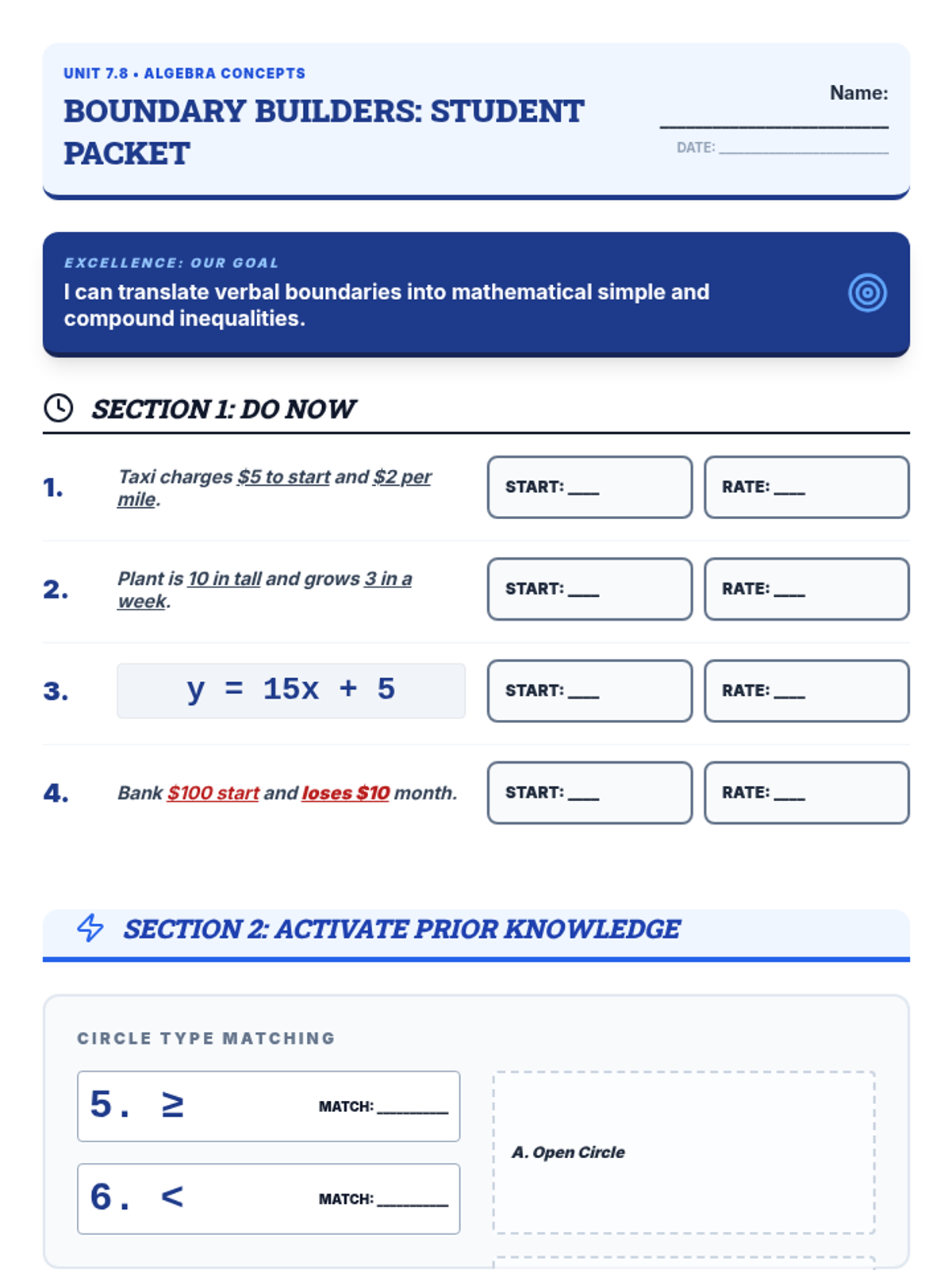
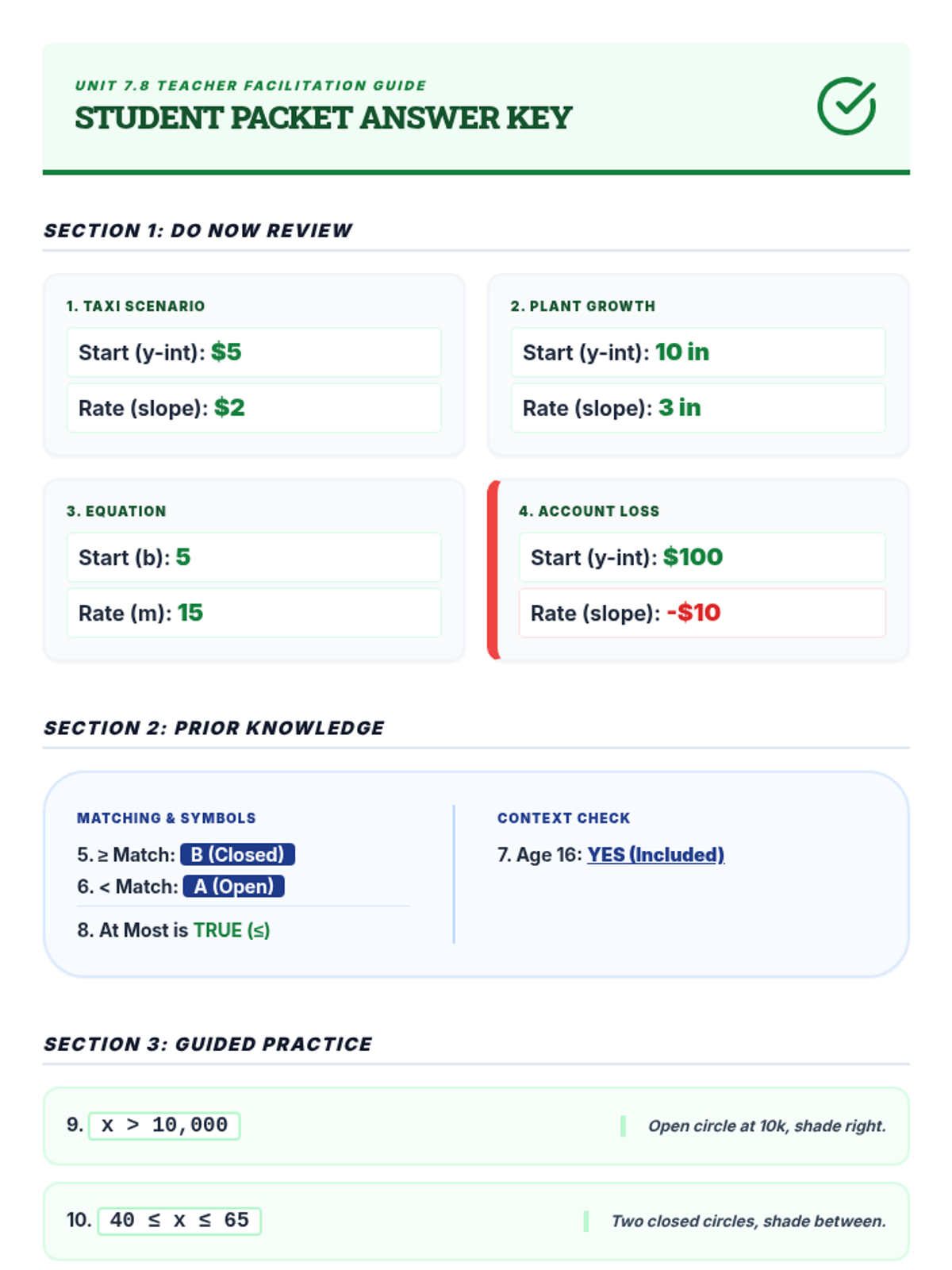
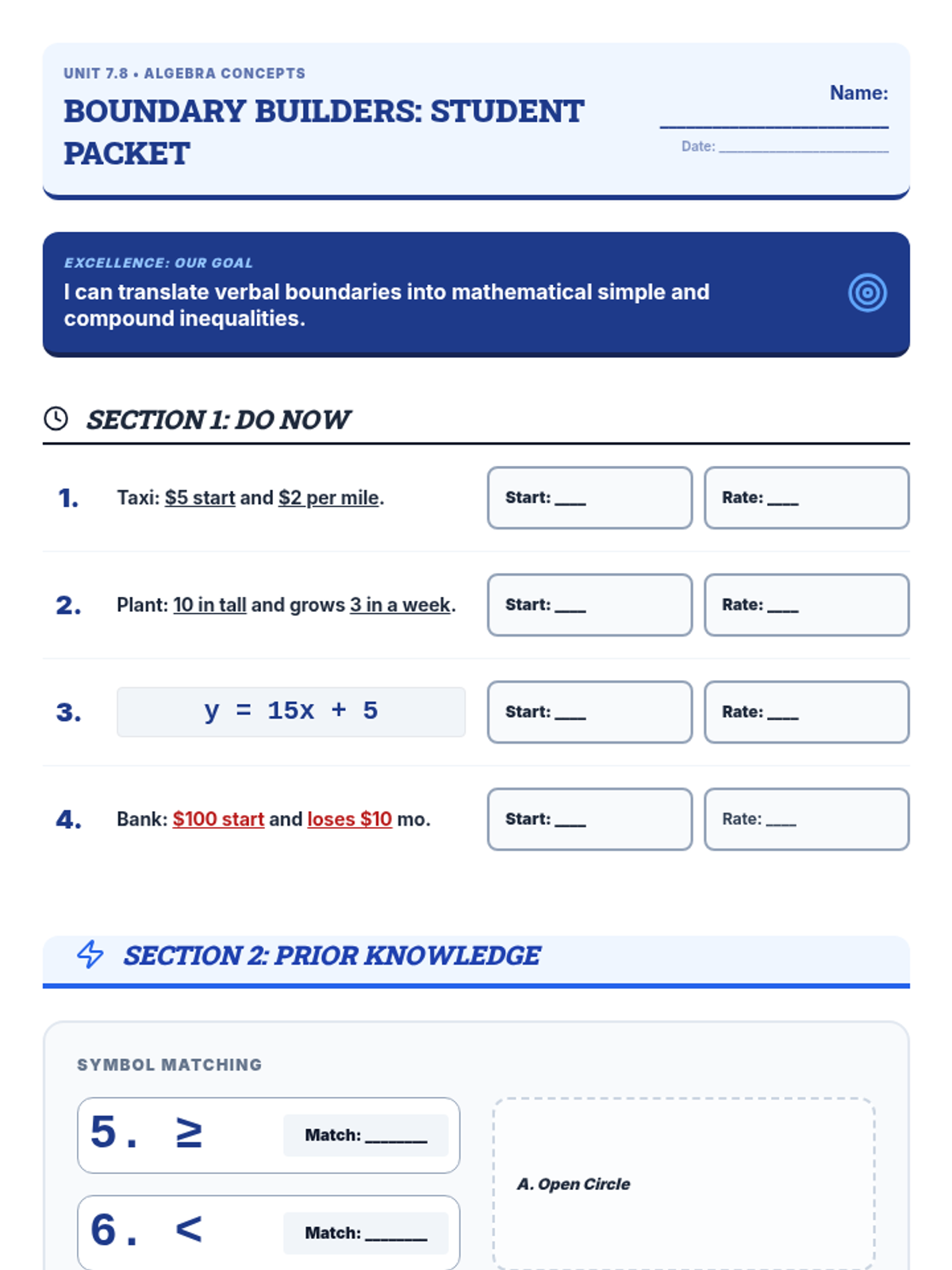
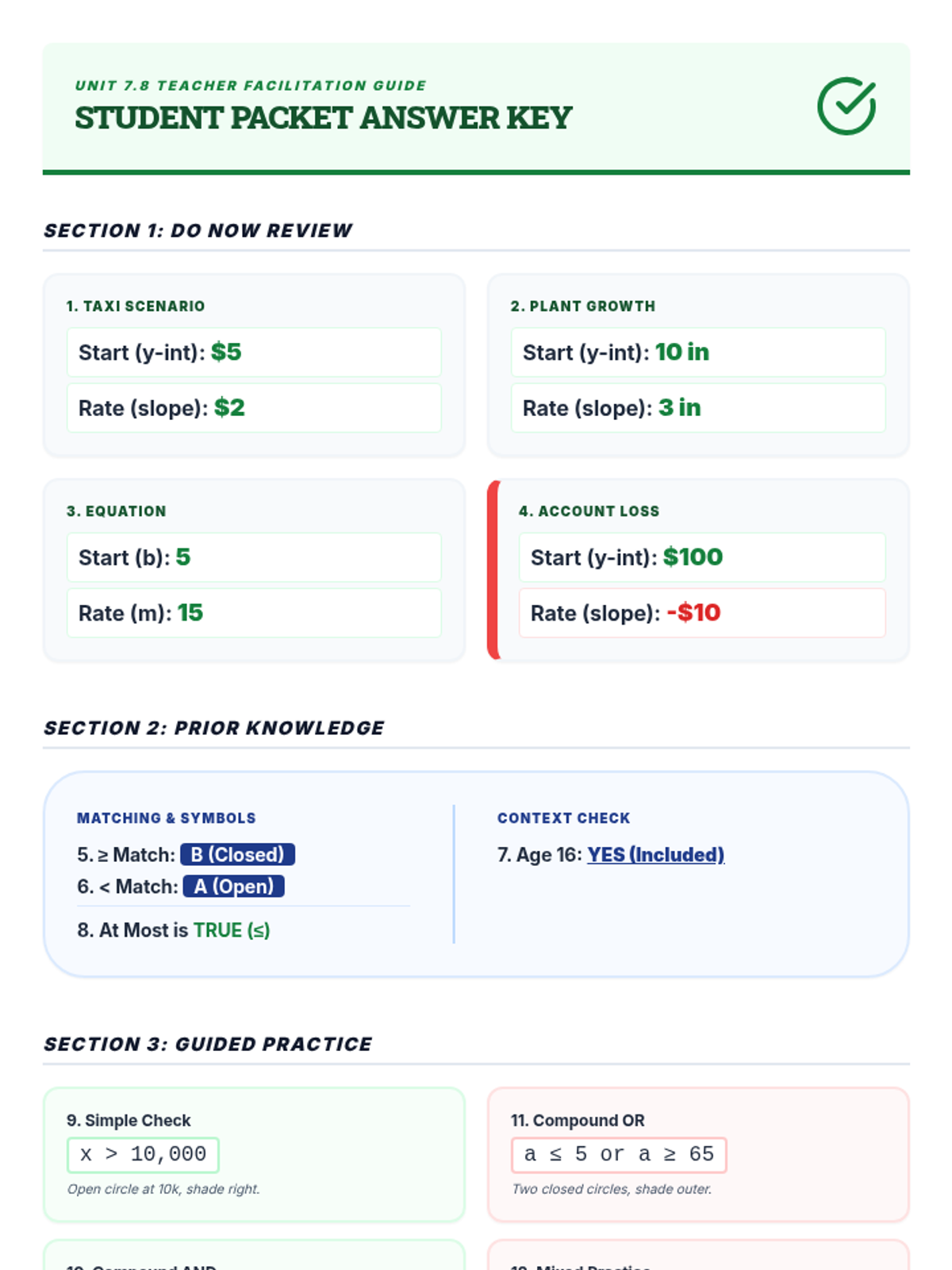
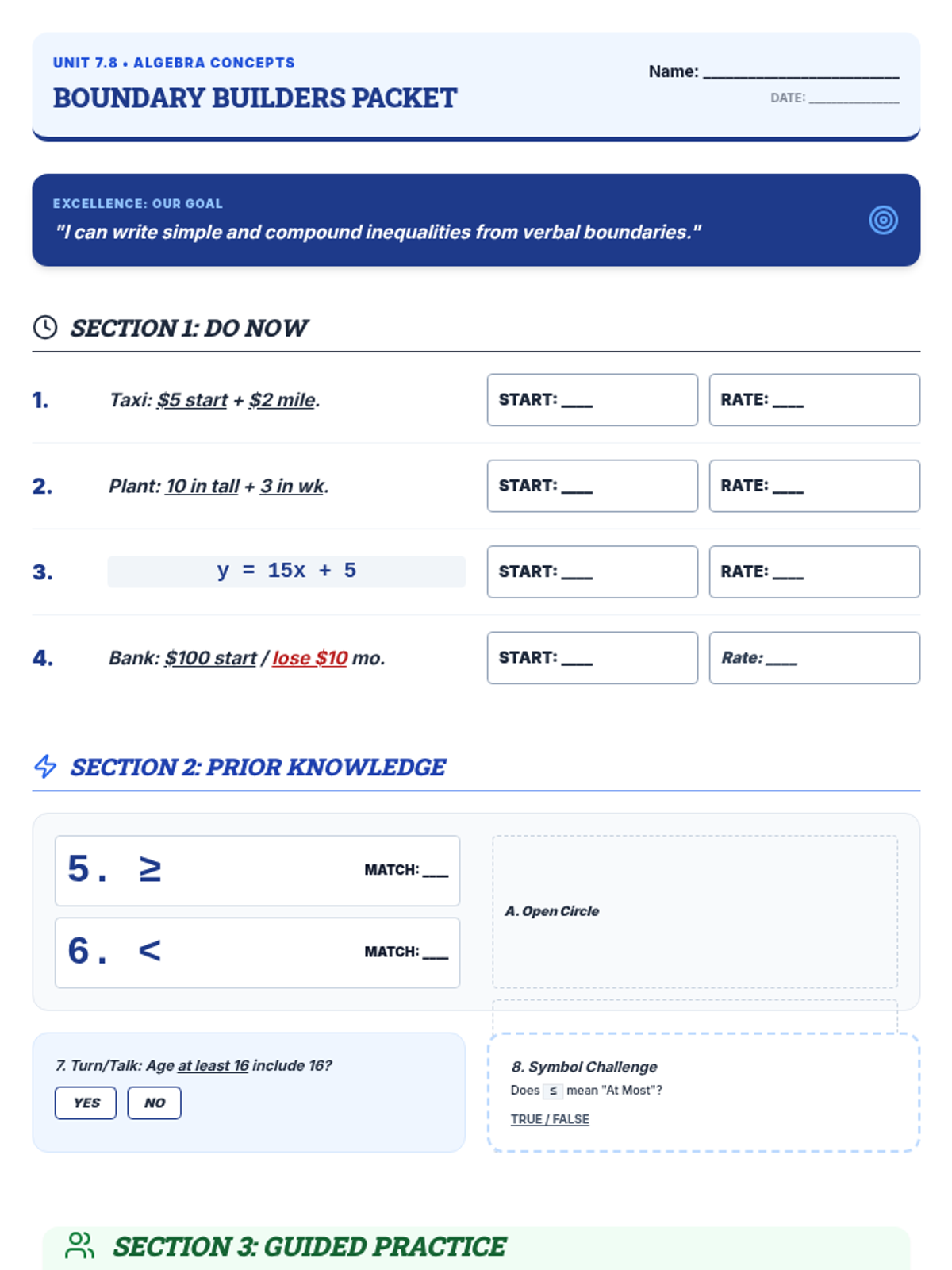
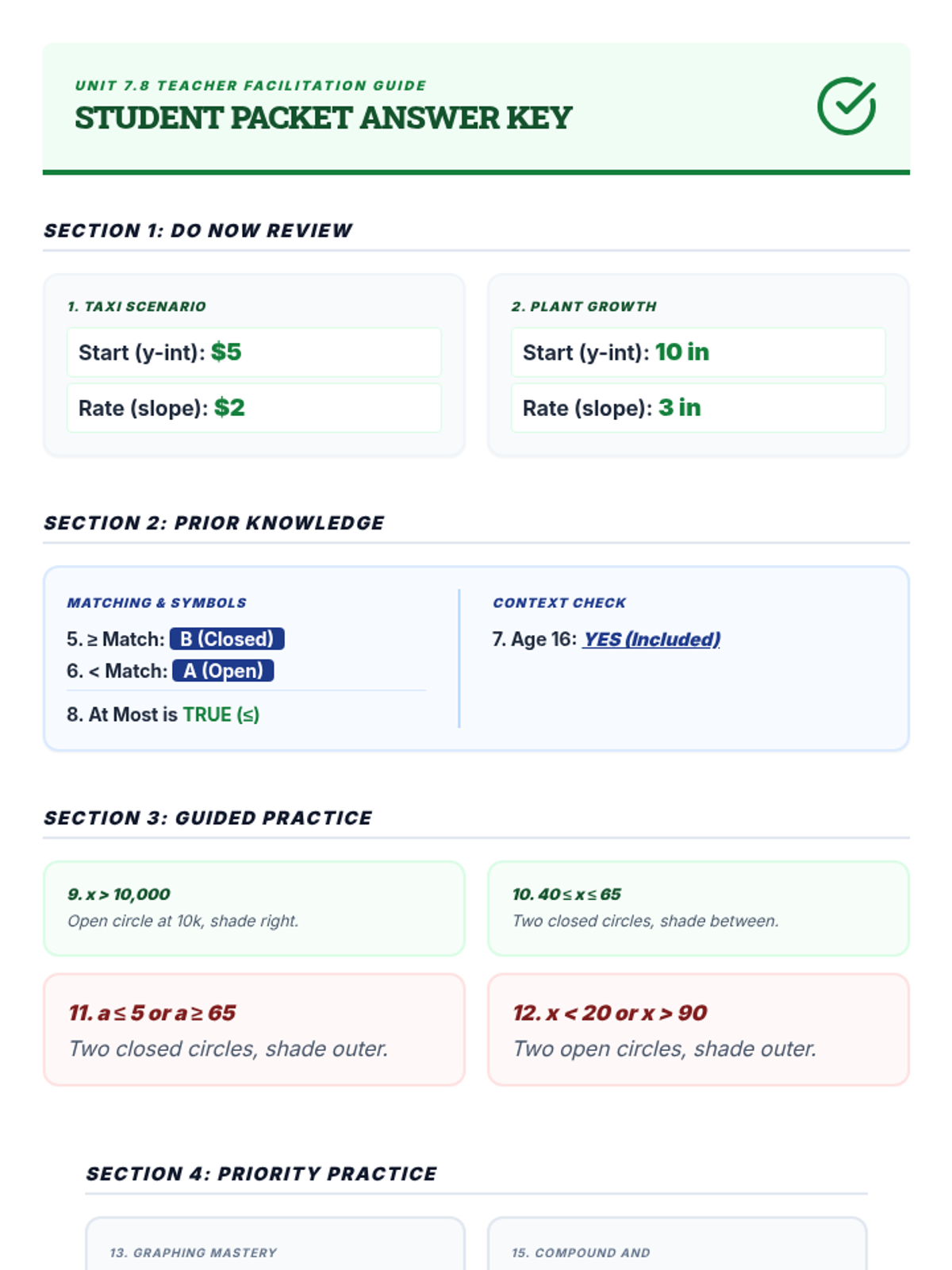
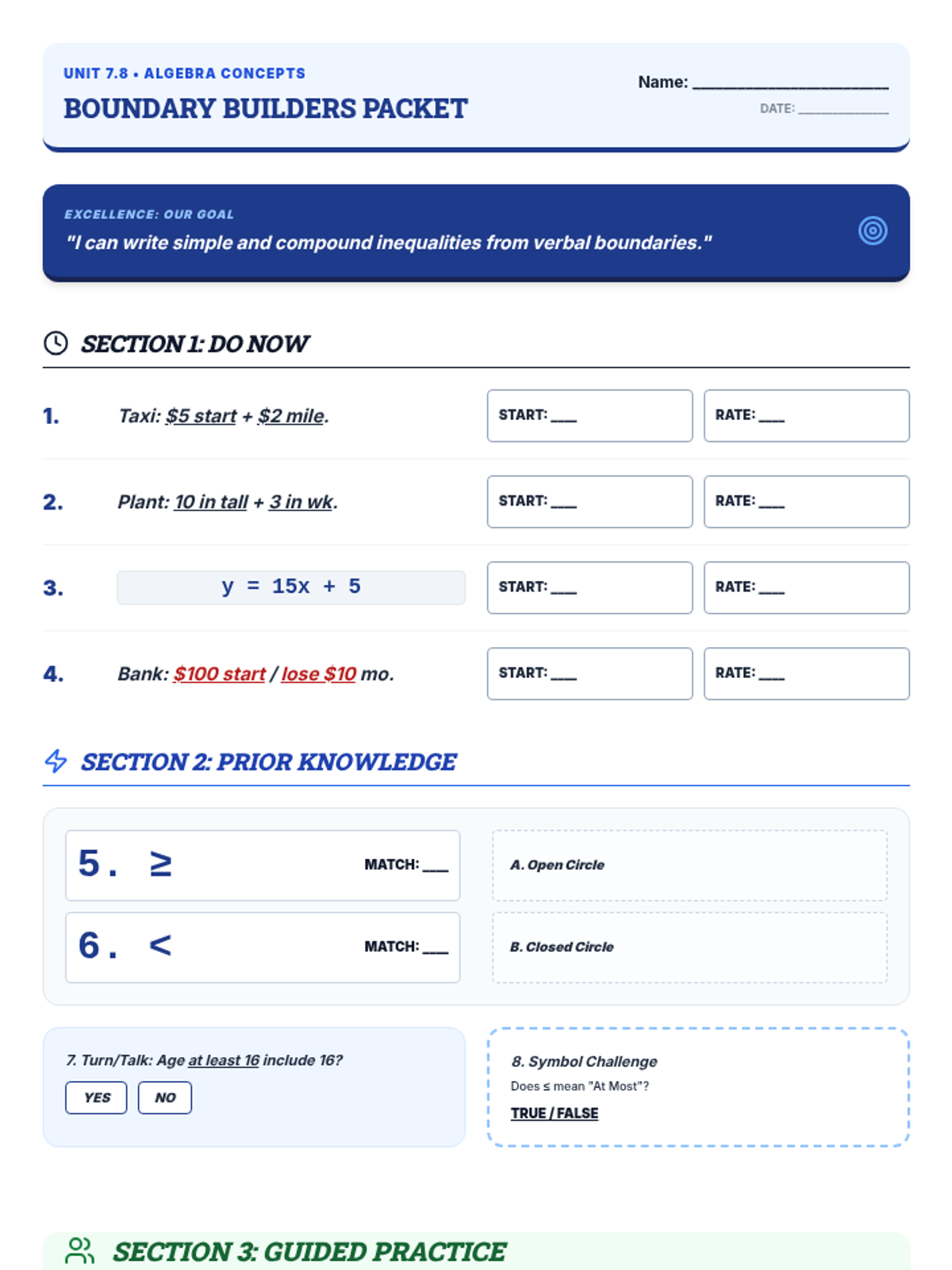
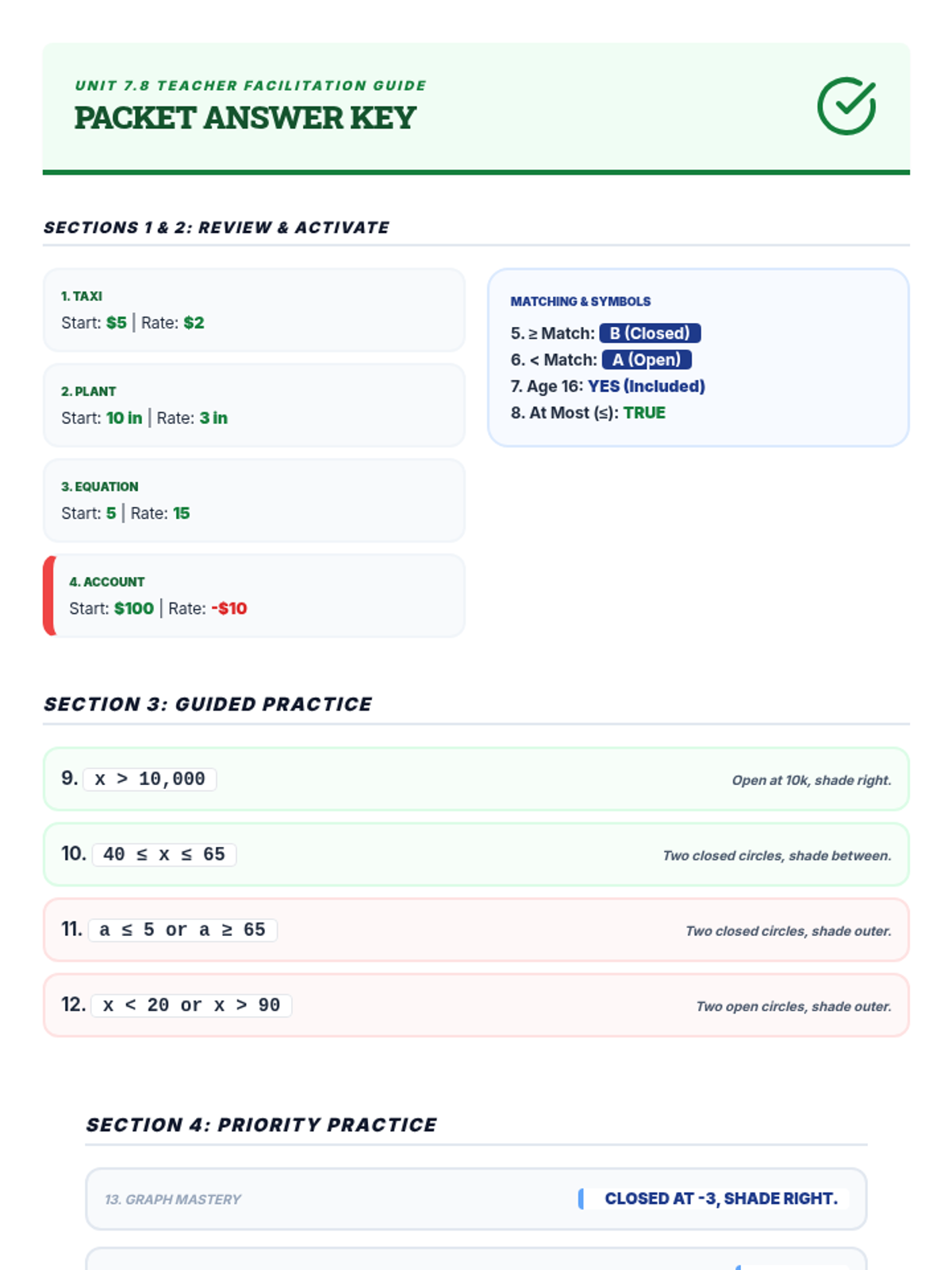
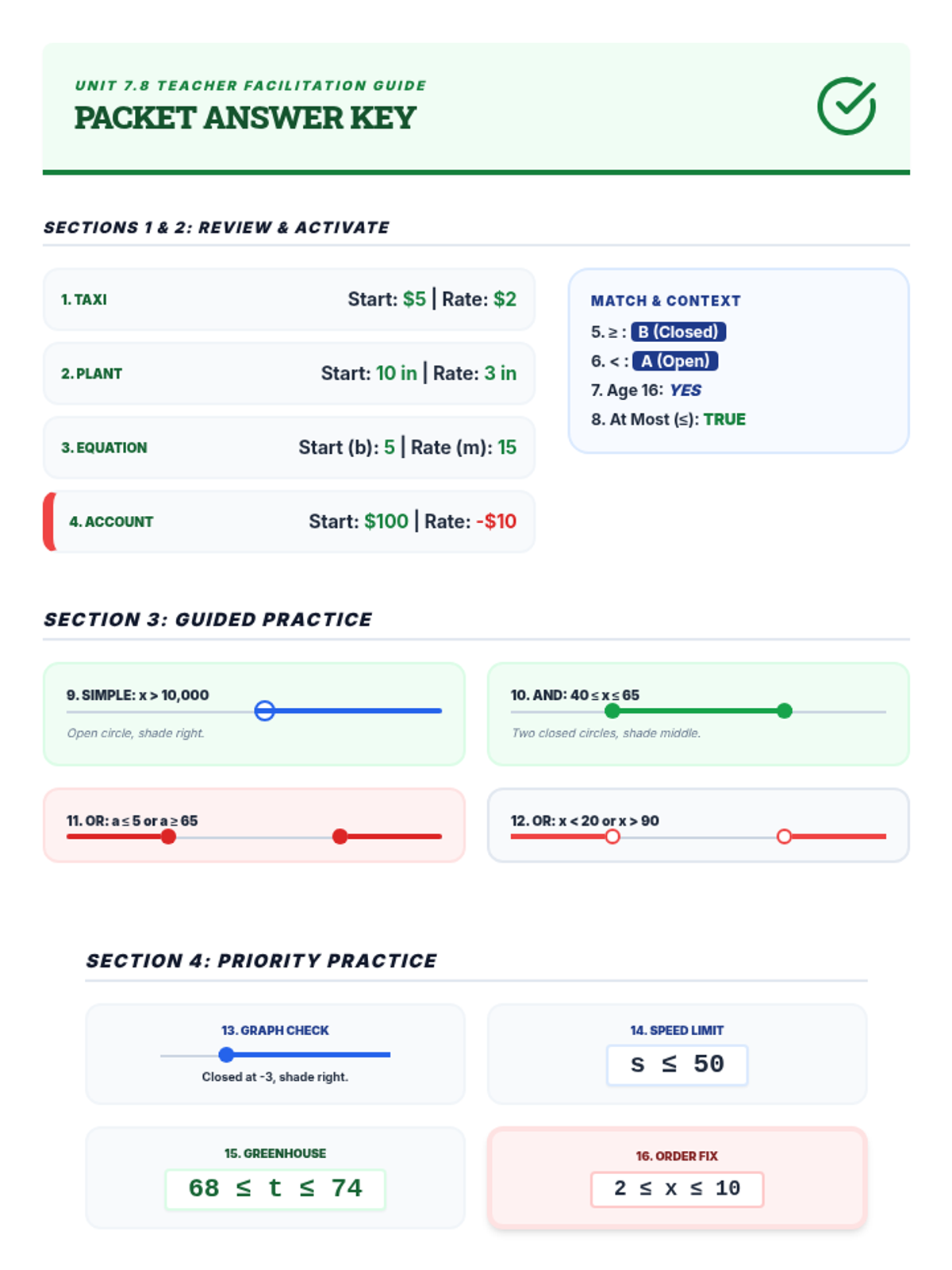
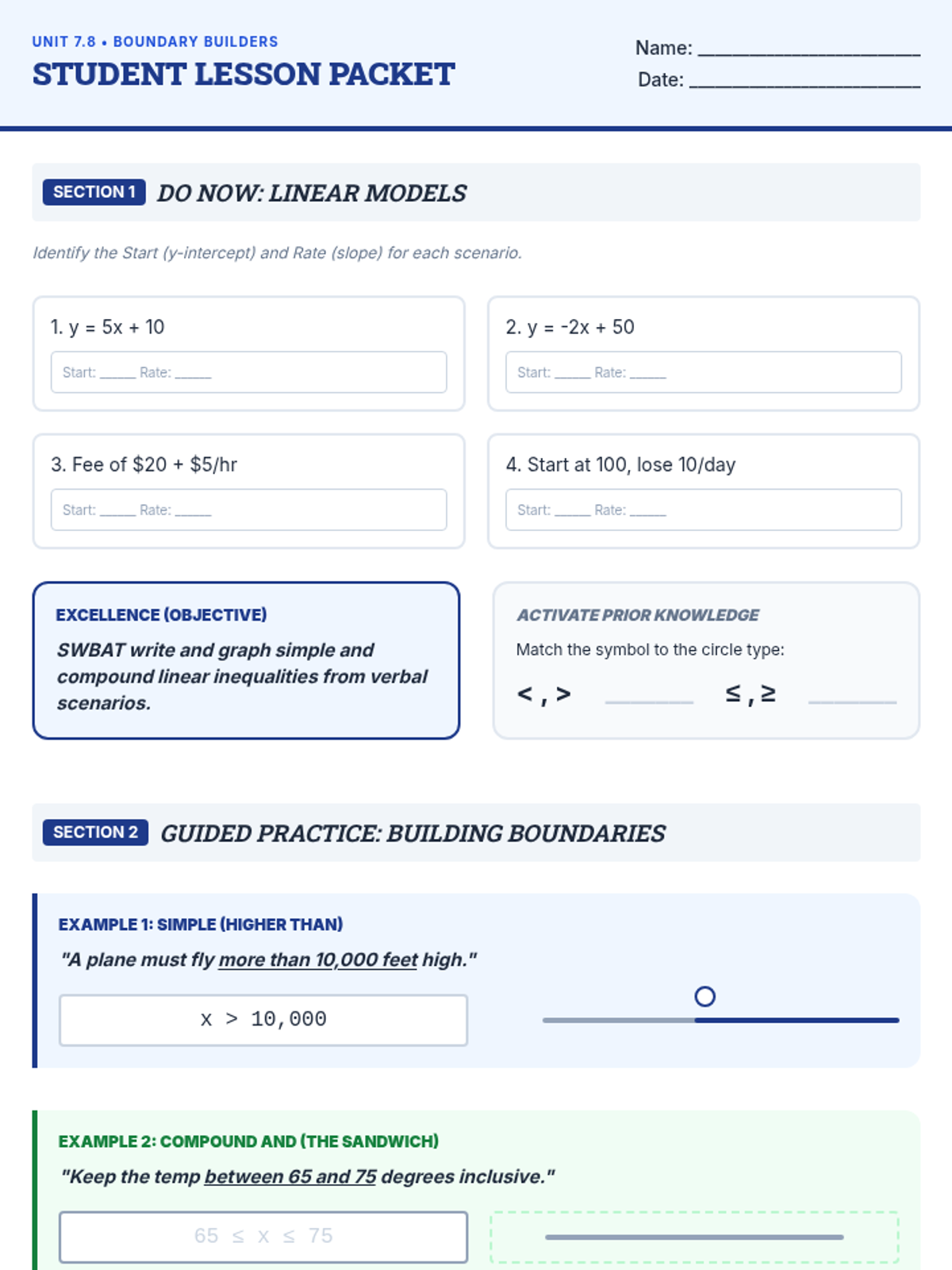
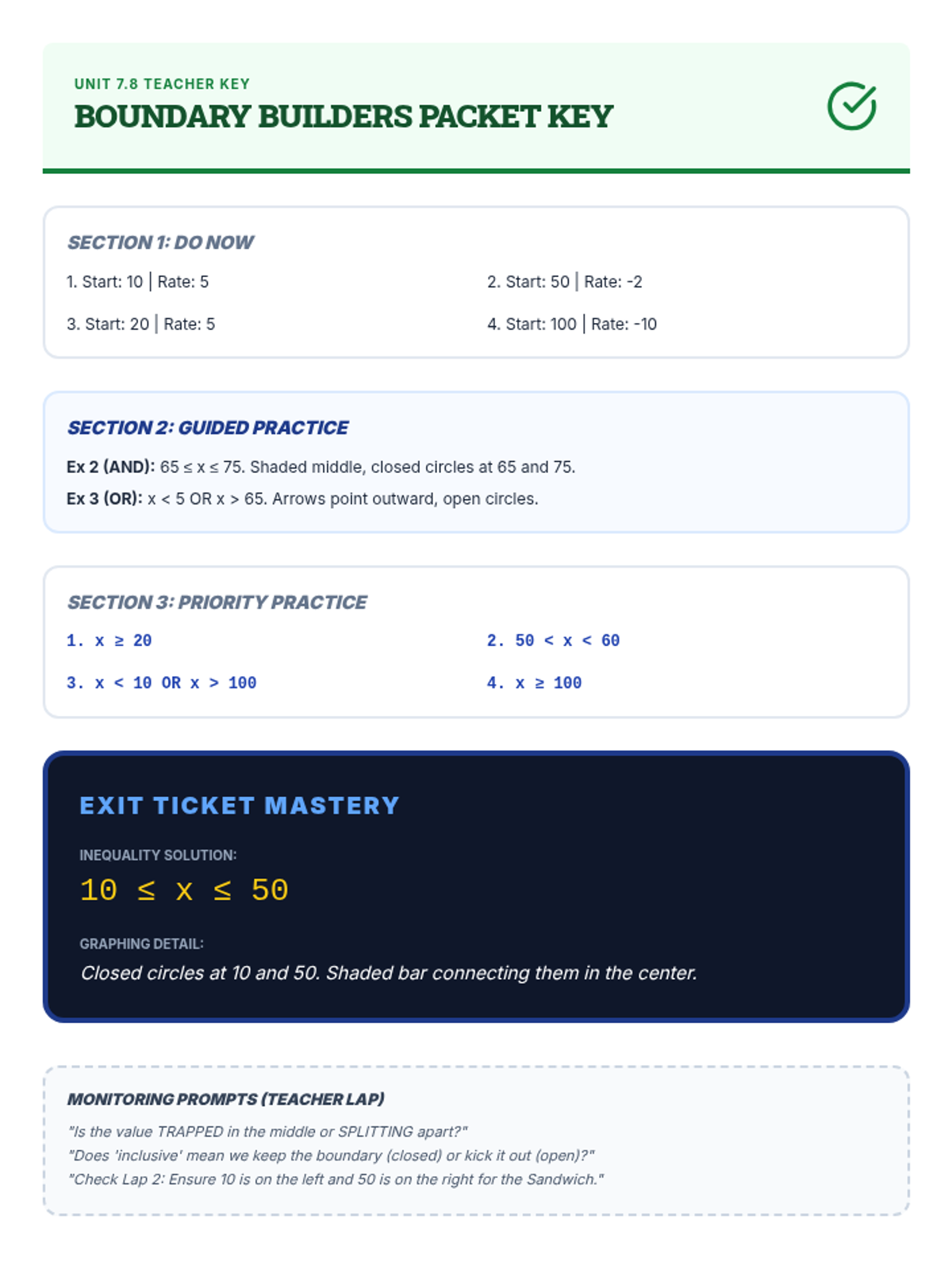
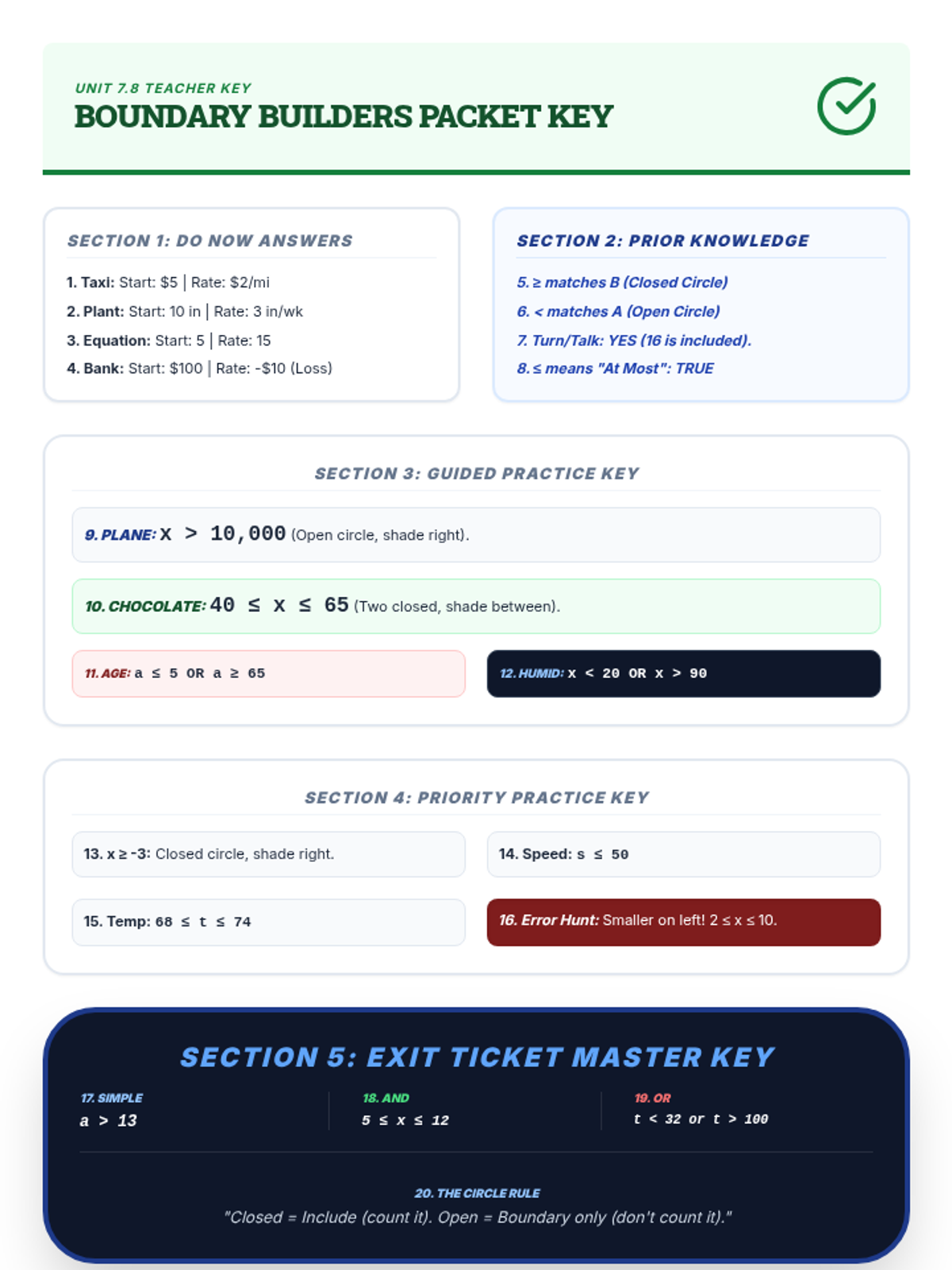
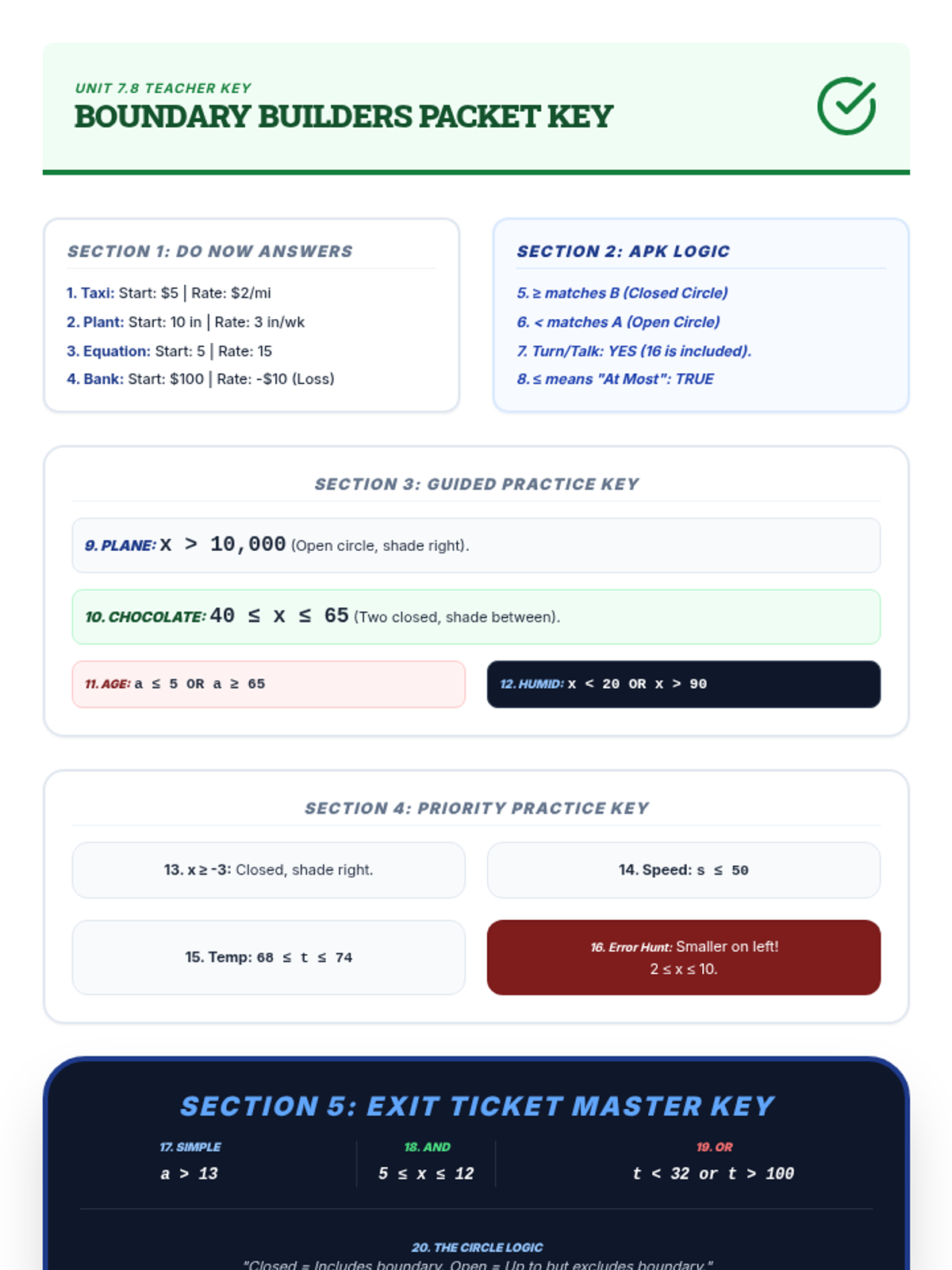
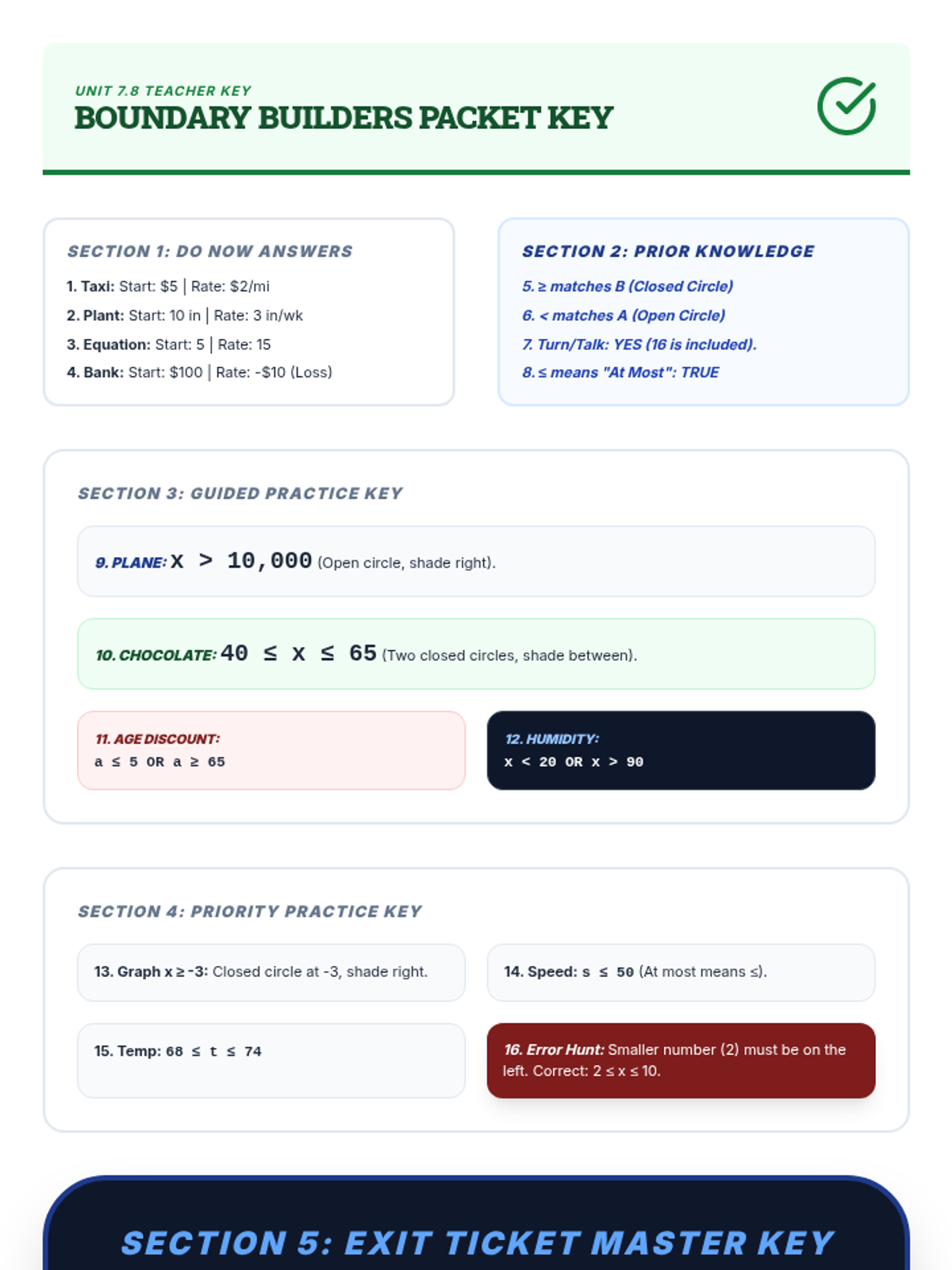
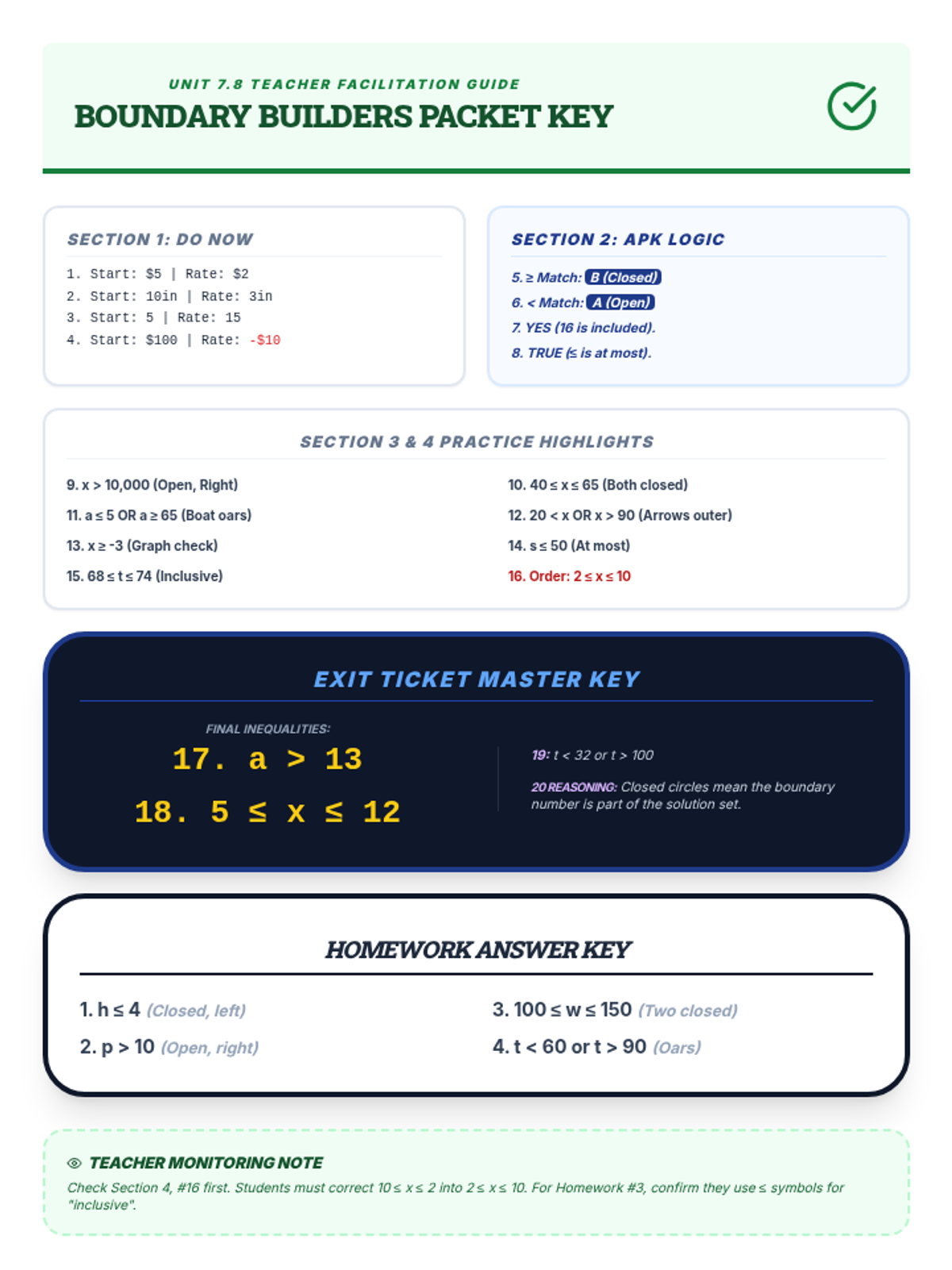
A 5-lesson Algebra series focused on linear inequalities and systems of equations, designed for 9th-grade special education students with scaffolded instruction, visual aids, and scripted teacher guidance.
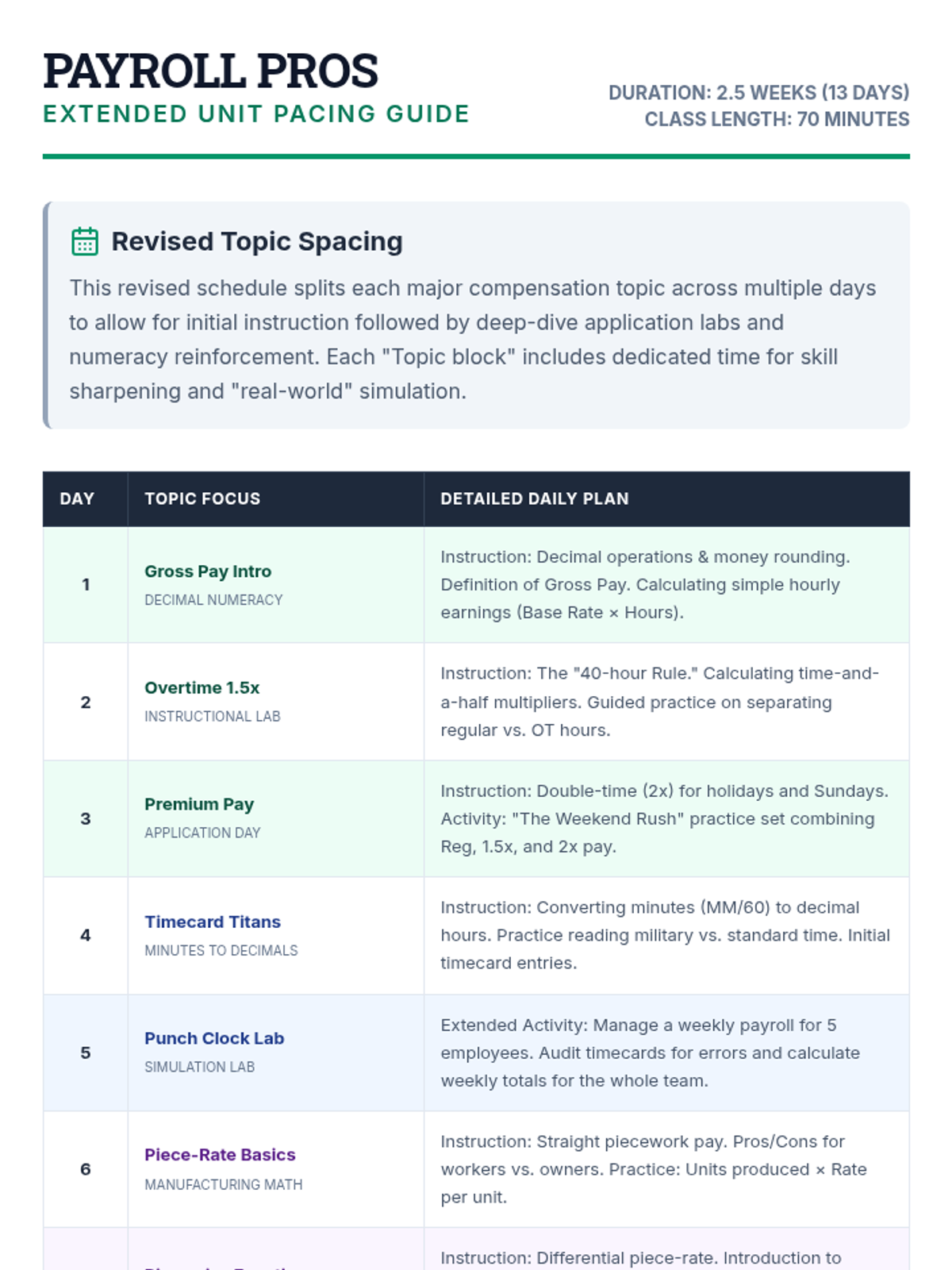
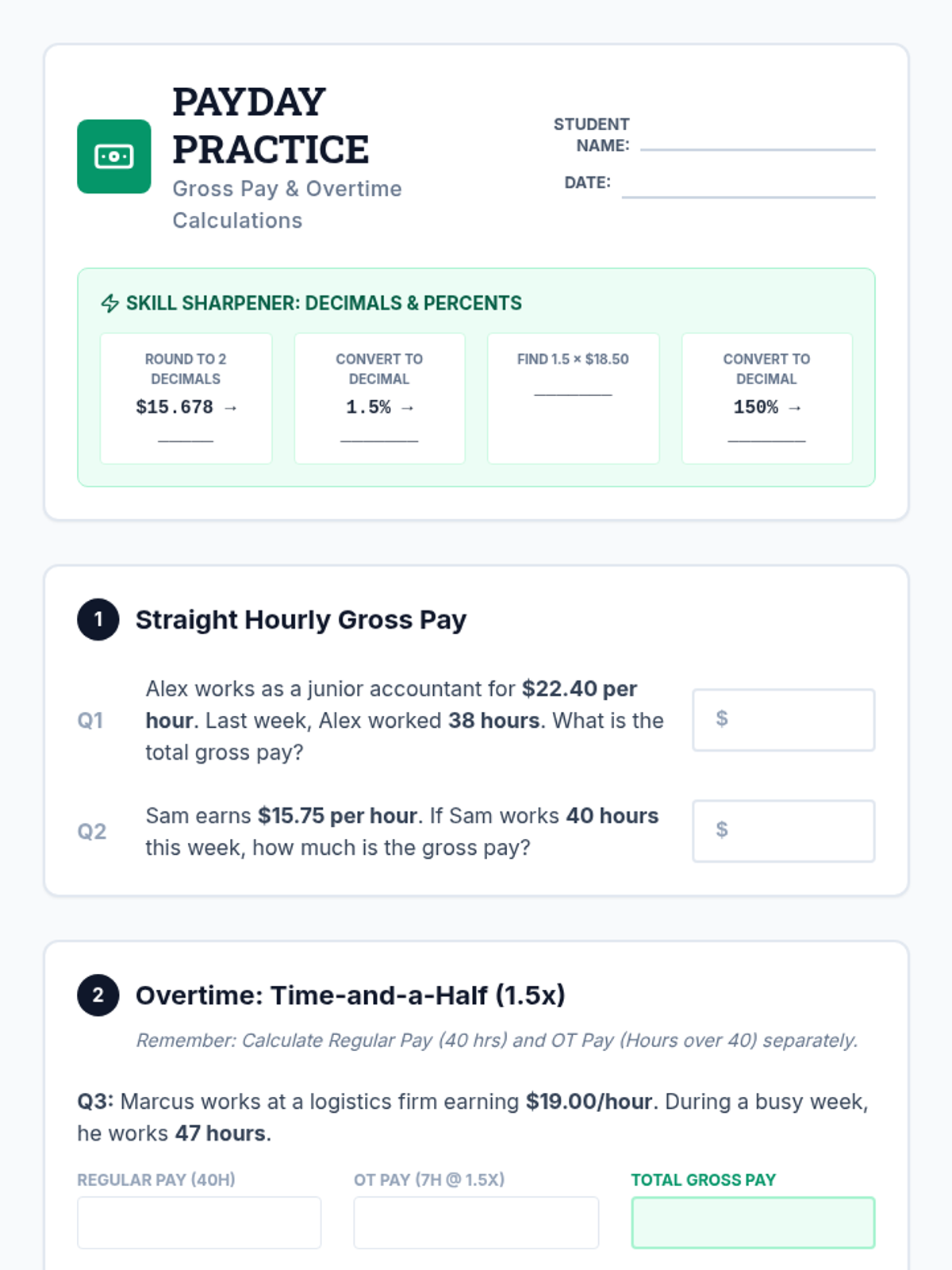
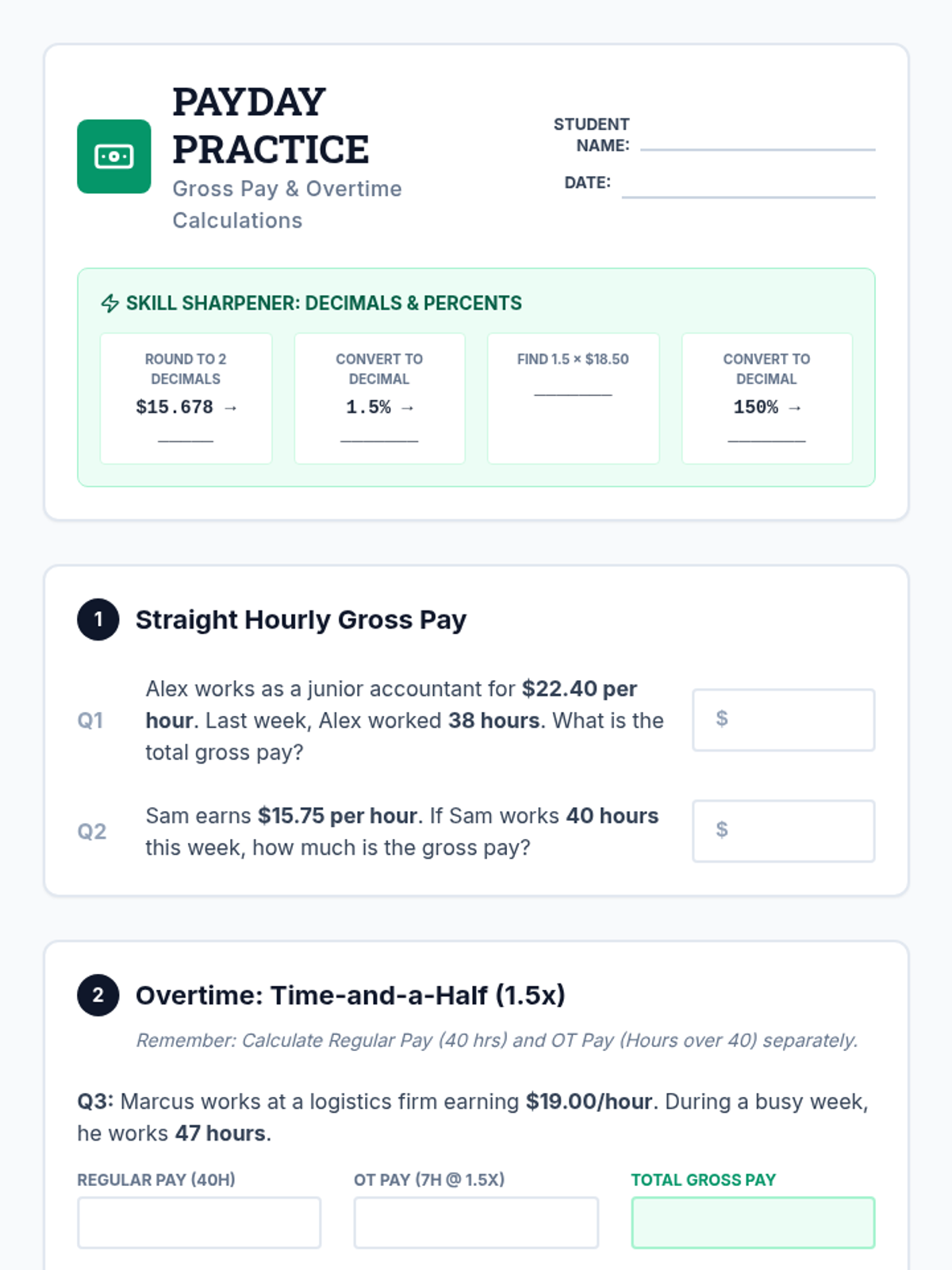
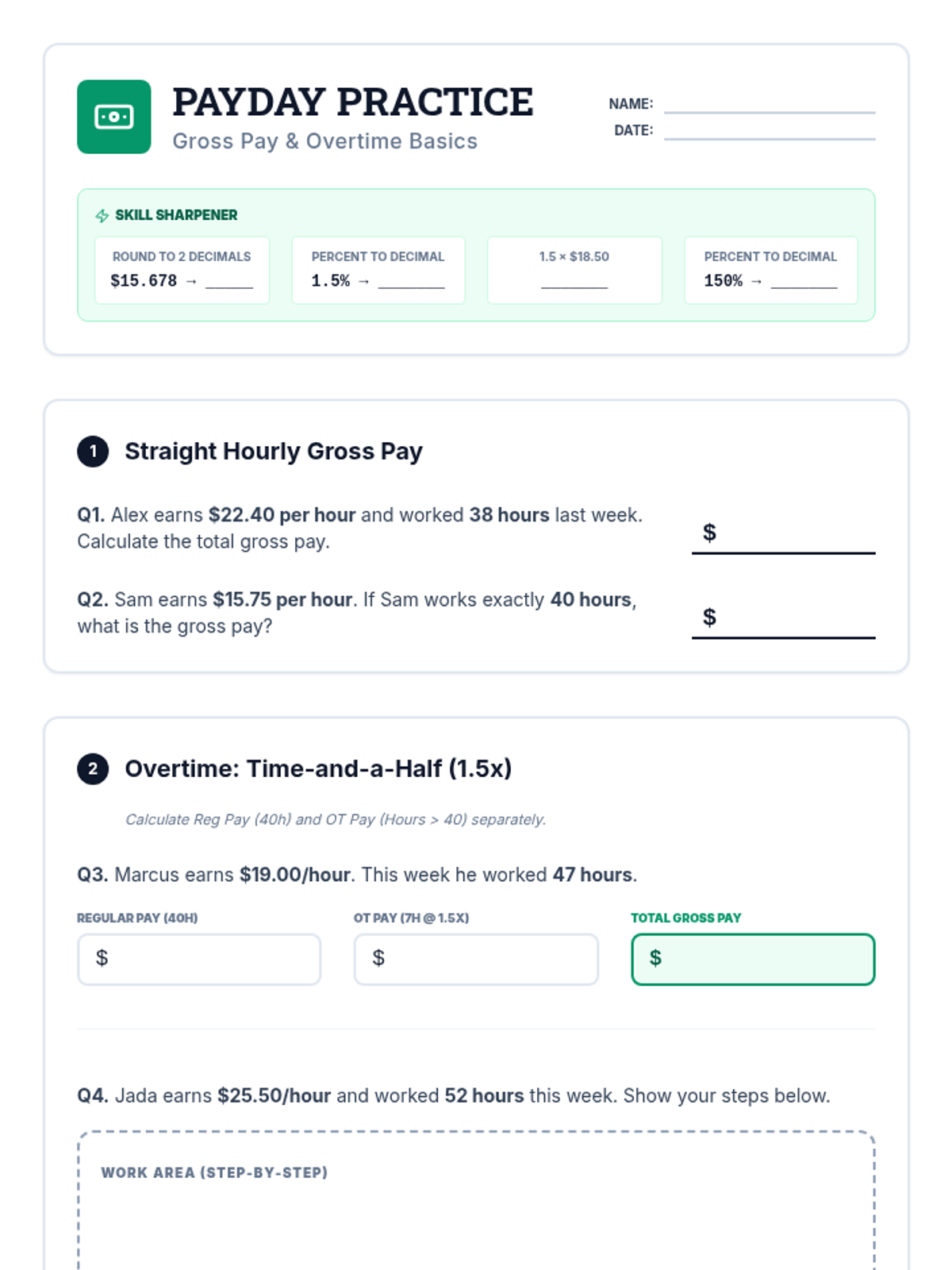
A comprehensive 2.5-week unit on business mathematics focusing on compensation structures, including hourly wages, overtime, timecards, piecework, piecewise pay functions, and commission, with integrated numeracy reviews.
A collection of lessons exploring mathematical concepts through pop-culture themes to engage students with diverse learning needs.
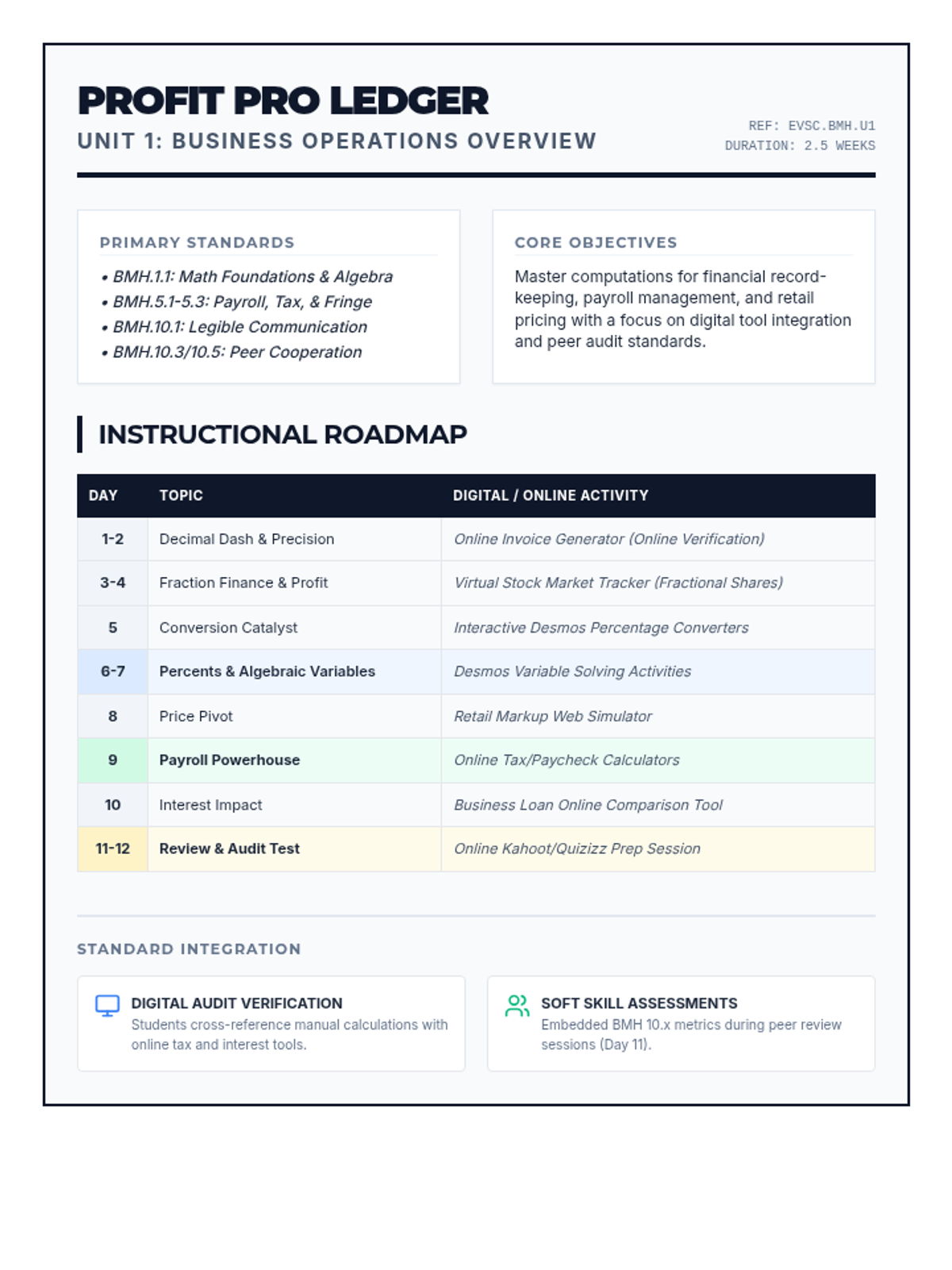
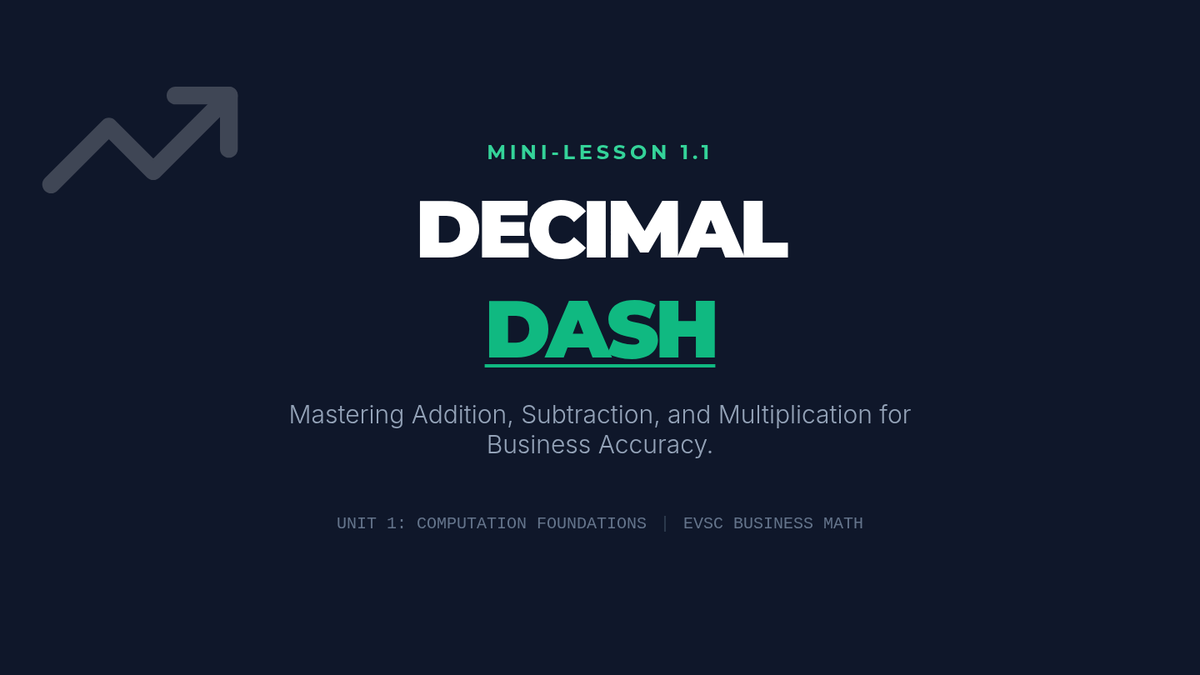
A comprehensive 2.5-week introductory unit for Business Math focusing on decimal, fraction, and percentage operations, algebraic solving, and payroll management. This unit aligns with Indiana BMH standards (1.1, 5.1-5.3, 10.1-10.5), preparing students for practical financial applications through 70-minute instructional blocks.
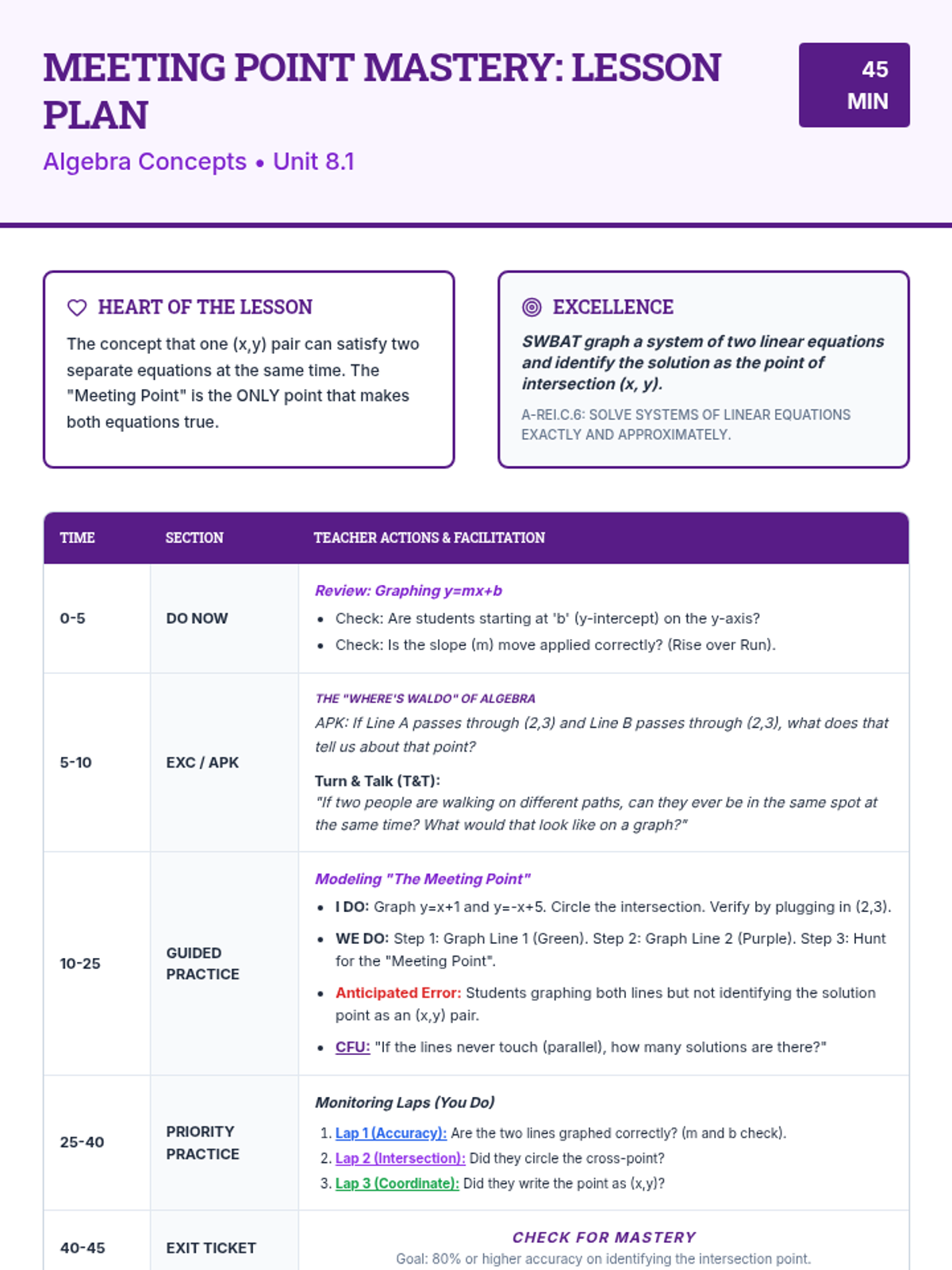
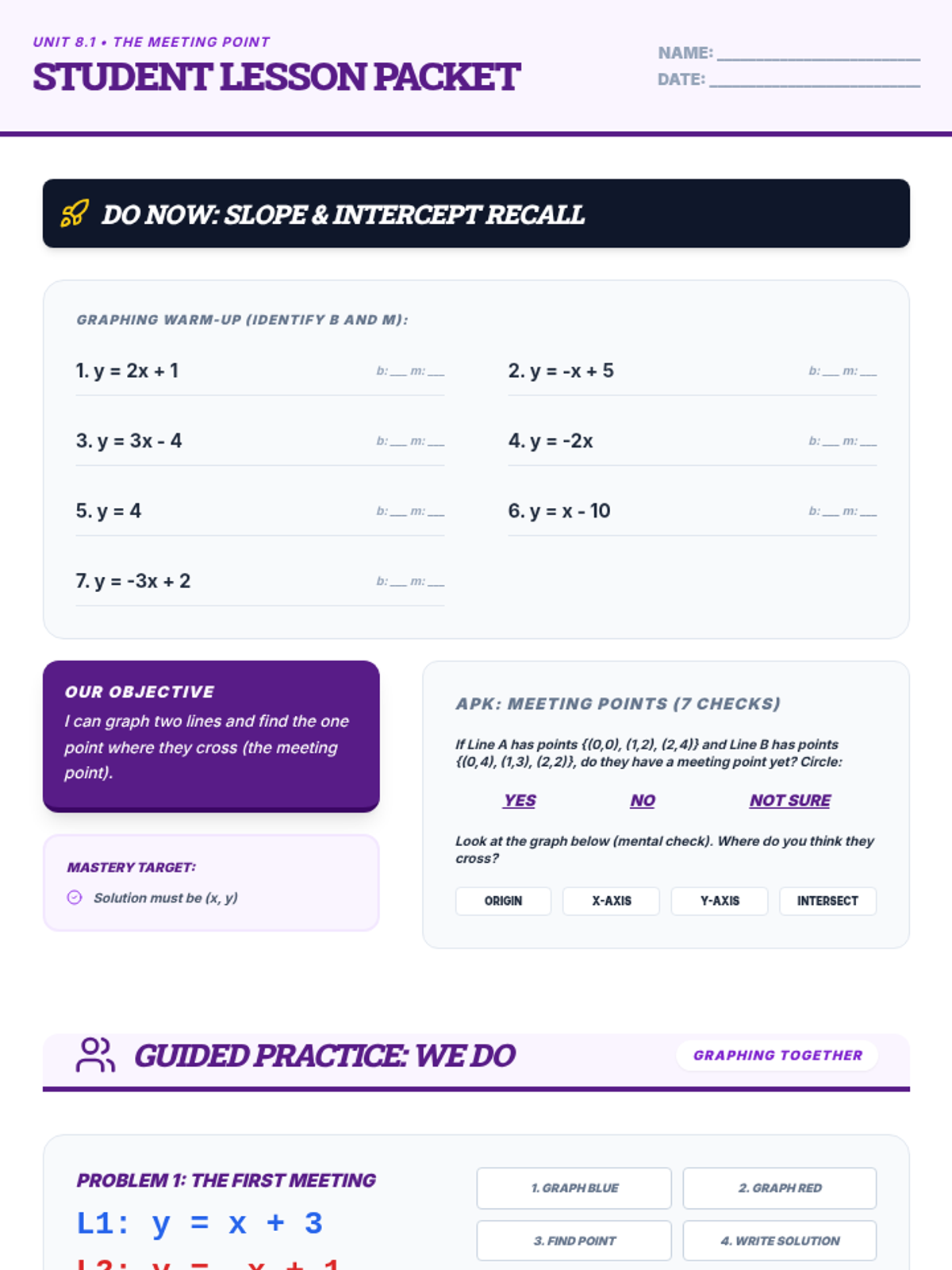
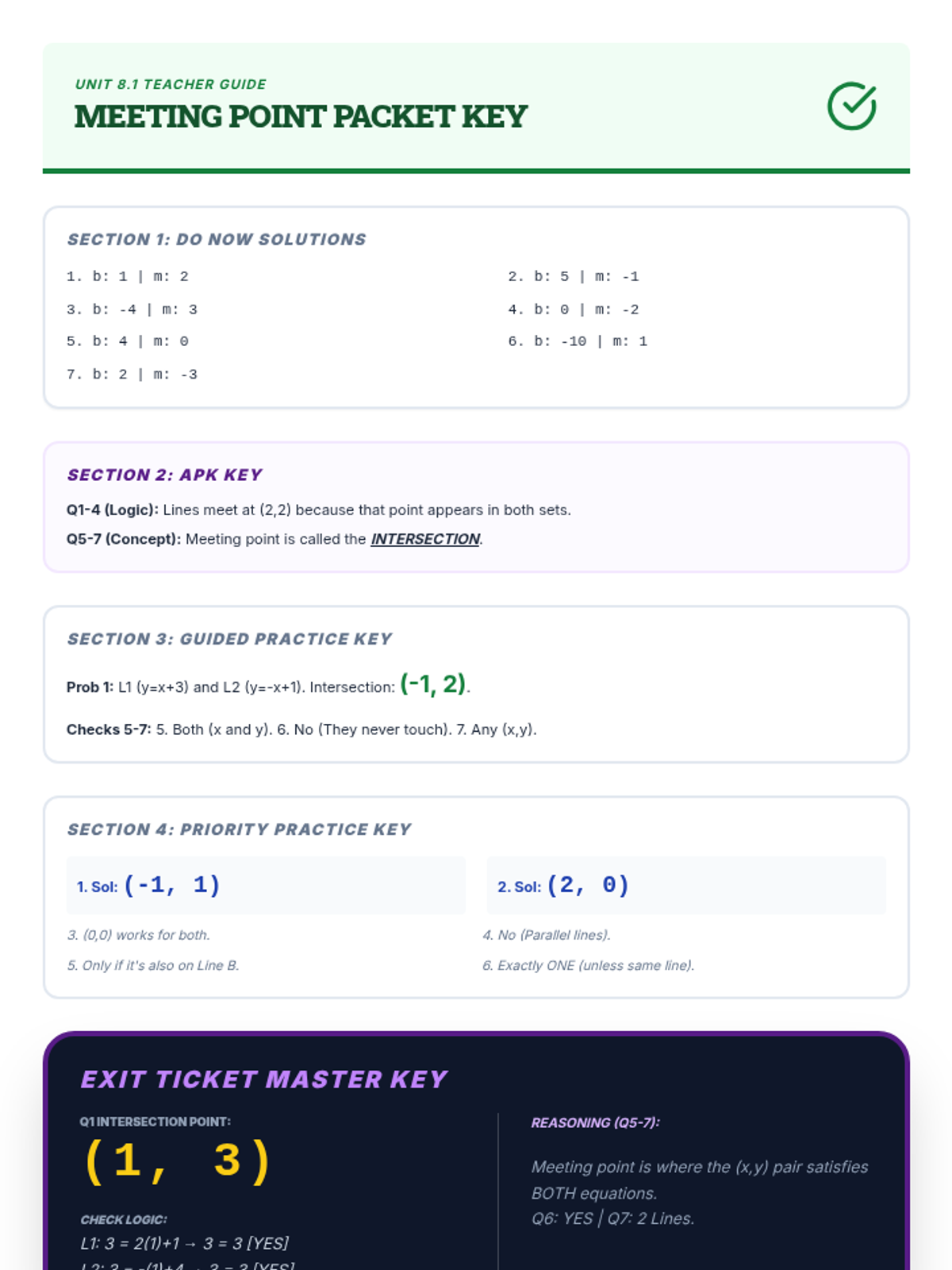
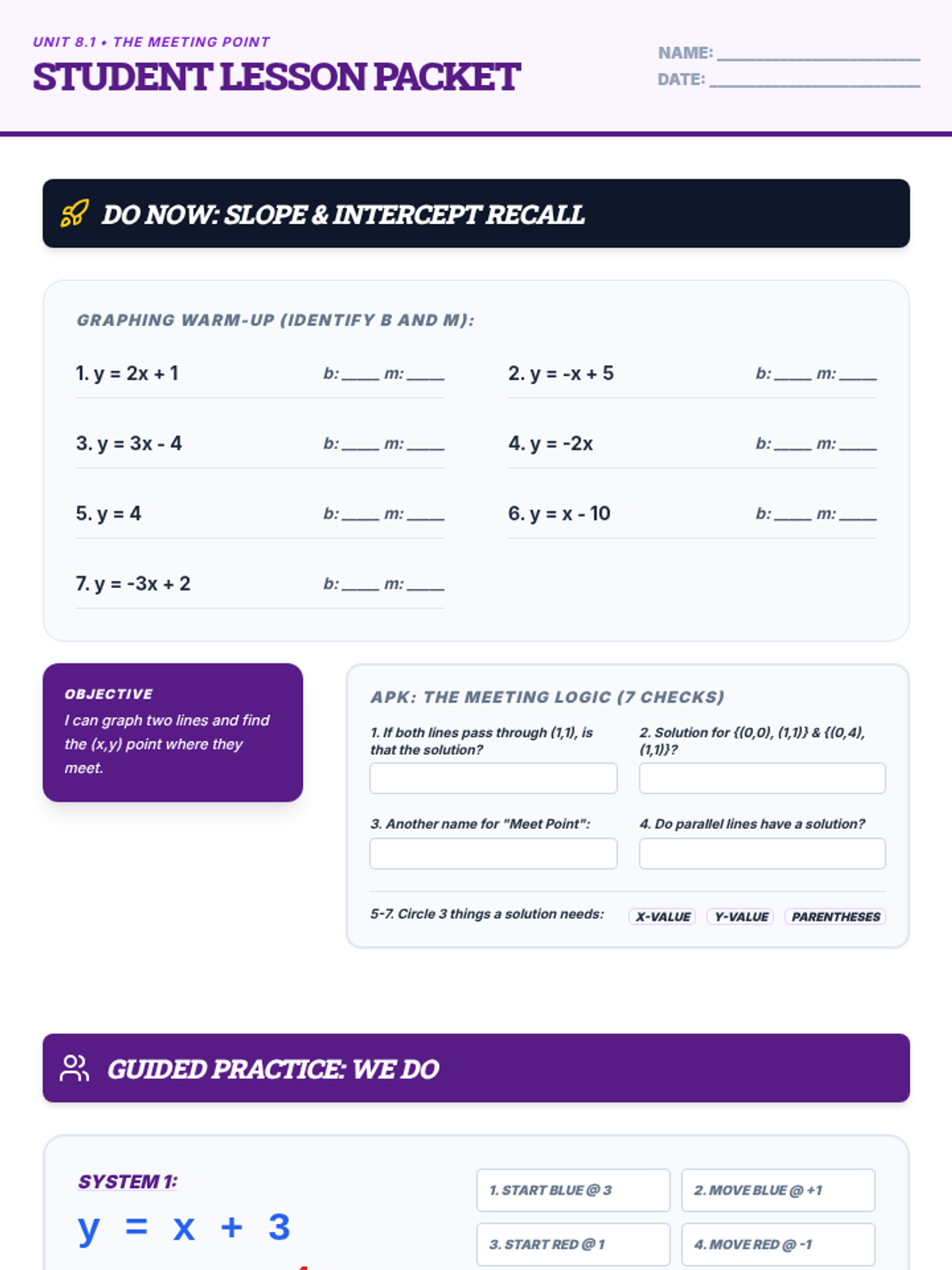
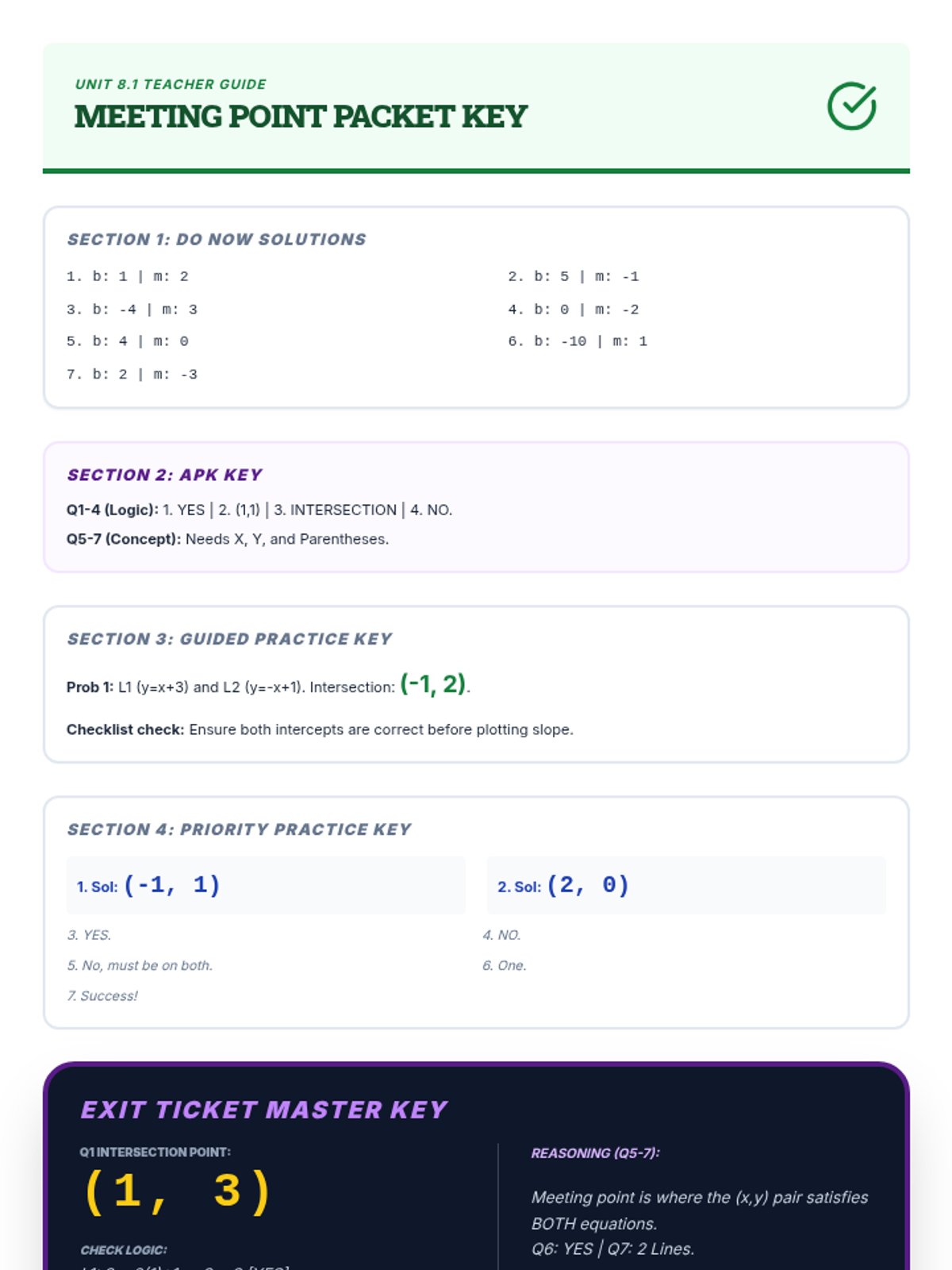
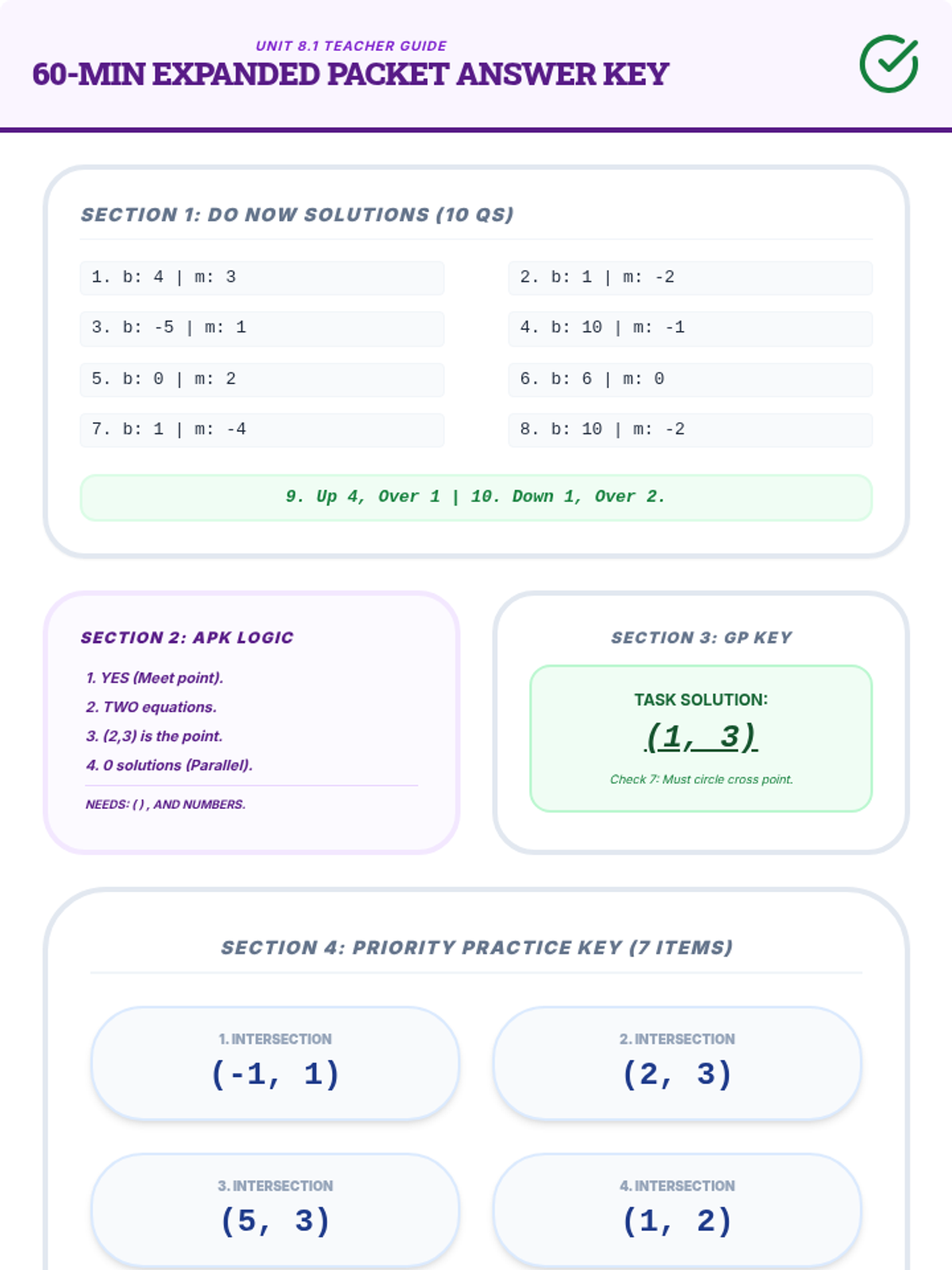
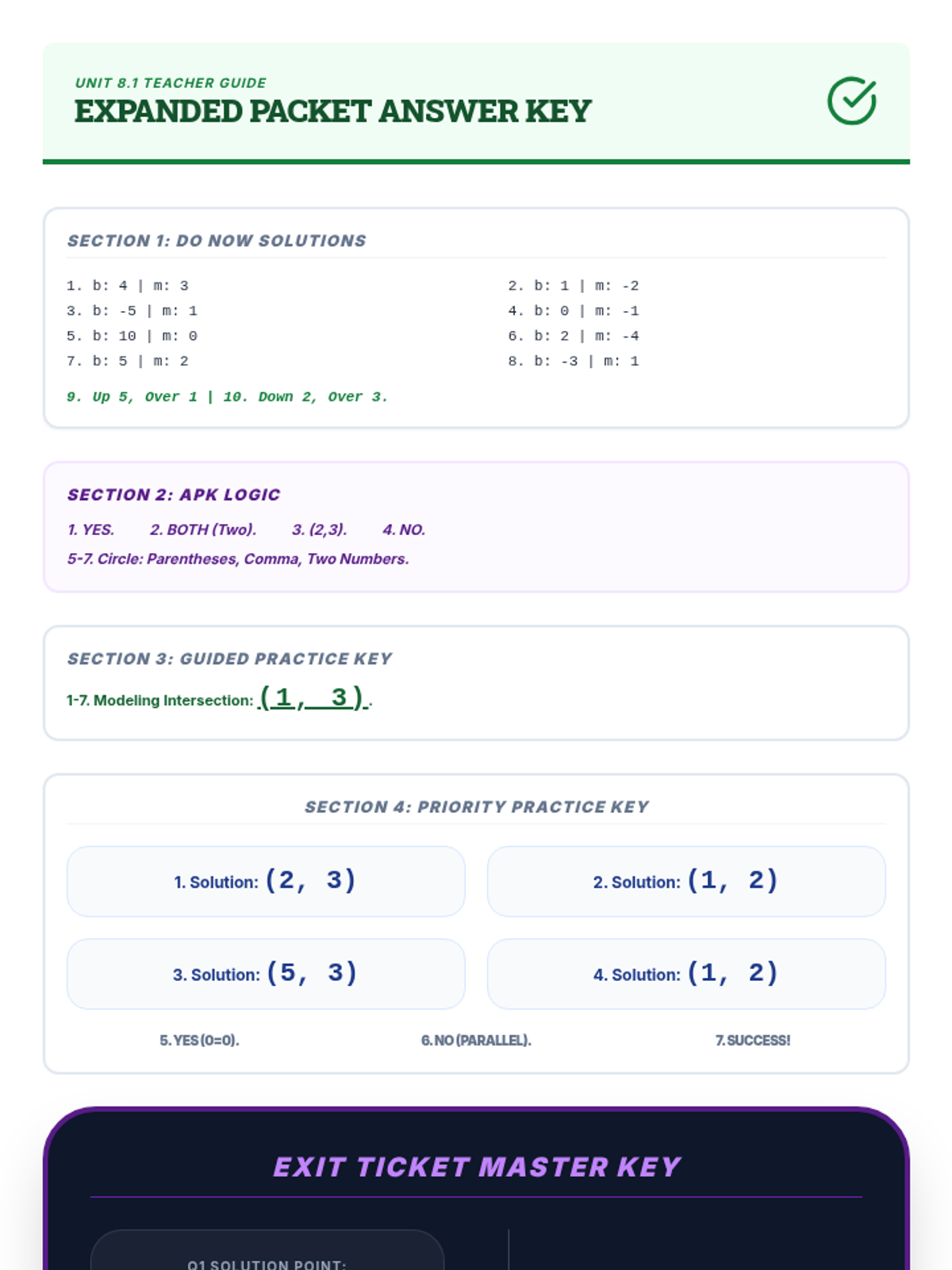
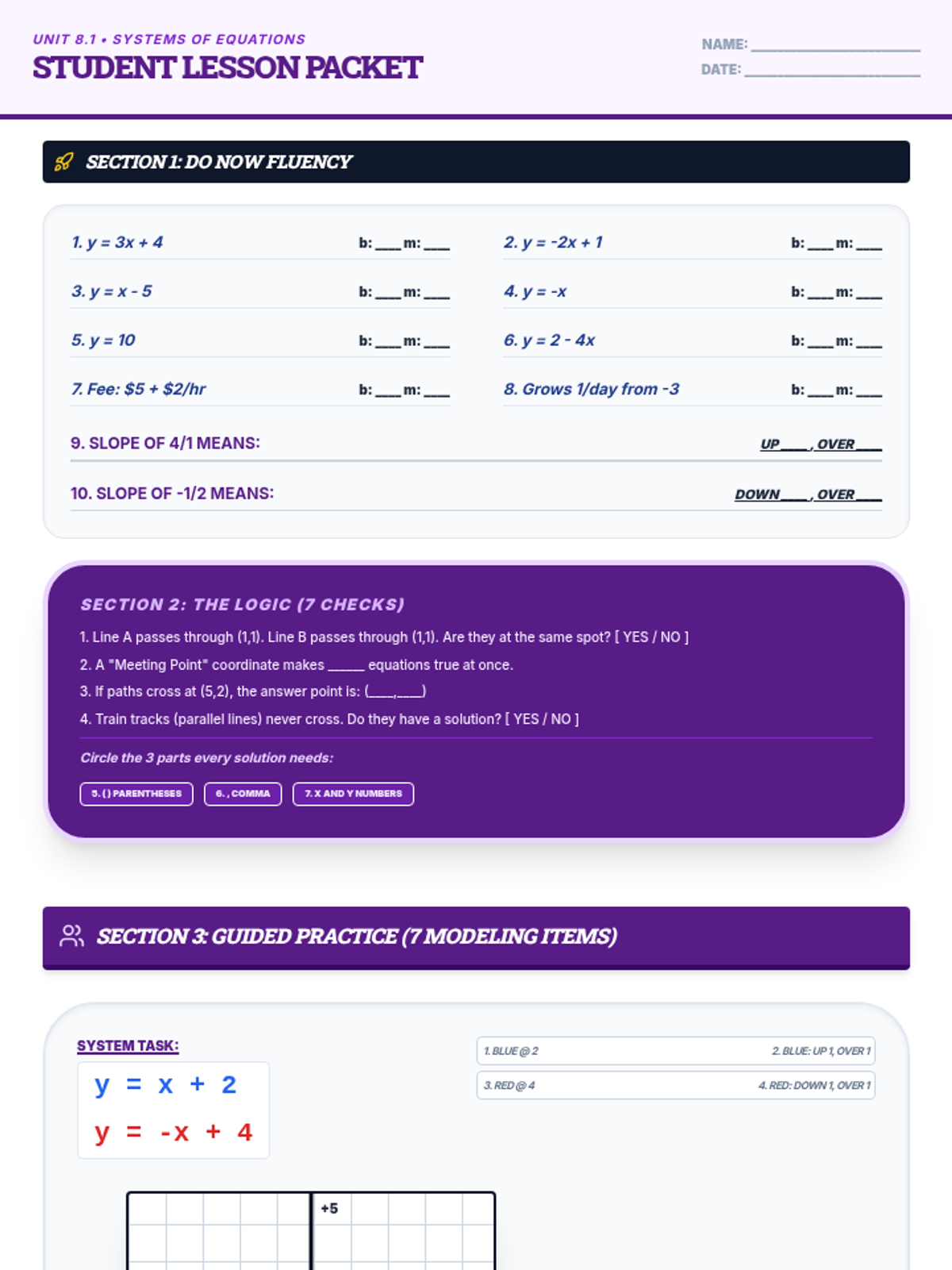
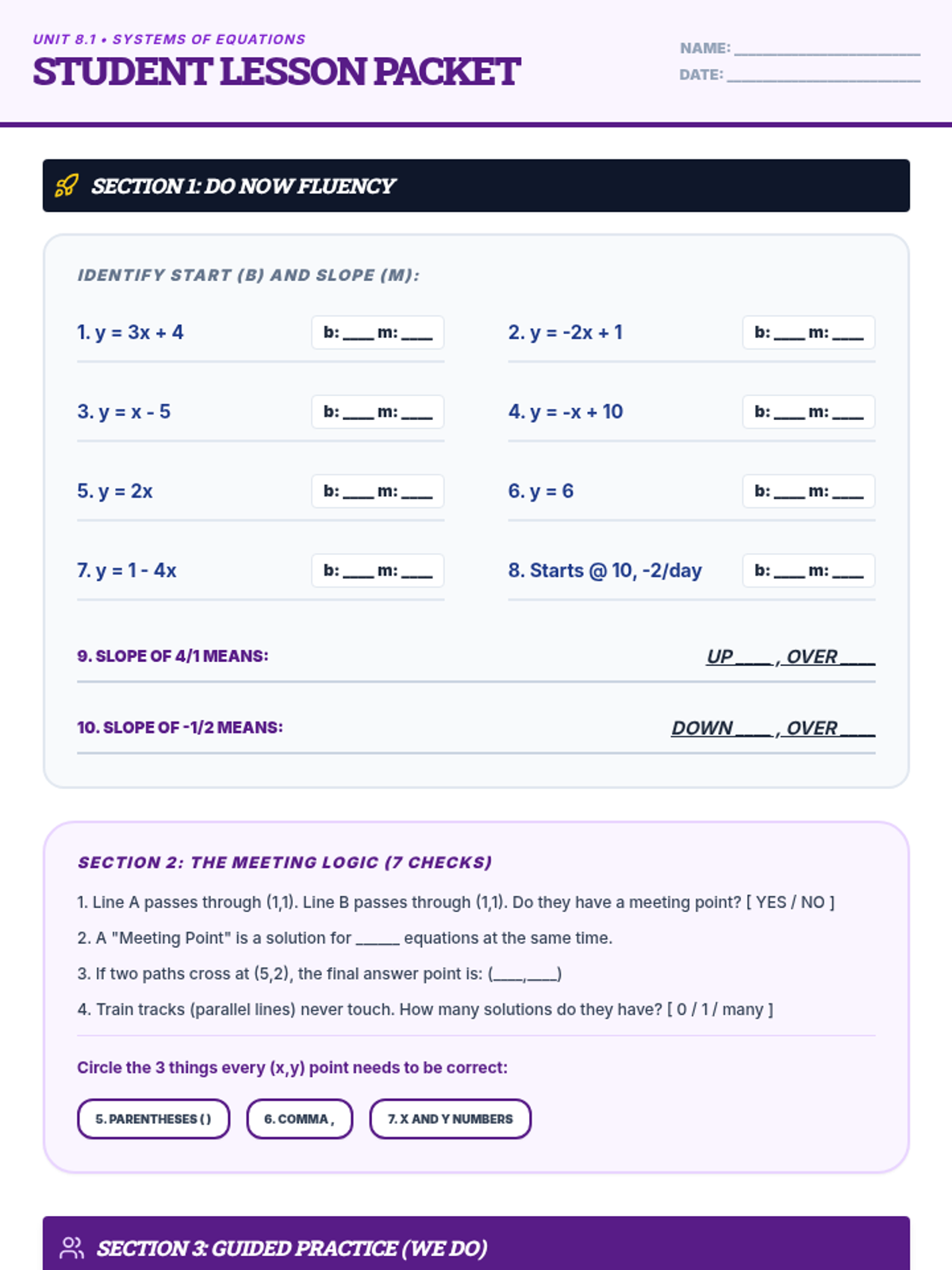
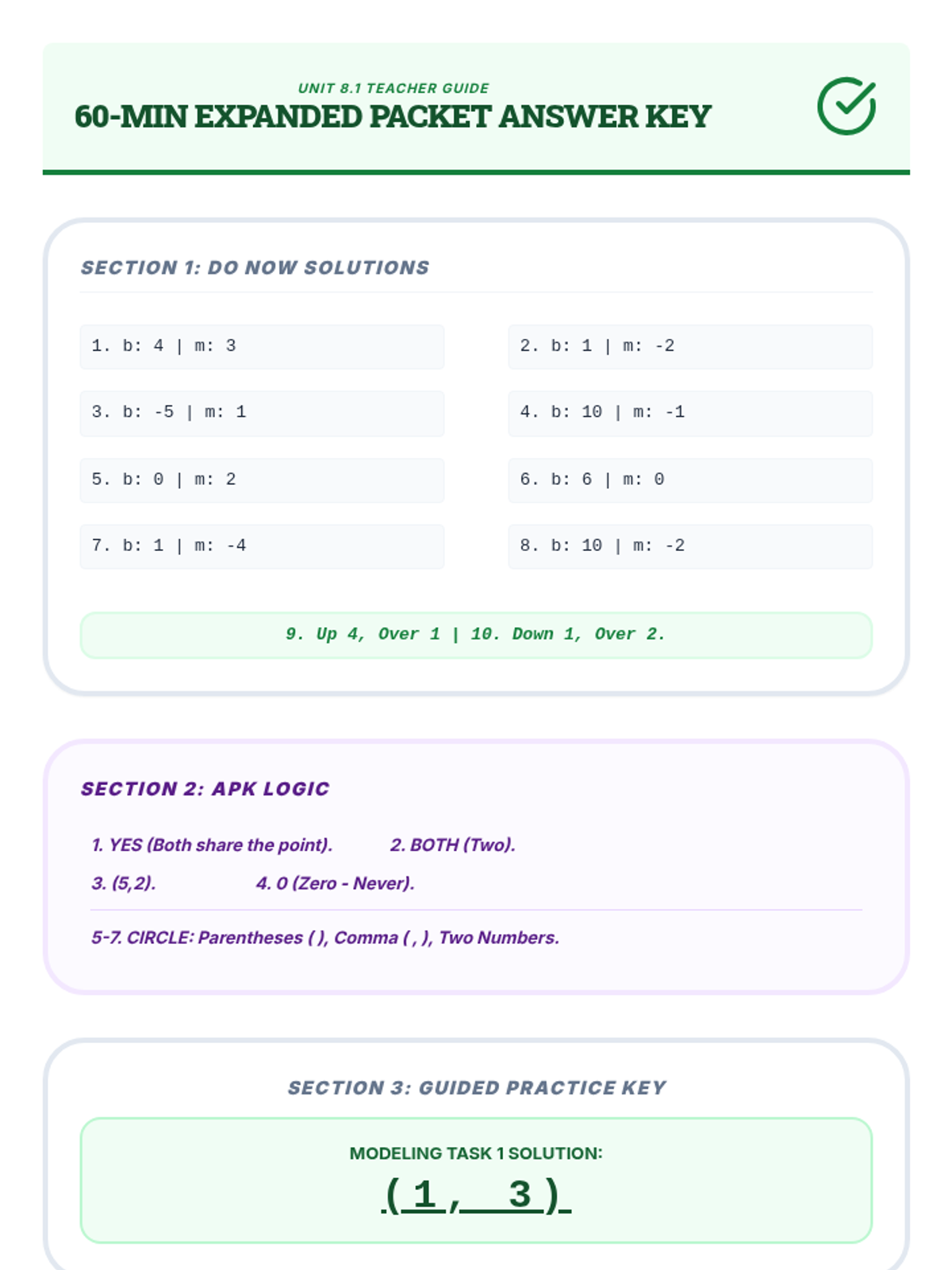
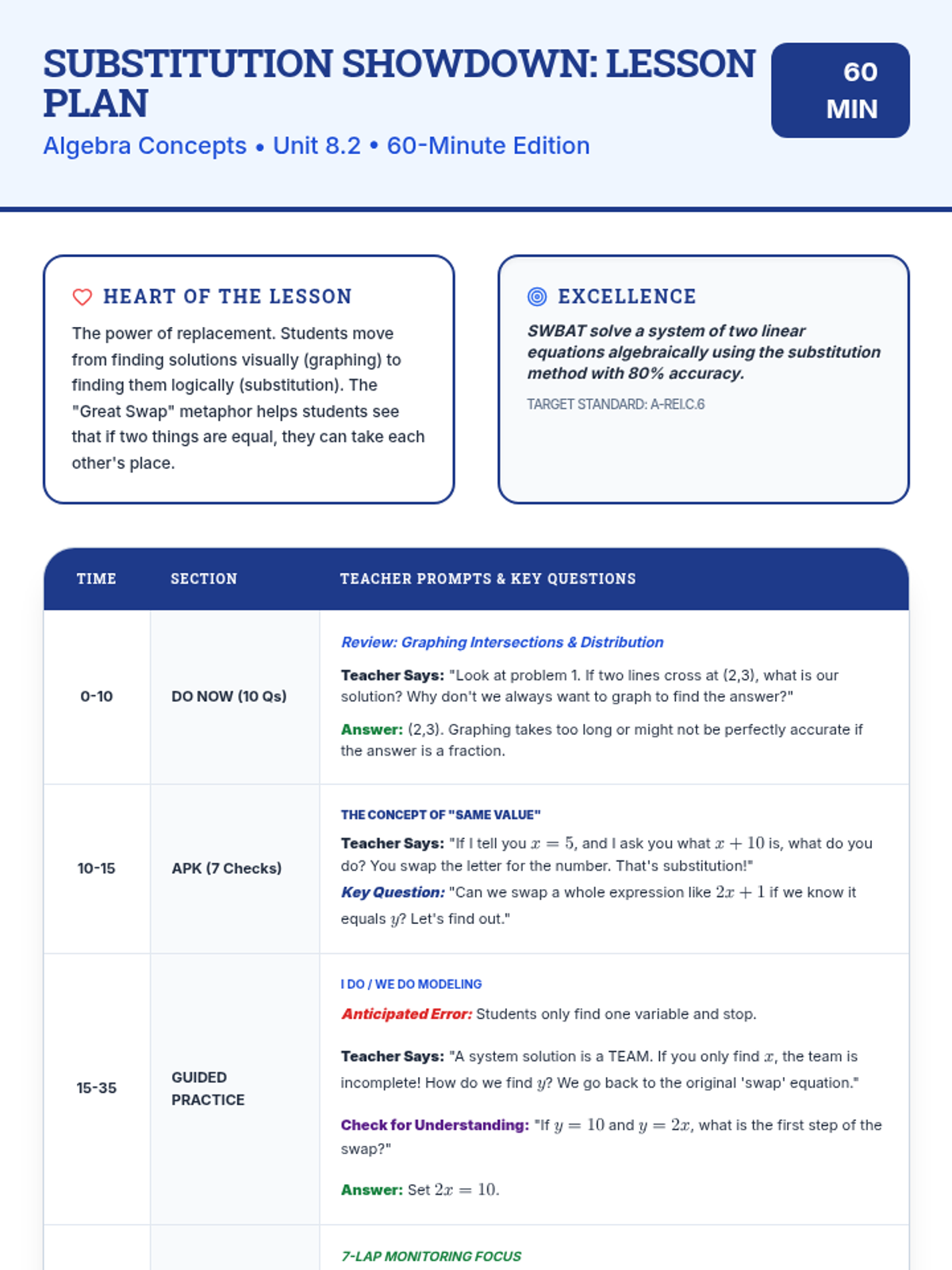
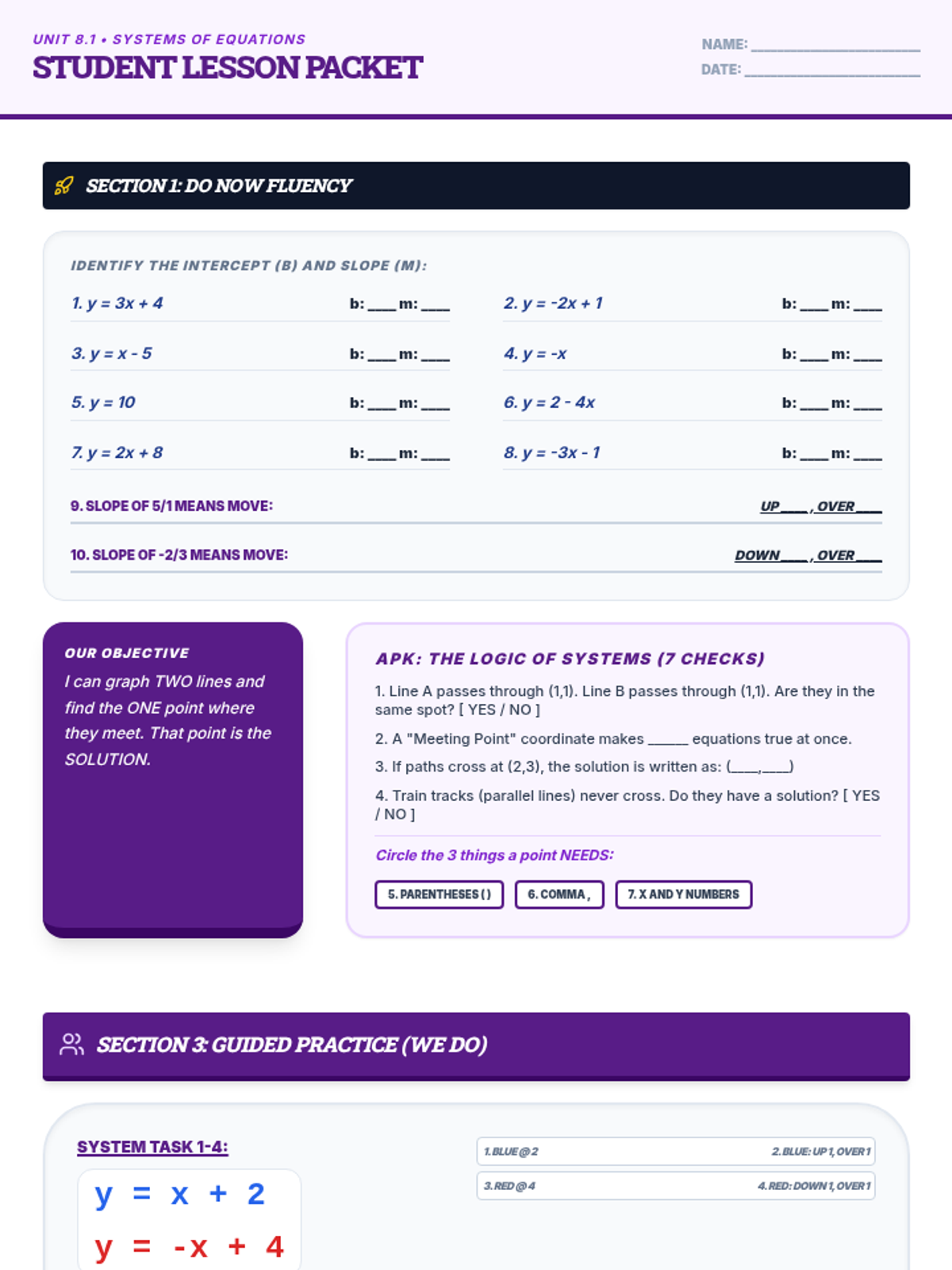
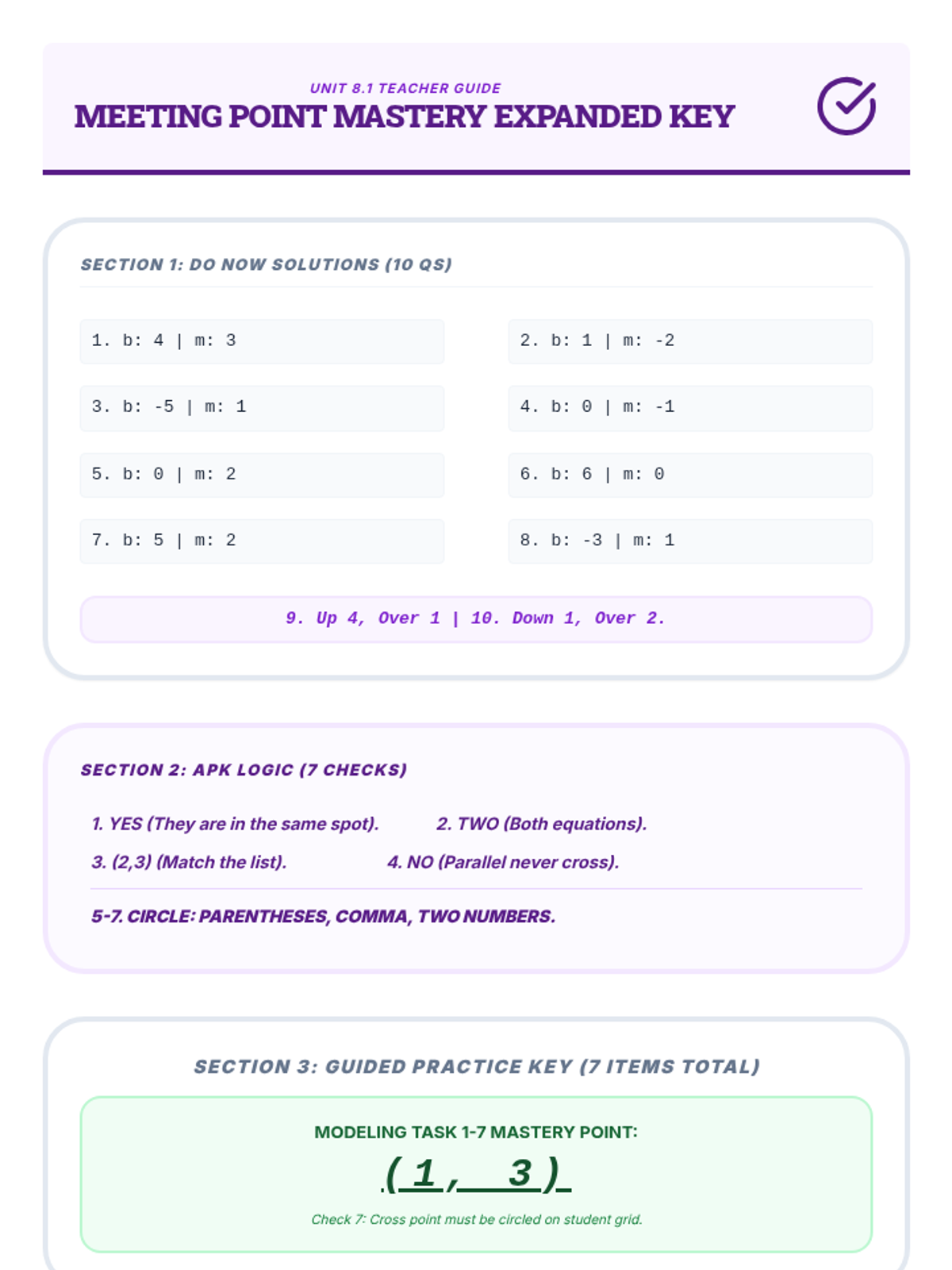
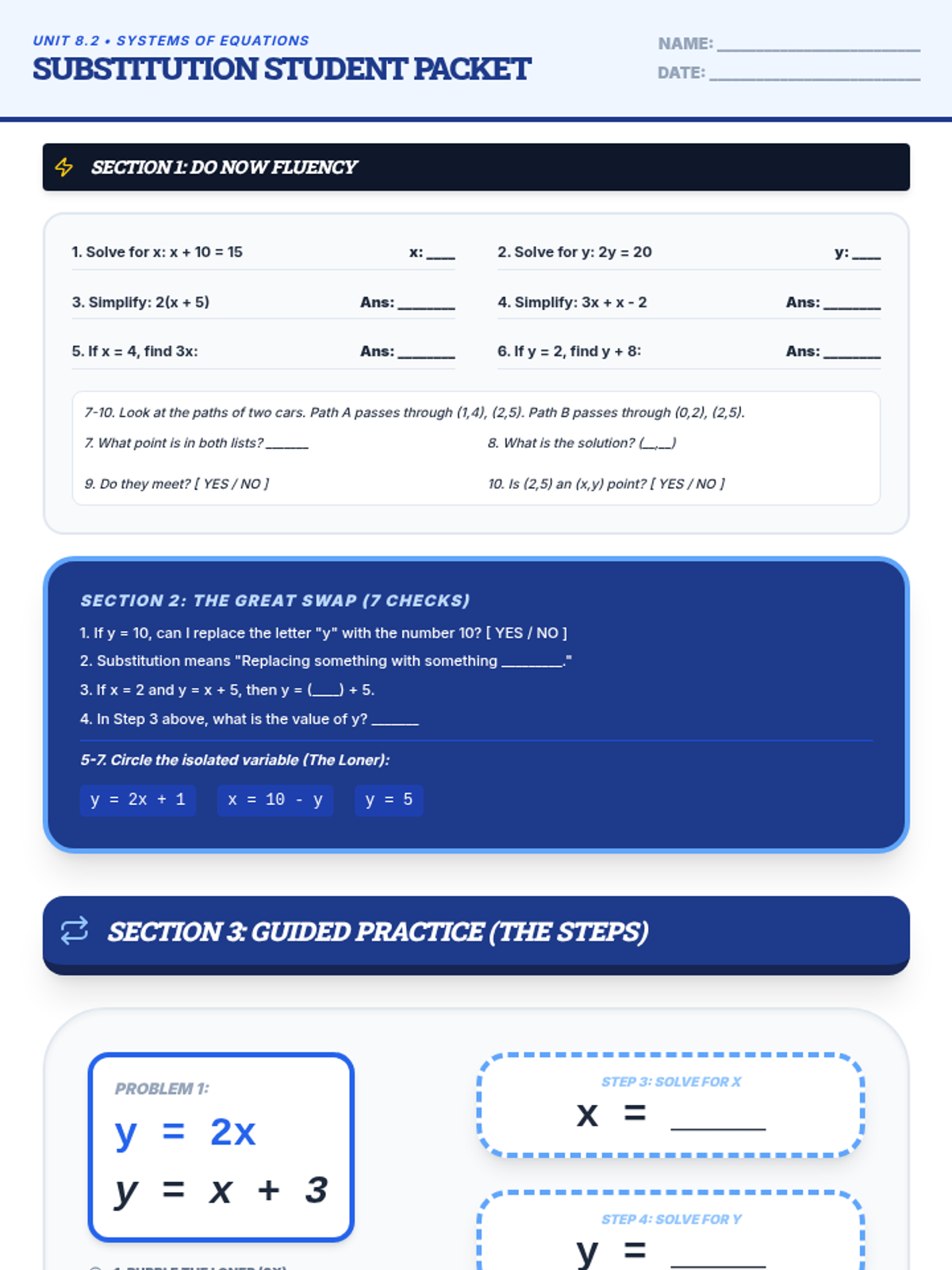
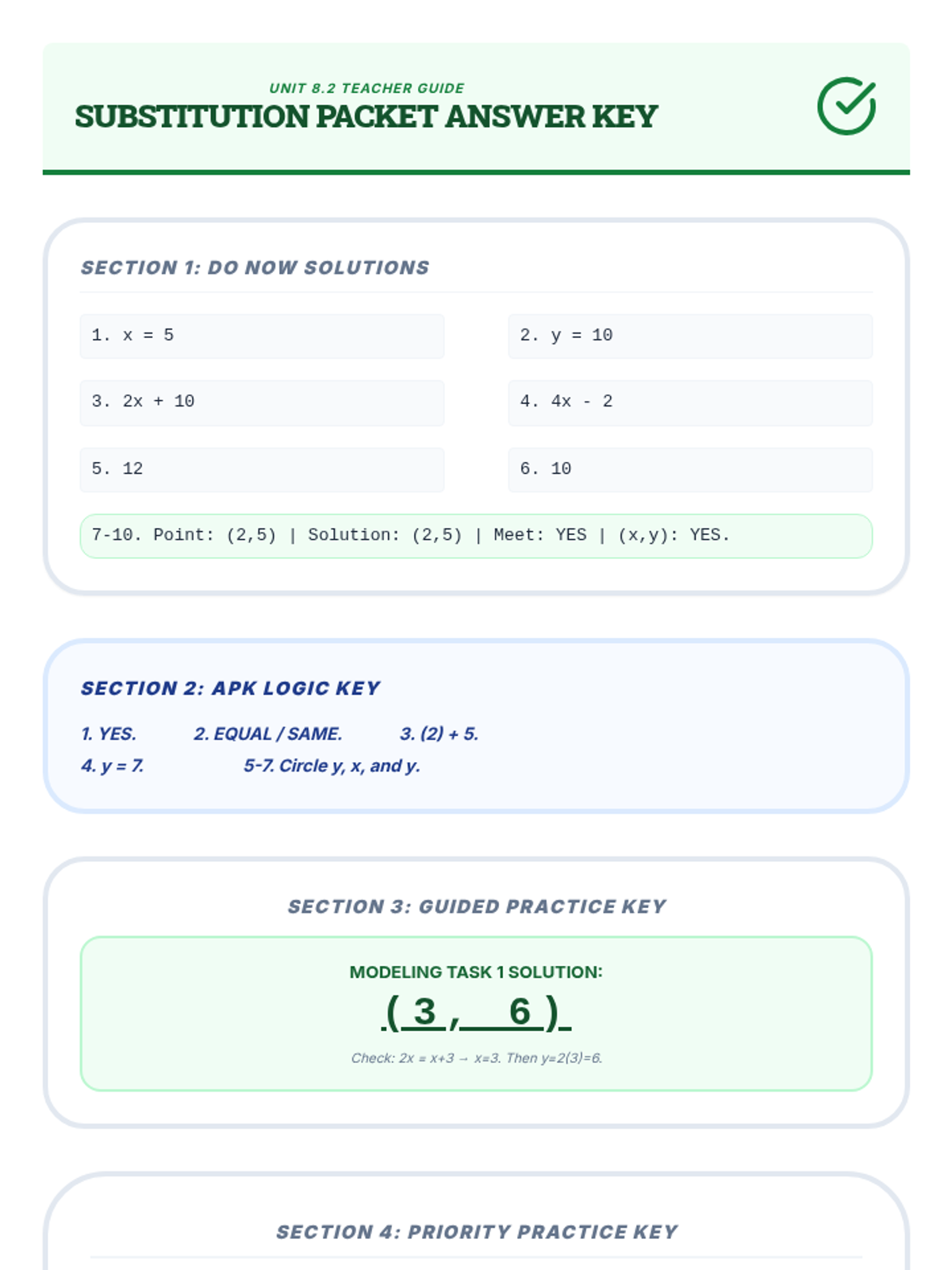
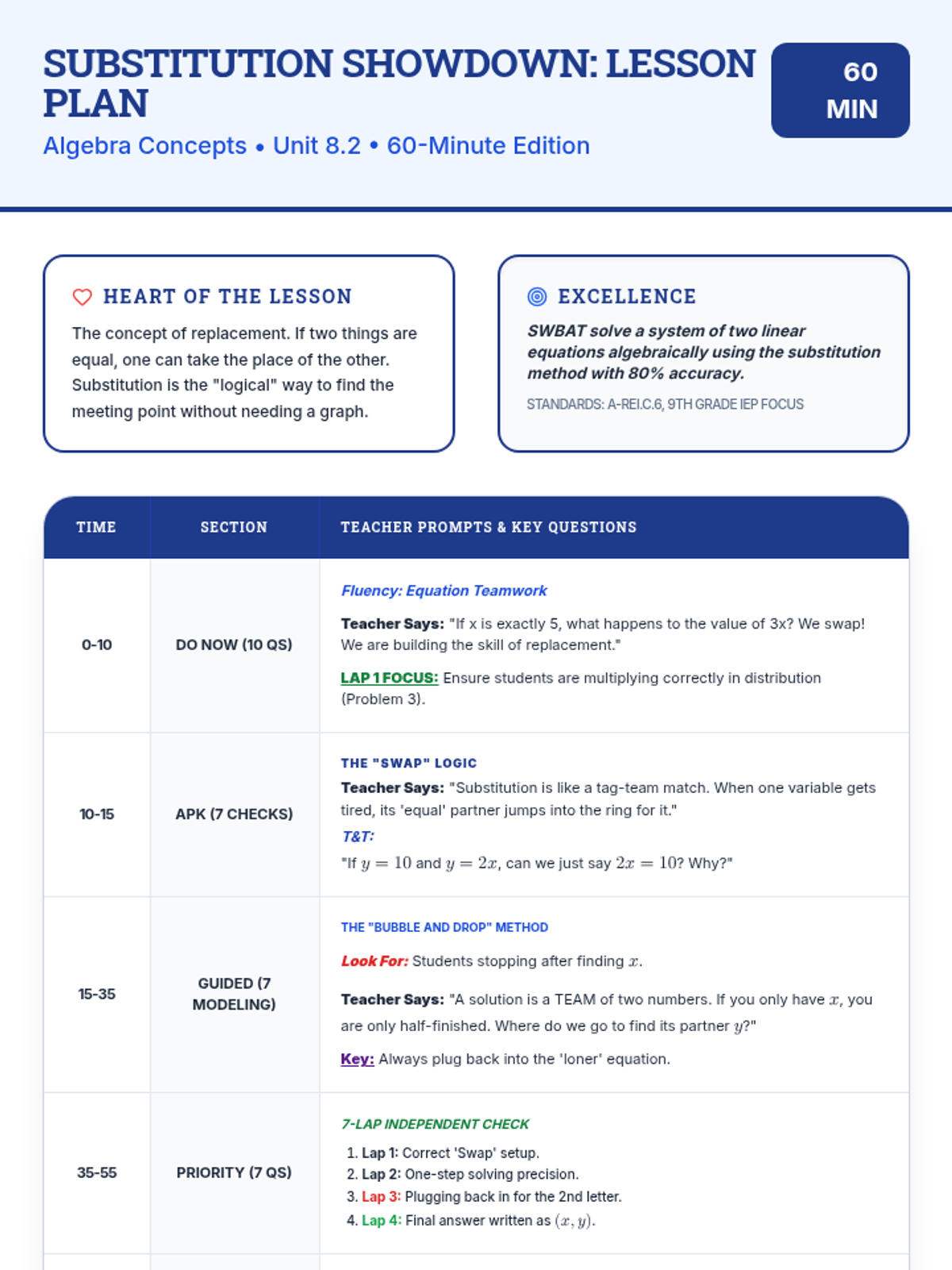
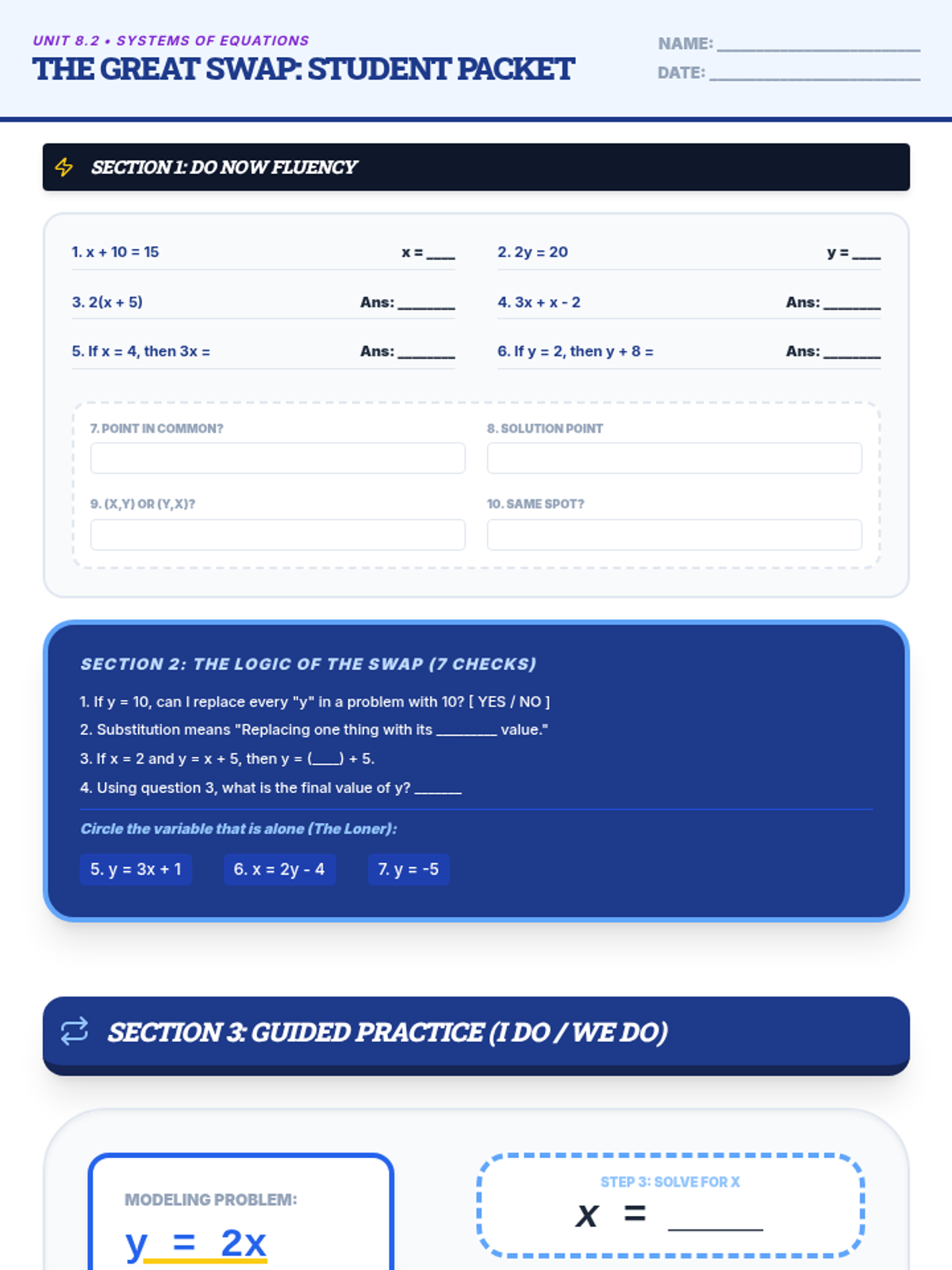
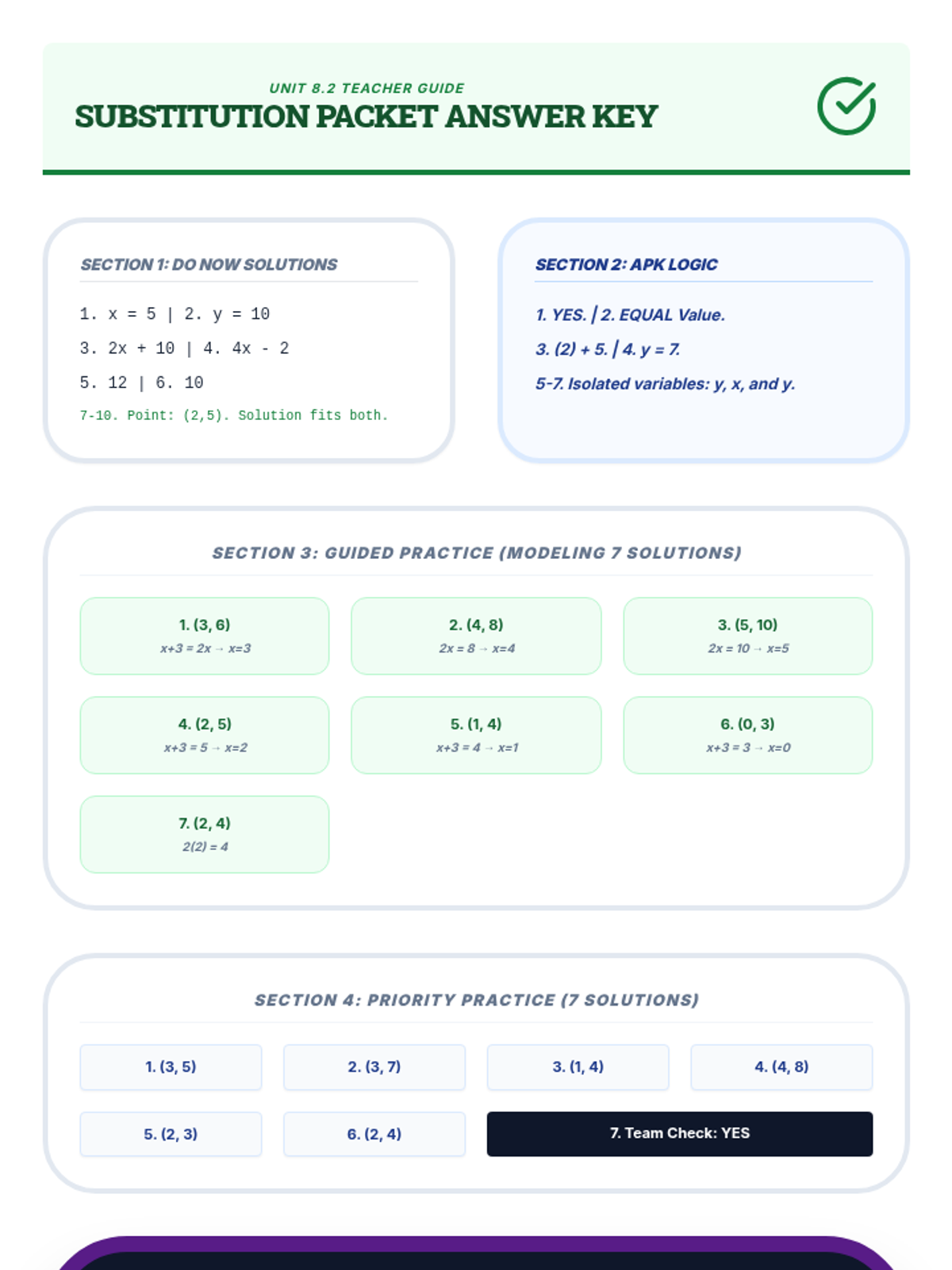
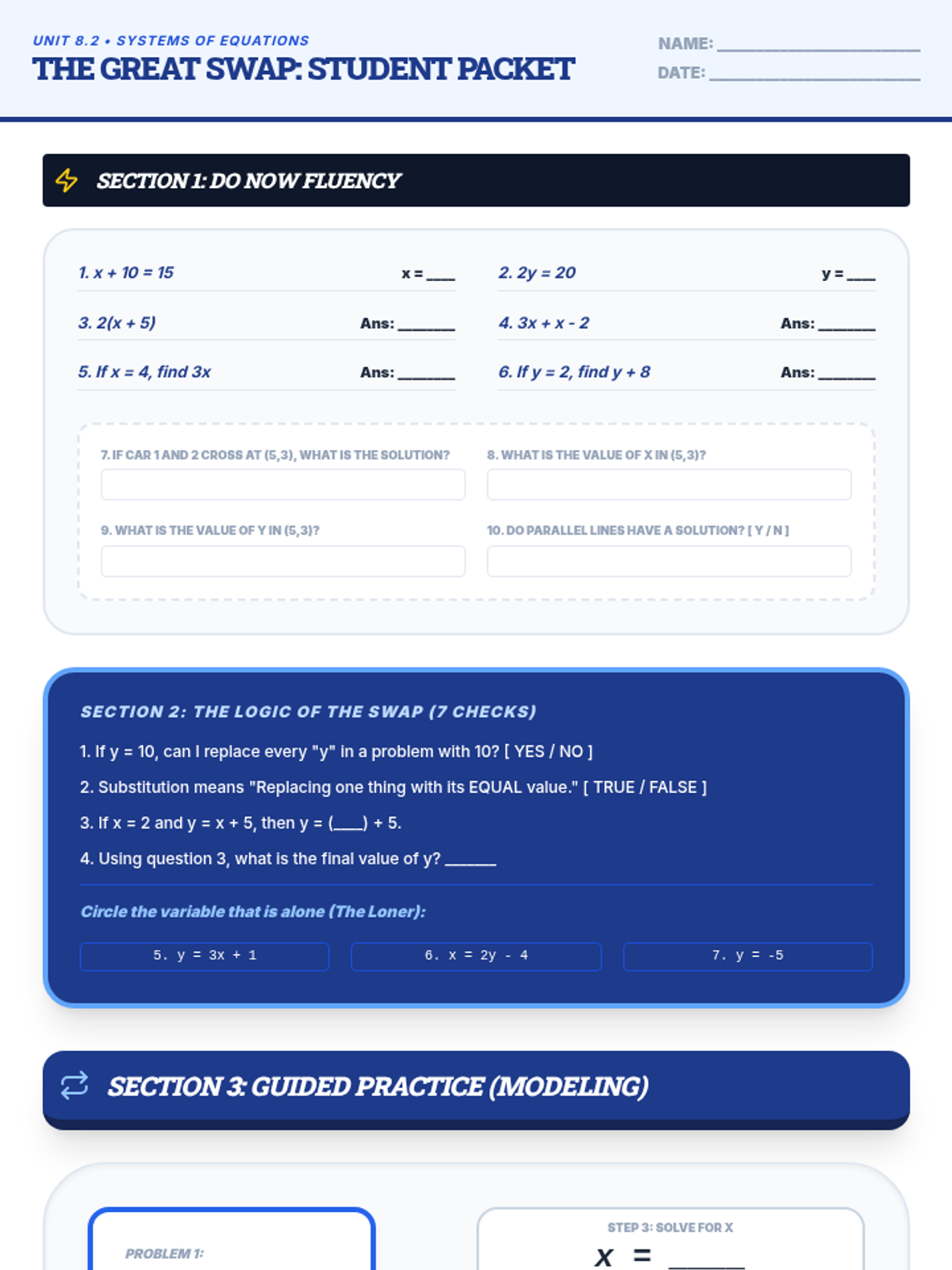
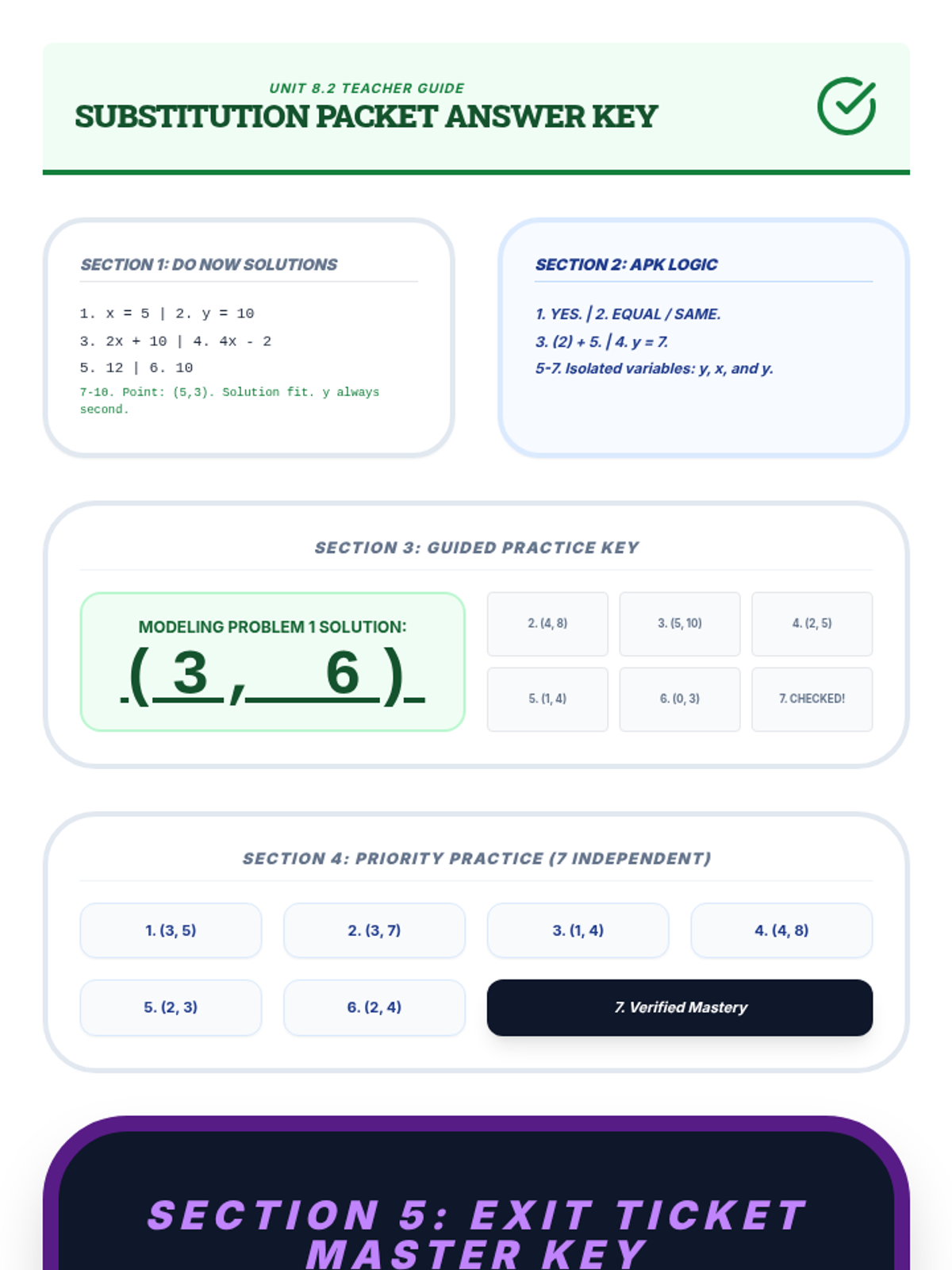
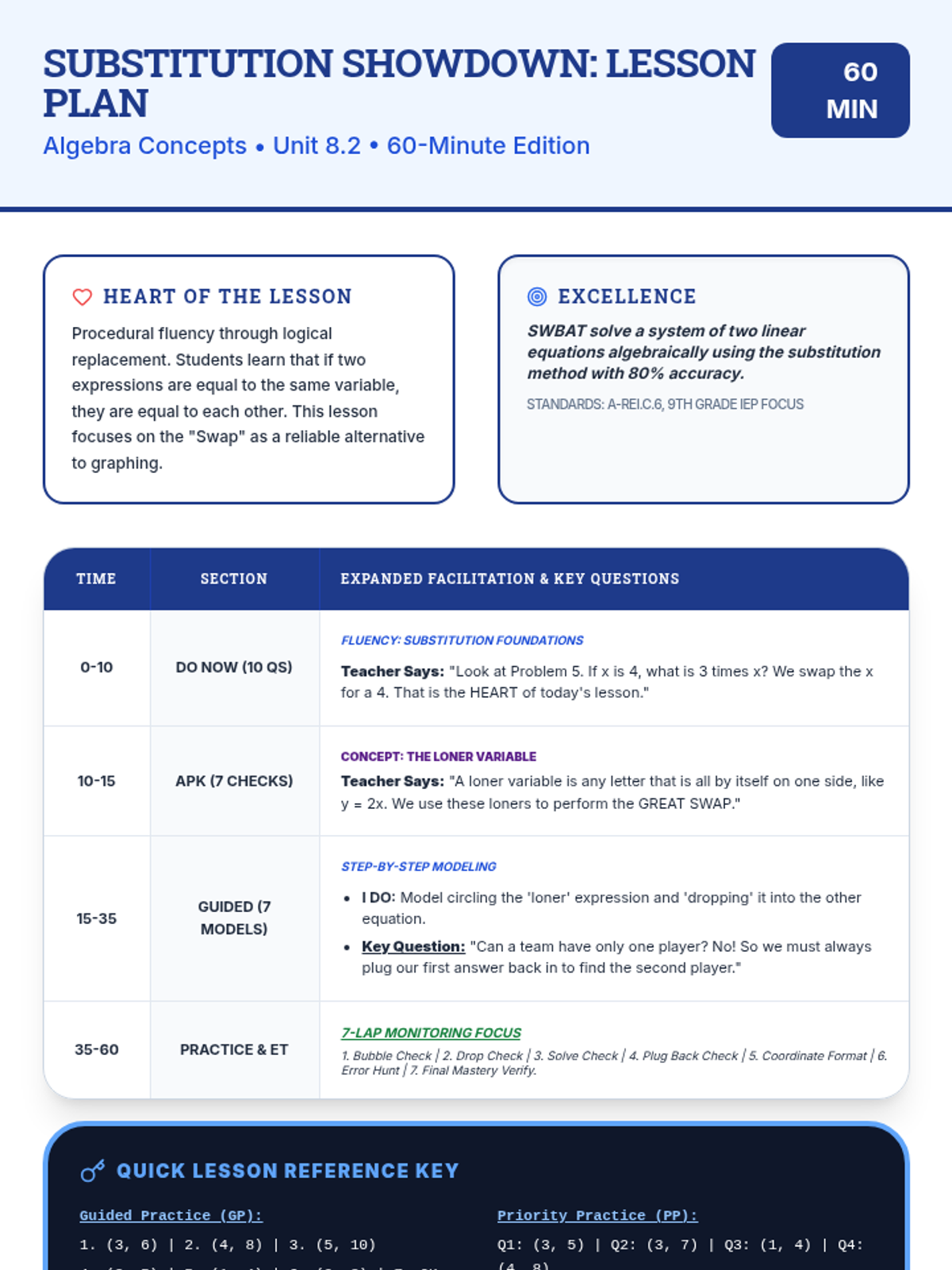
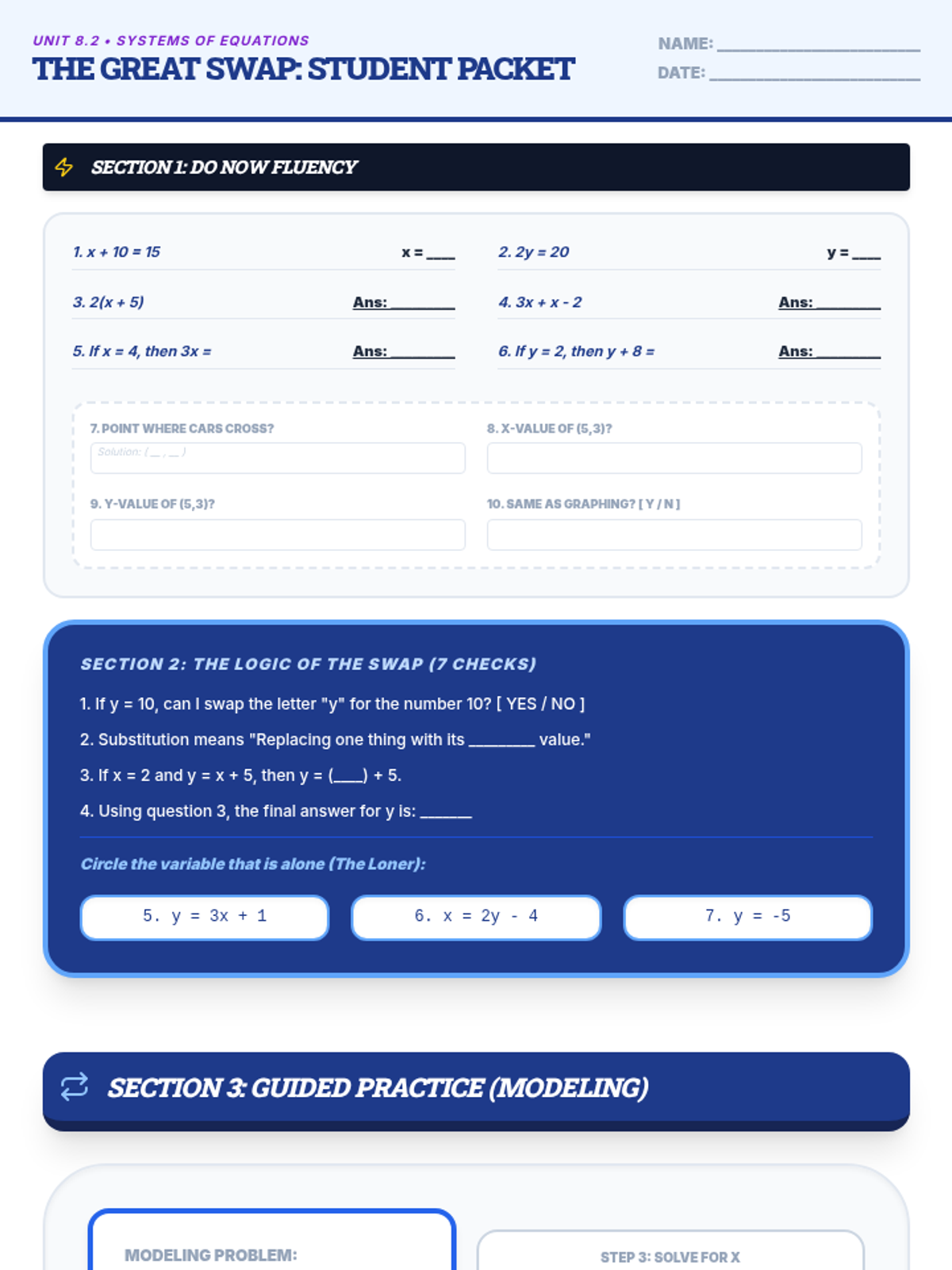
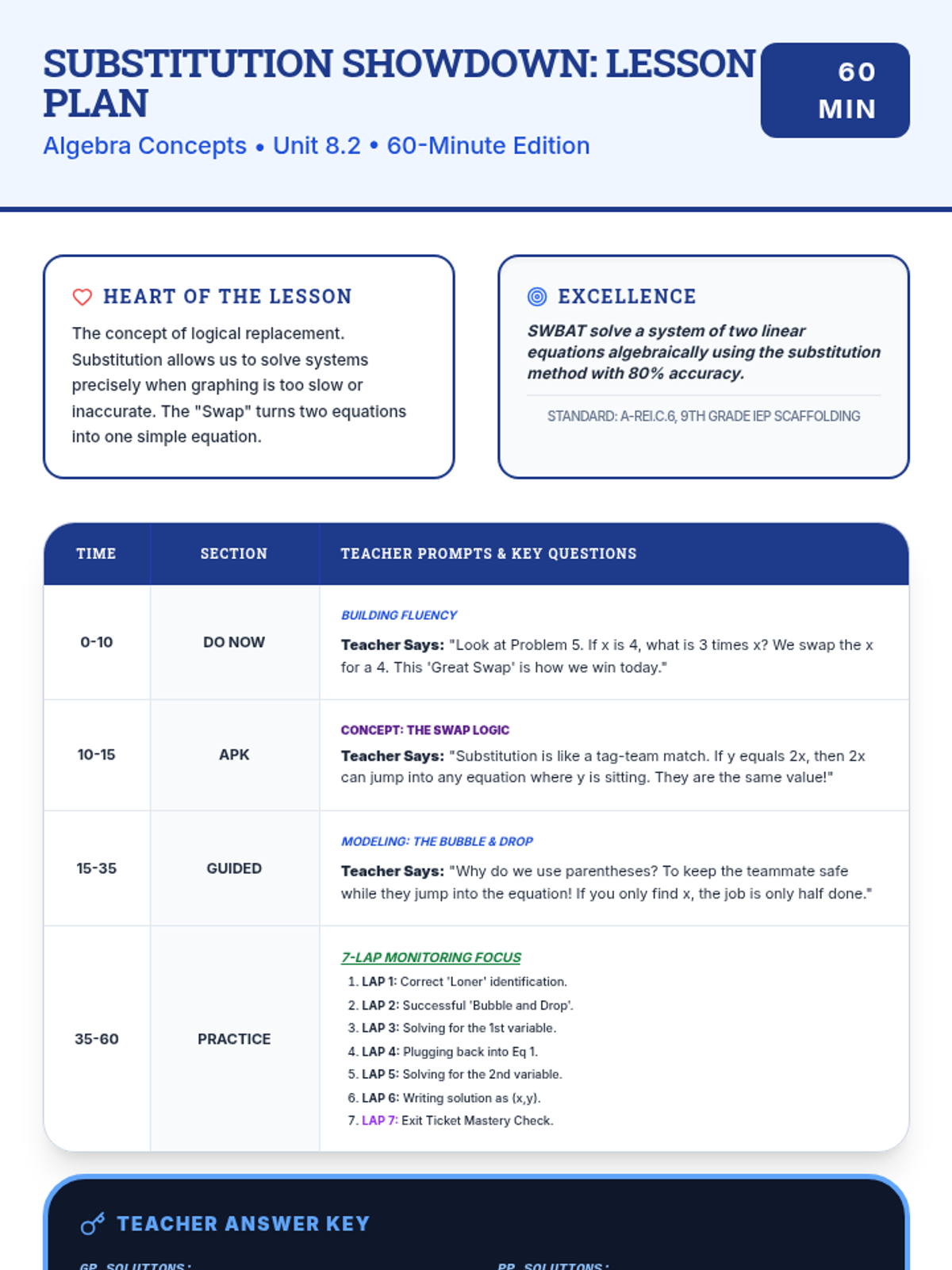
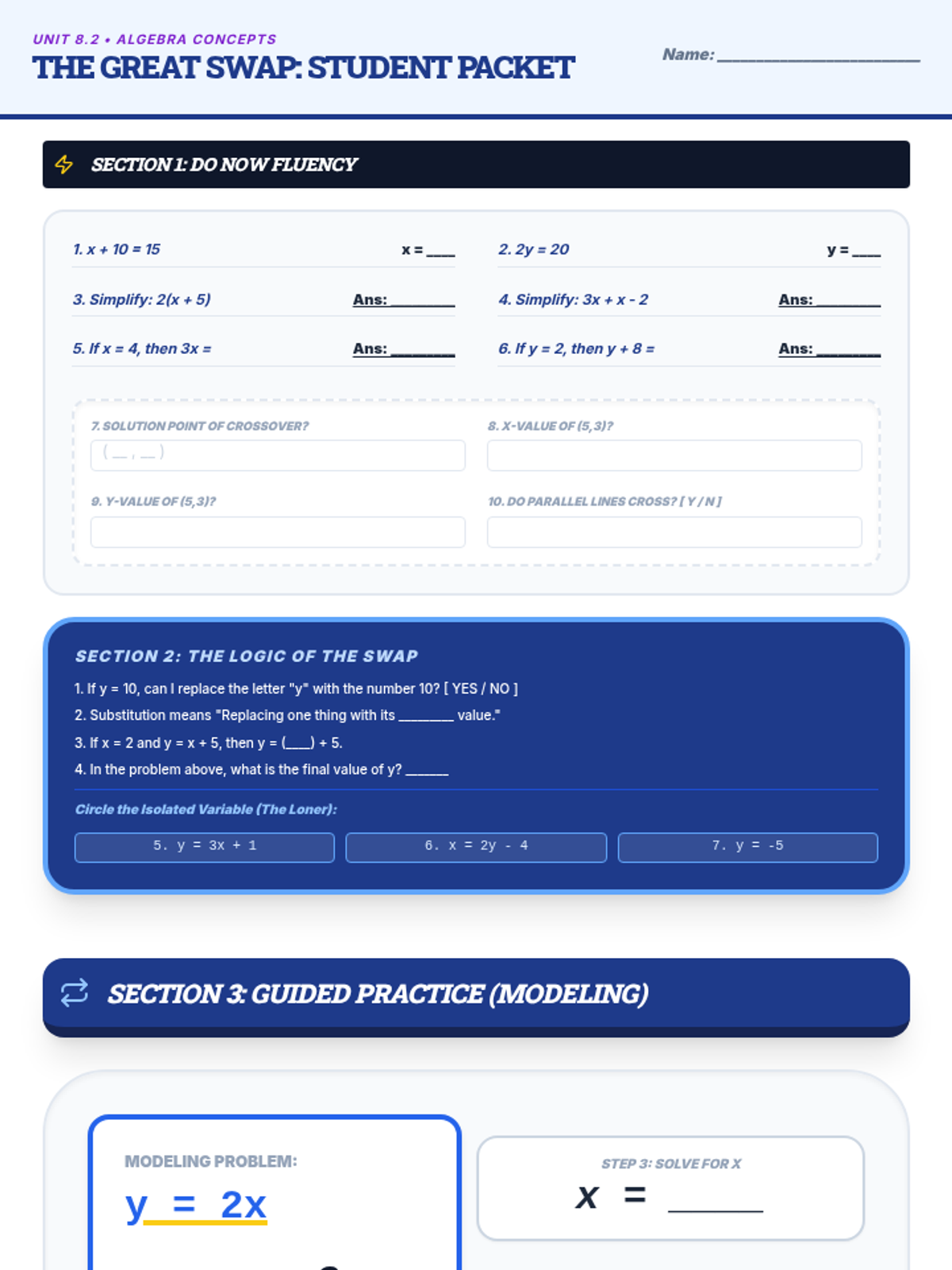
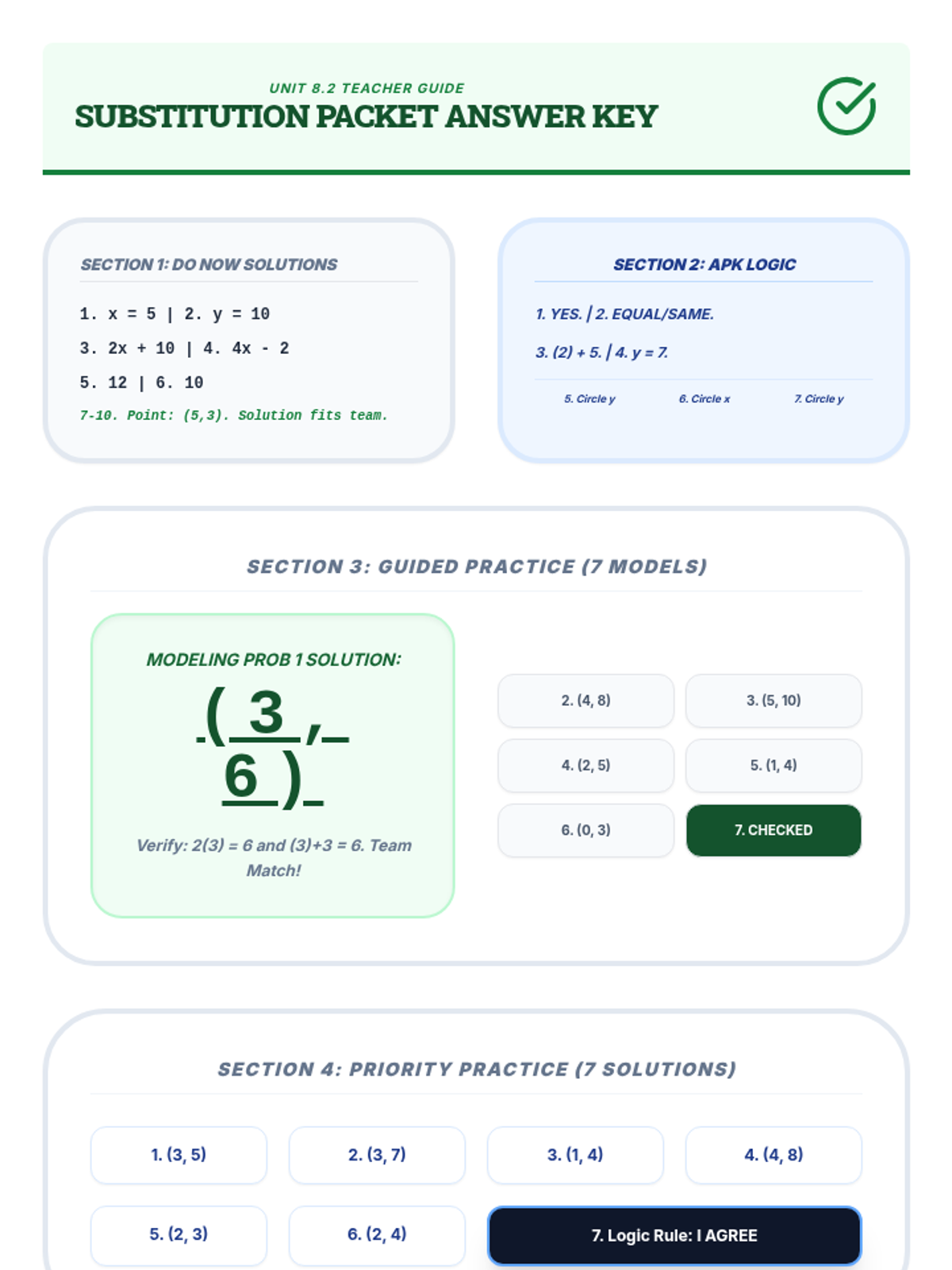
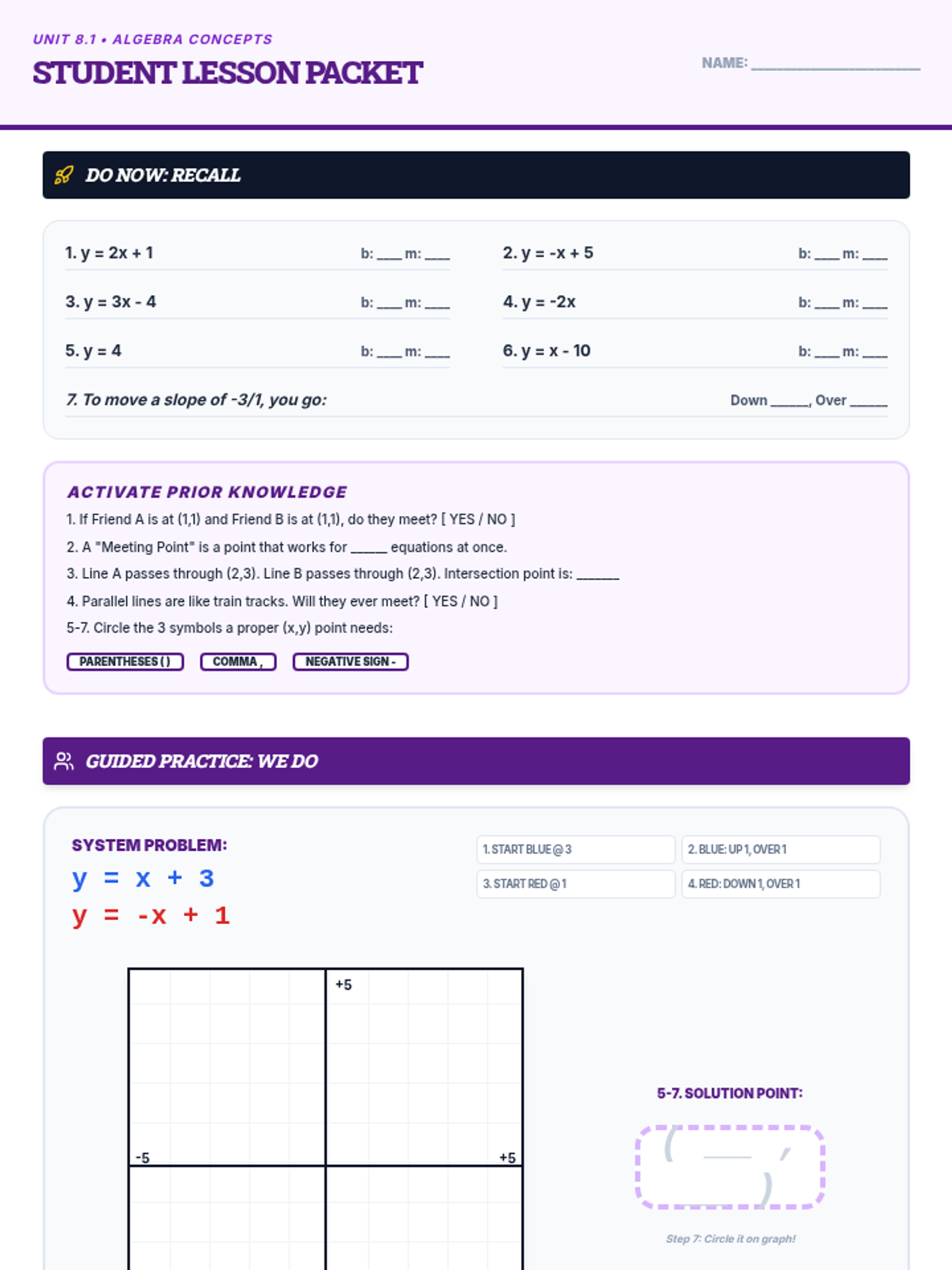
A Unit 8 Algebra sequence for 9th-grade IEP students, covering systems of linear equations. Includes graphing (8.1), substitution (8.2), and elimination (8.3) methods with high visual scaffolding, 60-minute lesson plans, and comprehensive student packets.
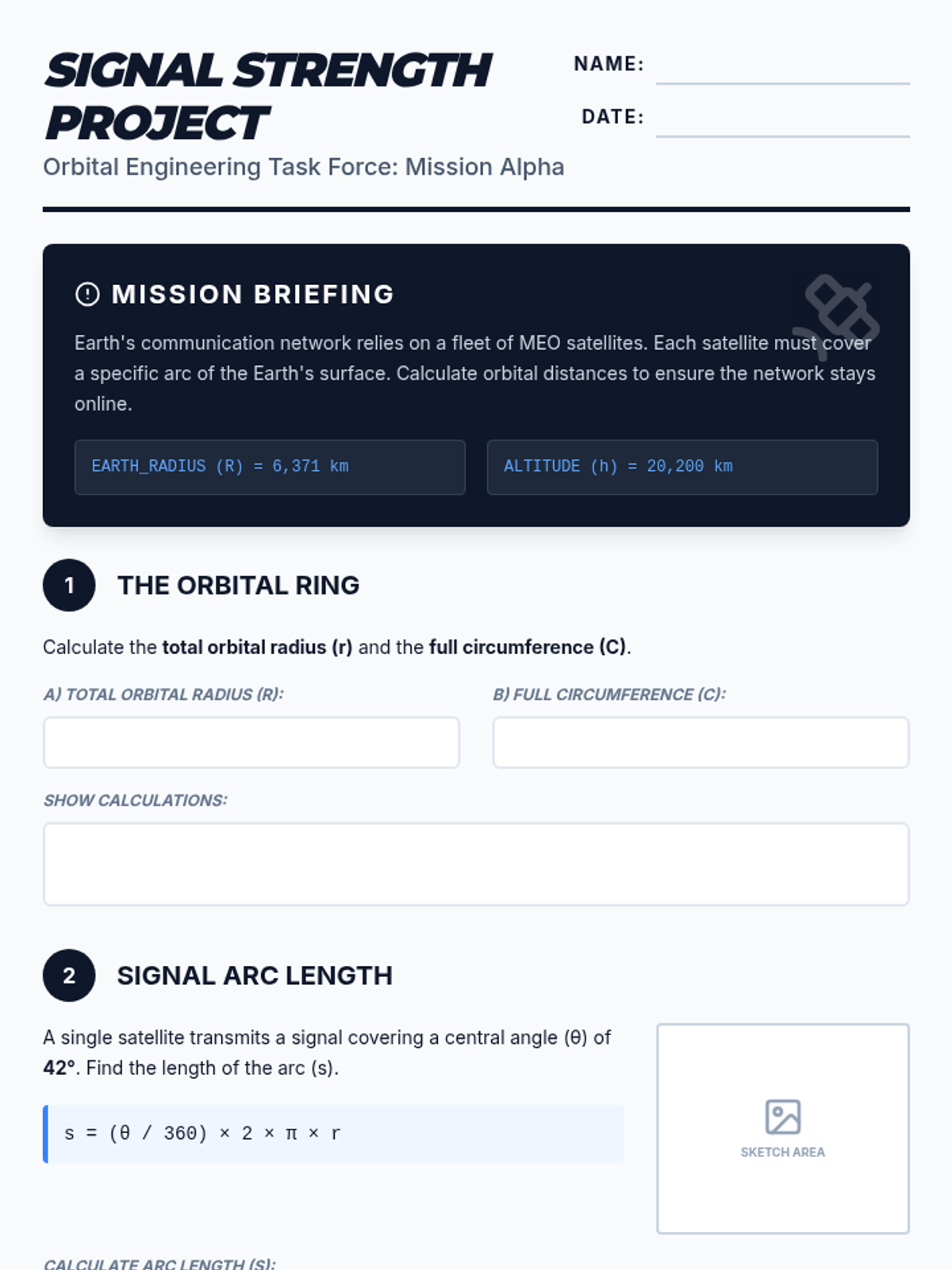
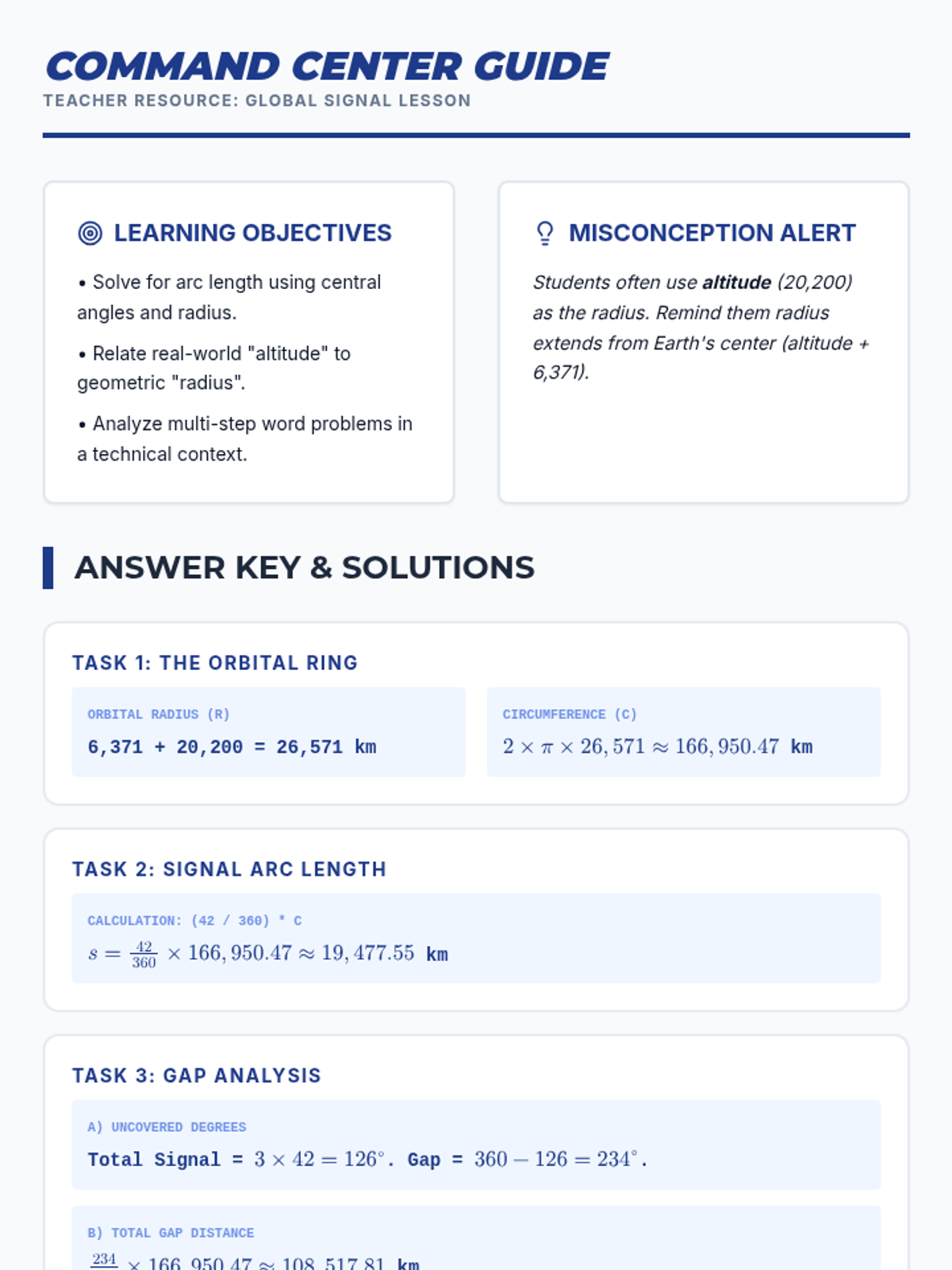
A problem-based learning unit exploring the mathematics of circles and arcs through the lenses of satellite technology and landscape architecture. Students apply arc length and sector area formulas to solve real-world design and engineering challenges.
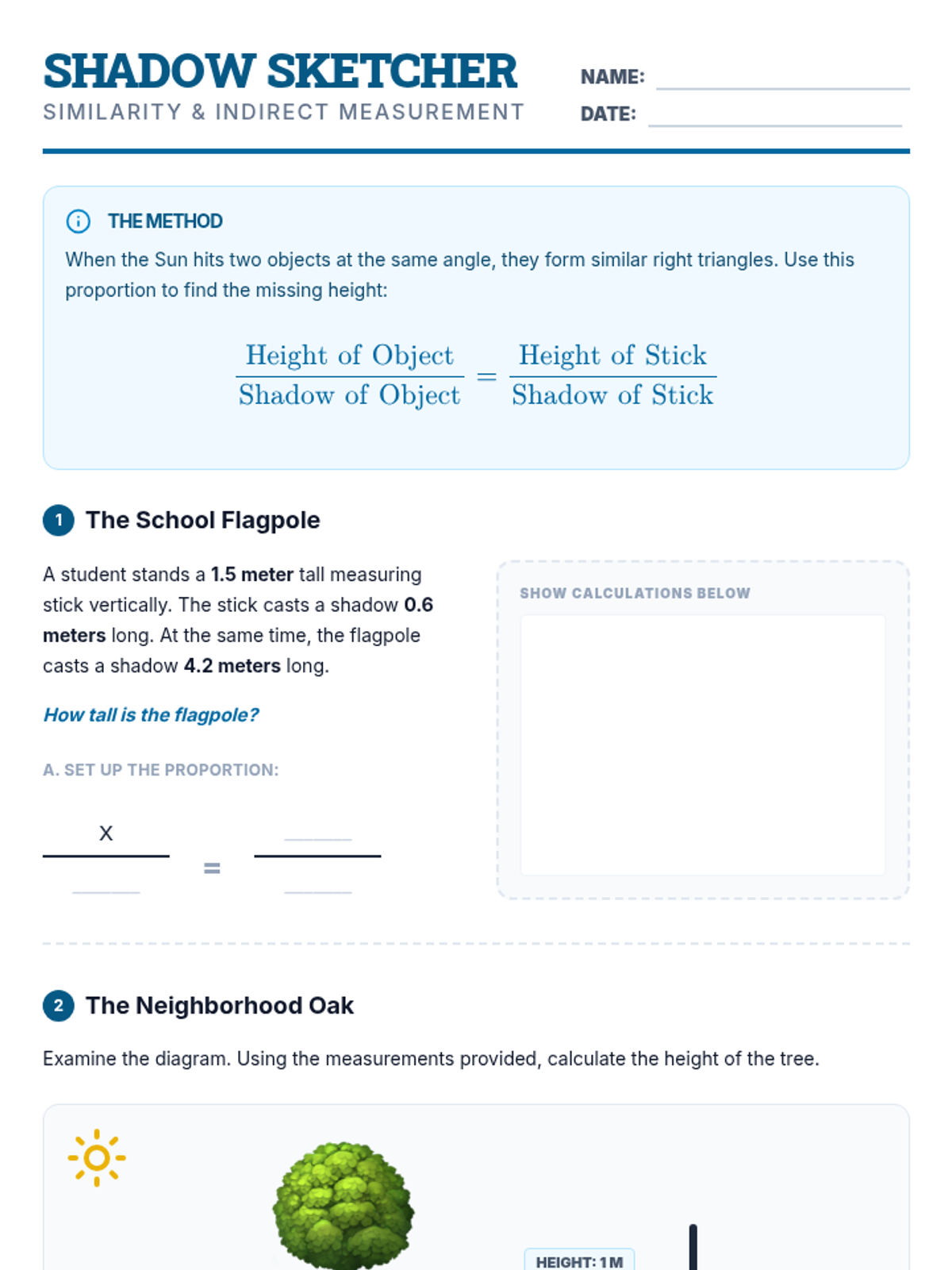
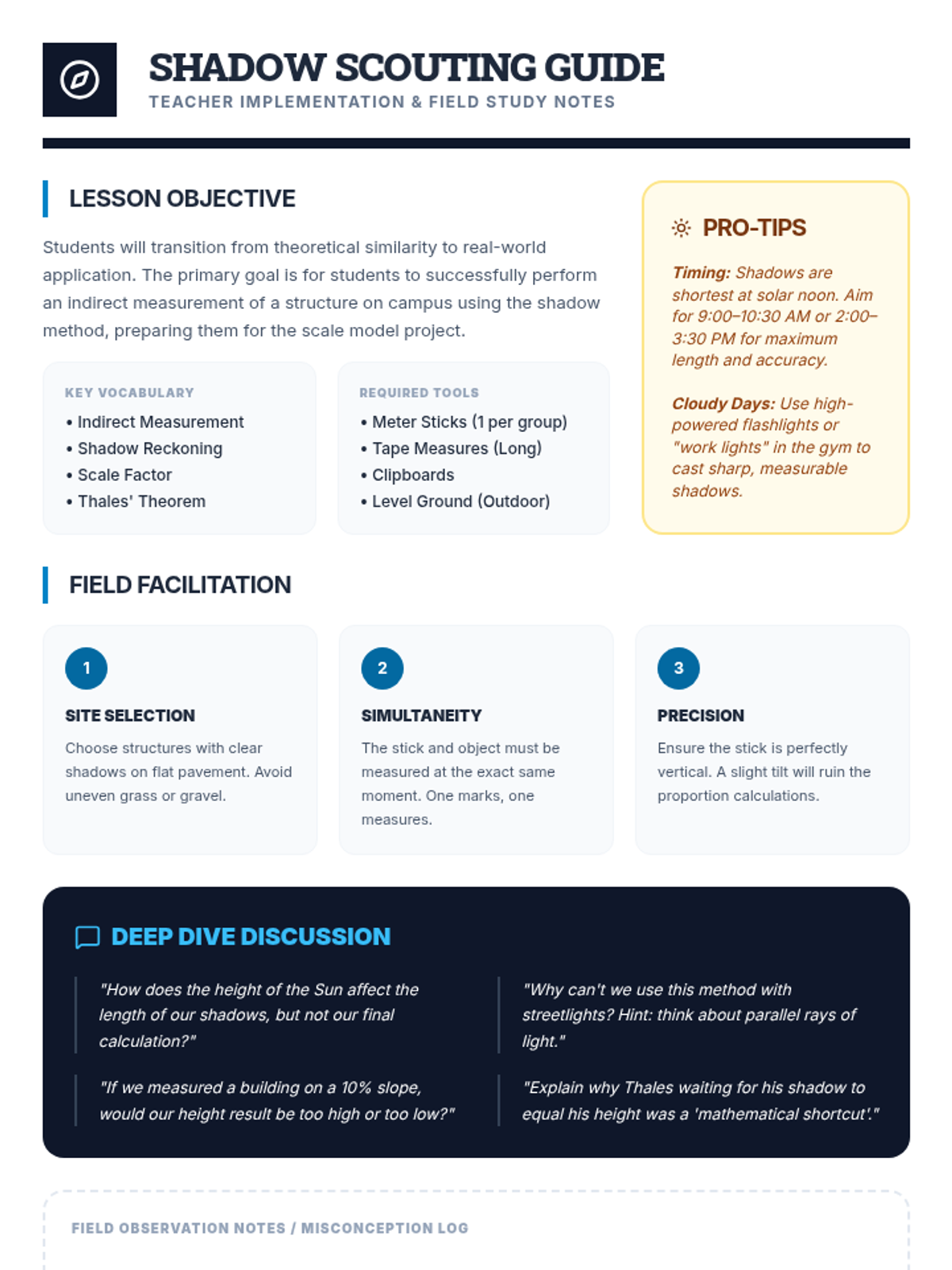
A project-based unit where students use indirect measurement (shadow reckoning) to determine the height of tall objects and then build accurate scale models of those structures.
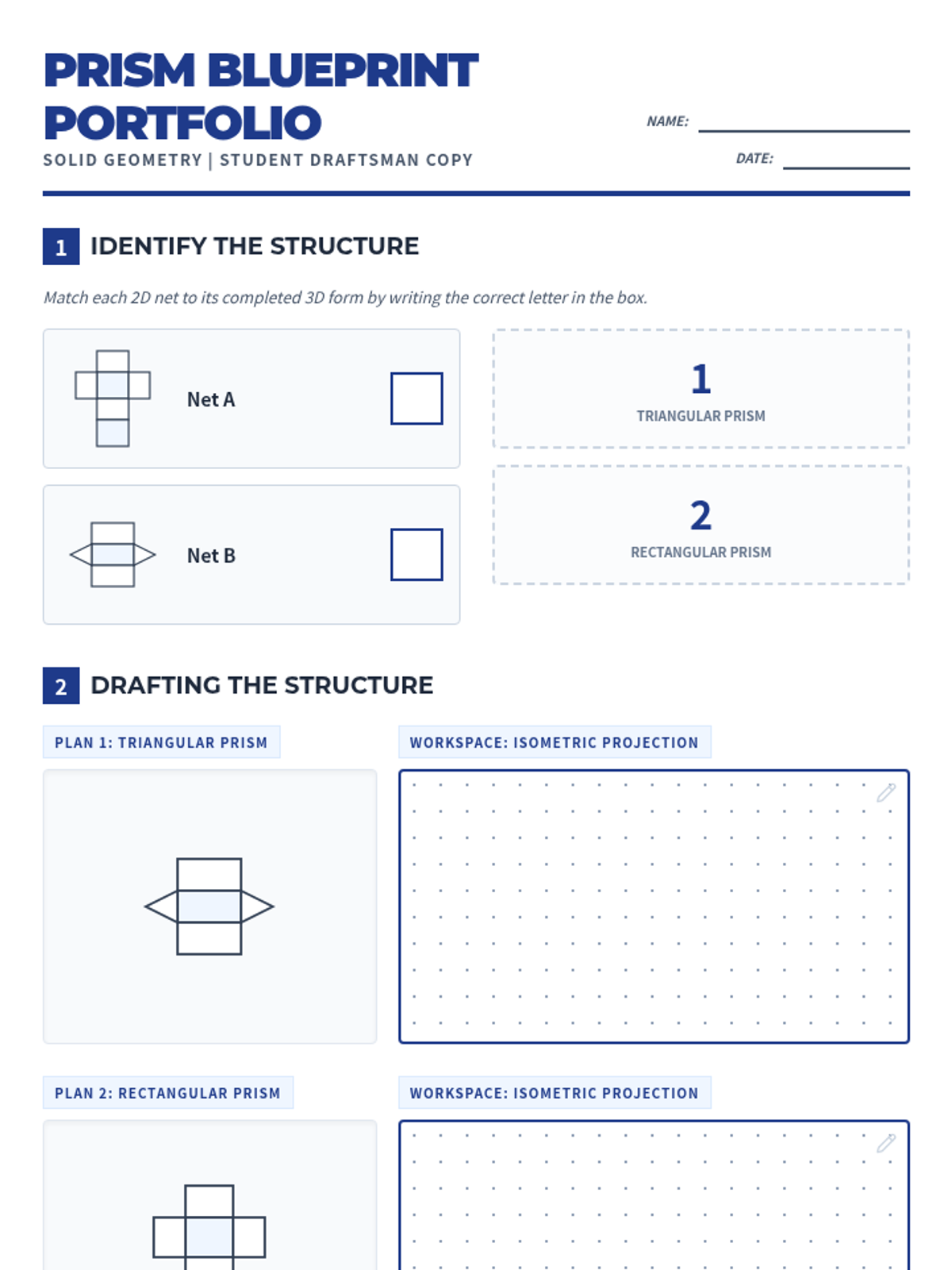
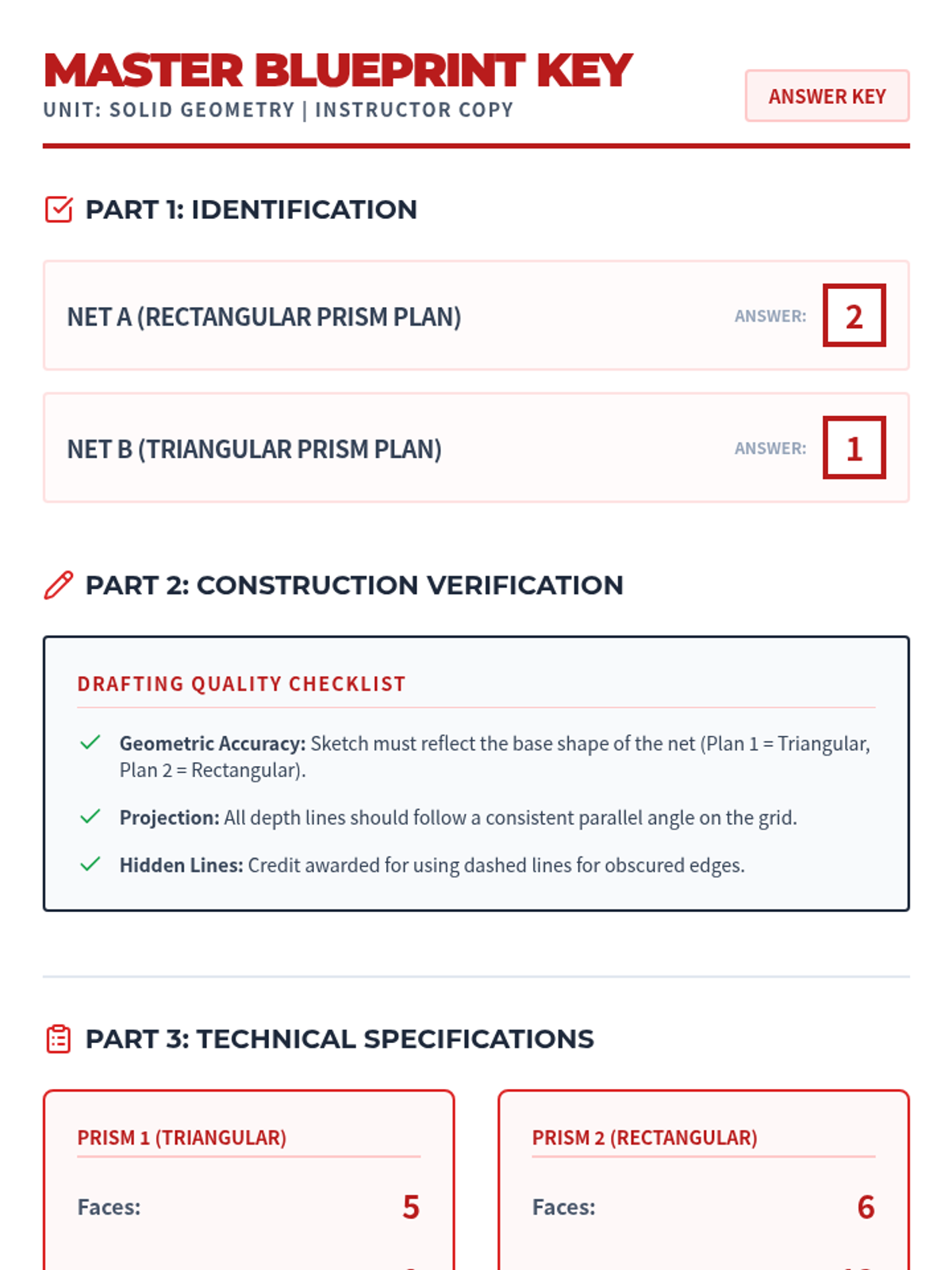
A comprehensive unit on solid geometry, exploring the properties, surface areas, and constructions of various three-dimensional shapes.
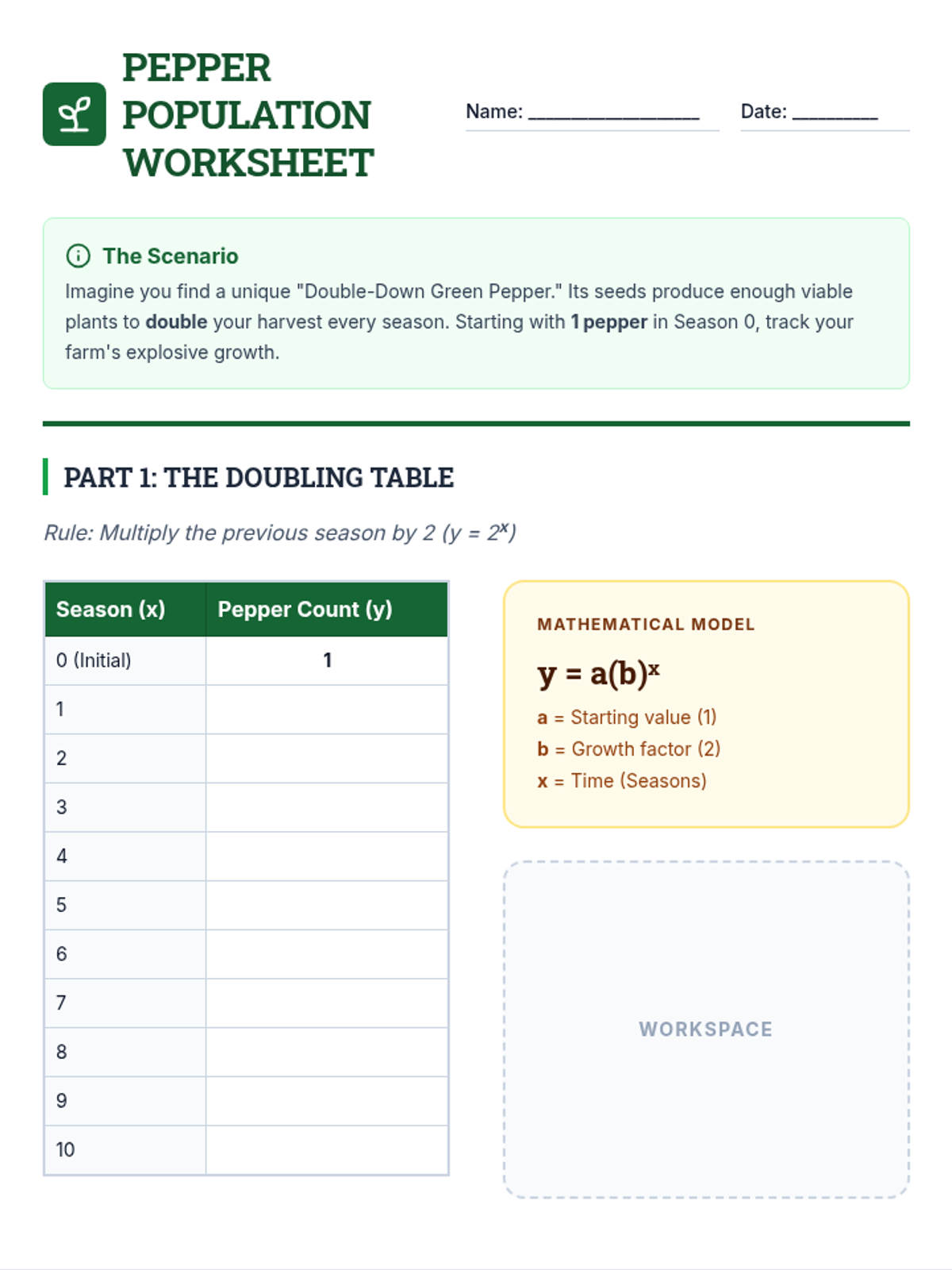
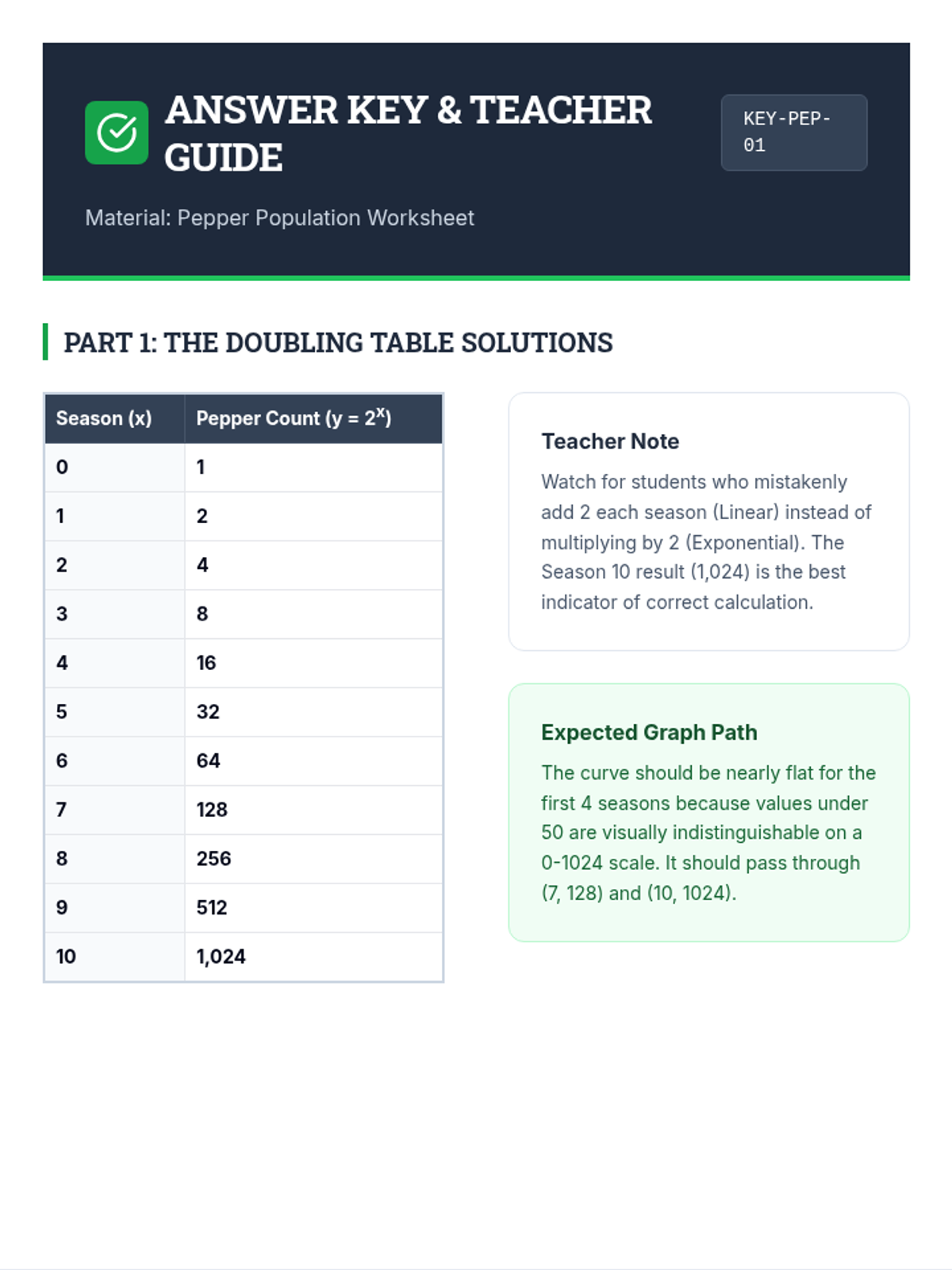
A sequence focused on exponential growth models through the lens of agricultural yields, specifically tracking the population growth of peppers from a single fruit.