A research-driven sequence exploring social communication norms. Students act as social scientists to investigate how culture, authority, and environment influence eye contact and personal space, culminating in a school-specific field guide.
A series of activities exploring the rise of cities and factory life during the Industrial Revolution, designed for middle school students with very low reading levels. The materials focus on visual evidence and basic cause-and-effect relationships.
A bundle of essential resources for middle and high school, covering cellular biology and American history.
A four-part exploration of the Reconstruction era, focusing on the economic, social, and legal challenges of rebuilding the United States after the Civil War. Students analyze primary sources to understand the transition from slavery to freedom and the obstacles faced by formerly enslaved people.
A 4-part exploration of the deep-seated tensions and pivotal events that led the United States to the brink of the Civil War, focusing on economic shifts, legislative compromises, and political flashpoints.
A focused exploration of medieval social and economic structures, specifically contrasting the political hierarchy of feudalism with the agricultural economy of manorialism.
A series of accessible lessons on the Civil Rights Movement designed for middle school English Learners reading at an elementary level. This sequence focuses on key figures and events through simplified text and visual support.
A multi-disciplinary sequence for elementary students that combines social-emotional learning about community kindness with a social studies unit on the American Revolution, exploring how community values shape history.
A global geography unit focusing on the identification and analysis of the Earth's diverse landscapes. Students will master map-reading skills including elevation, contour lines, and global physical regions to understand how geography shapes our world.
A comprehensive study of the American Civil War's most pivotal military engagements through collaborative jigsaw reading and primary source analysis.
A comprehensive overview of four major turning points in United States history: the American Revolution, Westward Expansion, the Civil War, and World War II. This sequence explores how each era redefined the American identity and shifted the nation's trajectory.
A unit on sustainable development that moves from foundational definitions to the analysis of specific practices and their long-term global impacts.
A comprehensive review sequence for 8th grade students covering core curriculum in Math, Science, Social Studies, and English Language Arts.
A comprehensive 10-lesson unit exploring the political, economic, religious, and technological landscape of the Middle Ages across Western Europe, Japan, and the Islamic Empire. Students will analyze feudal systems, cultural achievements, and global connections through slides, guided activities, and comparative studies.
A film study series exploring leadership, racial integration, and social change through the lens of 'Remember the Titans'. Students analyze character development and historical context within 1971 Virginia.
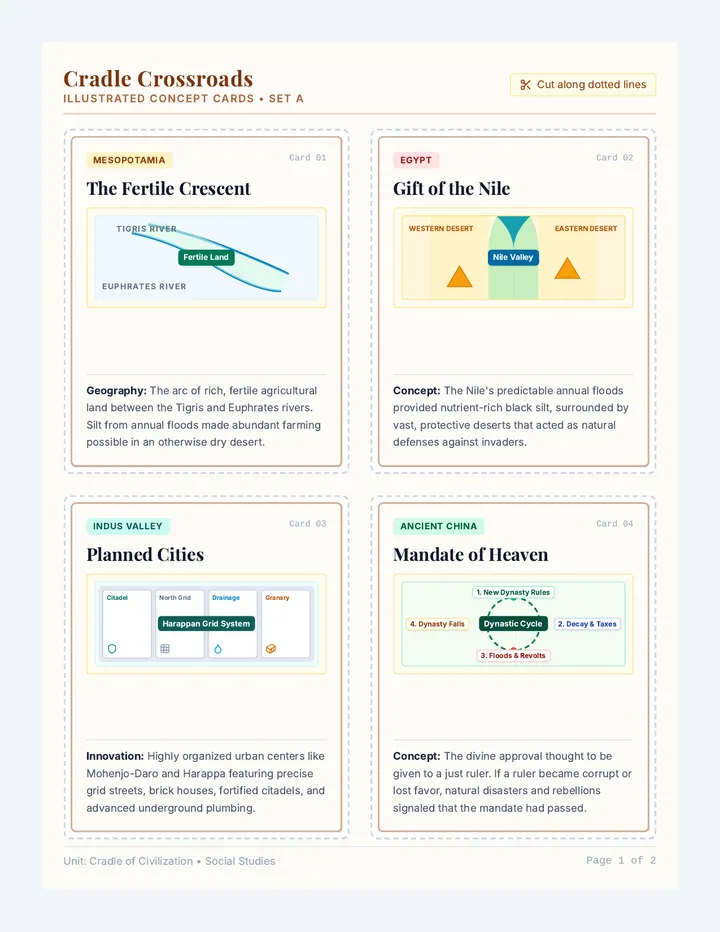
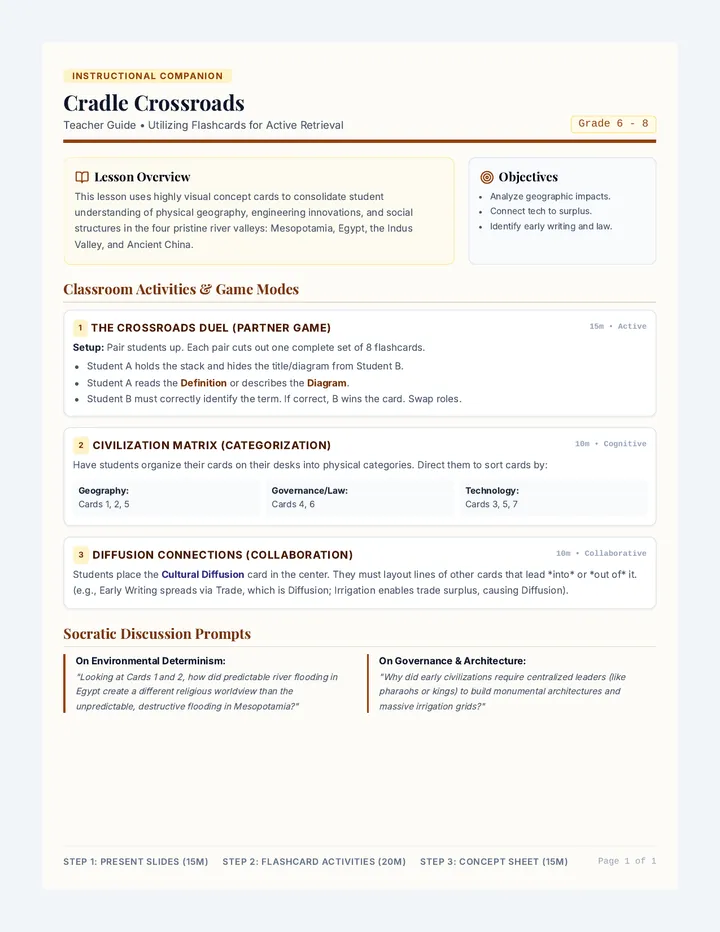
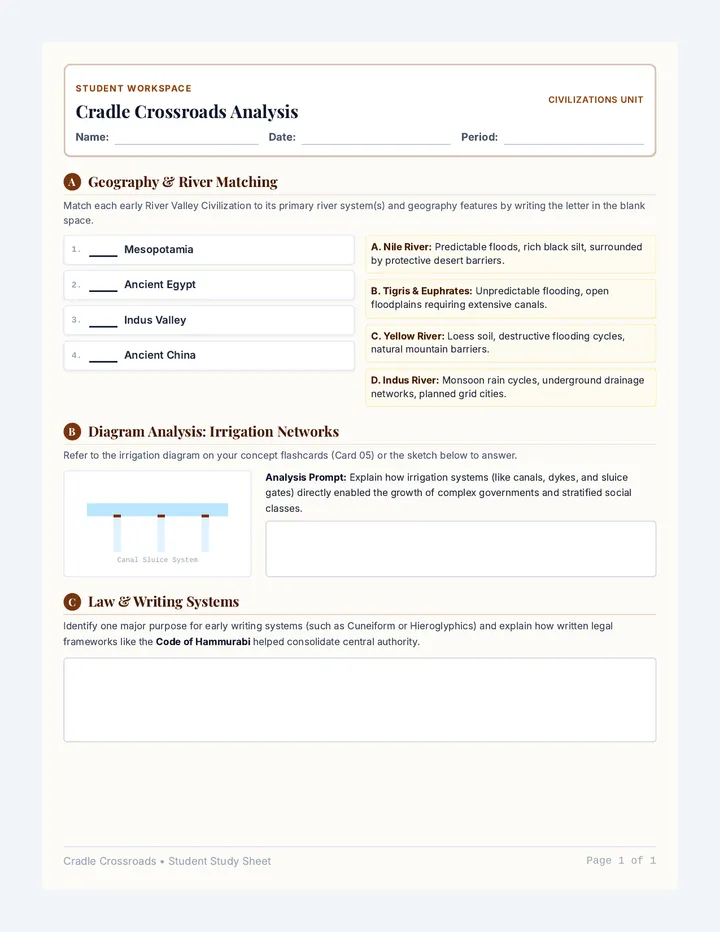
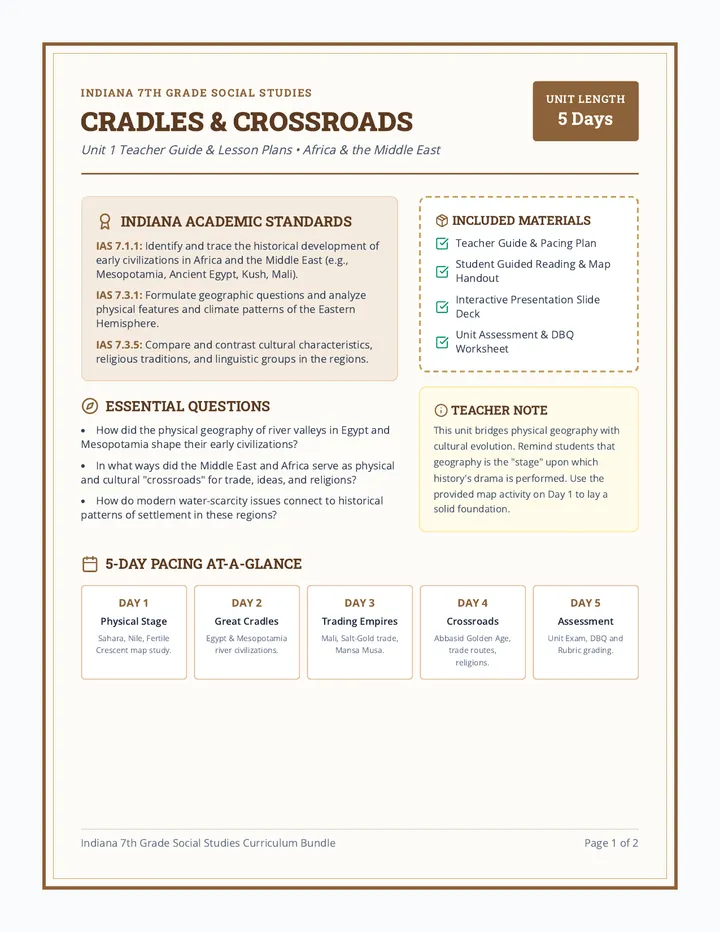
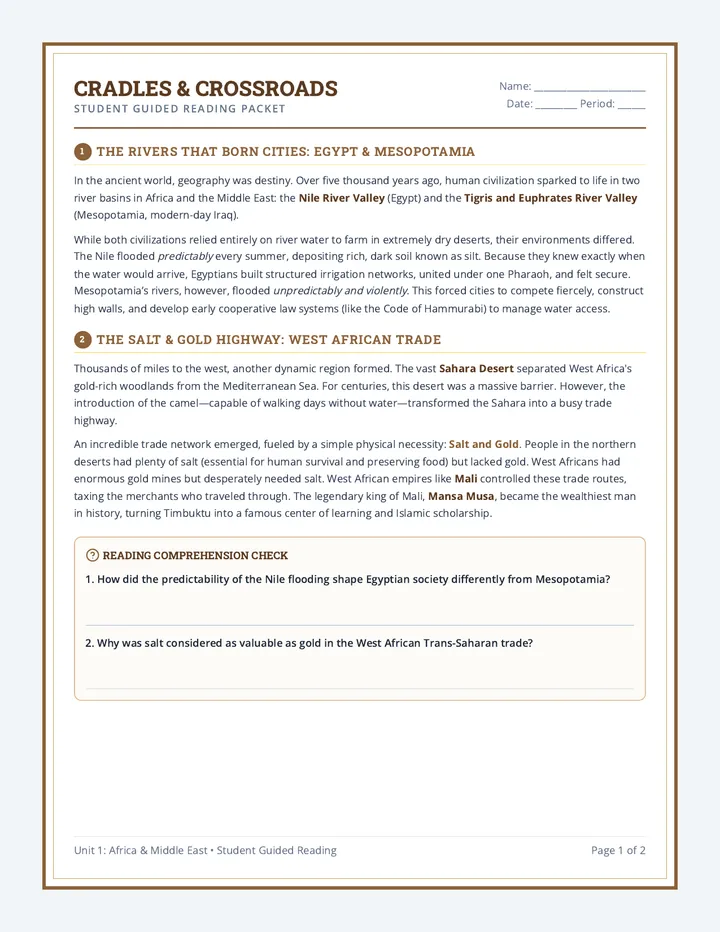
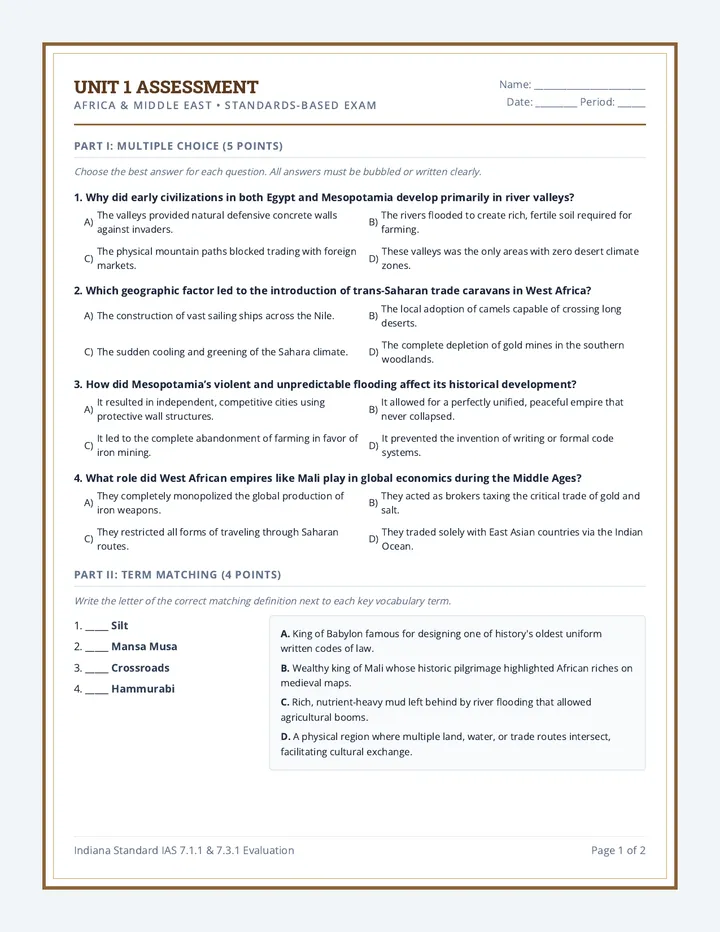
A comprehensive two-week unit exploring the four major river valley civilizations: Mesopotamia, Egypt, the Indus Valley, and Ancient China. Students will analyze how geography shaped human characteristics and evaluate the social, political, and cultural development of these early societies.
A comprehensive exploration of the American Revolution, from the sparks of rebellion to the birth of a new nation.