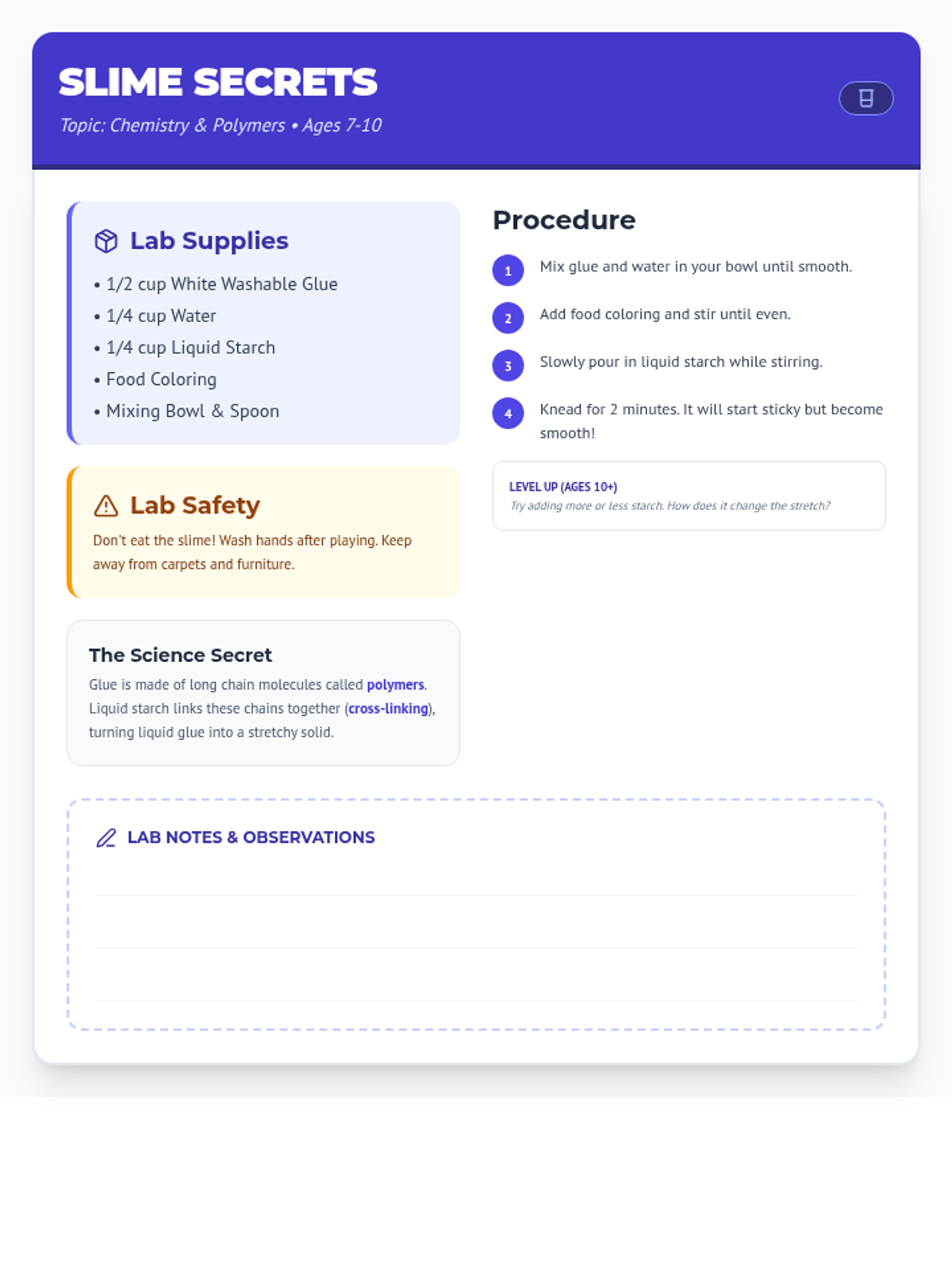
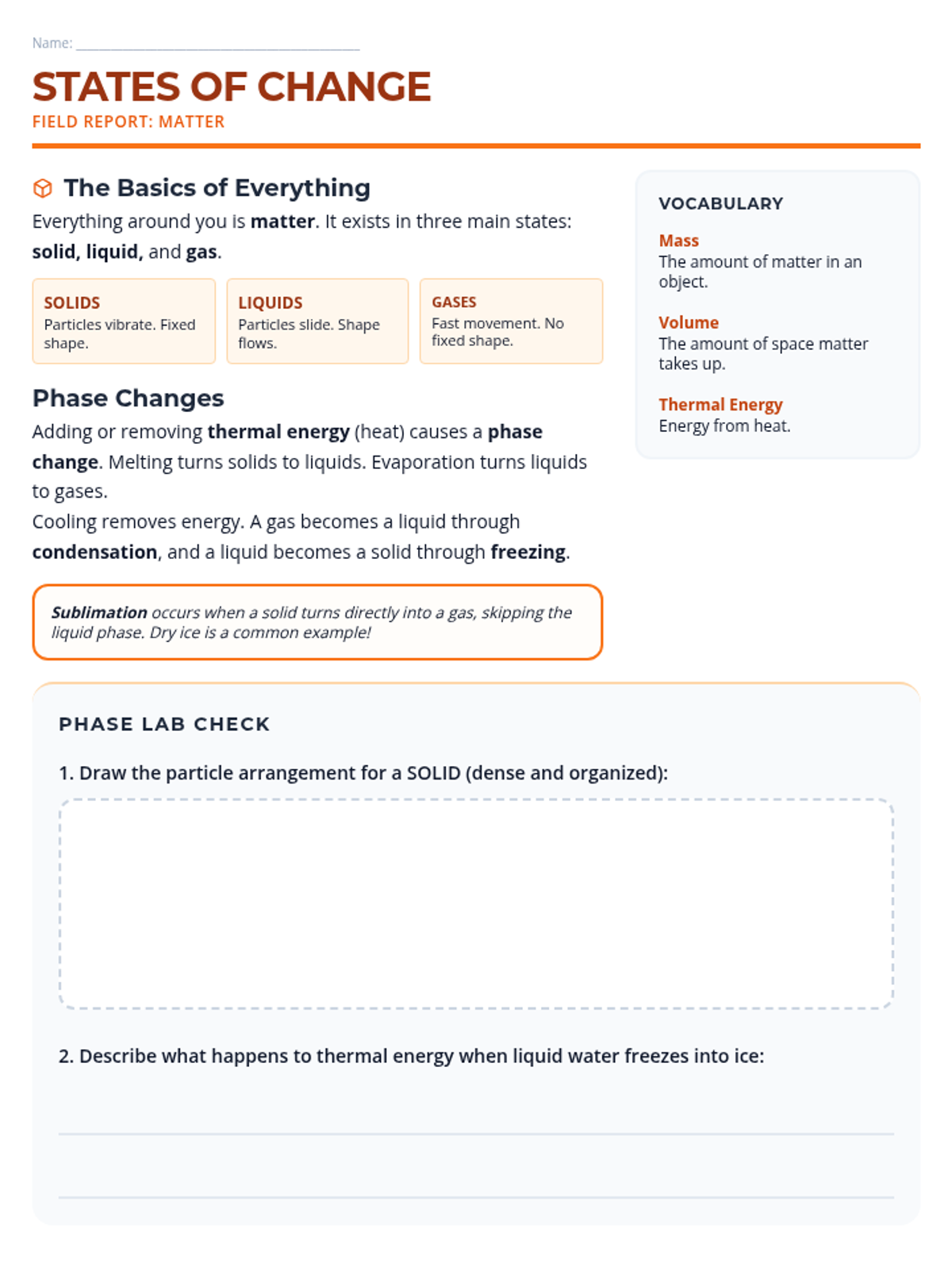
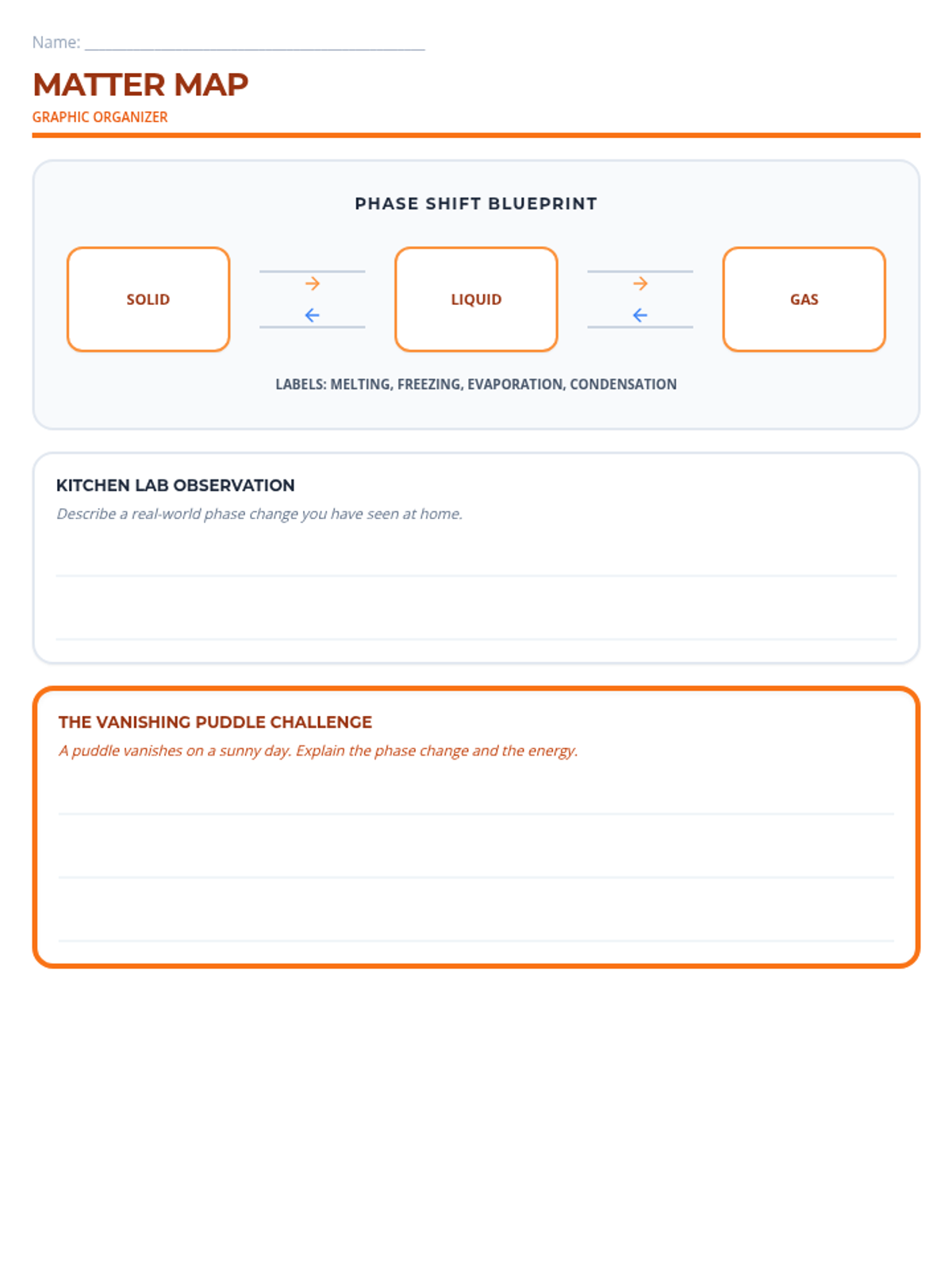
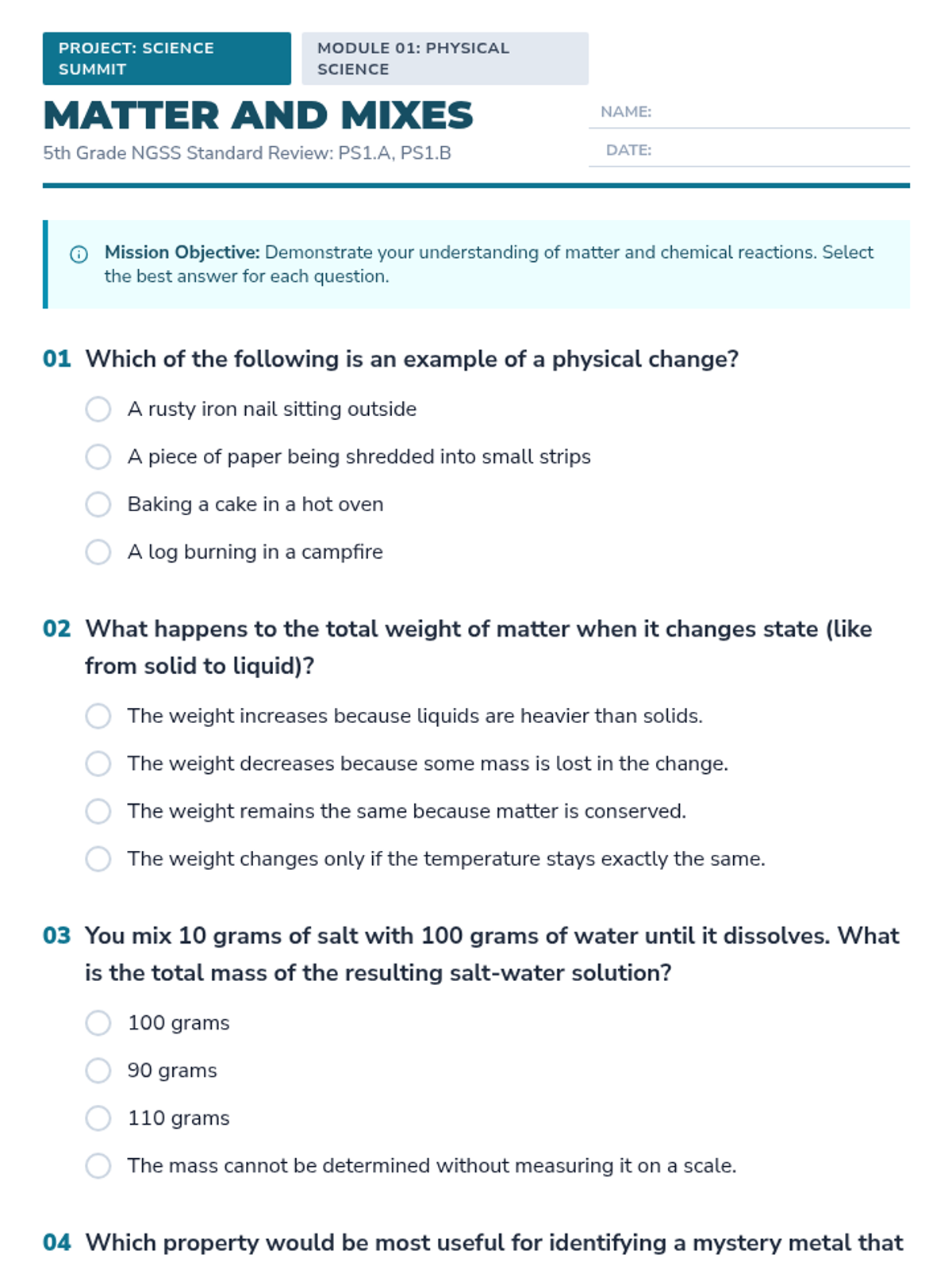
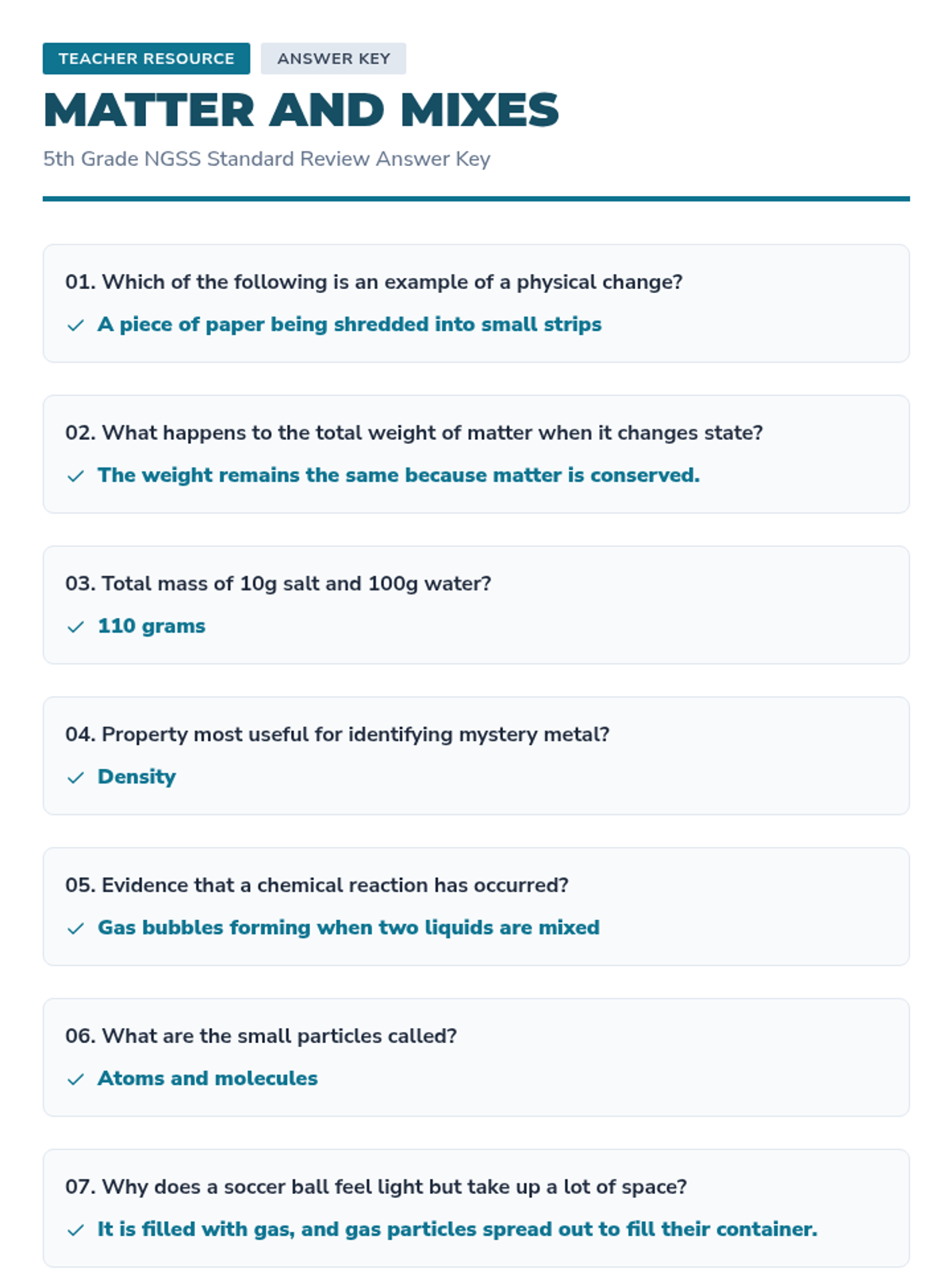
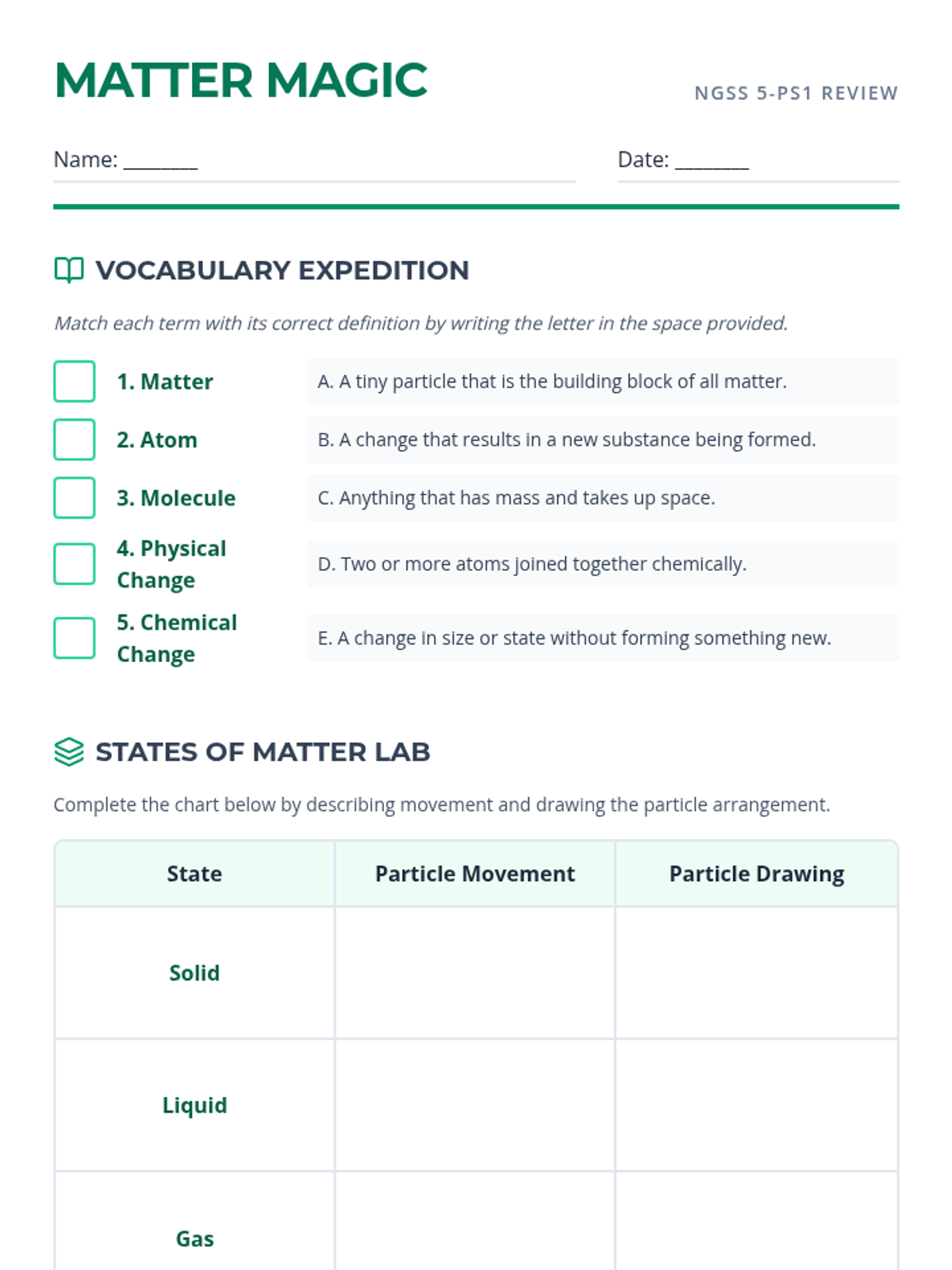
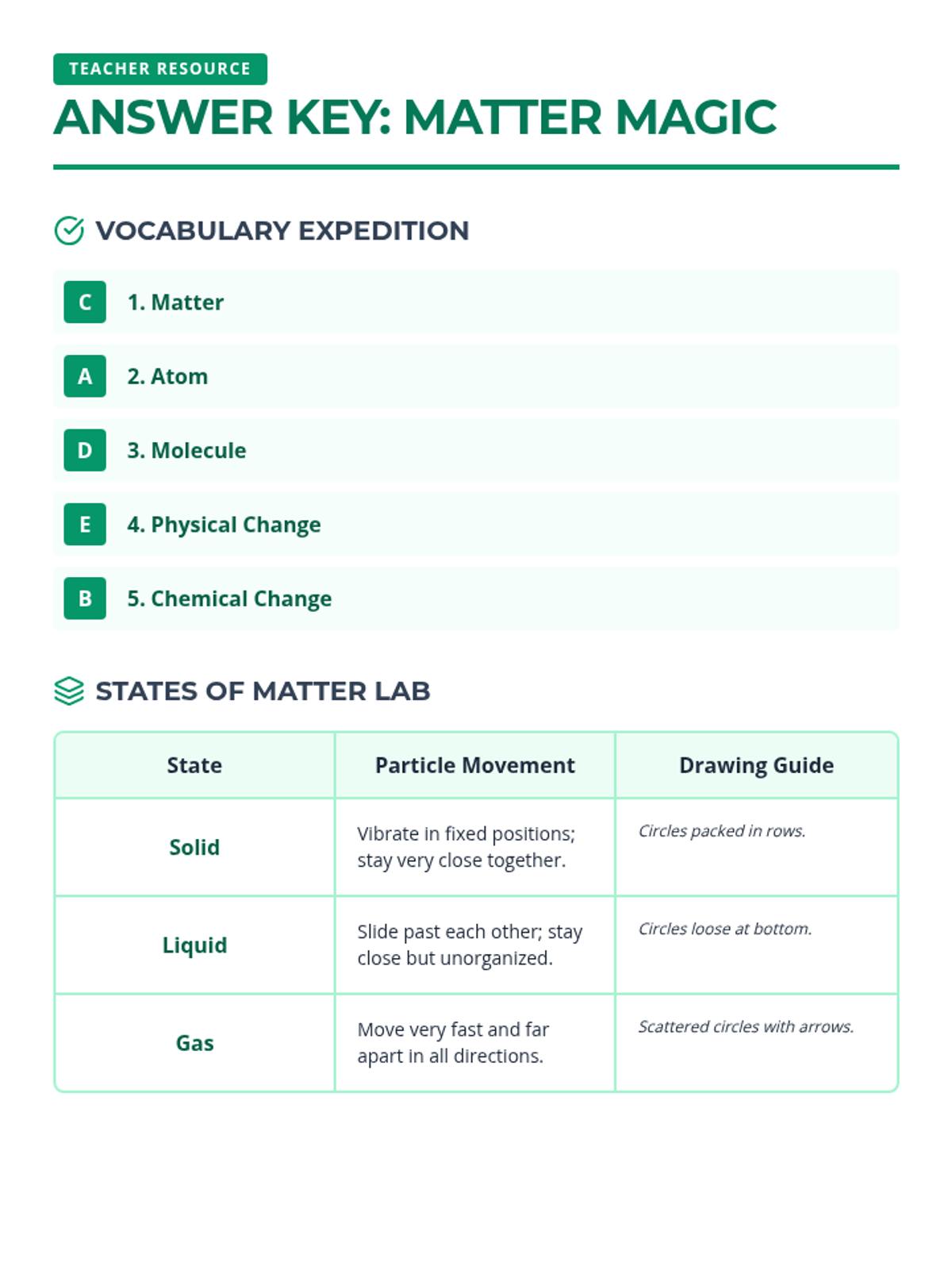
A unit exploring the properties of matter, focusing on how substances change state and form new materials through chemical reactions.
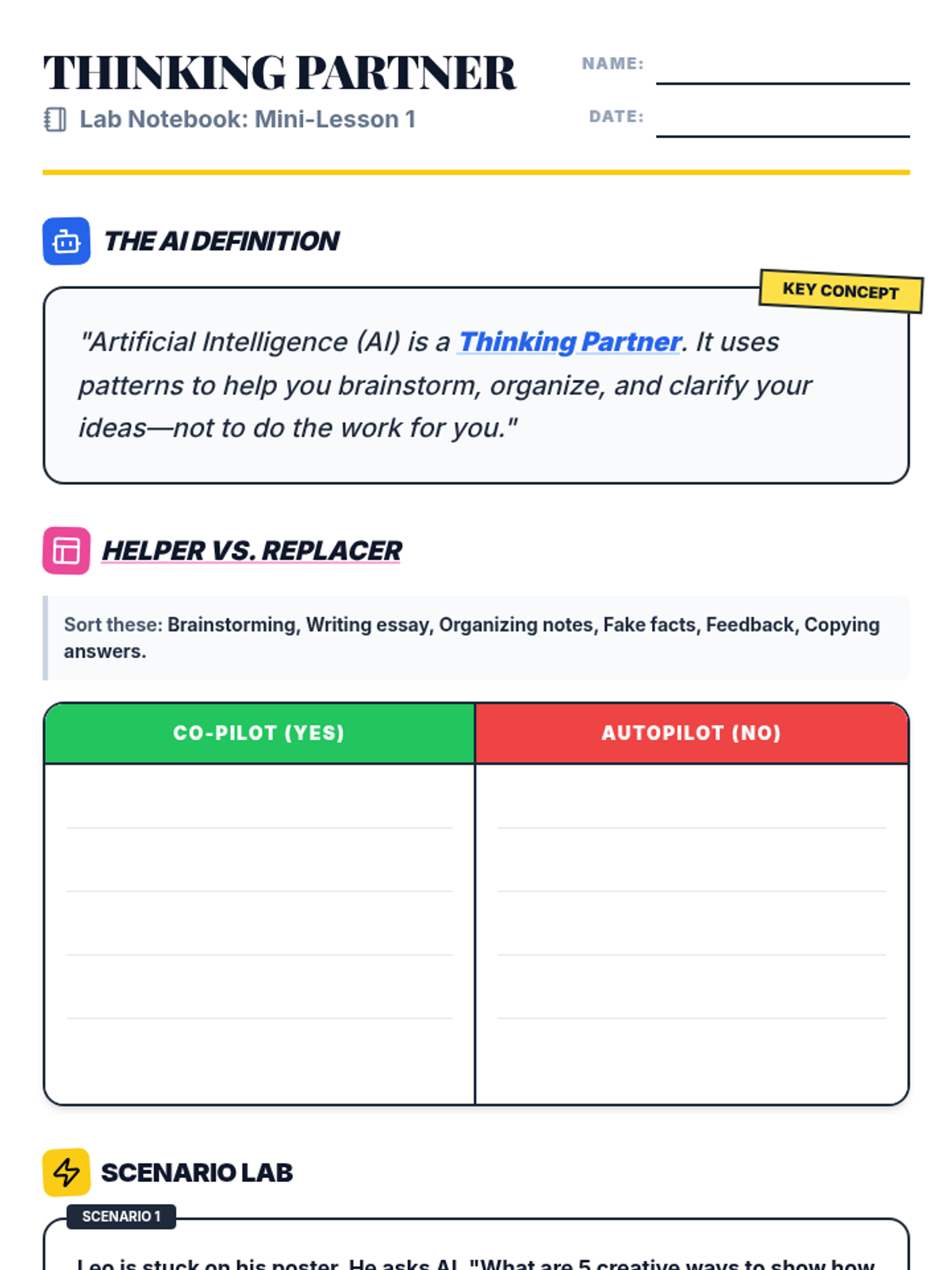
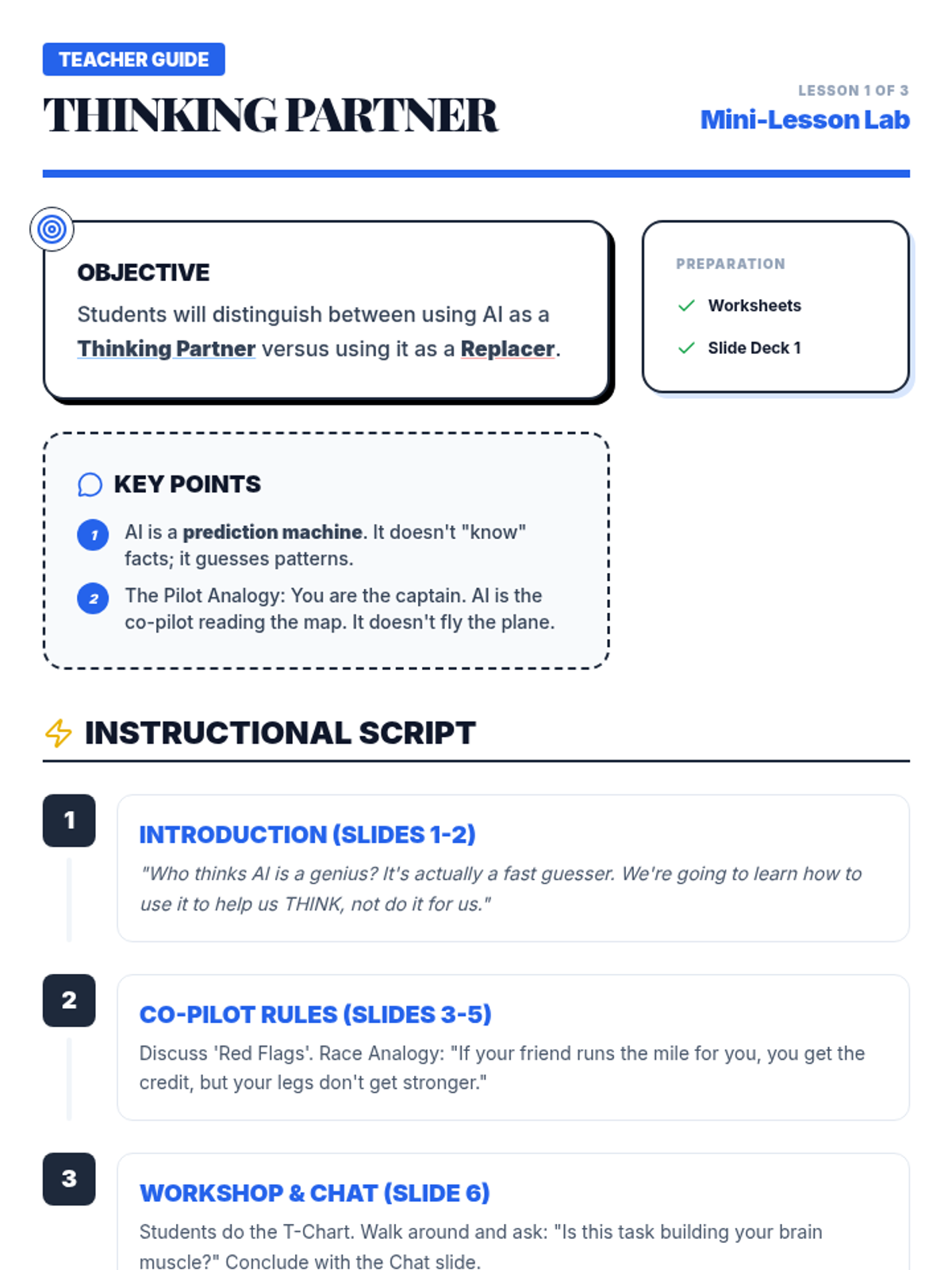
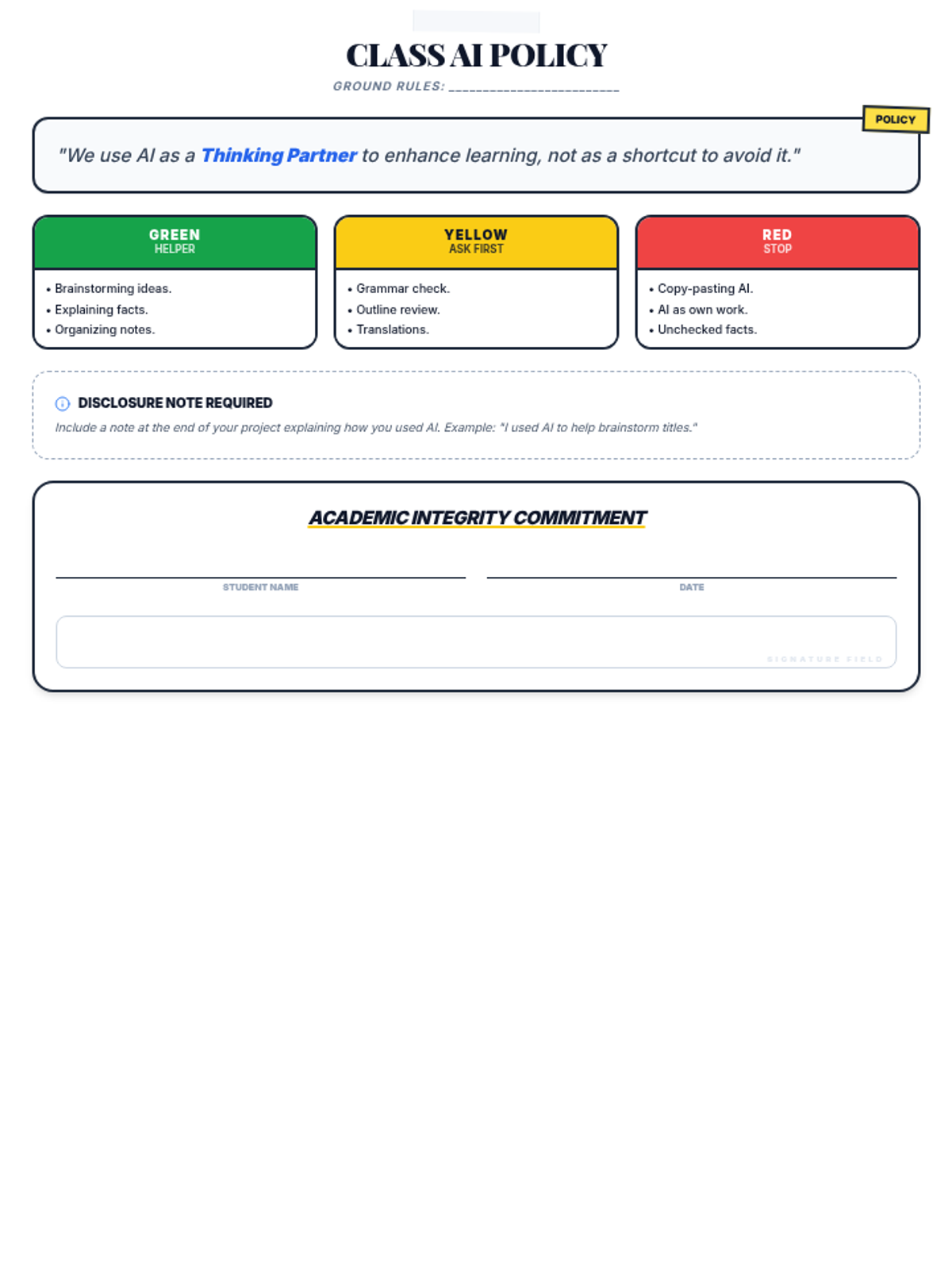
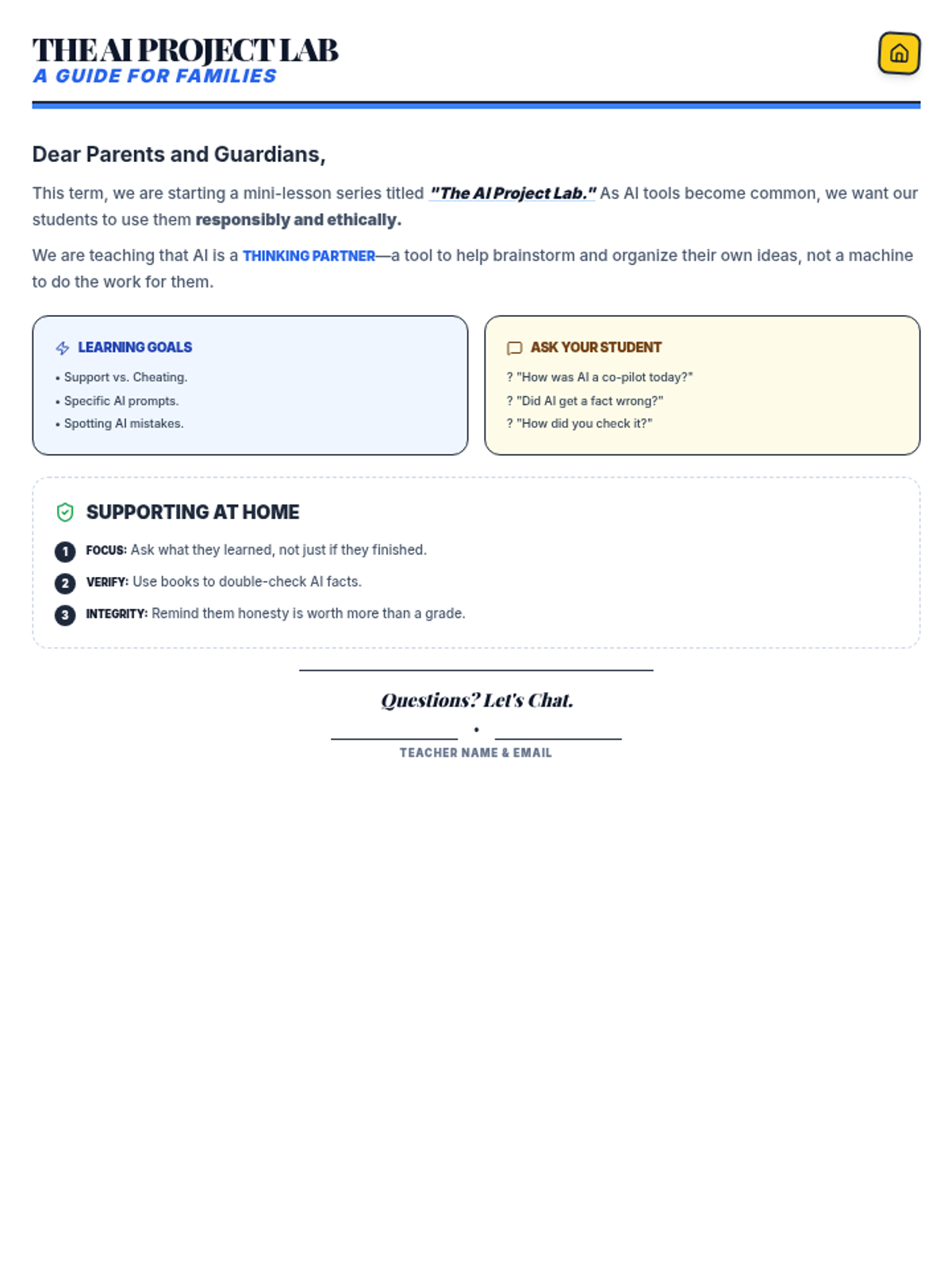
A 3-part mini-lesson series designed to teach middle schoolers how to use AI tools responsibly for final projects. The series focuses on AI as a thinking partner, prompt engineering, and critical fact-checking through a modern 'Notebook/Sketch' aesthetic.
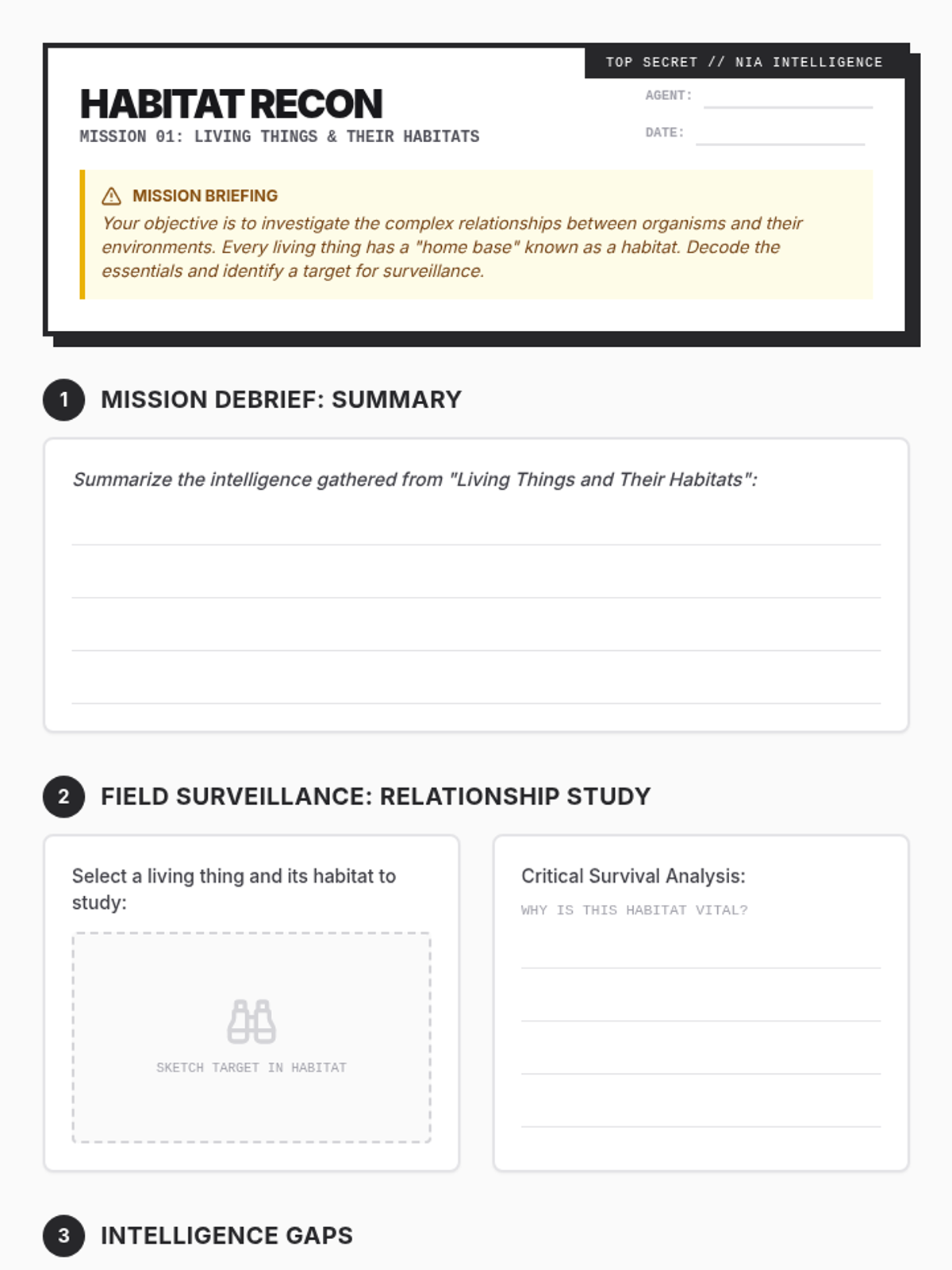
A series of secret agent-themed ecology missions where students act as Eco-Detectives for the Nature Intelligence Agency (NIA) to study habitats, food chains, and environmental impacts.
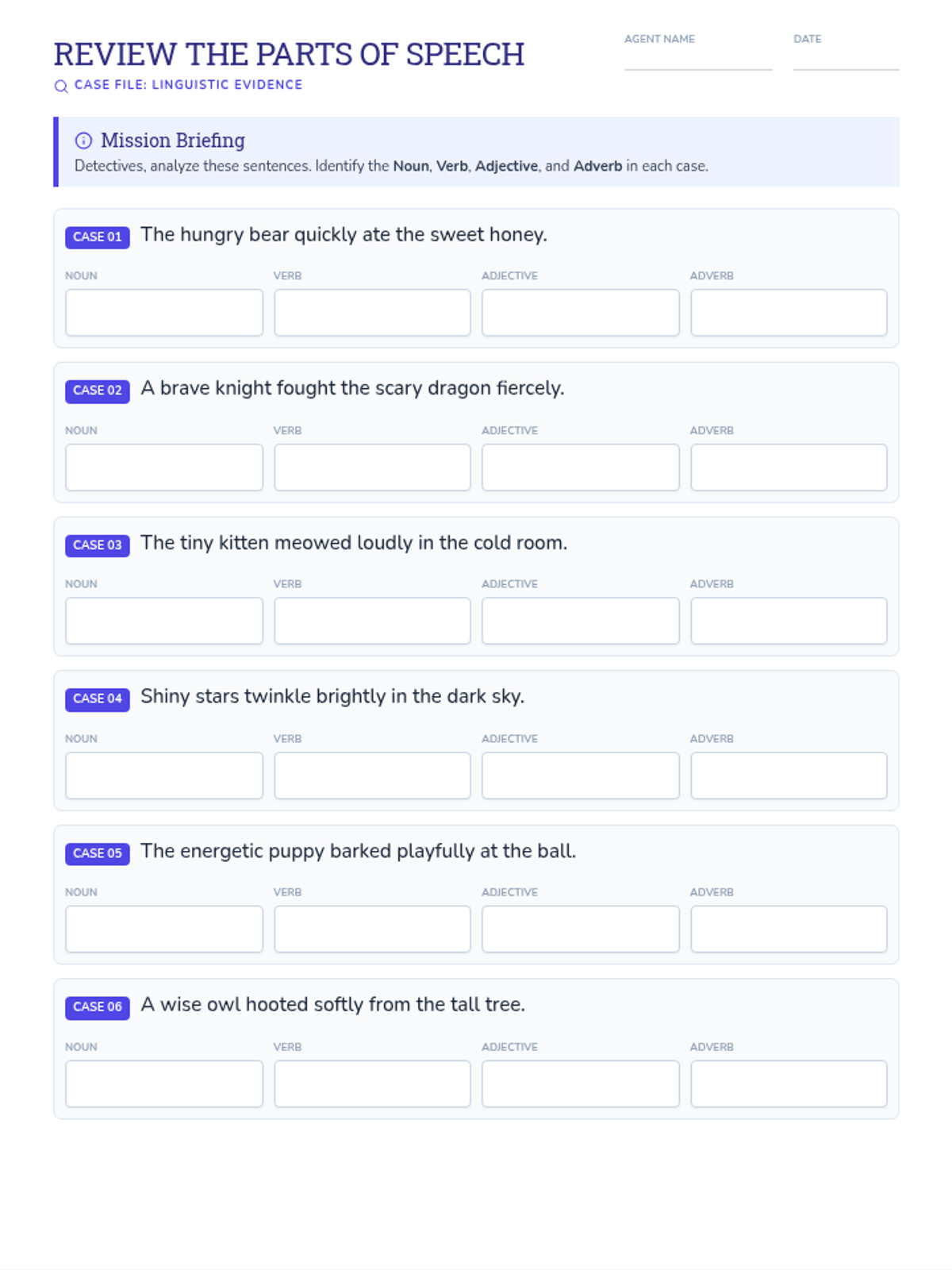
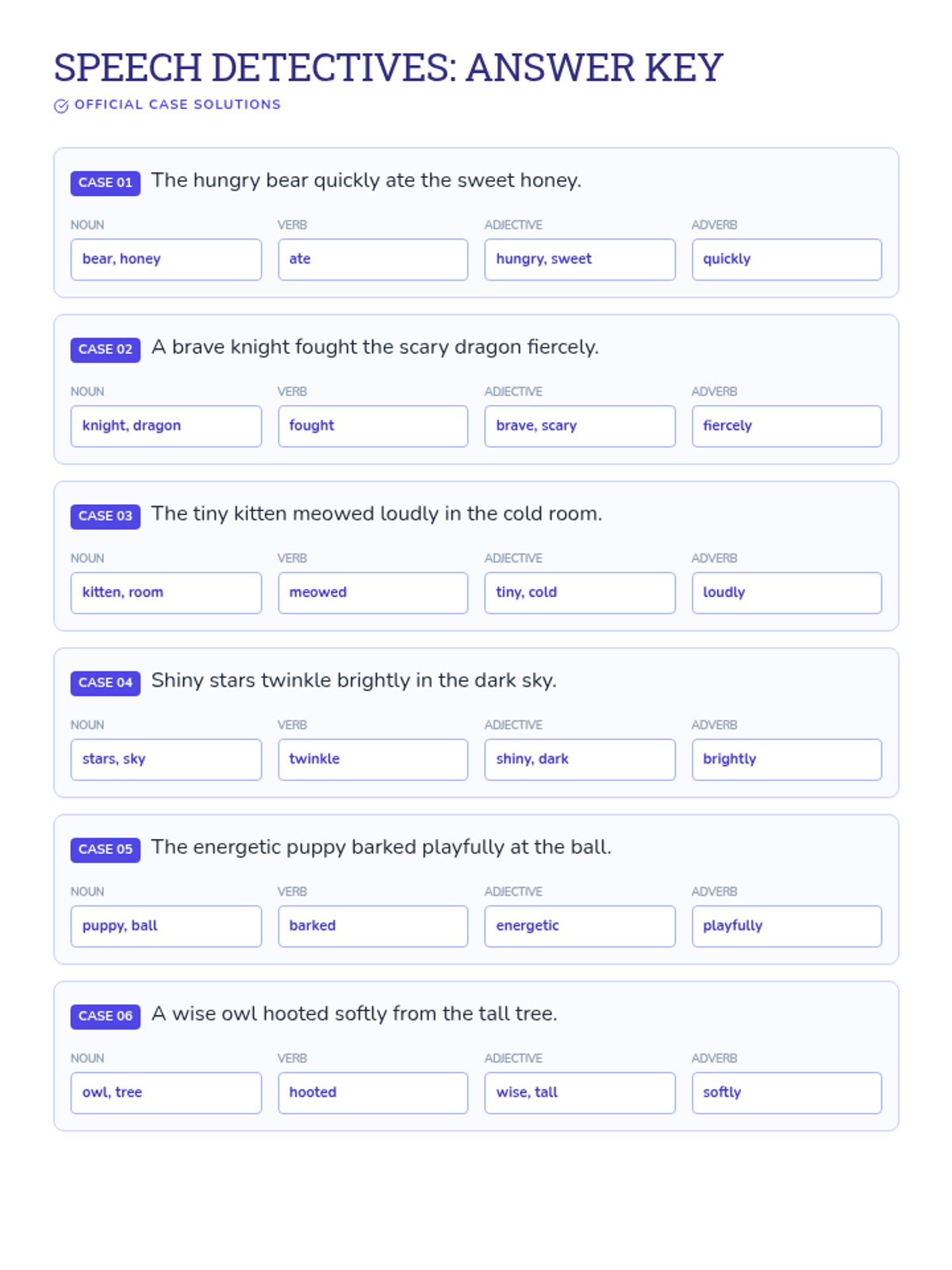
A collection of technology and language arts lessons exploring modern digital literacy and core communication skills.
A collection of 8 hands-on science activities designed for elementary-aged children, covering chemistry, space, botany, and physics with a mix of instruction cards, journals, and lesson plans.
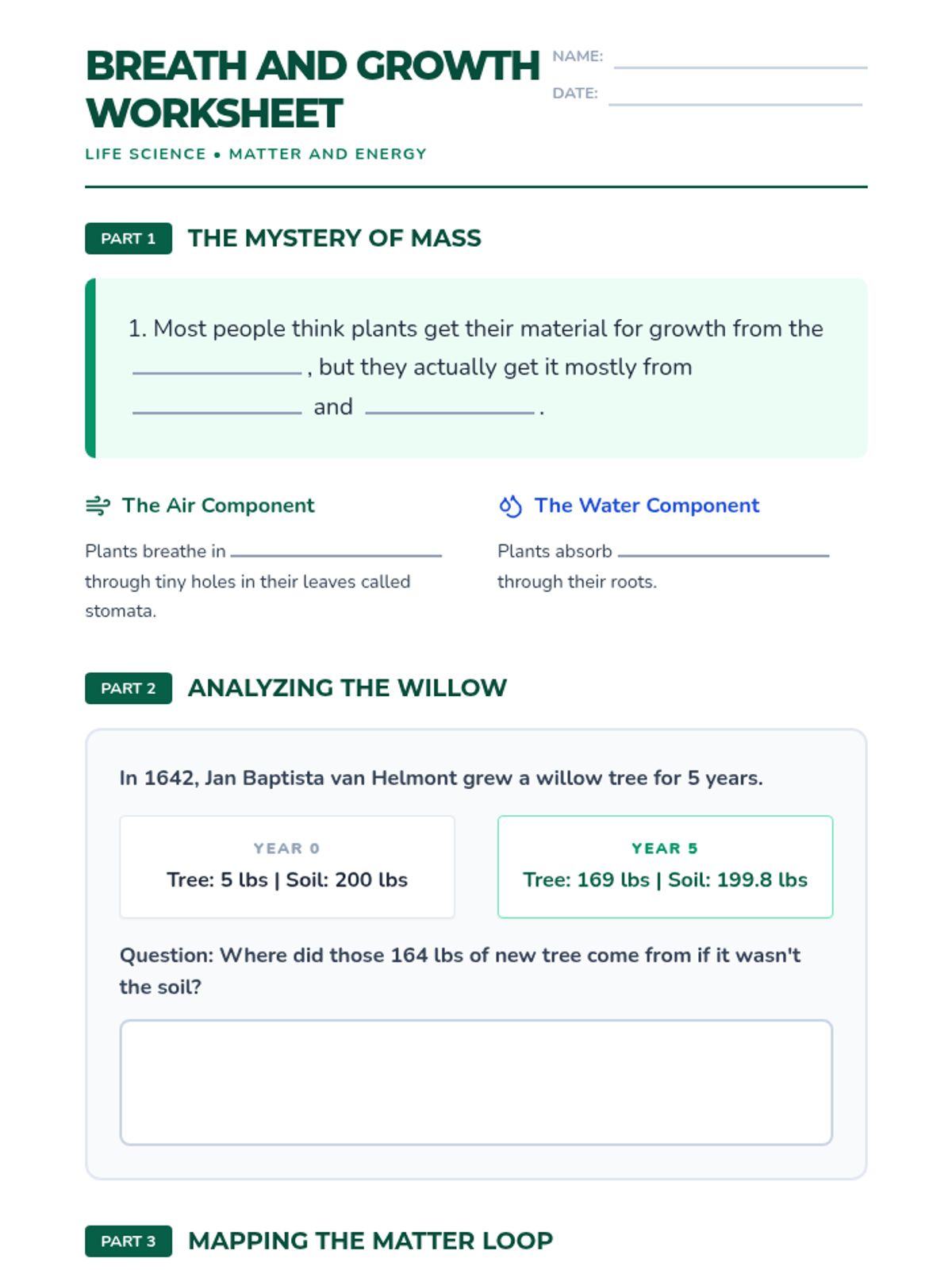
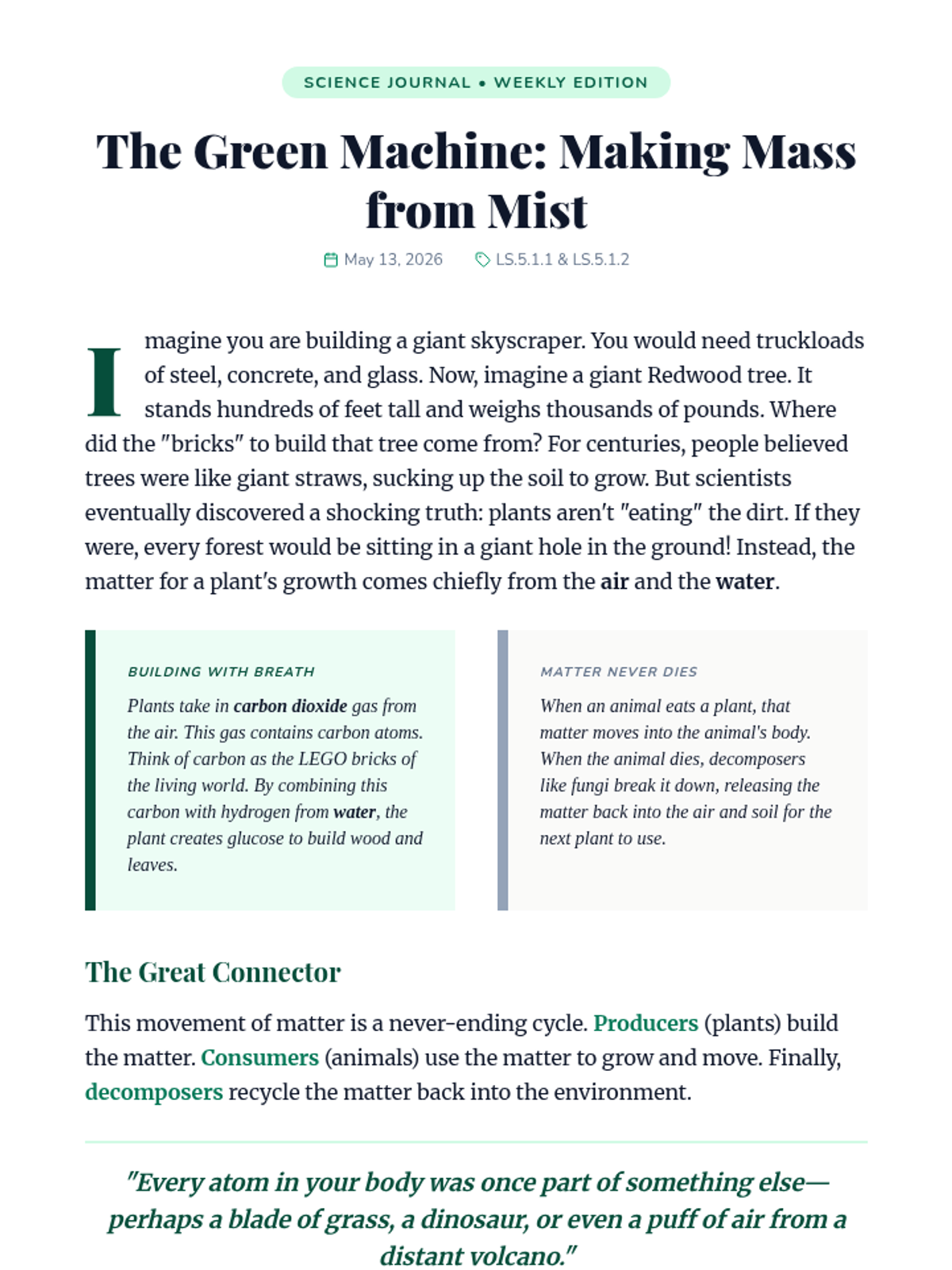
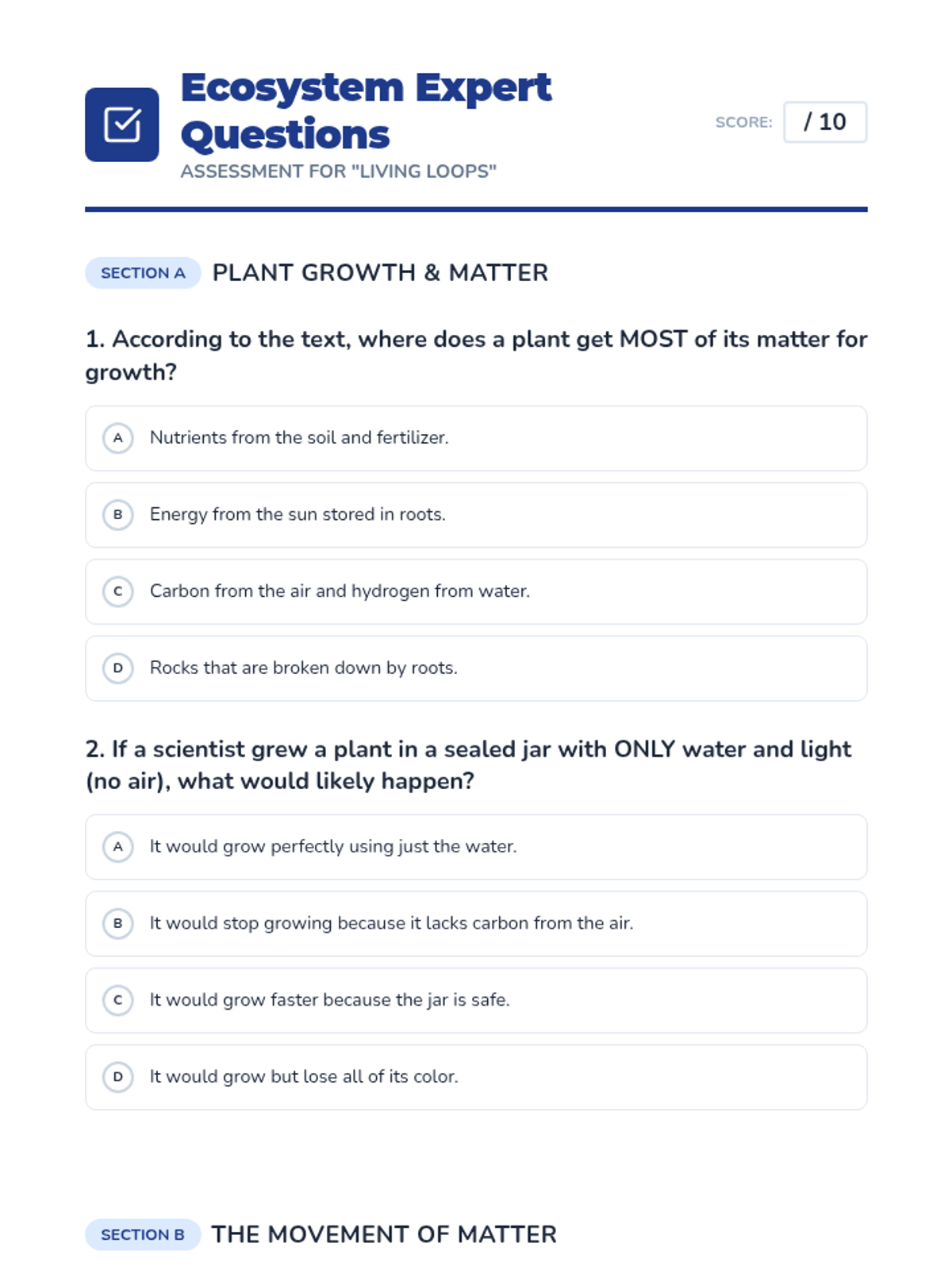
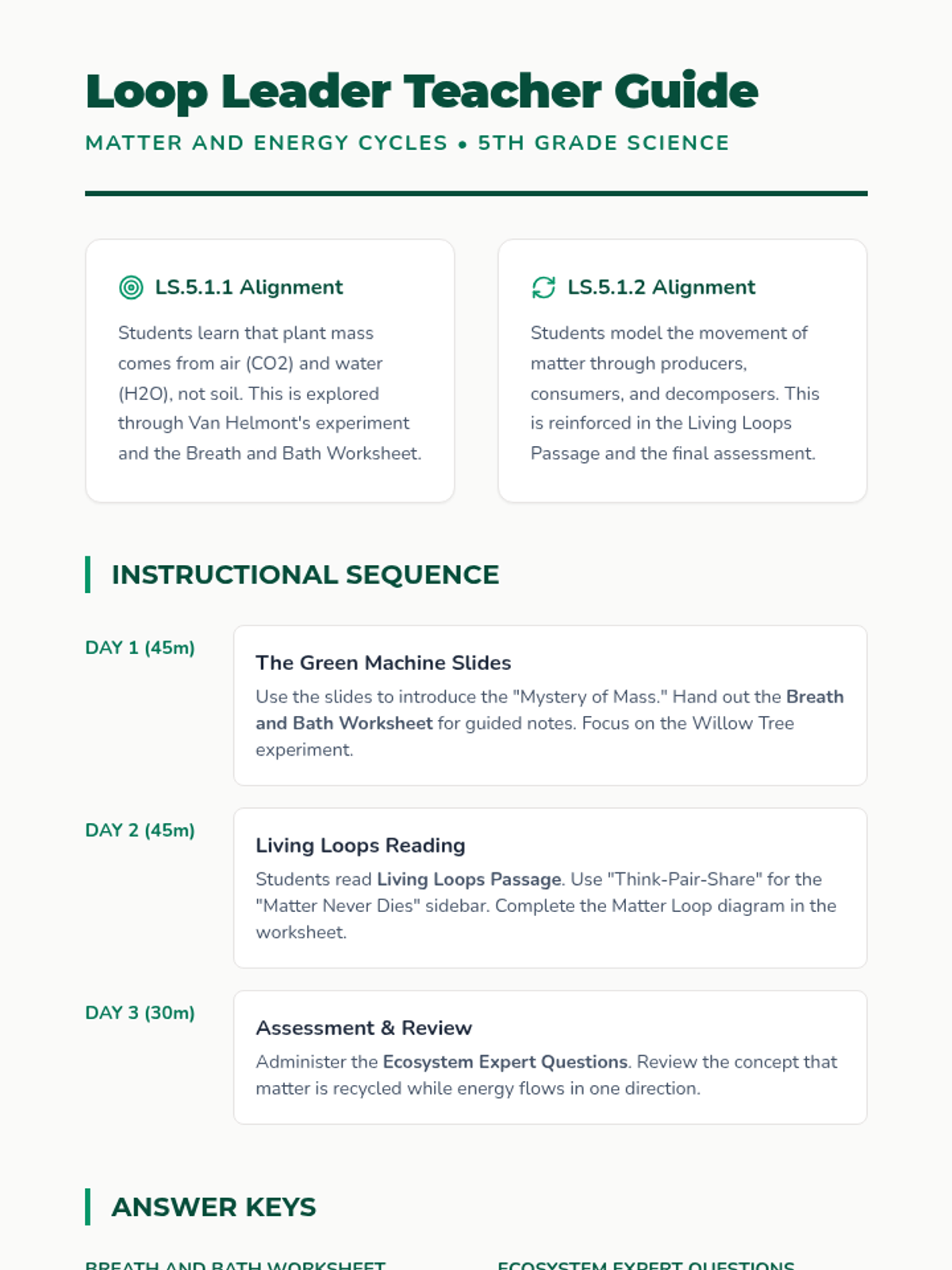
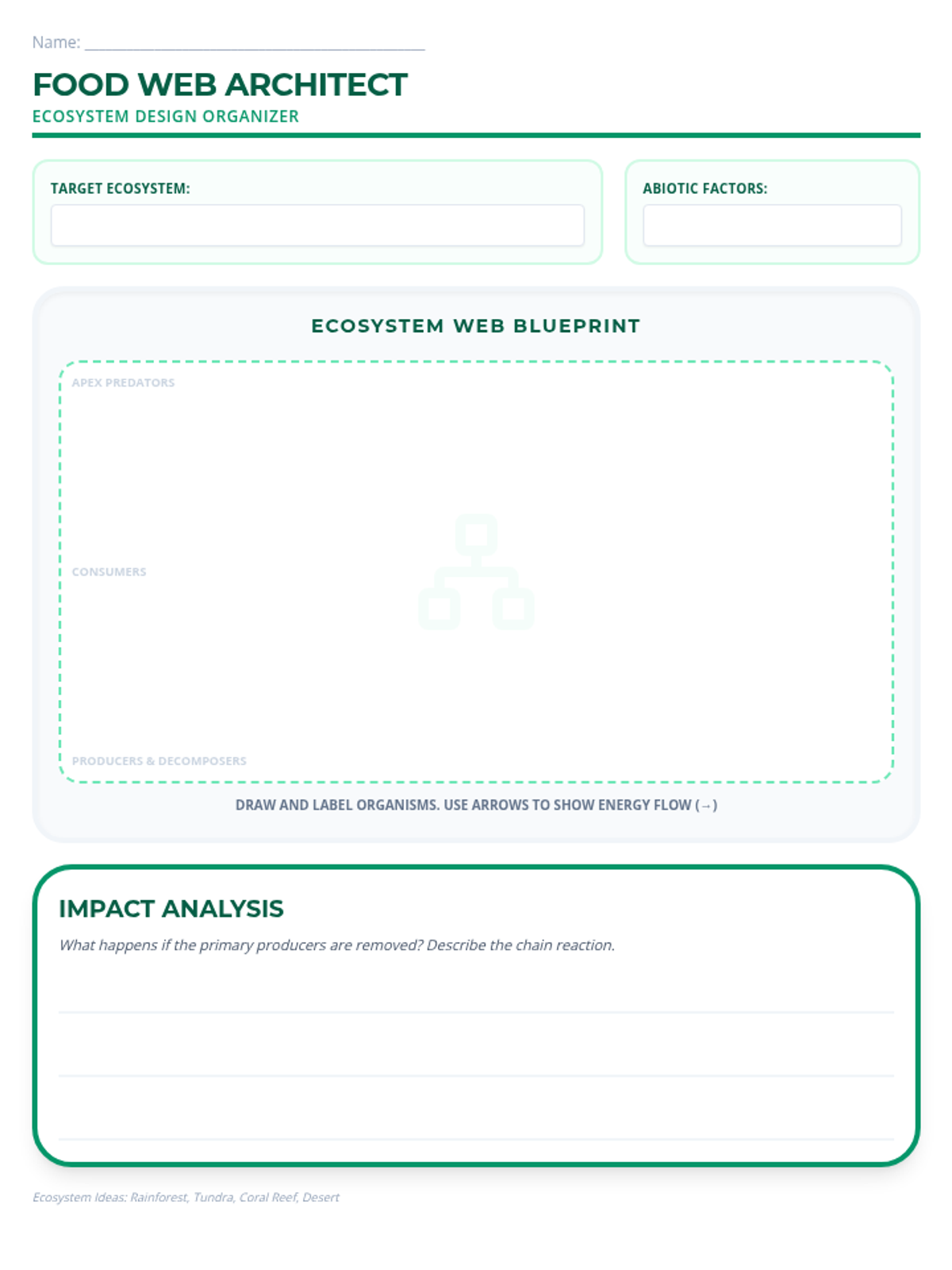
A comprehensive unit for 5th grade exploring how plants grow from air and water (LS.5.1.1) and how matter cycles through ecosystems via food webs and decomposers (LS.5.1.2).
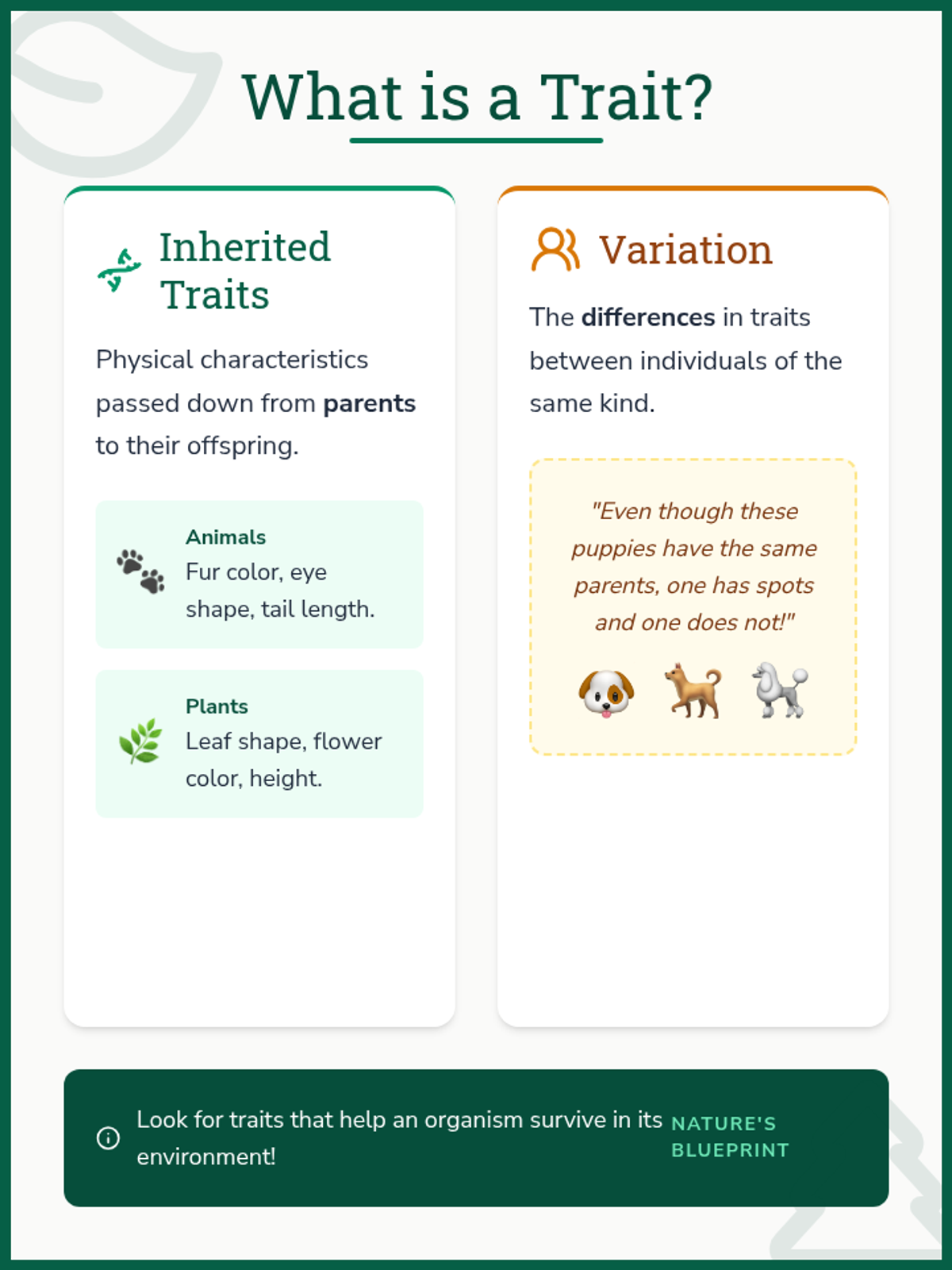
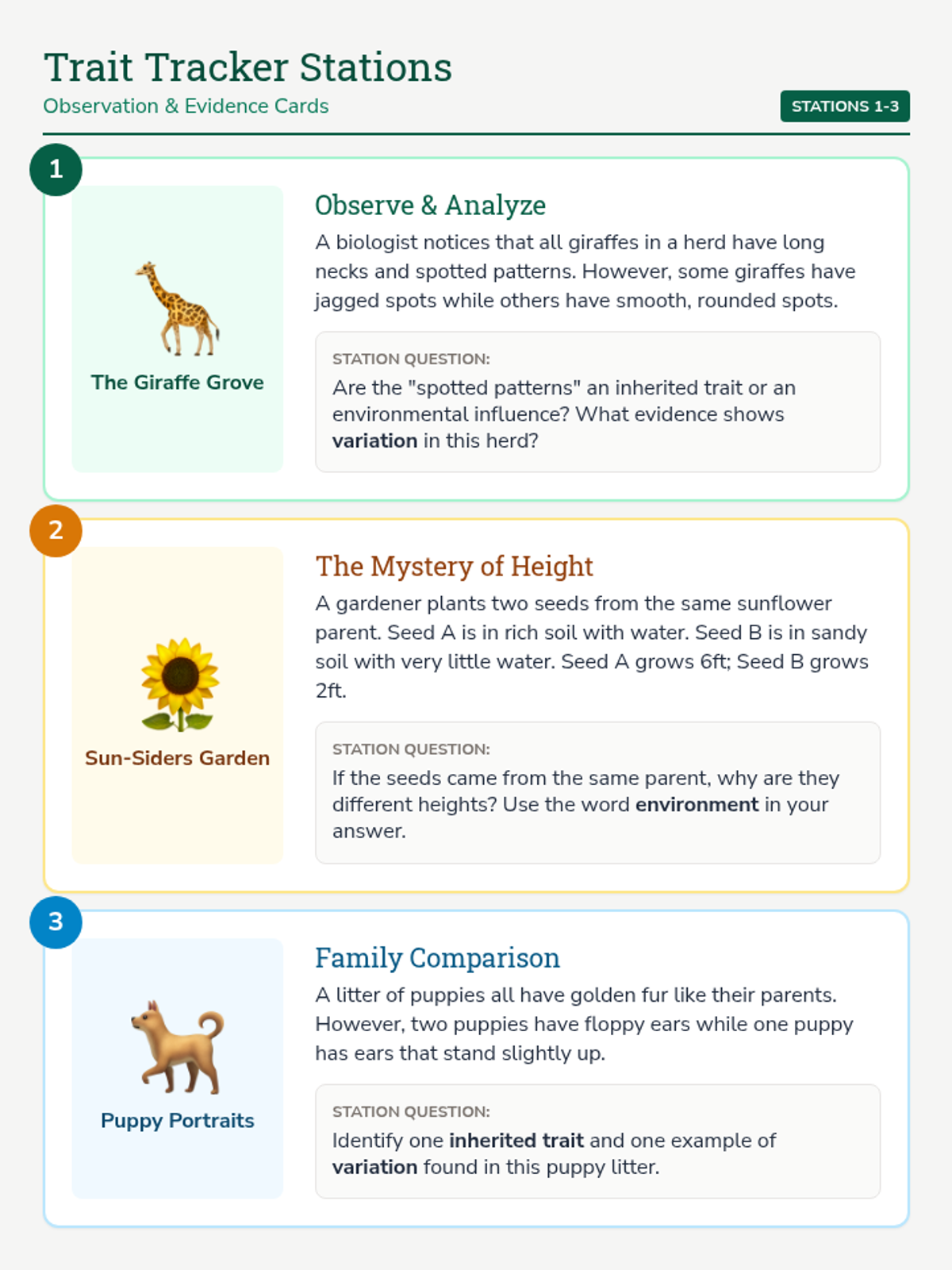
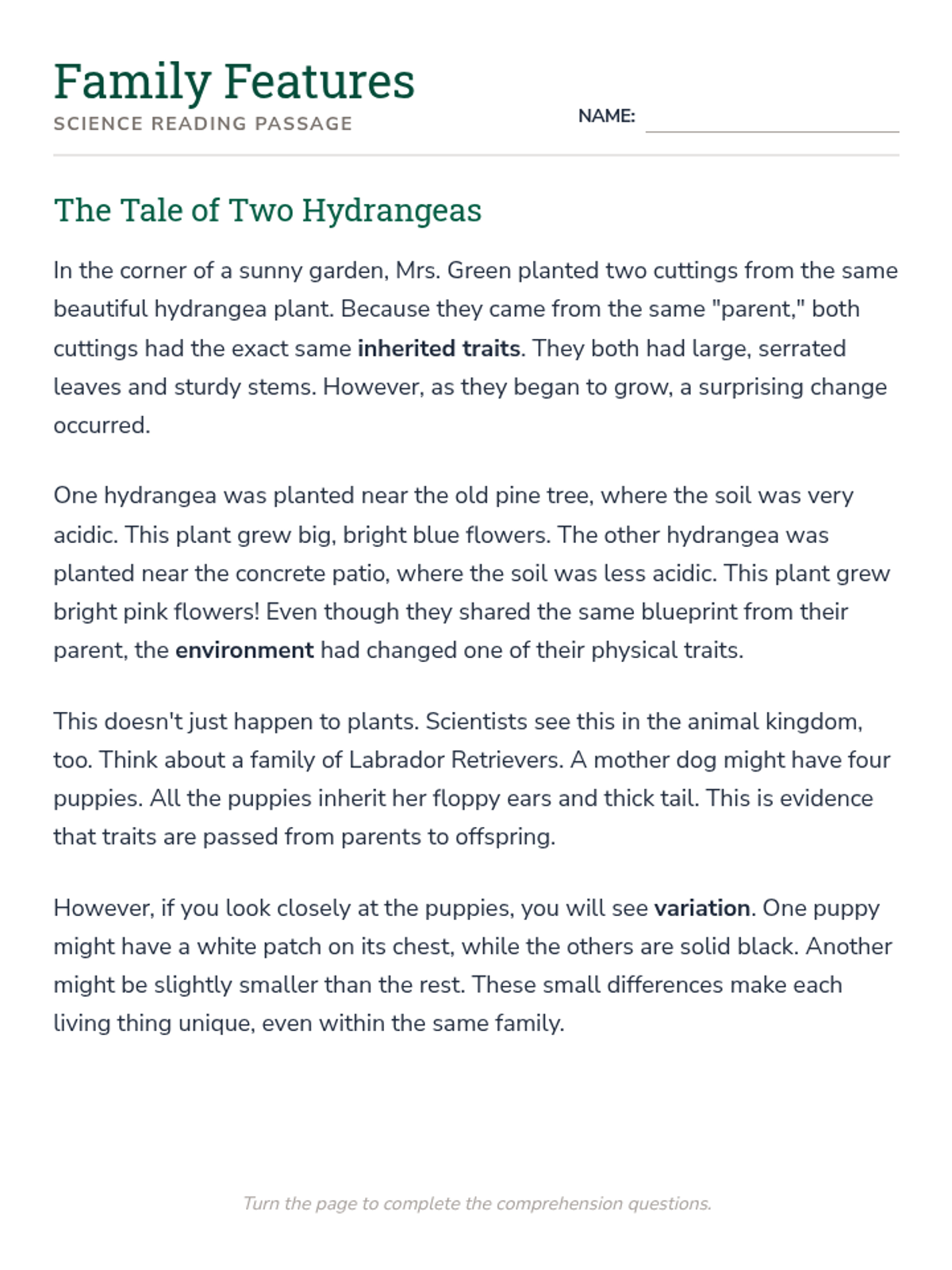
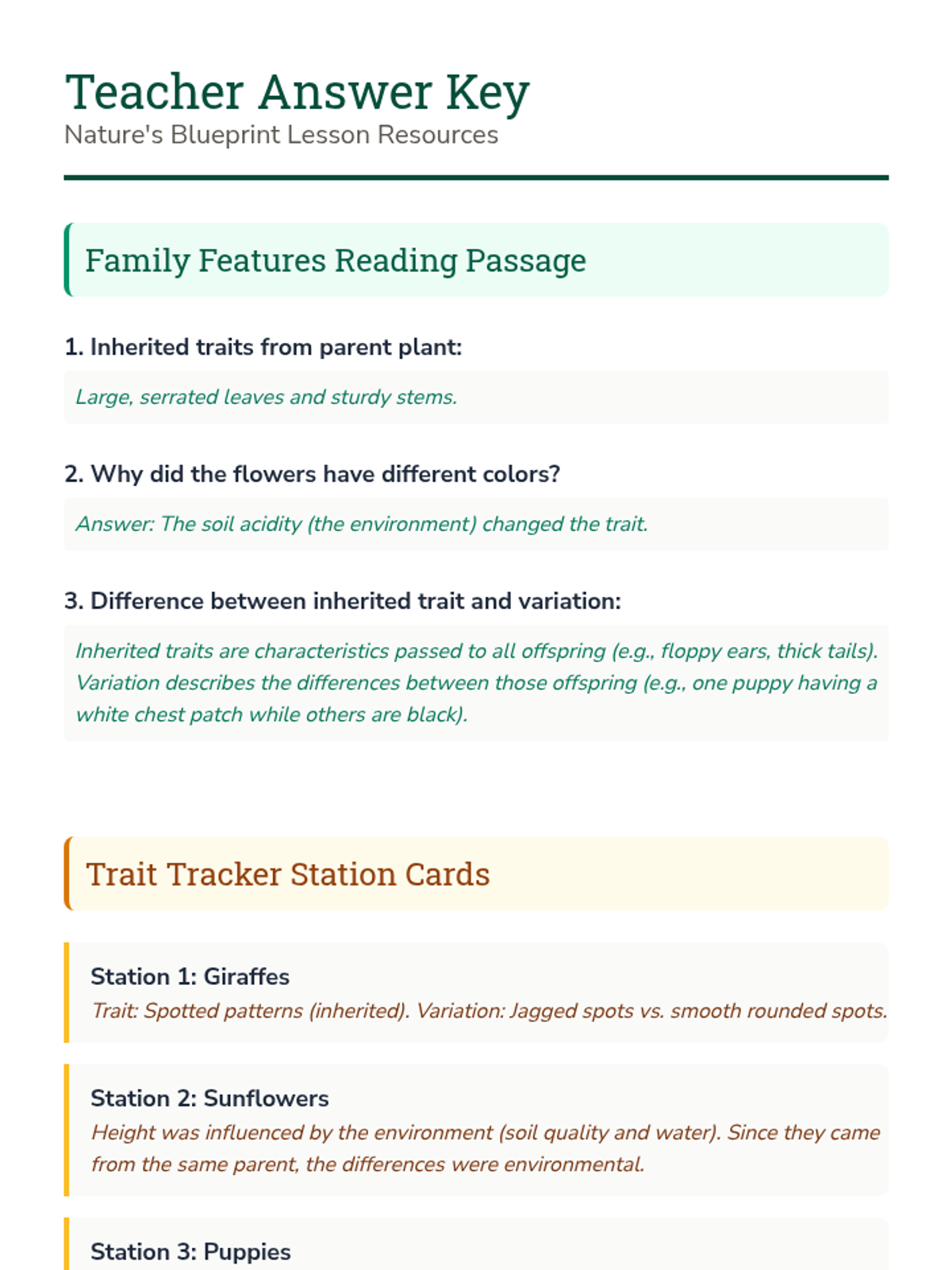
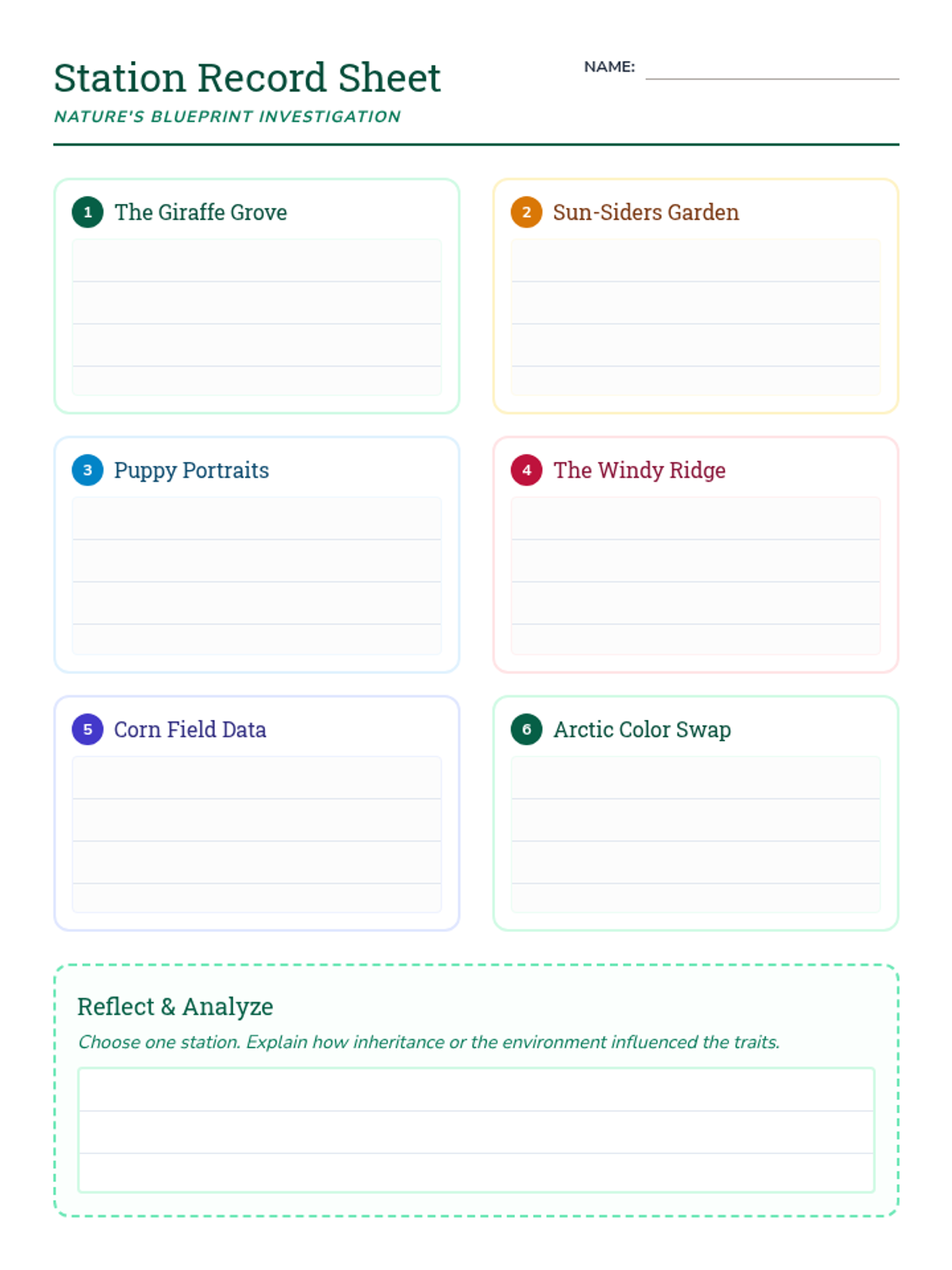
A comprehensive exploration of heredity, traits, and environmental influences across grade levels, from basic inheritance to complex adaptations and changes over time.
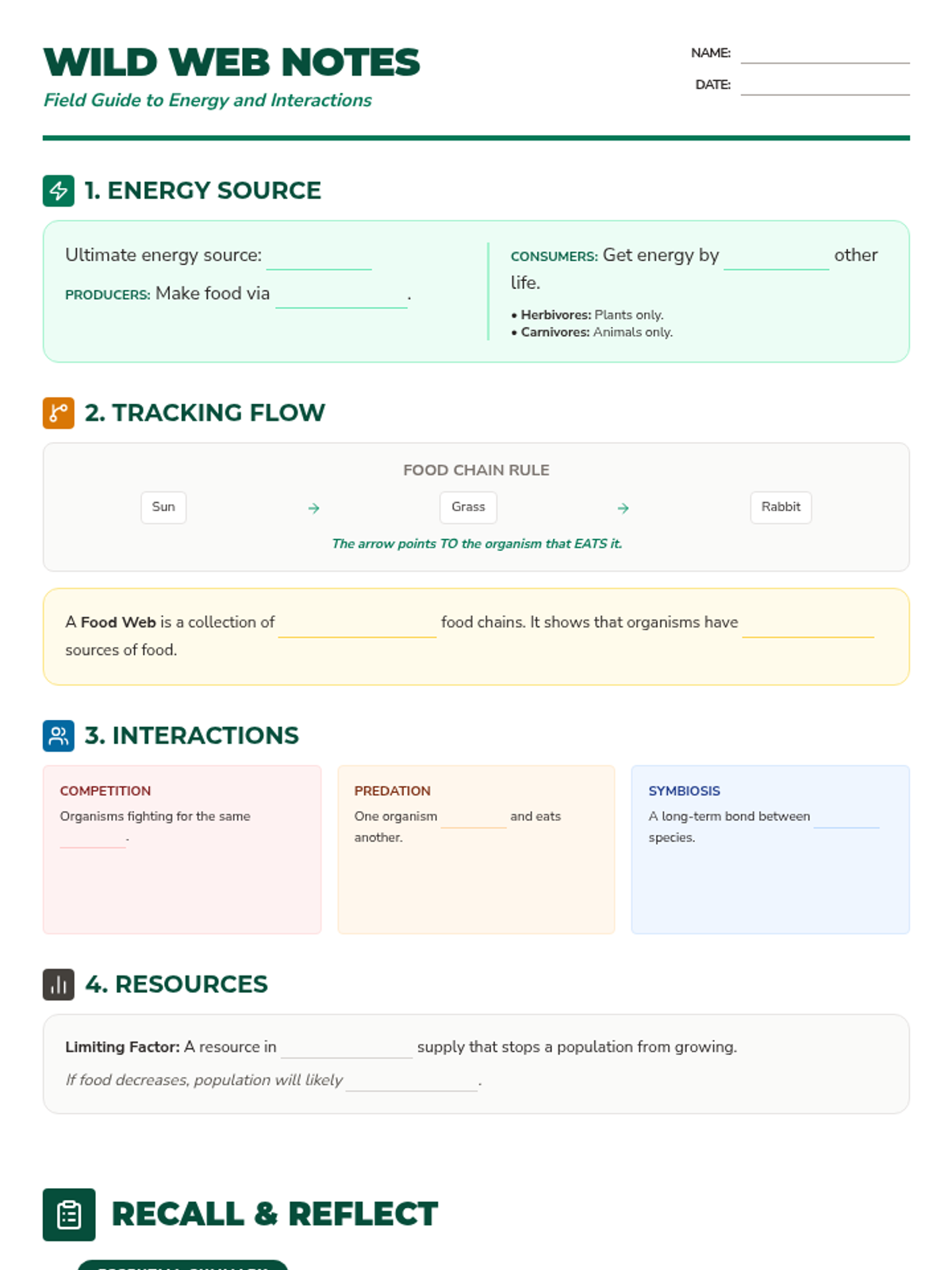
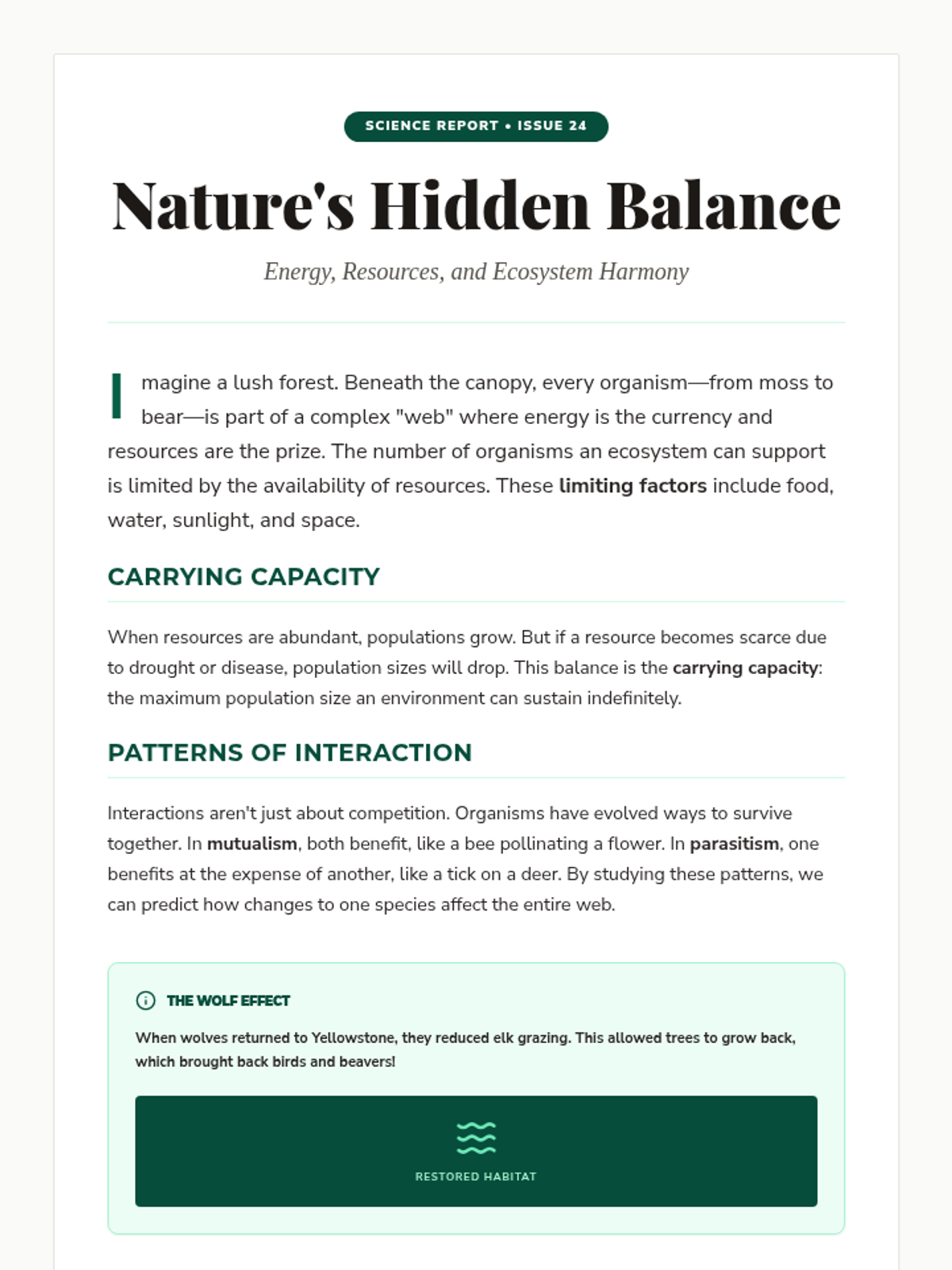
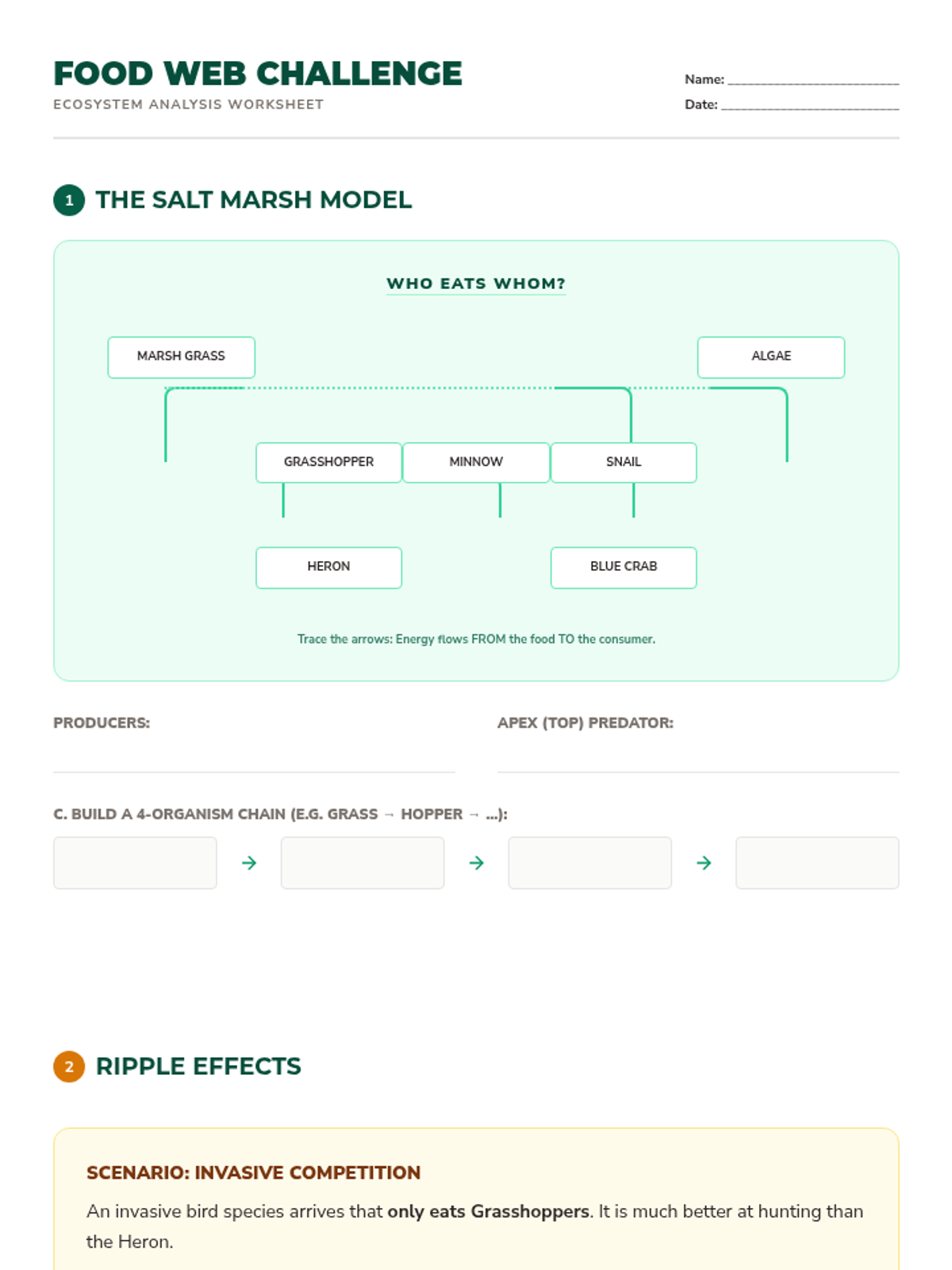
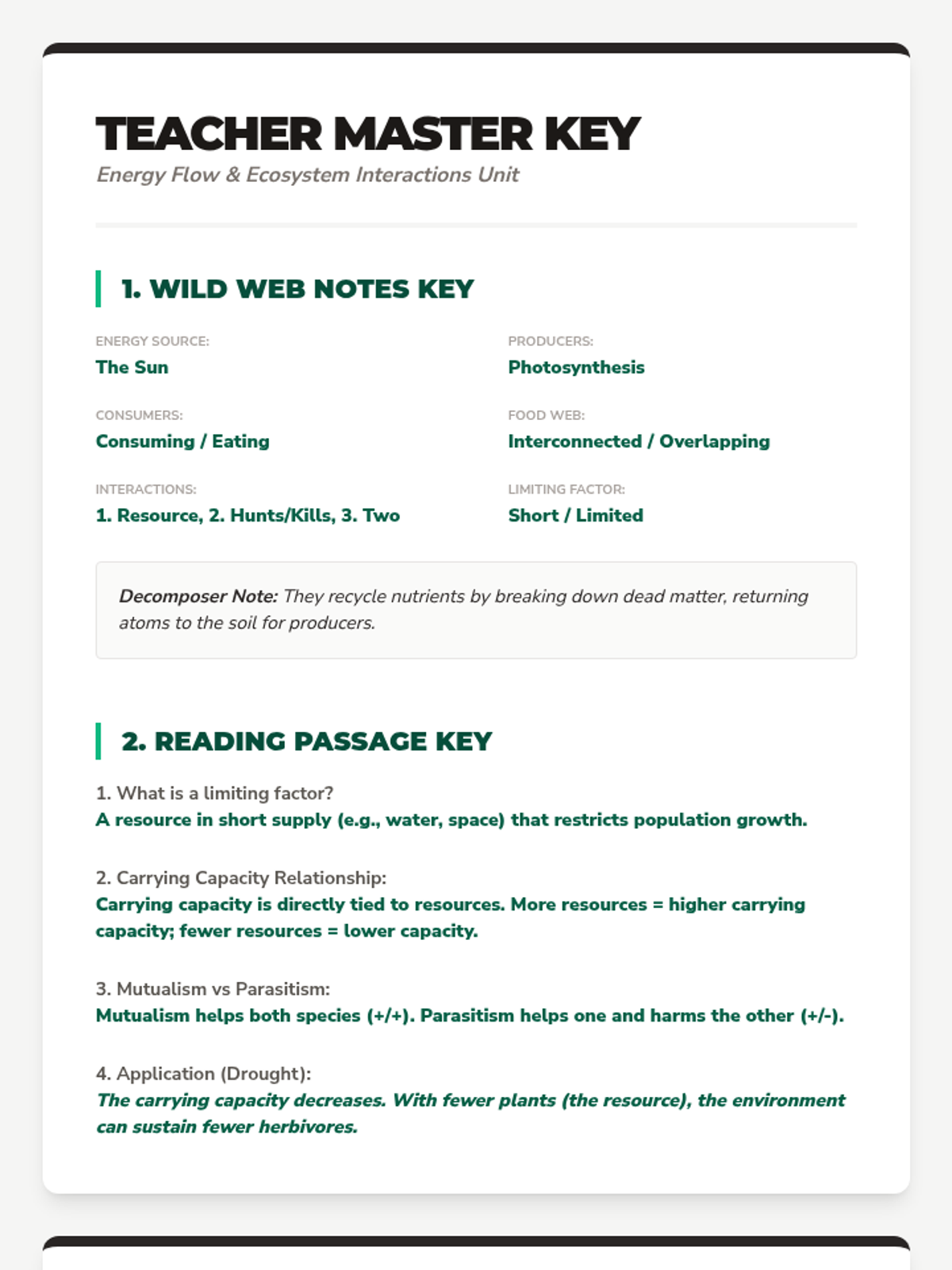
A comprehensive unit exploring how energy flows through ecosystems and how organisms interact within their environments. Students will model food webs, analyze resource availability, and predict population changes based on interactions.
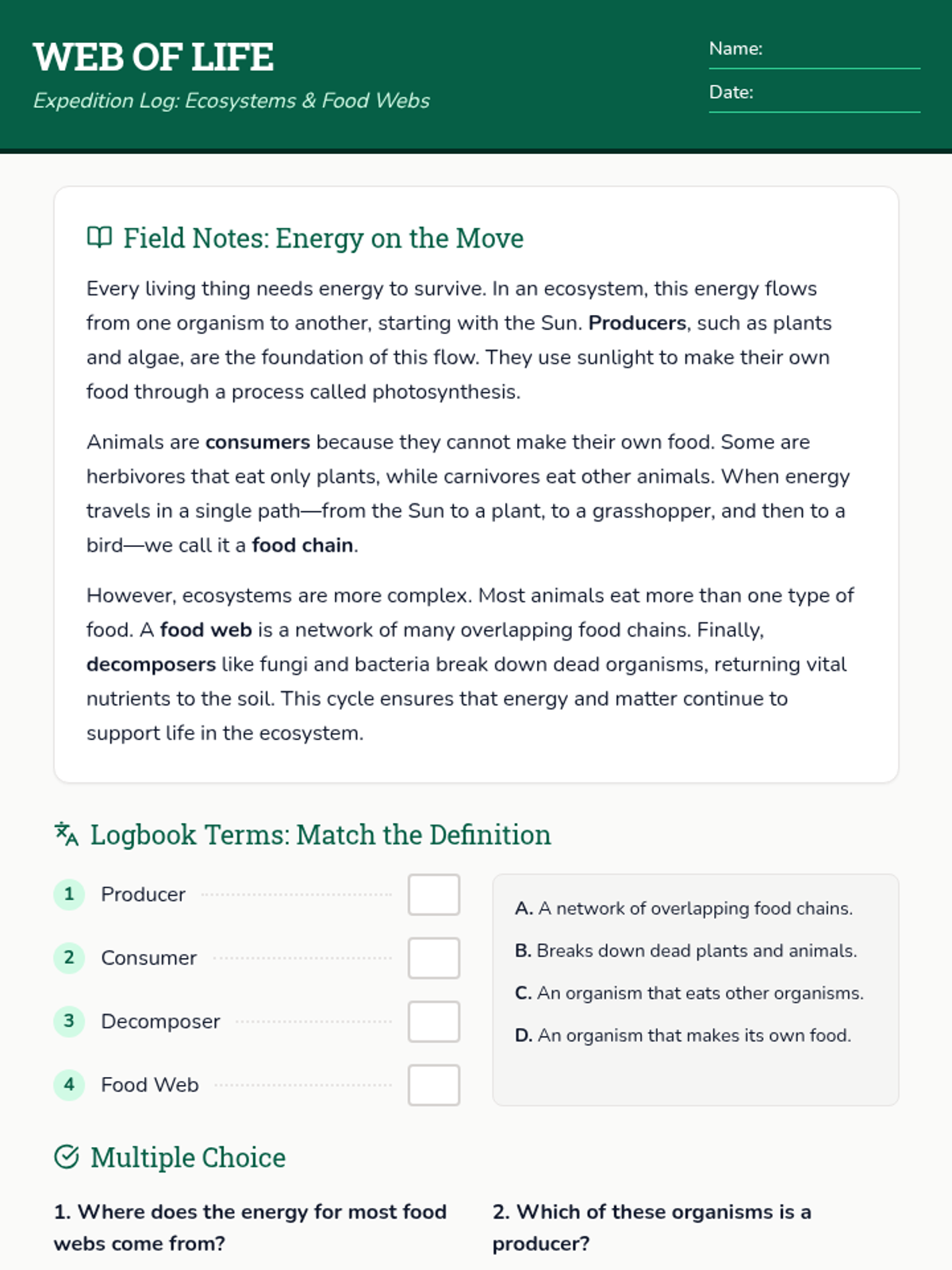
A comprehensive 5th-grade science review sequence covering Ecosystems, Properties of Matter, and the Earth-Sun-Moon system through reading comprehension and varied activities.
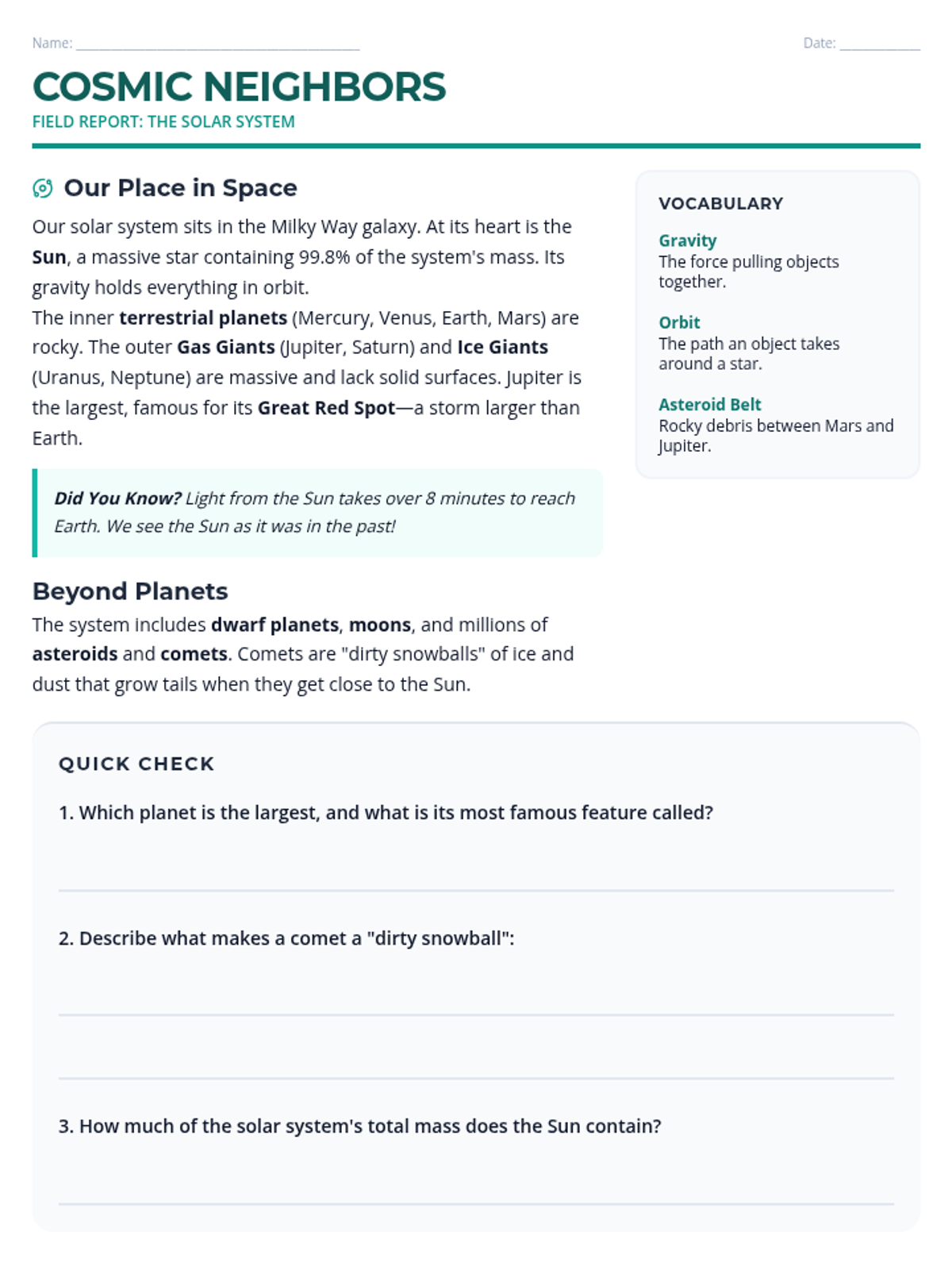
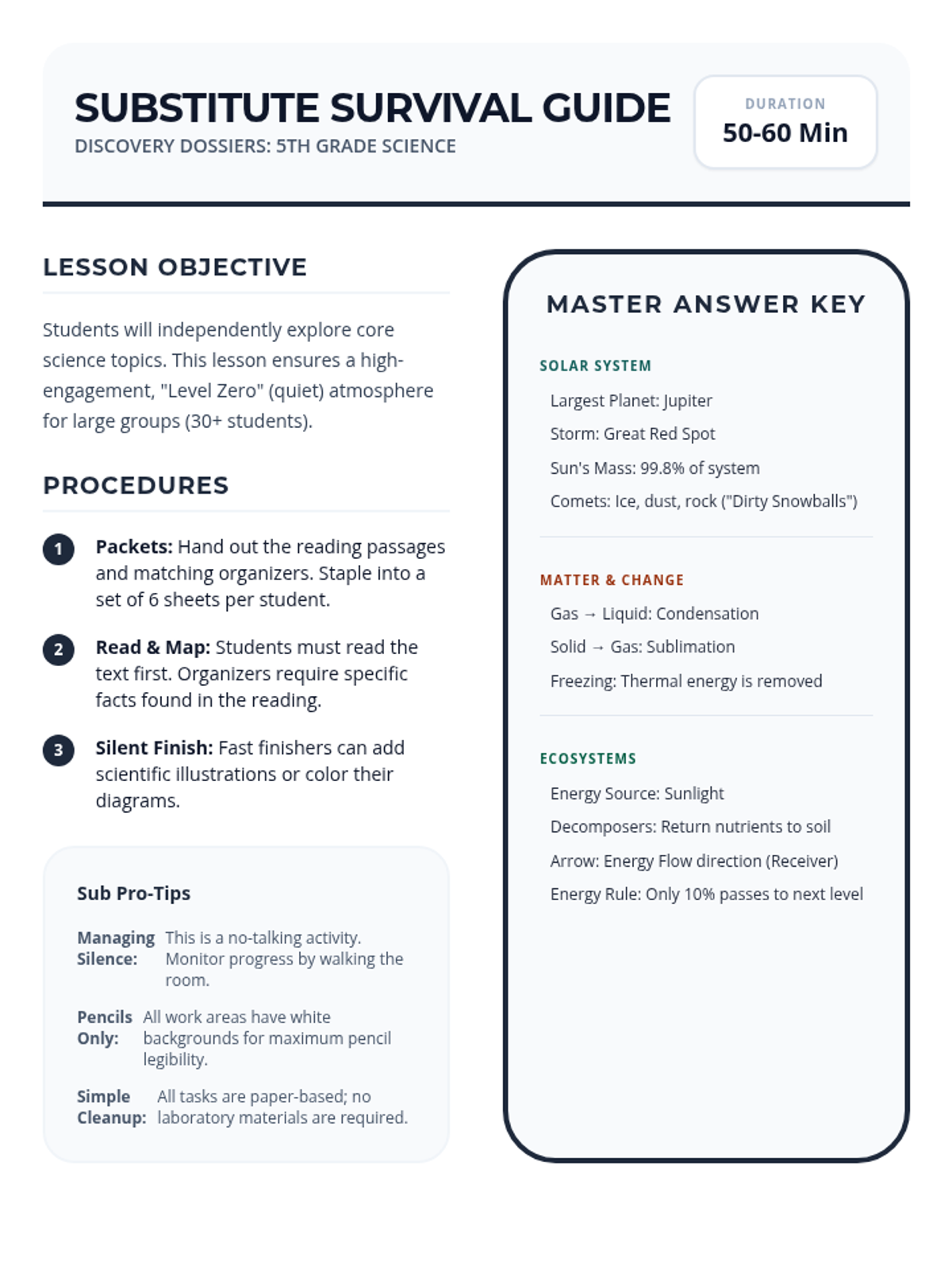
A collection of independent science exploration modules covering the Solar System, Matter, and Ecosystems, designed for quiet student work during substitute lessons.
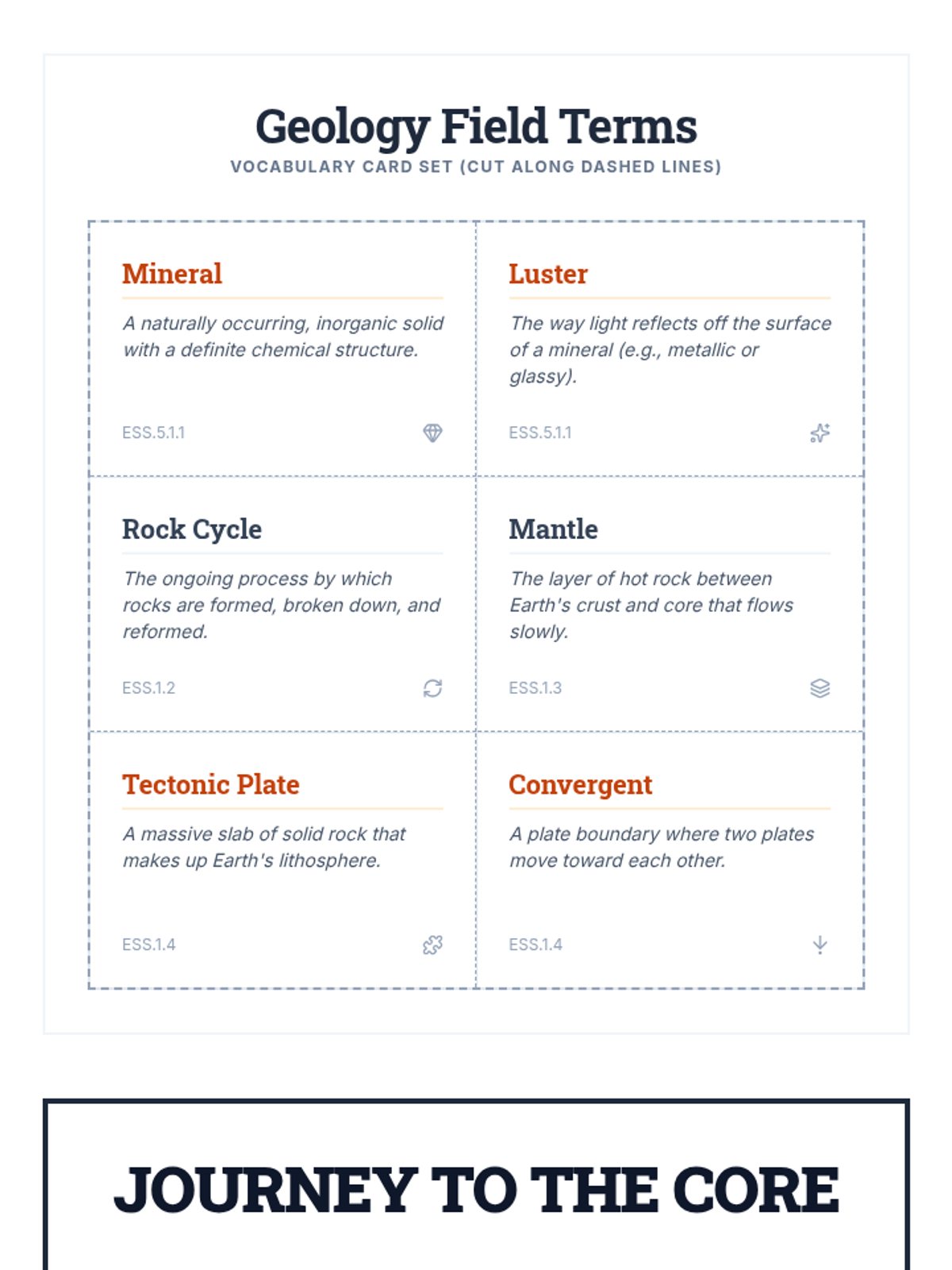
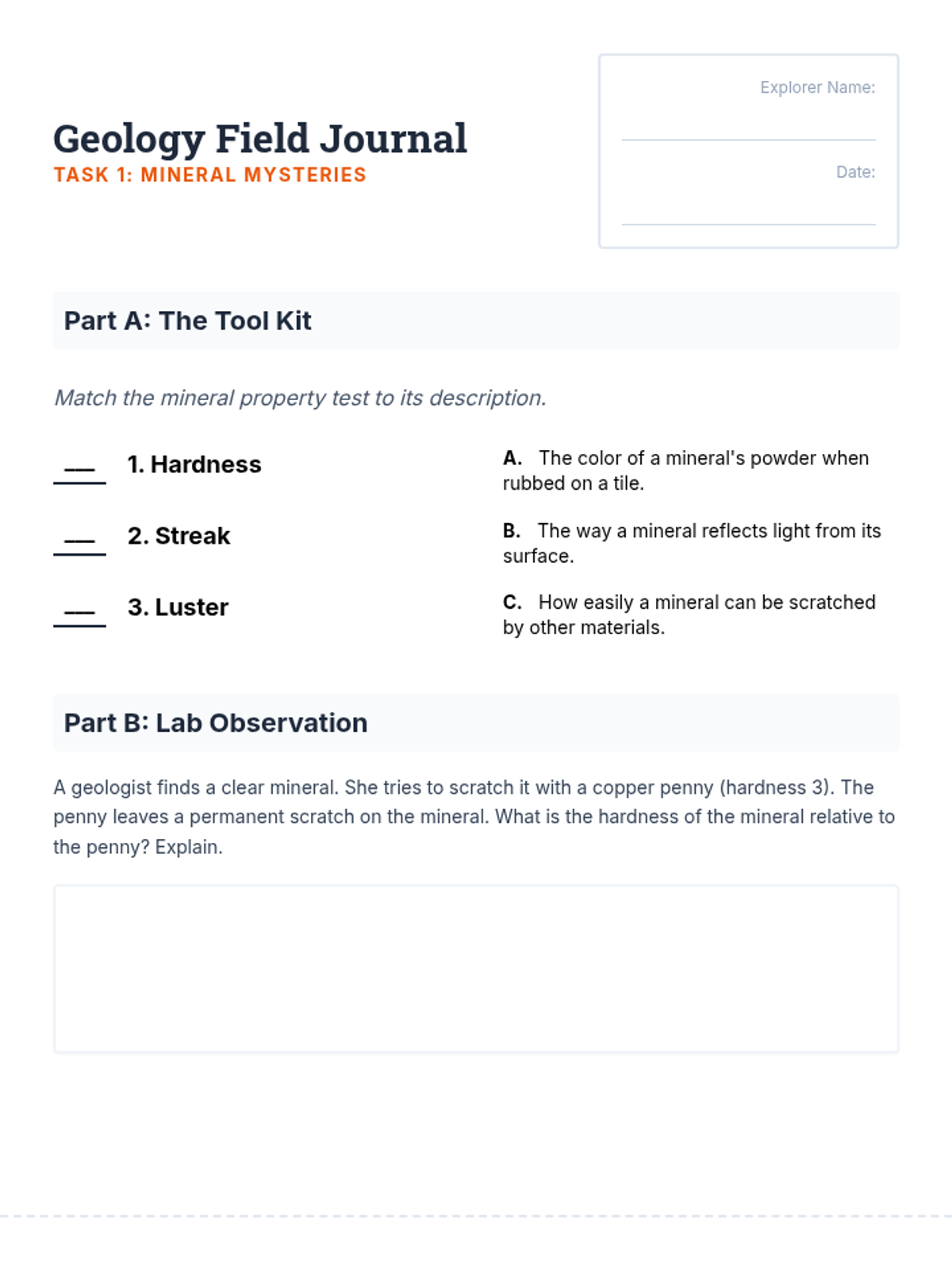
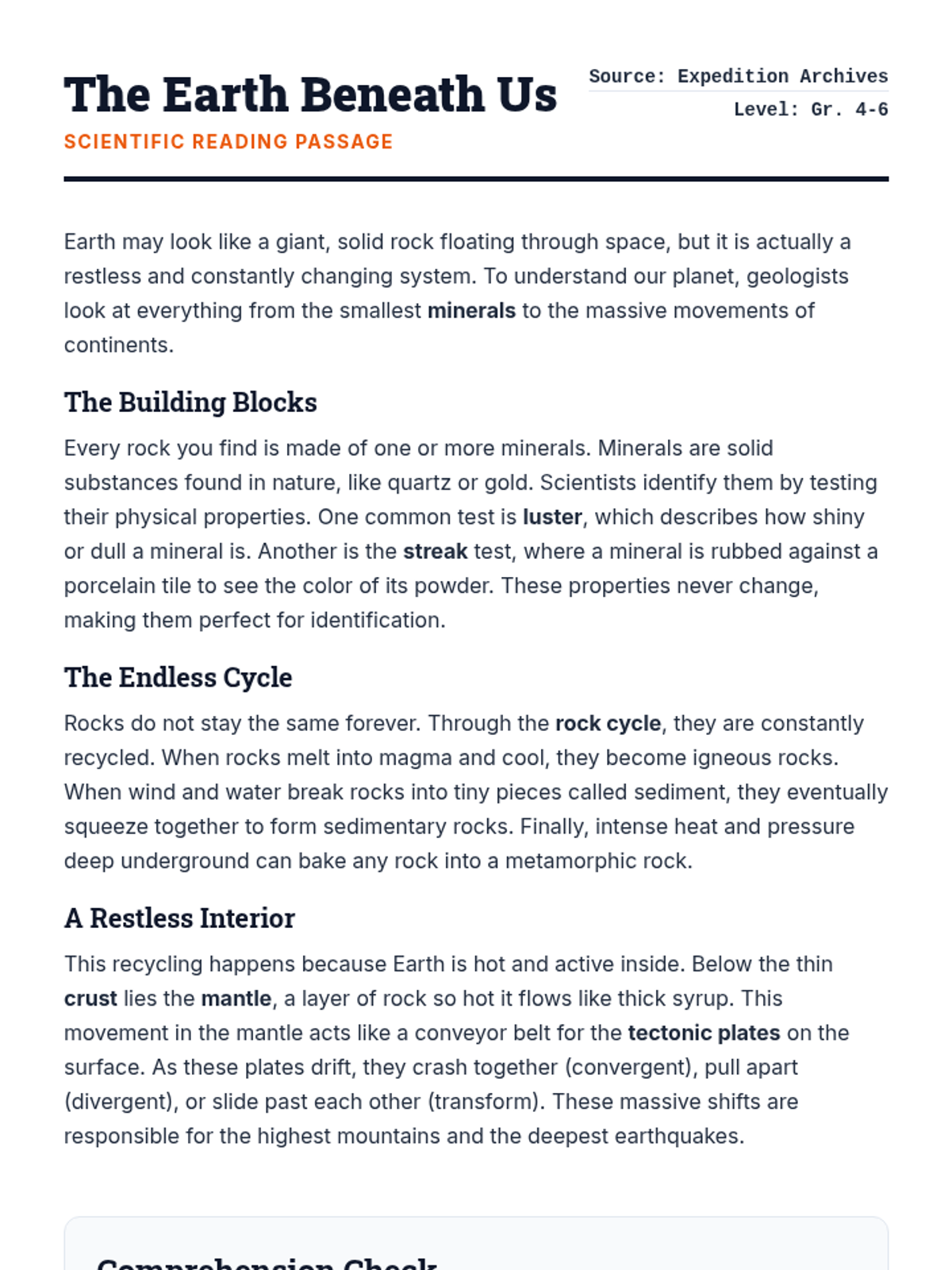
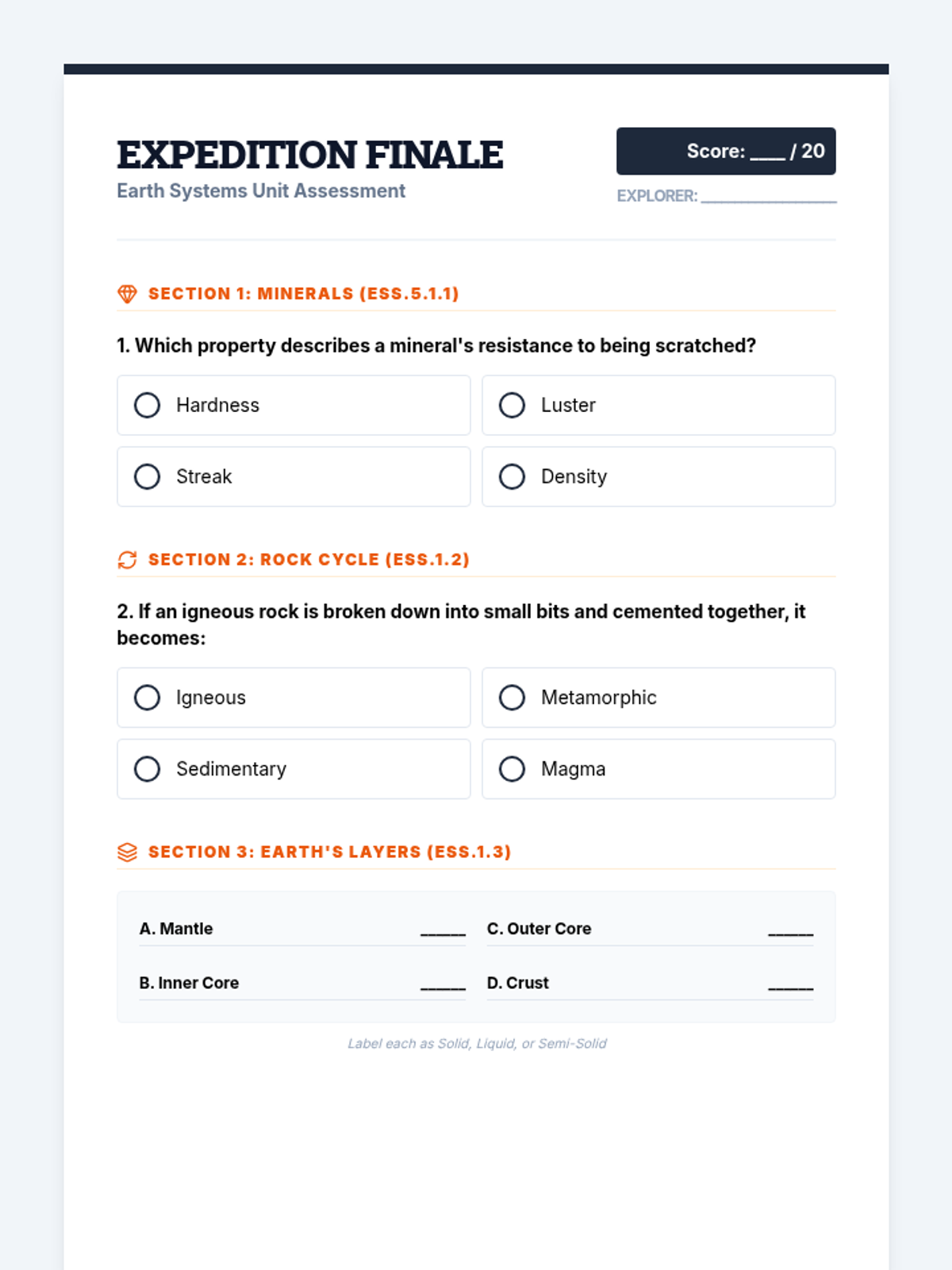
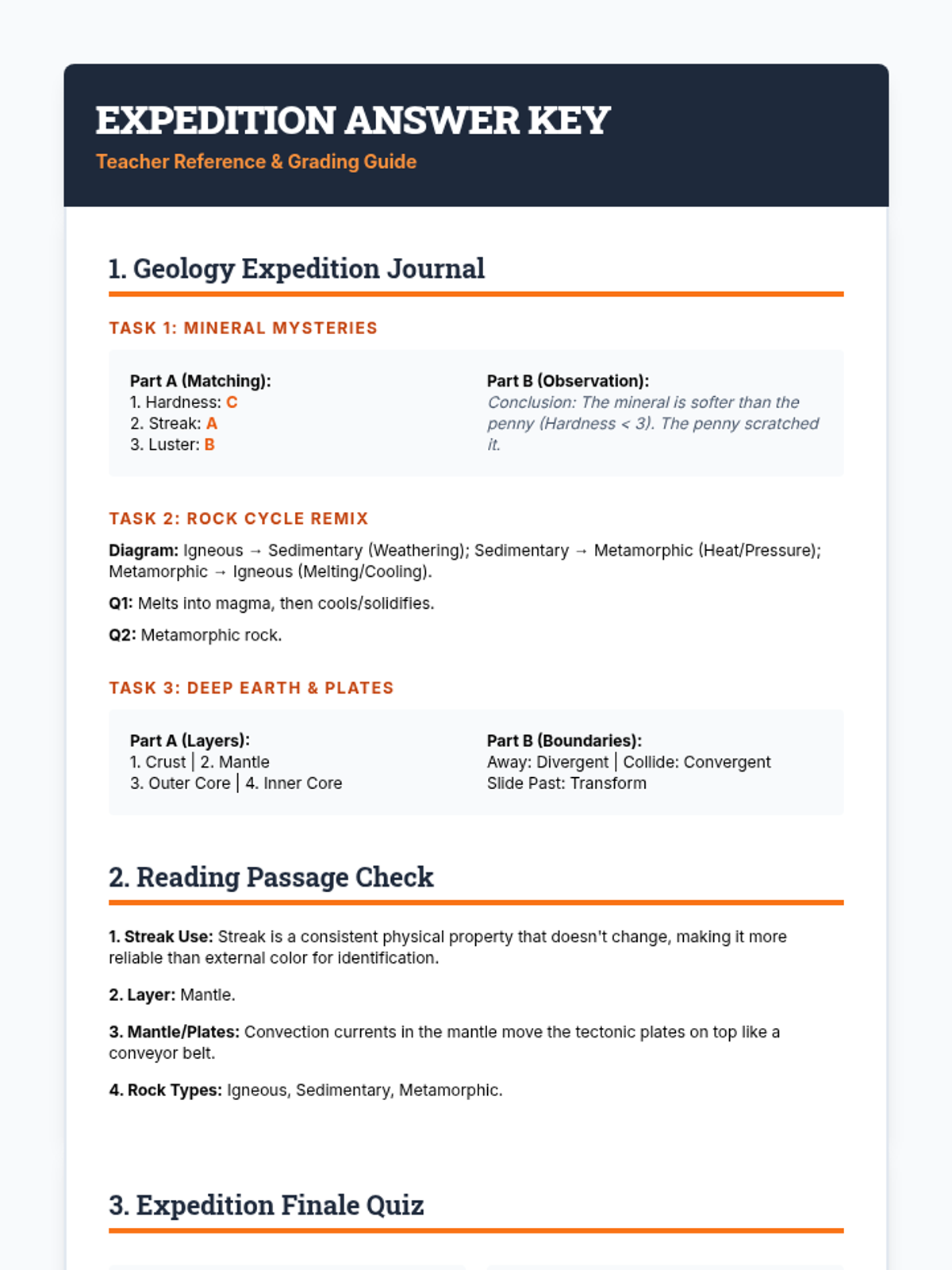
A comprehensive unit covering Earth's composition, processes, and properties. Students explore mineral identification, the rock cycle, Earth's internal structure, and plate tectonics through a 'Geology Expedition' theme.
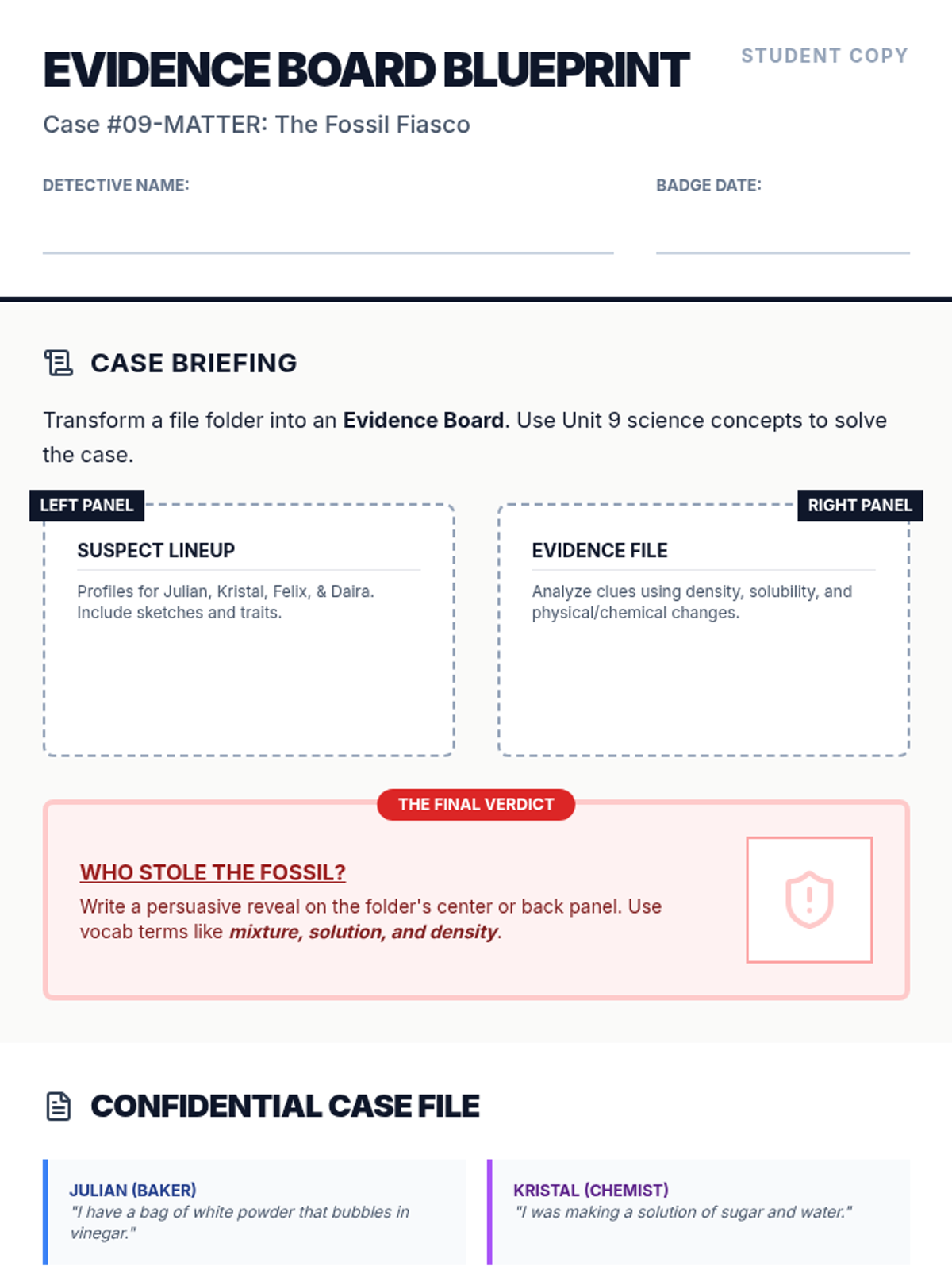
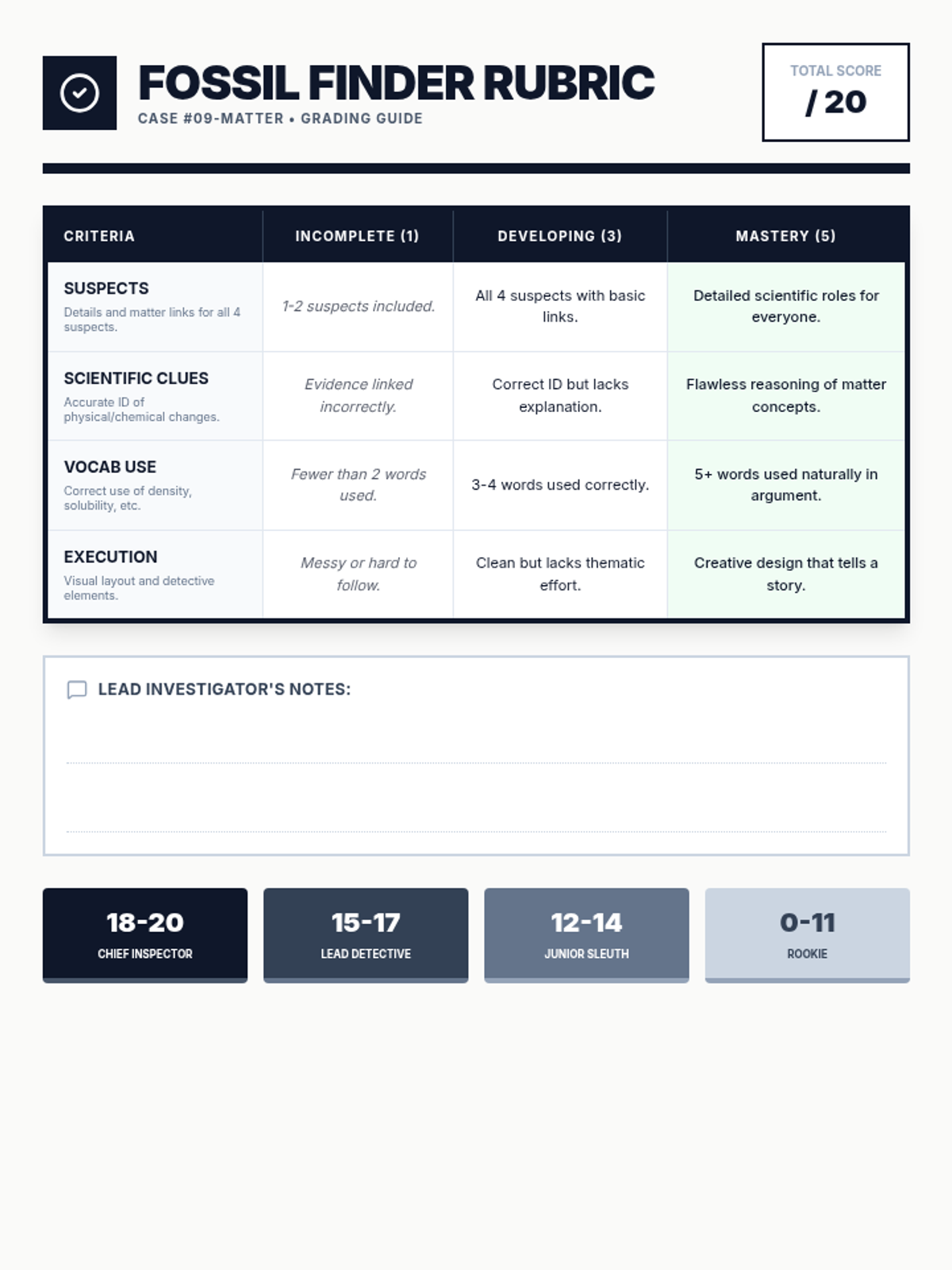
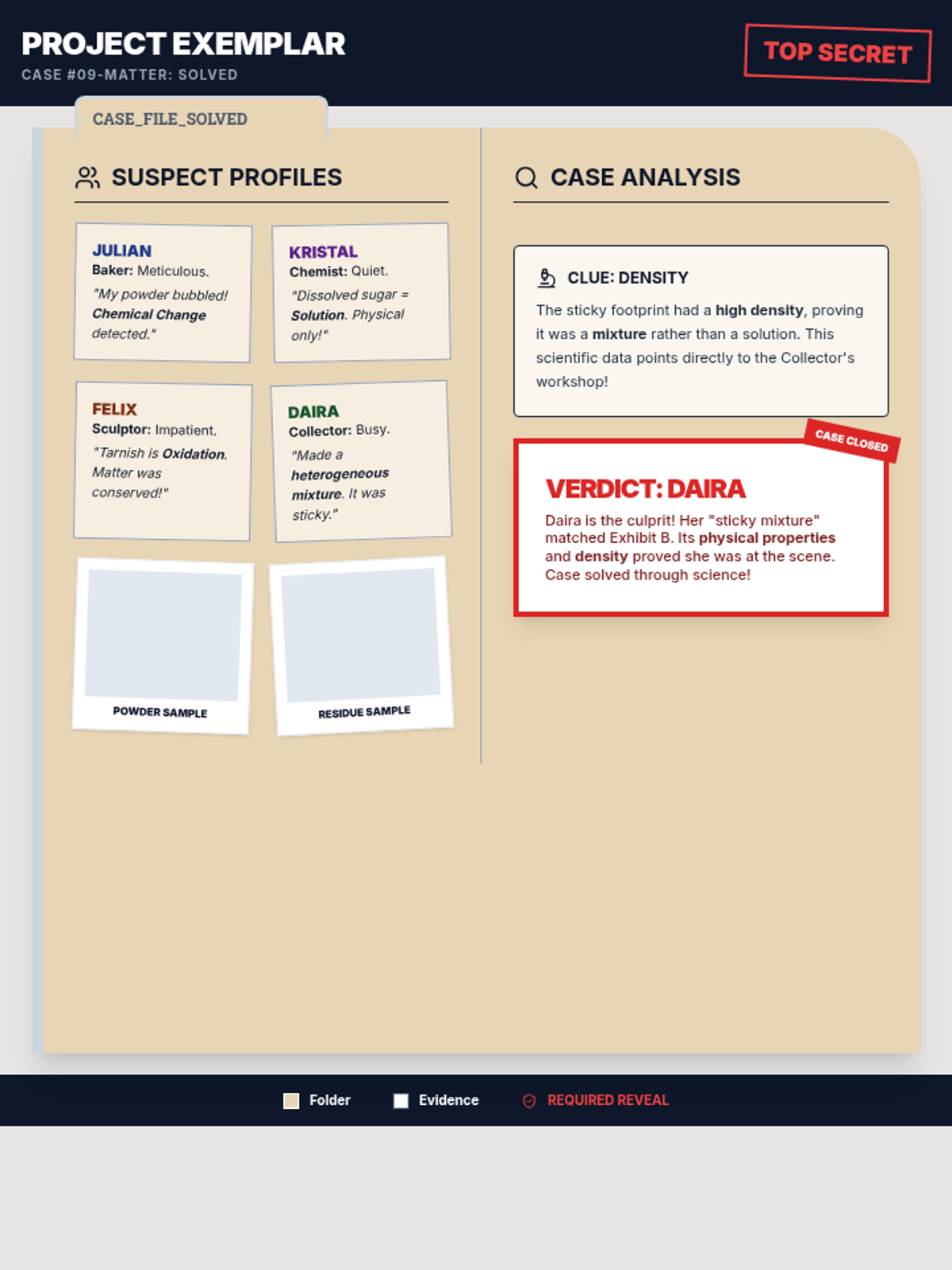
A series of activities focused on applying chemical matter concepts to solve mysteries, culminating in a creative evidence board project.
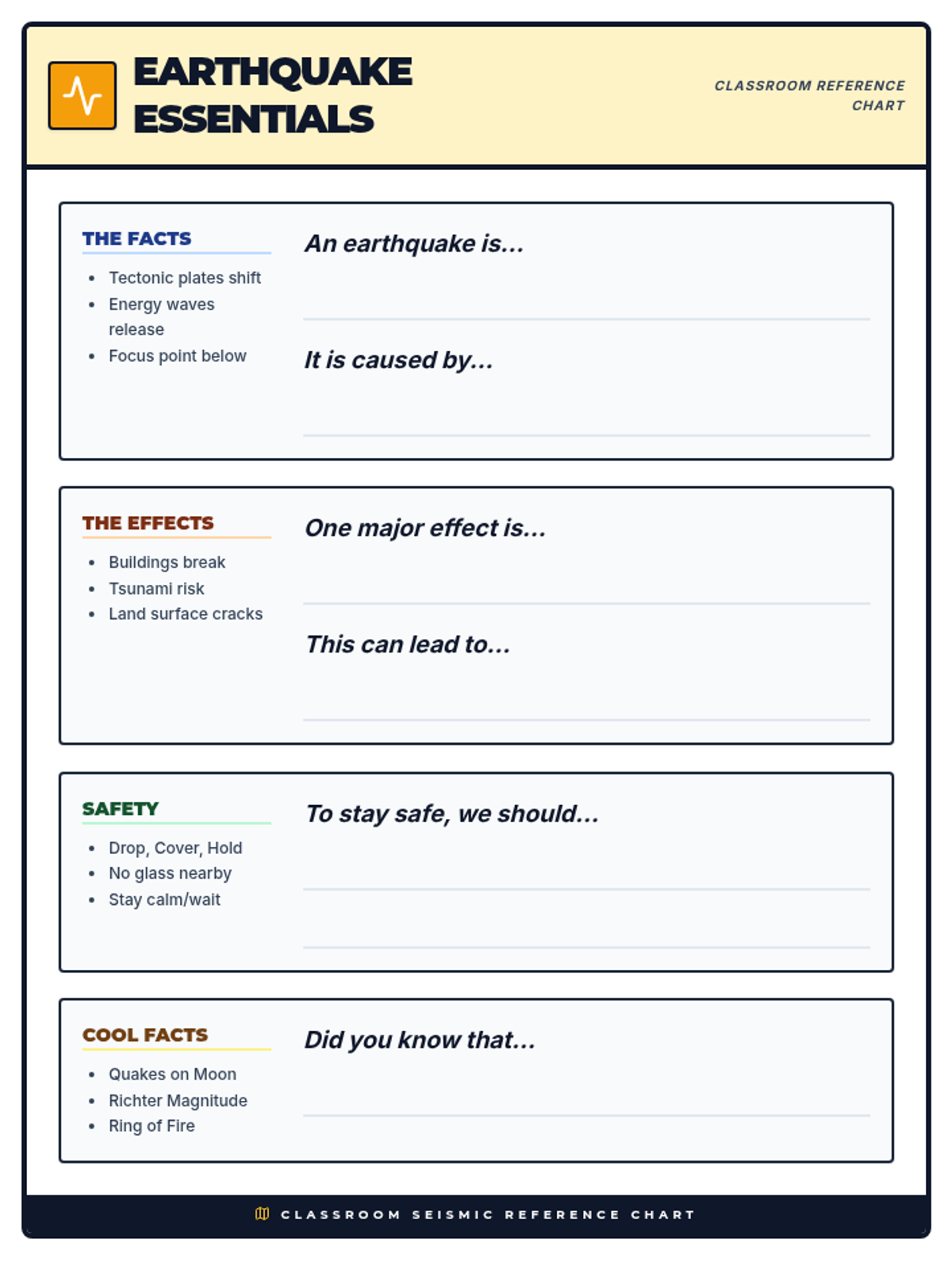
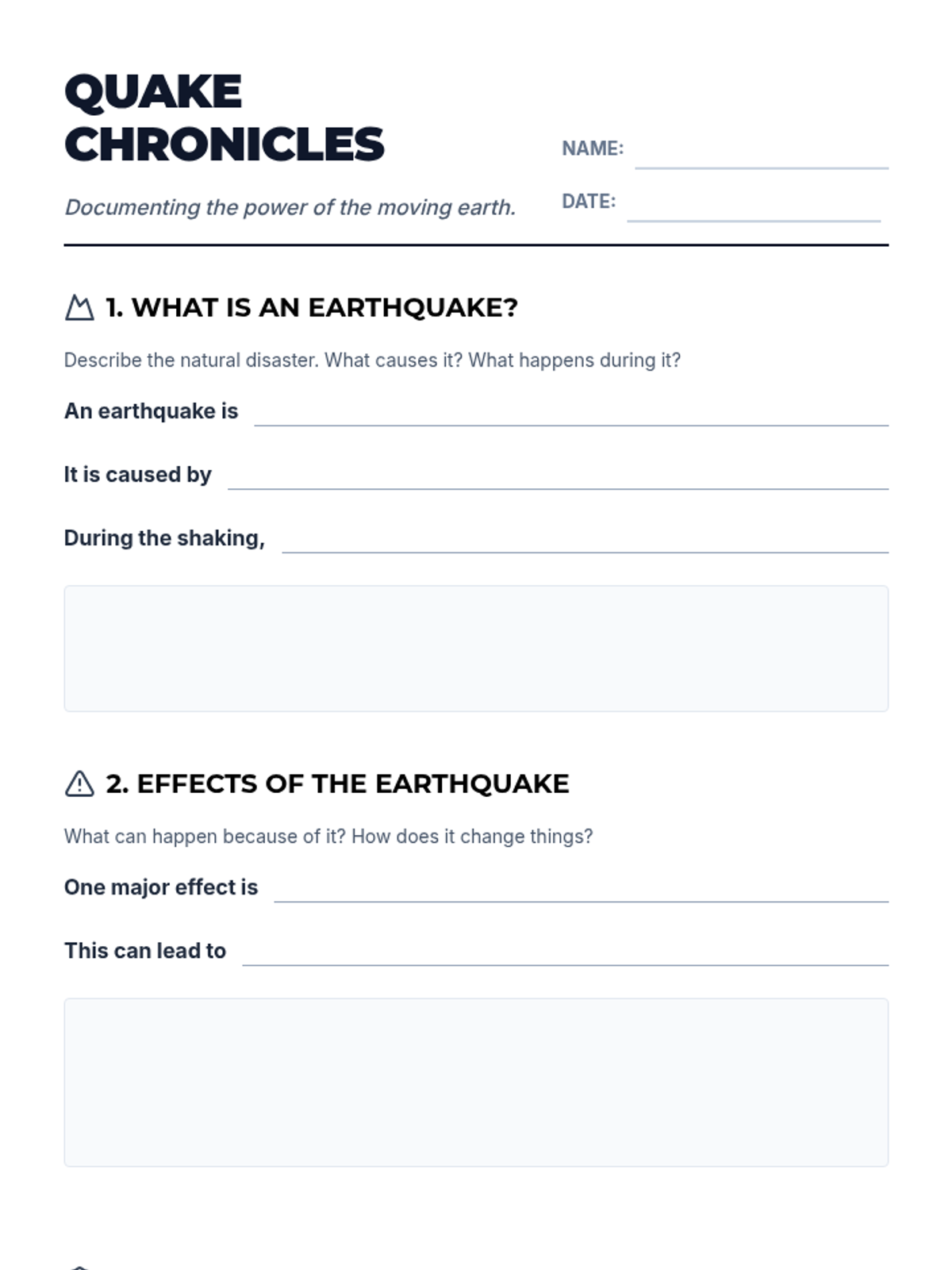
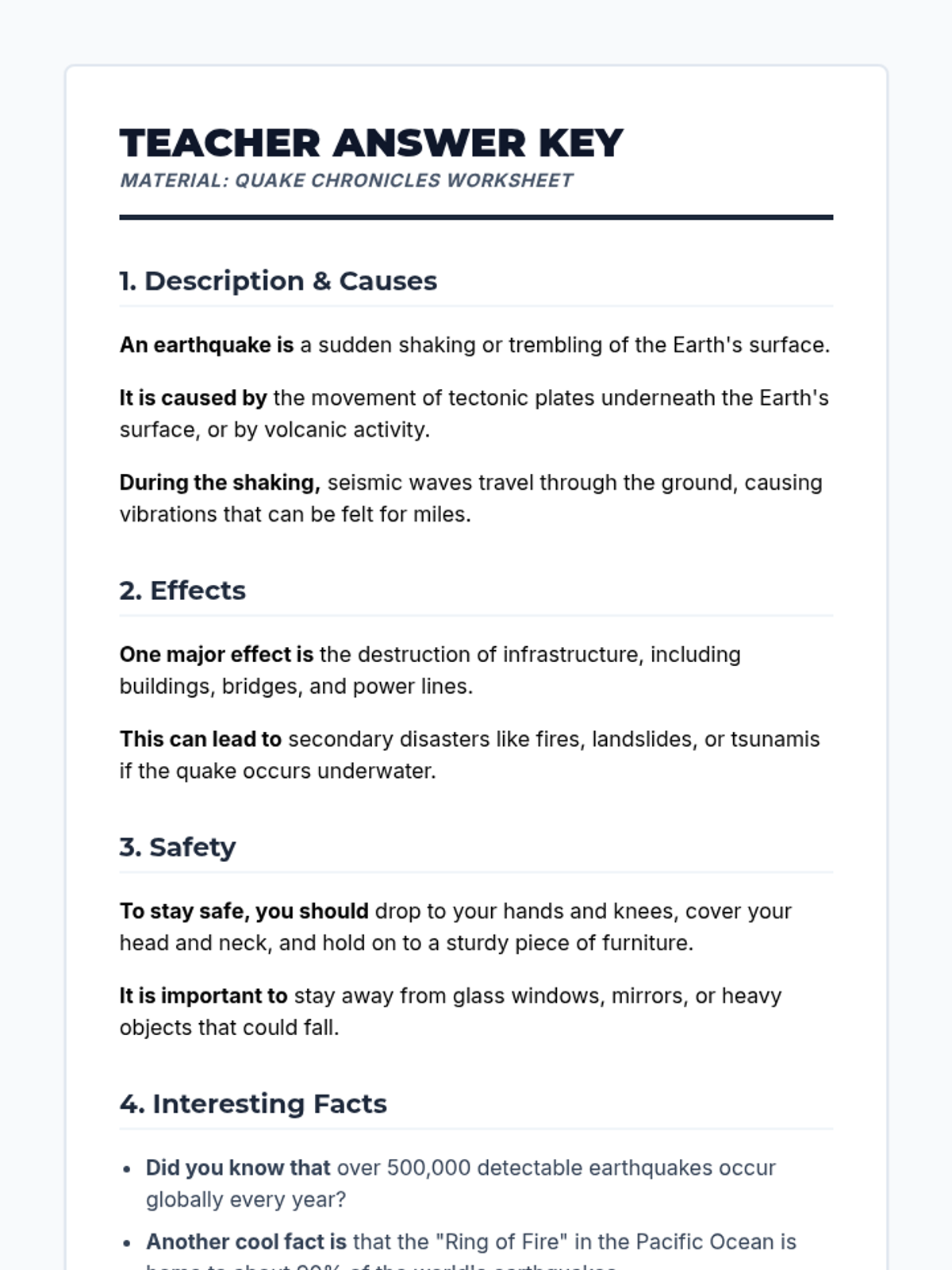
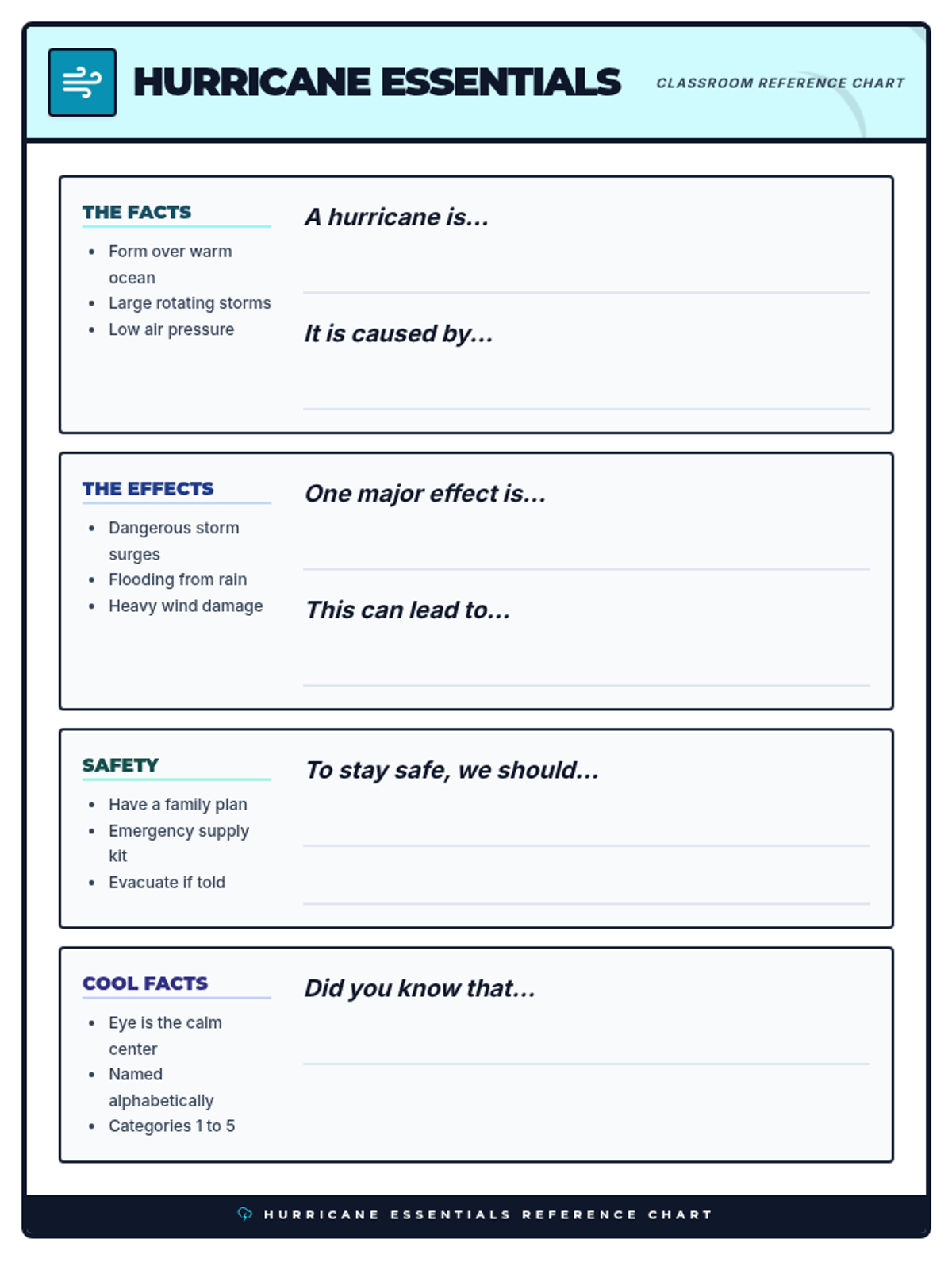
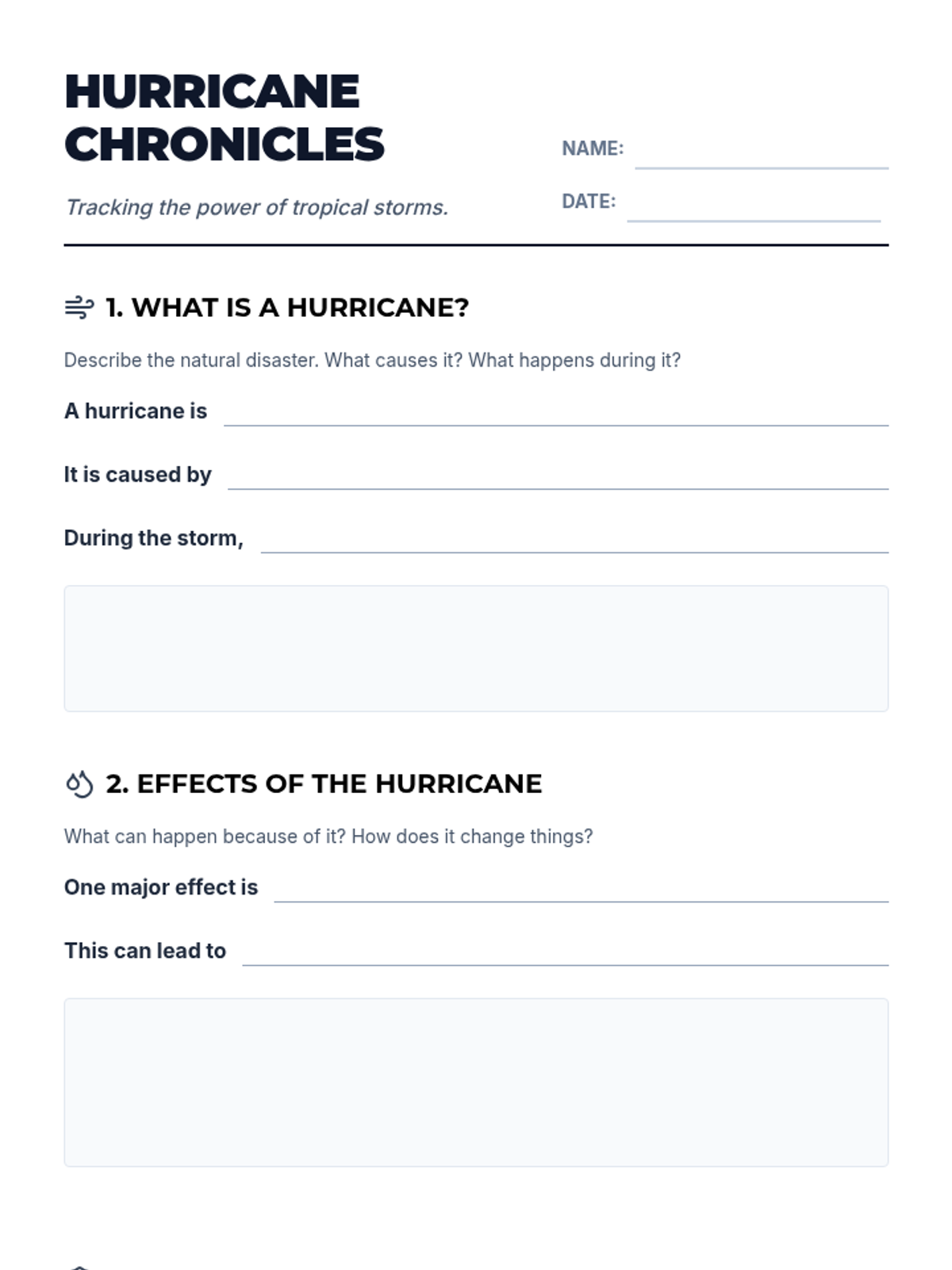
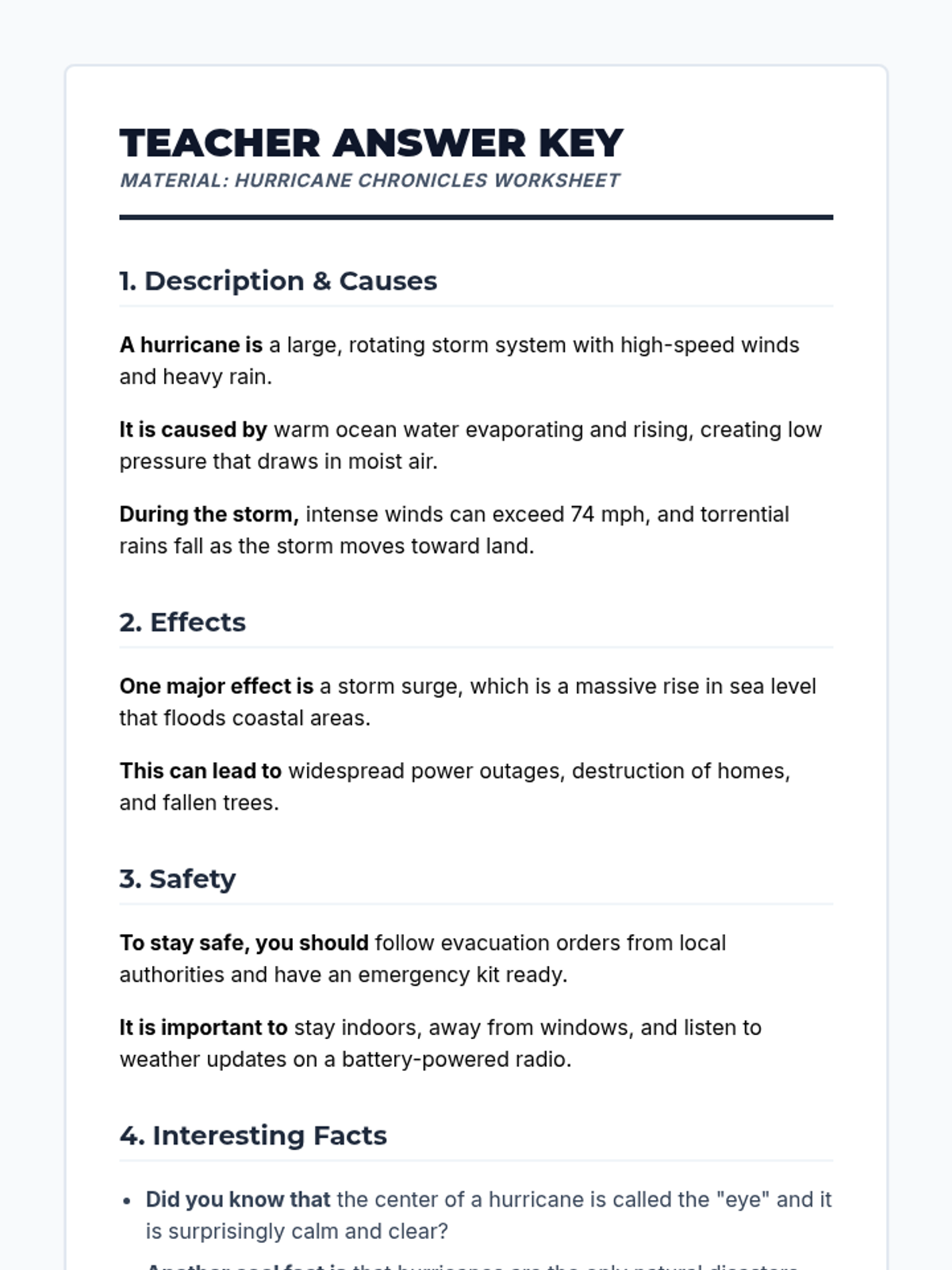
A series of lessons focused on understanding different natural disasters, their causes, impacts, and safety protocols through structured writing and investigation.
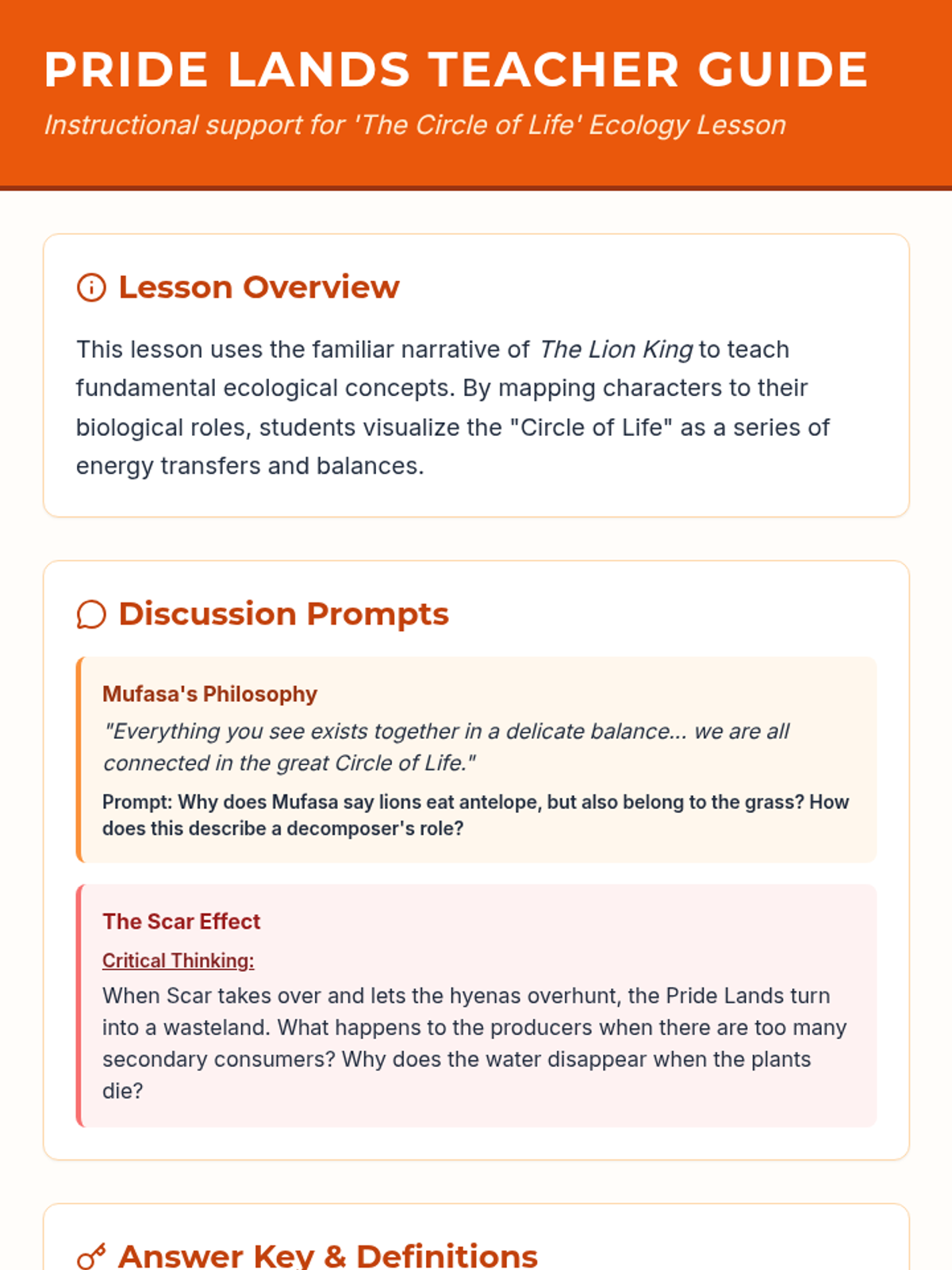
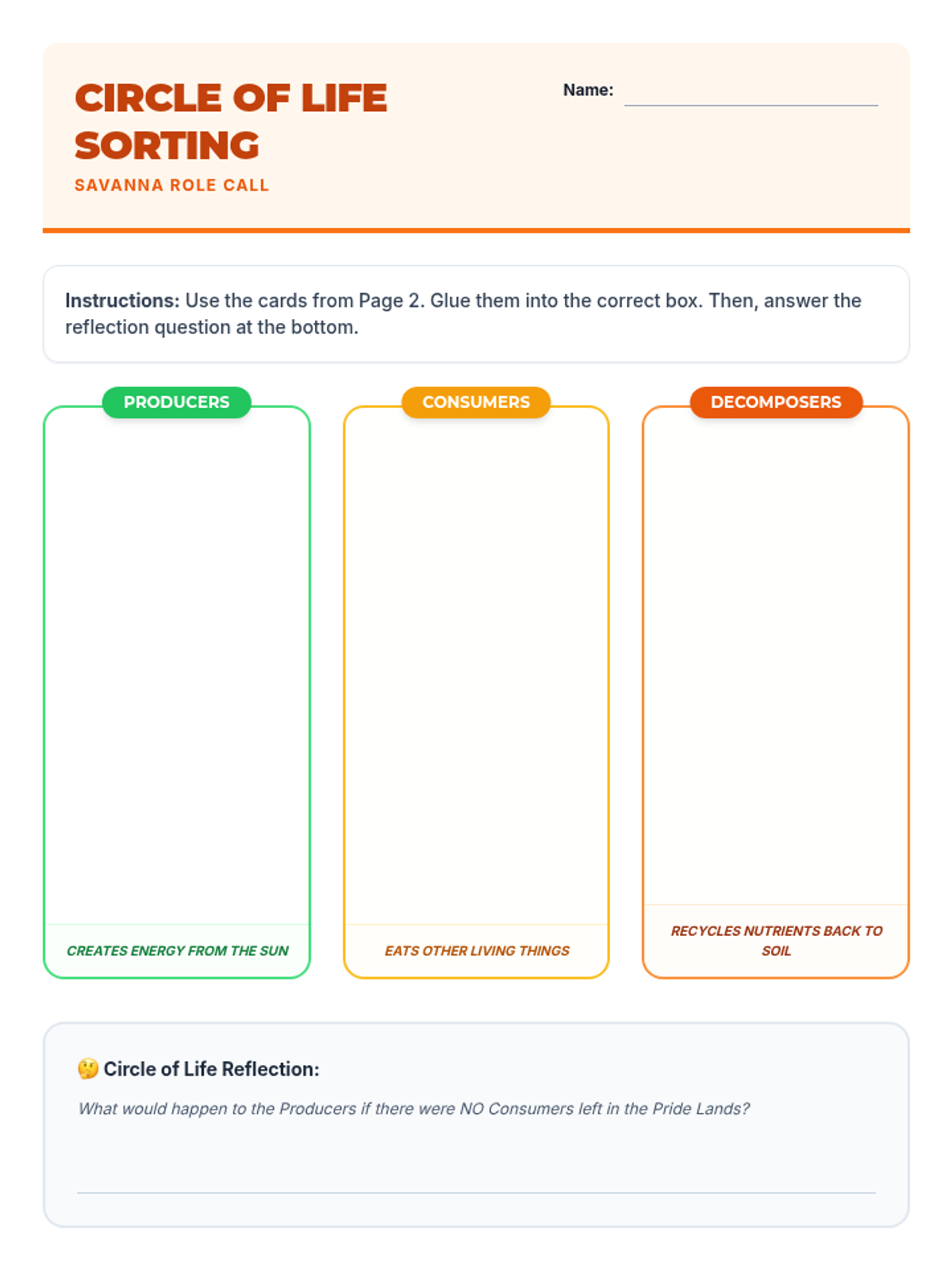
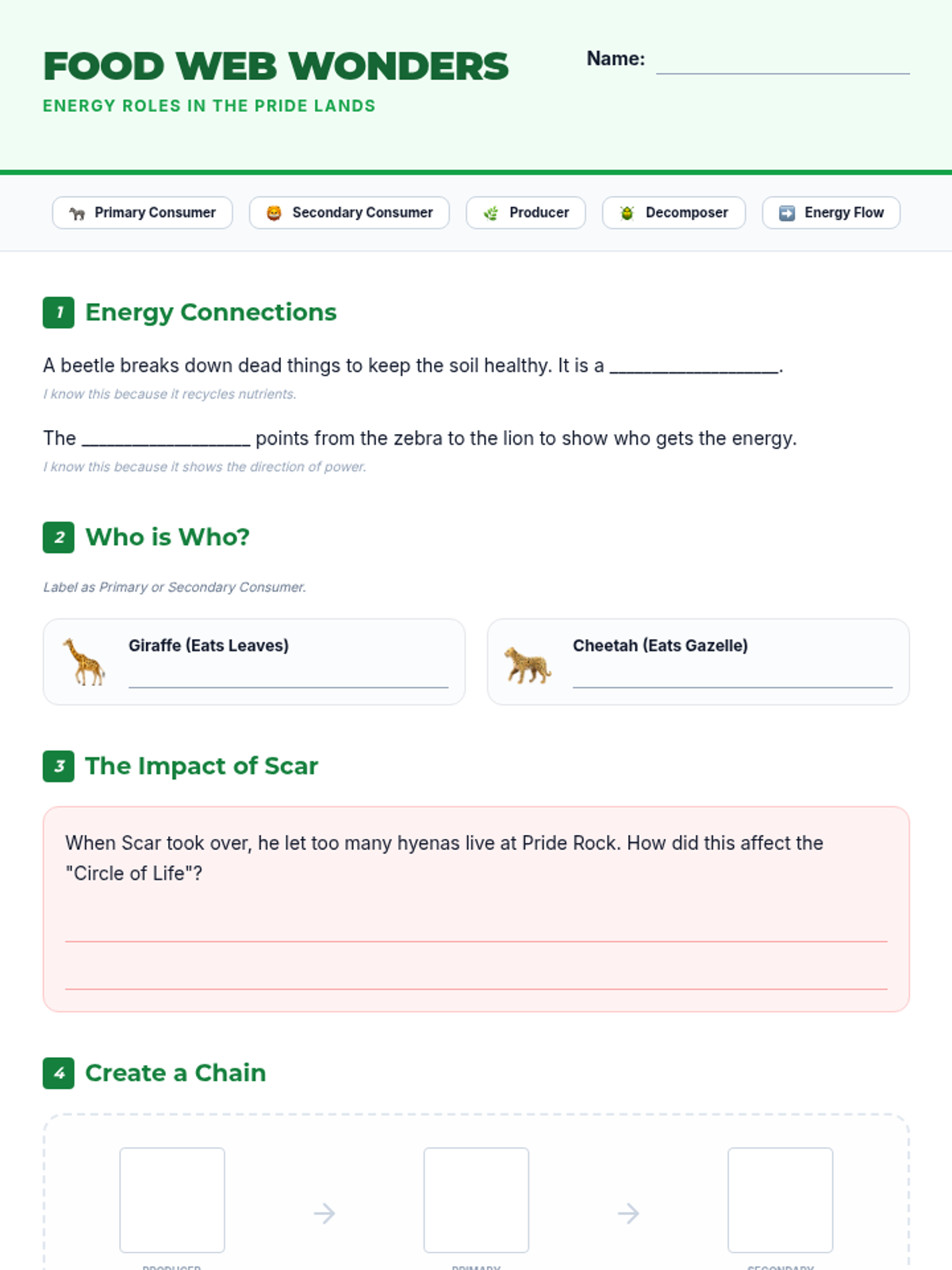
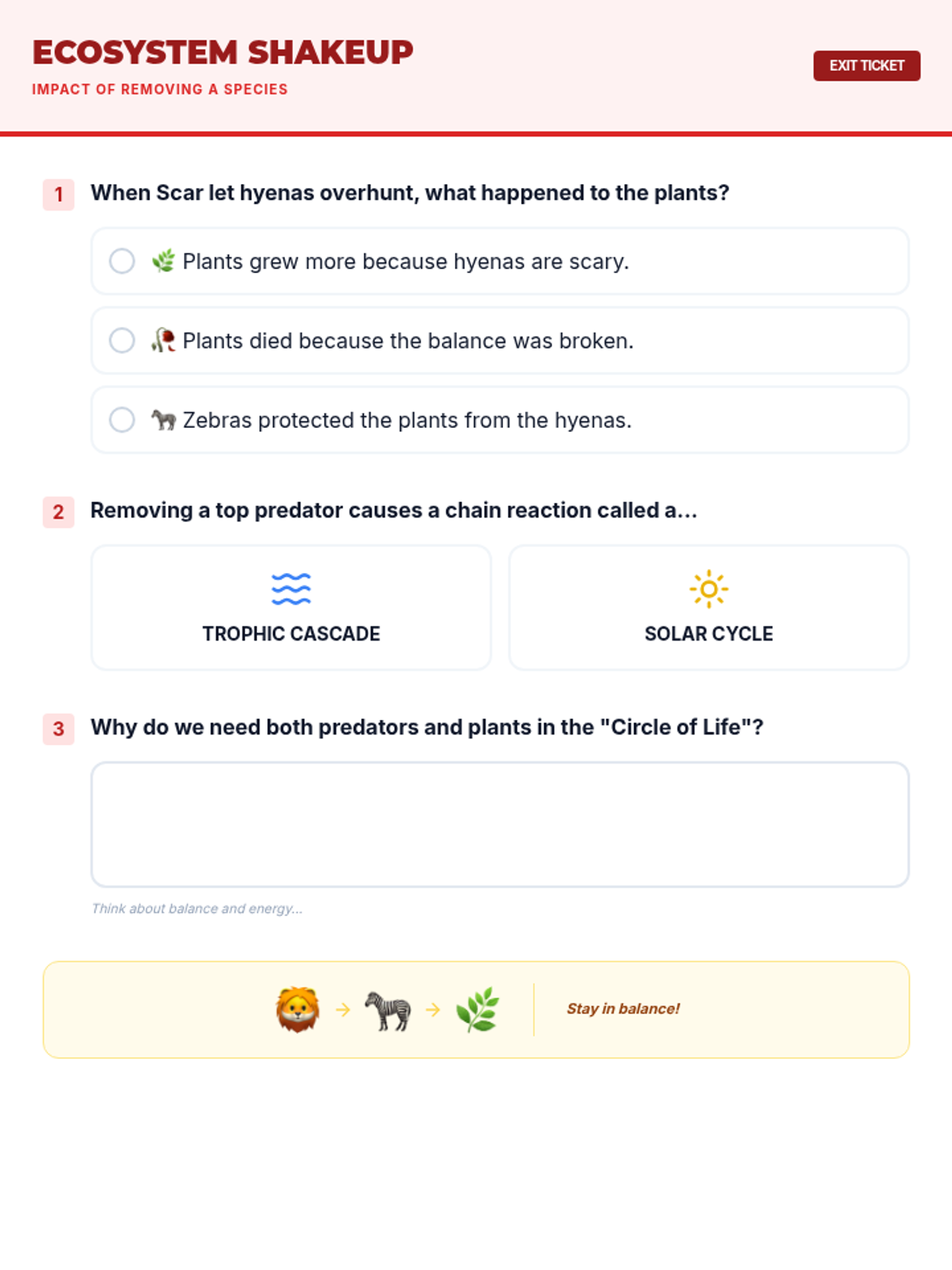
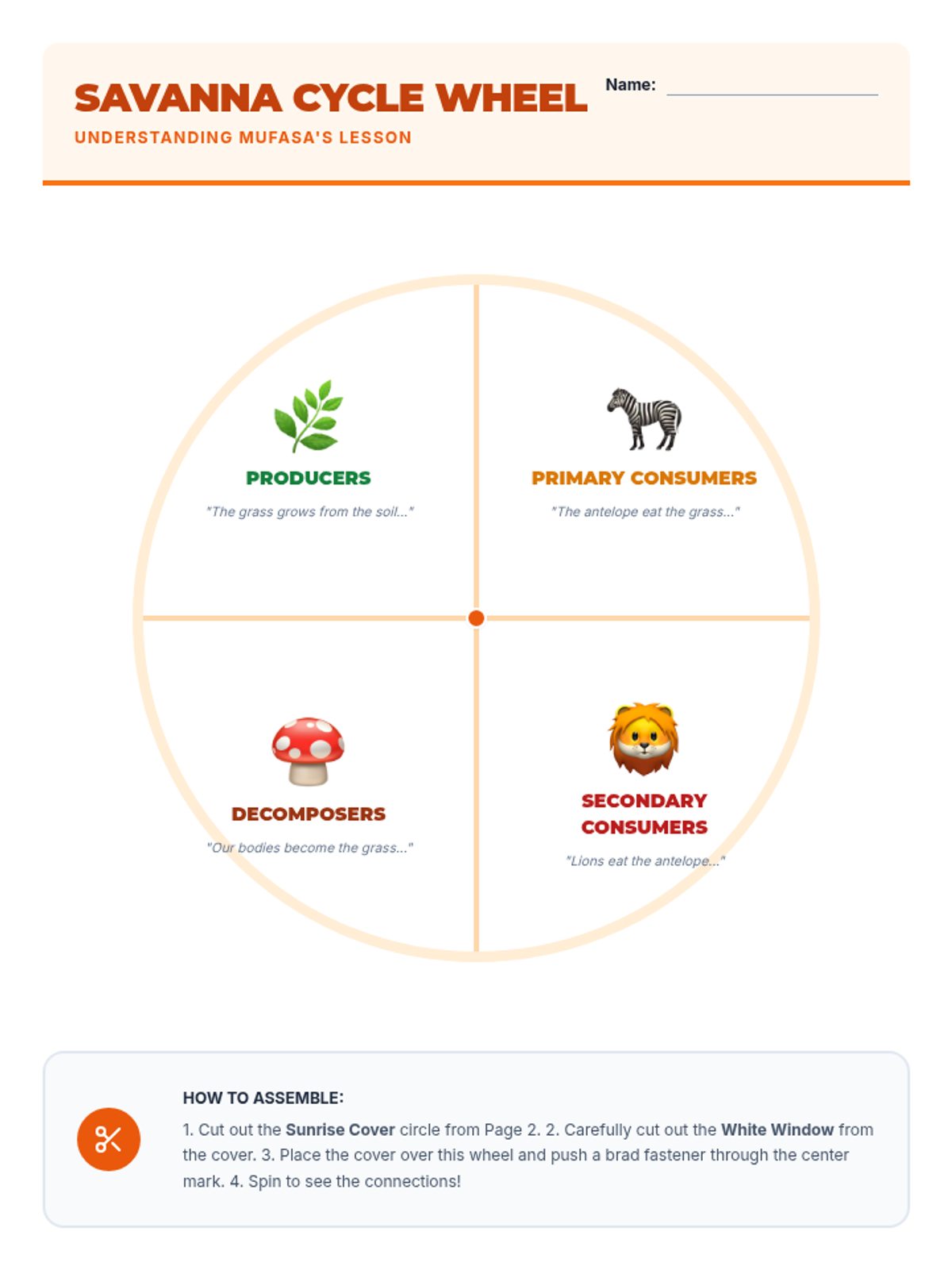
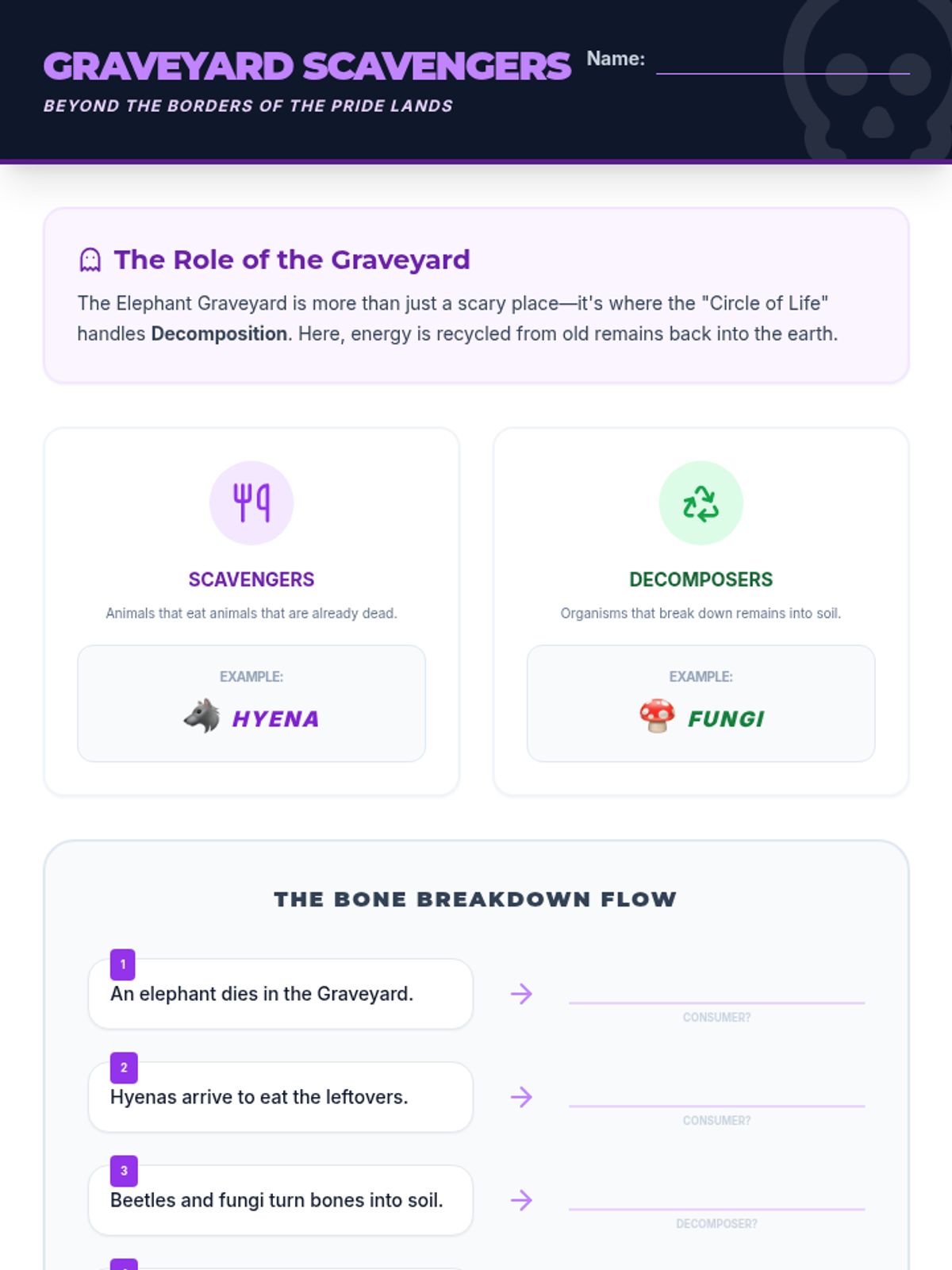
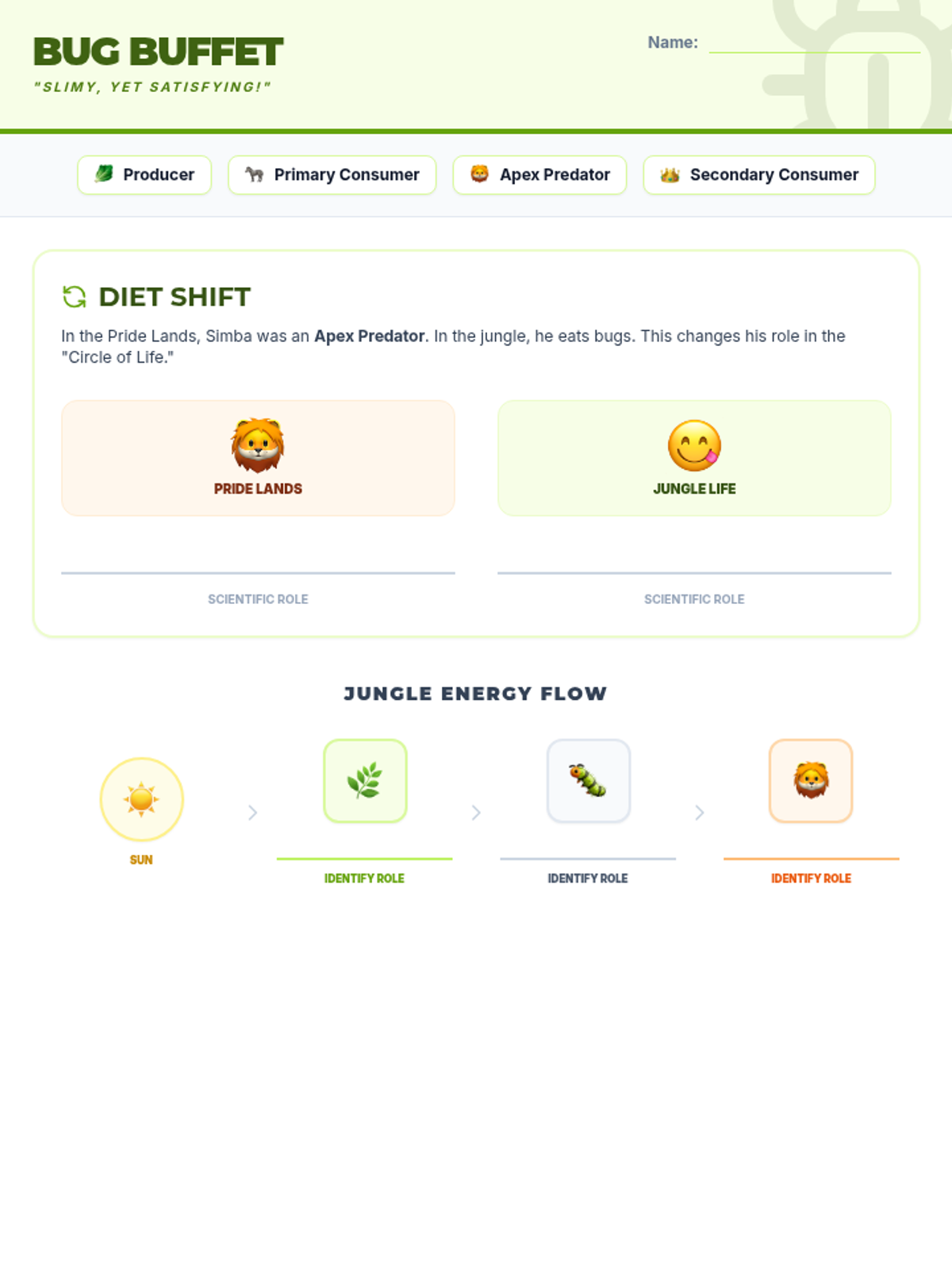
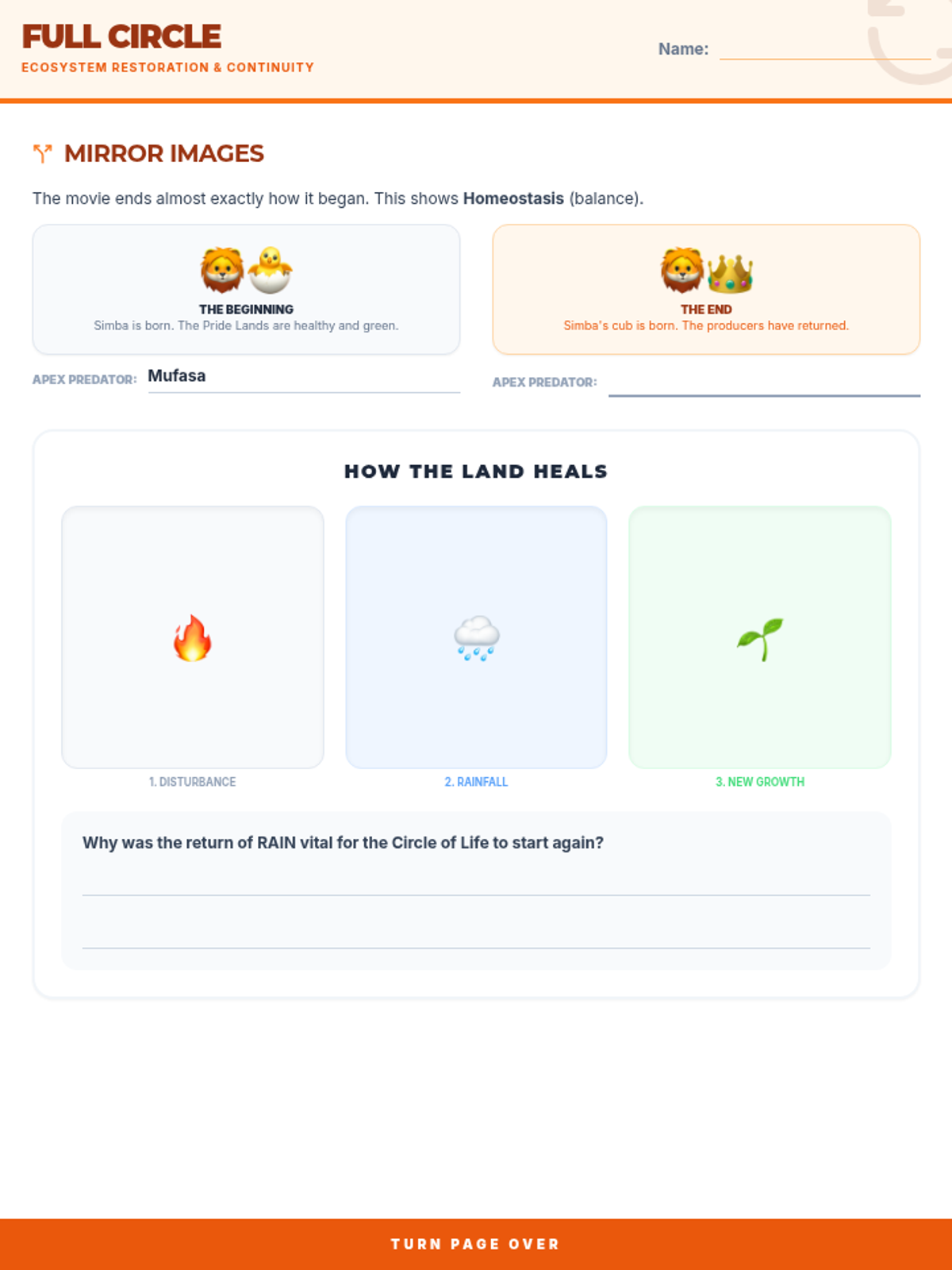
A science unit exploring ecology through the lens of 'The Lion King', focusing on food chains, food webs, and the balance of ecosystems. Students will learn to identify energy roles and predict the consequences of ecological changes.
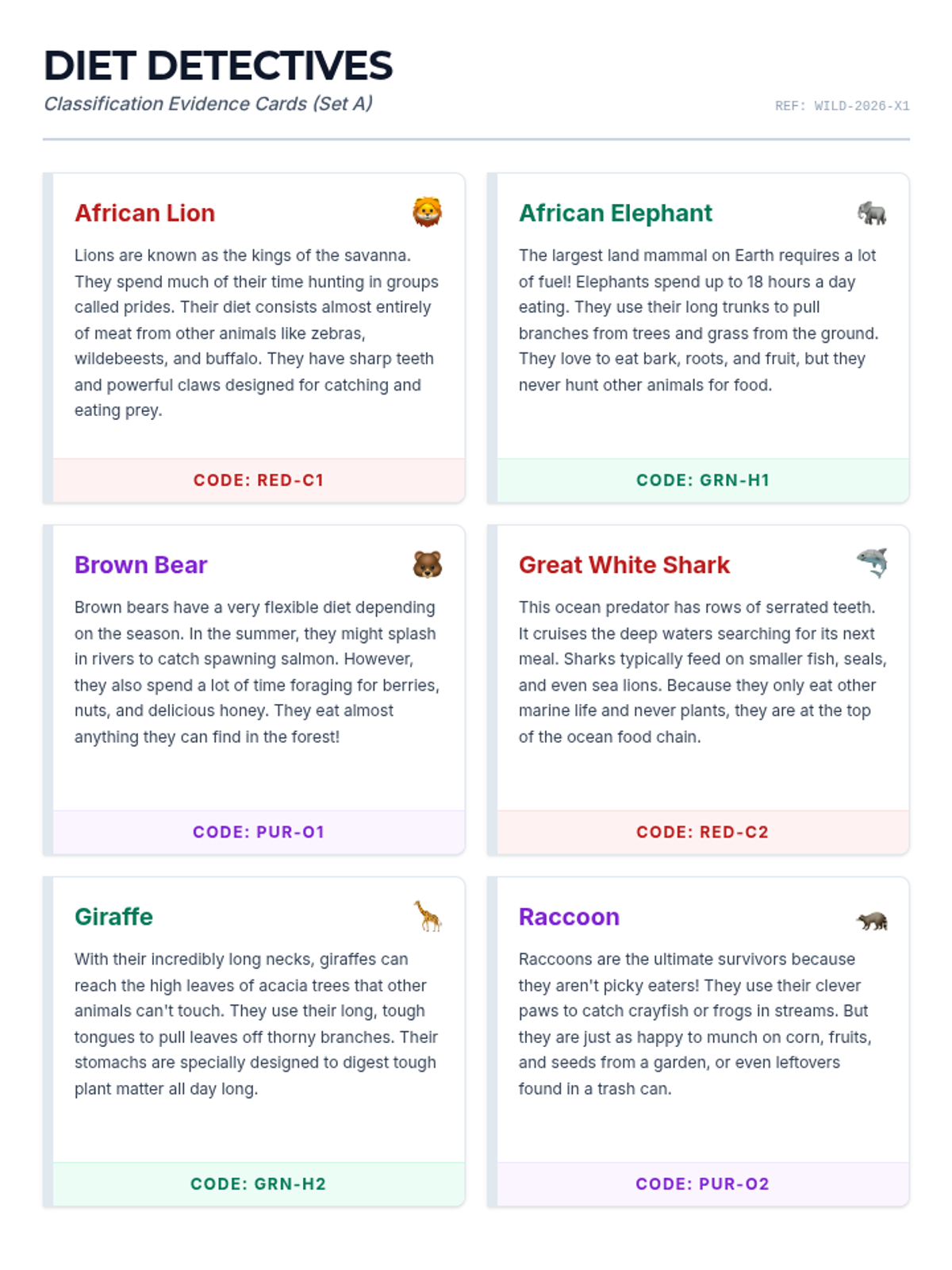
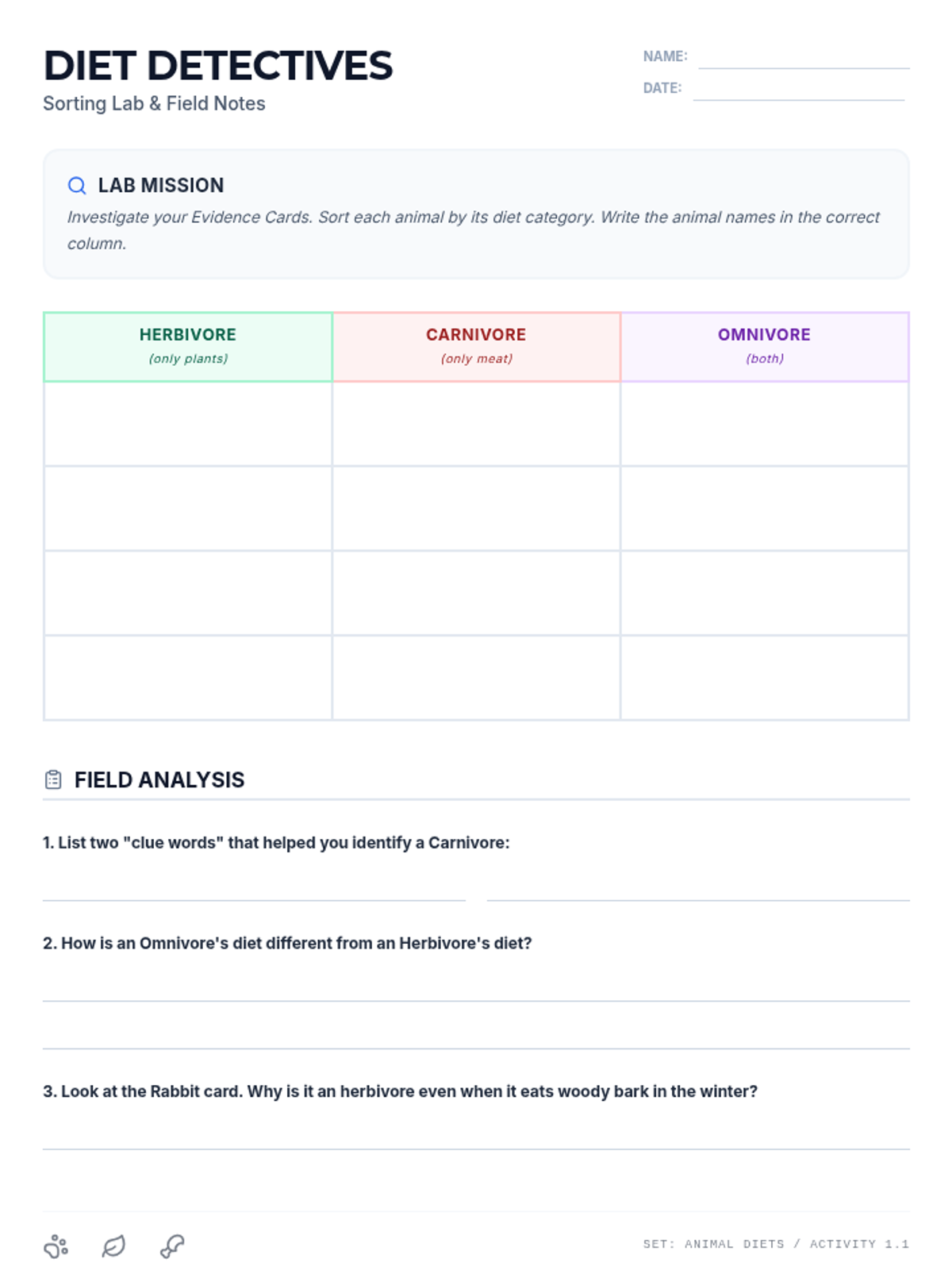
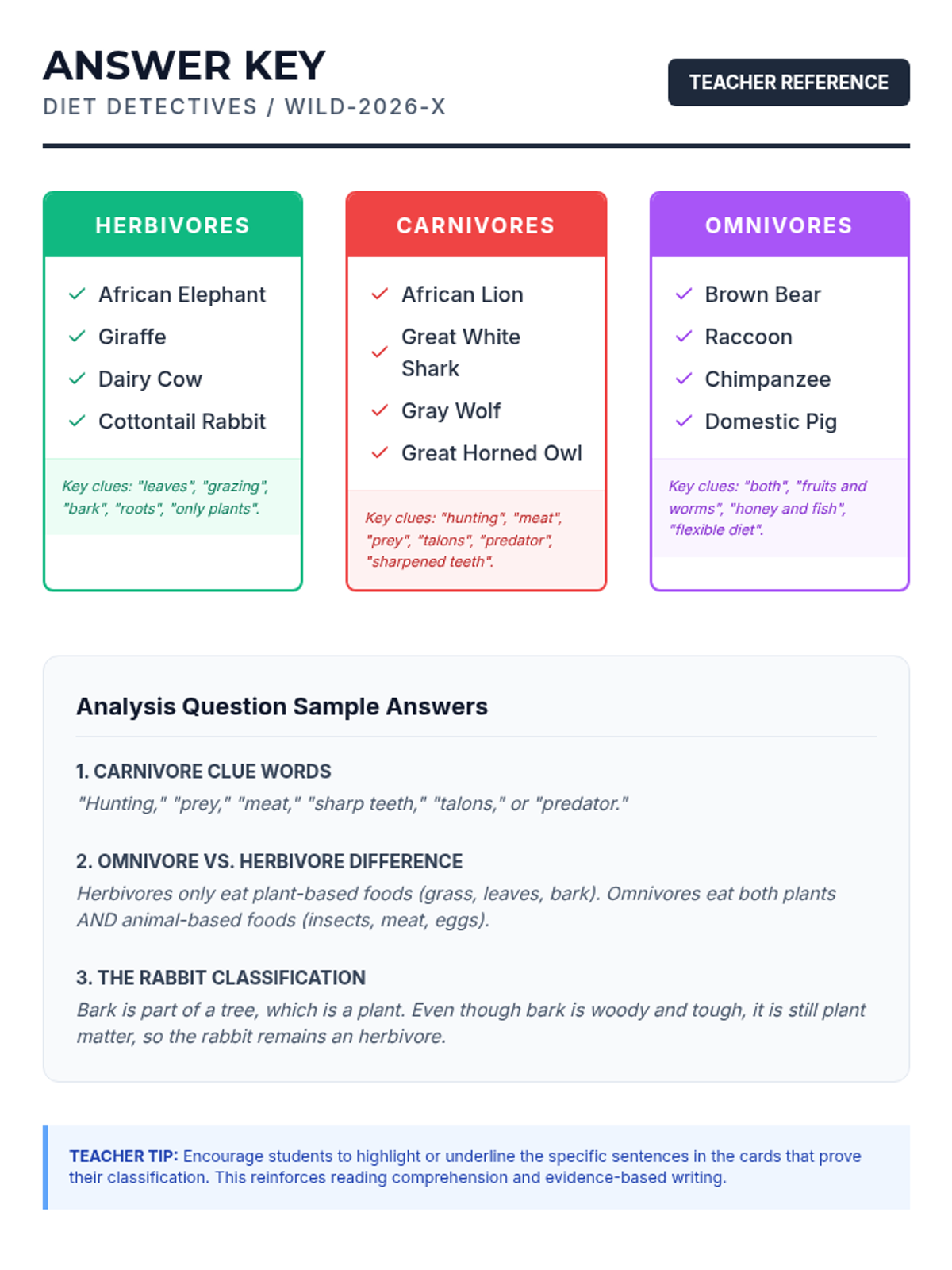
A hands-on exploration of animal diets, focusing on identifying and classifying herbivores, carnivores, and omnivores through text evidence and visual clues.
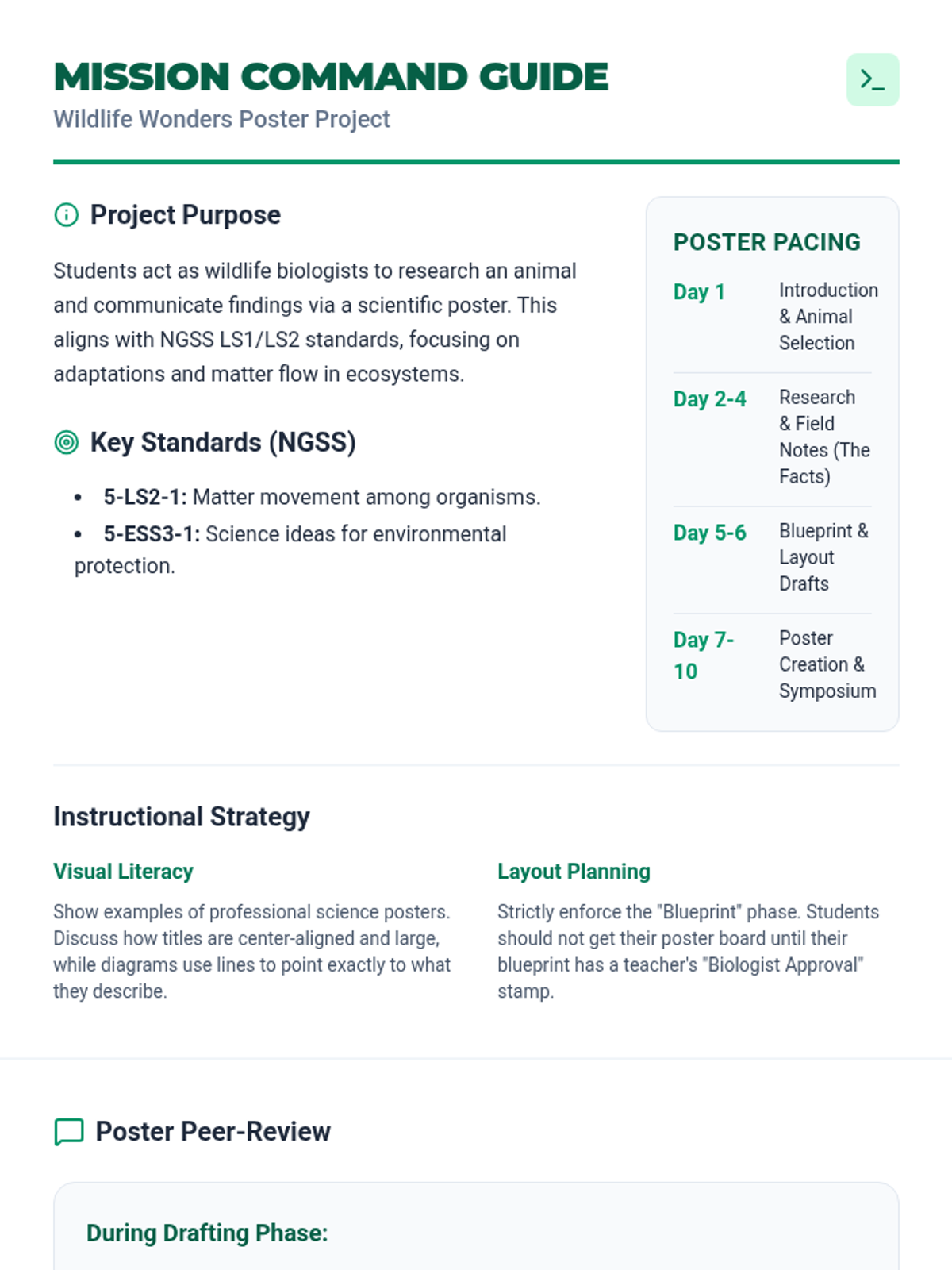
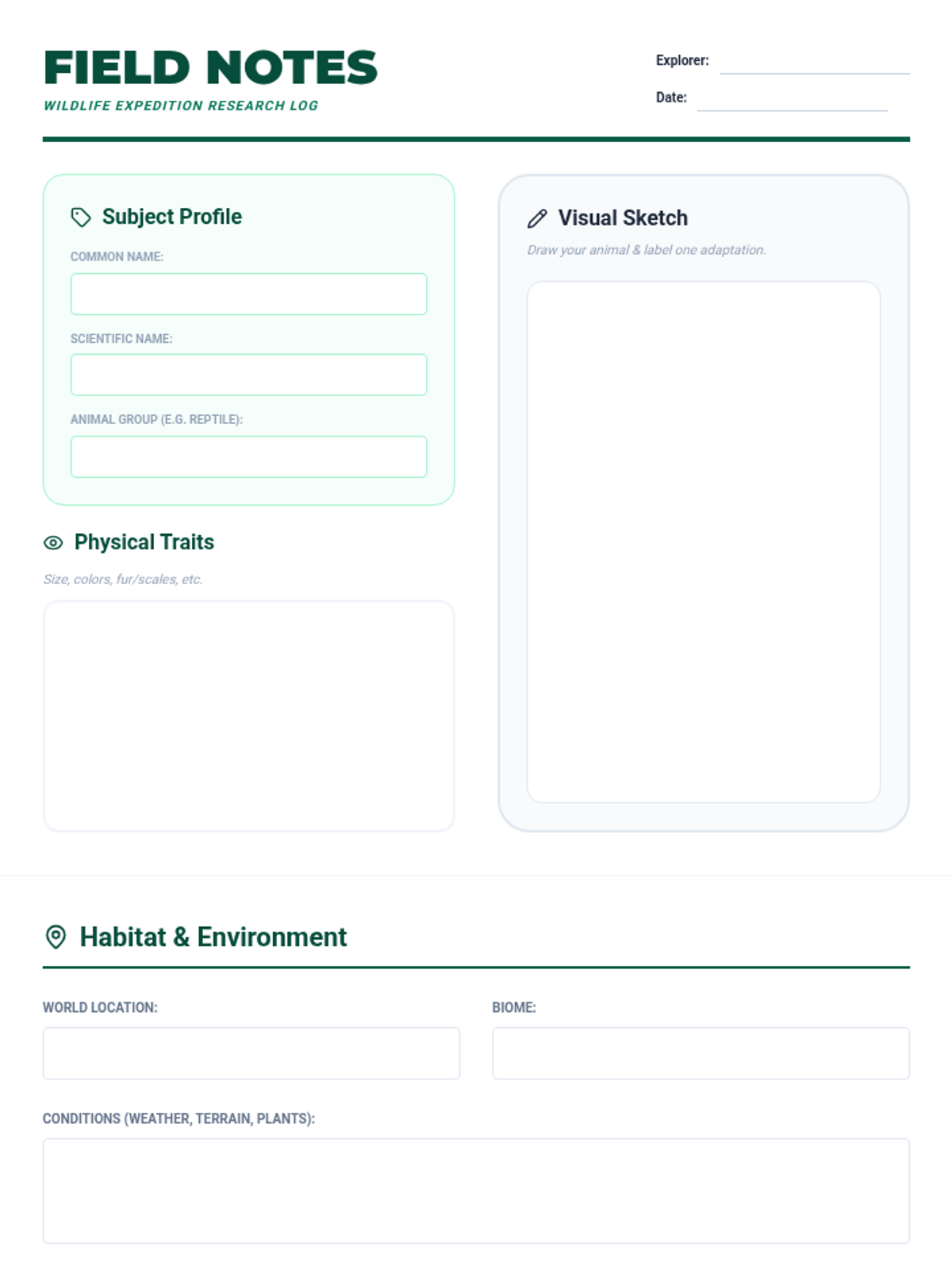
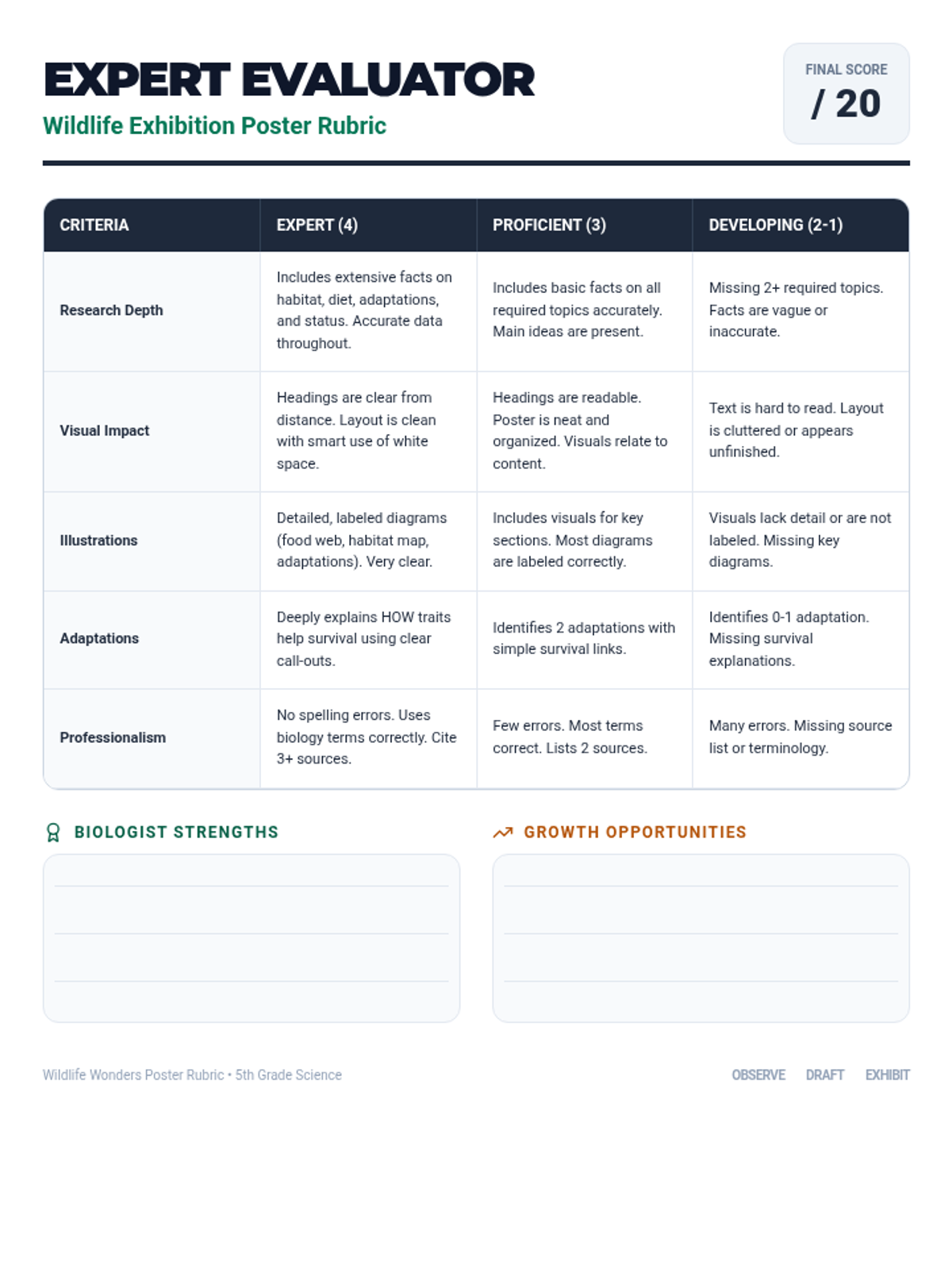
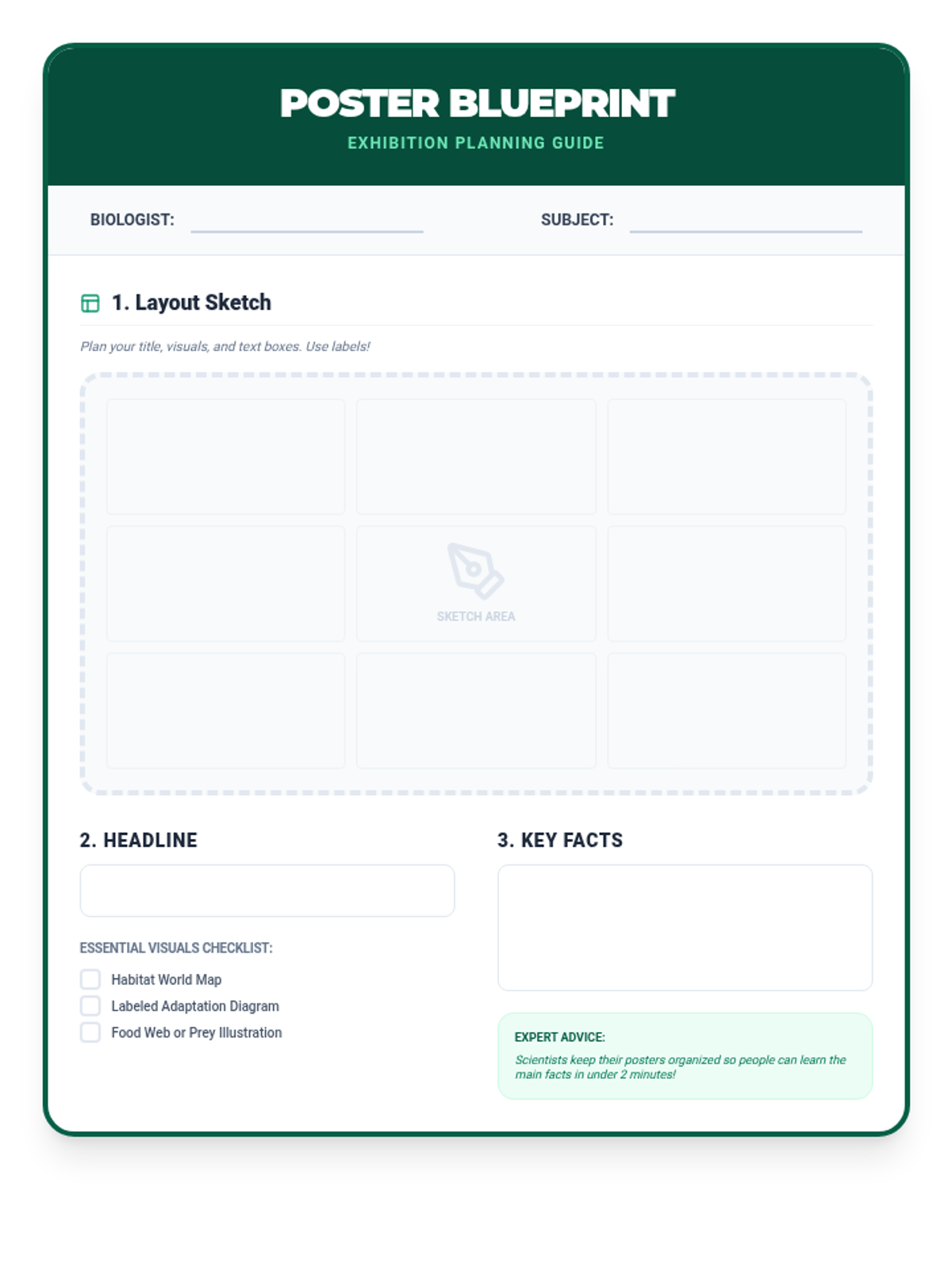
A comprehensive 5th-grade science project where students become wildlife biologists to research an animal's adaptations, habitat, and conservation status. The sequence guides students from initial curiosity through deep research to a creative final presentation.
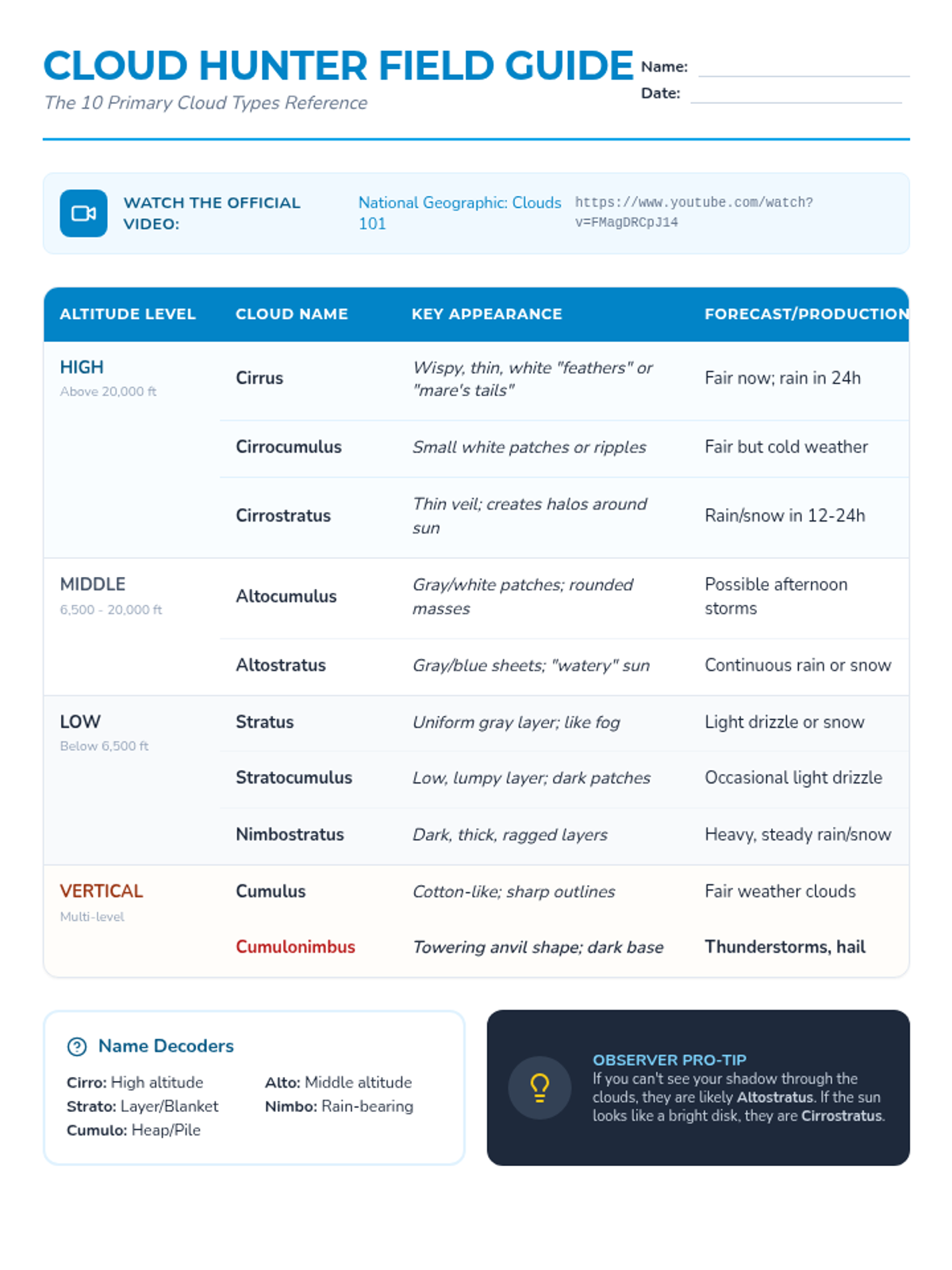
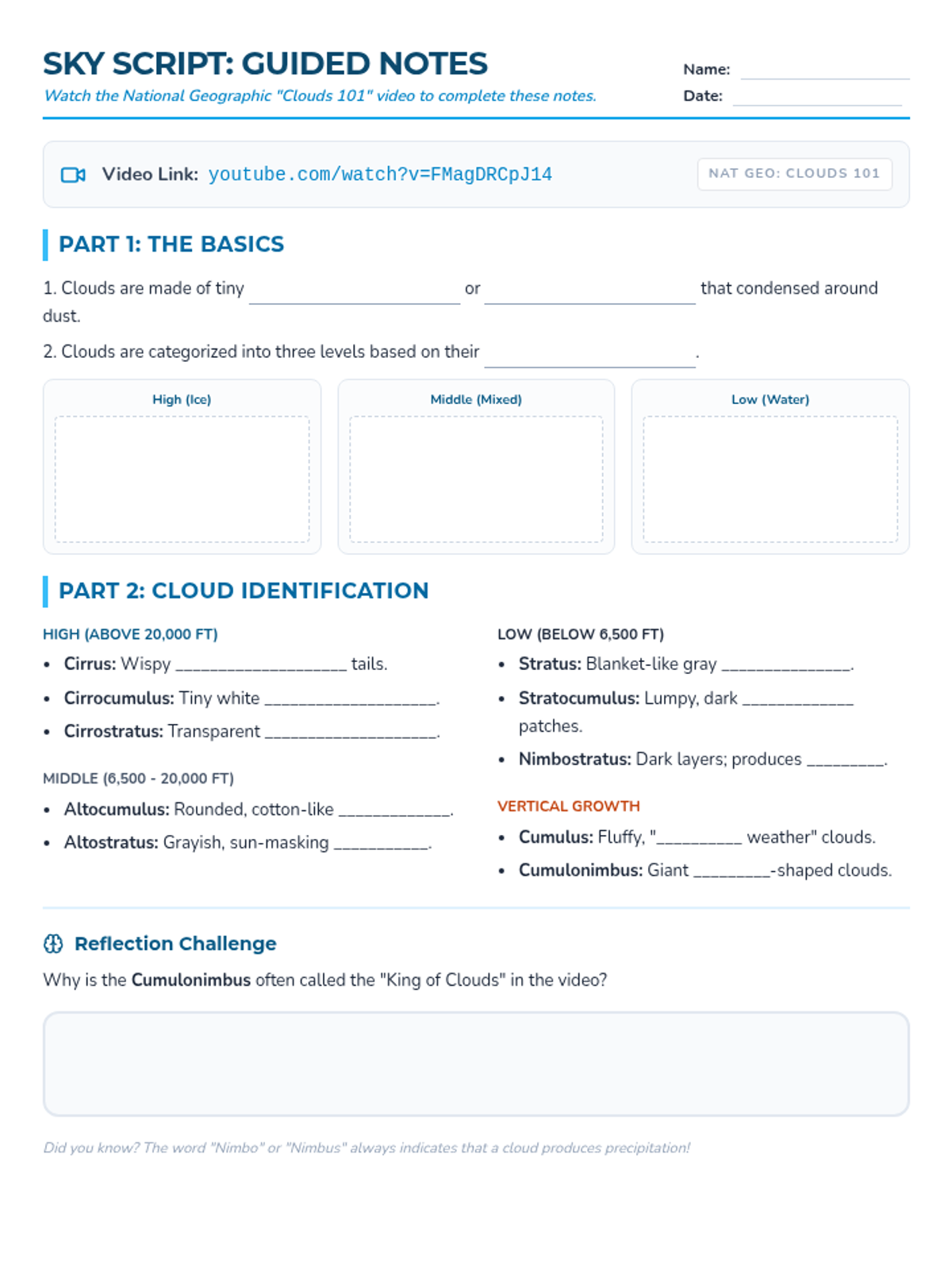
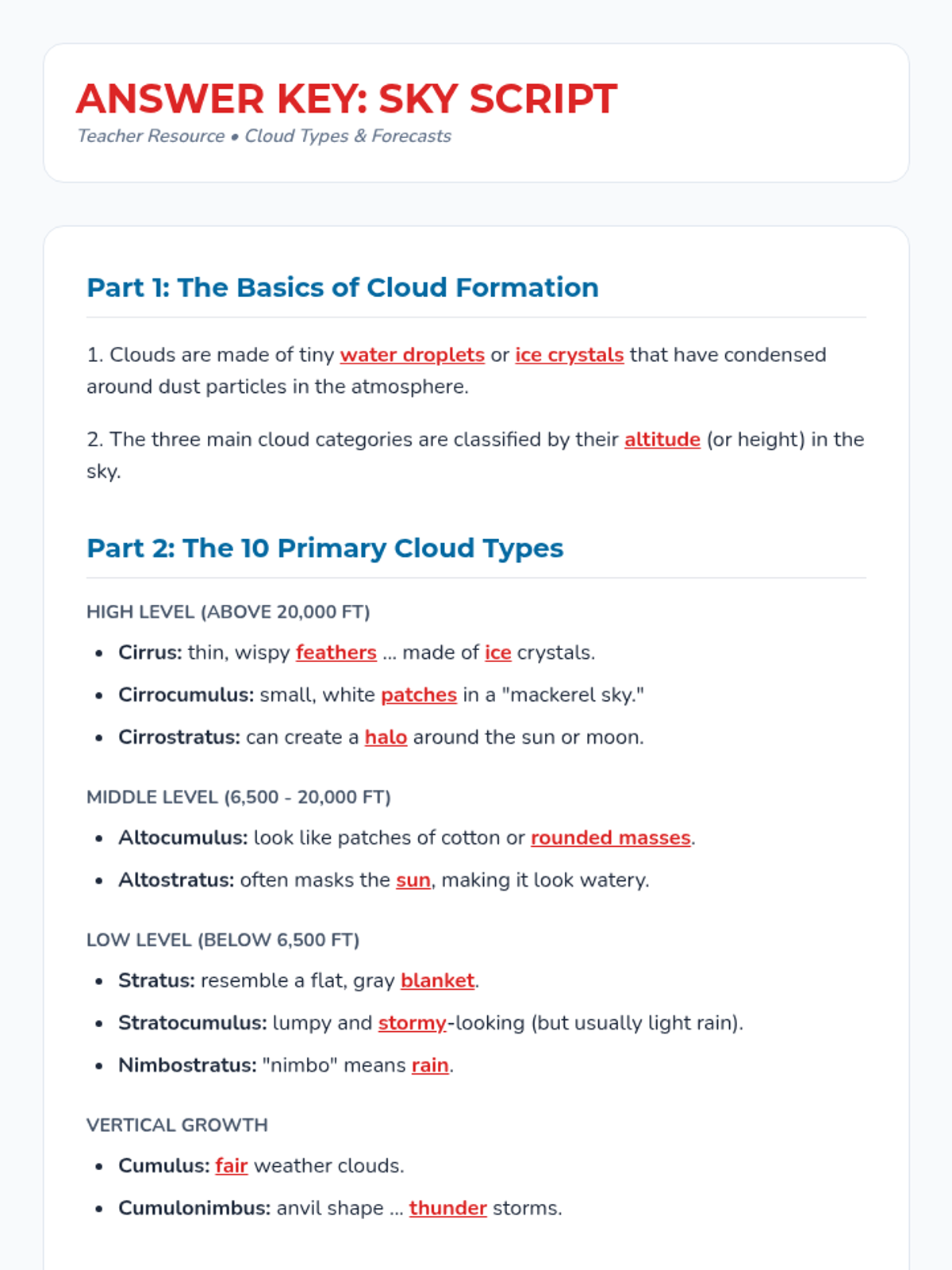
A comprehensive introduction to meteorology focused on identifying and understanding the ten primary cloud types and their impact on weather patterns.
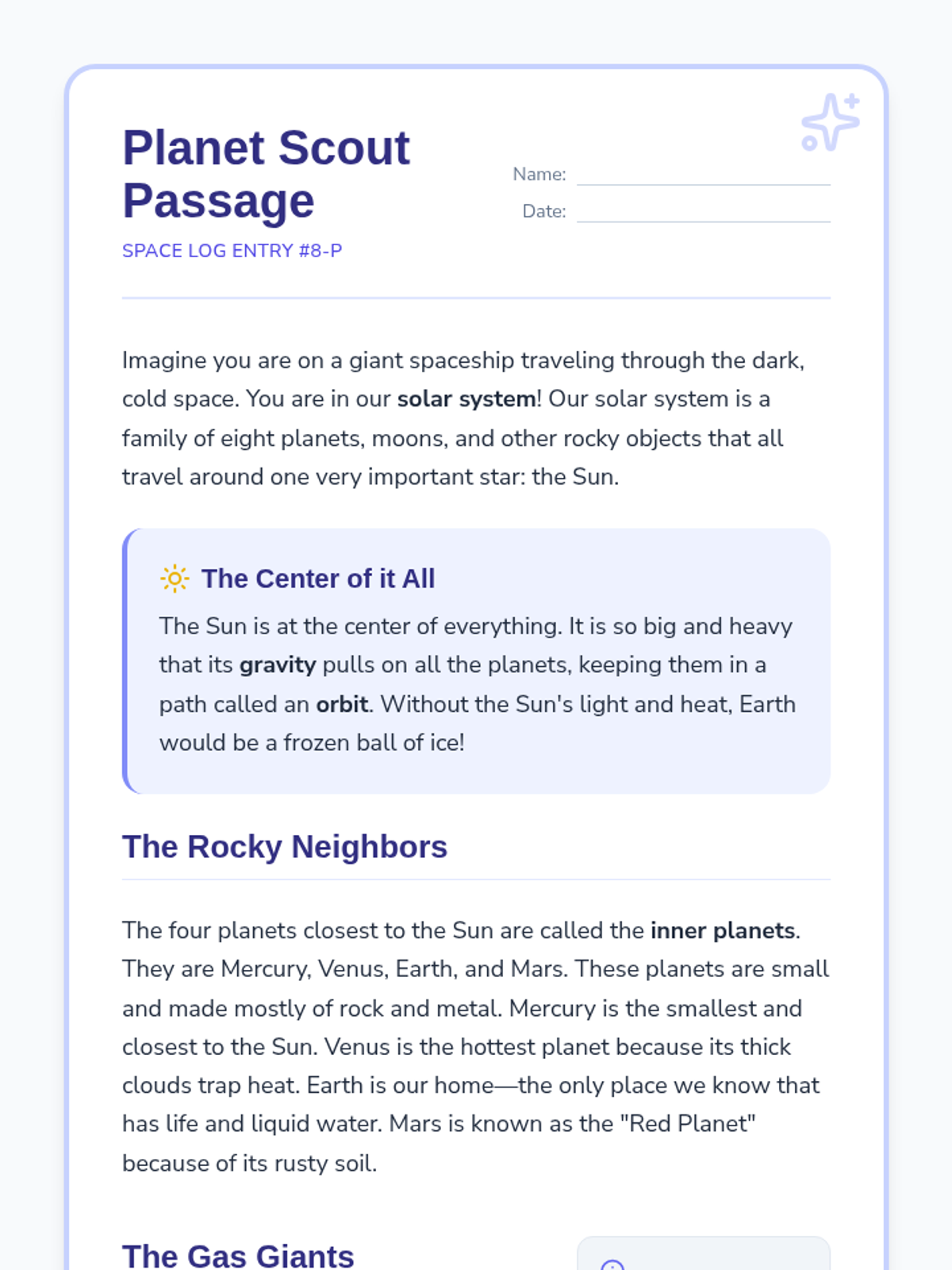
A diverse collection of lessons covering the celestial wonders of our solar system and the historical impact of the World War II Home Front.
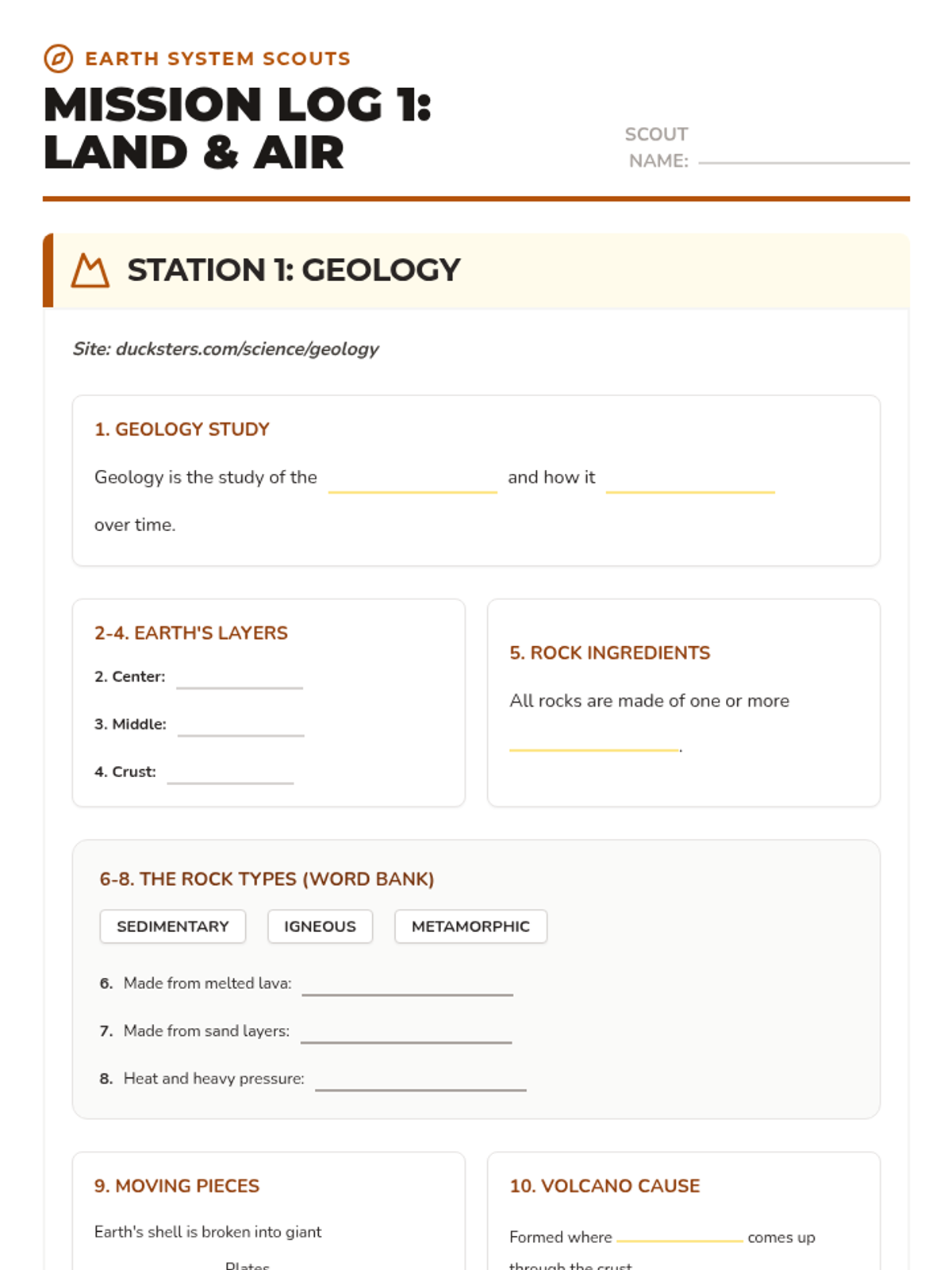
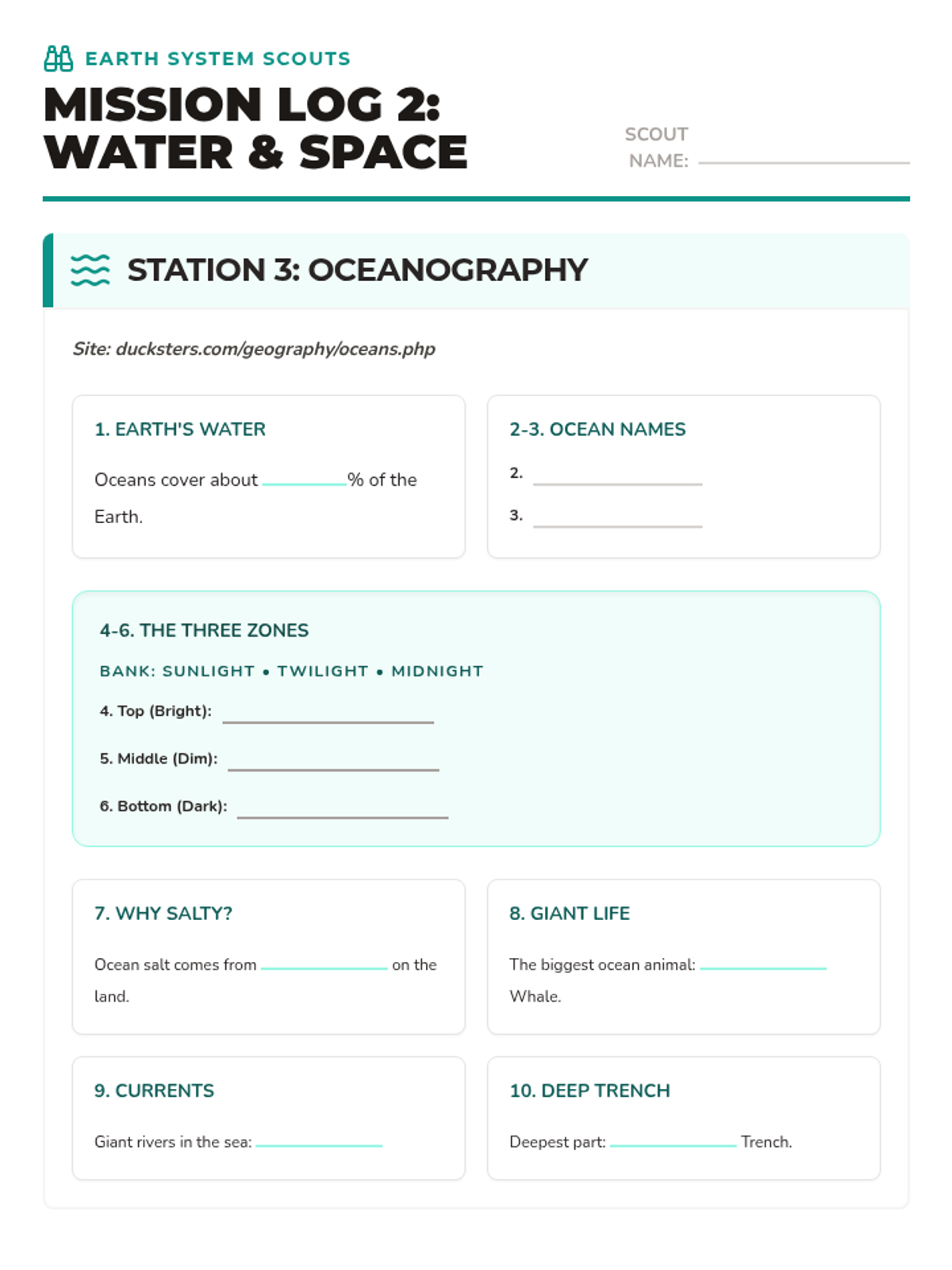
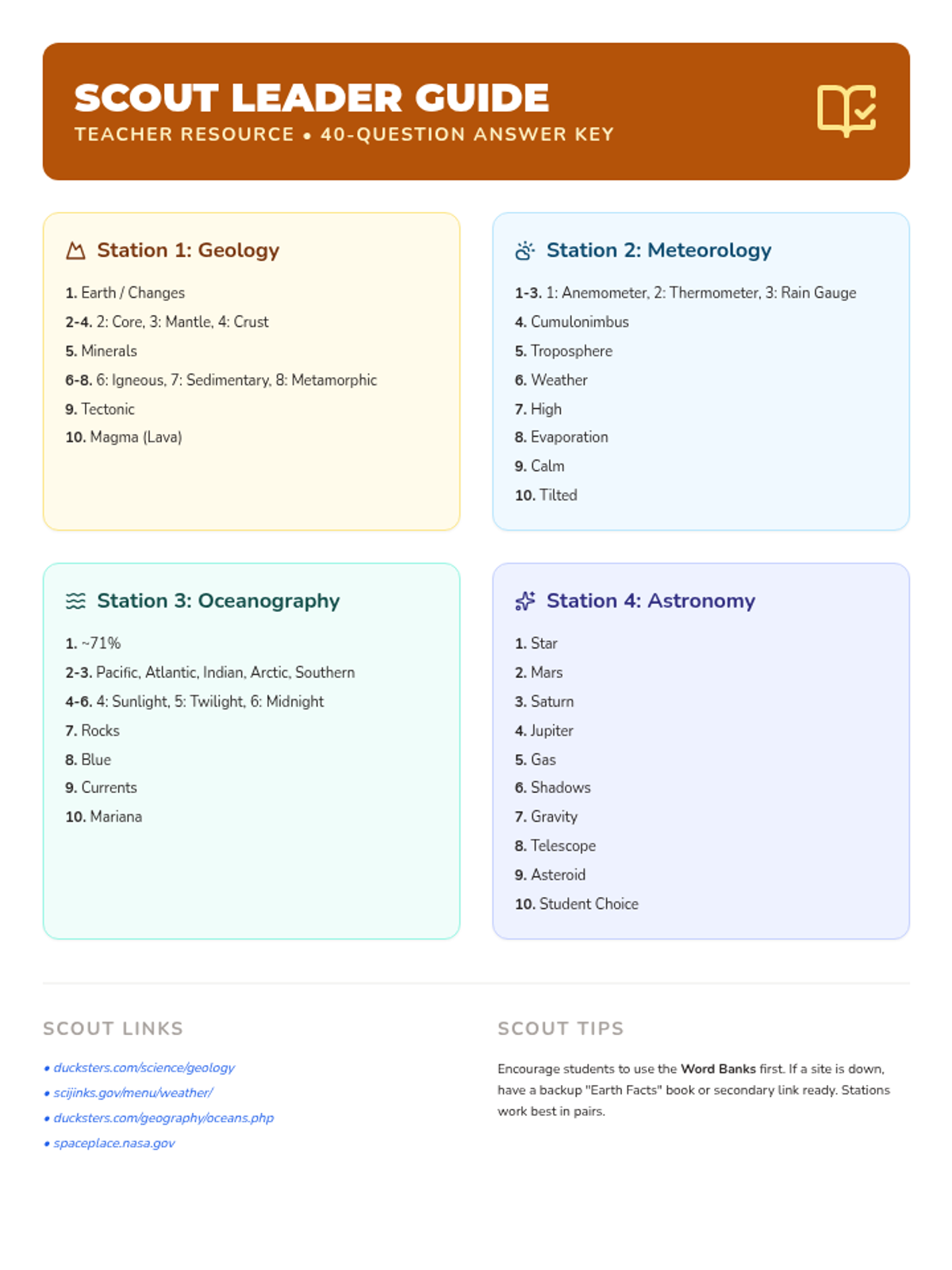
A foundational exploration of the four main branches of Earth Science through a multi-day digital scavenger hunt designed for accessibility and engagement.
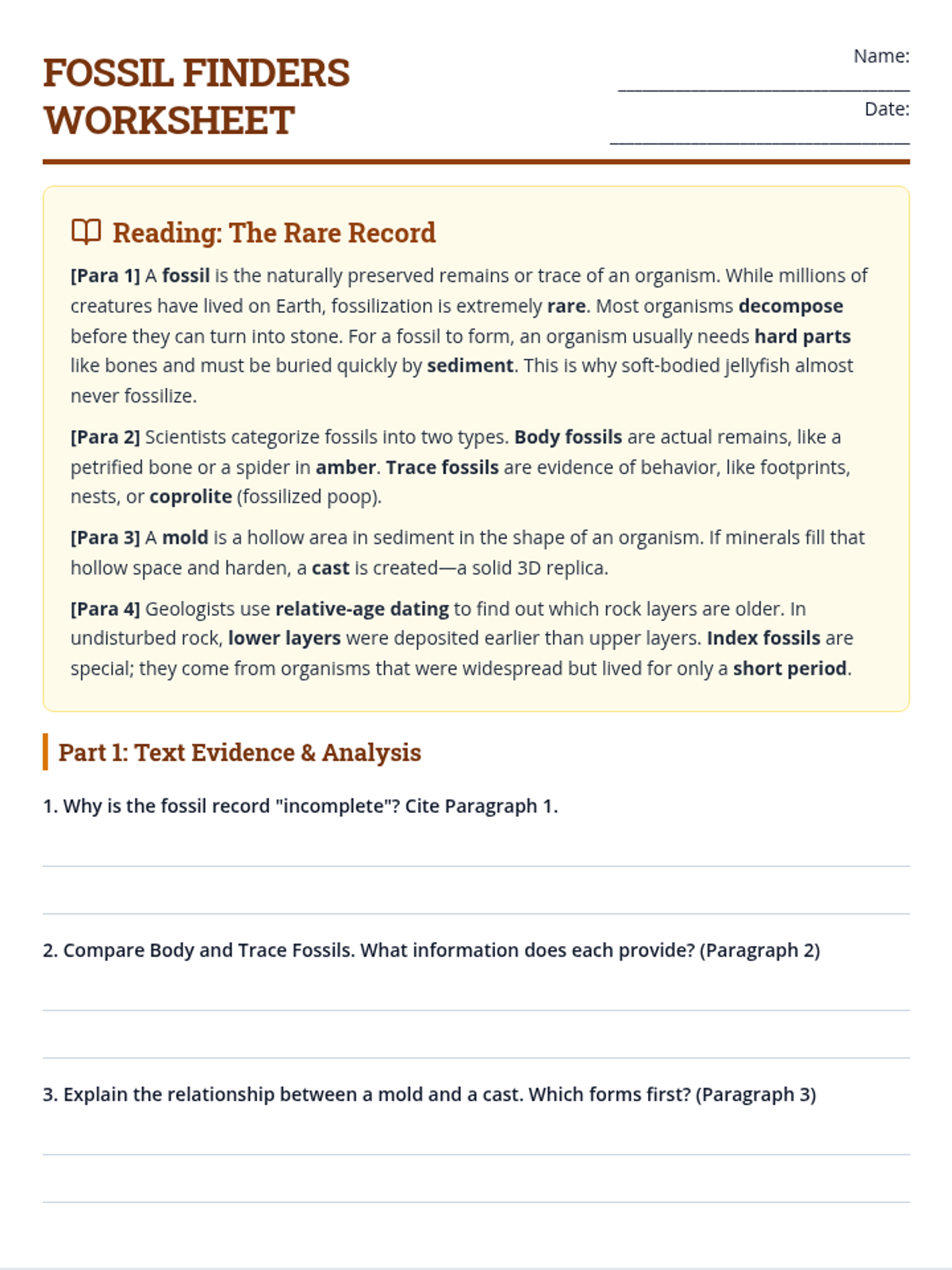
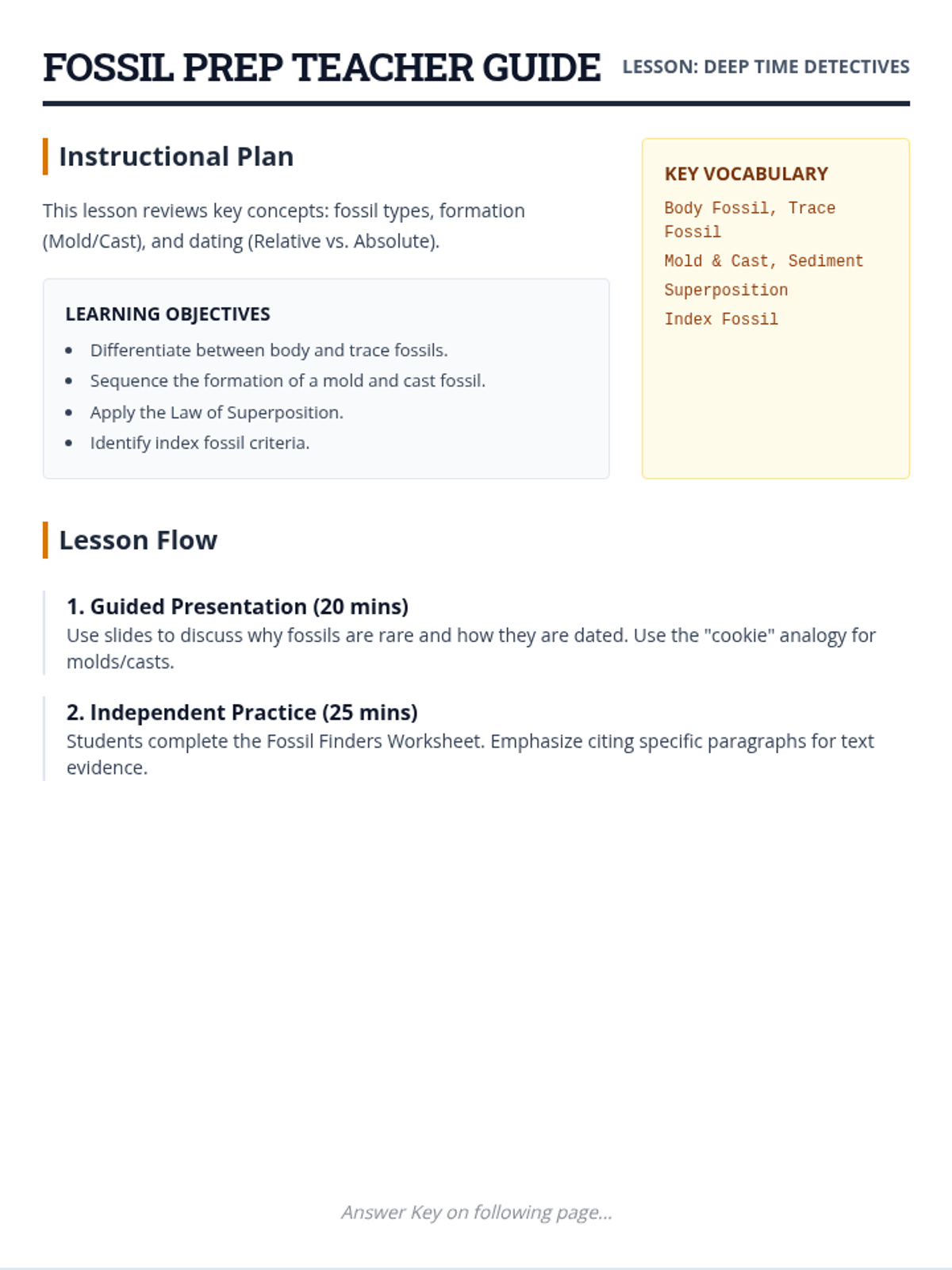
A comprehensive unit exploring how fossils form, how they are dated, and what they reveal about Earth's biological and geological history.
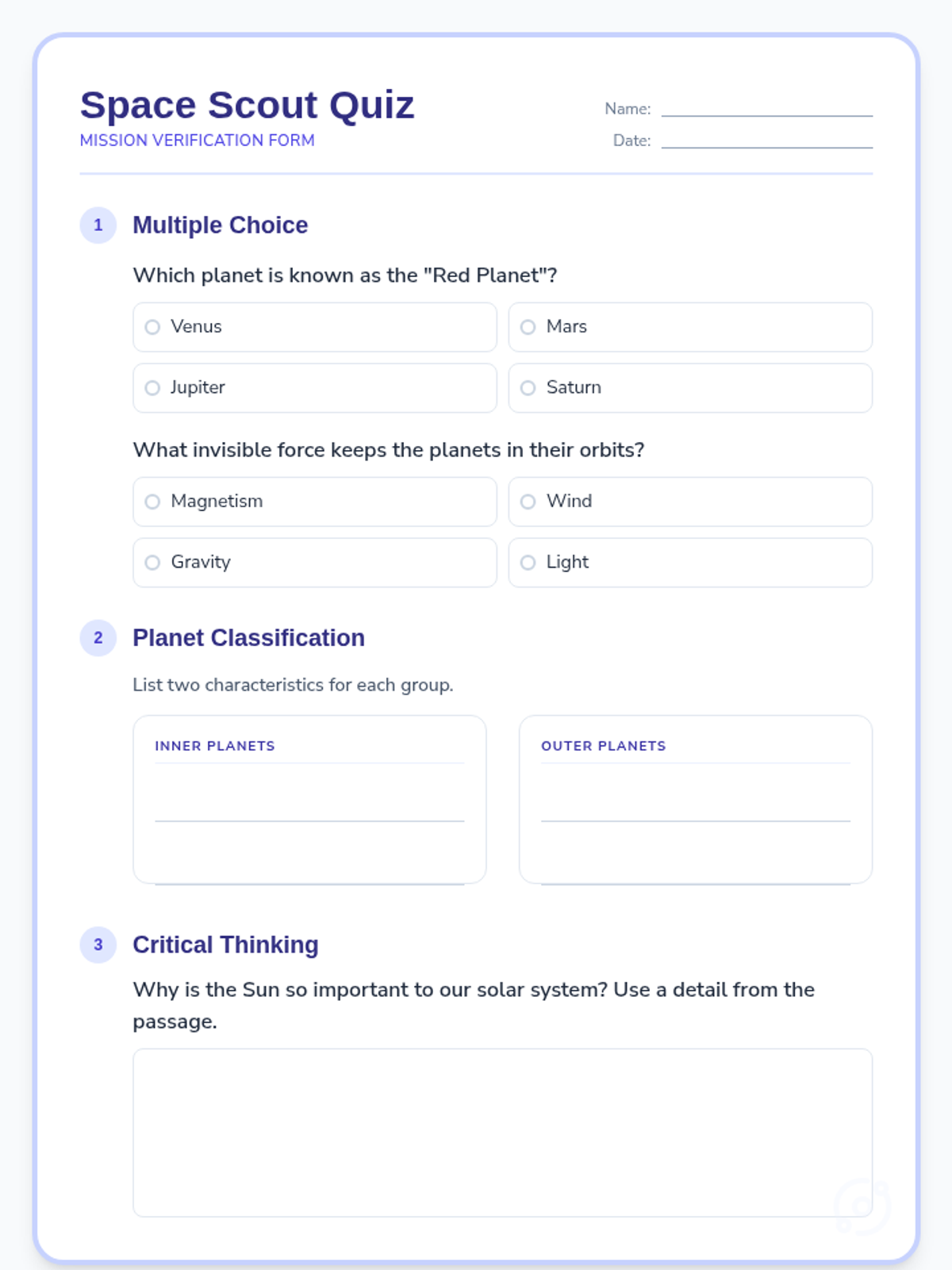
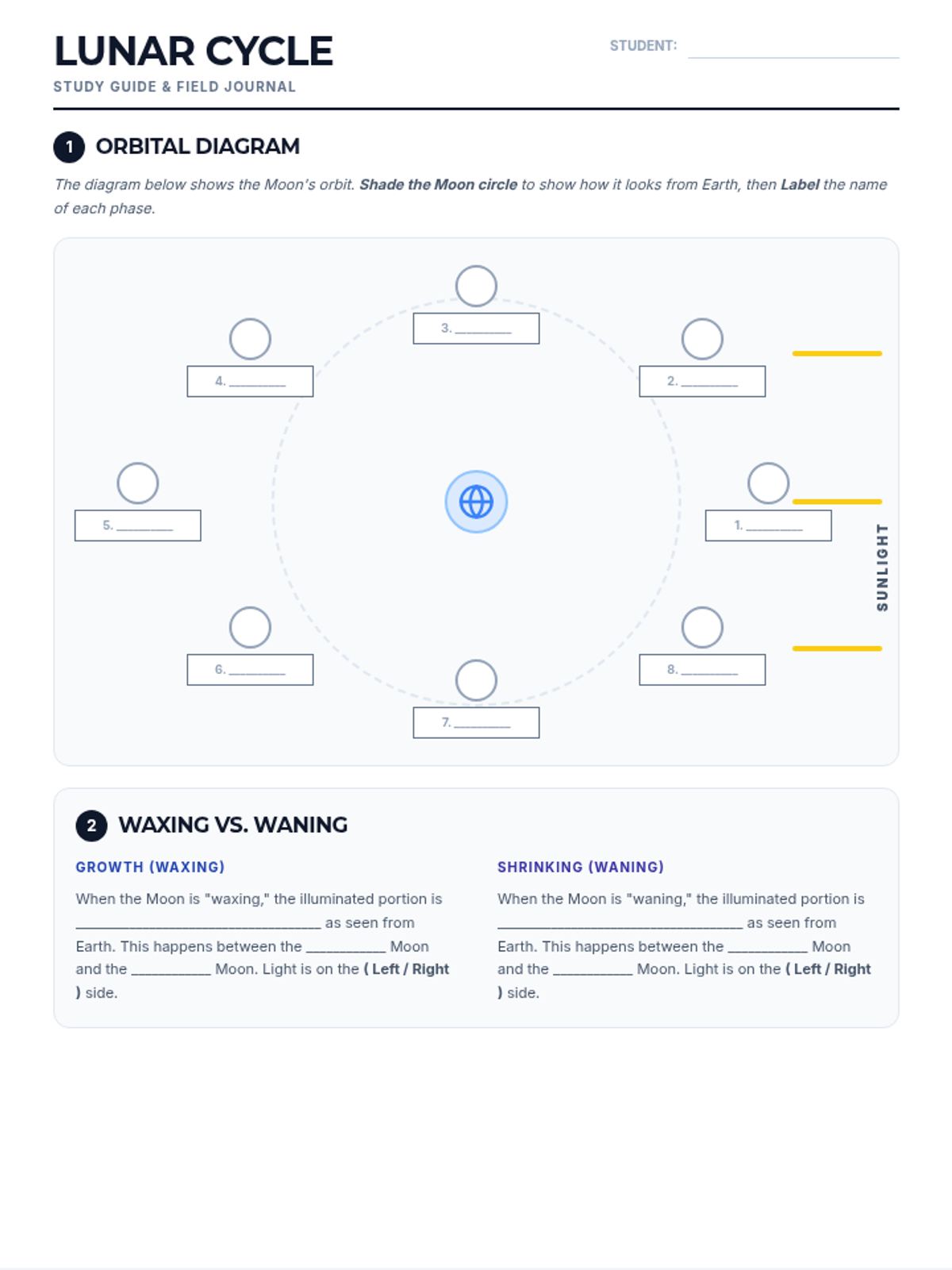
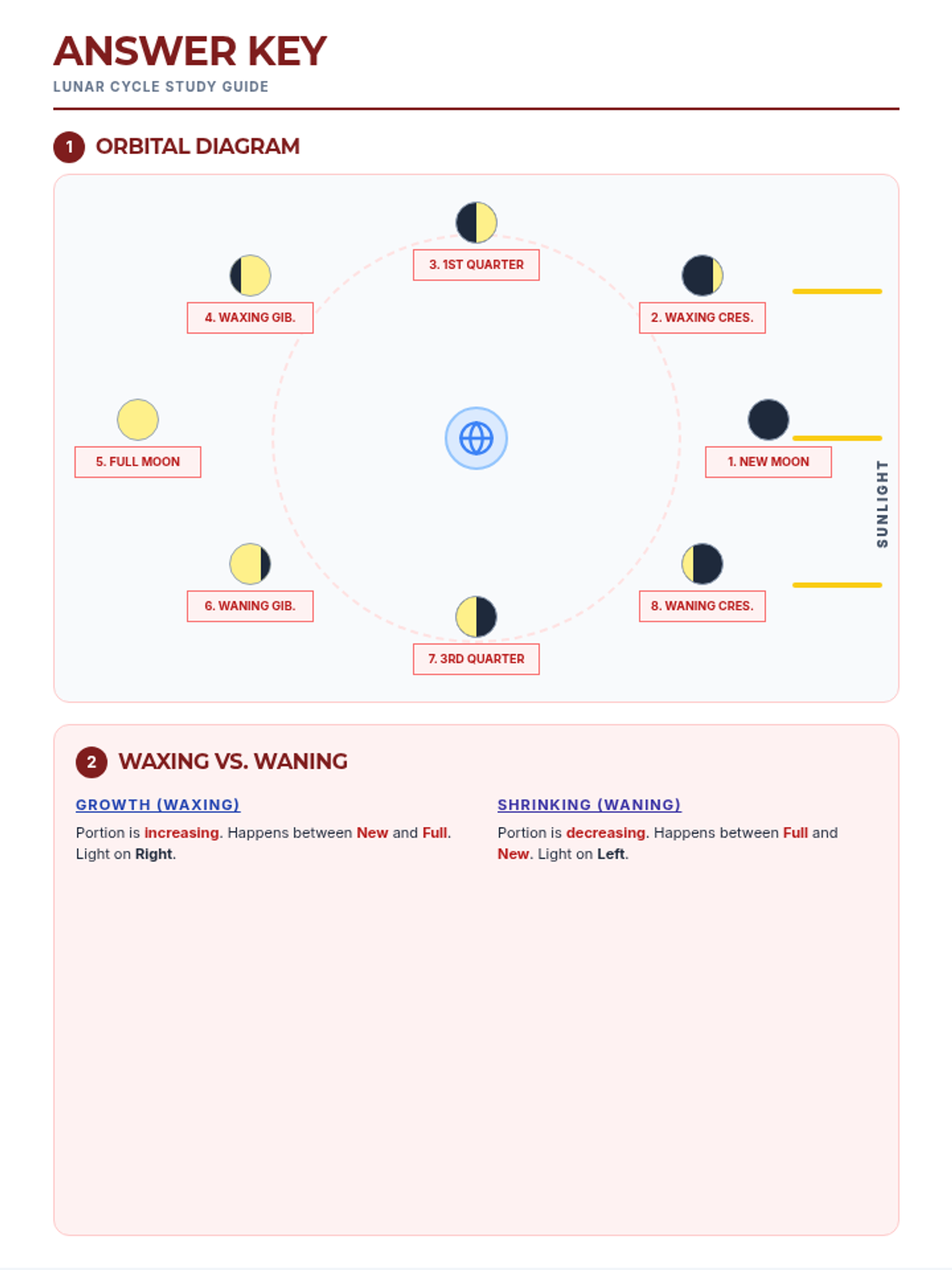
An astronomy unit focused on the Earth-Moon-Sun system and celestial patterns.
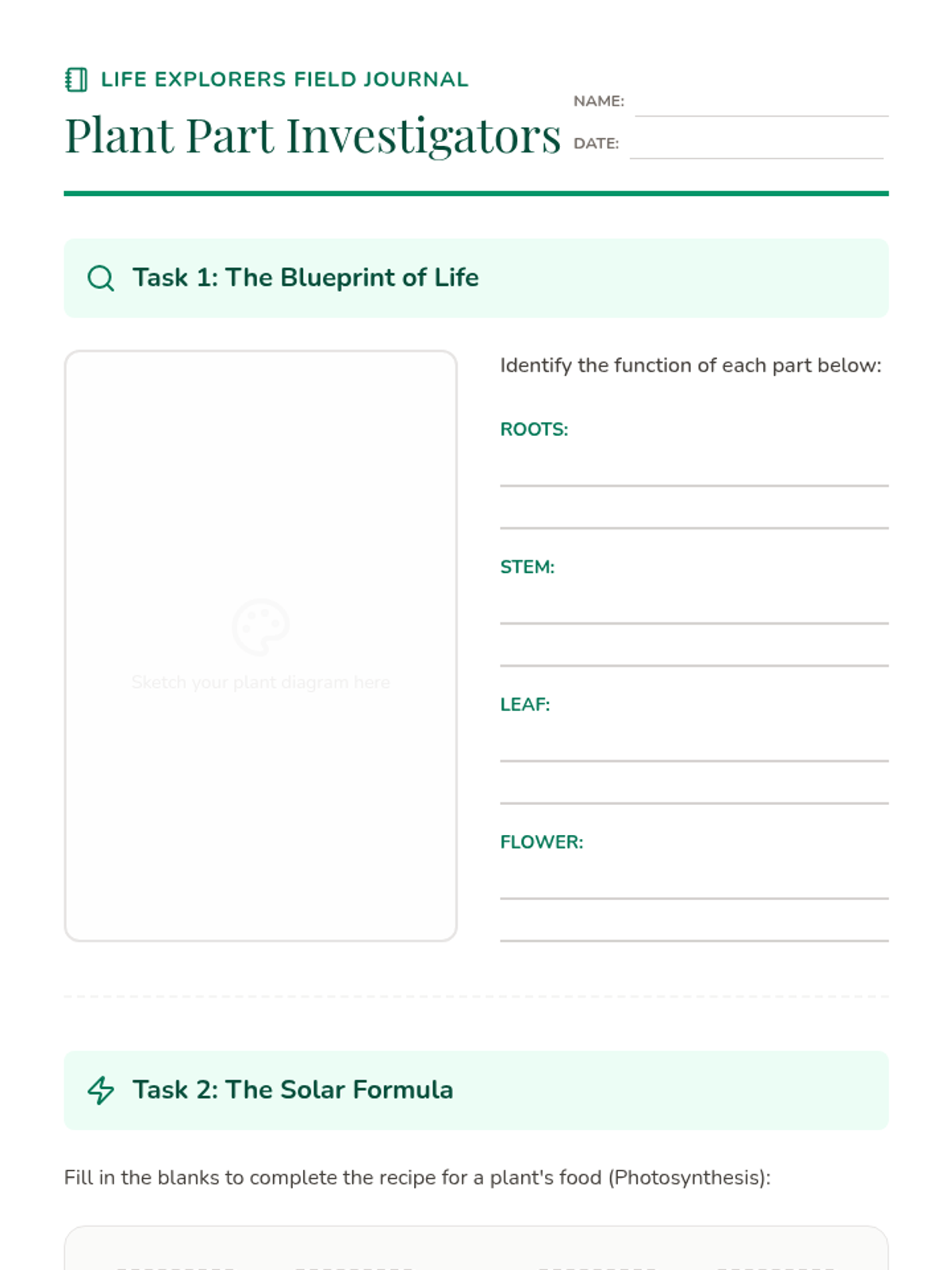
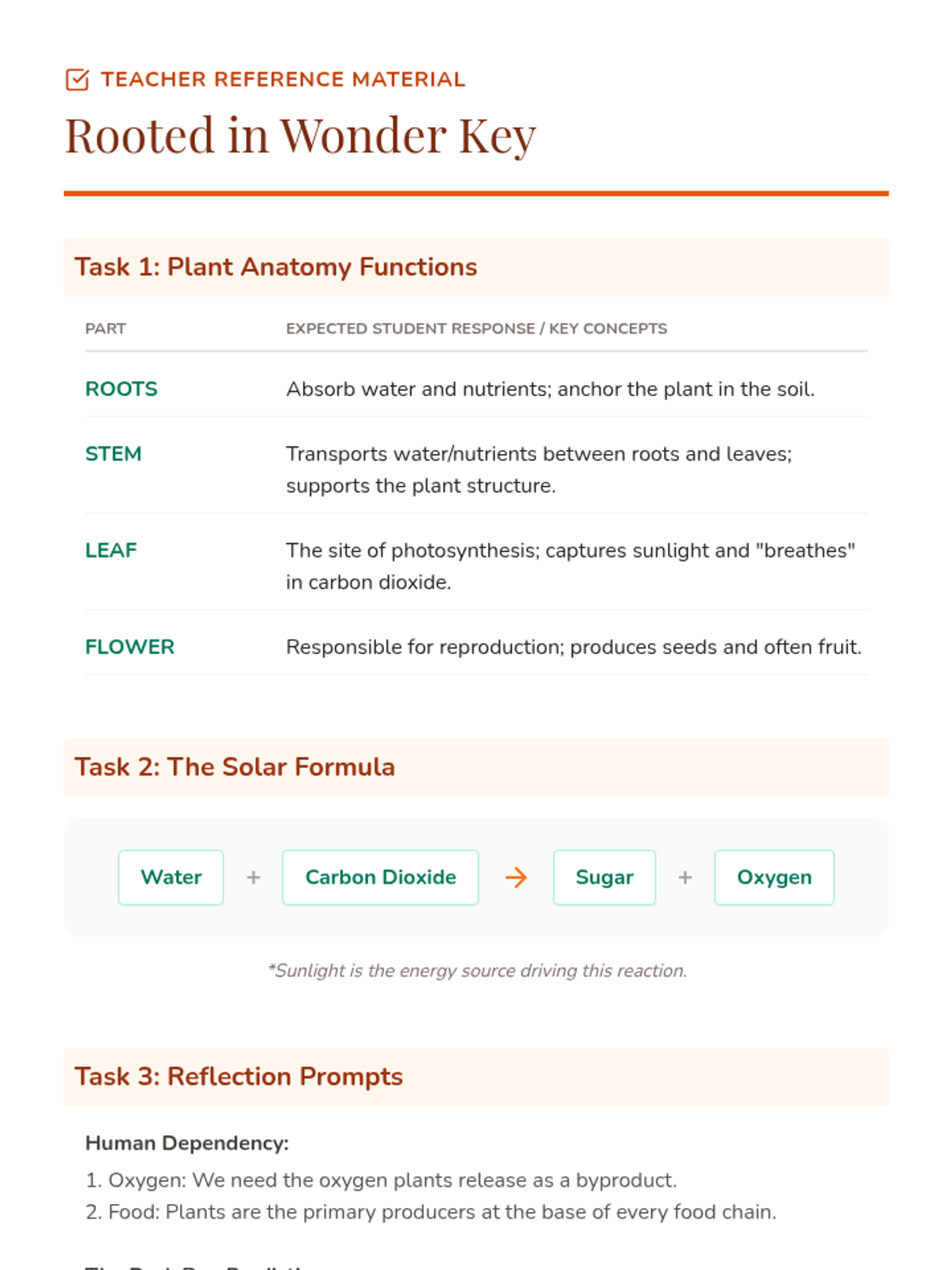
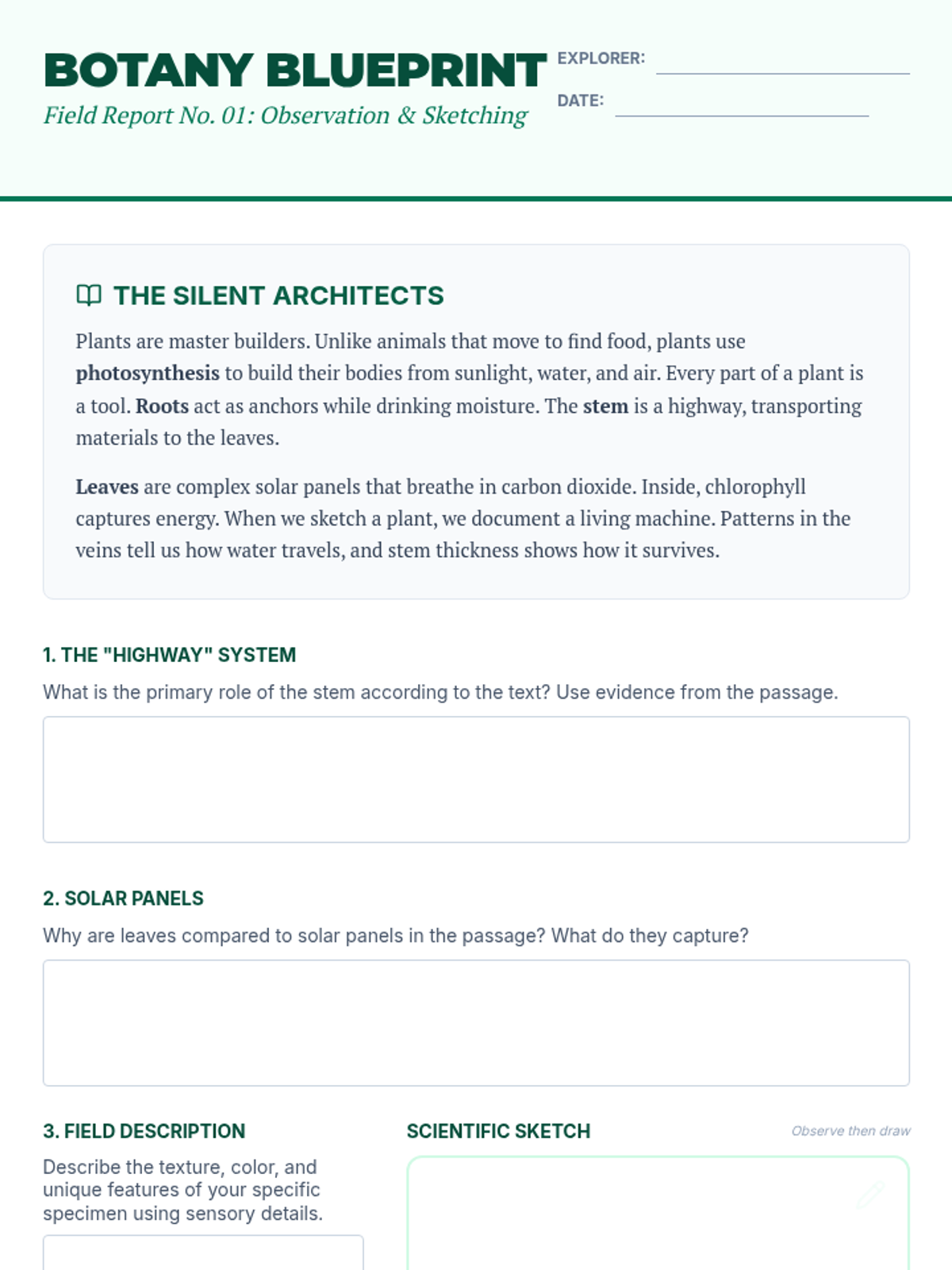
A comprehensive life science sequence exploring plant biology, animal adaptations, and ecosystem dynamics through the lens of a field explorer. Students investigate the natural world, documenting their findings like real scientists.
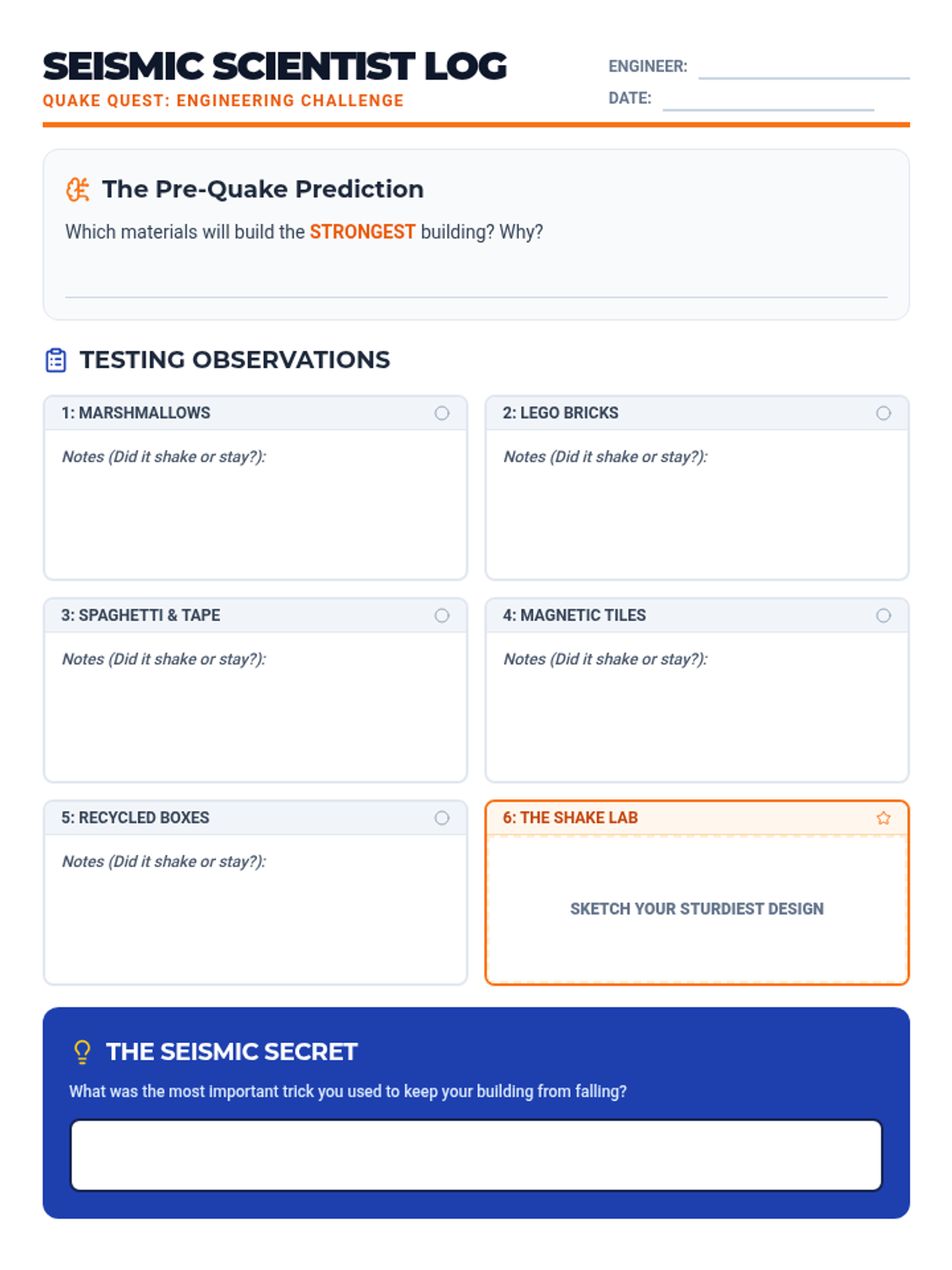
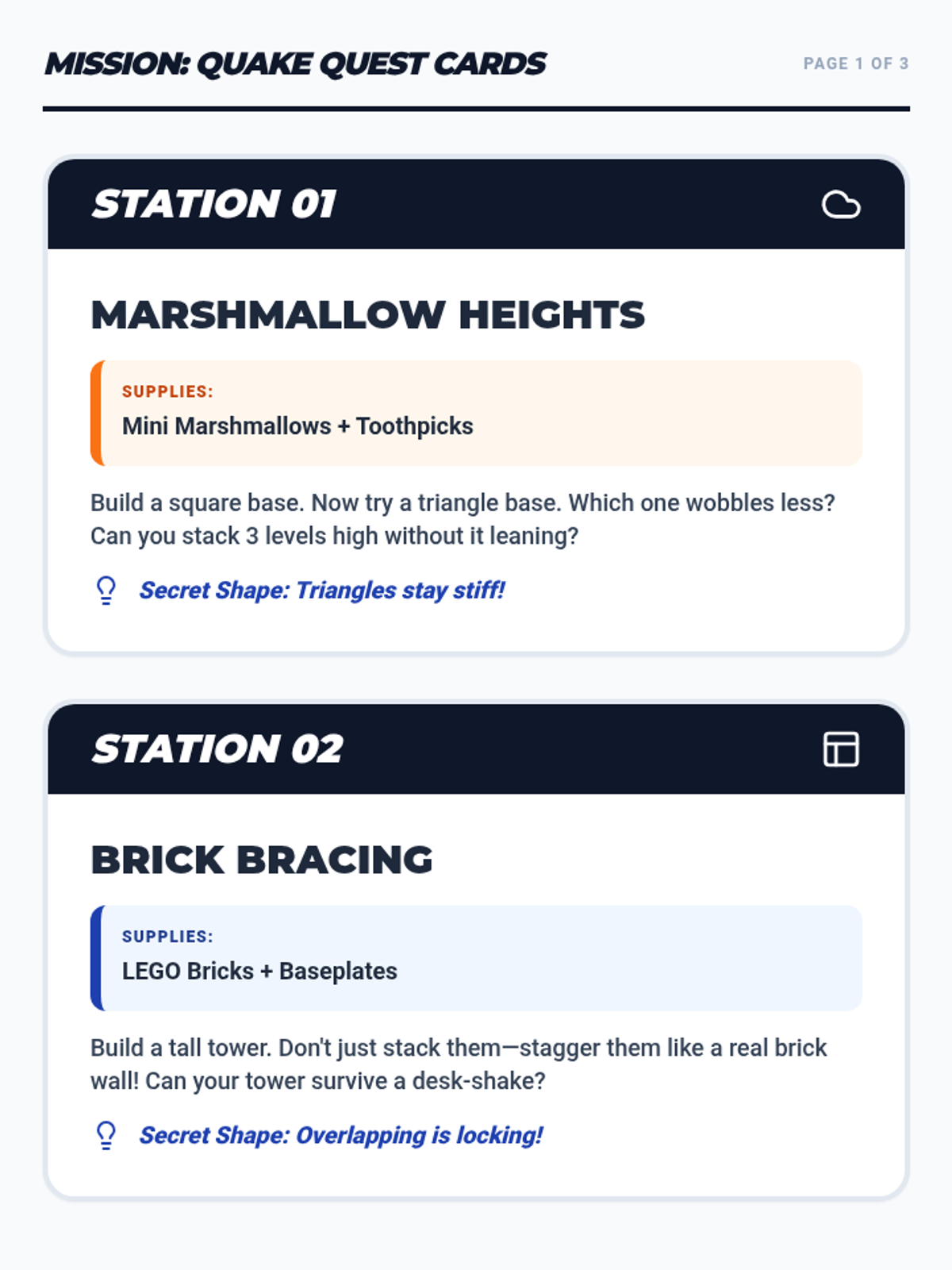
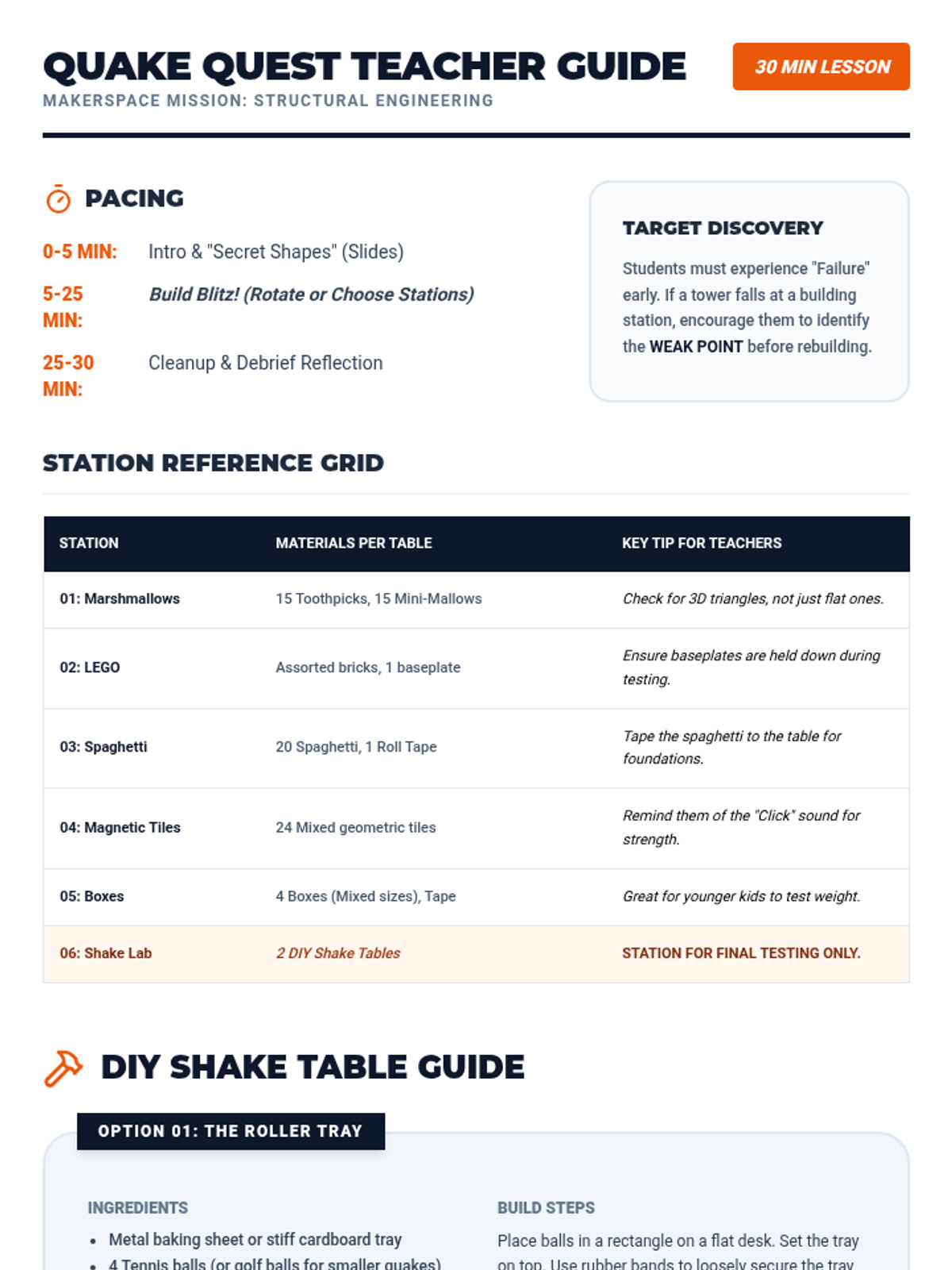
A fast-paced makerspace series where students tackle engineering challenges. This unit focuses on structural integrity and seismic resistance using everyday materials.
A cross-curricular journey where students blend scientific observation with artistic expression, developing ELA skills through field notes, procedural writing, and narrative storytelling.
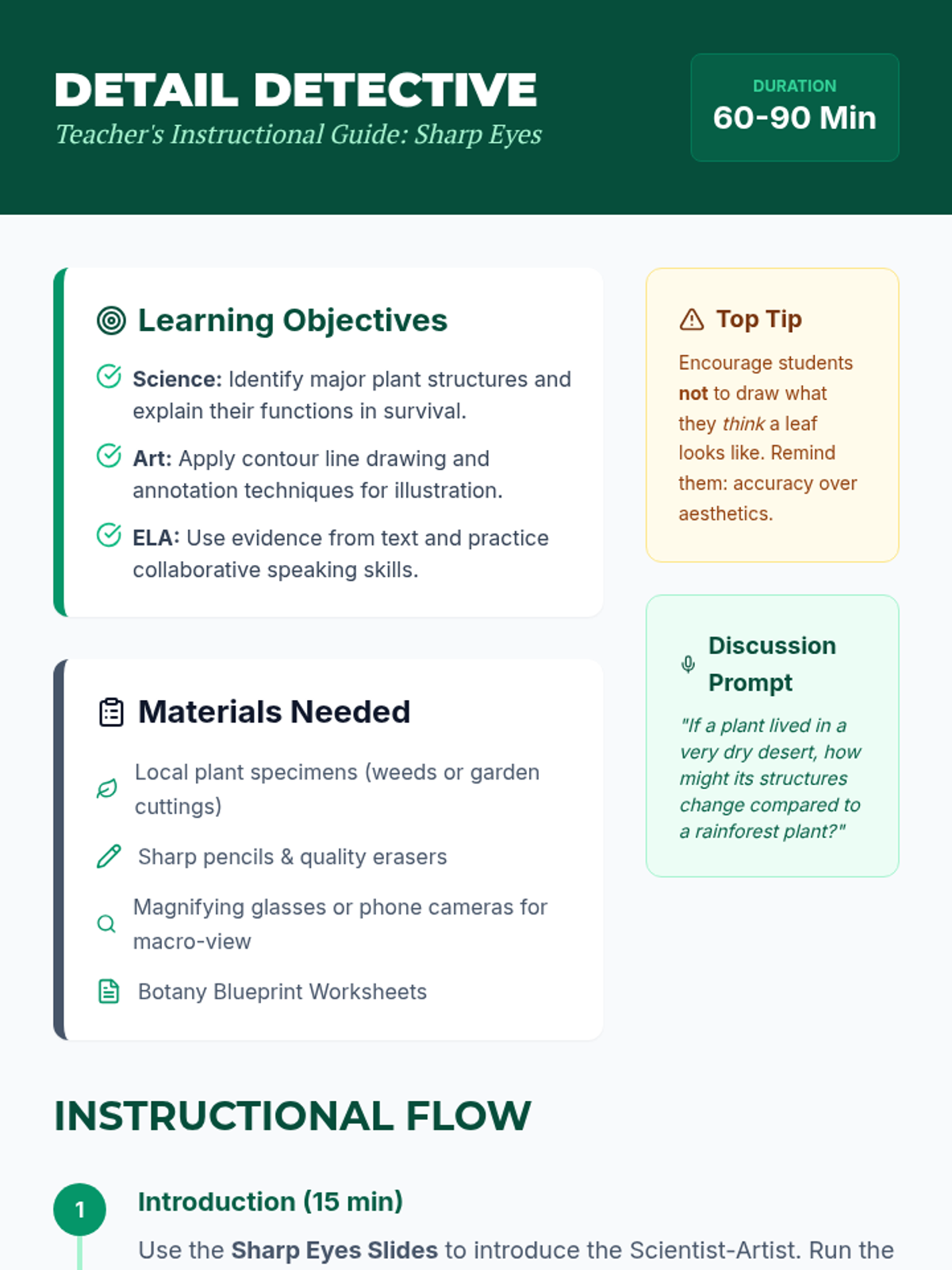
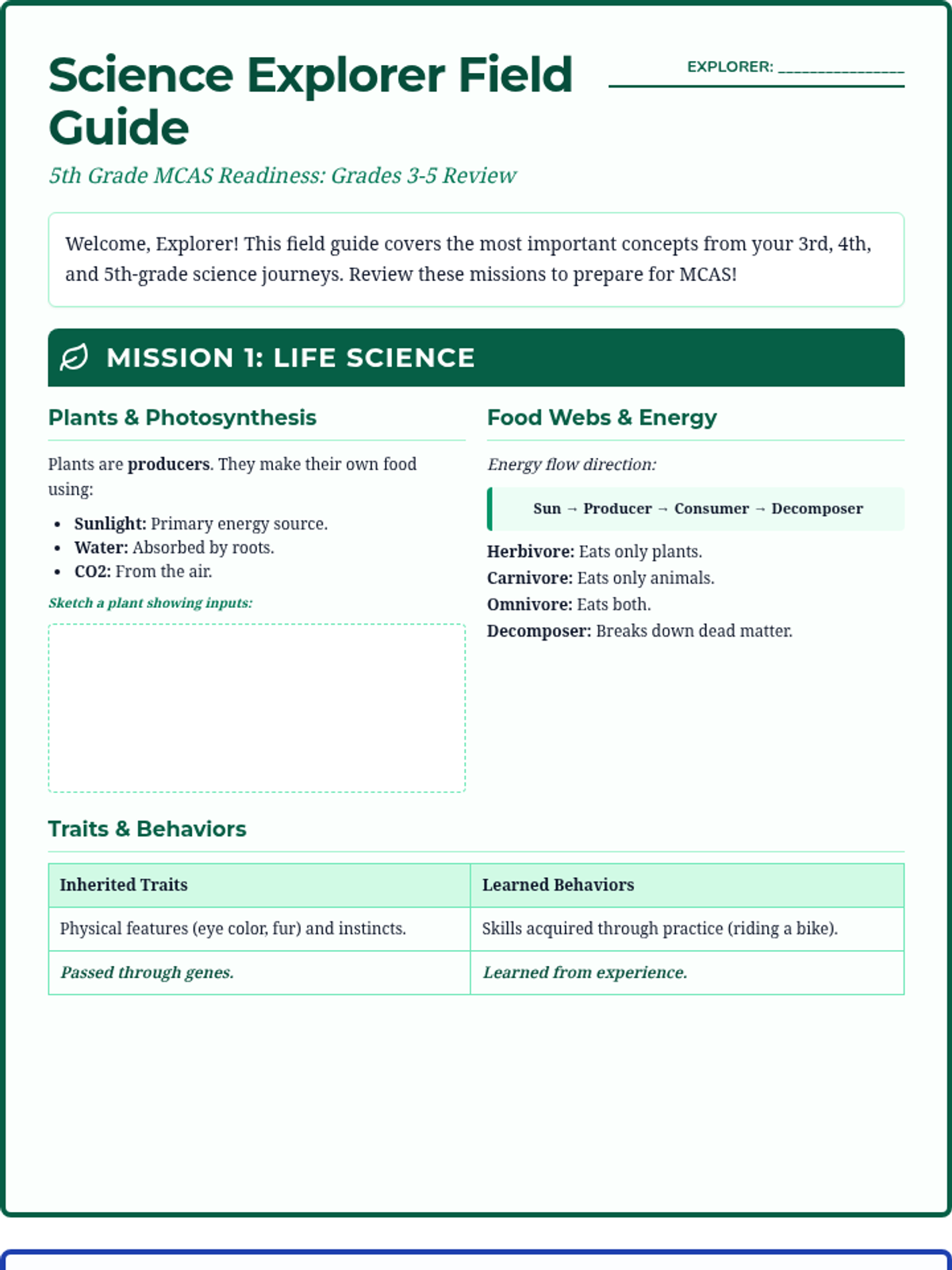
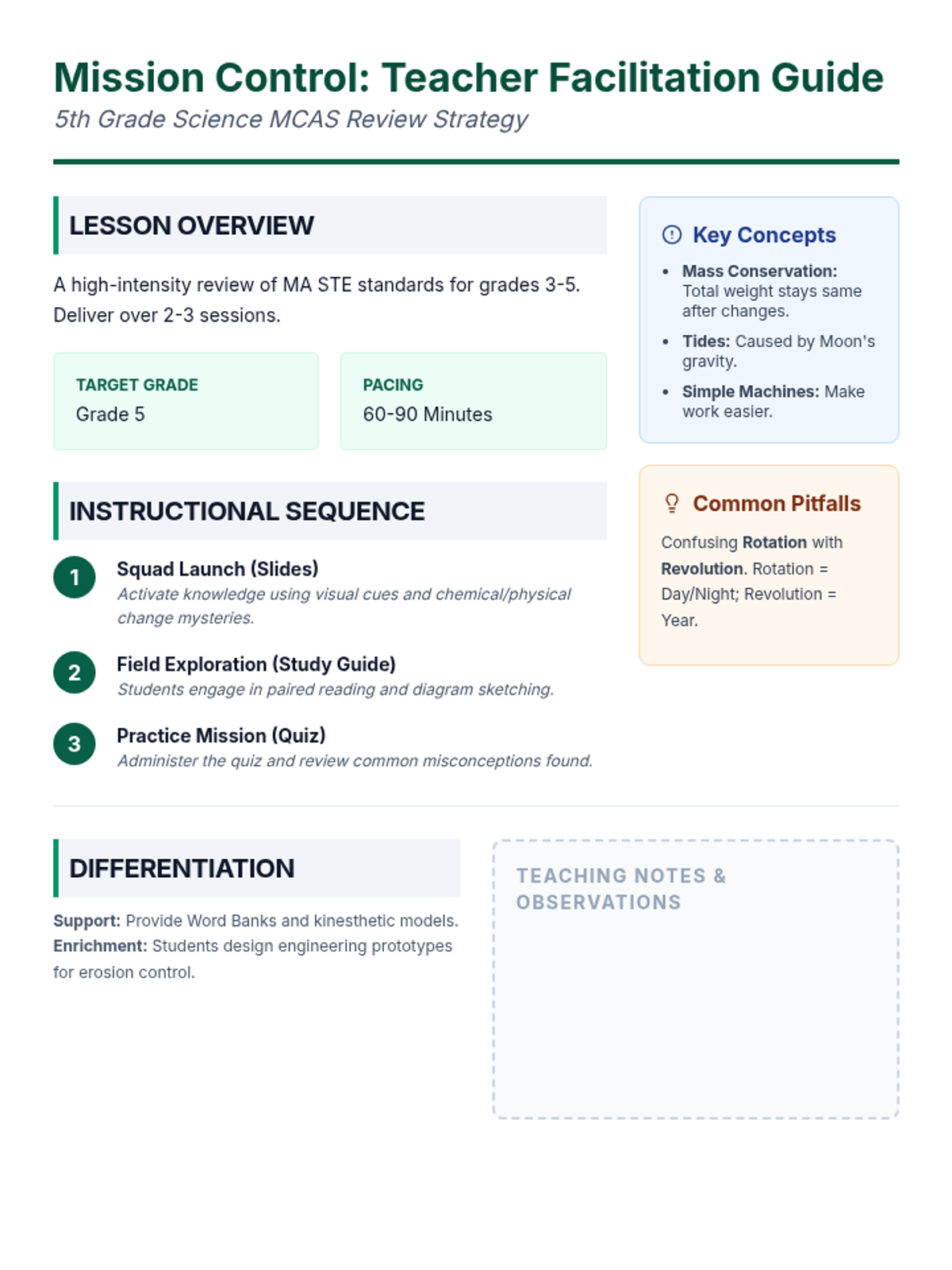
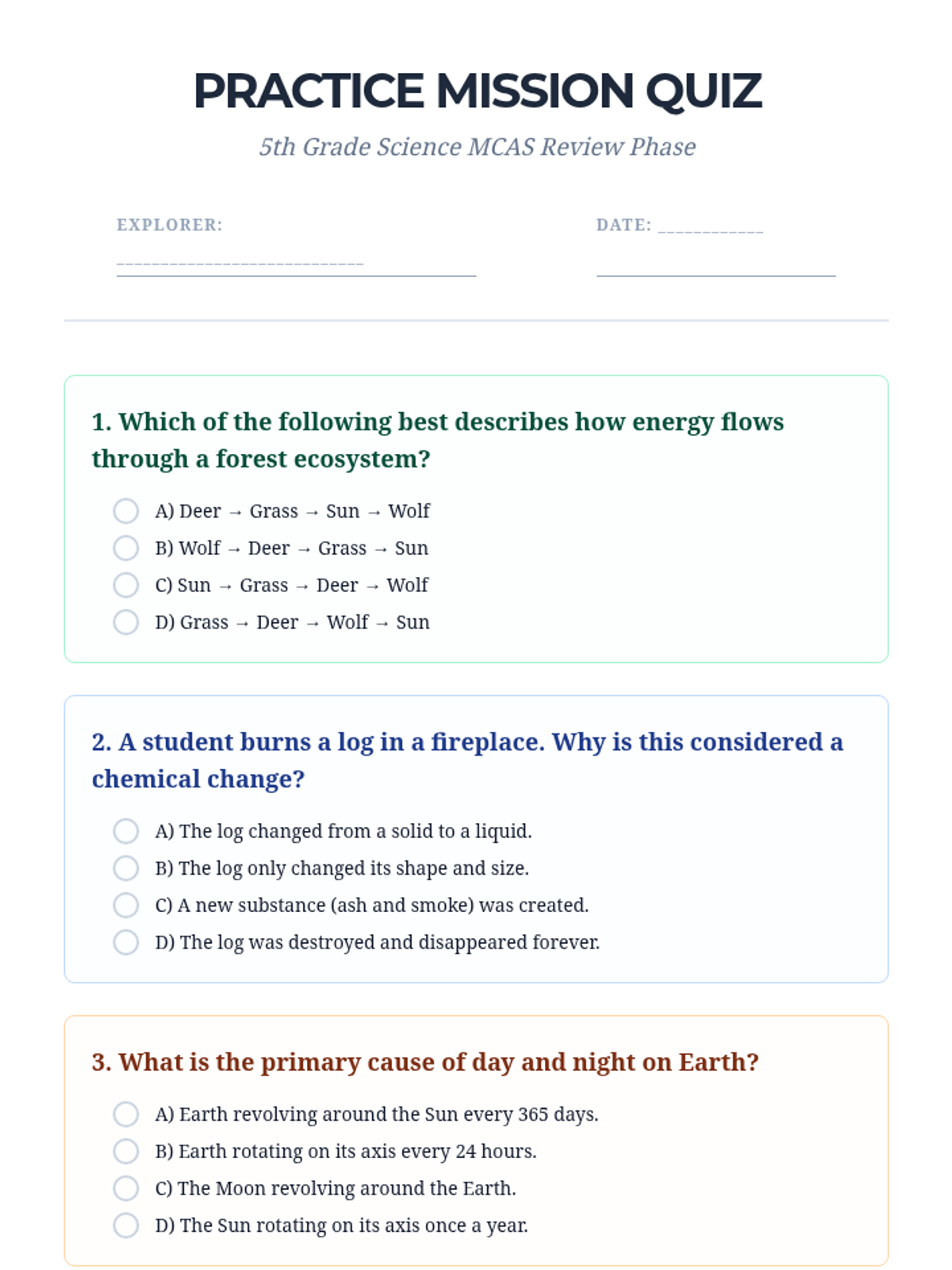
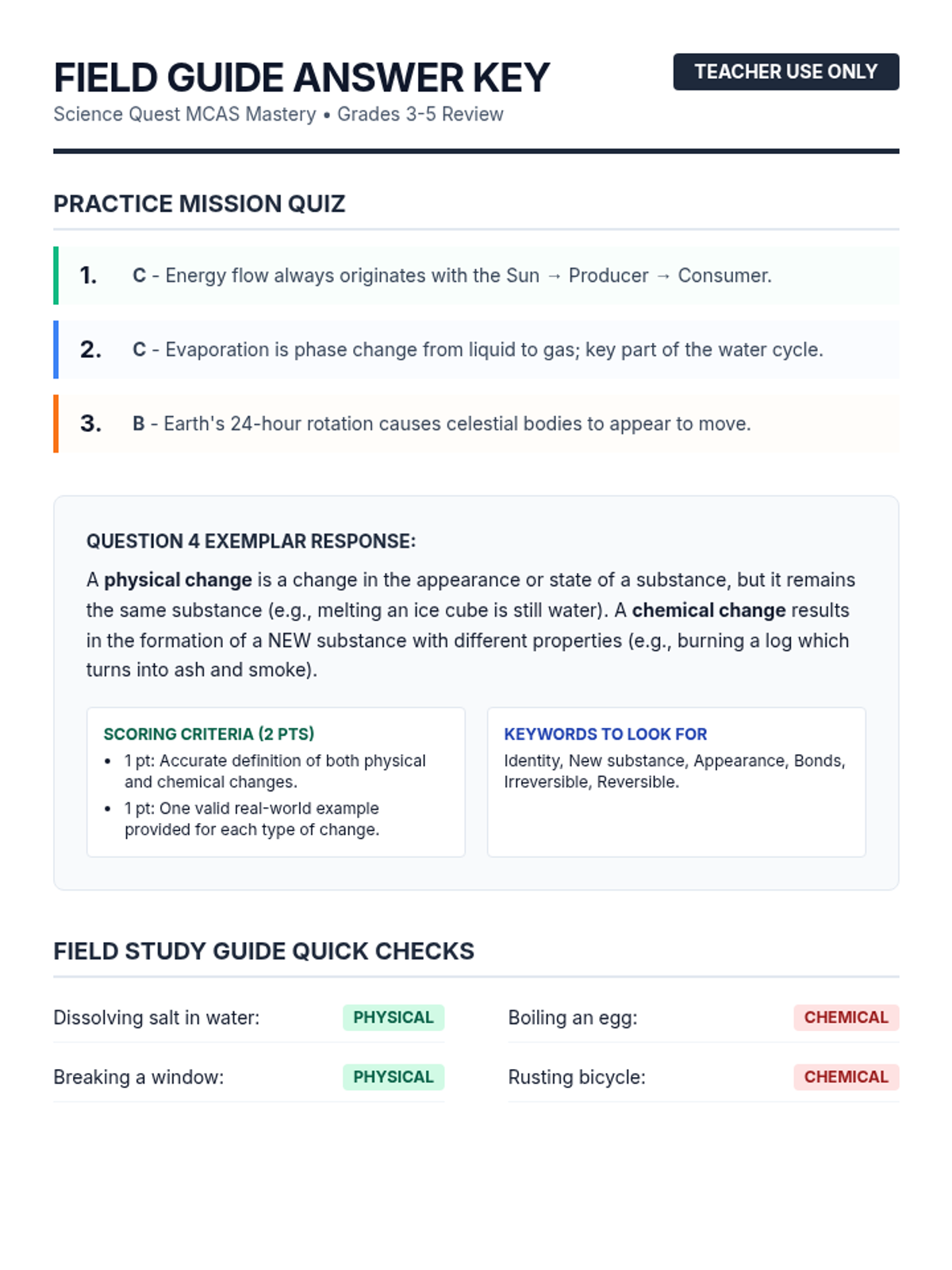
A comprehensive review of the 3rd-5th grade Massachusetts Science and Technology/Engineering (STE) standards to prepare students for the 5th grade MCAS. Includes a detailed study guide, instructional slides, and teacher support materials.
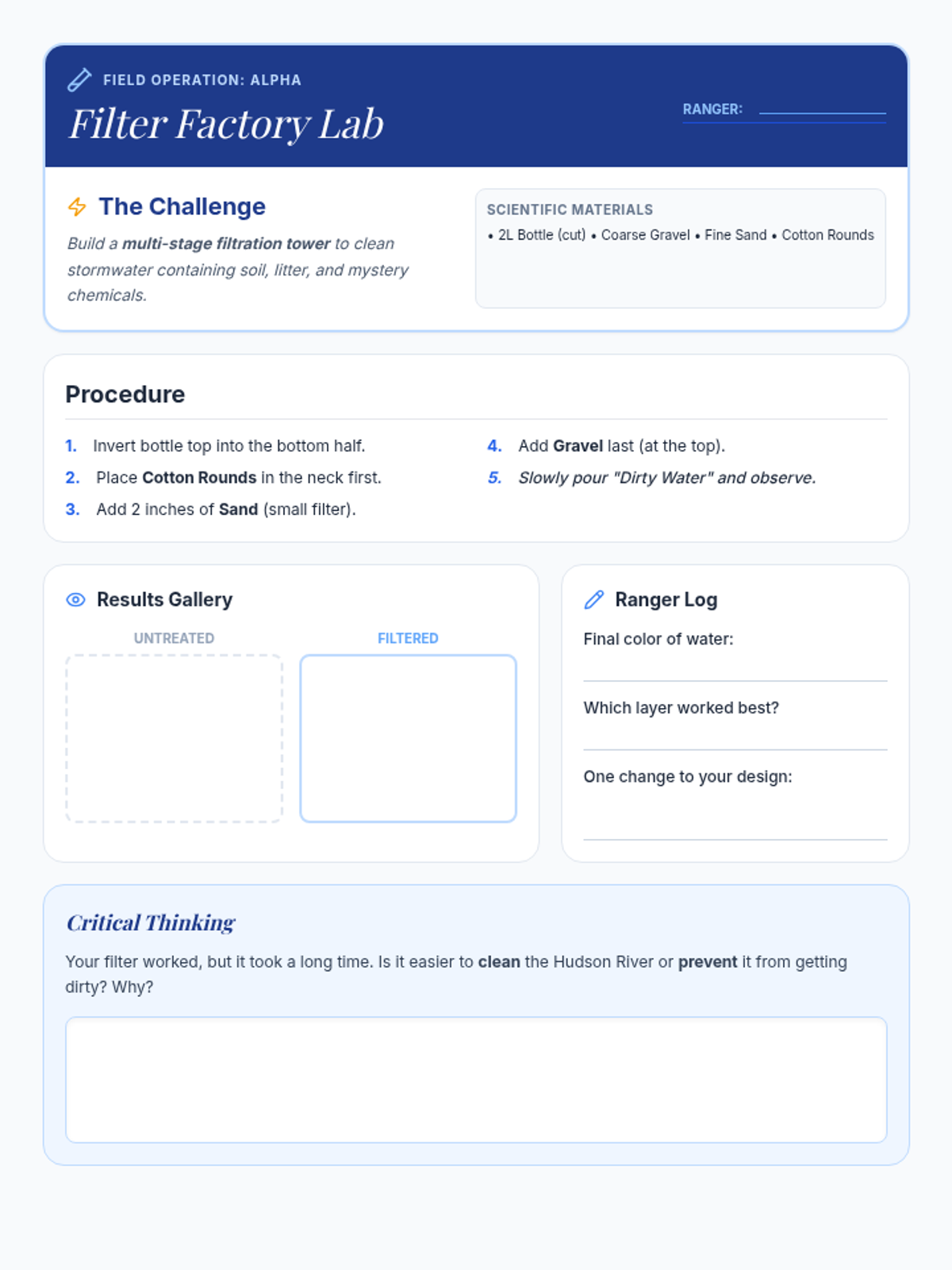
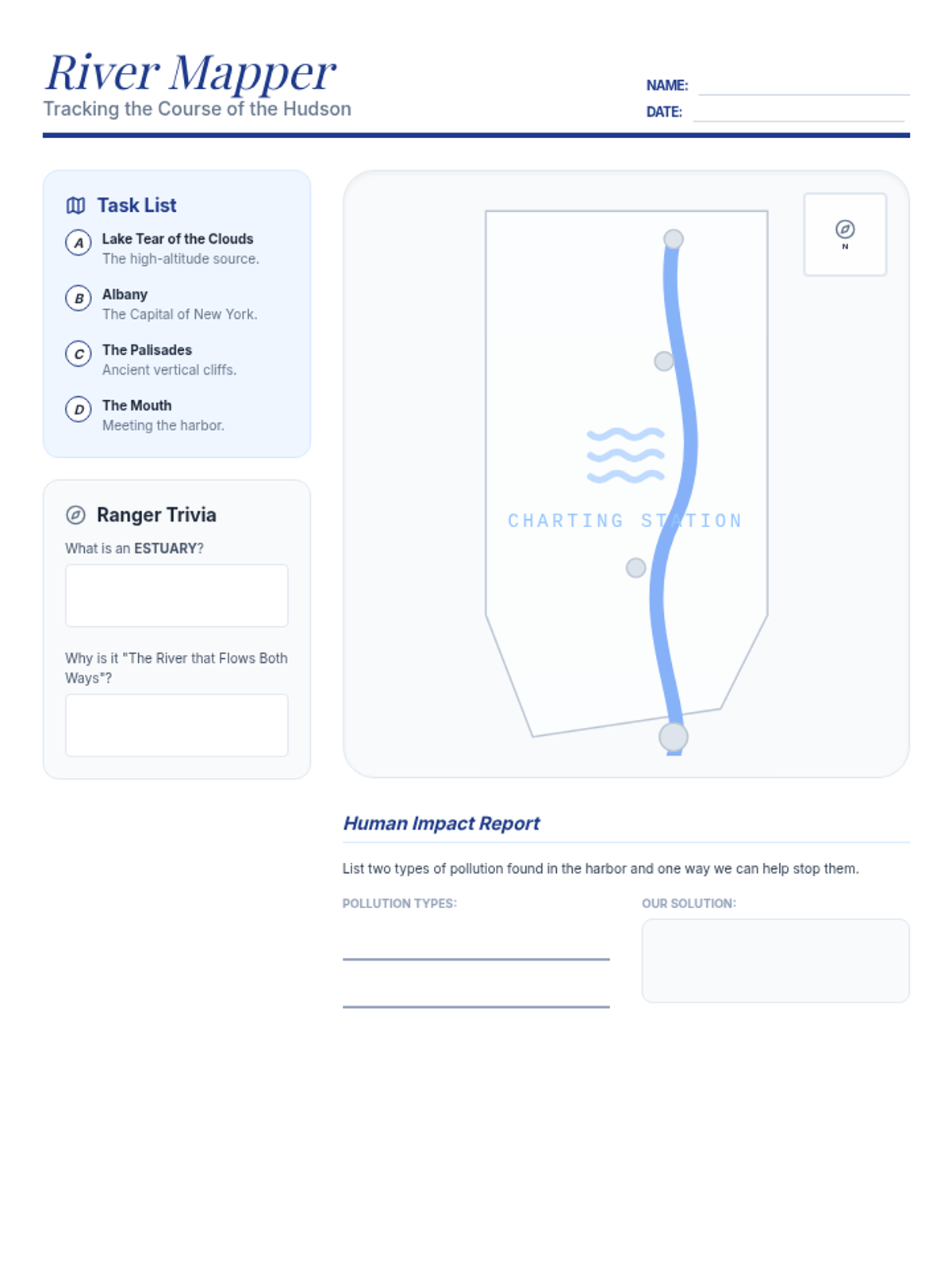
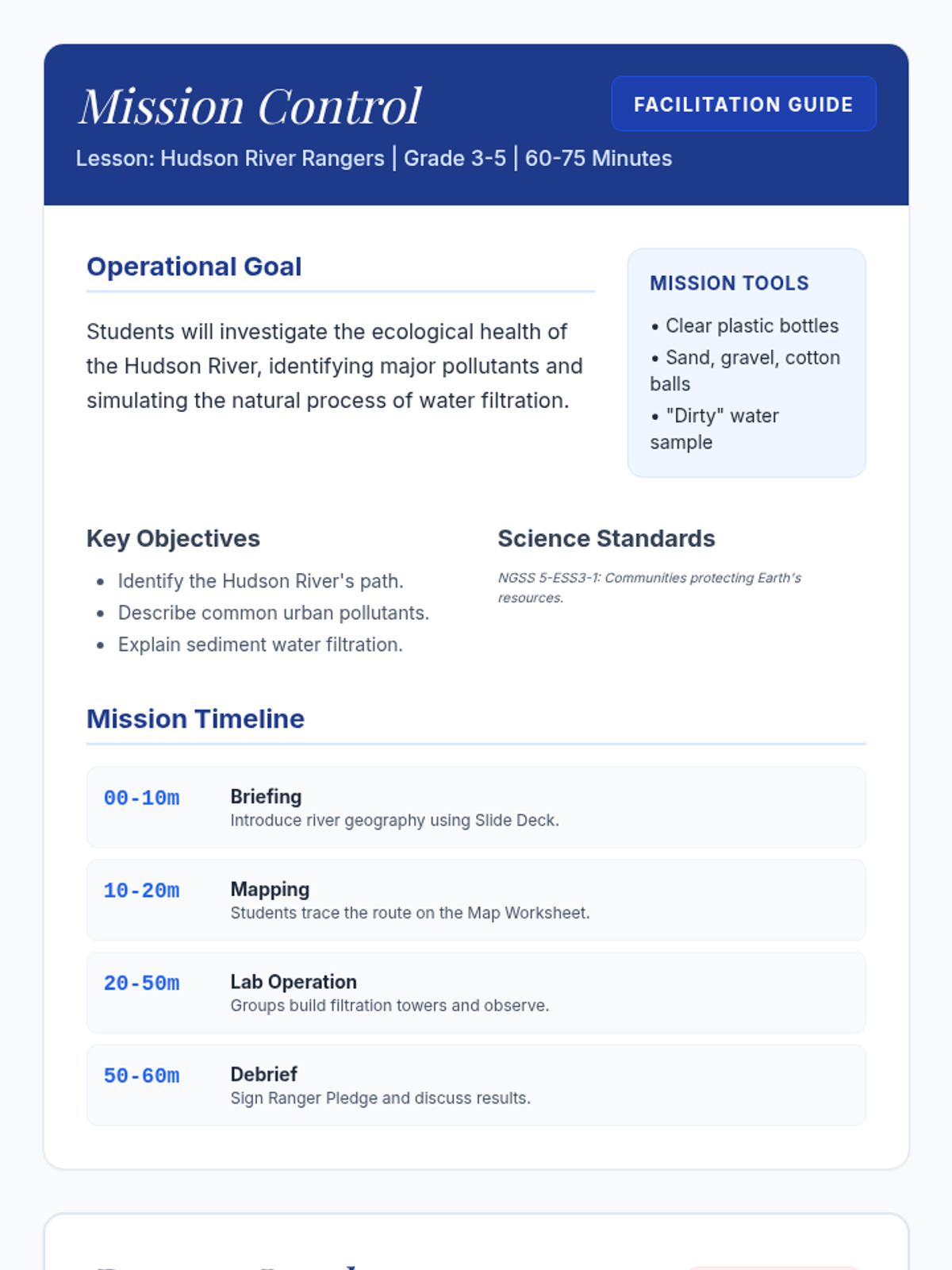
A hands-on environmental science unit exploring urban waterways, human impact, and conservation through the lens of New York City's iconic Hudson River.
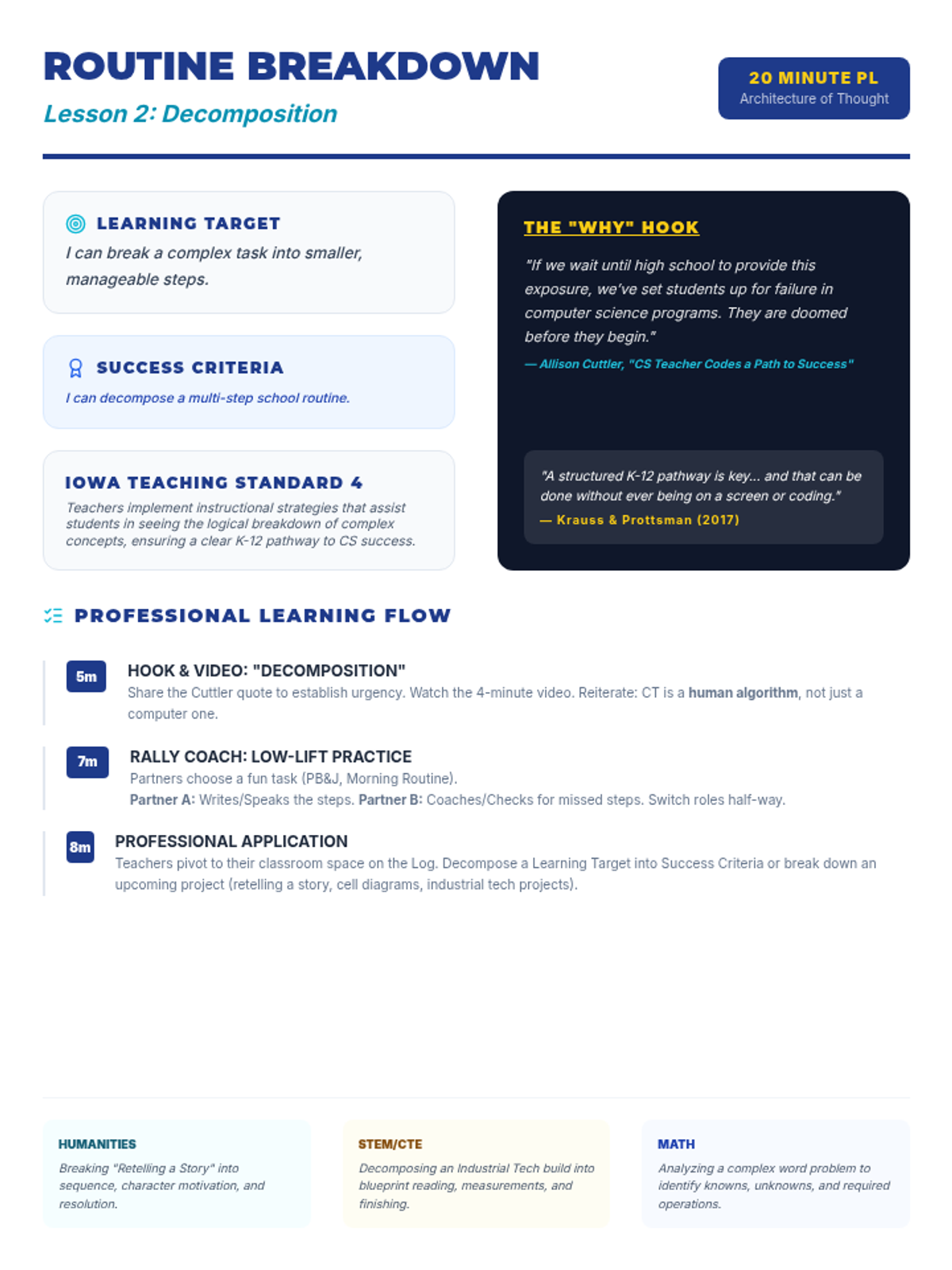
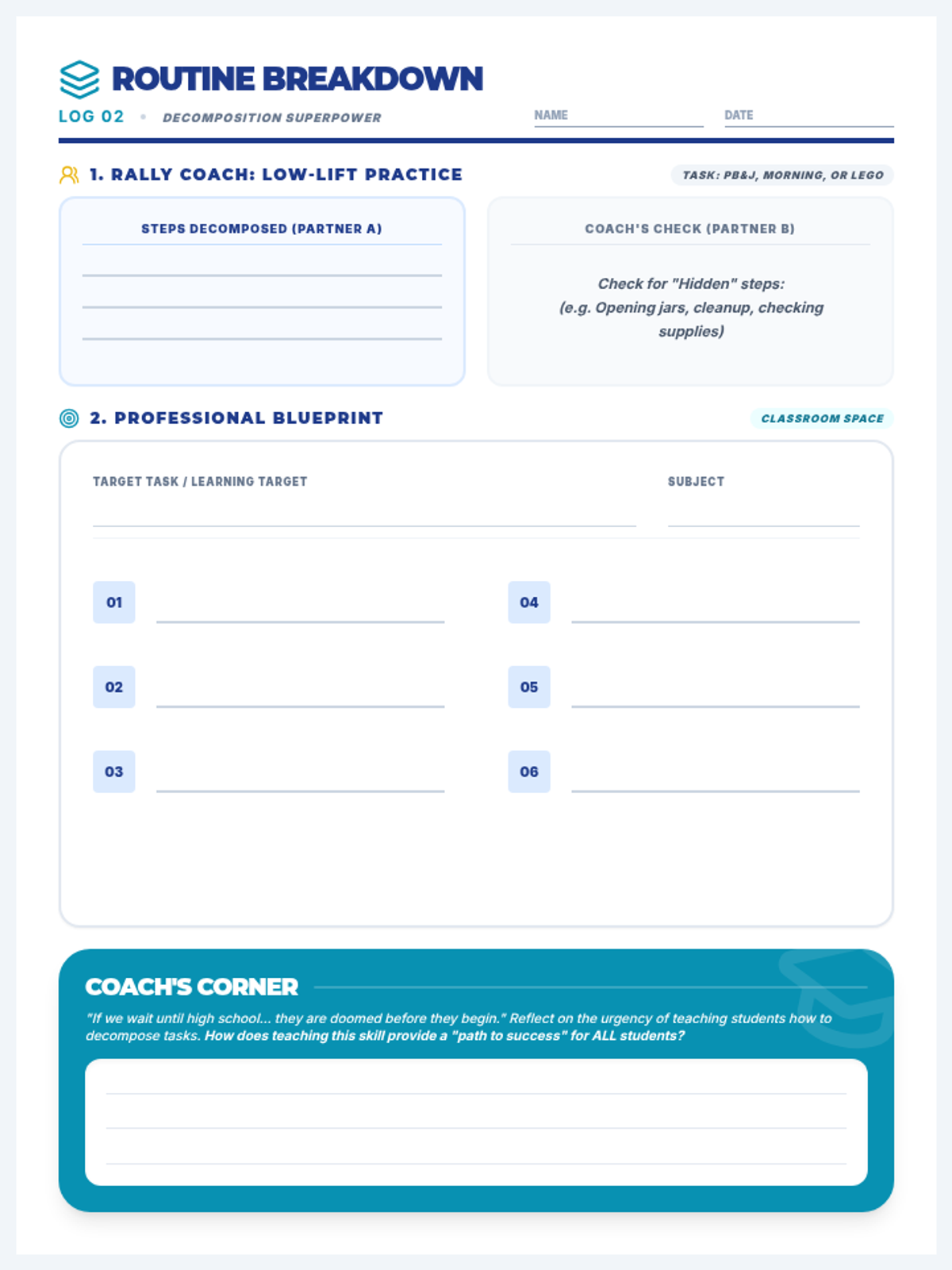
A professional development series for PreK-12 educators that reframes Computer Science as a "Superpower" through Computational Thinking. Teachers explore how CS concepts like decomposition, abstraction, and automation are already present in their daily instructional practices and Iowa Core content.
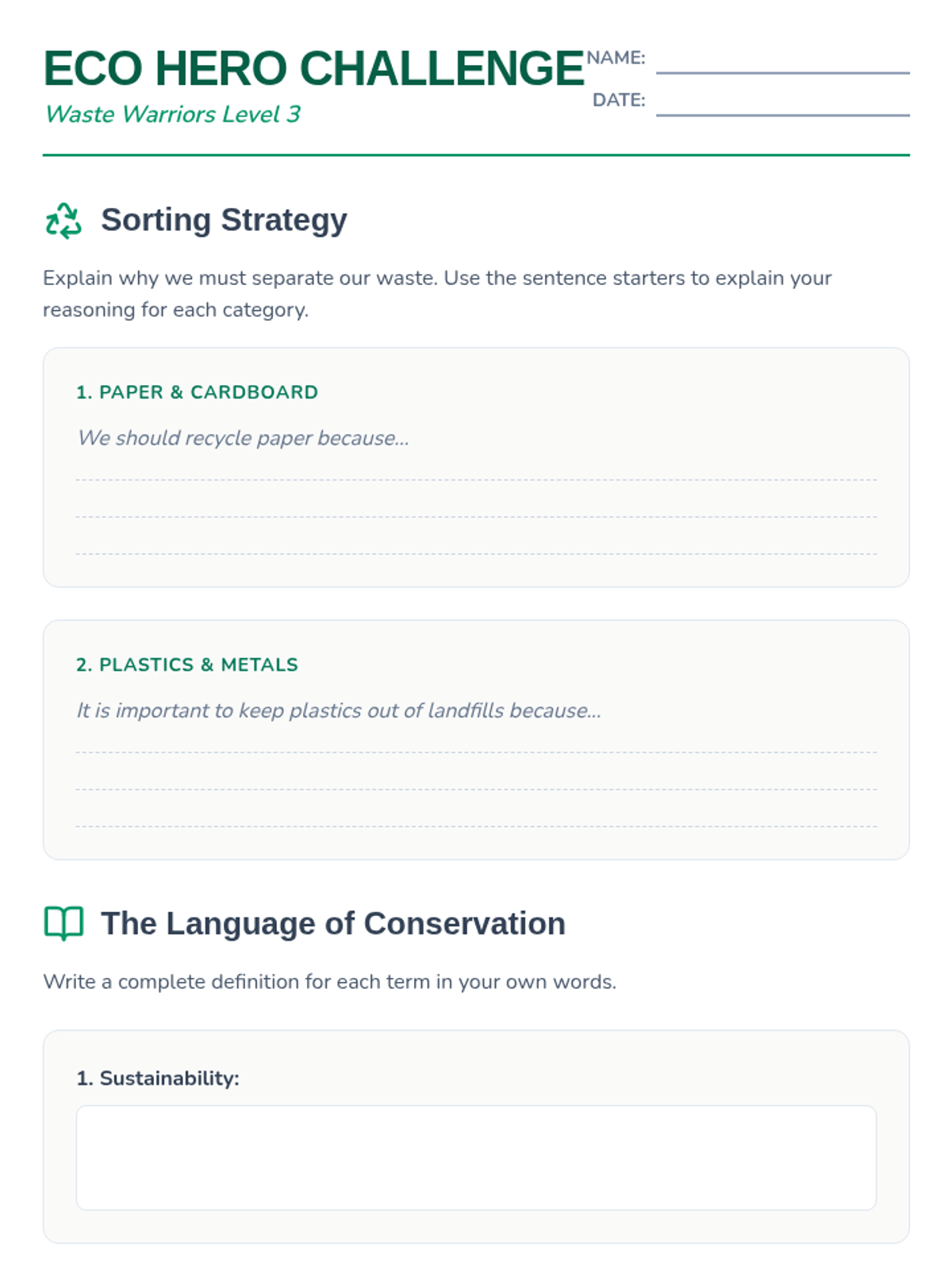
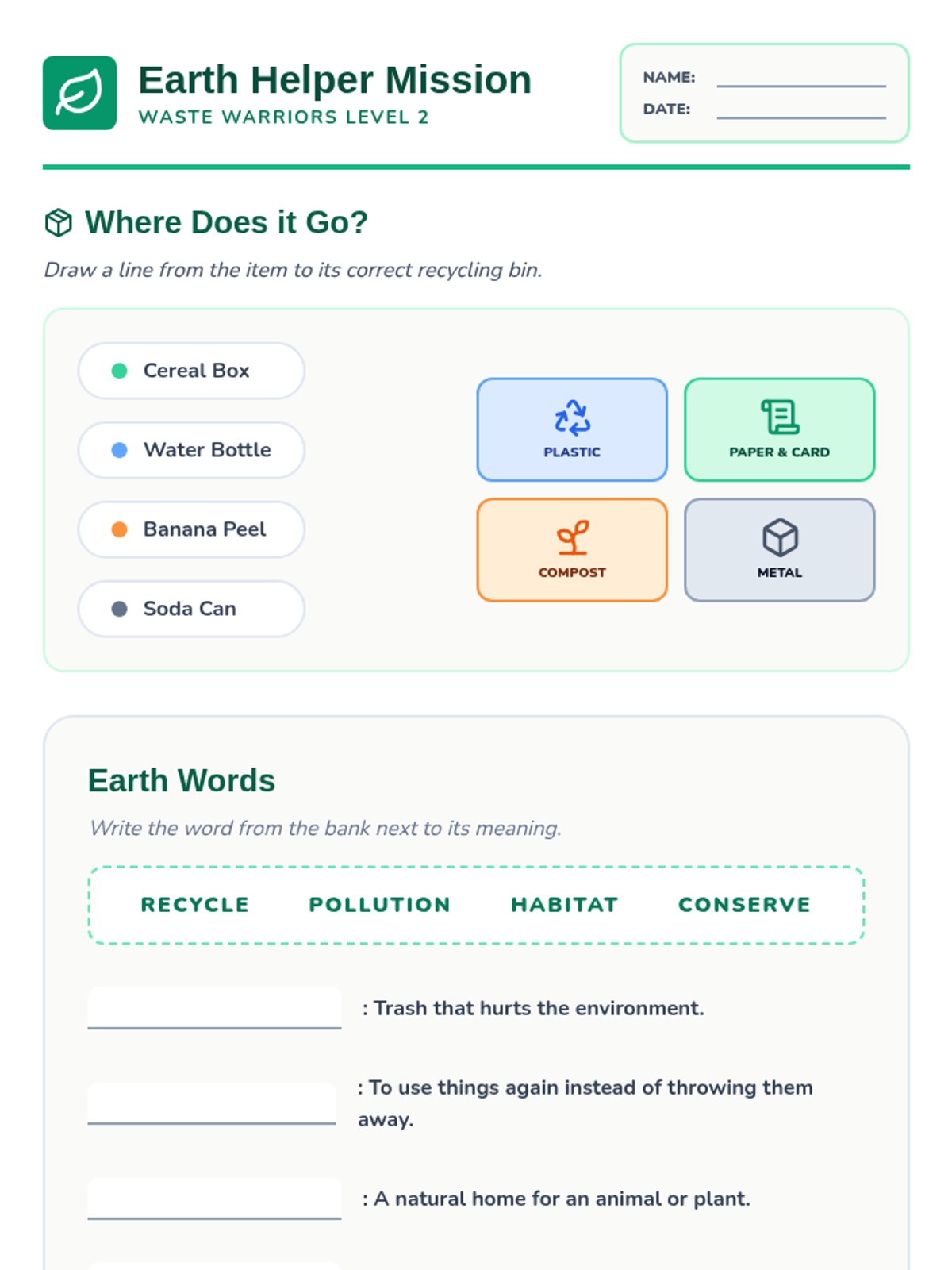
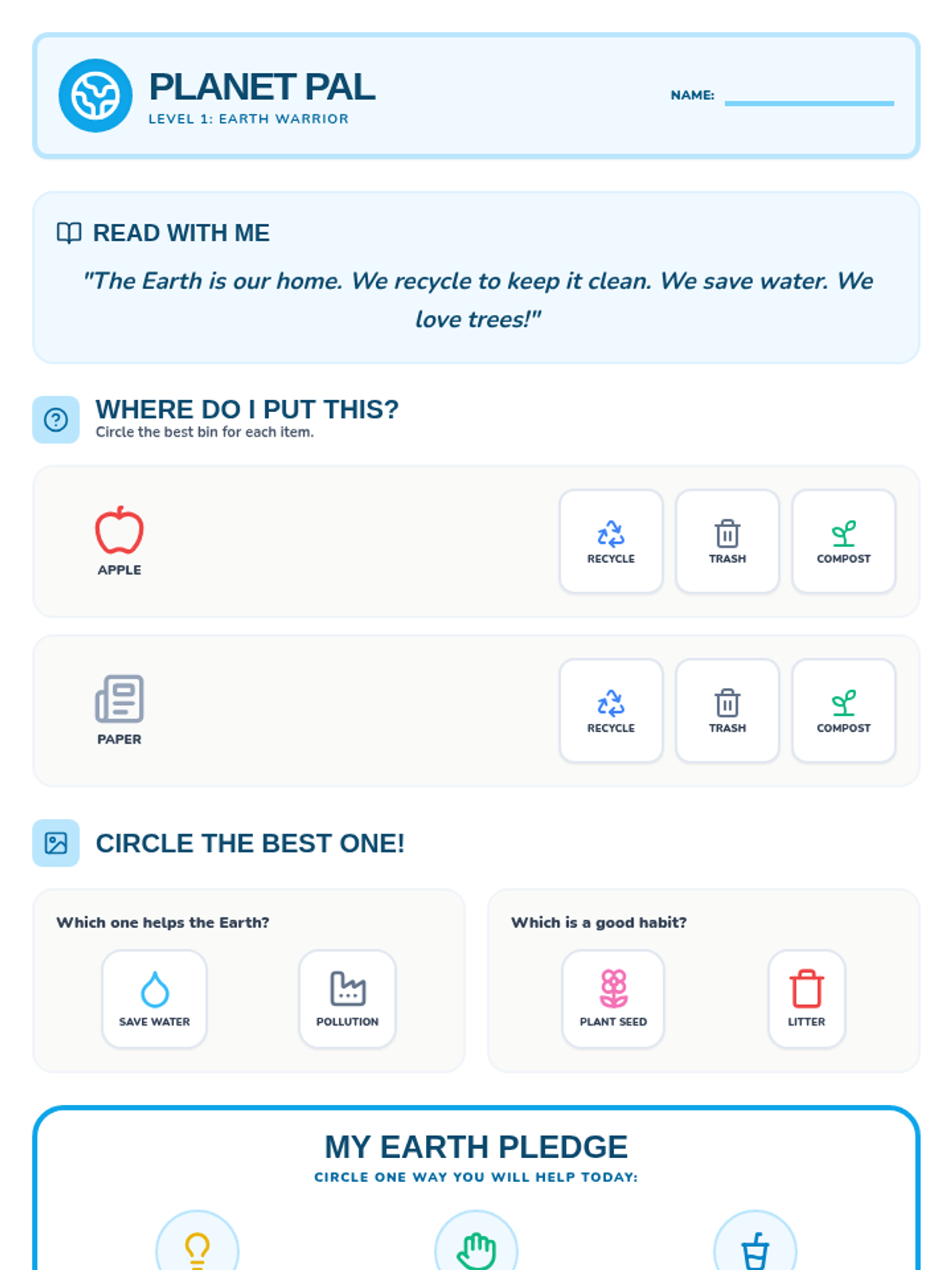
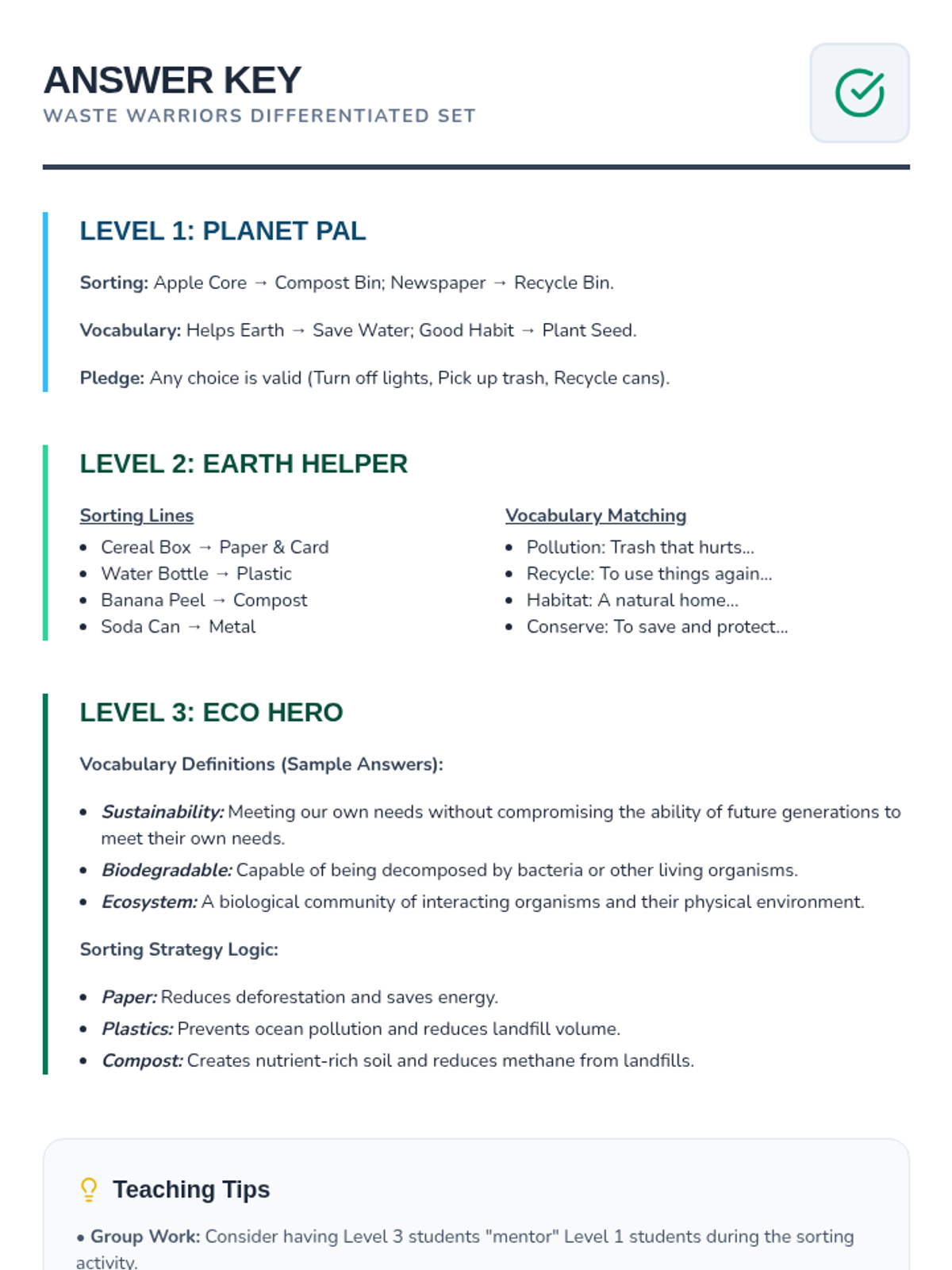
A comprehensive unit focused on environmental stewardship, exploring waste management, conservation, and sustainable living through hands-on activities.
A comprehensive end-of-year review for 5th Grade NGSS science standards, organized by domain to ensure mastery of physical, life, and Earth sciences.
A comprehensive review of all 5th Grade NGSS Science standards, covering matter, ecosystems, Earth systems, and space science through vocabulary practice, graphic organizers, and critical thinking questions.
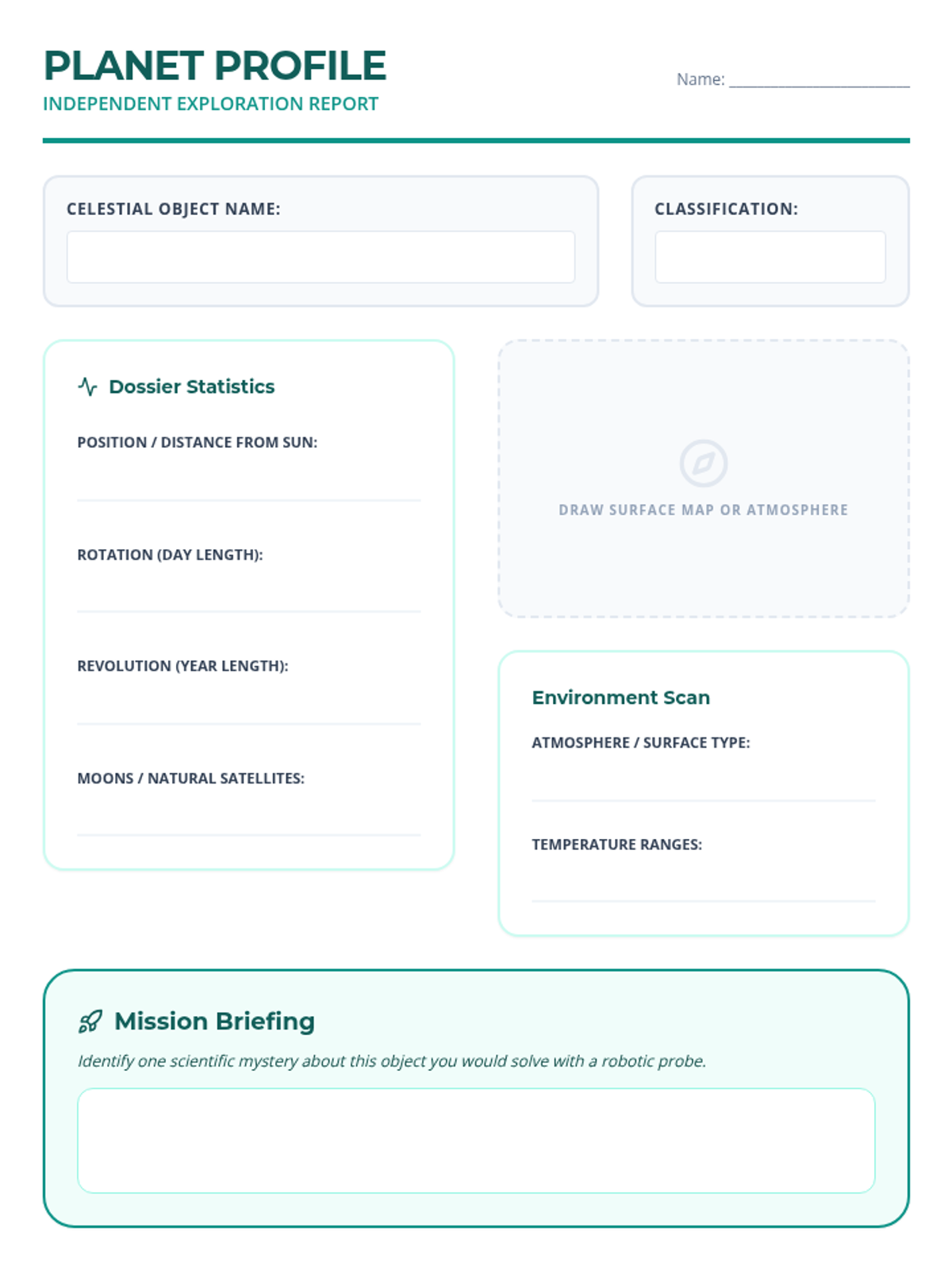
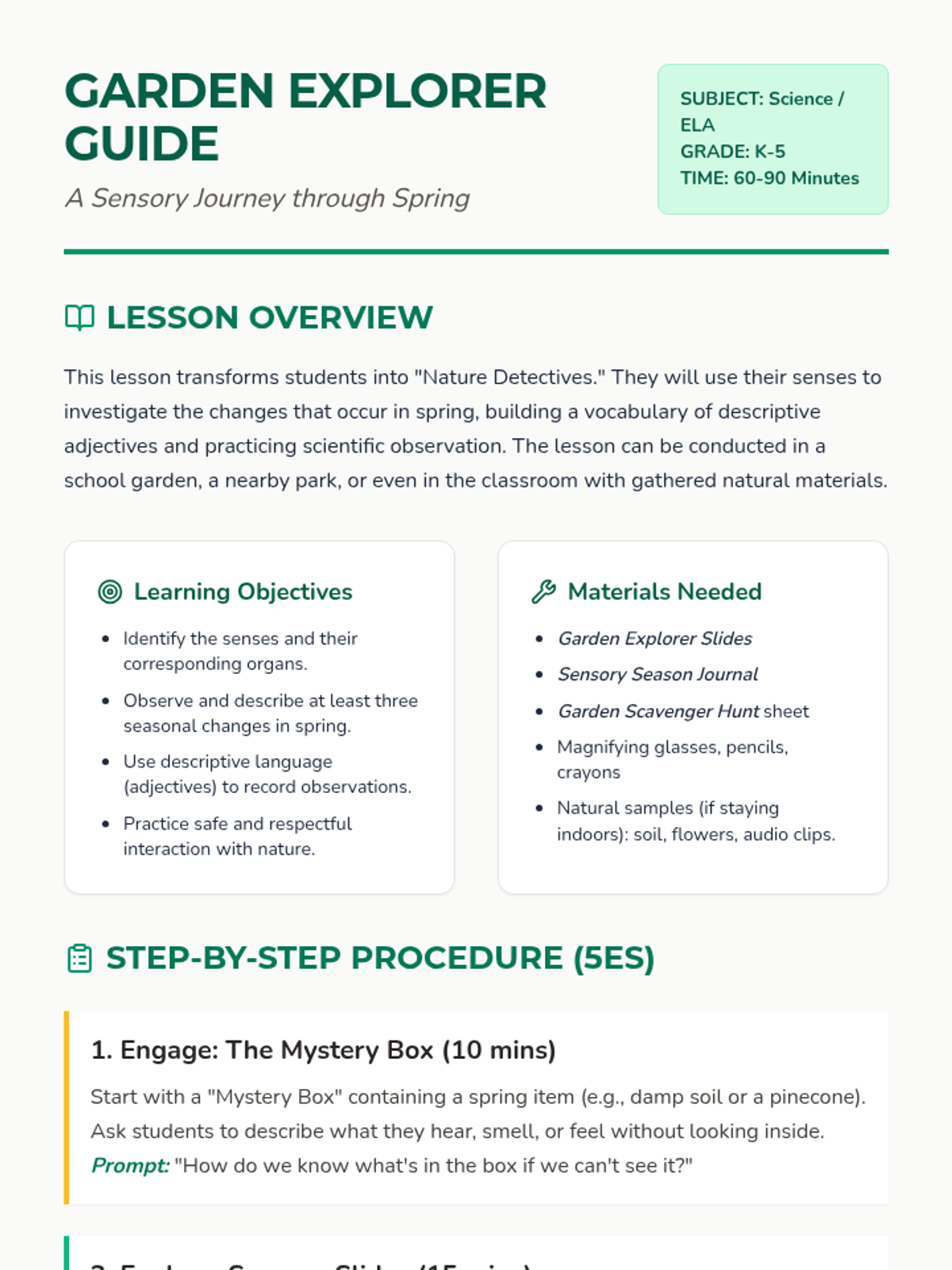
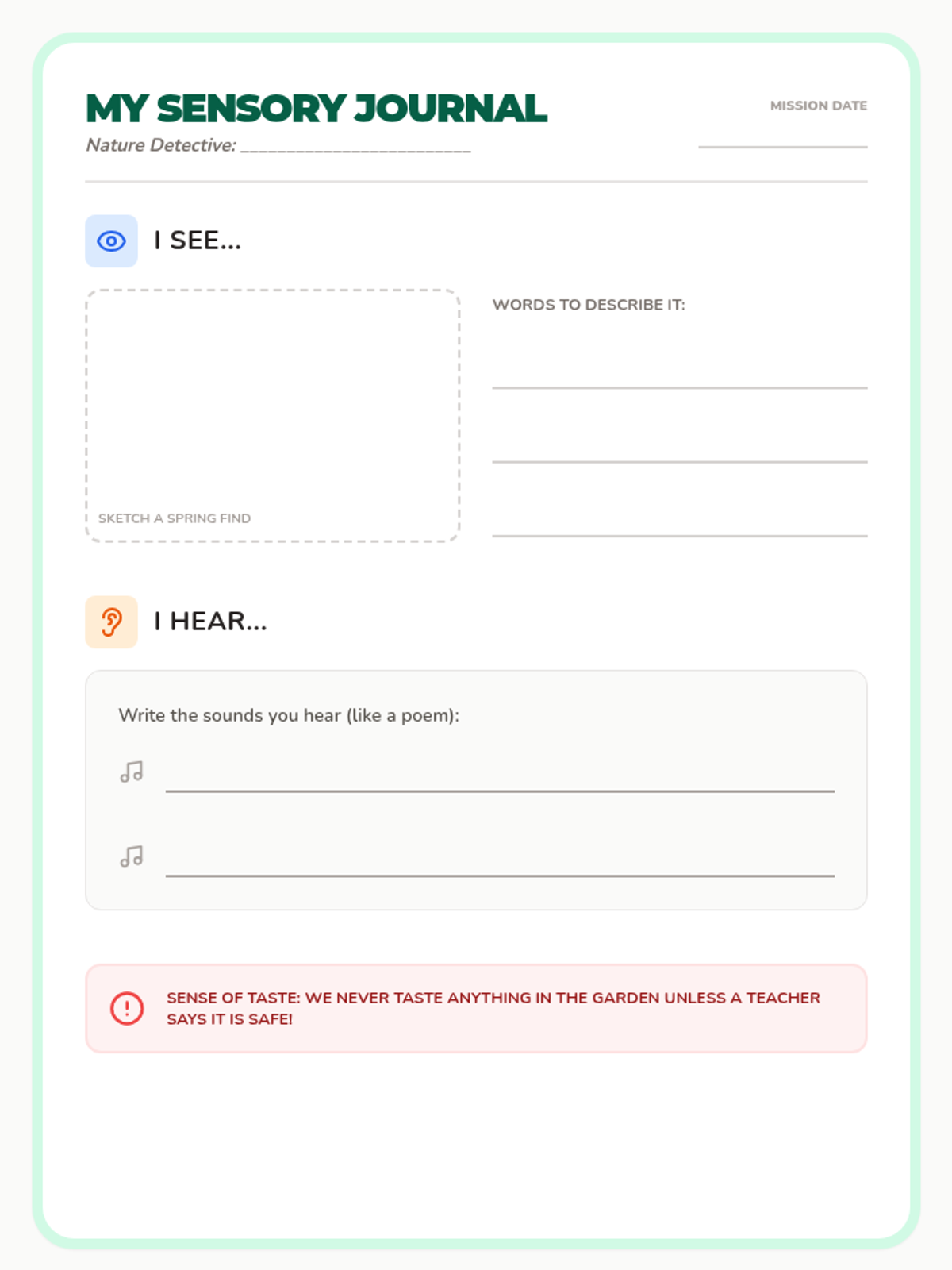
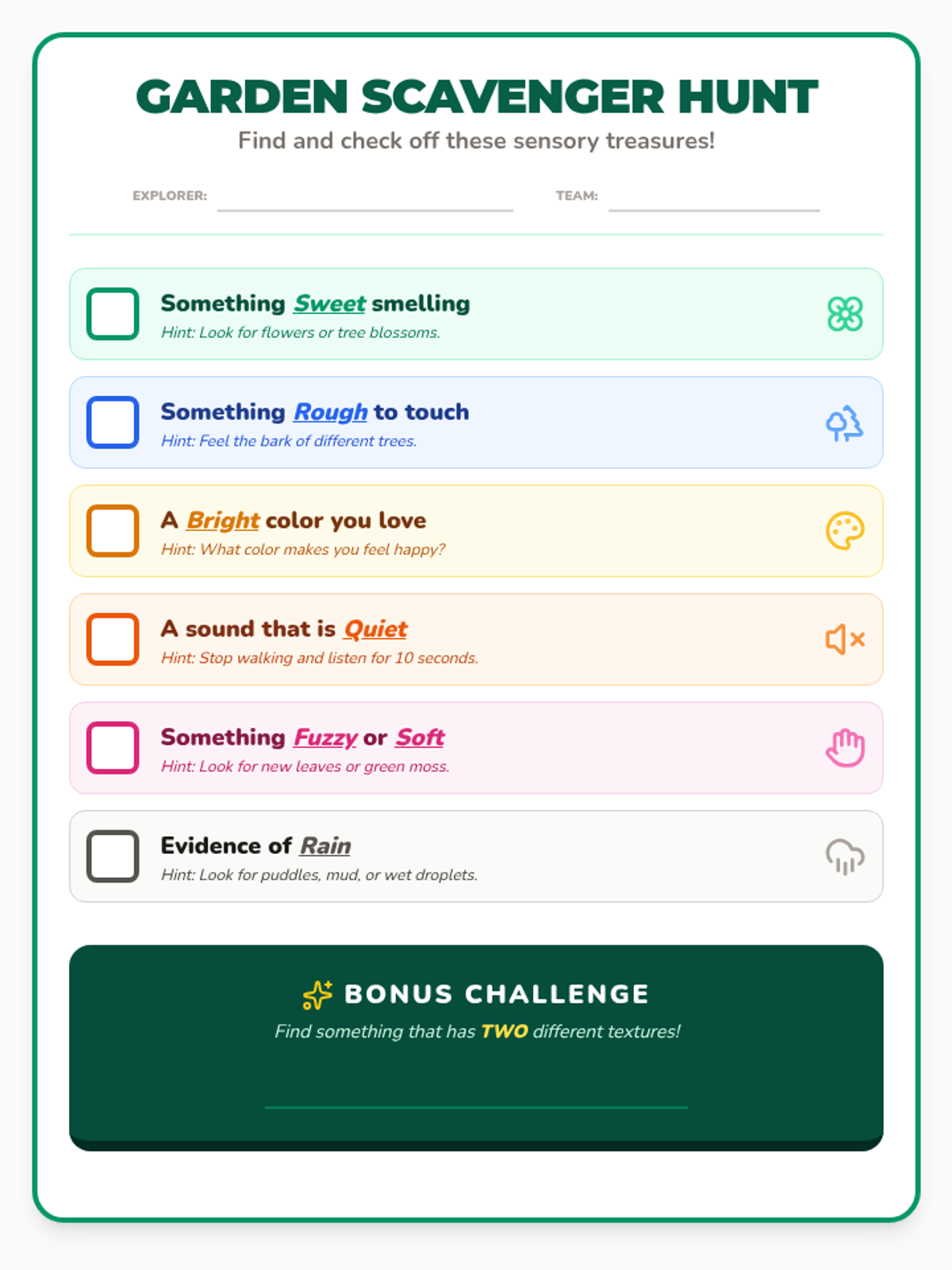
A series of nature-based investigations helping young learners connect with seasonal changes using their senses and scientific observation.
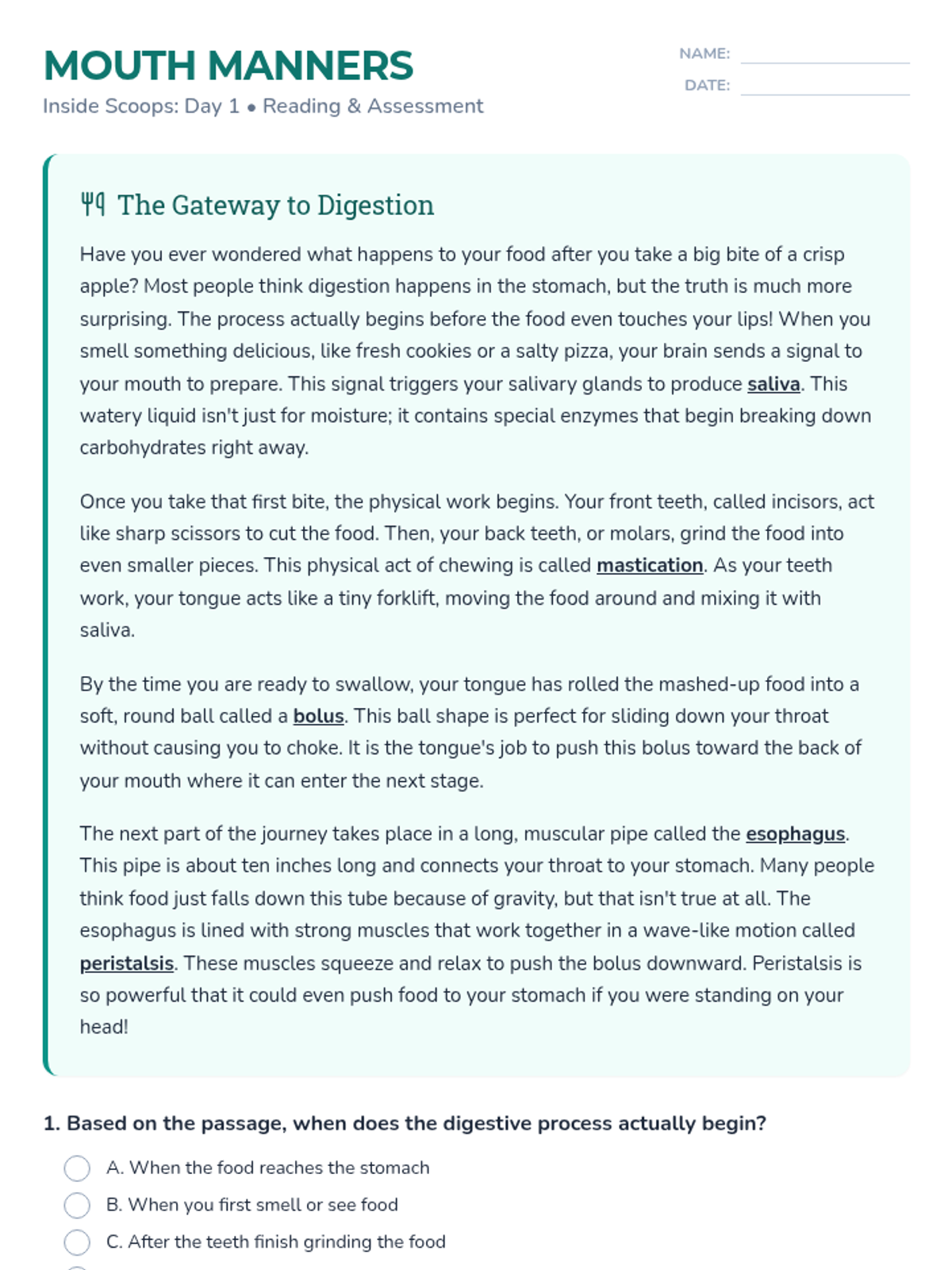
A 5-day comprehensive reading unit that explores the human digestive system while building critical literacy skills like using context clues, sequencing, identifying main ideas, and analyzing cause and effect.
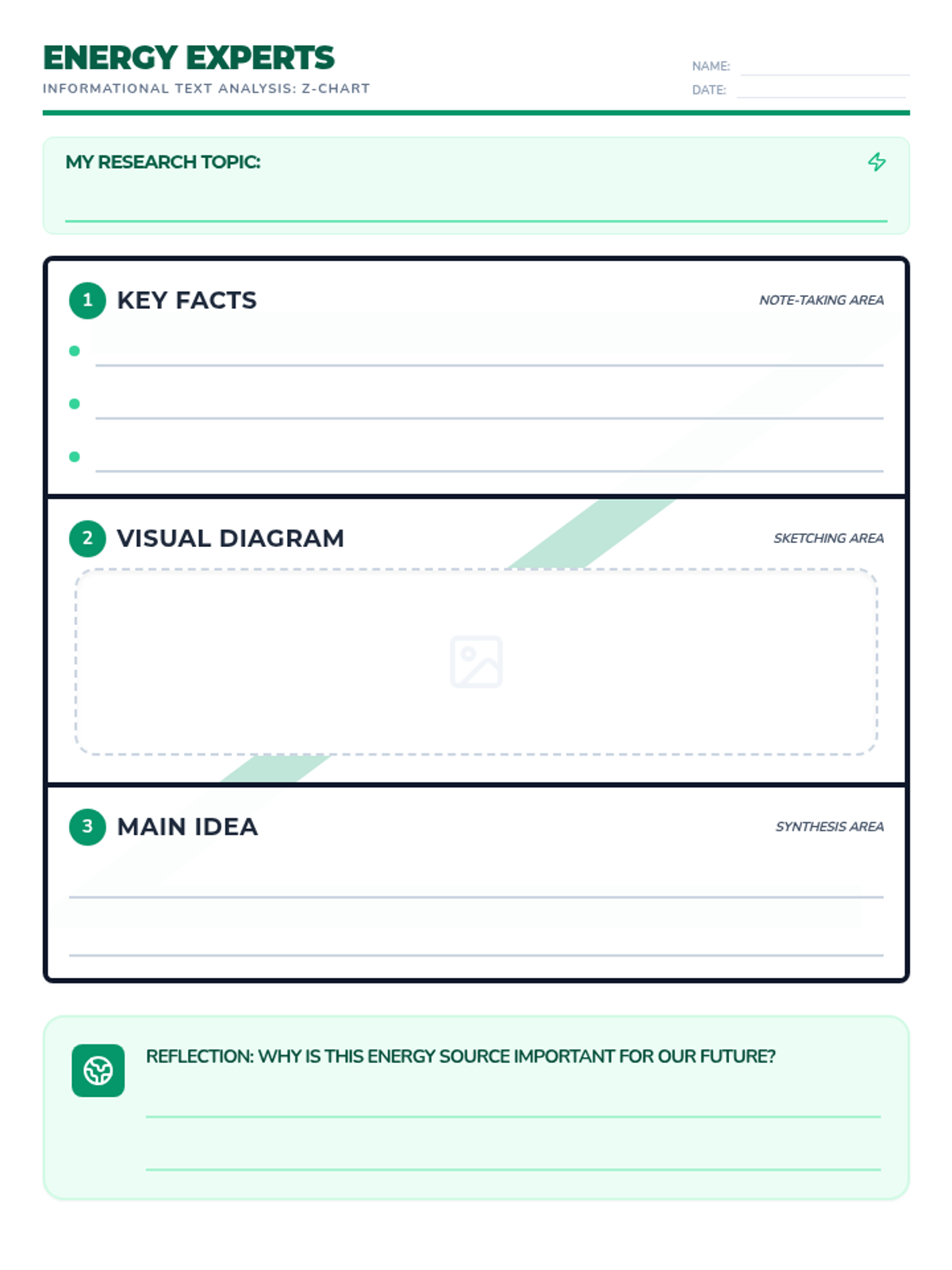
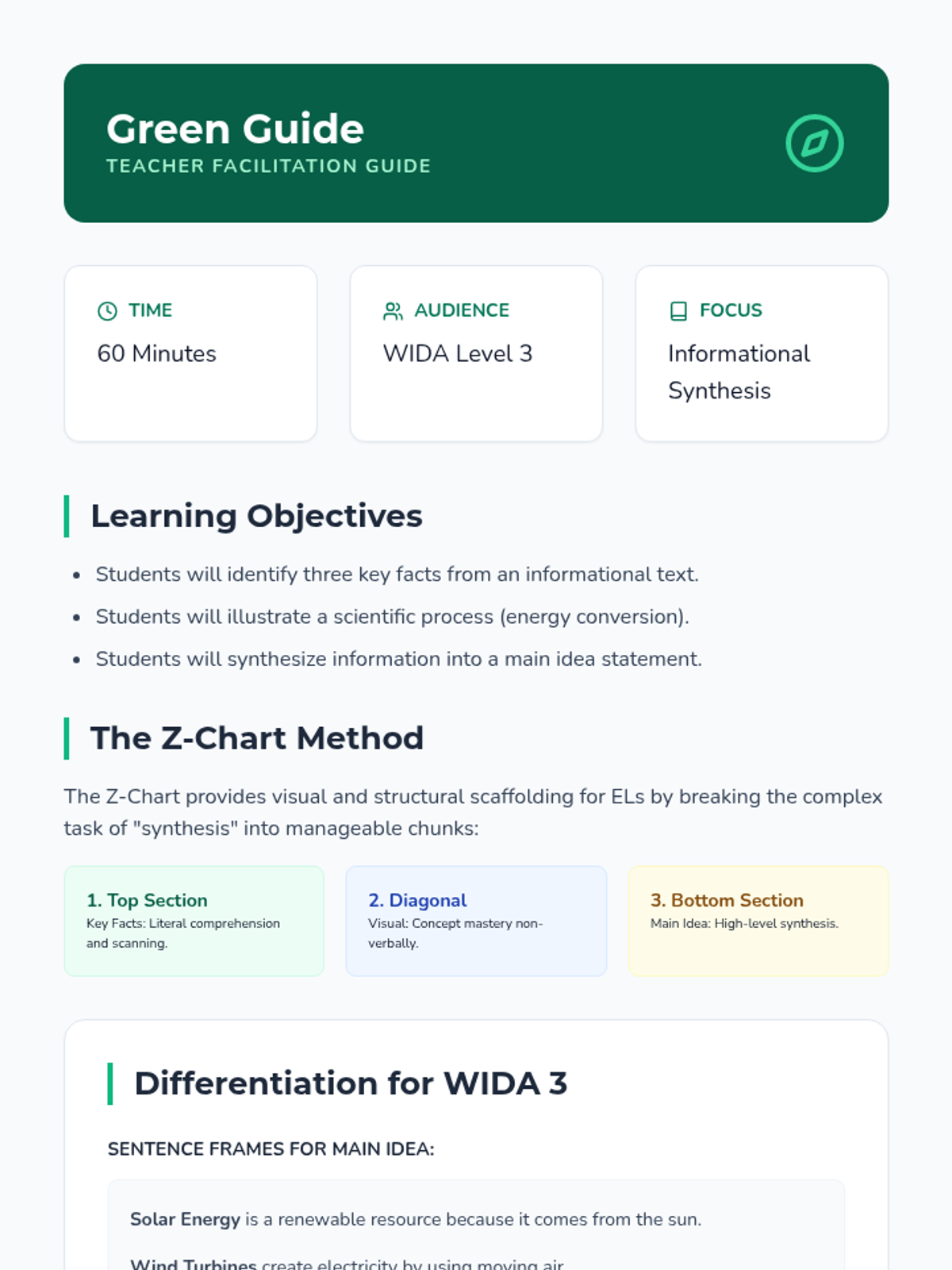
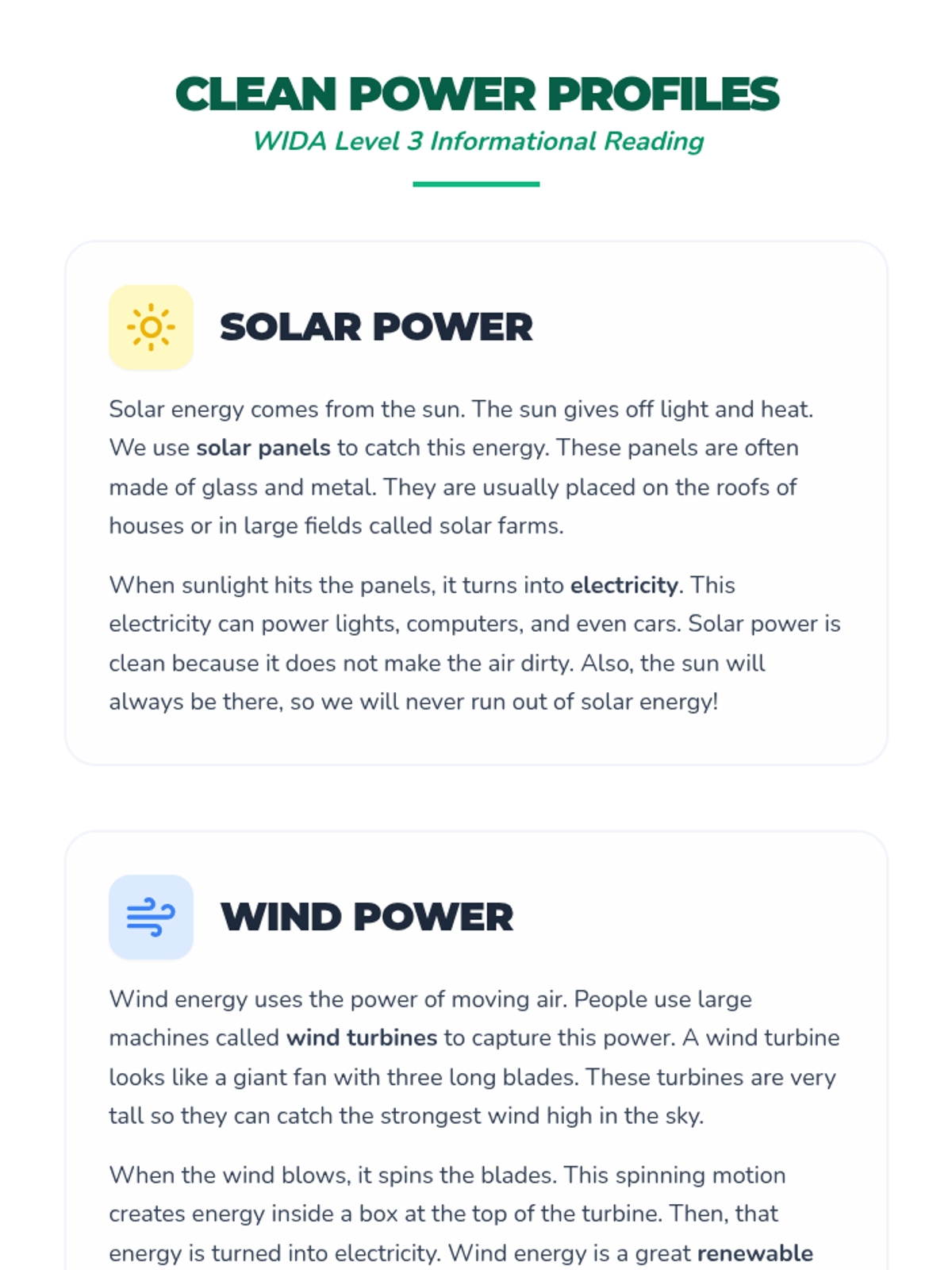
A comprehensive unit on renewable energy sources, focusing on analyzing informational texts through visual and written synthesis. Designed for EL students to develop academic language while exploring sustainable technology.
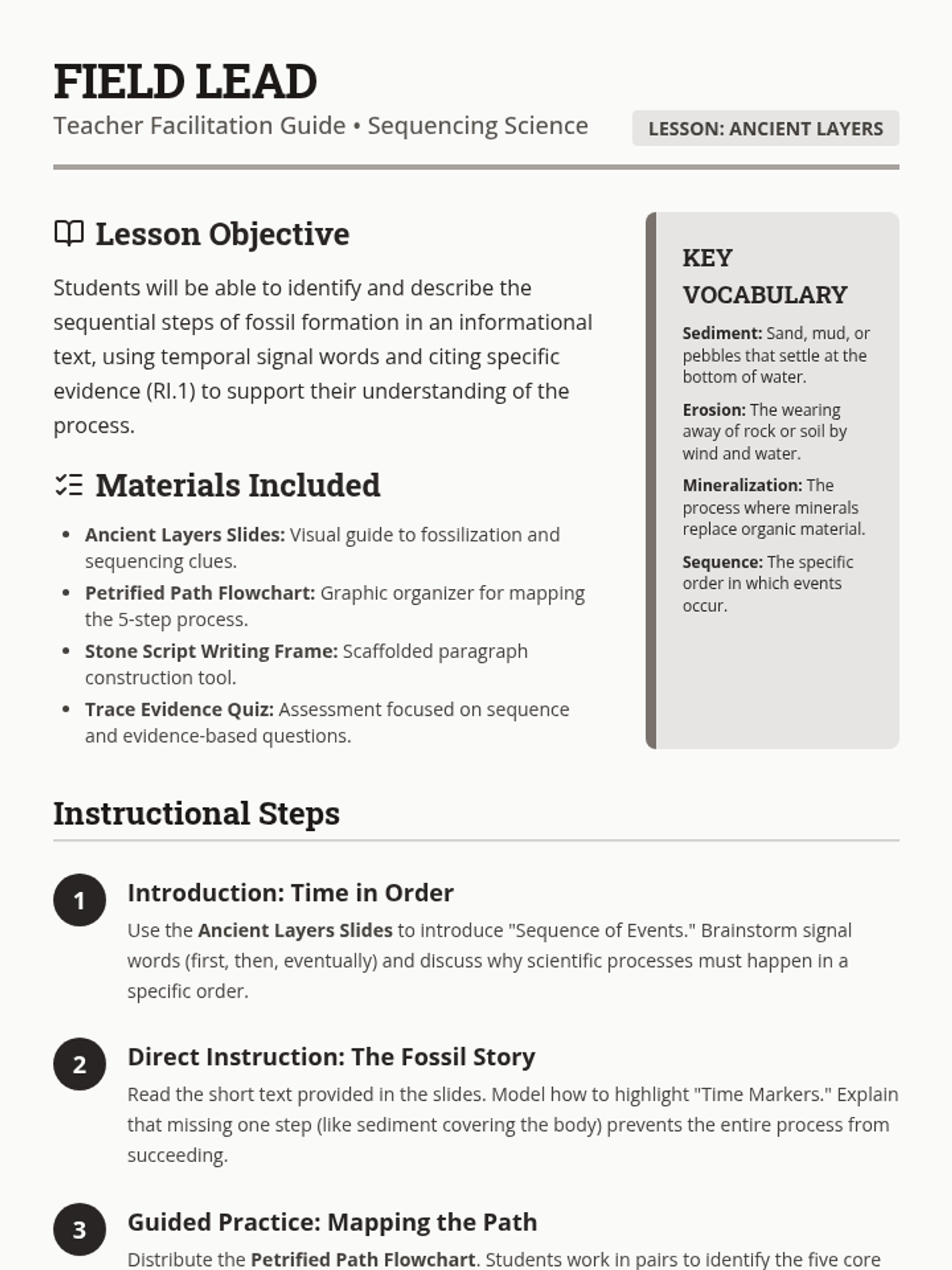
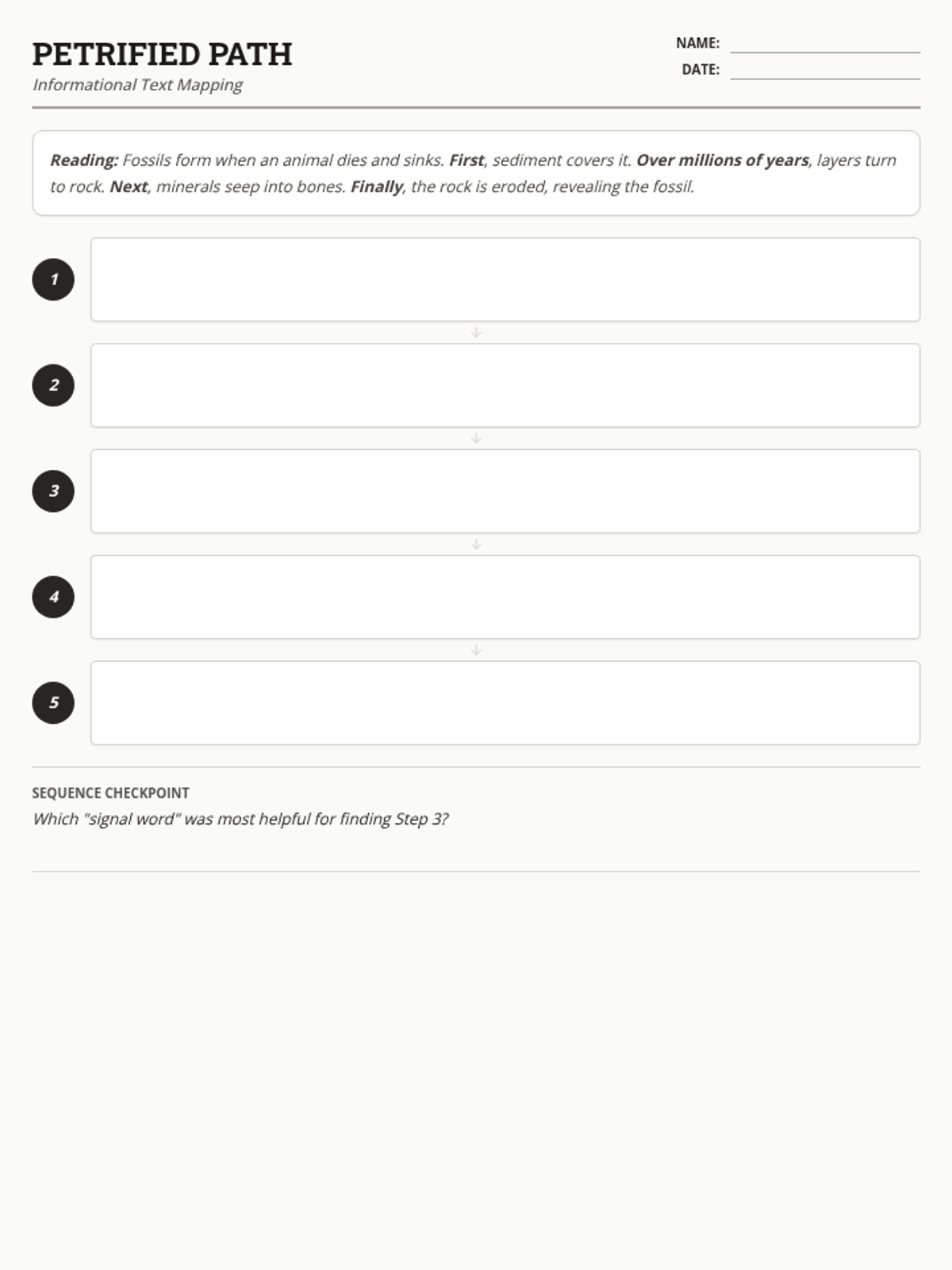
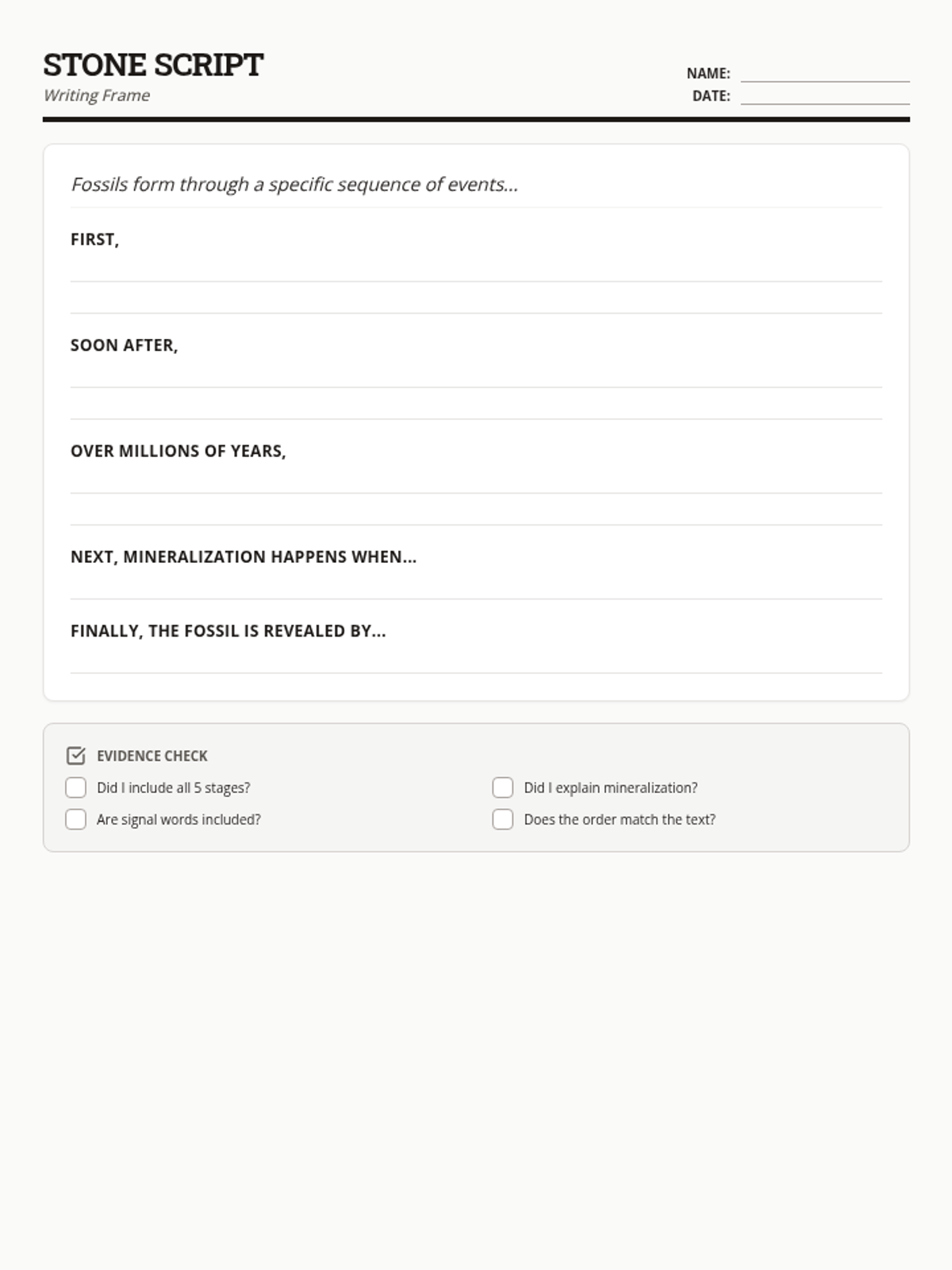
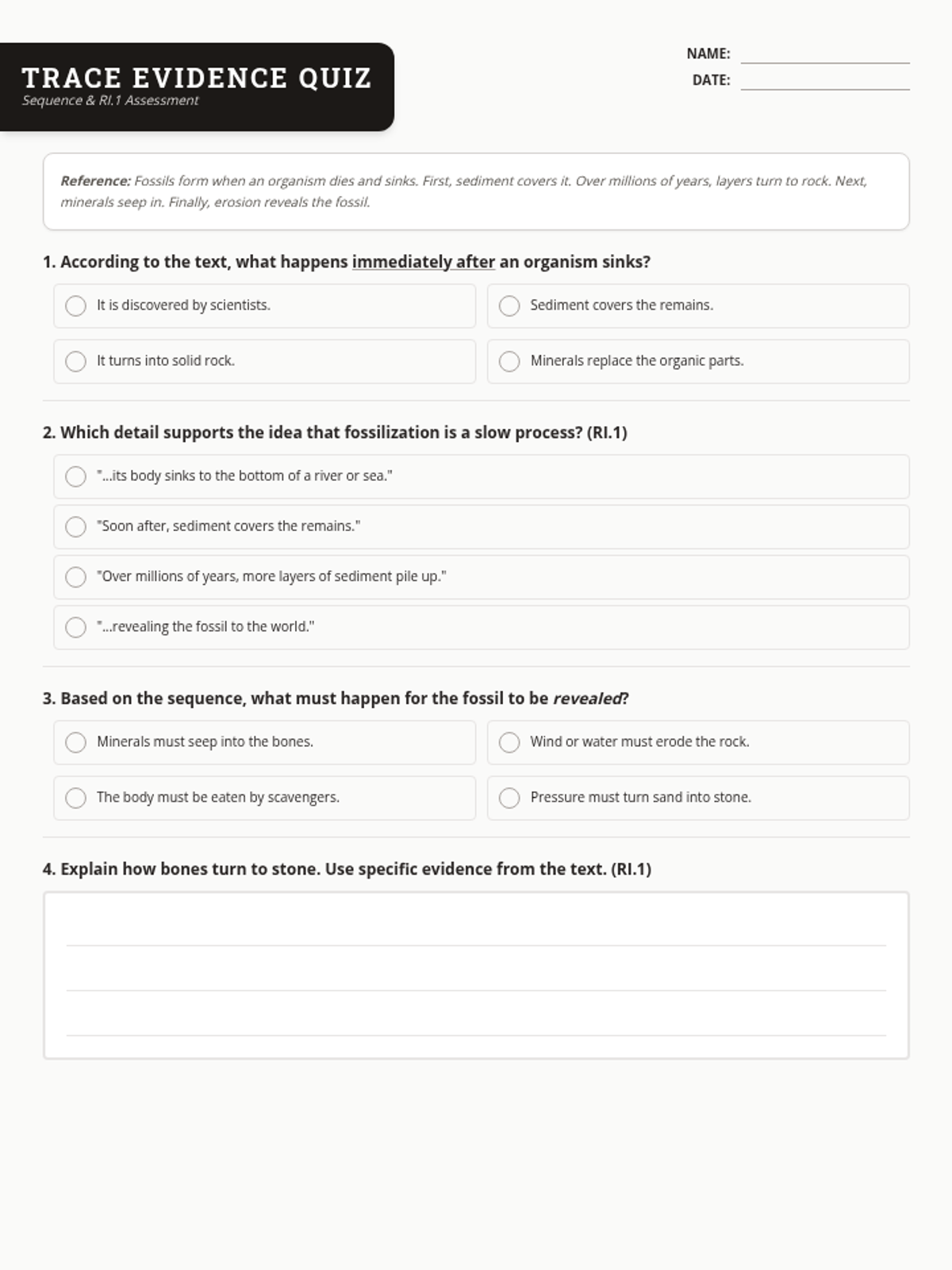
A comprehensive sequence of lessons focusing on mastering sequencing in scientific informational texts. Students analyze complex natural processes, identify temporal signals, and use evidence (RI.1) to explain how these processes unfold over time.
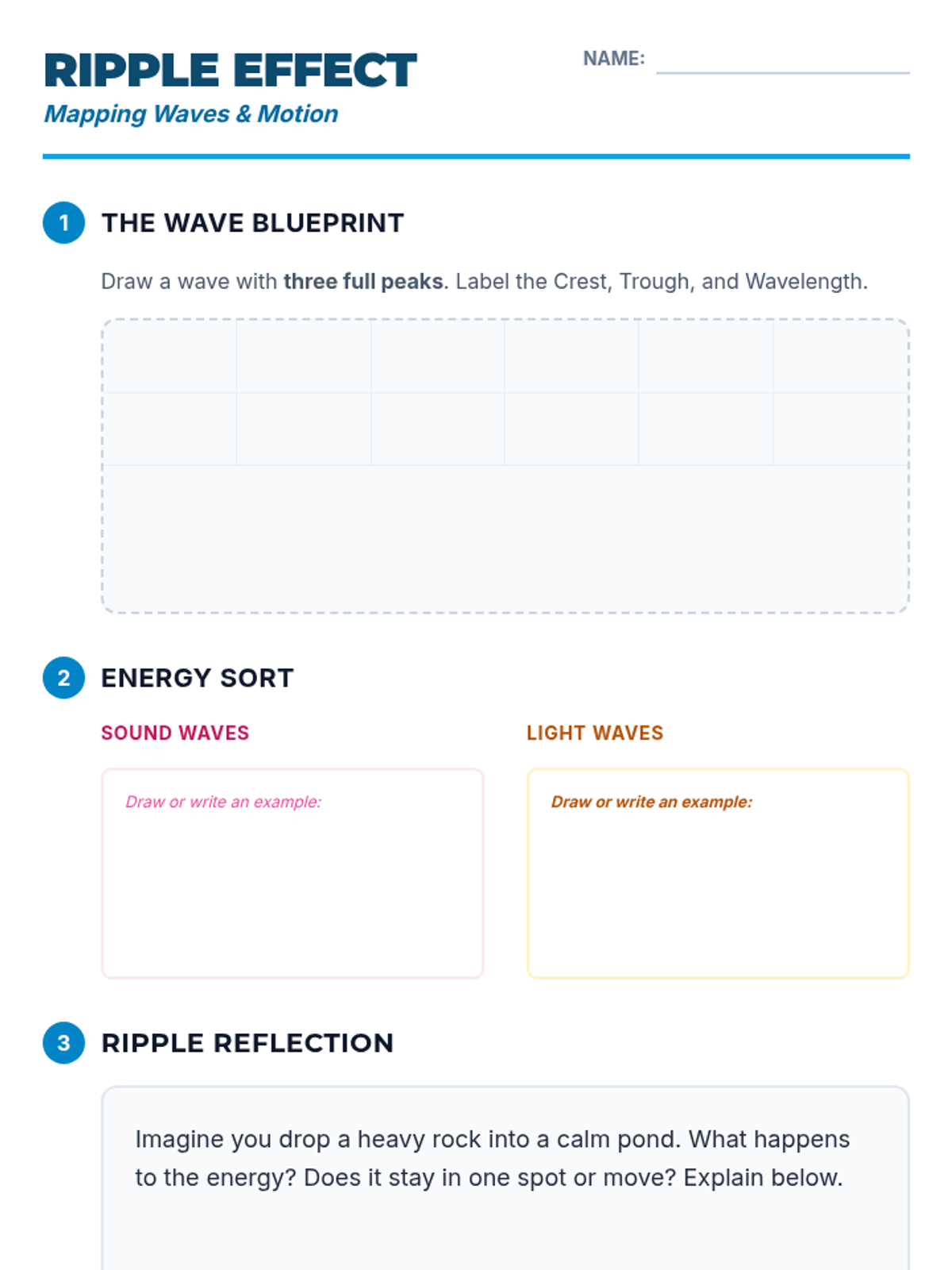
A comprehensive exploration of physical science and civic foundations, designed for elementary students to engage with waves, energy, government structures, and the roles of citizens.
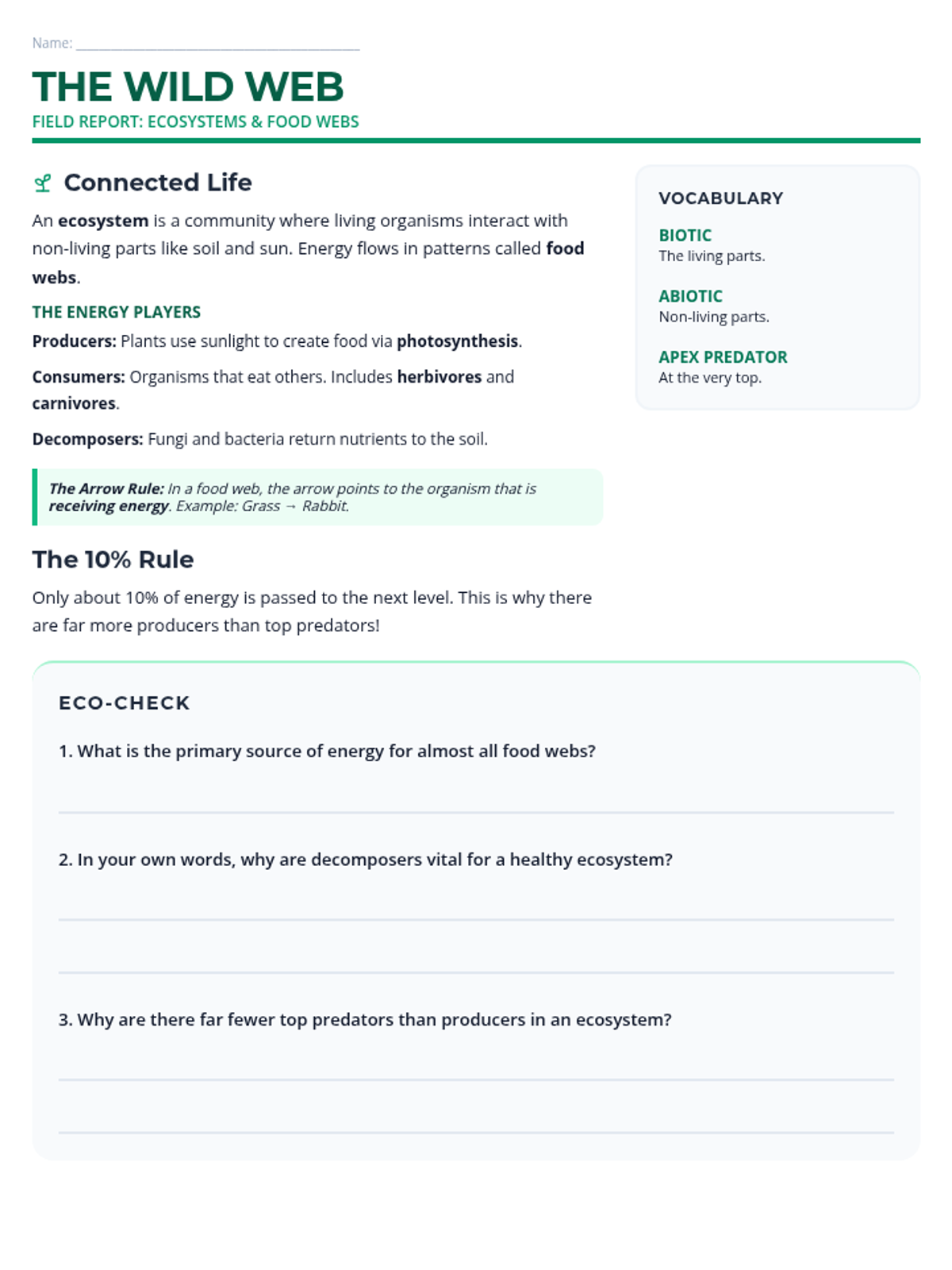
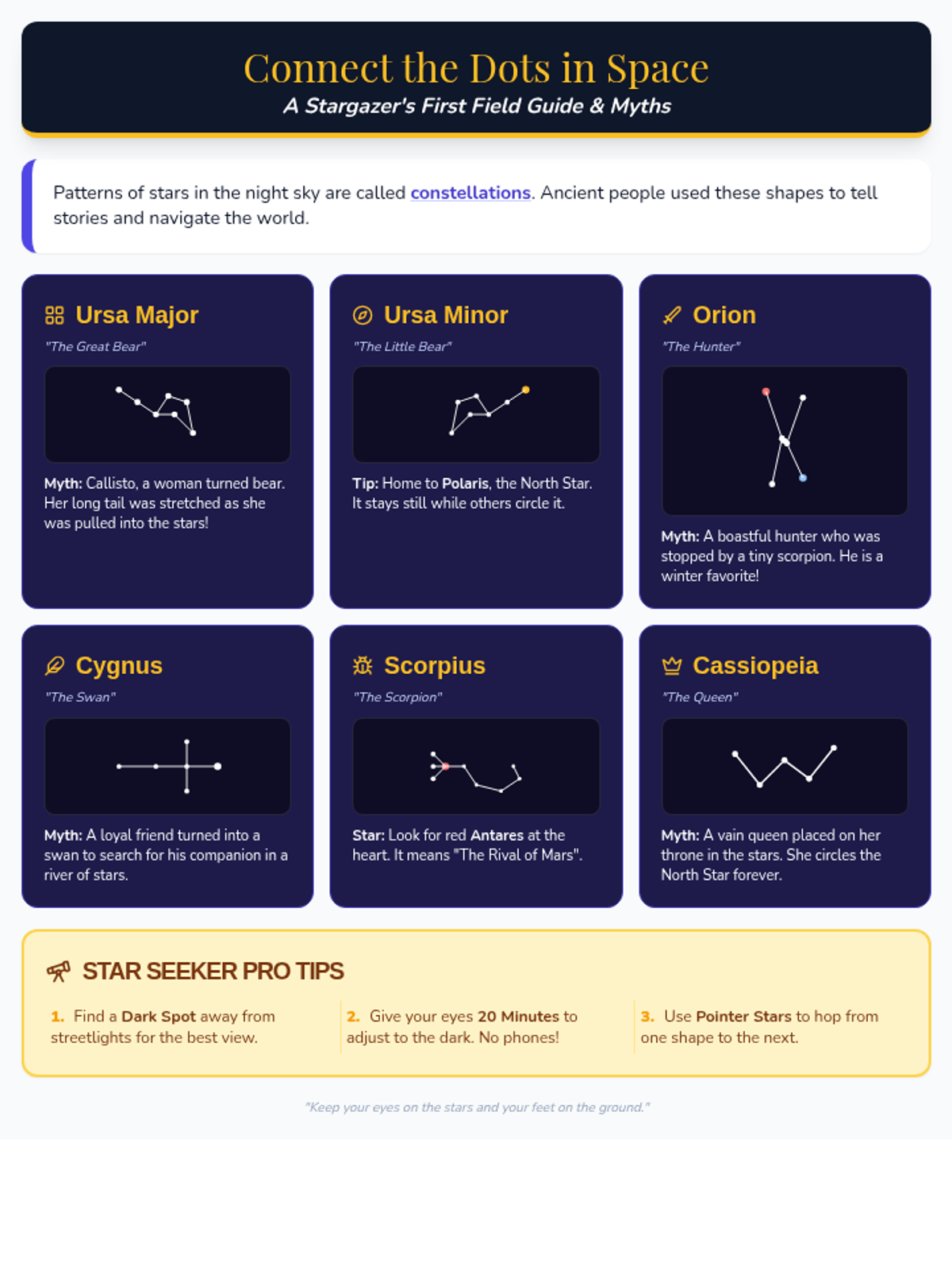
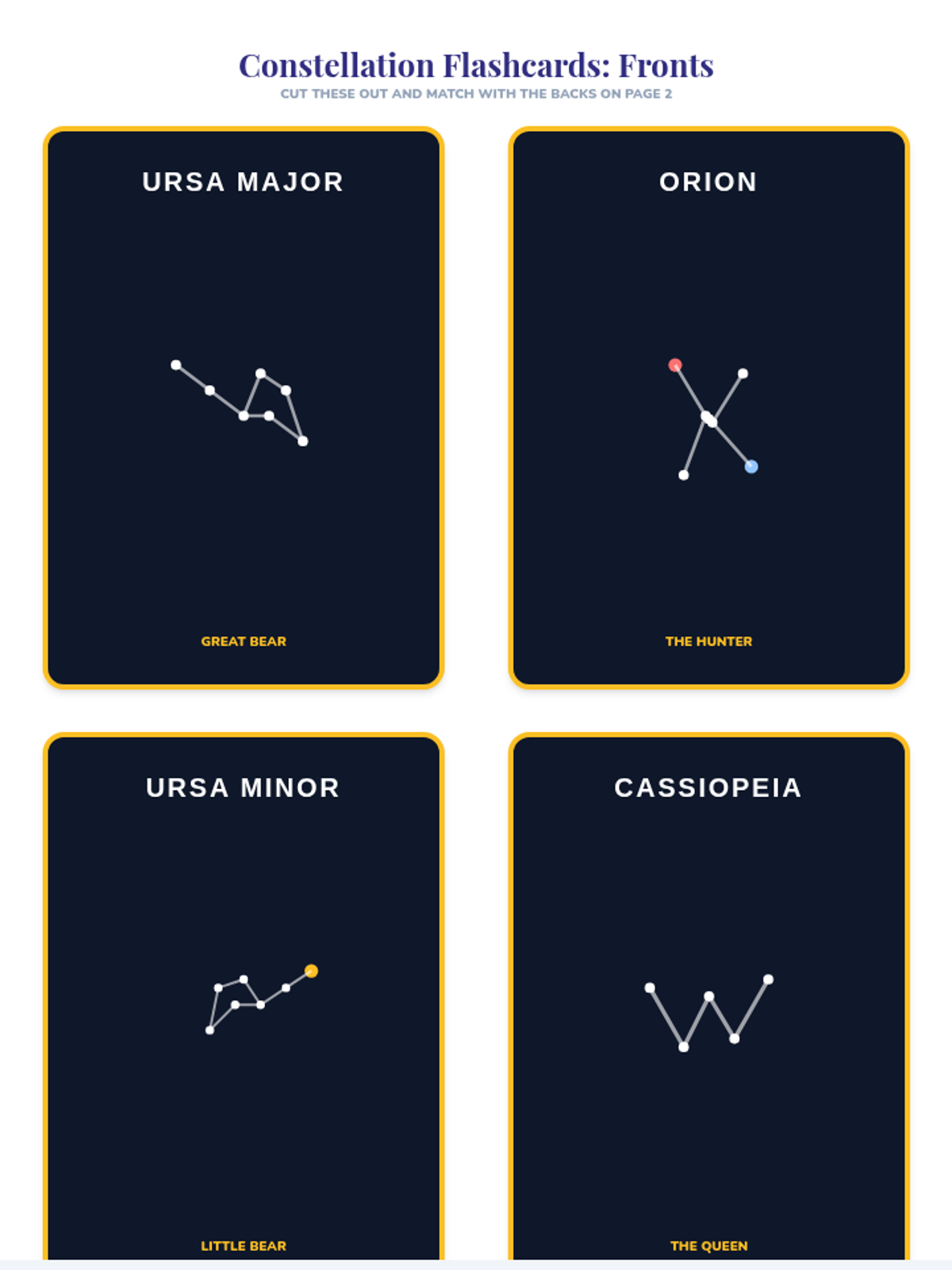
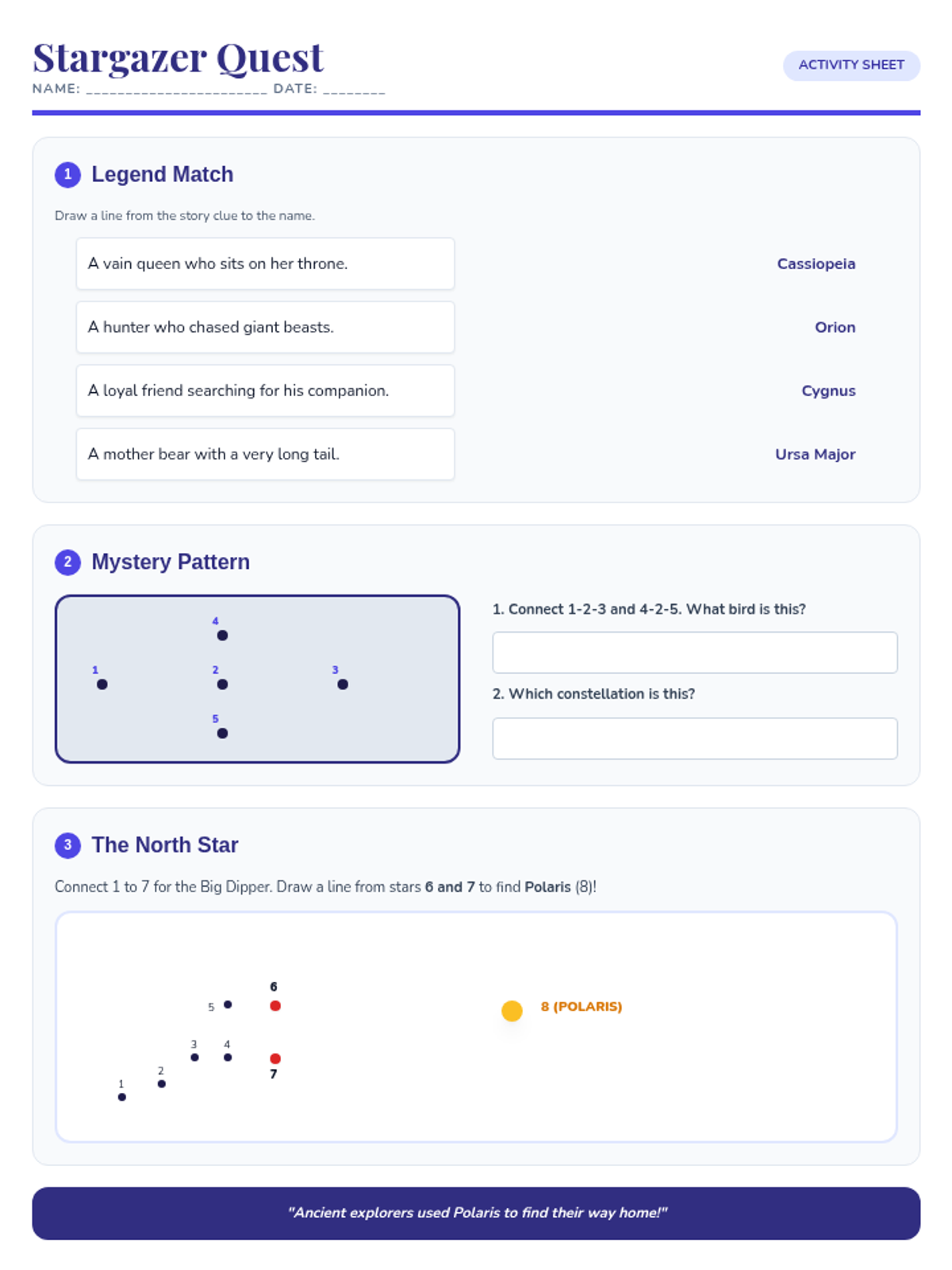
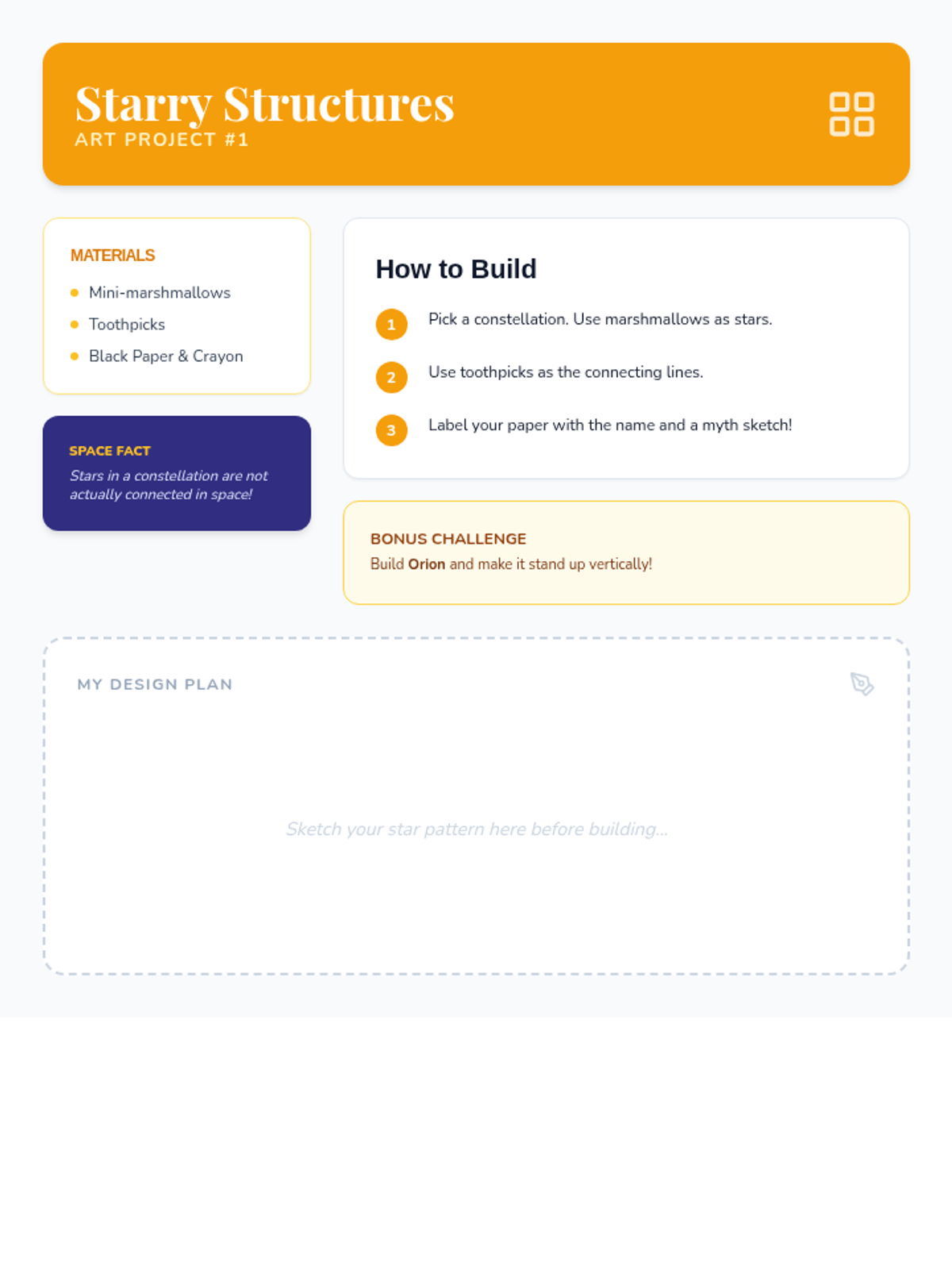
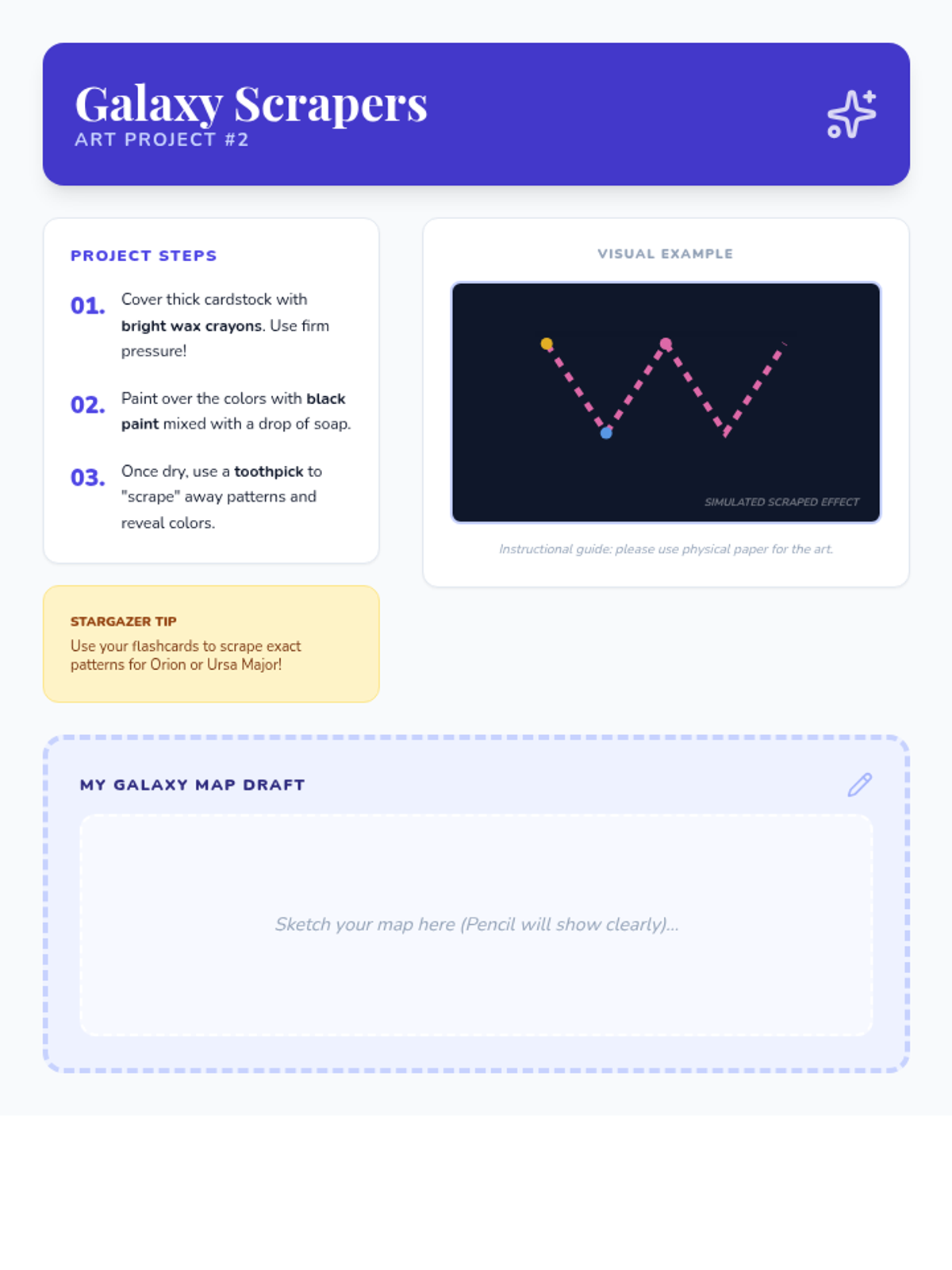
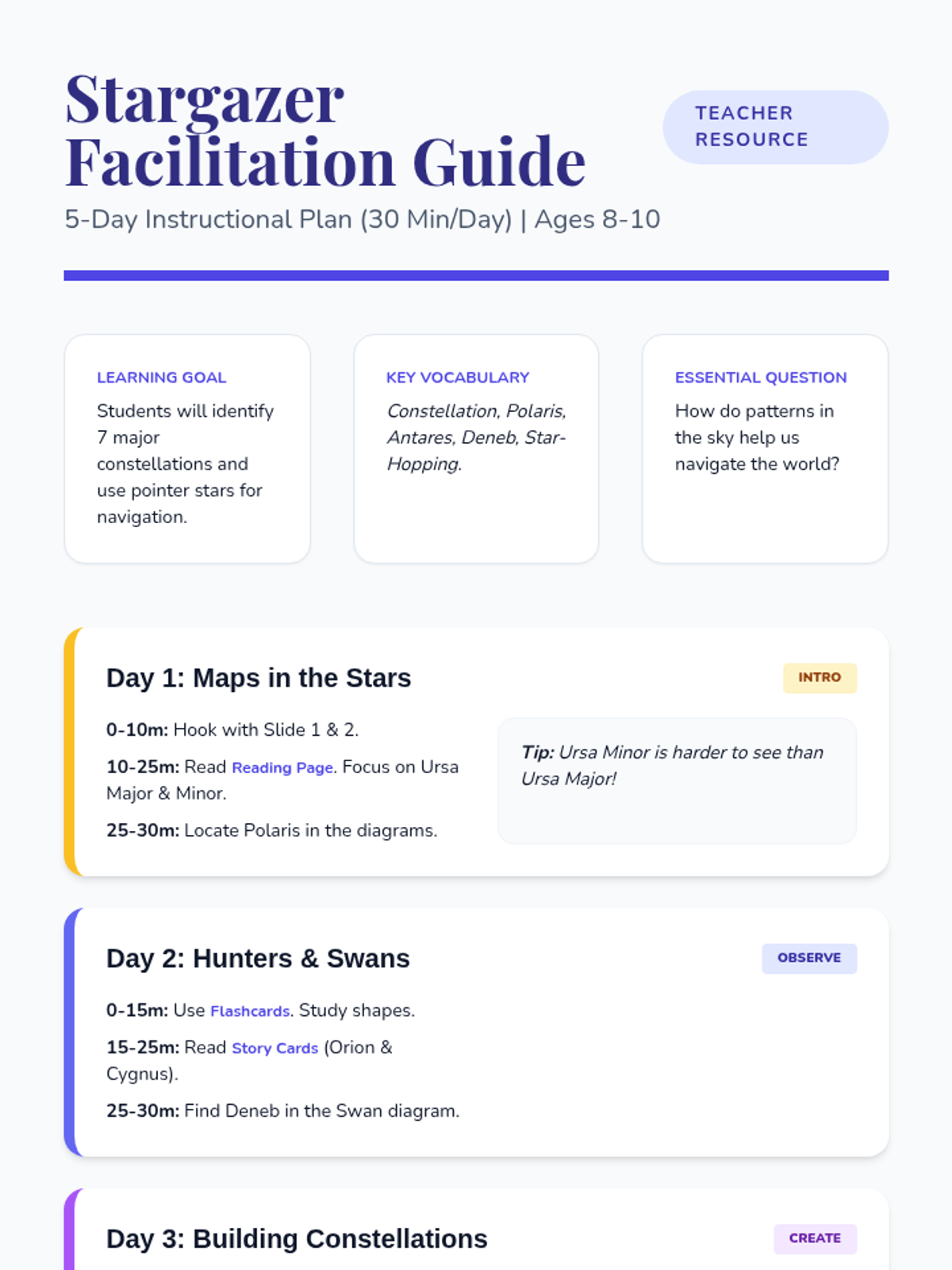
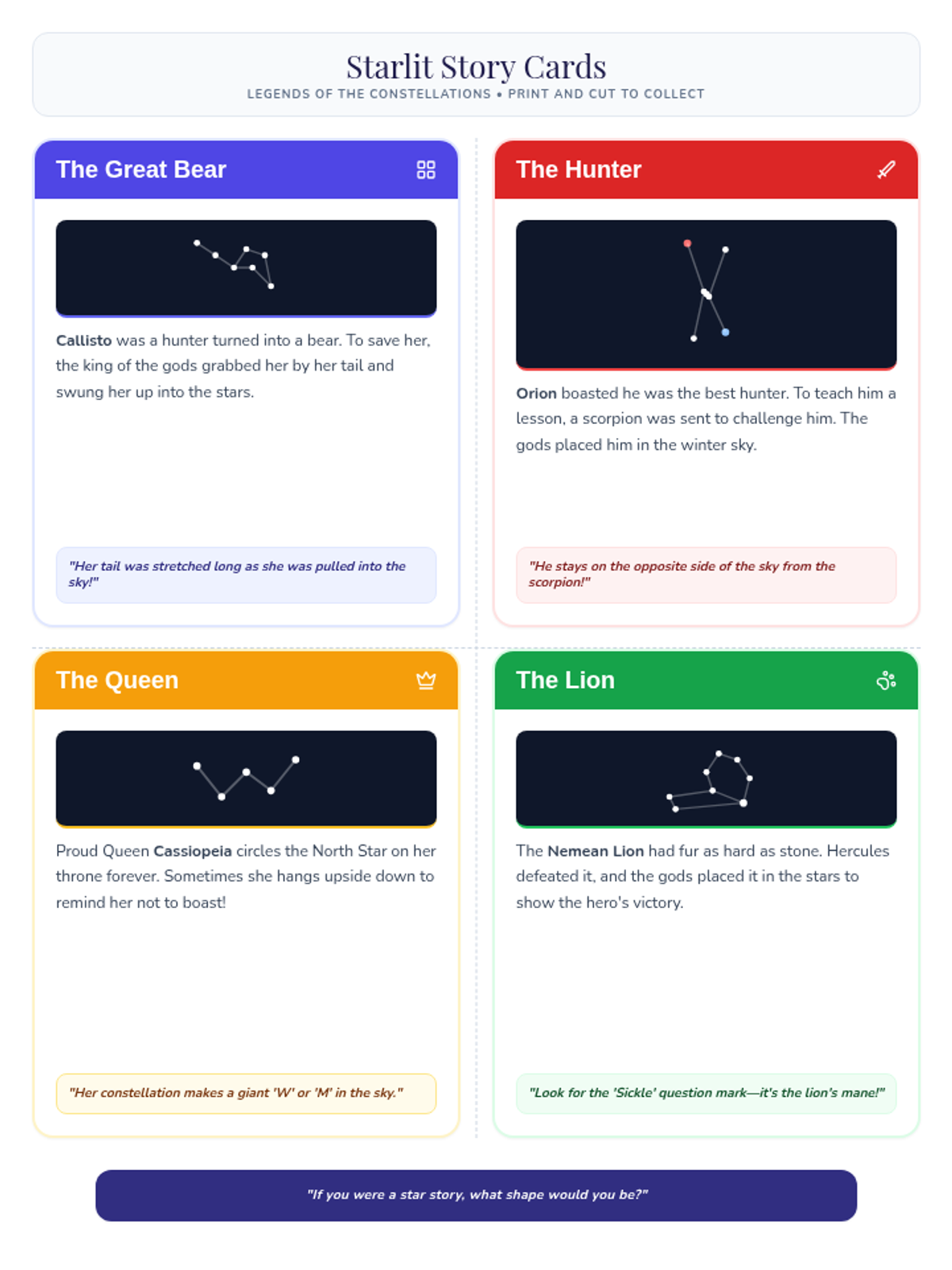
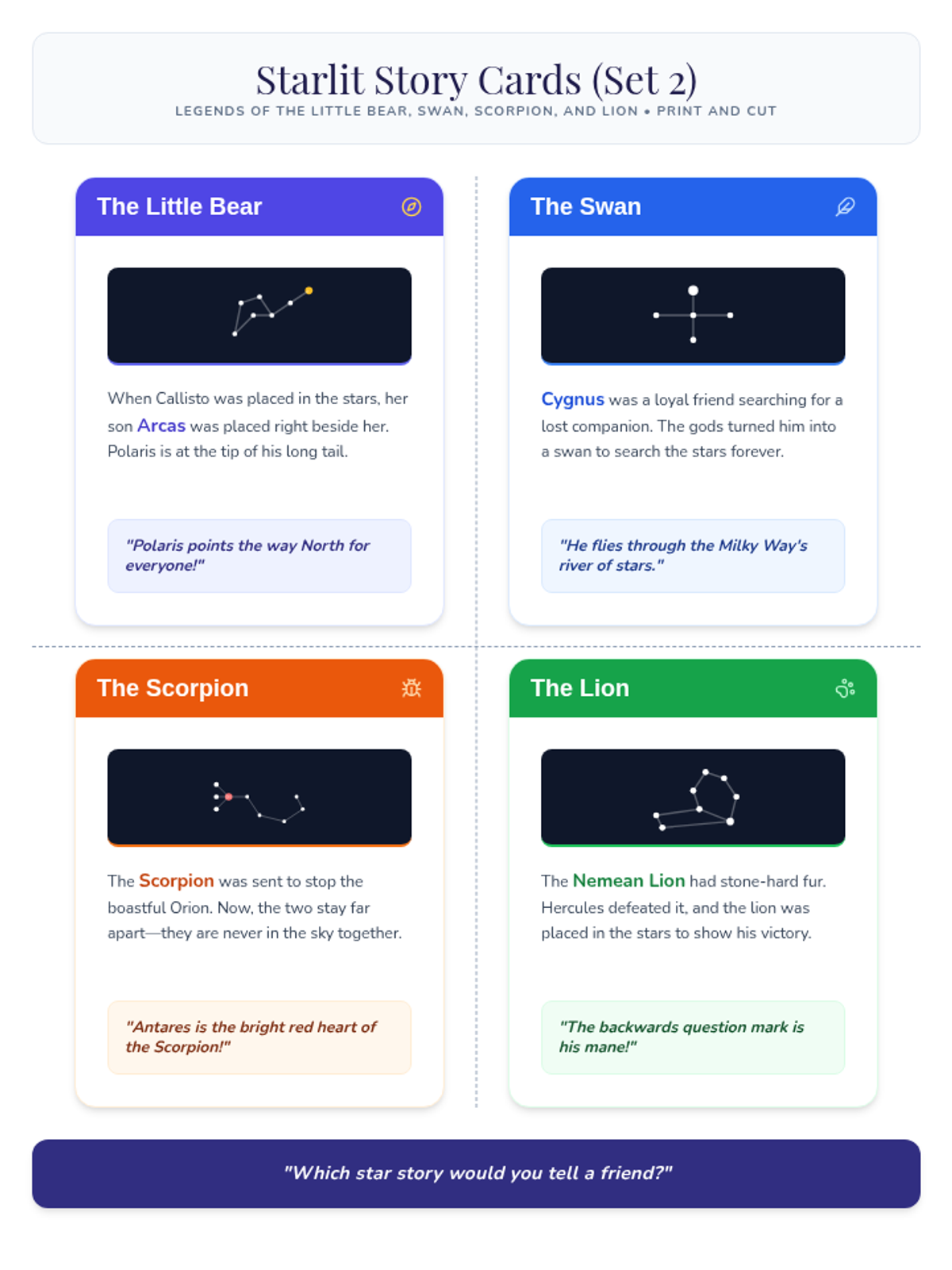
An introductory astronomy series focused on celestial patterns, storytelling through myths, and practical observation skills for young astronomers.