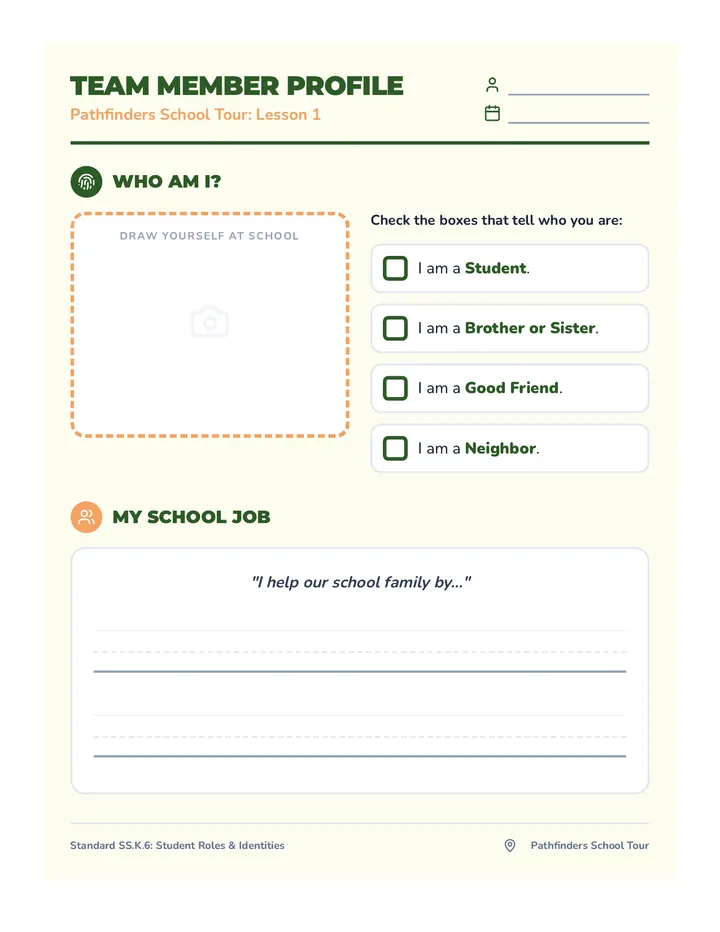
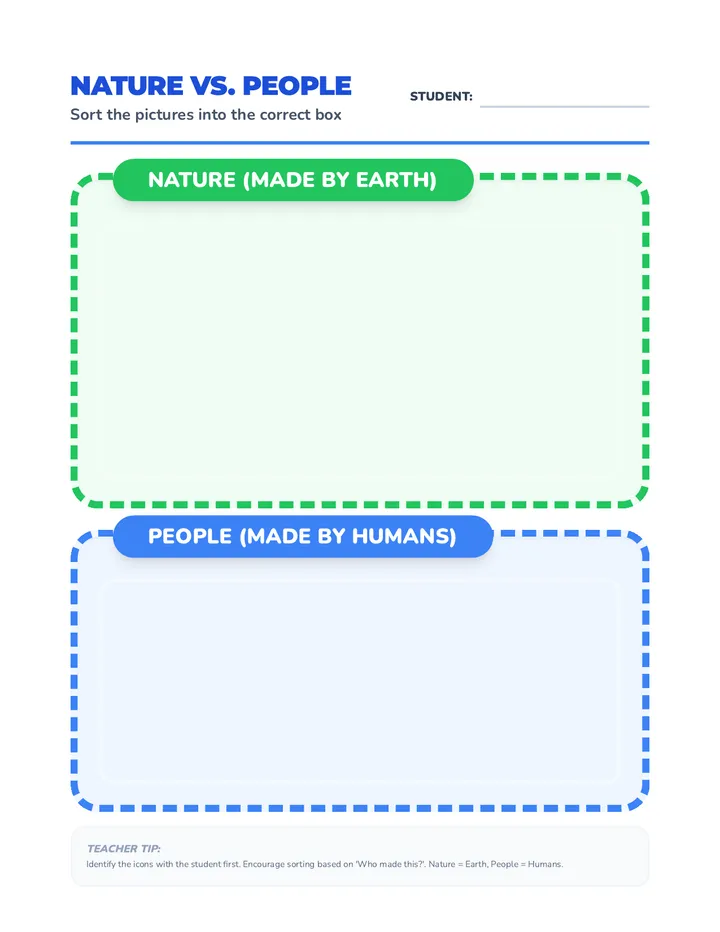
A 8-session unit for kindergarten students exploring culture through personal identity, family traditions, celebrations, and collaborative art. Students build self-awareness and empathy as they create a classroom culture quilt.
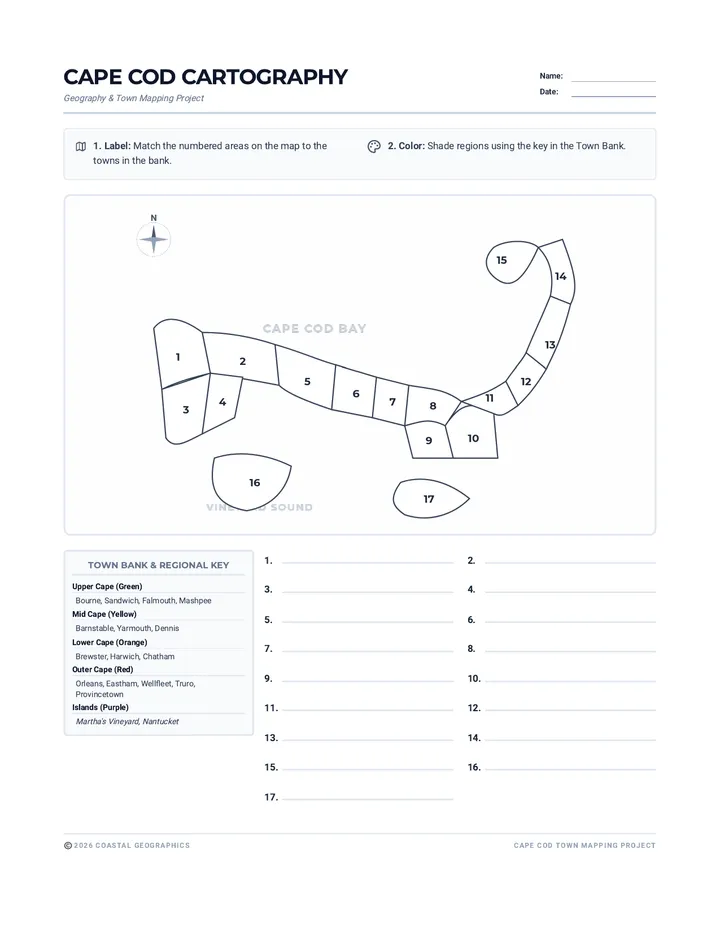
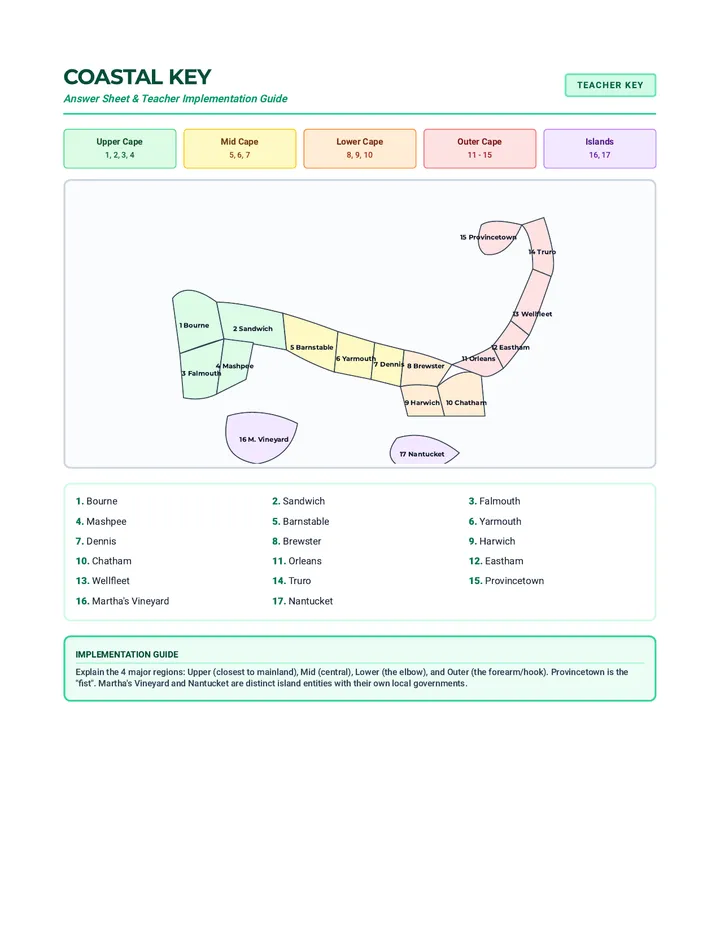
A comprehensive tour of the 50 United States, exploring their flags, shapes, capitals, and unique facts through interactive worksheets and visual aids.
A two-day structured lesson for 11th-grade US History students to analyze current events through a historical lens, featuring heavily scaffolded writing supports for EB and SPED learners.
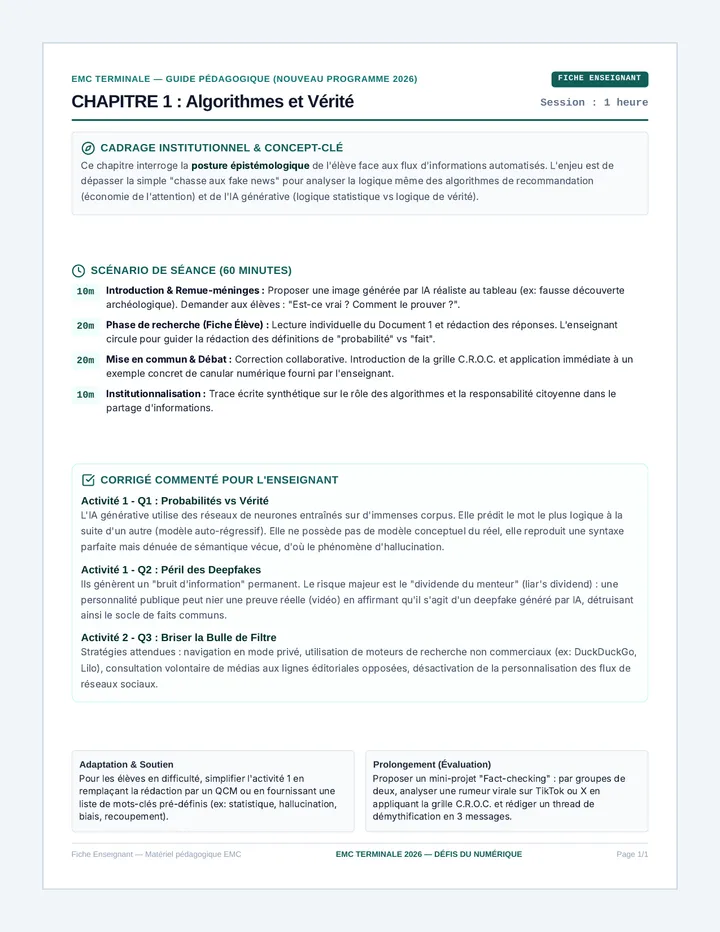
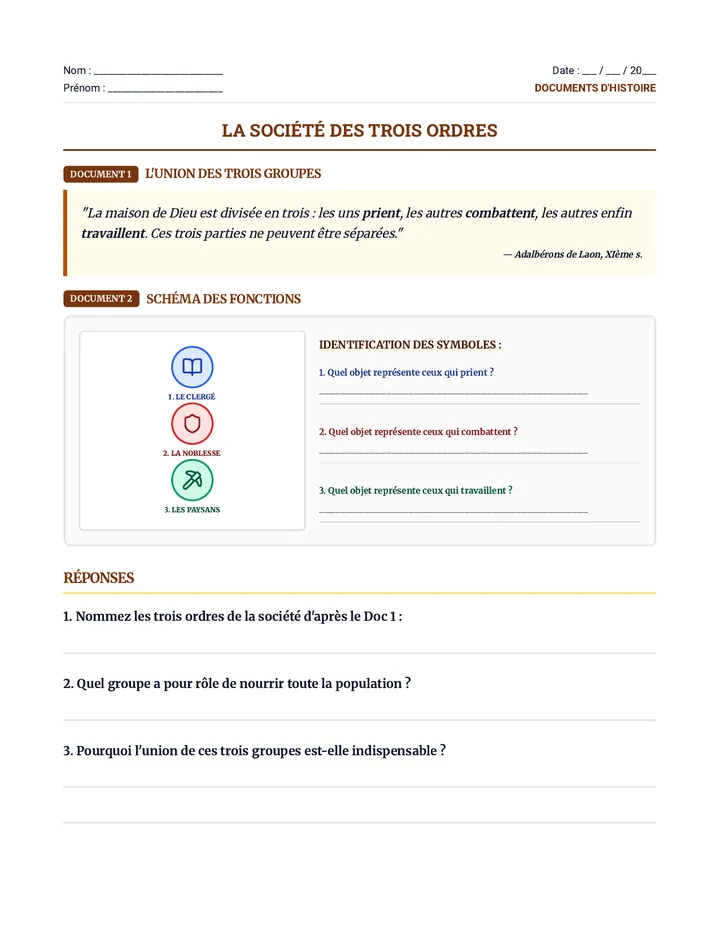
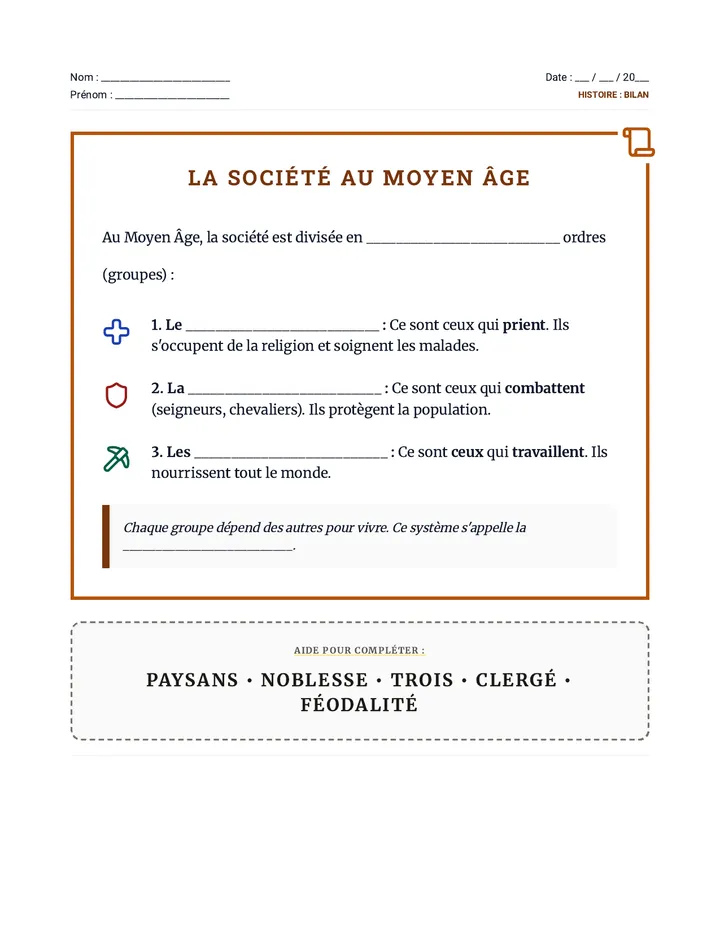
Une séquence pédagogique pour les élèves de 5ème visant à déconstruire les stéréotypes de genre dans les médias et à produire une infographie de sensibilisation.
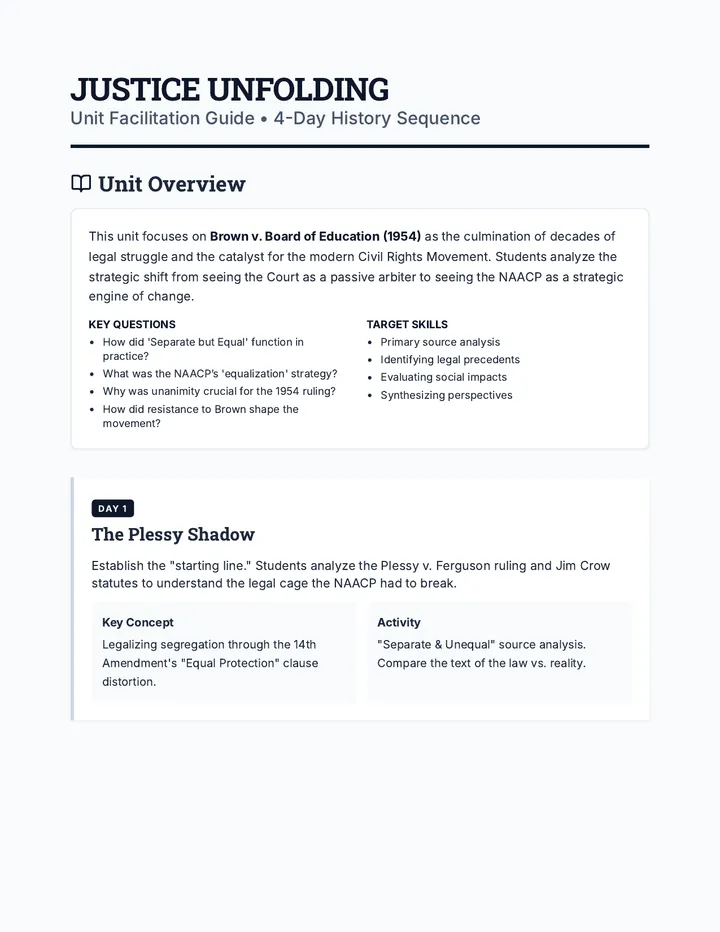
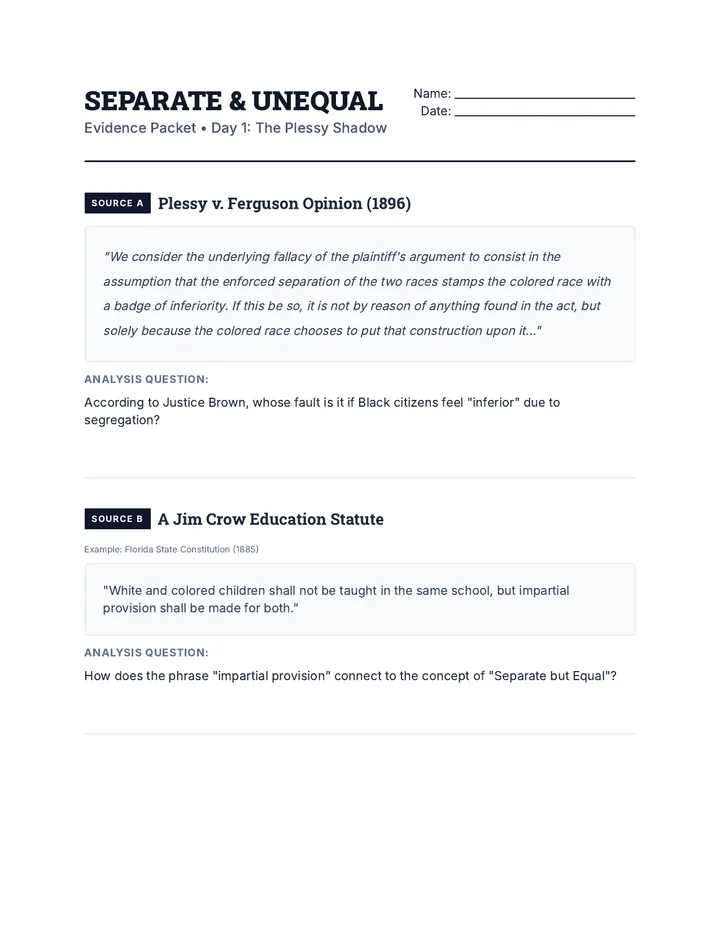
A unit exploring the transformative decade of the 1950s, covering the Civil Rights movement, postwar economic booms, the rise of suburbia, and the cultural shifts of the Atomic Age.
A case study of four famous ancient leaders (Julius Caesar, Alexander the Great, Hatshepsut, and Empress Wu) focusing on the complexities of power, leadership, and moral ambiguity for 6th-grade students.
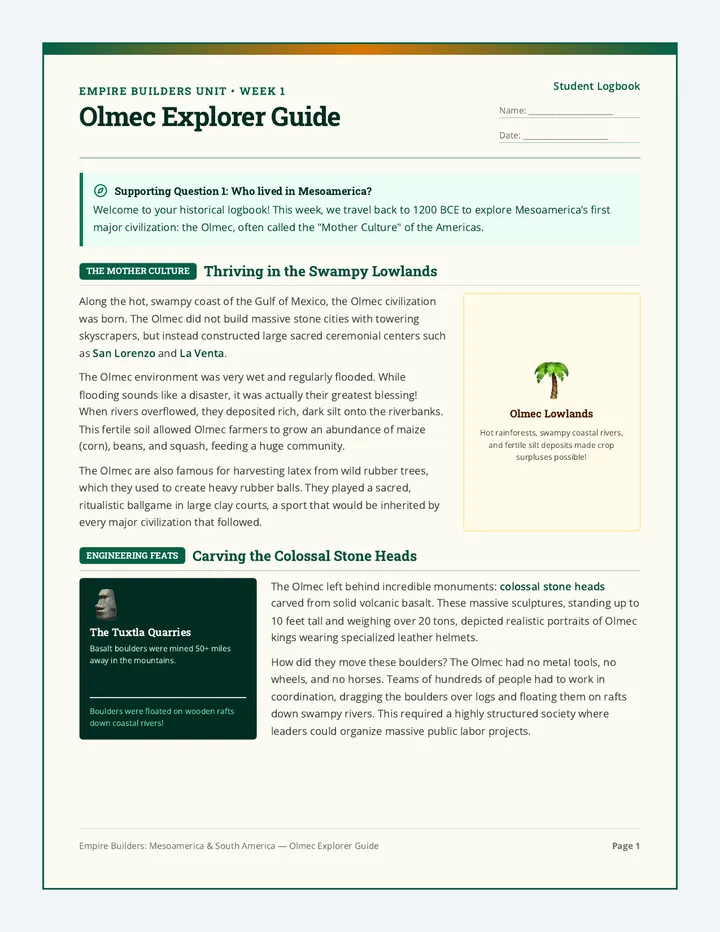
A series of lessons exploring the ancient civilizations of Mesopotamia and Egypt, focusing on their architecture, gods, and historical figures through decodable texts and activities.
A four-week exploration of school community roles, focusing on diversity, inclusion, and representation in leadership. Students will identify daily community members and learn about the contributions of women of color and people with disabilities in their school and beyond.
A comprehensive curriculum sequence covering late 19th and early 20th-century American history, focusing on economic transformation, Western expansion, global imperialism, and the impact of the Great War.
A collection of social studies and science lessons focused on foundational concepts and civilizations.
A 25-day intensive remediation program for 11th Grade US History students, focusing on the Cold War, Civil Rights, Vietnam, the Reagan Era, and contemporary history. Each day features a 'Ledger' reader with embedded annotations and a review worksheet, aligned with Texas TEKS standards.
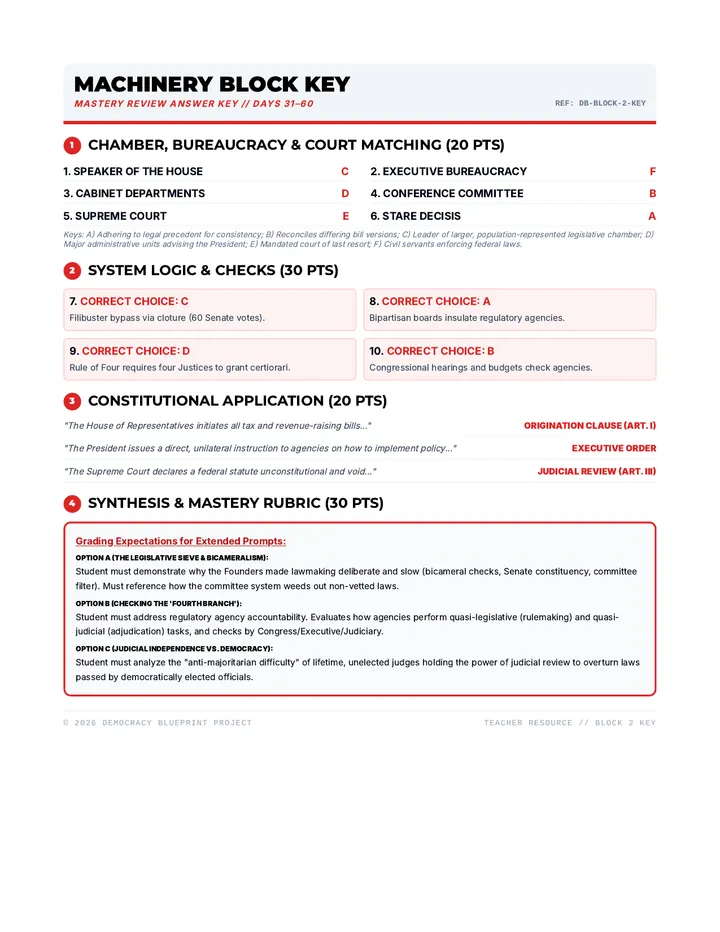
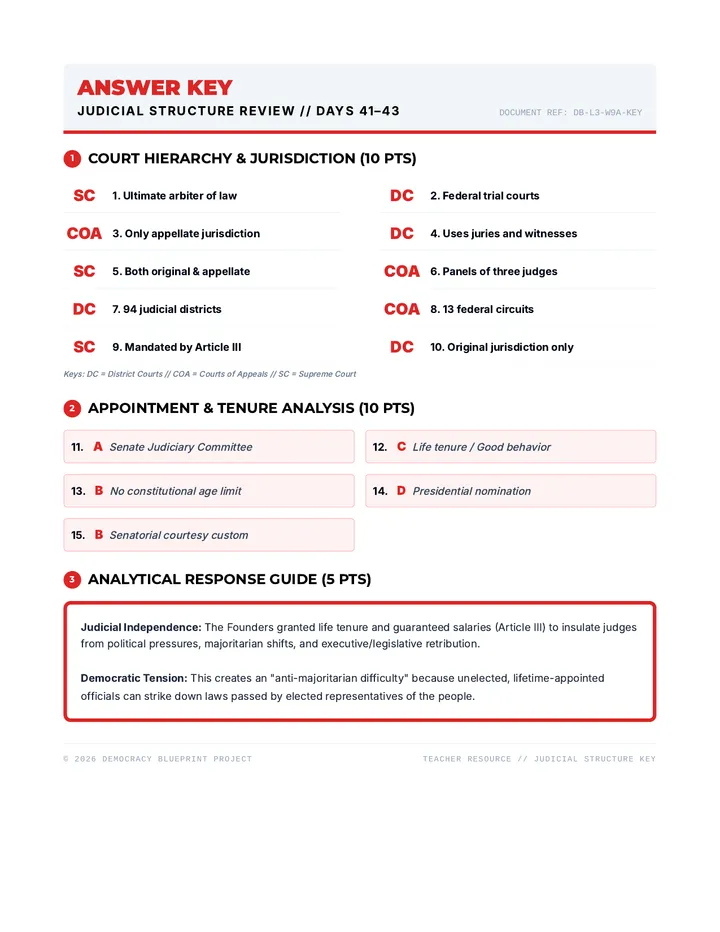
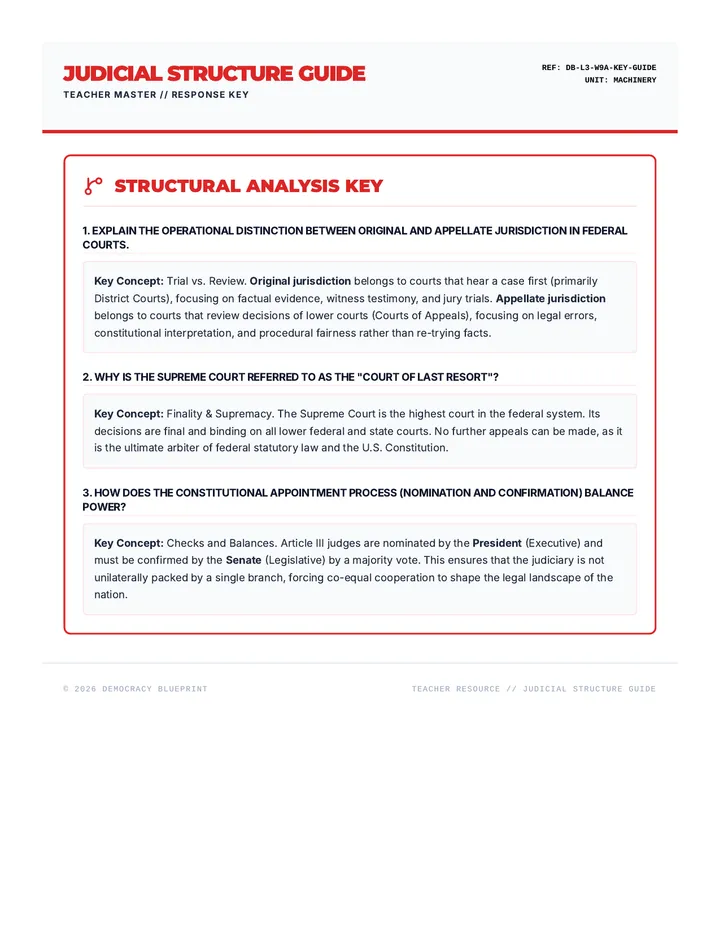
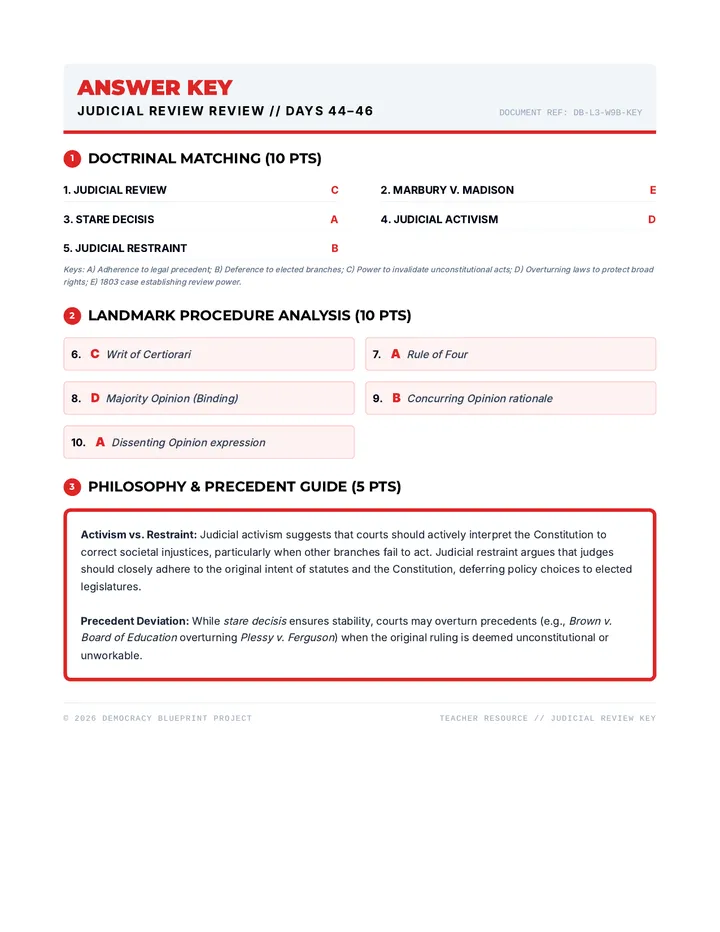
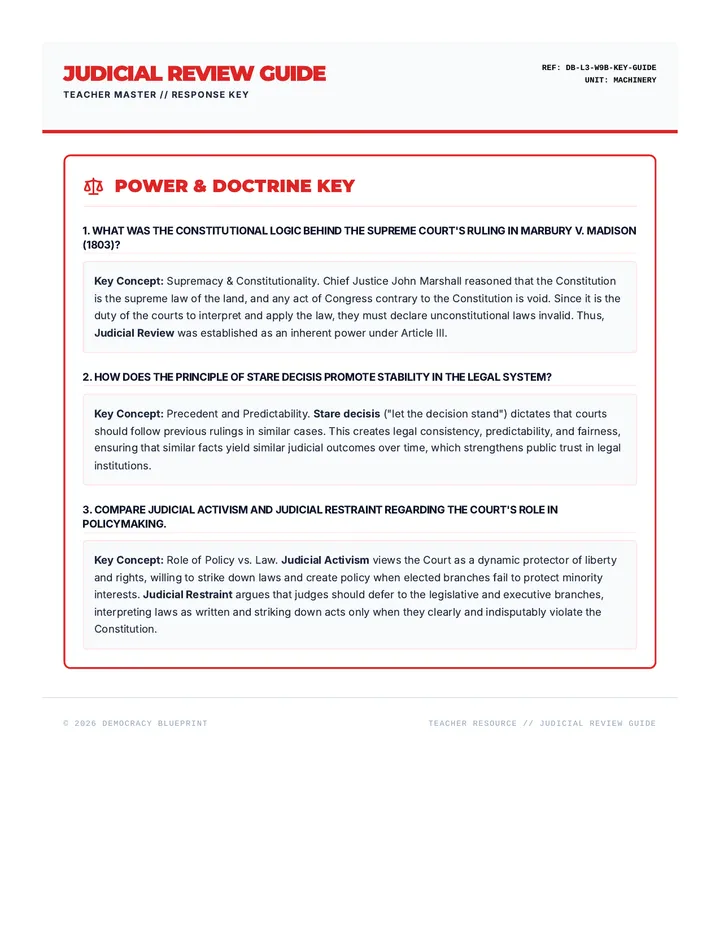
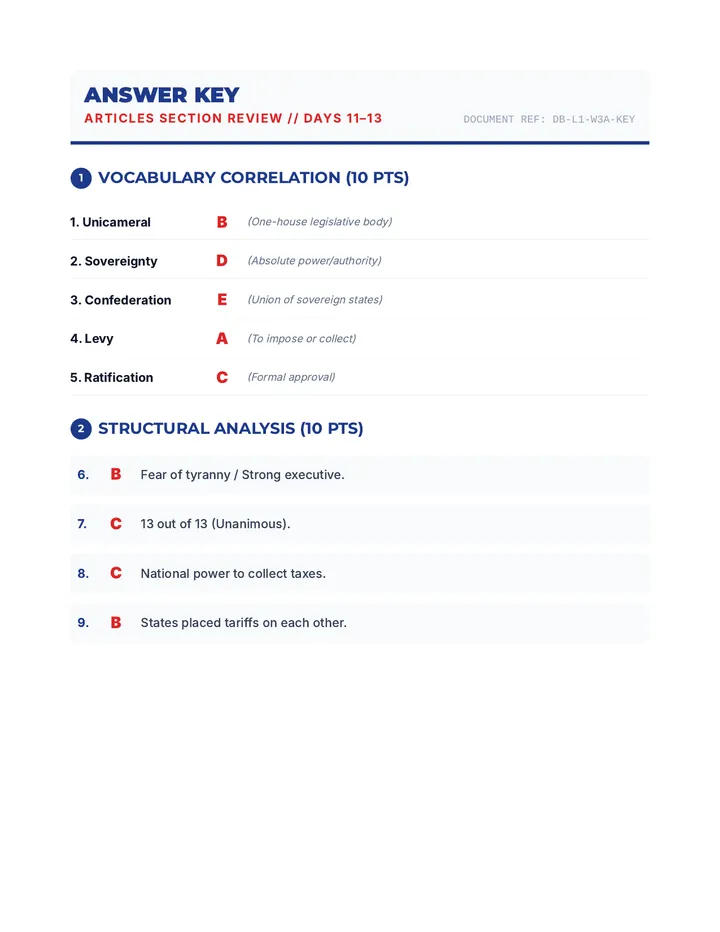
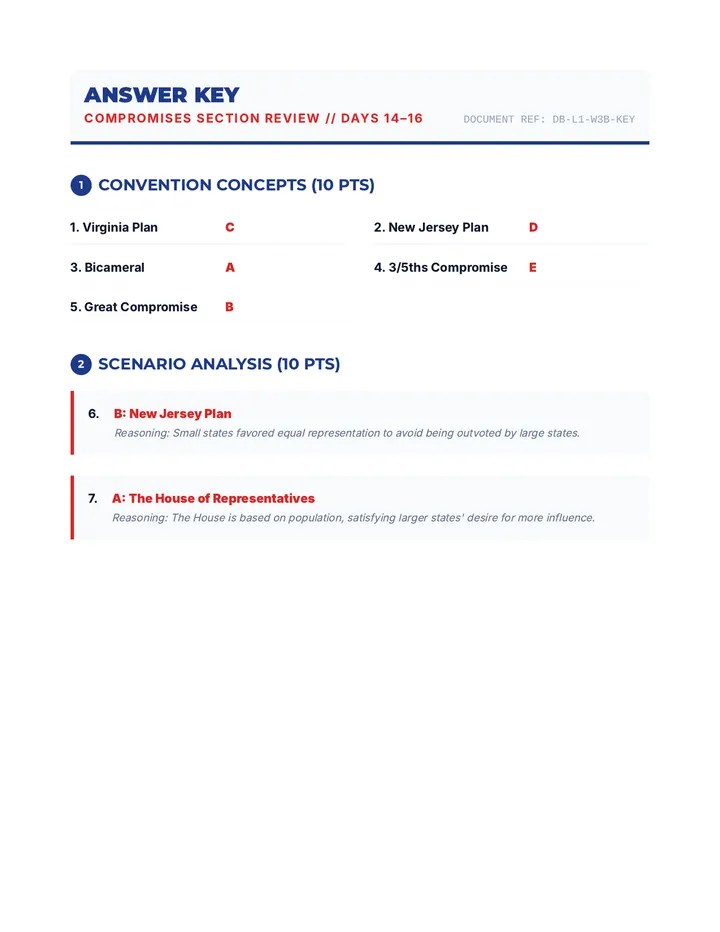
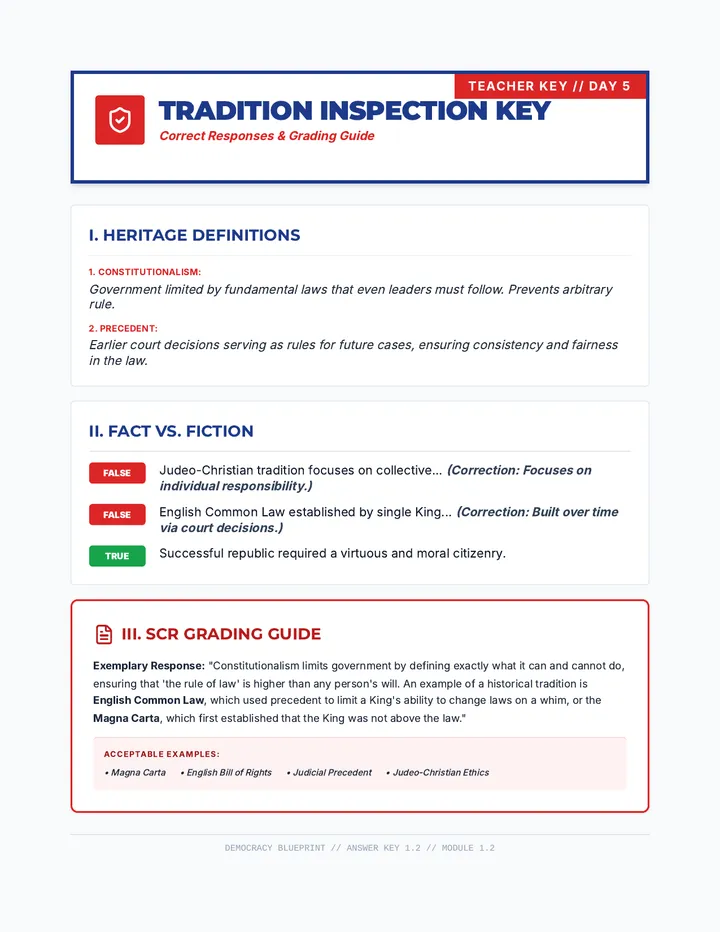
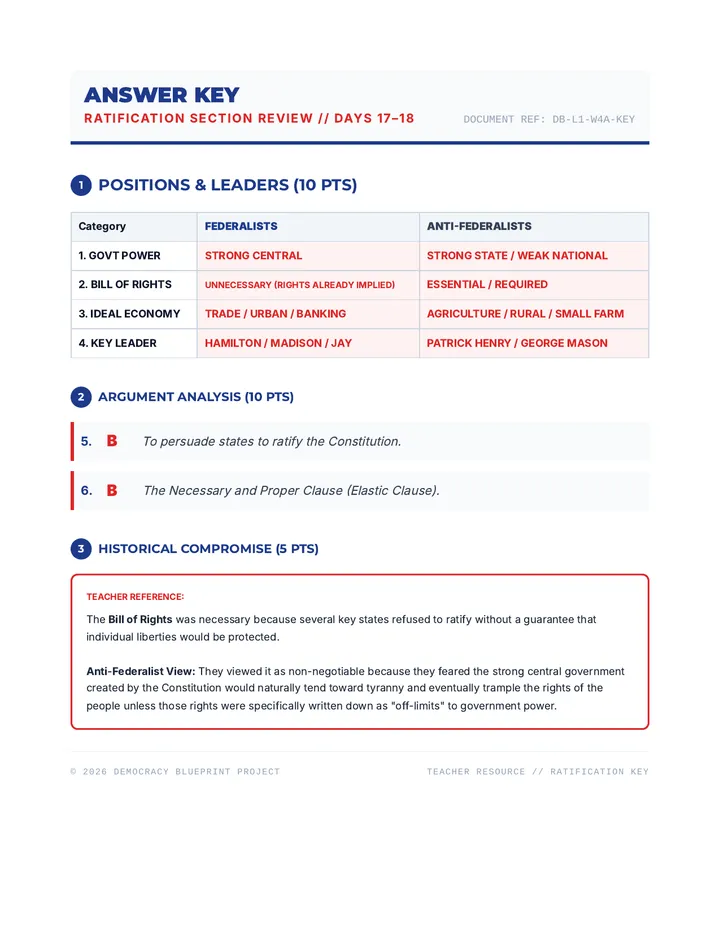
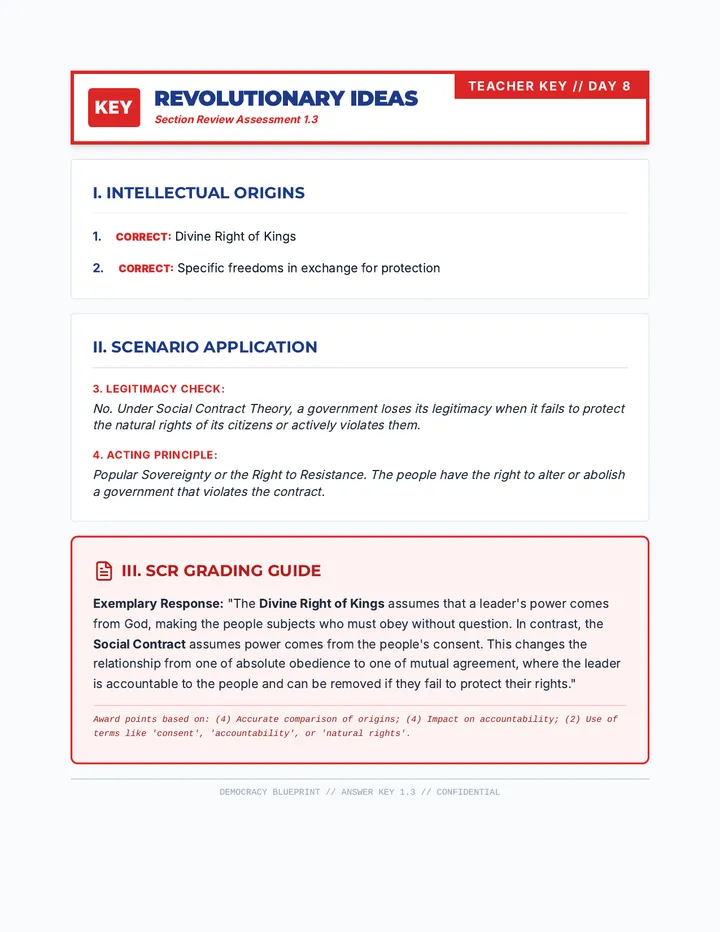
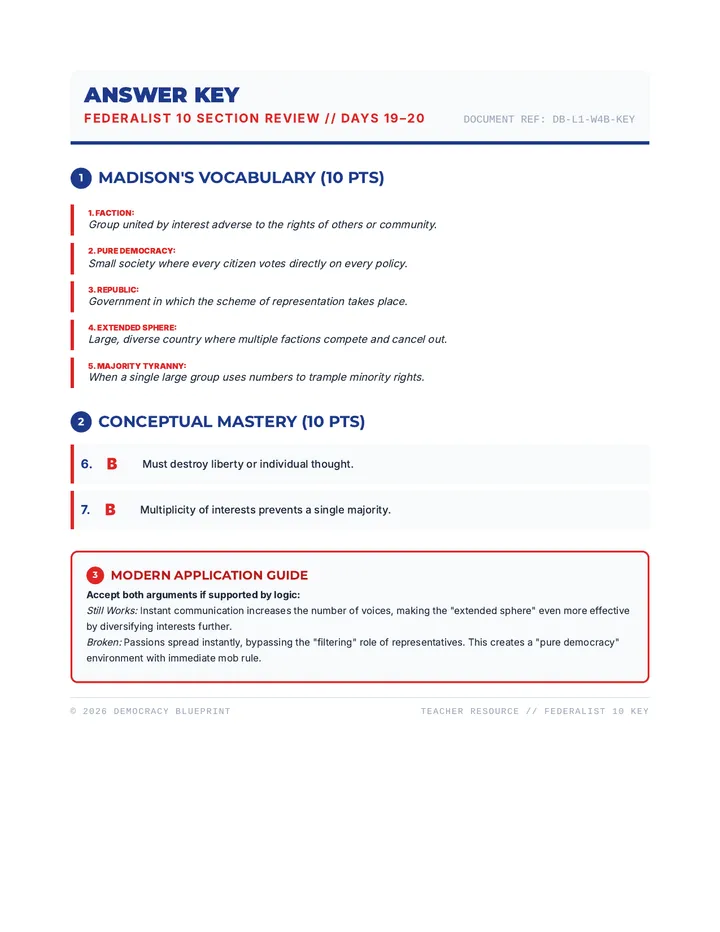
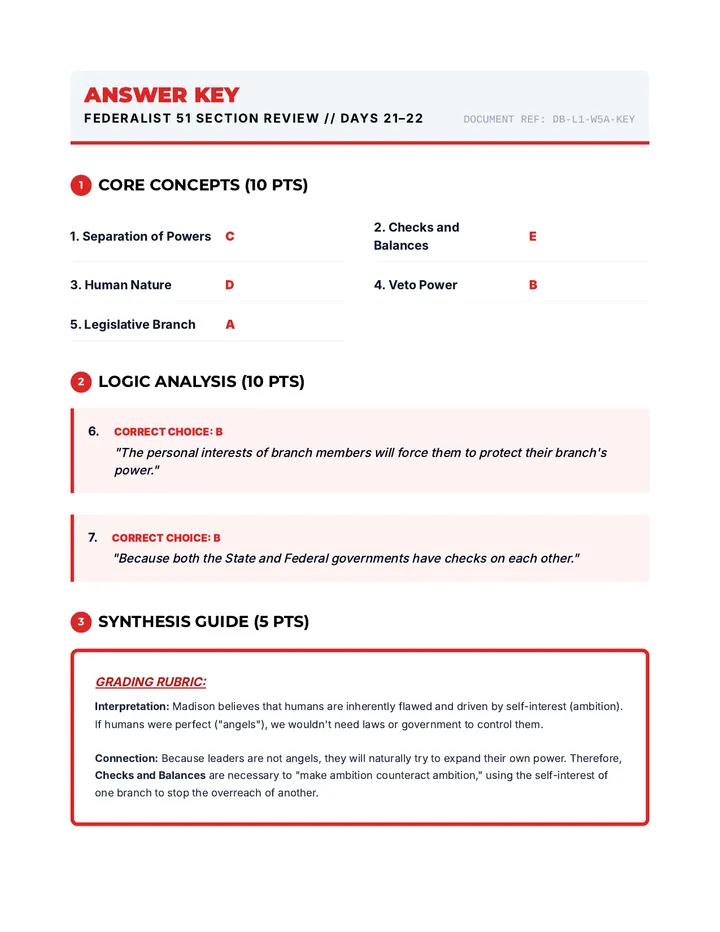
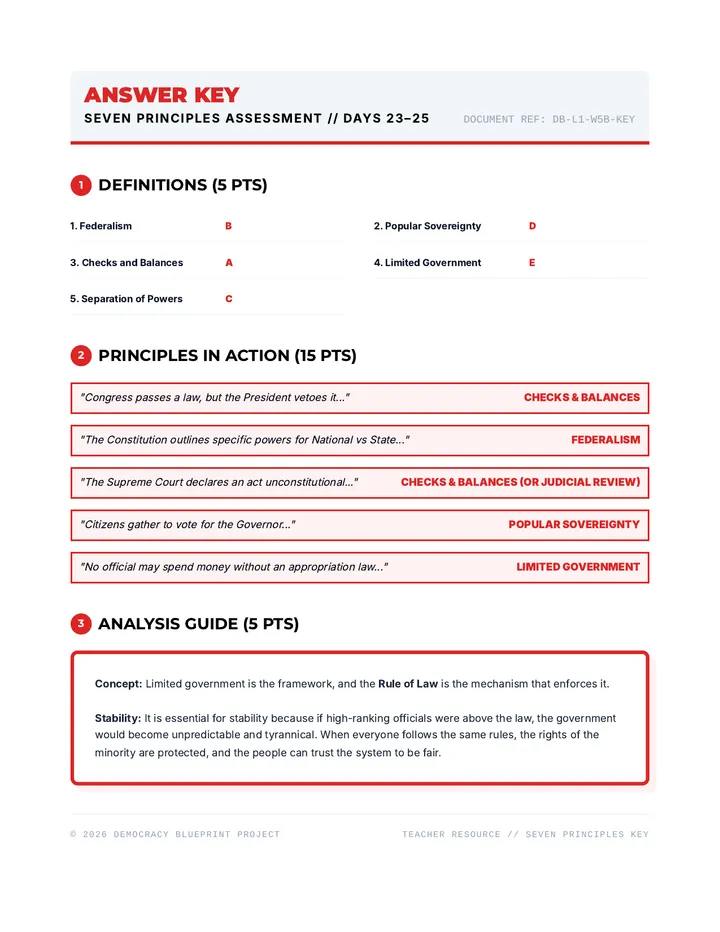
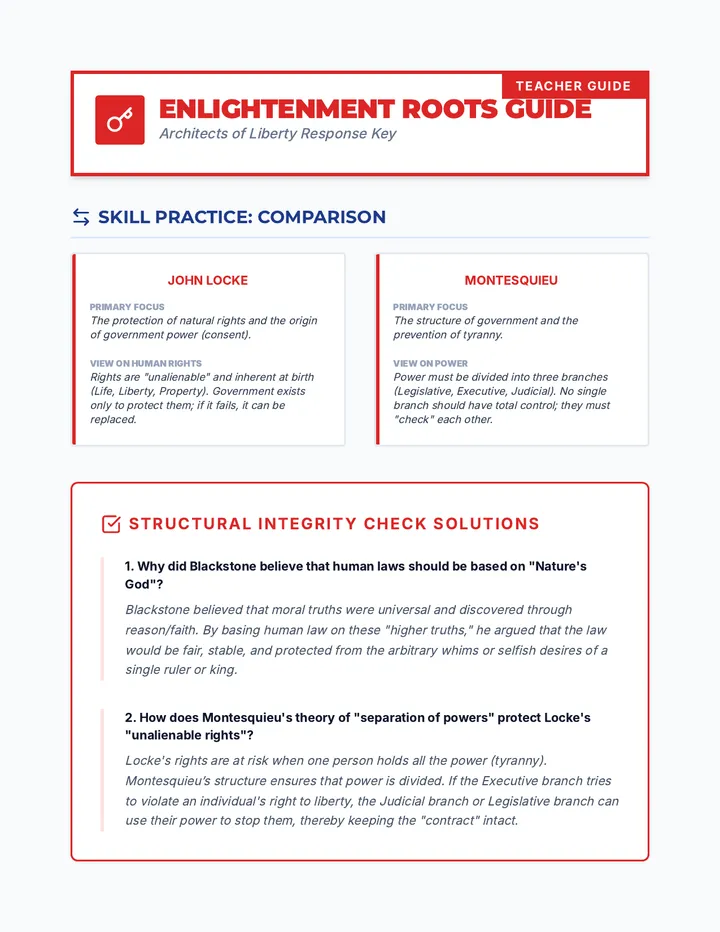
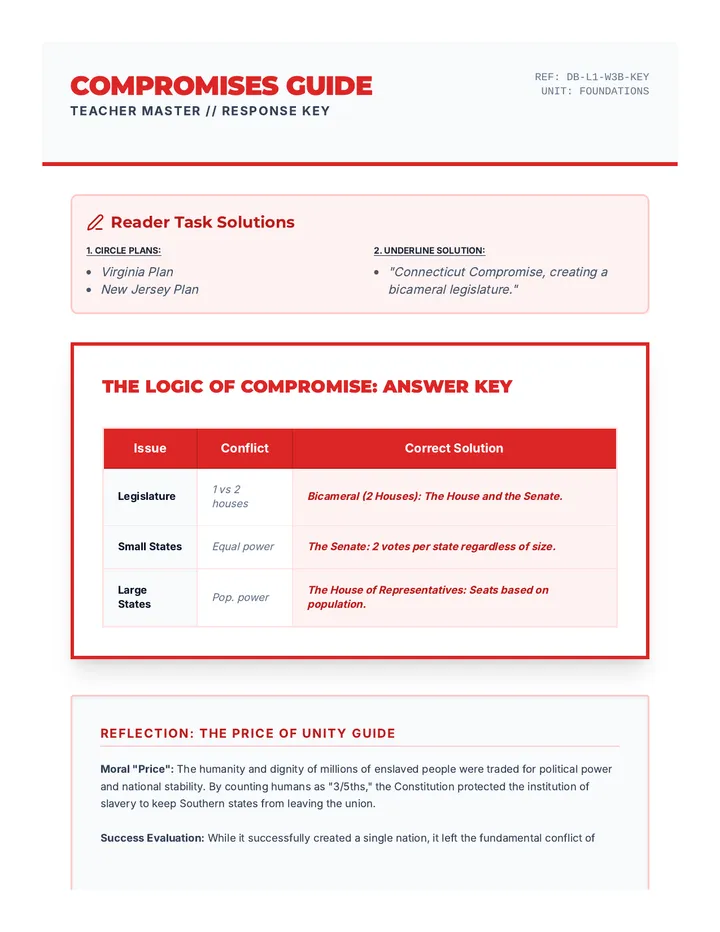
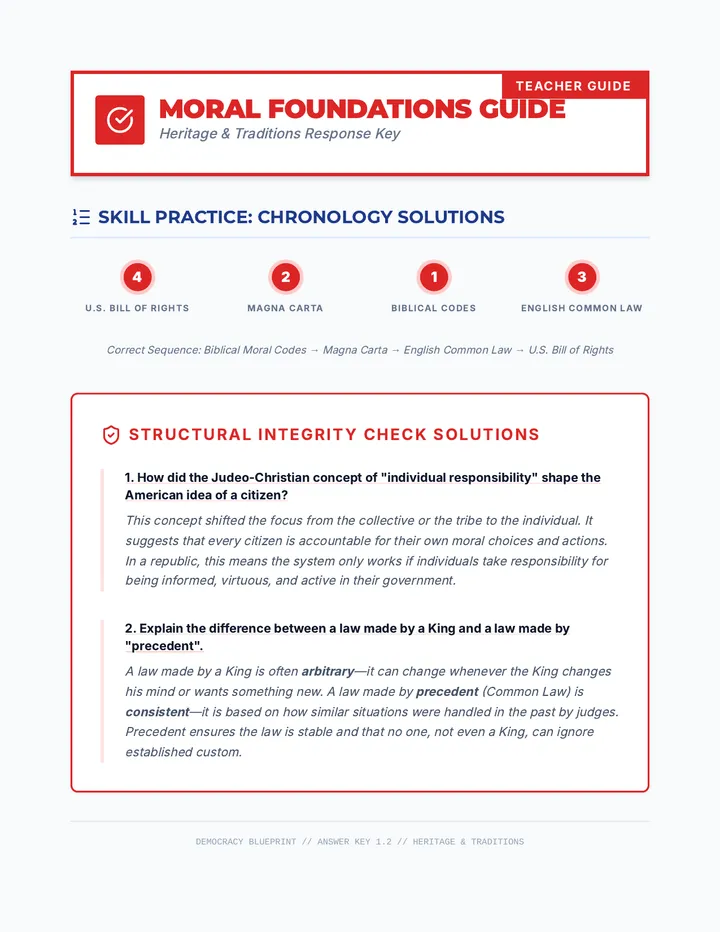
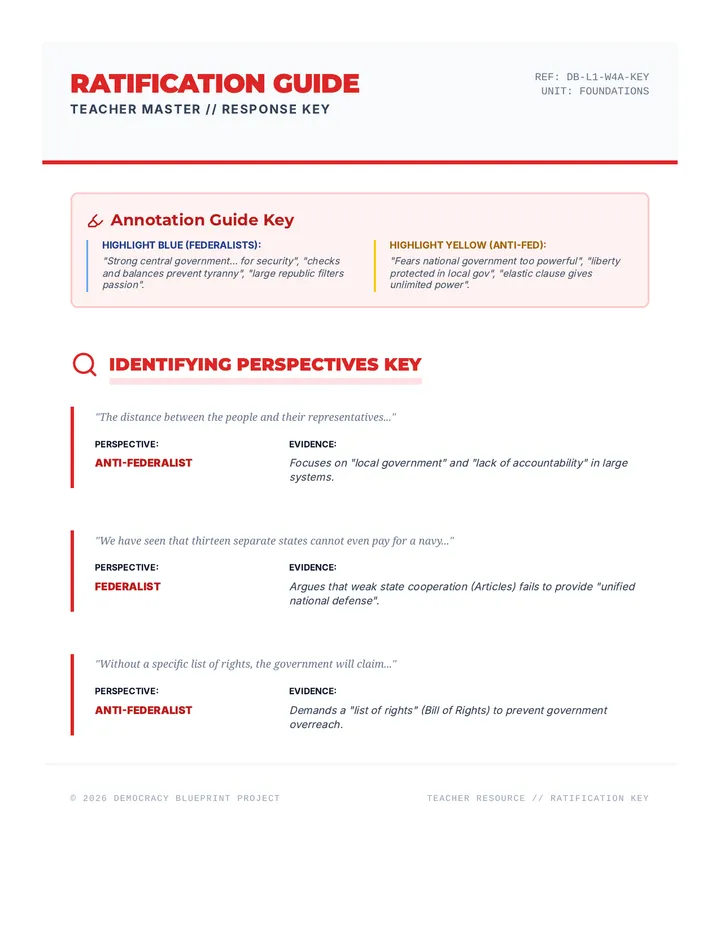
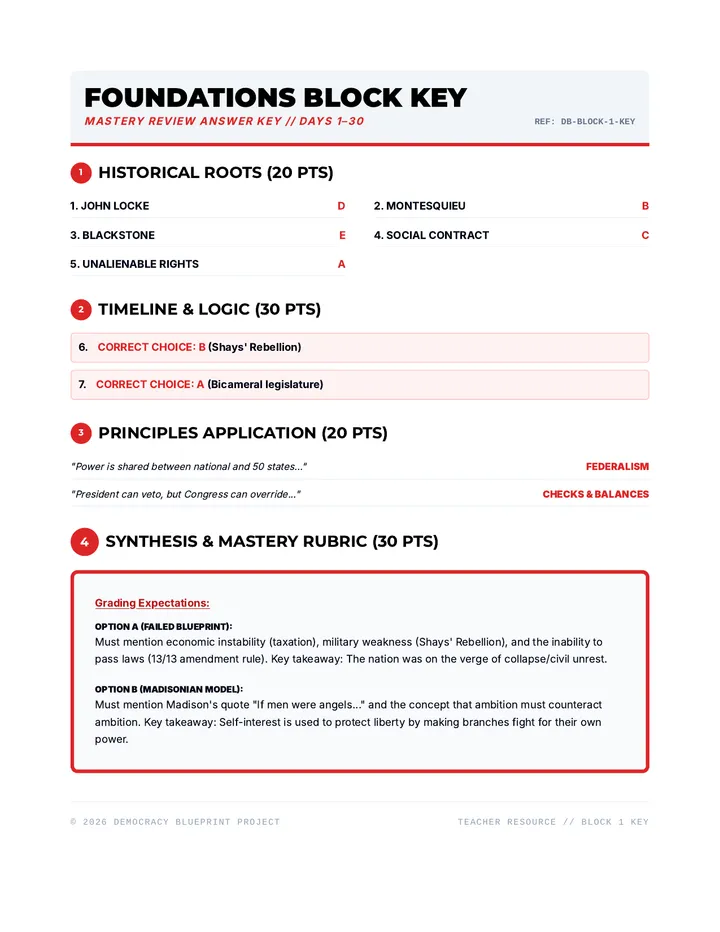
A comprehensive unit exploring the foundational structures of American government through the lens of the US Constitution.
A comprehensive exploration of Article I of the U.S. Constitution, covering the structure, powers, and limitations of the Legislative Branch through deep text analysis and structured discussion.
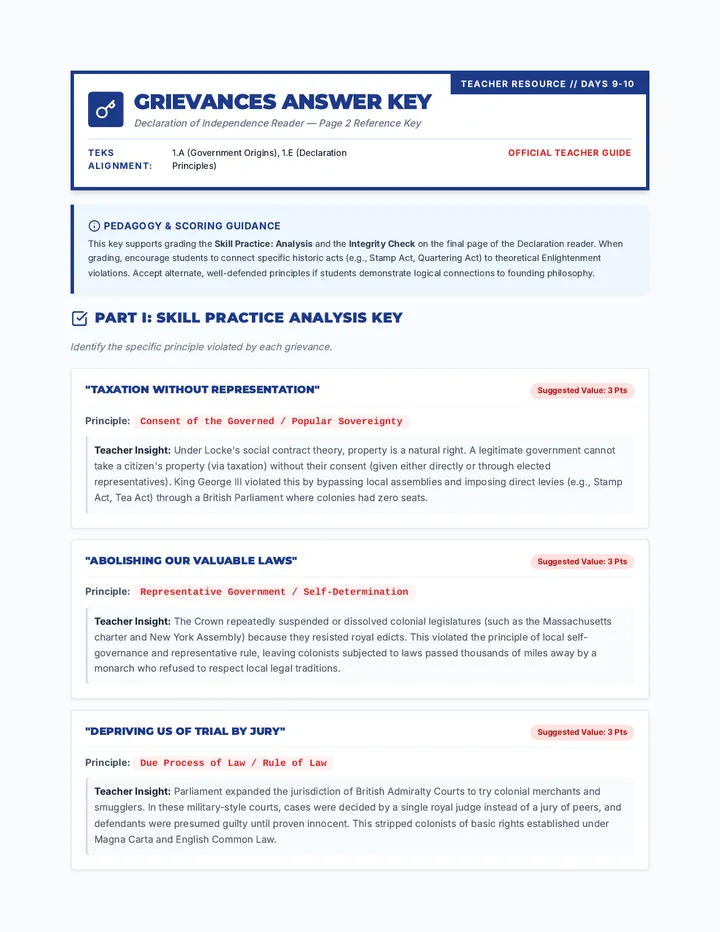
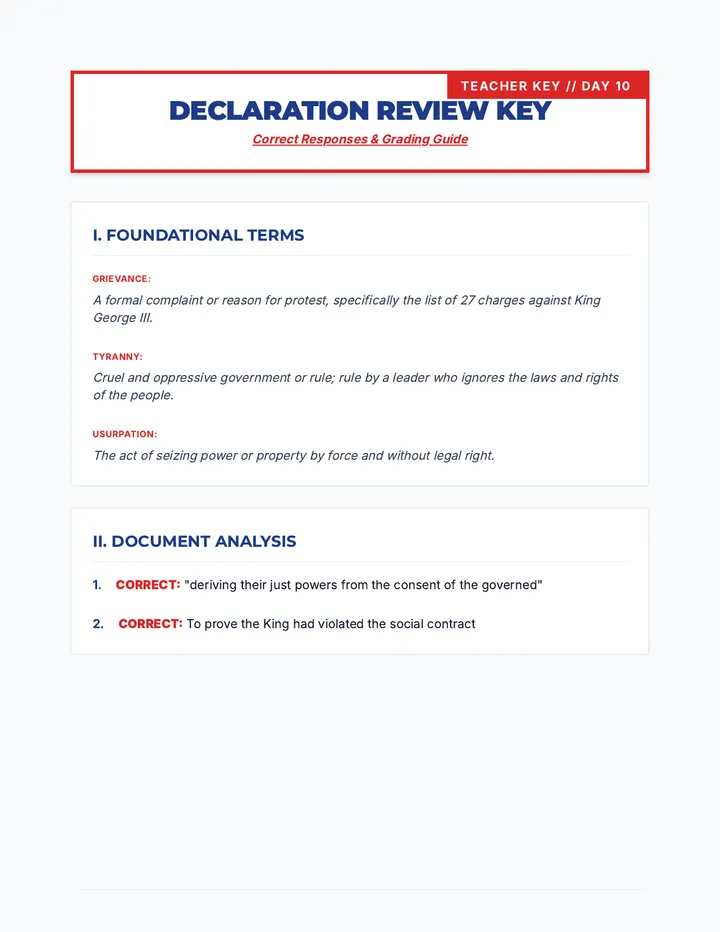
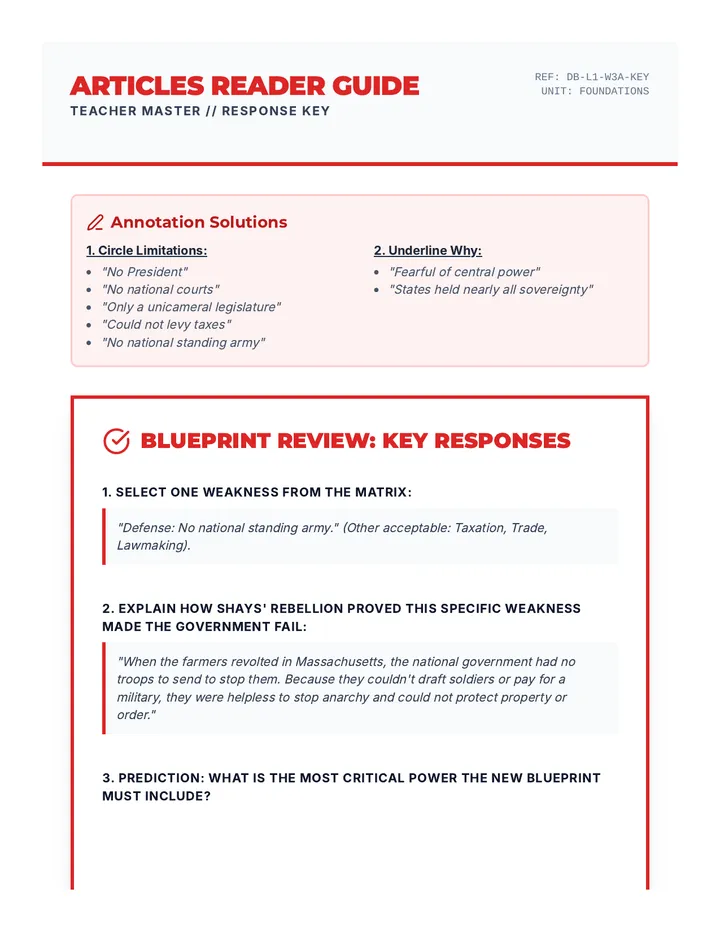
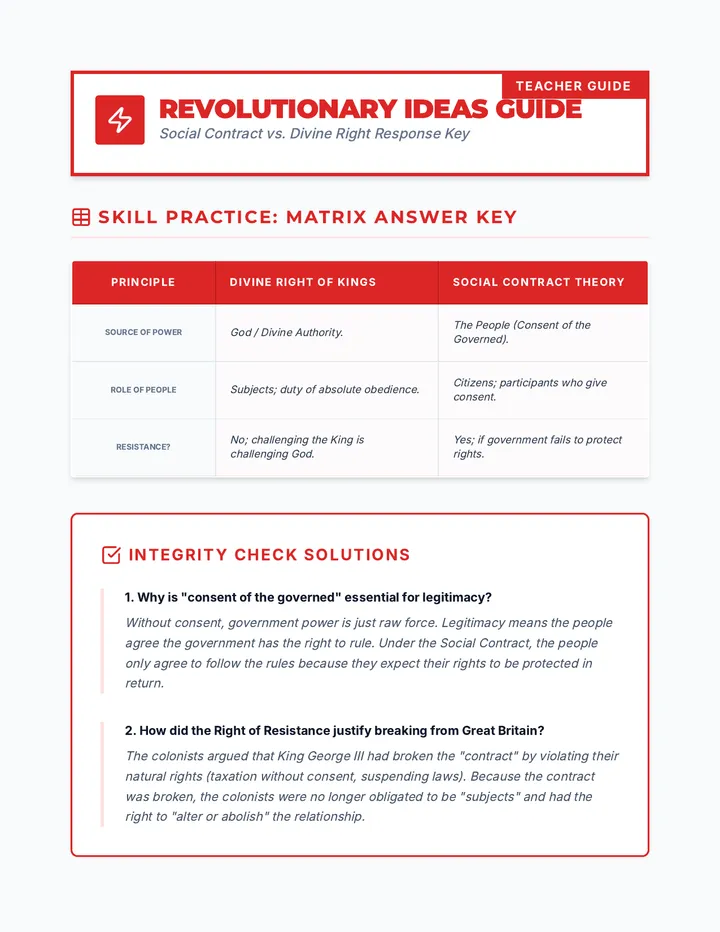
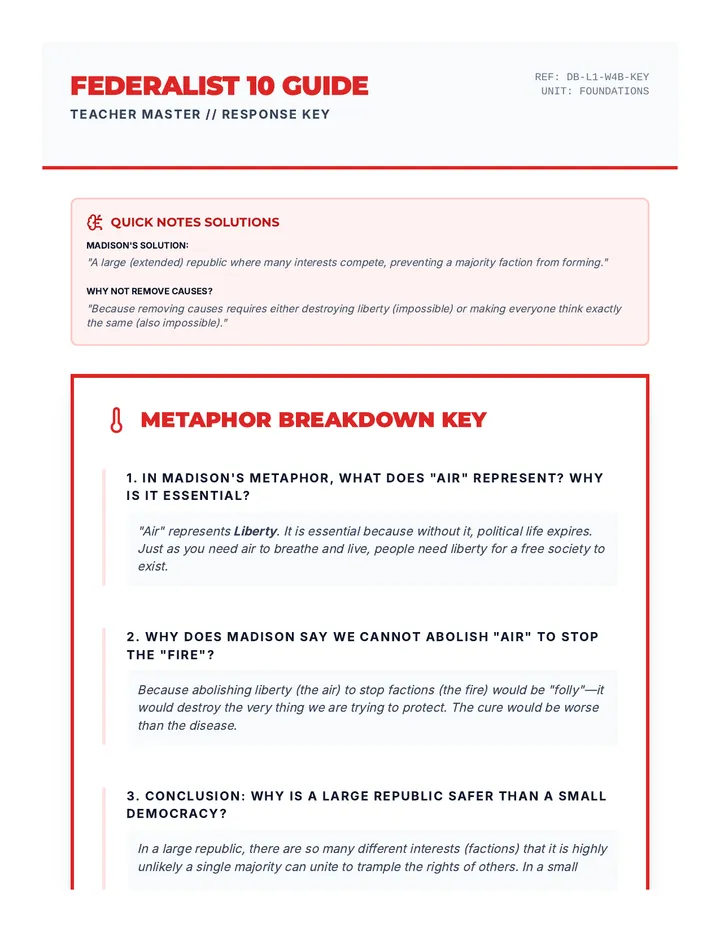
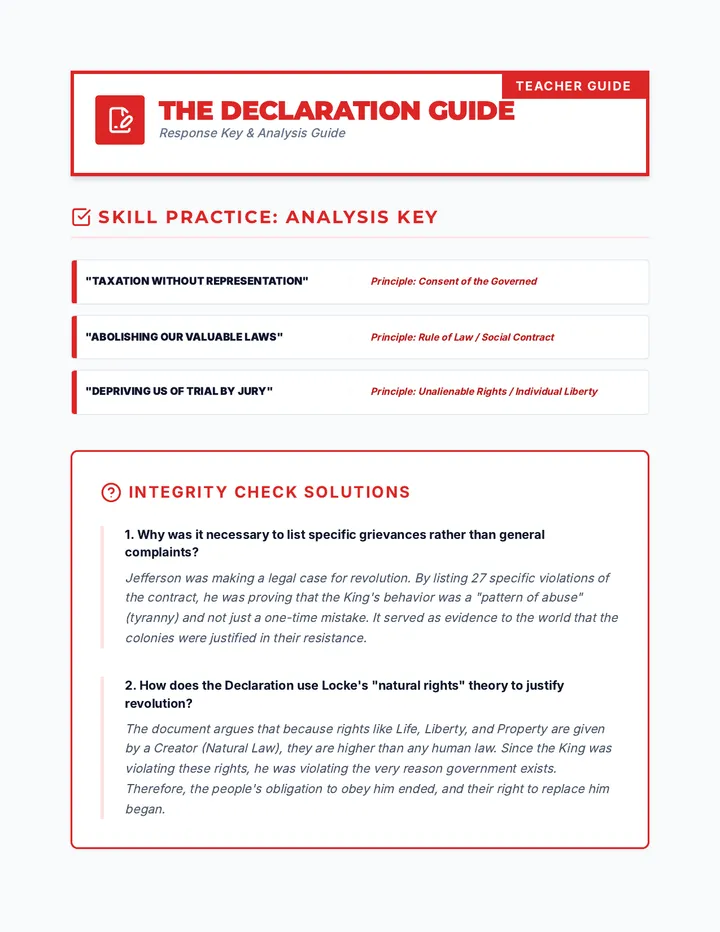
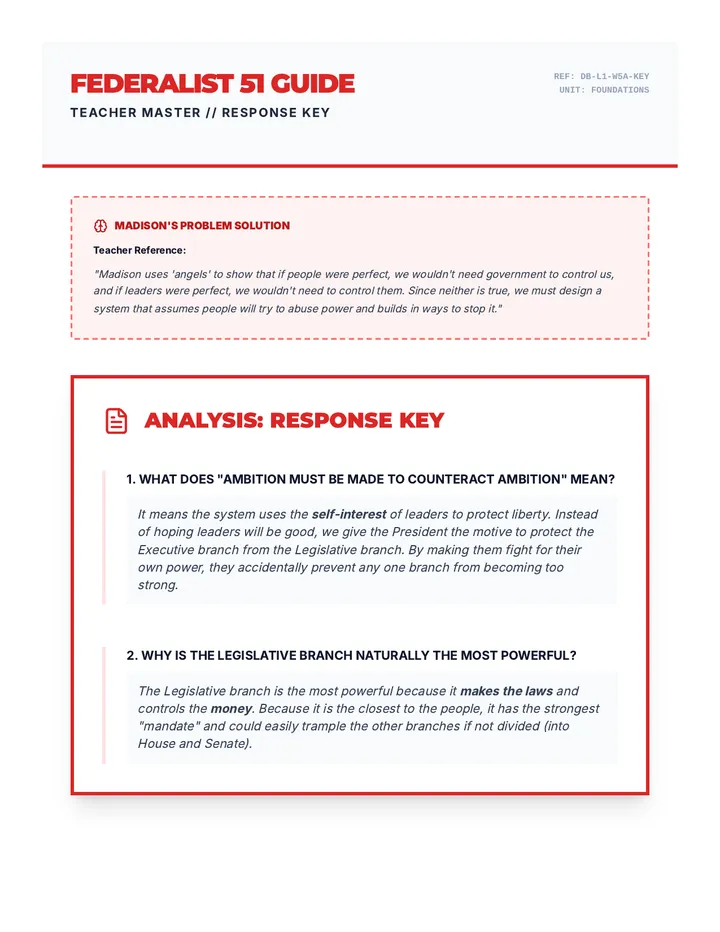
A series of lessons exploring the foundational documents and processes of the United States government, from the birth of the nation to the creation of modern laws.
A comprehensive collection of high-quality instructional materials across Science, History, ELA, and Math, designed for upper elementary classrooms.
A 3-day exploration of iconic US symbols designed for 1st and 2nd grade students, featuring the American Flag, Bald Eagle, Liberty Bell, White House, and the US Map.
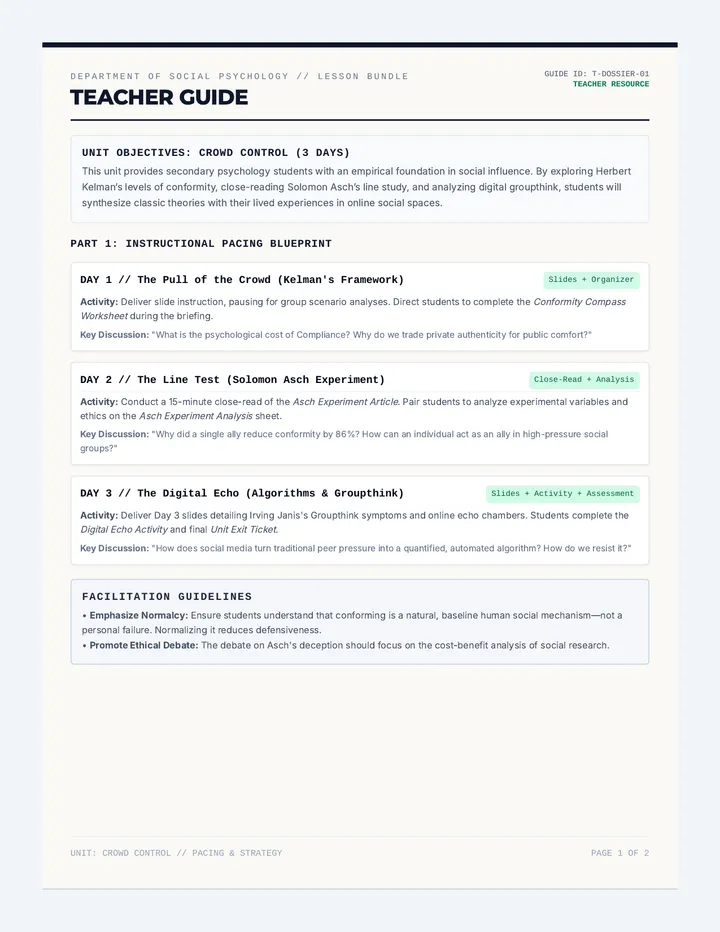
A foundational university-level psychology curriculum covering biological bases, cognitive processes, behavioral theories, and social dynamics. This sequence provides a rigorous introduction to the scientific study of the human mind and behavior.
A comprehensive review sequence focusing on the Gilded Age and Progressive Era through the analysis of historical imagery and political cartoons, specifically designed for Texas STAAR preparation.
An 8-day US History remediation packet covering WWII, the Cold War, Civil Rights, and Vietnam, designed for 11th-grade students preparing for STAAR testing. Each day includes intensive reading with embedded vocabulary, active annotation guides, and a skill-based review worksheet.
A series of four interactive stations designed for high school emerging bilingual students to explore the history and significance of Cinco de Mayo through reading, writing, listening, and speaking. The materials focus on 9th-grade TEKS (Inference and Text Structure) while maintaining a 4th-5th grade reading level for accessibility.
A comprehensive sequence focused on developing data literacy through the analysis of United States crime statistics. Students progress from national trend analysis to specific state and local investigations using primary data sources.
A comprehensive curriculum covering financial literacy, economic principles, and civic systems through historical case studies, ethical dilemmas, and real-world simulations.
A collection of mixed-grade resources.
A two-day historical simulation and project focused on the Bay of Pigs invasion, Cold War containment strategies, and multi-perspective journalism. Students analyze primary sources and government documents to create a 1961 newspaper report.
A comprehensive K-5 Media Center curriculum spanning August to May. Each month features a thematic unit integrating library skills (Dewey Decimal System, research, digital citizenship), literacy (poetry, biographies, informational texts), and STEM/Maker Space challenges. Resources are differentiated for K-2 and 3-5.
A comprehensive guide to the Bill of Rights designed for different learning needs. Students explore the first ten amendments through visual planning, vocabulary building, and a creative poster project.
A foundational unit exploring the multifaceted nature of families, their structures, roles, and the daily rhythms that shape our lives.
A comprehensive middle school history unit where students act as 'history detectives' to investigate the rise of nation-states in England, France, Spain, and Russia through primary source analysis.
A comprehensive deep-dive into Shakespeare's Romeo and Juliet, focusing on Act 1. Students will analyze character dynamics, the tension between destiny and choice, and the rich poetic language of the play across individual scenes.
A comprehensive 3rd-grade unit focused on self-identity, distinguishing between internal and external characteristics, exploring Indigenous and Mexica narratives, and culmininating in creative self-expression.
A foundational sequence introducing undergraduate psychology students to the core concepts, history, and applications of Industrial and Organizational Psychology.