A teacher-facing facilitation guide for 9th-grade health class focusing on yoga for stress management and physical health. It includes lesson objectives, vocabulary, discussion prompts, and a practical classroom "stress reset" activity.
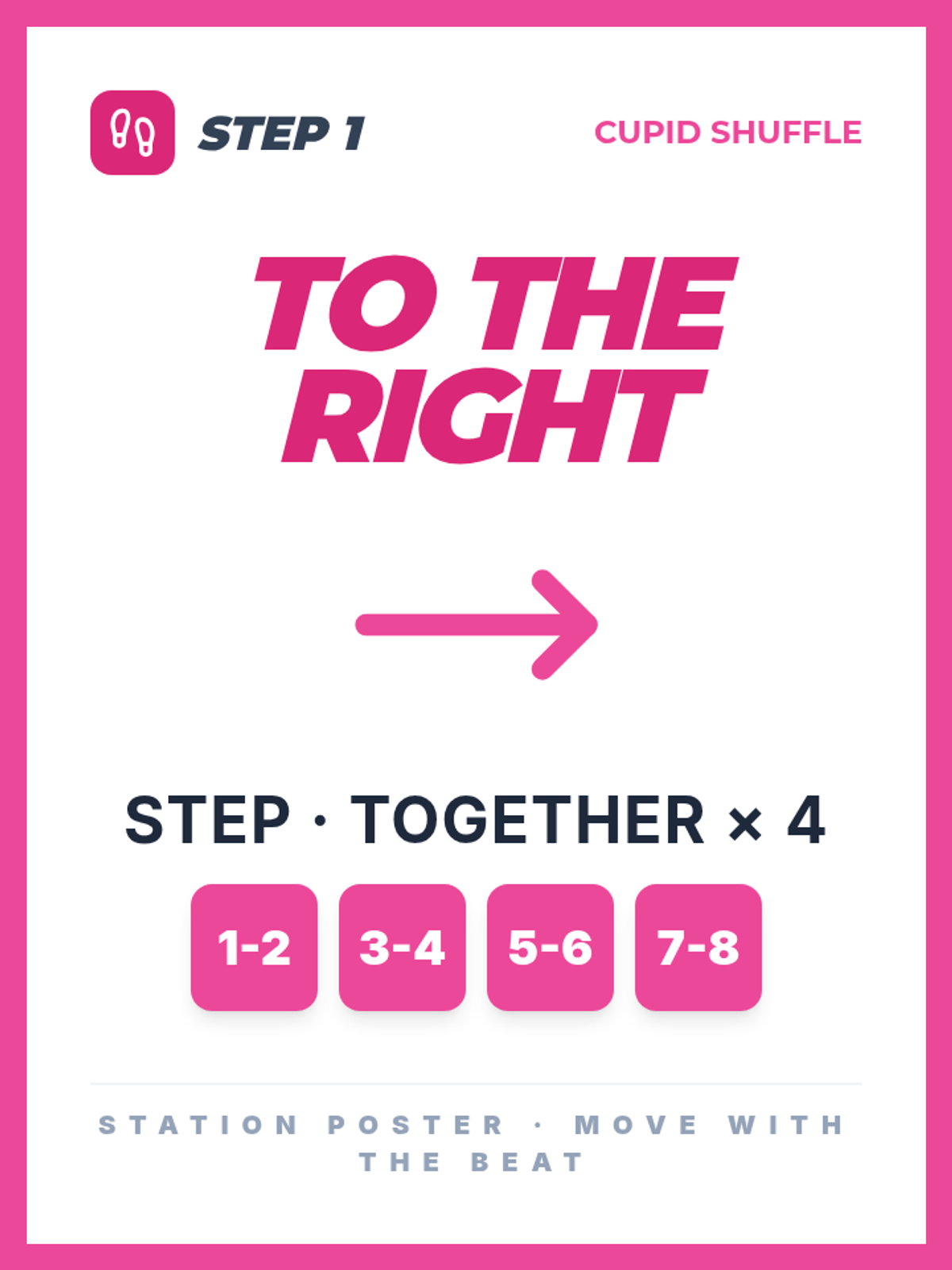
A set of four high-visibility, full-page posters designed to be placed around a dance floor or classroom. Each poster breaks down one movement of the Cupid Shuffle with large icons, bold text, and clear 8-count timing.
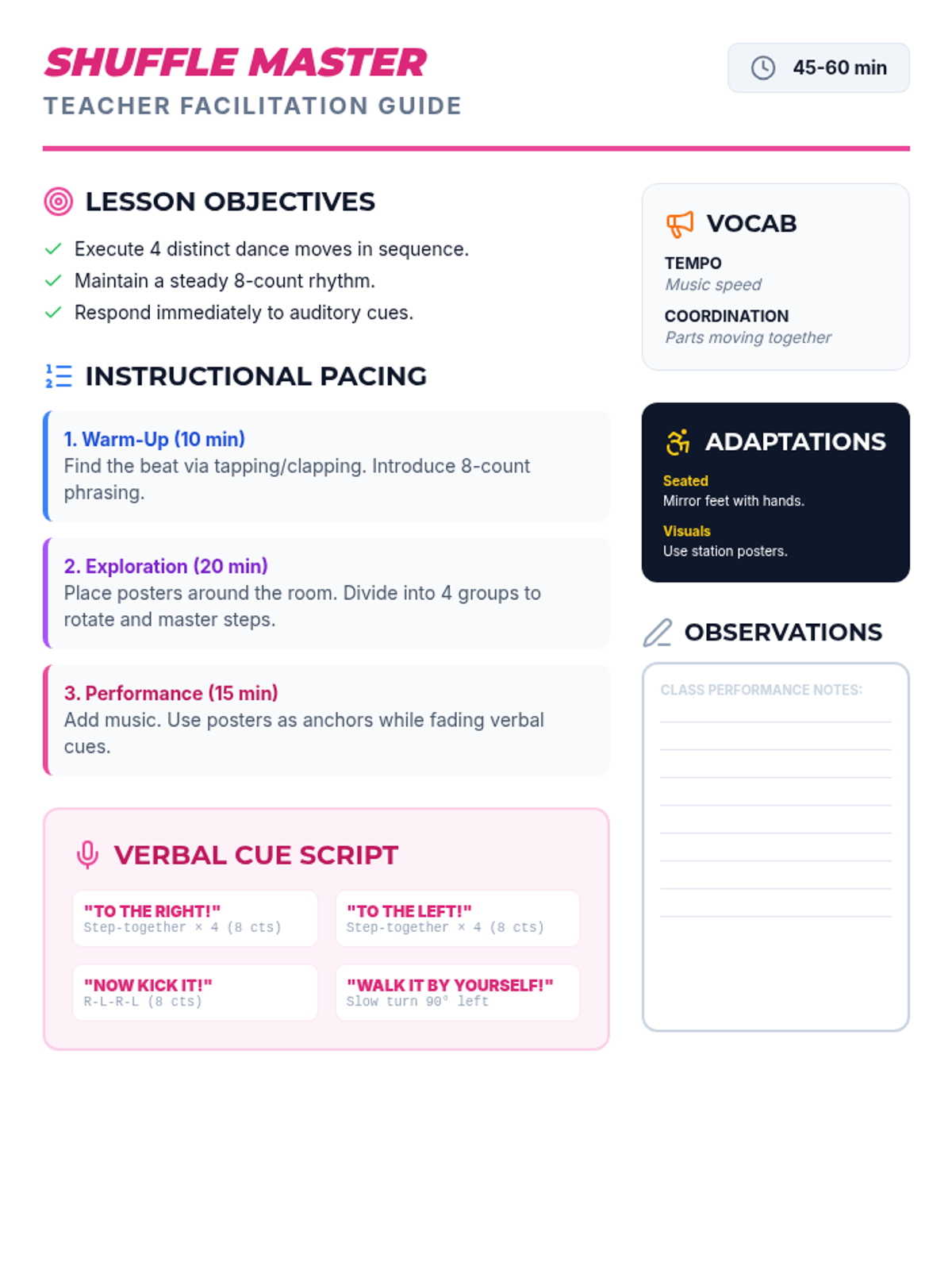
A comprehensive teacher's guide for the Cupid Shuffle lesson, including instructional pacing, verbal cue scripts, differentiation strategies for various learners, and assessment criteria.
A high-energy, visually engaging slide deck designed to teach the Cupid Shuffle. It breaks down the 4 main moves into 8-count sequences, introduces basic rhythm concepts, and includes a video embed for practice.
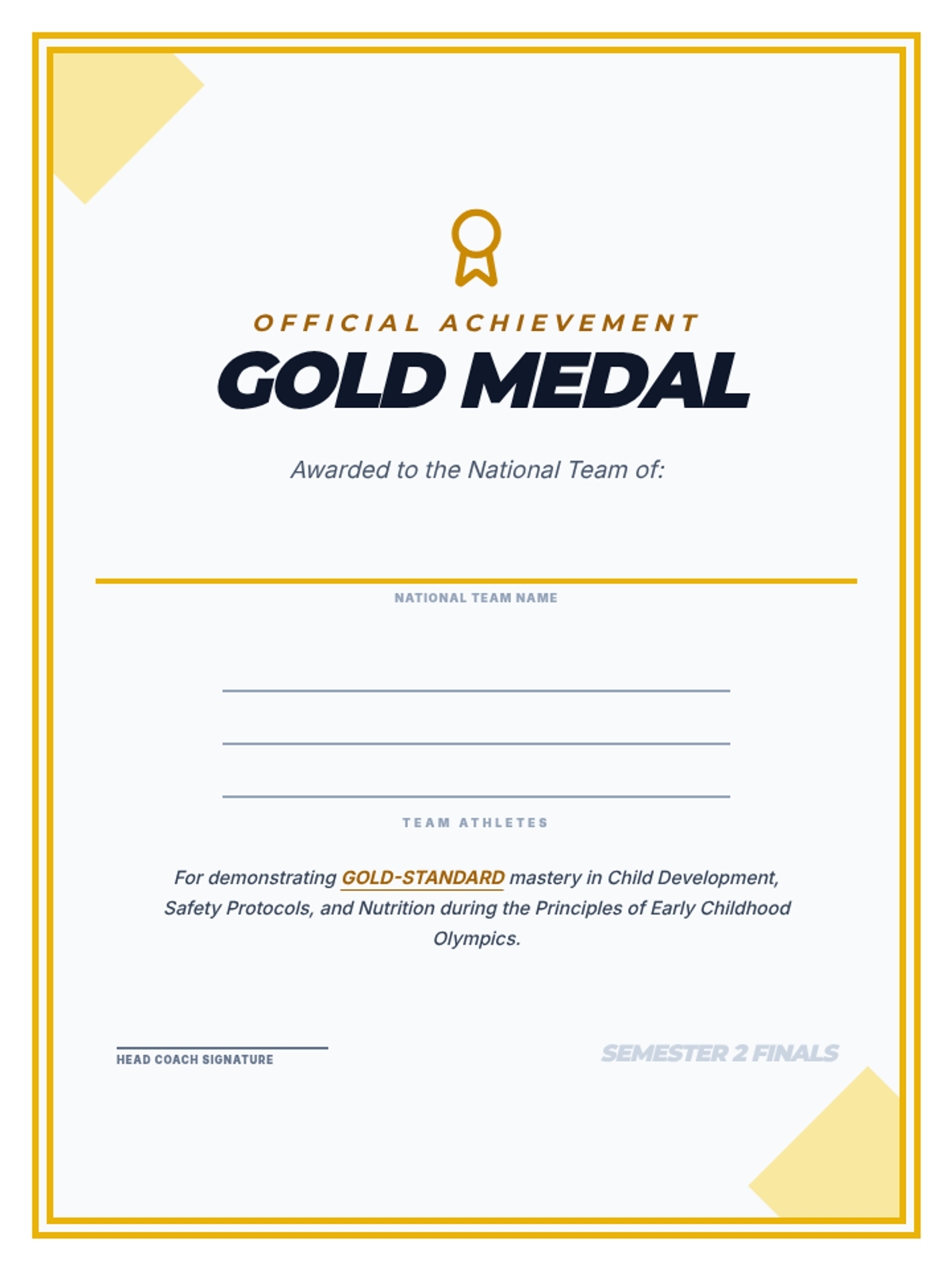
A set of printable Gold, Silver, and Bronze medal certificates for the Principles of Early Childhood Olympics. Each certificate includes space for the National Team name, athlete names, and the teacher's signature. High-polish, themed borders for a professional end-of-semester finish.
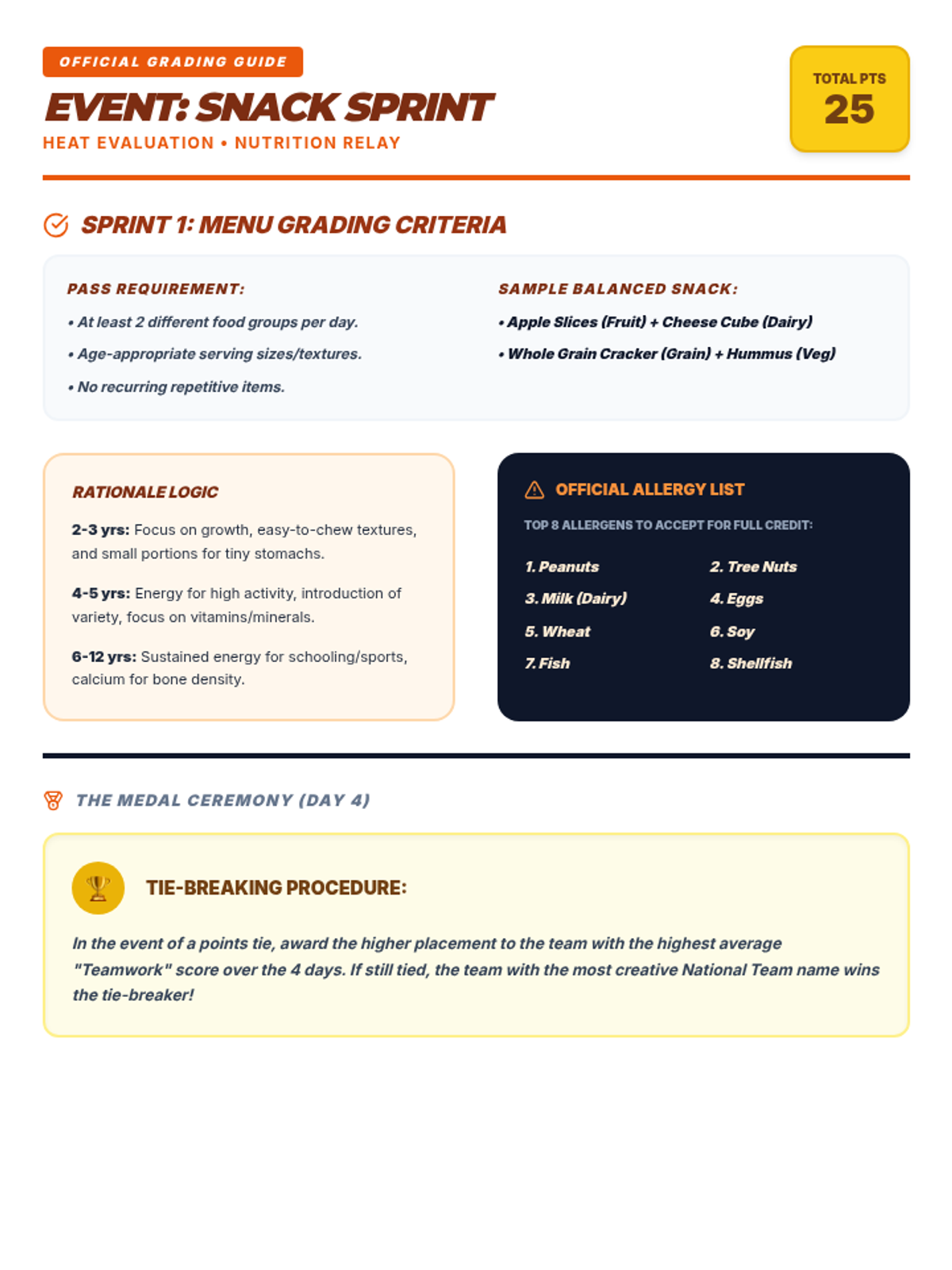
Grading guide and evaluation criteria for the Day 4 Snack Sprint. Includes sample healthy snack pairings, developmental rationales by age group, the top 8 common allergens, and tie-breaking procedures for the final medal ceremony.
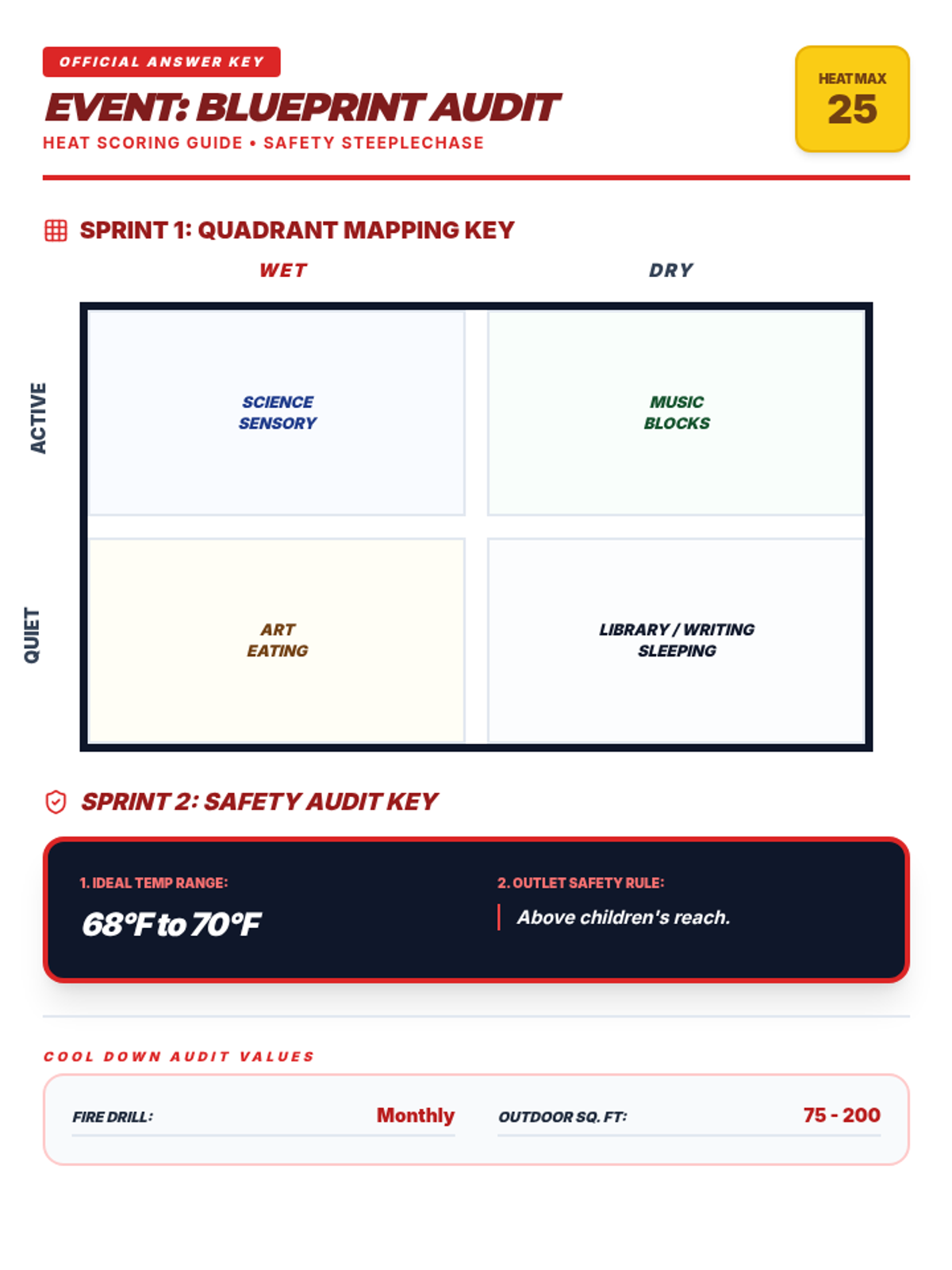
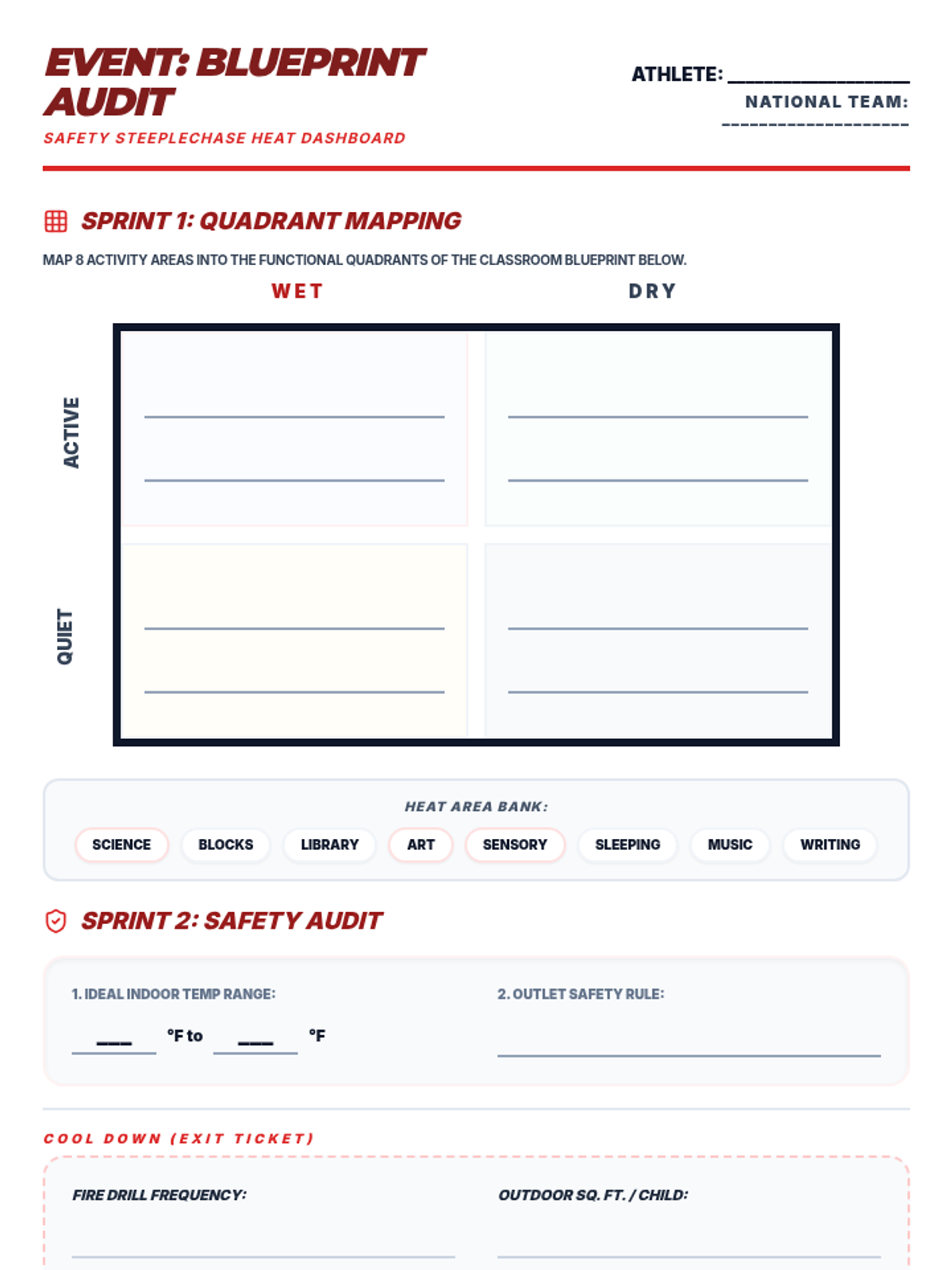
Official answer key for the Day 3 Blueprint Audit event. Provides the correct classroom layout mapping (Wet/Dry and Active/Quiet quadrants) and licensing standards for temperature, fire safety, and space requirements.
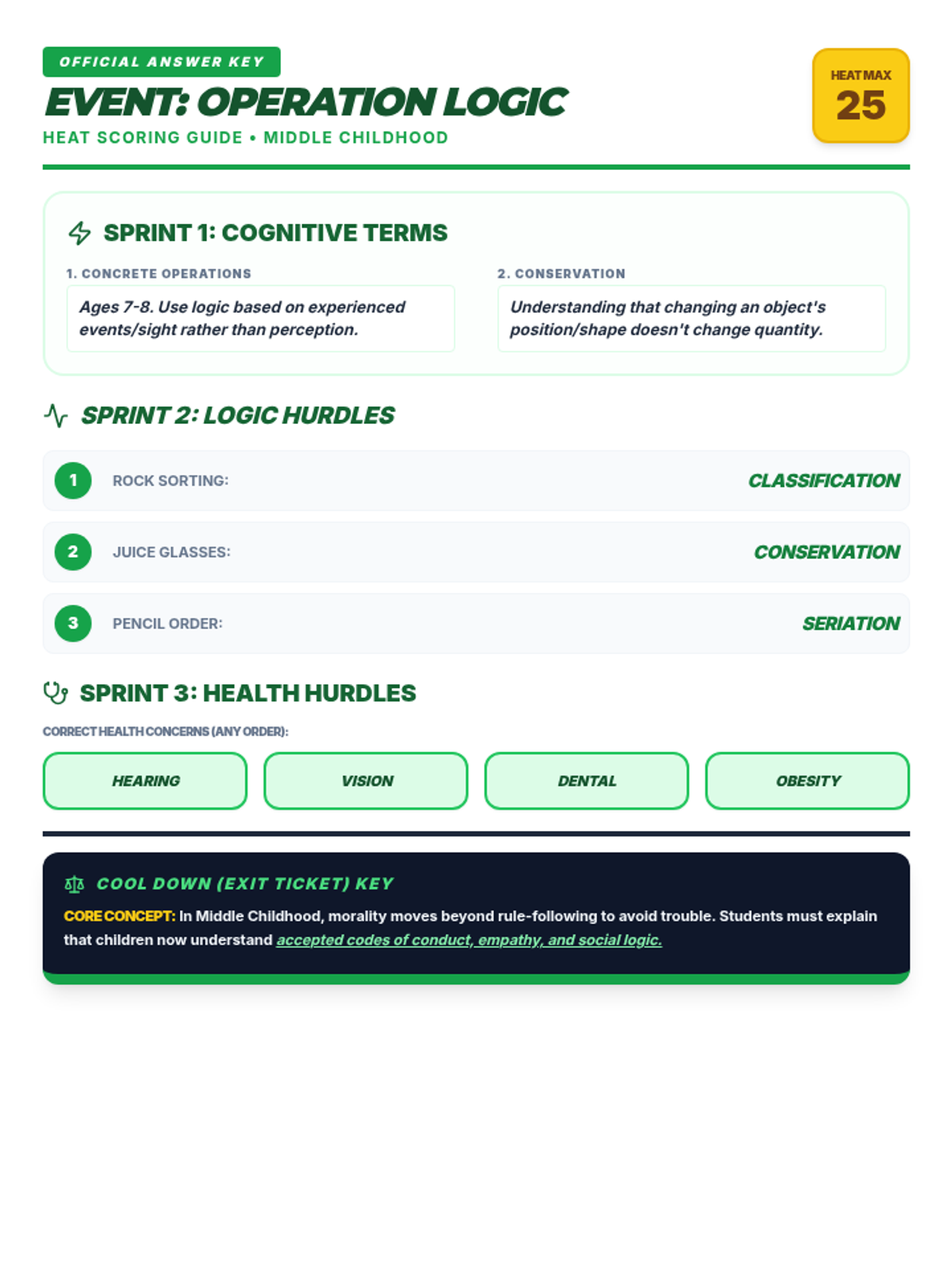
Official answer key for the Day 2 Operation Logic event. Covers cognitive term definitions, scenario-based logic identification (classification, seriation, conservation), and health concerns of middle childhood.
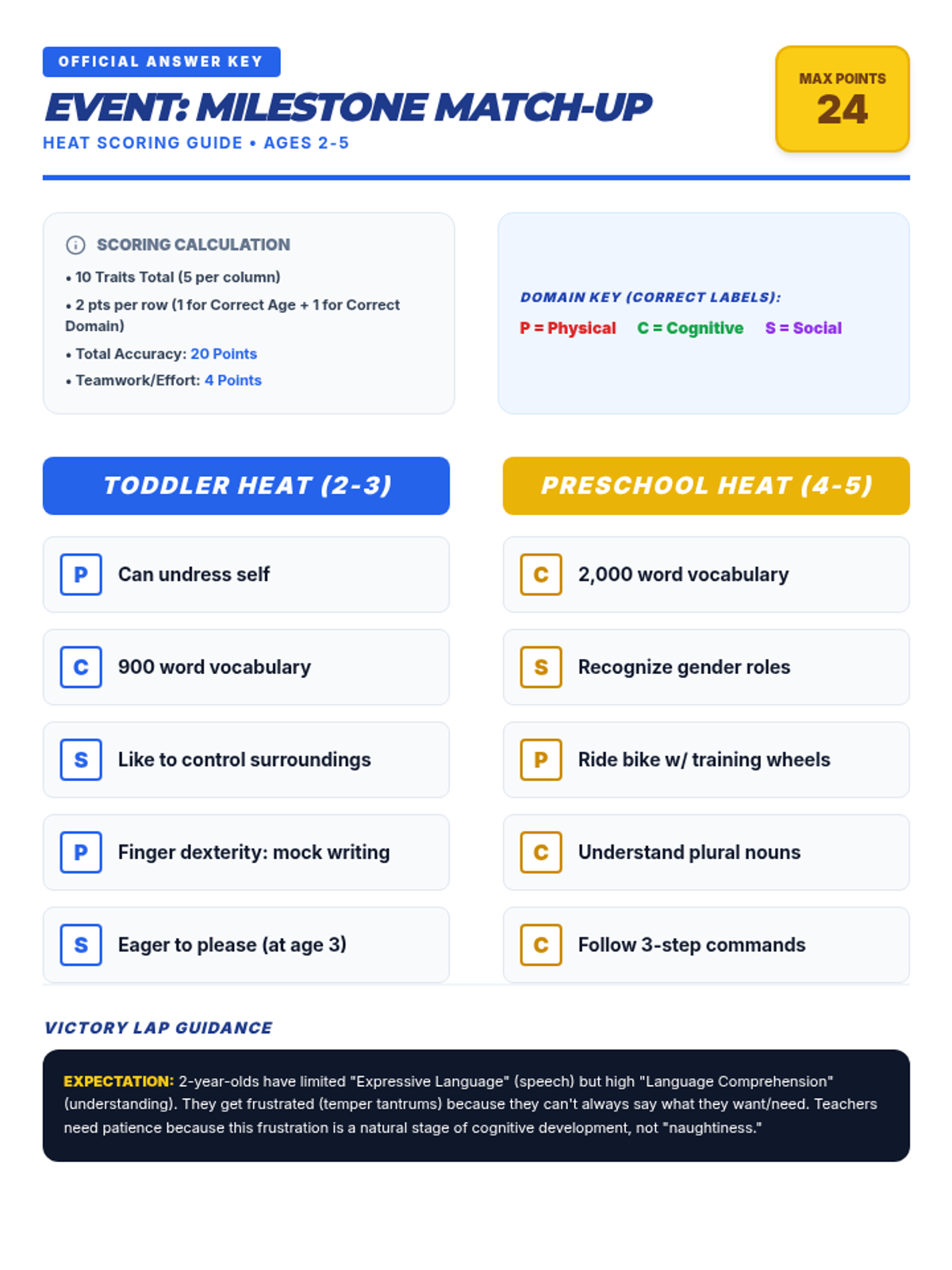
Official answer key and scoring guide for the Day 1 Milestone Match-Up event. Includes correct age categorization, developmental domain codes, and a detailed scoring breakdown for teacher use.
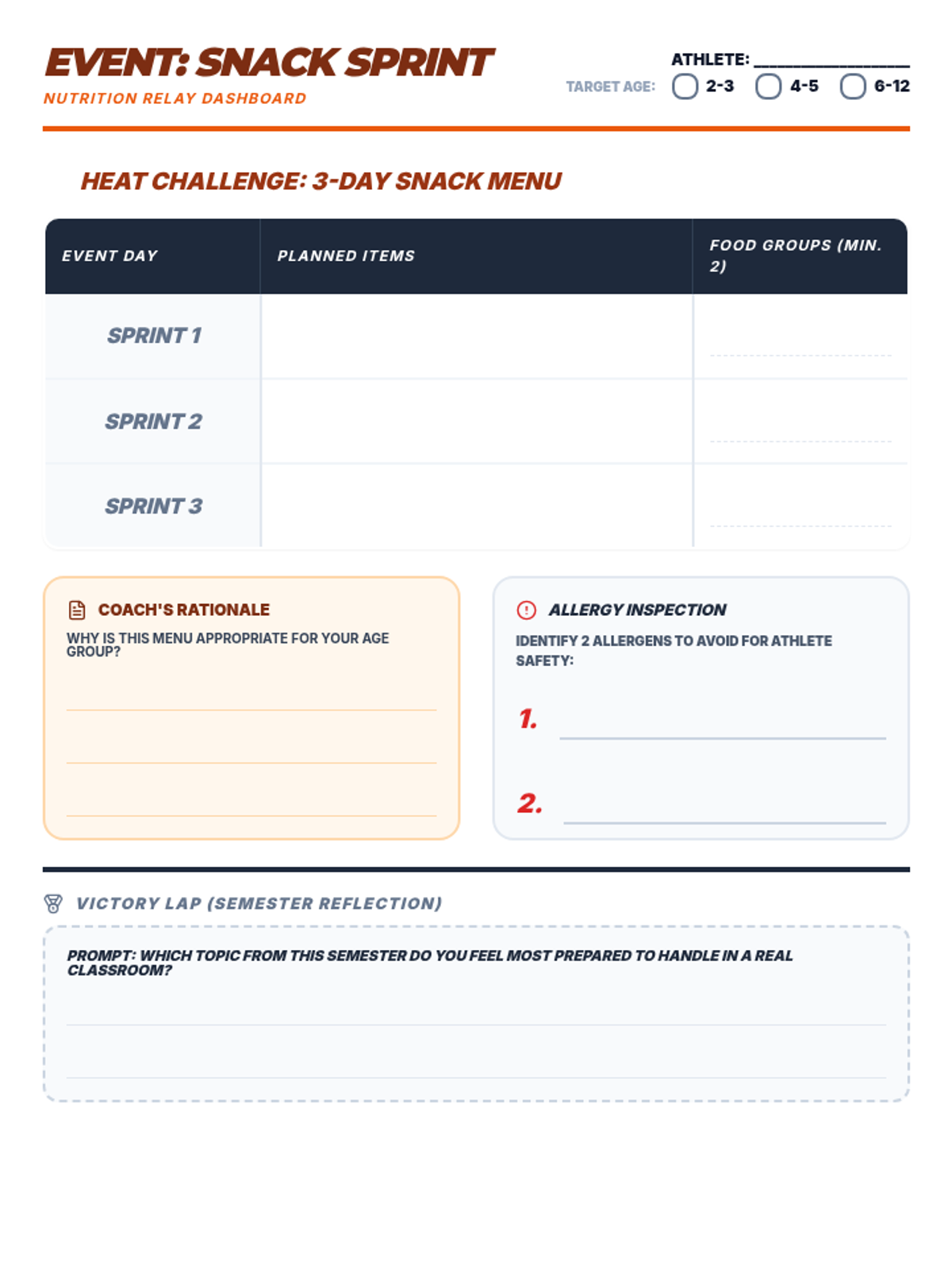
Day 4 student handout for snack menu planning. Updated with optimized table row heights to keep all sections on one page, improved alignment for age group selection, and larger rationale space.
Final Day 4 slides for the Early Childhood Olympics. Features updated Bell Ringer for MyPlate accuracy, explicit point values for the challenge, clarified 'Heat Points' terminology, and high-contrast text for the semester reflection.
A student activity sheet for Day 3. Students design a classroom layout following Wet/Dry and Active/Quiet quadrants. Includes 'Safety Sprints' and an explicit 'Exit Ticket' section. Redesigned to fit on one page with high-contrast labels. Improved spacing for handwriting.
A slide presentation for Day 3 of the Early Childhood Olympics, focusing on Safety and Environment. Includes realistic math problems, quadrant rules for layouts, and a 5-question high-speed Safety Audit.
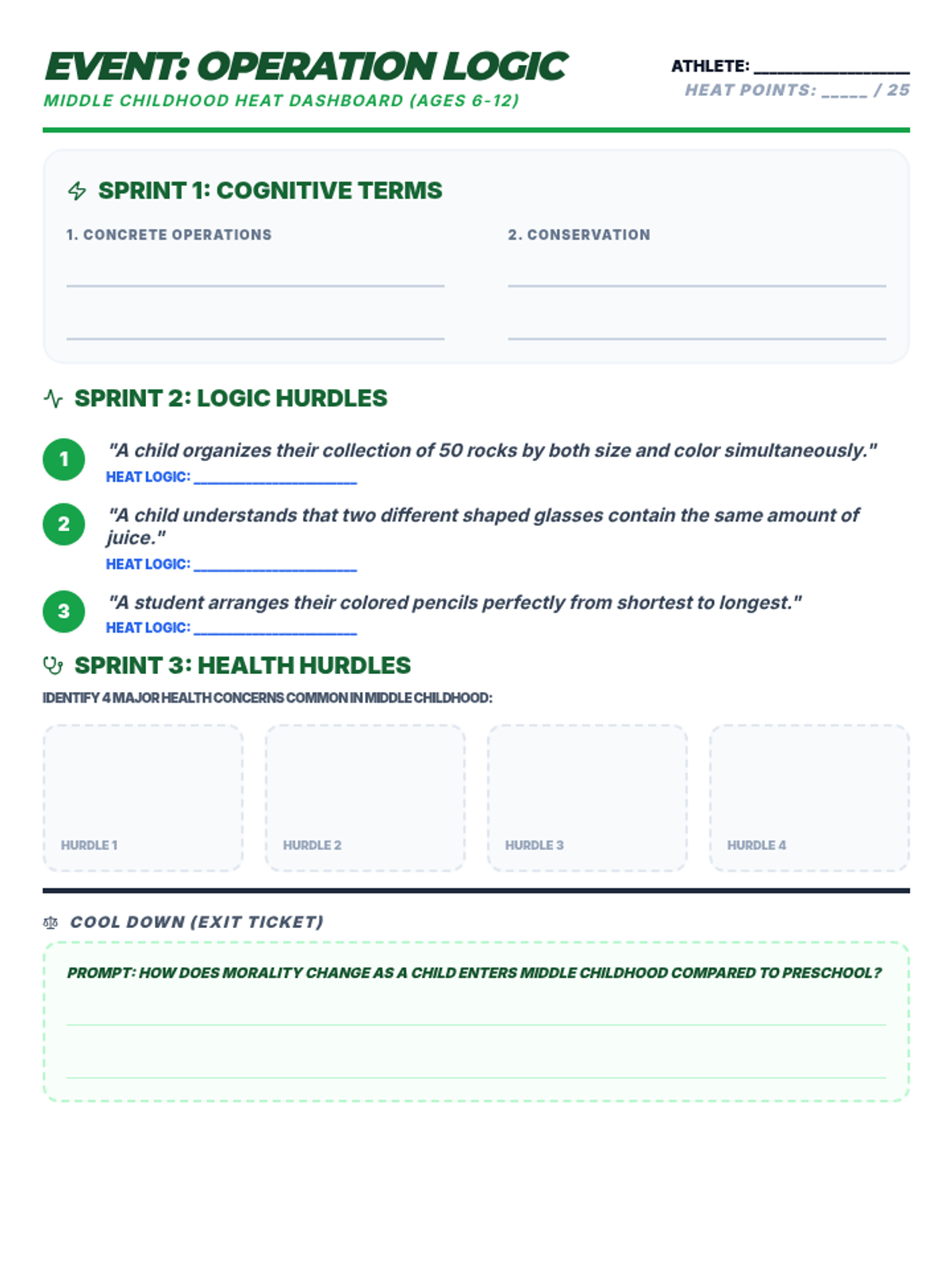
A Day 2 activity worksheet for 'Operation Logic'. Students work in teams to define terms, solve cognitive developmental scenarios, and identify health hurdles. Updated with fixed hurdle labels and improved spacing.
A slide presentation for Day 2 of the Early Childhood Olympics, focusing on Middle Childhood (ages 6-12). It highlights cognitive concepts like classification and seriation, outlines the day's challenge, and includes a moral development exit ticket. Center-aligned content and high-visibility text.
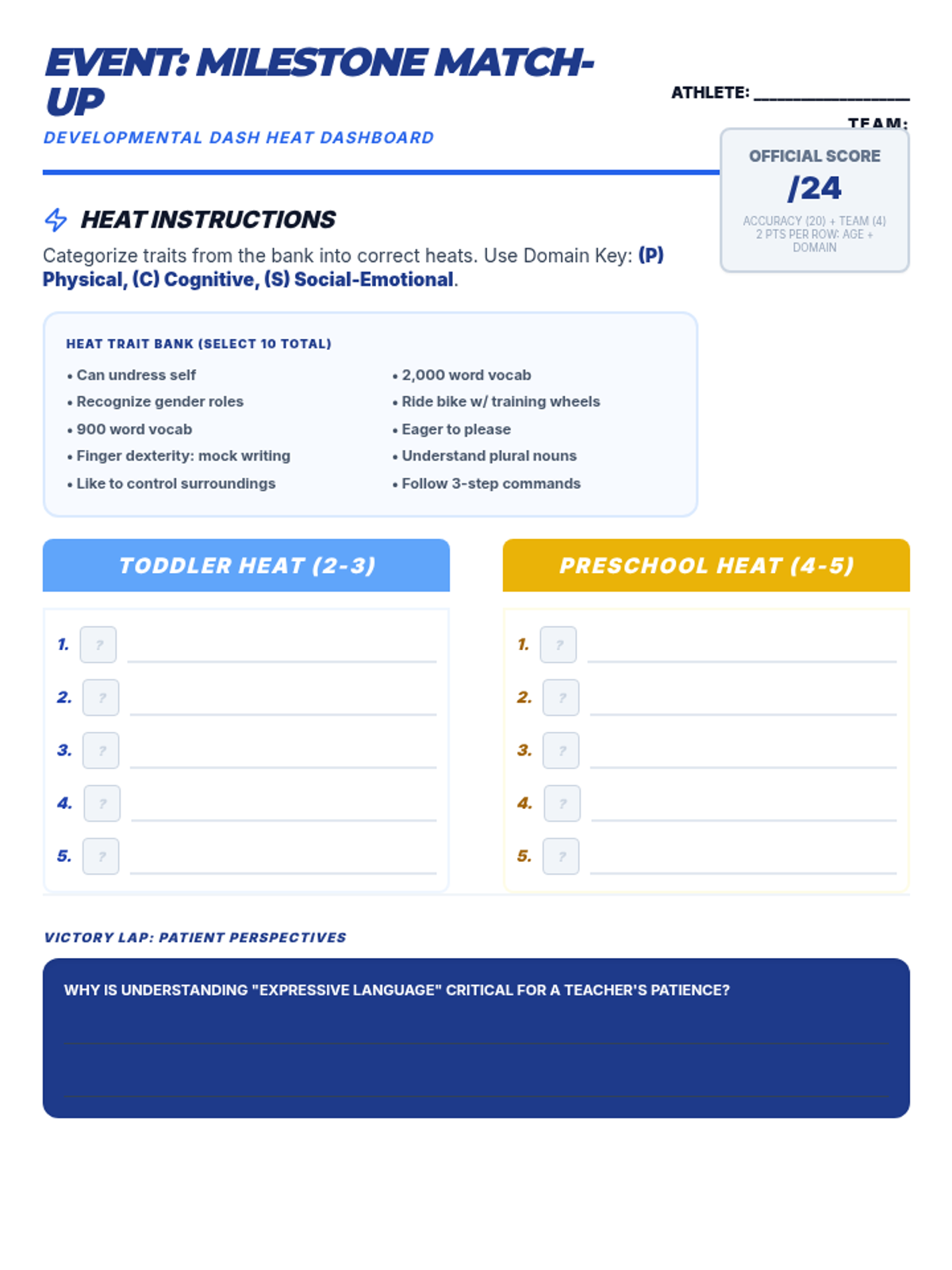
A student worksheet for the Day 1 'Milestone Match-Up' event. Students must sort developmental traits into correct age groups (2-3 vs 4-5) and identify the developmental domain for each. Includes larger writing lines and a clear domain key for better usability. Accuracy points updated to /24.
A slide presentation for Day 1 of the Early Childhood Olympics, covering milestones for ages 2-5. Includes a bell ringer, a display of the traits for the Match-Up event, and a final reflection exit ticket. Improved text contrast and content completeness.
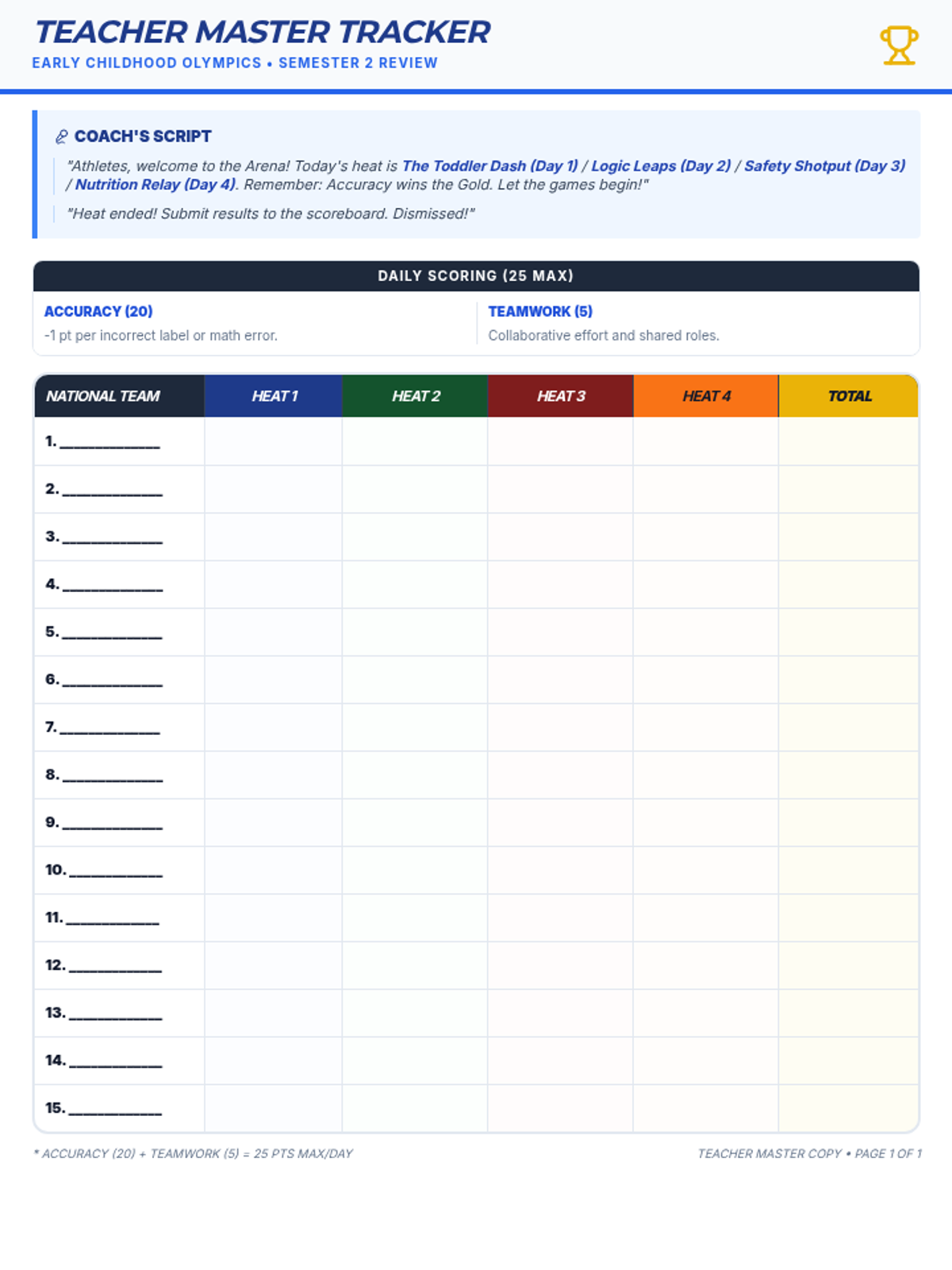
A teacher-facing score tracker and rubric for the Principles of Early Childhood Olympics, providing space to record points for accuracy and teamwork across all four days of competition. Updated with 15 team rows and optimized sizing to fit on a single page.
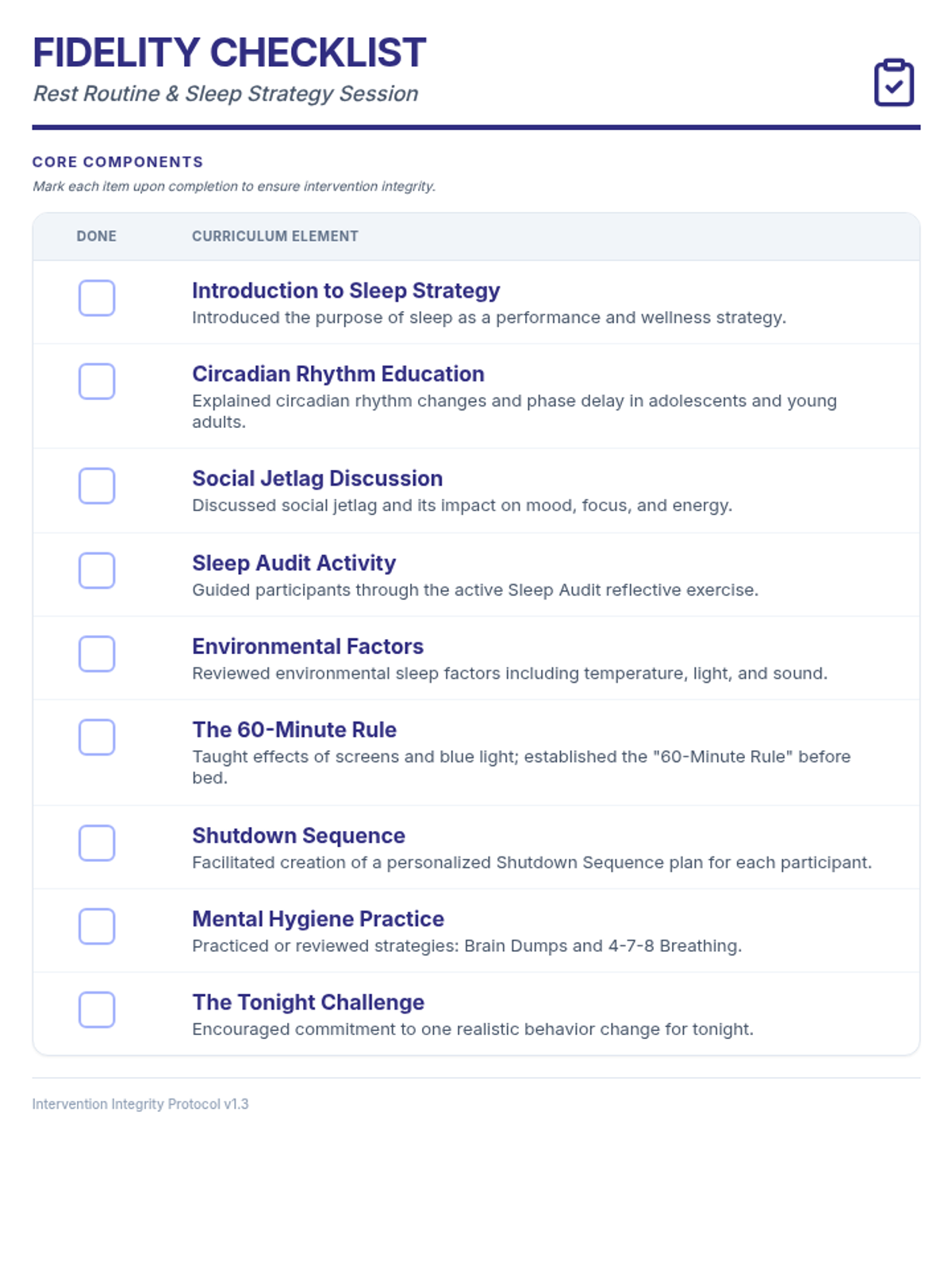
A final streamlined version of the fidelity checklist focusing solely on core components. Removed session metadata, observation sections, and the signature line for a clean, simple verification tool.
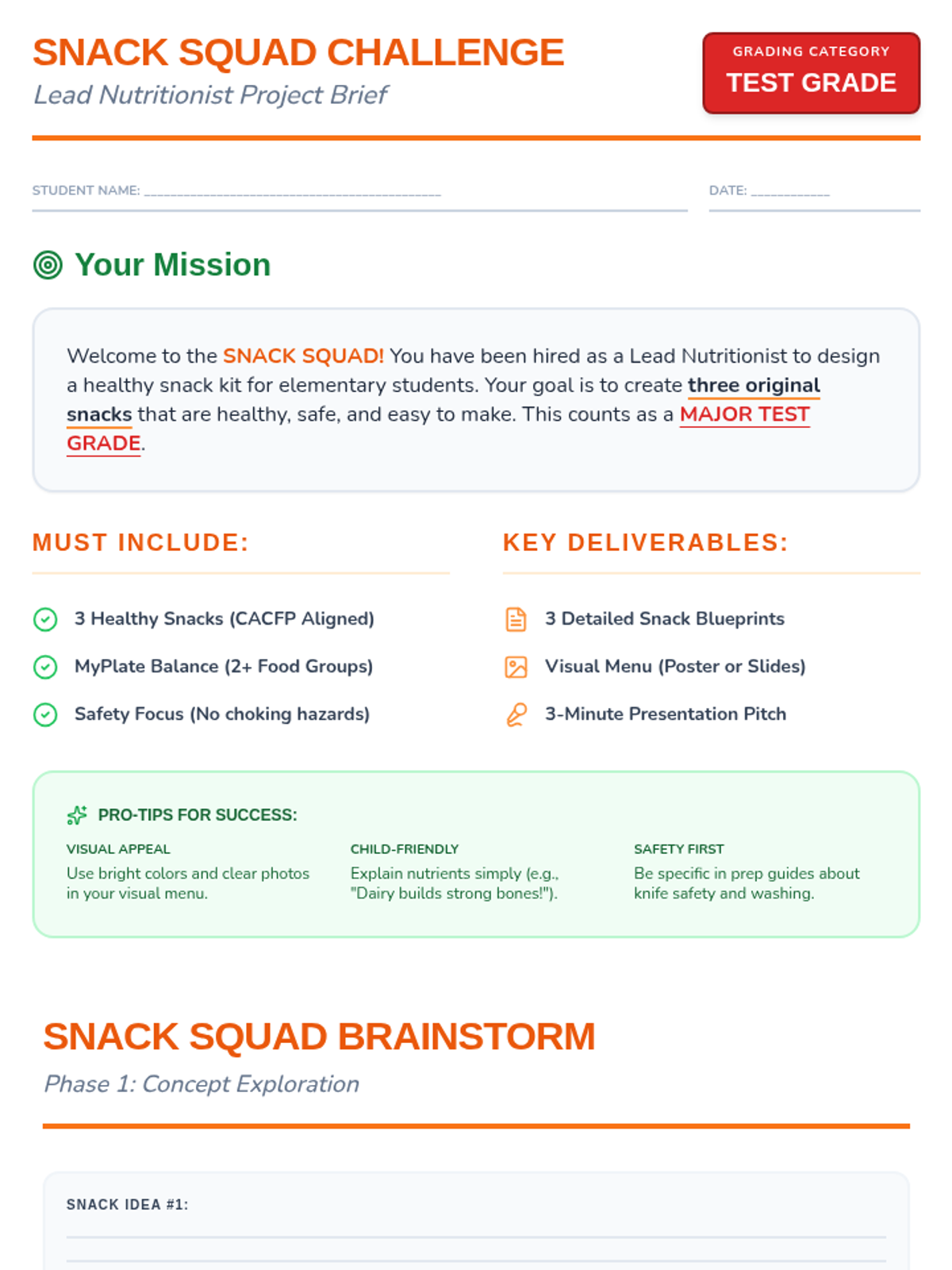
A complete 6-page project packet for the Snack Squad Challenge, including the project prompt with a test grade notice, brainstorming area, a 50-point rubric, and three detailed planning blueprints with step-by-step preparation guides.
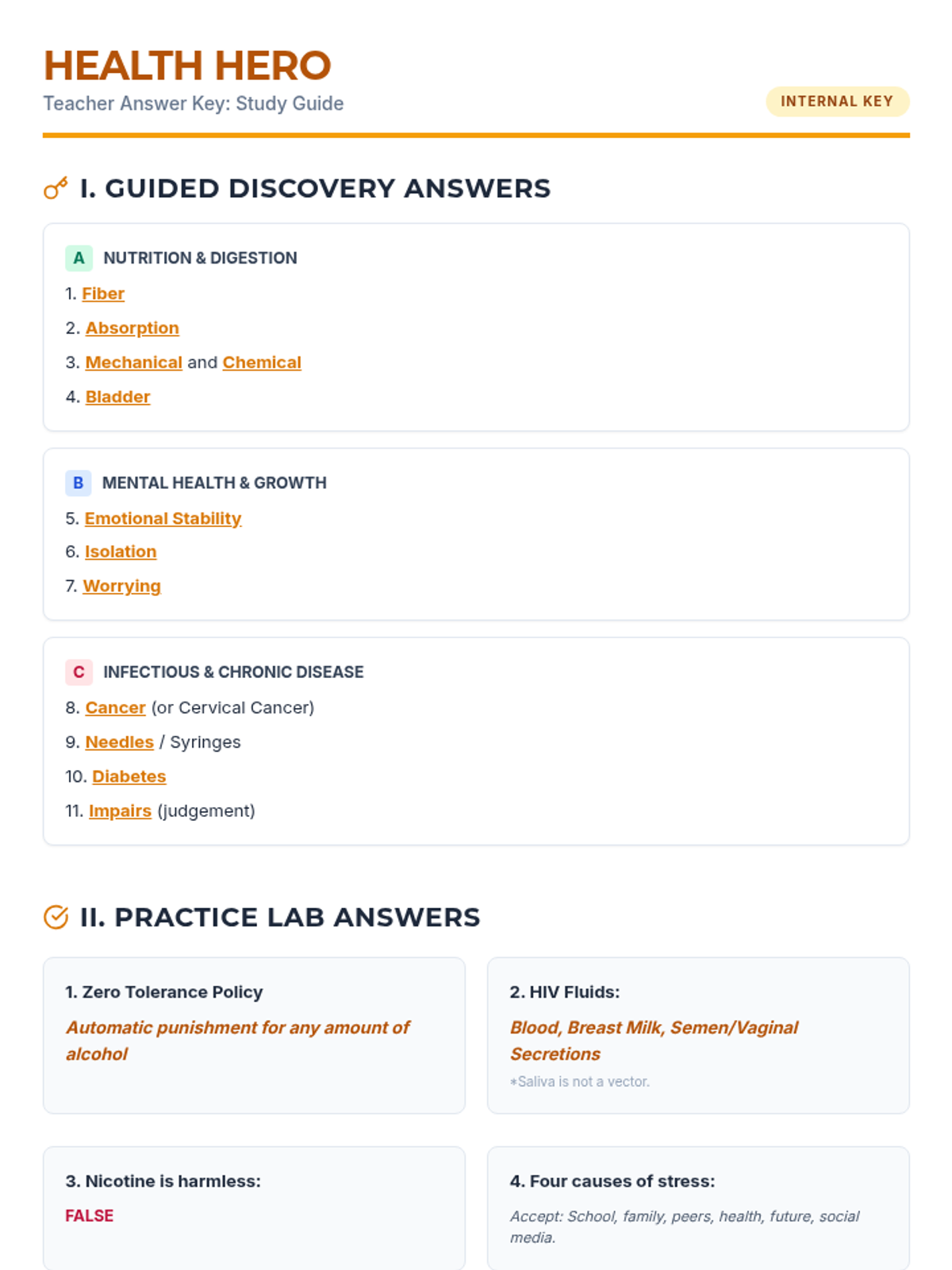
A teacher answer key for the Health Hero Study Guide, providing correct responses for the guided notes, practice lab questions, and short answer explanations. Condensed for efficiency.
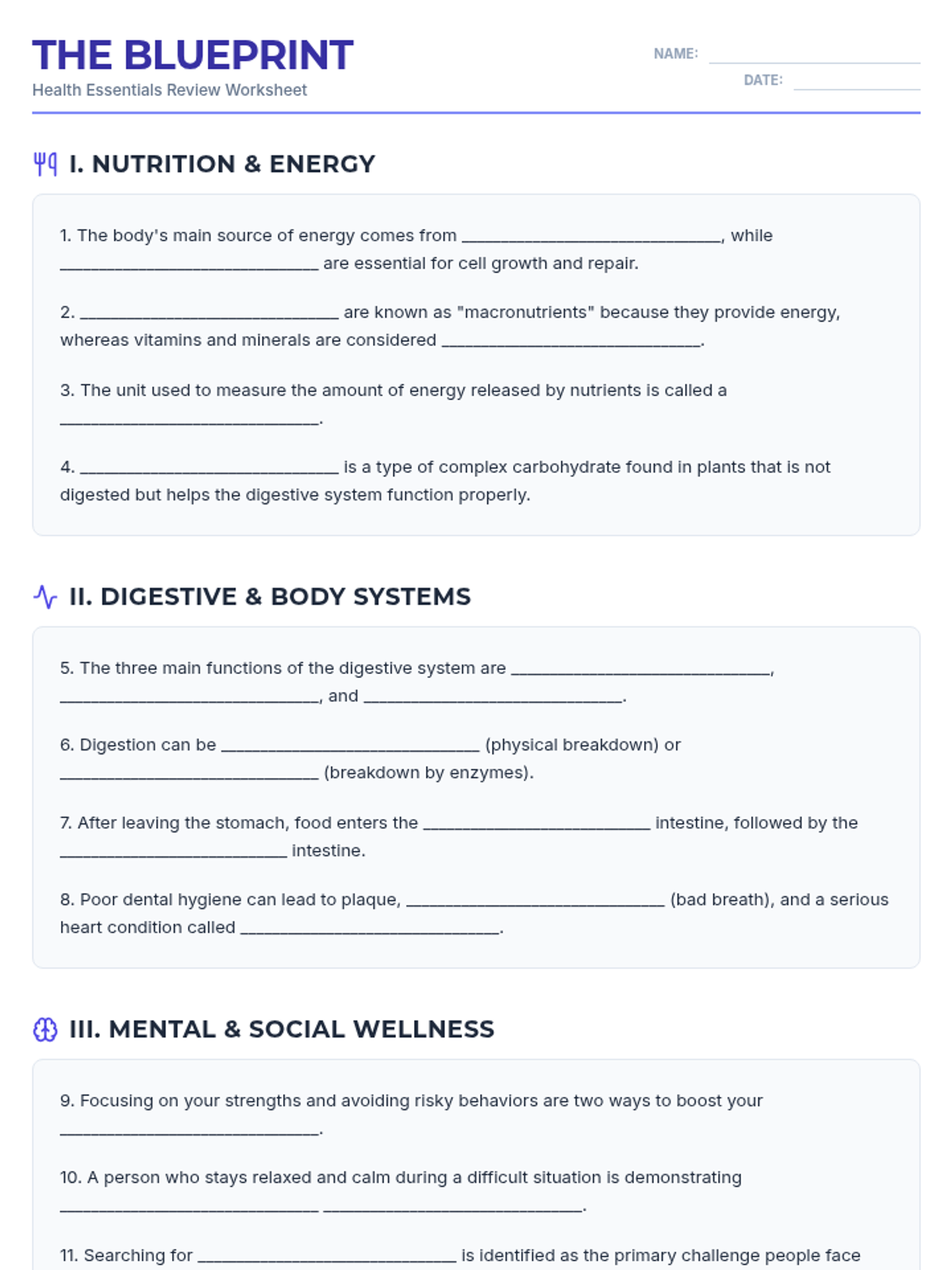
A fill-in-the-blanks worksheet based on the Health Essentials Summary Handout, covering nutrition, digestion, mental health, and disease prevention. Revised for strict page flow and header grouping.
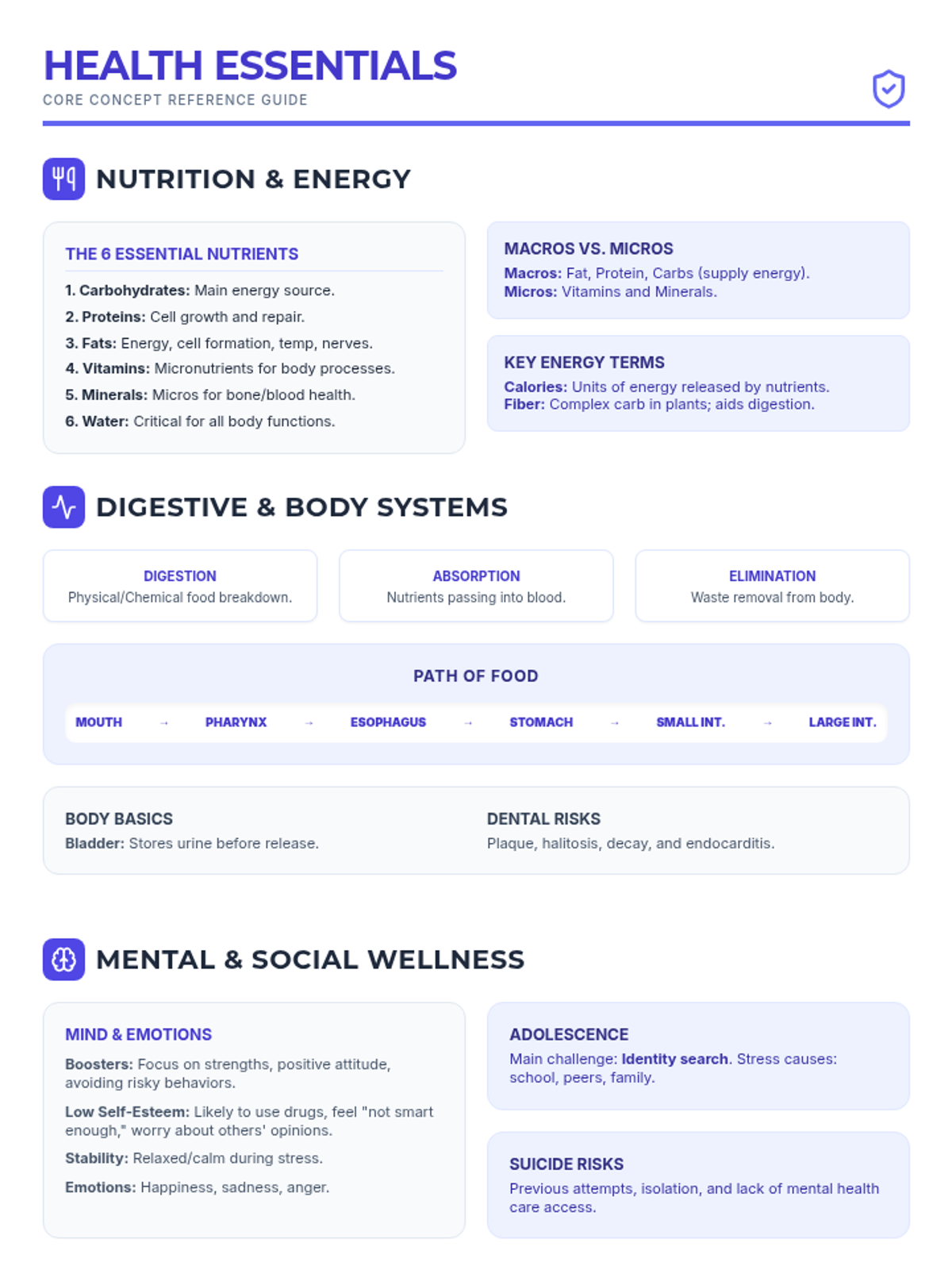
A concise 2-page summary guide condensing all information from the Health Final Exam into a high-density reference sheet for nutrition, body systems, mental health, and disease. Revised for strict 2-page length and improved formatting.
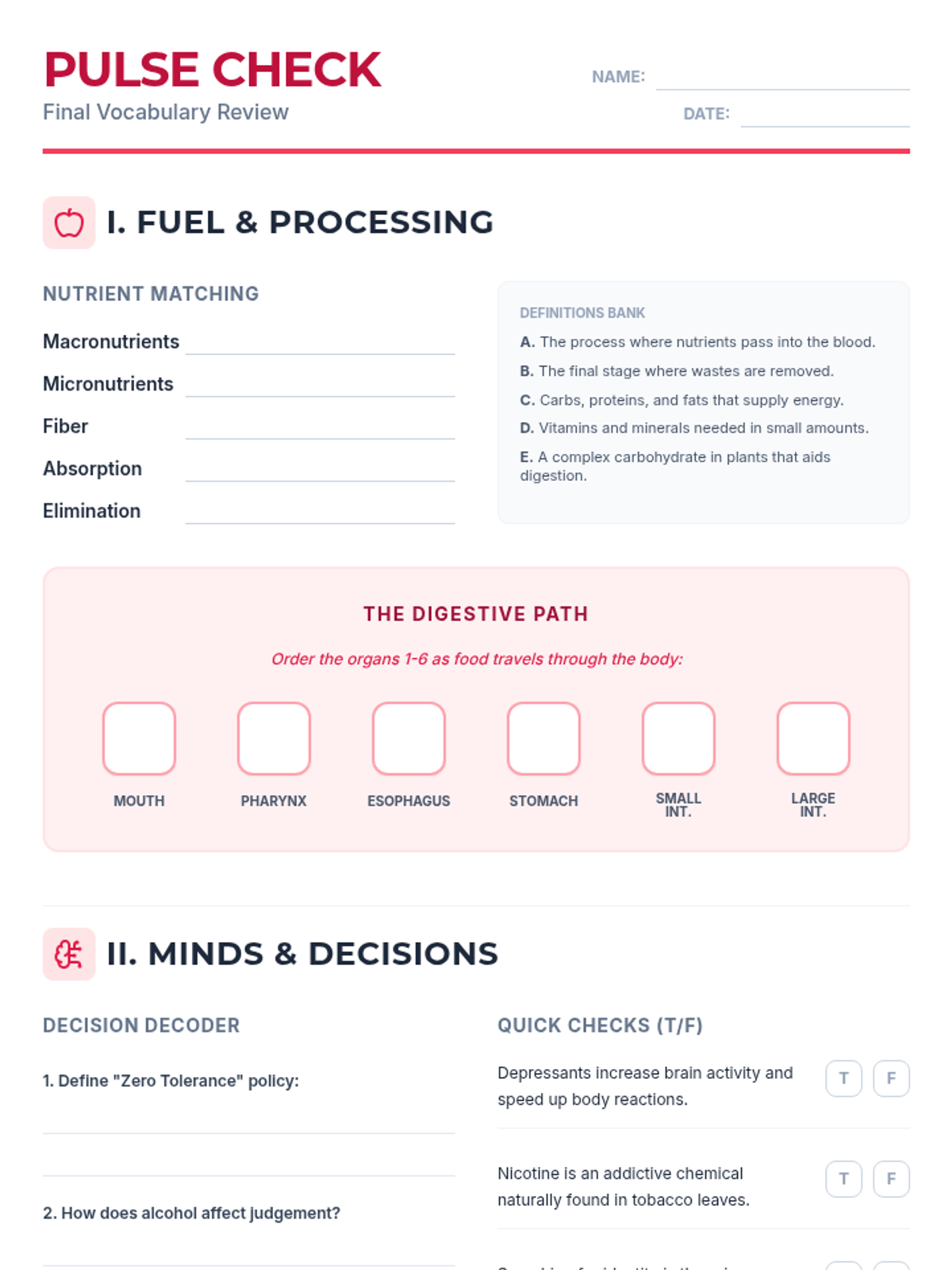
A comprehensive vocabulary review worksheet covering all key terms from the Health Final Exam. Revised to optimize page space, eliminate orphaned headers, and provide larger student work areas. Final polish pass for layout and student work space.
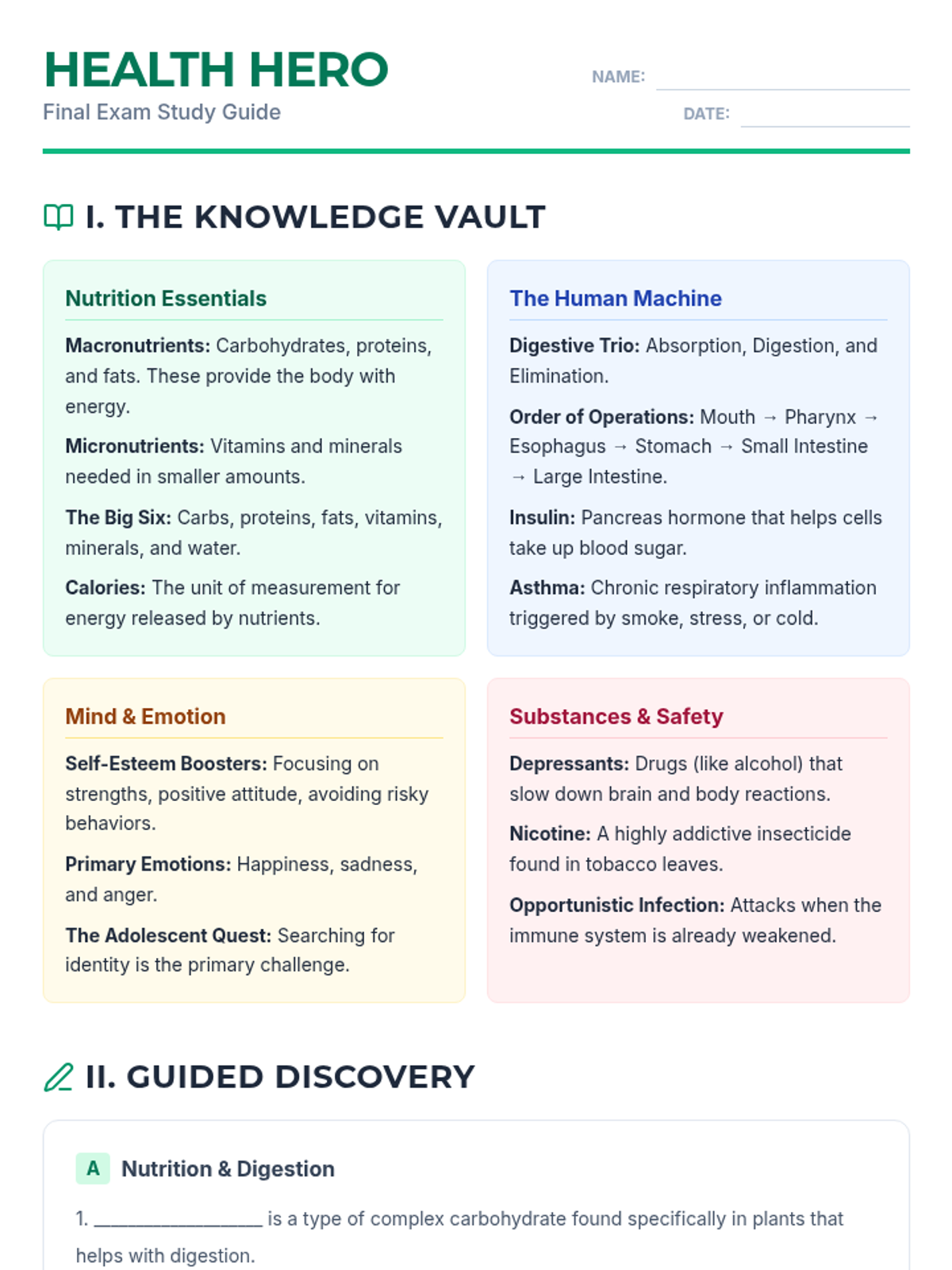
A comprehensive Health Final Exam study guide featuring key terms, guided notes with fill-in-the-blanks, and exam-style practice questions. Revised for better page flow and layout.
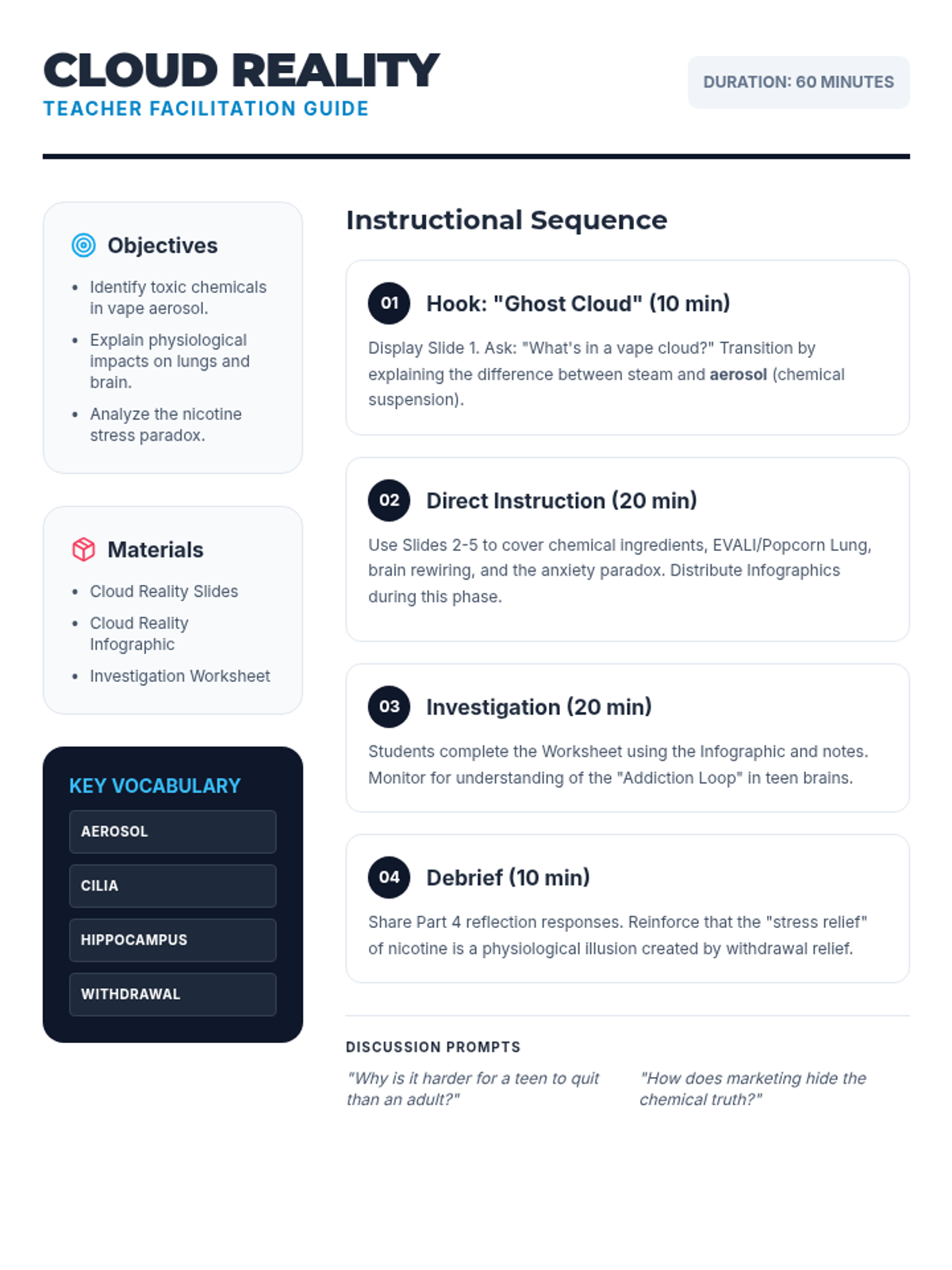
A comprehensive lesson plan for teachers, outlining the 60-minute instructional sequence, objectives, and key discussion prompts for the Cloud Reality lesson. Now consolidated to a single page for easier use.
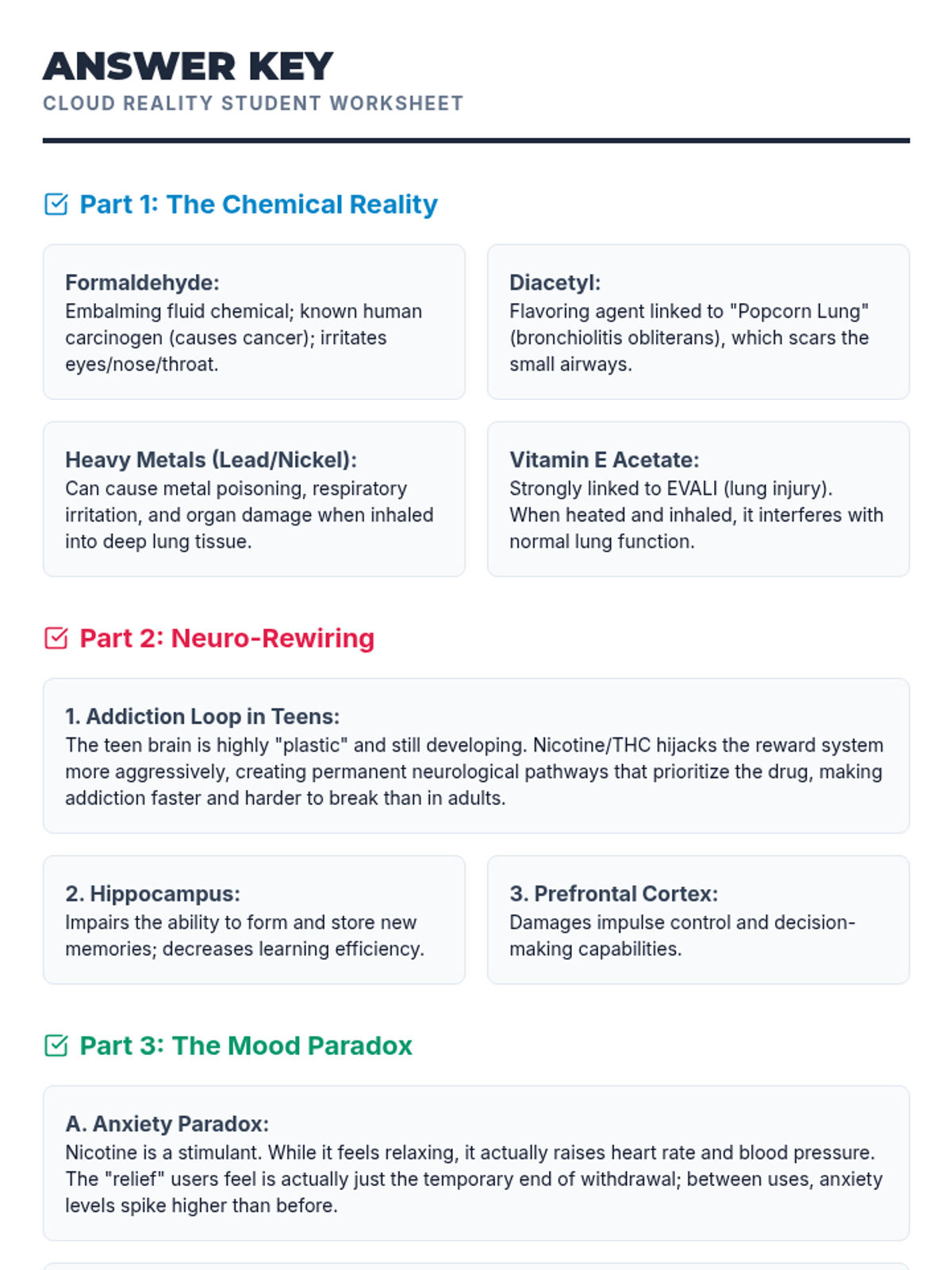
The answer key for the Cloud Reality Student Worksheet, providing comprehensive answers for chemical risks, brain development, and mental health paradoxes.
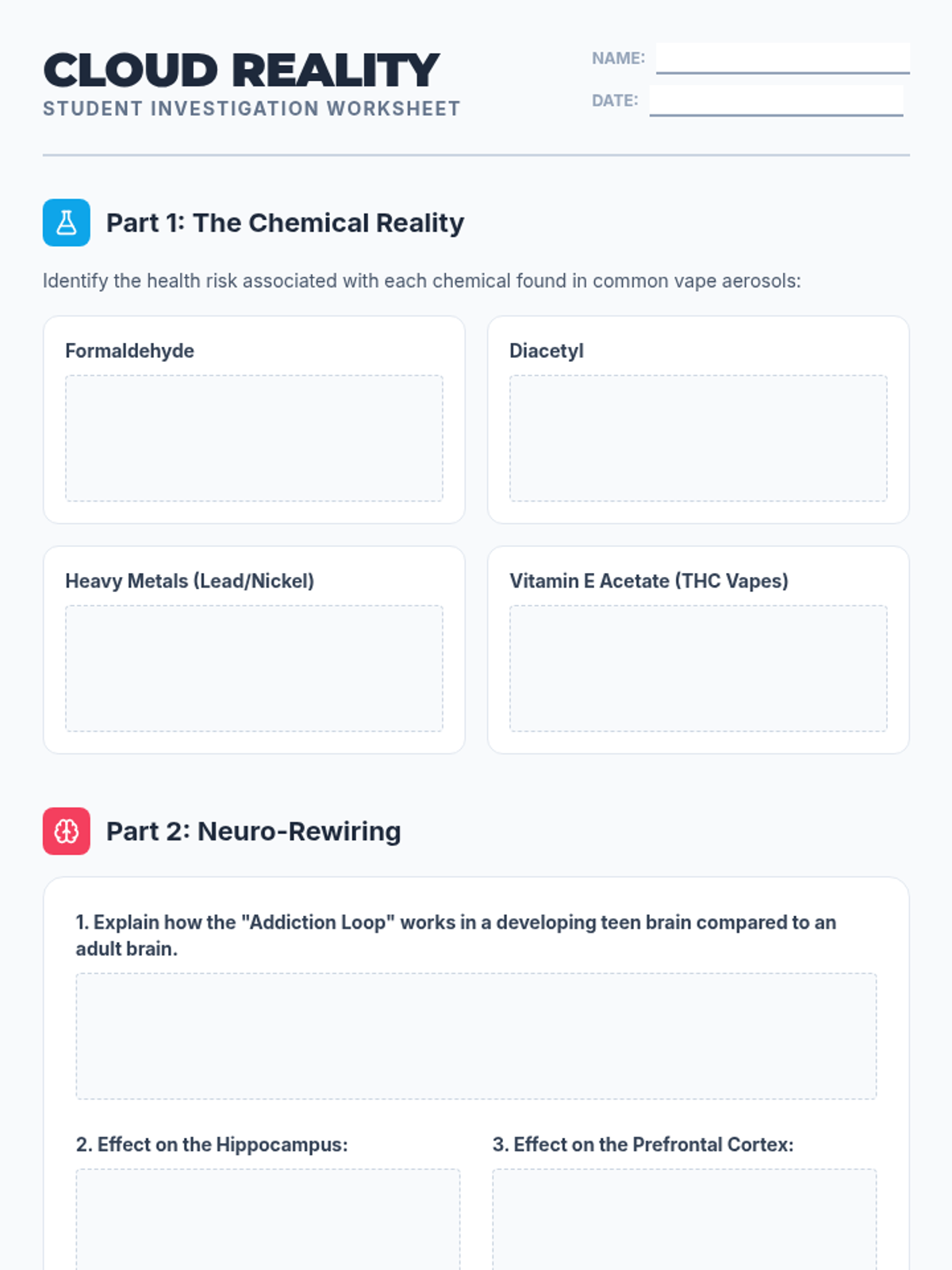
A student worksheet designed to accompany the Cloud Reality lesson. Includes sections on chemical analysis, brain development effects, the mood paradox of nicotine, and a critical thinking reflection prompt.