An adapted student assignment sheet for an independent safety research paper, replacing the original poster project with a one-page written report format.
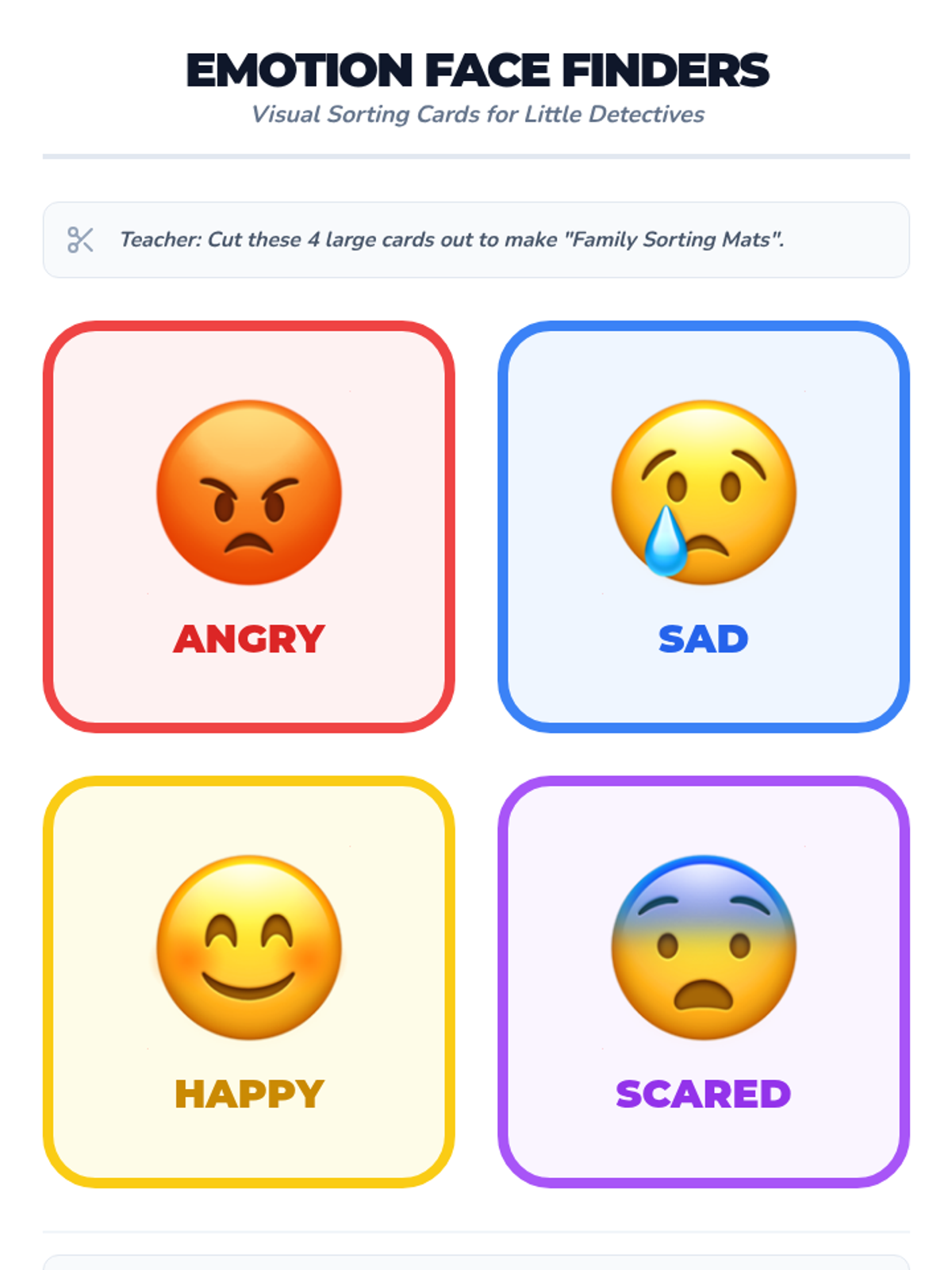
Visual sorting cards and puppet stick templates for Early Years students to identify and categorize emotion families without needing to read or write. Revised with neutral borders and appropriate emojis.
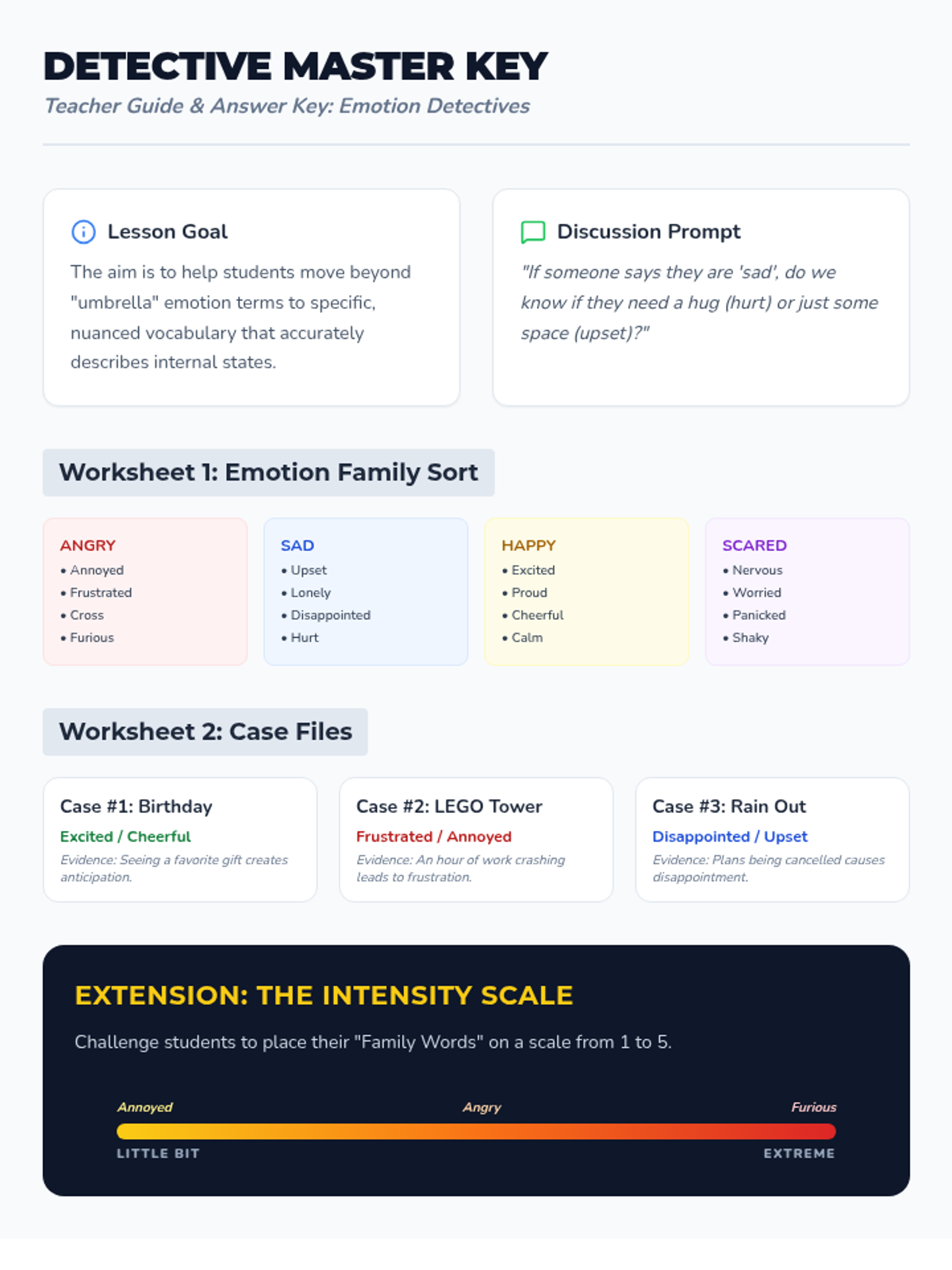
Teacher-facing resource containing the answer key and extension ideas. Revised for improved page layout and visual alignment of the intensity scale.
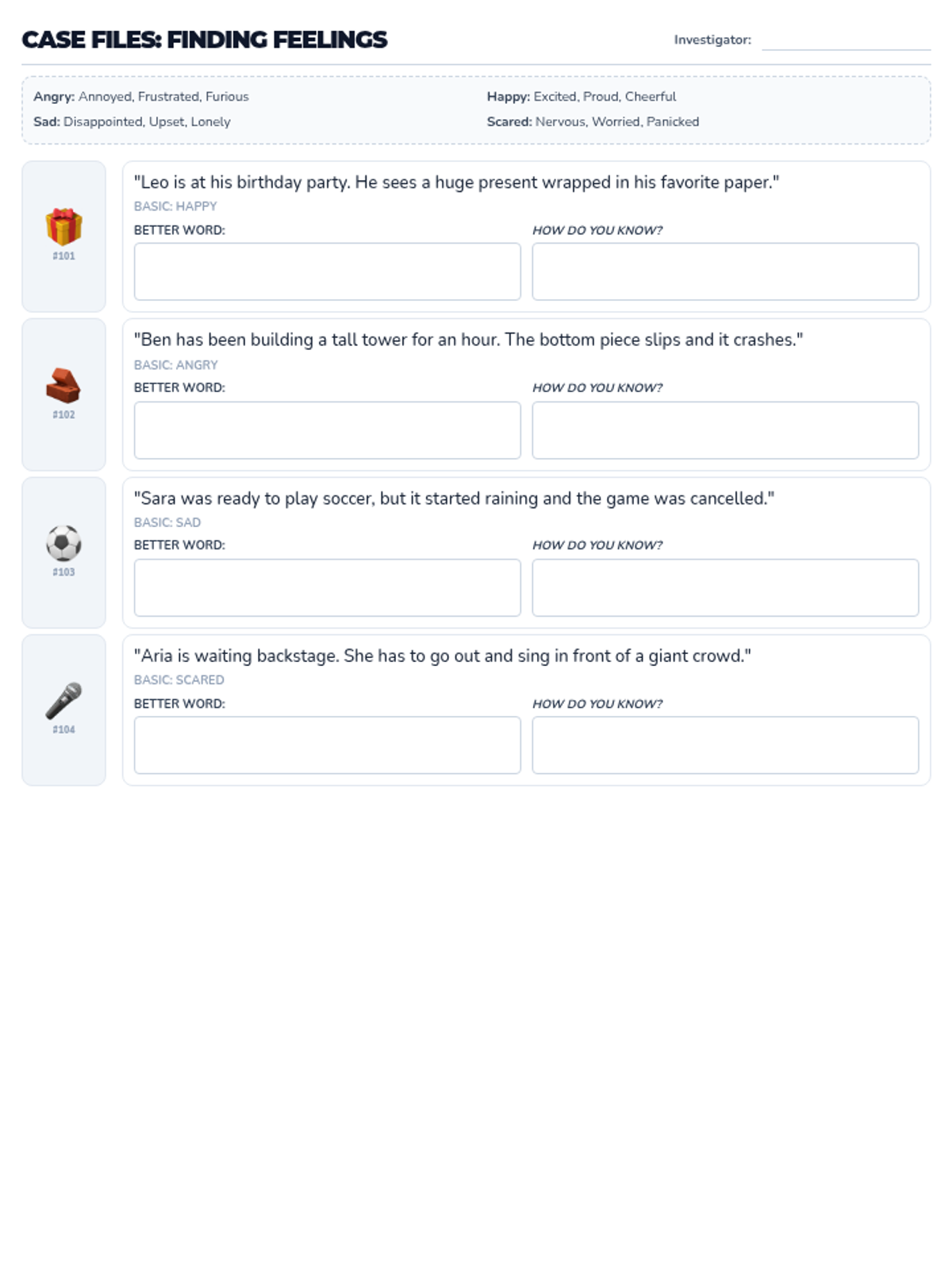
A scenario-based worksheet for P3 students to replace basic emotion words with nuanced vocabulary. Revised with word bank scaffolding and improved layout to fit four cases on a single page.
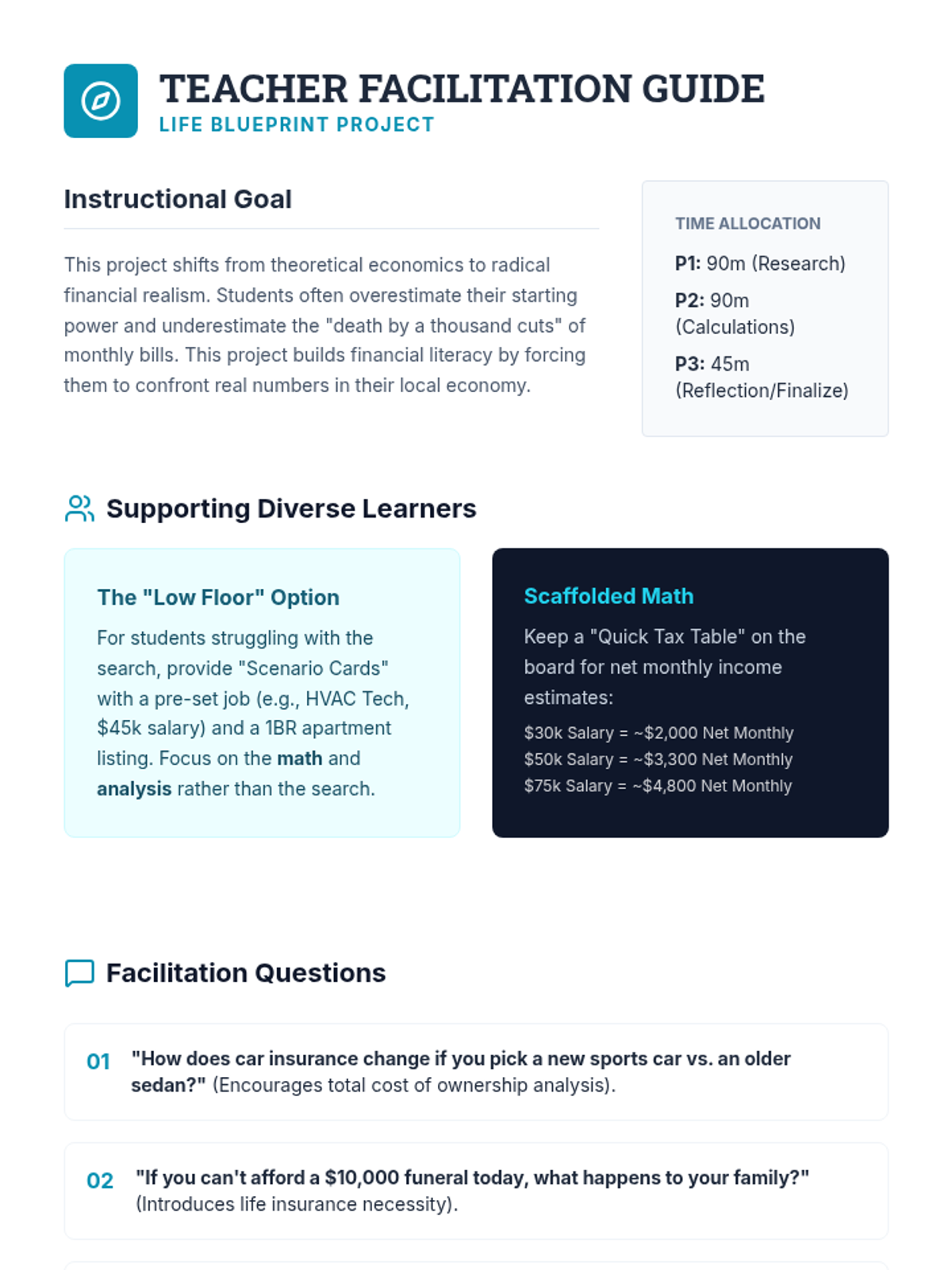
Revised teacher guide with improved page breaks and added standards alignment to fill the space. Facilitation guide for 12th-grade budgeting project. Final polished version.
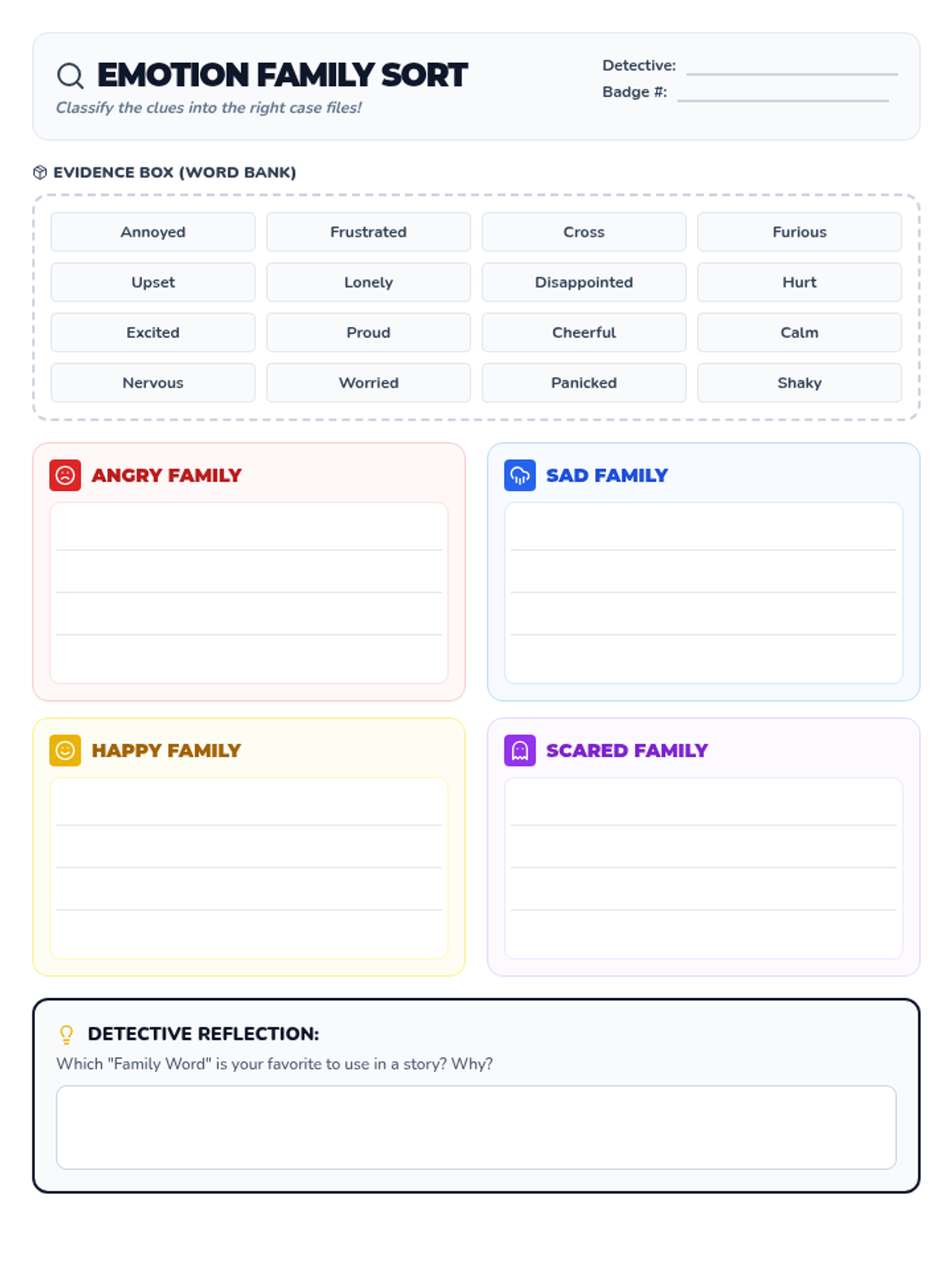
A sorting activity where students categorize nuanced emotion words into four primary emotion families: Angry, Sad, Happy, and Scared. Revised for single-page layout and improved handwriting areas.
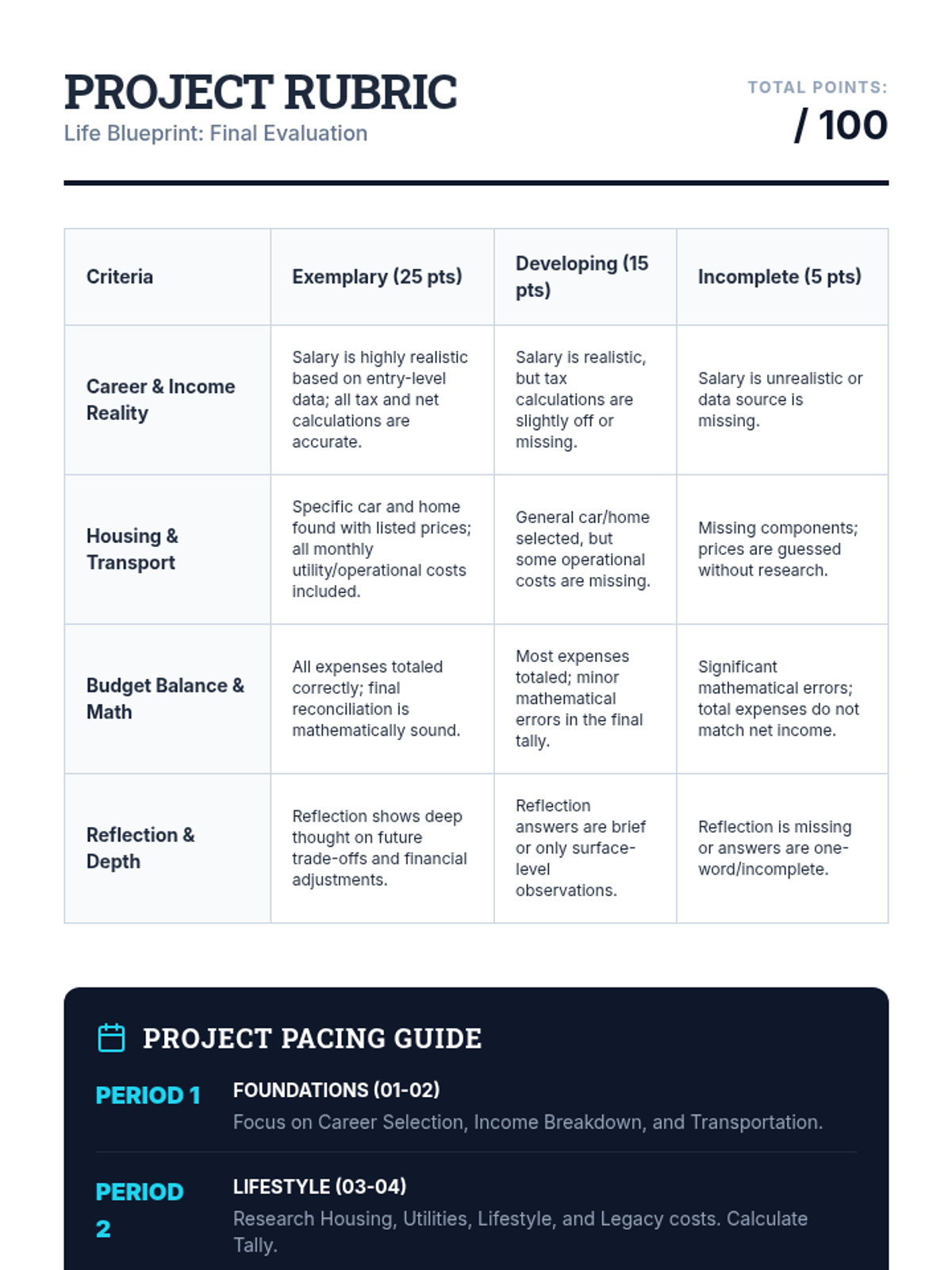
A grading rubric and project timeline revised to align with the Portfolio sections and ensure clean page breaks. defines expectations for research accuracy and mathematical correctness. Final polished version.
Visual presentation for teaching emotion families (Angry, Sad, Happy, Scared) and identifying nuanced vocabulary for different scenarios.
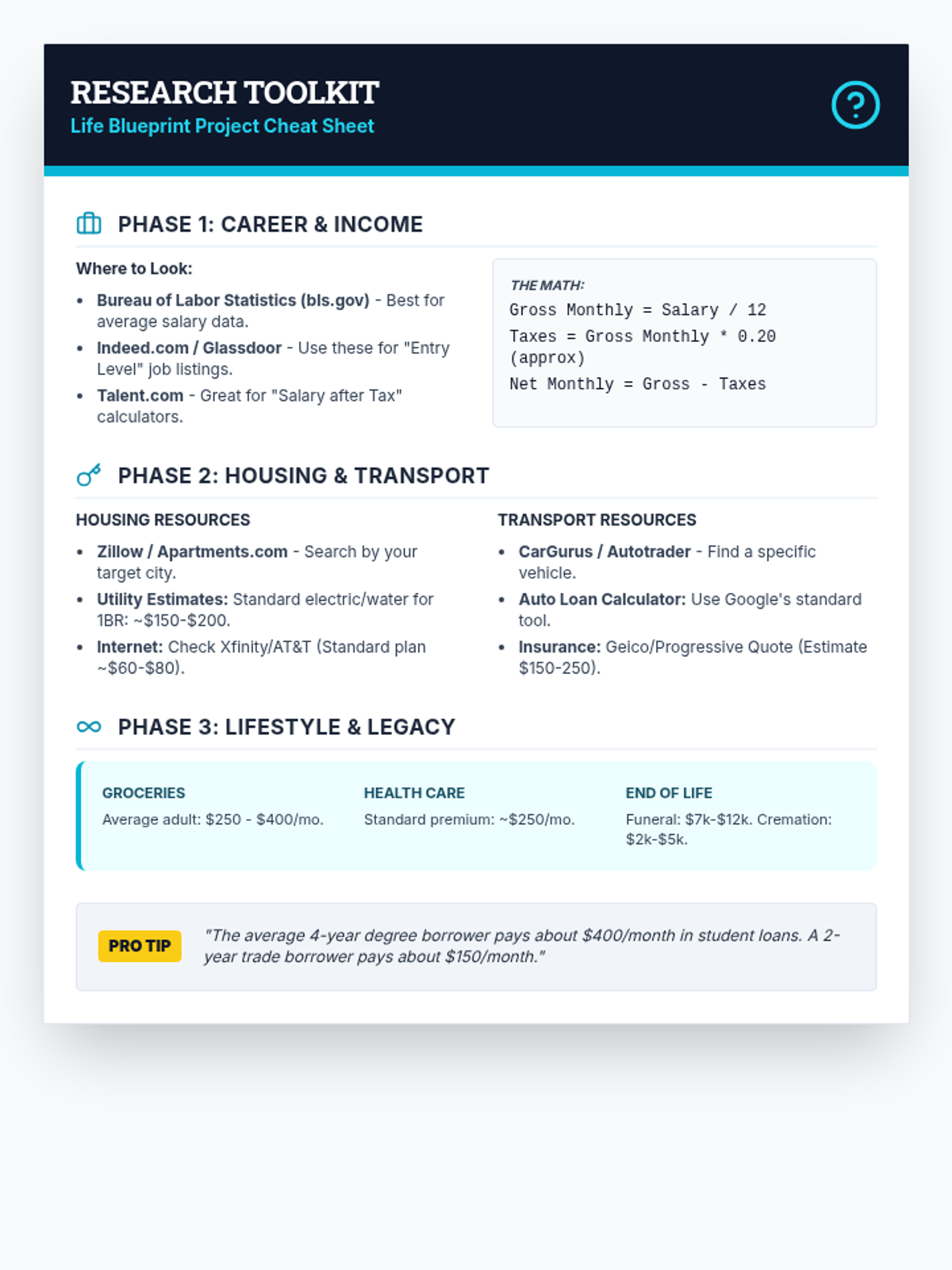
A reference sheet for students providing reliable sources, calculation formulas, and realistic cost estimates. Revised for improved readability, icon contrast, and single-page fit.
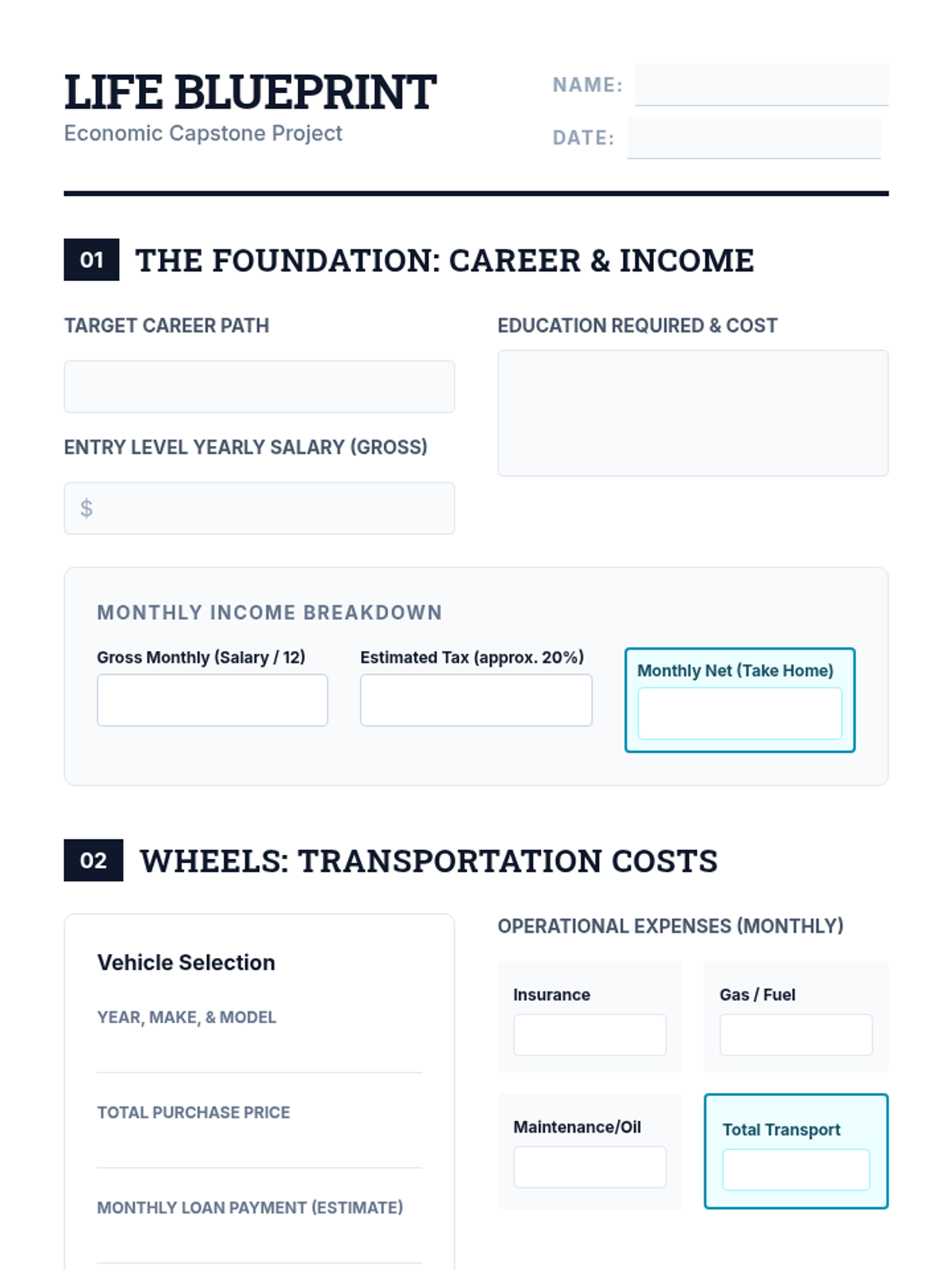
A comprehensive project workbook for students to research and record their lifetime financial plan. Includes sections for career income, transportation, housing, lifestyle, and end-of-life expenses with a final budget reconciliation. Final polished version with improved contrast and layout.
Revised introduction slides for the Life Blueprint project. Explicitly mentions the Portfolio as the final deliverable and provides a clear pacing guide for the three-period project.
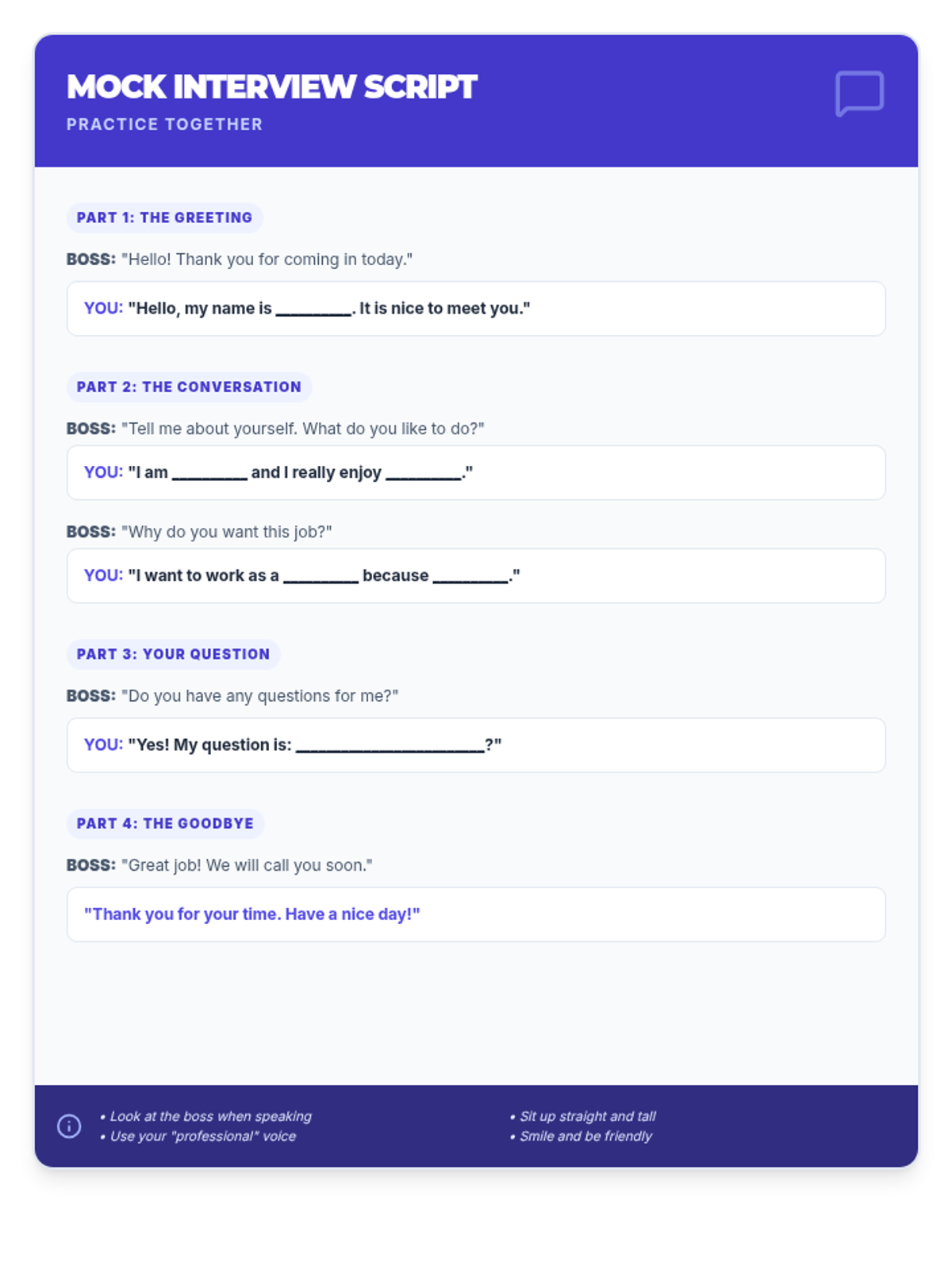
A structured, fill-in-the-blank script to help students practice the flow of a full mock interview, including the greeting, key questions, and closing.
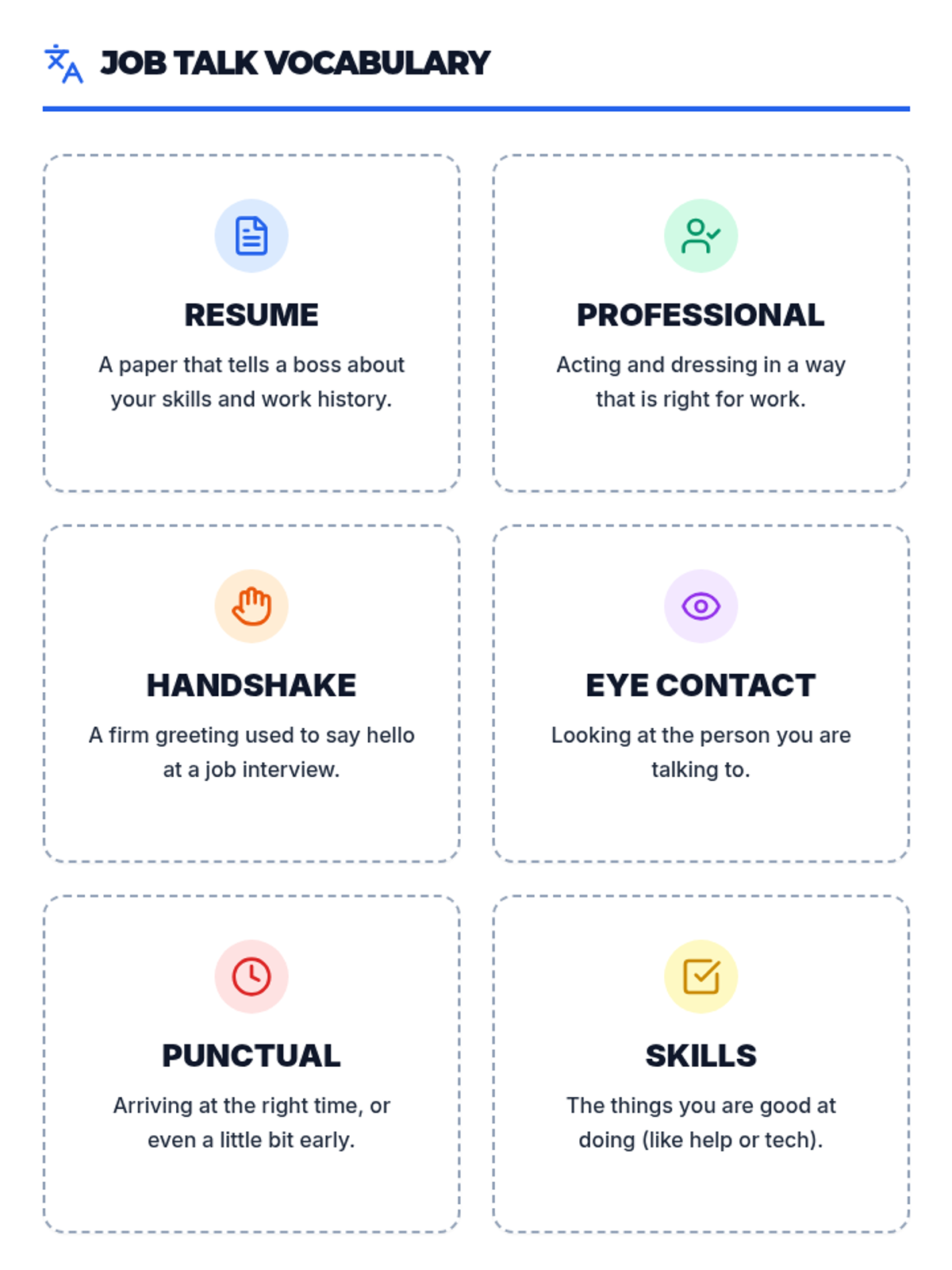
A set of six visual vocabulary cards for key interview terms (Resume, Professional, Handshake, Eye Contact, Punctual, Skills) with simple definitions.
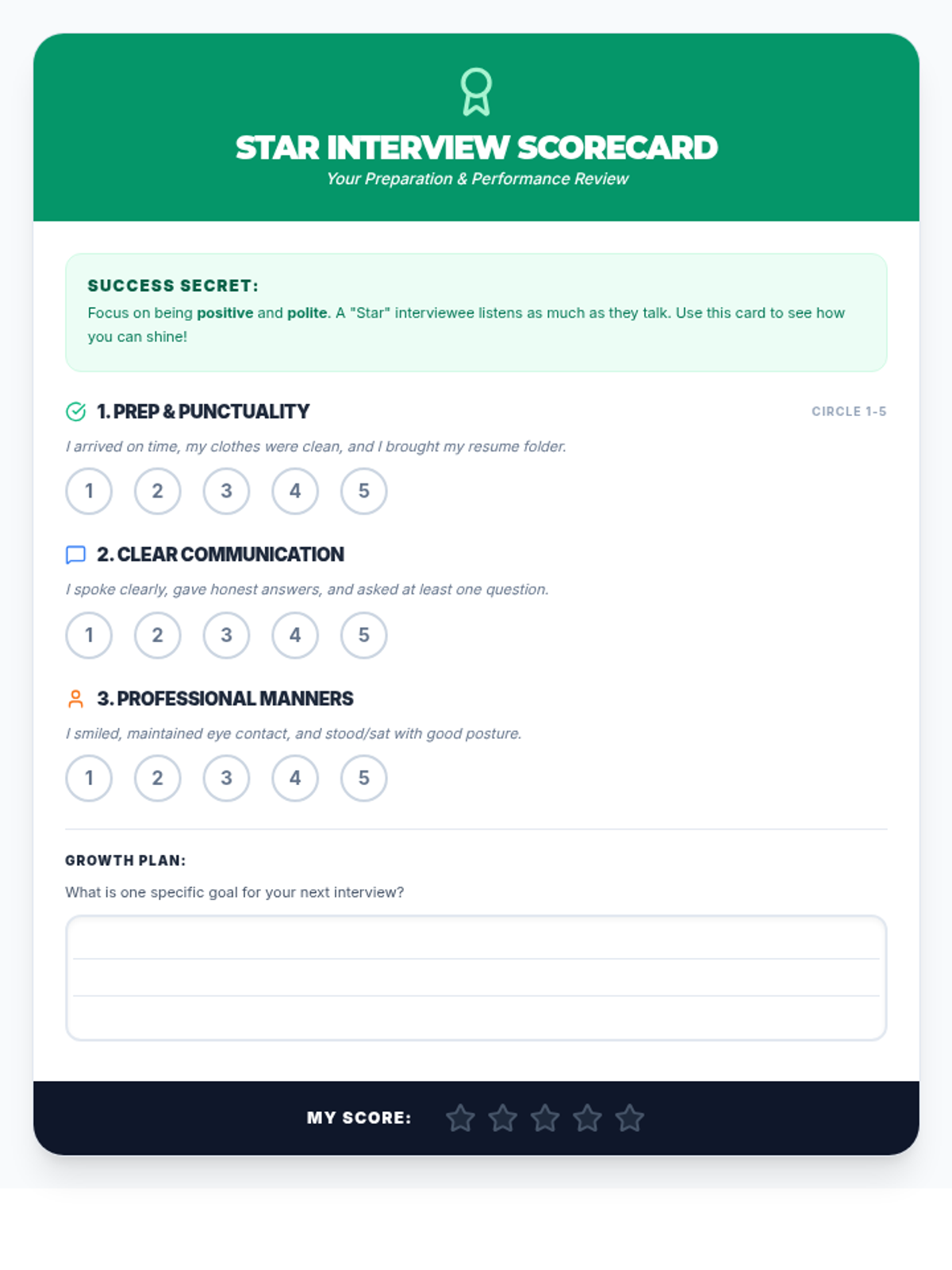
A student-friendly visual rubric for self-assessment or peer feedback after a mock interview, focusing on appearance, communication, and body language.
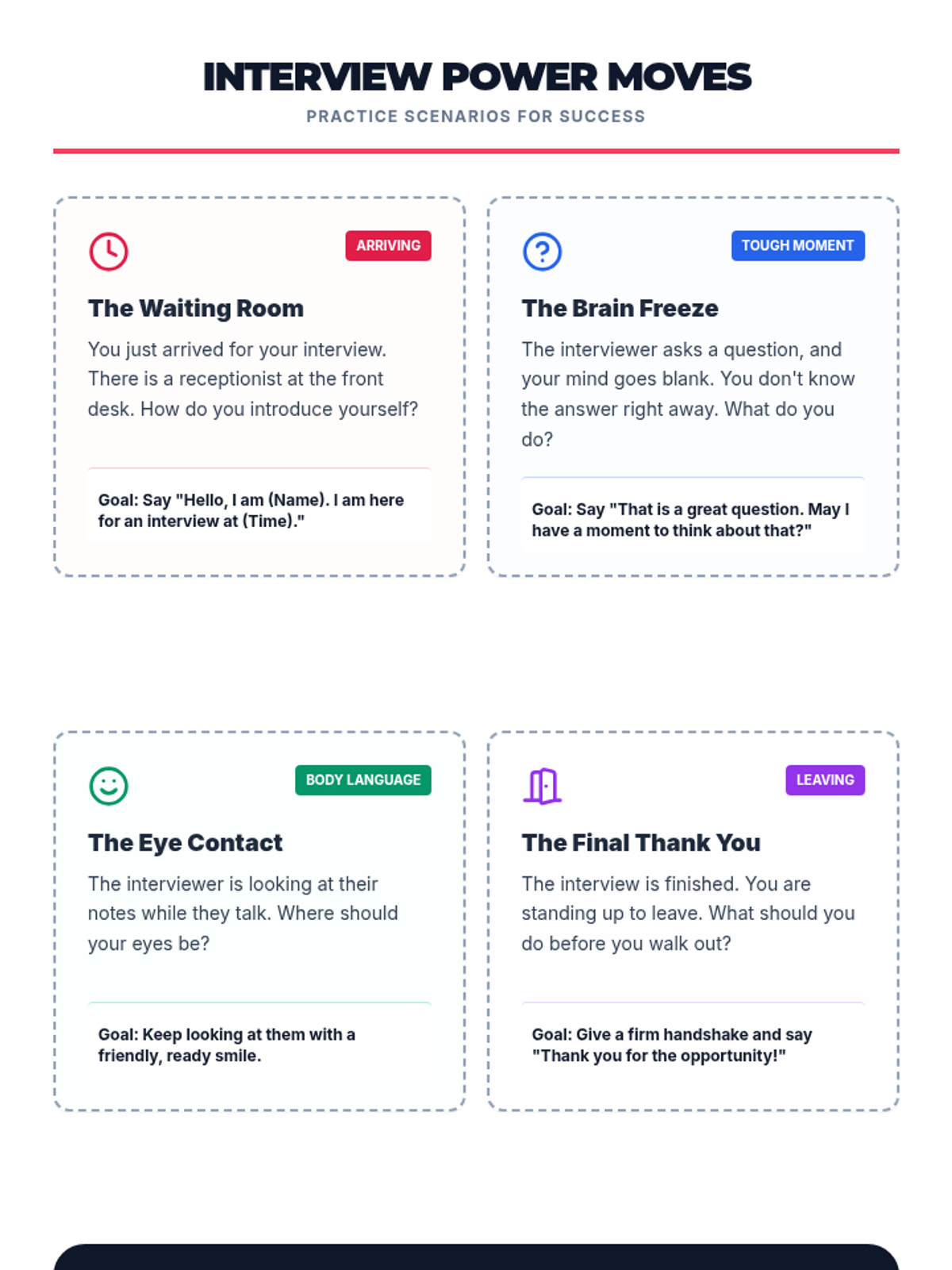
A set of four scenario cards that present common interview challenges (arrival, mistakes, attire, departure) for role-playing and discussion, plus a second page of instructional reading.
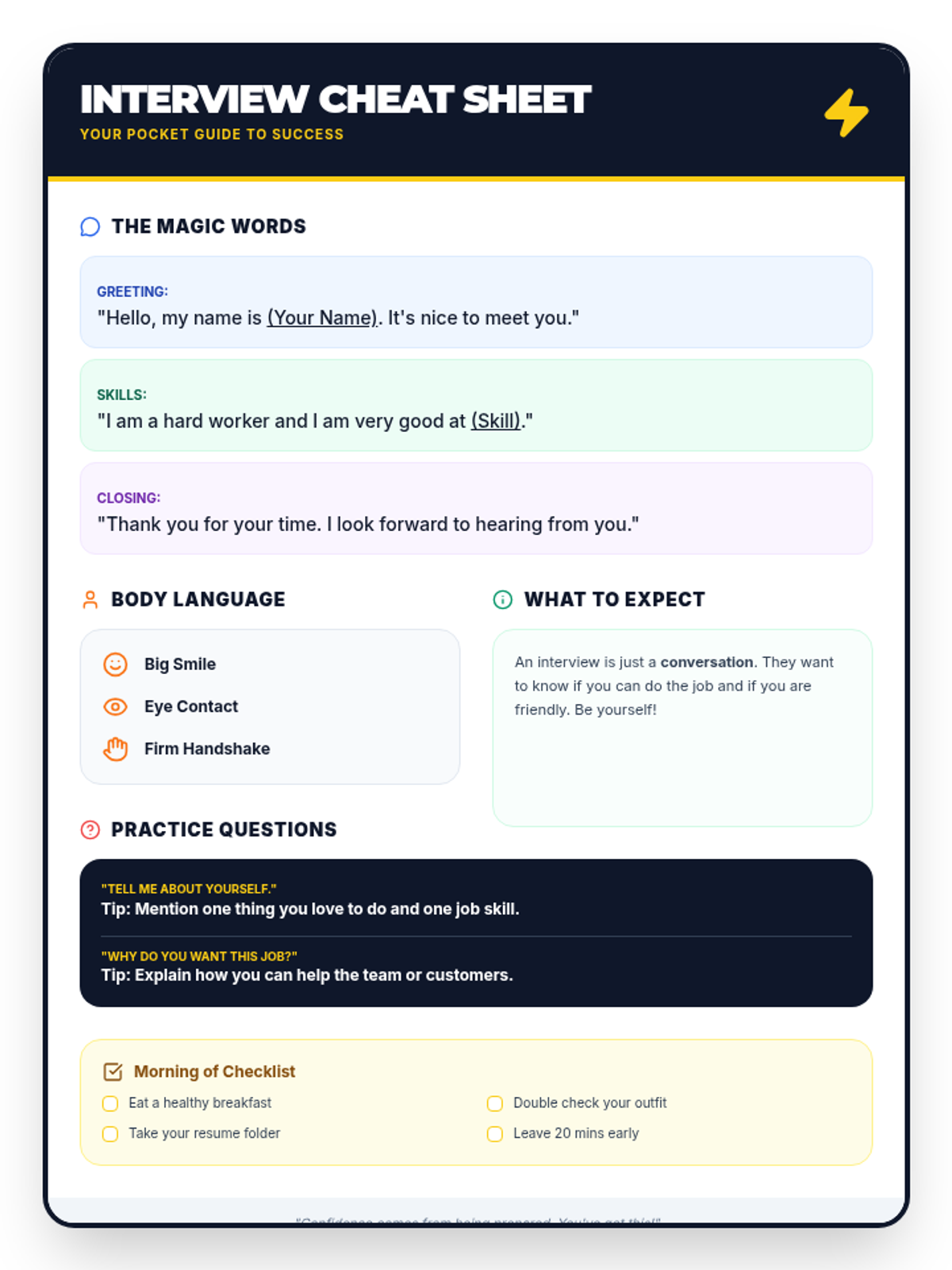
A two-page visual reference guide with sentence starters, body language tips, and a collaborative workspace for job-specific questions.
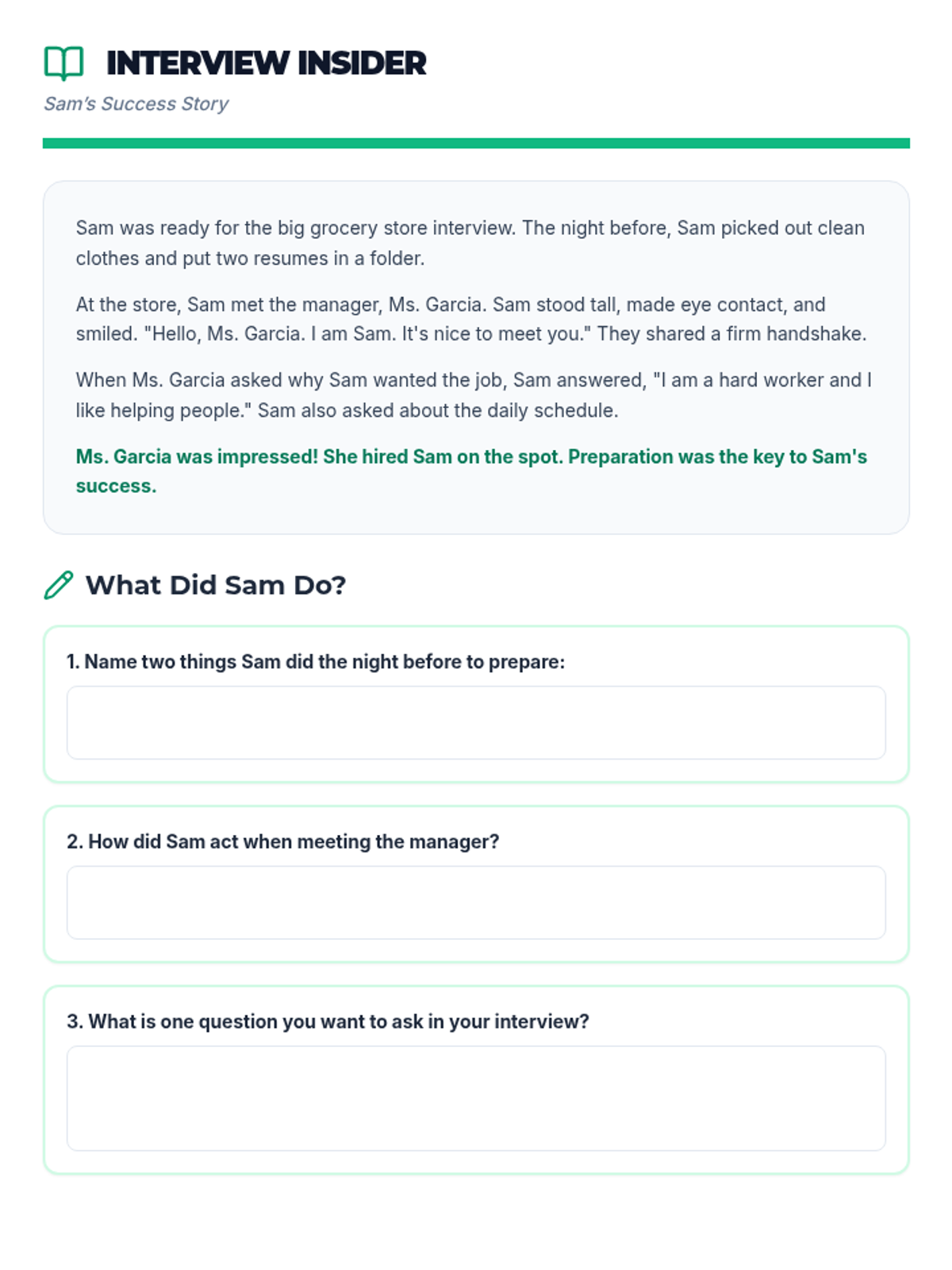
A 1-page reading passage featuring a successful interview story with follow-up reflection questions to help students identify positive interview behaviors.
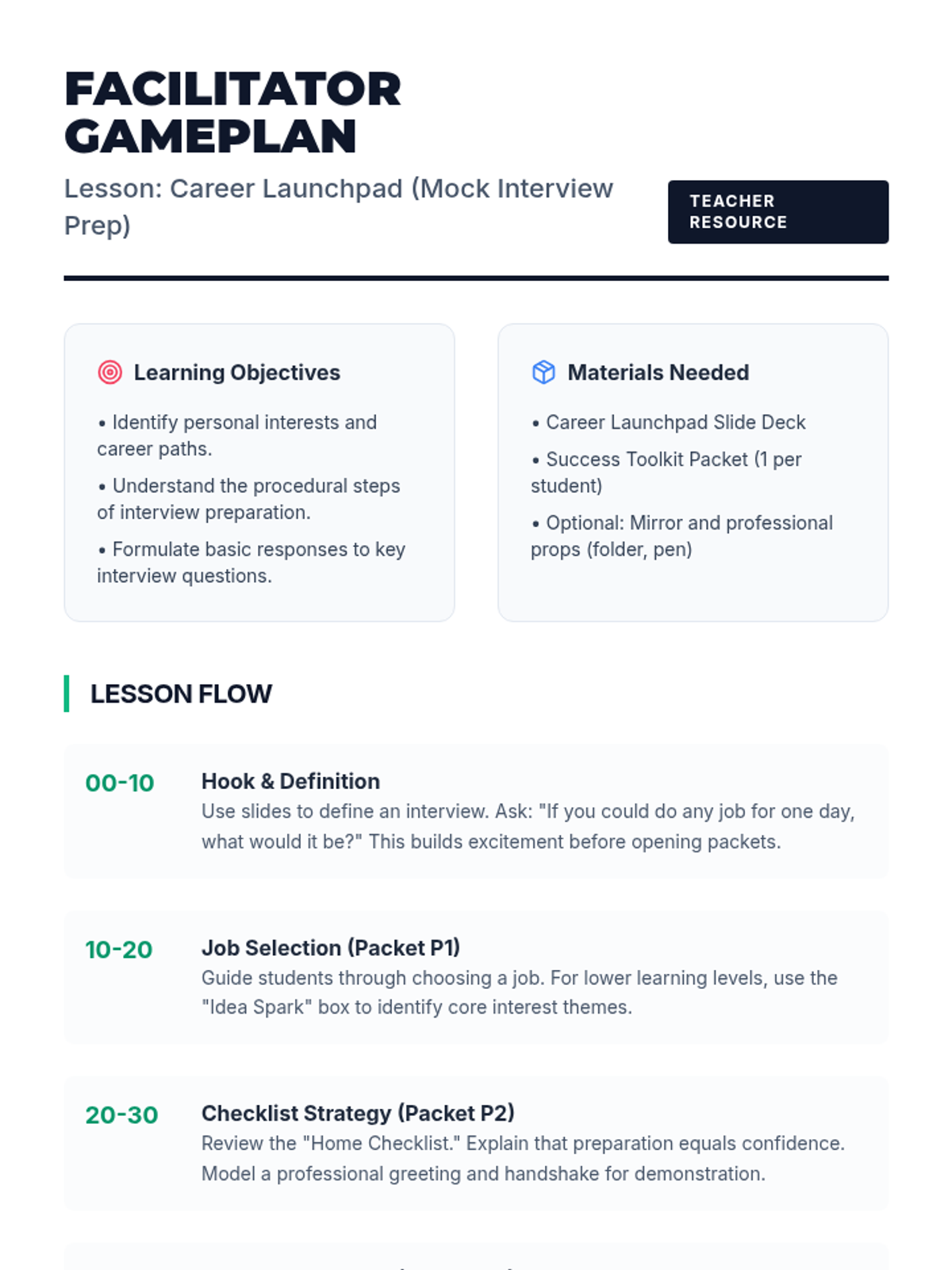
A teacher facilitation guide providing lesson pacing, differentiation strategies for various learning levels, and instructional tips for the mock interview preparation.
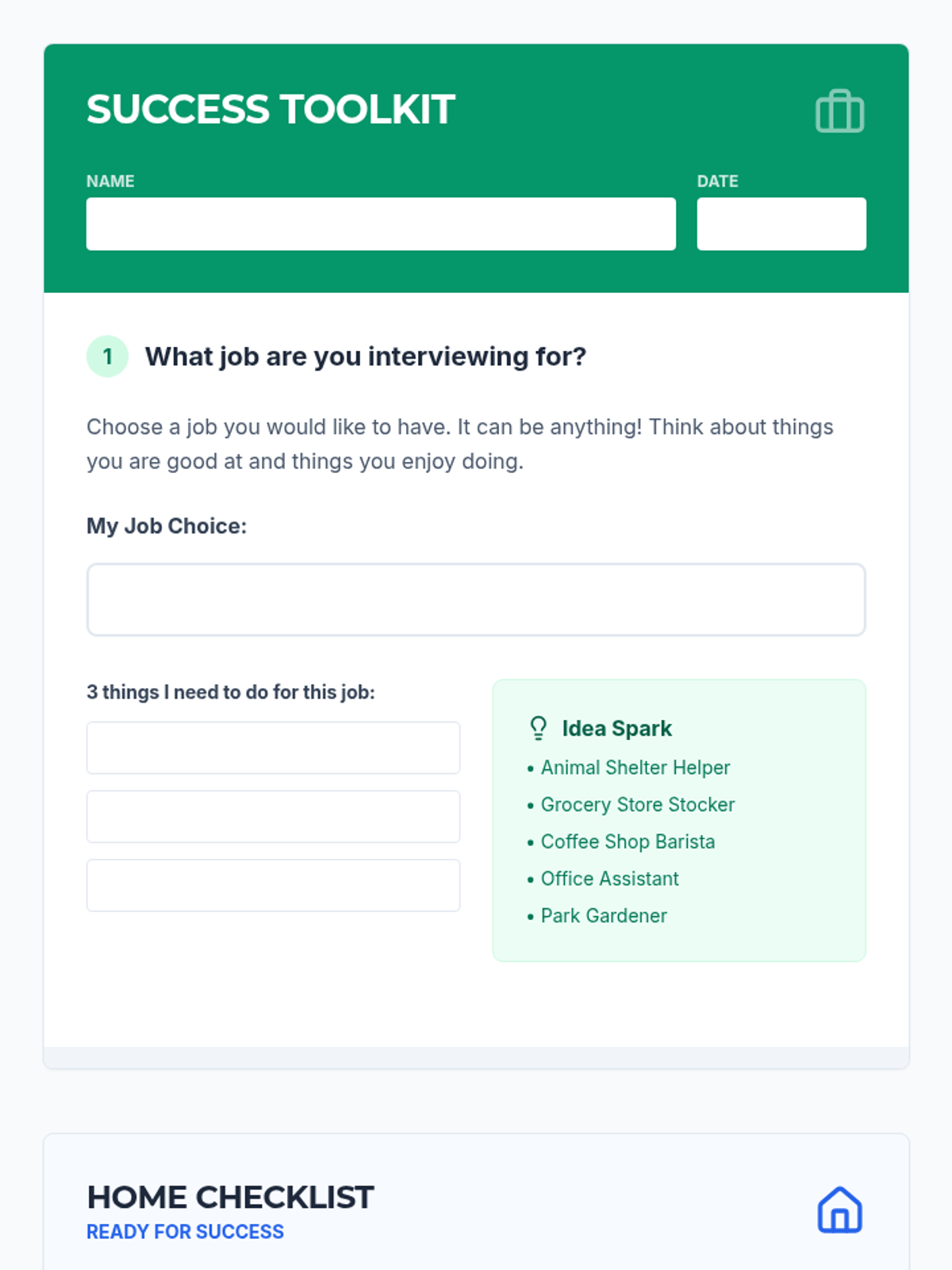
A 3-page student packet including a job selection worksheet, an interview readiness checklist with success tips, and a collaborative question preparation sheet.
Visual presentation slides to guide students through the interview preparation process, covering job selection, clothing, resumes, and common questions.
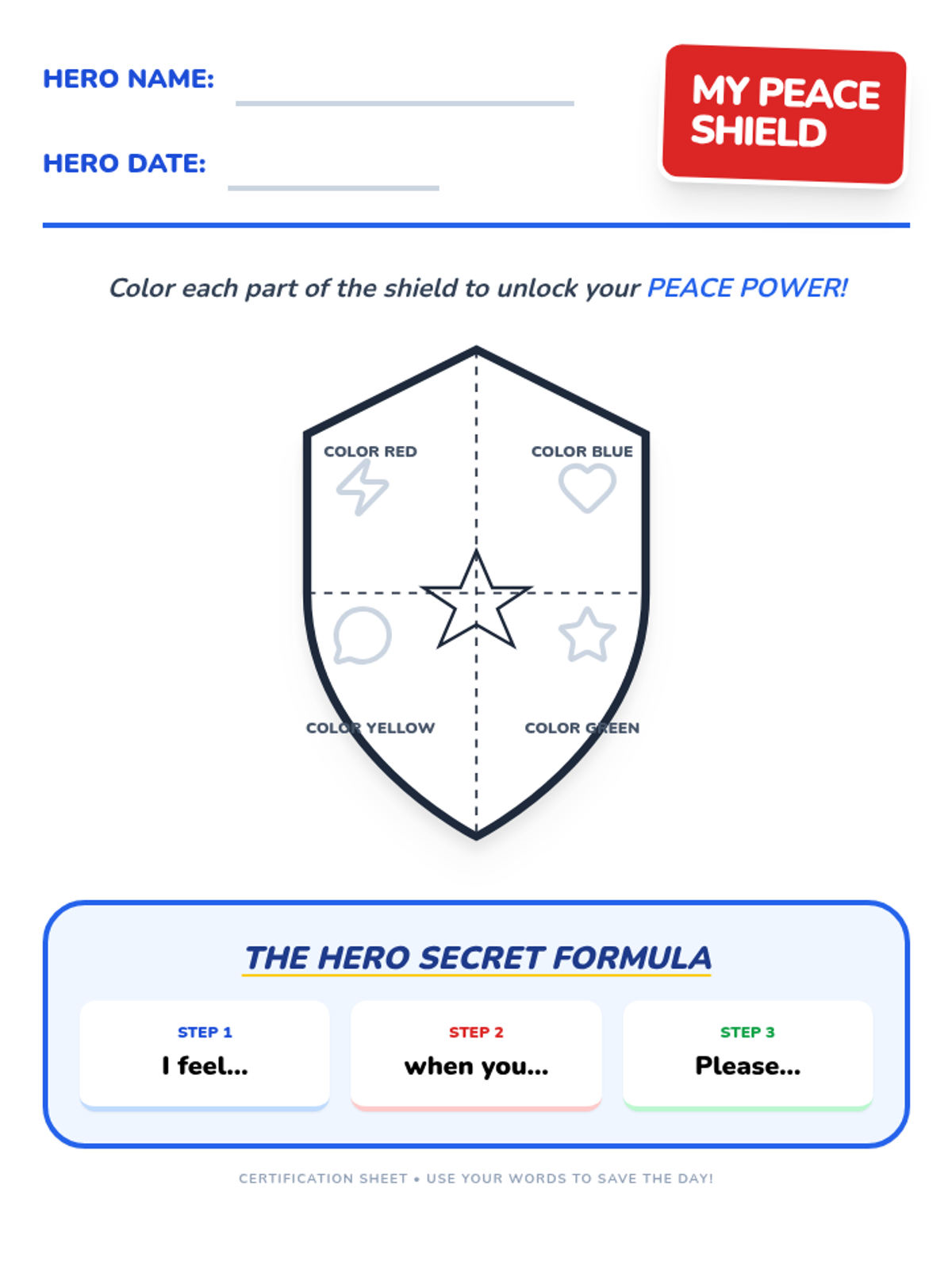
A student-facing handout featuring a large 'Peace Shield' for coloring and a quick-reference guide to the I-Message formula. Great for desk reminders or home take-overs.
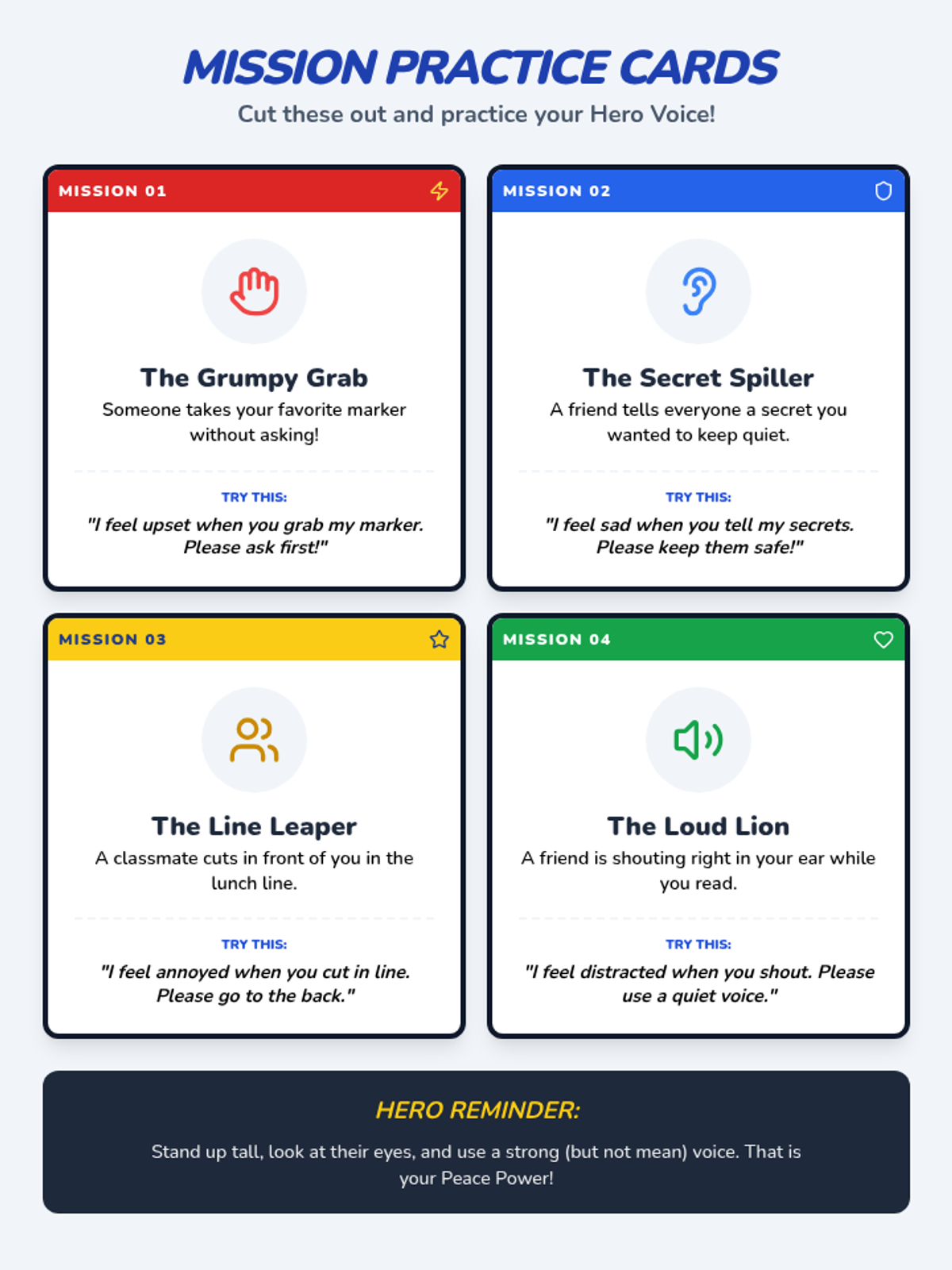
Four comic-book styled scenario cards for student role-playing activities. Each card features a common 1st-grade conflict and a scripted I-Message to practice.
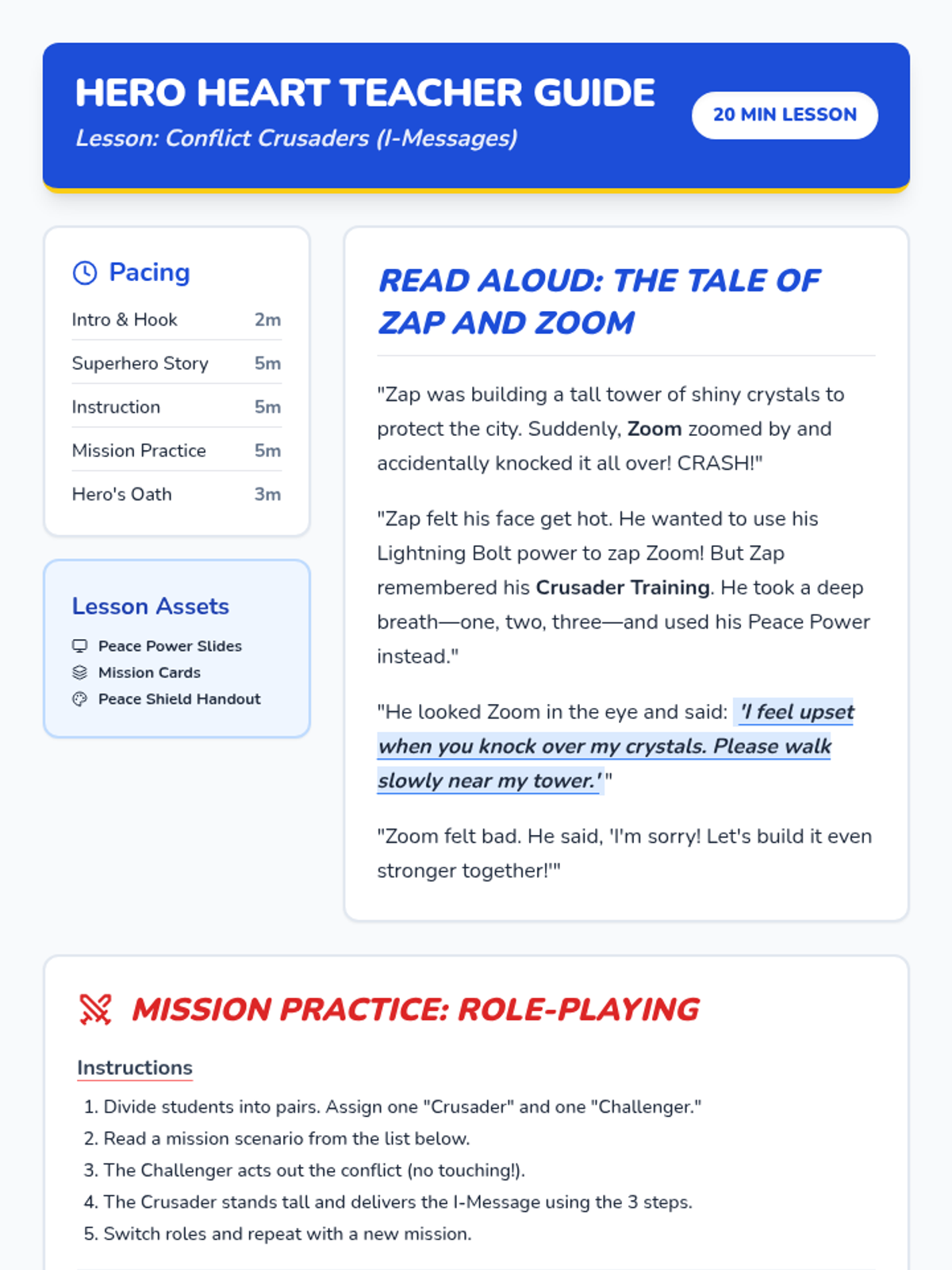
A comprehensive facilitator guide for teachers, including a superhero read-aloud script, a 20-minute pacing guide, and instructions for role-playing activities.
A high-energy 9-slide presentation teaching 1st graders the 'I-Message' formula using a superhero theme. Includes visual steps, feeling icons, and practice scenarios.
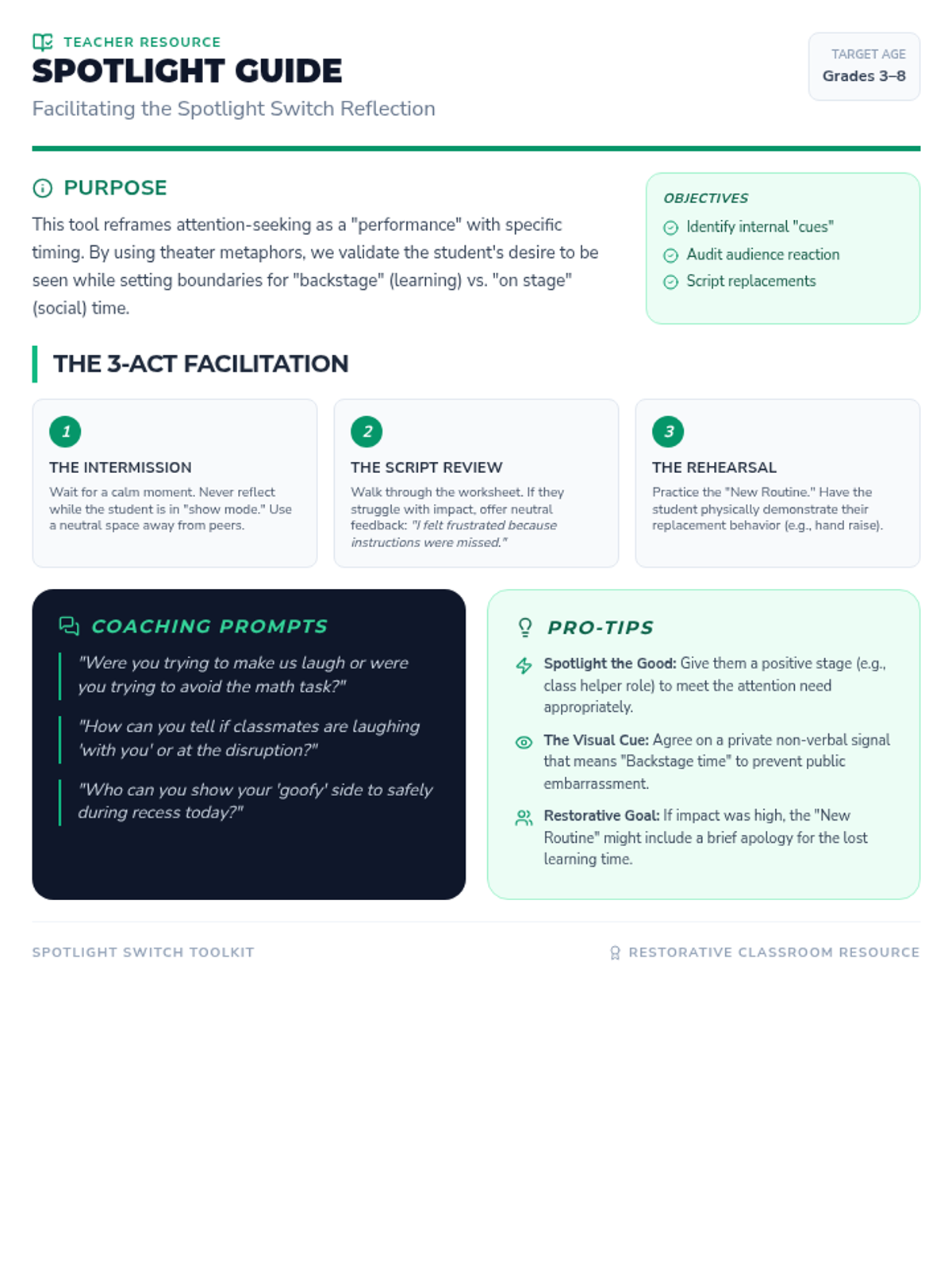
A facilitation guide for teachers to help students reflect on attention-seeking behaviors using the theater/performance metaphor. Revised for single-page layout and added professional tips.
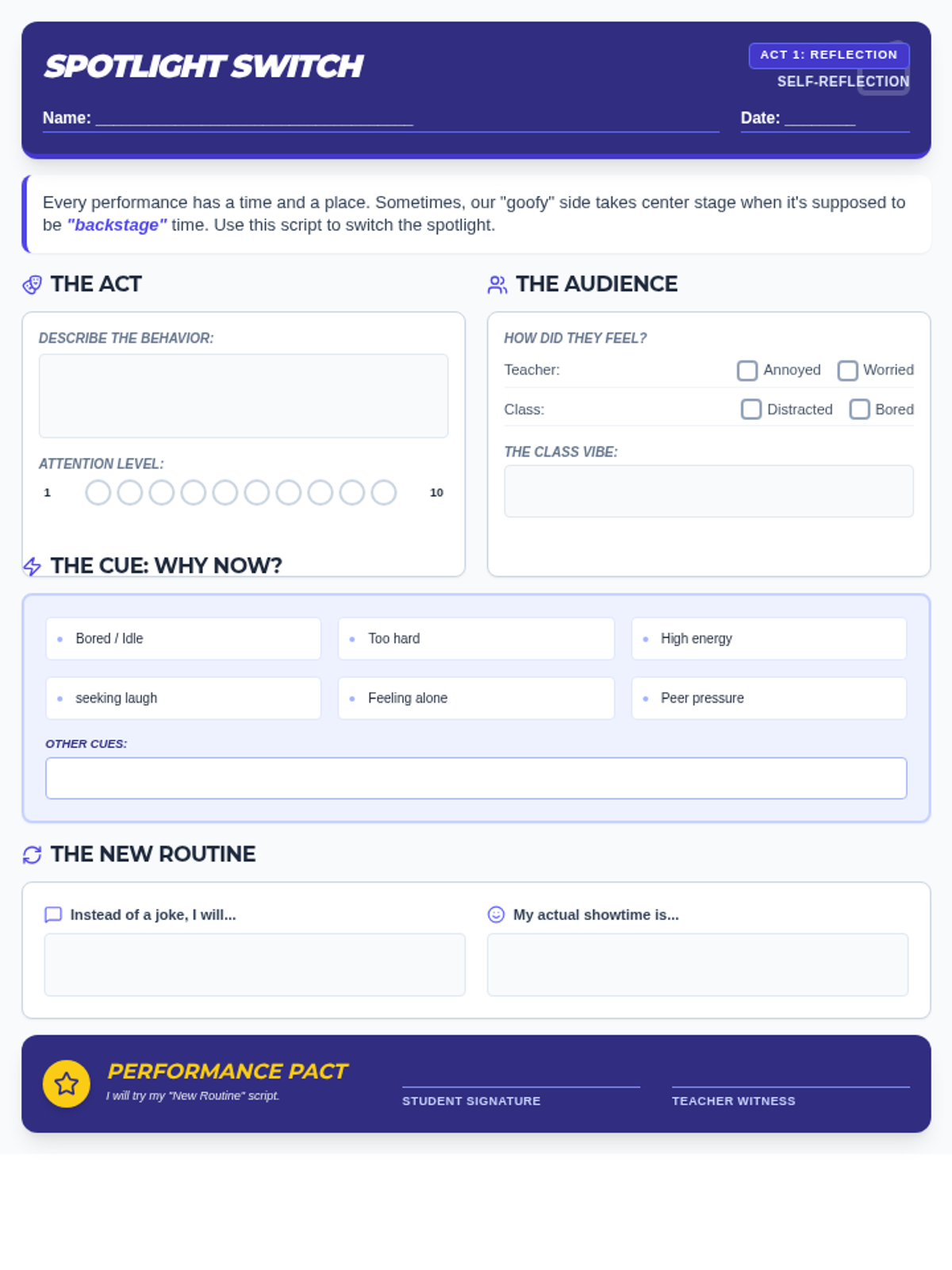
A theater-themed self-reflection worksheet for students to identify triggers for goofy or disruptive behavior and plan positive alternatives. Revised to fit on a single page with improved contrast and layouts.
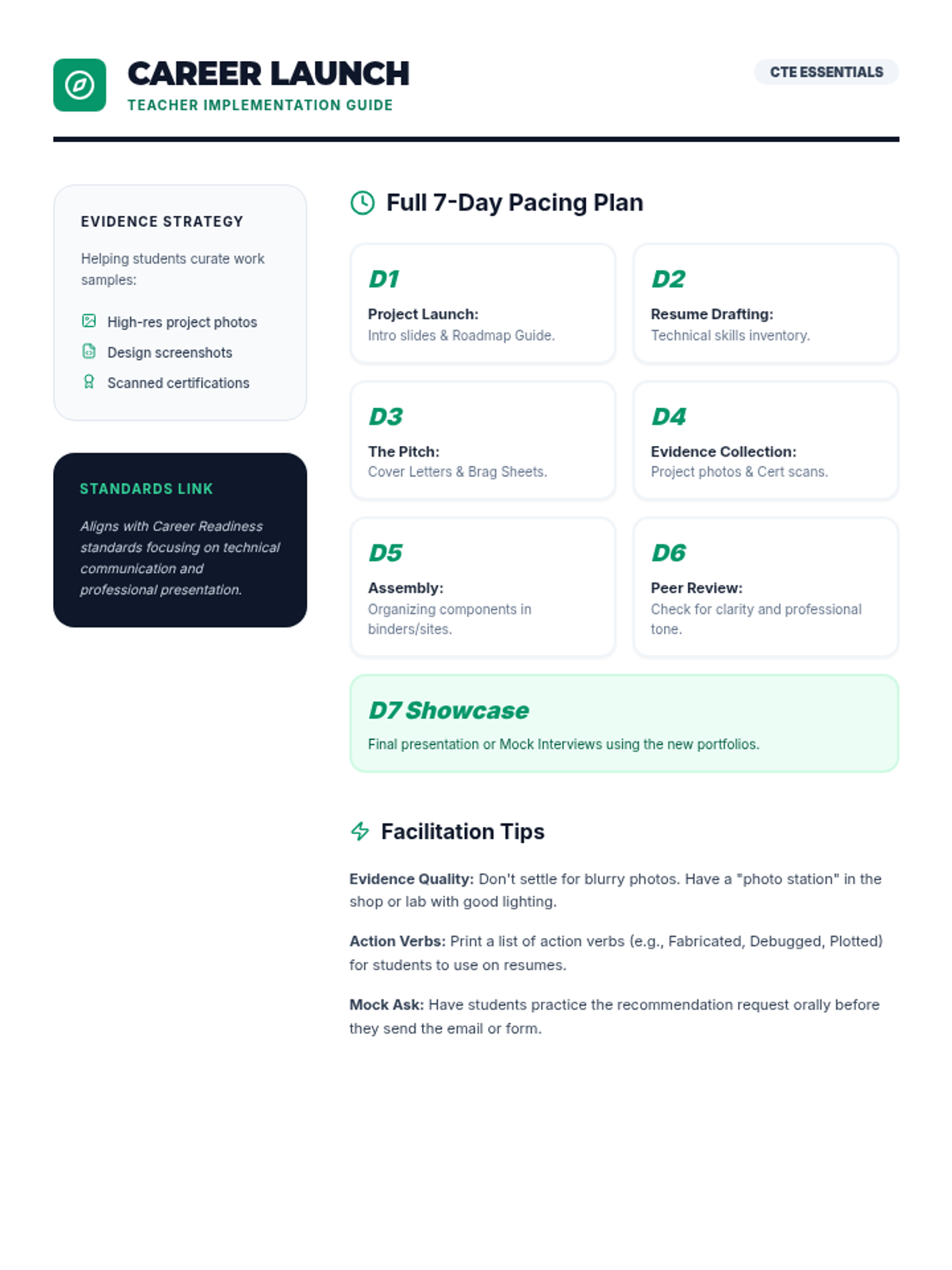
A teacher's guide for implementing the career portfolio project, including pacing suggestions, target skills, and facilitation tips for CTE instructors.
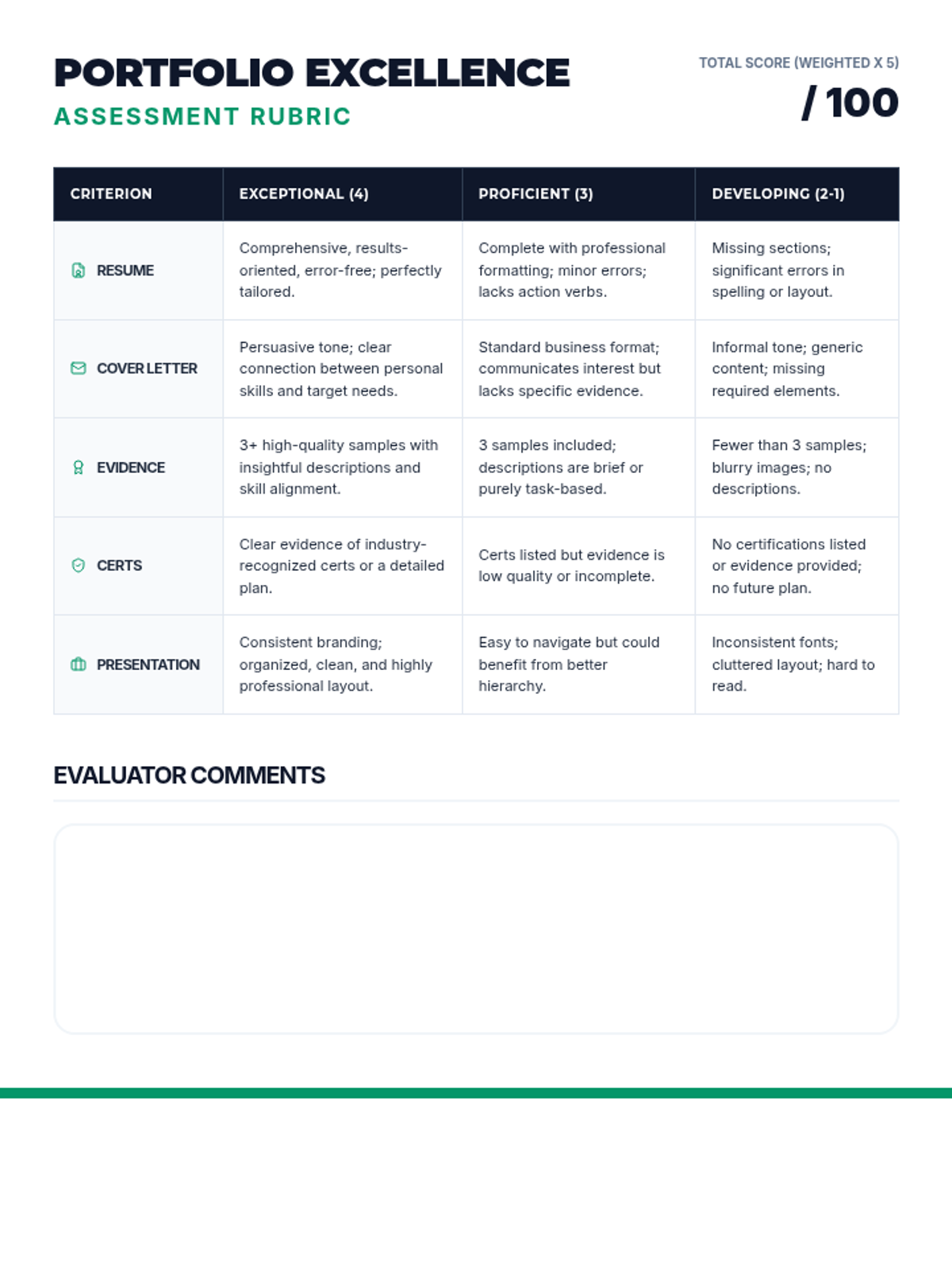
A comprehensive grading rubric for the career portfolio project, evaluating students on resume content, cover letters, evidence of work, and professional presentation.
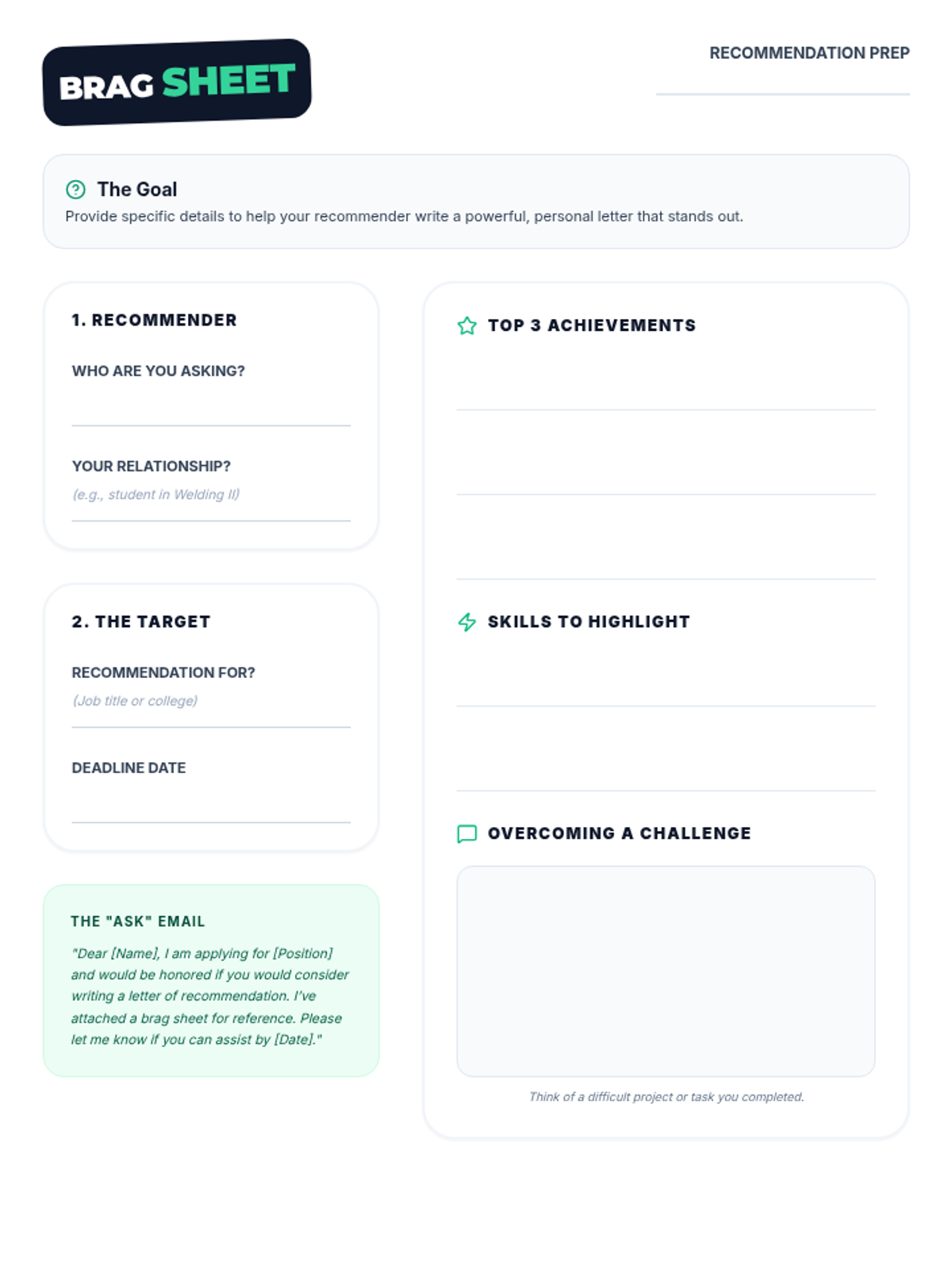
A 'Brag Sheet' and request form to help students prepare for and professionalize their requests for letters of recommendation from teachers and mentors.
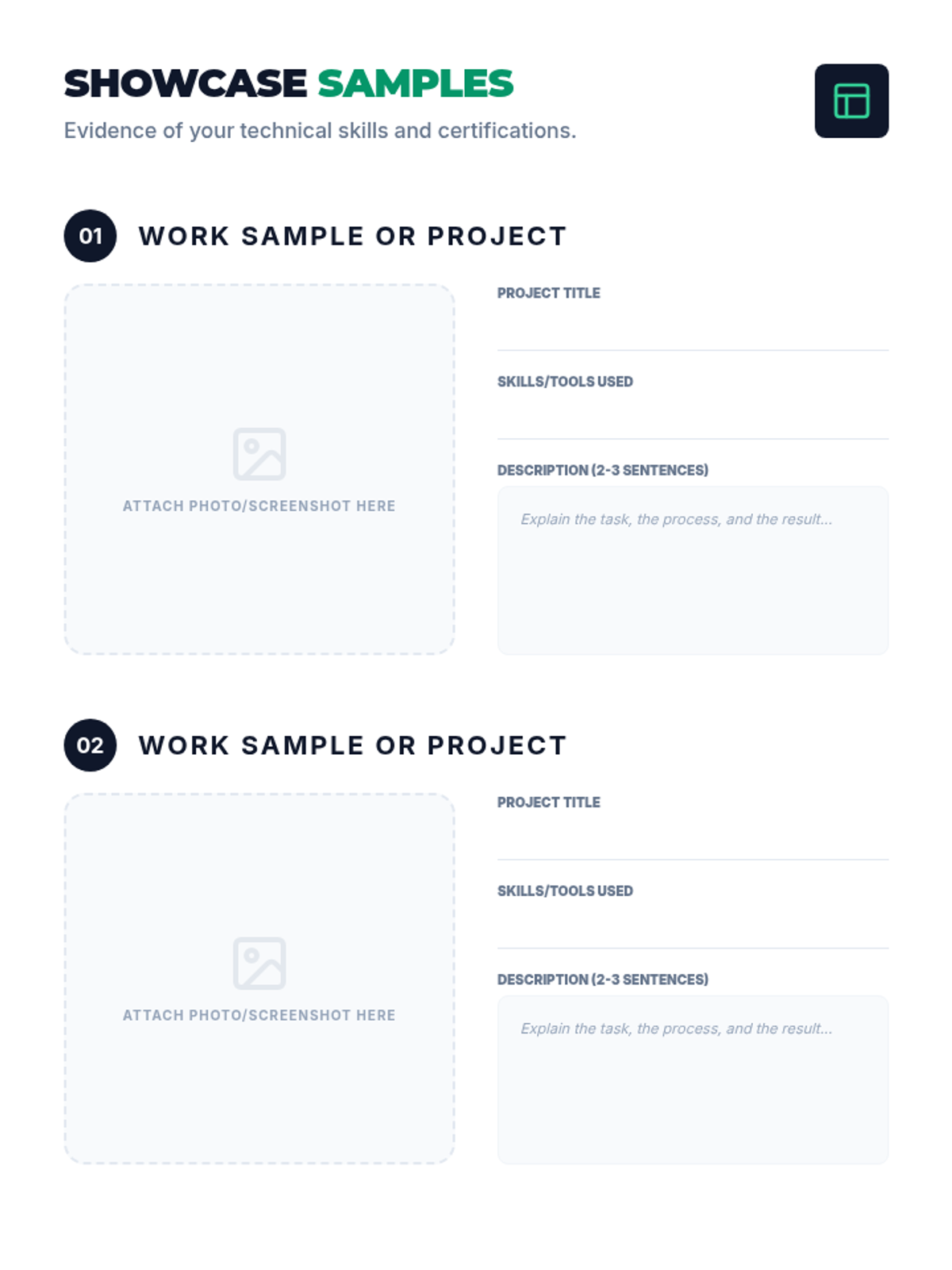
A template for students to showcase their technical work samples, projects, and industry certifications with accompanying descriptions.
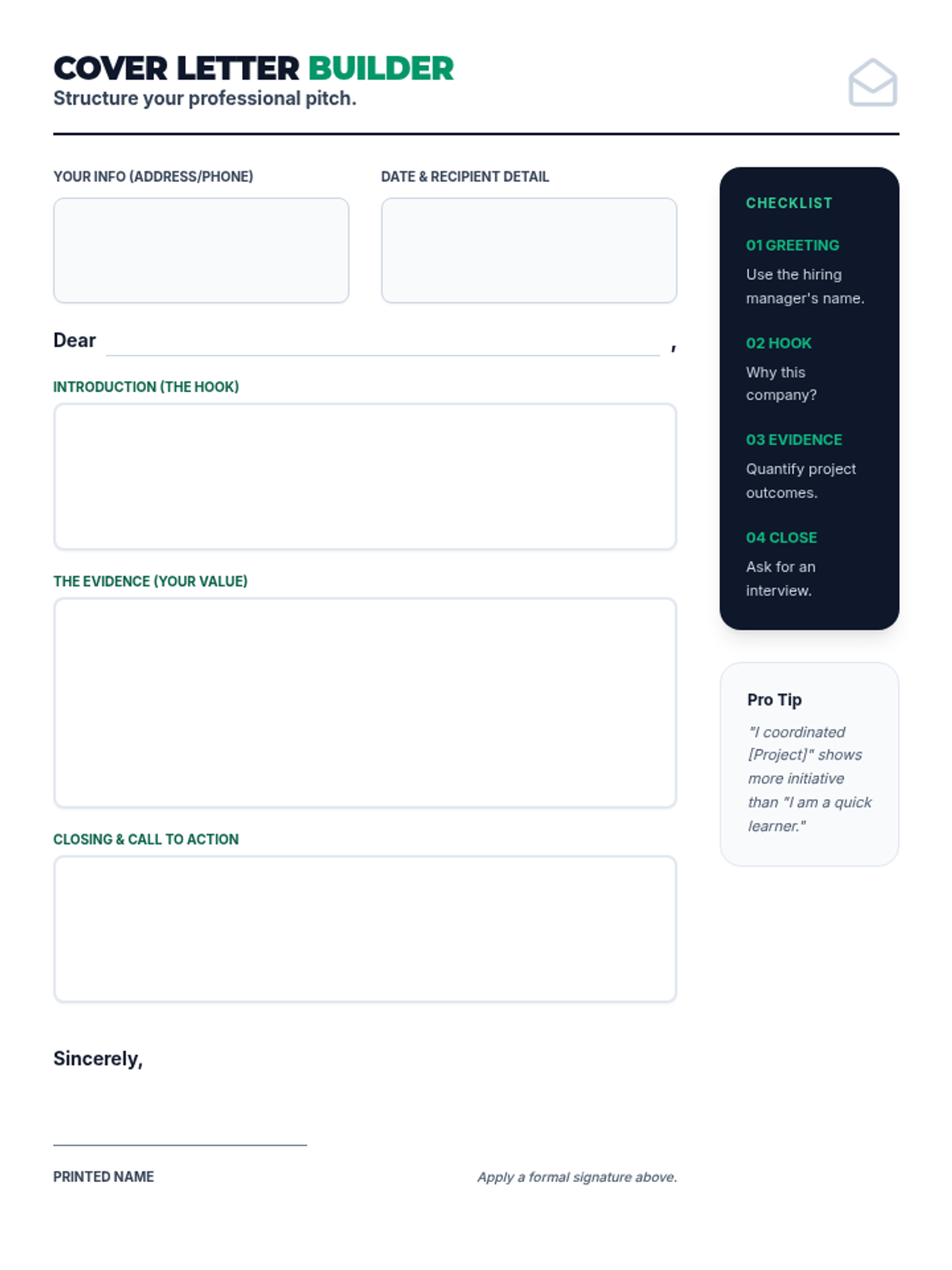
A structured cover letter template that guides students through writing a professional and persuasive letter of interest for a job or college application.
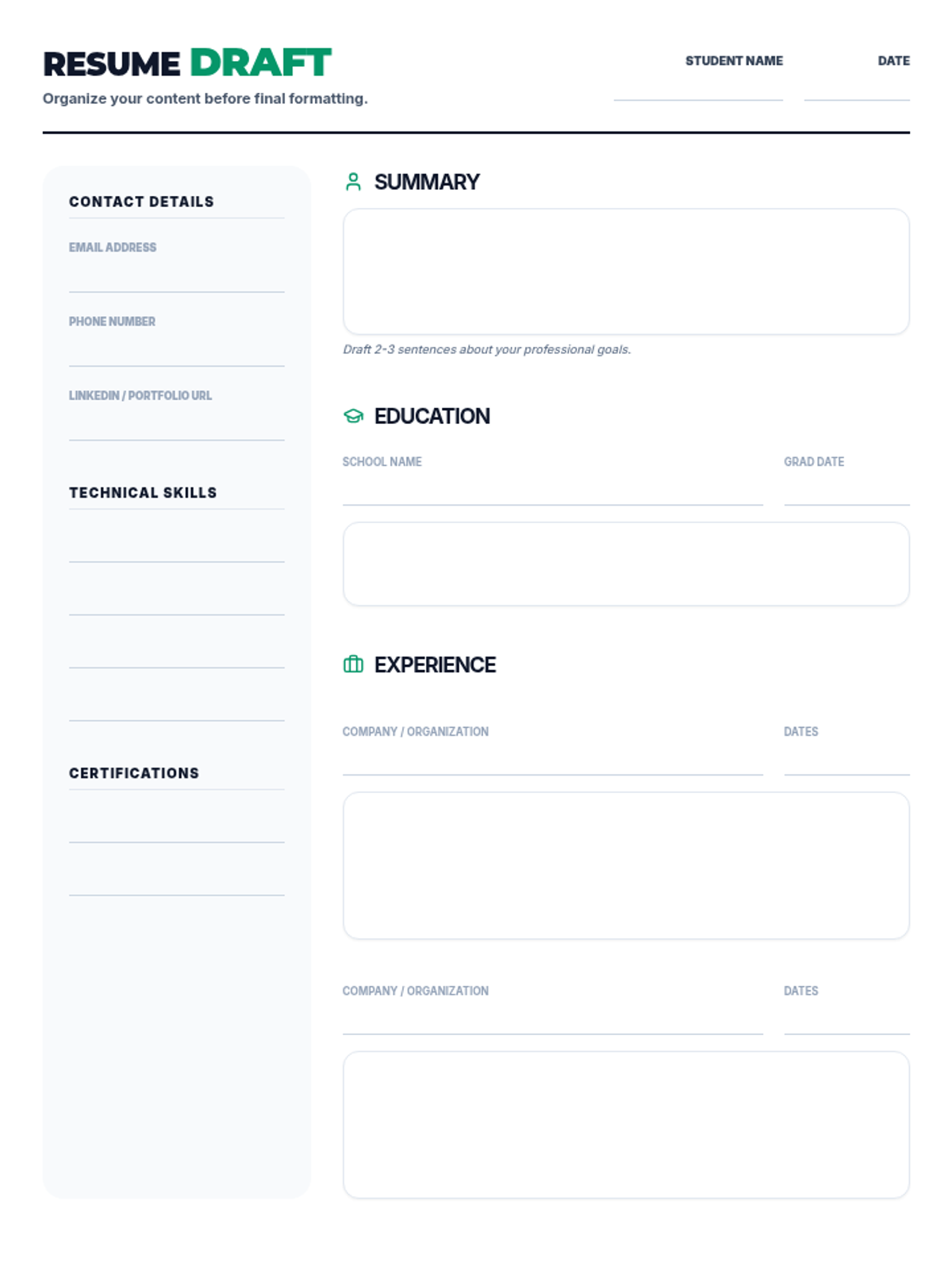
A professional resume drafting template designed for students to organize their skills, education, and experience for their career portfolio.
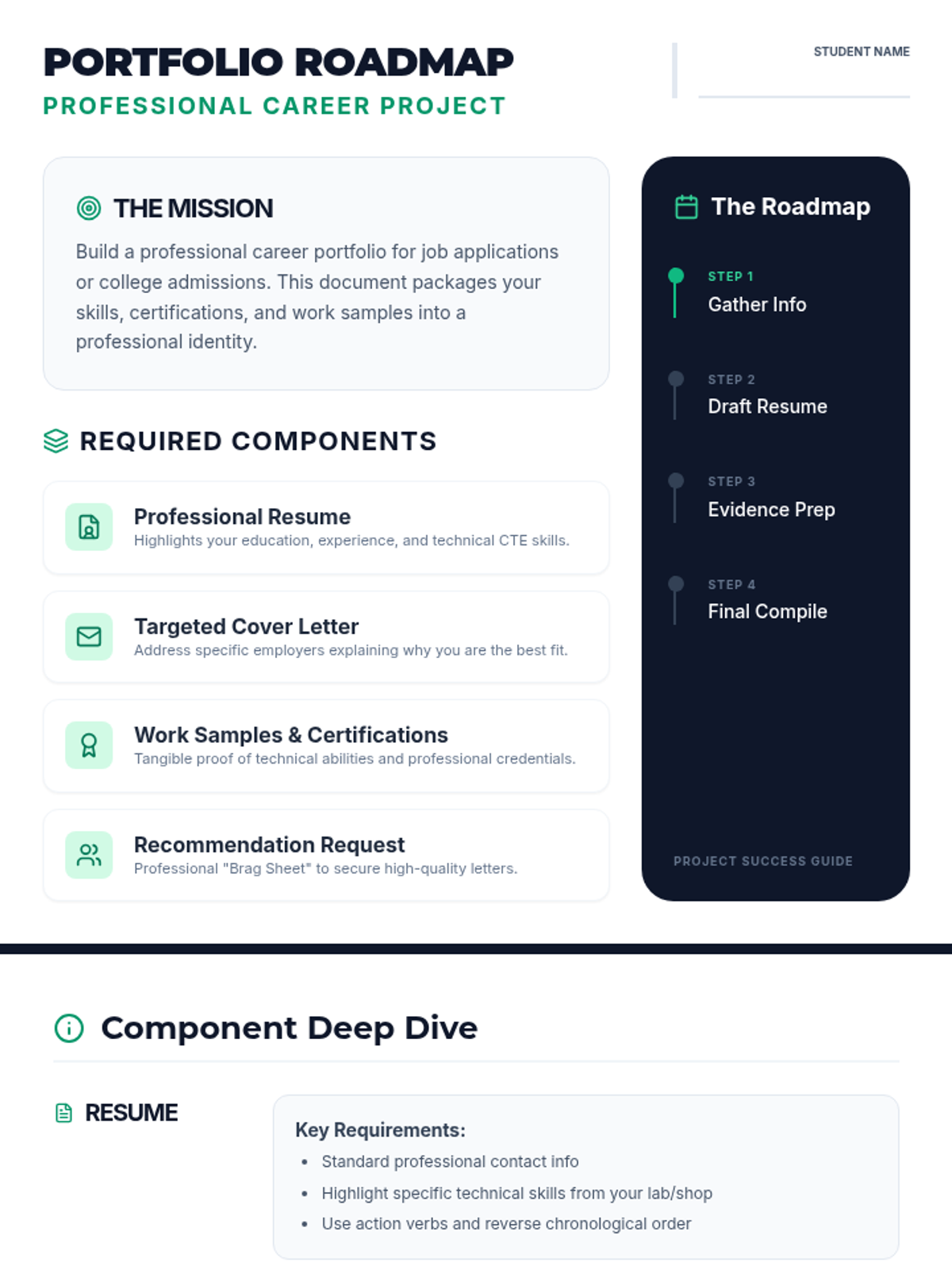
A detailed project guide for students that outlines the requirements, timeline, and specific criteria for each component of their career portfolio.
An instructional slide deck designed to guide CTE students through the process of building a professional career portfolio, featuring modules on resumes, cover letters, work samples, and recommendation letters.
A visual presentation to introduce the concept of future-self visualization, guide students through grounding exercises, and provide prompts for reflection. Includes clear pacing cues for instructor use.
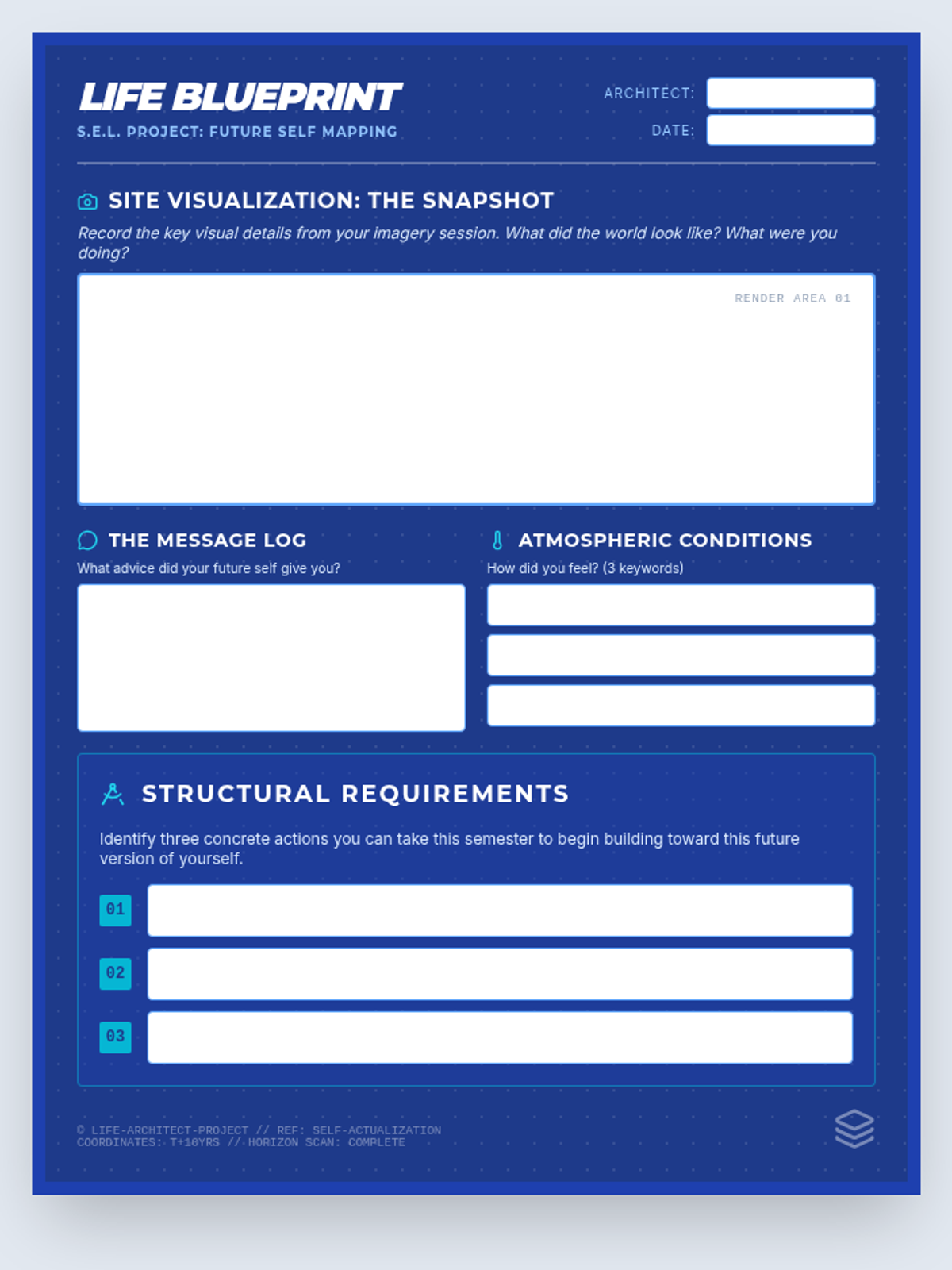
A blueprint-themed reflection worksheet for students to record their visualization experience, capturing key imagery and setting concrete goals based on their 'future self' insights. Revised with improved legibility for handwriting and optimized for single-page printing.
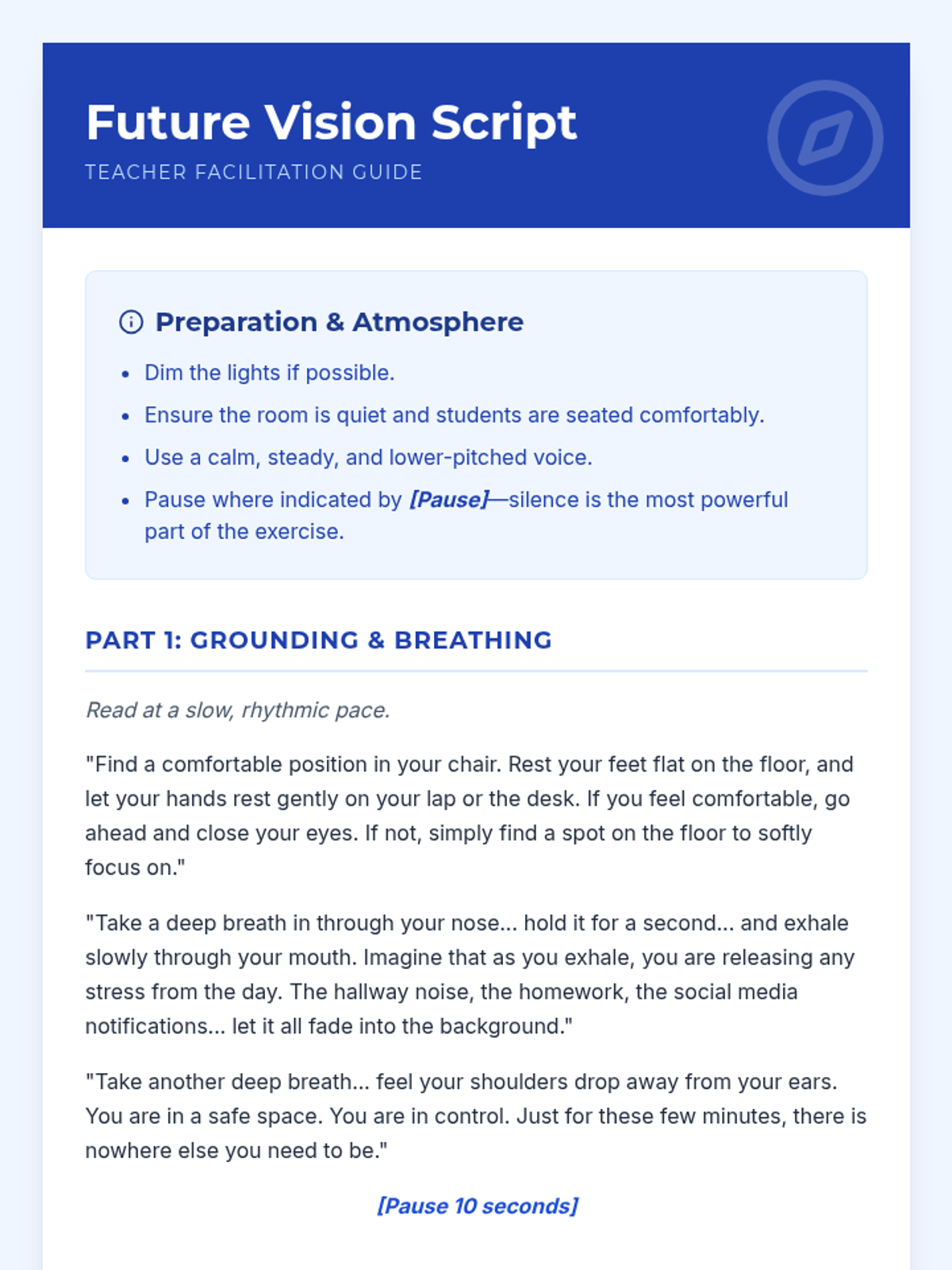
A facilitation guide for teachers featuring a scripted visualization exercise designed to help students connect with their future aspirations. Includes pacing cues and debriefing questions.
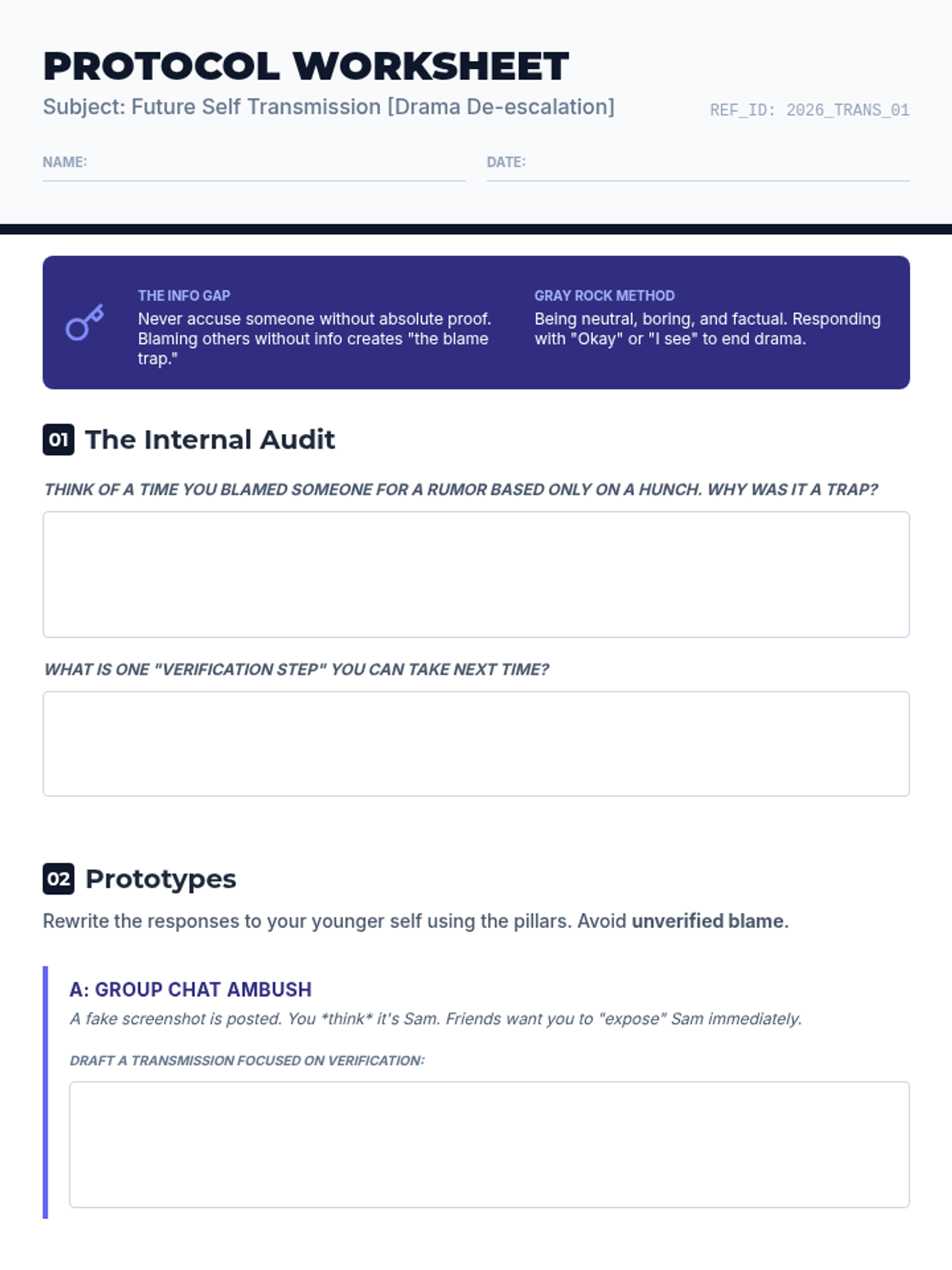
A student worksheet focused on practicing assertive communication and de-escalation techniques through real-world high school drama scenarios, emphasizing verification.
Visual slides for the 'Future Self Transmission' lesson, featuring a modern 'glitch' aesthetic and high-visibility text focused on the 4 pillars of rumor management.
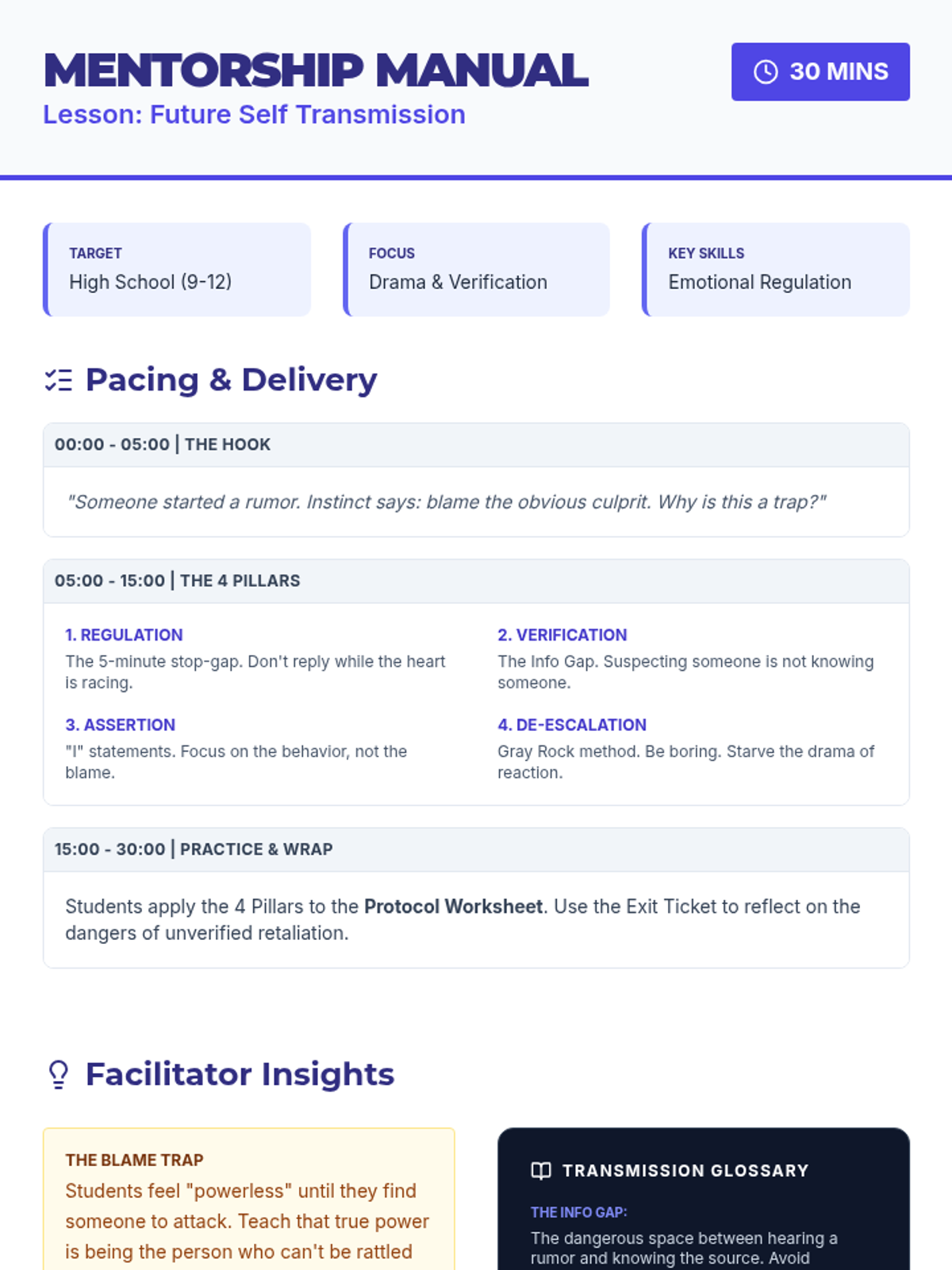
A comprehensive teacher guide for the 30-minute lesson, including pacing, discussion prompts, and key facilitation strategies for teaching high schoolers about rumor management and verification.
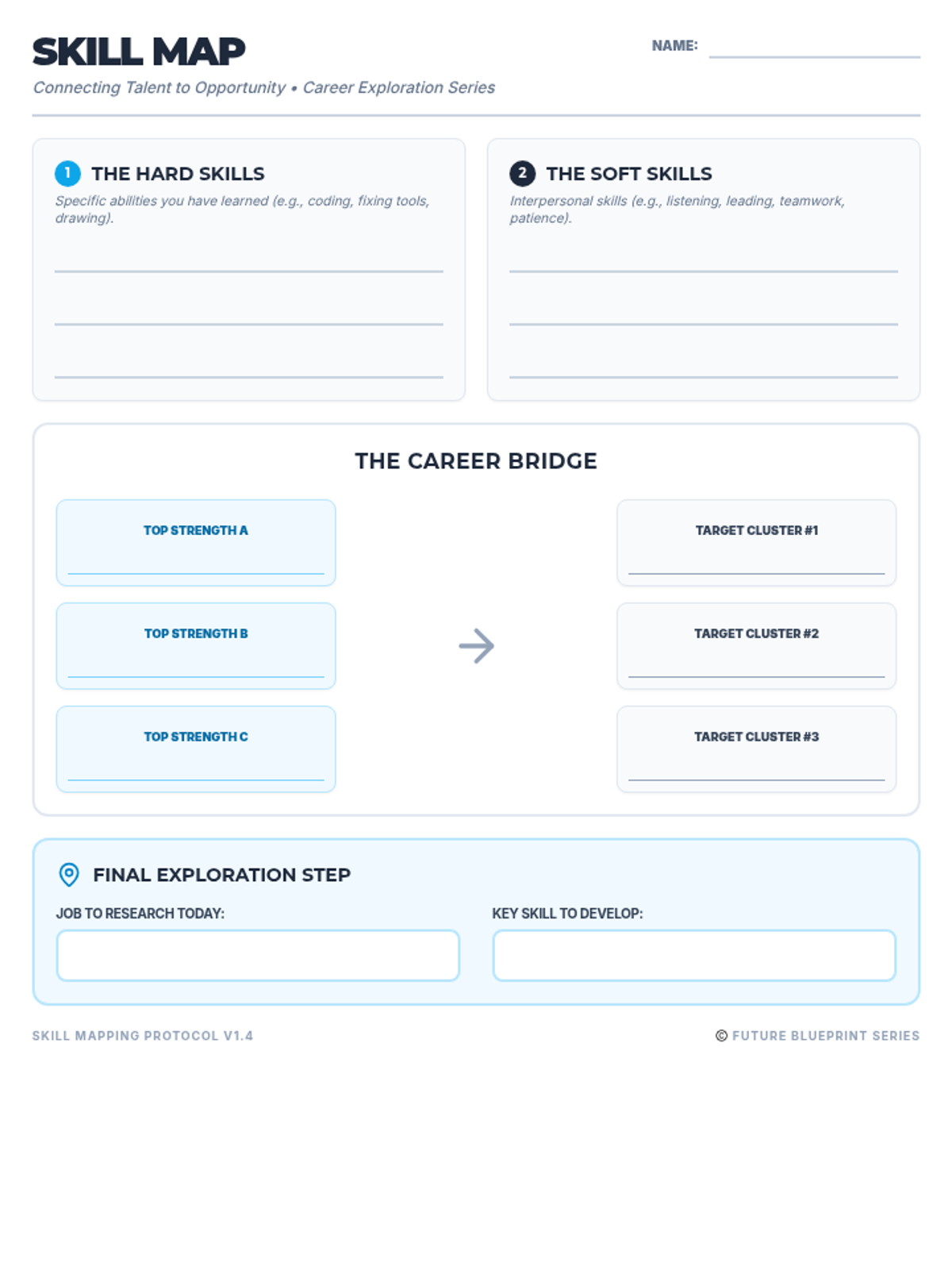
A visual graphic organizer that helps students map their hard and soft skills to their top-scoring career clusters. It includes sections for identifying personal strengths and creating an actionable next step for career research.
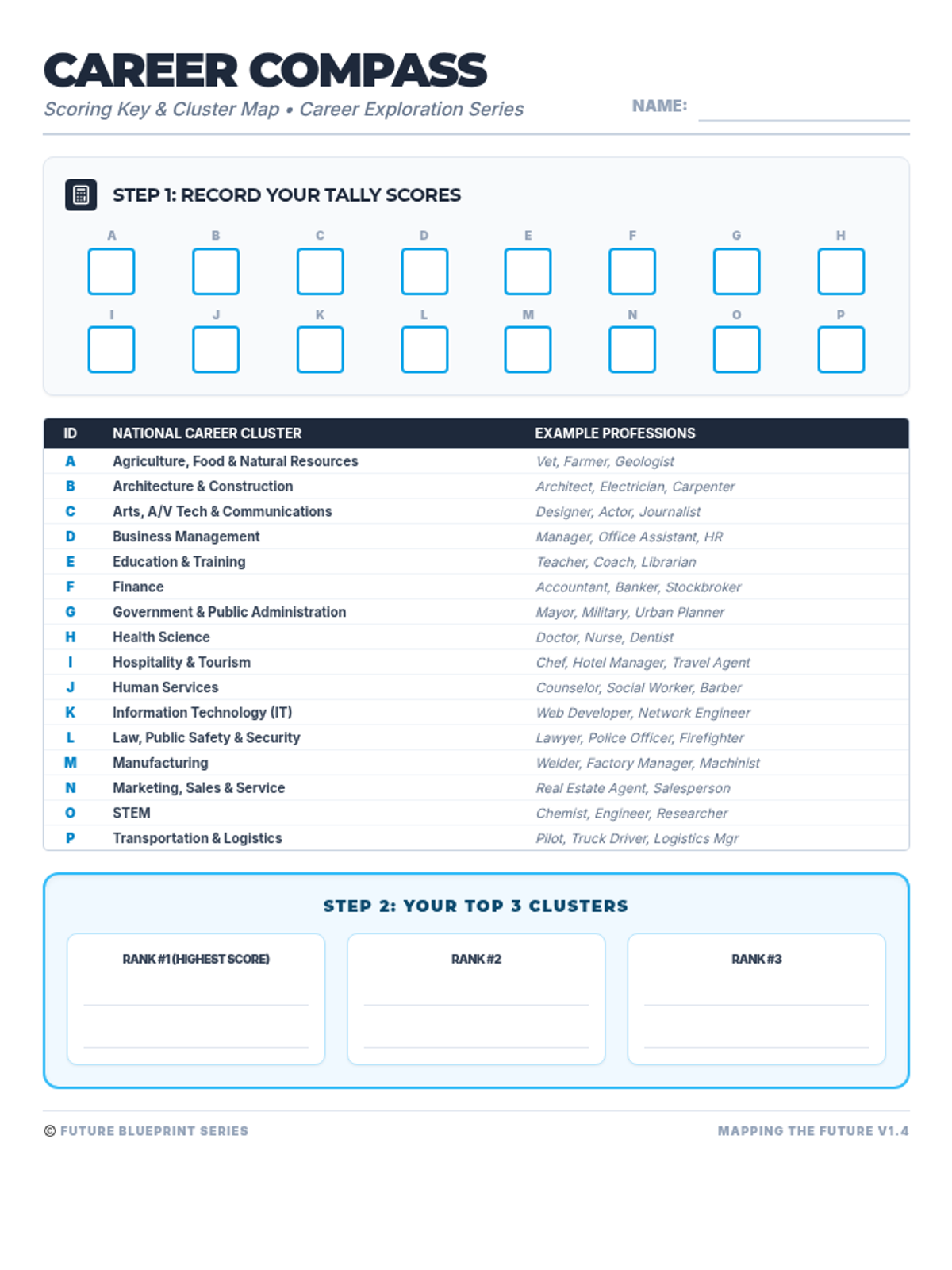
A scoring key for the Future Blueprint inventory. This material provides a tally chart for students to calculate their scores for each of the 16 career clusters and includes a comprehensive table defining each cluster with example jobs.
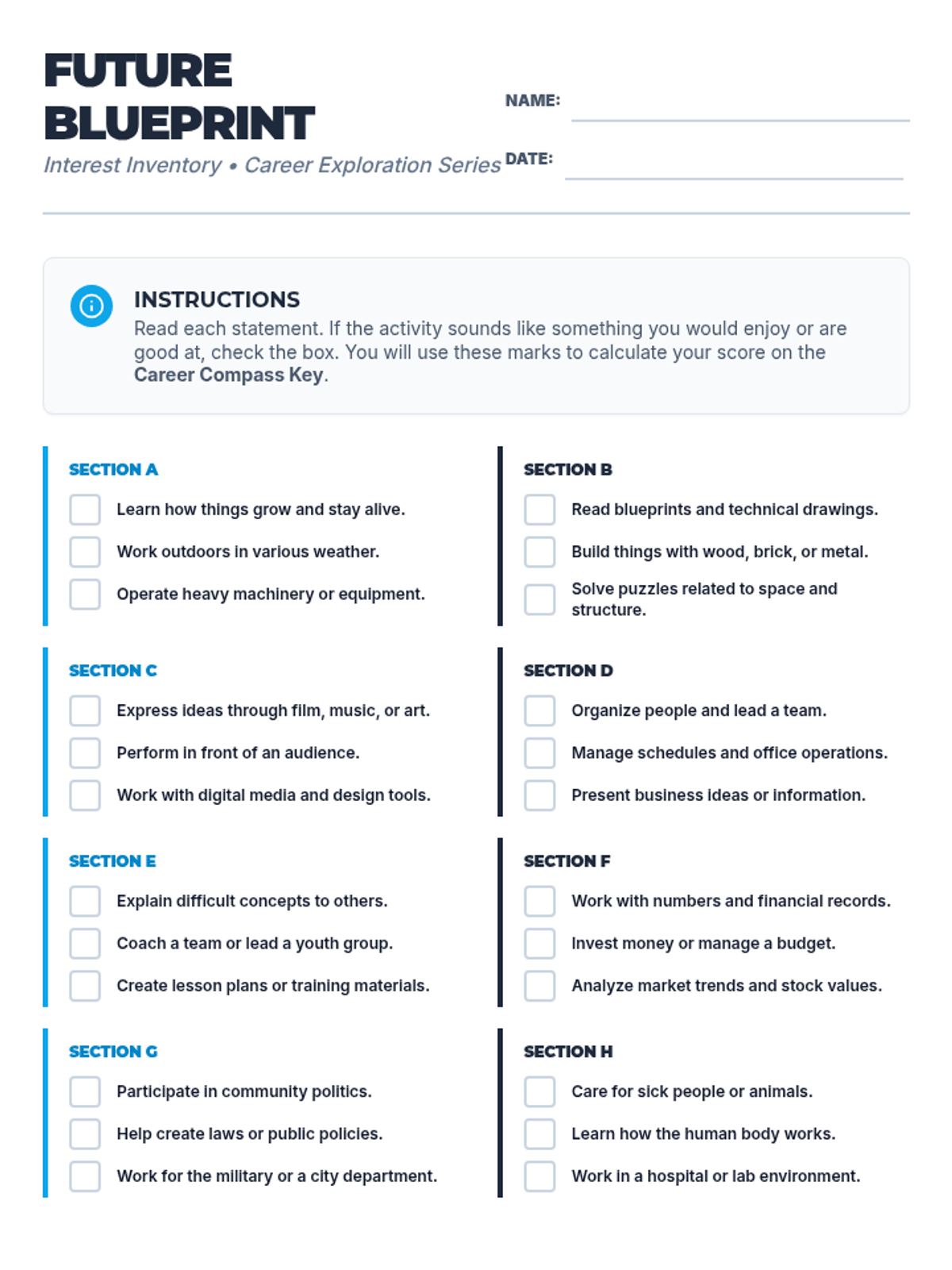
A structured career interest inventory for teens using the "Future Blueprint" theme. It features 16 sections corresponding to the national career clusters, allowing students to check activities they enjoy to identify potential career paths.
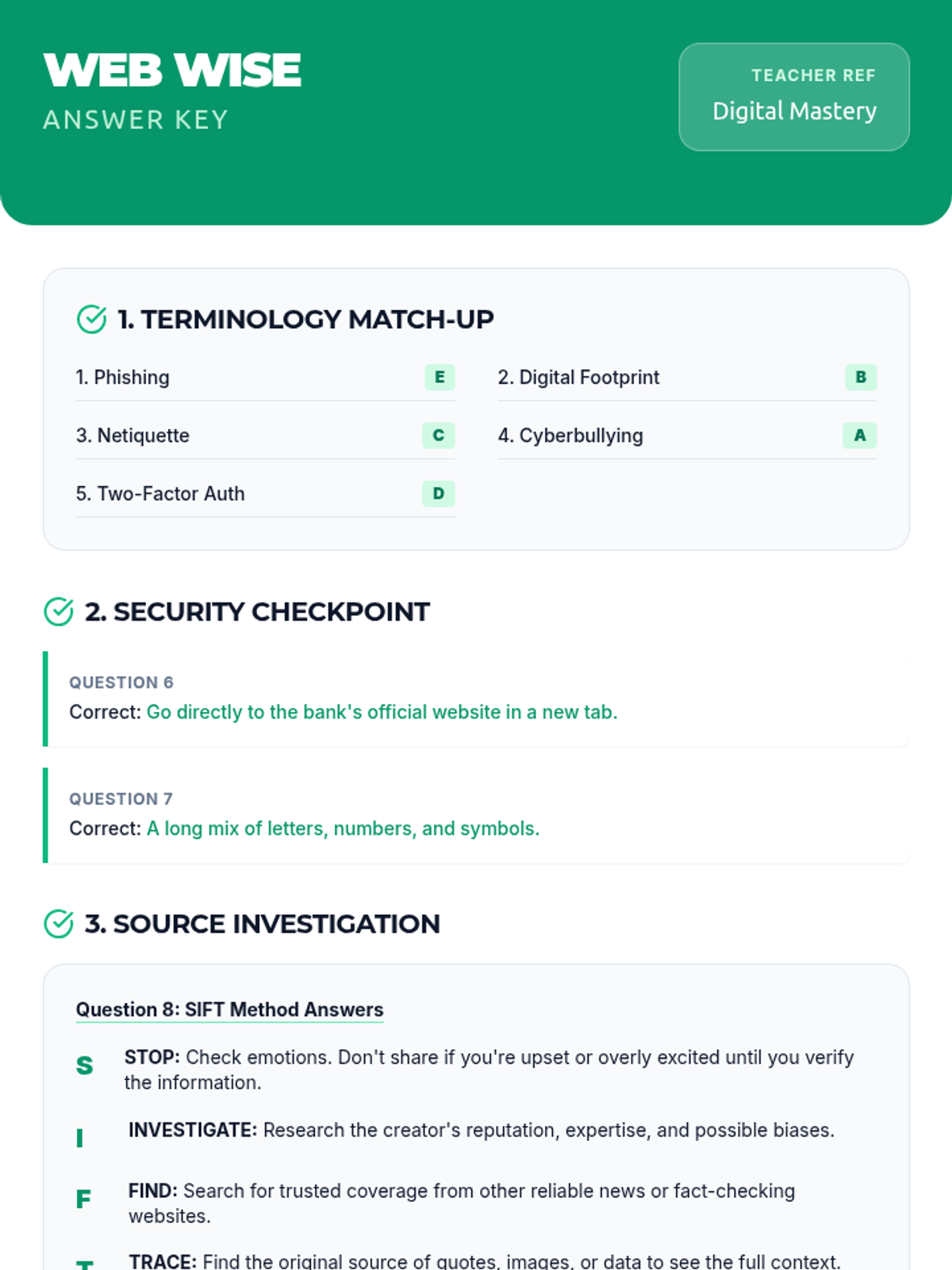
A detailed answer key for the Web Wise Review Sheet. Fixed page breaks and alignment issues.
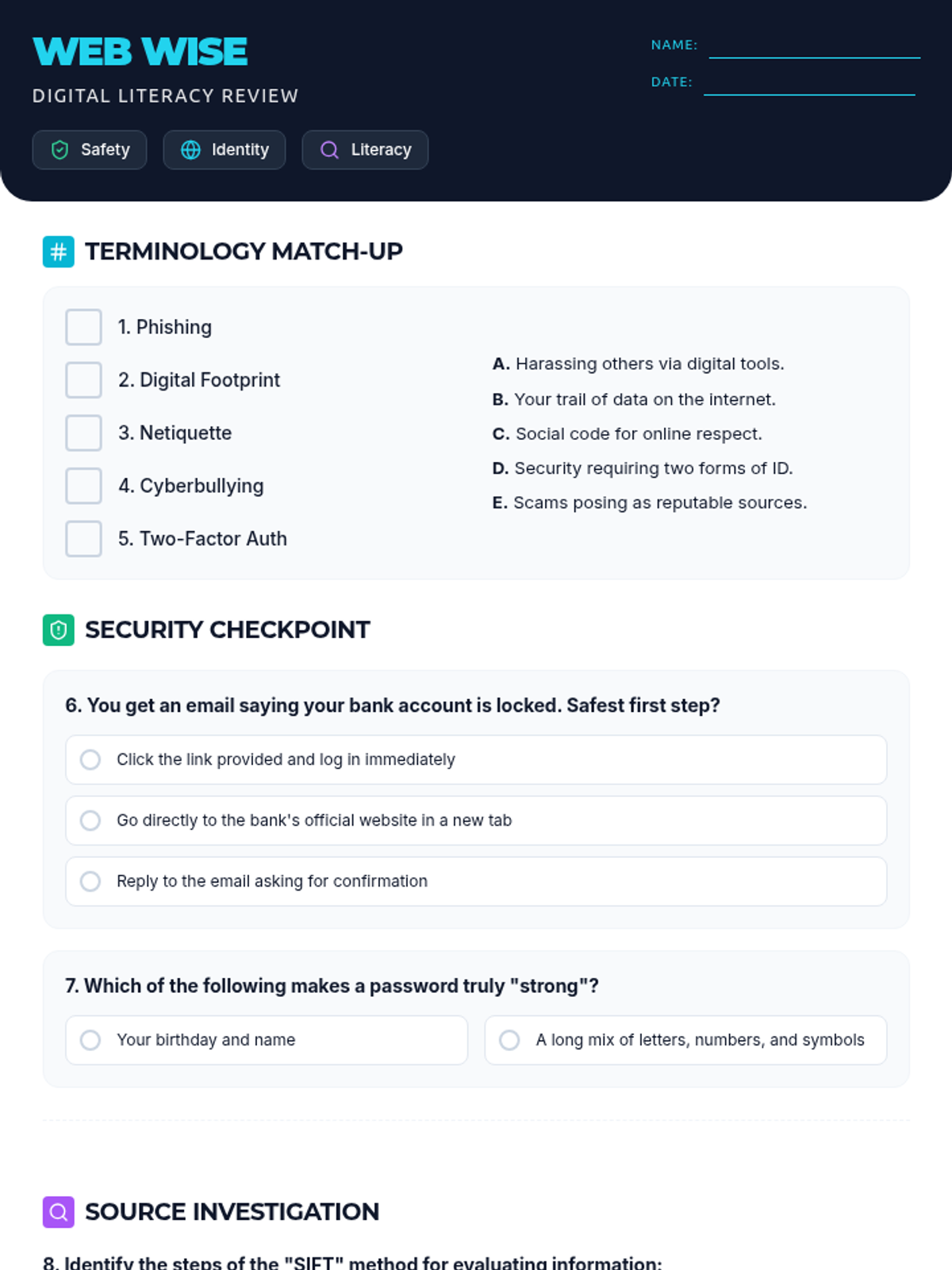
A modern review sheet for students to test their knowledge of digital citizenship, cybersecurity, and information literacy. Fixed page breaks and contrast.
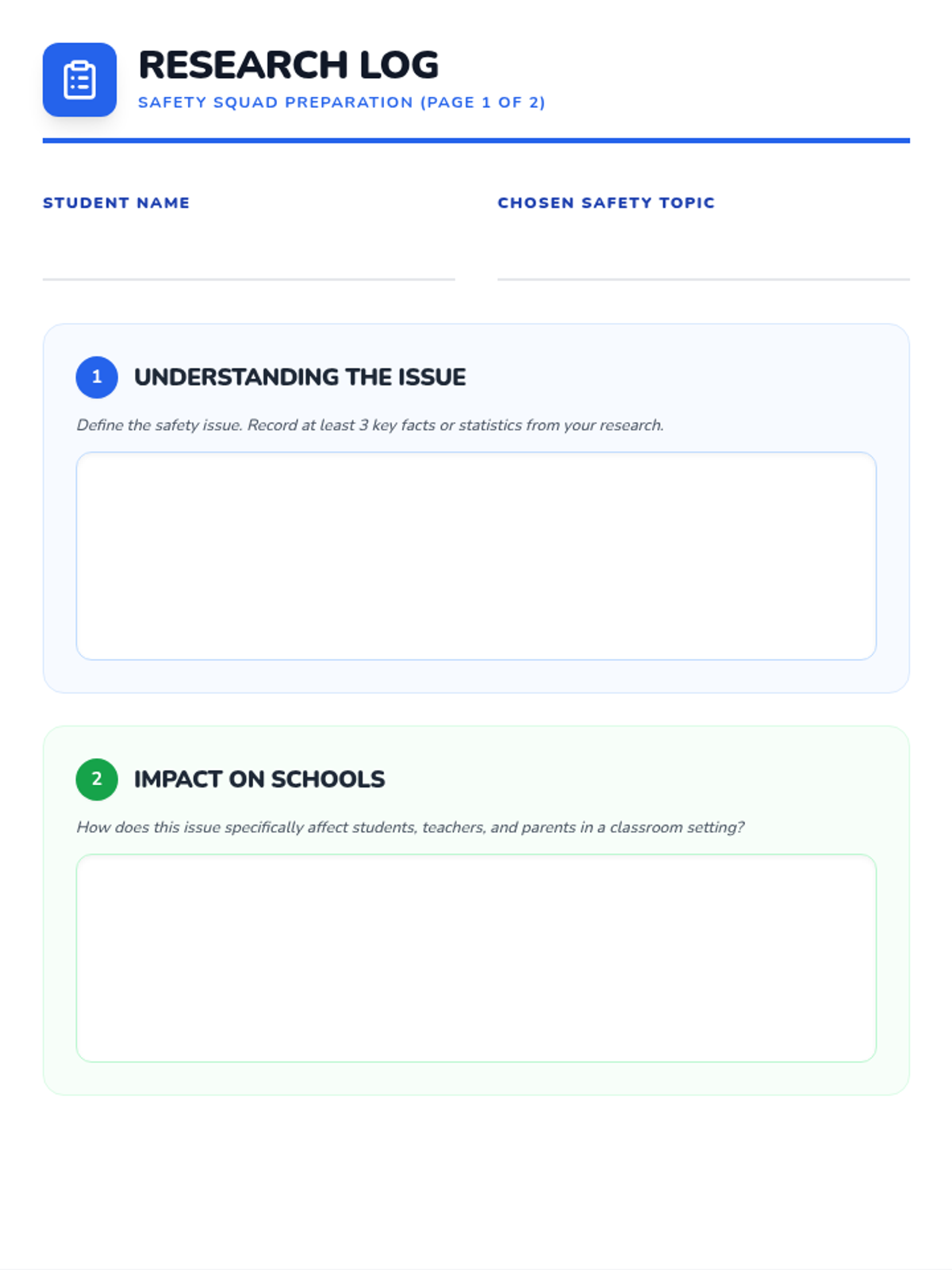
A two-page research organizer for students to gather comprehensive facts and plan their paragraphs before writing the final one-page safety report.
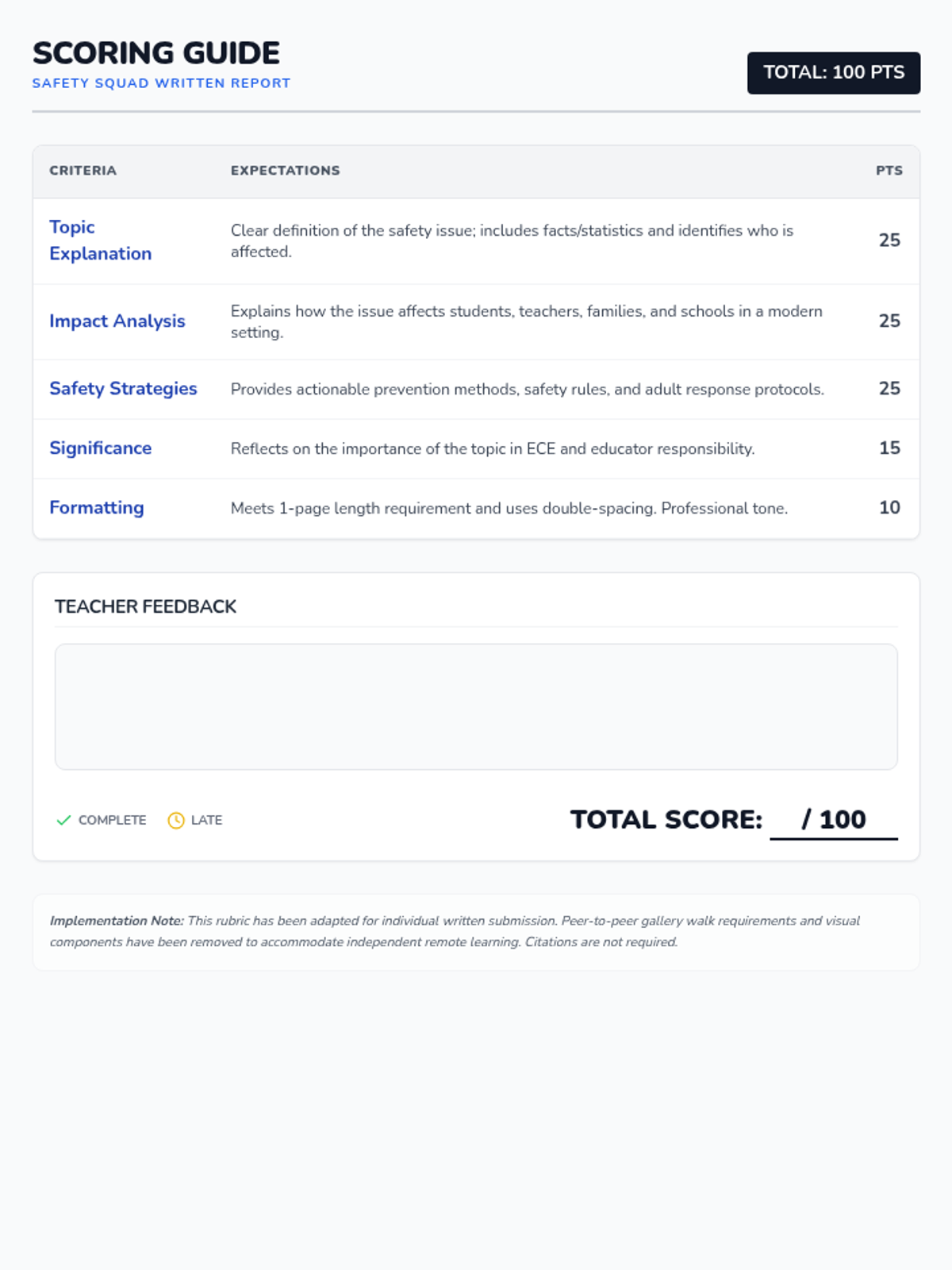
A modified scoring rubric for the Safety Squad research report, redistributed to focus on content depth and professional formatting after removing visual and presentation requirements.