Updated Hazard Hunter worksheet emphasizing chair tipping and ergonomics as the primary observation targets.
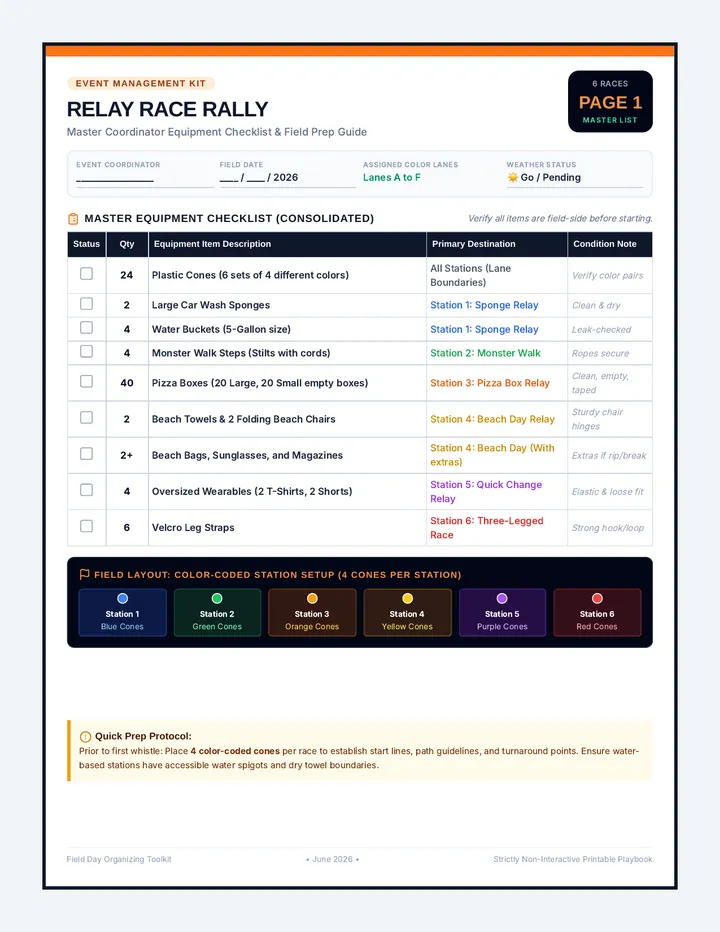
A comprehensive, professional 3-page field day volunteer playbook. It contains a Master Clipboard Equipment Checklist organized by item category and a Station Setup Card for each of the six relay races (Sponge Relay, Monster Walk, Pizza Box, Beach Day, Quick Change, and 3-Legged Race) with cone color assignments, layout diagrams, and rules for volunteers.
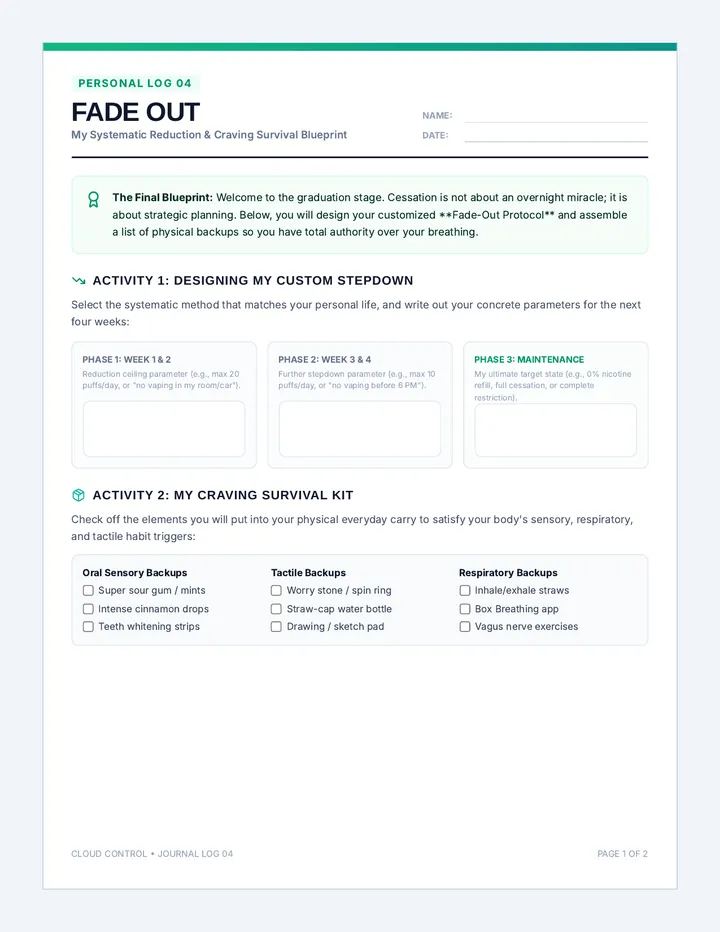
A 2-page student reflection journal for Session 4, providing personalized gradual-reduction plans, craving-management toolkits, and peer support systems for sustained progress.
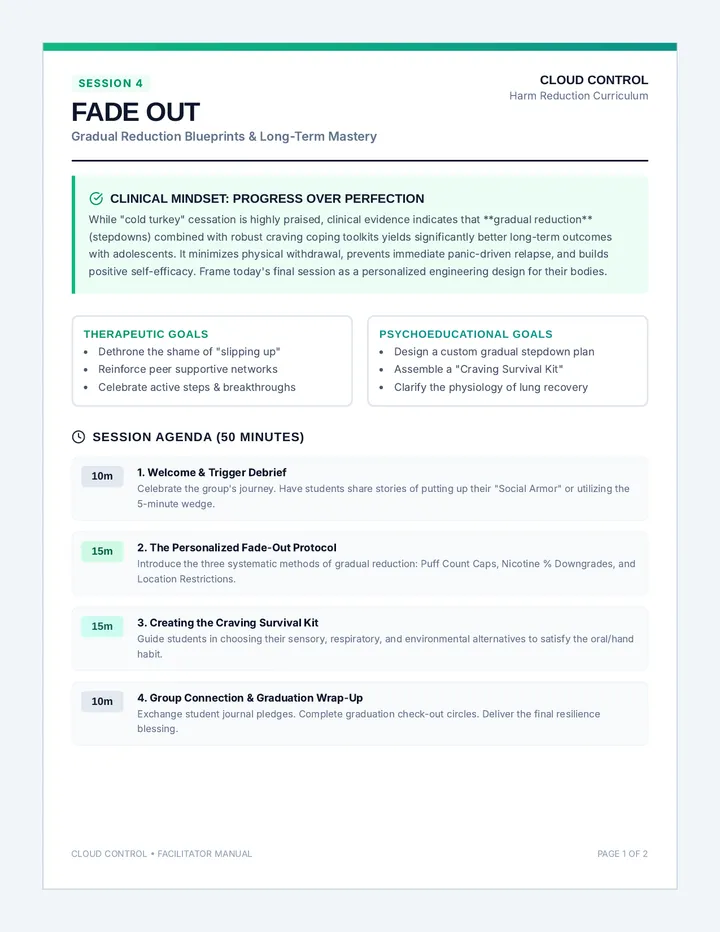
A comprehensive, 2-page facilitator guide for Session 4, providing clinical frameworks for gradual nicotine reduction, troubleshooting for slips or setbacks, and instructions for forming long-term support plans.
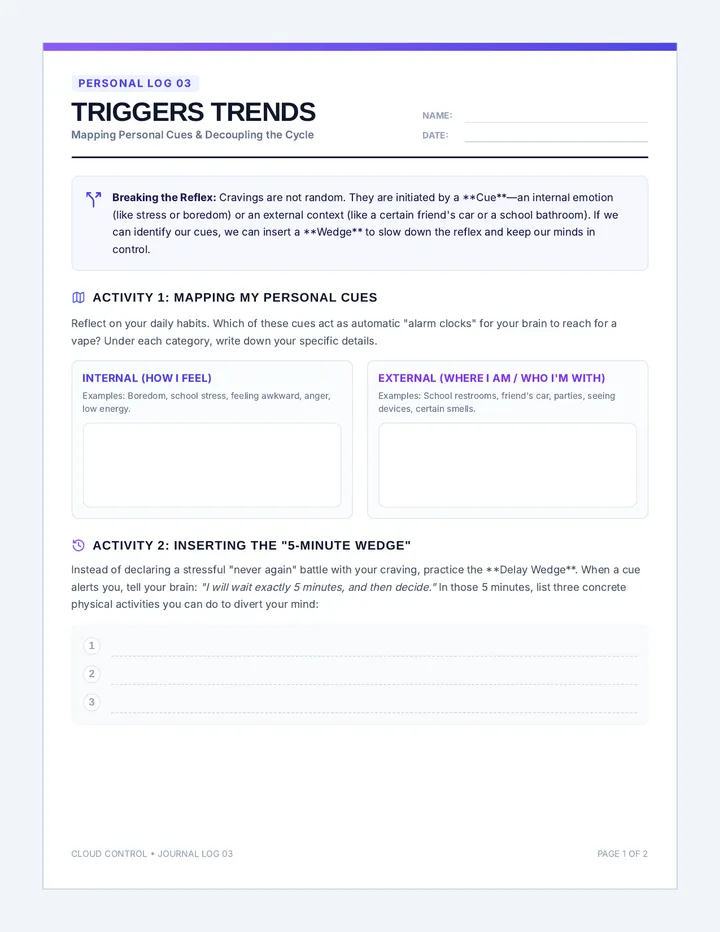
A 2-page student reflection journal for Session 3, detailing personal trigger mapping exercises, habit-loop analysis, and low-friction peer refusal scripts.
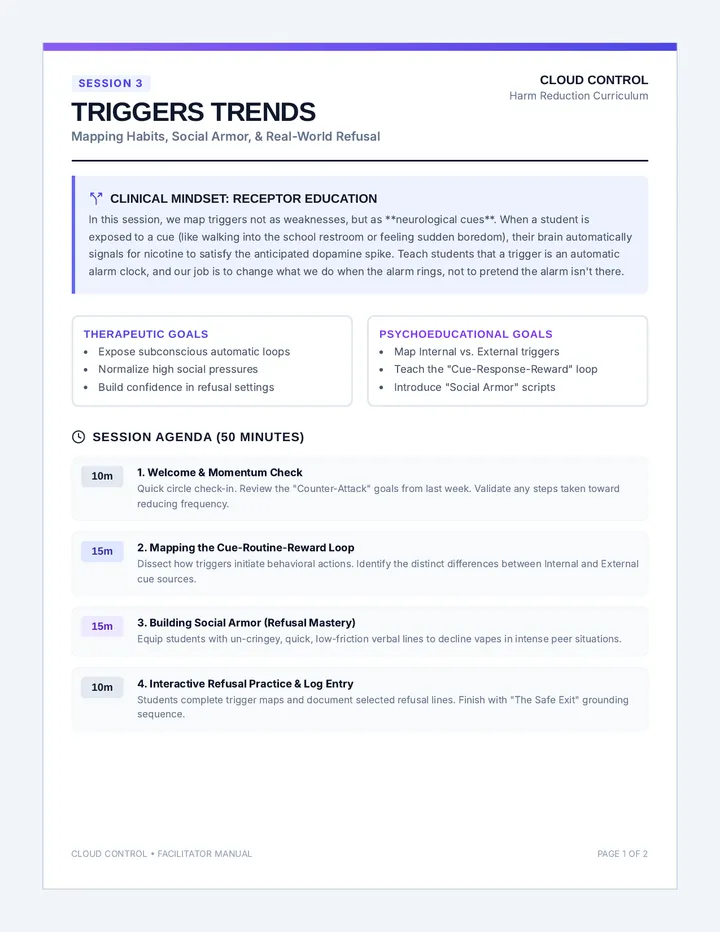
A 2-page facilitator guide for Session 3, outlining clinical methodologies to map emotional and situational triggers, teaching low-friction refusal skills, and detailing the habit-loop intervention model.
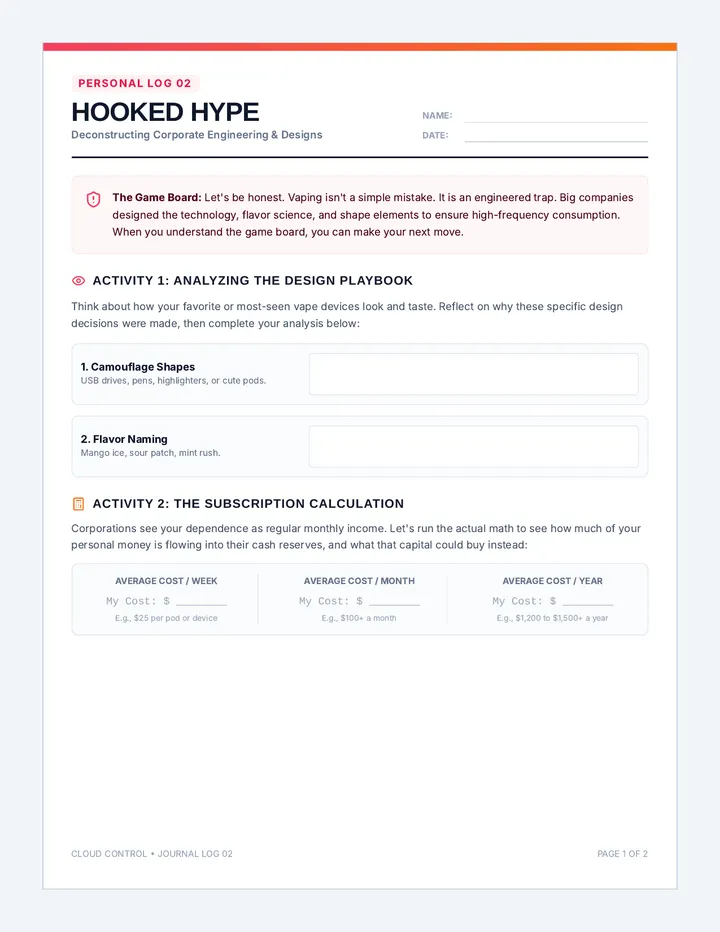
A 2-page student reflection journal for Session 2, providing corporate trap analysis grids, subscription math calculation templates, and structured reflection areas for intrinsic motivators.
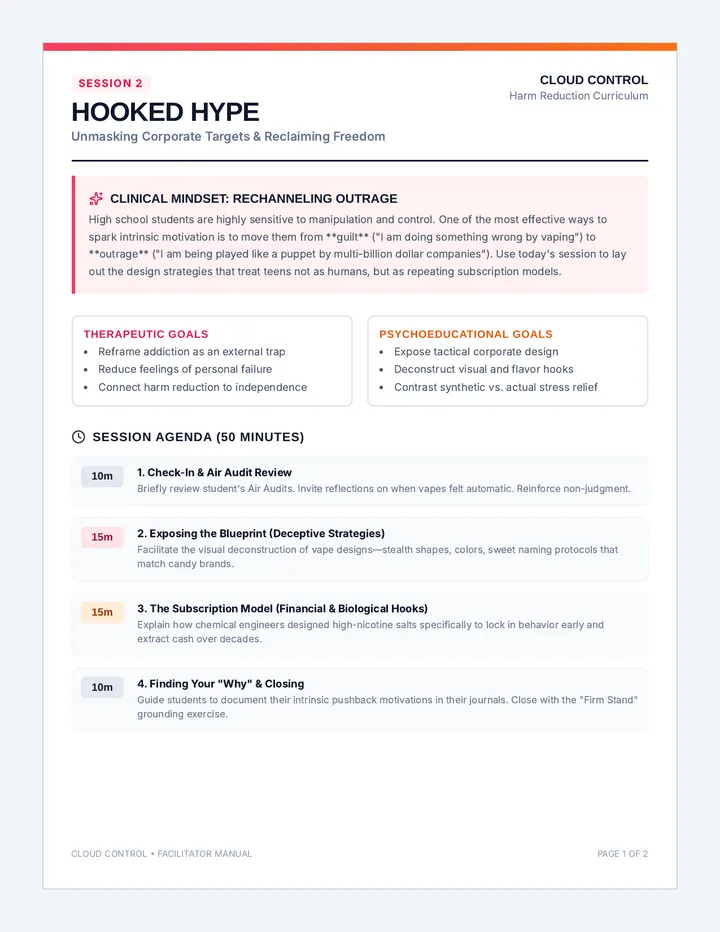
A 2-page facilitator guide for Session 2, providing instructions on exposing corporate youth-targeting strategies, utilizing healthy outrage as a clinical tool, and guiding students to find their intrinsic motivators.
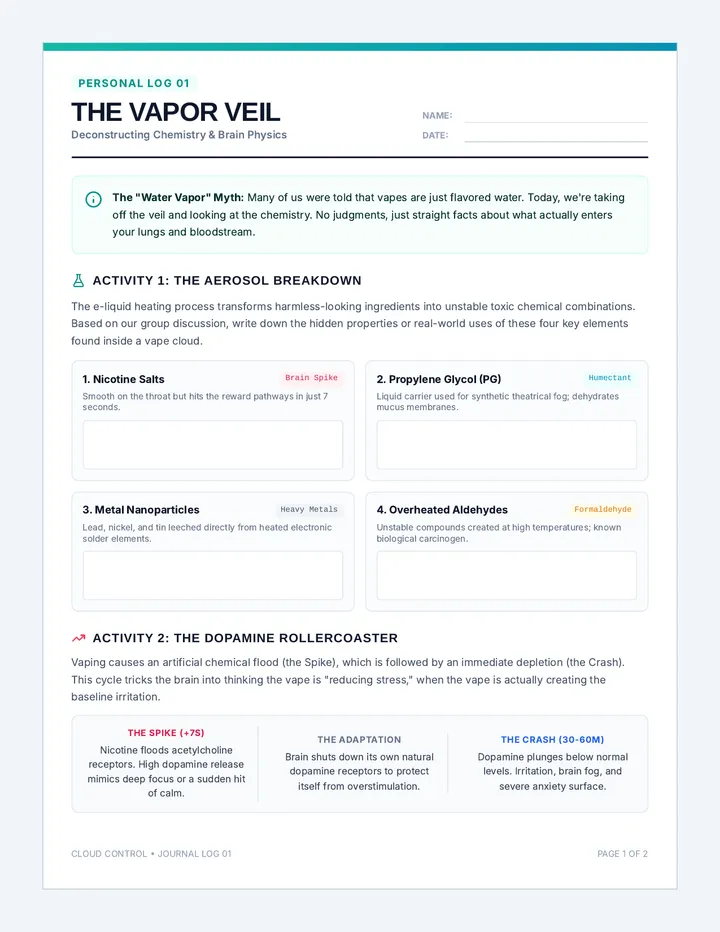
A 2-page student reflection journal for Session 1, containing the Vapor Chemistry Map, the Dopamine Spike-Crash diagram, and a non-judgmental baseline self-audit worksheet.
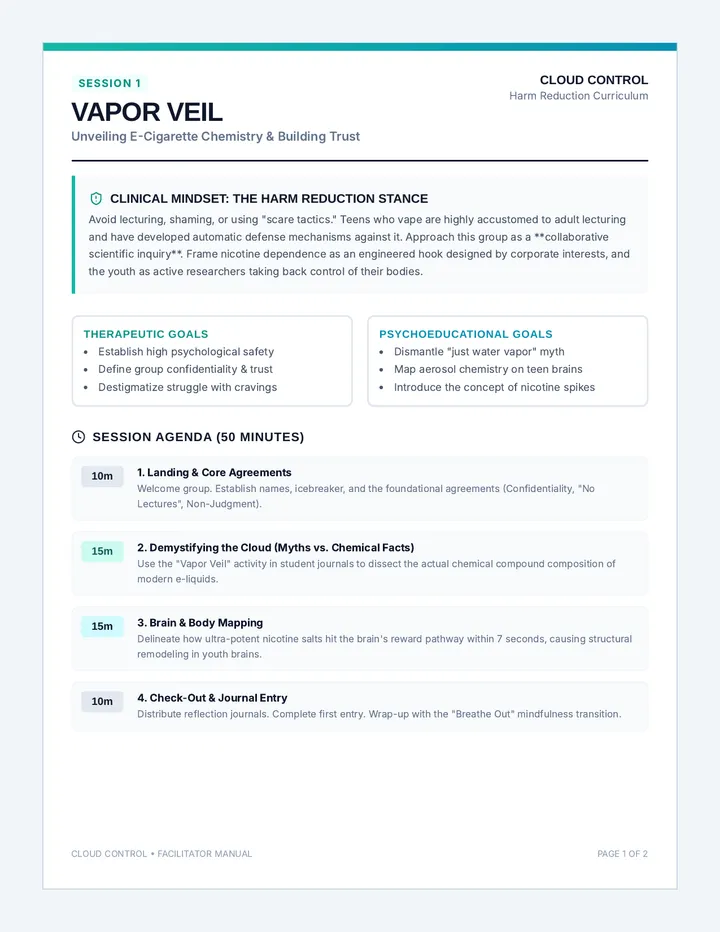
A comprehensive, 2-page facilitator guide for Session 1, establishing group agreements, outlining clinical mindsets, providing a 50-minute pacing timeline, and giving step-by-step instructions for dismantling misconceptions about e-cigarette aerosol.
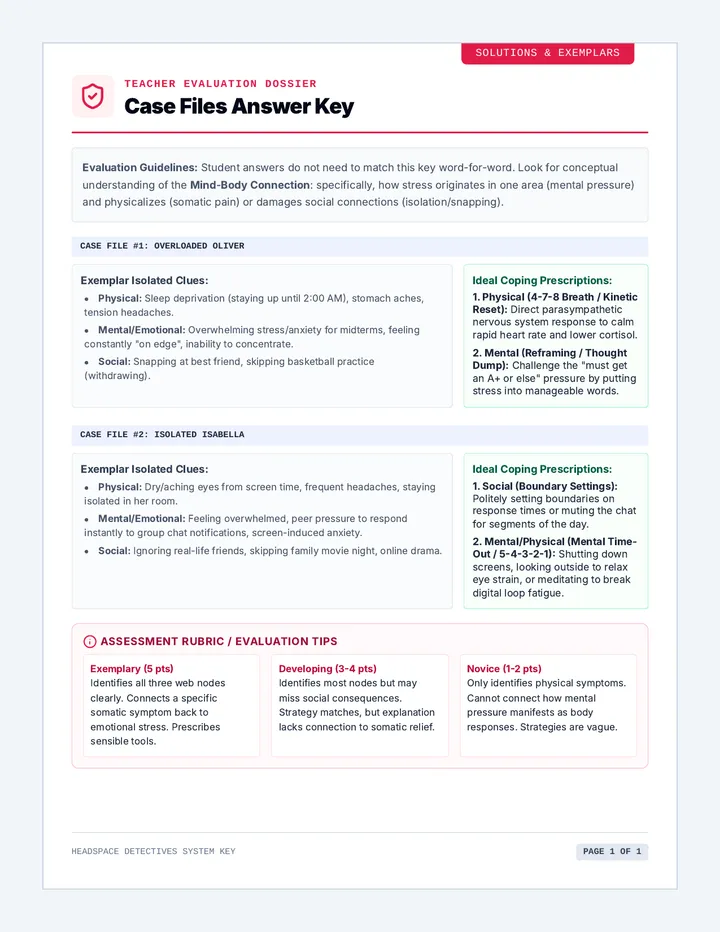
A comprehensive 1-page answer key and discussion guide for the Headspace Detectives Case Files. It provides exemplar student responses and therapeutic rationales for both peer cases.
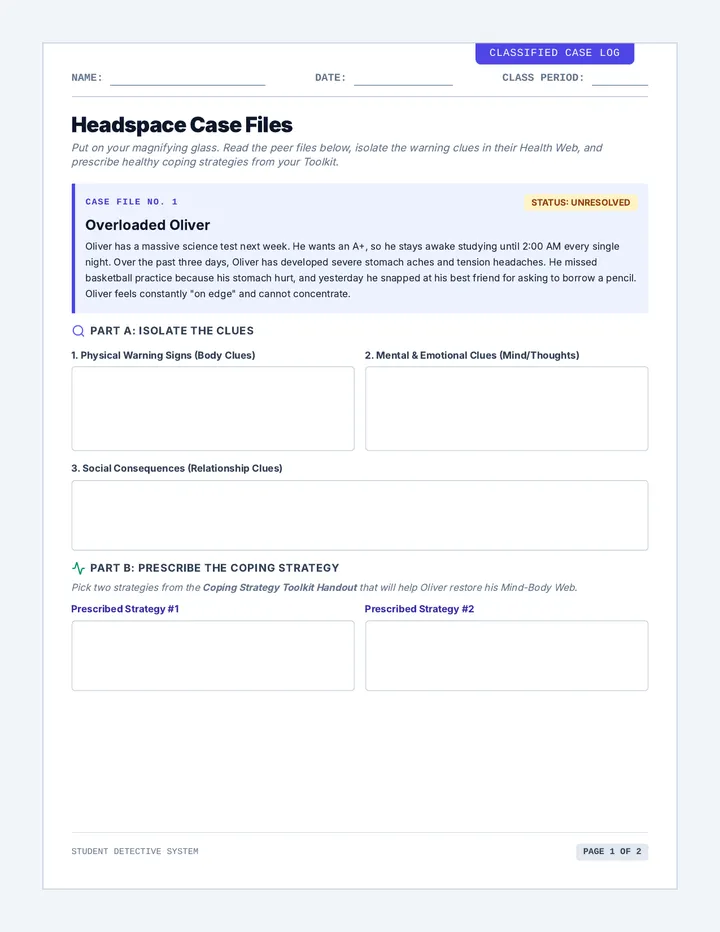
A 2-page collaborative or individual student worksheet containing structured 'Case Files' (peer scenarios) to analyze physical-mental-social links and write customized coping strategy prescriptions. Includes a personal reflection exit ticket.
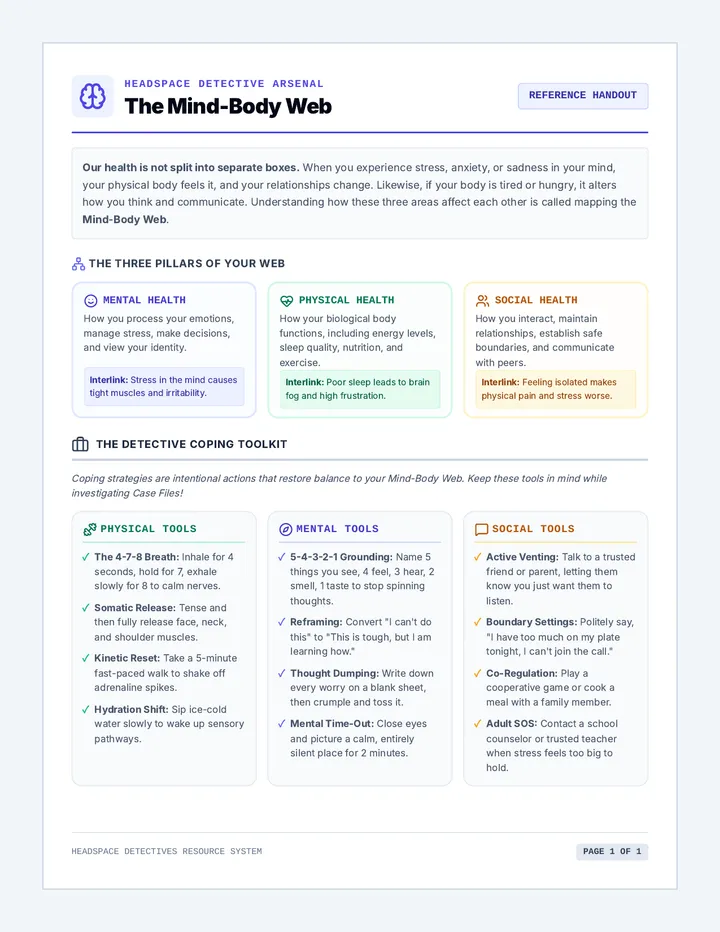
An engaging 1-page student anchor chart and reference sheet mapping the connections between physical, mental, and social health. It includes a comprehensive, color-coded 'Coping Strategy Toolkit' to help students analyze real-world case files.
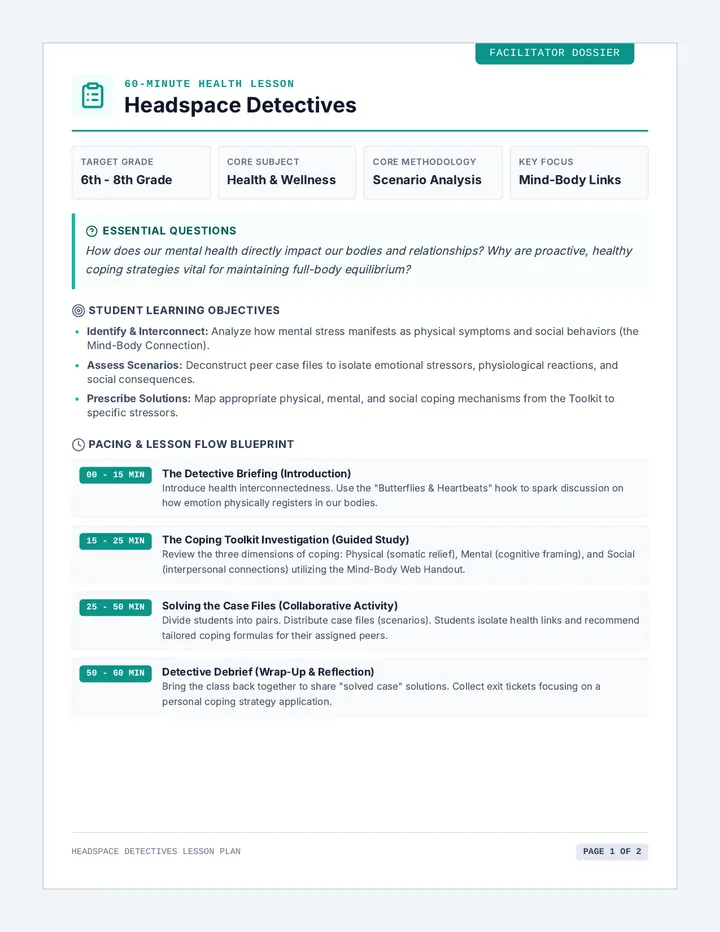
A comprehensive 2-page instructional guide for teachers leading the 60-minute Headspace Detectives lesson. It contains a detailed pacing timeline, step-by-step facilitation instructions, discussion prompts, and differentiation strategies.
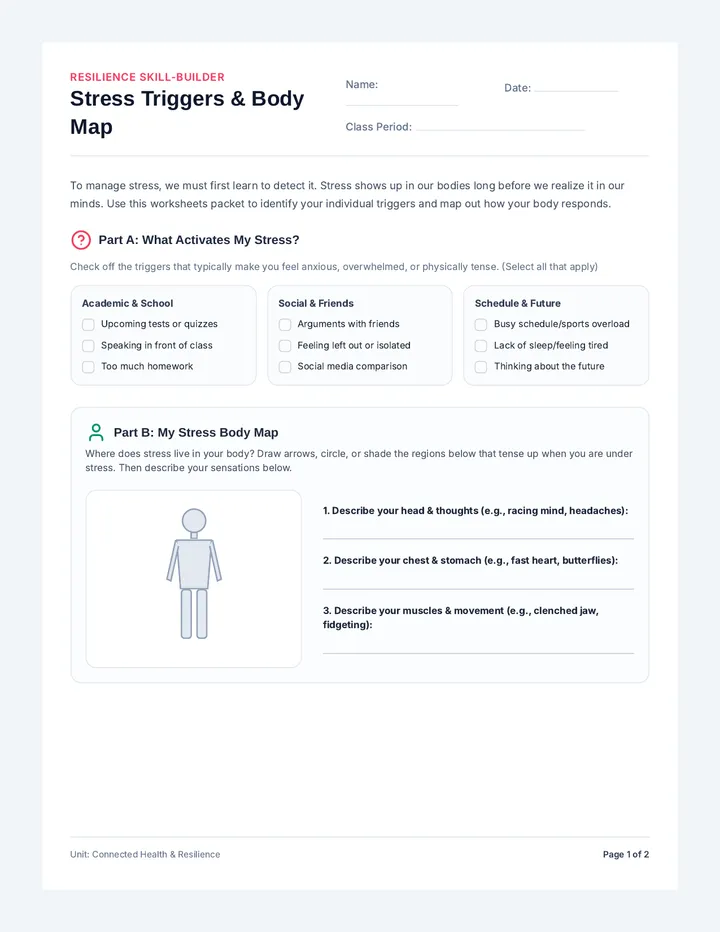
A 2-page student worksheet packet focused on identifying personal stress triggers and practicing emotional regulation. Includes a 'Stress Body Map' to connect physical sensations to emotions, a cognitive reframing exercise, and a guided box-breathing mindfulness activity.
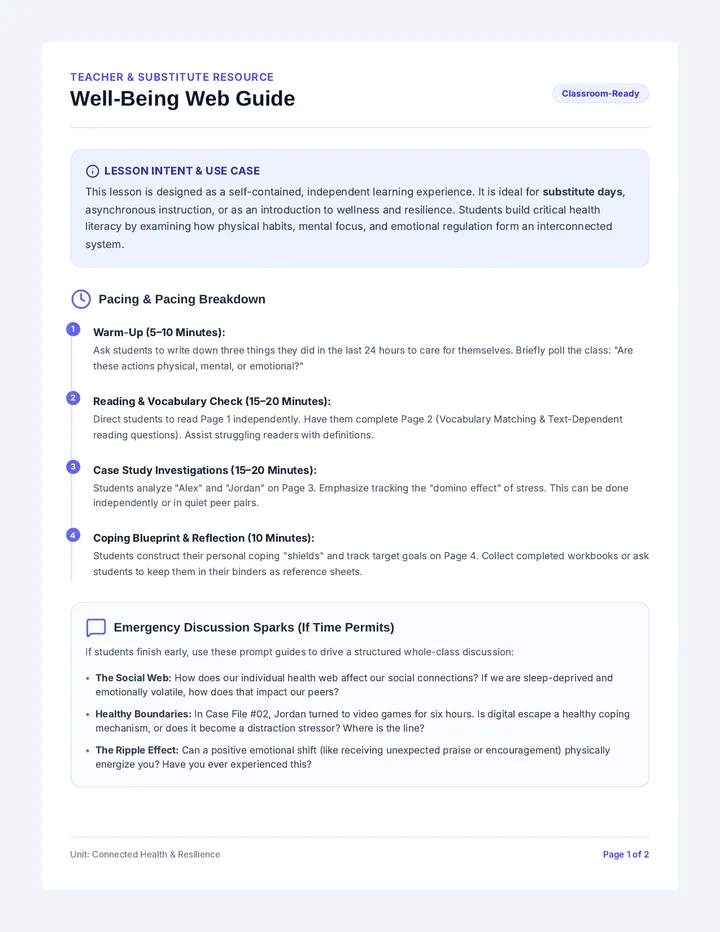
A comprehensive 2-page teacher guide and substitute plan for the Well-Being Web lesson. Includes a detailed lesson timeline, substitute teacher instructions, interactive classroom discussion prompts, a complete answer key for vocabulary and case studies, and a simple grading rubric.
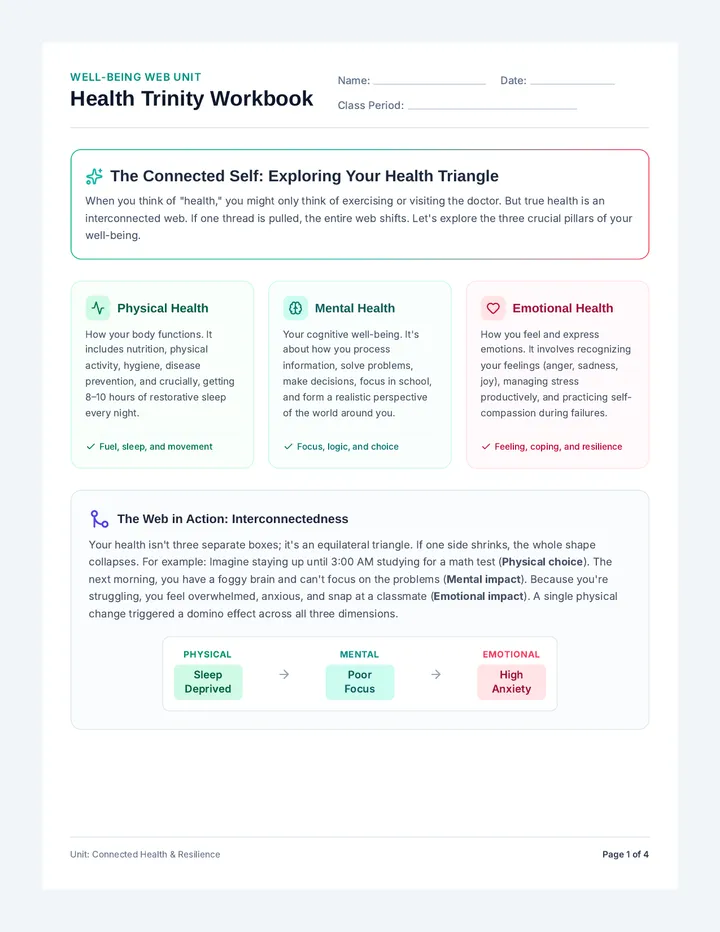
A complete 4-page student workbook on physical, mental, and emotional health. Features engaging reading passages, visual explanations of the health triangle, a vocabulary matching section, real-world case studies, and a stress-management planning worksheet.
A visually premium, interactive-feeling 6-slide presentation designed for high school classes to explore autonomic stress responses, somatic/cognitive coping mechanisms, and Box Breathing active modeling.
A comprehensive curriculum alignment and planning guide that maps the Stress Busters lesson to the Massachusetts Comprehensive Health and Physical Education Framework, featuring a 4-week mental health unit scope and sequence.
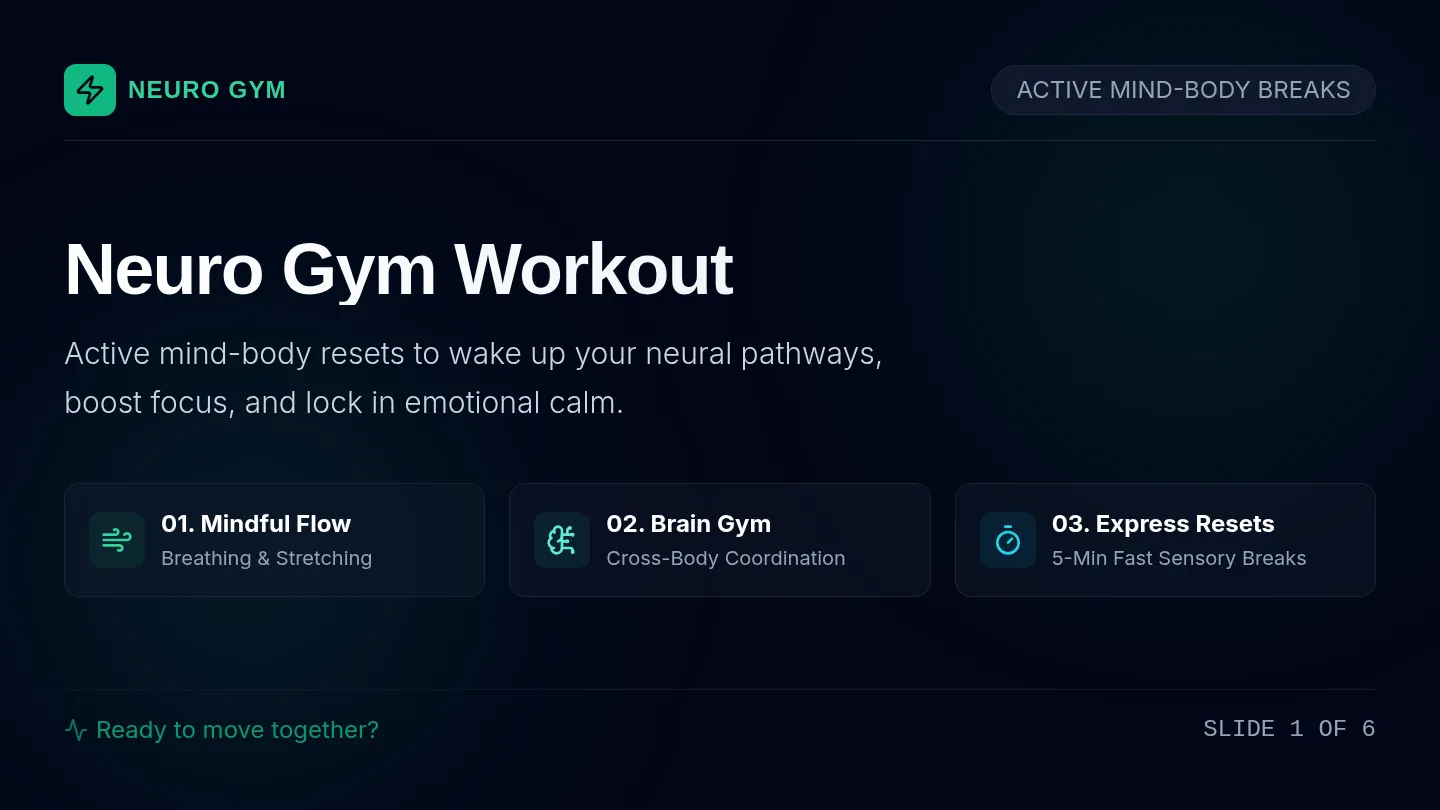
Visual, step-by-step interactive slide deck to guide student group exercises and mindfulness discussions. Includes embedded movement videos for Mindful Flow, Brain Gym, and Express Resets, alongside guided group reflection prompts.
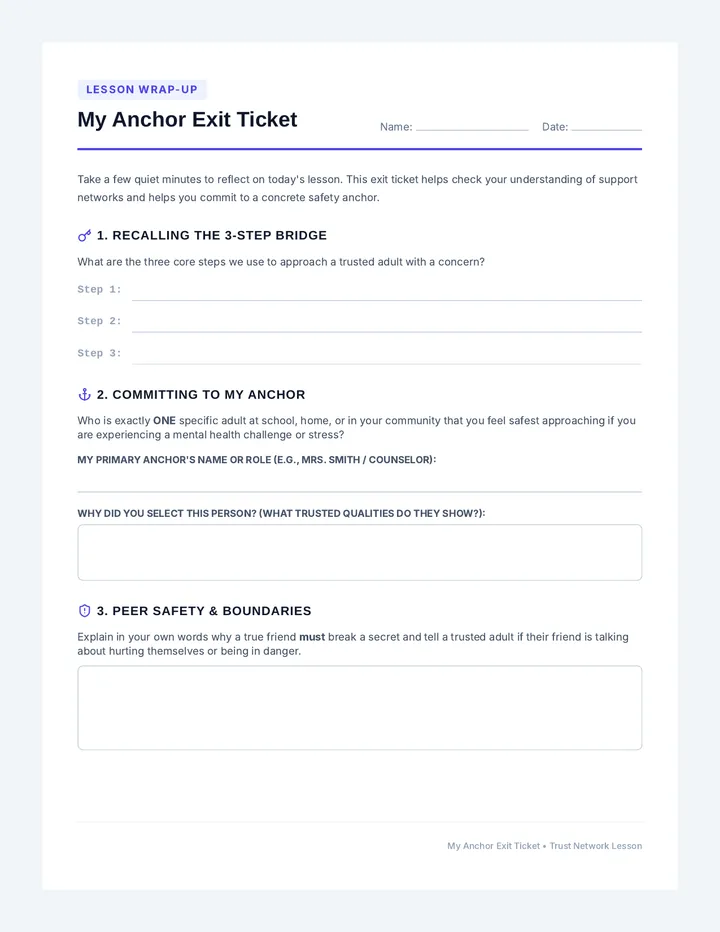
A 1-page exit ticket designed for student self-reflection, checking recall of the 3-Step Bridge, and committing to a primary trusted adult anchor.
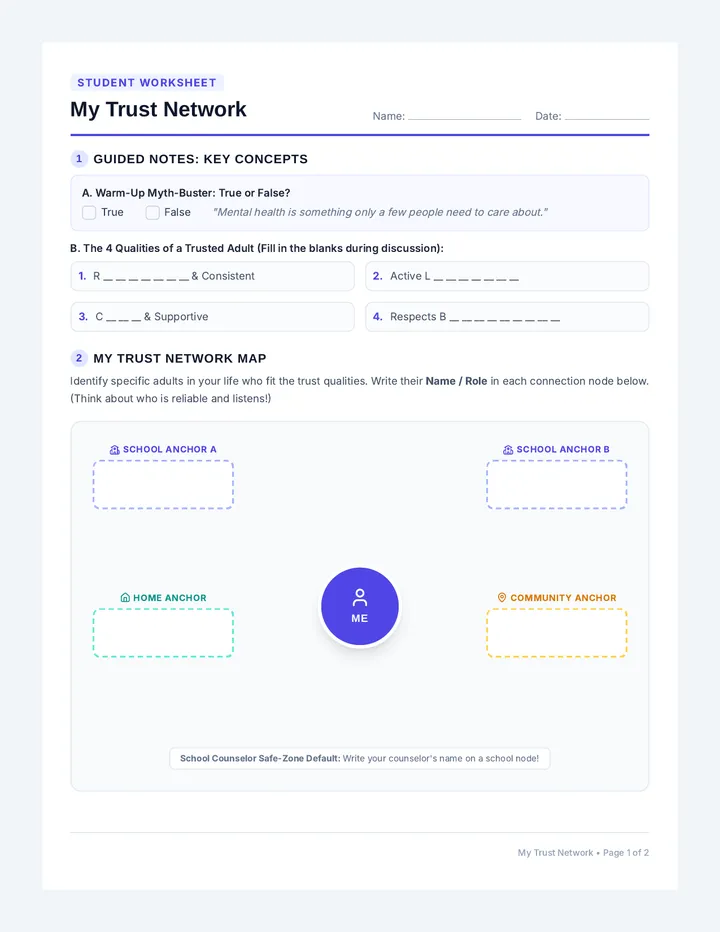
A 2-page student activity worksheet designed for reflection, support network mapping, and writing practice conversations using the 3-Step Bridge framework.
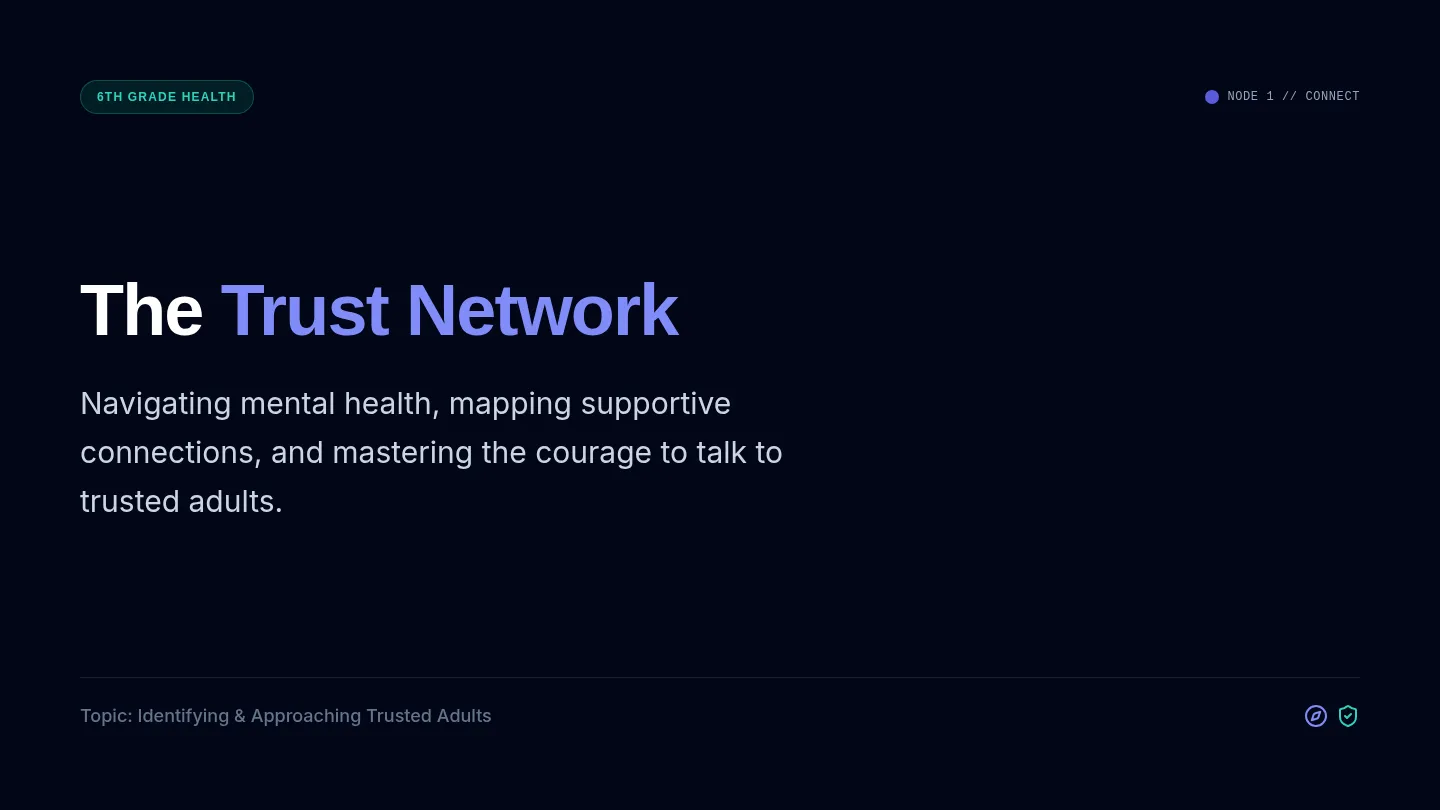
An interactive, 6-slide presentation with large readable text (minimum 24px) that covers mental health myths, the 4 qualities of trusted adults, network mapping, the 3-Step Bridge conversation guide, and peer boundaries.
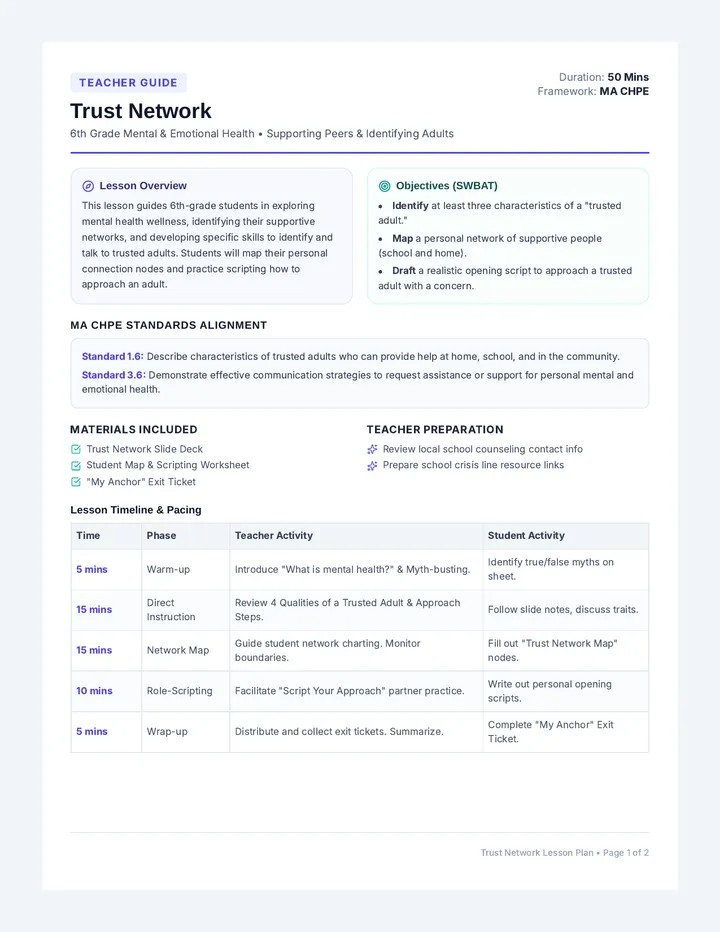
A detailed, 2-page teacher facilitation guide containing lesson objectives, MA health standards, timing, scripts, and differentiation tips for teaching 6th graders how to identify and talk to trusted adults.
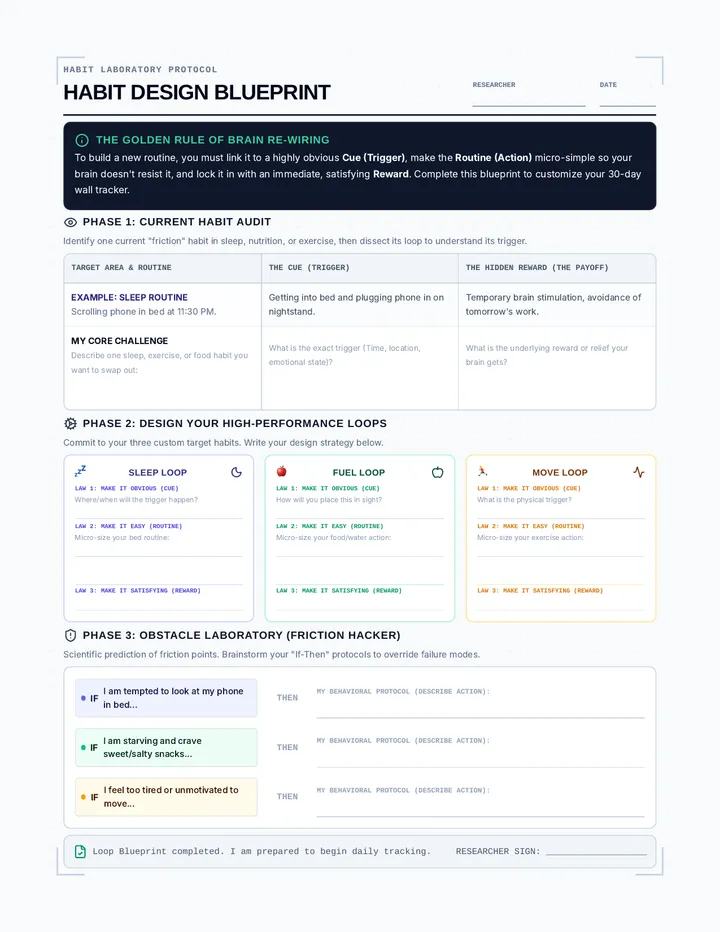
A student worksheet for analyzing current health habits and designing customized cue-routine-reward habit loops. It guides students through identifying behavior triggers, predicting obstacles, and establishing meaningful rewards before starting their tracker.
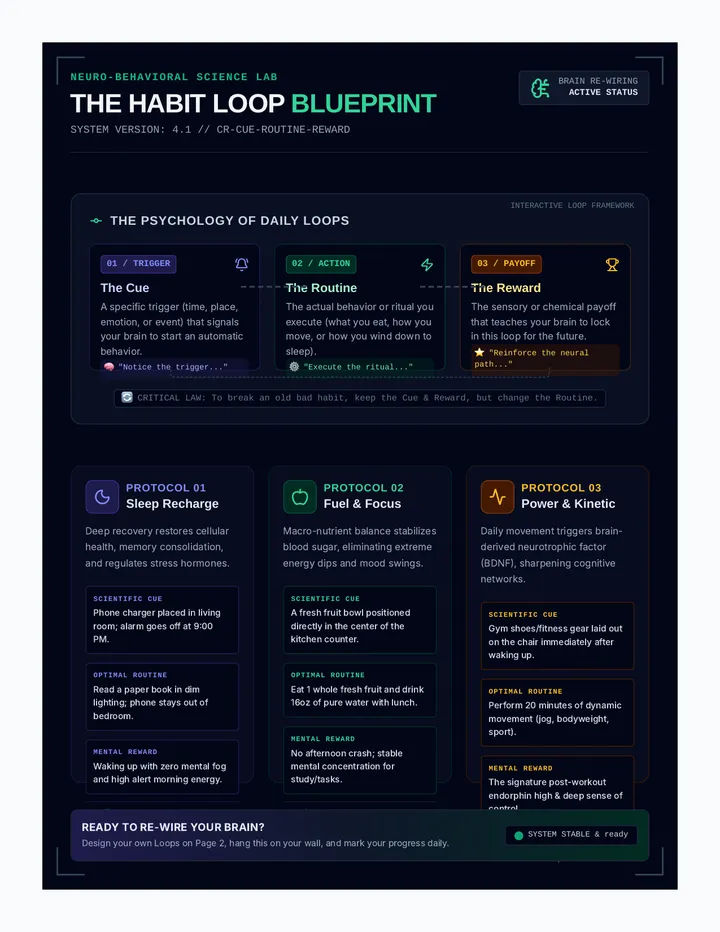
A beautifully designed 2-page wall-printable poster and habit tracking system. Page 1 teaches the psychology of cues, routines, and rewards with colorful scientific diagrams, while Page 2 provides an customizable 30-day tracking grid for sleep, nutrition, and exercise with physical writing lines.
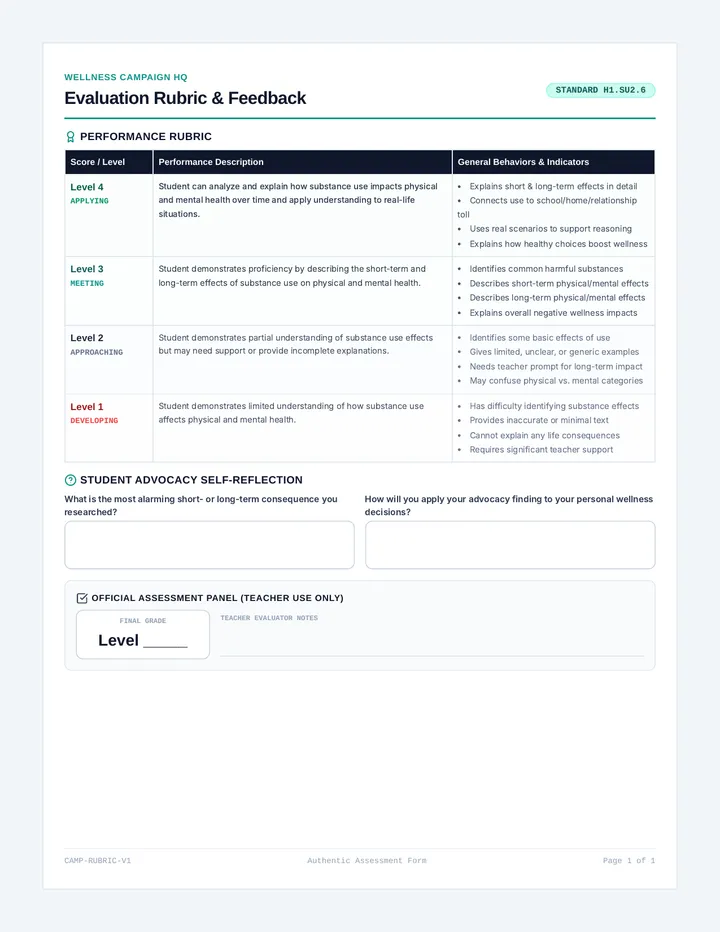
A 1-page print-ready grading rubric and self-reflection sheet based on standard H1.Su2.6, allowing teachers to score students across Levels 1-4 and students to self-reflect.
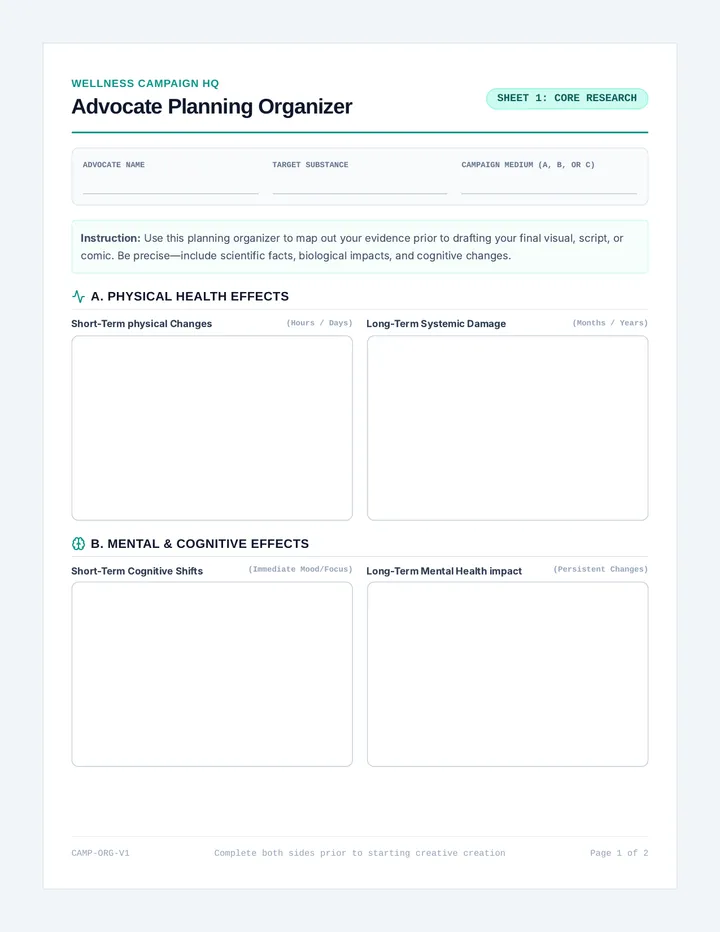
A 2-page print-ready graphic organizer for students to research, brainstorm, and structure the physical, mental, and social effects of their chosen substance, with dedicated spaces for Level 4 criteria.
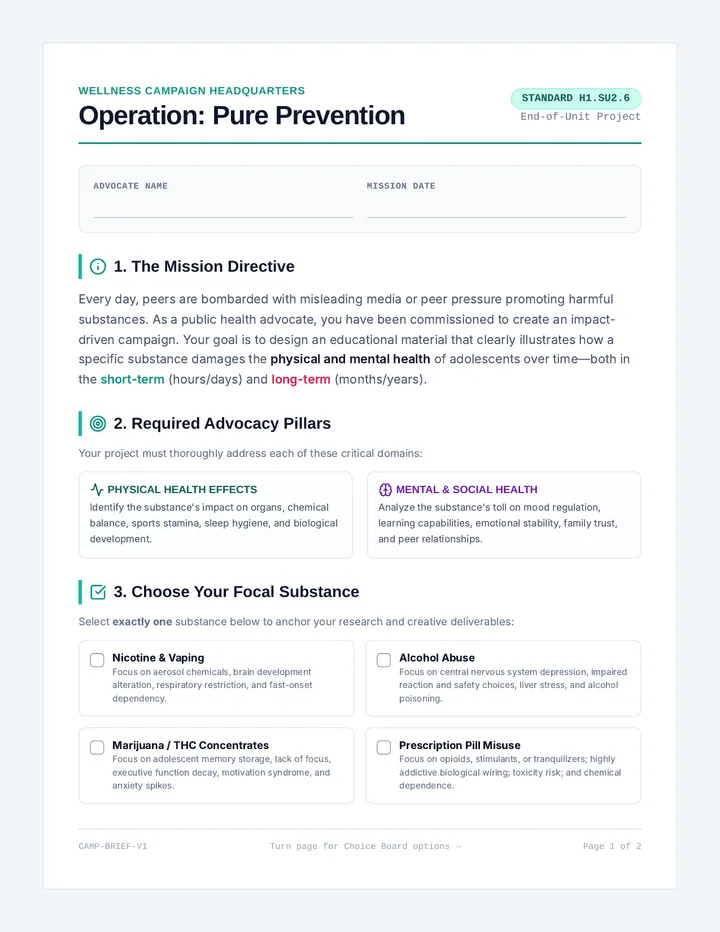
A 2-page print-ready student project guide outlining the public health advocate scenario, chosen substance categories, and the detailed 3-option creative choice board.
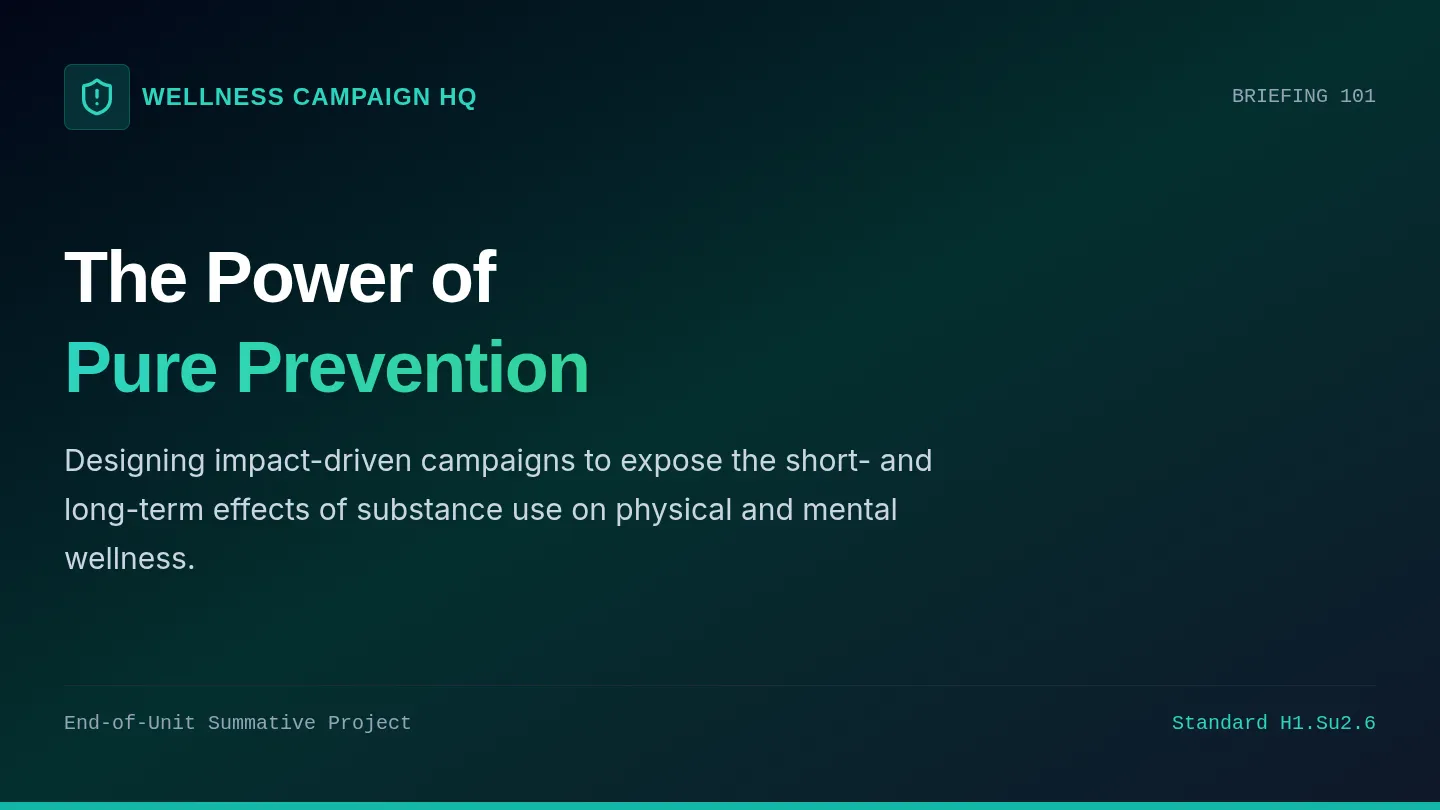
A 6-slide presentation introducing the end-of-unit substance use advocacy project, breaking down short- and long-term physical and mental effects, detailing the creative choice board, and highlighting rubric expectations.
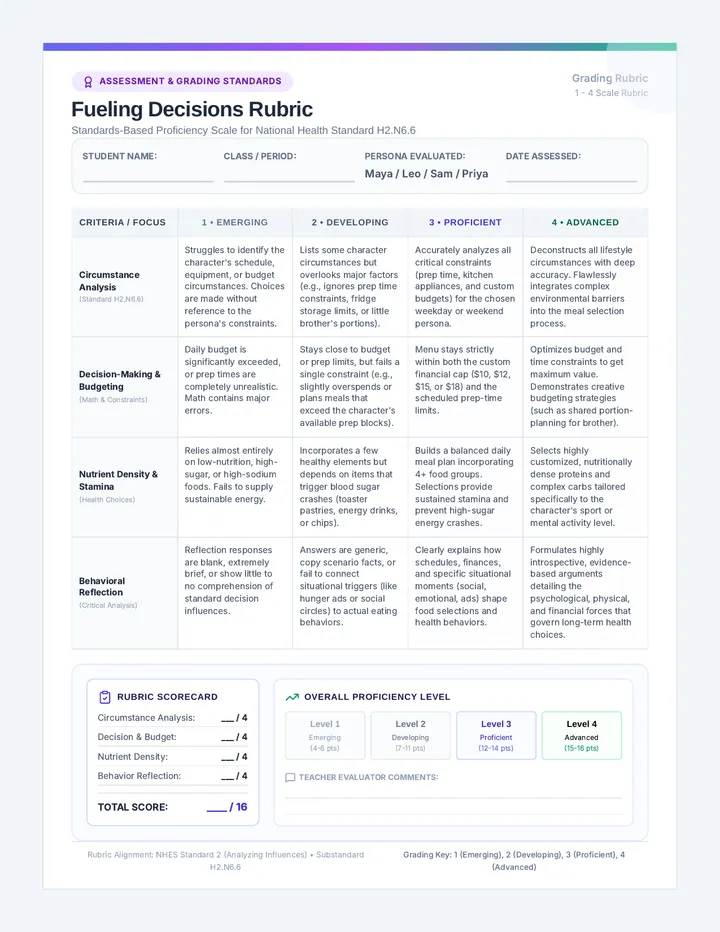
A 1-page standards-based proficiency rubric on a 1-4 scale for the Fueling Decisions unit. It evaluates student performance on circumstance analysis, decision-making, nutrition, and reflection.
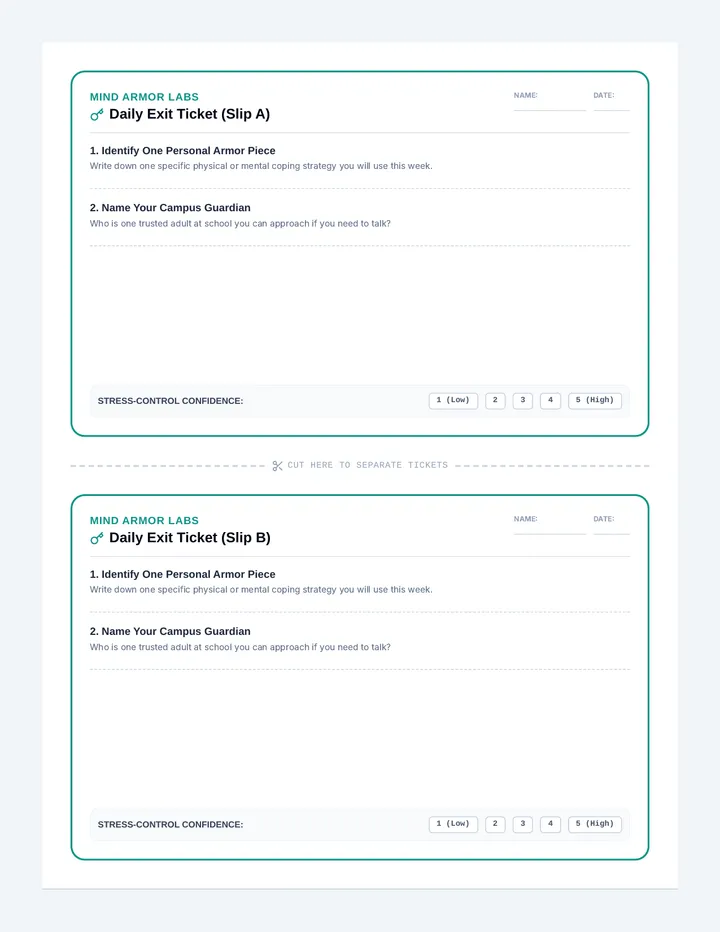
A single-page, double-slip student exit ticket. It contains two identical cut-out reflection cards prompting students to name a personal physical coping skill, list a school-based trusted adult, and self-rate their confidence.
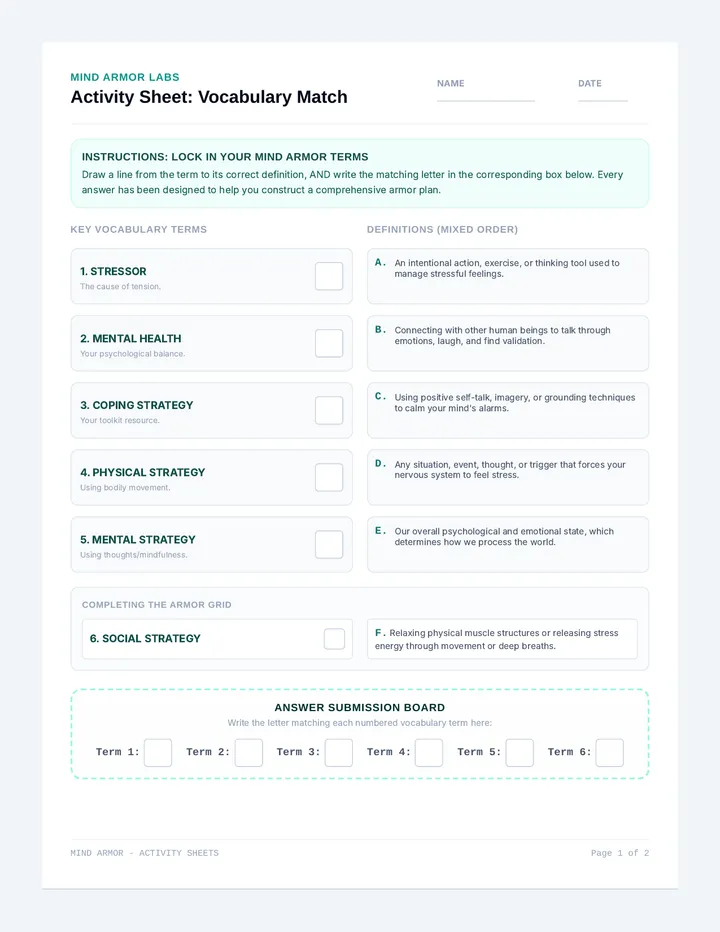
A 2-page student activity sheet bundle. Page 1 features a core vocabulary matching activity on stress, mental health, and coping strategies. Page 2 presents real-world stress scenarios (Maya's test anxiety and Jordan's friendship conflict) for analysis and coping tool application.
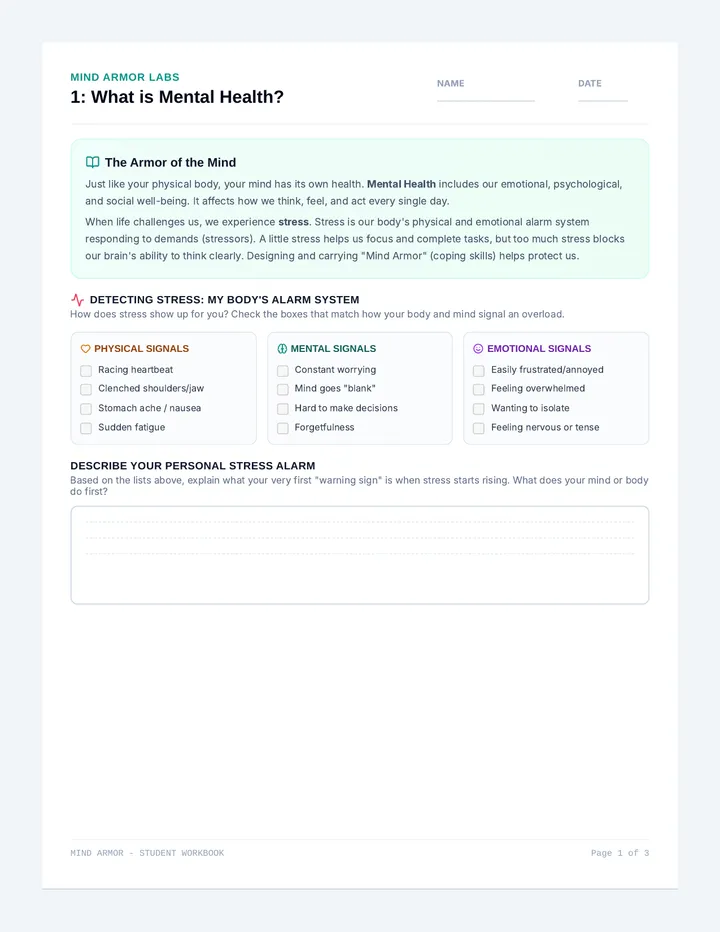
A 3-page interactive student workbook focused on mental health education. Includes reading passages about stress, a personal stress-signal checklist, deep exploration of physical/mental/social coping skills, and a visual mapping activity for identifying trusted adults.
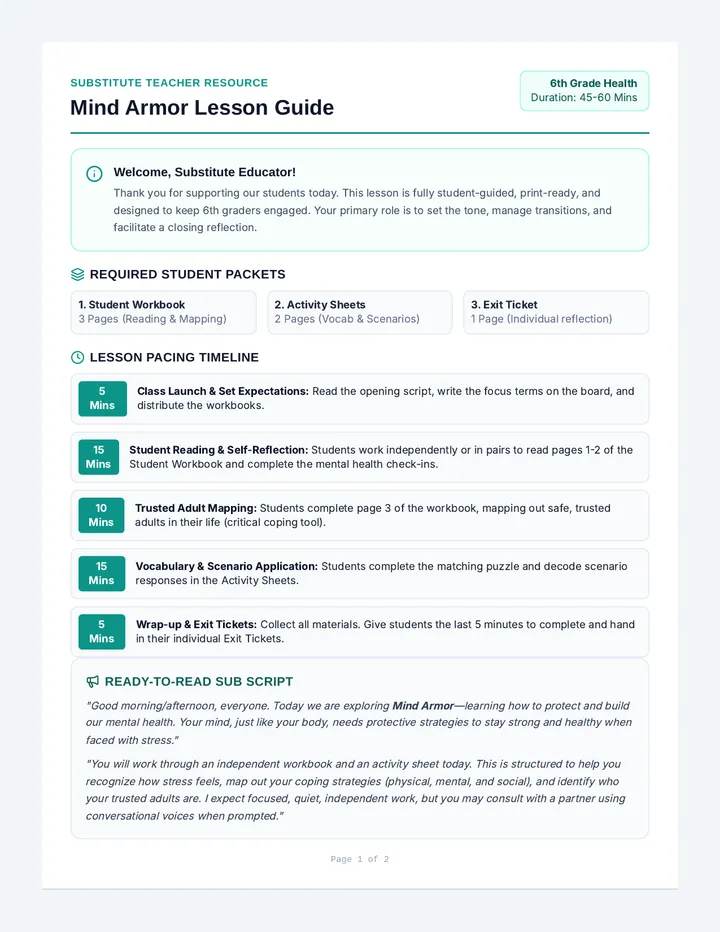
A 2-page substitute teacher facilitation guide for the Mind Armor lesson. It contains complete lesson instructions, ready-to-read scripts, a pacing timeline, classroom management tips, and answer keys for the student activities.
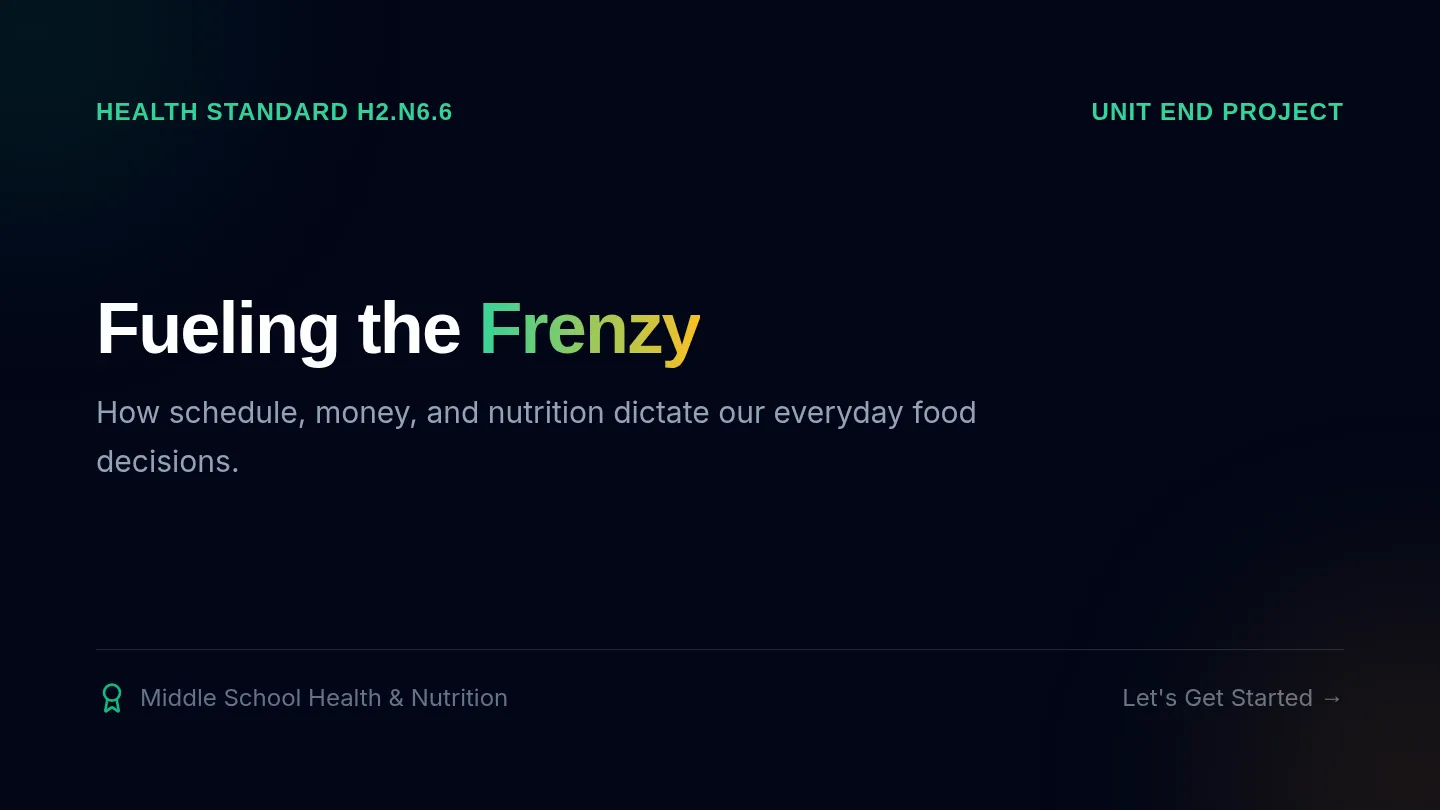
A 5-slide presentation to launch the 'Fueling Decisions' project. It introduces standard H2.N6.6, explores the factors that influence food choice decisions (time, budget, nutrition), outlines instructions for student completion, and references the 1-4 grading rubric.
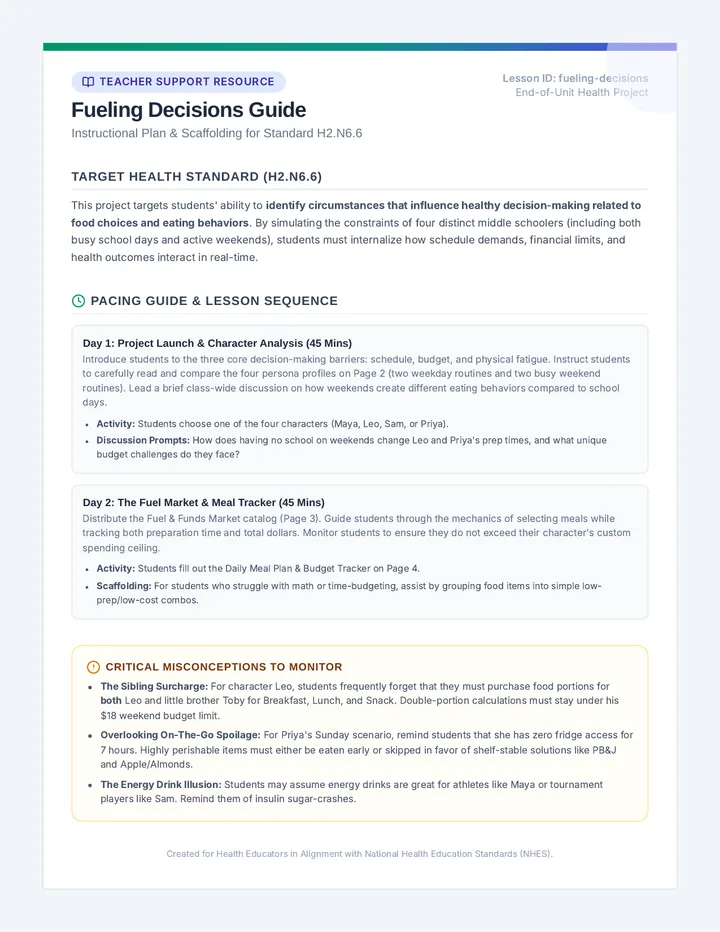
A 2-page teacher-facing instructional resource and answer key to guide educators in delivering the 'Fueling Decisions' project. It provides lesson pacing, scaffolding suggestions, character analysis, and healthy eating discussion starters.
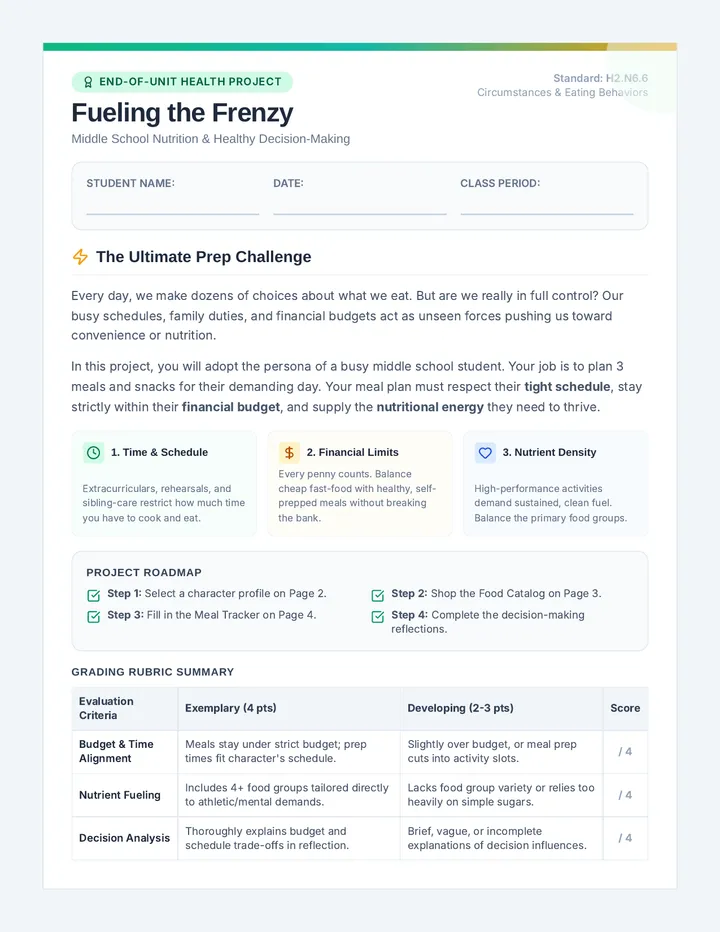
A 4-page end-of-unit student project packet for standard H2.N6.6. It provides a real-world scenario-based activity where students select a busy middle schooler, manage time and budgets, pick healthy meals, and reflect on decision-making influences.
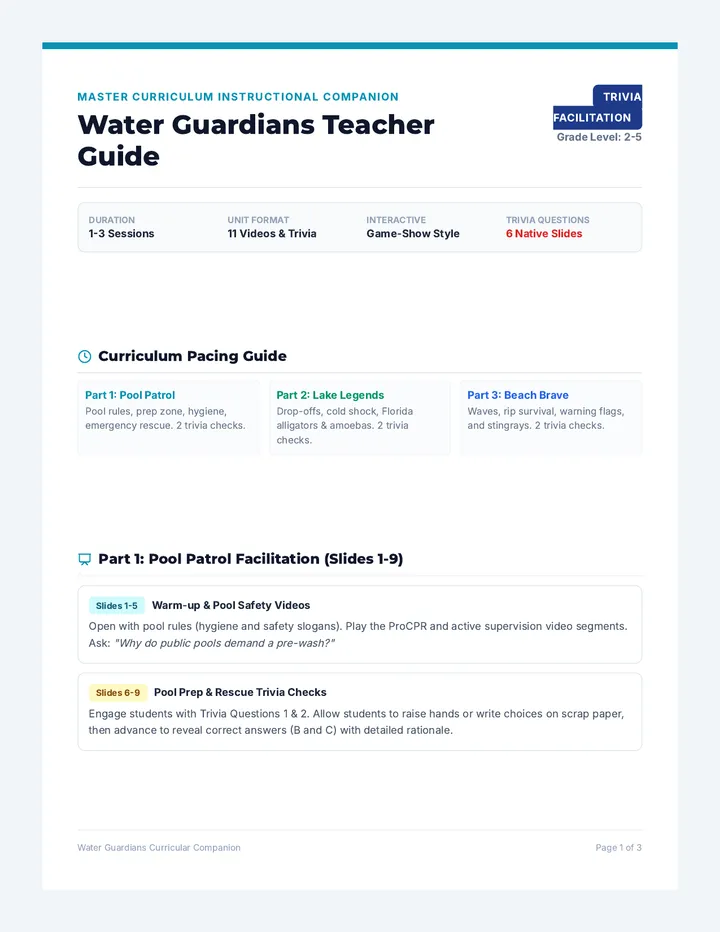
A printable 3-page master teacher's companion covering pools, lakes, and ocean beach safety with slide scripting, pacing, and complete answer keys.
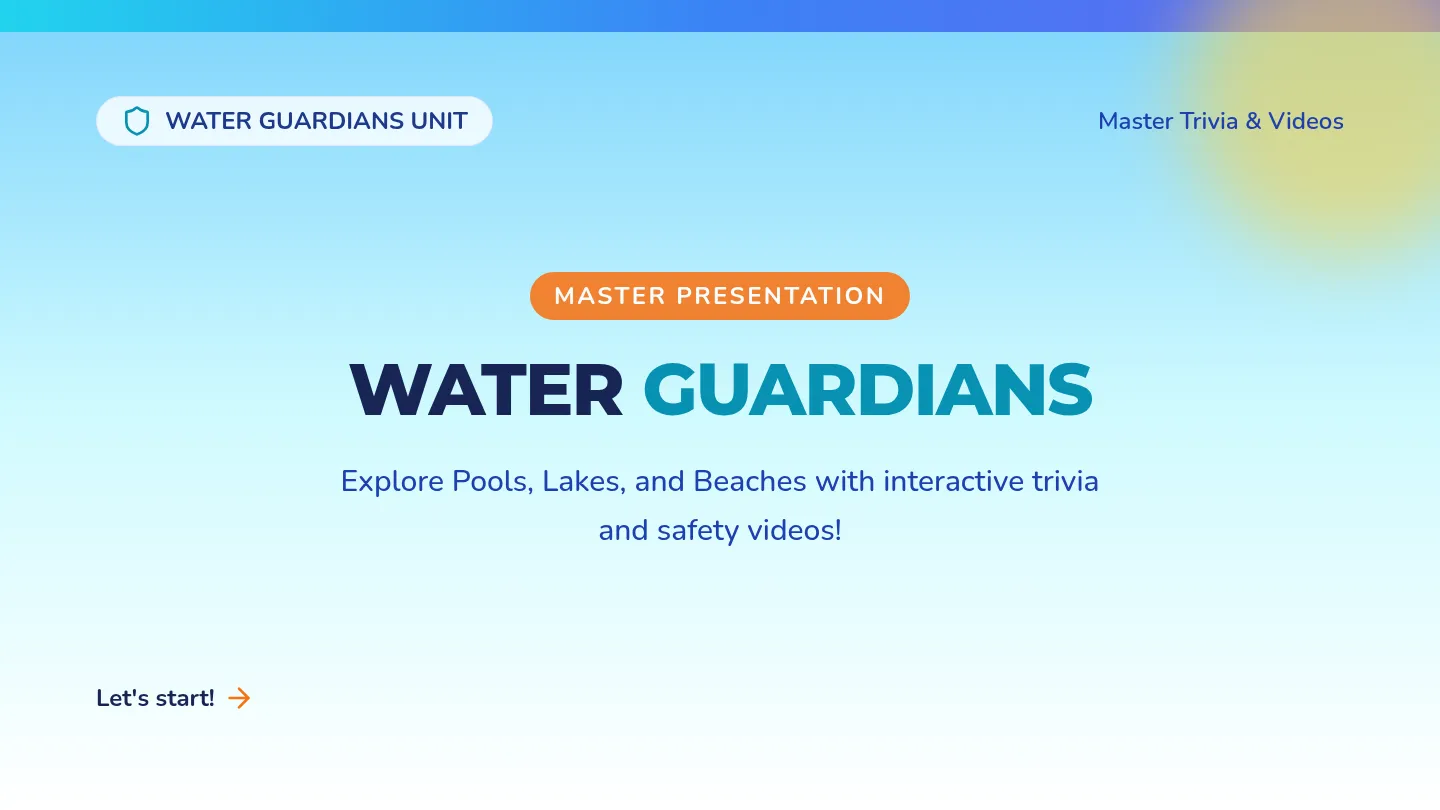
A comprehensive master slide deck featuring pool, lake, and beach safety with 11 embedded videos and integrated gamified Trivia Questions & Answer reveal slides.
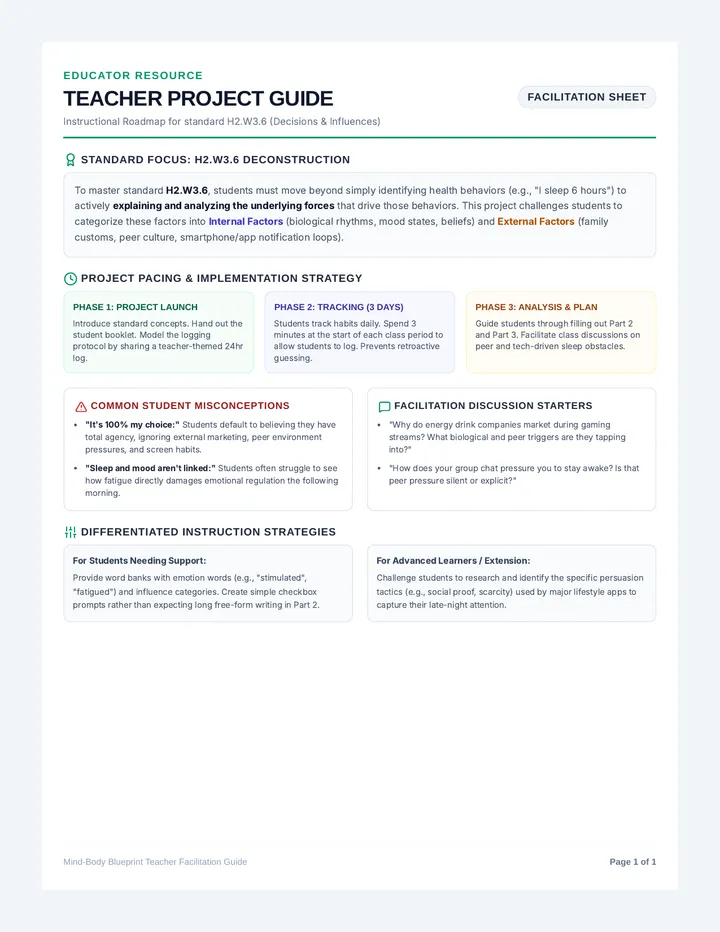
A teacher facilitation and implementation guide for the Mind Body Blueprint portfolio project, containing instructional timelines, standard deconstruction of H2.W3.6, common student misconceptions, guiding questions, and differentiation strategies.
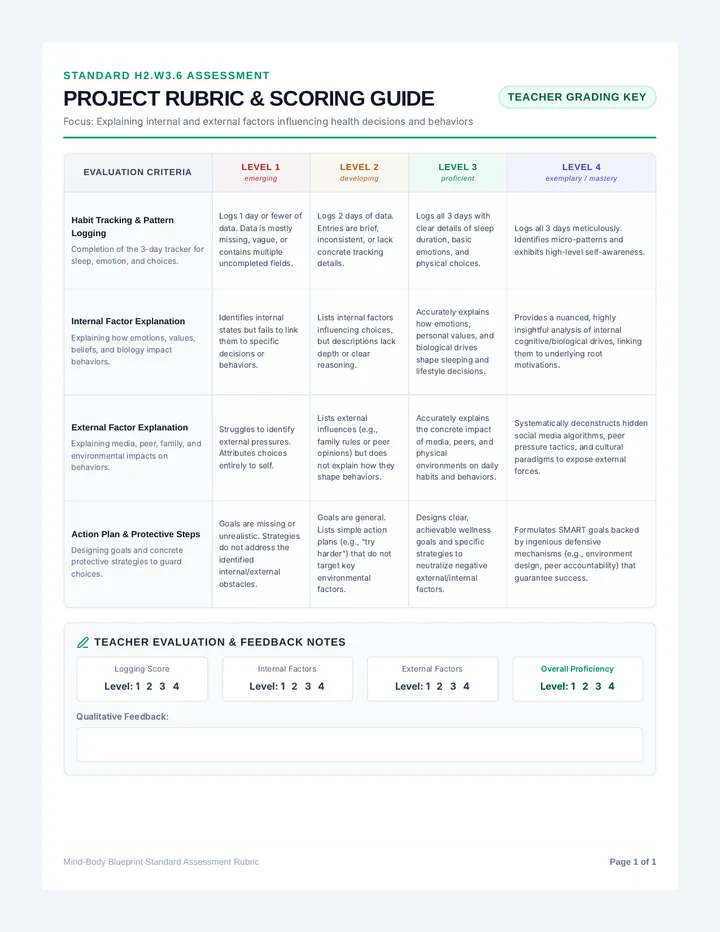
An analytical rubric for the Mind Body Blueprint project based on Standard H2.W3.6, grading students across four proficiency levels (1-4) in tracker completion, internal factor explanation, external factor analysis, and growth goal strategic design.
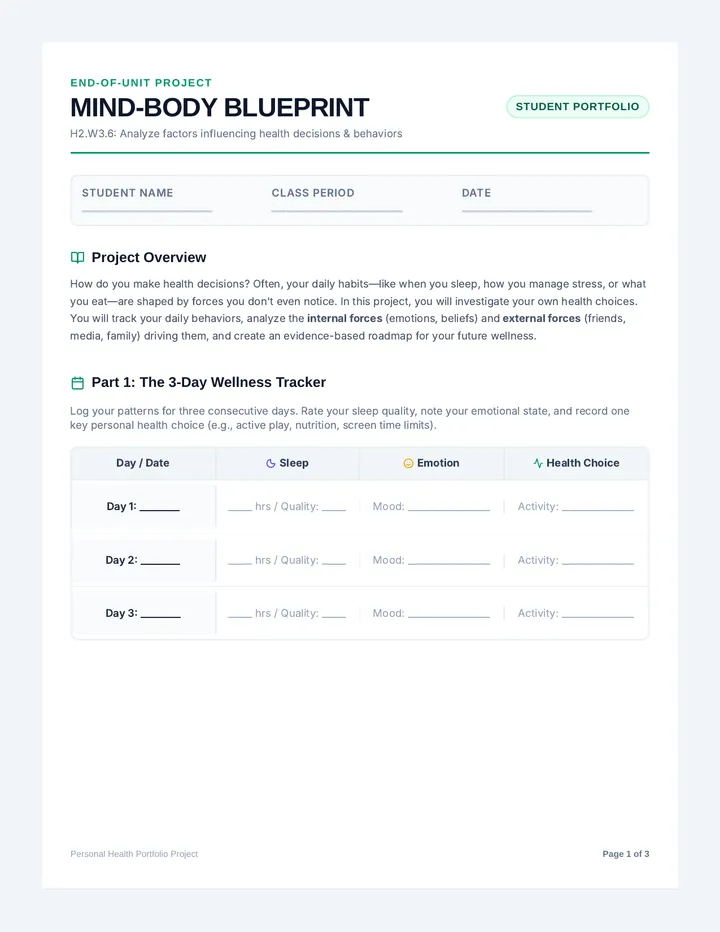
A student-facing 3-page health portfolio where students log their wellness habits (sleep, emotional regulation, and personal choices) over a 3-day period, analyze the internal and external factors influencing their behaviors (Standard H2.W3.6), and design a personalized action plan.
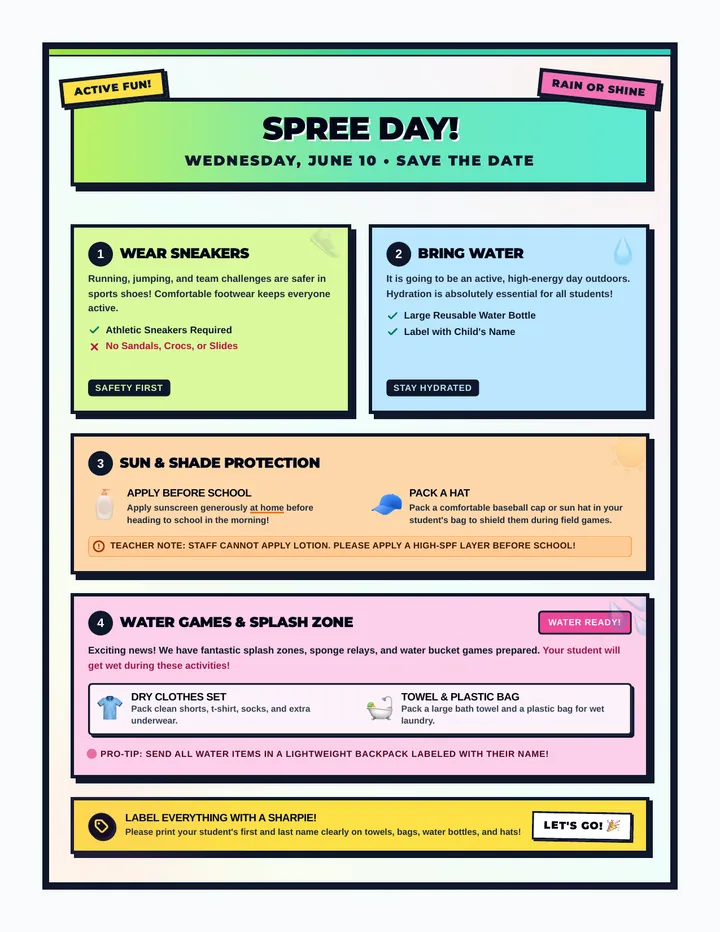
A high-energy, vibrant printable flyer for Spree Day on June 10. Features bold Neo-Brutalist styling with colorful reminder cards for wearing sneakers, bringing water, applying sunscreen, packing a hat, and preparing for water games with dry clothes and a towel.
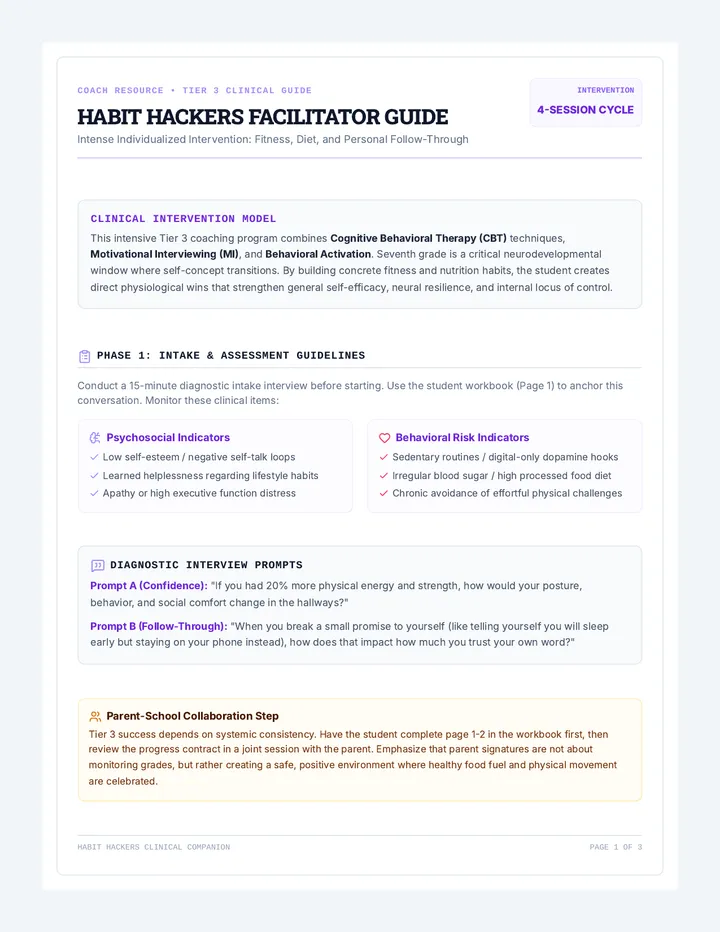
A clinical yet highly practical 3-page clinical facilitator guide for coaches implementing this Tier 3 intervention. It contains the clinical framework and intake protocols, step-by-step group or individual coaching scripts for four sessions, and an objective progress monitoring rubric with a structured case notes template.
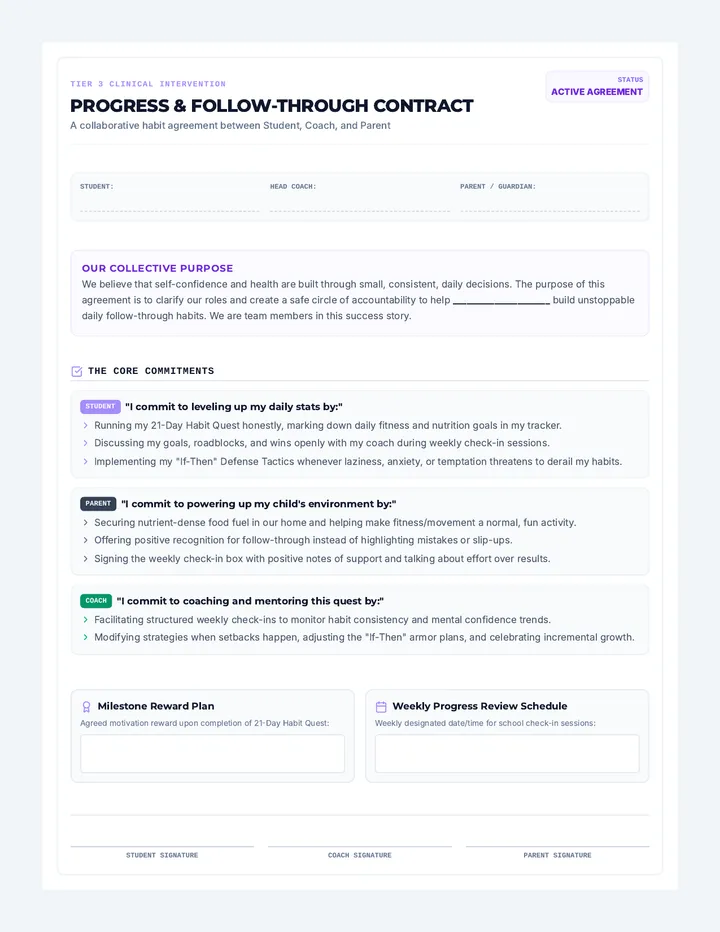
A professional, highly supportive progress contract establishing collaborative commitments for the student, coach, and parent. It outlines targeted weekly fitness and nutrition actions, structured support milestones, and signatures in a clean, extremely soft violet and emerald theme.
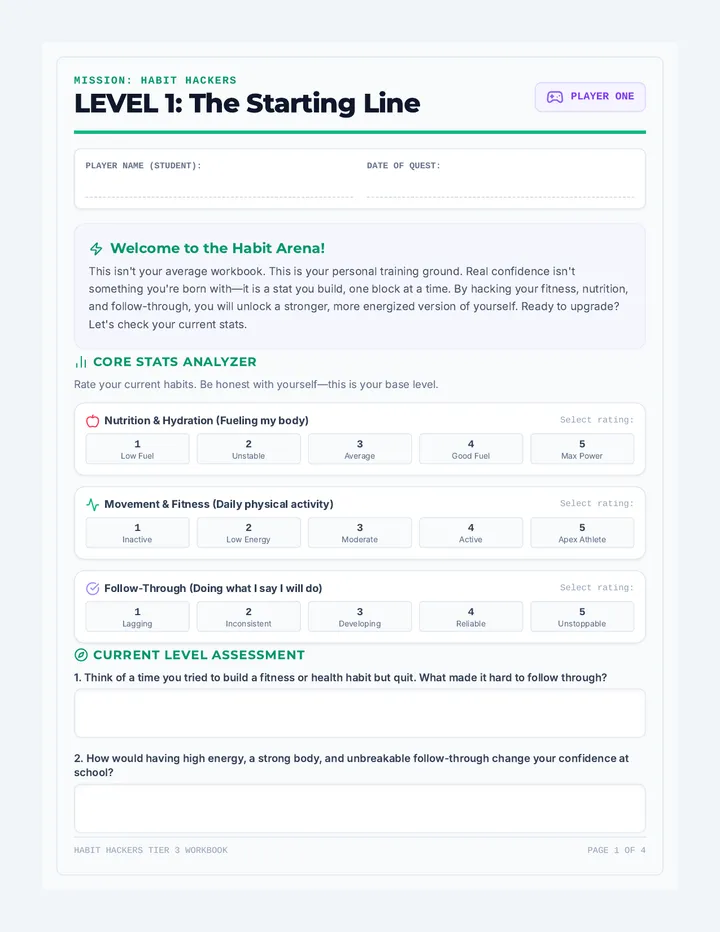
A 4-page highly engaging student-facing workbook designed with a "Retro Level Up" game theme in a lightened violet and emerald palette with a clean, print-friendly white and slate-50 background. It features a personal confidence/habits self-assessment, a detailed SMART Goal Blueprint for fitness and diet, a visual 21-day tracking quest, and a personal roadblock planning page to build follow-through skills.