An answer key for teachers to grade the Gut Feeling Check Quiz.
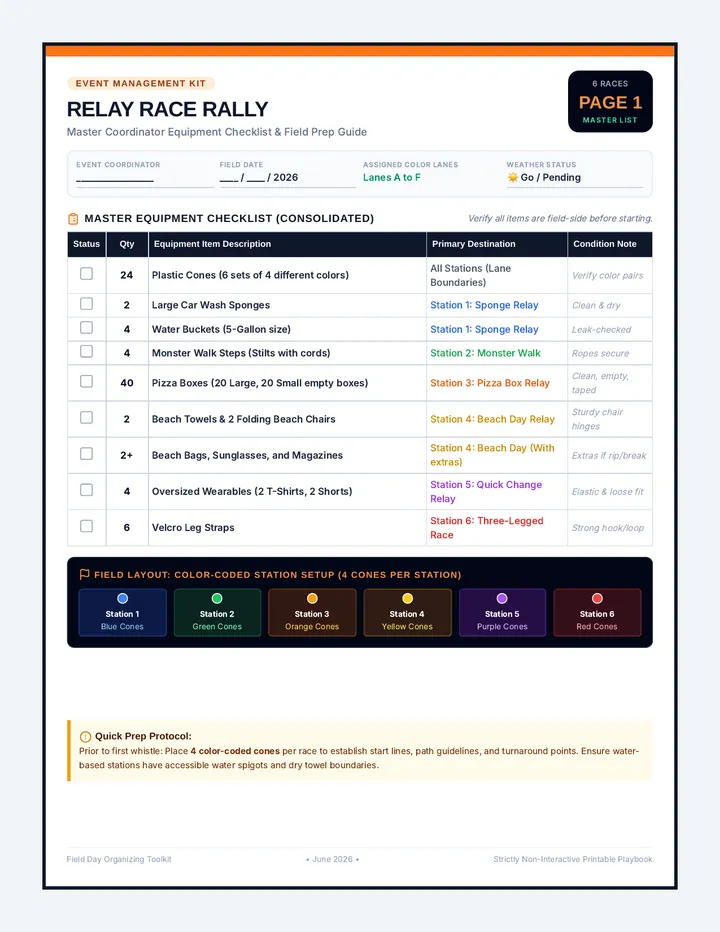
A comprehensive, professional 3-page field day volunteer playbook. It contains a Master Clipboard Equipment Checklist organized by item category and a Station Setup Card for each of the six relay races (Sponge Relay, Monster Walk, Pizza Box, Beach Day, Quick Change, and 3-Legged Race) with cone color assignments, layout diagrams, and rules for volunteers.
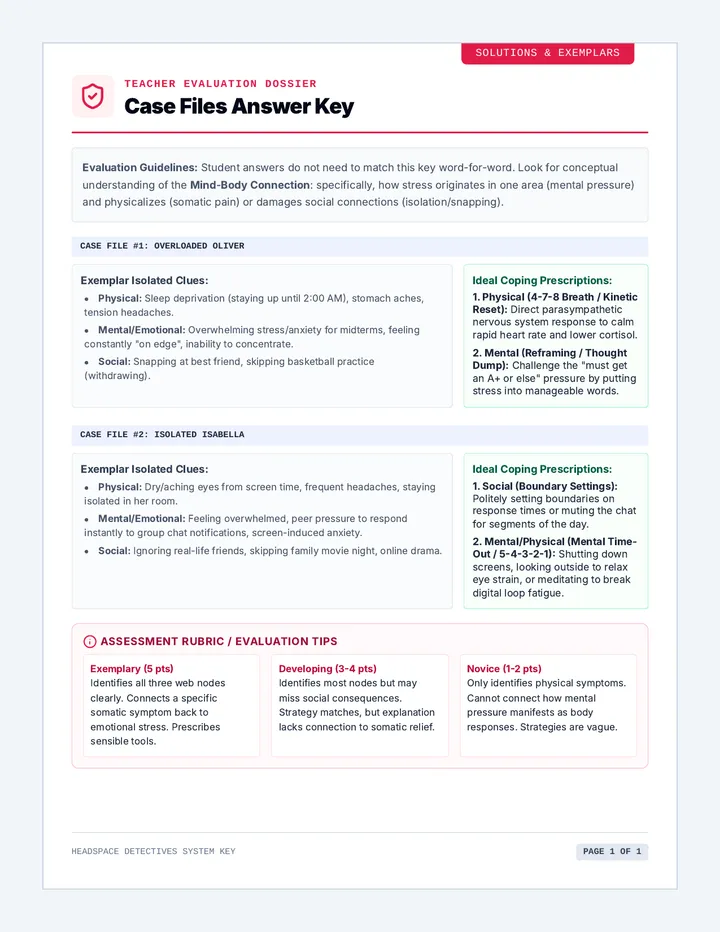
A comprehensive 1-page answer key and discussion guide for the Headspace Detectives Case Files. It provides exemplar student responses and therapeutic rationales for both peer cases.
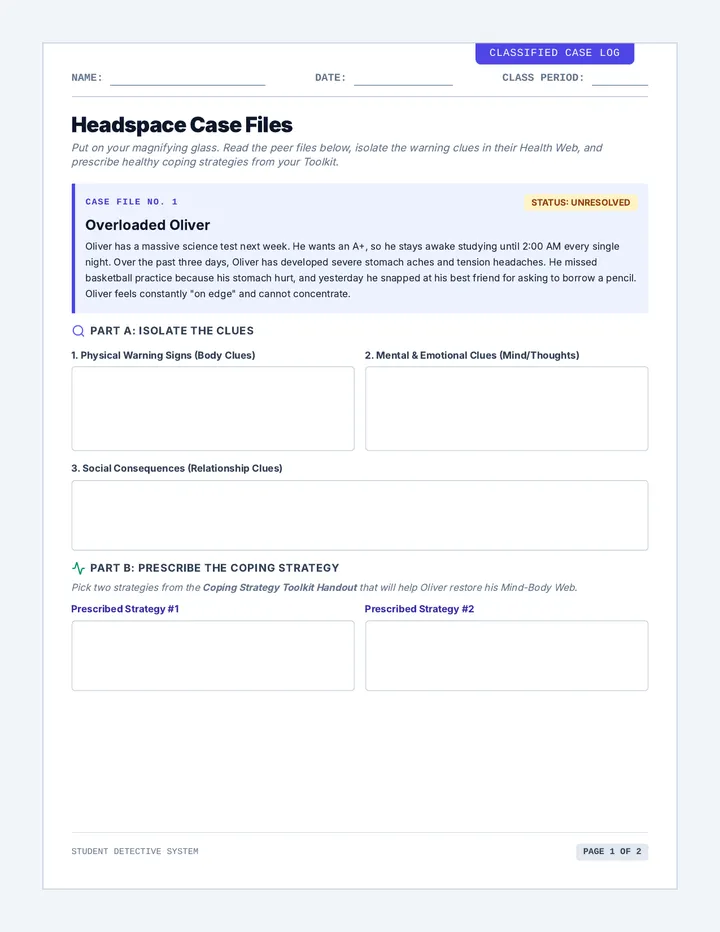
A 2-page collaborative or individual student worksheet containing structured 'Case Files' (peer scenarios) to analyze physical-mental-social links and write customized coping strategy prescriptions. Includes a personal reflection exit ticket.
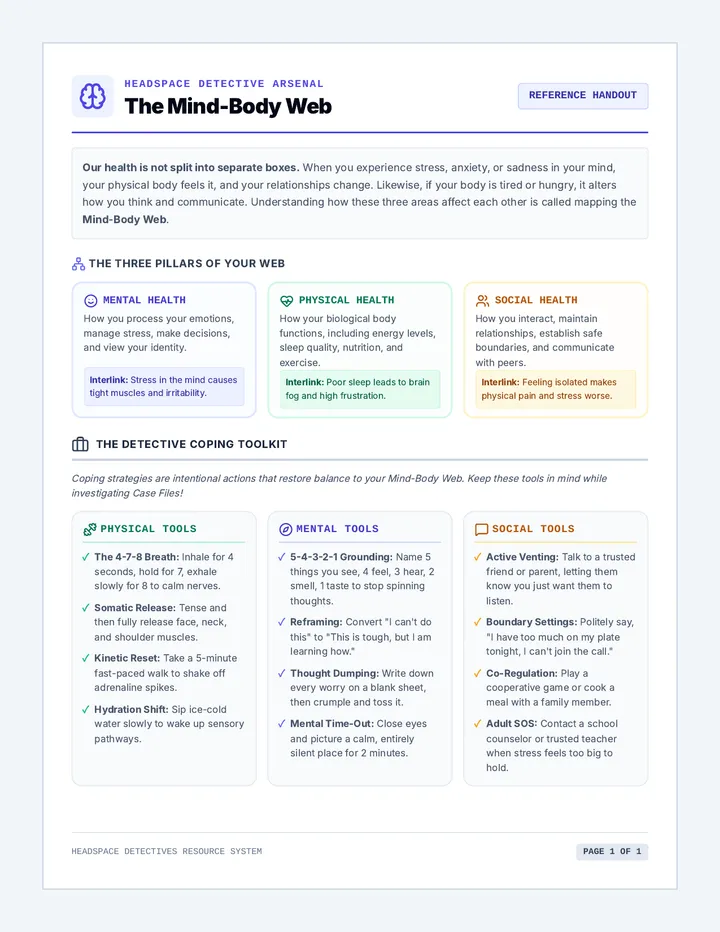
An engaging 1-page student anchor chart and reference sheet mapping the connections between physical, mental, and social health. It includes a comprehensive, color-coded 'Coping Strategy Toolkit' to help students analyze real-world case files.
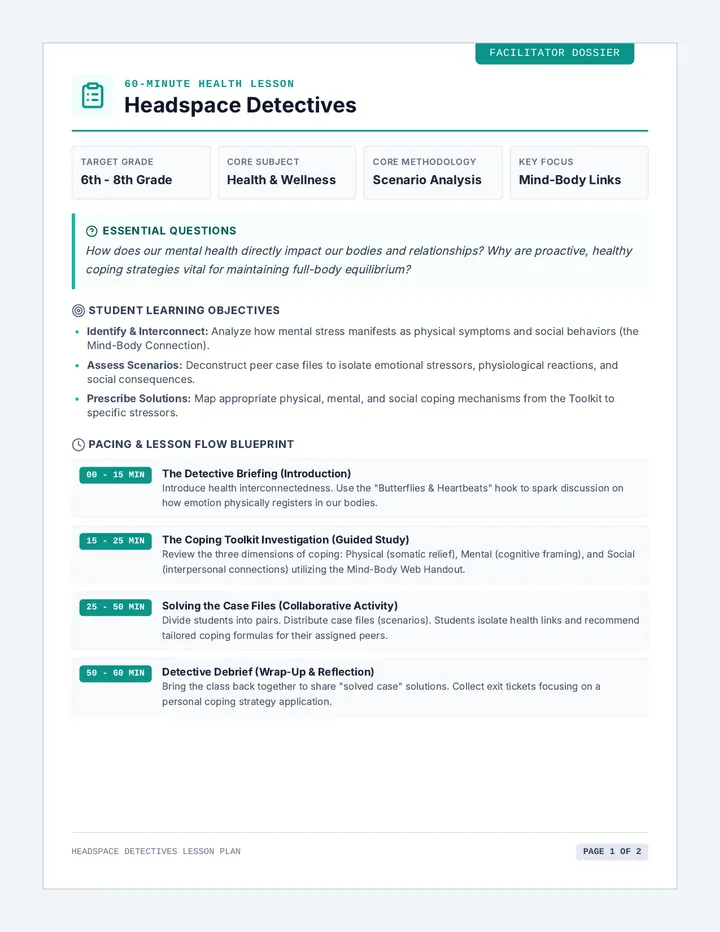
A comprehensive 2-page instructional guide for teachers leading the 60-minute Headspace Detectives lesson. It contains a detailed pacing timeline, step-by-step facilitation instructions, discussion prompts, and differentiation strategies.
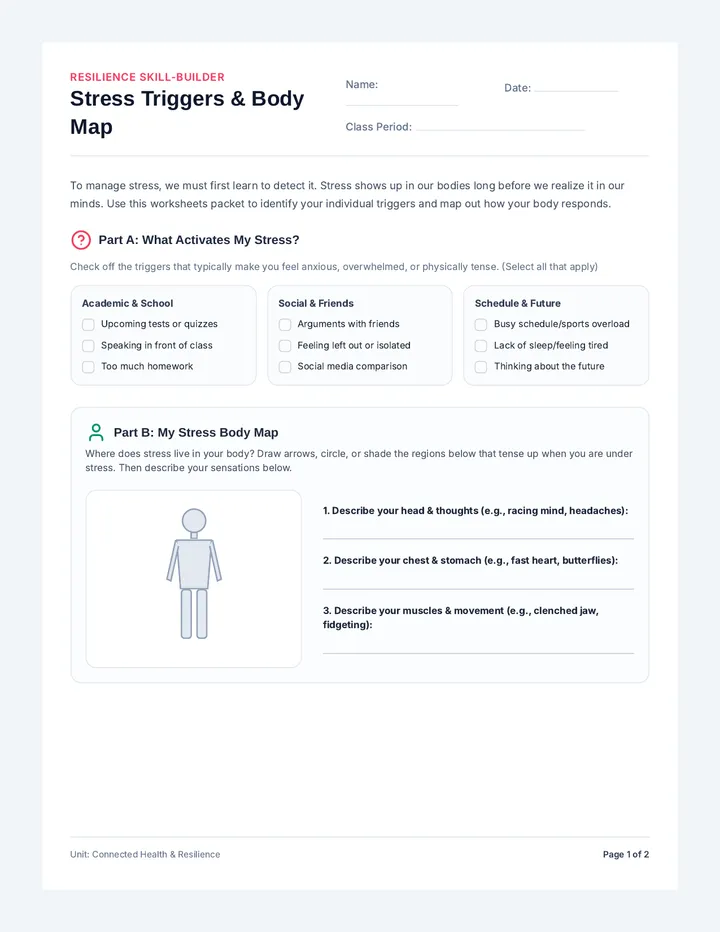
A 2-page student worksheet packet focused on identifying personal stress triggers and practicing emotional regulation. Includes a 'Stress Body Map' to connect physical sensations to emotions, a cognitive reframing exercise, and a guided box-breathing mindfulness activity.
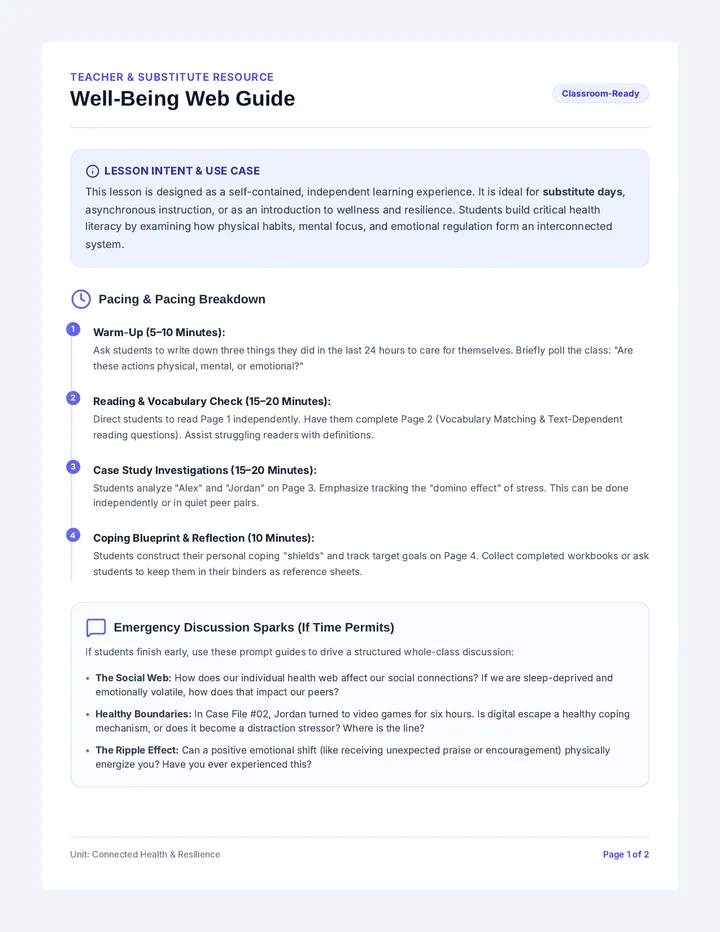
A comprehensive 2-page teacher guide and substitute plan for the Well-Being Web lesson. Includes a detailed lesson timeline, substitute teacher instructions, interactive classroom discussion prompts, a complete answer key for vocabulary and case studies, and a simple grading rubric.
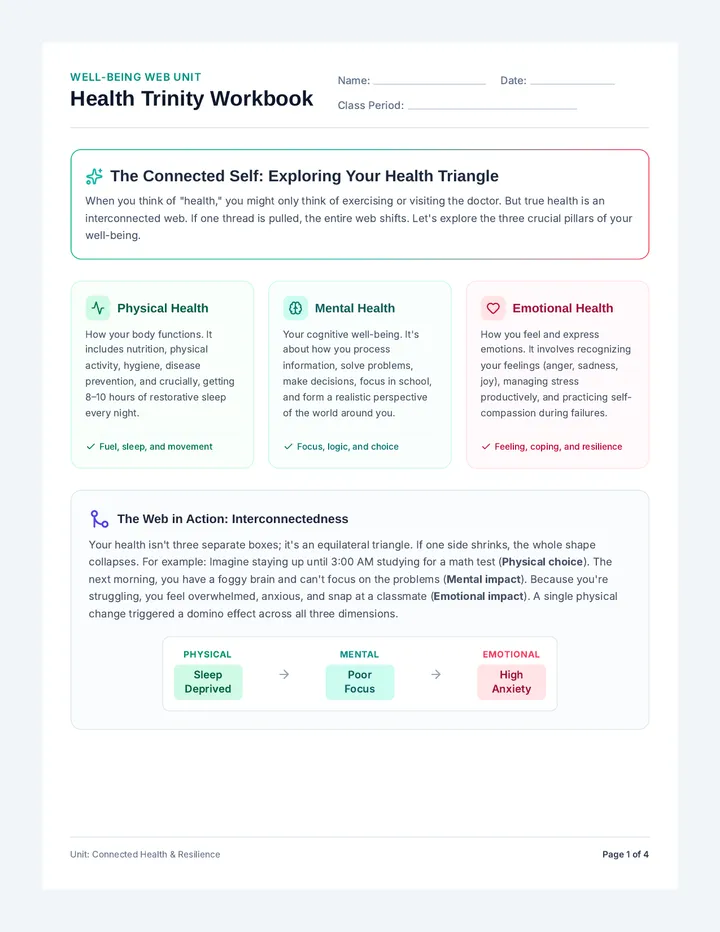
A complete 4-page student workbook on physical, mental, and emotional health. Features engaging reading passages, visual explanations of the health triangle, a vocabulary matching section, real-world case studies, and a stress-management planning worksheet.
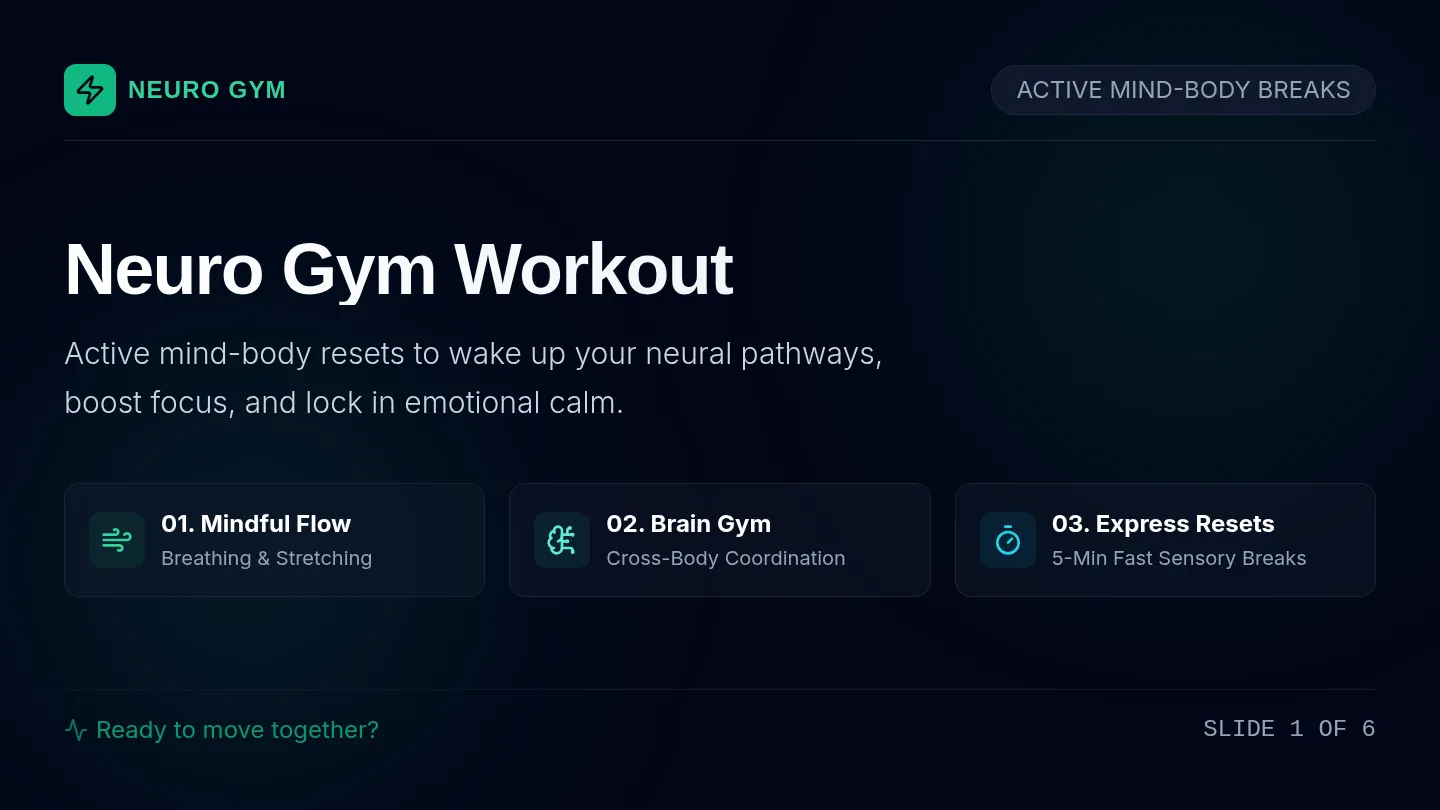
Visual, step-by-step interactive slide deck to guide student group exercises and mindfulness discussions. Includes embedded movement videos for Mindful Flow, Brain Gym, and Express Resets, alongside guided group reflection prompts.
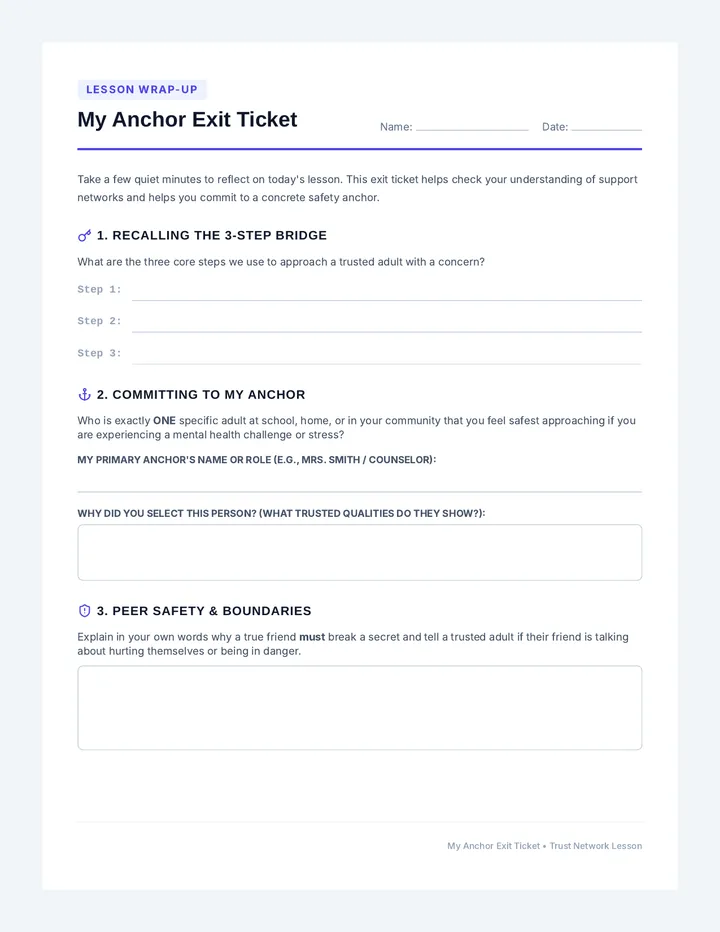
A 1-page exit ticket designed for student self-reflection, checking recall of the 3-Step Bridge, and committing to a primary trusted adult anchor.
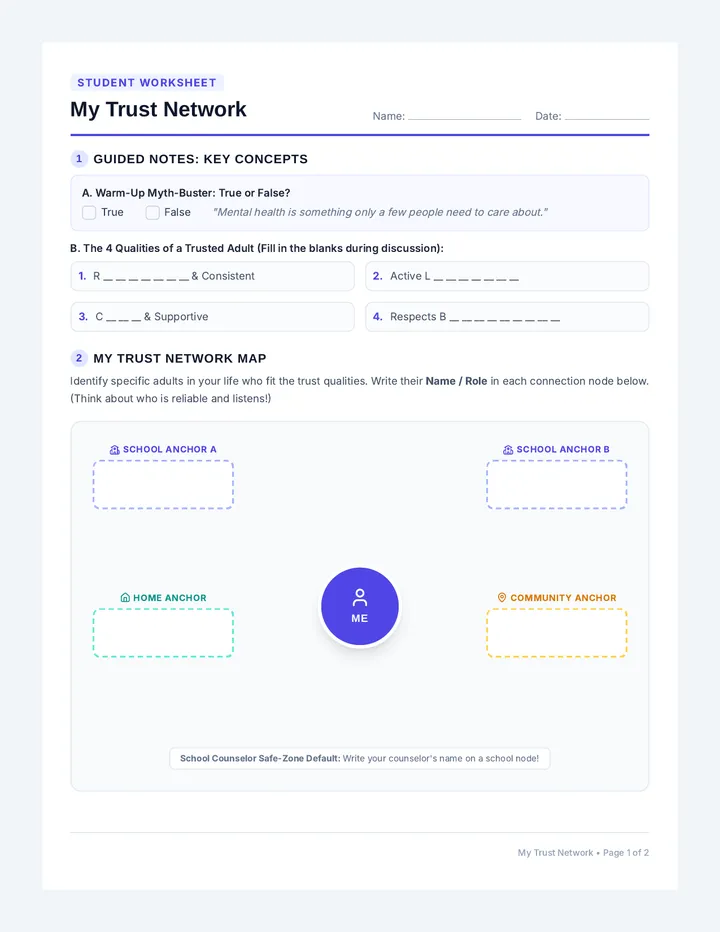
A 2-page student activity worksheet designed for reflection, support network mapping, and writing practice conversations using the 3-Step Bridge framework.
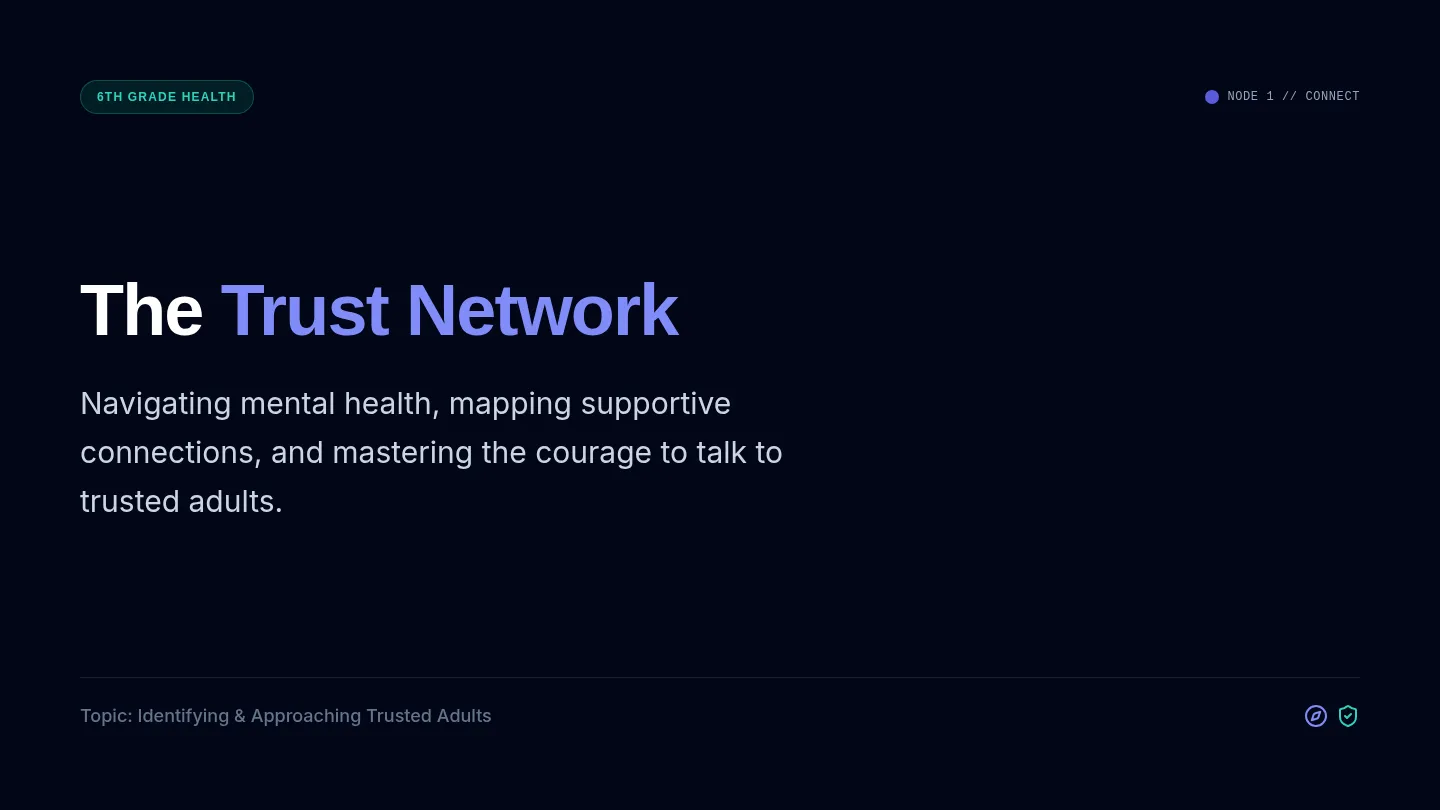
An interactive, 6-slide presentation with large readable text (minimum 24px) that covers mental health myths, the 4 qualities of trusted adults, network mapping, the 3-Step Bridge conversation guide, and peer boundaries.
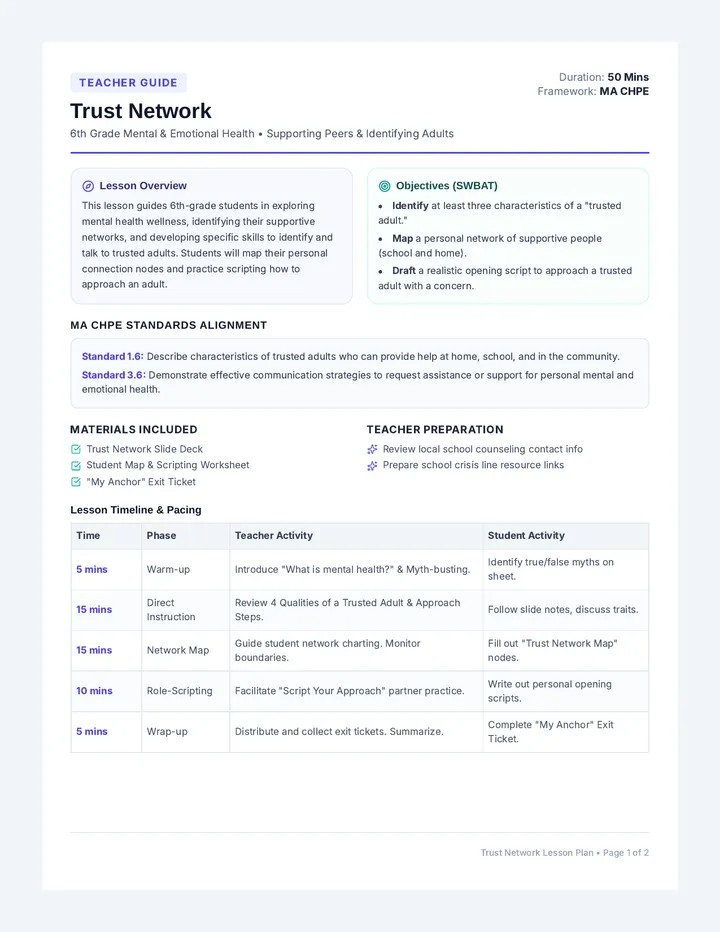
A detailed, 2-page teacher facilitation guide containing lesson objectives, MA health standards, timing, scripts, and differentiation tips for teaching 6th graders how to identify and talk to trusted adults.
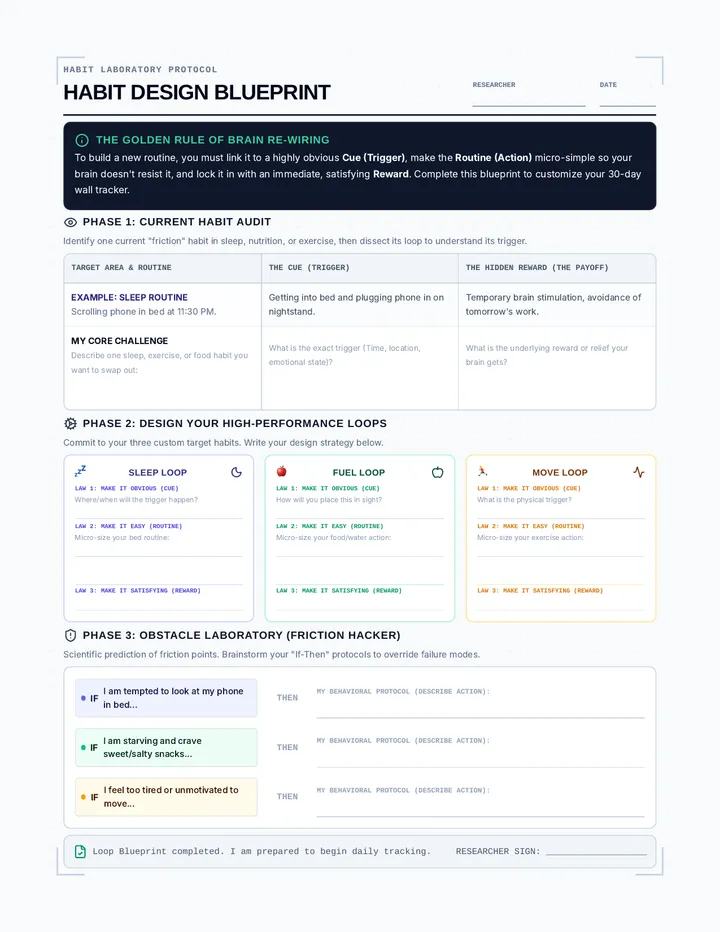
A student worksheet for analyzing current health habits and designing customized cue-routine-reward habit loops. It guides students through identifying behavior triggers, predicting obstacles, and establishing meaningful rewards before starting their tracker.
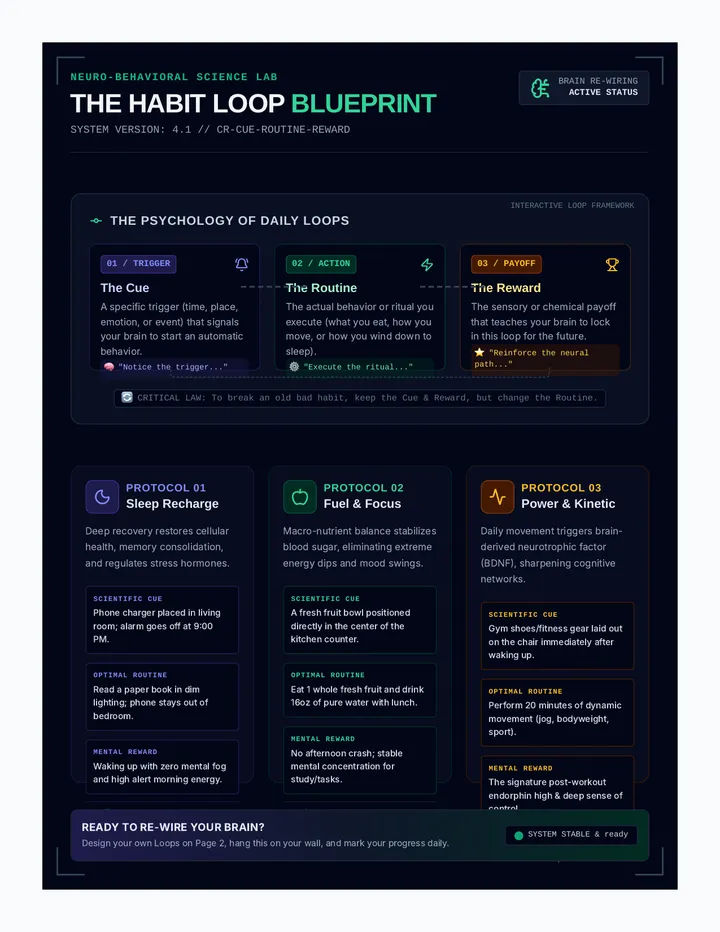
A beautifully designed 2-page wall-printable poster and habit tracking system. Page 1 teaches the psychology of cues, routines, and rewards with colorful scientific diagrams, while Page 2 provides an customizable 30-day tracking grid for sleep, nutrition, and exercise with physical writing lines.
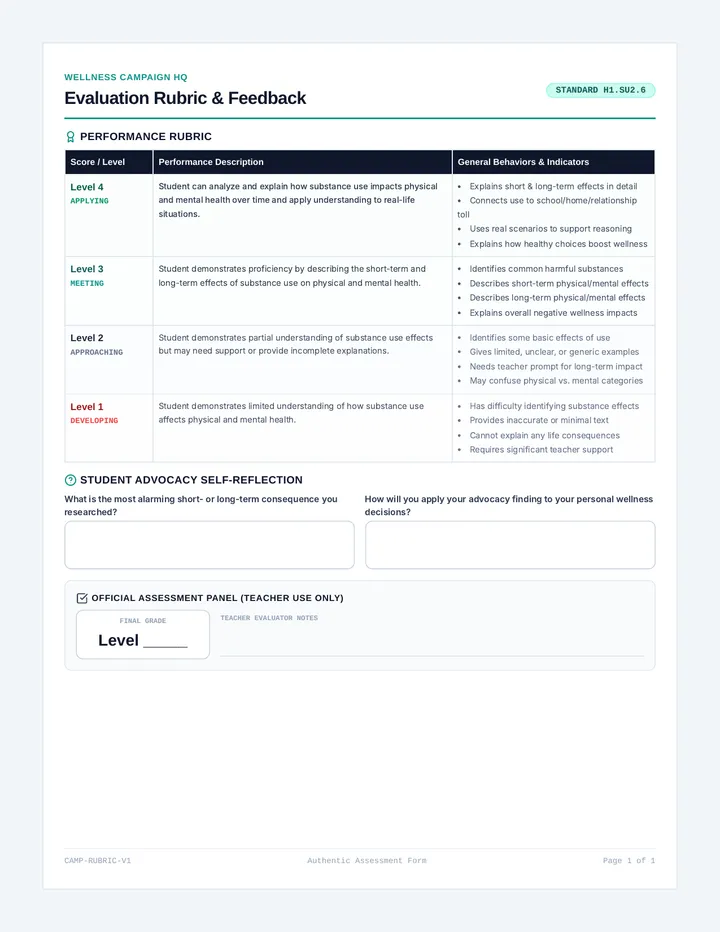
A 1-page print-ready grading rubric and self-reflection sheet based on standard H1.Su2.6, allowing teachers to score students across Levels 1-4 and students to self-reflect.
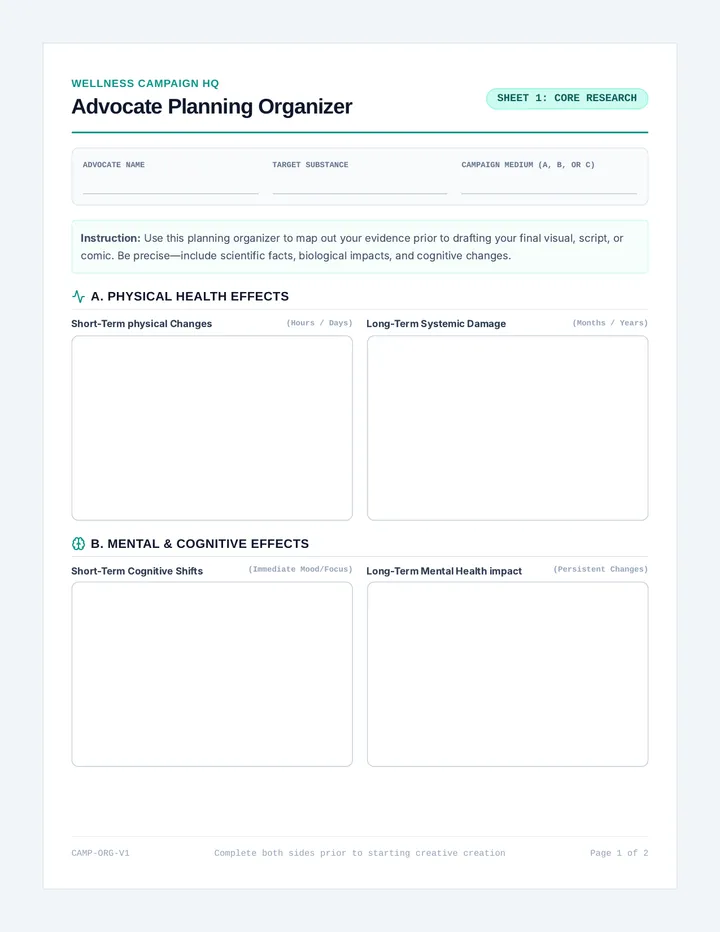
A 2-page print-ready graphic organizer for students to research, brainstorm, and structure the physical, mental, and social effects of their chosen substance, with dedicated spaces for Level 4 criteria.
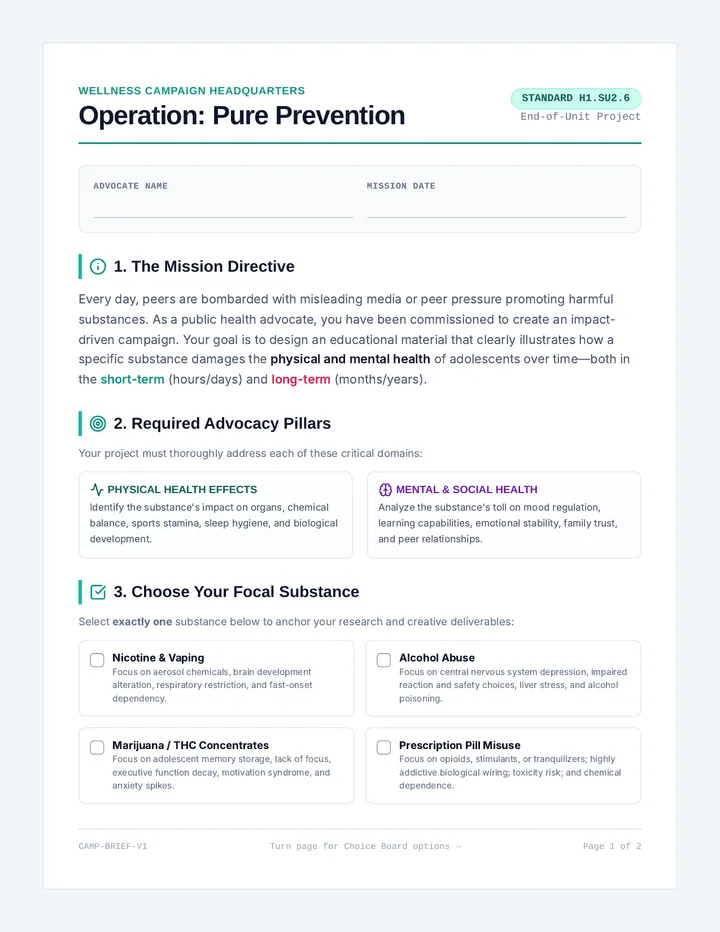
A 2-page print-ready student project guide outlining the public health advocate scenario, chosen substance categories, and the detailed 3-option creative choice board.
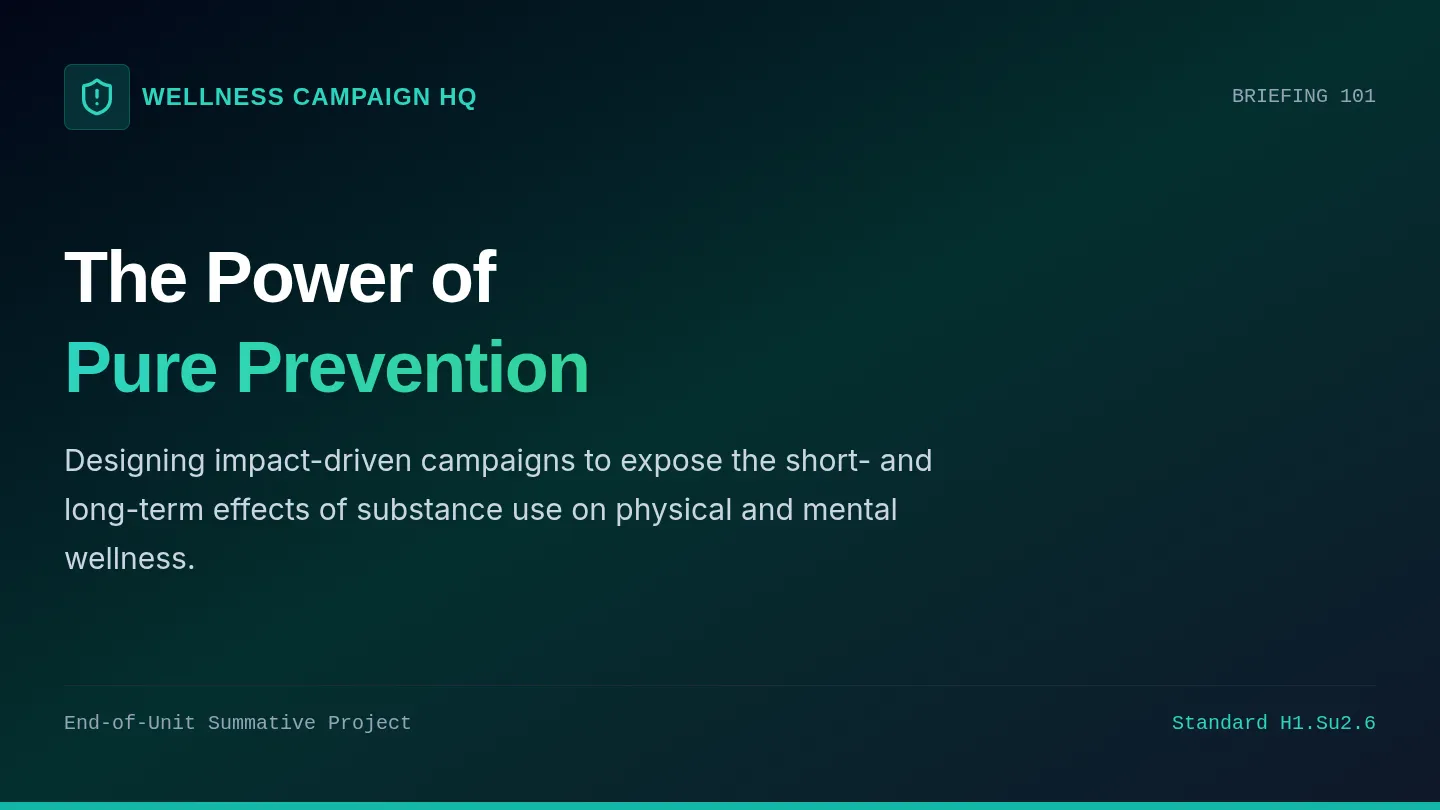
A 6-slide presentation introducing the end-of-unit substance use advocacy project, breaking down short- and long-term physical and mental effects, detailing the creative choice board, and highlighting rubric expectations.