A clean, student-facing physical checklist that prompts 9th graders to identify and categorize their personal physiological markers of stress, with space to reflect on chronic vs acute stress.
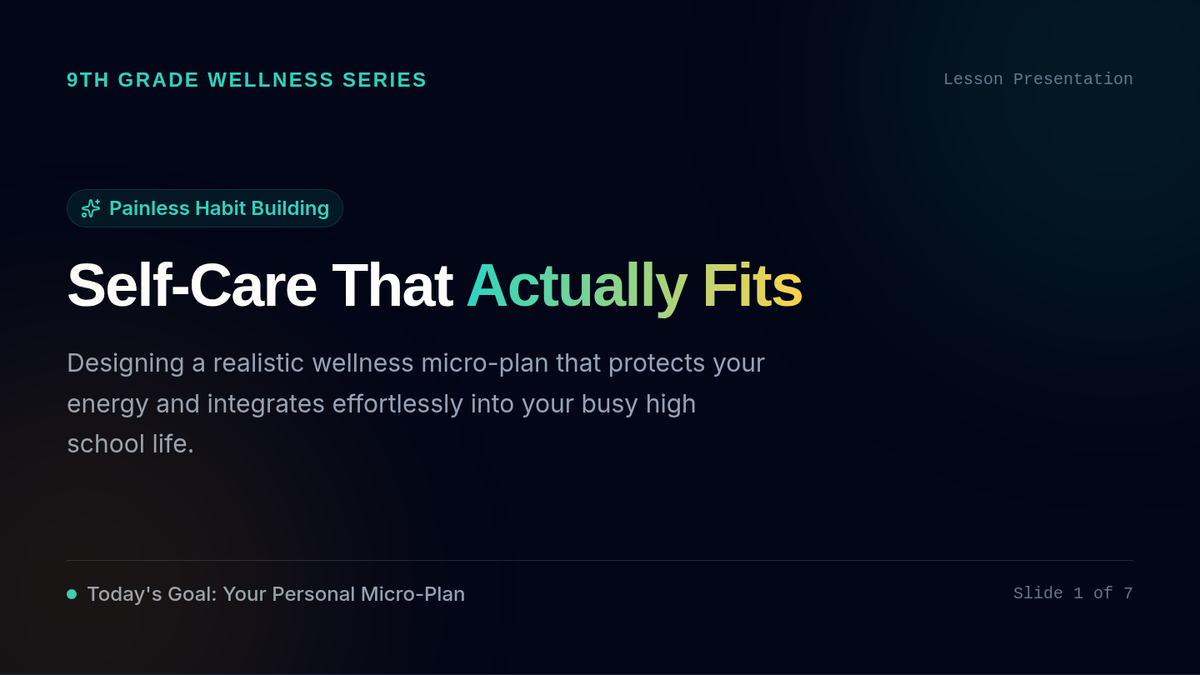
A 7-slide presentation deck used by teachers to guide students through the lesson. It includes slides for the opening reflection, exploring the 4 domains of self-care, co-constructing a menu of options, learning the habit-stacking formula, establishing healthy boundaries, and committing to action.
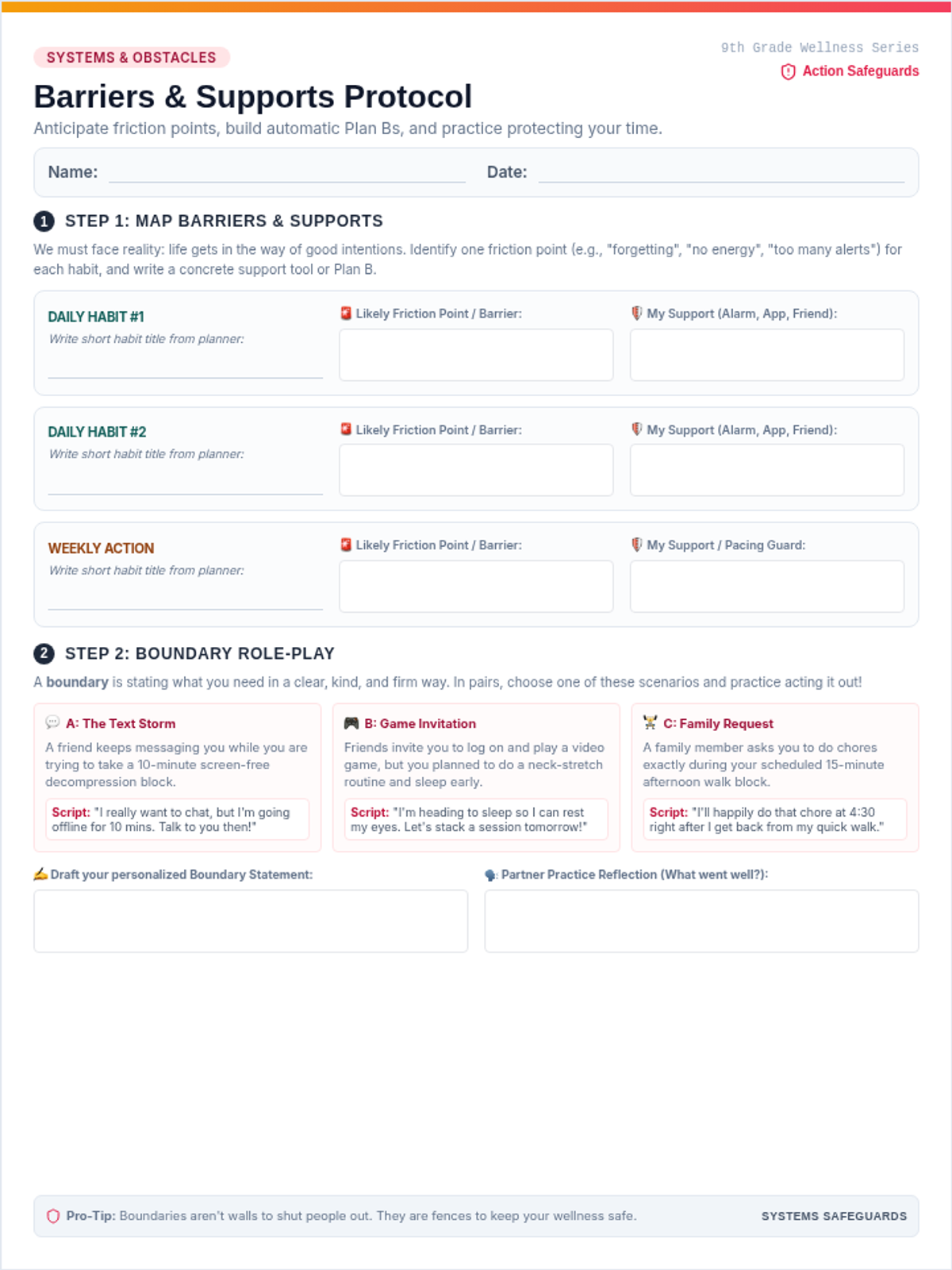
A 1-page guided student protocol for identifying potential obstacles to their self-care plan, brainstorming Plan B solutions, and engaging in boundary-setting role-play with structured scripts.
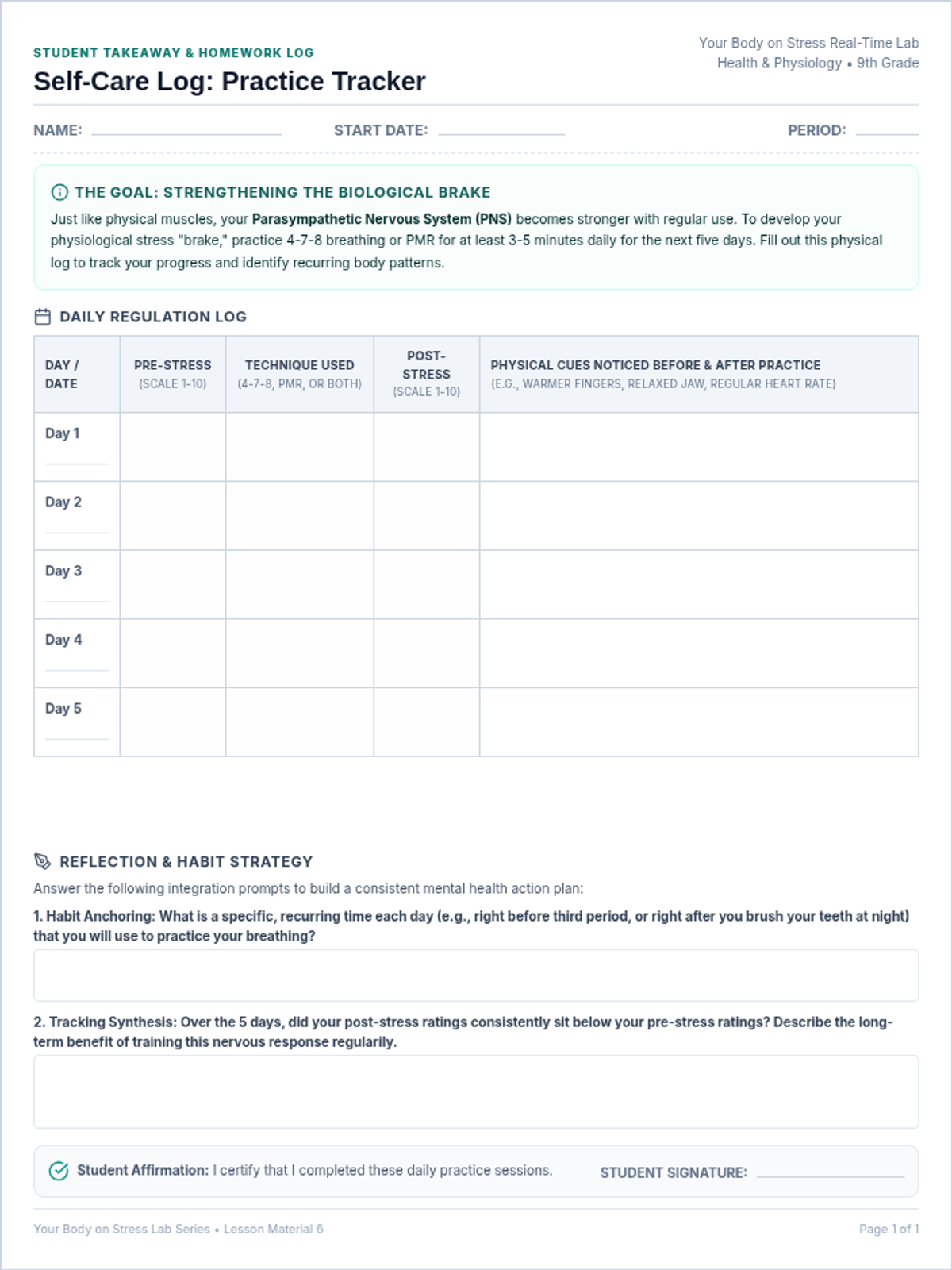
A take-home student tracking sheet and homework log designed to encourage daily 4-7-8 breathing practice, offering space to monitor pre/post stress levels and personal physiological cues over 5 days.
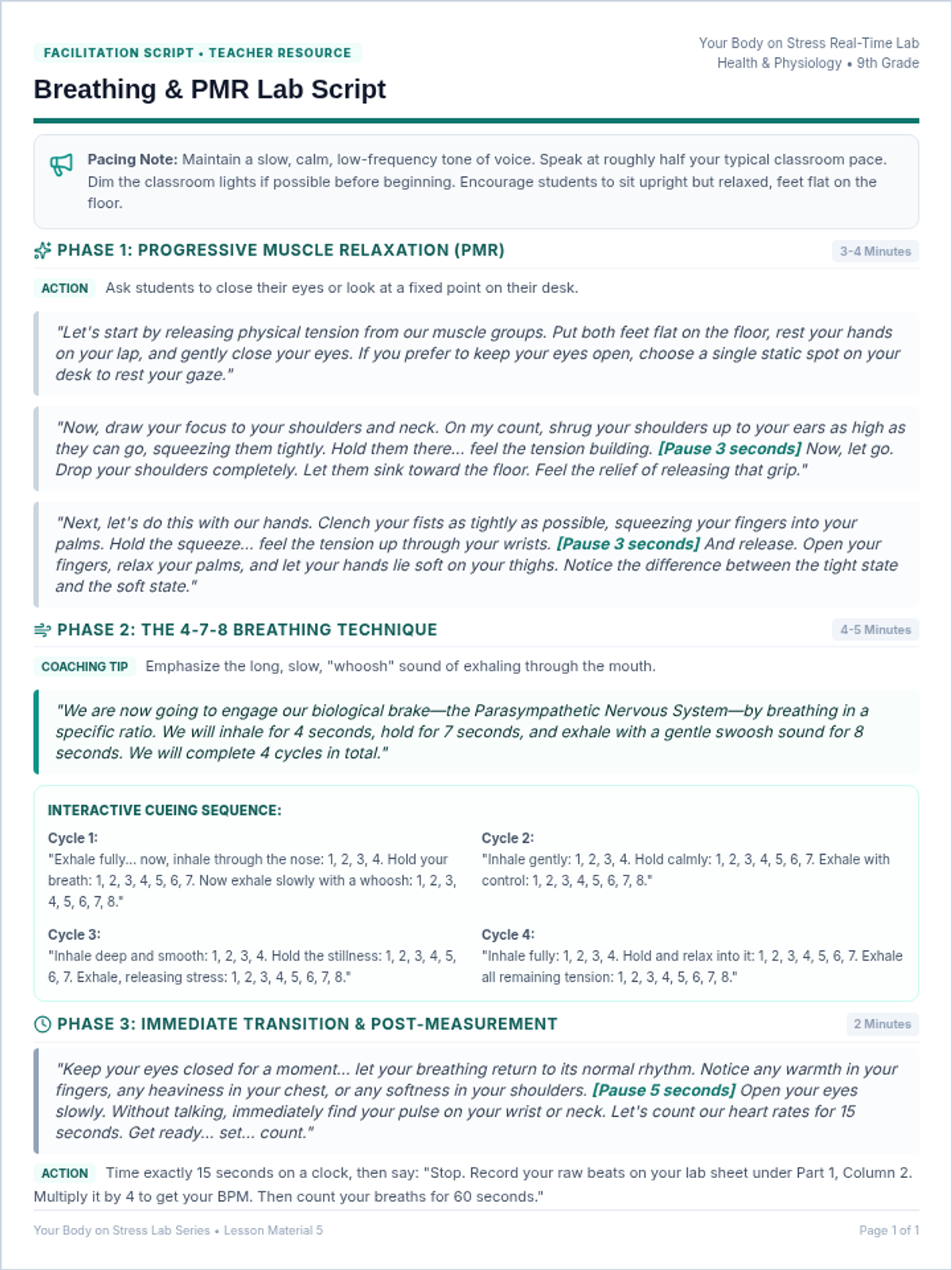
A step-by-step teacher facilitation script and staging guide for leading students through Progressive Muscle Relaxation (PMR) and four full cycles of 4-7-8 breathing.
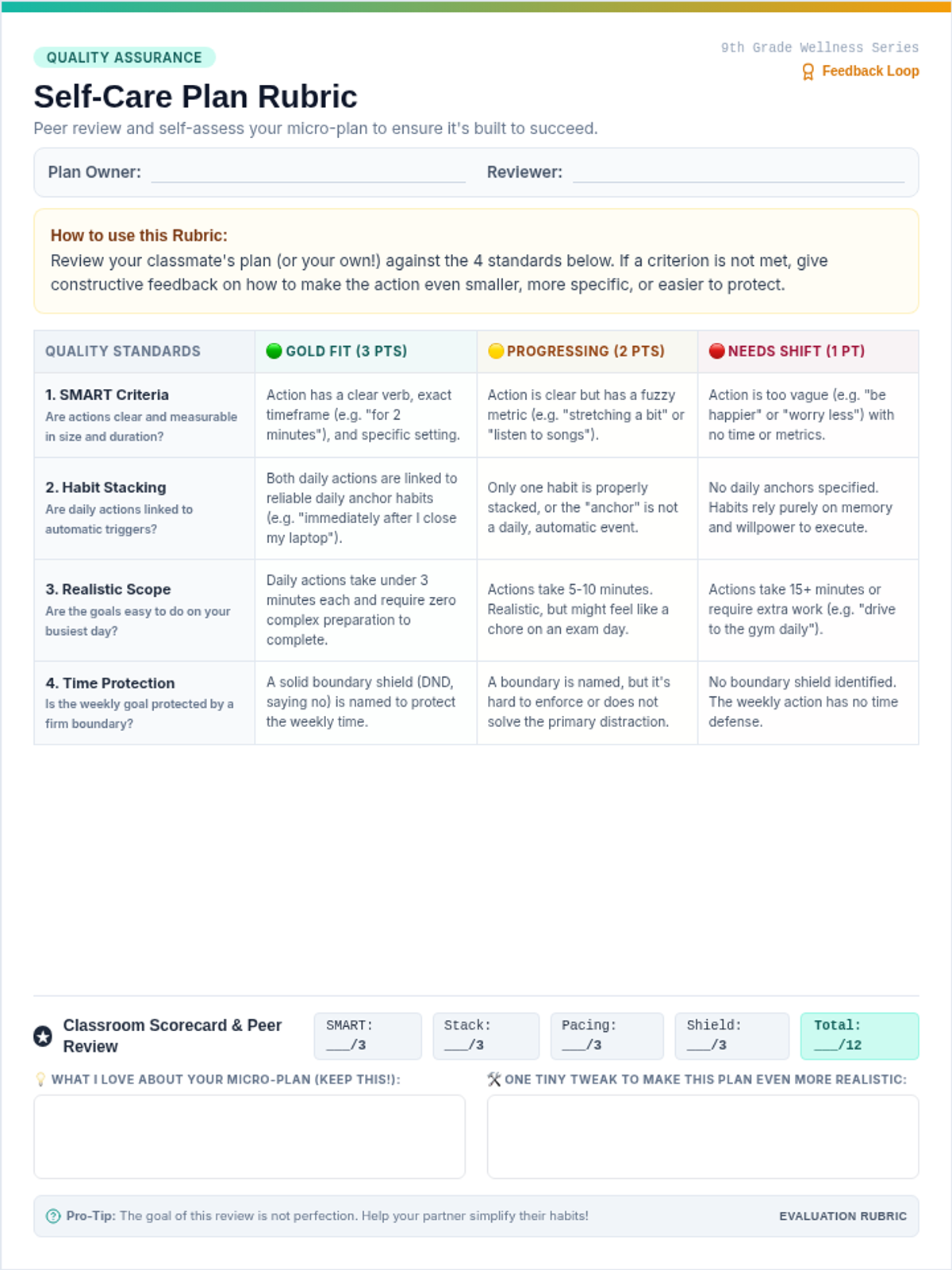
A 1-page rubrics and peer feedback scorecard for students to evaluate their self-care micro-plans against quality criteria, including specificity, habit stacking integration, realistic scope, and boundary protection.
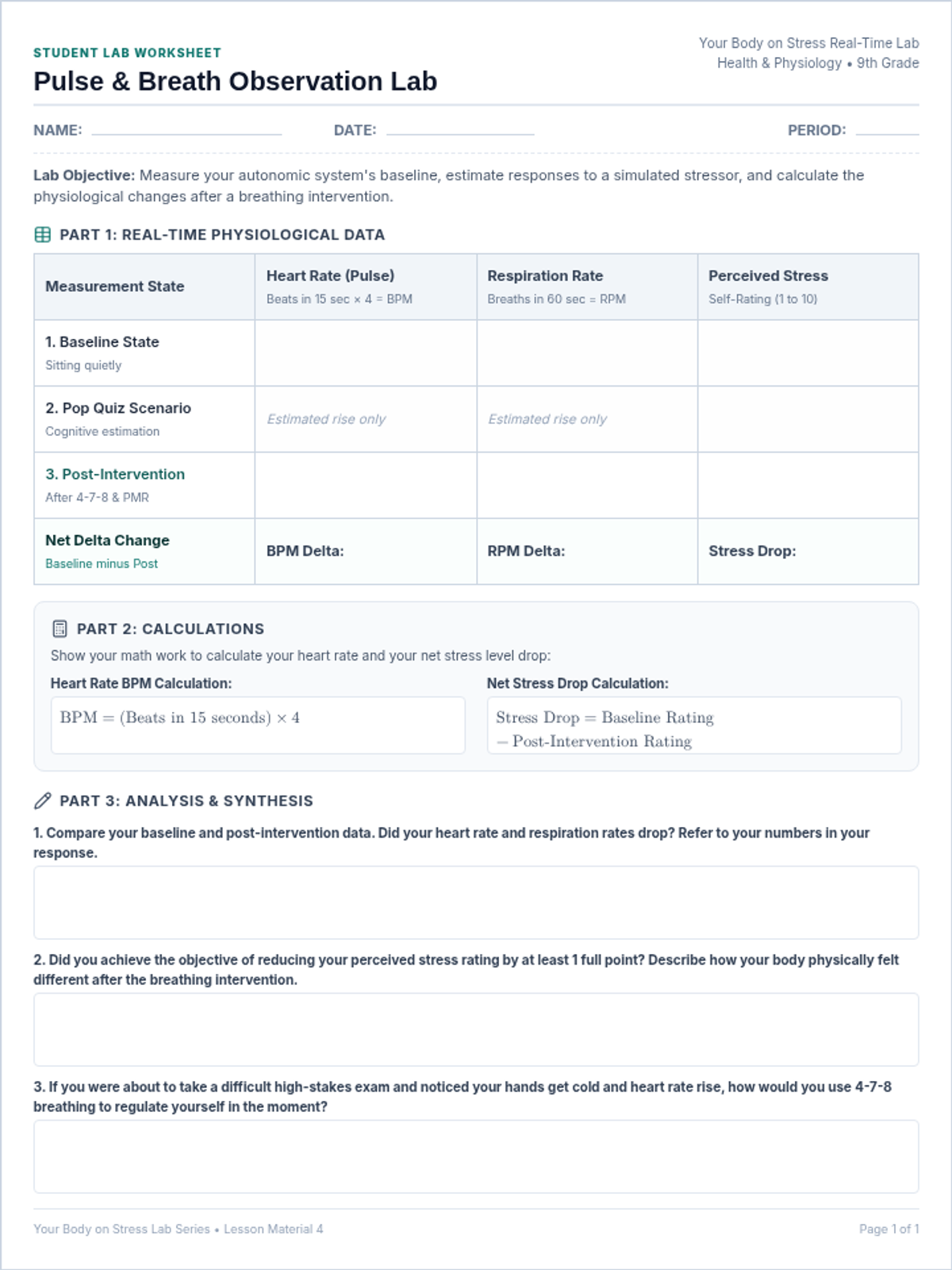
A structured student lab sheet for recording and calculating baseline, stress-provoked, and post-intervention heart and respiratory rates, featuring a data comparison table.
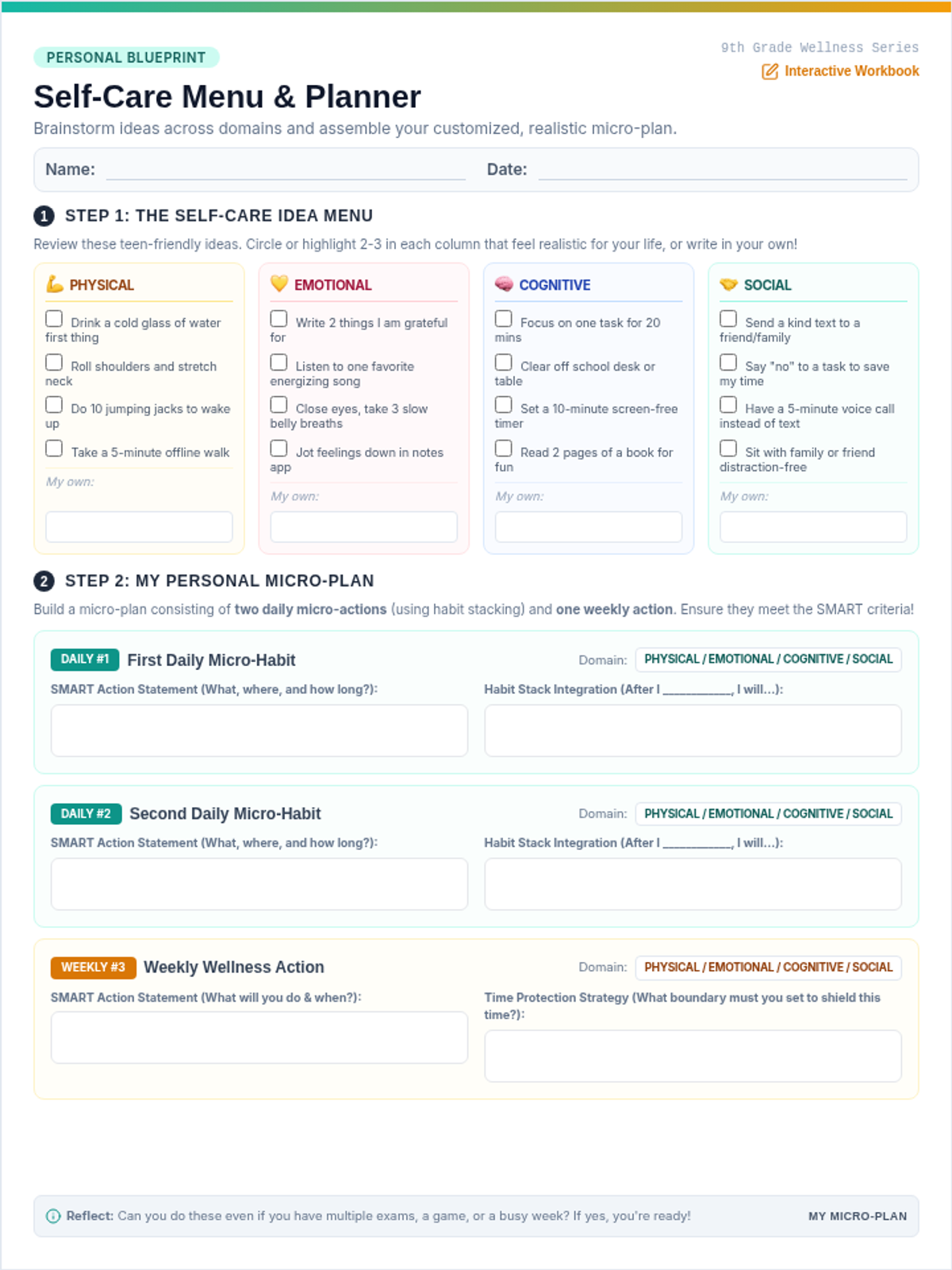
A 1-page student menu and micro-planner where 9th graders select realistic, teen-friendly self-care options from across the 4 wellness domains and write down their customized, SMART-aligned plan for two daily micro-actions and one weekly action.
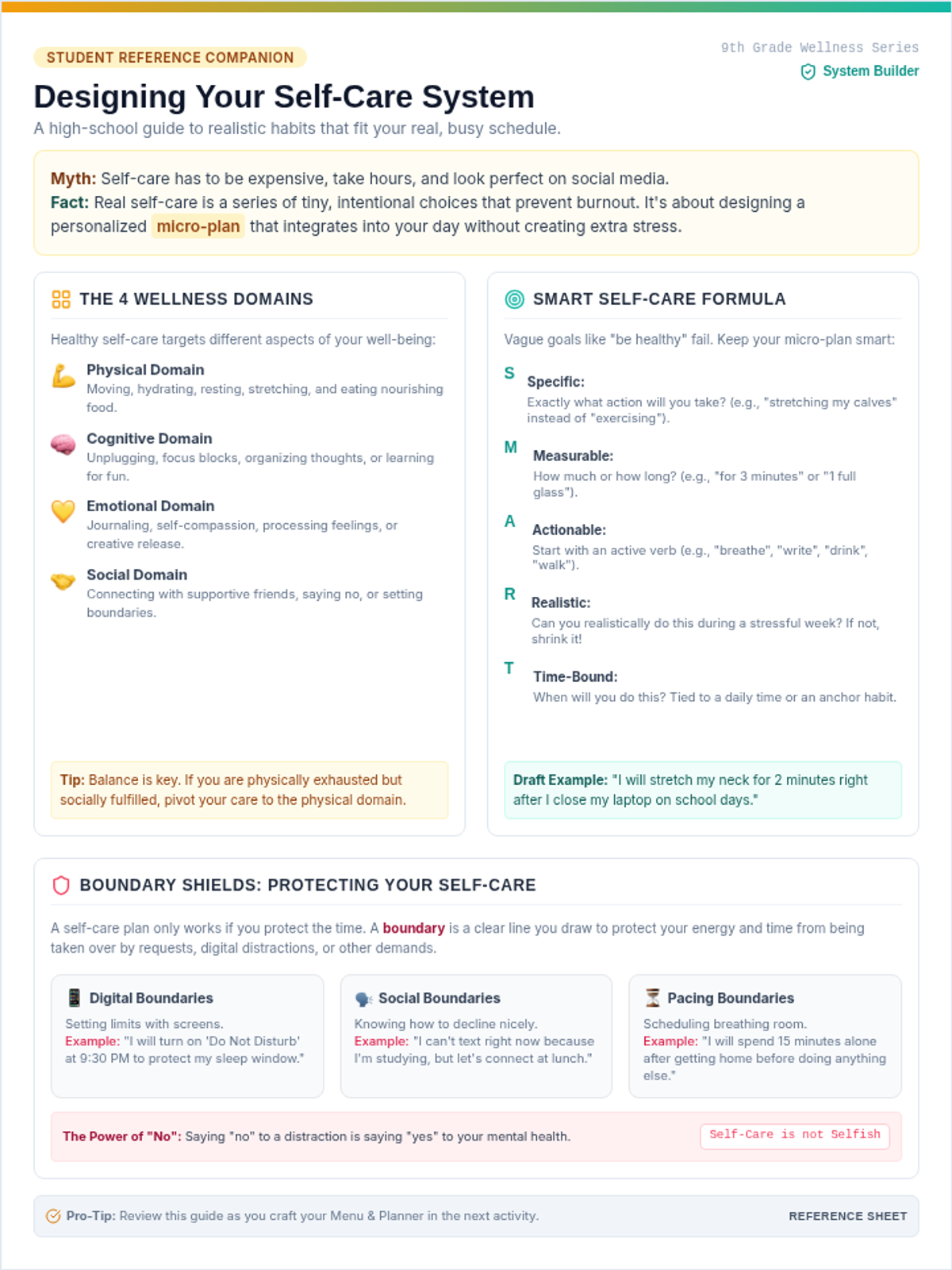
A 1-page student guide explaining the core pillars of a realistic self-care system: the 4 domains of self-care (physical, emotional, social, cognitive), the SMART criteria for micro-planning, and setting boundaries to protect your time.
Engaging 6-slide presentation covering the physiological battle between the Sympathetic and Parasympathetic nervous systems, common physical body cues of stress, and the neural mechanisms behind slow-exhale breathing.
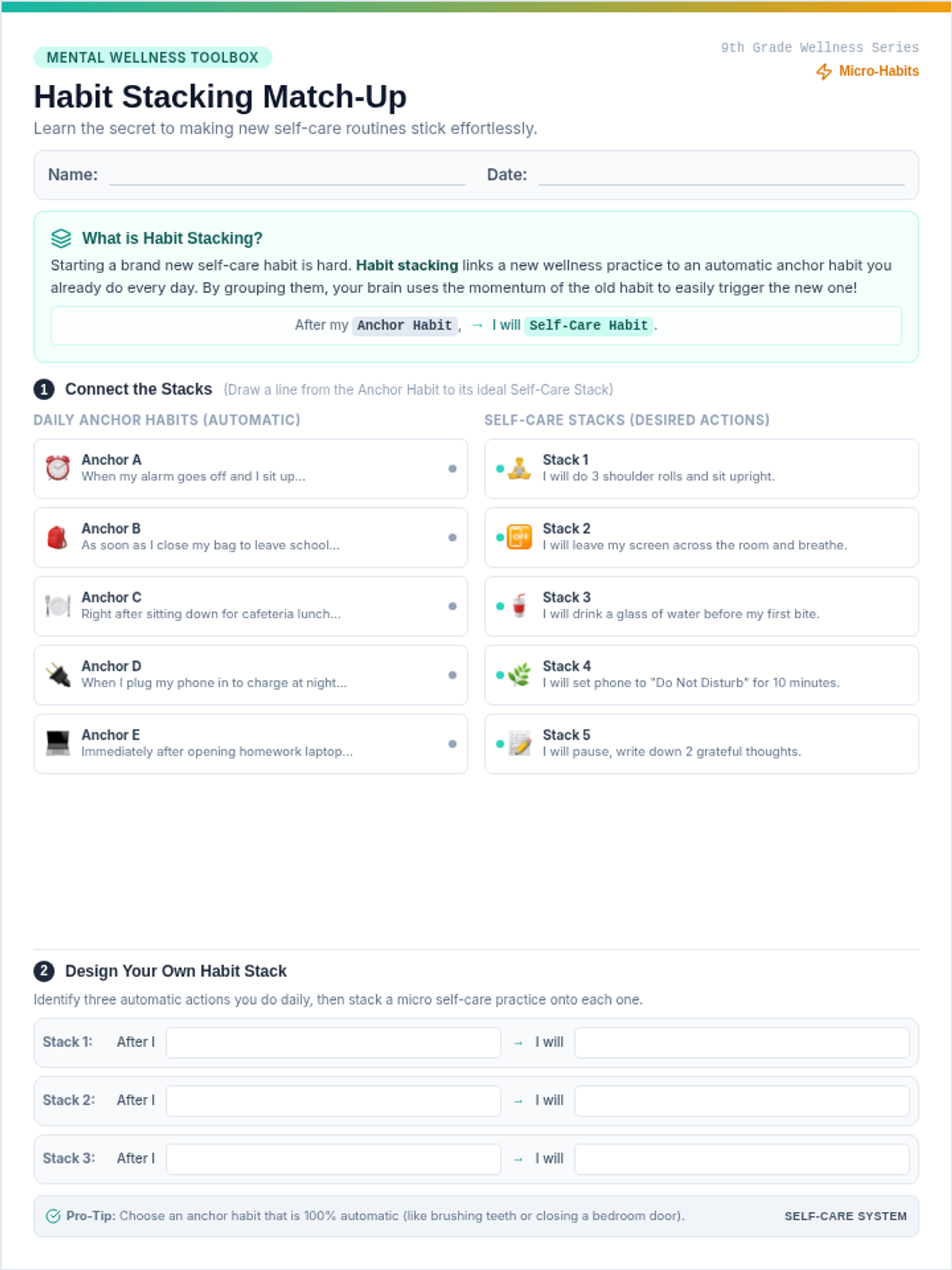
A 1-page matching activity sheet where 9th graders learn and practice habit stacking. It features an explanation of James Clear's habit-stacking formula, a matching section pairing common school-day anchor habits with realistic self-care additions, and a creative application space.