A visual presentation for an advocacy project, focusing on the dangers of mixing substances and effective health communication strategies for teens.
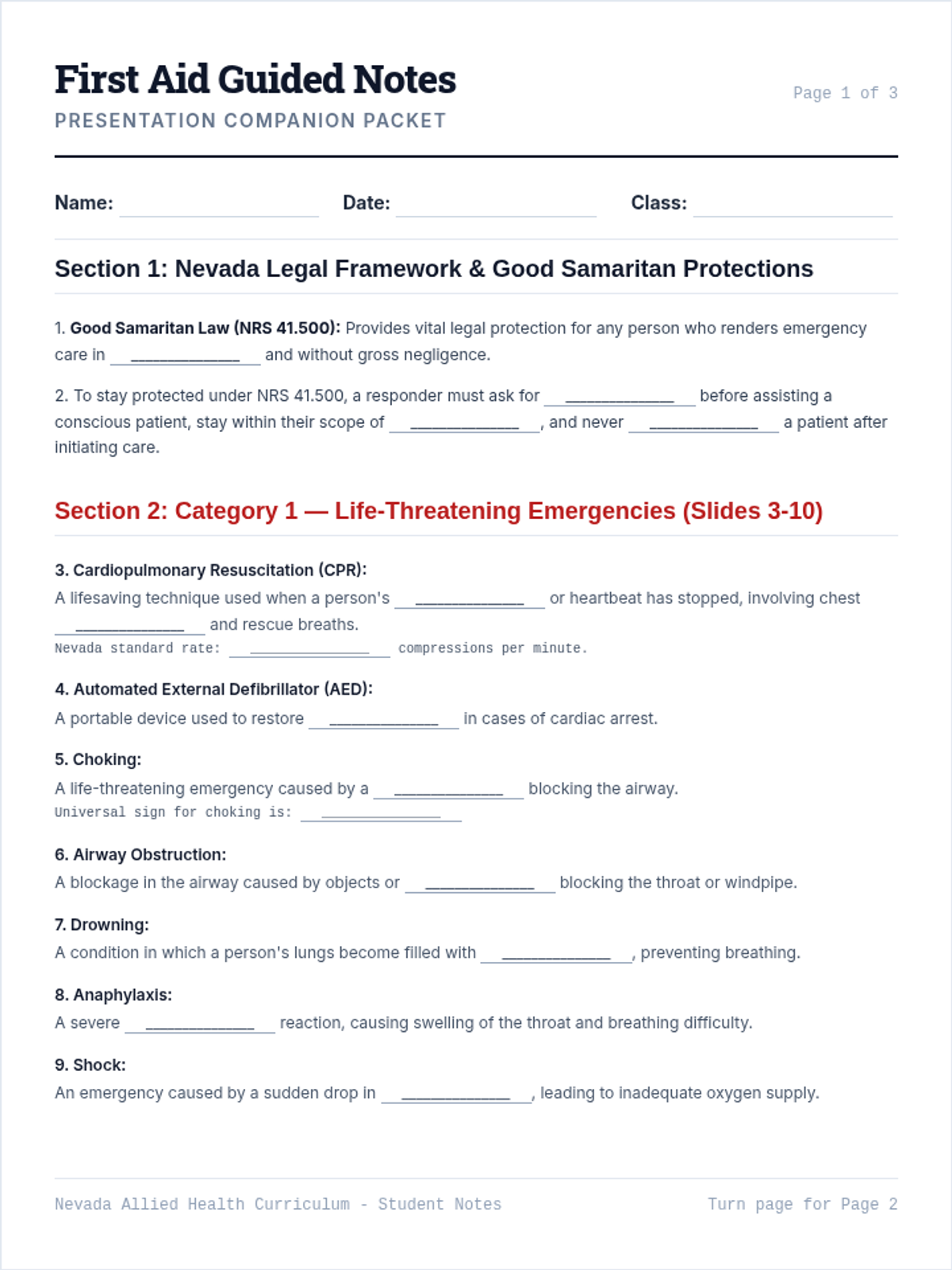
A 3-page guided notes packet designed for students to fill in key vocabulary definitions, warning signs, and action steps while following along with the 25-slide presentation.
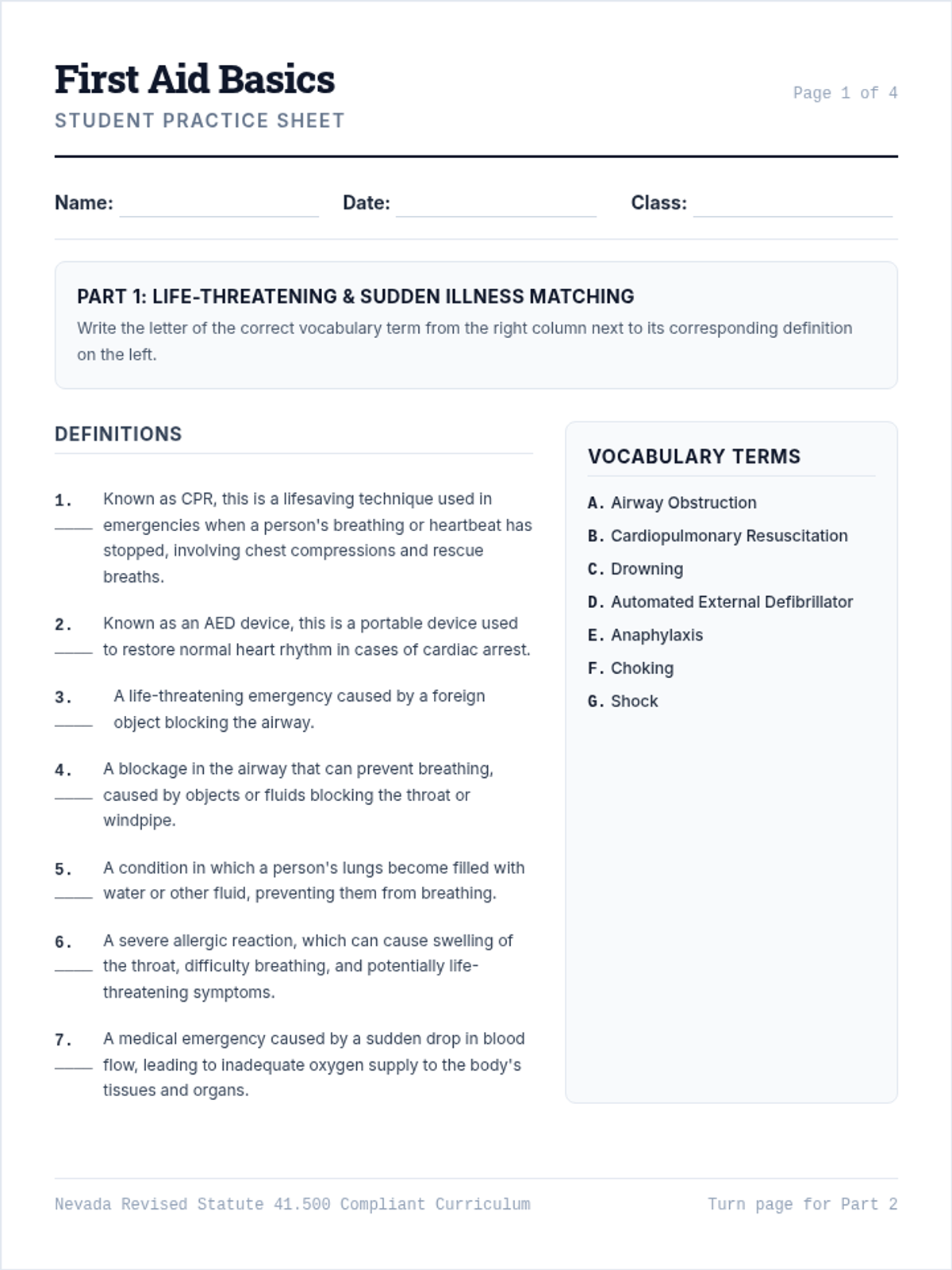
A comprehensive 4-page matching and clinical scenario worksheet designed for students to master the 25 first aid terms and practice applying Nevada emergency protocols.
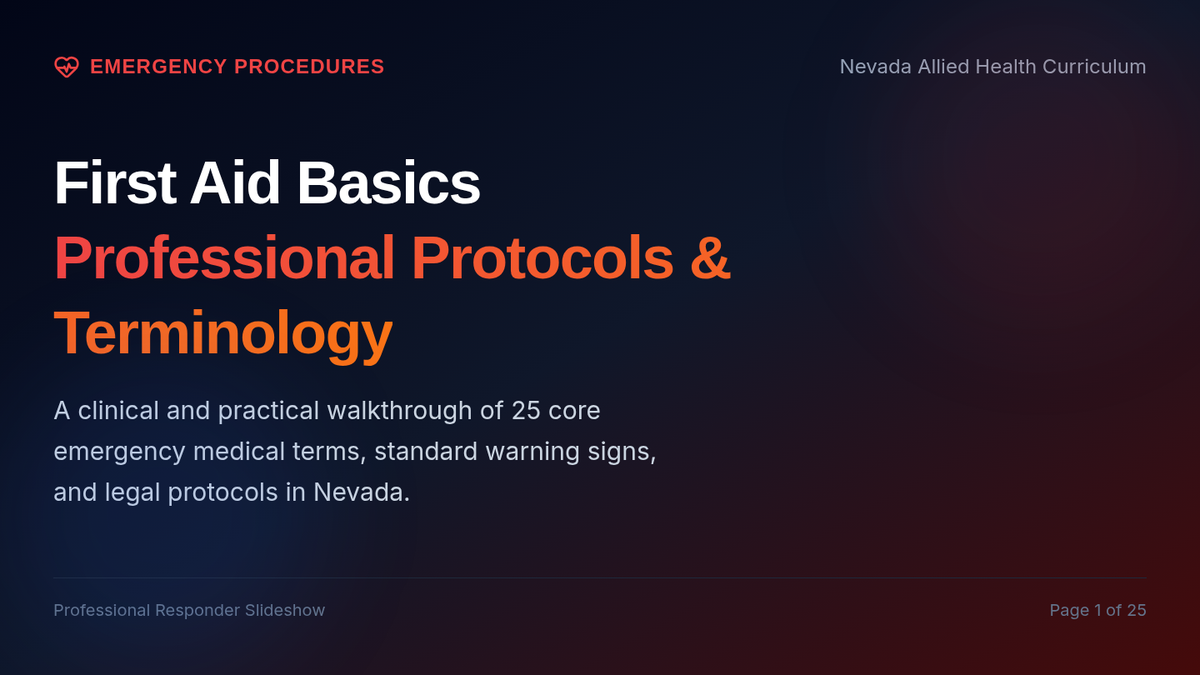
A comprehensive 25-slide presentation covering all 25 first aid terms, aligned with modern Nevada emergency protocols, including Good Samaritan protections (NRS 41.500) and Stop the Bleed guidelines.
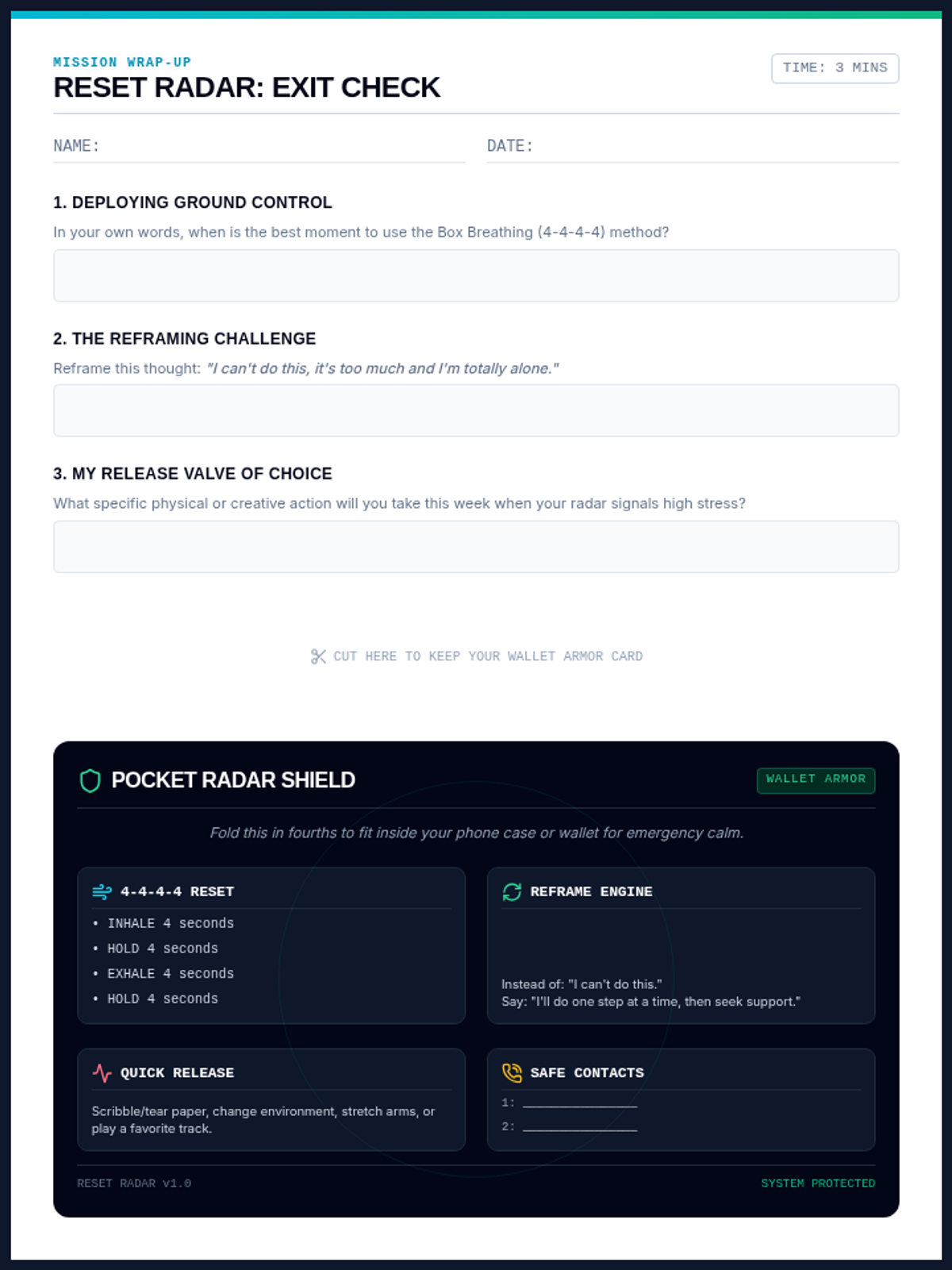
A 1-page exit ticket and cut-out pocket card. The top half functions as a quick 3-minute reflection tool, and the bottom half folds into a wallet-sized emergency stress cheat sheet.
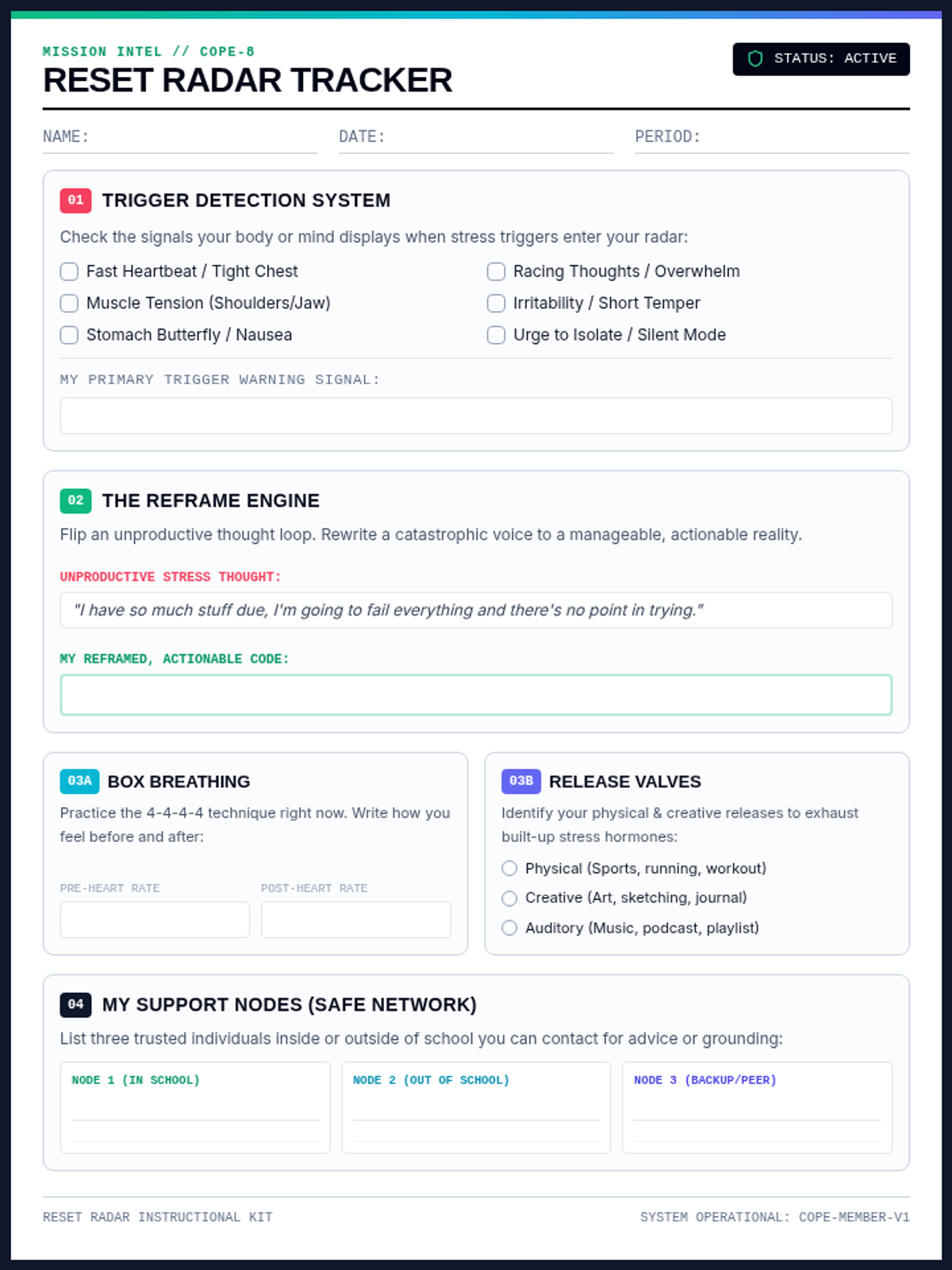
A high-utility, printable 1-page guided notes worksheet styled as a tactical mental radar dashboard. Students identify stress signals, construct a reframing formula, list emotional release outlets, and document trusted contacts.
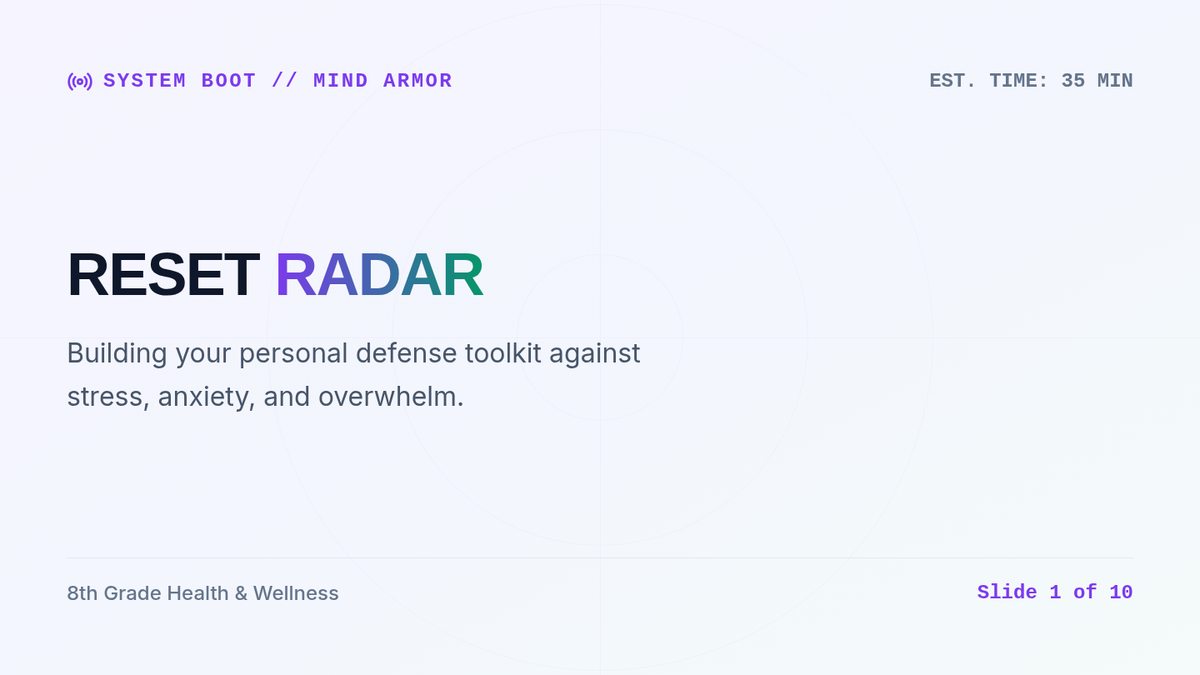
An interactive 10-slide presentation styled with a soft, clean pastel radar system. Teaches 8th graders evidence-based coping skills (box breathing, cognitive reframing, physical outlets, and boundaries) with highly readable dark text on pastel cards.
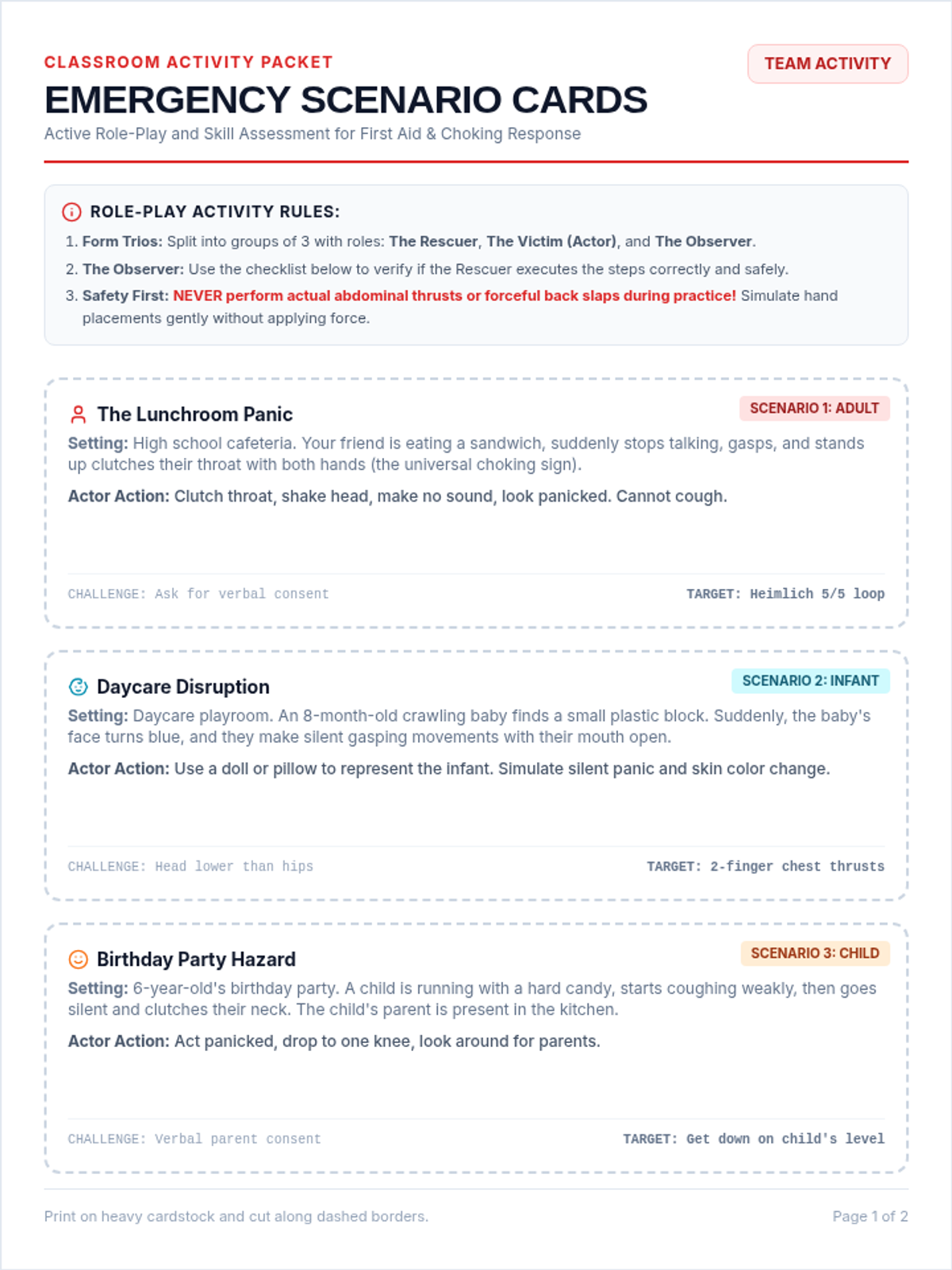
A classroom set of printable Emergency Scenario Role-Play Cards. Students work in small teams to act out real-world emergency choking situations, practice the Check-Call-Care sequence, and execute the correct Red Cross rescue maneuvers.
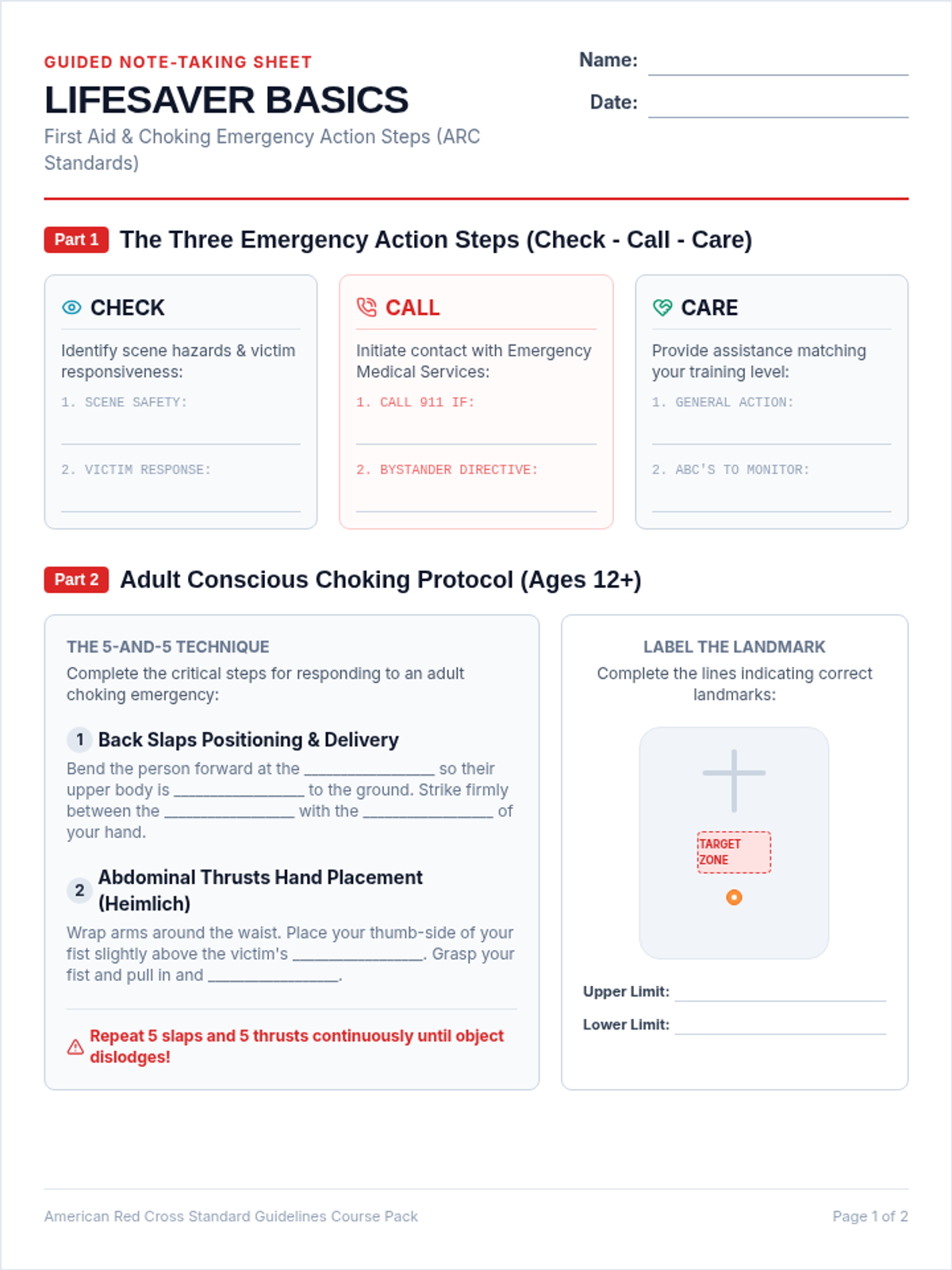
A highly structured, graphic organizer guided note-taking packet for students, perfectly matching the visual flow and milestones of the Lifesaver Basics slides. Features clear fill-in sections and stylized pathway maps.
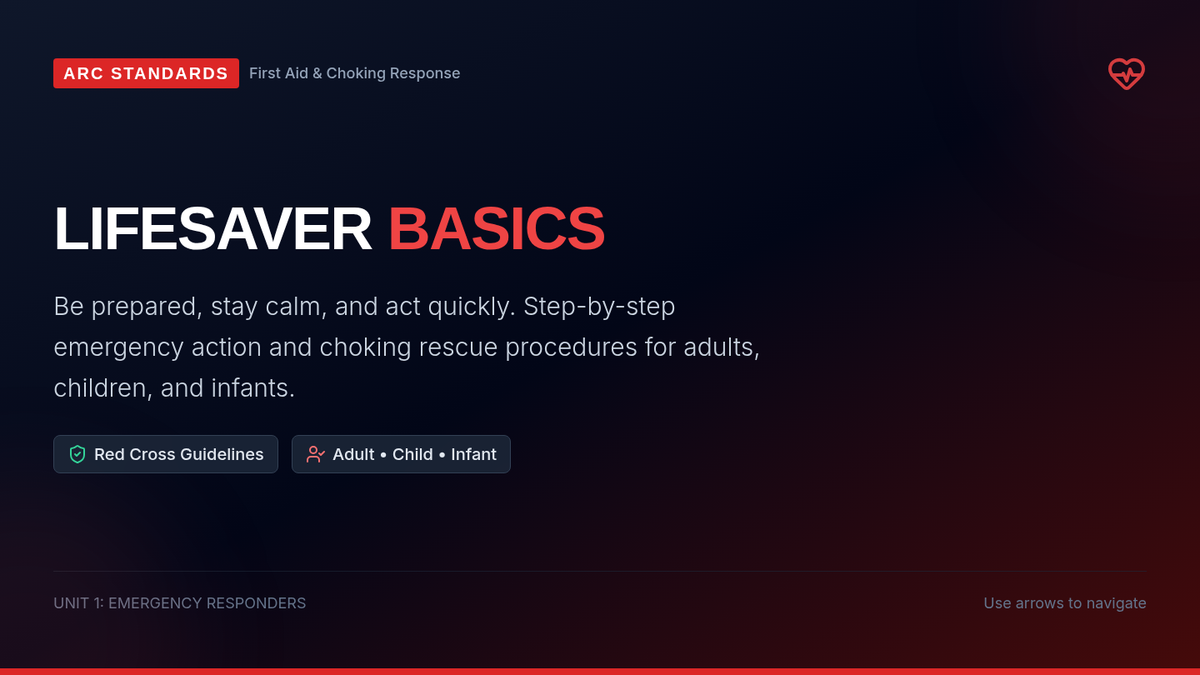
An interactive and highly visual slide deck teaching the core American Red Cross emergency action steps and specific choking rescue procedures (Heimlich maneuver) for adults, children, and infants. Features clean infographic flowcharts and step-by-step hand placement guides.
A structured 2-page graphic organizer and note-taking workbook for student use during the lecture. Features crisp conceptual fill-in-the-blank tables, comparison charts, and a self-guided case analysis.
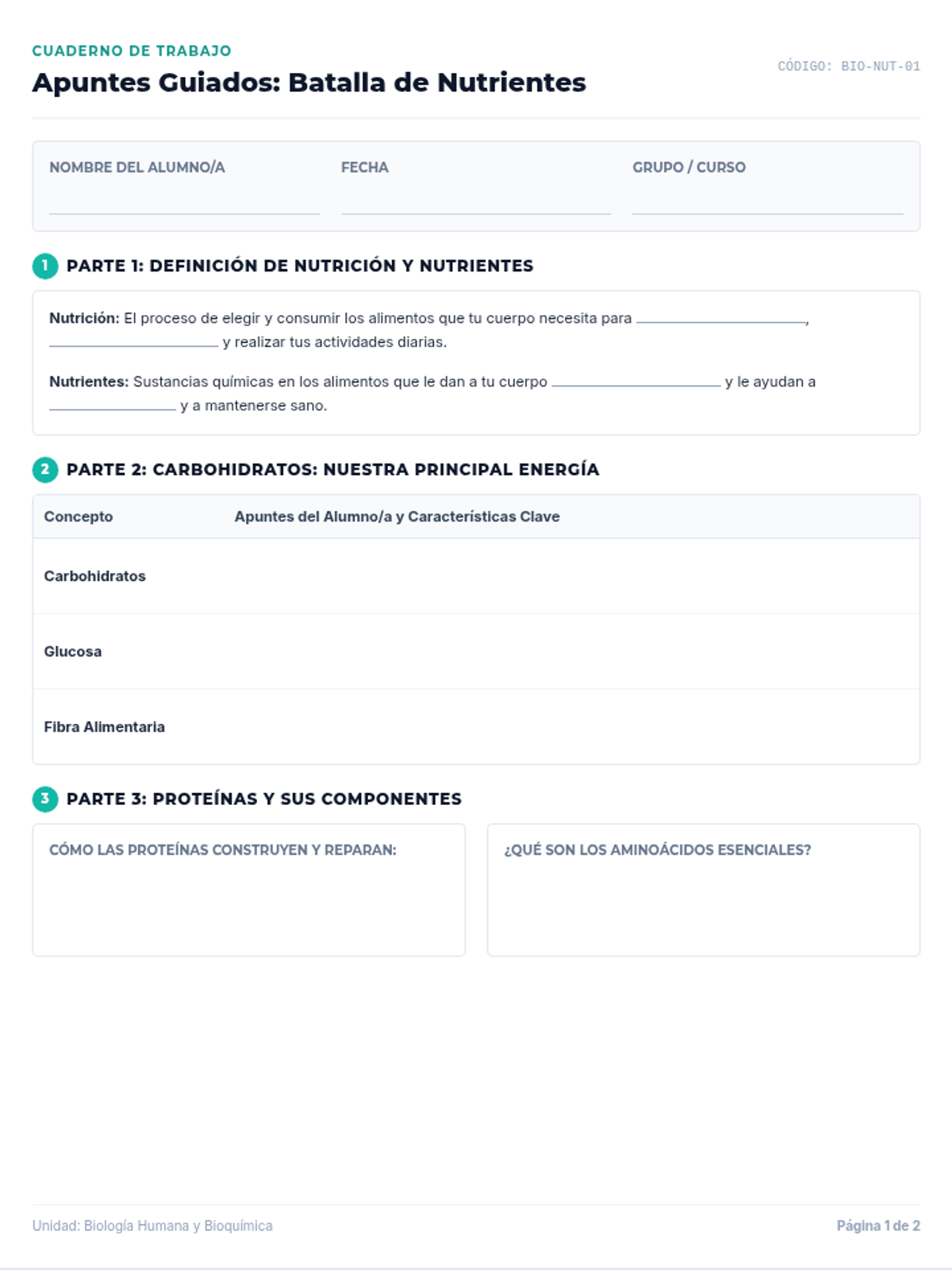
A simplified premium 15-slide presentation deck covering macronutrients, micronutrients, vitamin solubility, mineral absorption, and hydration dynamics. Designed with accessible vocabulary and zero non-functional interactive elements.
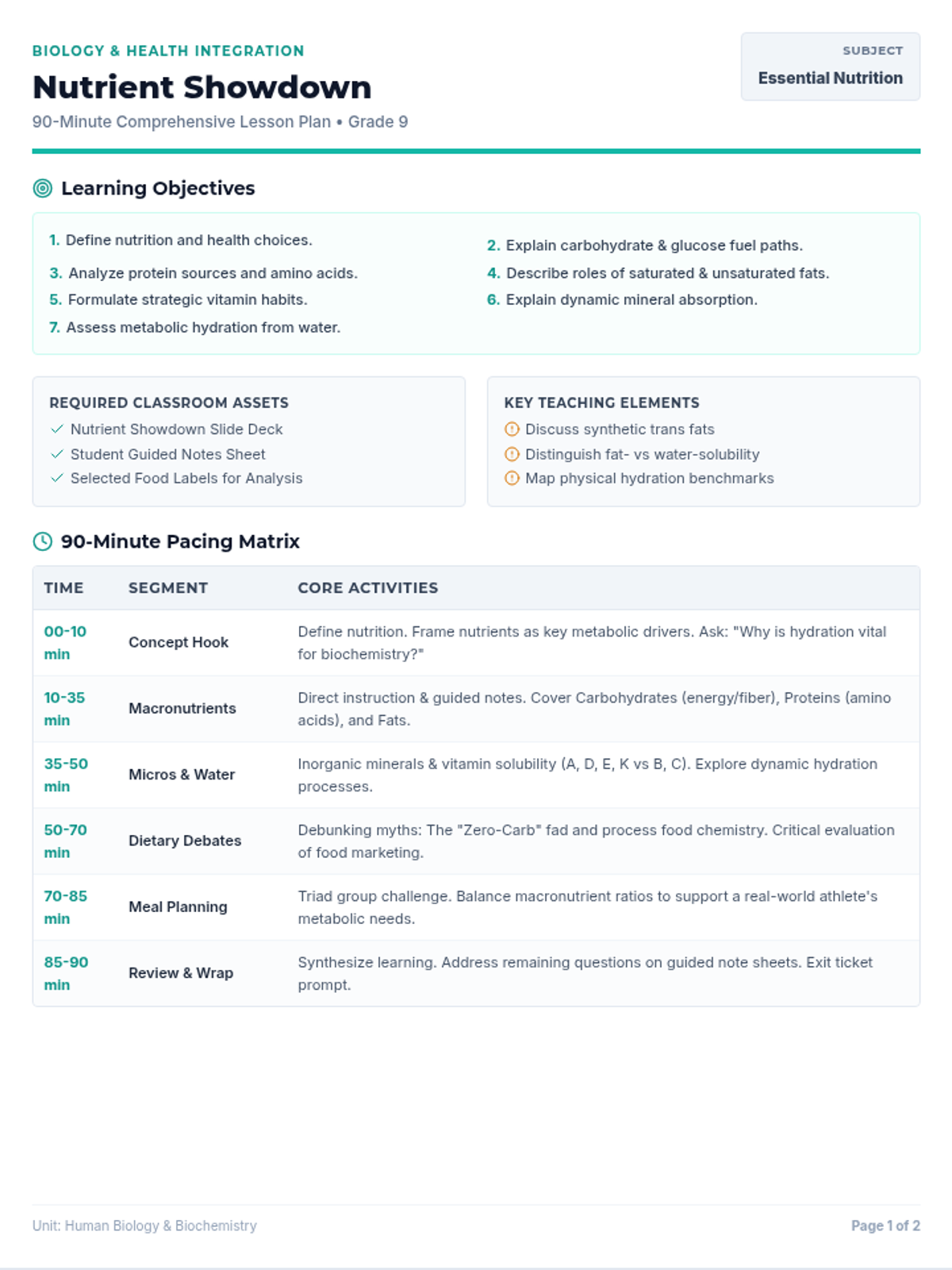
A professional 2-page teacher facilitation guide and lesson plan for the 90-minute Nutrient Showdown lesson. It contains pacing details, standard alignments, discussion prompts, active learning guides, and answer key references.
A highly visual 15-slide presentation matching the Fuel Lab theme, utilizing bold, high-contrast layouts and large readable text (minimum 24px) for classroom guided instruction.
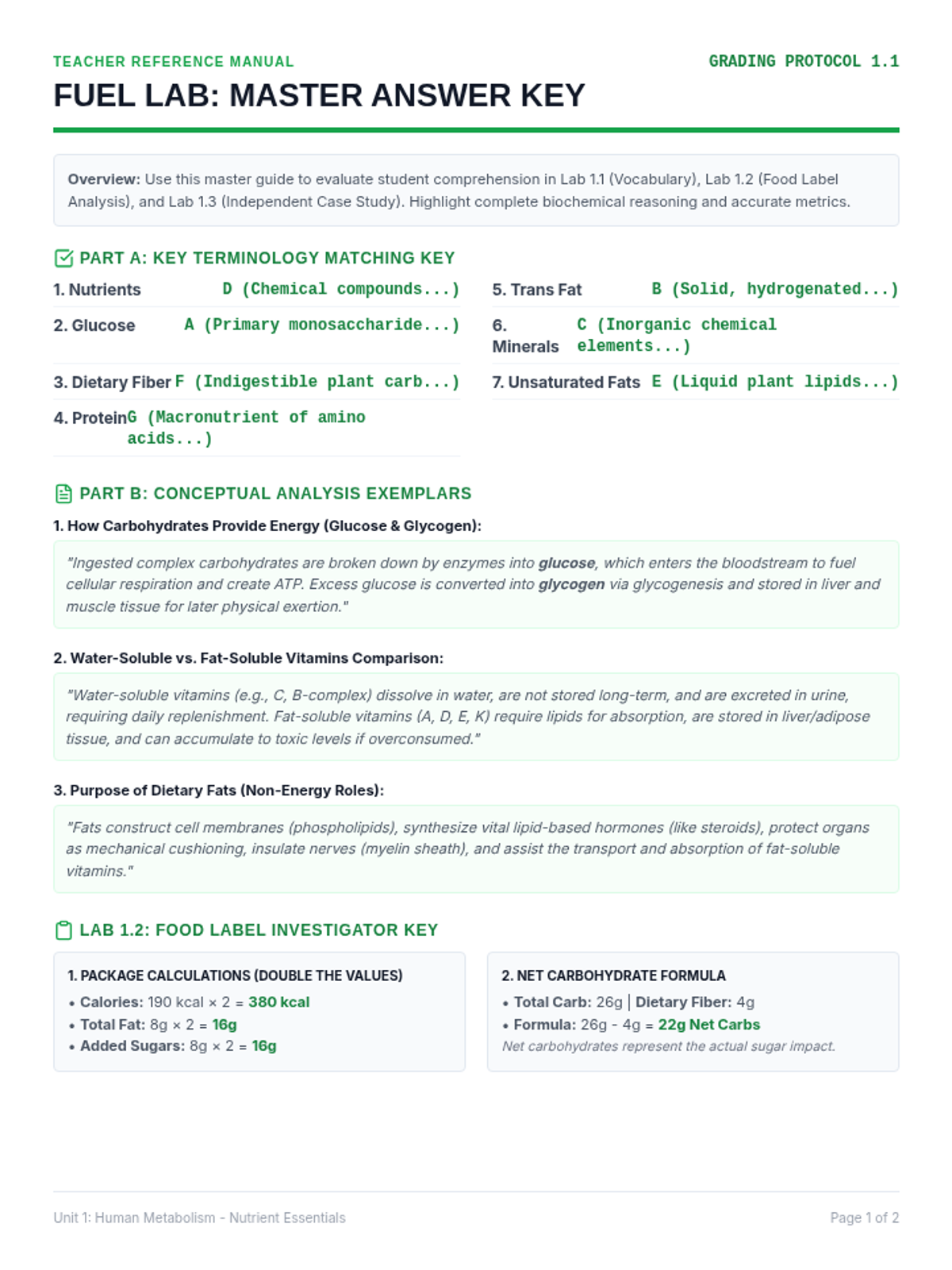
A 2-page teacher answer key and grading guide containing matched terms, completed calculations for the granola bar label, exemplary conceptual responses, and a holistic grading rubric.
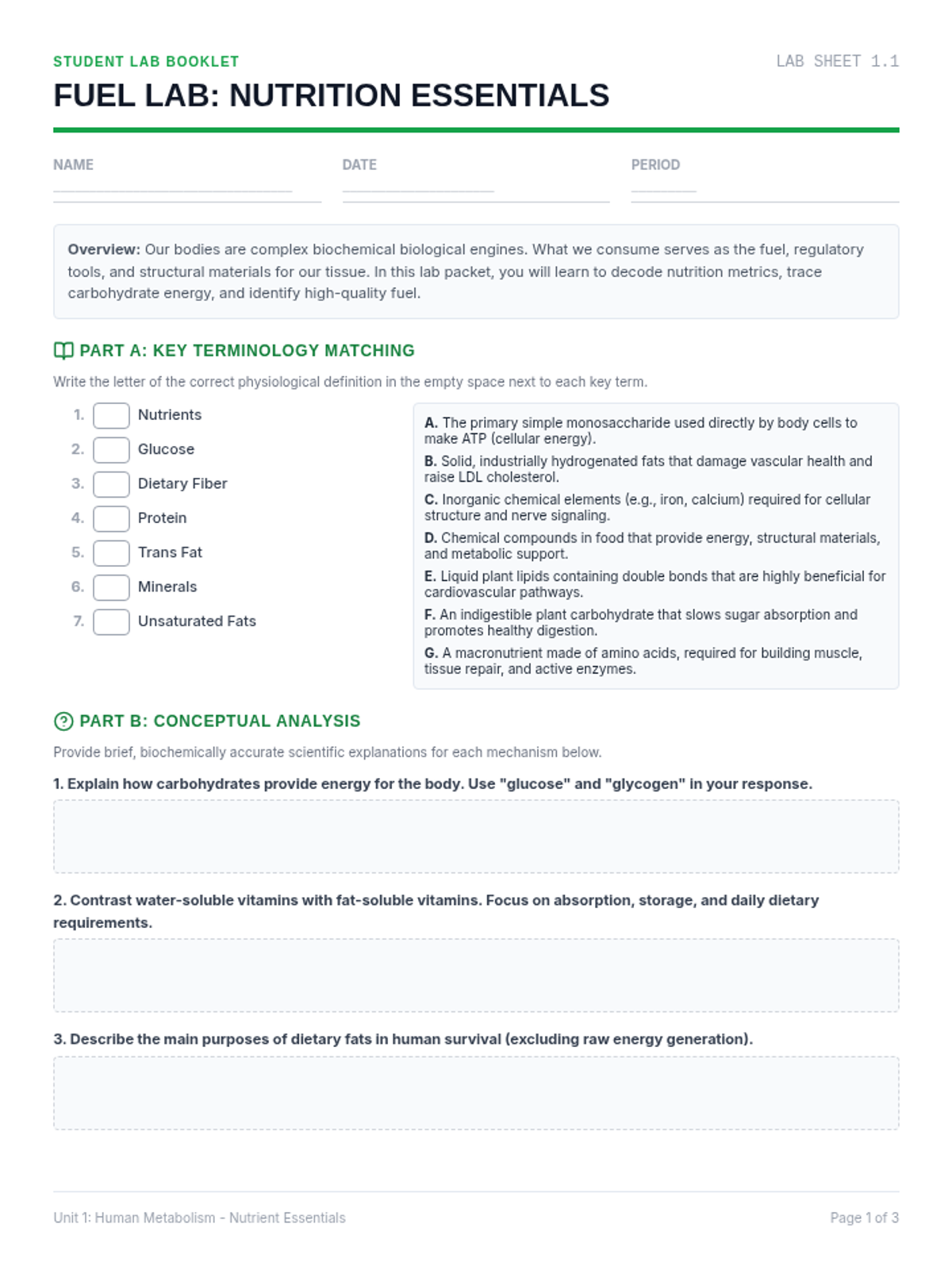
A simplified, highly readable version of the 3-page student activity packet, featuring streamlined vocabulary terms, clear guided labels, and structured, scaffolded analysis prompts.
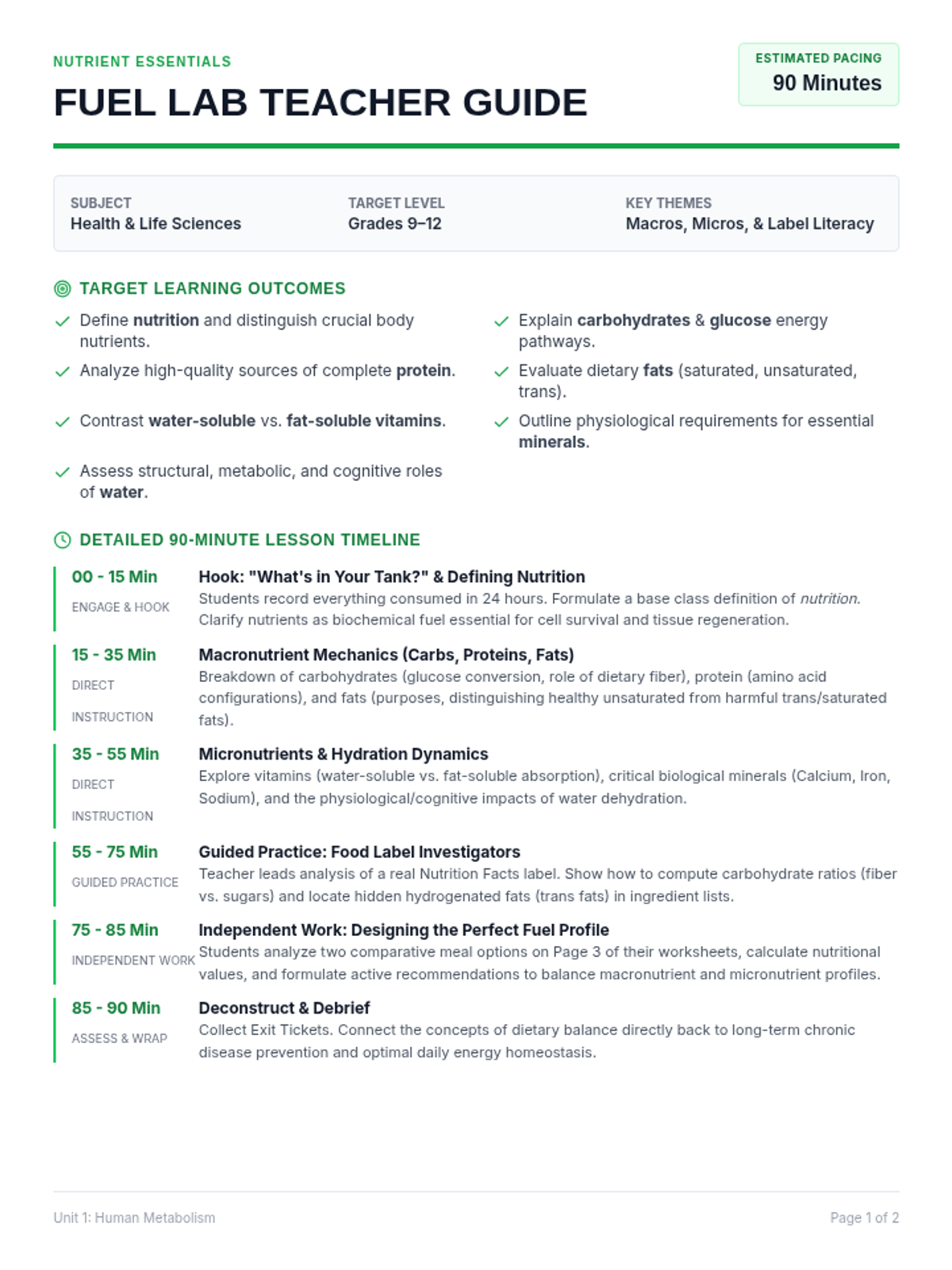
A detailed 2-page instructional guide for teachers to deliver a 90-minute lesson on nutrition essentials, including pacing timelines, direct instruction scripts, check-for-understanding questions, and differentiation strategies.
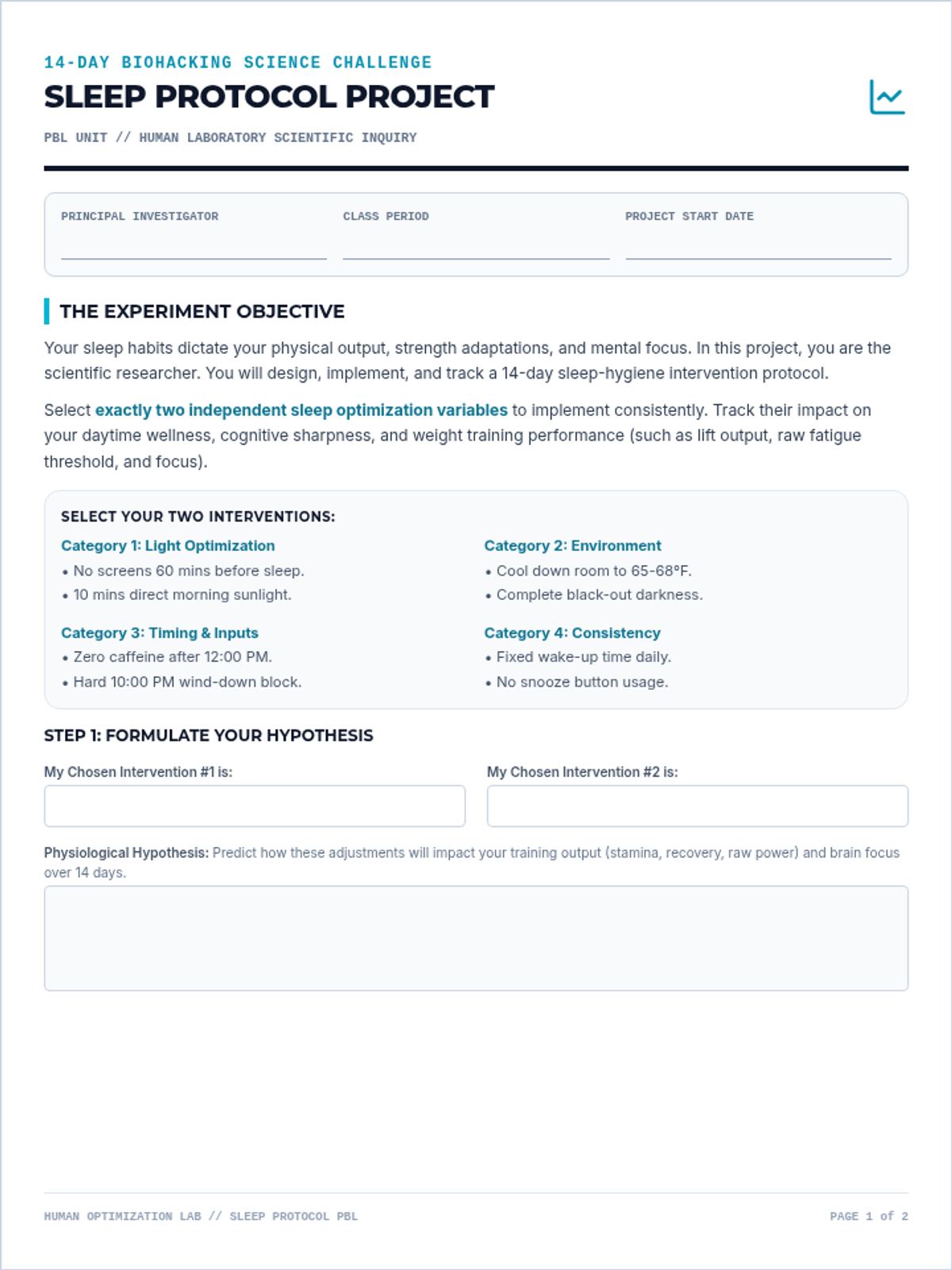
A comprehensive project guide for a 14-day sleep biohacking experiment, complete with tracking templates, sleep-diary logs, and a final presentation rubric.
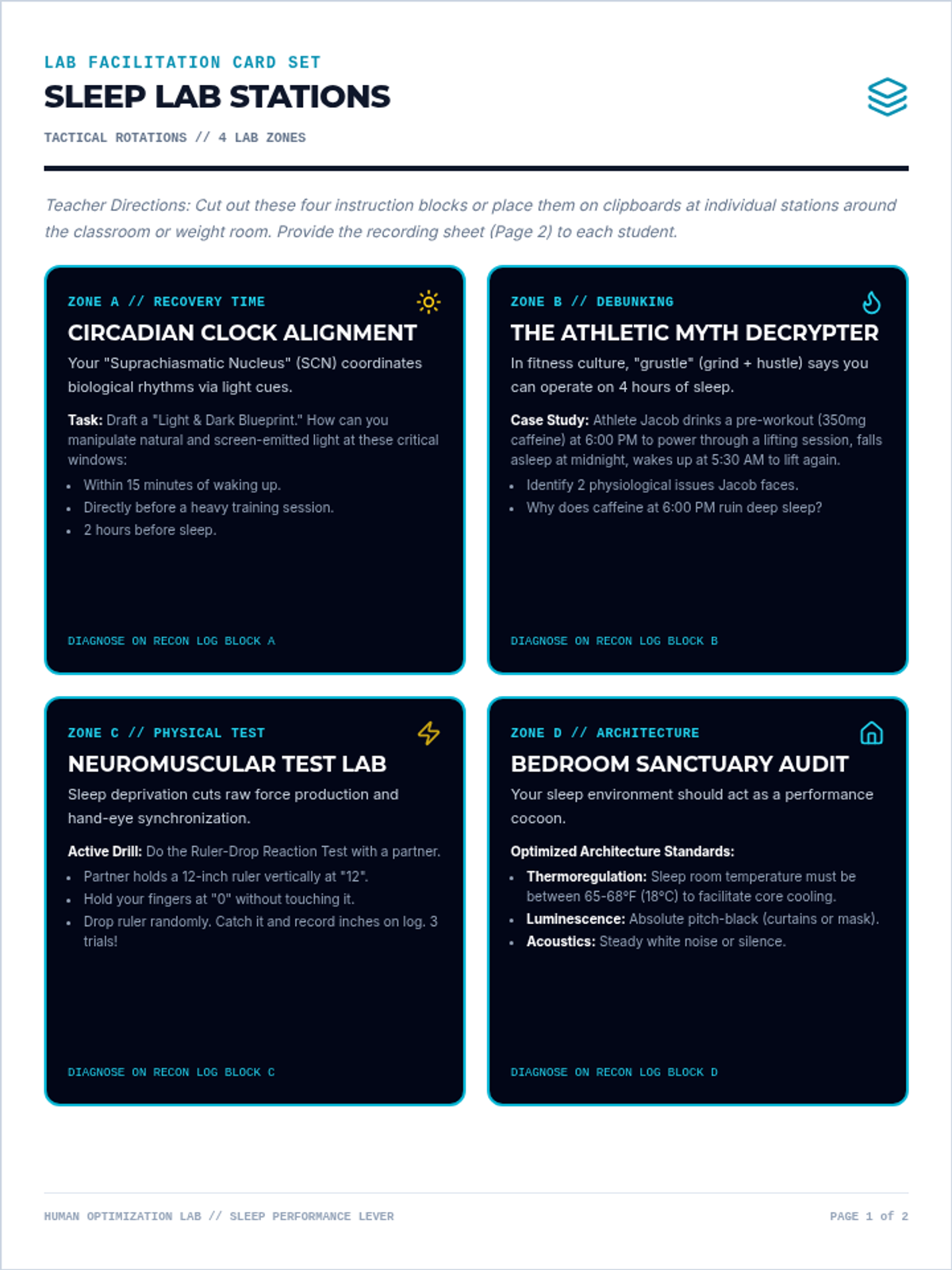
Four hands-on rotation stations covering circadian alignment, sleep-disrupting myths, cognitive performance testing, and designing a sleep-supportive bedroom environment.
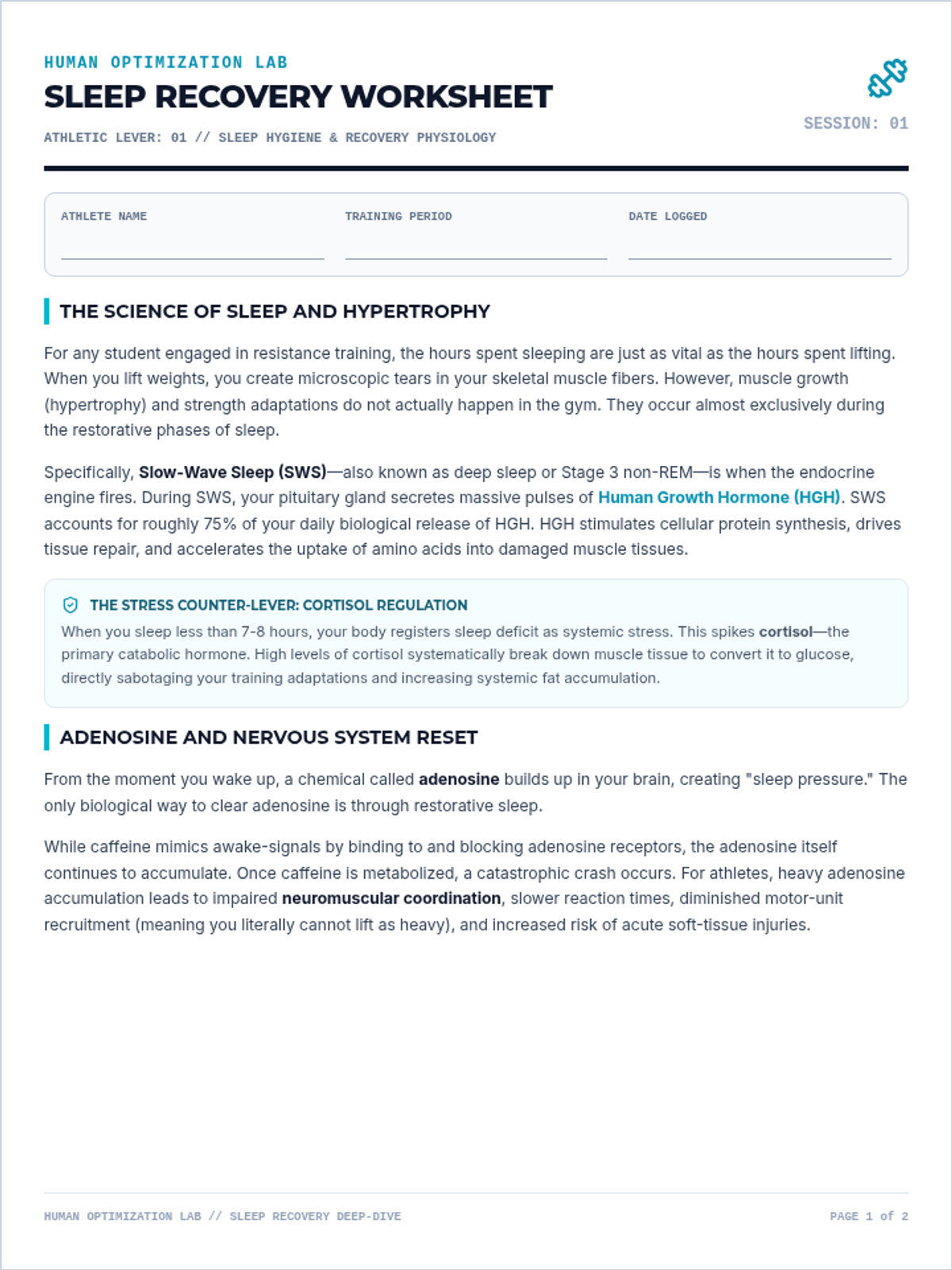
A guided reading and comprehension worksheet investigating the role of slow-wave sleep in muscle repair, human growth hormone (HGH) release, and cognitive performance.
Interactive slides exploring sleep hygiene, circadian rhythms, and athletic recovery, customized with student check-ins and visual breakdowns of sleep cycles for a weight training elective class.
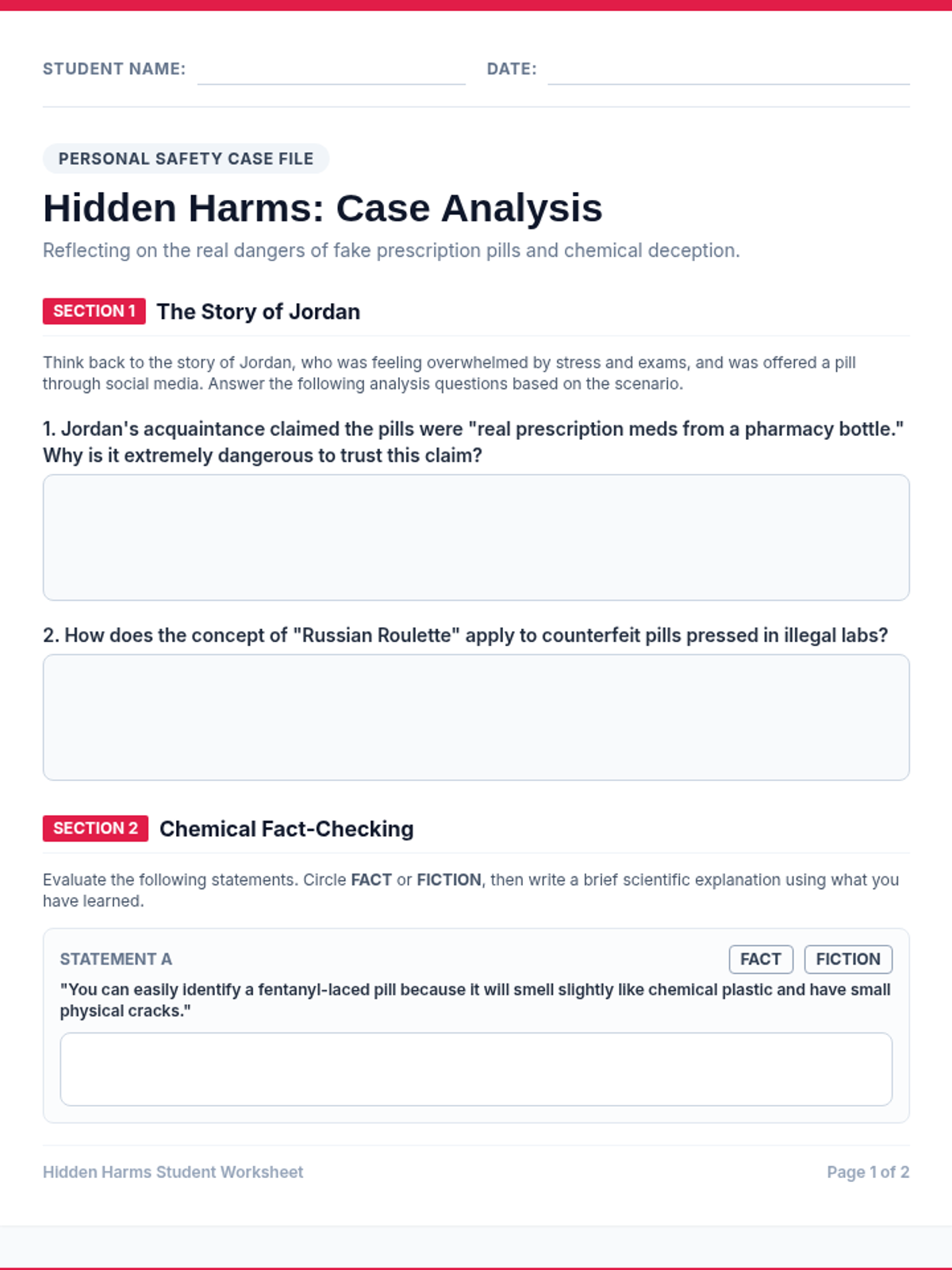
A 2-page student worksheet designed to accompany the drug safety read-aloud. It features case analysis questions, a fact-or-fiction section on synthetic drugs and chemical safety, custom refusal-skill drafting, and a structured worksheet for listing trusted personal support systems.
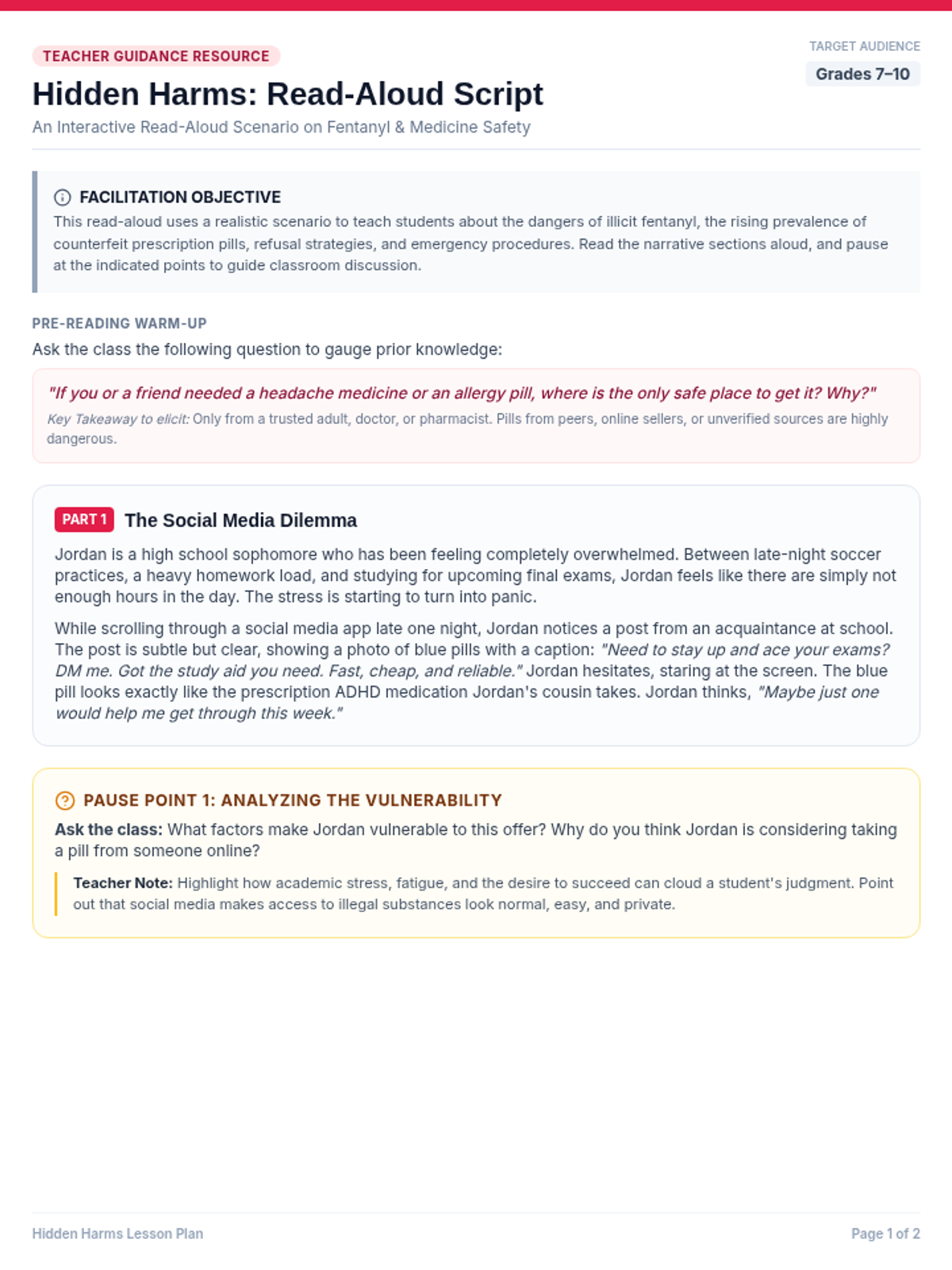
An interactive, 2-page teacher-facing read-aloud script on drug safety and fentanyl education. It features a relatable modern scenario, designated student-engagement pause points, clear teacher talking points, refusal scripts, and emergency action protocols.
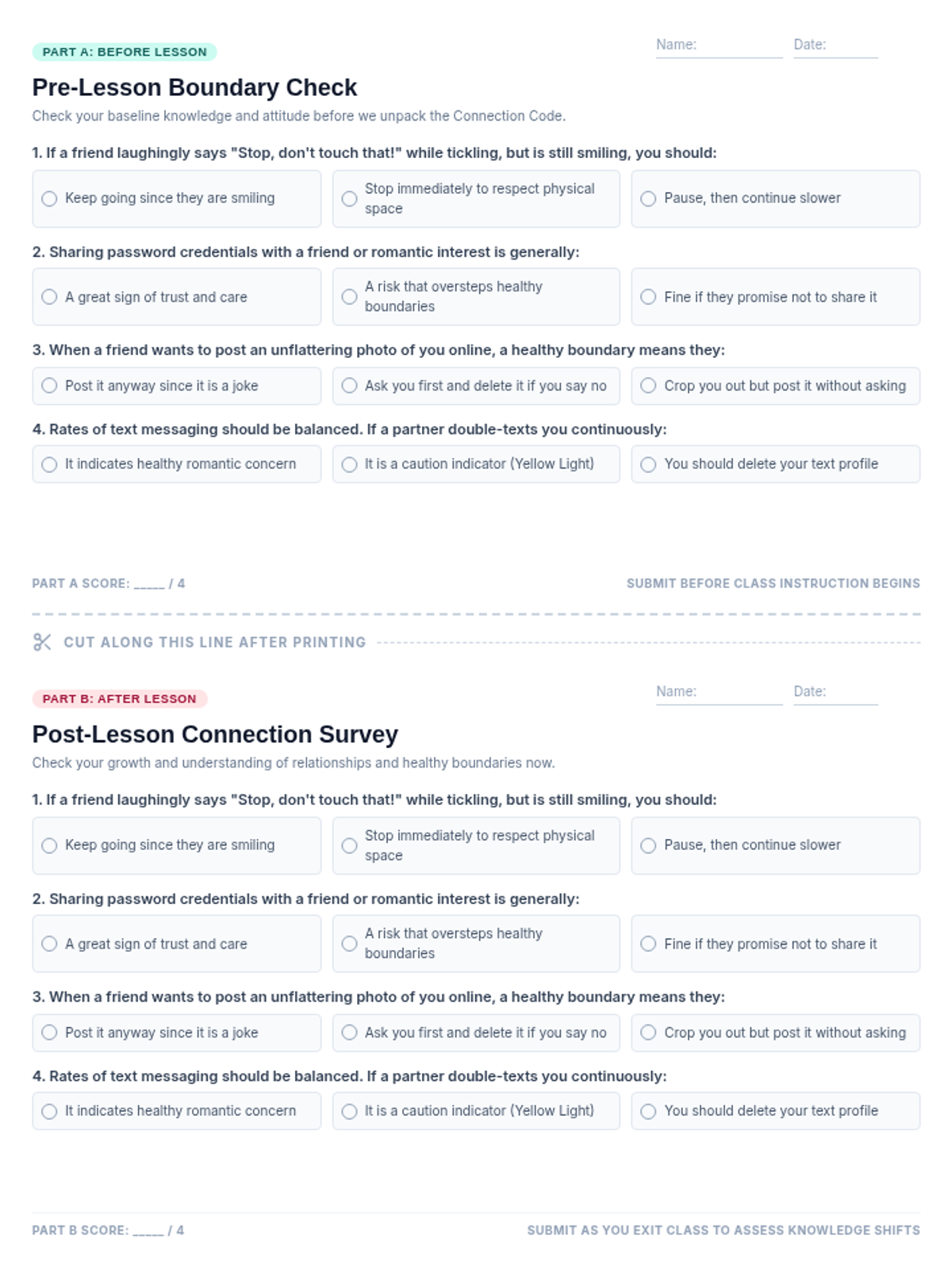
A pre- and post-lesson diagnostic survey designed as a half-page cut out worksheet. Features identical, styled multiple-choice questions to measure knowledge growth and attitude shifts regarding consent, passwords, and space.
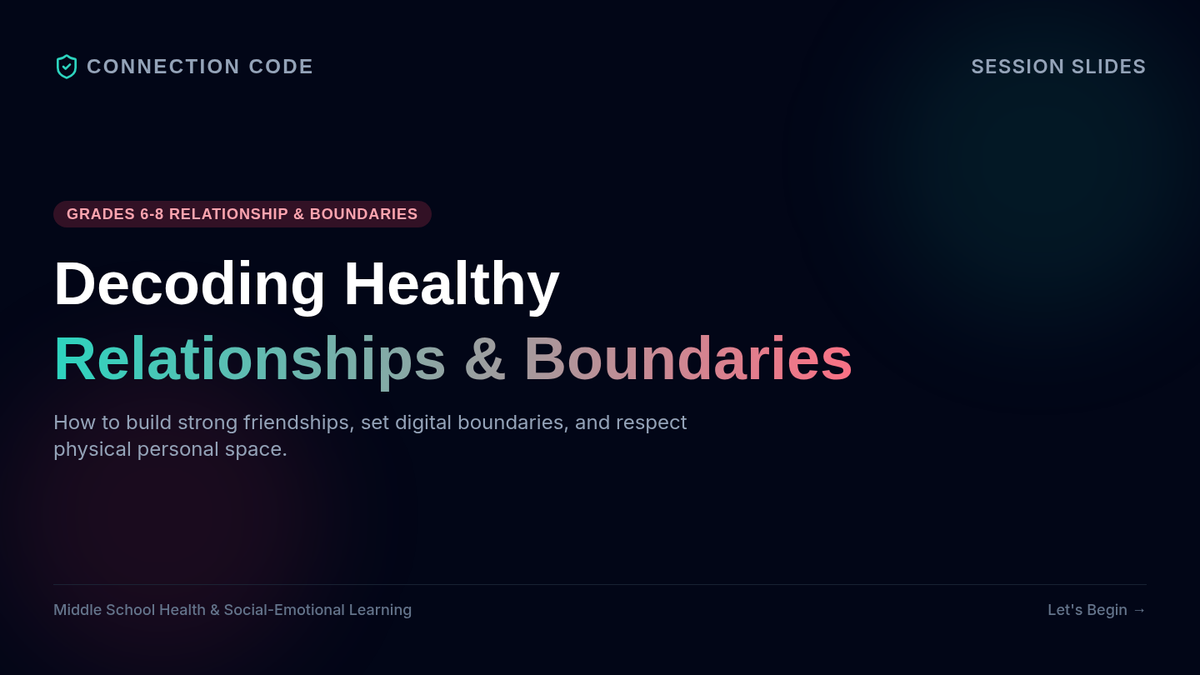
A comprehensive 5-slide visual presentation deck covering healthy physical space, digital boundaries, text etiquette, relationship indicators, and the assertive boundary-setting formula.