A classroom set of printable Emergency Scenario Role-Play Cards. Students work in small teams to act out real-world emergency choking situations, practice the Check-Call-Care sequence, and execute the correct Red Cross rescue maneuvers.
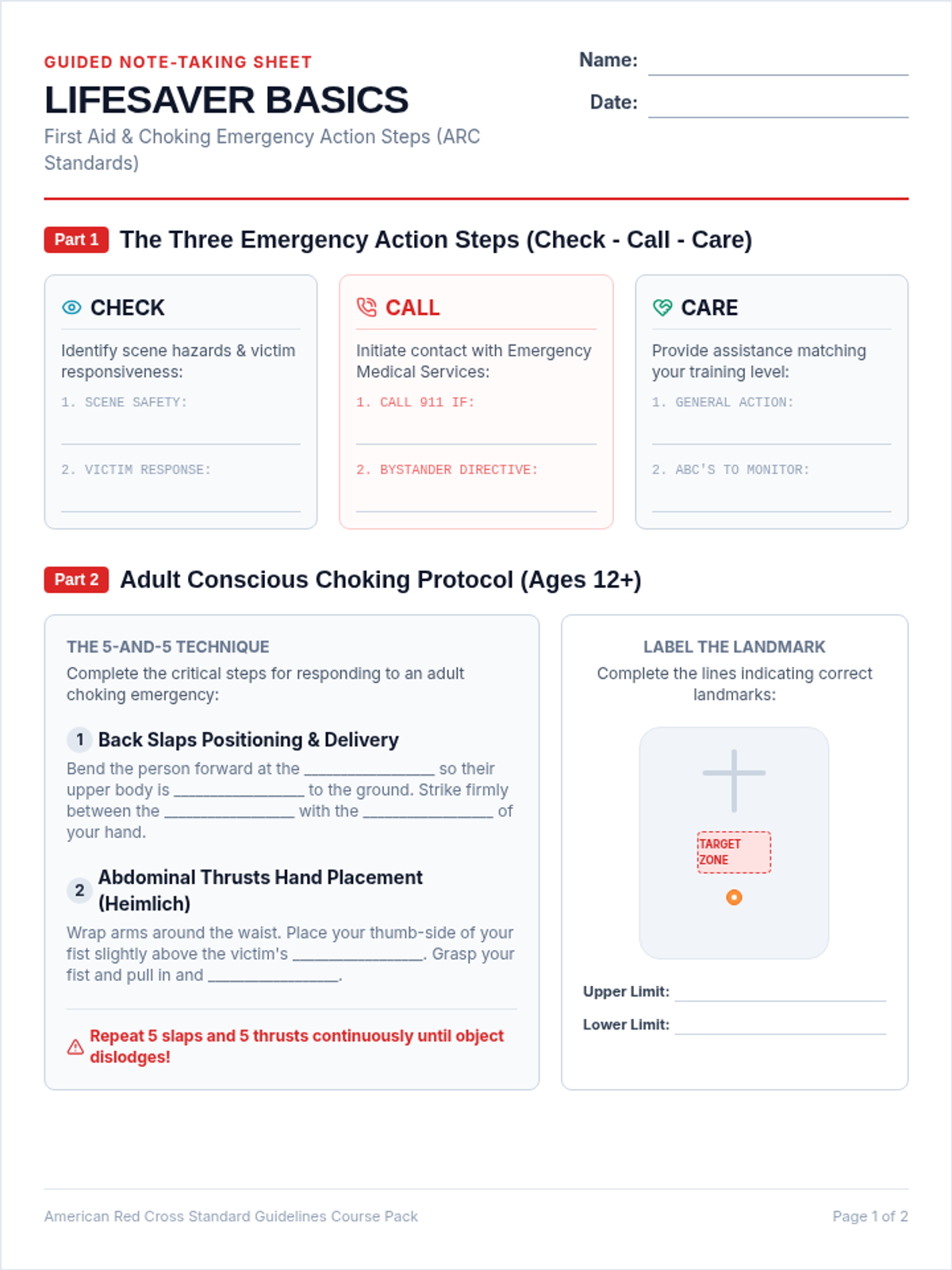
A highly structured, graphic organizer guided note-taking packet for students, perfectly matching the visual flow and milestones of the Lifesaver Basics slides. Features clear fill-in sections and stylized pathway maps.
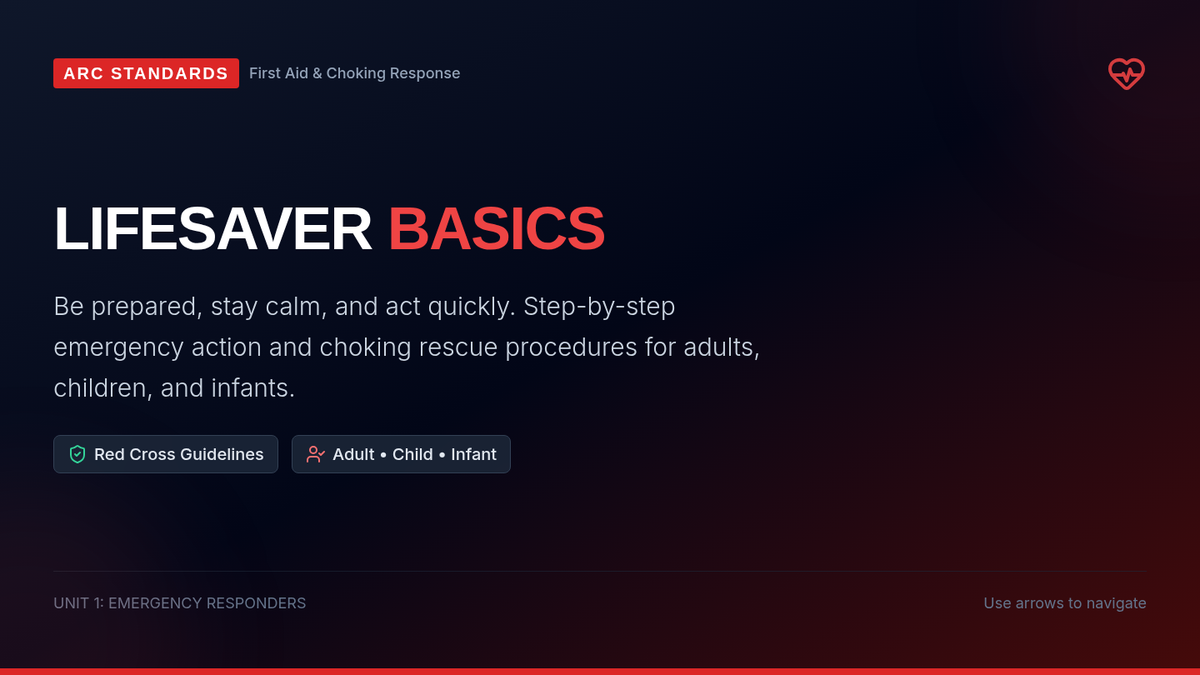
An interactive and highly visual slide deck teaching the core American Red Cross emergency action steps and specific choking rescue procedures (Heimlich maneuver) for adults, children, and infants. Features clean infographic flowcharts and step-by-step hand placement guides.
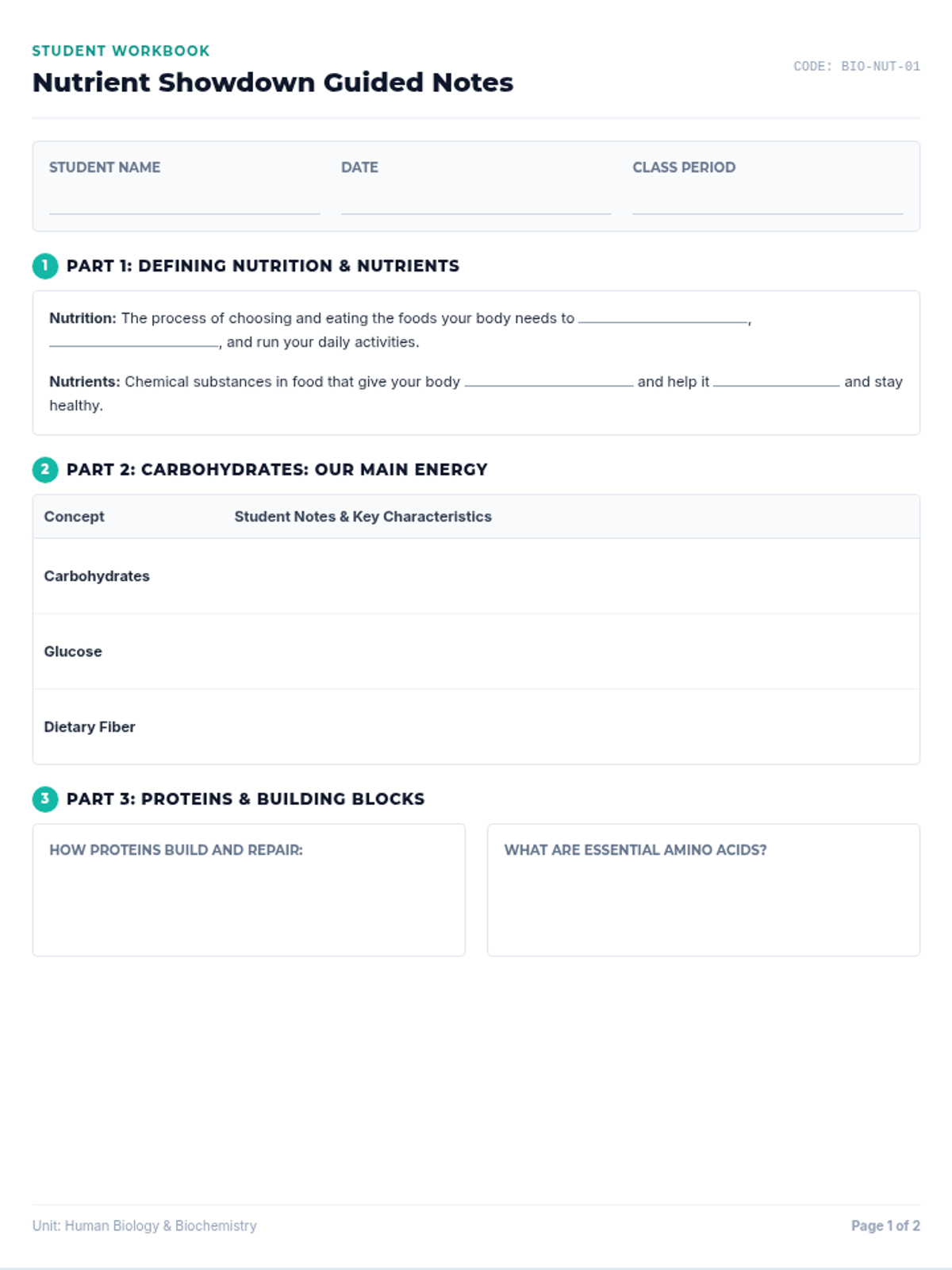
A structured 2-page graphic organizer and note-taking workbook for student use during the lecture. Features crisp conceptual fill-in-the-blank tables, comparison charts, and a self-guided case analysis.
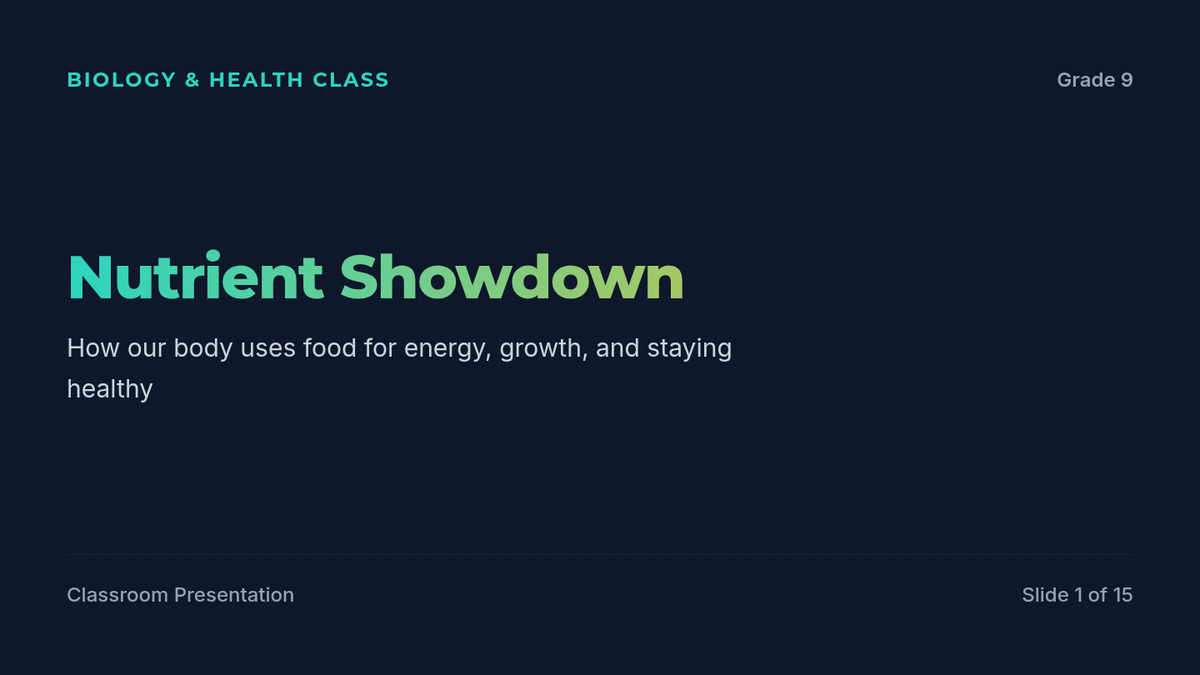
A simplified premium 15-slide presentation deck covering macronutrients, micronutrients, vitamin solubility, mineral absorption, and hydration dynamics. Designed with accessible vocabulary and zero non-functional interactive elements.
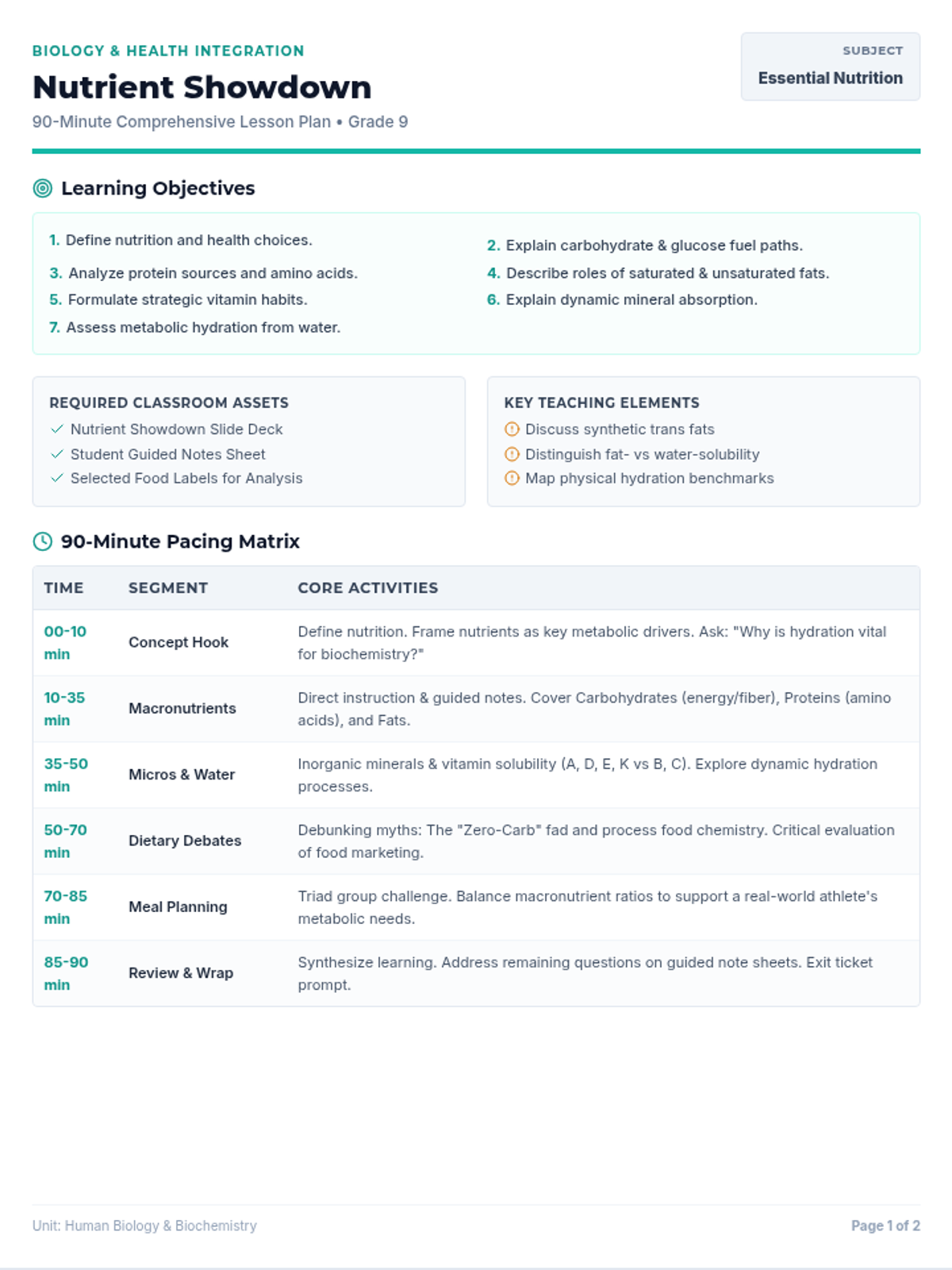
A professional 2-page teacher facilitation guide and lesson plan for the 90-minute Nutrient Showdown lesson. It contains pacing details, standard alignments, discussion prompts, active learning guides, and answer key references.
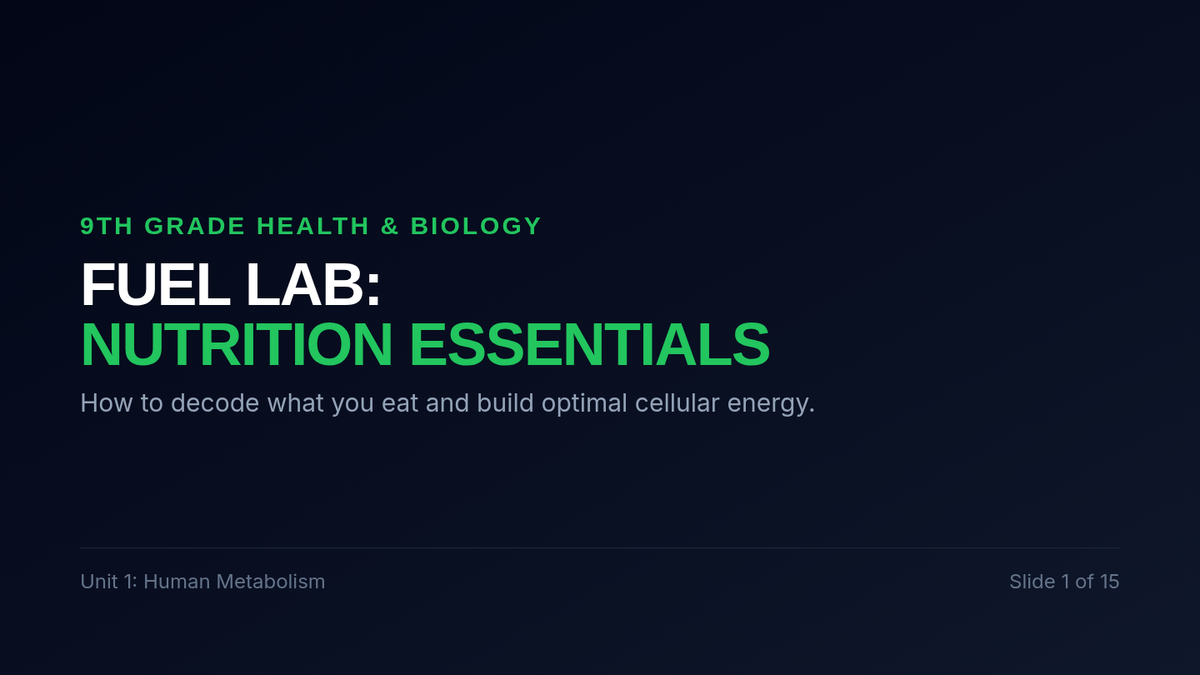
A highly visual 15-slide presentation matching the Fuel Lab theme, utilizing bold, high-contrast layouts and large readable text (minimum 24px) for classroom guided instruction.
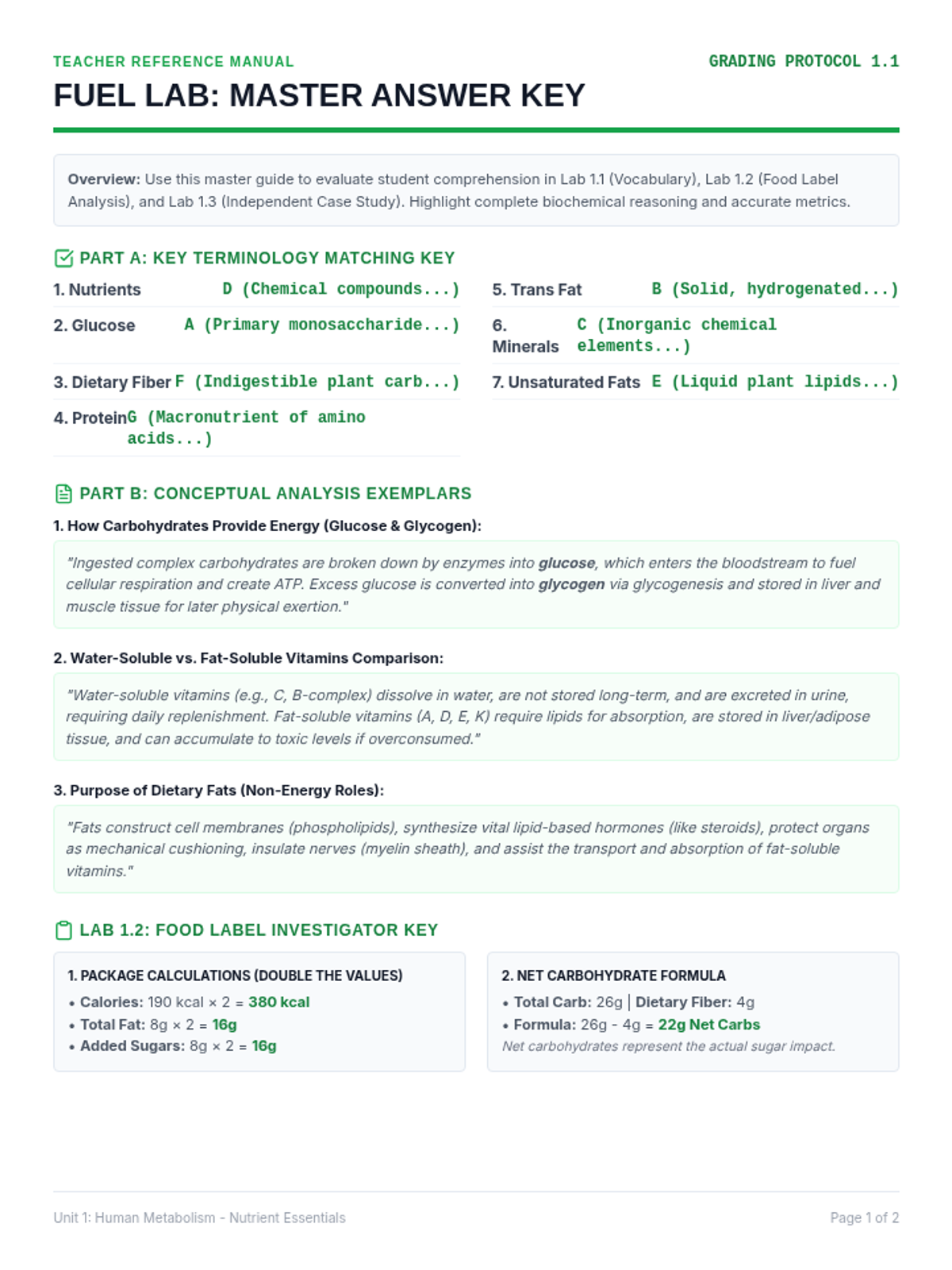
A 2-page teacher answer key and grading guide containing matched terms, completed calculations for the granola bar label, exemplary conceptual responses, and a holistic grading rubric.
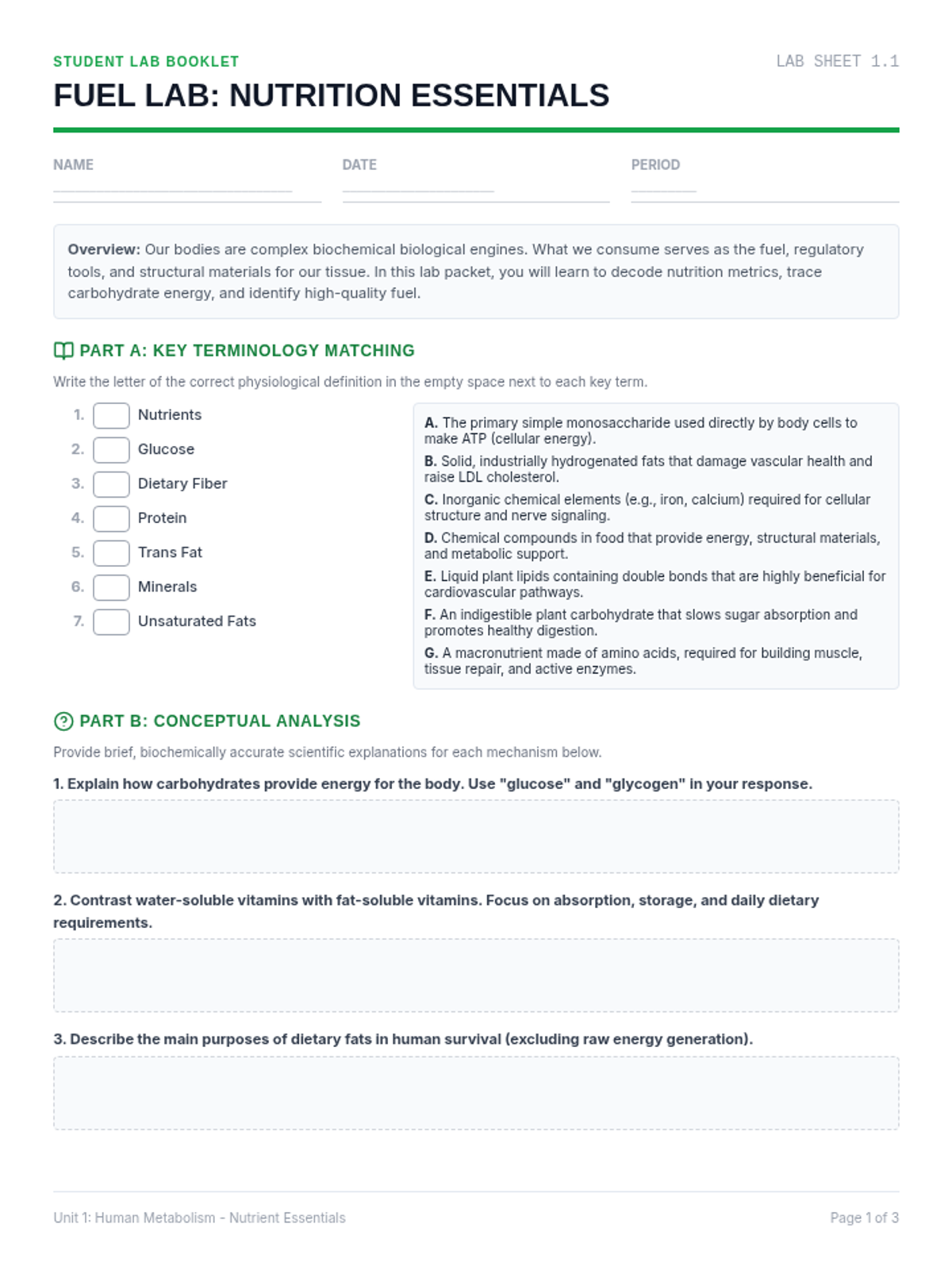
A simplified, highly readable version of the 3-page student activity packet, featuring streamlined vocabulary terms, clear guided labels, and structured, scaffolded analysis prompts.
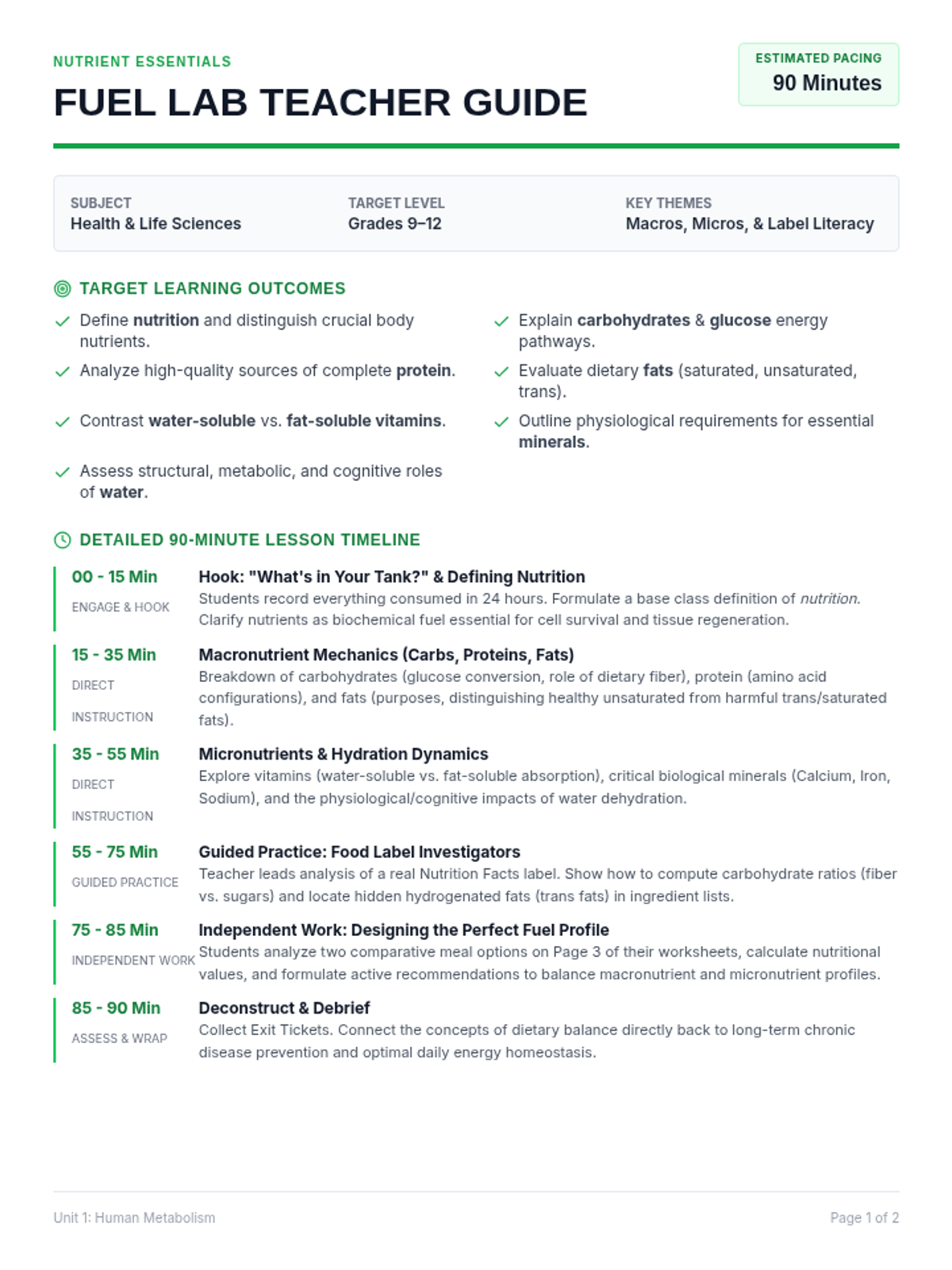
A detailed 2-page instructional guide for teachers to deliver a 90-minute lesson on nutrition essentials, including pacing timelines, direct instruction scripts, check-for-understanding questions, and differentiation strategies.
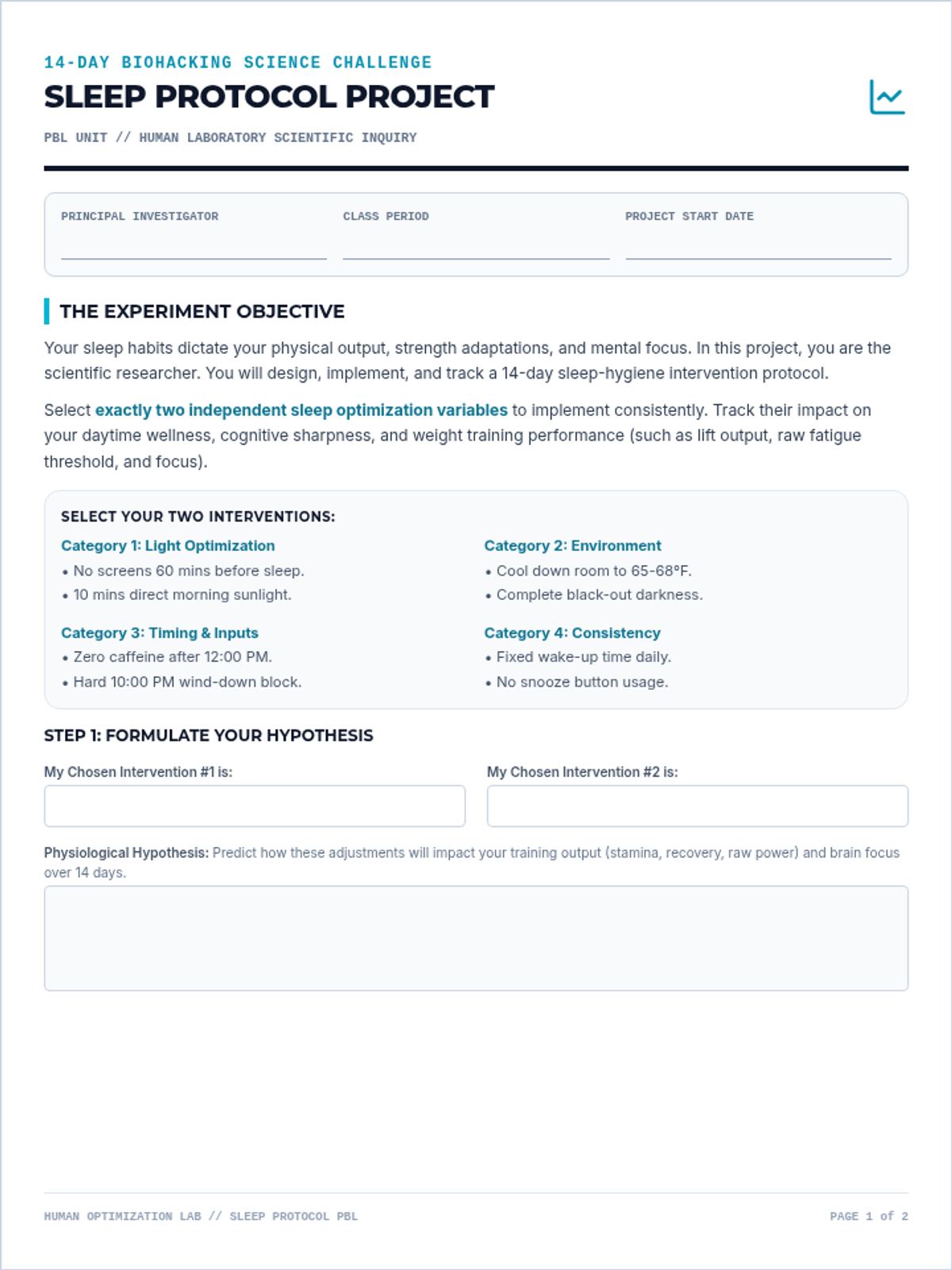
A comprehensive project guide for a 14-day sleep biohacking experiment, complete with tracking templates, sleep-diary logs, and a final presentation rubric.
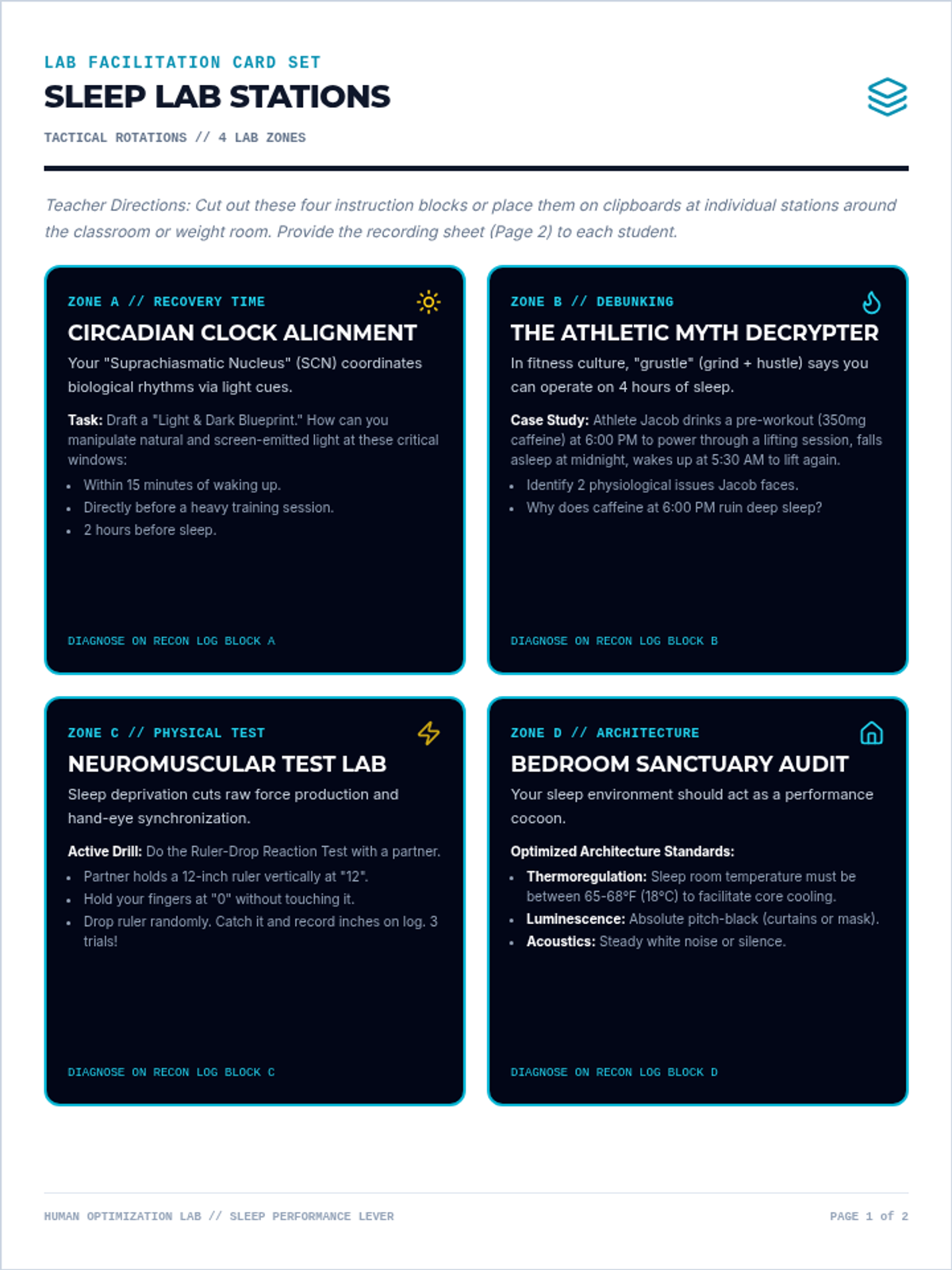
Four hands-on rotation stations covering circadian alignment, sleep-disrupting myths, cognitive performance testing, and designing a sleep-supportive bedroom environment.
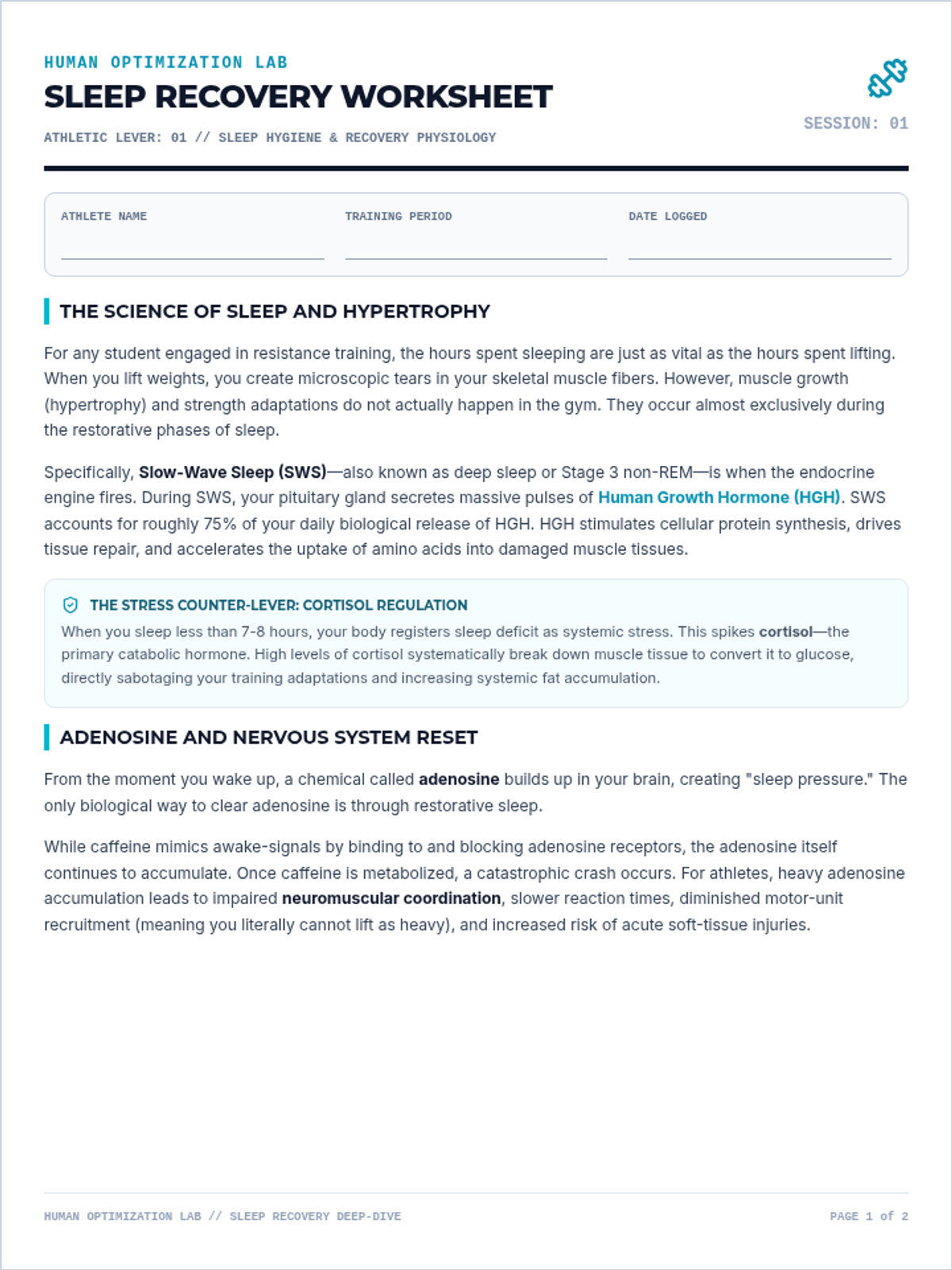
A guided reading and comprehension worksheet investigating the role of slow-wave sleep in muscle repair, human growth hormone (HGH) release, and cognitive performance.
Interactive slides exploring sleep hygiene, circadian rhythms, and athletic recovery, customized with student check-ins and visual breakdowns of sleep cycles for a weight training elective class.
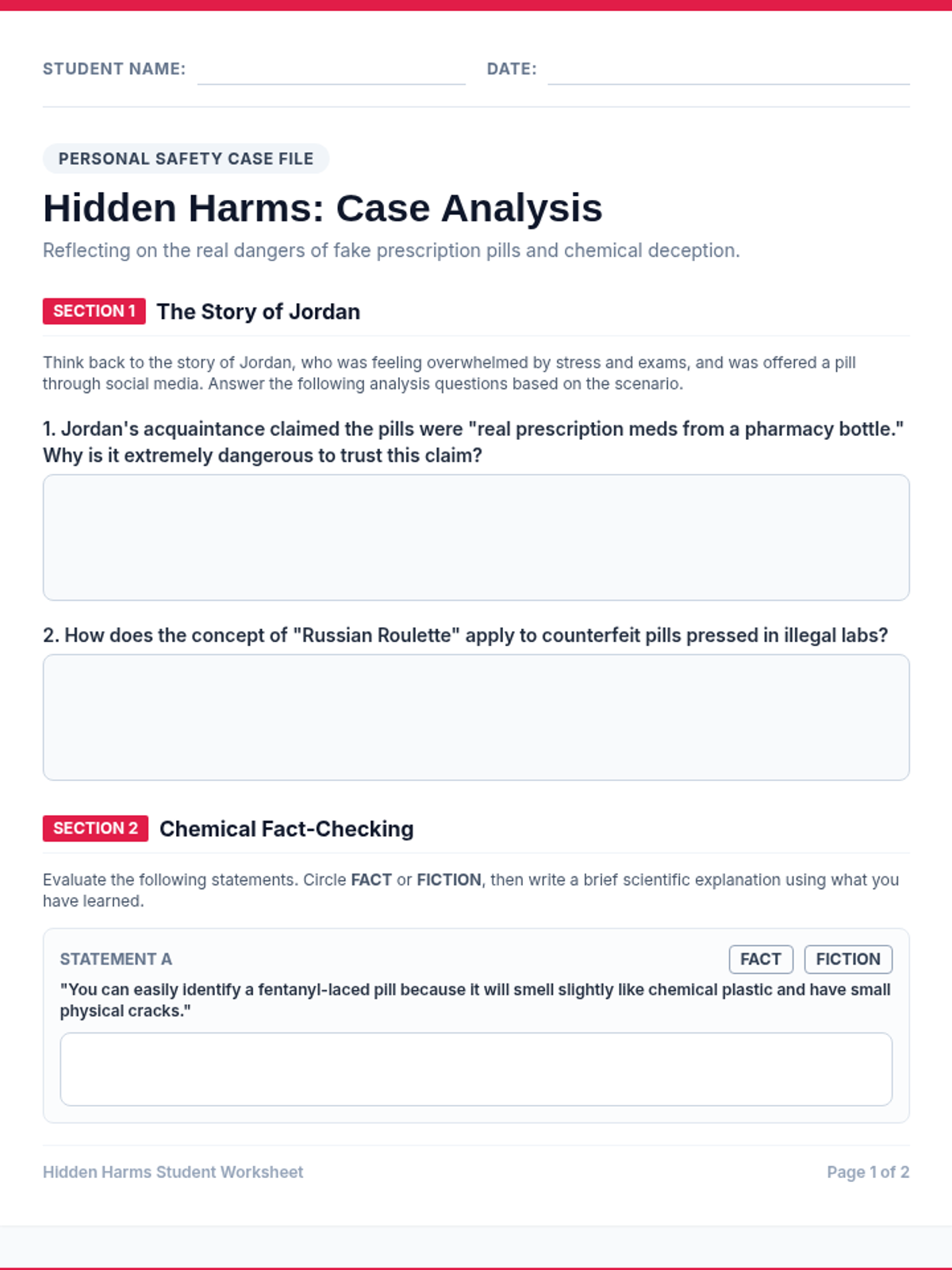
A 2-page student worksheet designed to accompany the drug safety read-aloud. It features case analysis questions, a fact-or-fiction section on synthetic drugs and chemical safety, custom refusal-skill drafting, and a structured worksheet for listing trusted personal support systems.
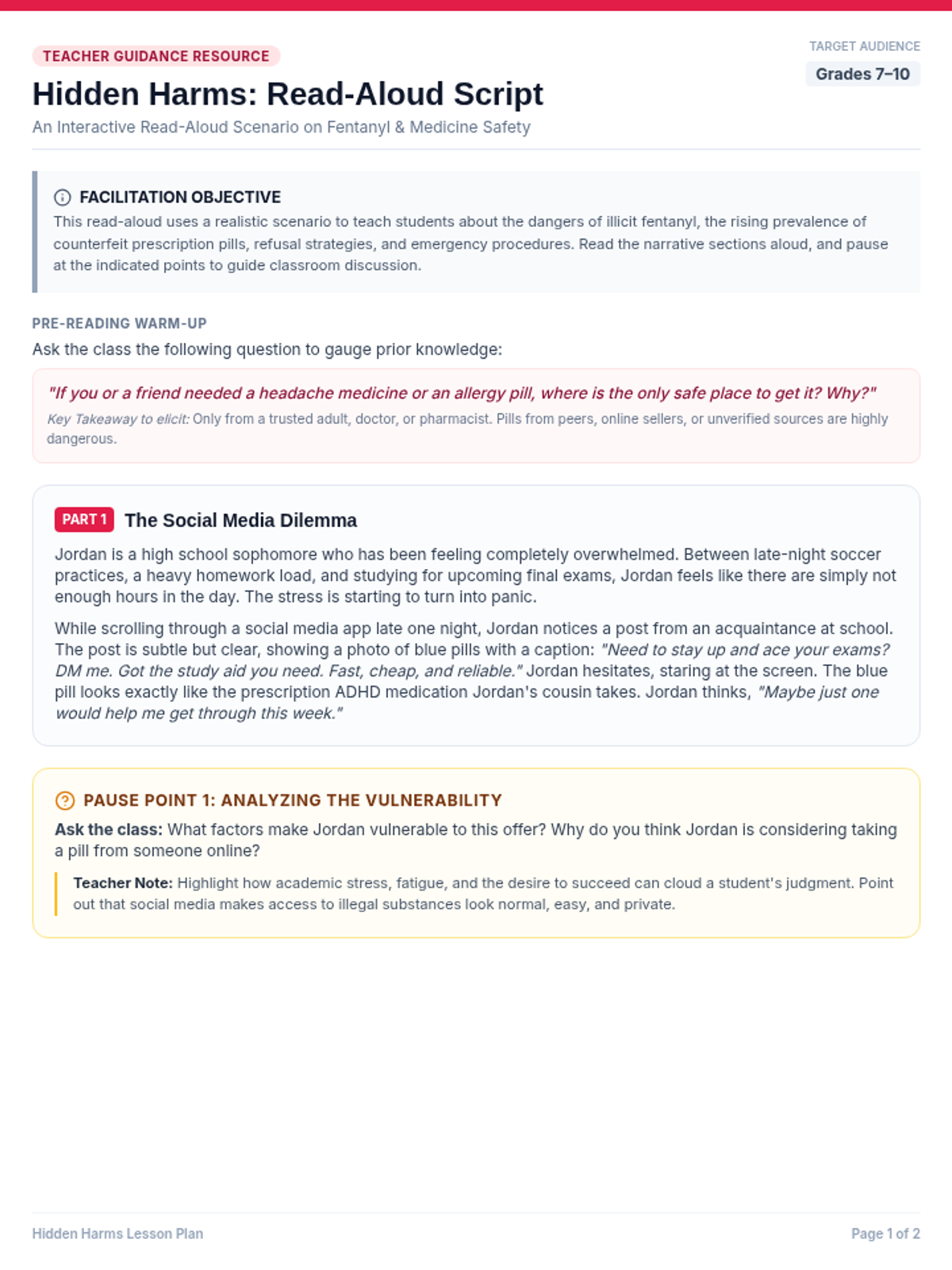
An interactive, 2-page teacher-facing read-aloud script on drug safety and fentanyl education. It features a relatable modern scenario, designated student-engagement pause points, clear teacher talking points, refusal scripts, and emergency action protocols.
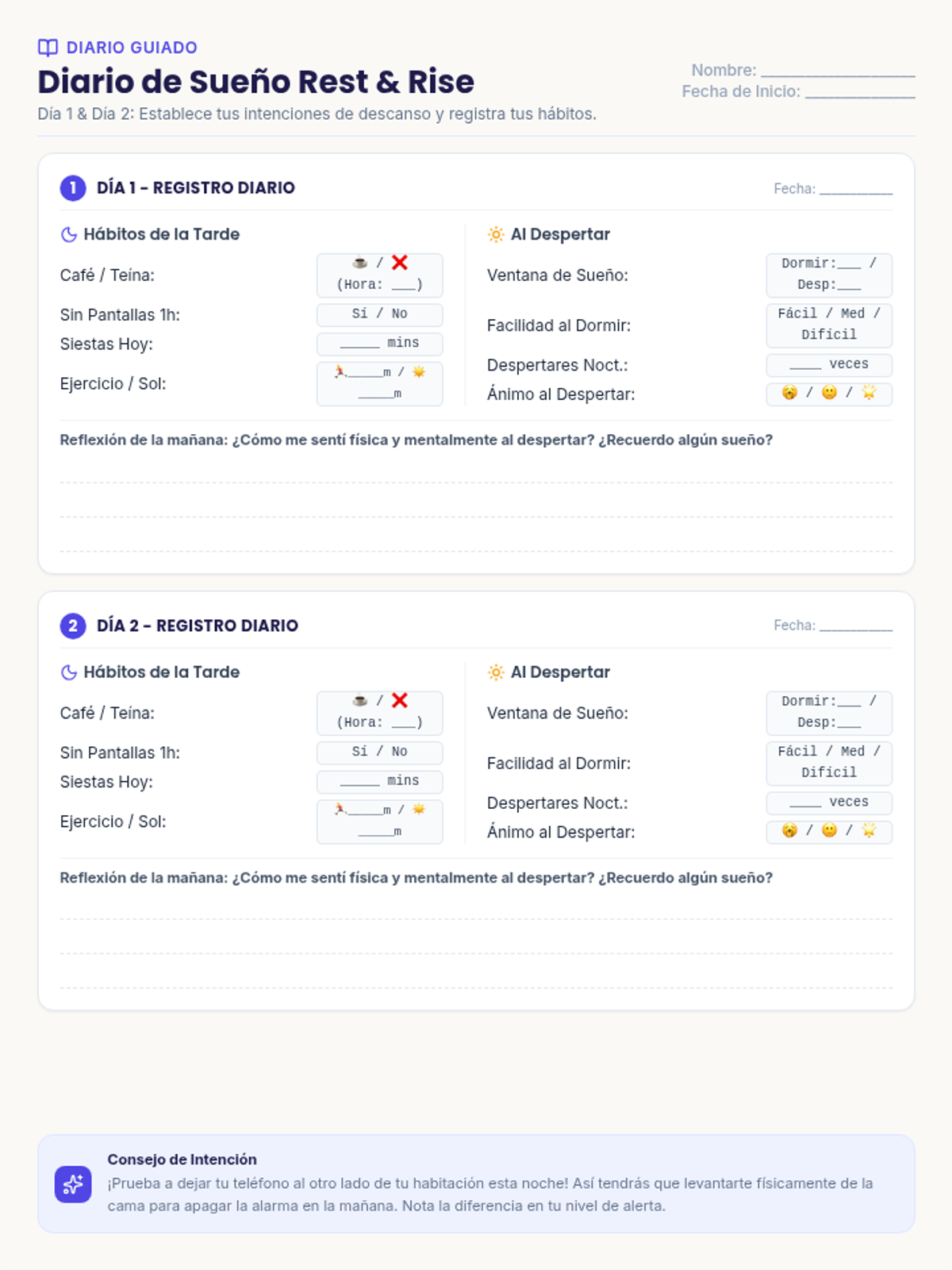
A 4-page detailed printable journal for tracking sleep and mood across 7 days translated into Spanish. Each page contains highly structured evening and morning trackers, dedicated sections for caffeine, screens, naps, exercise, outdoor sunshine, nocturnal wakeups, falling sleep quality, waking mood, morning thoughts, and a complete weekly synthesis review.
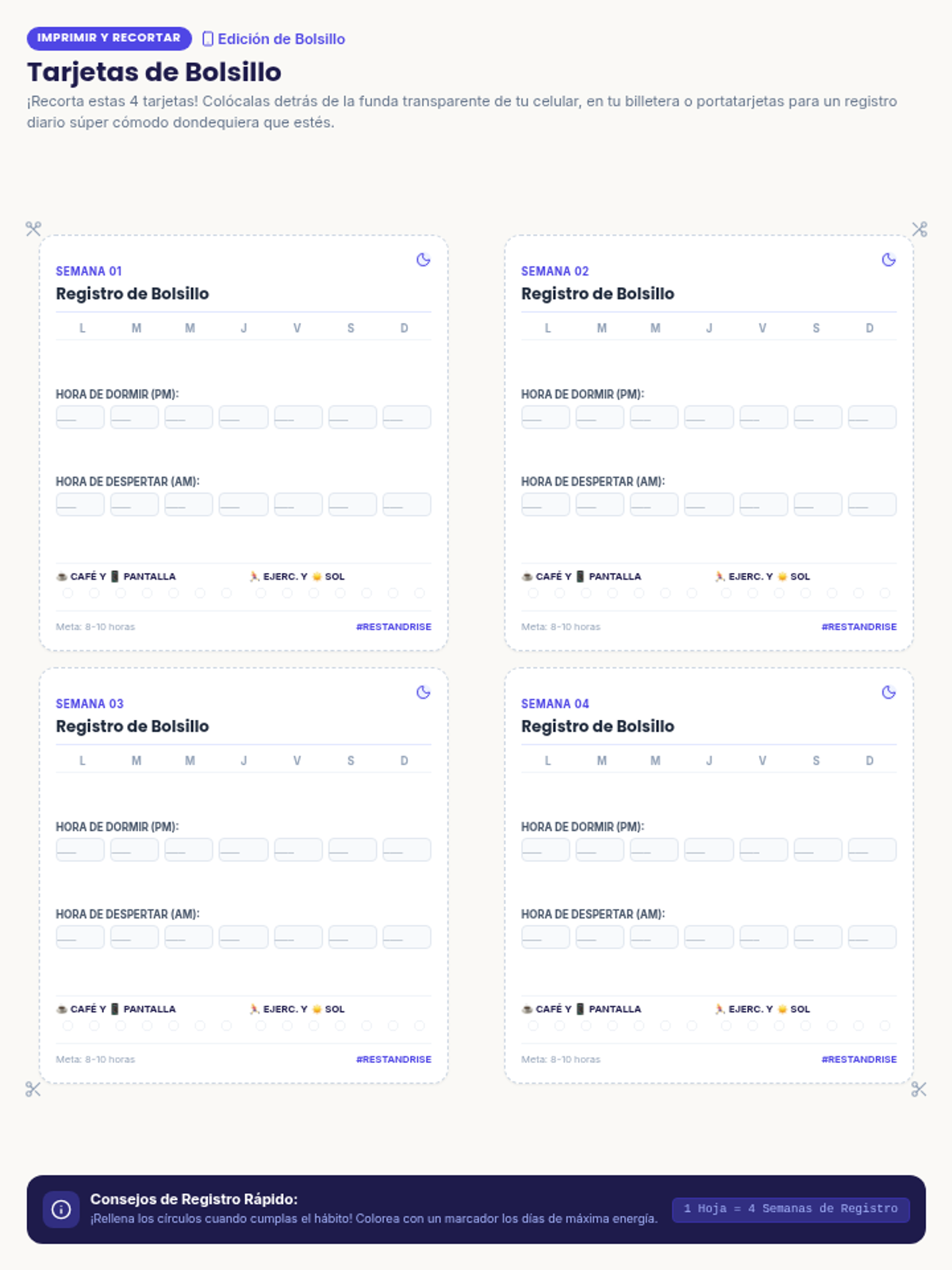
A 1-page printable document containing 4 pocket-sized sleep and mood tracking cards translated into Spanish. Features weekly grids for easy logging of bedtimes, wake times, caffeine logs, screens, and movement.
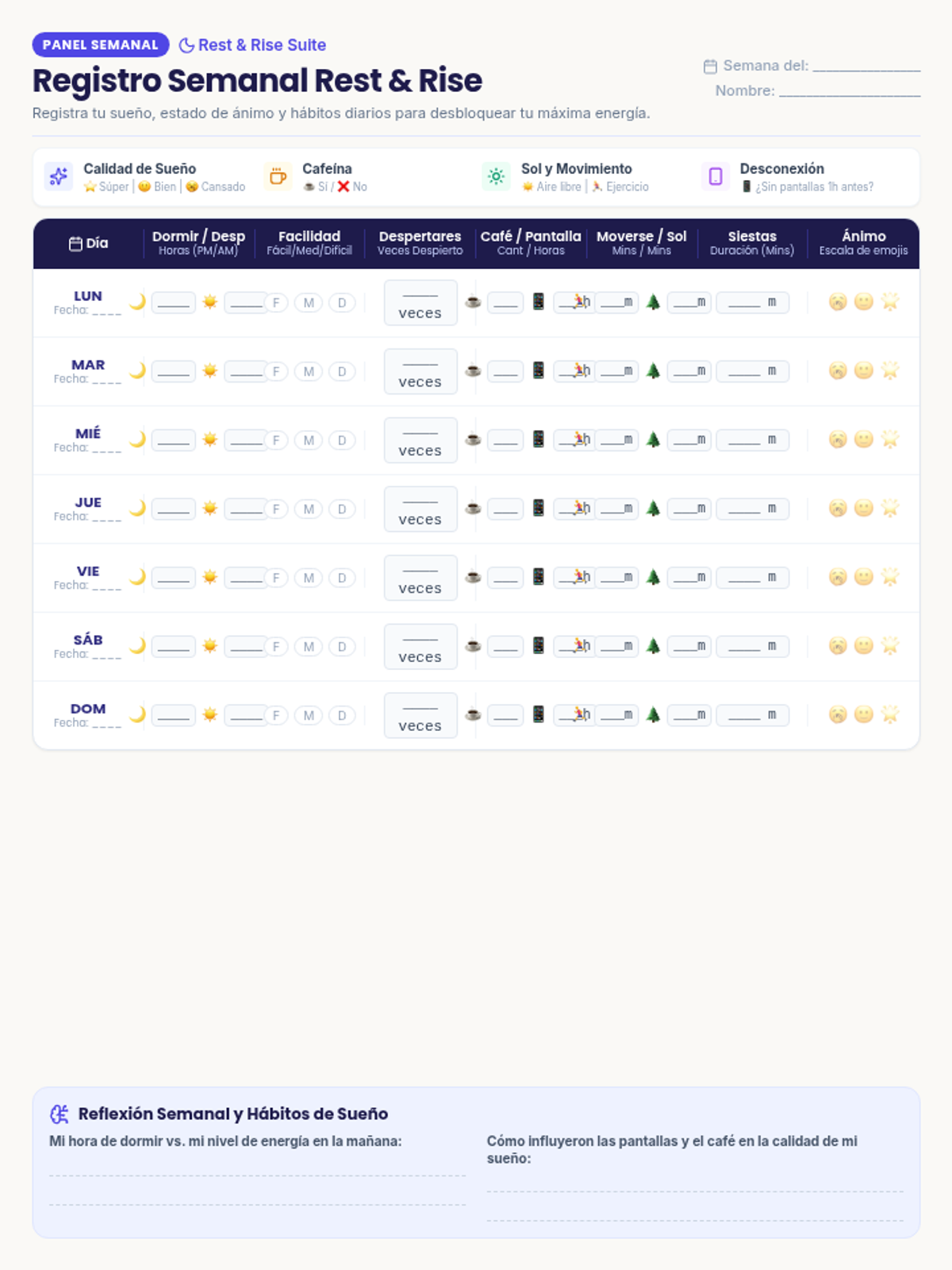
A clean, highly visual 1-page weekly tracker translated into Spanish. Features rows for each day of the week to log bed/wake times, ease of falling asleep, nocturnal wakeups, caffeine, screen time, exercise, sunshine, naps, and waking mood. Includes a custom weekly pattern synthesis reflection panel.
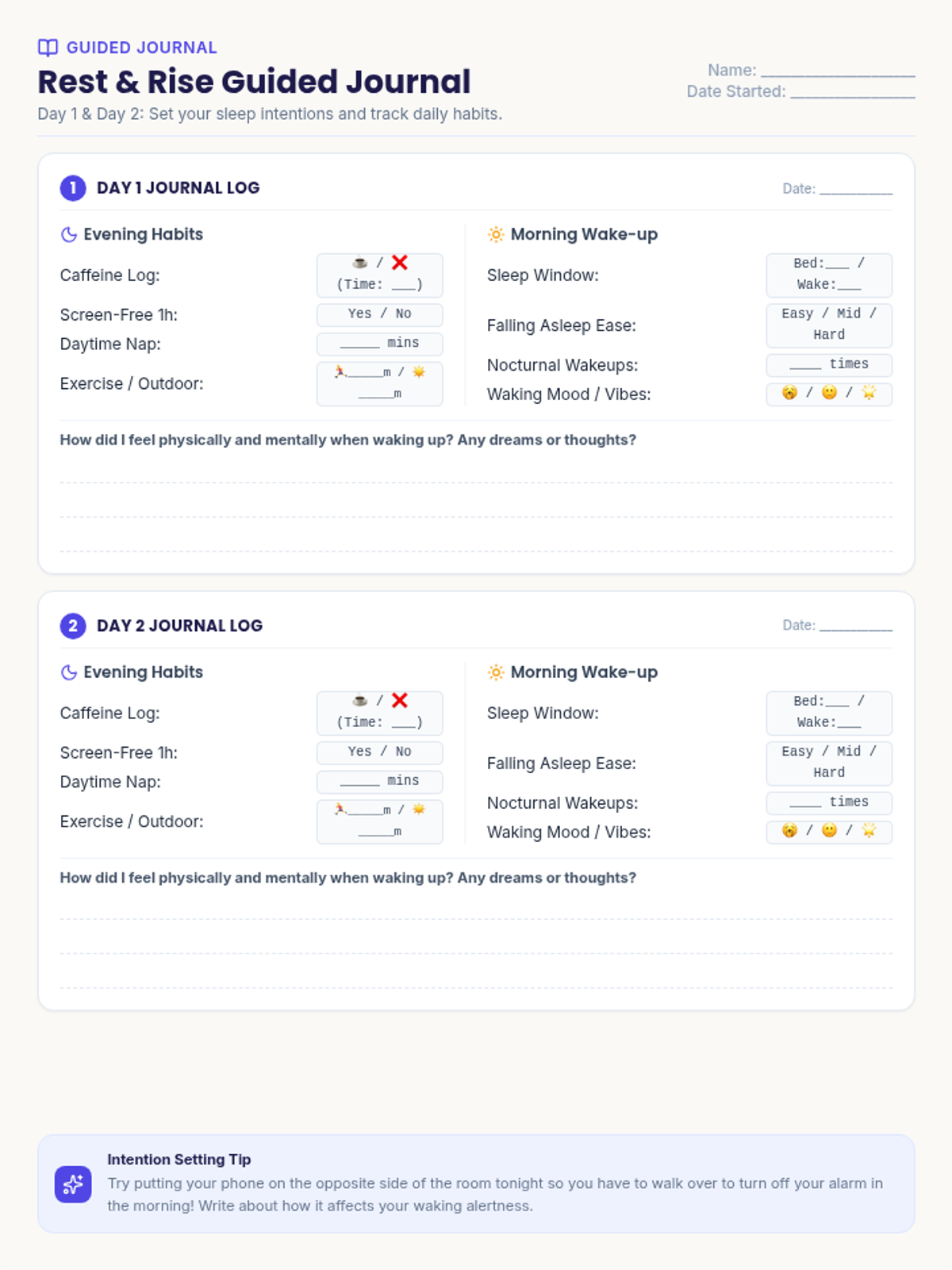
A 4-page detailed printable journal for tracking sleep and mood across 7 days. Each page contains highly structured evening and morning trackers, dedicated sections for caffeine, screens, naps, exercise, outdoor sunshine, nocturnal wakeups, falling sleep quality, waking mood, morning thoughts, and a complete weekly synthesis review.
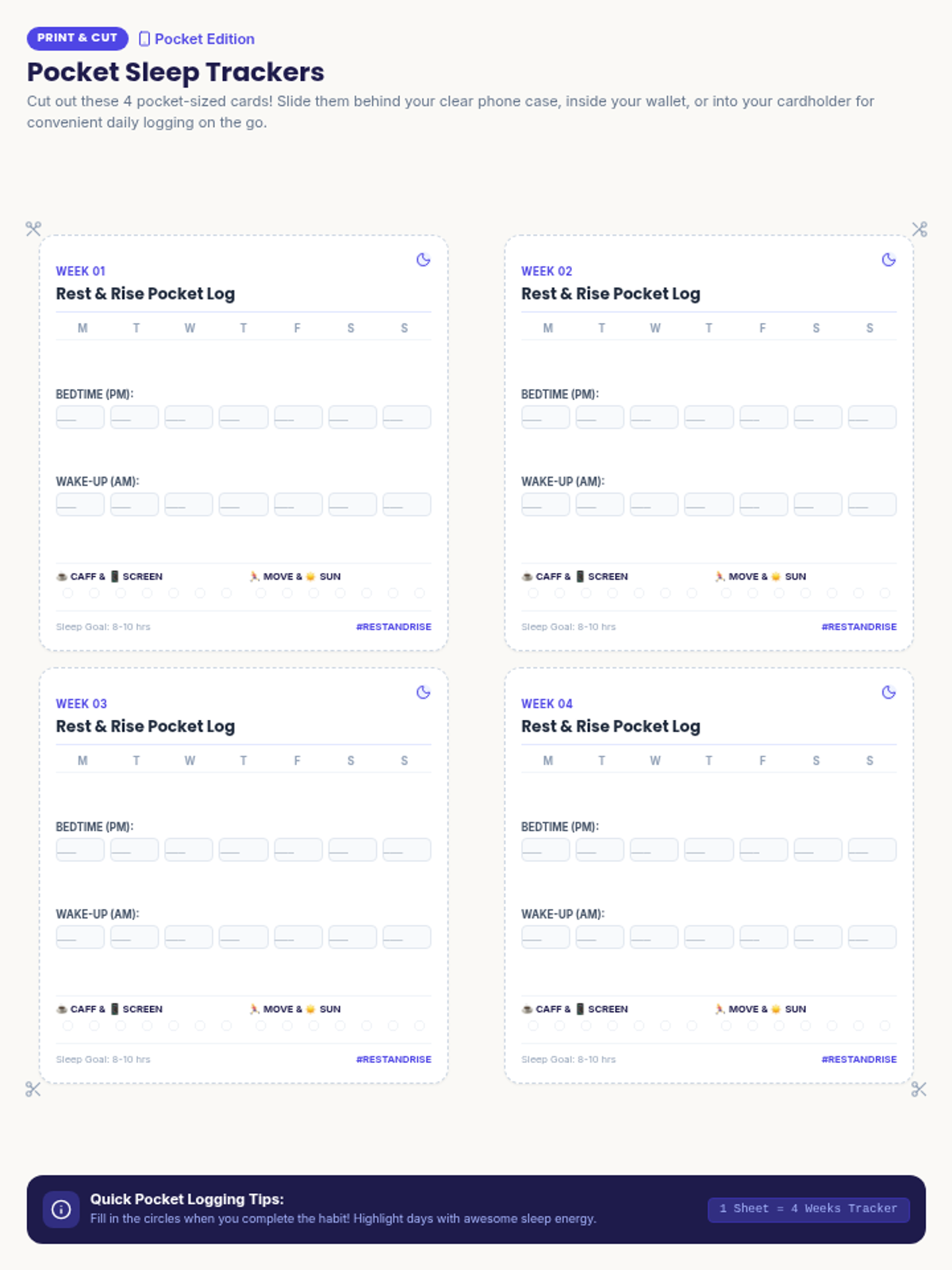
A 1-page printable document containing 4 pocket-sized sleep and mood tracking cards designed to fit perfectly inside phone cases or wallets. Includes weekly grids for easy logging of bedtime, wake time, caffeine/screen checks, and active hours.
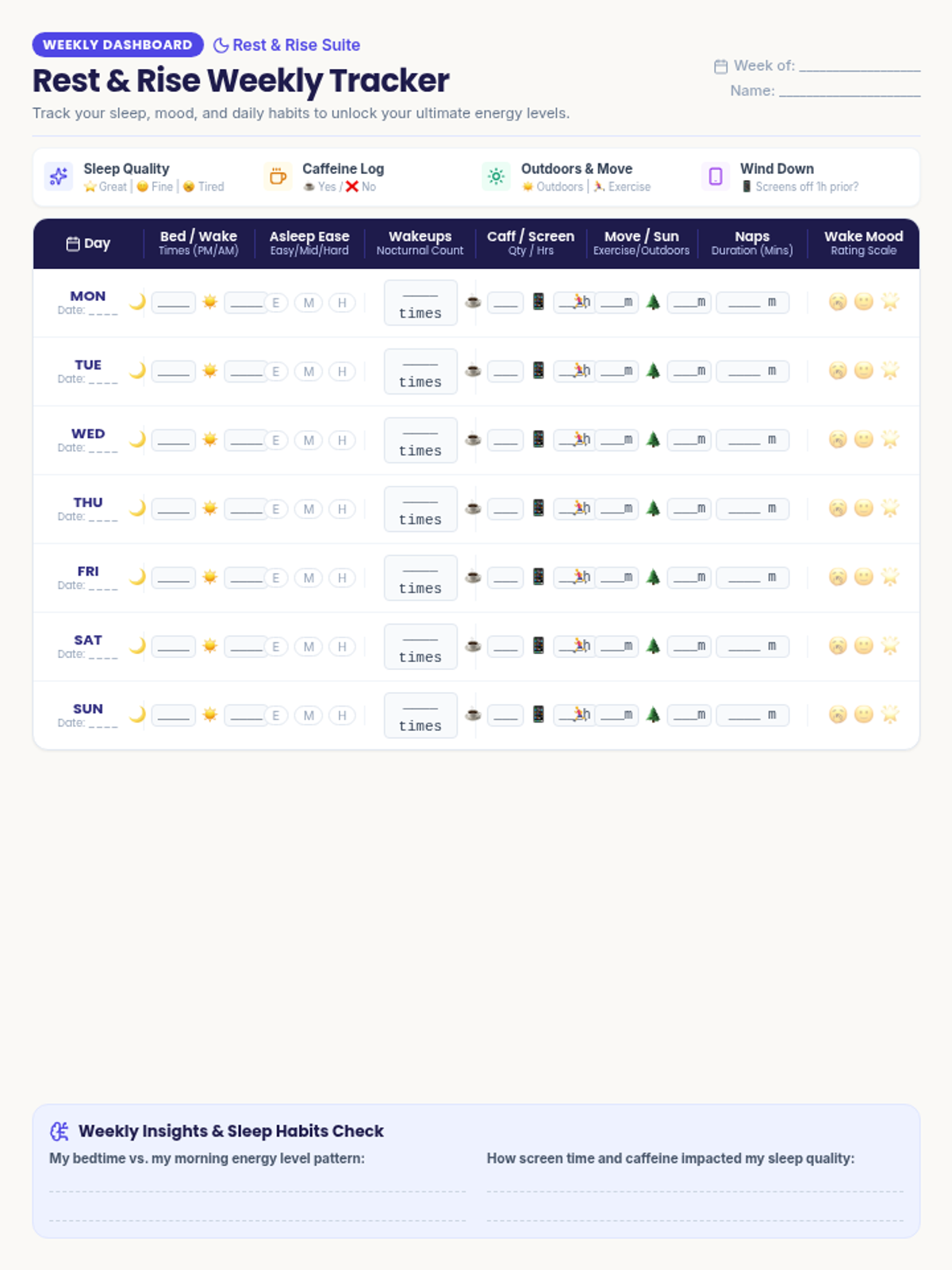
A clean, highly visual 1-page weekly tracker designed specifically for teens. Features rows for each day of the week to log bed/wake times, ease of falling asleep, nocturnal wakeups, caffeine, screen time, exercise, sunshine, naps, and waking mood. Includes a custom weekly pattern synthesis reflection panel.
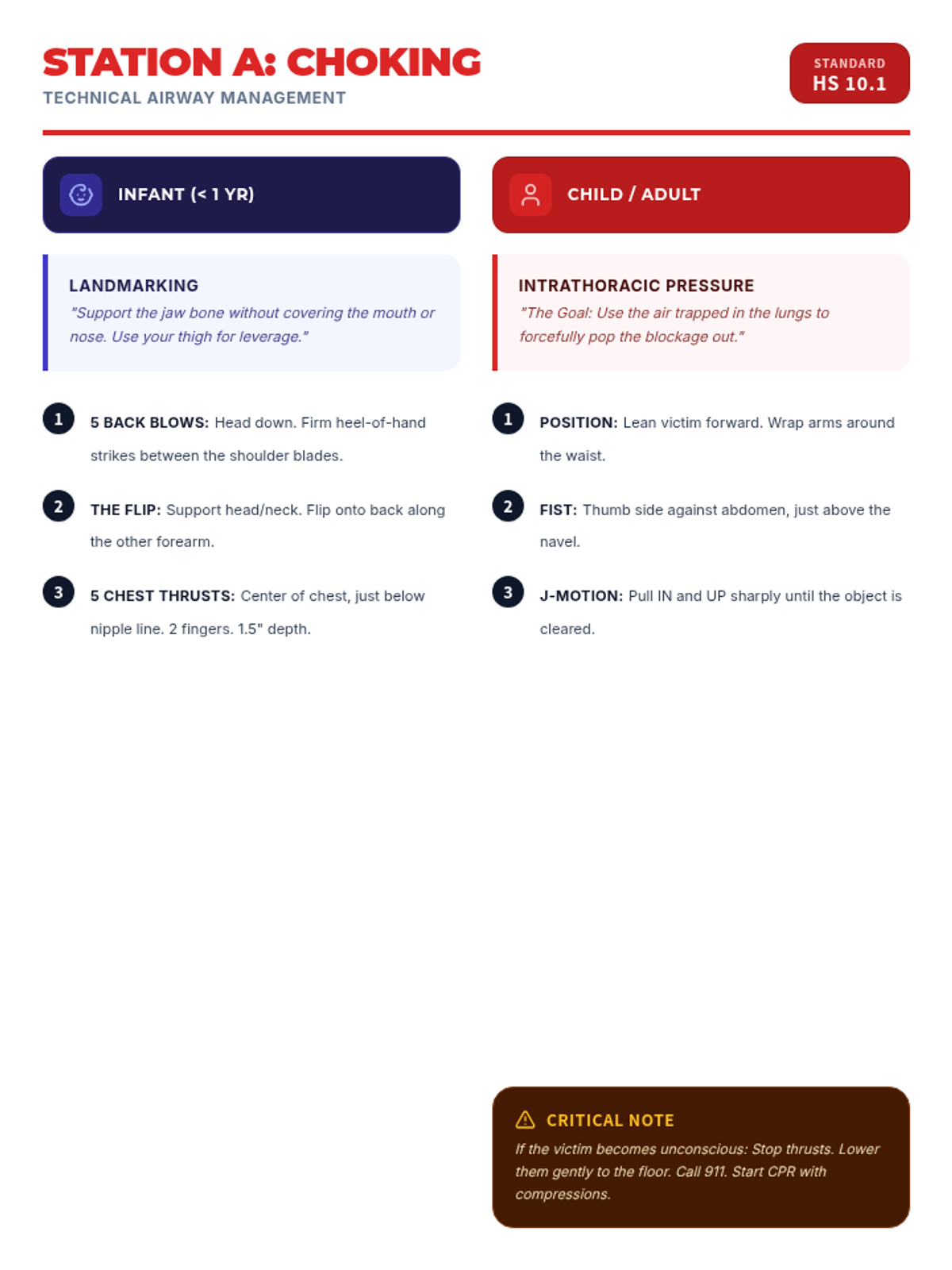
A set of 3 beautifully designed Technical Station Cards for first aid skills: Station A (Choking), Station B (Recovery), and Station C (Wound Care). Each card is perfectly formatted and spaced to fit on exactly one printable page, preventing awkward overflow.
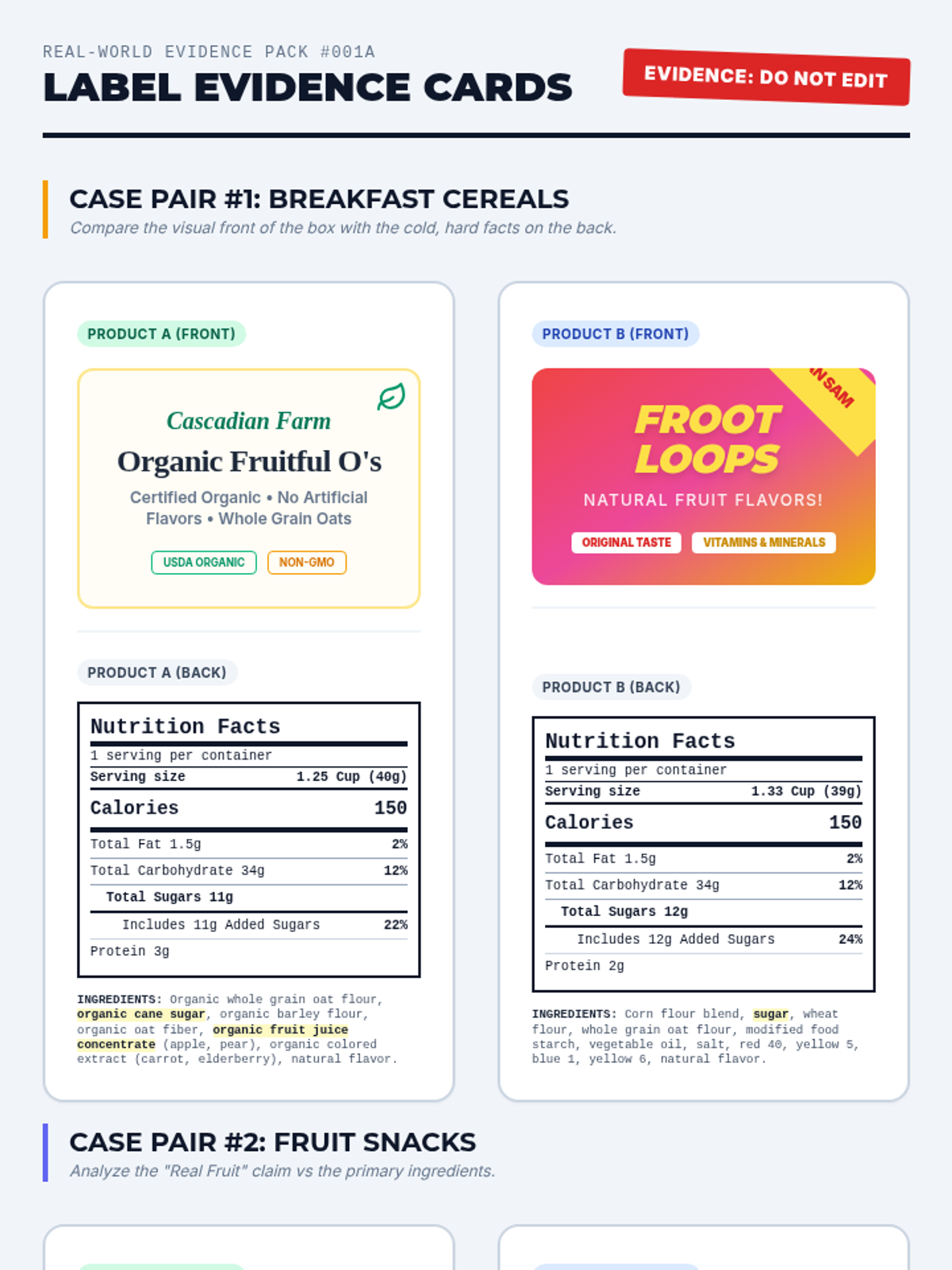
Evidence cards containing high-fidelity mockup designs for front and back labels of standard and "healthy" cereals and fruit snacks, designed for student comparison and analysis.
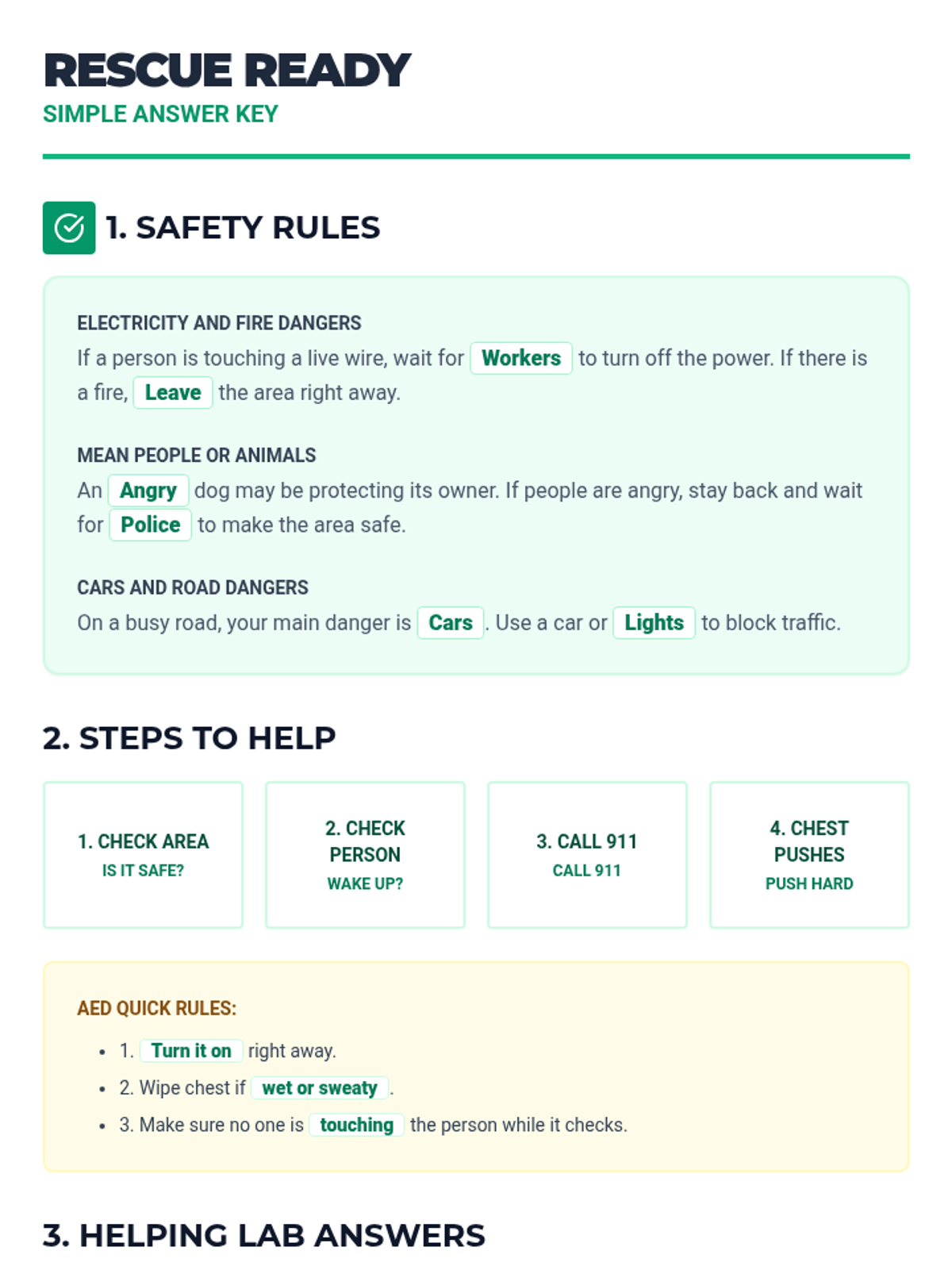
Updated Simple Answer Key to match the new word bank for Section 1 and the cleared flowchart labels in Section 2 of the worksheet.
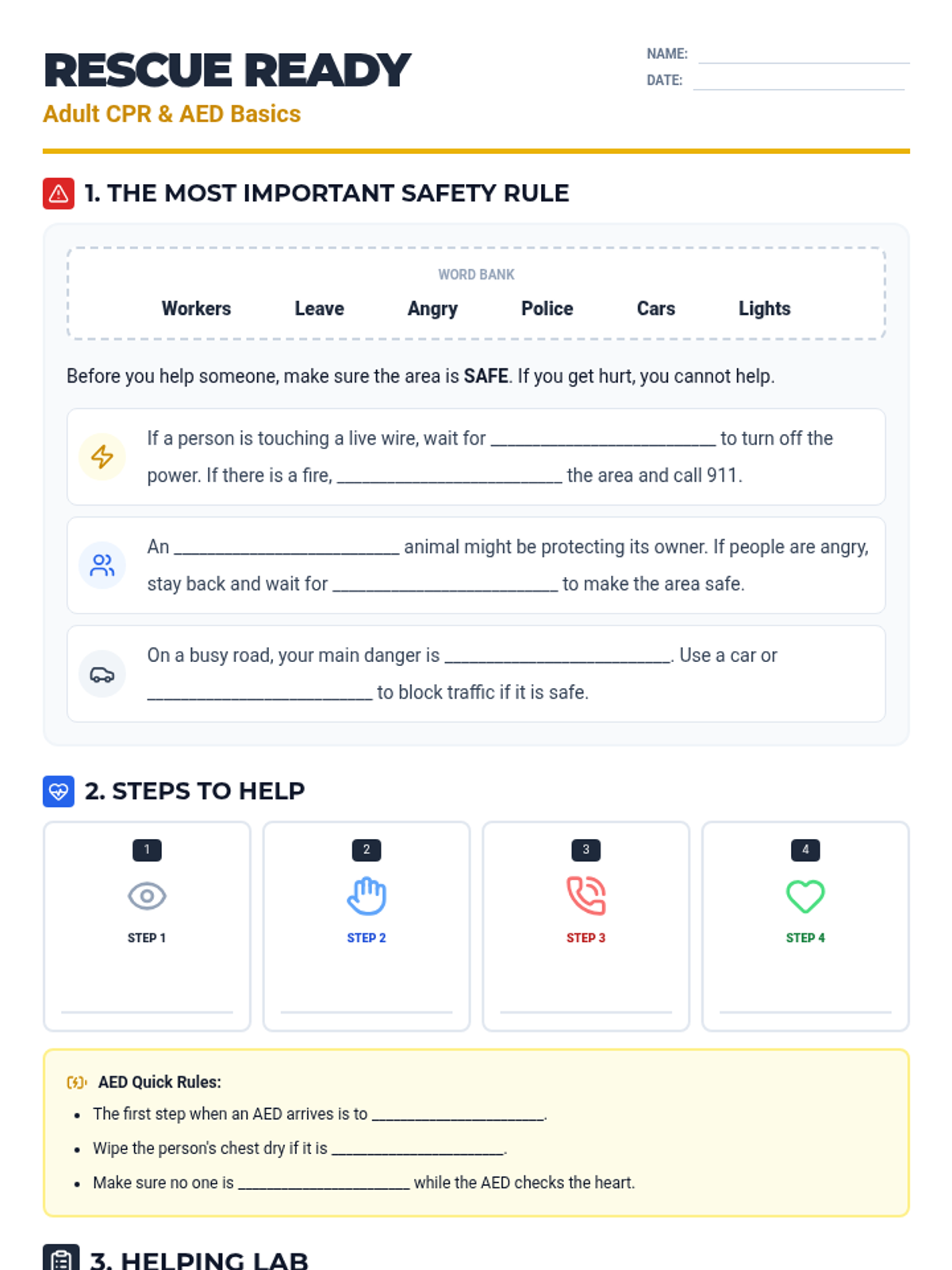
Updated Heart Saver Simple Worksheet with a word bank for Section 1 and increased writing areas in the Section 2 flowchart for student completion.
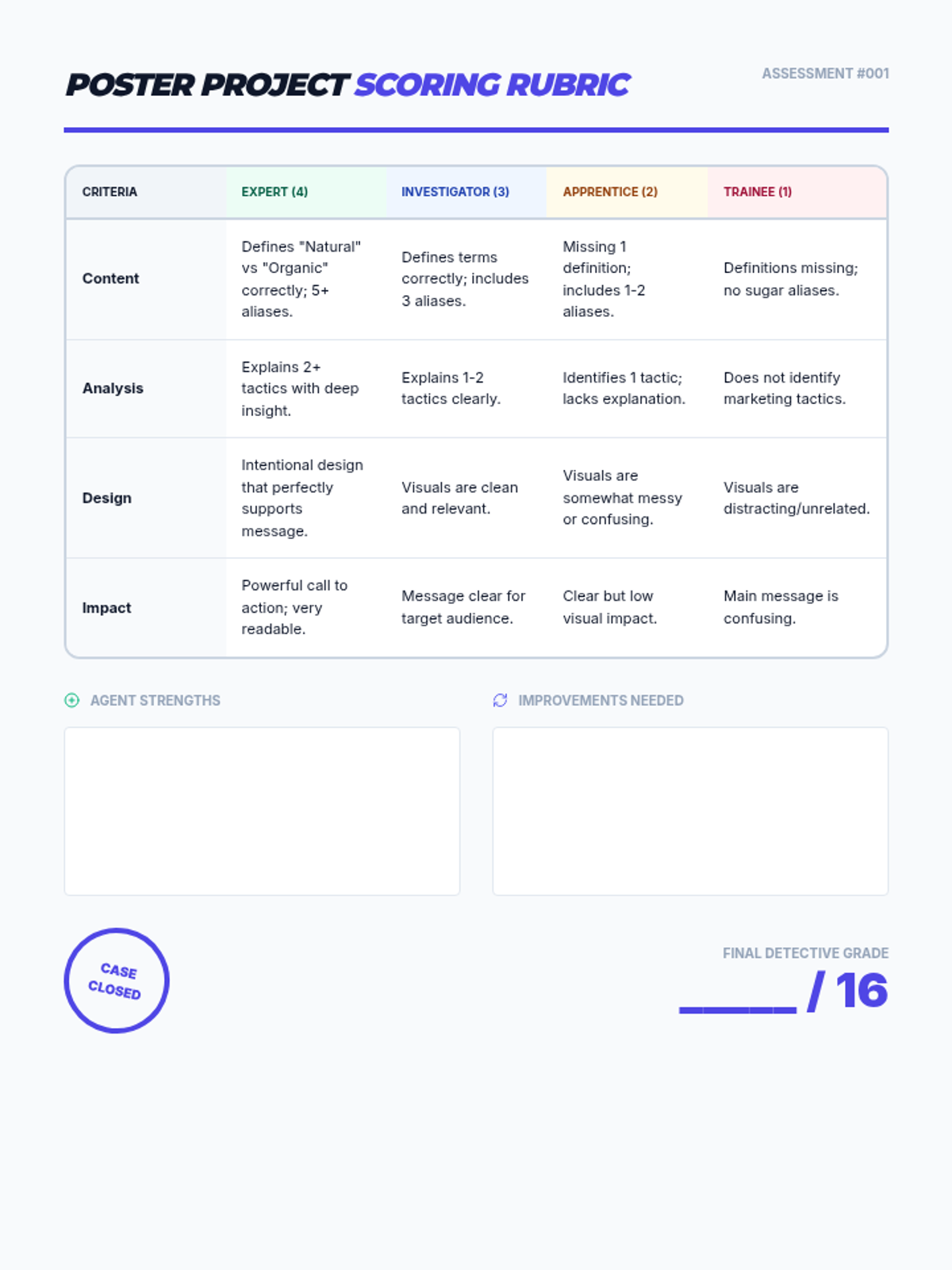
A grading rubric for the Consumer Awareness Poster. Revised to condense content into a strictly single-page layout with larger feedback areas for teacher handwriting.
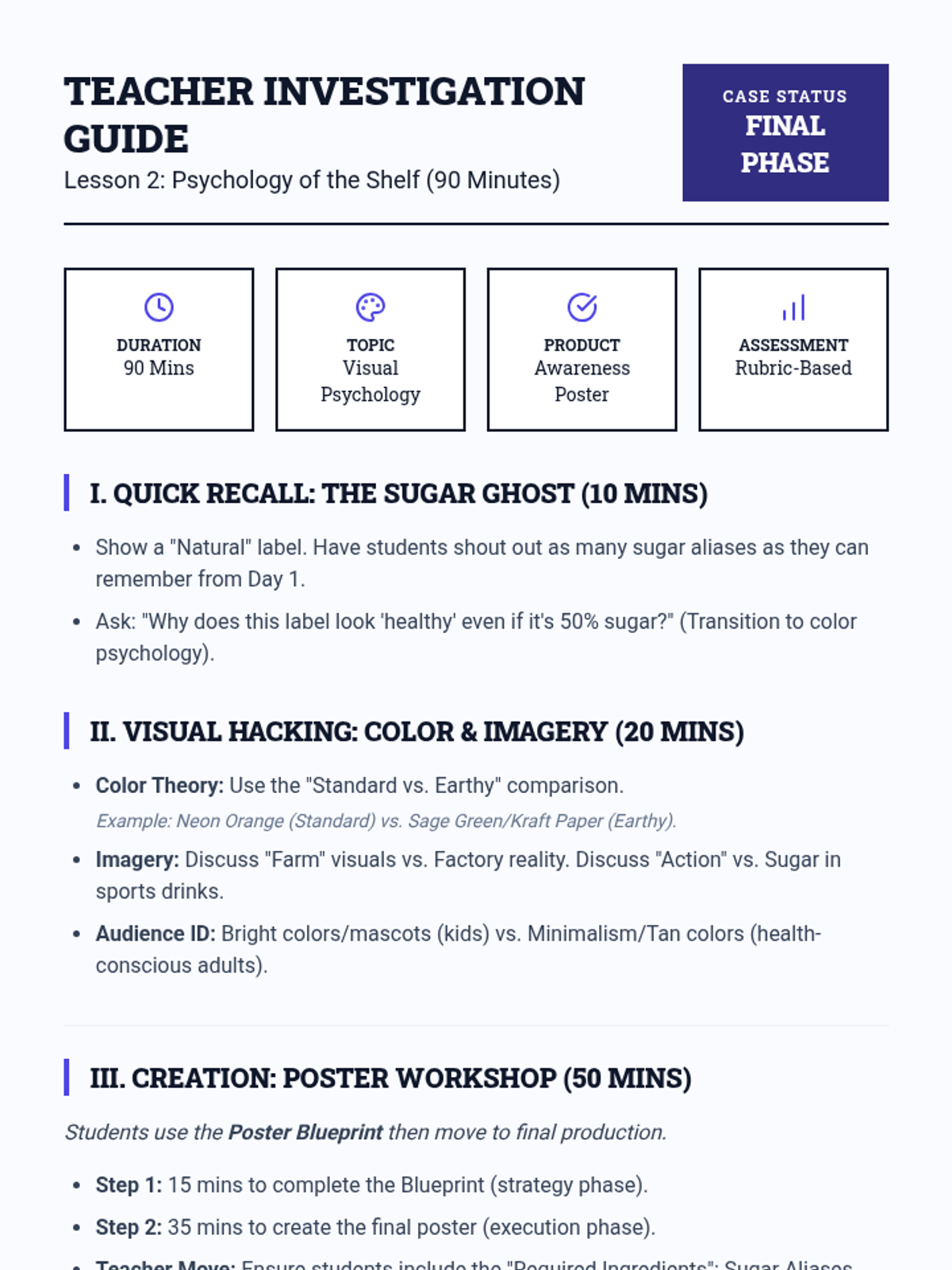
A teacher's guide for Lesson 2. Revised to fix page break issues and provide concrete color comparison examples for the activity.
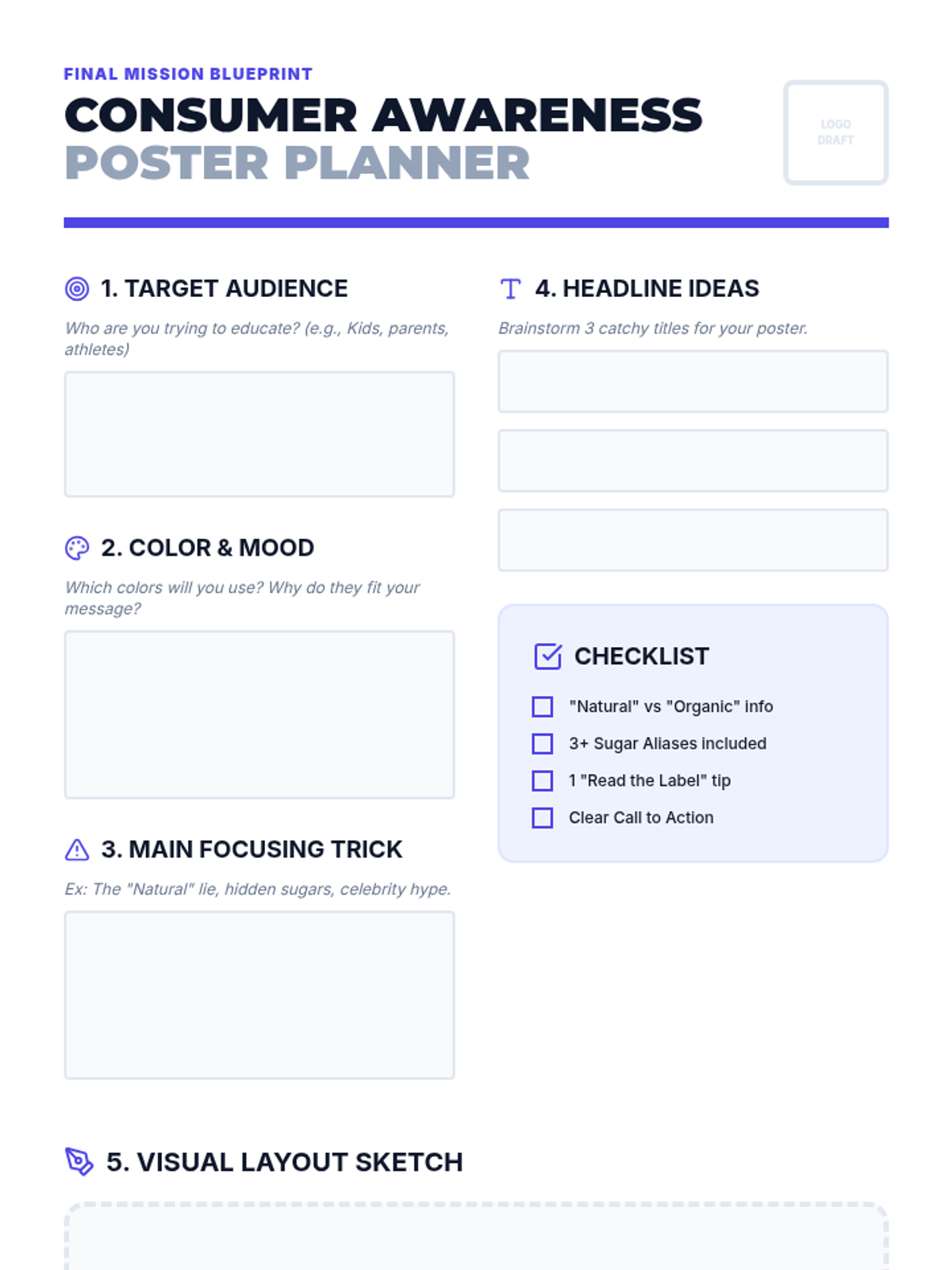
A planning document for students to brainstorm and outline their consumer awareness poster. Revised to consolidate content onto 2 pages, increase input box heights, and fix the numbering sequence.
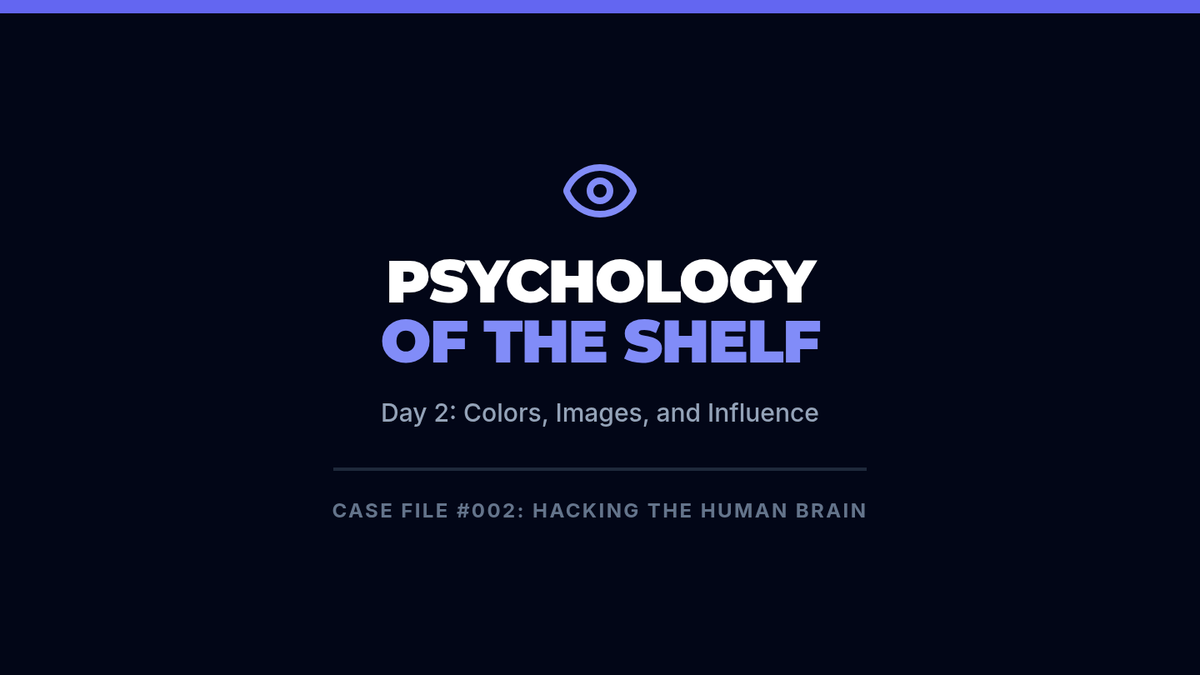
Slide presentation for Day 2, focusing on color psychology, target audience identification, and the difference between endorsements and certifications.
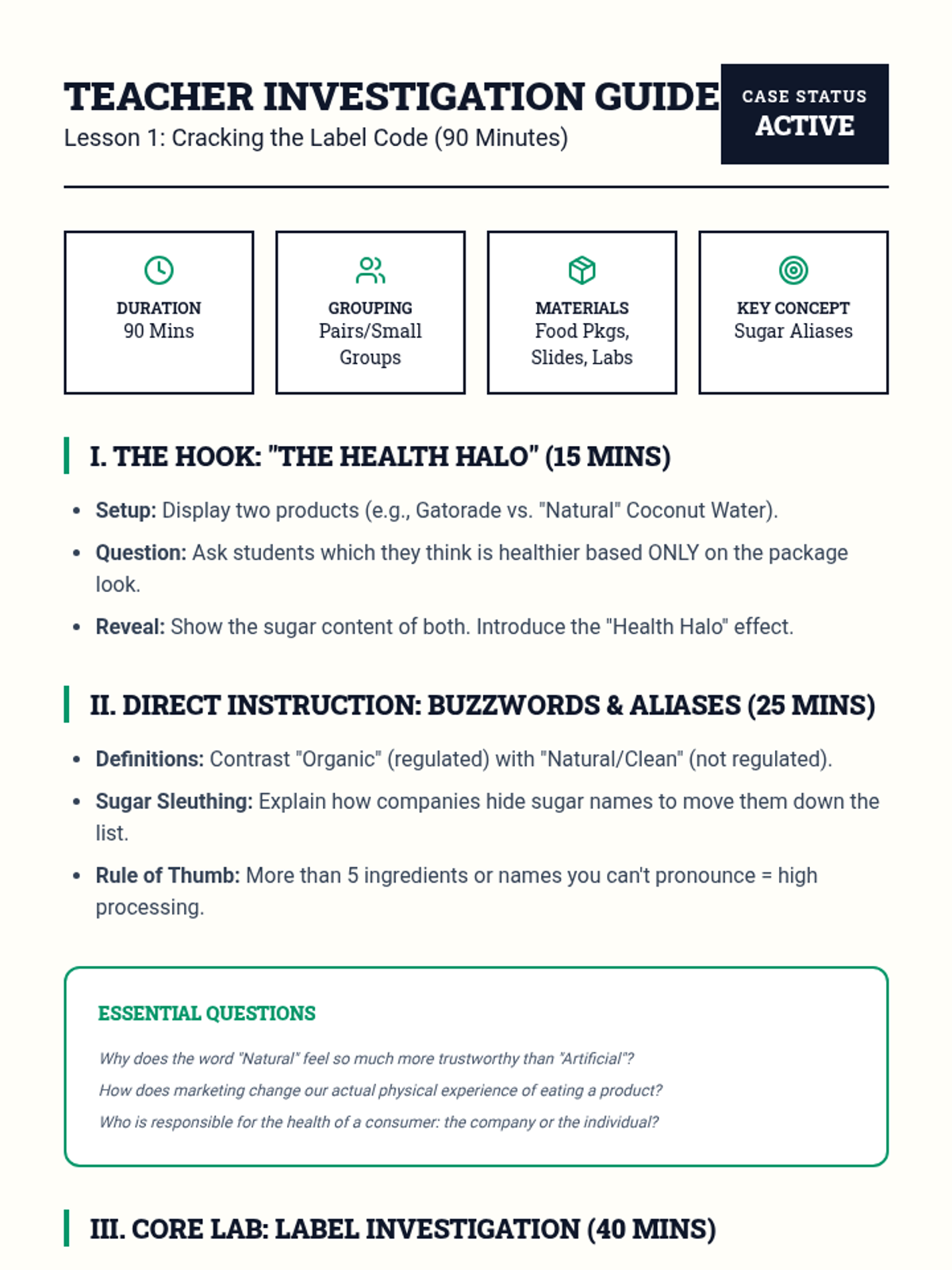
A comprehensive teacher's guide for Lesson 1. Revised to keep lab instructions together and utilize empty page space with an essential questions section.
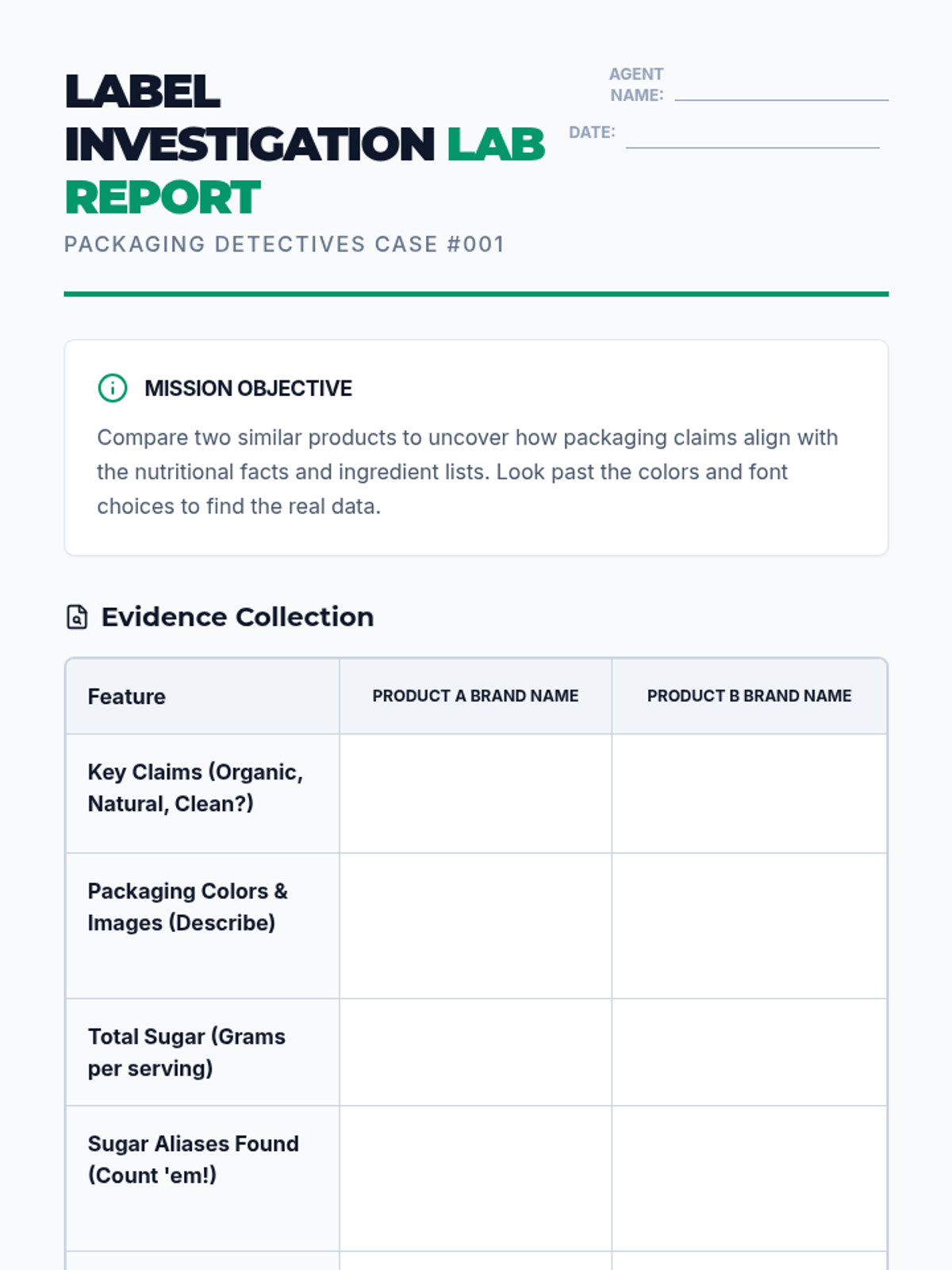
A student-facing worksheet for comparing two products side-by-side. Revised to remove bracketed placeholders, increase writing space, and ensure the comparison table stays on one page.
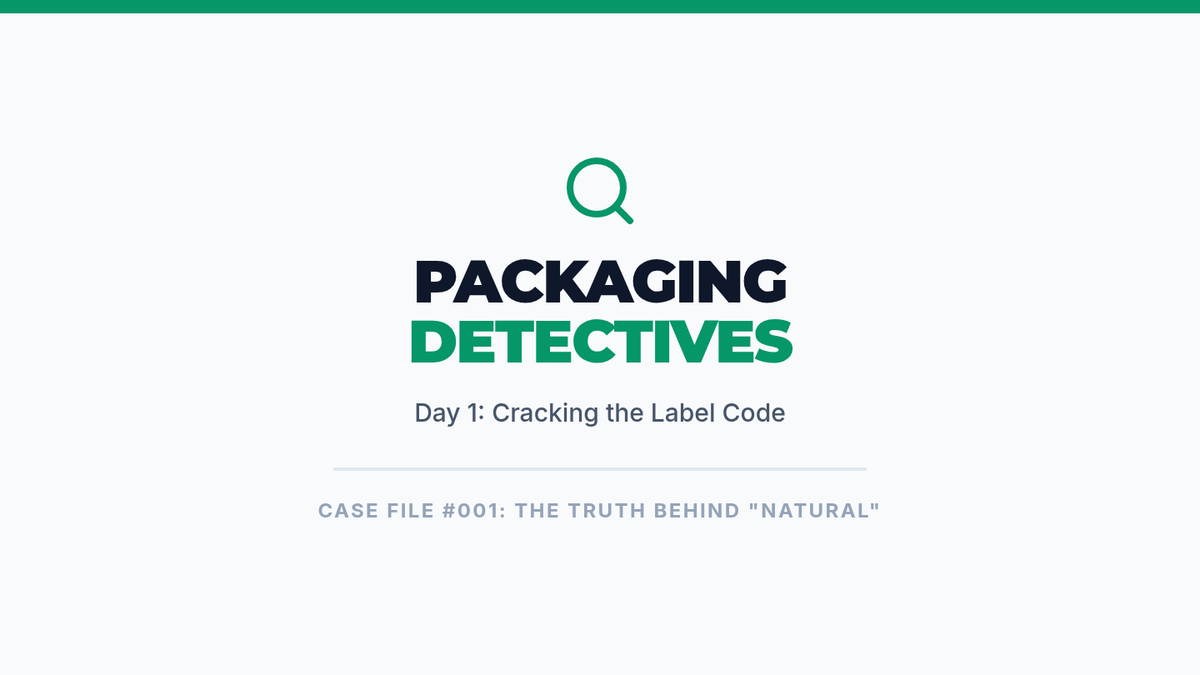
A visual presentation for Day 1 of the Packaging Detectives unit, covering marketing buzzwords like 'organic' and 'natural', hidden sugars, and introductory lab instructions. Revised for better contrast and text rendering.
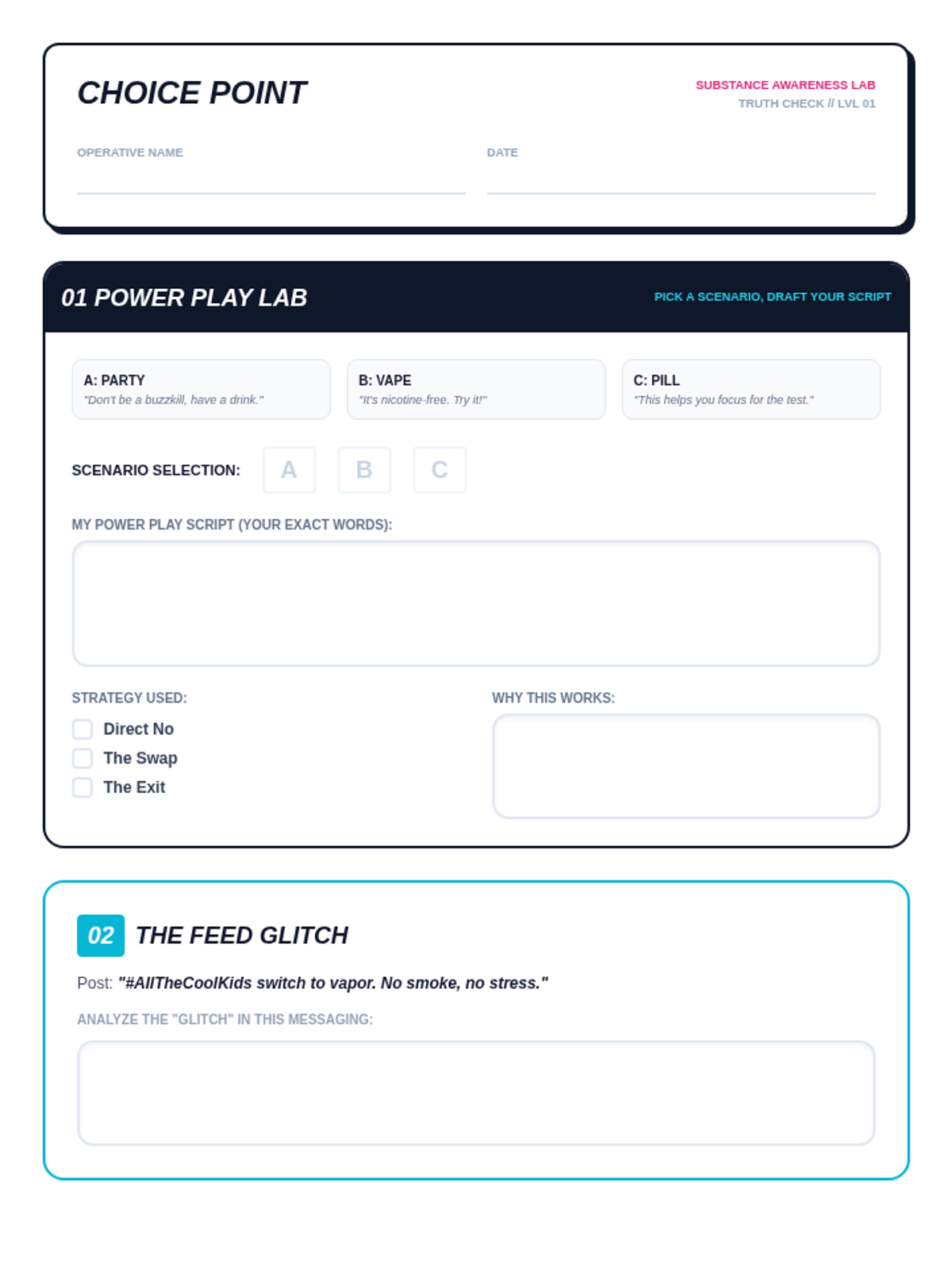
An interactive worksheet with social media analysis, scenario-based refusal skill practice, and long-term goal mapping.
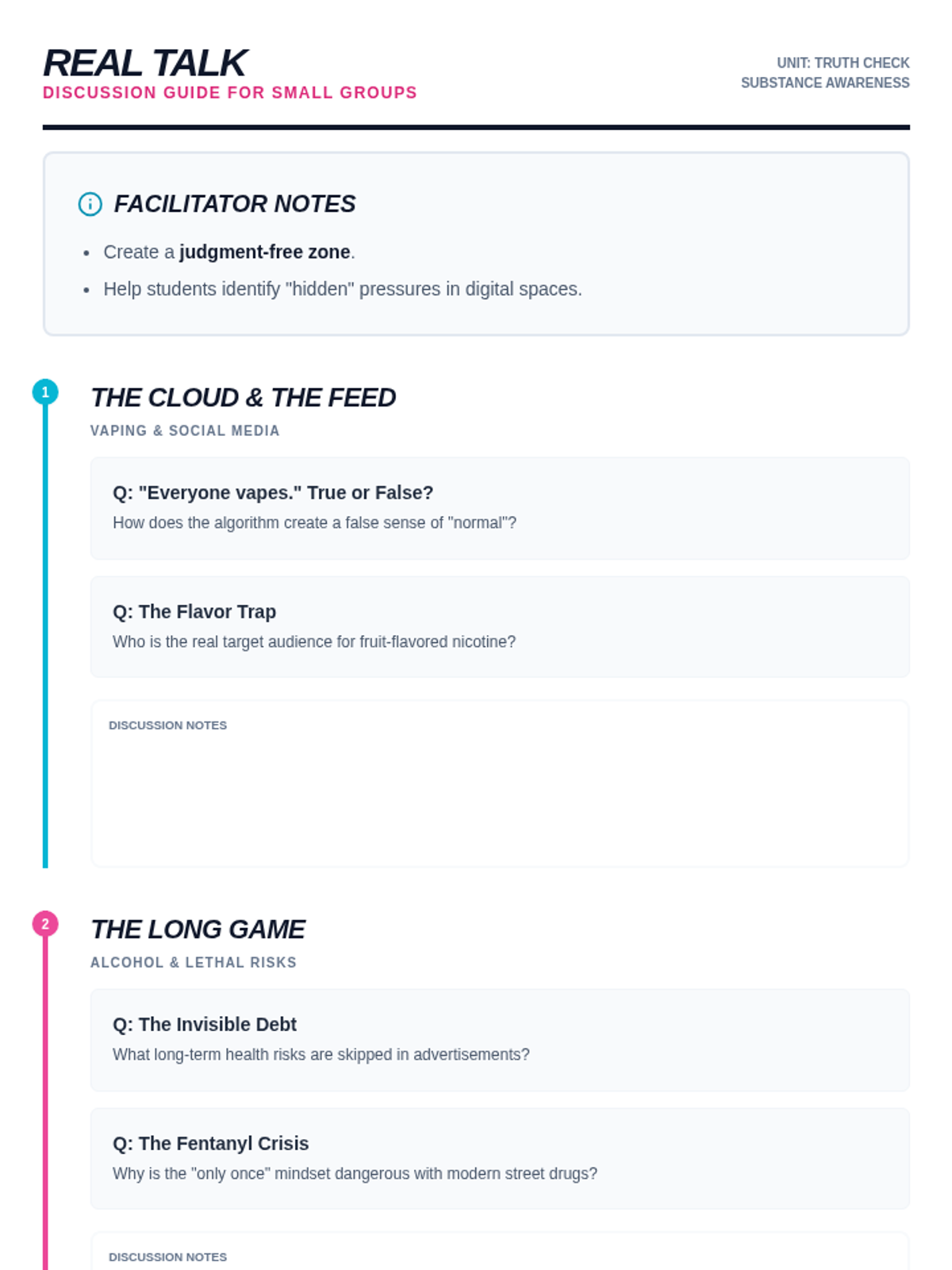
A small group discussion guide featuring three rounds of targeted questions about vaping, alcohol, social media influence, and refusal skills.