Empathetic skill development through emotion recognition, cultural diversity appreciation, and bias confrontation. Targets multi-perspective analysis to support respectful interactions and complex social responses.
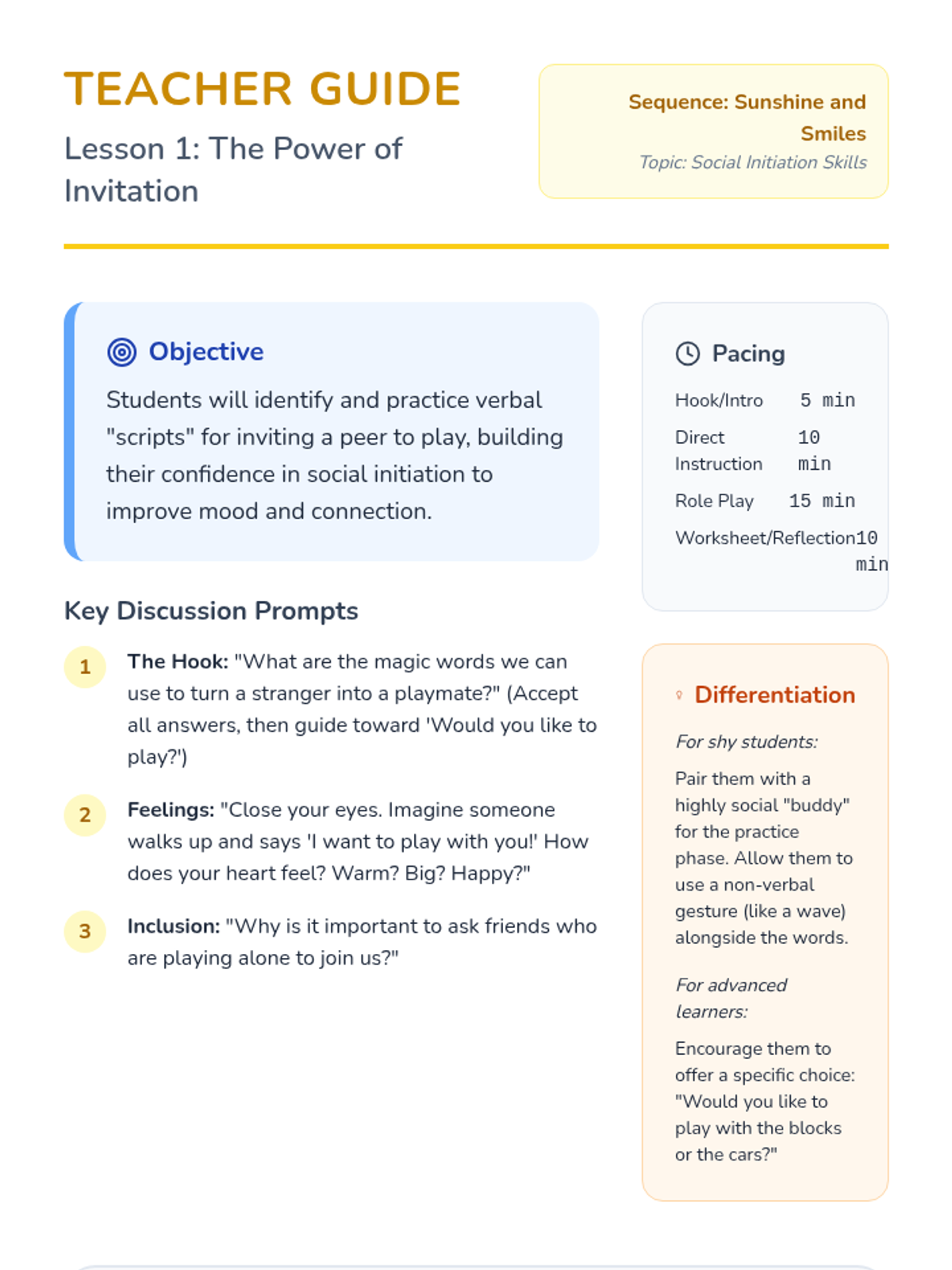
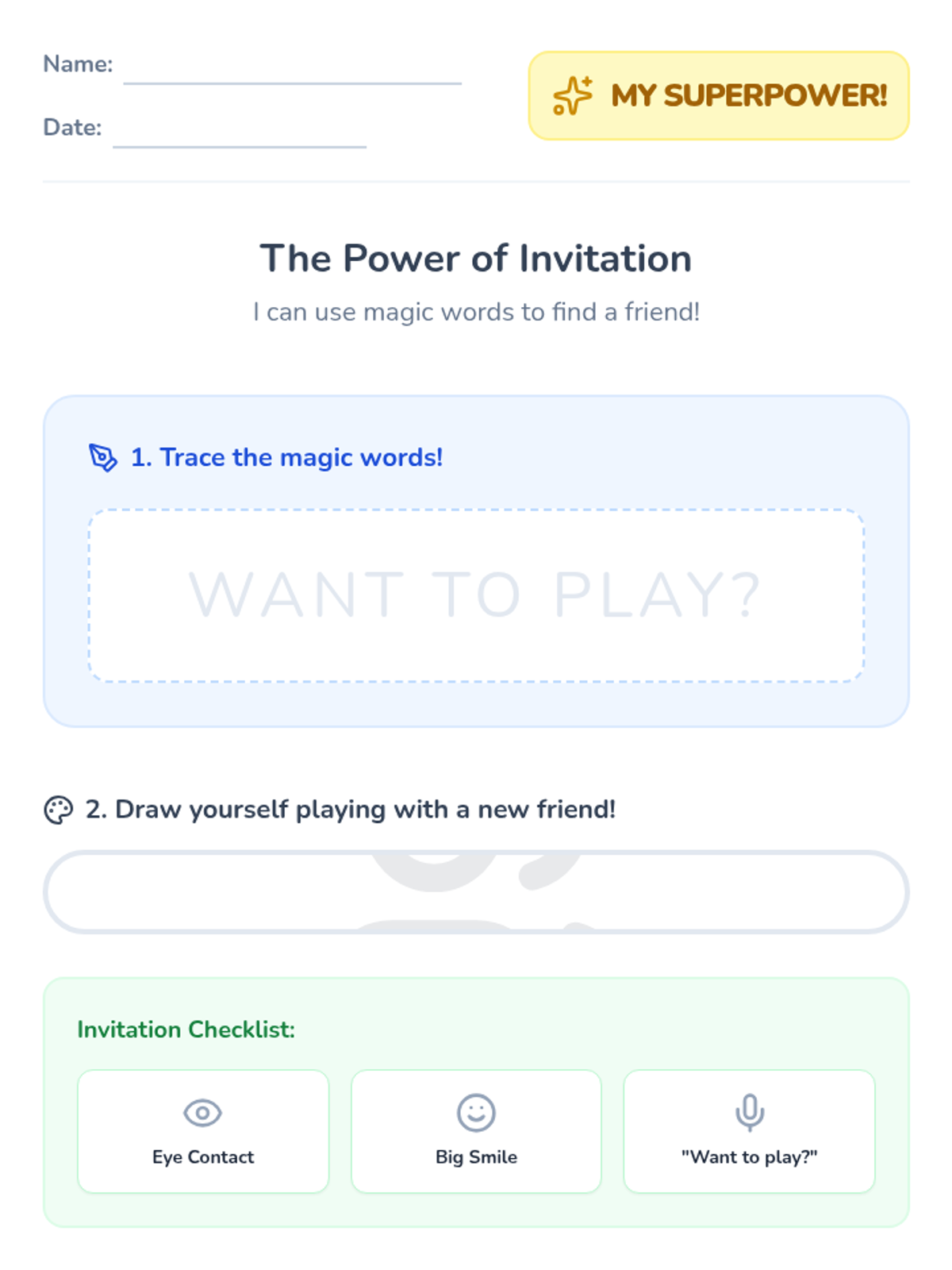
A Pre-K sequence focused on moving from individual joy to shared happiness through social connection, invitations, collaboration, and celebration. Students learn how community and play amplify positive emotions and build resilience.
A Kindergarten sequence focused on shared positive experiences to boost mood and build social connections through invitations, cooperation, laughter, altruism, and gratitude.
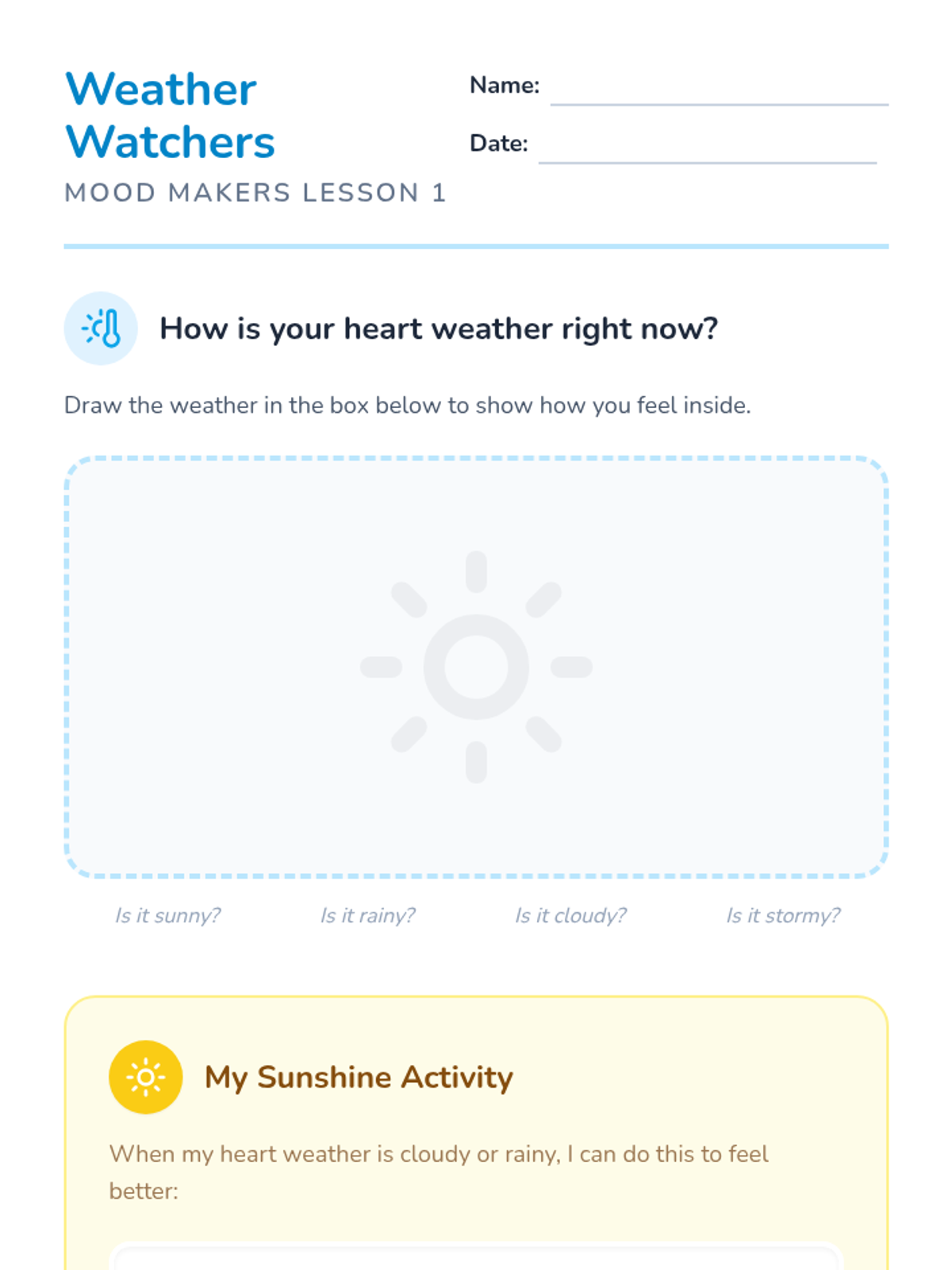
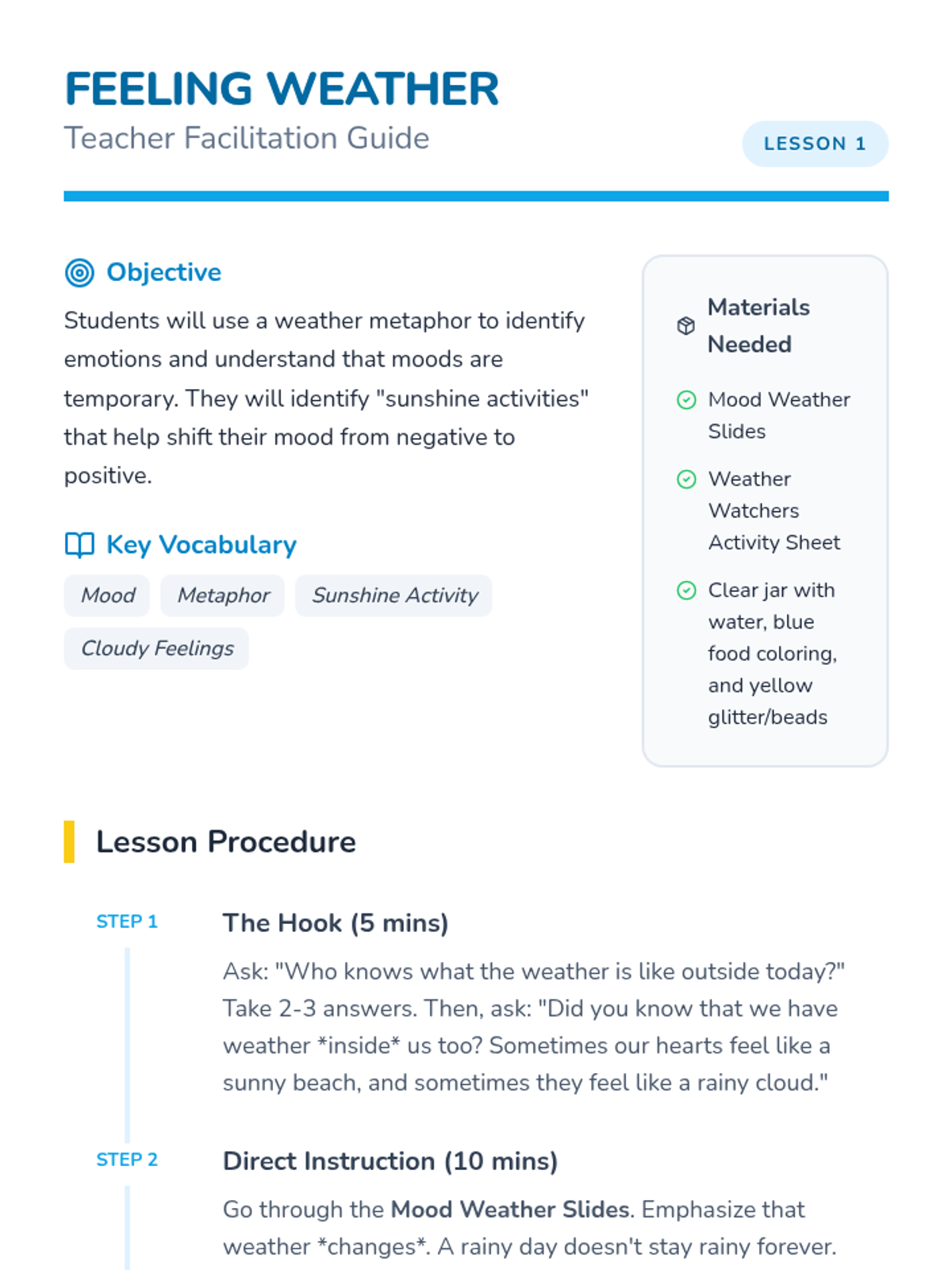
A Kindergarten sequence focused on teaching emotional regulation through positive actions. Students learn to use activities like physical movement, deep breathing, and creative expression to 'switch the channel' from negative to positive emotions, building a toolkit of coping strategies.
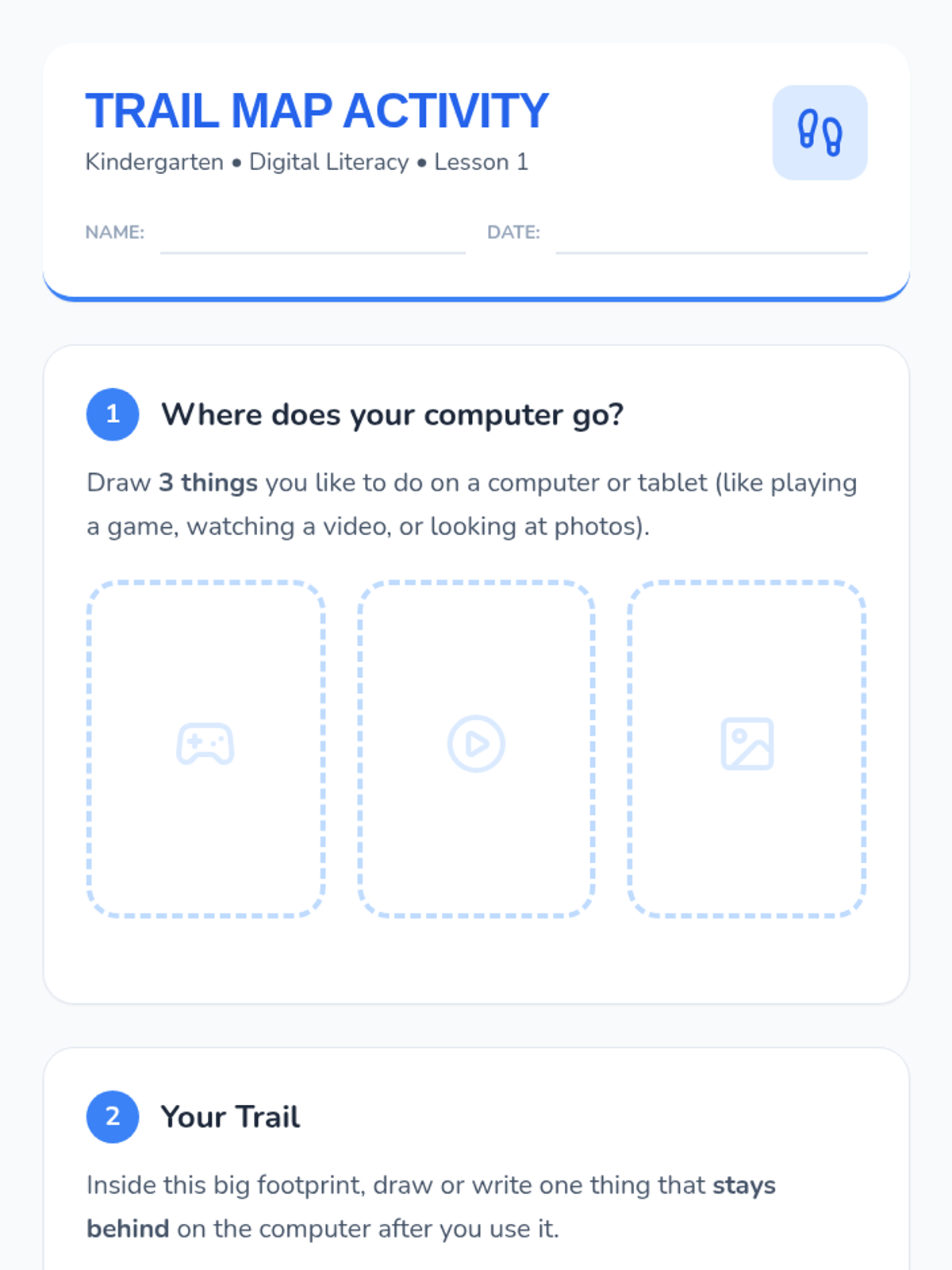
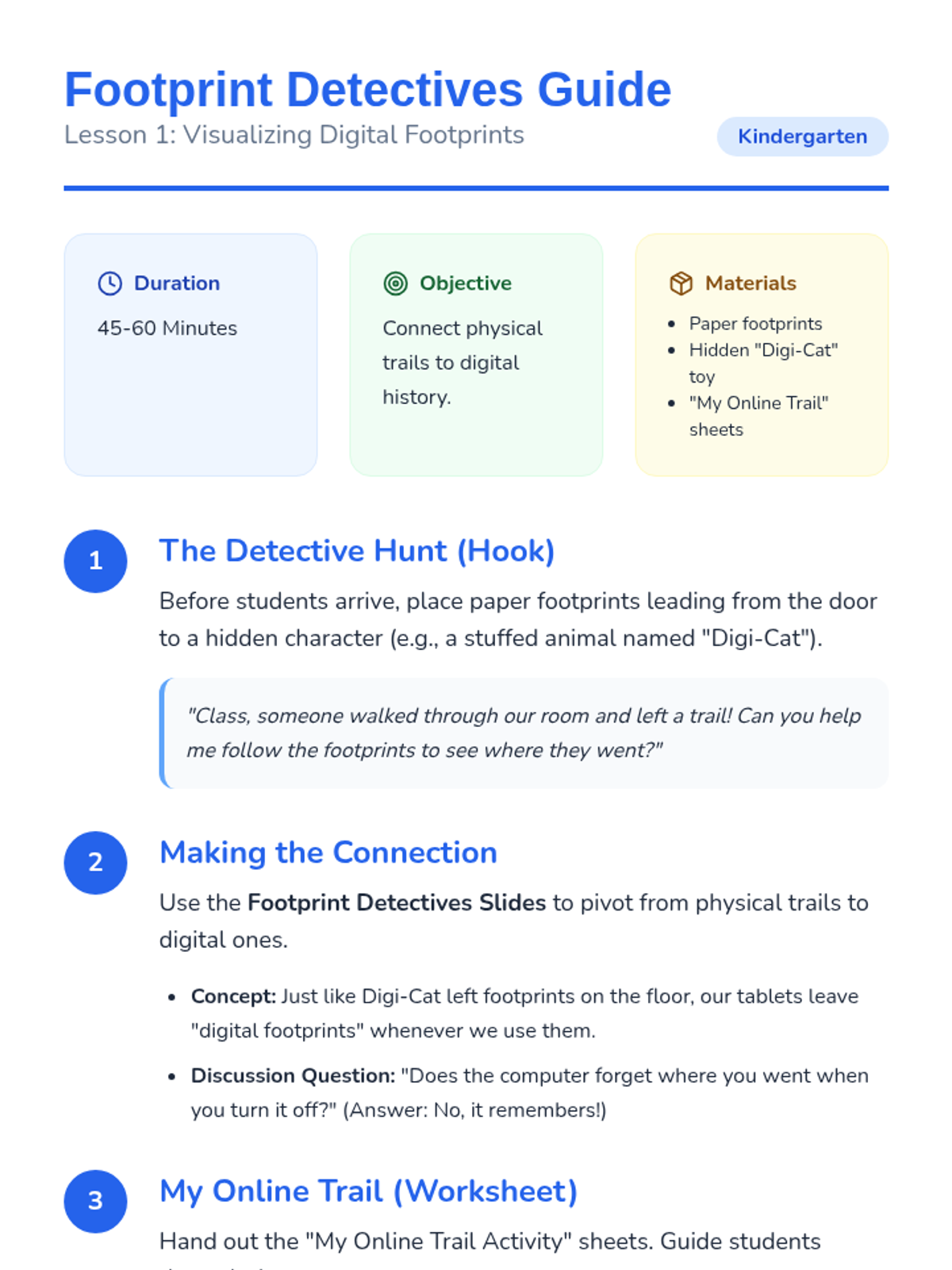
A Kindergarten sequence focused on making digital footprints concrete through physical analogies, promoting online kindness, and establishing safety protocols for young internet users.
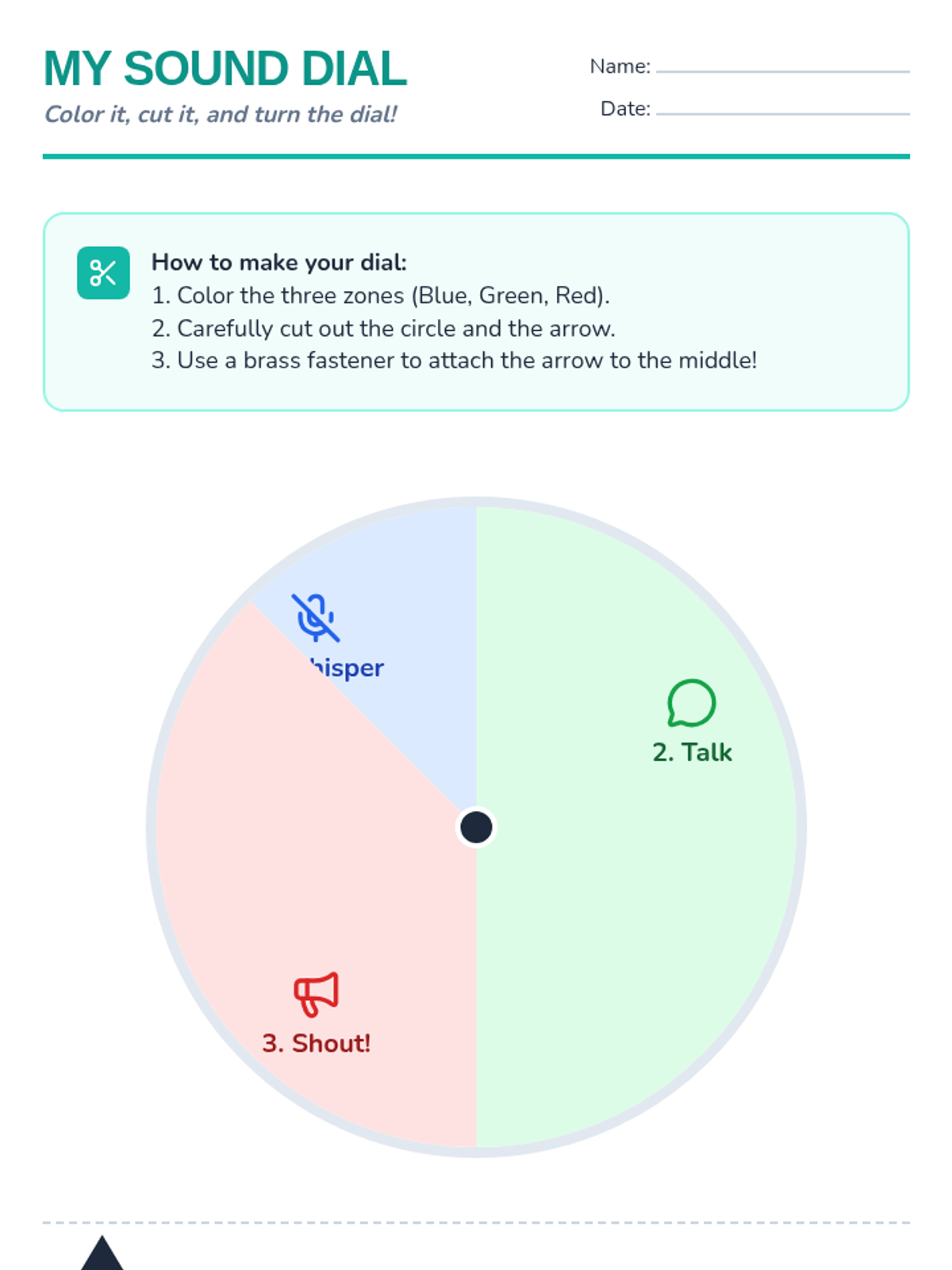
A Pre-K sequence focused on identifying vocal and communication cues that signal emotional escalation. Students learn to recognize changes in volume, speed, tone, and silence as indicators of their own and others' internal states.
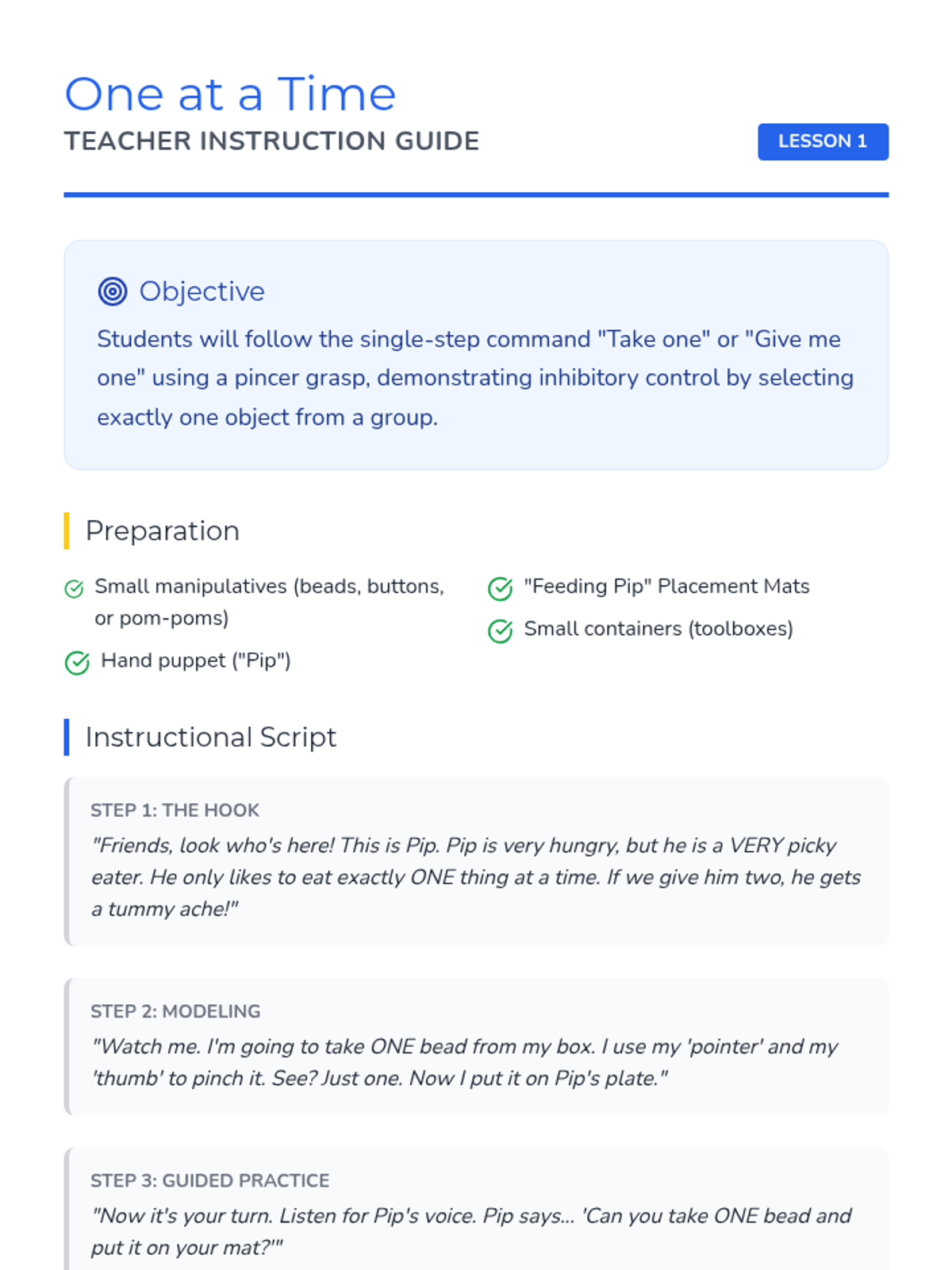
A Pre-K sequence focused on working memory and auditory processing through single-step directions using table-top manipulatives. Students develop fine motor skills and inhibitory control while following specific verbal commands in a hands-on workshop environment.
A 5-lesson sequence for Pre-K students to help them understand triggers and distinguish past memories from present safety through play and sensory exploration.
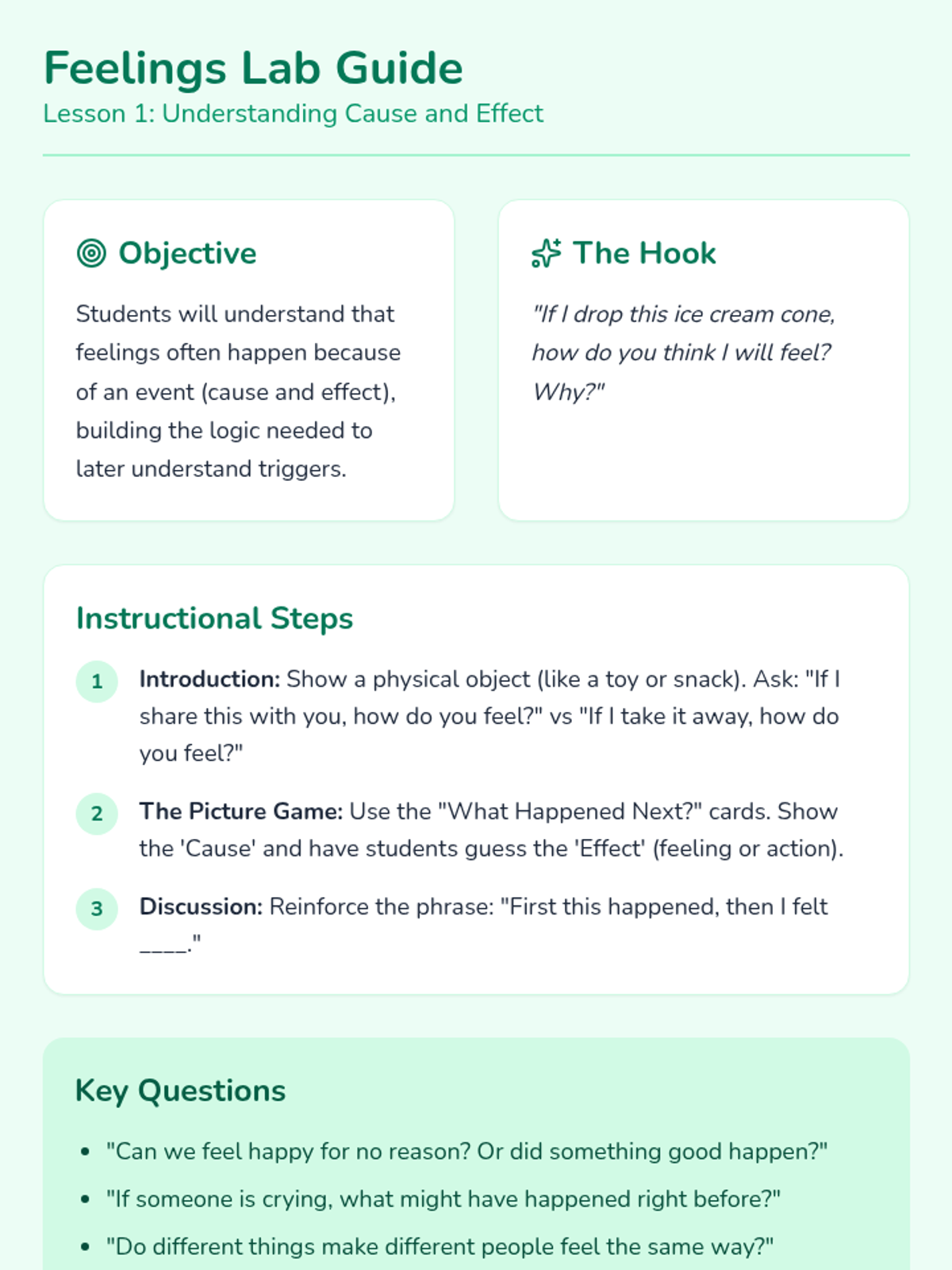
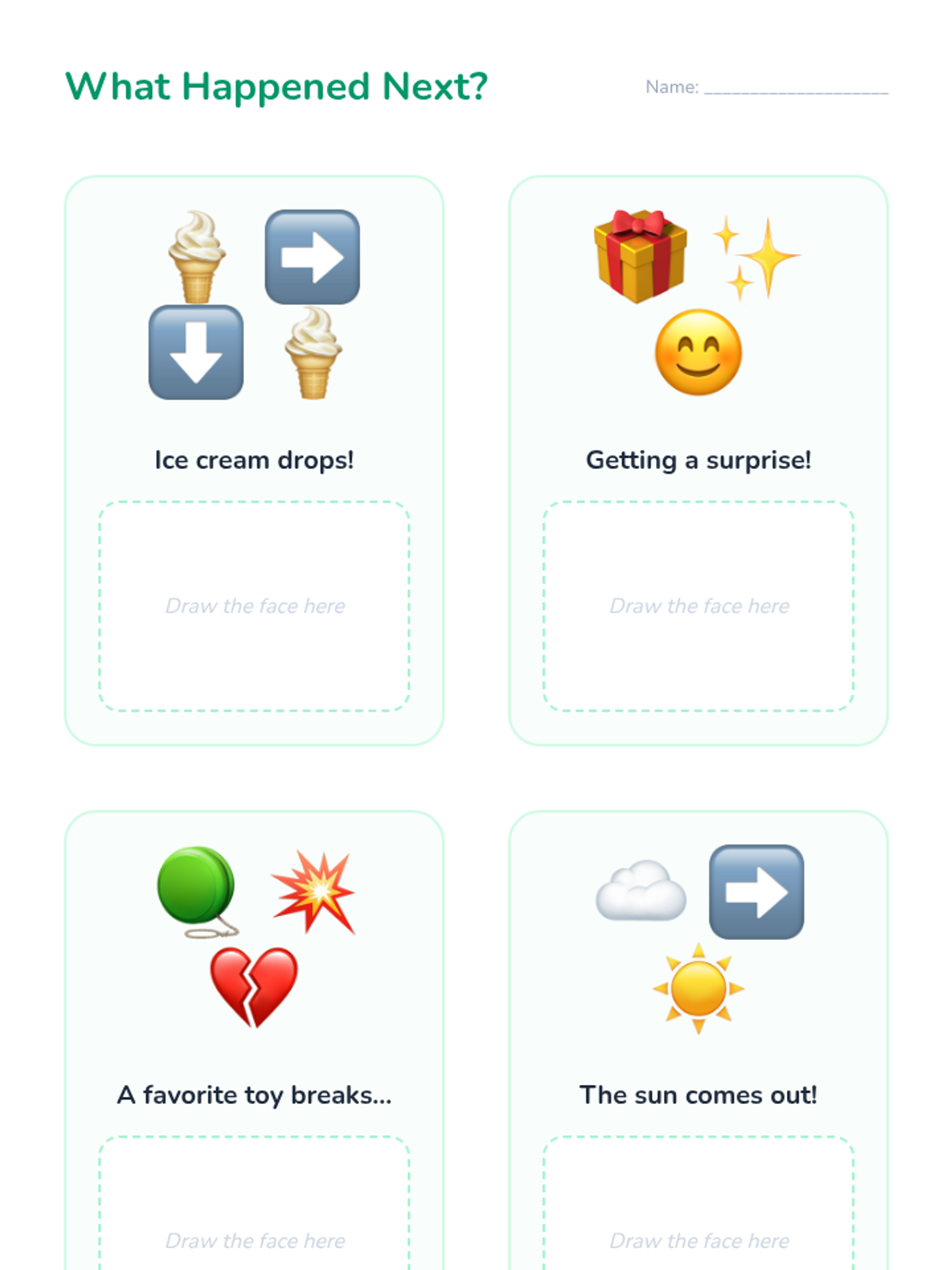
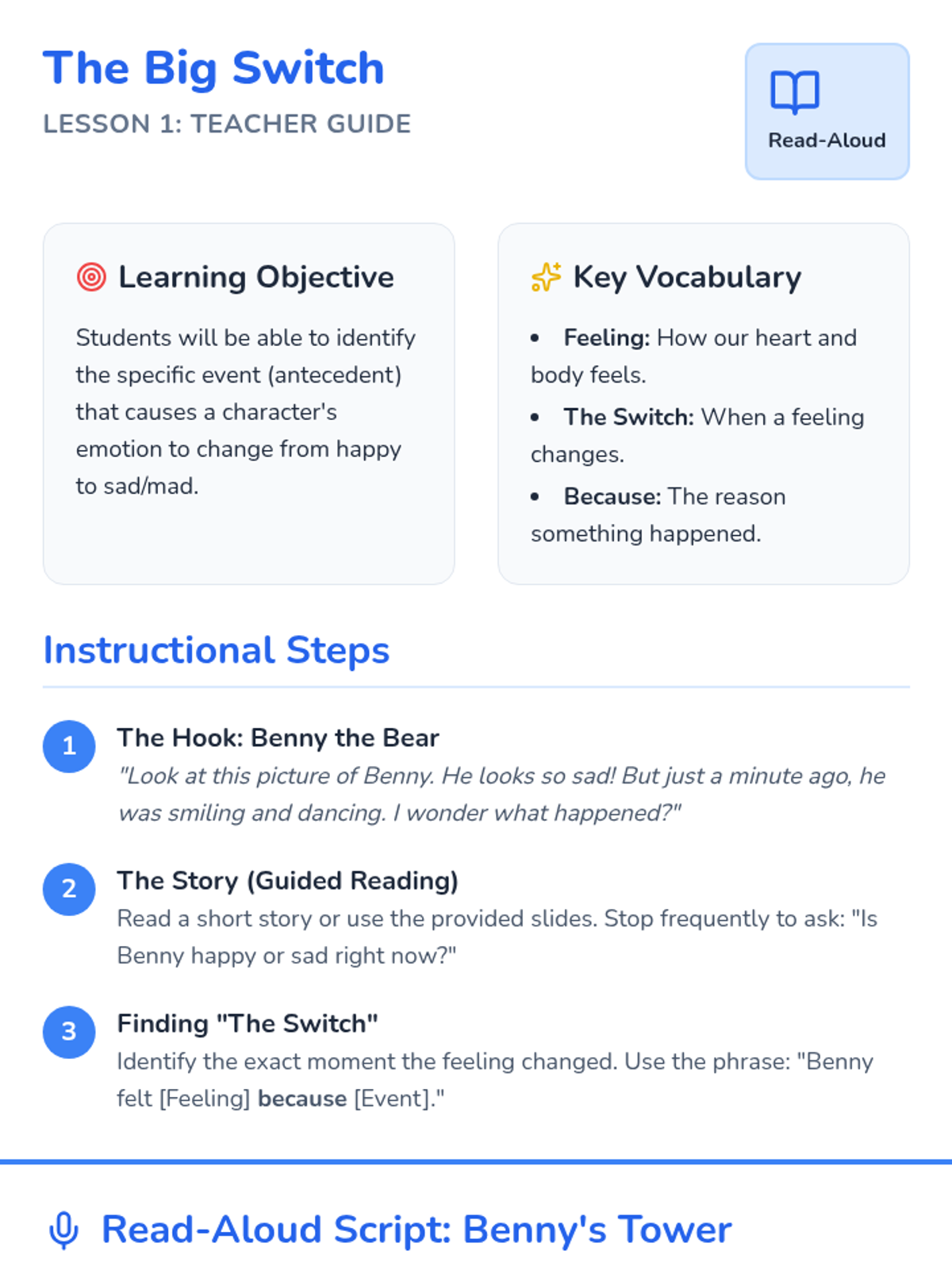
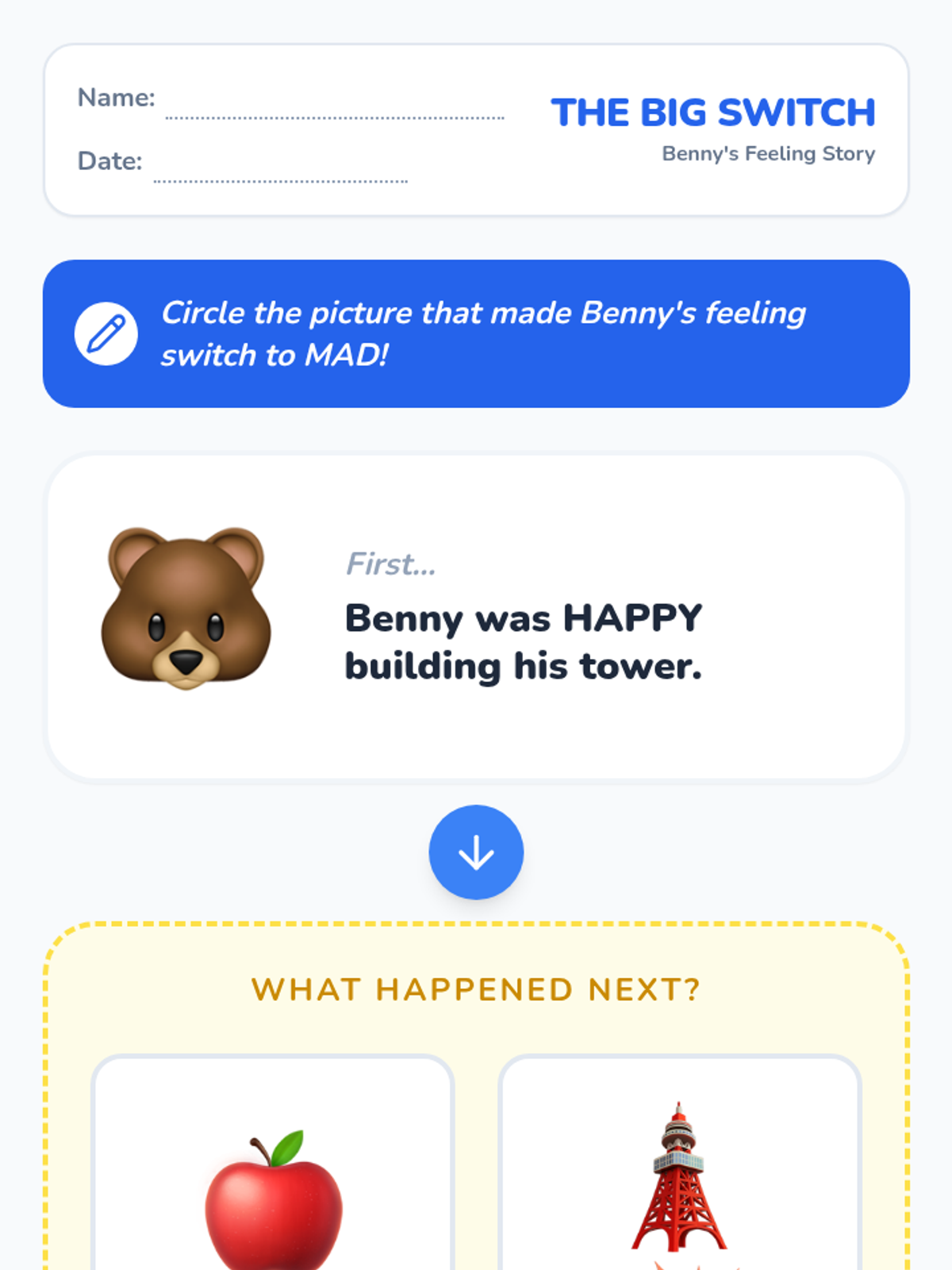
A Pre-K sequence focused on identifying emotional triggers (antecedents) through storytelling, games, and self-reflection. Students learn to connect external events to internal feelings and physical body cues.
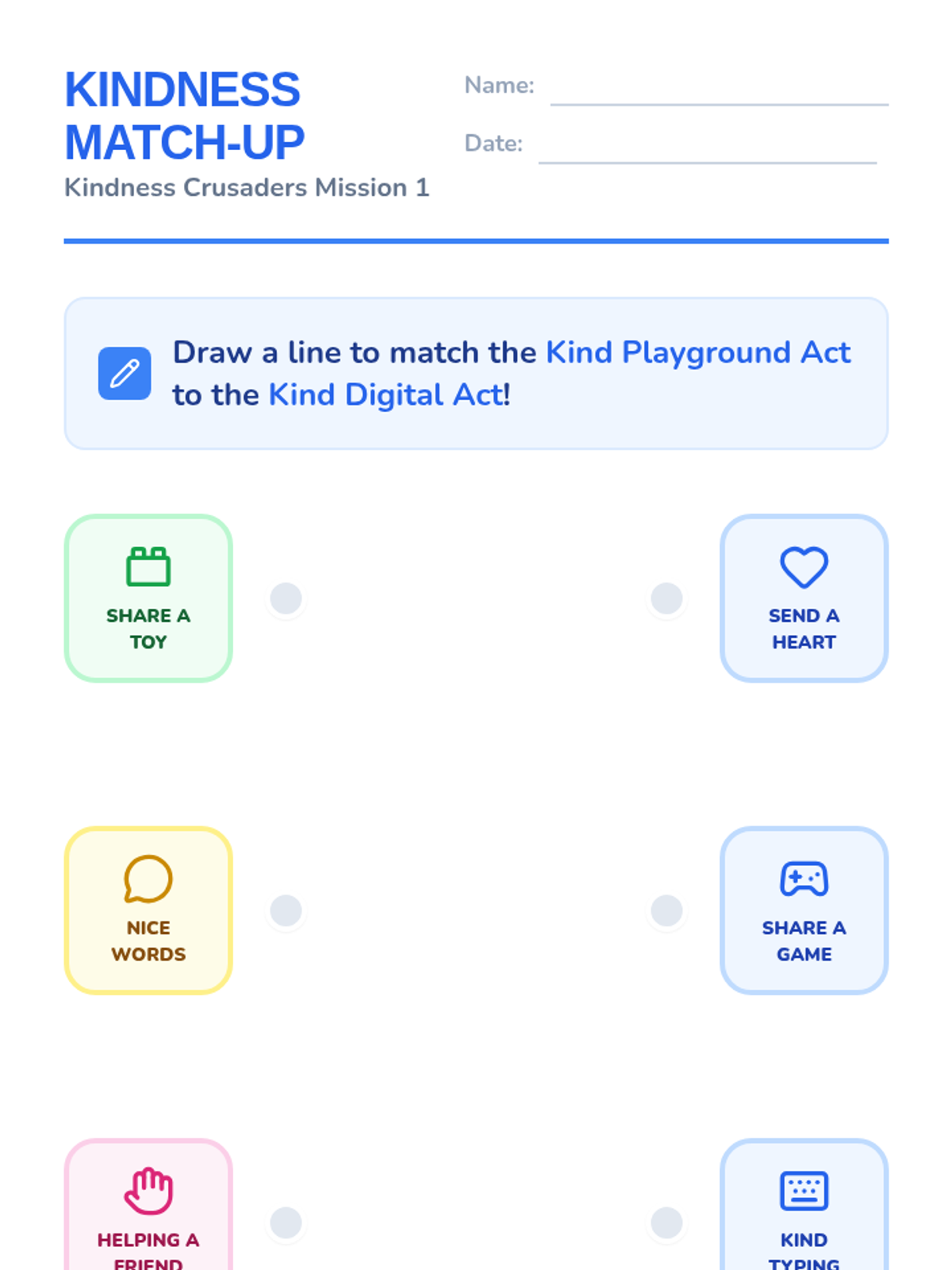
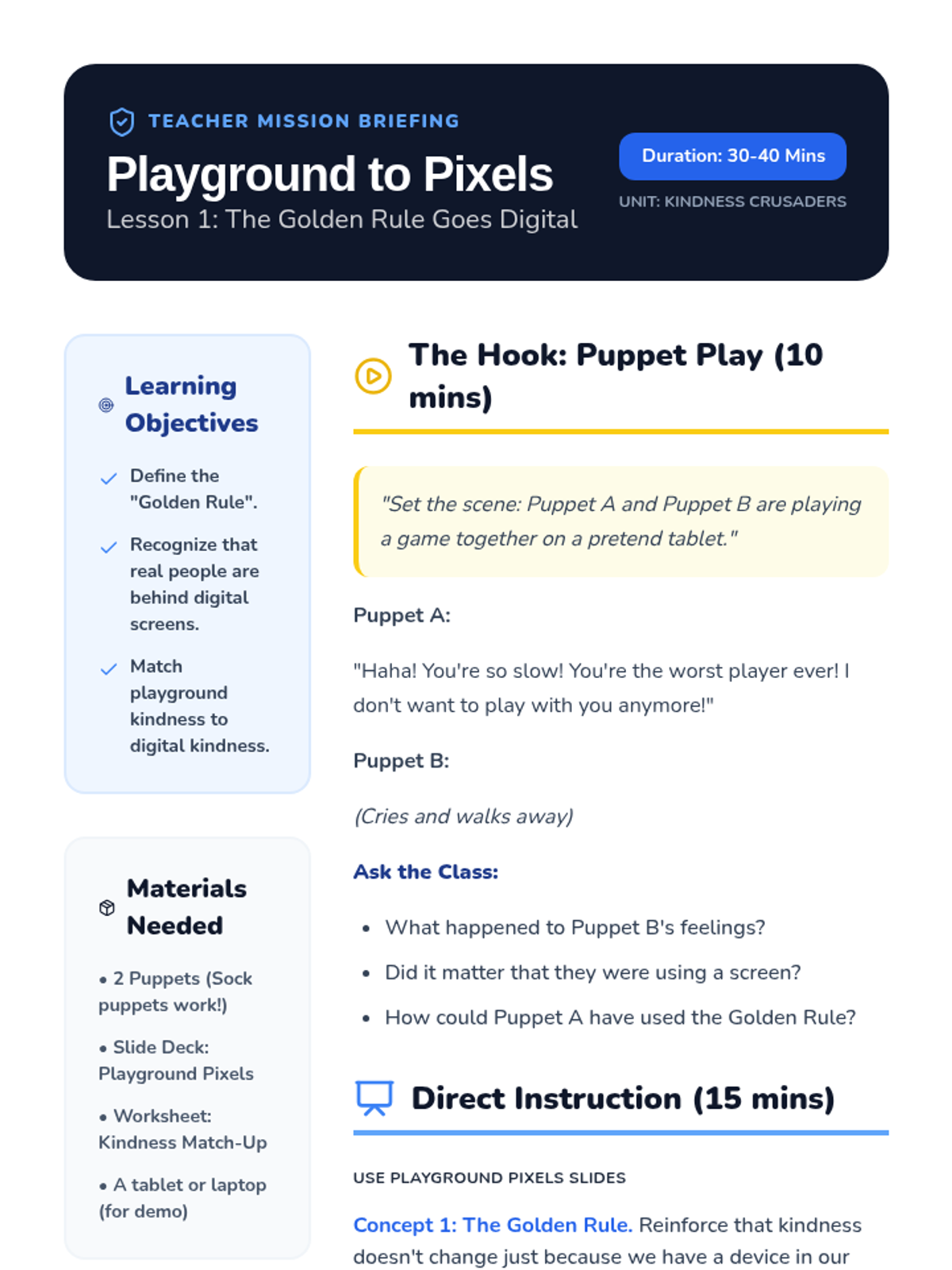
A Kindergarten sequence focused on social-emotional skills in digital environments, teaching students to be kind, respectful, and safe online through the 'Kindness Crusaders' theme.
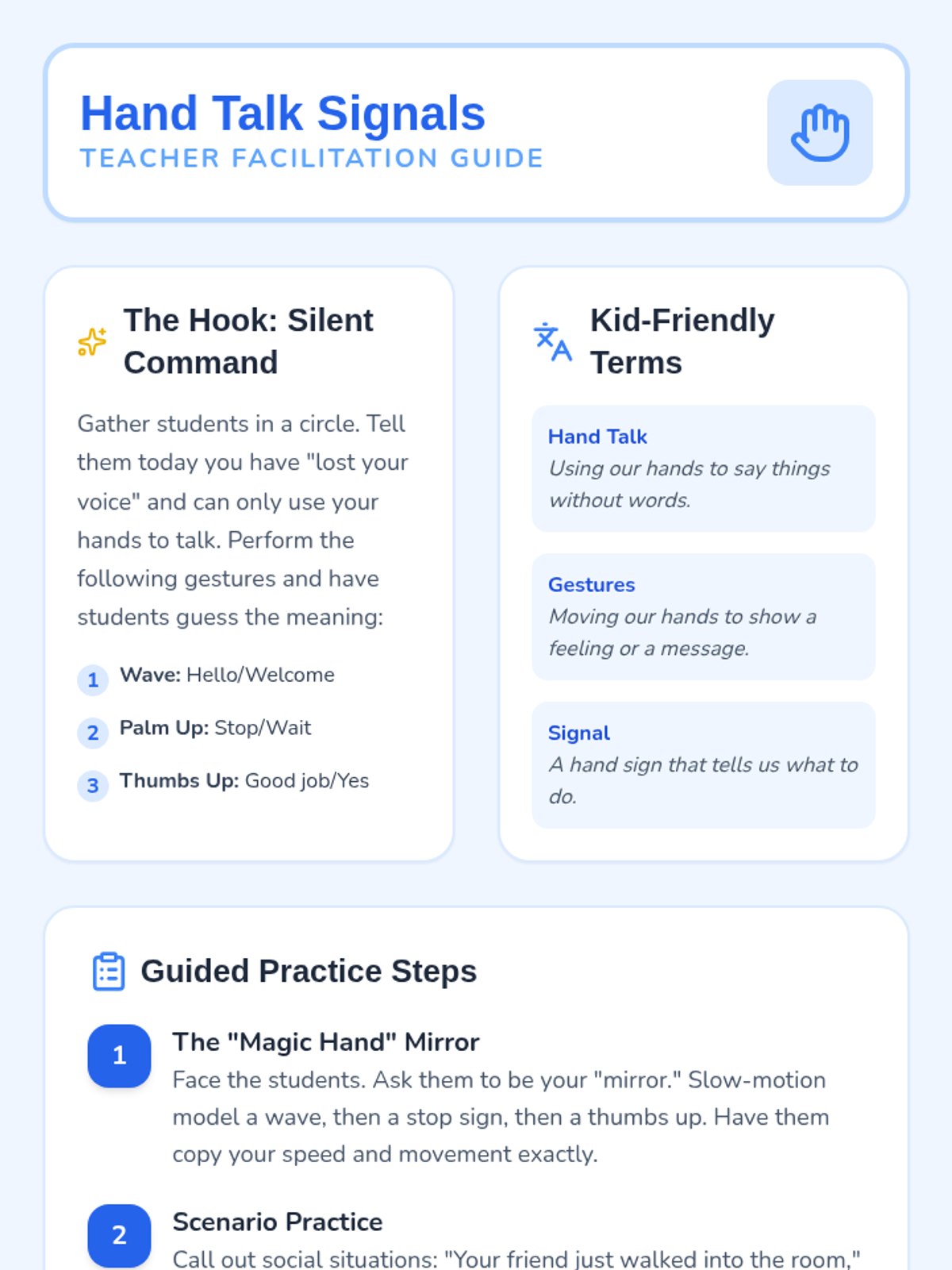
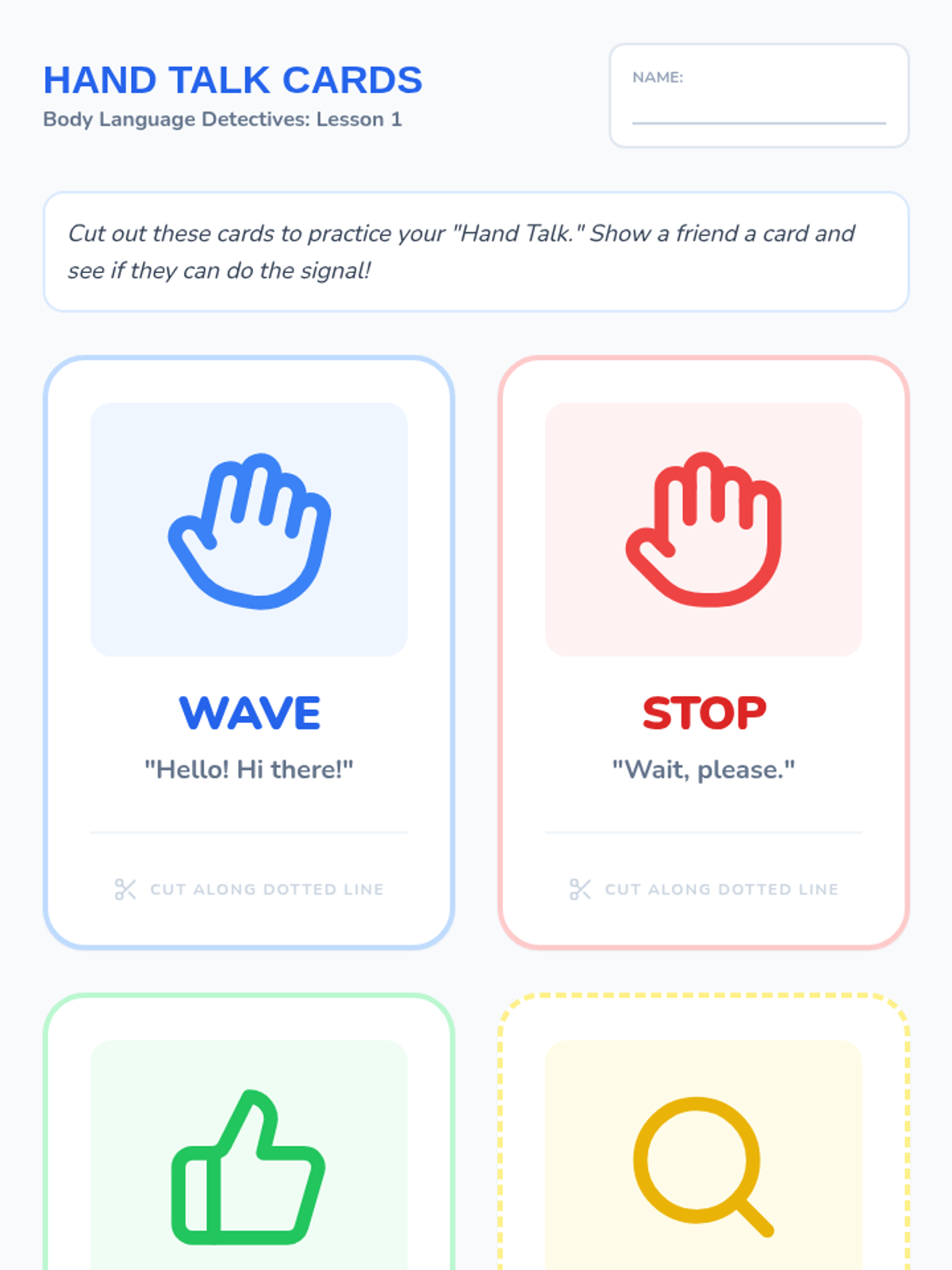
A comprehensive sequence for Pre-K students focused on interpreting non-verbal cues including hand gestures, body posture, and personal space boundaries. Students learn to become 'Body Language Detectives' to better understand their peers' feelings and intentions without words.
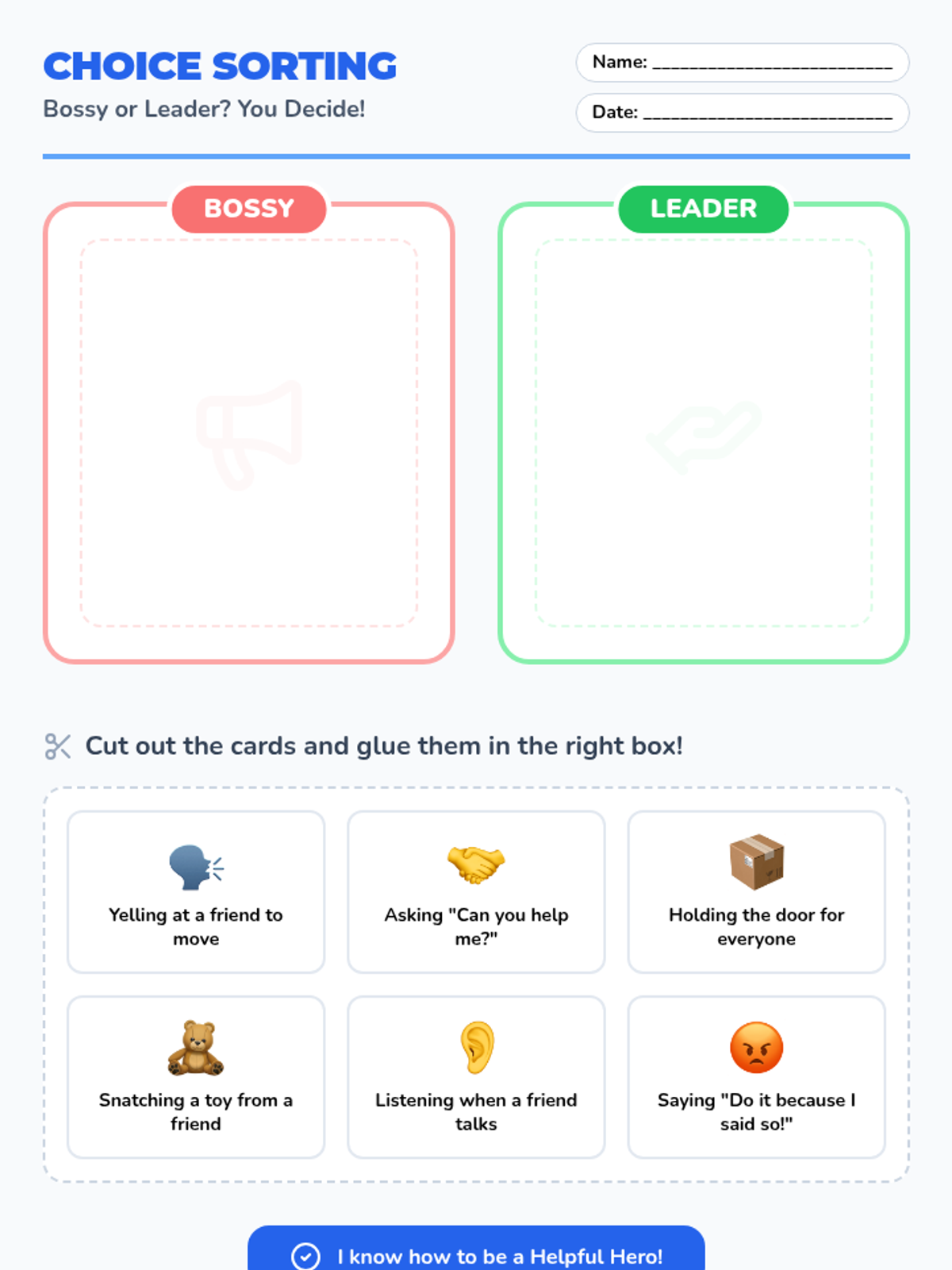
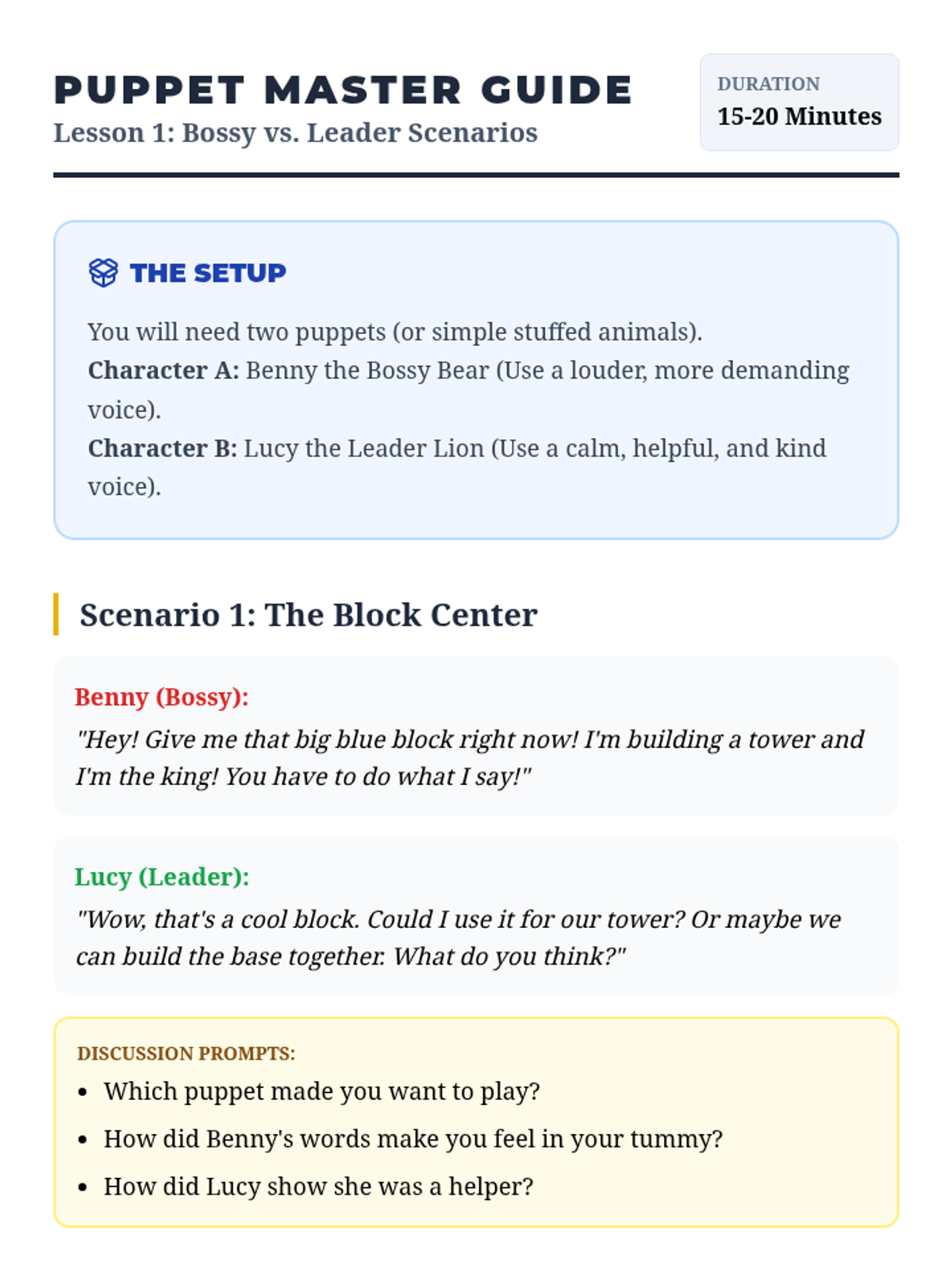
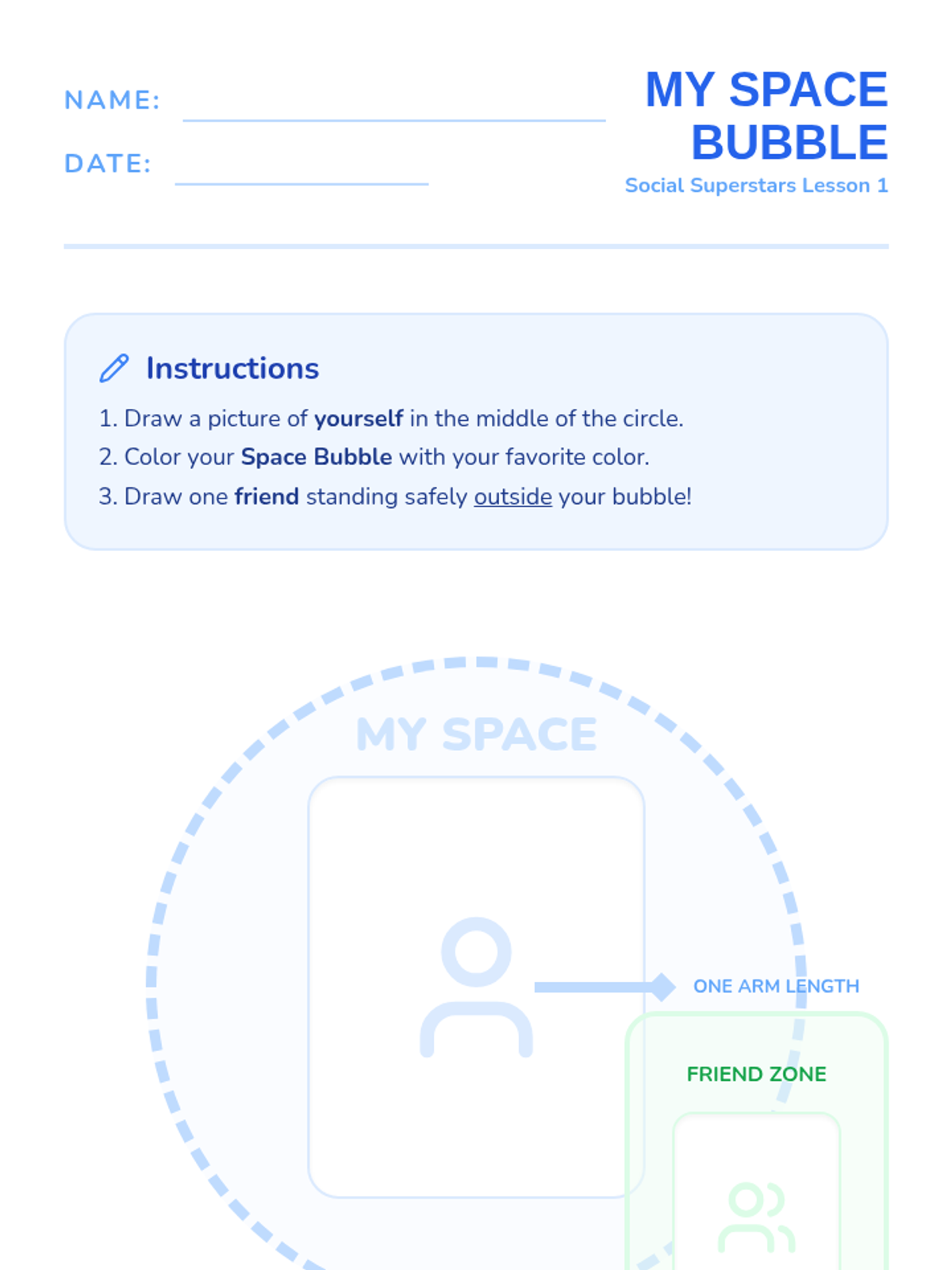
A kindergarten sequence exploring the difference between bossy behavior and responsible leadership. Students learn that true power comes from helping others, using words instead of force, and following fair rules that apply to everyone.
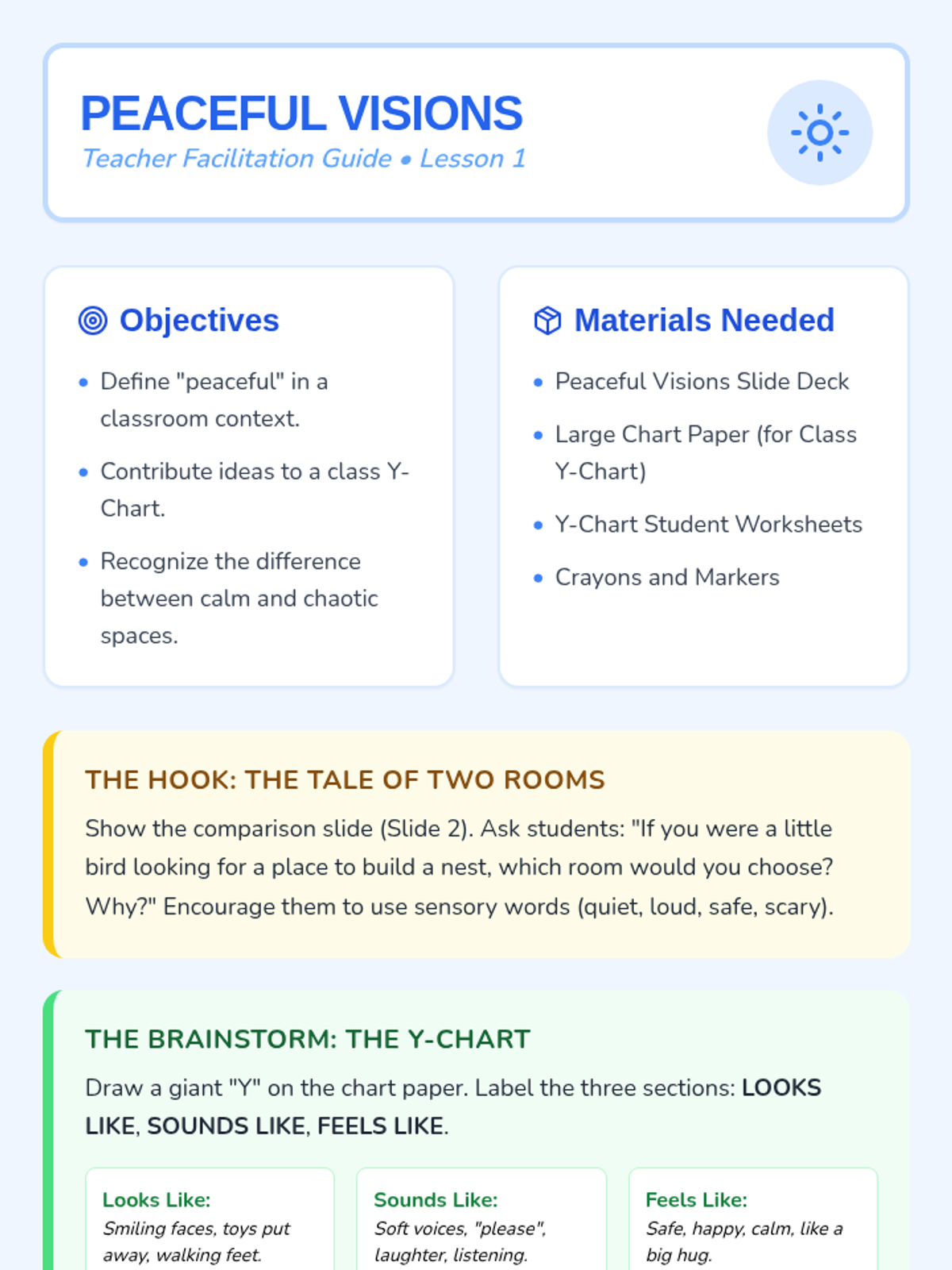
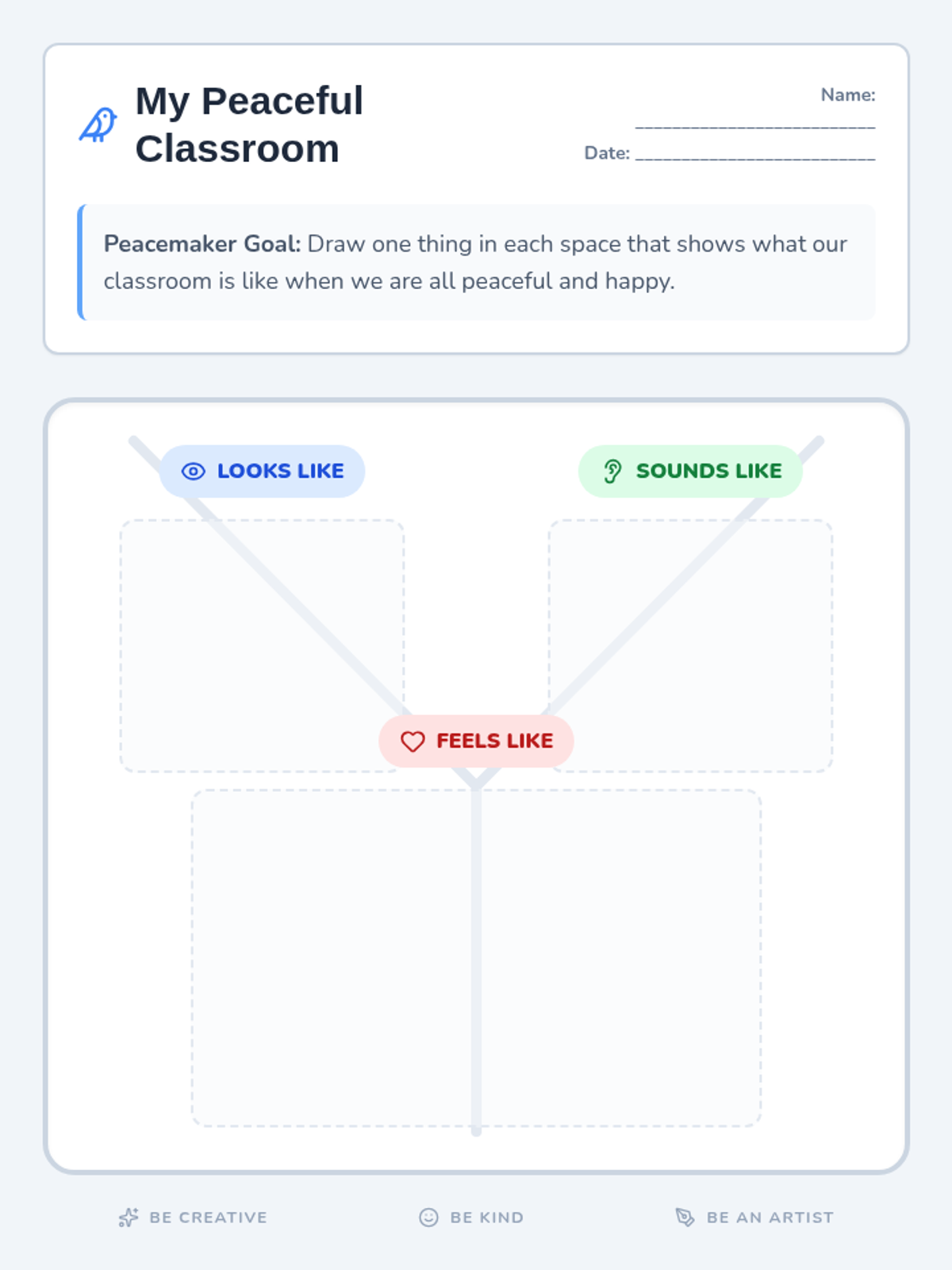
A Kindergarten project-based unit where students co-create a classroom 'Peace Corner'. They transition from learning about peaceful environments to building concrete tools and protocols for conflict resolution.
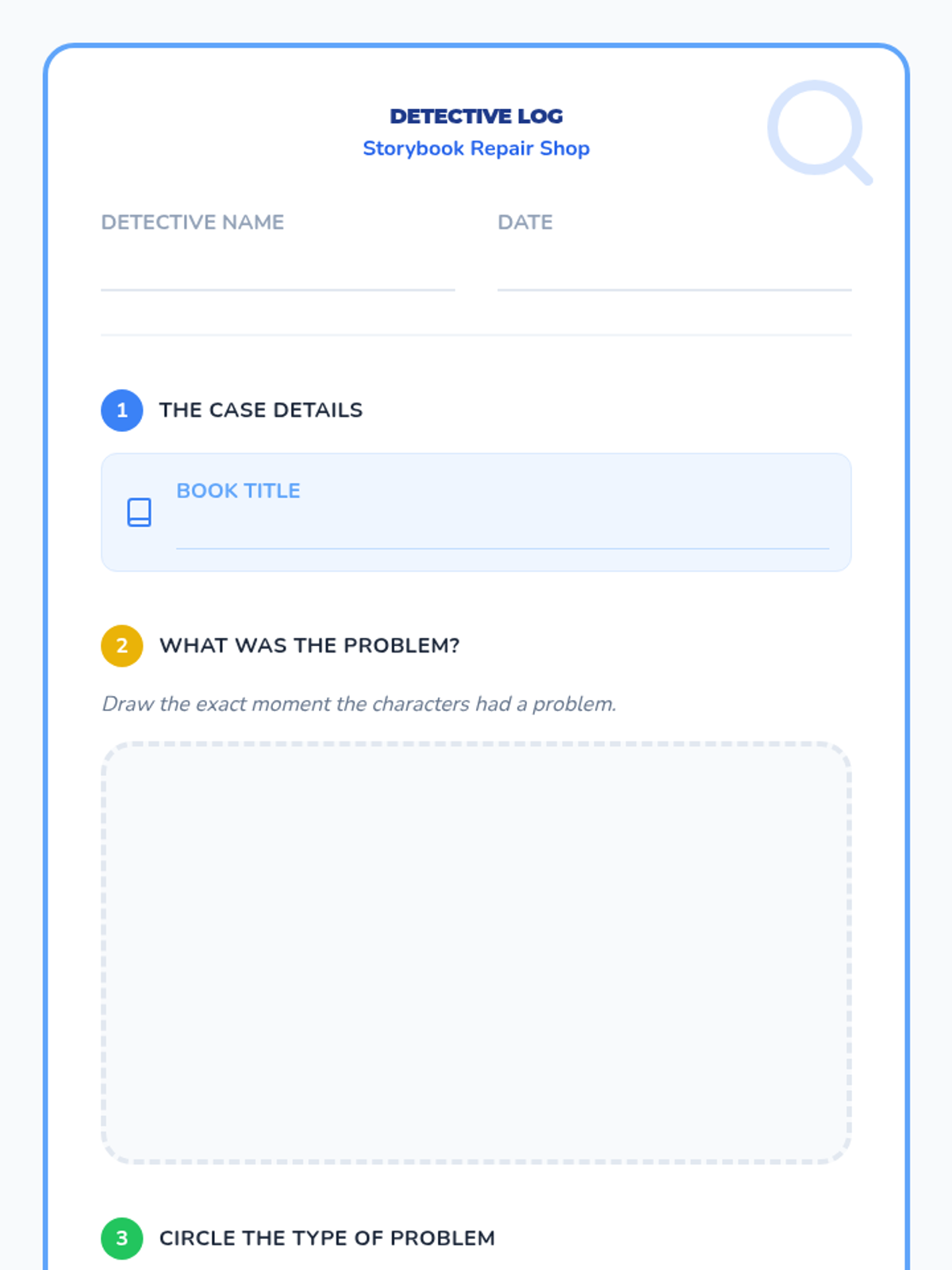
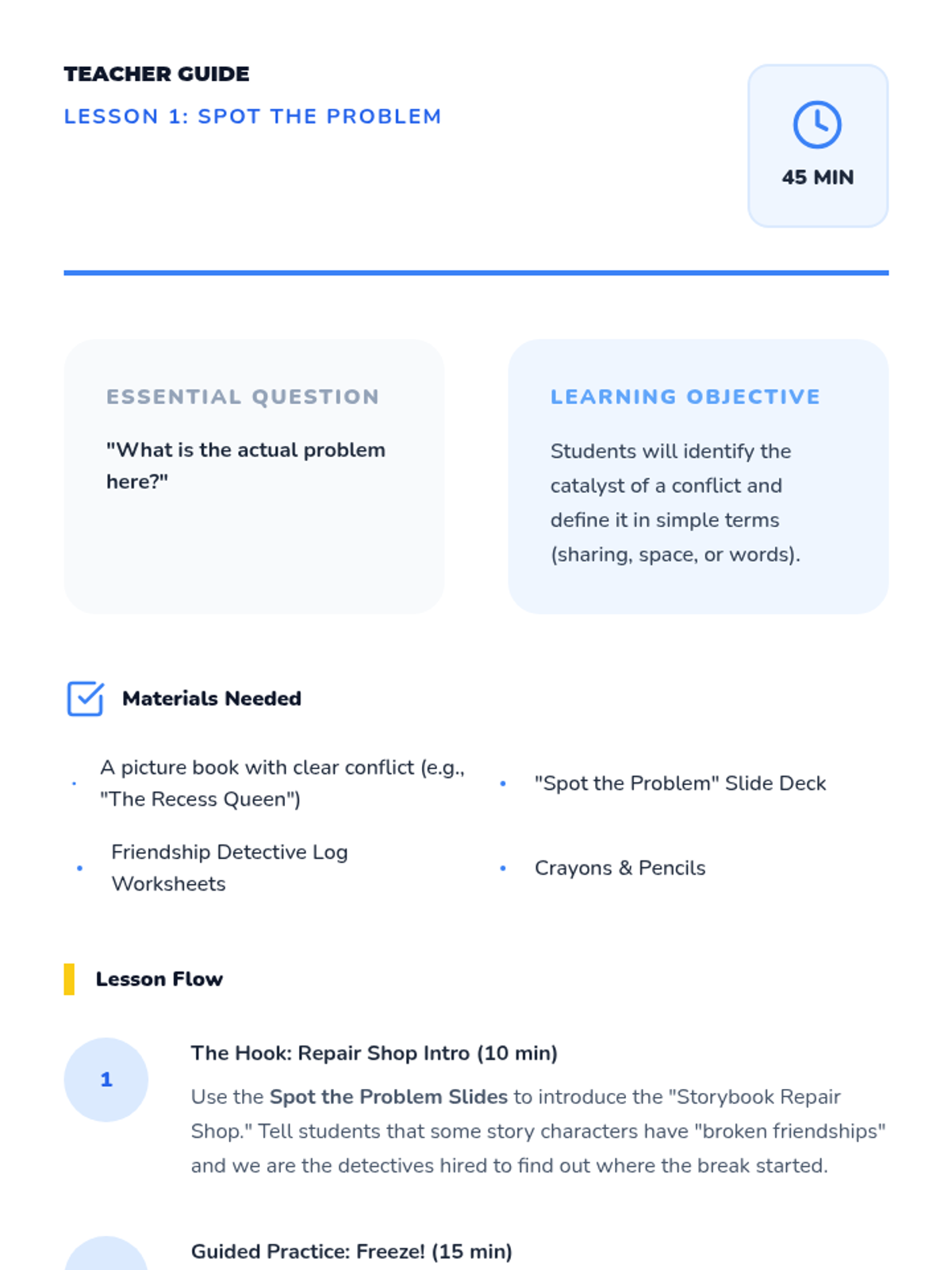
This Kindergarten sequence uses storytelling and narrative analysis to help students identify conflicts, understand different perspectives, and develop practical resolution strategies. Through the 'Storybook Repair Shop' theme, students move from observing character conflicts to practicing restorative apologies and creating their own 'Super Friend' solutions.
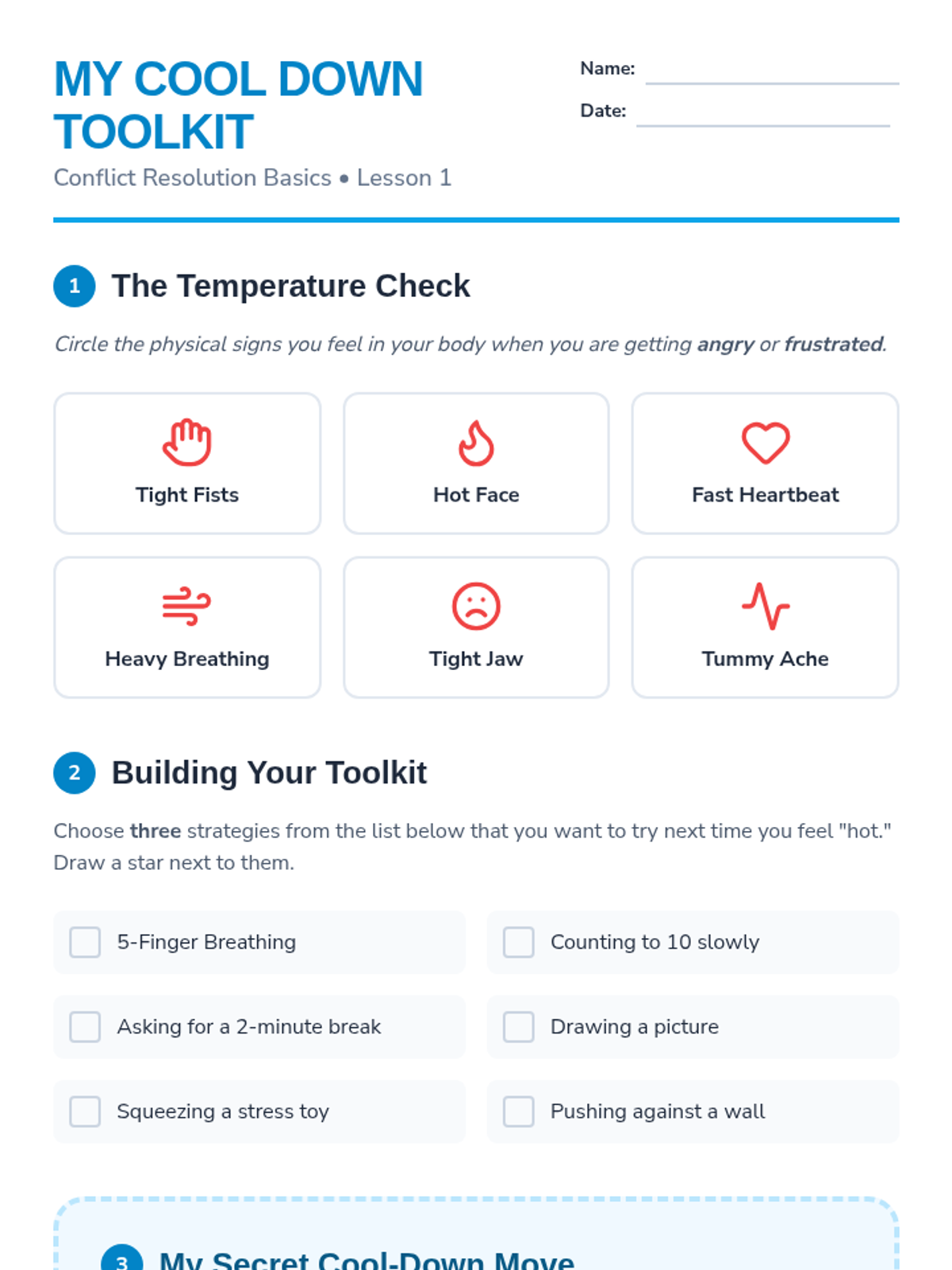
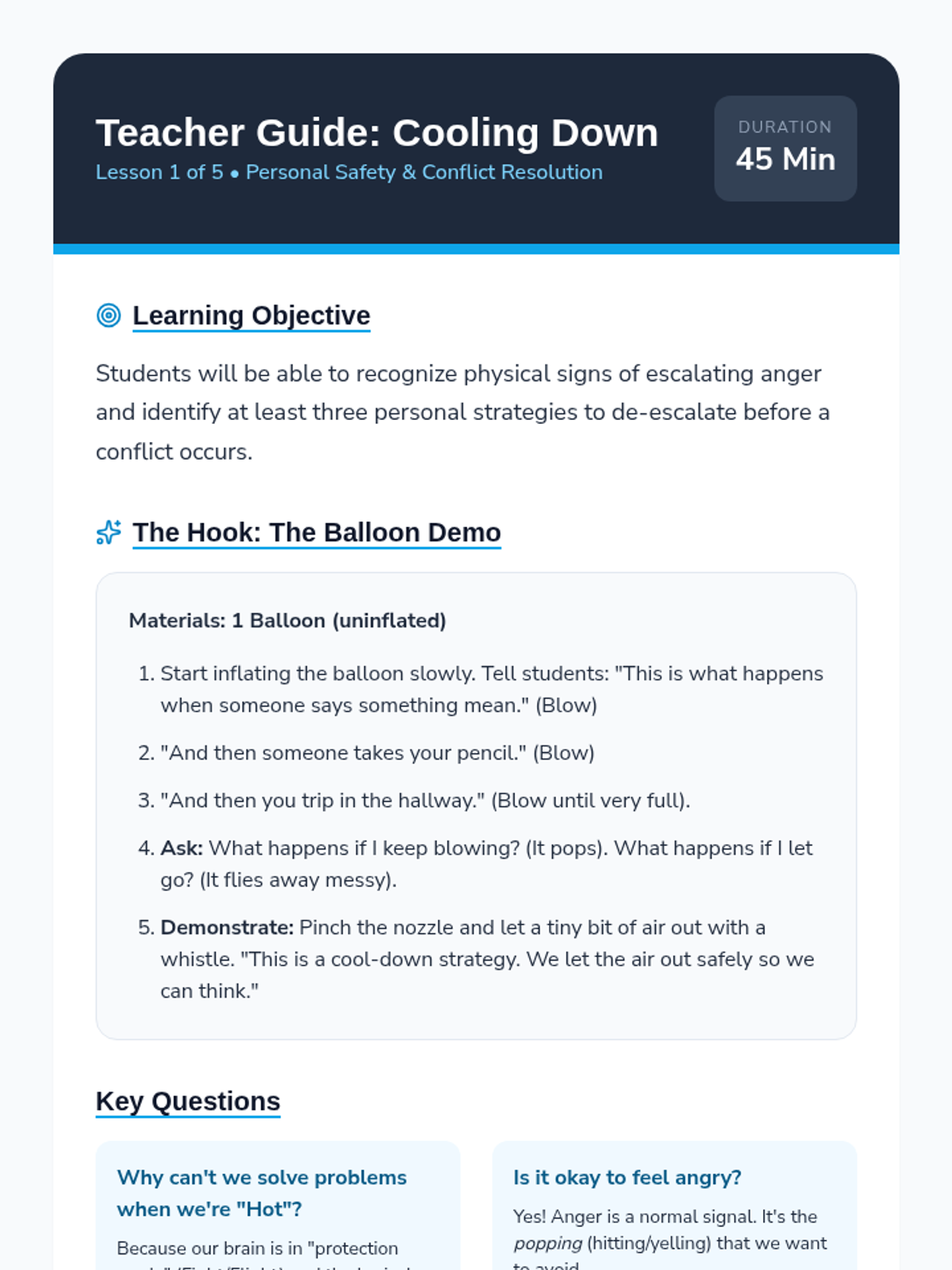
Students move from reactive emotional responses to proactive negotiation. They learn de-escalation, empathy through perspective-taking, and a structured 4-step 'Peace Path' to resolve playground and classroom conflicts independently.
A Pre-K sequence focused on teaching positive peer interaction through social stories, role-play, and the creation of a 'Friendship Playbook'. Students learn body awareness, social scripts for joining play, patience in turn-taking, and verbal conflict resolution.
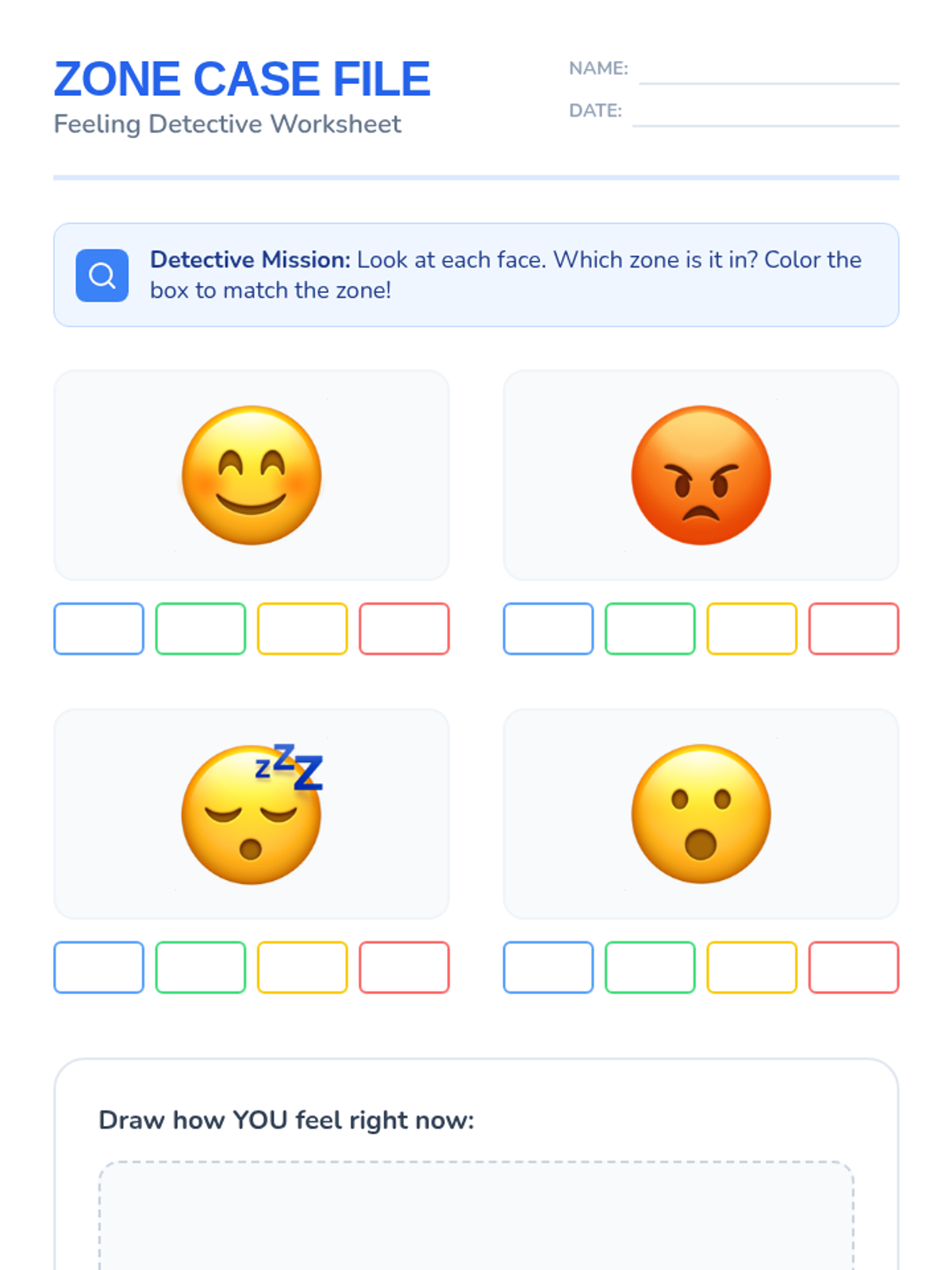
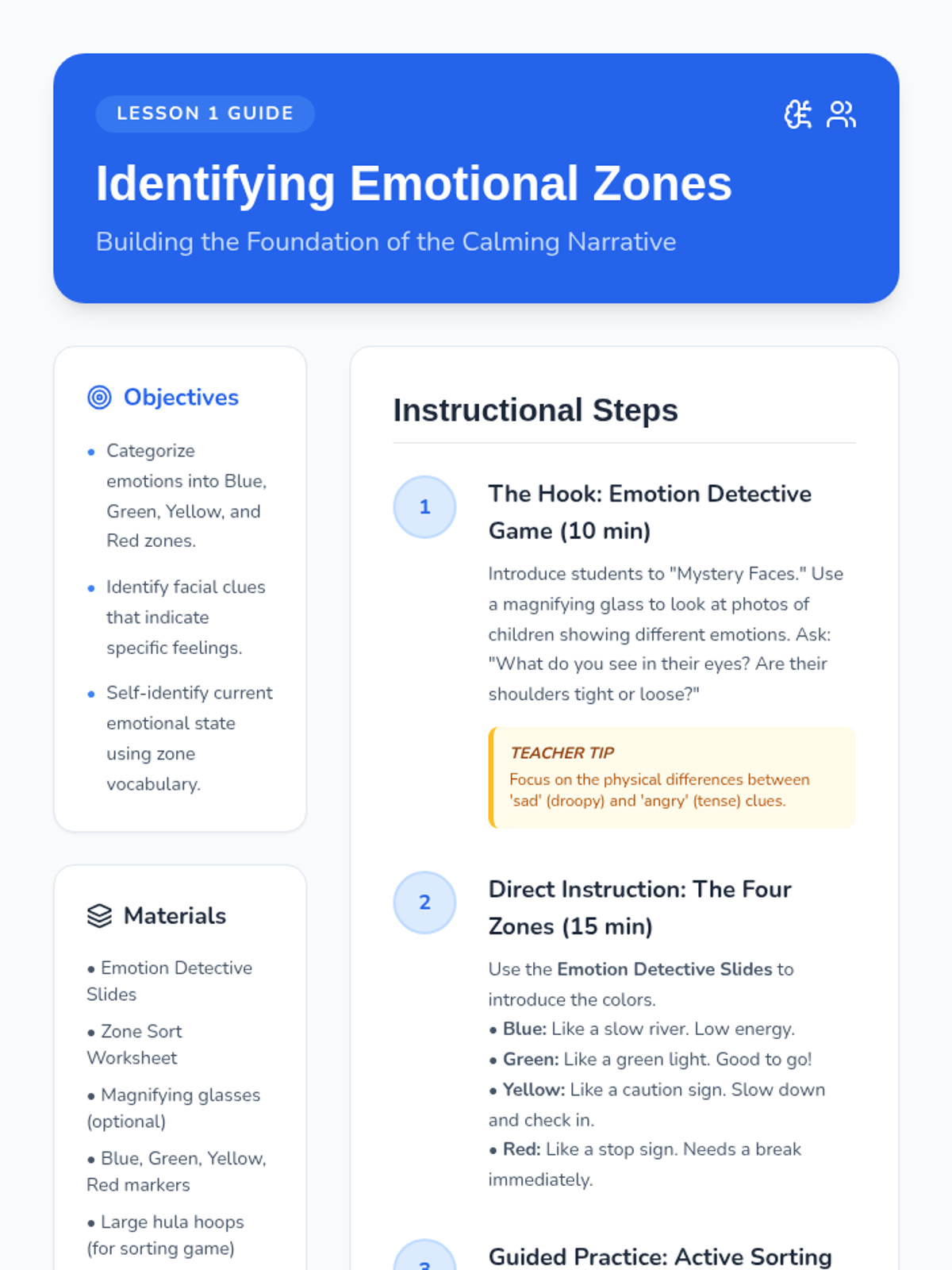
A Kindergarten sequence focused on empowering students to identify emotional states, recognize physical cues, and create a personalized calming narrative to support self-regulation and coping.
A Kindergarten social-emotional learning sequence focused on building positive peer interaction skills through social scripting, personal boundaries, and conflict resolution. Students use role-play and visual stories to internalize strategies for sharing, joining groups, and handling social rejection.
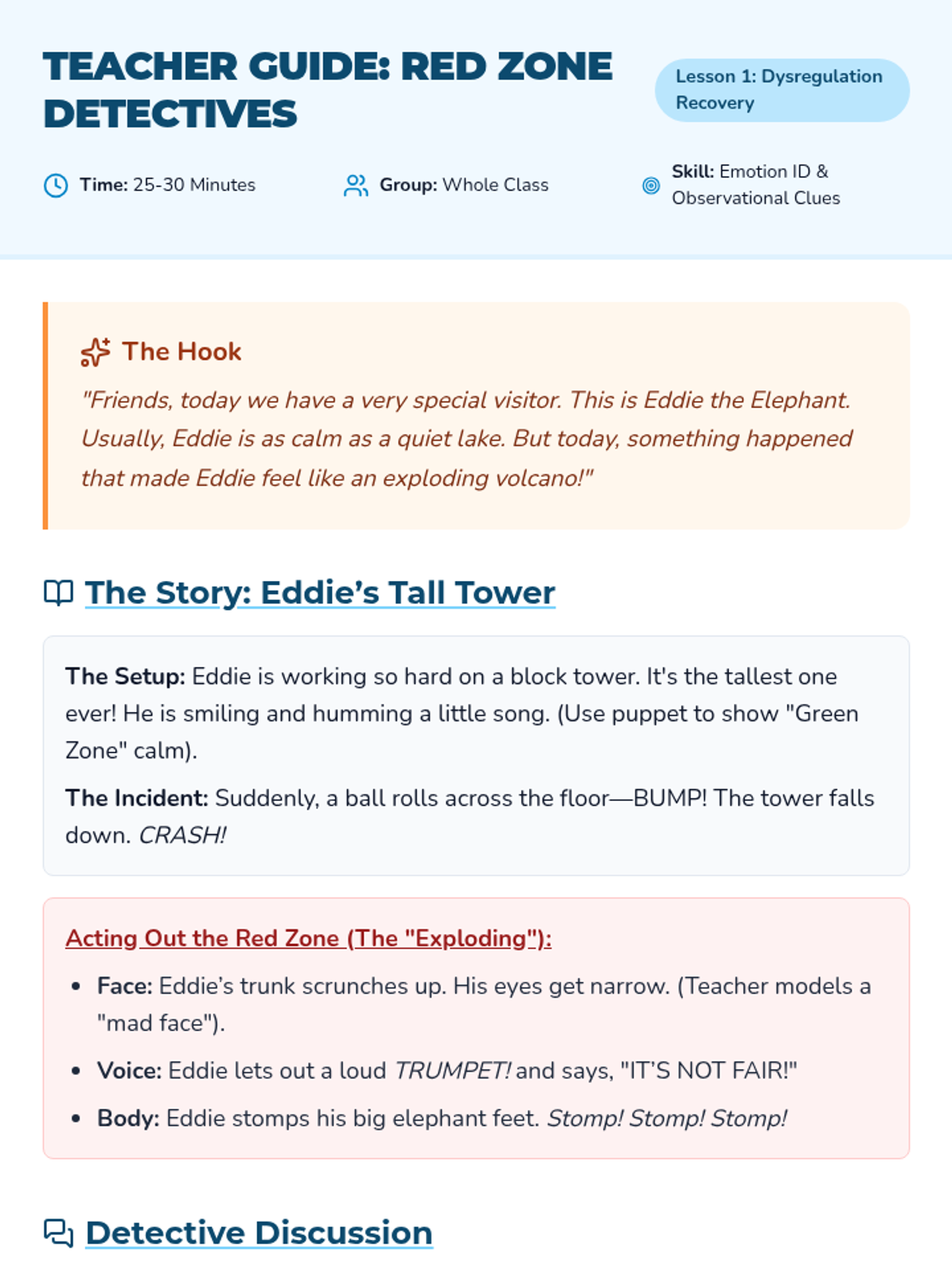
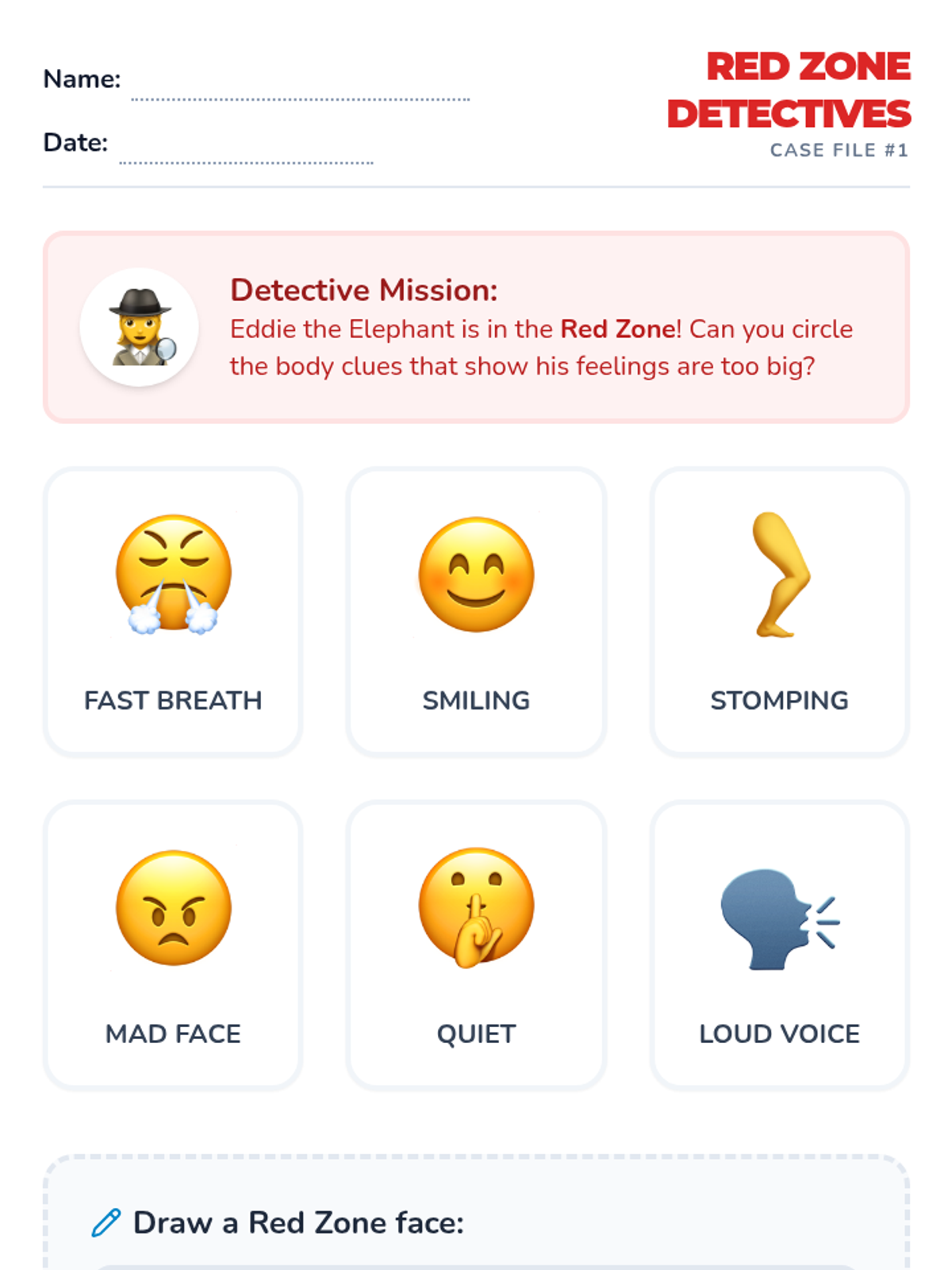
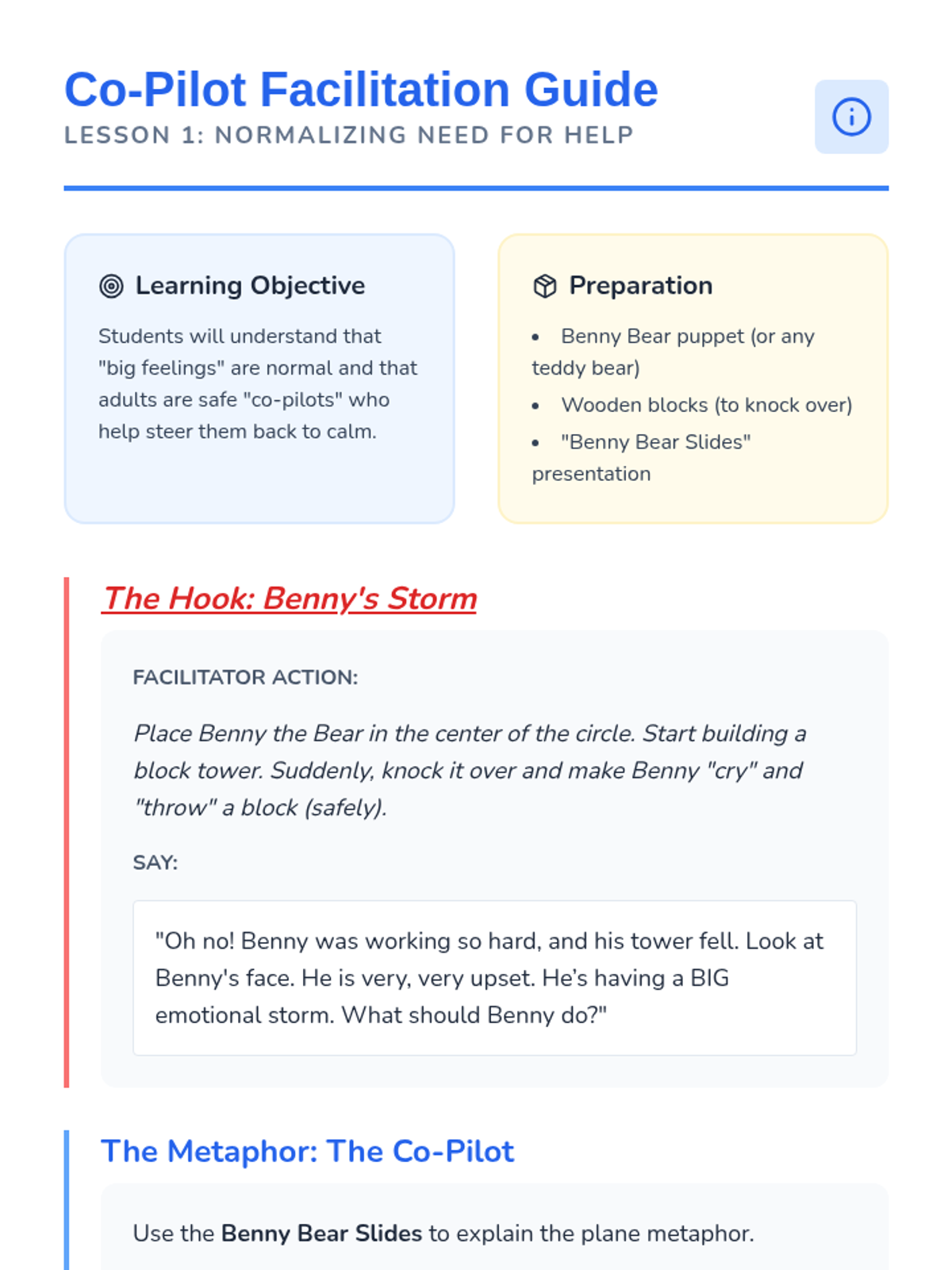
A Kindergarten sequence focused on recognizing dysregulation and seeking co-regulation from safe adults. Students learn to identify 'big feelings' in others and themselves, use non-verbal signals for help, and practice calming techniques to safely return to classroom activities.
A 5-lesson sequence for Pre-K students focused on co-regulation, accepting adult help during dysregulation, and successfully transitioning back to social play using restorative 'repair' rituals.
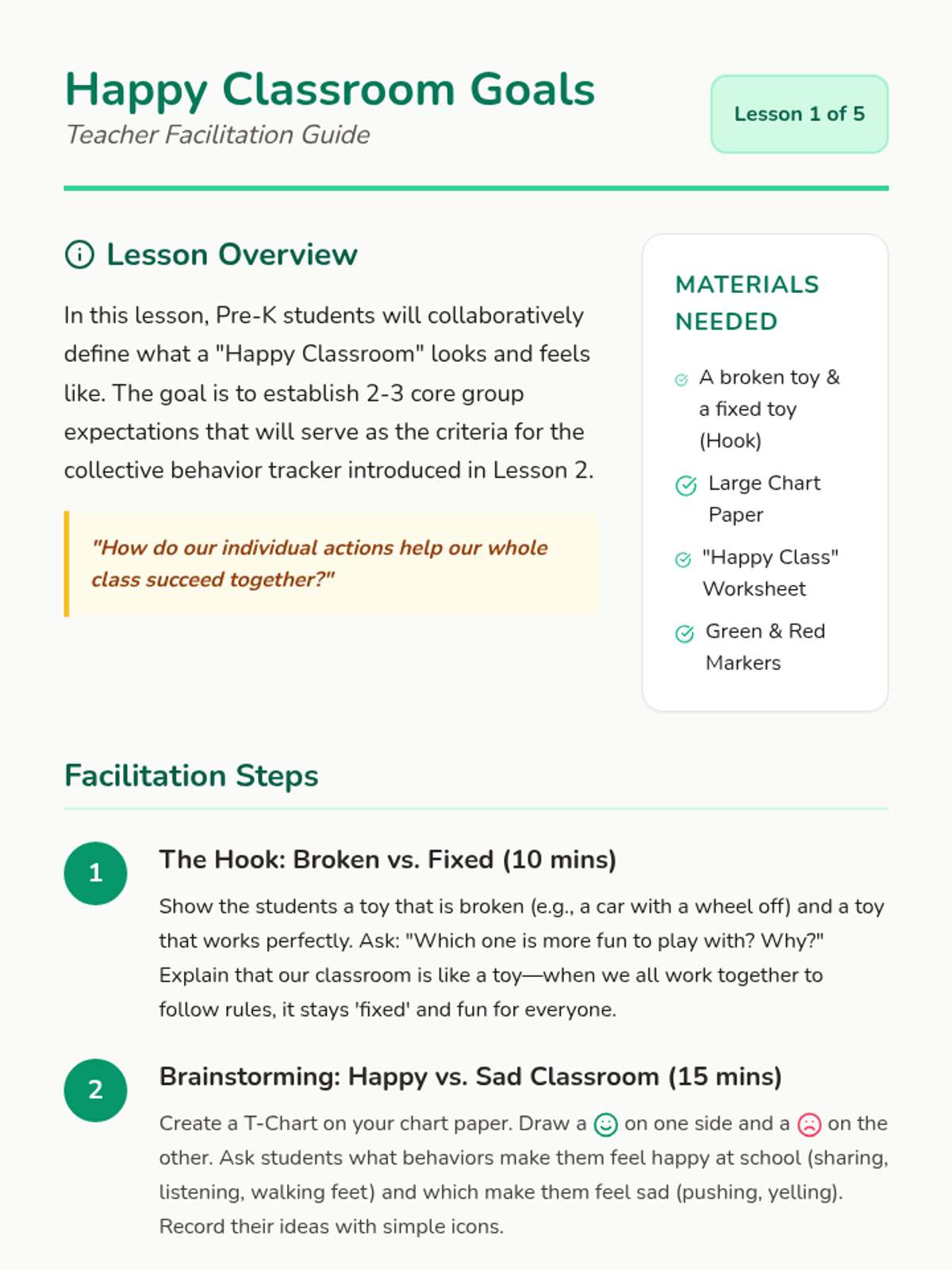
This sequence introduces Pre-K students to the concept of collective responsibility and group goals through a shared behavior tracking system. Using a 'Good Choice Garden' theme, students learn to set goals, track their group's progress, observe positive behaviors in their peers, and celebrate their combined success.
A Kindergarten sequence focused on helping students identify personal interests and the link between activities and emotions through sensory exploration and creative mapping.
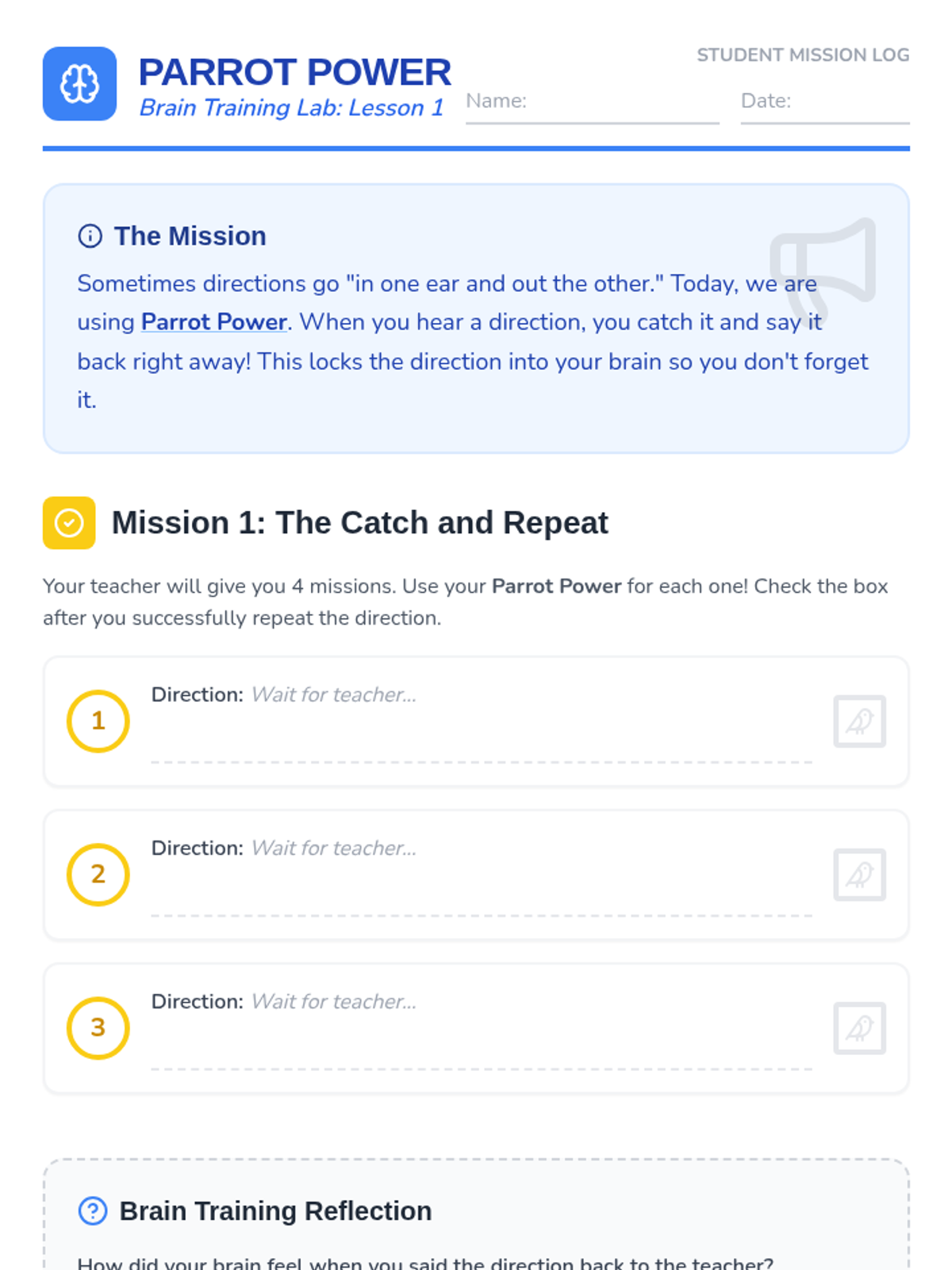
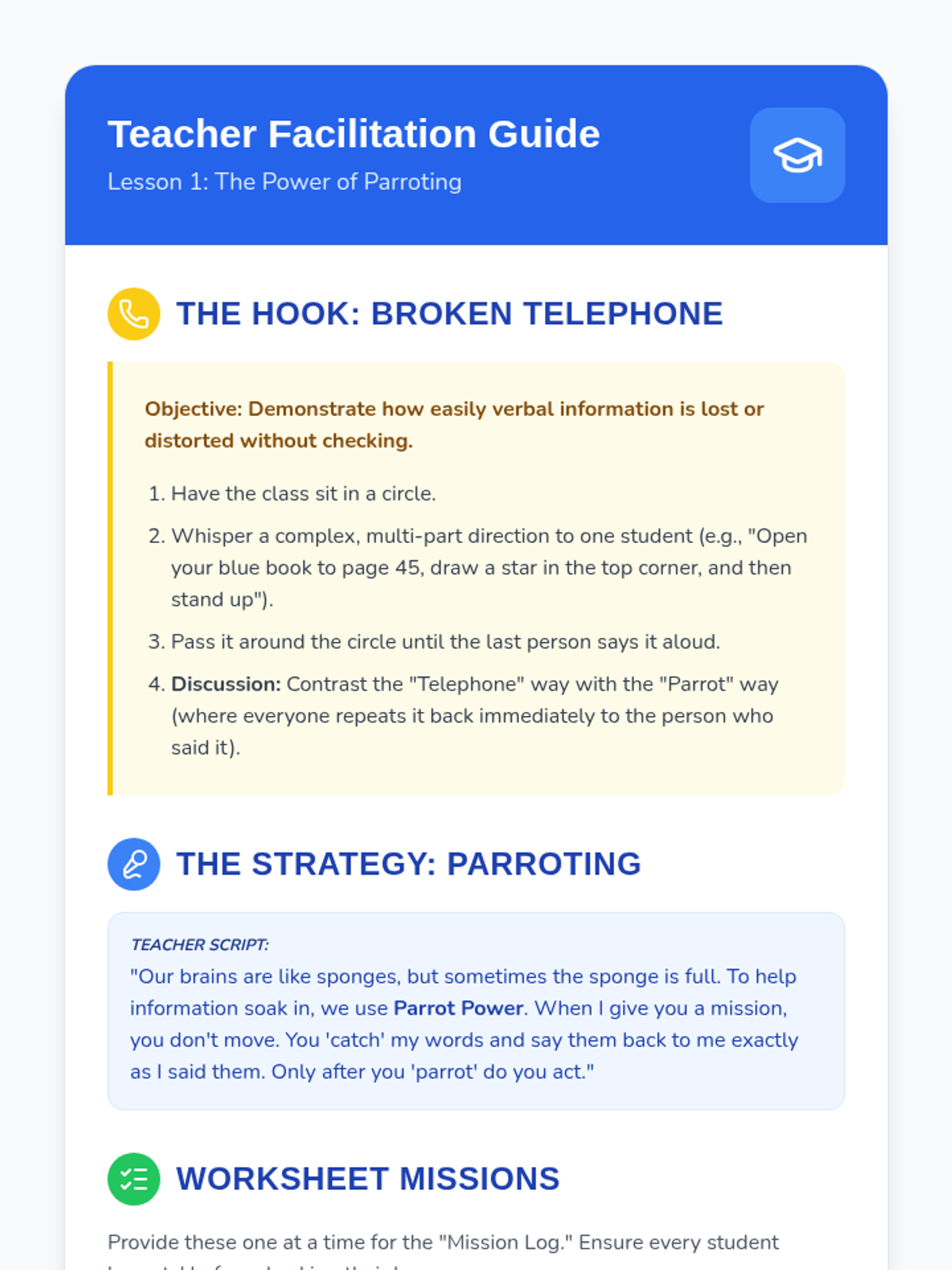
This sequence focuses on auditory processing and the cognitive strategy of verbal rehearsal (self-talk) to hold information in working memory. Students learn to 'catch' a verbal instruction, repeat it to themselves or a peer, and then execute it.
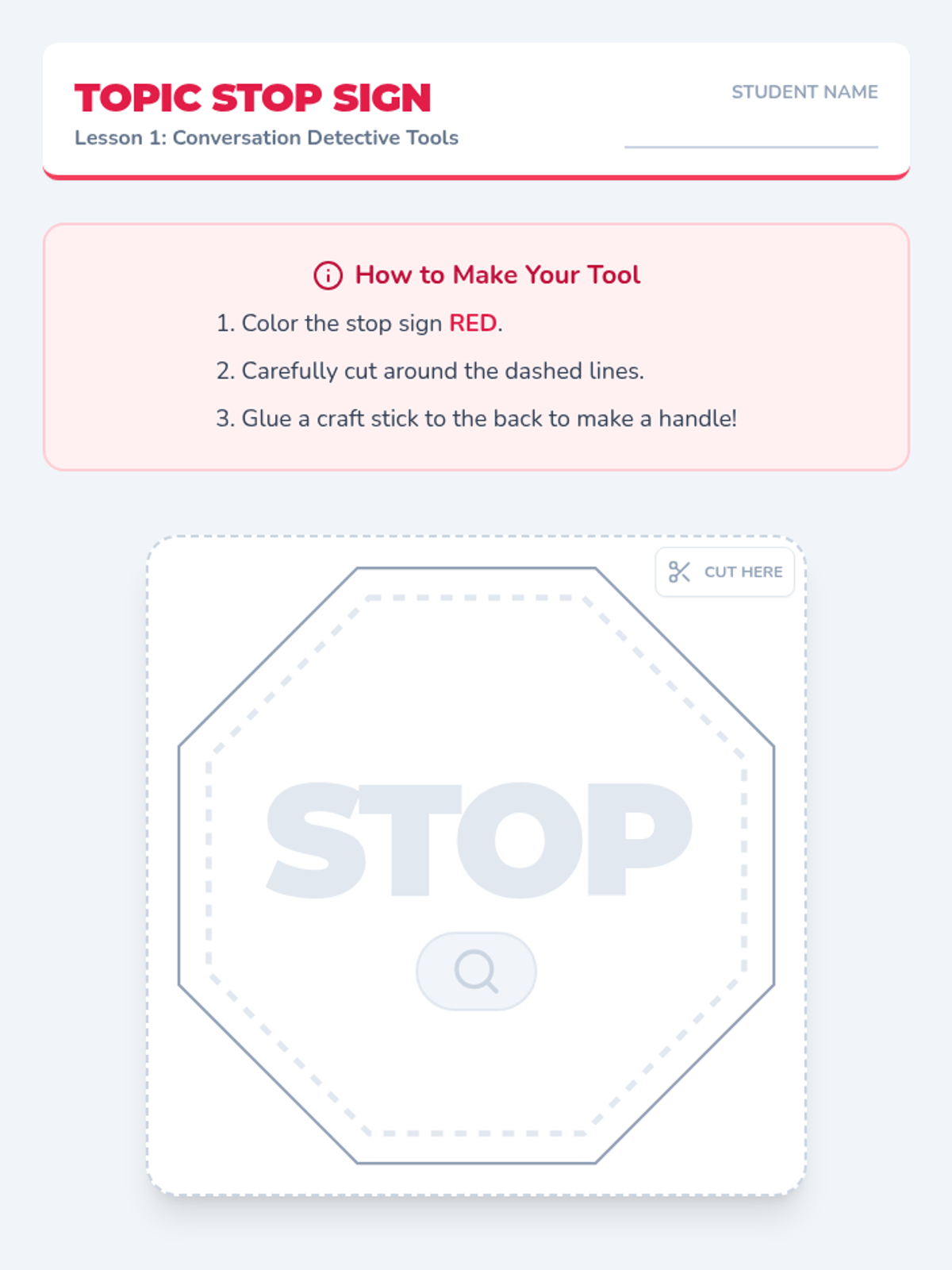
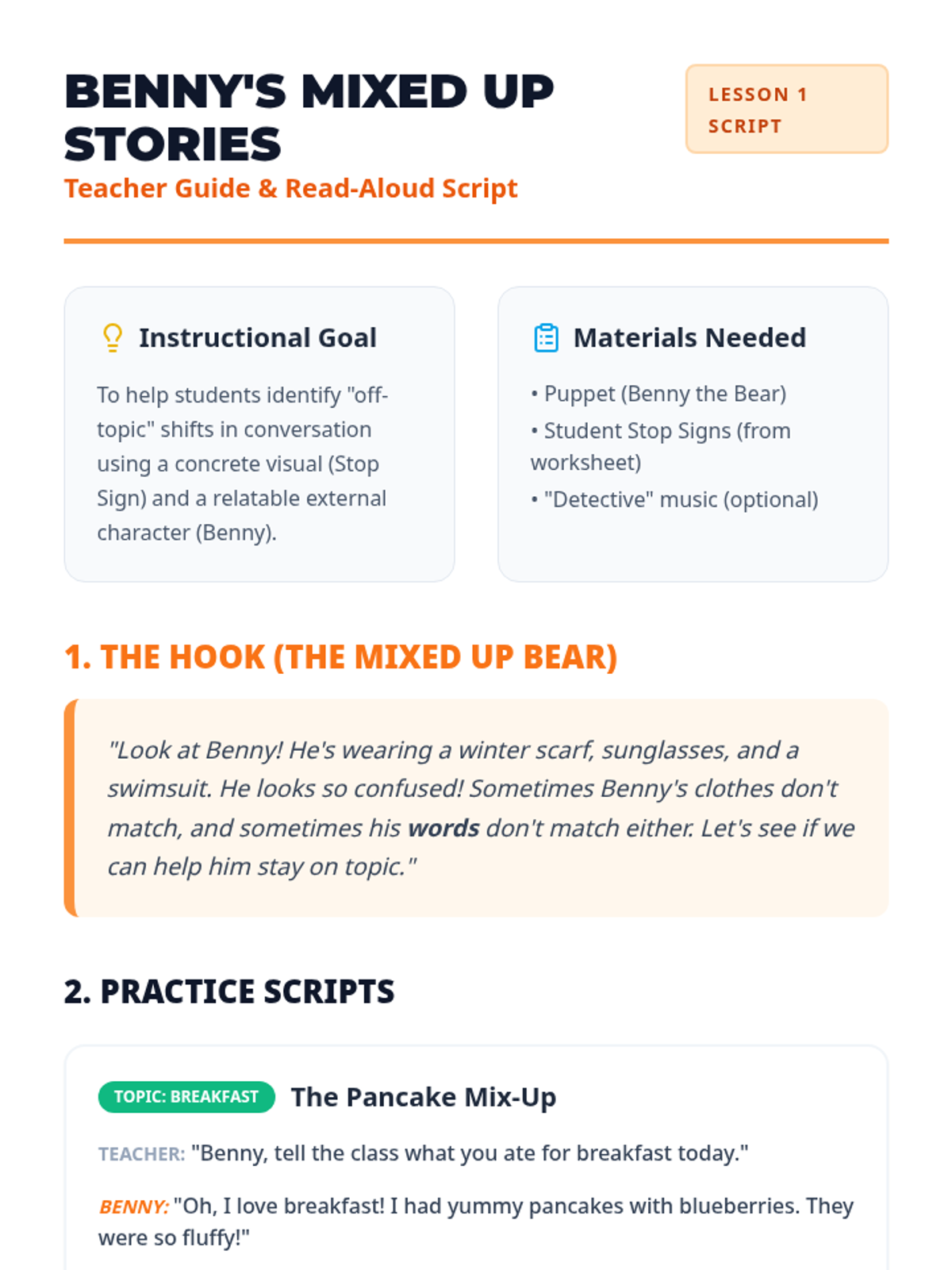
A foundational social communication sequence for Pre-K students to distinguish between on-topic and off-topic comments. Using puppet modeling and 'conversation detective' activities, students learn to identify and correct errors in topic maintenance in a low-anxiety environment.
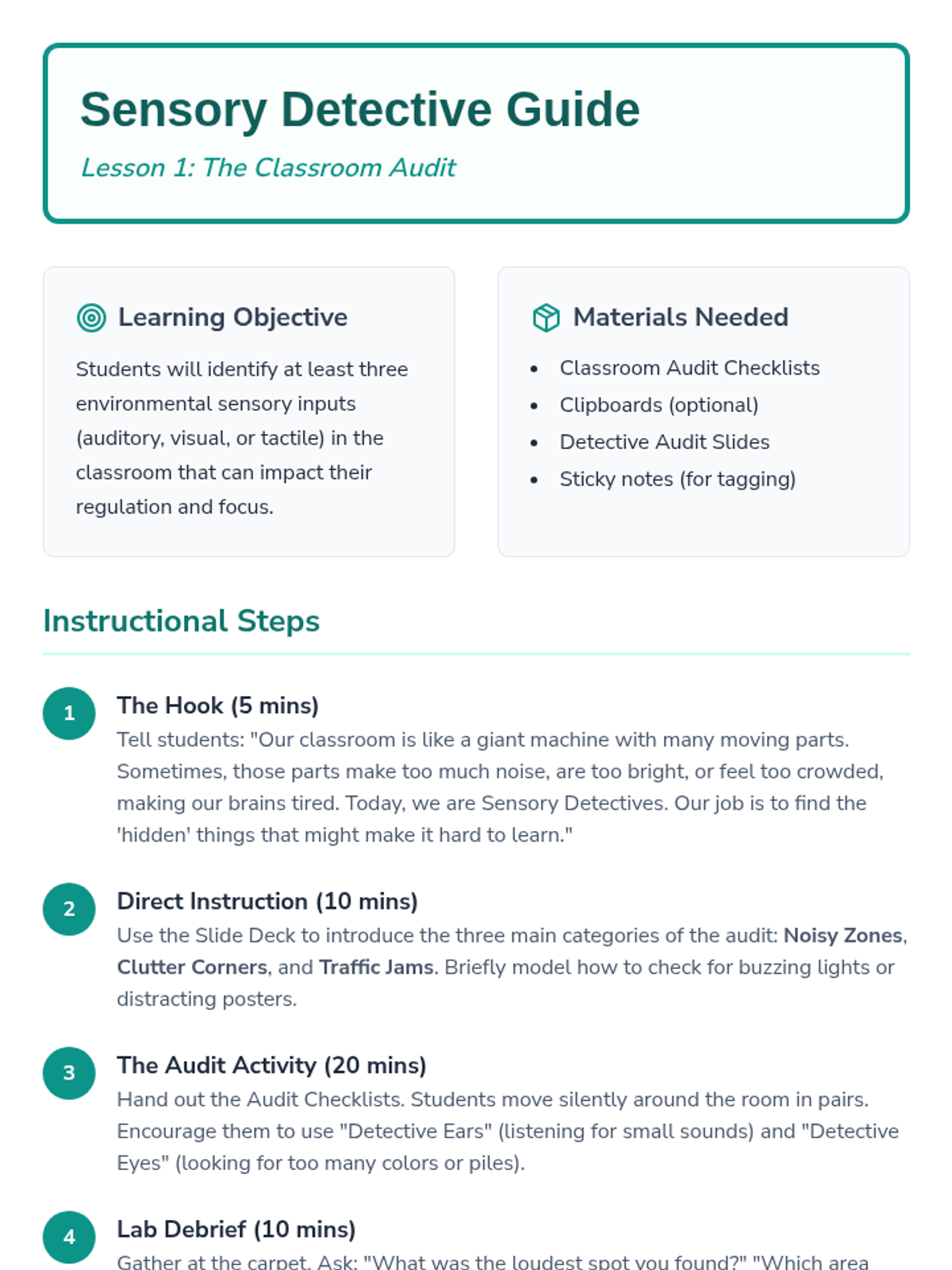
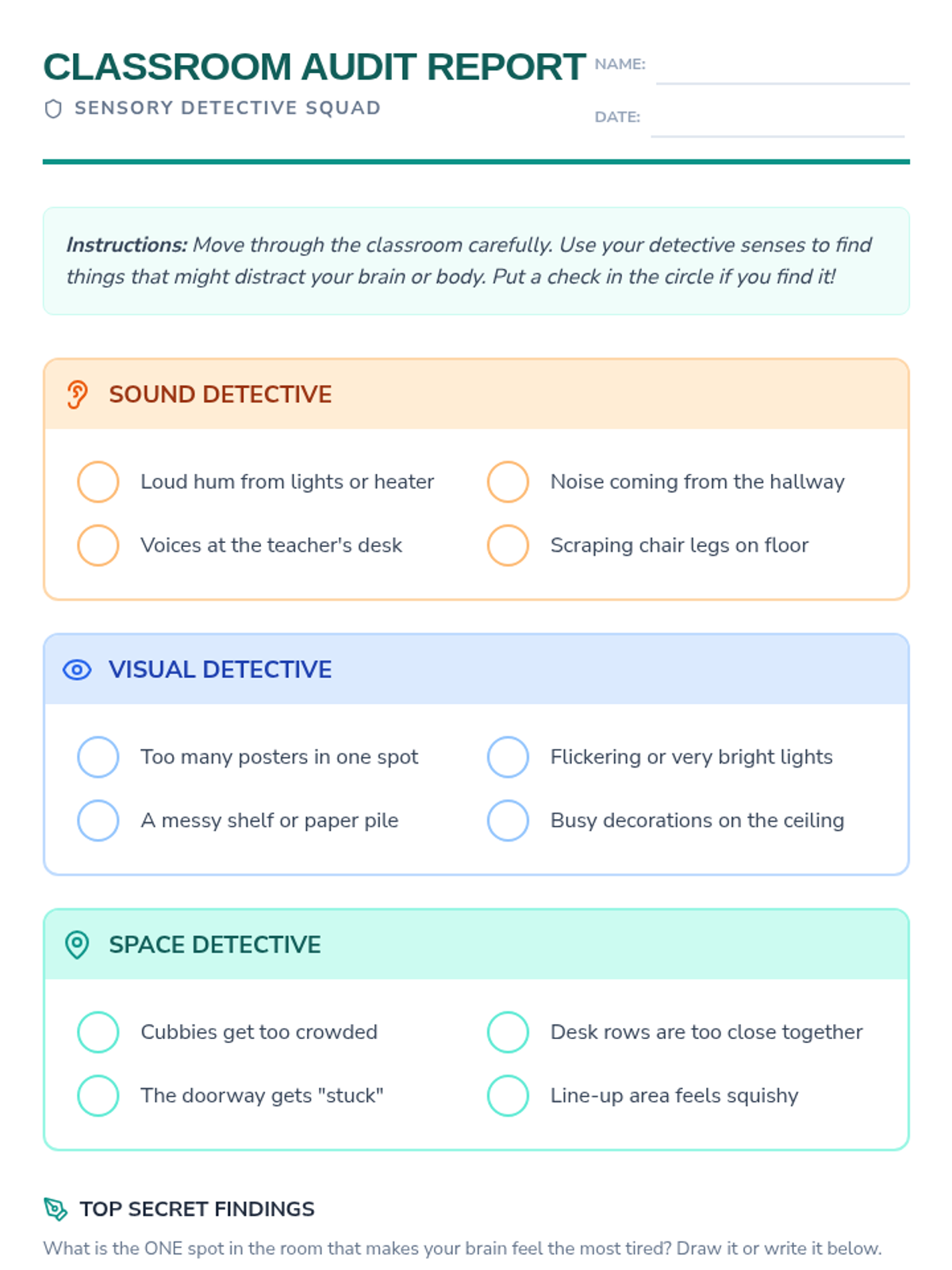
This sequence explores how environmental factors and community interactions impact sensory regulation. Students learn to audit their surroundings, respect diverse sensory needs, practice co-regulation, troubleshoot transitions, and collaboratively create a classroom sensory contract.
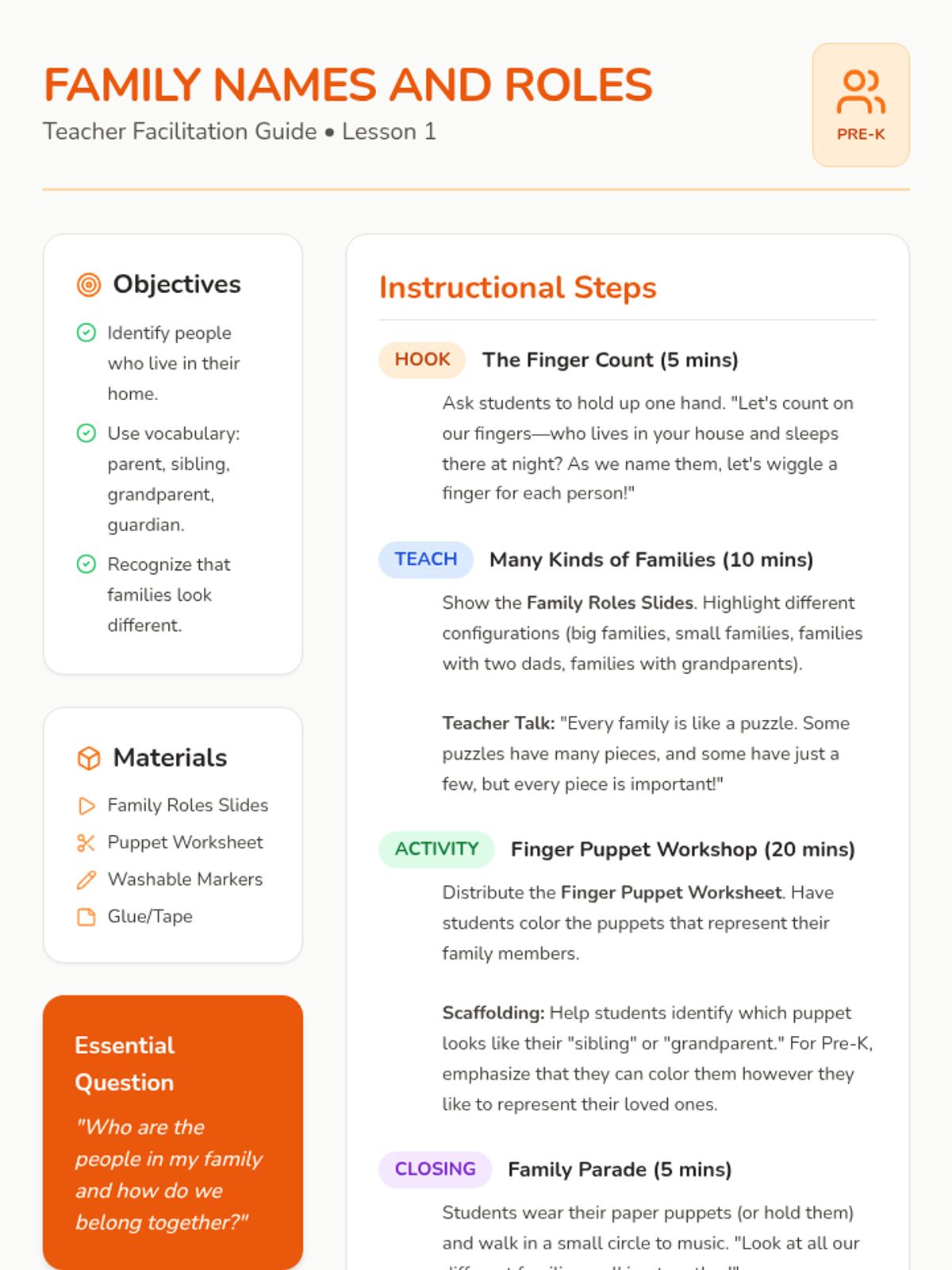
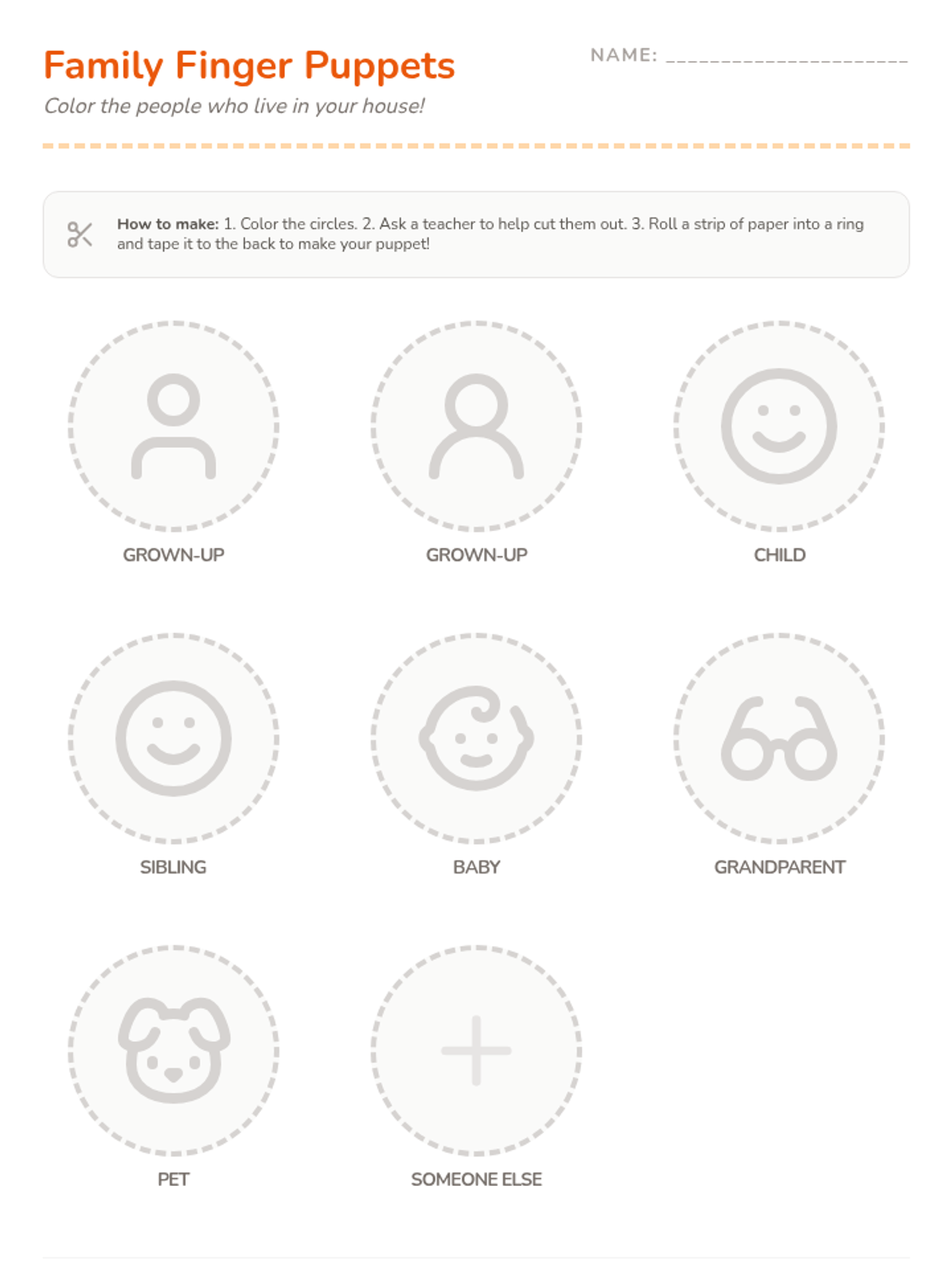
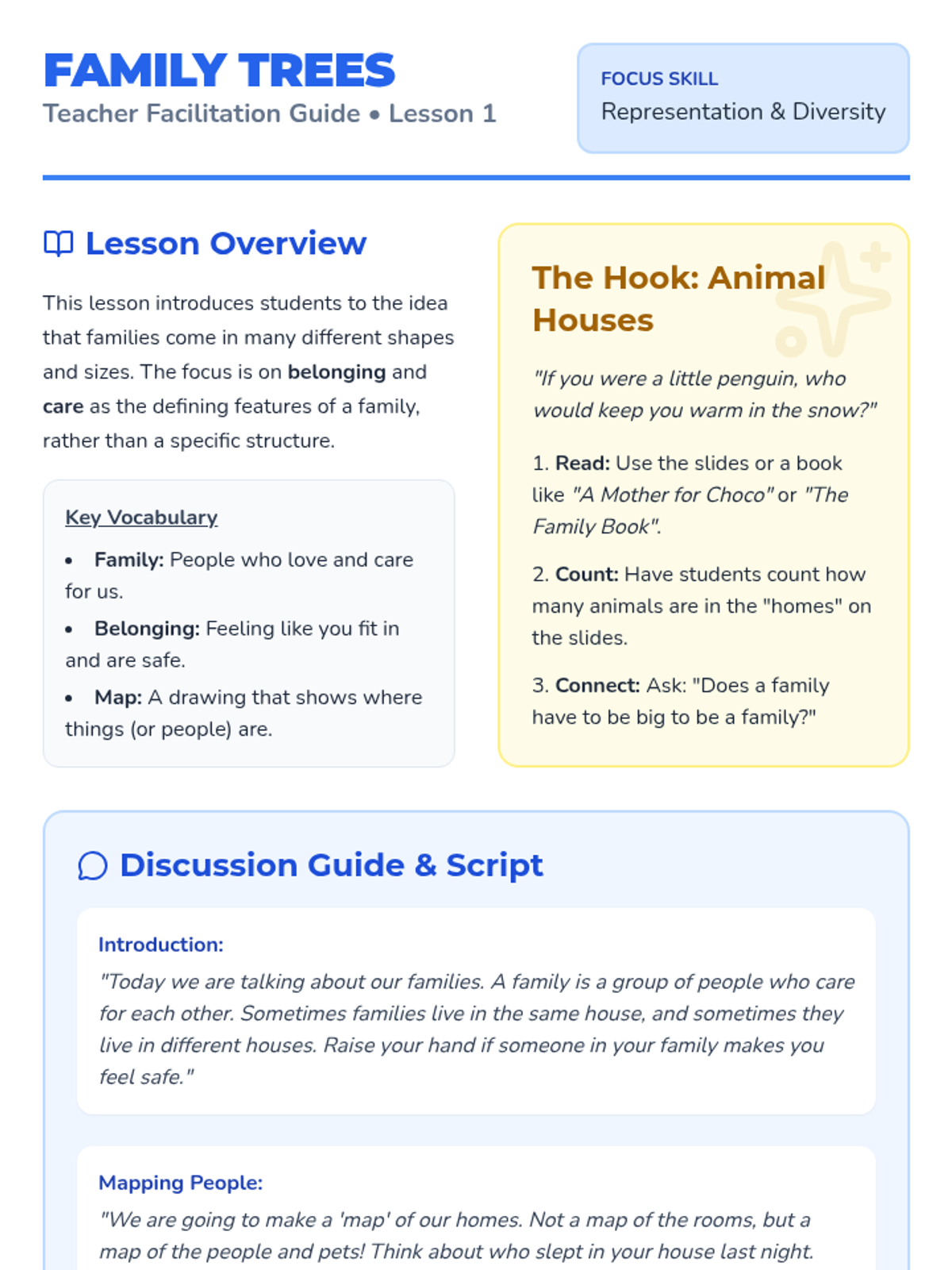
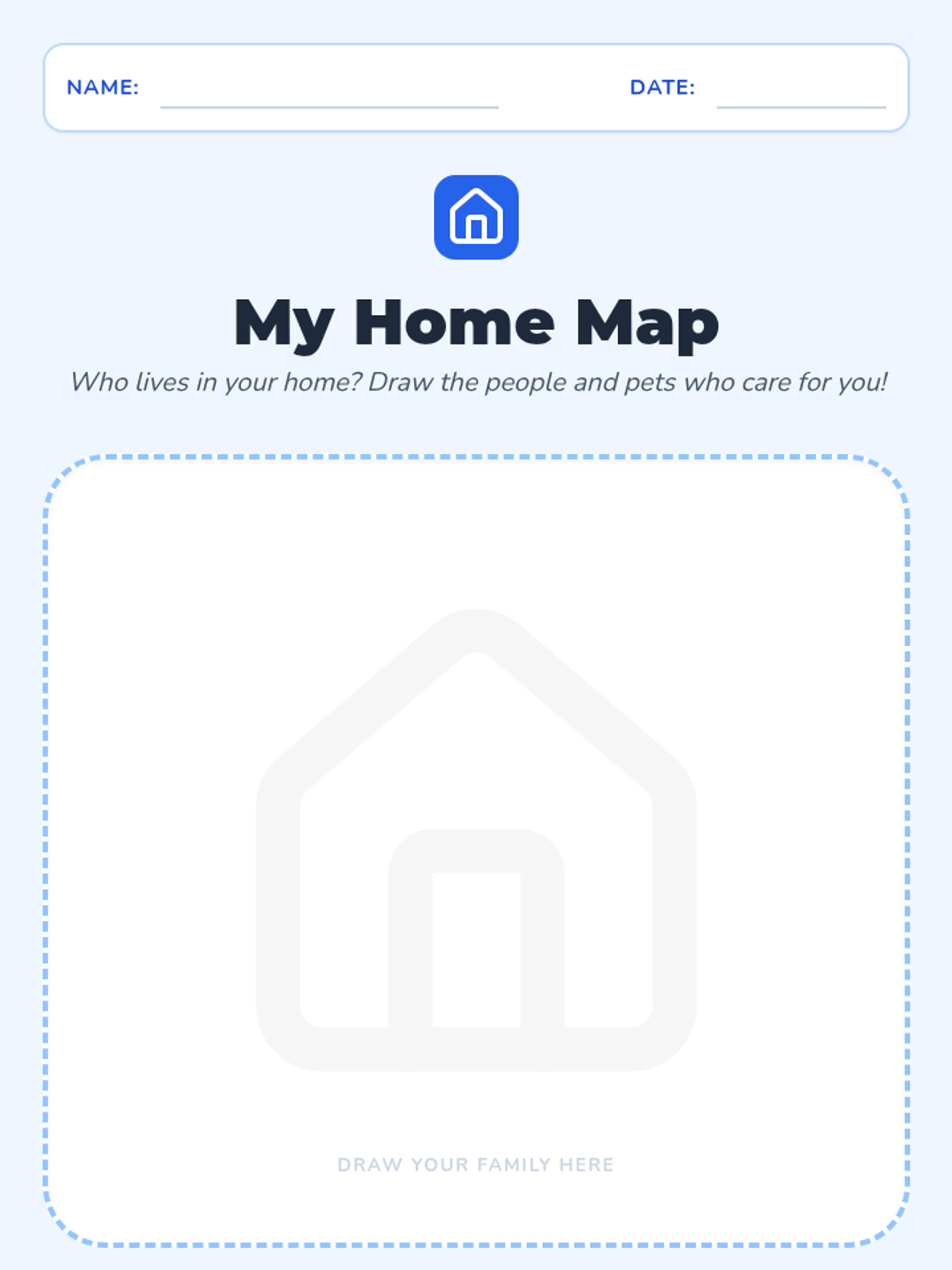
A Pre-K sequence focused on family identity, helping children recognize their roles, celebrate their home culture, and see their classroom as a supportive community.
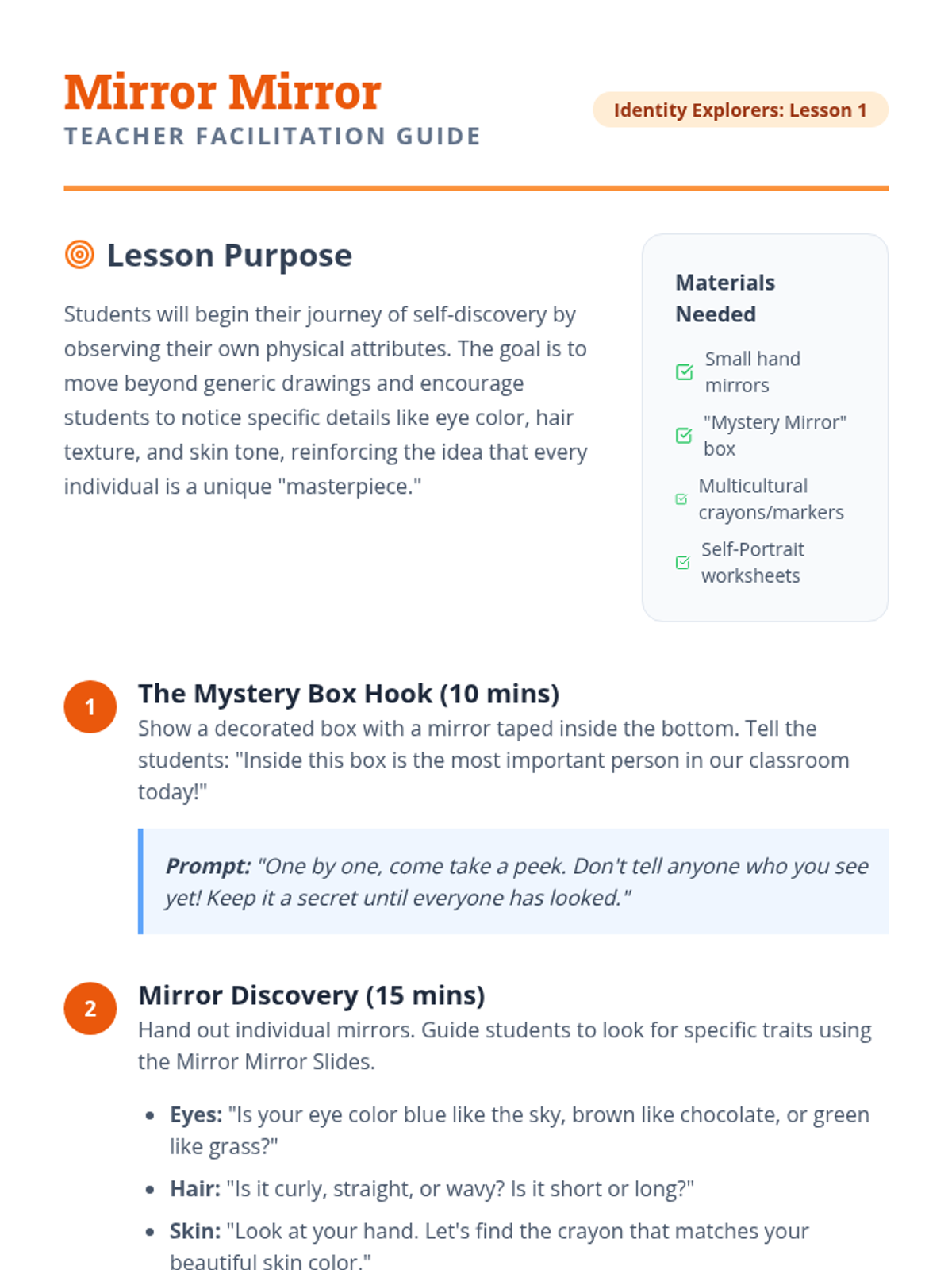
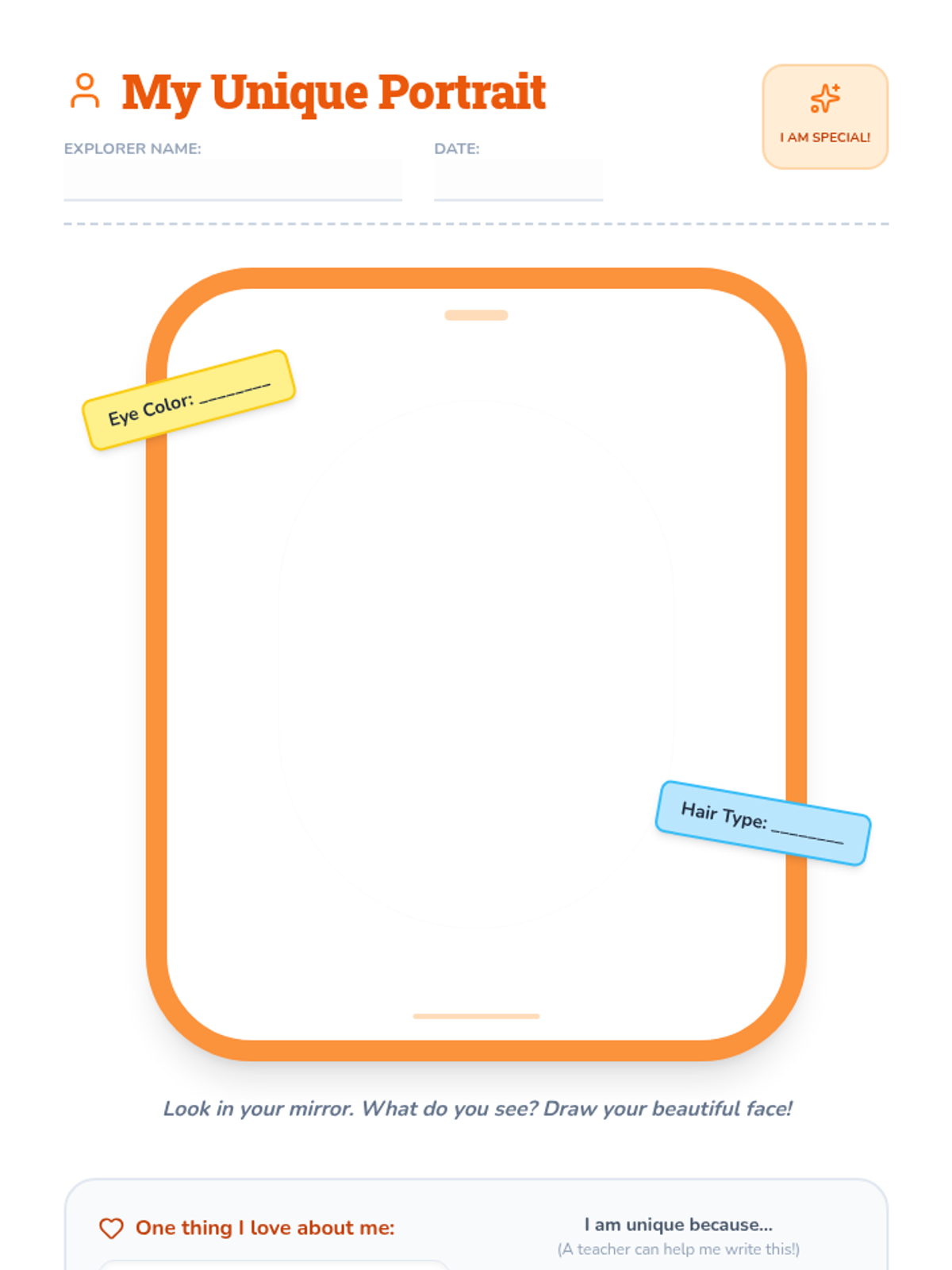
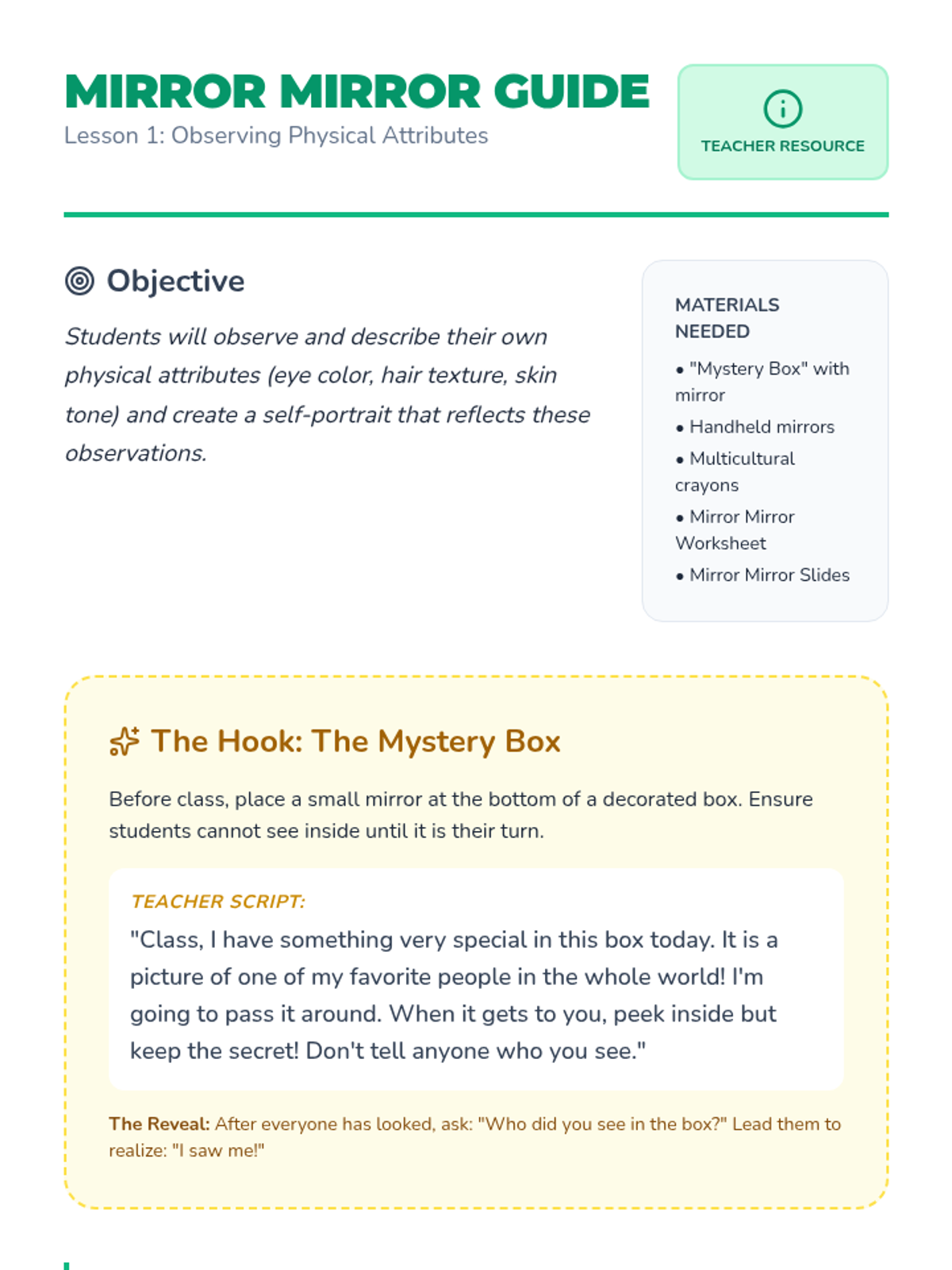
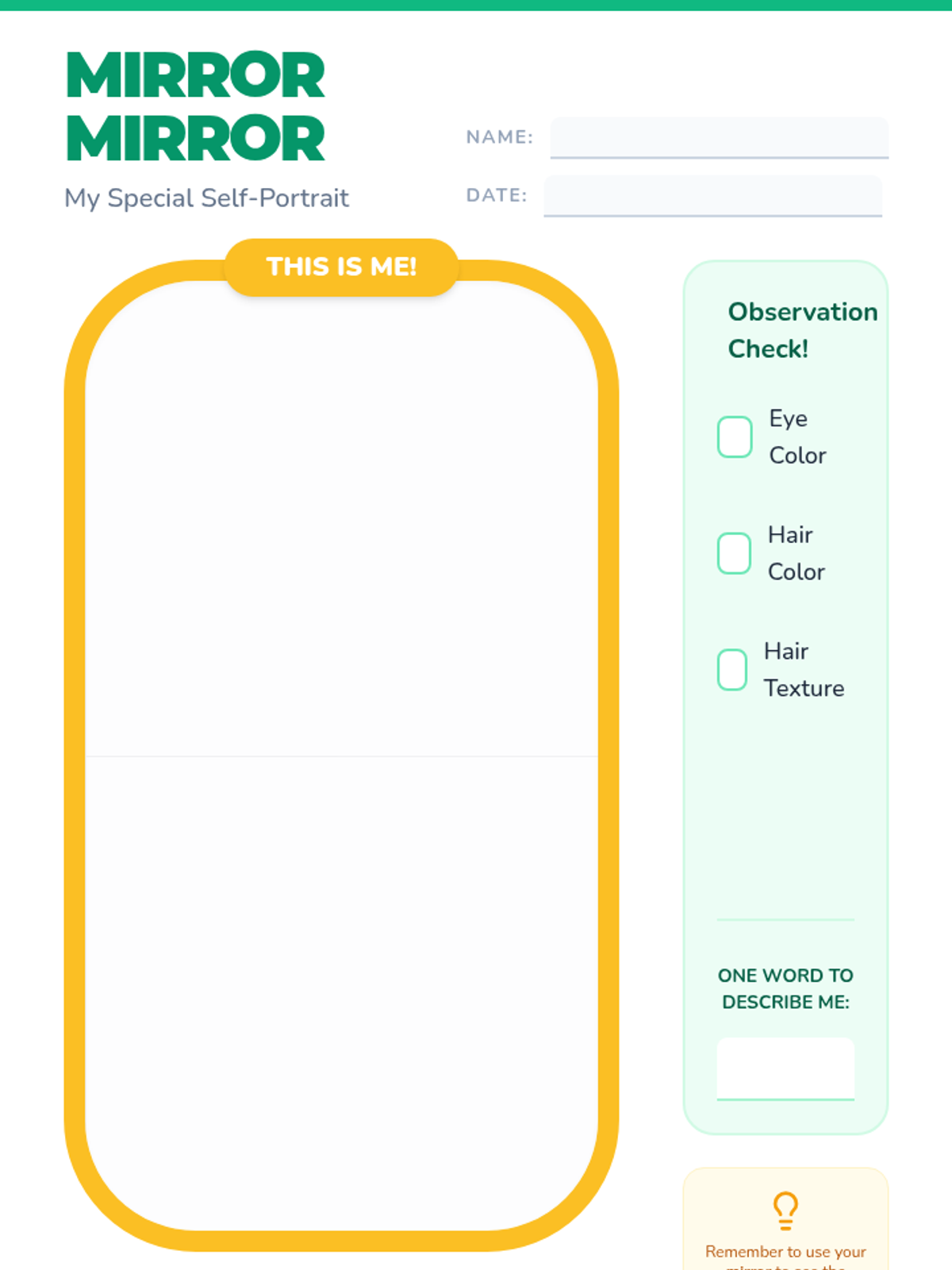
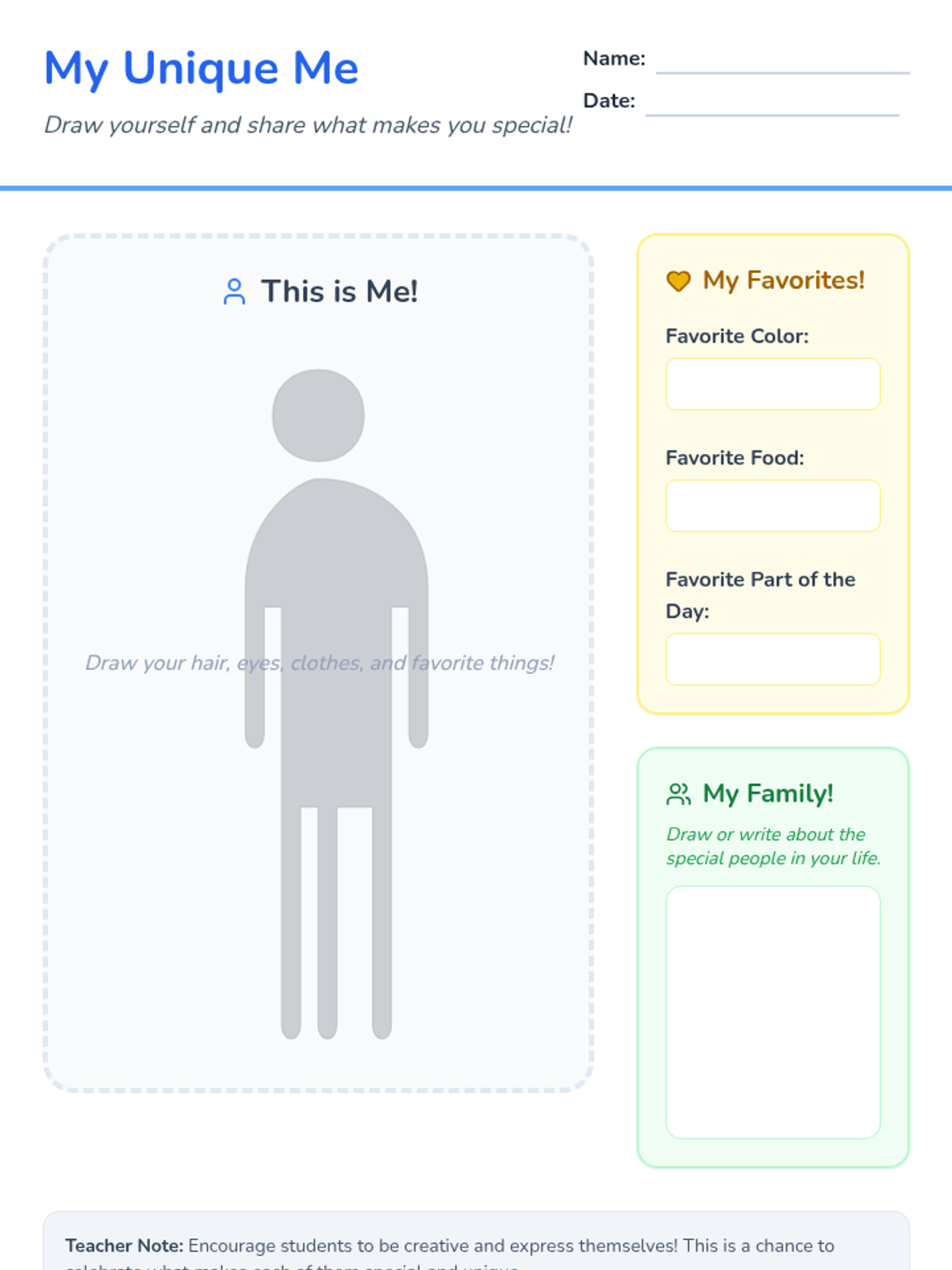
A Kindergarten sequence exploring personal attributes, preferences, and names. Students use inquiry-based activities like mirror observation and fingerprinting to understand what makes them unique, culminating in a personal portfolio.
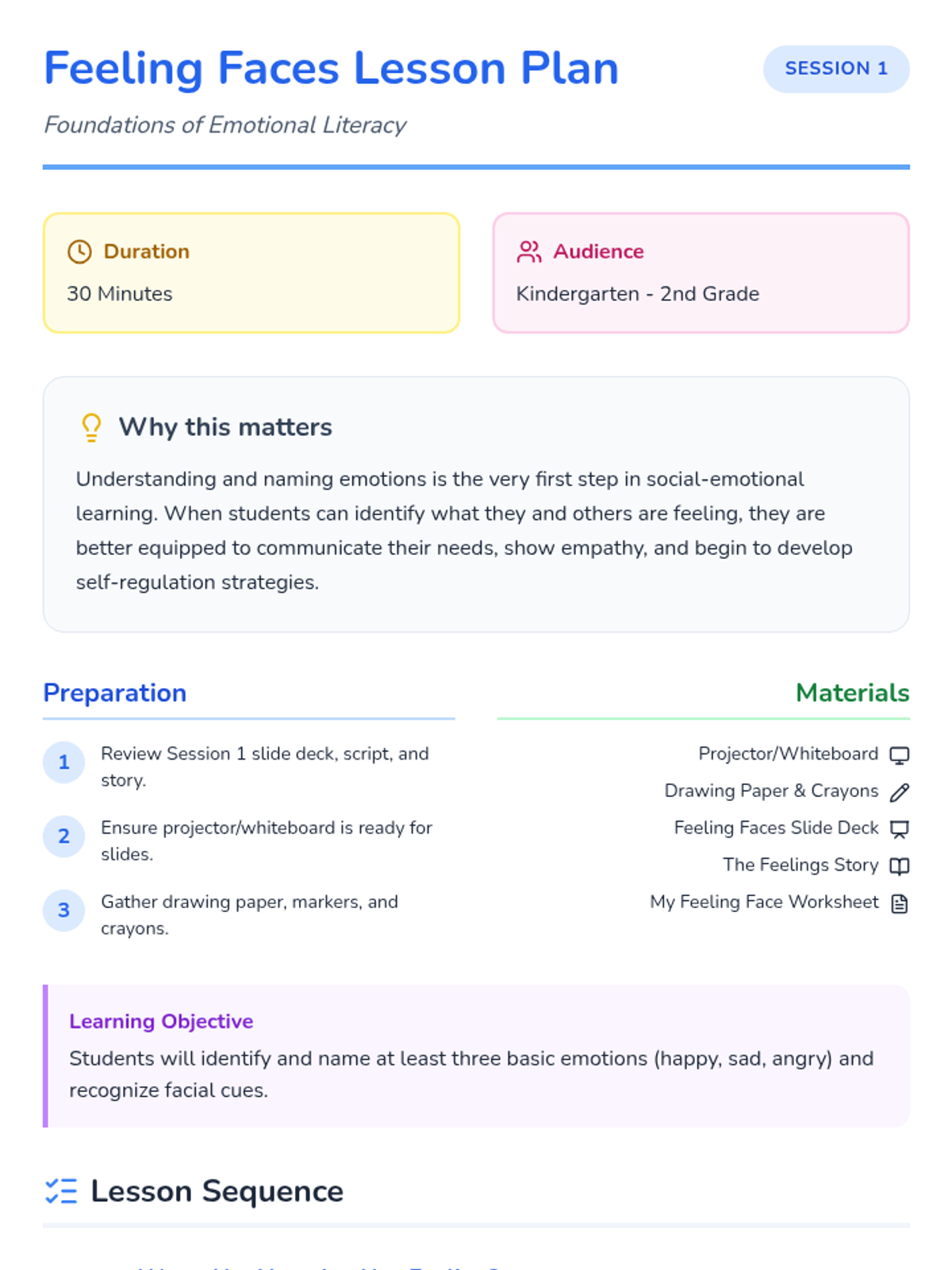
A comprehensive 10-session social-emotional learning series for K-2 students, focusing on emotional literacy, regulation, empathy, and social problem-solving.
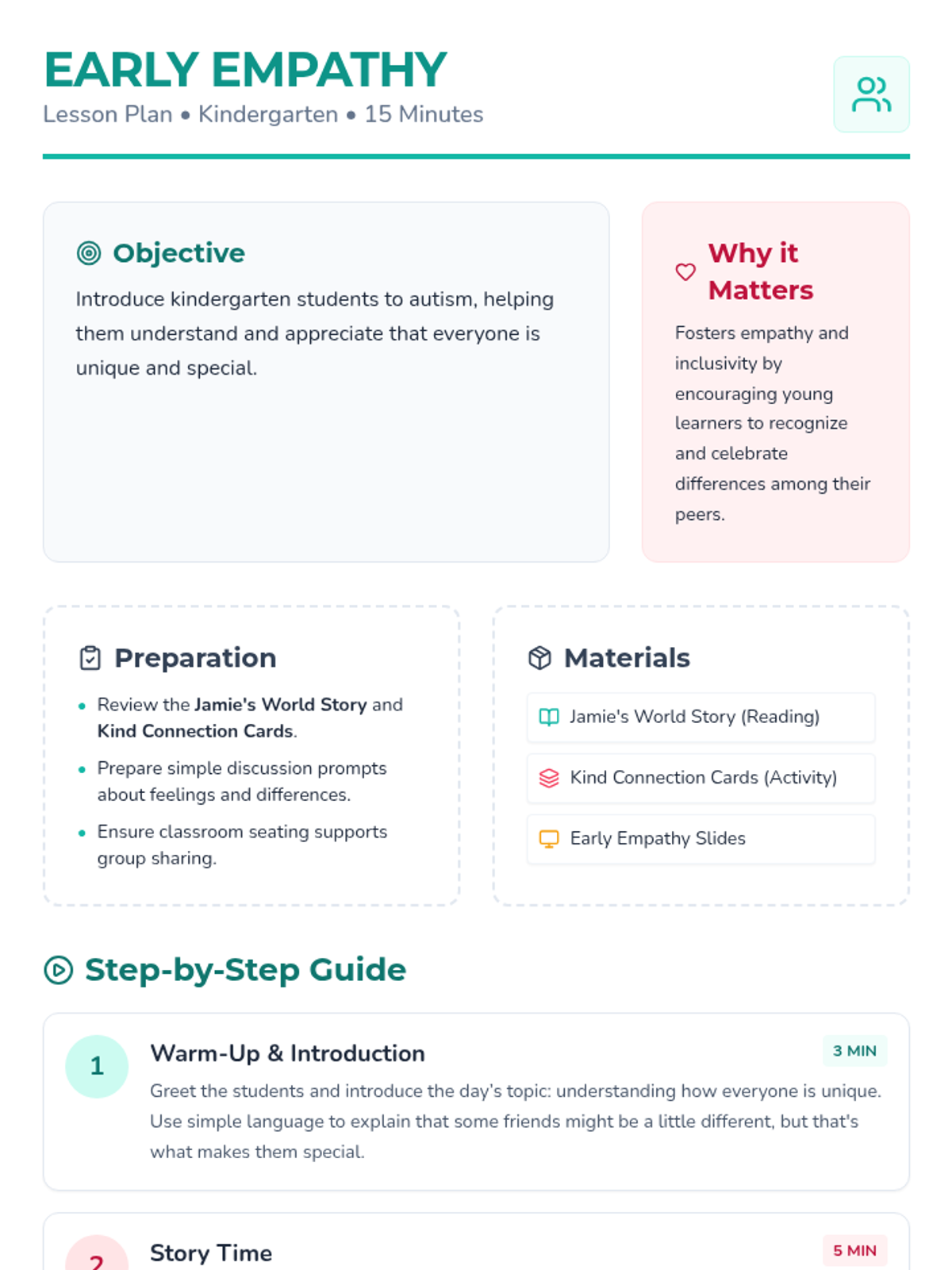
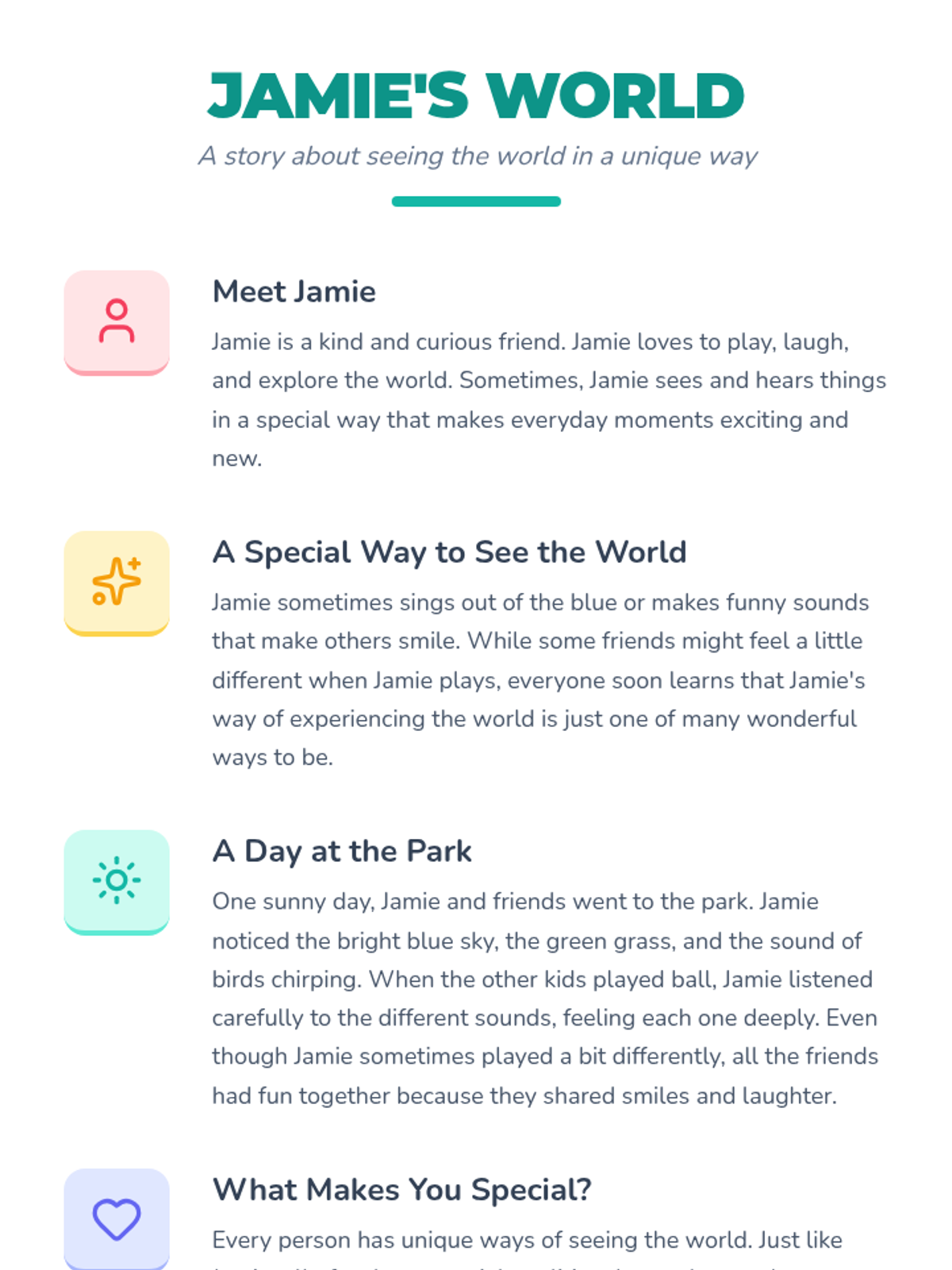
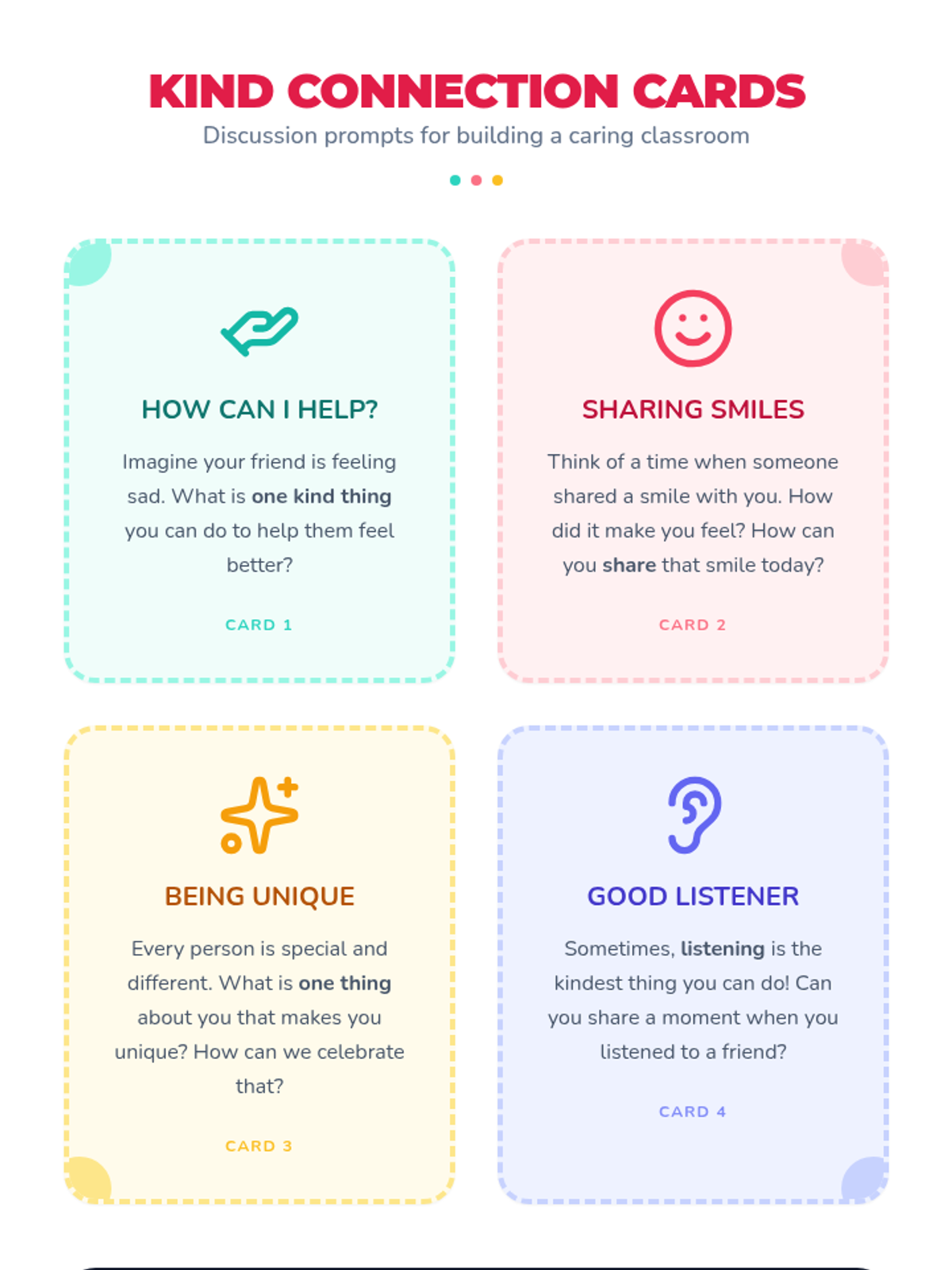
A sequence focused on fostering empathy and autism awareness across elementary grades, helping students appreciate the unique ways their peers experience the world.
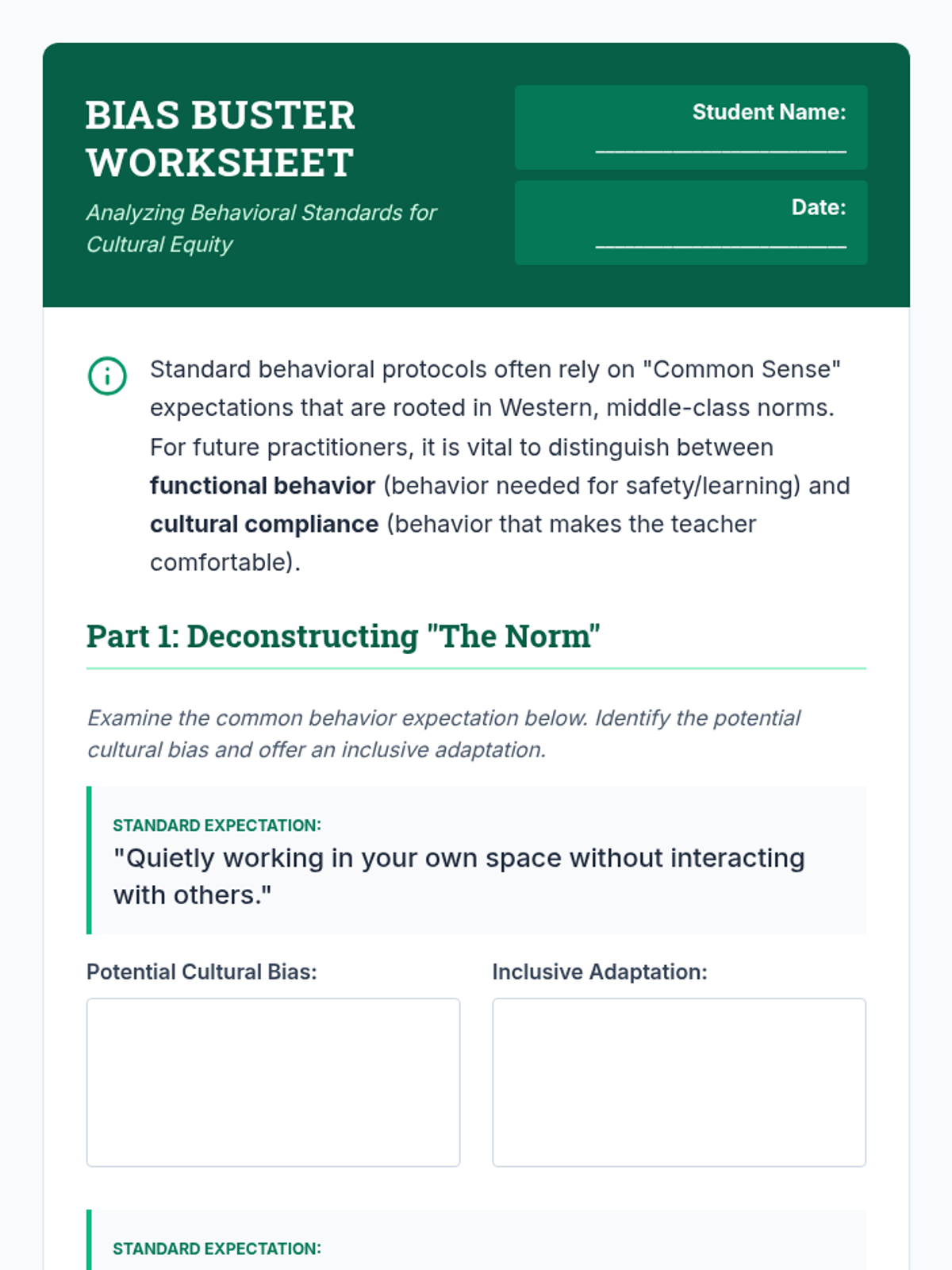
This sequence prepares undergraduate students in counseling and education to adapt standard behavioral check-in procedures (like Check-In/Check-Out) for diverse populations. It emphasizes cultural responsiveness, developmental appropriateness, neurodiversity, and modern remote contexts to ensure equity and accessibility in behavioral support.
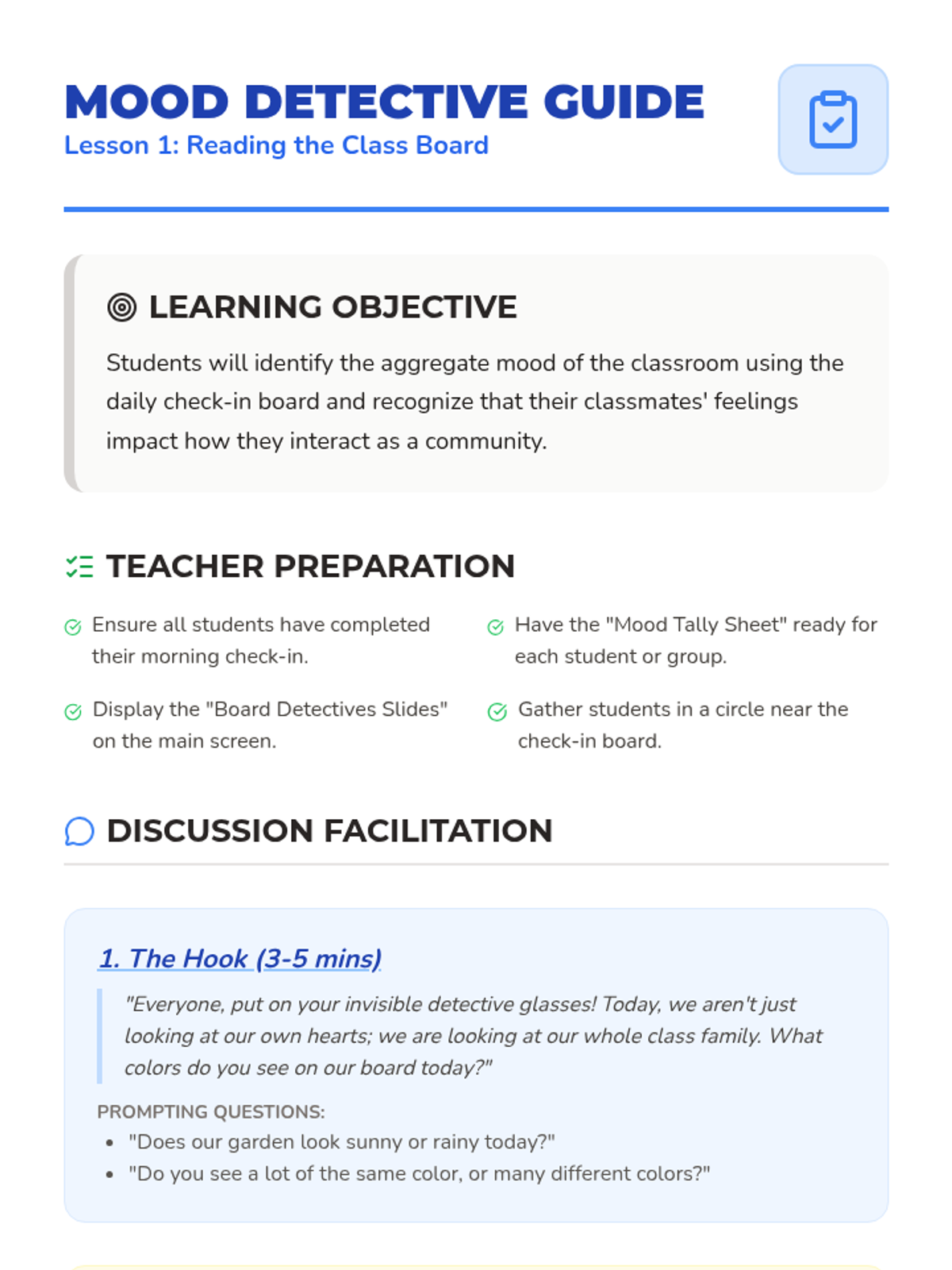
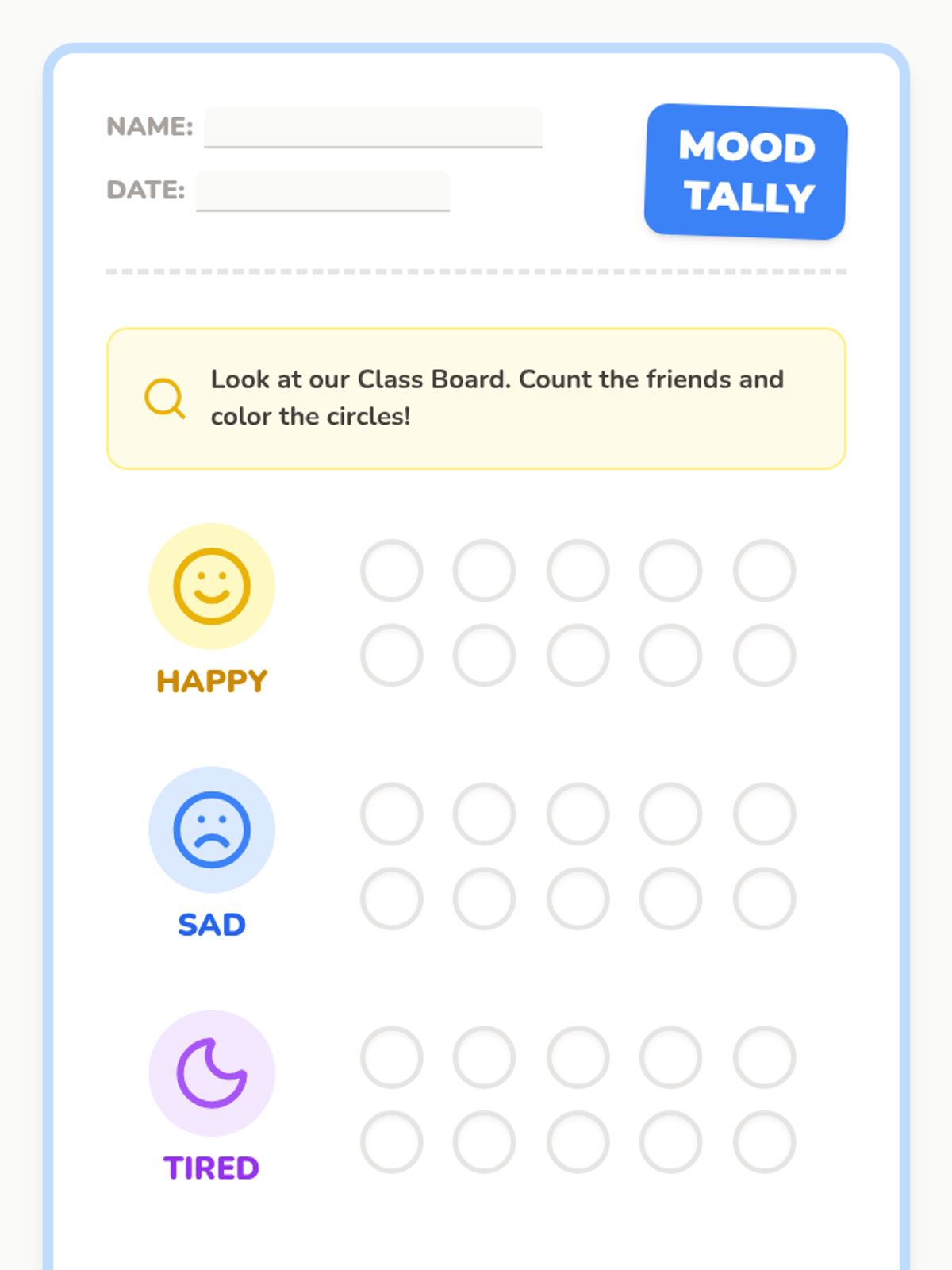
This sequence teaches Pre-K students how to use daily check-in data to foster empathy and social awareness. Students learn to observe how their peers are feeling and practice appropriate, regulated responses to support their classroom community.
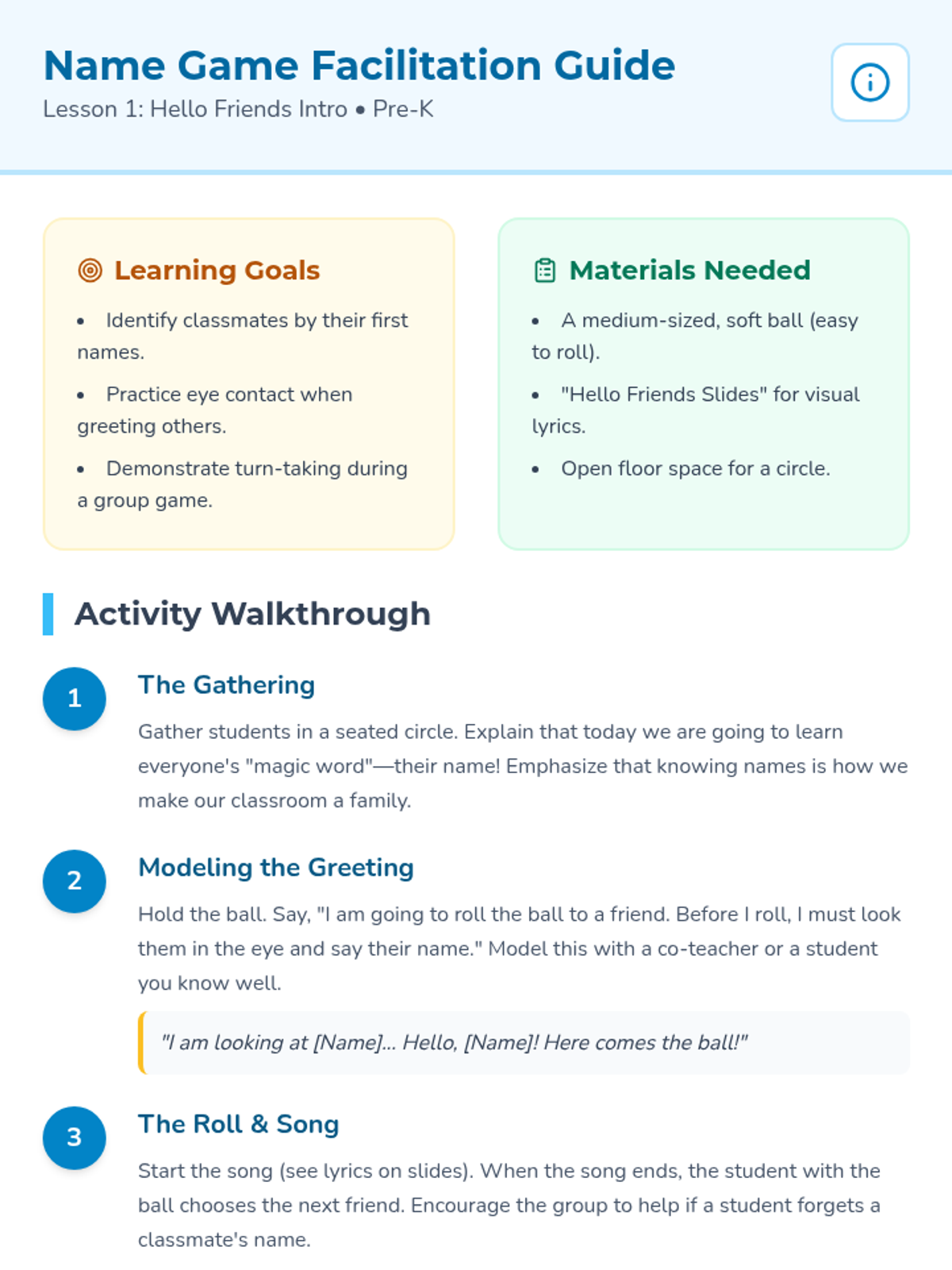
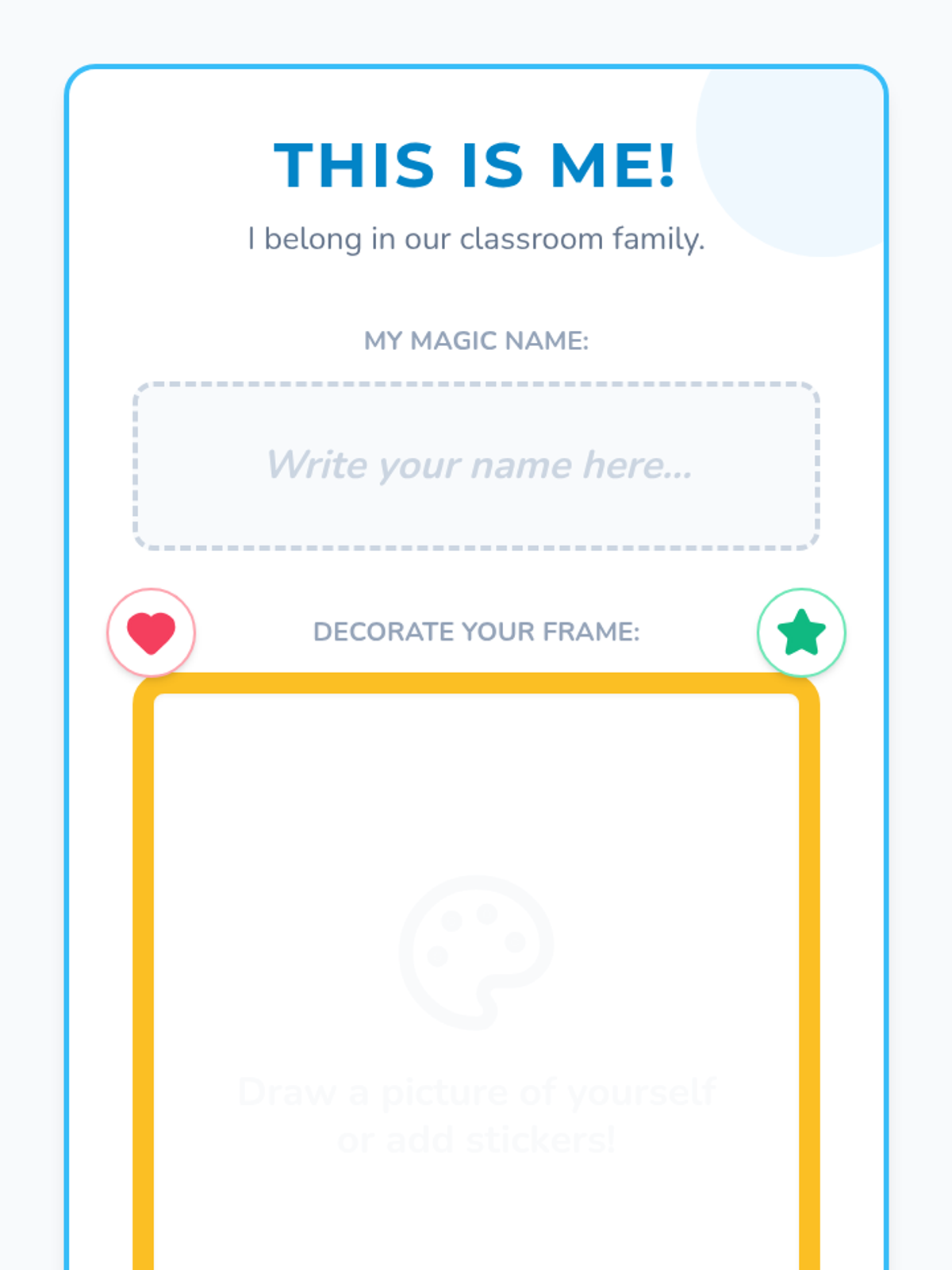
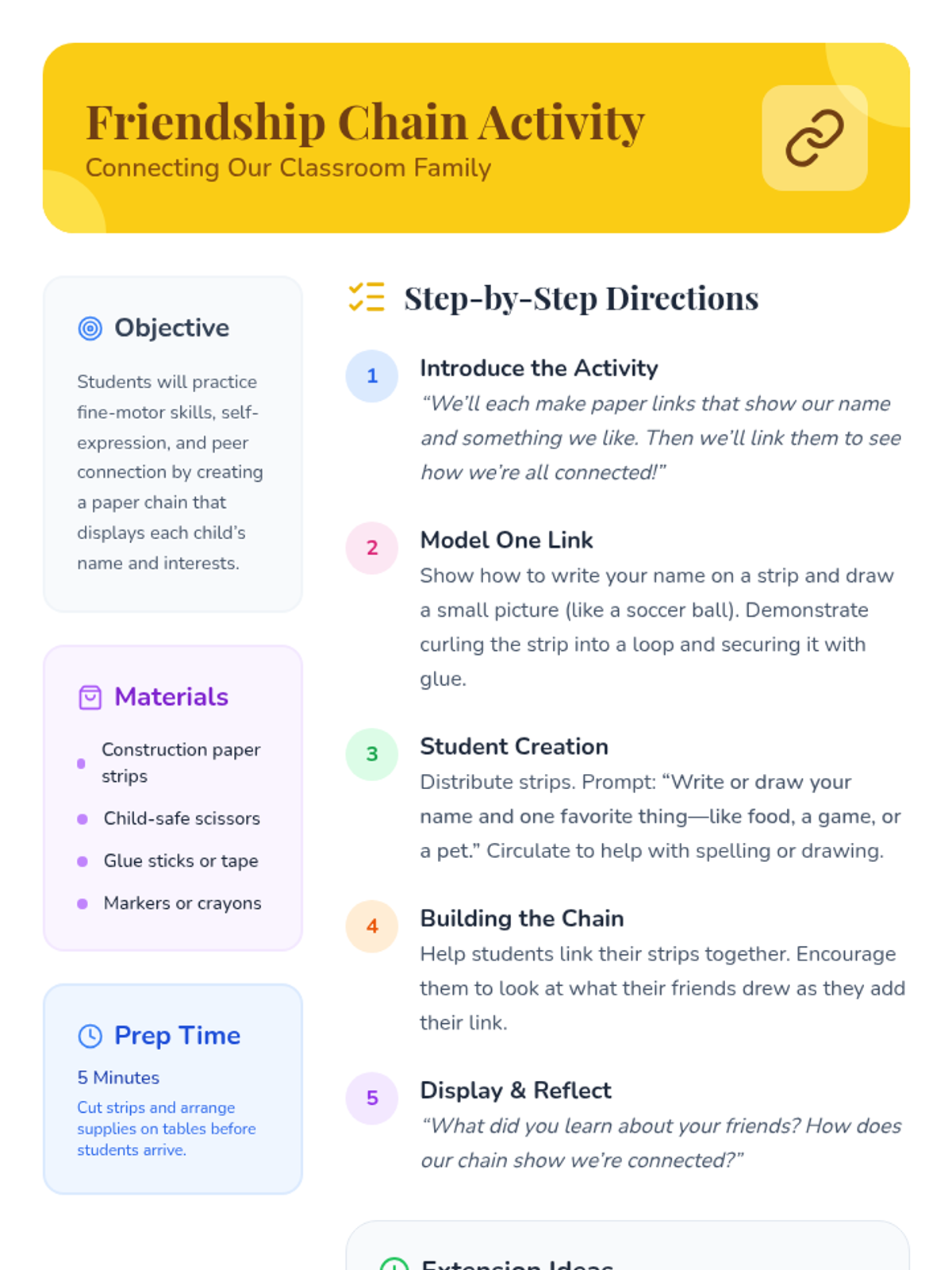
A Pre-K sequence focused on building a 'class family' through name recognition, visual maps of the community, exploring similarities and differences, and creating a shared class identity. Students learn to recognize their peers, appreciate individual traits, and understand how they fit into the group.
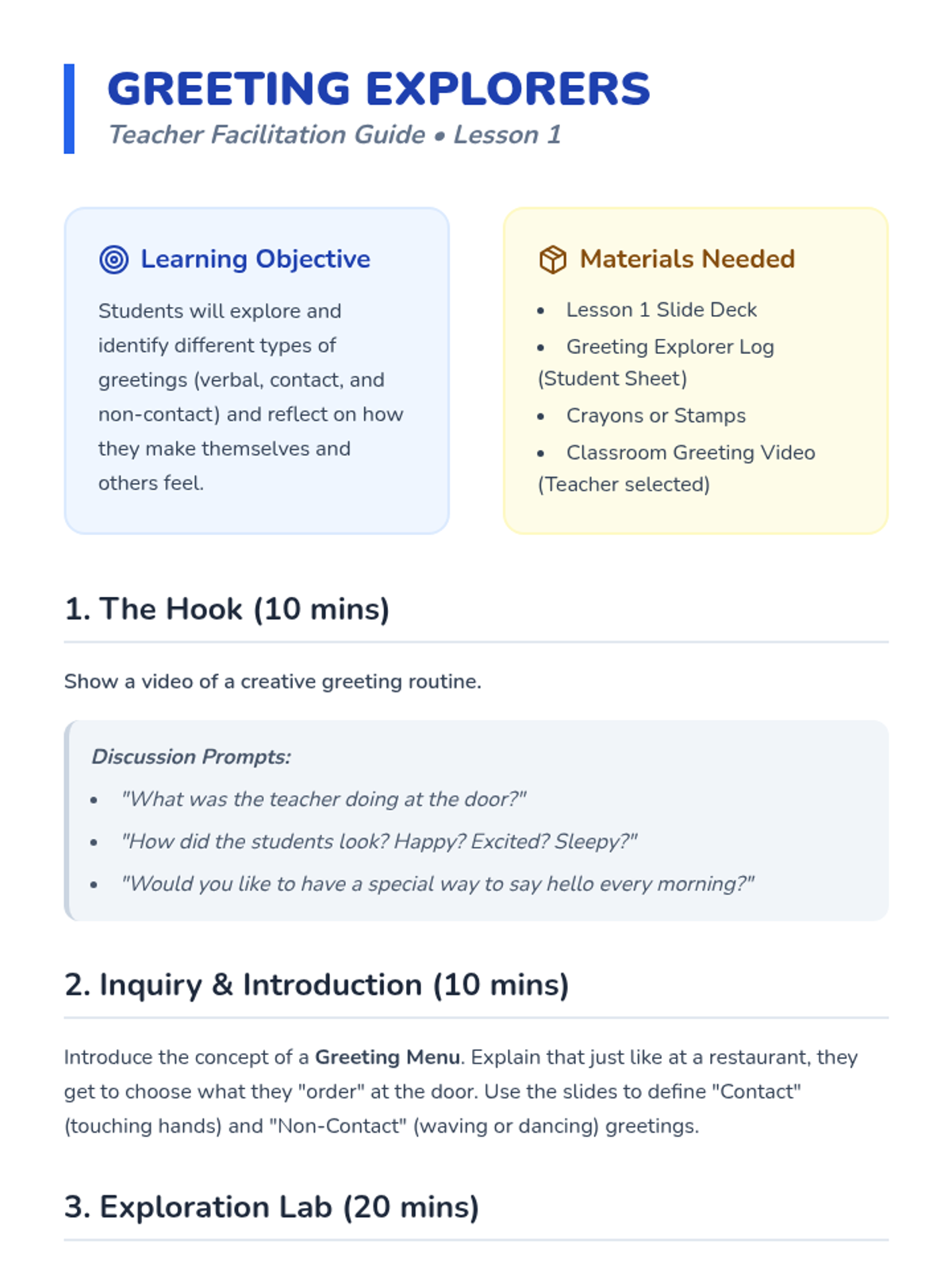
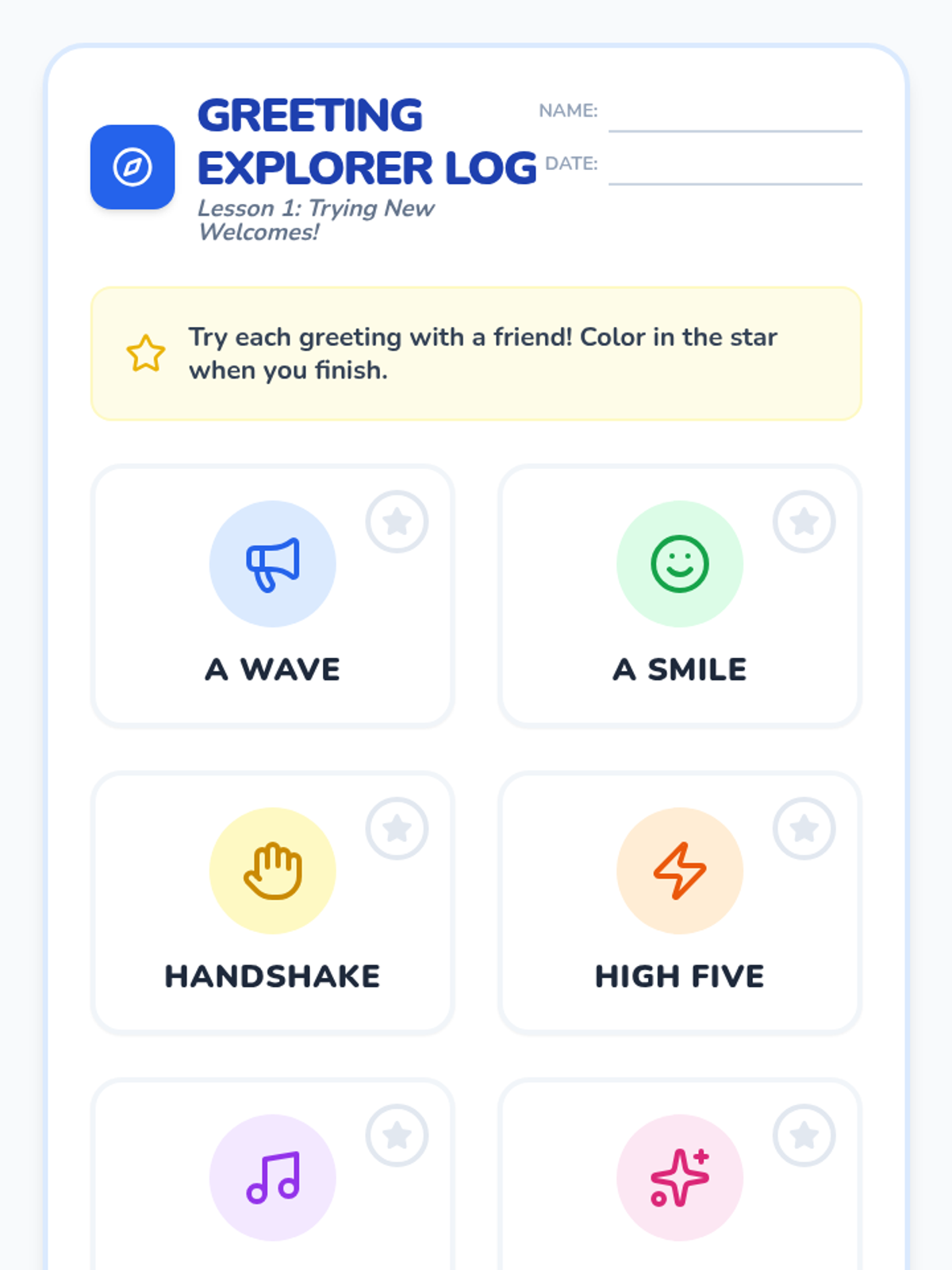
A Kindergarten social communication sequence where students design, vote on, and implement a 'Greeting Menu' routine for their classroom. Focuses on agency, choice, and context-appropriate social interactions.
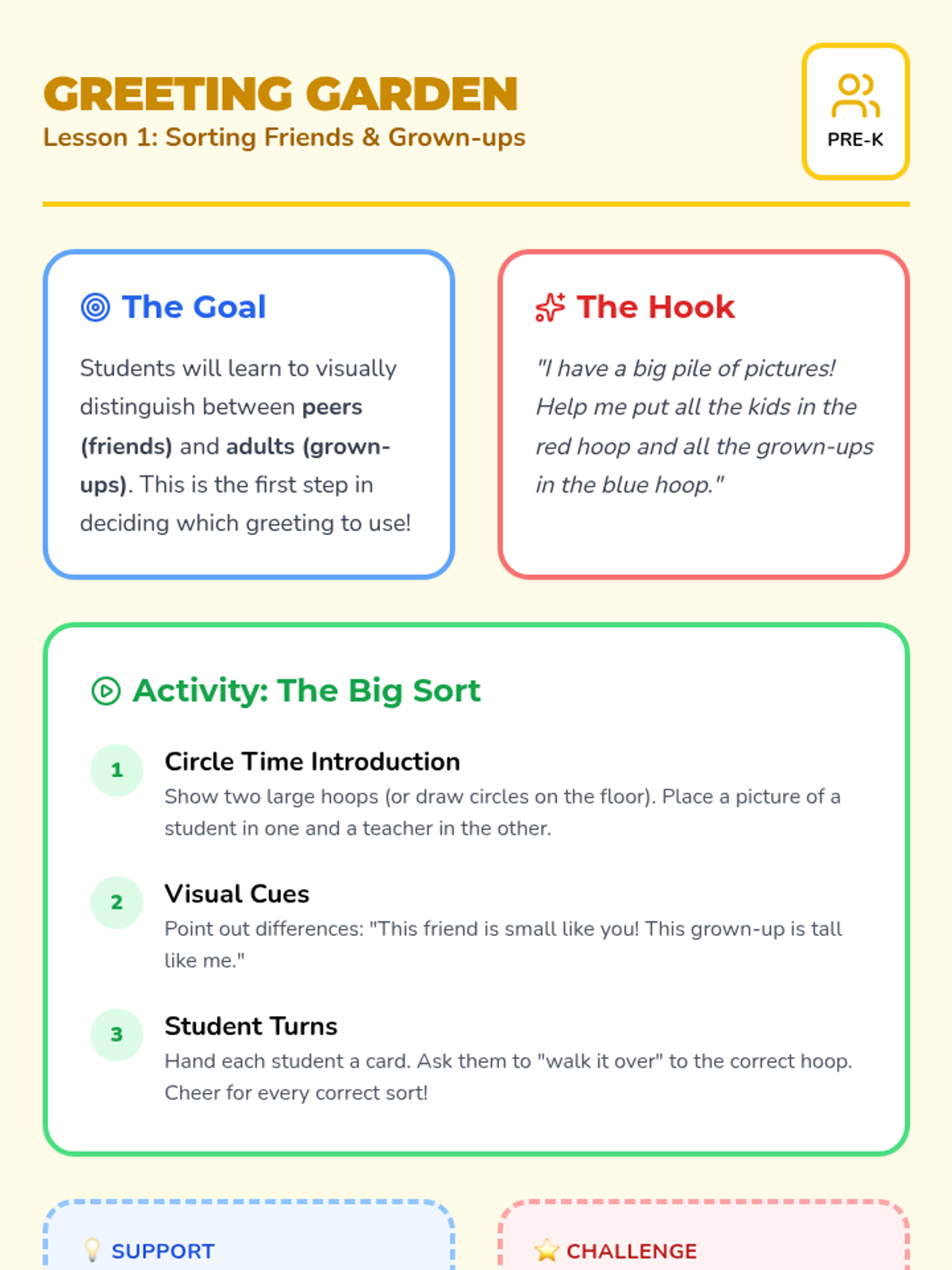
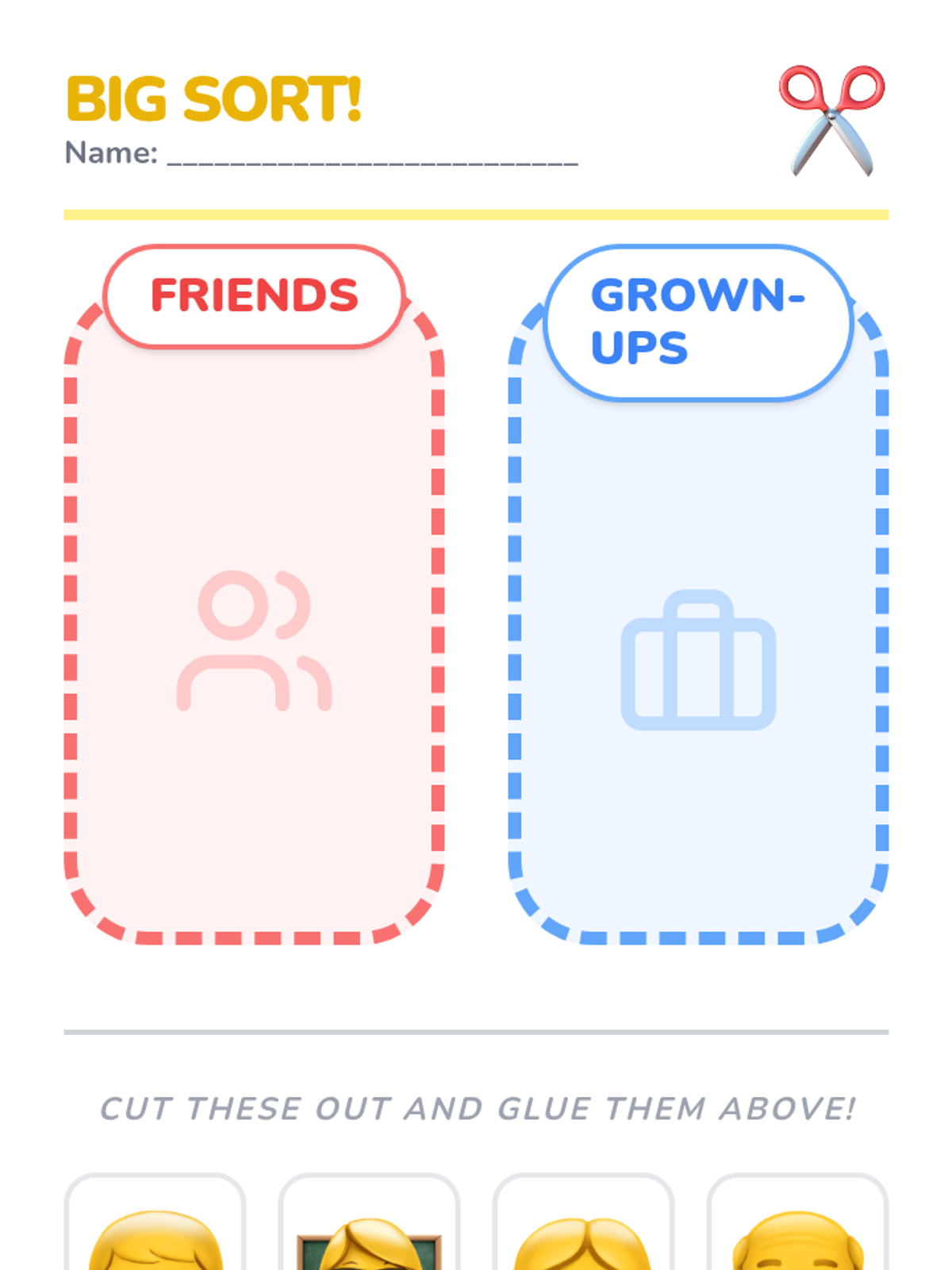
A game-based social communication sequence for Pre-K students to differentiate between greetings for peers (friends) and adults (teachers/parents). Through sorting, movement, and roleplay, students build the foundational skills needed for context-appropriate social interactions.
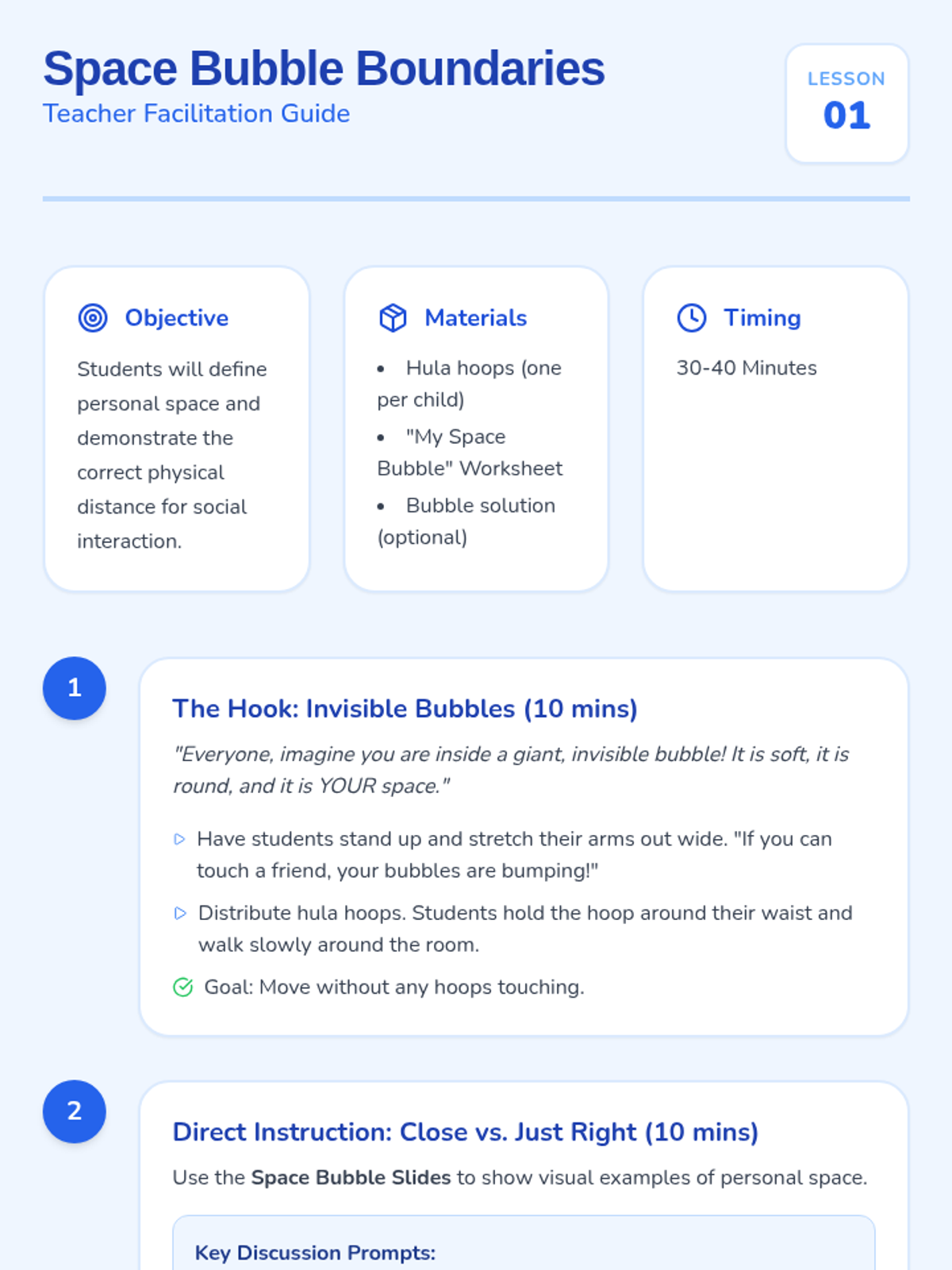
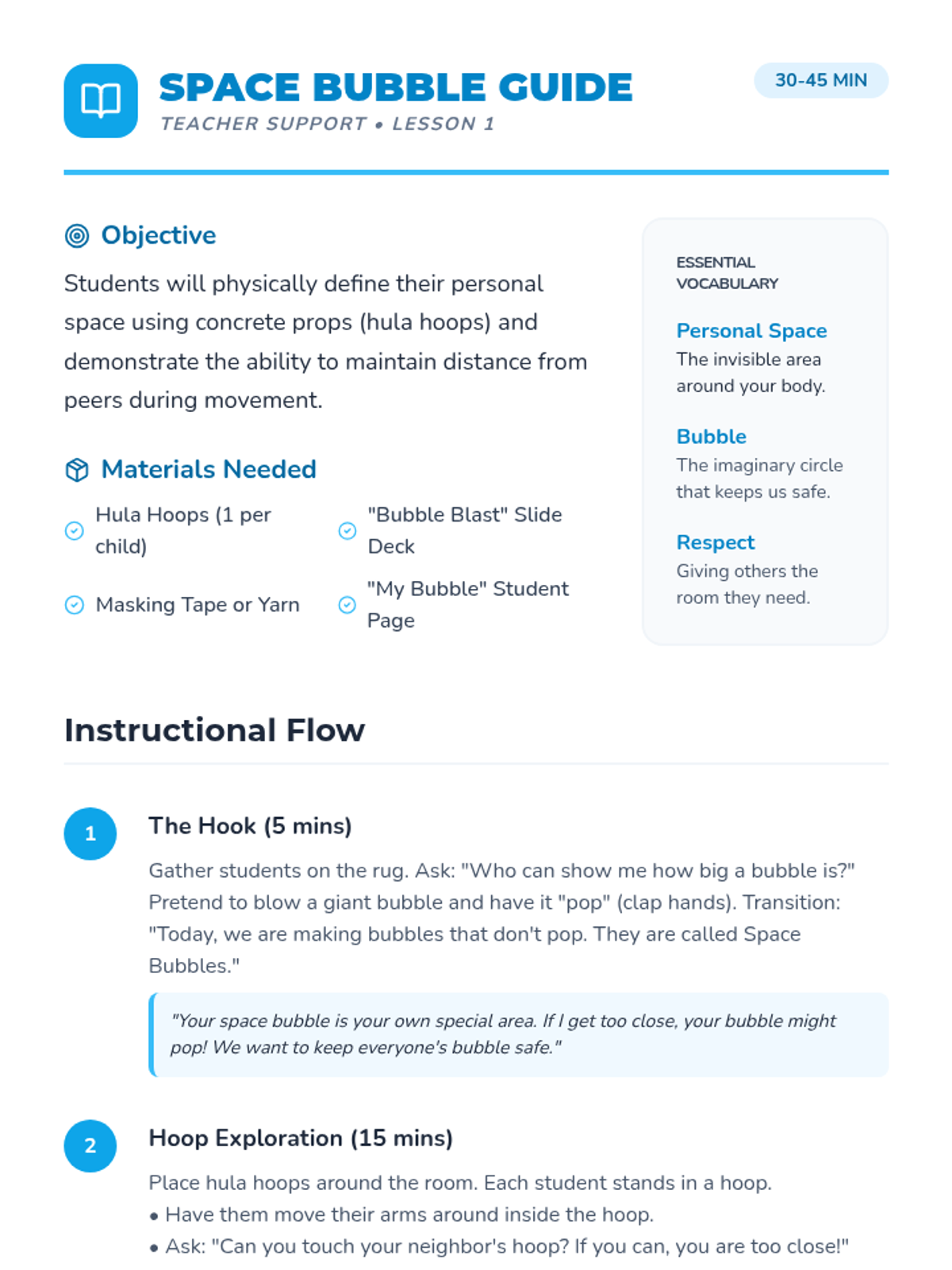
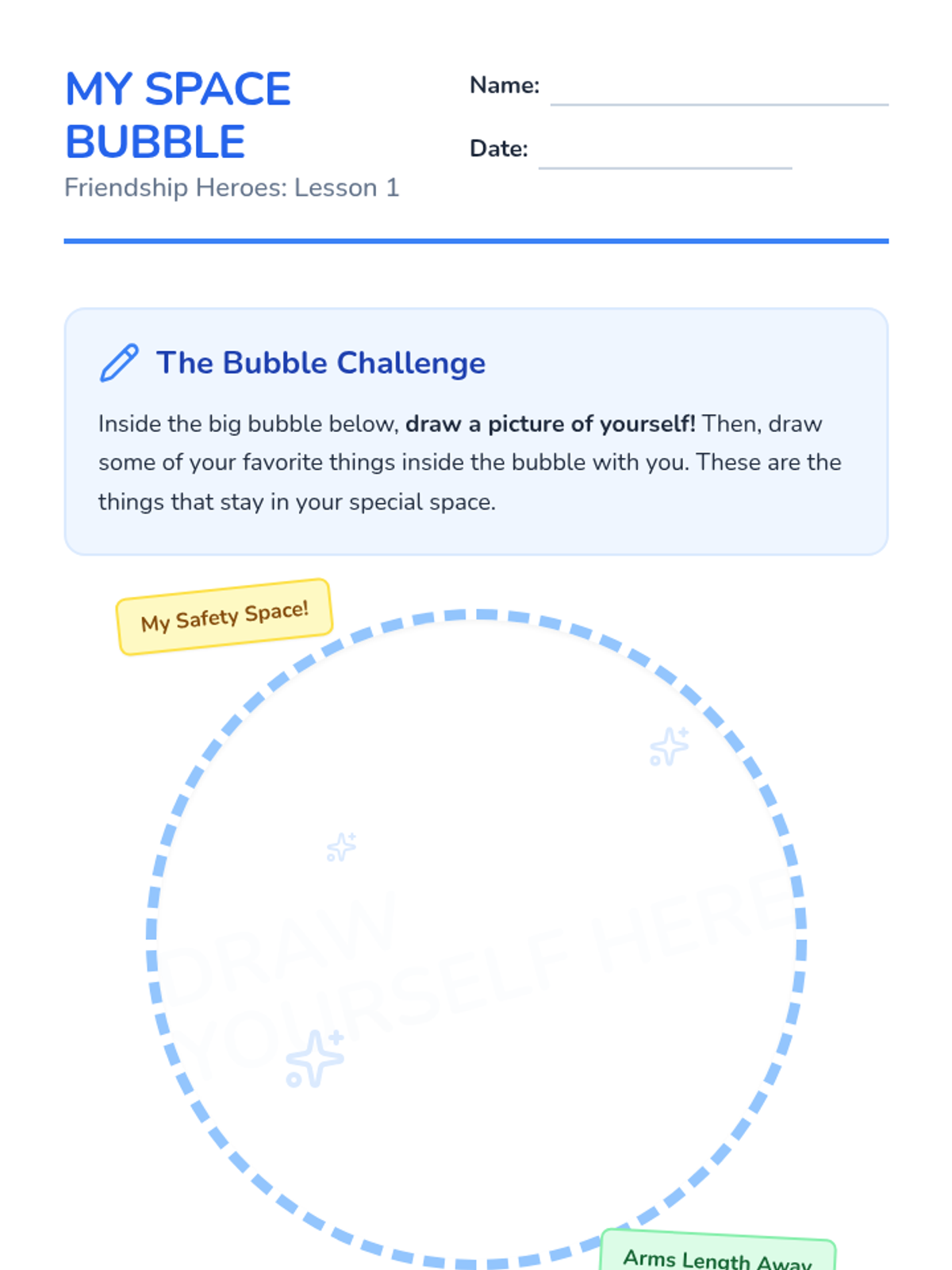
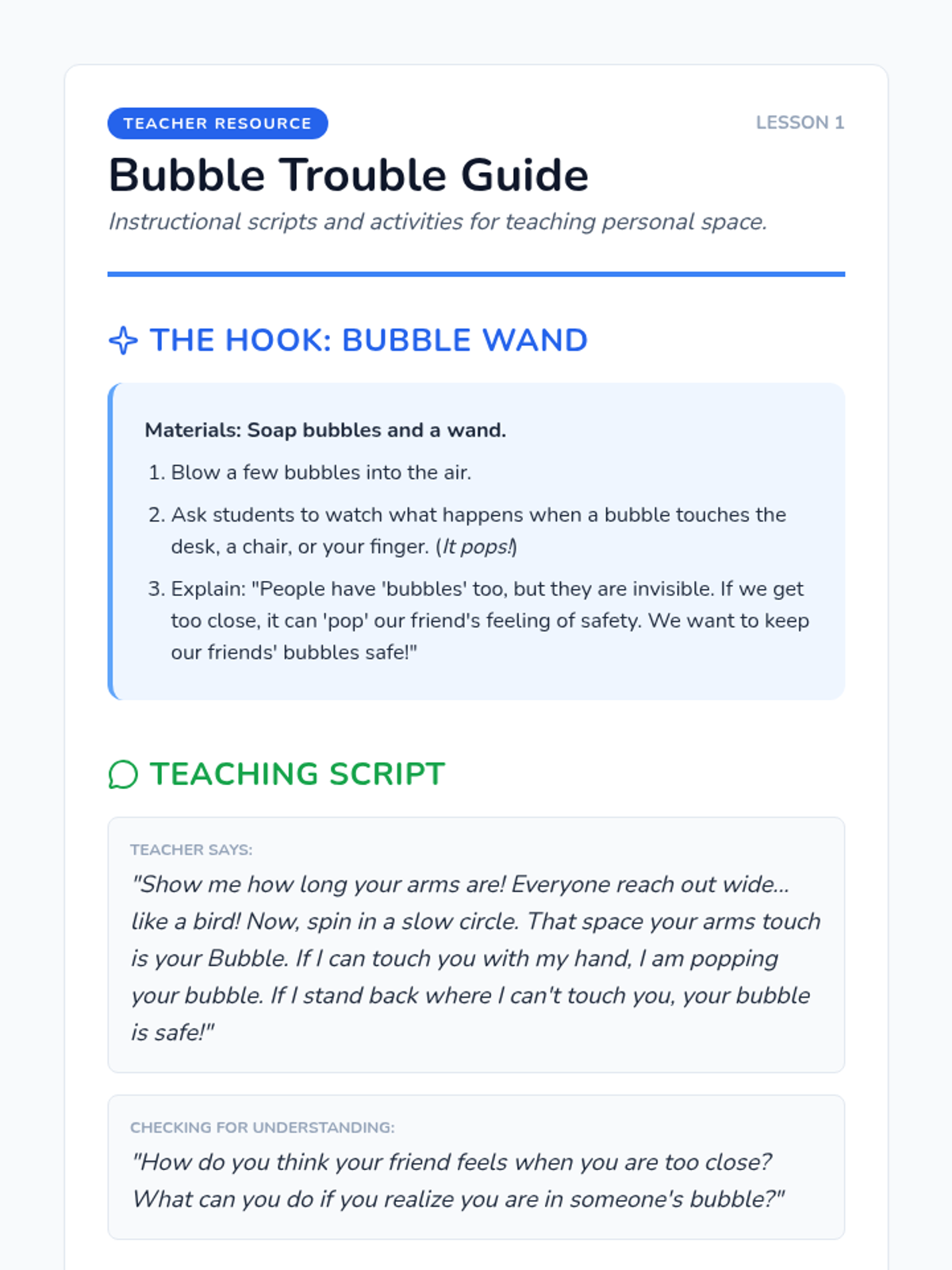
A game-based sequence for Kindergarten students to learn and respect personal space boundaries through physical movement and visualization. Students progress from using physical props to internalizing social cues for navigating shared spaces.
A Pre-K sequence focused on creating a supportive classroom through celebrating diversity, practicing inclusion, and fostering cooperative behaviors. Students learn to spot lonely peers, invite others to play, and offer help, culminating in a collaborative classroom quilt.
This inquiry-based sequence for Kindergarten students explores the concept of self-identity within the context of larger social groups like families, friendships, and the classroom. Students learn to appreciate their unique traits while identifying the commonalities that bind them to their community.
A comprehensive Kindergarten project guiding students to explore their physical traits, preferences, talents, and names to build a strong sense of self and appreciation for diversity.
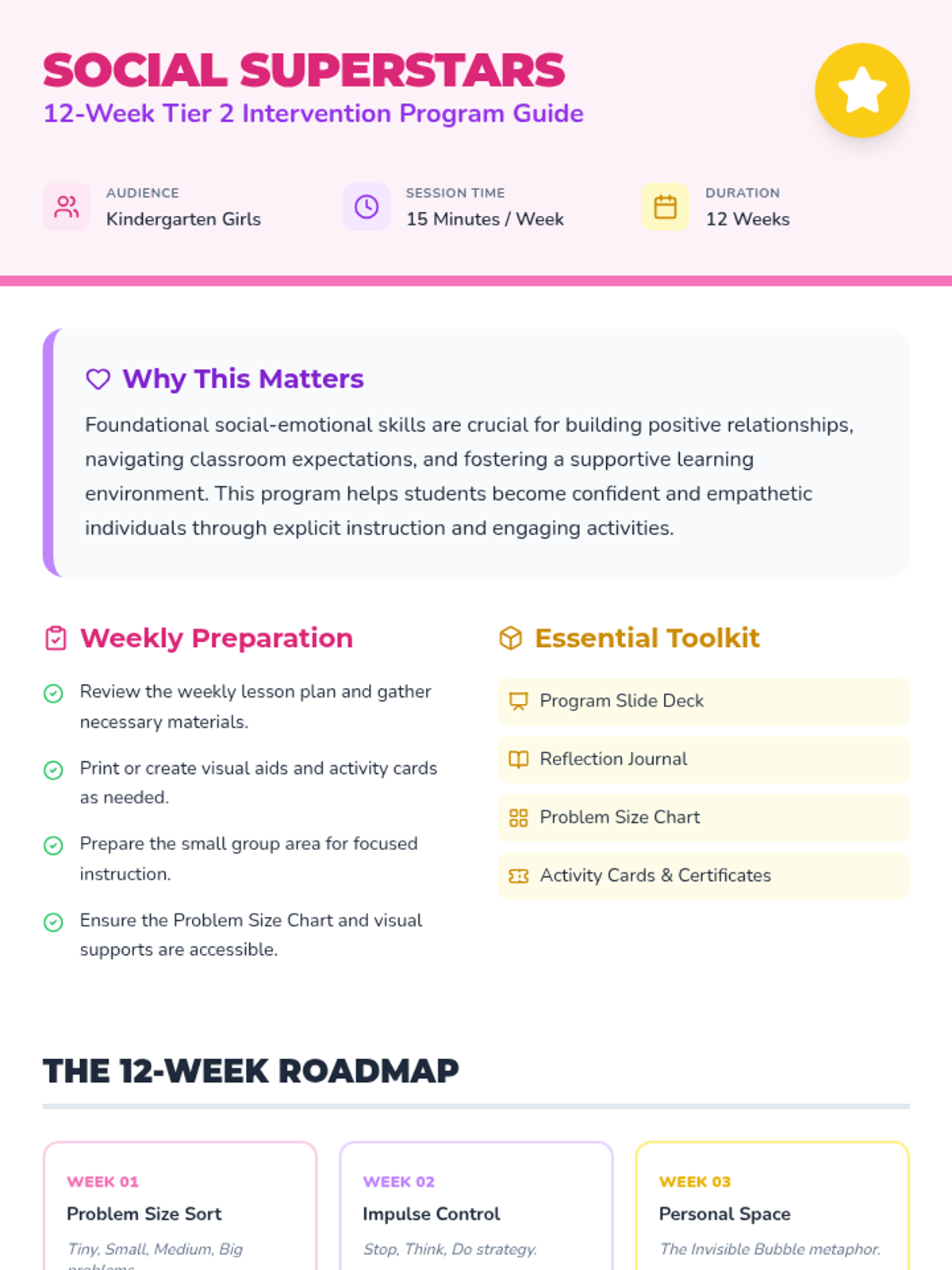
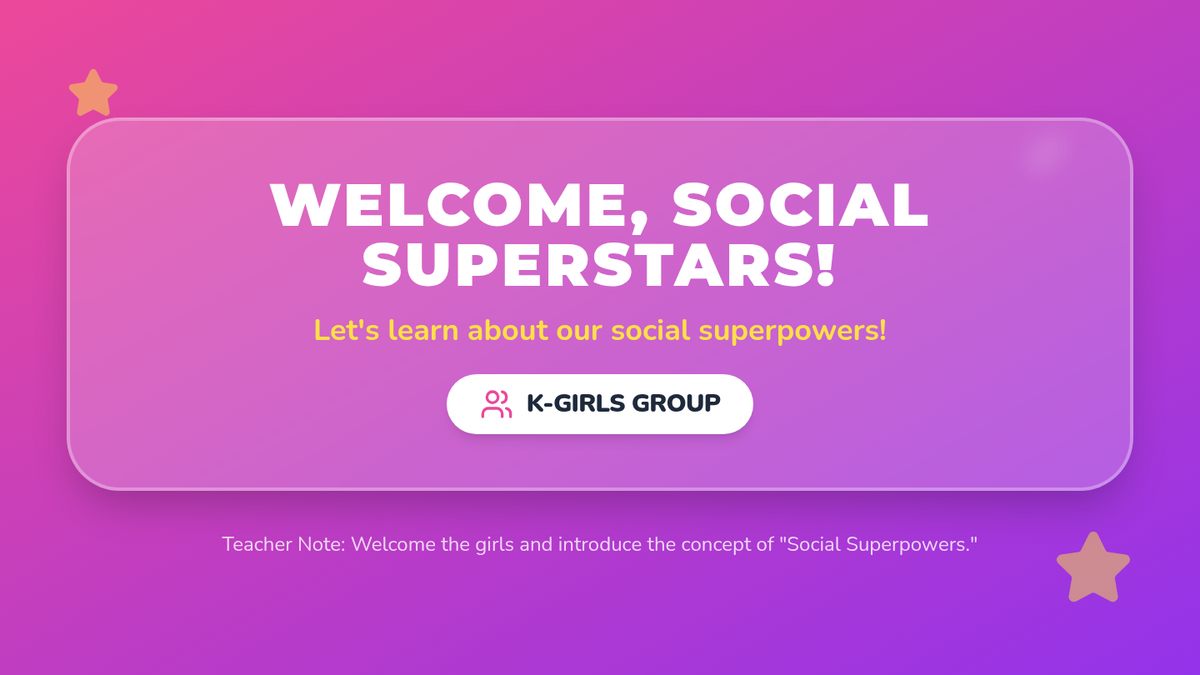
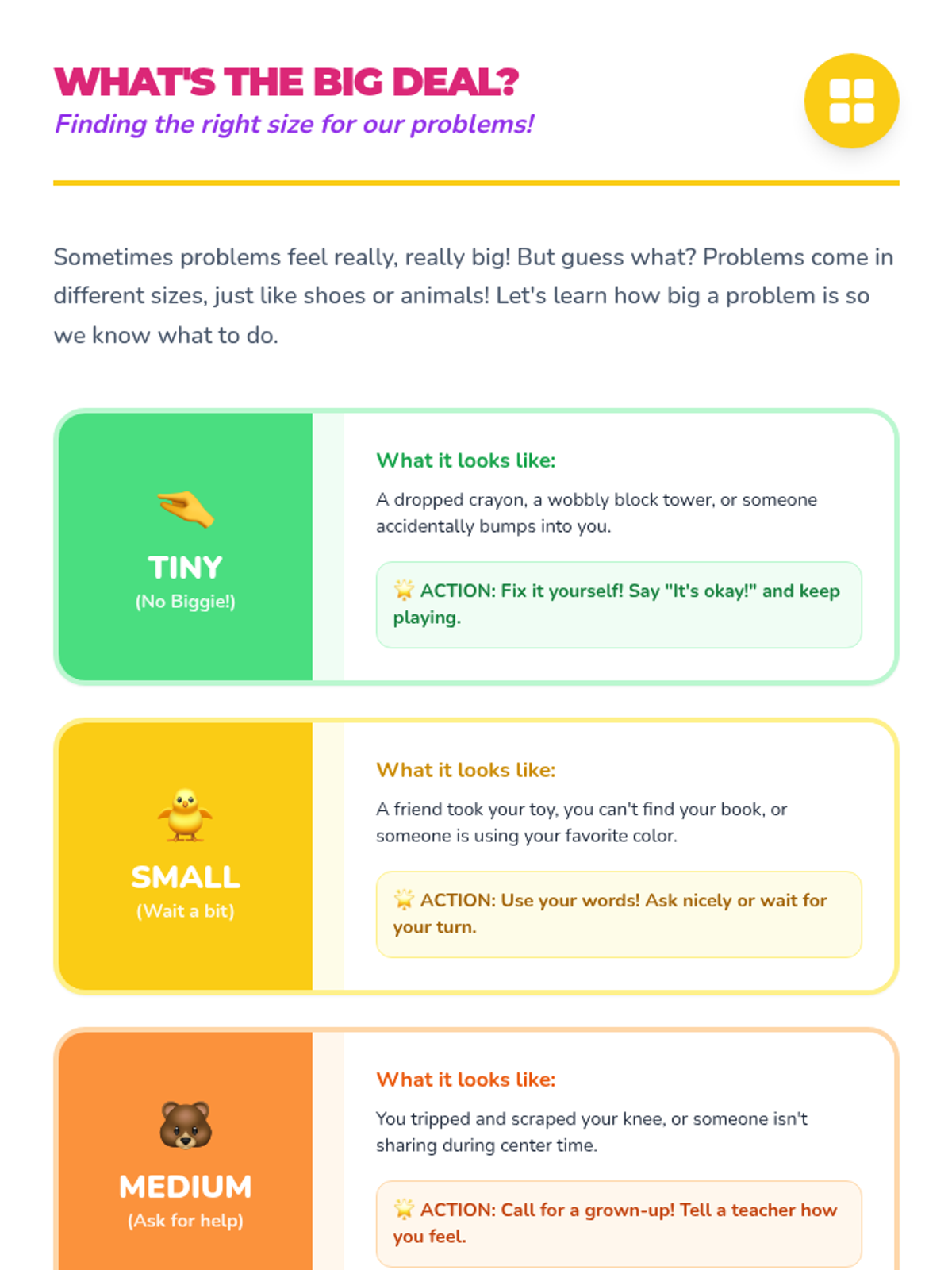
A 12-week Tier 2 intervention program for Kindergarten girls to develop foundational social-emotional skills like problem-solving, impulse control, and self-awareness.
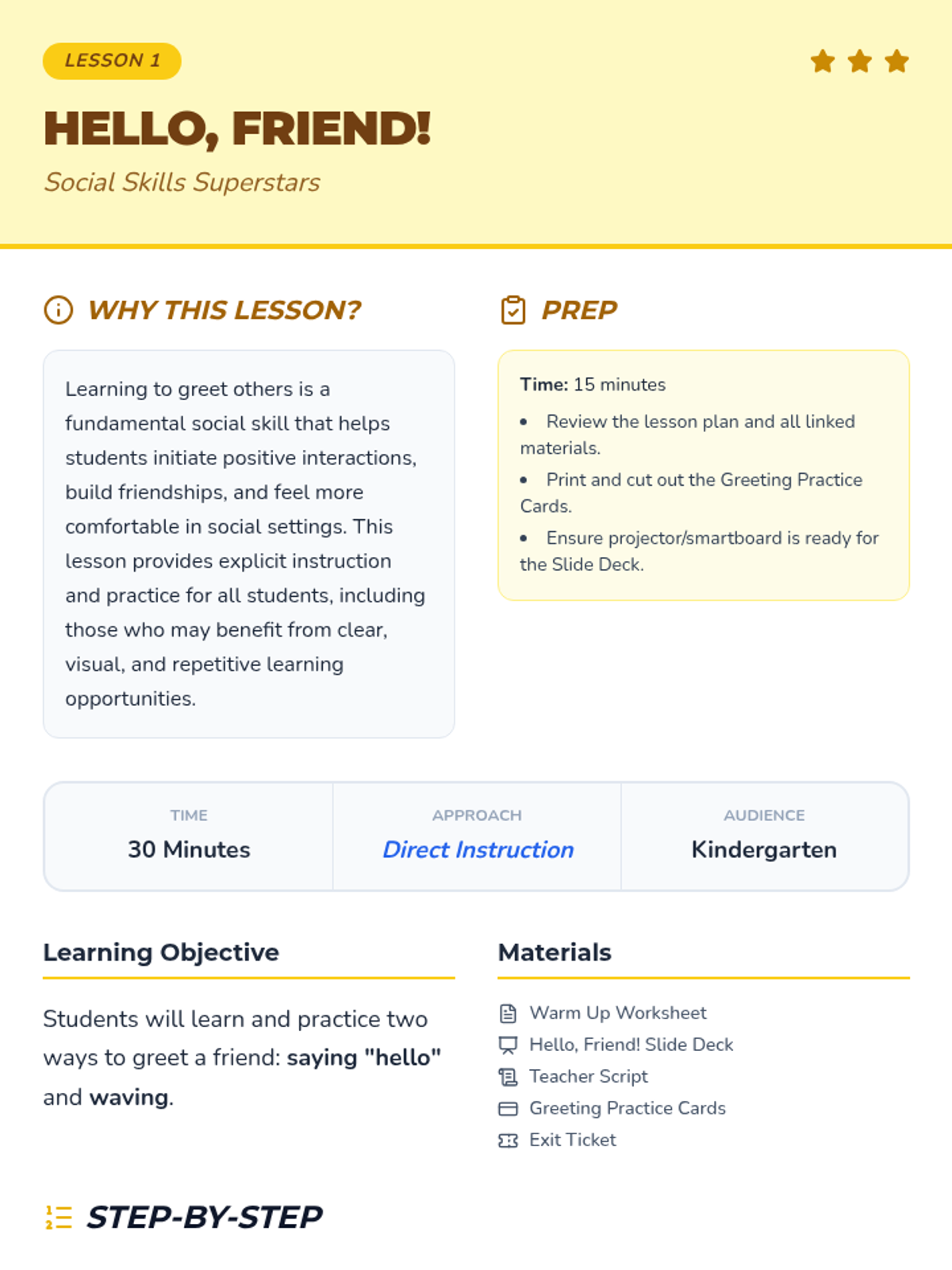
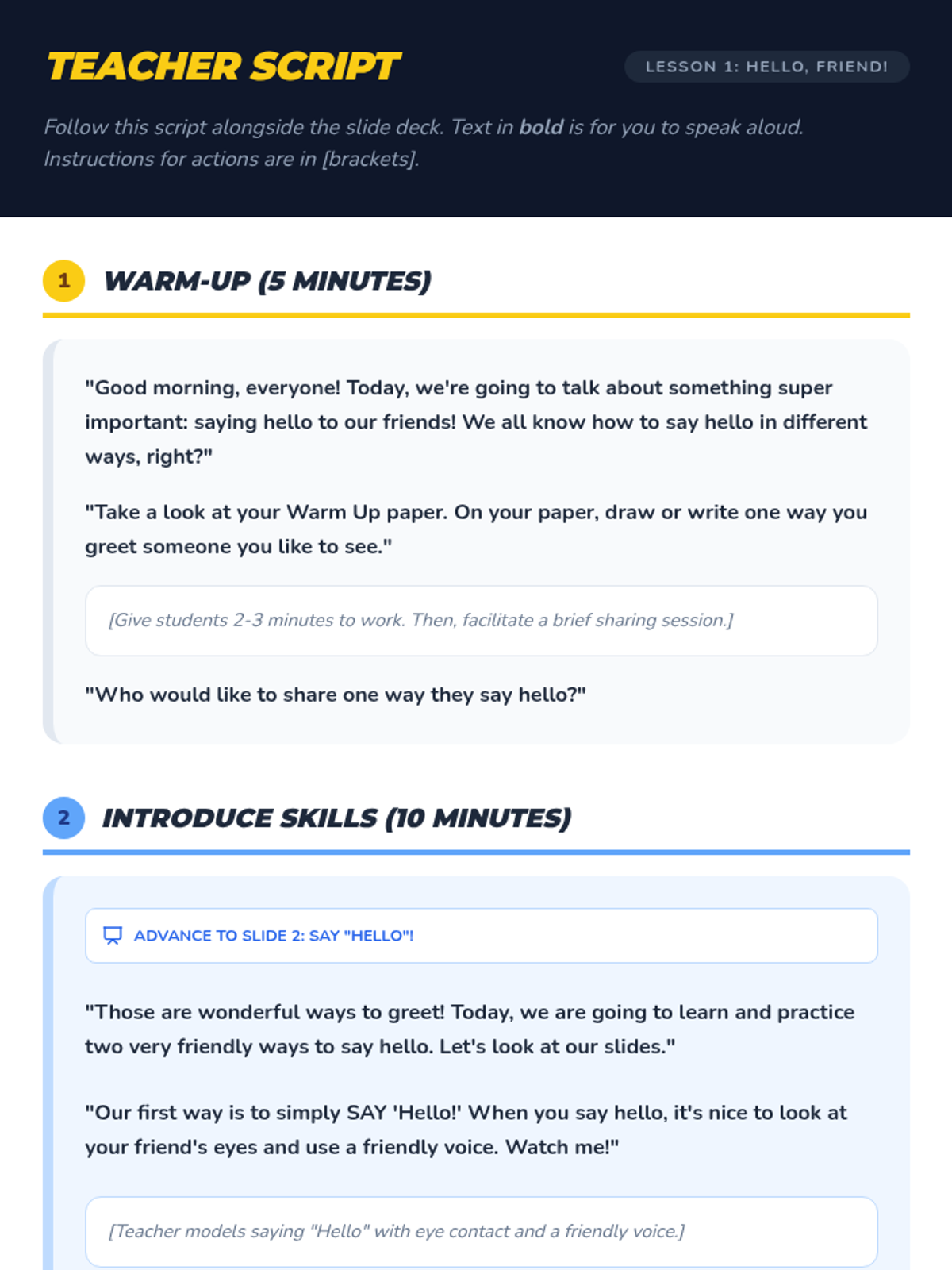
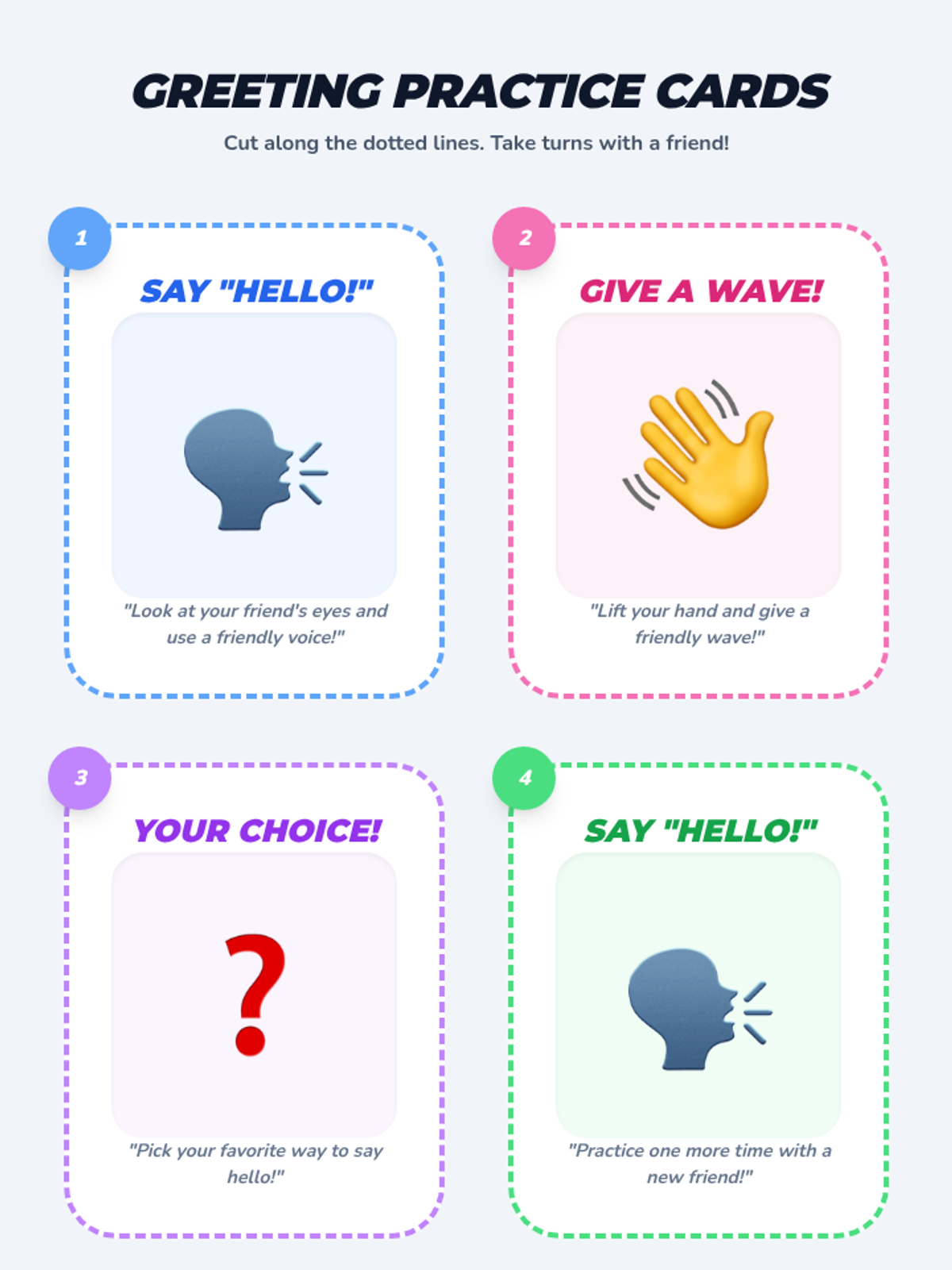
A sequence of four 30-minute lessons for Kindergarten students focused on foundational social skills: greeting, taking turns, sharing, and active listening. Designed to be inclusive of autistic learners with explicit instruction and visual supports.
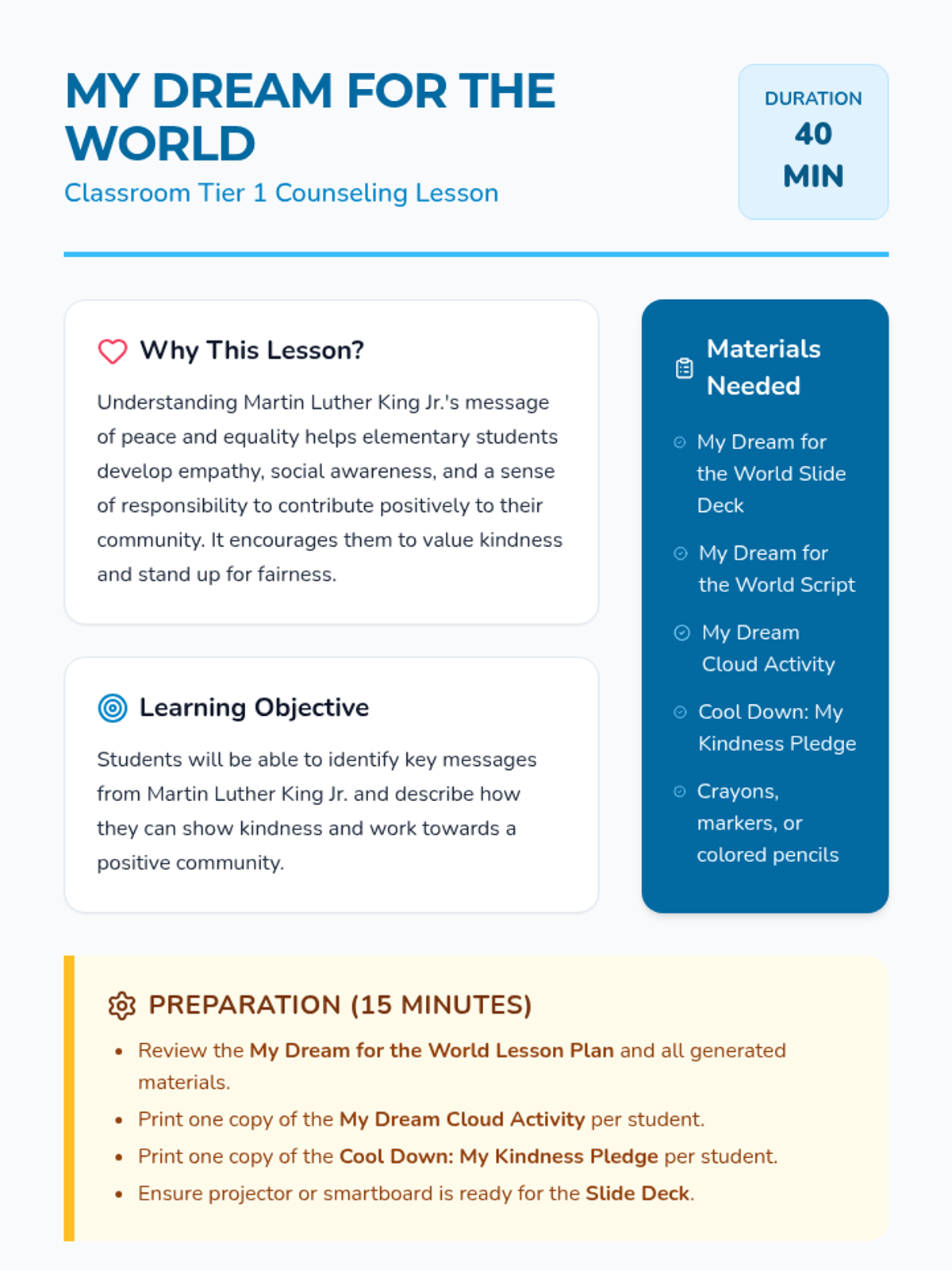
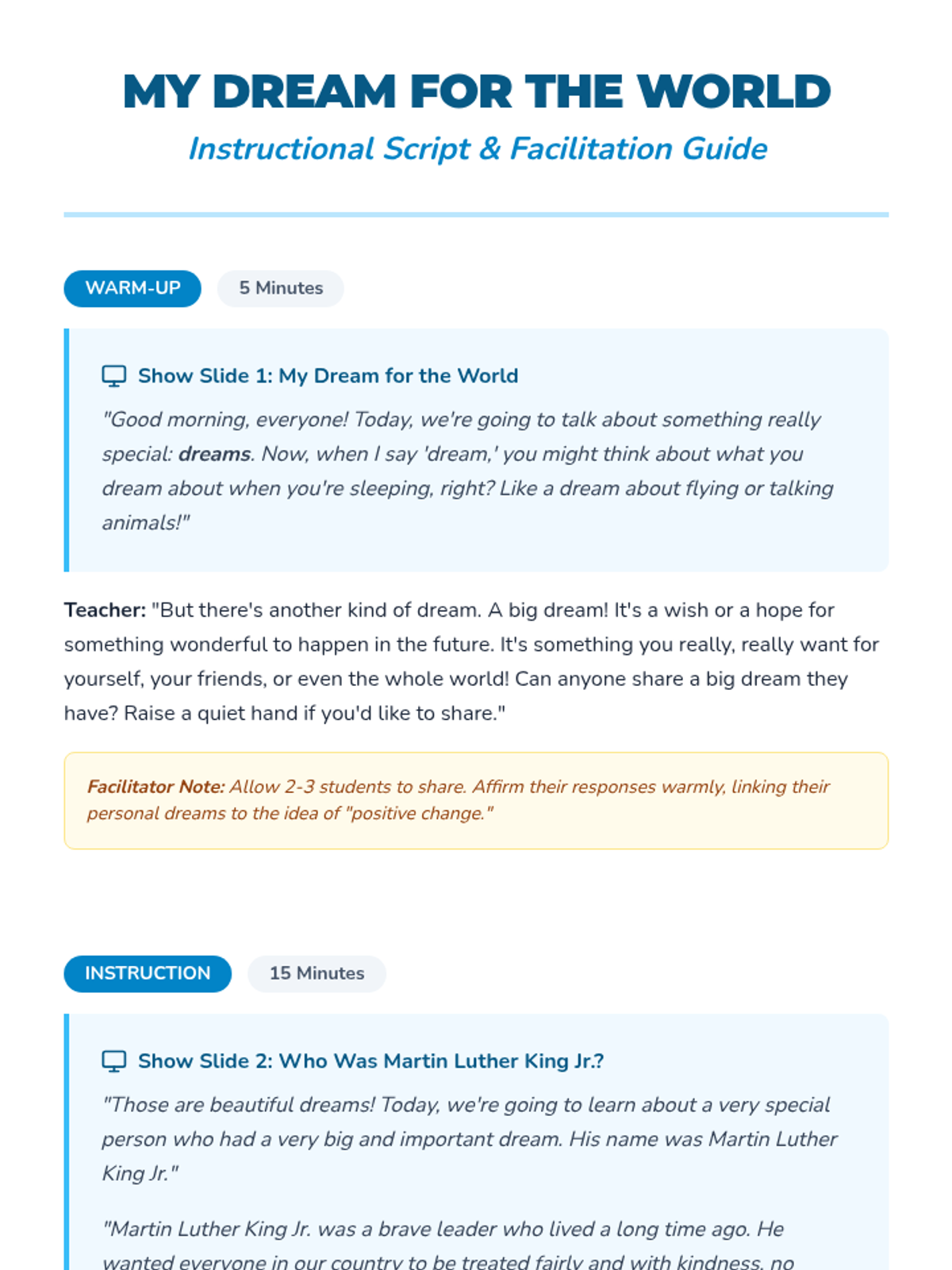
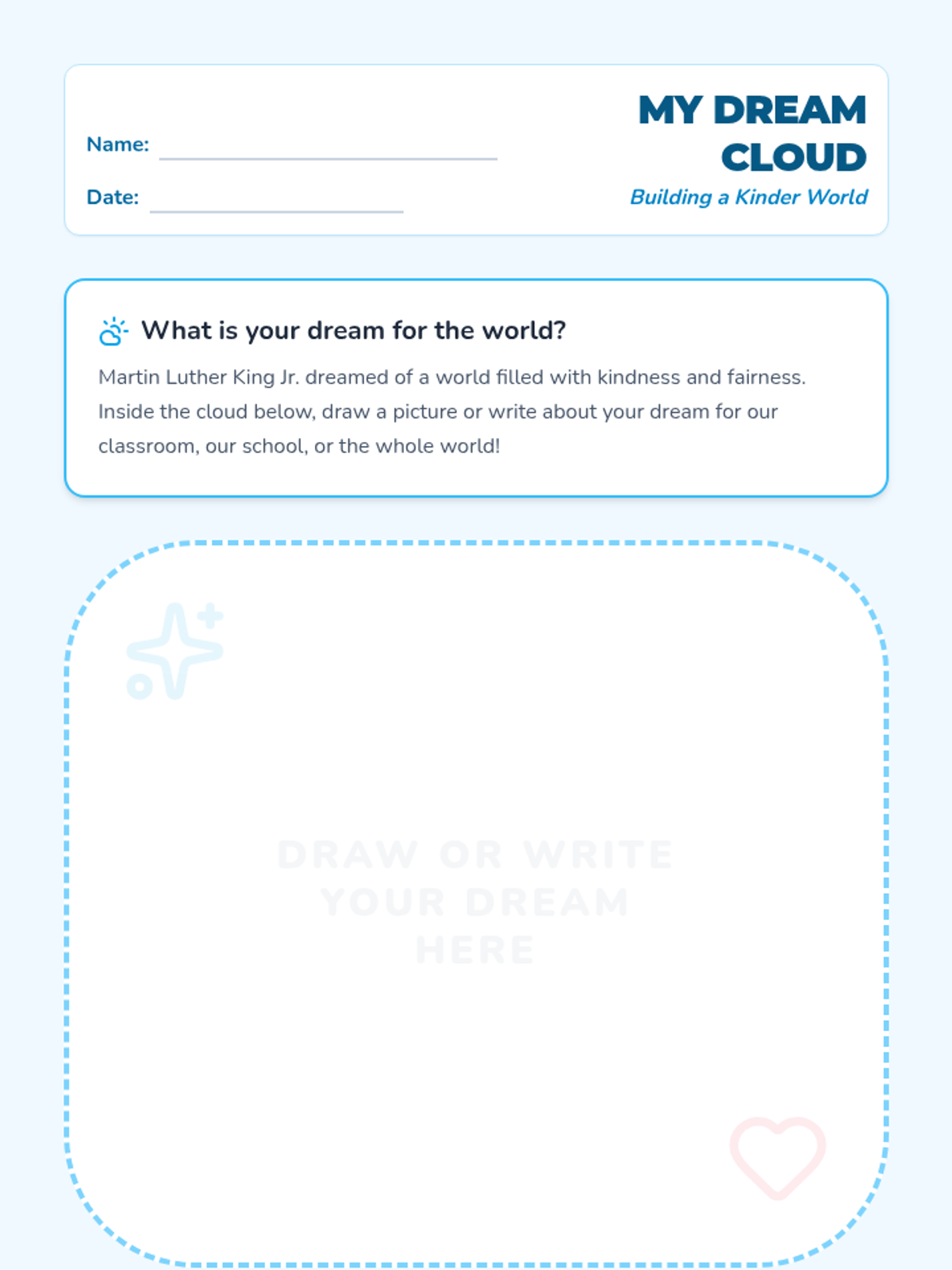
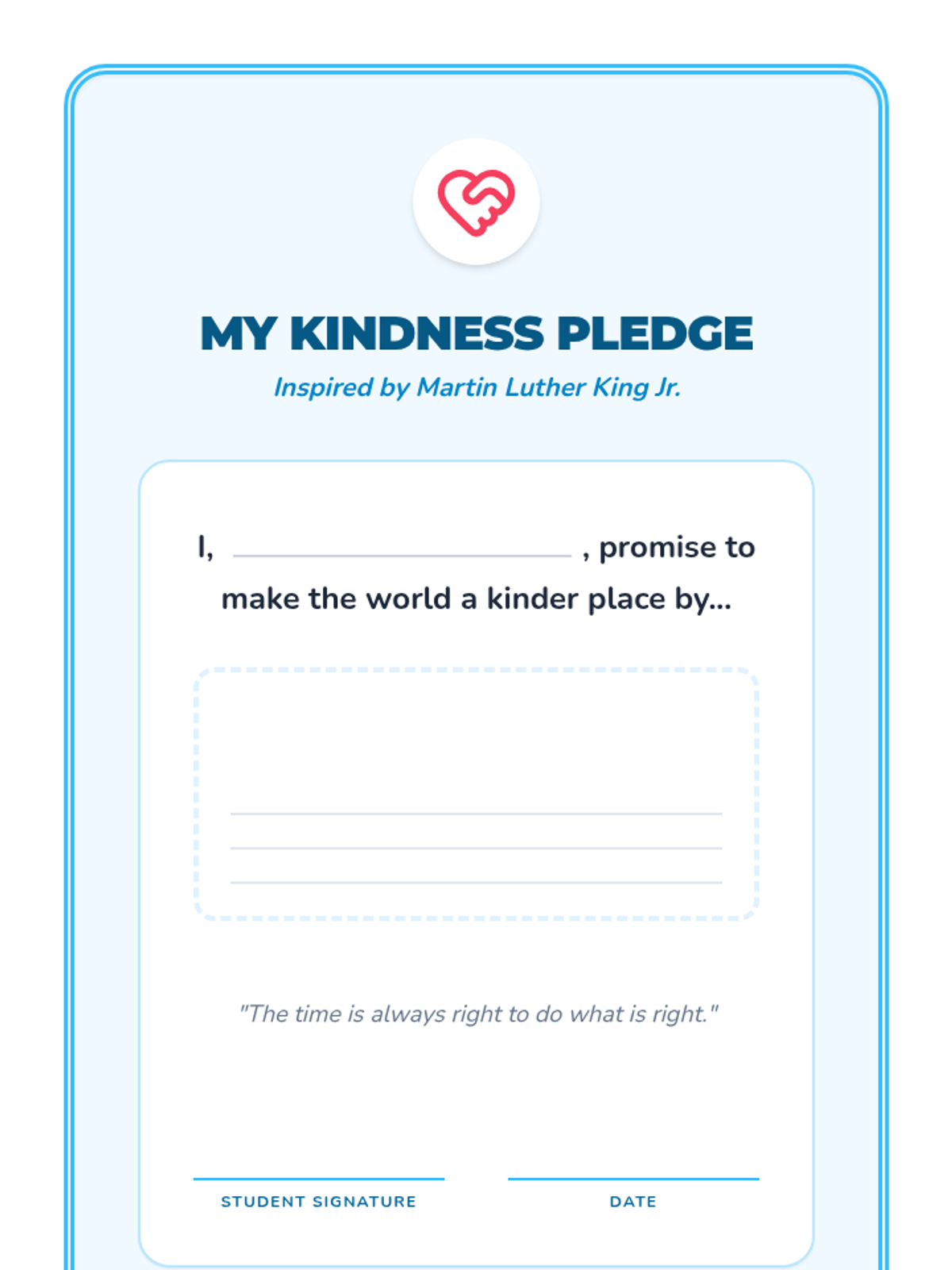
A social-emotional learning sequence for elementary students focused on empathy, community, and self-worth. It includes a lesson on Martin Luther King Jr.'s message of peace and equality, followed by a lesson on recognizing and celebrating personal pride and accomplishments.
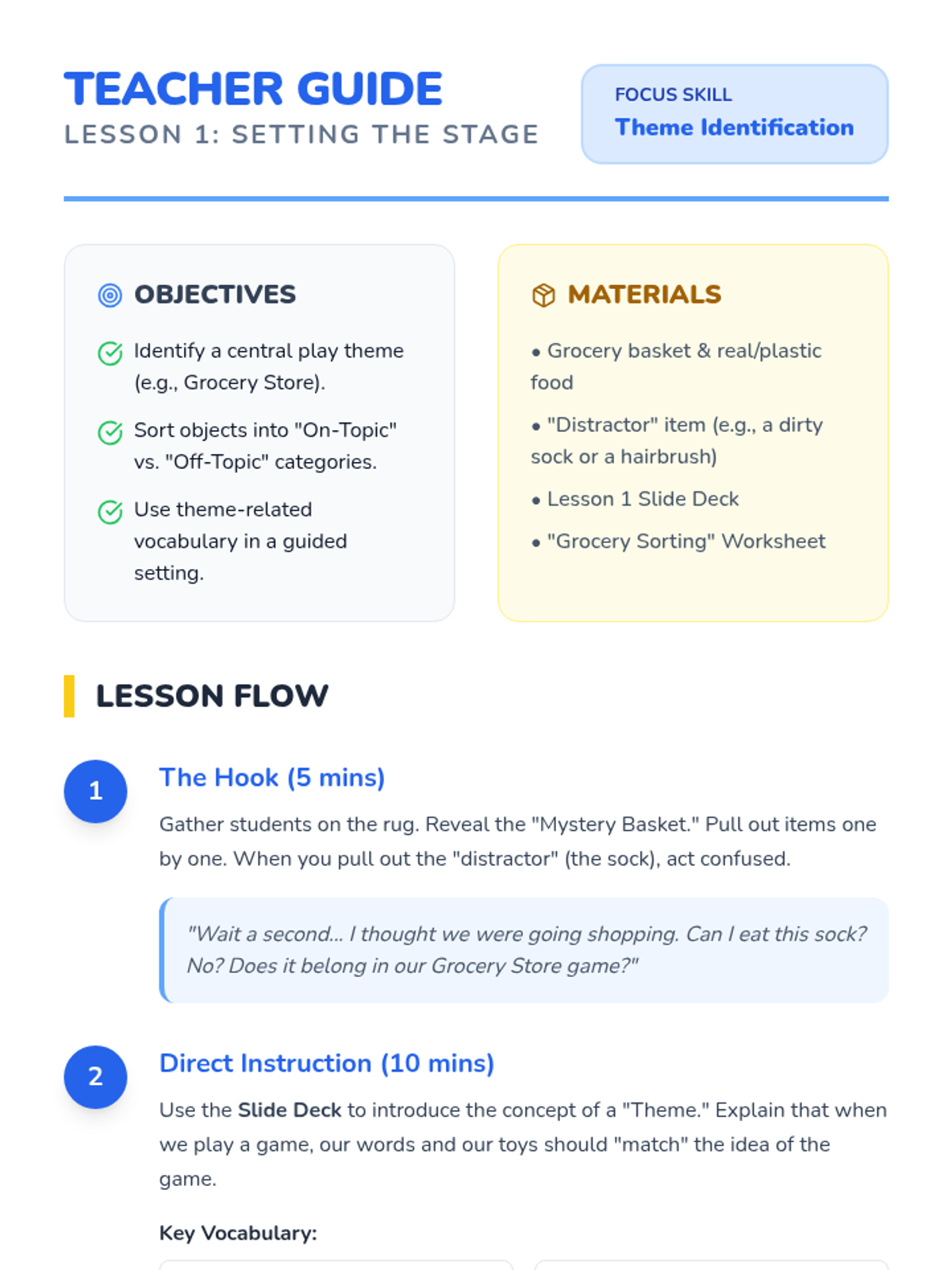
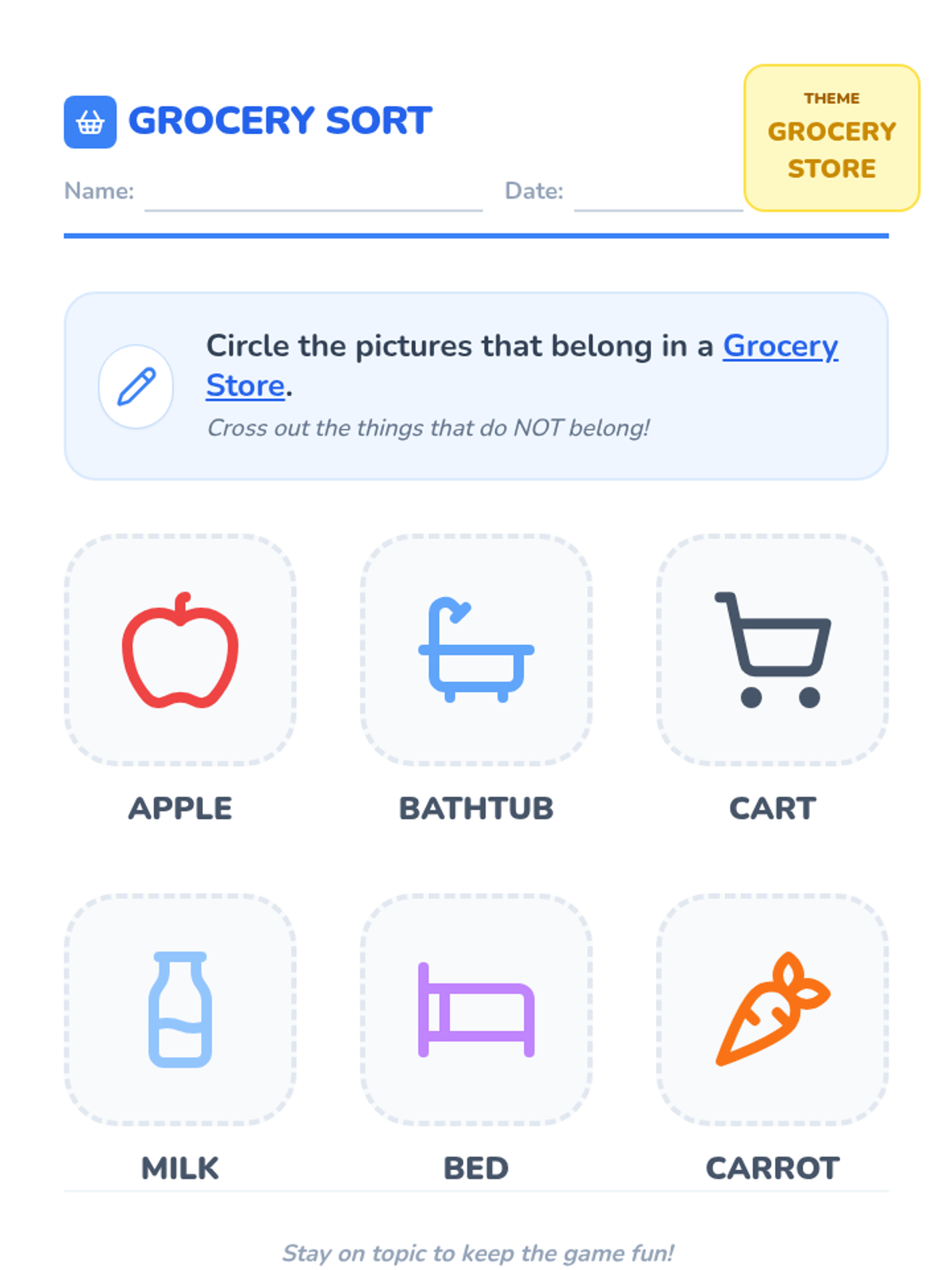
A 5-lesson sequence for Pre-K students focusing on topic maintenance through the lens of dramatic play. Students learn to identify themes, stay in character, handle distractions, and transition between topics naturally.
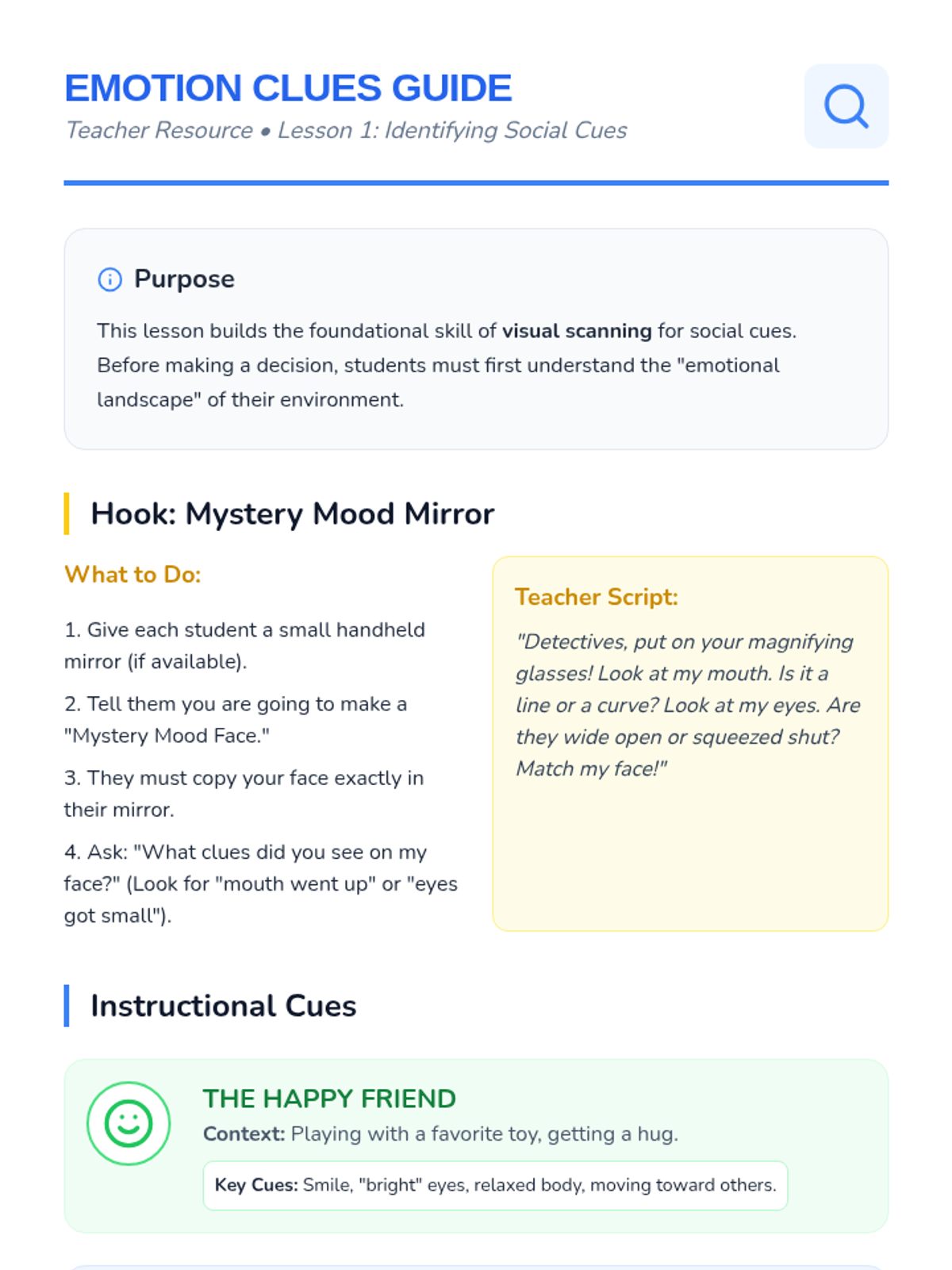
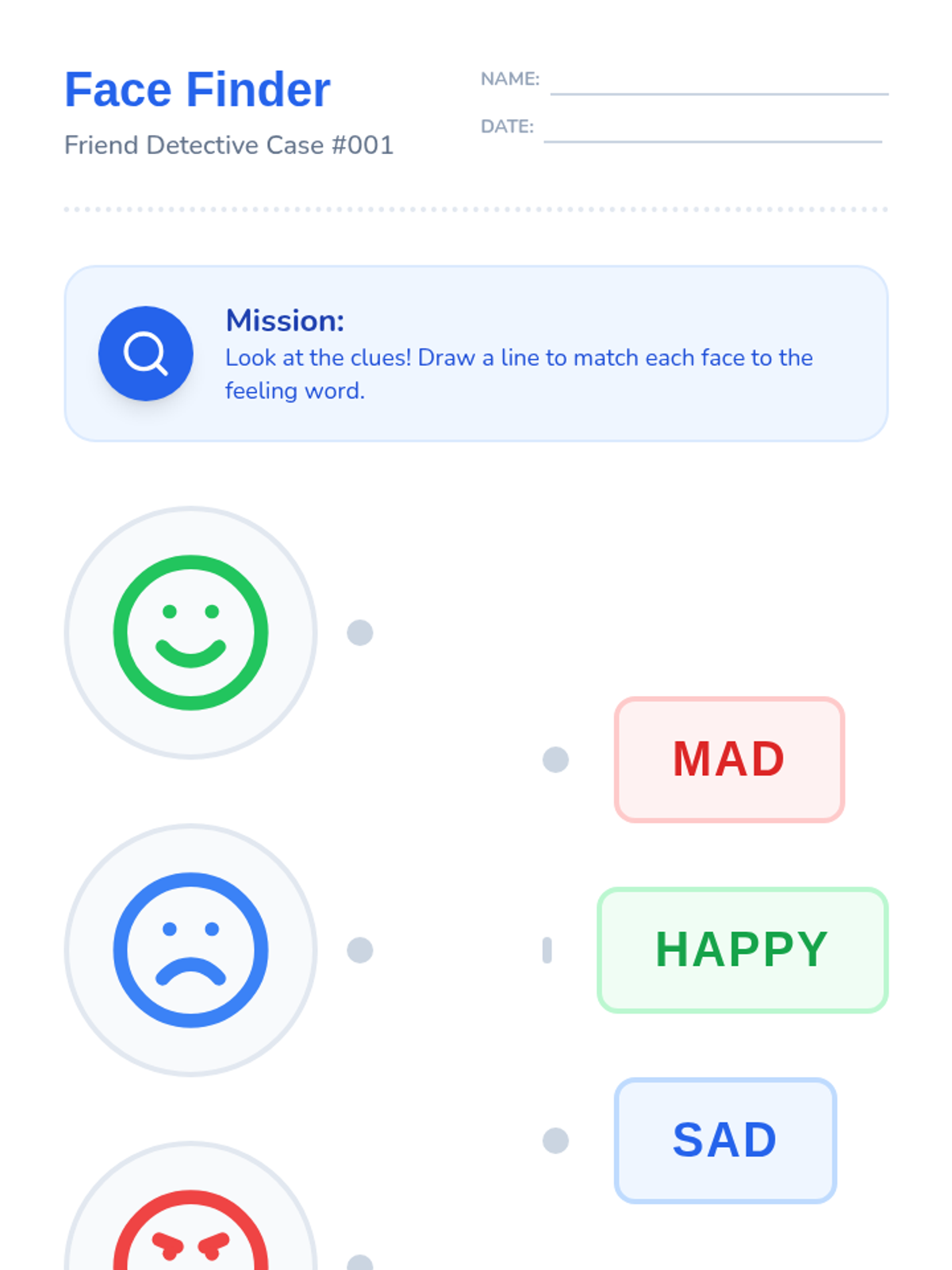
This sequence guides Pre-K students through observing social cues, interpreting body language, and making positive behavioral choices. Students will progress from identifying emotions to predicting consequences and learning to 'rewind' and repair social interactions.
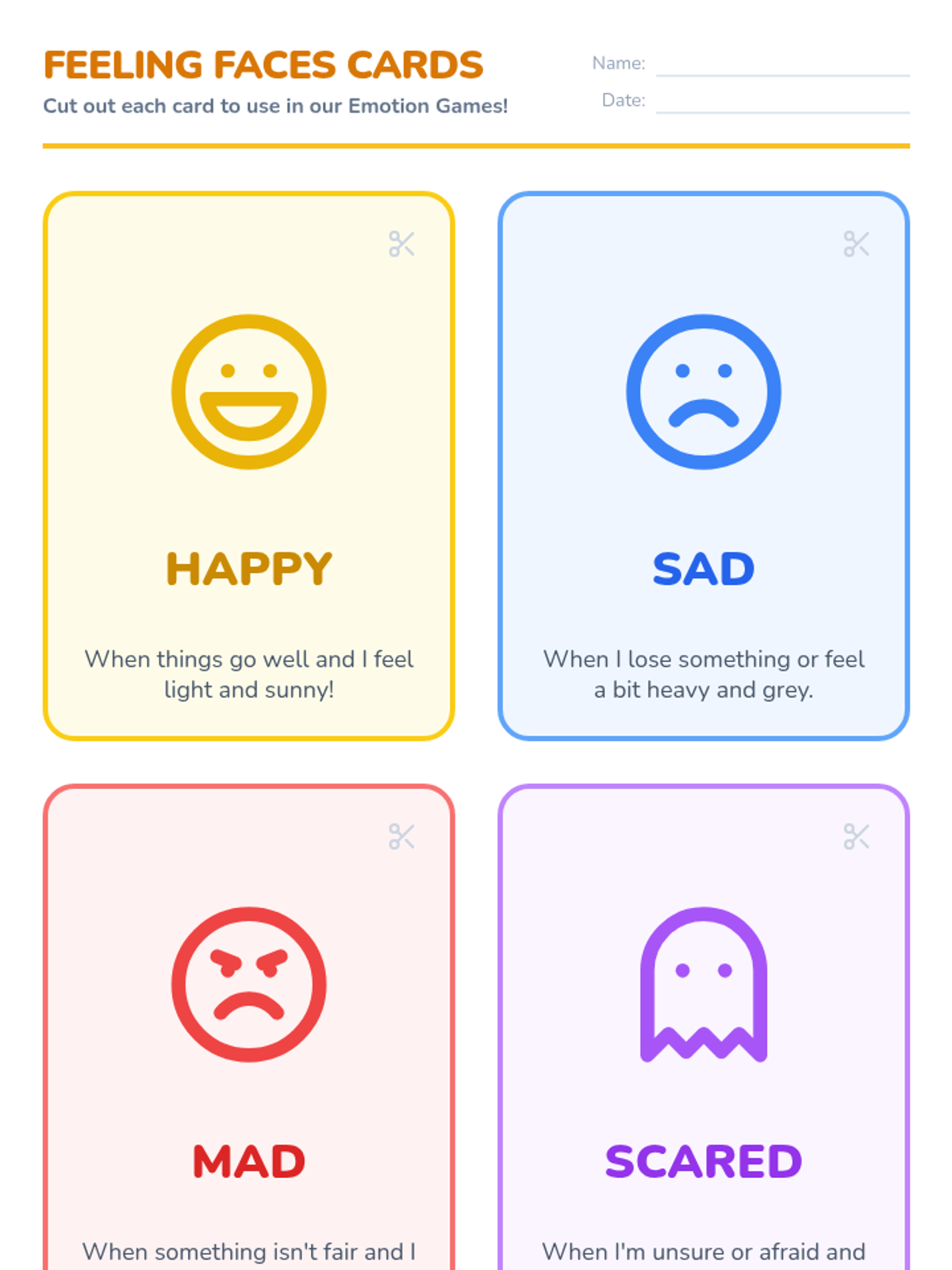
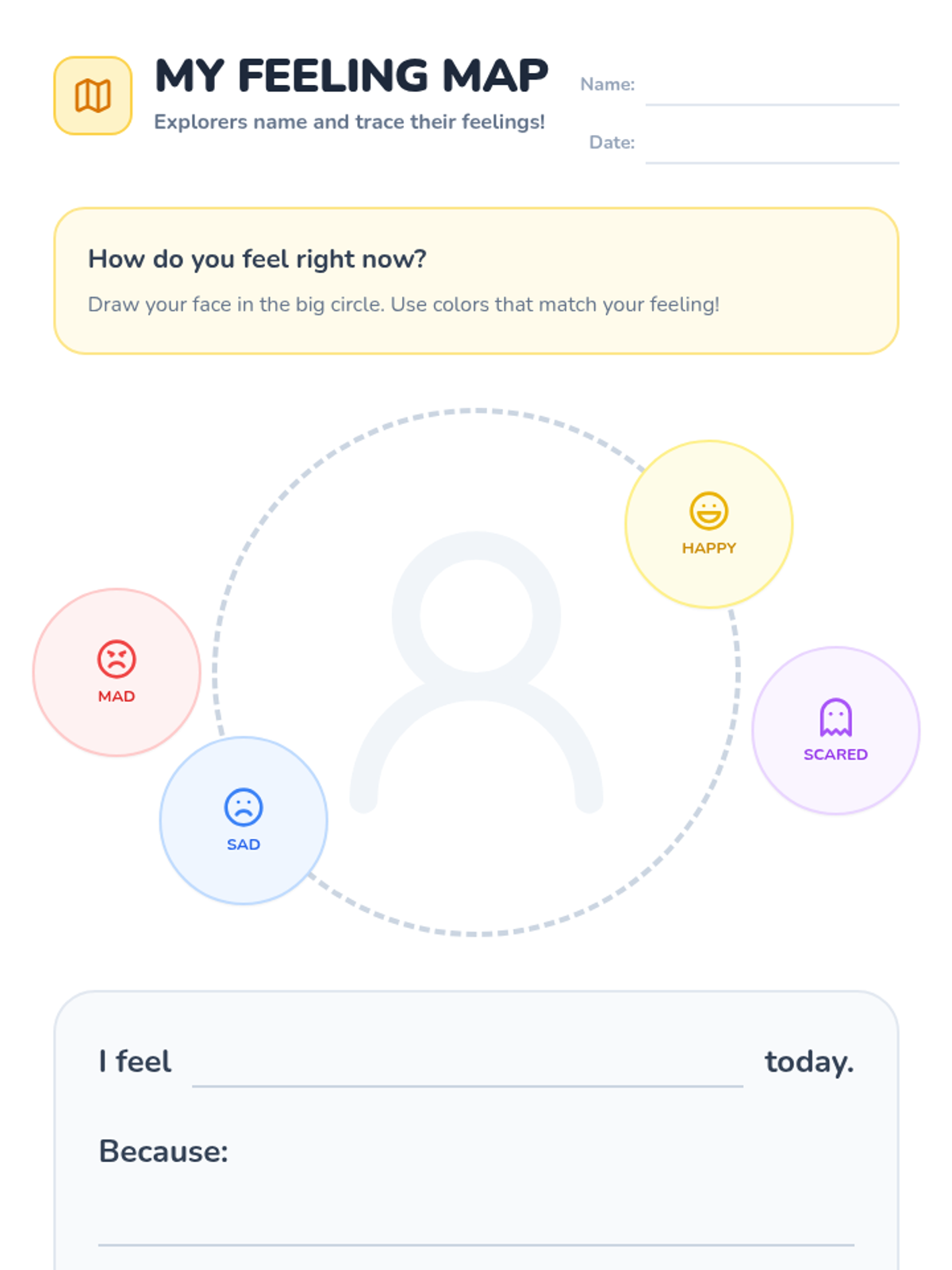
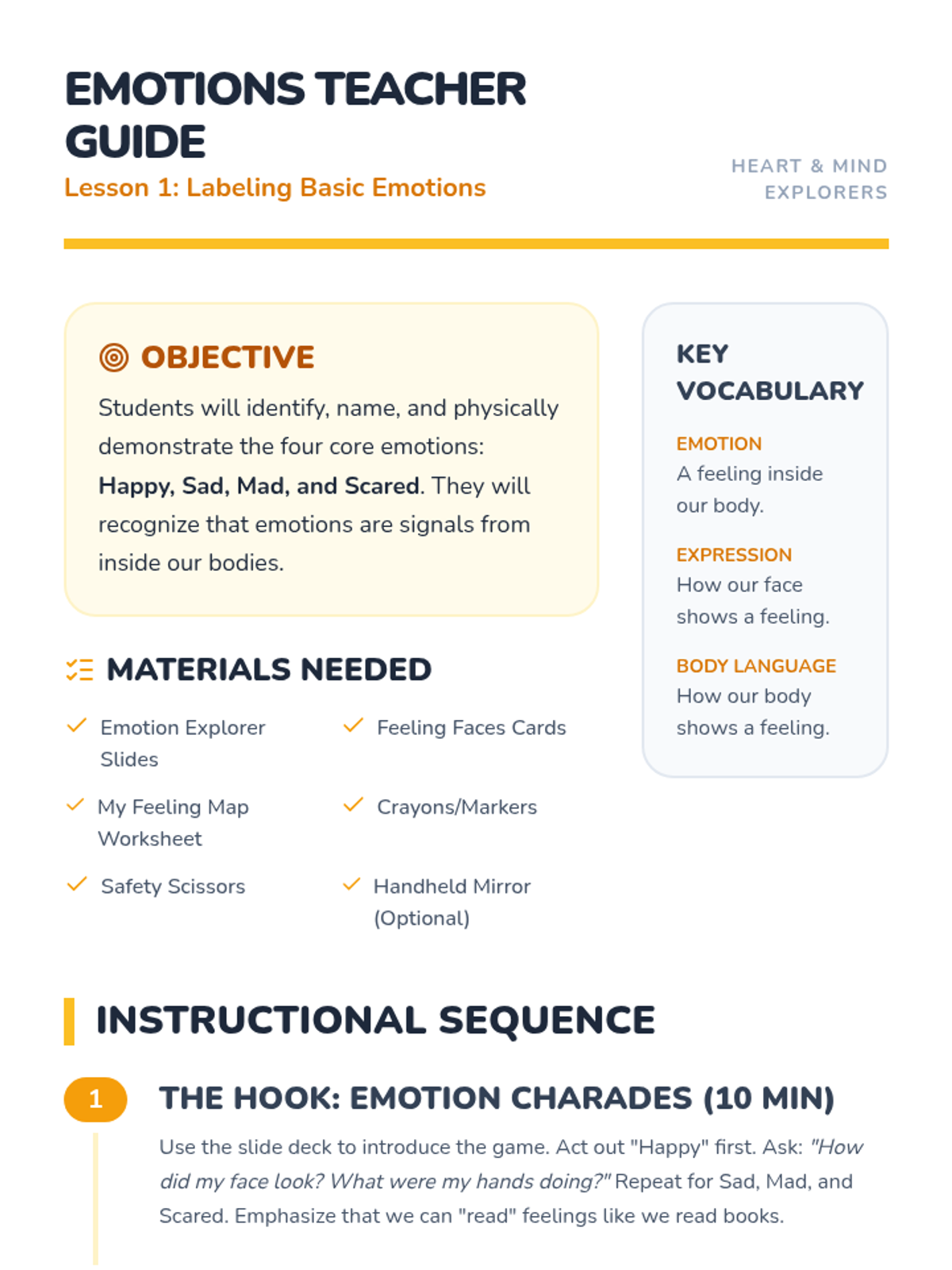
A Kindergarten sequence focused on emotional literacy and character development. Students learn to identify core emotions, distinguish between moods and personality traits, recognize their own character strengths, practice self-regulation, and develop empathy for others.
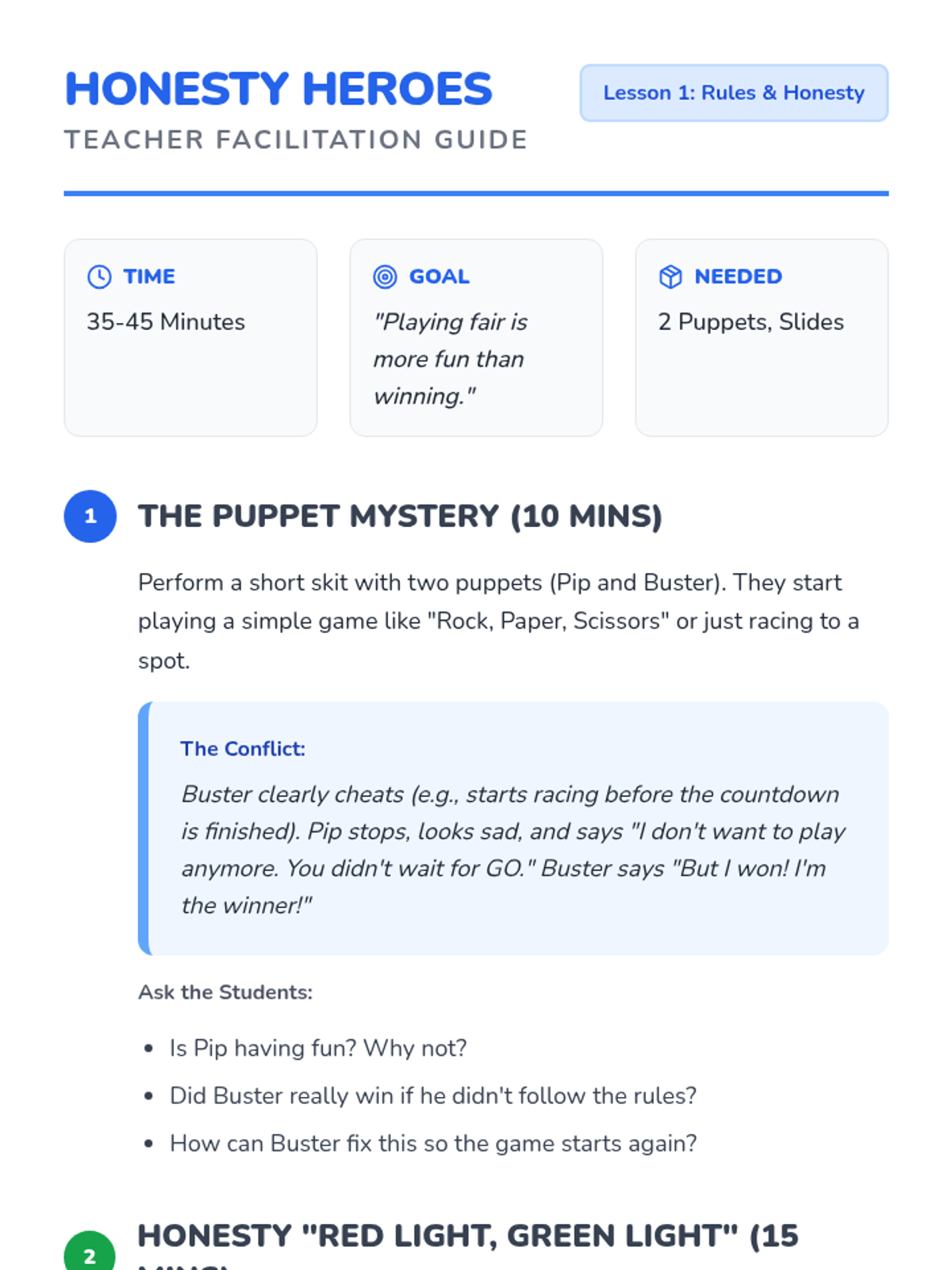
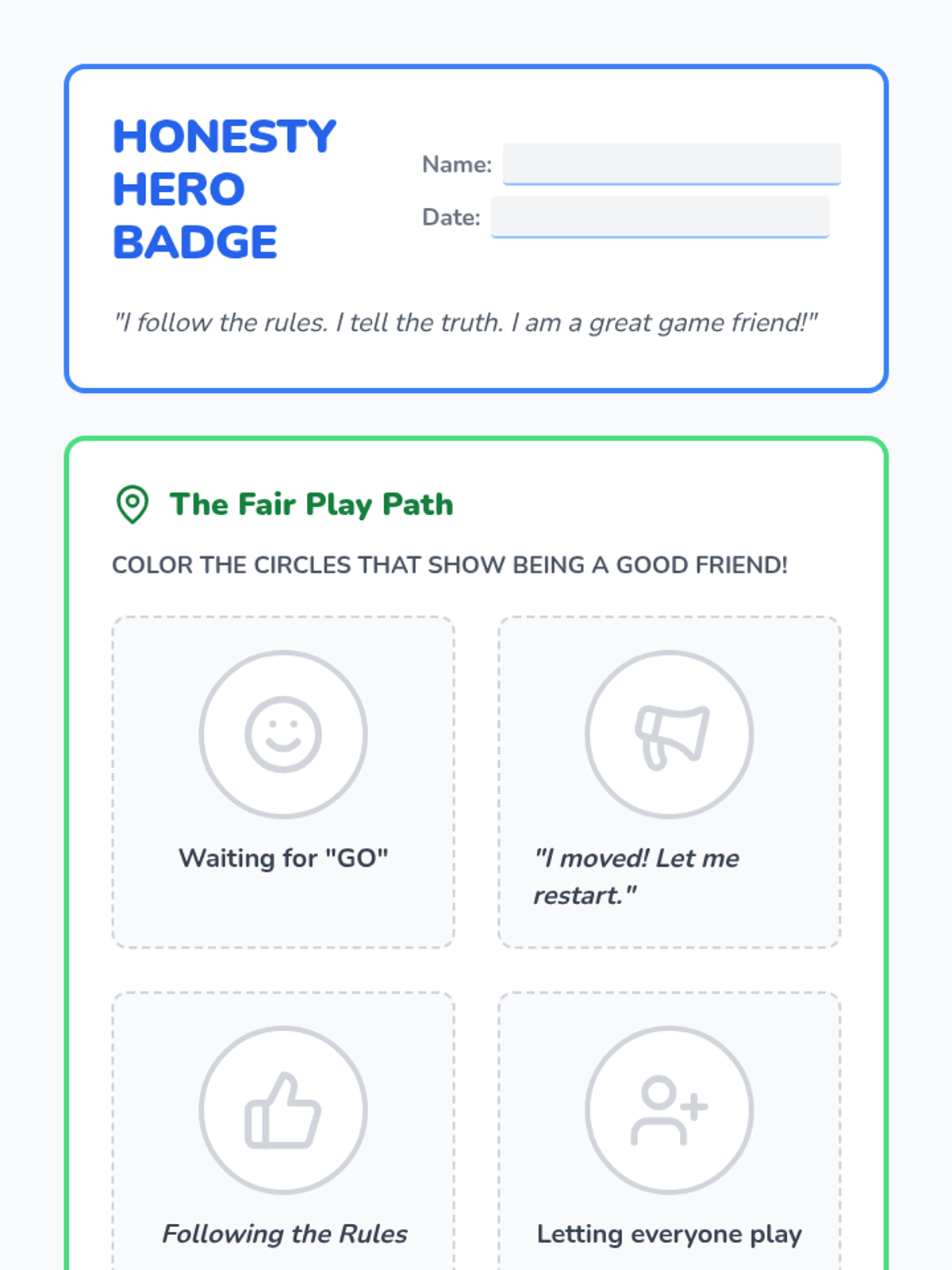
A 5-lesson sequence for Kindergarten students focused on developing sportsmanship, honesty, emotional regulation, and teamwork through active play. Students learn that being a kind friend and playing fairly is more important than winning.
A Kindergarten sequence focused on social-emotional learning through social stories, helping students navigate personal space, joining play, turn-taking, sportsmanship, and sharing.
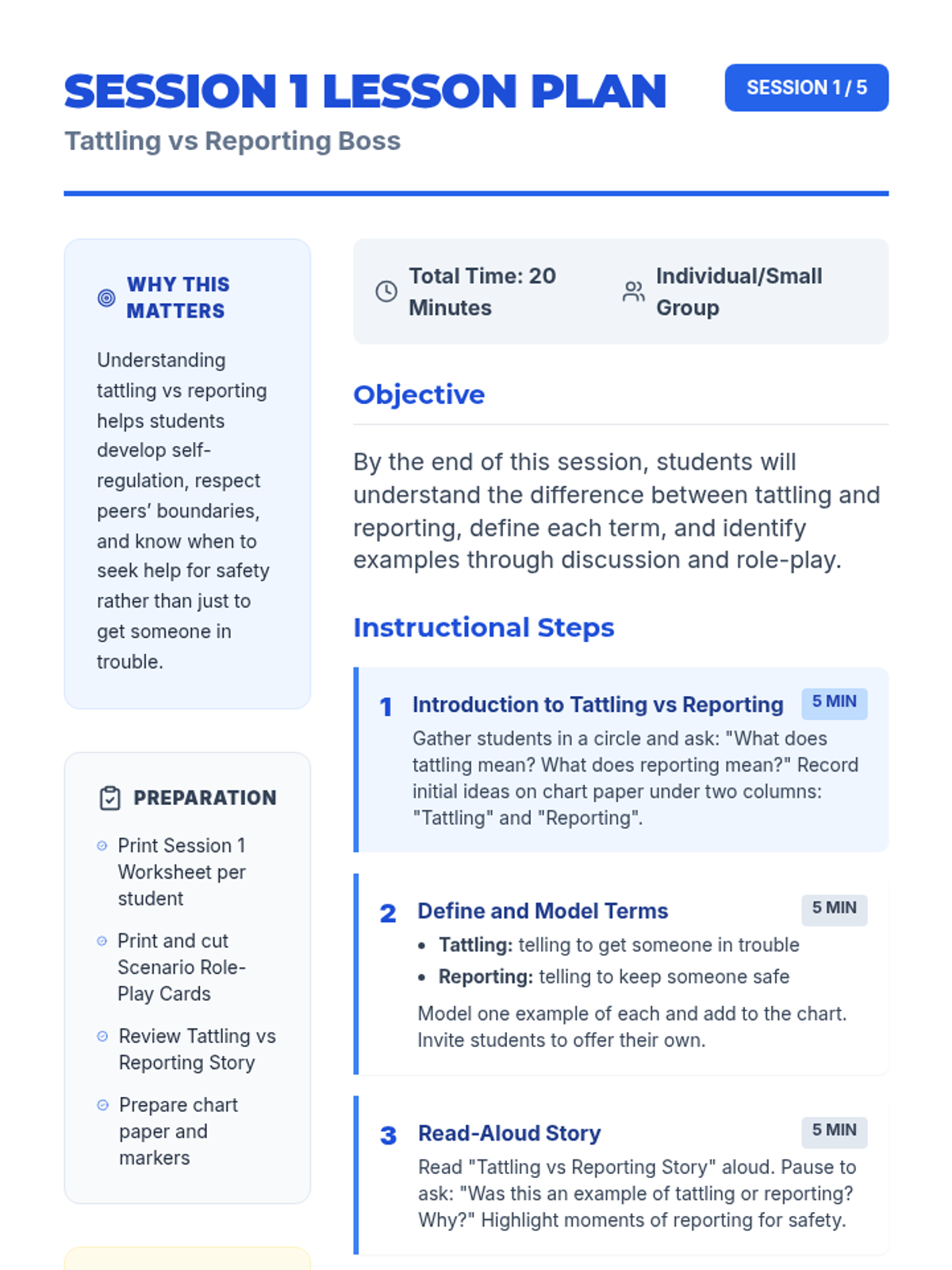
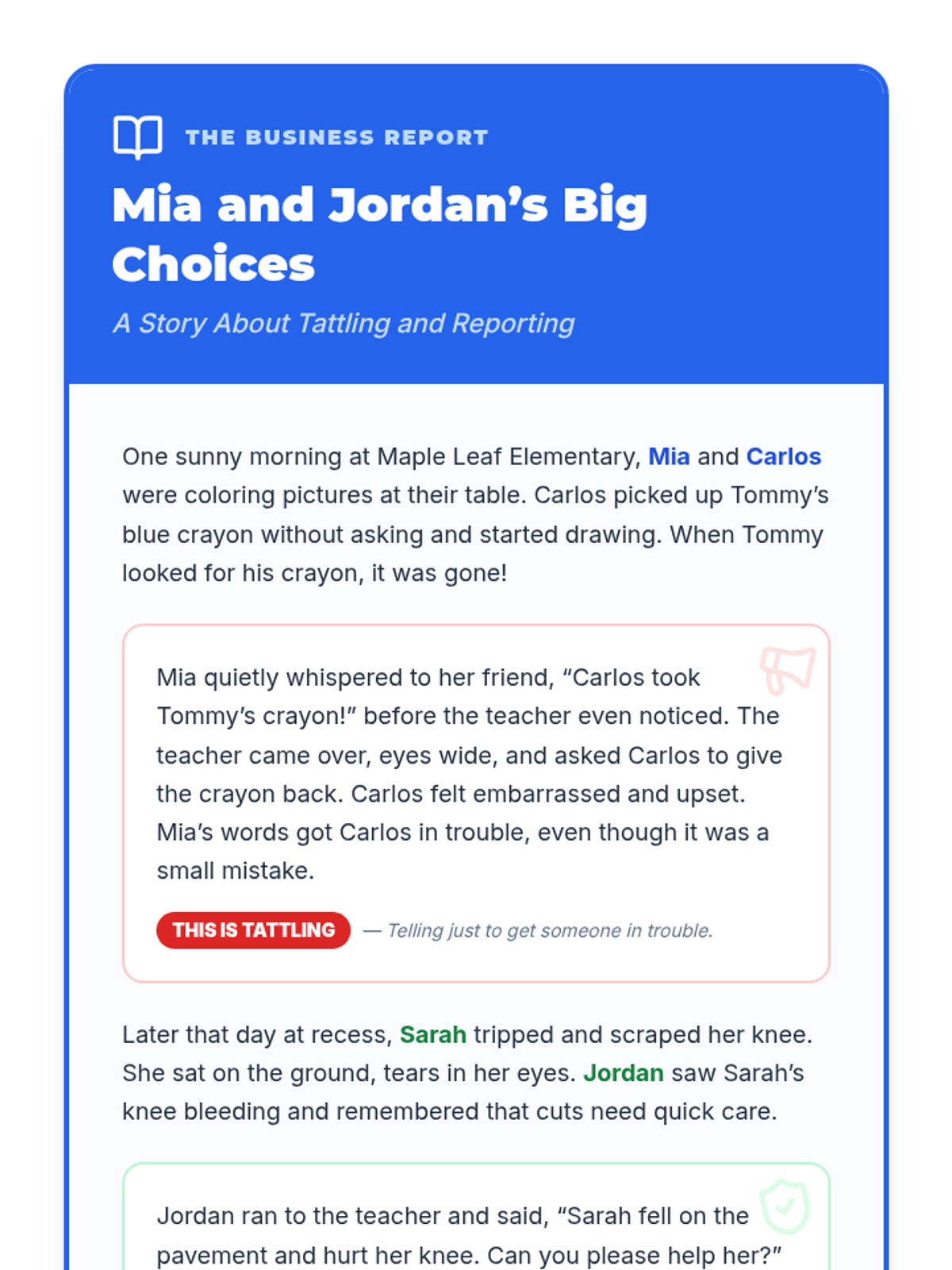
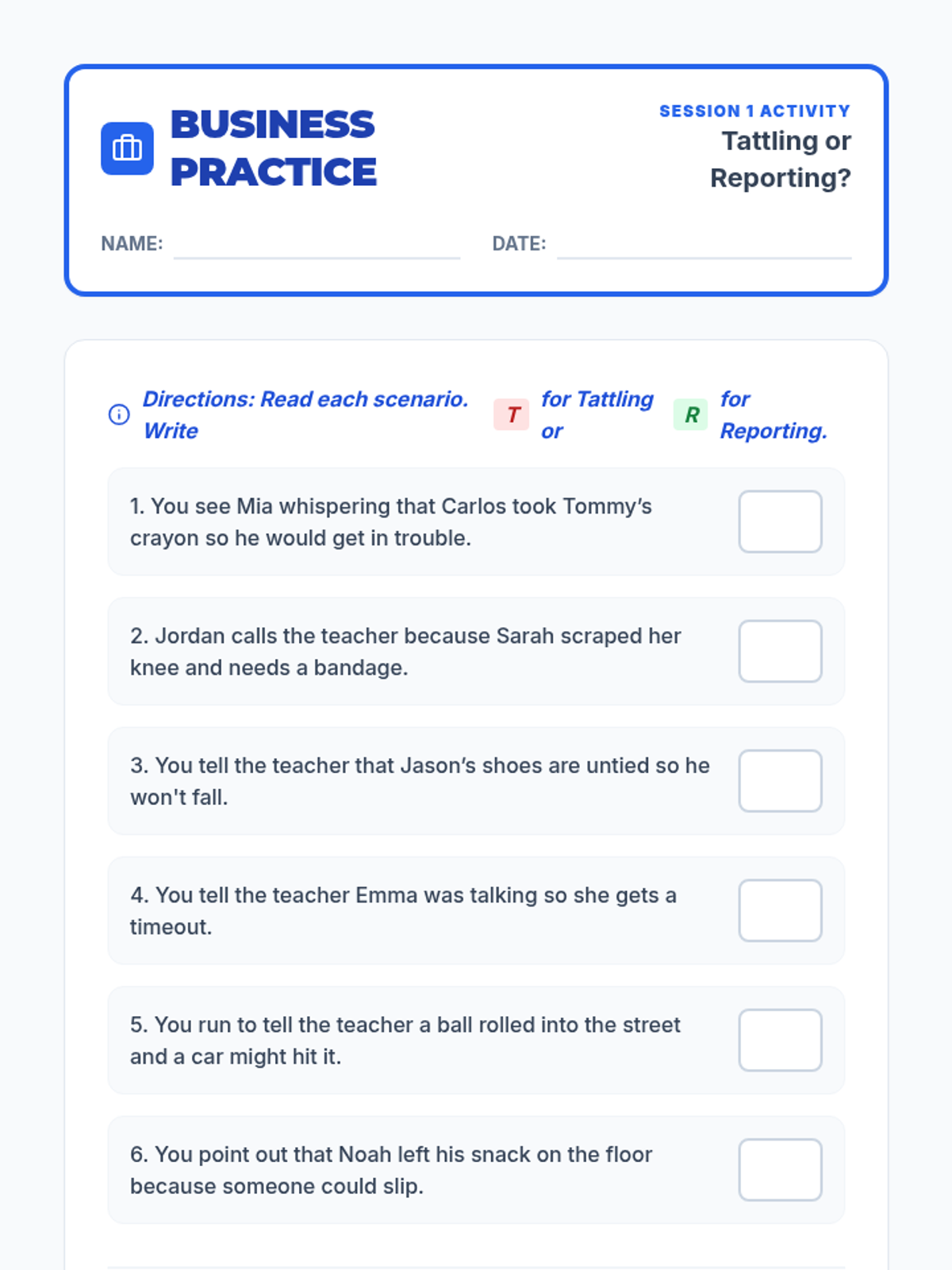
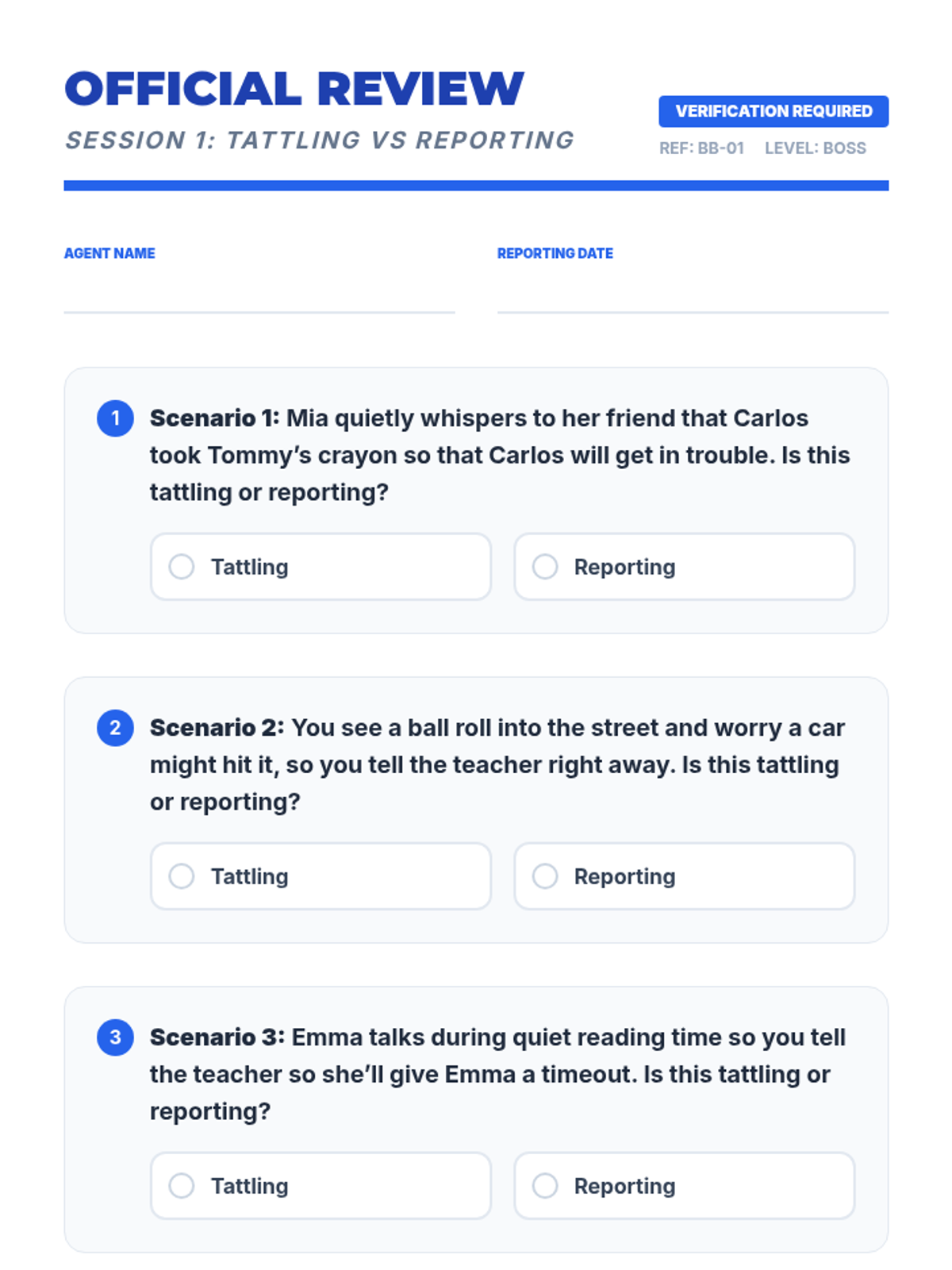
A 5-session individual intervention designed for students to develop self-regulation, distinguish between tattling and reporting, and respect peer boundaries. Students learn to 'mind their own business' through interactive stories, role-plays, and self-regulation tools.
Students learn to observe non-verbal cues, respect privacy, offer support, and practice active listening to transform daily check-ins into a community-building tool. This sequence fosters empathy and a supportive classroom culture through practical social-emotional skills.
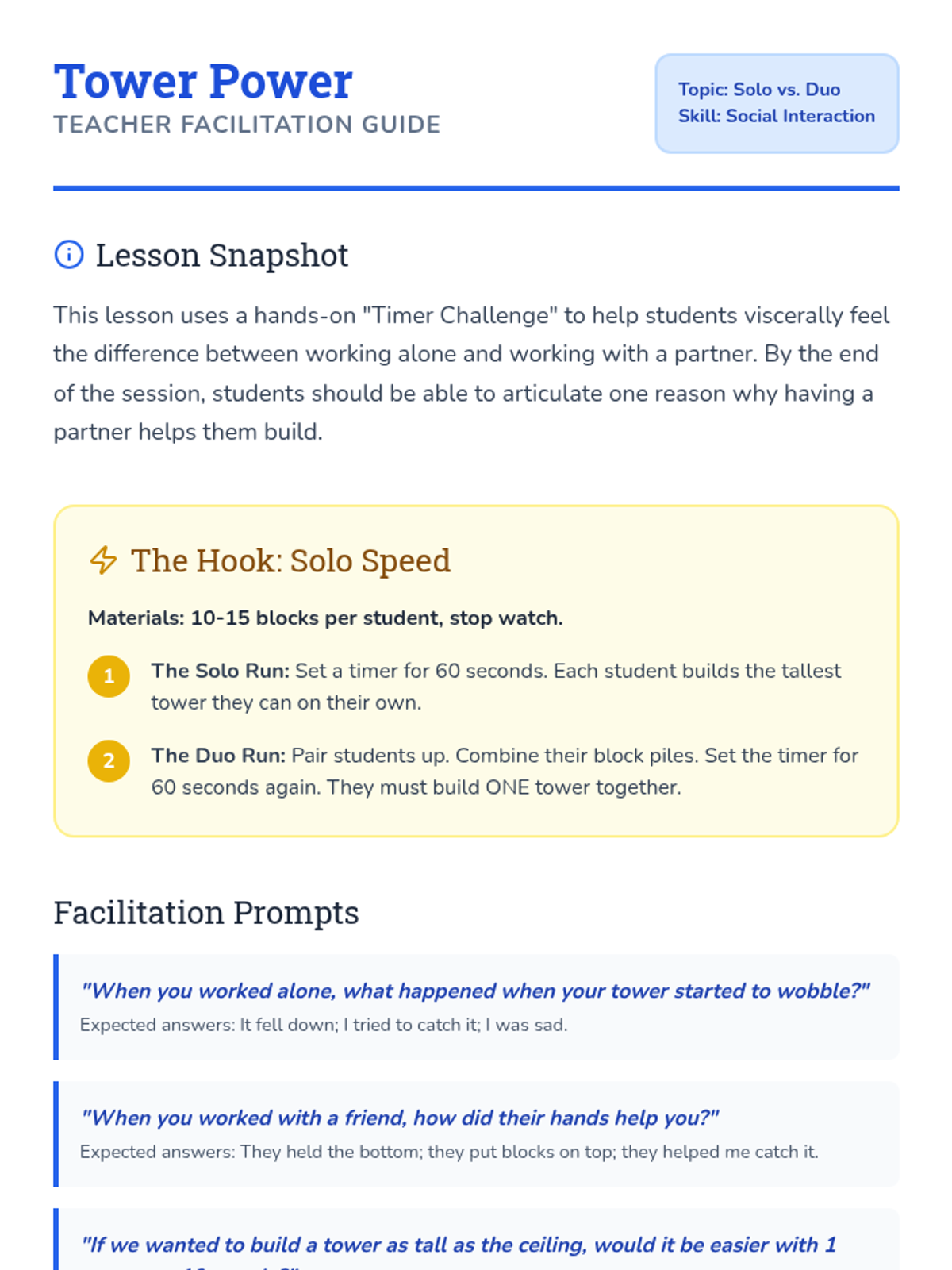
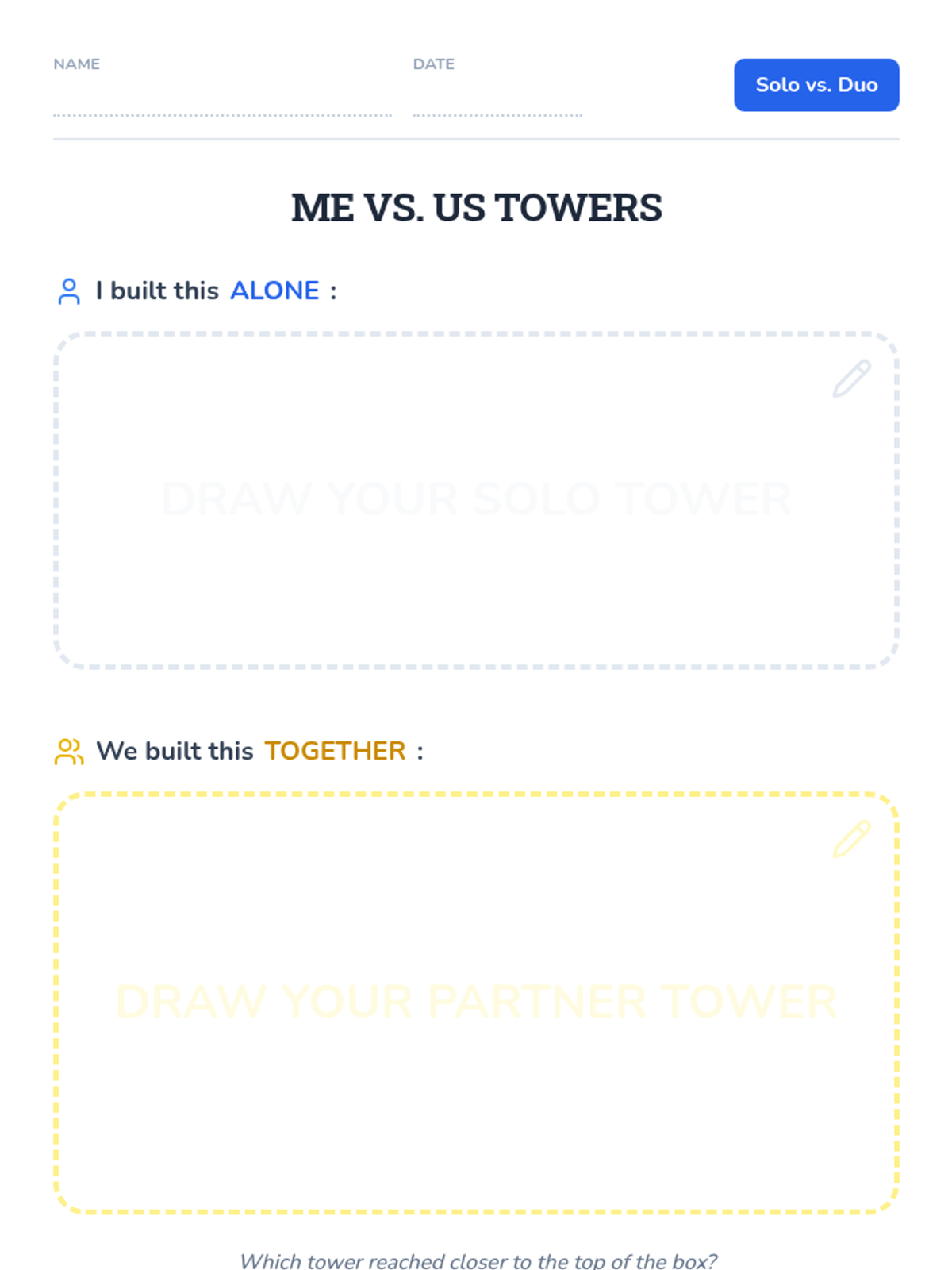
A 3D art and engineering sequence where Pre-K students learn to collaborate through block building. Students progress from solo play to partner planning, role-playing construction teams, and building a connected community 'city'.
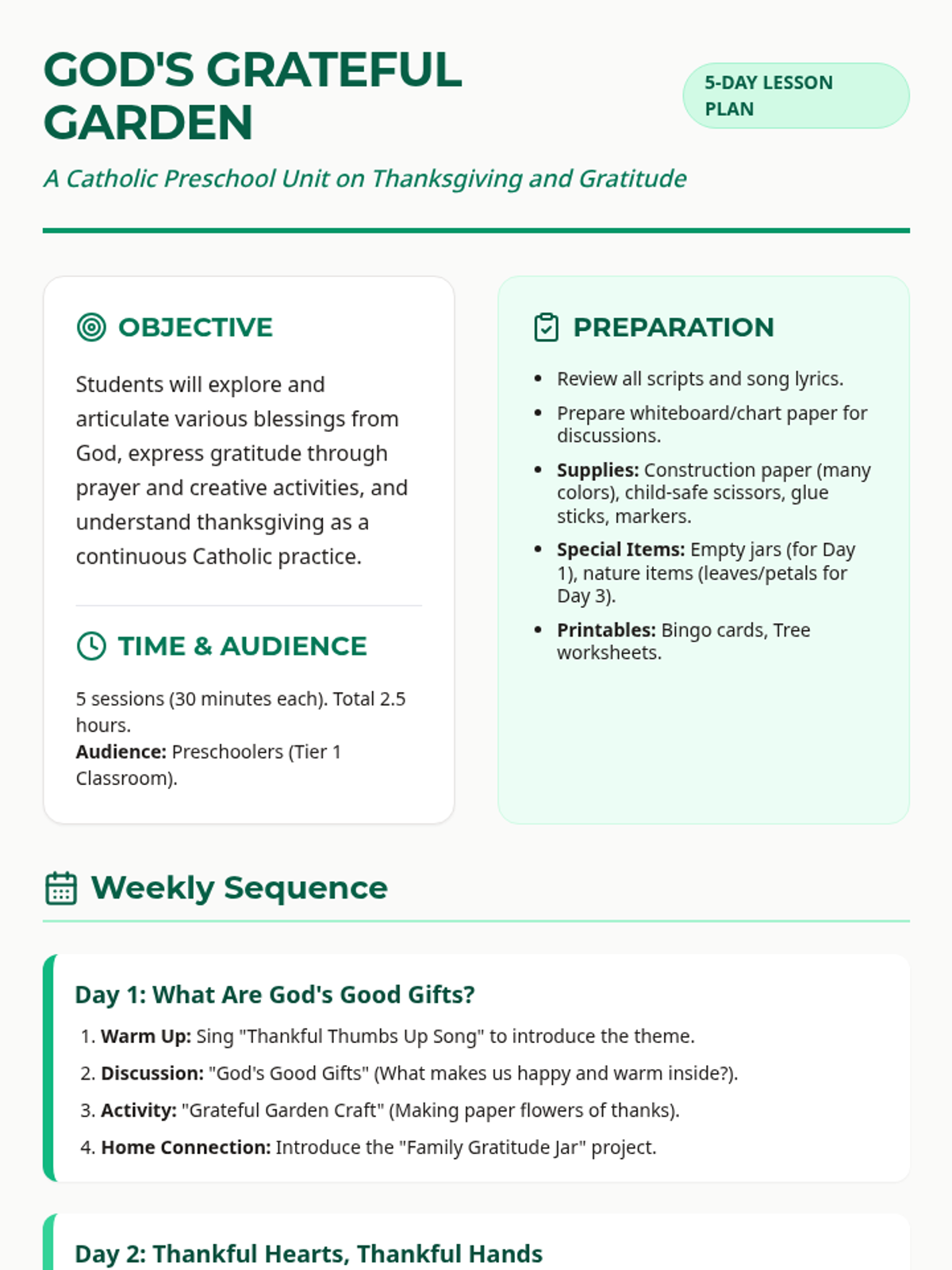
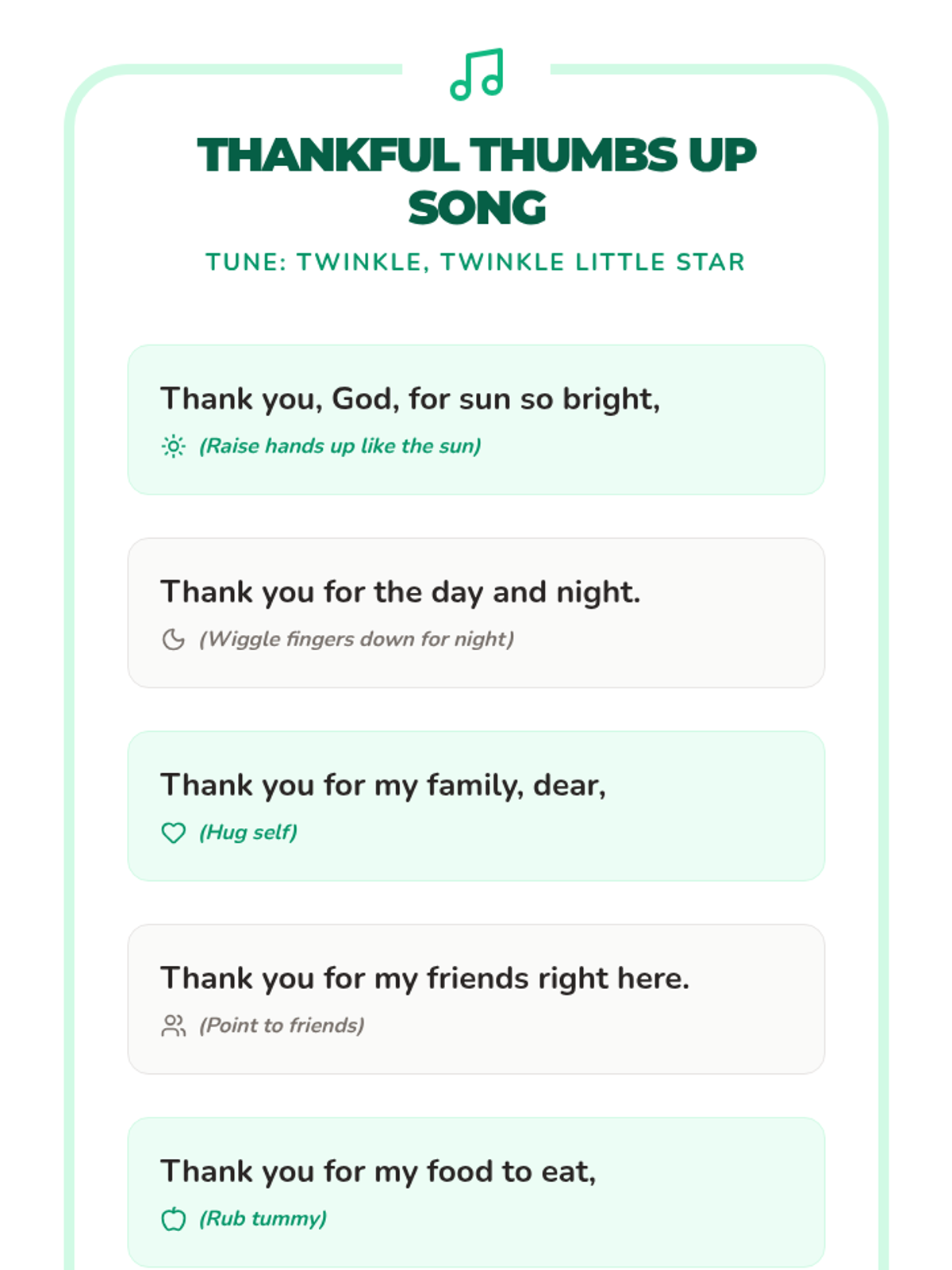
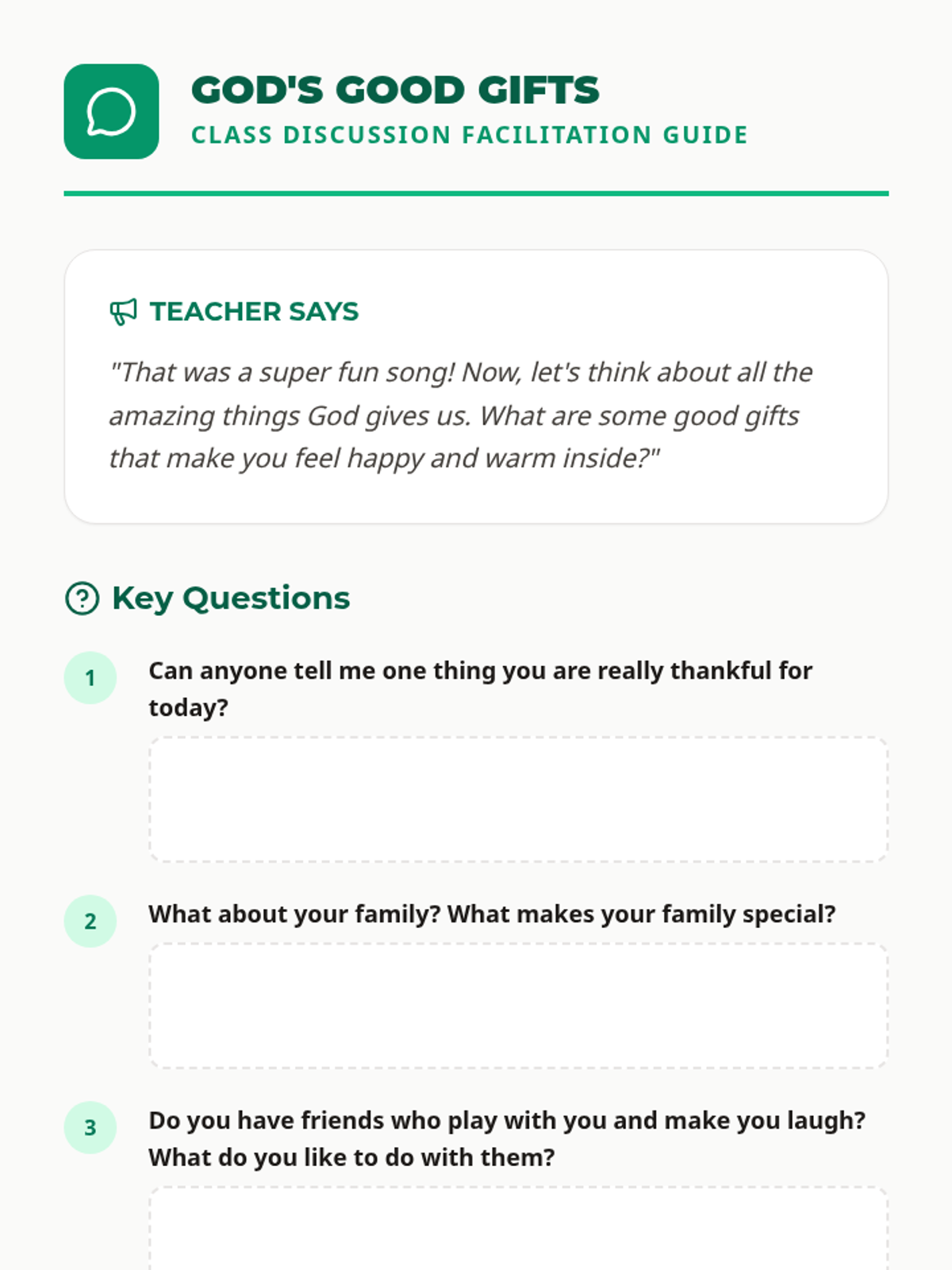
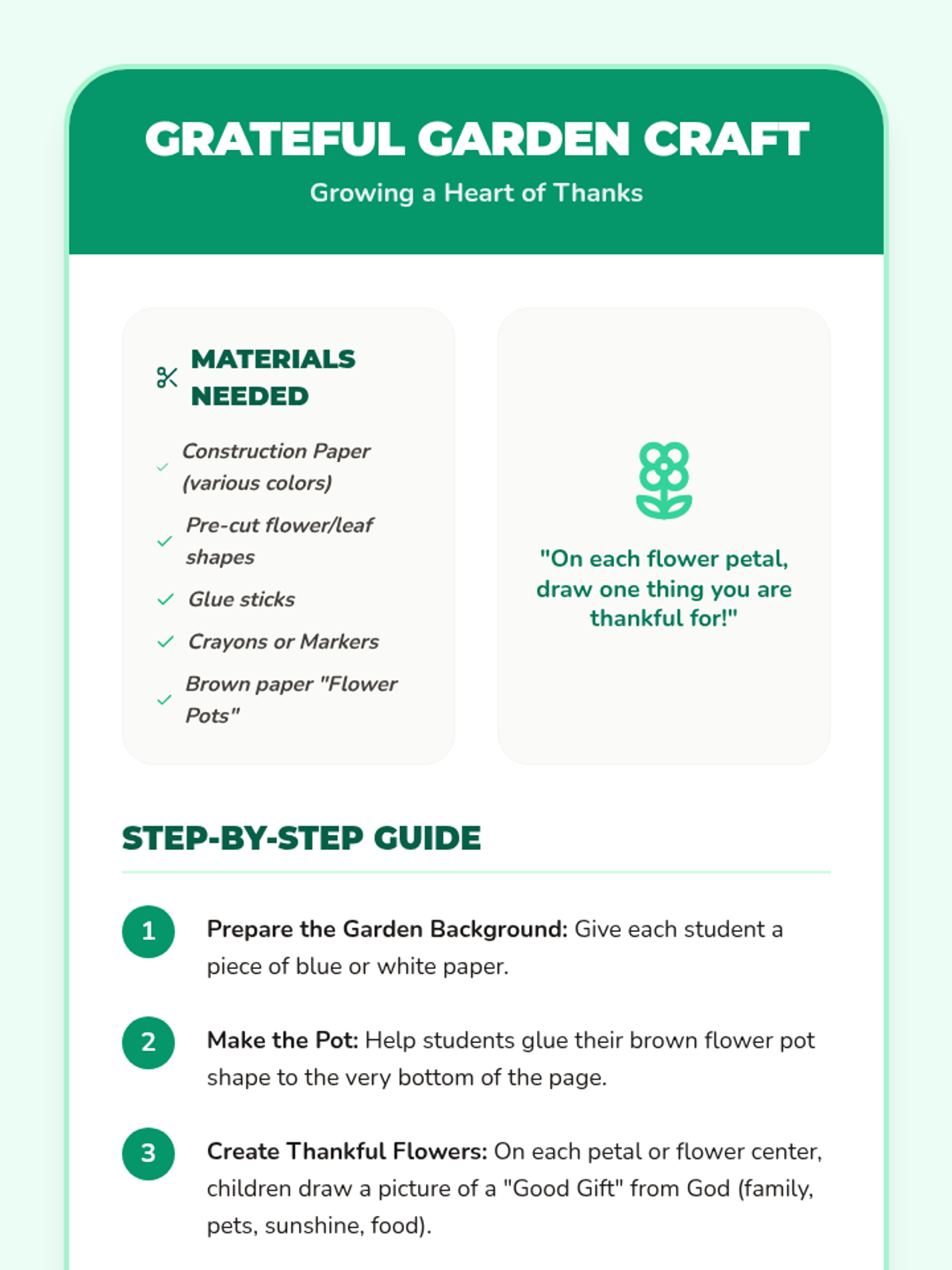
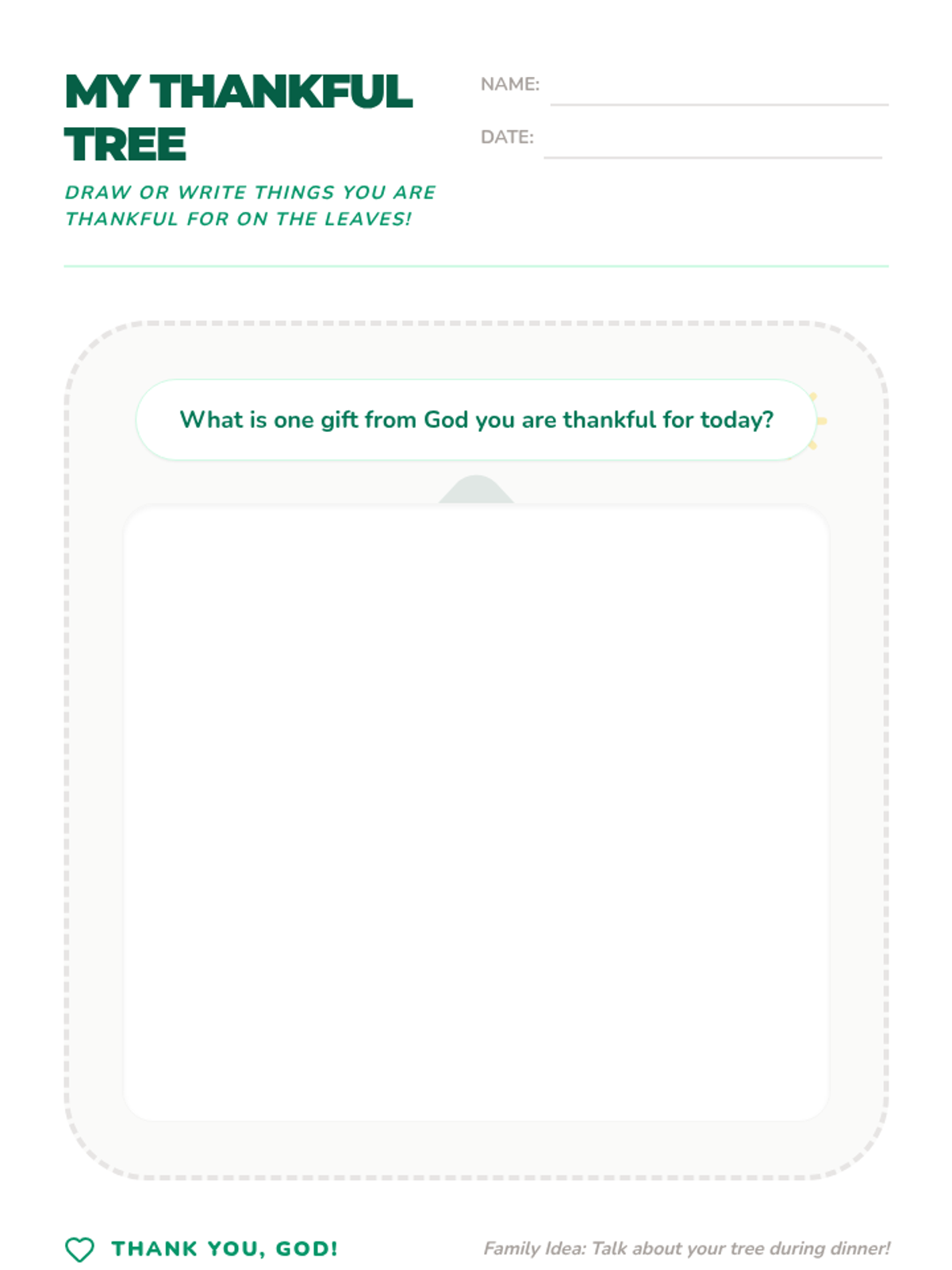
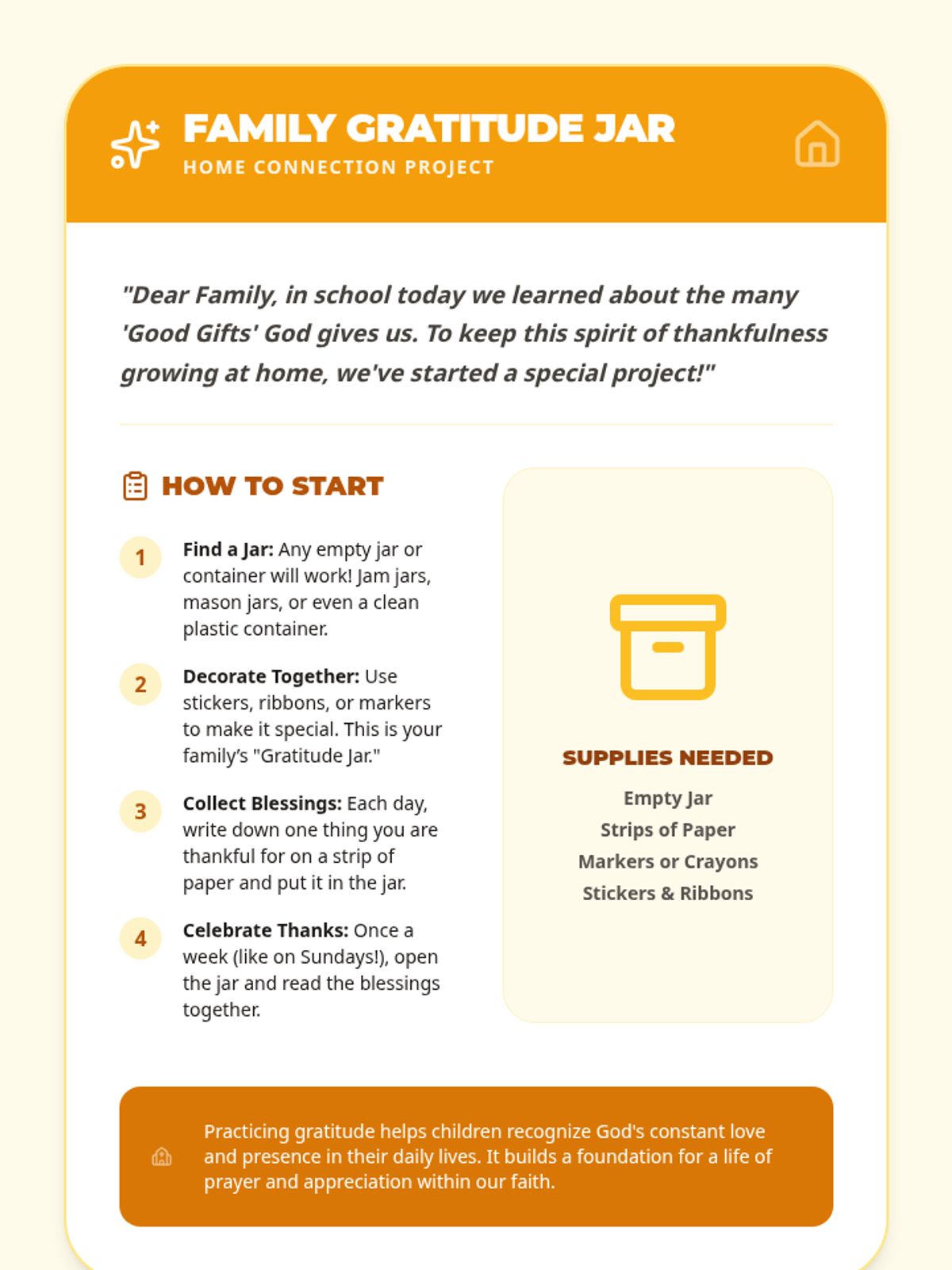
A 5-day Catholic preschool unit focused on gratitude, exploring God's gifts through songs, crafts, and interactive discussions. Students learn to recognize blessings in nature, family, and faith.
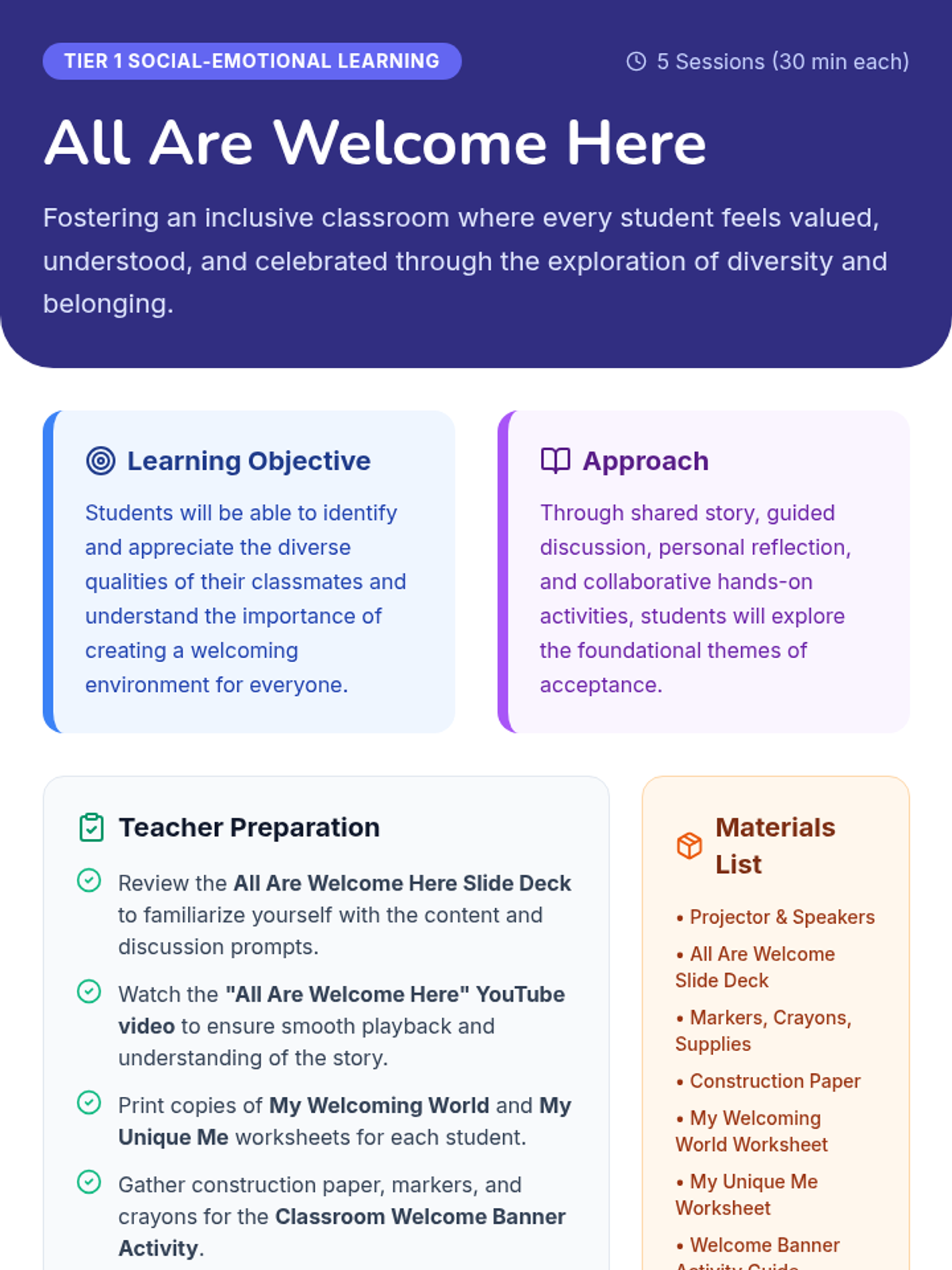
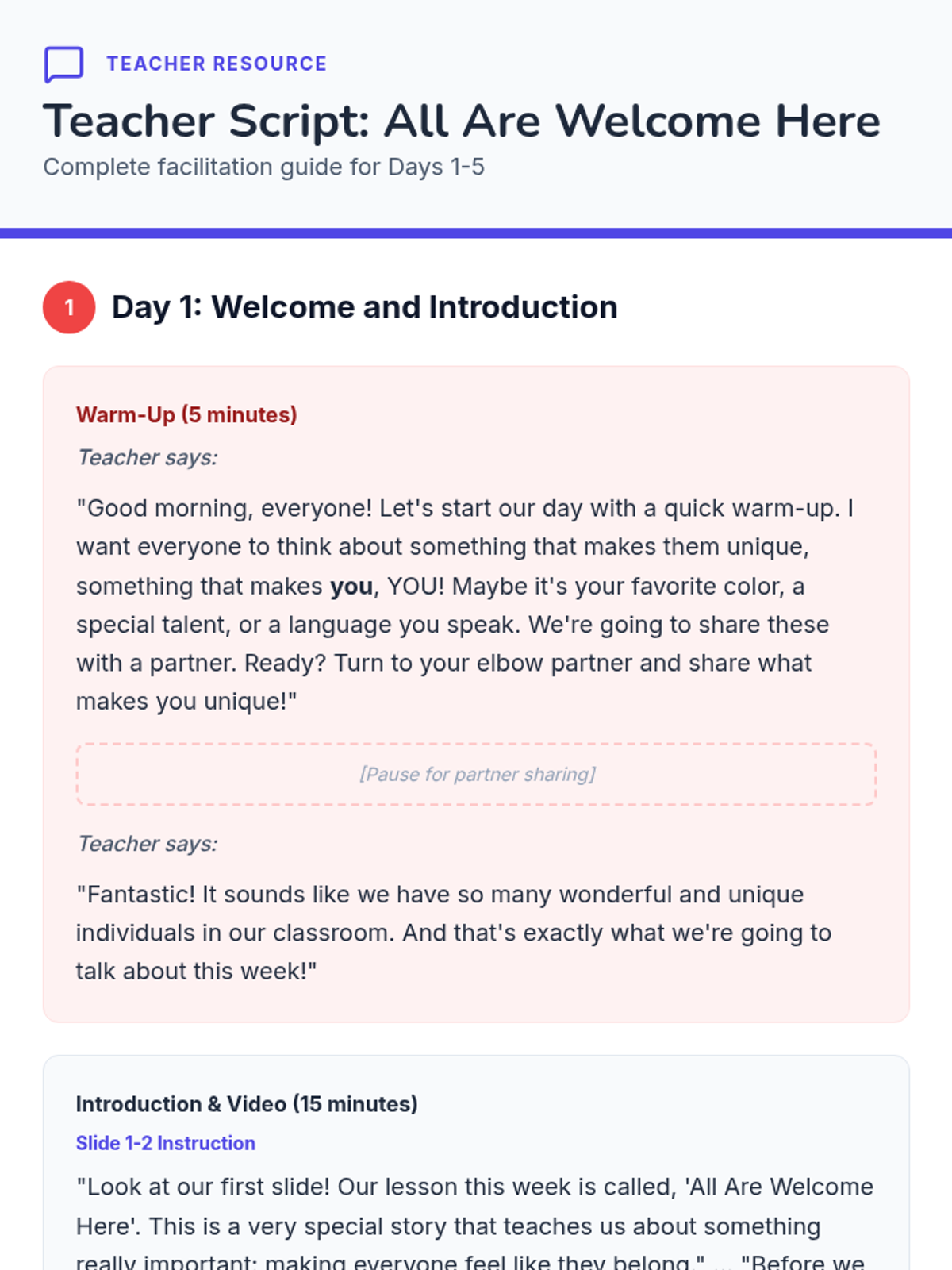
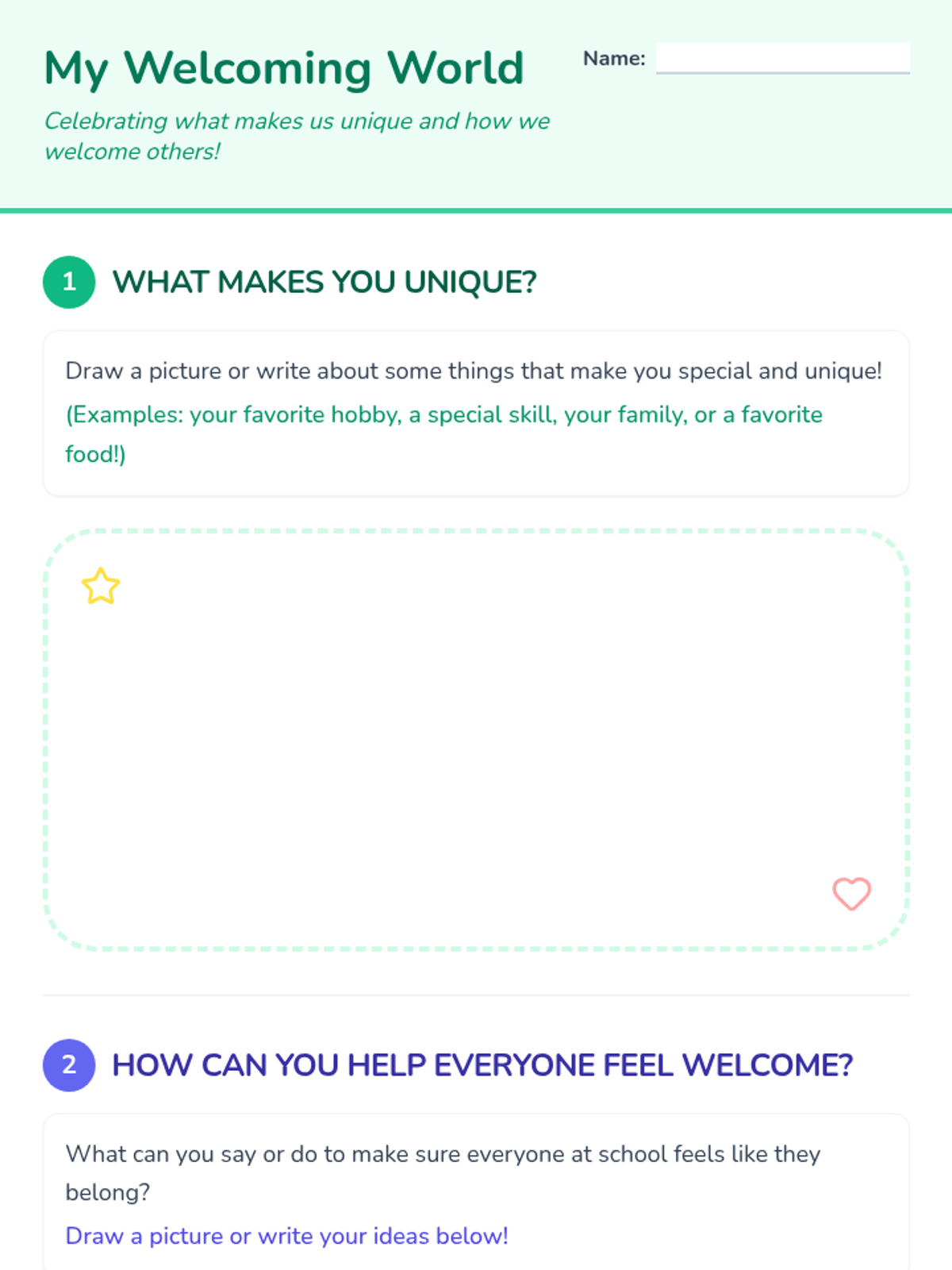
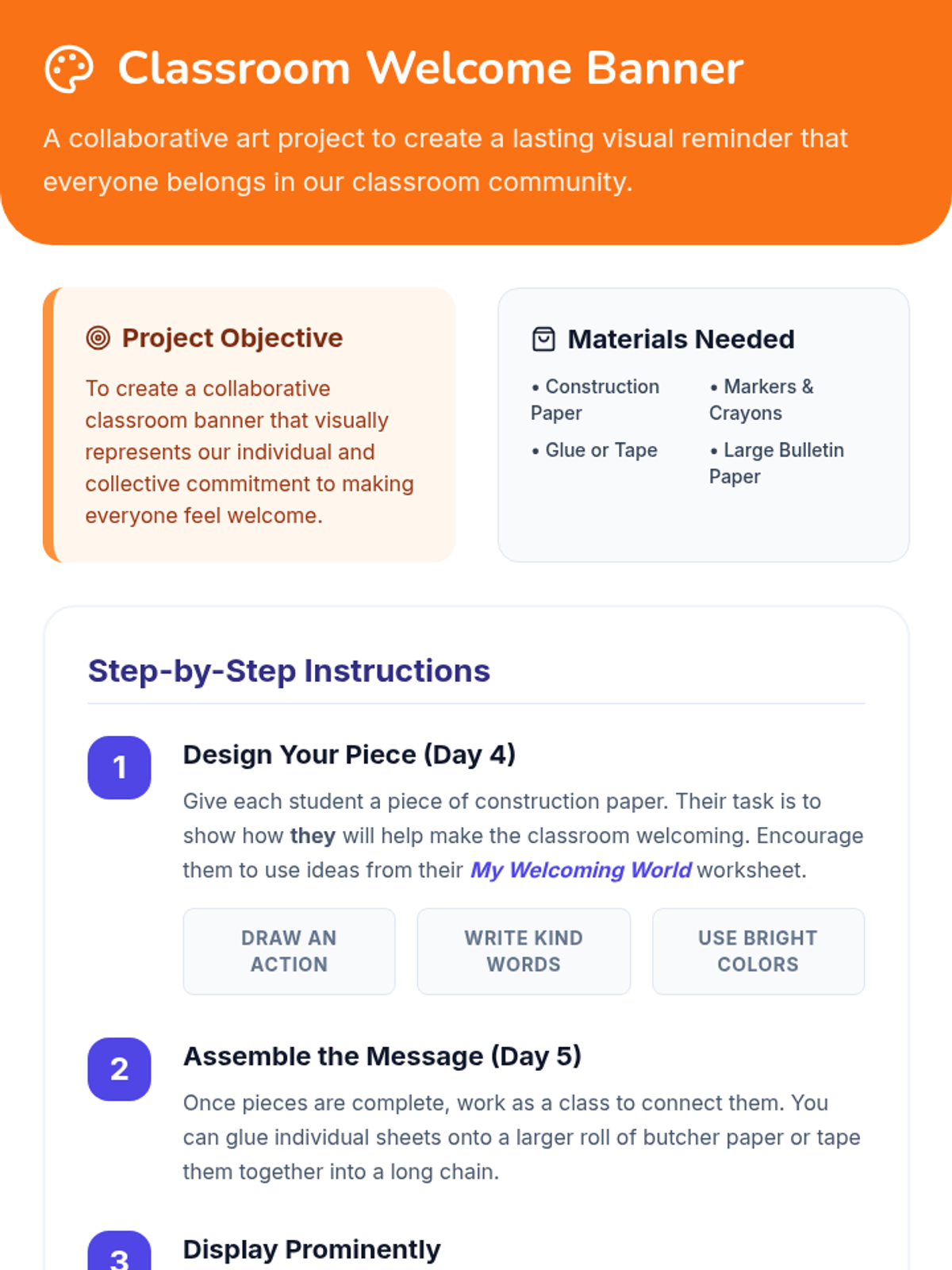
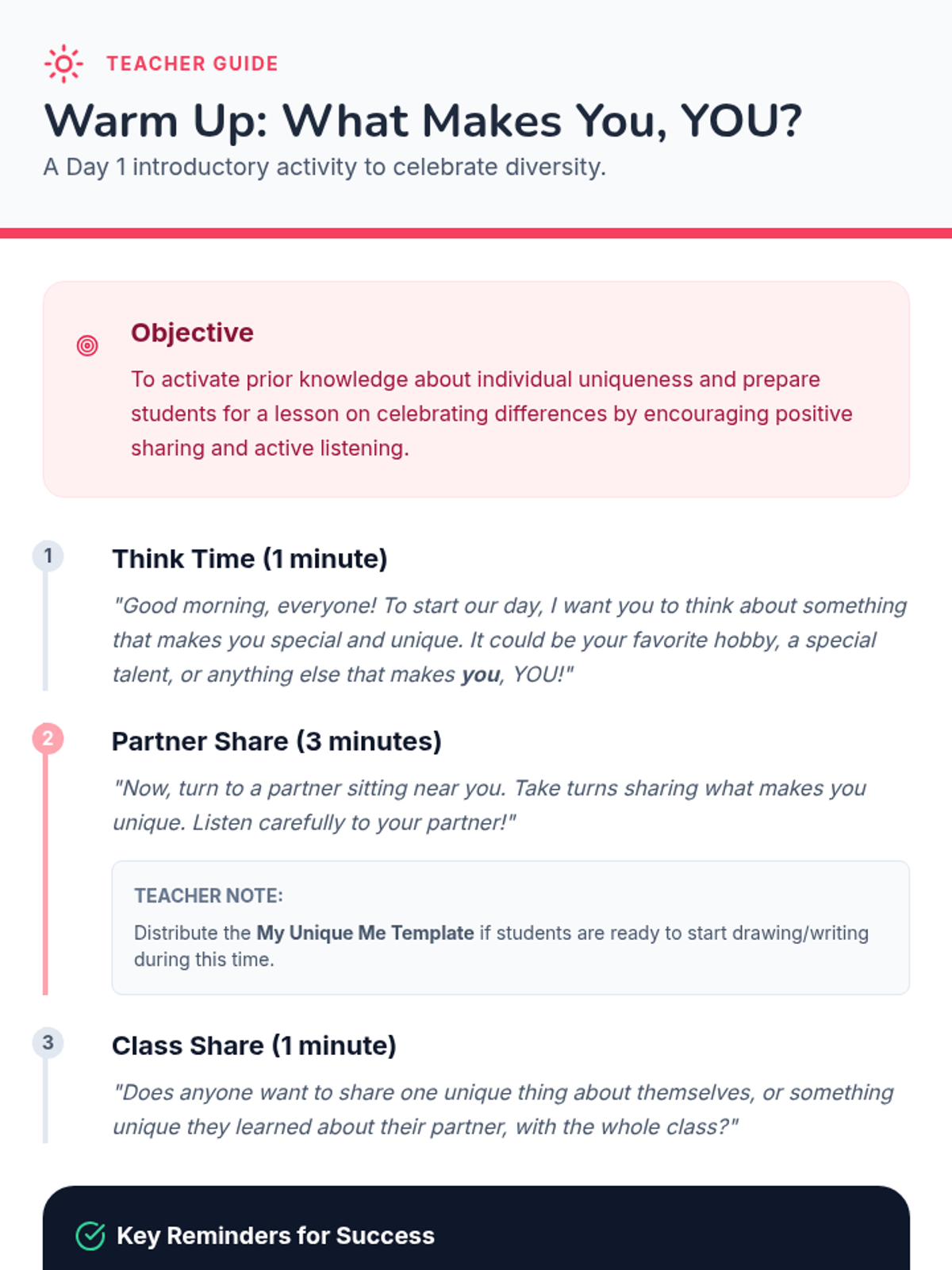
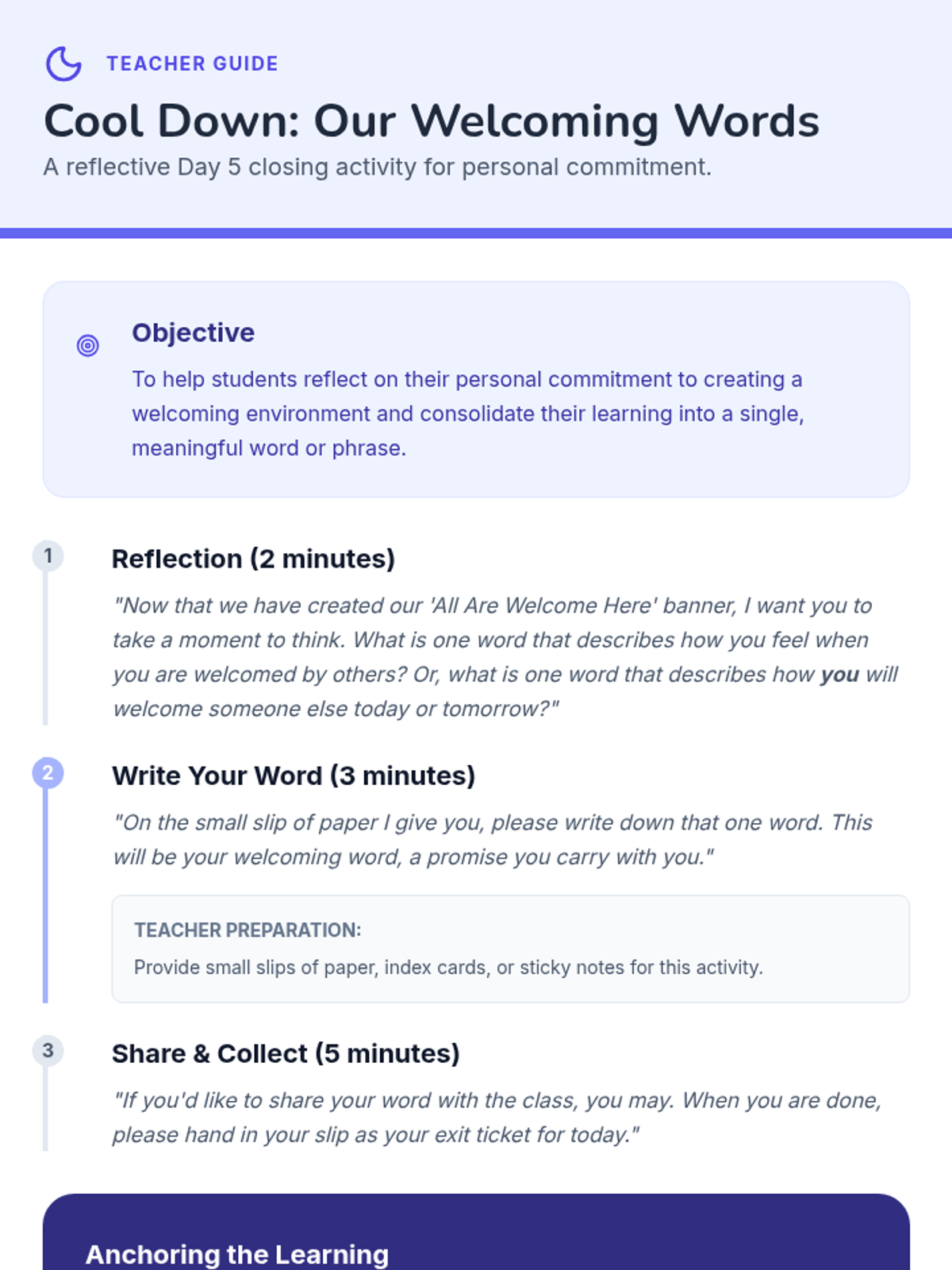
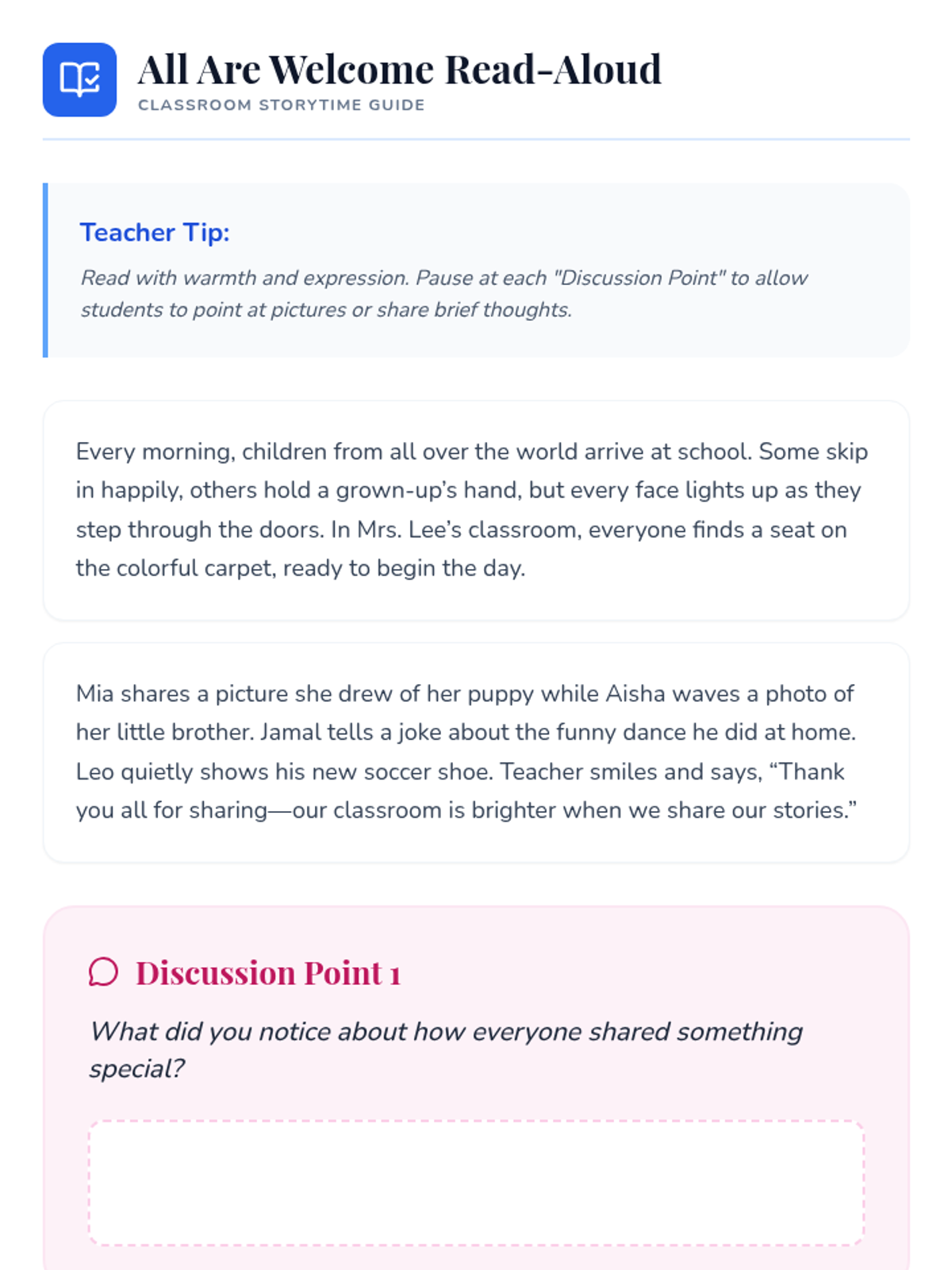
A five-day social-emotional learning sequence for elementary students exploring acceptance, diversity, and belonging through the story 'All Are Welcome Here'. Students build empathy and celebrate classroom community through discussion, reflection, and collaborative art.
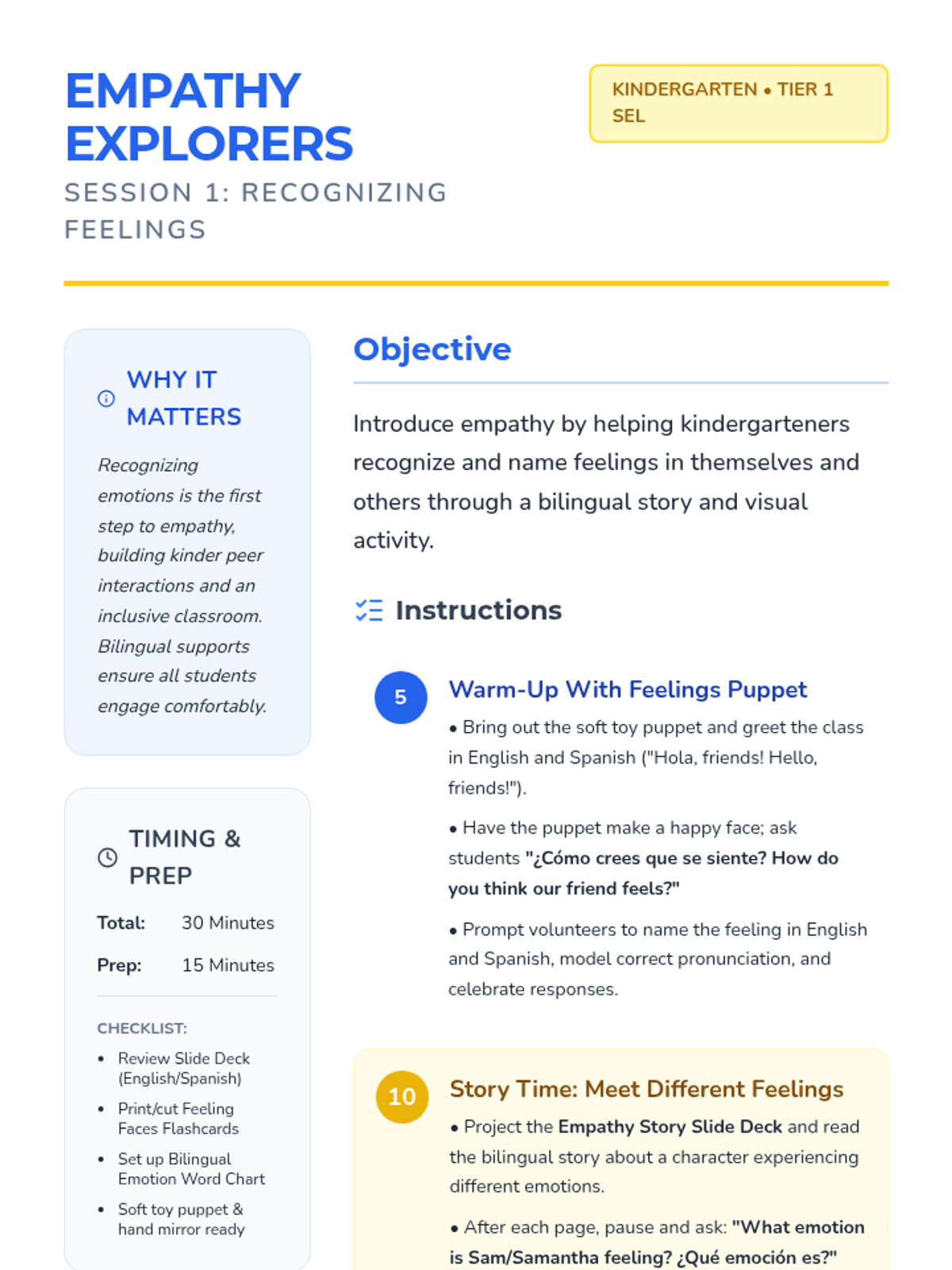
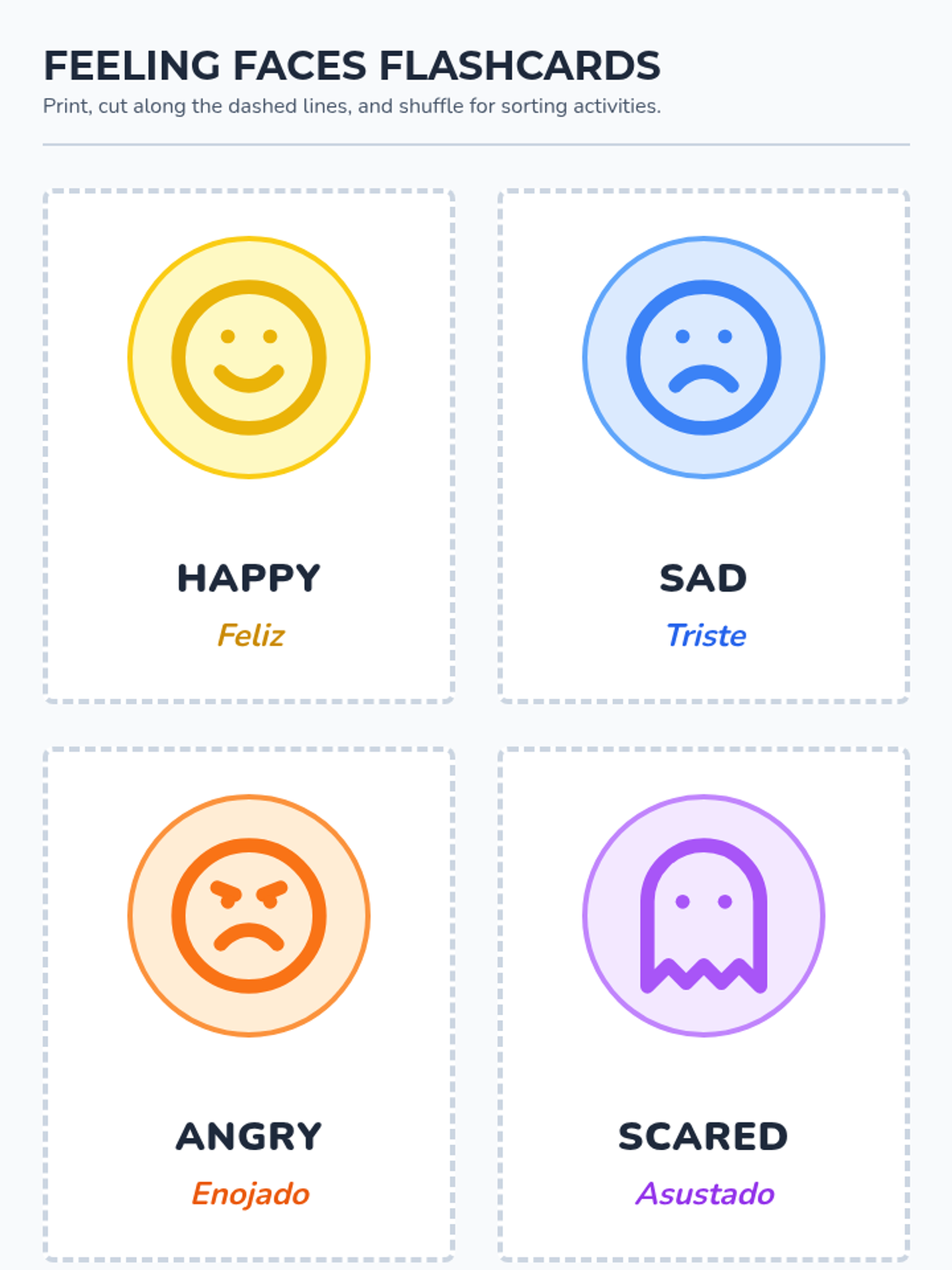
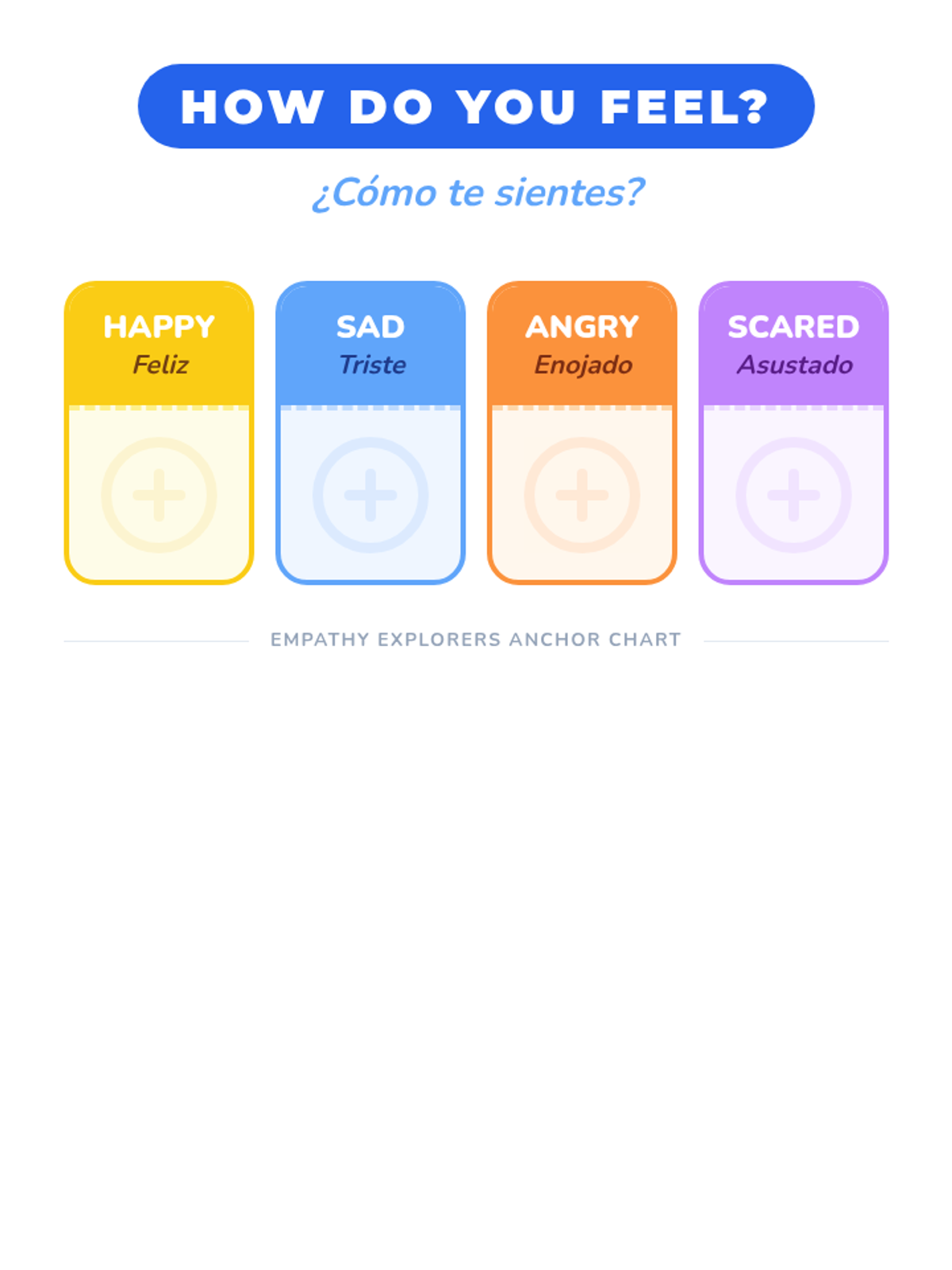
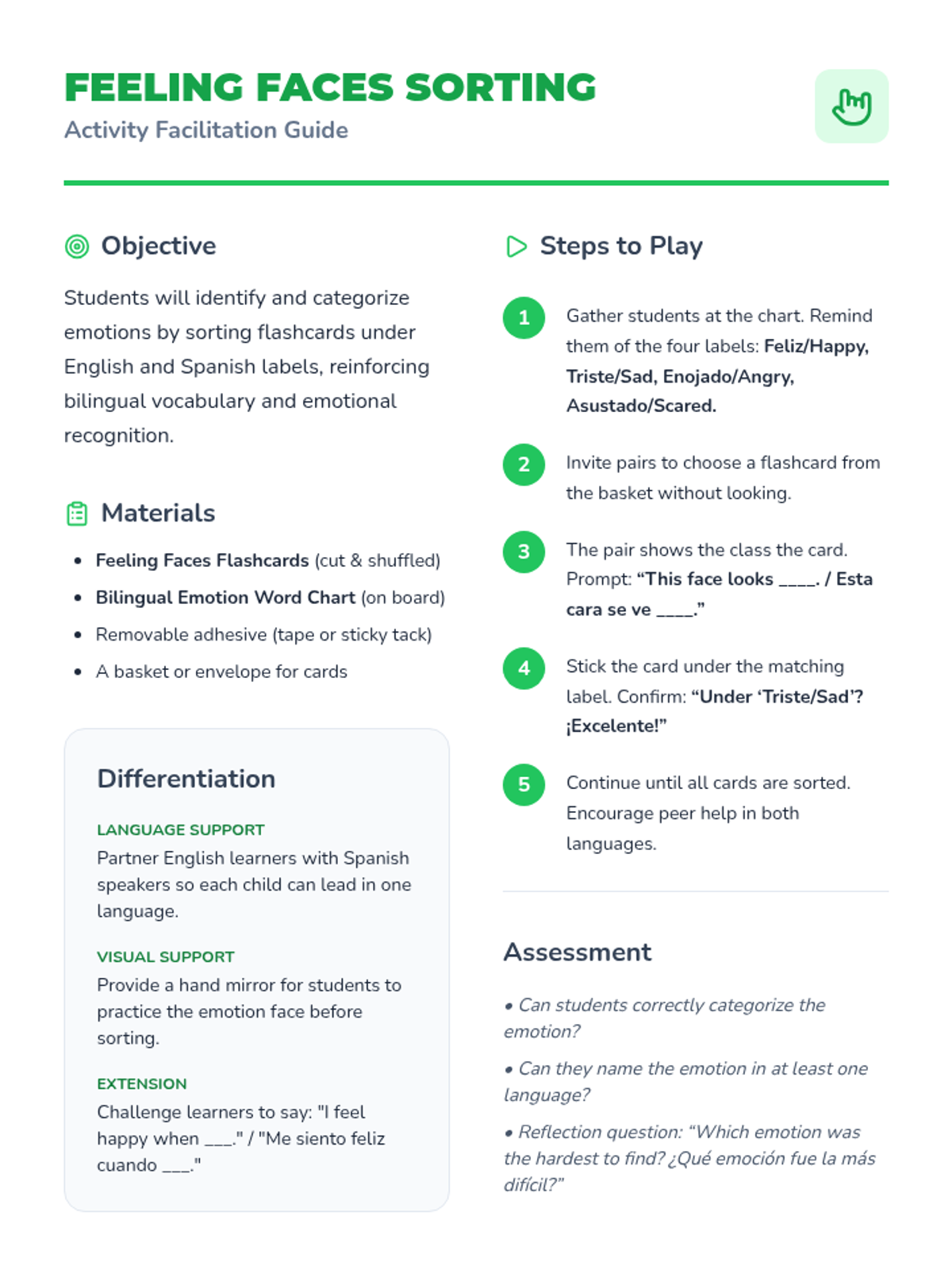
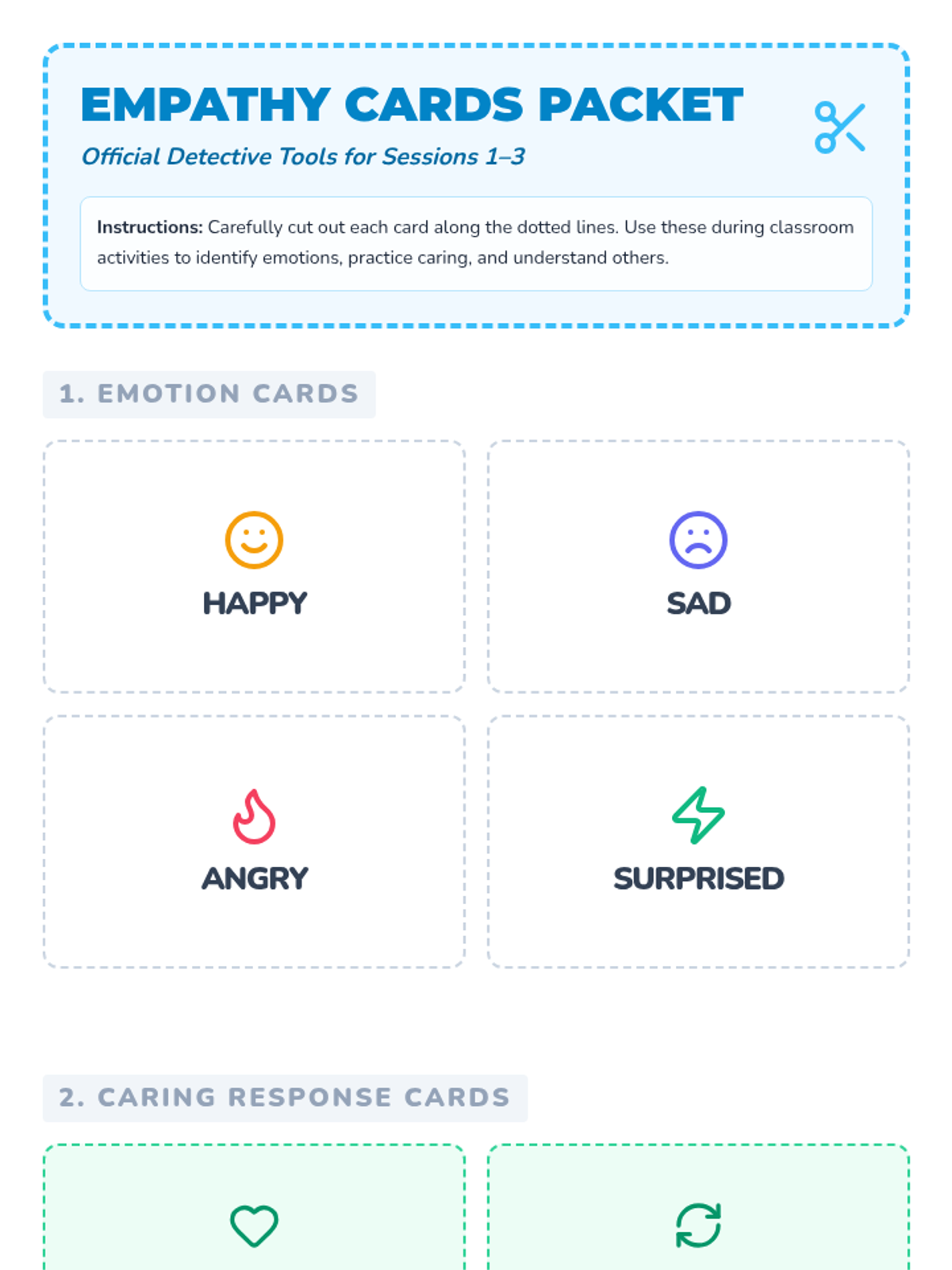
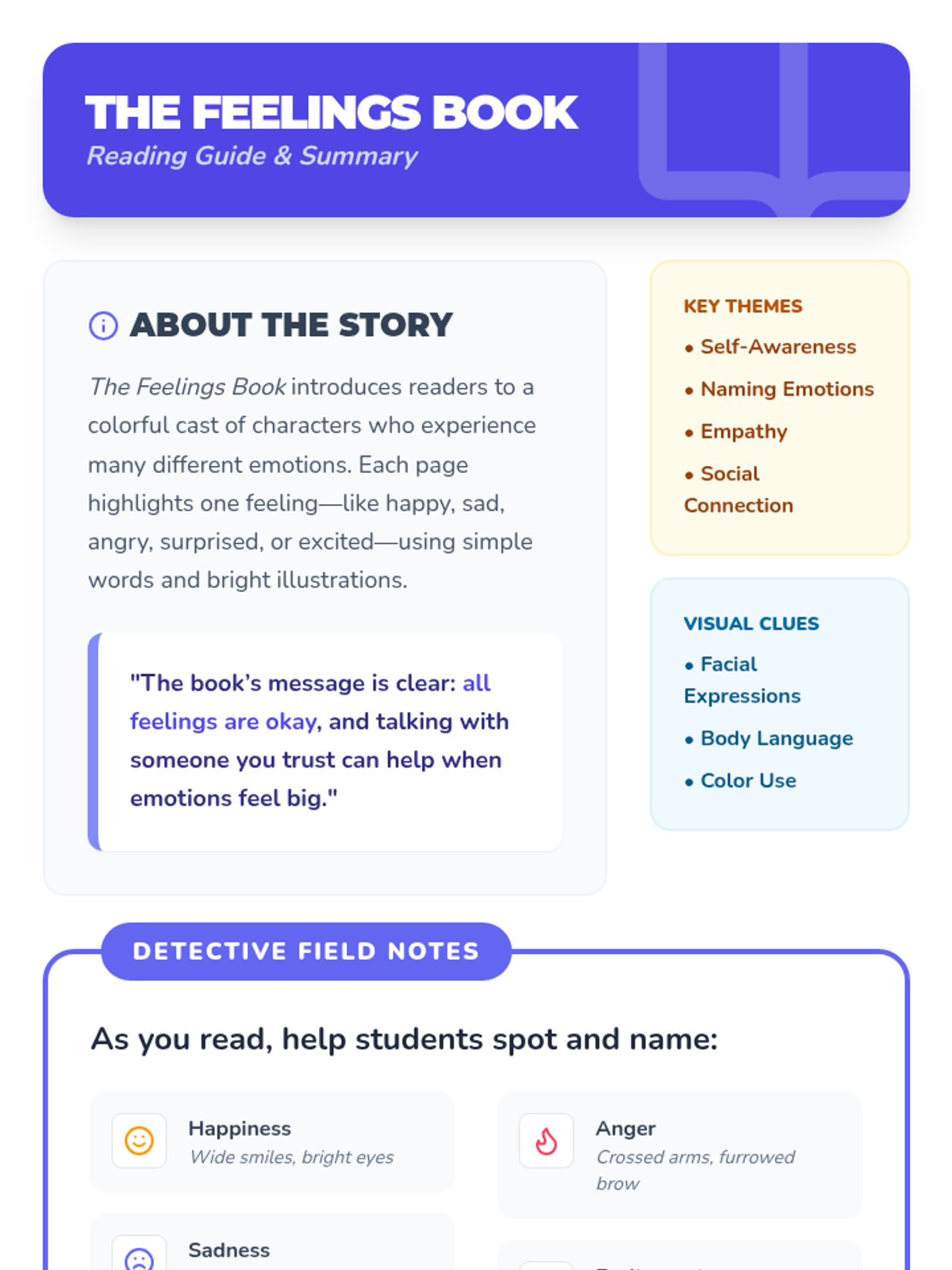
A 2-session Tier 1 SEL series for kindergarteners focused on empathy, emotion recognition, and bilingual support (English/Spanish). Students learn to name and respond to feelings in themselves and others.
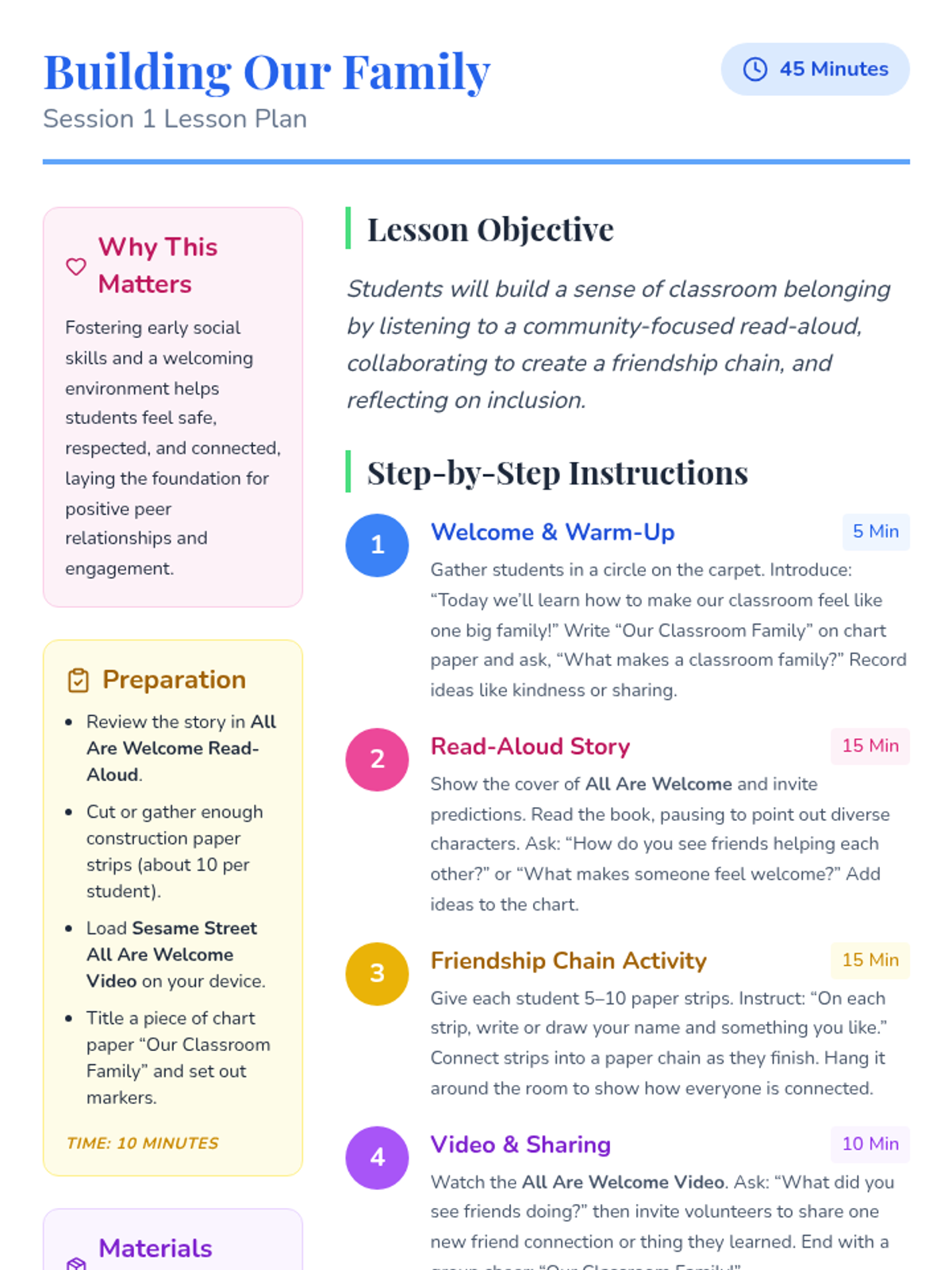
A comprehensive sequence for Kindergarten teachers to establish a warm, inclusive classroom environment through social-emotional learning activities and storytelling.
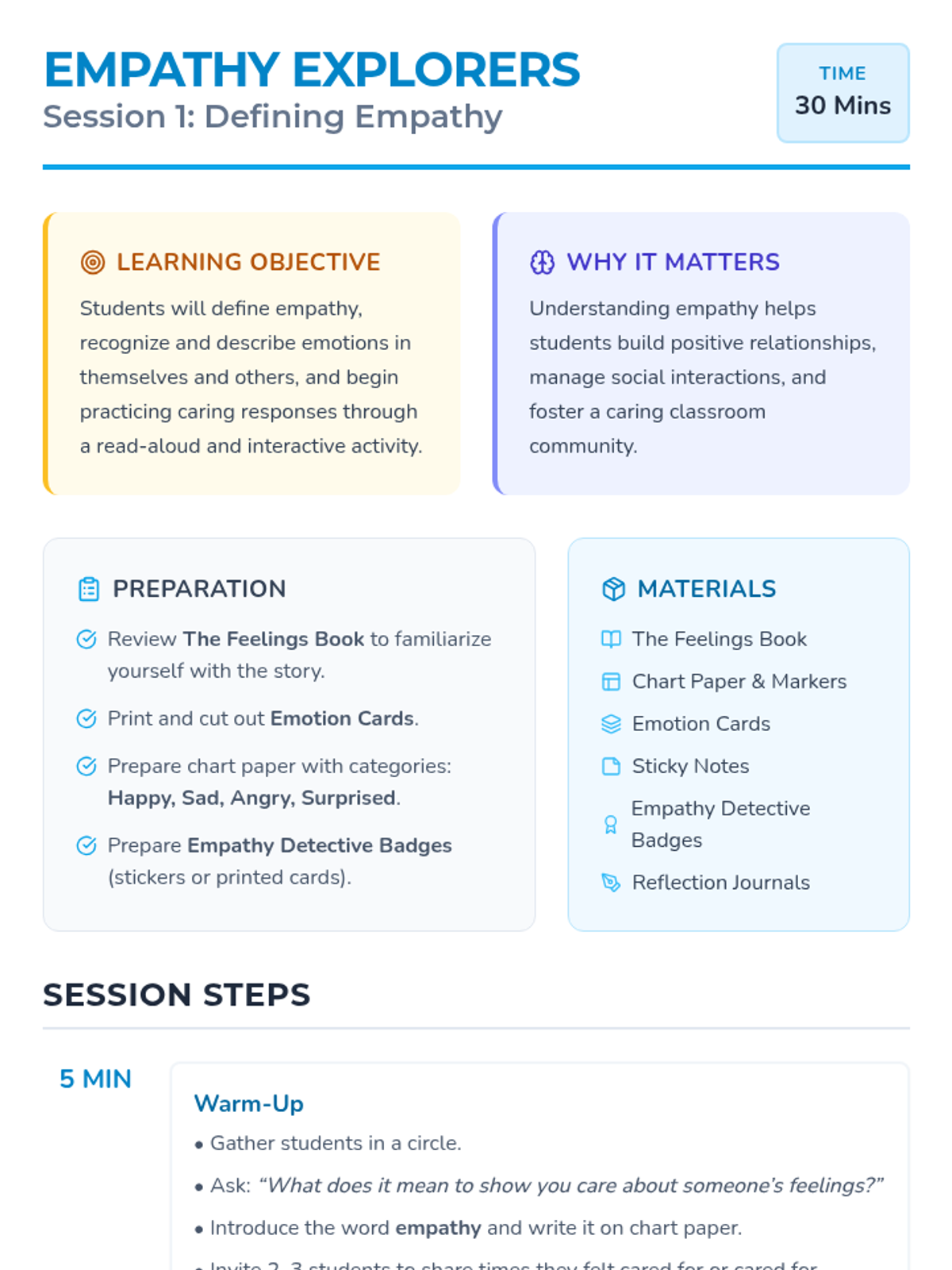
A comprehensive mini-unit designed for primary students to build social-emotional skills through the lens of empathy. Students progress from identifying emotions to practicing active listening and celebrating diversity in their community.
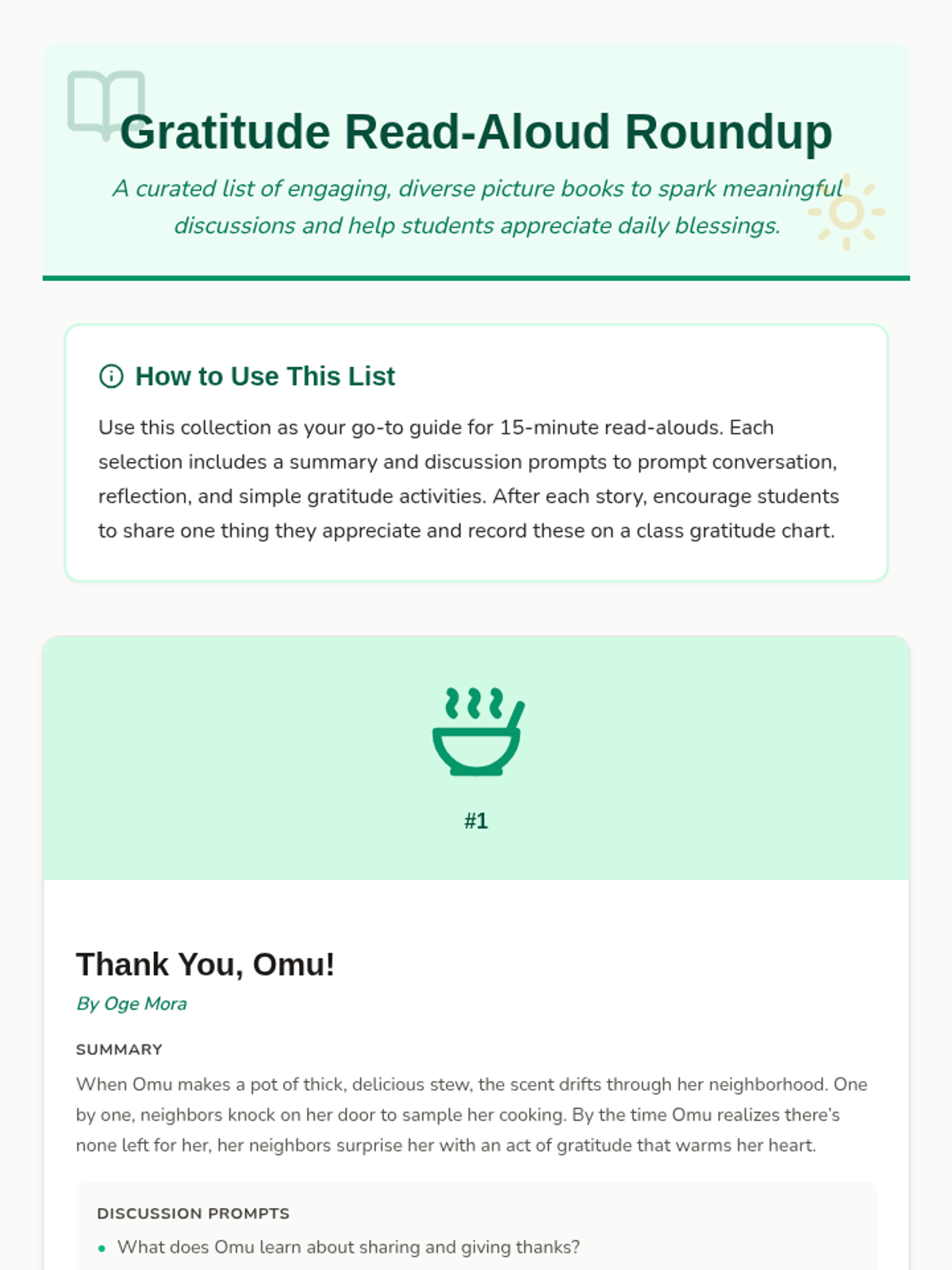
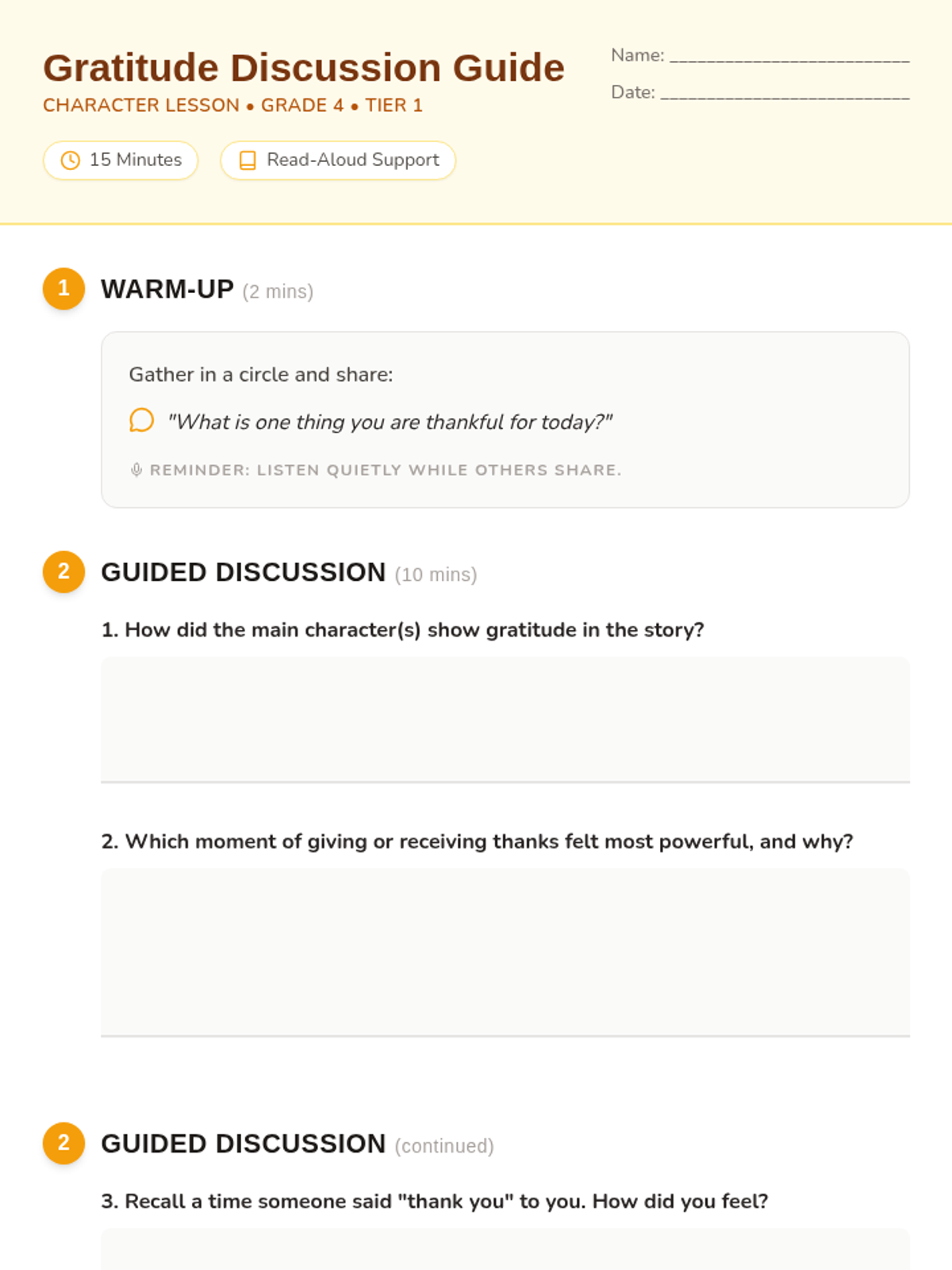
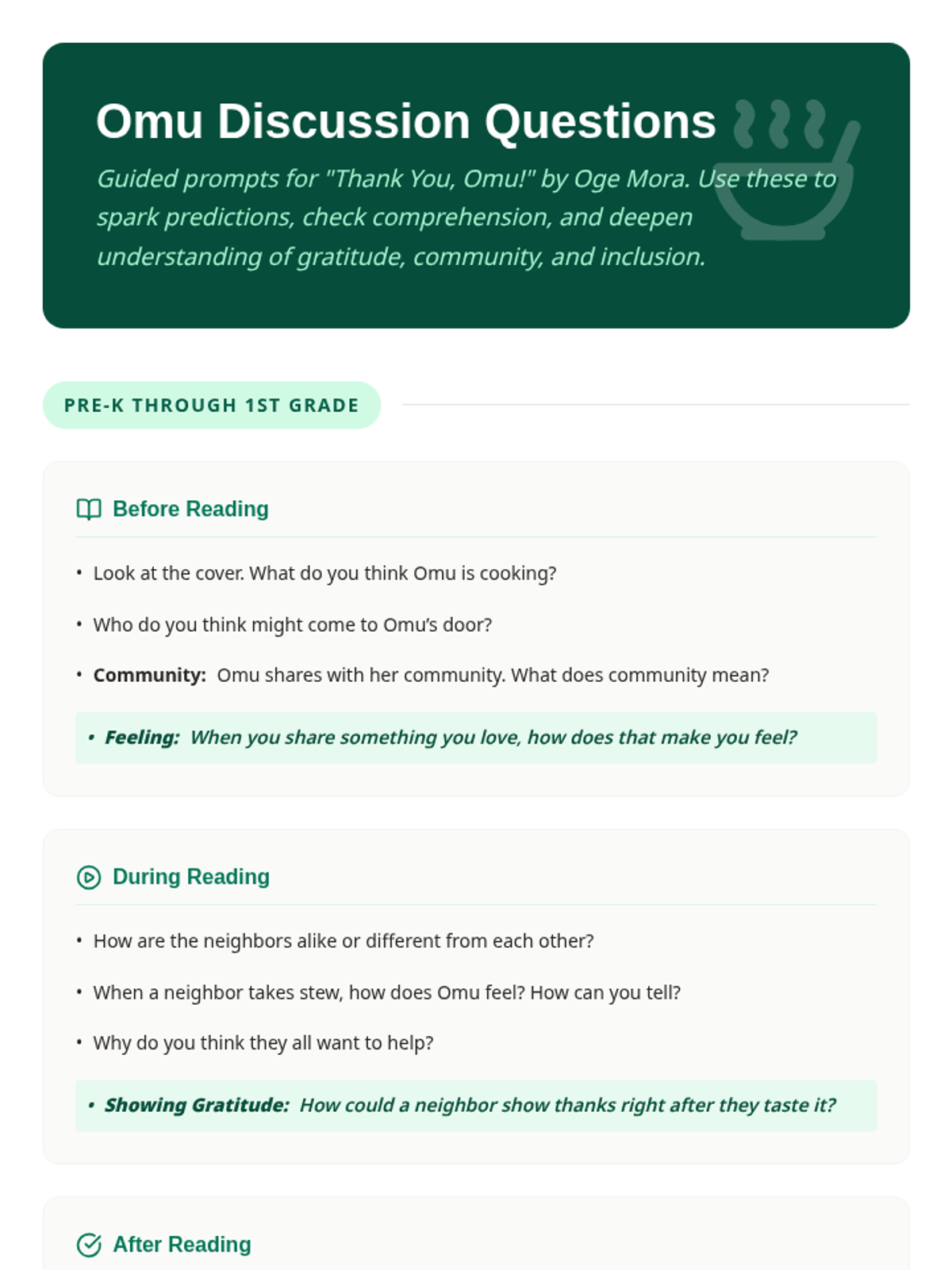
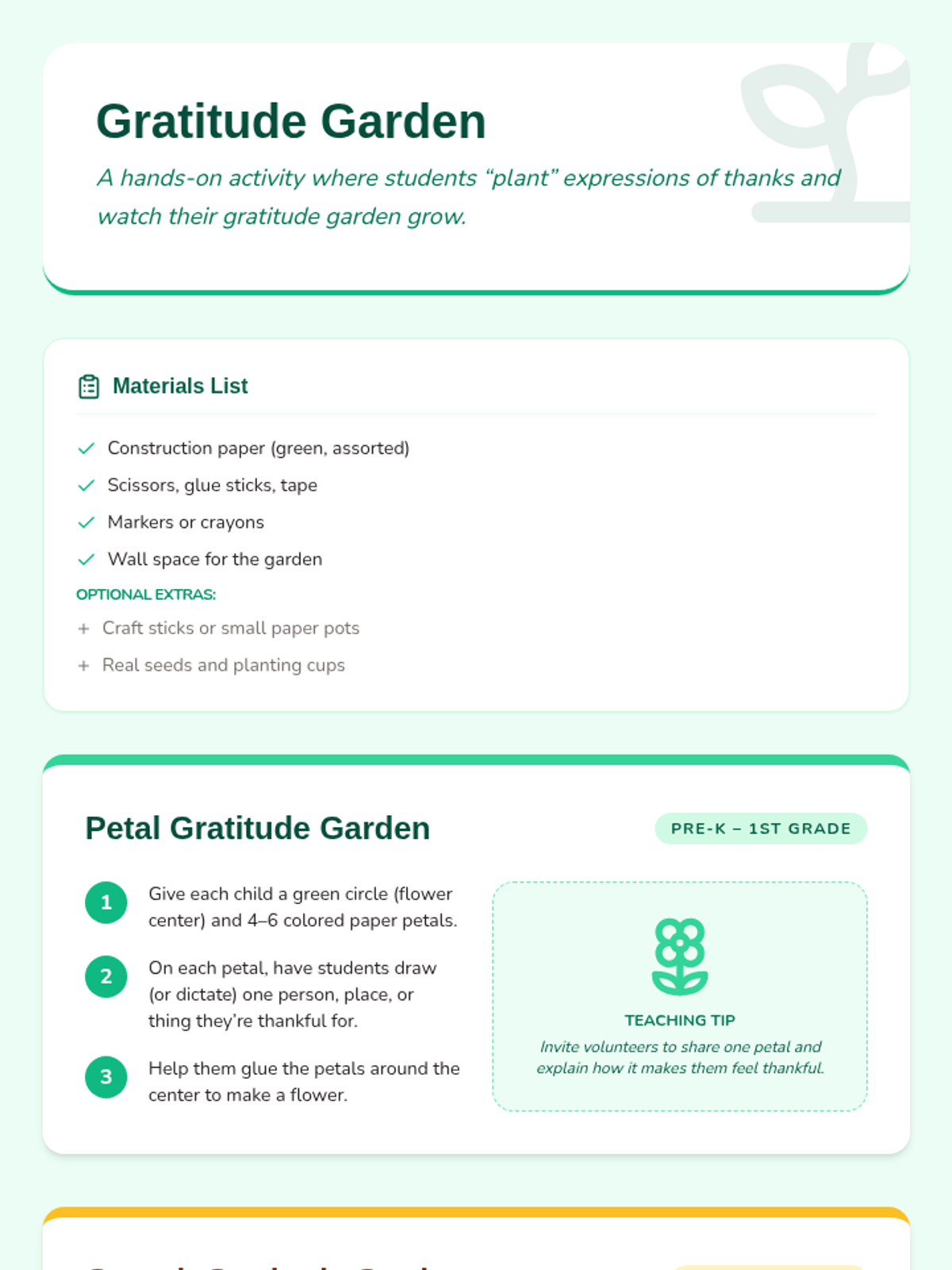
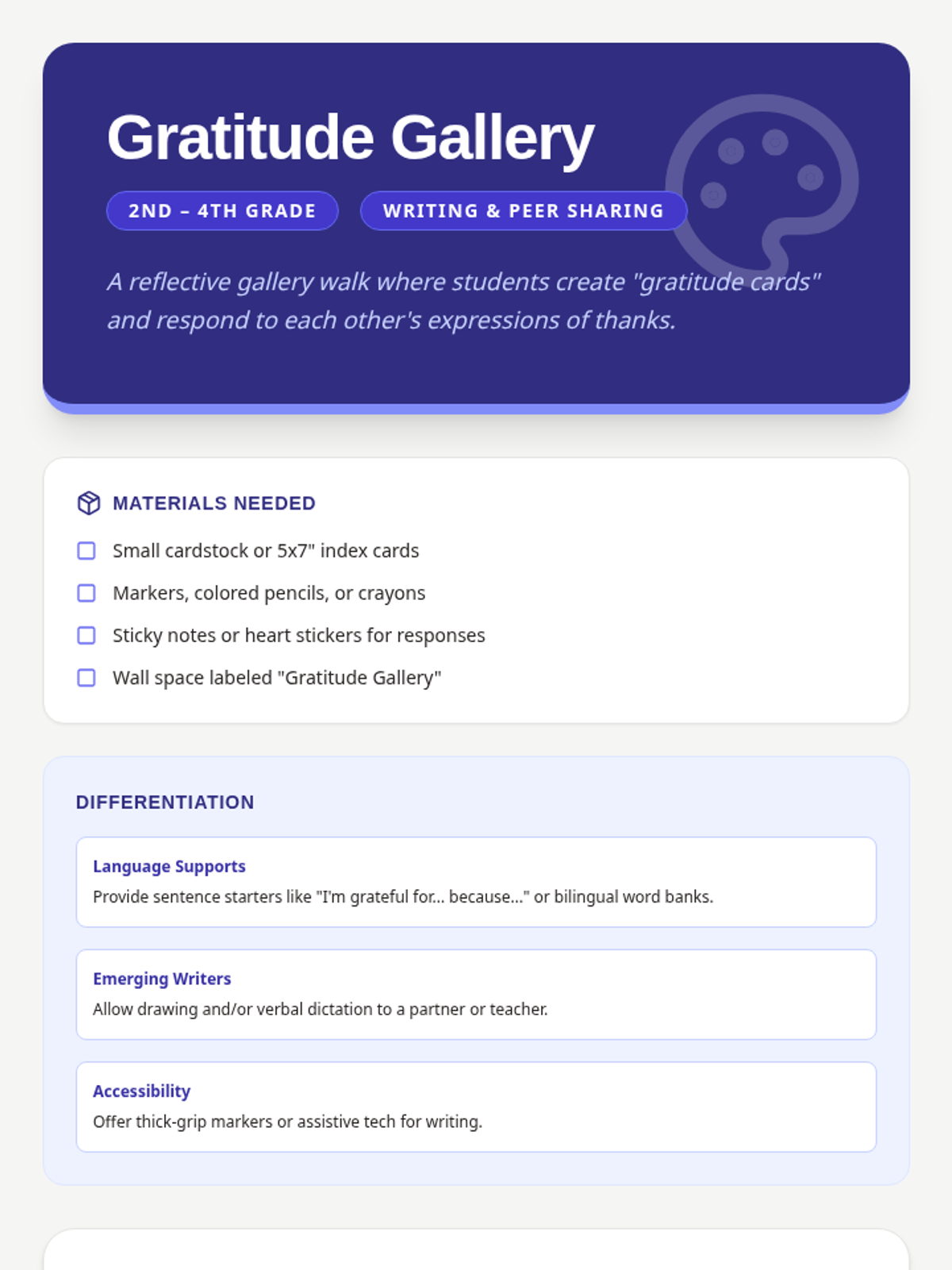
A curated sequence of activities and read-alouds focused on cultivating gratitude in Pre-K through 4th-grade classrooms through diverse literature and hands-on projects.
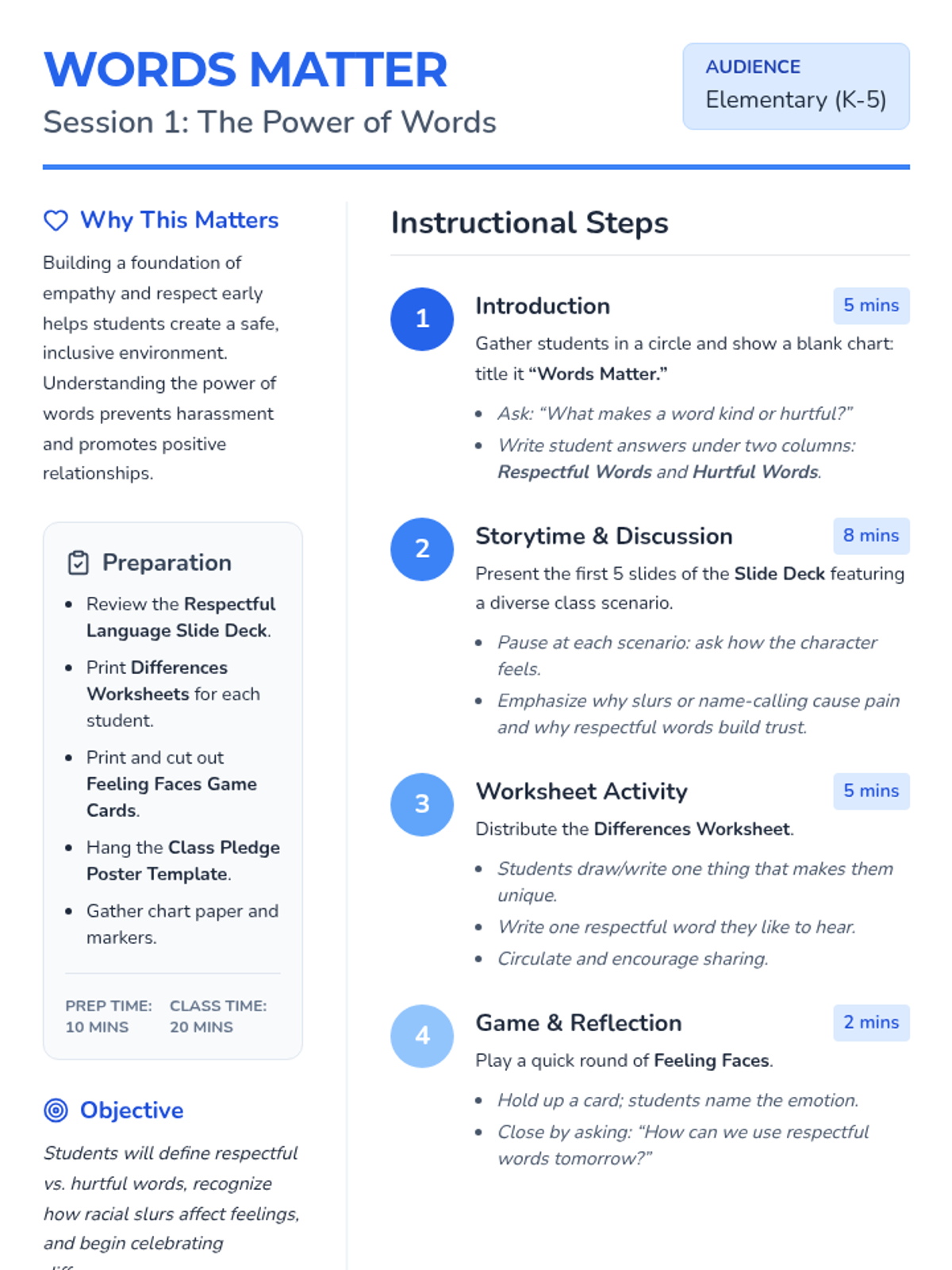
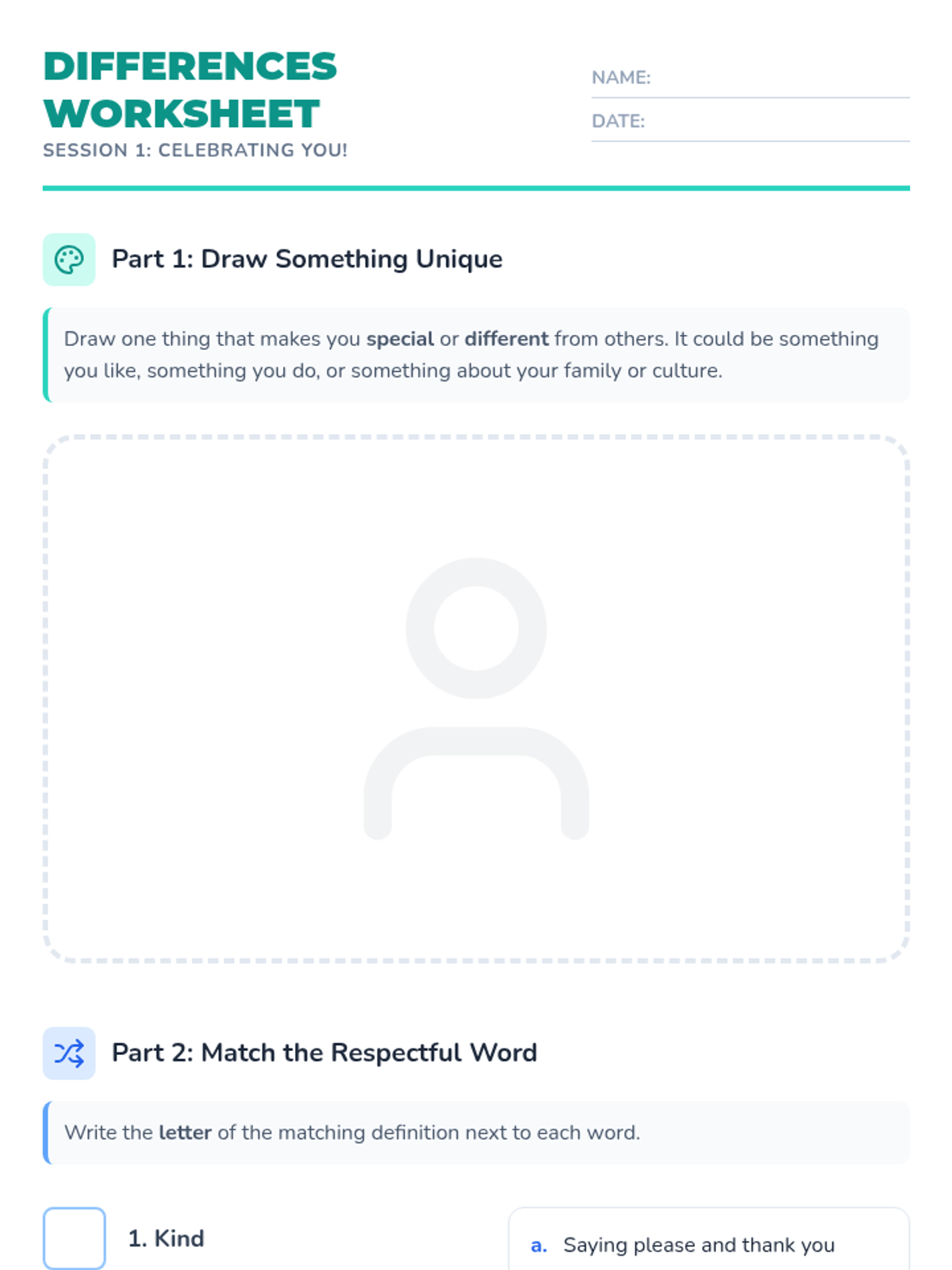
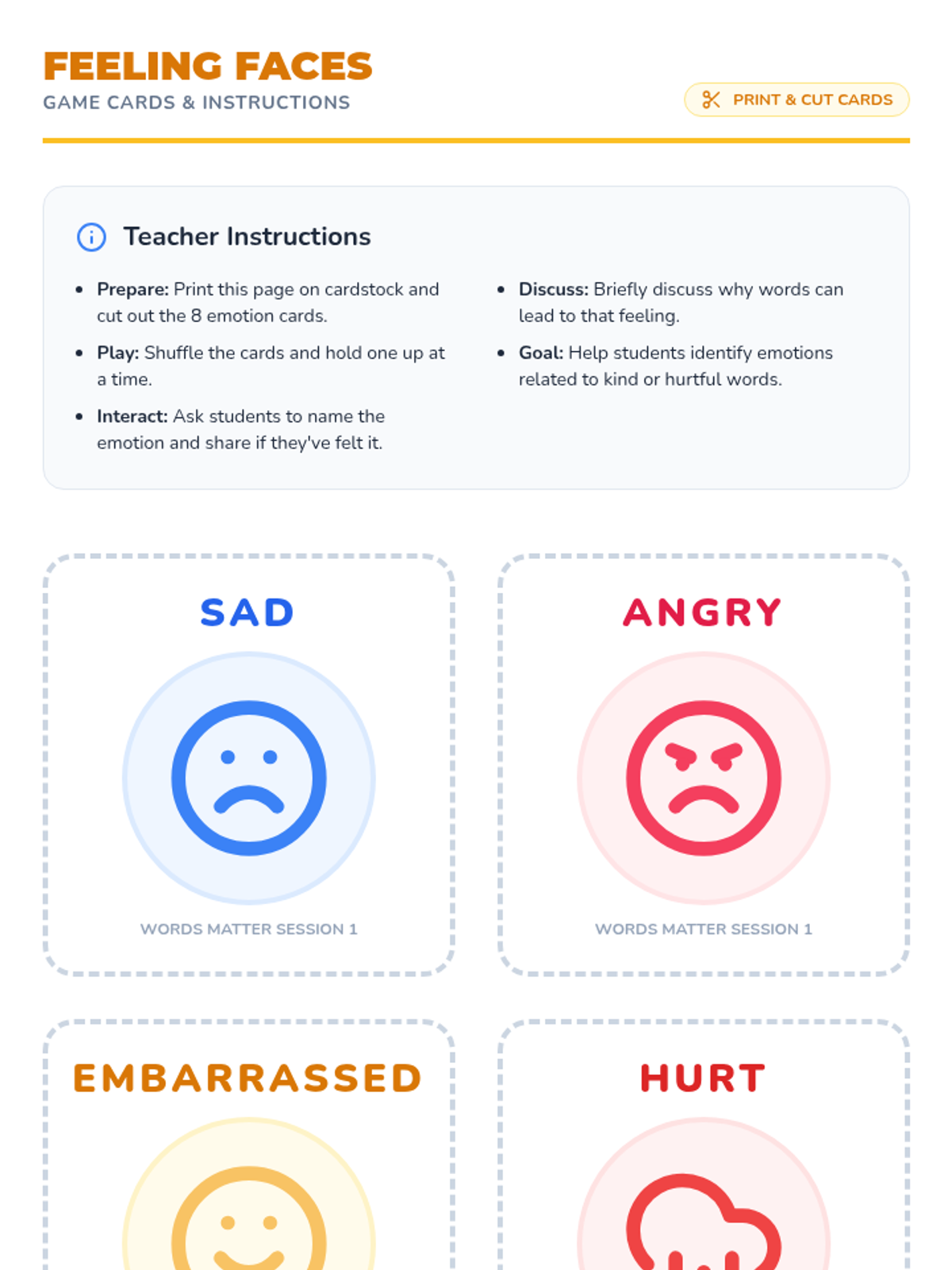
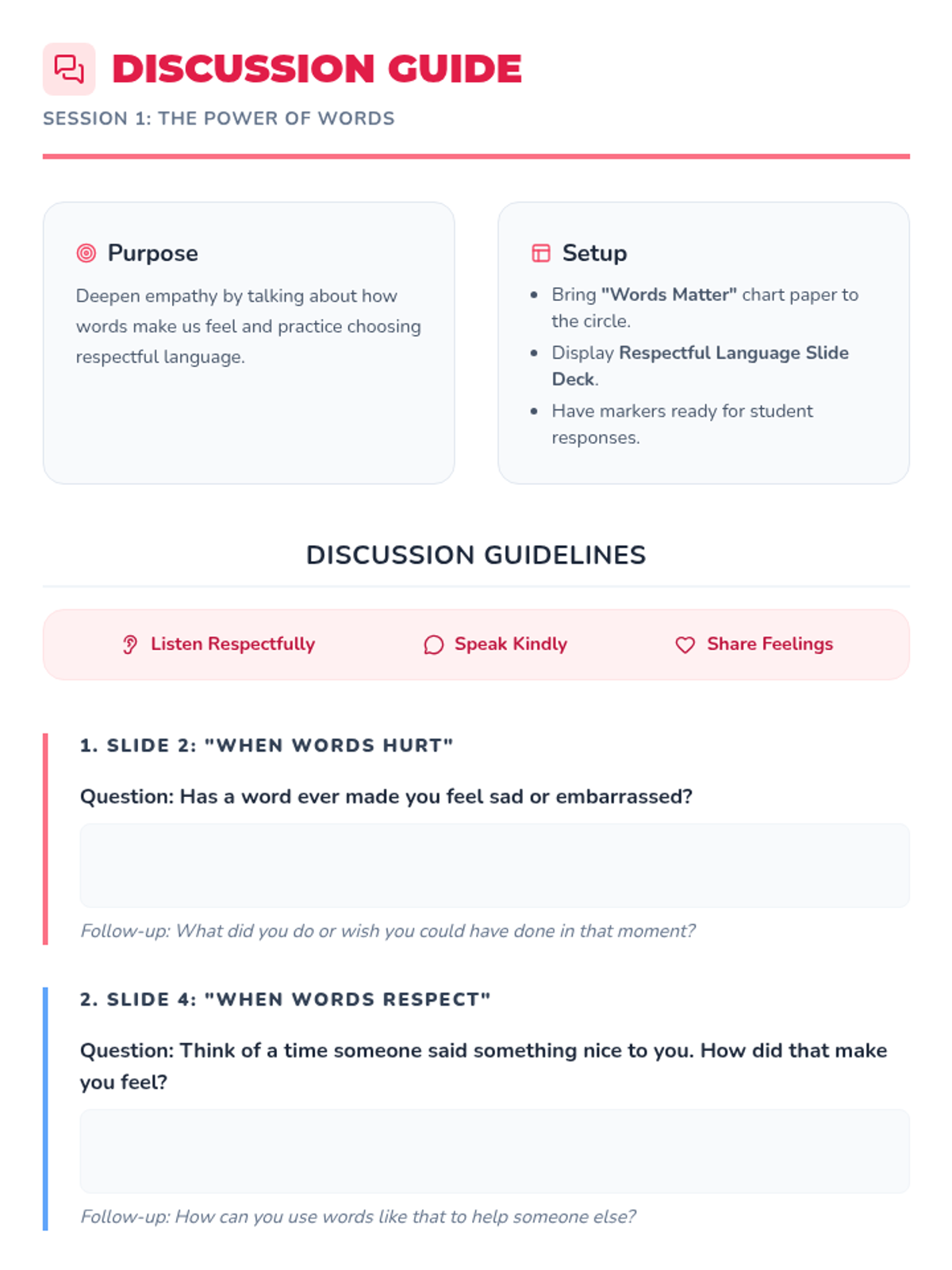
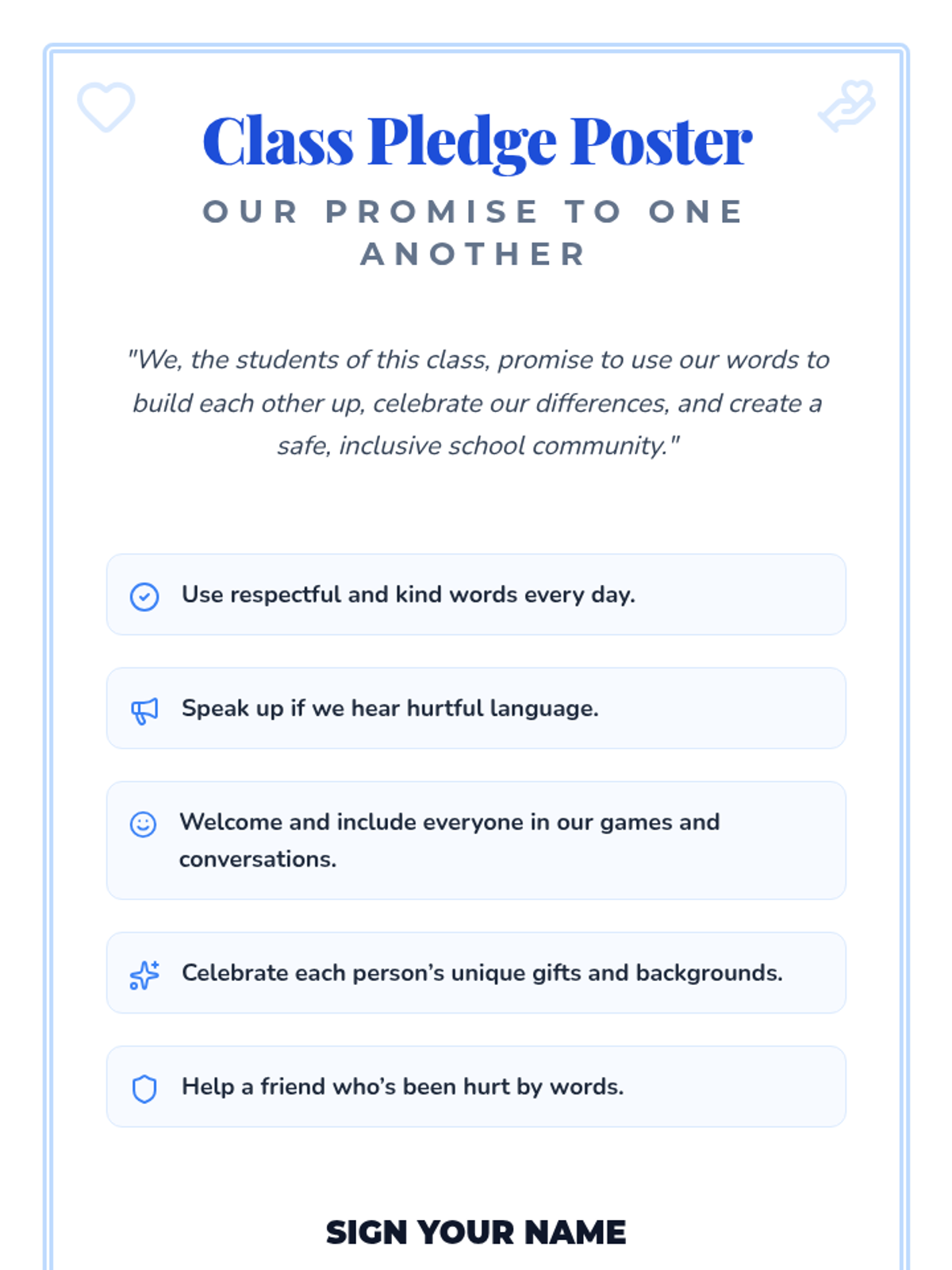
A 4-session Tier 1 sequence for K-5 students focused on racial slur prevention, respectful language, and celebrating diversity. Students learn empathy through role-play, sharing traditions, and creating a collective class pledge.
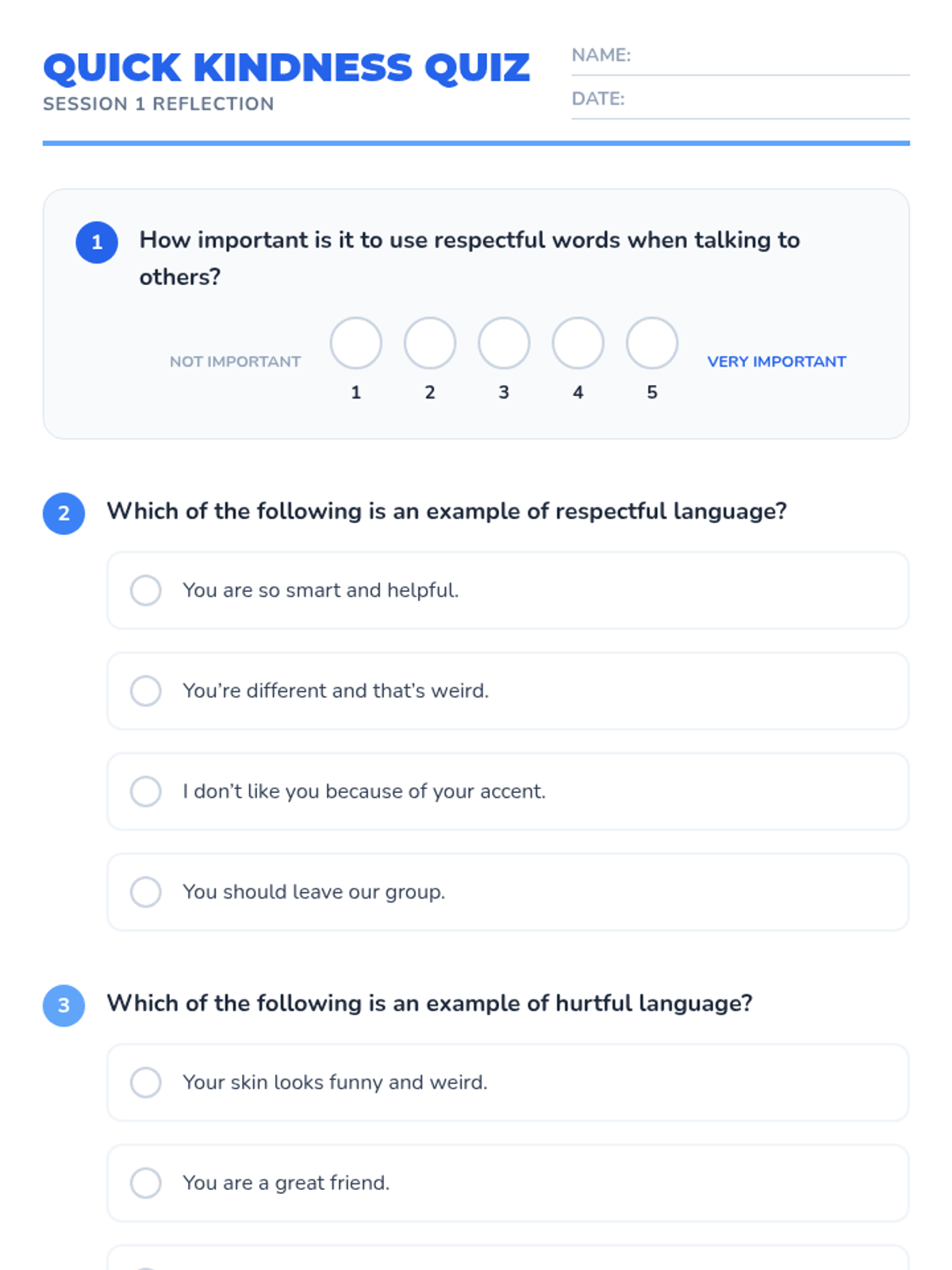
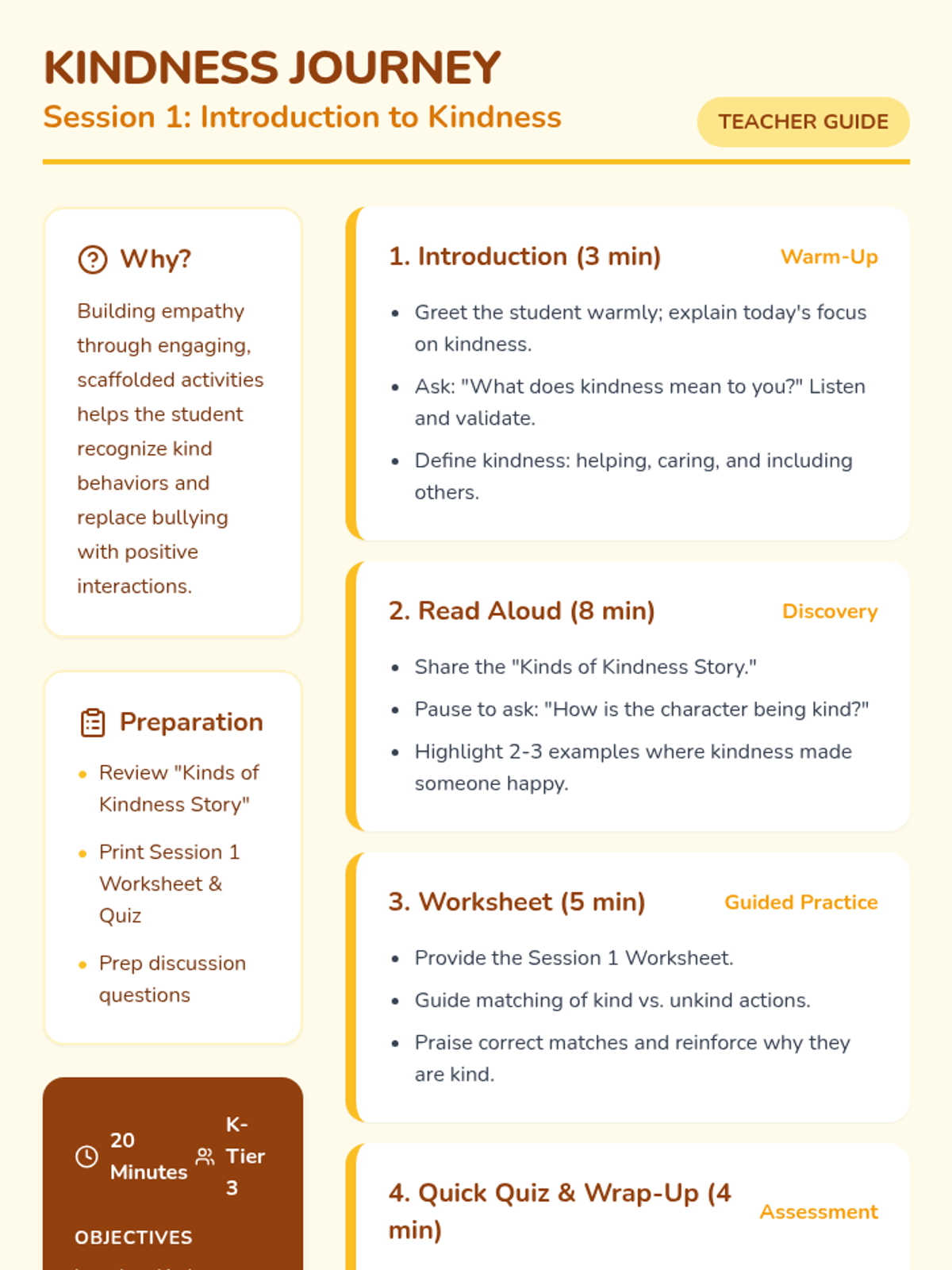
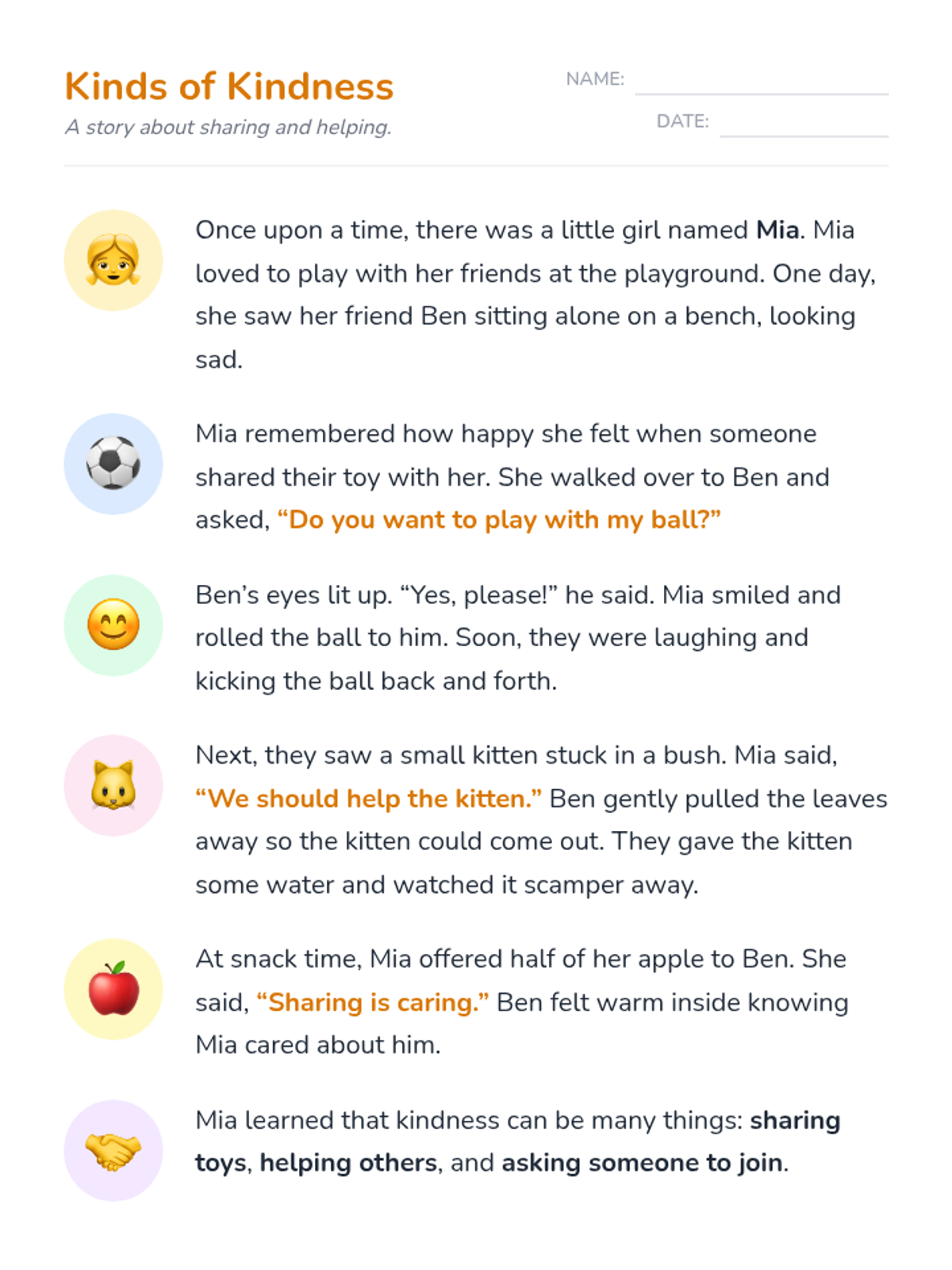
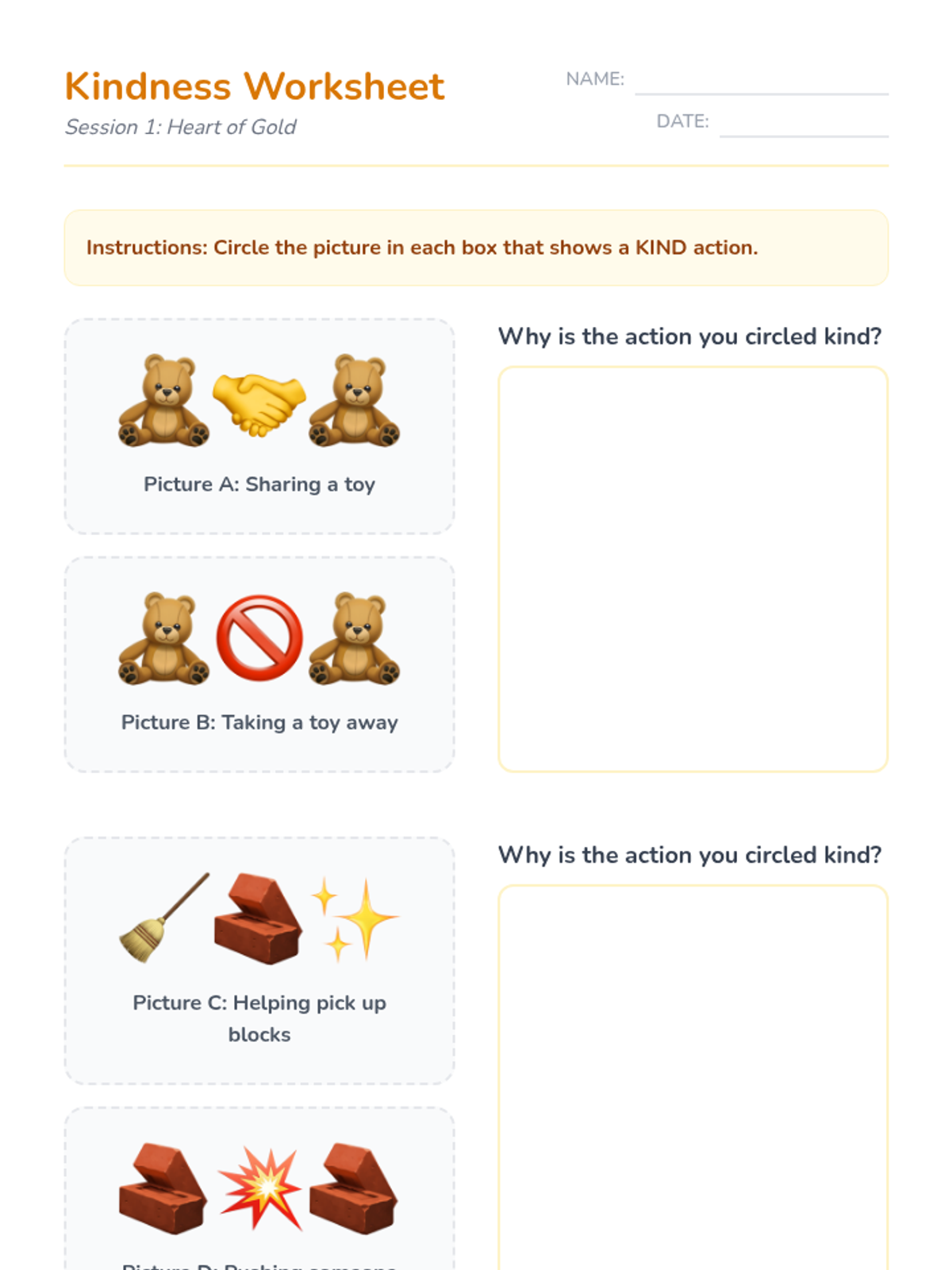
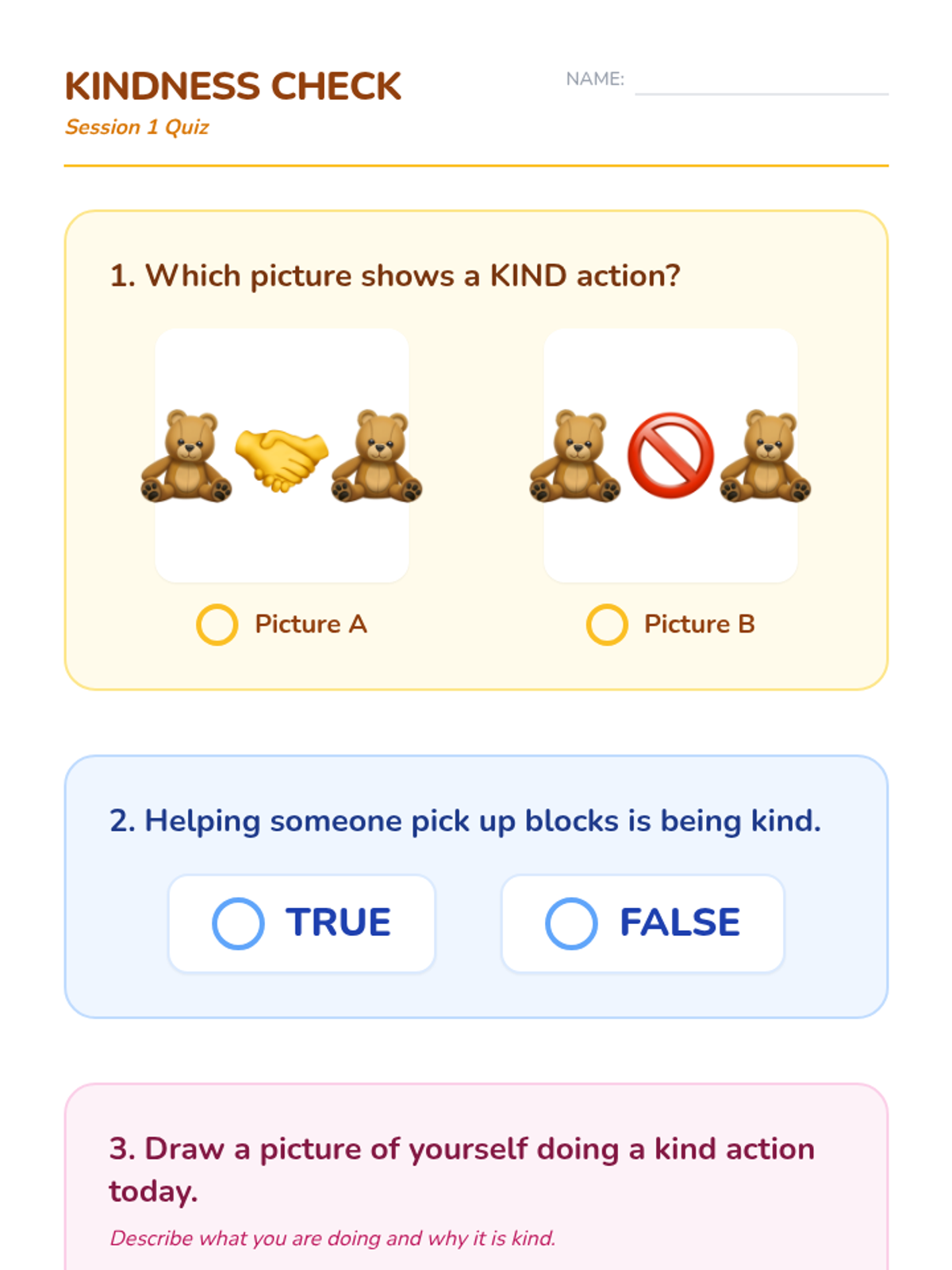
A 5-session Tier 3 intervention for kindergarten students focusing on kindness, inclusivity, and empathy. The series uses scaffolded stories and interactive worksheets to build core social-emotional skills.
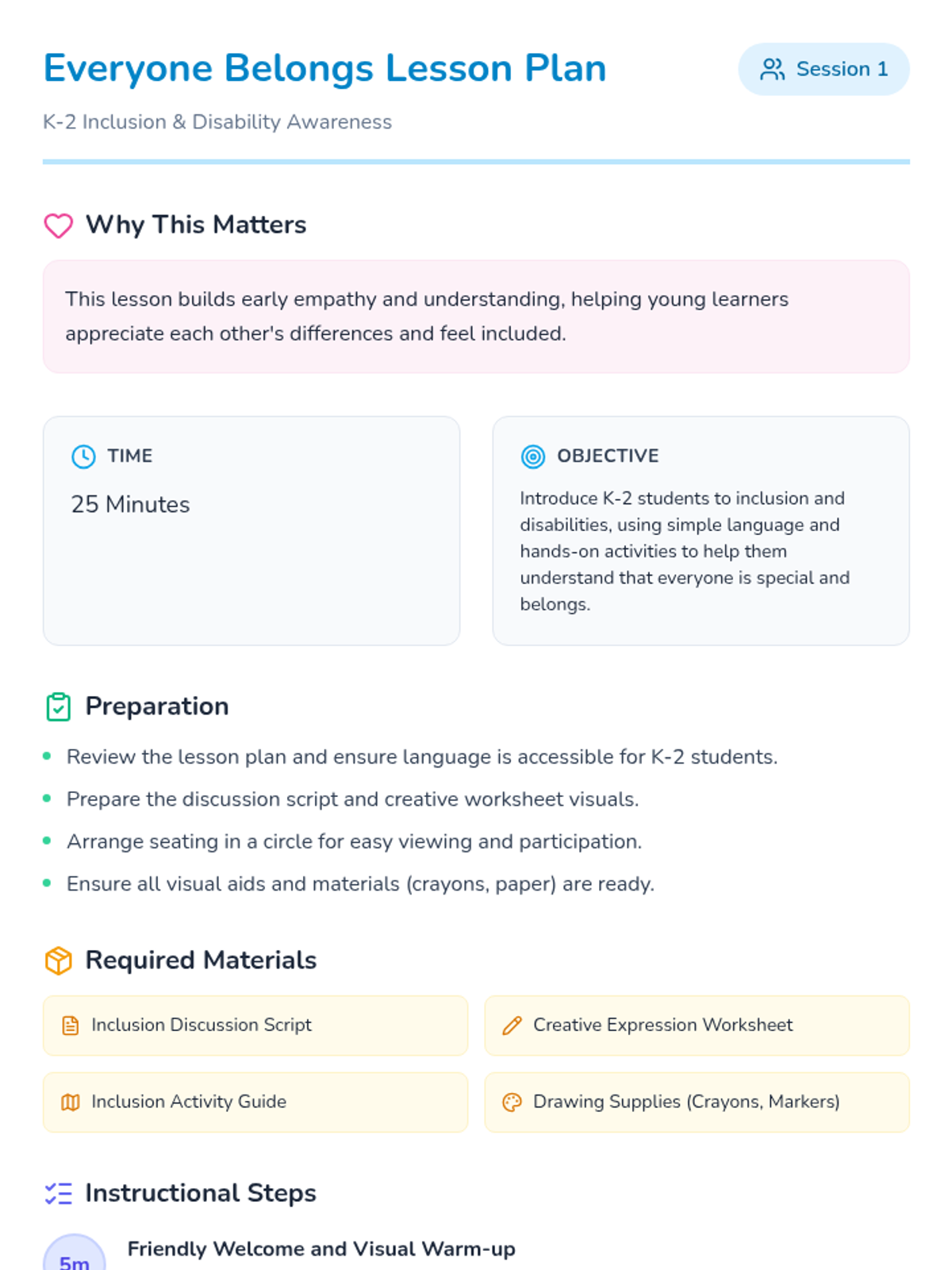
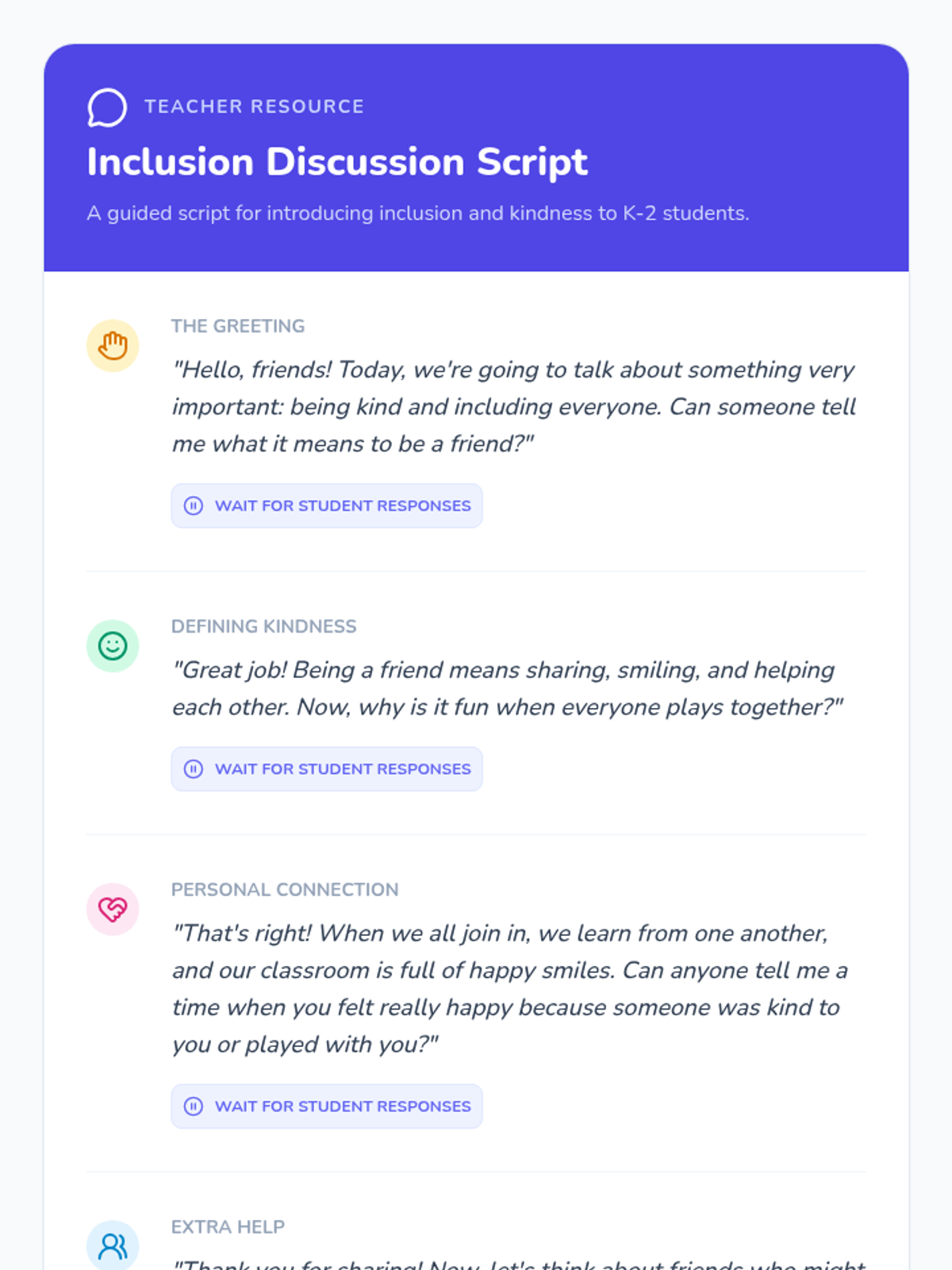
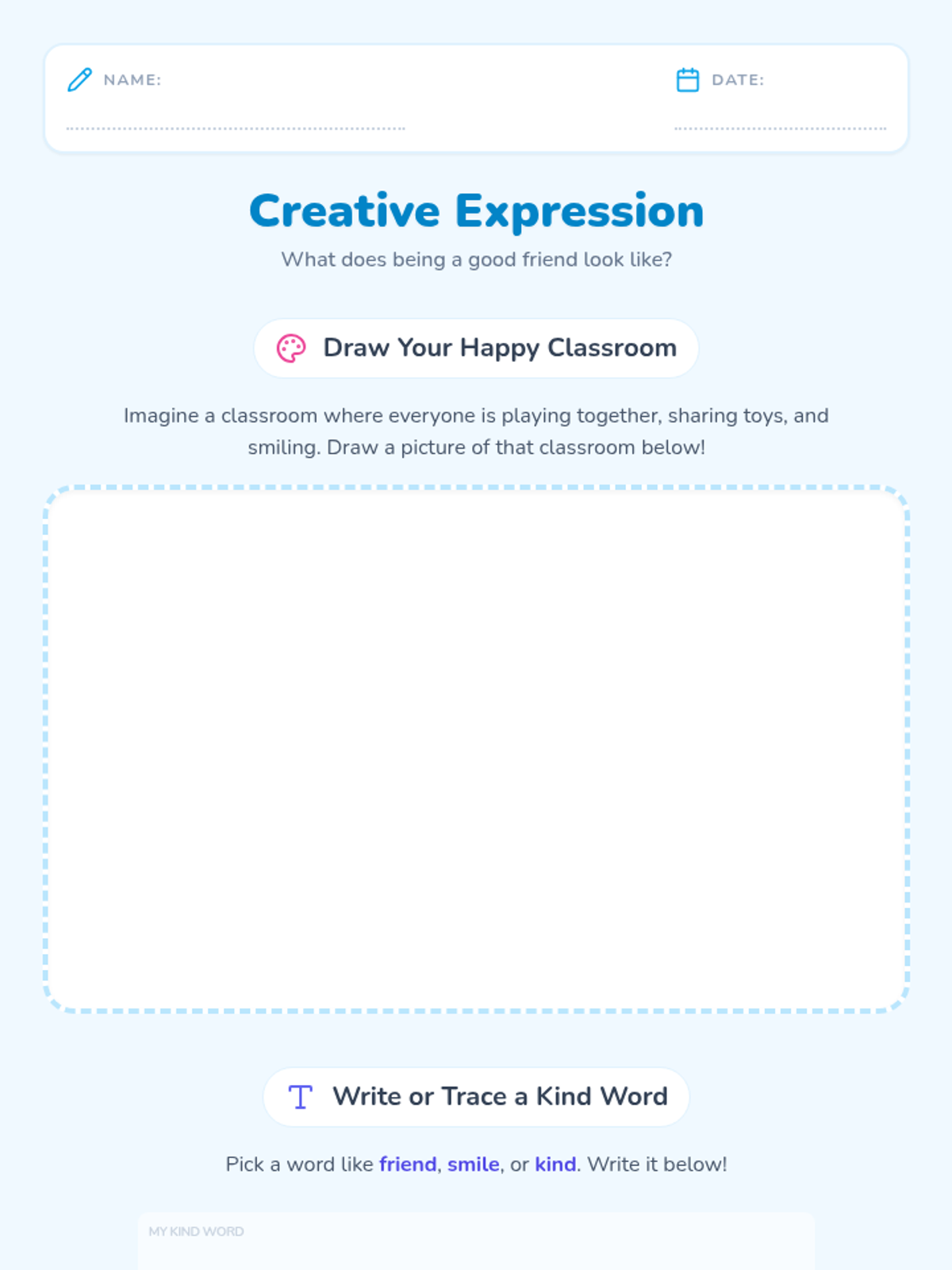
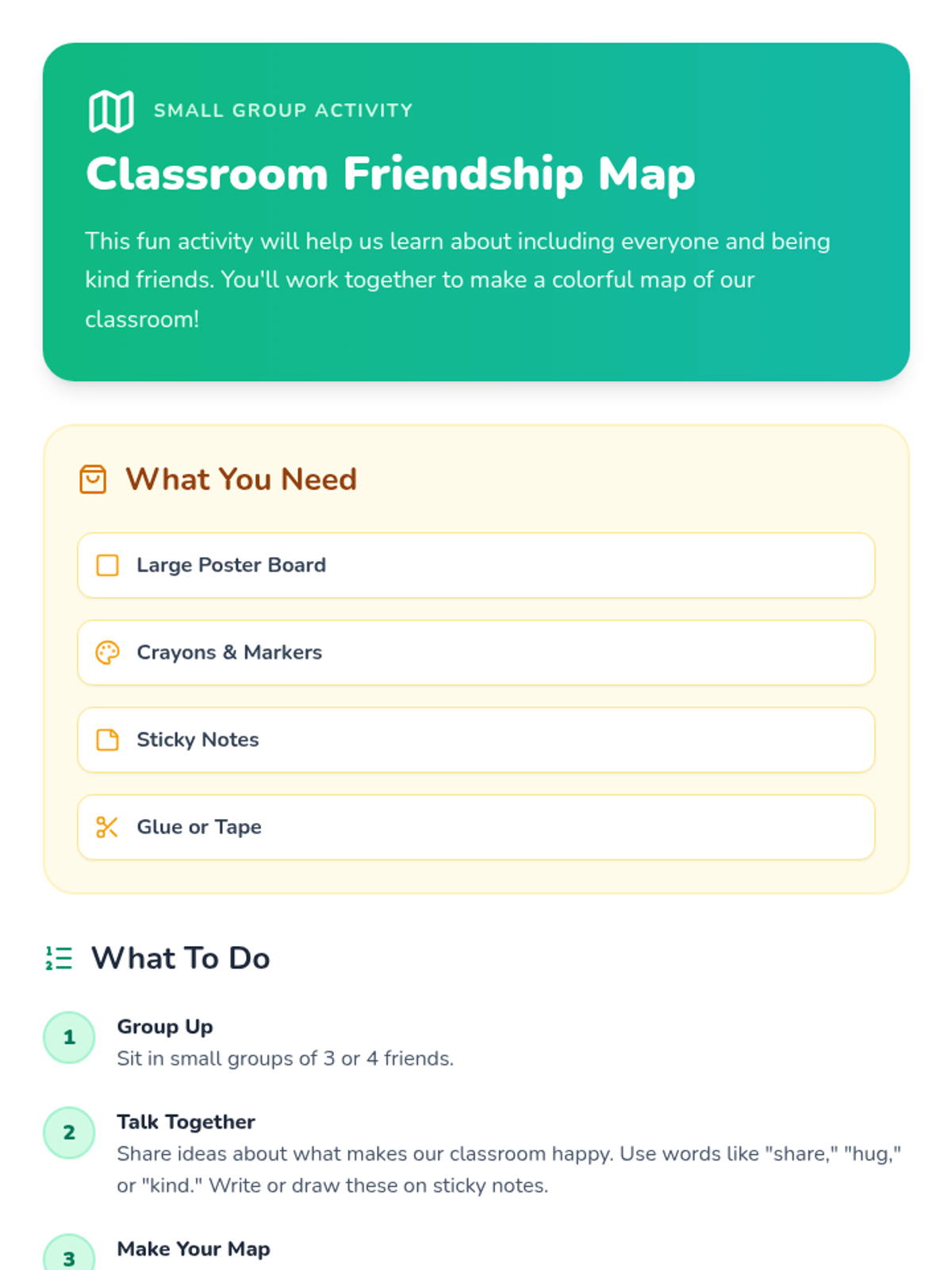
A two-session sequence for K-2 students focused on understanding inclusion, celebrating differences, and building a supportive classroom community. Students explore what it means to be a friend and commit to inclusive actions through discussion, drawing, and a collaborative class pledge.